Daily Toll’s kata szász-komlós: “Hope is something that I need…”

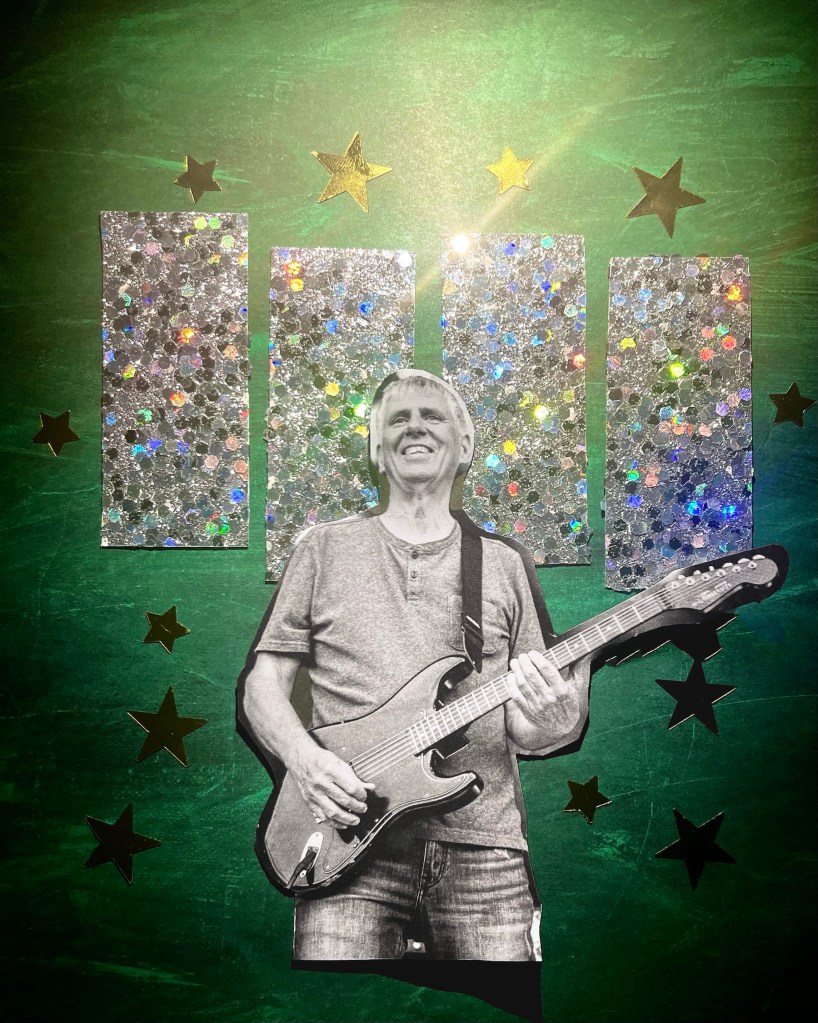
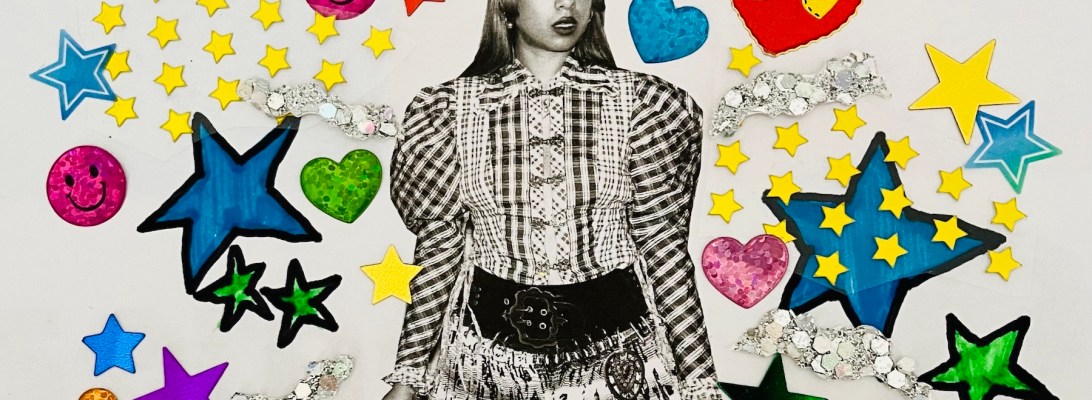
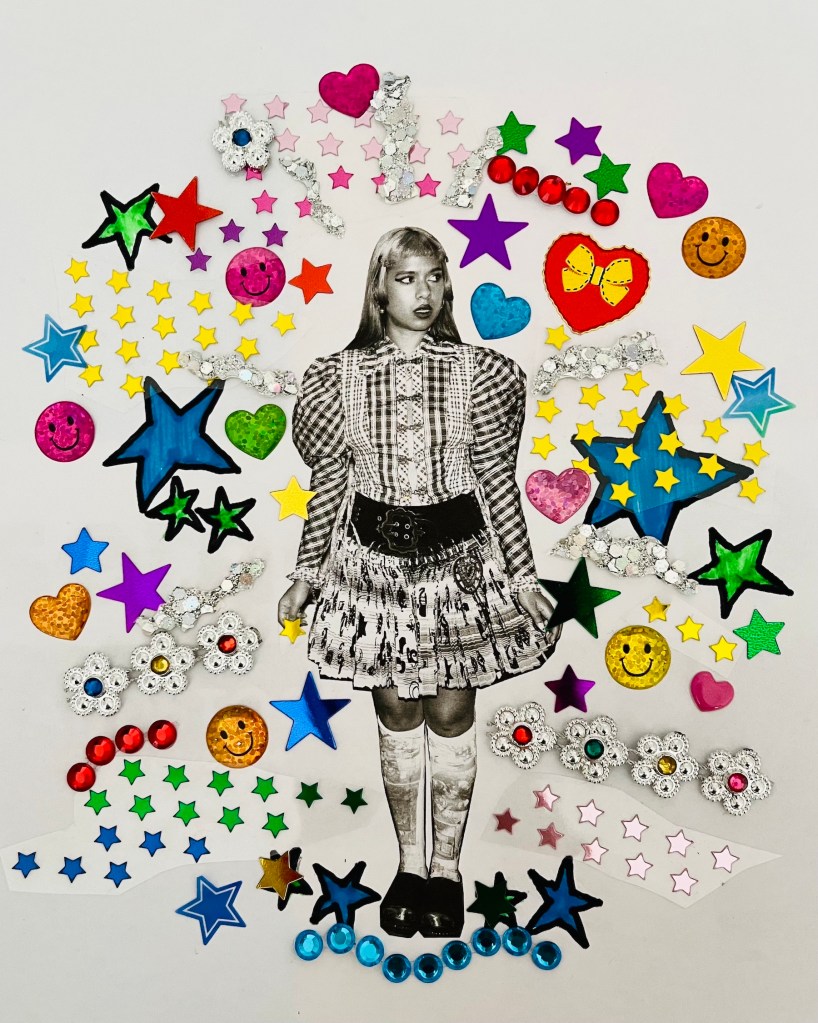
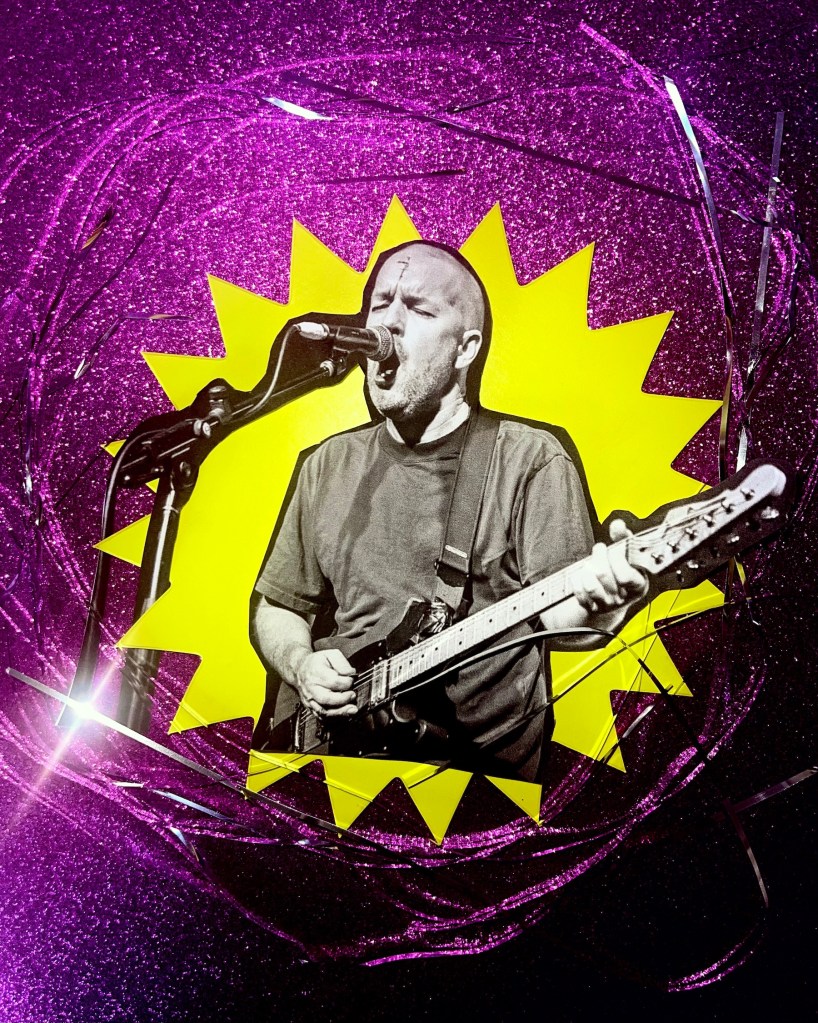
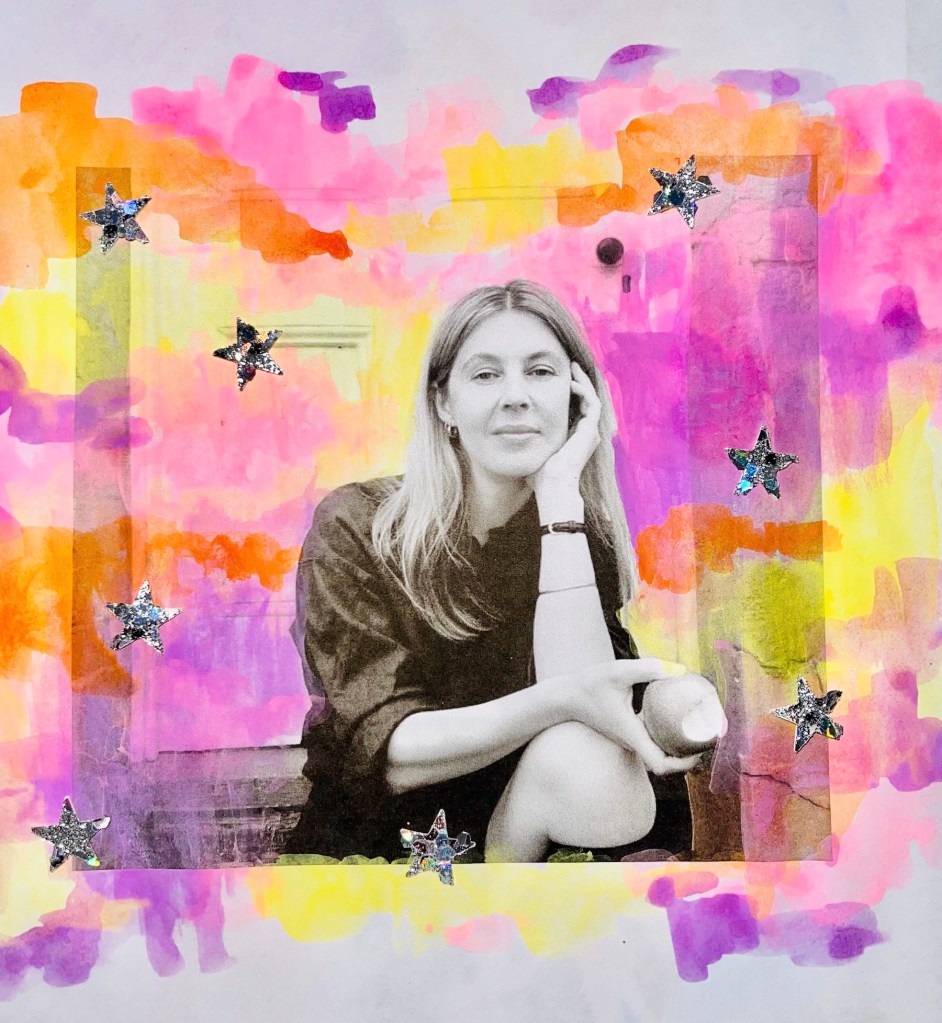
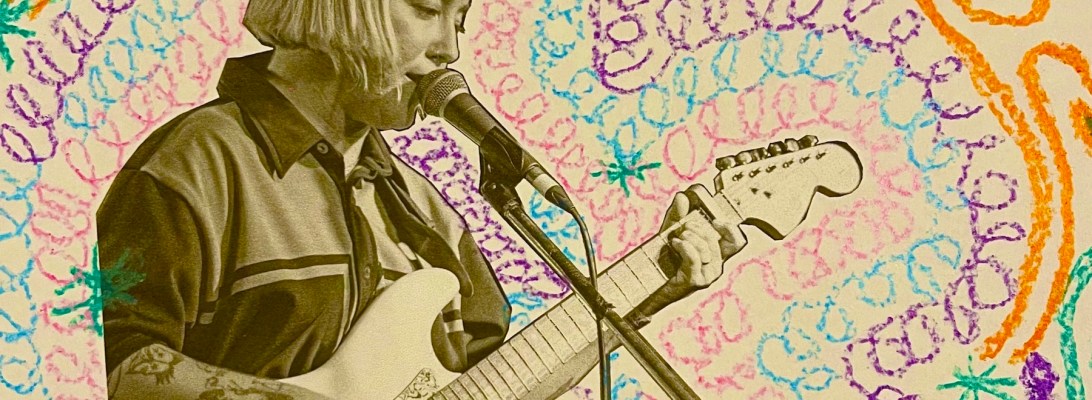
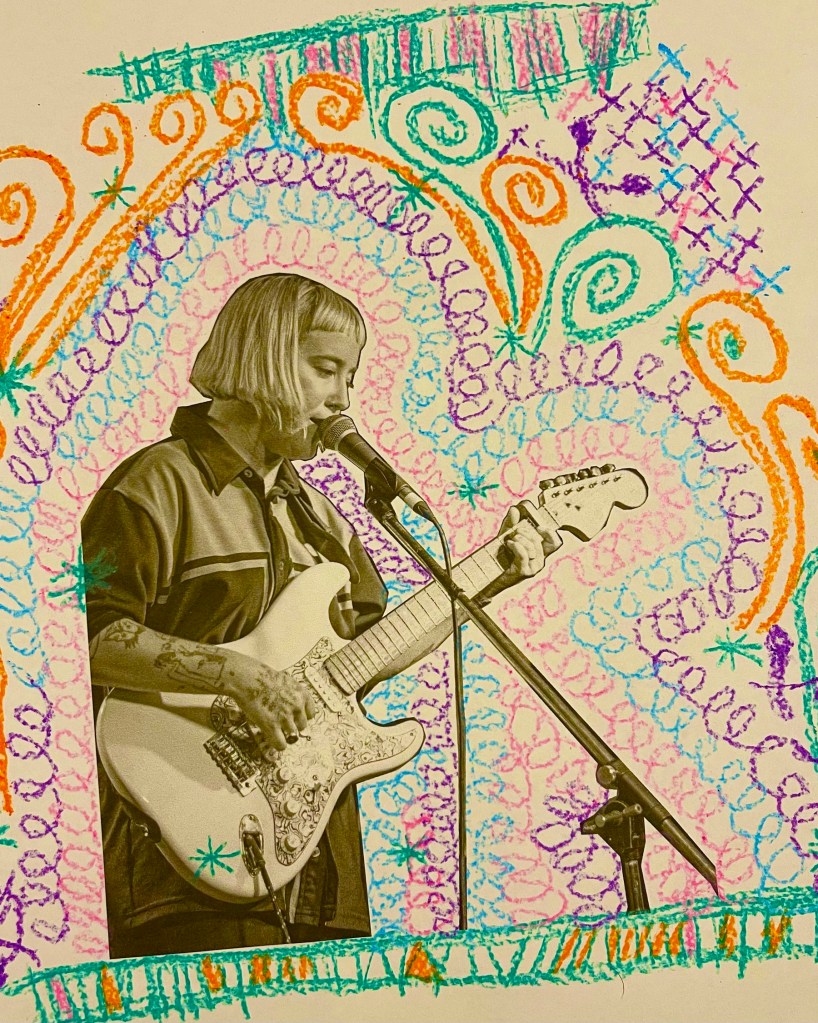
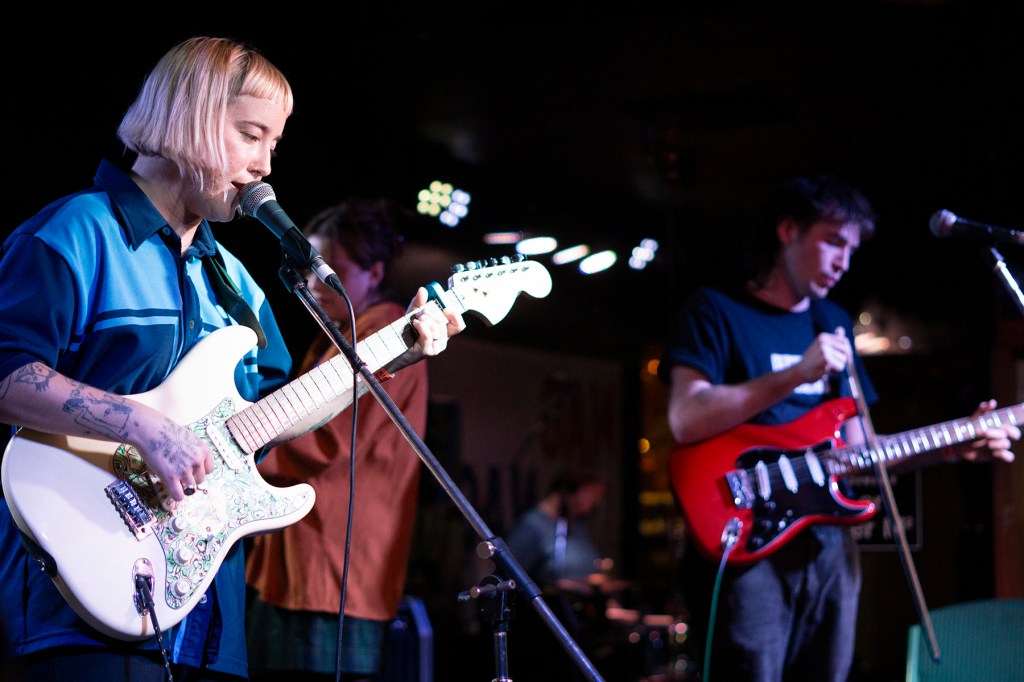
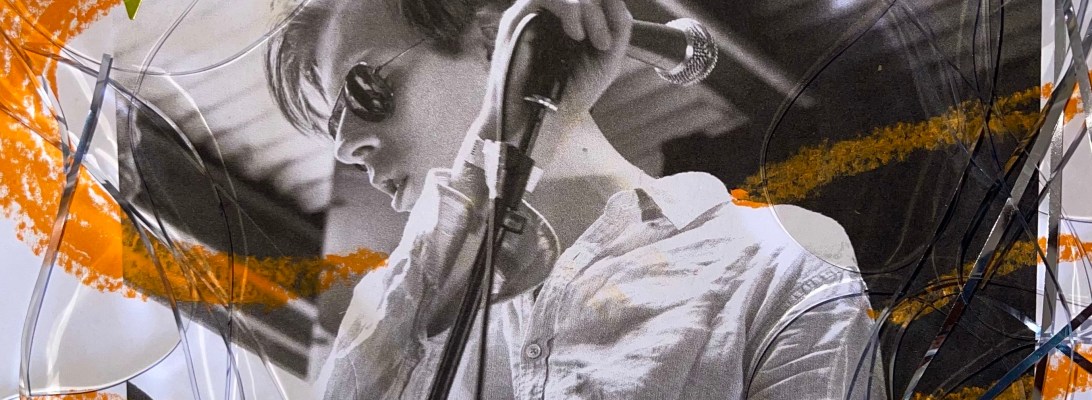
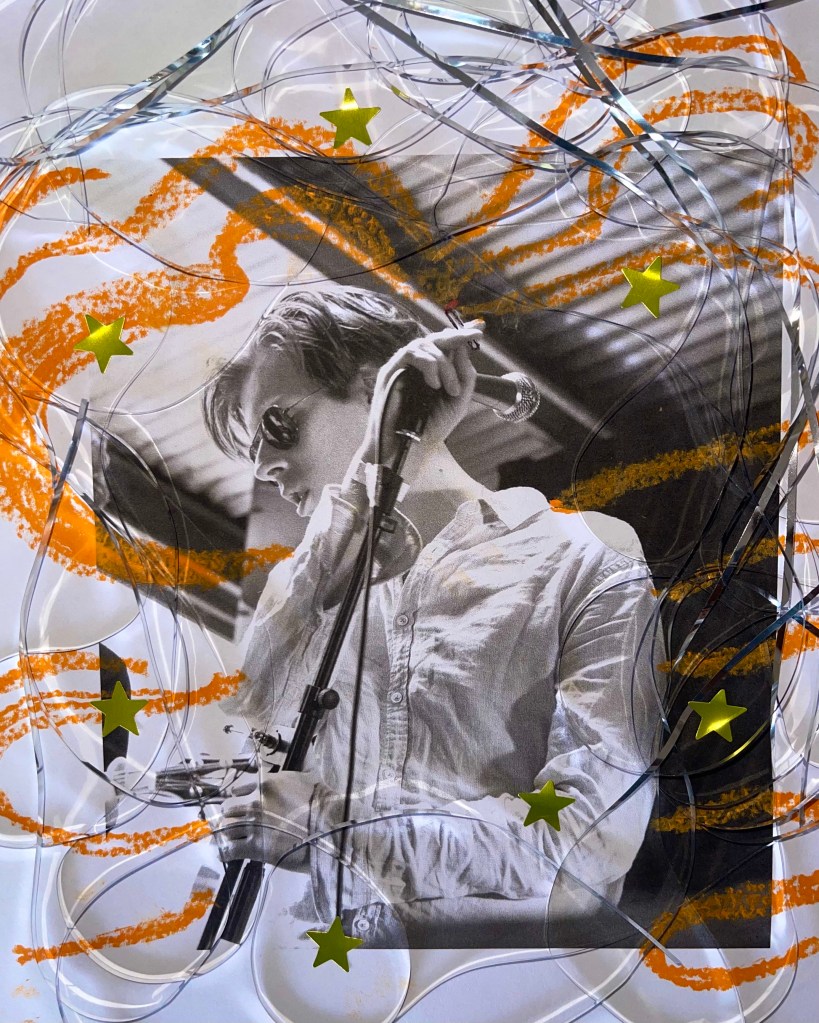
Original photo: Jhonny Russell / handmade mixed-media collage by B

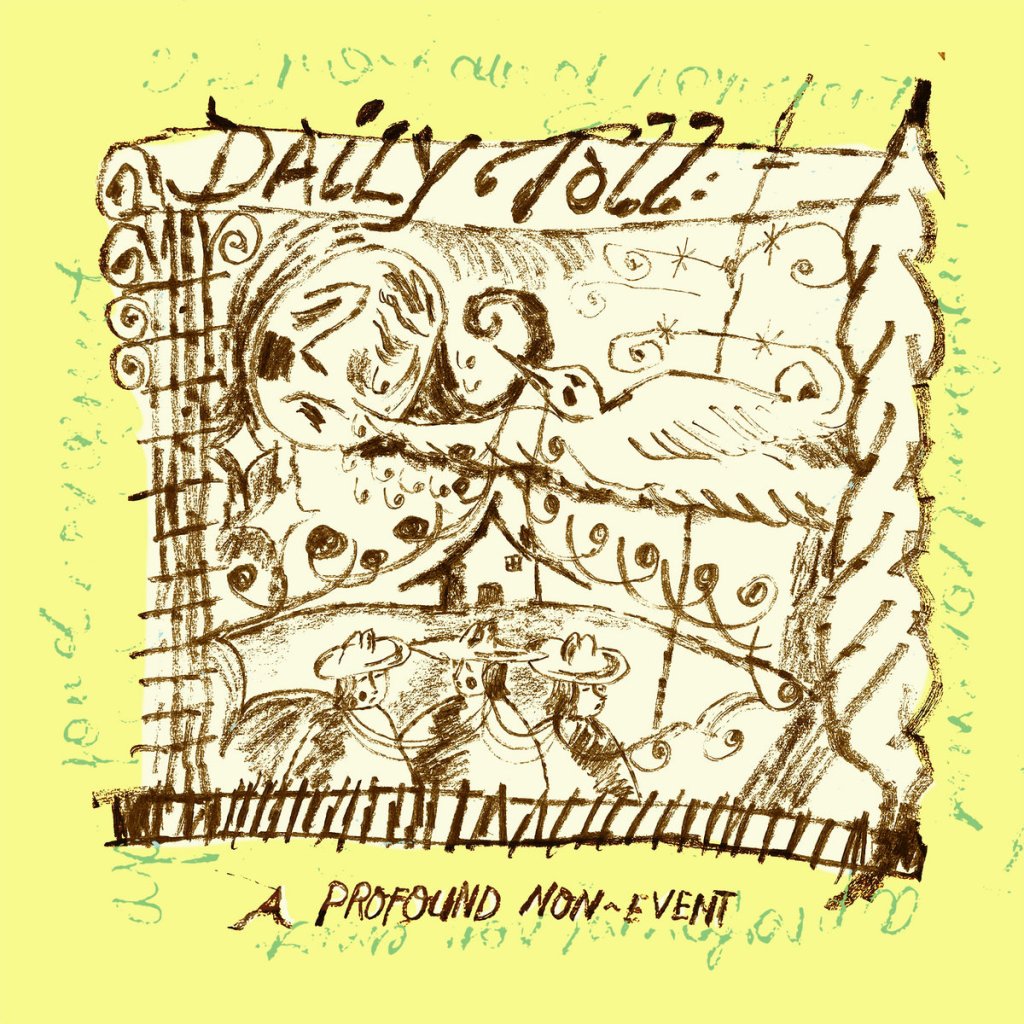
Daily Toll’s debut album A Profound Non-Event was one of the most beautiful records we heard in 2025. The Sydney band resists easy categorisation, shifting between tenderness, tension and experimentation, both intimate and expansive. 

At its core is the creative partnership of kata szász-komlós and Jasper Craig-Adams, a project that has grown out of shared trust, intuition and a commitment to making things on their own terms.

In this in-depth conversation with Gimmie, Kata reflects on the album as a collective process, grounded in vulnerability, communication and the act of listening. What emerges is not just a portrait of a band becoming, but a way of thinking about art as relational and deeply human.

KATA: Life lately has been good. It was a huge year for us last year. The UK tour, after releasing our debut album, A Profound Non-Event, was just wild. The 16-year-old in me was so stoked. I could feel that younger version of myself living out this dream. It was really fulfilling, and kind of surreal.

On the back of that, lately I’ve been feeling pretty creatively inspired. I feel curious again—about the guitar, and about how to experiment with it as a tool. I’m also trying to find more ways to align my creativity with my social activism.

I’ve been spending a lot of time with my nephew and my family, too. That side of things has been feeling really great with family and friends, just being grounded in that.

And I’ve been writing new stuff with Jasper for Daily Toll. We’ve got some awesome things happening this year. It feels like a mix of creative rejuvenation and creative dreaming.

I love that!

K: Yeah, it’s feeling so good at the moment. 

When we first corresponded about chatting, about a year ago, when you were still in the planning stages of your album release, you mentioned you were coming out of a really dark couple of months. You said you were slowly starting to feel re-inspired by art, community and music again.

K: I wasn’t feeling great about my songwriting or about working in spaces where there wasn’t that alignment. But now I feel like I’m coming out of that. I feel free again. I feel like I’ve come back to where I was when I first started writing music, teaching myself guitar, just figuring it out as I went. There’s this kind of fumbling freedom I’m feeling at the moment, and I’m really leaning into that. I’m loving being there. 

I have an inherent discomfort with creativity and art being commodified in the way it is under colonial capitalism. These things feel sacred to me. If you trace any of our ancestry back far enough, everyone was singing, everyone was making things. Creativity is inherent to how we exist as human beings.

It’s been challenging at times, especially releasing this album and coming up against the music industry, and the different ways people think about what it means to be a musician or to put work into the world. Even in the UK, we encountered perspectives that felt really different to our own.

What struck me most is how differently people relate to their craft. And I do love that difference. I would hate for everything to become homogenised. But it is interesting when you’re confronted with something that sits so far outside your own understanding. There’s something almost comical about it, in a kind of cosmic way.

Right now, Daily Toll is me, Jasper, our friend Milo from Giant Hammer, and our friend David on trumpet. It’s a new formation, which I’m really excited about. It just feels really good. Three of us are gender non-conforming or non-binary, a lot of us are queer, and those identity markers don’t feel like labels so much as part of a shared experience. It feels like our values, and the way we move through the world outside of music, are really aligned.

That can only help a project. Being in a space where you feel like you can truly be yourself, where there’s love, understanding, and a genuine desire to understand one another, it makes everything stronger.

K: It’s really hard dealing with band tensions. It’s painful, and it’s sad. You’re working on something so intimate and vulnerable that it can feel like a breakup at times.

We had people saying, “Just ride it out. Daily Toll is going somewhere. Don’t change it. Just deal with how bad it feels.” And I remember thinking, is everyone completely off? That’s not why I joined a band. I’m not here to cater to someone else’s insecurity.

Lately, though, it’s actually been feeling good to advocate for myself and for my craft. To move through that discomfort and think, okay, that sucked, but what does it open up? What does it make space for?

I feel like I’m moving back into alignment with my values, both relationally and musically. There’s this really invigorating sense of freedom, like I’m going to do what I want to do, and I’m going to do it with people I love and care about. People who will hold me when I need it, and who I’ll show up for in return. That, to me, is the foundation of any kind of relational work.

What are the things that you do value? 

K: Through this project, I’ve really learned how important communication is for me. It’s become a core value. Singing has also played a big part in that. I was never really a singer growing up, and there were times when I would go almost non-verbal, completely in my head. People would be talking to me, and I just couldn’t respond. That happened quite a lot.

So there’s something about singing that feels like a stepping into my voice. I don’t want to overstate it, but it does feel like a kind of owning of that space. Early on in the band, there were times when I couldn’t communicate what I needed to, and it didn’t end well. Now, I really value being able to speak openly, and to know that the people in my life feel they can do the same with me. That there’s trust, openness, and a willingness to learn alongside each other.

That kind of communication is something we need more of in the world as well. The ability to truly listen, to hear each other, and to express our own experiences honestly. Trust is built over time, through how we show up. Integrity is a big one for me. I find it really difficult when someone’s beliefs don’t align with their actions. That kind of disconnect can sit with me for a long time.

At the same time, I’m learning that things aren’t always black and white. There’s nuance in every relationship and every experience. But it’s still important to me to work with people who care about the world, who are paying attention, and who are thinking about the systems we’re all living within and how they shape our lives.

Yes. Sometimes I get so burnt out thinking about these systems and all that’s happening in the world.

K: And that burnout is painful, but also can be a beautiful thing. I’m reminded that it means that we’re in touch with our humanity in a way that a lot of people aren’t. People can scroll past this or move past that very quickly and not be affected. That pain of witnessing what’s occurring in the world is ultimately a really beautiful and important thing to be in touch with.

I keep coming back to what our role is as artists and musicians. I’ve been thinking about this in the art world for a while. I opened up a gallery in my garage in 2019, and a lot of that was about redirecting funds to First Nations organisations and mutual aid funds, instead of it going into the pockets of commercial art galleries here in Sydney, which are incredibly inaccessible. It’s definitely financially inaccessible, and it also relies a lot on a kind of social clout currency.

Since then, and even before, I’ve been thinking about what our role is as artists in a time like this. There’s no clear-cut answer, and I’m learning to get used to that. As much as I want to find one, it just isn’t there.

There are people and artists who are trying really hard, and who will do whatever they can with any opportunity to shed light, redistribute funds, or move towards solidarity in whatever way they can. And I think anyone who’s trying to make their corner of the world a better place for others is ultimately doing the best they can.

Did you grow up with activism or talk of politics in your household or is that something you came to yourself? 

K: I’m Hungarian, my family’s Hungarian, and we’re very passionate people. I found it really interesting growing up in Australia, because I always felt like there was this cultural difference. I’m talking about white Anglo Australians, this desire to sweep everything under the rug. Whereas I remember my family talking about everything all the time, politics, heavy topics, big opinions, and those big opinions being okay.

My dad was a big influence for me. He was a really soft and gentle person. He really believed in the good in everyone, and he was more Buddhist-leaning in his understanding of the world, this idea that we’re given a body, it’s a gift, and what we can do to help others is what we’re here for, essentially.

He really struggled with addiction, his whole life and my whole life, and our relationship was pretty fraught. But he was so beautiful in the way that he saw the world, and I think that was a big influence on me.

And then my twin got into activism, maybe at like 16 or 17, and brought me into it. We were working for a youth organisation for a while, running workshops for young people to help them navigate their emotions, talk about their feelings, and be in touch with their creativity.

And I’m been big on First Nations solidarity. There’s a strong thread of social justice through my family, and definitely through me and my siblings.

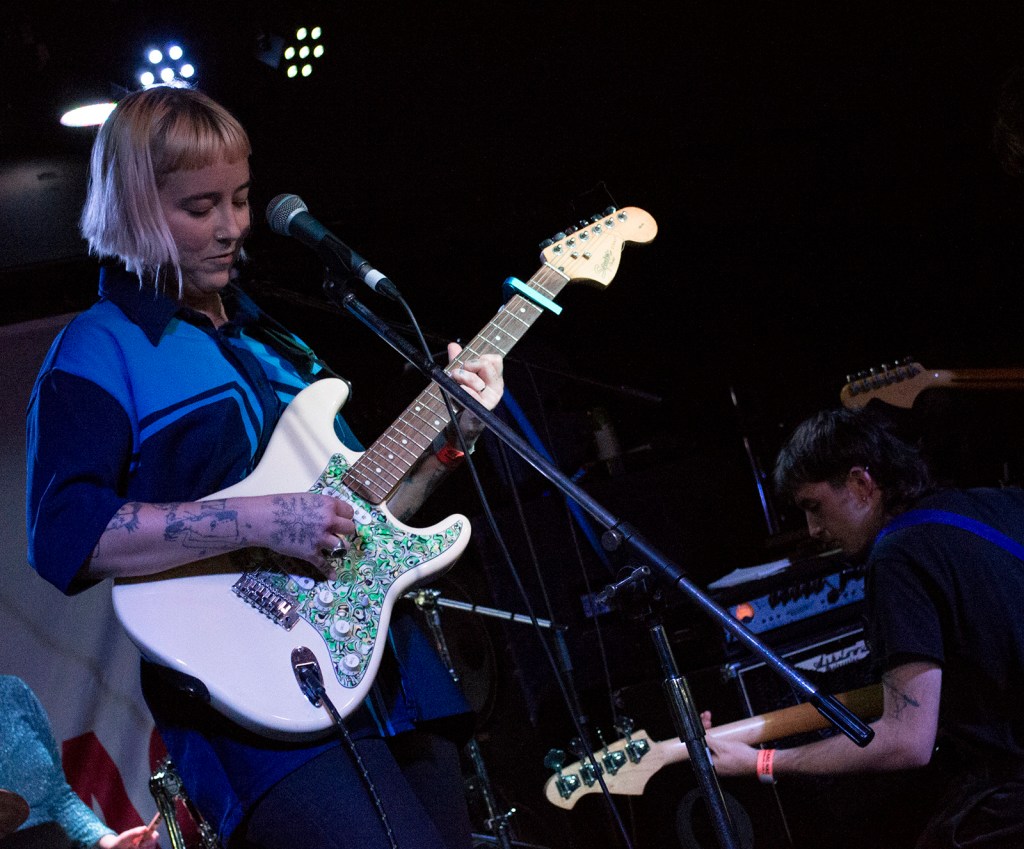
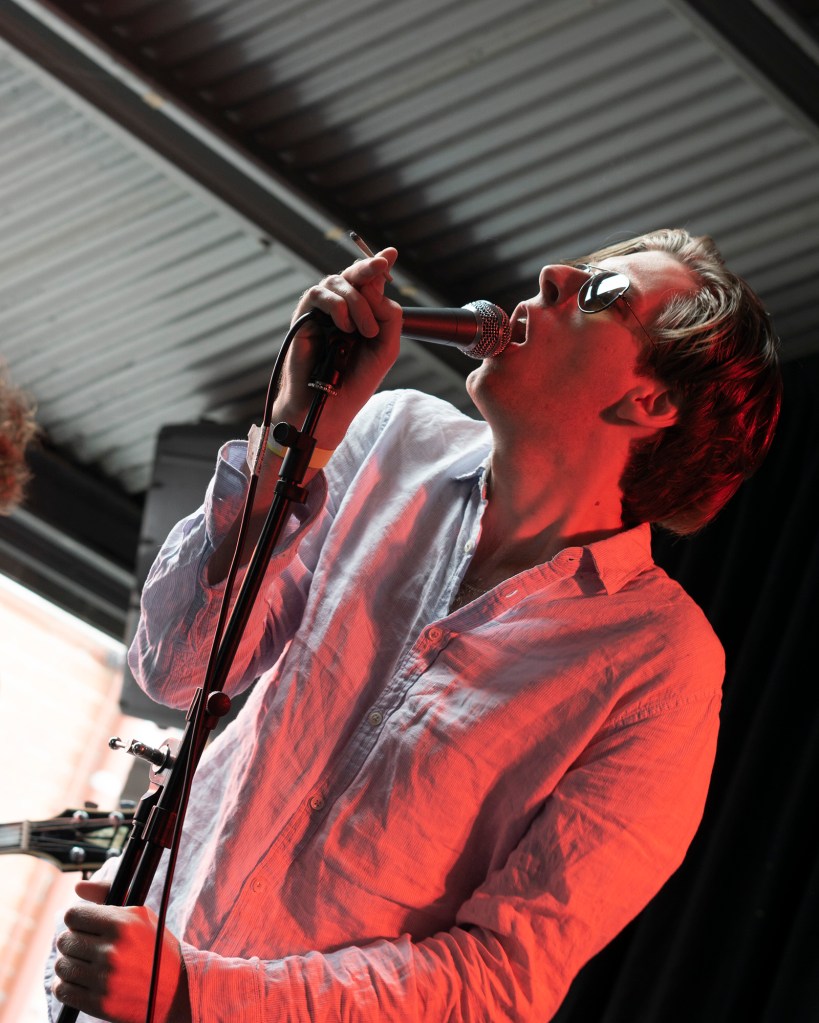
Photo: Jhonny Russell

You mentioned, helping young people tap into their creativity and getting their feelings out; what do you do to help you do that?

K: I always knew that I wanted to be an artist, from a really, really young age. It was so clear to me that I just wanted to spend my time making things and helping others find their way to make things.

For me, painting is a huge one. I studied art, but I studied printmaking and analogue photography, mainly analogue camera-less photography. I was always painting and drawing for a very long time, since I was 10 or 11 or something, but I used to draw these really creepy things. My mum thought I was mentally ill because I was drawing quite spooky things, like these emaciated women. Kind of gothic, strange drawings.

She took me to see an art therapist when I was 16 or 17, and this woman just changed my life. She was this really young Irish art therapist with flaming red hair. And I was telling you before that I had issues expressing myself when I was younger, so the first three sessions I didn’t say anything at all to her. We just sat in silence for an hour.

Then by the fourth session, I came in, and I’d always come in with headphones. The first question she asked me was, “Oh, what are you listening to?” And it was the one thing that opened me up completely. No one had ever asked me that question before. No one had ever taken an interest in what I was listening to and why. So it opened up this huge door, which then became one of the greatest parts of my life. It was a huge healing moment for me to work with her, and it opened the door for art and music to be genuinely healing modalities.

Now I paint. I paint to think through things, or to be present with feelings. Or I’ll just sit and play guitar for hours. I’ll probably smoke a joint and play guitar for like four hours, and that’s its own kind of healing modality.

That’s what I’ve been doing lately, and I’m so grateful for it. I’m so grateful that I have these methods or avenues, because losing my dad, or seeing what’s going on in the world, I feel really lucky, and quite privileged, to have ways to navigate things that feel really overwhelming.

I also have a pretty consistent meditation practice, so that alongside music and art has changed my life. It’s really changed my life.

Meditation is such a key thing for me in life too. It’s a non-negotiable, essential. Do you remember what you were listening to when you went to see the therapist? 

K: I wish I could remember like what it was. 

What kinds of music were you listening to at that time? 

K: I was really overwhelmingly into The Cure, like The Cure is one of the best bands that’s ever existed. I was really into The Doors, and then I was madly in love with this skater in high school who would burn me CDs of skate video soundtracks and songs. Then I had this period where I got super into The Shins [laughs]. And Leonard Cohen, I remember being very into lyrics, and writing. Lyrics are such a fascinating aspect of songwriting.

I remember being really struck by how people were able to write so poignantly, or so specifically, about something that I felt only I was going through. You know, when you’re a teenager, you think no one else feels these things. Like no one else feels lonely, or no one else has experienced unrequited love, or that kind of eternal “who am I, what’s my purpose?” And then you start to listen to music that reminds you that this is just part of the human experience. This is what it means to be alive, to some degree.

My older sister was so obsessed with Nirvana. And so I was too. Then I got into Placebo like quite heavily.

My mum had three of us when she was 23, so really young. Which means, essentially, we were growing up while she was growing up as well. And she took us to so many gigs. I’ve seen Nick Cave and the Bad Seeds more times than I can count because she loves them so much. I saw the Pixies a couple of times.

The first time I greened out was at a Rodriguez concert, while he was playing ‘Sugar Man.’ She took us to see Leonard Cohen while he was still alive, in a vineyard in the Hunter Valley, which was a spiritual experience for me. That gig, by the end of it, everyone was helping each other pack up their rugs, helping each other out. It felt like I was watching the communal power of song and music in real time.

And The Cure actually came to Australia under a contract with Splendour in the Grass, where they weren’t allowed to play any side shows. So my mum took us to Splendour in the Grass so I could see them.

So yeah, she’s a big reason for my connection to music, and how I got into it. I guess she’s just a big part of why I am the way that I am. She’s always supported the art-punk in me.

Is there any lyricists that you’re super into at the moment? 

K: Ryan Davis. That’s the one that came to mind first. I haven’t listened much to the new album. I’ve been listening to the album before it, because it’s a cassette that I have in my car and I just play it endlessly, like actually endlessly. It’s so good. Fucking hell.

His way with words is just… at once I’m in awe, and then at times I’m just so strangely jealous. But you can tell he’s someone who’s extremely well read and very funny. 

I love Maxine Funke. She has a way of writing worlds, that’s just so utterly unique to her, and I think of her music and her words a lot like paintings.

I really like the Possible Humans album as well.

Before you started writing lyrics and doing music, you wrote poetry first? 

K: Yeah, poetry first. I’ve got a very long-standing journaling practice as well, so I’ve been writing every day. When I first started teaching myself guitar and writing songs, they all actually came from poems, because I would be reading the poems and thinking, oh, this has such a rhythm to it. Poems and words have their own kind of beat and colour and texture, and the way they feel in the mouth.

I started with the guitar and writing music because I was dating someone who was making really awesome music, and I must have just said to him one day, oh, I wish I could do that. And he was like, you can, what the hell? I was really into The Velvet Underground, The Stevens, The Shifters, Twerps, The Chills and Cool Sounds at the time, so he was like, all that music that you listen to, no one knows what the fuck they’re doing, just do it. Honestly, learn four chords, find different ways of playing them, you just have to start.

That was a huge kind of turning point. It made me think about how the guitar can be used to aid the inherent rhythm of poetry, and what the difference is between a song and a poem. I don’t think there is much.

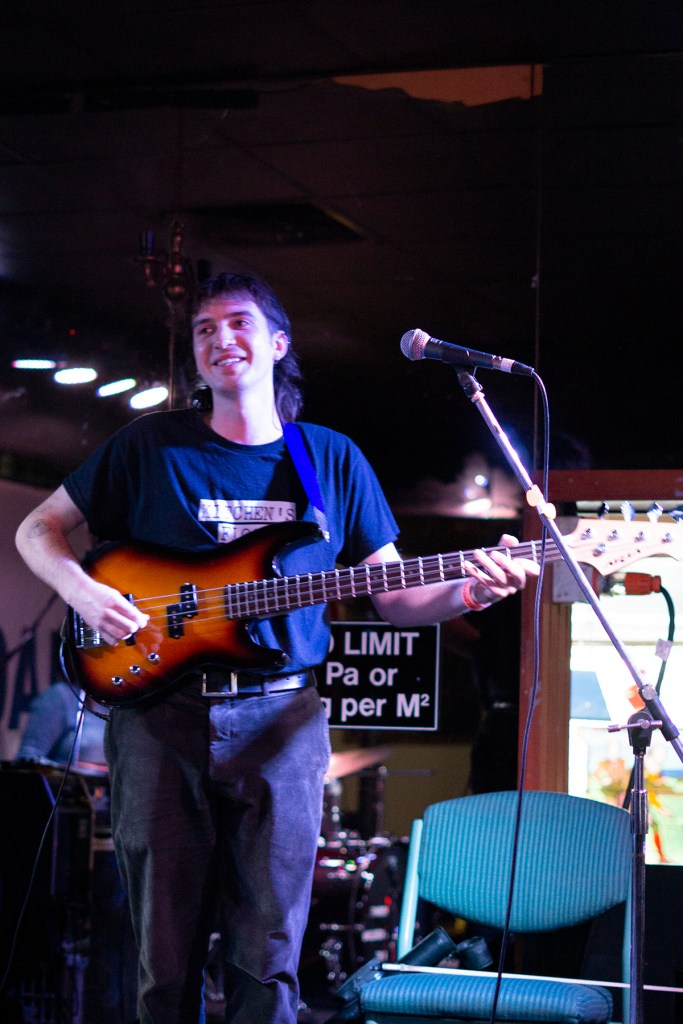
Photo: Jhonny Russell

When did you first start playing guitar?

K: I was 24/25. I didn’t take lessons, and I didn’t want to go to YouTube or anything like that to learn. So many of the things I play are because I associate the finger shapes with animals. I’m like, oh cool, this is the bird chord; you know, different shapes.

It’s so funny, because we got an email after we released the album, someone being like, “Hey, I’m trying to learn ‘Bell Jar Convenience’ on the guitar. I think I’ve got it, but do you reckon you can send me…” and I was like, I actually don’t know what it is. I don’t know what to send you. It looks like a bird. It’s a bird on fret three, so go for it.

And that’s kind of fun. I’m at this point where I’m like, should I learn it more? Should I take lessons or something? And I’m kind of like, no, I don’t think so.

What I’m more interested in is reaching out to guitarists who practice a lot of different styles of guitar, and maybe even different melodic scales. Perhaps it’s like an Indian style of guitar or something, and then just sitting alongside them while they tell me what it is they like to play. It’s kind of like secondhand learning, getting knowledge from people who play it and think about it very differently to me. I’m curious about that. But I just love the fumbling. I love the figuring it out, and all the bum notes in between.

The nature of being an artist is that you have to believe that the way you see and hear the world is your craft. That transmuting of the way you experience the world, and turning it into your craft. It’s about how well you can listen to something that feels inherently like your experience, and then the next step is how you can produce something that is not only yours, but could speak to something bigger, or speak to someone else in a language they would understand.

I thought it was interesting that you called your album, A Profound Non-Event.

K: I just thought it was funny. Because that album is quite old for us, the songs are quite old. There’s a couple on there that are new, and there’s one song that I wrote the lyrics to the morning that we recorded it, but I’d had those songs for a while, and I’d had the album name for a while.

I was like, this album is going to mean so much to me. It is so profound to me, but it’s not happening in a specific event. It’s just happening outside of something that might occur.

I thought it was kind of funny that you can put something out into the world and call it a profound non-event. To me, it reminds me that the profound happens outside of events. All the things that occur outside of something are also profound. It’s the small moments, the small relational moments, or moments of connection.

What does the album mean for you? 

K: It means a lot of things. It’s a moment of who me and Jasper are, where we are in our musical journey. 

I’m really proud of myself also. Having anything on vinyl was literally a dream of mine since I was like 13. Designing it, and having one of my drawings on it!

And I think there’s something about believing in yourself. There are a lot of things I’ve believed to be true of myself, but that I’ve never enacted or taken steps towards. This feels like this object in the world is an accumulation of all the things that I’ve learned, and stepping into a kind of creative courage that I can feel more as I get older. This belief in myself, and in what I’m doing, that is blooming.

This feels like the first step towards fostering that. And to know that there is a place in the world for the things that I create… the connections that this album has elicited are more than I could have ever expected.

It means a lot of open doors, and a lot of relationships built and fostered. It means a step towards a kind of creative self-actualisation that is always in bloom, always changing, always growing, as I am.

And yeah, it’s kind of nice to have this album as the first step in something that feels like it will be, hopefully, a long lineage.

Is there a through thread for the album? 

K: My songs are always about relationships. It’s always about the relationship I have to the world, or the relationship I have to myself, or sometimes they’re just straight down the middle, like conversations that I didn’t have or couldn’t have. There’s a beauty in how different a lot of them are. So I’m not sure that there’s much of a sonic through line, or maybe I can’t hear it because it’s a bit closer to me. The bass lines that Jasper does are just fucking hectic and epic, so that’s a pretty good through line.

For me, songwriting-wise, it’s me working through things that I need to work through. And within that, there’s a palette where I’m using anger, or frustration, or confusion, or… one song I wrote when I was just fucked up, depressed, fleeting.

It feels like a kind of holistic expression of what it means for me to be human. What it means to be thinking and feeling and figuring things out for myself. Some of the songs are quite political.

So it’s been interesting review that was like, “Oh, they sing about the mundanity of life and the bric-a-brac,” and me and Jasper were kind of like, oh, that’s so interesting, because that’s not really how we see the album.

But, everything is valid. It’s just interesting when you have an idea of what the album is, and then it’s out in the world, and all of a sudden everyone else has their own idea of what it is.

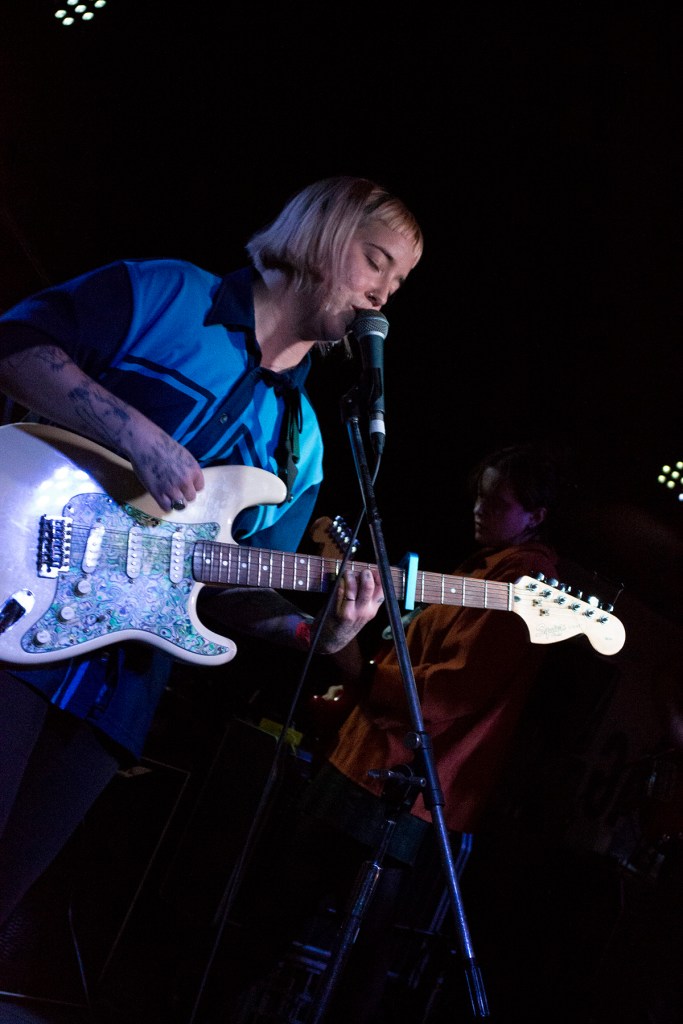
Photo: Jhonny Russell

When I was listening to your record I got a sense of traveling, arriving, or almost arriving even, or a rejection of cynicism and stuff. It also felt kind of communal, but kind of not collective, if that makes sense.

K: Totally. The album starts with ‘Another World’. Maybe the through line is that I’m always kind of struggling between hope and a kind of despairing realism, and that’s an internal tension that I’m trying to figure out through song.

I don’t really want it ever to be just one or just the other, because I think both exist hand in hand. And I like the idea that some songs can be really pretty, and some songs don’t have to be.

These days there’s a lot of pressure for artists to specialise, to box themselves in, and to have a sound that’s very easy to explain in three sentences. I just don’t really like that. It’s not how I want to do things. I really like the idea of fucking with people’s expectations of what it is and what it could be.

Is there something in the record that you relate to differently now than when you first wrote it? 

K: It’s just how I was feeling at the time. A lot of the things I still relate to, and I also know that, for whatever reason, they needed to come out in that way and in that song. So there might be a bit of distance from it, or distance from the intention, but I still think it’s valid.

‘Fated to Pretend’ is one of our oldest songs. I wrote that about often being the only public school person at private school parties. I would invite my friends and we would raid their bathroom cabinets, and raid their rich parents’ cellars, and drink their fancy wine.

That song is obviously about class. It’s about class disparity, and it was something that I was experiencing, and even feeling weird about at that age. Just the questions I’d be asked at these parties, like whether people were getting stabbed at my school, or whether I was selling drugs.

At first, I remember being 16 or 17 and feeling offended, and then I would just play into it. I would have so much fun knowing that there was such a divide, that these two different worlds existed. Largely based on the fact that their parents were rich, and that they were going to inherit more money and land and houses and whatever else, and that they were different from me.

Was there any song on the album that felt really vulnerable writing and putting it out there? 

K: I feel that way about ‘Killincs’. That’s the emotional hinge. It’s like trying to put into words something that I felt for a really, really long time, which I know is a common feeling amongst people on the spectrum and different kinds of neurodiverse experiences. That sense of always feeling on the outside.

Like, how do I try and put words to this feeling where it feels like I’ve been living in a fishbowl my whole life, watching people experience life. I always felt like people were in on a joke, or in on a reality that I wasn’t aware of for a really long time, or that I’m still not.

Again, that was a poem, quite a long poem, just navigating my experience of being alive, and being Hungarian, and growing up in Australia, and growing up with a dad who loved me but wasn’t around a lot, who was caught up in his own stuff. So, that one was kind of gnarly.

And then there’s a song on the first EP called ‘The Hunt’, which for a while I actually couldn’t even play live, because it just felt too hectic. Too emotional.

Were both songs about similar things at home? 

K: Yeah, it was about my dad as well. I was having pretty crazy nightmares at the time, so it’s about these kinds of recurring nightmares.

Some people see this album as a very hopeful album, and sometimes I wonder whether it’s perceived as this kind of very happy, pretty album. I’ve been thinking about why I sometimes have a discomfort with being viewed that way. Because in a lot of ways I do associate with that, but I associate with it from having gone through so much darkness that I actually need the light. Otherwise I’m worried about what might occur.

I’ve dealt with a lot of suicidal ideation for a very, very long time, and so hope is a part of the album, but to me it’s quite a powerful hope. It’s not something that feels flimsy. Hope is something that I need to maintain my survival.

So I think ‘A Light’ is also one on the album that feels really emotional. It’s just a mantra song about not killing yourself. That’s how I see it.

And then people will hear that and hear it very differently, and it’s a beautiful song to play in a crowd. We say, if you want to sing along, go for it, because it’s just the same thing over and over again.

Music means different things to everyone, but I think the connection you make with an audience is determined by your willingness to be vulnerable, and to give yourself over to the thing that is being asked in the song.

Yeah, I find in my own life, when I’ve been the most vulnerable, whether it’s creating something or whatever, that tends to resonate more with people. I guess it’s because it’s coming from a real place, and you’re saying things that other people are also experiencing. Alot of creative people I talk to just feel so, so much. But that’s good, because then they channel that into their art, hopefully.

K: It’s true. 

Daily Toll recorded the album in three days? 

K: Three days of recording and one day of mixing. 

All analog? 

K: Yeah, such a cool process. 

I love how you described the processes as “candlelight and creative camaraderie”. 

K: I’ve got a candle man here in Newtown who’s just an absolute legend, so I always buy his handmade candles. I brought some candles with me, and we were just cooking dinner  in the cottage every night, me and Jasper. We’d light a candle and bring them into the studio as well. It was a really beautiful experience.

When I was listening to A Profound Non-Event, it almost gave me a sense of moving from the afternoon to night.

K: I’ve thought that. 

The second half of the album felt more quieter and more interior maybe. Was that your intention? 

K: Yeah, it felt like the first one was maybe navigating more of the darker feelings. Or setting that tone or that parameter. Then ‘My Sister’s Loom’ being a kind of palette cleanser between that and the other side, which just feels a bit softer, a bit more friendly, or a bit warmer.

I’m not sure if I thought about it too much. Not altogether intentional, but sometimes that beauty just makes itself known like that. The intention kind of reveals itself later. It’s like, oh yeah, true, that makes sense.

I love doing things via intuition. Trusting yourself is a big thing for me. In my life there have always been so many things outside of myself telling me “you’re not normal” and that “you’re an outsider” and “you’re not enough” or “your way is wrong” or whatever. By listening to yourself you kind of reclaim yourself, rather than being shaped by everything outside. You have agency and Sovereignty. 

K: Exactly. And that it is an act of listening to one’s own self and one’s own body. And that happens so much through this album, and so much through the tour.

I feel like the older… [pauses and reflect] …it’s not even age, actually, it’s just the more I’m learning to listen to myself, and listen to my body, and listen to what makes my heart feel excited, or what makes me feel glow-y and soft and warm, or if I tense up. All these sensations are information. It’s telling you something. It’s a language that permeates through the album, or through the thing that you’re creating.

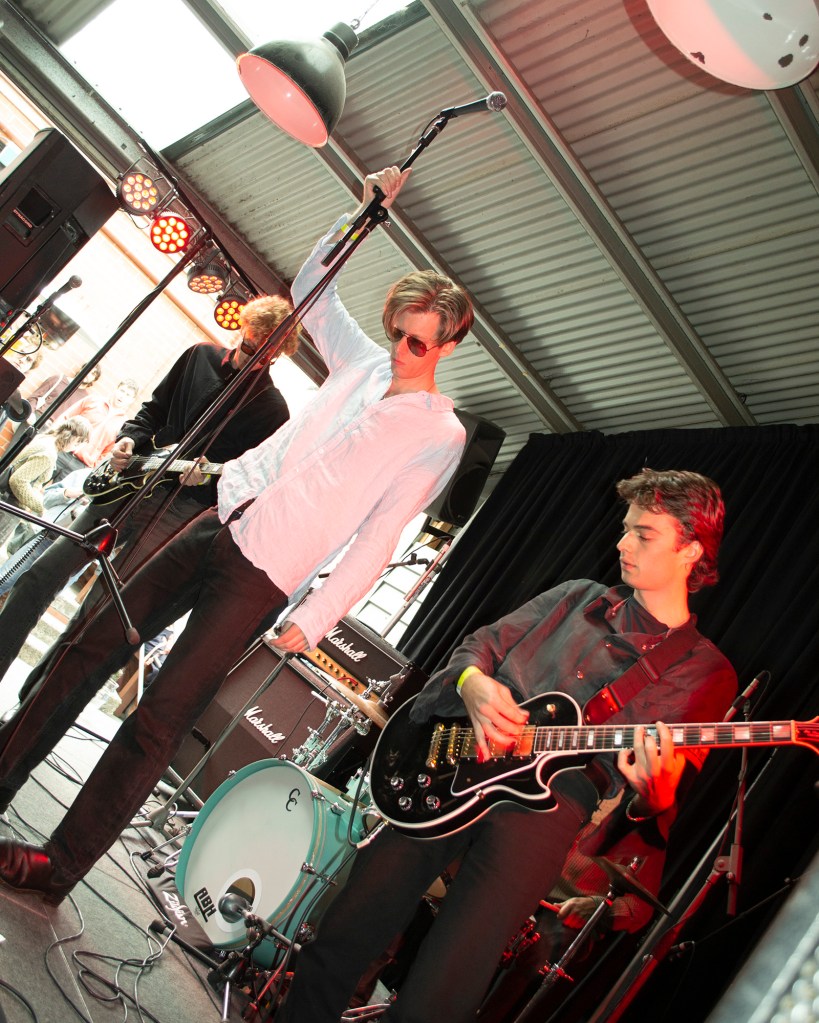
I read a review of a Daily Toll live performance at Phoenix Central Park and it noted how much of the story was visible in how you all look at each other on stage. That non-verbal language you’re talking about.

K: And that only works when you’re working with people that you trust. Because I’m not a trained musician, a lot of what I do is just intuitive. It’s fun and experimental, and I get really shy if I’m working with people that I don’t trust or that I can’t be myself around.

That show was really special, because we just had so much fun. Everyone was so passionate and curious and silly, and wanting to make it a beautiful experience for each other. It was such a unique show for us, but a really fun one to try something different.

I love how it was described as “a modern folktale”. 

K: Yeah, huge. It’s like he climbed inside my brain and took out what the intention was.

The set started with a sound bite, I ripped a little bit from this Hungarian animation. In Hungarian it’s called Fehérlófia, but I think in English it’s The Son of the White Mare.

The sound design won heaps of awards because it’s one of the craziest sound designs. It’s that kind of Soviet-era, synth-driven, spooky stuff.

The horse is presenting the beginning of the story, and it starts with the Hungarian version of “Once upon a time. There was a young prince that…” And that’s how we came onto the stage.

Is there any kind of stories that really stuck with you from growing up? 

K: I grew up watching Hungarian folk animations, on DVD, and then we found out that someone put them all on YouTube, so it’s all there, which is amazing.

I don’t think that there’s one story. I’m more just fascinated by the idea of folk tales as being these kind of morally coded warnings for humanity. Folk tales are really powerful, and there’s a reason why they’ve persisted across every single culture on this planet, so-called Australia having one of the longest cultures of storytelling.

When we first started, we never had a drummer, we just had a typewriter. So it was me and Jasper and a typewriter, and people would come up and play the typewriter. I have a video from ages ago of one of our first gigs, of Buz from R.M.F.C. coming up and typewriting.

I’m always just surprised when anyone likes anything we do.

When did community start playing a big role in your creative life? 

K: Forever! But specifically music, me and Jasper were just going to so many gigs and seeing these people do something that we really admired, and they’re all lovely people.

I’ve been thinking about this lately, because I think it bleeds into everything. I’m a very communal person. Not to make that sound like I’m tooting my own horn or anything. That’s why I have such an inherent discomfort with the way the world is at the moment. There’s more than enough for everyone.

We’ve been put on this earth that has provided for people living in harmony with it for hundreds of thousands of years, and what’s lacking right now, is a ground-level communality. What are we really willing to give up for one another, and how can we really be there for one another, knowing that our lives are entwined in ways that we’ll never truly comprehend or understand?

That’s where my spiritualism leans into. We’ve been given this life, it’s a gift. It’s a magical gift. We’ve been given these bodies. It’s such a privilege, and it feels like such a waste to move through life only thinking about your own experience, because you miss out on the ways that we are so tethered to one another.

I know that someone in my community, their success means my success, and their loss is a loss for me. And if someone kills themselves, what does that mean for the community that we’ve created? What does that mean for us? Obviously that’s hella nuanced, and again, something that has no clear answer.

But I think I’m just governed by this idea that I was put on this earth for a reason. I’m here talking to you for a reason. I’m in this community for a reason. I released this album for a reason. Whether that reason makes itself known to me or not is not my business. I just have to trust that it serves a purpose that’s valid, even if it’s outside of my understanding.

Photo: Jhonny Russell

Is there anything that you felt feel like you had to let go of to write the songs and put the album out there?

K: I had to go over a lot of fear, and a lot of fear in trying to control the way people perceive me, or perceive the band, or perceive the songs. 

Me and Jasper have worked together for so long because we work really well together. We love each other. We care about one another’s visions. We understand where things are coming from, and there’s a kind of safety in riding with him and making with him. But then, as soon as it’s other people involved, that collaboration is a giving up, or a surrendering, of some control. Fear and control are the main ones. And also just letting go. You have to just do it sometimes.

Anything else you’d like to share with us?

K: A lot of Daily Toll is me and Jasper’s friendship, and what it means to be able to make art with someone that you can be yourself around, and push and support each other.

After this album came out, I kept getting questions about whether me and him were dating. People see someone that looks like us and assume that it has to be romantic. And I always thought that was kind of silly, and a bit of a shame, because he’s just my best friend, and that’s what it is.

I’ve learned so much from him, through music and through us figuring this whole thing out together. I wouldn’t be the musician I am, or Daily Toll wouldn’t be what it is without that. The album wouldn’t be what it is without Jasper, who’s not here talking with us today because he’s at work.

So shout out to Jasper. Shout out to friendship. Shout out to collaboration, and people doing the best they can in this small corner of the world.

Find more Daily Toll HERE. Follow @daily.toll. A Profound Non-Event out via Tough Love. WATCH Daily Toll live on our YouTube channel.

JERKFEST 2026: The Judges

Original photo: Jhonny Russell / handmade collage by B

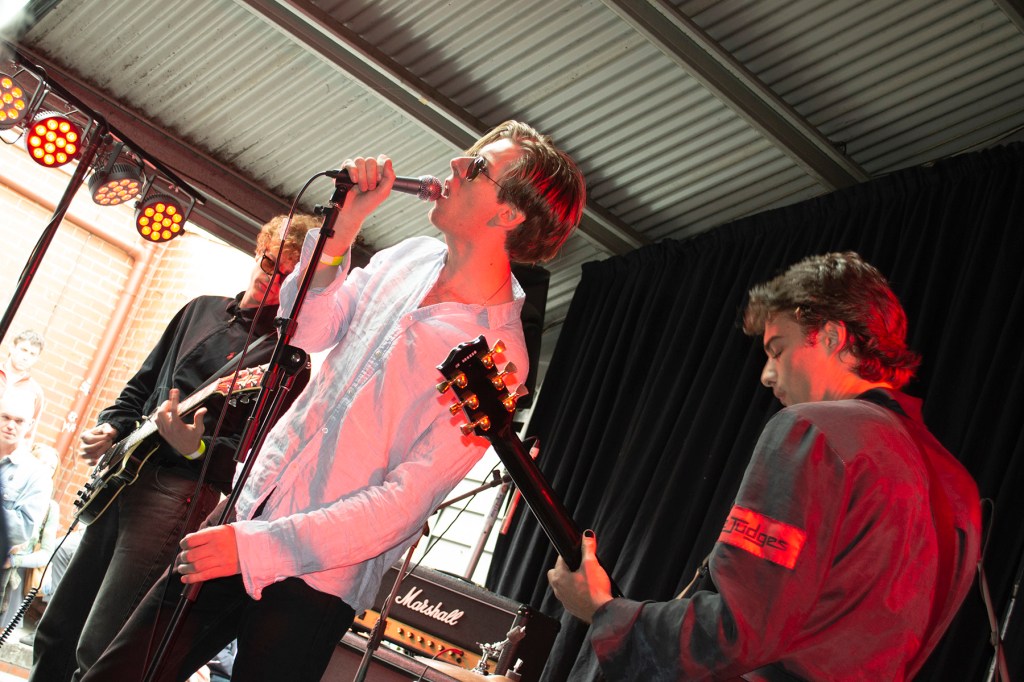
Following the release of their debut LP Judgement Day in November 2023, Melbourne/Naarm five-piece The Judges have kept the momentum rolling with their Guns 7”—a two-track release that captures the band’s sharp rock‘n’roll. Gimmie caught up with frontman Sam Hill to talk about skate vids, cooking, the crazy world we live in, and of new music on the horizon.

Who or what made you fall in love with music?

SAM: Skate video soundtracks, I guess. That’s where I first heard The Stooges and Bowie and the Velvets and all that. And then “punk rock” – probably largely because of the fashion and the incredibly naive attitude, which is quite appealing when you’re young. But even before that I would tape songs off the radio and stuff, so I guess there was always music around!

Photo: Jhonny Russell

Are you working on new songs or ideas that you’re excited about?

SAM: Yeah! Always working on stuff to some degree. Tinkering. With The Judges, with other groups, solo. The second Judges LP has been recorded for a minute now, we just gotta tweak it and polish it up and everything. 

Photo: Jhonny Russell

What’s something you care about deeply that might not necessarily show up in your songs?

SAM: Food. I don’t think any of the songs are about food? I like cooking and you gotta eat. Good meals are important. Especially eating them with friends. Celebrate all occasions. Oh and we gotta save our oceans.

Photo: Jhonny Russell

Which song do you like playing live the most and why?

SAM: I like playing them all. They usually all sound great, sometimes they don’t. Sometimes I forget the words and mumble. But it’s not really even about the music. It’s just fun to make noise. It’s a spectacle.

What’s your biggest non-musical obsession right now?

SAM: Aw man, I don’t know. I follow a lot of total psychos on Instagram that are pretty entertaining to keep up with. World War Three is pretty interesting so far. That and the convergence of “artificial intelligence” and religion and all the UFO bullshit. Things are getting weirder every day. Buckle up!

Follow @tha_judges + LISTEN to The Judges.

JERKFEST 2026: Krakatau

Original photo: Larisa Papamanos / handmade collage by B

Melbourne/Naarm outfit Krakatau are playing this year’s JERKFEST. They have spent the past decade carving out a distinct space where jazz fusion, progressive rock and left-field experimentation collide. Formed by James Tom and Dylan Lieberman, the band’s sound has evolved from psychedelic roots into long-form, exploratory compositions that feel both deeply referential and unmistakably modern. With a new LP Terra Ignota on the horizon, Gimmie caught up with Tom to talk, instrumental storytelling, film obsessions and the challenge of making sense of an always-on world.

Who or what made you fall in love with music?

JAMES: The first song I fell in love with at a young age was ‘Hit the Road Jack’ by Ray Charles. I can’t recall why exactly, my guess is the immediacy of good songwriting!  

Are you working on new songs or ideas that you’re excited about?

JAMES: We have a forthcoming full length LP Terra Ignota coming out in May 2026 (which captures the long period between releases) and a few tunes that are in different stages of completion we have not yet recorded.

What’s something you care about deeply that might not necessarily show up in your songs?

JAMES: I don’t necessarily think any of what we care about as social issues really show up in direct ways in our music. These can be harder themes to express directly with instrumental music, but I would say the main thing I have been thinking about the past few years is the fractured experience of being connected to a mass of decentralised information and how I do not think humans are meant to be connected in this way at all times. 

Which song do you like playing live the most and why?

JAMES: We are playing some fun material written by artists we look up to and interchange this material between our own compositions. For example ‘Madagascar’ written by Richie Beirach (RIP 26.01.2026) for the John Abercrombie Quartet and their 1980 LP originally released on ECM Records has been a lot of fun.  

What’s your biggest non-musical obsession right now?

JAMES: I mean my second most consuming hobby has always been watching films. Some note worthy watches the last three months include: The Ice Storm (1997), The Long Good Friday (1980), Let It Ride (1989), The 4th Man (1983), Spetters (1980), Short Eyes (1977), Dreams (1990) & Shoot the Moon (1982).

Check out more Krakatau. Follow @krakatau.music.

Institute’s Moses Brown: ‘I’m always trying to push the boundaries.’

Original photo: Jenna Beasley / handmade collage by B

Whether he’s fronting Institute, drumming in Glue or recording solo as Peace de Résistance, Moses Brown is always chasing the next creative idea. In this conversation the New York-based musician talks to Gimmie about skateboarding, Dada art, the Austin punk scene, writing songs under pressure, the new Institute’s 7-inch release on Anti Fade Records, his solo works, and of another project that’s so new it doesn’t have a name yet.

MOSES BROWN: I just got home from work. It snowed 18 inches two days ago. So it’s been kind of nasty here. I like being outside. Even if you’re in the city, you want to go hang out at the parks and do fun stuff. 

Is that your bicycle behind you?

MB: Yeah. I usually ride to work because it’s so much faster, and it’s nice. 

What do you do for work? 

MB: I work at a gallery, I’m an art handler. 

Cool. You do all the art for your band, Institute. Has art always been a big part of your life? 

MB: Not really. I’ve never really done visual art, except for bands. I used to do scenic painting and set design stuff in college. Then got into working in galleries through that. 

I know your inspired by the Dada movement. 

MB: Totally. You go back and look at some of that stuff and it’s obvious when you see the Sex Pistols and early punk culture pulling from it; their attitude on the world. Dada and Fluxus—it’s a very punk attitude. It looks so good too. 

For Institute stuff, I would pull from this guy, Kurt Schwitters. Go look at old Kurt Schwitters stuff, it looks like a punk tape, it’s crazy. 

We’re big fans of Dada too!

MB: I need to dive back in. Now that I’ve lived here in New York, I’ve been more into Fluxus stuff, which I would argue, is the continuation of Dada.

The anti-authoritarian stance, the challenging of traditional values, the humour and absurdity. And the commentary on what was going on in the world at the time.

MB: Yeah. I’m sure they were kind of going through similar things, right? Fascism.

You’re originally from Texas. What was it like growing up there for you? 

MB: All three of us in Institute grew up in Austin. Especially when we were kids, it was much more of a liberal bubble, like a small college town. It kind of insulated us from a lot of the stereotypical Texas. You definitely still had people who were super into football and competitive sports. It definitely had an air of toxic masculine and  patriarchy. But Austin was pretty sick, so I can’t complain too much. 

What were you into? 

MB: Me and Arak [Avakian], and I think everybody in the band, were big into skateboarding. I was probably eight or nine, playing soccer, and then figured out that I could ride a skateboard. I slowly got more skilled at it and would watch all these skate videos.

The Flip Sorry video, was a big one for me. At that time all those guys were rock stars, they were punk. You’d watch and be like, dude, this is I want to do! But I was not good at skateboarding then. But the skateboarding culture that I was exposed to really had a big effect.

One of my favourite skaters was a Flip skater, Geoff Rowley. He co-owned it too.

MB: Yeah. I would like all the music they would skate to. Through skate videos, you would hear The Stooges and Velvet Underground and Sex Pistols and Devo. It was all like a blueprint. This is great. 

My dad, he’s a huge music nerd, and I would watch a skate video and be like, Dad, what, what is this? Like, what’s, what is this song? Oh, that’s on the first Stooges record. Okay, can we go get it?

Can you remember one of the first songs you really obsessed over? 

MB: As a kid I was obsessed with The Beatles, until I was seven. It was the only thing I listened to. I remember thinking that so many of their songs were about love. I was like, can you write a song that’s not about love? [laughs]. I had a huge poster in my room and would watch the Yellow Submarine movie all the time.

Do you have any brothers or sisters? 

MB: I’m an only child. But my dad and my mom were big music heads. So just absorb things from them. 

Your dad really loved PiL, right?

MB: Oh yeah. I remember being in fourth grade and bringing a CD player out to my backyard where I had some skate ramps and just blasting Second Edition. I still love it.

But to me now, it’s more adult appreciation of it, and seeing the dub and Can influences in there. Something that I now aspire to do. I’m like, wow, these guys were really doing something.

It’s so funny to think about me being nine and being obsessed with them. Like, what was I getting out of this? [laughs].

I’ve always loved the groove they have, it goes on forever and becomes kind of hypnotic.

MB: Yeah. Obviously with Can, it’s a result of jamming for hours and editing after the fact, which is something that I’ve been trying to do with a new project that I’m working on. It’s been pretty fruitful. You play something for at least 20 to 45 minutes, maybe use three minutes of it.

But you find things after that 20-minute mark that you weren’t expecting to find. I feel like I would grow up and people would be like, “Do you want to jam?” It’s like, no, I don’t want to. I don’t want to just play music to play music. I want to write songs, I want to have something coherent to put forward. And now I’m finding, oh yeah, jamming is extremely productive. You figure out a lot of things.

It’s cool that after being more regimented with song writing you’re now more open to jamming and enjoying it. There’s a lot of different ways to make stuff and it’s good to try new ones, it keeps things interesting. 

MB: Yeah, it’s been nice. If I kept trying to write songs the other way, like I have been forever, you start to hit a brick wall and it’s not fun and you’re just going to get angry.

Totally. The new project you’re talking about, is it something other than Peace de Résistance or the Moses Brown stuff?

MB: Yeah, something totally new. My friend has a studio. He’s recording a new Peace… record. But then on top of that, me and a handful of friends have been going in there and jamming. Just pressing record and seeing what happens. Nobody’s in a rush. We know we won’t play a show so it’s like, dude, we can take as much time as we want to. 

Does it have a name yet? 

MB: No, we haven’t figured that out. We’re slowly getting artwork figured out. We don’t know exactly what we’re going to do. It’s too amorphous to really give a solid answer right now. 

Photo: courtesy of Anti Fade

I was reading an interview with Arak and he mentioned that when you guys were young, your dad had a little studio and with sick gear that you could use.

MB: He was a songwriter and made a handful of tapes in the ’90s. The house we lived in originally had a laundry room that he used as his studio. I remember being four or five and him closing the laundry room door while I heard him playing music in there.

Eventually, he wanted to build a kind of shed out the back in our backyard. He set it up as a studio for himself, but then he got too busy and developed carpal tunnel in his hands, so he had to stop playing guitar.

I’m sure that, in the back of his mind, he was thinking, If I leave this here, the kids are going to use it. And we certainly did. So many of those Austin bands wouldn’t have started if it wasn’t for him building that.

Wow. Your dad sounds like he’s pretty cool.

MB: Yeah. If you were in a band with me, you had a place that you could practice and didn’t have to worry about paying or having gear. So it was huge. 

It’s nice that you a Arak have known each other since you were 10. 

MB: We’ve been friends for probably 21 years now, 22 maybe. 

Do you remember your first impression of him? 

MB: Totally. We were at a skateboard camp and he was trying really hard. I thought he was super cool. I felt like he was a skater, but I could also tell he was a rocker, and I remember thinking, this guy seems very cool.

I had other friends who skated, but they didn’t take it that seriously. He was in a similar skill range to me and took it as seriously as I did. I remember thinking, I want to get to know this guy.

We met at skate camp and then, about a year later, found out we were going to the same middle school. That’s when we really became friends.

I don’t know many people who have friends with decades long history together. That’s really lovely.

MB: Yeah. I got a couple of them. It’s awesome. Dude, so many people I went to school with, from elementary through high school, also ended up moving here and getting involved in music and the arts. It feels like our little corner of Austin produced a lot of like-minded people who stayed in touch.

Arak said that he’d like to go out late and break into abandon buildings and things like that. But then you’d be more of a good kid and be like, I’m going home to get up early tomorrow. You guys seem a bit opposite.

MB: Yeah. He’s a boundary pusher and I’m a respect-the-line guy. He’s more whimsical and careless and I have so much crippling fear. Like, no, we can’t do that. I’ve been working on it and trying to cut myself more slack and being open to not having so much control. That’s a lot of what’s happening there with the fear.

Previously, you’ve talked about not letting yourself have much fun when you were younger. But I noticed that when we started the conversation, you were bummed out because of all the snow and not being able to go outside to have fun. I thought, that’s nice that you’re open to fun now.

MB: Yeah, I am. When I was younger, I used to impose these imaginary rules on myself. I’d do things in such a structured way that, looking back now, I’m like, what was I doing?

I was about thirteen and would wake up at eight in the morning on a Saturday, ride my bike to the skate park, and skate by myself for as long as I could until someone else showed up. Then I’d go back home. Why did I feel like I needed to do that? I could have been doing what everyone else was doing — smoking weed, sleeping over at friends’ houses — and honestly, that probably would have been sick.

The first band you had was called Lemonade Sten Syndicate, and your influences were The Hives and Dead Kennedys. That’s a pretty fun combo. 

MB: Yeah, the band was actually pretty good for a middle school band. 

In the old photo you used for the cover of your solo Stone Upon Stone album where you’re working on the house you grew up in, I saw that you’re wearing a Distillers shirt!

MB: That’s what I was all about. Skateboarding and Distillers shirts [laughs]. I was like—this is my shit. 

Stone Upon Stone was an interesting record. The idea was sparked from a novel [Wiesław Myśliwski’s novel of the same name] that you read? You wanted to soundtrack it?

MB: That was the initial idea. I was working on these songs, and they were quite repetitive but carried a lot of emotional weight. I started thinking that this style of music is often presented as a soundtrack to something (not always, but frequently) and it felt like a good way to frame the project.

Before the writing was finished, I decided to try making more songs and turn it into a soundtrack for something like a book or a movie. That idea was mostly inspired by talking to Owen from Straw Man Army, since they’d done their own score.

At first, I tried doing it for the book, but it didn’t really work. It was too hard to reread a book with the mindset of scoring it. You end up reading while constantly making notes like, oh, this could be a song… this could be a song, and I realised that’s not how I want to read. It felt frustrating.

So I decided it needed to be something from my own life, something more personal. That’s when I came up with the idea of making it a soundtrack to the construction of the house I grew up in, and that ended up fitting really well.

Do each of the musical projects you do fit a different function for you?

MB: Yeah, totally it’s all different parts of my musical brain.

What about Glue? 

MB: I don’t know how to write a Glue song. I know how to write a Glue drum part. Glue is just fun. I’m just me, playing. Drumming is a whole other section that definitely is an identity that is doing something for me. It satisfies the drummer thing. 

They often say the drummer is the heartbeat of the band, right?

MB: I think so. Bass and drums hold it down.

The engine that drives things. What about Institute? 

MB: Institute is great because I grew up doing so much punk music. Institute is the band where I get to create, sing and write music that probably has the most relevance to my 18-year-old self. I don’t think my 18-year-old self would really care about Peace de Résistance or the more recent Moses Brown records. So it’s cool to do something for that guy.
When you started Institute, you were recording on a 4-track. Were you writing all the songs initially? 

MB: Me and Adam [Cahoon] wrote all of the songs on the Demo. I was using a 4-track to demo the songs. But then what’s on the Demo, our friend Hans recorded it on quarter-inch or half-inch tape. I never liked using the 4-track, it was hard to use.

The lyrics that you write move between, social critique and more inward-looking stuff. Is songwriting ever a challenge for you? 

MB: Totally. I have to write lyrics for this new Peace… record. It’s taking a long time. It’s a little like pulling teeth. I’m not somebody who naturally writes a bunch of stuff. I’m writing words down on paper because I have to.

Institute was the first time I started a band and thought, this is it. I’m going to sing and write the lyrics. For years I was like, I don’t want to do that. That’s crazy. It sounds hard and scary.

What helped you overcome the scariness? 

MB: I was not very excited to record and sing, I just did it. 

Your live shows, I’ve seen in online vids, look pretty exciting!

MB: Oh, totally. Institute was a punk, kind of post-punk, anarcho rock band, but we were playing in Austin, which at that time was really dominated by hardcore. There were all these hardcore bands from North Texas coming through, so we ended up playing with a lot of hardcore bands. It was really funny.

All these kids in tall tees and Jordans were coming to the shows, and they were totally into it. When you look back now at some of those line-ups, it’s wild. It’d be Institute with Power Trip, Wiccans, Glue. It’s funny that we were so well accepted by that crowd.

Obviously a lot of us had played in hardcore bands before, so people were like, “Oh, those guys are doing this preachy band now.” But when Giddy Boys started happening, people were kind of like, “Okay… this is interesting.” And honestly, I’m here for it.

Cody and Harris from Glue, are more well-versed in hardcore. I feel like I absorbed some things about it from playing in Glue. But I did not grow up going to hardcore shows. I didn’t know who integrity or SSD or Antidote or anybody was until meeting those guys. I was doing my own thing. 

Institute have an Australian only release on Anti Fade for your tour here. What inspired that collection of songs? The songs seems connected in a way. 

MB: We were coming over and planning to just bring copies of the last record with us. Christina, who is helping book the shows, and Billy from Anti Fade were like, “It would be sick if you guys had a physical release to coincide with the tour.”

And I was like, okay… you’re kind of asking me to move mountains here [laughs]. Getting even one song out of this band is hard because everyone’s in different places. We can’t practice together and writing music from a distance is difficult. So I was like, I don’t know.

But that weekend I thought, okay, let me try to write a song. I wrote ‘The Shooter’ and texted it to Adam. Me and him are kind of the two guys who bring in the skeletons of songs, so I asked him, “Do you have any skeletons lying around?”

He sent me what became ‘Privilege’, and I was like, dude, this is great. Suddenly we had two songs and I liked them. Then I remembered this other funky jam I’d done in a practice space with Owen [D4MT Labs], and I thought, I’m pretty sure this could be an Institute song too. So we just smashed that in there.

We basically had these skeletons of songs, and then we showed up to record them. Nobody knew any parts. We had to learn them and record them on the same day, and write a bunch of parts as we went.

It was this burst of madness. The guys flew in, we had one day to write and record a 7-inch, and we also had to practice the set we were playing the next day.

Lyrically it was the same thing. Total pressure cooker. I was like, dude, I need to write some lyrics right now. I needed them yesterday.

And honestly, we’re just so consumed with political madness here that I thought, you know what, I’m sorry if everyone’s already bombarded with this stuff every day, but that’s what I’ve got. That’s what I’m thinking about. That’s what’s on my mind.

When you write lyrics, do you hand write them or do you type them on your phone or computer? 

MB: I’m doing it in a Word document on my computer. I’ve handwritten other ones. 

You mentioned you were working on a new Peace record right now; what themes are you exploring lyrically? 

MB: I’m trying to get more okay with things being a bit vague, with them making sense to me but maybe not to other people. I feel like the past couple of records have been all about very clear, concise message delivery. Right now I’m just like, dude, I don’t have it in me.

Peace de Résistance started during the pandemic.

MB: It started because I had this idea to do a band that was a combo of Templars and Chrissy Zebby Tembo. I felt like there was some crossover there that needed to be explored. That was the first idea.

But then people were like, “This kind of sounds like The Velvet Underground.” And I thought, okay, I want to try that now. That’s basically what led to the first LP.

For Peace you usually play all the instruments on the recording…

MB: On the new one that I’m working on that’s not the case but traditionally, yeah. 

Is there an instrument that you feel particularly at home with? 

MB: Playing bass is pretty comfortable. Guitar is fun, but my hands just… I don’t know. They don’t really know how to do things the right way, and I run into a lot of problems because of that.

With bass, you don’t have to worry about what your hands are doing as much. You’re mostly just using a finger or two.

And then drums were the first instrument I learned how to play, so I feel pretty at home with that. But I need to work on expanding my boundaries with the drums because, at this point, it’s become a pretty mundane instrument for me to play.

I’m like, dude, I don’t even know how long I’ve been doing this for. Maybe I need to make some kind of avant-jazz drum album or something just to get excited about it again.

That’d be cool. I read that Madonna’s ‘Ray Of Light’ was an inspiration. 

MB: Oh god, I love that song, yeah. 

I love it too. It’s one of my fav Madonna records. Have you heard the original song from where ‘Ray Of Light’ comes from? 

MB: No. 

Curtiss Maldoon, an English folk duo released the song ‘Sepheryn’ in, maybe, 1971.

MB: Interesting. I’ll check it out.

Why doesn’t Peace do shows?

MB: Being in Institute and Glue is enough for me. That scratches the itch of playing live. And honestly, half the fun of doing Peace songs is that I don’t have to figure out how to play them live.

The madness of trying to translate them into a live band just doesn’t sound like fun. I feel like I’d be pulling my hair out, and who knows if they’d even sound good with a full band.

I imagine it would just be me in a room with five people who’ve dedicated a lot of time to it, trying things out. We’d spend two hours learning a song, and at the end I’d be like, “You know what? Sorry, we’re not going to play this one. It doesn’t sound good.”

It’s just not a record that was written with live performance in mind. I mean, maybe at some point it could be fun to try, but I don’t really need that to happen right now.

What are the things that matter to you creatively? 

MB: Doing new things. There’s a song on the new Peace thing I’m working on that sounds exactly like what you’d expect a Peace song to sound like. And I’m like, dude, I should probably cut this one. Why do another song that just sounds like the band already sounds? Let me try something new. Otherwise it’s boring. I’m always trying to push the boundaries.

Is there anything that you haven’t done yet that you would just love to try? 

MB: Musically or anything?

Anything, it doesn’t have to be music-related.

MB: Oh my god, so much stuff. I like to play this game where I ask people: if you had to work 40 hours a week, but you could spend those 40 hours doing anything you wanted, what would it be?

People usually say things like gardening, or something quiet like that. But for me, I just want to try new activities. I want to go mountain biking. I want to do oil painting. I want to jump off a skyscraper with a parachute.

Honestly, I think everything is valid.

Photo: courtesy of Anti Fade

Yep. Have you been reading anything interesting lately? 

MB: Right now I’m reading Sergio De La Pava. The book’s called A Naked Singularity. It’s good. It’s this kind of weird postmodern novel.

De La Pava was a public defender in New York City, and the book really throws you into that world. Sometimes it’s conversations between characters, but a lot of it reads almost like raw court transcripts. You’re just dropped straight into the madness of being a public defender in New York City.

That sounds fascinating. What’s a book that’s had a real big impact on you? 

MB: My partner wanted to read a fiction book because she’d mostly been reading nonfiction. She asked me, “What should I read?”

And I was like, you have to read The Melancholy of Resistance by László Krasznahorkai. When I read that book I just thought, this is it. This is what I want a novel to do.

People in the literary world always call him the master of the apocalypse, and honestly I kind of agree. His books always feel like something terrible is about to happen, and everyone is scrambling to take stock of their lives. They’re interacting with each other in the middle of this vague crisis, and nobody really knows what’s going on.

In that book, a travelling circus brings a giant taxidermied whale into town, and somehow that triggers what feels like the end of the world. It sounds crazy, but it’s incredible.

You’ve totally sold me. I’m gonna go find a copy of it. 

MB: You should definitely read it. It’s awesome. 

What pushed you towards living in New York? 

MB: I’d visited here when I was a teenager and thought it was cool. Then I came back again as more of an adult and started meeting people. I realised, oh, I could actually live here.

From a work perspective it made sense too. In Austin I was working at galleries and museums, but there were maybe three places you could really work. Here there are hundreds.

So I thought, I could move here and actually make a living doing the same kind of work. It suddenly felt feasible.

If I’d been like, “I’m going to move to Portland and figure it out,” I probably wouldn’t have done it, because I’d have no idea what I’d do there. But here it felt like, okay, boom, you’re good to go.

Do you like your work that you do?

MB: I do like it, yeah. A lot of music people I know do it too. It’s actually great for creative people who need something semi-interesting to do that isn’t, coding or something. You’re working with your hands, you have to do a bit of math, and you’re constantly figuring things out.

A lot of the job is like, “Okay, how do we build a box for this sculpture that’s a giant snail?” You’re just solving problems like that all day.

That sounds so fun. Last question. What’s something lately that’s made you genuinely really happy? 

MB: We had two snowstorms back-to-back, about three weeks apart. The first one happened while my partner was out of town, so I had to deal with it by myself. I was basically stuck in the house for a day.

But when the second storm came through she was back, and I was like, “Oh my God, you’re going to be my snow buddy.” We were going to play Overcooked!, read books and take baths. I was really excited to have her home to hunker down in the snow with.

Get ‘The Shooter’ 7-inch via Anti Fade Records. Don’t miss the Australian tour shows presented by Blow Blood! TICKETS HERE.

✨ Wed 18 @ Oxford Arts Factory
Institute (USA)
R.M.F.C.
Negative Gears
Station Model Violence
The Horribles

✨ Thu 19 @ Marrickville Bowlo
Institute (USA)
TOY (BNE)
Gift Giver
Vasta Ruína

✨Fri 20 @ The Tote
Institute (USA)
Rapid Dye (SYD)
Station Model Violence (SYD)
Body Maintenance
MK Naomi

✨Sat 21 @ JERK FEST 11

✨Sun 22 @ Thornbury Bowlo *DAY SHOW*
Institute (USA)
Constant Mongrel
Possible Humans
Zipper

Check out more INSTITUTE.

JERKFEST 2026: The Blinds

Original photo: Jhonny Russell / handmade collage by B

We first saw Melbourne/Naarm band The Blinds live a few years ago at Nag Nag Nag Fest. Since releasing their self-titled cassette on Alex Macfarlane’s Hobbies Galore in 2017, and 7-inch Endless Fascination in 2022, the band have been building towards their long-awaited debut LP. Gimmie caught up with them ahead of their appearance at JERKFEST this weekend, to talk formative music memories, favourite songs to play live and a few unexpected obsessions.

Who or what made you fall in love with music?

LACH: ‘Getting the band back together’, which was jumping around playing a toy tambo in the loungeroom listening to the Beatles and Stones etc., with my dad after he’d no doubt had a few beers. I was 34.

CAL: Due to my dad being a fan, I loved Cream and idolised Jack Bruce. Other than that, I had a pretty loose grasp on music until Blinds band friend and recorder Alex loaned me 3 CDs every day for the best part of a year and blew my little world right open at the tender age of 16.

RORY: My mum used to buy me the newest So Fresh CDs, and it was then I knew I wanted to play rock and roll.

FUJ: Some definitive memories include listening to solo career Ozzy Osbourne and Dio tapes that belonged to my stepdad and some RATM and TOOL* CDs that Blinds band friend and recorder Alex lent to me in Year 7.

*REDACTED

Original photo: Jhonny Russell / handmade collage by B

Are you working on new songs or ideas that you’re excited about?

LACH: Yes. It’s taken us a long time, but we are like the turtle from The Tortoise and the Hare.

CAL: We’re finally getting ready for the elusive and coveted debut LP, which we’re very excited about!

RORY: I think we’re the most productive we’ve ever been right now, in our own way and by our own definition of productive.

FUJ: Ya! In our 10th year we have started working on a record ;()

Original photo: Jhonny Russell / handmade collage by B

What’s something you care about deeply that might not necessarily show up in your songs?

LACH: Fam & friends and the power of song.

CAL: Dolphins and the number 8.

RORY: A perfectly made tabouli.

FUJ: We are yet to utilise a crumhorn.

Which song do you like playing live the most and why?

LACH: One from our tape ‘Passenger Seat’ because it’s burnt into my skull and good to ease nerves early in a set.  Also ‘Hat’.

CAL: ‘Separation Street’ always feels good to play. It’s got a really fun bass line in the chorus that I often use for sound check because it kind of doubles as a nice little warm up.

RORY: I agree with Cal. ‘Separation Street’ has been a long time fave. Especially after introducing the intro on live performances. 

FUJ: I like a newer one called ‘Hat’ mostly because it’s called ‘Hat’.

Original photo: Jhonny Russell / handmade collage by B

What’s your biggest non-musical obsession right now?

LACH: This congee I ate in Thailand recently.

CAL: Nasiah Wanganeen-Milera.

RORY: Throwing back oysters at Queen Victoria Market.

FUJ: I’m pretty into the rice cooker that Rory convinced me to purchase.

Check out more of The Blinds.

Guitar Wolf’s Seiji: ‘Rock’n’roll is the path that makes me shine the brightest.’

Photo: Jhonny Russell / handmade collage by B.

For Seiji of Guitar Wolf, rock’n’roll isn’t just music—it’s a way of life powered by pure “jet” energy. Since the late ’80s the iconic Japanese band has blasted audiences with their raw sound and wild mythology of motorcycles, leather jackets, wolves and cosmic-inspired rock’n’roll. We caught up with Seiji to talk haunted houses, night skies, beer, and movies.

You were born in Nagasaki. Do you have any memories of growing up there?

SEIJI: Memories? I started the engine of my memory, but my gas tank was filled up in Shimane. Nagasaki is where I was born, but it was the winds of Shimane that forged my soul. That’s where my jet-setting life began.

Previously, you’ve mentioned that if you weren’t a musician, you wanted to be a “haunted house builder”. Why are you drawn to haunted houses?

S: They’re full of surprises that make people say, “Wow!” They’re the best! The thrill of surprising people is the same as rock’n’roll. The basis of entertainment is getting your heart pumping.

Photo: Jhonny Russell

Why is music important to you?

S: Everyone’s trying to achieve the best life possible, right? Everyone wants to present themselves in the coolest light. For me, rock’n’roll is the path that makes me shine the brightest; the path that makes me look the coolest. That’s all there is to it!

When did you decide that rock’n’roll would be your life?

S: It wasn’t a matter of logic, it was the moment my soul screamed, “This is it!” When I found the place where I felt the coolest, my path was set.

How has music supported you through difficult times?

S: Difficulties? Not in my life! There are many people in the world who have it much tougher. My worries are a blessing. I’m sorry, but the word “difficult” is too good for me.

Photo: Jhonny Russell

What have you learned about yourself through years of touring?

S: I can drink a lot of beer! Hahaha! And also… I love cute girls, after all. Isn’t that a universal truth?

Guitar Wolf has a unique world and imagination; where did this creative spirit start for you?

S: It’s the night sky. I love looking up at it and letting all kinds of images flow. Also, the thrill of riding a motorcycle, and the bittersweet memories of my youth. All of those things fuel my imagination.

What themes or emotions were most important while writing your new album More Jet!?

S: Humans are going to die soon anyway. So I just use music that I think is cool and add my own lyrics. There is no fear whatsoever. That is the jet energy of this time.

How do you feel you’ve grown as a songwriter over the years?

S: ​I think I have acquired the best guitar techniques. ​Even if I cover a famous song, I’m so bad I can’t hear the song. ​This is my “ultimate original”! 

Photo: Jhonny Russell

We enjoyed Wild Zero. What films do you like most?

S: ​Back to the Future, Burn Dragon, Grease!—all of them are the best!

Is there anything that people would be surprised about about you?

S: I have wolves in my ancestry! Everyone in Australia, look up at the night sky and wait. Jet! rock’n’roll!

Check out the new album More Jet! Out now via Sorcerer Records (AUS) & Goner (US).

Don’t miss the Australian tour – tickets HERE via On the Loose.

More Guitar Wolf HERE.

Crafty Cuts with Annabel Blackman (Solo Career + Body Type)

Handmade collage by B.

Annabel Blackman, the musical shapeshifter behind weirdo pop project Solo Career and member of Body Type, brings the same curiosity and coolness that defines her debut album Interior Delirium to this eclectic Crafty Cuts selection. Moving between oceanic calm, nostalgic pop reverence and hypnotic ambient drift, her picks reveal a listening world driven by feeling, humour and quiet obsession.

You’ll find a track that channels the cleansing power of a peaceful ocean swim; a song you just may have heard a gazillion times watching Gilmore Girls ; a confidence-boosting pop classic; a spontaneous, funky DIY gem from a friend whose brilliance feels effortless; a soaring spiritual love song from a hook-writing master; an iconic dance-floor hit that sparked a thrift-store pop deep dive; a jam from her favourite LA witch; smooth yacht-rock comfort with an outro built for kitchen bopping + more.

But first, check out the ultra-cool, Solo Career:

  1. Jordan Ireland – Swimming

I live on the South Coast of NSW and often rely heavily on the therapeutic powers of jumping in the ocean. If the conditions are right, and the water’s peaceful and clear, it can really strip you of any ick. This is off Jordan’s ‘Spirit Walking’ album, which is very dear to me on the whole but this track in particular hits me because it somehow summons that power of the mysterious big blue. 

2. Carole King – Feeling Sad Tonight

I never intended to get into Carole King, I don’t really know how it happened. I heard that one song on Gilmore Girls too many times and was never interested in listening to any more of her music but something flipped and I found myself listening to her album ‘Rhymes & Reasons’ on repeat. It’s groovy and there might even be bongos in the mix but it’s balanced with darker concerns / Carole wrestling with her troubles. This track has a resigned sense of drama – perfect for driving home from work. Or sitting in your car in the  driveway before you go inside.

3. T-Pain – I’m Sprung

I came across T-Pain’s NPR tiny desk performance and it was unexpectedly gut-wrenching. It got me hooked and now I listen to his music cos it pumps me up. The way he got torn down for his pioneering use of auto-tune was brutal (“You ruined music” – Usher) but when I listen to I’m Sprung, Bartender, Buy U a Drank, I smile because no one can deny nor destroy that talent. At work I’m the office DJ and I play a lot of ambient music / Severance vibraphone soundtrack stuff so when that’s over I need to strike out on a firm tangent and T-Pain is the answer. 

4. Boba Lego – I Might Dissolve

Rumour has it that Boba Lego aka Occy writes his lyrics on the spot. Whatever he’s channeling speaks to me through its simplicity and sweetness. And I’m kinda obsessed with his guitar manoeuvres but we’re friends so I try not to let the depth of my fandom show. Don’t read this Occy. Anyways this song and this album are hella funky but I recommend listening to Memorys of Newnes too.

5. Todd Rundgren – Healing Pt. 1

Been on a Todd tear for a while now and have yet to listen to everything he’s made cos there’s a lot, but have been particularly enjoying the Hermit of Mink Hollow and Healing, which this song is from. Todd is a pro at writing hooky love and heartbreak songs – it’s almost too easy for him so I think he likes busting out of the conventional hit box and writing soaring songs about spirituality and socioeconomics. He’s coming to Australia for the second year in a row this March so I’m making it my public internet wish that he play this one at the Sydney show.

6. Madonna – Into the Groove

This came on the radio a couple years ago when I was driving and it dawned on me how cool Madonna is, spawning an op shop CD collect-a-thon. At one point I had all Madonna CDs in my car’s 6 stack CD player, a high point in my life. You can’t go past the Immaculate Collection comp if you want a good time on a road trip, or in general. I love Madonna cos she’s outspoken and a self-proclaimed bitch and isn’t a perfect singer. 

7. Jessica Pratt – Life Is

When I heard the opening drums to this it blew my mind. They’re a reference to Glen Campbell’s ‘Guess I’m Dumb’ (I’m assuming) which I used to do a silly Solo Career cover of using a ripped youtube instrumental that’s exactly the same as what you hear in the O.G. song. It framed her whole new album ‘Here In the Pitch’ for me as a subtle Hollywood glamour affair. I love how her sound has changed over the last couple of records to accentuate her style without losing the magic of her earlier simple acoustic recordings. She’s my favourite LA witch. 

8. SWV – Rain

Just when I thought I’d heard the coolest rain sample on Erika De Casier’s song ‘Little Bit’, I came across this one by SWV which is far more drippy. I used to be scarred by the 90s R’n’B my sister pumped when I was a kid but now I’ve done a 180 flip and can’t get enough. SWV is my fave to cook dinner to and there’s a really good NTS compilation of their hits I like to rinse. 

9. Ned Doheny – If You Should Fall

As I’ve said I like groovy stuff and am probably some kind of blue eyed soul yacht rock tragic. I wholeheartedly love the Hard Candy album this song is from so the choice is almost irrelevant cos I just like listening to the whole thing, however the outro on this song deserves an honourable mention for high quality bopping value. Was very excited that Numero Group reissued this record and even more excited to come across it at Northside Records in Melb. Another fave to cook to, good chopping tempos.

10. Blue Divers – Part Way

Bookending this selection with another local coastal, Alec aka the Blue Divers cult leader revels in the powers of ambient guitar loop de loop, and this track is particularly hypnotic. I was lucky enough to be an imposter bean bag shaker on a short Blue Divers tour across New Zealand last year and it was super cool having a break from rock and roll rigmarole. The calmness of the music somehow imbued the whole tour with a sense of calm but maybe it was actually because a certain energetic Joe was running around TMing everything seamlessly. 

Follow @solo.career and @bodytypeband. Solo Career’s Interior Delirium out now on Dinosaur City Records.

Upchuck’s KT: ‘I surround myself with good times and good energy.’

Original photo: Michael Tyrone Delaney / handmade collage art by B.

Atlanta punk band Upchuck occupy a space where fury meets vulnerability. Known for their explosive live sets and genre-blurring sound, the group have carved out a distinct voice within contemporary punk. Their latest album I’m Nice Now pushes that voice further, exploring grief, identity and unity with biting wit and emotional honesty. Ahead of their first Australian tour and new music, frontperson KT reflects on creative growth and community.

KT: We been busy writing the next album. Trying to spit out what we can and have it done before we go to Australia.

That’s exciting! Your latest album I’m Nice Now was one of my favourite punk records of 2025. What things have you been gravitating towards writing about lately? 

KT: I like write to write about whatever I’m feeling at the time. I’m growing as a person, as I should be, it’s shifting along that. Last year was a lot!

The album that came out last year was me in 2024. The one that’s about to come out this time, is even more vulnerable and more emotional. 

It seems like everyone I know had a rough year last year. 

KT: Exactly. Yeah. It was a lot for me in general. I was busy, we were touring a lot. And then with work and stuff, it’s hard to find a job that will keep me financially ok. Not to mention Trump America is not helping in any way. And just worldwide chaos. It was a lot to soak in, and try to maintain. I feel like it was a lot of chaos in every aspect of my life. I didn’t have it contained, but trying to do better on that this year. This year, I’m locking in. 

Why is music important for you? 

KT: It’s an expression. It has always been a means of communication in a way. Even before I started making music, it was kind of an escape at times. Depending on what I was listening to, it could also be a source of motivation. It’s shaped who I am today, for sure.

Everything that I’ve absorbed in my lifetime — my mum’s Trini and my dad’s Jamaican. So I grew up listening to soca, reggae and all that other stuff. I think that even shapes what I write about today, because reggae has a lot to do with the punk mentality. But yeah, it’s shaped my character, that’s for sure.

What was your coming of age soundtrack? 

KT: Oh geez [laughs]. A mixture — from Chief Keef to The Drums. I was listening to The Drums a lot. What else? I was into Fleet Foxes at one point, Florence and the Machine, and Santigold was up there for me. I was listening to a lot.

Same! I know that you used to play cello. What made you choose that instrument? 

KT: Honestly, I didn’t have a choice. My parents definitely just put me in there [laughs]. I feel like they literally heard on NPR one morning, “Kids in orchestra end up smarter and more successful in life.” So they were like, “Oh, shit, yeah, let’s put our kids in orchestra.” Shout out Miss O’Shea, though — she did teach me a lot when it comes to music and discipline and all that other stuff. It definitely helped in its own way, but it was a little too constricting for me at the time. So I had to wean off all the classical shit.

Photo: Ebru Yildiz

Before you were a vocalist, did you ever think of fronting a band one day? 

KT: Nah, that definitely wasn’t in my cards. But a lot of shit in my life wasn’t in my cards. Especially at the time, I’d just dropped out of Georgia State because I couldn’t afford my classes and shit. So I was just working and trying to pay rent. I didn’t expect to be where I am today, but I’m not complaining either. Now that I’m here, it feels right.

What were you studying? 

KT: I started in public health and then switched to biology, but I was like, I can’t do all that shit [laughs]. So I switched to social entrepreneurship and was like, yeah, I think I could do a nice little nonprofit that could help the community in some ways and give back to the people.

Totally. I feel that. Working in community is important to me too. I work with fellow First Nations and POC writers as a book editor. Being able to help my communities tell our stories in our ways means a lot.

KT: Yeah, that’s nice.

You mentioned that when you write songs they’re about what’s happening for you in real time. Do you ever surprise yourself when you look back at your songs and see your growth is mapped out across Upchuck’s records? 

KT: That actually is funny. I definitely surprise myself every time. Even when we write an album, it’s kind of crazy. It’s almost backwards because we just go into it writing songs and then look back over all the songs we put into one record. It’s like, oh wait, there’s a theme — damn. I didn’t even realise there was a theme happening, but there is a theme within each one. So yeah, it’s always surprising.

That’s the fun part of the writing process, figuring yourself out while writing. It’s crazy to go back to that first album and be like, damn, I really was just mad. I really was just edgy all the time.

Previously you’ve mentioned that Upchuck’s first album was a lot about taking up space. After being out there for a minute and touring and having a bunch of record’s out; has that changed for you?

KT: I think there are bigger problems at hand. The focus for me now is more on unity and spreading that unity. But it’s always been about unity. I feel like that’s the one common thread that’s existed across every Upchuck album. That’s the main thing.

Whenever I read anything about Upchuck, people always mention that you’re a really political band and they mention you’re angry and there’s a rage. But I also think there’s a lot of humour and a sarcasm as well that never gets talked about.

KT: I was actually just talking about that the other day about how we’re portrayed. How I’m supposedly this political, serious person. I’m like, I’m no politician, bro. At the end of the day, I’m just this punk motherfucker, you know? Shit’s too crazy not to have a laugh. It’s all very serious, but even with I’m Nice Now, that whole concept was like, bro, it’s almost so crazy that you have to smile to be sane. Take time to make yourself smile today, bro [laughs]. That’s really what that shit’s about.

I love the album cover, it’s so visually striking and really cheeky. 

KT: [Laughs] Yeah, for sure.

As a POC, I related to a lot of what you’re saying on song ‘Forgotten Token’. That feeling of being invisible or of being visible but being disposable. 

KT: Exactly! 

As women of colour we’re expected to carry history and grief and explain things to everybody. Those themes tie into the song ‘Tired’ as well. What sparked it? 

KT: With ‘Forgotten Token’ I had just lost my sister earlier that year. She was really a G.O.A.T. to me, literally a textbook older sister. On her shit. Don’t give no bullshit. Don’t take shit from nobody. Did it all by herself. Truly a role model for me.

She worked for this big fashion company, but she would always call me like, “Damn, they literally stole my shit and didn’t give me credit for it.” And all this other stuff. And not seeing one of those coworkers at her funeral, I was like, damn, y’all really just didn’t give a fuck. She just slaved for y’all for the past decade of her fucking life, and y’all really don’t give a fuck, but you want all of her creativity.

I feel like they kind of sucked the soul out of her, and that really resonated with me. I know it resonates with a lot of other women of colour. It rocked me and hit close. 

I’m so sorry. It’s so crazy how the world treats people like products, a commodity, and not as people. That’s where shit goes wrong.

KT: Exactly. That’s why it’s going wrong right now, literally. 

I really love the video for ‘Forgotten Token’. It also talks to gentrification, the dark side of it. And I thought it was cool that there’s cameos with your mum and your grandma and brothers in there. 

KT: We filmed it at my mom’s house, so it was really just chilling at the crib. If anything, it was strange to film the white family in the house I grew up in, so it felt trippy in those moments. I was like, damn, this is actually dark. Even my mom was like, I don’t know, that shit’s weird [laughs].

You totally captured that feeling. When I was watching it, it gave me that ick feeling too.

KT: [Laughs]. Yeah, like, what are you doing here, bro? You’re not supposed to be here. Get out. But yeah, it seemed like we were just chilling at the crib. You know, mom’s always gonna do the most. She was being funny during the shoot, like, “So what do you want me to do?” She’s just extra. She’s a certified Aries mom, like, “Oh, is the camera on me, right now?” And I was like, “Okay, mom, you’re doing too much, bro. Just chill.”

I really love the song ‘New Case’ and live the claymation clip for that too!

KT: Oh, yeah, Cissi [Efraimsson]. Yeah, she snapped, she went crazy, nah [laughs]. I think it took her a minute too.

That song reminds me of Santigold!

KT: That means a lot because literally that was my influence growing up.

Same!

KT: Her and MIA, literally G.O.A.T’s.

We’ve only got a few minutes left. We’ve spoken about anger and rage but I wanted to ask you; what are the moments where you feel soft? 

KT: Honestly, nine times out of 10, I’m really goo goo gaga as fuck [laughs]. That’s the craziest part. I was talking about it with someone the other day, and it’s almost kind of conflicting to feel like I’m being portrayed as, oh, I’m just this angry Black woman with rage. And I’m like, I’m really not.

Like, yeah, of course, every person of colour has a right to be upset, and it’s valid to feel that way given how everything has been going on for the past century and more. You know what I’m saying? So it’s like, I’m not out here just yelling at random people on the street and shit. I’m just, I don’t know… I have my qualms.

However, I find my peace. I have my friends, and I surround myself with good times and good energy. I am soft most times. I really am goofy as fuck. I feel like most people would be like, “Oh, that girl wasn’t even angry for real. She just be joking around half the time.” But yeah, most of the time I’m normally chilling.

What’s something that you’ve seen or experienced lately that’s been really beautiful or really joyous?

KT: Honestly, I guess it’s the growth I’m seeing within myself and all my closest homies. We’re all kind of on this lock-in growth journey rather than the usual debauchery we used to get into, and I think that’s really beautiful. It’s just us maturing and growing up. We’re getting older now. It’s sick that we’re all taking our time and appreciating the little things in life.

Check out more Upchuck HERE. Follow @_upchuck_. I’m Nice Now is out via Domino Records. Get tickets for their Australian tour HERE.

Frenzee’s Apollonia: ‘I was lucky enough to be raised by a very feminist mother’

Original photo by Jhonny Russell // Handmade collage by B

Frenzee frontwoman Apollonia moves between worlds. Raised between Greece and Australia, and shaped by a deeply traditional musical family, her relationship to music has always carried weight, expectation, and history. In Frenzee, that history collides with hardcore punk, feminism, and a need for release that feels both personal and political, with Apollonia fronting the band formed alongside her brothers, Nick and Adonis.

In this yarn, Gimmie talks to Apollonia about growing up in a village on the Greek island of Crete, navigating gendered expectations, and finding freedom in loud music. We discuss activism, creative survival, and why making art matters even when the world feels overwhelming. From family legacy and cultural duality to capitalism, anger, and joy, this is a conversation about finding your voice and holding onto it.

This chat took place during their Australian tour in 2025. Since then, they’ve returned to Crete and are now back in Melbourne, gearing up for a February/March Australian tour.

It’s nice to be speaking with you Apollonia! We caught Frenzee’s set at Vinnie’s Dive the other night, which totally ruled!

APOLLONIA: Thank you! That was a lot of fun!

It was your birthday recently too—so Happy Birthday!

A: Yeah, on the 11th, We went camping because we’re on the road. We woke up on a really nice beach and I had a swim. Then spent about six hours in the car to get to the next place and went out for some pool and beers.

Perfect. Is there anything you guys do to pass the time while traveling long distances when touring? 

A: There was a lot of “I spy with my little eye” going on [laughs]. And a lot of napping and listening to music. 

Is there anything awesome you’ve been listening to lately?

A: I’ve been listening to a lot of Gut Health, I’ve been obsessed with them.

We LOVE Gut Health too! They’re one of our favs.

A: Yeah, I fuckin’ love Gut Health! A lot of Don’t Spank Me, Thank Me! too. Also, Where’s Jimmy, who we played with in New Castle.  A lot of Split System too.

Photo: Jhonny Russell

They’re rad! Mawson and the fellas are such good dudes. How’s things been lately for you?

A: Life’s been surreal, in a way. I’ve been dying to be back in Australia since we were here last year (2024) in March. We wanted to play as many shows as we could, and we’ve pretty much done that. But going up the East Coast for the first time, and leaving Victoria to play outside the state for the first time, was so fun. It’s been really nice, because we hadn’t actually travelled to those places before. So we’ve been a bit touristy as well. For us, it’s been a really exciting time.

It seems like a lot of people are really excited about Frenzee! There’s been a buzz around you and there’s a momentum happening.

A: That’s good to know. I’m sad we’re leaving soon to go back to Greece. It’s hard to believe I’ve been here for nearly three months now.

You grew up in both Crete in Greece and Australia; how has the duality shaped you?

A: You always tend to say, oh, you’re half from there and you’re half you’re half Greek, half Australian, or whatever. But it’s kind of more like you feel completely Australian and completely Greek, you know what I mean? [laughs].

And both of those things seem to be the case, especially in the most recent year, just being able to go back and forth more and get back in touch with here again.

It can be pretty full-on, because the cultures are so different. We grew up with really different cultures. 

Crete’s the biggest island in Greece, and is pretty rural, right?

A: Yeah, a village on an island. Pretty traditional culture, from a pretty well-known traditional family. So there are a lot of unwritten rules—like every tradition, it’s you don’t do that because… whatever.

There’s a bit of a lack of private life, in a way. And even though the traditional music scene in Crete is really, really strong—everybody froths it, everybody supports it, gigs go off, and there’s not really anything else—the contemporary scene is tiny. On the island, there are a few bands, but it’s very scattered, very limited, and a really small underground scene. There aren’t really venues to play at.

So it’s the complete opposite to Melbourne. We came here and it felt like we did a mini tour of Collingwood in the first week [laughs].

But yeah, that’s kind of a constant between the two cultures. Especially as a teenager, you’re just like, what the hell?

You’ve spoken about feeling like an outsider, being a girl growing up in Crete. My friend Christina from hardcore band Swab, she’s from a traditional Greek family too—one day we were talking about how she felt there were always these different expectations placed on girls and woman. Like, everyone marries, everyone does all these things. Are there any expectations you’ve felt?

A: Yeah. Crete seems to be a culture where, like a lot of places, the men are raised to not really do anything. The army is compulsory.

Your brothers had to do that? 

A: Yeah, both my brothers did that for about nine months. They managed to be in the marching band. Nick got a bit of snare practice in there [laughs]. 

But the expectations of women are definitely about cleaning up and taking care of everyone. It’s not really trained into boys, but from a young age, as a girl, you’re taught that when there are visitors, you’re the one who needs to serve everyone.All this stuff you’re raised with kind of teaches you that you always need to be taking care of other people.

And in Crete, for example, if you’re seen with a boy—I mean, it’s more hectic with girls, obviously, but it’s definitely a thing for boys as well—if you’re seen on a date or something like that, it can mean you’re officially probably going to get engaged or something. Everyone gets involved. It’s hectic. 

I was lucky enough to be raised by a very feminist mother from Melbourne. So I was really lucky to have that at home. It was definitely very different to a lot of my girlfriends there.

There’s also a big expectation in Greece for girls at school. Girls are expected to be smart and do well. Boys will be boys—they’ll bash each other in the schoolyard or whatever—and there isn’t the same pressure on them to do well at school. But with girls, it’s like, no, they can’t go out after school, they’ve got to go study. And again, I was really lucky to have my mum always fighting that for me.

Photo: Jhonny Russell

Your mum’s heritage is Irish and she was musical like you, in a band, The Troubles.

A: Yeah!

You were exposed to a lot music through your mum’s records. Stuff like AC/DC. What other bands were you listening to?

A: One of the first bands that was really clear in my head that she showed us was the Blues Explosion—John Spencer’s Blues Explosion. I love them. So cool. 

She had all these CDs: The White Stripes, Hole, Nirvana, Bikini Kill, Dirty Three, Dinosaur Jr. All sorts of bands. And then, on top of that, she was also getting me pop CDs that wouldn’t really be found easily in Crete. She’d get me heaps of Destiny’s Child, which was awesome.

I love Destiny’s child! And pop in general. It’s funny, doing Gimmie and all the music writing I’ve done over the last 30 years, people often think I only love punk—I’m the punk girl, lol. While I did grow up with that, along with hip-hop, I still have always loved pop. Who doesn’t love a good banger?

A: LOVE pop! I love my girl pop. 

That shit’s popular because it’s catchy! It’s got the hooks, the melodies. I don’t know how people can hate on it.

A: [Laughs] Yeah. Oh, me neither. Me neither. There are so many strong women in pop. So that’s another thing, you look at as a little girl and you’re like, hell yeah, that’s what I want to do!

Totally. Was there any artist or an album that made you go, wow! I want to do that too?

A: Yeah, what’s the name of that Destiny’s Child album that’s white they’re all wearing white and it’s a white background? Beyonce’s lying down in front.

Survivor.

A: Yeah, I’d play that every day. 

Same! I’d go running around my neighbourhood listening to it heaps. 

A: Nice. Then I’d listen to a lot of hip-hop as well. Mum would get us, you know, 50 Cent and Eminem—anything she could get her hands on that felt like, this is what people are listening to, this is what’s going on in the music scene. The early ’90s and all that, I love it.

Earlier, you mentioned that your family is well-known in Crete, and I know there’s a huge musical legacy; do you ever feel pressure to live up to that?

A: Well, when I was a teenager, I felt a little bit of pressure. That was because I didn’t really have my own music thing going on. The only music performance I was doing was sometimes playing with my dad and my brothers. So maybe back then, a little bit. 

But personally, no—not much pressure.

There’s a legacy in the patriarchy. I’m not named after any grandfather or great uncle. Both my brothers would definitely feel that pressure more. They play traditional band music and live off that in Greece. I didn’t play with them, and they definitely cop a lot of that.

I watched the documentary about your family and found it fascinating. Music seems like, a really serious thing for your family. You can see it sometimes in the looks that you or your brothers give. It’s like you’re focusing and concentrating so hard, and it feels like there’s a lot of pressure there. When I watched the part where your family was all going to play together for the first time ever, I was like, wow, this is such a magical, special moment. And then you had that one rehearsal beforehand. My heart kind of broke when your granddad was like, you messed up the lyrics, or something like that. I was teary watching it. I thought he could have been gentler with you. How did you feel in that moment?

A: To be honest, I felt pressure. I was sixteen! I’m the only granddaughter in the family. I’m the only female, apart from my aunty. My aunty’s been singing with my grandfather for ages. But in that performance, I was the only female voice, so it was all very, very stressful, to be honest [laughs], and pretty tense. 

Was that the first time that your sang in public?

A: Nah, I’ve been doing that since I was really little, when I was five or six with my dad, getting up on stage. 

With my grandfather it was a pretty full-on time, he’s from a different era. He’s been famous for so long in Greece. He’s a pretty full-on character. So my dad tries to balance all the stuff out. It’s a lot of family tension going around [laughs]. Yeah, so it was pretty stressful.

There’s a little clip of you talking about it, and you were like, oh my god, I was so embarrassed, because you wanted to get it right. You wanted to impress your family and your granddad. And you ended up going on to do the performance, and you totally killed it! There’s this cute moment where you were singing and your brother looks at you and he winks at you. A little reassurance, like, you’re doing good sis! I thought that was really beautiful. That part at the end of the song where you’re singing by yourself, and the whole crowd is transfixed. There’s silence in that room, every one in awe. I totally cheered at my TV screen for you! How did you feel once you’d faced the challenge and did it?

A: It always feels good once it’s done. Once it’s over, a lot of the pressure leaves. Because, as you say, the music is so serious and so formal. Growing up with that music, it’s always like, oh my god, a performance. It’s a huge room, a huge crowd, a concert environment, and it’s so quiet. They can hear everything. You know, even when you breathe. It’s very serious. So as soon as it’s over, I’m just like, oh, alright, cool. I do like doing it. I love singing. But when the time comes, it’s stressful, how serious it all is. It’s funny, though, because it’s so serious but then people are dancing and having such a great, like, non-serious time [laughs]. It’s also traditional and there’s rules but then it’s also improvised a fair bit. It’s very trance-y really. 

Another thing I noticed in the documentary is that it seems like, with Cretan music, it’s really important that when people are playing, they’re looking at each other.

A: Yeah, yeah, yeah. Because there’s no real finish to a song. A lot of the music doesn’t have a clear ending—kind of like Irish tunes. They can go on and on and on [laughs].

And it depends on the dance. If people are dancing, you’ve got to play with the steps and finish a cycle when you can. So you all really have to follow each other.

And because our grandfather—actually, my brother Nick plays too—they both play the lyra. They do a lot of improvising, and you’ve got to stay on the beat and follow them.

So all the musos have to follow the lyra player. The lyra player is the boss. That’s why everyone’s staring at each other, to stay tight.

In the doco your father talks about music coming from the gut and of how it’s this real deep instinctual force. Then I noticed on Frenzee’s first EP, you have that song ‘Fire in My Gut’ and lyrically you’re basically talking about the same thing!

A: Yeah, no way!

Yes way! Your lyrics are: Ever since I can remember I’ve had this fire burning in my gut / It’s been my life source, my force / It’s been my electricity / Always been there for me /Always fuels my energy / Sparks my body and my mind / And it makes me feel alive / And it feeds me / The fire in my gut.

A: That’s pretty cool. I didn’t realise that to be honest. That’s pretty wild. I didn’t really know dad said that too!

Did it feel weird being filmed all the time for the doco?

A: Yeah. They were filming us for three years! That was pretty weird because at that age, it’s the worst version of yourself, probably [laughs]. I cringe when I think about it. But back then, I wasn’t lovin’ it. It was pretty full on.

Your family have taught you a lot about music, your dad, especially. You’ve said he kind of pressured you to learn all the great songs; how does your parents and extended family feel about you playing punk rock?

A: Everyone’s really supportive. Some of them might not totally get it, but they support it, which is great. They’ve always kind of seen us do that as little kids — we’d pretend we had a rock band, miming along to Nirvana and Green Day [laughs]. We didn’t know what to expect, people’s reaction in Crete; we were like, oh, we’re going to cop it now [laughs]  …but whatever.

A lot of people that we really didn’t expect to get it were just loving it. A lot of our cousins, up in the mountains — shepherds, only listening to traditional music, hardly ever going to the city, went and played the village, and they were like, wow, this is what you guys need to be doing. This really suits you!

I feel like, starting with traditional music being so formal and serious, Frenzee is definitely a release from all that. That’s why I think it’s so kind of cleansing every time we — cleansing, letting it all out. I’ve been so formal for so many years, you know? I need to take a breath.

I get that. Your album’s called What’s Wrong With Me, there’s a song with that title on the album too; what does that mean to you? What were you feeling when you wrote that? 

A: When you’re here, you kind of feel like sometimes you’ve got your creed and culture holding your mind back in a few things. So you feel like an outsider, like we were saying before. Being in Crete, you’re like the crazy, you know, Aussie, the rock band, or feminist craziness, or whatever. So you’re kind of like, what’s wrong with me, here and there, if you know what I mean? A lot of things come into that title, but I reckon that’s a big part of it. Here you’re like, what’s wrong with me because I’ve got all that, and over there, what’s wrong with me? too.

It’s a question but also a statement: this is what’s wrong with me. And I guess it can be sarcastic as well. You know, nothing’s wrong with anyone—it’s just life.

I noticed that on the album there seems to be a theme of frustration at external forces, and then your internal struggle with dealing with that, or processing those things. You’re talking about capitalism, gender inequality, class struggle and frustration with societal systems.

A: Living in Greece, it’s very hard not to be political. There’s a lot that’s constantly in your face, all this stuff all the time. I mean, we’re lucky that we don’t have to be right in the middle of it. We’re a little bit removed, being in Crete. But it’s so corrupt, you know? You have no choice but to be very vocal about it there.

The good thing is that everyone’s really politically onto it in Greece as well. I’m mostly talking about there because that’s where I live and that’s what I know best. I’d say we’re a pretty political band. All the lyrics are political, and social, and psychological too. You know, it’s venting.

Did you set out to write an album that? 

A: I just kind of automatically started writing about that in the lyrics. My brothers lived together just up the road in the village, and I lived with my mum down the road. They have the rehearsal space there, so they jam heaps. Even if we’re not all together, they’ll come up with a riff or something and send it to me as a demo, you know, whatever. I’ll go and record it, and then I sit on my own and write the lyrics.

It just depends on what I’ve been listening to or reading at that time, you know. Something might have pissed me off that morning, so I’ll write about that. It wasn’t really like, oh, this is going to be a political album. It just automatically happened, with all the shit going on globally.

Photo: Jhonny Russell

The world seems like such a rough place a lot more on the regular these days, everyone I speak to seems to be doing it tough. Many of my friends just feel mentally and emotionally drained just trying to exist. A lot of your songs are about being overwhelmed; is there anything you do to help deal with that?

A: II talk about these things a lot with my mum, and that helps a lot. She’s very switched on with all this stuff and tends to take it very philosophically as well. You know, it can go a bit full-on. Rather than just talking about events, it gets bigger than that and becomes more philosophical, and that kind of helps deal with things, I guess.

Exercise helps too. Staying active, and also trying to enjoy some things. It can be so frustrating, so if you can just appreciate and enjoy even just small things, and keep talking about it with people, you can sort of balance that stuff out. It’s important not to stope talking about those things.

Yeah, it is really important, and like you just mentioned, to remember to enjoy things and to know that it’s okay to enjoy them. Most of my friends are activists and have been very vocal about everything that’s happening in the world. They’re always going to protests and trying to change things in whatever ways they can. 

Some of my friends stopped making art because they’re like, how can I make art when all this horrible stuff is happening? When there’s genocide and war and all these other full-on things are happening in the world. 

I’ve always thought of it like this: when times are really terrible, music and books and films, and all those things, are what I turn to. Those things helps me be okay in the world. It gives you connection or understanding or belonging or even escape. It can help you see things from other people’s perspectives too.

A: Yeah, yeah, reading and music have definitely done a lot of that for me too. I got really sucked into that kind of idea. It just overtook my whole brain energy. I can go for so long and then you’re like, oh my God, it’s going to kill me! It’s going to kill me without some sort of release. The band has helped a lot with that. This was before the band, all that frustration. I feel like a lot of that energy was held back for so long. Not specifically having a band, just needing that kind of release. Just being able to yell. And it’s accepted [laughs].

Your performance style has a confrontational style. It’s the opposite of anything traditional I’ve seen you do. You seem really comfortable and confident up there.

A: Definitely. I’ve had a lot of strong emotions pushed down for so long. And then, finally, you have this outlet where it can all come out. 

Coming from such a musical family, did you ever think of not doing music? 

A: Aw yeah!

You do animation and art; was there anything else you wanted to do?

A: Nah. I knew I wanted to animate for years. I wasn’t really thinking smart financially, but my mum doesn’t think about that much either. She was just like, ‘Yeah, do animation! That’s great.’ I was thinking maybe I could do music videos for bands, and then that could be my thing. I didn’t really plan it out too much [laughs]. I remember going through a phase where I was just like, nah, I don’t want to… fuck musos, they’re all a bunch of wankers. Because a lot of them are, I grew up with a lot of musos around me. 

There can be some big egos!

A: Yeah. You feel sorry for a lot of them because they actually just live in a little bubble that’s not reality. They just hear about how great they are all the time.

Since I was a teen, going to shows, making zines etc., I’ve been surrounded by musos too. I’ve met a lot of great people but also many really terrible people too, especially in the punk and hardcore scene. I’ve dealt with a lot of sexism and misogyny. Racism too. It boggles my mind how people can be so shit sometimes.

A: Yeah, and aggressive and up themselves. Not what you would think they’d stand for. The whole Greek rock scene is all men, pretty much. There are maybe four or five women in Athens spread across different bands. It can be a pretty sexist culture. They might like watching you perform but they don’t really listen when you speak.

Obviously, it’s like that everywhere, but it’s very full-on there because it feels like we’re a bit back in time. It’s like 20 years ago. Like how hard people copped it here in the 90s, is kind of what we’re dealing with now in Greece, at a certain level. And always being compared to other female singers. 

Yes! You never hear about or read about guys being compared to other guys. 

A: Fully! I cop a lot of that! If I was a guy, I wouldn’t be compared to anyone. People would not even go there.

Photo: Jhonny Russell

Yep! I know people compare you to Amy Taylor, and Frenzee to Amyl and the Sniffers. But you’re obviously both your own thing. 

A: Yeah, she’s amazing, one of my biggest idols! 

I wish people would stop with the comparison culture with women. It’s fucking harmful.

A: Yeah. You kind of get used to it, though. It’s frustrating!

Your song ‘Pink Tax’ is about gender inequality; what sparked that?

A: I was watching a lot of Adam Curtis documentaries at the time. He’s this really cool journalist who makes his own documentaries. He grabs all this old footage from the BBC and turns it into these really cool collages. Anyway, I watched some really interesting documentaries on capitalism, and I was obsessed with them. I went through a bit of a study period on capitalism.

A lot of chats with my mum end up becoming songs, to be honest, because we’re just bang on all day. We were talking one day about how I needed to buy some razors, and she was like, ‘You know the pink razors are more expensive than the men’s ones.’ And I was like, oh my God, really? So I went and looked, and I was like, fuck! That’s when the name Pink Tax came up. It sounded good as a title, ‘Pink Tax’.

A lot of people don’t even know it’s an actual thing, so it was like, oh, sick, some people are actually learning what it is. That’s good!

Do you still buy the pink ones? [Laughter].

A: [Laughs] Actually…. I bought these uni-sex ones.

Obviously, the song ‘Sales’ on your record, is about consumer culture and aggressive marketing…

A: Yeah! That one, my brother Nick, who plays drums, thought of that tune. He’s really good with lyrics as well. Sometimes he’ll just have one phrase and be like, ‘Oh, take that, for inspiration and do whatever you want.’  We all fucking hate these salespeople. It’s not their fault, but what are you going to do? [laughs]. And then it was just really easy to fill in the gaps with that song.

‘Rats in Here’ feels like a more introspective song.

A: So ‘Rats in Here’ lyrics were written by Nick. Because we were talking about, writing a song about the army. We thought that’d be pretty hectic, with everything going on in the world. Nick got really sick in the army and was on this desperate bed with like bed bugs everywhere. Greece can be very third-world with a lot of shit. He said it was the desperate couple of says ever. The songs has desperate lyrics but the tune is kind of uplifting. 

In the middle of the album, there’s song, ‘Fear No Fear’. It feels like a moment of hope and overcoming self-doubt?

A: Yeah. It sums up so much of starting the band and how it all felt. It’s an empowering song, for me.

What made you want to start a punk band? 

A: When we were little, we went through a phase where a family friend got some drums for Nick, and we already had a guitar and a bass around. During that time, we were listening to all those CDs and records Mum got us. We’d let our hair grow long. I’m singing along and playing all this music.

We always thought that having a rock band was the best thing you could do. All that tour stuff was just an amazing image to us, like a fantasy. But I hadn’t really thought about actually doing it, if you know what I mean. It was more like, oh, that’s cool, that’s amazing!

Then the Cretan music took over. The boys were playing a lot of that, and I started working in that as well. We were all living separately. Nick was here when I was young, then Adonis moved over, then they moved back, and I moved here. So we weren’t together for many years. That’s when we were all listening to our own kinds of stuff. I went through an electronic phase, hip-hop and pop, listening to more of that kind of music.

Then finally, when lockdown started, I had just finished uni here, so I was living here when the pandemic hit. As soon as I moved back to Crete for lockdown, that was pretty much the first time we were all together and didn’t know when we’d be leaving again. I was like, sick, we’re in the same country and you guys aren’t playing 17-hour days! So let’s start a band.

And that’s when it all started, when we were finally all together in the same country and all listening to a lot of rock and roll at the time. I’d heard Amyl and the Sniffers come on the radio when I was living and working in Melbourne, when they were still a really small band. I was like, what the hell, that’s the best shit I’ve heard in so long! It was like a woman with Bon Scott energy. I loved that. The vocals were really dreamy, and the riffs were simple. That’s when I started listening to rock and roll again, pretty much. Hearing a great female frontwoman just hyped me up so much.

When you were recording the album, you guys spent your days going for a swim and hanging out with your dogs. It’s funny ‘cause the album’s aggressive and hard, but then you recorded it in a very chill state.

A: Yeah, I could finally really have a chill in lockdown; in the village with the doggies and family and eating well.

Photo: Jhonny Russell

Is there anything you do to put yourself in the mindset to sing like you do? 

A: I definitely need a bit of time alone before the gig. It used to stress me out before a gig; wondering if I could do it, if I could actually get through the gig. I’d get really stressed about whether it was going to be good enough, whether my voice was going to hold up, and whether I was going to give enough energy.

But we’ve played so many gigs now that it feels like you’ve got more of a system lined up. You go, you chill out for a bit on your own, you do a bit of this and that, you don’t socialise too much. You blow bubbles in a straw—Amy Taylor taught me how to warm up. Thanks Amy!

She’s THE best! By the way, it makes me so happy to see so many girls at that front of your gigs.

A: Yeah, it makes me so happy too. It’s just the whole point to me. I love seeing that. It feels like a revolutionary time in the rock and roll scene for women. All these amazing bands everywhere and all so supportive of each other. There’s no bitchy competition. 

Everyone’s been so supportive. When we arrived in Melbourne people were reaching out to us, that we don’t even know from other bands being like, ‘Hey! Let’s grab a beer! Let’s hang out. There’s this amazing community. Women supporting women—it’s very very inspiring and moving. 

Follow @frenzee.band and check out frenzee.bandcamp.com