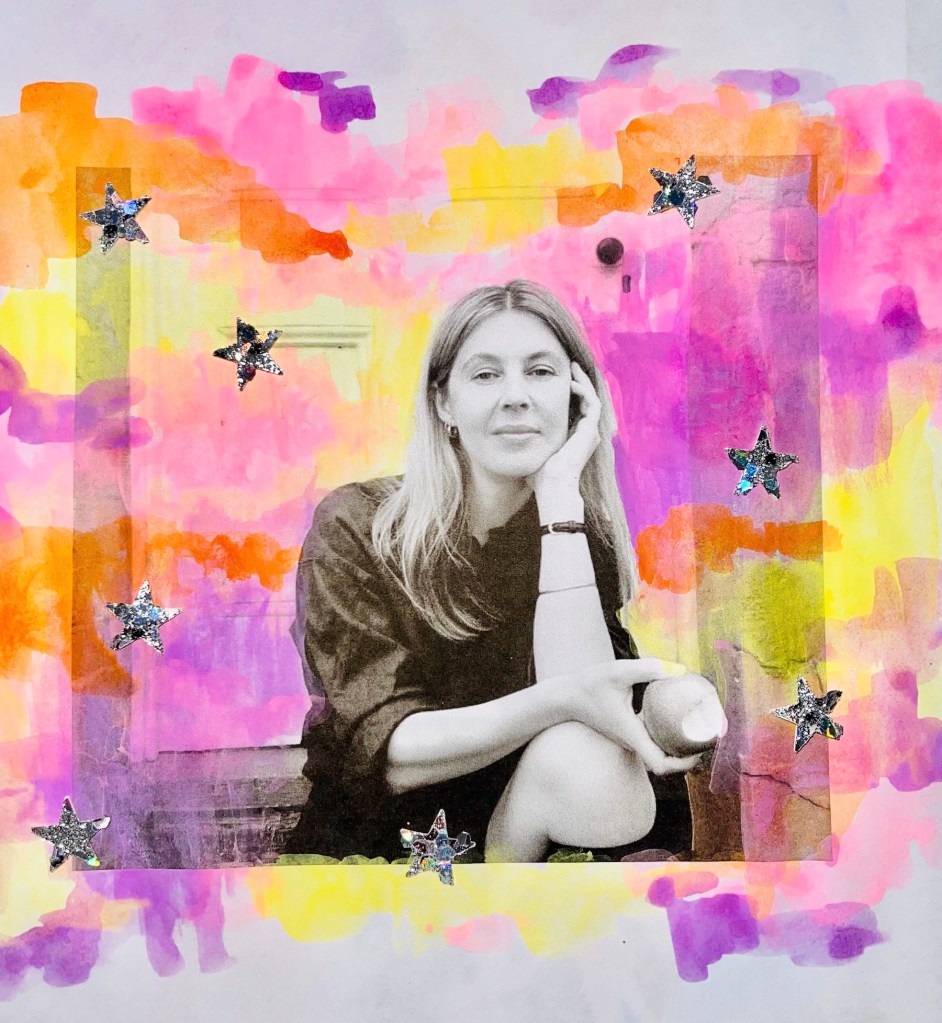
There’s a sense of quiet clarity running through Confession, the latest album from Carla dal Forno. Written over a year or so, her third full-length record traces shifting emotional states, relationships, and the process of turning inward. It’s a deeply personal work, but one that leaves space for listeners to find themselves in it. Carla spoke to Gimmie about the making of the album, creative doubt, independence, what it means to feel settled, and of finding your people.
CARLA: Life’s been busy. Being a musician, there are these distinct parts where you’re by yourself for a long time when you’re writing the album, and then you get towards releasing it and you’re working with more people.
At the moment, I’m pretty busy, but a lot of it is just administrative stuff and getting ready to play shows — so rehearsal on that. It feels full and exciting. I’m looking forward to releasing my album next week, but also looking forward to getting back into the studio and writing some more music.
Your album Confession is coming out in a week’s time; how do you feel about it now?
C: I feel really excited and a bit nervous, a bit scared. Are people going to like it? It’s hard to avoid feeling like that, but I’m really happy with it, honestly. I’m just excited for people to hear it.
Are there any particular feelings that you cycle through each time you put an album out?
C: All the feelings [laughs]. There’s lots of distraction, so I guess that’s good. I’m not just sitting in my room at home wondering how it’s going to go down. All the distractions and things I’m doing to get ready for the shows are helping. I also have family up here, so just living day-to-day life is a distraction and helps you keep an even keel.
Where are you now?
C: I’m in Castlemaine, it’s an hour and a half out of Melbourne, Victoria. I think the population is like 5,000, so it’s a small country town.
Now that you’ve completed the album, is there anything that’s stayed with you since finishing it?
C: This album was hard to write at times, but looking back on it, I feel like the album’s called Confession, and it’s not about confessing my sins as much as admitting to myself, or someone else, feelings, things that are tricky to talk about.
For me, the album, and I think you can hear it sonically, is like when you say something and it feels like a weight off your chest. There’s a lightness afterwards. I think that’s what has stayed with me.
You’ve said that you didn’t intend to make an album like the one you made. I was wondering, going in, what did you intend? What did you think you were going to make?
C: I was listening to a lot of Broadcast at the time before I started the album. I’ve been obsessed with them for, I don’t know, maybe decades, a really long time.
I was reading about how they wrote their last album, Tender Buttons, and how they cut up words and rearranged them. They used this collaging technique and were trying to get away from self-revelation and that kind of thing.
At the time, I was like, talking about my interpersonal relationships is too much hard work. I’m just going to see if I can do something like Broadcast, keep it more abstract.
It just didn’t work for me, though. I couldn’t force it. I just wasn’t connecting with anything I was creating.
What do you feel like is the emotional core of Confession?
C: There’s a lot of duality in it. I think there’s wanting closeness and wanting distance. There’s a mix of emotions in there, and it’s talking about how, for most of us, we’re constantly moving between different emotional states. That’s what the album represents to me. That movement between fantasy and the mundane and ordinary is mixed into this album. Those two things coexist all the time.
Totally. I think people often think we have to be this or that but things are more nuanced then that and complex and as you mentioned, two opposing things can exist at the same time. I really love the instrumental ‘Drip Drop’.
C: Cheers! I have a DX7 synthesiser that has a really good “drip drop” sound on it and that’s why I named it that.
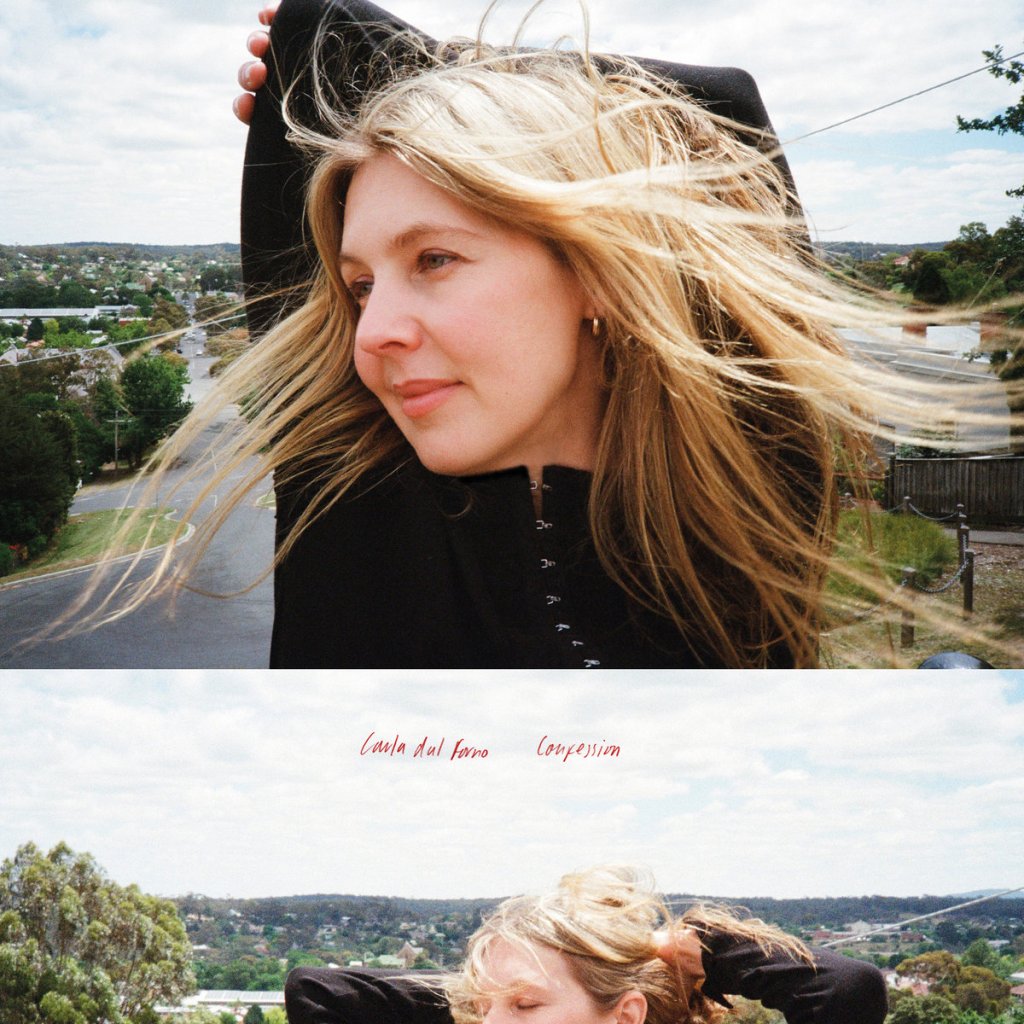
There’s four instrumentals on Confession that feel like a bit of a breath or transition.
C: I saw them as being helpful in that the songs felt like emotional snapshots in time, and the instrumentals could offer a breath in between, or reframe the story to a different time period. Like when you’re watching a movie and there are those montages of landscapes or a change of scenery. I feel like that’s how I wanted the instrumentals to function.
When I was listening to ‘Drip Drop’ it conjured images of standing at the kitchen sink doing dishes or something domestic.
C: It leads nicely into ‘Under the Covers’ which is really about home life. It’s interesting because ‘Going Out’ is almost the opposite of that. It’s like, I want to get out there. But then, like you were saying, ‘Under the Covers’ is more about stability and routine.
I’ve noticed that often when people talk about your music, they mention melancholy but I feel there’s also a bit of humour in there that often flies under the radar. There’s often really funny lyrics that make me smile.
C: I like to think of it like that too. I like songs that have that kind of tongue-in-cheek quality, and I think I found it to be particularly prevalent in Australian music, Australian DIY music, bands like The Cannanes and The Garbage & the Flowers. I’ve listened to that stuff for a long time and kind of tried to imitate it. I really love it. I want to amuse myself when I’m writing a song as well.
Your delivery on song ‘Confession’ seems like you’re amused.
C: I wrote that song and had the vocal melodies, and had no lyrics for a while. That doesn’t always work like that, sometimes the lyrics come straight away.
That one was kind of hard to write the lyrics for. I had this lilting vocal melody that I really enjoyed, but I didn’t know what the song was about.
I was giving my kids a bath one night, and those words came into my head. I thought, oh, this is funny. “Confession” is kind of a very loaded word, and I really enjoyed using that and playing around with it.
I love when fun creative ideas often come when we’re doing ordinary everyday tasks. I find I get that when I’m driving.
C: I have read somewhere that driving is particularly good, going for a walk, anything where you’re in motion. It connects with that flow state, where you’re already in motion, literally in a car or walking, and it taps into a different part of your brain.
I agree with you. I’ve had some of my best ideas when I’m just moving around the house, not sitting down and taking myself too seriously as an artist, for example.
One of the songs on the new album came to you when you were out painting?
C: ‘I Go Back’ is the first song I’ve come up with in that kind of environment, and it just felt really nice. It felt like I was enjoying being outdoors.
I’d written the rest of the album and felt some sort of resolution internally, with all of these different relationships I’d been talking about in the music. It felt like a good time to be reflecting on where I was at.
Where did the title for that one come from?
C: Those lyrics, I wrote them really easily. They just seemed to come to me. It’s a bit ambiguous, even to myself, why I’m saying “I go back.” I think it’s kind of like sometimes you go out looking to other people, to relationships, to give you something, and then when you go back to yourself, you can discover that what you need is already there. It sounds a bit cliché, but I feel like that was the intention.
The record centres on friendship and that becoming a little bit more complex. What sparked that theme?
C: When I first started the record, I didn’t want to write about my personal life, and I just wasn’t writing anything I was happy with. I think when I started to write about my relationships, I felt like I had something to say. It wasn’t necessarily something I wanted to do, but I found that I liked the work I was creating when I focused on those themes, so it became exciting and motivating.
Are you the kind of person who writes through their feelings when they’re happening? Or do you need distance from that?
C: Both. Some of these songs were written whilst I was very much caught up in the feelings that they evoke.
The record took over a year to make?
C: The bulk of it was probably done in two years, between two and three years. I just really wanted to give myself space this time to write a record where I was really happy with every single track, and it felt cohesive. So I just did that. I didn’t worry about deadlines. I self-release, so there’s no one there pressuring me except myself.
Do you self-release because you don’t enjoy how the industry does things?
C: I like having control. I think that’s why I’m a solo artist as well, because I can get really focused on all of the details, and having it all within my control feels good to me, even though it can be time-consuming.
I definitely think there’s a lack of transparency in the music industry, working with labels and stuff. But I was really lucky that my partner worked for the label I was on for my first release. When that label closed down, it was his suggestion to self-release, and he helps me run it and does all the administrative tasks behind it.
It’s hard to know what a major label or a larger indie label would have done for my career, but I’m happy to be able to do things on my own terms and when I want to.
It feels like a rejection of the capitalist model as well. I mean, that’s a big statement, maybe, but this stuff that we do that we love, doesn’t have to have heaps of money thrown at it all the time and then be commodified. I don’t want to be a content creator.
What part of the creative process do you enjoy the most?
C: I enjoy the process most when I’ve got a few tracks under my belt and I have faith in the project I’m working on. I find starting with a clean slate really tough, that self-doubt that creeps in. Am I going to be able to write a good song again? Am I going to be able to make another album?
So, the stage where I’m happy with a number of things and I can see the finish line, that feels like a really nice place to be.
Before music, you were doing fine art. I’ve read that it wasn’t until you started making music that you felt more confident and able to express yourself. I was wondering, how did music give you that confidence? What was it about music that allowed that shift?
C: When I started going to see bands in Melbourne and making friends with people in bands, it all felt very inclusive and accepting of different abilities and interests. That felt really different to art school and the art world.
When I said to a friend, “Hey, do you want to start a band?” I didn’t really know how to play guitar beyond a couple of chords. He was like, “Yeah, absolutely,” and we just started it with another person. They were so encouraging of my first attempts at this kind of project.
Labels were interested as well. My first song came out on a seven-inch, and I was like, oh, great, this is wonderful. I can just keep doing this. There’s a tiny audience, but people are encouraging and supportive.
I’ve written for an art magazine for over a decade so I know the art world can be a bit hard. There’s a lot of bougieness.
C: Yeah, I think I found it a challenge. I’m sure other people have different experiences but that was mine. It’s a weird place, lots of politics. I was pretty young when I was there and naïve, and I don’t think I really understood the environment I was in. At art school, it was like, “Hey, we’re not going to teach you how to do any art.” That was the vibe.
By the way, I really love your paintings Looking at them makes me feel calm.
C: Oh, that’s great. I hope to capture that, something kind of distilled.
I love the landscapes, and especially the clouds, you paint. Your colour choices are divine.
C: I live in the country now, so I see the sunset every day. We live on top of a hill, and all you can see is clouds, sunsets and the bush. It’s definitely been great for getting back into painting.
You made your film clip for ‘Going Out’ near where you live?
C: Yeah, Guildford. It’s a little town just outside of Castlemaine, much smaller though.
I just stomped around the fields there with a friend of mine [Hanna Chetwin] who lives in town. She’s a filmmaker, she’s my best friend, so it was really fun. We hung out for the day, took a thermos, had a cup of tea and a biscuit. She was like, “Why don’t you try this?” and I was like, “Yeah, sure, I’ll try that.”
It’s been really nice. It felt nice to make film clips with local artists and people I know for this album cycle as well, because the themes of the album are so much about friendship and relationships.
The album was recorded in a 1930s, partially decommissioned, hospital space?
C: Yeah, well I’m in it now. This is my studio in the hospital. It’s a strange place. It’s a great place for artists and self-employed practitioners. There are so many little rooms all over the hospital being used by different people, but it has this weird vibe. It was decommissioned 30 years ago and hasn’t been updated since. It’s a crazy place.
Previously, you’ve talked about how different new environments often help shape your work. How did the hospital space help shape things?
C: There’s lots of space and eerie little pockets, but it’s kind of like you feel like a small child wandering around. It’s almost like creeping into a building you shouldn’t really be in, and that can feel playful as well. I didn’t intentionally set out to make a record that reflected this space, but when I got to the end of it, I could draw connections.
Was there anything that was a struggle making the album?
C: The beginning was really hard when I was trying to do something that wasn’t fitting, that wasn’t working. Once I wrote ‘Going Out’ which was the first track I wrote for the album, and I had something I was really happy with, it got a bit easier. I felt like I was on the path.
But beginnings are always hard because you feel like there’s such a mountain of work that still needs to be done, and you have no idea what it’s going to be like.
What about the end of the project? I often hear people say that the last 10% of finishing something is hard.
C: When I know what I have to do, I’m okay. I’m pretty good at slogging on. For me, definitely it’s the beginning of the album that’s a struggle. The end, I can get through it.
Was there a song where things really started to come together for you?
C: ‘Under the Covers’ was a really nice moment to land on, because I had written — it’s hard to remember — but I think I’d written ‘Going Out’ and ‘Blue Skies’ and ‘Confession’.
‘Under the Covers’ felt like a slightly different angle, a change of pace and a change of mood. I liked those polar opposites between feelings of chasing someone and being content with someone.
When making your last album, Come Around, you were balancing having a young child with being creative and you felt pressed for time and finding space to create. Has your relationship to time and having a creative space changed since then?
C: Yeah, I now have a studio off-site, so that’s been good. It gives you the space to just focus on my work, rather than being in a family space.
I’ve really liked that. I’d say this album isn’t about my kids or having kids, but I think I decided I really needed to look at myself and what my issues were when I had kids. I started going to therapy, and I think that has influenced the themes of the record. There’s a lot of self-examination and pulling apart why I’m feeling certain ways.
Do you find it hard to really look at yourself sometimes?
C: Yeah, I think we all do, really. We’re always going to be a bit of a mystery to ourselves, why we respond to certain events or certain people in certain ways.
I find it interesting. Some people might say it’s just navel-gazing, constantly looking inwards and thinking about how you’re feeling. But being vulnerable and showing those struggles to other people, that’s the kind of work I respond to. I feel like I’ve learned something about myself through someone else talking about their own experiences.
Is there anything you learned about yourself for making the record?
C: Lots! What I’m getting better at is observing and saying, okay, I’m having this feeling or I’m having this experience, and I’m acknowledging it, but action isn’t necessarily required. It’s a really healthy thing to aim for.
Is there anything you do to kind of step away and recharge for yourself?
C: I like gardening. I like going for a run in the morning and painting, sometimes. I do a bit of painting, when music’s getting hard and I do music when painting’s getting hard [laughs].
Are they two different or similar things for you?
C: They’re pretty different. I feel way more confident as a musician. I feel like my professional level and my skill set are high. With painting, I still feel like a real novice, and I like having that as well. It’s good to feel like you don’t know what you’re doing.
Yeah, and no matter how good you are at something, I feel there’s always so much more you can still learn from whatever you’re doing. The goal is to, hopefully, keep learning forever.
C: For sure. It’s the joy of it as well, isn’t it?
Absolutely!
C: The sensory overload of having small kids at home, it’s a lot, so going to the studio is definitely that as well for me, the kind of stillness is really valuable.
What’s something that’s just made you really, really joyful and happy, lately?
C: This album, part of it is about moving to a small country town, having friends, and figuring out if they’re the right friends for me, and what I value in friendship and in relationships.
By the end of it, when I finished writing the album, I felt like I had found my people in a way. Last week, I went away for a night with two friends. We stayed at a little remote wood cottage, cooked dinner together, played cards, and hung out and chatted.
I was so happy for the entirety of that trip. It made me feel really joyful to have found these people.
That sounds perfect. What do you value in friendships?
C: I value people who are self-aware and can be vulnerable with others, and who can also self-manage. They don’t need you to manage their anxieties or their issues, but they’re generous. This is a massive list, isn’t it? [laughs]. They’re there for you as well if you need.
That’s so lovely.Is there anything that you hope people listening to your new record?
G: I’m hoping people bring their own stories to the record, that they can relate to it, and also just enjoy it as a collection of good songs.
What made you choose to cover the Sunnyboys’ song ‘Alone With You’?
C:I’ve been listening to that since I was a child. My dad was in a band, and his band used to play support for Sunnyboys a really long time ago, in the ’80s. I’ve grown up with it, and I just really love that band and their music. I relate to those feelings of excitement, but also that unsure quality of being essentially alone but together.
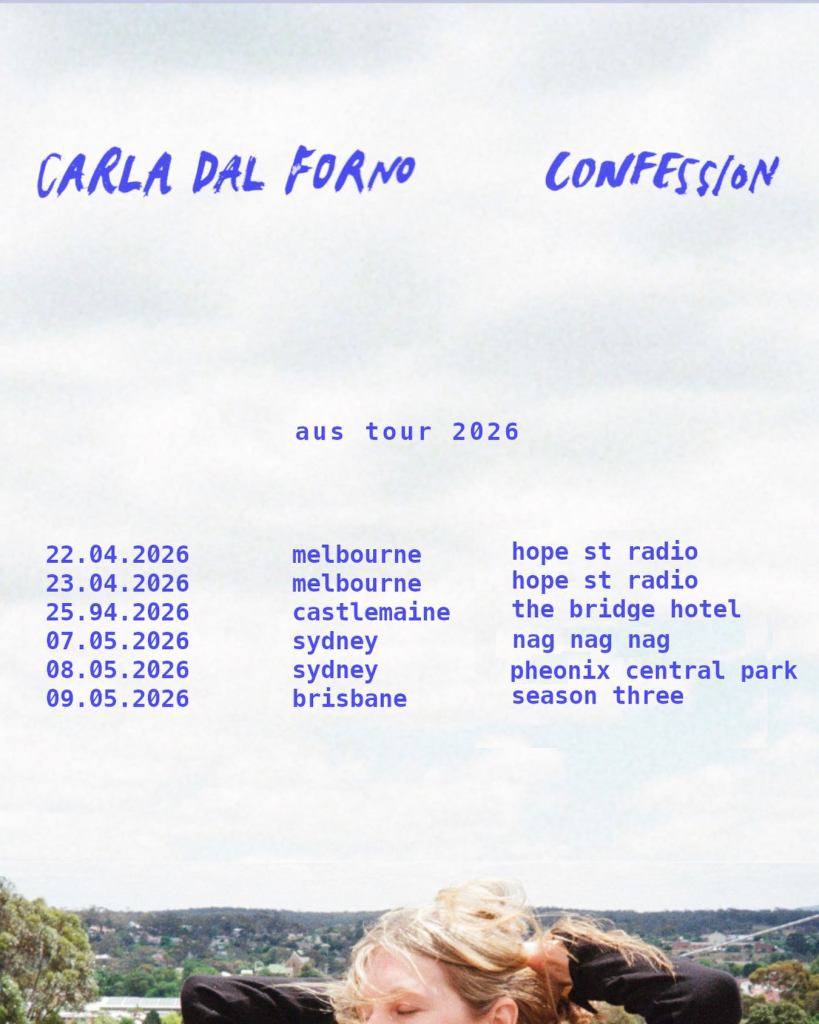
FIND more of Carla’s music HERE. Confession out now via Kallista Records. Catch her live on her Australian tour – tickets HERE. Follow her: @cd__player.

