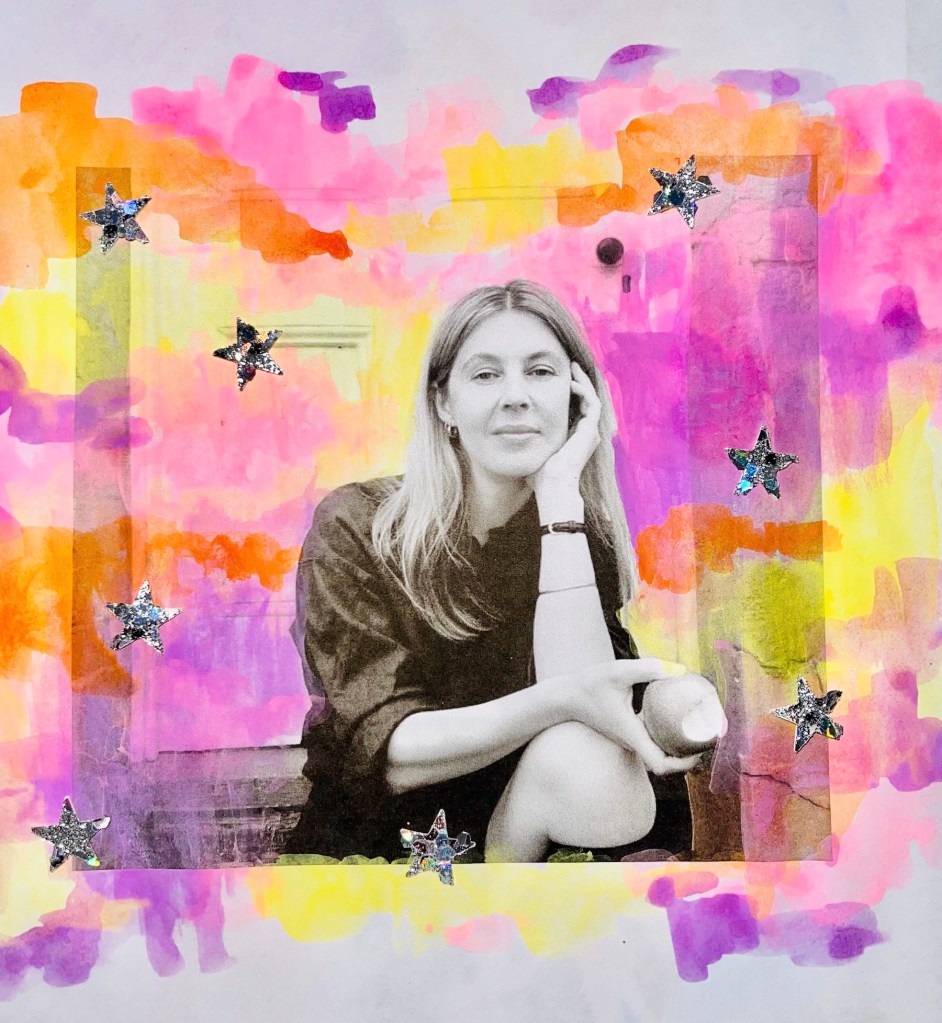
Carla dal Forno: ‘It’s not about confessing my sins, it’s about admitting things that are tricky to talk about.’ 

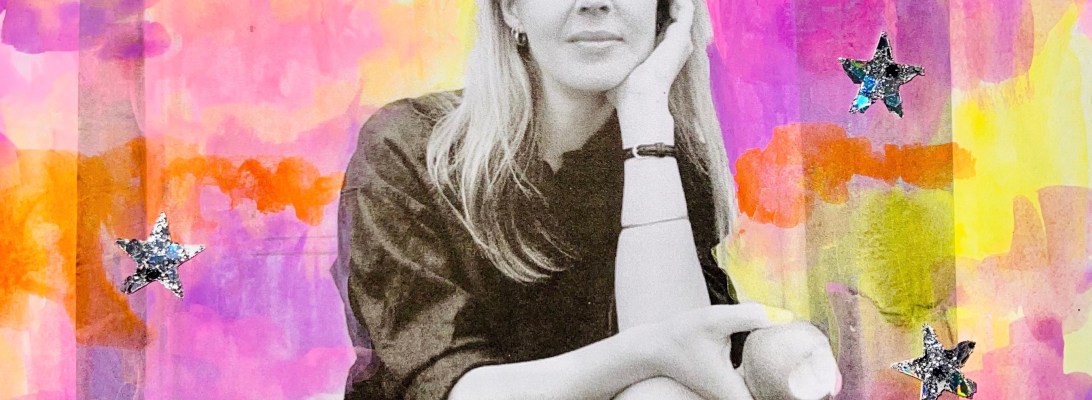
Original photo: Sanjay Fernandes / handmade mixed-media collage by B.

There’s a sense of quiet clarity running through Confession, the latest album from Carla dal Forno. Written over a year or so, her third full-length record traces shifting emotional states, relationships, and the process of turning inward. It’s a deeply personal work, but one that leaves space for listeners to find themselves in it. Carla spoke to Gimmie about the making of the album, creative doubt, independence, what it means to feel settled, and of finding your people.

CARLA: Life’s been busy. Being a musician, there are these distinct parts where you’re by yourself for a long time when you’re writing the album, and then you get towards releasing it and you’re working with more people.

At the moment, I’m pretty busy, but a lot of it is just administrative stuff and getting ready to play shows — so rehearsal on that. It feels full and exciting. I’m looking forward to releasing my album next week, but also looking forward to getting back into the studio and writing some more music.

Your album Confession is coming out in a week’s time; how do you feel about it now? 

C: I feel really excited and a bit nervous, a bit scared. Are people going to like it? It’s hard to avoid feeling like that, but I’m really happy with it, honestly. I’m just excited for people to hear it.

Are there any particular feelings that you cycle through each time you put an album out?

C: All the feelings [laughs]. There’s lots of distraction, so I guess that’s good. I’m not just sitting in my room at home wondering how it’s going to go down. All the distractions and things I’m doing to get ready for the shows are helping. I also have family up here, so just living day-to-day life is a distraction and helps you keep an even keel.

Where are you now?

C: I’m in Castlemaine, it’s an hour and a half out of Melbourne, Victoria. I think the population is like 5,000, so it’s a small country town. 

Now that you’ve completed the album, is there anything that’s stayed with you since finishing it?

C: This album was hard to write at times, but looking back on it, I feel like the album’s called Confession, and it’s not about confessing my sins as much as admitting to myself, or someone else, feelings, things that are tricky to talk about.

For me, the album, and I think you can hear it sonically, is like when you say something and it feels like a weight off your chest. There’s a lightness afterwards. I think that’s what has stayed with me.

You’ve said that you didn’t intend to make an album like the one you made. I was wondering, going in, what did you intend? What did you think you were going to make?

C: I was listening to a lot of Broadcast at the time before I started the album. I’ve been obsessed with them for, I don’t know, maybe decades, a really long time.

I was reading about how they wrote their last album, Tender Buttons, and how they cut up words and rearranged them. They used this collaging technique and were trying to get away from self-revelation and that kind of thing.

At the time, I was like, talking about my interpersonal relationships is too much hard work. I’m just going to see if I can do something like Broadcast, keep it more abstract.

It just didn’t work for me, though. I couldn’t force it. I just wasn’t connecting with anything I was creating.

What do you feel like is the emotional core of Confession

C: There’s a lot of duality in it. I think there’s wanting closeness and wanting distance. There’s a mix of emotions in there, and it’s talking about how, for most of us, we’re constantly moving between different emotional states. That’s what the album represents to me. That movement between fantasy and the mundane and ordinary is mixed into this album. Those two things coexist all the time.

Totally. I think people often think we have to be this or that but things are more nuanced then that and complex and as you mentioned, two opposing things can exist at the same time. I really love the instrumental ‘Drip Drop’.

C: Cheers! I have a DX7 synthesiser that has a really good “drip drop” sound on it and that’s why I named it that. 
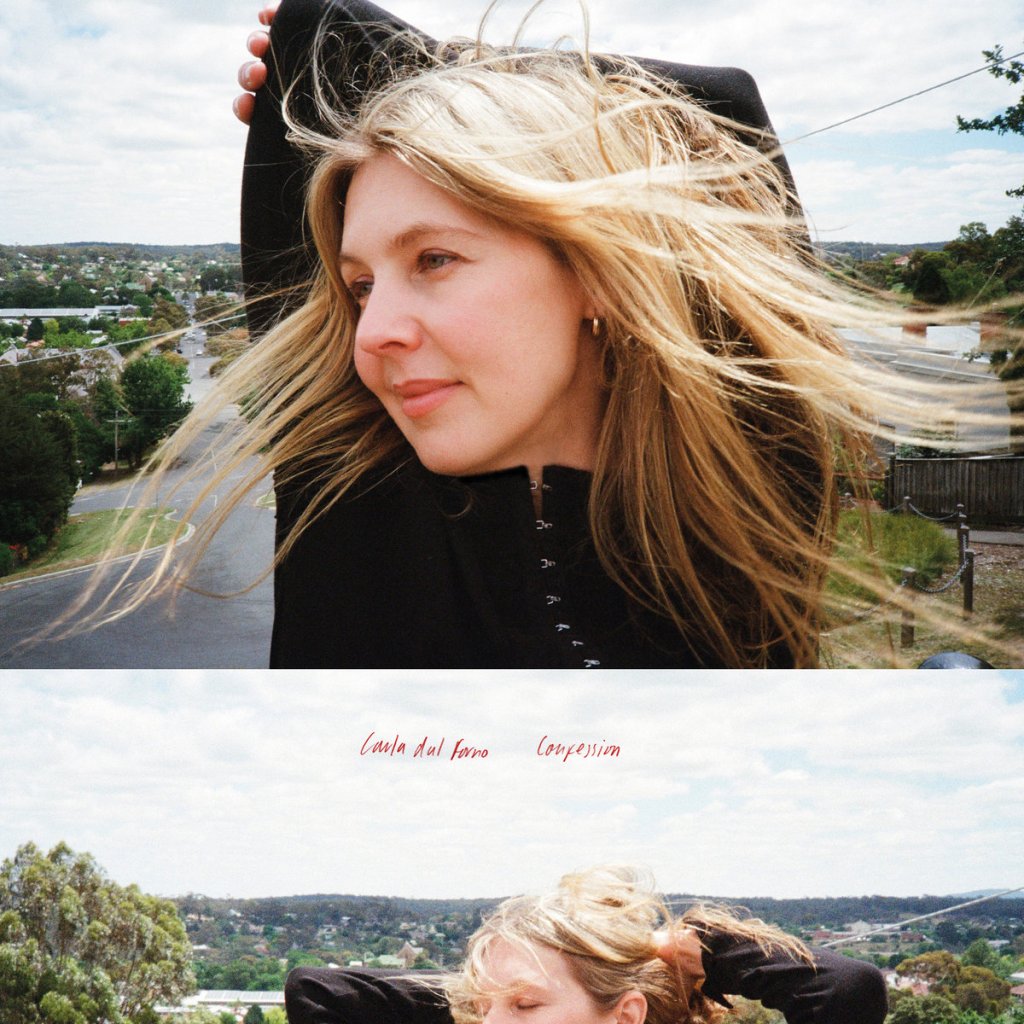
There’s four instrumentals on Confession that feel like a bit of a breath or transition. 

C: I saw them as being helpful in that the songs felt like emotional snapshots in time, and the instrumentals could offer a breath in between, or reframe the story to a different time period. Like when you’re watching a movie and there are those montages of landscapes or a change of scenery. I feel like that’s how I wanted the instrumentals to function.

When I was listening to ‘Drip Drop’ it conjured images of standing at the kitchen sink doing dishes or something domestic.

C: It leads nicely into ‘Under the Covers’ which is really about home life. It’s interesting because ‘Going Out’ is almost the opposite of that. It’s like, I want to get out there. But then, like you were saying, ‘Under the Covers’ is more about stability and routine.

I’ve noticed that often when people talk about your music, they mention melancholy but I feel there’s also a bit of humour in there that often flies under the radar. There’s often really funny lyrics that make me smile.

C: I like to think of it like that too. I like songs that have that kind of tongue-in-cheek quality, and I think I found it to be particularly prevalent in Australian music, Australian DIY music, bands like The Cannanes and The Garbage & the Flowers. I’ve listened to that stuff for a long time and kind of tried to imitate it. I really love it. I want to amuse myself when I’m writing a song as well.

Your delivery on song ‘Confession’ seems like you’re amused.

C: I wrote that song and had the vocal melodies, and had no lyrics for a while. That doesn’t always work like that, sometimes the lyrics come straight away.

That one was kind of hard to write the lyrics for. I had this lilting vocal melody that I really enjoyed, but I didn’t know what the song was about.

I was giving my kids a bath one night, and those words came into my head. I thought, oh, this is funny. “Confession” is kind of a very loaded word, and I really enjoyed using that and playing around with it.

I love when fun creative ideas often come when we’re doing ordinary everyday tasks. I find I get that when I’m driving. 

C: I have read somewhere that driving is particularly good, going for a walk, anything where you’re in motion. It connects with that flow state, where you’re already in motion, literally in a car or walking, and it taps into a different part of your brain.

I agree with you. I’ve had some of my best ideas when I’m just moving around the house, not sitting down and taking myself too seriously as an artist, for example.

One of the songs on the new album came to you when you were out painting?

C: ‘I Go Back’ is the first song I’ve come up with in that kind of environment, and it just felt really nice. It felt like I was enjoying being outdoors.

I’d written the rest of the album and felt some sort of resolution internally, with all of these different relationships I’d been talking about in the music. It felt like a good time to be reflecting on where I was at.

Where did the title for that one come from?

C: Those lyrics, I wrote them really easily. They just seemed to come to me. It’s a bit ambiguous, even to myself, why I’m saying “I go back.” I think it’s kind of like sometimes you go out looking to other people, to relationships, to give you something, and then when you go back to yourself, you can discover that what you need is already there. It sounds a bit cliché, but I feel like that was the intention.

The record centres on friendship and that becoming a little bit more complex. What sparked that theme? 

C: When I first started the record, I didn’t want to write about my personal life, and I just wasn’t writing anything I was happy with. I think when I started to write about my relationships, I felt like I had something to say. It wasn’t necessarily something I wanted to do, but I found that I liked the work I was creating when I focused on those themes, so it became exciting and motivating.

Are you the kind of person who writes through their feelings when they’re happening? Or do you need distance from that? 

C: Both. Some of these songs were written whilst I was very much caught up in the feelings that they evoke.

The record took over a year to make?

C: The bulk of it was probably done in two years, between two and three years. I just really wanted to give myself space this time to write a record where I was really happy with every single track, and it felt cohesive. So I just did that. I didn’t worry about deadlines. I self-release, so there’s no one there pressuring me except myself.

Do you self-release because you don’t enjoy how the industry does things? 

C:  I like having control. I think that’s why I’m a solo artist as well, because I can get really focused on all of the details, and having it all within my control feels good to me, even though it can be time-consuming.

I definitely think there’s a lack of transparency in the music industry, working with labels and stuff. But I was really lucky that my partner worked for the label I was on for my first release. When that label closed down, it was his suggestion to self-release, and he helps me run it and does all the administrative tasks behind it.

It’s hard to know what a major label or a larger indie label would have done for my career, but I’m happy to be able to do things on my own terms and when I want to.

It feels like a rejection of the capitalist model as well. I mean, that’s a big statement, maybe, but this stuff that we do that we love, doesn’t have to have heaps of money thrown at it all the time and then be commodified. I don’t want to be a content creator.

What part of the creative process do you enjoy the most? 

C: I enjoy the process most when I’ve got a few tracks under my belt and I have faith in the project I’m working on. I find starting with a clean slate really tough, that self-doubt that creeps in. Am I going to be able to write a good song again? Am I going to be able to make another album?

So, the stage where I’m happy with a number of things and I can see the finish line, that feels like a really nice place to be.

Before music, you were doing fine art. I’ve read that it wasn’t until you started making music that you felt more confident and able to express yourself. I was wondering, how did music give you that confidence? What was it about music that allowed that shift?

C: When I started going to see bands in Melbourne and making friends with people in bands, it all felt very inclusive and accepting of different abilities and interests. That felt really different to art school and the art world.

When I said to a friend, “Hey, do you want to start a band?” I didn’t really know how to play guitar beyond a couple of chords. He was like, “Yeah, absolutely,” and we just started it with another person. They were so encouraging of my first attempts at this kind of project.

Labels were interested as well. My first song came out on a seven-inch, and I was like, oh, great, this is wonderful. I can just keep doing this. There’s a tiny audience, but people are encouraging and supportive.

I’ve written for an art magazine for over a decade so I know the art world can be a bit hard. There’s a lot of bougieness. 

C: Yeah, I think I found it a challenge. I’m sure other people have different experiences but that was mine. It’s a weird place, lots of politics. I was pretty young when I was there and naïve, and I don’t think I really understood the environment I was in. At art school, it was like, “Hey, we’re not going to teach you how to do any art.” That was the vibe.

By the way, I really love your paintings Looking at them makes me feel calm.

C: Oh, that’s great. I hope to capture that, something kind of distilled. 

I love the landscapes, and especially the clouds, you paint. Your colour choices are divine.

C: I live in the country now, so I see the sunset every day. We live on top of a hill, and all you can see is clouds, sunsets and the bush. It’s definitely been great for getting back into painting.

You made your film clip for ‘Going Out’ near where you live? 

C: Yeah, Guildford. It’s a little town just outside of Castlemaine, much smaller though.

I just stomped around the fields there with a friend of mine [Hanna Chetwin] who lives in town. She’s a filmmaker, she’s my best friend, so it was really fun. We hung out for the day, took a thermos, had a cup of tea and a biscuit. She was like, “Why don’t you try this?” and I was like, “Yeah, sure, I’ll try that.”

It’s been really nice. It felt nice to make film clips with local artists and people I know for this album cycle as well, because the themes of the album are so much about friendship and relationships.

The album was recorded in a 1930s, partially decommissioned, hospital space?

C: Yeah, well I’m in it now. This is my studio in the hospital. It’s a strange place. It’s a great place for artists and self-employed practitioners. There are so many little rooms all over the hospital being used by different people, but it has this weird vibe. It was decommissioned 30 years ago and hasn’t been updated since. It’s a crazy place.

Previously, you’ve talked about how different new environments often help shape your work. How did the hospital space help shape things?

C: There’s lots of space and eerie little pockets, but it’s kind of like you feel like a small child wandering around. It’s almost like creeping into a building you shouldn’t really be in, and that can feel playful as well. I didn’t intentionally set out to make a record that reflected this space, but when I got to the end of it, I could draw connections.

Was there anything that was a struggle making the album?

C: The beginning was really hard when I was trying to do something that wasn’t fitting, that wasn’t working. Once I wrote ‘Going Out’ which was the first track I wrote for the album, and I had something I was really happy with, it got a bit easier. I felt like I was on the path.

But beginnings are always hard because you feel like there’s such a mountain of work that still needs to be done, and you have no idea what it’s going to be like.

What about the end of the project? I often hear people say that the last 10% of finishing something is hard. 

C: When I know what I have to do, I’m okay. I’m pretty good at slogging on. For me, definitely it’s the beginning of the album that’s a struggle. The end, I can get through it.

Was there a song where things really started to come together for you?

C: ‘Under the Covers’ was a really nice moment to land on, because I had written — it’s hard to remember — but I think I’d written ‘Going Out’ and ‘Blue Skies’ and ‘Confession’.

‘Under the Covers’ felt like a slightly different angle, a change of pace and a change of mood. I liked those polar opposites between feelings of chasing someone and being content with someone.

When making your last album, Come Around, you were balancing having a young child with being creative and you felt pressed for time and finding space to create. Has your relationship to time and having a creative space changed since then?

C: Yeah, I now have a studio off-site, so that’s been good. It gives you the space to just focus on my work, rather than being in a family space.

I’ve really liked that. I’d say this album isn’t about my kids or having kids, but I think I decided I really needed to look at myself and what my issues were when I had kids. I started going to therapy, and I think that has influenced the themes of the record. There’s a lot of self-examination and pulling apart why I’m feeling certain ways.

Do you find it hard to really look at yourself sometimes? 

C: Yeah, I think we all do, really. We’re always going to be a bit of a mystery to ourselves, why we respond to certain events or certain people in certain ways.

I find it interesting. Some people might say it’s just navel-gazing, constantly looking inwards and thinking about how you’re feeling. But being vulnerable and showing those struggles to other people, that’s the kind of work I respond to. I feel like I’ve learned something about myself through someone else talking about their own experiences.

Is there anything you learned about yourself for making the record? 

C: Lots! What I’m getting better at is observing and saying, okay, I’m having this feeling or I’m having this experience, and I’m acknowledging it, but action isn’t necessarily required. It’s a really healthy thing to aim for. 

Is there anything you do to kind of step away and recharge for yourself? 

C: I like gardening. I like going for a run in the morning and painting, sometimes. I do a bit of painting, when music’s getting hard and I do music when painting’s getting hard [laughs].

Are they two different or similar things for you? 

C: They’re pretty different. I feel way more confident as a musician. I feel like my professional level and my skill set are high. With painting, I still feel like a real novice, and I like having that as well. It’s good to feel like you don’t know what you’re doing.

Yeah, and no matter how good you are at something, I feel there’s always so much more you can still learn from whatever you’re doing. The goal is to, hopefully, keep learning forever. 

C: For sure. It’s the joy of it as well, isn’t it? 

Absolutely!

C: The sensory overload of having small kids at home, it’s a lot, so going to the studio is definitely that as well for me, the kind of stillness is really valuable. 

What’s something that’s just made you really, really joyful and happy, lately?

C: This album, part of it is about moving to a small country town, having friends, and figuring out if they’re the right friends for me, and what I value in friendship and in relationships.

By the end of it, when I finished writing the album, I felt like I had found my people in a way. Last week, I went away for a night with two friends. We stayed at a little remote wood cottage, cooked dinner together, played cards, and hung out and chatted.

I was so happy for the entirety of that trip. It made me feel really joyful to have found these people.

That sounds perfect. What do you value in friendships? 

C: I value people who are self-aware and can be vulnerable with others, and who can also self-manage. They don’t need you to manage their anxieties or their issues, but they’re generous. This is a massive list, isn’t it? [laughs]. They’re there for you as well if you need.

That’s so lovely.Is there anything that you hope people listening to your new record?

G: I’m hoping people bring their own stories to the record, that they can relate to it, and also just enjoy it as a collection of good songs.

What made you choose to cover the Sunnyboys’ song ‘Alone With You’? 

C:I’ve been listening to that since I was a child. My dad was in a band, and his band used to play support for Sunnyboys a really long time ago, in the ’80s. I’ve grown up with it, and I just really love that band and their music. I relate to those feelings of excitement, but also that unsure quality of being essentially alone but together.
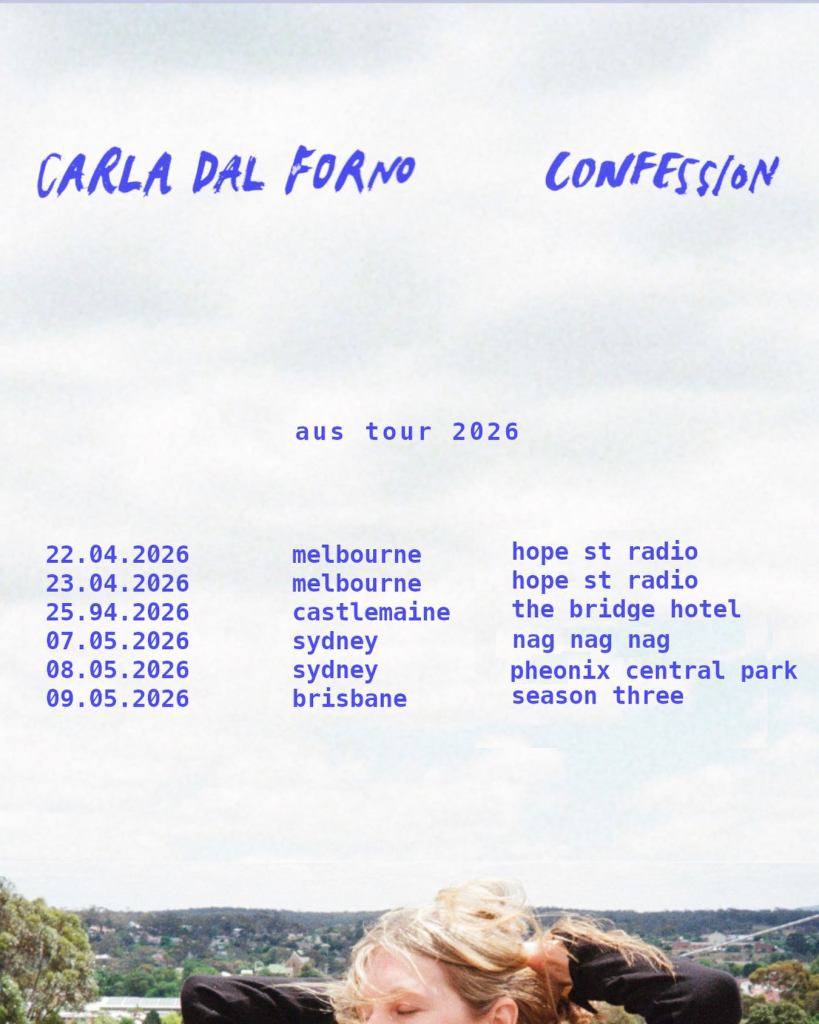
FIND more of Carla’s music HERE. Confession out now via Kallista Records. Catch her live on her Australian tour – tickets HERE. Follow her: @cd__player.

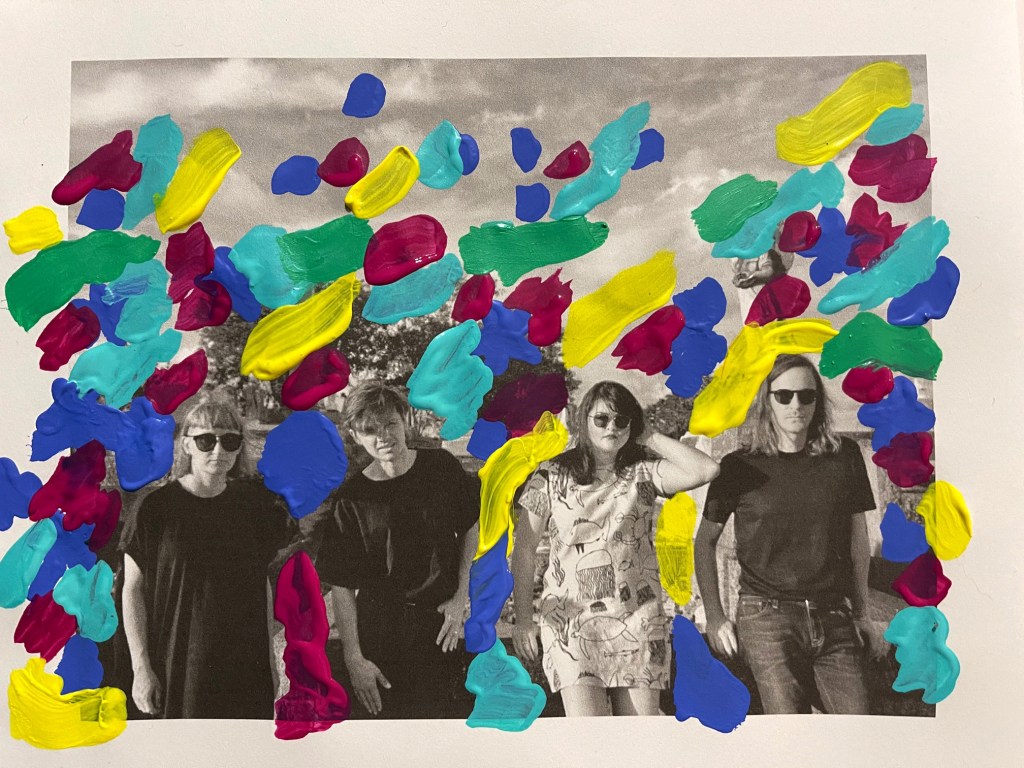
Brisbane dreampop shoegazers Ultra Material’s Matt Deasy: “The four of us have been working on our own gardens… we all live on main roads and it creates our own little sanctuaries.”

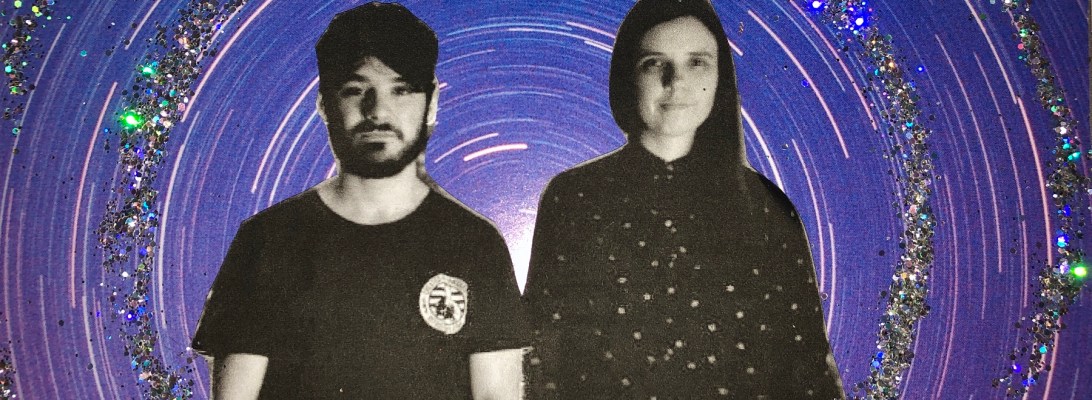
Original photo: courtesy of Ultra Material. Handmade mixed-media by B.

Meanjin/Brisbane dream pop shoegaze quartet Ultra Material are getting set to finally play live in support of their Ep 3 which was released in May this year. It’s both energetic and dreamy at the same time; a powerful and lovely release. Gimmie caught up with drummer Matt Deasy.  

How did you first find music?

MATT DEASY: My earliest memories of music are of listening to records on my Dad’s turntable stereo. I used to love sitting next to the player with headphones on listening to 7-inch singles. I guess it was my earliest exposure to the idea of DJ’ing as I was more taken by individual songs than listening to full length albums. I loved listening to the radio and watching The Rage Top 40 on a Saturday morning. I would attempt to tape songs from the Rage Top 40 onto my little portable cassette player, this of course resulted in a lot of shouts and breakfast table talk from family members in the background.

What was the first concert/gig you ever went to?

MD: My very first ‘live gig’ or more accurately ‘live band experience’ was on a trip to Bristol in the UK with with my Dad to when I was 14. My English cousin, (who I’d met for the very first time that trip and became the absolute coolest person in my world) took me to her boyfriend’s band rehearsal at a share house. They were a ska/skate punk band who went on to make a few waves locally and nationally. It was an inspiring first experience actually seeing how a band functions in their own environment. I also met them all afterwards and we were all both equally intrigued by each other geographically.

Who or what inspired you to make music yourself?

MD: I wanted to play drums from an early age. The only thing was that I didn’t have a drum kit, so I use to just tap on things and eventually started entertaining the other kids in my class by playing wipeout on the top of desktops or whatever other surface might create enough of a tone to get the class moving (this resulted in a lot of detention from memory). I’m not even sure how I learnt to play the wipe out, but I spent a lot of my childhood tapping out rhythms on any available surface I could find. The idea of making my own music came much later in high school when I bought an electric guitar from a friend and decided to start chipping away at that. I became fully engrossed in styles of music that were not popular with my peers at all, bands like Dinosaur Jr, Sonic Youth and the grittier side of the Seattle scene. Then after high school finished, I started making tapes of me just playing guitar. Slowly these formed the basis for the first songs I wrote which turned out to be the foundation of my first band.

What brought Ultra Material together?

MD: Sarah and I met Nick and Zuzana at a Do the Robot show (which was our previous band).

They were fans, so of course we immediately became friends. Nick and Zuz had been writing their own music under the name Monochrome and had just started a band with fellow architect friends Jonathan and Veronica Kopinski called Sunshine State. We all instantly hit it off, playing double bills together across Brisbane for a couple of years. After Sunshine State and Do The Robot dissolved in 2012 we decided to start a new project which quickly morphed into Ultra Material.

What draws you to making a combo of shoegaze and dream pop sound-wise?

MD: I think it’s the music that comes most naturally to us. All of our previous bands had at least some elements of shoegaze and dream pop to them and once we’d started Ultra Material those kinds of sounds became the main emphasis of the band. In a lot of ways dream pop and shoegaze is a mood to us, a constant and shared feeling we have about life in general and that obviously influences our song writing process quite a lot.

Ultra Material are known for really beautiful all-encompassing live shows; how has not being able to play live over the past few months affected you?

MD: It’s been a little tough as we had to cancel our EP launch show originally scheduled in May. Since Nick and Zuz had twin bubs last year we’ve had to become a bit more selective in what we take on, so we were already looking to only play 2 or 3 times a year before the shutdown happened. Our routine over the last few years has usually been to write and record within a few months followed by a couple of shows to promote the release then have a break for a while. It’s likely we’ll continue this way, but hopefully we can make the few shows we do play really worth it.

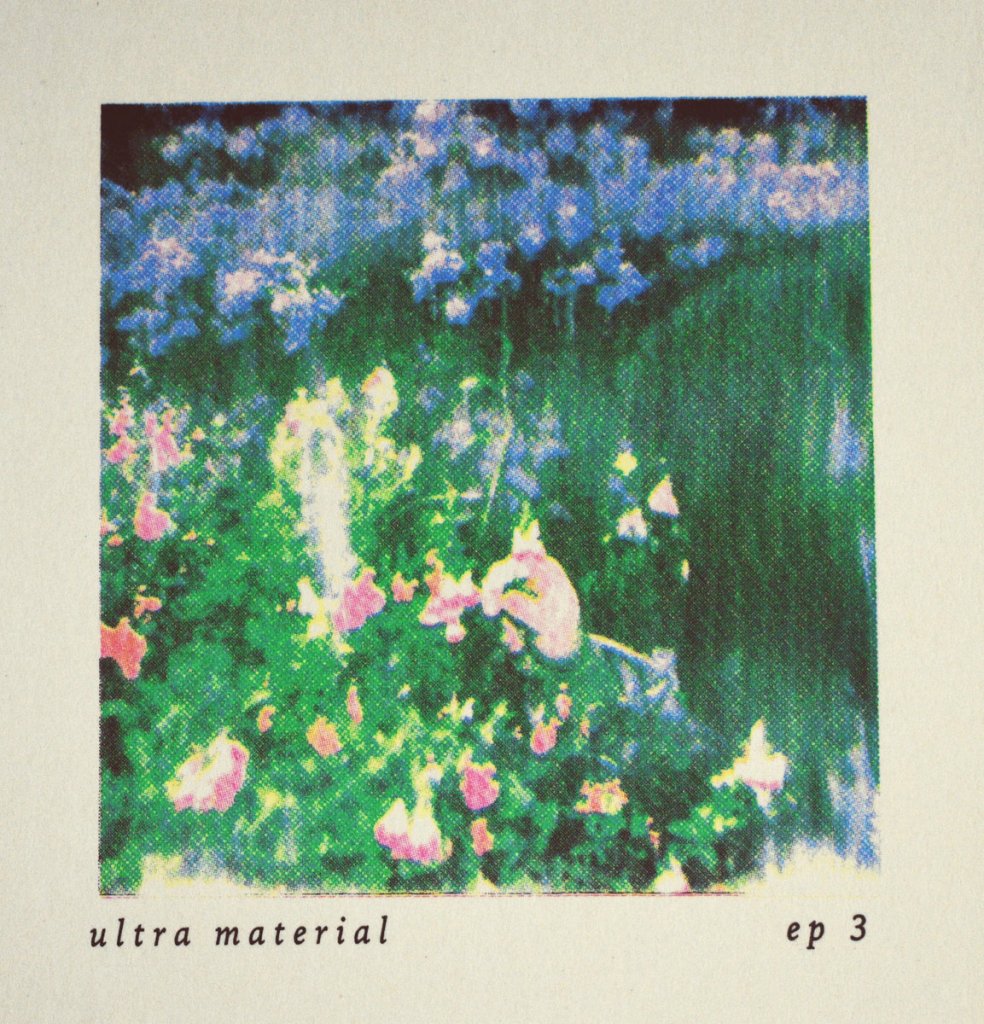
On your latest release Ep 3 there’s a bit of a garden/flower theme via the art and songs like ‘Marigold’; what inspired this?

MD: The idea for the ep artwork came from some polaroid photos Sarah and I took on our travels through Ireland and the UK last year. Our approach was to find a wild flower garden and use the polaroid camera to create a soft-focus look to the photographs, with Nick and Zuzi providing accompanying illustrations of native flora from their home garden. The four of us have been working on our own gardens over the last few years, and it’s another thing we bond over – we all live on main roads and it creates our own little sanctuaries. I think generally nature plays a big part in our artwork, and whether it’s planting some new natives or just daydreaming in the garden, it can be quite cathartic.

Can you tell us a bit about the recording process for Ep 3? We love how you layer sound!

MD: Our last two releases we’ve recorded with Marly Luske at Alchemix Studio in West End. I think Marly is a bit of a mind reader with translating what we want into reality and is always open to ideas and experimenting. He’s also a genius and whizz when it comes to editing and mixing as we keep a pretty tight schedule when it comes to recording. Generally, we try to have all the songs down beforehand so we can come in and record everything together in one room over a couple of days, and then record vocals and overdubs throughout the mixing process to create the layered sound. With Ep 3 we actually recorded in February 2019 but didn’t get back to mix it until the end of that year, so it was an opportunity to return after some time away with fresh ears and add additional layers.

We love the extra love and care that you always put into the packaging of your physical releases! EP 3 had a handmade screen-printed gatefold jacket with bonus fold out screen printed poster with two versions a white card and kraft version of the jacket; why is it important to you to give us something special? Can you tell us about the thought behind the latest packaging?

MD: My work at No.7 print House gives me the opportunity to be thinking about and planning physical releases, sometimes months before we’ve even written and recorded the songs. We’ve always approached each release as a new art project, and factoring our budget and time frames usually decides what physical format will be best suited to that particular release. All 4 of us have some kind of design background but we are pretty democratic about everyone having a chance to have creative input into a release – it helps that we all love each other’s work. Being able to build these super deluxe packages all in house, creating accompanying artwork for inserts or fold out posters, making each release something special and different from the last one, I think it’s all a natural extension of our music.  We’d been dismissive of CDs for years in favour of vinyl or cassette, as they just seemed a more interesting physical product. But lately we’ve been getting back into CDs in the car (the only place any of us have CD players) so it was nice to change things up and with CDs being so compact and affordable it was just perfect for this release.

This year’s been a challenging year; what’s something important that you’ve learnt about creativity or making stuff in 2020?

MD: I felt some pressure to take advantage of the lockdown and subsequent quiet periods this year to focus on art, although having large amounts of downtime to work on art alone can have the opposite effect on me as far as productivity goes. I’m very much used to working within small pockets of time that become available in and around my regular work schedule. The downtime did however prove to be very handy for the actual making and construction side of art projects especially when it came to the screen printing. If we are ever to have another year or period like 2020, I only hope I’ll be better equipped to deal with the potential that comes with large amounts of downtime.

What’s something that’s really engaged you lately? What did you appreciate about it?

MD: Lately and especially during lockdown music by Roy Montgomery, Seefeel, Windy & Carl, Pink Moon by Nick Drake, Julee Cruise’s The Voice of Love, locals Mckisko and Ancient Channels’ new albums. These have all made up this year’s soundtrack and kept me company during the best and the worst of this year.

What’s next for Ultra Material? Have you been working on anything new? What can you tell us about it at this point?

MD: We have our second (and final) show this year on the 5th of December at The Cave Inn with Ancient Channels. Unfortunately, the show is only 30 capacity, so all tickets are sold but it will be a nice end to what was a really dark and insanely bizarre year. We’re also writing songs for what will most likely become our next EP, so I think that will be our main focus for the next few months.

Please check out ULTRA MATERIAL on bandcamp; on Facebook. Ep 3 is out now.

Dreamy Meanjin based post-punk Ancient Channels: “Time, Space, Ancient Worlds”

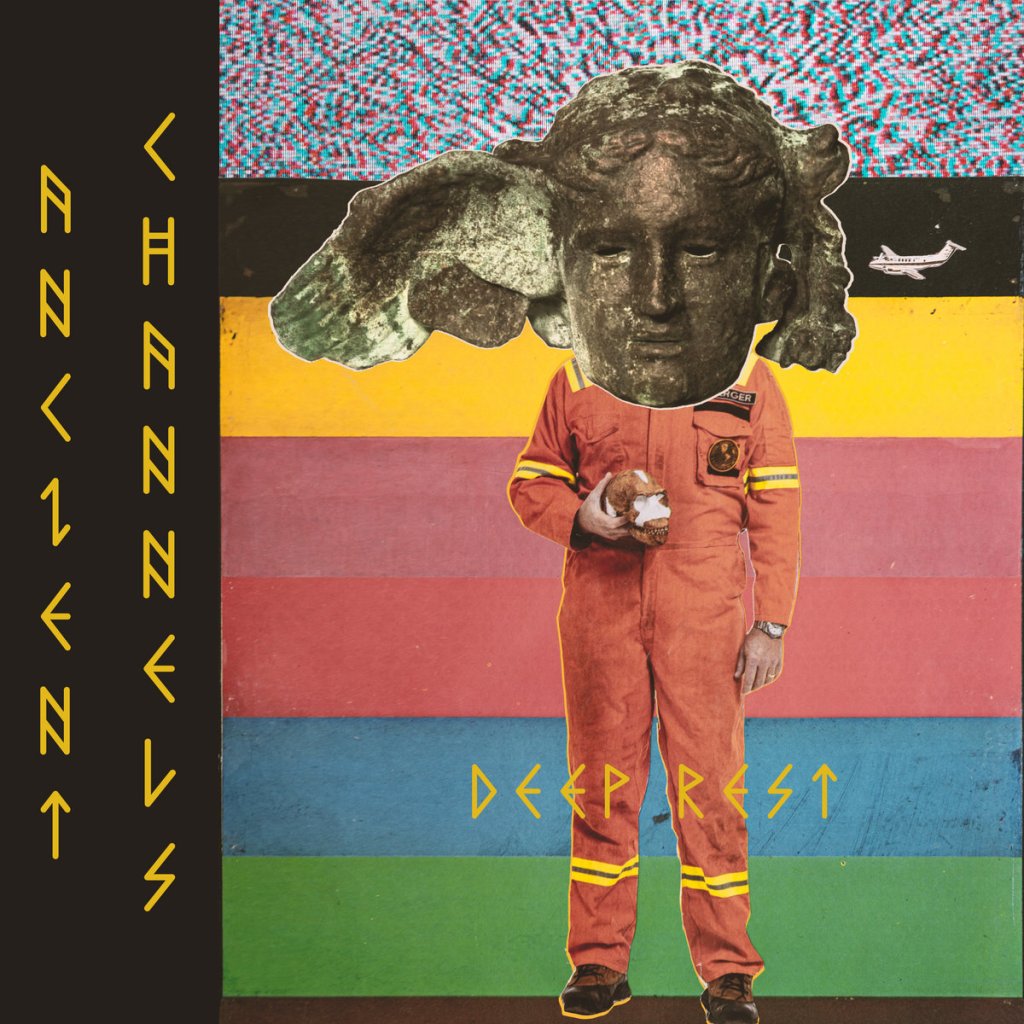
Original photo: Jason Cahill. Handmade collage by B.

Meanjin/Brisbane musicians Kelly Hanlon (Deafcult/Terra Pines) and Chris Preindl (Apparitions/Leavings/Vestiges) take us on a sonic sci-fi expedition exploring ancient, ceremonial drumming together with shoegaze dream pop and cosmic themes to create a band that’s outta this world, Ancient Channels.

How did you two first meet? What were your first impressions of each other?

KELLY: I first met Chris through the Brisbane music scene. Our other bands have played multiple shows together over the years so we’ve been in each other’s orbit for a while. I’ve been consistently blown away every time I’ve seen Chris play with any of his bands whether its Apparitions, Leavings or Vestiges. He’s all over the kit with such deft and precision, technically brilliant but also insanely creative, I swear he’s got an extra set of arms hidden away somewhere. I remember thinking that I’d like to work with him sometime soon after seeing him play, and here we are! Dreams do come true!

CHRIS: Our first meeting is hard to pinpoint because Brisbane often feels tiny. I do feel like my first impression of Kelly is one-and-the-same with what would be the most prevailing impression, that she’s an incredibly talented songwriter and musician, and a really cool, calm and compassionate person.

You both play in multiple other bands. Kelly plays in Deafcult/Terra Pines and Chris plays in Apparitions/Leavings/Vestiges; what inspired you to start Ancient Channels?

KELLY: I had wanted to start a project a little more pop-centric and beat orientated. I was also watching a lot of Ancient Aliens  at the time (for pure entertainment, I don’t actually believe Ancient Aliens built the pyramids) which resulted in the idea of combining elements of ancient, ceremonial drumming with more contemporary style song structures and the aesthetics of dream pop, shoegaze and post-punk. I wrote a few demos and sent them to Chris and asked if he’d be keen and lucky he was. We didn’t practice together before recording just winged it on the day and Chris wrote and executed his drum parts with such energy it was beautiful! The drums are really the forefront of this band in my opinion, almost like a lead guitar or something, well and truly up front.

CHRIS: Kelly reached out about starting a new project together in early-mid 2019 and I didn’t deliberate much; sometime after my band Leavings played with Terra Pines (for something like the third or even fourth time around Southeast Queensland) Kelly had written some incredible demos and after hearing them I was very excited at the chance to collaborate. She suggested it’d be more of a studio project from the outset which was super ideal for my other band commitments and life schedule. Dates were then set for roughly six months later to record with Cam Smith at Incremental Records.

You’re into sci-fi soundtracks of early film and television; what’s one of your favourites? What do you appreciate about it?

KELLY: Film soundtracks, particularly sci-fi soundtracks are so evocative and they overtly convey tension in a way that I love. The 1950’s had some really great film soundtracks full of creepy theremin tones that make my skin crawl in the best possible way. It Came From Outer Space 1953 is a favourite, also The Day The Earth Stood Still 1951. I tried to get a theremin-ish like tone in “Orbital Dance” with one of the synth lines, it’s not exact but it’s the best I could do with the tools that I have haha. I also love the original Dr Who theme 1963 by Delia Derbyshire and Ron Grainer. It’s such an iconic piece of music, “Carpe Noctem” was an attempt to do something big and dramatic in that vein. There is a great doco on Delia Derbyshire called The Delian Mode on YouTube that everyone should watch for a bit of backstory on her. I’m also big into Vangelis like everyone else under the sun.

CHRIS: I think this is more Kelly’s realm, at least as far as direct influences on this project go, but for me I can’t go past such iconic scores as: Blade Runner (Vangelis), Akira (Geinoh Yamashirogumi), 2001: A Space Odyssey (Richard Strauss), and more recently the scores of Drive, Ex Machina and Good Time… although some of those absolutely aren’t sci-fis.

You’ve recently released Moments In Ruin; what inspired the writing of this album? It seems pretty cosmic!

KELLY: It all comes back to Ancient Aliens haha I feel like I was thinking about it for a year or so before we even started writing, but mainly the idea was to just have a collection of songs that draw from many influences both concrete: Shoegaze, Dream Pop and Post-Punk and Abstract: Time, Space, Ancient Worlds etc… I think there was also talk about writing a record full of singles. The idea that every song on a record could be a single is a bit of a novelty but thought it would be a fun challenge.

CHRIS: Other than a partial embracing and full appreciation of engineer/producer Cam Smith’s drumming (in specifically Terra Pines), and the desire to serve Kelly’s demos sufficiently I embraced influences stemming back to when I first started playing drums. Essentially bands like Metric, Yeah Yeah Yeahs and pretty much any DFA/New York City band from the mid-2000s.

I’ve heard that drums and percussion are the foundation of your sound; how do your songs form most often? Can you tell us a bit about your writing process?

KELLY: All the songs were written using Garageband to demo initially , and then Chris rewrote the shitty Garageband drum loops and made the songs infinitely cooler and more interesting. All the songs were written with the same approach though, built from the ground up, rhythm section, then guitars and synths (textural)  and vocals last. The vocals took the most amount of time to write because melody was really important, most of the songs on the record have alternate versions of the vocal melodies and harmonies. I think “She-Rise” had about 8 different versions.

CHRIS: Up until now it has been part recreating the beats mapped out by Kelly and part improvisation in the studio environment. The intricate layers that formed the first versions of the songs that became “Moments In Ruin” afforded me a lot of room for inspiration and, to a degree, experimentation so it’s been quite a thrilling and fun process; the approach with Ancient Channels is different to the more jam-based process of other projects I’m involved with.

We really love the song “She-Rise”; what sparked this song?

KELLY: From memory it was one of the last songs written for this project, there was a feeling the record needed something a little more driving and immediate. I’d read an interview with Grimes about her writing process, that she’d often write songs to scenes from films. I kinda liked that idea and thought I’d give it a go. I picked the Bride vs The Crazy 88 scene from Kill Bill Vol1 and tried to write with that scene in my mind and often playing in the background on silent. Thematically I guess I projected myself into the role of the bride and sexist sound guys in the role of the crazy 88 (metaphorically speaking of course). It’s a clusterfuck, I’m not sure it works as a score to the scene but I was happy with how the song turned out.

CHRIS: For my part I really wanted the rhythms to be straightforward and blunt, as the song seemed to me to be one of the most propulsive and pounding. It embodies what is probably the most intense, menacing and bold energy and so I thought a rigorous and sweatily performed dance beat would serve the song best. An undoubted influence for me for “She-Rise” is the music of U.K. post-punk band Savages.

What most excites you about your new album?

KELLY: I’m excited that it’s out and we can move onto the next one.

CHRIS: Recreating the songs live, with additional members: Elise Clark, Imogen Kowalczyk, Kelly Saunders & Joel Saunders. We haven’t yet brought all the songs to life: as is the case for a lot of other bands (local and nationwide/worldwide) it’s been a difficult year to effectively showcase new music. Fingers crossed for the remainder of 2020 and the start of 2021…

I know that you love recording and being in the studio; was there anything you tried or experimented with while recording?

KELLY: Most of the experimentation came with the drums (different beats that Chris wanted to try and varying types of accompanying percussion.  Everything else was locked in by the time we got to the studio as we had Garageband demos with sounds and tones finalised etc…

CHRIS: Percussive layering felt like the most immediate example of studio experimentation. Usually I’m quite hesitant to contribute or sign off on drum parts that aren’t in the realm of possibility to perform live, but we both agreed that we could maximise some of the songs with overdubbed drum hits and cymbal swells. It also helps that Elise is also a drummer!

We love the vocals on the album, very ethereal, haunting and atmospheric; how did you approach doing them?

KELLY: I would say that we wanted vocals to sound that way for sure, ambience and atmosphere were important but also melody. A lot of time was spent trying to make the vocal melodies as infectious as possible, as mentioned before they were rewritten a hundred times over and vastly different from their first incarnation.

CHRIS: I can only dream of having had a hand in the vocal process, though it’s fun to watch agape and in awe from the sidelines for this aspect. I guess there’s always the possibility to harmonise live!

Your music is a collage of genres and I love how your artwork for your releases is also collages; where did the idea for this style of artwork come from? You do the art Kelly, right?

KELLY: My friend Jason Cahill (who did our video for “Footprints In The Dark”) is a great visual artist and filmmaker and he sends me art all the time that he thinks I might enjoy. He had an idea once of doing a collage film clip for one of our songs by animating a collage and in doing research for that idea I came across the collage hashtag on Instagram and fell in love with the otherworldly nature of it. It’s a format that seems like it has no rules and so much possibility.

CHRIS: I think Kelly’s collage art precedes Ancient Channels! I love how effective and evocative it is.

Is there anything else you’ve been working on that you’d like to tell us about, Ancient Channels-related or otherwise?

KELLY: Stay tuned to our socials for show announcements and news, we’ll probably start thinking about the next record soon-ish. Both my other bands Deafcult and Terra Pines have new records coming out next year and I believe Chris has a bunch of exciting stuff up his sleeves too which he can tell you about.

CHRIS: We’re excited by the prospect of working on new music as a six-piece band. In the meantime Kelly’s other bands Deafcult and Terra Pines are working on new material. My other band Apparitions will be launching its album in roughly a month’s time with Deafcult as well, so I’m really excited for that!

Please check out ANCIENT CHANNELS; AC on Facebook; AC on Instagram. Moments In Ruin is out now get it here.

Melbourne-based Indie rockers Dianas talk about new LP Baby Baby: “trying to navigate our way through life and love and defining ourselves as people, the sadness and hope in growing up”

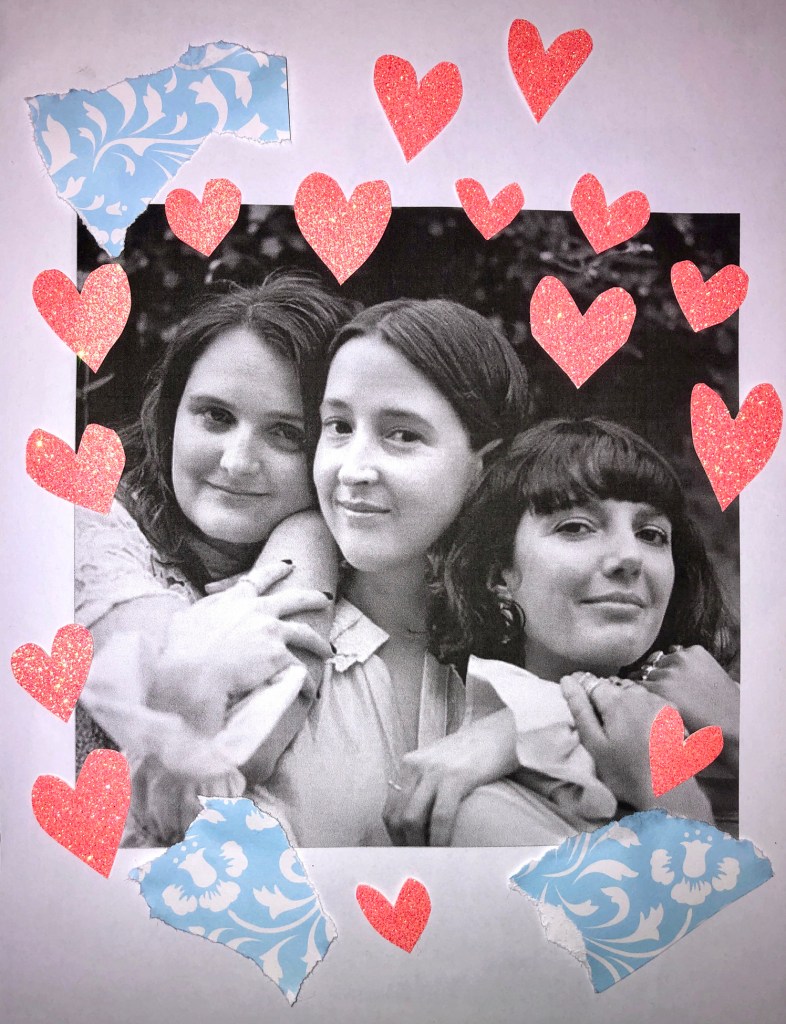
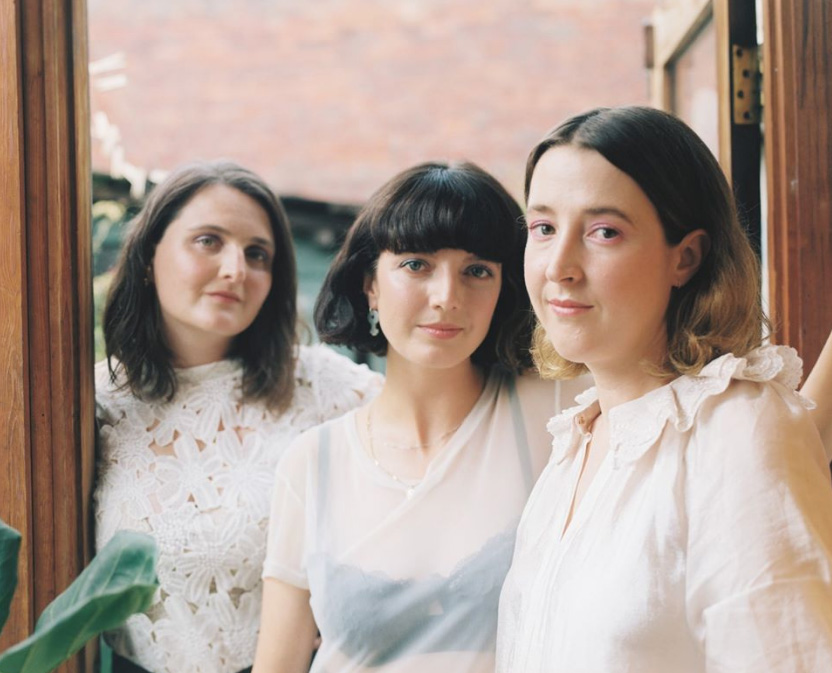
Original photo by Tom Mannion. Handmade collage by B.

Dianas dropped a beautiful, dreamy sophomore album Baby Baby last month, it twists and turns through tracks as polyrhythms unfold, and their melodic interplay and charming vocal harmonies build around them. It’s dream pop, but it’s no nap, it’s a wild and energetic lucid dream. We caught up with them to explore their Perth-based beginnings, their move to Melbourne and the crafting of their new LP.

How did it all begin? How did Dianas get together?

CAITY: Nat moved into my house something like nine years ago and soon after broke up with her partner so we started hanging out a lot. Nat had been playing acoustic guitar for a while and writing songs, and I had stolen my brother’s electric guitar with the intention of learning to play but hadn’t got very far. We kind of just started playing together and tentatively writing songs whilst drinking a lot of cheap wine and generally annoying our neighbours. It’s kind of funny because I remember that as a really good time and Nat remembers it as one of the worst of her life, but either way that cocktail of boredom and heartbreak was essential to get us started because we’d probably have been too shy and awkward otherwise.

NAT: That story pretty much sums it up! It was definitely one of the worst times of my life but also the best, and the absolute best thing in my life has come out of it so it all balances out. Some of my fondest memories are learning how to play Best Coast, The XX and other extremely indie covers on bass and guitar together and just thinking it was the coolest. Also Caitlin taught me how to play bass!

What’s the story behind the name?

CAITY: We don’t have a good story behind the name. I’d love to say it came from the goddess Diana, of hunting and the moon, but actually it came from an op shopped Princess Diana portrait that had been tastelessly defaced for a party and was lying around our lounge room.

NAT: We were literally sitting in our lounge room naming stuff we could see so it was either Dianas or Sofabed. Fun fact we were originally called Undead Dianas but thankfully dropped the Undead before our first show.

What kind of musician would you say you are?

CAITY: A lazy one. I never had enough motivation to learn to play anything properly – despite the fact my mum is a music teacher who tried repeatedly to teach me piano – until Nat and I started playing together and writing songs. So maybe I can say a collaborative or a creative one – I’m never going to be a great guitarist but I love the process of turning ideas into songs especially when the input of other people makes it into something bigger than the sum of its parts.

 NAT: That’s a hard one! I’m all over the shop. I really enjoy trying to fit in with other people and what or how they’re playing, move with them while still trying to fit in whatever it is that I want to do or hear.  I think similarly to Caity I’m not really the kind of musician who gets great joy out of being totally technically proficient, but can take pleasure in playing with others and for others, trying to make something out of nothing.

Dianas are originally from Perth; what prompted the move to Melbourne? Nat wanted to pursue sound engineering, right? Was it a hard/big decision to move the band there?

NAT: I was always staunchly against the idea of moving to Melbourne, cos it just seems like the ‘classic’ Perth thing to do, but I also really wanted to get into sound engineering, and Melbourne was the best place for it. I didn’t really admit to anyone at home for ages that I’d moved out of embarrassment for totally flipping, and I planned to only come for 5 months but still here 5 years later! Caity and I initially did a long distance thing, flying between cities to play shows, but eventually she missed me too much and followed me over here

CAITY: I was staunchly for leaving Perth at some point so yes, I followed Nat here. I guess I figured I’d have at least one friend and something to do even if I couldn’t get a job!

What do you think of Melbourne now you’ve been there for a little? How is it different to Perth?

CAITY: It’s colder – I do miss the sun and the beach. But there’s a bit more going on culturally (sorry Perth) and in terms of the music scene there’s a lot more venues to play at and local festivals and things going on.

NAT: Quite a few winters in and I’m still not used to how goddam cold and dark it is. But I’ve also really loved getting involved in the music scene here, although there’s some similarities, it’s pretty different to Perth I think, obviously way more bands and venues, but there’s also this collective feeling of experimental space. Also being able to explore up the coast and make new friends all over this side has been amazing.

Photo by  Tom Mannion.

You recently released your sophomore album Baby Baby into the world; what do you love most about the record?

NAT: I just love how ‘us’ it sounds. We’ve put so much of ourselves into every aspect of it, from obviously the writing and playing together, but then the whole recording and mixing process to all the design and videos and releases. I’m not sure how I’ll feel in the future but I’m just honestly really proud of this thing that we made.

Can you tell us a bit about the writing of it; what was inspiring it lyrically? Do you feel there’s an overarching theme? I picked up on love, relationships, self-love and a mood of sadness.

CAITY: I think those are themes that are always present in our music and how they show up just shifts and changes depending on where we’re at personally at the time. The lyrics are usually pretty simple and direct but hopefully capture a specific mood or feeling that other people can relate to. The inspiration is mostly just our own little lives; trying to navigate our way through life and love and defining ourselves as people, the sadness and hope in growing up.

One of my favourite tracks on the LP is closer ‘Learning/Unlearning’; what sparked this song?

CAITY: ‘Learning/Unlearning’ was just me trying to tell myself not to have regrets about the past – a self-help song! I think a lot of women especially can look back and see that the way they thought about themselves and allowed themselves to be treated was ill advised and damaging, and it’s hard sometimes not to see that as wasted time. There’s a lot of bad ideas we internalise that take a lifetime to unlearn, so it’s really about going easy on yourself and allowing for the fact that you have to go through things to learn from them.

I also really love the piano, drums and bass combo in song ‘Jewels’; how did that song get started?

CAITY: ‘Jewels’ started with just the piano and vocals, which Nat and Anetta then added their parts to. We had a song on our last album that was just piano, bass and drums that we really liked so I suppose we were going for something similarly simple, but then we ended up adding lots of different vocal layers to the second part in the recording and it became a bit of a different beast. We really like this song though, possibly because it’s the newest and we’re not sick of it yet. We actually only had a chance to play it live once before all our shows got cancelled!

You recorded the record at Phaedra Studios, Nat recorded it; why did you decided to self-record? Can you tell us about the sessions? What were the best and most frustrating bits?

NAT: It sort of started off from a place of necessity, I’d dipped my toes into half recording us on our last EP, as the result of another tumultuous breakup leaving us without our usual recording engineer halfway through the recording process. I was a bit hesitant at first that I’d be able to do it but Caitlin said I should and I just do what she says. (Caity’s edit: not true)

Having the space in the sessions just by ourselves was really amazing. There was no pressure to try and fit in with anyone else’s views or notions, we could just be ourselves and get down and do it. In the past we’ve maybe struggled with communicating what we want or how we feel, but I think that we’ve learnt and grown a lot over the years and there were only minimal tears this time – a record! I think the hardest part was just trying to keep up the confidence and objectivity that what we’d done sounded good, I guess the flip side to doing it ourselves is we then only had ourselves to look to. I just had a really fun time mixing it too, I learnt a lot and had a lot of space to experiment. I think there was only one thing in the end that we had to compromise on (too many delays in a chorus vs not enough!), and I’m real happy and content with how the album sounds as a whole.

 Dianas harmonies are really cool; how do you approach making them?

CAITY: Usually one of us just starts singing and the other one joins in when they feel like it. We’ll keep going over things until we find something we like, but it’s not really planned out. At this point it’s just kind of assumed that we’ll both sing in one way or another on a song, rather than have a single vocalist. At least I’ll usually make Nat sing along with me because my voice is kind of weak on its own!

How did you first find your voice? Is confidence something that’s come to you over time? Do you really have to work on it? Are you still working on it?

CAITY: I don’t know if I would ever have got up onto a stage if Nat hadn’t encouraged (forced) me to – or even maybe sung at all. I tried to make her be the front person and just sing the songs I wrote herself but she refused, which I’m now thankful for because I really enjoy it. We’ve definitely become a lot more confident on stage than we used to be, which has just come from time and practice, but we are shy people by nature and can tend to be a bit too self-effacing at times. I think we’ve learned to own our voices a bit more and have hopefully stopped with the “what I don’t even know how to play a guitar hahahah” interview style/stage presence. But it is something we are constantly working on yes.

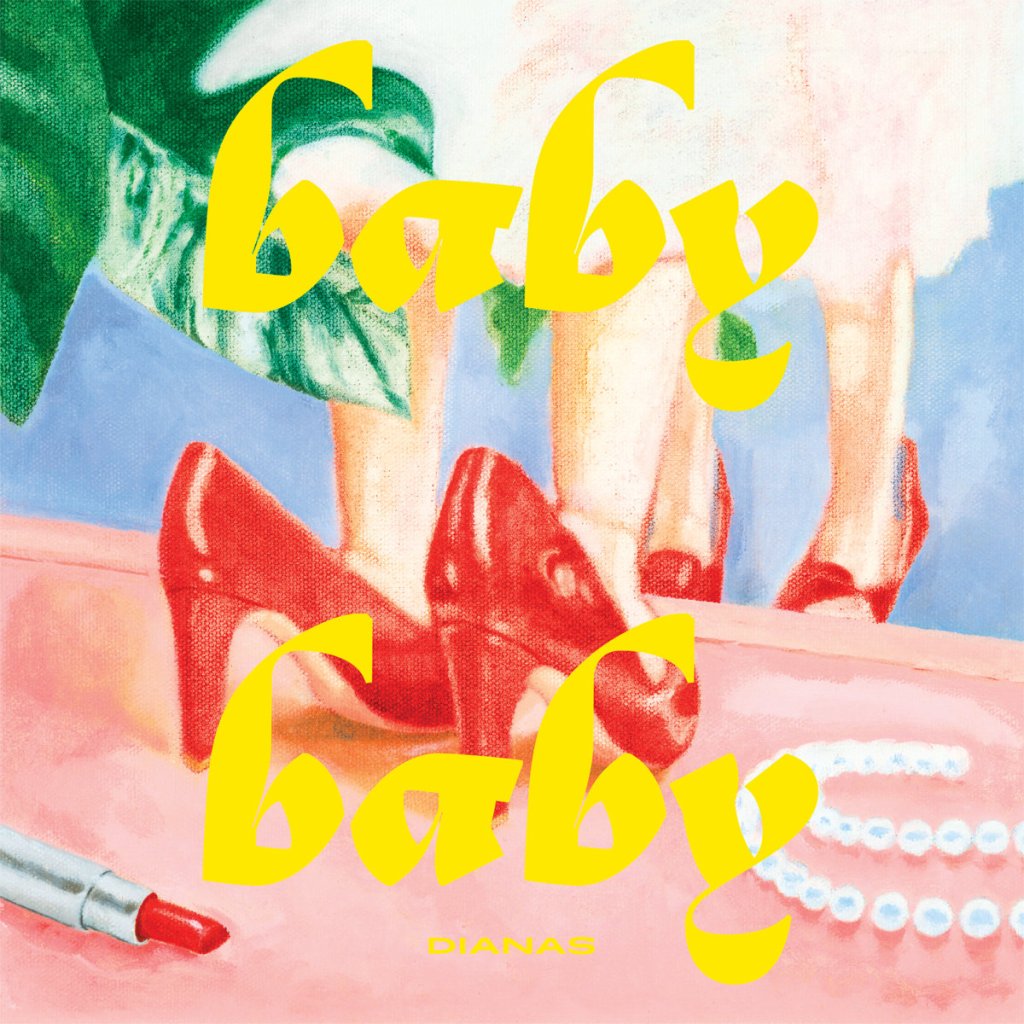
Baby Baby’s cover art is by artist Tamara Marrington; how did you come to her work?

NAT: We’ve known Tammy for a while (I guess since Perth days!) she’s one of those artists who just elicits a complete emotional response from me, I don’t think there’s been an exhibition of hers I’ve been to where I haven’t had tears streaming down my face. She was very patient working with us and our often indecisive natures, and we’re just so happy with how the record looks

You’ve made videos for the tracks off your LP (people can watch them all over at Baby TV) ‘Weather Girl’ is a favourite; what was the thought behind that one? I really love the fullness and chaotic-ness of this track!

CAITY: I just wanted to make a video about witches, but the kind of less cool TV witches of my childhood from shows like Charmed or Sabrina. The track was always pretty chaotic and only got more so when we recorded it so it seemed like a good fit for a narrative music video involving love potions and a stabbing (sorry spoilers).

 As well as doing Dianas Nat does Blossom Rot Records; what’s one of the coolest and hardest things about doing your own label?

NAT: It’s been really cool to just do things on our own terms, in our own way, and on our own time – not having to stick to anyone else’s schedule or run anything by anyone. I think the hardest thing has just sorta been having to write about my own band and trying not to sound too wanky. Definitely looking forward to working on some other releases! It’s also great working with Sophie, I feel like we balance each other out perfectly, she’s the boot to my scoot.

What’s next for Dianas?

NAT: I’m not sure about the others but it’s actually been a bit of a relief for me to be able to slow down, and not get too wrapped up in the constant next step motion. Having said that it will be really really nice when we’re able to play again, we’d love to reschedule the tour we had booked at some point but I’m not in a massive rush to do so until its super safe and would be enjoyable. I think for now I’d love to get back to our roots and sit at home together with some cheap wine and write some more songs 🙂

CAITY: Personally I have not found this time to be a relief at all, and I’m definitely looking forward to that tour. Looks like we’ll be waiting out the winter though so revisiting our roots sounds good – I think I’ll splurge on some nicer wine this time around though.

Please check out: DIANAS. Dianas on Facebook. Dianas on Instagram. Blossom Rot Records.