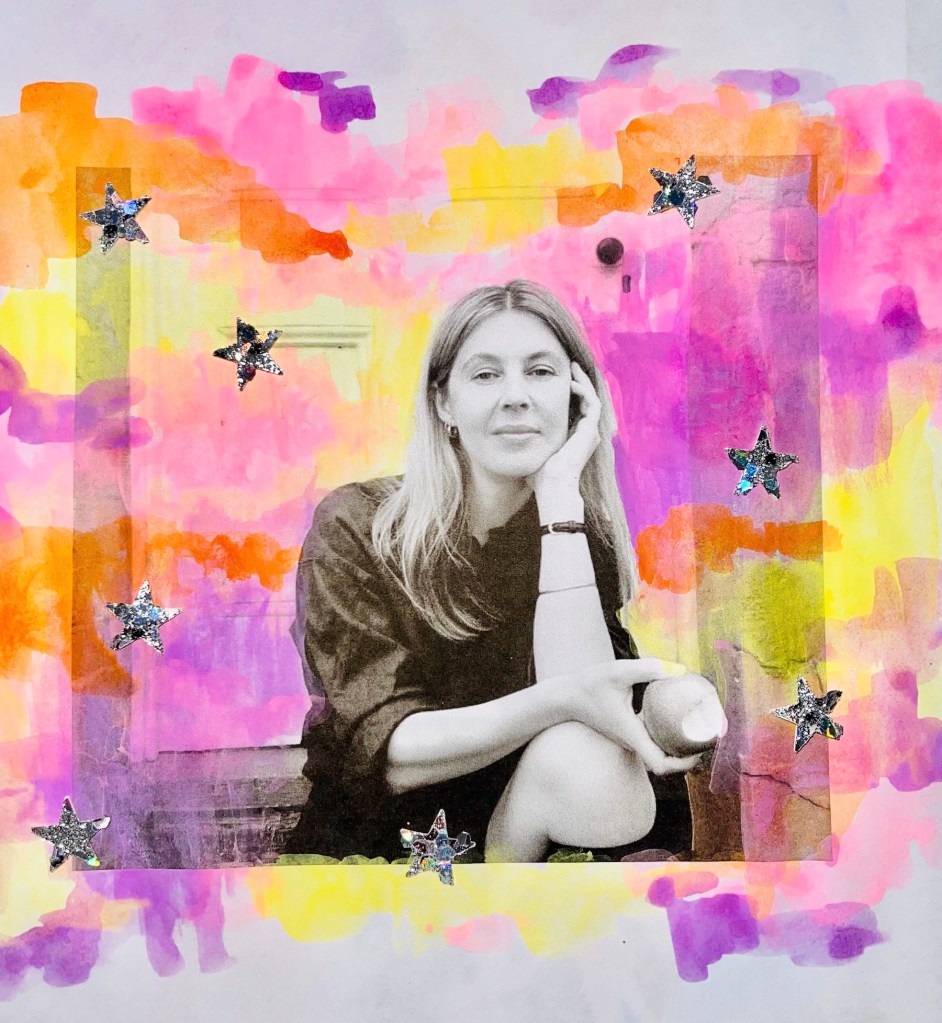
Carla dal Forno: ‘It’s not about confessing my sins, it’s about admitting things that are tricky to talk about.’ 

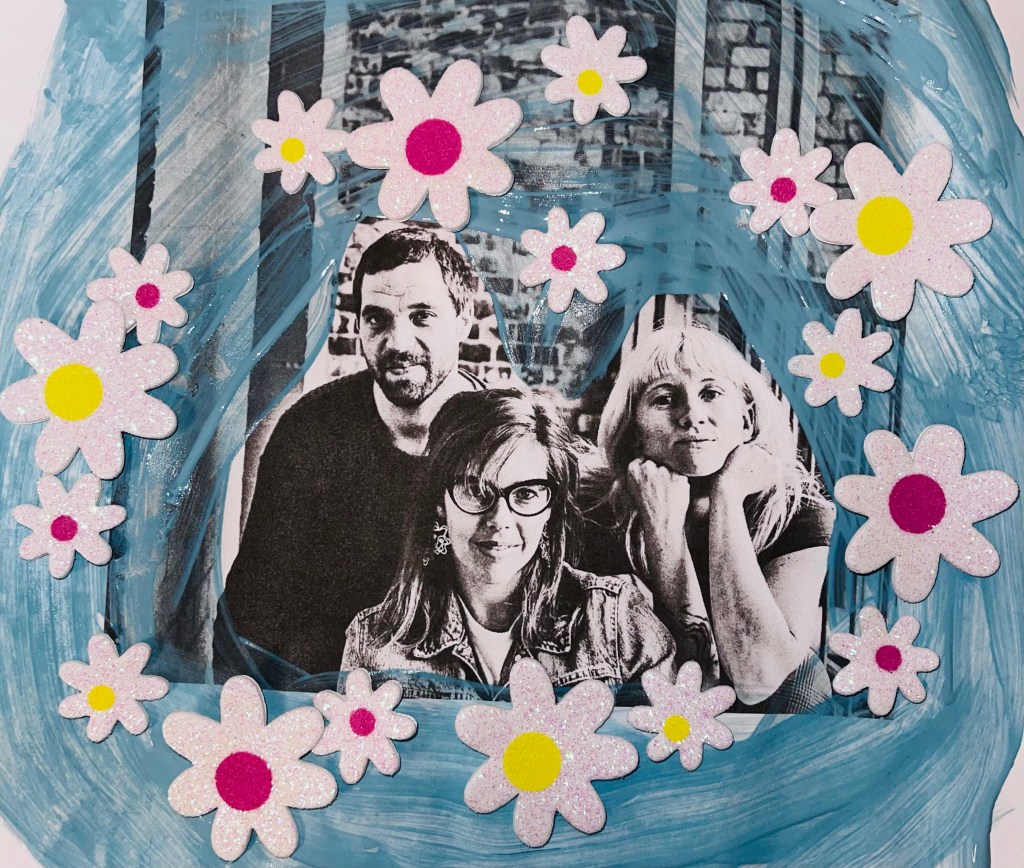
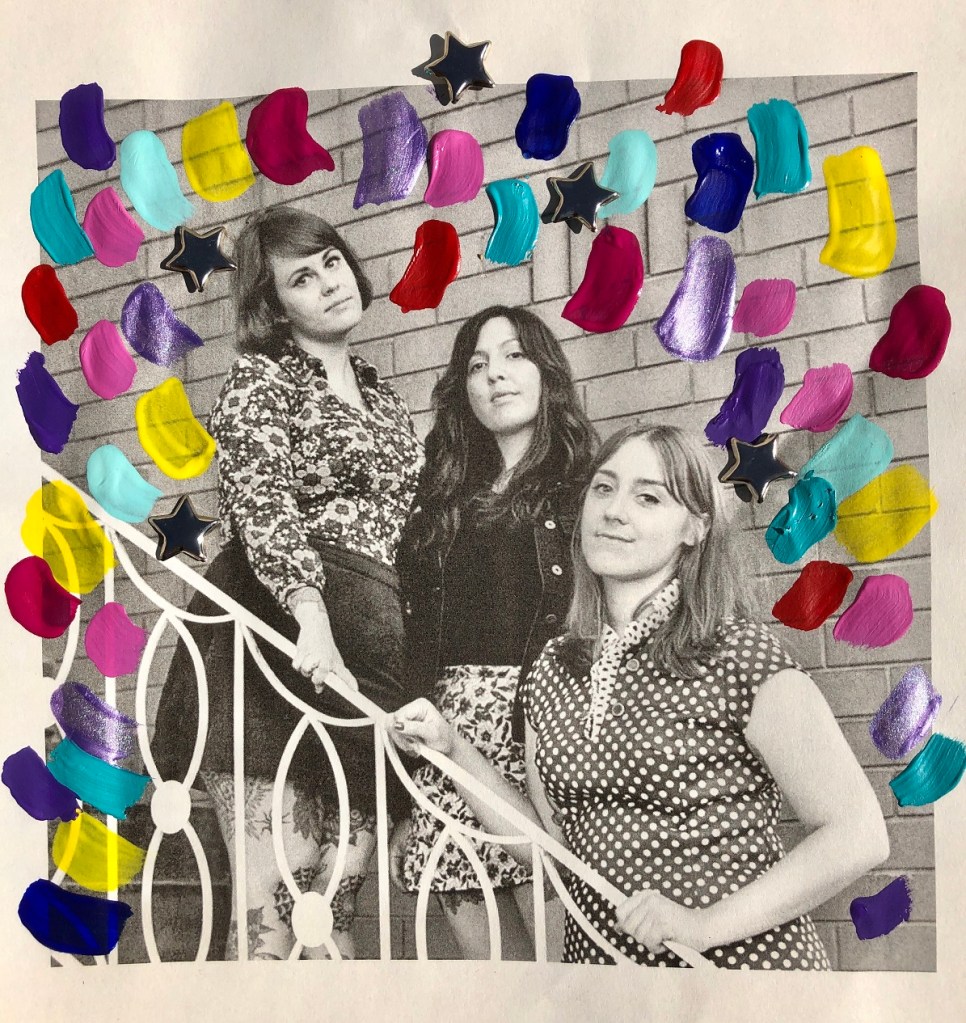
Original photo: Sanjay Fernandes / handmade mixed-media collage by B.

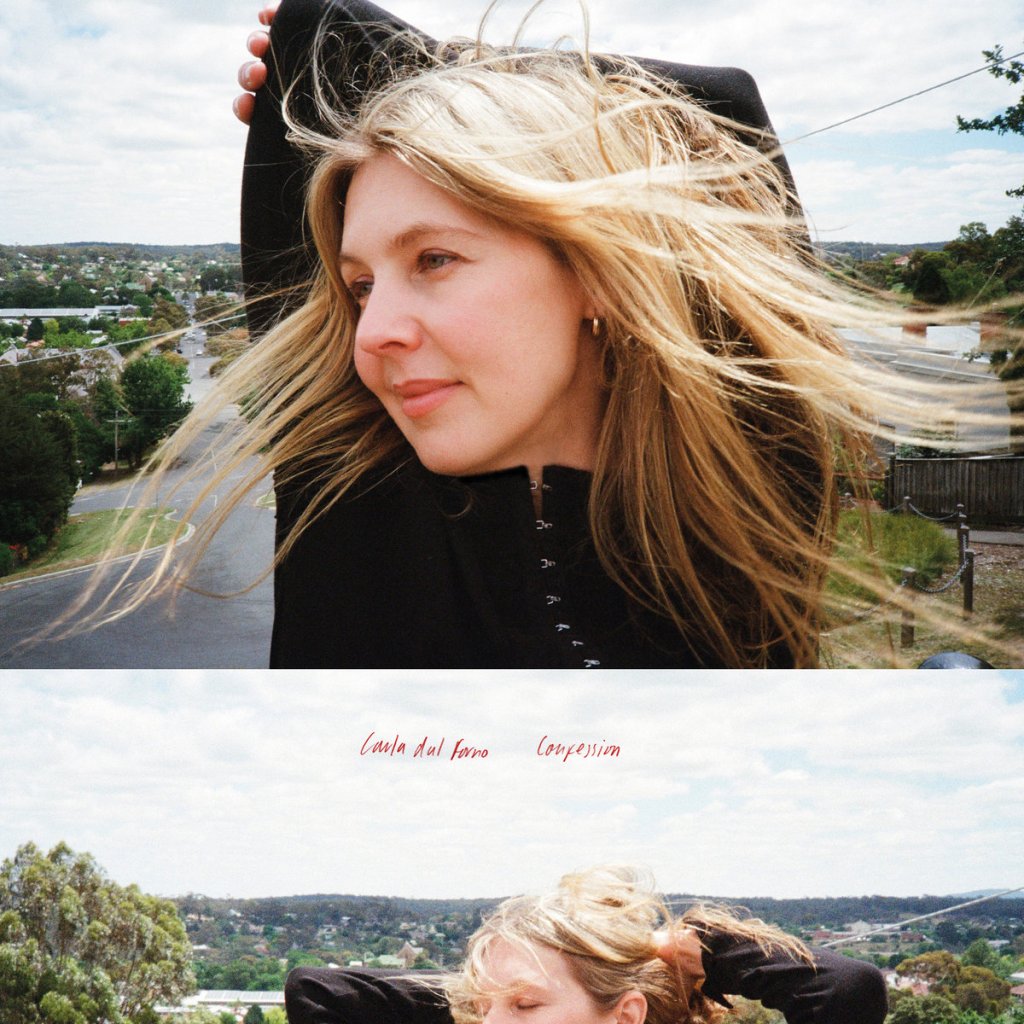
There’s a sense of quiet clarity running through Confession, the latest album from Carla dal Forno. Written over a year or so, her third full-length record traces shifting emotional states, relationships, and the process of turning inward. It’s a deeply personal work, but one that leaves space for listeners to find themselves in it. Carla spoke to Gimmie about the making of the album, creative doubt, independence, what it means to feel settled, and of finding your people.

CARLA: Life’s been busy. Being a musician, there are these distinct parts where you’re by yourself for a long time when you’re writing the album, and then you get towards releasing it and you’re working with more people.

At the moment, I’m pretty busy, but a lot of it is just administrative stuff and getting ready to play shows — so rehearsal on that. It feels full and exciting. I’m looking forward to releasing my album next week, but also looking forward to getting back into the studio and writing some more music.

Your album Confession is coming out in a week’s time; how do you feel about it now? 

C: I feel really excited and a bit nervous, a bit scared. Are people going to like it? It’s hard to avoid feeling like that, but I’m really happy with it, honestly. I’m just excited for people to hear it.

Are there any particular feelings that you cycle through each time you put an album out?

C: All the feelings [laughs]. There’s lots of distraction, so I guess that’s good. I’m not just sitting in my room at home wondering how it’s going to go down. All the distractions and things I’m doing to get ready for the shows are helping. I also have family up here, so just living day-to-day life is a distraction and helps you keep an even keel.

Where are you now?

C: I’m in Castlemaine, it’s an hour and a half out of Melbourne, Victoria. I think the population is like 5,000, so it’s a small country town. 

Now that you’ve completed the album, is there anything that’s stayed with you since finishing it?

C: This album was hard to write at times, but looking back on it, I feel like the album’s called Confession, and it’s not about confessing my sins as much as admitting to myself, or someone else, feelings, things that are tricky to talk about.

For me, the album, and I think you can hear it sonically, is like when you say something and it feels like a weight off your chest. There’s a lightness afterwards. I think that’s what has stayed with me.

You’ve said that you didn’t intend to make an album like the one you made. I was wondering, going in, what did you intend? What did you think you were going to make?

C: I was listening to a lot of Broadcast at the time before I started the album. I’ve been obsessed with them for, I don’t know, maybe decades, a really long time.

I was reading about how they wrote their last album, Tender Buttons, and how they cut up words and rearranged them. They used this collaging technique and were trying to get away from self-revelation and that kind of thing.

At the time, I was like, talking about my interpersonal relationships is too much hard work. I’m just going to see if I can do something like Broadcast, keep it more abstract.

It just didn’t work for me, though. I couldn’t force it. I just wasn’t connecting with anything I was creating.

What do you feel like is the emotional core of Confession

C: There’s a lot of duality in it. I think there’s wanting closeness and wanting distance. There’s a mix of emotions in there, and it’s talking about how, for most of us, we’re constantly moving between different emotional states. That’s what the album represents to me. That movement between fantasy and the mundane and ordinary is mixed into this album. Those two things coexist all the time.

Totally. I think people often think we have to be this or that but things are more nuanced then that and complex and as you mentioned, two opposing things can exist at the same time. I really love the instrumental ‘Drip Drop’.

C: Cheers! I have a DX7 synthesiser that has a really good “drip drop” sound on it and that’s why I named it that. 
There’s four instrumentals on Confession that feel like a bit of a breath or transition. 

C: I saw them as being helpful in that the songs felt like emotional snapshots in time, and the instrumentals could offer a breath in between, or reframe the story to a different time period. Like when you’re watching a movie and there are those montages of landscapes or a change of scenery. I feel like that’s how I wanted the instrumentals to function.

When I was listening to ‘Drip Drop’ it conjured images of standing at the kitchen sink doing dishes or something domestic.

C: It leads nicely into ‘Under the Covers’ which is really about home life. It’s interesting because ‘Going Out’ is almost the opposite of that. It’s like, I want to get out there. But then, like you were saying, ‘Under the Covers’ is more about stability and routine.

I’ve noticed that often when people talk about your music, they mention melancholy but I feel there’s also a bit of humour in there that often flies under the radar. There’s often really funny lyrics that make me smile.

C: I like to think of it like that too. I like songs that have that kind of tongue-in-cheek quality, and I think I found it to be particularly prevalent in Australian music, Australian DIY music, bands like The Cannanes and The Garbage & the Flowers. I’ve listened to that stuff for a long time and kind of tried to imitate it. I really love it. I want to amuse myself when I’m writing a song as well.

Your delivery on song ‘Confession’ seems like you’re amused.

C: I wrote that song and had the vocal melodies, and had no lyrics for a while. That doesn’t always work like that, sometimes the lyrics come straight away.

That one was kind of hard to write the lyrics for. I had this lilting vocal melody that I really enjoyed, but I didn’t know what the song was about.

I was giving my kids a bath one night, and those words came into my head. I thought, oh, this is funny. “Confession” is kind of a very loaded word, and I really enjoyed using that and playing around with it.

I love when fun creative ideas often come when we’re doing ordinary everyday tasks. I find I get that when I’m driving. 

C: I have read somewhere that driving is particularly good, going for a walk, anything where you’re in motion. It connects with that flow state, where you’re already in motion, literally in a car or walking, and it taps into a different part of your brain.

I agree with you. I’ve had some of my best ideas when I’m just moving around the house, not sitting down and taking myself too seriously as an artist, for example.

One of the songs on the new album came to you when you were out painting?

C: ‘I Go Back’ is the first song I’ve come up with in that kind of environment, and it just felt really nice. It felt like I was enjoying being outdoors.

I’d written the rest of the album and felt some sort of resolution internally, with all of these different relationships I’d been talking about in the music. It felt like a good time to be reflecting on where I was at.

Where did the title for that one come from?

C: Those lyrics, I wrote them really easily. They just seemed to come to me. It’s a bit ambiguous, even to myself, why I’m saying “I go back.” I think it’s kind of like sometimes you go out looking to other people, to relationships, to give you something, and then when you go back to yourself, you can discover that what you need is already there. It sounds a bit cliché, but I feel like that was the intention.

The record centres on friendship and that becoming a little bit more complex. What sparked that theme? 

C: When I first started the record, I didn’t want to write about my personal life, and I just wasn’t writing anything I was happy with. I think when I started to write about my relationships, I felt like I had something to say. It wasn’t necessarily something I wanted to do, but I found that I liked the work I was creating when I focused on those themes, so it became exciting and motivating.

Are you the kind of person who writes through their feelings when they’re happening? Or do you need distance from that? 

C: Both. Some of these songs were written whilst I was very much caught up in the feelings that they evoke.

The record took over a year to make?

C: The bulk of it was probably done in two years, between two and three years. I just really wanted to give myself space this time to write a record where I was really happy with every single track, and it felt cohesive. So I just did that. I didn’t worry about deadlines. I self-release, so there’s no one there pressuring me except myself.

Do you self-release because you don’t enjoy how the industry does things? 

C:  I like having control. I think that’s why I’m a solo artist as well, because I can get really focused on all of the details, and having it all within my control feels good to me, even though it can be time-consuming.

I definitely think there’s a lack of transparency in the music industry, working with labels and stuff. But I was really lucky that my partner worked for the label I was on for my first release. When that label closed down, it was his suggestion to self-release, and he helps me run it and does all the administrative tasks behind it.

It’s hard to know what a major label or a larger indie label would have done for my career, but I’m happy to be able to do things on my own terms and when I want to.

It feels like a rejection of the capitalist model as well. I mean, that’s a big statement, maybe, but this stuff that we do that we love, doesn’t have to have heaps of money thrown at it all the time and then be commodified. I don’t want to be a content creator.

What part of the creative process do you enjoy the most? 

C: I enjoy the process most when I’ve got a few tracks under my belt and I have faith in the project I’m working on. I find starting with a clean slate really tough, that self-doubt that creeps in. Am I going to be able to write a good song again? Am I going to be able to make another album?

So, the stage where I’m happy with a number of things and I can see the finish line, that feels like a really nice place to be.

Before music, you were doing fine art. I’ve read that it wasn’t until you started making music that you felt more confident and able to express yourself. I was wondering, how did music give you that confidence? What was it about music that allowed that shift?

C: When I started going to see bands in Melbourne and making friends with people in bands, it all felt very inclusive and accepting of different abilities and interests. That felt really different to art school and the art world.

When I said to a friend, “Hey, do you want to start a band?” I didn’t really know how to play guitar beyond a couple of chords. He was like, “Yeah, absolutely,” and we just started it with another person. They were so encouraging of my first attempts at this kind of project.

Labels were interested as well. My first song came out on a seven-inch, and I was like, oh, great, this is wonderful. I can just keep doing this. There’s a tiny audience, but people are encouraging and supportive.

I’ve written for an art magazine for over a decade so I know the art world can be a bit hard. There’s a lot of bougieness. 

C: Yeah, I think I found it a challenge. I’m sure other people have different experiences but that was mine. It’s a weird place, lots of politics. I was pretty young when I was there and naïve, and I don’t think I really understood the environment I was in. At art school, it was like, “Hey, we’re not going to teach you how to do any art.” That was the vibe.

By the way, I really love your paintings Looking at them makes me feel calm.

C: Oh, that’s great. I hope to capture that, something kind of distilled. 

I love the landscapes, and especially the clouds, you paint. Your colour choices are divine.

C: I live in the country now, so I see the sunset every day. We live on top of a hill, and all you can see is clouds, sunsets and the bush. It’s definitely been great for getting back into painting.

You made your film clip for ‘Going Out’ near where you live? 

C: Yeah, Guildford. It’s a little town just outside of Castlemaine, much smaller though.

I just stomped around the fields there with a friend of mine [Hanna Chetwin] who lives in town. She’s a filmmaker, she’s my best friend, so it was really fun. We hung out for the day, took a thermos, had a cup of tea and a biscuit. She was like, “Why don’t you try this?” and I was like, “Yeah, sure, I’ll try that.”

It’s been really nice. It felt nice to make film clips with local artists and people I know for this album cycle as well, because the themes of the album are so much about friendship and relationships.

The album was recorded in a 1930s, partially decommissioned, hospital space?

C: Yeah, well I’m in it now. This is my studio in the hospital. It’s a strange place. It’s a great place for artists and self-employed practitioners. There are so many little rooms all over the hospital being used by different people, but it has this weird vibe. It was decommissioned 30 years ago and hasn’t been updated since. It’s a crazy place.

Previously, you’ve talked about how different new environments often help shape your work. How did the hospital space help shape things?

C: There’s lots of space and eerie little pockets, but it’s kind of like you feel like a small child wandering around. It’s almost like creeping into a building you shouldn’t really be in, and that can feel playful as well. I didn’t intentionally set out to make a record that reflected this space, but when I got to the end of it, I could draw connections.

Was there anything that was a struggle making the album?

C: The beginning was really hard when I was trying to do something that wasn’t fitting, that wasn’t working. Once I wrote ‘Going Out’ which was the first track I wrote for the album, and I had something I was really happy with, it got a bit easier. I felt like I was on the path.

But beginnings are always hard because you feel like there’s such a mountain of work that still needs to be done, and you have no idea what it’s going to be like.

What about the end of the project? I often hear people say that the last 10% of finishing something is hard. 

C: When I know what I have to do, I’m okay. I’m pretty good at slogging on. For me, definitely it’s the beginning of the album that’s a struggle. The end, I can get through it.

Was there a song where things really started to come together for you?

C: ‘Under the Covers’ was a really nice moment to land on, because I had written — it’s hard to remember — but I think I’d written ‘Going Out’ and ‘Blue Skies’ and ‘Confession’.

‘Under the Covers’ felt like a slightly different angle, a change of pace and a change of mood. I liked those polar opposites between feelings of chasing someone and being content with someone.

When making your last album, Come Around, you were balancing having a young child with being creative and you felt pressed for time and finding space to create. Has your relationship to time and having a creative space changed since then?

C: Yeah, I now have a studio off-site, so that’s been good. It gives you the space to just focus on my work, rather than being in a family space.

I’ve really liked that. I’d say this album isn’t about my kids or having kids, but I think I decided I really needed to look at myself and what my issues were when I had kids. I started going to therapy, and I think that has influenced the themes of the record. There’s a lot of self-examination and pulling apart why I’m feeling certain ways.

Do you find it hard to really look at yourself sometimes? 

C: Yeah, I think we all do, really. We’re always going to be a bit of a mystery to ourselves, why we respond to certain events or certain people in certain ways.

I find it interesting. Some people might say it’s just navel-gazing, constantly looking inwards and thinking about how you’re feeling. But being vulnerable and showing those struggles to other people, that’s the kind of work I respond to. I feel like I’ve learned something about myself through someone else talking about their own experiences.

Is there anything you learned about yourself for making the record? 

C: Lots! What I’m getting better at is observing and saying, okay, I’m having this feeling or I’m having this experience, and I’m acknowledging it, but action isn’t necessarily required. It’s a really healthy thing to aim for. 

Is there anything you do to kind of step away and recharge for yourself? 

C: I like gardening. I like going for a run in the morning and painting, sometimes. I do a bit of painting, when music’s getting hard and I do music when painting’s getting hard [laughs].

Are they two different or similar things for you? 

C: They’re pretty different. I feel way more confident as a musician. I feel like my professional level and my skill set are high. With painting, I still feel like a real novice, and I like having that as well. It’s good to feel like you don’t know what you’re doing.

Yeah, and no matter how good you are at something, I feel there’s always so much more you can still learn from whatever you’re doing. The goal is to, hopefully, keep learning forever. 

C: For sure. It’s the joy of it as well, isn’t it? 

Absolutely!

C: The sensory overload of having small kids at home, it’s a lot, so going to the studio is definitely that as well for me, the kind of stillness is really valuable. 

What’s something that’s just made you really, really joyful and happy, lately?

C: This album, part of it is about moving to a small country town, having friends, and figuring out if they’re the right friends for me, and what I value in friendship and in relationships.

By the end of it, when I finished writing the album, I felt like I had found my people in a way. Last week, I went away for a night with two friends. We stayed at a little remote wood cottage, cooked dinner together, played cards, and hung out and chatted.

I was so happy for the entirety of that trip. It made me feel really joyful to have found these people.

That sounds perfect. What do you value in friendships? 

C: I value people who are self-aware and can be vulnerable with others, and who can also self-manage. They don’t need you to manage their anxieties or their issues, but they’re generous. This is a massive list, isn’t it? [laughs]. They’re there for you as well if you need.

That’s so lovely.Is there anything that you hope people listening to your new record?

G: I’m hoping people bring their own stories to the record, that they can relate to it, and also just enjoy it as a collection of good songs.

What made you choose to cover the Sunnyboys’ song ‘Alone With You’? 

C:I’ve been listening to that since I was a child. My dad was in a band, and his band used to play support for Sunnyboys a really long time ago, in the ’80s. I’ve grown up with it, and I just really love that band and their music. I relate to those feelings of excitement, but also that unsure quality of being essentially alone but together.
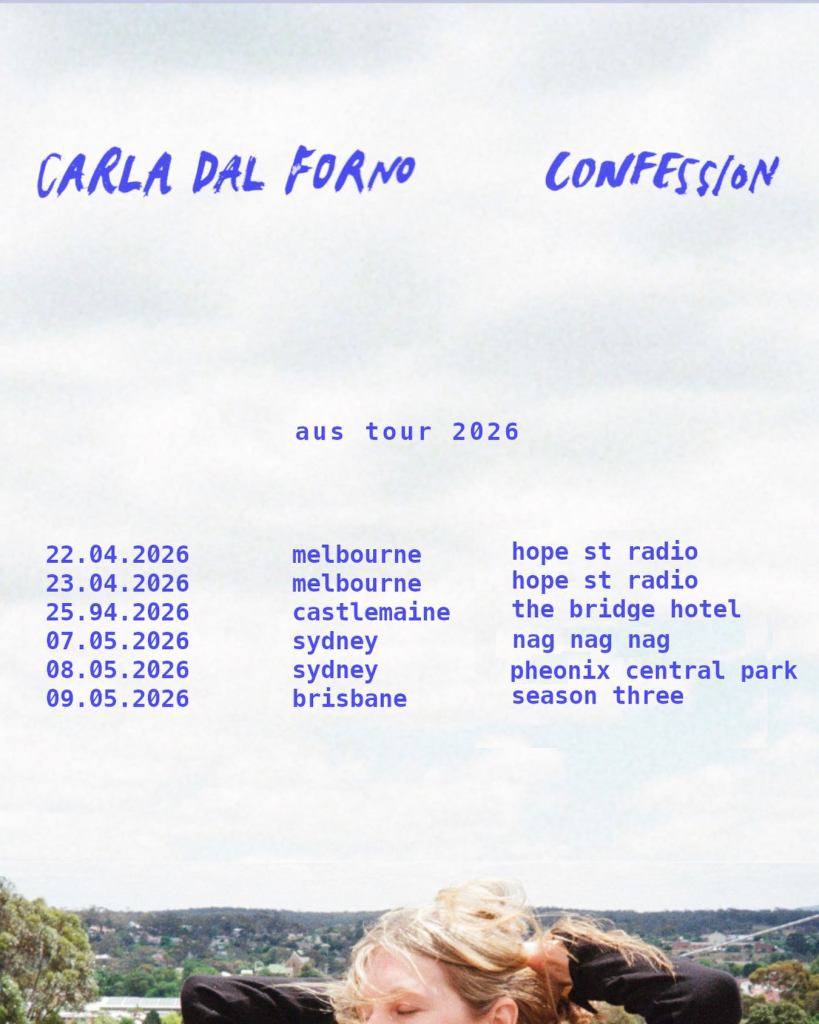
FIND more of Carla’s music HERE. Confession out now via Kallista Records. Catch her live on her Australian tour – tickets HERE. Follow her: @cd__player.

CRAFTY CUTS with CHARLOTTE GIGI (It Thing)

Original photo by @martdanza / Handmade collage by B.

At Gimmie, we’re massive music nerds, and we love geeking out about music with friends. Since our first print issue, we’ve been asking musicians we love to share some of their favourite songs with us. We always get such interesting, surprising, eclectic answers, and we’ve discovered lots of cool stuff as well as been reminded of gems we hadn’t heard in ages. So, we’ve decided to do it more often via our site.

Charlotte Gigi, vocalist for the punk band It Thing, shares her favourite song of all time. She reflects on discovering a band she wasn’t initially ready for, whose vocalist sounds like a squeaky toy. She recounts listening to a song for over 5 hours while sleeping in a tent at a bush doof, and shares some of her favourite silly lyrics. Additionally, she mentions a song that changed the shape of her brain, a punk song about cats, an emcee that never sleeps, and more.

We hope you find a new song or artist to listen to on repeat—over and over and over—as us music fanatics tend to do!

‘The Electrician’ – The Walker Brothers

This is possibly my favourite song of all time. The strings are so lush, and just the most wonderful contrast from the intensity of the intro. I think the song is about a drawn-out torture process, which is really grim. But I love it when he sings, ‘Oh, you mambos!’

‘Medicine Bottle’ – Red House Painters

Once, I fell asleep in a wet tent camping, listening to this song in my headphones next to a bush doof. I kept waking up like every 10 minutes for 5 hours to various moments of this song, and it was the most comforting thing ever. The guitar tone is so rich. The lyrics of this song, although it’s quite long, are so memorable because of how impactful they are.

‘Shut Me Down’ – Rowland S Howard

This song was introduced to me by a beloved friend and housemate one winter. He played it a thousand times a day. I love the lyrics. Everyone who knows this song thinks it’s the best song ever. I don’t need to say much.

‘Dear Diary’ – Divinyls

I love how soft and dynamic Chrissy’s voice is on this track, and how she sings about Preston Annual Fair. This song is so feverish; she talks about having a vivid memory of a certain day, perhaps in childhood, and not being sure why. It’s like a photo.

‘Swamp Thing’ – Chameleons

This band is criminally underrated. I love the lyrics in particular: ‘The storm comes, or is it just another shower?’ The pacing is so great; the mood keeps changing from hopeless to hopeful. This is one of the best things to come out of Manchester, in my opinion, which says a lot.

‘Epizootics’ – Scott Walker

My big brother showed me this song when I was 12, and I was like, ‘What the…’ and totally rejected it, but it stuck with me. By the time I was 16, Scott Walker was one of the most important figures to me, and he still is. This whole album is pretty massively important to me; like, it changed the shape of my brain. And then I listened to Tilt. Anyway, I love the Hawaiian lady with metal teeth, I love the beats, the phases throughout the song. I love Scott Walker’s yawny-operatic baritone. You can dance to this all day.

‘I’ve Seen Footage’ – Death Grips 

I’ve been in a little bit of a Death Grips rabbit hole lately. That’s all I’ll say about that. I like how MC Ride is on level 11 like, all the time. I don’t reckon he ever sleeps or sits down.

‘Unravel’ – Bjork

On YouTube, there is a beautiful video of Thom Yorke covering this, who is another one of my favourite musicians. He once said it’s his favourite song. It’s so cool to see your favourite artists being fans of one another. The cover gave me a new appreciation for this track, which is surrounded by huger, far less mellow songs on the album. Makes it hard to choose one to mention. I love the way Björk bursts into gibberish… she really uses her voice as an instrument in a unique way.

‘Strawberry Flower’ – 18cruk

I came across this perfect angsty Korean slow jam on the app Pandora when I was also a very angsty 14-year-old. I couldn’t find anything else on this band, but I’ve come back to it often since then. Recently, this entire album became available on streaming, which has been exciting because I never knew how the band sounded apart from this track, and I kind of love how shrouded in mystery this band has been for me for a decade now. And they’re good! Haha. I wonder what the members are doing now. I read somewhere once they disbanded and became rappers?

‘Ambulance Blues’ – Neil Young 

I’m not like a massive Neil fan, but this particular song is really special. The lyrics are so profound, with genius phrases scattered through this almost 9-minute track. His vocals ring out so crystal clear. This song is kind of melancholic in a way that makes you feel nice.

‘Shield Your Eyes, A Beast In The Well Of Your Hand’ – Melt Banana

The first time I heard Melt Banana, I was not ready for them, and I didn’t like it. Then, I listened to them a few years later, and I was so ready, and I loved it. This track was my second introduction to them. Yasuko’s vocals sound like a squeaky toy at times, which is so cool. I really love this band.

‘I Against I’ (Omega Sessions 1980) – Bad Brains

HR’s vocals on this are just on another level. He’s definitely one of the more technically good vocalists in punk music. I like how paranoid and rabid he sounds; it’s so full of raw energy. Dr. Know absolutely shreds; his guitar is perfectly parallel to HR’s vocal through all the phases of this song, but this particular version… it is so good like whaaat.

‘Sunglasses’ (single version)- Black Country New Road 

This track mentions Scott Walker, which is a huge win off the bat. The band is a 6-piece with the usual suspects and the additions of saxophone and violin, which are heavily utilised in a genius way on this track. I love the building intensity; it reminds me of Silver Mt. Zion. The lyrics are very unnerving with the guitar riff in the intro, and it used to make me really anxious. But I came around because it’s one of the best songs of the 2010s.

‘Teenage Lobotomy’ – Ramones

I just think it’s really funny. But the Ramones have like 40+ songs that are just as great, but ‘DDT did a job on me, now I’m a real sickie’ is such a silly lyric. The Ramones made making music accessible to so many people because they do genius on basics, and I love them for that.

‘Bocanda’ – Gustavo Cerati

This record is a great departure from his band Soda Stereo, who kind of put Argentina on the map musically. I love the trip-hop elements, his sweeping vocal. This track is so moody and visual; it kind of helps that I don’t speak Spanish and have lyrical insight to distract. A perfect song, like a warm bath on a rainy night.

‘Cat’ – The Sugarcubes

This is such an exciting song about cats! It has amazing energy; I’m not sure why that is. I love how it’s in Icelandic too – what a cool language. That guitar riff, especially on the outro, makes it a perfect punk song; it’s all so exciting! Björk’s voice is so intoxicating; she could sing about anything.

There’s a YouTube playlist with all the songs HERE!

Or a Spotify playlist of the songs HERE!


Read a Gimmie It Thing interview with Charlotte HERE.

You can check out IT THING via their bandcamp page HERE.

Meanjin band Lackadaisies: “Buy Lackadaisies tape now”

Original photo courtesy of Zang! / Handmade mixed-media collage by B

Indie slacker rock three-piece Lackadaisies (whose members also play in Full Power Happy Hour, Blankettes, Married Man, No DOZ and Camping) released EP Payphone Text a week ago. The EP has the band sounding lucid and at their breeziest yet, and its casual hookiness is hard to resist. Gimmie asked guitarist-vocalist Nathan Kearney, bassist Grace Pashley and drummer Marnie Vaughn about Payphone Text, what makes them nervous, the most romantic thing they’ve done for someone and what other projects they’re each working on. 

When you were starting our as a musician, was there anyone that you looked up to? What was it that you admired about them?

NATHAN KEARNEY: I spent all my pocket money on bargain-bin tapes as a kid and didn’t mind what I listened to. The first act I was really obsessed with, though, was Boys II Men. I thought they were cool as hell and I still do

MARNIE VAUGHN: Patience Hodgson from The Grates, I love her energy, she is so bold and fearless. 

GRACE PASHLEY: I am a big Erica Dunn fan. Everything she does is excellent, such a humble shred lord. One day I hope to play guitar like that!!

As a musician is there anything that you ever get nervous about?

NK: I only have one guitar and it breaks down a bit. Sometimes in cool sounding ways. I worry it’ll cark it on stage on day, though.

MV: Mainly forgetting how to play the drums or the drum stool falling off the back of the stage but both of those things have happened to me and I think I’m ok about it. 

GP: Yeah I get scared to sing sometimes! I’d never played bass before Lackadaisies so there were lots of pre-gig stress dreams about the bass neck morphing into a snake and biting my hand. But mostly I’m fine now!

You have a new album Payphone Text, which was recorded over three weekends in each of your respective homes. Why did you chose to record in several places? What were the pros and cons of making your album that way?

NK: We were gonna do it at Marnie’s brother’s house in Northern Rivers but COVID closed the borders. I woulda liked getting out of the city but the comforts of our own homes was the next best thing

MV: It was a logistical nightmare moving the set up between houses and having to trouble shoot new issues in each house. But the pros were grand, we got to play our own instrument in the place we felt the most comfortable and everyone got a turn at being a the host. 

GP: Look if we had our time again… maybe we would only record in one place! But we couldn’t make that work, and it was fun to hang out in everyone’s houses eating pancakes and curry, lots of coffees. 

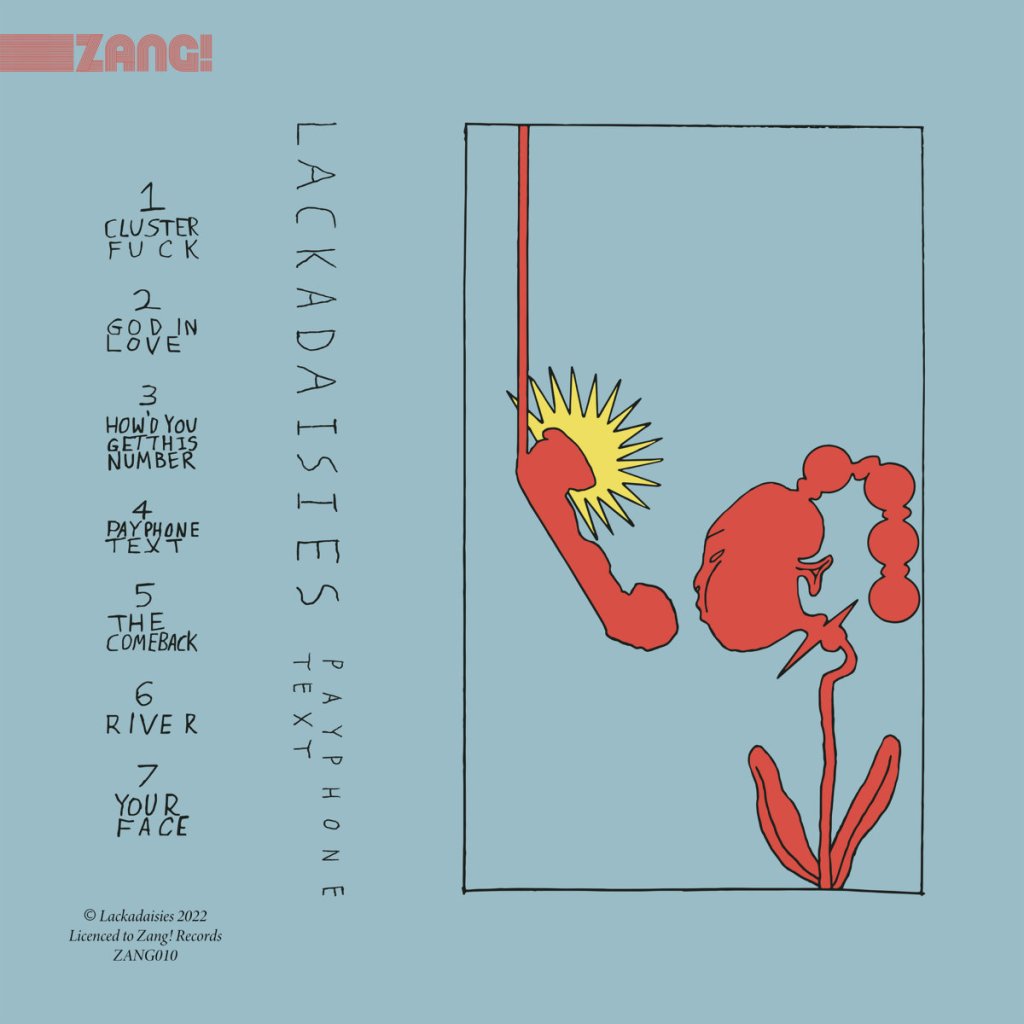
EP art by Angelica RW

The title track’s lyrics were inspired by Nathan’s ex-partner sending him a payphone text once when they were away. It takes ages to type one of those on the phone dialpad. If you were sending a payphone text, who would you send it to and what do you think it would say?

NK: To Dad “In town. Can U pik me up” for nostalgia

MV: My best friend is a writer and would probably get the biggest kick out of it. I would say “DIS A PAYPHONE TXT B CUS I LUV U – MARN” 

GP: I’d spam as many people as I could to say “Buy Lackadaisies tape now”

Also, going to the effort to payphone text someone a message is pretty romantic; what’s one of the most romantic things you’ve ever done for someone?

NK: I make things for people I love and people who know me best generally make things for me. I’m not that materialistic and mainly hold onto sentimental items. I’ve been writing songs for friends lately, which is a nice change from writing for/about romantic partners.

MV: I made my partner a scrap book photo album of all the memories since we met. It had a timeline at the front and everything. Also, when I was the front person in a punk band I wrote a love song for my puppy. It was really sweet.  

GP: I’ve written so many love songs about my partner which I think is romantic but I think he might get embarrassed by it… hehe whatever sometimes you just gotta scream it from the rooftops etc. 

Going into the writing for the album, did you have an idea of how you wanted it to sound? Or what you did or didn’t want to do?

NK: I’m most comfortable with 4 track recording and I thought the Lackadaisies record would suit that saturated sound. We drove everything so that it was peaking to get that natural crunch over everything. The last release we just threw whatever mic out and hoped for the best. This time it was more considered cos we had James helping. He’s really clever

MV: Not really, I remember hanging out with Nathan when he first moved back to Bris and talking about playing music together. I really like his previous bands and solo albums so I think I wanted to be apart of something like that but I probably didn’t communicate that very well. 

GP: I was just keen to get our existing songs recorded, we weren’t too precious about it which is pretty standard for us! I think something we definitely didn’t want to do was….pay for it haha hence why we did it all ourselves! Well we did pay James a wee bit but god knows it wasn’t enough for the tribulations he dealt with. 

How do Lackadaises songs often come together?

NK: Fuck around til it feels good. We’re not the type of band that talks about genres or tries to be one thing. Whatever a song sounds like is what we sound like is how I figure it

MV: For me… either Nathan and Grace will bring a song or the ideas for a song to jamming and it goes from there. I’m sure it’s a much more lengthy process for them.  

GP: Nathan is really the genesis for our material. He’ll bring a melody or chord progression and maybe I’ll write some lyrics but more often than not he has a zillion fresh ideas that we try out til something sticks. Its really fun that way (because Nathan does all the work ; )))

Not all bands we speak with do demos. Are you a band that demos? Did the songs change much during the process to what appears on the album?

NK: Phone demoes to remember ideas but if we have a mic out then that seems like serious release territory haha.

MV: We released our first Demo. We were thinking of re-recording the songs for this but we were like nahhhhh.

GP: Haha yeah…again, the lackadaisical approach. I wonder if Nathan finds the recordings demo-ish, he has added a few different parts to some songs once we laid down our tracks and now those new bits are my fave parts of the songs. Like the organ part on Payphone Text, that didn’t exist before we recorded it. 

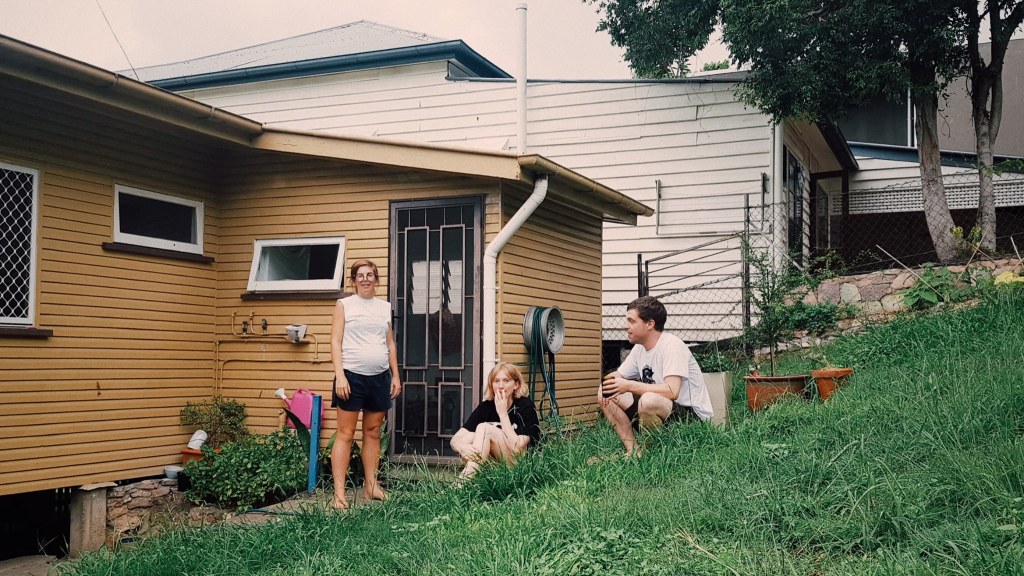
Photo courtesy of Lackadaisies Facebook.

Tell us the story of one of your favourite tracks on the album.

NK: ‘How’d You Get This Number?’ Is a nod to me and Marnie meeting  playing in bands that did dumb little 30 second songs. The lyrics are about phone scammers who were calling with numbers that looked like mine. I imagined they were bizarro versions of myself trying to make contact, like in a sci-fi movie. It also has a Freaky Friday reference.

MV: ‘The Comeback’ or ‘Payphone Text’ because I get to do screaming and that is fun for me. 

GP: Yeah I love ‘The Comeback’. It’s got a creepy carnival energy, like a house of horrors with the lights on. The story of ‘Your Face’ is about this time when I thought I saw an old flame in the crowd, but it wasn’t him. Just a doppelgänger. But then I got to thinking about how he kind of sucked!! And THEN I thought wow imagine if that was him that would have been awkward. I guess this all happened at the time we needed lyrics to this song. 

J.E. Walker recorded the album; what was one of you the most memorable moments you shared with him during the recording process?

NK: My memory is shot in general but James is a gem. Always a pleasure.

MV: James was so encouraging, he thought everything was magic and it was so nice to be around that energy. 

GP: What an angel. Carted all his gear to three different houses, was an absolute saint when it took me hours to nail the guitar part for Your Face. We were recording to tape so you had to get the whole song right in one go, which is really not a strength of mine. I probably would have gotten embarrassed and quit if anyone else had been recording us but James was so patient and lovely. 12/10 person, j’adore!!!

How did you feel when you listened back to the entire album for the first time after mixing and mastering? Where were you when you were listening to it?

NK: Lying on my couch and looking out the window. I have a cassette deck I bought with my old bandmate, Allie, to dub our old releases and I listened on there. It’s a fun, little album. That’s what we were aiming for so I’m happy. I collect cassettes by local acts too so it’s nice to add something of my own that was also pressed properly.

MV: We had a sneaky listen at Nathans house when the recording / mixing process was happening and that was super exciting for me. 

GP: It was such a neat surprise hearing the album after Nathan had put some really great finishing touches on all the songs, like I said earlier there were a few new parts that he added that are the real heroes of the dish. 

Can you hear any of your influences on any of the songs?

NK: The Breeders. I love them. 

MV: My current influences are Party Dozen, Loose Fit and Petey. I think so.

GP: Maybe less the influences for me, but I can really hear all of us. The blood sweat and tears of DIY tape recording. I feel very proud of it!!

Besides Lackadaisies, what else is happening in your world? I know you have other bands or have other interesting projects on the go.

NK: Camping is my alt-country band with James Walker, Skye McNicol and a few other mates. We’re kicking around and gonna record an album soon.

MV: Yeah, new girl band in the works… Blankettes

GP: Yes me n Marnie started a new band called the Blankettes! With our friend Gemma (CNT EVN, Piss Shivers). I convinced my favourite punks to make a pop (ish) band hehe. And my other band Full Power Happy Hour has a tonne of stuff going on this year too!

What’s the rest of the year look like for both the band and you personally?

NK: Good shows coming up with the band. I don’t think they’re announced yet but we get to play with some sick bands and head interstate. Personally, I’m finishing a horticulture degree and making beats on my MPC otherwise.

MV: Band, I’m hoping to do some little tours with Lackadaisies, it’s been so long since I’ve been on tour and I love it. Personally, I have a toddler that my heart melts for and new job that I’m pretty into, so things are looking good. Thanks for asking. 

GP: I think it’s gonna be busy!! Heaps of music stuff which is great. I am hoping to kick my terrible Tiktok addiction but I honestly don’t see that happening any time soon.

Get the Lackadaisies EP Payphone Text on Zang! Records HERE. Find them @lackadaisies_ + on Facebook and check out Zang! Records.

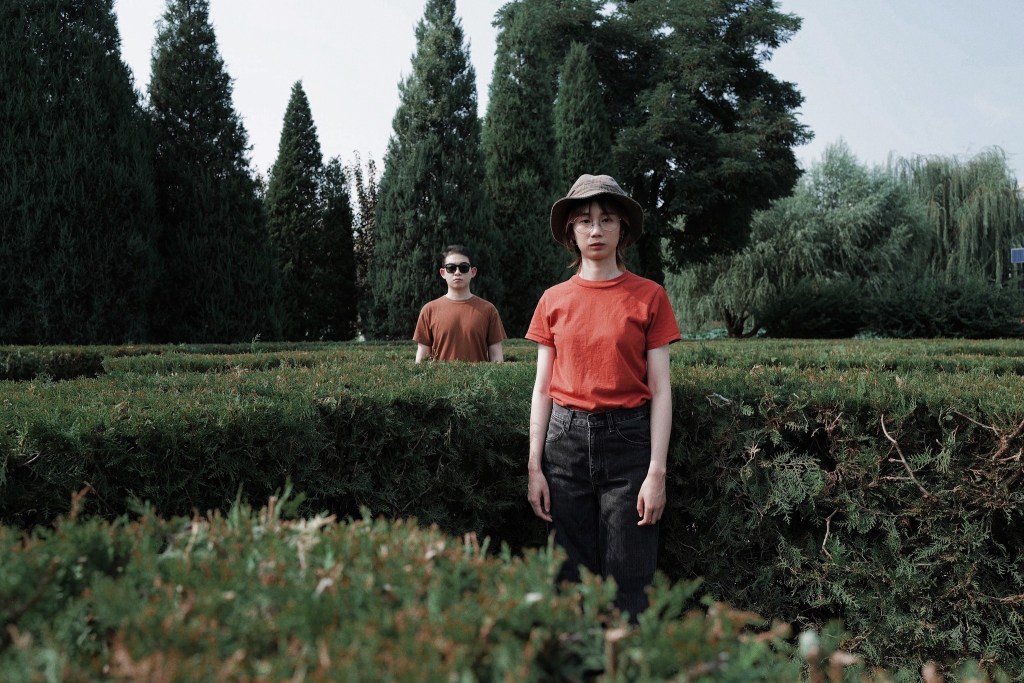
Beijing duo Naja Naja: “A very large part of our music is instinct. We like to keep it very raw…”

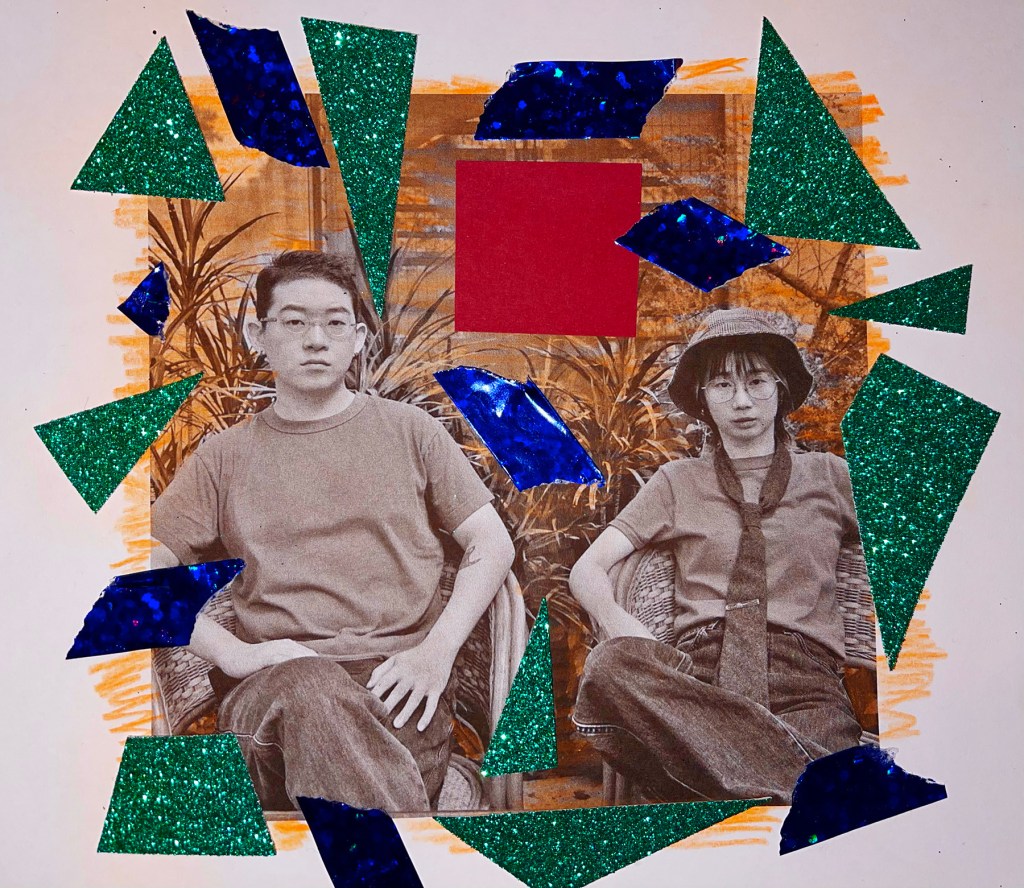
Handmade collage by B.

We love duo Naja Naja from Beijing! They have no big ambitions beyond making music for fun; one of the very best reasons that often produces the most interesting and exciting music. Their music is a cool combination of motorik rhythms, post-punk, electronic bleeps and blips, indie and melody culminating in an off-kilter retro-futuristic sound. We caught up with bassist-vocalist-artist Gou Gou and guitarist-vocalist-beats programmer Yuhao on the day of their debut EP being released outside of mainland China. This is their first interview outside of China too!  

It’s an exciting day, your debut self-titled EP is out in the world.

YUHAO: Yeah, I’m glad we set up today to talk. We released it in China (Bie Records) at the end of last year but for overseas Wharf Cat Records help us to release it today. We’re glad to see that now.

Currently, one of you are based in Beijing and the other is in San Francisco, right?

GOU GOU: Yeah.

Y: Previously we were both based in Beijing, I moved to San Francisco this year for work.

How did you first meet?

GG: We first met actually in another band called Last Goodbye in Beijing.

Y: There were four people in Last Goodbye but it ends up me and Gou Gou have really similar tastes, so after a few years playing together we decided to start a project with only two of us. We don’t have a big ambition, it’s just for fun for the two of us to make something fun.

That’s one of the best reasons to make music. What does the band name Naja Naja mean?

Y: Naja actually means snake. We chose this name because we think it’s adorable, it’s not about snake that’s adorable, we don’t really care about the literal meaning but how it sounds and how the characters work is also a duplication, and we like many bands with duplication like Yin Yin, Django Django and Ratatat. We think this name is cool. 

You mentioned that you have similar taste in bands; what are some of the bands you both love?

GG: In the early years we listen to indie music bands more, but this years I have more appreciation for disco, like italo disco. 

Y: A few years ago, we both like post-punk. There’s a band called Snapline, it’s a band in China. Lately we like some artists in the 80s or old stuff like disco and other electric genres.

What’s the music scene like in Beijing?

GG: This year many club and live houses close…

Y: Yeah, because of the pandemic.

GG: Many bands are preparing some tours in China but it can’t go on.

Naja Naja started making songs for the EP by sending tracks back and forth to each other?

Y: Yeah. Because when we started this project the pandemic had just started. We were locked in our own home and we started to do some work on our computers and we send our ideas to each other to see if we can develop something based on the other’s work. That’s how our first songs got developed. Later the pandemic becomes less severe in China and we could go to some places to do rehearsals and to polish our songs, that’s how we write those songs in those years. 

What was the first song you wrote together?

GG: ‘Sunset Shopping Centre’.

That’s the instrumental track?

Y: Yeah, that one.

Do you have a favourite song on the EP?

Y: I would say ‘Running Dog, Floating Elephant’. 

What’s that song about?

Y: That song is written by Gou Gou, so maybe she can talk about it.

GG: [Laughs]. The name of this one comes from Japanese art festival. The first time I met this exhibition there was a big wall with some Japanese words on the wall and a very small English version behind and I see this…

Y: There were some words put together and some of the words were ‘Running Dog, Floating Elephant’. Gou Gou thought that maybe a scene can be developed from these words because it seems interesting. She thinks they’re like a dream or is maybe a weird scene. The idea is from the words, she just think about it and developed the song.

Cool. I really love the song ‘Dong Dong’. It’s got a really fun video for it too. Where did you film it?

Y: We worked together with Bie Records for the EP. Actually it’s filmed in their office. We planned a party and we invited our friends there. We celebrated the release of the EP on that day with our friends because we did a lot of work with them. We performed a few songs where they can dance with. The music video is just to record this celebration or party. 

It looks like it was so much fun!

Y: [Smiles] Yeah, yeah. I think that maybe some of the best memories for me in the last year, because we have been through such a lockdown and everyone is in their home, and we got this opportunity to be together and celebrate something that we worked together with and make it released. It’s a very good memory for me in the last year.

GG: Me too!

Did making music and art during the pandemic help you get through it?

Y: Yeah.

GG: No. 

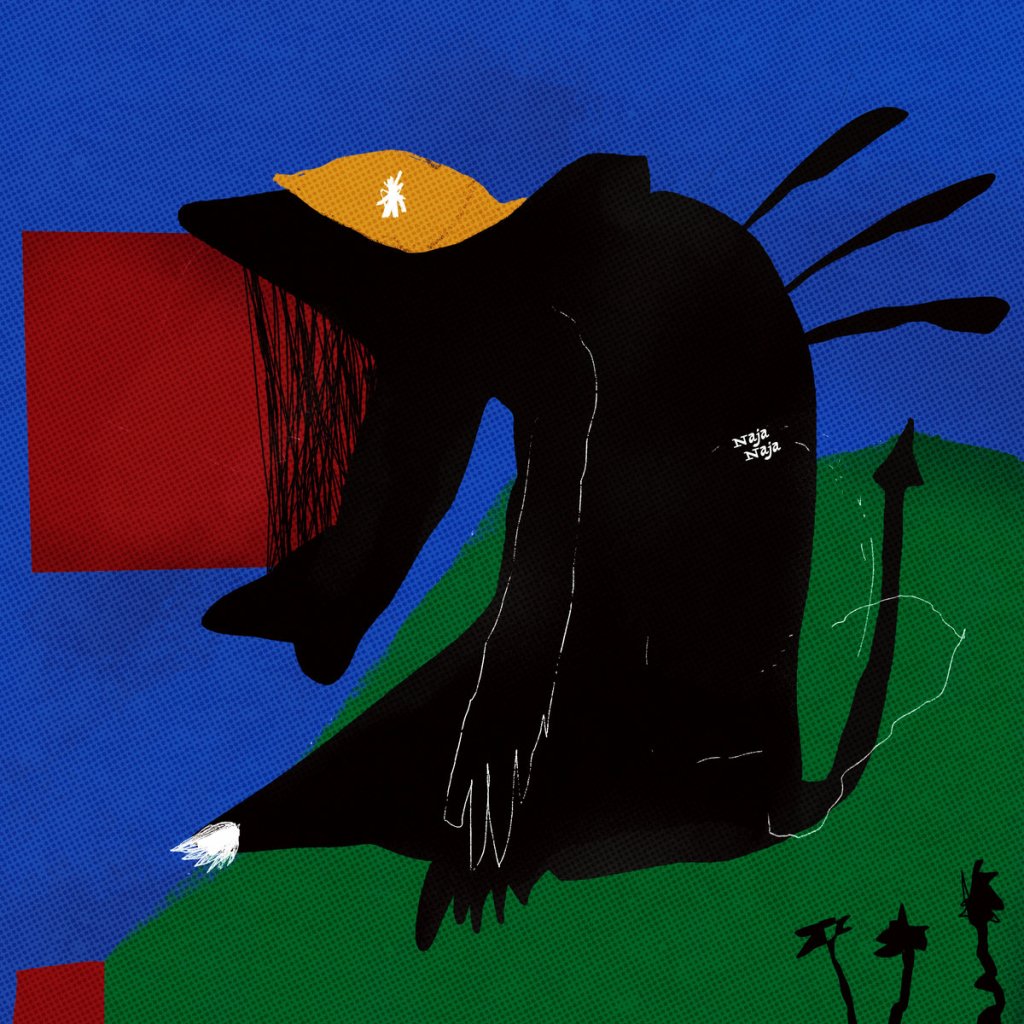
Gou Gou, you did the art for the EP cover?

GG: Yeah. I draw the cover, I paint the cover.

Y: She made a lot of versions, different ones. She made a completely different version each day during a week. There are five to six. Finally we chose this one.

EP art by Gou Gou

What made you chose the one you did?

GG: Instinct. 

Do you use instinct a lot when you’re making music?

Y: Yeah, I think so. A very large part of our music is instinct. We like to keep it very raw instead of very polished. We wanted to keep our first feeling, our raw feeling of it.

How long have you been making music for? You mentioned that you were making music before Naja Naja.

Y: Naja Naja started from 2020. Before that we wrote some things by ourselves but I think we never released what we wrote completed stuff, ideas.

GG: For me, when I am in high school I start to like indie music. At that time I would be the Hit magazine and download the music from the internet. I will listen to more to bands from other nations but not the Chinese bands, but when…

Y: [Translates from Chinese to English for Gou Gou] She has started to listen to more local indie bands since college. 

For me, I think there’s a trend in China when I was in high school, there are a few years where pop-punk was very popular in China, especially American pop-punk like Sum 41 and the Offspring; that’s the first time I started to listen to different genres other than pop music. After that I started to listen to more genres and find music by myself on the internet. There was a time when I like post-punk very much and post-rock. It was a time I started a band in college.

Any challenges making your EP?

Y: What we thought would be a challenge was the recording and mixing. At that time we don’t have much money to record and find someone to mix, but later we thought ‘Let’s just try recording at home.’ We tried learning how to mix ourselves, we just did it. We found it turns out that it meets our expectations. It’s not a challenge anymore. 

There is a fun fact that we buy some microphones, some of them are little expensive, we thought it should be good, but it turns out that we used those microphones to record our vocals but the sound was too clean. When we hear our demos, we think that our demos are better because they have some, a little overdrive with the sound. Later on we decide to just use the low-end device to record some of our vocals. 

What is the song ‘Tunnel’ about?

Y: I think there is a person which enters this tunnel, but they could not get out from it. They go through a very long way and think they will come out the end, but actually it’s just another start of this tunnel, so you just have to loop in this tunnel and you never come out. It feels like something we think, ’Is this the end of something?’ But it actually turns out that it’s just another start.

Is that why you put the song last on the album? Because it’s the end of something but the beginning of something else.

Y: Yeah, yeah, that’s it exactly. We thought we must put this song at the end, we feel it was right to do. 

GG: It is my favourite song in this EP. The first time when it come out as a demo, I think it is very special because when he ask the lyrics in this song… I just like it.

Me too! We ordered the vinyl record version.

Y & GG: Thank you!

Can you tell us a little bit about yourselves?

Y: Gou Gou is a designer. I am a software engineer. 

[Translates for Gou Gou] She has many interests, she likes drawing and has a lot of friends and she likes to talk to her friends a lot during her day. She mentioned that I am the exact opposite to her; that’s an introduction for myself [laughs]. 

GG: [Laughs].

What’s next for Naja Naja?

Y: We are planning for a full album. There are a couple of songs we are writing. We have already recorded some. We’re also working on a project, it’s like a connection of our music and our work, because I’m a software engineer and she’s a designer, we are working on our web art stuff so people can interact with it. We will put some of our music into it. It’s like a game with our music.

That’s so exciting! We can’t wait.

GG: Yeah.

Anything else you’d like to share with us?

Y: Gou Gou says she loves the puppy on Gimmie’s instagram! 

Thank you. We love puppies. Whenever we’re asked for a photo of ourselves for a press thing we always send people a photo of us with the Gimmie dog head over our heads, because we don’t want things to be about us, it’s about all of the bands and artists that we feature on the site and in our print zine. Often when people do magazines, someone is the face of it, sometimes people use it as a vehicle for themselves to be known as a somebody, for their ego, but we’re not interested in that. It’s all about the music and art.

GG: Yes. And, the puppy is adorable. 

It is! Everything we do, we do on instinct, like you do too. 

GG: I think it is very meaningful. 

Absolutely. We do it because we love it. 

GG: It’s very cool! 

Y: Thank you for doing this interview. It’s the first time we do it overseas. We are very excited to have this talk with you. 

NAJA NAJA’s Bandcamp HERE. Follow Naja Naja @najanaja_band. Naja Naja self-titled EP out via Wharf Cat Records (US) and Bie Records (China)

Gimmie RADIO OCT 2021

New playlist for October is up now for your listening pleasure!
This months features songs from screensaver, Dr. Sure’s Unusual Practice, Laughing Gear, Hearts and Rockets, Ausecuma Beats, Power Supply, Bitumen, Alien Nosejob, Springtime, and more.

Oihana Herrera of Spain-based Dreamy Garage-Pop band Melenas on new album Dios Raros: “It talks about strange days… wondering things about the past or wishes about the future”

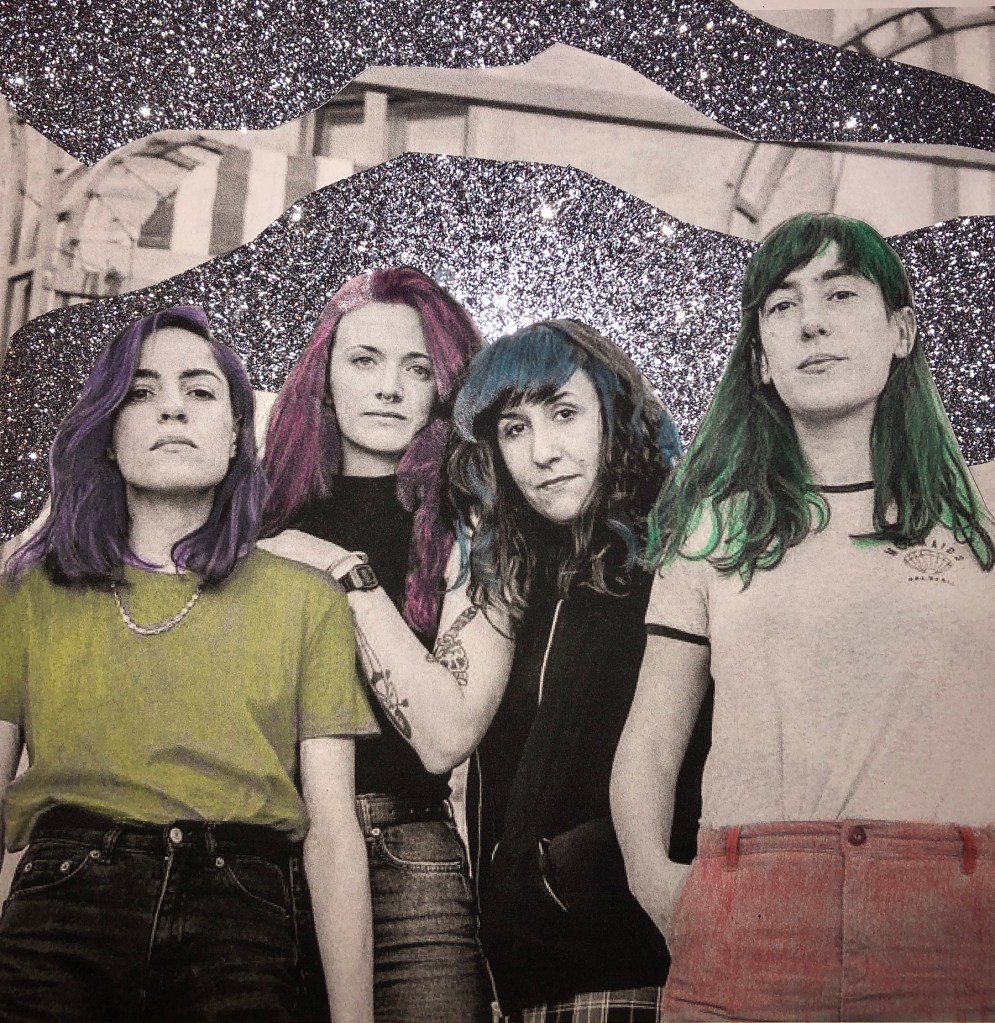
Original photo: Sharon Lopez. Handmade collage by B.

Pamplona band Melenas have released a beautiful sophomore album – Dios Raros – full of sweetness, melody, sparkle and shimmer. A perfect soundtrack for spending a carefree summertime with your best friends making memories that will last a life time. Jangly guitars, cascading vocals, a lushness and atmospherics make this an unforgettable album. Sung entirely in their native Spanish the LP transcends linguistic borders, the emotion and sentiment present in every note played. Gimmie recently spoke with guitarist-keyboardist-vocalist Oihana Herrera.

OIHANA HERRERA: I work as a graphic designer here at my place, so I’ve been working a little bit until we have the interview. My day is usually from here where you see me working at my computer. I have a set up with my guitar and keyboard so sometimes when I am bored or I want to rest a little bit I go and play. After I meet with the girls sometimes and we rehearse or I go out and drink something.

How did you first discover music?

OH: I remember because I have some videos to remember it, when I was two years or so or three, I already spent so much time singing and dancing on the sofa with all of the family around singing with them. I was super young when I felt this interest for the music. When I was three my parents decided that they were going to take me to violin lessons. I’ve been surrounded by a very musical family, kind of a classical music mood. Afterwards when I was a teenager I started looking into other styles. My father and mother used to listen to the Beatles and classical rock, after that by myself I started discovering other styles too.

Is Melenas your first band?

OH: Yeah, it is. After I started learning violin, I went to the Conservatory and I have a very classical background but, I really wanted to play in a band. I didn’t see how with the classical music I could have this experience that I am having now. One day a friend of mine leave me a guitar and I started messing around and learning by myself and I felt more free because I didn’t have various tricks or ways of learning it was free. I started composing and felt like I could start a band or something, then I met my bandmates in a place called, Nebula, which is the rock n roll bar in our city. We live in Pamplona it is a very small city. It was a very cool place and it has lots of shows there. We became friends because we used to go to the same shows. One day we decided with these songs I had started composing with a guitar for six months, we started rehearsing. Some of the girls had played in other bands. For me and Maria it was the first time we play in a band.

Can you remember what your first impressions of them was when you first met them?

OH: It is a small city so we spend time in the same bars, when we started talking to each other is when we first met. I remember us dancing in the first row to the bands that would come. I felt we had the same energy. From the bar Nebula you would see the same thirty to forty people in different bars; we nurture each other, we share a lot. I think that has created this burning thing that made us want to have our own band. We share the rehearsing space with another friend of ours, another friend has the recording studio where we play, so it’s kind of like a little community.

That sounds similar to the music community that I grew up in. What was the first concert that you went to?

OH: I can’t really remember but maybe it was some classical music show when I was young and I was surrounded by all of this atmosphere.

Can you remember a favourite rock n roll show you’ve been to?

OH: Nebula Bar has this basement where they have the shows, they were so cool. We saw a band called Holy Wave, they are from Texas, we become friends with them. There was no space to dance and the walls were sweating. There was this energy all together that was very cool. It was a very special show because of the energy, and the contact we had with the band afterward; the human experience, the knowledge and the sharing. I really like this a lot.

Melenas have a new album out Dios Raros; how long did it take to make?

OH: When we made our first LP, then we started playing a lot. When we were playing we were also composing but we didn’t have a lot of time to practice the new songs. It already start when we were touring the first album. Last summer we spent two months rehearsing a lot the songs and thinking a lot; how did we want them to sound like? Finishing all of this work that we started when touring. Mostly last summer was the time we spent really composing and finishing the songs, three months deeply doing that.

Is there a song on the album that’s really special to you?

OH: Yeah, I will say “El tiempo ha pasado”, it’s the fifth song. It has no drums. It talks about being in your bedroom remembering someone that you don’t have contact with anymore and you wonder what this person will be doing. In this space I am talking about a guy and what he will be doing, if he will be the same person or different, where will he live. With the music, the music for me is very heart-touching. Do you say that in English?

Yes. Even though I don’t speak much Spanish, I’m still happy that I can in a way understand your songs, I can still feel the sentiment behind it.

OH: I love that. That is very special to hear. Some other people tell us that too. I think that the music will represent what the lyrics talk about a lot of the time. The lyrics are usually the last thing we do and we try to relate it with the mood of the music; maybe that’s why you can feel it.

When you were making the album did you have any challenges?

OH: We have our level high always. We like to have some kind of quality. We have our limits, I know how I play but I want to do the best I can. It’s sounding better I think. Trying to find special sounds for each songs was the most challenging thing for us.

Why do you like writing songs?

OH: I love music so much, I am always listening to music. It’s another form of expression after that, playing it for me. I can start playing and spend so much time and I don’t even notice that, that time is going. It’s very relaxing for me. A lot of times doing a song is like, it cannot be from me somehow! I take this nervousness and whatever that is happening to me and filter it by the music I play.

I really love the seventh song “3 segundos” on the LP, which translates to “3 Seconds”. It talks about how things can change in just a few seconds; is there a moment in your life that something like that has happened that you could share with us?

OH: With the band I feel like that happens a lot. For example the last time I remember that happening is when we received an email to see if we wanted to go play New York Fashion Week! It didn’t happen yet but just the proposal is like, what?! It marks something very big in my life. There have been so many moments for me like this one that is just, WOW! It means something very big. The song talks about the power of some people to make some things change with their persons, someone who has that energy that makes you do things. They have some special energy, no?

Yes! Why did you decide on “Vals” for the last track on your record?

OH: We thought a lot about the order, we tried to keep our rhythm with the whole record. We thought that was a nice way to finish. Somehow I think this song makes you think a little bit about the rest of them and a little bit you let them go. I like that song because of that, it talks about spending time with a friend and just being together, not talking just being a companion and just sitting and the time go by. It’s a cool way to finish the album. It talks about strange days and days you were thinking about your own stuff in your bedroom and wondering things about the past or wishes about the future. This song is about being with a friend, time goes by and I’ll see you tomorrow. I like that.

Why did you call the album Dios Raros? Rare Days?

OH: Yeah, Rare Days or Strange Days, something like that; I don’t know the little differences in English. It talks about these days where you feel somehow disconnected to what is going on outside, you are in your bedroom in your world. This is what a lot of our songs talk about.

How has being in isolation because of the pandemic been for you?

OH: Our record has been released during isolation. We’ve been working a lot on the promotion not having to combine it with playing or rehearsing, which has been good and let us focus on that a lot. We are very happy because the record has worked very well. At the same time we have plans to play and we can’t play. That’s a little bit frustrating because you put a lot of energy into creating the album and all the work behind it, like the videos and promotion; you need that energy back from playing. Playing is what we love most! It’s good to have the feedback from the people, knowing it’s helping them and they’ve been happy because they could listen to it!

As well as music, as you mentioned, you also do art; what made you want to express yourself that way too?

OH: As a graphic designer?

Yes.

OH: My father is an architect and I felt that I really like that world but I felt that it was too technical. I didn’t like all the technical part, I thought it was too hard for me [laughs]. One of the partners of my father had a son that was a graphic designer, I didn’t even know what one was! After he explained to me one day when I was trying to choose what I wanted to do, I thought this is what I want to do. It was something creative but I like the functional thing also. Graphic design is communication and it has function—I like that combo. I didn’t see myself creating art with no function, different parts of the brain, rationale and artistic.

You also mentioned before that you have a setup in your room with keyboards and guitar; have you made any songs lately?

OH: Yeah. I’ve been composing a little bit, so there are new songs on the way. We will be rehearsing the new record and preparing the new songs. Sooner or later we will do something with these new songs.

When you’re writing songs do you write more on guitar or keyboard?

OH: When I started I felt free when I started playing guitar, because I didn’t have to read notes; I never composed with a piano or violin, it’s difficult. When I played guitar with no teacher or reading notes I felt free. After I play it on guitar myself for a little while I start playing it on piano too, with the keyboard. I did something that I couldn’t do before, it was to compose with it. I spent five or six years learning piano after violin. On this record we’ve got songs composed with guitar and some with two keyboards and no guitar. It’s a different feeling in different songs, I love that. I love growing and experimenting with new stuff. I just got a new little synthesiser two days ago and I’m trying new things with that, experimenting and putting them in new songs and see what happens.

Please check out MELENAS; Melenas on Instagram; Melenas on Facebook.

Melbourne Jangly-Reverbed-Indie-Pop band Swim Team: “Sarcasm and self-deprecation is embedded in our personalities and sense of humour – we certainly don’t take ourselves too seriously”

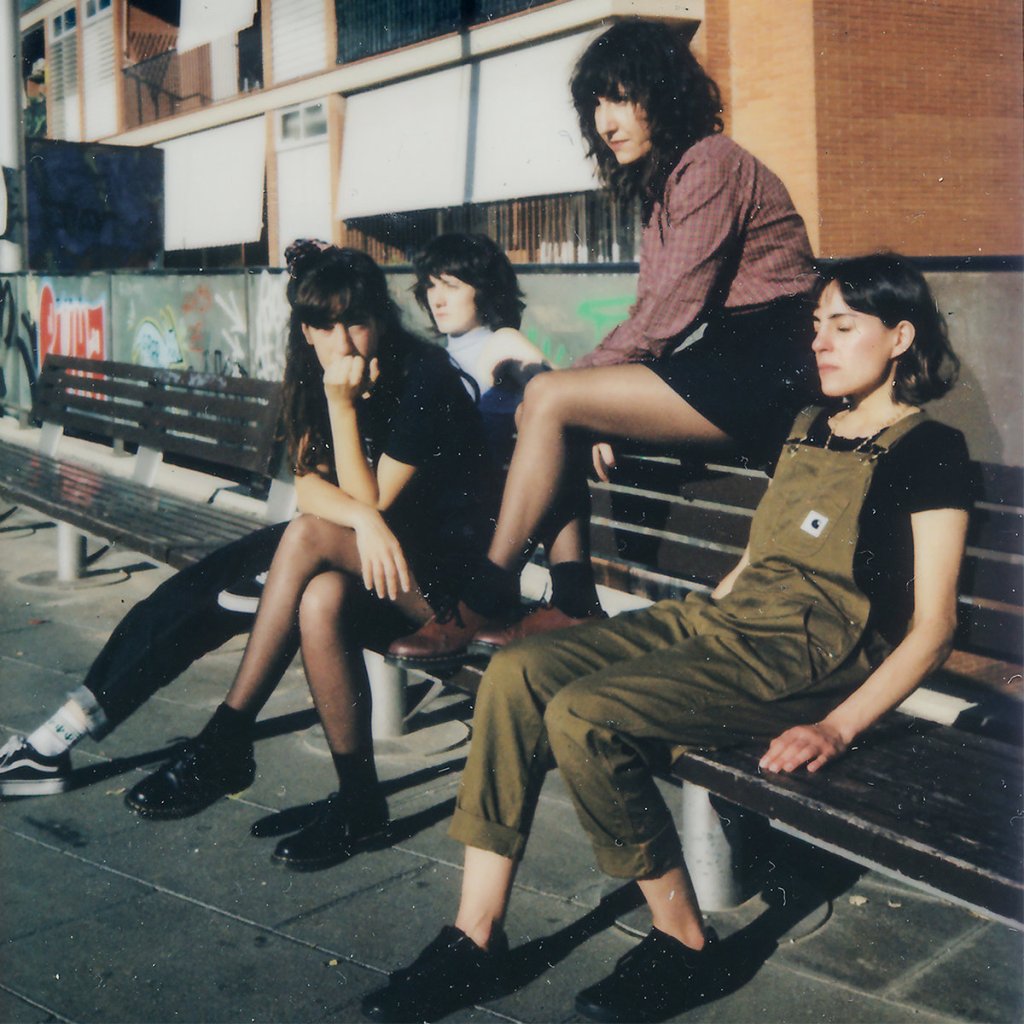
Original photo by Kalindy Williams. Handmade collage by B.

From the first jangly-twang of song ‘Everyday Things’ that we heard while watching Rage one morning last year, the Gimmie team have been addicted to Swim Team. Their infectious sweet melodies, hypnotic harmonies and catchy hooks reel you in. We interviewed Sammy to talk about their debut LP Home Time, their beginnings, self-care and more.

How did Swim Team first come together?

SAMMY: I had been thinking about starting a new band for a while. At the time Krystal was playing in Bad Vision and I was playing tambourine with the Pink Tiles, and we were gigging around a lot and I was really into the scene and the kinds of garage pop bands that were popping up. In 2016, Krystal moved in with me and we had already been friends since we worked together in Perth back in 2005. Back in those days she was playing in punk garage bands and I was playing in twee indie bands. I suggested that we should start a new band together with both of us on guitar and so we both just started jamming at home.

I asked my friend Esther to join – I really wanted her to be in the band even though she had never played the bass, and Krystal recruited TJ even though she had never played drums. We built our band based on how we thought the dynamics would work with the four of us hanging out together, not for how technically good a player or songwriter anyone was. It was kinda like building our own fantasy football team or something, and luckily they were both keen to give it a red hot go haha.

We got together in a rehearsal room and the first song we played together was ‘Green Fuzz’ by the Cramps. Eventually I booked us our first gig which was with Girl Crazy at their Tote residency, and that meant we had a deadline to write a few songs and get our shit together. If there’s one thing that Swim Team are collectively good at, it’s working under pressure!

We love the jangly guitars in Swim Team’s music; what inspired you to choose this sound?

SAMMY: A combined love for bands like The Clean and Go-Betweens, a tendency to lean towards Fender and a penchant for chorus pedals haha.

I think that given mine and Krystal’s backgrounds in music and the kinds of bands we were both used to playing in and listening to, when we brought them together we ended up with this kind of sound naturally. It’s kinda a combination of my pop background, Krystal’s punk background, and both of us meeting in the middle, then evolving together.

Last year you released your LP Home Time which was written over the course of a couple of years, one of the main themes of the record being change; over the time of writing what do you think was one of the biggest changes you went through in your own life that helped colour the songs you were writing?

SAMMY: Oh boy, there was a lot of change during that period for us all, not to mention that in the time it took us to start writing the songs, recording and then releasing it, we had three different bass players.

Krystal and I are the main songwriters in the band and we both had a lot going on over the course of a couple of years. Krystal’s dad sadly passed away while we were writing the album and so there is some really personal grieving there. There are relationship breakdowns for both of us, whether it be family or friendships or just simple observations. For me, at the beginning it was the end of a long-term relationship, and then by the end of the writing process it was meeting someone new. So yes, it’s quite the rollercoaster thematically!  

Many of your songs can be self-deprecating; where does this come from?

SAMMY: Haha you might have to ask my therapist that! At the end of the day, I think that sarcasm and self-deprecation is embedded in our personalities and sense of humour – we certainly don’t take ourselves too seriously most of the time.

Your songs are deeply personal but written ambiguously so listeners can imagine themselves in the song story; who are the songwriters that you admire? What is it about their songs you love?

SAMMY: I have a deep appreciation of many different styles of songwriting, whether it’s poetic and metaphorical or literal story telling. One of my favourite songwriters is Mara Williams from the Pink Tiles. If you want deeply personal but ambiguous and completely charming, she is the queen of it!

What’s the significance of the album’s title, Home Time?

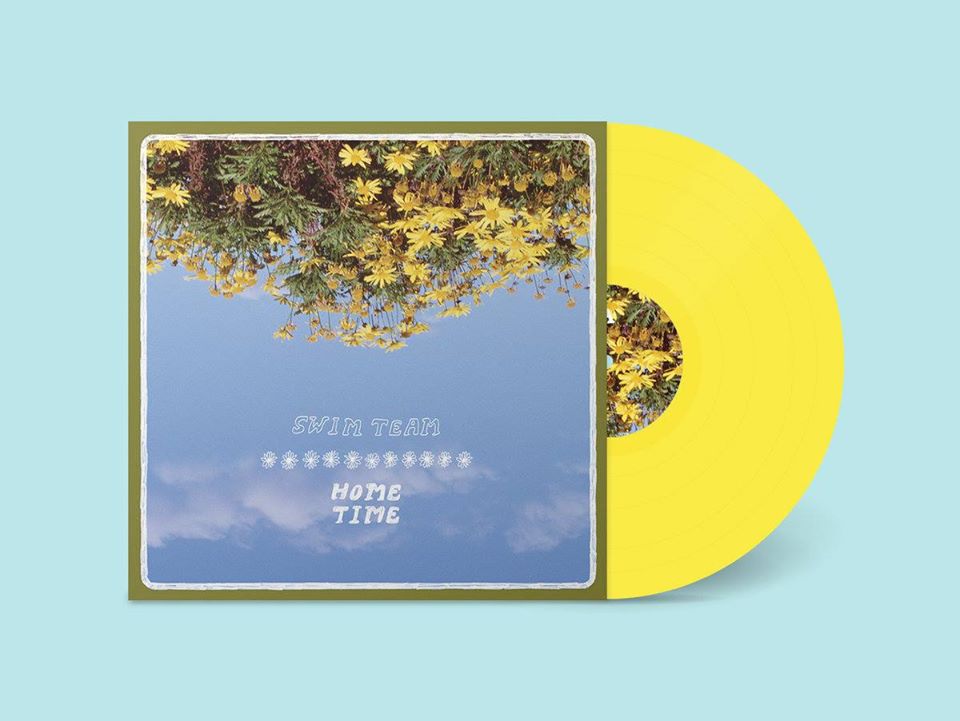
SAMMY: Aside from being one of the tracks from the album that we thought tended to sum up the entire vibe pretty well, it’s also a play on the title of our first EP ‘Holiday’. We went from ‘Holiday’ to ‘Home Time’ with these releases which is kinda symbolic of us growing as a band as well as our own personal situations.

Why did you decide to kick your record off with the track ‘Grown Up’?

SAMMY: We wanted something with a bit of an intro to kick things off sonically, but we found ‘Grown Up’ set the tone for the rest of the album in terms of context. It’s kinda a proclamation of this feeling of never really quite achieving those expectations that we set for ourselves as adult humans, and then bam – the rest of the album runs through and it’s a continuation of those general musings. Thematically we write about all aspects of life, whatever takes our fancy at the time: our crushes, our bad habits, our ex’s bad habits, our dysfunctional families, our grievances – both serious and silly.

The song ‘Everyday Things’ is an ode to first world problems; what first sparked this song idea?

SAMMY: Basically one long complaint about all the things that didn’t go right in a single day. They’re all a part of daily existence and not ‘actual’ problems. The song is laughing at the way we tend to complain about everything when in all reality the scenarios mentioned are trite and trivial.

What’s your favourite track on Home Time? What’s it about?

SAMMY: For me it’s probably a tie between ‘Time and Sacrifice’ and ‘New Year’. ‘Time and Sacrifice’ I feel has a different vibe to it than the rest of the album. The subject matter is far more complex and I think it ended up that way musically too. It’s also the one we experimented with the most as far as production goes, which was really fun. ‘New Year’ has been a favourite for a while, I have always loved what everyone has brought to the song in terms of parts and the feel – Anna really brought this to life for us!

Could you tell us a little about recording the record please?

SAMMY: We were lucky enough to have our dream team for our album recording. We had Anna Laverty produce and engineer it at our favourite studio in Melbourne, Audrey Studios. We tracked the majority of it live, all four of us in the room playing our parts, and then afterwards we did a few guitar overdubs and vocals. Working with Anna is always a real pleasure. We were lucky enough to have a bit of extra time to play around, and some of the songs had parts that were written on the spot which was something I’ve never had the privilege to experiment with before.

You’ve mentioned online that there’s been “a bunch of personal and health stuff that’s gone down since late last year” which has made you take a little break from making music. I hope everything’s alright? During the downtime what do you do to take care of yourself? Self-care is so important!

SAMMY: Thank you! Yes, self-care is super important for both our physical and mental health. For us it means eating well, exercising, doing things that make you calm and happy (for me it’s things like listening to music, pottering around the house, cooking and tending to plants), and not being too hard on yourself or having unrealistic expectations of yourself (that part is hard sometimes!) We had a really busy year with the release of the album and then with the personal stuff happening on top of that it felt like we needed to just step back and look after ourselves and put a priority on those things. We are actually really close friends outside of music so we have a really strong support network in each other – we are really lucky to have that level of support and understanding from one another I think.

Other than making music do you do anything else creative?

SAMMY: Krystal has a podcast that she hosts with her friend Ruth called ‘First Time Feelings’ that you can check out here. TJ is a tattoo artist and when there’s no pandemic you can find her at her shop Heart & Soul Tattoo in Melbourne CBD. Our original bass player Esther is a designer and owns the label Togetherness Design. Our newest member and current bass player Jill is involved in a bunch of comedy and fringe festival shows, but is known best for her role in co-founding the iconic Shania Choir. I don’t have many creative talents outside of music, but it keeps me busy enough for now.

What’s something – band, album, song – that’s really cool you’re listening to at the moment?

SAMMY: RVG’s new album Feral, and patiently anticipating the new Dianas record Baby Baby.

Please check out: SWIM TEAM. ST on Facebook. ST on Instagram. Home Time out on Hysterical Records.