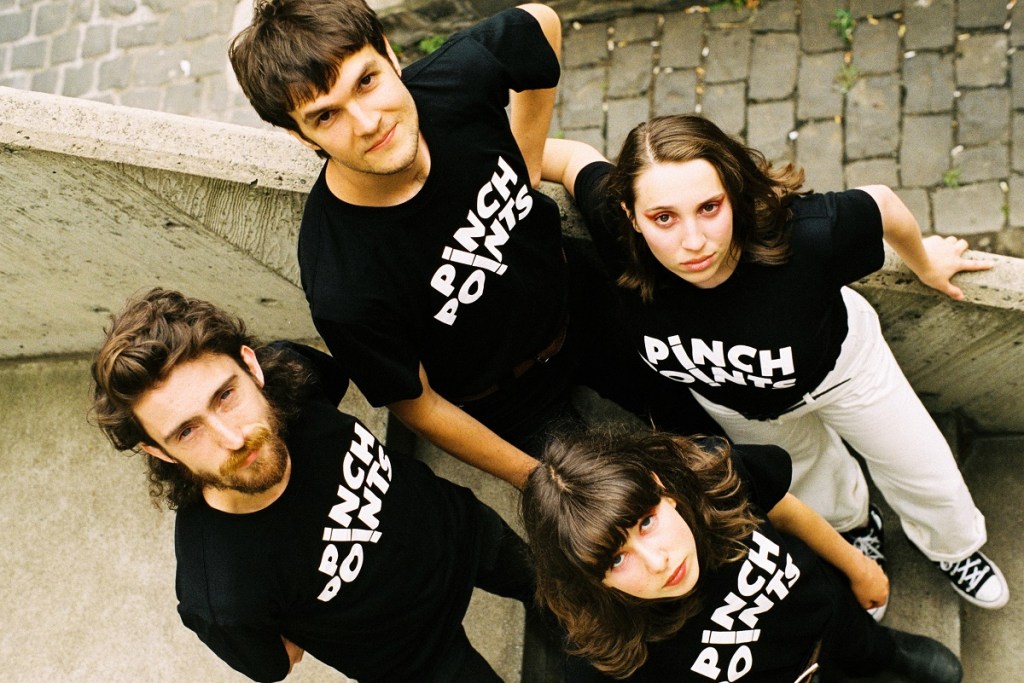
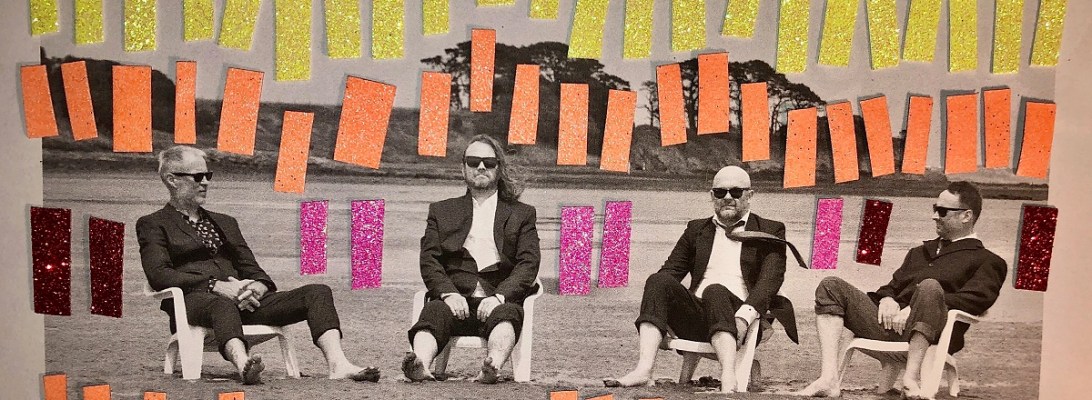
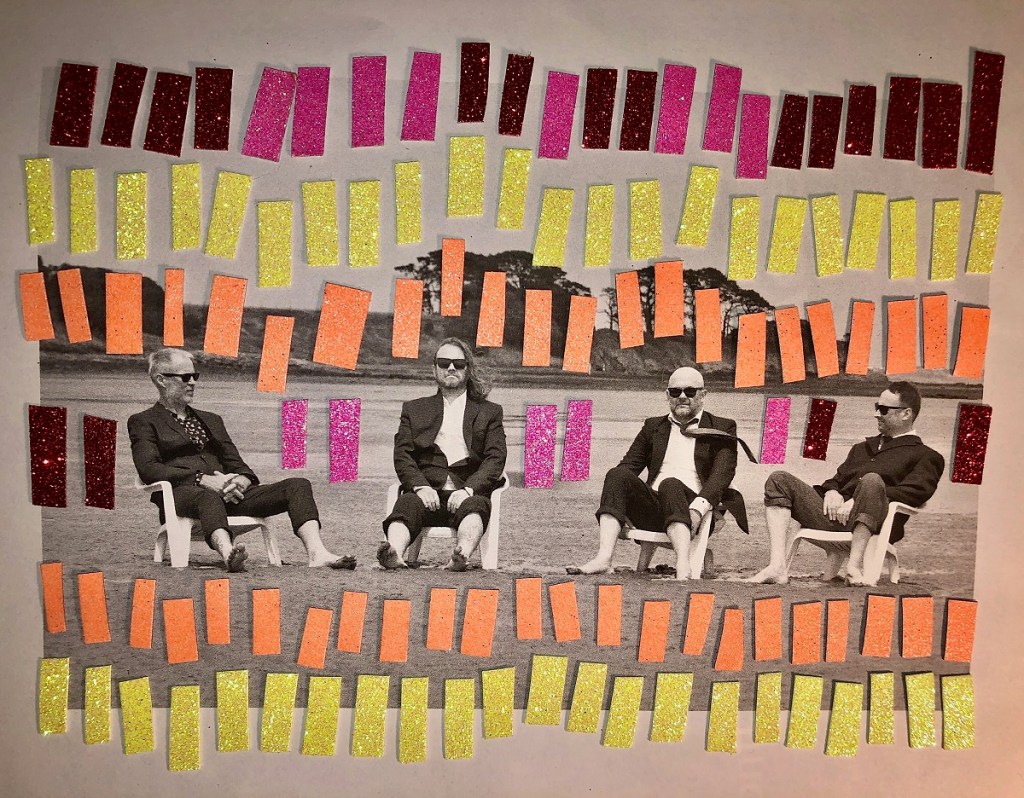
Shepparton Airplane’s Matt Duffy on new LP Sharks: “People are often ‘sharks’… it touches on the darker side of humanity… particularly men are the worst sharks of all”

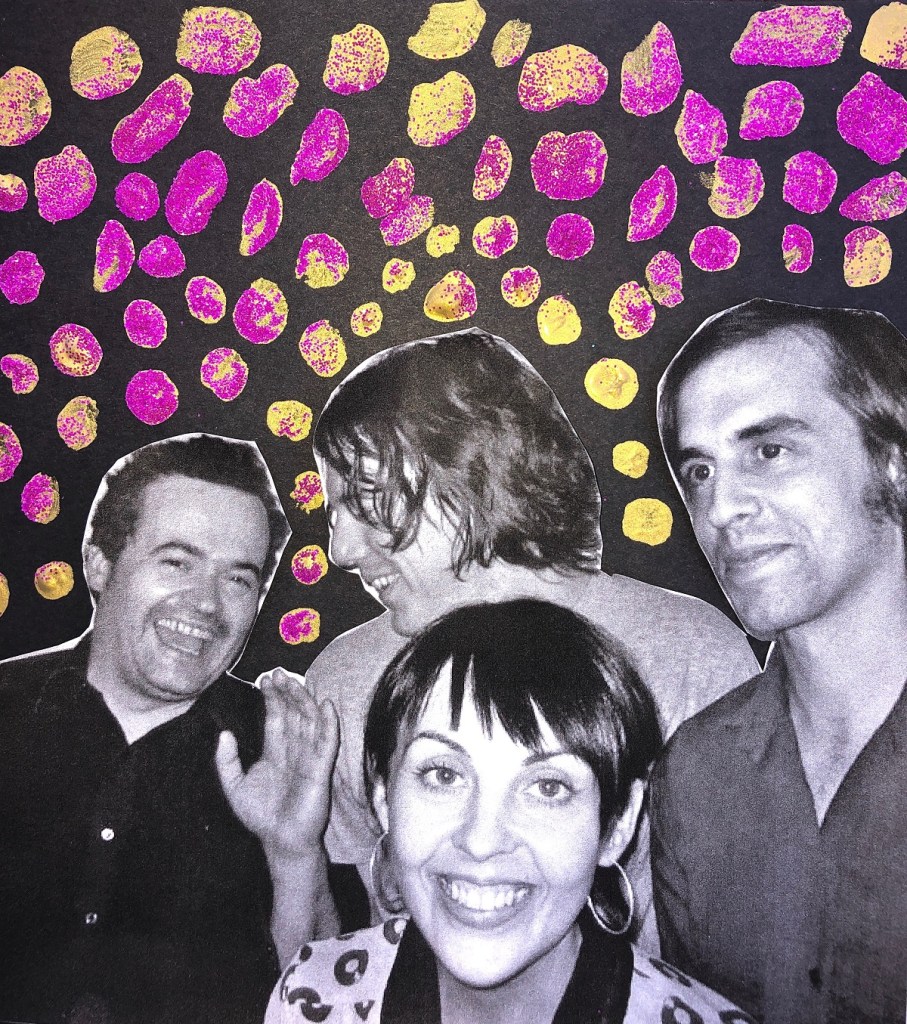
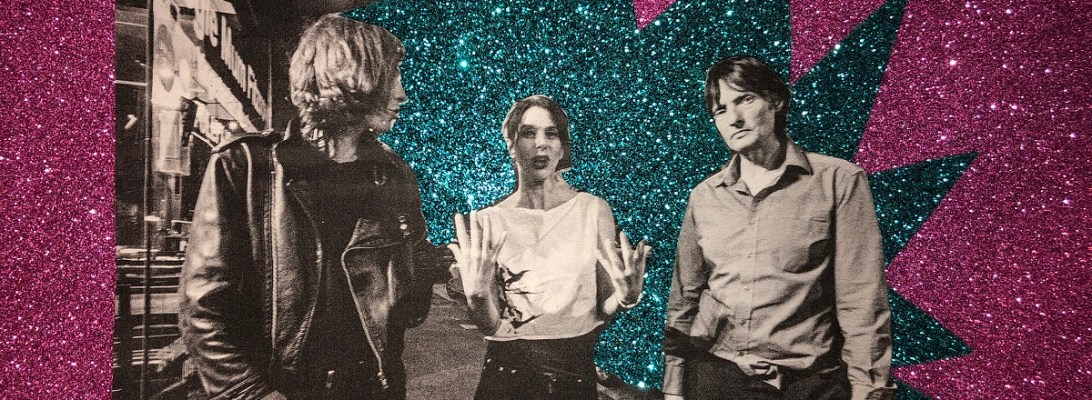
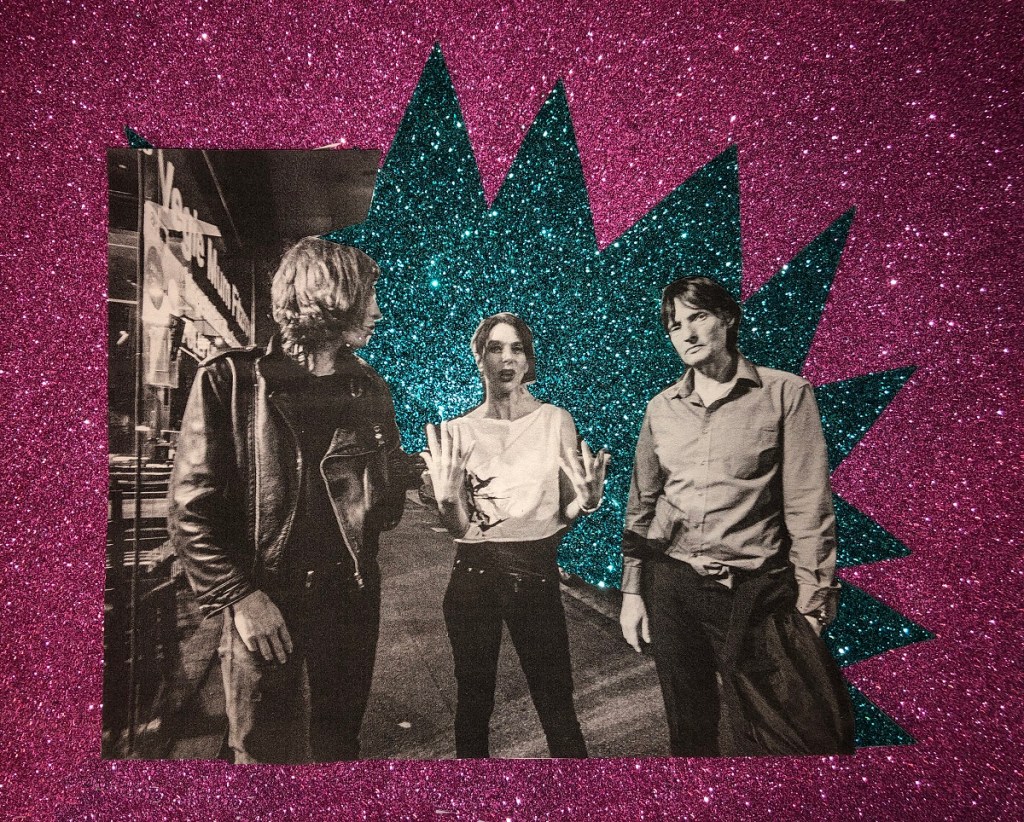
Handmade mixed-media collage by B.

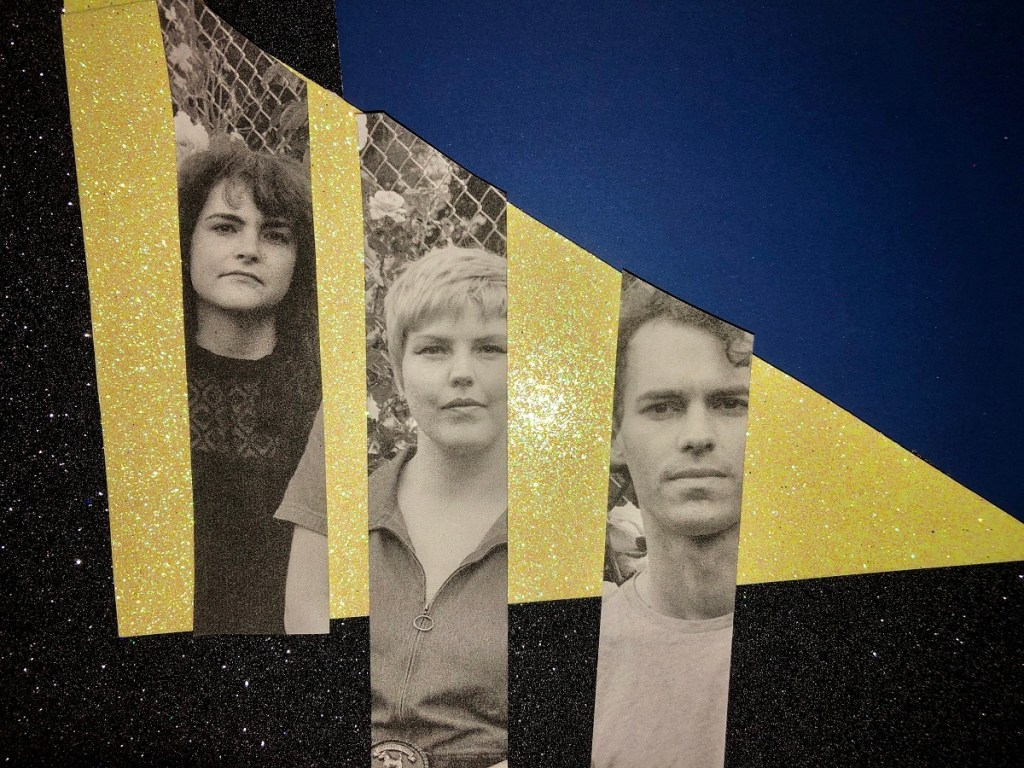
Melbourne’s Shepparton Airplane are about to unleash their best album yet into the world. Sharks sees the band stride confidently into a more noisy and in moments more punky and shoegaze-y territory than previous efforts that were rooted firmly in ’90s post-punk and ’80s oz-rock. This is a mature evolution garnered from years of playing together and the synthesises of true mateship. We spoke to guitarist-vocalist Matt Duffy to dive deep into the making of Sharks, and we also discovered his deep seated love for band, Fuagzi.

We’ve been listening to your new record Sharks a lot since we got the sneak peek a week or so ago, it’s almost time for it to be released into the world; how are you feeling?

MATT DUFFY: We’re really happy with it. We went to a bit more effort than we have with the last two [Self-titled and Almurta]. We’re happy with how it sounds, especially since we got the test pressings back and can actually listen to it on vinyl—it sounds awesome!

Did you have an idea for what you wanted it to sound like from the beginning?

MD: Yeah, we did. We recorded a lot of stuff. Before we recorded that album we had twenty-something songs, some were finished, some not. We went through all of our recordings from rehearsals and the ten that we picked for the record just seemed to work together really well as a full experience rather than a bunch of songs just slapped together.

The record seems a lot more shoegaze-y and noisy and punky as well compared to previous releases.

MD: Yeah, there’s a lot of stuff going on. In one way it’s all over the shop but somehow it all makes sense. The two albums before have certain feels throughout them and didn’t jump around a lot like this one. We jam a lot and come up with all kinds of things.
I think I like this one the best out of all of your albums.

MD: [Laughs] I think we do too! I know the band always likes their latest thing the most though! [laughs]. The first two albums we did all ourselves but this time we thought we should go to a really nice studio [Sing Sing Recording Studios] and get some cool sounds, record on tape and put it in someone else’s hands to get an outside perspective. I think that helped a lot doing something different.

You worked with producer Anna Laverty.

MD: Yeah, she’s awesome! Most of us have worked with her before, half the band is in The Peep Tempel and she’s recorded all of their albums. I did some stuff with them too even though I’m not in that band. We’ve got a good working relationship with her, she’s great to bounce ideas off and tell us when we’ve done something good or not good [laughs]. She’s really, really, really good at what she does and she’s a good friend. It made sense to do it with her.

I love album opener ‘Citrus’ it’s a beautiful song.

MD: That song came out of nowhere. Most of our songs come from the four of us bashing it out in the rehearsal room. We work on things on our own too though, that was one that Steve [Carter] our drummer brought in. He had it half-formed, he did a recording at home on this electronic drum kit and a bunch of synths and we just added guitars to it. Once the whole band gets into a song it usually changes into something even better. That song took on a few different forms, it morphed from a weird electro thing to a shoegaze-y thing. When we recorded with Anna she said it had an indigenous-feel to it, she said it sounded like percussion with sticks. We never had really thought of it that way. It had an English ‘90s shoegaze-feel to an Australian desert touch to it.

I put it on first thing this morning and it’s actually a really nice song to start your day.

MD: I think so too. It does get a bit chaotic though [laughs]. It was always going to be the first song on the album, it’s a cruisy instrumental.

What were the songs that you worked on by yourself and brought into everyone?

MD: The second one [‘Say What Again’] was one that I had started about a year ago just messing around. When I record something on my own I don’t necessarily think it’s going to be a Shepparton Airplane song, I just do stuff for fun. I had all the music done and thought it could work well with the band; someone always brings something new to stuff and it really brings it to life! It’s quite exciting when that happens. There’s been a few on the album that was someone’s throw away song but together we’ve moulded it into something cool. The lyric ideas sometimes come from one of us just shouting things freeform and then someone else might get an idea for the lyrics. It’s great having freedom in the band where no one is calling the shots, we’re all in together.

Another track I really loved on the album is ‘No Stars’.

MD: That was an epic jam that came out of nowhere. At one point it was 16 minutes long, we kept chopping it down. Longer it was a little bit too self-indulgent [laughs]. We eventually got it down to eight and a half minutes.

What’s the song ‘Fear’ about?

MD: That just came together from jamming it out. Myself and Stu the bass player were both at the time talking about a bunch of documentaries we’d been watching on cults. We both had written a bunch of lyrics on that topic, we put them together and realised we’d written the same song! Music-wise it came together so organically, we didn’t labour over it too much. There’s bits in it… though it may not totally sound like it but, to us we can hear influences in it, there’s a Slayer bit, a guitar part that sounds like it, or an AC/DC part. Lyrically you may be talking about cults but you may as well be talking about government. We never try to write too topical though because stuff can often become dated. We don’t want to do what everyone else is doing too.
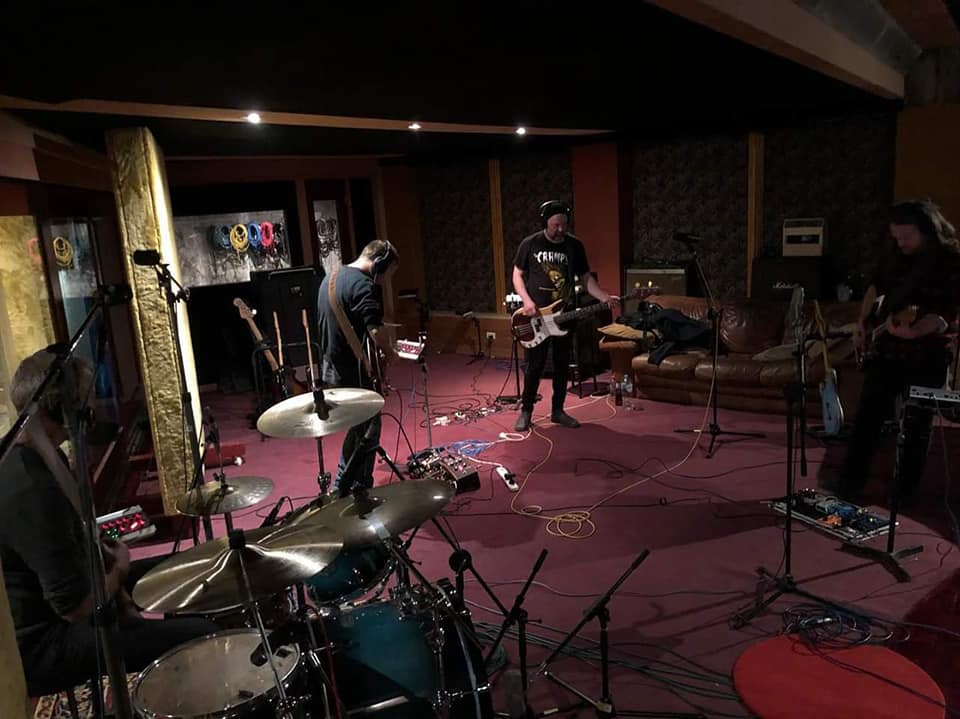
What kind of feeling do you get when you play?

MD: That’s a good question. There’s a lot of adrenalin, even in the quieter moments. The way we feed off each other works well. There’s a really good chemistry between us and I feel that’s infectious with the punters too, we all feed of each other. We have a party but it’s also dark and joyous too.

The new album is very much a journey.

MD: I’m glad that you said that, I’ve been trying to write bios and stuff and I started writing and used that word but thought it sounded naff coming from me but, I’m so glad you’ve said that because we truly do feel that! [laughs].

It so is! You put it on and your start with ‘Citrus’ and then you go through the rollercoaster of emotions in each song before ending with ‘Fleeting’.

MD: I’ve felt it too. We really made sure we captured that when we chose the songs, put them together – there’s three short, loud punk songs we chucked in the middle – to take you places. We thought the two instrumentals were perfect to bookend it all. It’s all really beautiful. We didn’t want to take things too far though and put on it everything we’ve ever liked; we all love hip hop but were not going to do a hip hop song on this record. We couldn’t pull it off convincingly.

We were just talking about how there’s lots of cool guitar moments throughout the record; what’s your favourite?

MD: ‘No Stars’ because there’s so much going on. We had a scratchy recording of it and we turned it around and created a Yo La Tengo sounding song and turned it into an epic journey. We had to learn it again because we just made it up on the spot. The guitar in that is a highlight of the album for me. It’s probably the cleanest guitar we’ve done too, a lot of our earlier stuff is driven and distorted. We don’t usually use loads of effects too, that song is a guitar plugged straight into an amp.

Until you guys got to this album I don’t think I ever would have used the word beautiful to describe your music.

MD: [Laughs] I certainly wouldn’t have either!

The album has a really nice feel.

MD: Yeah. Because we’ve been playing for a few years now we’re able to do a lot more things, we’ve developed and we sincerely mean what we’re playing—we own it and play it convincingly. We really wanted to make the album move around, some of my favourite bits are the most pleasant bits!
Anna has worked with Lady Gaga and Florence and the Machine who are poppy and have a really slick sound; do you think she helped in getting you to the sound on this record too?

MD: Yeah, she’s done all kinds of stuff. One of her biggest qualities is that she gets what we’re doing. She saw us live a few times and always said she’d love to work with us. She worked well in terms of not getting in the way of anything, she let us do everything we wanted. She’s great for positive reinforcement. It was a pleasant experience.

Where did the album title Sharks come from?

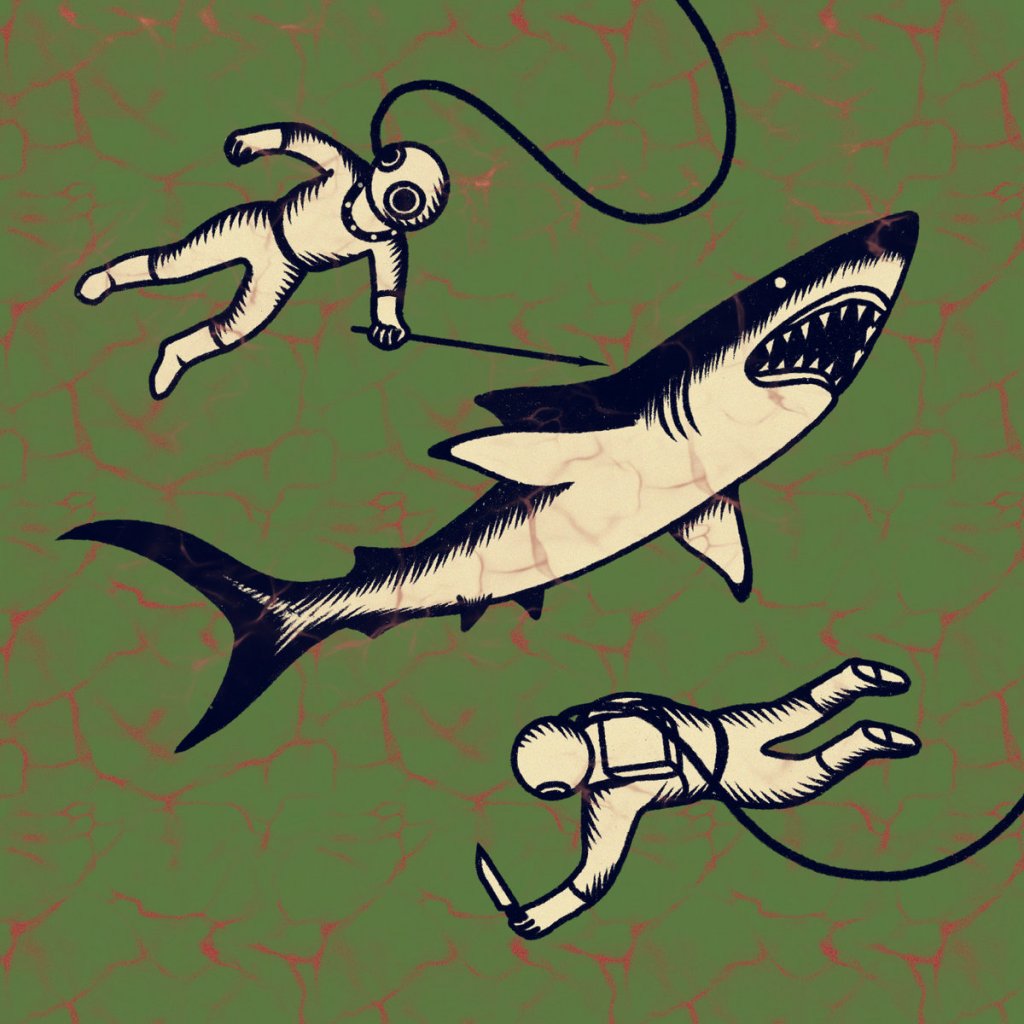
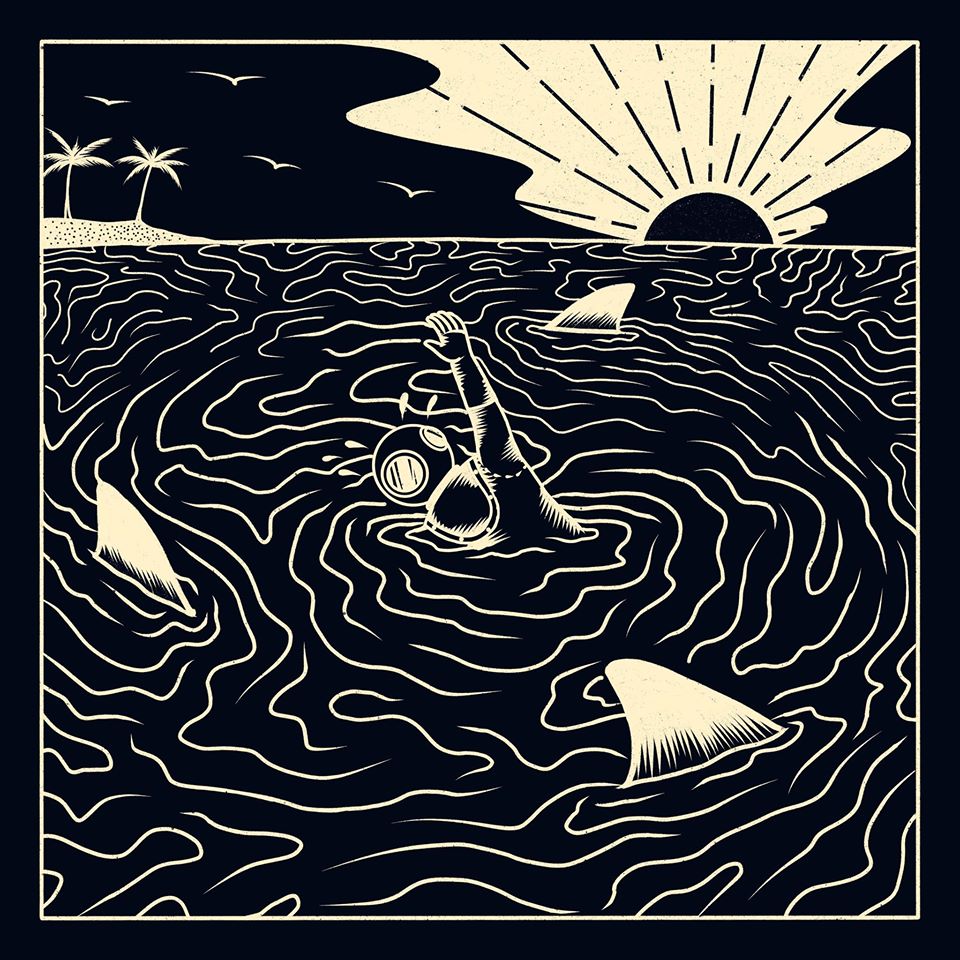
MD: Steve threw that out one day, I was immediately “I’m in” because I’m obsessed with sharks [laughs], they’re incredible. There’s so many different ideas you can draw from the word sharks. People are often “sharks”. If there is an underlying theme on the record it’s that it touches on the darker side of humanity. Sharks are seen as big fearsome creatures whereas in real life they’re not. But people sharks, particularly men are the worst sharks of all. The art work plays into that too, people hunting a shark, this is the fucked up things that people do.

How did you first come to playing guitar?

MD: When I was a little kid around eight, my sister who is ten years older than me had a crappy acoustic guitar. She was learning it at school but didn’t do anything with it so I got it and when I was twelve I got my first electric guitar. I really got into it in my teens. I spent about ten years playing bass in bands then came back to the guitar. I’m not a virtuoso but I’m happy with that because it lends itself to more creativity. If you don’t know if things you’re playing is wrong, all you have to do is care if you think it sounds good. You can give yourself nightmares or you can bliss out! [laughs]. I love having the freedom to do whatever.

Anything else to tell me?

MD: A lot early on we were more conscious that we didn’t want to sound like anyone else. We’d come up with something we’d think sounded really cool and then listen back to a song and be like, that sounds exactly like Fugazi! We love Fugazi but we can’t sound exactly like them, otherwise people are going to think we sound like Fugazi [laughs]. This time around we were like, oh, that sounds like Hüsker Dü or that sounds like Sonic Youth and we’re like, fuck it who cares what anyone else thinks! We love those bands, why pretend we’re not influence by them. Freeing ourselves up from that was a real turning point for us.

Did you see Fugazi when they came to Australia?

MD: I did! They’re pretty much my #1 favourite band ever, still to this day! They’re incredible live. I can’t deny their influence on everything I have ever done really [laughs]. They’re one of those bands that are four people playing together that really feed off each other and improvise a lot and there’s a real connection that goes beyond people writing songs. It was in the late ‘90s more than 20 years ago! I saw them twice, two nights in a row. Steve our drummer and I went. I just remember being totally blown away. I have the recordings of those shows, because they recorded all of their shows over their career.

Yeah, you can buy them from Dischord.

MD: Yeah. I have a bunch of those, all the shows I’ve seen, you get to relive it! They were playing songs they hadn’t recorded yet – they played all my favourite songs off of all my favourite albums – I was like, what is all of this?! There was an interlude in the middle of the show and they were playing all this kind of stuff that I’d never heard them do. I was blown away. It was cool with everyone being there to see a band they love and hear all the songs they know but then Fugazi playing all this unheard stuff. I guess they just had the confidence to throw completely new things at us that was a real departure from their other stuff. I remember being completely impressed by that. Everything about them is incredible—there’s very few bands you can say that about.

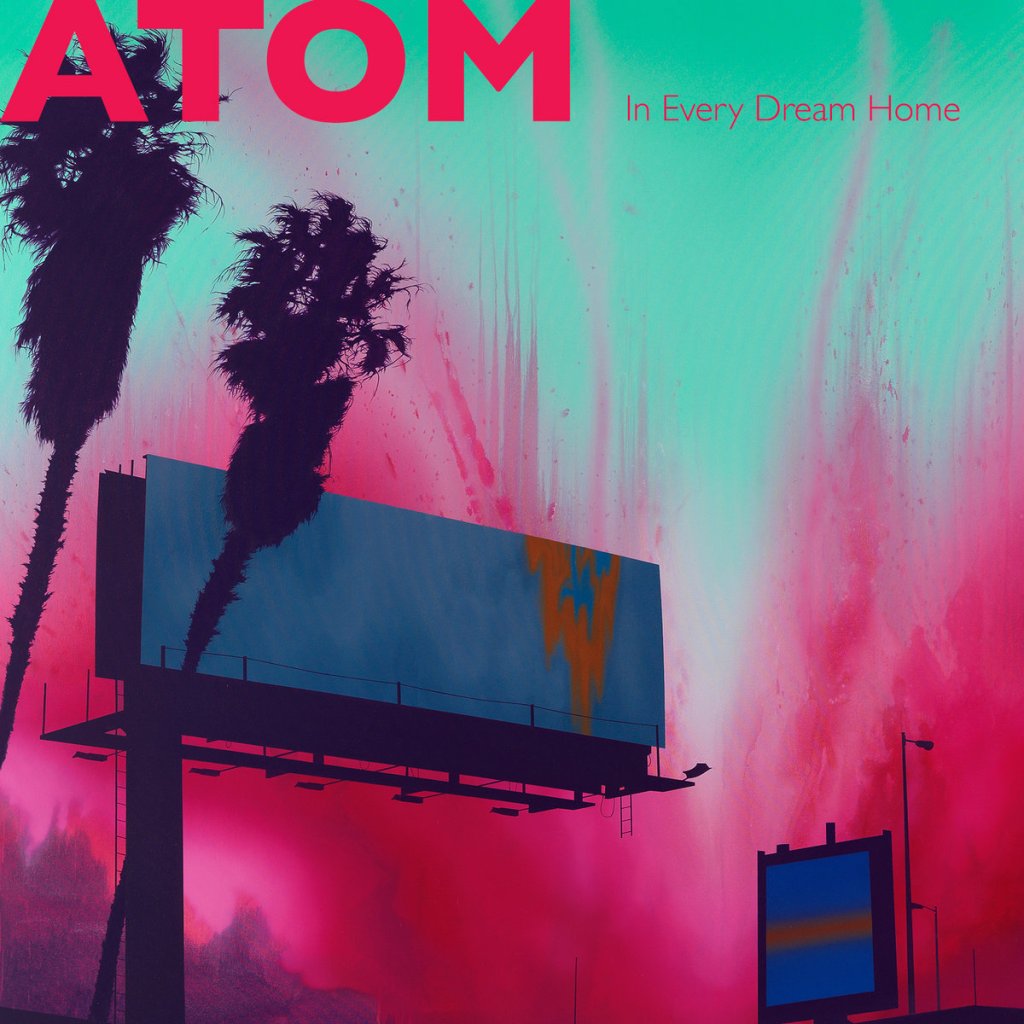
Please check out: SHEPPARTON AIRPLANE. Sharks out April 17 on Wing Sing Records. SA on Facebook.

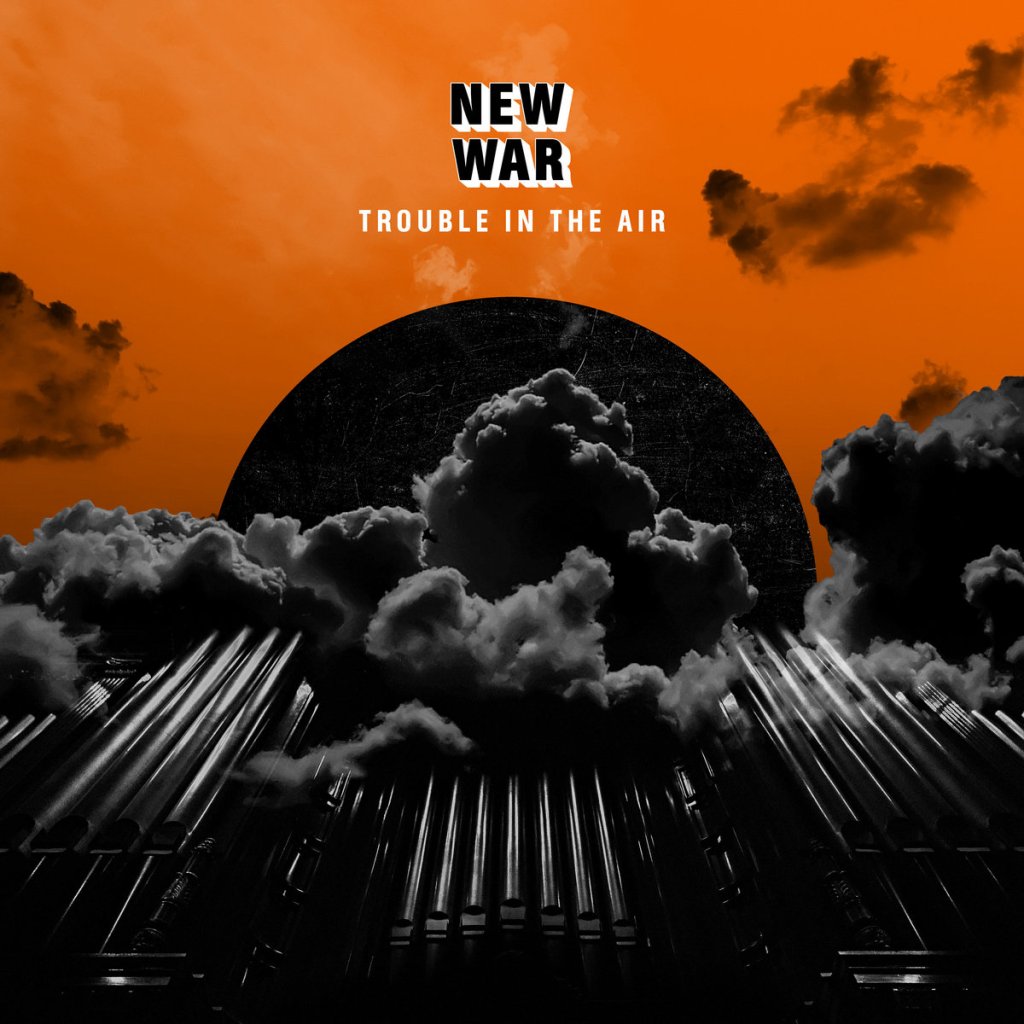
New War’s Chris Pugmire: “I get giddy, high, almost hysterical. Then I get obsessed and need to explore it from every possible angle. Then I chase that compulsion again”

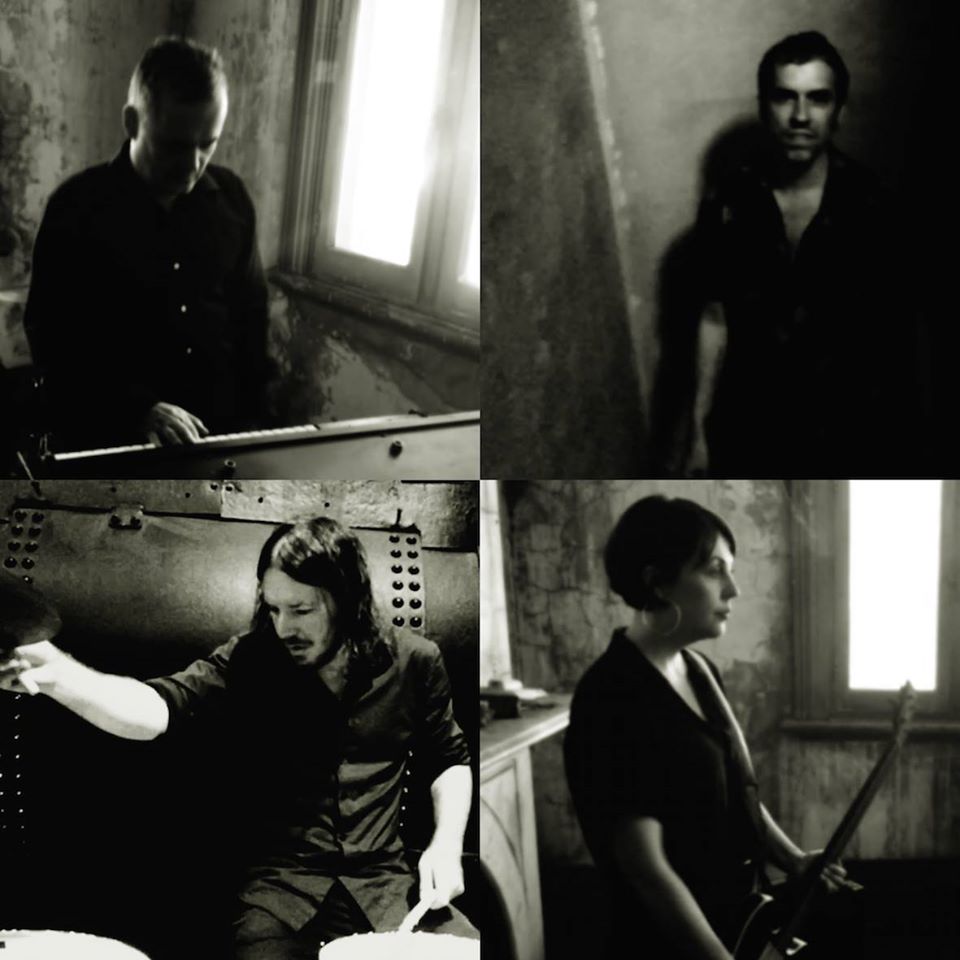
Original photo by Nathan Howdeshell. Handmade mixed-media collage by B.

New War are one of those special bands: they defy genre; they have voice, keys, bass, guitar and drums yet there feels like there is so much more going on; they push boundaries and most importantly their music has the ability to move you intensely and deeply. Their self-titled LP and follow up Coin are always on high rotation at Gimmie HQ. Latest record Trouble In The Air saw New War take up a new challenge recording in Melbourne Town Hall using it’s four-story high Grand Organ—the resulting collection of songs is haunting and transcendental. We chatted to vocalist Chris Pugmire about the album, the deep side of art, discovering music, being history buff, a transformative year spent in Germany as a teen, anarchism, lyricism and more.

As an artist what are the things that you value the most?

CHRIS PUGMIRE: Art that’s strong and slippery, that refracts meaning in a new way each time you approach it, that has the sense of a truth that isn’t fixed and didactic but introduces you to worlds or ideas you hadn’t considered or been exposed to before – even (or especially) if it comes from you. Art that expands or reflects your own inner and outer worlds, that has a complex emotional core that can take intimidating subjects like politics or history or economics or whomever controls whom and crack them open, make them seem less inevitable. Whether I make it or someone else makes it doesn’t particularly matter, I want to be thrilled. When I make something that ticks those boxes I’m ecstatic.

Same if I discover someone else. I get giddy, high, almost hysterical. Then I get obsessed and need to explore it from every possible angle. Then I chase that compulsion again. I make it or find someone. And so often it has nothing to do with money and what money does to art and people, it is money’s antithesis. It can be any act of creation: music, painting, drawing, literature, film, photography, birth, life, sex, death… etc, etc.

Why is music important to you?

CP: It combines so many senses. Hearing of course. But you physically feel it, bass pushing against your stomach and chest, treble pricking at all your nerve endings, beats making your heart race and whole lower torso to move in time. Vocals making synapses fire and drawing tears and shivering your spine. Sudden changes or silence or spikes or climaxes of emotion that make your head tingle, your cheeks hot. And that’s only physical. It’s so powerful, it can change your whole worldview in a few minutes. It can make you feel just about anything. It’s that alchemy, it makes you something new.

How did you first discover music?

CP: It happened via the radio, talking to friends and sharing mixtapes. Taking a punt on an album or a show because the cover or flyer looked interesting or you vaguely remembered a review. Like going to see Bikini Kill because it was this new kinda secret thing, what’s this all about? and feeling zapped by a zillion watt thunderclap. I read one of the ladies in Huggy Bear looked like a mean supermarket checker so I jumped at Taking the Rough with the Smooch which blew my mind. Swell Maps’ Trip to Marineville had the house on fire which was impossible to resist, there was no way it could sound bad with that cover.

I had (and have) a really cool older friend named Jennifer who I worked at a coffee shop with when I was 17, 18 and she made the best mixtapes with stuff like Opal, Thinking Fellers Union, Scorn, Faust, etc. and took me to see stuff like Tindersticks with a fake ID (most good shows were 21+). Then I volunteered at the Velvet Elvis, a great, slightly lawless all-ages club and it just kept going…

When you were sixteen you spent a year in Germany, previously you’ve mentioned that it was really instrumental for you; how? Could you please share with us a little about that year?

CP: I was raised Mormon and my world was very small. I was a little tuning fork and the church’s instilled fear, patriarchy, homophobia, sexual repression, etc. struck and struck at me and its deeply ugly tones felt like the spiritual death I was supposed to be being indoctrinated against. During the first Gulf War there was a palpable bloodlust both at church and school and it revolted me, so much I refused to speak for its six weeks. But my parents were for the most part not as rigid or cruel as this culture even though they made me be part of it and it was deeply confusing.

So when I went to Germany shortly after it was like the veil was lifted. I still had to go to church but it wasn’t the all-encompassing experience it was at home. In Germany I saw neo-Nazis spring up in the aftermath of reunification. You’d see them at soccer matches abusing African players or occasionally roaming the city, they were terrifying. There were attacks on Turks and Kurds and other immigrants in Mölln and Rostock. Part of a large family were murdered by fascist arson in Solingen. There were quite full-on demonstrations.

My cousin Jonny and I shared a room and we’d talk all night about that stuff, church, the future,  music, everything we could think of. We both had a taste for adventure and got up to a lot of no good. At school we studied Woyzeck (both play and film) and that had a profound impact on me as well, the instability of men’s emotions and how they could slip from desire to violence and how class and its humiliations played such a malign role in that destabilisation. The beginning of a lifelong fascination with the machinations of power and all little steps of experience and tastes of freedom that meant the church lost its grip and in a few years I wriggled free.

Your new record, Trouble In The Air, was recorded live at Melbourne Town Hall using its Grand Organ; what inspired this?

CP: It wasn’t something we considered or imagined until the invitation was extended by the curator. What a fun challenge, how would we pull it off?! We thought it gave us the chance to try a different palette both with the organ (simultaneous new possibilities and limitations) and drums. Our live engineer had done sound there and suggested drum machine might be preferable for the sake of clarity and balance between everyone.

You recorded the record live in 2017 and now in 2020 it’s seeing the light of day; in hindsight what are your feelings about this record?

CP: I like that it happened and it’s not overthought. That it’s a snapshot of freshly written songs the first and possibly only time they’ll be performed.

What mood were you trying to capture on this recording?

There’s a lot of moods. “Emerald Dream Eyes” is a love song. “Purple Heart” and “Cocaine Blue are mourning songs. “I am Position Yellow” is a frustration song. “Bang On” is a mystery song. “Redbeard USA” is an investigation song. And there’s a lot of other little moods in each song as well, and they all exist within the title and that’s the vision and overarching mood. All three records are like that. I mean it sounds dumb, of course they are. But they really are.

I understand that you wrote the record over three months, which is a very short time for New War compared to how you would usually write; how did that influence your song writing?

CP: It was the first time we’d written our parts separately, where we were emailing ideas back and forth and building the songs up at home and then rehearsing solid ideas with a lot of focus. Our other records were written by playing in a room every week for several years and refining initial ideas over a long period of time. And the same lyrically, often starting as a really long stream of consciousness and gradually whittling down to rhymes because I think decent rhymes are really hard! We’ve probably lost about two or three records worth of songs just by being picky. So for this record, because of the time constraint, we had to set all that aside and make all the initial ideas work quickly because there wasn’t time to nitpick. It was refreshing being able to accomplish not only the writing but the performance, it made me only want to think of new ways to approach any future recordings.

Lyrically what kinds of themes do you find yourself drawn to? Are they ever reoccurring?

CP: Just observing the world… what’s happening now, what happened before, how that affects what’s happening now… same with my life, my past, my present, the same thing… And dreams are a big part, whether their own thing or relating to all the aforementioned stuff. There’s a thread through all the songs and albums, there’s recurring images and words just like there are in dreams, history, life…

Who are your favourite lyricists?  

CP: I’ve always loved and found new ways to appreciate Kim Gordon. Her new record is conceptually and in its execution the work of a master. Revisiting Dirty and Goo recently, which were two of the first CDs I bought, I’m so struck by her incredible character acting and how wide her emotional range is. And that she’s so funny. And that she writes such complex moods into such accessible language.

I love Bim Sherman, Kathleen Hanna, Tobi Vail is a total genius lyricist and great essayist as well, Horace Andy, Ari Up and Viv Albertine, Nas, all of Wu Tang, Bahamadia, Guru, Rakim, Mobb Deep, AZ, Ana da Silva, all of Huggy Bear, Jarvis Cocker, Iggy Pop, Mark E Smith… The Sleaford Mods guy is fantastic. I’ve always loved Nisa from Fabulous Diamonds’ lyrics… I could go on forever.

What were the challenges you faced making this record in such a space and using the organ?

CP: That we only got to rehearse once before performing! Jesse got to play the organ a few times late at night (and besides the fact there’s so many keyboards on the organ itself he said it was like playing grandma’s organ), but we only had one full band rehearsal with the organ, using our shitty PA running both vocals and drum machine. So trying to write for such a weird instrument in such a big space and having to basically imagine how it would all sound until the day of the performance was hard.

Aside from music I’ve heard that you’re a history buff; where did this fascination stem from?

CP: Yeah! Mostly because history is so crazy and so much of it gets buried. I’m not into conspiracy but I love secret histories. Like how the Bolshevik and western versions of the Russian Revolution are total bullshit written by the victor or misinterpreted by the enemy.

Voline’s ‘The Unknown Revolution’ and Peter Arshinov’s ‘History of the Makhnovist Movement’ (as well as Nestor Makhno’s own writings) flesh out such a radically different version of the Revolution and the Civil War, where’s Makhno’s (Ukranian Anarchist) Black Army defeated the White (Monarchist) Army on several occasions, only to be double crossed by the Red Army, which as with Kronstadt, didn’t hesitate to eliminate anyone to the left of them in order to consolidate power. It’s where communism in the 20th century first fails as a humanist, revolutionary project and lapses into authoritarianism and portents the Ukranian Holodomor in the 1920s, Spain in the 1930s, Hungary in 1956, Prague in 1968, as well as Maoism in the Cultural Revolution and its variants in Cambodia, North Korea, etc. I think these are lessons the left always has to remind itself of, whether it’s a political or cultural tendency to lapse into Bolshevism. You have to plan for it or every worthy project from the smallest collective to a state eventually falls prey to authoritarians. Which sucks for everybody.

I digress. This fascination stems from stories, which the best histories are. Whether reading Lipstick Traces or Howard Zinn or Robert Fisk in my early 20s or reading Svetlana Alexievich or Ryszard Kapuscinski now, the best history tells everyday – but extraordinary – people’s stories with a novelist’s touch and a journalist’s economy and commitment to the facts. 

In true history nerd style, did you research the space before you performed/recorded there?

CP: All I knew was that the organ had burnt down at some point and had to be rebuilt? Jesse and I went and saw a classical organist perform on an afternoon not long after we got the commission. Watching that gave us the sense it wasn’t going to be easy, ha.

You were also once an Anarchist collective bookstore owner; are there any Anarchist ideas present in your life today?

CP: It wasn’t ownership in the classic sense but I was responsible for a few years. Are there still Anarchist ideas in my life? Absolutely. I might go weasel words and say anarcho-communist or libertarian socialist or whatever. I think mutual aid is the building block, that people innately lean towards cooperation and that hierarchy isn’t necessary for a society to function. That a more central apparatus would work better as a federation made up of worker’s councils or neighbourhood councils or whatever. And you’ve got to prevent that ossification that allows for authoritarians to get a foothold and consolidate power. I wish I was organised enough to be less of a worker and ‘artist’ and more of a proper agitator. I think that’s half the reason we’re in the shit because too many people wanna be artists instead of the hard yards of organising and that’s been the one of the main reasons elites have been able to wind back the clock to the 1920s or even Victorian times. Everyone’s pissed off but we don’t have our eye all the way on the ball. And the right wing always sticks together no matter what. And they don’t give a shit about culture in terms of it getting in the way of doing their job. The left needs to learn from that. Get tight and get organised and stay that way.

I know that New War like to keep moving forward and not repeat themselves; what’s next?

CP: Not sure yet but it’ll have to be interesting and different (to us) or it won’t happen.

Please check out: NEW WAR. Trouble In The Air out on Heavy Machinery Records. Coin available via It Records and New War via All Tomorrow’s Parties. There’s also a Ghostwalking 12″ release featuring Gossip/HTRK mixes on Fast Weapons.

The Stroppies get set to release new LP Look Alive!: “What doesn’t kill you makes you stronger!

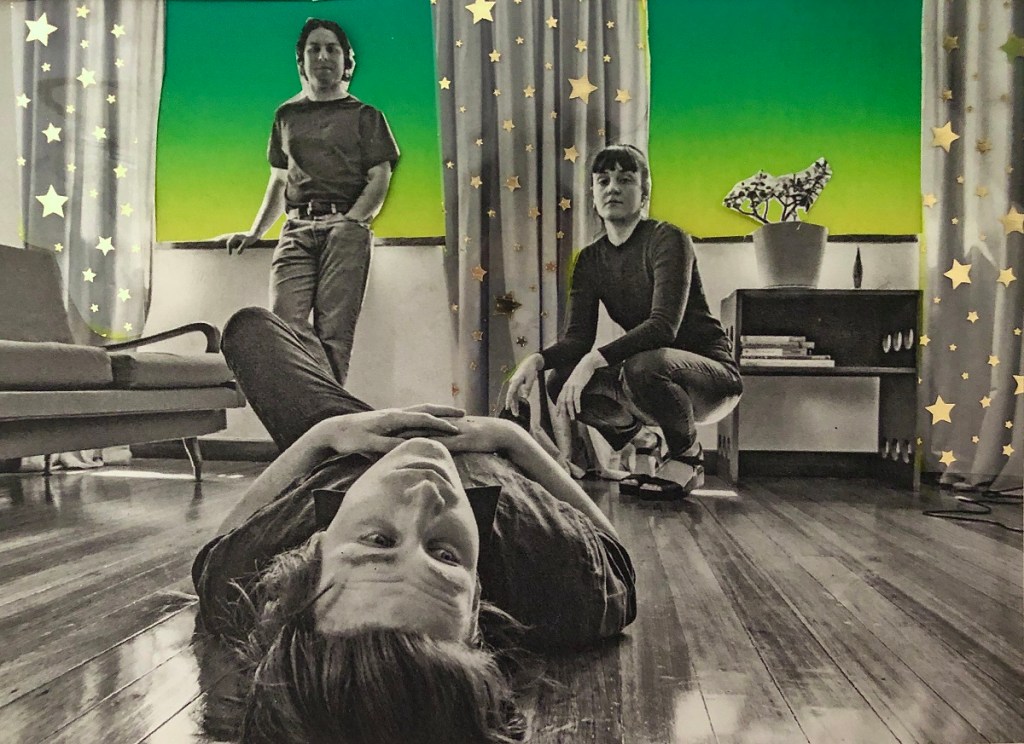
Handmade collage by B.

Melbourne band The Stroppies’ music is the best parts of jangly British C86 and New Zealand’s Flying Nun in its heyday with their own transformative modernisation. There’s a lot of bright moments to be found on forthcoming LP Look Alive! (out May 1 on UK label Tough Love Records), shining moments of poetry and simplicity. We spoke to Stroppies’ guitarist-vocalist Gus Lord to shed light on the new album.

Your new album Look Alive! was written mostly on the road, which I understand is a different process for The Stroppies than what you’d normally do?

GUS LORD: Yeah, I’ve never done anything like that before. Last year was really full throttle. We were in plans to go back to Europe this year, making new music felt just like the right thing to do. It was an interesting process working out of a notebook in a car.

What was the first song you wrote for this LP?

GL: The first one we wrote for the album was “Burning Bright”. We wrote that one before we went on tour actually on a Saturday morning screw around with me and Rory [Heane; drums]. The original demo is quite strange.

We like strange! Strange is good.

GL: Yeah, strange is good! There’s meters of tape in our studio space that would have a lot of stranger things on them that may one day see the light of day.

I hope so. What kinds of things were inspiring the songs?

GL: From my perspective and process, I’m just putting down words and putting threads together; I have to keep follow that, until those threads inform me what the themes are. Once I get an idea of what the themes are going to be, I fishhook that onto a personal experience. With the last record [Whoosh!] I was writing from the perspective of other people, whereas this record is a little more personal. They’re not confessional songs but they’re going a little further under the skin than the last set of songs did.

Did you find it harder to write more personal songs?

GL: I think they’re still very much stories, my definition of what makes a personal song is probably far removed from your Ed Sheeran or whoever is popular right now. Not explicitly really, when you’re doing it right things are relatively unconscious. I think songwriting is just hard full stop, at least it is for me.

What’s the story behind title track “Look Alive!”?

GL: When you frame something in the context of a title for a body of work it subtly re-contextualises it. It seemed like a funny thing to call the record. It insinuates alertness and has those connotations to army lingo. For me, I just thought the two words looked nice together. I had the phrase written in my phone for a little while and when we decided to call the album that, I was looking for a name for the album’s title song; I managed to whittle that into the second verse.

I’ve been looking at all the track names and it’s almost like it’s telling a story as you’re progressing through the album.

GL: Yeah. If you’re thinking of the first two singles that we put out “Holes In Everything” is a sweet affectionate song, the sentiment at least. Whereas “Burning Bright” is more discerning and unsure of itself. Both songs are about relationships, different parts of those relationships.

Where do you write the song “Aisles Of The Supermarket”?

GL: That was one of the other songs that we wrote at home. It was partly written in our front room, we recorded four different demos of it and it wasn’t until the final moment when we went into another person’s studio and ran a bunch of tape loops behind it that the song found its feet. That was a Claudia [Serfaty; bass-vocals] one, she had the poem that we put to the music.

You recorded your album in December last year?

GL: Yeah, it was a pretty quick turnaround.

Your last album Whoosh! was recorded in a studio and your work before that was recorded at home, now you’re back to doing stuff at home again; how’s it feel to be back in the more familiar environment, your own space?

GL: Better! I feel a sense of ease and comfort. A precedent that I wanted to establish with the band was not being locked into any one style of recording or benchmark of production. We’ve always done stuff fifteen instruments on a tiny little cassette player and then big studio affairs. It felt like that this recording was a nice synthesis of the two. We got to track it at home with Alex Macfarlane who put out our first record and has been helping us out with stuff since the band first started. We took the master tapes to the studio where we recorded Whoosh! and mixed it down there. I definitely prefer having space and time and my own house to whittle out ideas. It’s a nice working process for sure.

On Whoosh! you used rain sticks and an old door frame for percussion; did you use anything interesting on Look Alive! to create sounds?

GL: I bought a sampling keyboard from Cash Converters which is pretty much all over the record. It was a crummy, beaten up thing that runs on floppy disks and we just ran a bunch of stuff into that and tracked it in. The good thing about a sampling keyboard is you save a lot of space. There’s nothing too obtuse that went on this record beyond your regular guitar music fanfare.

I love that you picked up something inexpensive at Cash Converters and used that on your new record. Using stuff like that you can get sounds no one else has!

GL: Of course! At a hundred bucks a new piece of gear can stimulate parts of your process or give a certain project and certain sound. When your outgoings are that low it’s worth taking the financial risk and seeing what happens, that was a good one for us.

I’ve read that when you were making Whoosh! you were having a little self-doubt; are you more confident writing this time around?

GL: No, not really [laughs]. It’s just par for the course. The greatest joy I feel in the process is when I’m doing it alone or when we’re actually in the process of working the songs out. Everything after that is a bit overwhelming! We end up getting through it none the less.

You made the song “Entropy” from your last album by yourself didn’t you?

GL: Yeah. I recorded a demo of it which I think is the definitive version of it. The version on the album is cool but… it’s the one song that I guess for lack of time, we hadn’t learnt it so I recorded it. It came out pretty cool, it has a different flavour from everything else.

Totally. That song was one of my standout favourites of last year. The way you sing it, the feeling in it… it’s one of those songs you hear and you’re like, how does something this cool even exist?

GL: That you so much, that’s very kind.

What’s one of your favourite things about your new record?

GL: It’s a little more playful and organic. I feel like every time we write and record we’re moving closer to what this band should be, we’re figuring stuff out. I think with a lot of other bands I’ve been in, generally around this time you start to feel malaise, whereas with this I feel invigorated with this to keep going. There’s still a lot of meat left on the bone as far as songwriting.

What is the vision for where The Stroppies want to be?

GL: It’s really changed in light of what’s happened globally. We had another tour planned, obviously this record was going to get toured but now that we’re bound to home it’s all been reconfigured. I’m really just thinking we should make another record ‘cause—why not?! More broadly speaking I try not to expect too much from it, if any opportunities present themselves grab ‘em by the horns and enjoy the experiencing.

While you’ve been in isolation you made a film clip for “Burning Bright” using candles and paper.

GL: Yes. It was born of economy really. In my head I had a broader more grandiose vision of what it would entail but the reality of the footage wasn’t as such. Me and Claudia are obviously a couple and we have a really good creative relationship. It was just us playing around one isolation weekend with a face mask, Plasticine and candles.

It turned out pretty fun!

GL: Thanks, I thought so. You’re so spoiled for choice and possibility with modern technology, it’s ridiculous! We’ve shot all of our videos on iPhones. This one was shot on a nice camera and edited in iMovie. To my eyes they’re totally fine, passable [laughs].

I’ve always loved what people do with what they have. It fosters and nourishes creativity and imagination.

GL: Yeah. Buying a 4-track recorder was a massive thing for me, it stimulated and unlocked parts of my creativity I hadn’t really facilitated purely because of economy. I tried doing digital recording but I guess it’s because you have access to hundreds of different effects, there’s just so many different options. You can spend months twiddling knobs fine tuning a bass guitar sound when in reality, all you’re doing is creating a smoke screen for parts of the songs you don’t want to develop because you don’t’ feel confident with it. When I got a 4-track it was, ok, drums, bass, guitar and then you have the last track and you’re like, better write some lyrics and put something on that. Economy can be very useful in that regard.

Who did the artwork for Look Alive!?

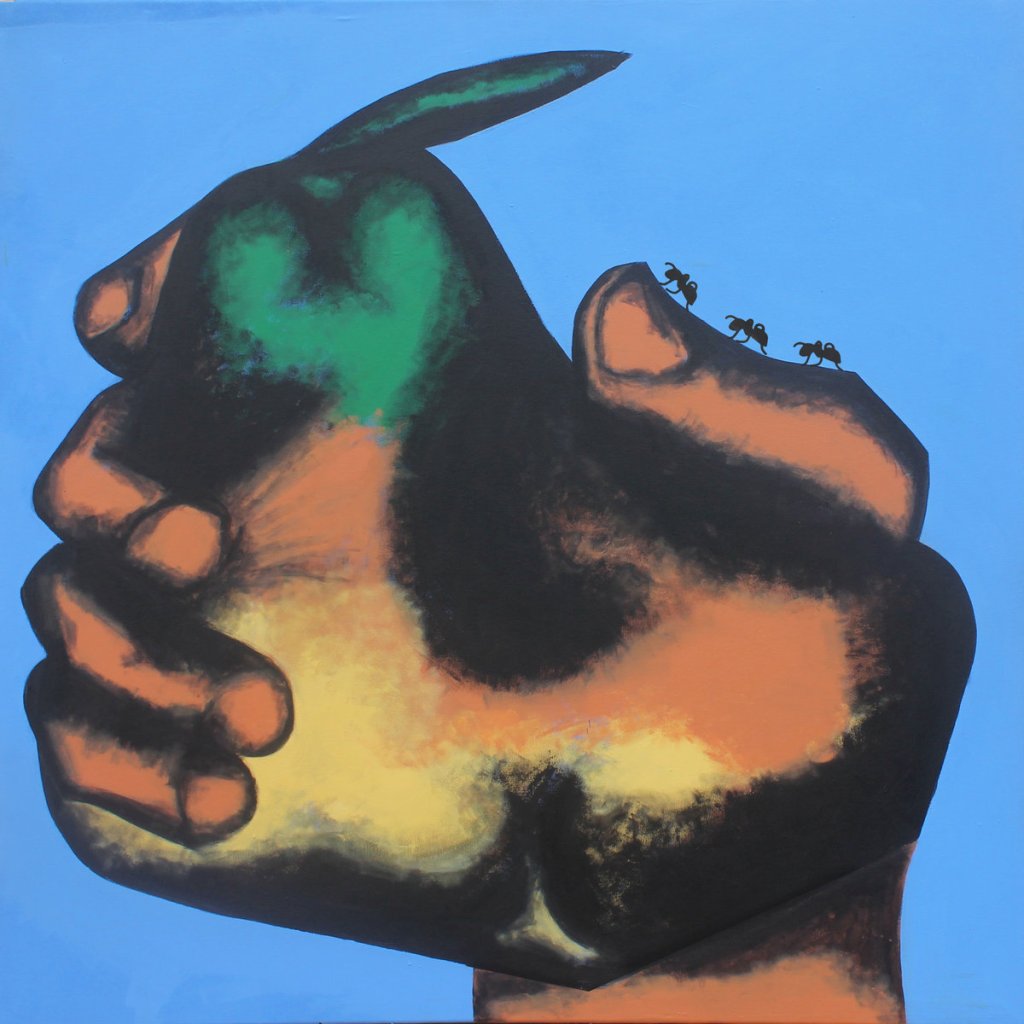
GL: A guy called Nick Dahlen. I had done the artwork for our previous two EPs the experience of doing that was one I didn’t want to repeat. When we entertained the idea of doing another record and having it ready for this period of time, because it had been such a palaver to get the other two done, we actually got him to do the art work before we finished writing any of the songs or recording. It was a funny way to do it but it ended up working really well. I like the fact that there’s the ants on the cover, you think about an army of ants and obviously the army lingo of Look Alive! In a weird serendipitous moment here are three ants and only three out of the four of us made this record. It worked.

Why was it only the three of you?

GL: We had a pretty aggressively busy year last year, at the end of the second tour that we did that had a myriad of trials and tribulations – it was a tough tour – we all sat down… me and Claudia live together and we know we’re just going write. We said, “This is what we want to do, these are the days; what do you reckon?” And it just ended up being us three. It’s not in any malice or ill will, Adam said he just needed to live a life and that’s totally cool.

What were some of things on the tour that were hard for the band?

GL: We’d been to Europe a month and a half prior and had a really good tour, coming back the second time we’d driven ourselves around. We thought the drives will be longer and we’ll be going through more medieval towns and things will be harder to navigate so we’ll get a tour driver. The guy we got was a real piece of work! It was a massive buzz kill. Slot into that administrative and organisational things that were overlooked, it really put a damper on everything. Bad hotel rooms. Cancelled shows. I had to leave my keyboard in Austria because the airline was going to charge me $800 US to bring it home. There was lots of bits and pieces that added up, it was really relentless. It bore us down a bit. I guess, what doesn’t kill you makes you stronger!

What’s one of the best things you saw while on tour?

GL: It wasn’t so much about what we saw because you rarely get to see anything at all just by nature of the rhythm of that experience—it’s get in the car and drive to show, then you’re in a hotel room. It’s just more about what we felt and what we experienced, there were so really great shows! The fact that you can travel to the Northern Hemisphere and people can turn up, it completely befuddles me. Beyond the thought of annoyances and headaches of the experiences the shows were such a pleasure, which was really cool.

What feelings do you get when you play live?

GL: I get this sort of complete disassociation from myself where I become completely unconscious of what’s going on—that’s when it’s good! When it’s bad it’s the polar opposite, a heightened self-consciousness, an ultra-awareness and my brain will meander off into absurd places; what I ate for breakfast? What am I going to wear tomorrow? That’s the worst end of it.

I always love asking anyone I interview this next question; why is music important to you?

GL: It’s something that I’ve been able to invest myself in and in turn define myself by. It’s afforded me friendships, community, camaraderie and solace. It plays a very important role in my life.

Have you always played music?

GL: No, I didn’t really grow up around much music. My friend Alex who I’ve played in a bunch of bands with and who has been very supportive of everything that I’ve done, his dad and my dad were friends since they were fifteen growing up in Sydney. Alex and I were born two months apart so we’ve been pals since we wore born. When I was around thirteen or fourteen, I’d see him and his dad play music all the time and I started because I got sick of sitting on the couch watching them!

Please check out: THE STROPPIES. Look Alive! LP out May 1 via Tough Love Records. TS on Facebook. TS on Instagram.
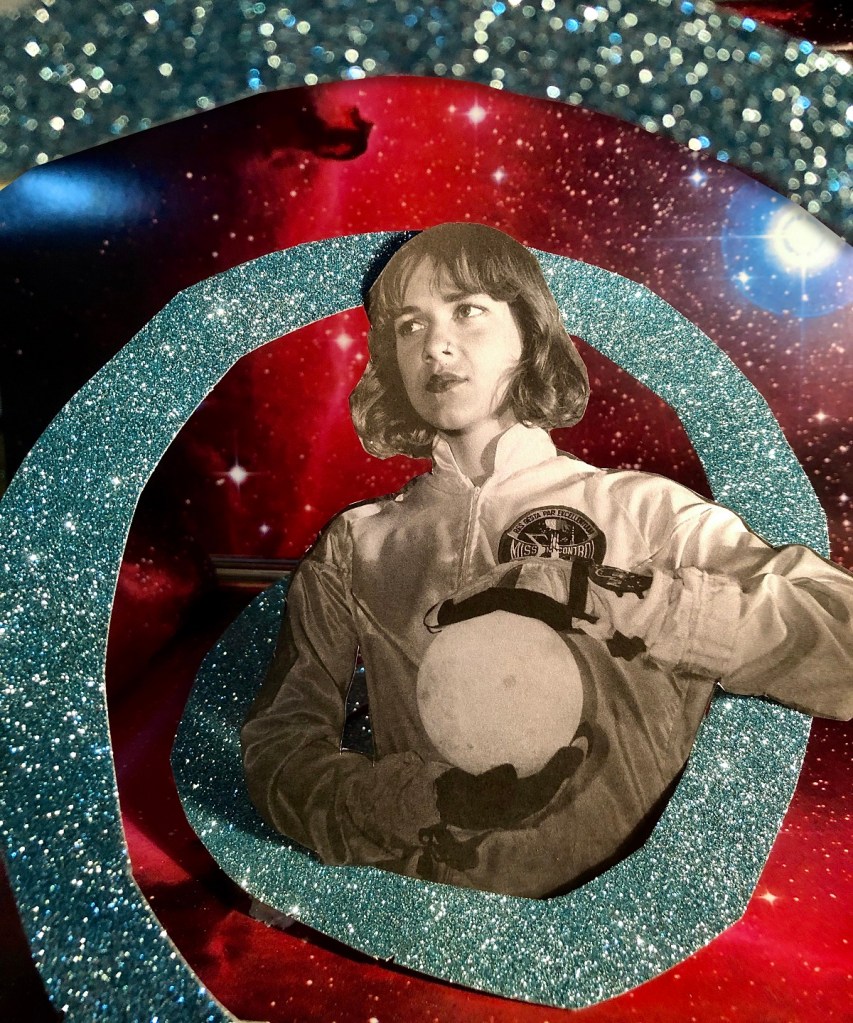
Melbourne punks The Snakes are: “An angular vortex of pain but you can dance to it.”

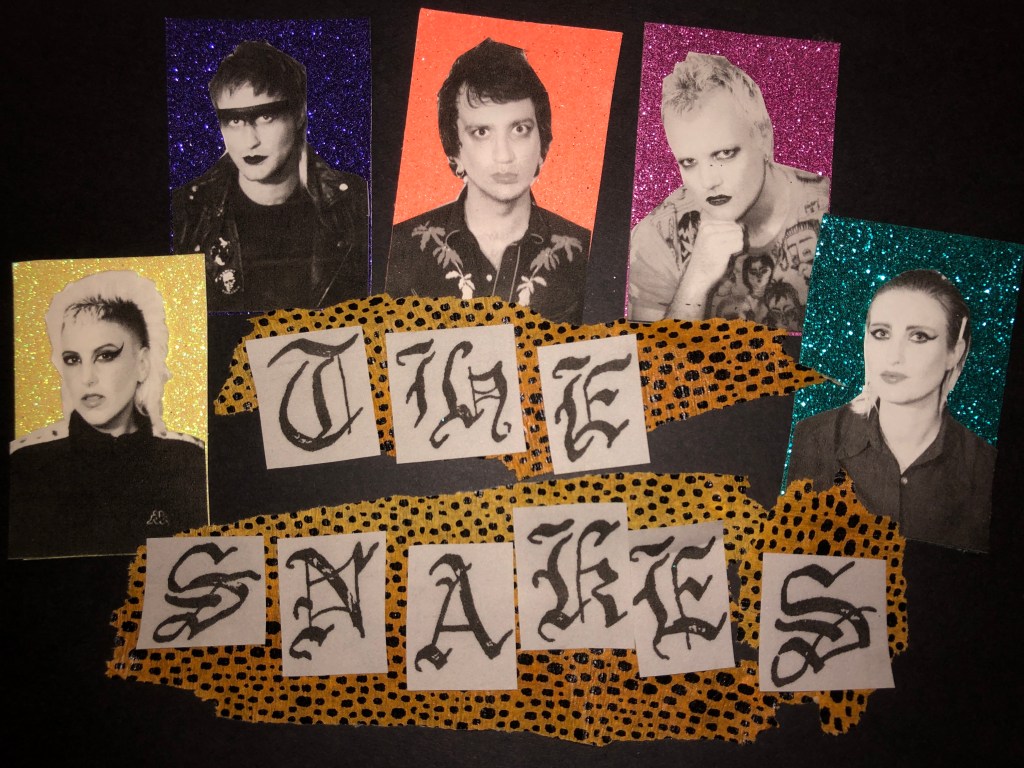
Handmade mixed-media collage by B.

The Snakes are one of our editor’s favourite bands. When we recommended their self-titled debut LP (on Anti Fade) on our Albums We Loved in 2019 list we described their music as early ‘80s underground L.A-style new wave punk. The actual underground though… The black market kind. You know, the “under the counter” kind. We interviewed The Snakes and found out they’re working on new music! Stoked much?!

How did you get into music?

LEWIS (vocals): Who has a choice? At some point some cunt’s gonna play some shit and you’re either gonna love it or hate it, I guess I liked it.

What have you been listening to lately?

CHARLOTTE (bass/vocals/harmonica): Ummm… Butch Willis, GG Allin, Roy Orbison, The Byrds, Rupture, Napalm Death, Traffik Island, Plantasia, Anohni, Ariana, X (Aus).

LEWIS: Death (from Florida), Extortion (aaaagain), The Kinks, Obituary.

JIMMY (drums): Jackhammers and my own inner dialogue.

STEPH (guitar/vocals): In the mornings we listen to ambient sounds such as the distant radio and twings and droplets from whatever James puts on the stereo. When we play cards we listen to hardcore and punk. And I like the start of the Exploding Hearts album so I listen to that in the shower. Same with The Loved Ones but that whole album is good. Could be in a musical rut… I like soul and country music a lot.

CHARLOTTE: You like Suzi Quatro, Steph.

STEPH: I like lots of things not mentioned. Loves Suzi but. Gets wild to Suzi!

When did you first know you wanted to make music yourself?

LEWIS: When I realised it was a piece of piss. It’s the socially acceptable way to be the loudest person in the room.

CHARLOTTE: I was in choirs my whole life but guitars were always for boys, I really just wanted the attention.

JIMMY: I didn’t, I was just jealous of my friend’s guitar when I was six.

STEPH: I got into music by being rejected from my family for not being as good a singer as my sister, and not being allowed guitar lessons like my brother cause I’m a girl. So I taught my damn self and now I rule the world!

Tell us the story of how you all got together. What inspired you to start The Snakes?

LEWIS: Three of us had on and off lived together for a while, two of us had planned to do a psychedelic proto-punk band called Giant Door (side note: Giant Door is one of the top three bands that never existed). We are two couples and at some point, Charlotte our bassist moved into a new house and we went over for a kind of house warming. We ended up jamming and writing about six songs that all pretty much ended up on the album. We had some shitty phone recordings and shared them with each other and realised we needed a drummer. It took us about two seconds to find him and that’s it.

STEPH: Jim completes us.

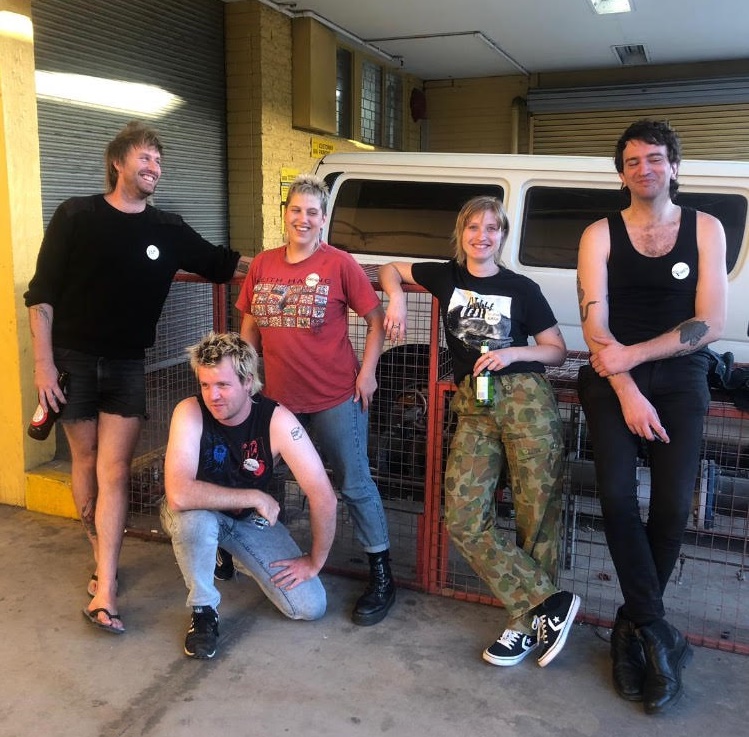
Photo by @sub_lation; courtesy of Snakes.

What do you feel are the key elements that make your sound?

CHARLOTTE: Jim’s drums swing, there’s no one like him.

LEWIS: Clearly the keys stands out, having James on them is a refreshing take. Flange plays a massive factor. It’s a mash of shit we listen to and shit we find fun. It’s an angular vortex of pain but you can dance to it.

How do you go about writing a song?

LEWIS: Charlotte generally comes up with the riffs with a few exceptions and we all just put our parts in from there. We’re natural, baby!

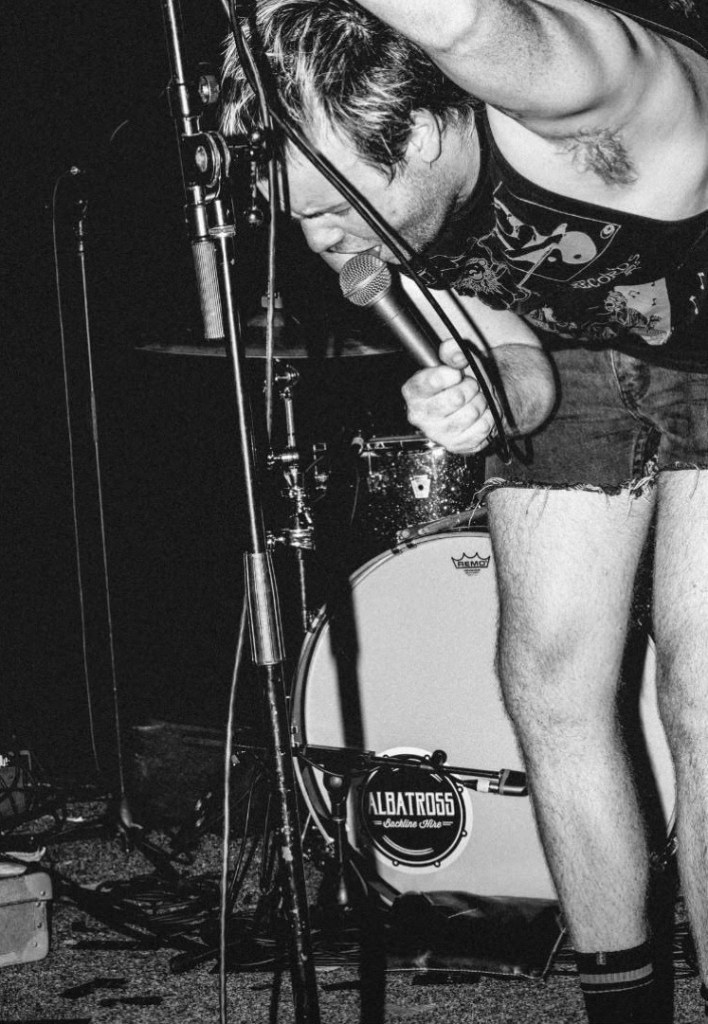
Photo by @sub_lation; courtesy of Snakes.

Last year you released your self-titled debut album on Anti Fade Records; can you tell us about recording it? Billy from Anti Fade recorded it, right?

CHARLOTTE: Yes, he did. We’d spent about a year playing together before our first show and he offered to record and put us out at that first show. Recording in Geelong was great but what was really fun was doing vocals and mixing with Billy. We had a lot of ideas, we had a vision, Bill helped us execute it.

JAMES (keys/vocals): Bully Gardner is our mentor and he wax trax layer to the max.

Cover art by Eve Dadd.

What’s your personal favourite track on the record?

LEWIS: We don’t play this one anymore but I really like singing “Drug Pig”. I came up with the lyrics on the fly and I love screaming “Virgin Mary, Jesus Christ, smoke a gram of pure ice”. “Solid Income” too, it just kind of cruises.

CHARLOTTE: I hate “Drug Pig”, even though it makes me feel tough, there’s a part that makes me feel kind of sick. I love playing “Ugly Faces” it’s simple but it’s rude. I know Steph loves “Pop Song”.

When you finished the record; who was the first person you played the songs to?

CHARLOTTE: I think my friend Kieran, they frothed for it!

Eve Dadd did your album’s cover art; what’s the story behind it?

STEPH: Eve does art and is related to James. She is talented and a boisterous bitch that lives on the South Coast of NSW. We love and hate her at the same time.

CHARLOTE: She’s a Scorpio.

LEWIS: Me and Charlotte outright bought it, it’s on our wall.

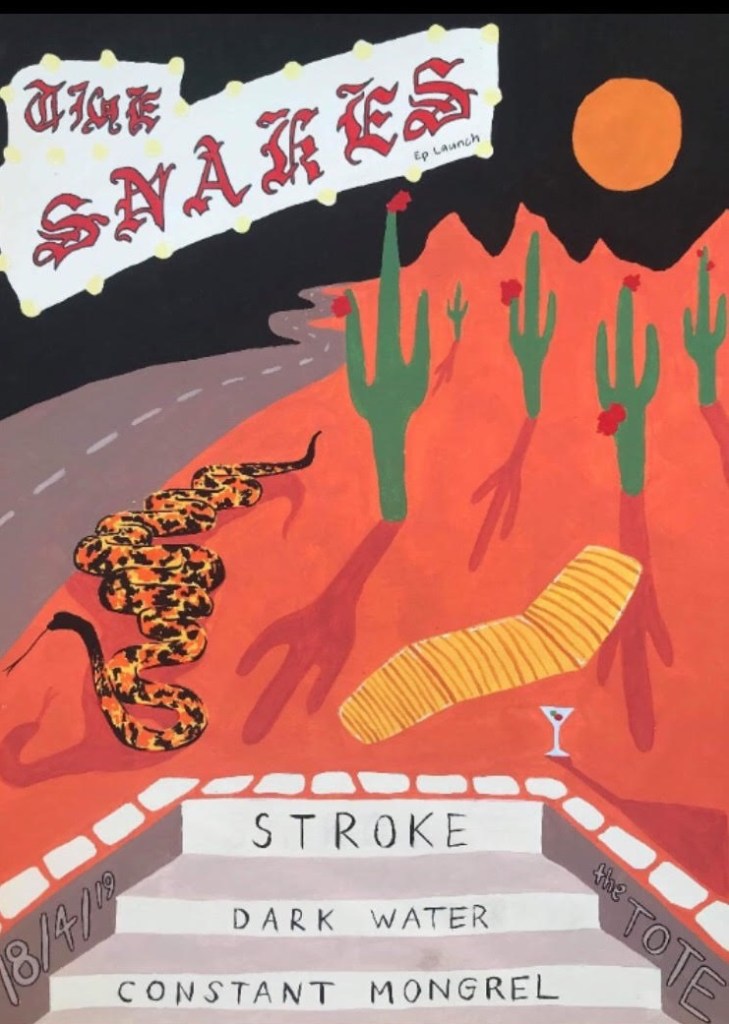
Launch poster by Eve Dadd.

How do you feel when you’re performing?

LEWIS: Extremely confident and self-conscious at the same time. I just go for it, I don’t really give a shit.

CHARLOTTE: When I play, I’m singing my bass parts in my head. I like watching Steph solo and smiling at James.

What’s been the best and worst gig you’ve played? What made it so?

STEPH: Best show was one at One Year (in Collingwood). I had just discovered the beta blockers and dexie combo and I did not give a fuck and people could tell. Smiling is good when playing fun music. Worst show was that one with Bloodletter. Can’t remember why but I know it was bad.

LEWIS: Last Maggot Fest was great, it actually went off. Supporting The Stroppies was pretty dry, not The Stroppies, I love The Stroppies I just don’t think that that crowd was really down for us. I remember putting on a show and crawling on the floor and screaming but still there was a big gap between us and the crowd. Maybe we’re too high brow.

Photo by @sub_lation; courtest of Snakes.

Have you been working on new music?

LEWIS: Yes.

What would we find you doing when not making music?

LEWIS: Working like a dog.

CHARLOTTE: Watching telly. I just bought a keyboard too, been trying to figure out how to play “Everytime” by Britney [Spears]. Also pretty heavily into Tik Tok at the moment.

JIMMY: Drink, complain, bate.

Vid by VOGELS VIDEO. Check out more of what they do here!

Please check out: THE SNAKES. The Snakes on Instagram. ANTI FADE records.

Cable Ties’ Jenny McKechnie: “I’m more confident to live my life according to the values of this band… existing in the world where you fight for the things that you believe in”

Original photo Spike Vincent. Handmade collage by B.

Melbourne band Cable Ties have released a new record, Far Enough. The album is a musical burst of joy while it’s lyrically introspective and vulnerable, reflecting on one’s place in the world. If their explosive debut album were a call to arms full of protest songs, follow up Far Enough is knowing who you are, being OK with that and linking arms on the frontlines of life, standing strong for your beliefs arm-in-arm with your community. We spoke to vocalist-guitarist Jenny McKechnie yesterday as she tried to stop her seven-month-old pup Barry from demolishing all the plant seedlings the household had recently planted in the backyard.

I know that community is very important to Cable Ties, especially the DIY Melbourne music community; when you first came to the music scene, did you know anyone? How did you start to get involved?

JENNY MCKECHNIE: I grew up in Bendigo and I moved to Melbourne for uni when I was nineteen. In uni I met a friend, Grace [Kindellan]. She was really into garage music and we both got into the local scene together and started a band a year later called, Wet Lips. So, just moving to Melbourne about nine years ago and going to The Tote, The Old Bar, got me into it!

How did you start playing guitar?

JM: I started playing guitar when I was twelve, my dad had a nylon string acoustic guitar that I picked up and learnt songs on. When I was a teenager I was in a bunch of bands that were playing Celtic folk music [laughs]. I used to like going to all the folk festivals and writing sweet folk songs on acoustic guitar. When I came to Melbourne I got more into the punk and garage scene; I first picked up the bass to start with and then with Cable Ties moved on to the electric guitar.

With your new record Far Enough, I understand that it came from a place where you were feeling really hopeless.

JM: Yeah, it did. The first record that we wrote is pretty much defiant protest songs. Making the sound we did was really liberating after playing softer folk music, which was all of my songwriting before. By the time we came around to writing this album I was feeling pretty hopeless and despondent about the world and unconvinced that I was able to have a positive impact on anything. I  was coming from a place where I was suffering from anxiety and depression at that time, going through a bit of a spot in my mid-20s where I couldn’t quite work things out and what to do next. In the songwriting process I started in that spot but always wanted to find a way out of it, to find something to cling onto to be hopeful about and keep fighting for.

So writing things songs did help you do that?

JM: Definitely. Songs like “Hope” especially came out of the process of a lot of journaling and a lot of time spent thinking and processing these things. I had a good psychologist too! Some of the songs on the album were really helpful and part of a bigger process that I went through generally about feeling better about myself and the world.

When you posted about the album online you mentioned that it was really challenging to make; in what way?

JM: It was challenging because it was part of that process we just talked about, the album was pretty honest and talks about the things that I was struggling with. A lot of that is turning things in on myself, I was experiencing a lot of self-criticism and a lot of self-hate about stuff like, “oh, you don’t do anything, you just play in a band and wander around playing these protest songs but, what’s the good of it? What have you got to show for it? What’s the point of all of this?” In the process of writing this album I was really doubting myself and really doubting whether I was actually meant to be in a band. I had to come out the other end of it finding some meaning in it—the purpose of my life. By this stage, I’ve dropped out of university postgrad twice, just keeping up with music commitments. I didn’t know what I was doing with my life or if any of this would work out, it was a process!

Why is making music important to you?

JM: That’s a great question. Music is the thing that I just keep coming back to all of the time and from that perspective it’s just something that feels cathartic to me. It’s the only thing that I’ve kept doing in my life, writing songs since I was twelve years old, because it helps me process that way that I’m feeling. It’s something that I can’t get away from, it’s something that I really need. It’s also my entire social community, all of my friends, it’s my entire life! I am so grateful that I have gotten to live out my 20s in this incredible music community in Melbourne. People aren’t just creating really interesting art but they also have a vibrant discussion of political issues and different ways people can live their lives outside of the common norms we’re told. It’s the most nourishing and exciting way to live my life and I’m very thankful that I have done this in the end.

Do you find it hard to open up to write your lyrics and to be so honest?

JM: No, not really. I think that’s one thing that I don’t find that hard. I’m a very earnest songwriter. I find it more hard to not be open and honest about things. Writing songs is the thing I have to do and the challenging thing comes afterwards, I have to put that out there into the world. I have to analyse what I have written down and be like; what does that mean? What is that honesty? And, where do you go from there?

Every member of Cable Ties is integral to your sound; what kind of conversation do you feel you were having musically between one another on the album?

JM: When we write songs we get into a room and someone will have a bass line or a drum beat, we’ll just play and play and play for hours, we really like to jam for a long time. We might not necessarily go many places with the jam, we might just sit in the one spot to see how that feels, and make sure it sits well on your body. That’s where everything starts from. Then we go; what does this song feel like? What is it evoking? The lyrics will come after we’ve written the music and we’ve created a musical emotion as a scaffold to work off. The one thing that we had for this album is that we all committed to doing it; jamming, practising and writing twice a week, and going away for weekend and locking ourselves in. We worked and worked and worked on things until we had it right.

We wrote “Sandcastles” when we went to a house out where Shauna [Boyle; drums] grew up as a kid. We spent the whole weekend trying to put together this song, it didn’t end up making it onto the record, it was not working and a bit convoluted. In the last two and a half hours of the weekend we were frustrated and were like, let’s just have a “hit out”! We started with a simple beat, from there we came up with most of the music for “Sandcastles” in those last hours. We were like, wow! …we felt like we had finally got through the slog of the convoluted song and the payoff was coming up with something simple and to the point.

What inspired the album title, Far Enough?

JM: It’s a lyric at the start of “Hope”. The lyric is: my uncle Pete is complaining about the Greenies, he said that they have gone too far but I say, Pete they don’t go far enough. We took it from that line but we liked it because it is somewhat ambiguous in its meaning. It can have many meanings, it can be a question like; have we gone far enough? Has the world gone too far? We think it spoke to a lot of the questions on the album.

You mentioned that your lyrics came from an introspective, questioning of self and vulnerable place; how did you grow while making the album?

JM: I became a lot more comfortable with being a musician. I became a lot more grateful for the life that I’ve had in the music community. I’m more confident to live my life according to the values of this band and that community and of looking after the people around me—existing in the world where you fight for the things that you believe in. Don’t do stuff because you want the “right” career or anything like that, it made me really, really commit to a life of activism, being in the music community and being a musician.

Photo: Spike Vincent.

On the track “Anger’s Not Enough” it takes over a minute before the drums kick in; what was the idea behind leaving the space at its start?

JM: Nick [Brown; bass] did that at the start. I have this pedal that was made by this guy in Newcastle that has this pedal company called, Beautiful Noise Effects. The pedal is named, When The Sun Explodes. It’s a reverb pedal and a feedback pedal. To make the sound at the start of that song Nick just had all of the pedals on my board on – Overdrive and two boost things that I have and that pedal – he was pressing the buttons on it. That song is quite sonically different to the one that comes before it, we wanted it to sit out on it’s on. By the time it comes in with harsh and loud bass and guitar we wanted people to really be listening after that beginning, that something a little unsettling.

That part gives you a real suspenseful feeling.

JM: Good! That was the idea.

You’ve said that “It’s an album that is supposed to get you out of bed when you don’t feel like you can face it any more”; what helps get you out of bed when life gets overwhelming and you’d rather stay in bed?

JM: My dog, Barry, I’m looking at him right now [laughs]. Apart from the dog, sometimes getting up when you really don’t want to is just putting one foot in front of the other and doing something simple. Some days it’s just get out of bed, make coffee, see what’s next. Often then I’ll see something in my day that I can be thankful for—my friends, the music I have in my life. Those are the things that I live for! They have a really positive influence on me. Also, when things are hard and the world looks like it’s turning to shit, just remember even if you’re an activist and going to protests and doing everything you can and feel like you’re losing the battle, the fight in itself is intrinsically important. The purpose of it is not just to win the battle but fight for the things you believe in, things that you think are important; that’s part of your identity and way of life. Things that can get me out of bed for the day can be different each day.

In the spirit of the album’s main theme; where do you find hope?

JM: Hope on the album is an active emotion, it’s something that you have to find out of necessity to keep going. What gives me hope sometimes is trying to logic my way out of things like, you wake up and there’s another instance of environmental degradation happening and you say, “that’s contributing to climate change and we’re losing this! What the fuck are we going to do? We’re all doomed!” And then just going, it might be true but what good is it for you to be despairing about this, it makes the problem worse and you feel worse as well. Even if you don’t logically think this fight can be won, if you give into that fear then of course it’s never going to be won! Hope for me sometimes comes from a little bit of going, ok this might be hopeless but that’s no good for anyone, so you better believe somewhere that the fight is worth it and you could do something. If you don’t believe it, it never will happen. For me that’s something that I fall back on a lot when I’m in the worst depths of feeling doom and gloom about the world.

What’s your favourite thing about the new record?

JM: I like the conversations that I’ve ended up having about it, they’re so interesting. It is vulnerable… talk about it, face it! The conversations we get to have are personal, interesting and let you connect with other people. My favourite track changes every day but right now it’s “Lani”.

Why that one?

JM: I can really sink into it. You can’t play that track right unless you relax into it. The guitar playing is really emotive and expressive. If I don’t feel those things, the emotions within myself, then I don’t play it properly. Sometimes it’s the scariest song for me to play! When I do it right though, it is so satisfying. It can also really turn around a gig, or when I get on stage and I’m feeling nervous or things aren’t going right.

What are you doing while locked down?

JM: The job I had before I was supposed to go on tour, working for a university, I can do it from working at home. I’m lucky I can still work, and that they took me back after I was “bye! I’m going on tour” [laughs]. Looking after my dog that’s barking at people right now, he’s seven months now so he’s taking up a lot of my time. I’m probably going to go back to uni if I’m being honest, because it’s probably going to be a little while before we get to go anywhere.

Do you write songs all the time or only when you have to write for an album?

JM: Normally I write all the time. I was writing one just before we were leaving for tour. At the moment I’m not playing because after everything that happened with the tour being cancelled – we’d been rehearsing in the lead up to that and doing a lot of playing – after it was cancelled I really felt like I needed a bit of a mental break before I started writing new stuff. I’ve put the guitar down for a few weeks. I’m feeling like picking it up again now. I have a loop pedal now, so the rest of isolation will be me playing with my loop pedal over and over again—I hope my neighbours are ready!

Please checkout: CABLE TIES. CT on Facebook. Far Enough out now via Poison City Records (AUS/ NZ) and Merge Records (Rest Of World).
Mystery Guest: “Inspired by Sun Ra and the musical output of cults like The Source Family in the 70s”

Original photo by Louis Roach. Handmade collage by B.

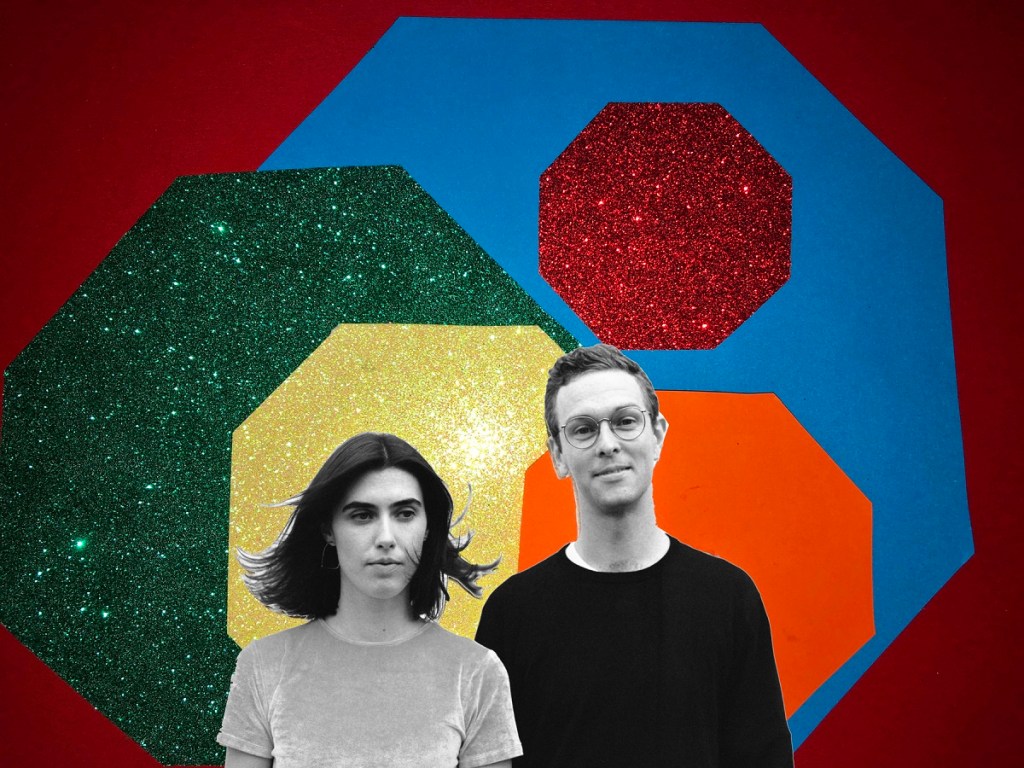
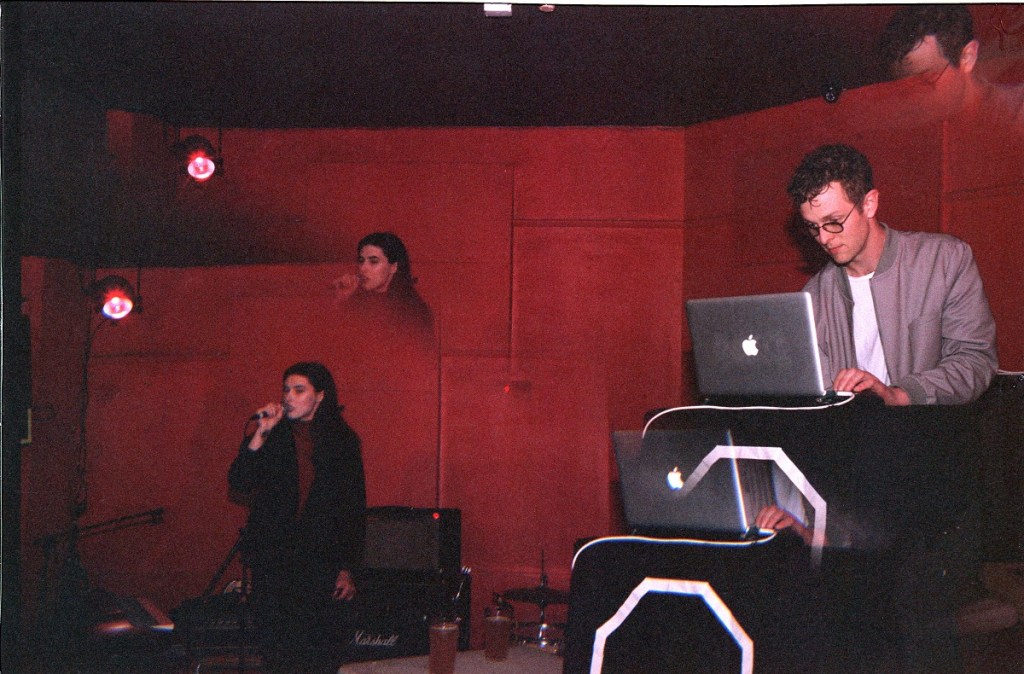
Retro-futurist pop duo Mystery Guest from Melbourne have just released their first album – Octagon City – on Tenth Court Records. The album is an interesting electronic, minimal-synth record, born out of a genuine curiosity to explore sounds in the studio. Throughout the record we are given heavy doses of a Bene Gesserit, ADN’ Ckrystall, SSQ type 80’s vibe (with the monologue on the album’s opener and title track reminding us of Algebra Suicide), though updated with their own style, clearly informed by post-80’s club culture. We interviewed Mystery Guests’ Patrick Telfer and Caitlyn Lesiuk to learn more about their LP and creative journey.

Can you tell us about your creative journey; how did you first come to playing music?

PATRICK TELFER: I was always interested in the process of music making, but only started doing this after school: I got hold of a Roland hard disk recorder—a VS880—which was really,really cool. I would make silly music with friends as a form of entertaining ourselves, call it “experimental music” and never show it to anyone.

CAITLYN LESIUK: I had piano lessons as a kid, but really started getting excited about music when I got my first guitar. There was something fascinating about not knowing what the “notes” were in the traditional sense: I loved learning shapes and experimenting with them.

Did you have any favourite bands or musicians growing up?

PT: The Beatles is the one that I always come back to! Also Wu-Tang Clan.

CL: My most enduring musical obsession has been with ABBA.

How did Mystery Guest come to be?

PT: It was a project based entirely on a curiosity about the potential of using a studio – it was our first experience of a proper commercial recording studio and we had a lot of fun playing with different sounds and methods of production.

CL: We had played in bands together before, and were both interested in creating music outside the traditional “bass/drums/guitar” format.

Photo: Louis Roach.

What kind of headspace were you in writing and recording your new record, Octagon City?

PT: It was just pure clarity and bliss.

CL: I was somewhat trepidatious because I’d never recorded my own songs before, but it was an overwhelmingly positive experience.

What was the vision you had for the record?

PL: The vision I had for the record was completely surpassed by my incredible collaborators. There’s so much talent in everyone and I feel really lucky to have collected this much of it around me for enough time to make music out of it.

CL: I wanted to explore the idea of making a “musical manifesto”  in the vein of albums like Tropicália: ou Panis et Circencis. I felt inspired by Sun Ra and the musical output of cults like The Source Family in the ’70s.

You’re a duo; can you tell me about your dynamic and how you work together? What’s your songwriting process?

PT: A lot of the time I think of a song I like and say ‘let’s make that’. I’ve always had this idea that even if you set out to directly replicate something, the end product will be far enough away from the original that you can truly say it’s a new thing. It’s an interesting way to work – there’s nothing new!

CL: Aside from “The Day Lou Died” and “Moon Moon”, Pat would send me a beat and I’d take that away and start thinking about lyrics and melodies, and the song would start to take shape as we passed it back and forth. I hadn’t ever written songs like that before (or since), but it was an interesting process.

When do you feel most creative?

PT: When I’m happy. I find that my mental health is a little too linked to the quality—as I perceive it—of my current work.

CL: I’m only creative when I have to be, when there’s a deadline… whether that’s self-imposed or coming from somewhere else. I guess I’m still waiting to be touched by the muse.

Photo: Kurt Eckardt.

I love all the electronic sounds in your music; what’s one of your favourite sounds?

PT: White noise has it all! Every frequency is represented. I have a friend who taught me the healing qualities of white noise when it is filtered to sound like the ocean.. like a perfectly symmetrical ocean.

CL: The Mellotron (an early 70s version of a synth made using tape). It’s such an amazing hybrid of old and cutting edge technology of the time.

Do lyrics come easy for you or do you have to work at it?

PT: I don’t ever even try any more!

CL: I try not to get too hung up on lyrics: if I can’t think of anything, I’ll look for an interesting reference in a book or image, and write about that. I wouldn’t say they come easy, but I’m mindful of spending too much time slaving over them.

What inspired the song “The Day Lou Died”?

CL: The Day Lou Died is riffing on a poem by Frank O’Hara about Billie Holiday called “The Day Lady Died”. The lyrics—taken literally—are quite dramatic I suppose: they’re about killing pop stars because it provides the opportunity to reminisce with an old love on the music that you shared. I was also trying to emulate the form and melodrama of songs by The Shangri-Las.

How did you feel when in the middle of creating the record? Were there any challenges?

PT: Knowing when to stop is a challenge! There’s always one more thing you could add… 

CL: Because we’d never played the songs live, and were writing a fair few of them in the studio

What’s the most unexpected thing that’s happened on your music-making adventures so far?

PT: Caitlyn Leisuk.

CL: For want of anything else to do, I often walk around off stage when performing with a double mic lead. I never anticipated I’d perform in such an ostentatious way.  

As well as doing Mystery Guest you also both created, Little Music Lab, a program for children 4 – 12 years old with a focus on learning and play through music technology; what inspired this?

PT: I’ve always worked with kids, for a long time in childcares and kindergartens. I find it to be so rewarding to engage with really young people. There are so many interesting perspectives and ideas that emerge when you enter into a conversation with a child with a really open mindedly. They can be so creative and weird and crazy.. I’ve always got along well with them and music is such a powerful language to communicate with.

Electronic, technological music opens up even more interesting avenues as this can level the playing field in terms of creating music without the need for years of disciplined rehearsal of theory and technique.

CL: I was interested in giving the kids instruments that were thoughtfully (diatonically) tuned, to avoid the kind of cacophony you get when you have a whole class haphazardly playing xylophones and ukuleles in regular tuning. If you set them up for success, even the youngest, least dexterous humans among us can make cool music.

Photo: Louis Roach.

What’s your best non-musical skill?

PT: Cooking.

CL: Philosophising.

Why is music important to you?

PT: Music is important because it opens up new ways to communicate with people. It’s a really good vessel for expression – and it’s so suppressed in our culture – we’re all dying to sing but we almost never do. I mean aren’t we? Or is that just me?

CL: Because it creates community. That was one interesting aspect of exploring a fictional cult: in the absence of organised religion, music is a forum for bringing people together in a shared experience.

Please check out: MYSTERY GUEST. Get Octagon City on TENTH COURT Records. MG on Facebook. MG on Instagram.
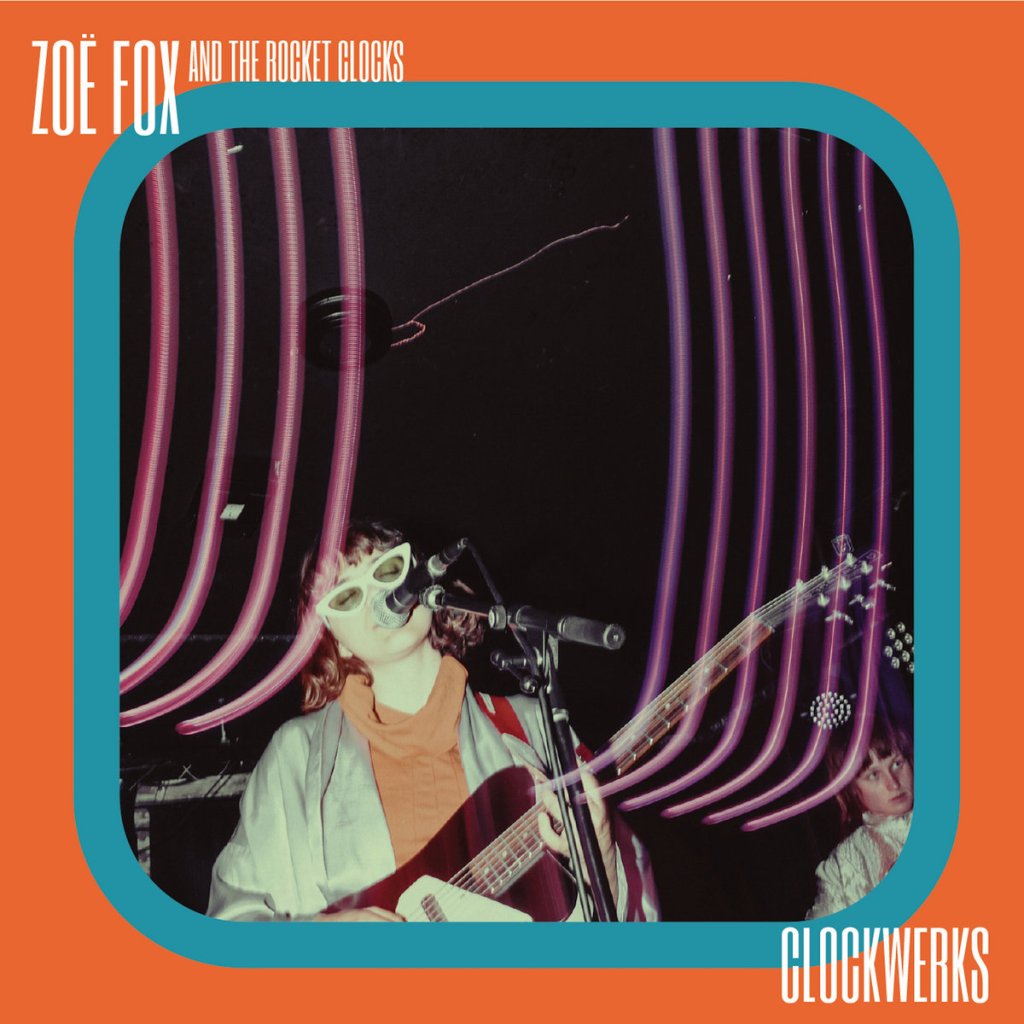
Zoë Fox And The Rocket Clocks: “I’ve been writing about this relationship between humans and technology”

Handmade mixed-media collage by B.

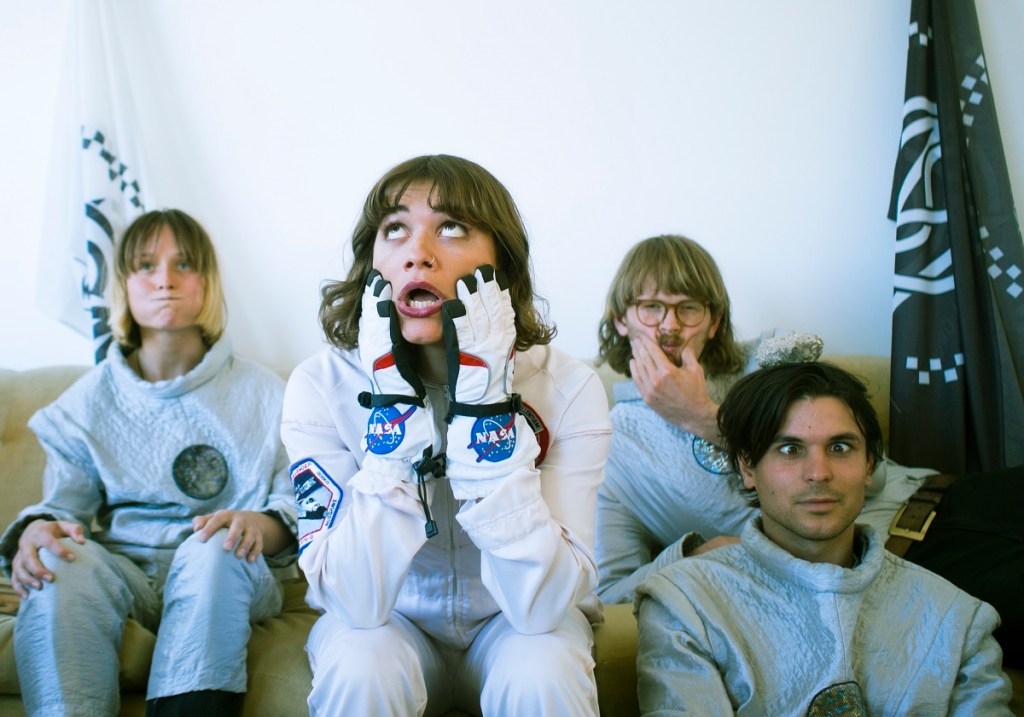
Melbourne-based singer and multi-instrumental Zoë Fox has released her debut album Clockwerks, an out of this world collection of intergalactic pop! It’s exciting, it’s fun, and it’ll make you dance. Zoë’s album launch was postponed due to the global pandemic we’re all living in right now, she took her music to live streaming via her Instagram stories and totally killed it!—she does live stream like no one else does. We chatted this week to get the lowdown on her LP and found Zoë to be warm and charming, funny and a fellow book lover! Maybe Zoë’s next project should be an online book club! We’d sign up for that!

How did you first get into music?

ZF: We always had a music room in our house when we were growing up, we were so lucky. My mum was in a bunch of different bands, so I was surrounded by it from a very early age. All of my favourite children’s entertainers when I was a kid were my biggest influences. I started writing songs and poems as experiments, it just evolved. I was never really a good singer when I was growing up, but did it anyway because I enjoyed it.

Do you think you can sing now?

ZF: I don’t really care anymore [laughs].

When did you first start playing guitar?

ZF: I started playing guitar when my mum gave me a few lessons when I twelve. When I was fourteen I had a friend in high school that could play and we got back into it together. I started playing songs from The Sound Of Music in her bedroom [laughs].

You originally started out doing covers; what put you on the path to writing your own songs?

ZF: I guess I always wrote my own stuff, even when doing covers. I thought people just wanted to hear songs that they already knew [laughs]. I thought no one wanted to hear the songs I was making up. When I started doing gigs I thought, maybe I can just slip a couple of originals into here.

Your debut LP Clockwerks came out last week; how are you feeling now it’s finally been released into the world?

ZF: It’s a relief! I feel like it’s not only released into the world but it’s released out of my body and my entire system, which is so good because often projects just build up inside you. Releasing it is releasing it from you and actually clearing space for new creative ideas to flow in. It’s bizarre circumstances to release your debut album in right now in the middle of a global pandemic [laughs]; selling it on bandcamp for the price of a brunch! I’m so relieved it’s out. I feel like I can cross that off my list: make an album, done!

How long were you working on it for?

ZF: I’ve been writing those songs for years. “Perfume” I probably wrote that maybe six years ago. I was just writing songs and I didn’t know that they were going to be an album until very recently and it all fell together really quickly. It was all recorded in the space of two weeks.

What was it that made you think, I have an album now?

ZF: I don’t know actually. I guess when I was recording it and I was choosing songs I just picked ones with a similar theme. I realised the whole time I’ve been writing about this relationship between humans and technology. I pulled songs that I thought would be a good family together, out of their little pockets and put them into one nest together and went, yeah, that’s an album!

What’s the significance between the album title Clockwerks?

ZF: It’s got so many meanings, so many things have lots of meanings. Initially when I first decided I wanted to call it Clockwerks I was reading Even Cowgirls Get The Blues by Tom Robbins.

I know that book!

ZF: Yeah! Well, you know how he talks about the clockworks all the time?

Yes.

ZF: Throughout the whole book he is just harping on and on about the clockworks. My interpretation of it was… you know how there’s all those caves that go into the middle of the Earth and the clock people maintain the clockworks and the Earth time is different from our constructive time, it was measuring a countdown until the end of man. I’ve been fascinated by time and space forever, it’s just so wild! I was reading that book and I thought the clockworks were perfect… it’s all about time and space and this notion that there might be something bigger going on.

I interviewed my grandad for the “Earthling Interludes” and he’s a massive clock collector, he’s like the clock master in a way; my grandparents’ house was like a clockworks of their own [laughs]. They had clocks all over the walls and every hour the whole entire house would ring and chime and tick and tock and cuckoo and ding and dong! It was the most magical thing in the whole world. All of that combined created the name Clockwerks.

Could you give us a little insight into one of our favourite songs on your LP “Tiny Little Robots”?

ZF: It got started, I picked up this tiny little robot earrings from a garage sale for $2 or $1. Every time I went over my friend’s house I’d take off my jewellery and put it on the table. I’d always forget them and I’d lose those earrings everywhere. I got a text from my friend and it said: you’ve left your tiny robots here again and they’re taking over the world! [laughs]. We started a text war in the style of Graeme Base’s Animalia. Like, “Someone needs to stop these mindless metal-heads from making such a mess!” He’d send me little pictures of them doing really naughty things like smoking a cigarette. He said they were being too naughty and they had to put them to bed, he put them to bed in a little matchbox with cotton wool. I took some of our alliteration text history and combined it with the mental image I had of all these tiny little robots in tiny little rowboats coming over to take over the city and with their technological ways making their ways into the minds of everyone and taking over from the inside.

That’s so fun! That’s one thing I love about your music—it’s so much fun!

ZF: I have a lot of fun writing it and playing it!

What about the song “Mr Gravity”?

ZF: Ohhhhhhh [laughs]. That was inspired by a relationship gone wrong, I found myself getting completely worn down. I don’t know why I always seem to date men like robots? [laugh]s. Maybe that’s something I need to look into! I was just frustrated. I created this thing where he was like “Mr Gravity” bringing me down like gravity, keeping everything down. I want people to interpret it the way they want to. I had someone go “I thought it was about being brought down to Earth and it was really grounding!” I was like, that’s great! It’s good it can be different things for different people. I was frustrated with boys that were judgemental, that would make comments about my appearance. In one of the verses – I was also learning about the war on waste at the time as well, so it was all paired in – I say: ‘you’re like a supermarket with high standards for cosmetics / disregarding nature’s fruits and all their imperfect genetics / I am a crooked house complete with feelings, thoughts and fears / three eyes, two hearts, too many ears for hearing.’ I was just saying, hey, stop bringing me down! Don’t judge me on how I look or how I am. I ended up getting out of that relationship and breaking up with him, and said: my mechanical friend I’m sure our times come to an end [laughs].

I’m sure a lot of people could relate to that! I know I do, I once dated a guy that was always complaining about how frizzy my curly hair was, it’s like, dude, it’s humid, my hair curls, hair gets frizzy, deal with it!

ZF: Yeah, or having hairy armpits. It’s like, come on dude, take me as I am. Sometimes you might be so deep in it that you don’t see that it’s happening. That was me breaking free of that! It’s a powerful song for me, I don’t feel run down by it, I feel empowered by it now. That song was my empowering breakthrough, where I rose from the ashes as a phoenix.

Was there any song that you wrote on the album that surprised you?

ZF: Probably the way the “Shiny Car” and “Tin Can Man” ended up sounding. They weren’t finished songs when I started recording but I went, nah, these are going on the album. I sat down with the producer and we used as many descriptive words as possible. I had written the main song but I didn’t know how it was going to sound, what style it was going to be. We worked on it so much and it really surprised me how it came together. I was so pleased.

I know you love to use descriptive words in your lyrics; do you have any favourites?

ZF: It’s one of those things that you can’t think of it until you’re saying it.

I was asking ‘cause I’ve worked in libraries my whole life and I’m a big book and word nerd, being a writer my whole life too, I’m just in love with words and sentences and how things go together, how things sound. I love fashion magazines because of the descriptive words they use, they can be describing an item of clothing, something that’s just made out of fabric and stitches and they make it sound like this magical thing! It can be so poetic. Words are the best.

ZF: Incredible! Yes! They are the best. I studied English Literature at uni actually, I majored in it; I write children’s books on the side.

That’s so cool!

ZF: So I’m so on-board with what you’re saying, I love it. I love when people describe the world in a different way…. Like I received a letter from my friend Archibald the other day, I was sitting in the garden and I noticed that it had been pegged to the clothes line, there was an envelope with my name on it – I guess my housemates were trying to disinfect it because of what’s going on in the world right now. He wrote: Dear Lady Fox, in my isolation I’ve been writing letters and I just wanted to write to you and pick your brain. Here’s a letter “Z”… it’s not my best but it will do. He had just written the letter “Z” and I love it when people talk about words in that way, like saying “here’s a letter” and then writing a big letter “Z”! [laughs]. It was so genius.

Have you read the The Phantom Tollbooth by Norton Juster?

I have!

ZF: That is my favourite book of all-time! The way they talk about words, like you can taste a letter “A” in your mouth and see how it feels on your tongue! Or you can spill over a bucket of words and then your sentences become jumbled! I love that. It’s so genius. I think I read it like every year.

Nice! You wear really fun costumes when you play; did you see someone growing up wearing an amazing costume and were just so in awe of it?

ZF: Bands who I grew up with that had a common theme, I guess the Beatles did and Devo did it, they just had a look. That’s how I want to see bands. I thought what would I want to see? I want to see a show, I don’t’ want people to just stand there and play their instruments! I want costumes and dancing! Another band that does it that I saw that I love is, Sugar Fed Leopards. That’s Steph Brett, she’s in Empat Lima.

I love Empat Lima!

ZF: They had fluffy pink costumes and I thought, that’s another band that’s doing what I want to be doing!

Do you have a favourite track on the album yourself?

ZF: It changes every day. “Perfume” the first track, it’s the oldest track… I wrote that one years before the others. I’d just been reading the book Perfume: The Story of a Murderer I went into that world, I won’t’ explain it too much because I don’t’ want to spoil it if anyone’s reading it. I was reflecting on humans’ search for happiness in that song. I was feeling sad when I wrote that song…

Vid by Sofar Sounds.

Lastly, why is music important to you?

ZF: It is the way that I process all this information that is coming in from the world. Without it I would just overflow like a bath full of information and colours and ideas and sensations—music is me pulling the plug on that bath and letting it out! Letting it flow out in any way it wants to!

Awww that’s lovely! Thanks for doing what you do!

ZF: That you for what you do too! Writing is so important.

Directed by Sean Sully.

Please check out: ZOE FOX & THE ROCKET CLOCKS (get Clockwerks here also). Zoë Fox on Facebook.
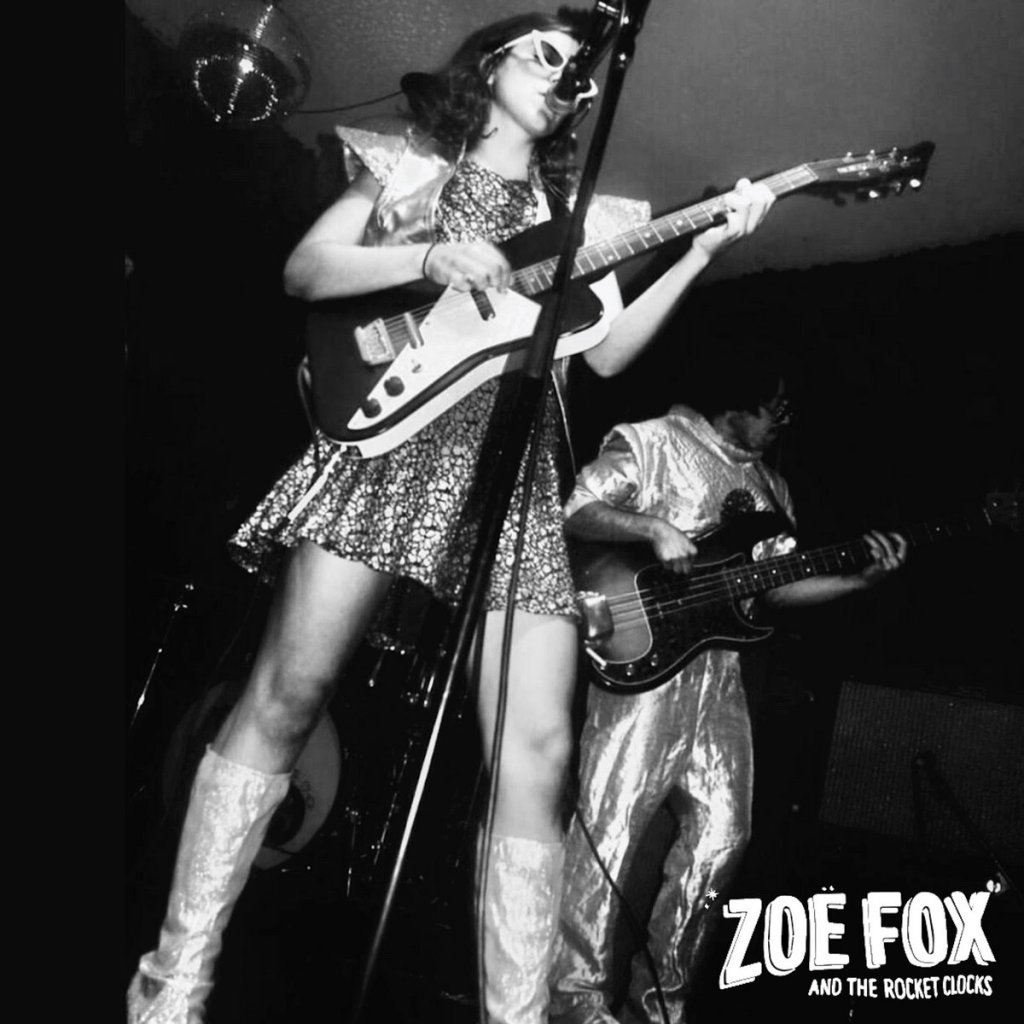
ATOM’s Harry Howard: “Universally in art, death and sex and love are the big themes… I’m constantly writing songs that mention death”

Handmade collage by B.

Melbourne trio ATOM made one of the best records of last year that you may not have heard. In Every Dream Home is a dark synth-punk outing in an apocalyptic world, their music is primal yet futuristic at the same time. On Sunday, guitarist and co-vocalist Harry Howard chatted to us from his Melbourne home while eating chocolate. FYI, there’s a new ATOM record in the works!   

You’ve been making music for a long time; what keeps things fresh and interesting for you?

HARRY HOWARD: It’s just endlessly fascinating really. Having a creative outlet is just such a great thing, it’s worth going through all the little doldrums that you go through for the breakthroughs and for the good times—the good times are just so good!

As an artist what are the things that you value the most?

HH: What I value is when people put their own personal input into things. It’s very hard to be original in this world. I think it’s completely fine to borrow ideas from people, that’s what culture is, a pool of shared ideas and as long as you put something new into it it’s fine to borrow things. When people put something into it that really comes from them then it becomes unique. It’s hard to explain, but all of my favourite artists seem to be… they might not even be well on a mental health level, but perhaps that helps them put more of themselves into what they’re doing.

They also may interrupt the world in a different way and give us a unique, unfiltered new perspective.

HH: Exactly! For some people things come out of them more directly than other people, some people are very filtered. That’s the stuff that I like, when you really get personality.

Same! What inspired you to start ATOM?

HH: Meeting Ben Hepworth. I met him on a video shoot we did with NDE [Near Death Experience], we got on really well and had a lot of common taste in music and we shared a perspective about music. He told me about his band Repairs that were playing live at that time, we went and checked them out and we got them to play with the NDE. I was invited to do a project for the Little Band…

The late Alan Bramford’s Little Band Scene?

HH: Yes. It was Stuart Grant [Primitive Calculators] too, I was invited to take part in a Little Bands night at The Old Bar. I had to make up something new and I thought, god if I go along with my songs it’s just going to sound like a solo NDE show. I thought to ask Ben to do something with me. I knew anything that I did with Ben would really sound different, with him doing beats and synths. I thought it would be such a huge change for me and it was something I wanted to explore, that was a few years ago now. It just worked from the start. Edwina [Preston] joined as well. Whenever we work it’s very quick and pretty easy. It took a while to get the live shows together though. We don’t do work that often but when we do it’s great. I credit Ben as the missing link we needed to create the whole project.

ATOM’s also a new way for you to say things musically?

HH: It is. More than that it inspires me in different ways, to do things differently, because of the mood of those instruments, it is so distinct and then there’s the references that it brings up in your mind. For me it’s taken me back to all these early electronic bands that came out at the start of new wave after punk, there was quite a bit of interesting experimental stuff and then it developed into that synth-y pop, some of which I like as well. With punk and after and before there was Suicide – Alan Vega and Martin Rev – all of those things it just brought out those influences. Synthesisers have this futuristic thing about them, the sound, even though it’s not quite old it still references some kind of made up idea about the future that we have, it gives you an opportunity to write about different things like how the world’s going.

Where did you get the album title In Every Dream Home? Is it from the Roxy Music song “In Every Dream Home A Heartache”?

HH: Yes it is. It’s also a kind of pop art reference, there’s an English pop art painting that has something about a dream home in it, it has that kind of ‘50s isn’t-everything-marvellous-in-our-dream-home vibe—of course though, it never is!

A lot of the themes on the album are things that I feel are happening right now in the world, like us all running out of stuff.

HH: I know, I know. It’s weird because some of the songs that I wrote since then and after that are even more relevant. It’s like people would think I would have written them lately. There’s one song called “Teenage Saviour” about how a teenager inspires everyone to change their way, politically. That was before the movement of the teenagers coming up about the shootings in America. I thought, oh god everyone’s going to think it’s about that! Then Greta Thunberg came out and I thought, oh my god, this song is about Greta [laughs], this is ridiculous. That might be on the next album. I think sometimes when you write about the future you’re going to get it right [laughs].

You’re prophetic!

HH: [Laughs]. I think it just happens.

How did In Every Dream Home start? Does Ben, Edwina and yourself write collaboratively?

HH: We do, overall it’s collaboratively but some of the songs, I would have music and words and I’d bring it along and they’d make up their parts and things would develop from that. The other option is that Ben would bring in a track of music and either me or Edwina would add vocals or another instrument. Everything is getting quite strongly effected by what the other members bring in. Everyone gets a credit in the end. You come up with some of the best ideas on your own but you can still collaborate on those and make them better.

How do you go about writing songs? Do you have any rules you like to follow?

HH: No, not really, it’s good not to have rules about anything and go for what works at the time. Sometimes I’ll write music and I’ll try to put words to it, sometimes I’ll write words then try to make up music for the words; sometimes you just get a bit of both, you’ll be banging away and a phrase will come to mind then it will turn into a song.

I really like how in ATOM songs there’s a lot of repetition.

HH: Yeah, yeah [laughs], I know. I thought that was something that suited it, I really love the way it was so minimal, reusing versus of words. Part of it was expediency, I will admit. It was also though that it suited the robotic quality of the music to be like that. It helped create a comic book quality to it… do you think?

I do. I also think that the album artwork by Darren Wardle lends itself to creating that comic feel. As the tracks unfold it is almost a journey through a comic, a story.

HH: I like that. It’s different for me. I think we’ve all really enjoyed that aspect of it, it feels really quite cool when we can make stuff like that—it’s a good feeling.

Cover art by Darren Wardle.

Something else that I have noticed in your song writing is that you often write about the theme of death; where does that come from?

HH: Yes, yes. I can’t help that, I’ve always done that to some extent I’ve always been a dark writer. Universally in art, death and sex and love are the big themes. It’s such a big thing. I was very sick, for a while it was quite touch and go, for over a year with my own health. My brother Roland died after I started getting better, and my parents have died… it’s a good way to deal with these things, making songs about it and stuff. It’s hard to talk about things like that, but if you put it into this framework of song lyrics, you can take any attitude you want and be quite playful with it. I don’t know though, I’m just attracted to doing it. I’m constantly writing songs that mention death.

Like you said, I guess it’s just processing stuff.

HH: Exactly. Even if you’re not thinking about them, these things are there in your mind, you know them and you can’t ignore them. Whatever you say about them can be useful, it doesn’t matter what attitude you take with them, if it’s some sort of dialogue it’s going to be useful.

Absolutely. I’ve lost both of my parents as well… I don’t know if you ever get to deal with things like that, for me anyway, like you said, it’s always there. It sucks that you can’t just simply hug a loved one anymore once they’re gone. Making stuff helps.

HH: Yeah, they’re the things you can’t change; what can you do about them? [laughs]. Not much! You have to have a release for it in some way.

I even noticed with your band names, ATOM is the building blocks of life, The Near Death Experience is death, then you have These Immortal Souls that’s life after death or eternal life.

HH: [Laughs]. There you go, it’s all about death.

Yeah, the whole cycle of life!

HH: I hadn’t thought about that! Things are strange how they work out, they can start making sense after a while. It’s very odd. For example when you write words and you have no idea of what you’re writing about and then you realise after, oh that make sense now.

Where did the ATOM song “I Used To Win” come from?

HH: Ahhh, well… that’s a good question. I was actually trying to write something a bit dark and a bit negative, I’m a big fan of film noir, that’s almost like a celebration of things going bad in a way. I wanted to do something along those lines and I just came up with that phrase and I thought it was evocative because it implies so much. “I Used To Win” is a more interesting way of saying that you lose or that you’ve lost a great deal. It’s got nothing to do with the Ollie Olsen song “Win/Lose” but it somehow clicked ‘cause I was doing a thing and writing about winning and losing, it was a personal reference for me. That’s a side thing that sometimes you might be influenced by people but you’ll have a reference from wherever and it encourages you. There’s a connection to Ollie’s song but I was just doing my own thing. I thought Simon Grounds did a good production job on that song, it turns into an apocalypse of noise!

I love that the album has a lot of atmospheric sounds.

HH: Synths are very atmospheric. They have such a strong personality.

It’s interesting that you’re in a band with synths now, I remember reading an interview with you from a while ago and you mentioned that as kids your brother and sister was enrolled in piano lesson but you dodged them.

HH: [Laughs] Yeah, I did! When I think of synths now, the keys are like a way into the sounds. I can’t play keyboards, I can only play rudimentary riffs on the keyboard, it takes me ages to work things out. So, I should have gone to more lessons! [laughs].

A lot of the music you write is quite dark; where do you find joy and happiness in your life?

HH: Just in the silly things [laughs]. There is an awful lot about life that is dark, e.g. the fact that you die and everyone you love that’s around you dies. There’s a lot of misfortune and there’s a lot of people that never get to be as one bit lucky as we are in Australia, being one of the richest countries in the world. There’s lots that you could describe as dark that goes on, on top of that I’m a bit of a sceptic about happiness, I don’t think we’re meant to be happy all the time. I don’t know if we’re designed to do that, I think it’s a bit of a high ideal. If you’re going to really look at things realistically I don’t think you can be happy all of the time. People use mind-altering substances because it’s easy to forget about why you’re not feeling happy at a particular time. I don’t want to be grim about it, I think life is really great, there’s so much to enjoy. I’m dubious about optimism, of always looking on the bright side, ok, but the dark side is alright sometimes as well, I don’t think we should block that out completely. It’s quite enjoyable when you embrace it in the way of film noir or look at all of the literature, film and music that is dark and how incredibly life affirming it can be—it can inspire you.

I get you. Sad songs often make me happy.

HH: Yeah and it can be a quite useful way to get out your own emotions. There’s nothing wrong with a bit of sad.

That’s been a big lesson for me in the last year. I was one of those I-should-be-happy-all-the-time people until my husband pointed out that it’s insane to try and live like that.

HH: I agree. You’d have to make yourself really shallow to live like that, we have many sides; I don’t want to be like that.

Same! What are you working on now?

HH: At the moment we’re working on a new ATOM record.

Yes!

HH: We’re doing it in isolation. Ben told us today that he was working on some updated beats and things we’ve got going. Ed and I will work on them here. We’ve got songs on the go, about half the record is written, it just needs to be arranged. We have three writers and things happen pretty quickly with us, everyone really wants to get their stuff in so we can be quite competitive; there’s no shortage of material. So there’s the next ATOM album, ATOM 2, and then I’ve got all this solo stuff I keep working on. I’ve just been in touch with Dave [Graney] and Clare [Moore] – Dave has a lung condition and he will be isolating quite seriously for a while – I thought we might try emailing stuff back and forth for a potential NDE project. I work in a hospital, so I’m in this lull before the storm too! Which is taking up a bit of my mind right now, it’s very stressful.

It’s scary what’s happening in the world right now?

HH: It is! It’s like the future is here now!

The ATOM record has come true!

HH: I know! All those shows we’ve watched on Netflix about the dystopia has come, it’s really arrived.

We’re very excited that you’re still creating throughout it all!

HH: Thank you!

You’ve made our day that a new ATOM record is coming! It was such an underrated record, when I first heard it I thought it was so cool and different; sonically it was like a punch in the face in a good way!

HH: [Laughs]. I wish it had punched more people in the face, not many people I think have heard it.

That’s why we’re having this chat with you! It was one of our favourite records of last year!

Please check out: ATOM. Get In Every Dream Home out now on IT RECORDS.

Melbourne’s Pinch Points: “Community, diversity, big riffs!”

Original photo Chelsea King. Handmade collage by B.

Pinch Points make fast-paced punk with jangly guitars and a tone so sharp it could cut diamonds. Their songs are catchy with no-frills, while writing their own book of sarcasm with lyricism expressing sardonic observations of society, done so cheekily and fun you can’t help but smile along with them—after all, we’re all in this together. Pinch Points aren’t afraid to say what we’re all thinking.  We caught up with them to talk about their new live record and music in the works.

A few days ago you released your LIVE at 3RRR digital album and limited edition cassette; can you tell us about the best and worst show Pinch Points have played?

PINCH POINTS: That RRR show was a great night and we’re so glad we recorded it. By far the most amazing show we’ve played so far has to be opening Golden Plains the other weekend. The adrenaline that comes from playing in front of 10,000+ eager punters is overwhelming. It’s surreal to think about that happening now that we’re all cooped up inside self-isolating.

Our worst show might have been at the Landsdowne in Sydney. Our original venue was shut down last minute so we switched to a graveyard slot show, playing right after another gig in the same bandroom. The band before us went on and on with a Rolling Stones cover and by the time we played we were fairly frazzled and not many people turned up that late.

What do you personally get from playing live?

ISSY: immense joy playing with my best friends! And the adrenaline rush that comes with it.

Can you remember who or what made you first think, I want to play music?

JORDAN: My first introduction to playing music was when I was 13 and super bored, sharing one room in a guest house with my parents in Fairfield. All I did up to that point in my life is play video games but we no longer had a TV. There was an old nylon string acoustic in the corner though and my Dad taught me a few chords one day and I guess that was the beginning of a lifelong obsession…

ACACIA: Like Jordan, my dad taught me basic chords when I was about nine. I was obsessed with The Ramones, Nirvana, Hole and The Runaways, so I started learning covers of “Cherry Bomb” and “Celebrity Skin”, which led to writing my own stuff. Joan Jett and Courtney Love were two big figures for me, who made me feel like I could have a place in rock music.

ADAM: There was a tiny bass lick somewhere on the first Jet album that I thought was unreal as a kid – and then at high school they offered bass lessons. Played bass for about five years before I bought a guitar. Never learned that bloody lick though!

ISSY: Definitely dancing around my living room to Avril Lavigne’s Sk8ter boy when I was five brought out my inner punk. My parents really wanted me to find an instrument to play so I started with keyboard, then flute, then guitar, but none of them really clicked like the drums did. My brother was learning drums at the time and unfortunately for him I shared/stole his drum kit and haven’t looked back since!

When you first started playing live did you ever get nervous or scared?

PP: For sure, and we still do. Backstage at Golden Plains when we were waiting for our cue to walk on stage, the adrenaline was hitting us all in a big way. We hold some perfectionist tendencies when it comes to executing some of our trickier songs, and definitely get nervous about stuffing them up (not that mistakes matter, they add character).

Photo by Chelsea King.

You played and recorded the RRR’s Dropout Boogie with Zara set two days after wrapping your tour with Tropical Fuck Storm; what’s something you learnt from your time with TFS and watching them play night after night?

PP: It was amazing hanging out with TFS and watching them every night. When they play it seems like they’re all working in harmony to conjure up this gigantic beast for the audience. Each member plays their own parts separate from the others as well, though. Also, they have so much power. They put all of their energy into the show but in a really unique way.

What was the first concert you ever went to? Tell us a little about it.

JORDAN: I bet Acacia has a good one. Mine was the Powderfinger and Silverchair double headline tour! You ripper!

ACACIA: Besides The Wiggles or my dad’s band, perhaps Missy Higgins and Tim Rogers. Classic Aussie pairing.

ISSY: My parents took me to see Michael Bublè when I was about 10. I used to listen to “Call Me Irresponsible” with my Mum every day on the way to school, as well as Metallica’s “Enter Sandman”.

ADAM: I don’t think I remember the first concert or show, but the earliest large show I remember was Herbie Hancock at the Palais. Still the best show I’ve ever seen.

Have you been writing new music? When might we see a follow up to last year’s Moving Parts LP?

PP: We have been! We’ve written more than half of a new album already and it’s sounding fierce. We had a whole bunch of plans in place for the release already but it looks like the whole pandemic situation has derailed that. All we can say is we’re doing our best to work on the album and will release it when the world is more ‘normal’.

What direction is your writing headed in?

PP: One of the most rewarding but also challenging parts of the writing process for our new record has been incorporating more collaboration. In our first two releases, Adam brought in a lot of material that was already pretty fleshed out. We’ve made a conscious effort this time to include everyone’s ideas from the beginning, which has made for a slower writing process but amounted to us having some really awesome songs that we feel represent everyone’s creativity.

Sound-wise, the new album will broaden the PP sound even more to include some softer and heavier moments, while being generally more direct and perhaps even simpler at times. We’re still figuring it out though.

Photo by Chelsea King.

We super love your guitar tone, nerdy question; how do you get your sound? Why did you decide to go clean rather than distorted?

ADAM: As well as punk, metal, rock etc., I always liked jangly bands. I’d been writing some hardcore stuff a few years ago, and couldn’t find the “tubescreamer” pedal I’d been using. Then I heard Nutrition and Uranium Club on Bandcamp and it all made sense.

We just use compressor pedals so that the lead lines jump over the chords and we don’t have to do the ‘pedal dance’ when playing. Recipe as follows:

  1. Humbuckers, bridge pickup, all guitar knobs on full;
  2. $50 compressor pedal, sustain on full and attack at zero;
  3. Fender-style valve amp, clean channel, and turn up the pedal output until it’s about to get crunchy;
  4. Bass at zero, mid and treble full, presence as high as possible without it being too harsh.

How does playing live help your songs develop?

PP: We often record at the first chance we get, so playing the songs over and over again at shows lets us get way more familiar with them. This leads to us picking up the pace of a lot of them and learning to belt them out with more energy than the recordings.

What’s something that’s really important to Pinch Points?

PP: Community, diversity, big riffs!

Please check out: PINCH POINTS. PP on Facebook. PP on Instagram. You can find PP releases on their bandcamp and via Roolette Records in Australia and Six Tonnes de Chair in Europe.