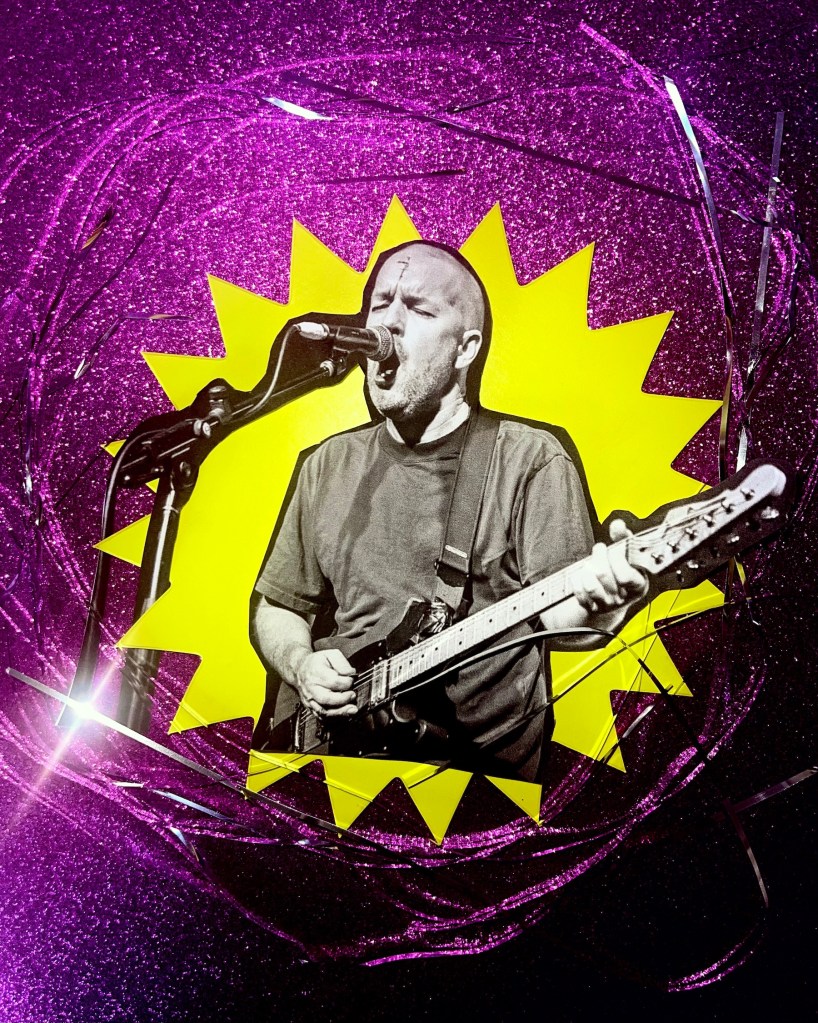
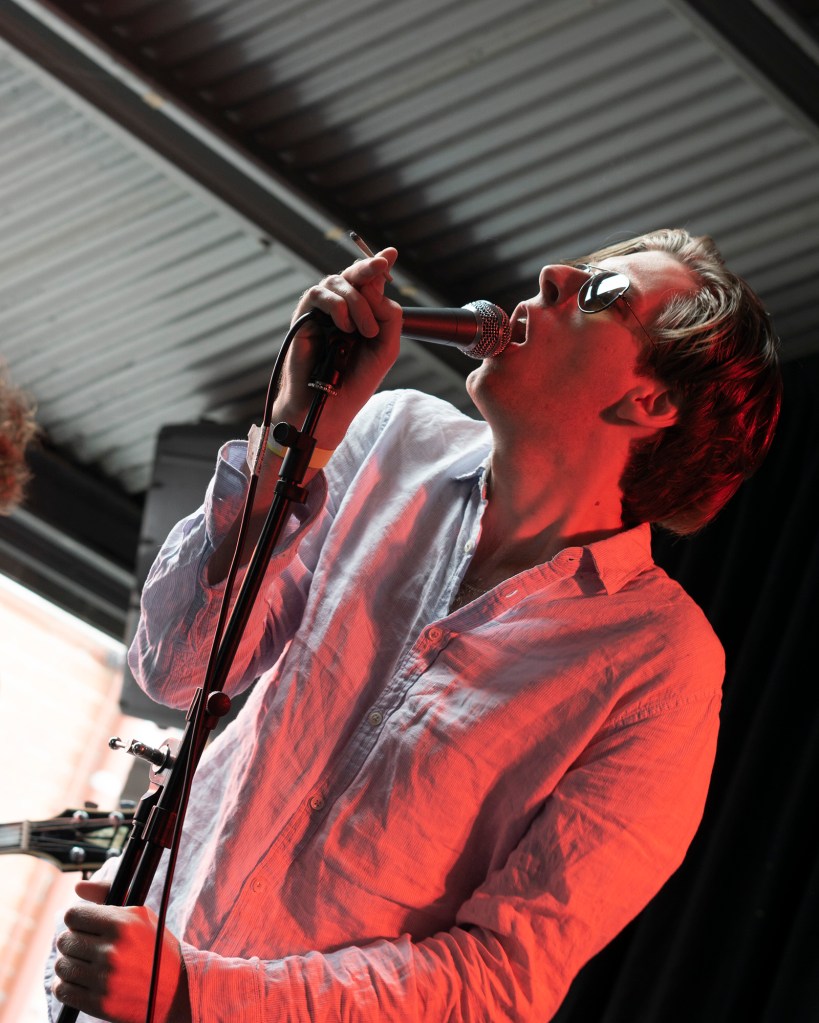
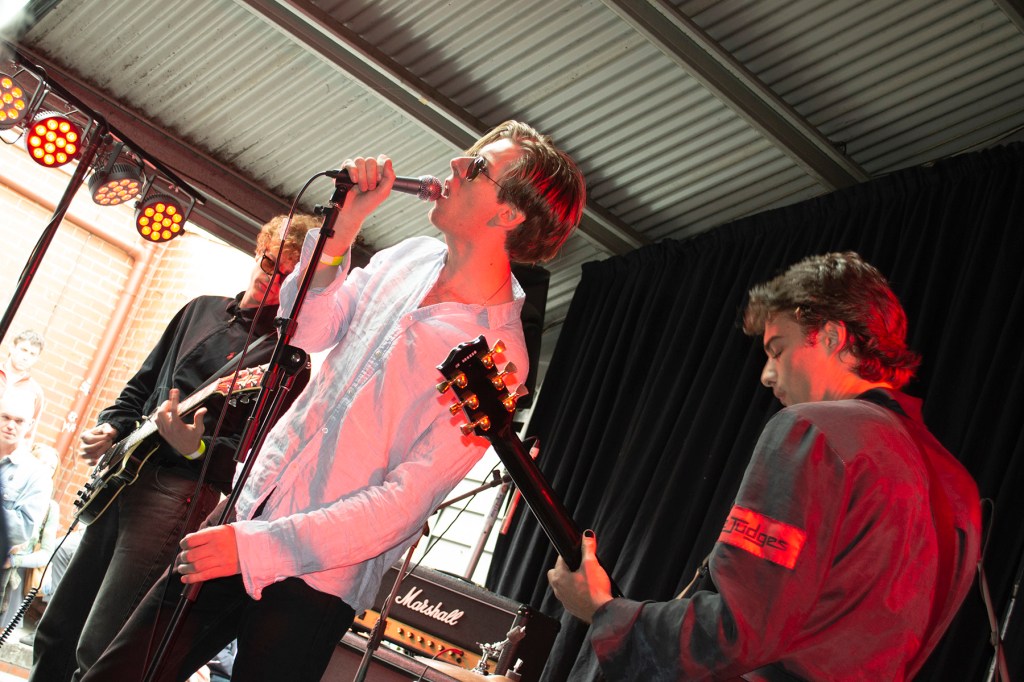
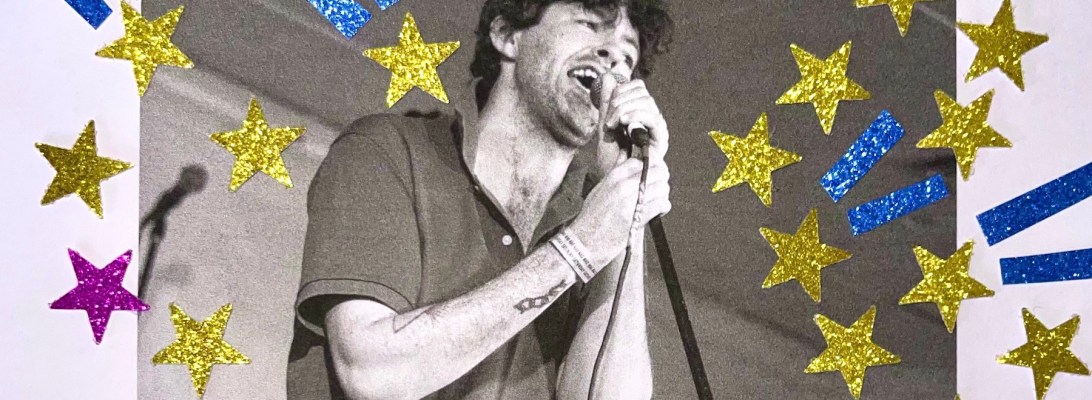
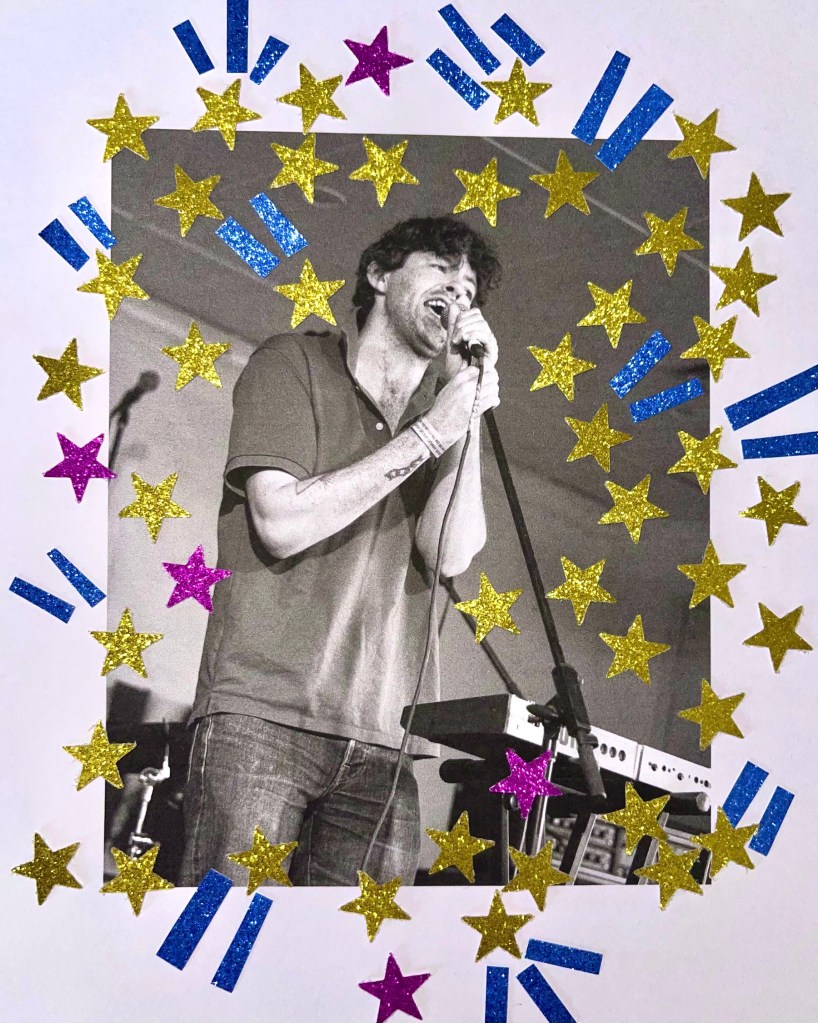
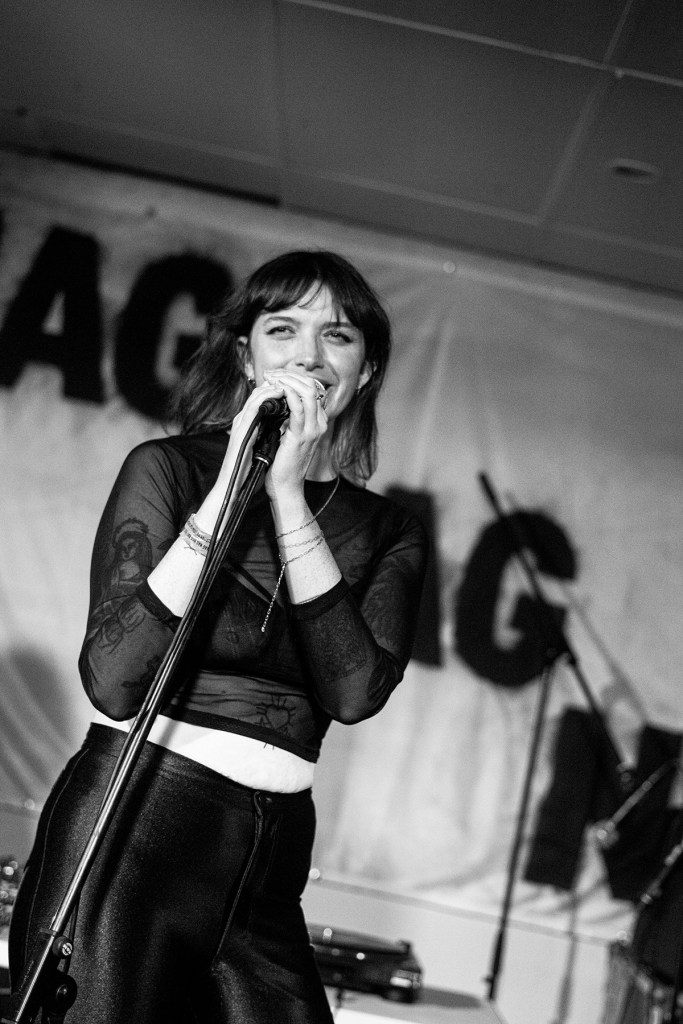
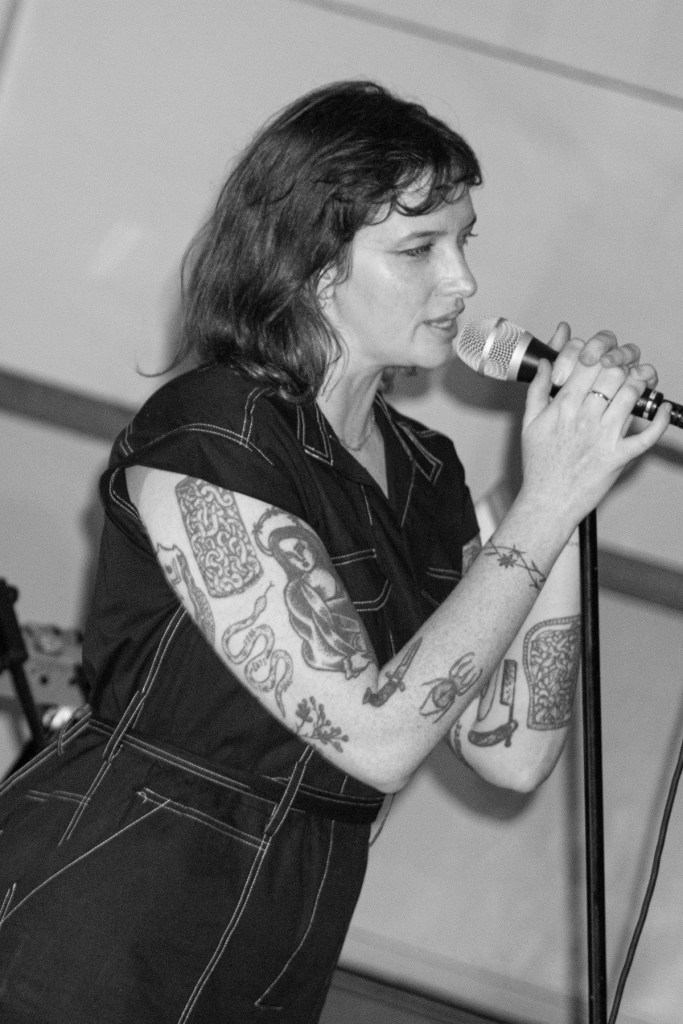
Ecca Vandal: “The person you want to be isn’t that far away.”

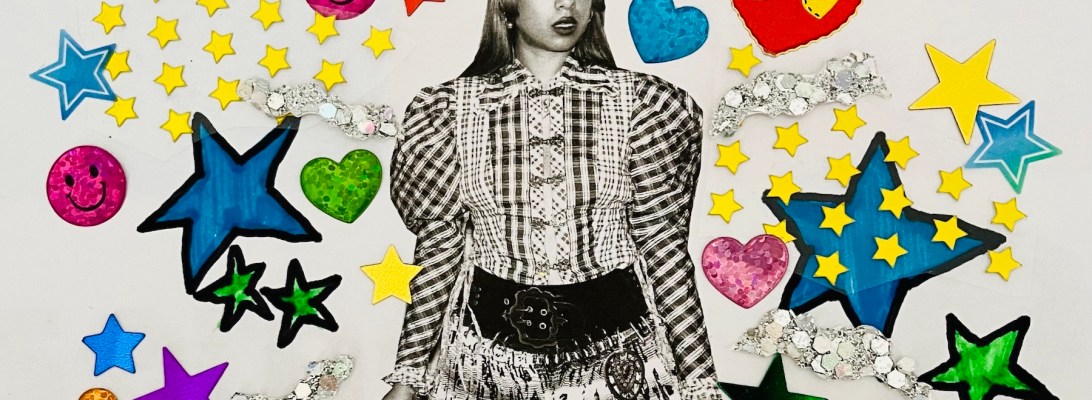
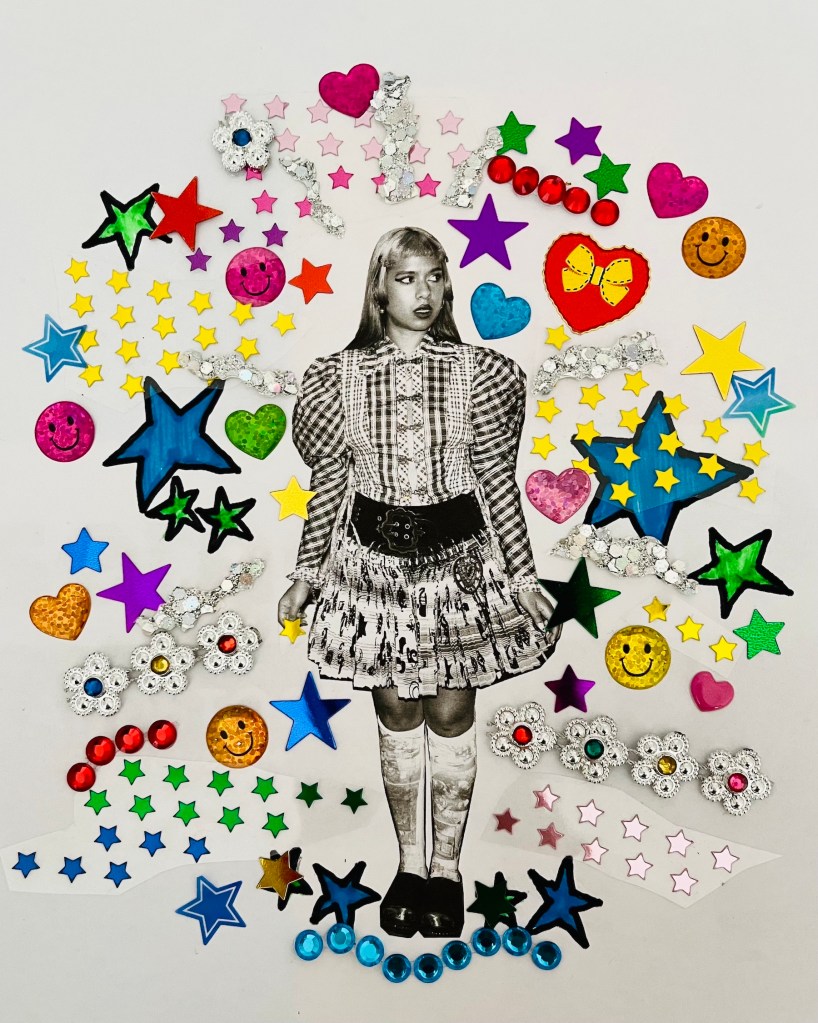
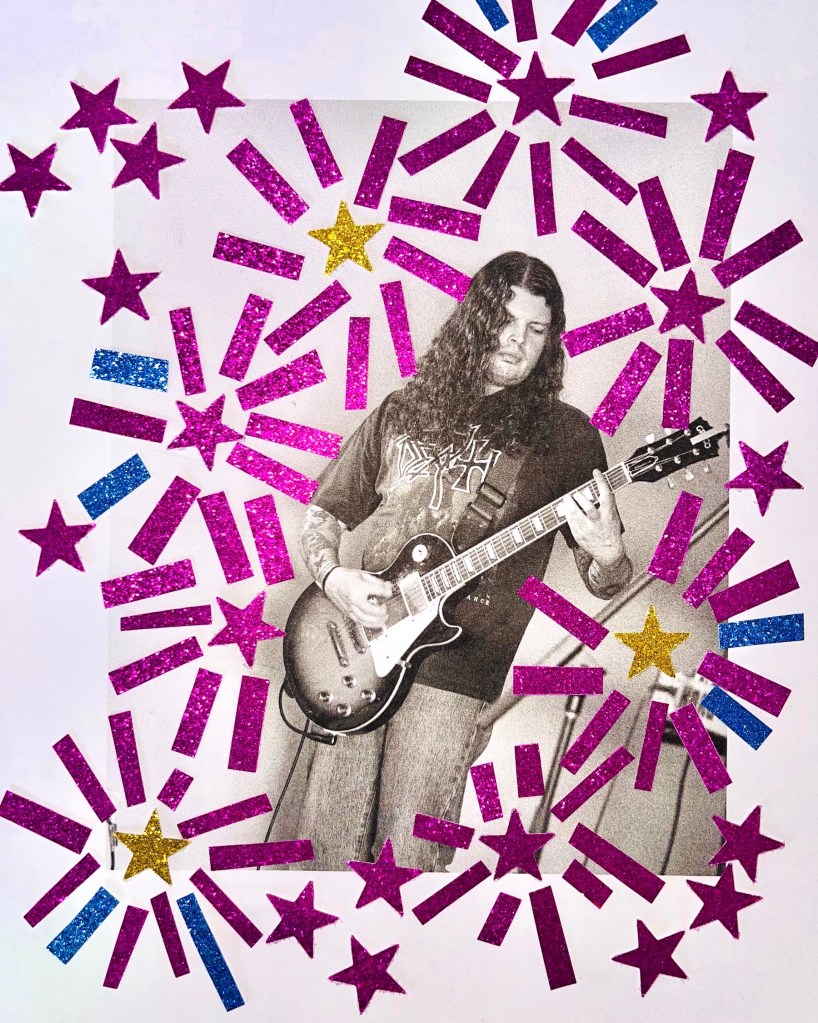
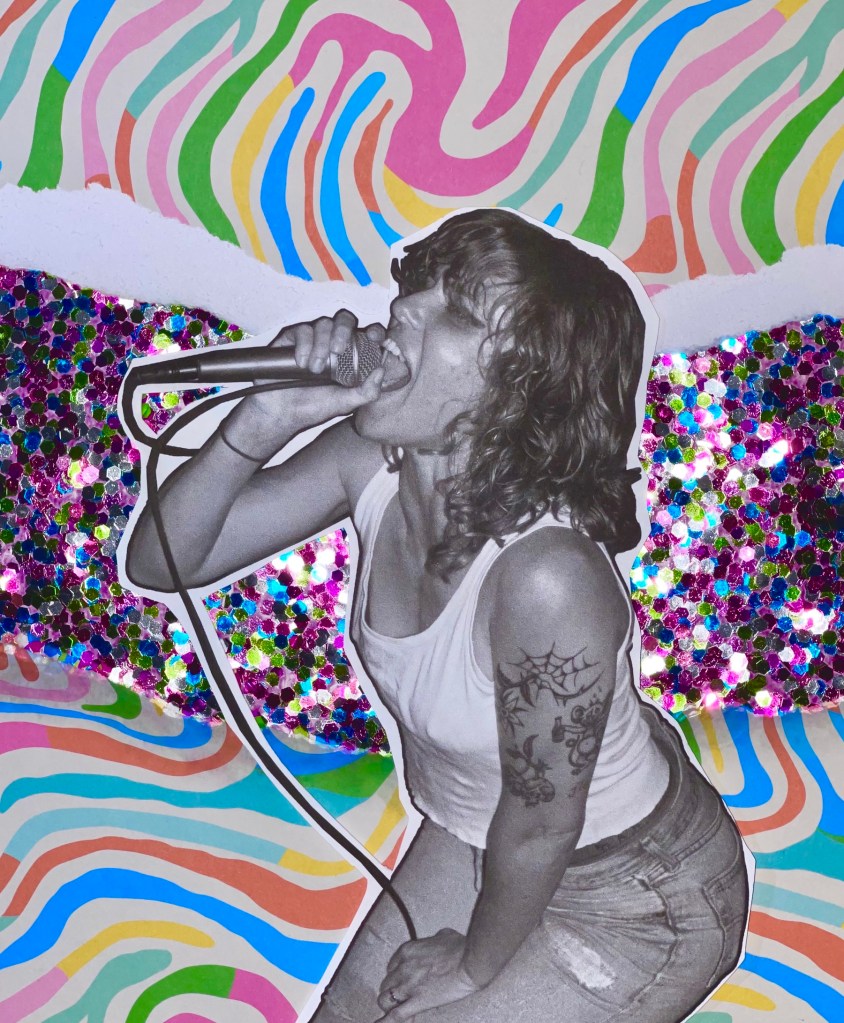
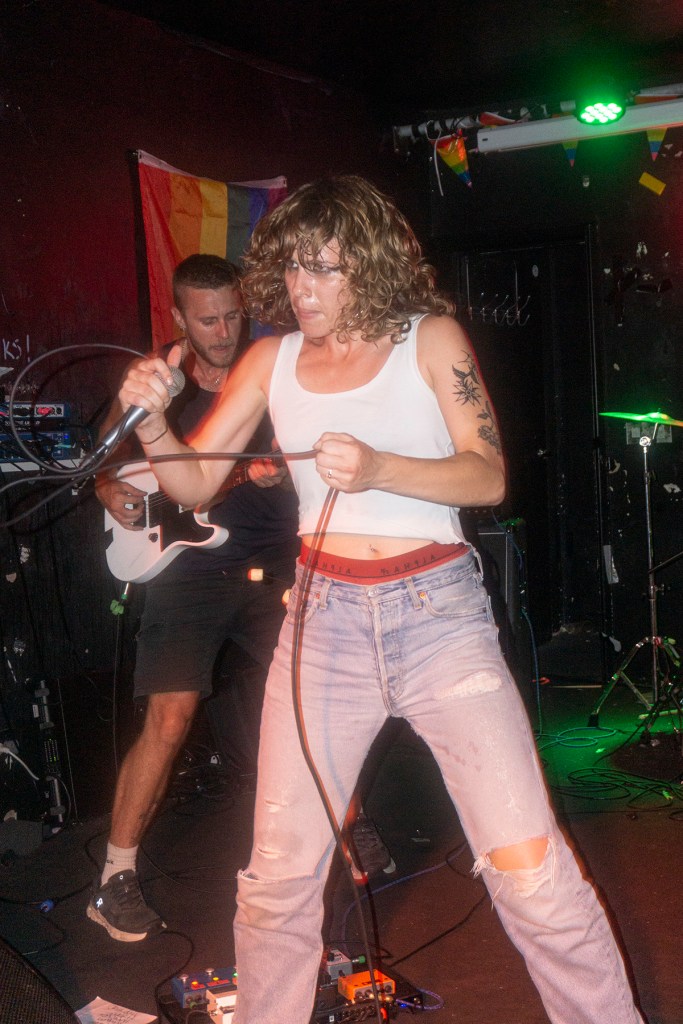
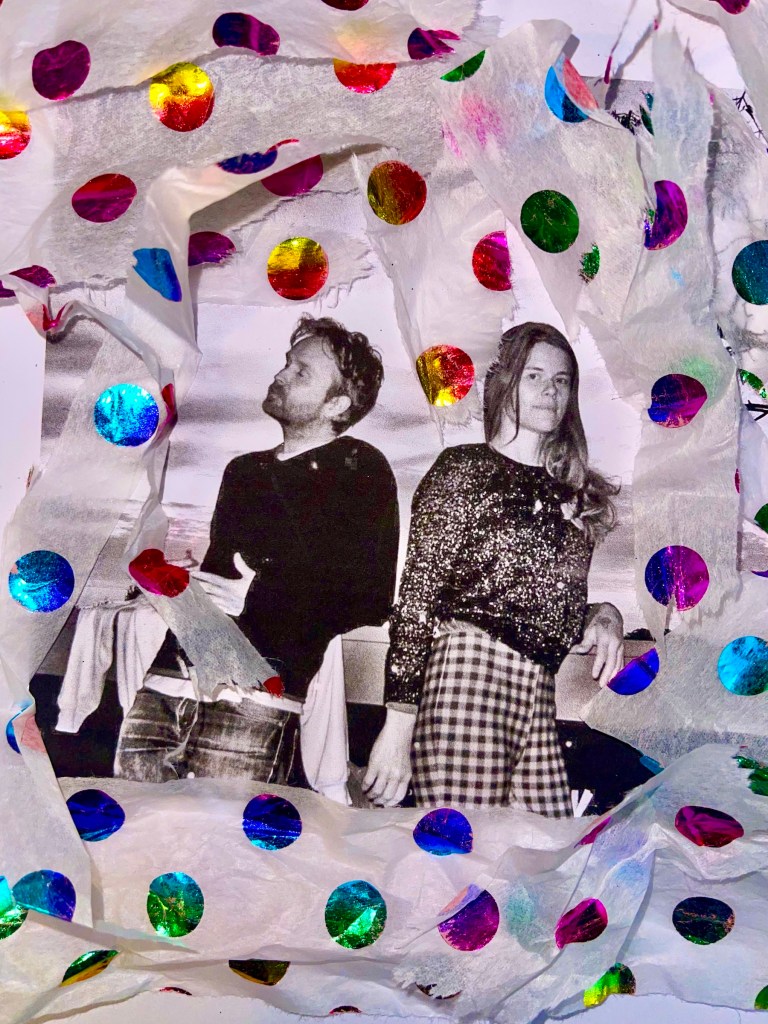
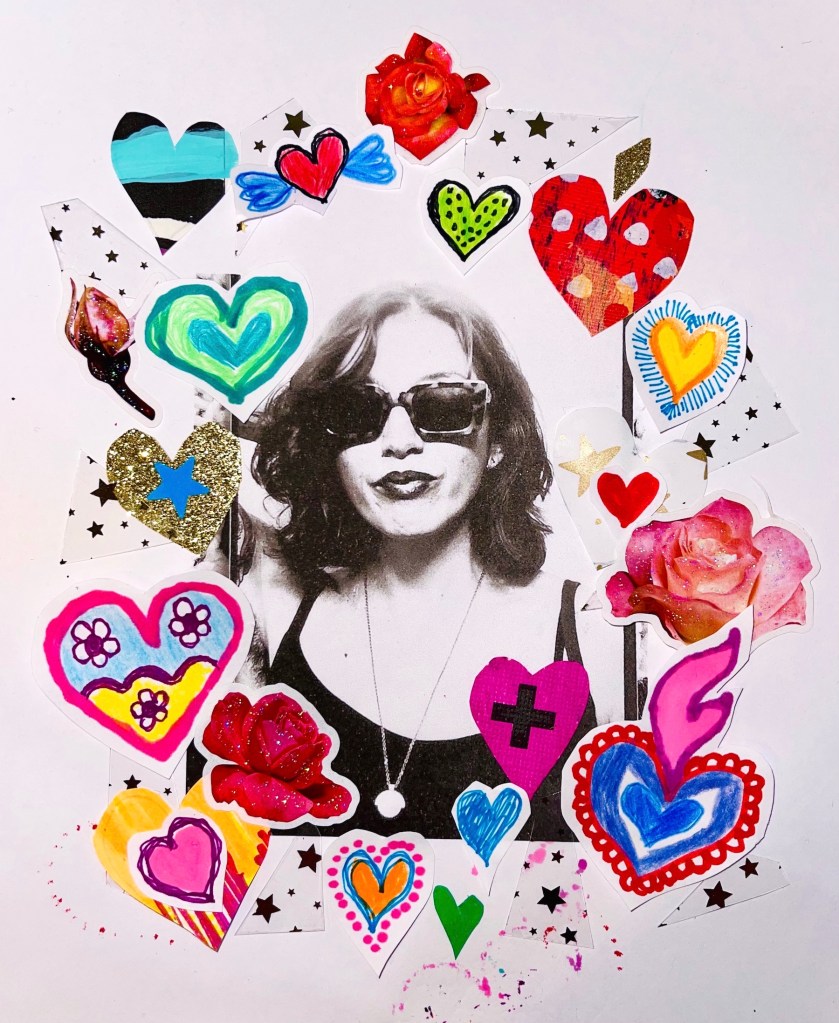
Original photo: courtesy of twntythree / handmade collage by B

More than a decade has passed since I first interviewed Ecca Vandal, back when her first single ‘White Flag’ had just arrived and she was preparing to play her first live show under the Ecca Vandal banner. Even then, our conversations usually drifted beyond music. We’d end up talking about films, art, subcultures and records we loved, bonding over just how much those things meant to us, but also about what it means to exist in punk spaces as women of colour.

A lot has happened since. The South African-born, Sri Lankan Tamil artist raised in Melbourne, has spent her career moving between genres, touring internationally and building a sound that’s never sat neatly in one space. Her new album Looking For People To Unfollow emerged from a couple of years spent offline, skateboarding, and reconnecting with herself creatively. The record feels deeply grounded in the present and instinct.

Ahead of the album’s release this Friday, and in the middle of a whirlwind year that’s seen her play Coachella and tour with her heroes Deftones and Limp Bizkit, Ecca opens up to Gimmie about isolation, mindfulness, fearlessness and learning how to back herself again.

ECCA VANDAL: Great to see you! I haven’t seen you in so long! 

Yeah, it’s been a looong time. I was looking through my interview archive this morning and realised I first interviewed you twelve years ago, in 2014, when your very first single ‘White Flag’ dropped. Then we spoke again just as you played your very first live show under Ecca Vandal.

EV: Oh wow, that’s super cool. Love it. 

Congratulations on your album, Looking For People To Unfollow.

EV: Thanks so much. I can’t believe it’s been so long. 

You seemed like you were on this trajectory going up and up, and then disappeared. I was like, where did she go? All of a sudden you weren’t there. 

EV: There was definitely a lot happening around the [self-titled] album release. Then I was touring overseas, and it was great. It was just that COVID came about, and I found myself reassessing everything. Like, okay, what do I want to do? What do I want it to sound like? I wanted it to have meaning, and I felt like a lot of things getting released around that time were a little watered down.

I was pretty uninspired during that pandemic period, but that reassessment allowed me to go back into this mode of digging deeper — going back into the woodshed and crafting something again. Creating, rediscovering my own creativity, and writing with Richie. That was really the start of the process for this album. I just needed to take that time to figure it all out again.

You’ve mentioned that you just wanted making music to be fun again. Was there anything in particular that made it stop being fun? 

EV: Yeah, there were lots of elements to it — the realities of touring life, the financial pressures of trying to get overseas from Australia, getting a band around and paying them, and all these opinions and voices coming from the industry and labels. You know, the regiments of releasing music and the rules that kind of came with it. Those were things I just was never really here for, do you know what I mean?

I never started doing music that way, and to me there weren’t really rules to making music and putting it out. It was more like: make a song, click a button, put it online — and that was that. But then suddenly there were all these hoops we had to jump through just to release music, and it was kind of zapping some of the fun out of it, if I’m honest.

That’s what happened towards the end of that first album cycle — going on the road and figuring out the realities of all these different voices and personalities I had to manage. Thankfully, I think COVID and the pandemic came at a really good time for me because it allowed me to hit pause — not only on my creativity and where I fit in this world of music, but also on my life personally.

So, in a lot of ways, it ended up being a really important time for me, and a lot of positives came out of that period.

It’s interesting because when your debut album came out, we spoke around that time and you were saying you felt a little isolated and lonely because your friends were moving away and things were changing around you. But with this album, it almost feels like you consciously chose to self-isolate.

EV: Mm-hmm. It’s true. Yeah, I definitely was feeling that sort of isolation. Then, obviously, during the pandemic, Melbourne was one of the most locked-down cities in the world. We couldn’t travel more than five kilometres from our homes, and Richie and I live in Bayside in Melbourne, so we couldn’t see any of our friends or anything like that. It was definitely an isolating time again.

But I think, in the long run, it ended up being a good thing because I really had to tap into my own voice and figure out what I actually wanted — what I liked and what I didn’t like. There wasn’t anyone else to bounce ideas off. No friends’ opinions, no team, no industry voices. It was really just about following my own instincts and gut feelings.

That was one of the really positive things that came from that introspective period and not socialising much during that time. So, yeah, this time around, the isolation actually ended up being good for me.

So many songs on the new album deal with movement — there’s cruising, diving, running, crashing, falling. Why do you think motion became such a recurring language throughout the album?

EV: It came from that pandemic period. Not only did I kind of go inward in terms of my writing and discovering these creative extremes in my world, but it was also the time I finally decided to learn how to skateboard. It was something I’d wanted to do my whole life, and I thought, okay, this is the moment I’m going to try.

There was something about the motion of skating — the fluidity of it, the beauty, almost the dance of it — that translated directly into my songwriting. There’s a fearlessness that comes with skateboarding. You really have to trust yourself, and those two things flowed straight into the writing room.

We’d actually go to the skate park first during the day. Richie would teach me things on the skateboard, and I’d try them, and I’d fall and crash and really hurt myself. Then I’d have to get back up and try again in order to improve. There was this whole process of learning to skate, hurting myself through it, embarrassing myself in front of other people.

Then I’d go straight from the skate park into the rehearsal room or the studio and apply that same energy to the music, and it really translated. Obviously there’s a lot of motion in the album lyrically, but it was also about trying to be fearless and express myself in every raw way I possibly could.

There are all these parallels between learning to skate at that time — crashing, falling, then eventually cruising — and what was happening creatively. There was also a kind of self-soothing that came with it. It became this cathartic process for me, both through skating and in the studio.

So it helped you reclaim your confidence in a way?

EV: Exactly. That’s a better way of putting it. 

Like, in the lyrics on your song ‘Bleach’, it almost feels to me like it’s about destroying an old version of yourself and becoming something new. And kind of transitioning into the person you always wanted to be.

EV: Absolutely. I sort of discovered that the thing you’ve always wanted to do, or the person you’ve always wanted to be, actually isn’t that far away. It really just comes down to making that decision for yourself. That’s what happened through this whole process for me. It was about gaining that confidence again.

It’s funny because during that period everyone was giving themselves “box dyes” and cutting their hair, and transforming themselves through these DIY approaches, which is something I’m very familiar with. I cut and colour my own hair myself. There was this real sense of transformation and rebirth happening at the time, and I noticed it in a lot of people around me, in family and friends, and definitely within our own world with Richie and myself.

We were pushing the reset button on the industry, our association with it, and where we wanted to be musically. That’s where songs like ‘Bleach’ came from.

And honestly, it’s not always that hard. If you want pink hair, just go to the shop, buy the dye, and do it. You know what I mean? It’s the same thing with learning to skateboard. I’d always wanted to do it, so eventually I just thought, I’m going to try.

Yeah. And all of that stuff you’re talking about is also captured in your song, ‘Do It Anyway’.

EV: Exactly. It’s kind of just a reminder that we’re all human, so sometimes you’ve just got to do the thing instead of overthinking it. I’m definitely one of those people who can overthink things a lot, so in many ways it was me reminding myself that it’s okay to live a little. Even if it’s something small, or something you think you maybe shouldn’t do, or even just eating the thing you want to eat. Whatever it is, it’s okay.

Totally. I’m a bit of an over thinker, at least I used to be until I started doing mindfulness meditation again. It really helped free up my mind from constantly thinking, thinking, thinking. It helps me look at what’s in front of me, right now.

EV: Exactly. That’s really what happened through that whole process. Mindfulness became a big thing for me during that time, and the entire period of writing this album was about bringing myself back to the present moment. It was about enjoying what was right in front of me, being offline, and understanding what that offline space can actually do for you mentally and creatively.

That also meant coming back to listening to albums in full again, from start to finish, and really sitting with that experience. In itself, that’s a kind of mindful listening practice. I think we all do it in some way, but there’s something really powerful about being fully present with music like that.

Your song ‘Molly’ feels suspended somewhere between escapism and clarity. I was wondering if you were trying to capture that push-and-pull between those two feelings.

EV: Yeah, it is. It’s a little all over the place, and I think that’s sometimes what it feels like when you’re trying to search for that confidence again. When you’re trying to build yourself back up after a fall, or after something’s cut you down, there’s this real tug of war happening internally because you don’t always know which voice to listen to.

I was trying to capture that feeling in the song. You can hear it there. It’s like you’re everywhere all at once. But at the end of the day, you really just have to back yourself. That’s what’s at the core of it.

One of the lines that really stood out in that song was: I’m waiting to learn the reason why. It almost feels existential in a way.

EV: Yeah, it’s cause you’re constantly searching, right? You’re searching for meaning and searching for the reason why things might not have gone the way you thought it would or why it hasn’t met your expectations or why you need to manage your own expectations in the first place.

Looking back at writing ‘Bleed But Never Die’; what do you remember most clearly about that period and where your head was at?

EV: That song was about just tapping into how strong women are at the core of it, and how comical it is that sometimes there’s confusion as to how strong women are. It’s actually quite funny that that’s ever been a question on people’s minds.

But also, it came from a time when I actually got diagnosed with Endometriosis. So I had endo, and I had surgery for it, the song kind of came from that. It was always a terrible time for me, and it’s not anymore, but women are so powerful and we go through so much shit, but yet we still do everything!

Yes! When I heard the lines: I’m bleeding through my jeans again; and, who doesn’t love a good cry? I was like, yeah, I totally get it. That sisterhood and solidarity too.

EV: Yeah, it’s like, it’s not funny… We bleed for five days and some would call it certified critical, you know? But it’s pretty amazing. I’m always in awe of the female form, and smart, powerful women who do it all, and mothers who maintain a sense of grace, power and strength all at the same time.

Looking back at your new album, what do you think it was trying to teach you? 

EV: Look, it sort of sounds a bit corny, but it’s the truth, and I’ve seen it time and time again, even post-writing the album and throughout the journey we’ve been on over the last year and a half. It’s really just about backing myself and listening to my own voice.

It’s that niggly feeling I get all the time, or that little thing in my gut that says, I don’t know if we should do that, or maybe we should lean into this. I know it’s a bit different to the norm, but let’s go this way.

This entire album, the creative process, making it with Richie, and everything that’s happened since then, has really just been telling me to believe in myself a little bit more.

Last question. You’ve experienced a lot of really pinch-me moments over the past year. It’s been such a wild ride to watch, even just through my little screen and stuff. Has there been one moment in particular that’s felt especially significant for you?

EV: A lot of them have been. I mean, one that’s probably the most relevant right now, with everything happening, is that we’re on tour with Deftones, and that’s amazing and so special for me because I’m such a big fan.

But the way I met Chino Moreno was that I was in Los Angeles and, long story short, I was sitting in a cafe with my manager. He said, “Hey, I’ve got ten minutes. Can you just go for a walk or something so I can really lock in and do some emails?” And I was like, “Oh yeah, I can just sit here, I’ll be fine.” But he was like, “Nah, go for a walk. I really think you should get some fresh air.”

So I walked out of the cafe, turned left, and as I’m walking down the street, Chino is walking towards me. At first I didn’t quite clock that it was him, but then he shouted out, “Oh hey, Ecca. Hi, how are you?”

And I said, “Oh my god, Chino, I’m such a big fan.”

He said, “Hey, I really like your music. It’s great.”

He’d discovered my music and started following me, and we ended up having this little chat in the street about the touring I was doing at the time. That was a real pinch-me moment because I’m such a huge fan, and I never, ever would have expected that to happen.

And if I hadn’t gone for that walk at that exact moment, we absolutely would have missed each other. I would’ve gone one way and he would’ve been behind me, and that would’ve been it.

Looking For People To Unfollow is out Friday via Loma Vista Recordings. For all things ECCA VANDAL go HERE.

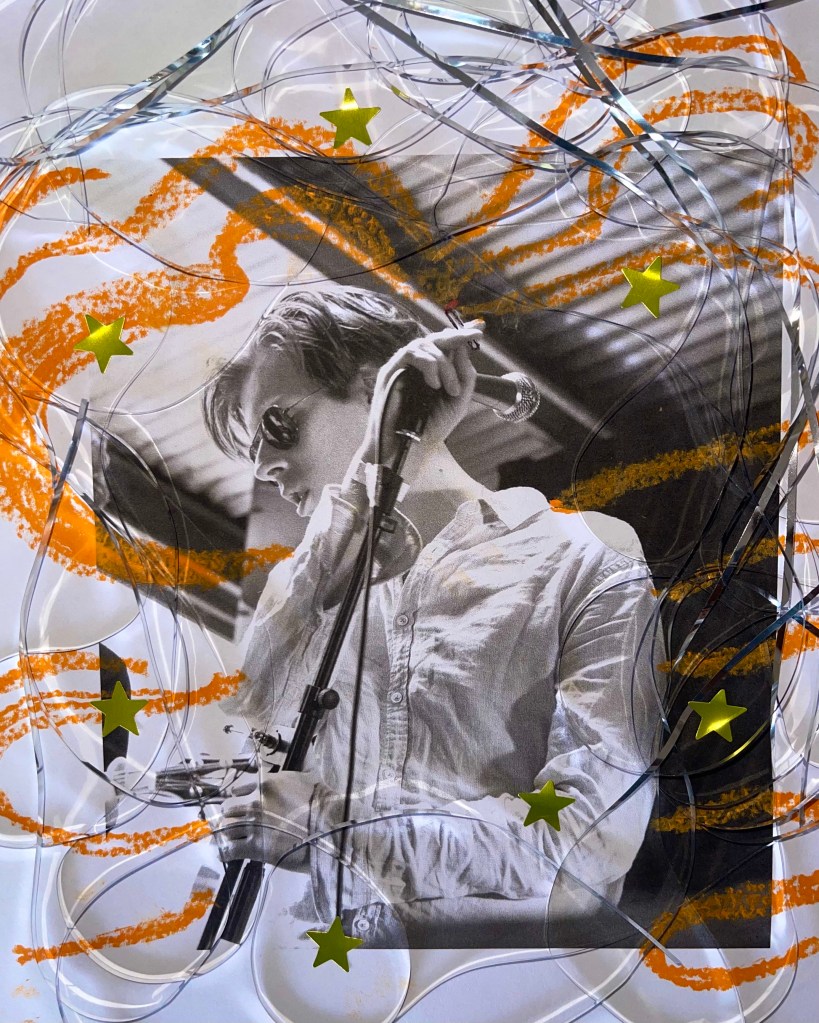
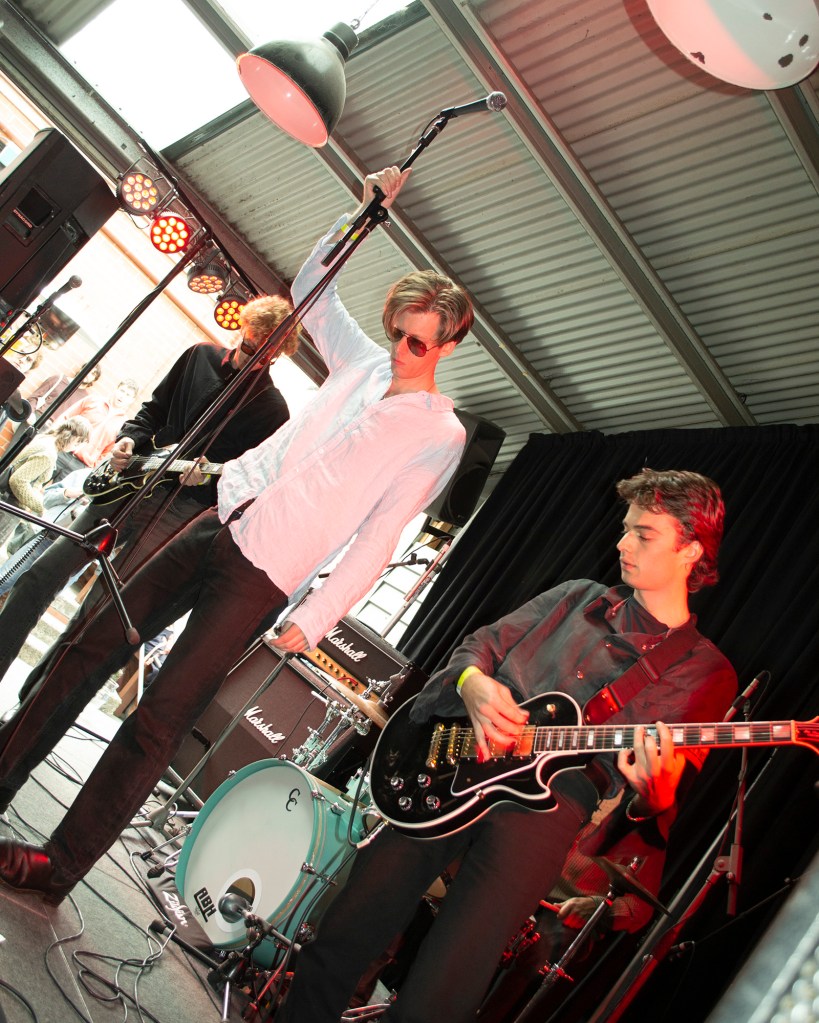
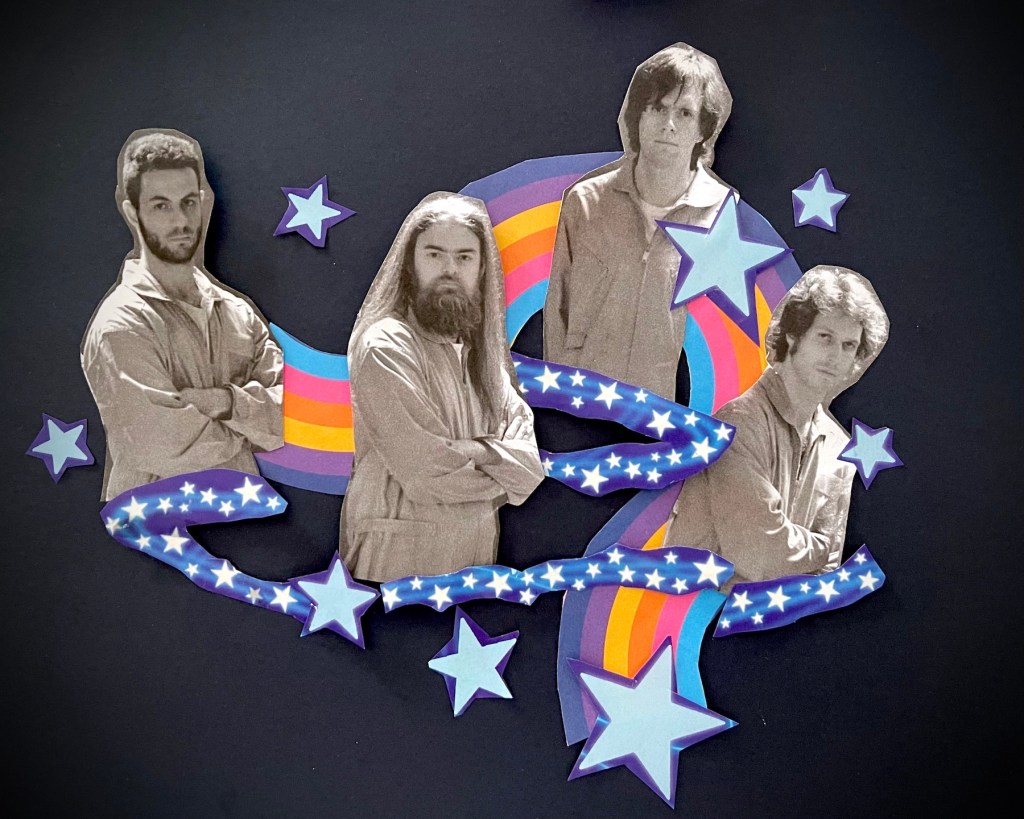
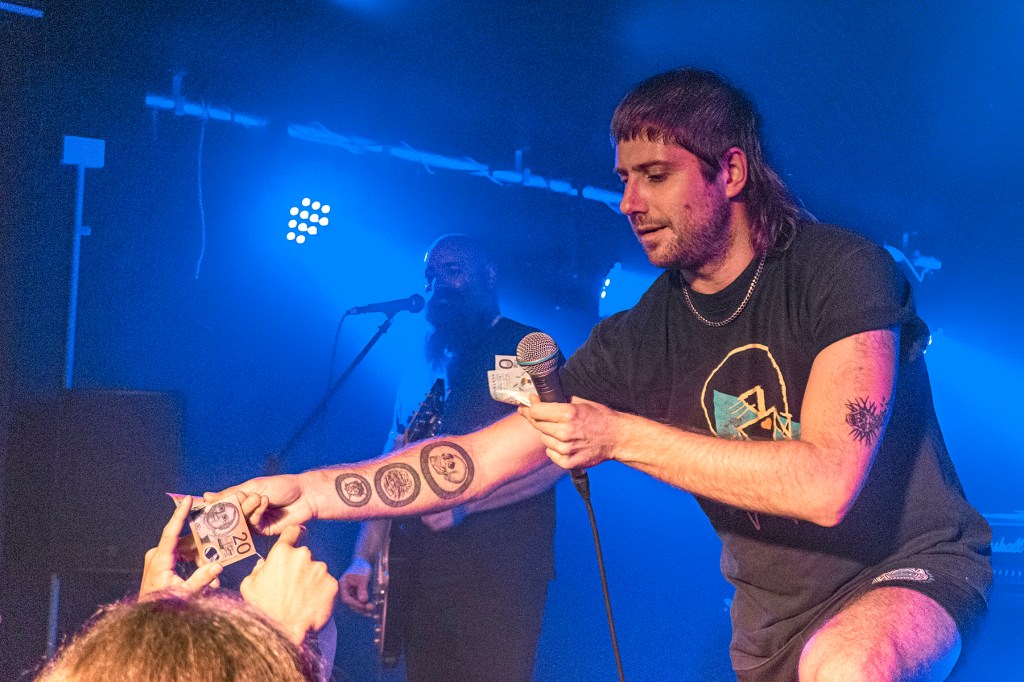
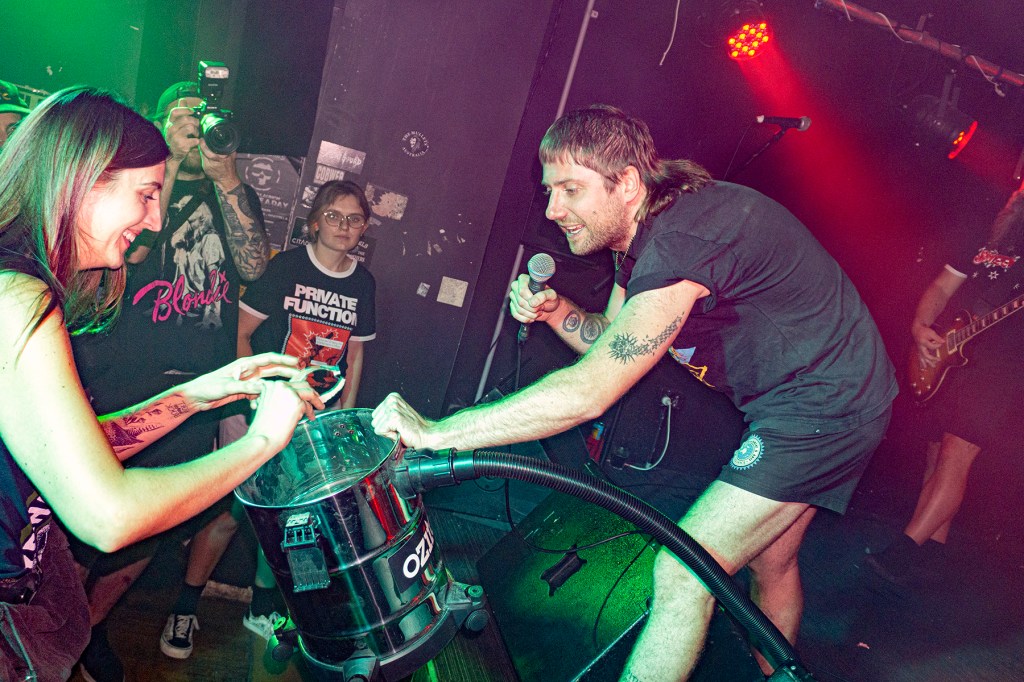
Tom Lyngcoln: “As soon as somebody figures out how to commodify something genuine, we have to start again.”

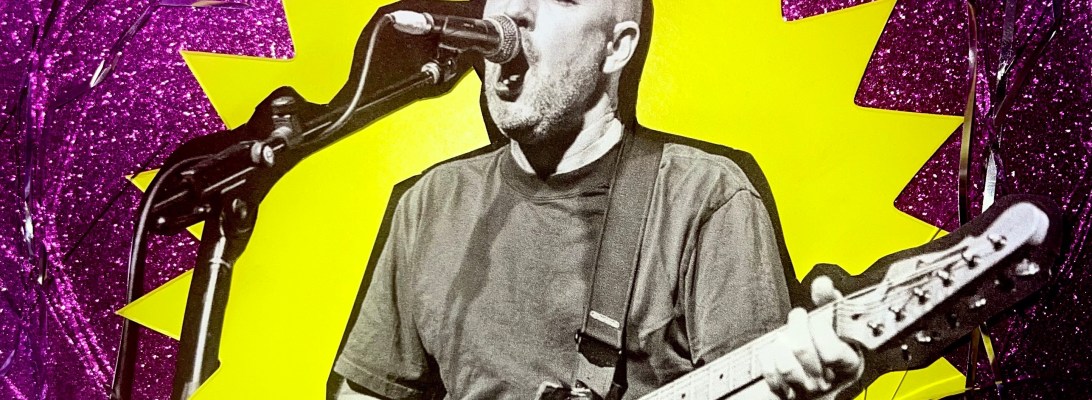
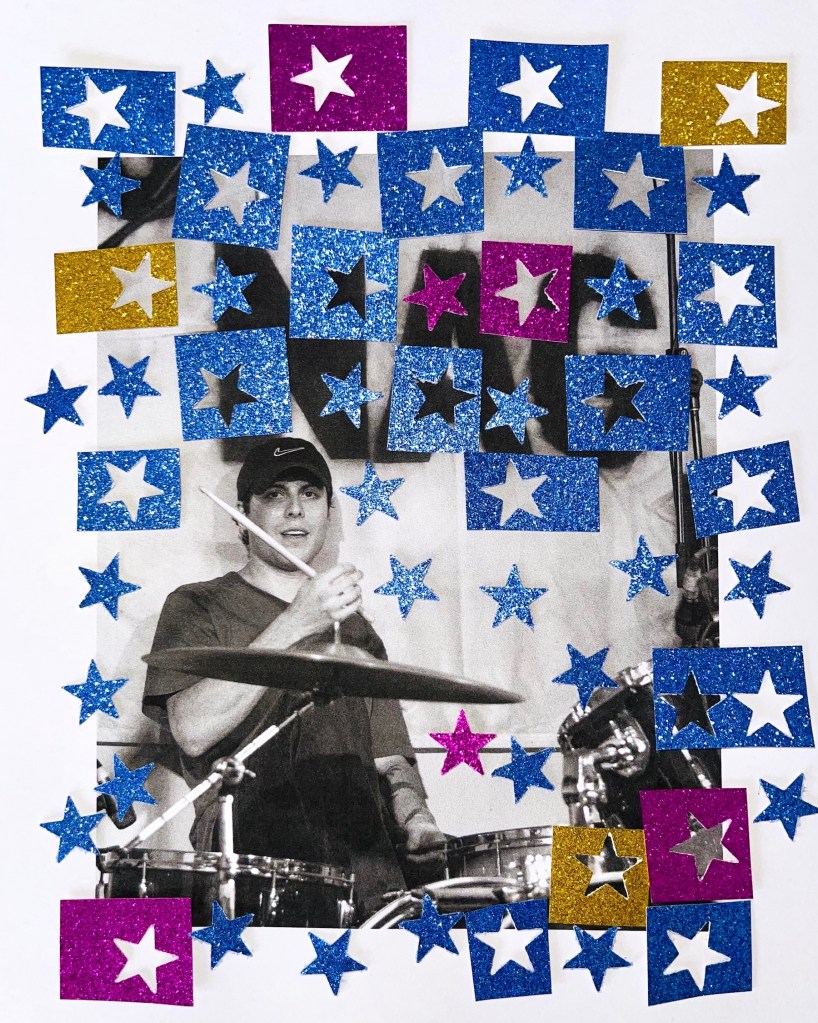
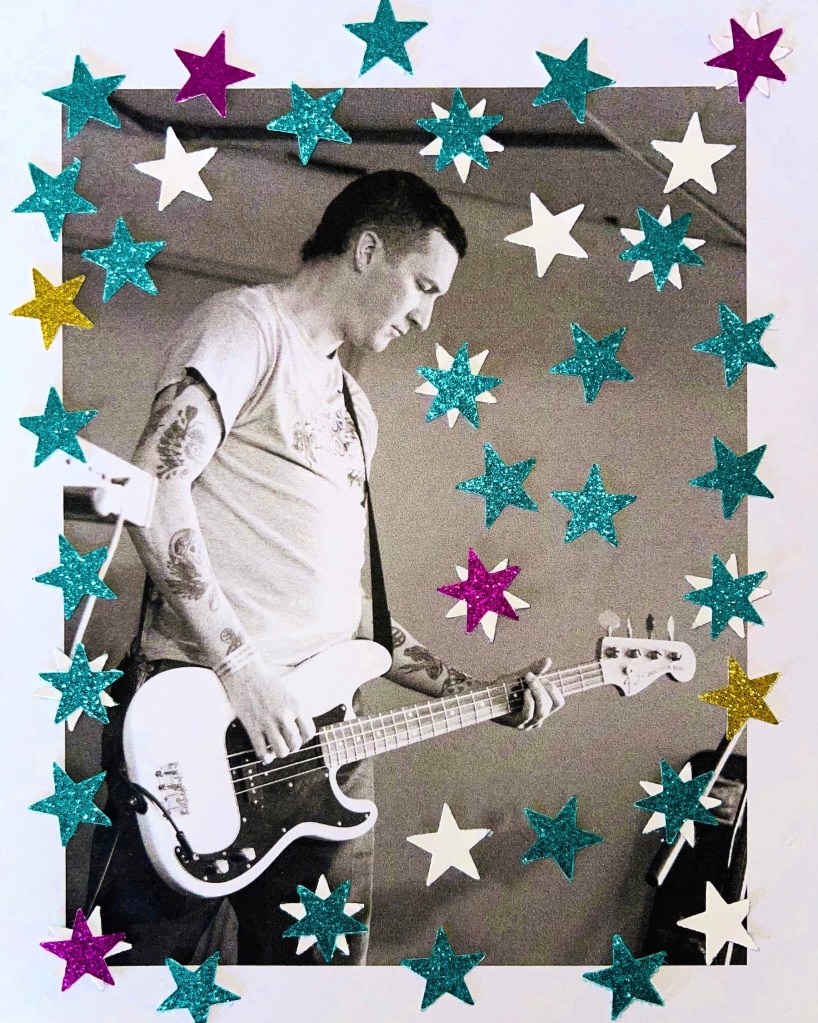
Original photo: Suzanne Phoenix / handmade collage by B

Tom Lyngcoln has spent decades carving out his own path through Australian underground music. Best known for his work in The Nation Blue, Harmony and his most recent band Metho, Lyngcoln’s world is one built on intensity: dissonant guitars, uncompromising expression, deep community ties and a lifelong suspicion of commodified art.

Gimmie yarned with him, while he was on a break from his day job as a carpenter. What begins as a conversation about music quickly unfolds into something much larger—grief, friendship, underground culture, environmental collapse, mental health, masculinity, creativity and the strange beauty of surviving long enough to keep making things. Thoughtful, funny and brutally self-aware, Lyngcoln speaks the same way his music sounds: raw, searching and completely uninterested in pretending.

TOM LYNGCOLN: I’m pretty fired up! I’ve got a lot of projects going and, maybe for the first time, I’m actually taking the label [Solar/Sonar] that I’ve got seriously.

I saw so much drop-off with people scaling back releasing music. It feels like a bit of an insane thing to do, but I just got keen!

I was able to put in for one round of production on a record, made the money back, didn’t spend it, and kept it to one side. And I’m going to keep doing that. I make no money from it, but it’s going to allow me to effectively keep doing thing after thing, hopefully for a while.

But it’s tough, you know? Growing up when I did, I was pretty fortunate that there were lots of people writing about music and listening differently.

I like the idea of trying to help younger bands; I’m trying to pay it forward. I got treated really well when I was coming up. I also had absolutely unsustainable ideas about music and selling out and all that kind of shit from growing up in Hobart.

It’s so good to hear that you’re feeling inspired and motivated. Sometimes, with the world the way it is, it can be a struggle to feel that. The last time you and I spoke about your music was when The Nation Blue’s Damnation came out in 2004. It’s been over two decades, and I’m stoked to say that we’re both still here, doing what we love to do, and helping other people out while we do it.

TL: Yeah, lifers! That is also a product of when we came up. For me, through the ’90s, all those people that I came up with are still engaged—still writing music, or writing about music, or painting, or whatever it is. We’re all kind of lifers in that way. You’ve got to be making things, and it’s got to be tangible stuff. I love it.

I think staying curious and staying engaged, does wonders for a person in life. As does pushing yourself and continuing to do things that challenge you.

TL: There was always a set way to do things. And now, through scarcity, that’s been obliterated, and you just have to be creative in those choices too. It’s kind of endless. I like problem-solving. But I’ve only got so much energy as well. 

I hear that. I’ve been thinking about problem-solving a lot this year. If something goes wrong, it’s become more about: here’s the problem—how can I pivot? 

TL: Yeah, I find reducing things down has helped. I’ve always been really focused on how things are trending in a macro sense, but I’m 46 now, and you start to realise it’s really about community and small collections of people. You can actually have a big impact there, and that’s really rewarding.

If you try and do too much, I don’t think it’s futile, but it’s less effective and less rewarding. You don’t get the drive to keep going because you just think, “Oh, fuck, that was a monumental failure.” You chalk up another one in the loss column.

But you can do a lot locally. That was always my focus when I was a kid. I had a total disregard for the mainland—couldn’t give a shit about anything happening there. And when I think about it now, it was probably a community of 100 people, but a lot of those principles are still informing everything I do.

Whereabouts in Tasmania did you grow up? 

TL: I grew up in Hobart, on the Eastern Shore, which was pretty bogan. I went to a rough school and was around all that kind of stuff, but I decided to have a bit of a circuit-breaker.

For Years 11 and 12 down there, you go to a different place—college instead of high school. High school ends at Year 10 and then you move on. It was there that I started engaging with different people.

I went to a Fugazi show in ’93—the only band like that to come down to Hobart. And what I saw there were local bands that I didn’t even think existed. I was like, “Oh, there are people playing heavy music in Hobart.” That changed everything.

But they’re really small communities. Then you come to Melbourne, or anywhere else, and you see the same thing replicated on different scales. You realise the same rules apply.

It’s been 25 years in Melbourne now, and you start to meet everyone and see everything. It’s the same principle as Hobart—it’s just bigger. If you can not be a jerk to people, be supportive, and participate positively in a community, you get to do a lot. It feels good. It feels rewarding.

You mentioned that a lot of the ethics and principles that still guide you now came from growing up in Tasmania. What do you think it was about that environment and community that shaped you so strongly?

TL: Down there, releasing a CD in the late ’90s was considered a sellout. Even putting out a tape could be seen that way. Those anti-sellout politics were probably the most stringent of anywhere I’ve ever been.

But it served me well when I got to the mainland and started engaging with the industry, because there was no industry down there. You played music because you wanted to make something. I never subscribed to the idea of playing music to make money, get girls, or any of those stupid fallacies. The people who are really good at music are compelled to do it. It’s on a DNA level. The others fall off pretty quickly.

A lot of those principles were really strong. DIY was everything—learn every aspect of it. Songwriting, writing about music, booking shows. I was booking shows when I was 14.

When I had my 18th birthday at the same venue I’d been booking, they were like, “You’ve been working here for two years.” I was like, “Yeah.” They said, “You do a great job. It’s all right.” Nobody had ever asked to see ID, which I didn’t even have.

Older people in the scene used to get me into shows as their kid or whatever. I was always around, but I had no interest in drinking or anything except watching bands. People weren’t seeing me at the bar asking for ID. There were lots of young kids floating in and out of pubs back then. It was possible to do that.

There was a lot of backward stuff too, but there were also really strong women in the scene who informed my politics early and checked me on bad ideas. There was a strong queer scene as well, despite homosexuality still being illegal in Tasmania in the late ’90s. We’d stick up for members of that community, because there was really only one place they could go, and it became a target for bogans trying to get in there and start shit. It could get pretty heavy at times.

Again, it comes back to small community stuff. You’re growing up and absorbing all these pretty big concepts, and it was a good framework to do it in. Everybody was insanely mentally ill, and that’s why we gravitated towards each other. I think it helped me a lot. It made me look at things differently, gave me different ideas about creativity, and definitely made me want to keep doing it.

What were you listening to back then? 

TL: Harsh shit. It was funny—you’d go to a Hobart show back then and I reckon 15 minutes of the set would just be tuning because nobody had a tuner.

I didn’t realise how much I missed that until I saw Alastair Galbraith play just after COVID. He spent about 20 minutes trying to tune to the bass player, and nobody could get it. Everything was out of tune, nobody had a tuner, and nobody cared.

Back then, I reckon I was 16 when I played with KK Null from Zeni Geva. We’d go to the Conservatorium and do Cobra by John Zorn as teenagers. It’d basically be me, a drummer and a bass player, alongside all these people from the Hobart Conservatorium with their hyper-flutes and tubas and all this bullshit. We’d just play this game of noise warfare against them.

So there was lots of pretentious experimental shit around. I loved SKiN GRAFT Records as a kid. In the ’80s I was into Mötley Crüe and Guns N’ Roses, and then my best friend Chris—kind of a proxy big brother because he was older than me—gave me a tape with Jane’s Addiction on one side and Dead Kennedys on the other.

I thought Dead Kennedys were a comedy band. I’d never heard anything like that before. I was like, what are we doing here? But the hooks were rusty, rancid hooks, and I was just like, oh, this is unreal. From there it just descended further.

Then bands like Butthole Surfers and Rollins Band, all those weird late-’80s, early-’90s crossover bands, really got me going. My favourite bands were stuff like Archers of Loaf and Girls Against Boys. Just weird indie-rock stuff. I loved it. Even things like The Jim Rose Circus—all those counterculture things—I was obsessed with them.

I went to a school where everybody was super metal. They used to make me go into the music room at lunchtime and play Metallica because that’s all the bogans wanted to hear. They’d be like, “If you don’t come play guitar in our band, we’ll bash you.”

So I’d go in there and try. I’m not a very good guitarist, so trying to play that stuff was rough. There was heaps of grunge around too, but I was already off somewhere else musically.

I still remember Debut by Björk. That record is still one of my all-time favourites. I’d sit by myself at lunchtime listening to it over and over on my Walkman.

It was back in the days where you’d take the batteries out and put them back in to squeeze another 15 minutes out of them. I reckon I had the same two non-rechargeable batteries for about 12 months.

Totally! Yep. You and I are the same age, so I get it! Or you try to rub the ends together to try and generate more juice or charge or something.

TL: [Laughs] Yeah, like why are you licking batteries again? It’s like, don’t fucking judge me! You have to eat, right? I’m just trying to get more juice!

[Laughter]. So you move to the mainland around 25 years ago? 

TL: Yeah. I got run out of town effectively. 

What do you mean “run out of town”? 

TL: Oh, man. Some bikers tried to kill my best mate. I was already on the verge of leaving, and then I got spiked really badly on Y2K. I woke up during a CAT scan after falling two stories onto my head on a slate floor.

I was already going to leave, but that sped it up. I had to get out. The town was getting too small.

It’s the same thing I was talking about before: the good thing about knowing everybody is that, if things are going well, it’s really nice. But if things go badly, they’re going to find you pretty quickly.

So in 2000 I came over. I still had a few medical appointments to check on everything, and I just kind of cruised into Melbourne.

But Hobart’s really cyclical, and everybody left at the same time. There was probably a three-year window where around 30 people from this 100-person scene all moved away.

I walked straight into a share house in Brunswick with one guy I was playing in a band with and another guy I used to work for back in Hobart, so the transition was pretty easy.

It was still lonely and weird, though. I remember going to Supergrass and Stereolab on my birthday weekend and just standing there on my own. Then, as soon as you’d spot another Tasmanian, you’d immediately latch on. Old habits, even though I was only 20 or 21 at that point.

So yeah, I got out in 2000. With a bit of distance from the place, I realised some aspects of it were pretty insidious.

My wife used to say to me, “Why are you so fucking sarcastic? Why can’t you just talk normally?” And I’d be like, “I’m not being sarcastic. What are you talking about?” She’d say, “You’re doing it right now.”

I reckon it took me three years to unlearn the defensive sarcasm everybody used to communicate with down there. Unfortunately, that lined up with the overly sincere emo era, and I was just like, “I think I’m going back to sarcasm for a bit. I don’t know if I can be this earnest about everything.”

When writing songs, what feeling do they often start from?

TL: These days it usually starts with the feeling of, “I’ve got band practice tonight, I told them I’ve got four songs, and I’ve actually got one.” So I’ll sit here—this is just an office at work; you can see the wallpaper, it’s pretty bonkers—and try to write.

Back then, though, I’d just play every day. I never really went out. Tim Brennan’s wife Kathy says I’ve got “the most punchable head in Australia,” so even as a kid I’d mostly stay home. Even as a teenager, working in a pub, I’d finish work and go sit on a beanbag playing along to Tasmanian TV ads. That’s where I put in all the hours. I’d always have a guitar in my hands, just writing constantly.

Some days it feels like somebody’s greased the pan—it’s super easy. Everything becomes abstract and sits outside the framework of what you normally do, and songs just come naturally. Other days you’re just banging your head against the wall.

So I try to play a lot, because when those good days come around, I might get five songs out of a half-hour session just because it’s flowing. You hit this point where you realise, “These are the same chords I’ve always played,” but your fingers are suddenly moving all over the place. Sometimes you just hit the right combination.

I’m classically trained, but honestly, that doesn’t help as much as people think. A lot of it really is luck, which isn’t what you want to hear and definitely not what you want to rely on. But I don’t know—20 albums in, and it still feels fun to do.

Do you trust your creative instincts more now than you used to earlier on? 

TL: Yeah, you’ve got to trust it. I work fast and I like things raw. A lot of the Harmony records, particularly the first two, are literally the first take we ever did of those songs, straight through. You can feel that “oh fuck” energy where nobody really knows the song yet.

I’ve always gravitated towards dissonance and mistakes in music. I love things that probably should’ve been deleted—to quote Torben Ulrich. That’s the stuff that gets me going. It’s that feeling of, “This is so wrong it’s right.”

Even outside music, I love stuff like Wesley Willis—things that shouldn’t work. There are these little moments where the two rocks grinding against each other suddenly slot together for a second, and that’s when the explosion goes off in your head. All the endorphins hit at once. Sometimes I almost lose consciousness. I’m just like, “Oh, there it is. That’s it. That’s the moment.” That’s the magic.

You do have to trust it. I feel fine about it now, but over time I’ve had to learn not to think about what other people are going to think. A lot of people don’t get it, and that’s fine. You just have to keep doing it. I do it for me. I don’t do it for other people. Not everyone will get it and that’s fine.

I’ve got a worldview and a way of doing things, and hopefully that comes through in the music. That’s really all I’m going for. I want people to hear me play guitar or sing and recognise a consistency across everything I’ve done. That’s the most important thing to me: making something that feels unmistakably mine. A lot of people don’t do that.

I’m always getting messages from people saying, “Hey, I want to start an SSD band—do you want to play in it?” or “Do you want to do this kind of thing or that kind of thing?” But people aren’t really going to get that from me. Unfortunately, it’s always going to sound like me. If you’re on board with that or not, honestly, I don’t really care.

I’ve heard a lot of people describe both your music and your live shows as abrasive, chaotic, or confrontational. But earlier you said that the music is really just an extension of who you are. Do you see yourself that way?

TL: No. I’d say this is more about not knowing what I’d be without it. I think music is a way for me to self-regulate. It’s a big vent.

I like intense expression. Whether it’s grinding dissonance, bleakness, or confrontation, I’m drawn to those things. This is how I get it off my chest so I can go back into the world and not be a liability as a parent or in everyday life. It’s like a filter where I can dump all the shit.

Honestly, I don’t know what I’d be without it. I don’t know what other outlet I could have that would stop me from becoming a destructive person. So getting it out on the page, writing, playing music—it’s not shtick. It’s not performance in that sense. It’s just all I’ve got, and I need to get it out somehow.

And when I play live, I’m not trying to hurt other people. If anything, I’m trying to hurt myself. I enjoy pushing myself physically. It means I never walk around wanting to throw a punch at somebody because I’ve already exhausted all that energy.

I enjoy confrontation in an artistic sense, but ultimately it’s mostly for me. It’s fun. It’s necessary.

I still do all the same things I’ve always done, simply because it’s fun. At this point, I don’t know what I’d do if I stopped interviewing. I’ve been doing it since I was 15 years old. I’ve done thousands and thousands of interviews with all kinds of people. And honestly, I probably have deeper conversations with the people I interview than I do with most of my friends.

TL: Yeah, I know. 

I’ve learned so much from the people I talk to. And I like that they get something from our exchange too. Sometimes we’ll be having a discussion and I’ll point something out about their music or even about themselves, and they’ll go, “Holy shit! I never realised that.” It’s nice to have that two-way connection. Especially now, when everyone’s supposedly more connected online but it actually feels like we’re more disconnected from each other. 

TL: Yeah, it’s the opportunity to actually talk to people on a real level. You realise there actually aren’t that many opportunities to sit with someone for a prolonged period and genuinely get to know them. 

It ties back into community as well. In Hobart, people had their defences up for different reasons, but on the mainland people felt disconnected in another way. Nobody smiled at each other in the street. If you smiled at someone, they’d look at you like, “What the fuck are you looking at?” I had to adjust to that.

Having these thoughtful conversations is something that’s really important for me, even for my own mental health. Unless we go to a show or occasionally have a meal with family, we rarely see other people. It’s sad to say but more often than not, we’ve found that people just never seem to think of us, or if they do they never reach out and let us know. 

My whole life, I’ve been the one that reaches out to say “hi” or check in on friends or be there when someone needs or that opens doors for people. But I’ve never really had people that do that for me. It blows my mind that I know so many people yet in my toughest times, no one has really been there for me.

TL: Yeah, and you’ve only got limited time. How long do you really get between songs to talk to someone? It can end up feeling pretty superficial.

I’m still the kind of person who’ll actually call people, and that’s horrifying for a lot of them. They see the phone light up and think, “Christ …” [laughs].

I’ve got a whole circle of friends, mostly people from bands, and my strike rate is probably one in ten. These are close friends, too. But it’s always good when they actually pick up. That kind of connection is important to me. A lot of the people I’m friends with don’t live near me anymore, so you’ve got to stay on them. You have to punish them a little bit [laughs].

The downside of social media, is it creates this feeling of, “Cool, we’re good for a while. I sent you some words in a Meta app. Hope you’re doing okay. Here’s a little love heart. And that’s nice, but it’s not really the same thing…Um, cool—friendship maintained

Sometimes I feel a bit like a counsellor. But yeah, it’s also why I avoid things like Facebook now. People see all the stuff that gets cross-posted from Instagram and assume I’m active there, and then six months later I’ll open Messenger and find someone telling me they were going through something really heavy. I’m like, I didn’t ignore you—I just genuinely didn’t see it. At this point, I’m pretty happy to limit all that. Just text me. That’s probably the best way forward.

I know you’ve described writing lyrics as a real grind at times, but I’ve noticed there are recurring themes running through a lot of your work—environmental collapse, greed, corruption, political disillusionment. Why do you think those ideas keep appearing in your work?

TL: It definitely occupies most of my thoughts, so it’s hard to avoid. Honestly, the hardest thing I ever did was write a Harmony record that was just about love. That was difficult.

The other stuff is easy—you just turn on the tap and it all comes pouring out. But trying to write one good song about love, let alone ten, took forever.

It’s always the same process, too: a pen, a blank piece of paper, and listening to the song 400 times over and over until I get so frustrated that something sparks. Usually it starts with one line or a song title, and then I can work from there. But lyrics are hard.

Honestly, the only reason I became a vocalist is because I hated singers. I really did. There are so few genuinely good frontpeople. We had Linda Johnston from The Little Ugly Girls and The Daisies locally, and she was incredible, so that was one exception. But there were just so many bad singers that I didn’t want to deal with one.

So I started doing it myself, even though I absolutely could not sing. The early Nation Blue recordings—and the band I had before that—are kind of hilarious in hindsight. What I thought I was doing and what I was actually doing were completely different things.

Which is funny, because I was classically trained. I played piano for years and years, but I just could not do this thing. I couldn’t sing. Eventually, though, I found a way of doing it that works for me. At this point it’s basically a magic trick.

We LOVE that Harmony record; why did you want to write a whole album about love? 

TL: Because I’ve got 19 records about hate [laughs]. I don’t know if I was out of ideas, exactly, but I just hit a point where I needed something else.

I love sad songs, but with Harmony it was starting to impact my physical health, trying to be as sad as possible all the time. It was exhausting to sit in that headspace constantly. The first record is basically about all my dead friends, and every time I sang those songs I’d just feel miserable.

So I thought, “Well, I’m lucky. I’ve got a great relationship with somebody I love. Maybe I should try to put some of the subtler aspects of that into words instead.” I wanted to find a good way to write about love without it feeling corny or dishonest.

Before that, though, the Harmony stuff was so bleak. All the references were military operations, munitions, warfare. The best way I can describe my lyric-writing approach back then is that guy Elaine dates in Seinfeld who wears army fatigues everywhere. She asks him, “What’s wrong with you?” and he says, “I had a bad date once.” He’s not even military. And I was like, that’s me—miserable for miserable’s sake.

You mentioned earlier that a lot of the first Harmony record came out of losing friends. And unfortunately, as we get older, loss just becomes more and more present in our lives. At the end of last year we lost Jhonny’s mum, and I’ve already lost both of my parents, so it’s something I think about a lot. Is there anything you’ve found that helps you process grief—or at least live alongside it a bit better?

TL: Not doing it alone. That’s the main thing. Talking to people. Even though everyone worries about being a burden socially, I really think talking to people is the only thing that gets you through it.

Sometimes it’s just having a beer and sitting with somebody while you work through things together. I don’t think we’re designed to carry all of it internally. We don’t really have the capacity for that.

I’ve had some pretty bad losses, and I’m lucky that I can put some of it into songs and then, ten times a year, scream it out into the night. That helps. But if it’s not that, then it’s the quieter version—just talking to people. Because grief is universal. Everybody goes through it.

And the stuff people carry can be unbelievable. Even two weeks ago, on New Year’s Eve, we ended up at this small family gathering that my wife, kid and I basically house-invaded. Somebody asked, “How’s your year been?” and I said, “I broke my little finger playing basketball and it still really hurts.”

Then the woman sitting next to me said, “I was blind until a month ago.” She’d had an operation four years earlier that didn’t work, and then suddenly her eyesight came back out of nowhere. I was like, “Yeah, okay … what about my little finger?” The things people go through are just incredible sometimes.

Everyone I talk to lately seems to be having a rough time. A lot of my friends are really politically active as well, and with the way things are, it’s hard not to be engaged on some level. But it can feel relentless sometimes.

TL: Yeah, a lot of people choose not to engage with it at all. But I think that’s part of why so many people are struggling—because it’s hard to look at the way things are going and still just live your everyday life normally. Honestly, I sometimes wish I was blissfully ignorant. But once you see things a certain way, it’s hard to unsee them. And that can be pretty tough.

Totally. I think for some people, blind faith gives them a real sense that things will be okay, and I can understand the comfort in that. I just don’t think my brain operates that way.

TL: It doesn’t feel realistic to me either. Especially when you’ve got a child—you want things for them that, deep down, you’re not even sure are going to happen anymore. At that point, all you can really do is try to leave the world in a slightly better place and see how it goes. We’ll see how it all ends, I guess.

Fingers crossed. Ha. I just wish more people cared about the fact that if we don’t have a planet, we’ve got fucking nothing. That’s the one thing that affects every single one of us. And the whole scarcity mindset—the hoarding, the constant need for more, more, more—I’ve always found that really strange, even when I was a kid. I’ve always felt a little out of step with the world in that way.

TL: Yeah, absolutely. It’s a huge fixation for me. I think a lot of it started with growing up in Tasmania and seeing enormous trees on the back of logging trucks. It felt like people were cutting down dinosaurs just to turn them into woodchips.

That really stayed with me. And now, when you look at almost every major foreign-policy conflict happening in the world, so much of it comes back to natural resources. It never ends. It’s just hoarding for hoarding’s sake. At the core of it, it’s greed. And it sucks.

We’re incredibly lucky to live where we do, but at the same time it feels like nobody’s actually worried until it directly affects them.

Yeah. So, we’ve talked a little bit about community and I know that you like community, but then you’re not into scenes. For you, what’s the difference? 

TL: For me, community is a broader thing. It’s about like-minded people, friendships and genuine connection. A scene feels much more rigid.

I don’t think scenes are great for creativity because they’re built around conformity. It’s like a fraternity or some kind of closed system where individuality gets crushed. You see it in hardcore, punk and all those kinds of spaces—people become so dogmatic and bloody-minded about traditions that nothing actually moves forward.

What I’m interested in is personality. I want to see that reflected in music, art and creativity. If people are constantly trying to conform to a scene, they’re limiting themselves. At that point it’s no different to organised religion.

I want to see the best in people. I want to see people treating each other well. I think you get more of that through community than through scenes. In scenes, people get rejected for having different ideas. Community allows more flexibility, but it also takes more work.

Anyone can get sworn into a scene, tick all the boxes and fit the dress code, but that often creates superficial relationships. Community feels more organic. You give something, other people give something back, and you build actual friendships through participation.

Whenever I get close to really rigid scene culture, though, I immediately back away. If somebody says, “You’re part of our scene now,” I’m like, “I’ll wait in the car.” I’m not interested.

That happened when I first moved to Melbourne. I looked at the hardcore scene and thought, “What the fuck is this?” Eventually I met people in it who were incredible, but around the edges there were all these foot soldiers policing everything.

And I’d think, “We’re not friends. You don’t know anything about me.” They weren’t even paying attention to the person standing in front of them. I just had no interest in that kind of behaviour.

I love being friends with people from completely different kinds of music and backgrounds. But as soon as somebody starts telling me how I’m supposed to act, what I’m supposed to like, or how I’m supposed to look, I’m out. It’s always some guy enforcing that stuff too. And I fucking hate it.

Sure is!

TL: It’s always some fragile little-minded dude going, “No, we don’t do that here,” or, “That’s not allowed,” or, “You can’t do that.” And I’m just like, “Cool, I’ll be in the car. Fuck off.”

[Laughter] Yeah. I love hardcore music, but no matter how many bands I’ve interviewed from that world, or how many people I know in it, I’ve never really felt like part of the scene. And the strange thing is that hardcore is always talking about being this community, but a lot of the time it doesn’t actually feel that inclusive. At least in my experience, it never really felt like there was space for me in it.

TL: Yeah, exactly. In every regard, really. I don’t like safe things, and I’m drawn to extreme expression, but scene culture often just becomes exclusion for exclusion’s sake.

Honestly, the happiest we ever were was after we lost all connection to that scene entirely. Around the Damnation era, we got completely rejected by that whole world. At the time it fucking sucked.

We booked this huge national tour, including a 400-capacity room on the Gold Coast, and nobody came. One night literally four people showed up. Two got kicked out for dancing, and one of the remaining two stole our merch at the end of the night. There was more merch in the room than audience members.

But I wouldn’t change any of it. It probably took three years before people started understanding the band differently. The turning point for me was when women started outnumbering men at the shows. I remember thinking, “Oh, this is the best it’s ever been. We’re finally getting the right people here.” And those people still come to the shows now.

People wanted us to be something else entirely. We turned down record labels and did everything our own way, and it was brutal trying to navigate that. But we’re still here, and most of those bands aren’t. The good ones survived, and there are still some great friends from that era, but we realised pretty early on that we were never going to fit neatly anywhere.

We don’t fit with rock bands, hardcore bands, punk bands or indie bands. We played a Dick Diver EP launch in Melbourne once, and I remember feeling like Metallica playing a Simon & Garfunkel concert. Before the set we were all like, “Just play the quiet songs. Don’t destroy anything. Don’t freak people out. Just stand there and play it straight.” And we still cleared the room.

Then we played with Flipper and cleared that room too. We started joking, “Who actually likes this band?” Eventually we just came to the conclusion that we did. That had to be enough. I hope some of that comes through. 

It does. I’ve never thought of your band/s being one of those toxic masc bro bands. 

TL: [Laughs].  I couldn’t think of anything worse! But I have spent so many hours sitting in cars waiting for those  kinds of bands to finish. I got into and love skip-hop. I found that excitement and a vibe in going to hip-hop gigs. 

Same. I remember talking to Michael Franti about it once and he said, “You’ve got to go where the energy is.” That’s exactly what happened for me.

At a certain point, hardcore stopped feeling exciting and started feeling really alienating. It became something I didn’t recognise anymore, especially in the way women were treated in the scene from the mid-2000s onwards. Whenever I spoke up about it, I’d get labelled difficult or crazy. So for a while, I stopped going to punk and hardcore shows altogether. Instead, I started going to hip-hop gigs, raves and pop shows—places where the energy still felt open, alive and welcoming.

Because by that point, the scene had become something I never signed up for.

TL: Yeah. All that individual-expression stuff has always mattered to me. But even that goes back to things like the straight-edge scene, where suddenly it became, “This is what we all look like now.”

I’ve never really fit into that. I’ve always dressed in workwear because I’ve worked shitty manual-labour jobs most of my life. That whole uniform thing just never worked for me.

After shows I’d sometimes go outside to load gear and then not be allowed back into the venue because security assumed I couldn’t possibly be in the band. They’d be like, “Sorry mate, you can’t come in.” And honestly, it felt like a giant metaphor for the whole thing.

You’ve collaborated with so many different people across all your projects, and when you look back over your work there are all these incredible connections and crossovers. Are there any particular people who’ve been especially important to you creatively or personally?

TL: Yeah, absolutely. All the early stuff still informs everything I do. All those people from Hobart are still incredibly important to me.

Even a couple of months ago, when we did the Damnation anniversary show, almost everybody onstage was from the Hobart scene in the ’90s. There was Linda Johnston again from The Little Ugly Girls, Tim Evans from Sea Scouts and Bird Blobs, Monika from Sea Scouts and Love of Diagrams—all these people I grew up around.

But in terms of wider influences, I’ve also been incredibly lucky. We had Marc Ribot play on ‘Rain Dogs’ by Tom Waits, which was a massive record for me growing up. When I first heard his guitar playing, I was like, “What is this?” It sounded like he was only hitting three out of every 10 notes properly, and I loved that. I thought, “Oh, that’s okay—that’s how I play guitar too.” It made me realise there was room for imperfection and personality in playing.

He was really into it. I honestly have no idea how that even happened. I just found his manager online and sent a message saying, “Do you reckon he’d want to play on this song?”

And she came back saying, “No, he actually wants to play on this other song.” I was like, “No, no, he has to play on the shit one because we really need help making it better.”

But yeah, I’ve just been incredibly lucky. I’m playing with Mick Turner this Sunday, and he’s probably my all-time favourite guitarist. I love Dirty Three, Venom P. Stinger, Fungus Brains—all of it. He’s another one of those people who approaches an instrument completely backwards.

The only problem is now I actually have to play guitar in front of him. I get “the claw,” where my hand just locks up and I lose all dexterity. I can feel myself tensing and freaking out.  So after this I’m going to rehearse just to keep everything moving.

But honestly, since moving to the mainland, a lot of my life has just been about engineering interactions between people I admire. Half the people I’ve collaborated with had never met each other before, and now they’re lifelong friends.

I’d just think, “I want this person, this person and this person together,” and then see what happened. That’s basically been the approach with bands too. I’ll love somebody’s skill set or the way they think about music and just go, “Let’s put this together and see what happens.”

That’s a really important thing, though. When somebody has a genuine vision for bringing certain people together, and they can see how those personalities or creative approaches might connect, it can create something really powerful. Sometimes it’s less about technical ability and more about recognising a chemistry or energy between people that maybe even they can’t see yet.

TL: Yeah, exactly. You can maximise different qualities in people. For me, it always comes back to personality. I’ll look at somebody and think, “If I put this person together with that person, it’s going to turbocharge something.”

It becomes irrepressible at that point. It doesn’t matter what obstacles are in front of it, something powerful is going to come out. I might not know what it’s going to sound like, but I know the expression will be huge.

I love that. Honestly, that’s probably been my favourite thing over the last 20 years. All the smaller projects around the main bands have basically come from me thinking, “I’d love to see what these two people would create together.”

At some point I stopped being the liability and became the facilitator. Back in Nation Blue, I was the person nobody could rely on. Now I’m somehow the administrator. It sucks.

Why were you the person that couldn’t be relied on?

TL: I was really prone to destroying things back then. We’d have insanely bad shows depending on my mood. I was erratic.

With Nation Blue especially, I’d get completely skeeved out by industry stuff and just shut things down or deliberately sabotage them. There are emails from Westy where he’s basically saying, “Man, you fucking blew it.” And I’d just reply, “Yep.”

I related a lot to that famous The Replacements story where all the A&R people came to a show and Bob Stinson completely lost it. Apparently there were all these label people there because the band was blowing up—they were getting mentioned alongside bands like R.E.M.—and Bob got drunk, came out naked, ripped down the backing curtain and turned it into this giant cape, then threw a shoe full of shit at the industry people. And honestly? I can relate to that energy on some level.

It’s no secret that I find the music industry difficult. I’ve mostly existed outside of it, apart from when I was younger and thought working in the industry might actually be a cool job.

I did work at a big record label as a teenager, and one of my jobs was calling record stores at certain times of the day to check whether they were playing their artists. If they were, the stores would get points, and whichever shop had the most at the end of the month would win some kind of big prize. Basically, they were being rewarded for prioritising certain music. When I realised that was how the system worked, I was out.

I still see a lot of the same stuff happening behind the curtain now. I’ve watched the same artists receive big amounts of funding over and over again—for some we’re talking up to a hundred thousand dollars—while so many other, actually independent musicians, that could use a leg up struggle just to survive.

I find it frustrating when artists market themselves as independent or DIY while quietly having teams, all the industry connections and financial backing behind them. There’s nothing wrong with having support, but I think people should be honest about what’s actually going on.

TL: Yeah. I think we are the industry now, though. So there’s nobody left [laughs].

Ha! But there is. Tell that to the dinosaurs, gatekeepers still clinging to outdated ideas of power in the music industry.

You’ve got managers and publicists giving writers five or 10 minutes with an artist, and then everyone wonders why interviews feel shallow. You can’t have a meaningful conversation in that amount of time.

Then there are publicists who expect writers to cover their entire roster, and if you don’t, you get blacklisted from the interviews you actually care about. I know writers who’ve completely burned themselves out trying to keep up with those demands just to secure a handful of conversations they genuinely want to have.

People wonder why music journalism in this country is struggling, but the system itself is part of the problem. Fanzines to me, is the most important form of music writing.

TL: Yeah, it’s culture. That’s the thing people trying to commodify music never seem to understand. The culture is the most important part. People can smell what’s fake. Genuine artists usually recognise each other because there’s a kind of cohesion there, a glue between people who make good things.

I honestly think it’s really hard to make meaningful work within a commercial framework because everything becomes exploitable in that system. From the moment you have an idea for how something should sound to the point where it finally gets released and marketed, it often becomes a completely different thing. The perception changes, the intention changes—everything shifts. Whereas if you’re doing it yourself, you’re the only person shaping it.

The idea of getting notes on how to write songs? Fucking hell. That’s when I’m already in the car park mentally. The second somebody starts telling me how I should write, I’m like, “No. Show me what you’ve written first.” And then the confrontation starts.

I just don’t understand how people in the industry still don’t see how successful underground culture actually is. There’s no real sweet spot in a lot of the music industry here where people genuinely understand underground culture, because I don’t think a lot of them actually come from it. They’ve come up through other avenues that I don’t really understand.

To be fair, though, some of the people who do get it are slowly moving into those positions now. I look around at some of the major labels these days and think, “Fuck, I know all these people.” So you hope things might change. You hope they remember what it felt like growing up inside this world and don’t lose touch with it.

One thing I’ve been thinking about lately with the label isn’t even starting a blog, exactly, but just creating more space for people to engage with music. I made a post online and got all these responses from people saying, “I really want to write about music, but there’s nowhere to do it anymore. If you send me records, I’ll write about them.”

And I thought, if I’m getting 10 messages like that from one Instagram post, maybe people are actually hungry to communicate about music again. To listen deeply and talk about it properly.

There are still heaps of people who are genuinely into this stuff. The scene is definitely smaller now, but in some ways I think it’s more important than ever. Even talking to pressing plants, they’ll say that 150 copies is now a standard run for underground or local bands. But there are still heaps of people going to shows. The community is still big.

A lot of the things we grew up with that made us excited about music feel like they’re coming back around again. Kids are picking up guitars again instead of feeling like they need to save for 10 years to buy some vintage synth that costs $12,000.

A guitar is such an egalitarian weapon compared to a lot of electronic gear. You can pick one up and just do it. And funnily enough, that was the whole spirit of punk in the first place—the idea that you didn’t have to be Earth, Wind & Fire or The Alan Parsons Project to make music. You could just go out and do it yourself.

The way people have been talking to me about music over the last couple of years makes me think people are fired up again, which is good.

COVID really knocked everyone around, and we’re still walking through a bit of a zombie state after it. But I can feel a thirst for older underground ideas coming back pretty strongly.

And honestly, the bands are incredible at the moment. That’s the biggest thing I notice. These bands just sound completely like themselves. They’re just genuine outliers, and I love that. It’s a hard expression, but it’s exciting. It feels really good again.

Who are some of these bands? 

TL: Oh God, Serpette, who are now called Whip down here, don’t sound like anything else. They count in four and then whatever happens, happens. It’s wild. So good.

Then there’s Sienna Thornton. I don’t even know how to describe it, but it feels like a direct line into some part of my brain. Every note feels perfect. It’s an incredible level of skill—completely different to Whip, who are just pure chaos and energy.

And then there’s Tongue Dissolver. That band is unbelievable. It’s like if you took ‘Exterminator’ by Primal Scream and put it on bath salts. It’s one of the most convulsive things I’ve seen in years.

What I love is that none of these bands belong to scenes. There’s no rigid identity around them. It’s completely unbridled. And there’s no careerist reason to do it anymore. Nobody’s thinking, “I’ll play music so I don’t have to work at a bank.” Everybody’s heavily invested for the right reasons.

When we were younger, especially around the time Jet blew up, labels were throwing contracts at anything remotely guitar-based because people at labels were panicking about missing the next big thing. Nobody cared what bands actually sounded like. It was just, “Here’s 30 grand for your garage band,” even though nobody was ever going to recoup it.

Now it’s different. The question is genuinely, “Why are you doing this?” And I think post-COVID especially, younger bands are doing it because they need the release. You can feel it. It’s electric.

We played in Brisbane this year at Branko’s Festival, and every band on the lineup was incredible in some way. A lot of them are probably getting courted by indie labels now, but the thing is, they’re undeniably good. There were just so many great bands.

We got there way too early because somebody told us to go see KNEE. We watched them, and then I basically didn’t move for eight hours. I don’t think I went to the toilet or even bought a drink because every band was so good that I couldn’t leave the front of the stage.

Brisbane’s always had a ridiculously high strike rate for bands!

Totally. I’ve always felt like bands from Brisbane tend to have their own distinct identity and approach, which I’ve always thought was a bit special.

Because a lot of bands we love don’t get up this way too much, going to Nag Nag Nag in Sydney or JERKFEST in Geelong is a real treat for us. We get to see all the bands we love in one or a few days. At JERKFEST we end up running from stage to stage trying to catch every band because everything is so good. Both events feel very community-centric.

Australian music has always been exciting to me. There’s so much incredible stuff happening if you’re paying attention.

TL: Yeah. Billy Gardner at Anti Fade Records always does a great job of building community. A lot of the same people from the very first festivals are still involved, just moving through different bands and projects over time. More recently, there’s also been this integration between younger and older musicians, which has been really good to see.

What’s exciting right now is that you can walk into a venue and even the first band or the opener in the front bar is absolutely firing. It feels really healthy.

That was a big part of why I wanted to keep the label going. For 20 years people have been sending me demos, so I’ve ended up with this huge archive of little moments and unreal songs. I want to turn that into a series of compilation mixtapes, press them onto vinyl and just get them out there.

I’m talking like 40 tracks on a record—just a massive snapshot of what’s happening. Then I want to keep working through as many local bands as possible, because at the moment it’s almost impossible for a lot of them to afford proper vinyl releases on their own.

We had a Gimmie compilation in the works with around 40 or 45 tracks. It was almost ready to go, and all the profits were going to charity, but we couldn’t get a few things lined up properly, so we had to shelve it for the time being.

Everything has become so expensive just to survive. We’ve both been record collectors our entire lives, but lately we’ve basically had to stop buying records altogether. I think I only bought a handful of releases last year. Even going to gigs is starting to feel unaffordable.

It’s a strange and pretty sad feeling to be priced out of something that means so much to you—something that brings so much joy, connection and nourishment into your life.

TL: Yeah, and imagine being a kid trying to afford all of this while still staying enthusiastic about music culture. Shows are $30 or $40, records are ridiculously expensive … I get that production costs have gone up, but not enough to justify some of the prices people are charging now. A lot of it is just greed.

I grew up playing shows where entry was $2 or $4. Maybe that’s why so many people from that era are still involved in music culture—it was affordable, so people could participate constantly. They could form ideas, build communities and create their own little worlds around it.

Now I look at the tickets I’ve bought for the first half of this year and barely anything is under $100. It’s insane.

Yep. Australia is actually one of the most expensive places in the world for concert tickets right now!

TL: And vinyl pricing especially is something I’m really fixated on. Records should not cost that much. Obviously there are production costs involved, but there’s also a lot of taking the piss. I honestly think it would only take a few local labels deciding, “We’re not selling records for $60 anymore,” to shift things a bit.

Like, a record should maybe cost $35. That should roughly be the ceiling. Fuck inflation—some of these prices just don’t make sense, and eventually it’s going to cannibalise the culture itself.

The records we put out—Guppy and Piss Shivers—were $35.

TL: Yeah. You see record stores are sitting on piles of unwanted stock, especially after things like Record Store Day. I bought this Roky Erickson bootleg a couple of years ago for something ridiculous like $110, took it home and it was completely unlistenable. It sounded like a phone recording pressed onto vinyl. I took it straight back and was like, “This is dogshit.”

So what happens when record stores start disappearing entirely? Because I’m sure they’re already under enormous pressure from rent and everything else. It all has a flow-on effect. I really think affordability has to be the starting point again. Otherwise younger people just can’t participate properly.

That said, in the ’90s I’d buy one CD every six months and listen to it obsessively for six months straight. And honestly, that kind of deep listening is still in my DNA.

I really love some of the things Bad Habit Records up in Nambour are doing. Borg has always had a real knack for building community wherever he goes.

He does things like selling cool records to younger people at cheaper prices to help them start collections, and he regularly puts out calls for donated instruments that he then passes on to kids so they can start bands of their own. When new records come in, locals get first dibs on Saturday mornings before anything goes online. He gets international and interstate bands to play shows, that might not usually make it to regional places.

I still remember being a teenager making my first zine, and Borg stocked it in his distro even though it definitely wasn’t really his thing. At the time, I was new to everything and didn’t really now anyone in the scene, and that gesture always stayed with me. It meant a lot. And I see him still doing it now with the next generation.

TL: Yes! It takes that kind of blend to spark something new. That’s how these shifts begin.

It’s the same as coming up through the late ’80s when everything was just cock rock. All it really takes is a change in mindset to suddenly create something genuinely exciting.

And I can see that happening now with younger bands. There’s been a real shift in attitude among people making music. A lot of them aren’t doing it because they want careers—they’re doing it because they have to make music. And I think that’s really encouraging.

If more people like that keep appearing, it’s going to trigger a whole wave of really interesting art. It has to. Because honestly, I don’t need to hear another bunch of private-school kids playing indie music. I want to hear different voices—that’s the important part.

Yep. Some of the most vital music being made right now is coming from traditionally marginalised people.

With Gimmie, a lot of the interviews I’ve done have actually been the first time those bands have ever been interviewed, simply because mainstream media either ignores them or doesn’t even know they exist.

We put Guppy and Pale Horsey on the covers of print issues before they’d really even released much music. People told us we should’ve put King Gizzard & the Lizard Wizard on the cover instead because they were in the same issue and it would’ve sold more copies. But we went with Guppy because we could—and the issue sold out anyway.

Over the years, I’ve seen editors at publications decide who gets a cover story or major coverage based almost entirely on social media numbers, not because the artist actually rules. And obviously mainstream media is heavily shaped by advertising, paid editorial and industry relationships too.

A lot of people don’t realise how much mainstream culture is influenced by those systems rather than actual merit. A lot of artists effectively buy their way into visibility and success.

With us: we cover things because we’re genuinely fans of them. There are so many incredible bands out there that people would absolutely love if they were just given the chance to know they existed in the first place.

TL: Yeah!. And that’s why it continues. People know what they’re going to get with Gimmie and they trust it.

I was talking to Josh, the singer from Rapid Dye the other day and he was honest and said, that he doesn’t always like all the stuff that Gimmie covers, but he knows there could be something cool coming. That we really have an eclectic curation of stuff. A lot of publications are often one note.

TL: That’s it! I used to write a lot for Unbelievably Bad.

We loved Unbelievably Bad

TL: It’s the same reason, really. You’re not buying something because of whatever insanity is on the cover—you’re buying it because you know it’s going to be interesting. It might not even be to your taste, but that’s part of the point. If your tastes aren’t constantly evolving, then you’ve kind of given up a little bit. If you’re genuinely passionate about music, it never ends. 

There’s always something new to discover. It’s always on to the next thing. That’s what’s exciting about music. There are only 12 notes, and yet it just keeps going forever.

It’s like cracking a safe over and over again. Different combinations of internal, external and environmental factors completely reconfigure the outcome every time, even though the raw materials never change. It’s still just 12 notes.

That’s why music stays exciting to me.

Guppy are a good example of that. I’ve seen Mitch play in so many different bands, but Guppy sounds completely different to everything else he’s done. Again, it comes down to big personalities and people being willing to fully explode with expression. It’s really fun to watch.

And honestly, how else do people hear about this stuff unless somebody is out there doing the work and talking about it properly like you guys are?

When I was a kid and first started making a zine, it was really just about wanting to share music with people. I’d hear something and think, oh my god, this is incredible. How do more people not know about this? I just wanted to write about it so other people could discover them and maybe feel the same excitement I did. That’s always been the whole reason behind it. Still to this day.

TL: Yeah, I can imagine we probably both hijacked the tape decks at school. That was the good side of being a little music dictator. Everybody else was still listening to Metallica or …And Justice for All and you’d be like, “No, check this out instead. Listen to this.”

I still have people I went to primary school and high school with telling me, “I’m still really into Rollins Band and Tool because of you.” And I’m like, “No, no—you’re supposed to keep going past that. Please don’t stop there.” I was only 12 or 13 when I was obsessed with those bands. The whole point is to keep moving forward and keep engaging with new things. But not everybody’s built to be a marathon runner with music.

Sometimes I genuinely think about quitting. There are days where I sit there wondering, why am I even doing this? Especially when people start treating you less like a person and more like a platform they can use. That part makes me really uncomfortable. It can make me want to step away from everything completely.

I’ve had people harass me for not covering their band. I’ve been called snobby or elitist because I didn’t write about someone’s band. There’s a bunch of shitty stuff that happens behind the scenes that we never really talk about publicly.

I’ve never wanted to turn any of that into a public spectacle. I don’t want to feed that energy. I’ve watched public conflict become its own form of currency in creative spaces. I’d rather people connect with what I do because they genuinely get something out of the work, not because I’ve shouted the loudest online about something.

I work a hectic day job as a book editor, helping fellow Indigenous and POC writers tell their stories, alongside doing Gimmie. A lot of the time I simply don’t have the capacity to cover everything. When you spend your days looking at words all day, looking at more words in your free time can be a lot.

TL: Yeah, that’s true. Fuck them. Those people usually quit pretty quickly. The opportunists never really last. I’ve met a lot of them over the years.

It takes stamina to push through all the bullshit. There are always people who just want to be famous, and the money side of it has always been the biggest red flag for me. I’m always thinking, “Why are you doing this? Why are you in this band? What’s actually motivating you?”

There’s one city in this country that’s especially notorious for it—people constantly jumping from one thing to another, using whatever they can to climb as fast as possible. Melbourne has a bit of it too, but nothing compared to Sydney.

I don’t know. That whole world just has nothing to do with me. I try to interact with it as little as possible. At the end of the day, you just try to surround yourself with the right people. That’s why community matters so much. And then, as soon as somebody figures out how to commodify something genuine, it’s like, “Cool, we’ve got to start again.” Burn it down and keep moving forward.

But yeah, thanks for doing so much heavy lifting for so long. It’s genuinely appreciated.

Thank you. I think I do it for the same reason you make music—you just feel compelled to do it. We have to. It’s either keep going or die. 

TL: Well, definitely don’t do that! I think about this a lot. One of the benefits of being in bands is that it’s kind of like a marriage. It pushes friendships beyond their normal limits. A lot of my support networks have probably come from that, because those people have had to deal with me being radical or erratic or whatever I am.

Lately, though, I’ve realised I’ve probably closed myself off from people a bit too much. Just before Christmas I was at a gig talking to this younger guy I’d known peripherally for years. Because of old hardcore-scene baggage and preconceived ideas, I’d never really engaged properly with him. But this time I just thought, “Fuck it, I’m going to lean in.”

We started talking about family stuff, his dad, how he grew up, and I just kept asking questions. I reckon we talked through two whole bands without noticing. And I loved it. I walked away thinking, “Oh, I actually know this person now.” It was really nice.

The older you get, the more you realise we don’t tend to make many new friends—we mostly just lose people. So I’m trying to stay open to connection now instead of shutting it down.

I don’t know what advice I can really give, except maybe to trust that people do care and are interested in you more than you think. And honestly, call me anytime. I’d genuinely love to chat. These days I mostly just see missed opportunities, and I don’t want to keep living like that. There are too many good people out there that we don’t won’t to lose.

I saw a lot of loss pretty early on. Because of that, I think I started realising how precious a lot of this actually is. Even with all the nihilism I carried around for years, you still see the direct consequences of treating people badly. You can see the damage it causes and the bitterness that grows out of it. Trying not to become that way takes work. It’s not easy. But it’s rewarding, because you end up forming real bonds with people.

It’s the same reason I love starting bands with people. You want to see those personalities thrive. You want to create spaces where people can fully become themselves. It’s big stuff, really. It matters a lot. Even in the underground [laughs].

Yeah. I think a lot of people who are drawn to underground culture are also carrying some form of mental health stuff or emotional struggle. You end up with all these intense personalities and experiences colliding in the same spaces, and I think that’s part of why those worlds can feel so emotionally charged and complicated.

I’ve dealt with mental health stuff my entire life, and honestly, I think it’s something I’ll probably always be managing on some level. I don’t really believe there’s a magical point where everything suddenly gets fixed.

TL: Yeah, it took me a long time to realise that basically every person I surrounded myself with during my formative years was dealing with some pretty serious mental health stuff. And eventually you start thinking, “Well, it can’t just be everybody else. Maybe it’s me.”

So I’ve just kind of gone through life happily undiagnosed and unmedicated, probably under the false impression that I can manage it all on my own. 

But then you start questioning where the line is. Is it mental illness, or is it just my personality? Maybe this is simply who I am.

At this point, I think I’m mostly just trying to manage myself in a way that doesn’t hurt other people. We’ll see how we go! [laughs]. Into the void.

Check out Tom’s label: SOLAR/SONAR. Follow @solarsonarrecords.
JERKFEST 2026: The Judges

Original photo: Jhonny Russell / handmade collage by B

Following the release of their debut LP Judgement Day in November 2023, Melbourne/Naarm five-piece The Judges have kept the momentum rolling with their Guns 7”—a two-track release that captures the band’s sharp rock‘n’roll. Gimmie caught up with frontman Sam Hill to talk about skate vids, cooking, the crazy world we live in, and of new music on the horizon.

Who or what made you fall in love with music?

SAM: Skate video soundtracks, I guess. That’s where I first heard The Stooges and Bowie and the Velvets and all that. And then “punk rock” – probably largely because of the fashion and the incredibly naive attitude, which is quite appealing when you’re young. But even before that I would tape songs off the radio and stuff, so I guess there was always music around!

Photo: Jhonny Russell

Are you working on new songs or ideas that you’re excited about?

SAM: Yeah! Always working on stuff to some degree. Tinkering. With The Judges, with other groups, solo. The second Judges LP has been recorded for a minute now, we just gotta tweak it and polish it up and everything. 

Photo: Jhonny Russell

What’s something you care about deeply that might not necessarily show up in your songs?

SAM: Food. I don’t think any of the songs are about food? I like cooking and you gotta eat. Good meals are important. Especially eating them with friends. Celebrate all occasions. Oh and we gotta save our oceans.

Photo: Jhonny Russell

Which song do you like playing live the most and why?

SAM: I like playing them all. They usually all sound great, sometimes they don’t. Sometimes I forget the words and mumble. But it’s not really even about the music. It’s just fun to make noise. It’s a spectacle.

What’s your biggest non-musical obsession right now?

SAM: Aw man, I don’t know. I follow a lot of total psychos on Instagram that are pretty entertaining to keep up with. World War Three is pretty interesting so far. That and the convergence of “artificial intelligence” and religion and all the UFO bullshit. Things are getting weirder every day. Buckle up!

Follow @tha_judges + LISTEN to The Judges.

JERKFEST 2026: Krakatau

Original photo: Larisa Papamanos / handmade collage by B

Melbourne/Naarm outfit Krakatau are playing this year’s JERKFEST. They have spent the past decade carving out a distinct space where jazz fusion, progressive rock and left-field experimentation collide. Formed by James Tom and Dylan Lieberman, the band’s sound has evolved from psychedelic roots into long-form, exploratory compositions that feel both deeply referential and unmistakably modern. With a new LP Terra Ignota on the horizon, Gimmie caught up with Tom to talk, instrumental storytelling, film obsessions and the challenge of making sense of an always-on world.

Who or what made you fall in love with music?

JAMES: The first song I fell in love with at a young age was ‘Hit the Road Jack’ by Ray Charles. I can’t recall why exactly, my guess is the immediacy of good songwriting!  

Are you working on new songs or ideas that you’re excited about?

JAMES: We have a forthcoming full length LP Terra Ignota coming out in May 2026 (which captures the long period between releases) and a few tunes that are in different stages of completion we have not yet recorded.

What’s something you care about deeply that might not necessarily show up in your songs?

JAMES: I don’t necessarily think any of what we care about as social issues really show up in direct ways in our music. These can be harder themes to express directly with instrumental music, but I would say the main thing I have been thinking about the past few years is the fractured experience of being connected to a mass of decentralised information and how I do not think humans are meant to be connected in this way at all times. 

Which song do you like playing live the most and why?

JAMES: We are playing some fun material written by artists we look up to and interchange this material between our own compositions. For example ‘Madagascar’ written by Richie Beirach (RIP 26.01.2026) for the John Abercrombie Quartet and their 1980 LP originally released on ECM Records has been a lot of fun.  

What’s your biggest non-musical obsession right now?

JAMES: I mean my second most consuming hobby has always been watching films. Some note worthy watches the last three months include: The Ice Storm (1997), The Long Good Friday (1980), Let It Ride (1989), The 4th Man (1983), Spetters (1980), Short Eyes (1977), Dreams (1990) & Shoot the Moon (1982).

Check out more Krakatau. Follow @krakatau.music.

JERKFEST 2026: The Blinds

Original photo: Jhonny Russell / handmade collage by B

We first saw Melbourne/Naarm band The Blinds live a few years ago at Nag Nag Nag Fest. Since releasing their self-titled cassette on Alex Macfarlane’s Hobbies Galore in 2017, and 7-inch Endless Fascination in 2022, the band have been building towards their long-awaited debut LP. Gimmie caught up with them ahead of their appearance at JERKFEST this weekend, to talk formative music memories, favourite songs to play live and a few unexpected obsessions.

Who or what made you fall in love with music?

LACH: ‘Getting the band back together’, which was jumping around playing a toy tambo in the loungeroom listening to the Beatles and Stones etc., with my dad after he’d no doubt had a few beers. I was 34.

CAL: Due to my dad being a fan, I loved Cream and idolised Jack Bruce. Other than that, I had a pretty loose grasp on music until Blinds band friend and recorder Alex loaned me 3 CDs every day for the best part of a year and blew my little world right open at the tender age of 16.

RORY: My mum used to buy me the newest So Fresh CDs, and it was then I knew I wanted to play rock and roll.

FUJ: Some definitive memories include listening to solo career Ozzy Osbourne and Dio tapes that belonged to my stepdad and some RATM and TOOL* CDs that Blinds band friend and recorder Alex lent to me in Year 7.

*REDACTED

Original photo: Jhonny Russell / handmade collage by B

Are you working on new songs or ideas that you’re excited about?

LACH: Yes. It’s taken us a long time, but we are like the turtle from The Tortoise and the Hare.

CAL: We’re finally getting ready for the elusive and coveted debut LP, which we’re very excited about!

RORY: I think we’re the most productive we’ve ever been right now, in our own way and by our own definition of productive.

FUJ: Ya! In our 10th year we have started working on a record ;()

Original photo: Jhonny Russell / handmade collage by B

What’s something you care about deeply that might not necessarily show up in your songs?

LACH: Fam & friends and the power of song.

CAL: Dolphins and the number 8.

RORY: A perfectly made tabouli.

FUJ: We are yet to utilise a crumhorn.

Which song do you like playing live the most and why?

LACH: One from our tape ‘Passenger Seat’ because it’s burnt into my skull and good to ease nerves early in a set.  Also ‘Hat’.

CAL: ‘Separation Street’ always feels good to play. It’s got a really fun bass line in the chorus that I often use for sound check because it kind of doubles as a nice little warm up.

RORY: I agree with Cal. ‘Separation Street’ has been a long time fave. Especially after introducing the intro on live performances. 

FUJ: I like a newer one called ‘Hat’ mostly because it’s called ‘Hat’.

Original photo: Jhonny Russell / handmade collage by B

What’s your biggest non-musical obsession right now?

LACH: This congee I ate in Thailand recently.

CAL: Nasiah Wanganeen-Milera.

RORY: Throwing back oysters at Queen Victoria Market.

FUJ: I’m pretty into the rice cooker that Rory convinced me to purchase.

Check out more of The Blinds.

Frenzee’s Apollonia: ‘I was lucky enough to be raised by a very feminist mother’

Original photo by Jhonny Russell // Handmade collage by B

Frenzee frontwoman Apollonia moves between worlds. Raised between Greece and Australia, and shaped by a deeply traditional musical family, her relationship to music has always carried weight, expectation, and history. In Frenzee, that history collides with hardcore punk, feminism, and a need for release that feels both personal and political, with Apollonia fronting the band formed alongside her brothers, Nick and Adonis.

In this yarn, Gimmie talks to Apollonia about growing up in a village on the Greek island of Crete, navigating gendered expectations, and finding freedom in loud music. We discuss activism, creative survival, and why making art matters even when the world feels overwhelming. From family legacy and cultural duality to capitalism, anger, and joy, this is a conversation about finding your voice and holding onto it.

This chat took place during their Australian tour in 2025. Since then, they’ve returned to Crete and are now back in Melbourne, gearing up for a February/March Australian tour.

It’s nice to be speaking with you Apollonia! We caught Frenzee’s set at Vinnie’s Dive the other night, which totally ruled!

APOLLONIA: Thank you! That was a lot of fun!

It was your birthday recently too—so Happy Birthday!

A: Yeah, on the 11th, We went camping because we’re on the road. We woke up on a really nice beach and I had a swim. Then spent about six hours in the car to get to the next place and went out for some pool and beers.

Perfect. Is there anything you guys do to pass the time while traveling long distances when touring? 

A: There was a lot of “I spy with my little eye” going on [laughs]. And a lot of napping and listening to music. 

Is there anything awesome you’ve been listening to lately?

A: I’ve been listening to a lot of Gut Health, I’ve been obsessed with them.

We LOVE Gut Health too! They’re one of our favs.

A: Yeah, I fuckin’ love Gut Health! A lot of Don’t Spank Me, Thank Me! too. Also, Where’s Jimmy, who we played with in New Castle.  A lot of Split System too.

Photo: Jhonny Russell

They’re rad! Mawson and the fellas are such good dudes. How’s things been lately for you?

A: Life’s been surreal, in a way. I’ve been dying to be back in Australia since we were here last year (2024) in March. We wanted to play as many shows as we could, and we’ve pretty much done that. But going up the East Coast for the first time, and leaving Victoria to play outside the state for the first time, was so fun. It’s been really nice, because we hadn’t actually travelled to those places before. So we’ve been a bit touristy as well. For us, it’s been a really exciting time.

It seems like a lot of people are really excited about Frenzee! There’s been a buzz around you and there’s a momentum happening.

A: That’s good to know. I’m sad we’re leaving soon to go back to Greece. It’s hard to believe I’ve been here for nearly three months now.

You grew up in both Crete in Greece and Australia; how has the duality shaped you?

A: You always tend to say, oh, you’re half from there and you’re half you’re half Greek, half Australian, or whatever. But it’s kind of more like you feel completely Australian and completely Greek, you know what I mean? [laughs].

And both of those things seem to be the case, especially in the most recent year, just being able to go back and forth more and get back in touch with here again.

It can be pretty full-on, because the cultures are so different. We grew up with really different cultures. 

Crete’s the biggest island in Greece, and is pretty rural, right?

A: Yeah, a village on an island. Pretty traditional culture, from a pretty well-known traditional family. So there are a lot of unwritten rules—like every tradition, it’s you don’t do that because… whatever.

There’s a bit of a lack of private life, in a way. And even though the traditional music scene in Crete is really, really strong—everybody froths it, everybody supports it, gigs go off, and there’s not really anything else—the contemporary scene is tiny. On the island, there are a few bands, but it’s very scattered, very limited, and a really small underground scene. There aren’t really venues to play at.

So it’s the complete opposite to Melbourne. We came here and it felt like we did a mini tour of Collingwood in the first week [laughs].

But yeah, that’s kind of a constant between the two cultures. Especially as a teenager, you’re just like, what the hell?

You’ve spoken about feeling like an outsider, being a girl growing up in Crete. My friend Christina from hardcore band Swab, she’s from a traditional Greek family too—one day we were talking about how she felt there were always these different expectations placed on girls and woman. Like, everyone marries, everyone does all these things. Are there any expectations you’ve felt?

A: Yeah. Crete seems to be a culture where, like a lot of places, the men are raised to not really do anything. The army is compulsory.

Your brothers had to do that? 

A: Yeah, both my brothers did that for about nine months. They managed to be in the marching band. Nick got a bit of snare practice in there [laughs]. 

But the expectations of women are definitely about cleaning up and taking care of everyone. It’s not really trained into boys, but from a young age, as a girl, you’re taught that when there are visitors, you’re the one who needs to serve everyone.All this stuff you’re raised with kind of teaches you that you always need to be taking care of other people.

And in Crete, for example, if you’re seen with a boy—I mean, it’s more hectic with girls, obviously, but it’s definitely a thing for boys as well—if you’re seen on a date or something like that, it can mean you’re officially probably going to get engaged or something. Everyone gets involved. It’s hectic. 

I was lucky enough to be raised by a very feminist mother from Melbourne. So I was really lucky to have that at home. It was definitely very different to a lot of my girlfriends there.

There’s also a big expectation in Greece for girls at school. Girls are expected to be smart and do well. Boys will be boys—they’ll bash each other in the schoolyard or whatever—and there isn’t the same pressure on them to do well at school. But with girls, it’s like, no, they can’t go out after school, they’ve got to go study. And again, I was really lucky to have my mum always fighting that for me.

Photo: Jhonny Russell

Your mum’s heritage is Irish and she was musical like you, in a band, The Troubles.

A: Yeah!

You were exposed to a lot music through your mum’s records. Stuff like AC/DC. What other bands were you listening to?
A: One of the first bands that was really clear in my head that she showed us was the Blues Explosion—John Spencer’s Blues Explosion. I love them. So cool. 

She had all these CDs: The White Stripes, Hole, Nirvana, Bikini Kill, Dirty Three, Dinosaur Jr. All sorts of bands. And then, on top of that, she was also getting me pop CDs that wouldn’t really be found easily in Crete. She’d get me heaps of Destiny’s Child, which was awesome.
I love Destiny’s child! And pop in general. It’s funny, doing Gimmie and all the music writing I’ve done over the last 30 years, people often think I only love punk—I’m the punk girl, lol. While I did grow up with that, along with hip-hop, I still have always loved pop. Who doesn’t love a good banger?

A: LOVE pop! I love my girl pop. 

That shit’s popular because it’s catchy! It’s got the hooks, the melodies. I don’t know how people can hate on it.
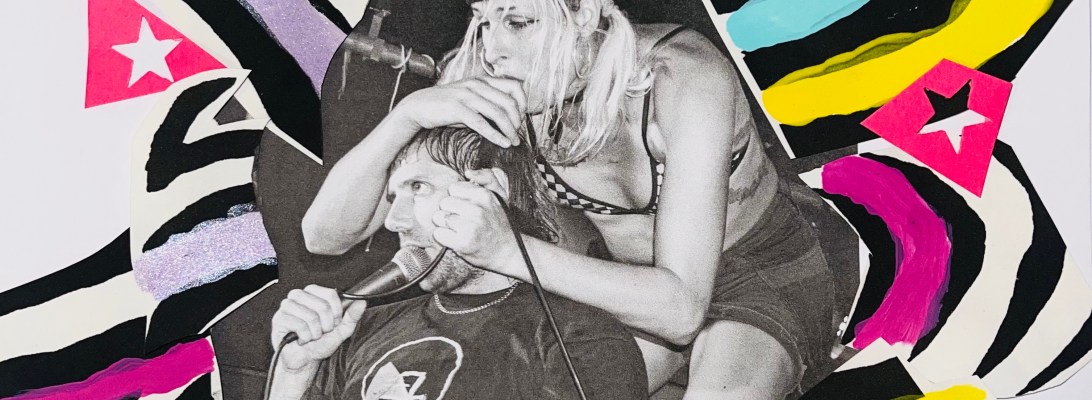
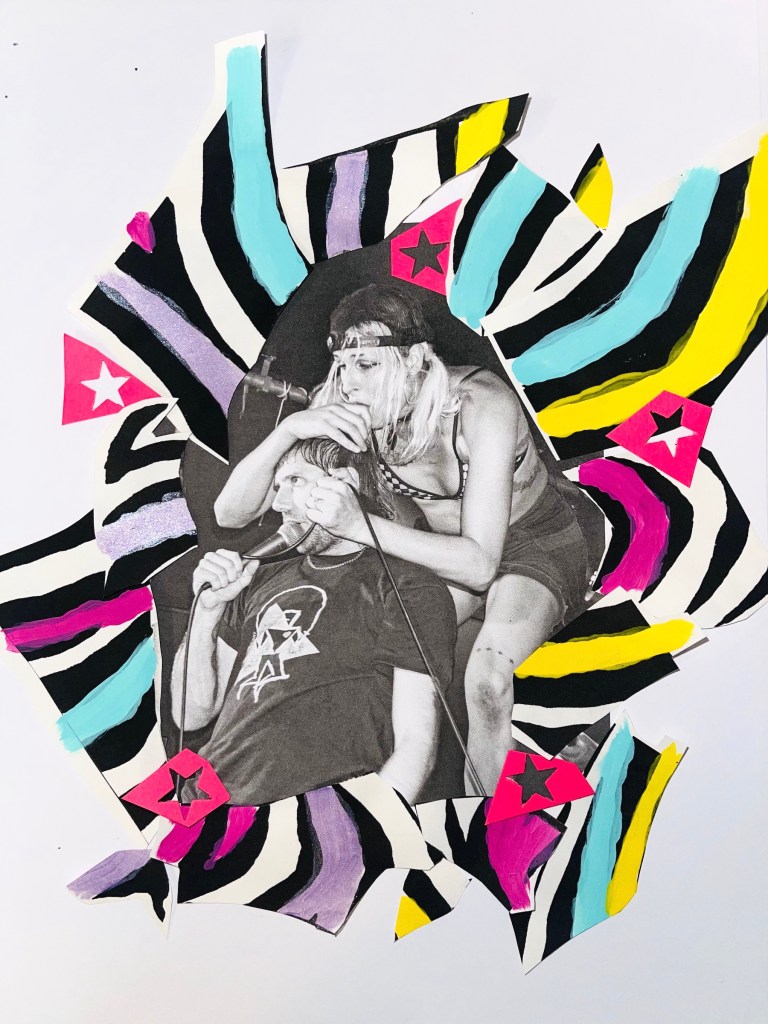
A: [Laughs] Yeah. Oh, me neither. Me neither. There are so many strong women in pop. So that’s another thing, you look at as a little girl and you’re like, hell yeah, that’s what I want to do!

Totally. Was there any artist or an album that made you go, wow! I want to do that too?

A: Yeah, what’s the name of that Destiny’s Child album that’s white they’re all wearing white and it’s a white background? Beyonce’s lying down in front.

Survivor.

A: Yeah, I’d play that every day. 

Same! I’d go running around my neighbourhood listening to it heaps. 

A: Nice. Then I’d listen to a lot of hip-hop as well. Mum would get us, you know, 50 Cent and Eminem—anything she could get her hands on that felt like, this is what people are listening to, this is what’s going on in the music scene. The early ’90s and all that, I love it.

Earlier, you mentioned that your family is well-known in Crete, and I know there’s a huge musical legacy; do you ever feel pressure to live up to that?

A: Well, when I was a teenager, I felt a little bit of pressure. That was because I didn’t really have my own music thing going on. The only music performance I was doing was sometimes playing with my dad and my brothers. So maybe back then, a little bit. 

But personally, no—not much pressure.

There’s a legacy in the patriarchy. I’m not named after any grandfather or great uncle. Both my brothers would definitely feel that pressure more. They play traditional band music and live off that in Greece. I didn’t play with them, and they definitely cop a lot of that.

I watched the documentary about your family and found it fascinating. Music seems like, a really serious thing for your family. You can see it sometimes in the looks that you or your brothers give. It’s like you’re focusing and concentrating so hard, and it feels like there’s a lot of pressure there. When I watched the part where your family was all going to play together for the first time ever, I was like, wow, this is such a magical, special moment. And then you had that one rehearsal beforehand. My heart kind of broke when your granddad was like, you messed up the lyrics, or something like that. I was teary watching it. I thought he could have been gentler with you. How did you feel in that moment?

A: To be honest, I felt pressure. I was sixteen! I’m the only granddaughter in the family. I’m the only female, apart from my aunty. My aunty’s been singing with my grandfather for ages. But in that performance, I was the only female voice, so it was all very, very stressful, to be honest [laughs], and pretty tense. 

Was that the first time that your sang in public?

A: Nah, I’ve been doing that since I was really little, when I was five or six with my dad, getting up on stage. 

With my grandfather it was a pretty full-on time, he’s from a different era. He’s been famous for so long in Greece. He’s a pretty full-on character. So my dad tries to balance all the stuff out. It’s a lot of family tension going around [laughs]. Yeah, so it was pretty stressful.

There’s a little clip of you talking about it, and you were like, oh my god, I was so embarrassed, because you wanted to get it right. You wanted to impress your family and your granddad. And you ended up going on to do the performance, and you totally killed it! There’s this cute moment where you were singing and your brother looks at you and he winks at you. A little reassurance, like, you’re doing good sis! I thought that was really beautiful. That part at the end of the song where you’re singing by yourself, and the whole crowd is transfixed. There’s silence in that room, every one in awe. I totally cheered at my TV screen for you! How did you feel once you’d faced the challenge and did it?

A: It always feels good once it’s done. Once it’s over, a lot of the pressure leaves. Because, as you say, the music is so serious and so formal. Growing up with that music, it’s always like, oh my god, a performance. It’s a huge room, a huge crowd, a concert environment, and it’s so quiet. They can hear everything. You know, even when you breathe. It’s very serious. So as soon as it’s over, I’m just like, oh, alright, cool. I do like doing it. I love singing. But when the time comes, it’s stressful, how serious it all is. It’s funny, though, because it’s so serious but then people are dancing and having such a great, like, non-serious time [laughs]. It’s also traditional and there’s rules but then it’s also improvised a fair bit. It’s very trance-y really. 

Another thing I noticed in the documentary is that it seems like, with Cretan music, it’s really important that when people are playing, they’re looking at each other.

A: Yeah, yeah, yeah. Because there’s no real finish to a song. A lot of the music doesn’t have a clear ending—kind of like Irish tunes. They can go on and on and on [laughs].

And it depends on the dance. If people are dancing, you’ve got to play with the steps and finish a cycle when you can. So you all really have to follow each other.

And because our grandfather—actually, my brother Nick plays too—they both play the lyra. They do a lot of improvising, and you’ve got to stay on the beat and follow them.

So all the musos have to follow the lyra player. The lyra player is the boss. That’s why everyone’s staring at each other, to stay tight.

In the doco your father talks about music coming from the gut and of how it’s this real deep instinctual force. Then I noticed on Frenzee’s first EP, you have that song ‘Fire in My Gut’ and lyrically you’re basically talking about the same thing!

A: Yeah, no way!

Yes way! Your lyrics are: Ever since I can remember I’ve had this fire burning in my gut / It’s been my life source, my force / It’s been my electricity / Always been there for me /Always fuels my energy / Sparks my body and my mind / And it makes me feel alive / And it feeds me / The fire in my gut.

A: That’s pretty cool. I didn’t realise that to be honest. That’s pretty wild. I didn’t really know dad said that too!

Did it feel weird being filmed all the time for the doco?

A: Yeah. They were filming us for three years! That was pretty weird because at that age, it’s the worst version of yourself, probably [laughs]. I cringe when I think about it. But back then, I wasn’t lovin’ it. It was pretty full on.

Your family have taught you a lot about music, your dad, especially. You’ve said he kind of pressured you to learn all the great songs; how does your parents and extended family feel about you playing punk rock?

A: Everyone’s really supportive. Some of them might not totally get it, but they support it, which is great. They’ve always kind of seen us do that as little kids — we’d pretend we had a rock band, miming along to Nirvana and Green Day [laughs]. We didn’t know what to expect, people’s reaction in Crete; we were like, oh, we’re going to cop it now [laughs]  …but whatever.

A lot of people that we really didn’t expect to get it were just loving it. A lot of our cousins, up in the mountains — shepherds, only listening to traditional music, hardly ever going to the city, went and played the village, and they were like, wow, this is what you guys need to be doing. This really suits you!

I feel like, starting with traditional music being so formal and serious, Frenzee is definitely a release from all that. That’s why I think it’s so kind of cleansing every time we — cleansing, letting it all out. I’ve been so formal for so many years, you know? I need to take a breath.

I get that. Your album’s called What’s Wrong With Me, there’s a song with that title on the album too; what does that mean to you? What were you feeling when you wrote that? 

A: When you’re here, you kind of feel like sometimes you’ve got your creed and culture holding your mind back in a few things. So you feel like an outsider, like we were saying before. Being in Crete, you’re like the crazy, you know, Aussie, the rock band, or feminist craziness, or whatever. So you’re kind of like, what’s wrong with me, here and there, if you know what I mean? A lot of things come into that title, but I reckon that’s a big part of it. Here you’re like, what’s wrong with me because I’ve got all that, and over there, what’s wrong with me? too.

It’s a question but also a statement: this is what’s wrong with me. And I guess it can be sarcastic as well. You know, nothing’s wrong with anyone—it’s just life.

I noticed that on the album there seems to be a theme of frustration at external forces, and then your internal struggle with dealing with that, or processing those things. You’re talking about capitalism, gender inequality, class struggle and frustration with societal systems.

A: Living in Greece, it’s very hard not to be political. There’s a lot that’s constantly in your face, all this stuff all the time. I mean, we’re lucky that we don’t have to be right in the middle of it. We’re a little bit removed, being in Crete. But it’s so corrupt, you know? You have no choice but to be very vocal about it there.

The good thing is that everyone’s really politically onto it in Greece as well. I’m mostly talking about there because that’s where I live and that’s what I know best. I’d say we’re a pretty political band. All the lyrics are political, and social, and psychological too. You know, it’s venting.

Did you set out to write an album that? 

A: I just kind of automatically started writing about that in the lyrics. My brothers lived together just up the road in the village, and I lived with my mum down the road. They have the rehearsal space there, so they jam heaps. Even if we’re not all together, they’ll come up with a riff or something and send it to me as a demo, you know, whatever. I’ll go and record it, and then I sit on my own and write the lyrics.

It just depends on what I’ve been listening to or reading at that time, you know. Something might have pissed me off that morning, so I’ll write about that. It wasn’t really like, oh, this is going to be a political album. It just automatically happened, with all the shit going on globally.

Photo: Jhonny Russell

The world seems like such a rough place a lot more on the regular these days, everyone I speak to seems to be doing it tough. Many of my friends just feel mentally and emotionally drained just trying to exist. A lot of your songs are about being overwhelmed; is there anything you do to help deal with that?

A: II talk about these things a lot with my mum, and that helps a lot. She’s very switched on with all this stuff and tends to take it very philosophically as well. You know, it can go a bit full-on. Rather than just talking about events, it gets bigger than that and becomes more philosophical, and that kind of helps deal with things, I guess.

Exercise helps too. Staying active, and also trying to enjoy some things. It can be so frustrating, so if you can just appreciate and enjoy even just small things, and keep talking about it with people, you can sort of balance that stuff out. It’s important not to stope talking about those things.

Yeah, it is really important, and like you just mentioned, to remember to enjoy things and to know that it’s okay to enjoy them. Most of my friends are activists and have been very vocal about everything that’s happening in the world. They’re always going to protests and trying to change things in whatever ways they can. 

Some of my friends stopped making art because they’re like, how can I make art when all this horrible stuff is happening? When there’s genocide and war and all these other full-on things are happening in the world. 

I’ve always thought of it like this: when times are really terrible, music and books and films, and all those things, are what I turn to. Those things helps me be okay in the world. It gives you connection or understanding or belonging or even escape. It can help you see things from other people’s perspectives too.

A: Yeah, yeah, reading and music have definitely done a lot of that for me too. I got really sucked into that kind of idea. It just overtook my whole brain energy. I can go for so long and then you’re like, oh my God, it’s going to kill me! It’s going to kill me without some sort of release. The band has helped a lot with that. This was before the band, all that frustration. I feel like a lot of that energy was held back for so long. Not specifically having a band, just needing that kind of release. Just being able to yell. And it’s accepted [laughs].

Your performance style has a confrontational style. It’s the opposite of anything traditional I’ve seen you do. You seem really comfortable and confident up there.

A: Definitely. I’ve had a lot of strong emotions pushed down for so long. And then, finally, you have this outlet where it can all come out. 

Coming from such a musical family, did you ever think of not doing music? 

A: Aw yeah!

You do animation and art; was there anything else you wanted to do?

A: Nah. I knew I wanted to animate for years. I wasn’t really thinking smart financially, but my mum doesn’t think about that much either. She was just like, ‘Yeah, do animation! That’s great.’ I was thinking maybe I could do music videos for bands, and then that could be my thing. I didn’t really plan it out too much [laughs]. I remember going through a phase where I was just like, nah, I don’t want to… fuck musos, they’re all a bunch of wankers. Because a lot of them are, I grew up with a lot of musos around me. 

There can be some big egos!

A: Yeah. You feel sorry for a lot of them because they actually just live in a little bubble that’s not reality. They just hear about how great they are all the time.

Since I was a teen, going to shows, making zines etc., I’ve been surrounded by musos too. I’ve met a lot of great people but also many really terrible people too, especially in the punk and hardcore scene. I’ve dealt with a lot of sexism and misogyny. Racism too. It boggles my mind how people can be so shit sometimes.

A: Yeah, and aggressive and up themselves. Not what you would think they’d stand for. The whole Greek rock scene is all men, pretty much. There are maybe four or five women in Athens spread across different bands. It can be a pretty sexist culture. They might like watching you perform but they don’t really listen when you speak.

Obviously, it’s like that everywhere, but it’s very full-on there because it feels like we’re a bit back in time. It’s like 20 years ago. Like how hard people copped it here in the 90s, is kind of what we’re dealing with now in Greece, at a certain level. And always being compared to other female singers. 

Yes! You never hear about or read about guys being compared to other guys. 

A: Fully! I cop a lot of that! If I was a guy, I wouldn’t be compared to anyone. People would not even go there.

Photo: Jhonny Russell

Yep! I know people compare you to Amy Taylor, and Frenzee to Amyl and the Sniffers. But you’re obviously both your own thing. 

A: Yeah, she’s amazing, one of my biggest idols! 

I wish people would stop with the comparison culture with women. It’s fucking harmful.

A: Yeah. You kind of get used to it, though. It’s frustrating!

Your song ‘Pink Tax’ is about gender inequality; what sparked that?

A: I was watching a lot of Adam Curtis documentaries at the time. He’s this really cool journalist who makes his own documentaries. He grabs all this old footage from the BBC and turns it into these really cool collages. Anyway, I watched some really interesting documentaries on capitalism, and I was obsessed with them. I went through a bit of a study period on capitalism.

A lot of chats with my mum end up becoming songs, to be honest, because we’re just bang on all day. We were talking one day about how I needed to buy some razors, and she was like, ‘You know the pink razors are more expensive than the men’s ones.’ And I was like, oh my God, really? So I went and looked, and I was like, fuck! That’s when the name Pink Tax came up. It sounded good as a title, ‘Pink Tax’.

A lot of people don’t even know it’s an actual thing, so it was like, oh, sick, some people are actually learning what it is. That’s good!

Do you still buy the pink ones? [Laughter].

A: [Laughs] Actually…. I bought these uni-sex ones.

Obviously, the song ‘Sales’ on your record, is about consumer culture and aggressive marketing…

A: Yeah! That one, my brother Nick, who plays drums, thought of that tune. He’s really good with lyrics as well. Sometimes he’ll just have one phrase and be like, ‘Oh, take that, for inspiration and do whatever you want.’  We all fucking hate these salespeople. It’s not their fault, but what are you going to do? [laughs]. And then it was just really easy to fill in the gaps with that song.

‘Rats in Here’ feels like a more introspective song.

A: So ‘Rats in Here’ lyrics were written by Nick. Because we were talking about, writing a song about the army. We thought that’d be pretty hectic, with everything going on in the world. Nick got really sick in the army and was on this desperate bed with like bed bugs everywhere. Greece can be very third-world with a lot of shit. He said it was the desperate couple of says ever. The songs has desperate lyrics but the tune is kind of uplifting. 

In the middle of the album, there’s song, ‘Fear No Fear’. It feels like a moment of hope and overcoming self-doubt?

A: Yeah. It sums up so much of starting the band and how it all felt. It’s an empowering song, for me.

What made you want to start a punk band? 

A: When we were little, we went through a phase where a family friend got some drums for Nick, and we already had a guitar and a bass around. During that time, we were listening to all those CDs and records Mum got us. We’d let our hair grow long. I’m singing along and playing all this music.

We always thought that having a rock band was the best thing you could do. All that tour stuff was just an amazing image to us, like a fantasy. But I hadn’t really thought about actually doing it, if you know what I mean. It was more like, oh, that’s cool, that’s amazing!

Then the Cretan music took over. The boys were playing a lot of that, and I started working in that as well. We were all living separately. Nick was here when I was young, then Adonis moved over, then they moved back, and I moved here. So we weren’t together for many years. That’s when we were all listening to our own kinds of stuff. I went through an electronic phase, hip-hop and pop, listening to more of that kind of music.

Then finally, when lockdown started, I had just finished uni here, so I was living here when the pandemic hit. As soon as I moved back to Crete for lockdown, that was pretty much the first time we were all together and didn’t know when we’d be leaving again. I was like, sick, we’re in the same country and you guys aren’t playing 17-hour days! So let’s start a band.

And that’s when it all started, when we were finally all together in the same country and all listening to a lot of rock and roll at the time. I’d heard Amyl and the Sniffers come on the radio when I was living and working in Melbourne, when they were still a really small band. I was like, what the hell, that’s the best shit I’ve heard in so long! It was like a woman with Bon Scott energy. I loved that. The vocals were really dreamy, and the riffs were simple. That’s when I started listening to rock and roll again, pretty much. Hearing a great female frontwoman just hyped me up so much.

When you were recording the album, you guys spent your days going for a swim and hanging out with your dogs. It’s funny ‘cause the album’s aggressive and hard, but then you recorded it in a very chill state.

A: Yeah, I could finally really have a chill in lockdown; in the village with the doggies and family and eating well.

Photo: Jhonny Russell

Is there anything you do to put yourself in the mindset to sing like you do? 

A: I definitely need a bit of time alone before the gig. It used to stress me out before a gig; wondering if I could do it, if I could actually get through the gig. I’d get really stressed about whether it was going to be good enough, whether my voice was going to hold up, and whether I was going to give enough energy.

But we’ve played so many gigs now that it feels like you’ve got more of a system lined up. You go, you chill out for a bit on your own, you do a bit of this and that, you don’t socialise too much. You blow bubbles in a straw—Amy Taylor taught me how to warm up. Thanks Amy!

She’s THE best! By the way, it makes me so happy to see so many girls at that front of your gigs.

A: Yeah, it makes me so happy too. It’s just the whole point to me. I love seeing that. It feels like a revolutionary time in the rock and roll scene for women. All these amazing bands everywhere and all so supportive of each other. There’s no bitchy competition. 

Everyone’s been so supportive. When we arrived in Melbourne people were reaching out to us, that we don’t even know from other bands being like, ‘Hey! Let’s grab a beer! Let’s hang out. There’s this amazing community. Women supporting women—it’s very very inspiring and moving. 

Follow @frenzee.band and check out frenzee.bandcamp.com 

The Green Child: ‘There’s something special about the intention behind the music created in the spaces we’re in’

Handmade collage by B

With their third album Look Familiar, The Green Child has grown into a fully realised band. Originally the recording project of Raven Mahon (Grass Widow, Rocky) and Mikey Young (Eddy Current Suppression Ring, Total Control), the group now includes Shaun Gionis (Boomgates) on drums and Alex Macfarlane (Hobbies Galore, Faceless Burial) on guitar and synths. Writing and demoing the album together in Naarm/Melbourne, the quartet found new energy in playing as a unit, shaping a more dynamic, expansive sound while staying true to their refined psychedelic pop.

Look Familiar is an album alive with shifting textures and unexpected turns, its lustrous sound blending propulsive rhythms with hazy, cinematic layers to create a sense of movement through both time and memory. With shimmering synths, reverberant guitars, and Raven Mahon’s ethereal vocals threading through each track, The Green Child has crafted a work that feels both intimate and transcendent. Lyrically, it is rich with shifting realities and personal histories, with Raven incorporating vignettes of family memories alongside reflections on world events. The album’s artwork, painted by her mother in the early ’90s, further ties into this theme of past and present converging.

Gimmie recently spoke with Raven and Mikey about the stories behind Look Familiar.

We’re really excited about your album—it was one of our favourite albums of last year (2024). We love music that is unique, does its own thing, and incorporates lots of different elements, or when an artist takes influences and puts a new twist on them.

RAVEN: Yeah, I feel the same. You always have your influences—whether you’re conscious of them or not—they make their way into the songwriting. It’s always kind of there. But then, being able to add something… or maybe just the process of writing in the moment, responding to whatever you’re feeling at the time, that shapes the song. It might have some references or a particular style, but it just becomes its own thing anyway.

It’s cool to see bands that have something particular to say. And then that just becomes a vehicle for it—like a familiar genre or something. Because you can tell they’re in it, that they’ve put themselves into it. That’s always going to be unique.

A word thought that came to mind when listening to your album was ‘dreamlike” and there’s a warmth too. There’s such like a brightness to it. Listening to it is almost like getting a hug from a friend you haven’t seen in ages. Your album generates beautiful feelings for the listener. It has a familiarity to it. 

RAVEN: Thank you.

MIKEY: Yeah. I wonder if making music with more people, rather than just ourselves, makes it sound more inviting or warm. I feel like the first record doesn’t sound very warm at all—I could be wrong. It just sounds kind of cold to me. But having more people around probably lifts it up a little.

When you made the first Green Child album, you were both living in two different places, right? Do you think the distance might have made it feel that way?

MIKEY: Possibly. Although, weirdly, it hasn’t really changed how we write music. The first thing we ever did, we were in the same room, which ended up being a track on the first album. But I do find that, initially, it was a bit cold. I feel like the first record doesn’t sound very warm at all. I could be wrong— it just sounds cold to me. I found that I worked better if I was alone, trying to figure out ideas. I get kind of claustrophobic if people are around when I’m trying to figure out stuff, so that distance was helpful.

With the second one, when we lived together— weirdly, it was kind of the same. I’d be like, ‘You go in the other room. I’m just going to do this.’ And there wasn’t much interaction about ideas. It wasn’t really until this one, Raven wrote a lot more of the music as well. We left things really open for Shauny and Alex to be involved in. That kind of collaboration—that lack of distance has helped make it more uplifting, maybe.

RAVEN: I feel like the sentiment has always been there, even early on, without explicitly talking about constructing the songs together or what the parts would be like. There’s still something in the melodies or the instrumental ideas you would send—they’d be kind of open, maybe not structured yet, but just melodies and beats, the makings of a song. It’s funny that we work this way, but I feel like I do better by listening first and coming up with vocal melodies and then letting the lyrics follow. I like doing that on my own, but I’m sure they were still informed by the feeling of the songs and the ideas you were sending. There’s still some kind of subconscious communication about it in It’s like evolution.

MIKEY: Yeah.

RAVEN:I feel like there’s not really a conscious decision to make a particular kind of song or a particular kind of sound. It just ends up being what it is.

What we end up making together sounds softer, has a warmth to it, but the subject matter isn’t always warm. There’s a contradiction in there somewhere. 

I noticed that. For example, ‘Wow Factor’ is talking about double standards of the international justice system, but then also caring for and protecting those that are close to you. 

RAVEN: Yeah, it was specifically about Gaza and Palestine, and feeling horrified by it. And also thinking about what we’re able to do to prevent it—or to react to it, or to hold the government that is supposed to represent us, accountable for their participation in it—it’s really frustrating. It’s hard to be on the outside, just watching it happen.

Watching the systems at play—the way the veil falls away, revealing how governments handle international relations—has been striking. It’s been a stark reminder of how power is held and exercised, and how little power it can feel like the public has to do something about it.

That was part of it, as you mentioned, the other side—caring for the community in whatever ways we can, looking out for each other, and the exercise of self-protection. There’s a lot of feelings and reactions that end up coming out in the lyrics. They’re not always literal or narrative, but they contain those feelings—the impulse to react, to say something, to do something, to feel something and express it. Because, It’s been a pretty horrible thing to witness.

I’ve been writing to register to vote—I’m still an American citizen. I was writing to representatives in California and writing to Biden, this kind of regular correspondence, and feeling like the messages are increasingly desperate. You feel like you’re just saying that into the ether, that it’s not landing anywhere, but it feels like one possibility for a way you can kind of exercise your power as a constituent. In the end, you do feel pretty helpless when it feels like there’s a lot that’s out of your hands.

When the world feels overwhelming and life gets really hard, is there anything that helps you get through those moments?

MIKEY: It’s probably not the right attitude, but I personally probably just get smaller and concentrate on work, making music, and the people I know. Otherwise, some things seem too crushing, and I can’t read the news anymore. I’ve been in a bit of that state lately. 

RAVEN: It’s been a strange year and a half. I’ve just joined Instagram, which is something I was feeling pretty conflicted about—or more just uninterested in. And then, at a certain point, I felt like, for my work, maybe I should try it. I had a vague curiosity about what it would actually feel like to join, to have an account and to participate.

And so I did set up an account, and I posted a few work-related things. Then October 7 happened, and it wasn’t long after I’d set it up, I realised how incredibly useful it is for sharing things you wouldn’t see in other places.

Since that point, I’ve continued to feel really conflicted about using it, especially now that Mark Zuckerberg has taken away fact-checking—which things can only get worse.

Yeah, it’s pretty wild.

RAVEN: It is really wild—and really dangerous. But I still find that it’s really useful for learning about what other people are doing or just hearing from others around all the issues that I care about or want to stay informed about.

Even though there’s a danger in being confronted with so much in such a concentrated format, I also recognise how a community can exist there. You can feel not as alone in the frustrations, the sadness, or whatever it is that these world events and the state of the world make you feel. There’s something comforting about seeing the activity of people who are also reacting to it.

So, I don’t really want my answer to be that I go on Instagram when I feel down—but it does create some kind of balance, or ballast, to it. Music really helps too—just playing music. I was feeling down today, and we ran through some songs because we have a show coming up. And it was making me feel nice to play.

Listening to music changes your channel a bit. Playing, because it’s such a physical act, you have to focus on it. That physical engagement is part of what can be comforting.

Your album is called Look Familiar. That’s the name of one of the songs on the album, too. Why did you choose that for an album title? Does it tie to a theme?

RAVEN: There was no theme to the album that we set out to follow, but when we were coming up with song titles—because we’re not very good at that—we’d just be naming them at the last minute, and sometimes they’re not really connected to the songs at all. But I was looking at some subject lines from emails that my mom had sent me.

We’re really close. I communicate with her a lot. She lives by herself out in the desert in New Mexico. She’s maybe from a generation that uses technology in her own way, so often she’ll put the entire body of a message in the subject, and there just won’t be anything in the email itself. Some of her subjects were really funny or just funny imagery.

Even though “look familiar” is not necessarily an interesting couple of words together, that was on the list of things, so we went from there. Then we ended up using one of her paintings for the album art. Everything converged and made sense—not because we had intended to make that happen, but it just sort of did in the end.

One of the people in the painting is my dad. She went back to school and studied art when they divorced when I was young. This was a painting that she did post-divorce. It was kind of loaded. It’s a way, I think, for me to bring the past and other people—family members in other places—into something that I’m doing now because I live so far away from them.

‘RTNW’ PAINTING BY JANE MAHON, 1991 

That’s really beautiful. Another song, ‘The Lawn’ has a connection to one of your family members as well.

RAVEN: Yeah, that’s my paternal grandmother. 

She lived in a commune?

RAVEN: A desert community out on the east side of the San Gabriel Mountains in LA, in Southern California. In the ’50s, they started selling parcels of land, thinking—imagining—it was going to be like Palm Springs or something, but it never really came to fruition.

She lived in this small community that’s half-built and right on the edge of things. That land, 40 years before she moved there, was a socialist commune, and there are still remnants of it. There’s a kiln—this stone structure on the dirt road that her house was on—and a couple of other things dotted around.

The commune didn’t survive. The other parts of the community didn’t want the socialists taking hold there, so they did some pretty nasty things, like turning off their water—kind of sabotaging their water rights—so that their orchards wouldn’t flourish and that sort of thing.

I spent a lot of time there when I was a kid and would go down to visit her in my 20s. So, a lot of that environment is lodged pretty deep in my subconscious.

Obviously, you moved to Australia because you found love. You met at a gig you played together, right? 

RAVEN: Yeah!

MIKEY: It was the last Grass Widow show, and Total Control played the show in Oakland in 2013. We had a mutual friend who was playing in Total Control at the time, David West, who does Rat Columns. He was living in San Francisco at the time, and he kind of set that up in a weird way.

That’s so lovely. Mikey, you’ve talked about the record, and said it felt like a step forward for you and it felt real fresh and new. What kind of things did you guys try on the record that made it fresh for you? 

MIKEY: It maintained a freshness for me because I backed away and let other people in a little more. 

Did that feel hard for you? 

MIKEY: No, not at all. Any record I’m involved in, by the time I get to the end of it, I’m pretty conflicted about the damn thing anyway, and it’s hard for me to enjoy. It takes time for me to come out the other side feeling joyous about it.

Usually, it takes some nice words from people like yourself to realise it’s okay. I think leaving even more space helps. If you’ve got people like Alex to make music with—he’s so talented and thinks so hard about what he’s going to do in a given space—you want to allow him as much room as he needs. That definitely influenced how I went about making the tunes. Getting to the end and hearing what he and Shauny decided to do on the songs makes it much easier for me to enjoy. If it were just me and Raven, my lulls would be even worse.

When you’ve got other people bringing their own ideas, you can listen back and go, ‘Ah, that’s so sick.’ So no, I don’t think it was hard. There were probably moments where it was hard to step back because I’ve been a bit of a control freak in a lot of my bands, maybe out of necessity. But once I got over it, I think it’s better, and it’ll be better in the long run.

For a good while, we even thought about not calling it a Green Child record because it didn’t feel like a continuation of the other two records, but I’m glad we didn’t change the name in the end. It seems to fit.

RAVEN: Yeah, maybe they’re not as different as we think they are. But it’s just getting used to hearing other people, other people’s ideas too, like in the evolution of it.

I like the idea of a name also being able to contain different versions and different things, different records with different configurations. 

MIKEY: Yeah, like, even Total Control records, for instance. A lot of those records didn’t have the same lineup of people, or, the songwriters changed over time. I like a band being able to be a bit malleable.

There’s been a Total Control record in the works for a little while now, hasn’t there?

MIKEY: There’s a kind-of-finished Total Control record sitting in limbo. I’m not sure—it got put on hold. By the time we finished it, people had moved interstate, and we weren’t really an active band anymore. So the personal motivation to get it over the line has dropped off. Maybe it’ll just disappear. Who knows?

Was it fun making it?

MIKEY: Yeah, that’s the weird thing. I realised when I finished it that I cared more about that than releasing it. It was interesting. I realised that with a lot of music—it made me think about a lot of the music I make—and how it’s often not about releasing it or turning it into a product. Sometimes, it’s just about taking all these three-quarter-finished things on my computer and turning them into something I’m done with. And, it allows my mind to start other things. It was fun making it. It was fun to finish it, and maybe that’s all I needed from it. Not everything has to come out.

Totally. I do a lot of writing that never ends up coming out but doing it helped me with whatever was happening in my life or it documents how I was thinking or feeling. Also, though, with the interviews/conversations that I do for Gimmie, I find it’s about the connection with others.

MIKEY: Yeah, totally. Nearly all my friends seem to be the people I’m in bands with. Most of my social engagements throughout the week are with them. The joy of just coming up with something—even if that record never came out—was worth it, I think. Just doing it for so long made it worthwhile.

One of the highlights for me on the album is the song ‘Feet Are Rebels’. I love the guitar line of that song. It just soars and keeps climbing and climbing. 

MIKEY: That would be Alex. He did write to us afterward and was like, ‘That was the first thing I came up with, and I’m kind of embarrassed by it.’ He thought it was just a bit over the top—just ridiculous—for that song. I was like, ‘Man, that’s staying.’ But I guess that one almost didn’t make the album because it’s not one of Raven’s favs.

Really?

RAVEN: It went through a few evolutions. Like Mikey was saying, when you’re so involved in the mixing and recording, you kind of lose perspective. I was like, ‘What is this song? I don’t know.’ Then Alex came in and was like, ‘Sounds like The Cars,’ or at least he heard The Cars in it. So I’m glad he ran with that—I feel like that made sense to me.

But, I could never quite shake the feeling of questioning whether it was any good, you know? Like, was it worth being on the record or worth playing? I mean, I could be convinced, but it’s just one that I lost perspective on.

I understand that half the ideas were from you, Raven, and the other half from Mikey. What were some of your personal influences while making it? It was made over four years, right?

MIKEY: God, I don’t know how… Yeah, I guess some of the initial ideas are probably four years old—who knows? We probably only put a conscious effort into making a record over the last year or so. 

RAVEN: The ideas are probably drifting around for a while.

MIKEY: I have no idea about influences anymore. There are certain songs that feel like obvious rip-offs to me—like, there’s a very specific idea where I wanted to rip-off. I don’t know if you picked up on any of that.

There’s a demo version that doesn’t sound like this, but as soon as we started jamming ‘Easy Window’ it basically turned into Tusk by Fleetwood Mac straight away. I was like, ‘Let’s just roll with that—lean hard in that direction and be shameless about it.’ Because, you know, sometimes you do try to rip something off. But because we’re our idiot selves, it’s not gonna come out sounding like the intended object.

RAVEN: Someone called it though. Was it Rory? 

MIKEY: Yeah. A few people have called that one out.

RAVEN: It’s the drums. As far as direct influences, I feel like it’s all kind of swirling around—whatever comes out, and then having other people with their own ‘soup’ of inspiration ends up being something completely different anyway. Everyone’s got their own reference points.

I do feel like this record sounds particularly different because of everything Alex brings to it. He has these certain notes or combinations of notes that he uses, that give it this kind of medieval frog bent [laughs]. I love that he just goes for it too.It feels really free.

He doesn’t make it sound indulgent. It’s just like, this is what needs to happen in this particular place. When you open up a songwriting process to other people, they come back with ideas you wouldn’t have thought of. Everything Alex has done is not something I would have thought of, but that’s the nice thing about collaborating.

MIKEY: Yeah.What I was trying to say before is that the influences are more secondary. Like, you start a song without an influence, and then you realise there’s something in it—like The Cars or something. Then, I start to go down that path.

Like, the ballad—which I can’t remember the name of—did not start out sounding like a Serge Gainsbourg song. But as soon as it started, I was like, ‘Ah, I said to Shawny, just play drums like that Serge Gainsbourg track.’

It’s not like I wake up and think, ‘I’m going to write a song that sounds like Serge Gainsbourg,’ but it’s more like, ‘Oh, I accidentally started something that sounds like it could or should go in that direction.’

Although that’s not true. There’s one, ‘The Lawn.’You know, New Musik? ‘The Lawn’ was made totally trying to write a New Musik-type song.

Do each of you have a particular song on the album that you’re really happy with?

RAVEN: I really like that ‘The Lawn’ New Musik-type song. I feel like it’s challenging to play, but when we get it right, I really think I like that one a lot. But then the other one, called ‘Private Laugh,’ is sort of like that idea initially came to us a few years ago, it had just been drifting around and then came together right at the end of the process of getting all of the album songs together.

It came up pretty quickly, and I didn’t really think too much of it. It just felt like a good addition to the album, and maybe it sounded different from the other songs. But now that we’ve been playing it and practicing to play it live on a show, that’s becoming my favourite song to play. It feels like like the recorded version. Although, I don’t know, I don’t go back and listen to any of them. There are the songs that you’re writing, and then there are the songs that you’re recording and mixing, and then they’re out. This is the first time we’ve ever played any of these songs live, and I’m pretty nervous about it, actually. 

We’re excited to see it live! We’ll be at Jerkfest this year. 

MIKEY: Cool. 

Jerkfest is always a highlight of our year! We get to see so many cool bands and people that we love. We also feel so inspired by it and everyone. I chatted with Alex a few weeks back and he was telling me that you guys have been practicing. How’s it all going? 

MIKEY: It’s going good. Alex is good to have in it because he’s not a ‘half-baked, it should be right on the night’ kind of person. He’s more like, ‘We must practice this until there’s no chance of anything falling apart.’ We probably need a bit of that kind of whipping into gear. We’re getting there.

We’ve got two practices a week for the next three weeks, so I think we’re looking good. It’s been funny, I look forward to playing, but I also look forward to getting these over with so we can write new tunes again [laughs].

What’s something that’s made you a better songwriter over the years?

MIKEY: I would never call myself a songwriter because I can’t write lyrics. I can write riffs and stuff. Sometimes I can get my ideas from A to B a little better on a production level. Like, I used to have an idea, and then what I wanted to sound like at the end—I couldn’t get to because I didn’t have the skill to get to that point. Maybe that’s just gotten a little easier.

RAVEN: I feel like if I am any better at it now than I was like 10 years ago, it’s just because of watching you [Mikey] mix things and write things for other projects, and even just the way that you’ve approached these songs. There’s maybe something structural… I don’t know what it is exactly, but I do feel like I’ve learned a lot. Some of it is probably technical—understanding the program and what the possibilities are, which I still feel like I only understand a tiny smidgen of what’s possible.

But being able to navigate it a little bit easier helps fully form a song, or at least I have more elements than like, ‘I’ve got this idea in my head.’ Because I feel like, as soon as I have an idea, it’s just gone. So if I can’t get it down in some form, then that’s it.

MIKEY: My problem is I’ve ran out of good riffs.

RAVEN: The riffs run dry. 

MIKEY: It gets harder and harder. 

Because you do mix and master other people’s music so extensively, Mikey, and there’s a lot of technical side to how you work, and then obviously making music yourself would be more emotional and intuitive—do you have to switch that technical side off when you’re playing?

MIKEY: Yeah, that’s easy. The feeling of working on people’s music during the day most of the time does not feel creative at all. It’s a totally different mindset, and it doesn’t interfere with my feelings about making music or my desire to make music.

Usually, the first part of when I’m making music is not very technological at all. It’s scrapping together an idea as quickly as I can. I still think I’m a pretty scrappy musician. I don’t think much has changed over time. Usually, it’s just finding new instruments or programs to kind of feel inspired about.

For me, there’s usually a point where I’m finding something new—be it a new instrument that I can’t play very well or a new program. There’s a point where I get good enough to make something, but I’m still ridiculously naive at that thing. And there’s a window there where most of my favourite ideas come from because you can do these simple things. Now, there are certain riffs I wouldn’t write on a guitar that I would have when I was 15, because I’m like, ‘You can’t write that.’ But if you’ve got something new that you don’t quite know what you’re doing, you can go back to that mindset and be a teenager again. For me, it’s usually finding that window where something’s still raw and fun and stupid.

I love that! 

MIKEY: It’s a fun mindset to be in. On the other hand, I really respect people when they craft and can write a perfect pop song. Alex is a good example of someone that to my eyes, he really tries to do something properly all the time. 

I love both ways.

MIKEY: Yeah, that’s a good thing to be open. 

What’s something that you’ve been really invested in lately?

MIKEY: Because I’m working on modern music a lot, a lot of my spare time is looking up music for the compilations that I’ve done on the side. Often the thrill of the chase and finding things with that whole process is pretty inspiring to me.

There’s not really much in my life that’s outside of music. We watch a lot of films.

Anything you’ve found lately that you’ve really loved? 

MIKEY: There’s been a bunch of stuff, and that’s going to be on another comp that should be out next year. I find stuff I like all the time. When it’s late at night and you stumble across something that is just mind-altering, it’s like, ‘Oh my god, this is like my favourite song ever for now.’ I don’t find that as easily as I get older, so when it does happen and it’s that strong, it’s cool! It feels the same as it did when I was 10 years old.

Can you remember the first song you were obsessed with when you were young? 

MIKEY: From two, I was mega into Rod Stewart and KISS. In 1979, it was ‘I Was Made For Loving You’ and a few songs off the Dynasty album. There was also a Rod Stewart album that I had the poster for on the wall. At two or three years old, they’re the only two cassettes I had. I was probably just obsessed about every detail, as much as you can be when you’re three years old and just trying to understand what music is.

What about you Raven?

RAVEN: I was thinking about my dad’s record collection and INXS, and about the albums that first made it over into America and were big. It would be something that I would have heard in there, probably the Beatles’ White Album or something. But something that got me personally…

I feel like there’s a moment when you— not when you feel like you could make that music, but that you realise that it makes you feel something really strong. Whether you make music or you’re just listening to music and a fan of it, there’s a particular moment where it affects your whole world or transforms your whole perspective.

I don’t know what that first moment was of feeling like I could make music. It probably came way later, actually. Well, I was in band, I played saxophone when I was seven, and I feel like that was my first experience. But it wasn’t really like what I listened to and then what I played. It was like what we played in the school band versus, you know, the things that I listened to—my Mariah Carey tape that just made me feel really good.

Slowly those things start to come together and, you know, you realise you can play and it gives you a similar feeling to listening to things that you love.

MIKEY: I definitely didn’t hear KISS or Rod Stewart and think I can do this. The idea of being inspired directly to make music, I’m sure that can’t wait later on. I have no idea how.

RAVEN: I do remember being in a school band at around 11, playing some kind of John Williams soundtrack, like Jurassic Park or something, which I think we did play, and feeling genuinely moved by it, and feeling part of something. I feel like some people talk about their early days, like singing in church or playing an instrument in a church band, and how it was their first experience of playing something and feeling like part of a whole. Playing Jurassic Park in sixth grade was probably that moment for me [laughs].

That’s cool. It’s funny that you mentioned the Jurassic Park theme, when Jhonny would play solo shows he’d start of his set with that and I’d be standing out in the crowd and I’d watch everyone around me hear it and get so stoked on it. It’s a pretty magical piece of music.

RAVEN: That’s so great.

I love seeing music move people and being in a space where you can share that. During the pandemic, it was the first time I hadn’t been to gigs for a prolonged period since I started going to them as a teen. When I started going back to shows, I realised how much I missed it, and that there’s nothing that gives me the same feeling.

MIKEY: Totally. 

RAVEN: Yeah, I feel really lucky to have experienced what I have. Whatever happens in the future, just to have had the experience of playing and touring— that really particular thing. Whether you’re in the audience or playing music on stage, there’s nothing else like it, really. 

MIKEY: Especially small shows. It’s the visceral thrill of being face to face with someone, whether you’re playing or watching. It’s something I don’t think I’ve experienced in any other fashion.

I’m forever fascinated by the mysteries of creating and music and connecting and sharing. 

RAVEN: I think about how much work it takes. We’ve done a tiny bit of work with our music for film and a little for TV, and it’s given me some insight into how people make a film—how organised you have to be, how many layers there are, how many people need to be involved, and how long the whole process is. There’s this will, this intention to create something, and an idea of what that is, what someone wants to communicate, or what a group of people want to communicate.

And I feel like, on a smaller scale with music, all of that is channeled into this media.All this work has gone into it— the ideas, the intentions, the imagery, the lyricism… everything. As derivative as some music is, or fits into defined genres, there’s still a lot that goes into it, especially in bands we listen to. I’m not saying that pop music doesn’t have something behind it, but I also feel there’s something special about the intention behind the music created in the spaces we’re in. Small shows, small runs of records—it’s ambition is to be made, to create, and to express something. And that’s what you end up hearing, or seeing, or feeling when you listen to it.

Last question: In the past year (2024), what’s something that’s brought you a lot of joy?

MIKEY: Hmmm, joy?

RAVEN: It’s been a hard year, honestly. But I feel really fortunate to be able to make music. In my other life, my job is making furniture. I share a workshop with a handful of people, and we’ve got this collective thing that’s grown. It feels like I’m really fortunate to have both the band space and this work space. I mean, it’s work; people hire me and make furniture. But there’s a lot of creativity, ideas, and information and experience shared amongst the people I work around. I wouldn’t have called it “joy” but it is something that really makes me happy, and I’m really grateful for it. I’ve spent so much energy on that and into the music and I feel like both of those things feel affirming and are positive places to be channeling energy at the moment. So, I think that would be it for me—just feeling happy about those opportunities.

MIKEY: It always comes back to music, and making music with people. There’s lots of ups and downs with, so the word “joy” is probably, maybe it’s not as straightforward as that. But I was thinking learning a new instrument over the last year has brought me a lot of frustration, but a lot of joy.

That’s the instrument I can see there beside you?

MIKEY: Yeah, the double bass. It’s going to take me about 10 frickin’ years to get  anywhere with it [laughs]. Also, I’ve been jamming a lot. Since we moved back to the city from the coast, over the last year, Eddy Current started jamming every week again—just because. Once we started working on the album and the idea of playing live, Green Child started jamming every week too.

We also started jamming with Shaun, our drummer, who’s one of our best friends. We used to live with him down the coast, but once we moved away, there was a period where we didn’t see each other as much. But making these regular times for jamming was key. It’s not just like, ‘This is when we’re gonna practice,’ it’s also the time I get to hang out with my friends and family.

I’ve got another band, Kissland, with my buddy Max, and just having these moments—because if I don’t have bands, sometimes months can go by without seeing some of my best friends—but being in a band forces that opportunity to hang out and make stuff every week. It definitely has its frustrating times, but overall, it’s bringing a lot of joy.

Is there a new Eddy Current record in the works?

MIKEY: Not really. We decided to start jamming about a year ago, or maybe even a year and because we jam in here, we record every week, and we’ve written a heap of songs. But it’s almost just this insular thing that we do for ourselves, and we don’t really talk about putting out an album or anything. It’s just sitting on all these stupid recordings.

I think that’s what has made it so much fun: because we don’t really talk about the outside world so much. For now, we’re just happy being that. 

I love that you said that ‘we just jam because’!

MIKEY: it’s just a good time for everyone. People’s jobs have changed, or their kids have gotten old enough where they’ve got spare time. So, it’s just a good time for everyone.

I don’t have Total Control playing anymore. We’ve got this space that we can jam and leave stuff set up. It’s just a good feeling for all of us to do it every week.

What both of you and Raven are doing, you’re creating things and you’re connecting with people that you love. And that’s the base human things that you need to. For me, I know that’s what I need to have a happy life. Lots of shit could be happening in my life, but if I have the ability to have those two things on a pretty regular basis, I feel like I’m like the richest person in the whole world. 

RAVEN: Yeah!

MIKEY: Yeah, totally. 

RAVEN: Well put.

MIKEY: I do find music baking also really frustrating sometimes. Not just with other people, but by myself. I can have extreme lows when I feel like I’m just making crap. I don’t really think about how music makes me happy. It’s more like, it just doesn’t even seem like a choice. It’s what I do and have always done without even thinking about why I’m doing it. 

You’re compelled. It’s like breathing, basically, and if you don’t do it, you’ll die. 

MIKEY: Totally. It’s not like you wake up one morning and go, ‘Damn, I love breathing!’ [laughs]. That’s it—you just do it.

LISTEN/BUY Look Familiar via Hobbies Galore (AUS) and Upset The Rhythm (UK).

Armour, 100% and Bloodletter’s Lena Molnar: ‘I’ve always been a somewhat confrontational person’

Handmade collage by B

Lena is a force of nature—an advocate, researcher, and community builder whose work spans music, activism, and disability justice. From creating zines to process grief to putting on shows that strived to reshape Meanjin/Brisbane’s punk scene by prioritising non-male artists, to her current efforts in preventing violence against women with disabilities, she is driven by a deep commitment to change.

She’s not afraid to talk about hard things like death, power, and systemic inequality. Lena challenges the status quo through grassroots organising, academic research, and award-winning advocacy, carving out space for those too often overlooked.

In this conversation, she reflects on loss, activism, and the ongoing evolution of both herself and her communities. Gimmie also dives into her musical journey, creative philosophy, progressive punk ethics, and the themes behind her projects—including her latest Naarm/Melbourne-based goth-rock post-punk band, Armour, as well as 100%, Bloodletter, and more.

 LENA: You’re a really good writer! 

GIMMIE: Thank you! I’ve been doing this for a long time—30 years, in fact. For a really long time, I didn’t believe I was even a writer. I doubted myself because I used to cop so much flack from people telling me I couldn’t write—mostly from guys in the scene. I was actually told that I should go back and pass high school English, along with so many other snarky comments that constantly put me down.

I used to get upset about it, but then one day, something changed for me. I realised: hey, I’m doing what I love, I’m having a lot of fun, I’m making these meaningful connections and doing work that means something to me. I feel like I have purpose.

LENA: There’s a couple of things I want to speak to there. I think you’ll just end up doing the thing that you want to do, regardless of what people tell you or say is the right way of doing something. If you feel good doing it, you’ll just keep on doing it or find a way to do it, because you feel bad when you’re not doing it.

You’ll feel like you’ll be doing it in some way—either professionally, in your own way, or by finding an outlet to do it, like a zine, writing a book, or whatever. Or you’ll just be having those conversations anyway. I’m speaking about you, but that’s the same for doing some sort of art, having a creative practice, or finding whatever your thing is.

If you’re a creative person or have some outlet, there’s always going to be people—especially when you’ve got some sort of marginalised experience—who tell you, ‘nah, the way that you’re doing it is not the way; it’s not my way.’

But if you do it from your heart, it doesn’t matter what the “right way” is. People are going to connect with it. If they connect with it, then it’s going to foster your own community and your own platform. That’s how you know it’s the right way, regardless of what the outlet ends up being.

Whether it’s through a zine, a book, a magazine, a piece of journalism, or even just using the radio or whatever, you’re obviously really good at drawing out conversation and stories from people. You have your own storytelling practice, and that’s really important. Like, fuck the correct writing conventions. People engage with how you tell stories, Bianca. It’s so cool.

Thank you. I just really care about the people I interview. I would never speak to someone whose work I didn’t find interesting or whose work I didn’t enjoy. My time is really limited because I do so many different things, so I have to just focus on what I really love.

I’ve been wanting to chat with you for ages—even as far back as when we saw you at Nag Nag Nag. I especially love your band Bloodletter and your earlier band, Tangle. It’s been really cool to see your evolution as a creative and how one thing informs the next. It’s the coolest thing to watch people grow.

LENA: Thank you. It’s really special that you mentioned Tangle, not my first band, but one of the first bands that played a lot and I got to do a bunch of things with. It’s nice that you can see the connection between what I was doing then and what I’m doing now. One of the privileges of staying in the creative arts community, like punk or any underground scene is seeing the beautiful ways that people change and grow, but become more and more themselves. That’s just an honour to grow up together in the different ways that we do. 

In my experience of community, I’ve seen that sometimes people don’t want things to change—particularly in the punk and hardcore scenes. There’s that other side of things where, when people try to grow and evolve, others want to pull them back, saying, ‘Hey, no, but this is cool. Let’s just stay here.’

LENA: I’ve definitely felt that in many different ways, like with regards to style and genre. Especially in hardcore, there are very fixed ways of thinking. I have a respect for that in some regards, but also, I am not held down to any preconceptions that there’s a certain way to be—for me, at least.

It’s actually quite unhealthy for me to think that I have to be a certain way to be authentic or to be, like, quote-unquote, punk or whatever. That’s sort of the antithesis of how I relate to creative practice and the subculture that I’ve grown to love and be a part of. I wouldn’t want to hold anyone else back that way, but I understand why people sort of feel that way.

I feel it’s really important to hold things down in a particular way. But yeah, it’s a devil’s bargain of, yeah, these are the things that keep us safe and the logics of genre or punk, per se, or hardcore, while also it should be about letting people in and letting people be free to be their freaky selves as well.

I read an interview with you where you talked about growing up with punk and DIY. You mentioned that, in your youth, you noticed conflicts and approaches in hardcore and heavier music that were a little at odds with things in your life.

LENA: I have an interpretation of a punk ethic that is very progressive, very open, and about changing and supporting people to change while being accountable as well. There’s an openness to conflict in that sense, where conflict brings about disruption and change.

But there have been things that have happened in my life where people are very resistant to that kind of accountability—especially because of their own behaviour. These situations have been quite damaging within communities, and it’s severed ties due to the inability to communicate or because of what’s led up to some really poor choices. Yeah, violence and abuse within interpersonal relationships and smaller scenes in communities.

To me, that’s at odds with my personal ethics, which I drew from the people I had the privilege of hanging out with early on when I was coming into punk. That’s really informed my entire life. But I understand not everyone sees punk—or lives in the world—providing that kind of ethos.

And yet, not everyone has the same viewpoint as me, and that’s totally fine. I live in a community where folks don’t all have to agree. But, if you don’t agree with people, what do you do about that? 

It seems like it’s getting harder to have these conversations, even just in everyday life, because everyone is so this way or that way. I’ve always thought that opening up a dialogue with someone is how you can actually start to affect change.

LENA: Totally. If you can’t talk about it, then you probably can’t do anything about it. A lot of people are afraid of being wrong because they think that means they have to change, or that they have to do something that means their way of thinking hasn’t been right. It’s too difficult for them. And that’s not just a punk thing. Every community suffers with that. It’s very nuanced. There are some really beautiful people in our community who are quite open to having these kinds of conversations. I’ve been inspired by them throughout my life. I call a lot of those people my very good friends.

Was punk scene the first community that you came to? 

LENA: I grew up in a household where I had family around a lot of the time. There were a lot of folks who had migrated from the war, in a community with a lot of people who were struggling in different ways. I always lived around a lot of different kinds of people, and my community was always like family—extended family, neighbours.

There were a lot of interesting conversations about ageing and mental health that were normalised very early in my life because of my family’s mixed cultural background. We talked about trauma and death quite a lot, very early.

Those kinds of conversations meant that community was much more of a flexible idea to me: Who’s around you? What are you doing together? But also, what do you need from each other at that time?

I’ve got a really open idea about what community is, but I’ve never been the fixed-group, nuclear-family kind of girl. It’s always been more inclusive. I think that way of growing up has really imprinted on me, it’s a really special way to grow up.

You mentioned growing up where conversations about death were normalised. I know about a decade ago, you did a zine called Good Grief, and it explored grief and loss. I’m interested to talk about this; in the past few years I lost both of my parents. It’s been something that is on my mind a lot.

LENA: I’m sorry that you lost both your parents. 

I’m sorry you’ve lost your dad too. My parents no longer being here is something that still feels really strange for me. I’m not sure if it will ever not feel that way.

LENA: That was basically the reason why my friend Erica [Newby] and I put that zine together. We both lost a parent within a couple of months of each other, and we found that no one except for each other got it. My friends were really beautiful at the time; they tried, but mostly, it was like, ‘If there’s anything I can do,’ or ‘I have no words.’ It was very much like, ‘You tell me,’ like, you do the work. Then I started getting a lot of ‘You’re so strong.’ I’ve been getting that my whole life—‘Look at you go, you’re so strong,’ and ‘You fucking kill it.’ And I’m just crumbling inside.

Photo: Jhonny Russell

Same! I also get, ‘You’re always so positive!’ It’s like, yeah, but you don’t see me on my bad days when I’m in a ball, crying and feeling so low.

LENA: I feel like I recognise that about you in the few moments that we have seen each other.

I’ve experienced very deep sadness, depression and crippling anxiety in my life, and in those lowest, low times, I felt no one was there for me, I didn’t have any support despite knowing A LOT of people; obviously that’s changed having Jhonny in my life. But because of those experiences, though, I always try to be there for others and try to remain on the positive side of things. But it’s not always realistic.

LENA: Yeah. And it does damage trying to be like that a lot. I had a feeling that we were gonna talk about death and grief. It’s washed all over me—I’m a death girlie. [laughs]. I’ve always been a spooky little bitch!

[Laughter]

LENA: I guess I had lost people prior to my dad dying; I was 22. But no one so close to me like my dad was. My dad was my best friend. My friend Erica lost her mother to cancer, so it was two very different kinds of grief. My dad passed away very suddenly. I was on the phone to him one day, and two days later, he was dead. Heartbreaking.

Whereas Erica was anticipating the loss of her mother, and that’s also very tragic, as anyone who loses a parent or a loved one over a long illness knows. Both are bad. Especially at that age when you’re still coming to terms with yourself, and everyone around you is still quite young too. In Anglo-Queensland, where we were, people offered lots of prayers but weren’t really sure what to do. So we came up with the idea of doing the zine. We reached out to folks that we knew, and beyond, to submit whatever creative stuff they had about their experience of loss—about what it felt like. We wanted to share that with others so they could gain some insight into what grieving can be like, and to normalise those conversations a little bit at that stage in our lives.

I still have a copy of one of the masters of that zine I made, and I look at it every now and then. I’ve lost people since. We’ve already talked about change, and now we’re talking about death. The only constants in life are change and death. I’m continuously reminding myself of that. I talk about it with my staff. You just have to roll with that—change and death. Those are the constants in life. You can’t be afraid of it. The better you get at anticipating it, but not living in fear of it—living in spite of it and building your life around the choices you make despite these things being inevitabilities—you’ll make better choices.

But you’ve got to be able to support people in their fear of those things as well. Especially folks who aren’t brought up in a way or are unable to come to terms with talking about it. It is scary, and people run away from it. In the disability community, there’s a very close relationship between how people perceive disability and death. We’re living reminders of mortality, and that you don’t have all the strength you think you do. Something could happen to you, and the world isn’t built for that.

You recently won the National Disability Award for Excellence in Innovation.

LENA: My organisation did. I delivered a program through my organisation called Changing the Landscape, which provides resources on preventing violence against women with disabilities. The program targeted a national audience of practitioners in the disability service sector, as well as gender-based violence workers. These resources include videos, posters, and materials based on a 100-page document detailing the rates of violence and what can be done to stop it. They’re beautiful resources that I’m very proud of, especially considering I did a lot of that work just after a significant surgery. While I’m the program manager for that suite of resources, it took a lot of work on my part, but I’m just happy to have been part of such a dedicated team.

What motivated you to start working in that kind of space? 

LENA: Gendered-violence or disability?

Both.

LENA: I have experiences of both. I had trained as a sociologist and did my honours thesis in urban sociology about gentrification—specifically, how people perceive their role in changing public space in a highly gentrified area known as West End. I was really interested in some things that didn’t end up getting discussed in the findings or didn’t emerge from the data. And that’s because I didn’t draw out a particular feminist analysis on the project, which was limited by the nature of an honours project.

So, I then just got into the swing of being a research assistant. But all the while, I was doing activist work on the side.

Before that, I had been doing activist work around gender-based violence, fundraising and learning how to mediate through grassroots organisations. I had been involved in this kind of work for a while. 

After the publication of Good Grief, people started asking Erica and me if we were going to table the zine somewhere or if we were planning to do a distro. At the time, we had no intention of doing anything like that. We just wanted to create the zine and put it out there. But after people kept reaching out, asking us to do more, we realised there was a need in the zine space. We thought about what we would want to do, and we decided to start collecting and distributing zines written by women and queer people to sell at a market in West End.

We started doing that, and then I began incorporating records that were not just from cis men—bringing in women and non-binary people into the lineups. Eventually, Erica didn’t have the energy to keep going, so I continued on my own. Because of my priorities in the music scene, it ended up being a little more music-focused than zines, but I always maintained a bit of both.

This background relates to your question because, in doing all of this, I began booking shows here and there. The key was that there would never be an all-male band on the lineup. As a result, the shows I booked in Brisbane at the time had very creative lineups—something different from what was happening in the punk scene. At that time, it was mostly bands with the same members, and while they were really talented, the shows felt repetitive. Sometimes that’s cool, but when it’s the only type of show you can attend, it becomes limiting. I wanted to create something different.

Every other show I did would be a fundraiser for an organisation like Sisters Inside. I also started selling secondhand T-shirt runs to raise money for Sisters Inside. It became a part of what I was doing—some form of fundraising or activism, mediation, and being that girlie who always had something to say about what was going on and why certain things were such a problem. I became a little bit problematic but just stopped caring.

Going back to my time as a research assistant, after finishing my degree, I had no intention of working in the gender-based violence space. However, when a scholarship came up at RMIT University, it seemed to align perfectly with my skill set. They were looking for someone with experience in visual methods and a background in gender-based violence activism to research how young people engage with social media to prevent gender-based violence. I saw it as an opportunity to do something new, to align something I was already doing with my skillset, and to see what would happen. I had never really thought about doing a PhD, but it seemed like a good opportunity, especially since I was starting to feel burnt out being that girlie in Brisbane.

I had a lot of friends in Melbourne who knew what I was about and wouldn’t make me feel like I was alone. So it just felt like a good time to take the opportunity and run with it. 

When I got to the end of my PhD, I was looking for work outside of academia because I don’t see the point in doing research if you can’t share the knowledge and apply it somewhere. I still feel like that. One of the roles that was coming up was at this organisation that I work for now, which is called Women with Disabilities Victoria.

Photo: Jhonny Russell

To bring the conversation back to music, do you feel that each bands you’ve been a part of has represented different parts of your personal and musical development? 

LENA: I wouldn’t say different parts because I don’t like to separate the self. Maybe at one point, I would have, but I’ve gone through a bunch of stuff in the last couple of years, and I’ve done a lot of deep reflection on everything—the shit, all the little things I’ve done. Definitely, in my younger years, other people would have asked, ‘How do you make sense of all this? You do this, and you do that, and you do this—how is it all the same?’ But in my mind, when I look at all that stuff, I see it as the same girl. I see the common thread. It all makes sense to me, and I can see where it can go.

Creatively, I’ve done a lot of stuff that might not connect together on paper, but it all informs one another. It’s always been about asking, ‘What else can I do? How else can I express myself? That sounds fun, or I haven’t done that before’. That was the thinking at the time—‘I haven’t done that before. That sounds fun. That’s a nice group of people, or an interesting group of people to work with. I would really like to try that. Let’s give it a go.’ And when it stops feeling like that, you let go of it.

There have been a couple of times when I’ve been super passionate about something, and you can probably tell when you’re listening to it. It’s like, ‘Oh, all those steps, all those little pieces I’ve put together, they’ve come into play.’ But it also goes back to an old band I did. It’s like, ‘Oh, she’s still doing that. She’s still thinking about that thing, and it still matters.’ That’s how I know it’s always been about finding the best way to express myself. It doesn’t matter the genre or the medium.

I had some downtime a couple of months ago, and I was drawing a lot. To me, my drawings are the same—they’re about the same things that I write my lyrics about.

You mentioned threads; what are they?

LENA:That’s something that I’m less open about. I’d like to hear what you think. 

Thinking of your new band, Armour, even just in the name, there’s a really strong imagery to begin with. Armour feels like it’s both defensive and empowering. People go into battle wearing armour, so I was wondering if you’re exploring internal struggles or if it’s something larger and more outward?

LENA: Always, for sure. That’s always been a part of the ideas I’ve written about, throughout my practice as a creative person — as a poet, as a lyricist, as a writer. It’s stuff that I explore in my academic space as well.

I’m fascinated by struggle and change, and what people do to avoid it, or what people do when they are confronted. And that’s not necessarily a negative type of struggle or defence. It’s not something I’m always consciously aware of; it’s just something that I’m drawn to.

…I know that I’ve healed from some stuff I’ve gone through in my life because, working in the prevention of gender-based violence, for example, I see the long game. I can talk about violence all day, for example, because I know what the point is. And I see how to make change.

That’s why I’ve always been a somewhat confrontational person. But I know how to use those skills to get people, hopefully, going. I’ve got a good sense of humour to get people to think about things in a different way and bring them along for the ride, where it doesn’t have to be like this.

Part of why I really love your band 100% is because there is a lightness. I’ve read you say that the vibe of 100% is kind of like your aunt or Dolly Doctor. Any time I’m seen 100% live, it’s so joyful.

LENA: We have a cute little world that we created in that band. Like, it is what you imagine girlhood to be. And also, what maybe I do have nostalgia for. I did have moments of that typified girlhood with my friends when I was a teenager. But there’s the the dreaminess of that band— that was still, make-shift and put together through our own DIY lens, or in a futurist way of, like, what would the ideal be like? And what would we tell ourselves?

A lot of the lyrics were , okay, what would I want to hear if I was in this situation? And drawing from a few different situations that I did know about. Or if I was watching a movie, I’d think, what project would write the sweetest songs and charm each other through that? It was about supporting different aspects of songwriting between the three of us. None of us had ever done something like that before. It was really magical.

Yeah, well, it’s that— even though I really like the cover you put out that had the cake on it. That spoke to me in so many ways. One of my best friends made that cake too.

You mentioned a dreaminess, I feel Armour has a dreaminess, but a different kind of dreaminess. 

LENA: Armour is the step between 100% and Bloodletter with a touch of Tangle. But in terms of tone, it’s definitely, at times soft sweetness. But also, I’m sweet, but, if you fuck up me or my family, I will fucking kill you vibes! [laughs]. That’s what being community minded is about, right?

[Laughter]. One of the songs I really love on the EP is ‘Heat Dream’. It has this surreal vibe. 

LENA: What makes you say that? 

Well, for one thing, the imagery, the fantasy and the dreaming in its lyrics.

LENA: There is a literalness of, like, I don’t do well in the heat [laughs]. It’s verbatim describing my experience of not doing well on a hot night. Knowing that others feel the same as well and taking it to the extreme. Growing up in the tropics, like in Brisbane, but also, like, there’s definitely being— like, is this fantasy? Am I awake right now? What was going on? What the fuck was that dream?

Your song ‘Sides of a Coin’ has a bit of a different tone to the others. 

LENA: People are really engaging with that song. It’s really nice. I wrote the lyrics to that one really quickly. Those ones that just poured out. We weren’t sure whether or not we liked it as a band. So I tried to do something else with it. But I just kept going back to, this is how it has to be. 

Lyrically it mentions about breaking the chains and setting yourself free, and there’s a sense of freedom from constraint. Maybe a feeling of liberation? You mention seeing the coin from the other side; what’s the significance of that?

LENA: I’m going to speak abstractly, because people will have their own interpretations. When I wrote that, I was thinking about the nature of truth. 

I really like to write songs that engage with other songs, that sort of build a world. But that song, in itself, is a conversation. You see the coin from the other side—truth is subjective. There’s evidence, obviously. But if a rock fell between you and me, and someone who couldn’t see the rock asked us to describe it, how would we do so?

From your side, you might see the rock has some moss on it, some speckles, maybe a big crack from when it hit the ground. Thankfully, neither of us were hurt. From where I’m sitting, I can see that there’s light behind you, so you can notice details that I can’t. On my side, it’s the same rock, but all I see is grime. This rock is dirty. I mostly see the shadow of this rock right now.

We’re having a conversation about what we see, and to describe the rock, the arbitrator asks, ‘Are you sure you’re looking at the same rock?’

Yes, it’s the rock on this street, blah, blah, blah. So, what is the evidence? Are we going to fight about whose rock is the correct one? Do we get an opportunity to look at the other side of the rock? Or can we agree that on your side, it’s a nice green, sparkly rock with a crack, and on mine, it’s a funky, dark, grimy rock with webs?

It’s the same rock. And it’s a beautiful rock. And we’ve both survived.

Wouldn’t it be nice if everyone could be open to each other’s side of the rock? 

LENA: Yeah, well, you don’t always get to that part of the conversation [laughs]. Sometimes you’re just like, can I just move the rock? 

Do you see a narrative arc for the EP? 

LENA: We just thought they sounded good in that order. Most of the songs were written at the same time. From my side, as the lyricist, they probably represent different aspects of things I was processing and responding to. I also added other bits in terms of lyrical content and other elements. 

Was there a particular thing that comes to mind when you think about that period and what you were kind of writing to? 

LENA: Something I really like about Armour is that it feels authentic as a band. I think there’s a lot in my part of it, which is about bringing people together—for healing, but also for a fight.

I was interested in the EP closer, ‘Last Train,’ because a last train could be a powerful metaphor for endings, choices, or opportunities. I also got a sense of exploring how distance or endings can bring clarity—or even healing.

LENA: That’s a really apt interpretation, without getting into the direct inspiration for that song itself. Each song has its initial influence, but if a song is conceptually strong enough, it will have a meaning that resonates with anyone’s experiences. And that was definitely something I was going for with ‘Last Train’: how do we move past an ending? What choices can we make? It’s about ownership of choice as well.

There’s a line in it that talks about breaking apart and yet making amends. Sometimes, those things can be in contradiction with each other.

LENA: A long time ago, in my early 20s, I came across the notion of creation and destruction, either in a zine or on someone’s bum patch or something like that. I spoke to it at the beginning of our chat—how, as a particular kind of troublemaker, I see change as good. But confrontation, too, can be a way to make change. It’s not the only way, of course, but I’m not afraid of conflict because it means things are moving. It can mean things are moving, as long as you know what to do with it. I try not to be too stuck in place.

That doesn’t mean I’m not stubborn. Things can hurt when you’re forced to do things outside of your control, but learning to let go is a big part of life. When you know things are ending, there’s a beauty in being open to what happens next.

I’m a big fan of saying no, so that you can rest and open yourself up for what the next yes is. I really respect when other people do that, even if it means they’ve said no to me [laughs].

I say no to a lot of things now. As Gimmie grows and so does my book and editing work, I get asked to do a lot of events, projects and stuff. I used to always say yes to everything because I felt I had to. But I’m a lot better at saying no now. I listened to this interview with a writer [Shonda Rhimes] and it really stuck with me. She talked about saying no to things without saying sorry or giving a million excuses for why you can’t do something. I used to feel bad for saying no, or people would get upset with me for not doing what they wanted or not meeting their expectations. I felt I had to apologise or explain myself. I felt bad for saying no. The writer shared that she simply replies: ‘No, I’m unavailable for that.’ And the first time I did that myself, I felt so good. That should be good enough.

LENA: It’s really respectable to know exactly where your limits are and hold up your boundaries, especially at the stage of life I’m at now. It’s a valuable thing to model for others. It’s scary how many people-pleasers I see, or how much people-pleasing behaviour I observe, where folks take on so much because they think, ‘Yeah, that’d be fun. That’d be cool. I gotta do it. Nobody else is gonna do it, or nobody else is going to do it the way I think it should be done.’

There’s a huge risk, not only in overloading yourself but also in not allowing someone else the opportunity to do it. Even if they do it a way you wouldn’t necessarily agree with, or do it differently from how you would, there’s a control aspect for some people. It’s also just a fear — the fear that if people recognise you now, they might forget that you exist later.

But there’s a beauty in being comfortable enough to say, ‘My time will come again.’

I love that! I think coming from the punk and hardcore community, something I’ve struggled with is allowing yourself to have success and actually celebrating that. I’ve always thought the mentality was weird — that when something becomes more popular, people stop liking it, even though the people creating it are still doing what they did with the same heart.

LENA: It’s not just the punk thing, but also the punk and tall poppy syndrome thing that comes with being in Australia. Like, ‘Oh, if it’s popular, it must be shit.’ 

But I’m talking about when it’s the same — or it’s probably even better than when they started. 

LENA: Yeah, like ‘sellouts,’ all that shit. I understand sort of where that skepticism comes from. I goes back to what we were talking about with gatekeeping and of the purpose in small communities — why you would gatekeep, so that you keep your community safe. You want it to be special. You also don’t want yucky people or horrible people to come in and exploit what you worked so hard for or what was so important to you and gave your life meaning, to become like an open house necessarily. So, there’s a meaningfulness and care that goes into people saying, ‘No, no, no, no, no. It’s not for everyone. You go away.’

Lately, I’ve seen a lot of gross elements coming back into shows, stuff that was happening in the ‘90s and early ‘00s, there seems to be more violence and shit behaviour from crowds. Did you see what happened at Good Things festival on the weekend? In Brisbane there was lots of young girls reporting sexual assaults with older guys grabbing at them and not allowing them to exit the pit to safety. Also, people were crowd killing and going around punching people in the pit. Predictably, Good Things festival were deleting comments about it on their social media.

LENA: Something that I was thinking about when I was talking about, the ideal part of gatekeeping is that it keeps you safe, but the thing is, in my experience, a lot of the folks who end up doing that can also be the ‘yucky’ people — or they end up being the yucky people who have the loudest voices, saying, ‘This is what punk is.’ Like, ‘If you don’t like it, go back to the back of the room, don’t come into the mosh pit,’ and all this shit. And it does, regardless of how into being part of the mosh pit you are, or your perception of what’s a good time in a shabby mosh pit, and where the boundaries are, it does impact your engagement. Like, how ready am I to participate? Or when am I going to fuck off? Because, like, ‘Oh, that person’s there. This is no longer a fun time.’ Where, like, yeah, I can withstand a little bit of pushback. But like violence is different to what we recognise as like a mosh pit. For some people who come, there are some people who come to punk spaces or hardcore spaces because they’re attracted to being enabled to be violent. 

They then — and this goes back to some folks having adopted a totally different ethos than what I found in my punk upbringing — and that’s on them, and that’s on me. But, you know, part of it is not being able to have conversations about, like, ‘Is that a way to treat another human being who’s also trying to have a good time? Can you recognise when you’ve crossed the line?’ And then bringing in other factors, like sexual assault and ableist behaviour. I’ve been at shows where folks using mobility aids are completely dehumanised, completely objectified, or treated as though they’re not even there. Or their wheelchair is just a piece of furniture that people can dump their bags on. That hurts my feelings — as an audience member, as a performer, as a member of the disability community — to see that folks in the audience, my peers, my community members, are not being recognised as human beings who are afforded the same right to enjoyment. For whatever reason, they’re either not actually being seen in the space, or where they are, the things that enable their participation are being used as, like, dumping grounds, just regular furniture for other folks. And it’s going to impact their freedom. It’s not good enough. It’s not right. But, folks just don’t think about everyone.

Exactly. That’s my point. I don’t think it’s asking too much of people to be thoughtful and mindful of other people in the same space. I’m tired of being told by bros that I’m too sensitive and punk rock is about violence and I should get out of the way so they can have fun.

LENA: You’re not too sensitive. You see everything and, yeah, I do too. Stuff that other people just don’t see. It would just take the smallest change, hey?

Yes! What are some things that never fail to make you smile? I saw you had a little gathering yesterday of friends.

LENA: Every end of year, my friends do a barbecue before everyone goes away for the holidays. My friends are really good at getting together and eating food. My friends are big eaters. We’re really good at doing nice things together.

I’m very motivated to find a thing that folks will like to do, like a movie or a thing that’s happening out in the regional areas, getting folks in a car together. Or going on a trip.

I love my friends. I’ve got the most beautiful people in my life. I’ve had some really tough things happen in the last couple of years. And it previously has been really hard for me, and it’s still really hard for me to ask for help, but they’ve shown the fuck up for me. That speaks to stuff that I’ve done for them and for community as well.

I can smile so hard, I cry when I think about the beauty of my friends, that I have the privilege of keeping in my life.

I love bringing people together. That’s a big reason why I like like to do music with other people. It brings people together in a beautiful way to think about what we have in common.

I saw in your Insta bio, that you said you’re: living deliciously. What’s that mean to you?

LENA: I really try to hold on to the good moments and make space, ‘cause my work is really hard. It’s really stressful. I’ve had a lot going on. I really try to make sure that I have delicious moments in my life and indulgent times, or even just me time. I strategically place me-time in my life, but also I have so much time for my friends. They’re beautiful, beautiful, beautiful.

I try to hold that up, and I don’t think it’s just only trying to look on the sunny side of life. It’s making sure everything is in balance. ‘Cause I can easily tell when the scales have shifted to the side of no, no, no, no, no. It’s about going the other way.

Before we wrap up, I’d like to talk about Bloodletter a little more. 

LENA: Bloodletter was a band that I felt like, well, finally, I’m doing something that is the stuff that teenage me would be so proud of. I’m very proud of the recordings that we did. Fantastic group of people who liked music with some really heartbreaking songwriting. Some songs, every time we’d play them, I’d say, ‘Can we not play this song? It hurts my feelings.’

But I learned something every time I was a front person in a band. I learned how to work through that kind of thing—how much of myself to put into something—because I think it’s impossible for me not to put myself into it. But also, I learned how to work through it so it doesn’t feel like I’m bearing my soul every single time.

Jasmine [Dunn], who was in Bloodletter, played second guitar. She also plays in Armour. Moose is the main songwriter in Armour, and he had been sitting on five out of six of the songs on this current cassette for a few years. He’d demoed them and just been sitting on them. He’s a songwriting wunderkind, and we’ve been friends since maybe I was 20 or so. It’s a really lovely, long-standing friendship—he’s like a brother.

I was trying to figure out a solo project. I was teaching myself Ableton, which is still very hard. So, like, maybe in 20 years, there’ll be a solo project! [laughs]. But anyway, I sent him something I was tooling around with, and Moose said, ‘Lena, you need to be singing in a band. I’ve got some stuff I’ve been sitting on. Would you like to listen to it?’

I was like, ‘I’ve been waiting for you to tell me you had something. I’ve been waiting for a time where we were both available. Let’s do it.’ So he sent me five of the six songs that are on this tape in demo form, and I pretty much had two and a half of those songs written within a week. I broke away, and I was like, ‘I know exactly what to do. I’ve got stuff.’ It all just came out of me. I thought, ‘Perfect. This is gonna work out great.’

I knew exactly who to get as a second guitarist. When we got to that point, we filled out the band, and I thought, ‘Jasmine is someone I’ve always enjoyed working with in this kind of band.’ We had such a good time in Bloodletter together, and she lives in Melbourne now too. She’s so talented, as is everyone in Armour, so lovely to be in a room with.

That’s where that sound sort of comes in. Jasmine knows the tone, and she knows what I like. It’s very cheeky. Everyone in the band is very cheeky. They’ve got a good sense of humour, very chill, which makes it easy to be in that group.

With Bloodletter, you could lean into the horror, lean into the spooky stuff, while still talking about my lived experience. I really needed to do that band at that time. It was a good move away from having been in some ratty little punk and hardcore bands, which were great at the time, but Bloodletter was so different. Especially coming from Brisbane at that point in time, we were like, ‘Yeah, this is something else.’

Do you think that’s the band where you really started to find your voice?

LENA: I think so. I’ve always sung, but I definitely found my power in my voice at that time. I felt like I gained the most confidence through singing then. I was like, ‘No, I know this is what I have to do.’

And that connects to what we were talking about at the beginning. You go through all kinds of phases or times in your creative practice where people tell you the right way to do things, or what things need to sound like, or whatever. But if you trust yourself, you know.

This is the thing I always end up doing. This is the thing I’ve always done. I’ve got different ways of doing it. I’ve got my own way of doing it. But no one’s going to tell me how to use my voice.

Bloodletter in particular—and now in Armour as well—I don’t sound like anyone else. I trust the way that I sing. It’s not always in key, but it always sounds like me.

Follow: @armourmusicgroup + Armour bandcamp + 100% bandcamp + Bloodletter bandcamp.

Private Function’s Chaotic Tour Diary

Original photo by Jhonny Russell / handmade collage by B

Tour diaries are often full of glamorous highlights and polished moments, but not this one. This is the real deal: messy, chaotic, and sometimes hilarious. Naarm (Melbourne) band Private Function’s adventure took them from the Aotearoa (New Zealand) wilderness at Camp A Low Hum and beyond, before looping back around Australia. Along the way, they encountered highs, lows, and plenty of ‘what the hell just happened?’ moments.

Written by frontman Chris Penney for Gimmie, this diary offers a peek into the madness—good shows, wild experiences, and the kind of stories that only make sense after a few too many beers. If you’re looking for a laugh, keep reading. It’s a series of events he’ll never forget (and possibly regret some). You can also find our in-depth chat with Chris HERE.

Originally, this was going to appear in Gimmie’s next print edition, but with the cost of living making it harder to afford groceries, rent, and other essentials, we’ve put our print edition on hold for now.

Private Function Tour Diary:

So, a little backstory about this tour: it was actually meant to be a co-headlining tour with our New Jersey pals, Screaming Females. Unfortunately, a couple of weeks before the shows were announced, they announced that they were splitting up.

It was totally heartbreaking—I love those guys so much, and I was completely devastated by the news. I really hope they get back together one day; they were one of the best that ever was.

Vale, Screamales.

(I don’t wanna get too sidetracked here, but I’m not sure when or why we started saying “vale” all of a sudden. People just started doing it one day, and I guess I just went along with them? It’s kinda like that biscuit Biscoff. Biscoff didn’t exist when I was a kid, and now it’s everywhere—and Australia is pretending like it’s always been here. You can get Biscoff Kit-Kats now, and they’re marketed like, “FINALLY… YOU ASKED AND WE DELIVERED! TWO CHILDHOOD FAVOURITES TOGETHER AT LAST!”

It’s just like… man, have we gotten to the point where we’ve truly mined all the best flashbacks from the past, and now companies are attempting to create fake memories of our childhood to sell us imaginary nostalgia?

Fuck Biscoff, and fuck the Lotus company.

…That’s bands for ya, though. They love breaking up. They’re literally always doing it—it’s wild.

YUGAMBEH COUNTRY (GOLD COAST) 

First stop of the tour was the greatest country in Australia… QUEENSLAND. Always a pleasure heading up north—great beaches, great weather, and great people.

The first show was at Vinnies Dive on the Gold Coast, one of our fav venues in Australia and run by our old mate (and first PF manager) Glenn Stewart.

We got to the Gold Coast early in the day. Aidan and I had to drive out to the country to hire some gear for the night. It was ruthlessly hot that day, and when we knocked on this random person’s house, it was answered by an older, sweating man in nothing but tight budgie smugglers.

It would have made a beautiful Queensland postcard.

The man looked us up and down in silence for a few seconds, then just said, ‘Well, well, well… looks like we’ve got some rockers. I better go put a black t-shirt on.’

Paying for their best dance moves! Photo: Jhonny Russell.

He came back out with a black shirt—still not wearing pants.
God bless Queensland.

The lineup that night was Shock Value and Dad Fight—both awesome bands we’d wanted to see for ages.

We decided to try something different for this show. Instead of writing a setlist, we put all of our songs in a hat and had the audience take turns choosing the next song. The sound guy, Bailey, decided that a hat wasn’t funny enough, so he gave us a vacuum cleaner to pull the songs out of. So, throughout the show, I was lugging around this huge old vacuum cleaner.

Getting the crowd to pull the setlist out of a vacuum worked so well that we decided we’d do it at every show on this tour.

After we finished playing, Anthony was watching the merch table and decided to arm wrestle people. If you beat Anthony, you got a free PF shirt.
Nobody ended up beating him.

As all the alpha males slowly shuffled away from the merch table DEFEATED, a new challenger appeared… She was a tall goth chick who demanded that Anthony have a thumb war with her.

Powering up the setlist. Photo: Jhonny Russell.

The reason? She was born with three thumbs. Two of them were amputated shortly after birth, but you could see the little scars where they originally were. If thumb wars had a general, Anthony was staring at her.

The thumb war was truly epic. People gathered around, cheering. She had an odd dexterity and speed with her thumb that made pinning her down almost impossible. The battle raged for a few solid minutes.

But eventually, she was knocked down by the undeniable girth of Anthony’s thumb.

Vale this final thumb. May you rest in peace with your two fallen sisters.

MEANJIN (BRISBANE)

The next day, we woke up and went for a walk around Surfers Paradise.

We saw a sign for ‘THE WORLD’S BIGGEST TIMEZONE’ and decided we had to go.
It was pretty big!


(But, like, not THAT big.)

They had one of those big old ’90s shooting galleries—a full cowboy/western-themed set where you can shoot the hats off cowboys and knock over beer cans, etc. I always forget that Milla has an insanely good eye for shooting. She used to do it as a kid in Canada, and whenever we get the chance to mess around with a gun, she absolutely nails it.

We spent a couple of hours at Timezone and then bailed to drive to Brisbane.

The Brisbane show was awesome, as it always is. Brisbane has some of the best live music punters in Australia—always ready to get on it and get wild.

Last time we played in Meanjin, it was at a house party for our good mate Kirby’s 21st. It was an awesome party, and it’s where we first saw My Friend Chloe play live. We were so blown away by their set that night we asked them to open up for us at this show. They killed it.

We also had Prink on the bill. We’d always wanted to see them live and loved every second of it.

I really love The Zoo. It’s such an awesome old venue, and we hadn’t played there for a few years, so it was great to finally get back. All the staff and everyone involved are so goddamn lovely. We love yas.

We all got up surprisingly early the next morning. Aidan woke up and decided to cook a huge batch of scrambled eggs for breakfast. He had me laughing so much—he was loudly singing as he cooked, changing the lyrics to Waylon Jennings’ ‘I’m a Ramblin’ Man’ into ‘I’m a Scramblin’ Man.’

Scramblin’ Man.

The eggs were 10/10. The man knows how to scram.

GUMBAYNGGIRR COUNTRY (COFFS HARBOUR)

Whenever we tour Queensland/Northern NSW, we can usually fit in three shows—Gold Coast, Brisbane, and Byron Bay.

But (and I’m really trying not to be a cunt here) I kinda hate Byron Bay, and I don’t really wanna go there again.

The small crew of locals are awesome, but it’s mostly just dealing with annoying backpackers and general Australian fuckwits on holiday. Byron Bay is like walking around a giant corporate shopping centre, but for some reason, everyone’s patting themselves on the back for not having a McDonald’s.

Our friend Aidan (not to be confused with our scramblin’ man Aidan) had just started a new venue in Coffs Harbour and had been asking us to play there for a while. We’re always keen to play a new town, so we jumped on the opportunity.

The venue was amazing—a good-sized little room at the back of the Coffs Harbour Hotel. It’s called The Backroom, and we can’t recommend it enough if you’re a touring band. It’s so important to support up-and-coming venues in smaller towns, and we couldn’t have been happier to play there.

Coffs Harbour has a really solid scene going on, and I hope it keeps growing.

The lineup was Power Drill and Purple Disturbance.

I always love seeing Power Drill. Every time I’ve seen them live, they fucking kill it.

Purple Disturbance are an anomaly. They’re one of the best teenage bands I’ve ever seen, and I’d recommend everyone keep an eye on them. I saw Tom, the singer, getting kicked out of the pub after their set. I ran up and asked what was going on. He pointed to his bare feet and said he’d lost his shoes somewhere inside. He’s also 17, so I feel like that wasn’t helping him get back in, lol.

We slept at the pub that night.

We drank downstairs until it shut, then went upstairs and watched Carrie on the TV with Power Drill. I forgot how awesome Carrie is. Sissy Spacek rules so hard.

We woke up (always a bit disappointing) the next day and drove back to Brisbane to fly home.

NAARM (MELBOURNE)

Hometown show, baybeeeeee!

We played at The Nightcat. For anyone not familiar, it’s a 360-degree stage in Fitzroy.

We’d never played there before, and I hadn’t been in years. It’s semi-rare for a rock band to play there since it’s usually a soul, hip-hop, electronic, and “world music” venue.

Nighcat projection. Photo: Deaf Chris

Bit of a side note, but “world music” is such a weird genre. Do people still use that term?
PF is from the world.

OFFICIAL PF PRESS RELEASE: From this day moving forward, Private Function demands to be classified as “world music.”

I reckon The Nightcat show was one of my favourite shows we’ve ever played. The sound was amazing, and the lighting was some of the best I’ve ever seen. The lighting dude even had a laser projector shining the words “STILL ON TOP” onto the roof.

It was also the first time I’ve ever used a cordless mic, and I’m not sure I wanna go back. The freedom, bro. BRO, the freedom.

Photo: @deafchris

Anthony, Milla, and I were all wireless for the set, so it felt like we really took advantage of the 360-degree stage.

The lineup was Walking To The Grocery Store and Dr Sure’s Unusual Practice. Both bands were on fire that night, and the whole show had such a great vibe.

The Nightcat truly rules—what an awesome venue.

The next day, we had to fly to New Zealand at 5 AM, which meant we had to be at the airport by 3:30 AM. for the international flight. Half the band just stayed up after the show and went straight to the airport.

Photo: @deafchris

AOTEAROA (NEW ZEALAND)

We landed in NZ a few hours later. Most of us managed to get some sleep on the plane, and the excitement of being in a new country helped everyone push through the exhaustion.

Our other ride is this dragon – Wellington Airport

Aotearoa is unbelievably beautiful—every corner of it is just breathtakingly gorgeous. It’s fucked up, man. It’s really amazing.

The reason we were there was to play Camp A Low Hum. If you’ve never heard of it, here’s the deal:

Camp A Low Hum is a two-weekend-long camping festival just outside Wellington. Its brilliance comes down to the curation. It’s predominantly organised by Ian Jorgensen, who travels the world watching live music, then somehow puts together the greatest festival lineup you’ve ever seen.

One of the coolest things about this festival is that the lineup is never released. You don’t know who’s playing until you rock up to the gates with your ticket. They hand you a lineup, a timetable, and point you to a spot to pitch your tent.

I was lucky enough to play Camp A Low Hum back in 2014 with my other band, Mesa Cosa, and it’s incredible to see how much it’s grown and perfected itself. Every single act I saw this year was ridiculously good.

I don’t have enough space to shout out every band I loved, but my standout sets were Party Dozen, Cable Ties, Dartz, Georgia Knight, Splinter, Dole Bludger, and Tongue Dissolver. I probably saw 20 more bands, and every single set floored me.

An awesome addition this year: every stage was 360 degrees. No backstage areas, no separation between artists and punters. It was brilliant.

Honestly, I could write a full review of this festival and all the things I experienced—things I’ll remember until the day I die—but I’m starting to bore myself here. I’ve gotten way off track.

At one point in this diary, I was rambling about PF being considered “world music.” Now I’m wondering if I should’ve cut that (or this) in the final edit. (I didn’t).

AHURIRI (NAPIER):

During the week, we went on a small tour with this amazing band from Wellington called Dartz. They just released a new album called Dangerous Day To Be A Cold One and I think you should go put it on right now and read the rest of this tour diary listening to it. It’s outrageously catchy and super fun.

We played two shows with them around Aotearoa. The first one was in Napier at a place called Cabana, which turned out to be the oldest music venue in New Zealand.

Napier is a super unique city. There was a massive earthquake there in 1931 and it basically flattened the whole town. The local council decided to re-build everything in the style of the time, which luckily happened to be Art-Deco (my fav).

It’s currently the Art-Deco capital of the world. There were some amazingly unique Art-Deco buildings there—some that really stood out were the buildings that blended Art-Deco and traditional Māori art.

The Māori art style is more detailed and playful than you would expect to see on a traditional Art-Deco building, so the rare amalgamation of both the minimalist geometry and intricate curvature really complemented each other and brought the buildings closer, architecturally, to something resembling more of a subtle Art Nouveau style.

The next morning, I was driving the car and thinking about all the little cultural differences between Australia and New Zealand.

All of a sudden, I saw a bumper sticker that was one of those “two in the pink, one in the stink” hands, except it only had “two in the pink.”

I yelled out, ‘Woah, check it out! In New Zealand they only have two in the pink and NONE in the stink on their bumper stickers!’

… Jimmy pointed out that it was a peace sign bumper sticker.

TAIRĀWHITI (GISBORNE):

This next venue might be one of the coolest venues I’ve ever been to in my life.

SMASH PALACE!

‘ANTHONY SMASH!’

Smash Palace is your typical ‘bunch of crazy crap on the walls’ bar but taken to the extreme. The beer garden has a complete World War Two fighter plane hanging over it. It’s so big they used to have a restaurant inside it. It towers above you the whole night alongside a giant papier-mâché  T-Rex and a roof filled with thousands of hats from all over the world stuck to it.

The opening band was called Spiky. The singer Corey is in a wheelchair, and funnily enough, I recognised him from his old band Sit Down In Front, who I’d been following for a few years on Instagram. They did solid 77’ punk with a bunch of covers thrown in. I reckon the singer did one of the best Bon Scott impersonations I’ve ever heard. Ask any singer—Bon is fucking hard to replicate.

Dartz played next, and it was one of the best shows I’ve seen all year. Hopefully, if you pushed play on their album when I told you to, you should be at the track ‘Paradise’.

‘Paradise’ is a subtle anti-colonial anthem addressing not just colonialism but the financial inequality that runs rampant through New Zealand. It also has one of the best lyrics of 2024:

You built your house on stolen land, so we gotta reclaim the beach now, imma roll up and spread out on my 97’ Digimon beach towel.

In my long life of listening to music, I’ve heard the phrase ‘I love you’ seventeen million times. I’ve heard the phrase ‘’97 Digimon Beach Towel’approximately ONE time in my life.

That’s innovation, and innovation is true art.

Holy shit, did we have a great time at Smash Palace! The bartenders made these insane homemade shots that were some of the most unique shots I’ve ever had in my life. We sat and drank with the bar staff until the police literally stormed the venue and shut the place down.

I’ll remember that night for the rest of my life.

BACK 2 CAMP A LOW HUM:

We drove back to Camp A Low Hum the next day.

Camp A Low Hum took place over two weekends this year. Although there was no festival during the week, Ian (the camp organiser) had organised a series of seminars and talks for anyone who wanted to stay. The mid-week topics ranged from “touring New Zealand successfully” to “manipulating analogue televisions to create practical effects.”

One amazing thing Ian arranged mid-week was turning one of the stages into a recording studio where the artists could record new songs, then cut them straight to vinyl at camp. The rule was the songs had to be new, and the record had to be a split with another band playing the festival.

We decided to record three new songs and split the record with the Dunedin band Pretty Dumb. We became mates with Pretty Dumb at the festival and hung out with them every day. I never actually got to see them play live, though, and I’m so pissed off I didn’t.

Lauren nailed every single Chesdale-inspired cover.

Lauren from PF is getting some major props right now…

It was our job to hand-draw all 25 of our record sleeves. During the week, we became obsessed with this cheap New Zealand cheese called Chesdale, so Lauren decided to theme every record cover around Chesdale Cheese. She’s an amazing artist and totally, totally killed these album covers. Good onya, Lauren.

Just living our best cheese slice life!

Long story short, for any keen PF fans out there: there are twenty-five PF records with three never-before-heard songs floating around NZ. Try to get one, I dare you. Then give it to me, because I don’t have one.

We played our final NZ shows at the second Camp A Low Hum weekend and headed home.

I’d like to add that I checked the PF bank account, and between all six of us at Camp A Low Hum, we drank:

  • 26 cases of beer
  • 7 bottles of liquor
  • 5 goon sacks
  • 3 cases of Strong Zero

It was a bit much.

We’d like to thank Ian for having us at the festival, and all the amazing organisers for putting it together. Y’all killed it.

On the flight home to Australia, Lauren was cracking me up because we were delirious, talking about how we should save Furbys from wet markets and how Furbys would probably make the best bushmeat.

Driftwood and good vibes only!

TARNDANYA (ADELAIDE):

Welp, I fucked up.

They say that sometimes you’ve got charisma, and sometimes you’ve got charisn’tma (I’m pretty sure they say that).

And at this Adelaide show, I definitely had charisn’tma.

PF is a band that’s always trying to push the limits of live performance and see what we can get away with on stage. I’ve had a long conversation with myself this week about where “the line” is with our live shows and when it should not be crossed.

“The line” for me is when somebody feels unsafe or unwelcome at a show. And I know some people felt that way at our Adelaide show.

I was way too drunk and belligerent to be on stage that night. 

The show just went way too over the top.

I’m so sorry to the venue and the staff.

If there’s anyone I don’t want to make uncomfortable, it’s people just doing their job. Especially people in a bar.

The rest of the show was really great, though!

Witch Spit were genuinely amazing, and The 745s absolutely killed it.

Adelaide holds a really special place in our hearts, and we always love going there.

A homemade one-of-a-kind PF shirt!

DJILANG (GEELONG):

When we arrived in Geelong the next day, we got some bad news: one of our close family members had to be taken to the hospital for an emergency operation. Everything is good now, but it was pretty scary for a moment.

Because of that, we had to cancel the last three shows of the tour.

It was a total shame because we handpicked the lineups for those shows and were so keen to see every single band we were playing with.

So, Geelong would be our last show of the tour…

And it was GREAT.

The Barwon Club is always a great venue to play at, and everyone in Geelong is consistently a legend.

Persecution Blues opened the night, and had Pint Man with them. If you’re not familiar with Pint Man, he’s a member of the band who just stands there, staring at the audience and drinking pints. He drank 6 pints in a 40-minute set. That’s a good effort. Not only was it the best Persecution Blues set I’ve ever seen, but it was also one of the best shows of the year.

Pintman from Persecution Blues.

Next up was Dragnet.

I feel like such a dumbass because I’d heard of Dragnet but always assumed they were a glam band for some reason. I dunno why. They were insane. It was perfect jangular egg punk—pinpoint precision and perfect execution. Also, any band that incorporates a sampler into their set wins my heart forever.

We drove back home that night, coming down from a great tour…

BACK TO (A HARSH) REALITY:

A few days after the tour finished, the PF wheels really started falling off…
Just like every band in Australia right now, we’re consistently dealing with the punishing reality of being in a band.

Juggling mental illness, dealing with the stress of social media, becoming increasingly aware that financial freedom will probably never be attained through music, watching rock and roll slowly slip into obscurity, and yet continuing to dedicate our lives to it. My heroes are senior citizens. That was an odd realisation. (Love you forever, Ozzy.)

Photo: Jhonny Russell.

The pressures of being in a touring band grow with every tour—it’s a lot.
Funnily enough, I’m typing this tour diary as I sit in the waiting room, waiting to see a psychologist for the first time in my life.

I’ve become increasingly paranoid that World War III and climate change are running at a direct parallel to each other. The ocean is heating up at record speeds, and we’re becoming complacent with the normalisation of genocide and murder. I feel like growing up during peacetime has made me pathetic, and as we walk into the war-torn future, the children of “Gen Alpha” will throne upon me, staring down at my weakness like a demon disgusted. I need a gun.

These kinds of thoughts have been spinning in my head like a mouse on a wheel, and as I take a moment to stop and think about the future of Private Function, one thing enters my brain…
It’s just a band lol.

Who gives a fuck.

PF STILL ON TOP!!

Follow @privatefunction69 and LISTEN/BUY privatefunction.store.