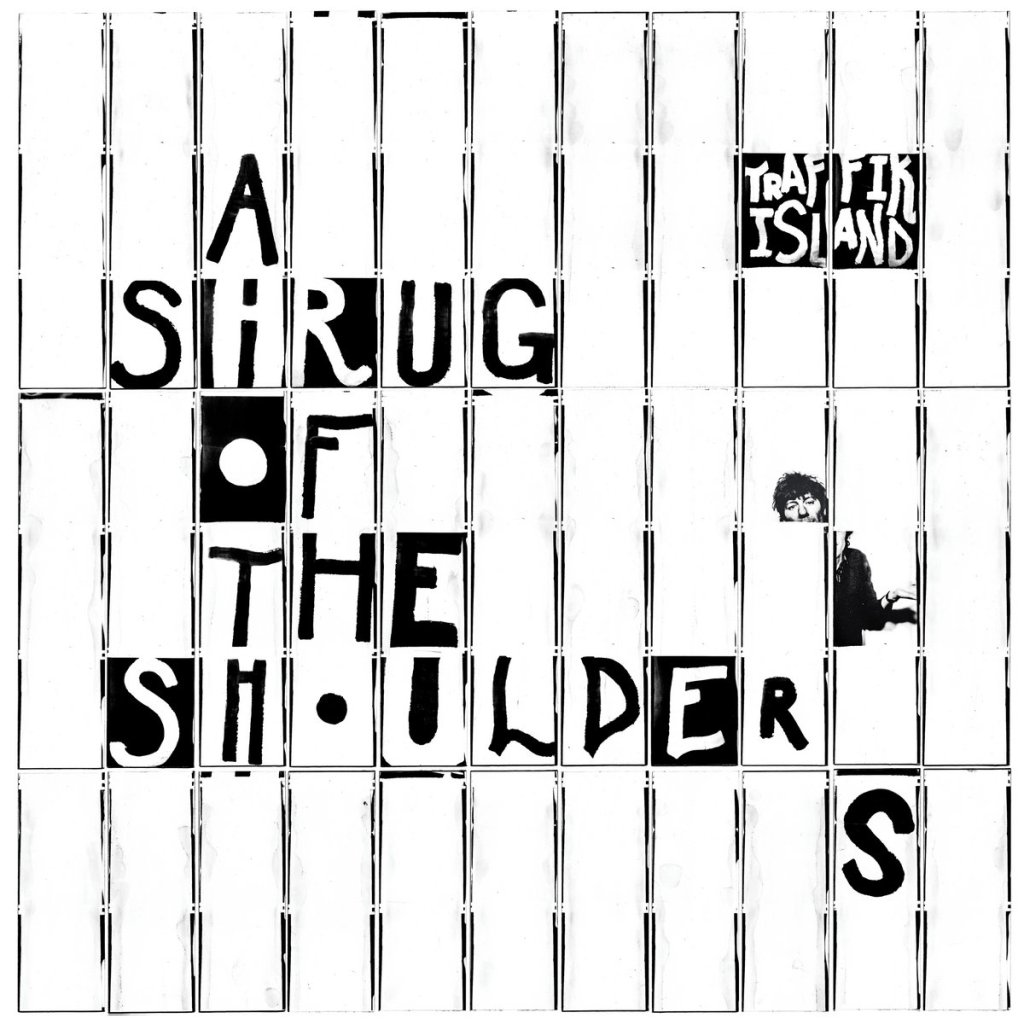
Tom Lyngcoln: “As soon as somebody figures out how to commodify something genuine, we have to start again.”

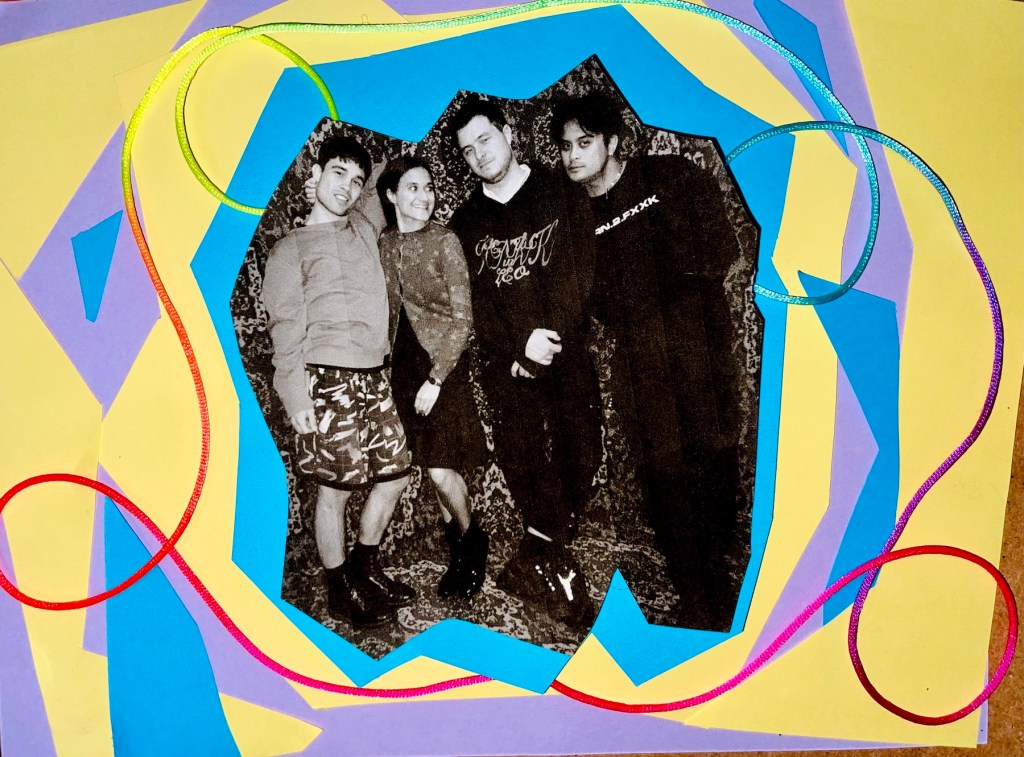
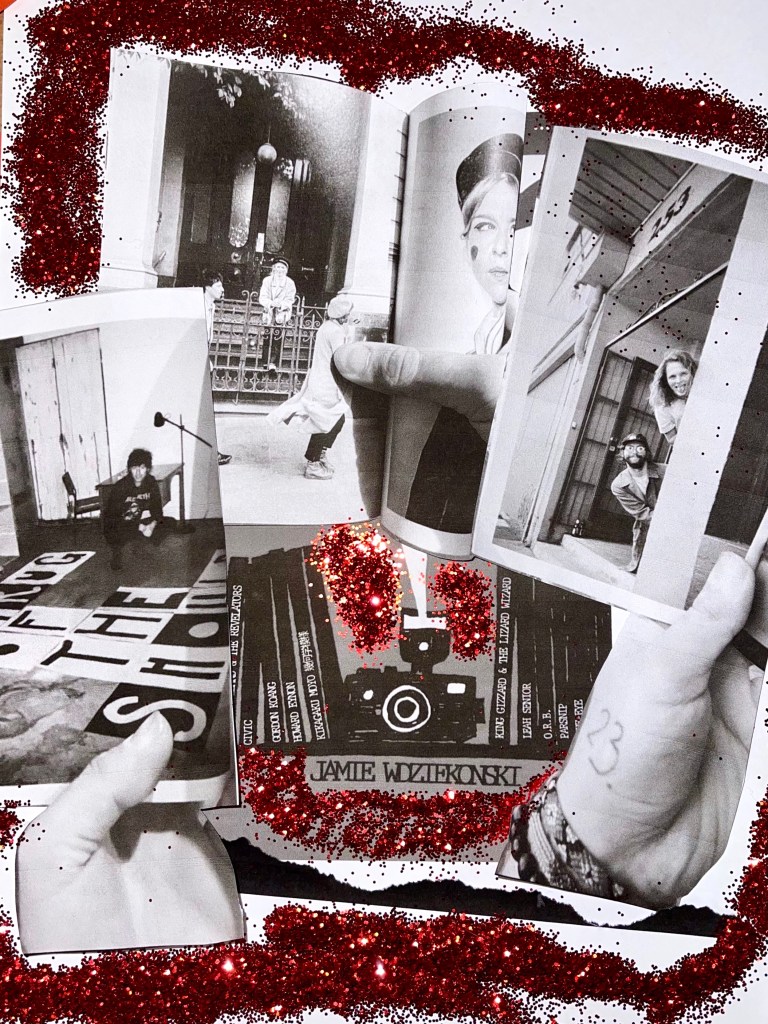
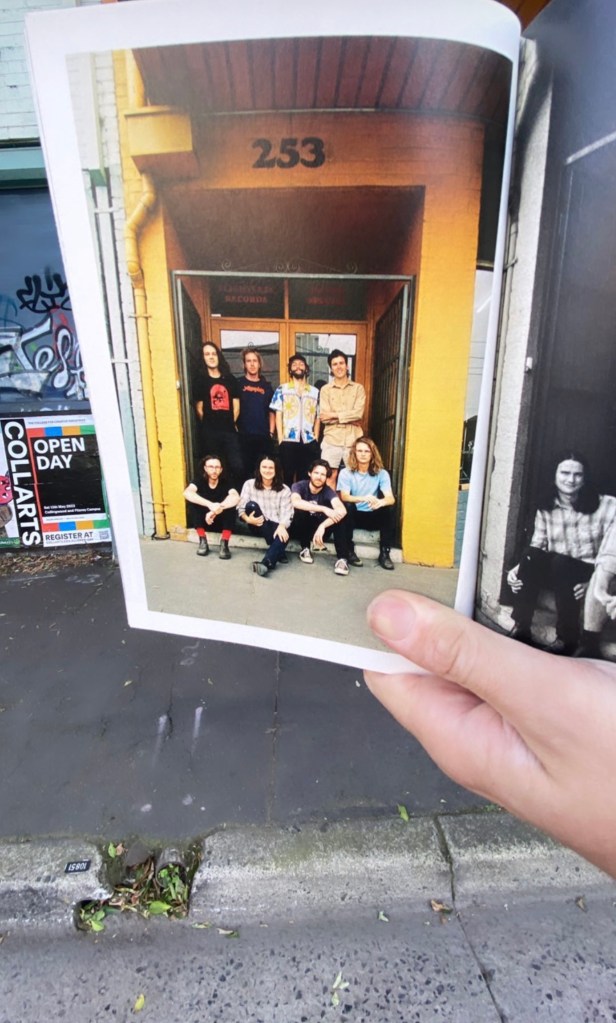
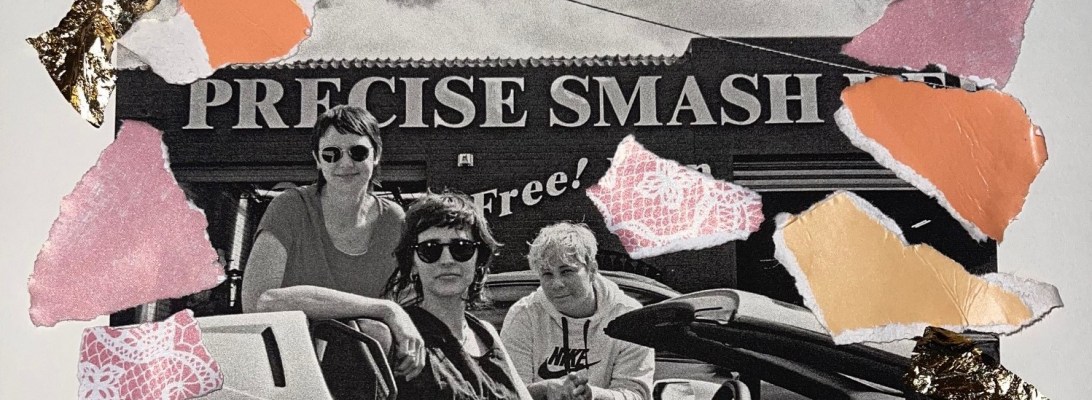
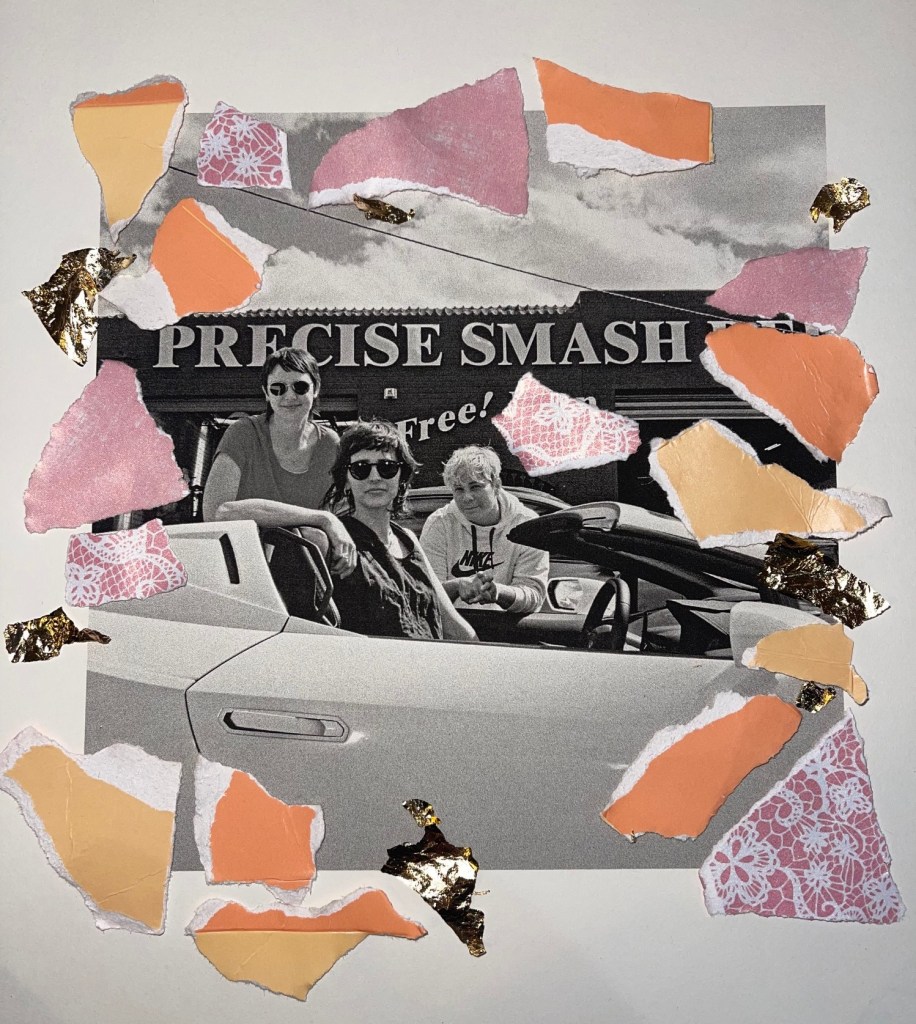
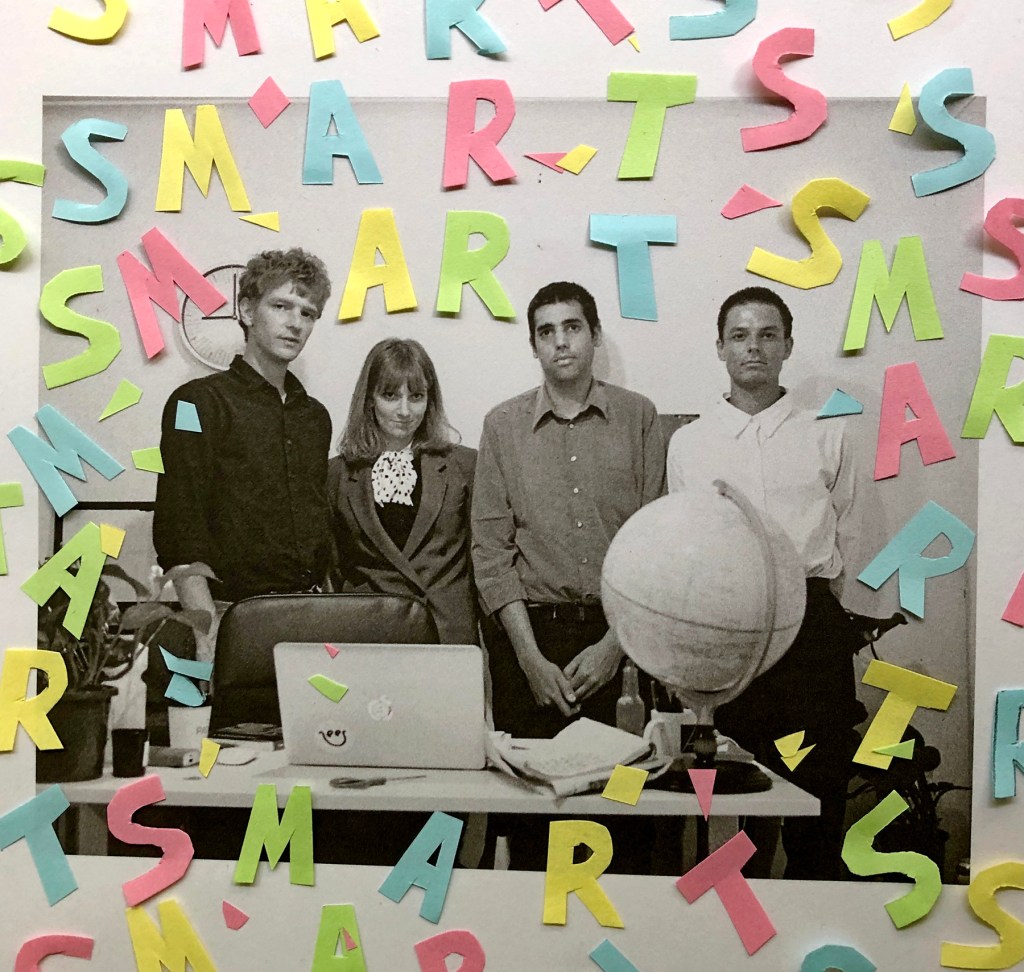
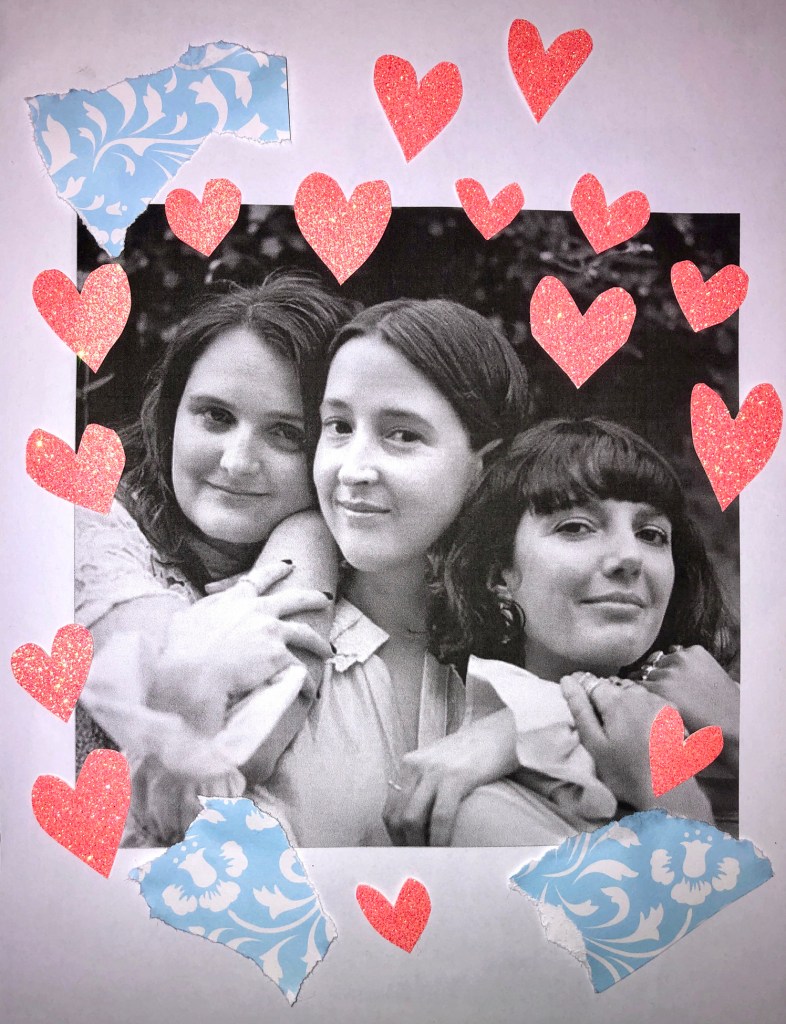
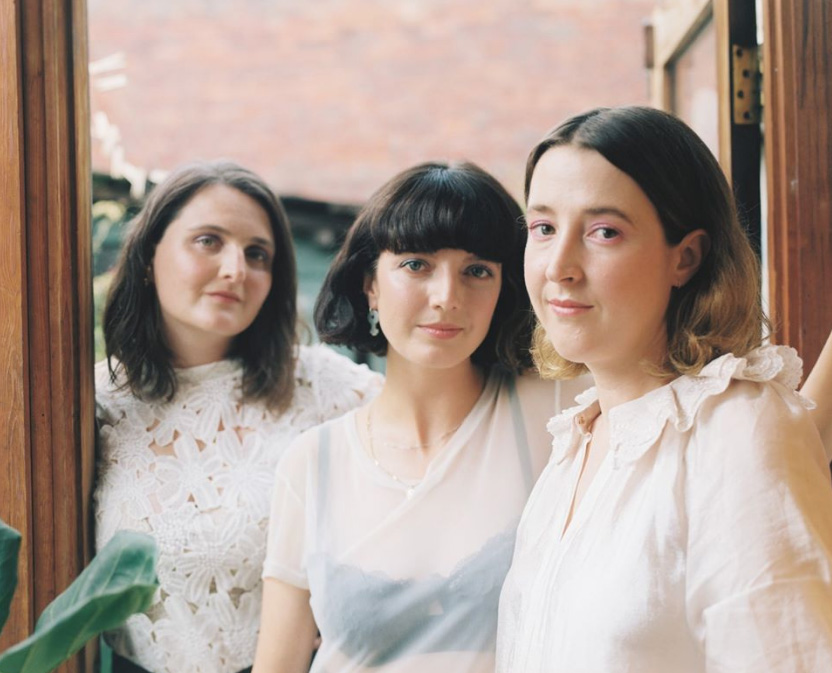
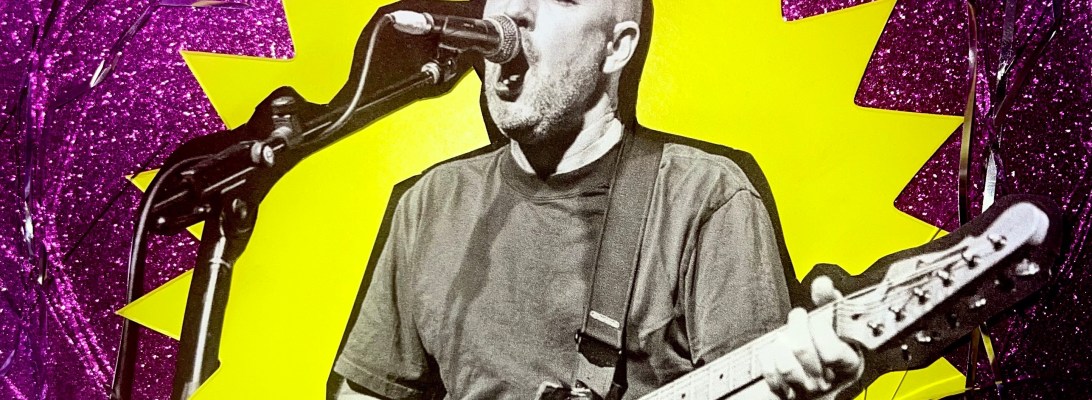
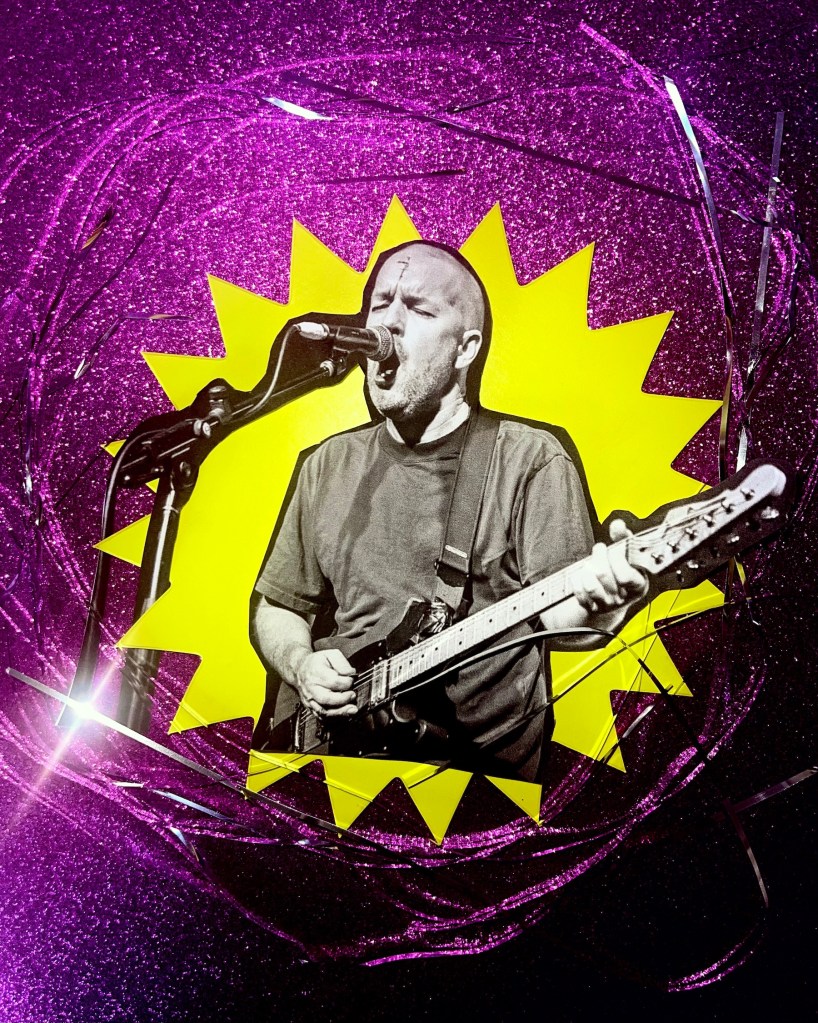
Original photo: Suzanne Phoenix / handmade collage by B

Tom Lyngcoln has spent decades carving out his own path through Australian underground music. Best known for his work in The Nation Blue, Harmony and his most recent band Metho, Lyngcoln’s world is one built on intensity: dissonant guitars, uncompromising expression, deep community ties and a lifelong suspicion of commodified art.

Gimmie yarned with him, while he was on a break from his day job as a carpenter. What begins as a conversation about music quickly unfolds into something much larger—grief, friendship, underground culture, environmental collapse, mental health, masculinity, creativity and the strange beauty of surviving long enough to keep making things. Thoughtful, funny and brutally self-aware, Lyngcoln speaks the same way his music sounds: raw, searching and completely uninterested in pretending.

TOM LYNGCOLN: I’m pretty fired up! I’ve got a lot of projects going and, maybe for the first time, I’m actually taking the label [Solar/Sonar] that I’ve got seriously.

I saw so much drop-off with people scaling back releasing music. It feels like a bit of an insane thing to do, but I just got keen!

I was able to put in for one round of production on a record, made the money back, didn’t spend it, and kept it to one side. And I’m going to keep doing that. I make no money from it, but it’s going to allow me to effectively keep doing thing after thing, hopefully for a while.

But it’s tough, you know? Growing up when I did, I was pretty fortunate that there were lots of people writing about music and listening differently.

I like the idea of trying to help younger bands; I’m trying to pay it forward. I got treated really well when I was coming up. I also had absolutely unsustainable ideas about music and selling out and all that kind of shit from growing up in Hobart.

It’s so good to hear that you’re feeling inspired and motivated. Sometimes, with the world the way it is, it can be a struggle to feel that. The last time you and I spoke about your music was when The Nation Blue’s Damnation came out in 2004. It’s been over two decades, and I’m stoked to say that we’re both still here, doing what we love to do, and helping other people out while we do it.

TL: Yeah, lifers! That is also a product of when we came up. For me, through the ’90s, all those people that I came up with are still engaged—still writing music, or writing about music, or painting, or whatever it is. We’re all kind of lifers in that way. You’ve got to be making things, and it’s got to be tangible stuff. I love it.

I think staying curious and staying engaged, does wonders for a person in life. As does pushing yourself and continuing to do things that challenge you.

TL: There was always a set way to do things. And now, through scarcity, that’s been obliterated, and you just have to be creative in those choices too. It’s kind of endless. I like problem-solving. But I’ve only got so much energy as well. 

I hear that. I’ve been thinking about problem-solving a lot this year. If something goes wrong, it’s become more about: here’s the problem—how can I pivot? 

TL: Yeah, I find reducing things down has helped. I’ve always been really focused on how things are trending in a macro sense, but I’m 46 now, and you start to realise it’s really about community and small collections of people. You can actually have a big impact there, and that’s really rewarding.

If you try and do too much, I don’t think it’s futile, but it’s less effective and less rewarding. You don’t get the drive to keep going because you just think, “Oh, fuck, that was a monumental failure.” You chalk up another one in the loss column.

But you can do a lot locally. That was always my focus when I was a kid. I had a total disregard for the mainland—couldn’t give a shit about anything happening there. And when I think about it now, it was probably a community of 100 people, but a lot of those principles are still informing everything I do.

Whereabouts in Tasmania did you grow up? 

TL: I grew up in Hobart, on the Eastern Shore, which was pretty bogan. I went to a rough school and was around all that kind of stuff, but I decided to have a bit of a circuit-breaker.

For Years 11 and 12 down there, you go to a different place—college instead of high school. High school ends at Year 10 and then you move on. It was there that I started engaging with different people.

I went to a Fugazi show in ’93—the only band like that to come down to Hobart. And what I saw there were local bands that I didn’t even think existed. I was like, “Oh, there are people playing heavy music in Hobart.” That changed everything.

But they’re really small communities. Then you come to Melbourne, or anywhere else, and you see the same thing replicated on different scales. You realise the same rules apply.

It’s been 25 years in Melbourne now, and you start to meet everyone and see everything. It’s the same principle as Hobart—it’s just bigger. If you can not be a jerk to people, be supportive, and participate positively in a community, you get to do a lot. It feels good. It feels rewarding.

You mentioned that a lot of the ethics and principles that still guide you now came from growing up in Tasmania. What do you think it was about that environment and community that shaped you so strongly?

TL: Down there, releasing a CD in the late ’90s was considered a sellout. Even putting out a tape could be seen that way. Those anti-sellout politics were probably the most stringent of anywhere I’ve ever been.

But it served me well when I got to the mainland and started engaging with the industry, because there was no industry down there. You played music because you wanted to make something. I never subscribed to the idea of playing music to make money, get girls, or any of those stupid fallacies. The people who are really good at music are compelled to do it. It’s on a DNA level. The others fall off pretty quickly.

A lot of those principles were really strong. DIY was everything—learn every aspect of it. Songwriting, writing about music, booking shows. I was booking shows when I was 14.

When I had my 18th birthday at the same venue I’d been booking, they were like, “You’ve been working here for two years.” I was like, “Yeah.” They said, “You do a great job. It’s all right.” Nobody had ever asked to see ID, which I didn’t even have.

Older people in the scene used to get me into shows as their kid or whatever. I was always around, but I had no interest in drinking or anything except watching bands. People weren’t seeing me at the bar asking for ID. There were lots of young kids floating in and out of pubs back then. It was possible to do that.

There was a lot of backward stuff too, but there were also really strong women in the scene who informed my politics early and checked me on bad ideas. There was a strong queer scene as well, despite homosexuality still being illegal in Tasmania in the late ’90s. We’d stick up for members of that community, because there was really only one place they could go, and it became a target for bogans trying to get in there and start shit. It could get pretty heavy at times.

Again, it comes back to small community stuff. You’re growing up and absorbing all these pretty big concepts, and it was a good framework to do it in. Everybody was insanely mentally ill, and that’s why we gravitated towards each other. I think it helped me a lot. It made me look at things differently, gave me different ideas about creativity, and definitely made me want to keep doing it.

What were you listening to back then? 

TL: Harsh shit. It was funny—you’d go to a Hobart show back then and I reckon 15 minutes of the set would just be tuning because nobody had a tuner.

I didn’t realise how much I missed that until I saw Alastair Galbraith play just after COVID. He spent about 20 minutes trying to tune to the bass player, and nobody could get it. Everything was out of tune, nobody had a tuner, and nobody cared.

Back then, I reckon I was 16 when I played with KK Null from Zeni Geva. We’d go to the Conservatorium and do Cobra by John Zorn as teenagers. It’d basically be me, a drummer and a bass player, alongside all these people from the Hobart Conservatorium with their hyper-flutes and tubas and all this bullshit. We’d just play this game of noise warfare against them.

So there was lots of pretentious experimental shit around. I loved SKiN GRAFT Records as a kid. In the ’80s I was into Mötley Crüe and Guns N’ Roses, and then my best friend Chris—kind of a proxy big brother because he was older than me—gave me a tape with Jane’s Addiction on one side and Dead Kennedys on the other.

I thought Dead Kennedys were a comedy band. I’d never heard anything like that before. I was like, what are we doing here? But the hooks were rusty, rancid hooks, and I was just like, oh, this is unreal. From there it just descended further.

Then bands like Butthole Surfers and Rollins Band, all those weird late-’80s, early-’90s crossover bands, really got me going. My favourite bands were stuff like Archers of Loaf and Girls Against Boys. Just weird indie-rock stuff. I loved it. Even things like The Jim Rose Circus—all those counterculture things—I was obsessed with them.

I went to a school where everybody was super metal. They used to make me go into the music room at lunchtime and play Metallica because that’s all the bogans wanted to hear. They’d be like, “If you don’t come play guitar in our band, we’ll bash you.”

So I’d go in there and try. I’m not a very good guitarist, so trying to play that stuff was rough. There was heaps of grunge around too, but I was already off somewhere else musically.

I still remember Debut by Björk. That record is still one of my all-time favourites. I’d sit by myself at lunchtime listening to it over and over on my Walkman.

It was back in the days where you’d take the batteries out and put them back in to squeeze another 15 minutes out of them. I reckon I had the same two non-rechargeable batteries for about 12 months.

Totally! Yep. You and I are the same age, so I get it! Or you try to rub the ends together to try and generate more juice or charge or something.

TL: [Laughs] Yeah, like why are you licking batteries again? It’s like, don’t fucking judge me! You have to eat, right? I’m just trying to get more juice!

[Laughter]. So you move to the mainland around 25 years ago? 

TL: Yeah. I got run out of town effectively. 

What do you mean “run out of town”? 

TL: Oh, man. Some bikers tried to kill my best mate. I was already on the verge of leaving, and then I got spiked really badly on Y2K. I woke up during a CAT scan after falling two stories onto my head on a slate floor.

I was already going to leave, but that sped it up. I had to get out. The town was getting too small.

It’s the same thing I was talking about before: the good thing about knowing everybody is that, if things are going well, it’s really nice. But if things go badly, they’re going to find you pretty quickly.

So in 2000 I came over. I still had a few medical appointments to check on everything, and I just kind of cruised into Melbourne.

But Hobart’s really cyclical, and everybody left at the same time. There was probably a three-year window where around 30 people from this 100-person scene all moved away.

I walked straight into a share house in Brunswick with one guy I was playing in a band with and another guy I used to work for back in Hobart, so the transition was pretty easy.

It was still lonely and weird, though. I remember going to Supergrass and Stereolab on my birthday weekend and just standing there on my own. Then, as soon as you’d spot another Tasmanian, you’d immediately latch on. Old habits, even though I was only 20 or 21 at that point.

So yeah, I got out in 2000. With a bit of distance from the place, I realised some aspects of it were pretty insidious.

My wife used to say to me, “Why are you so fucking sarcastic? Why can’t you just talk normally?” And I’d be like, “I’m not being sarcastic. What are you talking about?” She’d say, “You’re doing it right now.”

I reckon it took me three years to unlearn the defensive sarcasm everybody used to communicate with down there. Unfortunately, that lined up with the overly sincere emo era, and I was just like, “I think I’m going back to sarcasm for a bit. I don’t know if I can be this earnest about everything.”

When writing songs, what feeling do they often start from?

TL: These days it usually starts with the feeling of, “I’ve got band practice tonight, I told them I’ve got four songs, and I’ve actually got one.” So I’ll sit here—this is just an office at work; you can see the wallpaper, it’s pretty bonkers—and try to write.

Back then, though, I’d just play every day. I never really went out. Tim Brennan’s wife Kathy says I’ve got “the most punchable head in Australia,” so even as a kid I’d mostly stay home. Even as a teenager, working in a pub, I’d finish work and go sit on a beanbag playing along to Tasmanian TV ads. That’s where I put in all the hours. I’d always have a guitar in my hands, just writing constantly.

Some days it feels like somebody’s greased the pan—it’s super easy. Everything becomes abstract and sits outside the framework of what you normally do, and songs just come naturally. Other days you’re just banging your head against the wall.

So I try to play a lot, because when those good days come around, I might get five songs out of a half-hour session just because it’s flowing. You hit this point where you realise, “These are the same chords I’ve always played,” but your fingers are suddenly moving all over the place. Sometimes you just hit the right combination.

I’m classically trained, but honestly, that doesn’t help as much as people think. A lot of it really is luck, which isn’t what you want to hear and definitely not what you want to rely on. But I don’t know—20 albums in, and it still feels fun to do.

Do you trust your creative instincts more now than you used to earlier on? 

TL: Yeah, you’ve got to trust it. I work fast and I like things raw. A lot of the Harmony records, particularly the first two, are literally the first take we ever did of those songs, straight through. You can feel that “oh fuck” energy where nobody really knows the song yet.

I’ve always gravitated towards dissonance and mistakes in music. I love things that probably should’ve been deleted—to quote Torben Ulrich. That’s the stuff that gets me going. It’s that feeling of, “This is so wrong it’s right.”

Even outside music, I love stuff like Wesley Willis—things that shouldn’t work. There are these little moments where the two rocks grinding against each other suddenly slot together for a second, and that’s when the explosion goes off in your head. All the endorphins hit at once. Sometimes I almost lose consciousness. I’m just like, “Oh, there it is. That’s it. That’s the moment.” That’s the magic.

You do have to trust it. I feel fine about it now, but over time I’ve had to learn not to think about what other people are going to think. A lot of people don’t get it, and that’s fine. You just have to keep doing it. I do it for me. I don’t do it for other people. Not everyone will get it and that’s fine.

I’ve got a worldview and a way of doing things, and hopefully that comes through in the music. That’s really all I’m going for. I want people to hear me play guitar or sing and recognise a consistency across everything I’ve done. That’s the most important thing to me: making something that feels unmistakably mine. A lot of people don’t do that.

I’m always getting messages from people saying, “Hey, I want to start an SSD band—do you want to play in it?” or “Do you want to do this kind of thing or that kind of thing?” But people aren’t really going to get that from me. Unfortunately, it’s always going to sound like me. If you’re on board with that or not, honestly, I don’t really care.

I’ve heard a lot of people describe both your music and your live shows as abrasive, chaotic, or confrontational. But earlier you said that the music is really just an extension of who you are. Do you see yourself that way?

TL: No. I’d say this is more about not knowing what I’d be without it. I think music is a way for me to self-regulate. It’s a big vent.

I like intense expression. Whether it’s grinding dissonance, bleakness, or confrontation, I’m drawn to those things. This is how I get it off my chest so I can go back into the world and not be a liability as a parent or in everyday life. It’s like a filter where I can dump all the shit.

Honestly, I don’t know what I’d be without it. I don’t know what other outlet I could have that would stop me from becoming a destructive person. So getting it out on the page, writing, playing music—it’s not shtick. It’s not performance in that sense. It’s just all I’ve got, and I need to get it out somehow.

And when I play live, I’m not trying to hurt other people. If anything, I’m trying to hurt myself. I enjoy pushing myself physically. It means I never walk around wanting to throw a punch at somebody because I’ve already exhausted all that energy.

I enjoy confrontation in an artistic sense, but ultimately it’s mostly for me. It’s fun. It’s necessary.

I still do all the same things I’ve always done, simply because it’s fun. At this point, I don’t know what I’d do if I stopped interviewing. I’ve been doing it since I was 15 years old. I’ve done thousands and thousands of interviews with all kinds of people. And honestly, I probably have deeper conversations with the people I interview than I do with most of my friends.

TL: Yeah, I know. 

I’ve learned so much from the people I talk to. And I like that they get something from our exchange too. Sometimes we’ll be having a discussion and I’ll point something out about their music or even about themselves, and they’ll go, “Holy shit! I never realised that.” It’s nice to have that two-way connection. Especially now, when everyone’s supposedly more connected online but it actually feels like we’re more disconnected from each other. 

TL: Yeah, it’s the opportunity to actually talk to people on a real level. You realise there actually aren’t that many opportunities to sit with someone for a prolonged period and genuinely get to know them. 

It ties back into community as well. In Hobart, people had their defences up for different reasons, but on the mainland people felt disconnected in another way. Nobody smiled at each other in the street. If you smiled at someone, they’d look at you like, “What the fuck are you looking at?” I had to adjust to that.

Having these thoughtful conversations is something that’s really important for me, even for my own mental health. Unless we go to a show or occasionally have a meal with family, we rarely see other people. It’s sad to say but more often than not, we’ve found that people just never seem to think of us, or if they do they never reach out and let us know. 

My whole life, I’ve been the one that reaches out to say “hi” or check in on friends or be there when someone needs or that opens doors for people. But I’ve never really had people that do that for me. It blows my mind that I know so many people yet in my toughest times, no one has really been there for me.

TL: Yeah, and you’ve only got limited time. How long do you really get between songs to talk to someone? It can end up feeling pretty superficial.

I’m still the kind of person who’ll actually call people, and that’s horrifying for a lot of them. They see the phone light up and think, “Christ …” [laughs].

I’ve got a whole circle of friends, mostly people from bands, and my strike rate is probably one in ten. These are close friends, too. But it’s always good when they actually pick up. That kind of connection is important to me. A lot of the people I’m friends with don’t live near me anymore, so you’ve got to stay on them. You have to punish them a little bit [laughs].

The downside of social media, is it creates this feeling of, “Cool, we’re good for a while. I sent you some words in a Meta app. Hope you’re doing okay. Here’s a little love heart. And that’s nice, but it’s not really the same thing…Um, cool—friendship maintained

Sometimes I feel a bit like a counsellor. But yeah, it’s also why I avoid things like Facebook now. People see all the stuff that gets cross-posted from Instagram and assume I’m active there, and then six months later I’ll open Messenger and find someone telling me they were going through something really heavy. I’m like, I didn’t ignore you—I just genuinely didn’t see it. At this point, I’m pretty happy to limit all that. Just text me. That’s probably the best way forward.

I know you’ve described writing lyrics as a real grind at times, but I’ve noticed there are recurring themes running through a lot of your work—environmental collapse, greed, corruption, political disillusionment. Why do you think those ideas keep appearing in your work?

TL: It definitely occupies most of my thoughts, so it’s hard to avoid. Honestly, the hardest thing I ever did was write a Harmony record that was just about love. That was difficult.

The other stuff is easy—you just turn on the tap and it all comes pouring out. But trying to write one good song about love, let alone ten, took forever.

It’s always the same process, too: a pen, a blank piece of paper, and listening to the song 400 times over and over until I get so frustrated that something sparks. Usually it starts with one line or a song title, and then I can work from there. But lyrics are hard.

Honestly, the only reason I became a vocalist is because I hated singers. I really did. There are so few genuinely good frontpeople. We had Linda Johnston from The Little Ugly Girls and The Daisies locally, and she was incredible, so that was one exception. But there were just so many bad singers that I didn’t want to deal with one.

So I started doing it myself, even though I absolutely could not sing. The early Nation Blue recordings—and the band I had before that—are kind of hilarious in hindsight. What I thought I was doing and what I was actually doing were completely different things.

Which is funny, because I was classically trained. I played piano for years and years, but I just could not do this thing. I couldn’t sing. Eventually, though, I found a way of doing it that works for me. At this point it’s basically a magic trick.

We LOVE that Harmony record; why did you want to write a whole album about love? 

TL: Because I’ve got 19 records about hate [laughs]. I don’t know if I was out of ideas, exactly, but I just hit a point where I needed something else.

I love sad songs, but with Harmony it was starting to impact my physical health, trying to be as sad as possible all the time. It was exhausting to sit in that headspace constantly. The first record is basically about all my dead friends, and every time I sang those songs I’d just feel miserable.

So I thought, “Well, I’m lucky. I’ve got a great relationship with somebody I love. Maybe I should try to put some of the subtler aspects of that into words instead.” I wanted to find a good way to write about love without it feeling corny or dishonest.

Before that, though, the Harmony stuff was so bleak. All the references were military operations, munitions, warfare. The best way I can describe my lyric-writing approach back then is that guy Elaine dates in Seinfeld who wears army fatigues everywhere. She asks him, “What’s wrong with you?” and he says, “I had a bad date once.” He’s not even military. And I was like, that’s me—miserable for miserable’s sake.

You mentioned earlier that a lot of the first Harmony record came out of losing friends. And unfortunately, as we get older, loss just becomes more and more present in our lives. At the end of last year we lost Jhonny’s mum, and I’ve already lost both of my parents, so it’s something I think about a lot. Is there anything you’ve found that helps you process grief—or at least live alongside it a bit better?

TL: Not doing it alone. That’s the main thing. Talking to people. Even though everyone worries about being a burden socially, I really think talking to people is the only thing that gets you through it.

Sometimes it’s just having a beer and sitting with somebody while you work through things together. I don’t think we’re designed to carry all of it internally. We don’t really have the capacity for that.

I’ve had some pretty bad losses, and I’m lucky that I can put some of it into songs and then, ten times a year, scream it out into the night. That helps. But if it’s not that, then it’s the quieter version—just talking to people. Because grief is universal. Everybody goes through it.

And the stuff people carry can be unbelievable. Even two weeks ago, on New Year’s Eve, we ended up at this small family gathering that my wife, kid and I basically house-invaded. Somebody asked, “How’s your year been?” and I said, “I broke my little finger playing basketball and it still really hurts.”

Then the woman sitting next to me said, “I was blind until a month ago.” She’d had an operation four years earlier that didn’t work, and then suddenly her eyesight came back out of nowhere. I was like, “Yeah, okay … what about my little finger?” The things people go through are just incredible sometimes.

Everyone I talk to lately seems to be having a rough time. A lot of my friends are really politically active as well, and with the way things are, it’s hard not to be engaged on some level. But it can feel relentless sometimes.

TL: Yeah, a lot of people choose not to engage with it at all. But I think that’s part of why so many people are struggling—because it’s hard to look at the way things are going and still just live your everyday life normally. Honestly, I sometimes wish I was blissfully ignorant. But once you see things a certain way, it’s hard to unsee them. And that can be pretty tough.

Totally. I think for some people, blind faith gives them a real sense that things will be okay, and I can understand the comfort in that. I just don’t think my brain operates that way.

TL: It doesn’t feel realistic to me either. Especially when you’ve got a child—you want things for them that, deep down, you’re not even sure are going to happen anymore. At that point, all you can really do is try to leave the world in a slightly better place and see how it goes. We’ll see how it all ends, I guess.

Fingers crossed. Ha. I just wish more people cared about the fact that if we don’t have a planet, we’ve got fucking nothing. That’s the one thing that affects every single one of us. And the whole scarcity mindset—the hoarding, the constant need for more, more, more—I’ve always found that really strange, even when I was a kid. I’ve always felt a little out of step with the world in that way.

TL: Yeah, absolutely. It’s a huge fixation for me. I think a lot of it started with growing up in Tasmania and seeing enormous trees on the back of logging trucks. It felt like people were cutting down dinosaurs just to turn them into woodchips.

That really stayed with me. And now, when you look at almost every major foreign-policy conflict happening in the world, so much of it comes back to natural resources. It never ends. It’s just hoarding for hoarding’s sake. At the core of it, it’s greed. And it sucks.

We’re incredibly lucky to live where we do, but at the same time it feels like nobody’s actually worried until it directly affects them.

Yeah. So, we’ve talked a little bit about community and I know that you like community, but then you’re not into scenes. For you, what’s the difference? 

TL: For me, community is a broader thing. It’s about like-minded people, friendships and genuine connection. A scene feels much more rigid.

I don’t think scenes are great for creativity because they’re built around conformity. It’s like a fraternity or some kind of closed system where individuality gets crushed. You see it in hardcore, punk and all those kinds of spaces—people become so dogmatic and bloody-minded about traditions that nothing actually moves forward.

What I’m interested in is personality. I want to see that reflected in music, art and creativity. If people are constantly trying to conform to a scene, they’re limiting themselves. At that point it’s no different to organised religion.

I want to see the best in people. I want to see people treating each other well. I think you get more of that through community than through scenes. In scenes, people get rejected for having different ideas. Community allows more flexibility, but it also takes more work.

Anyone can get sworn into a scene, tick all the boxes and fit the dress code, but that often creates superficial relationships. Community feels more organic. You give something, other people give something back, and you build actual friendships through participation.

Whenever I get close to really rigid scene culture, though, I immediately back away. If somebody says, “You’re part of our scene now,” I’m like, “I’ll wait in the car.” I’m not interested.

That happened when I first moved to Melbourne. I looked at the hardcore scene and thought, “What the fuck is this?” Eventually I met people in it who were incredible, but around the edges there were all these foot soldiers policing everything.

And I’d think, “We’re not friends. You don’t know anything about me.” They weren’t even paying attention to the person standing in front of them. I just had no interest in that kind of behaviour.

I love being friends with people from completely different kinds of music and backgrounds. But as soon as somebody starts telling me how I’m supposed to act, what I’m supposed to like, or how I’m supposed to look, I’m out. It’s always some guy enforcing that stuff too. And I fucking hate it.

Sure is!

TL: It’s always some fragile little-minded dude going, “No, we don’t do that here,” or, “That’s not allowed,” or, “You can’t do that.” And I’m just like, “Cool, I’ll be in the car. Fuck off.”

[Laughter] Yeah. I love hardcore music, but no matter how many bands I’ve interviewed from that world, or how many people I know in it, I’ve never really felt like part of the scene. And the strange thing is that hardcore is always talking about being this community, but a lot of the time it doesn’t actually feel that inclusive. At least in my experience, it never really felt like there was space for me in it.

TL: Yeah, exactly. In every regard, really. I don’t like safe things, and I’m drawn to extreme expression, but scene culture often just becomes exclusion for exclusion’s sake.

Honestly, the happiest we ever were was after we lost all connection to that scene entirely. Around the Damnation era, we got completely rejected by that whole world. At the time it fucking sucked.

We booked this huge national tour, including a 400-capacity room on the Gold Coast, and nobody came. One night literally four people showed up. Two got kicked out for dancing, and one of the remaining two stole our merch at the end of the night. There was more merch in the room than audience members.

But I wouldn’t change any of it. It probably took three years before people started understanding the band differently. The turning point for me was when women started outnumbering men at the shows. I remember thinking, “Oh, this is the best it’s ever been. We’re finally getting the right people here.” And those people still come to the shows now.

People wanted us to be something else entirely. We turned down record labels and did everything our own way, and it was brutal trying to navigate that. But we’re still here, and most of those bands aren’t. The good ones survived, and there are still some great friends from that era, but we realised pretty early on that we were never going to fit neatly anywhere.

We don’t fit with rock bands, hardcore bands, punk bands or indie bands. We played a Dick Diver EP launch in Melbourne once, and I remember feeling like Metallica playing a Simon & Garfunkel concert. Before the set we were all like, “Just play the quiet songs. Don’t destroy anything. Don’t freak people out. Just stand there and play it straight.” And we still cleared the room.

Then we played with Flipper and cleared that room too. We started joking, “Who actually likes this band?” Eventually we just came to the conclusion that we did. That had to be enough. I hope some of that comes through. 

It does. I’ve never thought of your band/s being one of those toxic masc bro bands. 

TL: [Laughs].  I couldn’t think of anything worse! But I have spent so many hours sitting in cars waiting for those  kinds of bands to finish. I got into and love skip-hop. I found that excitement and a vibe in going to hip-hop gigs. 

Same. I remember talking to Michael Franti about it once and he said, “You’ve got to go where the energy is.” That’s exactly what happened for me.

At a certain point, hardcore stopped feeling exciting and started feeling really alienating. It became something I didn’t recognise anymore, especially in the way women were treated in the scene from the mid-2000s onwards. Whenever I spoke up about it, I’d get labelled difficult or crazy. So for a while, I stopped going to punk and hardcore shows altogether. Instead, I started going to hip-hop gigs, raves and pop shows—places where the energy still felt open, alive and welcoming.

Because by that point, the scene had become something I never signed up for.

TL: Yeah. All that individual-expression stuff has always mattered to me. But even that goes back to things like the straight-edge scene, where suddenly it became, “This is what we all look like now.”

I’ve never really fit into that. I’ve always dressed in workwear because I’ve worked shitty manual-labour jobs most of my life. That whole uniform thing just never worked for me.

After shows I’d sometimes go outside to load gear and then not be allowed back into the venue because security assumed I couldn’t possibly be in the band. They’d be like, “Sorry mate, you can’t come in.” And honestly, it felt like a giant metaphor for the whole thing.

You’ve collaborated with so many different people across all your projects, and when you look back over your work there are all these incredible connections and crossovers. Are there any particular people who’ve been especially important to you creatively or personally?

TL: Yeah, absolutely. All the early stuff still informs everything I do. All those people from Hobart are still incredibly important to me.

Even a couple of months ago, when we did the Damnation anniversary show, almost everybody onstage was from the Hobart scene in the ’90s. There was Linda Johnston again from The Little Ugly Girls, Tim Evans from Sea Scouts and Bird Blobs, Monika from Sea Scouts and Love of Diagrams—all these people I grew up around.

But in terms of wider influences, I’ve also been incredibly lucky. We had Marc Ribot play on ‘Rain Dogs’ by Tom Waits, which was a massive record for me growing up. When I first heard his guitar playing, I was like, “What is this?” It sounded like he was only hitting three out of every 10 notes properly, and I loved that. I thought, “Oh, that’s okay—that’s how I play guitar too.” It made me realise there was room for imperfection and personality in playing.

He was really into it. I honestly have no idea how that even happened. I just found his manager online and sent a message saying, “Do you reckon he’d want to play on this song?”

And she came back saying, “No, he actually wants to play on this other song.” I was like, “No, no, he has to play on the shit one because we really need help making it better.”

But yeah, I’ve just been incredibly lucky. I’m playing with Mick Turner this Sunday, and he’s probably my all-time favourite guitarist. I love Dirty Three, Venom P. Stinger, Fungus Brains—all of it. He’s another one of those people who approaches an instrument completely backwards.

The only problem is now I actually have to play guitar in front of him. I get “the claw,” where my hand just locks up and I lose all dexterity. I can feel myself tensing and freaking out.  So after this I’m going to rehearse just to keep everything moving.

But honestly, since moving to the mainland, a lot of my life has just been about engineering interactions between people I admire. Half the people I’ve collaborated with had never met each other before, and now they’re lifelong friends.

I’d just think, “I want this person, this person and this person together,” and then see what happened. That’s basically been the approach with bands too. I’ll love somebody’s skill set or the way they think about music and just go, “Let’s put this together and see what happens.”

That’s a really important thing, though. When somebody has a genuine vision for bringing certain people together, and they can see how those personalities or creative approaches might connect, it can create something really powerful. Sometimes it’s less about technical ability and more about recognising a chemistry or energy between people that maybe even they can’t see yet.

TL: Yeah, exactly. You can maximise different qualities in people. For me, it always comes back to personality. I’ll look at somebody and think, “If I put this person together with that person, it’s going to turbocharge something.”

It becomes irrepressible at that point. It doesn’t matter what obstacles are in front of it, something powerful is going to come out. I might not know what it’s going to sound like, but I know the expression will be huge.

I love that. Honestly, that’s probably been my favourite thing over the last 20 years. All the smaller projects around the main bands have basically come from me thinking, “I’d love to see what these two people would create together.”

At some point I stopped being the liability and became the facilitator. Back in Nation Blue, I was the person nobody could rely on. Now I’m somehow the administrator. It sucks.

Why were you the person that couldn’t be relied on?

TL: I was really prone to destroying things back then. We’d have insanely bad shows depending on my mood. I was erratic.

With Nation Blue especially, I’d get completely skeeved out by industry stuff and just shut things down or deliberately sabotage them. There are emails from Westy where he’s basically saying, “Man, you fucking blew it.” And I’d just reply, “Yep.”

I related a lot to that famous The Replacements story where all the A&R people came to a show and Bob Stinson completely lost it. Apparently there were all these label people there because the band was blowing up—they were getting mentioned alongside bands like R.E.M.—and Bob got drunk, came out naked, ripped down the backing curtain and turned it into this giant cape, then threw a shoe full of shit at the industry people. And honestly? I can relate to that energy on some level.

It’s no secret that I find the music industry difficult. I’ve mostly existed outside of it, apart from when I was younger and thought working in the industry might actually be a cool job.

I did work at a big record label as a teenager, and one of my jobs was calling record stores at certain times of the day to check whether they were playing their artists. If they were, the stores would get points, and whichever shop had the most at the end of the month would win some kind of big prize. Basically, they were being rewarded for prioritising certain music. When I realised that was how the system worked, I was out.

I still see a lot of the same stuff happening behind the curtain now. I’ve watched the same artists receive big amounts of funding over and over again—for some we’re talking up to a hundred thousand dollars—while so many other, actually independent musicians, that could use a leg up struggle just to survive.

I find it frustrating when artists market themselves as independent or DIY while quietly having teams, all the industry connections and financial backing behind them. There’s nothing wrong with having support, but I think people should be honest about what’s actually going on.

TL: Yeah. I think we are the industry now, though. So there’s nobody left [laughs].

Ha! But there is. Tell that to the dinosaurs, gatekeepers still clinging to outdated ideas of power in the music industry.

You’ve got managers and publicists giving writers five or 10 minutes with an artist, and then everyone wonders why interviews feel shallow. You can’t have a meaningful conversation in that amount of time.

Then there are publicists who expect writers to cover their entire roster, and if you don’t, you get blacklisted from the interviews you actually care about. I know writers who’ve completely burned themselves out trying to keep up with those demands just to secure a handful of conversations they genuinely want to have.

People wonder why music journalism in this country is struggling, but the system itself is part of the problem. Fanzines to me, is the most important form of music writing.

TL: Yeah, it’s culture. That’s the thing people trying to commodify music never seem to understand. The culture is the most important part. People can smell what’s fake. Genuine artists usually recognise each other because there’s a kind of cohesion there, a glue between people who make good things.

I honestly think it’s really hard to make meaningful work within a commercial framework because everything becomes exploitable in that system. From the moment you have an idea for how something should sound to the point where it finally gets released and marketed, it often becomes a completely different thing. The perception changes, the intention changes—everything shifts. Whereas if you’re doing it yourself, you’re the only person shaping it.

The idea of getting notes on how to write songs? Fucking hell. That’s when I’m already in the car park mentally. The second somebody starts telling me how I should write, I’m like, “No. Show me what you’ve written first.” And then the confrontation starts.

I just don’t understand how people in the industry still don’t see how successful underground culture actually is. There’s no real sweet spot in a lot of the music industry here where people genuinely understand underground culture, because I don’t think a lot of them actually come from it. They’ve come up through other avenues that I don’t really understand.

To be fair, though, some of the people who do get it are slowly moving into those positions now. I look around at some of the major labels these days and think, “Fuck, I know all these people.” So you hope things might change. You hope they remember what it felt like growing up inside this world and don’t lose touch with it.

One thing I’ve been thinking about lately with the label isn’t even starting a blog, exactly, but just creating more space for people to engage with music. I made a post online and got all these responses from people saying, “I really want to write about music, but there’s nowhere to do it anymore. If you send me records, I’ll write about them.”

And I thought, if I’m getting 10 messages like that from one Instagram post, maybe people are actually hungry to communicate about music again. To listen deeply and talk about it properly.

There are still heaps of people who are genuinely into this stuff. The scene is definitely smaller now, but in some ways I think it’s more important than ever. Even talking to pressing plants, they’ll say that 150 copies is now a standard run for underground or local bands. But there are still heaps of people going to shows. The community is still big.

A lot of the things we grew up with that made us excited about music feel like they’re coming back around again. Kids are picking up guitars again instead of feeling like they need to save for 10 years to buy some vintage synth that costs $12,000.

A guitar is such an egalitarian weapon compared to a lot of electronic gear. You can pick one up and just do it. And funnily enough, that was the whole spirit of punk in the first place—the idea that you didn’t have to be Earth, Wind & Fire or The Alan Parsons Project to make music. You could just go out and do it yourself.

The way people have been talking to me about music over the last couple of years makes me think people are fired up again, which is good.

COVID really knocked everyone around, and we’re still walking through a bit of a zombie state after it. But I can feel a thirst for older underground ideas coming back pretty strongly.

And honestly, the bands are incredible at the moment. That’s the biggest thing I notice. These bands just sound completely like themselves. They’re just genuine outliers, and I love that. It’s a hard expression, but it’s exciting. It feels really good again.

Who are some of these bands? 

TL: Oh God, Serpette, who are now called Whip down here, don’t sound like anything else. They count in four and then whatever happens, happens. It’s wild. So good.

Then there’s Sienna Thornton. I don’t even know how to describe it, but it feels like a direct line into some part of my brain. Every note feels perfect. It’s an incredible level of skill—completely different to Whip, who are just pure chaos and energy.

And then there’s Tongue Dissolver. That band is unbelievable. It’s like if you took ‘Exterminator’ by Primal Scream and put it on bath salts. It’s one of the most convulsive things I’ve seen in years.

What I love is that none of these bands belong to scenes. There’s no rigid identity around them. It’s completely unbridled. And there’s no careerist reason to do it anymore. Nobody’s thinking, “I’ll play music so I don’t have to work at a bank.” Everybody’s heavily invested for the right reasons.

When we were younger, especially around the time Jet blew up, labels were throwing contracts at anything remotely guitar-based because people at labels were panicking about missing the next big thing. Nobody cared what bands actually sounded like. It was just, “Here’s 30 grand for your garage band,” even though nobody was ever going to recoup it.

Now it’s different. The question is genuinely, “Why are you doing this?” And I think post-COVID especially, younger bands are doing it because they need the release. You can feel it. It’s electric.

We played in Brisbane this year at Branko’s Festival, and every band on the lineup was incredible in some way. A lot of them are probably getting courted by indie labels now, but the thing is, they’re undeniably good. There were just so many great bands.

We got there way too early because somebody told us to go see KNEE. We watched them, and then I basically didn’t move for eight hours. I don’t think I went to the toilet or even bought a drink because every band was so good that I couldn’t leave the front of the stage.

Brisbane’s always had a ridiculously high strike rate for bands!

Totally. I’ve always felt like bands from Brisbane tend to have their own distinct identity and approach, which I’ve always thought was a bit special.

Because a lot of bands we love don’t get up this way too much, going to Nag Nag Nag in Sydney or JERKFEST in Geelong is a real treat for us. We get to see all the bands we love in one or a few days. At JERKFEST we end up running from stage to stage trying to catch every band because everything is so good. Both events feel very community-centric.

Australian music has always been exciting to me. There’s so much incredible stuff happening if you’re paying attention.

TL: Yeah. Billy Gardner at Anti Fade Records always does a great job of building community. A lot of the same people from the very first festivals are still involved, just moving through different bands and projects over time. More recently, there’s also been this integration between younger and older musicians, which has been really good to see.

What’s exciting right now is that you can walk into a venue and even the first band or the opener in the front bar is absolutely firing. It feels really healthy.

That was a big part of why I wanted to keep the label going. For 20 years people have been sending me demos, so I’ve ended up with this huge archive of little moments and unreal songs. I want to turn that into a series of compilation mixtapes, press them onto vinyl and just get them out there.

I’m talking like 40 tracks on a record—just a massive snapshot of what’s happening. Then I want to keep working through as many local bands as possible, because at the moment it’s almost impossible for a lot of them to afford proper vinyl releases on their own.

We had a Gimmie compilation in the works with around 40 or 45 tracks. It was almost ready to go, and all the profits were going to charity, but we couldn’t get a few things lined up properly, so we had to shelve it for the time being.

Everything has become so expensive just to survive. We’ve both been record collectors our entire lives, but lately we’ve basically had to stop buying records altogether. I think I only bought a handful of releases last year. Even going to gigs is starting to feel unaffordable.

It’s a strange and pretty sad feeling to be priced out of something that means so much to you—something that brings so much joy, connection and nourishment into your life.

TL: Yeah, and imagine being a kid trying to afford all of this while still staying enthusiastic about music culture. Shows are $30 or $40, records are ridiculously expensive … I get that production costs have gone up, but not enough to justify some of the prices people are charging now. A lot of it is just greed.

I grew up playing shows where entry was $2 or $4. Maybe that’s why so many people from that era are still involved in music culture—it was affordable, so people could participate constantly. They could form ideas, build communities and create their own little worlds around it.

Now I look at the tickets I’ve bought for the first half of this year and barely anything is under $100. It’s insane.

Yep. Australia is actually one of the most expensive places in the world for concert tickets right now!

TL: And vinyl pricing especially is something I’m really fixated on. Records should not cost that much. Obviously there are production costs involved, but there’s also a lot of taking the piss. I honestly think it would only take a few local labels deciding, “We’re not selling records for $60 anymore,” to shift things a bit.

Like, a record should maybe cost $35. That should roughly be the ceiling. Fuck inflation—some of these prices just don’t make sense, and eventually it’s going to cannibalise the culture itself.

The records we put out—Guppy and Piss Shivers—were $35.

TL: Yeah. You see record stores are sitting on piles of unwanted stock, especially after things like Record Store Day. I bought this Roky Erickson bootleg a couple of years ago for something ridiculous like $110, took it home and it was completely unlistenable. It sounded like a phone recording pressed onto vinyl. I took it straight back and was like, “This is dogshit.”

So what happens when record stores start disappearing entirely? Because I’m sure they’re already under enormous pressure from rent and everything else. It all has a flow-on effect. I really think affordability has to be the starting point again. Otherwise younger people just can’t participate properly.

That said, in the ’90s I’d buy one CD every six months and listen to it obsessively for six months straight. And honestly, that kind of deep listening is still in my DNA.

I really love some of the things Bad Habit Records up in Nambour are doing. Borg has always had a real knack for building community wherever he goes.

He does things like selling cool records to younger people at cheaper prices to help them start collections, and he regularly puts out calls for donated instruments that he then passes on to kids so they can start bands of their own. When new records come in, locals get first dibs on Saturday mornings before anything goes online. He gets international and interstate bands to play shows, that might not usually make it to regional places.

I still remember being a teenager making my first zine, and Borg stocked it in his distro even though it definitely wasn’t really his thing. At the time, I was new to everything and didn’t really now anyone in the scene, and that gesture always stayed with me. It meant a lot. And I see him still doing it now with the next generation.

TL: Yes! It takes that kind of blend to spark something new. That’s how these shifts begin.

It’s the same as coming up through the late ’80s when everything was just cock rock. All it really takes is a change in mindset to suddenly create something genuinely exciting.

And I can see that happening now with younger bands. There’s been a real shift in attitude among people making music. A lot of them aren’t doing it because they want careers—they’re doing it because they have to make music. And I think that’s really encouraging.

If more people like that keep appearing, it’s going to trigger a whole wave of really interesting art. It has to. Because honestly, I don’t need to hear another bunch of private-school kids playing indie music. I want to hear different voices—that’s the important part.

Yep. Some of the most vital music being made right now is coming from traditionally marginalised people.

With Gimmie, a lot of the interviews I’ve done have actually been the first time those bands have ever been interviewed, simply because mainstream media either ignores them or doesn’t even know they exist.

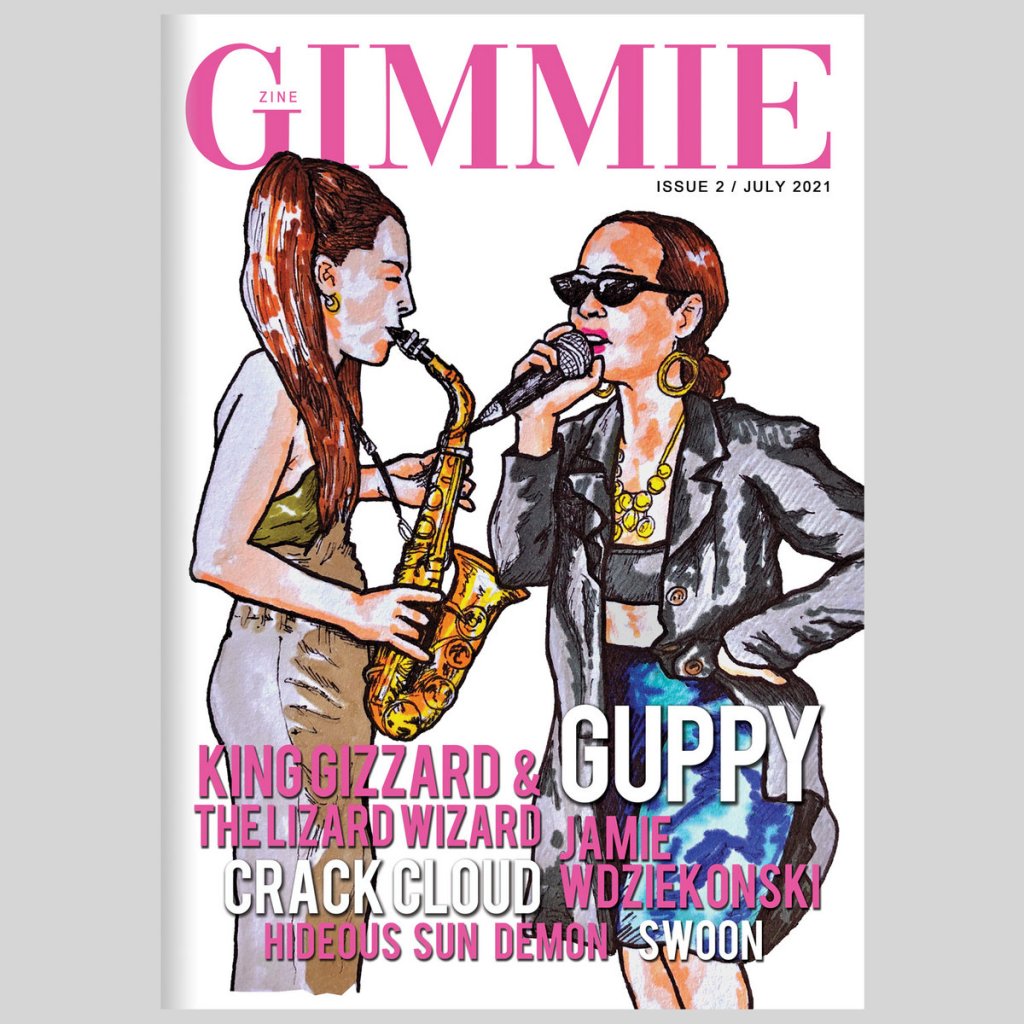
We put Guppy and Pale Horsey on the covers of print issues before they’d really even released much music. People told us we should’ve put King Gizzard & the Lizard Wizard on the cover instead because they were in the same issue and it would’ve sold more copies. But we went with Guppy because we could—and the issue sold out anyway.

Over the years, I’ve seen editors at publications decide who gets a cover story or major coverage based almost entirely on social media numbers, not because the artist actually rules. And obviously mainstream media is heavily shaped by advertising, paid editorial and industry relationships too.

A lot of people don’t realise how much mainstream culture is influenced by those systems rather than actual merit. A lot of artists effectively buy their way into visibility and success.

With us: we cover things because we’re genuinely fans of them. There are so many incredible bands out there that people would absolutely love if they were just given the chance to know they existed in the first place.

TL: Yeah!. And that’s why it continues. People know what they’re going to get with Gimmie and they trust it.

I was talking to Josh, the singer from Rapid Dye the other day and he was honest and said, that he doesn’t always like all the stuff that Gimmie covers, but he knows there could be something cool coming. That we really have an eclectic curation of stuff. A lot of publications are often one note.

TL: That’s it! I used to write a lot for Unbelievably Bad.

We loved Unbelievably Bad

TL: It’s the same reason, really. You’re not buying something because of whatever insanity is on the cover—you’re buying it because you know it’s going to be interesting. It might not even be to your taste, but that’s part of the point. If your tastes aren’t constantly evolving, then you’ve kind of given up a little bit. If you’re genuinely passionate about music, it never ends. 

There’s always something new to discover. It’s always on to the next thing. That’s what’s exciting about music. There are only 12 notes, and yet it just keeps going forever.

It’s like cracking a safe over and over again. Different combinations of internal, external and environmental factors completely reconfigure the outcome every time, even though the raw materials never change. It’s still just 12 notes.

That’s why music stays exciting to me.

Guppy are a good example of that. I’ve seen Mitch play in so many different bands, but Guppy sounds completely different to everything else he’s done. Again, it comes down to big personalities and people being willing to fully explode with expression. It’s really fun to watch.

And honestly, how else do people hear about this stuff unless somebody is out there doing the work and talking about it properly like you guys are?

When I was a kid and first started making a zine, it was really just about wanting to share music with people. I’d hear something and think, oh my god, this is incredible. How do more people not know about this? I just wanted to write about it so other people could discover them and maybe feel the same excitement I did. That’s always been the whole reason behind it. Still to this day.

TL: Yeah, I can imagine we probably both hijacked the tape decks at school. That was the good side of being a little music dictator. Everybody else was still listening to Metallica or …And Justice for All and you’d be like, “No, check this out instead. Listen to this.”

I still have people I went to primary school and high school with telling me, “I’m still really into Rollins Band and Tool because of you.” And I’m like, “No, no—you’re supposed to keep going past that. Please don’t stop there.” I was only 12 or 13 when I was obsessed with those bands. The whole point is to keep moving forward and keep engaging with new things. But not everybody’s built to be a marathon runner with music.

Sometimes I genuinely think about quitting. There are days where I sit there wondering, why am I even doing this? Especially when people start treating you less like a person and more like a platform they can use. That part makes me really uncomfortable. It can make me want to step away from everything completely.

I’ve had people harass me for not covering their band. I’ve been called snobby or elitist because I didn’t write about someone’s band. There’s a bunch of shitty stuff that happens behind the scenes that we never really talk about publicly.

I’ve never wanted to turn any of that into a public spectacle. I don’t want to feed that energy. I’ve watched public conflict become its own form of currency in creative spaces. I’d rather people connect with what I do because they genuinely get something out of the work, not because I’ve shouted the loudest online about something.

I work a hectic day job as a book editor, helping fellow Indigenous and POC writers tell their stories, alongside doing Gimmie. A lot of the time I simply don’t have the capacity to cover everything. When you spend your days looking at words all day, looking at more words in your free time can be a lot.

TL: Yeah, that’s true. Fuck them. Those people usually quit pretty quickly. The opportunists never really last. I’ve met a lot of them over the years.

It takes stamina to push through all the bullshit. There are always people who just want to be famous, and the money side of it has always been the biggest red flag for me. I’m always thinking, “Why are you doing this? Why are you in this band? What’s actually motivating you?”

There’s one city in this country that’s especially notorious for it—people constantly jumping from one thing to another, using whatever they can to climb as fast as possible. Melbourne has a bit of it too, but nothing compared to Sydney.

I don’t know. That whole world just has nothing to do with me. I try to interact with it as little as possible. At the end of the day, you just try to surround yourself with the right people. That’s why community matters so much. And then, as soon as somebody figures out how to commodify something genuine, it’s like, “Cool, we’ve got to start again.” Burn it down and keep moving forward.

But yeah, thanks for doing so much heavy lifting for so long. It’s genuinely appreciated.

Thank you. I think I do it for the same reason you make music—you just feel compelled to do it. We have to. It’s either keep going or die. 

TL: Well, definitely don’t do that! I think about this a lot. One of the benefits of being in bands is that it’s kind of like a marriage. It pushes friendships beyond their normal limits. A lot of my support networks have probably come from that, because those people have had to deal with me being radical or erratic or whatever I am.

Lately, though, I’ve realised I’ve probably closed myself off from people a bit too much. Just before Christmas I was at a gig talking to this younger guy I’d known peripherally for years. Because of old hardcore-scene baggage and preconceived ideas, I’d never really engaged properly with him. But this time I just thought, “Fuck it, I’m going to lean in.”

We started talking about family stuff, his dad, how he grew up, and I just kept asking questions. I reckon we talked through two whole bands without noticing. And I loved it. I walked away thinking, “Oh, I actually know this person now.” It was really nice.

The older you get, the more you realise we don’t tend to make many new friends—we mostly just lose people. So I’m trying to stay open to connection now instead of shutting it down.

I don’t know what advice I can really give, except maybe to trust that people do care and are interested in you more than you think. And honestly, call me anytime. I’d genuinely love to chat. These days I mostly just see missed opportunities, and I don’t want to keep living like that. There are too many good people out there that we don’t won’t to lose.

I saw a lot of loss pretty early on. Because of that, I think I started realising how precious a lot of this actually is. Even with all the nihilism I carried around for years, you still see the direct consequences of treating people badly. You can see the damage it causes and the bitterness that grows out of it. Trying not to become that way takes work. It’s not easy. But it’s rewarding, because you end up forming real bonds with people.

It’s the same reason I love starting bands with people. You want to see those personalities thrive. You want to create spaces where people can fully become themselves. It’s big stuff, really. It matters a lot. Even in the underground [laughs].

Yeah. I think a lot of people who are drawn to underground culture are also carrying some form of mental health stuff or emotional struggle. You end up with all these intense personalities and experiences colliding in the same spaces, and I think that’s part of why those worlds can feel so emotionally charged and complicated.

I’ve dealt with mental health stuff my entire life, and honestly, I think it’s something I’ll probably always be managing on some level. I don’t really believe there’s a magical point where everything suddenly gets fixed.

TL: Yeah, it took me a long time to realise that basically every person I surrounded myself with during my formative years was dealing with some pretty serious mental health stuff. And eventually you start thinking, “Well, it can’t just be everybody else. Maybe it’s me.”

So I’ve just kind of gone through life happily undiagnosed and unmedicated, probably under the false impression that I can manage it all on my own. 

But then you start questioning where the line is. Is it mental illness, or is it just my personality? Maybe this is simply who I am.

At this point, I think I’m mostly just trying to manage myself in a way that doesn’t hurt other people. We’ll see how we go! [laughs]. Into the void.

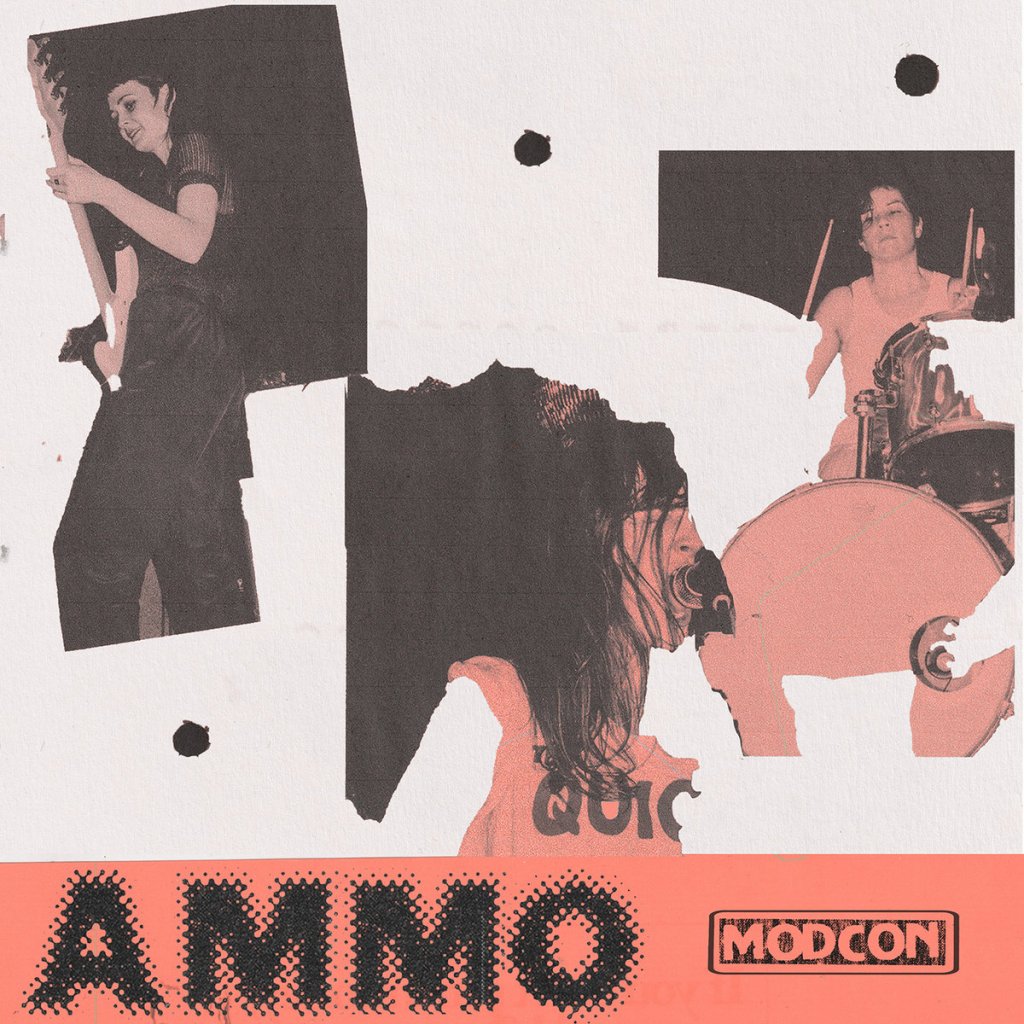
Check out Tom’s label: SOLAR/SONAR. Follow @solarsonarrecords.
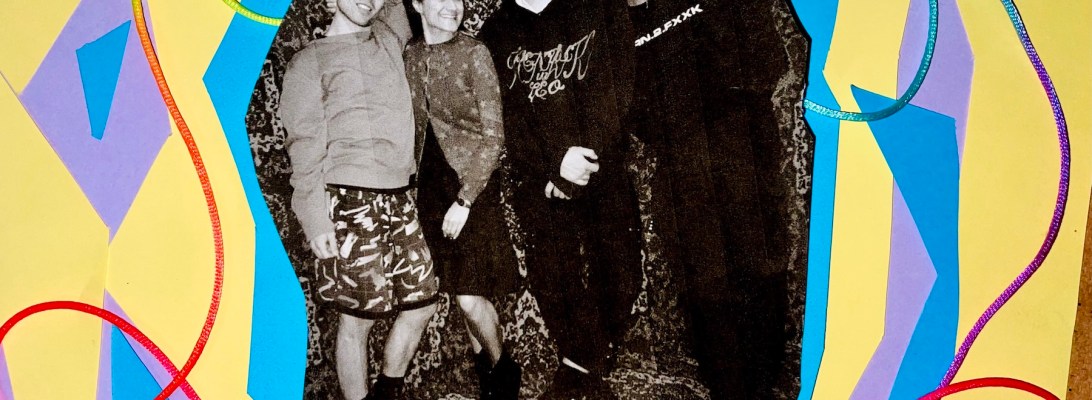
Gimmie’s new favourite band: Perfect Actress

Original photo courtesy of Perfect Actress. Handmade mixed media collage by B.

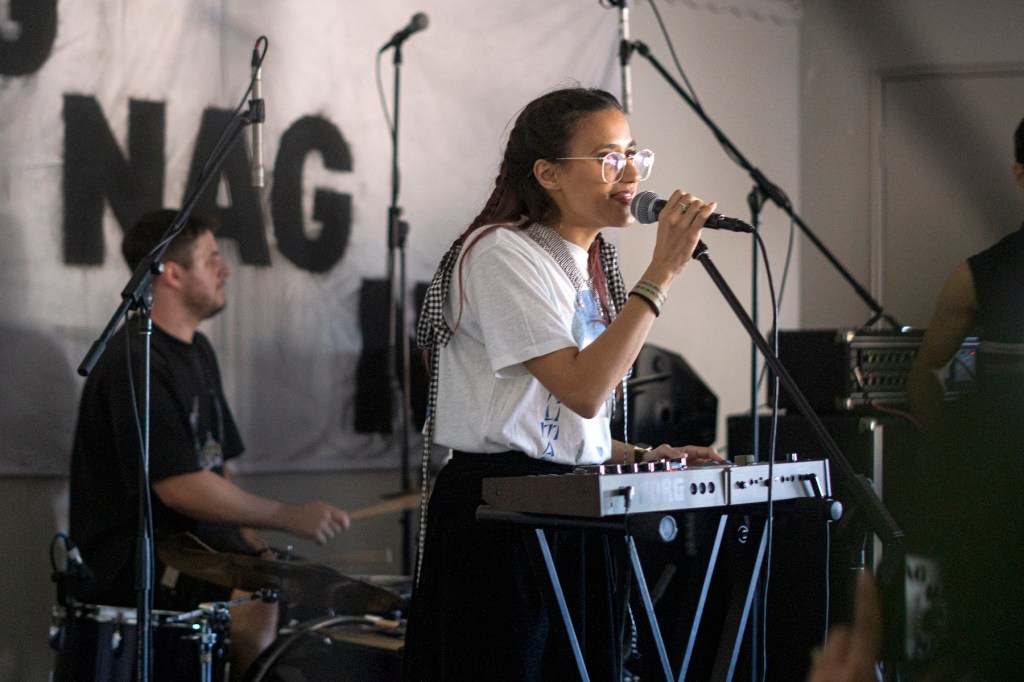
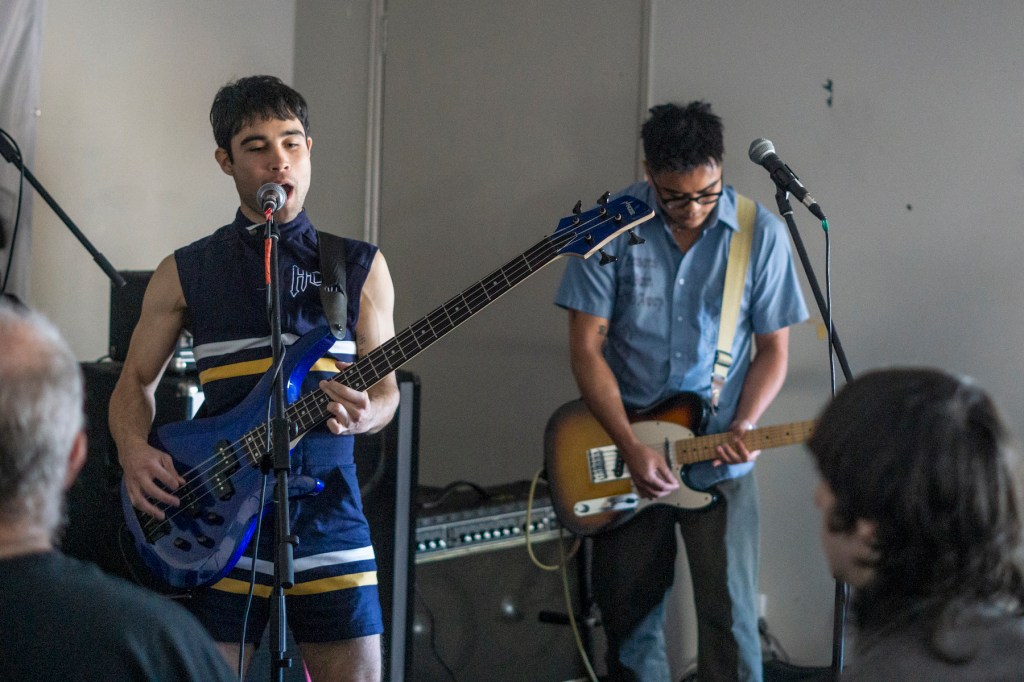
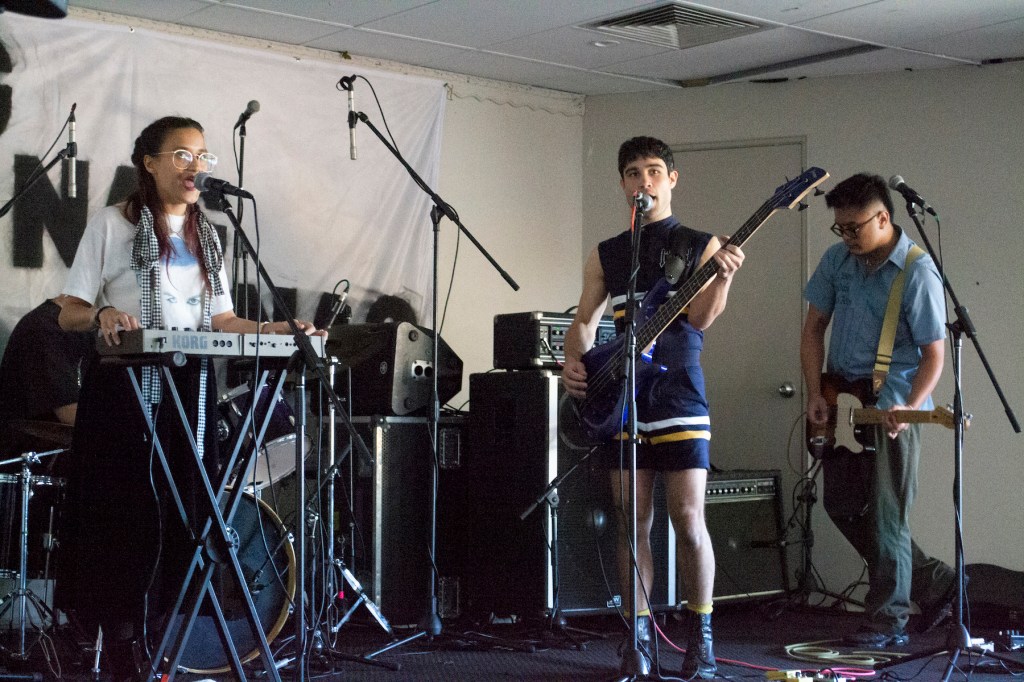
We know saying that a band is our new favourite is a big call, well, it’s simply the truth. We saw Perfect Actress play at this year’s Nag Nag Nag fest. They were the opener and there was a handful of people in the room, us included. We saw them soundcheck a song and from just seeing that we were intrigued and blown away. When they played their set we witnessed four really cool, diverse, highly creative individuals – Naomi Kent, Darren Lesaguis, Gus McGrath and Marcus Whale – come together and make magic before our eyes. Their energy, fun, and smiles were infectious. Their songs were well-crafted compositions and the band are one of those ones that feel fully formed out of the gate. After the set, we spoke to them and discovered that they’re also really lovely, genuine humans. 

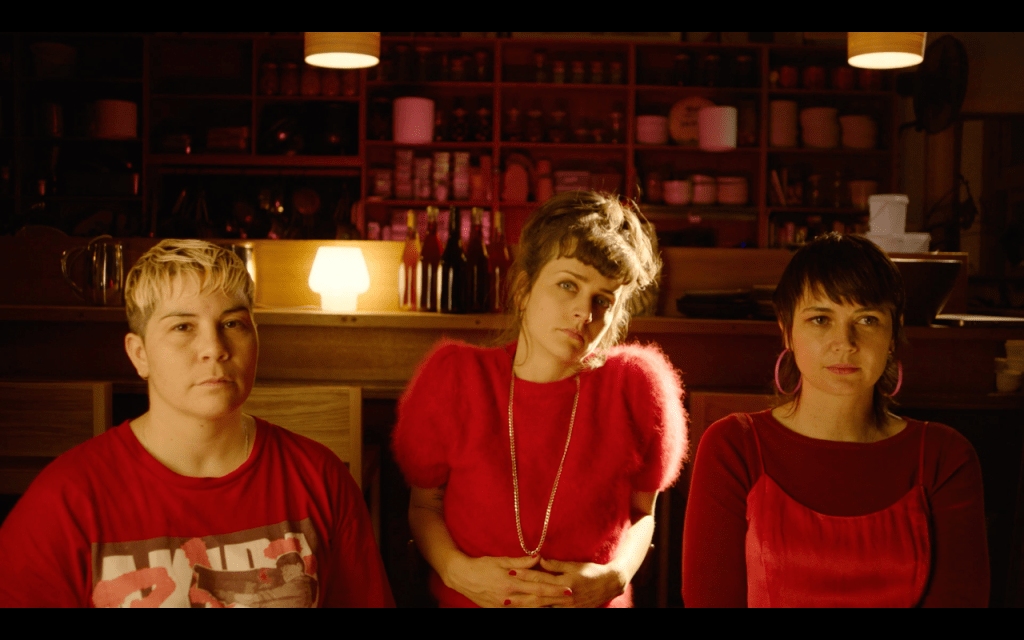
Gimmie spoke to vocalist and keys player, Naomi, just before they announced their debut EP and released single ‘Leather’. Today Gimmie premiere their very first music video shot by Garden Reflexx for banger ‘Perfect Actress’ and share that chat.

How’s your week been? 

NAOMI KENT: It’s been really busy. I work full time. I had an art show on Thursday. Work Friday. And then yesterday, we had a show in Canberra and I worked today. We drove down to Canberra, played, and then I left everyone in Canberra and I got the 6PM bus home. It was a big day, but it was really fun. 

You’re originally from the Yugambeh Country/Gold Coast?

NK: Yeah, I was born on the Gold Coast. I lived overseas growing up and then we moved back to Australia when I was eleven and then I moved to Sydney in 2019.

Whereabouts did you live overseas? 

NK: I grew up in Canada and America. My mom is Canadian and my dad got a job doing soccer coaching over there. So dad was driving every day from Canada to America and crossing the border.  And they would always say like, what are you doing here? And there was a bunch of casinos. So, I think at one point he just started telling them that he was going to the casino. 

What was it that inspired you to move to Sydney? 

NK: I had to do an internship with my studies. I studied fashion design and I couldn’t find one on the Gold Coast, so I thought, I have to move to Melbourne or Sydney. I just decided on Sydney and I never looked back. 

What was it that made you want to pursue fashion? 

NK: I’ve always wanted to. When I was little I watched The Flintstones and I would go on my mum’s really old Apple computer and I used to draw. I made a fashion line for Pebbles Flintstones. 

Amazing!

N:K Yeah, it was fun. 

Was there lots of leopard print? 

N: Yeah. I would name each piece of clothing. I think it’s nice to have your fingers in different pies and just see where it takes you. 

How did you start playing music? Did you play music before you moved to Sydney? 

NK: No, not at all. But I was always around people who played music. Maybe you would know the band called Donny Love?

Photo by Jhonny Russell.

 Yeah. 

NK: I used to live with Andrew and Randy from that band at one point.  So I’ve always been around people that were making music. And then I think it just happened. I never made music by myself. I guess I really started with Perfect Actress. There’s kind of an overlap of Carnations and Perfect Actress where I’d started.

I was living with Gus and Marcus, and we were like, let’s make a band. And then COVID happened so we couldn’t practise at all. After the second lockdown lifted, I think Mac from Carnations said that he wanted me to come and jam with them, so we did.

Carnations practise a lot more. I felt like Perfect Actress was on the back burner for a bit. And then our friend Grace, who does Rebel Yell and 100%, was doing a show and she wanted us to play, and I was like, okay, we really have to do this now.

I think at that point, we only had three songs, and then we just got the ball rolling. My first show with Carnations was only a few weeks before the first show with Perfect Actress. 

How did you feel like playing those shows for the first?

NK: It was really fun. I remember me and Mariana being really nervous for our first show, and then now we’re just like, oh, we’ve got this. We just have lots of fun with it. But it’s always funny when Perfect Actress play because my band Carnations always come, they’re always really supportive and its nice.

We really love Carnations as well. We’d been wanting to see you play for ages. At Nag Nag Nag, there were so many people there that had told us Carnations are the band you have to see in Sydney.

NK: That’s so nice. I love playing in both of the bands. It’s so fun. 

When you started Perfect Actress, was there like a particular sound that you wanted or did it just sort of come from playing together?

NK: In both bands we always like to make a playlist, especially when we were first starting, to figure out what our influences are and where we would see it going. I feel like Gus, in particular, loves Sonic Youth.

I love this band from Ohio called, Crime of Passing. I love them. 

They’re so good. I was meant to do an interview with them when they released their album but it unfortunately fell through. I called at our scheduled time and they didn’t pick up.

NK: I got to see them in Memphis last year when they played at GonerFest because my friend played. It was so good. I really love their style. I feel like they’ve influenced me a bit. 

Marcus loves prog rock, so there’s a lot of the drive and progression in it as well that I think comes from him. 

Your band combines so many things that we really love together, so well too. We really love your band. 

NK: Oh, that’s so nice. Thank you.

Is there any particular performance that you’ve seen a band play that has really stuck with you? 

NK: I feel like Marcus Whale my bandmate, when I first saw him play, I was shocked. Even when I see him play now, I really get a kick out of watching his audience because I feel like everyone is really captivated and mesmerised by him. That’s really fun to watch. It’s always fun to watch his shows.

Yeah, his solo stuff is really cool. 

NK: Who else have I seen that I’ve enjoyed watching? 100% the other night. They’re really fun. I loved the cover of ‘Relax’ by Frankie Goes To Hollywood.

Growing up, what kind of music did you used to listen to? 

NK: I grew up listening to a lot of UK pop music and then as I got older, I really started to appreciate a lot of 80s music. I feel like that has really stuck with me. I love China Crisis and Gary Newman. Obviously, Depeche Mode. I listened to The Cure a lot as well when I was younger. I like the British.

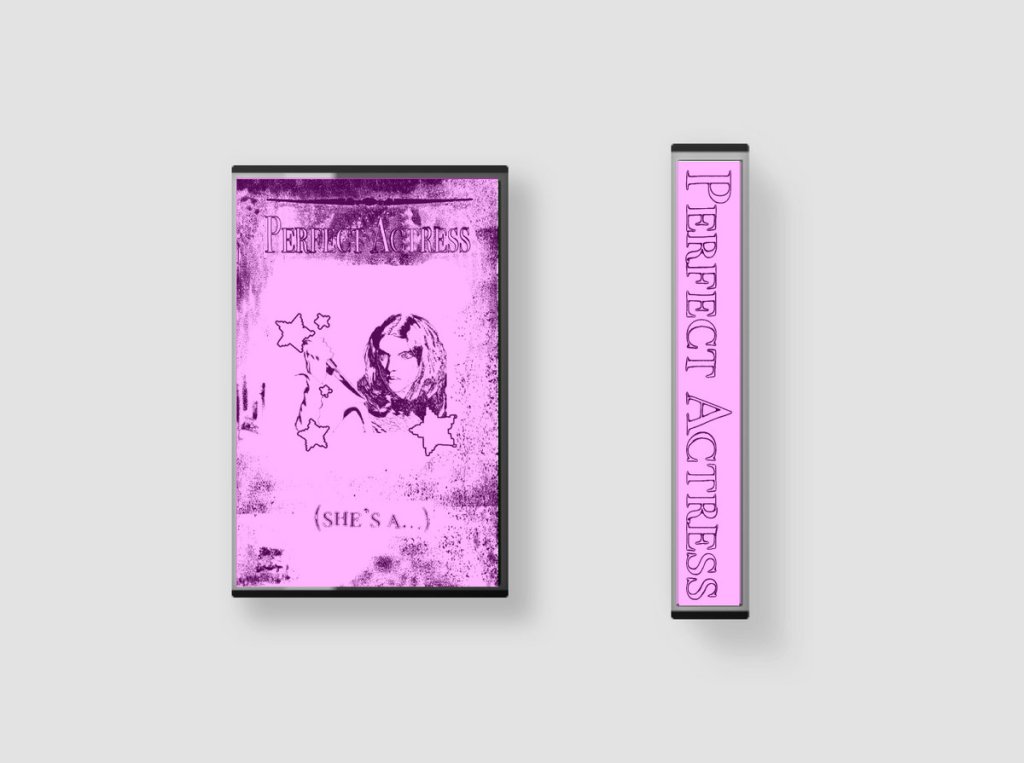
Perfect Actress have a cassette coming out? When will we see it? 

NK: I think July or August. We’re releasing one song, and then I feel because we’re all a bit busy, we’re kind of staggering each thing. We’ve filmed a music video. We’ll have a digital release launch night and video premiere type of thing. Our cassettes probably won’t be made until July or August. Yeah. 

What song is the video for?

NK: ‘Perfect Actress’. We did it with our friends Jenna and Andre, who are filmmakers. We filmed it a couple weeks ago. It was during one of our sets. There’s lots of close ups and us being rat bags. It’s nothing too crazy, but I think it’s a nice introduction to our music.

Video shot by Garden Reflexx

Was that one of the first songs you wrote? 

NK: No. I think ‘Instagram’ is the first song we wrote. We wrote that one really long ago. ‘Perfect Actress’ we wrote just before our first gig. Gus and Marcus had established a beat, and then Marcus was like, ‘You know what would be funny? If we just wrote a list. Of our favourite actresses in their movies.’ We were like, yeah, let’s do that!

Do you have an all time favourite actress that you’ve mentioned in the song? 

NK: My favourite is Nicole Kidman in To Die For. Her acting is so phenomenal in it. I actually saw Laura Dern in Wild At Heart the other day. I thought her acting in that was really good. I don’t think there’s a minute without her back being arched or her hands above her head. It’s so funny. I love it. Did you have a favourite movie? 

I really like the The Godfather trilogy. I like a lot of movies though. I went to film school. I grew up watching a lot of movies with my mum. She used to go to the video store and she’d get out 20 VHS tapes and watched them while she did the ironing and I’d sit with her. I love a lot of 80s movies. All the classics like The Outsiders, Pretty In Pink and Breakfast Club

NK: I love Molly Ringwald!

Me too! She should be in your song. 

NK: I’ll have to figure out where to fit her in!

When writing songs, do most of the songs sort of start the same way?

NK: Someone will bring something in. ‘Dream’, and this song ‘Hands’ (that is not on our EP, but I think we’ll record it at some point), those ones were Gus and Marcus. I guess because they live together, they have more free time to learn. Marcus wrote the lyrics for ‘Hands’ and I wrote ‘Instagram’, but they kind of start out the same. It’s usually like, if we’ve been at practise and we’ve figured out the instrumentals, then the next time we come in, I’ll try and think of some lyrics for it.

Do you find writing lyrics hard? 

NK: Yes, I do. I just feel like I don’t have that tapped in yet. Just because life is so busy and winding down, it’s hard to think of words sometimes or sit down and read and find inspiration.

Photo by Jhonny Russell.

Was writing ‘instagram’ hard? 

No, that one I found easy, but because it’s just kind of like one or two word increments. I really like performing that song. I always make a joke to the audience that it’s about deleting Instagram.

What was one of the first songs you ever wrote? 

NK: I guess it was ‘Instagram’.

So you were doing Perfect Actress before Carnations. 

NK: Yeah, I think I had the lyrics for that song before Carnations stuff. For Carnations, the first song I wrote by myself was ‘Videodrome’. That was inspired by the film [featuring Debbie Harry]. We have a song called ‘To Die For’ [featuring Nicole Kidman], which is about the movie as well. But I’m trying to not write about my favourite movies lately [laughs]. I got to think of another theme. But there’s endless inspiration in movies. 

Totally! Did you learn anything from making this EP?

NK: Probably that this stuff probably takes longer than you think. But also just that we will just keep getting better and better. Especially with the Carnations EP, I feel like we’re already onto more complex and intricate song structures. It’ll be the same with Perfect Actress as well. The songs that aren’t on the EP are songs that we’ve figured out, and wrote after that; they’re just getting better and better and more intricate and more fun and a bit different to what’s being released.

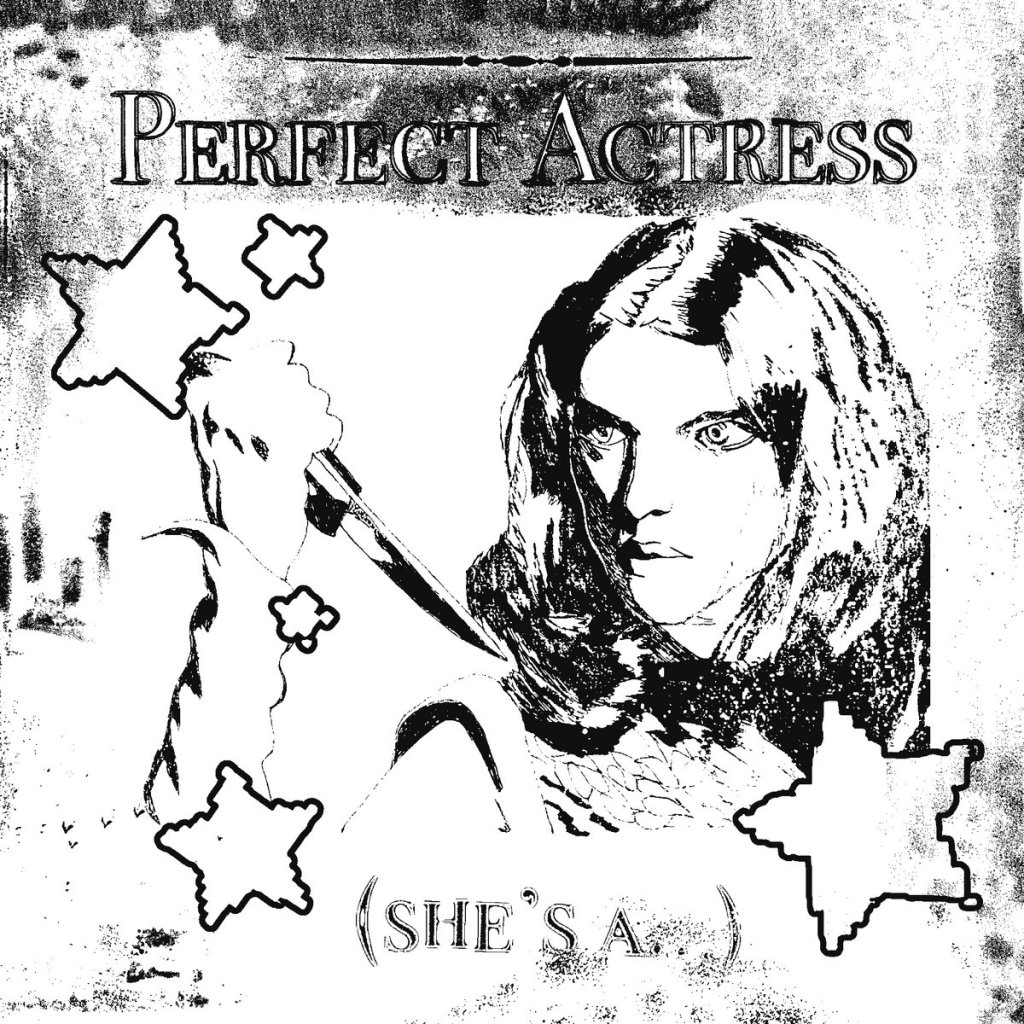
Illustration by Oscar Sulich.

I can’t wait to hear the new stuff! What’s one of your favourite places to play on Gadigal land of the Eora Nation/Sydney?

NK: Perfect Actress had their first show at Red Rattler; I thought that was really fun because it’s a DIY project space and it’s a safe space. It’s queer friendly, which is a big important thing for all of us. I would love to do more shows at Red Rattler I also really like MoshPit in Erskineville. It’s cute. It’s like really little, it’s really cosy and nice, the sound is good.

Nice! I like smaller, inclusive, DIY spaces best. 

NK: Yeah, me too. 

I’ve seen bands I love play bigger stages and sometimes it just doesn’t hit right, it doesn’t have that same feel as they might at a more intimate venue.

NK: Yeah. When you’re a bit more squished, it’s more personal, I guess. 

Totally. I’m still buzzing from seeing Tee Vee Repairmann at Nag Nag Nag, they were amazing. 

NK: Yeah, yeah! He [Ishka] really knows how to get the crowd going.

I got teary when they were playing I was moved so hard by the power of rock n roll!  It was so great to finally see Ish do his thing as frontman.

NK: You can just tell that he loves what he’s doing. He’s always jumping around.  He was just born to be up there. 

After the show, I went up and I told him and told him how incredible the set was. I think it’s important to tell people you really dig what they do. He said, ‘It’s just rock and roll!’ 

NK: So modest. That’s so lovely. 

Photo by Jhonny Russell.

Yeah. You mentioned that you had an art show this weekend. You were knitting?

NK: It’s was on a knitting machine. My friends do art programmes here and there and they were running this programme at the Powerhouse Museum, which was fun. It was very distracting trying to knit and have people ask questions and coming through.

The night before, Perfect Actress had a rehearsal and we figured out that we wanted to do a cover of ‘Star Power’ from Sonic Youth. We did that, and then it was stuck in my head all day, so I thought for the knitting piece I would do text of Star Power written on it.

That’s awesome. I’ve seen a few of your creations and I’m hoping you’ll do a new drop soon! 

NK: Yeah, one day. It’s so hard to balance work life sometimes. I work full time and I practise with Carnations once a week too. I do have a studio, but I feel like I don’t get enough time there. 

What kind of job do you do? 

NK: I’m a shop manager at a second hand buy sell clothing shop. I took the job because it’s like a five minute walk away from my house. I love it. Working full time is a bit rough sometimes when you want to do so much more outside of it. 

Totally! I work two jobs and do Gimmie stuff the rest of the time.

NK: Yeah, it’s a lot, but you got to hustle.

You mentioned earlier that Perfect Actress was the first time you’d started doing music…

NK: Yeah. 

Was music something that you thought you would do when you first moved to Sydney? 

NK: Not really. I always wanted to, because I had so many musician friends, like Grace from Rebel Yell. Then I met Marcus. I met Gus from California Girls. My boyfriend was in Eternal Dust, which I loved very much. Music was always around me. It was probably inevitable that I’d start making music. 

I’m so glad you did! 

NK: Yeah, me too. It’s always fun to get together and make music. I like that Perfect Actress and Carnations sound quite different. It allows me to scratch both itches. 

What’s something music-wise you’ve been really getting into lately?

NK: I’ve been obsessed with Colin Newman for a while, who’s a singer of Wire, but I really love his solo stuff. I’m always in and out of obsessively listening to his music all the time, listening to all his albums through and through. I really love his music. I feel like I’m really into New Wave at the moment, which is fun, because I get to play the keys and try to mimic things. That type of music is just so fun too, the whole sound, but even the look of it. And everyone just having lots of fun and experimenting with things.

Any shows coming up?

NK: Carnations has a show with Snooper, Gee Tee, and R.M.F.C.. We saw Snooper play in Memphis last year when we were there for GonerFest and they were so fun. I’m really excited for the Australians to see them! I’m really excited to play that show.

Perfect Actress’ EP available HERE. Follow them: @perfect.actress

Photographer Jamie Wdziekonski’s For The Record: “I’ve only ever really shot bands that I believe in”

Original photos by Jamie Wdziekonski / Handmade mixed media collage by B.

We’re excited to be celebrating one of our favourite creatives and humans – photographer and documentarian, Jamie Wdziekonski (Sub-lation) – as he looks towards his first solo exhibition opening this Friday night (May 5) at NGBE Gallery in Naarm/Melbourne. 

Jamie is also releasing a photo-book, For The Record: 2013 – 2023, which highlights Jamie’s photos that feature on albums from bands including, Amyl and the Sniffers, King Gizzard and the Lizard Wizard, Kikagaku Moyo, Parsnip, Tropical Fuck Storm, Traffik Island, Zelkova and many more. Pre-orders for the book quickly sold out online, so the only way you’ll be able to get one is heading along to the exhibition. Don’t miss out, you’ve been warned. We love you Jamie! 

After doing what you do for over a decade, why is now the time to finally have your first solo photography exhibition along with accompanying book, For The Record: 2013-2023?

JAMIE WDZIEKONSKI: There was a rush to do it. I got told that the building (53 Lygon Street, East Brunswick) that I have a studio in was being sold; the whole block is going. We have a gallery downstairs that we can use for free (they don’t take commission) and I thought I may as well have a show.

I’ve framed up these Traffik Island offcuts from tests we were doing for the Shrug Of The Shoulders album cover we did at a photo booth; they’ll be at the show. Things basically started with me framing them up. I was going to put those online to sell, but thought they’d look nice in a show. 

I’ve always wanted to do a big Sub-lation ten years of photography book. I knew I couldn’t afford  to make something that big, so I decided to make a condensed version. I was thinking back to the Traffik Island frames and because they were taken for a record cover, I got the idea to put images in a book that were used in album artwork. 

I had thought that when I got back from the Kikagaku Moyo world tour in December, I would start planning it. It’s borderline killed me to get everything together so quickly [laughs], but I’m still here!

Yes, you’ve done it! Yay you!

JW: [Laughs].

Wasn’t Kikagaku Moyo the first album art your photos were featured on?

JW: The first one was The Murlocs’ Loopholes, which was a poster insert with the record, and there was also a lyric booklet with the CD version. There was an image in the gatefold and the front cover of the lyric booklet.

Nice! There’s 58 records featured in the exhibition and book?

JW: Yeah, that I know of [laughs]. I may have forgotten some! I was trying to keep it under 100 pages but then there were just so many releases so it’s now over 300 pages!

Wow! Do you remember how you felt the first time your photos were featured on a release?

JW: It felt really nice. 

The Murlocs’ Loopholes came out in around 2014, right?

JW: Yeah, I think. Let me check the book index… [Picks up a proof of the book and flicks through it].

Is that the finished book? Exciting!

JW: Yeah. Each release has a title page and I’ve written what was happening back then and details of labels and when we took the photo. 

Have you got notes you’ve written from over the years? Was it easy to get all the info together?

JW: I’m so bad! I call myself a documenter, but haven’t done that properly [laughs]. 

Same! It’s only recently I’ve started labelling all my interview files properly with date/time/notes etc.

JW: I pulled out my old iPhone and looked back at texts or Facebook messages. Finding a gig is easy, you can type in something like ‘Amyl and the Sniffers, America, 2021’ and you should find information. But, shoot dates for when it was just me and Amyl at Merri Creek; what was that? 

The metadata on the files fucked me up because it shows the date something was edited, not taken. 

The text bit of the book is what has killed me, the detail that went into the text was definitely an undertaking! 

Congrats on all of the hard work! It looks amazing! 

JW: Thank you! I’m happy with it. Ben Jones designed the book cover for me.

It’s very cool. Let’s talk about some of the images featured in For The Record. What can you tell us about the shoot for The True Story of Bananagun? That cover is so beautiful.

JW: Nick from Bananagun found the location, the Royal Botanic Gardens in Naarm/Melbourne. 

We went out there one day with the intention of shooting without booking a boat and found out you have to book. The guy operating the boats said we could sit in the boat while it’s docked for a couple of photos that we used for press photos, but we had the intention we’d go back for a proper shoot. 

We rang them up one day and said we wanted to book one of the gondolas and the guy there goes, “It’s not a gondola it’s a punta.” [Laughs]. You can hire them for an hour and they take you around the lake. The guy that was steering the gondola was picking all of the nice spots to show us. It was one of the easiest shoots because everything was so beautiful and you couldn’t really take a bad photo. 

I especially love the photo on the back cover where it’s a bit of a longer distance shot of the band on the boat and there’s like reeds in the foreground.

JW: I took that photo when I first got there. We were going to meet at Fed Square but they all went ahead because I was late. They were already on the boat when I got there and I took that photo as I joined the group. All the colours came up so nice. 

Totally! What are some other shoots that you have vivid memories of?

JW: The Amyl and the Sniffers’ Big Attraction & Giddy Up split EP has a photo of Amy in red. It was from my first night watching Amyl & the Sniffers. I had heard their name around and had checked out their ‘70s Street Munchies’ clip on YouTube and thought they looked really cool and that Amy looked really interesting. 

They were opening for The Murlocs with Parsnip at Howler. I didn’t meet them until after they played. I didn’t know what to expect – at that point I had never seen a punk band. Amy came out on stage and she was darting back and forth across it, jumping off the foldback speakers. It was the most energetic thing that I had shot at that point. I had only been shooting psychedelic bands, even though everyone is moving they’re still kind of stationery in their spot, this was the first time I’d shot someone that wasn’t—Amy was upside down and everywhere!

I have fond memories of that night. I love Amy, Amy and I are close. I love the Sniffers too. I really connected with them, they were  so genuine. It was the biggest show that they had played at that point. They were all wide-eyed and like, ‘You get chips backstage! That’s crazy!’

Amy is totally lovely! I spied the comment she left on your post about your exhibition and book. She said: “You change lives” – and that you’ve changed hers.

JW: That was so sweet. It’s a mutual feeling, they’re changed my life as much as she reckons I’ve changed hers. There’s a mutual uplifting to both of our creative outlets – I love their music and they love my photos and they gel well together.

I know that a lot of people’s introduction to many of the bands you shoot is via the compelling and genuine images you’ve captured.

JW: Amyl and the Sniffers are really fun to shoot!

Your images are really important in raising the visibility and profile of the artists you shoot.

JW: That was the idea and intention behind photographing music. I always wanted to just promote the music that I like and hope that other people will like it too. I never did it because I wanted my work to be in Rolling Stone or something [laughs].

I know that Traffik Island’s album A Shrug Of The Shoulders was a big one for you, as you did the entire layout as well as shooting the photos.

JW: From concept to doing the shoot to layout, even suggesting track listing, which was cool. I’m probably the most proud of that one and the Leah Senior cover for The Passing Scene. They were the albums whose art was my concept. For them to put that trust in me means so much, I really wanted to deliver something cool for them. I think both covers really suits the mood of the album. 

Is there specific things you take into consideration when working on a cover project?

JW: Other than those two, most of the other times my photos were used for album covers were photos that I took not knowing they would be used as artwork for a cover; they were live or press shots that were used later. 

Are you ever surprised at the photo/s that end up being used?

JW: Yeah. There’s some where I would have chosen different images, but that’s just down to personal taste. 

In a way, this exhibition I’m having is curated by everyone – all of the bands that chose those images for their artwork.

That’s really cool to think of it in that way and it’s very much in the spirit of something really important to you—community. I remember you telling me about the studio space you work from in Lygon Street being a real creative community hub.

JW: I don’t love too much attention personally, I much prefer the attention to be on the bands.

Same! That’s how we are with Gimmie too—it’s all about the bands, not us.

JW: [Laughs] Yeah, you know what I mean! It’s weird people asking me for radio interviews and stuff; I feel out of place. It’s nice they care about what I’m doing though. 

What you do is totally art, Jamie! You’re an artist in your own right… even though you’re uncomfortable with that…

JW: [Laughs] I feel like if I call myself an artist though I have to deliver. 

I was working out that in the last decade your photos have been featured on around ten releases per year.

JW: Yeah.

In 2021, I think there were around 13 releases with your photos. That’s a lot! Very cool. On the opening night of your solo show there’s two bands/artists that you’ve shot photos for their releases that will be launched – Howard Eynon and Zelkova.

JW: I shot a single cover especially for Zelkova, which was cool. It went so well. 

Yeah, you showed me the mock up that you’d made in preparation for the shoot and because it was outside I was crossing my fingers all day for you that it wouldn’t rain.

JW: It was a really fun day! There’s a lamp post beside the bridge and it lights it all up at night. They brought screwdrivers with them and unscrewed the little plate in the lamp and under it was the power supply, so we hooked up an extension lead and they played live, which was so cool. It was just me, the band, and the guitarist’s girlfriend that was helping out. I thought to myself, ‘Fuck, I wish more people were here to see this, it’s amazing!’ The sound was reverberating around the bridge. We shot it out in Riddells Creek a couple of weekends ago. 

It was the quickest turnaround for me in terms of coming up with a concept, shooting it and designing the artwork for it to be in the book. We shot it on the weekend, I developed the film on Sunday, got it back Monday evening, and had to design the cover Monday evening to be able to put it into my book and submit to the printers in the morning. It was tough but we got there!

Howard is putting out a single, which is really cool. It’s his first official release since his 1974 album.

That’s amazing you were able to inspire him to do that!

JW: I called him and I was like, ‘Howard, I really want you in this show, so I think you’ll have to put out one of your songs in the next two months’ [laughs]. I told him, ‘It’s 2023 – 23 is your favourite number – it’s your year to do it!’ He told me he thought I was right and that he’d really love to.

So good! Howard is so lovely. Thank you for introducing us, it’s always inspiring chatting with him.

JW: Yeah, I’m really stoked that’s happening. 

Is there any other albums we can find your work on that you’d like to share a little about?

JW: The Traffik Island one [A Shrug Of The Shoulders] was very involved. We were up at Howard’s place in Tumbi Umbi and it was the last time we’d be going there because Howard sold that property and moved down to Bruny Island. We were having a send off party, there was a stage outside and all the locals they go swimming with, their doctors, dentist and everyone came out for the house show. 

Howard was throwing out a bunch of stuff like books, lamps and trinkets; there was a book, Photobooth: The Art of the Automatic Portrait. I ended up keeping it. I loved flicking through it.

Before we went up to Howard’s Zak [Olsen] had asked if I could take a photo for his new album cover. We couldn’t really come up with a concept though and we thought we might just take a photo out in nature. We thought to shoot Zak from a distance and that I’d shoot the trees. I don’t think we even got to try though. 

I saw the photobooth book and thought of the idea of shooting the title of the album spelt out in the photobooth. Zak and I still shared a studio at that point so when we got back from Howard’s we knuckled down into planning it out. We went down to the photobooth to measure it out. I stuck up giant post-it notes against the wall of the booth and drew out lines with numbers and shot the test shot so I could see where the frame fits. Luckily the letters needed to be on an A2 size. I brought a bunch of A2 sheets and painted the letters in the studio for ages. We winged it, one night we went down to the booth and it took us three to four hours and put $200 – $300 in gold coins through the photobooth. A few people came up to us thinking we were tagging the photobooth. People were telling us that its heritage listed. Then I took the photobooth strips home and had to scan them into the computer before I could start making the cover. It was really fun! I was so stoked I could do it for Zak because I love his music. He’s probably one of my favourite song writers. 

It was really nice too because I had known those songs as demos for so long. He sent me a few tracks years ago. Sharing a studio I’d asked him, ‘Whatever happened to those songs? Why aren’t they on a record?’ It prompted him to think about other demos he had and he decided to make an album. 

It’s so cool that you can inspire those whose work inspires you!

JW: I’ve been lucky in picking bands before they take off. Even for me now, it’s quite difficult to shoot a bigger band. I can see why some people that are starting to take photos now would struggle. If you’re starting out now and try to go on tour with Amyl and the Sniffers, it’s difficult. If you pick bands that aren’t popular and that are looking for photographers then you have to put in the yards and fund yourself. Pick bands that you think are going to pop off and that you have a good feeling about and follow them and see what happens.

I’ve only ever really shot bands that I believe in. I don’t want to be a photographer that gets hired to shoot Pitchfork Festival or Coachella. I’d hate to have a list of bands to shoot that I don’t know or like, it would be terrible. I do get to see a lot of cool things and go to really nice places that I probably would have never been to on my own accord. Getting to do that with friends is really nice; it’s so nice getting to know each other and know personalities. 

Aside from actually taking photos I think a big, important part of your job is your relationships with people. 

JW: Yeah, you have to have a good relationship with a band in order to be in so many situations that others wouldn’t normally be privy too. A greenroom can be such a sacred space for a band, to have unfamiliar photographer in there with you you’re not going to get the best photographs because the band might not be comfortable around you, there could be a barrier. You have to get to know people and you let your guards down and get to know each other—that can really get some nice photos together. 

You can tell that, especially from a lot of the Amyl and the Sniffers photos you’ve taken.

JW: I’m lucky that we came together early, and asked if we could go to Adelaide together, which was our first time travelling together. One thing I really remember about them is, how many questions they asked me in the van on the way to Adelaide. They were actually interested in trying to get to know me. Often you’re in a van with a band, and not to say people aren’t interested in you, but with Amyl and the Sniffers they really wanted to get to know me. I was like, ‘Are these guys Suss on me?’ [laughs] ‘Why are they asking me so many questions?’ I’m not that much of a talkative person at best! 

I love when people want to really engage and they care about getting to know you and it’s not just about what you can do for them. With Gimmie we never want things to be all business, the humanness is very important. 

JW: Yeah, when they’re interested in you and care about what you’re doing. They respond to what you say and don’t go, ‘Oh yeah, yeah, cool.’ They actually ask you questions!

Totally! I hate when people pretend to be your friend just so they can use you to do something for them. 

JW: Absolutely. You can generally smell that from a mile away [laughs].

Yep. These days I can usually spot someone like that before they even open their mouth. 

JW: [Laughs] I’d believe that.

Anything else you’d like to share with us?

JW: Thank you for writing the foreword for the book.

It’s my pleasure and it was also a privilege. We’ve been a big fan of your work before we even knew you and we became friends. Your images are incredible and important AND besides that you’re one of the loveliest, genuine people we know. When you find incredible people like yourself in life, it’s important to keep them close and look after them. We love you! 

JW: Hell yeah. Love you guys too!

Check out more of Jamie’s work HERE and @sub_lation. More info about For The Record: 2013 – 2023.

FYI, an in-depth interview with Jamie appears in our print issue Gimmie #2.

gimmie zine issue 4

It’s here! Our biggest Gimmie yet! Issue 4. Two covers to choose from!

We chat in-depth with Tessa & Alda from D-beat band Jalang! They’ve released Australia’s best hardcore record this year. We explore the album themes: politics, religion, feminism and queer rights in South East Asia and beyond. A really important chat.

Gareth Liddiard from Tropical Fuck Storm speaks about new album ‘Deep States’, songwriting, creativity, fanboying and collecting weird shit.

R.M.F.C.’s Buz Clatworthy talks, a new album in the works, lockdown being a creativity dampener, finding inspiration in films and friends.

We yarn with Emma Donovan and The Putbacks. New record ‘Under These Streets’ draws on soul, R&B, funk and the protest music of Indigenous Australia—a dynamic portrait of Blak pain and joy in all its complexities.

Amyl and the Sniffers’ Amy Taylor and Bryce Wilson check-in to tell us about their new album’s journey, experiencing depression, keeping busy and the power of music.

French duo Heimat play off-kilter experimental-pop with folklore influence, cinematic-like soundscapes, and vocals in multiple languages. A chat on experimentation.

Old Home vocalist Dylan Sparks gives us a peek into their visceral performance poetry coupled with spontaneous musical composition.

We speak with Louisiana band Spllit just days after a hurricane hit their area. We adore their lo-fi weirdness. Next level music.

70’s acid-folk legend Howard Eynon has had a storied life: appearing in films including Mad Max, supporting Hunter S Thompson’s tour; performing in theatre. Recently, he’s been working on music with Zak Olsen. A brilliant chat.

Julian Teakle of The Native Cats and Rough Skies Records selects some of his favourite tracks for us.

52 pages. A4 size. Limited Edition. 

Get it: gimmiezine.bandcamp.com

U.S.A. pressing coming via totalpunkrecords.com

MOD CON’s Erica Dunn: “A plea for honesty and a real searching for truth in these sorts of times”

Original Photo by: Jamie Wdziekonski. Handmade collage by B.

Gimmie have loved Naarm/Melbourne trio MOD CON since we first heard their debut release in 2017, the MOD CON/Fair Maiden split 7”. In July we featured guitarist-vocalist Erica Dunn on the cover of our first print edition, and now we’re incredibly excited to premiere the film clip for song ‘Ammo’, the first single off upcoming sophomore album, Modern Condition. We chatted with Erica about the song and clip, and of finally playing live shows again, plus we get a sneak peek into the new record, due out October 1 on Poison City Records.
ERICA DUNN: I’m walking my dog, Poncho. We’re just strolling around in soggy-arsed creek-land.

Nice! How have things been since we last spoke a couple of months ago?

ED: Things have been busy. Sometimes I’m like, it’s a rat race in my mind! [laughs]. There always seems to be a lot to juggle. I feel like it’s a strange new era where, because we’ve been locked down, you have to clear your mental expectations if your mental health is going to be ok; you have to get really present. When the lockdown is lifted it’s fucking crazy the adrenaline kicks in, you feel like everything is on, and you have to make the most of it! There’s also a new gratitude for when you are able to work and do stuff. It’s just, let’s fucking go! [laughs].

You’ve finally got to play some live shows again.

ED: We [Tropical Fuck Storm] were pinching ourselves thinking that the gigs with King Gizzard & the Lizard Wizard happened! We played every capital city without a hitch. It was incredible, it felt like normal life. We’re playing a MOD CON show on Sunday and the capacity is forty people, you just have to roll with it. We’re supporting Exek on Saturday night too, they just released one of the best records I’ve heard in ages! There’s only 100 people able to attend, it’s like a parallel universe.

We love that Exek album too!

ED: Shows have been varying degrees of normal. It’s always great to play though. Playing a show to forty people a year ago, might not have seemed worth it, but now I’m like, fuck it! The venue can sell beer and we can party—do it while we can! We have to take it as it comes. It’s hard to know where boundaries are when booking things because it can change so quickly, it’s all go, then stop, then go again. We’re about to release an album into a very different world than when we have previously.

[Erica talks to Poncho: “come on, up you get, in the car!”]

He’s old!

What kind of dog is Poncho?

ED: A mystery boy! [laughs]. He’s probably a Ridgeback mixed with a Staffy. He’s getting on to be thirteen now. He needs help getting into the car, but still loves to cavort around every day. We did our loop of the Darebin Parklands, which is so beautiful.

That’s a lovely way to decompress after rushing around doing things all day.

ED: For sure. There are times when I’m so busy or it’s freezing or raining and I’m like, fuck this! But then I always feel better afterwards.

Yeah, I get that too. Especially if it’s wet or cold, you kind of feel like you really accomplished something. I find that when you push yourself to do something and you do it, then that filters out into other parts of your life and you can start to achieve more and more.

ED: Yeah, that’s a great way to look at it. I’m going off to boxing class later, that’s the real decompression! [laughs].

We’re premiering the clip for your new album Modern Condition’s first single ‘Ammo’; can you remember writing the song?

ED: I was talking to the girls yesterday about it when we were having a practice. It was actually the last song written for the album, which is funny because it’s the first song out. It was the wild card song. It was the last one to get lyrics, I wrote them on the second last day of recording with John [Lee]. I just moved house and it was in the same week I spoke to you last; we just finished recording the record.

The song is not exactly how I have gone about things in the past. We had the riff, structure, tension and trajectory of the song sorted, and in the jams, I was yelling mystery words. In that coming together, we all recognised there was a vibe, an angle, to the song and the stuff I was spontaneously yelling. I had recordings of those jams and captured a couple of the bits of imagery that I was on about. The genesis is, that it was a bit of a mad, haphazard one [laughs].

One of the things we especially love on ‘Ammo’ is the drums!

ED: Raquel [Solier]! Fuck yeah! We were really running on a mad schedule and a couple of things interrupted the recording, [bass player] Sara [Retallick] got real sick and couldn’t make it, and there was a snap lockdown just before we were to start recording, which was meant to be our final pre-production-type thing.

There was a couple of days that Raquel and I did that was a guitar and drums day trying to nut out mystery question marks about a few songs. She came up with this crazy fucking rhythm for this song. It’s so sick! The subtext right there, is that it sounds kind of military-esque, it’s very explosive. She’s a wizard! She’s complicated and it’s fantastic [laughs]. We have a lot of back and forth, she often writes rhythms based on the lengths of my lyrics or parts of phrases. She’s much more adept at musical knowledge and language than I am. I get too fucking muddled and am like; where’s the one?! [laughs].

[Laughter]. I’m excited to hear the full album. How amazing is that remix that Ela Stiles did for ‘Ammo’?

ED:  It was something that we did on the last record too, we approached Jacky Winter to do a remix for us. I don’t know if other artists get this certain hang up, but if you record something it’s strange, it’s like, is that it? It’s very finite in a way and then it’s out in the world. I’m interested in melodies and melody writing and playing around with ways of doing things, it makes sense to chuck out a remix and have a different perspective; another layer on all the ideas that are in there. You can see people’s reactions to it as well, for some people it’s another way into the band. Remixes freak some people out and others think it’s bangin’! It’s another way to explore the world of the song.

We’re definitely on the it’s-bangin’ side of things!

ED: Same!

It’s always cool to hear a song in a new context.

ED: And, it’s fun! Ela is another musician, composer, producer that has such mad chops! I have a lot of respect for her. It’s so cool to see how your song comes back at you and you can see things that someone else picked up, and what they have as the backbone, how they put a whole new spin on it. When I first heard it, I was driving in the car and I was like, far out! It raises your heartrate for sure! It’s anxiety inducing in a good way, especially how she pulled out the melodies.

Let’s talk about the ‘Ammo’ film clip. It was Oscar O’Shea that filmed it?

ED: Yeah, Oscar is someone that is so positive and excitable. He’s a can-do problem solver, up for anything. The clip, artwork and all the things that come beside releasing a song and album, are the stepping stones in which to explore and springboard some of the ideas at play in it. The clip is a play on sitting in a society that is always throwing shit at each other and navigating that, hoping it doesn’t stick, hoping that it doesn’t fly up in your face. It was a couple of packets of Golden Circle pancakes and crumpets, and a few friends on the side chucking them in our faces. It was a challenge trying to eyeball the camera, get the lyrics out and seem unphased [laughs]. It’s an analogy, sometimes I feel like that in life. It was a fun way to build on what I’m ranting about in the track.

It looks cool visually. Did you cop any crumpets to the head?

ED: We got a couple! [laughs]. I definitely got a couple in the face; I could definitely do a blooper reel! Raquel is Kung fu trained and did a couple of badarse, sick moves at the end. She grabs one out of the air without even paying much attention to it, it’s super cool!

I noticed in the clip she was reading The Tao Of Pooh [by Benjamin Hoff].

ED: Yeah, how good! I wanted her to bring along a prop. She was reading it at the time. She’d come over for a cup of tea and she brought up that she had been re-reading that and finding pearls of wisdom in it. I was like, fucking bring that to the clip, it’ll be perfect! That was legit on her bedside table at the time we made the clip. It sat perfectly in this world of trying to be present while everything is exploding overhead. Then we were playing around with the flour and the milk, it was evoking smoke and explosions, which was cool fun to experiment with.

There was a bit of a collab on the clip too. Carolyn Hawkins from Parsnip and School Damage did a bunch of the stop motion.

When we first saw the clip, we totally thought it was reminiscent of her style, that’s so cool it actually is her work!

ED: Yeah, it’s got her all over it. She’s another person that we thought of working with because she’s got the mad prowess, great vision and she understood what we wanted straight away. I sent her an old clip of the Sesame Street [sings] “one, two, three, four, five, six, seven, eight, nine, ten…” old school thing. I was thinking about “ammo” and thinking about it in all these different contexts, weaponry, and objects in our lives gaining agency. She nailed the undertones of aggressiveness and the sinister aspect that simple objects can have, especially en masse. It’s not overdone or in your face. That’s how I feel at least when I watch it. Part of me is like, woo hoo! Look at those little forks fly! Oh my god they’re getting power! They’re growing and stockpiling and conspiring with each other! [laughs]. There’s an edge to it. Props to my housemates too, that are still wondering when they’re getting their bottle opener back, and our forks!

I love that you’re all such nerds and there’s so much thought that goes into everything you do.

ED: Yeah, it’s true! I feel like there’s two ways of looking at things. In the past, album releases like this have a big emotional weight for me, they can be fucking stressful. You can think, argh! I’ve already put all of my spirit into making the record and now there’s all these other strange hats you have to wear as a musician.

The other thing is, you can see it as extra opportunities of getting to collaborate with people that you want to work with and make it really fun! This experience has been completely fun. I am completely enamoured with what Caz has done, and all of the mad ideas with Oscar; same with Ela. It’s all fun new ways to see the song. A new dimension.

I love that there’s a light-heartedness to it too. The things you’re singing about can be serious, but then the clip give them a levity.

ED: It’s definitely crossed my mind that the song is not prescriptive, I’m not saying there’s a better way or that I have an answer, these are things that are going around in my mind and this is an avenue in which I can explore them. Having a light-hearted aspect is part of my personality, there’s a tongue-in-cheek-ness. Often, I realise retrospectively that I’m asking questions in my lyrics. It’s definitely an exploration.

It’s also a double-sided coin, the band is really serious and aggressive, we play live shows and there’s not much mucking around, the things that the three of us bring to a live show can be pretty staunch! However, the flip is that we’re in love with each other and when we’re playing, we’re having a really good time, it’s just the best for our mental health and for our relationships, it’s what the band is built on, and we’re always laughing. That gets represented in the music and all we put out, in some way.

I’ve always loved the quote from Gareth [Liddiard] where he said: MOD CON is like a cross between The Bangles and Black Flag. I thought that’s pretty on the money, because you have that aggression but then also pop sensibilities.

ED: [Laughs] Yeah! I think he was chuffed about that quote being pulled out about our last record. Maybe it’s just the two bands Gaz knows?! [laughs] Only kidding! I do think there is a crossing of a couple of worlds.

With the new album being called Modern Condition is the title a reflection of the album’s themes?

ED: Yeah. We had a long car trip together recently, we played a show three hours outside of Melbourne, and we were sussing out what the album should be called. We wanted it to be another MOD CON-ism, keeping Mod in the title. I think this is going to be two of three, there’s probably going to a trilogy. This section “Modern Condition” is a bow that can be tied between all of the songs, it’s really exploring human sensibilities. People talk about the human condition, but this is what humans are up to in these kinds of circumstances. If I was going to pull out some overarching themes of this album—it’s mostly a plea for honesty and a real searching for truth in these sorts of times.

“Ammo” is the first cab off the rank to represent that. It’s having a little investigation and inspection of the human condition in modern times. I feel like the backdrop of big scale and small-scale weaponry is the first investigation, without wanting to sound mega highbrow or whatever the fuck! [laughs]. I’m still trying to work it out for myself. It’s investigating myself too; what are my default positions? What am I defensive about? Doing that I’m also trying to investigate how to be open and how not to always be on the default and being defensive and collecting ammo, shit to chuck at another person.

I feel that finding your truth and actually living it can be a very hard thing. I’ve been going through that the last few years of my life, but I can definitely say since I found it and have been living it, nothing but great things have happened.

ED: You’re absolutely right, it’s a life journey! It can be totally confronting. But, once you have realisations about some things in your life, you can’t go back.

Please check out: MOD CON bandcamp; on Facebook; on Instagram. All things MOD CON at Poison City.

Gimmie Zine Issue 2

Hand-drawn cover art by Jhonny Russell

We’re excited to share Gimmie print issue two with you! In-depth interviews with:

Zach Choy from Crack Cloud tells us about the new record in the works! We deep dive into the importance of storytelling through music & art, collaboration, and creating longevity for a creative collective doing things your own way, continuing to look out for each other, and not letting the industry burn you out. Inspiring stuff.

Joey Walker from King Gizzard & the Lizard Wizard gives us a look into their new LP Butterfly 3000, songwriting, of initially being profoundly inspired by Indigenous musicians as a child, talk of new Bullant + more!

Brisbane band, Guppy (f/ members of Clever, Cured Pink & Come Die in QLD) have been blowing away the Brisbane music community with their live shows, we believe they’re the most exciting and original new band in Australia (big call, we know!). They’re currently putting finishing touches on their debut album recorded by Dubsy from Blank Realm. We chat with them about their DIY creative world & bringing light and fun to weird times.

We get insight into the heart and mind of one of Australia’s most vital underground documentarians photographer Jamie Wdziekonski aka Sublation! We talk craft, his journey, knowing better & doing better, having purpose in your work, new projects in the works incl. a book of photojournalistic documentation of Indigenous social justice rallies in Naarm over the last 6 years!

Hideous Sun Demon’s Jake Suriano put together a tour diary for us! + told us about early days in Perth, democratic songwriting, realities of touring, studying to be a teacher’s aide, the joys of working as a furniture removalist, community, & new Dr Sure’s + Kosmetika.

First Nations musician Swoon frankly shares his beautiful, isolating, confusing, eye-opening, hard, journey in discovering and exploring his identity, and in healing family intergenerational-trauma; channeling it into EP Rainbirds. A powerful read.

Plus, a super cool contribution from Parsnip & School Damage’s Carolyn Hawkins, & other fun stuff!

52 pages. A4 size.

Colour cover w/ Black + White inside.

Limited Edition.

$10 + postage.

Get a copy at gimmiezine.bandcamp.com

Billly Gardner of Naarm/Melbourne punk band Smarts: “It’s been a wild year”

Original photo by Jamie Wdziekonski. Handmade collage by B.

Smarts’ new album Who Needs Smarts, Anyway? is one Gimmie HQ’s favourite releases of 2020. Frenetic, fun, clever, tight songs to lift your spirits and make you smile as we close out a year that’s been challenging for most of us. Gimmie spoke to bassist (and person behind Anti Fade Records) Billy Gardner.

You were the first official person we spoke to for Gimmie!

BILLY GARDNER: Woah. Really?

Yeah, and at the time you’d just put out your 61st release on Anti-Fade.

BG: I think that was Living Eyes, maybe.

Yeah. And now you’re at release 73 with the new Smarts record, I think!

BG: Yeah, I’m putting at tape out [TB Ridge as the Director – Rock n Roll Heart – next week, that’s 74.

Nice!

BG: Yeah, getting there.

What kind of stuff have you been listening to lately?

BG: Um, honestly, not heaps of stuff. Like, nothing new, really. I haven’t listened to too much new stuff this year. I’ve been listening to lots of stuff that my Mum played me when I was growing up. Classics like Toots and the Maytals and Ike & Tina Turner and stuff, and at the same time I’ve been going through a bit of a Metallica wave over the last two weeks—that kinda happens every few months.

Rad! So, has Smarts had a chance to practice since the lockdown has ended?

BG: Nah. Not as a full band since maybe like May. So we’re pretty keen. I think we’ll be able to do it in the next fortnight or so. There’s a few new songs that we’ve all sort of like made up in our own time, if you know what I mean, to work with.

Oh, nice. Is there anything in particular you’ve found yourself kind of writing about?

BG: No, I actually haven’t written any lyrics yet. I’ve just been making lots of riffs. I feel like it’s been a really dry year for lyrics. I just have no new inspiration this whole year, you know what I mean?

Do you think everything that’s happened in the world has sort of affected that?

BG: Yeah, well I feel like I usually get heaps of ideas from travelling and doing stuff and just getting out of the house, which I kind of haven’t really done at all this year. It’s been a pretty wild year.

And you keep a lot of memos in your phone for song ideas and that kind of stuff?

BG: Yeah, totally. There’s a lot of like little, loose, 30 second to 60 second riffs in there.

Do you just sing them into your phone or do you just like actually play them?

BG: Ahh, depends. Usually play ‘em, but sometimes sing them; that’s just like maybe if I have a riff in my head and I’m not near a guitar or anything. I feel like they’re usually the better ones, and I have to learn them on guitar later.  

I know creative ideas kind of come from everywhere, is there times more often than not that you get them?

BG: Yeah, I feel like it usually goes in waves. And I haven’t really been on a wave like that for the last month, or even two. But maybe like six to eight weeks ago I had a bit of a wave and a whole bunch of things came at once, and I was playing guitar every night. But I’ve been busy with like the label and other stuff lately, so I haven’t been doing as much of that.

You play bass in Smarts, and I know your Dad used to play bass in Bored!, I was wondering if he kind of inspired you to play bass? Because I know you started playing drums, I think?

BG: He definitely inspired me to play music. But the whole bass thing sort of came later. I do get to play his bass. I love playing his bass! It’s an old Fender Precision from the ‘70s, he’s got a Rickenbacker too, which is very special, but I think I prefer the Precision. I don’t know where the bass thing came from, maybe it was just like something different. I feel like with this band a lot of riffs are made on bass and then we’ll bring in the guitar later. Where in other bands I’d make riffs on guitar and bring the bass in later. So it’s kind of just a natural way of doing things a bit differently to what we’re used to. I saw this band called Vodovo in Japan about three years ago and they didn’t have any guitar, they just had two bass players, and that was definitely a big influence on Smarts.

Cool. I heard that when you came back from Japan you had the idea of the band name Smarts, because you were in Japan one of your friends you were with kept saying everything was “smart”.

BG:  Yeah, yeah. So Ausmuteants toured Japan in mid-2017, and saw Vodovo for the first time, and was getting a bit restless to do something a bit different, and our friend Shaun was just saying everything was smart, like you’d say something and he’d say, “That’s smart!” It was like his term of the tour, and I kind of thought Smarts was a cool name.

When you started you were just a 2-piece, you and Mitch?

BG: Yeah, I felt like we’ll just start it like that and just make a couple song and then try and flesh it out in to a live sense, and then it grew a lot there once we brought four people into the mix.

And you and Mitch play in Cereal Killer and Living Eyes together as well?

BG: Yeah, and Wet Blankets. I’ve been playing in bands with him for years.

How did you guys meet?

BG: In high school, actually. He’s a year younger than me and I met him on his orientation day and he was about to go in to Year 7 and I was going in to Year 8. We had heaps of mutual friends. We sort of had heard heaps about each other already and both skated and stuff, and we just kind of kicked it off from there.

I figured you guys had known each other for ages, because as far back I could see you had worked together heaps.

BG: Yeah, we had this funny band before Living Eyes called Hideaways when we were 14. Pretty cute.

Did you play drums in that one?

BG: We all switched around. So I played drums on a couple songs, sang a couple songs. I did really play guitar or anything back then.

What did that used to sound like?

BG: Kind of like a way more garage version of Living Eyes. Living Eyes sort of came out of that, as the bass player for Living Eyes was in that band too.

Wow. It’s nice to find out about all the connection and everything.

BG: It was extremely like garage days of like jamming in garage, quite little.

Then with Smarts, you added Jake and Sally and Stella. How do you think, when those guys joined, your sound started to evolve.

BG: Um, yeah, well that’s when it became much more interesting, I think. Especially bringing Sally and Stella into it. Although they were never in the band at the same time. Sally was originally in it, and she had never been in a band before, so that was cool, seeing her get all excited about playing music and stuff, and she brought heaps of cool bits to it like the keyboard line in ‘Smart Phone’ is like huge and that’s her. And then Stella came later, Stella actually came in after we’d recorded the album and played saxophone over the top of everything and really made it shine.

I was going to ask you what you love about having saxophone in the mix.

BG: It’s the best, I love everything about it! I think it’d be cool to work on new stuff with Stella, because we haven’t written songs together yet but we will now.

And with Smarts it’s a real collaborative process?

BG: Yeah, Smarts is so collaborative! Although Jake’s written a couple songs where he’s brought it in pre-written, and we’ll learn them and maybe add a tiny bit or like do a bit  twice as long as in his version but not really change it. But all the other songs, me and Mitch’s songs, they’re all just brought to the band and we’ll extend it from there.

With the new album, Who Needs Smarts, Anyway?, four of the tracks were on your first release, Smart World, I wanted to ask what do you like about the re-recorded versions?

BG: Mostly the fact that they feature everyone. Because the first release is just me and Mitch, so like a few people asked us why we did that, and that was just like because this is the full band version, and it’s got sax and keyboard and we’re all on our designated instruments now instead of it just being me and Mitch messing around, so I feel like it’s a whole different thing!

When you recorded, you kind of recorded the bones of it over a weekend and then people came by your place and did overdubs and stuff?

BG: Yeah, we just recorded it real basic. Just me, Mitch and Jake over a day and a half. We got a space in Geelong from like 3pm one day and set up and started recording that night, and then just did a whole day the next day, and then just took it back to Melbourne and over the next couple weekends people took turns at coming over and doing overdubs and really didn’t rush that, we sort of did the overdubs very slowly and it was a lot of fun days. So it was very layered. We kind of double tracked everything on the album except the drums and bass.

What made the days so fun?

BG: Just like hanging out and taking our time with it and having a few beers and stuff. It was always very fun.

And you enjoy recording?

BG: Yeah, we’ll I’m actually doing less of it these days. I used to record way more bands than I do and just felt like it was taking a little bit out of music for me. So I’ve sort of just been doing much less of that and keeping to my own stuff and you know, I’ll still record a few things here and there, but I don’t really wanna do it as a job or anything.

I often find people do get that after a while, like a lot of people I’ve talked to get that feeling.

BG: Yeah, I think I’d rather spend time on my own music a bit more than recording other people’s bands. I like doing it but I don’t wanna do it all the time.

Do you have things outside of music that you like doing?

BG: Yeah, just general stuff like me and Mitch blew up this little blow-up dinghy and took it down the river the other day. That was funny. Nothing out of the ordinary, just hanging out with people, cooking food and stuff like that.

What’s one of your favourite things to cook?

BG: Probably Mexican.

Tacos? Burritos?

BG: Um, yeah, are both good. I guess they both have their pros and cons. Maybe I’ll say burritos, just because they’re a tiny bit less messy. But when it’s a good night for it, I love a good taco sesh!

I always find though, tacos tend to go soggy quicker.

BG: Are you a hard shell or soft shell taco kind of person?

I’m soft.

BG: Yeah, me too.

That’s what a real taco is!

BG: Yeah, I grew up with the hard shell ones, and now I’m all about the soft.

Yeah, totally, I always tend to cut my mouth on the hard shell ones, believe it or not.

BG: Yeah! [laughs] Have you ever put a soft one around a hard one?

I haven’t actually! I’ve heard of this, but never done it.

BG: I’ve heard of it too, it seems insane but it makes sense because then the hard shell doesn’t all break up in your hands.

Photo: Jamie Wdziekonski.

I wanted to ask you about the cover photo for the album. I noticed there’s lots of references to the songs.

BG: Yes! You did? Well, I’m glad someone noticed that because I wasn’t sure if we really got it, because a few people have asked about things and I felt like I had to explain that but you noticed it, so thank you!

Yeah, totally, like as soon as I saw the obvious thing, which is the Cling Wrap. You just see it and your just like; wait a second, that’s that song! and then it’s kind of like ‘Where’s Wally?’ or something and you’re moving around the picture and you’re like going this is this, and like the globe is ‘Smarts World’..

BG: Yeah, yeah.. Did you spot the Maccas wrapper in the bin?

I did! I had it up on the computer first and I was looking at it, and I was like, “that looks like a MacDonald’s wrapper” but then I couldn’t see if it was or not, so then I had to go get out the 12” LP copy that we’ve got and I’m like trying to look at it.. Because I’m thinking it has to be a MacDonald’s wrapper because of ‘Golden Arches’, but then I know you guys wouldn’t want that overtly out there on it, so it’s more subtle…

BG: Nah, yep, well, thanks for picking up on that! I’m glad you noticed.

What else can you tell me about it?

BG: Well, it’s like a rip off of a Fall record cover. Did you notice that?

No.

BG: It’s not like an album, or one of their covers you’d see quite often, but it’s a 12” single for ‘Couldn’t Get Ahead’. It’s got Mark E. Smith sitting at a desk, and on the desk there’s like a pack of Marquis biscuits and a few references there. But we thought we’d do it with no one at the desk, because it’s like ‘Who Needs Smarts, Anyway?’ and the chair’s kind of looking as if someone’s just got up and walked away from it.

Yeah, totally, and I noticed the PP Rebel sticker.

BG: Yeah, well, that’s my laptop!

We’ve got the sticker. We put it on a magnet. You know how in the mail you get magnets from Real Estate places and local businesses?

BG: Yeah, and plumbers and things..

Yeah, we just got one of them that was the right size and stuck it over one, and it became a PP Rebel magnet for our fridge!

BG: Ahh, that’s genius! I might have to do that. I’ll keep my eyes out for some magnets.

So is there anything else you’re looking forward to doing creatively in the future?

BG: Just making more music really. I kind of haven’t done much of that this year, so I’ve got some catching up to do. Maybe some more artwork stuff, but that’s not really my field, but I wouldn’t mind doing some cut and paste things here and there.

When you’re writing stuff, is it just you start writing stuff and then you decide what band they go to?

BG: Yeah, I ‘spose, yeah, and even sometimes switch it up later, like I might have a song in mind for a certain band, but that band won’t be doing anything for a long time, and I’ll use it for a different band.

Are any of your other bands looking to do anything soon?

BG: Umm, probably more Smarts. We’ve got a few songs on the go, none of them are finished but have like maybe 7 or so half done, like riffs and stuff that we’re gonna start piecing stuff together. I don’t know what else, maybe there’s a couple Living Eyes demos that have been sitting around for a long time, maybe we’ll get there one day and record them.

As far Anti Fade Records goes, we’re not going to see anything til next year now because Smarts was the last release of the year? Oh, and the tape…

BG: Yeah, TB Ridge As The Director, which is Tom Ridgewell’s solo project, that’s coming out on Friday, and then yeah, that’s the end of the year. Will have to start planning 2021!

Please check out SMARTS on bandcamp; on Instagram. Who Needs Smarts, Anyway? out now on Anti Fade Records.
Melbourne-based Indie rockers Dianas talk about new LP Baby Baby: “trying to navigate our way through life and love and defining ourselves as people, the sadness and hope in growing up”

Original photo by Tom Mannion. Handmade collage by B.

Dianas dropped a beautiful, dreamy sophomore album Baby Baby last month, it twists and turns through tracks as polyrhythms unfold, and their melodic interplay and charming vocal harmonies build around them. It’s dream pop, but it’s no nap, it’s a wild and energetic lucid dream. We caught up with them to explore their Perth-based beginnings, their move to Melbourne and the crafting of their new LP.

How did it all begin? How did Dianas get together?

CAITY: Nat moved into my house something like nine years ago and soon after broke up with her partner so we started hanging out a lot. Nat had been playing acoustic guitar for a while and writing songs, and I had stolen my brother’s electric guitar with the intention of learning to play but hadn’t got very far. We kind of just started playing together and tentatively writing songs whilst drinking a lot of cheap wine and generally annoying our neighbours. It’s kind of funny because I remember that as a really good time and Nat remembers it as one of the worst of her life, but either way that cocktail of boredom and heartbreak was essential to get us started because we’d probably have been too shy and awkward otherwise.

NAT: That story pretty much sums it up! It was definitely one of the worst times of my life but also the best, and the absolute best thing in my life has come out of it so it all balances out. Some of my fondest memories are learning how to play Best Coast, The XX and other extremely indie covers on bass and guitar together and just thinking it was the coolest. Also Caitlin taught me how to play bass!

What’s the story behind the name?

CAITY: We don’t have a good story behind the name. I’d love to say it came from the goddess Diana, of hunting and the moon, but actually it came from an op shopped Princess Diana portrait that had been tastelessly defaced for a party and was lying around our lounge room.

NAT: We were literally sitting in our lounge room naming stuff we could see so it was either Dianas or Sofabed. Fun fact we were originally called Undead Dianas but thankfully dropped the Undead before our first show.

What kind of musician would you say you are?

CAITY: A lazy one. I never had enough motivation to learn to play anything properly – despite the fact my mum is a music teacher who tried repeatedly to teach me piano – until Nat and I started playing together and writing songs. So maybe I can say a collaborative or a creative one – I’m never going to be a great guitarist but I love the process of turning ideas into songs especially when the input of other people makes it into something bigger than the sum of its parts.

 NAT: That’s a hard one! I’m all over the shop. I really enjoy trying to fit in with other people and what or how they’re playing, move with them while still trying to fit in whatever it is that I want to do or hear.  I think similarly to Caity I’m not really the kind of musician who gets great joy out of being totally technically proficient, but can take pleasure in playing with others and for others, trying to make something out of nothing.

Dianas are originally from Perth; what prompted the move to Melbourne? Nat wanted to pursue sound engineering, right? Was it a hard/big decision to move the band there?

NAT: I was always staunchly against the idea of moving to Melbourne, cos it just seems like the ‘classic’ Perth thing to do, but I also really wanted to get into sound engineering, and Melbourne was the best place for it. I didn’t really admit to anyone at home for ages that I’d moved out of embarrassment for totally flipping, and I planned to only come for 5 months but still here 5 years later! Caity and I initially did a long distance thing, flying between cities to play shows, but eventually she missed me too much and followed me over here

CAITY: I was staunchly for leaving Perth at some point so yes, I followed Nat here. I guess I figured I’d have at least one friend and something to do even if I couldn’t get a job!

What do you think of Melbourne now you’ve been there for a little? How is it different to Perth?

CAITY: It’s colder – I do miss the sun and the beach. But there’s a bit more going on culturally (sorry Perth) and in terms of the music scene there’s a lot more venues to play at and local festivals and things going on.

NAT: Quite a few winters in and I’m still not used to how goddam cold and dark it is. But I’ve also really loved getting involved in the music scene here, although there’s some similarities, it’s pretty different to Perth I think, obviously way more bands and venues, but there’s also this collective feeling of experimental space. Also being able to explore up the coast and make new friends all over this side has been amazing.

Photo by  Tom Mannion.

You recently released your sophomore album Baby Baby into the world; what do you love most about the record?

NAT: I just love how ‘us’ it sounds. We’ve put so much of ourselves into every aspect of it, from obviously the writing and playing together, but then the whole recording and mixing process to all the design and videos and releases. I’m not sure how I’ll feel in the future but I’m just honestly really proud of this thing that we made.

Can you tell us a bit about the writing of it; what was inspiring it lyrically? Do you feel there’s an overarching theme? I picked up on love, relationships, self-love and a mood of sadness.

CAITY: I think those are themes that are always present in our music and how they show up just shifts and changes depending on where we’re at personally at the time. The lyrics are usually pretty simple and direct but hopefully capture a specific mood or feeling that other people can relate to. The inspiration is mostly just our own little lives; trying to navigate our way through life and love and defining ourselves as people, the sadness and hope in growing up.

One of my favourite tracks on the LP is closer ‘Learning/Unlearning’; what sparked this song?

CAITY: ‘Learning/Unlearning’ was just me trying to tell myself not to have regrets about the past – a self-help song! I think a lot of women especially can look back and see that the way they thought about themselves and allowed themselves to be treated was ill advised and damaging, and it’s hard sometimes not to see that as wasted time. There’s a lot of bad ideas we internalise that take a lifetime to unlearn, so it’s really about going easy on yourself and allowing for the fact that you have to go through things to learn from them.

I also really love the piano, drums and bass combo in song ‘Jewels’; how did that song get started?

CAITY: ‘Jewels’ started with just the piano and vocals, which Nat and Anetta then added their parts to. We had a song on our last album that was just piano, bass and drums that we really liked so I suppose we were going for something similarly simple, but then we ended up adding lots of different vocal layers to the second part in the recording and it became a bit of a different beast. We really like this song though, possibly because it’s the newest and we’re not sick of it yet. We actually only had a chance to play it live once before all our shows got cancelled!

You recorded the record at Phaedra Studios, Nat recorded it; why did you decided to self-record? Can you tell us about the sessions? What were the best and most frustrating bits?

NAT: It sort of started off from a place of necessity, I’d dipped my toes into half recording us on our last EP, as the result of another tumultuous breakup leaving us without our usual recording engineer halfway through the recording process. I was a bit hesitant at first that I’d be able to do it but Caitlin said I should and I just do what she says. (Caity’s edit: not true)

Having the space in the sessions just by ourselves was really amazing. There was no pressure to try and fit in with anyone else’s views or notions, we could just be ourselves and get down and do it. In the past we’ve maybe struggled with communicating what we want or how we feel, but I think that we’ve learnt and grown a lot over the years and there were only minimal tears this time – a record! I think the hardest part was just trying to keep up the confidence and objectivity that what we’d done sounded good, I guess the flip side to doing it ourselves is we then only had ourselves to look to. I just had a really fun time mixing it too, I learnt a lot and had a lot of space to experiment. I think there was only one thing in the end that we had to compromise on (too many delays in a chorus vs not enough!), and I’m real happy and content with how the album sounds as a whole.

 Dianas harmonies are really cool; how do you approach making them?

CAITY: Usually one of us just starts singing and the other one joins in when they feel like it. We’ll keep going over things until we find something we like, but it’s not really planned out. At this point it’s just kind of assumed that we’ll both sing in one way or another on a song, rather than have a single vocalist. At least I’ll usually make Nat sing along with me because my voice is kind of weak on its own!

How did you first find your voice? Is confidence something that’s come to you over time? Do you really have to work on it? Are you still working on it?

CAITY: I don’t know if I would ever have got up onto a stage if Nat hadn’t encouraged (forced) me to – or even maybe sung at all. I tried to make her be the front person and just sing the songs I wrote herself but she refused, which I’m now thankful for because I really enjoy it. We’ve definitely become a lot more confident on stage than we used to be, which has just come from time and practice, but we are shy people by nature and can tend to be a bit too self-effacing at times. I think we’ve learned to own our voices a bit more and have hopefully stopped with the “what I don’t even know how to play a guitar hahahah” interview style/stage presence. But it is something we are constantly working on yes.

Baby Baby’s cover art is by artist Tamara Marrington; how did you come to her work?

NAT: We’ve known Tammy for a while (I guess since Perth days!) she’s one of those artists who just elicits a complete emotional response from me, I don’t think there’s been an exhibition of hers I’ve been to where I haven’t had tears streaming down my face. She was very patient working with us and our often indecisive natures, and we’re just so happy with how the record looks

You’ve made videos for the tracks off your LP (people can watch them all over at Baby TV) ‘Weather Girl’ is a favourite; what was the thought behind that one? I really love the fullness and chaotic-ness of this track!

CAITY: I just wanted to make a video about witches, but the kind of less cool TV witches of my childhood from shows like Charmed or Sabrina. The track was always pretty chaotic and only got more so when we recorded it so it seemed like a good fit for a narrative music video involving love potions and a stabbing (sorry spoilers).

 As well as doing Dianas Nat does Blossom Rot Records; what’s one of the coolest and hardest things about doing your own label?

NAT: It’s been really cool to just do things on our own terms, in our own way, and on our own time – not having to stick to anyone else’s schedule or run anything by anyone. I think the hardest thing has just sorta been having to write about my own band and trying not to sound too wanky. Definitely looking forward to working on some other releases! It’s also great working with Sophie, I feel like we balance each other out perfectly, she’s the boot to my scoot.

What’s next for Dianas?

NAT: I’m not sure about the others but it’s actually been a bit of a relief for me to be able to slow down, and not get too wrapped up in the constant next step motion. Having said that it will be really really nice when we’re able to play again, we’d love to reschedule the tour we had booked at some point but I’m not in a massive rush to do so until its super safe and would be enjoyable. I think for now I’d love to get back to our roots and sit at home together with some cheap wine and write some more songs 🙂

CAITY: Personally I have not found this time to be a relief at all, and I’m definitely looking forward to that tour. Looks like we’ll be waiting out the winter though so revisiting our roots sounds good – I think I’ll splurge on some nicer wine this time around though.

Please check out: DIANAS. Dianas on Facebook. Dianas on Instagram. Blossom Rot Records.
Roolette Records: Love. Music. Friendship. Community.

Handmade collage by B.

Melbourne label Roolette Records put out great music by great bands including Pinch Points, Junior Fiction, Hearts & Rockets, Zig Zag, Kosmetika, Disco Junk, LVIV, Surfbort and more! They’re definitely a label we get behind. We caught up with them recently to find out more about what they do and their passion for music and community.

On the Roolette Records site it reads: Love. Music. Friendship. Community; what is the importance of these things in how you operate?

ROOLETTE RECORDS: Hey! First of all, thank you so much for wanting to interview our label, we appreciate it. We’re super big fans of what GGGZ has been doing so we’re super stoked right now!

LMFC is our little ‘slogan’ thing that came about very organically through conversation with our friends about what makes our community so special. We decided to use it going forwards as it’s a great reminder for us to always stay focused on those positive things but it also serves as a warm, welcoming introduction to our record label.

How did you first discover music?

RR: Growing up my mum Gail (hey mum lol) played music in the house constantly, especially in the morning. She would turn the radio on full blast to try and wake me and my brother up for school, and we got super into music from a young age as a result. She has dope music taste as well so introduced us to her favourite bands growing up like The Clash, Zeppelin, Fleetwood Mac, Carole King, and INXS (strictly their first album only!).

What one record have you listened to more than any other? As a music fan what do you appreciate about it?

RR: Although it’s still fairly new, I think ‘Friendship Music’ by Surfbort is definitely one of my favourite and most listened to albums. What connects with me the most about it is the joyful rage that permeates the entire album. It’s angry, chaotic but also somehow feels like a big warm hug. It’s also a very special album for me because we were fortunate enough to release it in 2018. If you haven’t listened to the entire album, do it!

What was the first concert you went to? What do you remember about it?

RR: I have vague memories of seeing the Wiggles and the Hooly Dooleys when I was really little. But the concert that I remember the most was Nikki Webster at an RSL back in like, 2004 maybe? It wasn’t for her first album unfortunately and it was kinda past her prime but I got a picture with her and she signed my ticket stub. Both of which I have lost now haha but she did play Strawberry Kisses and it went off!

What inspired you to start Roolette?

RR: We started Roolette as a bit of an experiment! Didn’t have a clue what we were doing and just sort of made it up as we went along. Our friend Sarah Cardamone came up with a logo for us and off we went! It all didn’t really start properly until Private Function’s ‘Rock In Roll’ tape. That was when we were like “shit, I guess we should actually do this label thing.”

Are there any labels that you look to as a guide because you like the way they do things? What is it about them?

RR: Burger Records is a huge inspiration for us. Besides being a super fun & great record label, they’re nice people that work extremely hard which is what we aspire to be too! Collaborating with them in 2019 for Pinch Points’ debut album ‘Moving Parts’ was an eye opener and we can’t thank them enough for their support.

More locally, Music In Exile, LISTEN, and Milk! Records are all super inspiring and do such amazing things! Please go and check them all out!

When starting the label is there anything you wished someone would have told you that might have be very valuable to you?

RR: You mean like specific label advice or something? Probably not. It’s one of those classic things like, if you could go back in time and do everything perfectly, would you? Those early days were just so informative, as mentioned we had no idea what we were doing at the start so every little step was a huge learning curve.

Worth noting that we had a lot of friends and family encouraging us which was very valuable.

Is there any commonalities in the artists that you choose for your label?

RR: Style-wise, not particularly. Personally we love a whole range of music so we try not to only release one certain genre. The biggest commonalties the artists have is that they’re all super amazing musicians and genuinely lovely people who have all been really great to work with. 

What do you love most about the cassette and vinyl formats you release music on?

RR: Releasing music on a physical format is one of the best parts about running a label. There is always something so magical about finally getting to hold the finished product in your hands after all the planning and hard work that goes into creating it. We also love helping bands make it a reality. Being musicians ourselves, we totally understand the joy of a physical release and it makes us really happy working with bands to create something new.

Is there a release you’ve put out that has a special significance to you?       

RR: I think it will always be the Surfbort ‘Friendship Music release I mentioned earlier. The whole experience was really magical. We collaborated on that release with Cult Records (founded and run by Julian Casablancas) which was mind blowing and it was also the label’s first time doing vinyl. We were lucky enough that Surfbort were actually coming to town so we were able to have a dope ass launch party at Last Chance Rock and Roll Bar, which was also coincidentally on my birthday. So, yeah, the whole release was super memorable and Dani, Alex, Sean and Dave from Bort as well as the team from Cult and the crew at Last Chance have the biggest spot in our hearts ❤

What releases do you have coming up?

RR: We have a bunch of super amazing things coming up soon that we haven’t totally announced yet. But we have just had Hannah Kate and also the Vovo’s jump on board, so you can keep your eyes peeled for more news on both that bands (and more!) soon.

What’s the last thing you listened to that totally blew you away? Can you do your best to describe it please?

RR: We were listening to this sick band from Germany recently, Lassie. Their second EP ‘Just a Couple of Dudes’ really knocked our socks off. It’s a wild, fun and energetic blast to the face which has been great while in iso haha.

The new Cumgirl8 album has also been amazing to get into. They’re from New York City and the album has this sort of lo-fi 90s vibe that really compliments the vibe of the songs and lyrics. It came out on Muddguts, a really cool label you should check out!

We’re also once again/constantly playing ‘The Smile Sessions’ by The Beach Boys at Roo HQ which always blows us away and inspires us to write really wild music. Do You Like Worms, Wind Chimes… Wow.

What’s something that you see the Australian music industry lagging in? What’s something that could be done better?

RR: Diversity. It’s a never-ending problem in our industry and while our industry, specifically our cities community, has made great strides in that field in comparison to other countries/communities, there is still a very long way to go. It’s something we’re constantly working on and thinking about as should everybody! It doesn’t take much effort to be inclusive, whether you’re a band or label or even a punter. The first step is to just be a bit self-critical and ask questions. There are so many amazing resources online that cover a broad ranges of issues that can be really helpful.

Here are a couple great links to check out:

Listen Listen Listen

Songlines

Attitude Is Everything

How vibrant do you feel the Australian independent music community is right now? What do you see that makes you either optimistic or pessimistic about the near-future?

RR: It’s super vibrant. What makes this community so amazing is the way it is able to navigate and operate under adversity. From the artists we’ve been speaking to, it seems like everyone is still focused on continuing to create and release music in iso which is so amazing. It is just really sad that the backbone of our industry, live music venues, are being super impacted. It is a very tumultuous time for everyone in this community at the moment and the uncertainty of if and when we will be able to return to business as usual is a very sobering reality. But like I mentioned, this community knows how to overcome challenges so I have optimism for the near future.

Check out these Roolette releases:

KOSMETIKA

JUNIOR FICTION

Please check out: ROOLETTE RECORDS. Roolette on bandcamp. Roolette on Facebook. Roolette on Instagram.