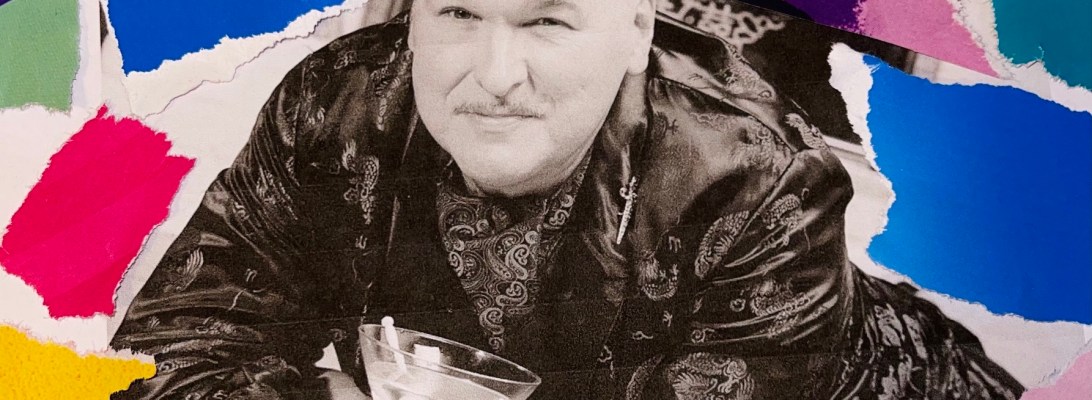
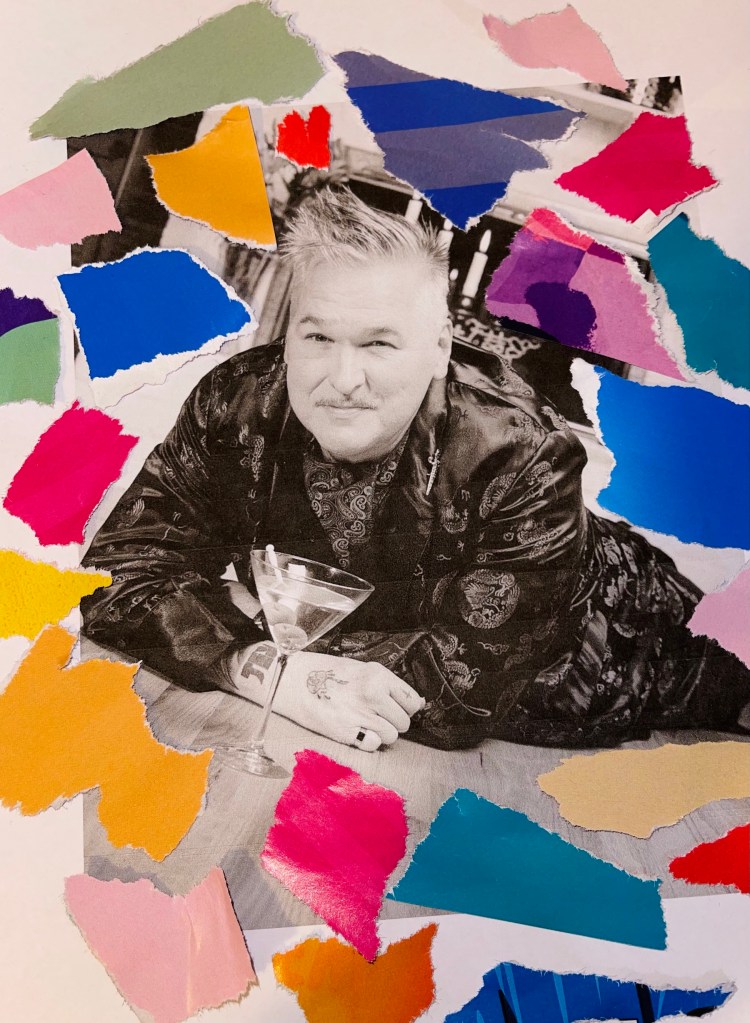
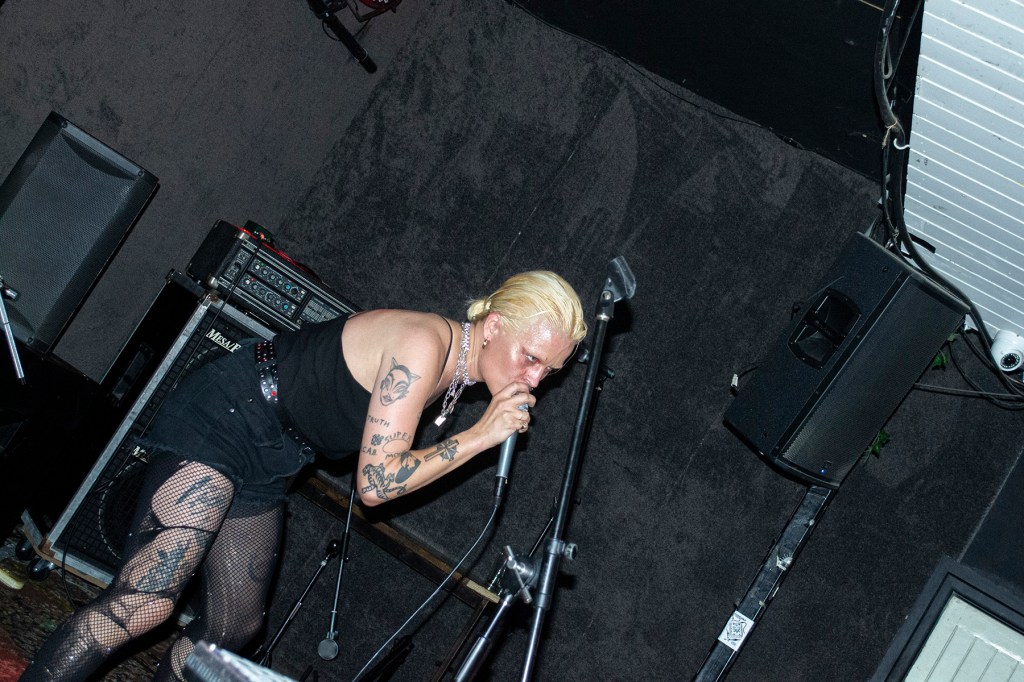
Sitting down to chat with founding member of Poison Idea and legendary frontman Jerry A. Lang, I noticed that he’s softly spoken and super lovely. A surprising contrast from his loud, in-your-face, envelope pushing “Kings of Punk” hardcore band that we’ve all heard crazy stories about over their 30 year career.
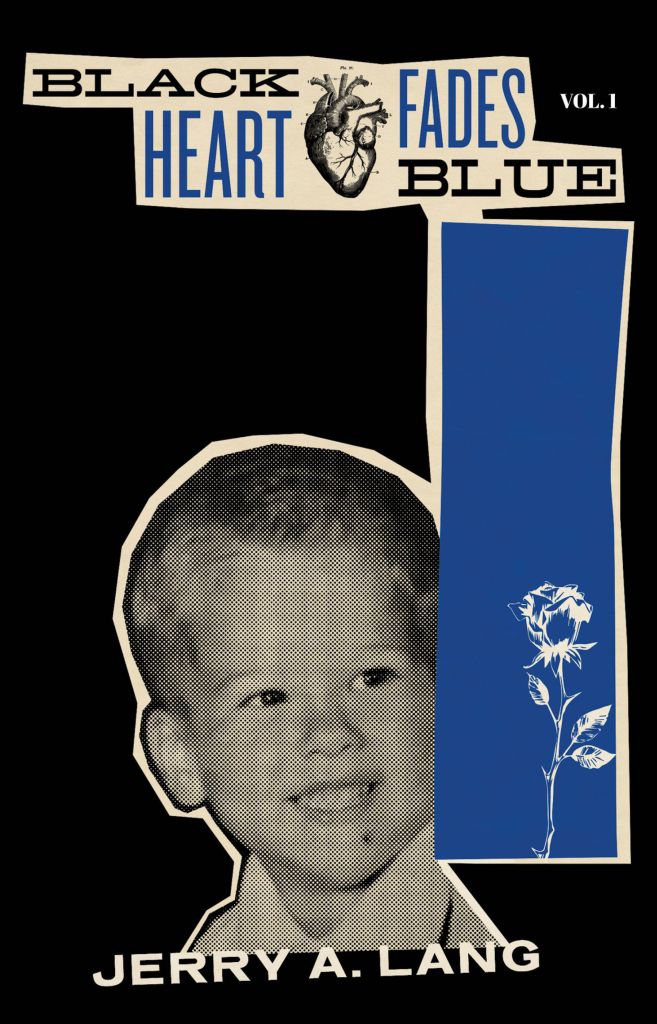
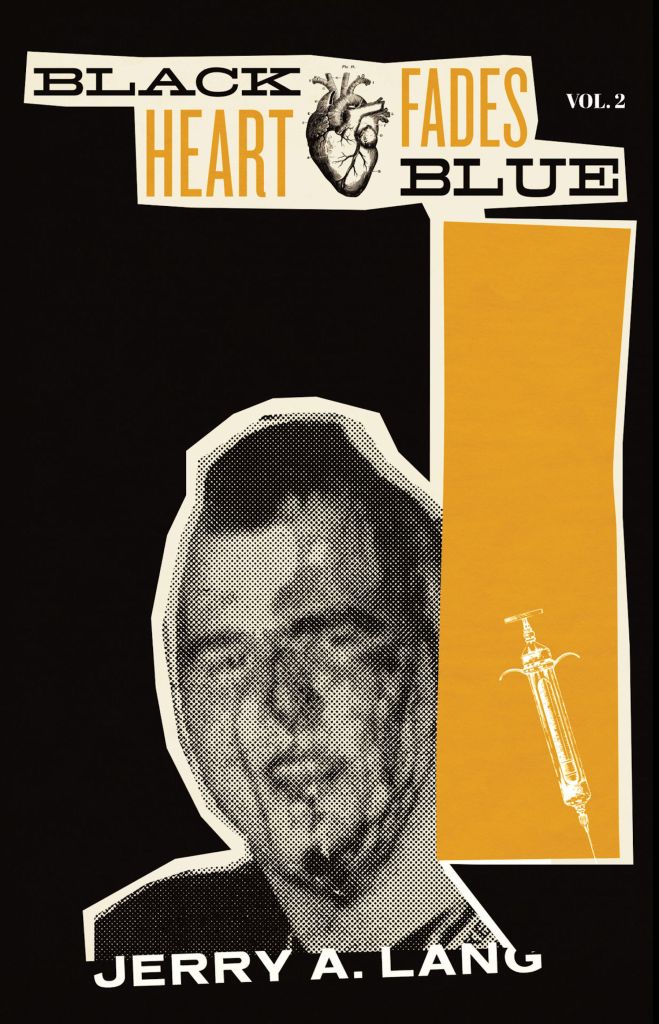
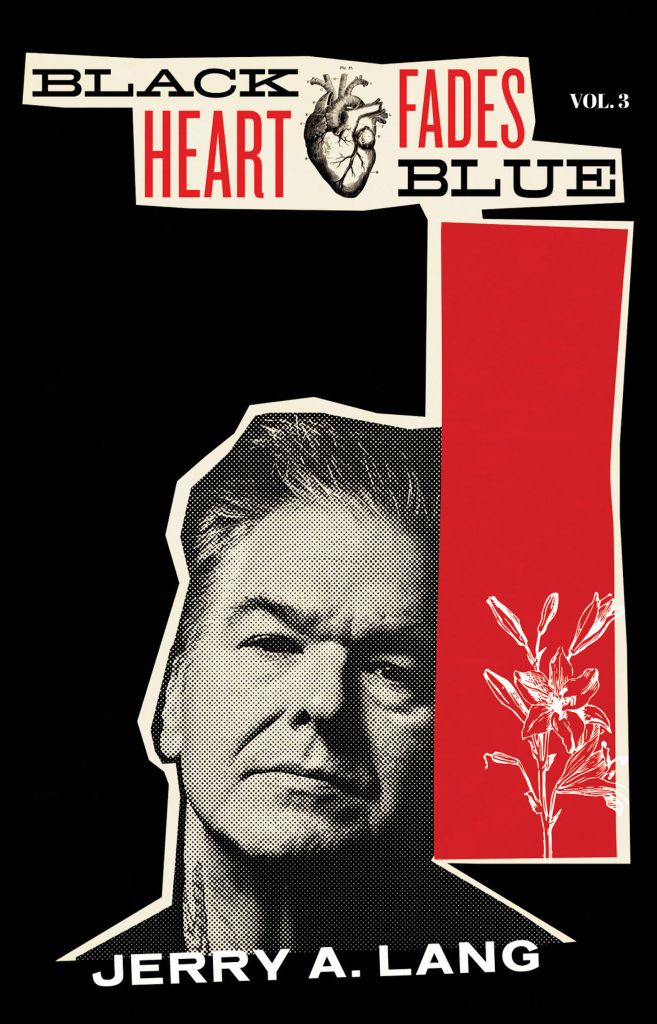
Last year, Jerry released a three-part memoir series Black Heart Fades Blue (which we highly recommend) that tell his intriguing, unconventional life story, the events that inspired his songs, and what made him stop hating and hurting. They’re a true reckoning of his past and present on the page.
Why is music important to you?
JERRY A: It seems like the easiest answer in the world, but it also seems like the hardest one. I don’t know why. Why do do children love their mother? Why do we breathe air? Why do we like sunshine? I had a great appreciation for art at a very young age. It’s just the music, it’s intoxicating. It’s like a drug. I was a little child and I heard it, and it was just magical.
In one of your books in your memoir series, Black Heart Fades Blue, you mentioned that when you were a kid, music seemed magic for you and that it made you believe that anything is possible.
J: It’s still that way. I hear some of the new stuff and I think it’s bad black magic, voodoo. These kids are throwing out some bad mojo. But I’m an old man, so that’s what people are going to think, damn you kids [laughs].
Can you remember the first piece of art that you experienced that had a really profound impact on you?
J: I was at a birthday party for a friend of mine when I was young, his older brother had Let It Bleed by The Rolling Stones. I remember looking at that album cover, just staring at it, and they were playing it. The record cover has a bicycle tyre, then a cake and then little figurines of the Rolling Stones. It’s stacked up. I remember looking at that and thinking it was so cool. I was probably three or four. I remember looking at it and going, wow, that’s amazing! I was mesmerised. That’s still a really cool record.
One of my favourite moments in your books is when you were talking about making art, all of your band’s flyers and album covers. It was cool to read about you making the logo for Poison Idea. How you had all these magazines and you used an X-ACTO knife to cut out letters, and how you turned a “B” into the “P”.
J: Yeah, you know what? It never left either. Me and my wife do art together, we try to make a weekly calendar. There’s some evenings where we’ll paint. I make collages and just stuff like that too. And it’s still as fun as it was then. It’s great. It’s actually working with some kind of magic bringing these things to life.
It makes me happy to hear that you still do art. I love that you still get excited about art and music after doing it for so long. I know so many people who get jaded.
J: Yeah. I’m on social media, I belong to this one group, it’s a bunch of old punk rock guys, a bunch of pissed off punk rock guys. They’re always taking the piss out of Amyl and the Sniffers and The Chats and bands like that. But these bands are saving punk rock. You don’t understand, you old bastards. They’re the new kids of punk rock. You guys just can’t accept it because you’re old and bitter. Australia’s always had just such great, amazing punk rock like The Saints, and it’s still coming.
I’ll make you a cassette mix tape of new Australian music!
J: I would love that. Thank you.
I love sharing music, that’s why we do our zine, Gimmie. It makes me so happy to be so stoked on someone’s music that I just want to share it with everyone!
J: Yeah, the mixtape thing in the 80s was such a really cool thing.
I used to make YouTube playlists for my wife when I was courting her. I would send her playlists with these punk rock love songs, and soul songs, and Al Green. How could you say no to something like that? [laughs].
Totally. The same thing happened with me and my husband. We lived in different cities and we started sending each other mixes of music, and art; that’s how we got to know each other. Then one day I was like, I’m moving to his city, he’s the coolest person I’ve ever known, I can’t not be near this person every day!
J: It’s like a movie, like, You’ve Got Mail or Sleepless in Seattle. But with a good soundtrack [laughs].
[Laughter]. Yes! I’ve heard you say that being a singer is the best job in the world; how so?
J: Well, it’s the best and the worst. Because I could kind of phone it in, call in sick or I could drink and do drugs during the job and that’s really not healthy to do any kind of job when you’re not up to standard. I got used to it.
You go on tour in Europe or wherever, and every city you play, the people are waiting for you. For them, it’s a big event. They’re waiting and they’re saving up all their party—they just blow out and have a giant party and go crazy. You’re thrown right in the middle of it. But the next day you have to do it again. The same exact thing, like Groundhog Day but in another city. So you you wake up and before you even open your eyes, you grab a beer and chug it to just try to take the drive to where you’re going to next. You do that for 50 days in a row, it’s going to do some wear and tear on you, but it makes you who you are. Hindsight is 20/20. But it can be a great job.
After writing the book and having people review it, I learned things that I didn’t know. It was pretty much a confessional. I listen to people’s podcasts and read stuff, people taking my songs and dissecting them. I was like, oh, that’s true. They say, it’s like a child screaming in anguish, it’s screaming in pain and throwing a fit, like firing on just the emotion. I never thought about that. I was like, hey, good call. And, besides maybe a politician, it’s the only job where you can get up there, scream and make a complete asshole of yourself. People agree with you or think you’re a complete asshole. I’ll put that on my job resume for future jobs [laughs].
[Laughter]. How does it feel different for you when you’re performing loaded to when you’re performing sober?
J: Well, I’ve only done it a couple of times sober, and I was obviously nervous. There’s a happy medium with everything. I’ve been doing this a long time, and I still have a couple of cocktails in the evening when I’m making art or playing my records or dancing or doing whatever, and there’s nothing wrong with it. I learned I should have done that earlier, just had a couple of cocktails. Everybody, most of the musicians and authors that I respect and all the good actors that I like, they would do that. But there’s parts where you abuse it. You shouldn’t go there. It’s not good.
Do you think having a couple of cocktails helps you relax?
J: Well, it’s just what I know, it’s just what I’ve always done. To try to say that I’m not going to do that, I’m going to do it like this, that’s like me going up and trying to sing in Spanish or Japanese. I don’t know Japanese and I can’t sing in Japanese. So that would be the same thing as going up there and singing without having any drinks tonight. I’ve never done that. I don’t know how to do it.
You mentioned you got nervous singing sober; have you gotten nervous before singing other times?
J: They say the chain is only as strong as its weakest link, I know that I can do my job, but there’s other people up there doing it with you. There’s the sound people, the instruments going out of tune, my band and the people at the club…It takes a perfect scenario for everything to go right. Things do tend to go wrong lots of times.
Sometimes I’m good to jump right in the middle of chaos and surf in it, I excel in that. But sometimes it’s hard, it’s like, your tyre flying off, as you’re driving down the street. You get a big rush of adrenaline, but sometimes it’s deadly.
The first time that you sang was at house party?
J: Yeah, a house party in Portland. It was all-star. There was a Portland punk band called the Neo Boys.
I love them!
J: I love them too. Pat [Baum] was playing drums and. K.T. [Kincaid] was playing bass, and people were up there, doing different songs. They were doing ‘I Want to Be Your Dog’ by The Stooges. I sang. It’s like riding a bike.
Before that you were playing bass in Smegma. When you decided to go from playing bass to being a frontman was it a conscious choice?
J: I was playing bass in a couple of different bands and it was fine. I really enjoyed it. But then I started seeing other bands and I didn’t think the singers were doing that great, I thought I could do better. They were really good musicians. I thought, wow, if I could do that, if I could get in that band with these people, then we could actually do something good. I made the effort to do it. It took a lot of tries.
In the Poison Idea Legacy Of Dysfunction documentary Mark Barr mentioned that you’re really a sensitive and mild-mannered guy. Would you agree?
J: I was just a kid, and I was taking everything in. I just kept my mouth shut, and I was watching everything happen and learning.
What’s something you remember learning that’s stuck with you?
J: I was a young child. I was a young man. There’s things you learn by yourself. I guess I pretty much confessed everything in the book.
Have you always been a sensitive person?
J: My wife seems to think so. Mark and I would watch the punks and the scene; the punk rock scene was very creative and very feminine-friendly. It was like a renaissance. But then the hardcore punk thing came in and like Tom [“Pig Champion” Roberts] said, it was an uglier music, it was a dumbing down. It was violent, it was mean and it embraced the nihilist stuff and all that crap. We were in it and we wanted to be the big band, so we wanted to be the kings of the nihilists. If you want to do that, you need to up your game. There was a time when I thought GG Allin didn’t have nothing on us. But honestly, who wants to fucking do that?
Totally. Previously you’ve said that you started Poison Idea when you were around 18, and at the time you were kind of having these feelings, of feeling unwanted and alone, and that’s what brought out the anger and made your art so intense.
J: It took me years and years to figure out why I did that stuff. Why all that, with everything, with the self-abuse and the drug abuse and the alcohol abuse and the abuse and the anger and the rage. Luckily, I married a therapist, a woman who’s actually, you know, kind of just tells me what what she sees. I was like, yeah, I guess you’re right. She’s an art therapist too.
That’s wonderful! Art can really help with healing and processing things. When I started reading your books, I actually read the last one first.
J: Oh, wow.
Yeah, I went backwards. Over the years, I’ve heard lots of full on stories about Poison Idea, and I was really interested to know where you were at now and what helped you change for the better? That’s why I read the last book first. You seem like you’re in such a happy space now. I feel like one of the biggest things that’s helped you is, love.
J: Yeah, definitely. You know, I was a drug addict for a long time, we all were in the band. Out of five people, two are dead and one’s completely M.I.A. – I have no idea where the other one is, and the other one’s just trying to survive. You come to a time in your life where you’re just like, I don’t want to do that anymore.
Now on the west coast of America, where I live, some drugs are decriminalised and you can be arrested or stopped on the street and nothing happens to you. There’s Fentanyl and stuff, it’s going to kill generations of people. Crime is going through the roof and businesses are closing down, and I don’t know what the end result is.
If I was a conspiracy theorist, I would say that somebody is wanting this whole society to be a society of masters and slaves. They’re letting us burn it down. So finally we just go, we’ve had enough. It’s like some fucking movie. It’s like Batman or Road Warrior. It’s so bad. I don’t know why people would want this. I don’t know why they’re letting this happen. They’re letting it happen, so it gets so fucking bad that we just go, please, do anything. Anything. Just make this stop. And then they’re going to say, okay, we will. No more of this, no more that, no drugs, no guns, no freedom, no anything. We’re going to say, yes. Just make it stop, please. It’s scary. There’s no such thing as moderation. It’s horrible. Lucky for me, I got sober. I can see it happening because I was there. I was in that life, I know how horrible it was.
Do you think with the times we’re living in, that maybe looking after yourself is more of an act of rebellion?
J: Sure. Yeah. I don’t think a lot of people are thinking about tomorrow. There’s a lot of people on a death kick. There’s a lot of people who are dying from drugs, like young kids. We had three kids die last week.
One of the things with punk rock, you were always taught to ask why about everything, to question everything— I’ve never stopped. I’m still questioning, why is this going on today? Why is this happening? Why are we letting this happen?
Like I say, there’s no moderation. There’s no grey area. It’s either black or white, and it’s really polarised. The whole world has been broken up into that side or this side. We keep fighting with each other, and we don’t really see what’s really going on. We focus on who’s the enemy because we know we’re right and this person is wrong. Maybe stand back sometimes and just look, the signs are everywhere.
It’s just about having awareness. There’s a lot of people out there that don’t even have awareness of themselves.
J: Yeah.
A lot of Poison Idea’s songs are based on things that have happened, personal experiences, and experiences of friends. What song do you consider to be your most personal that you’ve written?
J: Every song is personal. There’s a few where people would give me titles of songs, like my guitar player would say, here’s a song called ‘Hangover Heart Attack’ then I would write the lyrics around that thing.
Like I said in the book, I was with my friends in New York and they said, why don’t you write a song about rebellion? About the old rock and roll, getting in your car and driving off a cliff as fast as you can with your girlfriend thing? So that was it.
Two years ago, when we stopped playing, we did a series of shows because I wanted to come back and play good shows and then stop. And we did our second or third last show in Japan. I wanted to do a behind the stories type thing, where we played three songs, then I introduced a song and told the story about why I wrote it. So we chose Japan where they don’t speak English [laughs]. And I was up there explaining the songs to these crowds of people and they were just staring at me like, what are you talking about? A few people got my feeling; they were picking up on it. We said, this song’s about my friend dying, and this songs about my friend dying and this song I about my friend dying. There seems to be a theme here with our songs. They seem to be about people dying or people getting arrested or people having enough, or people being sad.
All the songs do have their little stories. Songs, they’re kind of like movies. Three-minute movies where you try to jam the whole thing in there so you can picture it in your head. I’ve never really thought about that before. So now I’m reflecting and thinking about that and going, wow, these are sad little movies.
There was a lot of losses of loved ones you wrote about in your books the one that really hit me and stood out was when your dog passed away. I feel like that really affected you.
J: Yeah. They were somebody that gave me unconditional love, my best friend.
My friend passed away about a week ago, I had a photo of him, and I saw the photo, and I thought that he really never left. As long as you keep someone in your heart and fondly remember them, you never really let them go, they’re never really going to die. Like Chris Bailey from The Saints. Because we’re all just energy and we’re all just stars anyway. So people never really left. We’ve always been here forever. It’s just how you look at things. I see some people walk around with black eyes, dead looks of not being there. Then there’s some people you just see and they just shine. I don’t think my friends are gone, the people that I love, I feel that they’re still here. I feel that they’re always there. We’re all stars. Wasn’t that like a stupid Moby song?
Yeah. ‘We Are All Stars’.
J: Oh, my god. I’m quoting Moby. I should stop [laughs].
[Laughter]. Speaking of stars, I noticed you have a copy of Van Gough’s Starry Night painting on the wall behind you.
J: Oh, yes. Right next to a Killing Joke poster, it’s from the Whisky a Go Go. Duality and balance!
Very cool! One of my favourite lyrics of yours has always been from the song ‘It’s an Action’: You can’t change the world, but you can change yourself. What inspired that lyric?
J: You know what? I wrote that thing when I was, like, 16 and I didn’t really honestly, at the time, I don’t think I believed it. I was just saying that. It’s one of these things, it’s like speaking in tongues. It just came out, and I had to eventually learn to understand what that meant.
Do you believe it now?
J: Of course. Definitely.
What’s the significance of the lyrics from your song ‘Feel The Darkness’ that inspired your book title Black Heart Fades Blue from: At midnight my heart’s fading blue?
J: That’s what black will fade to. It’s just the whole romantic symbolism of blue moon, blue hearts, and this horrific incident that was happening at midnight with this feel the darkness thing. It’s kind of like shining some light, getting some of that vitamin D, growing and opening up a little bit. It was an out of body thing. Sometimes things happen and it’s like you’re watching a movie and you don’t know why. You’re channelling it from somewhere or it’s all your experiences that are just coming through. Stream of consciousness.
When I was reading your books, it felt like they were written stream of consciousness.
J: That’s how we roll. A couple old friends who are reading it now and contacting me and asking me about it, I just tell them I kind of felt like I was caught for whatever I did. I was caught and convicted and I’m just confessing my crimes and I had nothing to lose anymore. I’m confessing everything. Saying all these things I kept for years. Confession is good for the soul. They say if you ever go into a jail cell you can see who the guilty person is, they’re the one who’s sleeping because he’s caught and he knows that, and it’s the other ones that are upset because they didn’t do anything. And so that’s how, I guess, I’m relaxing and sleeping because yeah, I did it [laughs].
Was it hard for you to face those things when writing?
J: Yeah. There were some things, stream of consciousness, as I was doing them, it flowed like water. But when I stopped and went back and read them, what I just wrote, then I would really shake and get upset. Sometimes it’d be very emotional because it was like, wow, where did that come from?
I’m so thankful that you shared your story, as I’m sure many other people are. I love learning through people’s stories, I think that’s why I’ve spent most of my life interviewing people. I love learning from others.
J: Yeah, it feels good. I can’t believe that people don’t continue to learn forever because there’s so much to know, so much to learn and it feels good.
You’ve been getting into to cooking and gardening lately!
J: Yeah! There’s so much out there. There’s so much in the world, it’s exciting and it just blows you away.
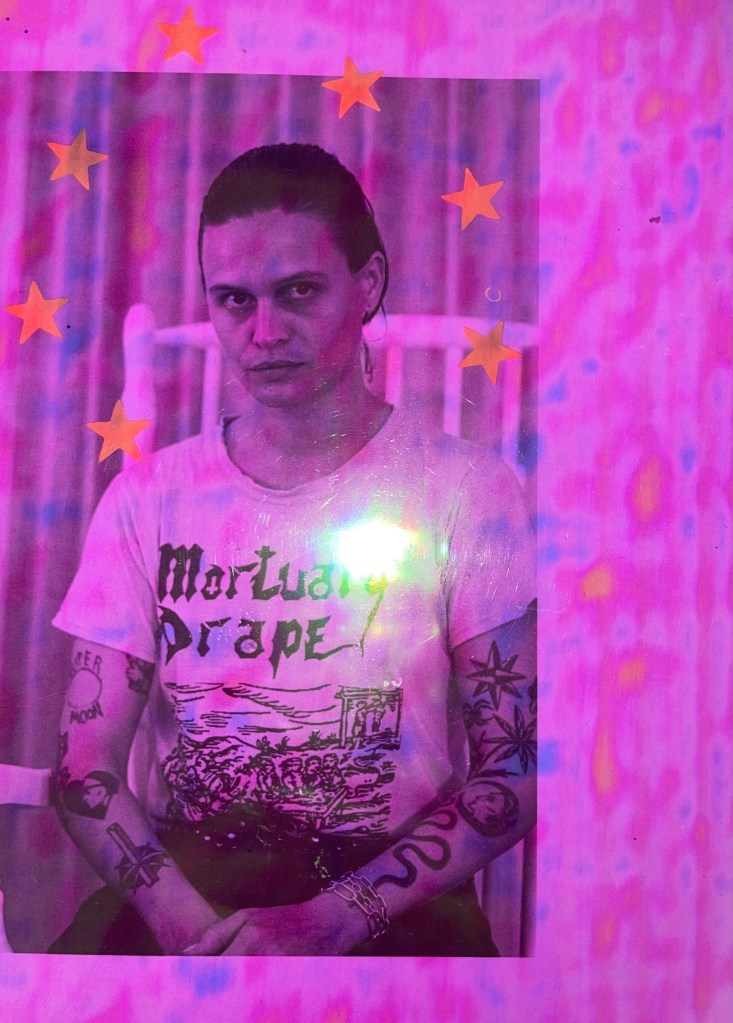
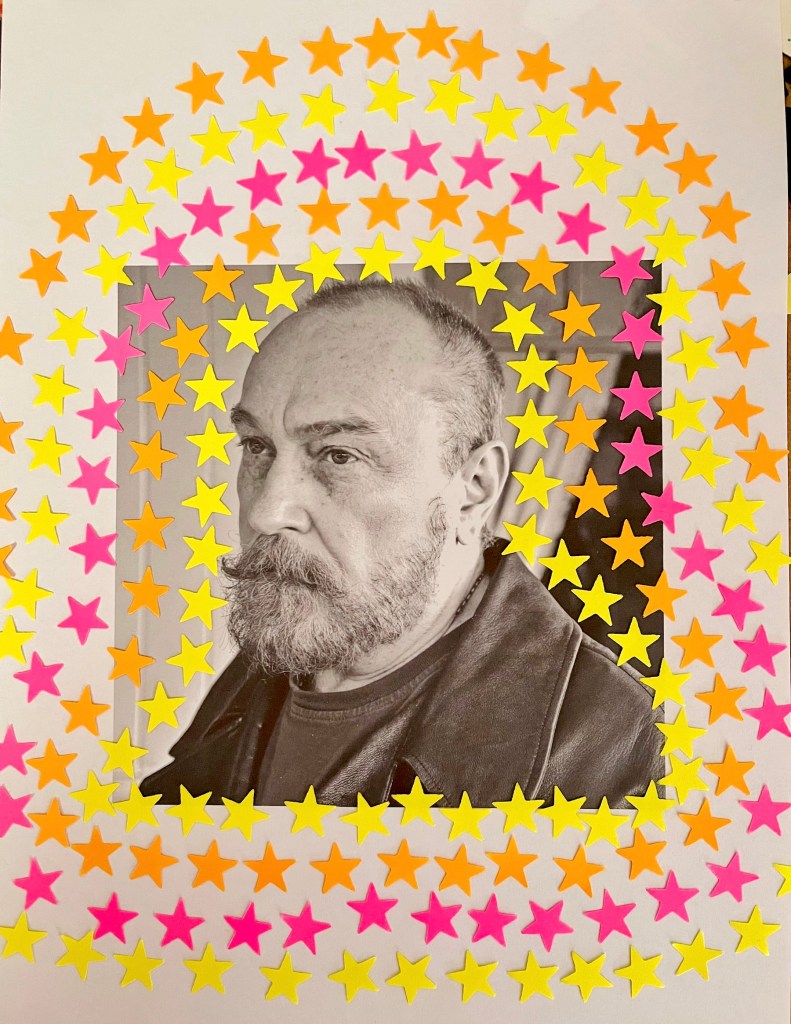
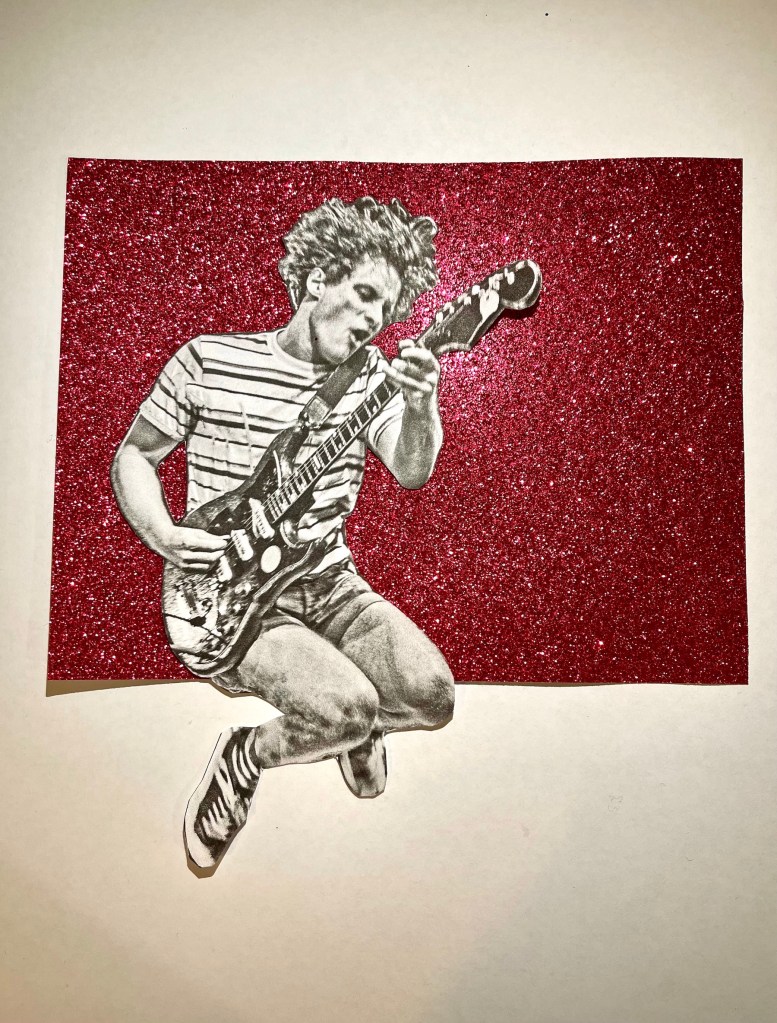
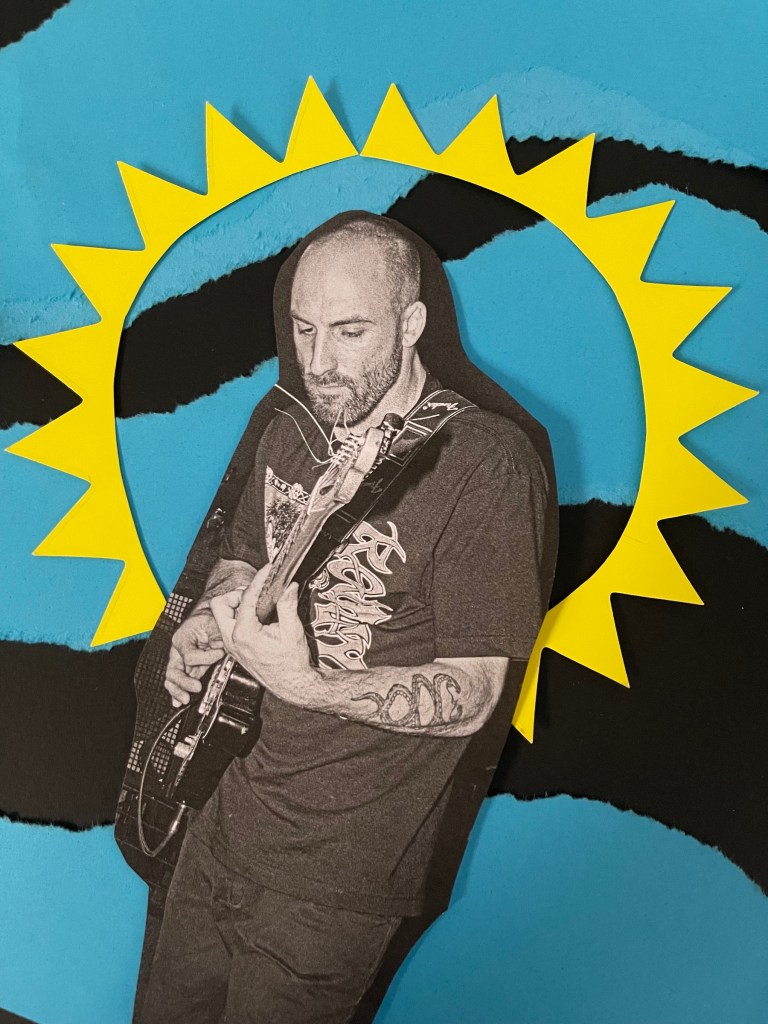
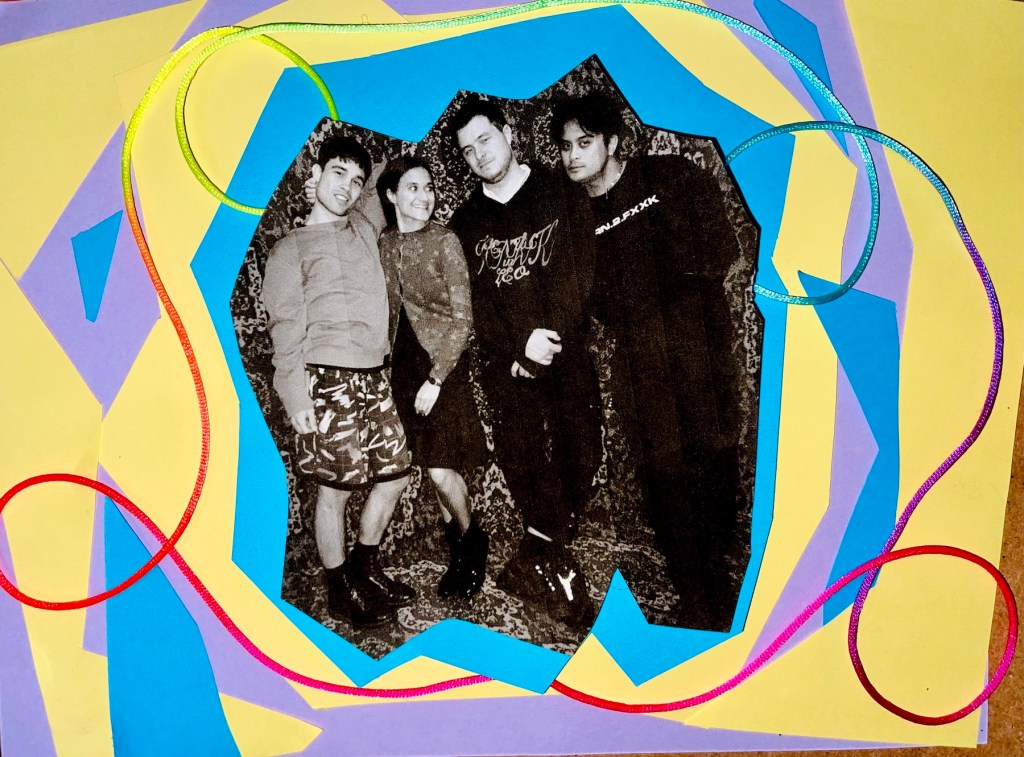
Original photo: Jhonny Russell. Handmade collage by B.
Step into the intricate universe of Naarm/Melbourne-based musican, V, an artist whose life story is as interesting and multifaceted as their sound.
V’s journey into music was sparked when a Slits’ concert shattered their perceptions, unveiling the boundless potential of women in music. The transformative power of music and its ability to break down barriers becomes evident as V tells us their story. They vividly describe the turning points, the chance encounters, and the intense passion that fuelled their creative evolution. V taught themselves to record through experimentation with bass and GarageBand, to craft their own unique sound.
V’s musical trajectory was further shaped by collaborations and experiences abroad. Their involvement in various bands, from grindcore to dark wave and experimental projects, exposed them to diverse influences and refined their approach to music. Our conversation delves into their experiences living in Germany for a decade, the challenges they faced, and the lessons learned along the way. V spent time living in Berlin’s Tacheles artist squat.
The interview also explores V’s struggle for legitimacy in an industry that can often be shallow and unyielding. From their insights on the music scene, being dropped from their label, a story of kindness of a well-known fellow musician when V couldn’t afford to eat, and the unending pursuit of self-improvement, V’s authenticity shines through.
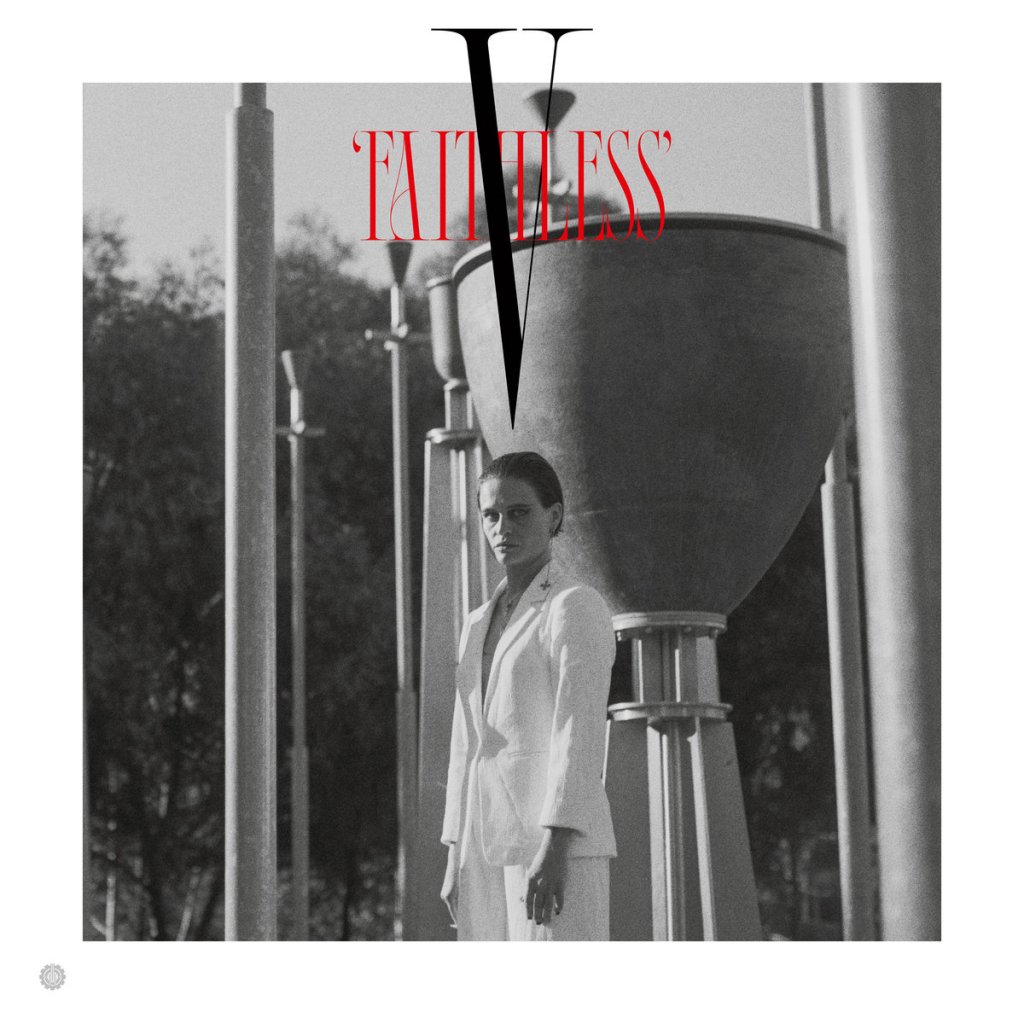
Their third album, Faithless, emerges as a focal point of the discussion. The creative process, the painstaking efforts to capture the right tones and emotions, making the album four times and deleting it, and the significance of collaboration with a choir all come to light. The album’s meaning and themes run deep, loss, yearning, psychic devastation and the failures of mental healthcare in contemporary Australia.
V’s candidness about their emotional struggles, personal losses, and the complexities of finding a sense of belonging adds a raw and intimate layer to the chat. Their passion for their art resonates powerfully throughout. We also touch on latest album, Best Life, a visual album, and a collaborative work between eight directors in Australia and the EU.
Ultimately, this conversation provides a window into the heart and mind of an artist who is unafraid to tackle the challenges of living, confronts personal demons, and channels those experiences into their art.
We chatted earlier this year in-person, while V was in Meanjin/Brisbane to headline the VALE VIVI: A punk eulogy to Vivienne Westwood tribute event at The Tivoli theatre. Their dear friend had passed away a few days earlier, and the chat was very emotional. Tears were shed.
I’m so happy to be talking with you finally. We love what you do, V. You’re incredibly underrated. How did you find music? Has it always been a big part of your life?
V: No, actually, it hasn’t been a part of my life forever. I was introduced to this intense love for music through my sister when I was maybe 16 or 17. Of course I liked music before then. Like, I love the Spice Girls and the Backstreet Boys, but I don’t think my music tastes really extended beyond that then. But I remember my turning point.
My life changed when she was 16. My sister bought me a ticket to The Slits at The Zoo and I’d never heard of them before. It was the best. That show was a turning point because, I just never considered the possibility of women in rock on stage. I remember Ari Up was like, “Girls get up on the stage.” And I got up on the stage. I got my first taste of being on the stage in a rock and roll sense at that show. It maybe took a year or two after that, I’d just play around quietly by myself with one of those organs that every single Brisbane sharehouse used to have.
When I really started making music was when I got an Apple laptop, when I was 21. It came with Garage Band and I just started pumping music out. I started writing music like crazy.
In my mind, I didn’t really know I was making music in my own way. I released ten albums. I burned them on CDs. I had a little separate CD burner, and I literally had ten V albums.
I read about that. Someone that used to be in a band with, I think, David Hantelius?
V: Yeah.
And they mentioned that when they first met you, they sat down with you to hear your music and they thought, oh, I’m just going to hear a demo. And then it was ten albums!
V: Keeping in mind that they were all demos, they were not developed with the structure or anything. I feel like I must have been in a year long manic phase when I first started making that music. Sometimes I get so into it that I’d go for two days. I wouldn’t go to sleep, and I’d just keep doing it. I haven’t done stuff like that in over ten years. I guess I’ve mellowed out in my age. But, yeah, that’s how it kind of started for me, slowly, and also privately. The writing part has always been very private. I never performed till a bit later.
Why was that? Were you scared to put yourself out there?
V: At the time, I was much more invested in being a visual artist. So that was the practise that I showed to the world. Drawing and painting, scenes and comics and stuff.
The turning point to where I kind of started to resemble what I do now, was back in the MySpace days. I was living in Germany at the time and this guy, Obi Blanche, a Finnish producer, contacted me on MySpace. He asked if I wanted to form some Kills-type band together with him. And I spent about a year in his flat, sitting behind his shoulder, watching him on Ableton, putting these demos to life. That’s where I learned about, not technique, but when you have discipline. He had a lot of discipline for music, and I continue that discipline today.
I’m very disciplined now about my approach to music, and I think it’s very informed by Obi. Later on. we had this band called VO – so V and Obi. That was the first official music I ever recorded.
Shortly after that, I joined this grindcore band, Batalj. That’s where I really cut my teeth live. I wouldn’t be making the music I am today if it wasn’t for Batalj. It was with two Swedish guys. David was the one who we mentioned before who came over and listened to demo. It was David and Per and me in that band. Per was good at tour booking. He would book these intense tours. Two week, three week-long tours.
The first tour I ever did was with Monsieur Marcaille, who’s amazing French classically trained cello player. He has two kick drums on either side and then he has the cello in the middle and it’s coming through to two amps. It’s very grotesque in a way because he plays just with the underwear and he’s snorting on the ground and spitting and it’s very loud and almost kind of metal-like.
I never thought about how that might have influenced me because I also had a little fling with him on that tour. There was a huge age gap, but it was fine. I was 23.
More recently you’ve play with band Dark Water?
V: I didn’t really write anything for Dark Water. I was not quite a session drummer. I also had an important role as a cheerleader in that band.
More recently, I’ve been playing bass for Enola. But I’m doing one last show with them because I just think I can’t be in a band where I’m a session musician. I have to have a creative input. What’s the point of me having almost 20 years of experience and just be a session musician? I want to put my creativity into it. I’m not shitting on that band at all. I absolutely loved playing the music. I learnt so much. They taught me about dynamics. How important they are and how much you can get someone’s heart racing by applying the dynamics properly. You have quiet a part, then you have a loud part and then you go quiet again, get loud again, it gets people on edge. It made me a much better musician.
[V holds up their bass guitar and hugs it to their chest]
This is my new bass, Violetta, I upgraded. I’ve been using, Sheila, which is my other bass, that I bought in the Valley when I was 18 with my tax return. Just on a a freaking whim. I went into this music store and they had this deal for a little Orange amp and a bass guitar. I bought it and that was he beginning.
Did you want to play bass or did you get it because you wanted to play something and thought it was cheap enough for you to buy?
V: It was just cheap. In school, I studied classical acoustic guitar, the one where you get the little footstool. But honestly, I didn’t do that in high school because I liked music. I did it because I didn’t like gym. I got the music lessons put on the same time as PE so I wouldn’t have to do PE. I learned technique from that. But I wasn’t passionate about it. I didn’t think about making music when I was a teenager. That came later.
When you started doing your solo thing, V, you were living in Germany?
V: Yeah, the very first show I ever did was for someone’s art show which was held in a derelict abandoned building. I had this battery operated stereo with a CD that I burnt for the backing track. I had a tambourine, no microphone. I was singing along.
I’ve gone through huge transition to get to where I am today. It took a lot of different bands. I’ve gone to the next level with V because of that.
You were talking about dynamics before, I can especially feel that with your new album, Faithless. I’m usually a big lyrics person, they’re a big part of the equation for me, but then with your album, there’s not really that many lyrics. Maybe the last song. You convey so much with just sound.
V: That’s really what I wanted to achieve with that album. It was by far the hardest work I’ve ever created.
Didn’t you make the album four times and then deleted it each time?
V: I did, yeah.
What was missing in the versions you deleted?
V: I got commissioned to do the album, so it had to have the Bells on it. Many of the songs I’d written would have sounded better on synthesiser and my normal thing. And I felt like I was doing a disservice to the Bells by… it’s almost like I just tried to sub them in. I wanted to justify using the bells. For people reading this, they’re the Federation Bells. I did it four times because it had to be good.
It was written during lockdown, a very isolating period. I was in the shed. I smoked more weed than I’ve ever smoked in my entire life. It was a nice period, because obviously, with the lockdown and getting money from the government, I was able to, for the first time in my life, almost just only focus on the music for two years.
I felt so conflicted because I didn’t like how the Bells sounded. And it took me forever to arrive at a point where I could feel justified, to actually release it and feel like it was still my voice and feel like I wasn’t compromising.
Initially did you have an idea of what you thought the Bells might sound like and was the reality different?
V: It was a harsh reality because the Bells are ugly sounding. They hurt. They hurt my ears. The higher ones, anyway. The album pretty much uses almost none of the upper Bells. It’s like, basically mostly the lower five Bells. You think of a bell in a clock tower, it’s like that. They’re upside down on sticks. It’s a very unique instrument. They’re more of an artwork.
I’m not technically trained, I’m self taught, totally. There’s all this technical information about how the tones work and I just have to do it all by ear.
Dark Water also got commissioned, but on the Grand Organ.
I got dropped by DERO Arcade. I don’t mind talking about that. That was crushing. I can’t even begin to say how crushing it was, because I made ten music videos, I spent all this money, savings. But, yeah, it will come out, it’s going to be fine. That was very difficult.
So that’s another album that you’ve made?
V: Yeah, it’s all finished, it’s ready to go. I’m probably going to probably going to release it in three months, because I want to do a European tour at the end of this year. That’s why I’m doing scrappy jobs, so I can get a ticket and go overseas again.
My amazing sister ives in Norway and haven’t seen her in five years, she’s got five cats I’ve never met. She has a van and has agreed to drive me on tour. I’m going to release ten singles, because why not? I can do whatever I want if it’s my own self-release. The first show of the tour will probably be in Berlin, as cliche as that is [laughs].
That makes sense though, you lived in Berlin for ten years.
V:It still feels cliche, it’s the cliche of the Australian that goes to Berlin. Whenever it comes up in conversation, I don’t say the “B” word, I just say Germany, because I’m embarrassed. It’s fun. I’ve been here [Australia] for seven years now, so it was 17 years ago that I moved there. It was just before turning 22, when I moved.
Why’d you move there?
V: The art scene. Initially I had moved to London because my mum is from there and I wanted to reconnect with her side of the family, but I hated it. I felt alienated, didn’t make any friends. I didn’t feel good there.
On a whim, I moved to Berlin, I had this vague friend that had a studio in a massive artist squat, Tacheles, that I ended up living in. I was meant to be there for five days, but on the first day well, no, the first day was horrible, on the second day I was like, oh, I’m not going back to England, I’m going to stay here. I felt free in a way that I’d never felt. Maybe it was because of the language gap, like not understanding advertising and not understanding any conversations on the street.
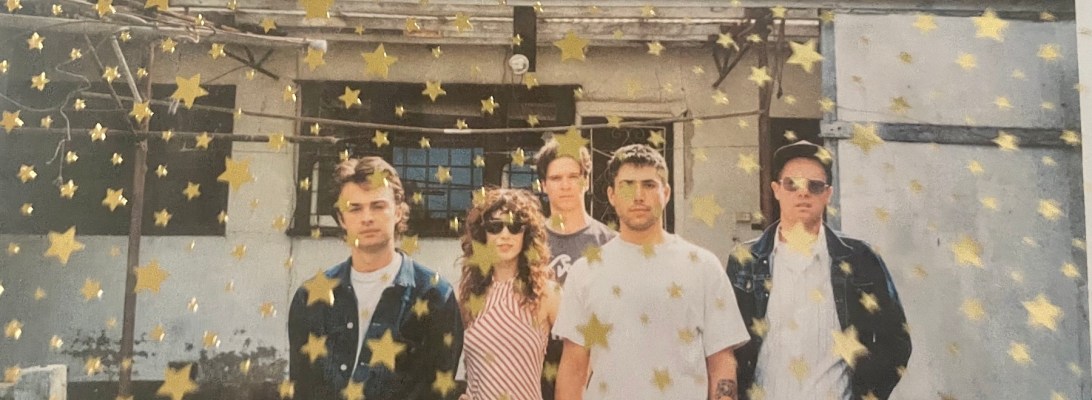
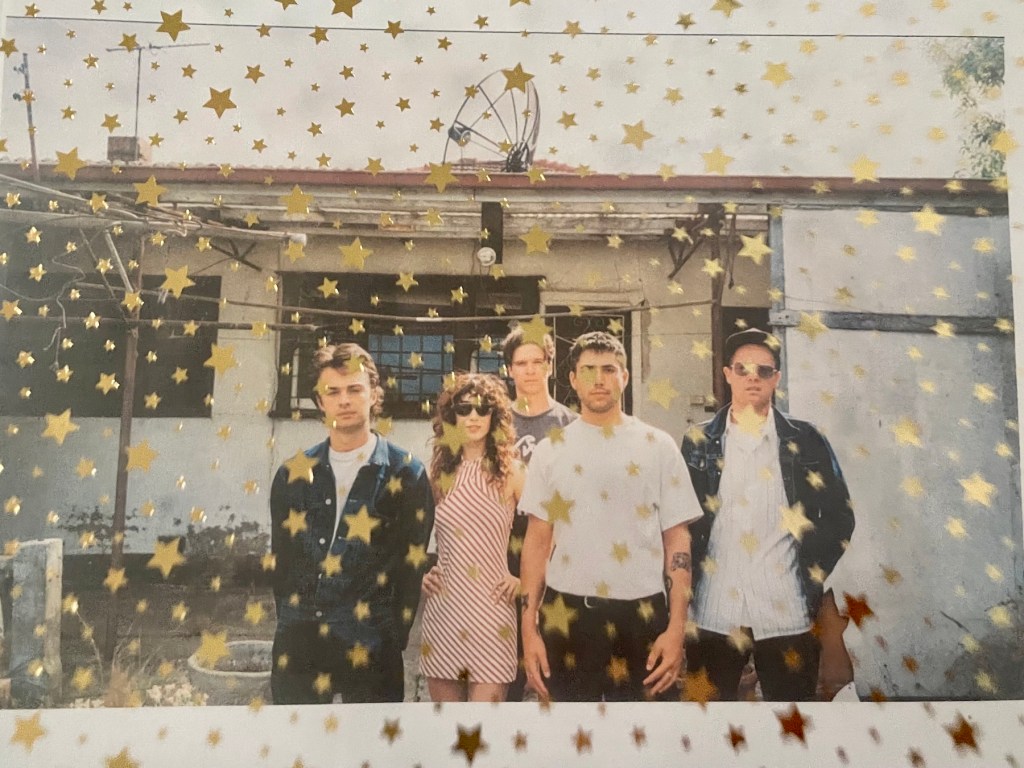
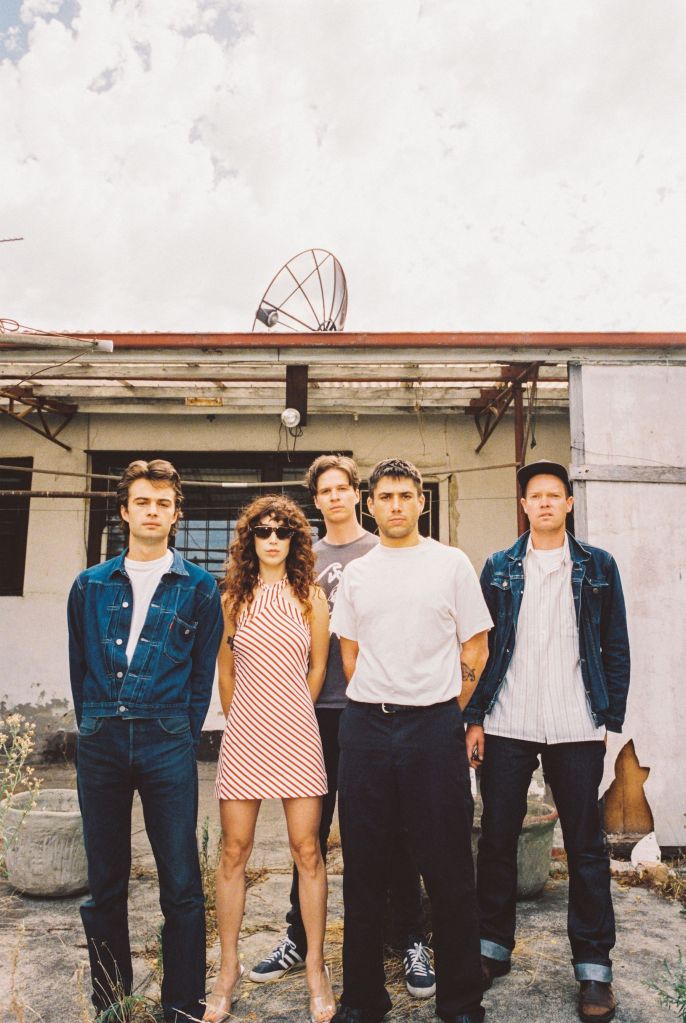
V live in Meanjin/Brisbane 2021: by Jhonny Russell
That’s really interesting.
V: That’s where I immediately started making those ten albums. When I moved there, I bounced from art studio to art studio. I essentially spent ten years bouncing from place to place. It was very unstable, but it was nice. I wouldn’t want to do that again, though
Is there anywhere that you feel at home?
V: That’s hard because my family is all split all over the world. I guess I do feel somewhat at home in Naarm because my brother is there. He’s married. He has my beautiful niece. She’s so cute. Izzy. She’s the only child in the family, and at this stage, I’m probably not going to have children. It’s nice to have this child, that feels nice and somewhat homelike.
I also grew up in Singapore and South Korea, and so I’ve never really felt connected to Australia. It didn’t really feel like I was leaving home when I went over to London. I was born here in Brisbane, but left when I was six and then came back to Brisbane when I was about 15 or so. So the formative years was spent over in Singapore and South Korea; changed school, changed houses.
Do you remember much from your time there?
V: Oh, yes, very much so. My mind wanders back there sometimes because I went to school with all these expat kids who were from all over the world. That’s what I really liked about Germany, because it is quite multi-cultural, they call it multikulti. There’s ja lot of different nationalities living there. There’s a lot of different people. That’s something I feel really lacking here. It’s so homogeneous. I miss the heavy accents, and broken English and broken German and broken French and whatever language. When you meet someone, you try to find whatever common language you have, and then you speak broken whatever together or use, like, Google Translate to try and communicate.
I’m searching for home. I don’t think it bothers me that much, though. Maybe I’m more like a wandering Ronin [laughs]. But, I would like to find something that feels like home one day. I mean, this kind of feels like home in a way. I’ve had housing instability for literally 17 years. That’s not the worst thing either, because it feeds into my need for stimulation. I’m always searching for new, fresh stimulation.
What’s the significance of album Faithless to you? It’s your third album.
V: It represents legitimacy. There’s nothing more legitimate than the city of Melbourne commissioning you to make a record. It feels like a new phase for me. I want to reach the heights. I don’t want to have to work this shit insurance job that I hate. I hate working these crappy jobs. It sucks my life out. And it means I can’t put as much thought and effort into my music.
Best Life is your other album you’ve made, right?
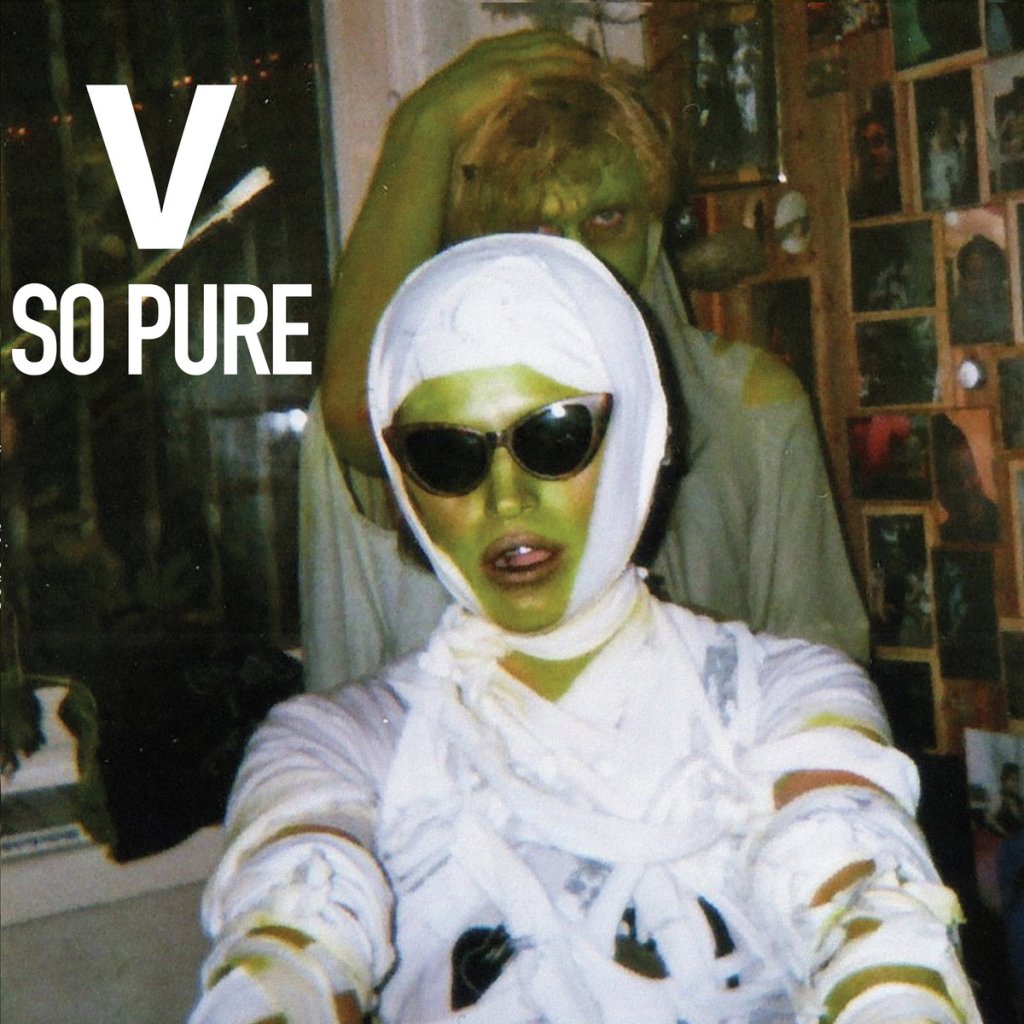
V: Yeah. It’s about best life. When we were in lockdown, it’s hard not to self-reflect. That’s what that album is all about—self-betterment, self-improvement. Also, isolation.
I’m always wanting to be better, a better version of myself. There’s a whole bunch of stuff that I really don’t like about myself that I’m working on. I can be so passive aggressive, and other things, that I’m trying to work on and I think bit too much about. Self-betterment is what I use music for. With Best Life, with So Pure, I was really looking inwards and looking at myself and asking questions. Faithless, I’m more looking outwards. I didn’t want to write songs about love and of course, I inevitably end up seeing death, which I’m a little bit tired of it, to be honest.
The last song ‘Faithless’ was one of those songs that came fully formed. It came out totally, there was no arrangement later. I didn’t have to revise the lyrics. I feel like that is a bit of an aberration from the rest of the album, which I feel is like more of an exercise in, I tried to go really deep with the oral sonics of it all. The album represents legitimacy for me, which is something I desperately crave.
‘Memories / Dreams’ definitely exists, because Cosey Fanni Tutti exists. This is heavily influenced by Cosey Fanni.
In what ways?
V: I read Art Sex Music. It’s so good. And it will make you look at Genesis P-Orridge in a totally different light. I listened to her discography and also her collaborations that she did with Chris Carter as well.
I also listen to a lot of group A., they’re from Tokyo but based in Berlin. I played with them before, they’re huge now. They’re amazing. Very influenced, because for me, they were at the forefront of this genre. The way they talk about their music is really cool as well. It’s very conceptual. It’s like, this album is all about wood and wood sounds, and then this one is about metal and metal sounds. It’s clever, it’s intellectual.
I get obsessed with things and I listen to the same thing over and over and over and over again. definitely got obsessed with Cosey’s live recordings on SoundCloud.
Have you heard Lydian Dunbar’s new album Blue Sleep? I’m obsessed. That’s one of the ones that I’ve also listened to obsessively on repeat. It’s one of my favourite albums of last year.
We love Lydian! There’s so many great artists in Australia, but the best stuff doesn’t always get known by a wider audience.
V: Yeah. Because of the industry, you see these super talented people get ground down all the time. It’s never the best stuff out there getting attention, but sometimes it is, look at Amyl and the Sniffers! I’m so stoked they blew up. They definitely work hard.
Quick story about them, a few years ago, I had a bit of a mental meltdown about music and I made this social media post that I’m going to quit. I didn’t even have money to eat. This sucks. I hate it. And then Amy from Amyl and the Sniffers wrote me. I’d seen her at shows and stuff. She said, “I’ve just done really well with this Gucci campaign. Please let me send you groceries. I’d never really even talked to her before. After that, there’s no one who’s more of a fan of Amy than me. Not even because of just that, but because of her lyrics, her performances, and everything. She’s super lovely.
Totally! The industry can be such a terrible place. Music media in this country is all pretty bogus too. Artists have to pay to get featured (we never charge, we only cover artists we love). People reach out to Gimmie and ask us how much it costs to be featured ‘cause they’re used to paying other well-known bigger publications to get coverage. Their numbers are fake and engagement is poor. They’re not doing as well as they pretend that they are.
V: What’s happening? Where are we going? What’s the endpoint of this complete homogenisation of culture?
In Melbourne, you’ll see these bands that have hundreds and thousands of monthly listens on Spotify, but then you go see them and there’s only a few people there.
Fucking house of cards, it’s got to come down at one point. How much can we take? I like doing my own thing, staying in my own lane that I’ve made, supporting the things that I love, and that’s it.
I’ve had the opportunity to play with Civic recently and they’re fucking doing so well. Those guys, they’re going to America, twice this year. They’re going to Europe. They got sponsored by Fender. They could choose anything they wanted. That’s a fucking dream.
We saw them on Friday night. We love those guys. Lewis is a total legend, a really nice, talented dude.
V: I wish I could have made that show. I really like them all as people, they’re exceptional. Normally I have no time for all-male bands, no time whatsoever. They’re just so fucking nice. I feel like they deserve it. I know them all individually from their other projects, and I just know they’ve worked so fucking hard to get that. They did twelve shows in four days at South by Southwest. Insane.
In regards to your creativity, what are the things that are important to you?
V:Creativity is part of my entity. I’m always being creative. Integrity and authenticity. Authenticity is the most important thing to me, no compromise. I like the space to do things in my own time and not be forced to be in a schedule. What’s the point if it’s not real, then it becomes shallow entertainment. I’m more interested in creating this simulacrum of my soul. It should be my unique voice.
My creativity is my life force. That’s my purpose in life. Maybe that will change later, but I don’t really have much else in my life besides my music. I have my friends, and I have nice musical equipment, but I feel like it probably would be healthier for me to get some interests outside of the creative sphere, also because my ego is so linked to it. If something goes wrong with my creativity side, or if I perceive that it’s being rejected or something, then it’s like the end of the world.
Yeah, I’ve felt like that too. I used to put on a lot of punk shows and I’d spend time and effort making cool flyers, like, mini artworks, hand them out at places, and then I’d see them just discarded on the floor, it’d be so sad.
V:Yeah, I used to put on a lot of shows too. But I haven’t since COVID times. In Germany, I used to put on shows all the time to the point where people I’d never heard of would write me and ask me to put up shows. I’d listen to the music first and generally not reply to the ones that I didn’t like. I was living on and off in communes that had guest rooms so you could get crust bands up from the Czech Republic, with six members and shove them in the guest rooms.
I remember once, a band called the Piss Crystals, me and a friend put on a show for them and I put them in this guest room, closed the door, went to bed; Later I went down to collect them, there was a big note on the door that said: Scabies. I don’t think anyone got it. Or maybe I just blanked that out my memory [laughs]. But a lot of stories like that in Germany, those were some really loose times back then. Very different from life here.
Were there any specific emotions or things that you were processing while you were making Faithless?
V: With ‘Faithless’, the song itself, I mean, that song is a eulogy for Bridget [Flack]. The songs all have their own meanings but that one is the one that really has a solid. meta meaning. When I got Hunny Machete involved and she brought in the Faithless Choir, it took on this entirely new meaning—the power of community and community care.
When the choir got involved, it was like they were drowning out my cries of, are you faithless? You almost can’t hear me say that because the choir is so loud behind me. They make it uplifting. It’s a very depressing song without it. She wrote the arrangement, just reminds me the power of collaboration, makes me want to collaborate more.
That song, when I wrote it, it was about being faithless and being hopeless and being so completely faithless in the system for people like Bridget, people like me and that we can’t live and thrive in the system. Bridget was badly failed by the Australian mental healthcare system.
‘Cockroach’ is about the apartment I was living in. I wrote the first half in this sharehouse in Brunswick. And the second half, this is Lockdown rent got really cheap in CBD, so I got my own apartment for the first time ever; one year. It was infested with cockroaches. I like the big ones, that’s no problem. Give me a big one any day. The standard bush cockroaches. But it’s the German cockroaches, the tiny ones, they just make me want to vomit. They’re disgusting. I had to throw them away cassettes because they got in there, They got in all my picture frames. It was intense.
What about the song ‘Toll Keeper?
V: It’s kind of like you’re on the river on that boat thing and you’re going to the Afterworld. I feel like that’s the soundtrack to that, in a way that brings you into that.
That was one of my favourites. I went through so many emotions listening to it. Each time I listened, I got something else from it.
V: So awesome to hear. That makes me so happy. I was not sure how it be received because it’s so different. It’s still my same aesthetics and sensibilities but a different approach to meaning. Initially, when I wrote the album, probably the first one that I deleted, I was like, oh, make an album about land rights. Because written on the Bells, there’s a river there, and there’s so much history for the traditional custodians of the land in that area. I started to try and write it. I was like, this is too much to tackle. I also felt like it wasn’t my place to try and write, like I was just trying to be Midnight Oil or something. It wasn’t right. It’s a hard thing to write about, land rights.
I felt quite insecure while writing, because, you know, if I wasn’t going to write directly, direct lyrics about my emotions or anything, I was like, Is it still illegitimate and is there still meaning in it? That’s part of why I wrote and deleted it four times. I felt so fucking insecure about it, and I just wanted to make sure that it rung the right notes, metaphorically speaking.
I was reading about the drum machine that you used. You got it in France, right?
V: I did, for €2. It was sitting in the grass, I half knew what it was when I walked past because it has all the classic buttons, like waltz, samba, all those drum patterns. I was very much trying not to hide my excitement when I was asking the woman selling it, in broken French, how much does it cost? It’s an amazing machine. I mean, it still works perfectly. And it’s over maybe 50 or 60 years old. It’s definitely the jewel in my collection, because I have collected a few really nice pieces throughout the years. I would never sell it, but it’s worth, maybe a grand and a half. And yeah, the history and the sound you would get from it. I was slyly asking her what it was? (I knew what it was). She told me it’s for accompanying the accordion. I was like, oh, okay, maybe I’ll take it. I actually want to get it retroactively fitted with Midi because it doesn’t have Midi, so that was kind of a nightmare, like fixing it or not fixing it.
I’m not going to lie, it was a nightmare to actually technically make this album. Technically it was such a challenge because it wasn’t on the grid and I really should have thought about that. But I’m happy with how it came out. I could have saved myself 300 hours or something, because I did a lot of hand placing, midi notes and things like that. I’ll never do it again. It was a labour of love.
Have you had a chance to play the album live yet?
V: No.
You were going to do it at Fed Square?
V: We got rained out. It was huge no no, because I’m bringing a lot of electric stuff like a laptop. I’m not bringing the drum machine because it would literally be impossible to get it to sync up with what I’m playing. Even a single drop of sideways rain is not allowed to come near my stuff. It’s going to be rescheduled. It’s impossible to take the show on the road. I’m just going to leave it as that one live performance, just have it as this rare one off thing and then the records. That’s going to be the legacy of it. I’m sure I would like to do, like, a ten year reunion with the choir, because the choir is, full of such awesome people and we really bonded.
So you’ll start focusing on Best Life now?
V: Yeah. I just got to get the plan together. I haven’t tried so hard to get another record label. Once I got dropped from DERO Arcade, I wrote all the labels, nobody really replied to me. I got one rejection, which was cool, even to just see that they’d seen my letter. That was so hard.
Obviously, I’m doing well. I have this album out, but nothing’s good enough for me. Nothing’s ever going to be good enough.
What does your best life look like?
V: Right now? Don’t ask me, because I’ll start crying. I don’t know.
Would you be making music full time?
V: No, I wouldn’t be doing music at all.
What would you want to be doing? Would it be visual art?
V: No. [Cries]. I’d probably like to have a family, I think, but I don’t think I’m going to do that. People often say that their songs are like their kids and that making an album is like giving birth. I definitely view my instruments as, I wouldn’t say my child, but, something that replaces that, in some ways. [Craddles their bass guitar]. This feels very comforting for me to be holding Violetta like this. I always give them names.
Outside of capitalism, yes, I would be doing music, I would be doing art. But it’s just so crushing to be creative.
Part of the reason I caught up in my head is I spend way too much time alone. I need to get out there and hang with the young people and go see those bands. Start looking at placing my focus on, am I happy with what I’ve done? Am I happy with what I’m doing? Stop striving for success and just try and keep focusing on making what I like and what I’m happy with.
You’re an amazing, talented, fascinating person V. You should be proud of what you’ve done, it’s so unique, no-one could have done it but you. What is success anyway? I know music doesn’t pay your bills right now but your art really speaks to people, it moves them. We get it. We get you.
V: I am happy with it. I’m going through an emotional time also because another trans friend unfortunately chose to end their life four days ago, the day before this album came out and I was like, oh, god, like, yeah, fucking faithless right there. All that kind of stuff beats you down. When people are actually dying and not just being upset because their record won’t come out, it’s hard to reconcile, but it’ll get there. I’ve got my therapy session tomorrow morning, by the way, so don’t worry about me. I’ve just had a rough, rough few days.
I’m so sorry that you’re having such a rough time right now, our condolences for your friend passing. In situations like this words never suffice. Are you ok?
V: Yeah. I’m sorry for my friend. It’s so sad.
Totally. I was talking to Jackie from band, Optic Nerve, recently. I was talking to them and their new album they’ve just put out is called, Angel Numbers. Thematically, it’s about signs among other things, but it’s also about violence against trans people. It’s such an important record that we feel deserves so much more attention. Jackie was telling me about how they got jumped, multiple times in a few weeks and ended up in the hospital twice.
V: That’s awful. It doesn’t surprise me.
The album is about these things and it’s about community. It’s one of the best hardcore punk records of the year, and it really is for community. It’s incredible. Jackie is an incredible person doing great things.
V: That sounds like an extremely important record and I can’t listen to it. Optic Nerve’s guitar sound is something special.
Anything else you’d like to tell us?
V: We’ve covered A to Z, everything. I have a lot to think about, which I really appreciate. Your questions made me tear up, asking, where is home? And, what would your best life be? I’m always about self-improvement, so I’m going to think about those questions. They really struck chords in me.
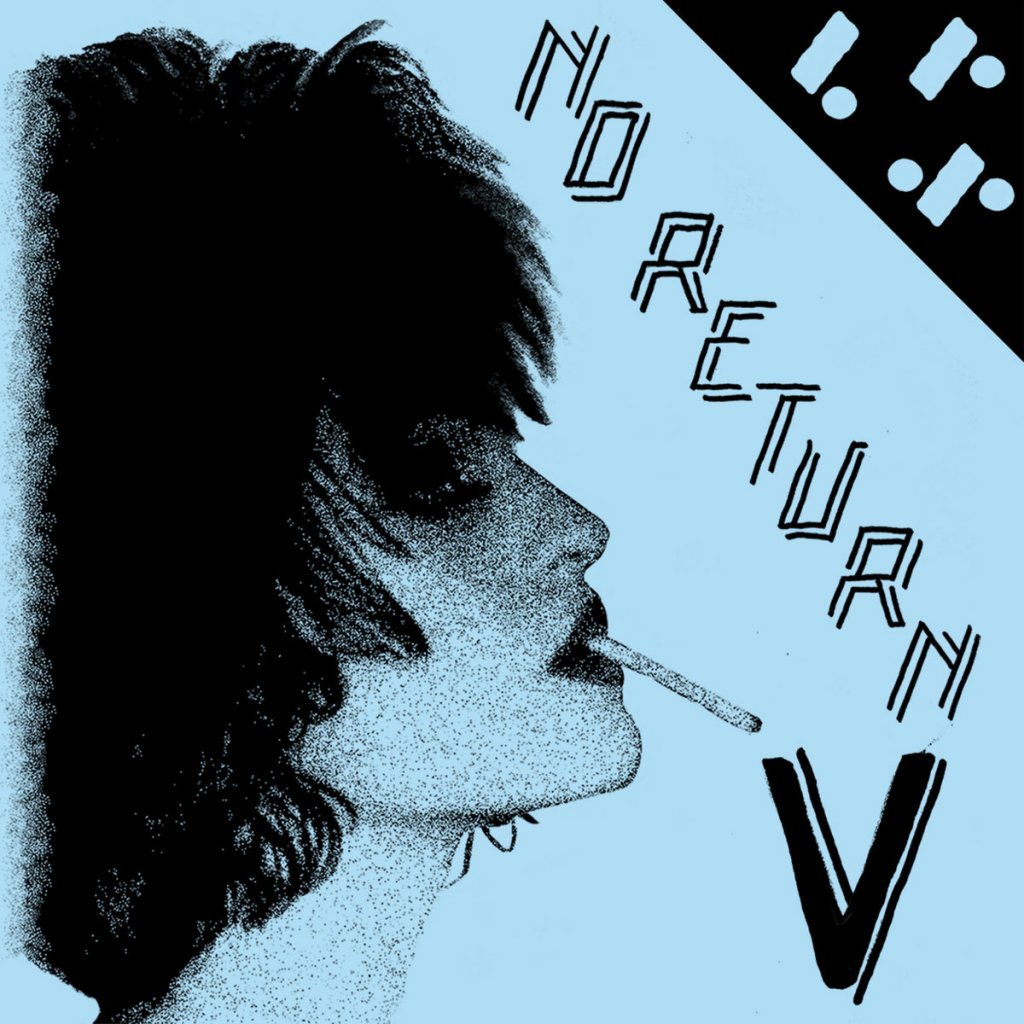
Original photo: Jacob McCann @blokeyoucantrust. Handmade collage by B.
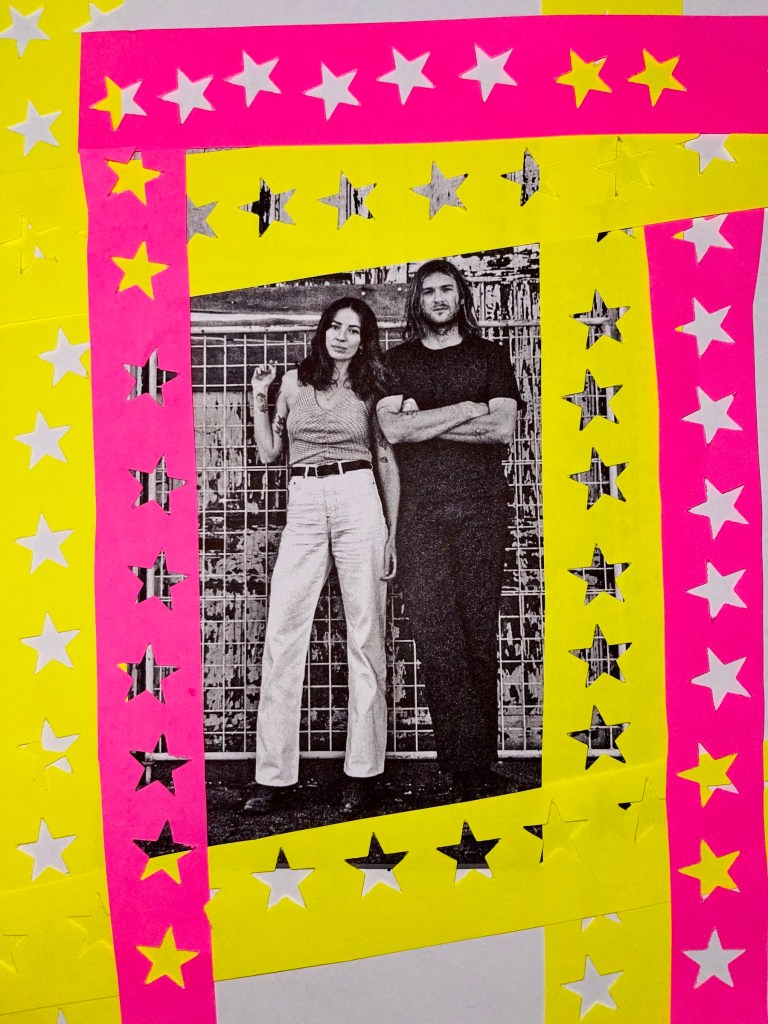
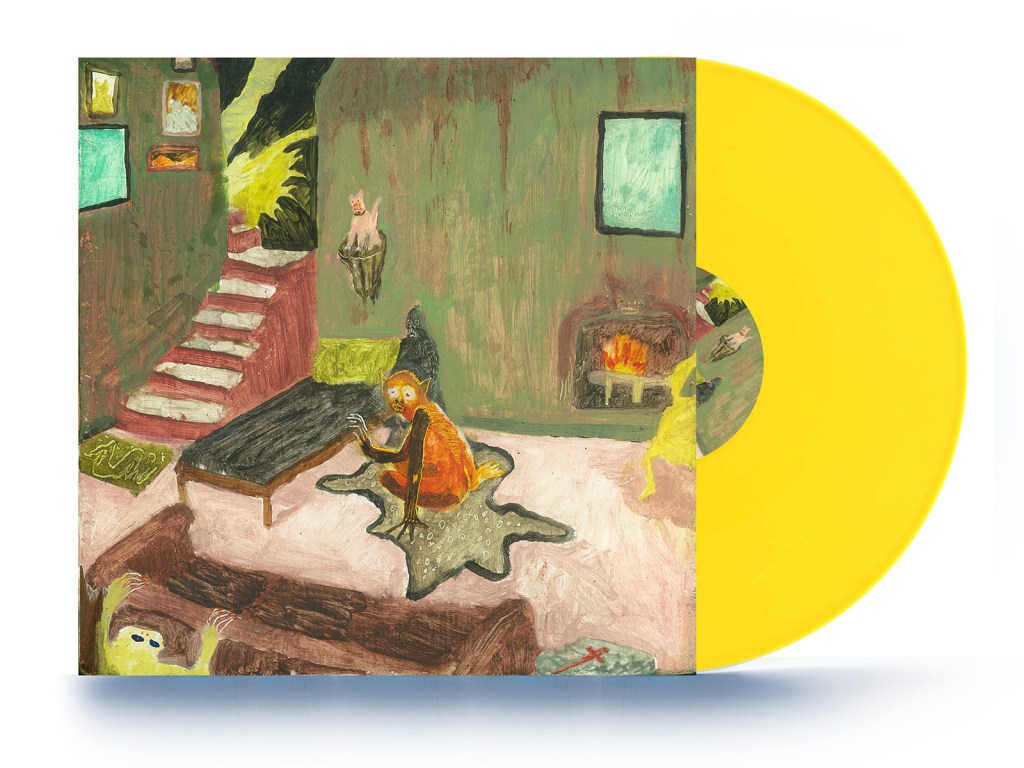
Today we’re excited to announce Gimmie Records’ second release, the highly anticipated self-titled debut from Meanjin/Brisbane punk duo, Piss Shivers – Caleb Stoddart (guitar/vocals) and Gemma Wyer (drums). Their raucous on stage energy, which you may have witnessed at their shows supporting Amyl and the Sniffers, Civic, The Unknowns, C.O.F.F.I.N, Mini Skirt, and Arse, has been captured in a 16 minute and 30 second towering onslaught of explosion of focused fury and wry self-deprecation, by Pious Faults’ Tom Lipman’s live-in-the-room production style. Piss Shivers’ songs are emotionally charged and undeniably raw, manifested from being in one’s own head too much, driven by anxieties, addiction, a tumultuous homelife, and the premature loss of friends. The album has both depth and humour. Jack Mitchell from Guppy guests on the high tension track ‘Rats’ as well as painted the album cover art. The record was mastered by Mikey Young. Piss Shivers’ record unequivocally earns its spot as one of our top picks for Punk Album of the Year, that’s why we put it out.
We first saw Piss Shivers play in 2021 and were in awe of how full and huge they sounded. And, if you read Gimmie issue 5 you’ll already be familiar with them via the chat we featured with them (despite them never having released a song yet) and know that they met at a Propagandhi show, and of Gemma singing with Jello Biafra at a gig moments before acquiring a black eye!
We’re excited to be putting this record out. We love Piss Shivers and hope you will too!!
Piss Shivers finally have music coming out into the world. I know you were sitting on it for such a long time. When did you record it?
CALEB: We recorded it in November 2021, it’s crazy it’s 2023 now. We recorded it in a National storage shed in Bowen Hills, which is where we currently practise.
GEMMA: Deep underground.
CALEB: It’s really tinny, it’s has the corrugated-iron-kind-of-roller-door-vibe. We tracked all the instruments live.
Who recorded it?
GEMMA: Connor and Tom from Pious Faults. Tom agreed to record us, he’s looking to branch out and focus a little bit more on recording.
CALEB: He wanted to practice recording so he said he’d do it for a couple of hundred bucks.
GEMMA: Connor has done, like, audio engineering stuff before, so he kind of helps out, particularly with setting it up, like mic-ing everything and getting the sound right. You can imagine what it sounds like in a storage shed as opposed to a purpose built room.
Maybe that’s why it sounds the way it does?
GEMMA: It has a pretty massive sound. When we practise there, if we take a recording on our phone, the drums particularly sound massive. That sound translated really well because obviously there’s only two of us, without bass. Having the drums and the cymbals and the big guitar sound fill that and occupy that space. It worked well for our sound. Tom mixed it and Mikey Young mastered.
Photo: Jhonny Russell.
How long did you take to record it? A few days?
GEMMA: Two nights basically, all live.
CALEB: Then I just overdubbed another guitar. We recorded vocals at Dutch Vinyl…
GEMMA: In, like, a storage room filled with boxes of records.
CALEB: Tom used to work there. After work I’d come up after the shop closed.
GEMMA: That’s where Jack from Guppy came as well, to recorded vocals for ‘Rats’. We know, Guppy. We know she’s amazing. We gave her full control over that, and she came in and smashed it. She had a very specific idea of what she wanted.
It sounds pretty hectic.
CALEB: [Laughs]. Evil or something!
Yeah. What else do you remember from the recording?
CALEB: I got grumpy at Gemma. We had this fight. In one of the songs ‘Hoodie’ when I sing a part it lets me know when I’m going to change, in the recording I thought the bit was going longer. I was like, ‘It’s three times!’ Gemma was like, “It’s four times!” I was like, ‘Bruh, it’s three!’ We were swearing at each other [laughs].
GEMMA: The whole thing was that you kept changing at three but you were counting four. I’d be like, one, two, three, four. You changed on the three. We were having a back and forth. Caleb was like, ‘For fucks sake!’ Tom was just sitting there listening…
CALEB: It was a bit awkward for him.
GEMMA: Tom was like, “It’s actually four Caleb.”
[Laughter]
CALEB: I was like, ‘You’re fucking gaslighting me. I know how it’s supposed to be.’ Then I was like, oh, yeah.
GEMMA: Basically, I’m always right [laughs].
CALEB: Also, we were going to do another bit of tracking and there was a bloke that was sleeping in one of the storage sheds down he was very angry and told us to “Shut the fuck up!” He was bashing on the roller door and we were all like, holy fuck!
GEMMA: Jack was there, we were going to record her vocals for ‘Rats’. We didn’t end up doing it because we didn’t want to piss off this guy again.
CALEB: He went on a five minute rant of ‘Your mum hates you and your grandmother hates you.’ Very psychotic.
GEMMA: It was really trippy. We were like, everybody be quiet, oh shit, hide.
CALEB: He was yelling.
GEMMA: You were just warming up. It was so annoying because bands practise there all the time and nobody’s ever had that issue before. People run business out of there and I reckon there’s a few people that live in them.
CALEB: There was a guy there the other day belting it out singing, he must have been playing electric drums because you could hear him banging on something.
GEMMA: There’s still like a piece of cardboard that I wrote: hi, we’re just recording music, if you want to talk to us, please knock lightly, that we ended up sticking on the outside of the roller door.
Let’s talk about the songs on your self-titled debut. What can you tell me about opener ‘Red Stripe’?
CALEB: We wanted to do like more of a hardcore song, like L.A. hardcore. Lyrically, it’s just about being brain dead [laughs]
GEMMA: It’s a common theme [laughs].
Do you write all the lyrics, Caleb?
CALEB: Songs are about alcoholism, drinking, displeasure. ‘Red Stripe’ is one of my favourites to play.
Do you have a favourite song, Gemma?
GEMMA: Funny, actually, because it’s sometimes my least favourite to play. I really like ‘Onerous’.
Why is it your least favourite to play?
GEMMA: Because there’s this part that fucking every single time…
CALEB: This is the first time I’m hearing this [laughs].
GEMMA: The fill that I do. I don’t know what to call it. Like, the drum roll kind of thing. When we were recording, I feel like we were pretty tight. I felt drum fit. I felt like we had practise so much that we were really ready, but that was the one part that I couldn’t nail in recording. So in the record now, in the first section, I do that fill, I do it properly, and in the second one, I do like a sort of really stunted kind of like half, four notes instead of eight, and it really sticks out to me. It’s so frustrating to listen to. We tried it, like, ten times when recording, and I just couldn’t get it. They were like, “oh, it’s fine, no one will notice.” And now it’s forever on the record. And I’m just like it really gives me, like, a skin crawl. But I think our newest song that we haven’t recorded is probably my favourite to play now. It’s called the ‘New, New, New Song’ [laughs].
CALEB: I’ve got vague lyrics in my head, but it always changes.
What’s song ‘Onerous’ about?
CALEB: It’s about being stuck in my own head.
A lot of the album, except for maybe ‘Eyes Off You’, is in that theme.
CALEB: Yeah. It’s all about being stuck in your head. Getting down about yourself, struggles with lifestyle choices.
Is that how you were feeling when you were writing this collection of songs?
CALEB: Yeah. I was definitely in a place when I was writing it, coming up to writing the lyrics I wasn’t very happy.
Was there anything in particular that was contributing to that?
CALEB:I was doing a lot of drinking and drugs. I wasn’t happy in my work. I had a lot of friends falling out or moving away. That all contributed to that.
GEMMA: Big time.
CALEB: Yeah. You just go through the motions. I’m definitely in a way better place now. It’s funny, it’s kind of bittersweet sometimes singing, I want to die! Actually, I don’t want to die now. I have a nice job. I’ve got a cool girlfriend.
Do you think letting all that stuff out through music, though yelling about it, helped?
CALB: Yeah, it did. It was cathartic. I don’t know if it is now. I feel like I’ve tried to change the way I look at them so I can sing them without being so bummed out.
GEMMA: Being detached a little bit.
CALEB: Yeah, maybe it’s like, there’s always someone going through that. For me, even when I’m going through a shit time, certain songs stick out. So I’ve kind of tried to change the thing of like, well, maybe I don’t feel like that anymore but maybe if someone else bought the record and heard the songs they’d be like, fucking hell, this is exactly how I’ll feel!
Some of the saddest fucking things I can think of musically, like, a real harrowing song, can really make me happy. You think it shouldn’t be like that but listening to something that’s just so fucking sad and harrowing it can bring joy.
GEMMA: That human connection, I guess, that you get through knowing that other people experience what you’re experiencing. You feel like, I’m not alone. You’re matching the vibe. Of course. Yeah, I get it.
Photo: Jhonny Russell.
‘Hoodie’ is a relatable song. Every time over the winter I’ve put my hoodie on I get that line from the song in my head: I want to hide in my hoodie forever.
CALEB: [Laughs] True? When I was a teenager, I would sneak out of home a lot. I just love putting my hoodie on. If I’m walking home late at night I’ll have my hoodie on and it’s like, don’t talk to me. It’s like my safety thing [laughs]. It’s like the headphone trick, no one will want to talk to you.
Tell us about the song ‘Eyes Off You’ that I mentioned earlier.
CALEB: That song was kind of just like a dumb one that we wrote. I kind of came up with the lyrics on the spot. It was at least something different for us.
GEMMA: It’s a slutty club song.
[Laughter]
I guess there’s that feeling for everyone, you’re drunk in a gig and you see someone and you’re like, oh, they’re kind of cool. That’s a universal thing too.
It’s a fun song that definitely provides a lighter moment on a dark album.
GEMMA: Yes, definitely. I guess it’s you’re having a dark day, you have a few drinks and go out and have that moment of…
CALEB: Oh, there’s a really cute person over there.
GEMMA: Then you go home and sleep it off…
CALEB: And a few more beers and you’ll be back to it. To “I’ve cooked it”.
GEMMA: The funniest part about song is that when we first started playing it, I vividly remember a time at The Zoo where we started playing it at completely different tempos. That was quite a big gig. And, like, I cooked it massively!
[Laughter]
CALEB: There’s a bit in the song where I’m like, blah, blah, blah, because I didn’t want to keep singing it [laughs].
What about song ‘Chained’?
CALEB: It’s about [sings] marijuana.
GEMMA: They’re all about marijuana in a way.
CALEB: The first bit is kind of ripped off an Offspring song.
GEMMA: Oh my god, you said you wouldn’t say that.
CALEB: But it is [laughs]. I do this thing where I’m playing and then I’ll sing random words. When playing that song I just had the line in my head: Every day it’s the same… that’s from an Offspring song.
GEMMA: Shut up.
[Laughter]
CALEB: The other part of the song is about losing someone. The songs have different meanings sometimes, there’s different little bits of things.It’s a fun one to play, its fast.
GEMMA: I know. We originally called it ‘Mosh’ because we were like, please, someone mosh at our shows. I feel like that’s the biggest dream of mine, to have a crowd moving. I haven’t really had that before, like, in CNT EVN. You kind of feel like, I guess, it’s not gonna happen. Seeing that movement and that energy in a crowd is the best.
CALEB: The show we played at Mo’s Desert Clubhouse when we played with C.O.F.F.I.N was kind of weird, half the crowd’s these tanned, blonde surfer chicks who were like “raaaaah” “blaaaah” and smacking each other on the walls. It was fun to watch. They were the last people you’d think you’d see going wild in the pit. Such a funny dynamic.
GEMMA: How about those lights? Hectic.
CALEB: They were a bit too much.
GEMMA: It’s really off putting when you’re playing.
CALEB: It was a bit overkill.
Yeah, the lights were almost like a strobe but it’s just they were changing so fast, like every second. Way too much. It’s distracting from the band and it just becomes not fun. What can you tell us about the song ‘Aren’t Ever’’?
CALEB: When I was younger, my mum was pretty depressed and had a lot of episodes. I feel like I couldn’t talk to anyone about it. The line: You aren’t ever going to believe it… crying in the night and screaming or whatever. I often get up really early and watch Rage, from six until I was in high school. I’d focus on that and zone into the TV when all this shit would be going on around me.
Music has been really helpful in your life, an escape?
CALEB: Yeah. I just didn’t think that, well as a young person, I was ten, you couldn’t really talk about what was happening and no one in the family ever really acknowledged it. The second half to it is getting into the mischief. There’s a period, a couple of years ago, I had a friend overdose, and one go to rehab. Then sometimes I’d have to go to work and be like, oh, I have a nice job… like you don’t know what someone is going through.
GEMMA: As a teenager you are totally egocentric. You’re focused on your own identity and working out who you are and your whole being is sort of inward focused. Then you get to the stage where you understand a bit more about yourself, are more confident in yourself, and you can start to look outwards. I guess, start to observe those things in other people and think about it like the iceberg. You see a tip of someone’s experience. Their behaviour is that outward thing, but what’s underneath? You have no fucking idea. It’s better to give people the benefit of the doubt all of the time. No one really wants to be horrible, no-one wants to be mean. I’d like to think that we’re all doing our best, but some people have a lot of shit going on, I guess.
We touched on it earlier; what can you tell us about song ‘Rats’?
CALEB: I had rats in our house for a little. The lyrics speak for themselves. There were some people that I worked with and I was like, yeah, you’re a bit of a rat [laughs], you talk shit behind my back. I was like, what else can I associate with rats? Rats in my work. Rats in the phone. Rats in my house…
Jack has a pretty unique style, like how she screams in Guppy. I was really happy with it.
GEMMA: It makes it more dynamic.
Gemma, would you ever have a go at doing Jack’s vocal live if she couldn’t be there?
GEMMA: Sitting behind a drum kit feels really safe to me, but, like, vocals are such a it’s just you, it’s not you in an instrument, it is all you. It feels so vulnerable and really scary to me. We’ve tried to practise but I’m uncoordinated and it’s hard to sing and drum. Watching Ben from C.O.F.F.I.N, I’m like, fuck! It’s wild. He’s so good.
Album art by Jack Mitchell.
Or like when Jake Roberston plays at speed in SMARTS and sings.
GEMMA: It’s wild! Maybe is I was a more confident drummer. I used to get sick before we would play. I would feel so nervous, not even consciously. Say if we had a gig on a Saturday, on a Thursday I’d start being like, oh, I don’t feel too great. I’m feeling really jittery, I’m feeling really irritable, whatever, not feeling good. I’d realise on the Saturday when I was sweating bullets and freaking out and be like, fuck. I’ve been really nervous this week about the show. Performing in front of people was really, really big for me. So I think having the drunk, it’s almost like the barrier, I like being behind that. It’s my little fortress [laughs]. The vocal part really freaks me out because we there was a point where we lived together when we made an electronic thing…
CALEB: I was making beats and really wanted to do a Crystal Castles project. I still do. I really wanted a femme voice to scream and be distorted over the top of this track. I got Gemma to try and do it.
GEMMA: I had to make him just go outside. He couldn’t even be in the house when I was doing it. So no vocals for me at this stage.
We super love song ‘Energy’!
CALEB: I met this person who was like a Ritalin child, heavy Ritalin child. He went off the rails and fried his brain. I thought that was an interesting concept. Amphetamines and frying your brain.
Musically, when we first started playing, I really wanted to be a Danzig-style vocalist, cos I love the old Misfits songs. I stopped doing that. I think ‘Energy’ was kind of in that vein. I feel like I just yell everything now [laughs]. In recording there’s more dynamics.
Was that kind of intentional?
CALEB: Yeah, I definitely want to have that in the recording, but when I’m playing live, I get so nervous. It all comes out on stage.
GEMMA: It’s better now. We used to set each other up, freaking out from nervous. I’d say, oh, I feel nervous and he’d be like, “Don’t say that, now I’m nervous.”
[Laughter]
We wouldn’t talk all afternoon so we didn’t freak each other out.
CALEB: That’s when we first started playing. We haven’t played much together.
GEMMA: It’s started to feel good. Playing is something that I’m actually starting to look forward to. It feels like a bit of a build up and a release. I never really understood when people said that before. People would be like, “I love getting up there. It’s so much fun.” I’d be like, you’re fucking crazy! That is a crazy thing to say. But now I kind of get that. It’s that adrenaline rush. You go for it and then afterwards you’re riding that adrenaline wave.
The last song on the album we haven’t talked about yet is ‘Gold Chains’.
CALEB: ‘Gold Chains’ is a song that we wrote together.
GEMMA: With a bottle of wine in COVID, sitting on the backstairs.
CALEB: Let’s write a song about this guy who’s…
GEMMA: Selling drugs [laughs].
CALEB: He just quit his job and dropped out of school and he’s got a gold chain and is still doing it, but it’s like nothing’s going right. There’s a slight narrative there.
GEMMA: It’s the cheesiest song. The only song I’ve had any lyrics put on is of course rubbish lyrics.
[Laughter]
It’s like, what rhymes with chain? Good direction!
CALEB: Co-writing lyrics is a fun thing to do!
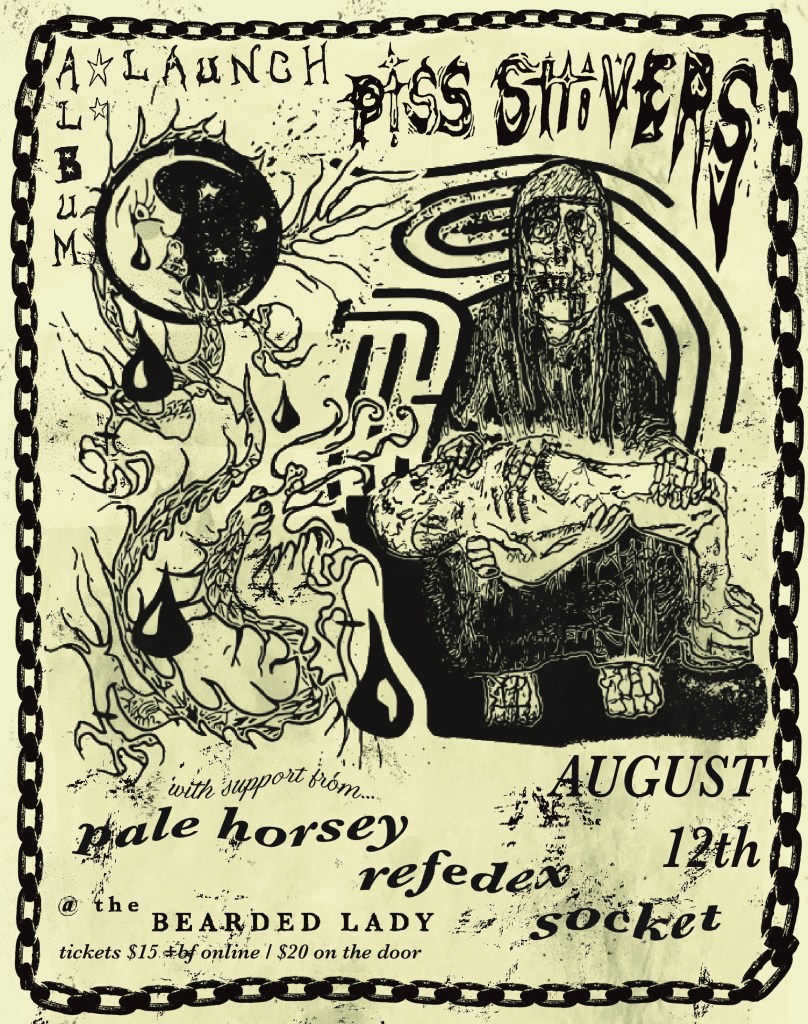
Piss Shivers launch their album next Saturday August 12 at The Bearded Lady, West End. Get tickets HERE.
Original photo: Judi Dransfield. Handmade collage by B.
Ed Kuepper stands as a living testament to the enduring power of expression through art. With a career that spans almost 50 years and an impressive discography to his name, Kuepper has become a legendary figure. He’s influence on Australian music cannot be overlooked, his music has transcended time and inspired generations. Gimmie sat down with the iconic musician to discuss his journey, inspirations, and the ever-changing landscape of his craft.
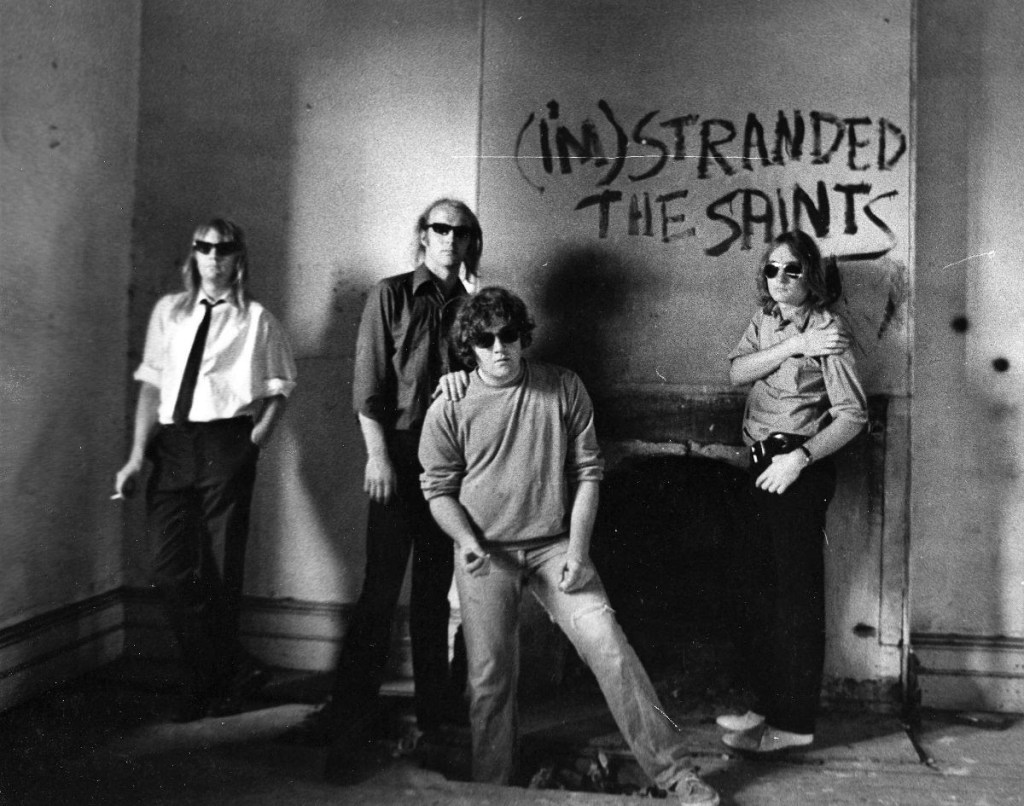
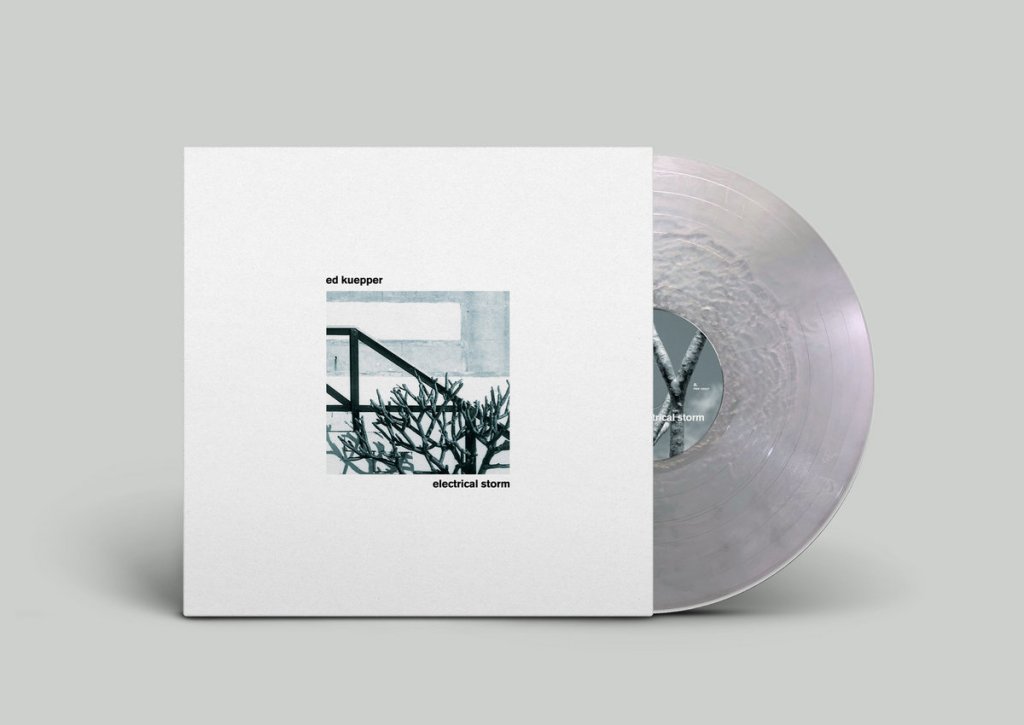
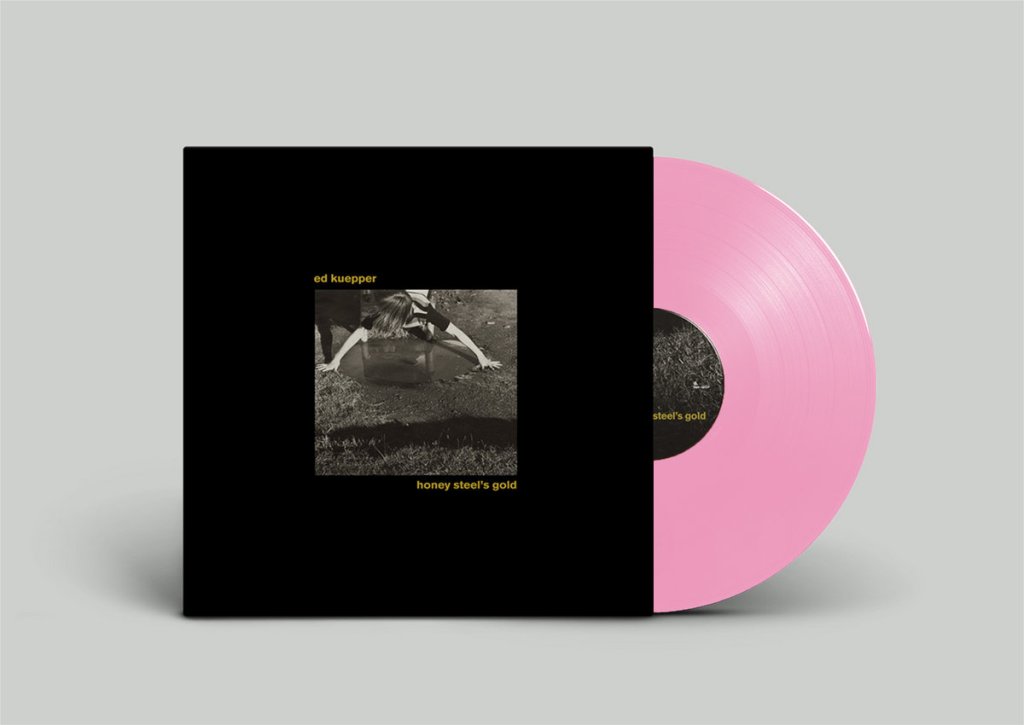
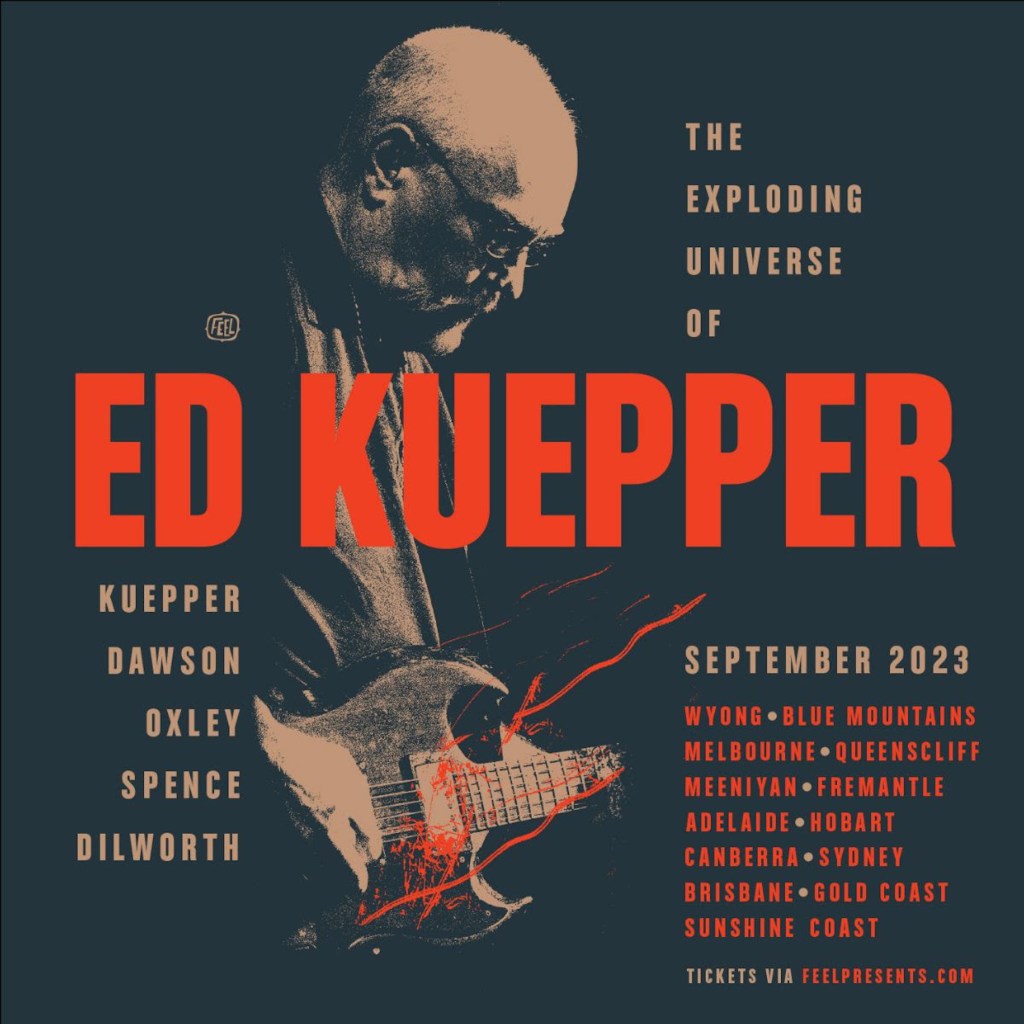
As we dive into conversation we find Ed Kuepper at a vibrant moment in his life. 47 years on from the original Fatal label release of the single (often regarded as one of the first punk songs but really more a precursor) that kicked off his career, The Saints’ ‘(I’m) Stranded’ is being reissued, along with Kuepper’s back catalogue of solo records, starting with Electrical Storm and Honey Steel’s Gold. Through September he’ll embark on The Exploding Universe of Ed Kuepper Australia-wide tour to support the releases. There’s new music in the works too. Lots to celebrate!
Kuepper’s love affair with music began at a young age when his parents bought him his first guitar, adding fuel to his passion for music that still burns bright. It became a gateway to both escape and engage with the world. He tells us of how he wrote ‘(I’m) Stranded’ on that guitar. Kuepper also gives insight into his creative process, how it has evolved and his need for experimentation. Throughout the conversation, we gain insight into the enigmatic Kuepper as he earnestly shares glimpses of his personal journey, including facing moments of depression, loss, and wanting to quit music.
This is the best chat with Ed you’ll find out there.
What’s life been like lately for you, Ed?
ED KUEPPER: Very good. There’s lots of things happening. The reissue programme is in full swing. We’re looking at starting rehearsals for the tour coming up. There are some new recordings coming out. I did one with Jim White, which will probably not come out till early next year.
It’s so wonderful to hear that you’re in a really good place right now.
EK: Yes, indeed. It’s all going well. Not that you take this stuff for granted, of course, and I don’t want to jinx it.
You’ve played the guitar for most of your life; what’s your favourite thing about playing it?
EK: Oh, gee. I like it very much. Most of the time I like it really much and if I don’t, I don’t do it. It’s an expressive tool. Especially when you get a little bit tripped up with words and it can communicate. That’s a nice thing to be able to do because I’m sometimes at a loss for words. Though you wouldn’t always know that. Especially when I was younger, I found it a way to both get out into the world and also escape from the world when necessary.
The guitar was the instrument that I fell in love with when I was about nine years old. It could be any instrument, really. It could be, for instance, like people write poetry or whatever. It fulfils a large part of that function for me.
I understand that your parents bought your first guitar for you when you were nine? A Hofner Club 40.
EK: Yeah, that’s absolutely correct. And I still have it. I’d even get it out, except it’s under some stuff at the moment.
That was the guitar that you wrote ‘(I’m) Stranded’ on in your bedroom at your parents’ place, right?
EK: Yeah. I wrote on that up until about 1974, and then I bought myself a guitar that kind of took over that. Up until then a lot of things were written on my little three quarter size Hofner guitar [laughs].
You’ve been writing for a long time, even before The Saints, when you were a kid you used to write songs; what were those about?
EK: Well, I don’t remember this one particularly well, but when dad was still alive and mum still had her faculties about, they said that I wrote a song about a green steam engine that turned into a rocket ship. That was written in my sandbox [laughs]. That was my earliest song, after that, the subject matters became a little less interesting, less free form for a little while, when I thought I had to write proper songs.
I think I’ll go back to my first lot of ideas. All my songs are going to about steam engines that turn into rocket ships soon. I might do an album. A concept album [laughs].
[Laughter]. I would listen to that! I especially love things to do with space. I’m always fascinated by that kind of stuff.
EK: Yeah, well, it’s pretty intriguing, not just for children, but everybody.
There’s another guitar that you have that’s really special to you, your dad’s guitar.
EK: Yeah, a classical guitar. He bought that for himself at the same time or maybe slightly before he bought the one for me. When I visited my parents, I mean, even when I was still living at home with them, I would often use their guitar because setting up an electric is kind of more work and there’s something quite nice about playing acoustic. This was a nylon-stringed acoustic guitar and it felt quite different from the electrics. It inspired slightly different things. I wrote the music for ‘This Perfect Day’ The Saints’ second single on that guitar… well, third single, but it was the second one that we actually wanted out.
The Aints’ album, The Church of Simultaneous Existence, would have been written on all of those guitars at various times. That’s what I had access to. I have a strong sentimental and emotional attachment to these objects, even though that’s all they are, just objects.
After your father’s passing, you wrote a song on it that was dedicated to him.
EK: Yeah, which we performed with my band, Asteroid Ekosystem, and recorded. That’ll be coming out sometime this year. I hope Alister Spence, who’s kind of the band leader, I guess, is looking after that, so I’m not getting too involved. I’ll let him do his thing.
What is the song called?
EK: It’s called ‘For Herman’.
Beautiful. Was it a hard to write?
EK: Not really. I didn’t want to do a straightforward kind of ode sort of thing. It touches on a whole range of things that I recall about my dad in a way that isn’t very obvious. It’s hard to talk about it at this point.
When Asteroid Ekosystem performed it, everybody that had heard it and had heard that we were going to be doing it, came up and said, wow, that was great, but totally not what I expected. It’s successful in that regard.
You always seem to do that with your music, do the unexpected. You’ve released a lot of albums and every album isn’t quite the same as the last and you’re always evolving and doing something different.
EK: Well, thanks. Yeah, I do try not to repeat myself. Even though going through all the back catalogue at the moment and remastering to reissue this stuff, I sort of think I thought I was making a five kilometre jump in the air there from the previous record, but it really wasn’t. It was just a couple of steps around the corner.
I have quite a respect for people that can repeat themselves all the time. It doesn’t hold my interest all that much, but the fact that they’re able to do it and that they hold their audience in that process. Somebody like the Ramones. The first four albums or so are much of a muchness, but good stuff. There’s no musical or lyrical development but they explore it in such a thorough way that they’re not leaving any glimmer, any little crumb of an idea left unexploited. Whereas I guess I’ve always thought I’ve done something different.
One way or the other isn’t a better way. It just depends on what you feel like doing yourself. I don’t think there’s any right way or wrong way. I’m saying all of this because I’ve read interviews with myself where I’ve said that kind of thing and I thought, you know, it sort of sound like you’re saying that this is the only way to work. It’s the way that I work. It’s not anything that I recommend. I like doing it because there’s a big, wide world out there and an awful lot of things that you can be doing. My eyes are always bigger than my stomach [laughs]. That’s paraphrasing some old saying that my parents used to say.
[Laughter]. You mentioned the reissues that are coming out, one of the first is a 7 inch of ‘(I’m) Stranded’ getting a rerelease 47 years after it initially came out. Was the original box of records delivered to your house in the 1970s? Were you the first member of The Saints to open the box and hold it in your hands?
EK: They were sent to Astor Records in Brisbane City. I picked them up from there. I’d worked there a couple of years earlier, and knew that they did pressings. The other thing that was important was that they were quite possibly the best vinyl pressings in Australia at the time. Anything that has the old black and gold Astor label on it from the early 70s, those records, even if they look a bit beat up, they’re really well done and they sound still really good, for the most part. It felt like quality. Even though Astor was a really cheap and petty and miserable little place in a lot of ways [laughs]. The record was manufactured at the Astor Pressing plant in Melbourne.
Photo: Joe Borkowski.
How did you feel when you picked it up? After loving music and buying records for ages; how did it feel to finally have your own?
EK: Well, it was great doing it, but it was even better when I got home and put it on. My girlfriend had driven me to get it, I didn’t have a car. We put them in the back of her Renault. When we got back to the unit I put it on. And, without doubt, it was the best thing that I’d ever heard in my life—it was a very thrilling event.
We didn’t have a phone. No one in the band had a phone. We must have just driven around to everybody’s place. I don’t remember how we even got to give them their copies. Maybe they came around and got them? Everyone had the same response though. There was no ambiguity, no cynicism just—this is fucking fantastic.
I had a similar reaction when I first put it on and heard it as a teen two decades after it was released. I thought it was so cool that this came from my hometown! It’s a powerful song.
EK: Fantastic. It’s lasted longer than I thought it would have. And I stress to emphasise I wasn’t humble about it. I thought, this is a really great record!
But the thing that was sort of happening in the environment in which I grew up in, which everyone in the band did, all the bands that we really liked, who were really fantastic, nobody knew about them. And so there wasn’t any expectation on our part, that we would suddenly become the new Beatles or something.
It was before the punk thing kind of drew attention back to groups like The Stooges or The Velvet Underground, the MC5, the New York Dolls, those 70s or late 60s rock and roll bands that we really liked. No one knew them at that time. Everyone knows now. You probably see an interview with Iggy on the 7:30 Report or on Good Morning Australia now, but back in those days, it was a different scenario.
We had no expectation of what we were doing, operating out of a small place in Brisbane; banned from every venue in town, and any agent would refuse to work with us. There was no reason for us to think that we’ve made a great record other than to think we’ve made a great record, and hopefully it’ll get through to a few people.That sums it up. Everything was just taken a step at a time.
Our first review that I read, was an Australian review in Juke magazine, which was a Melbourne paper in those days. It was a real slag off. Everyone laughed about it. We held the reviewer in even more contempt than we did before he’d reviewed the record, but it didn’t make us think, oh, well, we’re still going to become the biggest band in the world.
When the reviews started coming in from the UK, we were really over the moon, they were really positive. Within a matter of weeks, it was October, we had top reviews in Sounds magazine three times out of four, finishing with Single of the Year! That made us think, wow, this is good!
Then telegrams started coming to my parents’ place because that was the address that I’d put on for correspondence. I asked for people to send cash and we’d send them a record. That took a few weeks, as you would imagine, because it would take time for the mail to get over there, then to get back here. Much slower process than it is now.
But, yeah, hearing the record for the first time was a great moment. It’s hard to ever top, regardless of what you do after that. That first moment is still special.
What kind of guitar player would you say you were back then?
EK: Not all that different to the type of guitar player that I am today. I can do more because I’ve been playing longer, because I’ve been experiencing more things. I’ve learned some things. There are some things that I don’t think that I do as well anymore, that are definitely something that you have to be fairly young and fairly focused to do.
There’s not much live footage of The Saints, but there is some from Paddington Town Hall. I look at that and I think, well, I might be a bit more sophisticated than that now, but there’s still something about what I’m doing there that I totally stand by. As a guitarist, I’ve always never really felt myself to be part of the bigger world of guitarists. I don’t immediately start talking to people about pickups and strings. I feel that I’ve maintained my own course, without too much interference from what other people are doing.
I’ve never considered myself a particularly proficient guitarist. Being able to play anything, hasn’t really interested me. When I was in high school, I had at least one friend who certainly considered himself vastly superior guitarist to me. I couldn’t, but he was definitely able to, do Deep Purple covers in a much more competent way than I was able to. Not that I tried very hard.
But could he write his own unique songs? I know so many technically brilliant guitarists that can play other people’s stuff, but they can’t write their own song.
EK:I guess I had a sense of that in the first place. I don’t think I ever really saw myself playing the guitar to become a guitarist. It was more to do everything to the band. The guitar was a tool. It was It was the one instrument, outside of a keyboard, that could come close to representing everything that I was hearing on the radio or on a record.
The way that I developed my playing, which is maybe a bit busy, was just a way of becoming the orchestra in a lot of ways. That was the intention. It was that slightly naive way of looking at a record, that informed the way that I actually ended up playing guitar.
A normal way of looking at a recording would be to process what you’re hearing and to separate everything. I did the opposite, and it all became one thing, which then became the guitar.
I know that the first albums you bought were: Paranoid by Black Sabbath, Get Yer Ya-Ya’s Out! by The Rolling Stones and Live At Leeds by The Who. I noticed that two of them were live records. I was wondering if that raw live sound helped inform what you do early on?
EK: The Who’s Live at Leeds, certainly, I think that is a phenomenal live record. The funny thing with that was I got that when I was about 14, and because I only had a mono record player, the way that that album is actually mixed is that you have the bass on one side and the guitar on the other side, but in mono, they all come together. So it was often hard to tell when John Entwistle was doing some of his lead like, chunky things. It sounded like the guitar and the bass became one thing. So that is an accurate observation. Not so much that it was live. It was just the way that I heard it at first.
Paranoid, well [Tony] Iommi for me was one of the greats and still is in that era. Those first six Black Sabbath records, I could have used them as an example instead of the Ramones before. They basically had one idea, they saw it through six albums, and I like them all. That sort of minimalist approach can be really strong.
Yeah, I guess it’s true to say that anything that I really liked had some sort of an influence. It may not be obvious, it may not even be audible, but something somewhere along the line. But it’s also important to say that at a certain point, and I think I got there fairly young, that you have to hit upon your own thing, and that became it.
Developing your own approach on an instrument or when you’re writing, you have to be a little conscious of it. I helps to steer yourself in that way initially, but after that it actually comes really naturally these days. I don’t think I could come close to impressing anybody as anyone else other than myself. I don’t do impersonations very well [laughs].
[Laughter]. How do you go about writing your songs?
EK: I try not to sort of have a set formula, but it helps if I sit down with an instrument. Usually guitar, because they’re easy to have laying around the place, but sometimes I might have a toy piano. Or something, which can kind of spark an idea. I find that if I set time aside (I wish I did it more often if), I say, well, I’m going to get up earlier and I’m going to write songs between 7AM and midday. Usually I’ll have something at the end of that. It may not be all that great, but I’ll have something. Whereas if I don’t do that, it doesn’t happen.
Do you have any regular daily routines?
EK: Yeah, from time to time, so they’re not really that regular [laughs]. I aspire to that kind of approach and sometimes I do manage it and other times it’s quite easy to get distracted.
I know as a musician and songwriter you’re constantly learning and that you like to find and try new things that keep your interest when making music; what have you discovered lately?
EK: When COVID was on, I thought I was making great leaps forward in terms of what I was doing on guitar, trying to work out a different harmonic response to things. I thought, well, this is getting really interesting. Then for some reason, well, it happened in the lead up to my father dying and then doing some shows, touring and stuff, I got out of that habit. I’ll know the next time I look into that aspect of it, whether those months of hard work and of thinking about it and doing little bits have had any lasting impact.
My condolences for your father’s passing. I’ve lost both my parents. It’s a pretty big thing to happen.
EK: It is a big thing. But dad was 93. It wasn’t unexpected. It happened very suddenly, which is probably a good thing. It does something to you in terms of the way you have to sort of reappraise your entire life and all the difficulties that you may have had with your parents and you, everything that they went through. It does cause you quite a bit of time for reflection. But as I say, he lived a long life and it was really only a matter of time. I think once you get into your 90s, you must be counting your blessings.
Yeah. Did his passing make you think about your own mortality?
EK: Oh yeah.
Is that why you’re full steam ahead into all the things you’re doing?
EK: Well, yeah, I guess there is a feeling that there is limited time but also there were many years, going over a decade, where a lot of my things had just fallen totally out of sight. It took us a long time to get everything together to be able to do the reissues. It wasn’t as if I had all the tapes. I didn’t. They were all over the place and there were all manner of things (that I won’t go into) on this that had to be addressed. It was a long term project.
The fact that Remote Control, who are manufacturing and distributing them, were really keen; we needed somebody like that. I didn’t think that I could go through the process of having all these records done and then be also sitting there every afternoon, mailing out LPs to people that had bought them in the way that I did with the ‘(I’m) Stranded’ single. I feel a little too old to be doing that [laughs].
Is writing lyrics something that comes easy for you?
EK: It depends on the song. It depends on the state of mind that I’m in. A lot of my lyric writing takes the form of writing a few paragraphs of prose, if I feel like making some sort of an observation. Just jotting down ideas, and then I’ll refer to those notes when it comes to actually writing lyrics. Sometimes there’ll be lines that I really like or themes that I really like and then I apply those because to me, the music comes first usually in terms of what I hold in importance.
Lyrics are really important, but they don’t necessarily steer the song for me, in the way that they do with a lot of people. I tend to be more of a, well, this is the song, this is the melody that I want to sing. That’s got too many words, so I’ll chop those; I use the William Burrows technique. Anything that makes the process something that I think is exciting, that keeps the momentum going.
I was a very poor student in high school because I would never do my home work, I would never do any assignments just because I was bored with it. I couldn’t focus. It’s kind of like that. So the lyrics sort of tend to get a little bit moulded into where I think they need to fit and that. It works for me, not for everybody.
I noticed you seem to write about love a fair bit.
EK: I guess so, yeah. Got to have those chances for pop radio [laughs].
Does your wife inspire you?
EK: Yeah, she does.
She does a lot of your album art, right?
EK: I met her when Laughing Clowns started and she started doing art. She did all the really good covers for Laughing Clowns’ records. The other ones weren’t quite as good. I did one which is a very controversial cover. I think it’s great. Other people think it’s the worst thing they’ve ever seen [laughs]. But when Jude took over doing the covers, that degree of controversy wasn’t there. Everyone agreed, oh, that’s a beautiful. So she’s been working with me quite a lot.
She’s done the bulk of album covers for my solo projects. She’s done the covers for the Aints and she’s done a few other bits and pieces that I’ve been involved in, as well as a few covers for other people. That’s been a very long, ongoing relationship, which has brought out some really good results.
Do you ever run your songs by her to get her input?
EK: Not so much. We collaborated on an album called Jean Lee and the Yellow Dog, where she wrote most of the lyrics. That was interesting because I hadn’t worked with many lyricists.
I’d worked with Chris Bailey, of course, in The Saints. But working with Jude was a different sort of interaction due to the writing of the lyrics in a more sort of traditional lyricist kind of way, which in some ways, sort of clashed a little bit with the way that I worked.
With Chris, it was a really straightforward kind of scenario. The way that we would normally work would be that I’d write a verse and a chorus and then give it to him to write more. The more amusing lyrics that he took into it for the verses, that was great.
With Jude, I approached her lyrics as if they were something that I’d written. I would alter them to make it fit in what I thought the song should be. I actually made quite a lot of compromises on that and I didn’t always do that. Sometimes I think that was absolutely the right decision. Other times I think the song doesn’t work quite as well as it could have, but it’s no big deal.
Are many of the lyrics that you write very personal?
EK: Everything that I write is personal. Whether that is personal in a way that’s going to be revealing to people or something, I don’t know. I try these days not to do too much heartfelt stuff with my lyrics. I prefer to be a little bit objective and sort of observational, I suppose.
Your album, Electrical Storm, which was your first solo album that was reissued, I really love the song ‘Master of Two Servants’. There’s a line in it that says: Hate was just behind me / Love directly in front of me. What’s that about?
EK: Those songs were written in a burst, most of them, after Laughing Clowns split up. I was definitely channelling a lot of things. But I think ‘Master of Two Servants’, I would call that an observational song, a song that has some sort of a moral in there, but it’s largely a watch-what-you-wish-for-thing.
I know that there’s been a few points where you’ve wanted to quit music. One was when you came back from London after being over there with The Saints. Another was at the end of Laughing Clowns. What made you want to give up? And, what was it that brought you back to music?
EK: The music industry made me want to stop. I really hate the music industry, and I still do. Apart from the people at Remote Control and my agent [laughs].
I get it. I hate the music industry, too. That’s why we make our own publication, and do things our own way. Music is more than a product.
EK: I get depressed, get sort of overwhelmed. The Saints had been together five years. We worked hard in the early days. Then we quickly tried to process what was happening in those last couple of years once the records started coming out and dealing with all that without having any idea, any business sense, and not having any really good advice. At the end of that, it was sort like, I don’t know. It was a combination of relief that it was sort of over and also a sadness. I thought, well, isn’t it fucking great? We’ve done three LPs in the last 18 months and I really like them all— that was enough for me in a way.
When I’ve talked about quitting music, they seem like significant moments to me at the time, but in reality they probably last two or three weeks. I’m definitely in a state for a while where I think I’m just not going to bother with this. I’ll do something that I’m less sort of emotionally or personally invested in. I’ll just get a job where I get a paycheck and I don’t actually care about when I knock off. Whereas doing this you don’t really ever knock off. Which is great too. I’m not complaining about that. It’s a good thing too that you also have that ability to kind of just shut off from.
Did you have other jobs other than being a musician?
EK: I worked as a storeman at Astor Records. I was making my way up the ranks very quickly. I was the only one in the Brisbane office that knew anything about music, and they offered me the chief salesman’s rep position in North Queensland, which would have been very humorous if I had got that. One of the jobs that I had was to send out what they called rack orders, a shop would say, send me $250 worth of records (this is back in the days when $250 could buy you quite a lot of records) and I got to pick what they were. A few weeks later they’d all come back saying, we don’t want this, we want this other stuff, which I thought was rubbish. I don’t think I would have made a very good salesman because Astor didn’t have that much that I liked. They had John Lee Hooker, which is fantastic. Lightnin’ Hopkins, Nina Simone, The Kinks and Status Quo; I liked all of that. And that would have been the only artists that I probably would have been promoting as a salesman [laughs]. My commissions probably wouldn’t have kept me going for long.
[Laughter]. Another thing that I’ve noticed about your music is there’s humour in it. guess people often see you as a very serious artist. But then I think here’s also a lot of play.
EK: Yeah. Okay. I have a very serious, earnest way of singing sometimes, which I’ve noticed going back through all my stuff for reissues. I think, Gee, talk about deadpan delivery [laughs]. I guess that’s just the way that I am. I don’t go out of my way to write something funny unless I’m doing my stand up routine [laughs].
[Laughter]. Another album that’s been reissued is Honey Steel’sGold, your fifth solo album. When you think of it, what kind of comes to mind?
EK: They’re all important records. Honey Steel’s Gold was noteworthy because it was the first of my solo albums to get into the Top 40. That was a surprise. It was the first record that I had that received national airplay. It coincided with Triple J going national, so we’re lucky on that. It meant that people around the country got to hear the record at the same time and it meant people bought it at the same time, which actually got it charted, which was quite a thing.
I don’t care that much about charts, but it was still nice. It lifted things up. To put it in the speak of the managers, shows went from being in front of 200 people a night to 1000.
You’ve put out so many albums. There’s like five or so years, I think, where you didn’t put anything out since you started. There was a period where you were churning out two or three records a year. What was kind of driving you to do so much?
EK: The fact that I could, the fact that people were releasing it. It was an interesting sort of thing to do.
When I was a kid, when I first got into music, it was commonplace for groups to be churning out singles. The Beatles did two albums in a year. And all those 60s pop bands were doing that. That changed in the 70s, but I still had that impression of that was a reasonable pace to aim for. So I did it while I could. After a while, that sort of dried up, and a number of other things happened. Life changes. I pulled back from that quite a lot.
I was probably doing more in a year for a couple of years in the 90s than I do in a decade these days. But anyway, that’s the way it is.
What do you feel was your most experimental album so far?
EK: I don’t go into the process thinking, I’m going to make this experimental. Whenever I’m in the studio, if the recording budget allows, I muck around with things, try things out which aren’t planned. It’s not like everything is worked out beforehand. I use the same amount of openness to experiment on anything that I do and always have done.
You mentioned before that there’s been times in your life where you felt really depressed. What helped you get through those times?
EK: A lot of wrong turns initially. I will give one piece of advice, and that is alcohol is not a good aid to dealing with depression, that’s for sure. Even though you think it is, but it isn’t. I can’t really talk about it. It’s one of those things that you either are lucky enough to deal with or you’re not, which a lot of people aren’t. But the jury is still out whether my way of dealing with things has been totally successful. I suppose I’m still around at the moment [laughs].
I’m glad. Have you ever tried anything like meditation?
EK: Look, it’s been recommended. I haven’t really. But I can get into a meditative state with listening to music or playing guitar, or sitting in the park, or just sitting in the garden, patting the dog.
That’s all really good stuff. I was sitting in my garden, patting my dog this morning. And listening to music usually always helps me too.
EK: That’s a great thing. I don’t often listen to music in the garden. If the neighbourhood is quiet enough, which it sometimes is, I actually like to hear the sounds of nature. It’s a great thing to do. If you’re lucky enough to have a garden.
Have you ever been inspired by any sounds in nature when you’re writing?
EK: Yeah, sounds of insects and things like that. I hear music in that sometimes. The wind. The sound of our rusty old air vents when they’re being buffeted by the Westerlies, that’s a fairly beautiful and haunting sound.
You’ve written songs about the rain and storms!
EK: Yeah, they’re things that everything sort of changes in the build up to a storm. The ions change your whole way, your body, your moods change. They’re important aspect of what we are, how we live. The heat, the cold; they all have an impact on me.
Yes! And are you still working on your book about your life?
EK: Well. This still is a stretch,,because I haven’t really… you could say yes. I’m still thinking about it, I haven’t done very much yet. To be honest, I’m just not enthused enough about writing about myself at this point, which is why I’m so slow. It feels too much like homework. Like, what did you do on your holidays? [laughs].
There’s a lot of people that would be interested in your story. I hope you finish writing it one day. Stories are how we connect and learn, and feel not so alone, all that good stuff. Just like there’s stories in music.
EK: Where would we be without music? It’s very important. It’s been the saviour of many poor soul.
Original photo: Jamie Wdziekonski – @sub_lation. Handmade collage by B.
Gimmie love power pop rock ‘n’ roll band, The Prize. We premiered their first EP, ‘Wrong Side Of Town,’ this time last year, and it sold out within the first day. Today, we’re thrilled to premiere their latest single, ‘First Sight,’ from their highly-anticipated second release, set to launch on August 18th through Anti Fade Records and Drunken Sailor.
The Prize has been making waves, gaining attention and acclaim not just locally but worldwide. As we approach August/September, The Prize eagerly awaits their first international tour, joining forces with King Gizzard and the Lizard Wizard and The Murlocs, while also headlining their own dates across Europe and the UK. With their magnetic live shows, fueled by a three-guitar onslaught and dynamic rhythm section, The Prize is undoubtedly a band to know.
Gimmie had the privilege of getting an early glimpse into the upcoming release’s songs. The Prize drummer-vocalist Nadine answered a couple of quick questions about the ‘First Sight/Say You’re Mine’.
Photo: Jamie Wdziekonski.
What inspired the new single ‘First Sight’?
NADINE: Aussie came up with the main riff and he, Joe and Carey workshopped the parts together. It had been kicking around for almost a year but we only managed to finish it the day we recorded.
I’d recently discovered a Blondie song that I’d never heard before called ‘Scenery’ which I think had some influence on my writing.
It’s a classic theme about being out and meeting someone or even just seeing them from across the room and feeling some sort of connection or attraction but in those moments things don’t always play out the way you hope.
Tell us about writing the B-side ‘Say You’re Mine’.
N: Our bass player Jack wrote the riff for ‘Say You’re Mine’ and Carey came up with the catchy bridge. I wish I could put a more interesting spin on it but it’s just another stupid love song!
Original photo: Jhonny Russell. Handmade collage by B.
Seasoned musician and skilled producer Owen Penglis is a massive music fan and has carved a remarkable path for himself in the world of sound. Hailing from a musical family (his father played in legendary 60s Australian surf band, The Atlantics) Penglis immersed himself in digging for records at a quaint secondhand shop nestled in the Sydney suburbs, seeking the weird and wonderful.
Penglis went on to be in many bands, starting out as a drummer before moving to guitar. He spent time exploring music at university but wasn’t vibing on it, and in a bold move, bid farewell to the classroom and became a Vespa mechanic. He eventually started one of the coolest Australian garage rock bands, Straight Arrows, in 2007.
Music’s magnetic allure beckoned him to pursue his sonic dreams. Armed with a borrowed 4-track recorder, Penglis took on the role of a musical alchemist, teaching himself the art of recording through his own and friends’ musical endeavours. He started his own studio recording bands Circle Pit, The Frowning Clouds, Bloods, The Living Eyes, Mini Skirt, Display Homes and many more.
In our insightful conversation, Penglis unveils details about a new Straight Arrows album, and recording a new Mini Skirt record. Delving into his memories, he tells us stories of mentoring a teenage Ishka from Tee Vee Repairmann, and collaborating on intriguing ventures like a sitar project with Lawrence from Royal Headache. We talk touring with The Oh Sees and Eddy Current Suppression Ring. And we discover the depths of Penglis’ creativity, including the fun project where he donned a gorilla suit and sang a dance anthem that went out for an ARIA Award.
OWNEN PENGLIS: Yeah. The highlight so far was probably when we went to Sunshine Coast yesterday, but the show was cancelled because of the venue shutdown. So we went anyway, we had a hotel up there. We went bowling. We got up today and went for a swim. And then we played mini golf.
Nice! Who won?
OP: Al won mini golf. Will won bowling.
The first time you toured with The Oh Sees was with Eddy Current Suppression Ring in 2009.
OP: That was really cool, and funny because the shows weren’t very well attended. Eddy Current didn’t really click with people until maybe, Rush to Relax. I mean people who were into that stuff knew about it, but it gained a wider audience, maybe up to that record, as they were kind of starting to wind down a bit. Us and The Oh Sees played in Wollongong, we played to 30 people. Then we did Newcastle with Eddy Current, too, and there were 80 people in a big room at the Cambridge. But Sydney was really good.
What a lineup! We love all the bands.
OP: It was really cool. We’re very lucky just to randomly get on it because this band called Witch Hats, they pulled out, and I said, we’ll do it. They said, “Ok. Cool!” And then we made friends.
The Oh Sees, at the time were doing all the vocals through a Space Echo, a proper tape machine box one and that shit itself. And so I was like, take mine on the road and bring it back at the end. We became friendly and chatted a lot. And then the next time they came, we played with them again, and then next time after that.
I understand that there was a conversation that you and John Dwyer had about potentially doing an Oh Sees/Straight Arrows split release?
OP: Yeah, we were doing the merch together in Newcastle and they’d just written this cool song called ‘I Was Denied’ that ended up being on album, Warm Slime. I think they had just started playing it. They played that song every night. I thought, this is mad. I was like, you’ve got a record label, do you want to do a 7 inch? And he’s like, “Let’s do a split 7 inch!” I was like, okay, cool. And then I just never really pulled my finger out and followed it up. Stupid mistake.
You should remind John of the convo while on tour now, and finally do it! I’d buy that.
OP: I was like, hey, do you remember we were going to do a Split like, four years ago. He was like, “I don’t really do it anymore.” And I was like, I guess I learned my lesson.
Has there ever been other opportunities that you’ve had that didn’t eventuate?
OP: I got one, but I can’t tell ya. I got asked to tour with a band. It’s not a big regret.
How did you get into music?
OP: I grew up in a musical house. My my old man played in a 60s band called, The Atlantics. An instrumental surf band with a hit song called ‘Bombora’. The Beatles hit, like, six months later and you had to have a vocalist, now certain music is not cool anymore. They got a vocalist who was an older dude who’s a bit of a rockabilly guy from the 50s who tried to do 60s rock and roll, it didn’t go well. They put out singles for years. They didn’t sell. But now some of them are really cool, and they’re really valuable. So I grew up with that. Although he hated that and wouldn’t talk about the band or anything. He just thought it was crap and old.
Photo: Jhonny Russell.
You initially started playing drums?
OP: Yeah, I started as a drummer, played in a few bands when I was a teenager.
What kind of bands?
OP: I played in a band that’s still going called The Holy Soul, when I was 17. I met them when I went to university in Penrith, West Sydney.
What were you studying at uni?
OP: I was doing music. I hated it so much, I quit and became a mechanic.
Why a mechanic?
OP: I got offered a job as an apprentice at a shop that fixed old Vespas and Libras. The guy there said, “Come work for me and stop delivering pizzas.”
During that time you were still making music, though?
OP: Yeah, I was still making music, but when I was doing uni stuff… rather than a strict this-is-how-you-plug-in-a-microphone-thing, and this is how you get a drum sound, it was on the creative side, which is cool. But it was early digital equipment. I thought it all sounded crappy. I hated it. I hated the academic side of it and the people that it attracted.
For you, is music more of a feeling kind of thing then?
OP: I’d say so. Yeah. I’d much rather pick up a guitar then write it down. I couldn’t write it down [laughs]. Not very well.
So I became a mechanic and then I borrowed a 4-track cassette deck off someone, and started again from scratch.
Teaching yourself?
OP: Yes, teaching myself. I was a drummer and I thought no-one wants to see a drummer write songs [laughs], or sit behind a kit and sing.
I do. I love watching drummers sing. Ben from C.O.F.F.I.N, Nadine from The Prize, Buz from R.M.F.C.
OP: [Laughs] Maybe I should have stuck with that.
Does being a drummer help you write songs?
OP: Yeah, probably. I’m sure it does. Just thinking about a song rhythmically is something I do first and then it goes from there.
Do your lyrics come after the music?
OP: It depends. Me and Al in the band always talk about it and are like, if you’re writing a song and your lyrics kind of come with the melody it’s really nice, but if you write cool sounding music and then write the lyrics after, it can be really difficult. It’s like trying to fill out a crossword with no questions on it.
You have a new album that you’re going to put out?
OP:Yeah.
We’ve heard six songs. They’re really awesome. Is there going to be more?
OP: Thanks. There’s heaps more. They’re the only ones I wasn’t embarrassed about [laughs].
Photo: Jhonny Russell.
How long of a period were you writing over for the new record?
OP: During COVID so it all melts together. In Sydney it was all locked down. There was a while where we couldn’t go more than 5kms from your house. When they finally let you do that, I could go to my studio and I’d go in two or three days, sit down and write some music. If today is good, it’s good, and if it’s shit I had to do better. At the moment, there’s no work for me. I can’t mix anyone’s record because no one’s recording because no-one knew what was happening.
Your studio is called Goliath?
OP: Yeah. So I actually had to move studios, at the start of January. I got a new one which is close to my house but haven’t got a name for it yet. It’s a five minute walk or I just get on my pushy and ride over.
Do you know what the new album will be called?
OP: I have no idea.
When do you think it’ll come out?
OP: I was supposed to finish it off in December but I moved studios, which pushed everything back. I’m hoping towards end of the year, maybe September/October. It kind of depends on the record plants because everything takes so long now. Major labels have discovered that they’ve got a physical piece that they can sell again. And it’s like maybe 60 bucks retail for them now, for a single record. People seem to think that’s normal. You get big artists, like Adele clogging up the plants.
Yep. And Taylor Swift. All the Record Store Day things too. Reissues of everything.
OP: It’s all bullshit, likeTop Gun 2 soundtrack. Whatever. [Laughs] I need that on vinyl! It’s funny because they’re almost, like, keepsakes rather than playable things to a lot of people buying.
I remember reading that when you were younger you used to find bands, new music and you used to love getting records, looking at record covers and then choosing them that way.
OP: Totally. I was really lucky when I was a teenager, there was a secondary record store. I grew up in an outer suburb of Sydney called Asquith, which is like 45-50 minutes on the train from the city. The next suburb was Hornsby and there was one secondhand record shop and it was great and really cheap. They had a listening station. I’d go in all the time. They didn’t care if I just took a pile of records and sat there and listened to them all and maybe didn’t buy anything. It was that it was a great education. And then I had to figure out what I liked. All the dudes running it was, “There’s a $2 copy of this Pretty Things record. Think you might like it, listen to it, it’s cool.” I just dig through and find weird records with strange covers and be like, who is this? Sam The Sham. Cool. Chuck that on. Digging through boxes and seeing cool names.
I do that. I also look for fun song titles. I especially like songs that mention dogs or space.
OP: [Laughs]. Space is always good.
[Shows the screen of his phone] This could maybe be the new album cover. A friend took this amazing photo of a building in Bundaberg. He still lives up there. His name is Brad and he used to play the band Chinese Burns. Think he works for for the ABC taking photos.
Is recording other artists your full time job or do you do that on the side of something else?
OP: It’s my full time job, weirdly. I can finally feel confident saying that’s my full time job.
OP: Yes, I was just up in Byron recording Mini Skirt, which was cool. They got a really nice studio up in the hills, in Coorabell. It used to be a studio in the 70s and maybe like Cold Chisel and that school of bands would use it. It went to disrepair and a very rich lady bought the land it’s on and restored the studio to how it was back then, including finding all the old equipment. Mini Skirt flew me up to work on the record.
Have you been working on anything else as well?
OP: I’ve been doing a lot of mastering, which is nice to do. I mastered the Wiggles covers album, which is pretty funny [laughs]. That made my mum understand and respect what I do. I’ve been mastering all sorts of weird stuff, cool local bands and also country artists .All sorts of stuff comes through.
Do you find that when you’re working on something and you might not totally be into it or what the artist is doing, do you find something in there that makes it okay and you can get through it?
OP: Oh, yeah. Mastering I try to be kind of totally objective. It’s a technical thing. There’s joy in any of it. I’m fairly uncontactable, I don’t advertise or try and actively get something, I’m lucky enough tI don’t have to actively try and push to get work from bands. People come to me, and I’m able to leave it like that. If people have made the effort to find me, then they probably know what I’m doing. And we’re probably going to understand each other. I’ve had a couple of weird ones [laughs].
I get that. I was speaking with Ishka from Tee Vee Repairmann recently, and he was saying he likes likes recording, but he doesn’t want to advertise either.
OP: Ishka was my intern.
I know. He told me you were the one who got him into Back to the Grave and all these cool compilations.
OP: That’s cool. When he was in high school, year 11 or 12 he came and worked with me for his work experience, I was recording that band The Grates. They came in for a couple of weeks, so come in and hang out. He’d come in and everybody loved him. He was a quiet, tall kid that wanted to learn lots. Ishka is such a lovely guy. We played New Year’s eve the one before last and Al was away and I caught up with Ishka and asked if he’d like to play guitar for a show. He said, “Yeah, cool, ok.” He came to one practise and learnt everything really fast. He was so good at it I had to ask him, can you play it a bit bit shittier [laughs]. I told him he had to make it bad.
We love Ishka, he’s the best, one of the nicest people we know. With, like, the new album did you have an idea of what you wanted it to sound like?
OP: I’m so caught up in listening to shit all the time that I’ll hear record be like, yeah, I love that I should record something like that, and then the week it’s something else. Each song is probably like a weird snapshot of what I was loving that day or week.
Is there a song on the album that’s significant for you?
OP: There’s some darker stuff in there, but I don’t want to talk about it.
Not a problem. I guess that’s why we write songs sometimes. We can communicate things that are sometimes hard to talk about and it can also help us process what we’re going through.
OP: Oh, totally. I mean, that’s what it’s all about, right? Getting up and yelling on stage.
Yeah, it’s a release. It can also just be total fun and bring immense joy.
OP: It’s so great to do this stuff. I’m so thankful that I get to travel with some ofmy best friends and see some great friends from overseas.
Are you working on anything else musically besides Straight Arrows?
OP: Not really at the moment. I went through a weird patch in, maybe, 2015 or something. I did a bunch of weird records. I did a sitar record. I lived with a guy Lawrence who played that band Royal Headache. We hanging out and I found a sitar on the side of the road that had a hole in it. I fixed it. We were just hanging out and with it, Royal Headache’s High had just come out, and I was listening to these great double 60s records. There was like a band playing a track but with sitar as the vocals. I was like, let’s do that with Royal Headache. We started this dumb band called The Royal Sitars. We put out a 7 inch and played few shows. Then Royal Headache got quite busy. He was off doing festival, running around, and that was the end of that. But there’s a Sitar record out with me and him [laughs].
There’s another one I did around the same time which is called. The Green Bananas, which was like me dressed as a gorilla singing a song about a dance song called ‘Do Ape’.
Amazing!
OP: [Laughs] And that ended up getting picked up by the ABC and it was a 7 inch. The guy from the ABC called up, he said, “Don’t be offended, but would you consider making a kids release?”
You did it, right?
OP: Yeah. I ended up doing an EP. The main reason we did the EP was, “Okay, so the ARIA Awards are coming up and we get to submit like three albums or mini-albums to the nominations in the children’s section. And we have some space. So if you can write and record this in two weeks, we can try and nominate it for an ARIA Award.” I sat down and did it, and then I think the Wiggles put out two albums and I got left behind [laughs].
And now you’re working with The Wiggles! A full circle moment.
OP: [Laughs].
What kind of things are you enjoying music-wise lately?
OP:I spend so much time digging through the past. My other job is DJing, I do that heaps. Touring doing that is much easy than touring a band. I really like The West Coast Pop Art Experimental Band, their records are amazing. Their story is really strange. A rich older guy was an orphan who was adopted by an oil baron, he decided that he wanted to start a popular rock group and recruited these 18 year olds to start a band with him. He paid for everything. The recordings, the light show. He got them on Reprise, Frank Sinatra’s label. He had them touring around America and kind of slowly started to appear more on stage, playing tambourine and singing. I love the records.
Is there anything musically you haven’t done yet that you’d like to?
OP: I just sit down and play and see what comes out. I guess Straight Arrows is within some sort of confines but I can kind of put out almost anything that’s guitar-related in that band. The new single ‘Fast Product’ we just did, I feel like it’s a weirder one for us. It’s almost like egg punk.
Was there anything you were listening to then when you made it to influence that sound?
OP: The newer wave of egg stuff, I suppose. Like Coneheads. Uranium Club. Even R.M.F.C., those guys are awesome!
Meet Arron Mawson, a powerhouse behind some of Australia’s most dynamic bands – Stiff Richards, Doe St, Split System, and Polute. But his journey transcends the realm of music; it’s a story of authenticity, passion, and a pursuit of doing things for the right reasons.
For Mawson, making music is a visceral calling he shares with his friends. It’s about connecting through art, driven by an unwavering compulsion that pushes him to create from the heart.
Disenchanted with the traditional music industry, Arron took matters into his own hands, birthing Legless Records – a testament to DIY spirit.
In the whirlwind of the modern underground music community, where countless people, music, events, and distractions clamour for attention, Arron Mawson stands out as a beacon of authenticity and passion. It’s not just the fast-paced punk rock ‘n’ roll anthems or the inspiring DIY achievements that set him apart; it’s the very essence of his character.
Gimmie recently had the privilege of sitting down with Mawson before Split System embarked on their first European tour. In this candid conversation, we explore his bands, creative process, the art of songwriting, his inspirations, and the upcoming label releases. But beyond the music, we venture into the depths of his experiences – trekking in Nepal, confronting mortality, challenging the “too cool” attitudes, and embracing the art of “getting on with it.” Prepare to be inspired and enlightened by someone who embodies dedication, goodness, and the true spirit of the underground.
How’s life been lately?
ARRON MAWSON: Good. Moving house before we go to Europe, me and my partner moved into her mum’s place. That’s been nice. It’s been a really busy year, to be honest. It was sort of like a treadmill, I guess. It felt like it was nonstop, and then it’s finally settled down now right before going away.
I feel like after COVID, there was that massive rush. Everybody was saying “yes” to everything. And it kind of got to mid this year, like maybe a month ago, and I was like, ‘Oh, jeez, I really need to slow down.’ It’s been the craziest twelve months.
There’s so many good things that have been happening for you.
AM: Yeah, I’m kind of ready to go camping or something, though.
I feel like that as well. I work two jobs, freelance, and do all the Gimme stuff on top of that. It’s all fun stuff, but I just don’t have enough hours in the day to do all the things I want to do or that people want me to do. I always feel like I’m letting someone down.
AM: Yeah, exactly. You feel bad because you want to help your friends and you want to help everyone, but just you don’t have that capacity because it takes a lot. It’s been so nice seeing everybody back out after the couple of years that we had. There’s been so many good releases, so much positive energy. I feel like people are a lot more patient now and appreciative. It’s been a really fun year, but I think I can sort of feel it petering out, where it’s like everyone’s sort of chilling out now a little bit.
Definitely. I’ve noticed that as well. Everyone was so excited to get back into it and then we threw ourselves in so much that, like you were saying, you burn out and just want to go camping. I noticed on your Instagram there’s lots of music stuff, but then there’s also lots of nature stuff.
AM: Yeah, well, I guess that’s sort of my other hobby. I love hiking and I love being in nature. I live in Rye, which is about an hour and a half southeast of Melbourne on the coast. So I’ve always been drawn to the country and the coast. When I’m not doing music stuff or working, I’m usually doing something in nature.
I noticed that you trekked in Nepal!
AM:Yeah, I did that a couple of times.
What drew you to going to Nepal?
AM: Don’t really know. I’ve always had a fascination with mountains. When I was younger, I really loved snowboarding. It was less of the sport that actually drew me in. It was more the being in the mountains thing.
Why the mountains?
AM:I don’t know. A form of solitude. It’s cool. Doing a trek in Nepal, I wanted to be on my feet for over a month, and just be me and backpack. That was a place that I could do it.
I don’t know anyone who’s gone off trekking in Nepal for a month; what was the experience like?
AM: It was cool. When I started, I came straight off, I can’t remember what gig it was, but I think we had played a festival in Melbourne on the Saturday night and I left on the Monday, and I was trekking on the Tuesday. You basically basically start at sea level. The first few days it’s really hot and quite dusty and dirty. I was like, ‘Oh, jeez, what have I got myself into?’ But after five or six days I really got into it; I trekked for about five weeks. After a week, it was incredible realising your body’s made for that stuff. You get over the tired part of it and this primal thing kicks in and by the second week, you’re just like a walking beast [laughs]. It’s like, I can walk forever. It’s a pretty cool experience getting in touch with that side of your body a little bit more and switching off, not being on your phone and just being you and your feet.
I assume you’d have a lot of time to think while you trek?
AM: Yeah, it was really funny. I actually wrote more songs. I was humming songs, with the rhythm of my breath. I had walking poles and I ended up getting into a rhythm and writing songs in my head to the beat of my breath.
Wow. I love that.
AM: I’d hum these weird songs into my phone in my voice recorder on my phone. I got back and I had a ton of songs to go through. You get into that different creative headspace, but I didn’t really have an instrument or anything with me, so it was bizarre for me.
I find I get my best ideas when I go for a walk or I’m driving in the car or I’m just doing something else not creative. It’s like you kind of go on automatic pilot. It frees up your brain space to be able to let those good ideas come in.
AM: We’ve got so much noise around us. Walking undistracted with our own thoughts, a lot of people aren’t used to doing that, they don’t get the chance to do it. I think it’s a really important thing for us to do. You can go on hikes and just be alone with your thoughts, which can be quite intimidating sometimes, and then quite liberating as well. Because you’re just out there. You’ve got nothing to hide behind.
Totally. I found that you can never just run away from problems in your life, you can never outrun yourself. Wherever you go, you’ve still got you to deal with. Your problems go with you, until you sort them out.
AM: Totally.
Previously, someone asked you about your philosophy behind all the stuff you do and you said that you just get on with it.
AM: Yeah. I’ve got a pretty full on personality. I’ve met some challenges in my life. Doing this music stuff, especially at the start of COVID, that it really kicked into gear with my label, Legless Records. I used to have a lot of anger and frustration with the world. Sometimes approaching challenges and things with that, you don’t get anywhere. Sometimes you just got to pick yourself up and move forward. I guess the get-on-with-it-thing is, I don’t know how to put that to words, but you’re finding something positive to do. Sometimes getting bunkered down with negativity and anger can stop you from actually achieving things, results.
Yeah, totally. I think that you kind of realise that more as you get older. When I was younger, I was that punk rock kid with the spiky hair and the mohawk, and I was so angry at the world. But a friend told me that you can’t really fight fire with fire. Getting angry at someone when they’re angry is not going to achieve much.
AM: I guess that’s the thing. We have a right to have anger, but it’s your choice how you channel that. I used to get frustrated with the music industry, people around me, there’s so many things. I made that decision to make the positive change that I’m looking for rather than complaining about other people not doing it.
Absolutely. I’ve been doing my own thing for a long time, so I very much get that. That’s kind of why we started Gimmie, There were so many bands that we love all over Australia and no one was covering them.
AM: It’s nice when people do things for the right reasons. It’s out of passion. It’s not for profit or self-glorification or anything like that. It’s just because you’re genuinely interested in it. And I think it shows. Things immediately get grabbed by people because they actually respond well to that—the honesty, the passion.
People hit us up, wanting to give us hundreds of dollars to be on/in Gimmie and we’re just like, no, that’s not us. What were the particular aspects of the music industry that were annoying you?
AM: Well, I guess it can be an element of your own perception of what people are like and the reality. But it felt like a lot of the music scene was really too cool, hard to break, it was hard to get through to radio or record stores would be kind of dismissive. After that experience, I wanted to create an umbrella, sort of make this bubble, that me and my friends can sit under and use each other’s momentum to help each other skip that exclusivity. It does feel like that when you’re at the bottom and it feels like no one cares. And then if we work together, with the momentum of each band, we can give a bit of a spotlight to the next band that comes up. With a lot of people being too cool, I guess, I just wanted to drop that and just let people be a bit daggy and just play music for the sake of playing music. I don’t really know how to put words to it, to be honest. It just felt like unless you knew the right person… if you want to try to get on a festival and you want to try to get on a gig, it’s like, who are you? I was like, well, I’ll just do it myself. Does that make sense?
Yeah, totally. I’ve had that feeling before, that’s why you make your own things!
AM: Yeah. I feel better for it. I don’t really want to throw anyone under the bus, of course. It was actually good that happened, because it stimulated me to do something that I’m now really proud of. With that kind of pushback, it inspired me to do something. Now I’ve got all these incredible people around me. I wouldn’t take it back.
Totally! You’ve been releasing so much amazing stuff on Legless.
AM: Thank you.
I’m really excited that I finally get to talk to you about it all at length. Our favourite people are people that work hard and they just make stuff because they love making it. You’ve told me previously that your dad played in bands and you’ve been surrounded by music your whole life. What kind of bands did he play in?
AM: Dad grew up in Cornwall, in England. He was playing rockabilly, rock and roll bands for most of my life. He was a frontman-guitarist and he sort of switched between a few different bands. And then I lost him, when I was about 21. I had music around me most of my life but I think after losing him, I definitely got more drive having a loss like that at that age. It kicked me into gear. I’d always played music, but where I grew up in Frankston, there was not really many people that I aligned with. It’s a lot of fights, a lot of shit music, shitty clubs and as soon as I got my license, I moved to the beach. Half my mates either moved to the city or to the beach.
That’s where I started jamming with people more, sort of between that 18 to 21-year-old time in my life. Music has always been there, but it wasn’t until then, I sort of started surrounding myself with a few mates, who introduced me to Eddy Current Suppression Ring and stuff like that. For most of my life it was just rockabilly and rock and roll. I listen to Brian Setzer, stuff like that.
A lot of my buddies went to all ages hardcore gigs, but back then, I looked at it as very blokey and people punching each other in the head. I didn’t really find anywhere that I enjoyed until older age, and liking Eddy Current. That put me on to other things like Thee Oh Sees. I was like, what is this world? I haven’t ever experienced it.
I’m so sorry that you lost your dad so young. I’ve lost both my parents as well, so I very much understand what it’s like. Especially when you lose your parent/s when you’re younger. Friends don’t necessarily get it because they still have their parents. It’s just such a massive thing.
AM: Yeah. It’s a bizarre thing, death. I feel like our modern society is really not prepared for it. The loss wasn’t actually the hardest thing. It’s like that’s the only guaranteed thing in this life, is that we’re all going to die. It’s just the inability to process it. We don’t have the sort of community… the word that I’m looking for, like, rituals and stuff to process death properly; I feel like it’s something that we’re missing these days. That was probably the hardest thing, but it’s something that I’m really okay with because I started realising how much people are unprepared for death. It’s really weird. Yeah. Sorry, I’m thinking and talking at the same time.
No, that’s fine. I totally get you. Thank you for sharing that with me. Changing the subject then, I know you play guitar and bass. Which one was first?
AM: Probably guitar. I never really ever played bass. Bass just came with guitar. Guitars were always in the house. I think dad taught me, ‘Johnny B. Goode’ and ‘Smoke on the Water’ when I was real young, and then it was just like through listening to songs. I never really had lessons. Me and my sister would usually just be sitting around, and occasionally jam with dad.
Your sister plays in a band?
AM: She plays in The Miffs. They’re killing it at the moment. They’ve been playing around Melbourne and Australia. I’m really stoked for them!
That must be cool to see your sister ruling it. Is it your little sister or big sister?
AM: Little sister, three years younger. It’s great. The fact that we grew up with dad playing music and now we’re both playing in bands and stuff, it’s really nice. After dad passed away, it was probably about six, seven years there where we were kind of pretty separated, and it’s really heartwarming to be close again.
Lovely. You mentioned, Eddy Current Suppression Ring was such a big band for you..
AM: Where I was getting a bit stuck before, is rock and roll and that environment, it’s very blokey and it just felt really “too cool”. Eddy Current had this daggy, raw energy where everybody felt honest. I wasn’t this big, masculine guy. Eddy Current was such an unorthodox approach to music that I hadn’t heard before. I know there’s so much of that in history, but it was the first thing that I put on and it just blew me away. It was just like, what is going on here? The awesomeness of what Mikey does! This is the first thing that really grabbed me and started an introducing me to bands like UV Race and the Thee Oh Sees, and the plethora of other bands that came from there.
How great are all those bands you just mentioned? I love them all too, especially UV Race. I super love Mikey’s band Total Control too.
AM: Yeah. Eddy Current especially for me. I grew up in Frankston and they’re all Frankston boys as well. So it was like, ‘Oh, there’s someone from here that is actually doing something interesting!’ Growing up it was a lot of fighting and just people that weren’t aligned with anything. I wanted to build bike jumps and cubbies, just hang out, go skateboarding and stuff. But everyone else just wanted to fight. It was just odd.
Yeah. I’ve talked to Jim from Civic about growing up in Frankston a bit.
AM: It’s like this love/hate thing. Split System are playing at Singing Bird tomorrow night. Got our going away fundraiser thing. What Stu’s done there, all ages gigs, he’s got the studios and jam rooms, kind of made this institution for Frankston. It’s nice seeing the next generation of kids, actually having something to do. I don’t hear much of all ages gigs at all anymore. It’s all licensed venues that are based around selling booze. That’s how they profit. What’s for the kids?
Totally. Growing up in the 90s in Brisbane, I used to go to all ages shows most weekends. In my Senior year of high school I went to over 100 shows. It made such a difference in my life. I do all the things I do today because I went to those shows early on, and there was a lot of younger bands, even my age (15-16) at the time, that played, and I was like, wow, I could do that!
AM: Yeah. I was talking to the C.O.F.F.I.N fellas because they played in Frankston just before tour before they went off to the UK. That’s where they started, they all met when they were like 14. One of my favourite live bands now, wouldn’t have existed without that environment for them.
Stiff Richards. Photo: Jack Golding.
What was your first band that you had?
AM: Stiff Richards was the first band that actually did anything. I had like a couple of jam bands with mates. I had a band called Green Waste, which was my buddy, he had a property maintenance company and we all worked mowing lawns for him. Then we’d rock up at his joint, he had a jam room at the bottom of his house. There was a big pile of green waste out the front, every night when we finished. We did a couple of gigs, and that actually kind of led into us making Stiff Richards. Me and Tim, the other guitarist, were in Green Waste. That was pretty funny. That was probably ten random mates that switched in and out on different instruments. Probably seven guitarists trying to bash the drums [laughs].
The next band for you was Split System?
AM: Probably Doe St. Doe St and Split System were roughly a similar time. Polute, a little fun recording project with me, Benny and Stringer, came after that.
Is there much difference for you between the different bands? Do you get different things from being in each of them?
AM: Well, Stiffs, they’ll always be my brothers. We’ve had this journey from playing in sheds to being able to go over to Europe, and just everything that we’ve experienced musically together, is like such a family. I’ll hold that close to my heart forever. It’s a really special friendship. Wolfie, our singer, his sister has kids with Gazzo, the guitarist.
Split System, definitely feels like there’s a member from a bunch of different bands, and that seems to be really productive. They’ve become best friends as well. It feels really good writing-wise. That’s one of my main focuses at the moment, just because it feels really creatively stimulating and everyone’s getting along really well and having a great time.
Doe St, are all friends from the Peninsula that just sort of organically came together. My old house was on Doe St. Everyone was living on the same street or in the same neighbourhood. We wrote all the songs and recorded it there, just friends hanging out.
Doe St, pic courtesy of Legless.
It’s funny, I’m literally thinking out loud right now. There’s not much thought been put into any of them. It’s just things have aligned at the right time and feels good.
Sometimes it’s that simple.Sometimes when you’ve got too much intention with something, you set yourself up to be disappointed.
AM: Totally.
So, Split System is going to Europe?
AM: Yes. Going over for Shock Fest. We’ve got one show at the start of July and then I got a holiday with my partner for a few weeks, and then Split System start with Binick Folk And Blues Festival, which is the 29th of July, I think. Then we’ve got a bit over four weeks. I don’t think we have a day off either. I think we’ve got one night off in a month!
Wow. Do you like touring?
AM: Well, I’ve only done it once with Stiff Richards. And that was last year. It was one of the best experiences I’ve ever had. I’m definitely keen to go back.
What were some of the best things from that tour that you enjoyed?
AM: Honestly, the people, the hospitality in Europe. We had no expectations. We thought we’d be playing for ten people some nights and we ended up selling out almost every show; I don’t mean that in a bragging way. It was just mind blowing that people actually came out, in another country. We haven’t even toured in Australia. We’ve been out of Melbourne once, we went to Sydney, played with Celibate Rifles once and Meanies once. To go over there and have such a good response and such friendly people, it was unreal.
Yeah. Many bands I know that have toured Europe say the same thing and talk about how they have cool squats and places to stay in.
AM: Yeah. You rock up, they’ll have bread and cheese and stuff for you. There’ll always be someone to meet you. A lot of people touring are cramming as much in as possible because it’s quite expensive to be there. You’ll get in, then you set up, and they’ll cook you dinner and sit you down with the other bands and the staff. Sharing a meal with a bunch of people is the best way to break the ice. By the time the gig starts, you’re friends with 30 people. It’s really beautiful.
Stiff Richards Dig LP, pic courtesy of Legless.
Nice! So, you started Legless to put out Stiff Richards’ Records?
AM: Yeah, basically. I guess that comes back to some of those frustrations. It was hard figuring out how to navigate the music industry. I was like, I reckon I could just do this myself. Well, with the help of my friends as well, I feel like we can do this together. Then as mates were asking me how we approached it, I was like, ‘Do you want me to just help you out with it?’
Is there anything that you wish someone would have told you when you started the label?
AM: Well, kind of as I said, those challenges, even though they can be frustrations in the start, they end up being the things that make you stronger. Keep pushing through. Do things for the right reasons. Don’t expect to make money. Do things that make you feel happy and then you’re never going to get bummed out. Do things how you want to. There can be a lot of pressure to get bookers and management and stuff like that. That can work for some people, but if you’re willing to work hard, you can make it work really well for yourself. Positive encouragement for bands and people that want to do stuff. It’s like back yourself and have a crack.
Definitely felt defeated sometimes, it’s hard navigating that world sometimes when you’re outside. If you don’t have any super cool friends or people in the know, you’re just in this big open world. People need to stick on their path and stay true to their art.
Totally! You’re speaking our language. Putting out records with your bands, do you feel like there’s any mistakes that you’ve made along the way that you’ve learned a lot from?
AM: Not really. All mistakes can become lessons if you are aware of them and you utilise them. I can definitely be quite opinionated and get grumpy about things. And that’s where as I get further into things, I know that I shouldn’t have given those things as much fuel as I did, but I wouldn’t have learnt that without going through it. I don’t really regret it. You know what I mean?
Yeah. This is like anything in life, you get frustrated and then you learn to deal with something and you channel it into something else.
You seem it! Did any of the songs that you mentioned that you’d wrote when trekking in Nepal end up on any albums that you’ve put out?
AM: They definitely would have. I can’t remember. I’ve got the most obscene voice memos folder saved on my computer and it’s like pretty funny. Sometimes when I’m drunk with mates, you go back through all your voice recordings and find early takes of songs that you’ve done. That’s like, basically how most of our bands do stuff, record things on the iPhone and then you get a better take of it and it just disappears into the ether. I reckon there’d be some funny recordings of me in Nepal somewhere, like humming a couple of Stiff Richard songs.
Polute self-titled debut release, pic courtesy of Legless.
Do you have a song that you’ve been a part of that you’re really proud of?
AM: It’s weird, I don’t really approach music with heaps of intention. A lot of the time it’s me, grabbing a guitar and mashing chords until stuff starts feeling good. Sometimes it’ll be utter crap for three minutes and then something will feel right. I feel the beauty of a song is when everybody else contributes to it and then it becomes what it does. So I’m equally as proud of everything. Fluff it out with the rest of the team!
What else is in the works for Legless at the moment?
AM: We just finished recording the second Split System album. Can’t wait. I’m pretty stoked on that. That was a really fun process. The first seven inch and album were written, I think we’d only really played with each other properly like five times up until that first Vol. 1.
Wow. It’s a great record.
AM: To have like a year under the belt and a lot of it was done over the phone, sending snippets. We had a couple of jams and recorded Vol. 1 and then with this one, playing with each other for a year and actually having a few jams leading up to it, it was fun.
We’ve got the Stepmother album coming out later in the year as well. There’s a few other things in the pipe works, but I’m still not sure, I don’t want to jump the gun on a few things. Stepmother and Split System you can expect later in the year, most likely.
Split System Vol. 1, pic courtesy of Legless.
Cool! Looking forward to them. What can you tell me about Stepmother?
AM: It’s like a completely bonkers horror movie rock and roll album. It’s pretty crazy. Graham’s done an exceptional job. It’s going to be a split release with Tee Pee Records in the US. That’ll be out later in the year.
Who’s one of the most raddest people that you’ve met through what you do?
AM: Honestly, it’s really funny. I feel like the thing I feel most privileged about is that my favourite bands are the people that I’m actually putting out at the moment. So, between C.O.F.F.I.N, Smooch, you can go through the catalog; they’ve all become really good friends. So equally, everybody. The Rack Off Records girls from Blonde Revolver and all that crew. It’s a really good little community at the moment and everyone’s having a good time.
Before doing any of this, Mikey Young was definitely one of those people I looked up to and he definitely influenced me. When we were in the early days of Stiff Richards, he was a really good mentor without intentionally doing it, just being a good person and making me realise that all the people you’re going to meet in the music industry aren’t just wankers. I’d go around and mix at his house. He’d just be in his boxer shorts and have coffee with you, super casual. I was thinking, ‘Oh, this dude is my hero. And he’s just the most normal guy ever!’ He’d load me up with five records and send me off on my way.
With Gimmie, when we started, we knew no-one. We’ve met so many lovely people in the Australian underground music community. There’s moments when it feels like everyone is really supportive of each other.
AM: Yeah, I think that age of bolstering yourself up, and those “glory” years of, like, oh, look at me, it’s gone. There’s actually strength in supporting each other, and the competitiveness is starting to die out a little bit, and everyone’s kind of bringing each other along with them. So it’s nice.
Yeah. That’s why I really love Nag Nag Nag fest that Greg and Steph from Display Homes put on every year. It just has such a great environment and vibe. Everyone’s just really nice. It was such a nice day this year. Every single band was great. We were there from the very beginning till the end and watched every band, everyone totally ruled!
AM: Oh, totally. And everyone had a happy day. You get a lot of drunk people in a room, and it’s like there’s always one idiot that ruins it for it. But it didn’t seem to be any negative energy there for the whole day, so it was good. It just seemed like a happy family.
Before, you mentioned sometimes you feel defeated by things. How do you flip that for yourself?
AM: I don’t know. I’ve had a lot of things happen in my life that I won’t bore you with, but I just found with a lot of those challenges, even with losing my dad and stuff like that, through processing my own anger, I realised that you don’t get results from letting that negativity have a flame. Move on to something positive and time will heal everything. Life will throw you punches, but it’s a complicated world and it’s never going to be perfect. And if you feel like a victim all the time or let things get you down, you’re never going to get back up. You’ve really got to just keep trucking and do the things that you know is right and elevate yourself instead of complaining about what else is going on. You know what I mean?
Yeah, absolutely.Surrounding yourself with positive things and positive people, really makes a difference too.
AM: Yeah. Everyone has a right to be down and stuff, but unfortunately I feel like unless you can get back into some kind of momentum, it’s easy to get stuck. So I keep busy and do the things that make me feel good. And it’s worked. Like doing the Legless-thing. I run a property maintenance business as well. I do window cleaning. I’ve been really busy, but when I slow down, I realise that I like being occupied. And if I’m not doing stuff, then I’d rather be in nature. I like exerting energy by walking or doing something else. When I get stagnant, I want to go do something.
We go to the beach if we’re having a rough day. Going for a swim or a walk can change your day.
AM: Yeah. The ocean heals a lot of stuff hiking. I do diving, and I go free diving with my partner a bit. I’ve always been drawn to the mountains too.
As we mentioned you’re about to go on tour, what’s the rest of the year hold for you?
AM: That’s going to absorb a bit of time [laughs]. As I said at the beginning of our chat, I’ve just moved house. I’m not back until mid-September, so by the time I get back, and get back into work, I’ve got the Legless releases teed up and then Christmas gets really busy for work for me. Usually once Christmas is over, we get back in a creative mode again once all the craziness of the holidays is over. Then probably start recording stuff again. I’m hoping that Stiff Richards might have some new music sometime next year, we have the intention of trying to record over January, we’ll see.
Will the Split System record come out before the end of the year?
AM: That’s the aim at the moment we’re talking with discussing label options. I’ll definitely be putting it out, but we’re just contemplating a few things at the moment. Before Christmas, otherwise early next year. Probably do a big run of shows for that. See a bit more of Australia.
It was so cool to see Split System at Nag Nag Nag this year! We loved your set!
AM: It was a pretty loose set. We got a bit excited early and were super drunk by the time we played, but it was such a good energy there. We were a little bit worried after, like, oh, jeez, that was pretty rough. Everyone was having such a good time, it didn’t matter.
Check out all the awesome things Mawson does and is a part of:
Original photo: Pooneh Ghana. Handmade mixed media collage by B.
Gimmie love Nashville punk band, Snõõper! They’re bringing fun back to punk rock! Their debut full-length Super Snõõper is a heady adrenaline rush. The band breathing life and a freshness back into the genre with their highly entertaining, mighty, live shows that reach a level of sublimity, complete with puppets and props. Their videos are art works full of wonder and humour, made by vocalist Blair Tramel.
We first heard Snõõper when Billy Reily vocalist for RRC/3D & The Holograms sent us a couple of tracks a few years back from a band that he had discovered and really loved. So much so he put out their first seven inch release Music For Spies on his DIY Australian label, Computer Human Records.
This week sees them in the country to kick off their first ever Australian tour with Gimmie favs Gee Tee. Gimmie caught up with Snõõper co-founders and all-round sweethearts, Blair, and Connor Cummins about a month ago to get an insight into their creative world.
We’re excited that you’re coming to Australia!
BLAIR TRAMEL: Us too! We’re so excited. We feel like we’re visiting friends there, even though we’ve actually never been there. It feels like we’re returning home in a way, because we had Billy and RRC stay over here recently. It’s going to be fun.
CONNOR CUMMINS: Yeah, we’re really excited!
Billy put out your first seven inch on his label, Computer Human Records.
BT: Yeah. It was over COVID. We were like, sure, let’s do it. We were very thankful for him.
Yeah. I remember we first heard of Snõõper through Billy. He was like, “You have to check out this band, they’re amazing!”
BT: We played with them at Gonerfest recently, and then they played a really fun show with Gee Tee here in Nashville. It was awesome.
CC: Mikey and a bunch of other people all stayed at our house for a couple of days. It was really nice.
Lovely. What’s something that you took them to see or that you did together?
CC: Well, it’s funny because everyone was partying so much at Gonerfest, we just sat around and had pizza. We went for walks around the neighbourhood, but we didn’t really do too much.
BT: My memorable experience was when we took them to Kroger, which is a grocery store close to our house. Have you ever heard of Kroger? It’s a Southern specific general grocery store. They had so much fun there. They were like, “The carrots here are so weird!” because they’re pre-sliced. Everything was just so American at the grocery store and they were so weirded out. Ishka rode the electric shopping cart! They had so much fun, and everyone was like, “You guys are definitely not from here!” The cashiers loved them.
Nice. It’s so awesome that you get to come here and do it all again with them.
CC: Yeah, we’re really excited.
I still can’t believe you’re coming, it’s so exciting. I never thought I’d get to see you play live.
BT: Yeah, it is great. I feel like RRC, Gee Tee, we’re all kind of part of the same scene, and that’s felt really nice because there’s not a tonne of bands close to us, that are making similar music. Australia just seems to have everything cool going on.
We do! That’s why we started doing Gimmie.
CC: Before I knew about a lot of the garage punk bands in Australia, I was a huge fan of Total Control, Eddy Current Suppression Ring, Royal Headache and all those bands since I was younger. I’m really excited to come over and see everything.
BT: It seems like you guys have all the cool stuff, like all the bands, but then also there’s this really cool puppet group called, Snuff Puppets. They’re awesome. I think they’re in Melbourne. They make huge giant puppets. They did a lot of stuff over COVID, they made these big noses and ears and all kinds of cool stuff and they were all trapped in houses. It was really fun watching their videos; we reached out to them. We’re like huge nerdy fans of theirs. We’re like, ‘Please hang out with us. We want to see the puppets!’ That’ll be cool too.
I love that Snõõper use puppets live. It reminded me a little of Quintron and Miss Pussycat. I love how Miss Pussycat makes puppets and does shows.
BT: Totally. We are huge Quintron and Miss Pussycat fans. They played Gonerfest a couple of times and they’re in New Orleans, not too far away from us, so we get to see them often.
New Orleans is really cool, they have tonnes of stuff like Mardi Gras and everything. But the parades and the puppets there, oh my gosh, it’s super cool! New Orleans is a unique place in that way.
What’s it like where you live?
CC: Kind of like the country, I guess. But we’re in the city.
BT: We live in the city, but if you do go 15 minutes in any direction, not towards the city, you end up being in the country. A lot of farmland and stuff not too far from us.
CC: Nashville is like a big circle, we’re on the west side of the circle. If you go outside of the circle, which is not really that big, it’s just like hills and trees and stuff.
BT: It’s nice. The nature is so pretty, but politically, it’s a little bit crazy. In Tennessee, it’s the South, so it’s funny. You have the prettiest land, but then some of the meanest people living on the prettiest land, a lot of unhappy people. I feel like it can be pretty closed off.
CC: There’s a lot of good people, too.
BT: Yeah, totally. It’s a good place. I think there’s just a lot going on with abortion stuff here, gun rights, very extreme kind of politics.
It’s really full on. Watching it unfold in the news from over here in Australia, seeing a lot of the stuff that’s happening in the US, things like a lot of books being banned that relate to identity, race, gender…
BT: Especially in Tennessee, that’s a very big thing in the South. But what’s cool about it is that Nashville itself is such a hub of diverse people, and so the community within Nashville is so strong because the surrounding areas can be a little bit..
CC: Yeah, Nashville, I would say, is very blue.
BT: Yeah, totally. So that’s great in a way, you know, when you live in a not so great place, but you have a great community of people.
CC: Yeah. There’s not really much of a punk scene, there’s a lot of young kids who are really excited, but they’re just not starting bands. Kind of unfortunate.
BT: People, I feel right now, want to move away from Tennessee because politics are so crazy here. The people that are staying and trying to really maintain the community, that’s really important right now.
Yeah. Do you think you guys will stay in Tennessee for now?
BT: Yeah. I’m from California originally. My parents moved out here not too long ago, and I’m very close with my mom, so we’ll be here for a while.
CC: I’m from middle Tennessee, so I’ve just been here forever. I would love to move away someday, but we have a pretty good thing going here.
BT: And it’s a small town in a way, everywhere you go you know each other, so that feels nice.
Yeah, that’s like what Brisbane and the Gold Coast is kind of like.. Sydney and Melbourne are a lot bigger and more spread out, but here where we are it’s really nice.
BT: That’s awesome. The only thing that I wish we had is a beach; we do not have a beach.
CC: It’s very hot and humid. Especially like today, it was a very thick heat. It’s nice, though.
BT: The bugs are really loud in Tennessee, there are certain things where it’s like, you know you’re in Tennessee when…
CC: Yeah. We have chickens and stuff like that.
BT: People seem to have all kinds of fun nature projects in Australia.
There’s so many cool things happening all the time. I’m glad that I get to be a part of it all. Connor, I know that you’ve played in about a million bands: Body Cam, Chainshot, Brothers, G.U.N., Pissbath, Safety Net, Sex Hotel, Vacant Future, Soft Option, and you’re Spodee Boy.
CC: Yeah, that’s true. Brothers and Vacant Future, those are like deep cuts. That’s cool that you know about them.
What inspired you to start making music?
CC: Growing up, I always liked fast, aggressive music, and would go to shows. I definitely always wanted to start. Where I’m from is like, 30 minutes from Nashville, it’s a college town, and they wouldn’t really be punk shows, but there would just be lots of house shows all the time. When I was 14 and 15, I would tell my parents I was going out and I would go to house shows. Everyone was really supportive of younger people going to shows. It was a really inspiring thing. I wanted to start my own band, and I wasn’t really good at an instrument, so that’s how Pissbath started. It was a noise punk band, and so I was learning how to play guitar, but I had a lot of distortion pedals, so I could hide it a little bit. After that band happened, I just kept trying to learn new instruments and then did Vacant Future on bass and Brothers on drums. After a while, after I learned a little bit on each instrument, that’s when I started doing Spodee Boy and putting them all together.
I’m so glad you have, because with Spodee Boy and Snõõper, I love that it combines so much stuff I love. It’s like there’s no rules with what you do.
CC: Thank you. Sometimes it’s hard because I feel like people can’t really relate, but I guess I don’t really mind because I’m just doing it for me. I like a lot of post-punk, and stuff like the Gun Club; that comes out a lot in the Spodee Boy stuff, which is really fun for me. Sometimes I feel like it’s not hardcore enough for really punk people and then it’s too, I don’t know, sometimes I feel like my friends don’t really understand, but I love it.
I’m so glad that you’ve done it. Even if your friends don’t understand.
CC: Snõõper is the most fun band I’ve ever been in, because it’s just me and Blair.
BT: Connor likes to record his own music, do all the instruments and do specific things, which I understand because I like to do my own visual stuff. I have no experience with music so he can really be creative in that way. I write the lyrics and do the vocals, but mostly I do that so that I have a place to show the puppets and the things that I make. We work really well together because we both really let each other do our own thing within the band, which is nice.
CC: Yeah. I guess what I was saying about Spodee Boy too, it’s not really about my friends minding too much, but sometimes it gets kind of lonely because it’s just you all the time. It’s great because you have complete creative control, and then sometimes in bands I’ve been in where it’s been too many people, there’s too much going on and people can’t make decisions and stuff. Just me and Blair has been the perfect balance because we live together and we’ve been together a long time. We can just be like, “Hey, what do you think of this idea?” And we’ll just be like, “Yeah, let’s do it!” Versus talking to five people about something.
BT: What’s important to him isn’t necessarily important to me. So he’s like, “I made this song.” I’m like, “That sounds awesome! I made this random puppet or prop or whatever…” so we combine them and it works out well.
I love that. Creative couples are my favourite. That’s like me and my husband. It’s just us two that do all the Gimmie stuff.
CC: Yeah. That’s awesome. It’s a beautiful zine.
BT: So special.
CC: We had a small shop, just kind of like a distro for a little bit, and we carried Gimmie. They were great. They’re beautiful zines.
BT: We were very thrilled when you asked us for an interview. It felt like a big honour. When we were getting your zines in the shop, we were only open for a little bit, but people were like, “I have to get the new one!” whenever we’d post about getting it in. People were so excited.
Awww, that’s awesome to know that there’s people in Tennessee are reading Gimmie!
BT: Yeah, it’s great. I was going to say, one more thing that makes living together with someone that you’re in a creative thing with so cool is, we just leave everything out, it’s become part of our life having the props out and the music stuff out.
CC: We run a small label together too, called Electric Outlet, so there’s always stuff scattered everywhere around the house..
BT: Then you can just pick stuff up and make something, like, “Let’s make a video!” and it’s right in front of me. That feels nice.
Totally. That’s exactly what we do as well. Jhonny built me my own art space area because I was putting too much glitter over his area, because I use a lot of glitter in my art, the Gimmie collages I make.
CC: That’s awesome.
Yeah. I like using things that people often say is kids’ stuff. They say, “That’s not real art stuff.” I’m like, ‘Well, it is!’
CC: We’re big fans of that. We totally understand. Blair does so much papier-mâché and all kinds of crazy stuff.
BT: I love that stuff. I’m a teacher, so I work with young kids, and the way that they get excited about just stickers or whatever little thing, it’s amazing. So I’m really big into anything that’s fun, it’s awesome.
Totally. How did you guys first meet?
CC: We met when I was playing in Vacant Future, and the guitarist Blair was dating at the time, we have been friends for a really long time…
BT: Yeah, it was really nice because me and this guy broke up and then Connor was just still my friend after, even though I had been dating one of his friends. And then we were friends first and he dated other people and I dated other people. Then one day we were like, wait, we always end up hanging out with each other, though. And then it just went from there.
CC: Yeah, we’ve been dating for six years, but we’ve been friends for about nine.
Just having someone that understands being creative is the best if you’re a creative. Because when you with someone that’s not, they just don’t get it.
CC: Yeah, we’ve talked about that a lot.
BT: It’s hard to even imagine, honestly, because everything for us feels so normal that sometimes I have to take a step back and be like, wow, this is totally not what the majority of people do in their relationships. But to us, we come home and we’re really deeply immersed in our projects that we have going on. It means so much to us, but to anyone else it doesn’t mean anything at all, probably. It’s funny and it’s a nice thing to have with someone.
Snõõper originally started as a recording project? You didn’t think you’d ever do it live?
CC: We really weren’t sure. It was cool because Blair had been doing animations for a while and she’d done an animation for Spodee Boy and some other friends bands, and did a Liquids one. She was making animations during COVID and I just had the 8-track over here and we were like, “Okay, let’s just try…”
BT: I was trying to learn how to play drums, so I was like, “Play music with me, play music with me!” I never really took drums that seriously. It was like the fourth or fifth time I’ve been trying to learn. Then we were playing music more often together and I was making more videos and we were like, “Let’s just do a song.”
CC: It was good because it was also a break for me with recording. Before Snõõper, I used to be like, if I record it, I want it to sound almost identical live. I don’t want it to sound like a different band or be like worse or something. And so there was like a sense of when we started using the drum machine, I was like, I don’t know, we can never play this live. We’re never going to be able to bring the drum machine and do all this stuff. But then it was good because creatively, I started being like, well, let’s write whatever we want and let’s not worry about playing live, let’s just plan to never play live, then we don’t have limitations on the music.
BT: Totally. We could sound as crazy as we want if we never feel like we’re going to play it live.
CC: We got more and more excited about it. That’s kind of become what the LP [Super Snõõper] is. The way I look at it now is the seven inches are like our demos, because when we recorded them, we were like, wow, these are fast!, and now the way we play them live, it’s like double speed. Cam, our drummer rewrote all the drum machine parts and wrote them his way. So the LP to me feels like a totally different band from just me and Blair on the 8-track.
BT: As soon as we did start playing live, it was a whole different thing because obviously we had live members and everything. We were really nervous to play live at first. I remember the pandemic ending and feeling like now we have to. The pandemic went on for so long, and there was no live music for so long. It was three months, then four months, then a year, and then we kept getting crazier and crazier with the home recording stuff. We’re like, surely it’ll never end, and then it did and we’re like, oh, no.
CC: I remember when we started playing live, our set was like ten minutes because we were nervous to integrate the drum machine songs. I remember being in the practice space and starting to sweat and being like, “Oh, yeah, you just got to play like this.” And they were like, “What do you mean?” And we were kind of all stressed out. Now it’s a breeze. Now we know how to write with everything and it’s great. But I remember at the start of the band, when we were prepping for our first show, we were just like, I don’t know if this is going to sound.
BT: We would record it and be like, ‘We only have eleven minutes worth of music!’ It worked out, ultimately. I’m glad we played live.
CC: I would also see a lot of the bands, like American bands, that are kind of inspiring to Kel and Ishka, like The Coneheads and stuff like that. And sometimes, specifically the one time I saw the Coneheads, it didn’t sound like the recording and it really bummed me out. I was like, oh, people have this expectation for these 8-track artists and it sounds so good on recording and then you see it live and you’re disappointed. I was always really afraid with Snõõper. I was like, I don’t ever want people to be like, they can’t play that fast. We were really nervous. We were like, if it doesn’t represent the music correctly, then this is a total failure.
BT: Yeah, I remember feeling like a lot of those bands in that early scene. They seemed tired while they were playing their songs or a lot of the recordings were so fast and kind of sped up and then you’d see them and they didn’t have the energy. I remember feeling really stressed about that and coming out of COVID people were so excited to see live music again and everything felt really intense. I would go on runs and try to prepare and was like, we’re not going to be able to keep up!
CC: Yeah, we tried really hard. We would take big breaks from drinking and we would just practise all the time and we really wanted to be as fast live as we are on the recordings.
BT: We felt like we would look like posers if we didn’t because we built up hype a little bit too over COVID.. we were making videos, people were seeing our stuff, and then it was like, either we never play or we have to play really good. It was an interesting transition to playing live, for sure.
CC: The pressure was kind of on too. Well, not on, but it felt like we were coming up with kind of the post-Coneheads American punk scene. Prison Affair was starting. Kel had been doing Gee Tee since Spodee Boy days, but then you could kind of see the change where he started going in a specific direction and it was like Gee Tee, Prison Affair, Research Reactor Corp, Snõõper… It felt like we were all in this scene together and we all had the same ideas.
BT: Well, I think also a difference between the American style of this music and the Australian style that Gee Tee and all those bands are doing, is the American egg punk bands were really anti-social, in my opinion. It’s great, but it wasn’t super fun. But all the Australian bands that are doing this style, they’re fun, they party.
CC: Yeah, in America. I felt like, not to name specific names, but there are a couple of people who are doing home recordings who you would meet them in real life and you’d be like, ‘I’m so excited to meet you! You’re kind of like a hero to me.’ And they’d be like, “Oh, cool..”, and kind of like cool-guy you and they had to stay mysterious or something, it was a huge bummer. It was really not fun. It made everyone not really like each other. I feel like in the Australian scene everyone’s really good friends and even if they do their own recordings, like Ishka does Tee Vee Repairmann stuff, it’s still like a community. Here it’s very divided. Like, the Liquids person doesn’t really hang out with the Lumpy and the Dumpers person; Lumpy and the Dumpers person doesn’t really hang out with the Coneheads person. And everyone’s kind of jealous of each other. It’s a very strange thing.
BT: It’s just this thing of like, “I’m weirder than you..”
CC: “I’m weirdest and most anti-social.” It kind of sucks all the fun out of it.
BT: There’s also an element in America where it’s like, “Oh, you took your home recordings and then now people are listening to them? You’ve sold out!” And that’s such a funny thing. For us, we’ve always wanted to just have fun with it and there’s not much thought, and I think that’s the same with what we’ve seen in the Australian scene, it’s great. Everyone has been so welcoming and just down to have a good time together.
CC: I feel like I owe a lot of Snõõper to Billy (Research Reactor Corp) because in the past, any of my bands, I always thought you always do the band thing in a certain way; you do a demo tape, then you do maybe a second demo tape, and you get a seven inch record, then maybe in three years you put out an LP. But, we only had two songs recorded, and Billy was like, “I want to do a seven inch.” And I was like, ‘Wow, he wants to put out a seven inch! We don’t even have that many songs yet.’ It was really cool, and then it was like, ‘Alright, now we’re going to take this really seriously.’ He kind of kicked us into gear. The support from everyone in Sydney really kind of started the band because we didn’t really have much support at home.
BT: That’s why I felt, like I said earlier, it’s like we’re coming home in a way. I know that sounds so weird because we’ve never been to Australia, but everyone has been so nice to us. It’s been awesome. It’s like the origin of Snõõper.
CC: When we were discussing this summer, we were technically offered stuff in Europe first and some other places and we were just like, ‘No, we just want to go to hang out with our friends in Australia.’ That was the number one goal. We were like, ‘We can do all that other stuff later but this is what we need to do now.’
Yeah, I can’t wait to see your live shows! I see all online videos and it just looks like the most fun ever.You look at everyone, you’re having fun, the crowd is having fun.
BT: I always feel like if people are spending their time and money coming to a show, it should be a party.
CC: Growing up and playing in hardcore bands, Chainshot and stuff like that, I really love playing hardcore music, but Blair pointed out it’s not really fun for everyone else because it’s just so mean sometimes. I still think it’s really fun to play really fast and tight, but it’s cool to make it fun for everyone and not just aggressive and angry.
BT: Punk and hardcore sometimes, I like all of that because at least everyone’s really intense in some way. But sometimes I feel like if you put any effort into anything, like the outfits, having any thought goes along way. I feel like the littlest things can make a difference in a live show. It’s like magic to me. When I see people playing music, I’m like, wow! I’m blown away.
CC: Yeah. Blair really changed my whole perspective as a musician in Snõõper, I’d never really thought about having props or anything. At first I was like, ‘Oh, props… we’re a gimmick or something.’ Now I understand. I don’t think I could go back to doing a band that doesn’t have some kind of visual element. I love Kel from Gee Tee wears a mask, or having some kind of outfit, makes it better than just seeing four people be really good at their instruments. The props and visual elements have changed my perspective on performing.
I couldn’t imagine Snõõper without that visual element and all the other fun things like your videos. Every time I watch your videos there’s so much to look at, so much happening, you pick up different things every time you watch it.
CC: That’s awesome. We were looking at an old picture the other day, and we were wearing matching tracksuits, the guitarists do that now; we were looking at one of our first shows and we’re all in t-shirts and jeans. We were like, ‘This seems like a different band.’
BT: ‘This seems wrong! How did we ever play like this?’ [laughs].
CC: It’s been happening for about six months, we kind of accidentally started doing choreography. We would be at practice and one person would kick at a certain time and then everyone else in the band would be like, ‘We’ll do that.’ Then we kept working on it and someone would turn to the left at a certain time. And then we’re like, ‘Oh, let’s all do that.’ Now we’ve got stage moves! [laughs].
Previously you’ve mentioned how you just do whatever you want to do and people have no expectations of you. Now that you’ve signed to Third Man Records for your debut record Super Snõõper that’s coming out soon, and it seems like lots of people are finding out about you; how does it feel that people do care now?
CC: It’s strange. It doesn’t feel really that different yet because when we signed with Third Man, we basically were like, we’re going to be really controlling still about everything. We changed all the art to exactly how we want it. We involved all of our friends from before. Like Ian Teeple, who did the second seven inch cover; he made the insert. Our friends from New York, who do a lot of posters for us, made the inner labels. We had to include everyone that’s been a part of this.
BT: What we care about now is keeping our original vibe the same.
CC: We don’t want it to seem like anything has changed, because nothing has.
BT: I do think it’s gotten more overwhelming. There’s a lot more emails, which is so hard for me personally, but Connor does a great job with all of that. Navigating this new element has been stressful because we really did go into this without any thought at all. So this was never something that we were like, we really want this and we’re prepared for, but it’s been great and we’ve been learning a lot. Connor does most of the booking, he’s basically the manager of the band, which he never wanted to do going into it.
CC: Yeah, I think we really won’t relinquish control because if we ever do, then the band is kind of over. It’s our baby that we made.
BT: My mind is completely not thinking about what people are expecting of us, I’m just more focused on getting things done.
CC: A lot of our friends work at Third Man Records, so it doesn’t feel like there’s any pressure. They all know us, and they know we’re going to do it exactly how we want to, for better or worse.
BT: But Third Man has been so helpful. We have all of the props around everywhere. Let me see if you can see this big phone [pans camera to giant papier-mâché phone in their living room] it’s all gotten bigger and crazier. Third Man has really helped us out because we were having to rent vans and stuff to go to even just local shows. They’ve lent us their van to go to a show. It’s been great.
The craziest part of all of this is that we are here making these crazy puppets and stuff, literally just for fun, and now people are giving us money to help us out with like, ‘Oh, you want a music video?’
How did you first become interested in puppets?
BT: I’ve been doing papier-mâché for a really long time and I used to just make random stuff. Actually, I would make a lot of masks, they would fit on your head, just have a hole on the top, it’s just hollow. I would think it was funny to put them on and take pictures around the house. My friends would come over and we just thought it was so funny. I was doing that for a long time. I really like Bread and Puppet Theatre; they’re a lot like Snuff Puppets. They make these huge puppets. We were looking at a video of theirs online one day and I was like, ‘Wait, I could just make a puppet backpack.’ So now it’s like this big PVC pipe thing and the heads fit on top of that and you wear it like a backpack and it has a big long pole. They’re really tall and you can move around in them.
CC: I was trying to think of how we got to the puppets. I guess one of the first things was actually the video game. [Turns to giant papier-mâché arcade machine sitting behind them].
BT: That was the first prop. We have a papier-mâché weight. It was really funny because the weight was the first thing that we used and people were so responsive. When I would bring out the weight on stage, people were like [does funny actions] and it was just fun. We started wanting more moments like that with the audience.
CC: I used to get in trouble at the beginning of the band because people would be so excited that I would throw the weight out in the crowd and they would go crazy, but then it would just get destroyed.
BT: ..and I’d be like, ‘No, I have to make another one!’
CC: They would tear it apart in like two seconds.
Is that the same weight that’s in the ‘Fitness’ video clip?
BT: Yeah. I’ve probably made 30 of them now…
Wow!
BT: Someone would get excited and throw it off the stage or someone would grab it, and it was always chaos. Now I’m a little bit more protective over it, and I place it behind the drums when I’m done with it. Everything is so delicate because it’s all just papier-mâché. In the back of the van, it’s just me constantly being like, ‘Oh, no, what was that?!?’ And then having to get out the hot glue gun or make repairs on the way.
CC: That’s a funny thing that’s kind of been brought up recently, the guitarists all have our pedal bags and stuff, and then Blair now has this big bag that has duct tape, glue gun, paint, all this stuff; that’s her pedal bag [laughs].
BT: Everything is very lightweight. People will come pick up the props, like these big guys, and then they’re like, “Wow, it’s really light.” And I’m like, ‘It is, it’s all paper!’
What’s the story behind the cover image on Super Snõõper?
CC: That image is from outside of a venue here called, Soft Junk. That’s an art space that’s really cool. That’s where we do all of our shows; the sound is good and it’s DIY.
BT: It’s the best space!
CC: Everybody can bring their own beer. It’s a really cool venue. You’ve maybe seen it in pictures; it’s got two stories. It’s really fun. There’s giant hands in the background. There’s a picture of us playing live, well it’s not actually of any of us, but it’s a picture of The Bug, and he’s in the crowd.
BT: We love that picture so much!
CC: We thought that picture was so cool. We were like, we should recreate this for the album…
BT: But with everyone in tracksuits, because we had been wearing tracksuits for a while at that point. We got there and then we started doing all the shots in the exact way we had envisioned them and immediately we were like, ‘Oh no, this looks like a cult photo or something.’ It got real spooky real fast. The photographer was so sweet. She’s like, “Everybody hold hands around The Bug.” She’d be like, “Put the hoods up. Put your hands down.” We were like, ‘This looks so weird.’ So we kind of tried to loosen up and go outside for a couple of shots.
CC: Everyone was taking a break and the photographer was like, “Hey, let’s just try some out here.” It just looked cooler.
BT: You should have seen the first ones, it was cult Bug worship [laughs].
Figure by Miguel Gomez.
All the songs on Super Snõõper are from other releases except for all the ‘Stretching’ kind of sample interludes…
BT: Yeah. The way we do the live set now is that we don’t stop in between songs, but we have to tune, so we started making samples that go in between the songs to give us 30 seconds to tune our guitars, take a sip of our beer and then get ready for the next song. All the ‘Stretching’ parts are samples that we’ve made at home.
Do you have a favourite sample you’ve used?
CC: The second one. I actually don’t know the song we took it from, but it’s an old country song. The lyrics are: all the roads lead back to Nashville. It’s really funny because sometimes I think people don’t really know where we’re from, they think we’re from LA or something [laughs]. No, we’re actually from Nashville. People are always really surprised. I like to keep the hometown pride going.
There’s also the Suburban Lawns cover you do!
CC: Yeah. All the other songs are from the seven inches except for the cover of ‘Unable’ by Suburban Lawns. The set is laid out in a specific way where all the songs should flow. There’s the intro sample, then there’s ‘Bed Bugs’ which goes into ‘Pod’ which goes into ‘Fitness’. Then there’s the break and it’s kind of like mini sets. The first three songs should all be listened to kind of back-to-back. The middle four songs should all be listened to back-to-back. Live, it all flows.
BT: We’ve put a lot of thought into our live set, which is what the layout or the track listing on the record reflects, how we play it live. It’s very specific because we want to keep our stamina and energy up and we’ve calculated what’s feasible in this first set.
CC: It’s almost more of a theatrical play or performance. We can’t really switch up the songs. When people come to multiple Snõõper shows, it’s usually like the same set. We might switch the first and middle song, but the set has to flow the right way to give you the full experience of how it’s supposed to be.
You re-recorded the songs for the album?
CC: Yes. On all the seven inches, it’s me on all the instruments and Blair singing and doing some of the samples. On the LP is the full band. Our bassist Happy and our drummer Cam, have added little parts and stuff…
BT: The songs are faster and have more energy because we feel more confident playing them now. I personally have had such a hard time listening to this record. There was a night where Connor and I came home, we put it off for a really long time listening to it, and we would send it to the rest of the band and be like, what do you guys think? And let them make edits. It’s kind of embarrassing to say, but it was so hard for us because it sounds so different than the way we first recorded them. We put off listening to it forever, and the rest of the band would be like, “Have you guys listened to the record?” And we just wouldn’t text back. So we had to listen and we didn’t even make it through the whole thing. As soon as it sounded a little bit funny to us, we were like, oh, we can’t do it.
CC: The demos were hastily recorded, I would record the song and then Blair would be like, I’m stoked, I’m going to do vocals right now. She would do vocals and then we would just upload it and not mix it or master it. We would rush it so fast because we were just so excited, and now….
BT: …now we’re thinking about it! So back to your question earlier, now we’re thinking about things and it’s just so hard. When we were doing it the first time, we weren’t thinking about it at all and it sounded perfect to us because there was no thought or expectation. It was great. Listening to this record we’re like, I wonder if people are going to like it.
CC: These songs now on the LP are like how they should be. Sometimes when I listen to the demos, I still really love the way they sound, but I’ll be like, that was a terrible drum take. I was just excited. So I was like, I don’t want to redo it, I just want to move on to the next thing.
BT: I’m confident in the way that the new record sounds and confident enough to not really overthink it.
CC: We did the LP recording in four days. We didn’t spend too much time on it. We only did one day of overdubs and we were like, let’s just do it like we do live and not think about it too much.
Did you record it yourself?
CC: The entire band recorded it.
BT: At our friend’s studio.
CC: Erik Nervous came down and mic’ed everything and produced a little bit.
Nice. I’ve seen lots of people online call Snõõper, nerd punk. I also saw a person had commented: This band is about to blow the fuck up.
BT: [Laughs] That’s so funny. It’s really nice. The internet community has been so nice. I’m always looking at comments being like, are they going to say something mean? And then people say such nice stuff. I’m shocked that everyone’s been as nice as they have. The internet has gotten nicer lately. Something is up [laughs]. There was a time where people were being so mean on the internet, lately we’ve experienced everyone being pretty nice on there.
That’s because you’ve made something amazing!
CC: Aw, thank you.
It sounds so cool. I had to get used to the album though, because I’m used to hearing the seven inches and then also seeing the live videos. The album seems more polished.
CC: It’s just because it wasn’t on the 8-track in our living room. I feel like in some ways it’s a little bit of a curse because we didn’t really mean for it to sound that lo-fi. I learn more about recording every time I record. We just put out the single ‘Waste’ right before the album and I was like, ‘Okay, only sounds like how I think the 8-track should sound.’
BT: We’re going to continue recording in the way that we always have, that’s the plan for Snõõper. Something we don’t want, is for people to listen to this and be like, ‘Oh, they’re doing something different now’—we’re not. The way we look at it is, this is for some people and then our 8-track or original recordings might be better, more geared for other people.
CC: We would show early recordings to people who didn’t get it and they would be like, “This sounds like shit recorded with your cell phone. This is terrible.” We were like, maybe we should make the record where it’s the same songs but just digestible for other people.
BT: There was a reddit thread that was so funny, our friend sent it to us and was like, ha ha; did you see this?
CC: It was like, “Would this band sound good if it didn’t sound like shit?” And they continued “It sounds like shit, but it works for them.” We were like, ‘Okay, that’s kind of a compliment, I guess.’
BT: We live pretty close to a music school called, Belmont. They do a lot of audio engineering. The thread on there was popping off. People were like, if it was really polished, it just wouldn’t be the same.
CC: We were aware of that, that’s why we were nervous about the LP. It was actually really scary. We were like, ‘Are we going to alienate everyone?’ And they’re going to be like, “Oh, they did big production. It’s not good anymore.” The response has been so good that I don’t care anymore. It is what it is. Can’t do anything about it now.
I read another comment online and they said that you sound like Ween.
BT: That’s the highest compliment. I love Ween. And Connor loves Ween now, too.
CC: We were listening to a lot of Ween when we made the second EP. Like ‘Fruit Fly’ is kind of a Ween song. And our covers that we do, I feel like, not ‘Unable’, but the ‘Come Together’ cover and ‘Bring Me Down’ are very Ween inspired.
Do you have a song on the LP that you really love?
BT: Let’s see, so ‘Fruit Fly’ is my favourite Snõõper song, but it’s not my favourite re-recorded song.
CC: I think ‘Powerball’ is my favourite off the album. I think it sounds way better in the demo.
BT: I mean, ‘Pod’ now sounds like a real song to me. I like ‘Pod’. It was our first single, I’m going to go with ‘Pod’.
Is there anything else you’d like to share with me?
BT: I think we’ve covered everything. Thank you so much for listening to us. We’ll be meeting you soon! We’re so excited.
Original photo courtesy of Perfect Actress. Handmade mixed media collage by B.
We know saying that a band is our new favourite is a big call, well, it’s simply the truth. We saw Perfect Actress play at this year’s Nag Nag Nag fest. They were the opener and there was a handful of people in the room, us included. We saw them soundcheck a song and from just seeing that we were intrigued and blown away. When they played their set we witnessed four really cool, diverse, highly creative individuals – Naomi Kent, Darren Lesaguis, Gus McGrath and Marcus Whale – come together and make magic before our eyes. Their energy, fun, and smiles were infectious. Their songs were well-crafted compositions and the band are one of those ones that feel fully formed out of the gate. After the set, we spoke to them and discovered that they’re also really lovely, genuine humans.
Gimmie spoke to vocalist and keys player, Naomi, just before they announced their debut EP and released single ‘Leather’. Today Gimmie premiere their very first music video shot by Garden Reflexx for banger ‘Perfect Actress’ and share that chat.
How’s your week been?
NAOMI KENT: It’s been really busy. I work full time. I had an art show on Thursday. Work Friday. And then yesterday, we had a show in Canberra and I worked today. We drove down to Canberra, played, and then I left everyone in Canberra and I got the 6PM bus home. It was a big day, but it was really fun.
You’re originally from the YugambehCountry/Gold Coast?
NK: Yeah, I was born on the Gold Coast. I lived overseas growing up and then we moved back to Australia when I was eleven and then I moved to Sydney in 2019.
Whereabouts did you live overseas?
NK: I grew up in Canada and America. My mom is Canadian and my dad got a job doing soccer coaching over there. So dad was driving every day from Canada to America and crossing the border. And they would always say like, what are you doing here? And there was a bunch of casinos. So, I think at one point he just started telling them that he was going to the casino.
What was it that inspired you to move to Sydney?
NK: I had to do an internship with my studies. I studied fashion design and I couldn’t find one on the Gold Coast, so I thought, I have to move to Melbourne or Sydney. I just decided on Sydney and I never looked back.
What was it that made you want to pursue fashion?
NK: I’ve always wanted to. When I was little I watched The Flintstones and I would go on my mum’s really old Apple computer and I used to draw. I made a fashion line for Pebbles Flintstones.
Amazing!
N:K Yeah, it was fun.
Was there lots of leopard print?
N: Yeah. I would name each piece of clothing. I think it’s nice to have your fingers in different pies and just see where it takes you.
How did you start playing music? Did you play music before you moved to Sydney?
NK: No, not at all. But I was always around people who played music. Maybe you would know the band called Donny Love?
Photo by Jhonny Russell.
Yeah.
NK: I used to live with Andrew and Randy from that band at one point. So I’ve always been around people that were making music. And then I think it just happened. I never made music by myself. I guess I really started with Perfect Actress. There’s kind of an overlap of Carnations and Perfect Actress where I’d started.
I was living with Gus and Marcus, and we were like, let’s make a band. And then COVID happened so we couldn’t practise at all. After the second lockdown lifted, I think Mac from Carnations said that he wanted me to come and jam with them, so we did.
Carnations practise a lot more. I felt like Perfect Actress was on the back burner for a bit. And then our friend Grace, who does Rebel Yell and 100%, was doing a show and she wanted us to play, and I was like, okay, we really have to do this now.
I think at that point, we only had three songs, and then we just got the ball rolling. My first show with Carnations was only a few weeks before the first show with Perfect Actress.
How did you feel like playing those shows for the first?
NK: It was really fun. I remember me and Mariana being really nervous for our first show, and then now we’re just like, oh, we’ve got this. We just have lots of fun with it. But it’s always funny when Perfect Actress play because my band Carnations always come, they’re always really supportive and its nice.
We really love Carnations as well. We’d been wanting to see you play for ages. At Nag Nag Nag, there were so many people there that had told us Carnations are the band you have to see in Sydney.
NK: That’s so nice. I love playing in both of the bands. It’s so fun.
When you started Perfect Actress, was there like a particular sound that you wanted or did it just sort of come from playing together?
NK: In both bands we always like to make a playlist, especially when we were first starting, to figure out what our influences are and where we would see it going. I feel like Gus, in particular, loves Sonic Youth.
I love this band from Ohio called, Crime of Passing. I love them.
They’re so good. I was meant to do an interview with them when they released their album but it unfortunately fell through. I called at our scheduled time and they didn’t pick up.
NK: I got to see them in Memphis last year when they played at GonerFest because my friend played. It was so good. I really love their style. I feel like they’ve influenced me a bit.
Marcus loves prog rock, so there’s a lot of the drive and progression in it as well that I think comes from him.
Your band combines so many things that we really love together, so well too. We really love your band.
NK: Oh, that’s so nice. Thank you.
Is there any particular performance that you’ve seen a band play that has really stuck with you?
NK: I feel like Marcus Whale my bandmate, when I first saw him play, I was shocked. Even when I see him play now, I really get a kick out of watching his audience because I feel like everyone is really captivated and mesmerised by him. That’s really fun to watch. It’s always fun to watch his shows.
Yeah, his solo stuff is really cool.
NK: Who else have I seen that I’ve enjoyed watching? 100% the other night. They’re really fun. I loved the cover of ‘Relax’ by Frankie Goes To Hollywood.
Growing up, what kind of music did you used to listen to?
NK: I grew up listening to a lot of UK pop music and then as I got older, I really started to appreciate a lot of 80s music. I feel like that has really stuck with me. I love China Crisis and Gary Newman. Obviously, Depeche Mode. I listened to The Cure a lot as well when I was younger. I like the British.
Perfect Actress have a cassette coming out? When will we see it?
NK: I think July or August. We’re releasing one song, and then I feel because we’re all a bit busy, we’re kind of staggering each thing. We’ve filmed a music video. We’ll have a digital release launch night and video premiere type of thing. Our cassettes probably won’t be made until July or August. Yeah.
What song is the video for?
NK: ‘Perfect Actress’. We did it with our friends Jenna and Andre, who are filmmakers. We filmed it a couple weeks ago. It was during one of our sets. There’s lots of close ups and us being rat bags. It’s nothing too crazy, but I think it’s a nice introduction to our music.
Video shot by Garden Reflexx
Was that one of the first songs you wrote?
NK: No. I think ‘Instagram’ is the first song we wrote. We wrote that one really long ago. ‘Perfect Actress’ we wrote just before our first gig. Gus and Marcus had established a beat, and then Marcus was like, ‘You know what would be funny? If we just wrote a list. Of our favourite actresses in their movies.’ We were like, yeah, let’s do that!
Do you have an all time favourite actress that you’ve mentioned in the song?
NK: My favourite is Nicole Kidman in To Die For. Her acting is so phenomenal in it. I actually saw Laura Dern in Wild At Heart the other day. I thought her acting in that was really good. I don’t think there’s a minute without her back being arched or her hands above her head. It’s so funny. I love it. Did you have a favourite movie?
I really like the The Godfather trilogy. I like a lot of movies though. I went to film school. I grew up watching a lot of movies with my mum. She used to go to the video store and she’d get out 20 VHS tapes and watched them while she did the ironing and I’d sit with her. I love a lot of 80s movies. All the classics like The Outsiders, Pretty In Pink and Breakfast Club.
NK: I love Molly Ringwald!
Me too! She should be in your song.
NK: I’ll have to figure out where to fit her in!
When writing songs, do most of the songs sort of start the same way?
NK: Someone will bring something in. ‘Dream’, and this song ‘Hands’ (that is not on our EP, but I think we’ll record it at some point), those ones were Gus and Marcus. I guess because they live together, they have more free time to learn. Marcus wrote the lyrics for ‘Hands’ and I wrote ‘Instagram’, but they kind of start out the same. It’s usually like, if we’ve been at practise and we’ve figured out the instrumentals, then the next time we come in, I’ll try and think of some lyrics for it.
Do you find writing lyrics hard?
NK: Yes, I do. I just feel like I don’t have that tapped in yet. Just because life is so busy and winding down, it’s hard to think of words sometimes or sit down and read and find inspiration.
Photo by Jhonny Russell.
Was writing ‘instagram’ hard?
No, that one I found easy, but because it’s just kind of like one or two word increments. I really like performing that song. I always make a joke to the audience that it’s about deleting Instagram.
What was one of the first songs you ever wrote?
NK: I guess it was ‘Instagram’.
So you were doing Perfect Actress before Carnations.
NK: Yeah, I think I had the lyrics for that song before Carnations stuff. For Carnations, the first song I wrote by myself was ‘Videodrome’. That was inspired by the film [featuring Debbie Harry]. We have a song called ‘To Die For’ [featuring Nicole Kidman], which is about the movie as well. But I’m trying to not write about my favourite movies lately [laughs]. I got to think of another theme. But there’s endless inspiration in movies.
Totally! Did you learn anything from making this EP?
NK: Probably that this stuff probably takes longer than you think. But also just that we will just keep getting better and better. Especially with the Carnations EP, I feel like we’re already onto more complex and intricate song structures. It’ll be the same with Perfect Actress as well. The songs that aren’t on the EP are songs that we’ve figured out, and wrote after that; they’re just getting better and better and more intricate and more fun and a bit different to what’s being released.
Illustration by Oscar Sulich.
I can’t wait to hear the new stuff! What’s one of your favourite places to play on Gadigal land of the Eora Nation/Sydney?
NK: Perfect Actress had their first show at Red Rattler; I thought that was really fun because it’s a DIY project space and it’s a safe space. It’s queer friendly, which is a big important thing for all of us. I would love to do more shows at Red Rattler I also really like MoshPit in Erskineville. It’s cute. It’s like really little, it’s really cosy and nice, the sound is good.
Nice! I like smaller, inclusive, DIY spaces best.
NK: Yeah, me too.
I’ve seen bands I love play bigger stages and sometimes it just doesn’t hit right, it doesn’t have that same feel as they might at a more intimate venue.
NK: Yeah. When you’re a bit more squished, it’s more personal, I guess.
Totally. I’m still buzzing from seeing Tee Vee Repairmann at Nag Nag Nag, they were amazing.
NK: Yeah, yeah! He [Ishka] really knows how to get the crowd going.
I got teary when they were playing I was moved so hard by the power of rock n roll! It was so great to finally see Ish do his thing as frontman.
NK: You can just tell that he loves what he’s doing. He’s always jumping around. He was just born to be up there.
After the show, I went up and I told him and told him how incredible the set was. I think it’s important to tell people you really dig what they do. He said, ‘It’s just rock and roll!’
NK: So modest. That’s so lovely.
Photo by Jhonny Russell.
Yeah. You mentioned that you had an art show this weekend. You were knitting?
NK: It’s was on a knitting machine. My friends do art programmes here and there and they were running this programme at the Powerhouse Museum, which was fun. It was very distracting trying to knit and have people ask questions and coming through.
The night before, Perfect Actress had a rehearsal and we figured out that we wanted to do a cover of ‘Star Power’ from Sonic Youth. We did that, and then it was stuck in my head all day, so I thought for the knitting piece I would do text of Star Power written on it.
That’s awesome. I’ve seen a few of your creations and I’m hoping you’ll do a new drop soon!
NK: Yeah, one day. It’s so hard to balance work life sometimes. I work full time and I practise with Carnations once a week too. I do have a studio, but I feel like I don’t get enough time there.
What kind of job do you do?
NK: I’m a shop manager at a second hand buy sell clothing shop. I took the job because it’s like a five minute walk away from my house. I love it. Working full time is a bit rough sometimes when you want to do so much more outside of it.
Totally! I work two jobs and do Gimmie stuff the rest of the time.
NK: Yeah, it’s a lot, but you got to hustle.
You mentioned earlier that Perfect Actress was the first time you’d started doing music…
NK: Yeah.
Was music something that you thought you would do when you first moved to Sydney?
NK: Not really. I always wanted to, because I had so many musician friends, like Grace from Rebel Yell. Then I met Marcus. I met Gus from California Girls. My boyfriend was in Eternal Dust, which I loved very much. Music was always around me. It was probably inevitable that I’d start making music.
I’m so glad you did!
NK: Yeah, me too. It’s always fun to get together and make music. I like that Perfect Actress and Carnations sound quite different. It allows me to scratch both itches.
What’s something music-wise you’ve been really getting into lately?
NK: I’ve been obsessed with Colin Newman for a while, who’s a singer of Wire, but I really love his solo stuff. I’m always in and out of obsessively listening to his music all the time, listening to all his albums through and through. I really love his music. I feel like I’m really into New Wave at the moment, which is fun, because I get to play the keys and try to mimic things. That type of music is just so fun too, the whole sound, but even the look of it. And everyone just having lots of fun and experimenting with things.
Any shows coming up?
NK: Carnations has a show with Snooper, Gee Tee, and R.M.F.C.. We saw Snooper play in Memphis last year when we were there for GonerFest and they were so fun. I’m really excited for the Australians to see them! I’m really excited to play that show.