Original photo by @martdanza / Handmade collage by B.
At Gimmie, we’re massive music nerds, and we love geeking out about music with friends. Since our first print issue, we’ve been asking musicians we love to share some of their favourite songs with us. We always get such interesting, surprising, eclectic answers, and we’ve discovered lots of cool stuff as well as been reminded of gems we hadn’t heard in ages. So, we’ve decided to do it more often via our site.
Charlotte Gigi, vocalist for the punk band It Thing, shares her favourite song of all time. She reflects on discovering a band she wasn’t initially ready for, whose vocalist sounds like a squeaky toy. She recounts listening to a song for over 5 hours while sleeping in a tent at a bush doof, and shares some of her favourite silly lyrics. Additionally, she mentions a song that changed the shape of her brain, a punk song about cats, an emcee that never sleeps, and more.
We hope you find a new song or artist to listen to on repeat—over and over and over—as us music fanatics tend to do!
‘The Electrician’ – The Walker Brothers
This is possibly my favourite song of all time. The strings are so lush, and just the most wonderful contrast from the intensity of the intro. I think the song is about a drawn-out torture process, which is really grim. But I love it when he sings, ‘Oh, you mambos!’
‘Medicine Bottle’ – Red House Painters
Once, I fell asleep in a wet tent camping, listening to this song in my headphones next to a bush doof. I kept waking up like every 10 minutes for 5 hours to various moments of this song, and it was the most comforting thing ever. The guitar tone is so rich. The lyrics of this song, although it’s quite long, are so memorable because of how impactful they are.
‘Shut Me Down’ – Rowland S Howard
This song was introduced to me by a beloved friend and housemate one winter. He played it a thousand times a day. I love the lyrics. Everyone who knows this song thinks it’s the best song ever. I don’t need to say much.
‘Dear Diary’ – Divinyls
I love how soft and dynamic Chrissy’s voice is on this track, and how she sings about Preston Annual Fair. This song is so feverish; she talks about having a vivid memory of a certain day, perhaps in childhood, and not being sure why. It’s like a photo.
‘Swamp Thing’ – Chameleons
This band is criminally underrated. I love the lyrics in particular: ‘The storm comes, or is it just another shower?’ The pacing is so great; the mood keeps changing from hopeless to hopeful. This is one of the best things to come out of Manchester, in my opinion, which says a lot.
‘Epizootics’ – Scott Walker
My big brother showed me this song when I was 12, and I was like, ‘What the…’ and totally rejected it, but it stuck with me. By the time I was 16, Scott Walker was one of the most important figures to me, and he still is. This whole album is pretty massively important to me; like, it changed the shape of my brain. And then I listened to Tilt. Anyway, I love the Hawaiian lady with metal teeth, I love the beats, the phases throughout the song. I love Scott Walker’s yawny-operatic baritone. You can dance to this all day.
‘I’ve Seen Footage’ – Death Grips
I’ve been in a little bit of a Death Grips rabbit hole lately. That’s all I’ll say about that. I like how MC Ride is on level 11 like, all the time. I don’t reckon he ever sleeps or sits down.
‘Unravel’ – Bjork
On YouTube, there is a beautiful video of Thom Yorke covering this, who is another one of my favourite musicians. He once said it’s his favourite song. It’s so cool to see your favourite artists being fans of one another. The cover gave me a new appreciation for this track, which is surrounded by huger, far less mellow songs on the album. Makes it hard to choose one to mention. I love the way Björk bursts into gibberish… she really uses her voice as an instrument in a unique way.
‘Strawberry Flower’ – 18cruk
I came across this perfect angsty Korean slow jam on the app Pandora when I was also a very angsty 14-year-old. I couldn’t find anything else on this band, but I’ve come back to it often since then. Recently, this entire album became available on streaming, which has been exciting because I never knew how the band sounded apart from this track, and I kind of love how shrouded in mystery this band has been for me for a decade now. And they’re good! Haha. I wonder what the members are doing now. I read somewhere once they disbanded and became rappers?
‘Ambulance Blues’ – Neil Young
I’m not like a massive Neil fan, but this particular song is really special. The lyrics are so profound, with genius phrases scattered through this almost 9-minute track. His vocals ring out so crystal clear. This song is kind of melancholic in a way that makes you feel nice.
‘Shield Your Eyes, A Beast In The Well Of Your Hand’ – Melt Banana
The first time I heard Melt Banana, I was not ready for them, and I didn’t like it. Then, I listened to them a few years later, and I was so ready, and I loved it. This track was my second introduction to them. Yasuko’s vocals sound like a squeaky toy at times, which is so cool. I really love this band.
‘I Against I’ (Omega Sessions 1980) – Bad Brains
HR’s vocals on this are just on another level. He’s definitely one of the more technically good vocalists in punk music. I like how paranoid and rabid he sounds; it’s so full of raw energy. Dr. Know absolutely shreds; his guitar is perfectly parallel to HR’s vocal through all the phases of this song, but this particular version… it is so good like whaaat.
‘Sunglasses’ (single version)- Black Country New Road
This track mentions Scott Walker, which is a huge win off the bat. The band is a 6-piece with the usual suspects and the additions of saxophone and violin, which are heavily utilised in a genius way on this track. I love the building intensity; it reminds me of Silver Mt. Zion. The lyrics are very unnerving with the guitar riff in the intro, and it used to make me really anxious. But I came around because it’s one of the best songs of the 2010s.
‘Teenage Lobotomy’ – Ramones
I just think it’s really funny. But the Ramones have like 40+ songs that are just as great, but ‘DDT did a job on me, now I’m a real sickie’ is such a silly lyric. The Ramones made making music accessible to so many people because they do genius on basics, and I love them for that.
‘Bocanda’ – Gustavo Cerati
This record is a great departure from his band Soda Stereo, who kind of put Argentina on the map musically. I love the trip-hop elements, his sweeping vocal. This track is so moody and visual; it kind of helps that I don’t speak Spanish and have lyrical insight to distract. A perfect song, like a warm bath on a rainy night.
‘Cat’ – The Sugarcubes
This is such an exciting song about cats! It has amazing energy; I’m not sure why that is. I love how it’s in Icelandic too – what a cool language. That guitar riff, especially on the outro, makes it a perfect punk song; it’s all so exciting! Björk’s voice is so intoxicating; she could sing about anything.
Original photo: Jhonny Russell / handmade collage by B
Tim ‘Shogun’ Wall is back with new band, Antenna. The Sydney/Gadigal Country native, that somewhat reluctantly rose from the Australian punk underground to worldwide visibility and acclaim with band, Royal Headache, is producing arguably the best music of his roller coaster life.
We’ve listened to the sneak peek of Antenna’s debut EP (which will be released in a month or so on Urge) over and over, and over. We also saw them live at the start of January when they played a random one-off show on the Gold Coast/Yugambeh Country with Strange Motel, and Boiling Hot Politician. The EP is ripe with energy and soul, of a man who’s experienced a lot of shit, and is still here, still working on things, still processing it all through art—it’s an emotional tour de force sparkling with highlights. It contains some of Shogun’s most exciting and heartfelt performances yet. There’s transcendence amidst chaos. All his influences and past projects are swirling around in this collection of songs. Across the album, guitarist Hideki Amasaki’s work soars as its backbone and defiantly provokes us to react. Indifference is not an option when it comes to this release. It’s already one of our top releases of the year, and it’s only February!
Gimmie sat down with Shogun a night last week, to talk about everything. He shared insights into his journey, discussing where he’s been, where he’s headed, and the significance of this year in his life—in some ways a feeling of make or break looms. It’s also a great reminder that us creatives and fans need to remember to look out for each other and support one-another. Life can be hard, but we’re firmly planted on the side of lifting people up, rather than tearing them down.
SHOGUN: I work a 9 to 5. It’s pretty gnarly, I do court transcription. I don’t really like it. When I fell off the Royal Headache bus, I needed to go and get myself a fucking job. My friend goes, ‘Oh, I do this, maybe you can do this?’ I was like, ‘There’s no way someone like me is gonna get that job!’ But a lot of people say that about a lot of jobs, don’t they? They assume there’s an inadequacy. Anyway, somehow I got through. After being there for a few years, they’re like, ‘You can come and do this permanently if you want’ and be a white collar stiff. I’m there in spite of all reason and logic, I’ll probably be there for the foreseeable future.
It’s not a bad thing to work a day job and do creative stuff. I’ve pretty much always had a job and then done creative stuff too. The job pays the bills and then the creative work is fun and I don’t have to ever compromise and do stuff that I don’t want to do.
SHOGUN: Oh, absolutely. I completely agree. I’ll be at a day job forever. Back in the Royal Headache days, I made a good living off music for a couple years, but it didn’t bring out the best in me, really. Looking back, you’re sitting around the universe for one or two whole weeks, just waiting for a gig and a couple of band practices and, you know, what they say about idle hands. I wasn’t the happiest or best version of myself then by any means.
I am very hyper and I do, even to this day, sadly, still get into mischief. I need routine, it’s good for me. It’s calmed me down a lot.
That’s so great to hear.
SHOGUN: I was really missing playing loud music and punk.
The last year has been a real transition. From being someone who felt definitely a little bit apart from the scene, somewhat bitter, sure, to then progressing to feeling included and optimistic. That’s been nice.
Despite contributing to the punk community for the past 30 years, since I was 15, there’s been so many times when I haven’t felt part of the scene too, so I get you.
SHOGUN: There’s different levels and gradient to it. I was a total hardcore zealot as a kid, I was straight edge, and right in there, in the mosh pits, mic grabs and stuff [laughs].
But then I rejected all that. Maybe it’s the sort of personal I am? I was so zealous and involved that I abruptly became really sick of it, or I found something weirder or more aggressive or more crazy. I went more into powerviolence and grindcore. Then was going to see techno parties and things like Passenger Of Shit and all the fucking Bloody Fist [Records] stuff. It was pretty amazing. I’ve always been part of scenes but then the Royal Headache thing, the whole irony was that, the band got so big.
There’s a few ways to get excluded from a punk community. Obviously you can do something really fucking dodgy so you can’t come back and everyone knows that. But what surprised me and what I didn’t know is, if your band gets really popular, it’s almost the same thing. It’s not as horrific, you haven’t hurt anyone, but the treatment is always almost the same.
I tried to form the ultimate punk band with Royal Headache—some Buzzcocks in there, some soul, a tiny bit of hardcore. It’s going to be great! You know, you’re going to love it! But then, something about the magnitude of the Royal Headache sort of fanfare actually alienated me from that community. Even though, that band was supposed to be my final gift to them. It’s nice to come back in and do it on a small and humble scale, not too thirsty to make any big waves. It’s just nice to be around loud guitars and fast drums again.
Photo: Jhonny Russell
It was great to see you live on the Gold Coast last month with Strange Motel.
SHOGUN: I hadn’t been up there since I was about 9 years old and I actually really loved it. It’s a beautiful community. I actually didn’t know that part of Australia really existed and it’s not like Sydney, Melbourne, or Brisbane—it’s really its own energy.
Yeah. I wish more bands came and played here.
SHOGUN: I was having the most beautiful holiday… until what happened [Benaiah Fiu founder of Strange Motel and guitarist for Sex Drive suddenly passed away after the show].
We still can’t believe it. We were talking to him and hugging him at the show only hours before it happened and then he wasn’t here anymore. You and I are a similar age, with the kind of scenes we’re involved in, unfortunately losing people too early, there’s a greater chance of that.
SHOGUN: Every time it happens it’s almost like you shed so much of yourself, you become a completely different person. It’s almost as if I’m taking like 17 fucking hits of acid or something. You feel spun by it.
Loss and death is a theme that has appeared in some of your songs. Like your project Finnogun’s Wake song, ‘Blue Skies’ was written after a friend’s passing.
SHOGUN: It was. Even though it’s not really mentioned in the song. Sometimes the unmentionable central fact informs the energy of the song, but you never explicitly talk about it because there’s no real way to express it.
Benaiah’s passing really reopened that wound. It had almost closed. I almost forgot the feeling of total grief. It was really good to get so close to him. I’ve known him for about 10 years, we got closer in the last few years. We were messaging all the time. We’d send each other lots of music, stuff that’s just coming out now. I was like sending him the Finnogun’s Wake and I asked, ’Is this shit?’ And he’s like, ‘Uh, yeah.’ And then I sent a new mix, and he’s like, ‘Oh, this is way better.’ He had my back and would get me psyched on it. Like myself, he’s a totally music obsessed, it’s always fucking number one. It’s like a quasi-religious thing.
Totally! Benaiah lived over in the next suburb from us. We’d have these really deep chats. He was trying so hard to do better and get away from the things that were brining him down. It makes it even sadder that ultimately, those things took him. He was looking forward to so much, like shows down south.
SHOGUN: Yeah. He was also one of the only people from the punk scene to give Antenna a show. We’ve been around for over a year now. He was one of the first guys to go, ‘Do you want to play with me?’ All the other shows we’ve done are just with randoms. He took a chance on us. I was really looking forward to doing a bunch of shit with him this year. I was hoping that would give him something to look forward to and work towards. He’s got all this amazing Strange Motel stuff getting rolled out.
When I see my younger mates in trouble, without taking on a patronising bigger brother role, you need to give them something to look forward to. It’s all still very raw.
Yeah. It’s the same with us. It can get really heartbreaking when you see people in the scene you love going down a dark path—we get it, because we’ve been there too—and you want to help. Benaiah’s death really hurt.
SHOGUN: I loved the guy. But I’m down here. He’d come down to Sydney and we’d party. That’s what the Sex Drive guys always do. They get fucking loaded. It’s a fun tradition. I wasn’t perceptive enough to the fact that there’d been problems. I wish I’d known more. Only in the last few days I’d heard it was getting kind of serious. It’s heavy stuff.
You’ve dealt with your own heavy stuff, like addiction.
SHOGUN: Nothing too hard. There was always lots of shit around me, but for me, just booze and some other stuff, nothing hardcore. No smack, and no Ice… [pauses] really, not a lot.
We’ve been totally thrashing the new Antenna EP on the home stereo, on the car stereo, on my phone going for a run, and it’s our favourite thing you’ve done.
SHOGUN: Thanks, man. Fuck yeah!
Photo: Jhonny Russell
It’s like all the things that you’ve done finally culminating and you’re making the music you always wanted to.
SHOGUN: Totally. I really appreciate that. I’m getting really gassed about it because I’ve had the nicest feedback. I sent to to Trae [Brown, vocalist] from Electric Chair. He’s an interesting, cool guy. He didn’t say anything for a couple of weeks and I’m like, ‘He hates it! That’ll be right. Fuck.’ Then he writes, and tells me, ‘This is fucking sick! I love this! You guys have to get over here’. He’s been thrashing it.
A couple of days ago we confirmed that it’s coming out on Urge Records in a month. It’ll be ready for our trip down to Melbourne mid-March. I’m psyched.
A song that really stood out on the EP is ‘Antenna State’. When did you write that song?
SHOGUN: Last year. I’ve been a little happier, maybe the last six months, but when I was writing those songs. I was completely miserable and really nothing was going right. But then I met these great guys; this amazing guitarist, Hideki Amasaki, he’s an incredible dude, a really killer guitarist. I thought, sometimes it’s a little cringy to go and start a punk band at my age. But I’m actually adequately angry and miserable enough to do this. Shit is actually going wrong enough that I can really throw it at a wall. Those songs were written at that time.
‘Antenna State’, without confessing too much, it’s all true. I don’t make these things up. All the lyrics, that was going on for sure. It’s a list, or like a sandwich or a salad of how many things in your life can go wrong at once.
I was quite mentally sick at the very start of Royal Headache and instead of getting help—serious help is what I needed— I joined a band that started really going, and touring everywhere. It was like putting a bandaid over a fucking shotgun wound.
This is all years ago now. I haven’t experienced anything like that in 9 nine years.
Photo: Jhonny Russell
I’m so happy for you!
SHOGUN: Sometimes I wonder it’s gonna raise its head and it’s gonna hit again.
I think it’s important to be more understanding of others, you never know what’s going on with someone.
SHOGUN: Yeah. At the show at the Gold Coast you were at, me and a friend were having a chat. He has an Indigenous background, he’s a graffiti writer. He’s saying, ‘Well, fuck, back in the day, we’d have to hide that shit,’ you know, like that you’re mentally ill or if your family’s from a different background. You couldn’t talk about that. Know what I mean?
I do. I’m also Indigenous and have struggled with mental illness, I’ve lived it.
SHOGUN: It’s cool nowadays that people do talk about that stuff more. Sometimes it feels like for us it’s come too late. Imagine if it would have been like that when we were younger. How it’s all out in the open. Maybe I wouldn’t have been in so much trouble. We got into shit having to hide our stuff and not having understanding in our community.
Yep. I would have cried a lot less, especially at school. I used to get picked on all the time. School was a nightmare.
SHOGUN: Yeah, same. Fuck, man, the early-90s, in middle class, suburban Sydney might as well have been the fucking 1940s. If you liked anything but rugby, like you liked music and you were poor, which meant you deserve to be bashed. Like what is this chain of logic here? Especially in my neighbourhood, it’s a real kind of straw man masculinity. It’s all about showing strength on the footy field, but when it comes to standing against something that you can see is obviously wrong, there’s a terror of sticking out. A terror of being being thrown out with the person that you’re defending; being thrown into the same wasteland.
I read somewhere that you said you’ve been singing since you were 5. For fun, obviously. It’s not like you were singing down at the local Italian restaurant or something.
SHOGUN:[Laughs] Yeah. I wasn’t in a little sailor suit doing musicals and stuff—but that would have been great! Like if I was doing Oklahoma or even just being an extra, like a cactus. I always liked singing. My parents used to be like, ‘Just shut the fuck up!’ But also encouraging. Some people have things that they’ve always liked doing. Some people do sport; I sing. I have always been a motormouth and someone who likes to use his voice. It’s got me in shit at times. It’s got me punched in the head a couple of times [laughs]. I like to make up songs.
What kinds of things did you like to sing?
SHOGUN: Definitely pop. I had two sisters and my dad used to work a lot, so it was definitely all about my mum had like Girls Greatest Hits. I’d sing to that, having a pre-pubescent voice with all the octaves and singing to shit like Belinda Carlisle, Whitney Houston, getting deeper into obscurities with stuff like the Eurogliders and Yazoo. I’d dance with my mum and sisters in the lounge room to all this shit and we were singing. Maybe that’s where my singing style came from; singing as a young boy in a female vocal range. Something to think about.
I could see that. Your vocals are really powerful and unique.
SHOGUN: I’m glad that you were able to to grab that out of it. I’ve recorded a few things since Royal Headache like Shogun and the Sheets. But Antenna has caught me at a particular moment, similar to the Headache stuff, I was that little bit more vulnerable and giving a little bit more, because I was hurting more.
It always amazes me when you when you somehow enshrine a piece of yourself or hide a piece of yourself within a recording. You encode it into the sound waves and people, like you, can actually pick that up. it’s always accidental. If you’re really going through something when you do that vocal track, people can hear it. You really mean it.
Photo: Jhonny Russell
I believe what you’re singing.
SHOGUN: I believed it that day. I remember doing the vocal for ‘Antenna State’ and I’d been struggling a lot with alcoholism that year, in spite of every promise I made to myself, it was just broken again and again. When I sung that, I was actually really fucking angry. I hadn’t warmed my voice up, I’d been smoking the entire night before. I thought, ‘There’s no way I can sing today,’ but it turned out to be the best one and we just kept it all, one take.
You were angry at yourself?
SHOGUN: Yeah, myself. I don’t like projecting anger onto other people, not anymore, not at my age. I know some young guys and they get so angry at the scene and everyone else and everything is always everyone else’s fault. It’s bullshit man, like you can only ever really be angry at yourself I feel because you put yourself in a situation where you’re vulnerable to get used. I don’t know, maybe it’s not as simple as that but it’s more positive to take responsibility. Because you can change yourself. You can’t change other people.
Sometimes you can’t immediately change the situations or what’s happening, but you can change how you react to things. I’ve learned, if you fight fire with fire, that doesn’t work.
SHOGUN: That’s the whole fundamental philosophical flaw in a lot of hardcore. As much as I’m probably a hardcore kid to the grave, that’s the thing about that kind of anger, especially when it gets really aggressive and beat down hardcore stuff. I’ve been around it as a kid, I was part of it, though, always the gangly weird nerdy kid in that scene.
Now I’ve sort of aged out of it. Hardcore is really changing so fast at the moment. There’s a positive macho scene. Where it’s tough, hard, and crazy and fucked up, but not as toxic. It’s inclusive and it wants to better itself. But it’s still a place for those guys who want to fucking trash shit and do graffiti and go completely wild—that’s really who they are in their blood, and they really need that release. I’ve calmed down. There needs to be a place for those guys, as long as they know that other people should feel welcome there as well.
Your music when younger was a lot darker. Even the new Antenna stuff you’re taking about darker things but it’s like you’ve hit a point where you’re maybe trying to embrace being more joyous. It in your vocal, like the mood of your delivery.
SHOGUN: Yeah, also at my age, learning to have a sense of humour. Antenna’s songs have got a real dark sense of humour. It was present in some of the Royal Headache stuff too. It wasn’t really like, oh, I feel sorry for me. More like, things are going to shit. Kind of in a Punch and Judy way, sort of funny; this burnt out punk singer and his life has gone to shit. In my head, Antenna is like a Netflix series about an ageing local musician. Incredibly entertaining [laughs]. Like you used to listen to that guy’s record and now he doesn’t have his shit together. I find this stuff deeply amusing. I don’t know if that comes through?
Photo: Jhonny Russell
I can see/hear that.
SHOGUN: This project has hit a nice balance of—life is hard/life is funny.
I think you nailed that. That’s why it resonates, because it’s fucking real.
SHOGUN: Thank you! Fuck yeah. That gets me psyched. There’s five more songs from that session that we’ve recorded. I think they are good, really good. There’s a funny kind of Judas Priest-style song, about a fictitious serial killer who lives in Marrickville. There’s also some hardcore songs. There’s a song called ‘Hellfest’ about my job; it’s named after that cheesy American hardcore festival. There’s a song called ‘Seed’, which sounds like early Lemonheads, kind of indie punk.
The best thing about Antenna is it’s not really totally my brainchild in any way. All of the lovely melodic music comes from Hideki Amasaki, the guitarist, who had all these amazing riffs written and that’s why I got involved. He’s incredibly gifted. He writes pretty much all of the music.
There’s some really beautiful guitar work on the EP! Between that and your vocals it really makes it something special.
SHOGUN: I love a collaborative creative process, rather than writing from scratch. I did a band called Shogun and the Sheets and had the best fucking musicians to do that with. But I realised the problem was it was inorganic. I was writing the music as well; I was writing the chords and I was arranging everything. It felt like there was something missing. It really lacked the excitement because it’s all just coming from one guy.
Like, it’s… [pauses and thinks]… not asexual, but what’s the word for those plants that reproduce on their own? Doesn’t matter, we can Google it later [laughs]. But it was inorganic and there’s was no sense of fun and surprise.
I used to write all the time, I’ve slowed down a lot. I feel like your brain certainly changes at my age and you lose pain, and you also lose vision, the brightness comes with that and that’s where song comes from. You feel things less intensely, you’re able to control yourself a little more, but you’ve lost that part of yourself, which is where the music comes from. I wanna do everything I can before that door finally closes, ‘cause I can definitely feel it closing.
I know some people make music forever, but let’s be honest, those artists that keep making music after they’re 50, some its’s okay. But most of them, I think we can all agree that after they’re about 40, it goes downhill pretty fucking fast.
Everyone can say, ‘Oh, this guy from the fucking Buzzcocks just put out a record!’ but I’m not gonna run out and listen to that in a hurry.
I like the new OFF! record, Keith is 68!
SHOGUN: OFF! would be a prime example for me. They’re not terrible, but as a big Circle Jerks guy, OFF!’s like… [smirks].
I LOVE Circle Jerks’ Group Sex! Itwas one of my gateway records into punk. So I get it. But I disagree and think it’s possible to make the best thing they’ve done now.
SHOGUN: Group Sex is perfect! Antenna is influenced by Circle Jerks in some ways.
I noticed the ‘Wild In the Streets’reference on the new EP.
SHOGUN: That’s great! I absolutely cannot get enough. I’m such a nerd for Bad Brains, Circle Jerks, Black Flag.
Where’d the song ‘Don’t Cry’ – with the Circle jerks reference – come from?
SHOGUN: It came from the gut. Having been around different communities of guys, all chaotic, let’s not pull any punches here—lots of hard drug use. Lots of crazy graffiti writing. Lots of total, total disaster. I was surprised when Benaiah’s death hit me so hard because, fuck, it must be death number 10 of a friend related to drugs. There’s been so many drug deaths.
The last thing that really got me was a couple of years beforehand, my friend Alex [Wood], who used to play in my old grind band Dot Do Dot had a brain aneurysm that was drug related. There’s been a really grievous energy with a lot of guys I’ve known. I don’t know, if I’ve had the most positive community around me. It’s always the craziest fucking guys and the most like fucked up dudes; a lot have died, some of them have been like canceled. I don’t know why I’ve been drawn to, and attracted this. Maybe I’m a little extra for like the cool kids. I wind up around these guys, and they’re doing speed, fighting, and doing graffiti. The irony is, I’m not so much like that myself. But I have always felt like that’s where I belong. Around the craziest, most brutal people, I feel comfortable and they’re good to me. They’re my brothers. It’s fucked up, but that’s me.
We really love the song ‘Lost’ on the EP.
SHOGUN: That was an interesting one. That’s not anything too recent. It’s reflecting on a break up that destroyed me so deeply. Much more than it should have. People need to move on and get their shit together. There was a symbolic value I’d inscribed into that relationship. It’s almost like I wasn’t really there for about two and a half years, and all I could do was drink and couldn’t fucking sleep. It wasn’t really about her; we’re still great friends.It’s more what happens when you’re too dependent on a relationship because there’s really something missing profoundly in yourself.
It was pretty bad. I parted ways with this person, this was during the Royal Headache days. That was actually the beginning of the end of Royal Headache. My best friend died of an overdose and then this person left me and it’s like a detonation process happened. It’s like I wasn’t really roadworthy anymore. The next three years is a blur—I don’t think anything good happened.
Photo: Jhonny Russell
We also love the hook in ‘English Three’.
SHOGUN: The lyric is actually: Don’t hold me or touch me. I didn’t say it properly cause I was drunk. So it sounds like I’m saying: Don’t hold me, touch me. And it’s kind of really creepy [laughs].
The song reflects on some low points, but the music’s kind of jaunty. I can look back and laugh at a lot of the shit that happened. A lot of it was so fucking gnarly and sketchy, it was pretty fucking off.
You posted in your Instagram stories the other day: 43 and still in it.
SHOGUN: Yeah, I’m still going. The Benzy-thing really shook me like, and there’s been some other dramas. It was realising that life can be an endless downpour of shit.
Some things are better, like I’m financially stable now, which goes a long way. Financial instability, and just not having routine and all that shit is what makes people get into trouble. I’m definitely still going through it in a few in a few ways. But if I keep my head down and stay in and make sure I’m not associating with too many younger cats who are just like completely fucking wild, I’ll get better. From here on in, I need to stay healthy enough to do music, it’s all about damage control and nights in. It’s not really in my character, but since I’m doing music again, rather than responding to it, like I would 10 years ago, by going out and fucking partying because I’m back in music, I think I’ll probably go the opposite way and become a bit of a hermit. That’s the only way I’m gonna stay healthy enough to really get it done and keep on providing quality stuff for people to enjoy. It won’t be trashed. I can’t stand mediocrity in music.
Note: more of this chat will appear in the up coming punk book we’ve been working on – details coming soon!
Original Photos: Jhonny Russell / handmade collage by B
People have been talking about Red Hell, calling them ‘the hardest band in Naarm’ and ‘innovative and wild,’ since the release of their debut album last year. It started out as a project from Shaun Connor from Ausmuteants, forged in Fruity Loops and from his love of electronic music and hardcore punk. It has since morphed into a fierce live band with drummer Alejandro Alcazar and guitarist D taking the material to the next level. The self-titled debut is dark and subversive, fused with a special brand of humor while taking a jab at the atrocities in the world, steeped in internet culture, conspiracies, and nods to anime. There’s more than what’s happening on the surface to draw you in.
Gimmie chatted with Shaun and Alejandro about the album, their Canberra origins and the scene there, as well as asking about what they’re listening to. Excitingly, there’s also a Red Hell album number two in the works!
ALEJANDRO: I haven’t done much today. I went to the gym and then I made dinner. That’s about it. I listened to music, nothing I can remember right now. I don’t usually have days off, so it’s quite nice. I’m a chef.
SHAUN: I’ve sat around at home all day, this is my second last day in my job. Because I just did the bare minimum, I’ve just been absolutely taking the piss at work because I move into another role next week. I made some pasta for dinner.
Red Hell played a show on the weekend?
SHAUN: Yeah, it was really good. New hardcore band, Belt—solid hardcore. Two bands on a lineup, that’s the ideal. I don’t really want to watch more than two, and I get to be home before 9:00 PM.
What was the idea for Red Hell in the beginning?
SHAUN: I was doing a lot of demos for Ausmuteants on Fruity Loops and was going in a certain direction. I’ve always just written with Fruity Loops. All these demos had this electronic edge to them. I ran in that direction. Active Shooter was another name idea for the band [laughs].
I just had this idea for a digital punk band, a digital hardcore band that sounded like some of the Ausmuteants demos that made it out on some really obscure compilation that got put out on a tape label. If you look hard you can find it online. I’d always write these demos in Fruity Loops and then we’d learn them as a band—Red Hell is an extension of that direction. Then I ask Alejandro and D to join.
Photo: Jhonny Russell
How did you first meet?
SHAUN: When we were teenagers.
ALEJANDRO: I definitely remember the first conversation we had back in Canberra interchange. You were coming from the bus stop. I was going towards the bus stop and you stopped me. I was wearing a Sonic Youth Washing Machine shirt. You asked me ‘What’s a good Sonic Youth alum to get into?’ I said, ‘All of it!’ Then we played a gig together at a youth centre. I was in an indie pop band and you were in an indie pop band.
SHAUN: Yeah, that was my Year 10 band, that I did with friends from school. It was called, Go Go Attack Squad. But then before that, I was making tracks in Fruity Loops and putting out CDs that I’d just print myself. It. You can still find those tracks around if you look really hard. But I’m not going to give anybody any hot tips because they’re horrible!
Okay, I’m going to go look really hard now.
SHAUN: [Laughs] It’s stuff I was doing since I was a kid. I’d just make tracks in Fruity Loops and then just put 15 of them on a CD and try and sell them to friends. I’d print out a little cover. It was total compulsion shit before I did any kind of rock bands. I only really got into guitar music when I was 14, and everything before then was just all electronic.
That’s cool, you usually come across people that have gone the other way, guitar music to electronic.
SHAUN: Yeah. I was like obsessed with Warp Records. That was my bread and butter listening from 12 to 14, before getting into Ramones in Year 10.
What about you Alejandro?
ALEJANDRO: I started off playing guitar and then did a bunch of stuff with friends. I had a friend from primary school, we used to busk at the local shops together. Then in high school I started a band with some friends. I started playing drums because a friend needed a drummer and they asked me to do it. I don’t think I’d ever played drums before, but I did for a very long time. I stopped playing guitar and have been focusing on drums now, so it’s kind of weird.
SHAUN: Was that, Are The Brave All Dead?
ALEJANDRO: Yeah. That’s the first band I started.
When did you have these indie bands?
ALEJANDRO: Maybe when we were in Year 8, like 2001.
SHAUN: That band was sick!
How you come up with the name Red Hell? There were other names?
SHAUN: Yeah. I kept thinking about the concept. This will sound really silly, but there’s like an unreleased Ausmuteants song that’s about being part of a terrorist group that paints things red. I dreamed that and then wrote the song. It works with all the other themes I had in mind.
All the themes are general interests. I’m not going to commit to this mass murder bit 24/7, but you can generally find things that I’m thinking about, or how I feel about things. Not in a direct way.
All of the tips to South Asian religion is stuff I’m actually interested.
Let’s talk about the album.
SHAUN: ’666’—Satan’s cool. Selling drugs is cool. Just a cool vibe. Sell a drug that makes you kill people. That’s freaking sick.
[Laughter]
SHAUN: I don’t know if you have anything else to say Alejandro? [Laughs].
ALEJANDRO: Umm… Shaun wrote all the music and then me and D listened to it. They’re all terrifying songs to hear, for a bunch of reasons, topic-wise. Then actually listening to the music and trying to figure out what Shaun wants me to do with a live drum kit over the electronic elements. Every song I heard was—daunting. Humorously, terrifying!
SHAUN: Alejandro has the hardest job in music. It’s brutal.
Photo: Jhonny Russell
There’s a lyric in the song that mentions a ‘Savage Gardener’ that I really like.
ALEJANDRO: [Laughs]. That’s a good one.
SHAUN: ’Drones’ some of the lyrics are just straight up… like, I read Theory of the Drone, which was a book of political theory about drone warfare. I was thinking about it a lot. It’s a pretty scary piece of technology, it changes the texture of warfare. Especially reading articles about drone pilots, you’d think that they’d carry some kind of extreme vicarious trauma, but I mean, not really. It’s like the same kind of fatigue you get from doing shift work. It’s so wild that this job that is basically just sitting in a chair and interfacing with the computer, it’s a pretty sort of drab shit to work office job. But what it produces is murder. That’s wild to me. Very compelling imagery.
Yeah. I was watching a documentary once and they were talking to soldiers, like guys that drove tanks in warfare, and a lot of them were saying it almost like they’re in a video game. It blew my mind that killing people was akin to a game for them.
SHAUN: War is probably pretty fun, hey! [laughs]. I don’t remember the article exactly, but there’s one that’s about how war is the best game and the actual experience of it is pretty sick when you’re in it, because everything’s so heightened. You’re sexually heightened, sensually heightened. Just something else I thought about a bit.
‘Enemy’ is adversarial stuff. Pretty thrilling to write lyrics about murdering people [laughs]. There’s some pretty hectic lines in that. Trafficking children. Come on, now. I’m a normal guy. You know, I’m not out there trafficking children. But when [Jeffrey] Epstein was at the forefront of the news, I was thinking about that a lot.
Thinking about how this is something that’s in everybody’s face right now. It’s fairly undeniable that this is how kinds of power consolidates itself, by sexual abuse and human trafficking. It’s done to solidify ties in the same way that businessman go to the strip club together. But it’s a really extreme version of it. I could only really conceive of it as something demonic, some deep-seated demonic influence in the halls of power.
How did you choose the track order?
SHAUN: I feel a bit embarrassed to say this, but they’re in alphabetical order [laughs].
I don’t know if I’ve seen that before.
SHAUN: Why not? Maybe I’ll do it again on Red Hell 2. Take them or leave them [laughs].
We really love the next track on the album ‘Kali’.
SHAUN: This is dipping my toes into some fairly edgy online Ideologies. It’s an obsession. It’s an old Hindu concept, but currently it’s an obsession of Alt-right circles. This notion that the age we’re living in now is kind of like a degenerate age. Again, compelling imagery. If you compare descriptions of the age of Kali Yuga to other ages, it sounds pretty bad in comparison. You got a cool God, carrying mad weapons.
Representing age of darkness and violence, misery, and The Age Of Quarrel.
SHAUN: Cro-Mags!
Yeah, it made me think of them.
SHAUN: There’s all kinds of little hardcore references dotted in there. It’s the music that I love.
I know you don’t usually write personal songs…
SHAUN: Not really, nah. It’s got to be a bit or a concept. ‘Martyr’ is just deep inside the mind of a spree killer. A lot of references to contemporary Internet subcultures, some anime that I like.
The music for that, I figured out how to do slide 808 on Fruity Loops, so I really wanted to put those in a track. That was probably the major production discovery, actually. The slide note in Fruity Loops. Put the slide note on an 808—fucking awesome. [Laughs]. Every track has a slide 808. Nice—shout out to drill music!
How did you record it?
SHAUN: The CD is all just tracks I made in Fruity Loops. Hell yeah!
I met up with Jake [Roberston] at the old Ausmuteants practise space and then did all the vocals. Mixed it myself.
The next record, Red Hill 2, that’ll have drums and guitar. I’m confident it will be better than this one. I’m confident that the next one will rip. I wrote most of the first one during the pandemic in my little bedroom. With drums and guitar, it’s more of realised sound, getting that on record will be good. I’ll happier with the new one. Not that I’m unhappy with the first one.
I don’t know if you can tell, that the general sort of rigmarole of doing bands and putting stuff out… I’ve been sitting on these tracks for ages. I don’t want to bother too much with promotion, running an instagram. I’m pretty lazy in that way.
You don’t have to promote things. You can just do it because you love it.
SHAUN: Yeah, yeah, yeah. Like just making a demo for group chat, that’s just to send to friends, is still the most fun thing.
How’d it go when you transferred it from you making stuff of Fruity Loops to a live setting, with live band?
ALEJANDRO: IIt was long and arduous. It’s difficult, but we got there. Trying to figure out what to do underneath a song that’s already finished with a lot going on, this is from a drum perspective. I remember a few of the early practices, trying to figure out the song structure and what to do.
First off, I started playing a lot of stuff, trying to keep up with it. Then it made more sense to do less but keep myself interested in it rather than just playing exactly what the drum or the drum tracks are playing. The songs are definitely something different, a different form, live. We got to where we wanted to be.
SHAUN: D is such a shredder live, lots of cool riffs.
ALEJANDRO: A lot of Drop D.
SHAUN: Stomping on that DS-1! The songs are way better live.
Photo: Jhonny Russell
When do you think we’ll see Red Hell 2?
SHAUN: Middle of next year [2024]. CD only, Red Hell is an anti-vinyl band. I still keep a crate or two, but it’s really expensive. It takes ages to press. The whole fixation on vinyl, it’s a real rock dog thing. There’s entire genres of music that don’t put out vinyl; like no contemporary rap music has come out on vinyl for ages.
I was reading an old rap blog, and this guy was like, ‘You can’t really DJ rap music on vinyl anymore unless you play old stuff.’ I’ve always listened to MP3s. There was a period where I got into vinyl because it’s what hardcore records came out on. You still buy wax, right, Alejandro?
ALEJANDRO: Yeah, but they are expensive. They take up a lot of space. I hate getting up and flipping over the side, but I do like them a lot. CDs are cool. I like CDs. I have a lot of CDs. But yeah, it’s just so much easier to get a CD done over pressing vinyl.
Would you press your music on vinyl if someone else did it for you and took away the stress of manufacturing etc?
SHAUN: Yeah, maybe if it was intended for dance floor use or something like that. Like on a weird breakbeat label [laughs].
A CD feels cheap and disposable, and easy to pass around. There’s something about that I like. For ages, I was sending people the tracks in a mega upload link, and that was how you could listen to the album. You had to download MP3s. There’s something cool about how fast digital music gets shared. I’d rather lean into that than this big long form format that isn’t meant to be chopped up or passed around or pirated.
I’m the happiest when I see music that I’ve made being passed around on Soulseek. I’m still a major Soulseek user. I don’t know if you have these kinds of feelings Alejandro?
ALEJANDRO: Nah [laughs].
SHAUN: I just listen to music from Soulseek. Sorry to all my friends whose music I’ve stolen. People think that piracy is something that ended because most people moved to streaming services. But it’s better than ever. Everybody’s internet is really fast now and storage is cheaper than ever.
We thought about doing a USB, but it’d come in like a Ziploc bag, like how you buy drugs or contraband. That’d be something cool to get in the mail [laughs]. But I quite like CDs.
Can you tell us about song ‘Messed with the Best’?
SHAUN: It’a Hackers reference. Look, it’s more threats of violence. Just a very dependable formula to keep on writing rhyming couplets about murdering people. It’s just so easy, so fun.
[Laughter]
How about ‘Oppenheimer’ – the father of the atomic bomb?
SHAUN: Hell yeah! [laughs]. That was maybe the first one I wrote chronologically and I was like, ‘Okay, yup, this is the formula.’ I can just keep doing this. No need for a chorus. I’ll write a long verse that’s it. This is the tempo. This is what the drums do. Write a B section, then the verse continues. Maybe there’s a quiet bit. Alright, cool, this is the formula I’ll keep running into the ground. Red Hell 2 is similar but it’s got drums and guitars—executed on a bigger scale.
Are the songs more collaborative now or are you still writing everything Shaun?
SHAUN: Oh, I don’t know. Maybe they should be more collaborative.
ALEJANDRO: [Laughs].
SHAUN: Shit! We’ve maybe five songs deep. I’ll write a demo and then everybody will learn it. D wrote some lyrics. They haven’t used them yet, they were pretty good! I’ll have to go find them deep in the group chat.
What were they about?
SHAUN: Havana Syndrome [laughs].
Photo: Jhonny Russell
How about ‘Redline’?
SHAUN: This is where it would have been good if I put the songs in sequence. ‘666’ is about selling the drugs that make you kill people. Then this one is about taking the drug that makes you kill people and then killing people. Really its from a scene in the anime called [Serial Experiments] Lain, where this dude eats a microchip that is drug-like and then kills someone. It’s a nightclub shooting scene related to drugs. That’s where I bit all the imagery from.
Next song ‘Remote Viewing’ is about the process of remote viewing. The CIA were looking into it. Its this psychic technique, where you try to view other places. There’s a lot of stuff about how to do this online.
The final track is ‘Torture’.
SHAUN: It’s about waterboarding some dudes, it’s pretty hectic. Our friend Emma, who is also ex-Canberra. That was one of the tracks that tipped it over for her. She was like, ‘Oh, I don’t know if I want to play in this band.’ I was like, ‘Well, I don’t want to rewrite every song.’ Shout out to Emma, we’re cool and everything. It’s a cool punk tempo, fancy drum beat. Cool outro.
ALEJANDRO: It goes really well live. It goes hard.
I love all your banter between songs live.
SHAUN: I love having a yarn. That’s what the people want to see. They want to see someone talking shit.
[Laughter].
We enjoyed when we saw you at Jerkfest and you were doing push ups and flipping the bird at the same time during the set.
SHAUN: Listen, when you read this, Tino, I’m still fucking coming for you. Fucking bashed bro.
[Laughter]
Who did the Red Hell cover art?
SHAUN: It’s my friend Rel Pham, an internet friend. We met on a Discord server. A very talented illustrator. He has an installation at the NGV—a glowing room of computer fans. I did the audio for it. It was a pretty weird experience to be booting up Fruity Loops in this weird back room at the NGV to do audio for this massive installation. I’m on the computer I’m using now, it’s an office computer from 2008, very underpowered computer that can just run Fruity Loops.
Album art: Rel Pham
What have you both been listening to lately?
ALEJANDRO: A lot of metal and jazz. I watched a Fat Boy Slim set from four or five years ago at Revs. I watched it twice. The first time I enjoyed it, and then the second time I watched it again to watch the people’s reaction to it. A lot of hugging. It was pretty good to watch!
SHAUN: I got a super Eurobeat compilation. Its Initial D – Best of Super Eurobeat 5. I been rinsing that on my bike, riding around town, pumping the Eurobeat, it’s a good time [laughs].
What’s one of the best bands or artists you you’ve ever seen live?
ALEJANDRO: The first time I saw Lightning Bolt was really great. I was with a really good friend of mine and we were obsessed with them. We went and saw them in two different cities, but three times.
SHAUN: The first hardcore show I travelled for was Limp wrist in 2000. That was sick. One that I think is relevant for Red Hell, was seeing Sir Spyro play Laundry bar, he’s a legendary grime DJ. There was Spyro and three emcees. There were, ten dudes there, five of them were in track suits and they somehow knew all the lyrics. It was the hardest thing I’d ever seen. More recently in Melbourne, I’ve been enjoying Donk World and Dance Party Records, those two nights are really fun.
Will you make it up to Queensland?
SHAUN: Yeah, why not? Canberra later in the year too. It’s like a victory lap, the triumphant return to Canberra.
ALEJANDRO: We are all ex-Canberra. We’re all from the same suburb in Canberra, which is really funny to think about.
What was it like growing up in Canberra? Was there much of a music scene there?
ALEJANDRO: Yeah.
SHAUN: There was one scene of people who went to shows. Then hardcore people, and some interplay between. That’s what was cool about it.
ALEJANDRO: It’s the same crowd of people. Canberra was diverse.
SHAUN: Dream Damage [Records] years were sick when they were popping off. The Fighting League was mad, Alejandro’s old band was sick but not really appreciated outside of Canberra. Canberra had a really interesting little scene
ALEJANDRO: I guess coming from a small town mentality, you just don’t care what people think of you or you want to do stuff with your friends that’s fun and interesting. I’ve noticed that people from Canberra have a certain type of humour, which doesn’t really fall well on other people’s ears. That comes out musically, somewhat.
SHAUN: Yeah, I think to, say you grow up in Melbourne, you could just go and watch Melbourne guitar band every weekend for all of your formative years, and then you could then just start a guitar band and then you’re in the Melbourne guitar band lineage. The depths of your musical references is like the last six years of Melbourne guitar music. It’s not like the worst thing. It’s something to be celebrated. I like anything that’s unique and hyper-local.
But if you start bands in small towns, the influences you draw from are probably going to be kind of random, because there’s no dominant scene or vibe, really. Because Canberra was so small, I don’t think there were two bands that sounded similar at any point when we were growing up there.
ALEJANDRO: True. It’s also so small, that competitive nature makes it that everyone doesn’t sound the same.
SHAUN: It’d be seen as totally silly if you sounded like anyone else. That would be so funny.
Photo: Jhonny Russell
What drew you to Melbourne?
ALEJANDRO: I’ve never liked Sydney. I like going there, but I could never live there. I don’t like the way it works. It’s good to visit. I have a lot of friends there. Good on them for living there. I’m not a big fan of Sydney. After a while, Canberra gets pretty small, and your friends start growing up and getting married, having kids, and get boring—I don’t want to be a part of that. I don’t mean boring in a bd way. I hope they don’t ever hear me say that. I got out twice. I left when I was too young, and then I went back, and then I moved back again. This time I was more aware of how to live [laughs].
SHUAN: I moved for a romance that didn’t really work out. I probably wanted to stay in Canberra forever.
[Laughter]
Anything else to share with us?
ALEJANDRO: Stay hydrated.
SHAUN: To everyone who’s reading this go to buyredhill.com—buy some Red Hell products. Sign up to the Red Hell mailing list if you want to hear and learn more about the Red Hell lifestyle.
And—fuck Dragnet, and anybody who loves them.
We heard there’s a beef with Dragnet.
SHAUN: Fuck them! They were on the radio talking shit about me today. It’s shocking, they were lying. Last time I saw Jack Cherry [vocalist for Dragnet], there were kids around, and I didn’t want to bash him in front of kids. They’re not really a band to be trusted. I’m a bit ashamed about all my Geelong connections from the past, just because of what’s been conspiring.
Original photo: Jack Cress / handmade collage by B
Brendan Wells, bassist-vocalist for The Uranium Club, is sitting inside his car outside of the library around the corner from his home, using their Wi-Fi to Zoom chat with Gimmie. It’s October 2023, and it’s exciting times! His band is putting out a new record, Infants Under the Bulb, in 2024, and they’re headed Down Under for the first time ever. We’re chatting with Brendan for a punk book we’ve been working on that will be out soon. He kindly spent two and a half hours chatting; we were nerding out so hard on creativity, punk, and all kinds of stuff that we didn’t even realise the time passing. We started when the sky was light and finished when it was dark. They’re the kind of conversations we love. To celebrate the album, tour, and how much we LOVE Uranium Club, we thought we’d share a little of the chat with you guys early.
BRENDAN WELLS: I had a really cool first experience with punk. I grew up in Des Moines, Iowa. Me and my friend were getting into punk and interested in it; we had gone to the Vans Warped tour. But then we found out that they held local punk shows at the city botanical gardens in the conference rooms. You could rent out a room for the evening.
Looking back, I’m so impressed by that because it was all just high schoolers: the people taking money at the door, running the show, running the PA, being in attendance, and playing in the bands. That felt so close to where I was or who I was. I was in 8th grade at the time, so probably 13 years old. And these people were between 15 and 18.
The next week at school, I remember seeing somebody who had played in a band and thinking, ‘Oh my God, there are rock stars that go to my school’ [laughs]. I had never had never felt so close to something like that.
I read a thing from Golnar Nikpour, who was a coordinator at Maximum Rocknroll and who has done bands and zines. It was a conversation about punk. She was talking about being from the suburbs of New York City. She had said, ‘It was two hours away from New York City,’ which to us might have well been a million miles. I never even saw New York City until I was 20-something. When it came to music or punk or anything that I was interested in, it felt a million miles away.
I loved skateboarding. In the skateboarding magazines I would read, everything was coming from San Diego and Los Angeles; California doesn’t look like Iowa. The architecture doesn’t look like Iowa. The weather doesn’t look like Iowa. Finding those local shows was just the first time that it felt like anything close to my reality.
At that local show I went to, the guy that put it on made a CD-R compilation of bands from Iowa. That night I listened to it and it completely blew my mind. It definitely changed my life entirely.
Photo: courtesy of Anti Fade
It’s inspiring when you find your local scene and see people your age or slightly older doing all these cool things. I remember when I found my local scene, all ages shows, and local zines covering our scene. It was life-changing. It makes you feel like maybe you can do it too!
BW: In a sense, yeah. Also, in another sense, looking back, I never realised that we were doing those things. Now, listening to stuff where you can hear an interview with somebody from a punk band, they can talk about, ‘Oh, the first bands that I saw were these bands in high school, and we started our band.’ These are bands that we all know about because they have involvement and a legacy or we know of where they’re from. But me and my friends, playing music in our basements, nobody has ever or will ever hear of those bands.
At the time, I had no thought that we were doing the same thing as other people. It was just what we were doing for fun, like skateboarding, writing graffiti, drawing, or making music. I didn’t feel like there was any connection between that and the rest of the world—that was my mindset at the time.
Now, looking back on it and thinking, ‘Oh, man, of course,’ I grew up to want to be making music and art because that’s what we were doing, even though there was no audience for it, nobody’s watching. We were just like making each other laugh.
Sometimes when there is no expectations or pressure from outside, I often find with a lot of bands, they have some really great records, and then people start caring about them and something happens and their output isn’t as great. Maybe it’s me, maybe my tastes change? Maybe I want something more or fresh. I don’t know. I always wondered why that’s often the case with bands.
BW: Yeah, I’ve wondered that as well. There definitely is a pressure to perform, and even though it goes against sense to say, ‘Okay, people are interested in what we’re doing, so we should…’, you try to figure out what they want and give it to them instead of understanding that they already like what we’re doing. That’s come up in my mind a lot for sure.
A place that’s brought me to, is to think a lot about limitations. A lot of us have the idea of perfection and we want perfection, but what we end up doing or what we end up having is our version of trying to do that.
Or like people get into vintage drum machines, so they can look up and find out what drum machines were used on what songs by Suicide and then if they have enough money, they can look on the internet and buy that exact thing. Then you make a song wth it, and great, your song sounds like Suicide. Buy what if you want to sound like Suicide but all your have is a Casio keyboard or something inexpensive, just what you have available and within your mean? Then you’re going to get something that’s going to be a unique thing based on what you’re lacking, basically; it starts to sound different, though. The things that your limited by is where the voice comes from. That kind of thing has been on my mind a lot lately.
I’m always thinking deeply about stuff and why stuff is the way it is. I always have a million questions.
BW: Absolutely. II feel that same way as well. Recently, I’ve tried to pinpoint that as the idea of curiosity and not losing your curiosity. As I get older, I think because I’ve experienced something like this before, that I know everything or that I’ve got it all figured out, but it’s always good to keep learning. Curiosity always surprises me. I hold on to, and I’m incredibly grateful for, curiosity.
I’m endlessly interested in the process of creation.
BW: I’m interested in the creation, inspirations, and motivations, even more so than the physical product that comes at the end, like the process. I think you can learn so much about yourself in the process of making things, and a lot about the world and how you wear your place in the world. And in interacting with other people, especially being in a band, that’s definitely where my connections with other people come from. Relationships that are based on, we both like the same sound of music, that’s a great thing to be able to connect on. Especially when before you didn’t have that.
My favourite kind of creators are ones that are truly original, like DEVO. We’ll be seeing them soon. Last time I had the chance to see them, I was having a little bit too much of a good time and didn’t really appreciate them.
BW: Oh man. So this time you finally get to see them! I got to see them in 2012. It was in Des Moines, the city where I grew up, which is an hour and a half drive from Iowa City; a college town with a history of hippie academics and that kind of culture. Then in Des Moines, the show was outdoors on a bridge in the middle of downtown. A lot of people showed up with their own lawn chairs and sat to watch! It was one of those situations where you could just walk up to the front guardrail in front of the stage, there was no fighting to get there. It was an experience. They were amazing.
They’re playing at a theatre, near my work. I work in a library.
BW: Cool!
I know you used to work in libraries as well!
BW: I did!
I love working in libraries because it’s a community-based place and people come there to get knowledge about all kinds of things. It means a lot to me to work in a community space rather than for a big soulless corporation.
BW: Oh yeah, absolutely. Working there was like a way to experience and learn about community outside of punk, which was very eye-opening for me. In my early 20s, and to have decided the only place in society that’s worth anything is in the punk community and being in the punk community, but then I met people who I identified with outside of punk. Working at the library and seeing how it serves people and helps people, and they weren’t even punk! [laughs]. Libraries are amazing institutions. I worked at the library between two and three years, shelving books, sitting at the front desk, helping people print.
I was at the main downtown branch of our library last week to pick up some books of record covers, specifically this book about the design group Hipgnosis, who did Pink Floyd and stuff, looking for inspiration for the new Uranium Club album cover. This little section, these books, made me so excited and interested to wanna get back to library work. Being somebody who shelved books, I could check them out and saw so many exciting interesting things. Being in that environment is very inspiring.
I’m excited Uranium Club have a new album coming out!
BW: I feel like it’s incredibly lucky, and I’m so happy that Uranium Club has been a band for almost 10 years now! I feel like bands can break up at any time. I feel incredibly lucky for being a DIY effort the whole time. I’m very, very excited for a new record. Yeah, it’ll be out in February. We’re playing Australia! I’ve been trying to get the band to go to Australia almost the entire time that we’ve been a band. That’s been my goal as a musician for the longest time.
When we had one record out, we played with Ausmuteants here in Minneapolis. That was when I first started trying to make it happen, talking to Jake Robertson about it. It really seemed like it would happen but then the pandemic got in the way. Now, Jack from Vintage Crop reached out to us. We thought it’d be great to have a record out on an Australian label for the tour. It’s great working with Billy from Anti Fade.
We love Billy! All the cool stuff his label has been putting out forever was a big inspiration for starting Gimmie.
That’s cool. I’m very excited for Australia! For the longest time, a lot of my favourite bands have been from Australia—so feels like a magical place.
We have the some of the best bands in the world! It’s so great that we’re here in the middle of it all, on the ground, and get to really document it—it’s our community. We value being a part of it so much. The world is so inserted in what’s happening here.
I hope the record store’s not closed, I’m going straight over there to get a copy of Gimmie. I can’t wait for Australia! See you soon.
The Uranium Club’s new album Infants Under the Bulb is out through Anti Fade Records – pre-order it HERE. Check out all the other cool stuff Brendan does HERE. Don’t miss the Australian shows!
Original photo: Maclay Heriot / handmade collage by B.
The raw rock ‘n’ roll energy of The Unknowns and the infectious power pop of The Prize are exceptionally well-matched on their new release—a 7-inch featuring two tracks from each band: The Prize’s ‘Hotel 44’ and ‘One Day at a Time’, alongside The Unknowns’ ‘Heart in Two’ and ‘One Night Only’. Drawing inspiration from the rollercoaster of touring life and the complexities of relationships, this collection captures both the struggles and euphoria experienced along the way.
Gimmie sat down with Unknowns’ guitarist-vocalist Josh Hardy and Prize’s drummer-vocalist Nadine Muller, who were indulging in some day drinking, to discuss their recent activities and upcoming plans for the near future.
NADINE: We’re getting drunk now, at 12:32 on a Wednesday! Josh just moved to Melbourne.
JOSH: Me and my girlfriend moved down about three weeks ago. It’s been really good so far. I spent so much time here so it’s pretty fitting I moved.
NADINE: I’ve been hanging out with this guy a lot. We’ve been rehearsing a bit now with the tour starting next week. Josh and I have had a couple of jams too.
JOSH: We’ve been rockin’!
[Laughter]
Photo: Maclay Heriot
How much prep goes into tour?
JOSH: Not much [laughs].
NADINE: We’ve got someone filling in on bass for this tour so we’ve been rehearsing a bit more to teach them the parts. We’ve been doing two or three days a week, we usually just do one. It’s always fun.
JOSH: We’ll probably rehearse the day before it starts. It should be alright, I think.
Is there anything that you worry about going on tour?
JOSH: I guess lining your ducks up, making sure you remember all the songs, and how they go.
NADINE: I feel excited about this one after just getting back from Europe because it’s a lot less stressful. Travel time between shows isn’t an eight or ten hour drive in the van. It’s gonna be pretty easy in comparison to what we both just did a couple months ago.
What’s some of the coolest things you saw while on tour in Europe?
JOSH: This time I made an effort to wake up earlier and go check out cities we were in. It’s pretty easy to go places and not check out much. You just see venues and service stations
NADINE: That’s all I saw.
JOSH: This time in Paris, it was the first time doing touristy stuff, which was nice. I didn’t see the Eiffel Tower, but I saw what’s that big archway thing, Arc de Triomphe.
NADINE: Did you get any trinkets?
JOSH: I didn’t.
Did you Nadine?
NADINE: Our guitarist, Ausi, was collecting lighters everywhere we went. He ended up with 25 lighters. Our (he and I) flight got cancelled on the way home. We got stuck in Phuket for 24 hours. When we were boarding the next day, my name got called over the speaker, they said, ‘They’ve pulled your suitcase aside. There’s some stuff in it, we need to go through it.’ I was like, ‘Okay.’ It was really stressful. I got driven in a little van down to a security room under the plane. I was like, ‘Oh my god, what did I leave in the suitcase?’ They took me to this room and pulled out this suitcase and it was Ausi’s. I was like, ‘Well, that’s not even mine.’ They’d put my name on his suitcase.’ You’re only allowed to take one lighter on a flight. They kept putting it through the screening machine and kept pulling out lighters and there ended up this like table full. I got back on the plane and he’s like, ‘What happened?’ I was like, ‘You’re the fucking lighter collector. You almost got me stuck in Phuket!’
So, he lost all the lighters?
NADINE: He got to keep one—a Paris one.
How did you first hear about each other’s bands?
JOSH: I listened to Mr. Teenage, Nadine’s old band with Carey, Joe, and Nic—they released this 7 inch I really liked. I thought it was fucking cool. Then Nadine started The Prize so obviously I listened to that as well too.
We started talking via Instagram two years ago and realised we had very similar tastes, and that our bands needed to play shows together.
NADINE: You guys were friends with my dad from The Chats touring with the Cosmic Psychos. And then The Prize’s first tour was with The Chats.
JOSH: For the Get Fucked album.
NADINE: It was a lot of fun!
JOSH: We’ve been talking about doing a split release for ages. We discussed it a year ago, then life sort of happened. But we finally got around to putting it together. It’s good that it’s finally happened and it’s coming out. It’s a classic old school kind of split: two songs each band a side. Ben [Portnoy] from C.O.F.F.I.N did the artwork, which I’m stoked about. No A and B-sides.
NADINE: Two A-sides! We just got back from tour [in Europe] and we hadn’t written the songs for it yet. We had 10 days to get it written, recorded, mixed and mastered. It was a good test for us, because usually we can sit on a song for ages and chip away at it and overthink it. This time there was no choice. Just—get it done! Both songs were about being on tour.
JOSH: Those songs that I wrote, probably about a year and a bit ago, it was the same sort of thing; I wrote them coming straight off a five-week tour of the States. They’re about being away for loved ones for so long. We recorded it in February last year.
We’ll have the records, hopefully, the day that the tour starts on the Sunshine Coast. It’s creeping up.
Photo: Maclay Heriot
What are you been listening to lately?
JOSH: I’ve been listening to a lot of like Nervous Eaters. I also got this record from this band called The Klitz, like Blitz, but the Klitz—a Memphis no wave-y garage band with an all-female lineup and it’s produced by Alex Chilton [The Box Tops & Big Star], which is pretty cool. Been listening to that a bit.
Being in Melbourne now, I’ve been buying heaps of records from Rowdy’s and Strange World. Strange World are really sick, because the prices are reasonable and he’s doing bistro for Crypt Records and all these cool labels. They’ve got heaps of cool stuff in there at the moment.
NADINE: For a couple of months now, I’ve been listening to the first Blondie record. I just keep putting that on.
Roky Erickson too. Josh and I did a Rocky Erickson cover the other day, ‘Nothing in Return’. As a two-piece band.
JOSH: I had a friend that saw him 10 years ago and apparently Roky had this guy side stage that would run out after every song and have to tell him what chord the next song starts on. Roky would have no recollection until this guy would like tell him.
NADINE: I saw him play Meredith festival 10 years ago. I was side of stage. I watched some footage from it and you can see me dancing, it’s amazing! [laughs].
What else are your bands put to for 2024?
JOSH: The Unknowns are going to Europe in October, which will be exciting! And we’re writing new songs. I’ve pretty much written three quarters of a new record. Mostly, we’ll play shows in Australia and save as much money as we can to record it this year, so it comes out next year. We’ll see how we go—that’s my goal.
NADINE: We started recording an album a couple of months ago and we’re just finishing it off now. So hopefully it’ll be out mid-year.
JOSH: What have you been up to?
I recently interviewed Lydia Lunch, which was amazing. She’s known for being confrontational but she was incredibly nice and lovely to me.
NADINE: Mr Teenage supported her once at The Corner. I was really intimidated to meet her afterwards. She was pretty staunch, but she was nice to me. I feel like a lot of females from that era have a reputation of being staunch. They had to be. You watch interviews from like the 70s or 80s or even early-90s and the way that a lot of interviewers spoke to them was kind of, I don’t know…
JOSH: Condescending?
NADINE: Yeah, fully! I’ve seen interviews with Debbie Harry and the interviewer talks about her putting on weight. It’s like these women had to go with the ‘fuck you’ attitude because that’s what they received. They had to be prepared for whatever someone’s gonna throw at them. I feel really lucky being a female in music now, that all those women did the hard yards, and now I can walk into something and be like, ‘No one’s gonna fuck with me.’
But when I was a teenager, I was playing in my first band, an all-girl band—this memory really stuck with me—I did a radio interview and we were off-air for a minute and the guy was like, ’Is there anything that you don’t want to talk about?’ I was like, ‘Well, you know, my dad’s in the Cosmic Psychos and I don’t want to talk about that.’ I was 17, and I was always really paranoid and self-conscious about people being like, ‘You’re riding your dad’s coattails.’ I don’t care anymore, though, because I’m thankful for him exposing me to music and playing drums.
As soon as we went back on air the guy goes, ‘So, your dad’s in the Cosmic Psychos!’
Artwork: Ben Portnoy
No! That’s terrible he did that to you, I’m sorry.
NADINE: Then that guy came to our show that night and after we played, he came and apologised. He’s like, ‘Oh, I’m sorry, I just thought you guys were going to be shit. You’re actually good! Sorry I put you in that position.’ That’s something on a very small scale of what I imagine a lot of women in music have had to deal with.
JOSH: Punk was so male-dominated. I’ve got a book that was released by this American lady and it’s about all female punk bands from the late-70s to the early-80s in America. Nikki Corvette did the introduction and that’s what she was saying, that you had to be fucking staunch to do stuff because it was so male-dominated. She said you’d get kicked off line ups or put down the bottom of bills just because you’re female— it was so fucked.
On Gimmie, since day one, we’ve never pointed out someone is a female musician—everyone is a musician.
NADINE: And that’s amazing. That’s a great approach. It should always be like that.
It’s so fun playing music, and we’re so lucky we get to do what we do. I stopped playing music for years and then when I started again, I felt like I found myself again. Music is the best. It forms so many connections: with the audience, with other bands, with your band—that’s healing.
JOSH: Sometimes you have one shot, so I figure you may as well—go for it! I’d rather do it and things go wrong, and learn from that, than talking about how you could have done something.
THE UNKNOWNS ‘Heart in Two’
THE PRIZE ‘ One Day At A Time’
The Prize/The Unknowns split 7-inch out on Bargain Bin – GET it at the BARGAIN BIN 2024 TOUR or via Bargain Bin Records. Follow @the_unknowns_ and @theprize___. Catch them on The Chats’ – Bargain Bin Tour kicking off this week.
Original photo by Jhonny Russell / handmade collage by B
Cloud Ice 9 were one of the most interesting bands we saw at Jerkfest last year. Their hard-to-define music is punctuated with unexpected moments. Delightfully wonky, unfolding like a constantly shifting kaleidoscope, each note rearranging itself into new, mesmerising patterns creating a brand-new galaxy for listeners. Their output is immersive and explores the relationship between sight and sound with limited information about them out in the world, beyond their music and videos—until now. We chatted at length with vocalist-guitarist Jordan, and guitarist Reis. They have a great approach to creativity and life, we think anyone could get something cool out of this read.
REIS: I’m nursing some heartache.
Awww, I’m sorry to hear that.
JORDAN: Things have been up and down. In Melbourne, at least, we’ve been out of lockdown for a year and a bit now. So that initial exciting time of being free and enjoying each other’s company out in the big bad world has sort of simmered down a little bit. It’s gotten a bit more about recalibrating and figuring out one’s general approach to life and your trajectory [laughs]. There’s been lots of changing and fluctuating, mostly for the positive. A lot of people are stressed—money-wise, job-wise, and life-wide. It’s all a little bit turbulent at the moment.
REIS: Definitely. I’d say that there isn’t a single person that I’m dear friends with that is financially secure at the moment. But maybe that’s a reflection on the kind of people we hang out with [laughs]. The general sense of optimism post-COVID has just been crushed by this impending recession and the rise in the cost of living—the whole shebang. As people doing the kind of things we do, a little bit out on the fringes, those waves are definitely felt a lot harder.
JORDAN: But by that same token, I feel like it’s times like these when it feels like the best things kind of come to the surface and to combat that. Winter is coming, I feel like it’s the best time for people to actually generate interesting, positive things to kind of cope and help them manage.
REIS: Easy for you to say, mate. You’re fucking off to Europe! It’s going to be so hard for you.
[Laughter]
JORDAN: I’ve done my time. I wanted to do some writing and some soul-searching. I’m going to Poland, where my family’s from, and I’ve never really been before. Mostly just to explore and take a break. Spend some time being very present and focusing on where am I going to sleep, what am I going to eat, how much money does this mean in my pocket. Be a lot more day-to-day for a couple of months.
Are you both from Naarm/Melbourne?
REIS: The short answer is, yeah, We both grew up in Melbourne for the most part.
JORDAN: I was born in Sydney and moved here when I was four.
REIS: I was born in Turkey and my family came over when I was young. and have gone back and forth a couple of times. For the most part, Melbourne has been home.
How did you get into music?
JORDAN: Pretty differently, I guess. Different ages, different times. I’m turning 29 in a month.
REIS: I’m 28.
JORDAN: We went to high school together and lived together for a while afterwards. I got into music pretty young and was learning different instruments. I went to art school and got spat out and felt pretty dejected by it all. It was then that I moved in with Reis, when we were around 23. That’s when we really started making music.
REIS: I was definitely a big fan of music. I picked up a guitar when I was 21. I had a very different musical upbringing to Jordan. Only from punk and hardcore, that level of accessibility, got me to think about it in any sort of serious way. Then I just played in a band and just went from there. It definitely took over my life in a way that I really didn’t expect [laughs].
JORDAN: That punk accessibility thing, and what Reis had going, was really inspiring for me. Because, like I said, I was feeling dejected and confused about going to art school and getting chewed up and spat out.
Reis would be in the shed, making music on Audacity with iPod earphones and just really winging it—DIY-ing it. That inspired me to get back into doing things in a way that feels very organic. It felt free from any things you might think you need: the right gear or a sound engineer or this and that. Which can all get quite paralysing because it’s not really always feasible.
REIS: Earlier than that, Jordan literally showed me how to hold a guitar and play chords. I learned so much from being around this guy. What I do would be very different if it wasn’t for him.
JORDAN: Our first project was called, Dingo and Rocco. That was born out of Reis letting me stay at his mum’s house when we were younger. We started playing acoustic guitars together and started writing weird, chaotic love ballads.
[Laughter]
REIS: We’d be busking out the front of the IGA.
JORDAN: We’d get $20, say, ‘That’s a hard day’s work,’ then go across the road to the pub and get a pint.
When we were living together in our own place, it became more experimental and bigger. We had a big barn full of Hammond organs and a lot of weird junk we found at tips shops.
REIS: We had a pirate radio station [laughs].
JORDAN: We were experimenting, and Cloud Ice 9 started to form, around 2018 or 2019. It was a fair bit before any thing tangible really came together.
Photo: Jhonny Russell
When you first started hanging out, what were the things you’d bond over?
REIS: Knowing each other in the high school days, I guess, just puberty blues.
JORDAN: We liked weird things. When we lived together, we had this huge, sprawling property in Brunswick West with all these sheds; we had heaps of room. Reis had a van and we’d go pick up a lot of weird gear. We had a huge VHS collection too; we were really obsessed with watching old weird tapes.
The experiment and play surrounded with all these different toys, like broken organs and old pump action pianos, and even balloons in microphones of heaps of delay. We just love to play. We bonded through that musically.
REIS: It felt very insular. It felt like a very small world that we just kind of carved out and spent a lot of raw hours nutting out the details.
JORADN: I liked that it felt like we obviously didn’t have big musical inspirations; what we were doing was far removed from that. Just play and experimentation—that felt like a nice organic process. It inevitably started to take a form. Saying that, we are both very obsessed with Alan Vega and Suicide, and some of those old heads.
REIS: I was watching this interview with Vega where he was talking about some of his sculptures that he’s made, and he has the approach of just making something to make something. I wonder about those kinds of people that are completely unaffected by what’s going on around them—to have such a strong sense of what you’re doing is right. That doesn’t just come with music; it comes with fucking everything. Knowing people that even a salad they’re making is art—it’s a bit much for me, but I like having those people around.
JORDAN: They’re more into the entity and context of the art than the art itself a lot of the time. We both grew up on Brian Jonestown Massacre. I really felt like that was more about that ‘schiz’ dynamic that Anton had orbiting around him. It was more about the life and the headspace and the dysfunctionality of it all—that was more fascinating. The strange creative humans navigating a contemporary civilisation and what comes out of that. There’s a lot of Brian Jonestown Massacre music I could take or leave, but I feel the whole context really adds to it. The same is true for a lot of artists that do inspire us.
When you started Cloud Ice 9, was there anything at all that you had in mind for the project?
JORDAN: It took a long time. It was me, Reis, and Jim in that shed in Brunswick West. It was more about getting stoned and making music that almost wasn’t music. Literally feeling it out and then trying to make sense out of complete nonsense. It slowly formed into actual songs. The songwriting was mostly inspired from books and film. Musically, that stuff was quite intuitive.
Conceptually, I was obviously reading a lot of Kurt Vonnegut at the time and weird sci-fi stuff. I wanted to write music from the perspective of aliens that had come to Earth, and sort of celebrating the apocalypse. Natural musical influences from Suicide and outside of rock came to the surface too. Essendon Airport.
REIS: Definitely all of that. I felt like when we were starting it, we didn’t really have much of a vision of what it was going to be. For me, it felt like it was a really strong anecdote of a lot of the music that was around that we didn’t identify with—kind of how formulaic a lot of it was. It’s funny because I feel like a lot of people have said to me, ‘Cloud Ice 9 is so weird!’ But I think it’s fairly tame.
JORDAN: I always really liked bands that didn’t really sound like anything else. I grew up on the Gorillaz. Demon Days was the first CD I ever owned. Maybe I can break it down a bit more now, but at the time, it sounded like nothing I’d ever heard. It crosses so many genres and has that world-immersive thing that you do feel like it’s its own entity. I don’t know if Cloud Ice 9 is there yet, but I would love it to create its own world and sort of be able to touch on certain things but retain a certain element of its own thing.
REIS: Ben Wallers and the Country Teasers is a definite influence of that—being reminiscent of something you’ve heard before but completely different.
REIS: Something gone wrong.
[Laughter]
People keep asking us what bands we loved most at Jerkfest this year and the ones that resonated most were you guys, Red Hell, and Essendon Airport. Then people ask, ‘What do they sound like?’ That’s hard to answer because you all have created your own thing. I believe that you have succeeded in creating your own world.
JORDAN: That’s sick. So nice to hear. We’re about to put out this album of live takes of improvisations that we’ve been recording and archiving over the years. We’ve got hours and hours and hours of nonsensical jams, essentially. No tangible vocals really. We’re casting a wide net. We’ve been playing for a while, and it only feels like in the last year or so, it’s starting to get a bit of traction.
I’ve been describing it as country sci-fi to people/jazz gone wrong. I like that you can’t really describe it. There’s a lot of bands that sound like a lot of bands around where we’re playing. It’s nice to be a bit different, but I guess we also don’t want to become the ‘weird’ band [laughs]. We want to also write good music!
REIS: I don’t think it ever has mattered what we want, it’s just what we do.
Photo: Jhonny Russell
Jhonny, who I do Gimmie with, mentioned that Cloud ice 9 sounds wonky.
REIS: Yeah!
[Both nod in a agreement]
JORDAN: I like it when music is kind of a walking pace. I like when the beat is like, dun, dun, dun, dun. It kind of gives it that off kilter thing.
REIS: Recently, we have a real point of contention in the band, as to how slow to play one of the songs.
Your album Circus St, is your second album. Where did the title come from?
JORDAN: It was just an idea I had that, basically, life, at the moment felt like that. Coming out of COVID. Cloud Ice 9, in general, is about enjoying a sense of liberation in the fact that the world is kind of ending. Circus St was an embellishment on that—life is a bit of a circus. When you walk out onto the street, it can sometimes feel like that, just the bizarreness and ridiculousness of it all.
It reminds me off, Reis and I, did this interview with this person called Barbara, who’s a puppeteer, and they’re a bit of like an icon around Melbourne. They’d dress up in a wedding dress, this bearded, ragged old man. We actually got them to perform with us a little before Circus St came out. They would busk. That really coined the idea of Circus St to me, because they were this strange clown on the sidelines of the streets of inner-city Melbourne, reminding you of how bizarre and crazy everything is. The acknowledgment of what Barbara was doing was more genuine than a lot of people that are going into Myer and trying on perfumes, or people in suits late for things. It was that acknowledgment of, it’s all a kind of a strange, mad construction. Circus St came out of thebizarreness of our modern little world that we’ve created.
Me and Jordan also do a little label, which all the Cloud Ice 9 stuff comes out on—Happy Tapes.
JORDAN: We’ve kind of slowly been tracking down curious individuals that interest us. Spend a day with them and document them, chatting, and making little things out of it.
I spent hours talking to Barbara on the phone after that. Barbara is coming from a similar place. When we went over to do the doco, Barbara was like, ‘Oh, so are you two with the SBS or the ABC?’ We’re like ‘No, we’re kind of like you. We’re weird dudes.’ We bonded over that.
[Laughter]
JORDAN: They are a very difficult person to track down.
REIS: The latest I heard was that they were sleeping in their car, and their housemate had just gone to jail.
JORDAN: They have a pretty unstable world…
REIS: But, hey, who doesn’t?
Photo: Jhonny Russell
Why’d you call it Happy Tapes?
REIS: It’s just kind of neutral name…
[Laughter]
There’s a lot of ideas in this label. We didn’t want it to be pigeonholed by slapping some sort of like a death metal name on it, or something like…
JORDAN: Spiky Tapes!
REIS: We wanted something that’s open and accessible, like the things we like.
JORDAN: Not always accessible.
REIS: But fairly accessible.
JORDAN: Very eclectic. We do a lot of different stuff, maybe to our detriment sometimes. Stuff that we’re interested in.
What’s something that’s been making you happy lately?
REIS: Music. Me and Jordan did a trip to Vietnam and got some pretty wild cassettes and VHS that we bartered tooth and nail for. We’ve been watching those, listening to a lot of the music that we got from there, and trying to learn how to play it.
JORDAN: Olive bread, and Magic The Gathering, mostly. I’ve been really getting into shakshuka at the moment, I’ve been honing my recipe. Honestly, though, just being with friends and talking has been bringing me the best feelings as of late.
Same. What made you want to seek out interesting people, get to know them and document them?
REIS: I’m doing another video now on this 60 year old Congolese guy, Leona Kakima, who’s been a bit of a local around Footscray. He’s like the Alan Vega of the Congo. This dude is amazing. He’s an absolute superstar that produces all his own music and performs solo to a backing track in little African restaurants and clubs around Footscray.
I really love documenting people that are not getting the recognition that they deserve, or those larger-than-life characters—diamonds in the rough, real assets to culture from my perspective. These are people that never got their little piece of pie cut out for them. The thing that I’d love to see, a commonality between all these people, is that they keep going and keep doing what they do, regardless of what anybody says and regardless of any acclaim anybody gives them or pats on the back. For people who have been doing any sort of creative pursuit for a while, that’s one of the most inspiring things you can digest.
JORDAN: They’re outsiders that don’t really fit the mould and can’t really be commodified in a lot of ways because they don’t fit into our idea of what’s marketable in modern society. That doesn’t matter.
Barbara, for instance, who’s living this chaotic life, It’s a really hard thing to do, but when they perform, it is unwavering. They couldn’t do anything else. There’s something very empowering about that. It’s very inspiring for people like us that also refuse to play ball a lot of the time…
REIS: For better or worse.
JORDAN: There’s a lot of us out there that don’t want to conform, and capitalism, and the way that the world works at the moment, doesn’t make sense for us. You can either morph yourself into a mould that fits the shape of society, or you can go down your weird little dark, off-the-beaten-track trail in the woods and see what you find.
Artwork by Alexandra Obarzanek
That’s where things are most exciting to me! We love the cover artwork for Circus St, your grandma painted it Jordan?
JORDAN: Yeah. I inherited a couple of her paintings. My grandparents house was full of them; I grew up with them. She was an artist her whole life. The painting is from the 80s. It’s called ‘The Feast’. It’s huge, it’s in my bedroom, actually, and it’s intense. It takes up a whole wall; it’s a little weird to witness constantly.
She was a pretty interesting lady. She’s my Polish side. Her, my grandpa, my dad, and uncle lived on a kibbutz in Israel for quite a long time before moving to Melbourne. She was constantly making art, but she never really exhibited or tried to. It’s like Barbara and these people that don’t have that mindset of, how can this fit into something tangible? It just poured out of her. She was actually a very anxious and depressed person, so it never really came to the surface. It always really resonated with me, and I always wanted to find a way to give it new life and celebrate it. It seemed to really fit in with what we were doing. There’s more to come.
REIS: If we can scrape some more money together to keep putting out records, then you’ll see a lot more of her paintings, that’s for sure.
Wonderful! I can’t wait. I find that a lot of artists and musicians can be anxious and depressed people. We make art to help us process everything that’s happening in the world and our world. Also, we create beautiful things to try and connect with something other than our immediate pain, something better.
JORDAN: Yeah, it’s ironic in a way, because if she was able to share that work when she was alive, it would have given her a lot of happiness. But she couldn’t. If she was able to be in a mental position to share it and allow it to resonate with others, then I think it would have helped her. It’s just the way it is sometimes. Maybe that art wouldn’t exist without that sort of headspace in the first place.
REIS: I agree with that sentiment so much. We’re so caught up, we’ve lived our whole lives just in this small skull and experienced the world through these eyes. And there’s very few things that allow you to connect with people beyond anything that you could describe or touch. The function of art, at its purest form, is to make you not feel so alone.
Totally. And your music can go places that you might not get to. How did the Circus St album get started?
REIS: We made one in a lockdown. Jordan’s kind the real pants wearer…
JORDAN: I do wear pants.
[Laughter]
REIS: We come up with a lot of the ideas and the songs together, but when push comes to shove, Jordan really does produce most of the records. I’ll spit out some demos and stuff every now and then, and we’ll work on stuff together. But there’s a couple of couple of songs on there that has got no one else besides Jordan. The reason that the record sounds the way it does is because of his ability. It’s a beautiful thing. We’ve talked a lot about the live thing being a very different kind of rendition of those songs, not trying to replicate the way that it sounds.
JORDAN: We do play a lot together, at home and stuff and we record pretty much everything. What the end product is, is a lot of, me meticulously going through these recordings, taking sections, twisting them and re-recording them. So it all does come from a pretty organic place. Then there’s this arduous production side that I’m pretty obsessive about. Every day I’m unravelling that stuff.
Circus St came from off the back of 8BALL. When 8BALL came out, we didn’t have a fully formed band. We hadn’t played live before. That only started happening even after 8BALL came out, and very infrequently because of sporadic lockdowns. The idea of the live band was a lot less fleshed out and came secondary. Now it feels like the opposite, where the live band is becoming the focal point and the recorded stuff is coming off the back of that.
Circus St was sort of somewhere in between. We were recording, we spent some time at RMIT Studios, scamming some free session time with students. That brought to life a lot more of the band element in the recorded stuff. They are strange renditions of live jams and things. I feel those two worlds are coming closer together now, with this improv album we have. We’ve also got the workings of, not a straightforward album, but songs with vocals. We’ve only had a fully-formed band for two years. So that’s starting to make more sense and inform recorded stuff a lot more in the future.
What inspired the more spoken word vocal?
JORDAN: Aesthetically, it feels more punchy and I like the feeling; they’re more like slogans and announcements than lyrics. I appreciate that. And maybe I’ve just got into the habit of it and forgot how to sing properly [laughs].
REIS: He’s saving his Alicia Keys moments for the record. It’s coming.
Nice! I love Alicia Keys.
REIS: Me too!
[Laughter]
JORDAN: The singing is coming back. Maybe I’m a bit traumatised from my alt-rock Radiohead days.
Photo: Jhonny Russell
You were doing the band, Dull Joys?
JORDAN: Yeah, that was my ‘how to play in a band’ instruction manual through my early 20s. Technically, it was engaging, but stylistically, it was not exactly what I was interested in. But it was very informative. The whole ‘singing your little heart out’ got a bit squashed by all that. It was like, ‘I’m just going to talk now. Keep to casual.’
REIS: I remember listening to ‘Casual Assembly’ by EXEK with you and you really liking that a lot.
JORDAN: Yeah, definitely inspired by a lot of post-punk and new wave. My biggest inspiration for making music was soundtrack music for film. There’s always talking with with music in the background. I really appreciate the atmosphere of the casualness of conversation with a lot more evocative things happening behind it.
We love the video you made for ‘Horny Snail Pyramid’. It’s very Dungeons and Dragons.
JORDAN: Yeah. Me and my girlfriend at the time were very obsessed with old mediaeval films: the dress ups and fantasy element.
REIS: The Soviet Lord of the Rings as well.
JORDAN: Have you seen that?
REIS: Oh, my lord!
JORDAN: You should YouTube it. It’s incredibly terrible. The green screens! Golem is this fucked up alien, gremlin creature in the caves. It’s incredible. Masterfully terrible. Reis had also been honing in on his VHS camcorder craft. So it all just made sense. We were originally wanted to go to a castle but it just ended up as a few green sheets in Reis’ garage. It came out all the better for it.
Doing things yourself you can be uncompromising. You don’t have to diminish or change what you’re doing. You present it how you want to. It doesn’t matter about views, at the end of the day, you have the people that will get it and you appreciate that more. We definitely want to do more film work.
REIS: We’ve got a couple of schemes for the next one. We’re about to release a more instrumental album. It’s us in various sheds and garage around the place just wining it.
JORDAN: It’s an experimental album called Hocus Pocus. We were thinking about doing something more sci-fi for that. It will all come to the surface soon enough.
On your Bandcamp, there was this really great comment that someone left about Circus St, it said: this album fills me with energy of daring and endless possibilities. I feel so alive listening to it.
JORDAN: Yeah, that’s my mum! She’s a very special woman and very supportive.
[Laughter]
Have your parents been to any of you shows?
REIS: No, mine haven’t. But shout outs to all the mums. We dedicate all the Cloud Ice 9 records to our mums and the women who raised us.
JORDAN: Yeah. I reckon my mum comes to about 80% of our shows. She’s very supportive. I love her lots— shout out to my mum. She’s like us in a lot of ways. She appreciates the stranger and more off kilter things. She’s a huge, huge inspo!
REIS: The first Cloud Ice 9 video clip was cut up of a short film that Jordan’s mum made. She used to make short films in the 80s. She gave us a whole bunch of her movies she made on VHS movies.
JORDAN: She used to do Super8 stuff and was part of the Sydney creative scene in the 80s. Similarly, with Grandma’s paintings, I used to work with Mum’s footage and make music to it. It just feels like a nice way to [puts on a Don Vito Godfather voice]—keep it in the family!
[Laughter]
REIS: We love to reappropriate lost media.
That’s awesome. Do each of you have a favourite song from Circus St?
REIS: The last song of the record, ‘Lion Tamer’. I don’t want to pat ourselves on the back too hard but we had this idea for this AI-generated voice and Jordan had written a pretty great little story that flows throughout the record. I like that ambient drone juxtaposed with the AI stuff. That one gets me.
JORDAN: I’ve got such a soft spot for ‘Horny Snail Pyramid’. I feel like that really encapsulates a lot of what we’re trying to do. The song almost doesn’t make sense. It feels like it’s teetering on the edge of falling apart the whole time. We wrote that riff together years and years ago go. We had no idea what to do with it. I slowly formed these words for it and almost wrapped over the top of the guitar line. I was begging these guys to give it a go, showed them with the vocals and they were like, ‘Yeah! Let’s do it.’ It took ages to figure out how the hell that song works.
Photo: Jhonny Russell
Is there anything you guys hope people get listening to Circus St?
JORDAN: I hope the general theme of Circus St and ideas behind it come through. I’m proud of what that album talks about and how it relates to modern society. I don’t know if it’s a car album or background album. There’s a lot of weird AI voices. I do hope people can enjoy it in a pretty relaxed setting in a low key way.
REIS: I hope that after a long day at work, someone who wants to disconnect a little bit can put that record on and get taken to our world.
JORDAN: Like with Barbara, the puppeteer, I hope that it makes you feel like that a little bit; that everything’s a bit wonky and bizarre. That you take a moment to be like, ‘Oh, I am a human being in a modern society; that’s actually not that straightforward.’ It’s actually quite a strange thing as an animal.
[Laughter]
I get it. A lot of things in our society aren’t really geared towards nurturing humans. We’re bombarded with so much every day.
JORDAN: Yeah. There’s a lot of manipulation. There’s a lot of chemicals that need gratifying and become strange obsessions.
REIS: The bottomline is that—life offers you a lot of disconnect. It’s not for the benefit of you but it’s an extraction of your attention. It takes from you but doesn’t give a whole lot back. The power of art and music is that it does have that symbiotic relationship where it can give you something back and it can affect your mood, and you.
JORDAN: The art that makes your brain change is inspiring. You can feel new synaptic waves firing in different directions. It’s what it’s all about.
REIS: 100%. I’ve been listening to Public Enemy so loud over the last week that my neighbour, who I haven’t actually spoken to ever, came over and told me to keep it down.
[Laughter]
Nice! Anything else you’d like to share with me?
REIS: We’re always tinkering. We’re open books. Let the public see it all.
JORDAN: Give the public what they want.
REIS: I don’t know if they want it.
[Laughter]
JORDAN: Give the public what they’re going to get!
Original photo: Jhonny Russell / handmade collage by B.
Optic Nerve from Gadigal Country/Sydney aren’t just a band you listen to, they’re a band your feel. A band that defies the worn out tropes of hardcore punk, and expands its boundaries. Reimagining it, to gave us one of the standout albums of 2023, Angel Numbers. It flew under a lot of people’s radar; if you haven’t checked it out, we recommend you do. They’re a glow-up that uplifts the communities they speak to and care about. Vocalist Gigi is deeply sincere, and claims her power on the record, which is lyrically inspired by a French mystic, anti-trans violence, and exploring signs. We caught up with her, last year just as the album was being released, to talk about it. It was meant to be the cover feature interview for a print issue we had pretty much ready to put out last year – but life happened, and things were rough so we didn’t get it out. Finally, though, we get to share the chat with you.
GIGI: Our record [Angel Numbers] indexes a few moments of really intense transphobic violence. It felt pretty emotional to put out our new record, given the context of the last few weeks. Having it come out while there’s Nazis gathering in Melbourne and in Sydney. And Kimberly McRae [an author and trans sex worker], the man who killed her, didn’t get a murder charge. A bunch of friends have been feeling… [pauses]—it’s been a really bleak time for transsexuals. With everything happening, I sort of forget about the record. I didn’t even realise the single was coming out the other day. It was weird to return to some of the ideas or hopes that the record had in what is a really heavy few weeks.
I’m so sorry that it’s been such a challenging time. The craziness of the world seems to feel overwhelming a lot of the time. It’s been great to see the songs from the record live recently. We saw three Optic Nerve shows in three different states.
GIGI: It always feels like such a privilege to go to a city that you don’t really know and have people care about the music. The Optic shows often have a different energy. At punk shows, it’s mostly bro-y dudes. Often, when we play, those dudes move to the back, and all these younger, more interesting people move to the front. There’s space for that, which is really nice. I actually got really emotional playing Jerk Fest. At the front there was all of these really wonderful young, queer and trans people who were shouting out for songs that hadn’t come out yet.
Photo: Jhonny Russell
I know that the Decline of the Western Civilization documentary had a really big impact on you.
GIGI: Definitely. When I was really young, I wanted to be like a lot of the bands, particularly The Bags. I drew a lot of inspiration from her [Alice Bag]. Being so defiantly, an outsider. Also, that music seems way more interesting to me than a lot of super self-serious punk music. I emailed Alice a few times after the first Concrete Lawn demo came out and had this really sweet correspondence. I sent her the band’s demo.
I feel like in a lot of the Optic songs, I always try and channel the Big Boys. They were a Texas hardcore band. They were all skateboarders and drag queens, and really flamboyant leather BDSM guys writing these cheesy love songs and having fun. That feels way more interesting to me than flexing.
Was there anything specific that you wanted to do from the outset with Optic Nerve?
GIGI: I’d always wanted to sing in a hardcore band. The first demo and all of the earlier songs are a lot more straightforward hardcore music. Moving forward, the record is quite a bit more spacey. I would say, not really hardcore at all. The intention is to continue on that trajectory of getting a little bit more studio with it.
Joel, Joe, and John, who was the original guitarist in Optic, they had all moved from Canberra at relatively the same time and all started writing songs together. Then, they just asked if I would sing. So, I came into it with a bunch of the songs already written and did lyrics over the top. It was nice to ease in because at that time, I was playing in three or four other really active bands. To have almost a ‘burner project’ where I could turn up to practice and, I don’t know, be on Twitter on my phone [laughs], and write lyrics. Then, we started to play shows. It’s become a really fab, more creative venture for us all together!
Across the album there’s flute; that’s you, right?
GIGI: Yeah. I played flute as a kid. We were thinking about the flute as this sort of returning-to-childhood thing, which felt really nice. But we were also thinking about the record in parts, in the way you would frame a ballet or a really grand performance. We were thinking about setting up the listener—audience kind of engagement that our shows aim for. We were hoping to use the flute almost as this classical framing device that would bring people in and out of different moments on the record. Loosely there’s flute the beginning, middle and end. It almost provides an emotional structure to the music through flourishes. It was fun. I borrowed my boss’s flute and just winged it. I did it all in one or two takes.
That’s awesome. I love that! The album is playful, like your live show. It’s a cool lighter juxtapose to the heavy themes on the album.
GIGI: That’s it. When we were recording, we set this rule for ourselves that we couldn’t use any synths. We didn’t want to use any digital effects. So a lot of the record was recording a base of the song and then overdubbing things with really fucked up effects on it and then using heaps of tape delays and dubby effects to kind of give things this sort of synth-y ambient flutters throughout.
It’s nice to be playful. With the live shows, I play around and see if I can climb something on stage—like, climb on a speaker. Also, live, it’s worth protecting your energy. If you’re in a crowd full of people who don’t resonate with the kind of violence that the record talks to, it’s only going to be exhausting and exposing to talk about it really explicitly. Leaning into the playfulness of it and trusting that the people who will get it, will get it, was important. I’m glad that you picked up on the playfulness because I think it is.
Photo: Jhonny Russell
That’s one reason that I really love your band! It’s hardcore punk but without all the gross stuff—tough guy nonsense, perpetuating traditional gender norms, racism, homophobia etc.
GIGI: Yeah, we’re something else.
Thank you for existing! I love people doing their own thing, standing up for what they believe in.
GIGI: For women and people of colour, anger is a really powerful tool. For boys, I don’t really know if it changes the world very much. There’s a lot of anger and a lot of hatred in the music, but I’m wary that the audiences who engage with it, that’s not necessarily a productive emotion for them to hold on to. Trying to make the shows feel a bit different to that is really important,
From your release Fast Car Waving Goodbye to the new record Angel Numbers, what do you think has been the biggest growth for you?
GIGI: The EP, we were just playing live. It was an assortment of songs; they are all really different from one another, in a nice way, but there’s not much cohesion. This record we wrote it to be a record, it was thought of as being singular, rather than writing music to play shows.
I’m proud of myself because now the music talks more directly to what I want it to be talking about and not just being vague, almost as a protection strategy. That’s how I feel listening to the older Optic stuff.
The newer recording we spent a little more time on. We still mostly recorded it ourselves. It’s a more mature of a record.
It’s one of our favourite albums of 2023! The booklet/zine that comes with it is really interesting and cool. I love that we get more insight into inspiration and thought for the songs. The title Angel Numbers speaks to seeing signs. What influenced that? Did you see signs when writing the album?
GIGI: The title is half a joke and half not [laughs]. I was interested in these practices of divination or magic or whatever that really rely on a kind of politics of faith and really believing in yourself. At the same time, it also thinks that those things are a little bit bullshit. It tries to peddle the fact that no one will ever make the world that you need other than yourself and your community.
I was feeling that at the time the record was made. Maybe I felt a little abandoned, and like people were pinning too much stuff on almost leaving stuff to the stars. It felt like things that were needed in the world were too immediate to pin stuff on hope or fate or the stars. It was like, ‘Oh my god, get your head out of your arse’. But finding structures that can make the world meaningful or powerful to move through, felt really important as well.
A lot of the record is about context and bending the context of the world and social communities that you’re in, or social practices or things to make yourself and other people safe. One of the ways that can happen is creating a structure for yourself that creates meaning in your life. That’s very much what these magical, mystical practices I was looking into kind of do at their core when they’re really successful. They give you a set of structures that can really meaningfully harness your power and bring it to the fore. That’s what the record is talking to in the title.
Photo: Jhonny Russell
I picked up on the mysticism—that’s my jam.
GIGI: I was researching Silvia Federici (whom I left out of the citations on the lyric booklet for the album because she’s a massive TERF), this Italian Marxist feminist. She has this really fab book called Caliban and the Witch that talks about the beginning of capitalism coinciding with the mandate for gendered labour, necessarily creating a kind of subjugation of women. That coincided with women who were seen as independent, holders of deep spiritual knowledge, or community leaders being branded as witches.
She writes this really amazing historical overview of the beginnings of capitalism and the witch trials. Thinking about ‘witch’ as this kind of socially condemnable term rather than a cohesive set of magical practices. I found Marguerite Porete, the mystic and author, through that book. I got really obsessed with this idea of this woman totally on her own in the world, trying to make sense of God through her own desire or love or faith.
I got really captivated by this image of her getting burnt at the stake, and she’s just blissful and happy. Her almost giving over to the violence and persecution because it means not compromising yourself. That was a super meaningful image for me to understand. Like, you can never escape the violence or the risk or whatever of this world, particularly thinking about anti-trans violence. You just have to embrace risk and embrace joy in the face of that. It’s the most powerful thing you can do.
Has there been times in your life where you’ve experienced that kind of violence?
GIGI: Yeah. The record speaks to this few-month period where I got jumped four times and was put in the hospital twice. It’s exhausting, so brutal. One thing that I’ve been trying to get into people’s minds, which also feels hard to justify when the record is about a French mystic and angel numbers and all these things, is that there are no metaphors in it, at all. A lot of it is explicitly about the stakes—life or death in a very literal sense.
I am so sorry that happened to you. I can’t even convey words of how much this upsets me to hear.
GIGI: Yeah. It doesn’t feel valuable to list off traumas that anyone has gone through because it does just upset the people who get it, and then the people who don’t get it are just like, ‘Oh, that sucks.’ Instead, honing in on the ways that reverence and grief can exist together and hold each other up is really important to me.
The footnotes in the booklet are great.
GIGI: I thought they would be helpful for younger people to find out more about what I’m singing about. There was a period of time where I really lamented that a lot of the bands that I was getting into as a teenager had the same politics as me, but were really reserved about it. I was thinking that younger transsexual listeners could discover some of the things that are really foundational to my politics, that it would be nice to have a resource for people to go to if they needed to.
Our single ‘Trap Door’ is really powerful to me. It speaks to moments of violence and then moments of going out and having fun afterwards anyway. The other tracks speak a little bit more vaguely about liminal spaces or administrative violence or these kinds of facets that make up the record. ‘Trap Door’ is climatic, it talks about getting jumped. Making the music video was really healing. It was going back to something that has been really hurtful and really violent, and in a way making it beautiful and fun. If that makes sense?
I totally get what you’re saying. I spoke with filmmaker and musician Don Letts a while back. He told me about, how punk was seen as this negative, nihilistic thing, but really, it’s about empowerment and turning negatives into positives. Like what you’re talking about.
GIGI: Yeah. Punk is about empowerment and turning pain into something more joyful that you can share with others. It’s about a commitment to never having to compromise. It’s also very much about community and making a space to feel and process emotion. While songs or bands may not meaningfully change the world that much, they galvanise people to come together, creating a sense of collectivity that is powerful and special. It’s about processing, feeling, and working out what I feel about the world. Allowing that process of feeling emotion to become a chance for connection.
Photo: Jhonny Russell
Where are the places you find community now?
GIGI: When I was first getting into punk and hardcore, it would have been at Black Wire Records. Tom [Scott] and Sarah [Baker], who ran that, are like my parents. I used to go there every day after school when I was a teen. It was this DIY record store that put on all-ages shows in Sydney. I saw so many of my favourite bands there, and it really gave me my sense of politics as well as my music taste. After that, Tom and Sarah were running another place called 96 Tears that I was helping out at, doing the bookings.
Sydney is a really interesting city because it doesn’t have much creative infrastructure, so there’s not really many clubs or venues that are safe. I feel really grateful for the continuous structure that practising with Optic has. I know personally, for me, a lot of raves in Sydney or the warehouse parties have really been super informative to that sense of community as well.
But it’s always fleeting. The movements or people that this record is written towards, are never going to be the kind that have consistent, stable access to resources, like a venue or a building, or a place to come together. For me, community is always moving and that’s what makes it really exciting. That’s the real answer and also a poetry answer [laughs].
Poetry rules. In the booklet that comes with the record, it’s interesting to see the form of each of song on the page.
GIGI: Yeah, it was my intention to have them read more like poems than lyrics.
When I read them on stage from my phone, because I’m actually so forgetful, I have line breaks every time I’m supposed to breathe. People think it’s a nerves thing or anxiety. I don’t really get particularly nervous when we play. If I was to write the lyrics out how they’re originally written, it would be annoyingly long to write. Some are one word per line. So it was nice to come back and rewrite them as poems. Poetry is a little more contemplative and lets people in more than just like a didactic lyric sheet. I was hoping that people could read it and come to terms with it however they wanted to.
When I wrote the lyrics for Angel Numbers it was pretty much while we were practising in a little studio in Marrickville. I would just sit there antisocially on my phone and write ideas down. With the last song ‘Leash’ on the record, I finished those lyrics two-minutes before we recorded [laughs]; I was really putting off finishing the lyrics. It was nice because the emotion of the record could be really confined to this space with my friends, where it felt safe.
After recording, mastering, and the art was done, we sat on the record for 18 months. It felt like it came out at the right time though, it felt really serendipitous, given the political tensions of the last few weeks.
What else are you up to?
GIGI: I’m playing solo a fuck tonne in the next few month. Optic are really hoping to go back to Europe. Joe needs knee surgery so we won’t be able to play for a bit because he’ll be healing. Hopefully we’ll be able to write and record more songs. I want to sing more and shout less. But I don’t really know how to do that—I’ll work it out.
With your solo stuff, what can you do that you don’t do with Optic?
GIGI: I can make it in bed [laughs]. It’s the same emotions, but a different mode of address. They dovetail each other. Very inward and very much about my emotions: What does it mean to be angry? Or sad? Happy or horny? What does it mean to feel alive?
R.M.F.C.’s Buz Clatworthy seemingly writes songs with natural born ease—uncomplicated and catchy. But R.M.F.C.’s debut full-length album Club Hits came together over four years through self-doubt, rethinking, pushing through and determination to keep improving. It’s been worth the wait, the record gains energy and charm from both punchy songs and subtly, each song moves R.M.F.C. forward, holding something memorable. Club Hits is a well made rock record. Club Hits is one of the essential albums of the year.
Today we’re premiering track ‘The Trap’! We also caught up with Buz to find out about it and making the album.
What’s life been like lately for you? What have you been spending a lot of your time doing? Is there anything that you’ve been really getting into?
BUZ: I haven’t been up to much exciting business lately. Haven’t played any shows for a while since members of all the bands I’m in have been away on tour in Europe with Gee Tee or Research Reactor Corp. I’ve been recording a little bit for other projects or just for fun. I’ve been really getting into Dragon’s 1983 hit “Rain” which peaked at number 2 and stayed in the Kent Music Report singles chart for 26 weeks and also reached number 88 on the United States Billboard Hot 100 charts in mid-1984.
We’re premiering song ‘The Trap’ off of your up coming album, Club Hits; what do you love most about the song?
BUZ: I like the guitar melody/solo bits.
Album art: painting by Oscar Sulich
What’s ‘The Trap’ about?
BUZ: I can’t really remember exactly what I was going on about when I wrote it now. I think it was one of the songs where I just collaged words together that sounded right more so than trying to have a considerable level of meaning behind the lyrics, it’s open ended.
I know that you took your time making the new album; how’s it feel that it’s finally finished? How did you know that it was finally finished? What was the biggest challenge you faced working on it?
BUZ: It feels really good to have it done. A lot of the time it took to make the record was circumstantial rather than making a conscious choice to take my time on it, but that gave me a chance to rethink and improve on what I otherwise wouldn’t have. In saying that, there were also a lot of times even in the late stages where I had finished writing & demoing everything and just needed to get the final recordings done but I procrastinated cause I was scared of it not turning out right. The biggest challenge was definitely writing the lyrics and recording vocals, some of the songs took me days of redoing vocal takes cause there’d be one little part where I’d make a minor & probably unnoticeable mistake like pronounce a word weirdly or sound too dramatic in my vocal delivery or something. I find doing vocals really hard cause I have to use my own voice rather than hiding behind the voice of an instrument.
Musically, do you feel any pressure to conform to what people may expect from you?
BUZ: I initially felt a little bit weird about how people would respond to the new songs cause they’re quite different to what I released when I was 17 & 18 which makes up the bulk of what people listen to of R.M.F.C having not released a whole lot since, but once the new songs started getting positive feedback at shows I felt better about that. I never necessarily felt any pressure anyway, I think the new songs are better and less derivative.
Photo: Jhonny Russell.
Your first release Hive Vol. 1 came out in 2018. Do you feel you’ve made any mistakes or had any regrets along your musical journey within these past five years? Do you try to not give them much energy or use them as fuel for your next creation?
BUZ: I try not to give them much energy anymore but I definitely have regrets with some of the creative decisions I made on the first few releases and avoid revisiting them. I also agreed to play a fair few questionable shows in the early days but I guess that’s all part of learning the ropes and figuring your shit out, especially at that age. I guess it’s also pretty normal to cringe at things you did when you were younger. 27 year old me looking back on 22 year old me and cringing at this album is not outside the realm of possibility.
What can we expect from Club Hits, thematically? Did you draw from any specific inspirations when making the record?
BUZ: There weren’t really any specific inspirations that I drew from, I wanted to just write my own record and try to just sound like R.M.F.C.
I asked Daniel Stewart [Total Control, SJN, UV Race, Distort zine etc. etc. etc.] to do a write up on the record in which he made a connection to Wire. I didn’t necessarily draw any direct inspiration from them but my obsession with Wire definitely peaked while I was making this record and I really like how they kinda defied the parameters of genre which is something I made an attempt to do with Club Hits
How did you land on the album title, Club Hits?
BUZ: It came to me in a dream where Keith Urban was being mean to me so I hit him really hard in the head with a club.
Last question, which song from the record means the most to you (and why)?
BUZ: Maybe ‘Harmless Activity’ or ‘Rock Tune’ because they feel more reflective of myself and my emotions as opposed to most of the R.M.F.C catalogue which is intentionally disconnected from that, I’ve always found it hard to make songs like that without hating them. Wistful pop songs are my favourite kind of songs and that’s how I’d describe ‘Harmless Activity’. I also really like drones and repetition in music and both of those songs reflect that.
Original photo: Jhonny Russell. Handmade collage by B.
Josh Hardy is a genuine, down-to-earth guy, who is a fanatic music lover. We’re sitting at a burger joint in Meanjin/Brisbane as the excitable member of punk bands, The Unknowns and The Chats, sips on a strawberry milkshake. He’s wearing a shirt repping power pop band The Prize, has a Nikki and the Corvettes pin on his jacket, and is showing us the records he just bought, including the Hard-Ons’ Yummy. Hardy lives and breathes music. His own, is deeply influenced by punk and rock n roll bands of the past.
Growing up on the Sunshine Coast, Hardy was introduced to bands such as The Celibate Rifles and The Hitmen, via his mum’s music collection. In high school he fell in love with Ramones, The Saints and The Scientists, learned to play guitar from a substitute teacher, and went on to form The Unknowns. Later he became friends with a fellow music nerd, Eamon Sandwith, and joined his “shed rock” band The Chats, who have become one of the biggest modern-day punk bands in this country.
Chatting with Gimmie, Hardy is thoughtful and reflective as he opens up about his experiences, both positive and challenging, with a good dose of humour. He’s not afraid to address deeper topics including the night he almost died. Hardy also shares his thoughts on the music industry, meetings with celebs both good and bad, and of writing songs about vendettas against him. We also take a deep dive into The Unknowns’ East Coast Low album.
Strap in for an honest, vulnerable, and enlightening chat!
It was really lovely meeting your parents the other night at your show. Are they really supportive of your music? Do they come to many shows?
JOSH HARDY: They come to the local shows when we play up there [Sunshine Coast]. Or they came to some bigger Chats shows down here [Brisbane], and some bigger ones Unknowns have done down here. They’re quite supportive.
My mum was one of the key people in my life that got me into the music that I love, to be honest. The [Radio] Birdman-era stuff like The Hitmen, Celibate Rifles, Beast of Bourbon, and all the Hard-Ons stuff.
In my adolescent years, I had this massive CD collection with records like Yummy and j other greatest hits a compilation of Birdman or something. Mum really helped with that because before that I didn’t really have much and would just listen to radio music.
How old were you?
JH: I was about 13. I’m originally from the Northern Beaches, and we moved to Queensland. Before that, I wasn’t really into anything. Six months after we moved up, my grandparents followed, with the stuff that mum and dad left behind. There was a big box of CDs with Celibate Rifles, and everything. I never really listened to music until I started going through that box. There was a comp with all those 60s beat bands, Hermit and the Hermits and The Shags. I love all of that too.
From there, I went down this rabbit hole of the Ramones, The Saints, all those really formative bands, I just got obsessed with it. Mum’s always been really supportive because I feel like she always loved that music too. It’s’ pretty cool to have a mum like that.
It’s very cool. Especially because a lot of people, spend their whole life, fighting against following their parents.
JH: I’m lucky to get that from my parents. At the end of the day, it didn’t stop me being a little shit when I got a bit older [laughs].
[Laughter]. What was it like growing up on the Sunny Coat?
JH: There was nothing to do with music. Every now and again I remember there was a music festival that would pop up and radio bands would come and play. There’s no real local band scene. At that stage, it was probably more the time of the hardcore straight edge stuff. It was early to mid-2000s.
North Coast Hardcore!
JH: Yeah. At my age then, I had no idea about it. By the time I got to about 15 or 16, when I was really keen to go and see shows and start bands and stuff, that had fizzled out. I feel like it was kind of at a weird time where seriously, nothing going on up the coast and and then when I was in Grade 10, I started The Unknowns with my brother.
I did’t know you had a brother.
JH: Yeah. I made him play with me, sort of against his will, to be honest with you [laughs]. He had a drum kit my parents bought him. He’d be like, “This is boring!” And, I’d tell him, just keep playing! [Laughs].
At the time, I was loving anything Ramones-style. I’d go to school trying to look like the Ramones.
Amazing!
JH: I really liked the early Scientists, and The Saints stuff. I started the band wanting to be like that whole ’77 punk-thing. But then we’d do Kinks covers and stuff, and cover The Troggs. We’d do ‘Wild thing’ [laughs].
From there, we actually met this guy, he in charge of this lawn mower shop in Nambour. He had this hook up because his wife was this lovely old music teacher called Suzanne (she had a big afro, it was amazing – she’s a Singaporean lady) and she used to do shows in pubs. She’d do her little set and then have an open mic night.
We started doing that sort of stuff; like at The Royal Mail pub. Then he finally booked us for a proper show in the front bar at the pub at 6PM on a Friday, while lingerie girls were going around doing the meat raffle. We played 3 hours for like $300. We’d do a half-arsed version of ‘Roll Over Beethoven’ and a Kinks song and then just play all our half-baked originals that we had at the time.We thought it was the sickest ever! That’s where it all sort of started.
We started coming down to Brisbane heaps to do shows, then I just moved down when I was 19 or 20—rest is history.
My parents were always supportive. My dad would come along when we were underage to those pub shows and he’d sit there while we play or just go home and then come back to be a legal guardian. It’s pretty amazing because a lot of kids wouldn’t have that. It’s really fortunate in that sense, they’re supportive of it. I’m lucky that they’re in the age bracket where into that music. They got it and didn’t turn out being narcs![laughs].
Photo: Jhonny Russell
You started out playing guitar?
JH: Yeah, I started playing when I was ten. When I moved up to up here to QLD. There was this substitute teacher that started doing guitar lessons at lunchtimes. I always wanted to learn how to play guitar, so I go in there and he brought a guitar along for me to borrow. The Troggs ‘Wild Thing’ was one of the first things I learnt on the guitar. It’s just the two-finger power chord.
When I found the Ramones, I thought, this makes so much sense now. You could write half a million songs on three chords, as long as you got a tune in your head.
Do you always want to sing?
JH: Well, in the beginning with The Unknowns, we tried out this other guy and he was a bit older and a bit of a wanker [laughs]. We were like, nah. The first ever show that we did as a band was a high school talent show. I just started singing because I had to.
How’d the talent show go?
JH: We didn’t go that good that year, but the next year we actually did it again in Grade 11. That year we came second. I still reckon we would have came first, but my brother, who’s drumming in the band, actually got suspended from school that day for getting into a fight. I thought we ripped! [laughs].
Did you you got any other lessons for guitar?
JH: Yeah, I got lessons for probably about a year, to be honest. Because at the time I also was mad about surfing. I’ve always just been into what I’m into.
That’s like me. Did you have older people around you or just your mum? I was always the youngest hanging out, so I was a punk when I was around seven. I had older heroin addict friends that were like, check out Slayer, check out this or that.
JH:Ihad a lot of older friends. I never really used to hang out with kids from school. I always had a phobia of sleeping over other people’s houses.
Same!
JH: I always used to hang out with the older dudes down at the beach. It’d range from people in their early-20s to in their mid-60s. They were my best friends, you know, like a real entry point to things for me.
Yeah. For me it was skateboarding. All the skate and surf videos had punk music at the time.
JH: Yeah, exactly. That’s how I get to know The Saints, there was this video of Michael Peterson from the Gold Coast and the song playing was ‘(I’m) Stranded’. It was around that time I started doing guitar lessons. I was like, what the fuck? I learned The Saints were from Brisbane!
I started not showing up to guitar lessons because I was surfing. If I did show up, I’d have no shoes, no shirt and no guitar. Because it was at a music shop, I’d just use a guitar from there. I lost interest because when I first went in I was really bro-ing down with the teacher, but then it got to the point where (he was a real shredder) and he’d start trying to teach me Stevie Ray Vaughan. I’d rather go surf.
I always hang out with a lot of older people though never really kids my own age. Not until I became friend with friends Eamon. Maybe one other dude that I started The Unknowns with, but that was it.
I wouldn’t trade it for the world, though, because I feel like by the time I was 18, you start realising that the dudes that would hang out at the beach all day, there’s reasons why they’re at the beach all day, and there’s a reason why they’re always drunk and always probably not the most desirable characters.
Photo: Jhonny Russell
Examples of what not to end up like!
JH: Yeah, exactly. I’m glad I got that realisation when I was 18, because I feel like you see people that only hang out with people that are their age growing up, which isn’t a bad thing, but I feel like they’re always going to have more chance of not really getting that until something bad happens or later in life.
I grew up in Toowoomba around heroin addicts and that sort of shit. So you grow up learning what not to do. These drugs are all right, but don’t do heroin and stay away from the glass pipe!
JH: Yeah, totally.
We really love your album East Coast Low. It’s a lot of fun. The songs have a familiar feel to the listener with nods to past great bands.
JH: Thank you. It’s all sort of what goes around, comes around. I feel like my songwriting really draws off the whole 60s beat thing, without realising it. You go back and listen to a lot of those bands and it’s a lot of very similar chord progressions and stuff that’s recycled.
It’s stylistically, changed a little bit.
JH: Yeah, fully. Tom (our drummer) come up with the album title, East Coast Low. I was thinking metaphorically, it’s like growing up in a rural or semi-rural area and getting the blues because there’s nothing really around, there’s not much of a scene, all the kids that are on the block don’t get the shit that you listen to, and aren’t into the shit that. The surf might be great and there’s the blue skies, but at the end of the day, no one gets you.
With the Unknown songs, they’re really about feelings. I’m much better at writing songs about how I feel and a mood then being about going and doings something. They’re expressive songs.
Listening to your songs and watching you play live, there’s definitely a good vibe. It’s really uplifting.
JH: Awww, thank you!
When we posted video of an Unknowns show we went to recently, Billy from Anti Fade Records commented that you have the best guitar faces ever!
JH: [Laughs]. Sick! Yeah. I love Billy.
I feel like The Unknowns is celebrating that expelling of energy. I’m making it fun in the process instead of being too melancholy.
I’m always a big fan of songs that sounds really happy when you first listen to it, but it’s actually about something deeper and morbid or whatever.
Let’s chat about the songs on East Coast Low. Let’s start with ‘Shot down’.
JH: That song is about a person that I knew from the coast, that we no longer keep in contact with. There’s those people that you’d meet in life… ahhh…
Toxic cunts?!
JH: Yeah, toxic cunts! Exactly. You try your best, and at the end of the day, you keep walking away and you’re like, why did I even bother with you? You’re better off just leaving it alone. I went through a stage of reconnecting with them and it went really bad. I actually went for a holiday with my girlfriend on on Straddie, I was down about it. I was like, fuck, I shouldn’t be even thinking about this. I was overthinking. I’m a bit of a stewer. The weather was so beautiful, I thought, I just need to sit down and just write something. So I sat down and it came out.
Do you know if they heard it or know it’s about them?
JH: Yeah, I think there’s a few, but I feel like it’s still subtle enough and not too pointed [laughs].I didn’t want to start any dramas.
What about ‘Dianne’?
JH: It’s basically, you’d think it’d be about a person Dianne, but it’s actually about my first experience trying Dianne sauce.
[Laughter].
Two or three years ago, I tried it and I don’t know where it was my whole life. I couldn’t believe I’d be going to pubs and never tried it until then. It’s a very New South Wales thing, I’ve heard. I tried it in the town of Laurieton. It was amazing.
It’s a very 1990s thing. Maybe they’re just still hanging on to the 90s.
JH: [Laughs]. Exactly. Yeah. I fell in love with it. I was like, you saved my life! The line that says: Adventures of Betty – that came about because when I first left school there was this yuppie burger joint, Betty’s Burgers, in Noosa. I was actually a dishy there. And I was like, this song is going to be about sauces, but I’m going to try and make it sound like a love story. There’s Betty sauce.
[Laughter]
You should try the reverse next, like it’s actually about a girl but everyone thinks it’s about sauces!
JH: Fully!
What can you tell us about ‘Rid Of You’?
JH: It’s about having a bit of a disagreement with the one that you love, but comes back around. That’s a song that sounds really happy, like the riff and everything. And then it’s nastier, like, I need to get rid of you. It came about because me and my girlfriend broke up for a period of time. I wrote a poem idea around then. W were both still living together and stuff and at each other’s throats.
Awww. Tense!
JH: Yeah, tense. It’s about having a disagreement and being melodramatic [laughs].
Musically, the chorus sounds a little like…
JH: ‘(I’m) Flipped Out Over You’…
Yeah, by The Victims. Was that influence was subconscious?
JH: Yeah. That one was subconscious. I did it and I showed the boys, especially Eamon because we listen to a lot of old punk stuff, and he was like, it’s just like ‘(I’m) Flipped Out Over You!” I was like, I’ll just tell people I deliberately did it [laughs], but I didn’t really mean to.
We were at a record store in the Gold Coast and the dude behind the counter was like, “Have you heard the new Unknowns record? We love it!” He said there’s a song that sounds like… I cut him off and was like, The Victims. He was like, “Yeah, but I love how they just embrace it.”
JH: Yeah. The more I think about it, The Victims being a punk band for Perth, they deserve all the credit they can get. If we can incorporate a little tongue-in-cheek rip off in there, it’s an ode to them.
Photo: Jhonny Russell
Next song is ‘Crying’.
JH: I was feeling down.
Emo Josh?
JH: [Laughs] Yeah, emo Josh! You know when you feel down and you don’t know why. Everyone gets it. You’re feeling down, but you’re still tough! Sad for no reason. It pops up every now and again for me—I’m still doing it tough though. I’ll be crying but I’ll be like, fuck you!
[Laughter]
It’s interesting that the album track run is ‘Rid Of You’ and then ‘Crying’.
JH: Progression of moods [laughs].
Progression of mental states!
JH: [Laughs] Yeah, fully. Things might be going really good for you and everything, but sometimes you’re still sad.
I’ve had that. I’ve been diagnosed with severe depression and anxiety throughout my life, especially when things are seemingly going great.
JH: Yeah, for sure. Sometimes you just see something and you cry. Why is this happening to me?
How about ‘Beat Me’?
JH: That’s about another person from the coast who I no longer get on with. It’s actually the original guitarist from The Chats.
You should rename your album East Coast Beef.
JH: Fully, that’s amazing. He’s from Coolum too. When he got kicked out of The Chats and I joined, we all knew each other… I was never really that good of friends with him because for starters, I don’t think he really even knew what sort of band he was in. He was a bit of a douchebag. Basically I heard all this stuff when I joined and I wasn’t living on the coast still, I’d hear like, through the grapevine, that he said if he sees me at the pub he’s going to bash me. I go back to Coolum and no one ever said a fucking word to me. The song is about that person looking for a good old scrap in the street. Obviously, I’m not a huge fighter or anything. I envisioned a bit of a rumble and.
Not backing down usually scares off people that are all talk. Jocks at my school growing up would say that they’ll bash me when I get off the bus tomorrow. I’d go up to them and say, let’s roll! Let’s do this motherfucker! They’d always freak out.
JH: Yeah, that’s what it’s about.
You’re like too busy playing music and livin’ the dream to have scraps with losers anyway.
JH: Yeah, that’s the thing. There’s lines in the song: I’m on my own 10 to 1 / I’ll take you on, I wasn’t born to run.
Bring it!
JH: Yeah. It’s still just a fun one.
Less angst, more tongue in cheek?
JH: Fully. Like a 50s rumble knife fight, that you see in a movie like The Outsiders.
That’s exactly what I was thinking! I love that movie.
JH: I was just writing tongue-in-cheek about some dickhead that keeps saying he’s going to bash me.
Photo: Jhonny Russell
I’m not looking for trouble, but I’m ready for it.
JH: [Laughs] Yeah, exactly.
‘Thinking About You’? A love song?
JH: That is a love song, for sure. It’s about being on other sides of the world from each other and trying to sort things out. You might be going through a rough patch, but you know how hard it is trying to sort things out when there’s that much distance when you love someone.
You can’t just give them a hug.
JH: You might have a disagreement, but thinking about them, I guess, sometimes that’s the best you can do.
‘Know It All?’
JH: It’s about someone that thinks they just know it all. The chorus is: Don’t come on to me / I’ve got no points to make, you’ll see. It’s like, don’t even try and talk to me because I’m not even going to give you any sort of answer.
I’m not going to feed your bullshit?
JH: Yeah, I’m not going to feed it.
We’ve all met people like that! I’ve been at shows sometimes and dudes will come up to me and start talking to me like, oh, you like punk do you? Then they start mansplaining punk to me and treat me like I have no idea. I’m actually friends with all of their punk heroes but I never tell them and just let them go on and on. You can’t talk to people like that, they’re more inserted in flexing their punk knowledge and cred than actually having a two-way conversation. Most recently at a show a dude was trying to mansplain power violence to me!
[Laughter]
JH: Yeah. It’s really frustrating! I guess you’ll always get that. But that’s the interesting thing about when punk started it was so mixed and it was everyone, all genders.
Just all the weirdos getting together to express themselves.
JH: Exactly. All the outsiders all banding together to actually work with each other and create something, not trying to exclude each other and be too exclusive. The you can’t like that cos I like it culture, the you’re not like us culture, which I feel probably ruined it for a lot of people. It probably inspired a lot of bands to move away from the genre.
Yeah like that Dead Kennedys’ song that talks about “a closed-minded, self-centered social club” and how the bright people get driven out of our so-called scene and you’re just left with thugs. What’s ‘I Don’t Know’ about?
JH: That song just about getting blind drunk and not remembering what happened the night before. Waking up with the booze horrors, which has been a reoccurring theme in my life. Everyone gets that growing up.
Have you ever got really drunk and ended up somewhere weird?
JH: Oh, it actually happened here one time. I was in The Zoo and I was on a tear. I started drinking, it’s when Sailor Jerry’s brought out those bloody, apple flavoured rum. I drank too much and I basically ended up losing all memory. I got a bar stool and tossed it over the bar up in The Zoo. It was on a Wednesday and I got thrown out. I was just hanging out in the Valley, not even knowing what I was doing and basically I ended up in Winn Lane here. I was hanging out with these derelicts and I slipped and hit my head on the curb and was knocked out. I was bleeding very badly. I woke up to the ambulance lady. I was on a stretcher going to hospital. There was so much blood. I nearly died.
I couldn’t find my card. These people that I was hanging out that I thought were friends in my distorted state, had stolen my card, my money and everything. I had told them where I live. During all this they went to my house and tried to rob it. My housemate was there and she was fucking petrified. I didn’t know any of this until I got back home.
I got let out of the hospital 6AM. I had no phone, no card or anything, so I just walked to the Bowen Hills train station and got the train home with this bandage around my head. That was the worst I ever had. That’s basically what ‘I Don’t Know’ is about.
Did that kind of slow your roll for a bit?
JH: Yeah, that changed things for me. I thad to go have a chat with someone after that because I was like, this is too much, the drinking culture.
When I first just doing The Chats stuff I was stoked because I was earning a bit of money off that. Before that I was roofing, so I was heavily into the drinking culture anyway. In trade culture drinking is huge.
I over did it. Because I’m a bit of an anxious person, I was an anxious drinker. It just turned into this snowball, when that happened, we had to postpone a sold out Tivoli show for The Chats.
That would have been full on having to deal with repercussions from your actions that affected other people too.
JH: It was very bad. So that’s ‘I Don’t Know’ [laughs].
Wow. I’m never going to listen to your songs in the same way. In a good way though, there’s so much more depth then you’d initially think there is.
JH: It’s another song that sounds happy, but isn’t.
It’s so cool to learn more about you too. Every interview I read with you it annoys me that you always get asked such dumb questions. I finish reading them and think, I don’t know anything new about you, about what you’ve created, done, or where you’ve come from. Especially Chats interviews, ugh! The interviewers are the worst. It’s like they never treat you guys seriously.
JH: They’re always vague and just goofy.
Yeah. It’s kind of disrespectful because you guys have been playing music for ages and you’ve done lots of cool things. There’s lots to talk about.
JH: There’s a lot of people within the music industry that want to hear goofy shit. They’ll be like, everyone’s going to love this, it’s funny! I’m like, OK [laughs]. I’m enjoying this chat.
I’m glad. Do you ever feel external pressures?
JH: No, I was sort of bought into it. It’s the way I make my living now. It’s pressure. I just remember I’m lucky to be in an industry where if you can have a level head and you can learn how to navigate through it correctly, it’s one of the best because, it’s very flexible working hours. You can have beer while working. I only feel pressure, to be honest with you, if I’m too hungover or had too much, because then the anxiety starts kicking in. It’s like, fuck! I got to get steady on stage, I’m doing deep breaths. I just try and just be a good boy.
You have a good time after you’re done?
JH: Yeah, exactly. I feel like there’s only pressure bringing on to yourselves.
Tell us about song ‘Deleted’.
JH: That’s like another long distance one. It’s like, I’m deleted from your heart and I can’t get back by your side. It’s also about being in Brisbane, it’s a very small world. So if something was to happen and you’re away and someone does the dirty with someone else, it’s a very small world. It’s too close to home. If you’re not there for someone enough, you’re just going to drift apart inevitably.
That’s a common thing I’ve found with musicians over the years, it’s hard for them to have meaningful relationships. To have something that’s going to work, you have to share space and time with your partner. If you’re on tour all the time and you’re never home, how can you properly get to know someone? How can you truly be there for them?
JH: Yeah. You have to put in effort. It only takes ten minute phone call every day for it to be okay and still be present. Thinking of each other and doing everything you can, like calling each other.
I love that you write love songs. That’s a big reason I love Eddy Current Suppression Ring too. A lot of power pop is about love also.
JH: That’s the thing. I didn’t even know the actual genre term of power pop until, to be honest, a lot later because people started calling it that. It was a bit ditzy of me [laughs]. I just thought they were the best rock and roll bands. Look at the Beatles and the Kinks, all the British Invasion, they brought back the whole resurgence in rock n roll and got kids listening to that stuff again. A lot of those songs were love songs.
A lot of the Nuggets stuff too.
JH: I love Nuggets. I don’t have any Nuggets thought, but I’ve nearly got the whole discography of Pebbles.
Do you find you get much support for The Unknowns in Brisbane? I ask because for us, we get more support for Gimmie from Melbourne, Sydney and overseas than we do in our own town.
JH: It’s funny around here. It’s the same for The Unknowns. People are, I don’t know…
Too cool for school?
JH: Yeah!
To be fair, it is a smaller scene and it does happen to Australian bands in general. Often I’ve seen bands have to go overseas and make it, then people here follow after. It’s such a big thing in punk especially, people hating something because it’s popular. It’s the same mentality of only liking something because it’s popular. It’s the same stupidity, you’re not liking it because of your own taste; you’re basing it on what other people are doing.
[Laughter]
JH: It’s not very punk, if you ask me.
Exactly. If music you like happens to get popular and it’s still the same music, why wouldn’t you still like it?
JH: It’s so weird. There’s a few older punks, the old crusty crew, that are like, “Fuck The Unknowns. They’re not underground, they’re not in the trenches!”
[Laughter]
It’s like come on mate. I don’t want to go see your punk pop band that plays at King Lear’s every weekend. The venue is good though, it’s good for local bands. I love the Beardo, it’s the best!
The Bearded Lady has the best sound and best vibes!
JH: It’s my favourite! I’ve had so many good times there. One of the best things about it is that it’s not in the fucking Valley! You don’t get stuck there at midnight when you’re trying to get a ride home and it’s just clowns walking passed. West End is much more chill.
The last song on your record is ‘Supersonic Love’.
JF: That’s one of Nato’s songs. He’s the Unknowns bass player. It’s a love song. It’s a a bit of an instrumental freak out in that one. We hang on the one riff and there’s a bit of an expression session at the end. We thought it’d be cool to do live. We usually play it at the end, ‘cause we’ve been playing the album through. We have some audience participation in that one too.
We saw seen Billiam get up with you guys!
JH: Yeah. And we played The Old Bar and Allan Stacey from Street Sleeper was there having a rip. Then we saw Wayland from Flight to Dubai and he played with us. I love Nato songs. He doesn’t write that many songs, but when he comes to us to us with a song it’ll alway be a fun one.
What’s one of your favourite things you’ve ever seen live?
JH: Kim Salmon playing Tym’s Guitars a few years ago, he played heaps of songs off the first Scientists record. I was loving it. I was 19 and drove down from Coolum for the afternoon. It was so sick.
Also, the first time I saw Schizophonics, in Belgium, they played this small stage and it was absolutely insane. Pat Beers was pulling the splits and doing acrobatics.
Have you ever met someone who you’ve admired and they sucked?
JH: Yeah. Tex Perkins.
When I was a teenager, I stood beside him in a news agency in Sydney in Centre Point browsing music magazines. I didn’t say hello because he looked kind of mean.
JH: He came and did a book signing on the Sunshine Coast. I had a Salamander Jim record. I took that to get it signed. He’s like, “Where’d you get this?” I was watching him and he’s still trying to be Tex to all the old married mums.
[Laughter]
I snuck a joint with my friend, then went back and was observing him signing all these books and chatting up these mum’s and trying to cuckold…
Being super sleazy?
JH: Yeah. I was like, what is this dude? Someone was like, “oh, that’s just Tex!” That’s not cool. I do love Beasts of Bourbon and all his bands, but I’ve never been a massive fan of the Cruel Sea.
Anyone you met that was super cool?
JH: The dudes from The Spits! They so sick. Also, John Brannon.
I saw that he wished you Happy Birthday, that was lovely of him.
JH: He is so lovely! He’s just like a classic Detroit music nerd. You’d think he’d be like real tough but he’s a goofball, man. He loves music. We hit it off!
Also, Nikki Corvette is an absolute sweetheart. She just is amazing. We were just talking and she told us stories of how she dated Johnny Ramone for two or three years. And of all the times that in the early-70s that Iggy would try to get to sleep with her because she was also from Michigan, but she never did. She always played too hard to get, which I love. I pinched myself because I never thought I’d met her. She’s a big influence on The Unknowns.
What’s the rest of the year look like for you?
JH: Touring the UK and Europe. The Chats go overseas in October. We go to the States again, which will be fun, and then go straight to Europe. Lots of travelling. I love it. I’m so fortunate to be able to go around and play music and meet amazing people along the way!
I’m slowly starting to book Unknowns European tour for next year. We got an offer to do Funtastic Dracula in 2024 in Spain, which should be sick. It’s a big festival over there. They have bands play like The Mummies and those sort of bands. We’re looking at probably putting new music out for The Unknowns towards the end of the year.





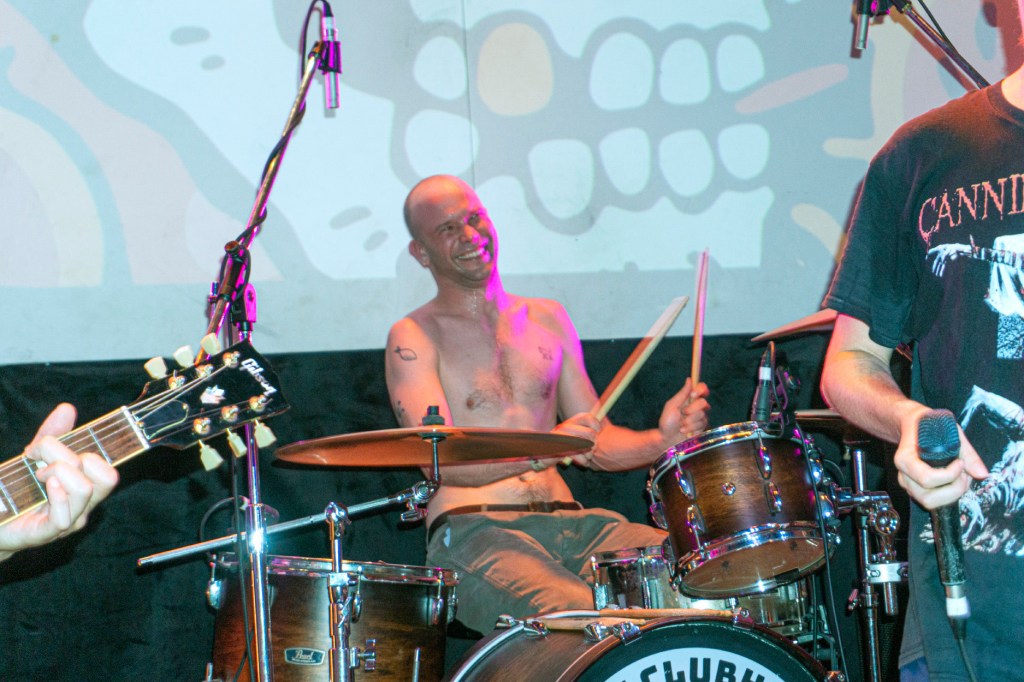
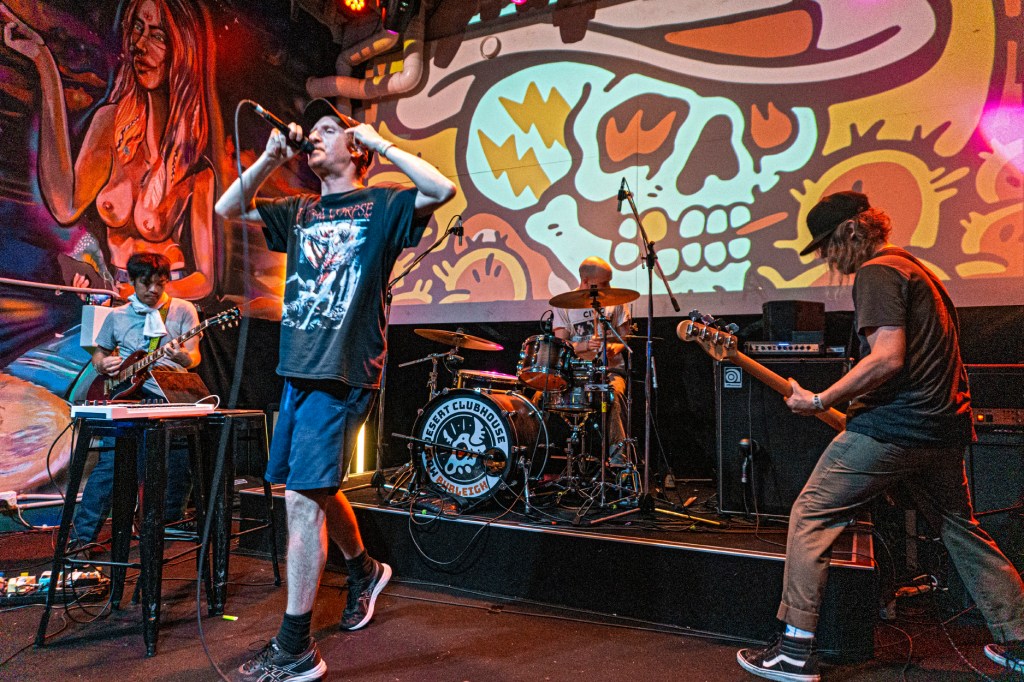
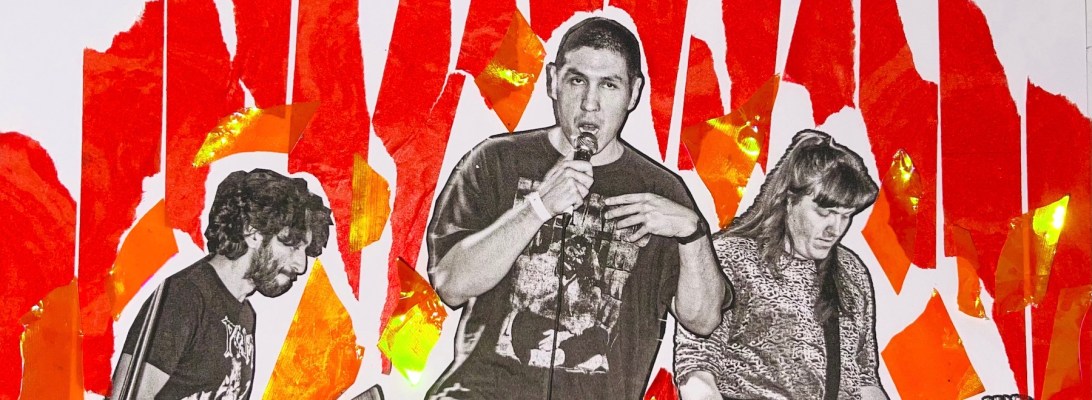
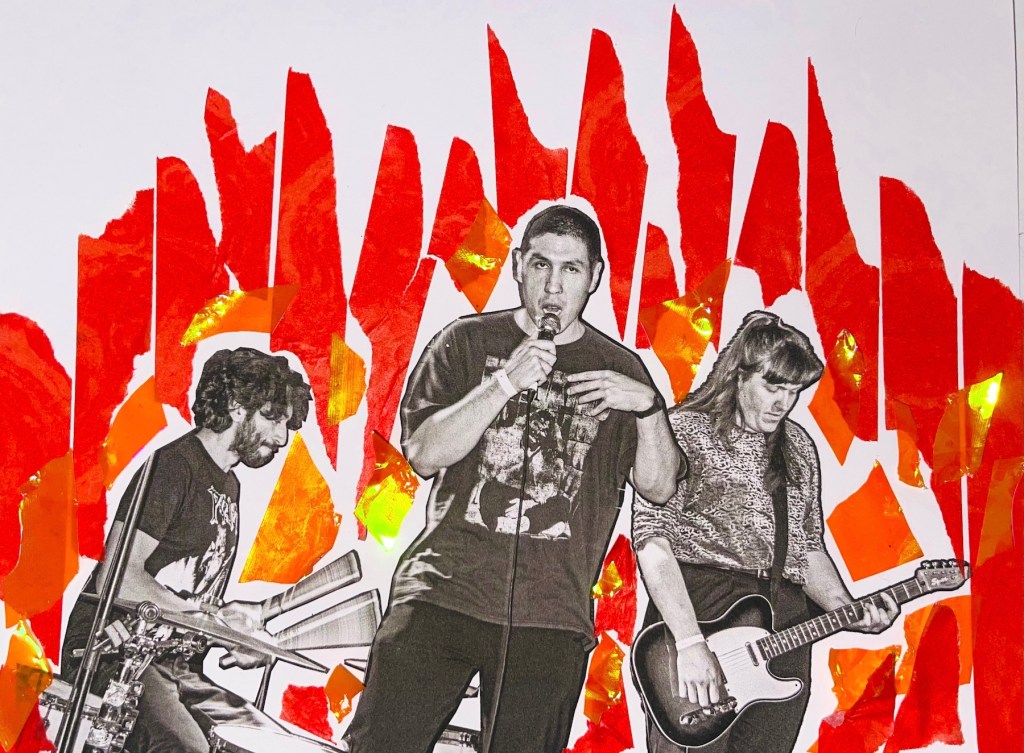
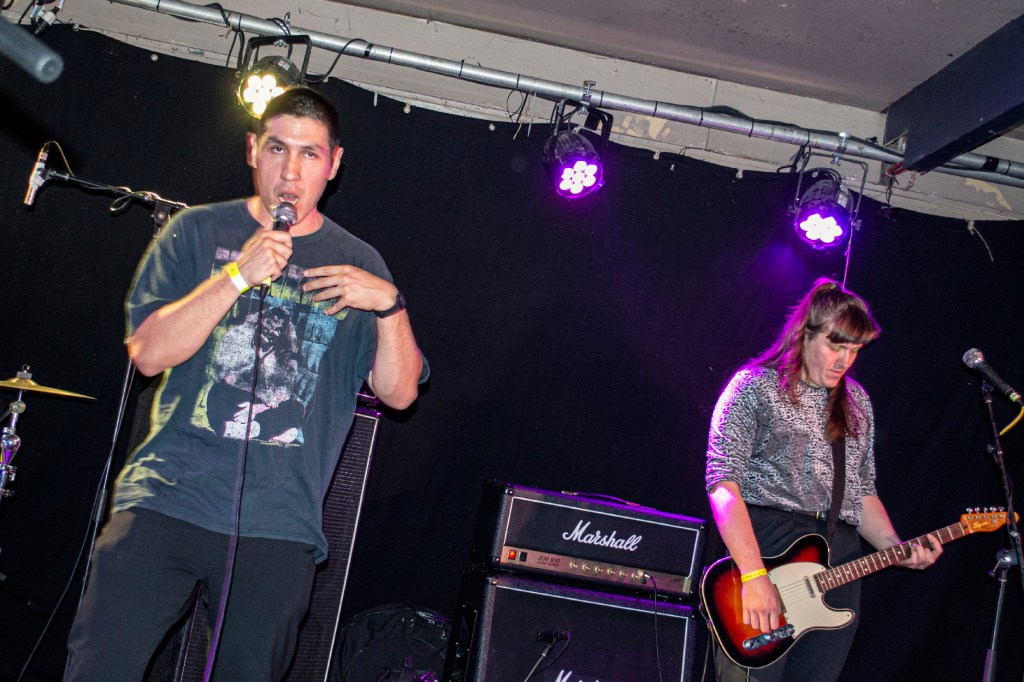
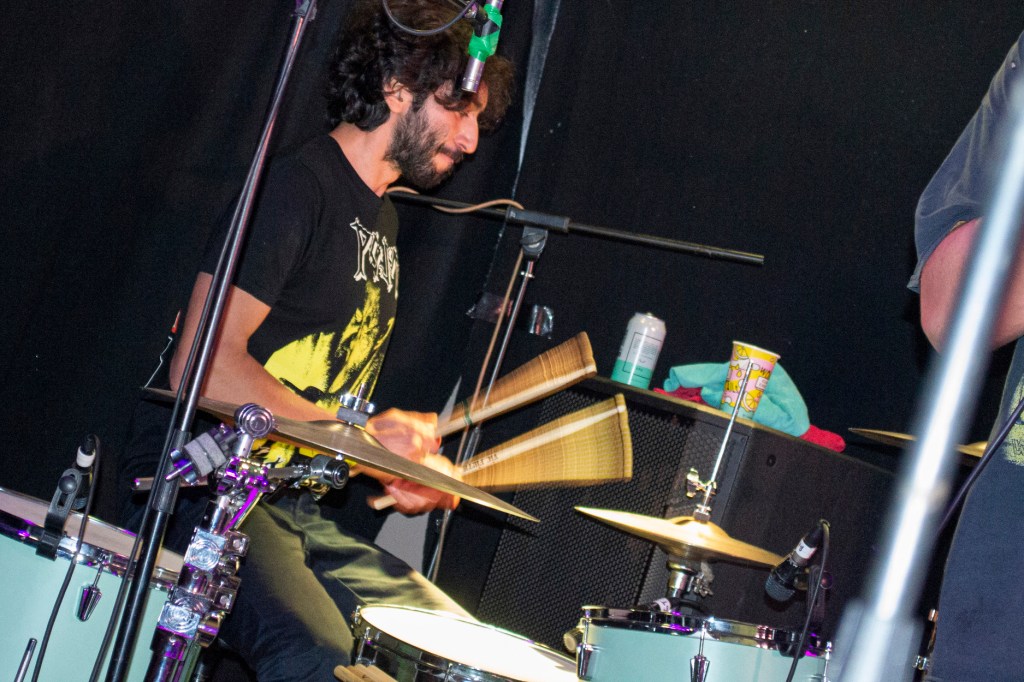
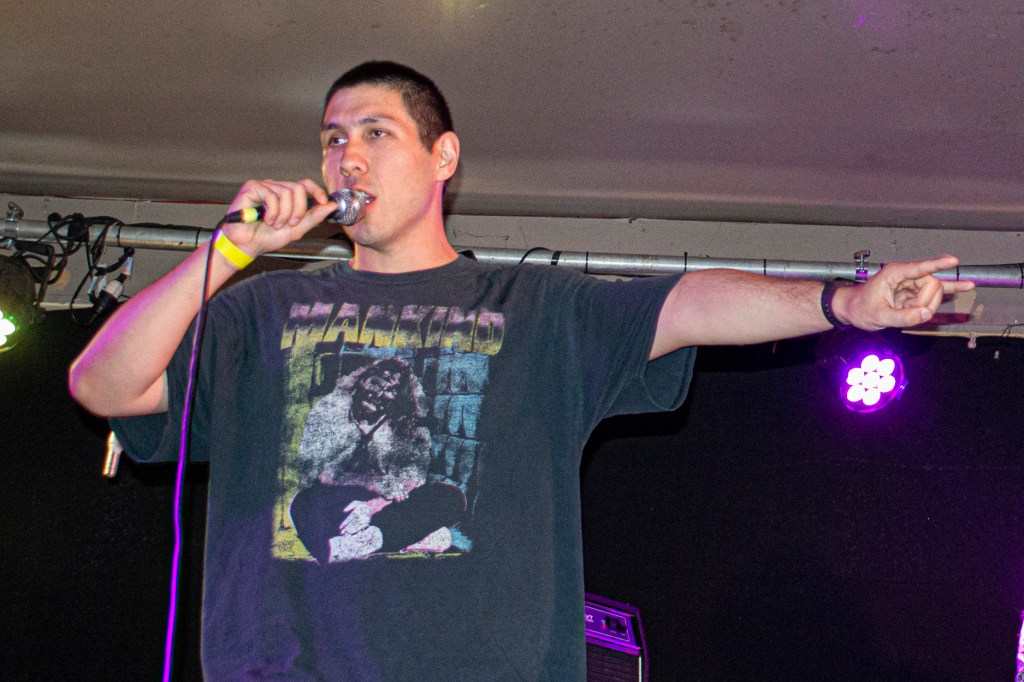
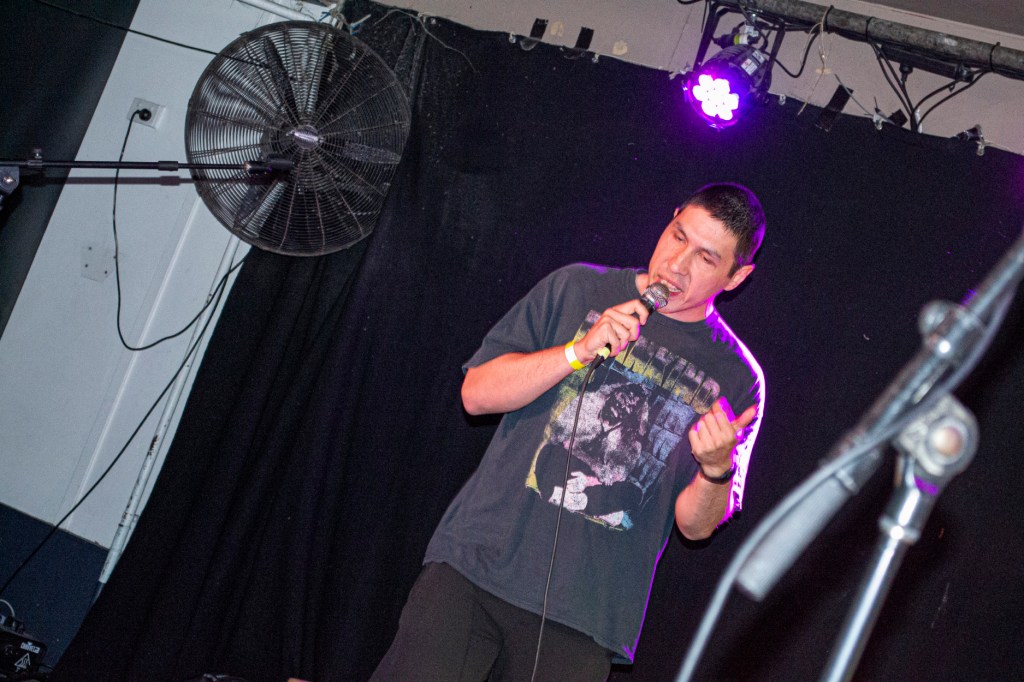
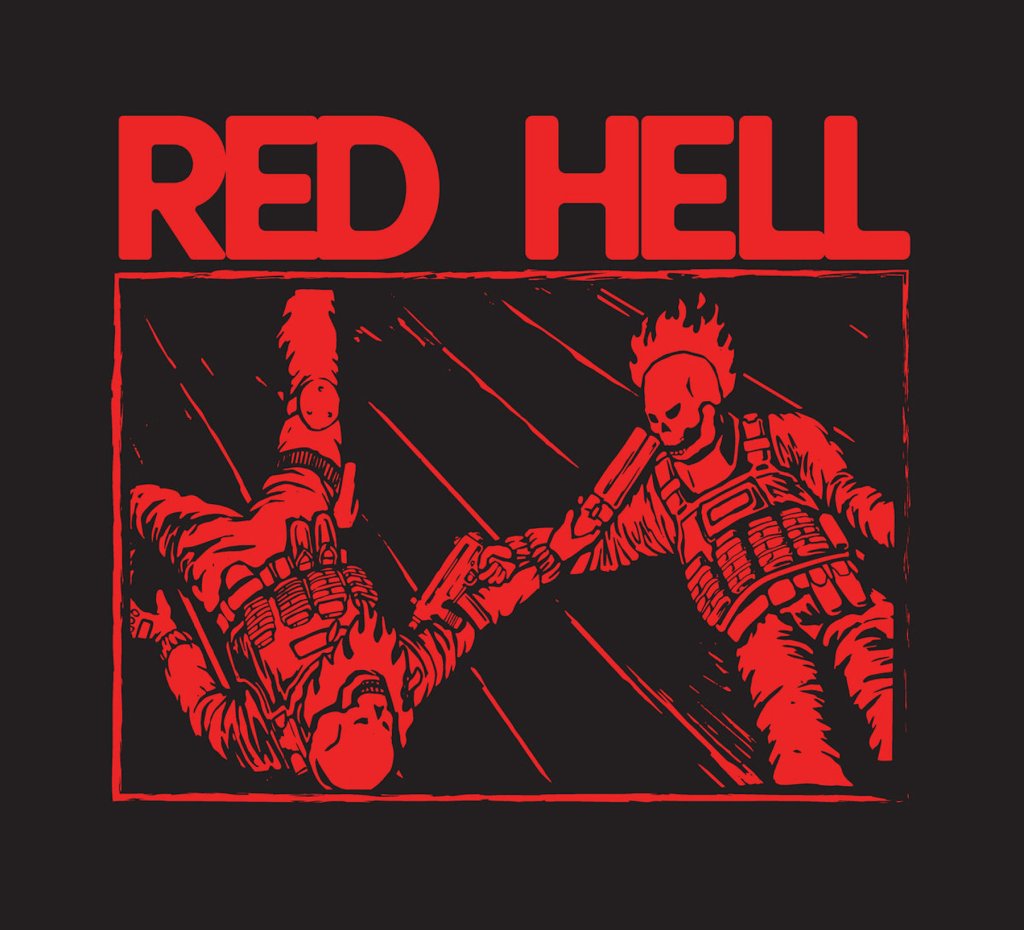
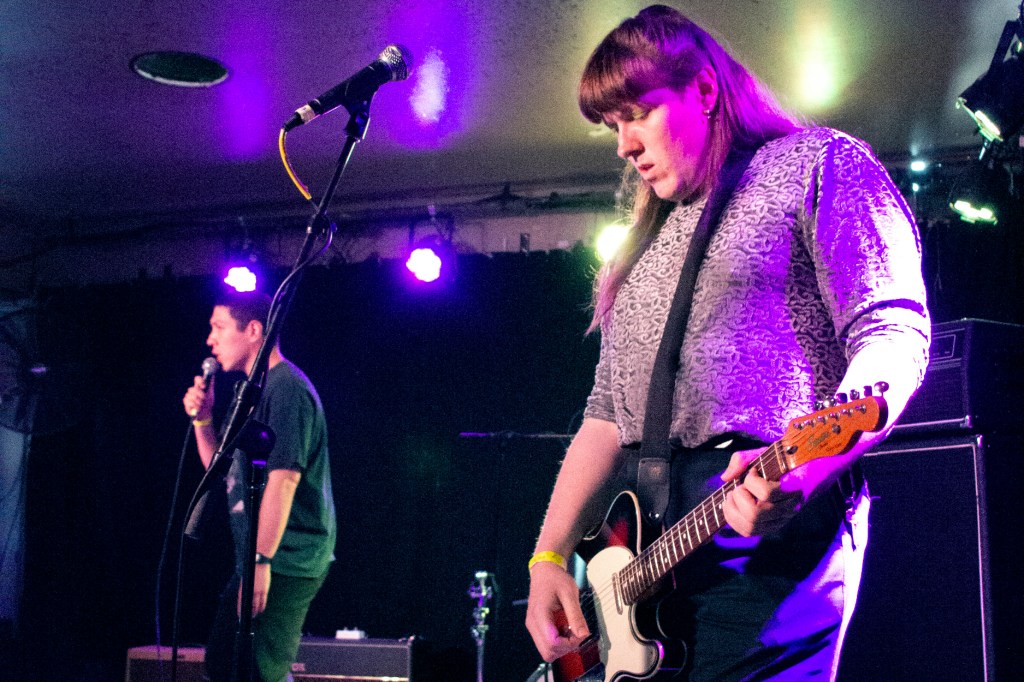

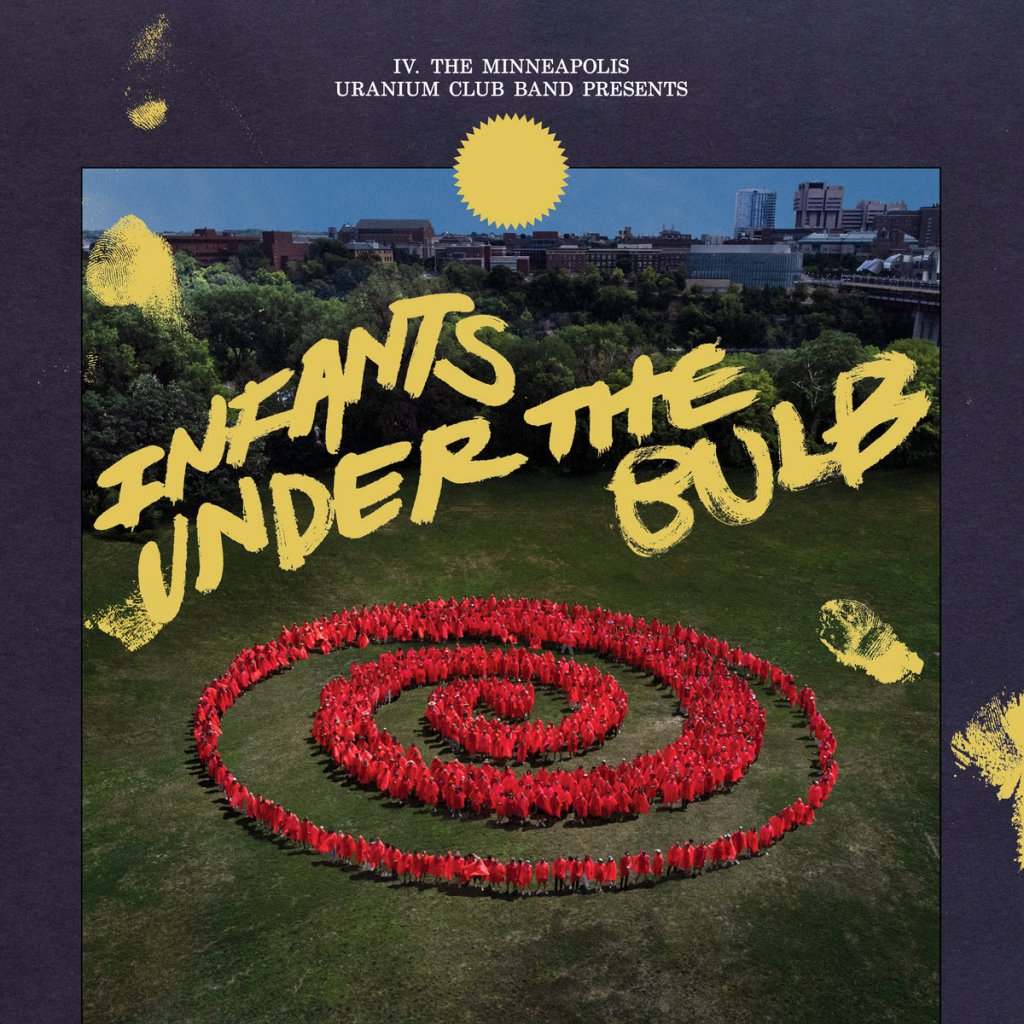



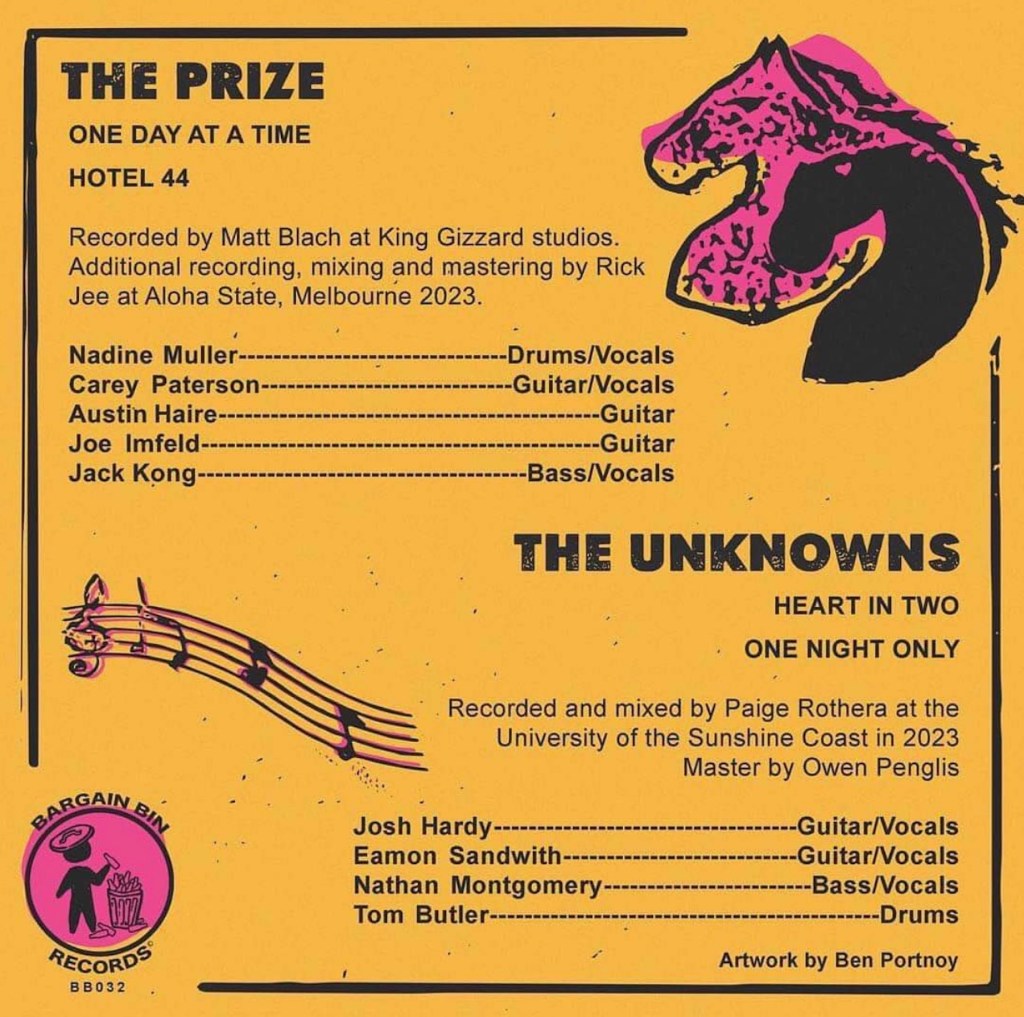
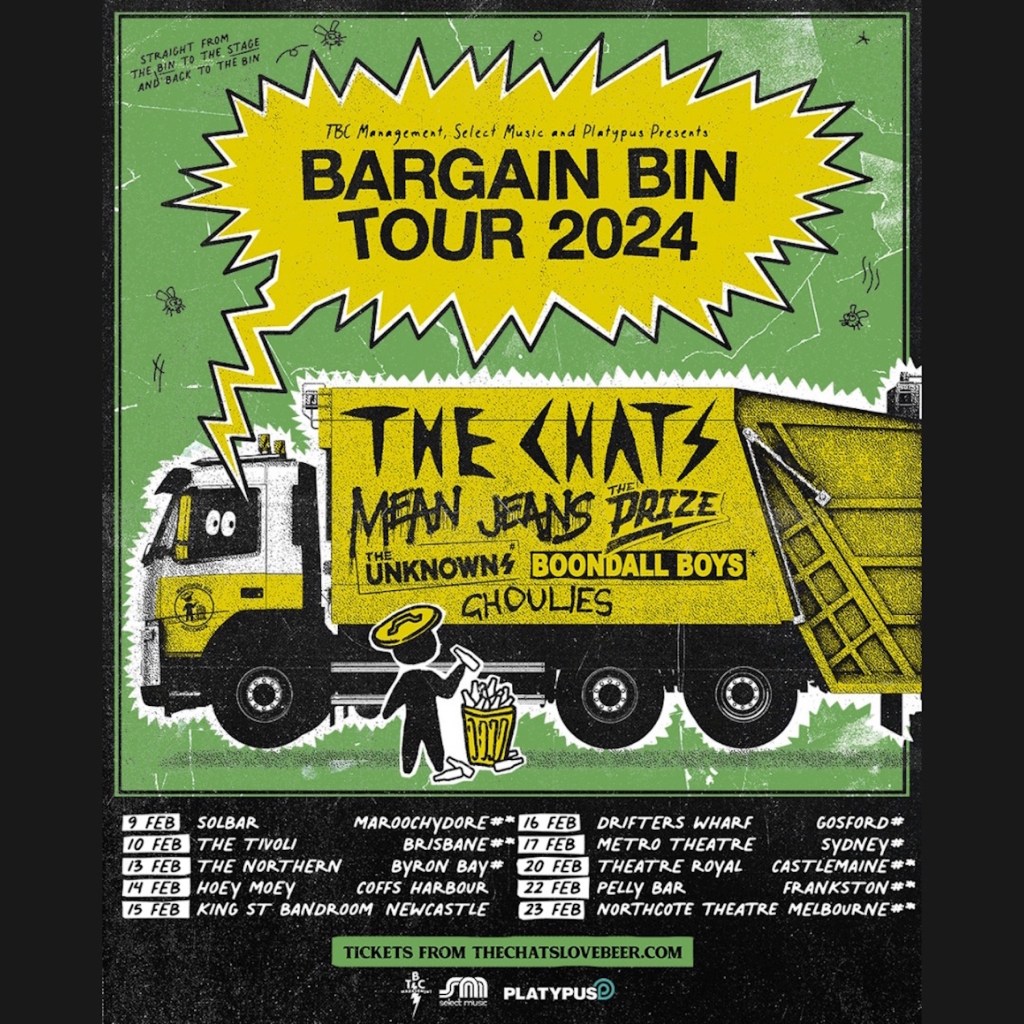

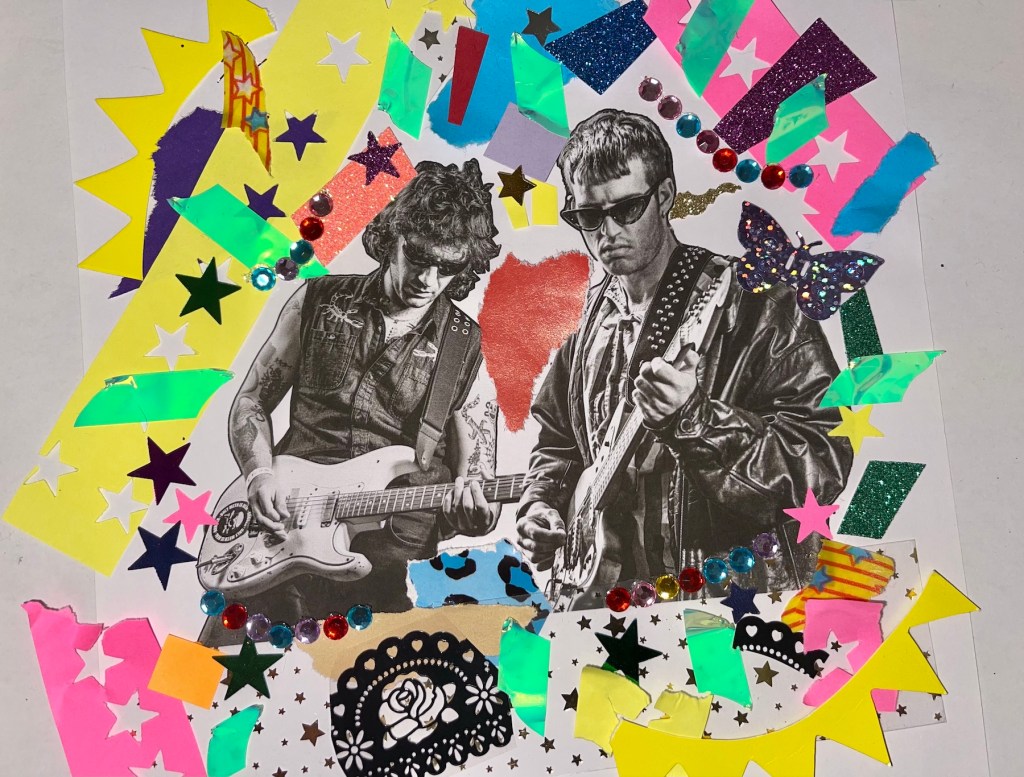
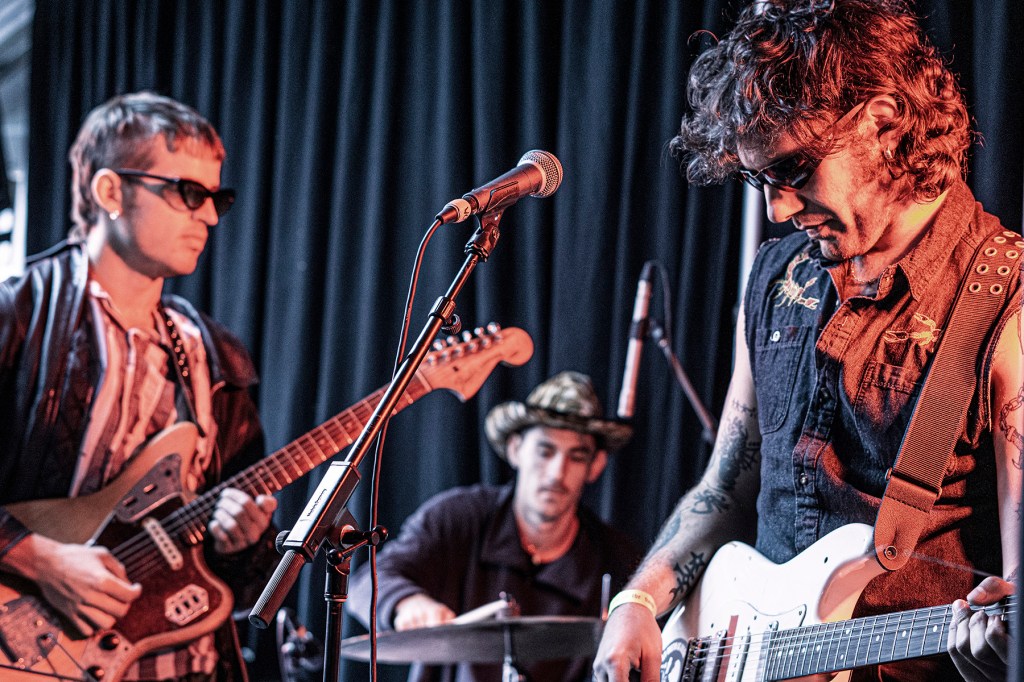
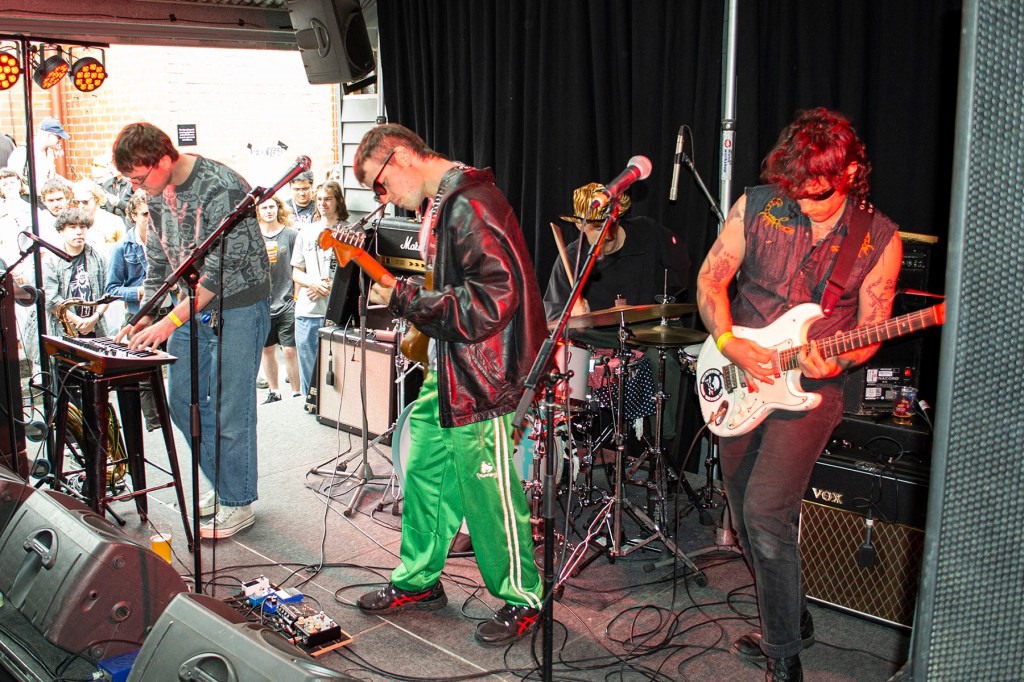
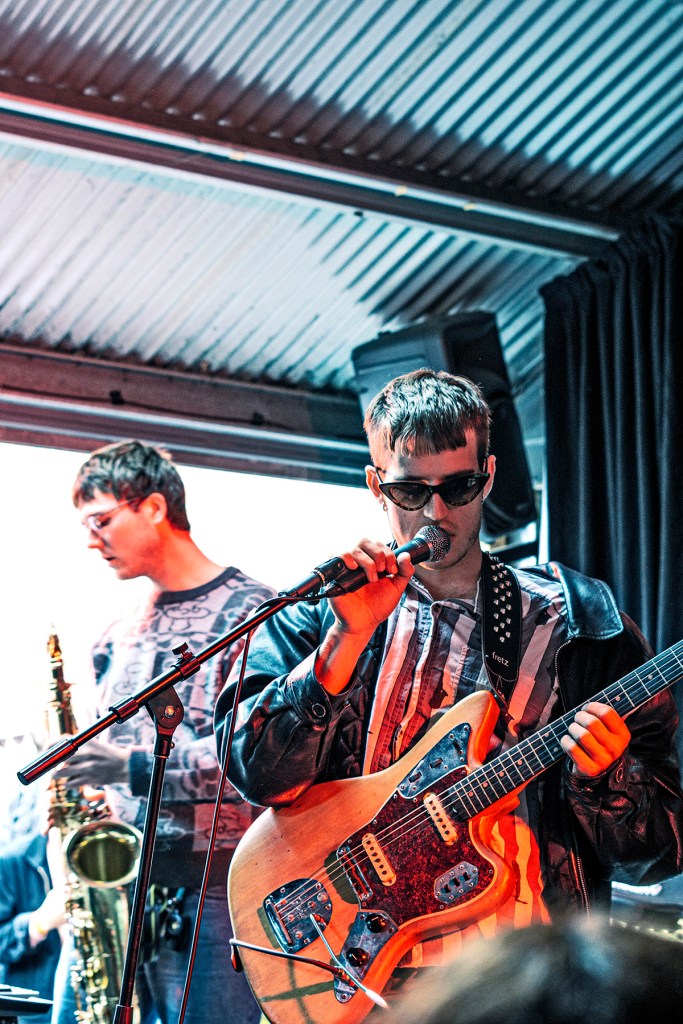

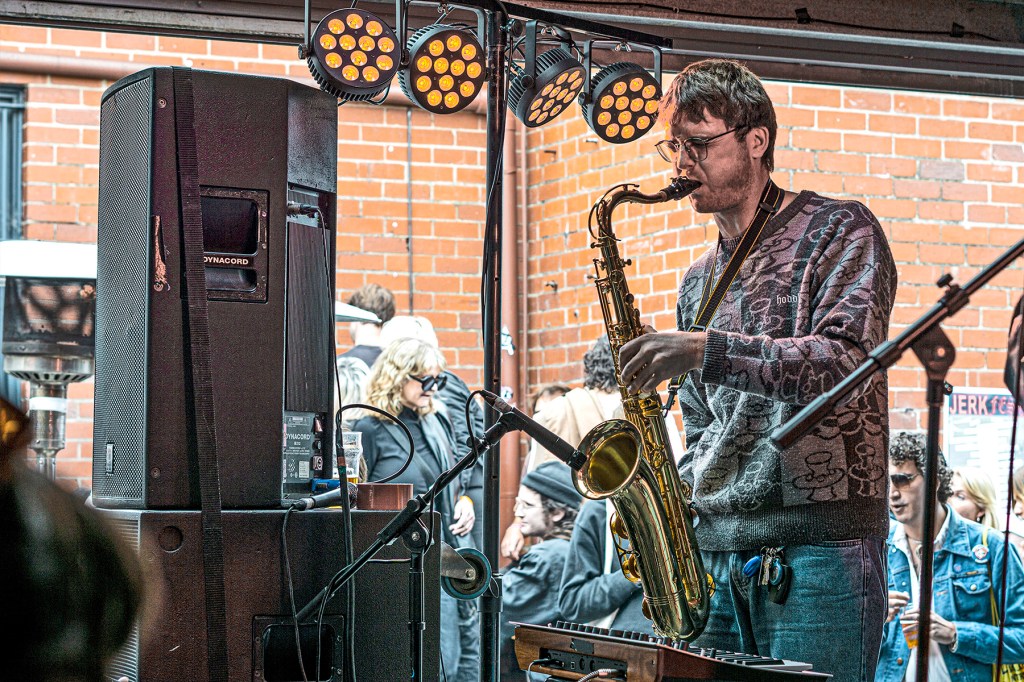
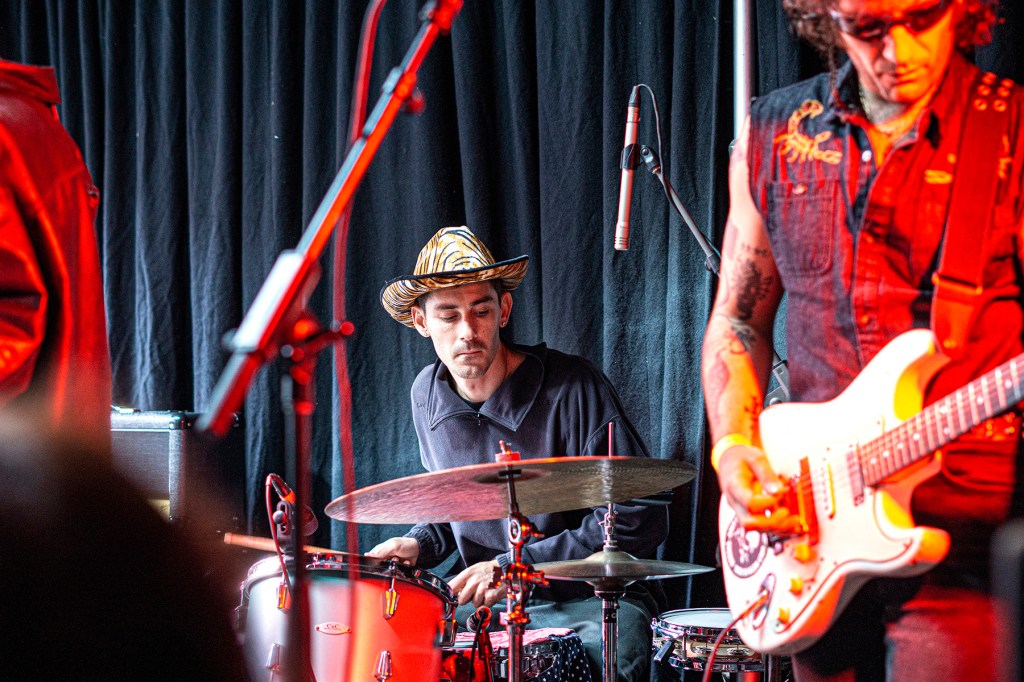
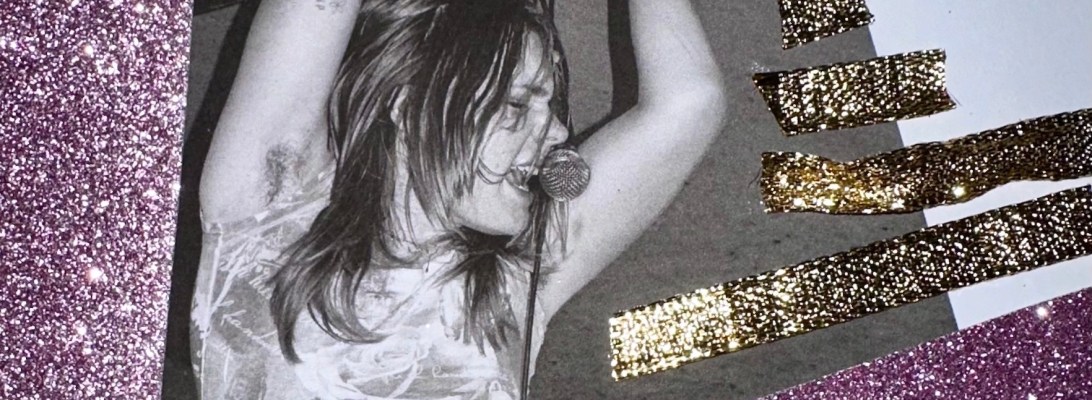
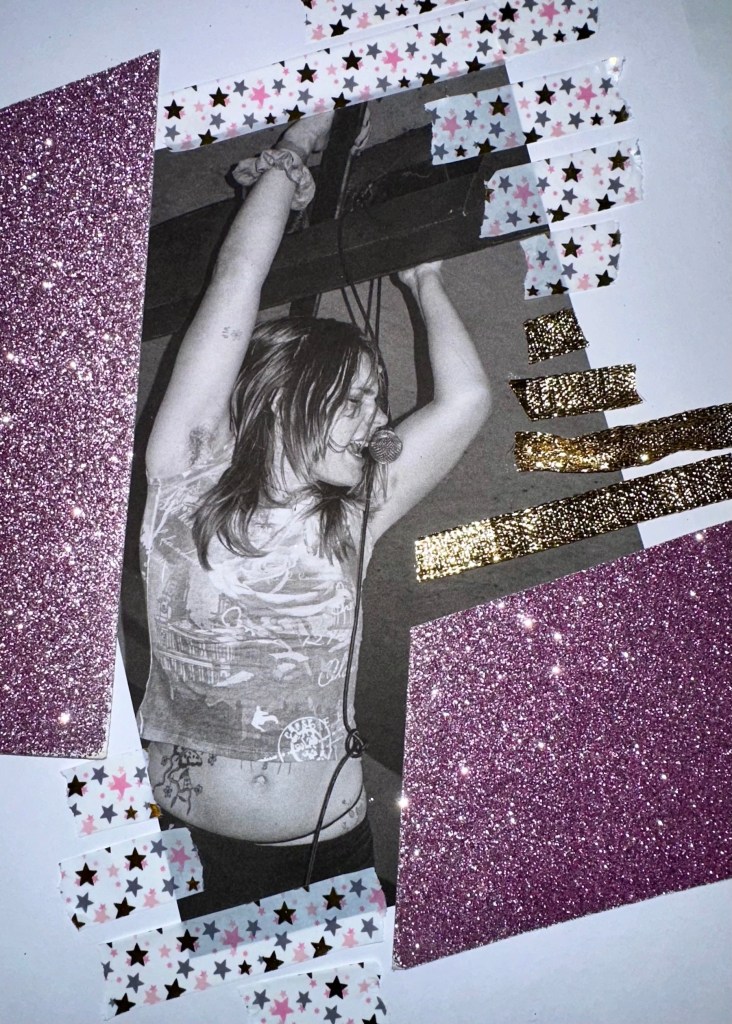
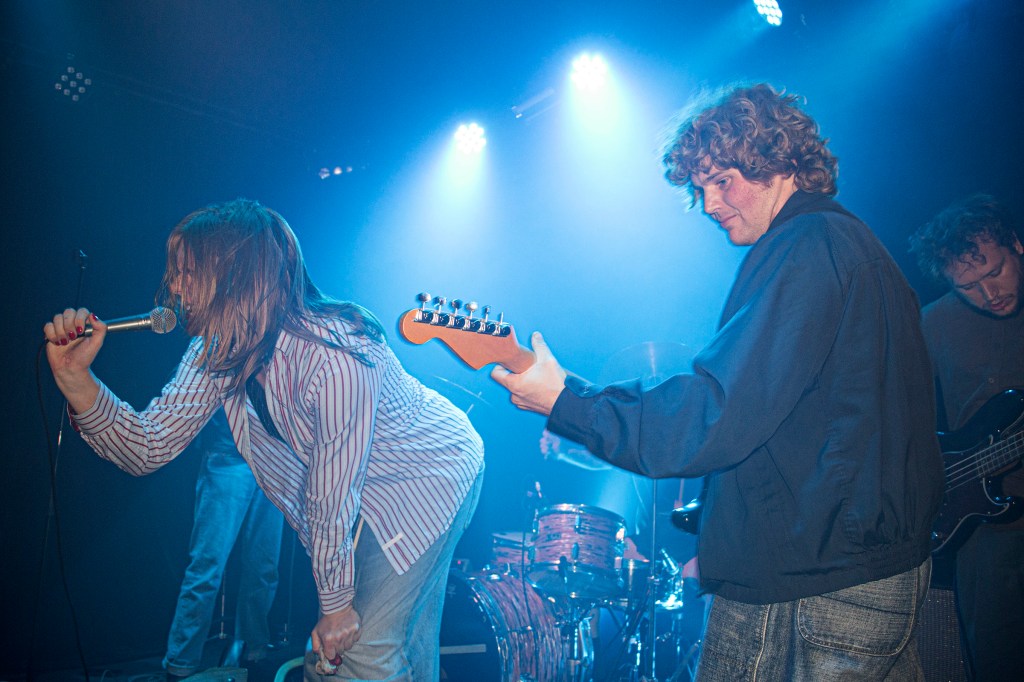
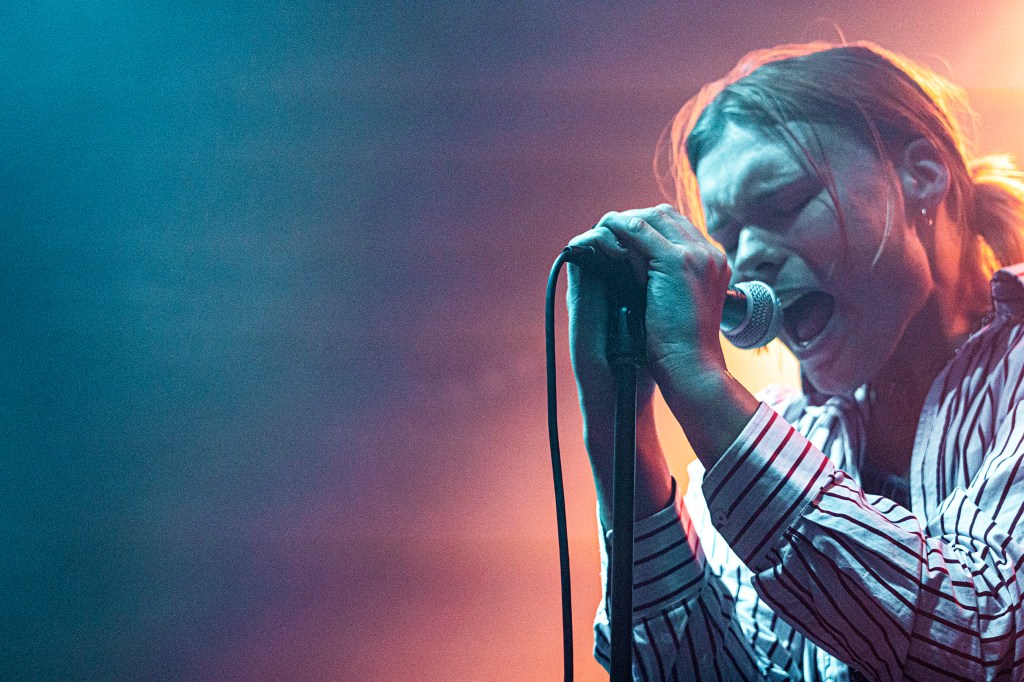
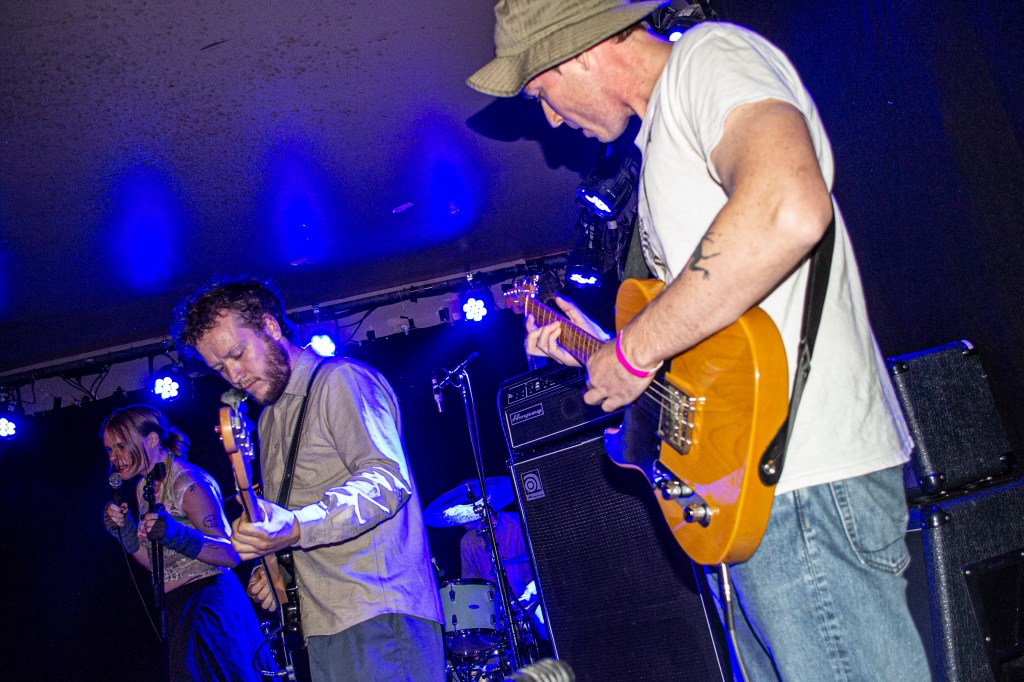
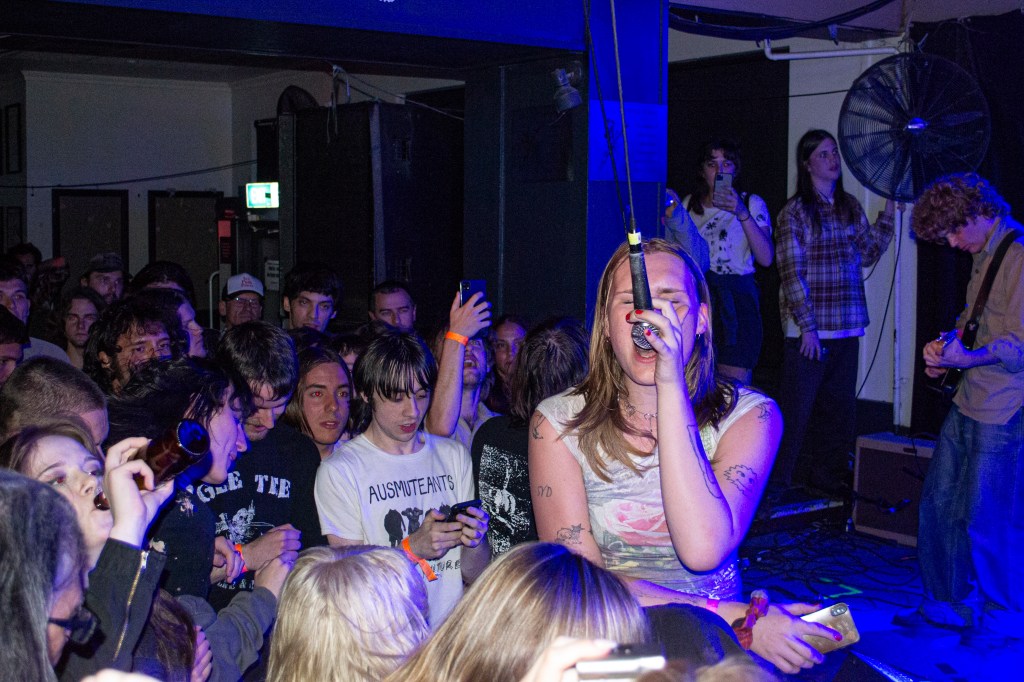

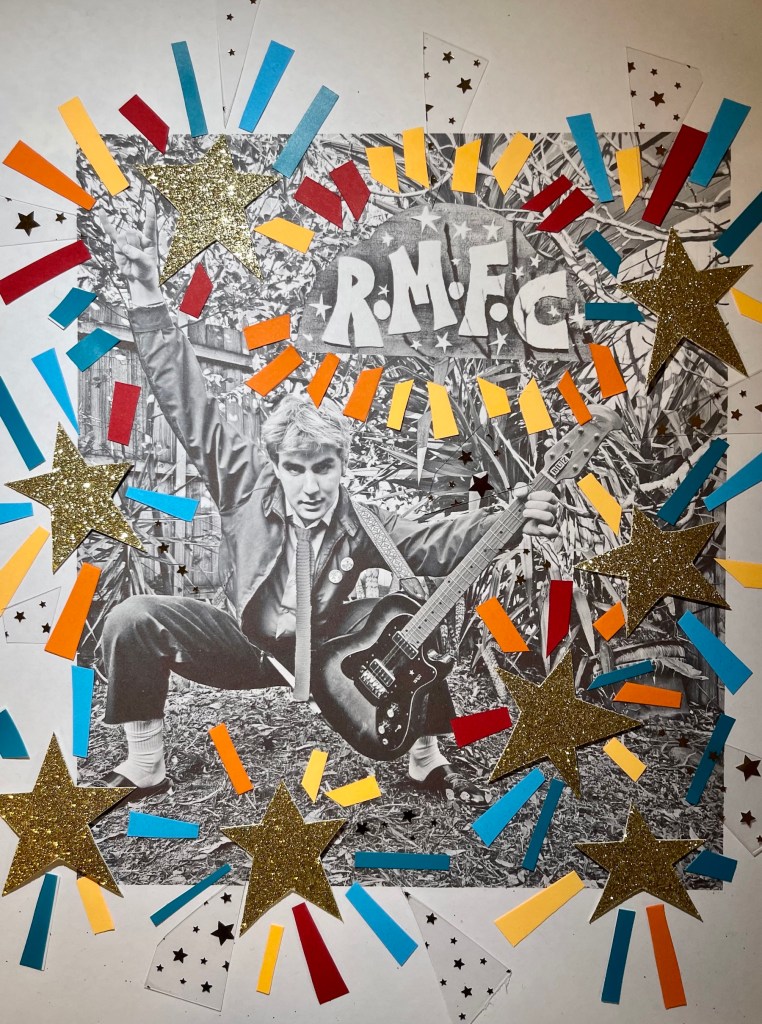
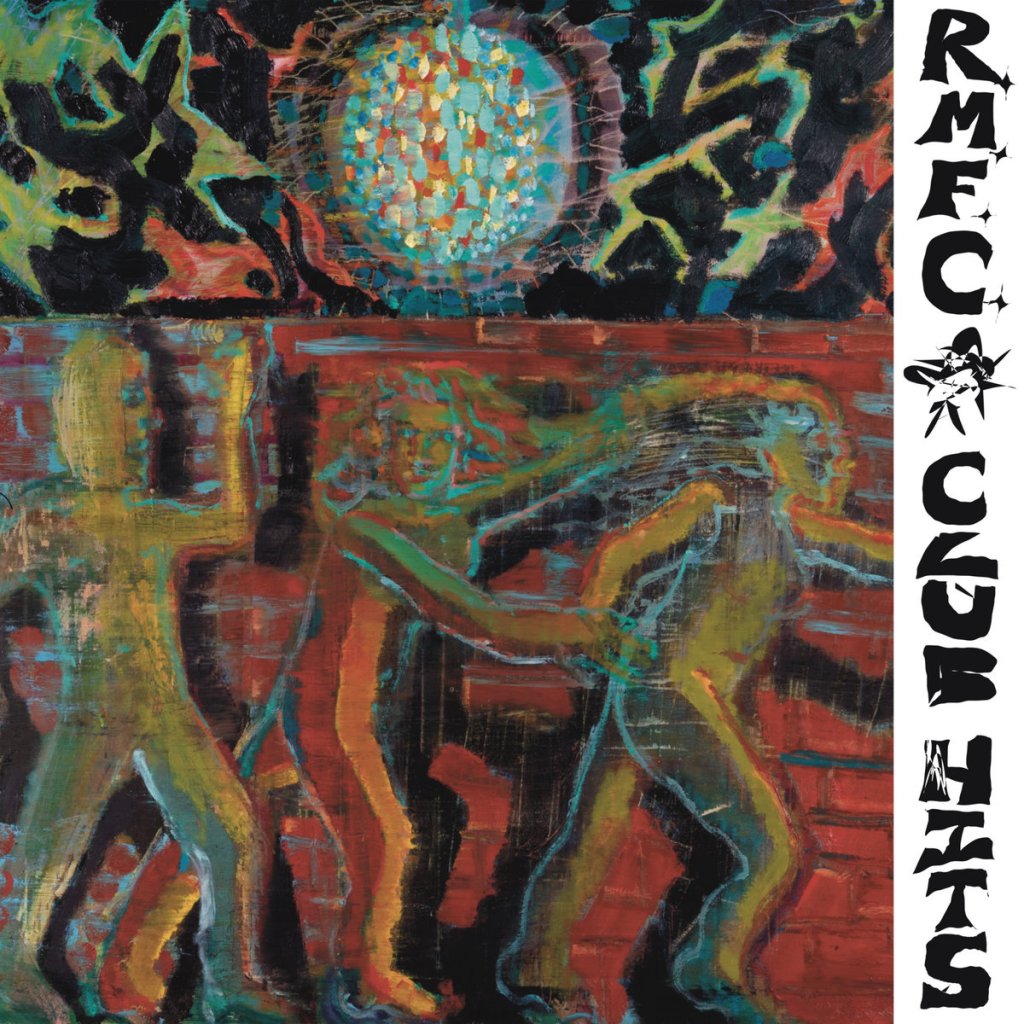

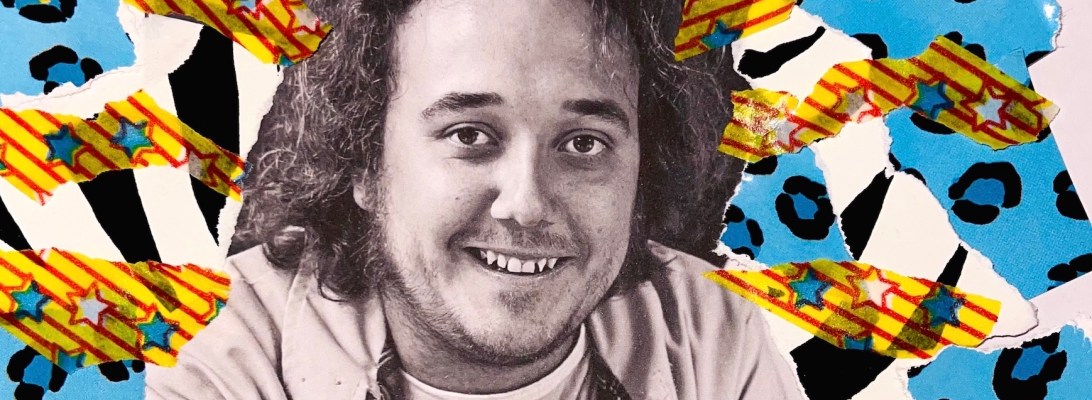


 Gimmie Gimmie Gimmie Zine