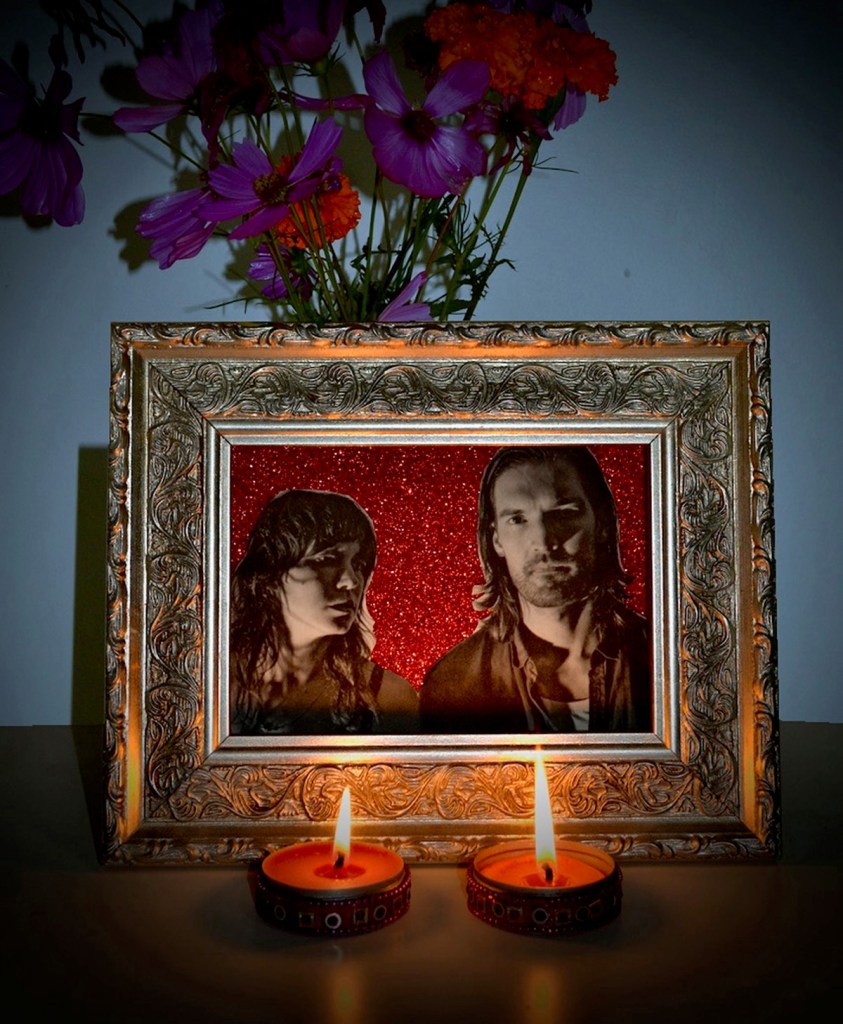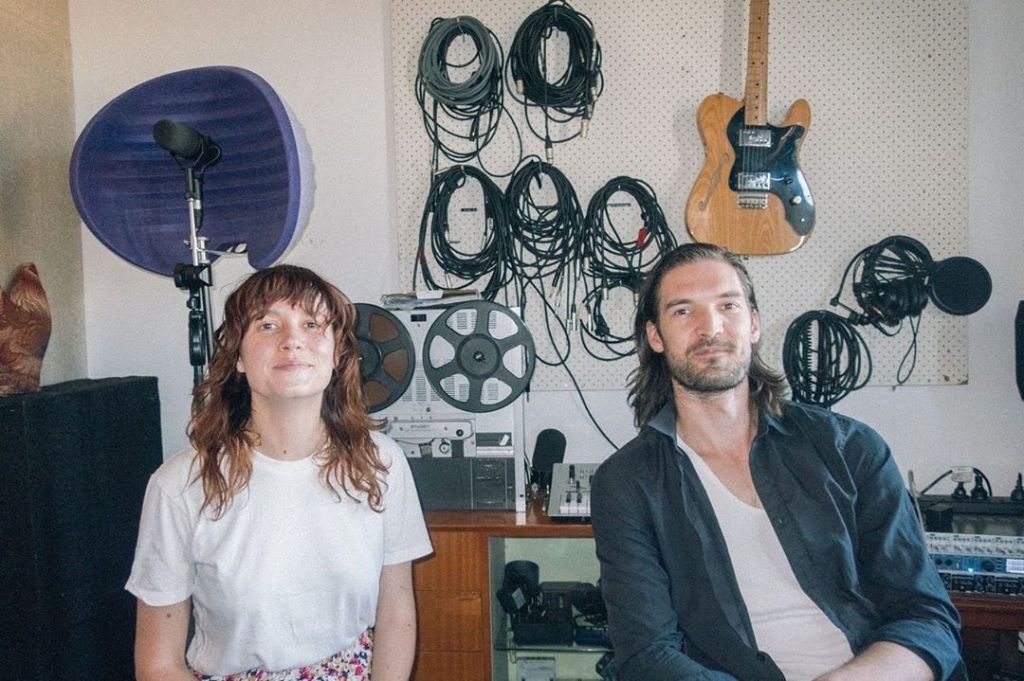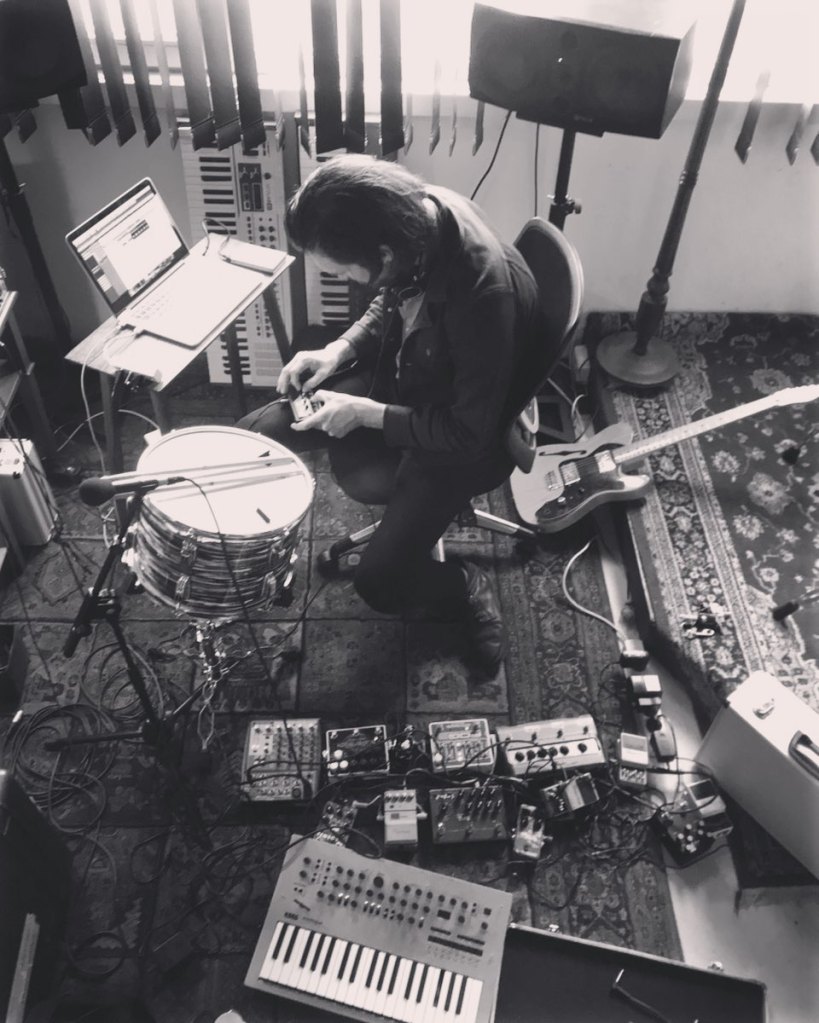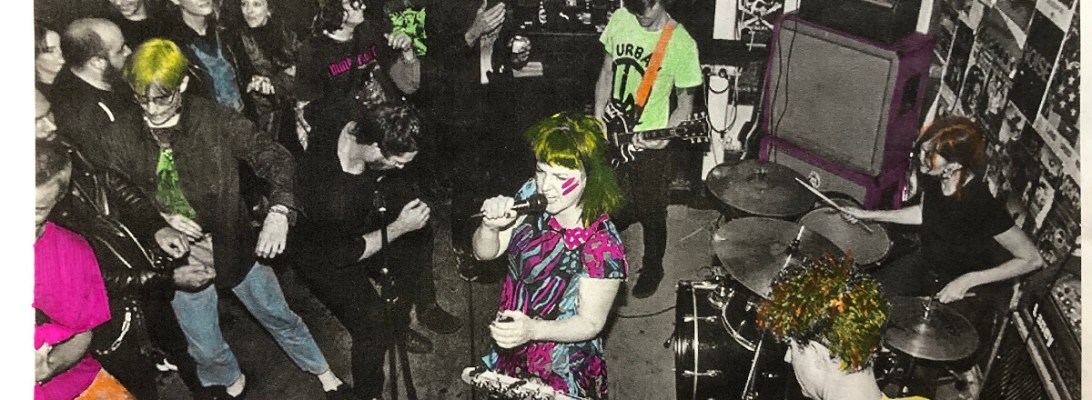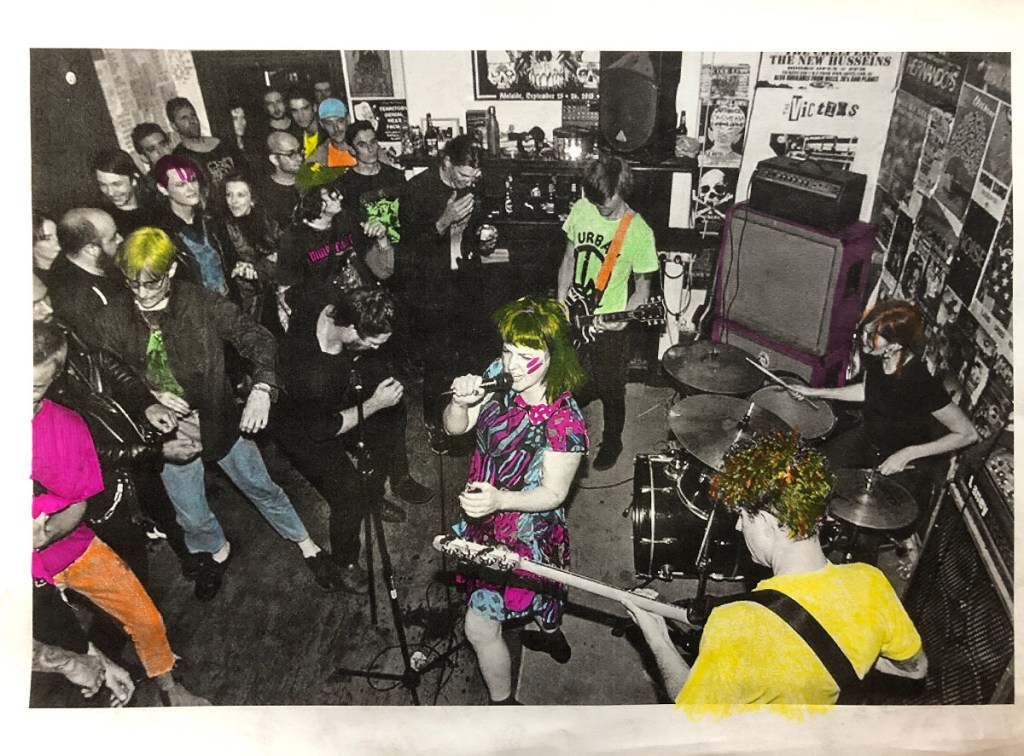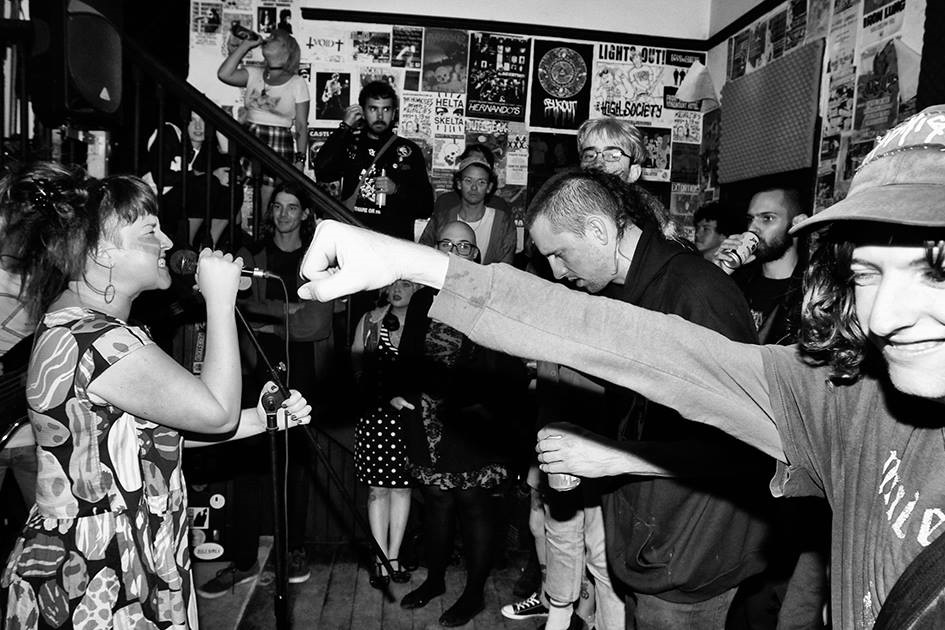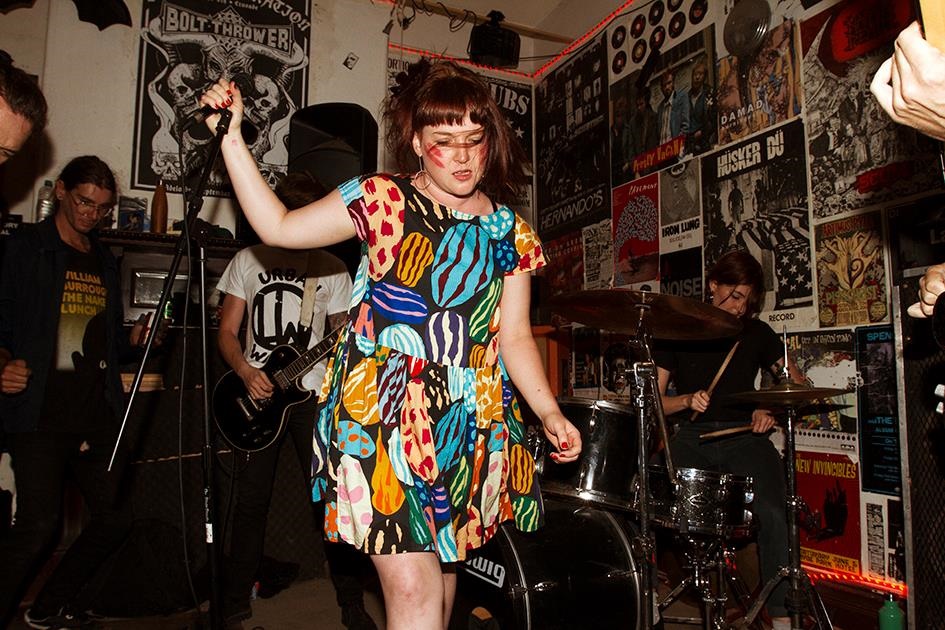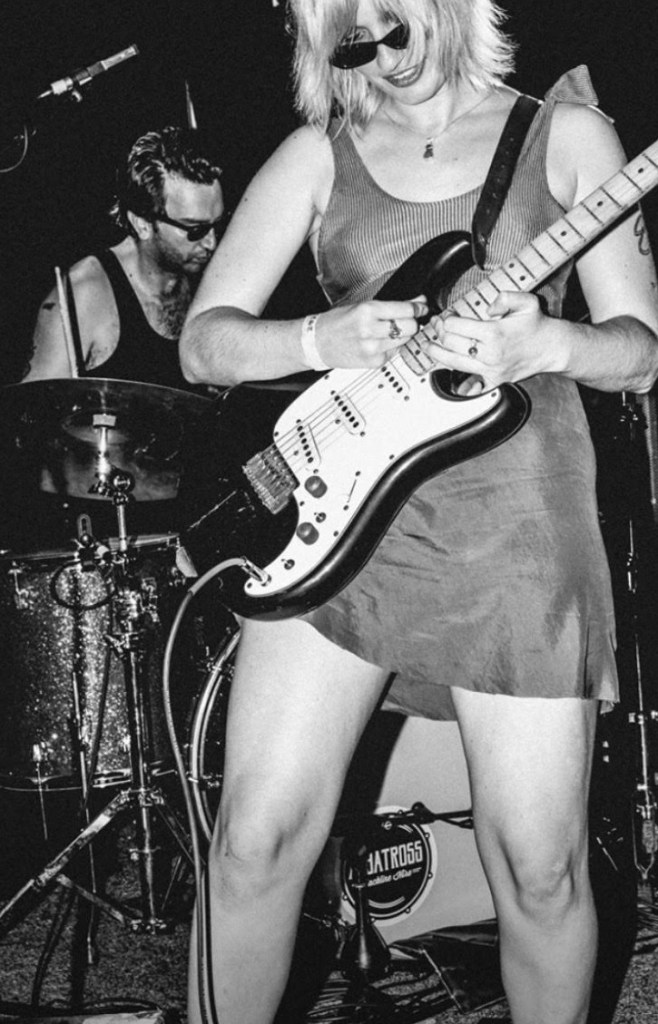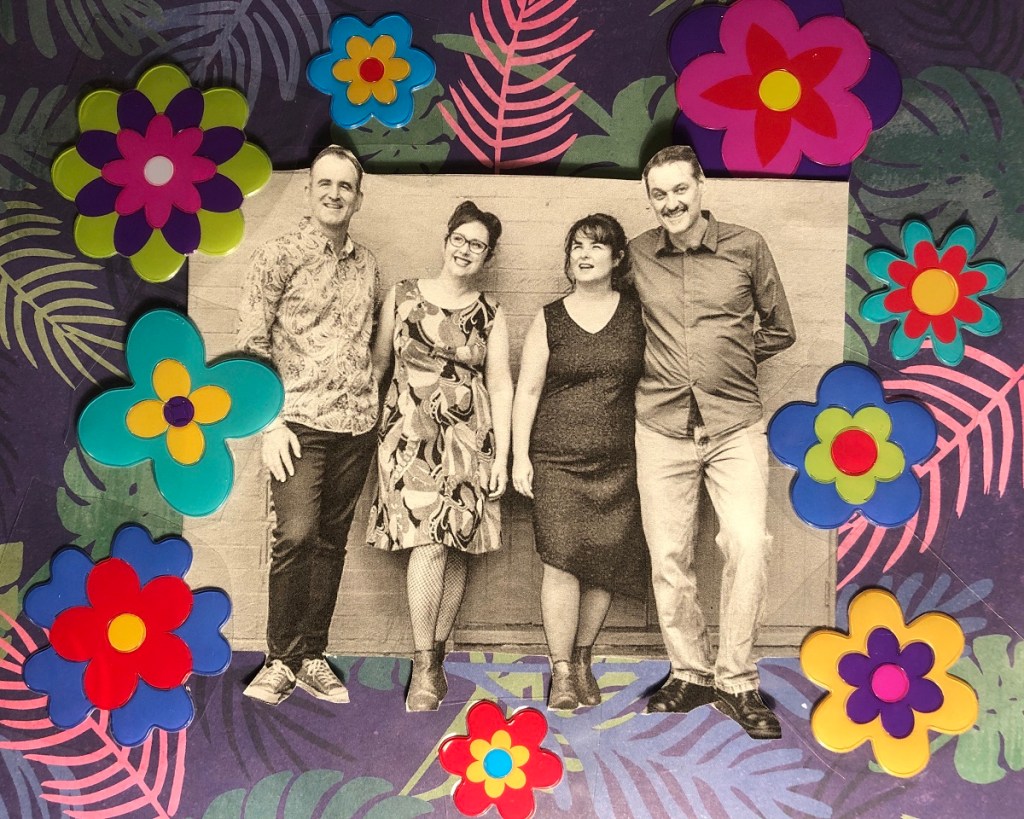
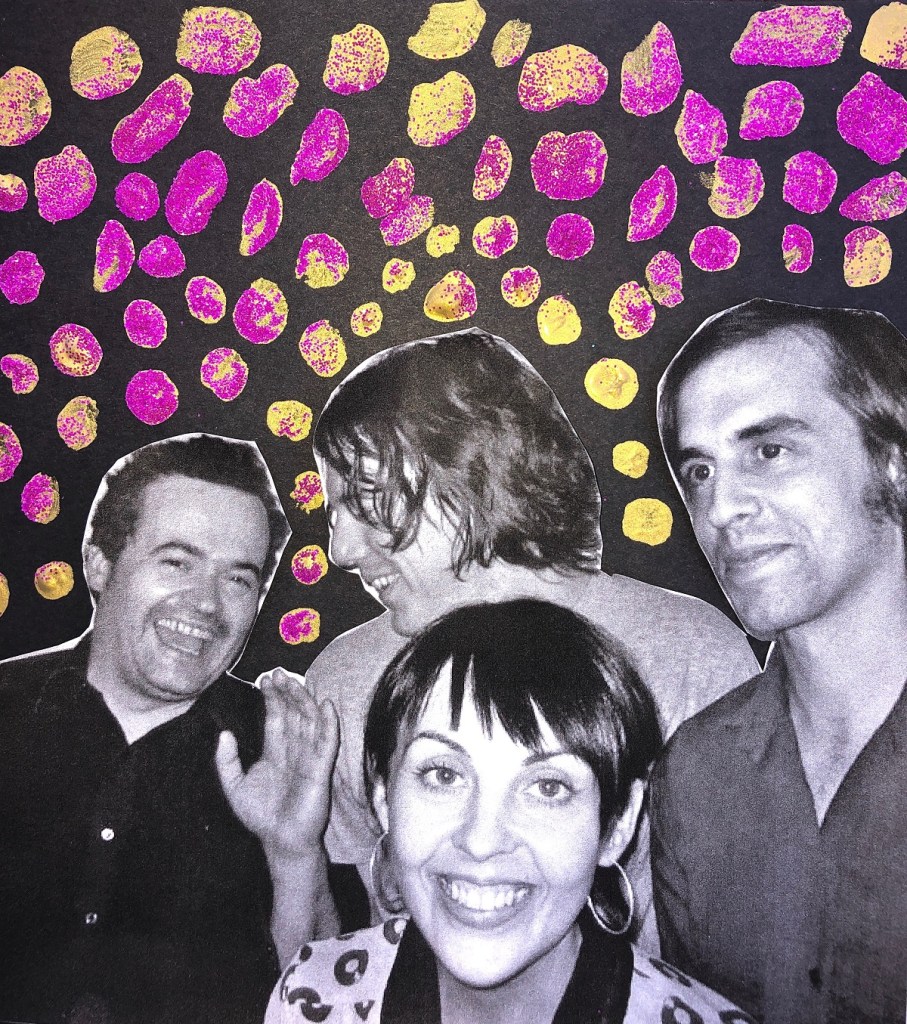
Portland’s Lithics first came to our attention in 2016 with their debut post-punk album Borrowed Floors. June 2020 will see the release of a new LP, Tower Of Age, both a continuation and evolution of their art-punk, with hints of no wave, sound we’ve come to love from them. Think a mix of Wire, Bush Tetras, Pylon, Erase Errata and Contortions.We spoke to Lithics’ Aubrey Hornor (guitar, vocals) and Bob Desaulniers (bass, guitar, tape loops) to find out more.
How did you first come to making music?
BOB: I’ve been playing guitar since I was twelve or thirteen and started my first band not long after. I had older friends that were in punk bands and played shows and I wanted to do that too.
AUBREY: I started playing drums when I was sixteen and my first band was in college.
Why is it important for you to create?
AUBREY: I enjoy the collaborative aspect and the creative process itself. Seeing an initial idea come to fruition through improvisation and group dynamics is gratifying. It’s a form of communication with music as the language.
BOB: When I was younger, music primarily appealed to me as an emotional outlet. While that’s still the case, in recent years I’ve become more interested in aesthetic or organizational considerations. My motivations are always evolving and I think that’s part of what keeps it an interesting activity for me.
In June you’re releasing your new LP Tower Of Age; how did the record start?
BOB: It takes us about two years to write a record. We’ve been playing some of the songs on Tower of Age live for a long time now. Recording the songs is only half of it though. Editing and sequencing is where you give the album its character.
Lithics uses a lot of cool wordplay in your lyrics; do lyrics come easy for you or do you have to work for them?
AUBREY: Sometimes it comes easy and sometimes not. It’s usually the last piece of the songwriting process. I work from notebooks of observations and poetry, and sometimes the words come from ideas I have for phrasing.
What are some things that were inspiring the writing for Tower Of Age?
AUBREY: I drew inspiration from everywhere-nature, literature, my personal life. It’s mostly hidden in abstraction in the final form.
What’s the significance of the album’s title?
AUBREY: It refers to the fortress you build up within yourself over time and the walls you erect to protect yourself. And personally, it’s about tearing those walls down and the process of letting go.
Lithics recorded with Evan Mersky (and Molly his dog) using tape; what kinds of things did you try during this recording that you haven’t tried before?
BOB: This was the first time we tried tracking instead of all playing live in a room. Wiley and I recorded the rhythm section parts first and really took our time getting takes we were happy with. It’s really difficult for everyone to get a good take at the same time and usually somebody is forced to compromise and leave in something they would rather not. This new way was less stressful.
We also took a cue from our 2017 tour tape Wendy Kraemer and decided to be a little more adventurous and include practice recordings, tape loops, and weird audio fragments. I regret not taking this approach for Mating Surfaces.
Were there any challenges making the album?
BOB: Songwriting felt like it took a long time. We wanted to challenge ourselves and let our sound evolve without resorting to older formulas or making any major aesthetic shifts. Physically recording the songs is always a challenge as well, with many emotional ups and downs.
What’s one of your fondest memories from recording?
BOB: It was really nice to have Evan’s dog Molly running around the studio lightening the mood.
You’ve released a film clip for the first single “Hands” where was it shot? The location looks pretty cool!
AUBREY: Desert Christ Park in Yucca Valley California and Joshua Tree national park. The indoor scenes were filmed in our friend Carole Anne’s studio here in Portland. I went on a trip to Joshua Tree with some friends and we happened to find the Desert Christ Park at sunset when we took a wrong turn. It was really beautiful.
What’s your favourite thing about your new record?
AUBREY: I like the two improvised tracks the most: “The Symptom” and “Half Dormancy”. They are unique performances we were never able to reproduce and I’m glad they made it onto the record.
BOB: The band very graciously gave me a lot of leeway with editing and as a result the whole record feels more personal. I’m glad it didn’t end up as just a collection of songs recorded in a studio.
Outside of making music what would we find you doing?
BOB: I am not very well rounded so it’s mostly music for me. I recently started studying classical guitar, which has been an exciting and humbling experience. I am not much of a visual artist but I enjoy working with collage as well.
AUBREY: I spend my time looking at birds when I can and I’ve been getting into gardening. I also occasionally work in ceramic sculpture.
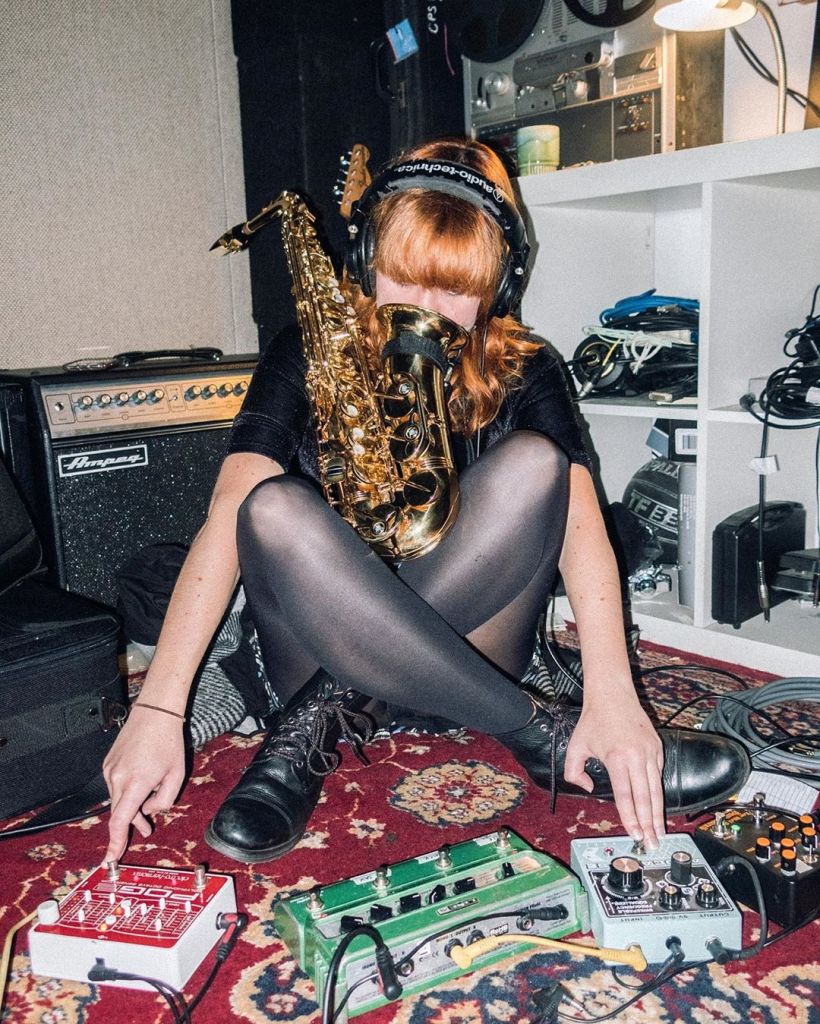
Sydney’s Party Dozen is the dynamite combo of Jonathan Boulet and Kirsty Tickle. They’re one of the most interesting and exciting bands around with an experimental musical fusion of saxophone, drums and electronics to create a unique, fierce sound. They’re getting set to release their highly anticipated sophomore LP Pray For Party Dozen. We interviewed them, getting to know them a little better and hearing more about the awaited release, out May 22 on their own label Grupo Records. Get on your knees and start to pray, the second coming is almost upon us!
Party Dozen is a project loosely based around improvisation; what appealed to you about taking this approach?
JONO: I think all live forms of music conjure some kind of energy, sometimes it’s a familiar energy and sometimes it’s not. Audiences aren’t stupid and they can sense when you’re checked in to your performance. For us, keeping our performances unhinged and untethered not only keeps shows fun for us but I think it brings a sense of danger and if we want to project more energy we simply play harder and faster. And even though there’s a lot of songs we now generally play structurally the same, there’s always room for spontaneity and expression if we’re feeling it.
You’ve known each other for over a decade; how does that familiarity help when playing music and writing songs together?
JONO: Obviously knowing each other’s tendencies and even subtle physical cues can help immensely when it comes to performing as a unit. I guess at the same time we’re always developing as players and not being too familiar with someone’s playing style can lead to surprises and new paths. Sometimes I think we’re dead on the same page but it’ll turn out we are on opposite ends of the book! A welcome surprise as there are no mistakes when you’re “making it up”.
How did each of you first get into music?
JONO: It started for me when I was 10. I tended to be a little on the hyperactive side but instead of opting for drugs, my folks bought an old drum kit from a country town that used to belong to a Jazz guy that was in the war but never came back.
KIRSTY: My start in music was pretty run of the mill. Bullied my parents for piano lessons age 4, because I was the youngest and my siblings were all having them already. Music was the only thing that ever really held my interest for a long period of time.
All photos courtesy of @partydozen Instagram.
How did you first come to creating music yourself?
JONO: When I hit high school my parents got me a keyboard. It had this looping arranger function on it where I could layer up 5 or 6 instruments. I would get home from school and play it every day, recording loops that I liked on to floppy disks.
KIRSTY: I started writing songs when I was around 13, just keyboard and vocal kind of stuff. But I didn’t get into experimenting until I met Jonathan. He really pushed me to think about music differently and follow my own path with creating it.
I understand that Party Dozen started while you were overseas and that you started out playing the reverse – with Jono on saxophone and Kirsty on drums – of what the band formation is now; firstly what inspired you to be a two-piece with these instruments? Why did you first experiment by switching instruments?
KIRSTY: Yeah, we did one jam like that. I think Jono really wanted to play sax and I’ve always wanted to play drums. But it was dogshit, so we went back to the ones we’re good at. My memory is that we spoke about making a band in Berlin, but recorded our first song while living in London. We started taking it seriously when we moved back to Sydney. Coming back to Australia was this real lightbulb moment for both of us – we love living here, we love creating here and we love the community here.
Party Dozen’s music has quite an aggressive vibe and has an edge to it that can push the parameters of what makes people feel comfortable both as a listener and as a live experience; was that an intentional goal when crafting your sound?
KIRSTY: For sure. We always want to push the boundaries of how much sound two people can produce, and then extend on that. For me Party Dozen is also an experiment in how to utilise our instruments in more interesting ways, and appreciating that that sometimes isn’t going to be “nice” or “pretty”. There’s a real strength in that for me.
You’ve previously mentioned that with Party Dozen you wanted to “form a band that could help us grow as musicians”; in what ways do you feel you’ve grown since starting PD?
KIRSTY: When we started this band I couldn’t really use effects pedals. So I’ve really grown in that department. I also feel like we’ve both gotten so much better at playing our instruments in a live setting – still plenty of room for improvement though.
JONO: Yeah with the current format of this band, the better we get on our instruments the more options we have for exploration. This band has forced me to play harder better faster stronger.
Where did the title of your forthcoming sophomore LP, Pray For Party Dozen, come from?
KIRSTY: I think it sort of started as a bit of a joke…
JONO: Party Dozen is a band that no one asked for, so I think it’s funny, the idea of praying for us.
What inspired the new record?
KIRSTY: Film Noir, cults, 1960’s rock, conversations about dead friends.
How did you record it? Jono you record, mix and master Party Dozen’s songs, right?
JONO: We recorded it in our little 15sqm box in Marrickville, Sydney. Generally we’ll improvise to a loop a couple times and pick the best one. We run the sax through an amp with a DI and generally use 4-6 mics on the kit. We mix and master in house because we’re possessive and greedy.
I know when writing songs that you like to experiment and that you like to play a few different takes over loops to find what sounds best; how important are feeling and intuition in your process?
KIRSTY: The writing process is very improvisational, so I’d say feeling and intuition makes up about 90% of it. If it feels good, we’ll explore. If we like the vibe, it’ll normally make the record.
JONO: You can tell pretty quick if a song is coming together and whether it’s worth pursuing. Once we’ve made a loop, you can envision the song and if that sounds good in your mind, it’s likely to sound good in reality. There’s only ever been a couple of jams that got to the jam phase and didn’t make it.
Were there any risks you feel you took while making the album? Or any happy accidents from the process that made it on to the album?
KIRSTY: There’s a song with no loops! Which is the first time we’ve done that, and we didn’t go into the recording aiming for that either – so I guess that’s a happy accident!
JONO: Nothing too risky. We were more focused on expanding our sonic palate. More colours to play with in the Party Dozen world. There was definitely an intentional focus on aesthetic and vibe this time around.
What gear really helped shape the sound of, Pray For Party Dozen?
KIRSTY: On my set up, I got some new pedals. A wah, a new fuzz and a couple of new delays.
JONO: I run all my loops off of a Roland SP-404, I use one crash, tighten the fuck out of my snare and try to hit everything as hard and consistent as possible.
What was one of your favourite moments of recording the new record?
KIRSTY: The opening track “World Prayer” is probably the most challenging track to listen to on the record. It was also the most fun, rule-free, throwing-shit-at-a-wall noisey tracks I’ve ever recorded.
JONO: Some songs you know just don’t feel right while you’re playing them, so it takes a few goes to get it right. But there are some songs, eg. “The Great Ape”, that feel right every time you play it. When it feels right the first time, you get this rush of excitement or a hit of some highly addictive drug.
What keeps music exciting for you?
KIRSTY: I get excited to just keep making. And trying different things. It’s not hard to keep excited with a band like PD… we can do whatever we want next.
JONO: Touring is what keeps it exciting for me. When there’s heat in the room and you can feel people’s energy on stage, nothing beats that.
As artists what are the things that you value most?
KIRSTY: I value time. Time to tour, practise, make records, hangout with friends who give me tonnes of inspiration. The more time we have as Party Dozen, the better.
JONO: I value a sense of humour, originality, and people with a sense of vision.
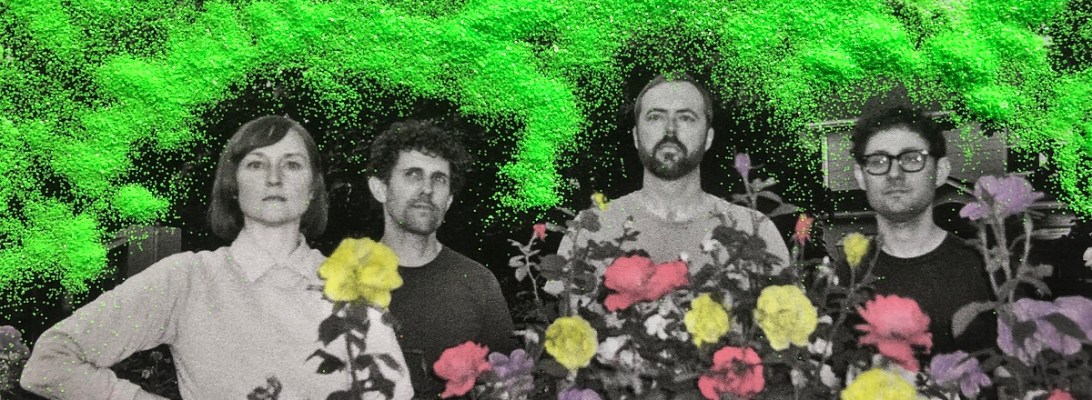
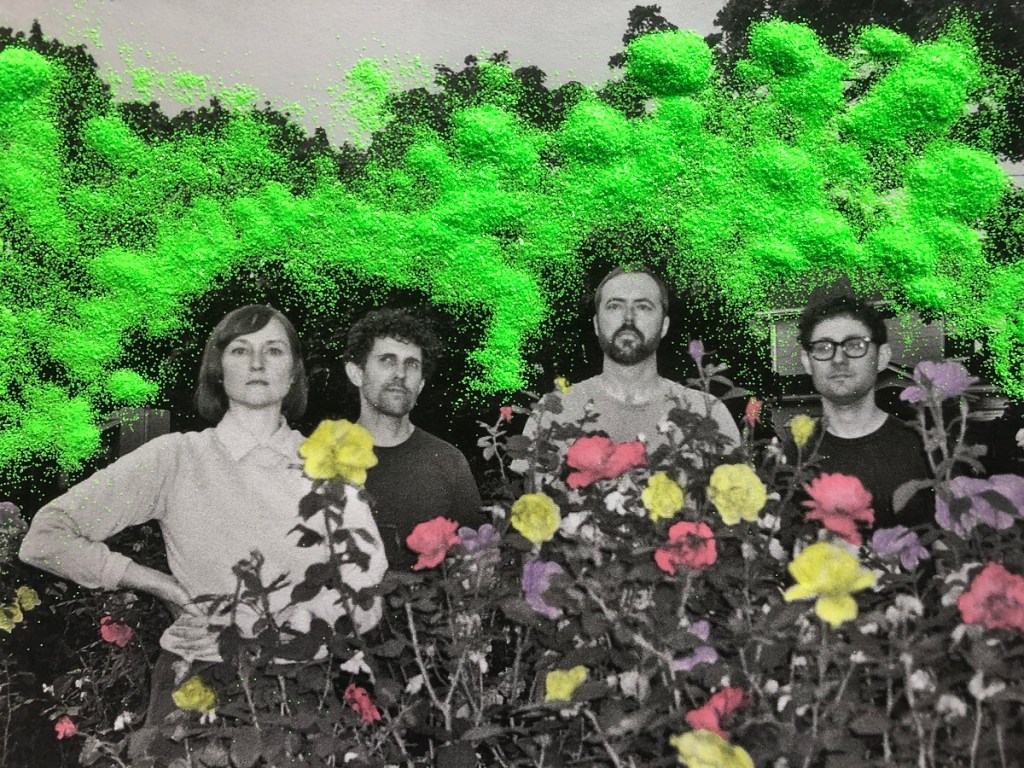
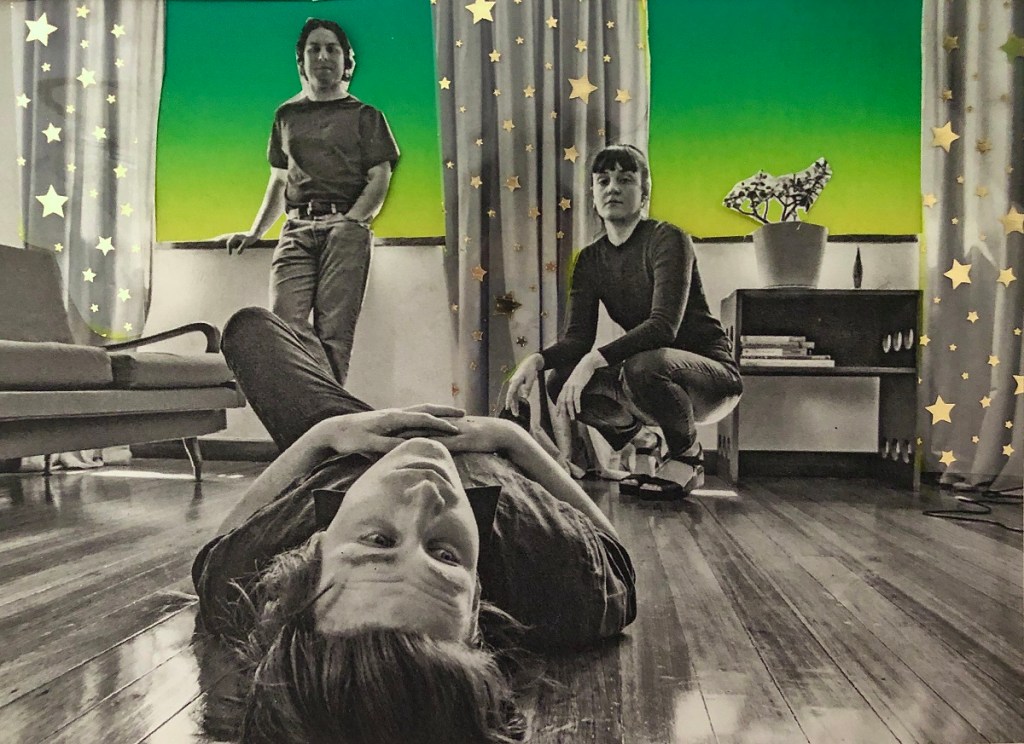
Melbourne band The Stroppies’ music is the best parts of jangly British C86 and New Zealand’s Flying Nun in its heyday with their own transformative modernisation. There’s a lot of bright moments to be found on forthcoming LP Look Alive! (out May 1 on UK label Tough Love Records), shining moments of poetry and simplicity. We spoke to Stroppies’ guitarist-vocalist Gus Lord to shed light on the new album.
Your new album Look Alive! was written mostly on the road, which I understand is a different process for The Stroppies than what you’d normally do?
GUS LORD: Yeah, I’ve never done anything like that before. Last year was really full throttle. We were in plans to go back to Europe this year, making new music felt just like the right thing to do. It was an interesting process working out of a notebook in a car.
What was the first song you wrote for this LP?
GL: The first one we wrote for the album was “Burning Bright”. We wrote that one before we went on tour actually on a Saturday morning screw around with me and Rory [Heane; drums]. The original demo is quite strange.
We like strange! Strange is good.
GL: Yeah, strange is good! There’s meters of tape in our studio space that would have a lot of stranger things on them that may one day see the light of day.
I hope so. What kinds of things were inspiring the songs?
GL: From my perspective and process, I’m just putting down words and putting threads together; I have to keep follow that, until those threads inform me what the themes are. Once I get an idea of what the themes are going to be, I fishhook that onto a personal experience. With the last record [Whoosh!] I was writing from the perspective of other people, whereas this record is a little more personal. They’re not confessional songs but they’re going a little further under the skin than the last set of songs did.
Did you find it harder to write more personal songs?
GL: I think they’re still very much stories, my definition of what makes a personal song is probably far removed from your Ed Sheeran or whoever is popular right now. Not explicitly really, when you’re doing it right things are relatively unconscious. I think songwriting is just hard full stop, at least it is for me.
What’s the story behind title track “Look Alive!”?
GL: When you frame something in the context of a title for a body of work it subtly re-contextualises it. It seemed like a funny thing to call the record. It insinuates alertness and has those connotations to army lingo. For me, I just thought the two words looked nice together. I had the phrase written in my phone for a little while and when we decided to call the album that, I was looking for a name for the album’s title song; I managed to whittle that into the second verse.
I’ve been looking at all the track names and it’s almost like it’s telling a story as you’re progressing through the album.
GL: Yeah. If you’re thinking of the first two singles that we put out “Holes In Everything” is a sweet affectionate song, the sentiment at least. Whereas “Burning Bright” is more discerning and unsure of itself. Both songs are about relationships, different parts of those relationships.
Where do you write the song “Aisles Of The Supermarket”?
GL: That was one of the other songs that we wrote at home. It was partly written in our front room, we recorded four different demos of it and it wasn’t until the final moment when we went into another person’s studio and ran a bunch of tape loops behind it that the song found its feet. That was a Claudia [Serfaty; bass-vocals] one, she had the poem that we put to the music.
You recorded your album in December last year?
GL: Yeah, it was a pretty quick turnaround.
Your last album Whoosh! was recorded in a studio and your work before that was recorded at home, now you’re back to doing stuff at home again; how’s it feel to be back in the more familiar environment, your own space?
GL: Better! I feel a sense of ease and comfort. A precedent that I wanted to establish with the band was not being locked into any one style of recording or benchmark of production. We’ve always done stuff fifteen instruments on a tiny little cassette player and then big studio affairs. It felt like that this recording was a nice synthesis of the two. We got to track it at home with Alex Macfarlane who put out our first record and has been helping us out with stuff since the band first started. We took the master tapes to the studio where we recorded Whoosh! and mixed it down there. I definitely prefer having space and time and my own house to whittle out ideas. It’s a nice working process for sure.
On Whoosh! you used rain sticks and an old door frame for percussion; did you use anything interesting on Look Alive! to create sounds?
GL: I bought a sampling keyboard from Cash Converters which is pretty much all over the record. It was a crummy, beaten up thing that runs on floppy disks and we just ran a bunch of stuff into that and tracked it in. The good thing about a sampling keyboard is you save a lot of space. There’s nothing too obtuse that went on this record beyond your regular guitar music fanfare.
I love that you picked up something inexpensive at Cash Converters and used that on your new record. Using stuff like that you can get sounds no one else has!
GL: Of course! At a hundred bucks a new piece of gear can stimulate parts of your process or give a certain project and certain sound. When your outgoings are that low it’s worth taking the financial risk and seeing what happens, that was a good one for us.
I’ve read that when you were making Whoosh! you were having a little self-doubt; are you more confident writing this time around?
GL: No, not really [laughs]. It’s just par for the course. The greatest joy I feel in the process is when I’m doing it alone or when we’re actually in the process of working the songs out. Everything after that is a bit overwhelming! We end up getting through it none the less.
You made the song “Entropy” from your last album by yourself didn’t you?
GL: Yeah. I recorded a demo of it which I think is the definitive version of it. The version on the album is cool but… it’s the one song that I guess for lack of time, we hadn’t learnt it so I recorded it. It came out pretty cool, it has a different flavour from everything else.
Totally. That song was one of my standout favourites of last year. The way you sing it, the feeling in it… it’s one of those songs you hear and you’re like, how does something this cool even exist?
GL: That you so much, that’s very kind.
What’s one of your favourite things about your new record?
GL: It’s a little more playful and organic. I feel like every time we write and record we’re moving closer to what this band should be, we’re figuring stuff out. I think with a lot of other bands I’ve been in, generally around this time you start to feel malaise, whereas with this I feel invigorated with this to keep going. There’s still a lot of meat left on the bone as far as songwriting.
What is the vision for where The Stroppies want to be?
GL: It’s really changed in light of what’s happened globally. We had another tour planned, obviously this record was going to get toured but now that we’re bound to home it’s all been reconfigured. I’m really just thinking we should make another record ‘cause—why not?! More broadly speaking I try not to expect too much from it, if any opportunities present themselves grab ‘em by the horns and enjoy the experiencing.
While you’ve been in isolation you made a film clip for “Burning Bright” using candles and paper.
GL: Yes. It was born of economy really. In my head I had a broader more grandiose vision of what it would entail but the reality of the footage wasn’t as such. Me and Claudia are obviously a couple and we have a really good creative relationship. It was just us playing around one isolation weekend with a face mask, Plasticine and candles.
It turned out pretty fun!
GL: Thanks, I thought so. You’re so spoiled for choice and possibility with modern technology, it’s ridiculous! We’ve shot all of our videos on iPhones. This one was shot on a nice camera and edited in iMovie. To my eyes they’re totally fine, passable [laughs].
I’ve always loved what people do with what they have. It fosters and nourishes creativity and imagination.
GL: Yeah. Buying a 4-track recorder was a massive thing for me, it stimulated and unlocked parts of my creativity I hadn’t really facilitated purely because of economy. I tried doing digital recording but I guess it’s because you have access to hundreds of different effects, there’s just so many different options. You can spend months twiddling knobs fine tuning a bass guitar sound when in reality, all you’re doing is creating a smoke screen for parts of the songs you don’t want to develop because you don’t’ feel confident with it. When I got a 4-track it was, ok, drums, bass, guitar and then you have the last track and you’re like, better write some lyrics and put something on that. Economy can be very useful in that regard.
Who did the artwork for Look Alive!?
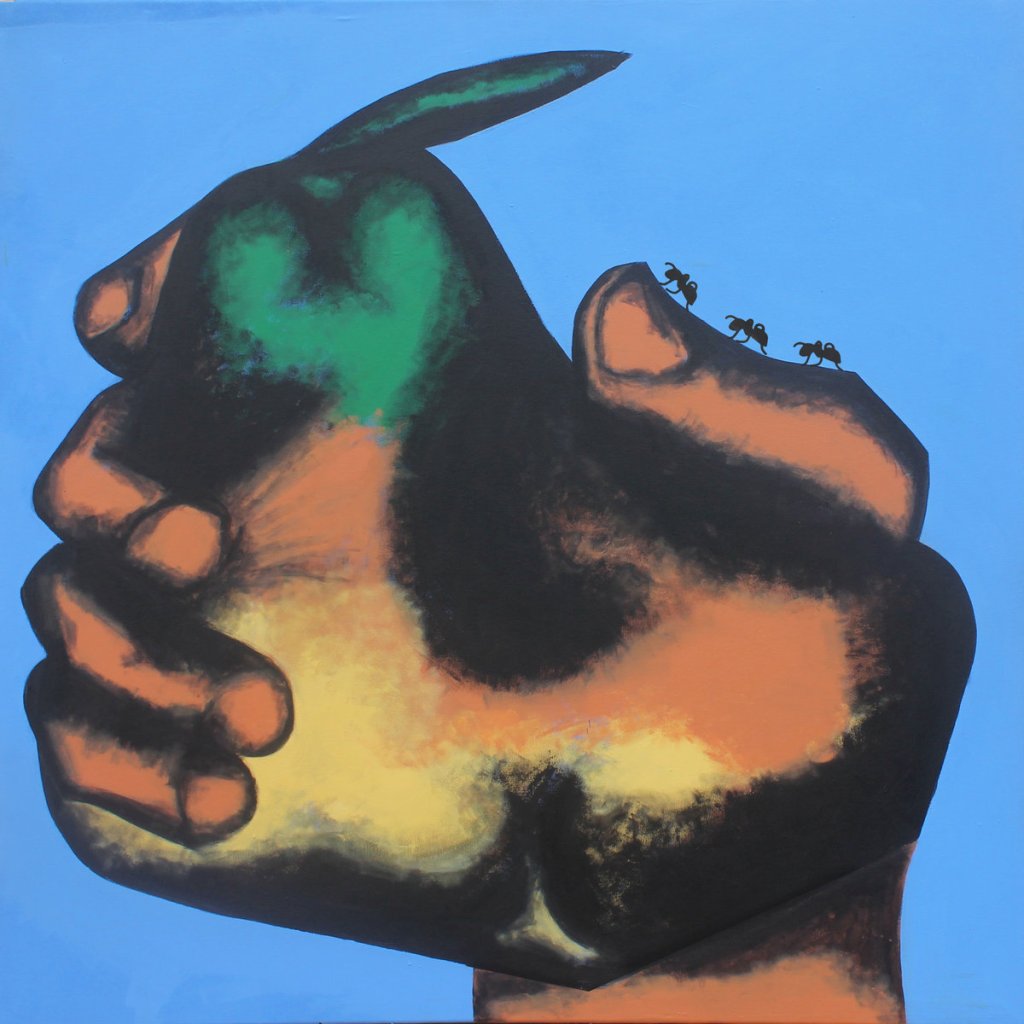
GL: A guy called Nick Dahlen. I had done the artwork for our previous two EPs the experience of doing that was one I didn’t want to repeat. When we entertained the idea of doing another record and having it ready for this period of time, because it had been such a palaver to get the other two done, we actually got him to do the art work before we finished writing any of the songs or recording. It was a funny way to do it but it ended up working really well. I like the fact that there’s the ants on the cover, you think about an army of ants and obviously the army lingo of Look Alive! In a weird serendipitous moment here are three ants and only three out of the four of us made this record. It worked.
Why was it only the three of you?
GL: We had a pretty aggressively busy year last year, at the end of the second tour that we did that had a myriad of trials and tribulations – it was a tough tour – we all sat down… me and Claudia live together and we know we’re just going write. We said, “This is what we want to do, these are the days; what do you reckon?” And it just ended up being us three. It’s not in any malice or ill will, Adam said he just needed to live a life and that’s totally cool.
What were some of things on the tour that were hard for the band?
GL: We’d been to Europe a month and a half prior and had a really good tour, coming back the second time we’d driven ourselves around. We thought the drives will be longer and we’ll be going through more medieval towns and things will be harder to navigate so we’ll get a tour driver. The guy we got was a real piece of work! It was a massive buzz kill. Slot into that administrative and organisational things that were overlooked, it really put a damper on everything. Bad hotel rooms. Cancelled shows. I had to leave my keyboard in Austria because the airline was going to charge me $800 US to bring it home. There was lots of bits and pieces that added up, it was really relentless. It bore us down a bit. I guess, what doesn’t kill you makes you stronger!
What’s one of the best things you saw while on tour?
GL: It wasn’t so much about what we saw because you rarely get to see anything at all just by nature of the rhythm of that experience—it’s get in the car and drive to show, then you’re in a hotel room. It’s just more about what we felt and what we experienced, there were so really great shows! The fact that you can travel to the Northern Hemisphere and people can turn up, it completely befuddles me. Beyond the thought of annoyances and headaches of the experiences the shows were such a pleasure, which was really cool.
What feelings do you get when you play live?
GL: I get this sort of complete disassociation from myself where I become completely unconscious of what’s going on—that’s when it’s good! When it’s bad it’s the polar opposite, a heightened self-consciousness, an ultra-awareness and my brain will meander off into absurd places; what I ate for breakfast? What am I going to wear tomorrow? That’s the worst end of it.
I always love asking anyone I interview this next question; why is music important to you?
GL: It’s something that I’ve been able to invest myself in and in turn define myself by. It’s afforded me friendships, community, camaraderie and solace. It plays a very important role in my life.
Have you always played music?
GL: No, I didn’t really grow up around much music. My friend Alex who I’ve played in a bunch of bands with and who has been very supportive of everything that I’ve done, his dad and my dad were friends since they were fifteen growing up in Sydney. Alex and I were born two months apart so we’ve been pals since we wore born. When I was around thirteen or fourteen, I’d see him and his dad play music all the time and I started because I got sick of sitting on the couch watching them!
Original photo courtesy of Helta Skelta Records. Handmade mixed-media art by B.
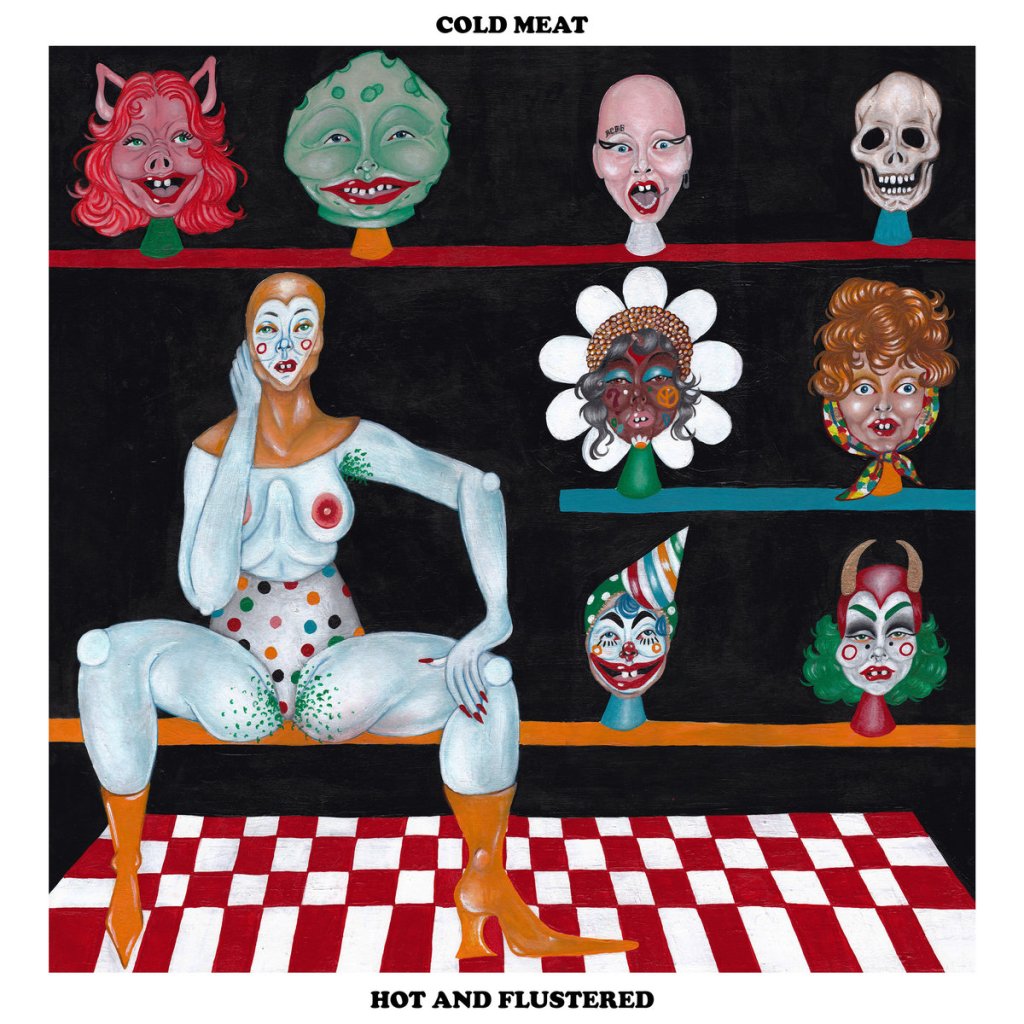
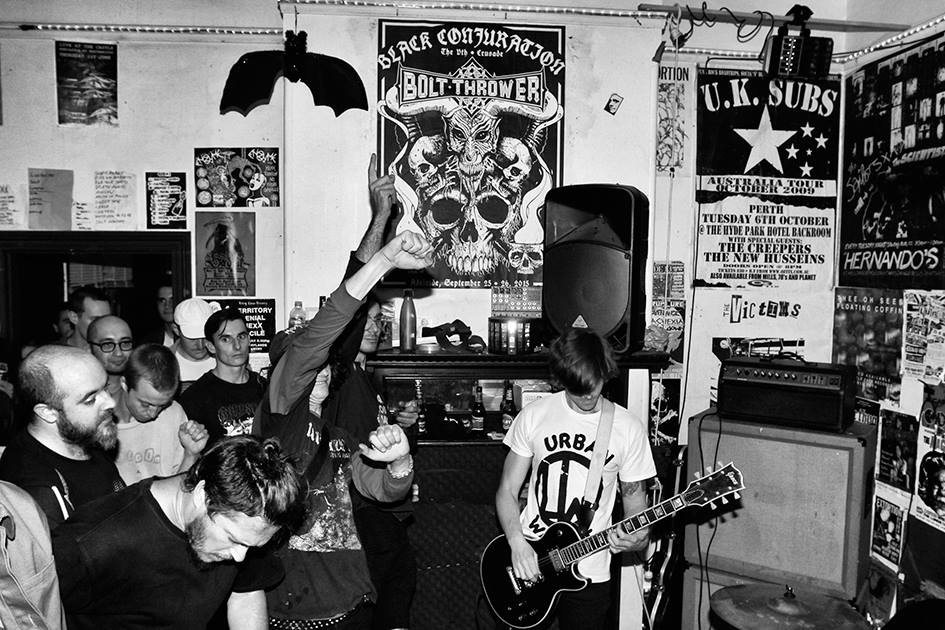
Cold Meat may have released THE punk record of 2020 with their new LP Hot & Flustered on Helta Skelta Records. Their sound resides somewhere in the realm of bands like !Action Pact!, Vice Squad, Crass and early Rubella Ballet. We interviewed them to find out more about one of our favourite Australian punk bands.
When did you first discover your passion for music?
ASH (vocals): My family listened to a lot of music growing up and we were all encouraged to play instruments. I played drums in school and always wanted to be in a band but couldn’t be arsed practicing. It wasn’t until getting into punk and Feminism that I actually developed any real passion for playing music I think.
What’s the best thing about making your own music?
ASH: Being creative with friends and getting to play with great bands!
KYLE (guitarist): For me, probably just the release. I need something to channel my anger and frustration which I can’t express through other forms. That and all the people you meet and make connections with along the way who share a common outlook.
Photo courtesy of Cold Meat.
Growing up, who were your musical influences?
KYLE: As a young teen Black Flag, Misfits, Pennywise. Anything that was on the Crusty Demons MX vids.
What brought Cold Meat together?
KYLE: We just got talking about it at parties. Me and Ash had been jamming with her playing bass I think and myself on drums but then we talked to Char and she was keen to play drums so I jumped on guitar and we got Tim in to play bass. We just wanted to do something new that was pretty primitive, raw and energetic, like the late ’70s and early ’80s DIY punk had been. Char had never played drums before and Tim hadn’t played bass. We just wanted to create some music with the raw energy which comes from not knowing how to play your instrument but just needing to get something out.
Can you tell us about the first time you performed?
KYLE: I can’t actually remember it. It was a gig at 208 though. House show. I think it went alright ha.
TIM (bass): It was actually the first time I’d ever played live so I was incredibly nervous! Thankfully it was just in a lounge room surrounded by friends.
Photo courtesy of Cold Meat.
Congratulations! You’re LP, Hot & Flustered, was released yesterday (March 20); what were some of the things inspiring it?
ASH: As far as lyrics go it’s a bit of a mix between silly, tongue-in-cheek songs about petty, personal grievances and more serious, sincere songs.
KYLE: After doing a few 7”s we just wanted to do a full length. So we spent a year or so working on that. It’s not a whole lot different from the 7”s I don’t think. Just the kinda usual inspiration – anger, and frustration with current political and social issues and the utterly inadequate ideas and frameworks poised to “solve” these issues, and bands like the Electric Eels, Gang of Four, The Bags. At least for my part.
In the spirit of your record’s title; what’s something that gets you hot and flustered?
ASH: Kyle when he wears his fishnet top and pleather pants.
Is your songwriting collaborative? Tell us about your process.
KYLE: Yeah. I usually just come into band practice with an idea for a song and then we all jam on it and add our parts.
What’s one of your favourite Cold Meat lyrics?
KYLE: “He’s sucking the cock of Cobain” is a pretty good one. Or, “I’m going to spew in your ZZ top hat, because I hate ZZ Top”.
TIM: “He wants to lick your walls and he wants you on all fours” from Crawlers. I must admit I did think Ashley was singing balls for a while. This is not the first time I’ve misheard the lyrics.
Were there any challenges creating the album?
KYLE: Not really. Cold Meat is a pretty easy band to work with. It was more of a struggle writing for an album rather than just a 7” though. Trying to write songs that would fit conceptually and flow.
TIM: The recording went pretty smooth this time. We did attempt to record some noise parts using a vacuum cleaner, metal, glass and a hammer but didn’t end up using it on the final mix. It was still really fun smashing stuff and a great way to wind down after the recording.
Cold Meat are from Perth; how does your environment influence your art and creativity?
KYLE: For me, it probably doesn’t too much. We’re so easily connected now with social media and online content that I’m probably more influenced by what’s going on in the US, UK or Melbourne and Sydney right now. Although of course we did have the Victims, Scientists, Cheap Nasties etc. and I’m a huge fan of that stuff.
The LP’s amazing art work is by Jen Calandra; how did you come to her work? What’s the story of the cover?
KYLE: I think we just came across her work online. I instantly loved it though. I initially came across her black and white illustrations and thought they were perfect for punk art. Although they reach far beyond it too. We just asked her if she’d want to do the artwork for the album and she’s was keen. So, given we were all familiar with her work and loved it, we said she could do whatever she wanted. She came back with an idea and we went with it. I suppose you’d have to ask her if you want some deeper analysis. There’s certainly a feminist bent though.
You’re feminists (everyone in the Gimmie office is too!); when did you first start to realise the importance of feminism?
ASH: I don’t remember a specific turning point but I think going to uni and being made aware of inequalities between men and women in a range of contexts shifted my worldview. I think I was extremely sheltered before leaving school and home. I became angrier and angrier the more I found out about the astonishing rates of domestic and sexual violence, widespread economic disparities, disproportionate representation of women in politics, art, music etc. This was around the same time I discovered Feminist punk, literature and art, and started making connections with super engaged and inspiring women like Charlotte [Cold Meat’s drummer]. I think Feminism is about being vigilant in recognising and confronting inequality but also trying to ensure that the hard work of the Feminists who came before us is not forgotten or worse, undone.
TIM: The Riot Grrrl bands of the ’90s were probably my first introduction to feminism. This was in high school when my friends and I were all discovering music and punk together. Someone lent me a Bikini Kill album and it all started from there!
Photo courtesy of Cold Meat.
What have you been listening to lately?
ASH: Special Interest, Soakie, Ubik and Fitness Womxn.
KYLE: Lately, the Annihilated demo, the Electric Chair 7”s, Sandford Clark resissue. A lot of Venom and Darkthrone too. I dunno, guess it’s a sign of the times.
TIM: Nylex, Paranoias, Ubik
What do you enjoy doing when not creating music?
ASH: I teach art at a high school full time which is pretty great and if I get any time outside of that I like to try and make my own.
KYLE: Mostly reading. Study takes up around 90% of my time, that and procrastination. Trying to finish my PhD. I guess I enjoy that sometimes.
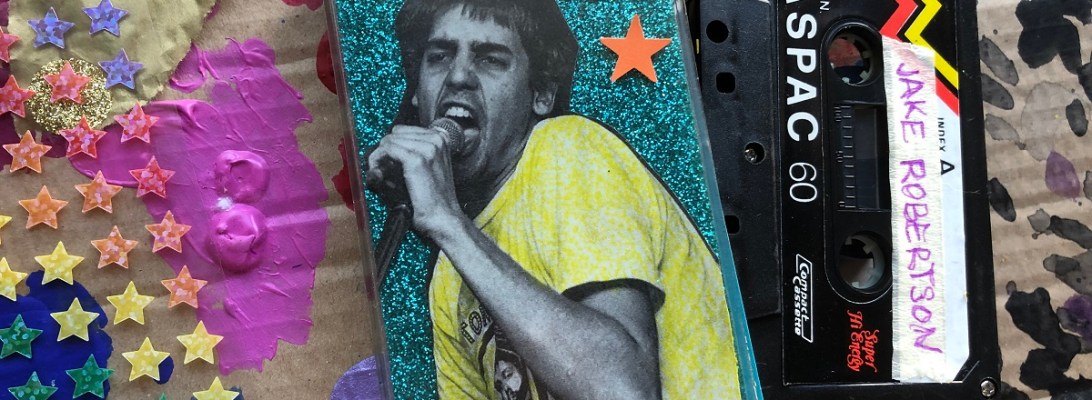
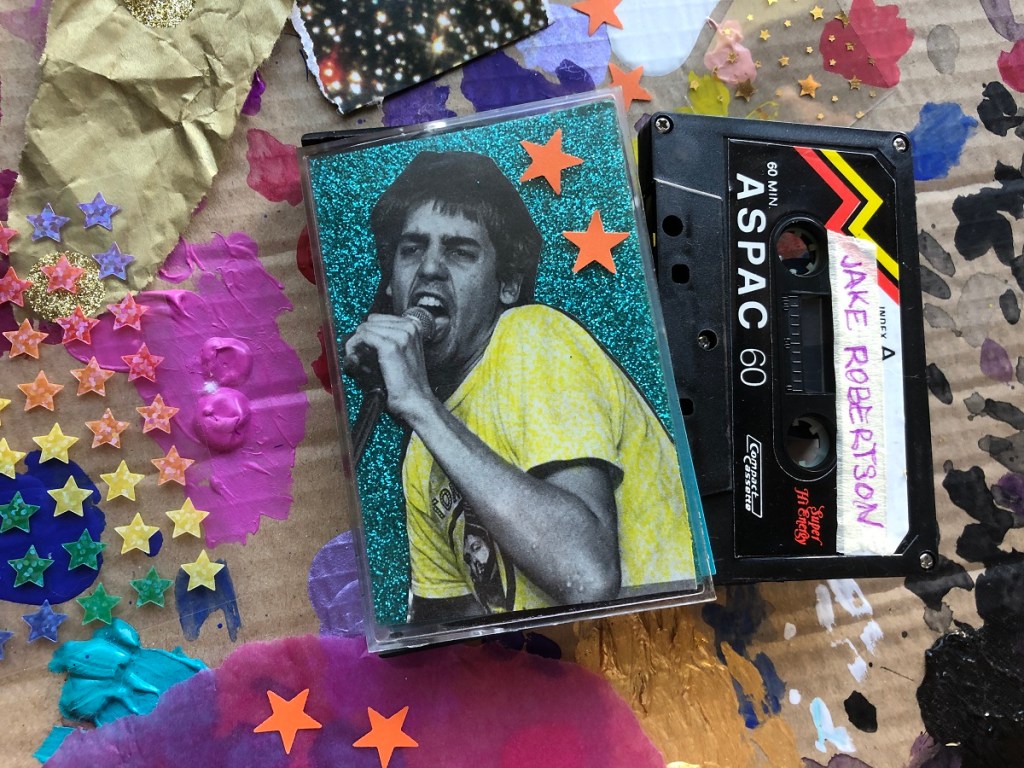
We love mixtapes! Alien Nosejob’s music reminds us of one. Its genre-less and fun and we never know what the next song might sound like; it’s exciting to listen to their releases unfold, especially latest LP, Suddenly Everything Is Twice As Loud out on Anti Fade. Alien Nosejob started as a bedroom recording project by Jake Robertson, who is one of the most prolific Australian songwriters we know. Rather than us trying to describe his creations we highly recommend that you check out his work for yourself and care about what you think of it! We believe there’s a little something for everyone. We interviewed Jake to get more of an understanding about what he does, why he does it and how he does it.
I wanted to start by asking you; how did you get into music?
JAKE ROBERTSON: My dad is extremely into music, into British Invasion stuff, blues whether it be Prewar or all the way up to your white boy Eric Clapton kind of stuff. He constantly had The Kinks and The Who playing when I was younger. My brother showed me AC/DC and the Sex Pistols when I was six or seven and I got into that for a little while. I can’t really lie, nu-metal had a huge influence on me when I was eleven or twelve, that’s where it really kicked off [laughs].
What was it that you loved about nu-metal?
JR: I found something that mum and dad didn’t like [laughs]… that was probably a big part of it. That then led into Nofx and Rancid and that led me to Dead Kennedys and that got me back to where I started at AC/DC and The Kinks.
Nice! I think it’s cool you can say “I grew up liking new metal” …a lot of people would lie and play it cool and say they were first into whatever the coolest band/s are. Everyone’s got to start liking something somewhere, if you like it, it shouldn’t matter what anyone else thinks.
JR: Yeah, one hundred percent! The thing is, even though I don’t listen to nu-metal anymore, I could put it on and totally see why I like it. I understand why it appealed to me so much as a youngin.
Why do you enjoy writing songs?
JR: That is something I ask myself and something that I haven’t been able to answer [laughs]. I think I like spending time doing something. I have a lot of hours to spend in the day, I could be punching bongs or I could be watching TV or I could be at home recording songs. I generally choose the third one.
You’re definitely dedicated to doing it, I think since 2012 you’ve had at least twenty releases that I know of.
JR: Yeah, I do it pretty frequently [laughs]. I think it’s just how I like to pass my time. I generally finish work, say “hi” to my partner and then lock myself in the studio for a couple of hours, then I eat dinner and so to bed pretty much. It’s all I do outside of work.
I did an interview a while back with Omar Rodriguez Lopez from At The Drive-In/Mars Volta and he was saying how, other people go out and party and socialise but for a lot of creative people, our party is at home making stuff, that’s our fun!
JR: Yeah, I definitely do find it fun. I do find it frustrating sometimes though but, then again I find going out and socialising frustrating as well, even though I like doing it. I think Mr Rodriguez is probably right.
What kinds of things do you find frustrating about making music?
JR: Making things fit. The things that I find frustrating are the things that probably draw me towards it as well. I’m a big fan of finding things that shouldn’t really go together and trying to make them fit together, quite often it’s frustrating. Naturally they don’t’ always fit together and I’m constantly questioning myself; why am I doing this? Which often sinks into a repetitive question with no answer. You kind get into a bit of an existential crisis; why am I doing this? Who am I doing this for? Am I doing it for myself? Obviously I’m doing it for myself, because most of my stuff I just have on my computer and I haven’t even released it. I guess I’m doing it for myself. This is the kind of stuff Bianca that my brain goes over and over and over! I’m always asking; why am I releasing this? What’s the point?
If you’re always questioning stuff maybe you’re never comfortable therefore you won’t get complacent and you’ll keep going, keep trying new things.
JR: Maybe. It’s not a matter of looking to write the perfect song or anything like that, I think my problem is that I have quantity or quality. I just like to shit things out and move on to the next thing straight away. Once it’s done it’s done!
How do you approach making a song? From what I know the writing is quite fast for you.
JR: Most of the time, it really depends. I don’t really write with any band in mind or any instrument in mind, I don’t write with any genre in mind either. I’ll pick up a random instrument and I’ll see what happens. Sometimes I’ll record as I make it up and that’s what ends up on the record, other times I’ll sing something in the shower, and record something into my phone while I’m driving or riding my bike like “do, do, do, do, do” or I’ll hum it and try to recreate it later.
I really love listening to Alien Nosejob because you are genre-less and your releases remind me of listening to a mixtape, you can hear bits and pieces of everything in there, which makes it really cool.
JR: Yeah, the record that Billy [Anti Fade Records] did recently Suddenly Everything Is Twice As Loud my aim was to try and make it sound like a mixtape.
It came through, I get it!
JR: Yeah. I wanted to make it sound like a mixtape that you’d make and give to your friends as a teenager.
We still make mixtapes.
JR: I still do as well! It probably been eight or nine months. I will get back to it thought, isolation is the perfect time for it.
I love with the Alien Nosejob HC45 EP that it’s done in the spirit of hardcore punk EPs, they’re usually traditionally released on a 7”.
JR: Yeah. That’s my favourite format. Originally with Alien Nosejob it was going to be one or two EPs, self-released and it would be done. None of the press releases said “Jake from these bands…” I made it so it was completely anonymous. I’ve lied and said I lived in Clunes which is where they filmed Mad Max! I just wanted to self-release a 7” EP completely void of labels or anything like that because thy majority of my record collections is 7”s done like that. I got bored and continued doing stuff though [laughs].
I also love how you did Buffet Of Love on a 12” in that italo-disco style and that’s how they used to release that genres singles on 12”.
JR: Yeah. That’s another genre that I absolutely love. With this Nosejob stuff, it flows to whatever I’m listening to at the time. When I recorded that I was listening to specific records – that I listed on the sleeve with the tracks – that I was loving at the time. Trying to replicate it a little.
What do you do to keep challenging yourself with your writing?
JR: Probably just form too many bands [laughs], that’s one way. From 2012 to 2017 I was playing way too many gigs per week with different bands; that was another reason why I just needed to do something hat was recording. I was getting exhausted. Now I’ve made Nosejob into a band as well. We’ve only played one show, we’ll probably only do one or two a year.
As a songwriter what are the things you value?
JR: Even though I’m guilty of it… I do value people that search for originality in songwriting… I’m trying to tread really lightly so I don’t say something stupid. I don’t really like when a band from a certain scene has a song that sounds the same as another band in that scene. I will try to look for some originality and hopefully it comes through in what I’m doing, I think though maybe I’m pulling my leg if I’m saying I don’t do that myself sometimes.
I think as part of culture everything is inspired by everything else.
JR: Exactly. I guess I mean the difference is inspiration rather than ripping off. Even if I am heavily influenced by something else I’ll put my own spin on things.
And that part right there is what makes it become original, taking things in a different direction from where you got them.
JR: That’s the aim. I have listened back to a couple of things I’ve done and I’ve been like, I didn’t put enough time into putting my own spin on this one [laughs].
Whatever you’re listening to at the time I guess can naturally filter into what you’re doing, sometimes without you even knowing.
JR: Yeah, it definitely does.
You recorded Suddenly Everything… by yourself, right?
JR: Yeah, I recorded everything all by myself.
I remember reading you explain that you’d have a ten second delay after you’d press record so you could get to the drum kit to play the track; was that process frustrating?
JR: Oh yeah, big time! I had to make a computer drum beat, if I was making it for a band I would make it with a computer drumbeat but I wouldn’t put any time into it so whoever plays the drums for it would give their own stamp to it; I pretty much do that with any instrument. I’ll do a simple version of bass or guitar or whatever and sing, then the band would learn it. With recording Alien Nosejob I had to get to that stage and then basically start again and record it properly one by one. I’d have to give a ten second count in at the start so I’d have time to press record and run to my drum kit. I’d play it and every time I’d make a mistake I’d have to start again, go walk that ten seconds to the tape machine and rewind to the right spot, and make sure I’m not recording over something else and do the whole process over again. Its very time consuming and very, very frustrating and annoying. It constantly makes you question why you are doing it.
With that album did you have songs you’d just written over time?
JR: Wait a second let me just get a copy of it, I can’t even remember what’s on it… [reaches for a copy of Suddenly… as his cat walks by] …oh “hey” it’s my cat!
What’s your cat’s name?
JR: Lumpi. She’s a little cute thing, if you want to see a picture of her, on the front cover of a 7” that School Damage did, she’s on that.
All of the songs written on Suddenly… were recorded at home in Thornbury in 2018, I’m pretty sure I just did all of these straight off the bat. Just by reading the songs titles I was listening to a lot of The Saints and a lot of Ramones at this point [laughs]. For that record I had a little studio set up in the house where my partner Carolyn has all of her print making stuff on one side of the room and I have recording stuff on the other side of the room. We would just sit back-to-back for hours a night on end making our end product.
Carolyn and Jake.
Nice! That’s like my husband and I, we have the same kind of set up. He has his little studio set up and we both have art tables, we sit there for hours and hours too.
JR: That’s cool. We just moved house and now we sit beside each other.
What are your working on now?
JR: [Laughs] It’s funny that you ask that. I feel like before I explain what I’m working on I should say that I recorded this during the Australian bushfires time in December—January, so this is not a COVID-19 record. It is a concept album about the end of the world. There’s one song in particular called “Airborne Toxic Event” and it’s about a poisonous gas destroying the world. I feel very odd about it at the moment, I’m currently mixing it. I’ve got my laptop on my lap in bed right now mixing this record. Every time I listen to it it’s like, oh god, the whole meaning of this record is just turned upside down now with everything that’s happening in the world and I feel odd about releasing it. It’s going to be called Once Again The Present Becomes The Past, it’s basically about how something very shit can happen in the world and it’s kind of like a snake eating its own tail… it’ll just happen again and again and again and again. Depending on how you look at it, it can be seen as a very negative thing or it can be seen as a positive thing like, hey, this has happened before and we’ve dealt with it. The styling is somewhere between Suddenly Everything… and the HC45 record. Also, one of my friends showed me this band, Sacrilege, that was a crust-punk band influenced by the first Metallica record—that had a little effect on me as well. If we have to stay isolating from a while it should be ready pretty soon!
Where did you learn to mix? I know that you’ve been mixing songs as far back as The Snoozefests.
JR: Wow, that’s the first time I’ve heard that name in a while! [laughs]. I did a crappy TAFE course the year I finished school. It taught me what to do and what not to do. There’s some things that I got taught to do that I didn’t like how it sounded so it taught me not to do things that way. I’ve dabbled in doing it but the first time that it was all me doing it was the Alien Nosejob stuff. The piece of advice that I got that helped me the most was from this guy in Perth, Luke Marinovich, who runs a blog Wallaby Beat which is all Australian custom pressed records in the ‘70s and ‘80s. Generally when I get close to finishing a record I always send it to a handful of close friends who I respect their music taste and ask them if they think I’m going about it the right way. When I sent it to Luke his response was, “There’s no mix like a bad mix!”. I thought about it and all of my favourite Australian punk records are not mixed at all. The guitar will be so much louder than everything else and you can’t hear the kick drum whatsoever. It’s so unconventional but it gives off a vibe that you don’t get with your records on Polydor or whatever. It has its own unique feeling, you have to stop overthinking everything—at least I have to stop overthinking everything! As you can probably tell with certain mixes or songs, overthinking is something that I don’t really do that much. If it’s close enough, I think that’s good enough, that’s what it is and I move on to something else.
How about with the Hierophants stuff?
JR: I guess because it’s a band it’s everyone having their own opinions. We got that mixed by Mikey from Total Contol and Eddy Current.
THE Mikey that mixes everyone who’s awesome in Australian music!
JR: Yeah, Mix Master Mike! [laughs]. He recorded the second Hierophants album. We got this Canadian guy who used to have a studio downstairs from my old townhouse named, Lucas; we had a crazy studio operating downstairs from me, we had the same backyard. There were constantly bands there – Tame Impala or Pond recorded there – we had to put up with noise all the time, they gave us really, really cheap rates so we recorded our record there. As far as mixing and putting time into, it was a project that we collectively passed off to Mikey and he got to put time into it and we just moved on to the next thing.
You’re self-taught with the instruments that you play?
JR: My dad and my brother showed me guitar when I was younger. In the style that I play, it’s pretty self-taught. You pick up little bits from friends. My girlfriend who plays keyboard in School Damage, she showed me some keyboard stuff pretty early on. I’m teaching her guitar in isolation at the moment, I’m finally paying it back. For the most part I’m self-taught, that’s what D.I.Y. music is really.
Do you have any songwriters you admire?
JR: A hundred! Ray Davies of The Kinks was the first one that I was blown away by at a younger age. Ed Kuepper from The Saints. Even just locally, I think Julia from J. McFarlane’s Reality Guest is a pretty great songwriter. All the people I play in bands with too like, Paris [Richens], Zak [Olsen], Billy [Gardner] and Albert [Wolski]. I’ve just fallen into a circle of friends that are really creative, they all come at it from a different angle but their end point isn’t that skewed from my interests. Australian songwriting has been pretty great in the last ten years!
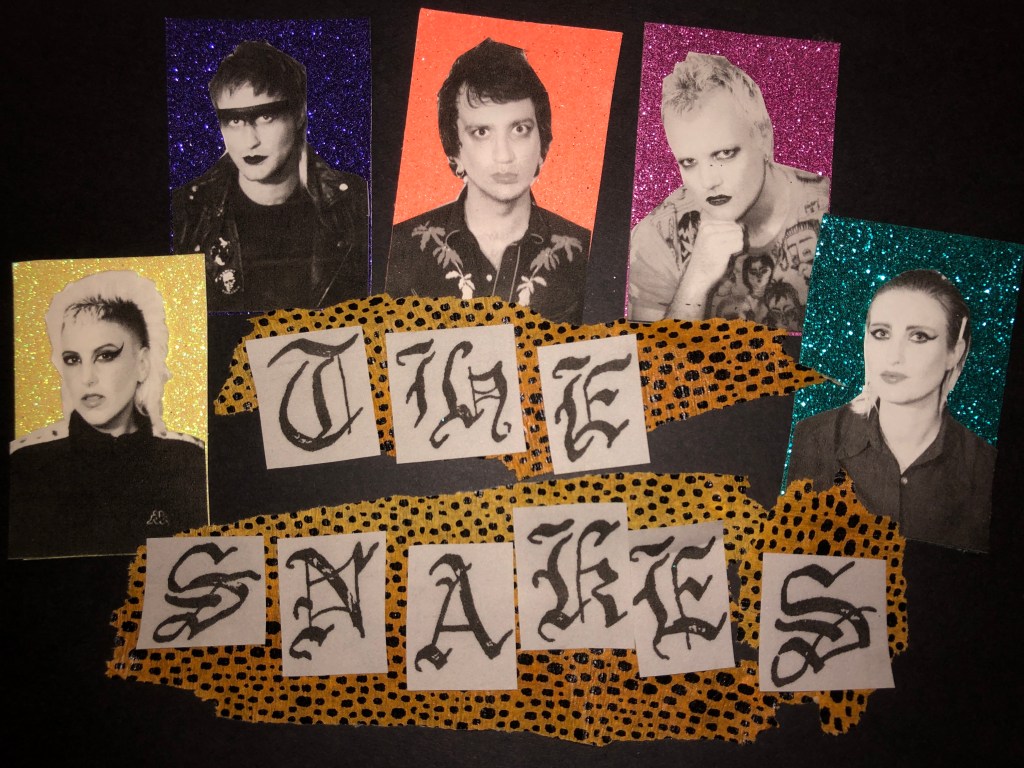
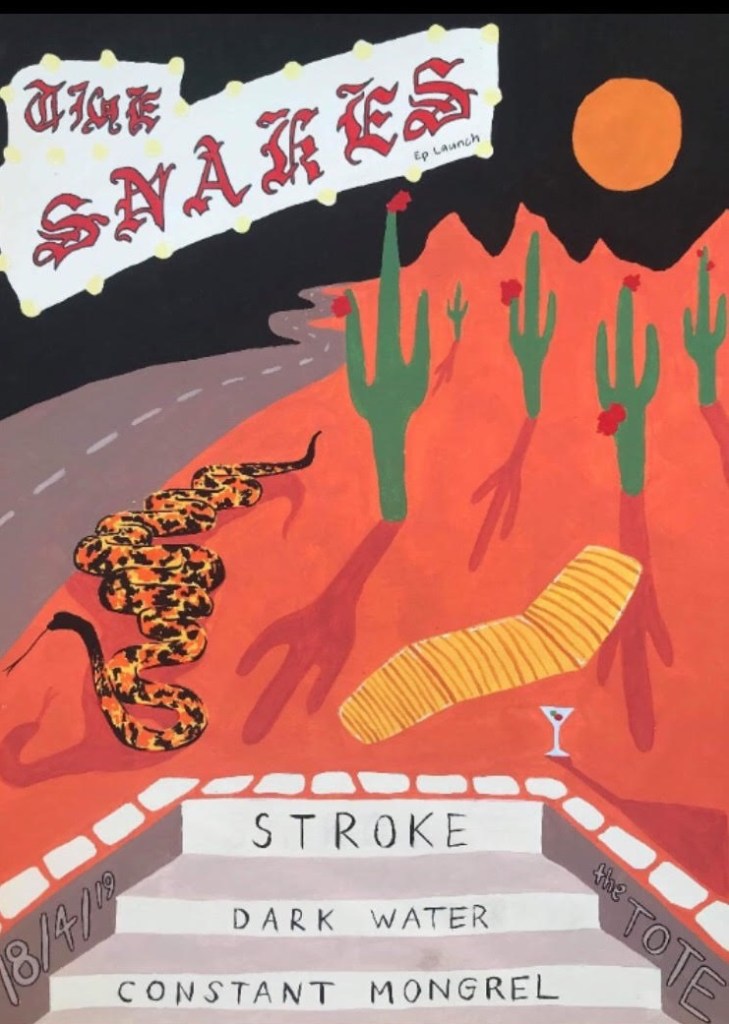
The Snakes are one of our editor’s favourite bands. When we recommended their self-titled debut LP (on Anti Fade) on our Albums We Loved in 2019 list we described their music as early ‘80s underground L.A-style new wave punk. The actual underground though… The black market kind. You know, the “under the counter” kind. We interviewed The Snakes and found out they’re working on new music! Stoked much?!
How did you get into music?
LEWIS (vocals): Who has a choice? At some point some cunt’s gonna play some shit and you’re either gonna love it or hate it, I guess I liked it.
What have you been listening to lately?
CHARLOTTE (bass/vocals/harmonica): Ummm… Butch Willis, GG Allin, Roy Orbison, The Byrds, Rupture, Napalm Death, Traffik Island, Plantasia, Anohni, Ariana, X (Aus).
LEWIS: Death (from Florida), Extortion (aaaagain), The Kinks, Obituary.
JIMMY (drums): Jackhammers and my own inner dialogue.
STEPH (guitar/vocals): In the mornings we listen to ambient sounds such as the distant radio and twings and droplets from whatever James puts on the stereo. When we play cards we listen to hardcore and punk. And I like the start of the Exploding Hearts album so I listen to that in the shower. Same with The Loved Ones but that whole album is good. Could be in a musical rut… I like soul and country music a lot.
CHARLOTTE: You like Suzi Quatro, Steph.
STEPH: I like lots of things not mentioned. Loves Suzi but. Gets wild to Suzi!
When did you first know you wanted to make music yourself?
LEWIS: When I realised it was a piece of piss. It’s the socially acceptable way to be the loudest person in the room.
CHARLOTTE: I was in choirs my whole life but guitars were always for boys, I really just wanted the attention.
JIMMY: I didn’t, I was just jealous of my friend’s guitar when I was six.
STEPH: I got into music by being rejected from my family for not being as good a singer as my sister, and not being allowed guitar lessons like my brother cause I’m a girl. So I taught my damn self and now I rule the world!
Tell us the story of how you all got together. What inspired you to start The Snakes?
LEWIS: Three of us had on and off lived together for a while, two of us had planned to do a psychedelic proto-punk band called Giant Door (side note: Giant Door is one of the top three bands that never existed). We are two couples and at some point, Charlotte our bassist moved into a new house and we went over for a kind of house warming. We ended up jamming and writing about six songs that all pretty much ended up on the album. We had some shitty phone recordings and shared them with each other and realised we needed a drummer. It took us about two seconds to find him and that’s it.
STEPH: Jim completes us.
Photo by @sub_lation; courtesy of Snakes.
What do you feel are the key elements that make your sound?
CHARLOTTE: Jim’s drums swing, there’s no one like him.
LEWIS: Clearly the keys stands out, having James on them is a refreshing take. Flange plays a massive factor. It’s a mash of shit we listen to and shit we find fun. It’s an angular vortex of pain but you can dance to it.
How do you go about writing a song?
LEWIS: Charlotte generally comes up with the riffs with a few exceptions and we all just put our parts in from there. We’re natural, baby!
Photo by @sub_lation; courtesy of Snakes.
Last year you released your self-titled debut album on Anti Fade Records; can you tell us about recording it? Billy from Anti Fade recorded it, right?
CHARLOTTE: Yes, he did. We’d spent about a year playing together before our first show and he offered to record and put us out at that first show. Recording in Geelong was great but what was really fun was doing vocals and mixing with Billy. We had a lot of ideas, we had a vision, Bill helped us execute it.
JAMES (keys/vocals): Bully Gardner is our mentor and he wax trax layer to the max.
Cover art by Eve Dadd.
What’s your personal favourite track on the record?
LEWIS: We don’t play this one anymore but I really like singing “Drug Pig”. I came up with the lyrics on the fly and I love screaming “Virgin Mary, Jesus Christ, smoke a gram of pure ice”. “Solid Income” too, it just kind of cruises.
CHARLOTTE: I hate “Drug Pig”, even though it makes me feel tough, there’s a part that makes me feel kind of sick. I love playing “Ugly Faces” it’s simple but it’s rude. I know Steph loves “Pop Song”.
When you finished the record; who was the first person you played the songs to?
CHARLOTTE: I think my friend Kieran, they frothed for it!
Eve Dadd did your album’s cover art; what’s the story behind it?
STEPH: Eve does art and is related to James. She is talented and a boisterous bitch that lives on the South Coast of NSW. We love and hate her at the same time.
CHARLOTE: She’s a Scorpio.
LEWIS: Me and Charlotte outright bought it, it’s on our wall.
Launch poster by Eve Dadd.
How do you feel when you’re performing?
LEWIS: Extremely confident and self-conscious at the same time. I just go for it, I don’t really give a shit.
CHARLOTTE: When I play, I’m singing my bass parts in my head. I like watching Steph solo and smiling at James.
What’s been the best and worst gig you’ve played? What made it so?
STEPH: Best show was one at One Year (in Collingwood). I had just discovered the beta blockers and dexie combo and I did not give a fuck and people could tell. Smiling is good when playing fun music. Worst show was that one with Bloodletter. Can’t remember why but I know it was bad.
LEWIS: Last Maggot Fest was great, it actually went off. Supporting The Stroppies was pretty dry, not The Stroppies, I love The Stroppies I just don’t think that that crowd was really down for us. I remember putting on a show and crawling on the floor and screaming but still there was a big gap between us and the crowd. Maybe we’re too high brow.
Photo by @sub_lation; courtest of Snakes.
Have you been working on new music?
LEWIS: Yes.
What would we find you doing when not making music?
LEWIS: Working like a dog.
CHARLOTTE: Watching telly. I just bought a keyboard too, been trying to figure out how to play “Everytime” by Britney [Spears]. Also pretty heavily into Tik Tok at the moment.
Original photo by Mark Cranitch. Handmade collage by B.
Brisbane’s The Double Happiness are comprised of two couples that play spooky-surf reverb-a-riffic dream-pop! Their music is joyous, fun and makes you want to dance. Every time we’ve seen them play we’ve had the most fun. They have a new record Surfgazing forthcoming on 4000 Records. We caught up with them to find out more about it, as well as their love of surf and shoegaze, their first concert and more.
I know that creativity, courage and connection are important to The Double Happiness (us too!); why?
MEG (bass/vocals): These are the values that we all hold dear. (Alongside with dancing like maniacs – also very important). Courage is backing yourself, putting yourself out there and not giving up, stretching yourself creatively by trying things that keep your energy up and your vibrancy levels elevated.
Keeping your connections strong is vital right now; we are nothing without other people. These are all good messages during these strange and unsettling times, and the music industry has already begun creatively connecting with audiences through online hangouts and events like Isol-Aid and Couch Choir. Life is short, have courage and be kind to each other – finding new ways to be creative is the upside of these weird times.
How did The Double Happiness come into being?
KRISTIN (guitar/vocals): We’ve been friends for over 20 years through mutual friends, and attended parties and gigs, always loving the same kinds of bands. We met up at the 40th birthday celebration of 4ZZZ at the Spiegeltent, as we were SO keen to see Ups and Downs. We got the set list, and Meg had the brilliant idea of suggesting we get together to have a jam. Meg and Simon were a ready-made rhythm section, and Pete and I were guitarists. We jammed some songs we knew and loved like ‘Candy’ (Iggy Pop and Kate Pierson) and ‘Doused’ (DIIV). Before you knew it we were writing our own songs. ‘City’ was born shortly afterwards, and the songs and the joy just kept coming.
Photo by Gimmie Gimmie Gimmie zine.
The Double Happiness have a “surf-gaze” sound; how did you first discover surf music?
PETE (guitar/vocals): I have always had a long love affair with surf guitar. We all love The Pixies and I was inspired by Pixies guitarist Joey Santiago, The Shadows and the killer Pulp Fiction soundtrack.
KRISTIN: I grew up listening to my Dad’s surf guitar records – he was a huge Cliff Richard and The Shadows fan.
PETE: We’ve never been fans of guitar chords played at lightning speed. The key to our kind of surf riff is minimum notes – maximum melody. The Pixies were always a surf band in my book.
How did you arrive at combining surf and shoegaze to make your sound?
KRISTIN: Our influences and inspirations are shared which has made song writing such an easy and fun process. We all loved shoegaze bands such as RIDE and My Bloody Valentine in the early ‘90s, yet we have a soft spot for 60s sounds as well.
SIMON (drums): There’s been a revival in recent times of shoe-gaze through bands like Pains of Being Pure at Heart, Froth, Beach Fossils and with Slowdive coming back with a new album which we dig. Locally we also love Relay Tapes, Ultra Material and Pleasure Symbols.
PETE: It was becoming apparent that some of our songs were very surf, and others had a dreamy shoe-gaze sound. It made perfect sense to combine the two!
The surf influence is very apparent in your music, is there any non-obvious influences that might surprise listeners?
KRISTIN: The jangly guitar sounds are reminiscent of bands like The Sundays and The Go- Betweens, but the indie-folk influence of Jose Gonzales is present in our theme tune – Double Happiness (I Want My). We can’t underestimate the impact table tennis has had on us either!
PETER: I’m the true table tennis tragic of the band. It’s a highly complex sport. The competition bats generate so much spin. Check out the high level stuff on YouTube kids! How good is Stereolab’s Ping Pong?
MEG: I hear elements of Stereolab in our songs which is surprising as we don’t have keyboards in the band, but sometimes we get into a heightened rhythmic groove that they capture in their songs.
In the beginning, who or what inspired you to first pick up your instrument?
KRISTIN: Sister Margaret playing Abba songs to us on guitar during wet lunches in Year 3.
MEG: Teachers are so influential! Mr Stanger in Year 5 introduced me to acoustic guitar. Finding an “Archie” comic-style bass guitar in the instrument cupboard in Year 8 sealed the switch to bass guitar.
SIMON: Friends at school gave me a window into the drumming world. Realising that I could imitate the music I loved listening to in my teens like Joy Division, The Cure, The Smiths, REM and The Clash was encouraging.
PETE: I fell into classical guitar lessons in Grade 6 but that only lasted a couple of months because I didn’t know what classical music was. I picked up the same guitar at age 20, learnt to play “Skip to My Lo” and “Venus” and the rest is history.
What was the first concert you ever went to? Can you describe it to us?
KRISTIN: U2 Festival Hall 1984. It was everything.
MEG: Midnight Oil and V Spy V Spy at Byron Bay Arts Factory (when it was known as “The Piggery”) I think it was 1985. I went with my Mum, sister and brother. My Dad sat in the car park reading the newspaper! It was so energising to be part of a big crowd and experience such a strong performer like Peter Garrett.
SIMON: Johnny Diesel & The Injectors on the back of a truck parked at the front of the Narrabri Golf Club. Slim pickings! Next was Rat Cat and the Violent Femmes at the Byron Bay Arts Factory.
PETER: I ordered my first pot of beer in the early 80’s at the Victory Hotel then went to see Howard Jones at Festival Hall. I wouldn’t rate his music these days but at the time the performance blew my teenage mind. There was this Jamaican guy with a wall of percussion instruments. Amazing!
Two couples make up The Double Happiness; what’s something important you’ve learnt from your significant other while making music together?
KRISTIN: That Pete has an incredible ear for recording and mixing. He’s completely self-taught, very focused and is doing such a fabulous job.
MEG: We have such respect for each of our multiple roles in the band and how they interweave. We do all our own recording, mixing, artwork, t-shirt design, networking, social media and more. I really enjoy everything that we all bring, but I do really get a buzz watching Simon drum on stage. He is a phenomenal drummer, laying down creative and complex beats that drive the songs.
SIMON: That Meg is a bad-*%$ bass player! She obviously loves the stage and playing to a crowd. She is also a social media power house.
PETER: That Kristin comes up with the coolest riffs. A lot of the lead writes itself. It’s always fun and exciting jamming. She’s great out front on stage and enjoys the spotlight. Kristin and Meg both create such a great vibe together with the crowd.
You have an album coming out, Surfgazing; what was inspiring you when you were writing for it?
MEG: Tides, crashing waves, soundwaves, sandy toes, great riffs and rolling beats.
KRISTIN: We have a strong connection with The Great South East and often include references to local landmarks and places that hold fond memories in our hearts. Bribie Island features on the new album in the song “Red Beach”, “Coochie” was written on a ferry to a resort on Moreton Bay, and “Snapper Rocks” is a nod to the thunderous surf down near Coolangatta. So surf and beach references are very prominent in this next batch of songs, but there are other themes – completionism vs perfectionism in “Finish”, and clear communication in “Not What You Said”.
The first single from it is Wild Bikini/Spooky Tiki; can you tell us about each song please?
MEG: “Wild Bikini” is a magic carpet ride spliced with a B-Grade beach movie from the 60s with a sprinkle of I Dream of Jeannie.
KRISTIN: “Spooky Tiki” takes me back to The Brady Bunch Hawaiian Vacation double episode from 1972. Peter and Bobby Brady found a Tiki in a dig that their Dad was working on, but they didn’t know it was cursed until Greg wore it surfing, and all hell broke loose.
Filmed and edited by: Simon Welchman
Can you give us a little insight to recording the record? You recorded at Kristin’s work the MusicIndustry College and at home, right?
KRISTIN: Yes. It’s been so good to have access to the studio at MIC as well as the assistance from the music dept at the school. The drums and vocals were recorded there, but the majority of guitar tracks and mixing has all taken place at our place, mostly in the walk-in wardrobe.
MEG: I have a lot more insight into Pete and Kristin’s relationship through recording vocals in their wardrobe. They have some very cool outfits in there!
We love seeing The Double Happiness live your shows are SO music fun! We love that Kristin andMeg wear super cool outfits on stage; who are your style icons? What’s your favourite outfit you’ve worn so far?
MEG: Audrey Hepburn, The B-52s and Nice Biscuit. The boys always look good too – Simon sports some killer paisley. Pete has a ripper ‘50s bowling shirt with a Tiki detail.
KRISTIN: My style icons are Serena from Bewitched, Agent ‘99’ from Get Smart. My favourite so far (and this is so tough) was what we wore at The Outpost in January to launch “Wild Bikini” – A-line dresses made by Grace from Nice Biscuit from vintage bed sheets, with a Flintstones bone in our beehives for good measure.
Gee Tee started out when its creator Kel began creating tunes solo in his bedroom on the Gold Coast. Gee Tee’s music is a touch unconventional, a little weird, humorous, lo-fi, buzzy, maxed out, wobbly and highly entertaining – think somewhere in the ballpark of Geza X, Dow Jones and the Industrials and Scientific Americans. Now residing in Sydney and having a full live band we’re excited to see what Gee Tee does next! We interviewed Kel and he told us of his beginnings, how he creates and lets us know what’s coming up.
How did you first get into music? Are there any albums that are really important to you?
KEL: My dad introduced me to music when I was a kid, he’s heaps into ‘70s and ’80s UK punk and Oi + a lot of late ‘80s and ’90s alternative, Dinosaur Jr, Flying Nun Records bands etc. Some of my favourite albums and bands though would be: Buzzcocks – Another Music In A Different Kitchen. D.L.I.M.C – Cassingles. Sickthoughts. King Khan & BBQ. Nikki and the Corvettes – Self-titled. The Spits – V. Set-top Box. Useless Eaters – Zulu. Ramones – Leave Home. Nancy – With Child. R.M.F.C. Jay Reatard. Satanic Togas – Chain Reaction. Muff Divers – Dreams of the Gentlest Texture. Research Reactor Corp. Devo. P.U.F.F – Living In The Partyzone. Ausmuteants – Order of Operation.
What was your first concert? Can you tell us a little bit about it?
KEL: Never went to concerts when I was younger hey, first big show I can remember going to would be Thee Oh Sees back in 2013.
You first started Gee Tee while living on the Gold Coast in 2016; what inspired you to start making your own music?
KEL: Yeah I guess I just wanted to make some less serious sorta music, makes it easier to record everything by yourself too. I was in Draggs at the time and that was sort of wrapping up. So thought it was a good time to start something new.
What’s the story behind your name Gee Tee?
KEL: It’s off these 1970’s trading cards/sticker series Odd Rods, its hell mongrels in blowout cars, real similar to “Ratfink” Ed Roth drawings. There’s a Gee-Tee-O card in the first series.
All the early Gee Tee stuff is written and recorded by yourself; can you tell us a bit about how you go about making a song?
KEL: It used to be mainly recording drums first with no idea on how the songs gonna be then hoping for the best keeping the original drum track/take. But I don’t have a kit set up in Sydney, so I use a drum machine to demo the songs on Ableton then re-record the finals on tape with a kit. Synth parts are just mucking around till something sounds right and vocal bits the same. Neanderthal stuff.
What kind of set-up do you use to record?
KEL: The drums are recorded on a Tascam Portastudio 2 then the rests recorded on a Yamaha MT1X or a MT4X. Using a mix of these AKG 190e mics and Shure 57/58’s. All the overdubs, backup vox/ synth etc. is done on Ableton.
What are the kinds of things that inspire you lyrically?
KEL: Just easy to remember choruses and lyrics + stuff I’m not gonna forget. Used to be full on car only themed tracks but that’s changed over the last year, only so many songs you can write about the same thing before you get burnt out on it.
What was the first song you wrote; what was it about?
KEL: “Flame Decals” was the first track I wrote and recorded for Gee Tee, pretty self-explanatory and pretty stupid haha!
What prompted the move to Sydney?
KEL: Just not a lot happening on the Gold Coast, in my opinion. It’s a chill place to grow up but there’s no weirdo music scene and barely any overseas bands that I like would come through on tours. I was friends already with a couple of people in Sydney too.
In October last year you released Chromo-Zone as a digital album and on cassette tape, it’s the first Gee Tee release featuring someone else, Ishka Edmeades (Set-top Box, Satanic Togas, Warttmann Inc); how did you come to working together?
KEL: I was living with Ishka for a couple of months when I moved to Sydney so it just kinda happened. He’s got a similar drumming style to me as well but better and can rip lead guitar. For the new Gee Tee tracks Ryan Ellem who plays drums in the live band and runs, Slime Street Records, is gonna be on ‘em mostly.
You also do the art for your releases, it has a real distinctive style; what influences it? Do you hand make it? Is it cut n paste?
KEL: Yeah, it’s mostly cut and pasting stuff outta old magazines then scanning it. Big fan of old punk posters, zines and the art/visual style of them. I still use a PC though to add extra bits etc. so it’s not all physical.
Were there any challenges in taking the Gee Tee songs you wrote by yourself to a full band live set?
KEL: Yeah, some of the songs just don’t work live, e.g. “Hot Rod Juice” and “Commando” don’t come off the same as they do in the recordings. Compared to songs like “FBI” and “I’m a Germ” which are smokers live!
What’s been the best and worst show you’ve played so far; what made them so?
KEL: I reckon the best show we’ve played recently was at the Lady Hampshire with Research Reactor Corp, R.M.F.C and Set-top Box. Heaps of people came out + playing a set on the floor is sweet! Also, playing The Tote for Maggot Fest was smokin’!
For the worst show I dunno, played a fair few stinkers when I was in Draggs. Wack greedy shit like bookers sending you an invoice for $50, when the venue was sold out! Getting set up playing with bands that are dickheads, etc.
Have you been working on any new music; what can you tell us about it?
KEL: Yeah for sure, I’ve been working on recording tracks for a couple of 7”s and a LP. Not sure when they’re gonna be out though. A new G.T.R.R.C covers EP has been recorded that’ll be out in a couple of weeks on cassette, maybe on a 7”. Possibly a few guest rocker cameos on this one too from Melbourne and USA.
Vid GEE TEE @ Buz’s birthday bash footage by video. ezy (converted by Gordo Blackers, 60% of footage recorded by Gio Alexander).