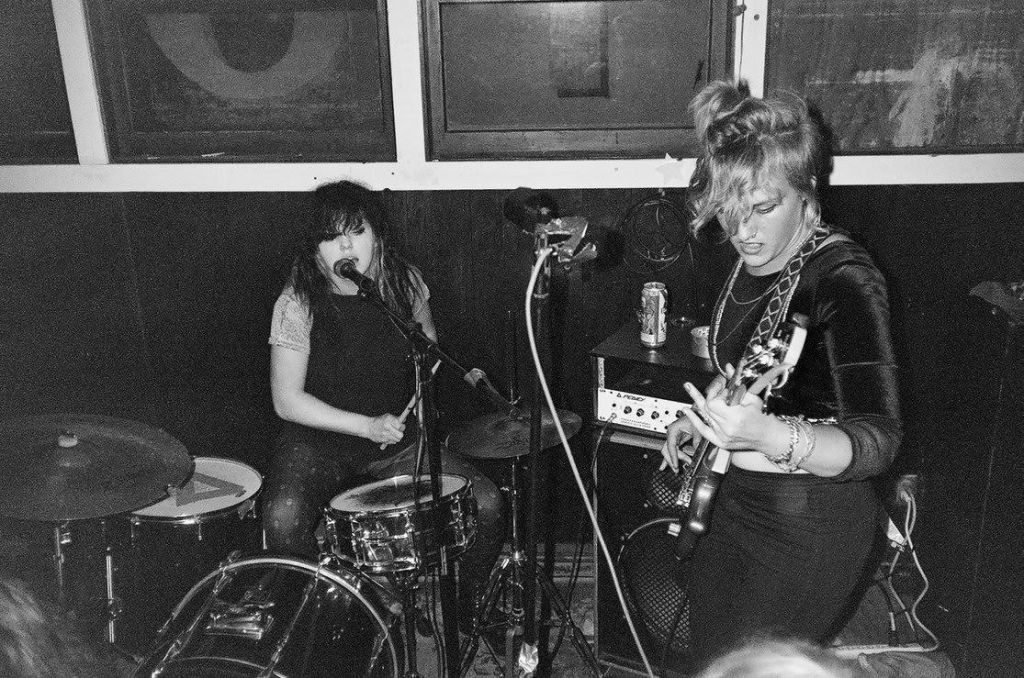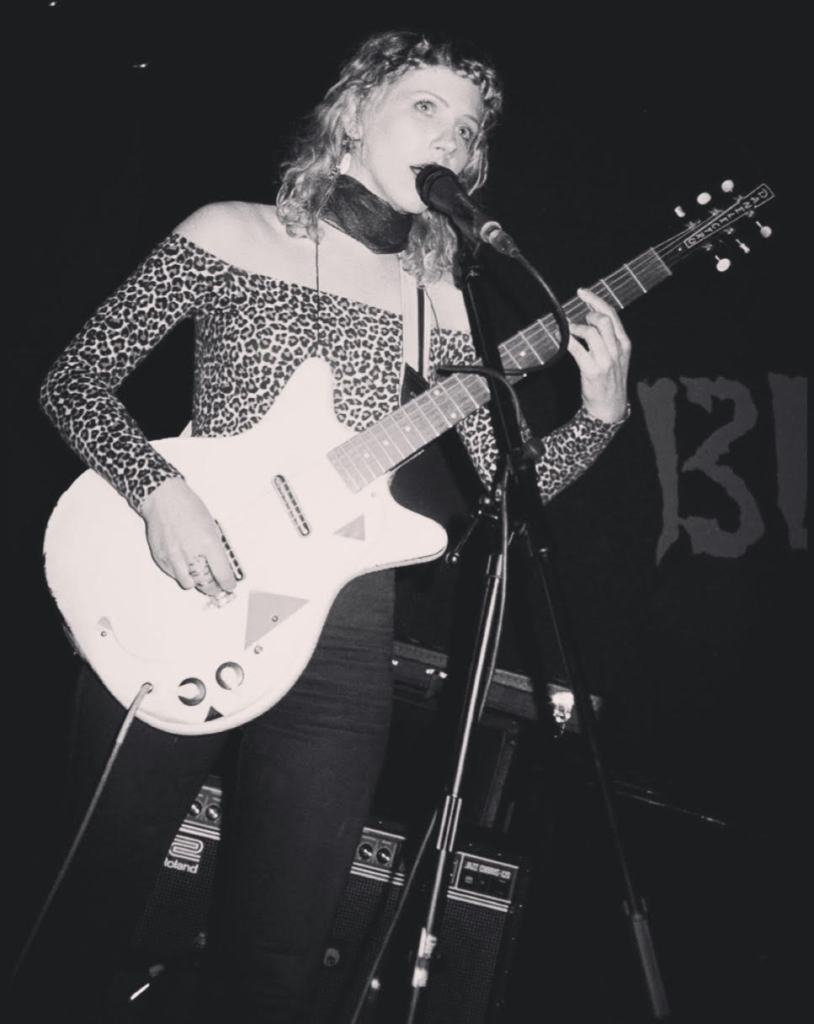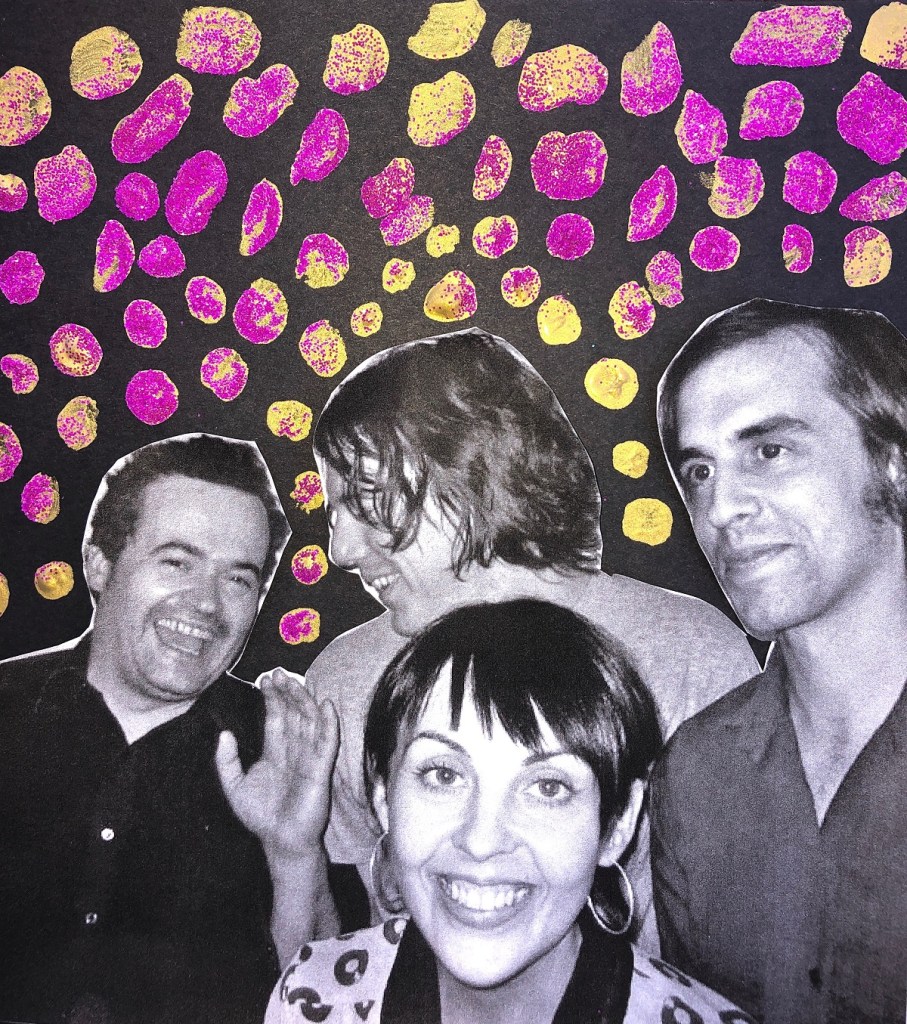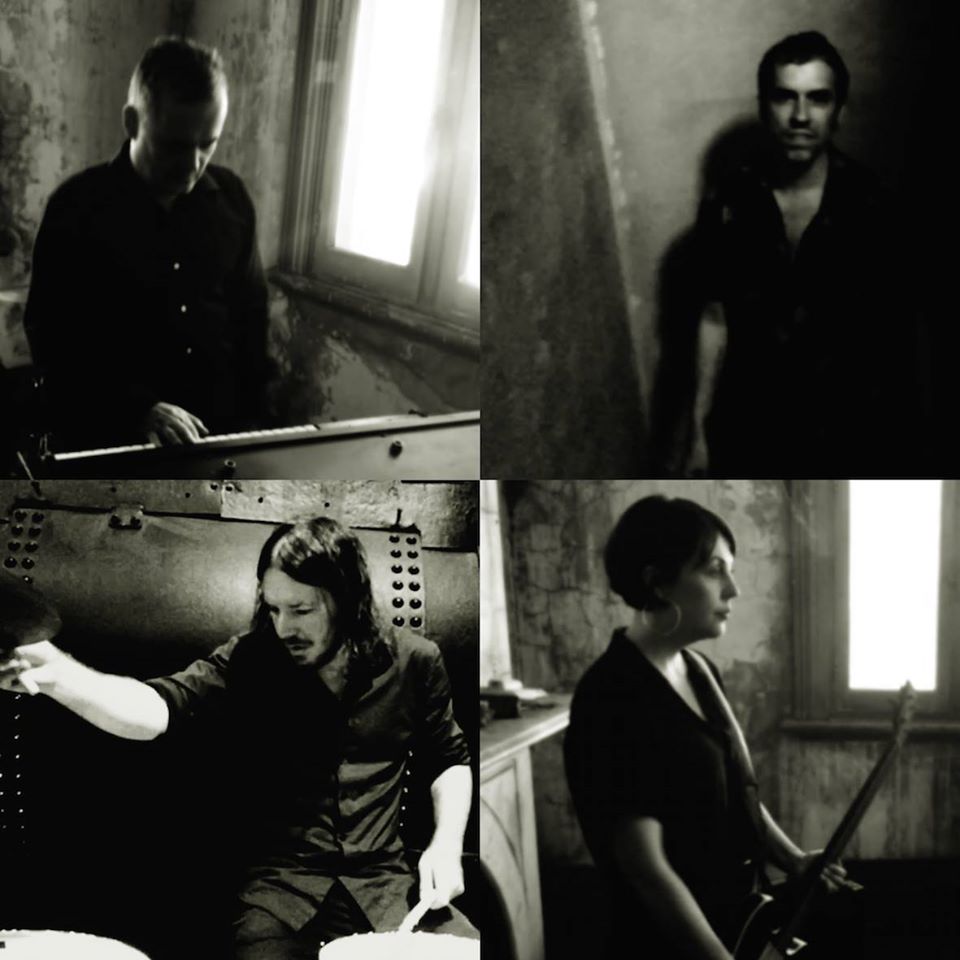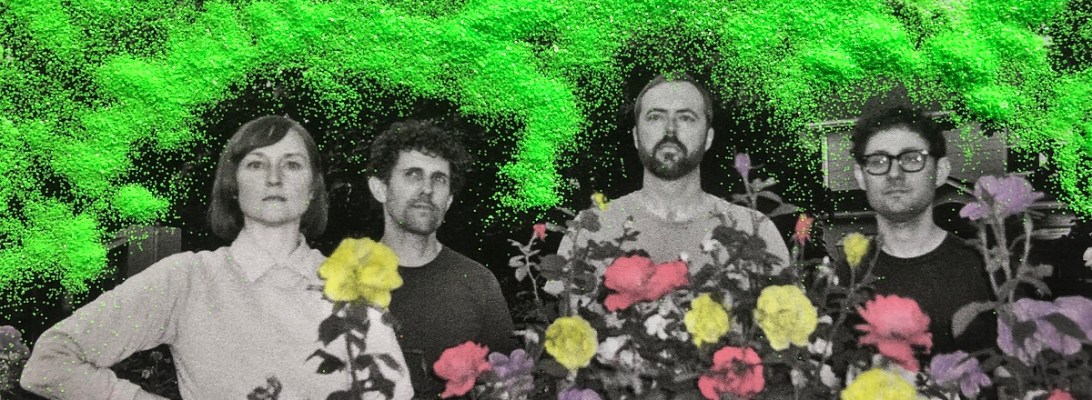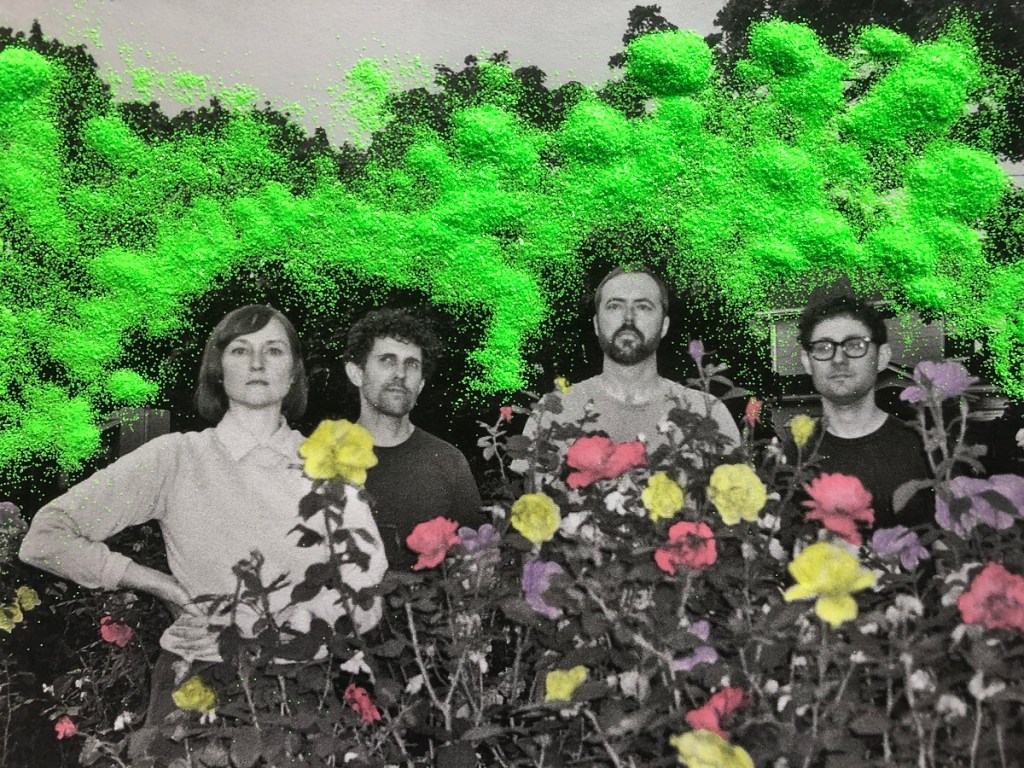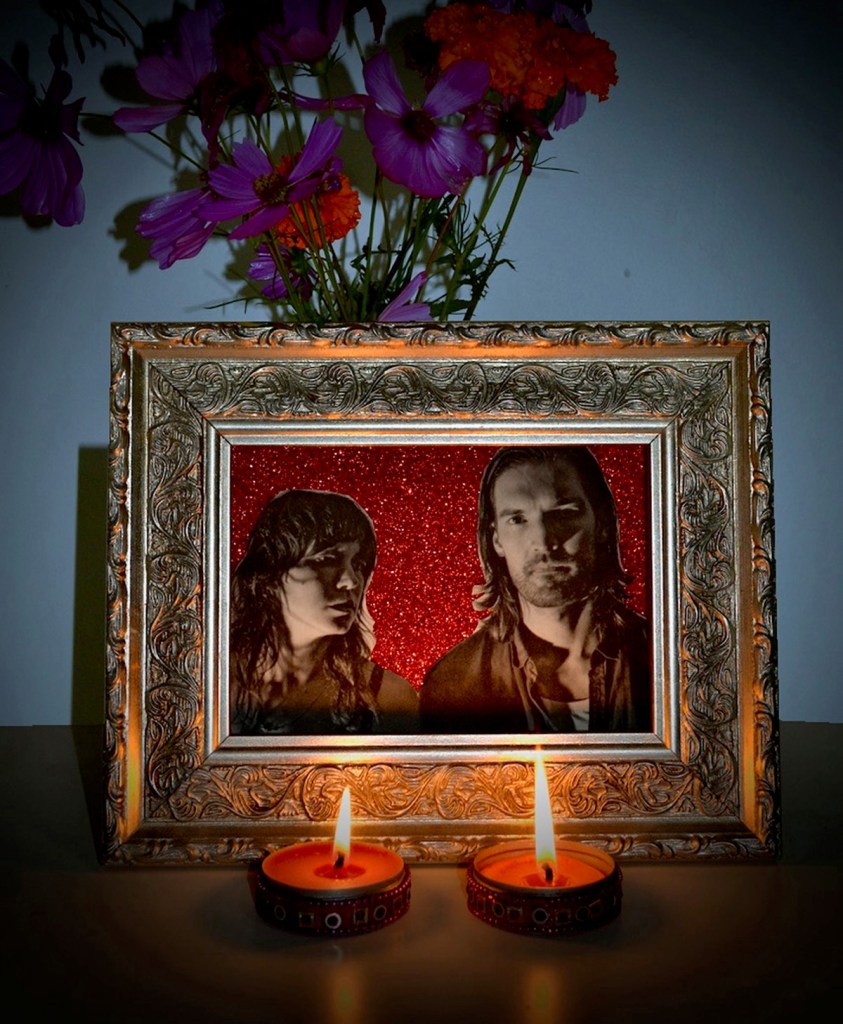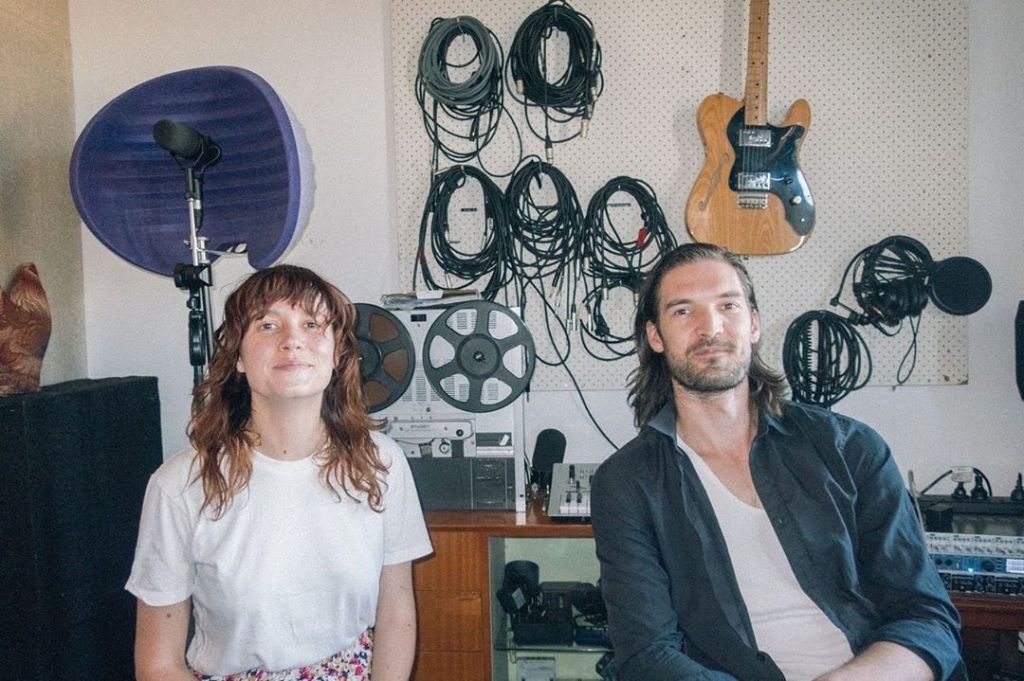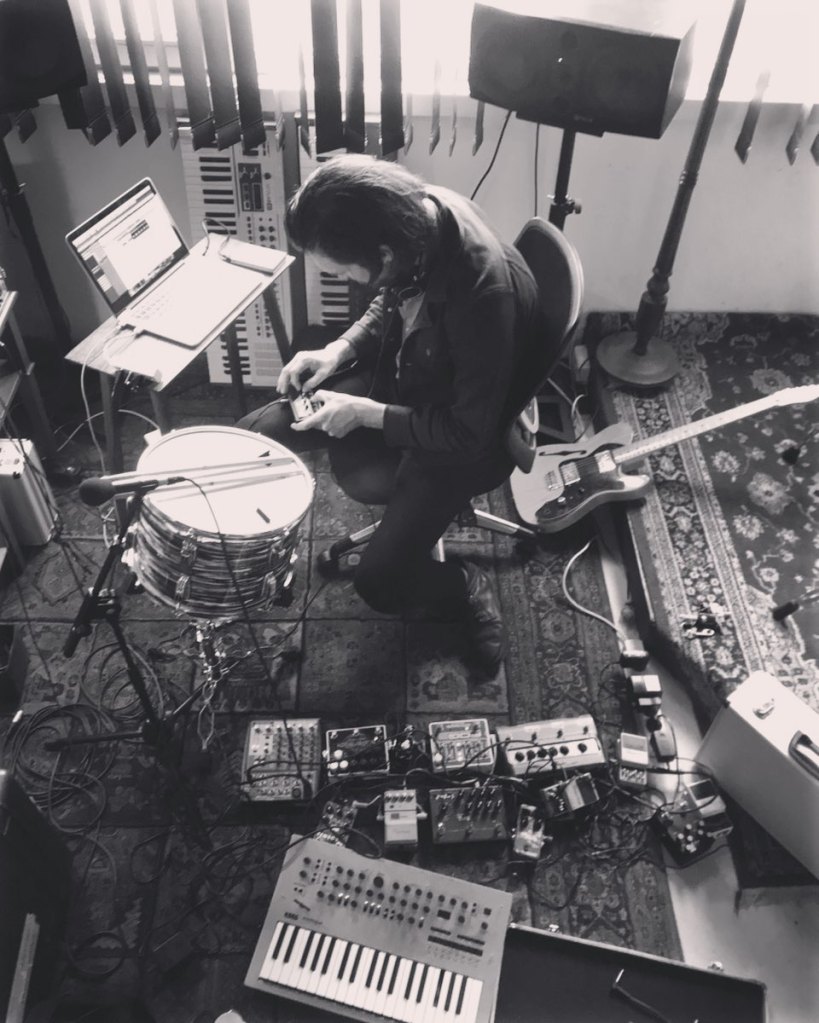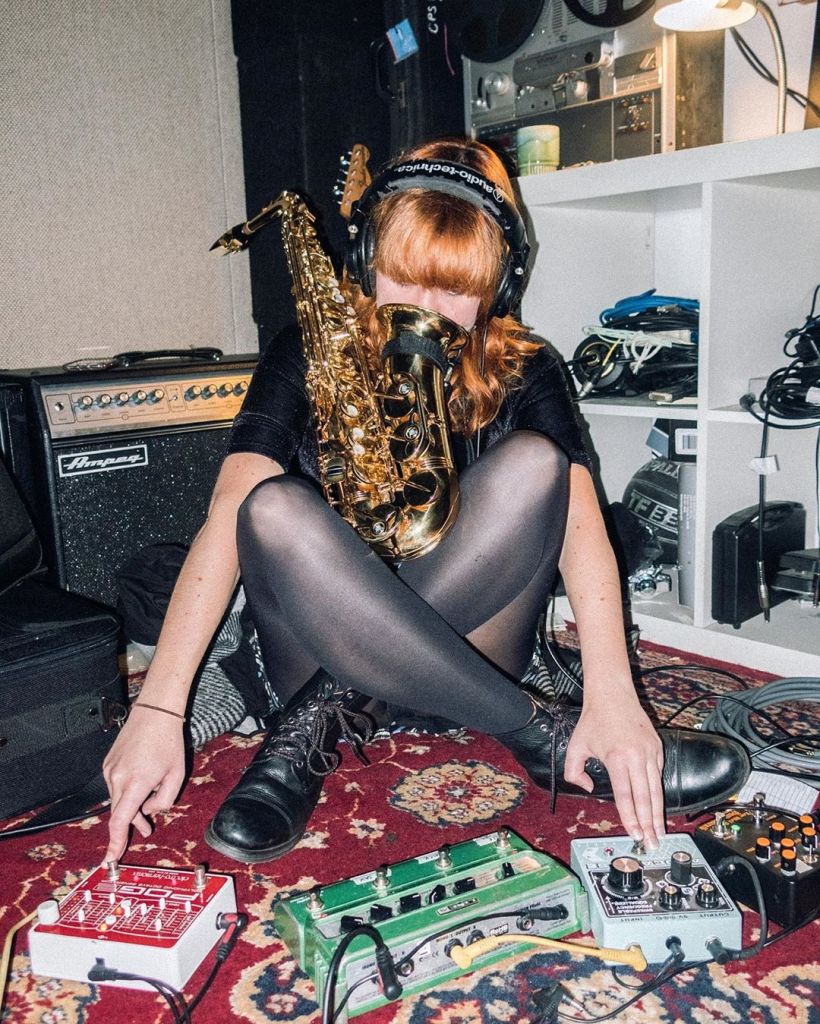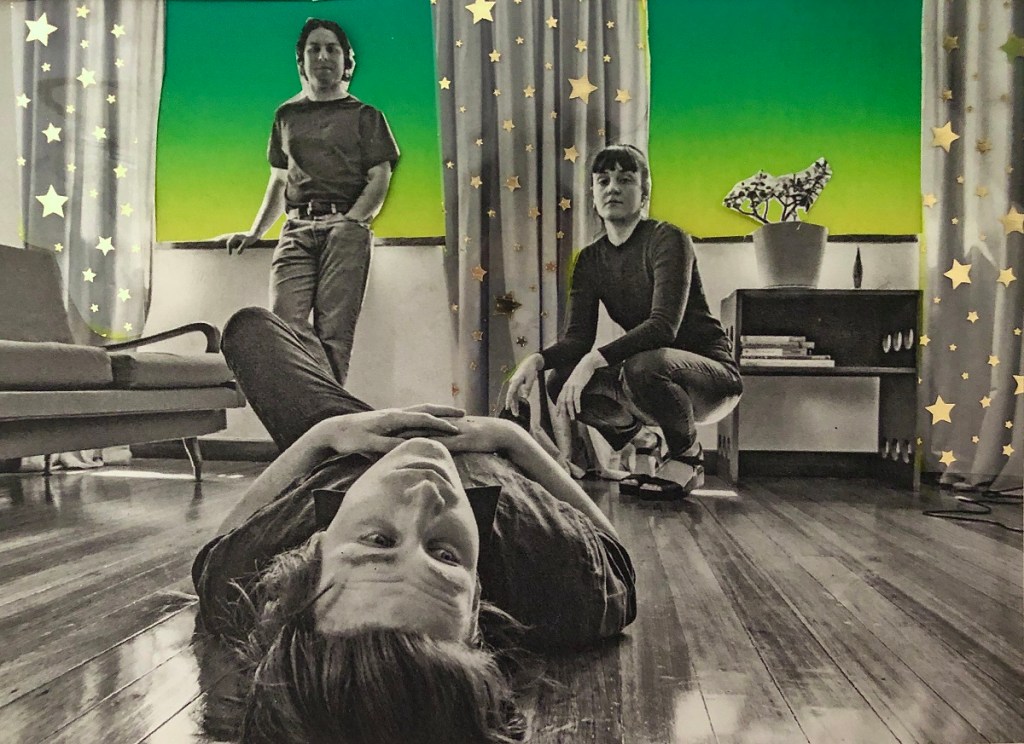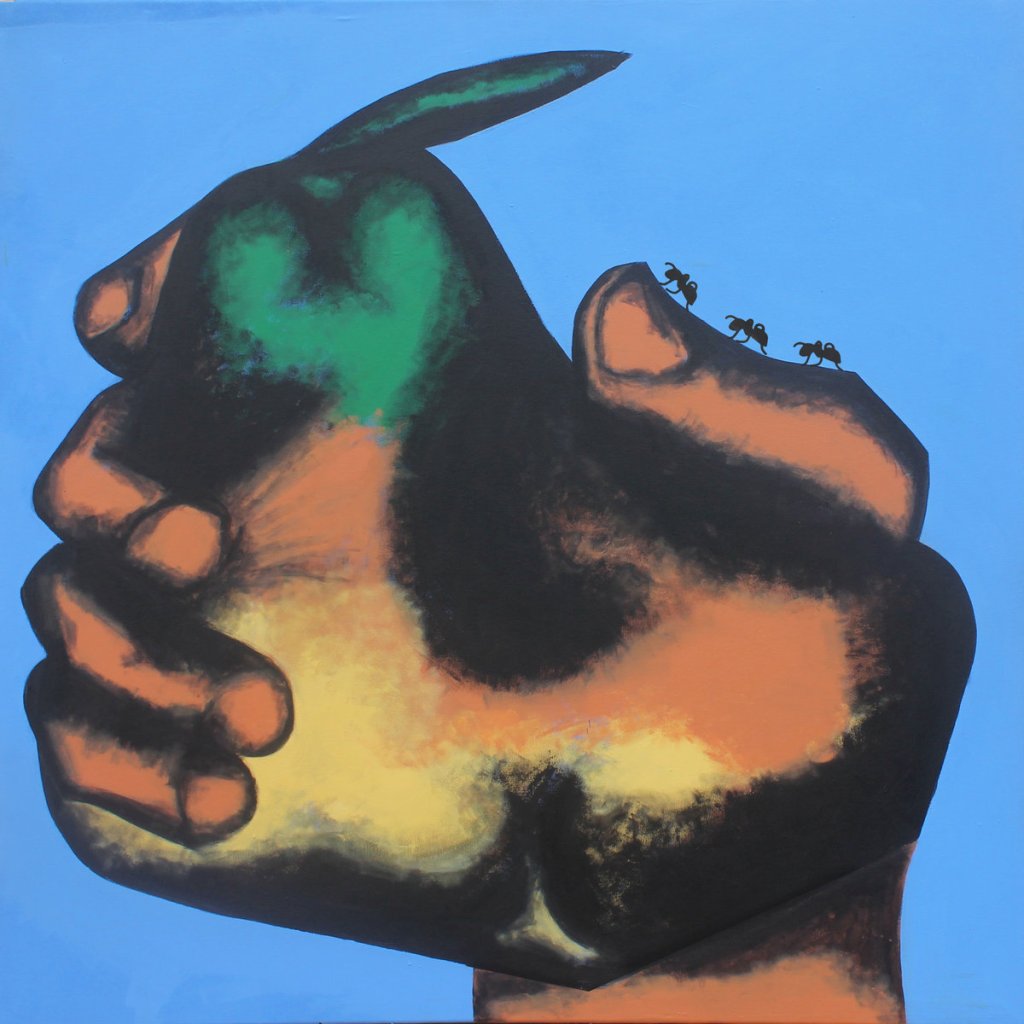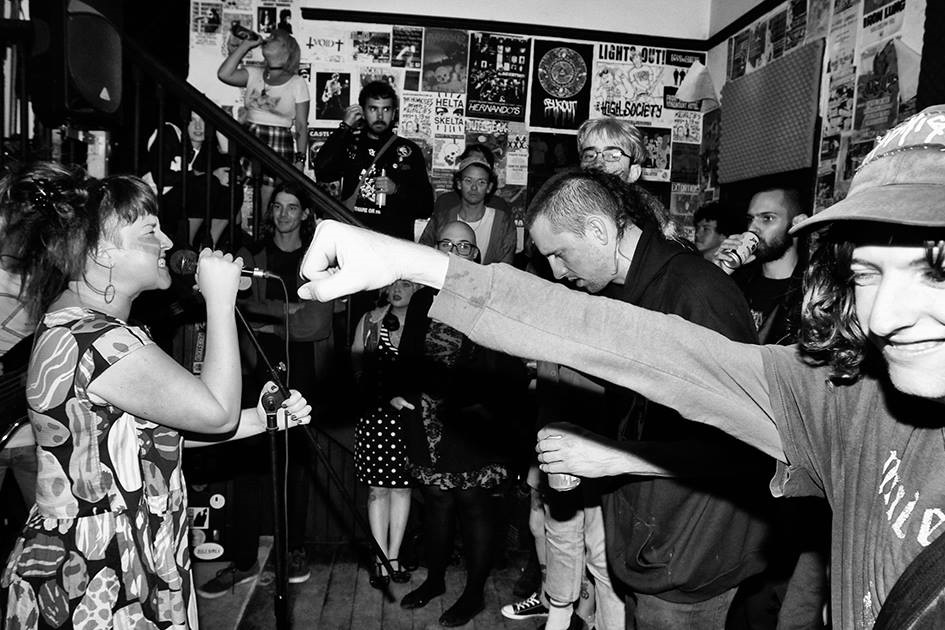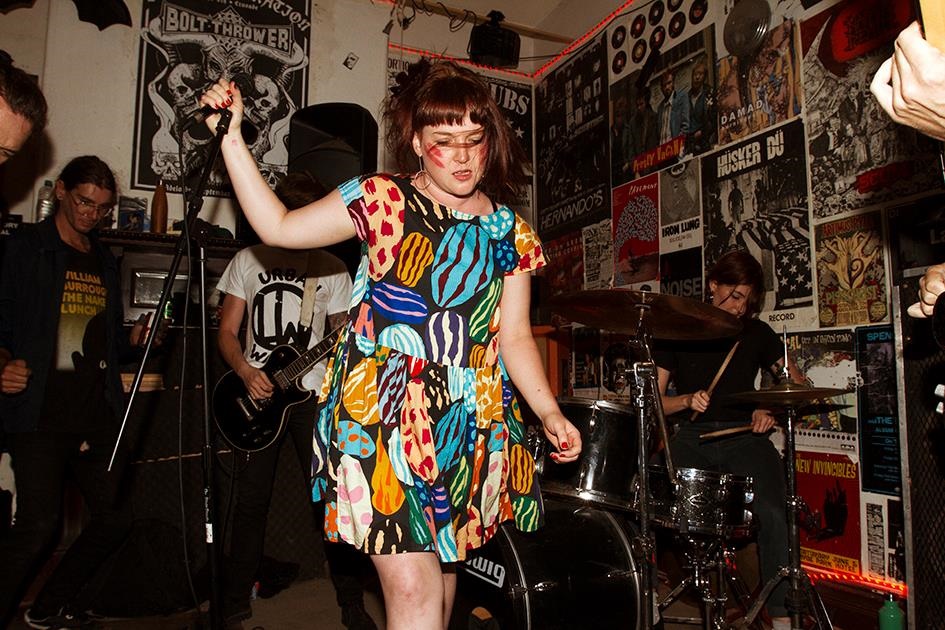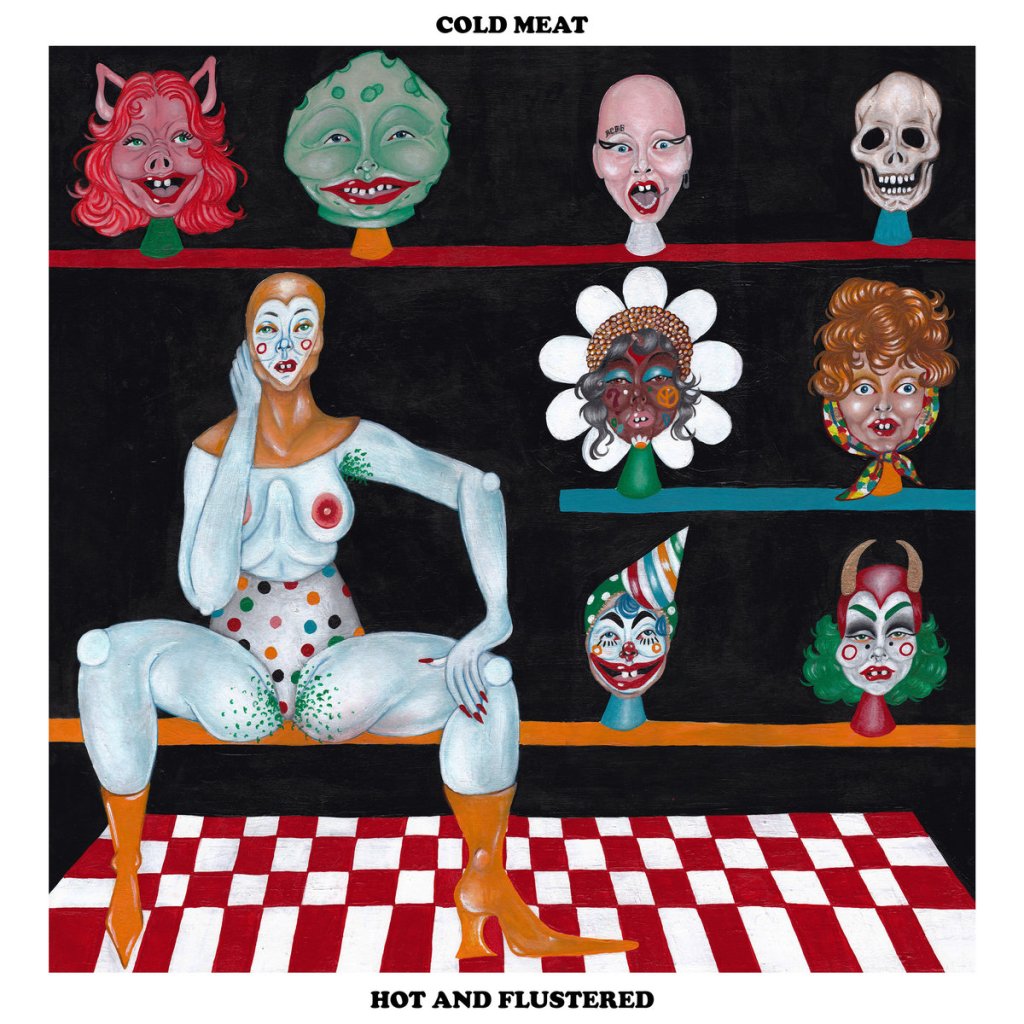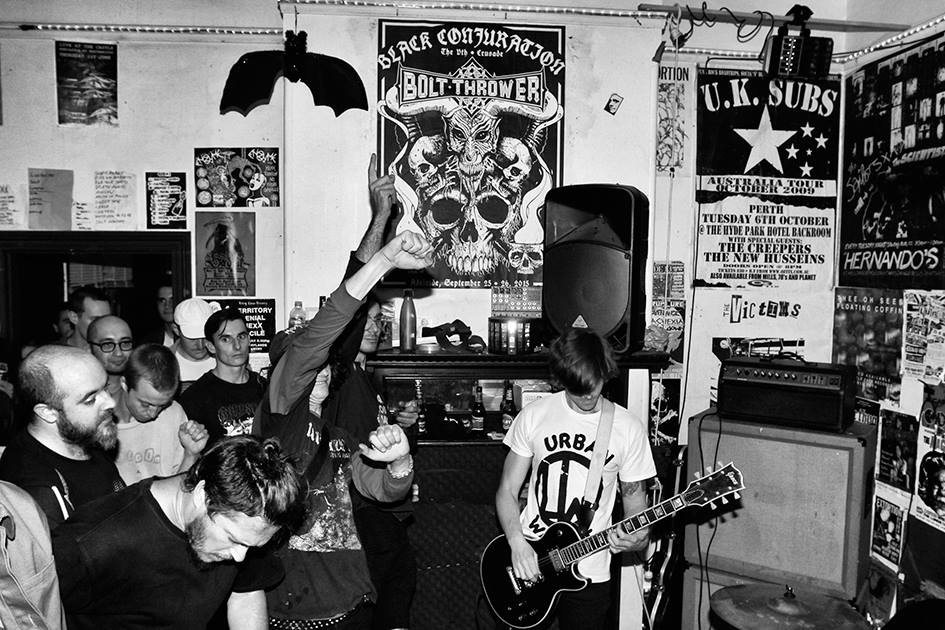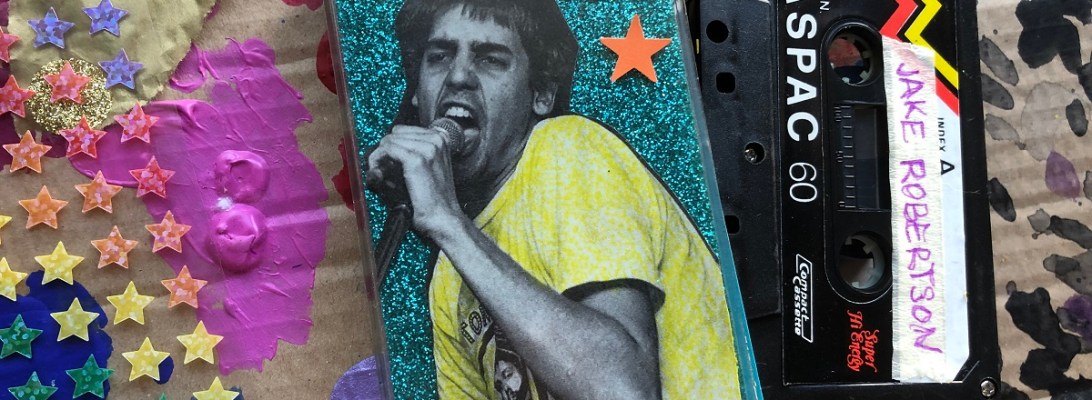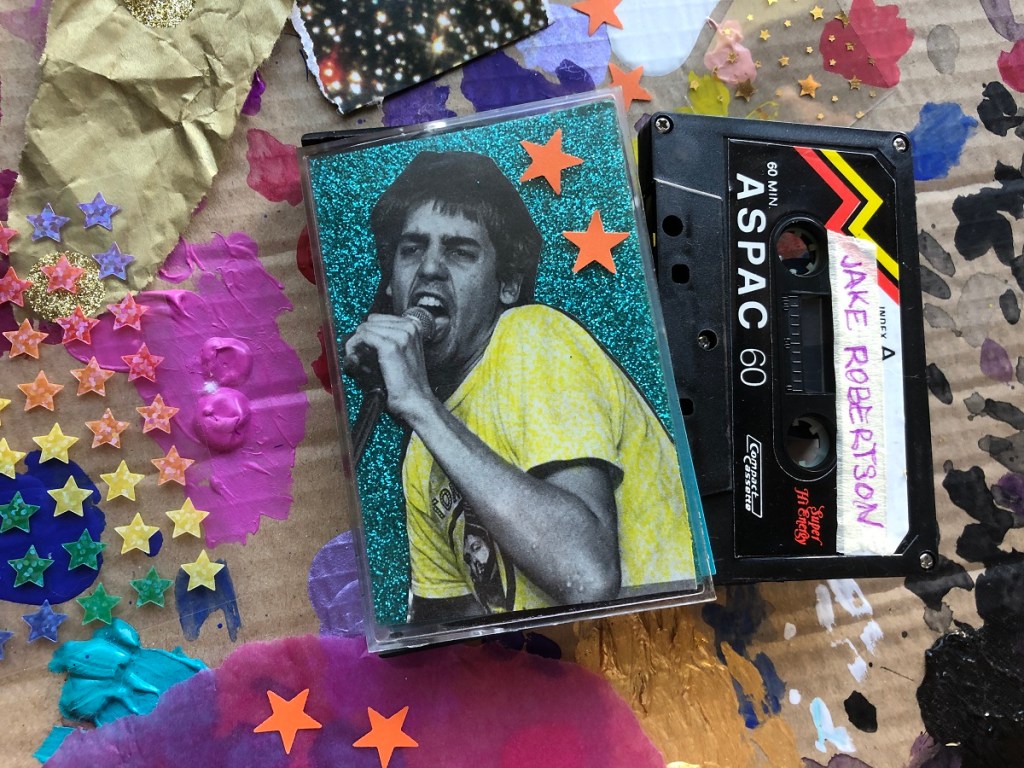
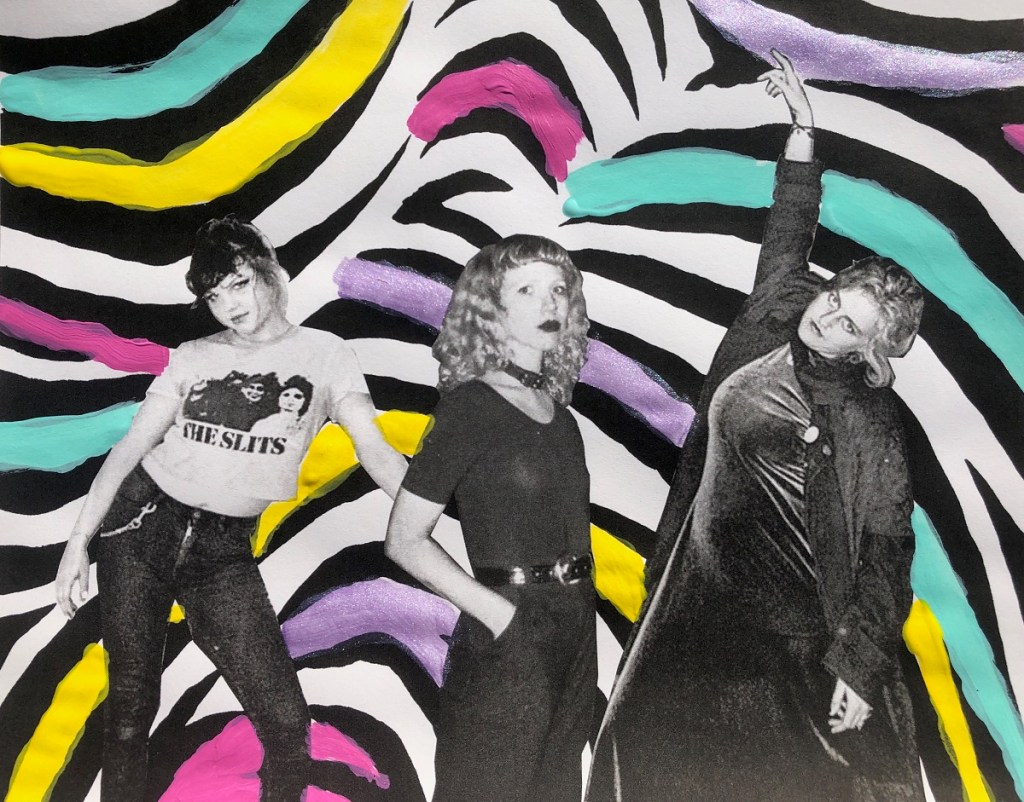
Original photo by Mark Cranitch. Handmade collage by B.
Brisbane’s The Double Happiness are comprised of two couples that play spooky-surf reverb-a-riffic dream-pop! Their music is joyous, fun and makes you want to dance. Every time we’ve seen them play we’ve had the most fun. They have a new record Surfgazing forthcoming on 4000 Records. We caught up with them to find out more about it, as well as their love of surf and shoegaze, their first concert and more.
I know that creativity, courage and connection are important to The Double Happiness (us too!); why?
MEG (bass/vocals): These are the values that we all hold dear. (Alongside with dancing like maniacs – also very important). Courage is backing yourself, putting yourself out there and not giving up, stretching yourself creatively by trying things that keep your energy up and your vibrancy levels elevated.
Keeping your connections strong is vital right now; we are nothing without other people. These are all good messages during these strange and unsettling times, and the music industry has already begun creatively connecting with audiences through online hangouts and events like Isol-Aid and Couch Choir. Life is short, have courage and be kind to each other – finding new ways to be creative is the upside of these weird times.
How did The Double Happiness come into being?
KRISTIN (guitar/vocals): We’ve been friends for over 20 years through mutual friends, and attended parties and gigs, always loving the same kinds of bands. We met up at the 40th birthday celebration of 4ZZZ at the Spiegeltent, as we were SO keen to see Ups and Downs. We got the set list, and Meg had the brilliant idea of suggesting we get together to have a jam. Meg and Simon were a ready-made rhythm section, and Pete and I were guitarists. We jammed some songs we knew and loved like ‘Candy’ (Iggy Pop and Kate Pierson) and ‘Doused’ (DIIV). Before you knew it we were writing our own songs. ‘City’ was born shortly afterwards, and the songs and the joy just kept coming.
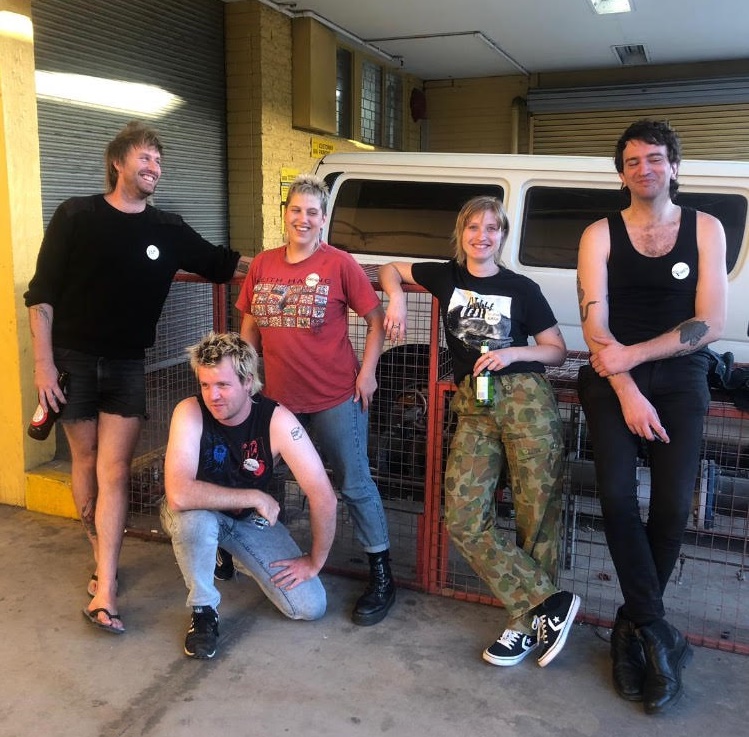
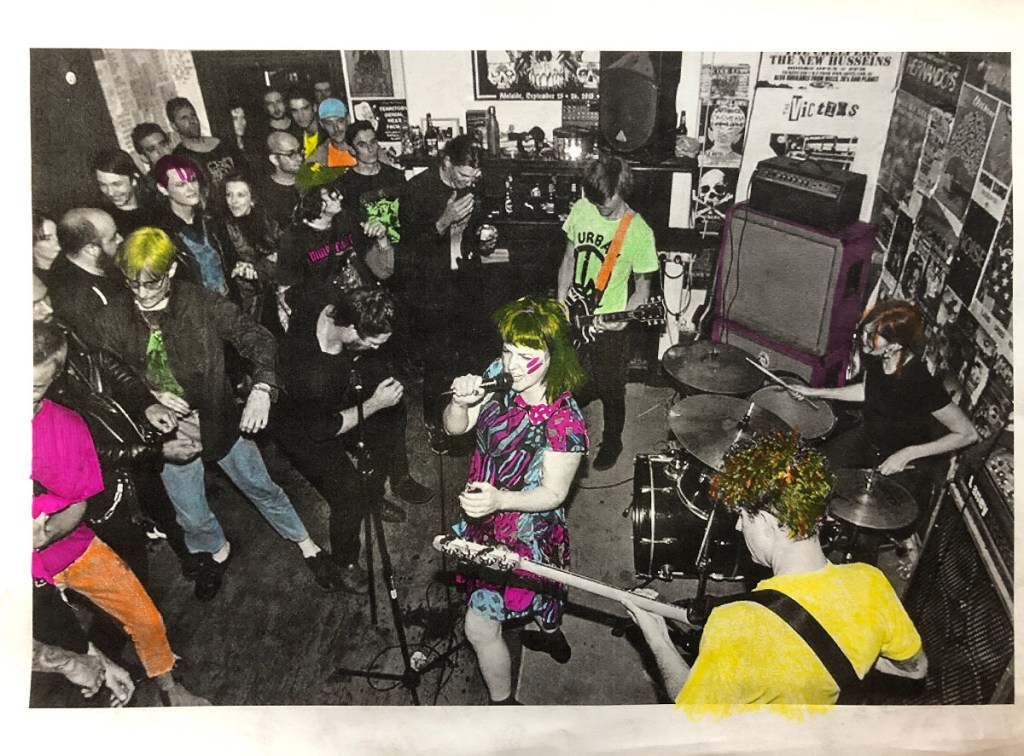
Photo by Gimmie Gimmie Gimmie zine.
The Double Happiness have a “surf-gaze” sound; how did you first discover surf music?
PETE (guitar/vocals): I have always had a long love affair with surf guitar. We all love The Pixies and I was inspired by Pixies guitarist Joey Santiago, The Shadows and the killer Pulp Fiction soundtrack.
KRISTIN: I grew up listening to my Dad’s surf guitar records – he was a huge Cliff Richard and The Shadows fan.
PETE: We’ve never been fans of guitar chords played at lightning speed. The key to our kind of surf riff is minimum notes – maximum melody. The Pixies were always a surf band in my book.
How did you arrive at combining surf and shoegaze to make your sound?
KRISTIN: Our influences and inspirations are shared which has made song writing such an easy and fun process. We all loved shoegaze bands such as RIDE and My Bloody Valentine in the early ‘90s, yet we have a soft spot for 60s sounds as well.
SIMON (drums): There’s been a revival in recent times of shoe-gaze through bands like Pains of Being Pure at Heart, Froth, Beach Fossils and with Slowdive coming back with a new album which we dig. Locally we also love Relay Tapes, Ultra Material and Pleasure Symbols.
PETE: It was becoming apparent that some of our songs were very surf, and others had a dreamy shoe-gaze sound. It made perfect sense to combine the two!
The surf influence is very apparent in your music, is there any non-obvious influences that might surprise listeners?
KRISTIN: The jangly guitar sounds are reminiscent of bands like The Sundays and The Go- Betweens, but the indie-folk influence of Jose Gonzales is present in our theme tune – Double Happiness (I Want My). We can’t underestimate the impact table tennis has had on us either!
PETER: I’m the true table tennis tragic of the band. It’s a highly complex sport. The competition bats generate so much spin. Check out the high level stuff on YouTube kids! How good is Stereolab’s Ping Pong?
MEG: I hear elements of Stereolab in our songs which is surprising as we don’t have keyboards in the band, but sometimes we get into a heightened rhythmic groove that they capture in their songs.
In the beginning, who or what inspired you to first pick up your instrument?
KRISTIN: Sister Margaret playing Abba songs to us on guitar during wet lunches in Year 3.
MEG: Teachers are so influential! Mr Stanger in Year 5 introduced me to acoustic guitar. Finding an “Archie” comic-style bass guitar in the instrument cupboard in Year 8 sealed the switch to bass guitar.
SIMON: Friends at school gave me a window into the drumming world. Realising that I could imitate the music I loved listening to in my teens like Joy Division, The Cure, The Smiths, REM and The Clash was encouraging.
PETE: I fell into classical guitar lessons in Grade 6 but that only lasted a couple of months because I didn’t know what classical music was. I picked up the same guitar at age 20, learnt to play “Skip to My Lo” and “Venus” and the rest is history.
What was the first concert you ever went to? Can you describe it to us?
KRISTIN: U2 Festival Hall 1984. It was everything.
MEG: Midnight Oil and V Spy V Spy at Byron Bay Arts Factory (when it was known as “The Piggery”) I think it was 1985. I went with my Mum, sister and brother. My Dad sat in the car park reading the newspaper! It was so energising to be part of a big crowd and experience such a strong performer like Peter Garrett.
SIMON: Johnny Diesel & The Injectors on the back of a truck parked at the front of the Narrabri Golf Club. Slim pickings! Next was Rat Cat and the Violent Femmes at the Byron Bay Arts Factory.
PETER: I ordered my first pot of beer in the early 80’s at the Victory Hotel then went to see Howard Jones at Festival Hall. I wouldn’t rate his music these days but at the time the performance blew my teenage mind. There was this Jamaican guy with a wall of percussion instruments. Amazing!
Two couples make up The Double Happiness; what’s something important you’ve learnt from your significant other while making music together?
KRISTIN: That Pete has an incredible ear for recording and mixing. He’s completely self-taught, very focused and is doing such a fabulous job.
MEG: We have such respect for each of our multiple roles in the band and how they interweave. We do all our own recording, mixing, artwork, t-shirt design, networking, social media and more. I really enjoy everything that we all bring, but I do really get a buzz watching Simon drum on stage. He is a phenomenal drummer, laying down creative and complex beats that drive the songs.
SIMON: That Meg is a bad-*%$ bass player! She obviously loves the stage and playing to a crowd. She is also a social media power house.
PETER: That Kristin comes up with the coolest riffs. A lot of the lead writes itself. It’s always fun and exciting jamming. She’s great out front on stage and enjoys the spotlight. Kristin and Meg both create such a great vibe together with the crowd.
You have an album coming out, Surfgazing; what was inspiring you when you were writing for it?
MEG: Tides, crashing waves, soundwaves, sandy toes, great riffs and rolling beats.
KRISTIN: We have a strong connection with The Great South East and often include references to local landmarks and places that hold fond memories in our hearts. Bribie Island features on the new album in the song “Red Beach”, “Coochie” was written on a ferry to a resort on Moreton Bay, and “Snapper Rocks” is a nod to the thunderous surf down near Coolangatta. So surf and beach references are very prominent in this next batch of songs, but there are other themes – completionism vs perfectionism in “Finish”, and clear communication in “Not What You Said”.
The first single from it is Wild Bikini/Spooky Tiki; can you tell us about each song please?
MEG: “Wild Bikini” is a magic carpet ride spliced with a B-Grade beach movie from the 60s with a sprinkle of I Dream of Jeannie.
KRISTIN: “Spooky Tiki” takes me back to The Brady Bunch Hawaiian Vacation double episode from 1972. Peter and Bobby Brady found a Tiki in a dig that their Dad was working on, but they didn’t know it was cursed until Greg wore it surfing, and all hell broke loose.
Filmed and edited by: Simon Welchman
Can you give us a little insight to recording the record? You recorded at Kristin’s work the MusicIndustry College and at home, right?
KRISTIN: Yes. It’s been so good to have access to the studio at MIC as well as the assistance from the music dept at the school. The drums and vocals were recorded there, but the majority of guitar tracks and mixing has all taken place at our place, mostly in the walk-in wardrobe.
MEG: I have a lot more insight into Pete and Kristin’s relationship through recording vocals in their wardrobe. They have some very cool outfits in there!
We love seeing The Double Happiness live your shows are SO music fun! We love that Kristin andMeg wear super cool outfits on stage; who are your style icons? What’s your favourite outfit you’ve worn so far?
MEG: Audrey Hepburn, The B-52s and Nice Biscuit. The boys always look good too – Simon sports some killer paisley. Pete has a ripper ‘50s bowling shirt with a Tiki detail.
KRISTIN: My style icons are Serena from Bewitched, Agent ‘99’ from Get Smart. My favourite so far (and this is so tough) was what we wore at The Outpost in January to launch “Wild Bikini” – A-line dresses made by Grace from Nice Biscuit from vintage bed sheets, with a Flintstones bone in our beehives for good measure.
Gee Tee started out when its creator Kel began creating tunes solo in his bedroom on the Gold Coast. Gee Tee’s music is a touch unconventional, a little weird, humorous, lo-fi, buzzy, maxed out, wobbly and highly entertaining – think somewhere in the ballpark of Geza X, Dow Jones and the Industrials and Scientific Americans. Now residing in Sydney and having a full live band we’re excited to see what Gee Tee does next! We interviewed Kel and he told us of his beginnings, how he creates and lets us know what’s coming up.
How did you first get into music? Are there any albums that are really important to you?
KEL: My dad introduced me to music when I was a kid, he’s heaps into ‘70s and ’80s UK punk and Oi + a lot of late ‘80s and ’90s alternative, Dinosaur Jr, Flying Nun Records bands etc. Some of my favourite albums and bands though would be: Buzzcocks – Another Music In A Different Kitchen. D.L.I.M.C – Cassingles. Sickthoughts. King Khan & BBQ. Nikki and the Corvettes – Self-titled. The Spits – V. Set-top Box. Useless Eaters – Zulu. Ramones – Leave Home. Nancy – With Child. R.M.F.C. Jay Reatard. Satanic Togas – Chain Reaction. Muff Divers – Dreams of the Gentlest Texture. Research Reactor Corp. Devo. P.U.F.F – Living In The Partyzone. Ausmuteants – Order of Operation.
What was your first concert? Can you tell us a little bit about it?
KEL: Never went to concerts when I was younger hey, first big show I can remember going to would be Thee Oh Sees back in 2013.
You first started Gee Tee while living on the Gold Coast in 2016; what inspired you to start making your own music?
KEL: Yeah I guess I just wanted to make some less serious sorta music, makes it easier to record everything by yourself too. I was in Draggs at the time and that was sort of wrapping up. So thought it was a good time to start something new.
What’s the story behind your name Gee Tee?
KEL: It’s off these 1970’s trading cards/sticker series Odd Rods, its hell mongrels in blowout cars, real similar to “Ratfink” Ed Roth drawings. There’s a Gee-Tee-O card in the first series.
All the early Gee Tee stuff is written and recorded by yourself; can you tell us a bit about how you go about making a song?
KEL: It used to be mainly recording drums first with no idea on how the songs gonna be then hoping for the best keeping the original drum track/take. But I don’t have a kit set up in Sydney, so I use a drum machine to demo the songs on Ableton then re-record the finals on tape with a kit. Synth parts are just mucking around till something sounds right and vocal bits the same. Neanderthal stuff.
What kind of set-up do you use to record?
KEL: The drums are recorded on a Tascam Portastudio 2 then the rests recorded on a Yamaha MT1X or a MT4X. Using a mix of these AKG 190e mics and Shure 57/58’s. All the overdubs, backup vox/ synth etc. is done on Ableton.
What are the kinds of things that inspire you lyrically?
KEL: Just easy to remember choruses and lyrics + stuff I’m not gonna forget. Used to be full on car only themed tracks but that’s changed over the last year, only so many songs you can write about the same thing before you get burnt out on it.
What was the first song you wrote; what was it about?
KEL: “Flame Decals” was the first track I wrote and recorded for Gee Tee, pretty self-explanatory and pretty stupid haha!
What prompted the move to Sydney?
KEL: Just not a lot happening on the Gold Coast, in my opinion. It’s a chill place to grow up but there’s no weirdo music scene and barely any overseas bands that I like would come through on tours. I was friends already with a couple of people in Sydney too.
In October last year you released Chromo-Zone as a digital album and on cassette tape, it’s the first Gee Tee release featuring someone else, Ishka Edmeades (Set-top Box, Satanic Togas, Warttmann Inc); how did you come to working together?
KEL: I was living with Ishka for a couple of months when I moved to Sydney so it just kinda happened. He’s got a similar drumming style to me as well but better and can rip lead guitar. For the new Gee Tee tracks Ryan Ellem who plays drums in the live band and runs, Slime Street Records, is gonna be on ‘em mostly.
You also do the art for your releases, it has a real distinctive style; what influences it? Do you hand make it? Is it cut n paste?
KEL: Yeah, it’s mostly cut and pasting stuff outta old magazines then scanning it. Big fan of old punk posters, zines and the art/visual style of them. I still use a PC though to add extra bits etc. so it’s not all physical.
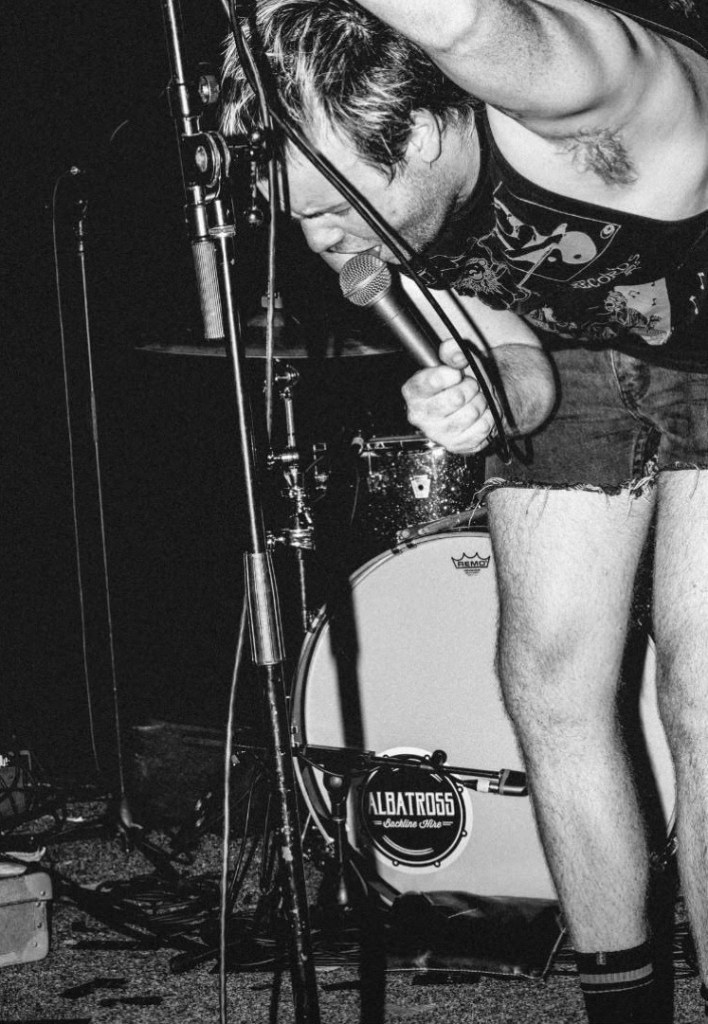
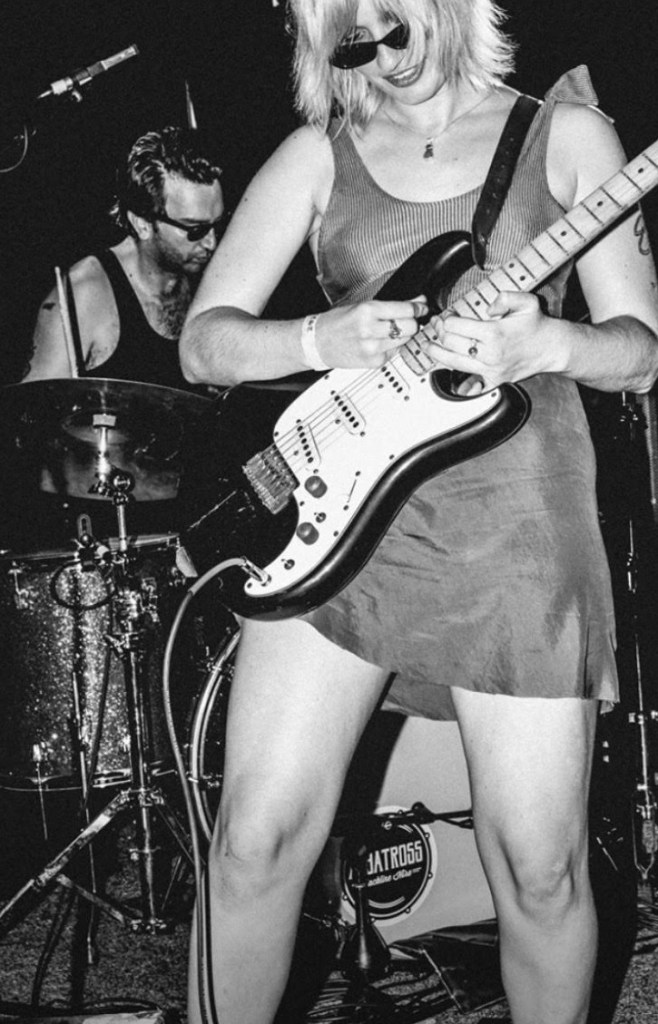
Were there any challenges in taking the Gee Tee songs you wrote by yourself to a full band live set?
KEL: Yeah, some of the songs just don’t work live, e.g. “Hot Rod Juice” and “Commando” don’t come off the same as they do in the recordings. Compared to songs like “FBI” and “I’m a Germ” which are smokers live!
What’s been the best and worst show you’ve played so far; what made them so?
KEL: I reckon the best show we’ve played recently was at the Lady Hampshire with Research Reactor Corp, R.M.F.C and Set-top Box. Heaps of people came out + playing a set on the floor is sweet! Also, playing The Tote for Maggot Fest was smokin’!
For the worst show I dunno, played a fair few stinkers when I was in Draggs. Wack greedy shit like bookers sending you an invoice for $50, when the venue was sold out! Getting set up playing with bands that are dickheads, etc.
Have you been working on any new music; what can you tell us about it?
KEL: Yeah for sure, I’ve been working on recording tracks for a couple of 7”s and a LP. Not sure when they’re gonna be out though. A new G.T.R.R.C covers EP has been recorded that’ll be out in a couple of weeks on cassette, maybe on a 7”. Possibly a few guest rocker cameos on this one too from Melbourne and USA.
Vid GEE TEE @ Buz’s birthday bash footage by video. ezy (converted by Gordo Blackers, 60% of footage recorded by Gio Alexander).
Sydney’s G2G sound somewhere between the Raincoats and Kleenex. They’re an inviting listen of freewheeling riotous music inspired by their “mums” and “Dolly Parton”. Despite currently living in different parts of Australia they’re still keeping in touch and working on new ideas which, if we’re lucky will materialize into their first LP.
How did G2G come together?
GEORGIA: Well it happened pretty quickly. I had lots of – I wouldn’t call them demos – but phone recordings of strange melodies, and Greta had lots of ideas too so we spent a couple of afternoons in her studio fleshing these parts out. It was obvious that we needed to get Australia’s’ best bass player (Gel) involved to make the songs truly work… We probably had one rehearsal together before our first show, which was Paradise Daily’s Fourth Birthday Party.
GRETA: Georgia and I met at a Body Type show and Gel and I met randomly through a mutual friend. Neither were particularly memorable occasions, I think only brief introductions, but we all slowly grew on each other. That’s the way I think real best friendships happen.
GEL: Greta showed me some demos in the car once of two songs that her and Georgia had written and I loved them so much! Our first show we played for about 10 minutes and it was a very fun 10 minutes- we all got together lots after that and kept writing. And yeah I think so too Greta!
What is the band’s biggest inspiration?
GEL: Dolly Parton, Nicholas Cage, our mums!
GEORGIA: I think we all have a similar sense of humor, and I think we are a curious group… We have an A3 sheet that lives above Greta’s bed with all of the things we love. Dolly, Nicholas and “our mums” are definitely on that, also on that list: Dixie Chicks, Brian Eno, Leah Sales, Terry…
GEL: Yeah I think curious is a good word for us! Curiosity is a big driver I think for us all.
GRETA: I’m currently in isolation in Melbourne but if I had a photo of that piece of paper it would show you… our kindergarten teachers are on there too. Our pets. I think our biggest inspirations are the people (and animals) that made the biggest positive marks on our lives. G2G is a happy band! We are celebratory humans and we like to sing about that.
We found it!
FIG A: THE G2G BIBLE WITH A TOUCH OF GRETA NOW WIG.
Growing up, how did you discover music?
GEORGIA: Family. Perth’s’ 1080 radio station had a fair bit to do with what I discovered.
GEL: Also family. In primary school I played in a two person Delta “Goodrum” cover band with my friend Claudia. We played exclusively Delta [Goodrem]. I think maybe being given a Destiny’s Child CD for my birthday one year provided a gentle push toward discovering other music!
GRETA: The first CD I ever owned myself was Ali G’s single “Julie” which I used to spin the shit out of on my walkman. I think my godparents gave it to me. The first way I liked to discover music was by going to HMV in Hurstville and picking a random CD from the top 10 section. I was pretty gutted when it shut down.
When did you first realise you wanted to play music?
GEORGIA: I won a guitar from the local video shop at the age of eight after writing a paragraph on why I loved Josie and the Pussycats. That was the instigating event but I didn’t realise I wanted to make music until I was in my twenties.
GRETA: I always wanted to play music, I can’t really remember when I realised! I used to love playing my dad’s bass when I was small and then he bought me a little Casio keyboard and I would just press play on the demo songs and make my own words and dances up to them so probably then.
GEL: My Mum played in a few bands when I was young. I liked that there were often people over playing and it was normal for it to be noisy and lots of kids running around and it felt fun! I think I have always liked the idea of having music as a part of day to day life in a similar way.
G2G are from Sydney; what’s it like where you live?
GEORGIA: G2G was born in Sydney but at the moment I’m in Perth, Gel is in Wombarra and Greta is in Melbourne. So we are living all over. The sun sets over the ocean where I live.
GEL: Where I am it’s nice, extra isolated during this shutdown but there’s a very empty beach and lots of nice places to walk.
GRETA: I am from Hurstville, St George. It’s a quiet, suburban place. I live there with my mum, dad and my grandmother. We are a super close family and St George has many things to offer us. Paul’s has the best burgers, Tom Ugly’s bridge is the best fishing spot and Mr Chow’s is the best BBQ Pork.
You released your first song “No Kid No Angel” in June last year; what’s the song about? Was it the first song you wrote?
GEORGIA: Um, the anxiety and repetition of loss. How about that.
GRETA: Yeah, that sounds about right G.
In January this year you released your first EP as a 7”; what’s your favourite song on it?
GEL: I think my favourite song on the EP is “Animated Satisfaction”. I like that it’s freewheeling and frantic but also kind of condensed.
GRETA: That’s so hard… Obviously I love all of the songs but I really love playing and listening to “Animated Satisfaction” too Gel. We sound tuff in the recording and it brings back really funny memories.
Are you currently working on anything?
GEORGIA: We are working on making a movie together, which is proving a little difficult as we are all in different states and self-isolating, but we are figuring it out. We also have a few songs we want to record so hopefully an album will happen when we are next together.
GEL: Sending each other phone recordings and lyrics and song ideas is something we’ve always done, so even though we’re in different places we’ve kept this up. There’s definitely an album there in our combined voice memos.
GRETA: In conclusion, we’re working on staying in touch with each other, making sure we call, check in, Facetime where we can. We miss each other A LOT!
What’s the most interesting thing someone’s said to you about your music?
GEL: Someone once described G2G as “like a chainsaw to the face, if that chainsaw was made of nails and sharks.” I definitely appreciated the creativity of this depiction of us… haha!
What do you love most about making music?
GEORGIA: I love making music with Greta and Gel because it’s quite chaotic and intuitive and filled with feelings that I like being inside of and communicating.
GEL: Yeah, me too. Georgia and Greta are the best to make music with. I like the way we build on and run with each other’s ideas. Writing songs together is supportive and fun and honest, and that feels good.
GRETA: I love making music with Gel and Georgia because we laugh SO MUCH. And there’s an amazing sense of freedom that comes with writing with these two. Ideas are never shunned because nothing is lame or repetitive or shit. We embrace all of each other’s ideas and we just work really well together.
What are the bands, songs or albums you’re listening to right now?
GEORGIA: Solo Career and Greta now. The song “This Kiss” by Faith Hill and the song “This Is Not A Dream” by Dadamah. The Lydia Lunch podcast.
GRETA: Creedence Clearwater Revival, Burial, Brian Eno, The soundtrack to Animal Crossing.
GEL: I’ve been listening to More Fun In The New World by X heaps, somehow it sets the right kind of mood during this weird time of shutdown/ isolation! Also the song “No Romance” by The Fates, the new Primo! song “Machine”. And band Girls at Our Best! and my friend Mardi’s Country Christmas album.
Where are you happiest?
GEL: In the bath.
GEORGIA: In the bath with Gel and Greta.
GRETA: In the bath with Gel and Greta and Georgia.
Keith Levene is one of the most interesting people we’ve had the pleasure to chat with, he’s experienced a lot, created a lot and still is. We love people that are constantly moving forward and evolving; to live a life that’s stagnant would be hell on earth for me. At fifteen Keith roadie for English rock band Yes, went on to be a founding member of The Clash and PiL, had a hand in the early days of The Slits, was in The Flowers of Romance with Sid Vicious and contributed many things in the early days of UK punk he didn’t get recognition for. Today Keith is still as passionate, maybe more so now than ever, about all that he’s doing now: released three limited edition handmade books, I WaS a Teenage Guitarist 4 the ClasH, Meeting Joe Strummer and The Post Punk Years (covering the years 1976-1982); versions of his album Commercial Zone and more. He spoke to us from Prague while he was working on CZ2014 a semi-official release of music he’d made for what would eventually become PiL’s This Is What You Want… This Is What You Get.
KEITH LEVENE: I’m OK now. It was either pick my Mac up and throw it over the balcony or get away from it for a moment. I was really fucked off! Sometimes you’ll be doing stuff in this day and age, with digital stuff, on Macs or what have you, you want to do something simple but they work in annoying ways; everybody’s doing it and it’s not new anymore by the way. When things go wrong, it’s like buses coming at once, you wait for a bus and it comes and when things have gone wrong, one thing goes wrong, it can then click and everything can be OK, stuff happens and it’s fantastic; other times you go on to do simple things and it takes a long time. You think I’m gonna do this and this and this and this, and things start going wrong and you forget what you’re going to do, you get frustrated. You think, the reason I’m doing this myself is because the people that were doing it for you took longer and were a pain, all that kind of thing—I was in that space when you first called. As you can tell I still am a little bit. I’m OK though, I’ve just had some good stuff lined up for today. It’s taken me a long time to be in the position to have this shit lined up; one of the big frustrations is we had to create this stuff ourselves. No directors, no anything, we just do it all ourselves. I’m sorry, I just needed to vent.
That’s OK. I understand yourself frustration Keith, I do everything I do myself and I’m self-taught too.
KL: Fantastic. Do you live in Sydney?
No, further north, closer to Brisbane.
KL: Someone from Sydney wanted to bring me out a while back. I thought I could just come and use local people as my band. I thought maybe I could just turn up but I don’t want to bring a band, I don’t want to fucking tour. I got busy though, he got busy, and everyone got busy. Tommy Emmanuel is a favourite of mine. Do you know who that is?
Yes. He’s an Australian guitarist.
KL: He is one of the most famous guitarists in the world, definitely, at least in Australia. What questions do you have for me? Ask me anything you want.
You’re in Prague at the moment; what inspired you to move there?
KL: It was a mistake! I did a project here last year. I knew about Faust Studios, I knew one of the drummers that worked in the studio here; it’s a big space just to drum. Faust was the only game in town, I know because like I said, I was working here last year. I didn’t even know that I was going to be doing Commercial Zone 2014 or whatever it was going to be at the time, it’s done now, it’s ready. I needed an old school studio, obviously it had to be with people I knew; I started working with people I knew but it didn’t work out. To answer the question, I didn’t choose Prague, Prague chose me.
With Commercial Zone 2014, I know you wanted to embrace the original PiL ethos; can you tell me what that is?
KL: The things is, I knew it inside but I’ve recently rediscovered it, that ethos is automatic to me. I don’t even know what ethos really means. It’s a general process and way of working I guess. When I say PiL, I mean me, obviously it worked really well for the first three or four PiL albums… I came in and thought that I’d bang it out in ten to twenty days, then I realised it’s not ready. I could have released something, I have loads of stuff but I wanted to let the whole thing develop in its own time. I wanted to capture the best part of the past. I kept coming to this block, CZ ’83. I’ve now been using CZ 2014 and I now know what it is. I’ve basically refined everything I’ve been doing for the last few years. It’s been a big, big effort to be back in music specifically and expanding it. I’m into things beginning not ending. When I was in PiL, it was rock n roll. Like John Lydon said recently “the big full stop”. We wanted to put a full stop on rock n roll. I like rock n roll, I like The Beatles and the shit before but that was all a past thing. Now here we are thirty years later and all I’m seeing is shit from the past, there’s nothing there.
Handmade CZ2014‘s by Keith.
With this project we crowd-funded it, since then I’ve expanded it times ten. I intended to do that, to deliver what I promised to these CZ 2014 crowd-fund people but more, like there’s the book. That’s the PiL ethos: it’s not enough to be just a musician. We weren’t trying to be pop stars. I like pop records, I like the hits, but I’m not trying to be a fucking pop star. I don’t want to be a John Lennon or a Paul McCartney, I want to be something else; I want to be the guy you can’t copy on guitar—I want colour, I want touch.
When the internet was coming in all you’d hear about was, oh you can see me do this or do that, or you can do this… now it’s a pain in the fucking arse. Tell me a time when your phone is really turned off. These phones are just mobile fucking computers. It went from being really exciting to being really fucked, they’ve turned it all off now. With me, I’m trying to use elements of it and deliver a product. Ever since CDs came out there’s been a debate of are CDs better or is viny better; vinyl was better but digital can take care of anything now days. It’s nice having a record but it wasn’t working. Everyone was like, we want vinyl! But then only 1 in 100 goes out and buys it and plays it on a record player. Some people just get it and never play it, they just want an album because they want a thing, they want an experience—they want the memory! Oh, I’ve got the memory. I remember what it was like in record shops and you remember too, holding the covers and talking about it, this PiL ethos was about that. Where we are now, that ethos really fits.
The fact that I chose that little period 1983-1984 CZ, Commercial Zone period, moved to the CZ here in the Czech Republic… the whole idea of the project was to get in the fucking Commercial Zone and see what the fuck happens in the Commercial Zone. Teen Guitarist [the book] has got a life. I’ve only just discovered this in the last few days as I’m printing off the book. There’s a lot of good stuff, I’m not looking to tour but I am looking for a teen guitarist; I’m looking for a kid that’s fucking great that wants to do this.
I’m overwhelmed by your passion Keith. You’ve been doing what you do for so long, it’s great that you still have so much energy and focus.
KL: Bianca, everyone says that! I remember this guy from when I started getting back on the scene, a geeky kid, great kid—the kid loved Keith Levene. You get these people that like punk or this or that, then you get people that like a certain kind of music AND Keith Levene, hence they like PiL. He loved me and we were hanging out for a bit. We were doing a geeky thing, I had just got some new Macs. I hang out with 20 year olds and the energy that I’ve got compared to them, is probably a hundred times more focused. This kid is 21, I’m 54 and hanging out and feel a bit weird doing that but, yes, I am passionate. This guy that interviewed me yesterday said, ‘Keith, you’re still angry, aren’t you?’ It made me laugh because I’m not angry, I still react in the same way—I don’t give a fuck. A lot of people don’t give a fuck anymore but in a different way, it’s them just not being arsed. Now is the fucking time for punk rock! 1976 was a fucking warm up, now is the time. If you want to get serious, now is the time! I’ve sensed that since 2011… here we are. Things are looking good in terms of cool things and there’s more to come. Have you seen or heard anything of the stuff on my YouTube?
Yes. I’ve looked at it all and I’ve been following your posts. I find it fascinating and I’m really digging what you’re doing. I was listening earlier to the one you recently put up, “What’s My Name”. I played it and then played the original and the new one is miles ahead for me.
KL: Bianca, I never recorded that, then I thought I’m going to record it. I’d been toying with it for years. When I did the draft version you heard on YouTube (I’ll do a better one for the album)… here I’ll send you a version I made of it now. The file will appear in front of you and you can accept it and give it a listen. It may take a minute to download…
OK great. Thanks.
KL: Oh it actually just says it’s going to take 21 hours [laughs]. I want you to hear it. What I did, I did “What’s My Name” then this kid, this Rotten Johnny kid, did a vocal for it like the original. I asked him to do something madder. He asked me, “what do you mean?” I told him to just do a vocal on it; he said, “yeah, yeah, Keith, I will.” It’s just an upgrade, it’s just a vocal, it’s just a fucking guy talking. Anyway, you’ll see it, get it and see the focus. Everyone’s thinking this shit! Don’t tell me you’re not going into Starbucks or wherever you’re getting your fucking coffee from, or you’re in some awful pub and this fucking music that they’ve been playing since the late 80s comes on… it’s got worse and worse. When Cher brought out that awful fucking tune with that autotune it was the end, it was over; she tripped over her knob, found the special effect, the special effect went wrong and she was like ‘oh I like the sound of that’ and now we’re had twenty fucking years of robots singing through computers. My computer does more in its sleep than this fucking music. Listen to me crying here! I listened to this music in the restaurant last night and it was fucking awful. They had this flatscreen telly playing this corporate fucking shit! We’re immersed in this shit. Now is the time for punk rock! Maybe I am pissed off and angry? [laughs]. No, I’m not. I’m too old to be angry; the anger just turns into passion. Like, what the fuck can I do about it? What can I contribute to this planet? I can look at myself in the fucking mirror.
Tell me about the book, I WaS a Teenage Guitarist 4 the ClasH. It looks amazing. It reminds me of a zine. It’s very handmade and personal.
KL: Yeah. I only realised a couple of nights ago, people say, “Have you put any words on, Commercial Zone, the new one?” It’s taken me ages to get it… It’s not a remake, I’m not even going to be doing any of the tracks in the end. The words to Commercial Zone is: I WaS a Teenage Guitarist 4 the ClasH. That’s spawned a certain record, this Teen Guitarist record. I don’t know how I’m going to do it yet. It’s going to make me make an album that has a focus of words which, I’ve never done that. The best guy I ever had for that was John Lydon when he was good, he was fucking good in the beginning, to be Johnny Rotten in those days… He knew me, he knew Keith, which helped and to have the Sex Pistols happen to him and I’m on that scene anyway; I’ve done The Clash, I’m doing the Slits… I actually elected to not be in the Sex Pistols. It came up when they drafted Sid [Vicious] in. I was in The Flowers of Romance with Sid. Sid was cool, it wasn’t because he was the greatest musician on the planet, it was because he had ‘it’, that indefinable thing.
For John to turn around and say “Good idea Keith, I like it” and come to me and say “I call myself John Lydon” to be… obviously he changed his mind somewhere along the line. He changed his mind at the wrong time, he should have gone off and called himself Johnny Rotten, not PiL. I guess that’s for John to figure out.
What I’m doing is finishing business, I did Metal Box In Dub, some unfinished business with [Jah] Wobble, we kind of tested our own material; we needed that going through the PiL shit. The music stood up. People were turning up. A guy came from Australia to Wales, Bianca, this guy landed, came to the gig, was amazed and went back to the airport and got back on a plane—that amazed me. A guy came from California to see us play in London too. He said that ‘last time I saw you play was the L.A. Olympic Auditorium and I was upset but now I forgive you for everything, you’ve completed a circle’ so, I’ve completed a circle in someone else’s life in some deep thing, some unfinished business they had with PiL.
What is going on with this Bianca is that CZ 2014 is the entire PiL album that never got to come out. I thought we were going to put the record out, go to Japan and get a break. There was pressure to record, I was waiting for an advance from Richard [Branson] which he held on to ‘cause we were in a different territory. I got these guys going, where’s the fucking money going? I’m like, what fucking money? There was a lot of intense feelings about the original project. To actually be here now and finally getting it out there without the bollocks is just what I needed. The way I feel now, even with just the results I have now, is that I’ve really, really got it! I still have a lot of work to do over the next month but I feel I’m going to unveil this PiL album.
Keith’s handmade I WaS a Teenage Guitarist 4 the ClasH book.
The first fucking thing that I recorded in the new zone, in the key zone, where you go in and you do it, you don’t even write it, you just let it happen… I felt really good about it. There’s a massive PiL element and a little bit from the Flowers of Romance thing, it’s finishing unfinished business—I have to do this. I’m using the book, because I have to; I’m using the YouTube channel like tools, like band members. There’s no rule you have to be in a band. PiL’s not a band, we’re a company; there’s the PiL ethos again. I’ve elected to work on my own because it’s simpler. I don’t have enough life left to be waiting around or dicking around or to work with annoying drummers or people—I’m difficult enough to work with!
[Laughs].
KL: I am! I’m so difficult to work with I can only be with me at the moment. Thank god I’m getting fucking results!
Where do you find you get your best ideas?
KL: You never know what’s going to happen. It’s never like, oh everything is so wonderful, oh man I’m so enthused. It’s like I’m sitting around sweating. I have really bad ideas but then somehow that could change at any second, next thing you know, you can’t fucking stop. You start telling yourself, I’ve got to stop so I can walk away for five minutes and come back… There’s no time and place. I had a really good idea recently at 3:44 in the morning. I wanted to get up and do it but I told myself to turn your fucking mind of and get sleep. If I sleep on an idea and wake up and still want to do it, then I know it’s a great idea. I’m out of the experimental PiL mode and I’m just trying to get things out, bang! Bang! Bang! That’s only happened in the last week.
That’s exciting.
KL: Good. I’ve felt pressure since this [funding] campaign. It’s a weird pressure. I never hear from people too much that have contributed. The pressure though really has been that I have to face this fucking thing, I have to get this 1984 business out of the way and get upgraded. People won’t upgrade to where we are now, they’re so busy. I want to create new memories for people now, it’s sort of like Blade Runner. That What’s My Name thing took two hours. I can do things but I might have had it in my head for two years. Sometimes I can get the essence in a few minutes then just refine the track. I was lucky being in PiL and getting that experience going into multi-tracks, just before it changed to digital, when 24 tracks were optimal. The thing is, now you can do anything; you’re not restricted by tape, you can create any physical thing you want to. To put it all down now into simple ideas, to powerful, useable ideas, it’s taken so long to get there.
Why is music important to you?
KL: Music is important to me because I’m a composer. It turns out that I really am a good musician and composer. I can’t read music, I’m self-taught. I don’t listen to a lot of music, I don’t like bands. I love the bands in the 60s, all of that shit, the ‘Stones and The Beatles. When I was in The Clash I didn’t give a fuck about any of the other bands that were around and I thought they were all crap and I had no time for them anyway. Music is really important to people but I haven’t got time to listen to it. I haven’t heard a good fucking thing for years apart from a few weird sources. I was never really enamoured with punk, it just came at the right time. I was into jazz and all this shit. I had only started playing and I was a roadie for Yes when I was fifteen.
When I came of tour with Yes I realised I wanted to be in a band. Having a band was a big fucking thing for a fifteen year old. I’m looking at this cherry red guitar in my little bedroom, I remember like it was yesterday, I’m looking at this thing and thought I had to get a real Gibson. I knew me well enough by then to know that I wasn’t going to allow myself to have a Gibson unless I could play really, really well, proper. I could play a few chords and tunes but that was it. I was lucky that everyone I knew in my local area wanted to be a guitarists; the two best guitarists in my neighbourhood was me and the guy that took me under his wing. He wasn’t better than me though, he was a good guy, an American. He was the one who got me into the whole, the more you play the better you are thing, as well as all this crap American music.
I had two sisters, one three years older than me and the other six years older, they got me into The Beatles when I was three. I got taken to the doctor because I’d just stare at the record player all day and my mum freaked out. By the time I was 15, in terms of music, it was like being 25 with the scenes I was exposed to. It’s not just music that’s important, Stevie Wonder said this in an interview once ‘it puts an emotional stamp on things’ a time and date, a kind of JFK kind of moment. People say that when they heard that guitar solo on Public Image’s first single that it changed their life. I don’t get that for me but I do get how people can feel that. It’s important because it gives people that emotional stamp. Music can be soothing or it can be painful depending on what you are going through. If you have an argument with your partner and you listen to all of these tunes you love, you find yourself not being able to listen to them because you associate them with them.
When we started bands, when we started punk – I never liked that expression but we needed something – I wanted more! I wanted something better than The Beatles, better than Yes, because all that had been done. Everything got smaller but the options to me, got greater.
When the magic of PiL ran out, I knew it would happen… I thought, oh you’ve got to get out of this, like with The Clash when that ended. The way I had it worked out in my head was, if The Clash are going to work, get the fuck out because you’re just going to be difficult and are going to make it difficult for them; they don’t get it, they’re never gonna get it so don’t worry about it, fucking great! I thought I was young enough and could do it again; I was a teen guitarist. I knew I could do it and it would be way better. I knew The Clash were going to make it but I couldn’t believe how they made it. I’ve never listened to the first Clash album the whole way through.
Since I was a kid I have constantly known what I don’t want. We’re so told by everything around us what we should want, where we can get it, why we should get it, get it quicker here, get this medication. I came from the 60s where it was take this pill to stay up longer, take this pill and you can have sex, take this pill and you can grow another set of teeth, yeah, whatever—take this and you’ll go to another universe! AND we believed it! It’s bad living and we’re all so affected by it. There’s too much recreation, there’s too much nostalgia, it’s got to stop. I guess things like social media has really put this in our face, everything is everywhere and it’s globalised. Wherever I am in the world I could be fucking anywhere, with technology it’s all the same. This is the future I saw coming. I’m doing what I’m meant to do. When I say there’s nothing new under the sun, I mean, good is always good, simple is always simple; you don’t have to know about it to like it but if you do know about it you’ll probably like it more—that’s what I want.
I got really sick of lots of stuff in rock n roll, like a load city girls asking me to sign their underpants. I was always slagging off people like Lou Reed and Keith Richards… the emerging of a respectable, proper pop star would be John Lennon, who if he made mistakes he made them big and in public, he tried to do the right thing; people like Keith Richards just used and abused everything and sent the wrong fucking message. The guy who started sending the right message was Buddy Holly. This is all by and by though. This is just what Keith thinks.
I’ve read about the time you walked into a pub in London and saw your first Sex Pistols gig, you said it was the maddest thing you’d ever seen, a high point of your life; what else has been a high point in your life?
KL: I can’t be asked to think about it. If it doesn’t come straight to me I don’t have time to think about it and let it come through. I don’t even want to talk about the high points in my life right now.
I think it’s nice to keep some things to yourself, to keep things private and for you, there’s something special in that. I think in general most people overshare, especially online.
KL: Yeah. I find it hard to answer, what has been other high points in my life… like if I say I vividly remember JFK being shot, I didn’t even know what it meant to be shot, I think I was five or six (you never really know what age you are when you’re around that age). I know I was at the first place I lived, I can vividly remember the blue door and the atmosphere. I’ll score that as a ‘high point’ because it was so interesting and you could really feel it. To me he seemed he looked like a pretty old school guy, I like old school. Another example, bad old school would be Ed Sullivan or Eisenhower, that kind of guy. I didn’t realise how much charm and panache JFK had. The whole thing that happened with the Kennedy thing, before I started getting older and could understand what they were talking about on the TV… there’s another thing, sorry I’m jumping off track…
Another high point, something I haven’t done for years because I can’t stand it, is watch TV. I’m sacred of it. It makes me feel sick when it’s on and I’m in the room, I have to just leave. I used to just sit there and watch it to be polite but if I’m somewhere now and they have TV on, I’m like, I’m here interact with me, if they don’t then I’ll fuck off. TV is fucked. TV now is just a communication medium, it’s horrible. It’s so unrewarding. Why I thought TV was great growing up was because it was new. In punk rock times TV only just went colour. Everyone has everything now. We’re so busy with dealing with this useless stuff, all this stuff that we’re told to check out, we get pulled into it. It’s all so run of the mill. Society wants you to consume. The whole punk thing came at the end of the 60s, we wanted something new, to keep it simple.
I opened the door of the Nashville, as I opened the door the ‘Pistols started. It’s like they were like, oh Keith’s here, bang! It was so bizarre. I wasn’t impressed musically but that feeling I got was such a good feeling. You could see everyone look at John and the noise he was making, it was a relief. There were people on the scene like Bernard Rhodes and Malcom McLaren; Bernie was very esoteric and an artistic guy and had a lot of experience, had experience in places English people don’t end up in very often, that made him an interesting guy. They were at the same gig. I was sitting with him and watching the ‘Pistols, later me and him would put The Clash together. Me and him were pretty OK, but him and the rest of the punk rock scene, let alone The Clash, weren’t communicating, we were not on the same page.
When you were making your handmade book, I WaS a Teenage Guitarist 4 the ClasH; was it fun for you?
KL: I have three more to make today. I’ve spent last three weeks making about 12 of them. I can’t do it unless I’m feeling right. When I’m making the covers, I go into this mode. They take a really long time to make. I have t-shirts too. It’s so punk, when I say that something is punk, what I mean is, it’s fresh and exciting.
Original photo by Reece Lyne. Handmade collage by B.
Slag Queens play passionate post-punk with serious groove at times veering into alt-pop, dance-punk territory with an evident ‘90s grunge influence. Their debut LP You Can’t Go Out Like That was on our favourite records of 2019 list and is a well-crafted collection of catchy songs—addictive even. We’re excited for the new LP they’ve currently been in the studio making. We caught up with them to get the lowdown.
What albums put you on a musical path?
LUCY: In my house growing up Mum and Dad really only listened to classical music and a certain kind of folk music (i.e. it DID NOT include Bob Dylan). Hearing the White Stripes and the Pixies when I was in my early 20s was huge. Especially Kim Deal and her bass lines/vocals have been a huge influence. I fucking love the Doolittle album and still listen today.
CLAIRE: In terms of sending me down this musical path, when I picked up the drums for Slags I was binging hard on the first self-titled album by Memphis band Nots. But also Lucy made me a mixtape and that introduced me to Sneaks and I smashed her album Gymnastics too.
AMBER: Some of my parent’s tapes that I listened to constantly as a kid are still my favourites. Neil Young’s Harvest Moon, Bjork’s Debut, Nick Cave’s The Boatman’s Call and Joan Baez are still very strong for me.
CLAIRE: Oh when Wesley joined the band he got me into listening to lots of Malaria! (Self-titled album) and The Smiths The Queens Is Dead. Wesley has excellent taste.
How did Slag Queens first get together?
LUCY: I was drunk at this venue in Launceston. Strange place; doesn’t exist anymore, like a lot of venues in Launceston. And the smoker’s area is like bitumen with a sort of indoor cricket cage thing around it. The lighting is bad. And I’m there, and Claire is there, and Gracie (our first guitarist and epic legend) is there. Oh man. I had spoken to Gracie previously about being in a band and we were talking about it and Claire was like, “I’ll learn drums”. Our first practice was in my sister’s house in West Launceston. She got me into playing bass in Bansheeland and now Mary is doing her solo thing with Meres. The start of Slag Queens was really all about trying to play our instruments and eating pizza and commiserating about work and patriarchy.
Amber and Claire Hobart Pride 2020. photo by Allysha Fry.
Why the name Slag Queens?
CLAIRE: We came up with the name pretty early on when we were meeting as a weekly jam/hangout. It came about in a bit of a giggle storm fuelled by Boags Reds (the beer you drink in Northern Tasmania). And it really felt right for a number of different reasons. Firstly, we thought it was funny. On a deeper level it references queer and feminist traditions of drag queens and reclaiming derogatory slurs. But also, just as ‘slag’ is the discarded by-product of processing coal, Slag Queens could be considered the sloppy by-product of the clean, hyper-serious musical ambitions of male-dominated rock bands in regional Tasmania.
For me, the name was part of this defence wall I felt like we were constructing around us to preserve the kind of raw and exciting energy of being fresh to playing our instruments and making music together. Well before some rock bro in Launceston anointed us the town’s “Shittest Band”, we had already crowned ourselves with trash tiaras. By doing so I had given myself permission not to worry about being held to particular musical standards by stupid, made-up cultural norms and to just create music with my friends. At the time I revelled in this new-found, self-deprecating freedom. However, I would say that now some time has passed and I’ve significantly improved as a drummer (and as a whole band!) my feelings about my trash tiara have definitely changed and it feels less relevant. Still in love with the name though.
Can you tell us something about each band member?
Lucy: I have a chronic inflammatory bowel condition, and it was really horrible finding that out because it feels really unsexy.
CLAIRE: I have a fake, removable front tooth. Sometimes it goes missing.
WESLEY: I also smashed my front teeth out, on a tow bar.
Amber: I almost rolled a d20 to make up a random backstory to answer this question because it’s so difficult to think of one single fact about myself. I have spent an ungodly amount of time today playing Stardew Valley.
Amber and Jordy Marson recording guitars for new songs. Photo by Claire.
You’re from lutruwita (Tasmania); how does living there influence your music?
LUCY: Keen to hear Amber’s take on this as someone who’s done a lot in Hobart’s music scene and grew up in the far south. For me, starting out in the North, in Launceston there was definitely always this feeling of being expected to be a certain standard/do certain things with the music and Slags was very much a reaction to that. I think other things are about being in a regional place established through violent colonisation and the labour of prisoners. To put it mildly, that kind of stuff leaves a lot behind.
AMBER: I really like the small music scene vibes. For all the problems we have with people leaving the state/very few music venues, it’s really nice growing up and watching local bands and then becoming friends with them and making new bands together. It’s a very close knit community and I think that encourages more people to try things and be adventurous with their music.
You’re in the middle of making a follow up record to last year’s LP You Can’t Go Out Like That; what can you tell me about it at this point? What direction are the songs headed in?
CLAIRE: Perhaps what’s been both the most exciting and most challenging thing about Slag Queens has been that we’ve had changes to our line-up. Each line-up has understandably brought different flavours to the sound, especially because we do our songwriting quite collaboratively with everyone in the same room (currently the shed out the back of mine and Amber’s house).
AMBER: A lot of the new songs have moved further away from the punk-leaning sensibilities of the previous album and into a space that I can’t really put a genre to. I like it. It’s weird.
WESLEY: Because Amber and I are definitely chaotic in alignment, It’s become much more hard to steer the reigns, I’ve got no idea where it’s going, but it’s a fun ride.
What’s been lyrically inspiring the new songs?
LUCY: New songs are mostly about what’s been happening down south in Tassie. The housing crisis in particular. But also, I’ve been writing a bit about fashion – because I love fashion but it’s also really gross for so many reasons that I won’t go into here – you already know how fucked the fashion industry can be.
One of the new songs is based on Donna Tartt’s The Little Friend. I enjoyed that book despite some mixed reviews but I was totally in support of the main character – this little loner girl, angry, righteous, hard to like, focused. I don’t know if Donna Tartt is really a revolutionary writer and she’s coped criticism for the way she writes her female characters but I liked Harriet.
Apart from that, I don’t know. It’s weird times. A lot of lyrics I write by making up sounds that later become words or by automatic writing. So sometimes I don’t really feel like I choose an idea and then develop it, it’s more that I write stuff and then we try to work out what it means.
Wesley, Claire and Lucy recording new album. Photo by Jordan Marson.
You recently helped The Native Cats make a video clip for “Sanremo” the B-side t their Two Creation Myths 7”, I know that they’re good friends and have helped mentor you; in what way?
CLAIRE: I can’t actually remember the first time I met Julian and Chloe, but I think I might have met Julian at our EP launch in the front bar of The Brisbane Hotel in 2016. I learned about Rough Skies Records (Julian’s label) earlier that year when I went to see Powernap at Launceston’s The Royal Oak. The room was pretty-well empty but I loved it nonetheless. When I saw the 7inch they had on them I was just amazed that some guy in Hobart was doing short vinyl runs for bands like Powernap. I probably would have fallen over either from laughter or just straight-up shock if someone told me that I would end-up running Rough Skies with Julian.
What Julian has done for me beyond simply sharing his wisdom of having been around the scene for a long time, is he’s believed in me and consistently made me feel like I can do stuff. I’m not sure if other women in music have had this experience, but since taking on Rough Skies with Julian, I’ve been confronted by comments that I’m bossy or rumours/comments circulating the scene that I hadn’t “earned” that position (I don’t know if these are true sentiments that people hold but hearing them has had an impact on me). Julian – and Chloe for that matter – have always made me feel like my organisational skills and musical taste are valid and valued. And also having them believe in the music we’re making with Slags – not just appreciating our songs but really understanding our context – that’s a massive compliment.
Slag Queens and Native Cats at Gasometer Feb 2019. Photo by Gus Romer.
Speaking of video clips we really love your “Real 1” clip; can you tell us a bit about making it?
WESLEY: We really wanted to do something collaborative and work with some people we knew. We thought that it would be really nice to work with local fashion designer Lychandra Gieseman who makes size- and gender-less wearable pieces, and film maker Caitlin Fargher. Caitlin and I went on a bit of a scout and we found this (semi) abandoned quarry, and agreed it was perfect. After working with Lych to pick and match some of their pieces, we went to the quarry and danced and had some fun. It was a really nice and simple way of getting all the shots and then Caitlin came back super-fast with the edited version.
AMBER: I was suuuuper hungover and I had in my mind that if we borrowed a BMX I could do cool tricks on it. Turns out it’s actually really hard. I have a newfound respect for BMX riders.
We really love your debut LP You Can’t Go Out Like That; can you tell us the story behind the album cover please? It’s so fucking cool! We had it on our Fav Album Covers Of 2019 list.
LUCY: We were very, very honoured because Launceston artist, Andrew Leigh Green, agreed to do some photography for us. I’d never met him but had some friends model for him. Andrew is one of those incredible artists who no-one’s heard of (probably contributed to by the fact that his insta/fb is constantly being censored).
Anywho, the shoot. We rocked up to Andrew’s house and he came out wearing pyjama pants and carrying a plastic shopping bag and was just like, “I’ve got a great location scoped out!” So we headed up to this place that turns out to be the old rollerskating rink where, as a 13 year old, I would blade around to M People. Now it’s covered in possum shit and there was this bath in the middle of the rink, which Andrew threw this pink shawl over. And then hey presto, it’s not a bath, it’s a vortex, an opening, an arsehole, a vagina, a mouth.
Inside Roller World album art shoot. Photo by Claire Johnston.
I loved working with Andrew. I felt very connected to his experiences of growing up in Tassie and going to outer suburbs schools and being a bit of a weirdo and copping shit for that. I loved how excited Andrew was about the shoot. He was just constantly saying “beautiful” and talking about how “magic” shoots could be. And there was definitely that energy. Like something cool and special and accidental//preordained was happening.
Lucy and Wesley Real 1 shoot. Photo by Claire Johnston.
Slag Queens are on the brilliant compilation series Typical Girls’ 5th edition with the song “Waterfall”; what’s some cool bands you’ve found through that series? We have all volumes, they’re such killer compilations.
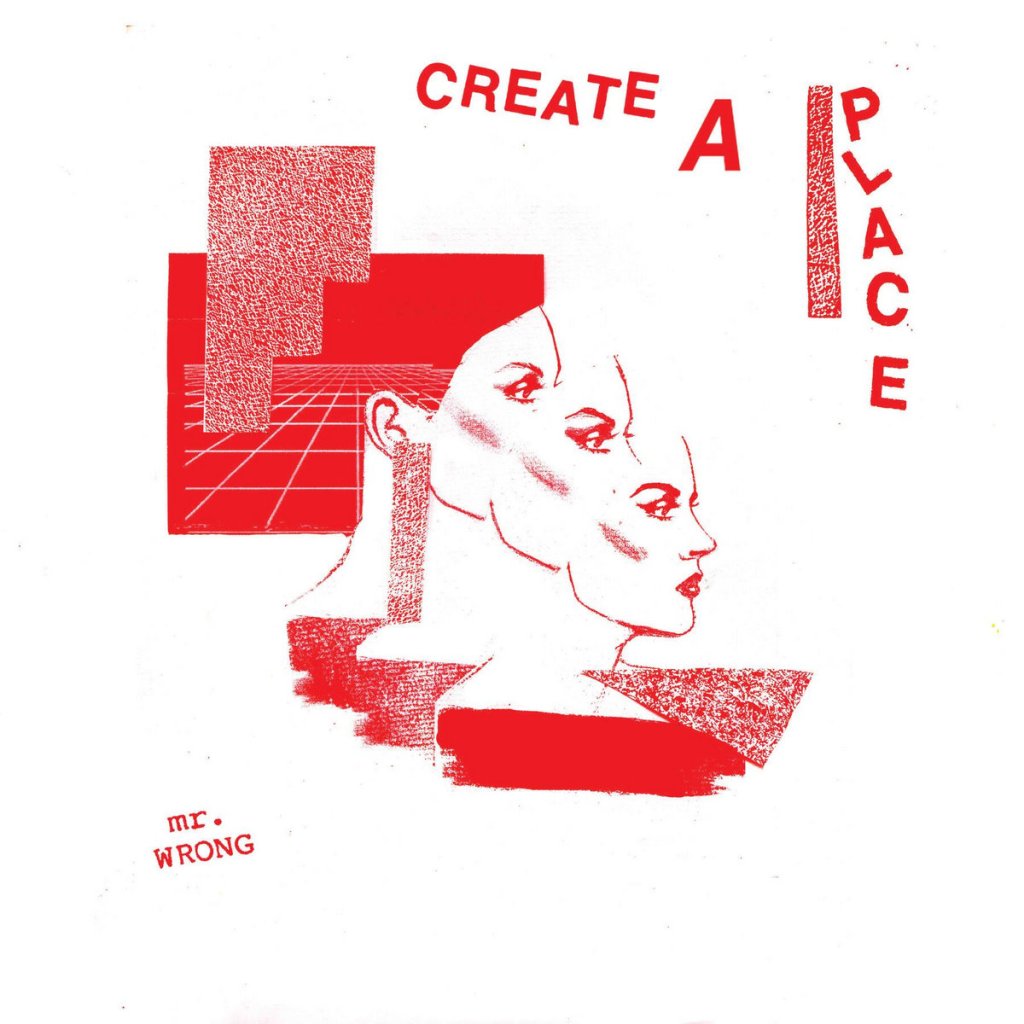
CLAIRE: Ah you’re so ahead of me, Bianca. I only discovered this series when we were asked to contribute and they really are excellent! The band I’ve been most excited about finding through this volume is Vital Idles. They remind me of The Raincoats and Pylon, but also sound like they could be a Melbourne jangle band – turns out they’re actually from Glasgow. I also really enjoyed the tracks from Snob, Helene Barbier and Mr. Wrong.
What’s been the best and worst show you played; what made it so?
AMBER: I think everyone has different best and worst shows. Best is always when everyone is in a good mood, the crowd dances, and we all look hot. Worst is when someone is in a mood or we’re all tired and hungover, we can’t hear each other, and there are no vibes on stage. My favourite ever show we’ve played was at a festival called Panama in March. Transcendent.
CLAIRE: The worst gig was definitely in Melbourne a couple of years back. We had driven all the way from Adelaide very hungover. Instead of being able to get a nap in our accommodation, I had to use our hire car to drive around Melbourne to pick up gear. Lucy’s sister had come over from Tas with her band for their first mainland show and they were due to open around 8.30pm. But the guy bringing a guitar amp was super late and I felt like he was never going to show up. From memory I think he turned up around 8.45/9pm. After a bunch of line-up changes we had unknowingly booked a band that had pissed a lot of people off recently. This, along with there being a couple of big shows on that night in Melbourne, meant very, very few people came. At the end of the night I collected the money from the venue and paid all the bands only to find out after that we needed to pay the sound tech. I had to send my bandmate to the bar to get money out to pay him. I still get anxious thinking about that gig.
What other things do you do outside of the band?
WESLEY: Doldrums, which is Lucy and I. Doldrums has played half a gig and hasn’t rehearsed in 12 months, but we should because I try to recite poems in German which and sing over Lucy’s porridge-like synth. I also do a solo radio noise project and a multi-media art practice. I also tell people not to touch things at MONA.
AMBER: I have a solo electronic project called, Slumber, and an emo-country band called, Dolphin. I like to garden and plot the downfall of capitalism.
WESLEY: Me too, we also play chess together.
LUCY: I’m doing solo stuff too which feels weird. Slag Queens is also about to start an online Dungeons and Dragons game.
CLAIRE: I’m a social worker and work in the area of sexual and reproductive health. I also run Rough Skies Records with Julian Teakle (The Native Cats) and have started doing Jonathon Van Ness’s yoga sessions in my living room with my housemate, Louis.
If you love instrumental, psych-rock, krautrock or extended space jams than Coburg’s Brown Spirits are for you! Their mind-melting music has found a home on Germany psych label Clostridium Records. We interviewed guitarist Tim Wold about the experimental, funky world of Brown Spirits.
When did you first pick up your instrument?
TIM WOLD: I started playing guitar when I was twelve and keyboards about two years ago
What was your first concert?
TW: My mum took me to see Eric Clapton when I was 14. He did lots of Cream songs which was great. But he still definitely maintained the attitude he’s famous for. I’m not a huge fan of the guy.
What’s an album that helped shape your ideas on music?
TW: It really is a tough one because there are so many, but I’d say Tago Mago by CAN is the gift that keeps giving, it’s been in my top 10 since I was a teenager.
How did you find psychedelic music?
TW: The three main sources were all pre-internet pretty much. Parents’ record collection, then 90’s radio like shows Loosen Up (PBS) and Galactic Zoo (RRR). Whilst my parents had all the staples like Revolver, Dark Side of the Moon etc.. it was really Peebs and RRR where I picked up on all the less accessible psych from the northern hemisphere, you know like Nuggets, ‘Elevators, Miles Davis Big Fun and Funkadelic’s Free Your Mind and Your Ass Will Follow was also a big one for me. From there I was hooked on that era and I had strayed off weed by then, so I knew was into it for the long haul. It’s weird with Psychedelia, it’s like one of the most used terms and often mis-used in music today I reckon. And yet people’s opinion of what is psych varies so much, I guess there’s no rules.
What inspired you to start Brown Spirits? How did you meet?
TW: Ago [Soldati; drums] and I met through one of our best mates (Sam) when we started playing in a garage R&R band called Russian Roulettes back in the mid-2000’s, we had some great times and got to tour overseas. Then we always talked about doing a psych project but never really got motivated till a couple of years ago. We got together and tracked & mixed our first album on tape in my bedroom and it then got picked up by our label in Germany but at that point we were purely a recording project.
Few months on, our album got released in Europe and we were fortunate enough to have Go Kurosawa from Kikagaku Moyo buy a copy in downtown Tokyo. Out of the blue we received a random message from Go asking us if we wanted to play with Kikagaku when they did their 2018 Oz tour. Naturally we were like, yeah we’re keen! But we don’t exist yet! Cause we didn’t have a live set together or a bass player. So we missed the boat that year but it was the shot in the arm we needed to recruit a bass player and start doing shows. So that’s how it all came about really.
Where did the band’s Italian sound library influence come from?
TW: Being a fan of soundtracks and often the psyched out kitsch songs you find on Library records. Library music was massive in UK & Italy back in the ‘60s/’70s and yet most of the obscure stuff is only being reissued now. The Italians in particular were way more experimental and incorporated a lot of funk, breakbeats, fuzz pedals and had a recording budget that a lot of independent bands didn’t have cause it was for TV production and recorded as a Licensing investment for producers so there was (I’m assuming) money floating around. Ago is Italian and comes from a soul-funk background, his influence with deep funk is strong in our music and so I guess finding those grooves was inevitable!
How do you go about writing a song? Are they born from jamming? How important is improvisation to your process?
TW: The song writing Ago and I have done on each album will start with a very loose idea and we jam it out (me on bass), improvise and record it after about 2-3 takes. Its more about the rhythm and the vibe rather than structure. A lot of it ended up being accidental so we rarely put anything on paper. From there we kinda sculpted the tunes and added keys/guitar last.
We’re very grateful now to have Ash Buscombe in the band now because he is solid as fuck on bass and he picks up stuff really quick, it feels like a real band now he’s on board so we’re excited to see what the future holds as a 3-piece.
Can you tell us a little bit about the musical dynamic between you two?
TW: Ago and I learnt a lot about each other’s playing style when we were in Russian Roulettes, so giving each other space to improvise now in Brown Spirits comes pretty natural. Having Ash too who is really intuitive to Ago’s fills and my guitar freakouts kind of gives us all a musical grounding. We’re not a jazz band but its nice to think that we are working off that sensibility and hoping we get to do more music in a free jazz style as things progress.
You record on your Tascam Portastudio 414 tape machine; what’s the advantage of doing things this way?
TW: Doing stuff at home on tape means albums cost us nothing to record and we can take our time getting the drums sounds we like. Its ¼ inch tape so driving things so they are naturally in the red is easy and you don’t get the clipping issues like with digital. Also avoiding computers till mixing time means being limited to four tracks on tape adds a creative challenge. Once we have tracked songs and laid down the parts, we flip the tape over and play it backwards so we get to use all those tape loops for sound effects for our songs too.
Your songs are instrumentals; how do you come up with your song titles?
TW: Generally, Ago will put some thought into these it can be random but usually there is a backstory to each one whether it be an event or a feeling the music conjures up I guess. I’m not too fussy with my titles, often I will just opt for a cosmic sounding dichotomy and if it works it works.
What’s the most memorable show you’ve ever played?
TW: They have all been so fun, if I had to narrow it down… I’d say our first album launch (which was our 2nd ever time playing as a live band, in mid-2018) and also our most recent one with Kikagaku Moyo felt like a ripper. I guess we’ll always be our own worse critics. Each show has had its own charm.
Brown SpiritsVol 3 is coming soon on Clostridium Records! What can you tell us about it?
TW: We’re pretty pumped about Vol 3. The album is pressed and stock should be in distro soon. Some might say it’s hard to categorize the record however it’s got elements of Krautrock, Funk, Psychedelia and freeform experimentation.
Was there any challenges making it?
TW: No real challenges making it, but it with everything going on the in the world right now might be more of a challenge releasing it! But we’ll get there soonish. Our label boss Andy has been awesome to us and we’re stoked to be on Clostridium again. We have also recorded another album titled Vol 2. back in 2018 but that won’t see the light for a while yet. All in good time!
Lastly, why is music important to you?
TW: Like all of us really in bands, you find your life revolving around it without even questioning it ‘cause you love it so much and it’s in your blood. I guess going through life without taking the time to create something new each year is unimaginable. Also being in bands with people we dig means we get to have plenty of fun along the way.
Recorded at PBS 106.7FM Melbourne by Jeremy Smith for Studio 5 Live on 21 December 2019. Video by Agostino Soldati.
Original photo Spike Vincent. Handmade collage by B.
Melbourne band Cable Ties have released a new record, Far Enough. The album is a musical burst of joy while it’s lyrically introspective and vulnerable, reflecting on one’s place in the world. If their explosive debut album were a call to arms full of protest songs, follow up Far Enough is knowing who you are, being OK with that and linking arms on the frontlines of life, standing strong for your beliefs arm-in-arm with your community. We spoke to vocalist-guitarist Jenny McKechnie yesterday as she tried to stop her seven-month-old pup Barry from demolishing all the plant seedlings the household had recently planted in the backyard.
I know that community is very important to Cable Ties, especially the DIY Melbourne music community; when you first came to the music scene, did you know anyone? How did you start to get involved?
JENNY MCKECHNIE: I grew up in Bendigo and I moved to Melbourne for uni when I was nineteen. In uni I met a friend, Grace [Kindellan]. She was really into garage music and we both got into the local scene together and started a band a year later called, Wet Lips. So, just moving to Melbourne about nine years ago and going to The Tote, The Old Bar, got me into it!
How did you start playing guitar?
JM: I started playing guitar when I was twelve, my dad had a nylon string acoustic guitar that I picked up and learnt songs on. When I was a teenager I was in a bunch of bands that were playing Celtic folk music [laughs]. I used to like going to all the folk festivals and writing sweet folk songs on acoustic guitar. When I came to Melbourne I got more into the punk and garage scene; I first picked up the bass to start with and then with Cable Ties moved on to the electric guitar.
With your new record Far Enough, I understand that it came from a place where you were feeling really hopeless.
JM: Yeah, it did. The first record that we wrote is pretty much defiant protest songs. Making the sound we did was really liberating after playing softer folk music, which was all of my songwriting before. By the time we came around to writing this album I was feeling pretty hopeless and despondent about the world and unconvinced that I was able to have a positive impact on anything. I was coming from a place where I was suffering from anxiety and depression at that time, going through a bit of a spot in my mid-20s where I couldn’t quite work things out and what to do next. In the songwriting process I started in that spot but always wanted to find a way out of it, to find something to cling onto to be hopeful about and keep fighting for.
So writing things songs did help you do that?
JM: Definitely. Songs like “Hope” especially came out of the process of a lot of journaling and a lot of time spent thinking and processing these things. I had a good psychologist too! Some of the songs on the album were really helpful and part of a bigger process that I went through generally about feeling better about myself and the world.
When you posted about the album online you mentioned that it was really challenging to make; in what way?
JM: It was challenging because it was part of that process we just talked about, the album was pretty honest and talks about the things that I was struggling with. A lot of that is turning things in on myself, I was experiencing a lot of self-criticism and a lot of self-hate about stuff like, “oh, you don’t do anything, you just play in a band and wander around playing these protest songs but, what’s the good of it? What have you got to show for it? What’s the point of all of this?” In the process of writing this album I was really doubting myself and really doubting whether I was actually meant to be in a band. I had to come out the other end of it finding some meaning in it—the purpose of my life. By this stage, I’ve dropped out of university postgrad twice, just keeping up with music commitments. I didn’t know what I was doing with my life or if any of this would work out, it was a process!
Why is making music important to you?
JM: That’s a great question. Music is the thing that I just keep coming back to all of the time and from that perspective it’s just something that feels cathartic to me. It’s the only thing that I’ve kept doing in my life, writing songs since I was twelve years old, because it helps me process that way that I’m feeling. It’s something that I can’t get away from, it’s something that I really need. It’s also my entire social community, all of my friends, it’s my entire life! I am so grateful that I have gotten to live out my 20s in this incredible music community in Melbourne. People aren’t just creating really interesting art but they also have a vibrant discussion of political issues and different ways people can live their lives outside of the common norms we’re told. It’s the most nourishing and exciting way to live my life and I’m very thankful that I have done this in the end.
Do you find it hard to open up to write your lyrics and to be so honest?
JM: No, not really. I think that’s one thing that I don’t find that hard. I’m a very earnest songwriter. I find it more hard to not be open and honest about things. Writing songs is the thing I have to do and the challenging thing comes afterwards, I have to put that out there into the world. I have to analyse what I have written down and be like; what does that mean? What is that honesty? And, where do you go from there?
Every member of Cable Ties is integral to your sound; what kind of conversation do you feel you were having musically between one another on the album?
JM: When we write songs we get into a room and someone will have a bass line or a drum beat, we’ll just play and play and play for hours, we really like to jam for a long time. We might not necessarily go many places with the jam, we might just sit in the one spot to see how that feels, and make sure it sits well on your body. That’s where everything starts from. Then we go; what does this song feel like? What is it evoking? The lyrics will come after we’ve written the music and we’ve created a musical emotion as a scaffold to work off. The one thing that we had for this album is that we all committed to doing it; jamming, practising and writing twice a week, and going away for weekend and locking ourselves in. We worked and worked and worked on things until we had it right.
We wrote “Sandcastles” when we went to a house out where Shauna [Boyle; drums] grew up as a kid. We spent the whole weekend trying to put together this song, it didn’t end up making it onto the record, it was not working and a bit convoluted. In the last two and a half hours of the weekend we were frustrated and were like, let’s just have a “hit out”! We started with a simple beat, from there we came up with most of the music for “Sandcastles” in those last hours. We were like, wow! …we felt like we had finally got through the slog of the convoluted song and the payoff was coming up with something simple and to the point.
What inspired the album title, Far Enough?
JM: It’s a lyric at the start of “Hope”. The lyric is: my uncle Pete is complaining about the Greenies, he said that they have gone too far but I say, Pete they don’t go far enough. We took it from that line but we liked it because it is somewhat ambiguous in its meaning. It can have many meanings, it can be a question like; have we gone far enough? Has the world gone too far? We think it spoke to a lot of the questions on the album.
You mentioned that your lyrics came from an introspective, questioning of self and vulnerable place; how did you grow while making the album?
JM: I became a lot more comfortable with being a musician. I became a lot more grateful for the life that I’ve had in the music community. I’m more confident to live my life according to the values of this band and that community and of looking after the people around me—existing in the world where you fight for the things that you believe in. Don’t do stuff because you want the “right” career or anything like that, it made me really, really commit to a life of activism, being in the music community and being a musician.
Photo: Spike Vincent.
On the track “Anger’s Not Enough” it takes over a minute before the drums kick in; what was the idea behind leaving the space at its start?
JM: Nick [Brown; bass] did that at the start. I have this pedal that was made by this guy in Newcastle that has this pedal company called, Beautiful Noise Effects. The pedal is named, When The Sun Explodes. It’s a reverb pedal and a feedback pedal. To make the sound at the start of that song Nick just had all of the pedals on my board on – Overdrive and two boost things that I have and that pedal – he was pressing the buttons on it. That song is quite sonically different to the one that comes before it, we wanted it to sit out on it’s on. By the time it comes in with harsh and loud bass and guitar we wanted people to really be listening after that beginning, that something a little unsettling.
That part gives you a real suspenseful feeling.
JM: Good! That was the idea.
You’ve said that “It’s an album that is supposed to get you out of bed when you don’t feel like you can face it any more”; what helps get you out of bed when life gets overwhelming and you’d rather stay in bed?
JM: My dog, Barry, I’m looking at him right now [laughs]. Apart from the dog, sometimes getting up when you really don’t want to is just putting one foot in front of the other and doing something simple. Some days it’s just get out of bed, make coffee, see what’s next. Often then I’ll see something in my day that I can be thankful for—my friends, the music I have in my life. Those are the things that I live for! They have a really positive influence on me. Also, when things are hard and the world looks like it’s turning to shit, just remember even if you’re an activist and going to protests and doing everything you can and feel like you’re losing the battle, the fight in itself is intrinsically important. The purpose of it is not just to win the battle but fight for the things you believe in, things that you think are important; that’s part of your identity and way of life. Things that can get me out of bed for the day can be different each day.
In the spirit of the album’s main theme; where do you find hope?
JM: Hope on the album is an active emotion, it’s something that you have to find out of necessity to keep going. What gives me hope sometimes is trying to logic my way out of things like, you wake up and there’s another instance of environmental degradation happening and you say, “that’s contributing to climate change and we’re losing this! What the fuck are we going to do? We’re all doomed!” And then just going, it might be true but what good is it for you to be despairing about this, it makes the problem worse and you feel worse as well. Even if you don’t logically think this fight can be won, if you give into that fear then of course it’s never going to be won! Hope for me sometimes comes from a little bit of going, ok this might be hopeless but that’s no good for anyone, so you better believe somewhere that the fight is worth it and you could do something. If you don’t believe it, it never will happen. For me that’s something that I fall back on a lot when I’m in the worst depths of feeling doom and gloom about the world.
What’s your favourite thing about the new record?
JM: I like the conversations that I’ve ended up having about it, they’re so interesting. It is vulnerable… talk about it, face it! The conversations we get to have are personal, interesting and let you connect with other people. My favourite track changes every day but right now it’s “Lani”.
Why that one?
JM: I can really sink into it. You can’t play that track right unless you relax into it. The guitar playing is really emotive and expressive. If I don’t feel those things, the emotions within myself, then I don’t play it properly. Sometimes it’s the scariest song for me to play! When I do it right though, it is so satisfying. It can also really turn around a gig, or when I get on stage and I’m feeling nervous or things aren’t going right.
What are you doing while locked down?
JM: The job I had before I was supposed to go on tour, working for a university, I can do it from working at home. I’m lucky I can still work, and that they took me back after I was “bye! I’m going on tour” [laughs]. Looking after my dog that’s barking at people right now, he’s seven months now so he’s taking up a lot of my time. I’m probably going to go back to uni if I’m being honest, because it’s probably going to be a little while before we get to go anywhere.
Do you write songs all the time or only when you have to write for an album?
JM: Normally I write all the time. I was writing one just before we were leaving for tour. At the moment I’m not playing because after everything that happened with the tour being cancelled – we’d been rehearsing in the lead up to that and doing a lot of playing – after it was cancelled I really felt like I needed a bit of a mental break before I started writing new stuff. I’ve put the guitar down for a few weeks. I’m feeling like picking it up again now. I have a loop pedal now, so the rest of isolation will be me playing with my loop pedal over and over again—I hope my neighbours are ready!
Our editor spoke with Steve Ignorant for her forthcoming book. Steve was vocalist for one of the most important punk bands of all-time, Crass. Their political punk encouraged and inspired generations of punks to think for themselves and to question authority, the world around them and themselves. 2020 finds Steve still making music with latest project the acoustic-based, Slice Of Life. He’s still singing about injustice, but his songs have taken a more personal and vulnerable turn. The following is an extract, you can find the full longer in-depth chat in book, Conversations With Punx; along with thoughtful, insightful chats with Dick Lucas from Subhumans, CJ Ramone, Operation Ivy’s Jesse Michaels, Black Flag/Circle Jerks/OFF!’s Keith Morris, Zero Boys’ Paul Mahern and 100 more punks!
Why is music important to you?
STEVE IGNORANT: It’s a way of putting a message across and it can stir up all different kinds of emotions, really that’s it.
Two things that I have noticed that are very prevalent in your music is emotion and also compassion; have you always been a really compassionate person?
SI: Yeah, I have. I’ve often met people that say I’m a bit of a romantic, I don’t know so much about that but, I have always been compassionate ever since I was a child. Not to be depressive or anything but I think it’s because when I was growing up in the ‘50s and ‘60s there was even more injustice going on then there is today. From seeing that and the way certain people are treated, I think that’s where it comes from.
Before you started making music I know that you worked for the British Royal Infirmary, right? You were using Plaster of Paris on people’s broken arms and legs and you also wanted to do a First Aid course to become a paramedic.
SI: Yeah, that’s absolutely true. See I went for a job at that hospital as a Hospital Porter and I was asked if I can stand the sight of blood, I said, “yeah”. They said, “ok, well you can put Plaster of Paris on people’s arms and legs” and then it was possible for me to do a course with the St John’s Ambulance Brigade. From that I would have possibly been able to become an ambulance driver and from there a paramedic. It’s very interesting work.
So you’ve always liked helping people!
SI: Yeah, unknowingly. I don’t think I’ve ever sat around and gone, “Oh, I’m going to help people” like a missionary or something. I’m always helping people, if I’m doing gigs I’m giving money away [laughs]. I moved to this place where I live, by the seaside, and ended up working on a lifeboat. So you’re absolutely right—I’ve never thought of it like that! [laughs].
You just have an innate disposition to help others.
SI: Yes! You could say, I’m not a believer in God and all that stuff but, in some ways you could say that I’m a Christian really… helping other people and all that. I can’t help it, I’ve got to do it.
With the songs you’ve written in Crass and your newer band Slice Of Life, you’re singing about injustices in the world; do you still process your anger in the same way?
SI: Rather than being head on and writing something like “Do they Owe Us A Living?” or “So What”, I’ll find a more poetic way of doing it, a more subtle way. I think doing it more head on like “fuck you!” is more for younger people, I don’t think it’s for a sixty-two year old man to be doing [laughs]. I mean, you can if you want to… Things are more thought about these days, it takes me quite a while to write a song.
With your new band Slice Of Life’s music the songs are very personal; when do you feel your songwriting started to become more introspective?
SI: The day I realised was the day I started working with Pete [Wilson] and Carol [Hodge], we didn’t have a bass player at the time. When I started working with them I thought, I can do what I want! I don’t have to be conforming to the unwritten punk rule book. I can absolutely do what I want with these people! If I want to do a funk track, I can do that, if I want to do a reggae track I can do that, I could even do an orchestral thing—I can do whatever I want! The songs I do with Slice, tend to come from influences throughout my life. There’s a little bit of jazz in there, a little bit of Bowie, a little bit of doo-wop. Going back to your first question; how important is music? Well, it’s always been a part of my life. So that’s when it occurred to me that I could do whatever I wanted and fuck what anybody else thinks! Once I realised that it was a huge relief, a huge weight off my shoulders.
Did it feel empowering?
SI: It did! But, it was also a little bit frightening.