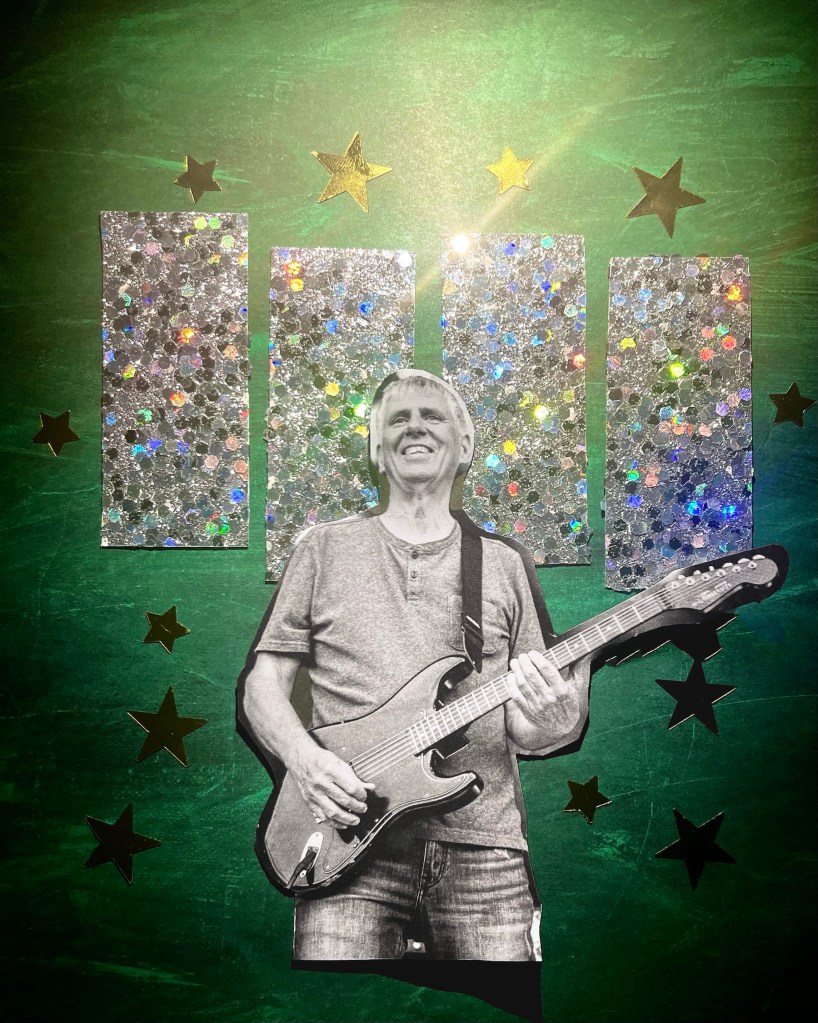
Gimmie — which takes its name from a Black Flag song penned by Greg Ginn — finally got the chance to speak with the notoriously interview-shy musician. He’s famously avoided conversations with the press for years, despite the mythology that continues to surround Black Flag, the iconic punk band he co-founded fifty years ago with Keith Morris. Ginn has always seemed far less interested in talking about himself than the culture is in talking about him.
Over the course of our chat, Ginn opened up about starting an electronics business at twelve years old, his love of poetry, writing songs like ‘Rise Above,’ experimentation and the importance of staying curious no matter your age. He also spoke enthusiastically about Black Flag’s current lineup, which he describes as the most fun yet. Thoughtful, funny and surprisingly warm, there was something quietly satisfying about hearing Ginn admit by the end that he’d genuinely enjoyed the conversation. Read it for yourself…
You started the electronics company Solid State Tuners when you were just 12 years old. Most twelve year olds I’ve known can’t even imagine running a business, so where do you think that drive and motivation came from?
GREG GINN: Well, I think having mentors along the way, and listening to people with much greater experience than I had, was important to me. I guess I was a serious kid.
I feel like there’s a humorous side as well, though, if some of the songs you’ve written are anything to go by.
GG: Yeah, I like to have fun, and our band is extremely fun. We have a good time.
What were the influences at home that shaped your early interest in electronics?
GG: I was an amateur radio operator.
You did a magazine as well?
GG: Yes, I had a magazine for a number of years when I was a teenager that was oriented towards amateur radio, and that’s the kind of equipment that I made. So that got me into it—making stuff and designing stuff. I always enjoyed that a lot.
Were your parents supportive?
GG: They were. They didn’t understand it. The business that I was in, I don’t think they understood very much, but they were very supportive.
As well as electronics, I understand that you were also into poetry.
GG: Oh yeah. Before I was into music. I was drawn to Japanese poetry and, the Beat poets.
Did that early love of poetry end up influencing how you approached writing lyrics?
GG: Probably, but not consciously. But I’m sure it did, now that you ask. I haven’t really thought about that, but yeah, I guess it did. Most of my songs and lyrics are about real people and real situations—pretty reality-based, for the most part.
I remember you saying something once like, “If you haven’t lived it, it’s not going to come out of your horn.”
GG: I got that from Miles Davis. It makes a lot of sense, for sure!
And I know you’ve said that when you were in college, you’d come home from school and write songs and play guitar, and that you found it really cathartic. I was wondering—what was it cathartic from?
GG: Oh, I just always got stir-crazy in school, and that was kind of my release from that—getting the other part of my brain working, something different from all that schoolwork and all that kind of stuff.
My parents had classical music backgrounds, so I didn’t follow in their footsteps. I guess I always looked at music as not something that I wanted to study, but something I wanted to play and learn just by playing.
Did you learn other people’s songs or did you just mess around and come up with your own stuff?
GG: I got into playing guitar because I wanted to write songs. So I’ve never really played a lot of covers or that kind of thing. I wasn’t really interested in that.
Of course, that doesn’t mean I didn’t have a lot of influences, but I’ve always really just played my own music—my own style of music.
Do you get the same feeling from playing guitar now as you did when you first started?
GG: Oh, yeah. To me, it just keeps getting better. As I keep trying to add more things to what I’m doing, it gets more entertaining for me.
I like to play very long sets. When we tour, we play almost two hours a night, and we have a little break in between the two sets. I really enjoy playing a lot, so playing longer sets is fun for me too.
You give me the impression that you’re a lifelong learner. No matter how much you know about something, you’ll just keep wanting to know more.
GG: Yeah, definitely! I try to always expand what I’m doing—the note selections and all that. I try to keep looking for that new kind of thing and expand what I do.
But I’m interested in other stuff as well, like growing things. I developed an organic fertilizer, and I had a plant nursery for about ten years.
I enjoyed working out outside and growing food, basically. Experimenting with fertilizers all the time, always trying to find new ingredients.
I feel I’ve lived about four different lifetimes [laughs].
That’s pretty admirable. A lot of people find one thing, get comfortable, and just stick to it. They get comfortable. Or I know a lot of older people who think they’re too old to try something new, so it’s inspiring to hear you still staying curious and expanding what you do.
GG: Yeah. For a long time, Black Flag wasn’t together, so I had a chance to do a lot of other music, which I still do. I do a lot of instrumental music and different collaborations with people.
But it’s been really fun to play with Black Flag again, because the audiences are really nice. So many people know all the songs now, and there’s something cool about that. I like playing stuff that people don’t know, but I’ve found it really fun to play songs that people know all the lyrics to.
One of my favourite songs of yours is ‘Rise Above’. To me, that’s always been such an empowering song. There’ve been a lot of times in my life where I’ve been facing something difficult, and those lyrics come into my head and help me rise above whatever’s happening and to keep going. When you were writing that song, what were you going through?
GG: Oh, there were all kinds of challenges we had. With the police and that kind of stuff in Los Angeles. And we got kicked out of various cities—I mean, believe it or not, just run out of town.
So several times we had to pick ourselves back up and make it work. I’m not a big fan of a lot of that government stuff.
I find that a lot of the earlier Black Flag stuff you write was about independence of thought, rejecting control, and owning your own identity, even if other people don’t understand it. That’s part of what I always found really empowering about it.
GG: Yeah, well, that’s important. I think that’s something I also got from my parents: don’t worry about what other people think. Do what you know is right and what you want to do, and don’t worry about appearances or things like that.
I’d say that’s an ongoing theme, and it’s always important stuff to remember. Because people—me or anybody—can get in a bad place where you need inspiration and motivation to just pick yourself up and go.
When you’ve faced times like that in your own life, has there been anything that’s helped you get through them?
GG: Having a positive attitude. I do generally feel positive about things. I try to focus on the present, and I think I’ve gotten pretty good at that—just living in the present.
And I enjoy so many things, so I don’t have any shortage of interests. There are a lot more things I want to do than I have a chance to do, so it’s very exciting. It’s a very exciting time with technologies and all the advancements in the world. We need a self-driving van to tour around the country. I look forward to that! [laughs].
There’s a lot of exciting things in the world in music and in other things that I would like to stay more involved with and look forward to.
That’s awesome! It’s important to have things to look forward to. I’m still waiting for the flying cars I was promised as a kid from watching things like The Jetsons and Back to the Future.
GG: [Laughs]. Yeah, The Jetsons. A lot of the stuff like the phones came true, and they’re even smaller than the Jetsons could have imagined. But the flying cars… well, the air could get kind of congested.
But if they have the kind of cameras and computer systems we have now, no doubt they can make those things work. There’s also the tunnelling or exploring tunnelling under cities and all kinds of fascinating stuff happening, but it takes time.
You’ve always been the primary songwriter for Black Flag, writing the music and a lot of the lyrics. Did it ever cross your mind to sing the songs yourself?
GG: Oh, no. I mean, I have sang, but not with Black Flag. I prefer to concentrate on guitar. I prefer that, and to not divide my concentration so much.
I like having a singer. I think they should do all the interviews [laughs].
I know you’re not a big fan of interviews and try to avoid them if you can! [Laughs]. That’s why I wanted to try and make this as painless as possible for you.
GG: No, it’s not painful like a lot of them can be. Thank you. This has been fantastic, and it’s making me think I should talk more and do more interviews sometimes. I’m certainly enjoying talking to you. In general, I guess I just don’t really enjoy talking about myself so much.
At our shows, I always go out in the crowd and talk to everybody, and I’m sure in Australia people will be able to find me and the band around. I like to talk to people and get feedback. They can ask me stuff, and I can ask them things.
That’s what our conversation has been like—something I might have at a show—and I enjoy that connection a lot.
Same. I’ve been making punk zines since I was 15 years old. I’ve been doing it 30 years now. My brother and I had a skateboard and BMX shop, the first year I was out of high school.
GG: That’s really awesome!
That’s why I was so fascinated by you starting your business when you were 12, and then all the record label stuff, because I was doing things early as well and just finding my way through doing. A lot of people don’t even dream that they can do things like that when they’re younger. I’ve always been a big believer that you can do anything.
GG: Yeah, that’s it. I was lucky to have examples and mentors who said, “Start a business.” Back then, it was a lot rarer for people to have small businesses. The corporate world was thought of as the path to success.
Now, not just in music but in all kinds of areas, there are a lot more entrepreneurial examples, and people can see different paths. But particularly back then, it was pretty rare, I guess. A lot of people just don’t see it as a possibility. They think they’re too young to do something or take on that kind of responsibility.
But if you’re 15 years old, you can start a magazine or start anything. You’re not dumb when you’re 15—you can do that stuff and more. I also understand that not everybody wants to do that, though. It’s good that people are different.
Do you think that you’re good at seeing the potential in people?
GG: I think so.
The story of when you and Keith Morris went and saw Ramones back in the mid-70s comes to mind. After you guys saw the show, I read that Keith realised, ‘Oh, maybe I could sing,’ at the time he was playing drums. And then you badgered him for about six months, trying to convince him he totally could do it. It’s a fun image, thinking of you guys being friends and seeing the Ramones and encouraging one another to do something cool.
GG: Yeah, for about six months I was like, “Come on.” And he said, “Well, I don’t write songs.” I said, “Well, I can write songs and lyrics.” When we saw Ramones, it was like, “Oh, I guess we could start a band.” So we did.
I just kept grinding at it. I put a lot of work into stuff, and I think that’s important, especially if you’re doing something like that. You can’t just clock out when you want to.
Often when we’re building something or chasing our goals and dreams, there’s a lot people don’t see, and it comes with a lot of sacrifices. With our publication, Gimmie, I don’t make any money from it. I put all my spare time and energy into sharing new music and insight into the creative experience, hoping it inspires other people to go and create something awesome themselves.
GG: Yeah, there are always trade-offs with everything. I’m touring a lot, so it’s been hard for me to keep some other things going, like my nursery and various other projects. There are things where I have to go, “Well, I can’t really do this unless I’m home pretty much all the time.”
But it’s nice to have trade-offs between a lot of things you’d like to do. If I can’t do one thing, I’m happy to do something else.
What’s something that you haven’t done yet that you would love to do?
GG: I would like to continue my fertilizer company [Known Source Farms]. It got vandalised, and I haven’t been able to revive it, being so busy with the tour and the new band and all that. So I would like to continue more of that.
But I don’t know what else. There are so many things that I’d like to do, but I’ll have to see when I can actually do them, and then I’ll talk about them.
As far as creativity and making stuff goes; what are the things that are important to you?What do you value?
GG: Experimenting a lot. The same approach I take with fertilizers, and that I took with my electronic devices—constant experimentation, improving them, developing things.
I approach music in the same way. I’m always experimenting with new notes, new things, new approaches, within my capabilities and within what I like.
Instead of doing something and then just duplicating it or duplicating what someone else is doing, I try to find new approaches and keep it exciting, because otherwise I would get bored very easily.
Do you ever get frustrated by the limits of your own capabilities?
GG: Oh, of course. But otherwise, you think, “Oh, I’ve got it down,” you know? And if I ever get something down, then it’s time to move on and do something else.
Last question, what’s something that’s made you really, really happy lately?
GG: The current band—Bryce, David, and Max—makes me incredibly happy to play with them. We’re able to get together a lot and work on our stuff, and everybody’s motivated and helpful to each other. It’s just fun to be around them.
And the music, I think, is incredible. As far as Black Flag goes, I definitely think this is the best version. And it’s nice to see a lot of people say that too, and agree with me on it.
You know, sometimes people in music are like, “Oh, this was so difficult.” I just never look at it that way. I feel like we’re privileged to play music.
There’s a lot of hard work and difficult situations people are in, and for rockers to be so negative about that kind of thing… I just don’t feel that way at all.
So it is good to be around positive people. And that hasn’t always been the case in the past.
Over the years, I’ve interviewed different members of Black Flag: Keith, Kira, Henry, Chuck and Bill, and its interesting hearing the different perspectives each person brings to the band’s history. It’s so cool that I finally got to chat with you. Thanks for your valuable time Greg.
GG: Oh, you have. That’s cool. Thank you, Bianca. I respect everybody’s contribution to Black Flag. A lot of people put work into it and I respect that. Just for me, the band currently is the most fun.
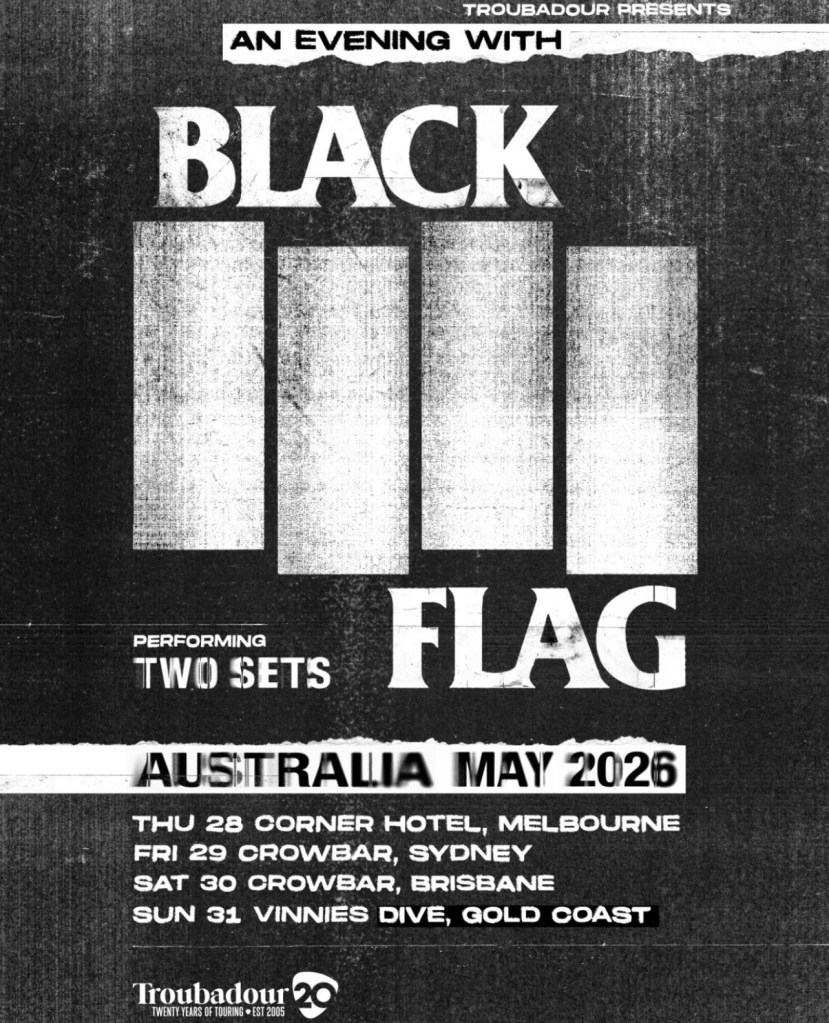
For more Black Flag go HERE. Catch them on their Australian tour – TICKETS HERE.

