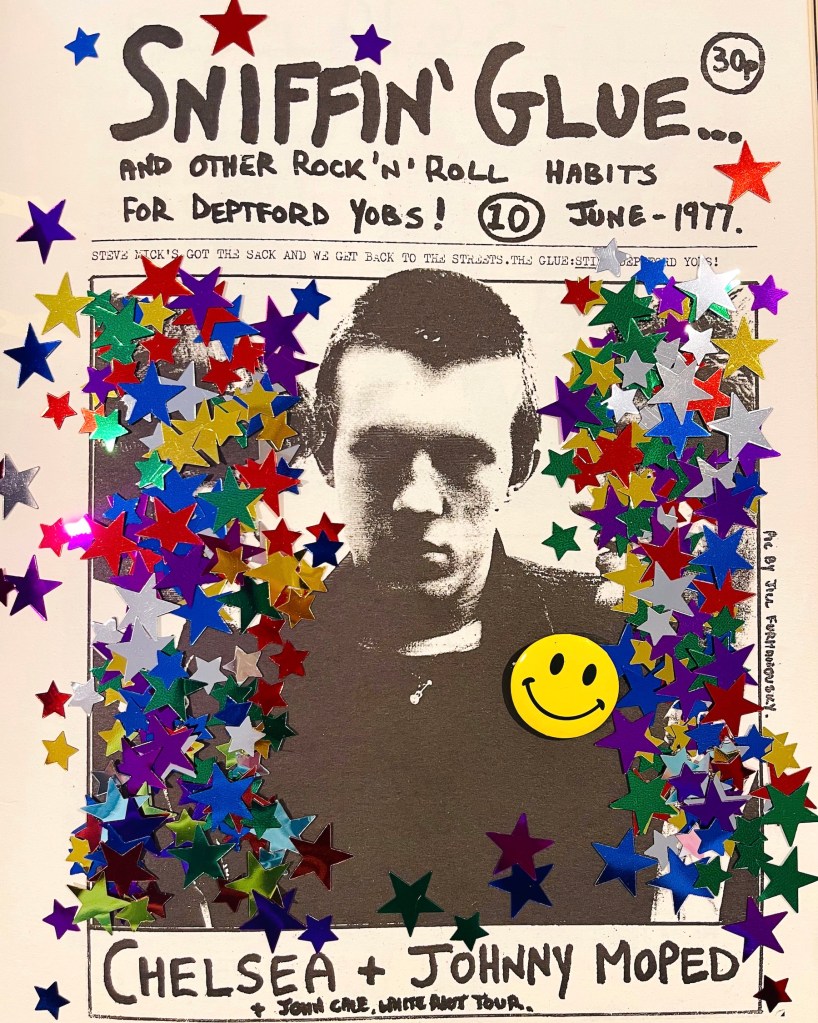
Sniffin’ Glue and Alternative TV’s Mark Perry: ‘That’s the worst thing of all, for things to become boring and cliché’

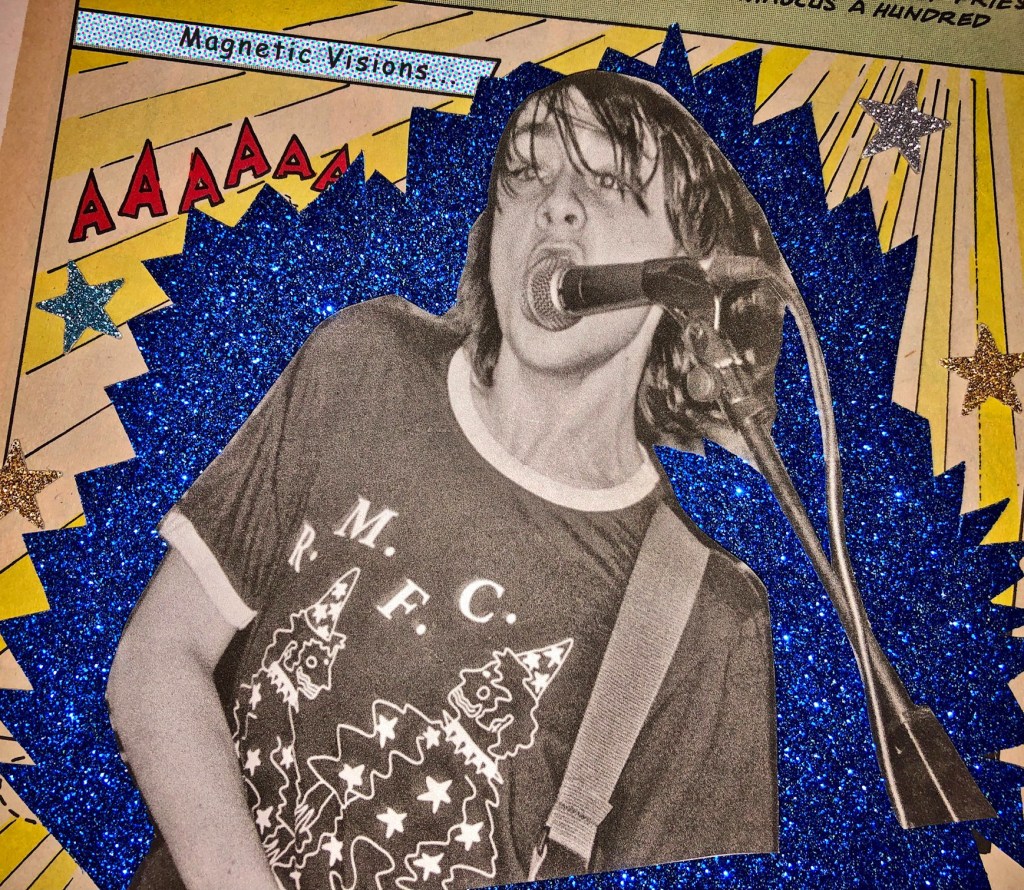
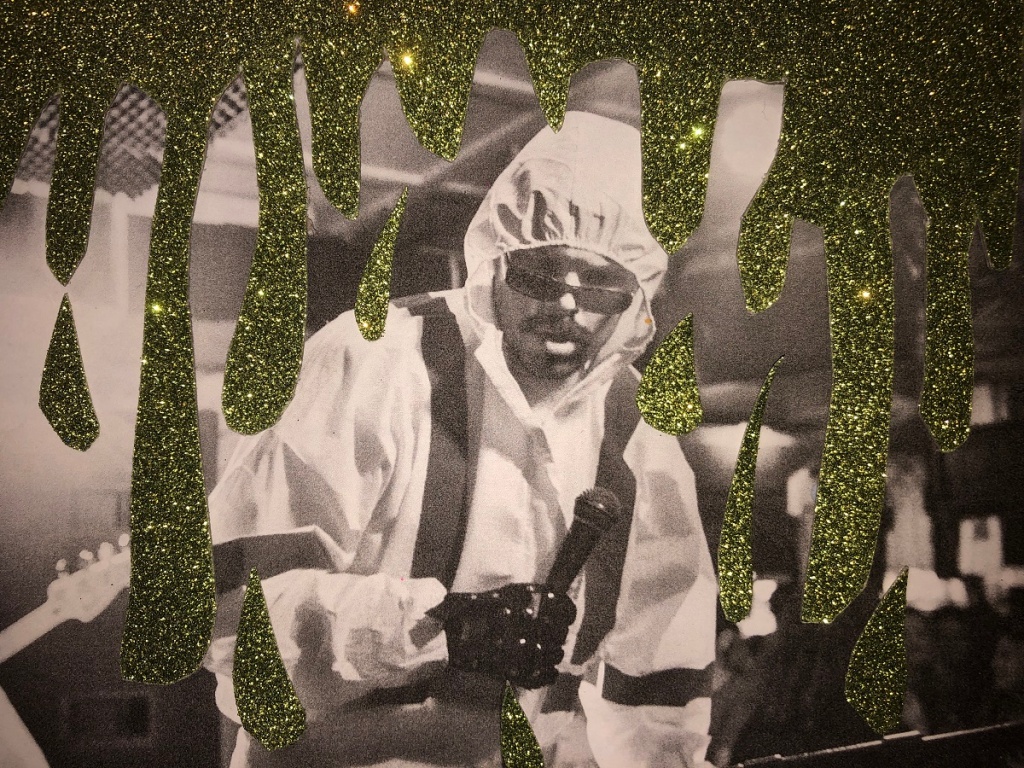
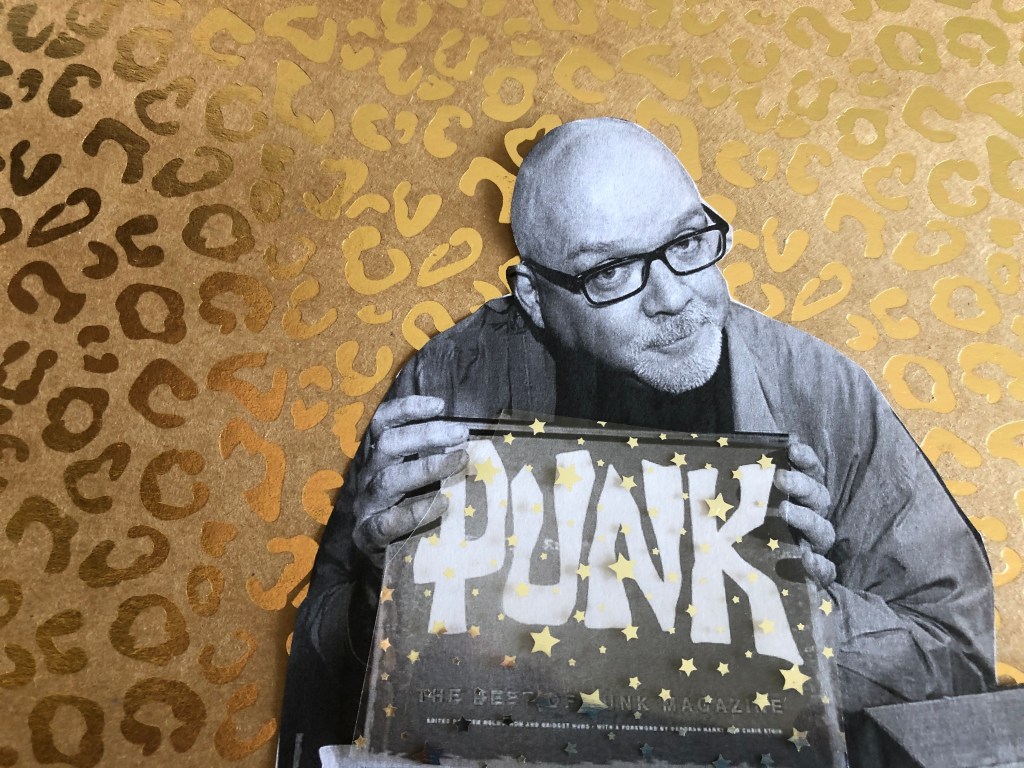
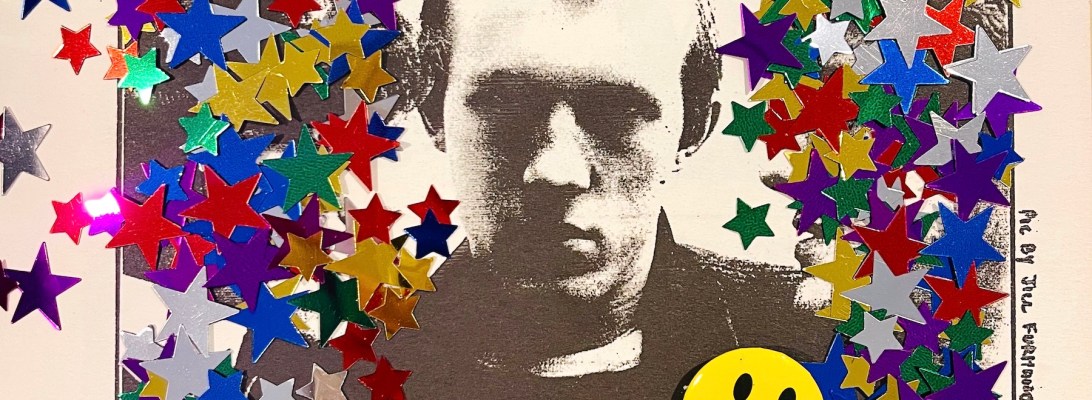
Handmade collage made on Mark P’s Sniffin’ Glue zine cover.

Few people embody the original spirit of punk more than Mark Perry, even if he’d probably roll his eyes at the suggestion. In 1976, inspired by seeing Ramones play in London, the then bank clerk stapled together the first issue of Sniffin’ Glue, a scrappy, photocopied zine named after a Ramones’ song, that would help ignite Britain’s DIY punk movement. Written in felt-tip pen and fuelled more by urgency than polish, Sniffin’ Glue became essential reading for a generation disillusioned with the mainstream music press, documenting punk before the establishment even realised something was happening.

But Perry has never seemed especially interested in mythologising himself or reliving the past. Within a year, he shut the zine down—worried it was already becoming absorbed into the machine—and shifted his focus to band, Alternative TV, the experimental, shape-shifting project he still fronts nearly fifty years later. 

Speaking from his home in Cornwall, Perry is thoughtful and deeply introspective. He talks openly about depression, ageing, artistic dissatisfaction and the danger of punk becoming cabaret nostalgia. He lights up most when discussing creativity itself—about Mark E. Smith, Throbbing Gristle, underground print culture and the thrill of hearing something genuinely new for the first time.

Do you think that part of that punk spirit is experimentation? 

MP: The idea of this punk spirit has been exaggerated because it’s always existed in music. Before there was a thing called punk, there were people playing improvisational jazz and all that. Before punk came along, rock music was edgy; it was rebellious. Even the Rolling Stones, early Rolling Stones, the Beatles, John Lennon, to the people at the time, it was frightening. Even Elvis Presley was frightening, wasn’t it? I think it’s been exaggerated, this idea that punk sort of holds the copyright on free spirit because I think it’s always existed in rock music, independent music, jazz, whatever. Punk is just one of those little things along the way. People love to put labels on stuff, don’t they? They’d like to put, this is punk, that’s not punk and all that. I mean, but it’s rubbish, really. All those labels don’t mean anything, really. It’s all just music

What’s one of the sort of strongest memories that you have from your early creative life? 

MP: I suppose the early years of punk, because people still talk about those years so much. They do over in the UK, anyway. They’re always banging on about them. I suppose they were important. The first time I saw the Ramones in the UK in July 1976. That was a memorable time. Of course, that inspired me to do my fanzine, Sniffin’ Glue. Later on when I formed the label Step Forward record. So much happened in those years. It took so much, I did so much in that short amount of time. People keep banging on about that time because it’s seen as an important milestone in popular culture. The Sex Pistols, Malcolm McLaren, all that. Being part of that obviously was very exciting.

I read that you wrote a rock opera when you were 17 about being a bank clerk.

MP: I think the word is tried to, because I was a big fan of The Who. They had just released the original Quadrophenia, in 1973. I had a go at it myself, inspired by that. I mean, I didn’t do the music, it was just thef lyrics, the libretto. I didn’t get very far with it.

Your zines really inspired me to start my own. As a teen, I used to see Sniffin’ Glue mentioned in books about punk. In 1996, I bought the book And God Created Punk that you did. I remember flicking through it, reading your stories, and looking at all the black-and-white photos, thinking it seemed like such an interesting and exciting time.

MP: Yeah, because back in those days, you were just getting on with it. Things moved so quickly, and you didn’t really have time to think about what you were doing. It’s funny—Sniffin’ Glue now is actually considered an art book. People talk about it in academic art books when they discuss the DIY style, and they mention Sniffin’ Glue.

But at the time, I didn’t think I was making some massive statement or influencing anyone. You just got on with it and then moved on to the next thing, you know what I mean? It’s only in retrospect that it seems so important and influential now.

And remember, Sniffin’ Glue only lasted twelve issues. It barely lasted a year—maybe a year and a month. Then I moved on to other things. I started making music instead.

So I never really saw Sniffin’ Glue as a defining thing or saw myself as a writer in that sense. It was just something I got involved in at the time, but as soon as I could, I shifted to making music. I wasn’t particularly interested in writing about music.

Why did you start doing the zine? 

MP: I didn’t really think of myself as a musician at the time, I suppose. I was always a big fan of rock music. I used to buy loads of rock magazines, and I’d seen PUNK, the New York zine. When I saw PUNK I had a sort of spark. It was one of those things—you just get this great idea.

My great idea was to do a fanzine in the UK. I think it was the easiest thing to do. Probably the easiest way to get involved. Looking back, it seems like a really hard thing to do, but it was actually really easy for me at the time.

It was only after that that I realised maybe I had another contribution to make. That’s when I got involved in writing songs, forming the band, and all that.

I try to be honest in my writing. You say love—it’s not about boy meets girl and all that. No, it’s about getting into the little sticky bits, like our first experiences of love and life. Alternative TV’s  first record is about the sorts of problems that come with having sex, the challenges of negotiating all that—boy, girl, and everything in between. I’ve always been interested in that.

Personal politics—that’s what we’ve always been about. We’ve never been a band focused on big issues. I can’t remember a single song where we’ve been overtly political. As a punk band, we’ve always been more about personal politics—negotiating relationships, life, and identity.

I’m not really interested in politics. Politics comes and goes, doesn’t it? There’s always something to get upset about in politics. I’ve never been interested in singing about current issues or affairs.

You said you’ve listened to the recent stuff, like Primitive Emotions. I like that album—it explores different ideas. Oh, actually, that’s probably got a protest song on it. There’s a piece on there called ‘Rebel Proof Glass.’ It’s railing against the way the punk scene has turned out, with punk festivals and all that.

That’s a protest song? 

MP: Yeah, it is. I don’t know about you, but some people—I’ve never been a person who’s like some people—there’s something they’re into, and they still want to stick with it forever. Again, I don’t know what the scene is like in Australia. Over here, they have these big punk festivals, the Rebellion Festival, all that, that we have in the UK.

It’s full of people of my age, 65, with, mohicans and wearing all their punk clothes. It’s like they’re trying to relive the past all the time. They’re trying to recreate what it was like 40 years ago. I’ve never been interested in that. I always want to move forward, get on with stuff, look towards the future. But I think a lot of the punk scene has turned into this nostalgia scene.

It’s like cabaret. That’s a real shame. So instead of punk being creative and being forward-looking, it’s become this nostalgia scene. This cabaret of the past.

I know what you mean. When I first got into punk, when I was a teenager, obviously the coloured hair and things like that seemed exciting because to me it was different to the norm that was around me.

MP: Yeah. But then once you really listen to a lot of the artists that have a substance and stuff, it starts you thinking about things and then you start questioning lots of stuff. You grow as a person. How much you know about Alternative TV? Have you heard our song ‘How Much Longer?’?

I do! 

MP: We put that song out in late ’77. It came out in September, and it was having a go at punk. It was criticising the punk uniform. It was criticising everyone dressing the same because people felt that they had to dress like that.

So I was criticising this over 40 years ago, and I’m still doing it now. It’s become a cliché. That’s the worst thing of all, for things to become boring and cliché. It’s the worst!

I don’t even care if people sell out, because I used to worry a lot about bands selling out. Like, when The Clash signed to CBS, I got all worked up about it. I don’t even care about it anymore, as long as people remain true to themselves. They could get on with it.

But when they try to make out that what they’re doing is still rebellious or something, I think it’s nonsense. Punk is not rebellious anymore. It’s marketing. It’s all marketing.

Every punk fest is sponsored by Doc Martens or Budweiser or Jack Daniel’s. There’s no rebellion about it anymore. It’s just become commercialised.

Punk has become a label. It’s a cheap way of saying, ‘I’m rebellious,’ because you get these bands who wear a punk badge because they want to be seen as rebellious. It’s become a cliché.

I love your song ‘Negative Primitive’. It touches on purpose and searching for it. Back in 1993 you also write the song ‘Purpose In My Life.’

MP: I hate the stuff I did in the 90s [laughs]. It was self-indulgent. But ‘Negative Primitive,’ actually, that’s inspired by a Franz Kafka book, The Trial.

In the book, the main character—Joseph K—is just always waiting. He’s waiting to find out what he’s on trial for. He’s always waiting.

That’s an idea—that’s what life’s like. You’re always waiting for something to happen or waiting to find a purpose or waiting for this sort of grand thing. It all seems to be this endless waiting around for ideas or for your life to change or whatever.

I don’t mind being honest about it, but I’ve suffered with depression quite a lot in the past because I’m a person who— I look into myself a lot. I question everything and all that, and sometimes that’s a good thing. But other times, it can almost stop you from just enjoying yourself.

I’ve never been one of these people to just go out and have a good time. With me, it always has to mean something. It always has to be for a reason. It’s the same with music. I’m not the sort of person to go out and watch a band on a Friday night or on a Saturday night just to have a good time. To me, music is about information, about moods and all that. It’s not just about having a dance or having a good time.

I’m quite a serious person. I’m an introspective-type character, which probably comes out in my lyrics and my work.

I get that. I’m like that. 

MP: I think I’m a miserable bastard.

Well, there’s a lot to be sad about happening in the world. Maybe rather than being a miserable bastard, maybe you really, really care about stuff? You’re not just going to take something someone hands to you. You have your own critical thought and tastes. A lot of people are more comfortable not having to think.

MP: Yeah.

I understand that even pre-punk, you suffered with depression. 

MP: I’ve always been prone to that, but I think you actually learn to turn that—if you’re that sort of person, or prone to those sort of faults—because I’ve never been the sort of person that’s been suicidal, because I’ve always thought that was a ridiculous, pretty silly thing to do.

But what I’ve done, I’ve turned this idea of depression and that sort of way of looking at things into a positive thing. You put it into making art. You either make fanzines or you make records or you write songs, so you turn that view of the world into just doing stuff.

Let’s face it, that’s quite a common thing in rock music. If you look at the obvious things, like Kurt Cobain, Joy Division and all that—but if you go through rock history, there’s loads of people: Ray Davies of the Kinks, Pete Townshend—they’re all sort of quite depressive characters, but they managed. They found songwriting was a way out of that, a way of expressing themselves, about being lonely as a teenager, about understanding the world. Although I was like that, I’ve managed to actually find a way to express myself. That release valve, if you like, for those sort of ideas. 

How do you feel when you have to perform your songs live? When you’re singing about these things and you’re sharing them with everybody else in the room.


MP: Quite funny. It’s like a therapy. We were joking about it the other day because, as I say, there’s a lot of bands out there—they play to have a laugh. I mean, they play because it’s fun. There’s a few bands down here, so-called punk bands, and they wear sort of silly hats and glasses on stage and they do all this. It’s like, because it’s fun, it’s a laugh and all that.

To me, that’s the antithesis of what we do. But I still find it quite good getting those ideas out. We still do a song—one of my most introspective songs, depressing songs. It’s a song called ‘Lost in Room’. It was on the B-side, and we still play that live.

So every time we play that, it’s like me pouring out my sort of feelings of loneliness, introspection, can’t-get-a-girlfriend and all these feelings of alienation. I’m sort of pouring that out, and it’s quite a release. It’s like a therapy, isn’t it? It’s like a group therapy.

Totally! Why did you call your album, Primitive Emotions

MP: Because I think all the songs deal with what I call primitive emotions—the very basic emotions we have: our sexuality, our sort of lust, our loneliness, depression, all that. They’re basic sort of emotions. They’re deep within us and they’re all there, and I guess I like to feel that I’ve sort of brought those out on the album in those songs. It just seemed like a really good idea for the title of the album.

Plus, at the time, I was talking to an artist, Sophia, who showed me this brilliant series of photographs for the front of Primitive Emotions. She’s an amazing artist, and she takes these photos of herself going through this primal scream thing, and I just thought it was brilliant. So with that photograph on the front, working with the print, I just thought we had a brilliant title and image for the album.

Yeah, it’s such a compelling image. It’s really beautiful.

MP: I’d rather give an artist—someone like Sophia—a chance to use their work, use other artists’ work. It’s the same with the last few things I did. The album before that, Opposing Forces—there’s an artist, Sam, I know, and I chose to put his work on the front rather than have a picture of the band. Use something sort of different from another medium of art. Use that as a way to put ideas across. I like the idea of doing that, because Sophia also did our next release. We put out a twelve-inch called Was It Working? 

Sophia did the art on that as well. So it’s like you’re still bringing lots of people together to help share ideas?

MP: I like the idea that when you buy these records, or you see records by—I’m thinking recently there was a new record by a band called Chelsea, or there’s a lot of these punks, like 999, you know, putting out new albums with themselves on the front cover. Their album—it’s just a picture of them. Who wants to buy a record by a bunch of sixty-five-year-old blokes, you know? I mean, that’s the way I look at it. I can understand it, but I’d rather put something interesting on the cover that makes people think and maybe feel, oh, this looks interesting. I wonder what this album is about?

If I put a photo of myself on the front, it’d just mean they know it’s some sixty-five-year-old bloke trying to be nineteen again or something. I don’t know. But yeah, I like to use other people’s art. I like to bring lots of people together, get lots of people involved and put ideas out there.

What do you get from collaborating musically with other people? 

MP: Well, it changes the music. I’ve always done that. The whole issue of Alternative TV, the whole discography, if you like—Alternative TV has always been about who’s in the band. Because I’ve only got so many ideas. Obviously, I always do the lyrics, so Alternative TV is basically my lyrics. But then the different people that I’m playing with, they add their influence.

I’ve always been very open to these other people and, like the current version of Alternative TV, for example, they put their influence in, so it changes again. I quite like the idea that it evolves. Evolves as different people come on board, you know what I mean? I think it’s healthy.

What’s unhealthy is, like what I said before, a lot of these bands—they just play the same songs in the same way every gig they play. And I just think that’s really boring. That’s like cabaret. That’s when it becomes cabaret. I’m not really interested in that. I like the stuff to evolve.

Same. A lot of people say there weren’t many women involved in the punk scene, but I feel like they’re wrong and women have always been involved—especially in the beginning.

MP: Yeah. With regards to women, there were the obvious bands at the start and all that, and then there was Siouxsie Sioux, Poly Styrene, The Raincoats and stuff like that. But hopefully people don’t think that way anymore, because before punk the whole rock scene was pretty misogynistic.

There weren’t many women involved and, if there were, they were usually singers—someone fronting the band, like Stevie Nicks or Sonja Kristina from Curved Air. So you did have those people.

But I think one healthy thing punk did was bring in a lot of people who wouldn’t necessarily have been involved in music otherwise. It got a lot of different people playing together and making music, and that’s been healthy.

I understand that you once refused to do an ad for The Adverts in Sniffin’ Glue?

MP: Yeah. It was for Stiff Records. 

They put Gaye Advert’s head on top of a picture of a naked woman and they wanted to run that as an ad in your zine.

MP: Yeah, I said no because it was naff. It was sexist!

On the flipside, I know that you’ve previously mentioned how sometimes you’ve realised you made mistakes in the past with Sniffin’ Glue.

MP: Oh God, yeah. But with anything like that, there’s going to be loads of things. A lot of things I said back then, I’m embarrassed about now. But then, when I did that, I was nineteen years old.

Because it’s so immediate, isn’t it? When you do a fanzine like Sniffin’ Glue, you’re writing it and then, within a week or two weeks, it’s out there. You’re done—that’s it. So you can’t go back and edit it. And there was loads of stuff I said that was rubbish. Loads of stuff!

I finally got an original print issue of Sniffin’ Glue. Issue six. When I slipped it out of the plastic bag, I actually cried, because I’d always wanted to own an original copy of Sniffin’ Glue. I’ve got original copies of PUNK and Slash too. I’ve been making punk fanzines myself, since I was fifteen.

MP: That’s great!


I remember reading through it and getting to the last page, where there was a review of a The Saints’ record. Do you remember that one?

MP: Yeah.

There was a line in it about Aboriginal people, and it really upset me because I’m Aboriginal myself. I was just like, “What the fuck?”

MP: What did I say in the review?’

It was talking about The Saints, and said something to the effect of, “I reckon they’re beating all the Abos up with baseball bats” or something like that.

MP: Oh yeah, that’s right. But what were we trying to do there? I think we were trying to comment on the racism against Aboriginal people. But it’s one of those throwaway lines that, looking back on it now, was actually totally immature. 

Absolutely. I guess that’s the strange thing with old fanzines and early punk writing — it was all so immediate and reactionary. Sometimes people were trying to critique racism or violence, as you were, but the language itself could still be careless or hurtful.

I think it’s important to acknowledge when something was immature or harmful without immediately trying to “cancel” someone for a mistake they made fifty years ago. What matters to me is whether someone can reflect on that honestly now.

MP: Yeah. In one of the other early issues, I said something about women… I think there was this girl who was going to stay up and help write Sniffin’ Glue, and I made some stupid throwaway line like, “Women are only good for shopping for glue,” or something like that. It’s just silly.

Again, I was nineteen, you know? You come out with these stupid throwaway lines, but they’re forever there. Once you’ve said it and it’s printed, that’s it. You can’t undo it.

Yeah. That’s why I wanted to ask you about it directly, because like I said, nowadays people can be very quick to go, “This person said this thing twenty years ago—cancel them.” And everyone piles on without going to the source or even doing their own research and making up their own mind. The world would be a much better place if it had more understanding and empathy.

MP: Yeah. Well, I was criticising White Australia. It’s one of those things… But yeah, we recently put that review of the first The Saints single online. I put that on Facebook because, obviously, Chris Bailey died recently. And I remembered that, because I was doing Sniffin’ Glue, Chris sent me a copy of the single to review. But most of the review is actually part of his letter to me.

I’m actually from Brisbane, home of The Saints.

MP: Oh, great.

I wanted to ask you a little more about life in general and navigating it on your own terms, which is what it seems you’ve been able to do, for the most part with all your projects.

MP:I’ve always been thinking about why we’re here, why we’re doing this, why this, why that. I’ve always been one of those reflective sort of people.

What I’ve found is that nowadays there’s even more of a tendency to just get stuck in what they used to call becoming a couch potato, because there’s so much stuff being chucked at us now, isn’t there? Through social media, your Netflix, your Amazon and all that. There’s a tendency to just get stuck watching stuff and buying stuff all the time. It’s so easy now—you go on Amazon and it’s here the next day.

I find you can just get buried under all that sometimes. I went through a bit of an aimless period during lockdown because you didn’t have any gigs and everyone was separated physically, and in other ways as well.

But I’ve found that now I’ve got myself back into music again, and playing live music, it’s actually much better because instead of just consuming stuff, you’re getting out there and making stuff.

It gives you much more satisfaction, I think. Rather than just watching and listening to what other people are doing, you’re actually doing it yourself. For someone like me, I think that’s much healthier.


Definitely. Me too! And I think having that positive output, in a way, kind of helps to counterbalance all the crap things in the world. 

MP: Absolutely. Yeah. The more people do stuff, the better!  That’s what it’s all about, really. 

Yeah. When you were doing Sniffin’ Glue, you’ve previously mentioned that people would come up and say, “I want to write for Sniffin’ Glue,” and you’d tell them, “No—make your own zine.” I get that a lot with our zine, Gimmie, and often tell people that same thing.

MP: Well actually, I think Sniffin’ Glue did sort of start a bit of a movement. I don’t know if I should slap myself for saying that, but in the same way the Sex Pistols inspired people to start bands, Sniffin’ Glue inspired people to make their own fanzines.

And there was a particular one—and he keeps saying this because there was a book that came out recently. There’s a guy called Tony Drayton. He did the fanzine Ripped & Torn. Which was like the second punk fanzine. He always quotes that story. He says the reason he did Ripped & Torn was because I told him to go and do it. Because, like you said before, he was one of those people who said, “Oh, can I write for Sniffin’ Glue?” And I said, “No—go and start your own fanzine.” And he did, and it became a great fanzine.

And Tony went on to do another great fanzine as well. I don’t know if you’ve heard of it?’ Kill Your Pet Puppy. It was an ’80s fanzine, all about Adam and the Ants and the goth scene. Brilliant. It’s a classic ’80s fanzine. But his first one was Ripped & Torn. He not only did one great fanzine, he did two great fanzines!

But yeah, it’s nice to hear that Sniffin’ Glue influenced other people to go and do something themselves. I think I said in one of the issues—I can’t remember which one—“Don’t believe what we write. Go out and do it yourself. Flood the market with punk writing.” Go out there and create. I’ve always been that type of person—trying to encourage people to do their own stuff.

I’m the same. I think it’s important to encourage other people to be creative themselves. And I think zines are really important because they help get the word out about things. You could have the best album in the world, but if nobody knows about it… I think zines are really underrated. Especially ones like yours, the contribution Sniffin’ Glue had for giving punk legs.

MP: But do you feel like nowadays the problem is that there’s just so much stuff out there on the internet? Blogs, this, that and the other, all these different sites. Do you think there’s still a place for the printed fanzine?

100%! Yes. We started doing a print version because I’ve always believed in print. I love books and all kinds of print media. I work in libraries too and as a book editor for my day job as well.

People are often like, “Why don’t you do a podcast or something like that? Or a radio show?” And I’m like, no—I believe in reading, and I want people to read. So I’m going to continue to produce something people can hold in their hands and read. I also believe in long-form interviews. Some of the chats in our print issues go for over ten pages. All of our print issues have always sold out. People still want print, despite what industry tells you.

And recently we started going to shows again. We went down to Melbourne and people kept coming up to us saying, “Thank you so much for everything you’ve done with your zine, especially for our local scene.” We were like, “Oh, really?” And they said that during the pandemic it helped them still feel connected to the music community and connected to everything. They also said that reading about what other artists were going through during lockdown made them feel less alone and they got all these other really positive things from what we do.

There’s so many great Australian bands at the moment. Real underground stuff, people doing really interesting things. I’ll send some to you.

MP: Great. I’d love to check it out!

Over here, there’s a guy who does one called Safety Pin Magazine. He’s based in Sheffield and he’s quite good. With each issue, he gives away a free seven-inch single.

A couple of issues ago, we had an Alternative TV single on the front of it, so he’s doing quite well. He also does all the print material for Rebellion Festival, so he’s connected with them. I guess he gets some sales out of that.

But yeah, like you say, it’s nice to hold something in your hands. It’s nice to hold a magazine in your hands, flick through it and then put it on the shelf afterwards. It’s nice to actually have something physical rather than just stuff online.

Because, again, like I said before, there’s so much stuff on the internet now. So many blogs, this, that and the other, but you’ve got nothing to keep afterwards. Once you close the page, that’s it. So there is value in having a physical magazine or zine in your hands.

Like I said, I believe in print—especially independent print media—and I’ll always stand by that. It’s appalling to me how much the media is controlled and censored, and even how some books get banned. People should be able to make their own choices about what they read and what they don’t.

Even when people tell me zines are dead, punk is dead and all these things are dead, I’m like, “Maybe to you, but not to me.” I have my own mind and I don’t need validation from things outside of myself.

I’m curious, how you define success? Because you’ve done lots of things and to many people, me included, you seem like a success.

MP: So on the financial side, I’m an utter failure. I haven’t made any money out of it. But artistically, it’s different. For example, with Sniffin’ Glue, it didn’t make any money whatsoever. None at all. But I guess it was a success because people still talk about it now. I mean, we’re still talking about it! So in an artistic and creative sense, it was a massive success.

There’s a different kind of success when you feel like you’ve actually achieved something. Though it would be nice sometimes to make a bit more money out of it. But the problem is I’ve never been someone who could compromise in order to make money.

Because I think with anything like what we’re doing now—fanzines, independent music, music on that level—if you want to make real money out of it, you usually have to start compromising yourself and compromising the message. Most people, like you said, still have another job, don’t they? You have to be doing something else to make money.

I know loads of people over here who’ve got what you could call successful record labels. They put out great stuff, but they’ve still got day jobs. That just seems to be the reality of it. So I’ve always looked at success more in an artistic way: being satisfied with something you’ve done. And I’m satisfied with the work I’ve done. I’m satisfied with Sniffin’ Glue. I’m satisfied with what Alternative TV has done.

What kind of songs do you think Alternative TV will write next?

MP: The newest song I’ve written was actually the last song I wrote ‘Chinese Burn’ which was on Primitive Emotions, because I don’t write that many songs now. 

Back in the early ATV days, when I was making music in the early 70s, it was a very creative atmosphere. It wasn’t quite a collective, but there were a lot of people in the same area of London making music, playing in bands and putting on gigs. The creative juices were flowing all the time. It sort of comes in patches now, in a way. And then you start. So you’re writing a lot of stuff. You get a lot of ideas. As I’ve got older, I don’t write as many songs because, I guess, I’m not in that environment where it’s organic. 

I don’t mind. You can only write so many decent songs. That last song was just an old man bemoaning loss and all that—the usual stuff. I don’t know, really. I won’t know until it happens. When it happens, it happens.

It might be like what I said before about ‘Negative Primitive’. I wrote that after reading The Trial by Franz Kafka. Sometimes it works like that—you read a book and it inspires you to talk about something in a song. Or you might see a film or whatever, and that inspires you to write something. You can’t really predict it. It all depends on what you’re reading or watching at the time.

Yeah, absolutely. That’s what art is, really. Everything inspires everything else, and something just resonates with you. Sometimes it’s even hard to talk about because it just happens and you don’t even really know why.

MP: That’s right. Sometimes you can’t describe it in words—it just happens. Whatever inspiration is, sometimes it just appears.

And the good thing about the way I work is that the people I’m playing music with—whoever’s in Alternative TV at the time—they put their own ideas into it as well, so it evolves into something else. The Alternative TV of now doesn’t sound like the Alternative TV from forty years ago. Why should it? It’s constantly evolving with new ideas all the time.

If I didn’t have new ideas, I’d probably stop doing it because I’d get bored with it. Honestly, I think I’m probably most excited about ATV now.


I’m familiar with a lot of your catalogue and your songs, and just the other day I was listening to Primitive Emotions while I was driving around in my car. And it’s so cool—every song sounds completely different.

MP: Yeah, well, that’s what we try to do.

I hope you keep making more music!

MP: You probably know the label, actually. I’m working with this label in Poland called Fourth Dimension Records. They’re the ones who put out Primitive Emotions. They’re great—absolutely brilliant. They’ll put out pretty much anything we want to do.

But recently we’ve been approached by Damaged Goods. You probably know them?

Yeah. They put out the first Amyl and the Sniffers record in the UK.

MP: Yeah. Damaged Goods are more of a punk and garage-punk type label, and they’ve asked me to do a record for them. So the next thing we do might be a bit more punky. I’ve got this idea of doing a sort of retro 1977-style punk record for Damaged Goods. That’s probably the next thing we’ll do.

Nice! Do you think you’ll ever write a book about your life? 

MP: No, I’ve never… Funny enough, I always say I’d never write an autobiography. I’m just not interested in that at all.

But at the moment I am working on a book about Alternative TV’s music. It’s going to be like an illustrated discography, so it’ll talk about the songs, how the albums were made and all that. It’s really focused on the music. Obviously there’ll be some things about me in it as well, but it’s centred on the music itself.

I’m really not interested in doing any sort of autobiography. I mean, I’ve been offered it loads of times. I’ve even been given money to do it before—I had an advance for a book and everything—and I still ended up not doing it. I’m just not interested in it.

Why? 

MP: Because I don’t like reading other people’s autobiographies. Probably the best ones I’ve liked about punk are the most unlikeliest ones. I think the best one I’ve read about the punk scene was probably Steve Jones Lonely Boy

Yeah, I’ve read that. It’s fascinating because Steve Jones—you wouldn’t have thought he could write something like that, but I actually found it the most interesting.

MP: Most of the others I’ve tried haven’t really grabbed me, though. I quite enjoyed Cosey Fanni Tutti’s one because I’m a big Throbbing Gristle fan, so I was interested in her perspective on all that. But most music autobiographies I just find really boring—really cliché. It’s always people growing up on housing estates, being dissolved and all that, and then punk comes along and changes their life. I just find it really tedious.

Yeah, but punk did change your life though, didn’t it?

MP: Yeah, but that’s pretty obvious. That’s what I mean—when you read a lot of these autobiographies, they’re just stating the obvious. Unless it’s really well written and genuinely brilliant, I lose interest.

I’m actually reading a biography about Nico at the moment and I’ve nearly given up halfway through because it just keeps going on about drugs all the time. It doesn’t really say much about the music.

That’s what I like in books about artists—I want to know why the music was made. I like the intricate details behind it. Actually, one I really enjoyed was—have you read Peter Hook’s books?

No, I haven’t. 

MP: He wrote Unknown Pleasures—the Joy Division one—and then there’s another one about New Order and The Haçienda. They’re brilliant.

Peter Hook was the bassist in Joy Division, and the thing I like about his books is that, yeah, he talks about himself, but he also talks about why the albums were made, the tracks, how the songs were written. I love all that sort of stuff—the technical side of it.

I love those nerdy details too. 

MP: I really don’t want to know what Johnny Rotten had for breakfast [laughs]. I’m not interested. 

I met him once and he wrote “I hate you” on my T-shirt.

MP: Oh, did he? 

Yeah. I didn’t really expect anything else. I feel like he’s probably been misunderstood a lot. I hope I get to interview him one day.

MP: I guess he’s just living up to the persona he became. The thing with John Lydon is that he always seems to be “on” all the time. He drinks too much, doesn’t he? Too much booze. He’s always performing, always worked up. I find him irritating, really. Which is a shame.

Steve Jones, on the other hand, is lovely. Have you seen Jonesy’s Jukebox? He’s great. Really nice guy. Cool. He doesn’t seem to have any issues.

But every time you hear John Lydon open his mouth, it’s like—what is he so worked up about? He’s a multimillionaire, he made some great records. He should just chill out a bit, shouldn’t he? It gets boring after a while.

Is there anyone from the punk scene that you found particularly inspiring at all?

MP: Yeah. I suppose the most inspiring person for me back then wasn’t really from the punk scene. It was probably Genesis P-Orridge. But that wasn’t exactly the punk scene, even though it was connected to it. Genesis came more from an art-practice background.

Then later on I really got into Mark E. Smith from The Fall. Mark was just an incredible character—a real force of nature. Someone who knew his own mind, wouldn’t take any bullshit and didn’t fit into any categories.

Before that, obviously there were people like Ramones and Richard Hell. Looking back musically, I still find the actual New York punk scene much more interesting than the UK one. Even though I was part of the UK punk scene, I actually find the whole CBGB scene more interesting, particularly musically.

If I put on a punk record now, I’ll usually play something like Marquee Moon by Television or Horses by Patti Smith. I find that stuff much more inspirational than a lot of the UK punk records. The Ramones, Talking Heads, Television, Patti Smith, Blondie—all that stuff.

Why do you think you found that scene more inspiring than the UK stuff that was around you?

MP: The trouble with the UK stuff was that, because I was part of it, I knew it too well. It was too close to me. The Clash were singing about the same streets I walked around in London and all that.

But the New York scene still had this sort of romance about it—not romance in a love sense, but an artistic romance. Like, “Wow, this is really cool.” I also think the New York scene didn’t get commercialised as much. It felt more like an art scene. Mostly small clubs and all that.

The Ramones, for example, were actually more successful in the UK than they were in the States. They didn’t really have that audience in America at first—they had to come to the UK to be recognised.

It also goes back to things like Andy Warhol, The Factory, The Velvet Underground—that whole late-’60s New York scene running through to 1977. I just find all of that extraordinarily interesting.

You mentioned Throbbing Gristle. I’ve always found them they’re really fascinating. 

MP:What was interesting to me about them was that they were bringing me stuff I’d never heard before. Most punk, really, is basically rock music, isn’t it? It’s rock music played a bit faster, or a bit rougher, or whatever.

But Throbbing Gristle were totally original because they were using electronic instruments, tape loops, and cut-ups. What they were doing didn’t just feel like rock music with a new name. It genuinely felt new.

Before Throbbing Gristle, maybe the only people doing things remotely similar were bands like Kraftwerk or Can. But Throbbing Gristle were completely original in what they were doing. They came from that art background. That performance-art background. They approached music from that angle, so it became something totally different.

I’m actually reading Genesis P-Orridge’s biography Nonbinary at the moment.

MP: I read it. Yeah, he’s a bit… not very nice to me in it. He said something silly that really annoyed me. He wrote that I didn’t visit Sue in hospital, which was bullshit, because I did visit her in hospital. In fact, I was the one who told Genesis P-Orridge which hospital she was in. So that really pissed me off.

Oh-no. I’m glad you shared that with me, because when I read that part, I was like, surely you wouldn’t do that to your girlfriend when she was really unwell in hospital.

MP: It was so long ago. Maybe he just forgot. It’s a shame with Genesis’s book, though. It sort of peters out, doesn’t it? Because he died before he could finish it, so it feels incomplete. 

I actually preferred Cosey Fanni Tutti’s book to Genesis’s. I think the trouble with Genesis’s book is that he’d obviously read Cosey’s first, so parts of it feel a bit defensive because Cosey criticised him a lot—about abuse and things like that. So naturally his version feels a bit defensive in response to what she said.

As an Australian person reading it, I found it really interesting just hearing about life in Britain back then.

MP: Well, both Cosey and Genesis came from the north of England, so you really get that sense of it. In Cosey’s book, the descriptions of making art in Hull and the north-east are incredible—the art collectives, what they were up against, living in those old squats. It’s fascinating.

And Genesis was the same. He came from Manchester, so it wasn’t this glamorous London art-scene thing. These people were true pioneers. They were making performance art on the streets of industrial Britain. They weren’t doing it in some cosy art space in Chelsea. They were in the north of England doing this really confrontational, experimental work. It’s incredible, really, what they did. To come from that background and transform their lives into something so creative is amazing. And Cosey’s still doing it!

Do you think where you live now influences your creativity? You mentioned before that it’s a lot quieter and more removed from the action than where you used to be.

MP: Not really. The way we’re talking now, it’s like the world’s in your home, isn’t it? Through the internet and all that. It’s not really like the old days.

Back when punk happened, things were much smaller. Unless you read about something in the music papers, you just didn’t know about it. For example, the only way I found out about the New York scene was by reading about it in the NME. That’s how you discovered things back then.

If you’d been living somewhere like this in West Cornwall, you really would’ve been cut off. You only found out about things through the music papers, and getting anywhere was difficult. From here it takes about six hours to get to London by train, so it’s a long way away.

But nowadays I don’t think Cornwall really influences the way I make music. I’ve already had forty or fifty years of influences from elsewhere. So it doesn’t really affect it that much.

Last question, what’s something that’s made you really happy lately. 

MP: How do you know I’ve been happy? [laughs]. I might’ve been miserable for the last five years. 

Have you been miserable for the last five years? I don’t know what the situation’s been like where you are, but with COVID and the lockdowns… and in Britain at the moment they’re still banging on about Brexit. People are still arguing over it. Prices are going up, food costs more, energy costs more. Everyone’s basically living hand to mouth.

It’s not terrible, but it’s a challenge. Me and my wife—we haven’t really had a holiday in years. We went to Torquay in 2017, which is only about two hours up the road. That was our big holiday. My wife says Torquay was lovely, though.

But I don’t really think in terms of happiness or sadness. You just get on with life. And let’s face it—if you didn’t have the bad bits, the sad bits, the depressive bits, I probably wouldn’t make music at all. If I was completely happy, I wouldn’t have anything to write songs about.

Like we discussed before, most of my work is about picking over the darker side of life, isn’t it? Songs like ‘Dark Places’. That stuff’s emotional. It’s about people going through pain, trying to understand things, trying to discover something. That’s just the way I am, really [laughs].

Obviously, I’m laughing now, but I don’t really think about it in simple terms like “happy” or “sad”.’

Does making music bring you joy?

MP: Yeah, it’s great to do. You just get on with it.

I think I’m an eternal optimist. Even when things are terrible, I still try to find something positive in it. When I interviewed Don Letts, he said: punk was always about turning negatives into positives. That was the whole spirit of it for him.

MP: Yeah, that’s actually quite a good way of looking at it. I suppose it is like that, really. Because a truly depressive person—a true nihilist—would never do anything, would they? They’d just lie down and give up. If you can still be bothered to do gigs, make records, make fanzines and all that, it means you’ve still got some optimism about the future. Otherwise why would you bother? You’ve got to have some optimism somewhere.

For all things SNIFFIN’ GLUE go HERE.
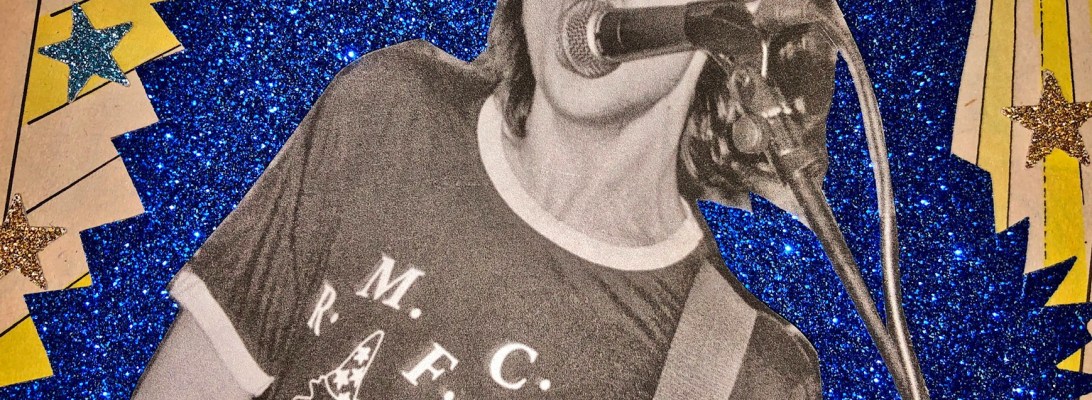
Naarm-based zine Magnetic Visions: “I put it out and I found that it was a really freeing process because it allowed me to be connected…”

Handmade collage by B.

Zines are really important! Good ones burst with life and can capture a culture, a scene, community, document a time, and share ideas and stories in a way that conventional publications can rarely, if ever; they offer an alternative narrative to the mainstream. There’s a genuineness, imperfection and sometimes awkwardness on their pages we resonate with. They’re written with unfiltered voices and self-expression of someone finding themselves (aren’t we always?), navigating the world and exploring their local creative community, likes and dislikes. They spread music, art, thoughts, feelings, information and perspectives. Anyone can make a zine. Making zines hones your skills or teaches you new ones you might not have known you had! Making one can sometimes save your sanity. A zine gives creative freedom. It can help you use your voice. A zine most importantly connects people.

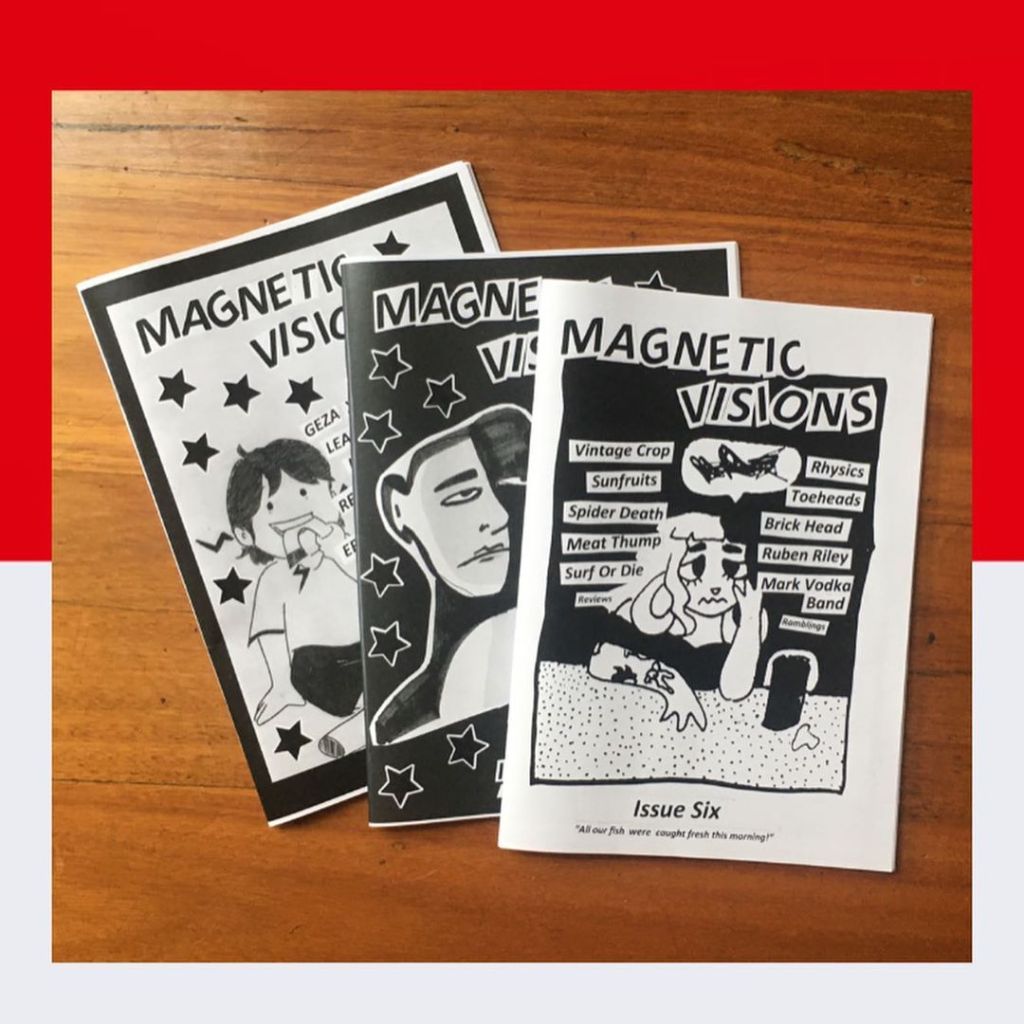
Through making Gimmie zine this past year, we’ve connected with so many amazing creatives throughout Australia and the world! One of the coolest is Billy who creates Magnetic Visions zine, a predominately music-based print zine from Naarm/Melbourne. He also makes music: Disco Junk, Billiam, Collective Hardcore, TOR, Dot Com, Aggressive Hugger, GDU and Under Heat Records. We love his passion for music and compulsion to share it—a kindred spirit.

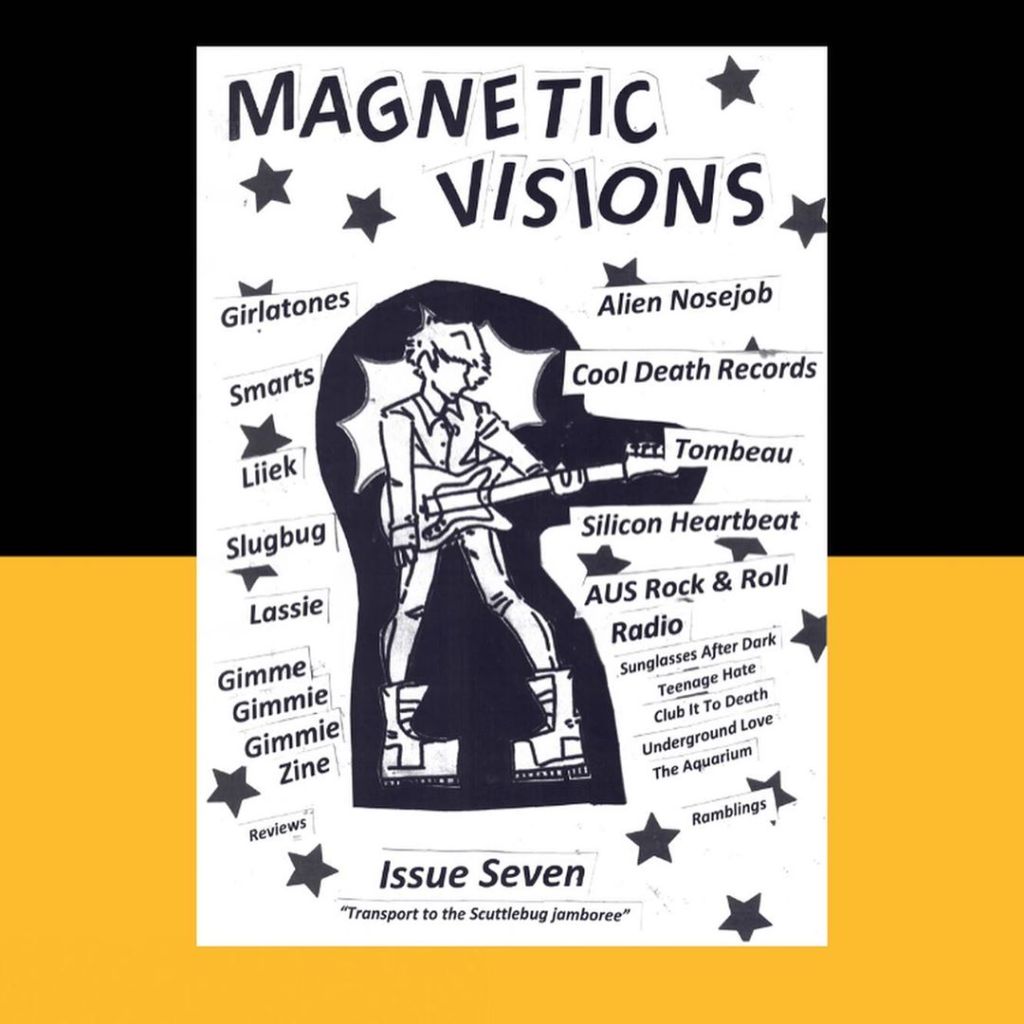
A few weeks back Gimmie’s Editor Bianca sat down for a chat with Billy, they did an interview collaboration! Billy interviewing Bianca can be found in the new issue (#7) of Magnetic Visions, which also features interviews with Alien Nosejob, Lassie, Girlatones, Cool Death Records and more! Bianca interviewing Billy is below.

It’s important to support each other! The more people making interesting, unique rad stuff and expressing themselves creatively the better!

How did you first discover zines?

BILLY: A while ago Strangeworld Records had a flood and they needed to get rid of a lot of the water damaged 7-inches so I went in there and bought quite a few. Richie who runs Strangeworld Records threw in a couple for free. One of them was Meat Thump which is the band ran by Brendon Annesley who made Negative Guest List zine. I ended up contacting Matt who put out the Meat Thump 7-inch to ask if he had another cover for it, because it was completely destroyed from water damage. When he sent the cover, he sent a few copies of Negative Guest List. I remember being completely blown away by them, the journalism and the whole formatting of zines. I developed a curiosity about them and I’d find a couple at Lulu’s and eventually I discovered Sticky Institute in Melbourne. From there I learnt about zine culture. I’ve probably learnt the most since doing Magnetic Visions because it’s put me in contact with a lot of people that know a lot more than me.

Nice. I used to have my earlier zines stocked at Sticky back in the early to mid-2000s.

B: It’s a really great place! I don’t think I’ve asked to stock there but maybe post-pandemic I should see if I could get a few put in there.

Totally! Do it. What inspired you to take the plunge and start making your own zine?

B: Initially it was just meant to be a one-off thing. I’ve always wanted to do a comp tape with a zine, so I put together five or so of my friends’ bands; I interviewed them and I put an exclusive track on a cassette. I put it out and I found that it was a really freeing process because it allowed me to be connected to music without actually making music. I sat on it for a bit and I started working on issue two during February, as that turned into COVID time, I plunged completely deeper into zine making, making it properly, properly publishing it and trying to put in as much effort as possible as I can to make it as good as I possibly can.

What are the zines that you really enjoy?

B: Negative Guest List is the main one, which ended in 2012 when Brandon died. I absolutely love Distort from the issues I’ve been able to get, there aren’t that many. There’s a zine in Europe called Rat Cage which is starting up at the moment that I really like, it’s focused on European hardcore and post-punk. Of course I love Gimmie Gimmie Gimmie zine! A friend of mine runs a zine called DST that I really like that’s based in the US, its half writing like short stories and half interviewing bands.

Do these zines have any similar qualities?

B: I like really good interviews, I like interviews that are very conversational and have good graphic design. I’ve always loved the visual appeal of a zine, making it as visually appealing as possible because you are paying for that physical visual aspect.  

Is there a difference for you reading a zine digitally vs. reading print?

B: Digitally I have less of an incentive to read it. If I buy a zine I’m more inclined to read it because I’ve spent money and there’s an investment in there so I might as well get as much out of it as I can. I also find I’m able to get more value or enjoyment out of something on paper because I put more of myself into it.

What are your favourite and least favourite parts of making a zine?

B: I’ll start with least favourite, it can be very intense trying to put something together that you think you’re truly proud of, hoping people will buy it, that’s not particularly fun. I’ve had a lot of trouble dealing with that and at times the zine has been quite taxing on me. I think I’m a lot better at it now. I’ve figured out the main parts.

The best part is being able to be involved with so many music scenes around the world and being able to talk to artists that I absolutely adore, in a somewhat conversational way is absolutely fantastic!

Yeah, it’s pretty cool getting an insight into people who make stuff that you admire and appreciate.

B: Yeah, I did an interview with Jake from Alien Nosejob for the next issue. Even though I’ve talked to him a bunch this was the first time that I think I felt really comfortable really talking to him and it was absolutely incredible!

Amazing! I can’t wait to read it.

B: It’s really good. It’s a good issue, I’ve also done an interview with Lassie and Silicon Heartbeat—awesome bands.

I love all the zines, they’re all really good.

B: Thank you, it’s good that people are actually seeming to enjoy them. I didn’t really know there was much of a zine market until I started doing it, I had no idea that people would actually consume and enjoy them.

For me growing up in the ‘90s zines were such a normal thing, there were lots of them and there was a vibrant zine culture.

B: Yeah, back then I guess it was more essential to have zines. That was the only way to publish things on somewhat of a budget.

Yeah. I used to have friends that would have access to photocopiers and I’d get to photocopy my zines for free a lot of the time.

B: That’s what I’ve been trying to do at the moment. I started off printing them at school but they put the hammer down on that so at the moment I’ve had to go through Office Works.

Here in Brisbane there’s a really great place in Fortitude Valley called Visible Ink, it’s a Youth Arts Hub and you can go in there and photocopy your zines for free. They have lino printing resources and a badge maker you can use too. Do you stand there and photocopy it yourself or do you leave it with them and get them to print it and come back later to pick it up?

B: When I’m printing the final version that’s what I do but when it comes to designing it and all that, I’m usually just there getting specific things or trying to get a specific paper stock that will stick better to the background and all that.

I’ve been there! I love doing zines with a coloured paper cover, I’ve done full colour and A3 folded and A4 folded sizes.

B: I think right now at the moment doing just A4 black & white is the best for me because colour printing is so expensive. For this issue I might do colour covers just for fun, I like the way it looks.

It’s always good to keep trying different things and evolving.

B: Plus colour covers stand out more when everything else is in black & white.

Yes. What’s something that making zines has taught you?

B: I don’t know? I guess it’s taught me how to put together a complete artistic product. I’ve done albums before but I feel like putting together a zine is a lot more than just releasing an album because you’re involved in every aspect, asking every question, cutting out everything, paying or the printing and all that. I hadn’t really had much experience doing that until making a zine. I’d done tapes but some part of them I was able to rely on other people, this one, a zine, was all me. The main thing it’s taught me is to create a completed product.

Do you set deadlines when making zines?

B: No, not at all but they’ve all somehow been finished! Since issue three they’ve all come out, one a month or at least thirty days in between them. I sort of want to slow down but no matter how many brakes I put on like, I’ll only do one interview a week, or don’t work on it during this time period, I always manage to at least finish one by the end of the month. There’s no deadline but one forms naturally, I guess.

That’s how I felt when we started doing Gimmie, it’s been six months now and I’ve done over 100 interviews up on gimmiezine.com, I think there’s 113 maybe at this point.

B: That’s pretty fantastic!

Yeah, I just started and kept going. I love interviewing so much and I like making the art that goes with each interview. I love sharing new bands and music with people.

B: Yeah, it seems to be going pretty well so far.

One of the things I love about your zines is when you write your personal pieces; are you every scared of putting your thoughts out there, committing them to paper? Do you ever censor yourself?

B: Not really, I’m not really self-conscious of putting out my actual thoughts. I often find that I’m just not able to put them in words. There isn’t very much of it in issue six, because mainly when I would write about something I wouldn’t be happy with it, it would feel show-off-y or not correct. I’ve put the brakes on it for issue six but issue seven will have a lot more of it. I’ve been doing some writing on bands I like. I’m doing a big piece right now on probably one of my favourite bands right now, Bis.

I love Bis!

B: I don’t get why more people don’t talk about them. I don’t know if you’ve heard the new TOR single, but TOR is basically my love letter to Bis—I love that band so much!

I’ll have to check TOR out. I’ve seen Bis live!

B: Did they ever tour Australia?

Yeah, they did. I have the ticket stub somewhere here.

B: That’s awesome! I have an old poster I was able to get on eBay that I have in my room, it’s a promo poster for The New Transistor Heroes; it’s probably the coolest piece of art that I own. Mandarin’s art is fantastic!

Agreed! We have a lot of art on our walls here.

B: I’ve got a lot of posters from gigs or prints that I’ve bought from photographers, or flyers.

That sounds like our place. We have a pretty big collection of posters some from the ‘70s through to the ‘80s and ‘90s to now.

B: That’s awesome!

How do you choose what bands you’ll feature in your zines?

B: I pick bands that I’m listening to at the moment or that I think could give an interesting interview. I don’t like to just pick bands that have a record coming out, but that sometimes helps because they have a reason to talk, things to talk about and they’re in that mindset of sharing it. I really just try to pick people that I think are interesting. I don’t try and pick from one particular scene or a particular area of music to follow, I just pick what I find interesting. Issue six has a mish-mash of a bunch of different things: Toeheads, are from Detroit, they’re an amazing garage rock band; there’s an interview with two of the members of Meat Thump and we were able to talk about Brendon Annesley, it was fantastic. I interviewed Jack from Vintage Crop and that went really well. Even Mark Vodka who is this obscure Canadian artists who is probably the closest thing to a second Ramones we’re ever going to get.

Is there anyone you’d like to interview that you haven’t yet?

B: A lot! Usually it’s because I don’t feel comfortable asking them. The dream interview, the one I’ve always been desperate to do is someone from Razar, the Brisbane punk band—that’s the dream! I’ve never been able to find a single interview with them. I consider them to be pretty close to being the most important Australian punk band of all-time. I’m still on the chase for it so if anyone knows any of them send me a message!

ABC put out a punk compilation, I bought it because it had Frenzal Rhomb on but I heard ‘Task Force’ on it and [Psychosurgeons] ‘Horizontal Action’ and it set me on the path towards what I’m doing now.

What’s been one of your favourite interviews you’ve done so far?

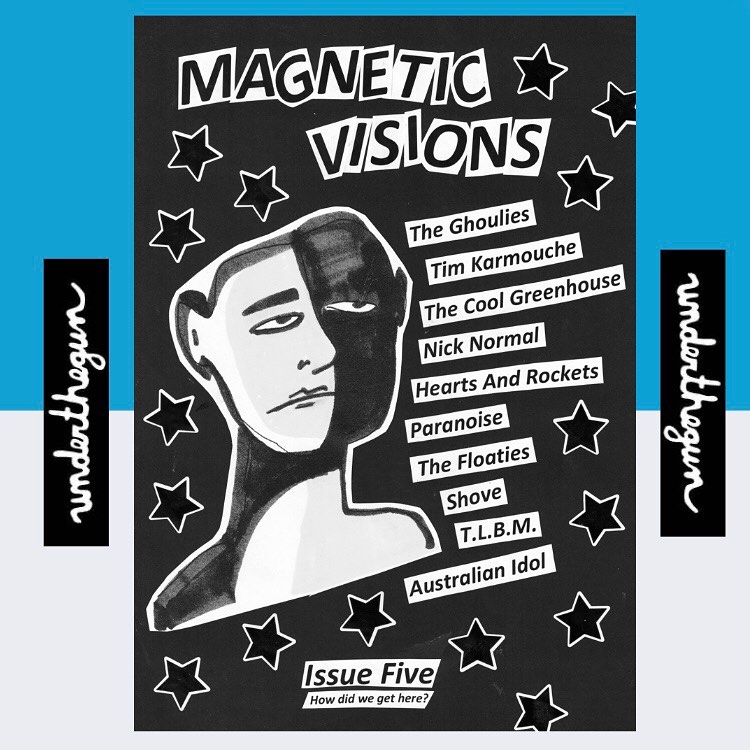
B: Issue one I was pretty proud of the one I did with CB Radio and Glue Eater, I think they both turned out really well. Issue two, Mikey Young I was really happy with, same with the one with Spoil Sport Records. Issue three, I think I did a good one with Drunken Sailor and Dr Sure’s Unusual Practice, those were ones I was really proud of. Issue four is where I think I start to get it down and I’m more or less happy with every single one in there, Research Reactor Corp, I was really happy with. Issue five, I was really happy with my interview with The Ghoulies and Hearts & Rockets. The one I did with Australian Idol I was extremely proud of and I still think that tape is the most underrated thing released this year. I’m really happy with everything in issue six, all of those are pretty good.

What makes an interview good for you?

B: It’s having a conversational feel and revealing interesting information. The interviews I really like I feel they show the artist’s personality really well and they’re interesting to read. Not every interview I read is with a band I like but, if the person is interesting to talk to I can get something out of that.

Get MAGNETIC VISIONS issue seven HERE and read Billy’s interview with Gimmie Gimmie Gimmie zine!

Please check out: BILLIAMVILLE.com. Billiam on Instagram. Magnetic Visions on Instagram.

Billy From Sydney Weirdo-Punk Band Research Reactor Corp: “A theme we talk about is nuclear war, without us being a fucking crust band”

Original photo by Timothy Williams. Handmade collage by B.

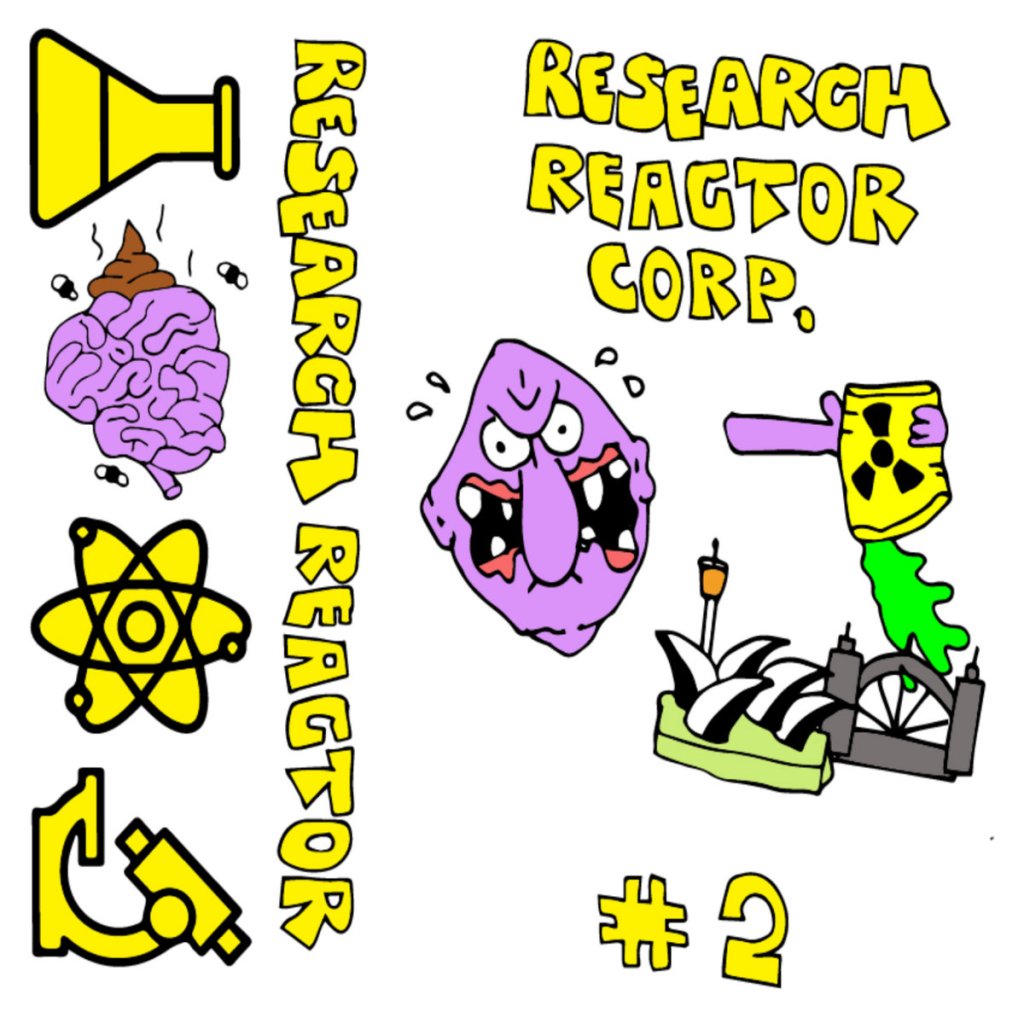
Research Reactor Corp. play super fun, goofy, cartoonish, weirdo-punk. We spoke with the Reactor’s Billy and he gave us the goss on a new RRC record, a new band called Mainframe, his new label, a new G.T.R.R.C release and more.  

BILLY: I’m just playing with two naughty kittens in my lounge room right now.

What are their names?

BILLY: We got them two weeks ago, we thought it would be a good time to adopt them. One looks like a sweet potato so we just call him Sweetie or Spudboy. The other one we called Dee Dee, lil’ Dee Dee Ramone.

That’s my favourite Ramone.

BILLY: Mine too, he was bad arse! He’s the only one that had an offshoot hip-hop record. He’s the coolest Ramone, which is a big call. Johnny is a big Conservative and I’m not too into that.

We got that Dee Dee King record as a wedding present. I walked down the aisle at our wedding to the Ramones.

BILLY: That’s awesome! I just love how his vocals are just so rat shit on it [does a Dee Dee impression] I’m Dee Dee Ramone! [laughs]. He sounds like a frog or something.

What have you been up to today?

BILLY: I am lucky enough to still have a fulltime job. I’m a screen printer and in a team of three people. I’ve been printing hi-vis vests for a supermarket all day that say: stand 1.5 meters back. Exciting stuff! [laughs]. Apart from not being able to go to shows, which is driving me insane, because of all this COVID stuff… I’m ADHD, I don’t really like sitting around too much and I’m going a little bit stir-crazy in my house. I have two little cute kittens running around and a girlfriend I live with so things are good. It would be a real lonely time for a lot of people, it’s a weird time to be alive!

We’ve been doing the Zoom thing, which is pretty funny. We’ve been playing this game called Quiplash which is kind of like Cards Against Humanity. Kel who does Gee Tee lives on my block and he has been the guy organising that and streaming it off his computer, it’s pretty funny. I’ve just been checking in with everyone. It was my thirtieth birthday on the 10th of April. R.M.F.C. and Gee Tee were going to play in my lounge room but we had to call it off. I had an ice-cream cake delivered, that was pretty bad arse. Other than that I didn’t do too much.

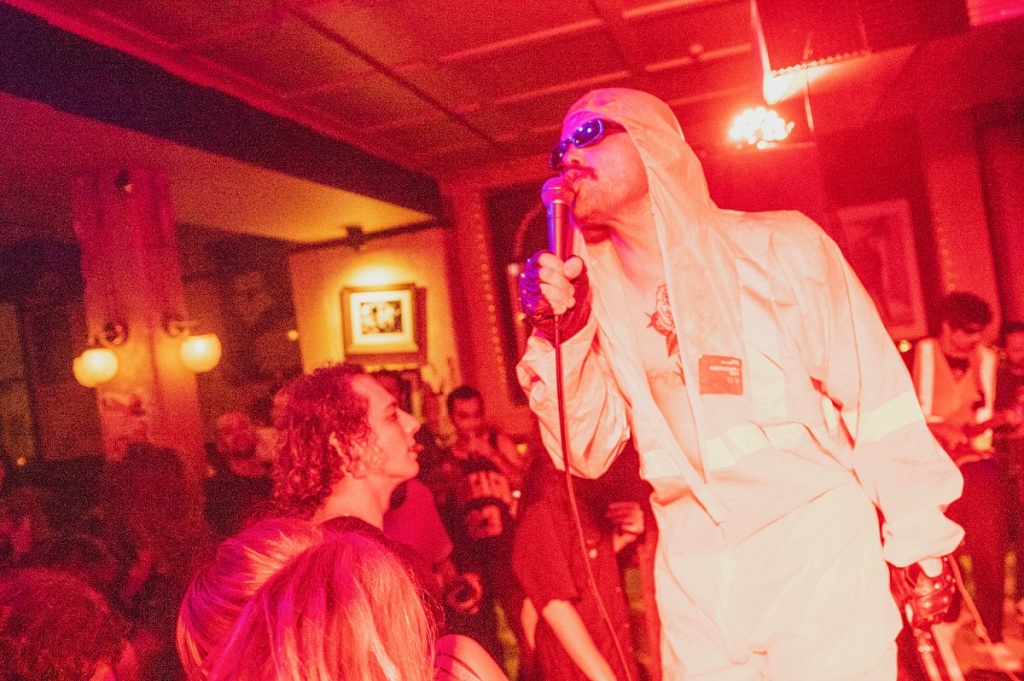
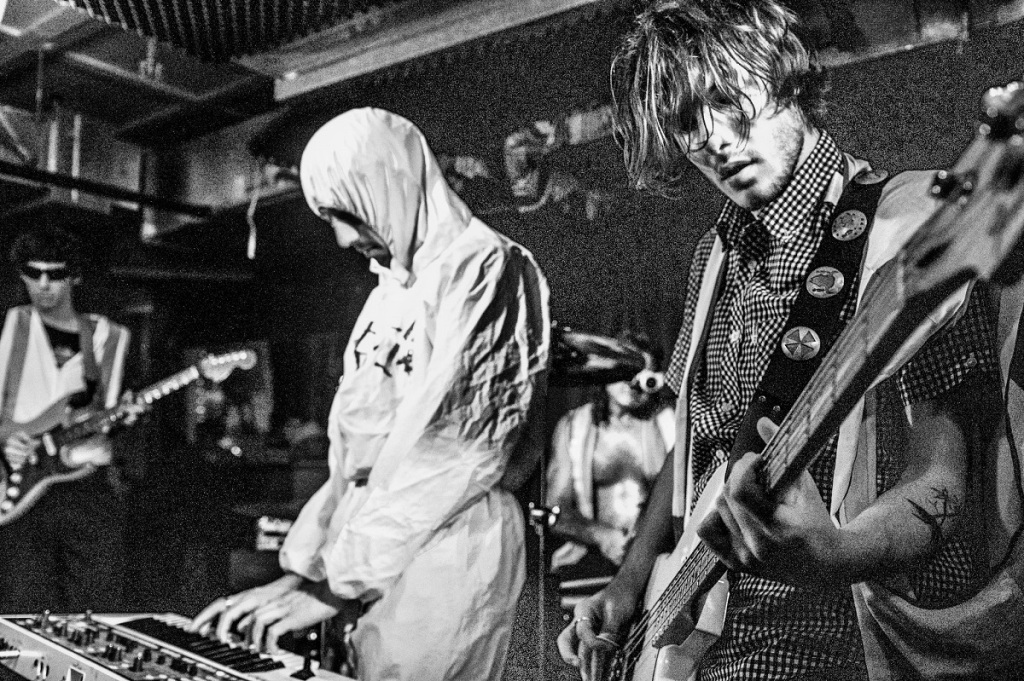
All live photos by Timothy Williams; courtesy of RRC.

How’s it feel to be thirty?

BILLY: Kind of exactly the same! I feel like a big giant baby! I feel like I’m fifteen. It’s not the end of the world [laughs]. In the two days leading up to it I was like, oh cool, I’m a real adult now! I said that when I turned twenty as well though [laughs]. I still feel like a big kid.

Totally know them feels dude! I’m still sitting on my floor listening to records, doing interviews and making zines, the same thing I was doing when I was fifteen.

BILLY: That’s bad arse! My friend Sam just moved house and he found a skate punk zine we did when we were fifteen called, World Up My Arse. We interviewed some power-violence bands off MySpace [laughs]. We only printed like ten copies and gave a couple away. It was pretty fucking cool, I can’t believe he kept it.

Nice! I have boxes of zines, I’ve been collecting them for around twenty years.

BILLY: I have a lot as well. I’ve just moved into a bigger place than I was in, I live in Petersham in Sydney’s Inner West. My zines are all in boxes too, some are at my parents’ house. I have every one of those Distort zines that DX does periodically. I have a lot of graffiti ones as well, I was into that for a bit.

Same! I was really into graffiti and hip-hop as a kid. You were born in Sydney?

BILLY: I was born in Manly Hospital in Sydney in 1990. I grew up on the north side of Sydney in a place called Narrabeen. When I was eight, I moved to the Gold Coast of all places for my stepdad’s work and was there for a couple of years and then came back to Sydney. No matter where I’ve visited in the world, I always say that Sydney is my home and it’s great to come back to. I have lots of time for Sydney! I don’t know why grumps in Melbourne always go “Yuck! You’re from Sydney?!” It’s weird. I was born and bred in Sydney.

What made you want to play music?

BILLY: It’s a weird one for a kid, but I think the first CD I got was the South Park Chef Aid one. I remember thinking it was so funny because they were singing about balls! [laughs]. My dad has always been into music and goes to gigs, he grew up seeing bands like The Riptides, The Scientists and stuff like that. I was lucky enough to have a dad that had a pretty decent record collection. It’s a bit disappointing that he kind of sold his record collection about fifteen years ago to go on a trip to Europe, so I missed out on that.

I got a Limp Biscuit CD… and the first CD I bought with my own money other than the South Park one was Elvis Costello; my dad drilled stuff like that into me. Then I got into NOFX and things just went from there. Music is the only thing I’ve ever really given a shit about, besides my family, and maybe skateboarding at some points in my life. I just spend all of my money on records and sit in my house listening to them. My friends and I constantly send music to each other too.

Even as a little kid I loved music, my mum always tells this story of when I used to put on ‘Cake’ which is a Crowded House song—I fucking hate Crowded House as an adult!

When did you first start making your own music?

BILLY: I did the whole booking in the music room in high school thing and tried to rip off bad hardcore bands when I was fifteen. My uncle is a professional soloist drummer so I was lucky enough to have the hook up for cheap drum equipment. I started playing drums when I was ten. As soon as I was fifteen I worked out that I don’t want to play drums in a hardcore band or a punk band because it’s too tiring, you have to bring gear!—I know that’s lazy though [laughs]. I played in some really cringe-y garage and hardcore bands in high school that didn’t make it past playing a few shows at youth centres.

I didn’t really play music for a while and then with the Research Reactor stuff… Ishka the other dude that does it, it’s just him and I, we make all the stuff and then do it as a live band. We have an LP coming out E.T.T. [Erste Theke Tontrager] in Europe and Televised Suicide is doing it in Australia soon; we’ve got it all mocked up and the tracks are done… it just depends how long it’s all going to take with all the pressing plants being blocked up because of Coronavirus.

What’s it going to be called?

BILLY: The Collected Findings Of The Research Reactor Corp. It’s basically our first two tapes and then a couple of new songs. Ishka who I make the music with, it’s just us doing it in our bedrooms, all home recording stuff. He’s a wizard at that stuff, I fucking suck at it! He plays in a thousand bands: Set-Top Box, all of the recordings are just him; Satanic Togas, all of the recordings are just him; on the last Gee Tee Chromo-zone record he does half of everything on the recording. Ishka is a big ol’ powerhouse! He’s awesome, he’s such an inspiring dude. It’s so cool that he is one of my best mates and that I get to make music with him.

I saw his band the Satanic Togas play, I had heard them online but didn’t know anything about the guys. They blew my mind and straight after the set I walked right up to Ishka and was like “Hey man, that was awesome! I’d be willing to beat money that you’re into The Gories and The Mummies” and he was like “Whoa! Shit! They’re my favourite bands!” We exchanged numbers and found out that we both wrote graffiti and were familiar with each other’s words and stuff. It turned out that he was living in the same suburb that I was working in, so we just started hanging out together. We just get in the lab, smoke some reefer and see what happens [laughs]. It’s super funny!

The first Research Reactor tape, the first song on it, Ishka just recorded everything and I basically just one-shotted the vocals! It’s good ‘cause we’re into a lot of similar music, we see eye-to-eye. It just works. If Ishka has a day off and feels like making a song, he’ll send me the recording, a demo, while I’m at work and I might duck off to the bathroom and think of a cool line or idea for the song and just jot down notes in my phone. When I get home I’ll write the song and Ishka is a five minute walk away so I’ll go around and record it. He’ll then do some mixing on it and we’ll take it to practice or to the band and put it on our Facebook chat and ask them if they like it and we all just learn to do it as a live band from there. It’s a cool way of doing it. The new LP we have coming out, the two new songs on there are written with everyone playing on it; it takes longer to record that way though.

What are the new songs about?

BILLY: [Laughs] Well, one of them, it’s actually a bit of a debate, I wanted to call the new song ‘Frog Willy’ or ‘Frog Penis’ but it has no relevance to the lyrics whatsoever! I think it’s ended up being called ‘Shock Treatment’ and it’s about eating heaps of eels until you explode and sticking a fork into an electrical outlet and basically zapping your brain.

What inspired that?

BILLY: [Laughs] We’re definitely a goofy band! Which I guess it’s why it’s so fun to write and play the stuff. Obviously we take a lot of influence from Devo and The Screamers. Without trying to be too much of a theme band and flog a dead horse with the same idea all the time, initially we thought we’ll create a story for it and pretend it’s a corporation. A theme we talk about is nuclear war, without us being a fucking crust band, we’re more like ‘The googles do nothing!’ off The Simpsons [laughs]. We’re like a goofy the-world-is-ending-but-who-cares thing. It’s like we’re a cartoon or like Toxic Avenger or [Class Of] Nuke ‘Em High! We’ll see a scene of like a guy’s face melting and think it would be funny and use it like, oh your boss’ face is melting because you threw a chemical on them, and we’ll run with that and write a whole song about it [laughs].

We take little shreds, little elements of bands we like and make it our own. Me and Ishka are big fans of a lot of the goofy stuff coming out of the Midwest of America. The Coneheads are obviously a big one or CCTV or Goldman Sex Batalion, Big Zit, a lot of the bands that Mat Williams and Mark Winter from Coneheads are associated with. We just make music we like and it turns out we like goofy, silly music [laughs].

It’s nice that people come and watch us play but I think we’re more outskirt-ish in comparison to your bigger Sydney punk and hardcore bands. I love cranky punk and hardcore but it all just seems a bit serious, a whole bunch of people standing around in a room with their arms crossed looking pissed off is just really weird! It’s nice that people just come to our shows and just dance and be a goofball. We’re lucky that all of our best friends play in bands and they are all such cool people like Gee Tee and R.M.F.C., ‘Togas, Set-top Box. I find it really flattering when people say we’re all “the weirder Sydney punk bands”. I feel like no one from Sydney ever says that though…

That’s so often the case with a lot of bands, they’re unappreciated in their own town or country but people in other places, people all over the world super dig them! Look at a band like King Gizzard And The Lizard Wizard, they play sold out huge shows all over the world and then they’ll play somewhere here in Australia and sometimes don’t fill the room.

BILLY: 100%! I didn’t realise how huge they were until recently, it’s mental. Now days you can just get in contact with pretty much anyone, you just DM their Instagram. I try to get a conversation rolling with bands overseas that I’m listening to. It’s cool that a lot of Midwest American goofy bands and the guys from R.I.P. Records and Lumpy Records know who we are.

We were supposed to be touring America, Gee Tee and R.M.F.C. were too, on a touring festival that was meant to happen – I think it still will down the track – in July with a lot of our favourite bands but the big Corona did a big shit on that! I guess it just gives us time to hang at home and record. I have a full band room set up in my house at the moment. I’m trying to teach myself how to play the drums fast again, I’m sloppy as at that right now.

We’ve been doing an “email band” like if you know someone that has a home recording set-up, even if it’s someone overseas, you just message and send each other bits of songs for the other to do stuff over. We’ve been doing that and so have some of our friends which is pretty of the time. We just did four songs with this guy Sean Albert from the Midwest who plays in bands like Skull Cult, QQQL and Dummy. We want to put it out as a 7”. We did a new band with that guy with me singing. It’s pretty fun!

Cool. Do you have a name?

BILLY: Yeah, Mainframe. Hackin’ the mainframe! [laughs]. We’ll probably put it online soon. We still have to do synths on one track. It’s just me, Ishka and Sean.

What’s it sounding like?

BILLY: I’ve played it to a couple of people and they said it’s kind of fast Gee Tee, which isn’t much of a stretch. Sean is a fucking drum machine wizard! He’s so good at getting drum fills in, kind of like that guy from Urochromes. He’s a drum machine Don! I don’t know how he does all the crazy shit.

We had a 7” come out on Goodbye Boozy from Italy in February at the start of the year.

That was the split with The Freakees?

BILLY: Yeah! In the same drop of 7”s that he did, Belly Jelly had a 7” we really dug, there’s a Nervous Eaters cover on the 7” that was fucking awesome! I followed him on Instagram and because we can’t really play shows now, I thought let’s just hit him up. He sent us two tracks the next day and then two days later he sent another two. Just on the cusp of all this Covid stuff happening Ishka came over with all this recording stuff. It’s sounding really good. We’ve actually been pretty fucking productive lately.

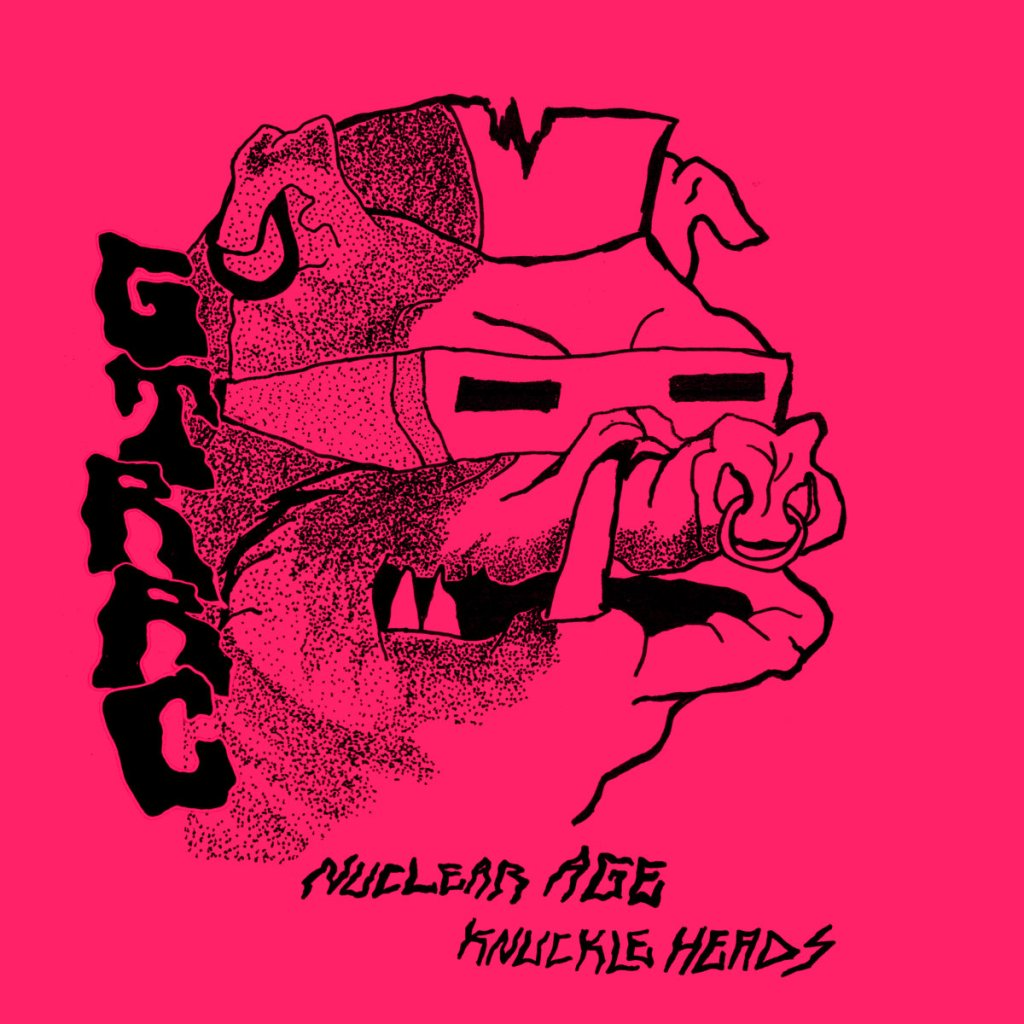
We do this thing called G.T.R.R.C. where we do all of these goofy covers, it’s half of Gee Tee and half of Research Reactor. We put out a tape about a year ago on Warttmann Inc. and now we’ve just recorded the second one. I’ve done vocals for three covers on it but it’s kind of turned into a comp[ilation] now. Adam Ritchie of Drunk Mums, Grotto and Pissfart Records did a couple of covers, so did Drew Owens from Sick Thoughts, Kel Gee Tee did vocals on some and Jake from Drunk Mums did some too.

What were some of the covers?

BILLY: One of them was ‘Job’ by The Nubs and I did ‘Trapped In The City’ by Bad Times, a band Jay Reatard sung in. I thought they were both appropriate covers to do given the times. It sounds a bit farfetched but I kind of want to cover ‘Karma Chameleon’ by Culture Club at some point. In our live set we used to cover ‘Rock & Roll Don’t Come from New York’ by The Gizmos and ‘I Don’t Know What To Do Do’ by Devo; we had those cover in our set because we didn’t have enough of our own songs at the time. I’d love to cover – sorry for biting this off you Drew Owens, he’s doing in on the G.T.R.R.C comp – ‘Killer On the Loose’ by Thin Lizzy. I love Thin Lizzy a lot, they’re the most bad arse rock n roll band going!

Is there anything else that you’re working on?

BILLY: I’m setting up my own little label at the moment it’s called, Computer Human Records. I’m about to pay for my first vinyl release. I’m putting out a 7” by a band called Snooper that are from Nashville, they’re relatively new but if you like Devo, CCTV or Landline or Pscience you might like them.

That sounds totally up my alley!

BILLY: Cool. They only have a couple of songs online. Blair the singer is a school teacher and she’s really great at video editing. She has a real wild style where she makes everything look like a children’s show or like Pee Wee’s Playhouse!

Also, we’re on a 4-way split 7” with Nick Normal, he recently just toured Europe and Lassie was his backing band. The split is months away though!

Please check out: RESEARCH REACTOR CORP at Warttmann Inc. RRC on Instagram.

Artist, Publisher & Creator of Punk Magazine, John Holmstrom: “I always felt the goal of punk is to free up your mind…”

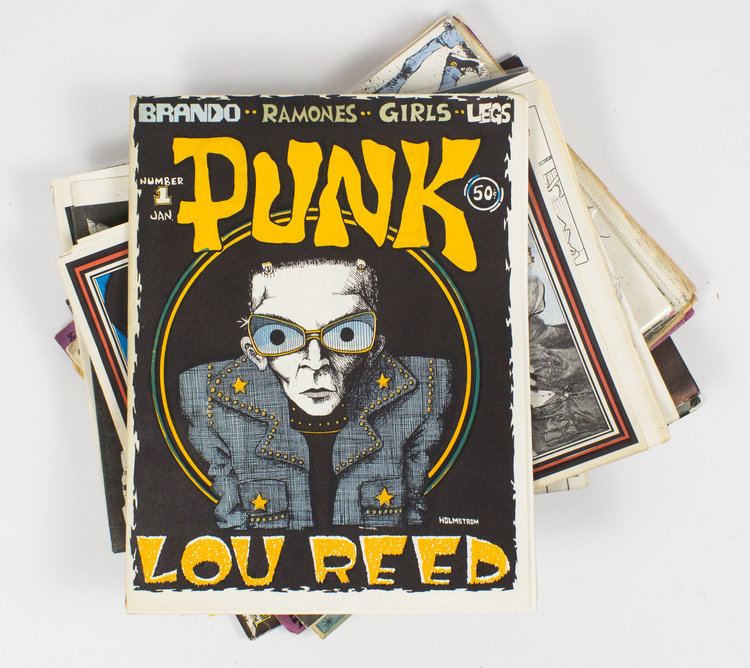
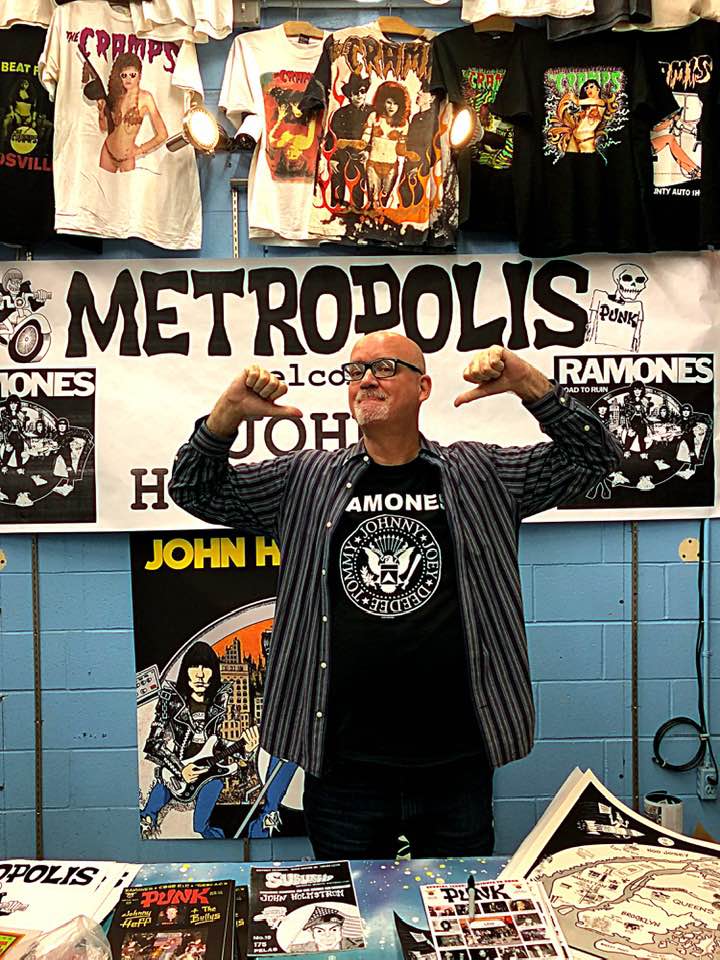
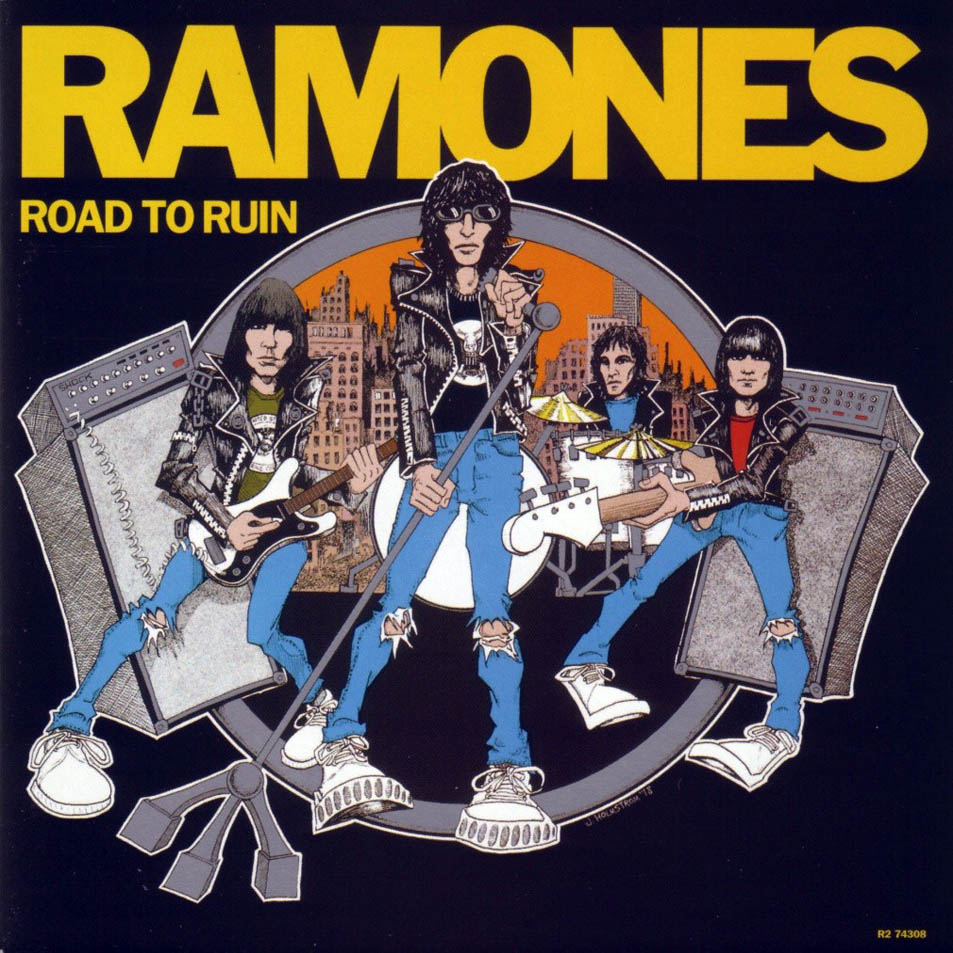
The first punk zine to exist – Punk Magazine – launched on the 1st of January 1976 featuring a cartoon cover of Lou Reed drawn by John Holmstrom, who also interviewed Lou for the début issue. Punk mag helped popularise the term “punk” as well as the CBGBs scene. Their first issue had an interview with the Ramones before they even had a release; an outtake from the photo shoot accompanying the interview was used as the image for their first record cover. Holmstrom would later illustrate the Ramones’ Rocket to Russia and Road to Ruin albums. Punk was also pioneering in giving space to female writers, artists and photographers, at a time when publishing was very male-dominated. It would go on to inspire countless other punk zines that came later including UK zine, Sniffin’ Glue.

Holmstrom would also go on to work on zines Comical Funnies and STOP! and later edit and become the publisher of marijuana counterculture magazine, High Times, throughout the ‘90s. 2020 sees Holmstrom at the helm of yet another magazine called, Stoned Age, which “intends to bring back the fun of 20th century marijuana culture, when it was the choice of hipsters, beatniks, jazz musicians, hippies, and other misfits.”

We talk to John about all this and more: the C.I.A. sabotaging Punk, life as an artist, being arrested for smoking weed, creating a social movement, freedom of speech, interviewing Lou Reed, Ramones…

Why do you love to draw?

JOHN HOLMSTROM: Well, I don’t really love to draw [laughs].

Really?

JH: It’s work. I loved to draw as a kid, but once it’s your job it’s… sometimes it’s fun. There can be very fun moments, but most of it is pain! It can look horrible but you have to keep working on it to make it look good. The best moment in life is when you finish a piece and it looks good. I remember times, like when I finished the cover of Punk #1, or a record cover or something; there’s just no feeling like it, it’s better than sex [laughs]. The pain and suffering and trauma you go through – at least I go through because I am such a perfectionist – is gruelling. You’re just sitting there saying, ‘what can I do to make this look better? It looks terrible. Why am I even trying?’ At times I’ve abandoned drawings because it’s just not living up to my standards.

Punk Magazine Issue #1

Before I went to art school it was more fun, I’d just doddle in my notebook to distract myself from high school teachers. I got in trouble once for drawing a caricature of them, he saw it and I was forever in trouble ever after with the authorities. It was hard work going to school and trying to learn how to become a professional and try to learn to actually get paid for what I do—which is really tough. The rates artists get paid are pretty much identical or even less than what we made in the ‘70s. It was a golden age, the 20th century, for publishing. It all disappeared. People don’t pay you very much for your work on the web. I don’t know how these kids do it? I guess they know how to work social media. It’s always been tough to get paid for illustration, I always made more money from writing; that’s how I fell into writing and becoming an editor. When I couldn’t get someone to publish something that I did that I liked, I’d publish it myself, that’s where I learnt the business side of publishing. That came in handy when I was the publisher of High Times magazine in the 1990s. One of the frustrations of doing art, when I take on a commercial job, the client always makes some demands and you don’t always enjoy what they want, as opposed to when you do something for yourself; people don’t really want to pay for that ‘cause it’s not what they’re looking for.

I understand what you’re talking about, my husband is an artist and he struggles with the exact same thing, as well as chasing up payment from clients; clients can have such unrealistic demands or want you to do something you just know in your heart, as an artist, it’s just not going to look great.

JH: Yes! Exactly! They’ll want something like two inches by two inches and they want it to be a crowd scene with a million people and everything has to look prominent—it’s impossible! If you can actually do it, then it’s your fault it doesn’t look great, you can’t give them what they want. Art Directors recently of a national magazine, would be tasked with a publisher’s idea of a good cover and they thought it was a terrible idea but they would do it because it’s their job, then when it doesn’t sell they get the blame for a bad idea. There’s always the idea and the execution of the idea.

Being a publisher for yourself and for High Times magazine, which also ended up being for yourself; what are the things that you think make a good publication?

JH:  Well, that depends on what your goal is. I’m actually enjoying the response to my latest publication, Stoned Age. It’s kind of like my revenge on, High Times! At High Times we were always told you have to put this much information about this and you gotta do that; even though it was a really creative place to work, there were still restrictions. So I’m putting out the kind of magazine I would have liked to put out back in the ‘80s and ‘90s. It’s getting a fantastic response. I’m working with a great Art Director, Kevin Heine, who worked at Screw for many years, and a very understanding publisher, Harry Crossfield. It’s the art of collaboration to put out a good publication. It’s like being in a band as opposed to being a solo musician or a stand-up comic. If you put out a personal zine and do everything yourself, you have a limited audience, at least if you’re a control freak like so many of us are, you get to say what you want. If you’re going to put out a publication that is going to reach a lot of people, put it out frequently and attract advertisers and the rest of it, you gotta work with good people—that’s the first thing you need to put out a good publication.

Your team needs to understand your goal and the objective, for lack of a better term “the mission statement” that branding people and corporate types like to bring up, which I think is kind of stupid. It’s all about the idea and the execution of the idea. Whenever if comes to anything, whether you’re in a band or you’re an artist or a cook, right? The thing about magazines that we often talk about is… if you’re going to bring out canned beans, you want to pretty much bring out the same thing, you want consistency, you always want the beans to taste good… but when you bring out a magazine you have to bring out something that looks different every week or month, but then stays the same—that’s tricky. It has to be recognisable. You can’t put out the same thing and information every month but you still have to appeal to the reader.

One of the things I really love about Punk was that you did interviews but the format you presented them in was in a comic book style, I feel like it really gave interviews a new life and was different from how I’m used to reading them.

JH: That was an idea that I got from Harvey Kurtzman. He interviewed two of the greatest actors of the 20th century for Esquire magazine in the ‘60s – Marlon Brando and James Cagney – he did it in an illustrative cartoony interview style. That impressed me a great deal. I’ve always enjoyed integrating photographs into comic books. Jack Kirby did it a few times back in the old days of Marvel, he would run a photograph in the background and put a cartoon character on top of it, it really struck me. Getting the best of both worlds, integrating comics with photographs and text is fun!

I watched a documentary a little while back that featured you in it and you mentioned that you were known as a “Bigfoot” artist, that you draw characters with big feet and grotesque features; where did this style develop from?

JH: That’s the official name from the kind of cartooning style, it’s called “Grotesque” or “Bigfoot” by people in the business. That’s where you exaggerate features, you’re not trying to capture real life, you’re trying to stretch reality into a more exaggerated style. The cartoonist, the funny guys that I liked were, Don Martin and Jack Davis; they had very original crazy styles that were never to appeal to a lot of people. I like weird stuff, the weirder the better. There’s also Basil Overton, he does the most grotesque of all-time; when I was in 8th Grade he did a series of bubblegum stickers, ugly stickers as I remember, they were very popular with kids back then. You know how at a certain stage you love monsters and stuff? R. Crumb, Robert Crumb, was a big influence on me.

What’s been one of your proudest moments as an artist?

JH: That first issue of Punk. I knew the moment that I sat down with Lou [Reed] and asked him about comic books, he named the artists, he named Wally Wood and Bill Elder and EC Comics—I was so impressed… I always thought there was a thread that joined music and art and I’ve seen this happen a lot, a lot of musicians are visual artists or appreciate visual art and vice versa… I’ve always thought that comics and rock n roll music, popular music, often express the same popular idioms. Like in the ‘50s when you had rock n roll music starting off, you also had EC Comic books. Both Elvis and EC Comic books were supposedly promoting juvenile delinquency. In the ‘60s you had acid rock and the psychedelic bands you also had underground comic books, which were influenced by LSD, marijuana and open attitudes towards sex. When we brought out Punk I feel we were continuing that tradition; punk rock was happening and the magazine was creating the visual imagery. It helped propel the punk thing into a movement. I always say that Punk magazine is when the punk movement really began because when it was just music and it didn’t have that visual element it wasn’t a full blown social movement the way it became. Not many cartoonist can say that they helped create a social movement like that, so that’s a pretty proud moment!

I have a copy of that first edition of Punk #1 that my husband bought me for my birthday. I remember when I first slid it out of the plastic packaging it was in, I just stared at it, at your art on the cover, for the longest time. I couldn’t believe I was actually holding it in my hands, I even got a little teary. As I started to unfold it and take in each section it was a really special moment. Still to this day I haven’t seen anything like it, it’s really unique and special.

JH: Thank you. I don’t think in that first issue there is any typeset whatsoever, every single advertisement, every whatever is hand-lettered. As you can imagine, I’m not too fond of the digital age. People are always telling me that I should turn my hand lettering into a font, but what’s fun about hand lettering is that each letter can look different; if it was a font every letter would look the same and it wouldn’t be hand lettering. I like analogue technology and I think digital strips away creativity and a lot of imagination.

With Punk magazine, from what I understand is that, you were trying to get people to rebel. When you did High Times magazine also, that had a rebellious spirit also; have you always had that in you?

JH: Oh yeah! I got into a lot of trouble when I was a teenager. I was growing up during the Vietnam War, when I was around fifteen/sixteen, it dawned on me that when I turned eighteen I would be drafted and sent over to the jungles to kill people. That’s a real wake up call, to be that young and face that kind of reality. Some of the other kids that had come back from there would say, “Whatever you do, don’t get drafted and go to Vietnam! It is the most horrible experience that you could ever imagine.” It was hell. I saw it with my father too, he was a veteran of World War II. He was captured in his first mission and spent the entirety of America’s entry into World War II behind barbed wire. He was an illustrator and he did a book when he came back from the war and published his sketches. He even worked on The Great Escape, he was a Forger; if you’ve ever seen the movie The Great Escape, they have a character that represents the Forgers. I grew up around art, it didn’t seem like a big deal for someone to sit there at a drawing board and make a living doing it. Sorry I got a little off track; what was the question?

Have you always had a rebellious spirit? It seems to be a commonality running through all you do. Also, you seem to be in places at exciting times with a current of change, you seem to act as a conduit that helps bring things to a greater audience.

JH: At school I was an A student before high school. I always did really well in academics, but by the time I got to high school, they were teaching a bunch of bullshit that was irrelevant to my life. I saw these smart kids, these academics just swallowing it all and to me it was like—wake up! A lot of people were provocative back then, I always related to provocative art, stuff that would be shocking and make you think, that gives you a different perspective on things; that is the most important things people can do. I’m not a bomb thrower, I’m not a revolutionary, I think politics is a bad thing for artists to get too involved in, especially now with all the crap you see in The ‘States about Trump. Who cares who the President is?! Politicians are all horrible people, it not like Trump has a trademark on being a horrible person. All politicians suck! We had a funny comic in Punk that Bruce Carlton did where we turned sacred cows into hamburger, I always liked that. Whenever people have this belief system that, this politician is such a good person they’re going to save us or whatever, or they idolise a musician, I’m against it! I’m a “Groucho Marxist-John Lennonist”. I was always influenced by a lot of things Groucho said, he had a great philosophy – “I wouldn’t join any club that would accept someone like me as a member” whatever it is “I’m against it”. It was great stuff. I was very influenced by The Marx Brothers in high school. Comedy is something that should be provocative. It’s having a hard time right now, there’s just a political correct philosophy and people who are expressing unpopular ideas are being attacked and even censored and banned. It’s horrific to me! I believe in the Enlightenment, one of my heroes was Voltaire. One of the famous stories about Voltaire is that he had two houses, on either side of the border of two countries and whenever he got one government pissed off at him and they wanted to throw him in jail, he’d just go to the other house across the border. Then when that government came at him he’d go back to the other house, he just kept avoiding the authorities. He had so many wonderful writings and philosophy.

People should be able to say what they want. They also have be aware that what they say could have repercussions but, they should still be able to have a voice. It’s ok for people to have different opinions.

JH: It gets beyond that because the philosophy of free speech in my mind is that free speech is not there to defend popular rights, it’s there to defend unpopular speech, even hate speech. I got into a big argument with a friend of mine, Rufus Dayglo, we were together at a comic book festival, he wants to ban hate speech. I just couldn’t understand this. Hate speech is horrible, it would be good if people would not use hate speech but, on the other hand, if you squelch it then how are people going to understand what hate speech is and why it’s horrible and how stupid the people are who use it. It’s like, you gotta trust people to be adults about things and make up their own minds. A lot of the attitudes that people had a hundred years ago were really horrible, the racism and the intolerance they had… that gets back to it; what is tolerance? What do you tolerate? What is intolerable? Hitler was intolerable, that’s why the world went to war to get rid of that guy. But if you don’t publish, Mein Kampf, you might not understand how evil works and how people get fooled into accepting horrible ideas.

John Holmstrom 1977

I read that you’re working on your autobiography?

JH: I’m working on my book proposal, my agent is interested.  Stoned Age has really started taking off though and I haven’t had time to work on it recently. It’s something that I would like to do, I’ve had an interesting life. I think people don’t really know the extent of some of the stuff that I’ve been through, like people hear I grew up in Connecticut and they assume that I grew up having a sheltered life and probably didn’t go through much, but the opposite was true. My parents had almost no discipline, I could do whatever I wanted to. I was hitchhiking all over the country when I was sixteen years old. I saw quite a bit, I went to rock festivals. Here in New York it was a rough time, it was not a safe place to live, some crazy things happened. I was homeless for a while…

That was just before you started Punk, right?

JH: Yes. It was pretty crazy, I went from sleeping on a friend’s floor to being on top of the New York City rock scene in a matter of months. Then I ended up almost homeless again a few years later [laughs].

I read that there were issues of Punk that were ready for printing but they didn’t make it; weren’t they lost at the printers?

JH: Yes, there were lost issues, it was so heartbreaking. Our ninth issue was going to put us over the top! I actually think that the C.I.A. infiltrated Punk magazine and put us out of business. I don’t talk to Legs McNeil anymore, I’m just over dealing with difficult people at this advanced age… one of the last times I saw him, he told me that he was roommates with this guy that was working with us and that he came across this briefcase and there was all of this classified government information in there, I think he was working with the C.I.A. I didn’t say it at the time but I thought about it and I was like, why didn’t you tell me back then? I did a stupid thing, we decided to fire the publisher, he just burnt through this huge investment that we got, he just threw it all away ‘cause he was pissed off at me and wanted to get back at me. He figured he’d put us out of business. Then this other guy who worked with him was running things… it’s right after I went to Australia, I fired the publisher, I had to leave for Australia, my mother took me and my sister down there. The trip was so important to her, her own mother had died the day before we were going to leave, and she skipped the funeral to go to Australia. It was the biggest thing in her whole life. When I came back, I’m returning to the office and I see a dead rat in front of the office on the sidewalk, I go inside and Legs just said he killed the rat that was going out of the back… we always had mice and roaches but all of a sudden we had rats, it became unlivable there. I was told that Punk went out of business, all this terrible stuff had happened while I was gone. I think it was sabotaged. We did manage to bring out another issue. It’s such an incredible story I hope I get to tell it all—this is what it’s like to work in the underground.

The F.B.I. and our intelligence agencies were so determined to supress rock n roll then, in the underground, and in the ‘60s, that they would hire prostitutes to have sex with the underground newspaper editors and give them a venereal disease… a lot of crazy stuff happened! There’s a program called, Cointelpro, look it up… one of the people who helped us out the most was Tom Forcade – he was the publisher and founder of High Times and was also at the top of the list of underground newspaper people that the government wanted to stop; he actually ran the underground press syndicate, which consisted of over 200 newspapers and magazines covering everything from Native American rights, gay rights, you name it. Punk was among his favourites, I think that’s why we got in trouble with the powers that be, it’s why I think there’s credibility to the theory… I mean we probably would have went out of business on our own, ‘cause we were stupid inexperienced kids but… you know, they couldn’t risk us being successful.

Out of everything you have been through and all the successes that you’ve had; how do you define success for yourself now?

JH: That’s a good question. I feel like I’ve been successful because my work has been… lately it’s just exploding! My work is on permanent display at the Rock n Roll Hall of Fame, my archives went to the Beinecke Rare Book and Manuscript Library, Yale University in Connecticut near where I grew up… but, I don’t really have a lot of money, I really struggle financially, that’s how it is when you’re an artist. Nobody wants to buy your stuff until you’re dead! Then the prices go through the roof, we’re always more valuable dead than when we’re alive. I can’t, for myself, consider financial success as any kind of marker. I’d like to be financially successful and I try but, life is what it is. You have to accept what you can’t change and change what you cannot accept, and all those clichés.

I find it really inspiring that no matter what you’ve been faced with, you keep going. Following all the things you do, I’ve noticed that you always seem so positive. Even in an interview I’ve watched where someone poses a question to you where it’s obvious they’re looking for a negative answer or just want gossip, you turn it around into something positive.

JH: Thank you! I get accused of being negative all the time [laughs]. People have said I brood, I’m Scandinavian, we tend to be a little on looking at the dark side of things. I try to stay positive. If I succumb to hopelessness and despair, I’ll end up homeless again. I work to live. I need to keep making money, I need to keep doing things. It’s always nice to be recognised, one thing about being an artist, you don’t hear the applause… when you’re a musician or a comedian or actor you go on stage and people applaud and you get all this recognition for what you do… when you’re an artist you’re sitting all by yourself, Harvey Kurtzman called it “the loneliest job in the world” ‘cause you’re all by yourself doing a drawing for hours and hours, days and days, sometimes even weeks; I barely talk to anybody. You have to believe in yourself, believe in what you’re doing and really I think the ultimate goal is to do something that everybody likes. A lot of people don’t like comics or cartoons, it’s a difficult thing, and people that usually like them are cartoonist themselves. There’s not a vast audience of people that spend money on comic books and cartoons, comic books are going out of business left and right. I heard that Marvel is no longer going to print comic books!

What?!

JH: Yeah, apparently they did market research and most of the people that see the movies aren’t even aware that these characters first appeared in comic books. Even the best titles only sell about 30,000 copies. Our local comic book shop, St Marks Comics, just closed; a lot of unhappy people about that. They’re going to sublicense their titles and have other publishers take the risks. It’s so difficult now to print anything, energy cost and shipping costs so much. 10 years ago I could ship things overseas, I have an eBay page and I can’t sell anything to Europe or Australia or even Canada because it costs a minimum of $35 for one magazine. Selling a something for $5 and then charging that much for shipping, it’s an impossible economy.

I totally can relate to that, having done zines for 25 years and shipping all over the world, the shipping is crazy. I have a book coming out next year and I’m really terrified of how much postage will be to post it to people.

JH: Well, hopefully that’s where things like print-on-demand will help. There’s a book store here in New York called, Shakespeare & Company, if they don’t have the book in stock, they’re going to have the technology to print it in the store and sell it for around what the book price is.

Wow!

JH: Technology is pretty amazing. Bringing out Stoned Age, we couldn’t have afforded to stay in business if this was twenty year ago, back in the day when you had to take pages and shoo them on film and put the film on plates and use the plates to run off the paper. I remember hearing in the ‘90s they were already developing disk to paper, which blew my mind… that’s what a PDF is and how they all are producing these publications. Instead of the old technology, paying for the plates and film and set up, with the PDF you’re just running off a photocopy, you’re just paying for paper and ink. Very cheap to print newsprint, but what’s costing us an arm and leg is shipping it. The West Coast is where our biggest demand is, but we’re afraid of what the shipping bill will be. I recently sent some to my friend Lindsay [Hutton] who does Next Big Thing in Scotland, he’s a great guy; one of the early 1970’s fanzines inspired by Punk. It was pretty interesting that within months of our first issue there were similar fanzines coming out all over the world.

I remember seeing the cover of the first issue of Punk in a book in my local library, as a teenager I’d never seen anything like it. The work you’ve done is influential, you started punk zines, something which I have spent my life doing. People found out about punk because of you guys.

JH: Thank you. One of my favourite stories is that, when I visited Sydney in May or June ’77, I’m with my mom and sister walking down the street and I saw Rock Australia magazine on a newsstands… I picked up a copy and I opened it up and there was this huge image of Punk #1 inside! I was like, “Mom! Look at this!” They were like, huh?! I can’t remember who the editor was, but he was really nice to me and looked after me wonderfully. He took me to the local club and introduced me to The Saints and Radio Birdman. The Saints were doing their big farewell gig a couple of years later and I couldn’t attend because we were on a tour, I missed that. I went to White Light Records, are they still a thing?

No.

JH: Aww that’s sad. They were a great, great record store. The owner gave me a copy of The Sonics LP. Everybody treated me so wonderfully. One of The Saints was so down on New York, he preferred the London scene [laughs], he gave me a hard time, bunch of punks!

I’ll send you a mixtape of Australian bands that are around now. Australia really has one of the best music scenes in the world, so many incredible bands that the rest of the world doesn’t even know about yet.

JH: I’m glad to hear that! I try to bring this up when people asked about punk starting in New York or London, well The Saints had single of the year in 1976, “(I’m) Stranded” was a huge punk single. How do you explain that? Punk was a worldwide thing, everyone was influenced by the same bands – Alice Cooper, The Stooges, MC5 etc. etc. It didn’t’ start anywhere, it started everywhere. Australia… even when I was working at High Times, we’d hear about Nimbin, a famous hippie commune place and hearing about how wonderful it was down there… it’s an interesting part of the world. Australia is a very interesting island continent.

People have always told me with my writing, making zines and stuff that if I really wanted to make it I’d have to go to New York, Los Angeles or London, but I always thought that well, if everyone goes to those places, who’ll be left here to make stuff?

JH: I would enjoy if I could have to stay in Sydney. There was an interesting fashion thing going on, women wearing this really interesting style of makeup… I remember seeing all of these buildings going up in Sydney and it really looked like a place that was going to take off and really become cosmopolitan; it was really like New York in a lot of ways… big city, interesting neighbourhoods, an underground scene—you don’t see that everywhere.

Doing the magazine Stoned Age and being the editor/publisher of High Times; do you smoke marijuana yourself?

JH: Right now I’m not a big user. The thing about my marijuana use is that I smoked a lot of pot as a teenager, I really got into it. I started when I was fifteen, in a few months when I turned sixteen and got my Driver’s License I was arrested with some other kids. Being sixteen, one other was my age and the other’s younger, so their names weren’t even in the newspaper—it was the most traumatic event of my life.

Wow!

JH: Yeah. It ruined my life. I smoke pot now and then through the rest of my life. At some point I’m like, I don’t’ want to smoke it until it’s legal and safe. It’s still not legal here, I want to go into a store and buy it. I don’t’ always enjoy it, it’s not something that I like to do socially, it makes me feel self-conscious and it screws with your sense of time. I enjoy it mostly when I’m cleaning my apartment; I get stoned and always end up cleaning my apartment. It has its use. I’m an insomniac and I’ve heard that there is certain strains of marijuana that can help with that. They keep saying that they’re going to make it legal in New Jersey but there’s an incredible push back against it, all the media is focusing on is the negatives and how dangerous it is. I’m a good example of how dangerous it is to make it illegal, when I was arrested I was almost put in prison, some of my friends from high school were sent to prison and they were raped. Now it’s like, what’s worse? Smoking pot and getting paranoid or getting thrown in jail and getting gang raped and getting AIDS and dying. It’s insane. The prohibitionists, the people that want to keep it illegal are out of their minds! Not to mention, the intrusions into privacy rights that the drug wars have created.

When I started working at High Times, we got a report that the Attorney General, Ed Messe, was planning to put us all in prison for the crime of publishing the magazine. The government tried several times to put High Times out of business. Now years later, politicians are praising marijuana because it’s going to save their economy!

Now that’s two publications you’ve created that the government has wanted to stop!

JH: Yeah, well I tell people, I hate the Two Part System because the democrats put me out of business and The Republicans –Jimmy Carter was president when Punk was put out of business – tried to put me in jail and put me out of business. I hate politicians! I hate all of them!

I saw an original artwork of Punk #1 come up for sale and I think it went for $19,000?

JH: The original artwork, yes. For what I understand, I gave it to Harvey Kurtzman when the issue first came out, I felt I owed him everything… he kept it, this guy Denis Kitchen that was running his estate decided to sell some of Harvey’s art collection, Harvey’s widow, Adele, needed some money and they’d determined that it was the most valuable piece in Harvey’s collection, which is amazing really! He would have had so much great art work for so many different people, I was surprised, I figured R. Crumb would be worth more. They put it up for auction and it sold for $16,000. I read in the New York Times that Rubén Blades, the Latino musician, had acquired it. I looked into it more, apparently he worked with Lou Reed and he bought it because he was a fan of Lou’s. They even did a recording with Dion from Dion & The Belmonts and I think David Johansen was involved. Rubén sounds like a cool guy! I emailed him through his website and I offered to authenticate the art. I have seen bootlegs of my artwork. Someone brought up a “Road To Ruin” artwork and we couldn’t work out where it came from, it looked a lot like mine but it had a different title on it. I think someone traced it and used it as a bootleg.

Do you have a favourite issue of Punk mag?

JH: Mutant Monster Beach Party! That was #15. That was my masterpiece I think. It was so much fun. It pretty much put us out of business, it sold terribly. Now it seems people have come to appreciate it. The entire issue for the most part was a photo comic starring Joey Ramone and Debbie Harry. We had guest stars Any Warhol, Edith Massey and Peter Wolf – who was very famous as the singer of the J. Geils Band, he’s married to Faye Dunaway, one of the most famous movie actresses at the time – he called us up because he wanted to appear in a photo comic, we had the perfect role for him. Andy was very cooperative, very approachable, his factory was just on Union Square, downtown in the neighbourhood. It was so much fun. We scribbled cartoons and graffiti-ed all over them and drew a monster in. That was the best!

At the time did it feel like a real pinch yourself moment?

JH: All the time. I was hyperaware at the time that we were doing something important. I saw some article recently that said something like, “no one would have ever believed in the ‘70s that some day the Ramones’ music would be played in a football stadium.” That was the first thing that I thought when I saw them. I was like ‘Blitzkrieg Bop’ would be perfect to play in a stadium [laughs]. I’m not shocked at all that their music is played at sports events, I was amazed that it didn’t take off right away and they’d be like The Beatles! They were so great. Their music was amazing. This is why I think that something was afoot! It took twenty years for people to catch on… its very strange.

We have a huge Ramones vinyl collection, they’re one of our favourite bands. There was a band we saw just the other night at our local called, The Arturo’s…

JH: [Laughs] I think I’ve heard of them.

It’s amazing that these things that you caught onto early, and helped give visibility – the Ramones were in your first issue – is still having an impact and people in my city all the way over here are influenced it.

JH: I saw someone at The Continental years ago, I forget what the show was but, there was a guy there that had the Road To Ruin art tattooed on his back. Seeing tattoos of my artwork is always the most amazing thing. Someone had a large pinhead with the “Rocket To Russia” on his arm. I’ve see so many tattoos, it’s really great. I remember years ago they had a festival in Australia where bands were playing Ramones…

The Ramone-a-thon!

JH: Does it still go on?

No. It ran from 2000 to 2007 in my hometown Brisbane and raised money for charity.

JH: I thought it was one of the best things ever.

With the Road To Ruin artwork, I understand that you redid/reworked an idea of art that someone else had done, but then you finally got to design something yourself from scratch with the Murphy’s Law record, right?

JH: Yeah. I thought that doing Road To Ruin would lead to doing more record covers but for some reason it didn’t sell that well and I think I took some of the blame for that, even though I was just following orders. I was working at High Times and Jimmy [Gestapo] the singer and some other band members came around and they wanted to me to do a drawing. I did a bunch of sketches, I still have one of the rejects around here somewhere. It was terrible because I did a record cover and they shrunk it down to a CD size, it lost all its impact; I think it would have looked great 12×12! It kind of disappeared, I did have a crowd scene around it. It didn’t look terrible but, it looked better as a poster. They were great to work with, really great guys, put on a great show. The hardcore scene…I wasn’t immersed in it, I was too busy working and trying to make a living. It’s an interesting phenomenon here in New York City. Was there an Australian hardcore scene?

Yes, very much so. There’s still one. A lot smaller of course and a lot of bands were influenced by New York hardcore bands, West Coast hardcore punk bands or Japanese hardcore. I grew up listening to NYHC and L.A. ‘80s hardcore punk, Washington D.C stuff too.

JH: I never liked the L.A. stuff too much, like a lot of New York bands I’m not so crazy about. It sounds better now than it did then, it’s crazy… I like the Ramones but I didn’t like hardcore… like what happens with the Ramones, it takes twenty years to get accustomed to it and then you like it [laughs].

Do you still listen to music a lot?

JH: Oh yeah! I don’t listen to a lot of new music. Right now I’m listening to a lot of Velvet Underground, it’s one of my favourite bands of all-time. I got into them very heavily when I was going to school here in New York. That’s like, when I got to Lou [Reed] it was like, wow! The man! I’m such a big fan of all of his stuff. Jimi Hendrix, I like. What else? All kinds of weird stuff. I like the Phil Spector stuff from the ‘60s. I’ll play it on YouTube and then I’ll get all these random songs pop up, I end up listening to all kinds of stuff, the way you would if you listened to the radio.

One interesting thing is punk rock from behind the “Iron Curtain”. They really censored punk rock. Some guy wrote a book claiming that punk rock brought down the Berlin Wall!

Punk really has had an effect on so many things, it’s incredible. You were there when it was forming. It just blows my mind.

JH: It blows my mind too! I was lucky, but then I’m so unlucky in everything else, like making money. There’s punk rock millionaires, people that have made a lot of money from punk… I’m like, oh, I missed that bus, along with a lot of other people in punk. Money isn’t everything though.

No, it’s not. I’ve been doing what I do for 25 years, interviewing, making zines, bringing visibility to bands and art that I love, sharing that with people, I work part-time in a library to pay bills. I get to do what I love just because I love it, there’s no compromise.

JH: Oh yeah, I look back at my life – I’m old and probably not going to be around much longer – but I think about my life and think, wow! I got to go on the Sex Pistols U.S. tour! I got to talk to Lou Reed and hang out with him so many times, he loved our first issue. I became friends with the Ramones and would go to their shows all the time… so many interesting experiences—you can’t trade that for anything! You have people now, like rich people, that buy “coolness” and spend all this money on old rock n roll clothing… you can’t buy cool! Sorry.

Totally! Is there anything else you’d like to tell me?

JH: Let me think… we’ve gone through a lot. You’ve done a really great interview, it’s been so nice talking with you. I’m always honoured that anyone would care enough about my work to talk to me about it. It’s always an extreme honour and privilege. I hope you encourage people to check out my work because I’ve done some interesting things.

Absolutely! I really wanted to talk to you and share what you do with others, I think you are extremely underrated! Talking to you has been a dream come true, you were the pioneer of what I do. Your resilience and your positivity is inspiring.

JH: If you read what I have to say I think people could see things as negative, especially people who want to suppress hate speech, freedom of expression, marijuana – how could you encourage people to take marijuana you must be out of your mind, you belong in jail… that kind of attitude. I guess those people would see me as negative. I’m a baaaaad influence! [laughs].

I’m really looking forward to “The Art of the Interview” event I’m doing this Thursday. Steve Blush is interviewing me, like you, he’s interviewed a lot of people. He interviewed Robert Plant for High Times. We dug up an old photograph of Robert Plant where he had apparently been arrested for marijuana. There were all these hippies around with signs that said ‘Free Robert Plant’ and ‘Legalise Pot!’, Steve showed the photo to Robert Plant and he got pissed off and walked out of the interview.

Wow!

JH: Interviewing people is interesting, right?

Totally!

JH: ‘Cause once in a while you get the unexpected ‘cause it’s real life and we’re really talking to each other.

Yes!

JH: We’re not inventing it.

It’s one of my favourite things in the whole world. When I was fifteen and in high school, my mother would drop me off at the front school gate, I’d walk out the back gate and go to the train station, catch one to the city and find bands I loved that was touring and interviewed them.

JH: Where would the interview appear?

In my punk zine.

JH: That’s really cool!

All the bands I loved wouldn’t be covered in the magazines I’d buy at the newsagent and I loved them so much and wanted to let everyone know, that’s why I started my own publication.

JH: Have you ever reprinted them or made a book out of them?

No. But I am making a book that will be out this year. I’ve been working on it for 15 years. It’s on punk and spirituality. Not religion, but spirituality and creativity and navigating life on your own terms, doing things yourself, D.I.Y. I’ve spoken to over 100 people in the punk community about living a creative life. I hope it inspires people to create in their own life.

JH: When I worked at High Times, the editor got into “Cannabis Spirituality”. He even did a book called that, interviewing people about marijuana… because a lot of people feel spiritual on marijuana. Spirituality is kind of a difficult word, people get weird when it comes to their belief or disbelief in God. I was Atheist for a long time, I believe in everything now. The world is a lot stranger than people can comprehend. I think what you’re doing is a great idea, I’d really love to read your book. It would be great to see what other people have to say about it. I always felt the goal of punk is to free up your mind and that brings along the soul and the spirit and everything else along with it. I hear from people sometimes and they say, “Punk saved my life! Thank you so much!” There are some heavy things around punk. I applaud you. I applaud you.

Check out: johnholmstrom.com & Stoned Age.