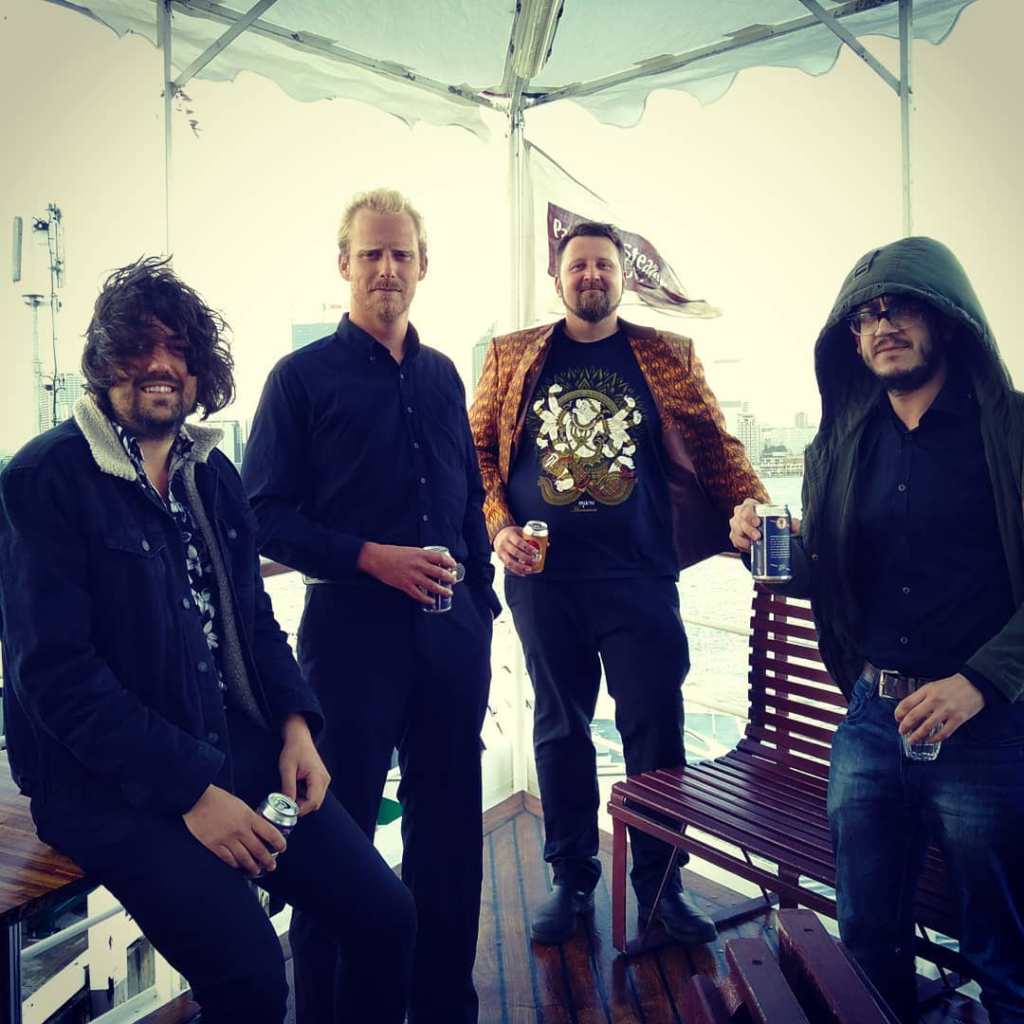
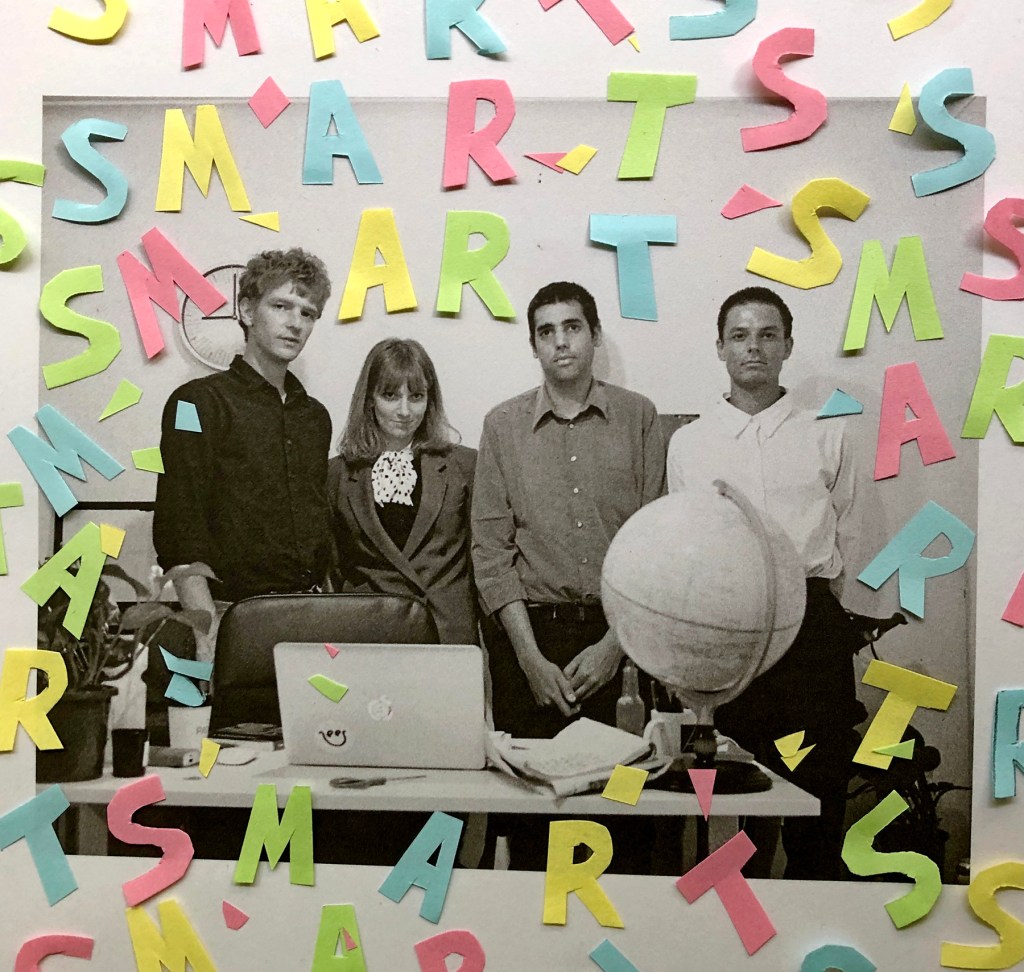
Massachusetts Punk Band Landowner’s Dan Shaw: “In the creative process you can just become paralysed because you have infinite choices… having restraints placed on what you can do, forces a really focused kind of creativity”

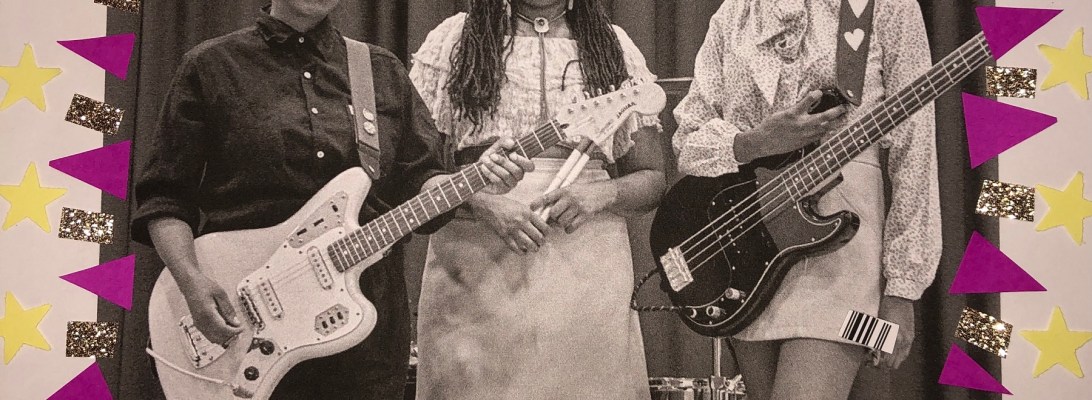
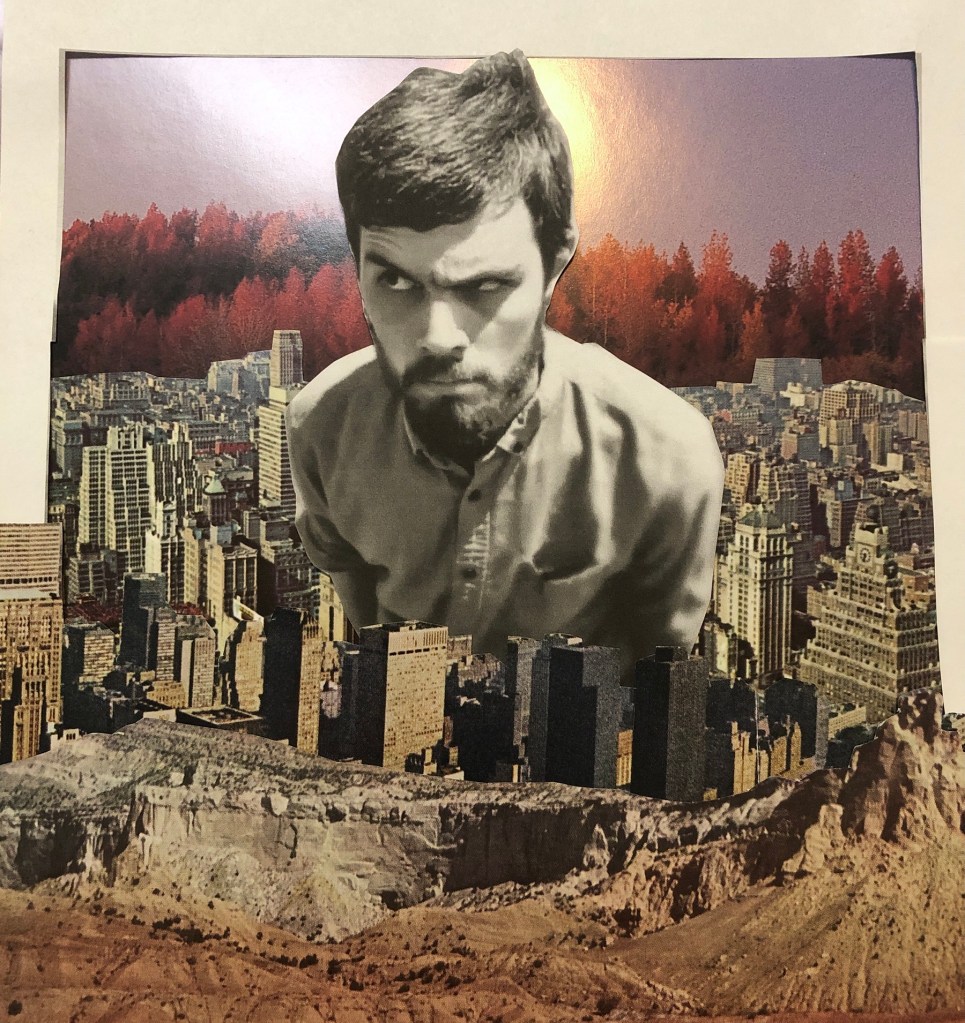
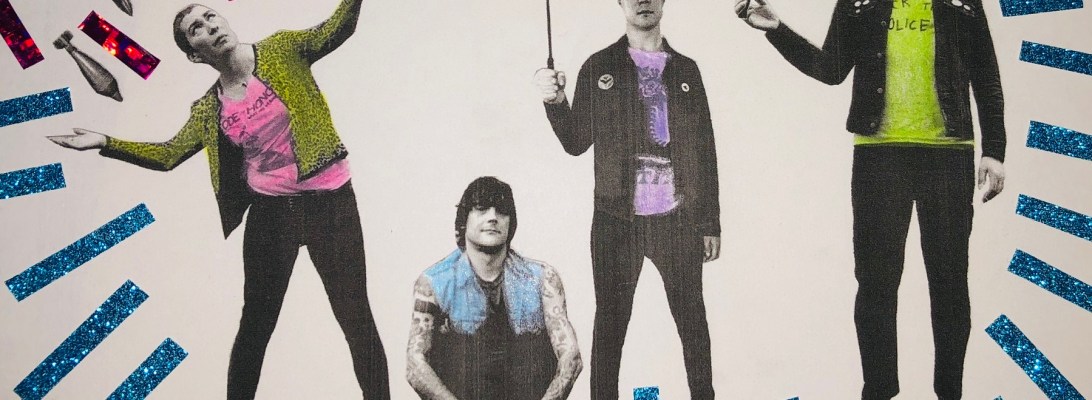
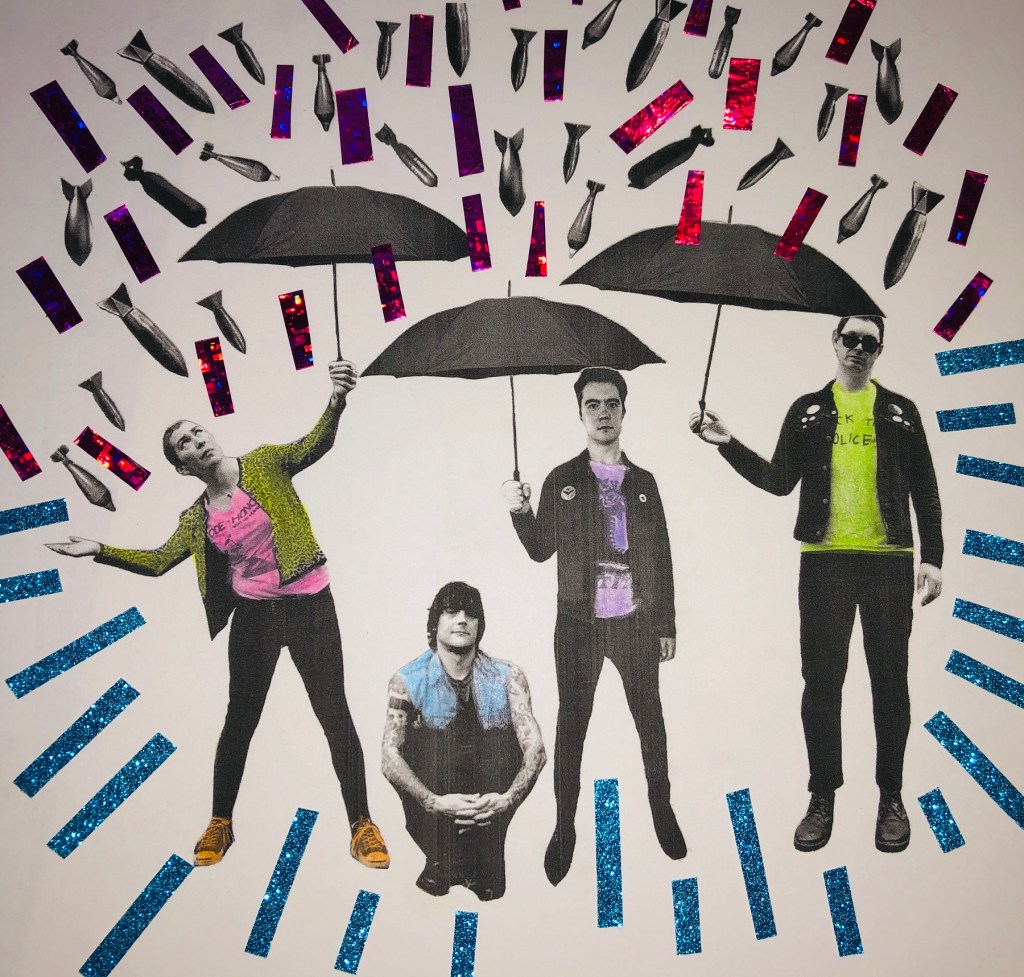
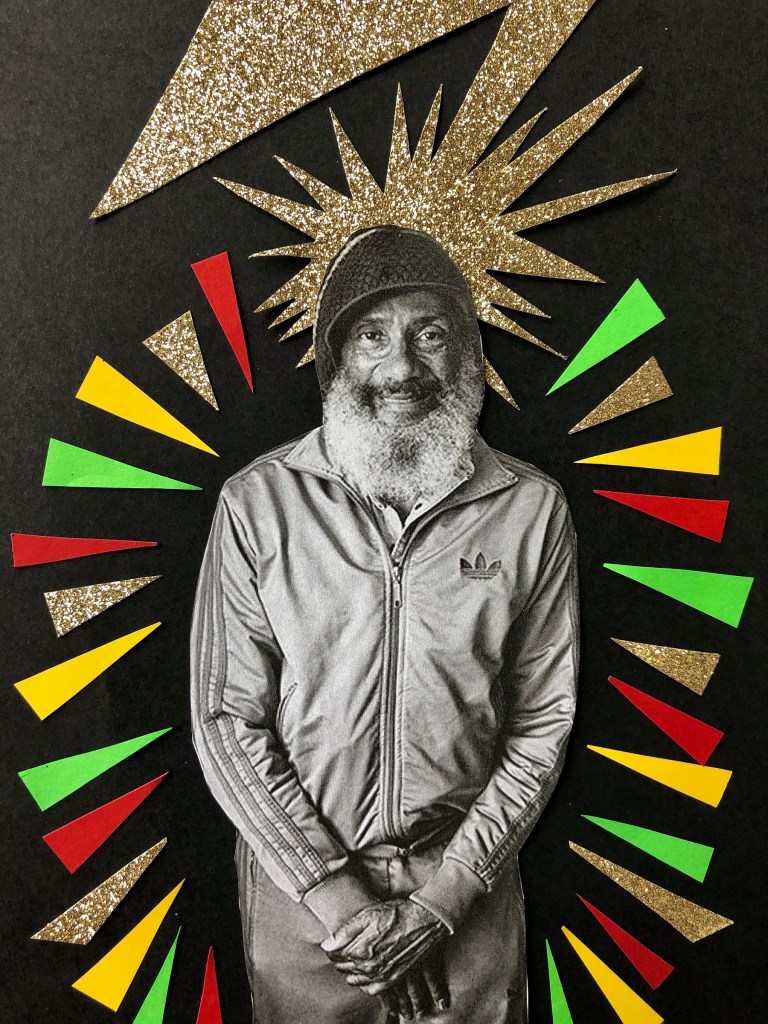
Original photo: still taken from video filmed by Ben Goldsher. Handmade collage by B.

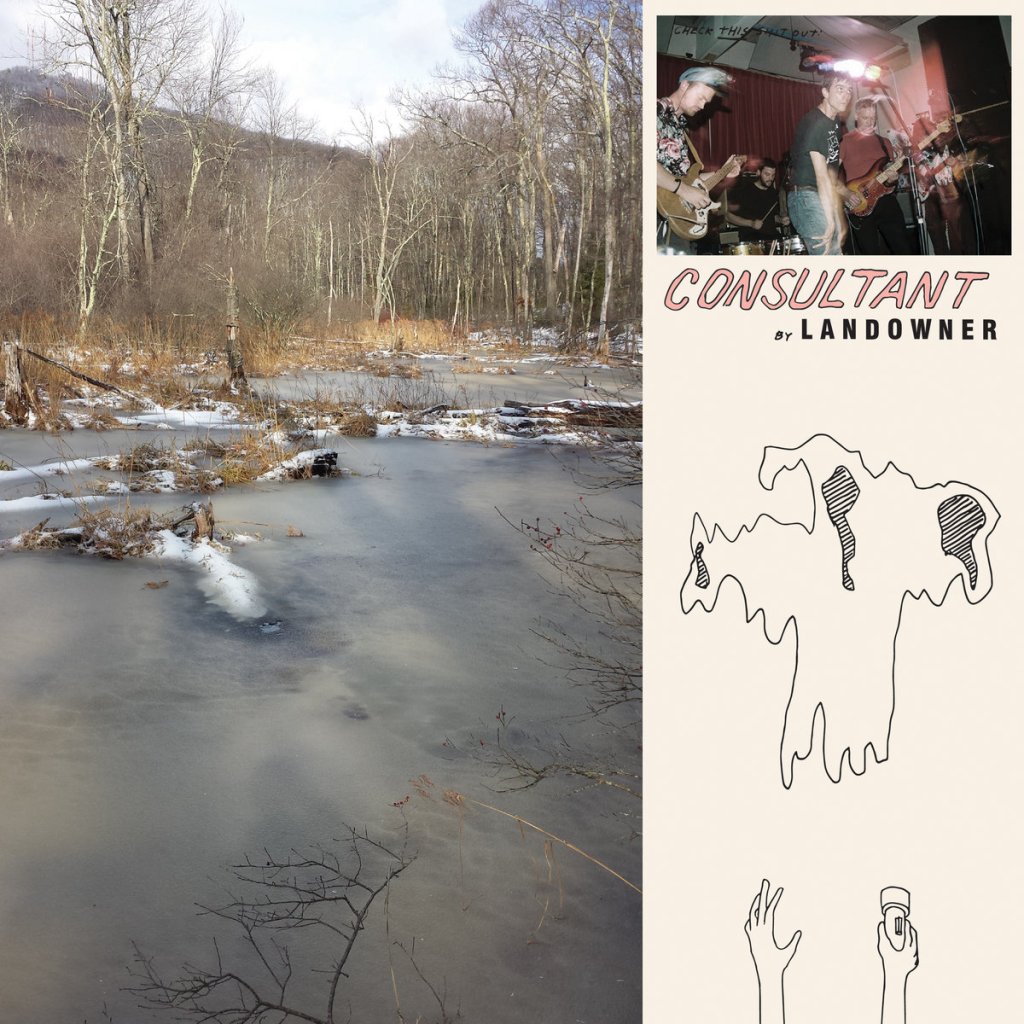
At Gimmie we’re big fans of Landowner! We love their clean guitar, repetitive rhythms, and sharp, socially conscious, thoughtful lyrics. They’ve taken punk and stripped it down to its barest bones making for an impactful, unique twist on the more traditional sound listeners expect from punk. We chatted to vocalist Dan Shaw about latest album Consultant, his journey into music, job as a Landscape Architect and his exploration of the similarities of designing landscapes and of making music—interesting stuff!

How did you first discover music?

DAN SHAW: I have parents that are really musical. Growing up they listened to classical music mostly, that’s how they met, and they bonded over that. My older brother is twelve years older than me and he’s also a musician, he got into industrial and grunge. When I was a little kid I was hearing Skinny Puppy and Nirvana, more kind of rock music that my parents weren’t listening to. I ended up hearing a big diversity of stuff. Later in middle school, getting into music on my own and learning how to play guitar was kind of planting my little flag in the ground and saying, this is what I’m into! This is my thing that I’m all about! It took me a little while to discover it and to be doing it on my own but once I did, I never turned back—it made a lot of sense to me. I’ve been obsessed with making music ever since.

What kind of music did you find that was your own?

DS: What I first started paying attention to, which I think a lot of people do, is the stuff that is easiest to hear with little effort because it reaches you. Like I mentioned before, the grunge bands like Nirvana, they were my favourite band in 8th grade. It didn’t take too long to seek out the stuff that influenced them, the more obsessed I got with that band the more I started to learn what influenced Kurt Cobain. Luckily he was really vocal about all the underground stuff from the ‘80s that inspired him. By the time I was in high school I was discovering The Meat Puppets and Fugazi, who quickly became, and still to this day is, my favourite band. Once I discovered that Washington D.C. and Dischord Records scene, that’s when I really started to find music that resonated with me a lot, that post-punk thing. Then I started learning about the British post-punk bands too like Wire, the Fall and Gang Of Four. Those were big discoveries that got me the most excited and that have stuck with me to this day.

The next major step shortly after that or during that, was discovering local underground music right around me. Going to shows as a teenager and discovering that, oh, you don’t have to be a big famous person on T.V. to be doing this. It could be that I’m in a basement and the person standing next to me turns out to be the lead singer in the punk band that’s about to play, that basic thing just blew my mind the first time I went to a basement show.

I had a similar kind of revelation when I discovered my local scene. It gives you a sense of, hey, I could do this too! I think that’s part of the beauty of punk rock, that anyone can do it.

DS: Yeah! As a result of that I kind of put aside the idea of needing to be a big famous musician that “makes it”. I achieved my goal the first time I played music in front of twenty people at a house show. It’s like, there, I did it! It’s great! I’m grateful every time I’ve got to do it again.

Was your first band Health Problems?

DS: I was in a few other bands before but Health Problems was my first band that started touring more seriously and really released albums. I’d always been striving for something like that, it took until my mid-twenties when I started that band to really link up with the right people and circumstances to get out there a little better.

As well as playing music, you’re also a Landscape Architect and you design public spaces as well as other urban planning; what got you interested in doing that kind of work?

DS: Initially it was the creativity aspect of it. I was in college, in my first year doing general education, then I had to pick a Major. I learnt about Landscape Architecture and it seemed like a good way to do something creative that requires artistic skills but was also a safe practical thing. The more I got into it, the more I fell in love with it and realised you can make a difference in the world around you, in society, by doing public work; that’s why I’ve worked with public sector clients in the professional sector—working with communities and helping them envision the future in places where they live. It’s very fulfilling.

I know that fulfilling feeling of working in the public sector, I work in a community service in my city’s libraries. I prefer a job helping people rather than selling them something they don’t need.

DS: Yeah, this work can give you a sense of purpose. It’s still a job at the end of the day and can be frustrating sometimes certainly but, for me it’s a good path to be on.

I understand that you did your thesis in grad school on similarities between the creative process in designing landscapes and composing music as an analogy, for better understanding your own creative process; I’m really excited to hear more about this and to hear of what you found out about your creative process exploring this?

DS: I did a graduate degree in Landscape Architecture and for my thesis project it occurred to me, really no one reads your thesis except you and your advisors, so I decided to take a more personal deep dive on what makes me tick as a creative person. Because I think musically and I work as a Landscape Architect; could the two creative processes inform one another? If they could that would be a pretty cool, productive thing in my own little way that I operate. I ended up looking at a lot! The nature of music, how it’s different, every time it’s performed, the performance is different from last time and in the case of jazz, where it’s improvised off of a rough basic composition, that to me is more similar to how I design landscape, compared to something like architecture.

To make a musical analogy, designing a building is a very engineered predictable thing, that would be like a composer writing a score of sheet music and it’s all done very precisely to a tee… something that makes designing landscapes so fascinating and challenging and interesting is how the designer isn’t fully in charge of the outcome of a design landscape. You’ll design a park in your neighbourhood and in thirty years the vegetation that I planned is going morph and evolve into its own ecosystem; the way people use the park is going to be hard to predict and it’s going to take on its own ownership by the community. The designer’s role is to nudge it in the right direction and then the improvisation takes over, with society, with ecosystems and things like that.

A lot of my thesis used musical sketches to diagram the process and change over time that landscapes all have. To better understand what the role of the landscape designer is, it’s like the jazz composer that comes in with the basic theme but then the group improvises on it and takes it in a new direction from there.

What were the things that you found out about your own creative process exploring that?

DS: I’ve found that adapting to unpredictable circumstances is really a core, important thing. When I was doing that thesis project I had a practice space where I was making my rough musical sketches and I was trying to make sense of it all… I spent more time making the last Landowner album then I did on this thesis, it was really just a capstone on my schooling. I’m trying to cram in all these ambitious, burning questions in a short amount of time, in the middle of it my practice space got shut down and we all had to leave because the building closed. I suddenly had to adapt my way of working in this thesis project to a new circumstance where I didn’t have access to my music space anymore. What I ended up doing was, I had the jams that I had made, hours of stuff that I had recorded earlier in the semester and I turned to editing those sound files and creating sound diagrams and improvisations out of what I had previously recorded. Adapting to the circumstance is something that I have carried forward… the band Landowner exists because it’s something a lot like that.

A few years later where I lived in an apartment in Massachusetts, I had landlords right through the wall and I couldn’t rock out really loud, I was like; how can I make music that sounds really cool without the space to be loud? I was like, I know! I’ll make this clean, dinky-sounding version of punk with a drum machine and a practice amp, and that lead to Landowner’s sound. I deliberately embraced the creative constraint that I found myself faced with. That’s something I was forced to reckon with during the thesis, utilising a creative constraint that was forced upon me. Ever since then I’ve always found that that really yields focus and deliberateness. In the creative process you can just become paralysed because you have infinite choices, I’ve found that actually having restraints placed on what you can do, forces a really focused kind of creativity. That’s usually more consistent and satisfying to me.

Previously you’ve mentioned that when doing your thesis you felt kind of crazy; why?

DS: Because of what I alluded to a second ago of how, I was in my early-twenties, I went to grad college and I had this feeling that I was just going to crack the code, I’m going to figure it all out… I was trying to connect all the dots at once in the way that I operate. When you’re in grad school and you’re doing a thesis, it ultimately is a pretty limited time in your life, you can’t necessarily tackle the most grandiose ambitious things in a thesis. I’ve learned in retrospect that a thesis is the thing that kicks you off to bigger and more ambitious projects that you’ll do more long term. At the time I was trying to condense it all into one action-packed, nutrient dense two months! I almost felt like I had lost my mind doing it just because the students around me were pursuing more button-down “here’s an innovative way of harvesting stormwater in landscape architecture” and it was very concrete; then here I was saying that maybe music and landscape architecture is somehow creatively the same if you really look at it from a certain way. Once I had committed to it and I was half way through the project I couldn’t turn back. I was like, god, now I ‘m forced to make sense out of this madness… and I did. I felt like I had bitten off more than I could chew though [laughs]. A little bit over-ambitious, hopeful and grandiose!

I like the idea that you were exploring between creating a physical environment and then making a place you mentally inhibit with music.

DS: Yeah and that is a conclusion that I came to when doing that project. I thought maybe I could make a representation of the park I’m designing, musically. But then I thought that wouldn’t make sense. I could draw a picture of the park or a diagram, visual media, or I could make a soundscape representation, I could take a field recorder and record what the birds and traffic sound like, that could represent it in a literal way… but then I realised that music and creating a physical real space that’s built with shovels, concrete and plants and sticks, in reality are two completely different things and I had to accept that. I realised that I cannot represent Central Park with my piece of music better than any other park can represent Central Park, they’re just different places. Then I was like, ah-ha! Music is a place mentally, it’s a space. If I think of it that way, that by composing music I’m designing a space that people mentally inhabit… that might yield clues of how the creative processes are linked but it’s not that music represents landscape. We’re getting really, really deep into the tunnel here of the particulars [laughs].

I’m fine in the tunnel, like I said, I found the ideas you were exploring fascinating. Since I was a kid I’ve spent a lot of time thinking about music. When you record a record and your music gets pressed onto vinyl and then I buy it and put it on my turntable and then the energy you made the record with fills my room and transfers to this space I’m in—that just still blows my mind. I love that in Landowner’s music there is a lot of repetition, then all of a sudden you’ll get a transition that’s kind of jarring…

DS: I’m fascinated by repetition in music. My other favourite band is Lungfish and they’re pure repetition. With a Lungfish song you’ll hear the first riff and then that’s all you’ll hear for the next four minutes except the lyrics change continuously throughout the song. The idea of music being a place you inhabit, that comes especially to me with repetitive music because you start to trust that the repetition is going to continue after a few passages have been the same, in the space that is created there I find that the only things that’s actually changing is my own thought patterns during the passage of repetitive music and brings a kind of self-awareness to the forefront—it’s meditative. It feels like an environment for the listener to be themselves, instead of trying to keep up with spazzy changes in more busy music, which can be good too, that’s a whole different thing. There is a hypnotic aspect to repetitive music that I really like.

You just said something too, which is important to me, if music is really repetitive it brings all of this attention to places where there are transitions, those transitions become all the more important because of that—all the more striking. You put your trust in the music when it’s repetitive and then when something happens it catches you off guard, it wakes you up! I like being surprised by music and waking up several times during the course of a band’s set during a show or during the course of listening to a record… like as soon as I have it figured out something a little bit surprising happens.

There’s a punk band here in Australia called Arse, when they play live there’s this one song they do and there’s this part in it where they just play that one note over and over and over for a really extended period; after a while it’s almost as if it makes people in the crowd feel uncomfortable and uneasy because they’re not used to that, they’re waiting for a change. It’s really cool to watch the band do it, they have the biggest smiles on their faces.

DS: My old band Health Problems used to do stuff like that. We didn’t have a rule of using repetition all the time per se but, we would try to be aware of the psychology of watching a show and how to mess with what makes it interesting. We’d do stuff like that, one note ‘til it makes people feel uncomfortable and right when you find that limit, you change it. One of my very favourite bands that opened the doors to me of the power of repetition was an Australian band called My Disco. Have you ever seen them?

I have. I’ve interviewed them many years ago.

DS: Cool. Their stuff from the 2000’s. Their recent stuff has departed in a more experimental direction, their first three albums though were a big revelation to me when they came out.

Lyrically there always seem to be a lot going on in your songs, there’s a lot of layers to them. When you’re writing lyrics, do you have an idea of what you want to write about and then build around it? Or do they come in other ways?

DS: Most successful times I have writing lyrics is when I‘m carrying around, almost all of the time, a pocket sized spiral bound reporter’s notebook. When an interesting little phrase just pops into my head, I might not even know what it potentially means, I just write it down. At the end of the month the notebook is full and I read through the composite of interesting, evocative phrases. Some will be more developed lyric concepts too. I develop things into lyrics for a song or draw on those. I try to be ready to catch ideas during the day that are inspiring to me. The other half of it is work, time spent sitting in front of the laptop with a word document opened trying to type it all out into an arrangement that means something and makes sense. It’s a balance between the mysterious inspirations of an evocative phrase that has some potential coupled with then trying to tease out some real world meaning from it.

I’ve hit my head against the wall trying to sit down and write a song from scratch about a topic, for me that’s a lot harder and it ends up sounding preachy and annoying; I’m usually not as satisfied with those efforts. If I trust the mysterious lyricism of words and follow the trail of things that seem intriguing to me, that usually leads to something more worthwhile. With the Landowner stuff I try to resolve it into something that does has some kind of statement about the world that we live in.

A lot of phrases that I pick up on are little expressions you hear people say and the musicality in speech and refrains in conversation; things that sound ordinary that we hear over and over again catch my ear. Something like that might spark an idea for an entire song.

Is there a song on new album Consultant that has a real significance to you?

DS: I was thinking about this today, the lyrics that are the most concise and satisfying to me on the new LP are the song ‘Being Told You’re Wrong’ [laughs], which is so ridiculously brief. It captures a lot of what I’m trying to say in such a short, ripping little song. The lyrics are basically saying that; if you’re such a tough guy, why can’t you handle being told you’re wrong, without kicking a tantrum like a child. The sound of Landowner’s music is trying to tease the idea of what tough music is, instead of being all thick and heavy with distortion it’s clean and dinky-sounding but still aggressive and fast. The lyrics to the song also call out what it means to be big and tough and strong, if you’re a big muscly tough guy but then you dissolve into a childish fit if someone questions your opinion about something and you can’t handle being told you’re wrong! It’s expanding the idea of toughness that it needs to include self-reflection and critique, which it so often doesn’t. “Being told you’re wrong” is a phrase I’m really satisfied by, it’s one of my favourite ones.

What about the song ‘Stone Path’?

DS: I like the lyrics to that because it is about something in particular but I let myself be a little loose with the writing in it. The song is basically about racist housing policy in mid-20th century United States where Blacks weren’t able to own property, they were denied mortgages… that’s multiple generations of people of colour that could only rent and couldn’t capitalise on selling it. The first lyric on ‘Stone Path’: now that it’s on your radar, you recognise it everywhere; that’s the culture becoming aware of the messed up dynamic of something like that more and more. A hand tipping the scales, that’s the hand of law makers sixty years ago, eighty years ago, unfairly tipping the scales in the favour of whites arbitrarily just inherited out of hatred. The song is about, my belief is, when we inherit the results of racist policy we can’t undo those injustices by trying to be colour-blind and turn a hopeful blind eye to it, deliberate racism can only be undone with equally deliberate justice. That idea is at the core of the lyrics of ‘Stone Path’. The title has nothing to do with the lyrics, that was my working title when the song was an instrumental and it just stuck. In this case it’s almost suggestive of what the song is talking about, the idea that we get stuck in these grooves in society, it sounds like it’s a well-trodden path that no one questions that they have just been on for such a long time.

Like I was saying before, sometimes I don’t worry if I don’t know the meaning of the words right away, it can all come together by just modifying some of the words here and there, just pointing things in a consistent direction. Things can make sense after the fact. That song title is a fun example that.

On the song ‘Confrontation’ your good friend and your bandmate from Health Problems, Ian Kurtis Crist does guest vocals!

DS: Yeah. When we play the song live the bassist of Landowner Josh Owsley normally sings that part. It was a mistake in the studio when we were recording ‘Confrontation’ with the band all together, I gave Josh the wrong note. I asked him to sing the backup line in a ‘C’ but it was supposed to be a ‘G’, he recorded the whole thing an octave below my lead vocal. I listened to it after and realised I made him do the wrong thing, it was a little too late to go back in and set up the microphones and redo everything, and maybe it’s a fun opportunity to send it to Ian and get him to do it. He’s one of my best friends, I like the sound of his voice and thought it would be well suited to the song. He recorded it in his home studio and we mixed it in and it sounded really good.

Is there anything you find challenging about song writing?

DS: The most challenging thing for me has been writing lyrics, I get hung up on lyrics. Since words really mean one thing or another in the brains of human beings, whereas the meaning of music is a little more forgiving, it’s a more abstract thing. Words are so loaded, if you chose just the wrong synonym or express it a little different then how you meant it, people are going to interpret it differently. I feel bothered by the drafts of the lyrics until I know they’re just right and they resonate in me. I spend the most time on the lyrics. One of my goals is for it to sound spontaneous and conversational, with a few exceptions, it’s the part of the song that takes the longest.

The last song on the album ‘Old Connecticut Money’ I think I wrote 90% of those lyrics in one go. My pen was moving, I was at work on a break, I had this idea and I wrote it all down. I could almost read it out of the notebook and it just fell into the song, but for me that’s pretty rare. Lyrics are something that I toil over.

On Landowner’s previous album Blatant there’s a song called ‘Significant Experience’; have you had a really significant in your life that you could share?

DS: That song is another good example of where I wasn’t writing about one particular thing, I was trusting the overall mood of lyrics and ability to evoke thoughts with that combination of words.When I was putting those lyrics together, I was thinking about how the most significant, moving experiences that people live through in their lives tend to be those things that shape their political outlooks and beliefs in the world. When you come to an impasse in a political argument let’s say, usually the reason you can’t get through to the other person or the other person starts to shake and get in a rage and can’t even get words out, it’s usually because there’s some really significant thing that they lived through that’s welling up, it’s important to realise that all people carry things like that around with them. That’s what’s often behind dysfunction in how we communicate. Right now, that’s the most I’ve intentionally thought about those lyrics or put it into words like that. I just let the lyrics be the lyrics and just try to get them across, I’m not decoding them most days.

Please check out: LANDOWNER on bandcamp. LANDOWNER on Instagram. LANDOWNER on Facebook. Consultant out now on Born Yesterday Records.

*NOTE: more of this interview can be found in our editor’s upcoming book, Conversations With Punx. Featuring in-depth interviews with individuals from bands Ramones, DEVO, Black Flag, Bad Brains, Fugazi, The Stooges, Crass, Misfits, Bad Religion, The Clash, The Slits, Subhumans, Descendents, PiL, X-Ray Spex, Adolescents, Agnostic Front, Operation Ivy, At the Drive-In, The Avengers, Youth of Today, Night Birds, Cro-Mags, Gorilla Biscuits, X, and more. Coming soon! Follow @gimmiegimmiegimmiezine for updates.

Portland Punks Era Bleak: “Our songs are generally inspired by the sense of urgency we feel… anxiety, frustration and confusion… the fucked up state of the world”

Original Photos taken in isolation by Candy, Justin, Fawn & Samantha. Handmade collage by B.

Era Bleak play wild, raucous punk rock with angular guitars, driving rhythm and raw gut-level vocals, they remind us of our favourite ‘80s hardcore punk bands but are firmly planted in the now making music reflective of our uncertain times. Their music is both bleak yet optimistic. Gimmie interviewed them to find out more.

How did you first discover punk rock?

ZACH: It was 1991 and I was a junior high nerd into some serious nerd shit. My favourite bands were Oingo Boingo, They Might Be Giants, The Dead Milkmen and The Ramones. I had no idea that any of those bands were punk (I’m still on the fence about Oingo Boingo). A couple years later, my older cousin played me the brand-new debut Rancid album, and that was that.

CANDY: I was lucky to have had an older brother and sister that were each teenage rockers in the 70’s and a mom that was always listening to “oldies” radio. SNL and American Bandstand were favourite TV show’s in our house, each of which had numerous punk bands as guests.  I think those things helped steer me in the right direction. My sister was into the Rocky Horror Picture Show movement when it first started and she would bring her friends over dressed up for a show. They looked dangerous and weird and tough and it was something I found myself drawn to as a kid. So naturally when I would see and hear weirdos on TV. I paid attention. My sister encouraged my interest over the years and it really came to a head when she gifted me records for my 11th or 12th birthday. DEVO-Freedom of Choice, Adam and the Ants-Kings of the Wild Frontier and Cheap Trick-One on One (not their greatest I now). Over the next 5 years my interest slowly progressed to bat cave, skate rock and anything I heard on the local college radio station in Boise Idaho. The show was called Mutant Pop KBSU/BSU Radio. It pretty much changed my life. I would record the show onto my boombox and the rest is history!

CHRIS: I grew up in Des Moines, Iowa. No scene. A cultural shithole. No older siblings to turn me on to cool stuff. No internet back then. I was way into metal but would see all these rad weird shirts in Thrasher magazine and would try to find those bands tapes at the mall, after I heard the Ramones and Black Flag it was over, me and my friends were so isolated, whatever we could get our hands on was a big deal. Devo, Butthole Surfers, the Urinals, Misfits (duh)….all the SST stuff

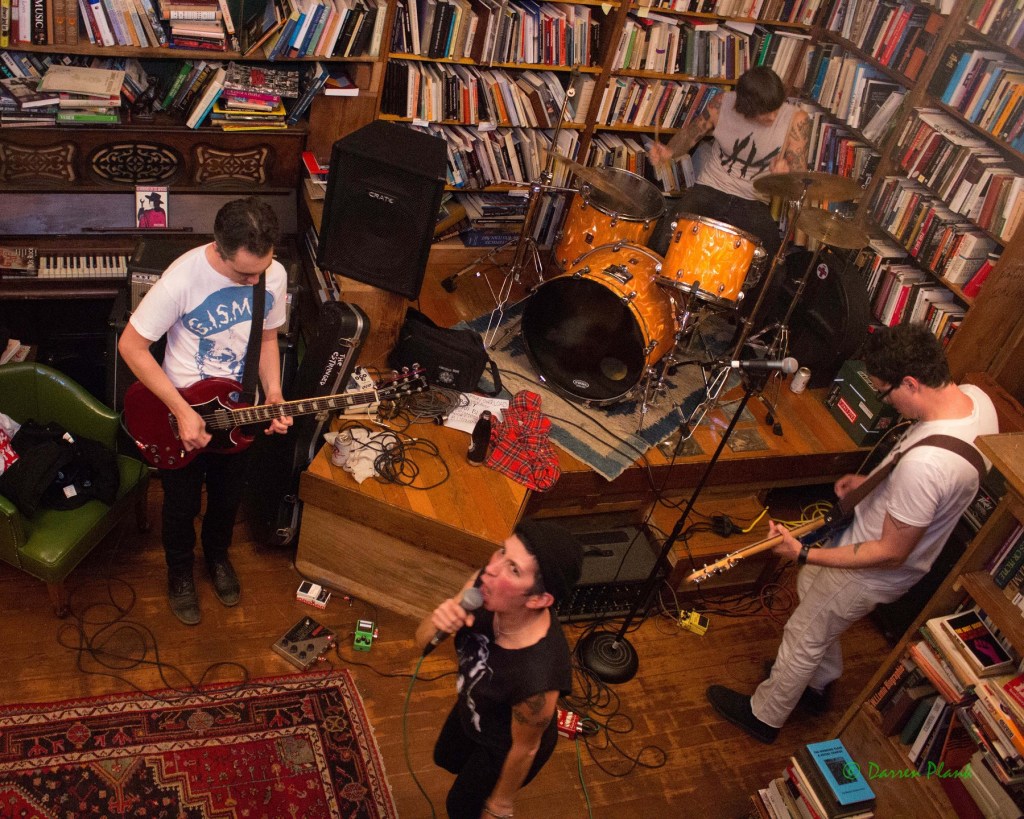
Photo: Darren Plank.

What are the things that you really enjoy or don’t enjoy about the punk community?

ZACH: The answer to both is “punks”.

JUSTIN: Ha! Exactly. I like the creative comradery and DIY dedication in the punk “community” but not some of the single minded attitudes of some punks, particularly to other kinds of music styles.

CANDY: I don’t enjoy the overabundance of blinding phone screens at shows. It drives me bonkers. I like that new ideas and new sounds still occasionally come out of some of the scenes here, some more than others. People support each other and look out for each other it seems.

CHRIS: Damn, couldn’t agree with Zach more.

Who or what motivated you to make music yourself?

ZACH: It’s the logical chain of events when you’re a punk!* One minute, you’re a wide-eyed 15 year old at a show, the next, you’re 38 and sleeping on a filthy mattress in an unheated squat in Leipzig surrounded by a surly Polish post-punk band. *Post script, I want to recognize my male privilege (and teenage male ego) on this response. The scene I grew up in was not as sexist as others I have come across (lookin’ at you, Germany) but was typically under-represented and under-supportive. 

JUSTIN: I got into playing music before I knew punk was a thing, due to my parents being in a rock cover band in the ‘80s. I started playing drums at an early age, and was exposed to punk through being around their band, who were mainly hippies, but played songs by new wave bands like Devo, Talking Heads, Elvis Costello, The Pretenders. I found a cassette of the Repo Man soundtrack at one of their band rehearsals, and that kind of blew my mind into the right direction, punk-wise. I started playing in weirdo loser bands with my other weirdo loser friends right away in high school and never looked back.

CANDY: My motivation was having a basement, affordable equipment and a decent paying job that allowed me to buy what I was interested in trying. Bass, drums and years later “singing”. Friends that wanted to make noise for the first time and musician friends willing to teach me the ropes also helped.

CHRIS: Yeesh, where I grew up it was the only way to escape and keep some level of sanity, the need to connect with something bigger

What was your first introduction to D.I.Y.?

ZACH: Fortunately, my home town of Denver has one of the world’s greatest record stores, Wax Trax. I started going there religiously when I was 16, and was able to make the jump from shitty mainstream pop-punk to shitty local DIY pop-punk.

JUSTIN: I grew up in a small town near Seattle, Washington, and in the early 90’s the whole grunge thing was really everywhere. Me and my friends were already bummed on how mainstream alternative rock was really taking over and were looking for something of our own. Lollapalooza brought to you by Mt Dew and all that. The hardcore punk house show scene was where really the escape from all the bullshit for me. Going to gigs, networking, tape trading, and zine sharing introduced me to a whole way of operating autonomously from the mainstream, and how anyone can create their  own scene anywhere, even in a tiny town. This was pre internet, so you had to actually talk to people in person…but it was a good thing.

CANDY: I was dating the drummer of a band that would make all of their own merch. Stickers at Kinko’s, t-shirts in the garage, buttons at home. I helped in the t-shirt screen printing process a few times and it was fun and definitely made me realize that nothing is out of reach. Most things can be done by your own hand. In that same time period, the guitarist of the band Mikey (r.i.p) had crafted his own guitar with the neck off of an old guitar of his and a skate deck as the body. The thing was bad ass and smart as ever on his part.

Photo: Jeff Shwilk.

Era Bleak are from Portland, Oregon, we’ve been hearing/seeing the protests on the news over here in Australia; can you tell us a little about your experience of what’s happening where you are?

ZACH: It is pretty amazing. Tens of thousands of people have shown up to protest America’s racist policing practices. Not surprisingly, the police are not taking the criticism well, and ironically, seem intent to prove our point through egregious violence. It is worth noting that most of the violent police response has centred around a very small area near the “Justice Center” (aka court house) in a part of downtown that was already essentially shut down by the coronavirus. The media makes things look wild, but 99.9% of Portland still just looks like Portlandia. 

Members of Era Bleak are from bands Dark/Light and Piss Test; how did Era Bleak get together?

JUSTIN: We were all friends and fans of each other’s bands before we started. Candy and I had played in like five punk bands together, and thought of doing a side project to Dark/Light. We asked Chris and Zach to play, figured they’d both be too busy, but turned out you should never underestimate the hunger of punks to wanna punk out. Eventually the side project became more full time.

What inspired you to write your self-titled album? What influences your songs the most?

JUSTIN: I think most of our songs are generally inspired by the sense of urgency we feel all the time every day. That anxiety, frustration and confusion we feel from being on our phones all the time, and the fucked up state of the world. As far as the music goes, 90% of it is written together as a band, usually through spontaneous jamming. Zach likes to joke that we’re really a “jam band”…if only we smoked more weed.

Last month EB donated 100% of proceeds of your self-titled album sales to Black Resilience Fund and BLM Mutual Aid Resources; can you tell us a little bit about these funds/resources? Why was it important to you to support them?

ZACH: Black Resilience Fund is great because they funnel that money directly into the community. We also donated to the PDX Bail Fund to help get protesters out of jail.

JUSTIN: We felt like it’s very important for the BLM movement to continue to gain ground in the face of white supremacy and the rise of fascism in America. Especially living in a region (Oregon) with a shitty history of racism. Since we were not touring or playing live gigs, we were going to have to sell records online anyway, so why not generate some donations for a good cause? It was a no brainer for us.

On album opener Era Bleak the lyrics are: ‘Things get shittier every week / No hope for the future in this era bleak’; where are the places you do find hope when things seem rough?

JUSTIN: Well, I just deleted all my social media accounts, so that makes me feel a little better.

CANDY: I find hope in my backyard. It’s my safe place and I’m obsessive about observing the natural world. I guess I find hope in nature. I recently observed a small swarm of ants work together to move a dead bee about a foot away. They all had their individual jobs to do to make it work. It took an hour or more but it was fascinating to observe.

CHRIS: When I walk my dog with my headphones on drinking coffee.

What’s your favourite lyric on your LP?

ZACH: “Fire on the horizon” (though possibly because Oregon is literally on fire as I write this).

CANDY: My fave is from MRI: “they wanna see into my head, see what’s going on in there”. I think it’s witty, it flows and it’s the truth.

We really love the song “Struggle”; how did that song come together?

JUSTIN: That song makes my hand cramp up.

CANDY: Lyric wise the song is about my sister Sonia whom I mentioned earlier. If I remember correctly I had already written the lyrics before the music came together. Once the dudes started jamming on it I realized they would be a good fit and the feeling was there in the sound. It worked.

What was your favourite part of the recording process? Do you have a favourite moment on the album?

ZACH: The songs were very finalized before we got to the studio, so we were able to record the record in two days. We don’t fuck around! If I had to pick a favourite studio moment, it may be Justin doubling his vocals at the end of Mind Control Tower. It sounds cool and was hilarious to witness.

JUSTIN: What was hilarious was Zach’s keyboard part that we never used. Or when Chris wasn’t ready to start Tinderbox and you could actually hear during playback the sound of him picking up his sticks off the snare right as the song started without missing a beat!

CHRIS: We should’ve left that in! I worked nine hours that day and went straight to the studio and started playing, it was great.

What bands/albums/songs have you been listening to lately that you can’t get enough of?

ZACH: All Hits (new album on Iron Lung Records) and Francoise Hardy.

JUSTIN: Music is life.  Lately my favourite shit been Essential Logic, Norma Tanega, Delta 5, Subway Sect, Funkadelic, Can, (Hardcore) Devo, and new stuff like All Hits, Gimmick, Ben Von Wildenhaus III, Lavender Flu, Slaughterhouse, Sweeping Promises, Mr Wrong. Plus Greg Sage Straight Ahead and Wipers Land of the Lost is always in the stack this year.

CANDY: Tuxedomoon, Prince, Roky Erickson, Dead Moon, Nina Simone, DEVO (always).

CHRIS: Dead Moon , it’s fall, so lots of Dead Moon. I’ve also been rocking a lot of Zounds and Lilliput lately….and of course Husker Du.

What do you do outside of music?

ZACH: I am the Operations Director of a non-profit that provides Behavioural Health services and recovery housing, primarily for people involved in our (broken) criminal justice system.

JUSTIN: I lost my job as a restaurant manager due to the pandemic, and now I’m a full time Dungeon Master, basketball enthusiast and total slob.

CANDY: I grow stuff indoors and outside and do a lot of plant propagation. I observe birds and insects. I also talk to my cat Bessie all day, read and do crosswords. I’ve recently been getting into dot art designs. I got laid off from my job because of the pandemic so I have some time on my hands.

CHRIS: Warhammer 40k!

Is there anything else you’d like to tell us?

JUSTIN: Australia rules and we wanna come tour there.

CANDY: I second what Justin said. Thanks for interviewing us!

Please check out ERA BLEAK; EB on Facebook; EB on Instagram. Era Bleak album out on Dirt Cult Records.
Bad Brains’ HR On His Solo Album ‘Give Thanks’: “We put our heart and souls into it, we put our Mind Powers into it and it came to fruition”

Original photo: Jack Grisham. Handmade collage by B.

These days H.R. – known best as the frontman for Washington D.C. hardcore punk pioneers Bad Brains and the instigator and driving force of their Positive Mental Attitude (P.M.A.) philosophy – is really, really happy, living a life of love, overstanding, compassion and gentleness. His latest roots-reggae-rock album Give Thanks reflects a man very appreciate of life itself and has spent a lot of time “seeking within”. Gimmie caught up with H.R. to get an insight into the record.  

At the end of last year you released an album called Give Thanks; what are the things in your life that you’re thankful for?

HR: I’m thankful to be alive. I’m thankful to be able to have the strength to see the Lord and see the Lord’s work; I’m just so grateful and thankful for what he has done for us. I’ve been working on this new album very hard. I’ve been waiting for it to come together for ten years! I’m so thankful that it finally came out. We put our heart and souls into it, we put our ‘Mind Powers’ into it and it came to fruition.

You can really feel that on the record, as I said it’s very joyous, it’s very beautiful. The second track on the album is called “The Lord’s Prayer” and in the body of the song you actually say The Lord’s Prayer; where did the idea for you to do this come from?

HR: I got it from my mother. She used to sing it in church. She said, “One day when I pass away you can sing it to the world.” Last year she went to her transition and I just wanted something that would be in memory of her, and something that the whole world could grasp at the same time. I said, I’m going to do our Lord’s Prayer, I’m going to do it to some rock n roll music! [laughs]. That’s how it came to be.

Thank you for sharing that with me, hearing that made me teary. We spoke in 2008 when you released your album Hey Wella and you told me that when you first started singing you started singing in the church as a child; what feeling did it give you to praise the Lord through music?

HR: It gave me the fulfillment of what God is all about, what His works is all about and what we should do in His works; what destiny He has for each one of us in our own special way.

When you write songs and create things; how do they start for you?

HR: I would like to say that God’s love, Jah love, and happiness and the joy that it brings us, is the ability to put it down with pencil and paper. Sometimes it comes to you in the night, in a vision, sometimes it comes to you in a daze, or something that you’re trying to interpret that’s close to you. It’s all through God’s love, through Rastafari’s love!

Do you find sometimes when you write songs that you learn about yourself?

HR: Oh yes! Most definitely. Yeah Mon. [Sings] You love, you know you learn, about how you live. You learn about what you want to achieve in life. You learn about the love God has for you and other people, and how you can set an example for them to learn from.

Love is a big theme that comes through in your music; having your love, your wife Lori in your life must have helped you a lot?

HR: Yes, she’s been good to me. She’s been supportive. She’s a very big and special Queen. Without her I would feel separation and a big hole in my life. I wouldn’t be able to get what I want to get. She helps me to understand and to be able to have that heartfelt thoughtfulness—I need that so much in my life. It would be such a drag to know that she didn’t exist. Through God’s love and through God’s fulfillment of what He wants us to have, she is able to be able to interpret that.

At the start of your song “Steady Is Compassion” you repeat that line: steady is compassion; what does that mean to you?

HR: It means that we should have more compassion in our lives and be warm, and able to exist in a compassionate way to people, and be steady about that. We need to maintain the preparations for it and also a strong desire to hold on, we need to be steady in compassion, before hatred and violence. You have to hold on to what you’re trying to achieve and discuss the matter faithfully and rise above what it is we want to do. Hold on and give faith a chance and give yourself a chance to manifest compassion—to have compassion for your brethren and your sistren.

Another track off Give Thanks I really love is “Seeking From Within”, there’s a lyric that goes: seek from within, knowing from without; could you tell me about that?

HR: Yes, it’s about going inside your inner being and not letting things outside yourself bother you. To be able to know, what it is you want to do from within and look in your heart and let your heart guide you. To know that things outside of your heart don’t really matter so much. It’s what you do, and what you’re trying to do within that matters.

Please check out therealofficialhr.com + HR on Facebook; HR on Instagram. HR’s children’s book: I’ve Got the PMA. Give Thanks available via Hardline.

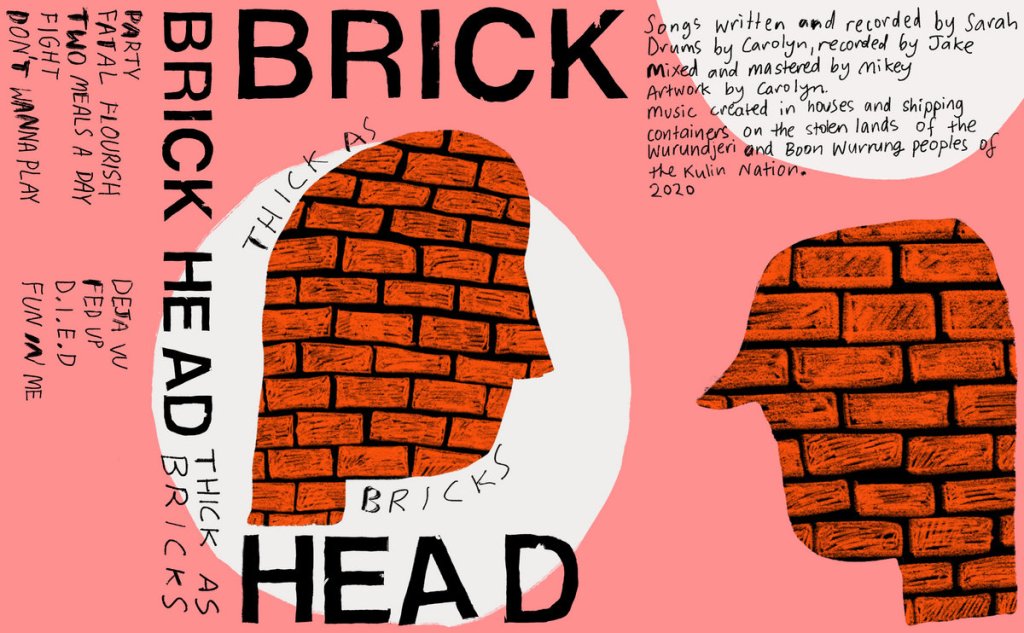
Melbourne’s Brick Head: “We’re seeing how important the local music community is to the character of this city. Live music really is cathartic. And the records that come out of this town are brilliant”

Original photo courtesy of Brick Head; handmade collage by B.

Deaf Wish’s Sarah Hardiman has written and recorded a new record – Thick As Bricks – under the name Brick Head! It’s a high energy, spirited and riotous lo-fi home recorded album making our ears happy and our hearts swell. The release features Carolyn Hawkins (Parsnip/School Damage) on drums. We interviewed Sarah to find out more about the punk project. We’ve also got Brick Head’s first clip for track “Deja Vu” to share with you!

How did you first get into music?

SARAH HARDIMAN: Through my mum and brother really. Mum blasted The Beatles, The Stones, Pink Floyd etc. and my brother plays bass, so he taught me guitar. My bro and his mates raided all the work sites in Melton at night time to find wood, insulation, plasterboard etc. and built a jam room in our shed. I spent hours out there. I was probably better on guitar during high school than I am now. 

What was your first introduction to the punk community? What attracted you to it?

SH: It was definitely going to Rock n Roll High School on Easey St, Collingwood. I had heard about it in fanzines and word of mouth. My band at the time called up and played a song live over the phone to Stephanie Bourke. She mustn’t have been able to decipher anything but she said we could come in and kind of ‘audition’ to rehearse at the school. Steph and other people that ran workshops there taught me how to book gigs and communicate with bands. They taught me how to act with integrity. I met a lot of people at the school and in the band scene, people I still know. I was so shy and nervous every time I left the house but I kept going because I knew I found something that made me feel good and understood.

What excites you about your local music community?

SH: You know, this has become much clearer under ‘lockdown’. It’s about the people. I miss the people. When you shake off the gossip and posturing (both things I’m guilty of), the community is strong and positive. We’re seeing how important the local music community is to the character of this city. Live music really is cathartic. And the records that come out of this town are brilliant. Record stores are a lesser talked about part of the fabric that help promote locals. Community radio is huge. They’ve been working their arses off, keeping things cool-headed and positive, keeping people connected. I miss gigs and real people. I miss the friends I’ve made from music.

We love both your new project Brick Head and your band Deaf Wish; what inspired you to do Brick Head? I understand that you made LP Thick As Bricks in three weeks during the first lockdown in Melbourne.

SH: Thanks. I guess being in one room for too long inspired it.  

Where did you get the name Brick Head?

SH: I had a list of juvenile sounding band names and Caz liked this one the most which helped me choose.

How did the songs get started? What did you write first? Did you have an initial idea of what you wanted to write about?

SH: I was at a friend’s house and he was playing the electric eels and I felt really in the mood for nasty guitars again. I went home and tried to rip a song off. Then Dave Thomas from Bored! died and I listened back to that band and it all kind of tumbled into this debauched bender at home alone in West Footscray trying to rip off iconic riffs. I didn’t want to write about anything in particular. I wanted it to be dumb and immediate. Scary. Tough. Unfeminine. The first song was ‘D.I.E.D’ which is written as an acronym although it isn’t one. I moved into this new flat and the neighbour said, “I’m really glad you’ve moved in”. I was like, ok, weird. Then he goes, “Let me explain that. The last two old ladies died in a row. And you’re young-ish, so you might break the curse”.  It is the only house I’ve broken a lease on.

Who are some of your favourite songs writers? What is it about their writing that you enjoy?

SH: I’m a huge fan of Molly Nilsson. I even wrote her a fan letter this year. I love the feeling of being a fan. It doesn’t happen often. Her songs are honest and deceivingly simple. They’re philosophical. I respect the atmosphere she creates. And the humour. I like it when artists take their art seriously but can see the bigger picture, y’know? Like, no one’s that important. Do your job and then knock off, you don’t have to be a star 24/7.

Your songs on Thick As Bricks have almost a live feel to them; can you tell us a little about recording them? You recorded them yourself, right?

SH: Yeah I did, it was really fun. I set everything up in my small living room and set out to write a song every couple of days, whether I was in the mood or not. I put a simple drum beat down, then would listen to records until I found a riff I wanted to rip off. I had neighbours on both sides so when I mic’d up the amp, I pulled my bedding over the whole thing to try and dampen the sound. I actually had the amp really low on 1-2 gain but I could hear their TV’s so I knew they could hear me. Then I put simple bass lines down. Lyrics were last but I didn’t fuss too much. If anything took too long or if I started thinking too much, I would dump it. Maybe that’s the live feel.

What was your set-up for this recording?

SH: My 50 watt MusicMan valve combo, my 1964 lefty Burns guitar tuned a whole step down, and GarageBand. This is the first thing I’ve recorded myself (for release) and the first time I’ve used GarageBand. I really love using plugins. I’m all about computers now. 

After you wrote and recorded all the material, you sent it to Carolyn to do the drum parts which Jake Robertson recorded (Alien Nosejob/School Damage/Ausmuteants etc.); what inspired you to have Caz part of this project? What do you appreciate about her drumming?

SH: Caz is a great drummer. She knows music. And she stylistically knows what suits. She makes it look effortless even though she clearly works hard at everything she does. She’s also really humble which makes her easy to work with. It’s a no-brainer. Caz rocks!

What’s your favourite album you’ve been listening to at the moment?

SH: There’s two I’ve been mad for lately, ‘Sweet Whirl – How Much Works’ and ‘Ryuichi Sakamoto – One Thousand Knives.’

Why is music important to you?

SH: It’s everything to me. It’s where I find inspiration, friends, solace, community, belonging, fun and excitement. It teaches me and is a reflection of how I change and the ways I don’t.

How have you been looking after yourself during this pandemic?

SH: Imagine a game of keepings off that goes for too long and you never get possession of the ball.

What do you get up to when you’re not playing, writing or recording?

SH: Human things. Robot things.

Please check out BRICK HEAD.

Kim Salmon: “In the creative process you do have to look inside of yourself and express things that are at the heart of you, which by their nature is primal”

Handmade mixed-media collage by B.

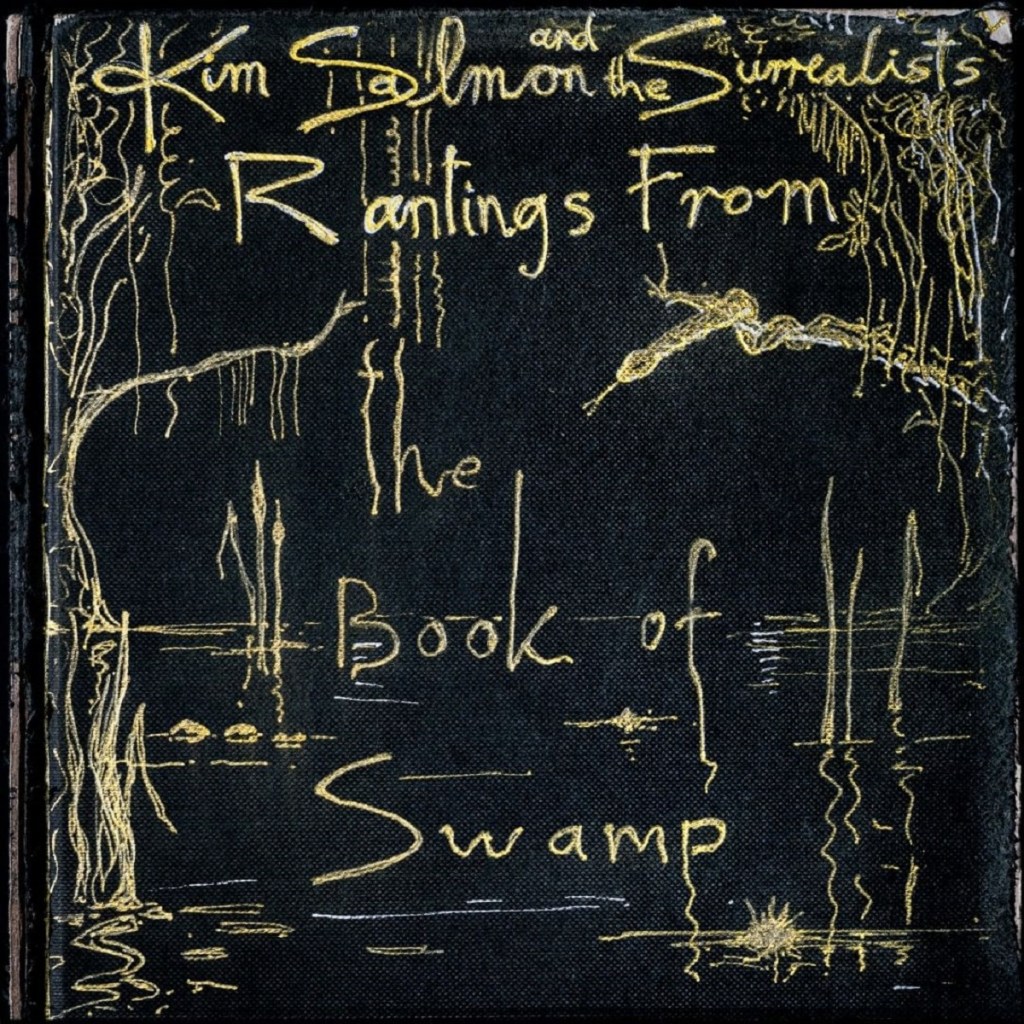
Melbourne-based musician Kim Salmon has been creating art and music his whole life, over six decades. He tells engaging stories with both his visual art and musical endeavours. His work is passionate, adventurous, compelling, thought sparking and journey making. Each time he creates something, he starts from scratch and has an aversion to the formulaic. Gimmie had a thoughtful chat with Kim about his work, creativity, the new Surrealists’ double LP Rantings From The Book Of Swamp and of a new Scientists record that’s done!

How was your morning walk?

KIM SALMON: [Laughs] I’m still on my walk! I can walk and talk.

Have you always been a walker?

KS: No, I used to swim because I’ve got a dodgy back and years ago a doctor told me that it was the best thing to do, but you can’t really swim in these days so I try and stay in shape by walking—I’m trying to stay alive basically.

Besides the fitness aspect of it, do you get anything else out of it?

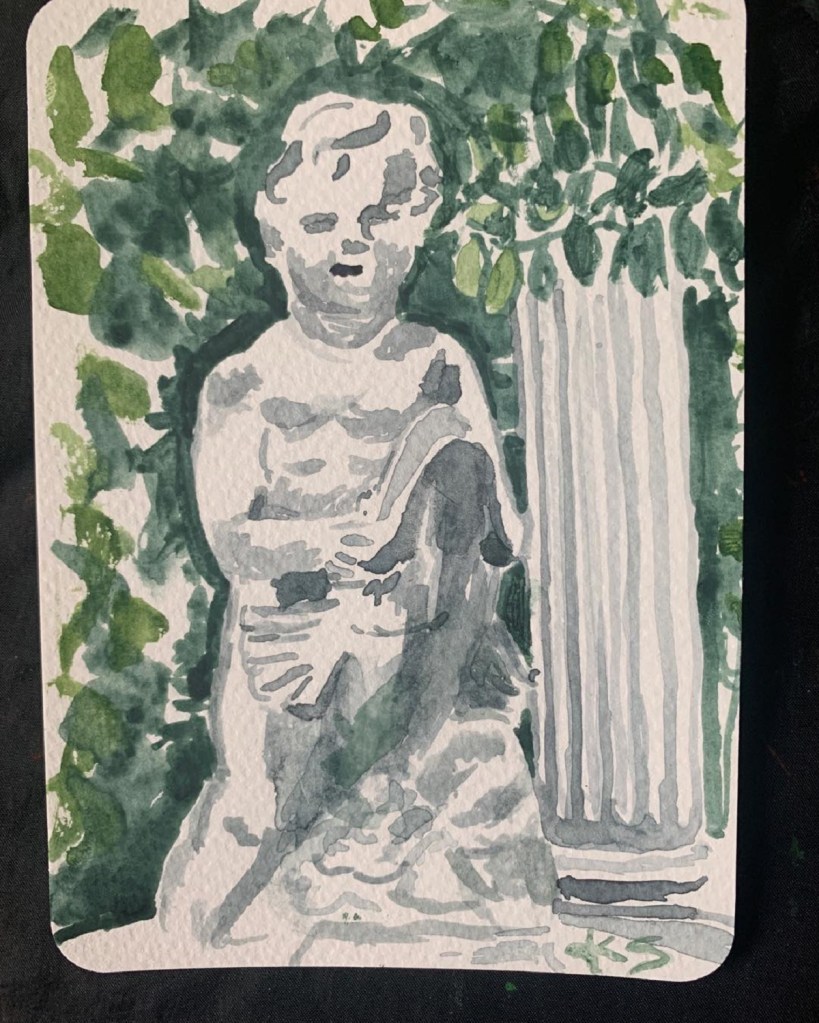
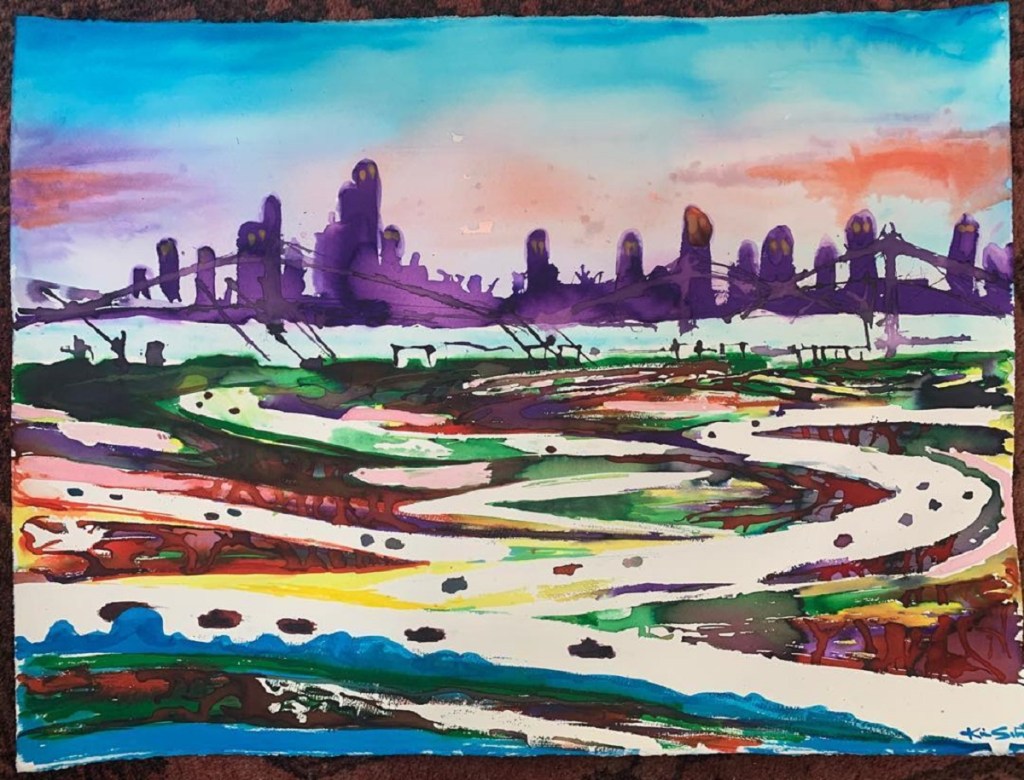
KS: Yeah. They’ve restricted it now, down here [in Melbourne], you can go a radius of five kilometres from your house. There’s plenty of stuff to see, I’m getting to know a lot of it. I did this crazy thing at the start of all this lockdown stuff, somebody gave me these postcards that were blank, the idea was to do little paintings on them. I thought, yeah, I’m never going to do that! Suddenly, I have all the time in the world and I started sending people little paintings in watercolour of these things that are around Northcote; things like little garden cherubs and strange looking topiary and bizarre things that you don’t usually notice when you’re walking around. When you do it every day, you see lurid detail.

Art by Kim Salmon

Nice! I love being out in nature. I walk around my neighbourhood a lot.

KS: It’s nice to do that. We’re near Merri Creek and Darebin Creek, those are nice walks to go on very close to nature, you wouldn’t think you were anywhere near a city.

What do you love about painting?

KS: I’ve always done it. Music was kind of like a highjack for me [laughs]. I’ve always loved painting. I was studying it but then I dropped out of art school and became a musician, which is the biggest cliché out; isn’t it? [laughs].

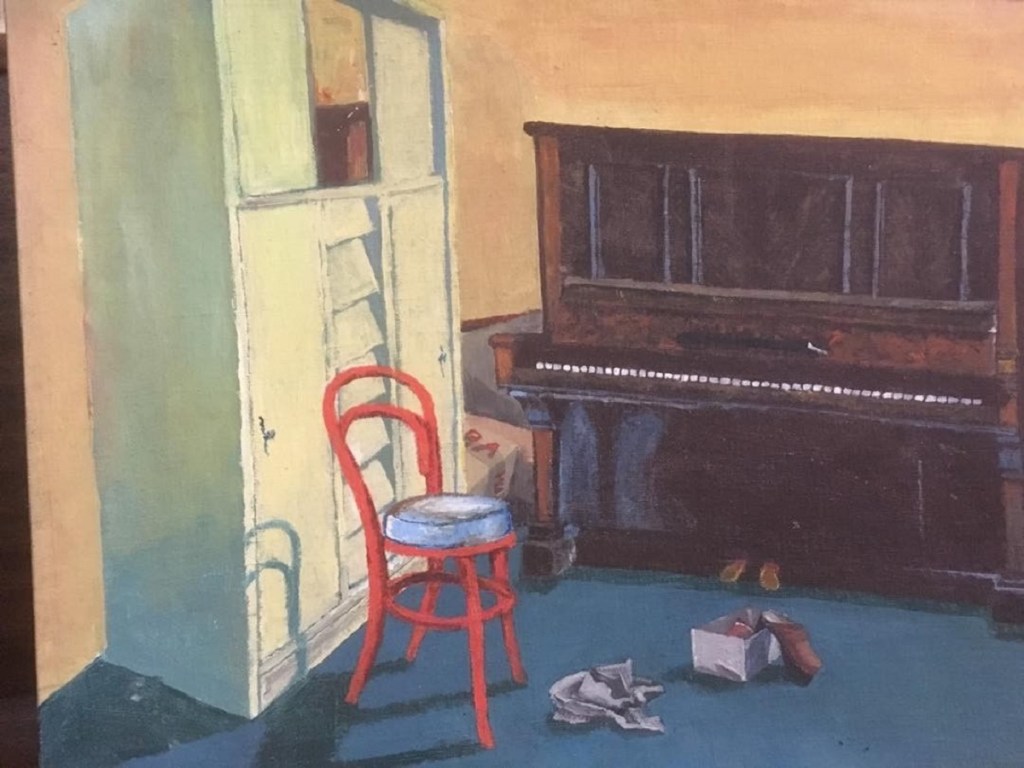
It’s all creativity! I’ve seen some of your paintings and really love them. There’s this one that’s a bedroom scene.

KS: I did that one when I was about sixteen.

Do you remember painting it?

KS: Oh, yeah. There’s a piano in it.

What’s the significance of the piano?

KS: It was in my room, that was my bedroom, that was basically it. There’s a pair of clogs in the middle of the floor because it was the ‘70s and people were wearing platform shoes, often clogs, that was a thing!

Did you learn to play piano before you learnt to play guitar?

KS: No, I persuaded my mum to buy the piano because she had learnt piano as a child and I wanted to maybe take it up, I thought I might learn some piano. I could already play the guitar. I figured out a few chords and had a muck around on it but I never really developed any real techniques for playing the piano.

Art by Kim Salmon

When you dropped out of art school that would have been around ’76? That was around the time you got into music more and you had the punk band the Cheap Nasties, right?

KS: That’s exactly right [laughs].

What attracted you to proto-punk and punk music?

KS: I was looking for my own thing, if you know what I mean? I had just met Dave Faulkner and some of his friends. I was hanging out with them and each of those blokes seemed to have a thing they were into. Dave was into Bob Dylan and Randy Newman, lyrically driven stuff; a lot of America stuff like Cosby, Stills, Nash & Young, that kind of thing. I didn’t really have a thing, my taste was really eclectic, I liked a lot of stuff, like King Crimson and a bit of prog and a bit of folk, there wasn’t really any kind of theme to it. I used to devour those trade weeklies like New Musical Express and Melody Maker. One day I saw an article about CBGB and the scene there attracted me, it was the way that the writer described everything, a netherworld full of people wearing leather jackets. It all sounded so different to everything where I was in Perth.

I read that from that article you went to track down some punk records and you came across The Modern Lovers?

KS: Yeah. I went on a quest to find what punk was! [laughs]. It was a word that was bandied about in the articles but we couldn’t work out what it was. The Stooges were mentioned, the Velvet Underground and the New York Dolls, I went looking for them all. I’d never heard of The Modern Lovers but I found them. It didn’t matter if they were punk or not as far as I was concerned, I loved it, so that was going to be punk to me!

Is there anything from the punk music community that you were involved with early on that was valuable that you learnt from it?

KS: A lot of friends I’m still friends with. That’s probably it you know, the people that I became friends with and still keep in touch with. [Laughs] It’s as simple as that really. We’ve all moved on along our travels, musically or in our career.

Why do you like making things?

KS: Good question! Why do people do that? [laughs]. So they can stay around after they’ve gone. It’s a way of communicating, it’s a way of being present in the world. For me I couldn’t explain it at all, I paint and draw because it gives me pleasure and I want to do it, it’s the same with music. Music is just another form of painting to me; I’m painting when I’m making music, if that makes any sense?

It does. What do you value as an artist?

KS: Some kind of originality if that’s even possible. I think everyone is unique and everyone is universal at the same time; it’s a strange thing that we can express some universal ideas through your own uniqueness.

It seems like throughout your career you haven’t ever really been motivated by money, it’s more about the process and making things.

KS: Oh yes, unfortunately for me and those around me [laughs]. Money doesn’t really drive me, money is a means to an end… it’s numbers, I don’t have anything against maths [laughs], it’s not really what drives me. Even in school, I was good at maths as far as the abstractness of it went but when it came down to arithmetic, I was hopeless [laughs]. I was good at geometry and trigonometry, I was OK with them things but… look, I think I lost ten grand in a bank I worked in one day! I’m not good at numbers.

Previously you’ve said that when you want to create something you need focus; what kinds of things do you do to help focus?

KS: It’s different for every particular endeavour. I’m one of those people that sometimes needs to set something up or I will sit around not doing anything forever [laughs]… out of inertia and fear, I suppose. Once I get going the inertia is there and I guess I keep going… it’s a big one for me. Like this pandemic, I think I’m OK, it’s kind of forced me to do something. I try. I stare at a blank piece of paper. I go down to the art shop and buy myself some nice inks and watercolours and then I come home and stare at the paper for weeks on end and finally I do something. Once it’s started I just go where the paints flows [laughs].

What kinds of things have you been painting lately?

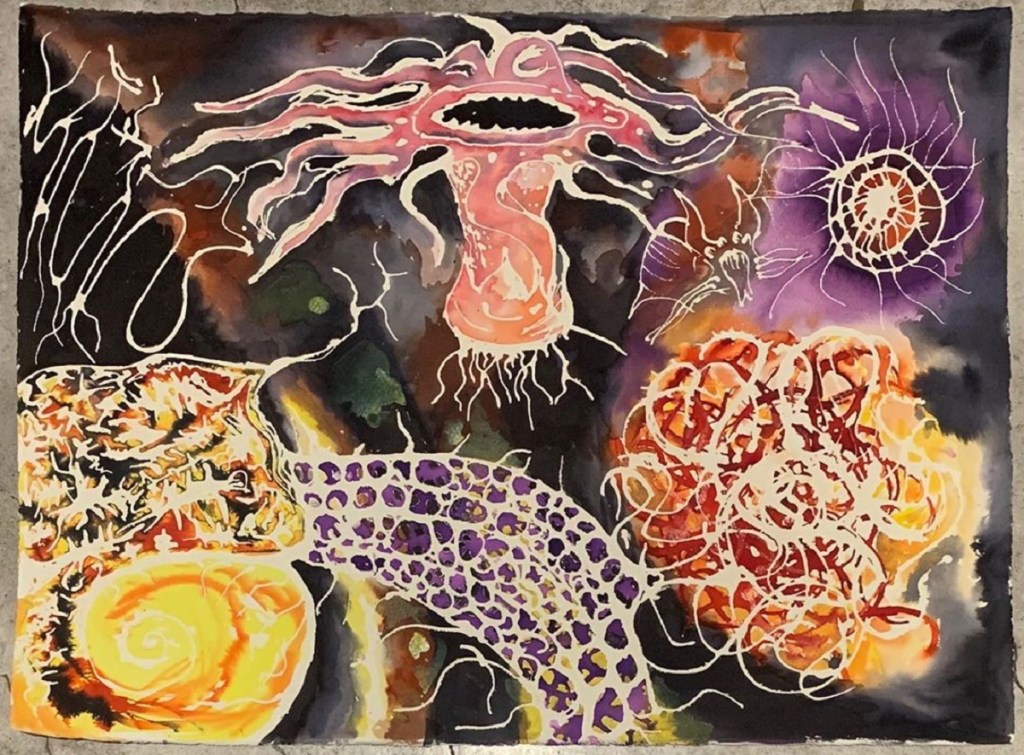
KS: The last thing I painted was… I don’t know what you’d call it? It could be molecular size or nebula size. It’s these organic forms that I made up. I got this stuff that’s like masking tape but it’s like glue, you squirt it on the paper, it’s nice and blue and pretty and you can see where it is. You can do a painting with it and then paint over that and then you rub it all off and it leaves a white area. I did this thing that’s kind of inspired by a book of art forms in nature, done by one of those 19th Century scientist, philosopher-types who believed… it’s a book of drawings and diagrams of one-cell creatures like jellyfish and bats, birds and fungus. His point was that there are all these beautiful, symmetrical forms in nature and there was art at work.

It was my girlfriend Maxine who looked at one of my paintings with the masking thing and she came upon this book and ordered it for me. One day it showed up in the mail from New Zealand, she had to tell me it was for me [laughs]. I looked at this book and it inspired me. I put all this glue stuff over the canvas, it’s pretty big, maybe a metre across. I used a vivid ink. I just let it run and mix and carry on and paint forms around the masking material. I was really happy with what it ended up as, I couldn’t tell you what it was though [laughs]. I could see some strange monstrous forms, but I think they’re kind of beautiful. You can’t tell if it’s in deep space or at a microscopic level. It could be anything really!

Art by Kim Salmon

I can’t wait to see it. I hope you have another art exhibition.

KS: One day! If we come out of lockdown. I’m sure there’s going to be a lot of Covid art out there! [laughs].

That’s OK though! When you talk about making art, I feel like it brings you so much joy!

KS: Oh absolutely! It really takes you somewhere. You really have a conversation with the paint and the paper and the canvas and the ink. It sounds a bit mad but I definitely finds it leads me somewhere—it’s quite an enchanted place.

You mentioned the book you got recently and that the guy that made it was into philosophy; do you get into much philosophy or anything like that?

KS: I try to, but I haven’t really made a big study of that. There’s so many things that I might do. There’s a lot of people around that time, when religion was being challenged by science. There were some shaman and crazy people and frauds and con-artists out there like Gurdjieff and Madame Blavatsky and Rudolph Steiner… I guess Steiner wasn’t really a con-artist, but what I mean is there were a lot of ideas out there being explored. It was an interesting time.

Are you a spiritual person at all?

KS: Not in any formal religious kind of way, no. I suppose everyone says they’re spiritual. I don’t know that my way of being that would seem particularly spiritual to someone else. I have my music and art and I guess that’s my spirituality really. I’m probably more scientific if anything about those things.

Why did you feel it was time to make a new Surrealists’ album?

KS: It has a funny story. The Surrealists have been playing forever, particularly this line-up, we always enjoyed playing, never rehearse, just play a gig every now and then. I thought the band deserved more than a few hundred bucks from just playing a gig, you can only do some many shows, we got a show before lockdown and I got this bright idea that we would do a show that was completely improvised and we’d record it, that would be the draw card for the show. It was Phil [Collings] the drummer’s idea actually to do a completely live album. I thought if you’re a band recording you need to have songs and stuff; how do you do that like that? Over the years I’d write lyrical things into my books that I’d read the lyrics out of but I hadn’t used them yet so I thought I’d use them, that’s what they were for this album.

We had the gig booked and lockdown occurred. We had to postpone it. A film producer that had done the Scientists… actually Scientists actually have an album in the can would you believe!

That’s great news!

KS: It’s on a US label, so who knows when that will come out. We did a film clip for the new album and he approached me about taking this idea that I had into a recording studio and it being streamed. We wanted it set up with lots of cameras in a proper studio, we eventually got that happening. We called it Rantings From The Book Of Swamp, basically because that’s what it is; it’s me singing things out of my books to have lyrical content to the things we were making up.

How did you feel in the moment when you were making it?

KS: Terrified!

Really?!

KS: Yeah, because when you do something like that… we all had ideas but didn’t consult with each other, we thought we’d just be able to flesh them out. Nothing went the way at the time that I thought it would go. Everything felt like it went wrong! It was about an hour’s worth of “oh no” and trying to fix it up. Stu [Thomas] felt the same. Phil was just eating it up, you could tell he was having the best time of his life [laughs].

It was done over two sessions, I couldn’t be convinced that it was any good. I thought, nah, that’s it, I’ve blown it! They said “no, no, it’s good!” I didn’t believe them. I ended up looking at it and thinking, nah, OK, that’s good. You can see Stu and I really concentrating and trying to make it work, and that’s what made it good, we thought about it every second of the way.  It was the most switched on I’ve ever been.

I remember hearing you mention a little ways back that it’s been a long journey and process for you to get comfortable with lots of things, being on stage, stuff like that; was there something that changed that made you feel more comfortable?

KS: I couldn’t tell you the answer to that. At some point now I couldn’t imagine being uncomfortable but I was. I’ve heard recordings of those times and I’m still the same person… that’s probably what was good about this last recording, it probably brought me back out of my comfort zone into somewhere strange, I think that’s what happens… things that aren’t in your comfort zone, as long as you can move out of them and explore them, eventually you’ll become comfortable with them. I think that’s the process. In a way this particular album is good because it’s a reminder of not being comfortable, of being lost [laughs]. I think there’s actually something good about being lost and not knowing what you’re doing.

It’s so cool that with all of your projects and records that the new one is a reaction to the previous one and you always evolve to do something different.

KS: Yeah, I think you have to do it. I remember Tex Perkins used to say the same thing too. He’d say that things do tend to be a reaction to what I’ve done before. I’m not alone in that. It’s probably a little bit more extreme in my case for some reason [laughs]. I’m a bit more of a random nut job! [laughs].

You mentioned that making the new record was terrifying but; what made it fun for you?

KS: That same thing! I look back and think it was terrifying but, in a good way. I can hear myself there and everyone that was watching it online can see me, I was making a joke out of it and trying to spin a yarn out of it [laughs], weaving a narrative.

Do you think you use your humour to deflect from the fact you are terrified?

KS: I think that’s a common trait in comedians and artists, people on a stage. I don’t think that’s unique.

A lot of your lyrics tend to be from a darker more primal place; why do you think that is?

KS: I just think that’s part of the artistic process really, in the creative process you do have to look inside of yourself and express things that are at the heart of you, which by their nature is primal. Things become a lot more elemental when you do that. Having said that, you can still do things that are the opposite of that, I don’t know that all of my stuff is like that. I’m sure I do things that are light-hearted and witty and pharisaical [laughs].

Talking to you, you seem like such an easy going person.

KS: Yeah, I am.

What’s the most personal song that you feel you’ve ever written?

KS: In a way a lot of songs are about things that are outside of myself. I often put myself in other people’s point of view… that can still make songs personal. I like all my songs for different reasons. Maybe there’s not one that’s more personal than another. In a way I probably write for other people in a strange way, even though I am expressing and doing things for myself… what I mean is that other people can look at something and project their own meaning onto it, I’m OK with that. The thing about writing songs or poetry and a lot of art as well, it’s full of ambiguity and symbolism, symbols mean different things to different people… in a way the loudness and ambiguity of words, simple words as in a song as opposed to dense literature, is the strength of it—that’s what makes it powerful and universal.

I know songs must come to you in all kinds of ways but, is there a way that they come more often?

KS: When we did this particular project, there were a couple of songs on the album that were things like walking around the neighbourhood. There’s a song “Did You Pick It Up In The Playground?” it is about; where did you get that language from? It’s about behaviour like; is that you? It also had a meaning to do with picking up Covid. I found that it was just a line that came to me, it came with a tune already. I had to try and sing it. I knew what the chords were that I was playing under the singing. The band could be on the same page as me, or not, and take it somewhere really strange. As it happened the melody and song that I had in my head was indestructible enough it was added to by what Phil and Stu did.

When choosing the words for the songs you were making in real time; did you turn to a random page in your notebooks?

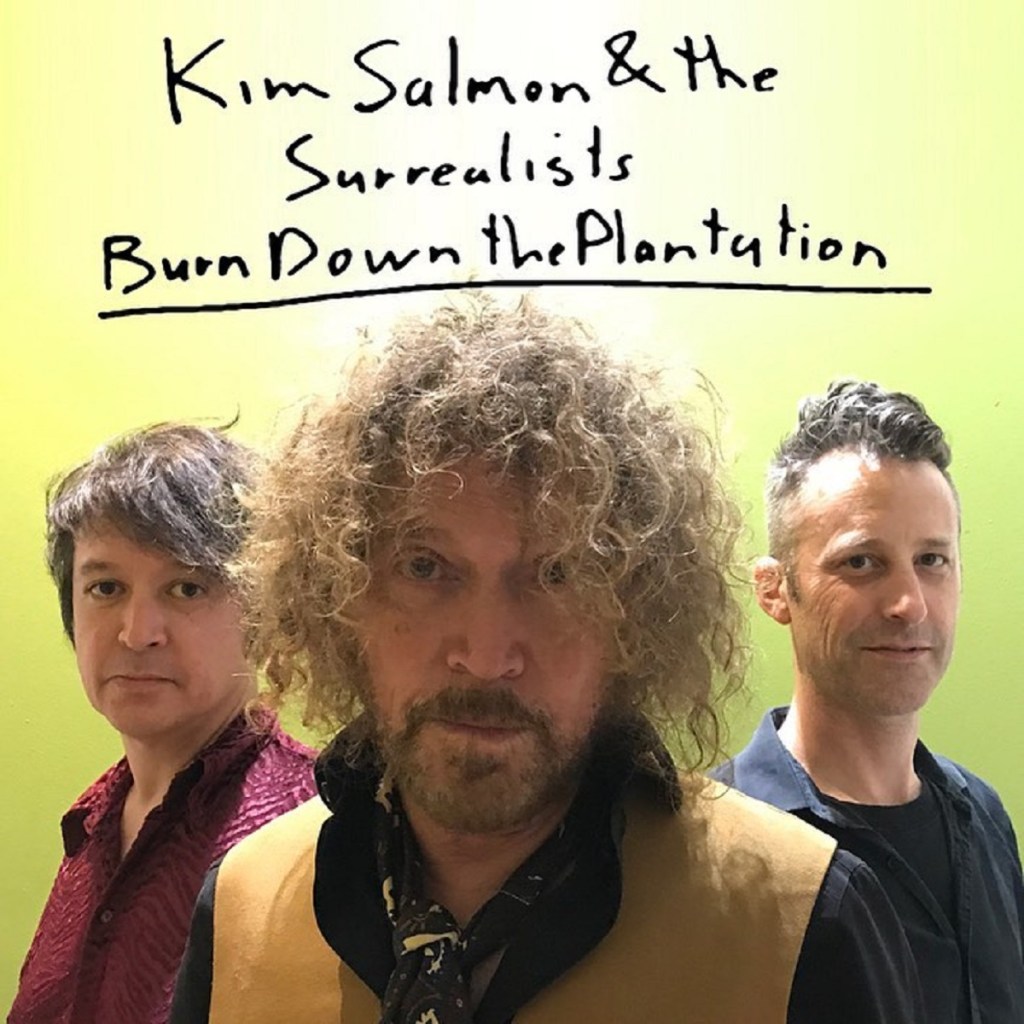
KS: No, I had ones that I thought would be good. I looked at them and pored over them and had a few in mind. For instance I already had a bit of a tune for “Did You Pick It Up In The Playground?” and “Burn Down The Plantation” I had a form in my head of what it would be like; to me it was like The Rolling Stones around the 1970s, Sticky Fingers era. Whether it came out like that is another thing! [laughs]. I had lyrics that I’d written around January and doing something that was kind of Blues-based took me back to days of slavery and the Civil War. I wrote a few lines and thought “Burn Down The Plantation” was a cool line and it went with that kind of music. I was wonder if I should take it into the recording given that there is all of this Black Lives Matter protest going on. I was scared of it really, I thought, oh god, we’re just three white guys; what right do we have to go singing about plantations burning down? I thought, I’m not going to censor myself, we’ll do it.

I had a few other things that were on my mind. For the recording I put little post-it notes on the ones that I thought I’d use. I also knew that if I went scrambling and scurrying for pages I’d be very lost and it would be a waste of time. I picked ones I thought I’d be more at ease with.

With the notebooks you drew from, you mentioned that you’ve been collecting thoughts in them for a while?

KS: Yeah. Those books I have, even then there’s a story. I had set-lists and I put them in there and I have lyrics and I put them in there. I write in them in such a random way. One starts at the back of the notebook and then it starts upside down from the other way. Sometimes there’s drawings. It’s really random things, random expressions of thoughts that I have. Often set-lists though – set-lists to me don’t mean a set out list of a repertoire – I have lists of songs from my bands and I call them out to the other members.

Have you always kept notebooks like this?

KS: Yeah, but it’s kind of become more obsessive as I’ve gotten older. I have one from The Scientists’ days. It was halfway through The Scientists that I thought I should be a proper singer and have notebooks, like a proper artist [laughs]. Now I’m glad I did because then you find out about Jim Morrison or Kurt Cobain and they’ve always got these books full of art and crazy things. I feel accomplished, that’s a good club to be in! [laughs].

Art by Kim Salmon

You mentioned there’s a new Scientists’ record?

KS: Yeah! We recorded it, because there was a bit of a renaissance with the band, we did a tour of Europe, two tours of the USA and two of Australia a few years back. It was all on the back of that Chicago archival label Numero releasing our back catalogue and a box-set. We did a few singles and me and the guitar player [Tony Thewlis] would send each other things, I would send him drum beats of all things [laughs]. I’d get Leanne and Boris down from Sydney and I’d show them what I had and they’d knock ‘em into shape. Tony came over here to be part of The Scientists’ getting inducted into the WAM Hall of Fame. We spent that time in Perth in a studio and knocked that album together. We’d been working on it for a long time. I got Tony to build me some riffs. I’d think up crazy drum patterns and send them to him and then he’d build riffs on that, I’d do melodies and words on top of that. I’d send that to Boris [Sujdovic] and Leanne [Cowie] and they’d be the final process.

We don’t’ know when it will come out though, it’s all ready, it’s got the cover art and we did a film clip for it. It’s very strange because the thing that The Surrealists have just done is probably a lot closer to where The Scientists were in 1983 and the new Scientists’ album has travelled somewhere different. I don’t know how people are going to take it. I’ve tried really hard to have enough elements that people accept it’s The Scientists but, we’ve taken it somewhere else. I’ve listened back to the lyrics of it and it’s not in the same place as Blood Red River.

That’s really exciting to me! Bands evolving and going somewhere new is super exciting to me. I grew up in the punk world and it was always about individuality and pushing things… your new record sounds like it’s those things to me.

KS: Yeah, we’ve done that! It’s a bit more crafted. I think that’s why The Surrealists thing got more closer, it’s more visceral… this Scientists thing has some visceral elements, it’s heavy, it’s got the brutality in sound but, it’s crafted as well because of the way we made it. It wasn’t a spontaneous process. It was put together because we thought we should do it and wanted to do it, that’s a different process to when a band is young and say “Oh yeah, let’s just do this” which is how we used to do it [laughs]. That’s kind of what The Surrealists just did! [laughs].

You said that your lyrics for Scientists now were in a different place; where are they?

KS: I was listening to it thinking, god it’s taken me to get this long to get where Dave Graney was in The Moodists [laughs]. That’s what it makes me think of. He had these songs that had bizarre stories to them; I was listening to it yesterday thinking it sounds like Graney. There is a song that references him called “The Science Of Swarve” and I talk about him and Lux Interior and Nick Cave and I kind of say that their threads, meaning their lyrical threads, their threads, their clothes being in tatters and no narrative could ever save [laughs]. That was fun putting that in there. It was all about being swarve, it’s a bit of a boast. I think it’s a storytelling yarn that Graney would have done in those days.

I’m looking forward to hearing it! You do a lot of stuff; where does your hard work ethic come from?

KS: That’s what everyone says. I sit around looking at blank paper and canvases. I sit around doing nothing and wasting my time—that’s what creativity is. Until you can’t stand it anymore and you have to do something and once you get started you can’t stop!

I know you teach people to play guitar; have you learnt anything from teaching?

KS: Yeah, absolutely. I had to get across a lot of theory that I didn’t have, things like modes for scales and various harmonic ideas that I knew about… I used to use them without knowing what I was doing. Now I know what I’m doing and it takes a bit of the mystery out of it. I’ve got a lot out of teaching. I know how songs are put together now, which I wouldn’t have had a clue before! [laughs]. I use to break the rules without knowing what rules I was breaking.

That’s funny to hear you’ve learnt how to put together a song after all this time doing it. Have you ever had a really life changing experience?

KS: Gosh! When I read an article about CBGB it was pretty life changing—it sent me on the journey.

The first one I can remember, I must have been about three and my mum always told me that I didn’t speak until I was three and then I spoke in complete sentences, she’d know what I wanted but I didn’t talk. I remember her one day showing me a watercolour set and explaining to me what it was. I didn’t know what it was, I didn’t have a clue. She got the water and a brush and she started using red and she did a little loop thing. I got the brush and started filling up the page with these little strange loops of red. I didn’t know that it was for me, I just thought she was showing this thing. I thought, wow, you can say stuff with this, this is fantastic! That definitely was a thing for me! I can still see it so vividly. That’s probably where art came from for me. That was life changing really early.

It’s so cool that you’re painting now, it’s like things have come full circle for you.

KS: Yeah, I love watercolour, there’s just something about it. You get to leave some of the paper blank, you can leave some bits alone and not disturb it, and some of it you use—it all becomes one big story.

Art by Kim Salmon

And coming across all the punk rock stuff in publications was life changing too?

KS: Yeah, yeah. I guess I was looking for a place to be in my music, for a starting point, I wanted something to bring in a focus and that became it. I think it was probably the same for a lot of people.

Is painting and making songs similar in any way to you?

KS: Yes and no. I’d go so far as to say that even every song is different to make. I try to look at everything from not having a formula, I don’t like formula as much, which is a bit funny for a guy in a band called The Scientists [laughs]. I like to think I’m starting from scratch every time that I do something and not knowing what you’re doing is part of it. Learning about music sort of takes away from that so; what do I do? What I just did with The Surrealists was a way of getting back to that thing… it’s that aspect, the mystery, that you don’t know where the hell you are and you’re lost, that makes the start of creating something, not knowing where it’s going to go or where it’s going to be. You might have an idea of what you’re going to do, but you don’t know what it’s going to be in the end. That mystery and not knowing is the thing that is the unifying factor.

Being open to all of the possibilities! A freedom in that?

KS: Yeah, I think so. Like when we were talking about philosophy before, being open to ideas and not fixed and to appreciate what life has to offer. To make the best of it and not just think, this is it, this is what I’m going to do!

I’ve heard you say before that looking after yourself and simply enjoying the day are important things to you; what does an enjoyable day look like to you?

KS: [Laughs] It’s a strange combination of routine and getting lost in something, that’s a good day for me. Going for my walk and seeing something new in it and going a different way every time, to just make something different about it. With all the border restrictions and other restrictions and parameters of late, I guess it has to be that.

I guess you need to use your imagination in doing things more and doing things differently, adapting; how can I get the most out of what I have and what’s happening now?

KS: Yes, you’re right.

Last question; what makes you really, really happy?

KS: [Laughs]. I think just my life now, there’s things about it that I’d hate it to be taken away from me. I have my partner Maxine and we have a really good thing going, it’s been a few years now. I have my kids that I have a really good relationship with. I’ll be talking to my son after this and giving him a bass guitar lesson; he’s really starting to find his way, he’s twenty. All those things make me happy. Making stuff, all of it! [laughs].

Please check out KIM SALMON; KS on Facebook; KS on Instagram. Rantings From The Book Of Swamp drops September 4th – LISTEN here.

Obnox’s Lamont Thomas: “The whole damn world is protesting right now! The whole world is tired of this shit!”

Handmade collage by B.

Cleveland musician Lamont Thomas creates an exciting clash of punk, hip-hop and everything in between, with his ultimately genre-defying experimental musical project, Obnox. Lamont’s been prolific in the underground for decades – Bassholes, Puffy Areolas, This Moment In Black History + more – latest release Savage Raygun, shows he’s still got vision, passion and message, all while making jams for listeners to make memories to. There’s a lot of powerful stuff on this double album. Gimmie chatted with Lamont about the new record, the recent BLM protests worldwide, of racism, Black Excellence and more as he picked up some Thai food and his car from the mechanic.

The new album you’ve recently released Savage Raygun is really, really cool.

LAMONT THOMAS: I really appreciate that, thank you.

Why is music important to you?

LT: [Laughs] That’s a really good question! The rhythm, the rhythm is the rhythm of life. I love to play and the energy, art, creativity, you can tell a story; just dancing, moving, and communicating, it’s all a part of it.

How did you first discover music?

LT: Church, my family’s record collection, these types of things. The neighbourhood and hanging out, hanging out with my cousins. It was always around. My folks had good records, my church kinda rocked.

Is there any records that you remember from your parent’s collection that have really stayed with you?

LT: Yeah, lots of them. Prince, Al Green, Bar-kays. Gospel stuff like The Hawkins Family.

What was the first music that you discovered that was your own, independent of your family?

LT: I got into hip-hop right when it was going down. I loved soul music—Black music. It really soaks into your ribcage.

How did you get into punk rock?

LT: Skateboarding and hanging with my buddies in high school. Watching skate videos you would hear a lot of independent punk that was used for the soundtracks. A couple of guys that I went to high school with would make me mix tapes, they kinda got a kick outta the fact that a Black guy was listening to rock n roll.

There’s a lot of parallels between punk rock and hip-hop; basement shows, flyer culture, vinyl releases.

LT: Yeah for sure. When I was young the idea was to not sell out, whereas now selling out is the goal [laughs]. Monetizing your image on the internet, all the crap you gotta do now. I came around at the right time, a different time. I can still be out here doing stuff and not be some internet phenomenon. People just focus on the music when it comes to me. I do have fun with online, keeping up with people and connecting with people feeling the music, we can talk instantly. But, waking up every day feeling like someone has to give a shit about me today, so I’ gonna take selfies and post tracks… ya’know what I mean? That’s most people’s get down and how they do things, whereas I’ trying to write a song, a riff, play some drums, listening to music, I’m just trying not to rip people off with things.

I feel you. It’s so weird to me what’s popular or what a lot of people pay attention to. I’d rather do good work, work on my craft than put selfies out there. I want the attention for my work not for what I look like etc.

LT: The internet is a great way for discovery of new music and art, but people get tired of the other. Even stuff I used to look at or follow on the internet, I don’t even care so much anymore, even though those people are still out there. Maybe it’s just me, but people tend to fall off after a short period of time, two or three years of that kind of popularity, then you better have something really crackin’ or people will forget about you.

People forgot about me before this record [laughs]. I thought I was over! I hadn’t toured in a couple of years, I hadn’t put anything out. Last year I thought; maybe people are just over me? There’s been such an incredible response for the new record! Shout out to Flash Gordon over at ever/never Records for keeping me in the conversation and for still believing in the music.

Who or what has really helped shape your ideas on creativity?

LT: I started out as a teenager skating and catching mix tapes and then you get to reading fanzines and you become aware of the network, the underground… most things that are underground – things that most people would call failure – those are the artists that I tend to gravitate towards. There are certain records where you just can’t believe that it wasn’t a big hit and more people heard it or were into it. I sympathize and empathize with those kinds of stories… or even records that become huge over time that nobody gave a shit about like Funkadelic, nobody gave a shit and now everyone gives a shit. Funkadelic you know are still pretty underground [laughs]. I think they are the greatest American psychedelic rock band to ever set foot out. It wasn’t like that stuff was flying off the shelves.

That was the same with a band like Black Flag. I’ve spoken with Keith Morris and Henry Rollins and they both say that when they were first around people never cared so much, even hated them, now you see so many Black Flag tattoos etc. out there and they’re really loved.

LT: They had to create the network and that influenced that whole scene basically as far as how and where you can tour… someone’s got a basement space or you’re in some weird strip mall and the locals are about to tear your head off.

As a creative person what are the things that matter to you most?

LT: You go from there to college, where I hung out with a lot of radio station guys, that leads to a lot of local shows. I had a little band in high school. I got used to playing then. In college I would see guys that were early influences, they had their little bands and t-shirts and they were good bands and dudes, which I’m still really good friends with a lot of them.

Eventually, I moved to Columbus and that’s when I started playing with Don Holland and The Bassholes when I was twenty-one. Then I meet Jim Sheppard and Ron House, all the guys, and there’s tons of great bands in town at the time like New Bomb Turks. It was a great scene and I really lucked out. There were a handful or indie labels and they were all doing 7-inches. We were real lucky.

The thing that matters creatively to me is not ripping people off. It’s just what I’ve been doing since I was a kid. I’ve worked a little bit of everywhere, I’ve worked for record stores, I’ve worked for the phone company, I’ve worked for General Motors, I used to build pedals for EarthQuaker Devices… I’ve always got a little hustle but music… let’s just put it this way, I could never go do that 9 to 5 thing very long. I’ve always had great jobs and there’s probably times when I should have quit playing music and focused on a career. I enjoy music that’s just it. I don’t have any money but I don’t feel poor.

I feel the same way. I work part-time in a library which pays the bills and then interviews, writing, music is what I do the rest of the time. Not having to pay the bills with my passions allows me to never have to compromise in what I do creatively. Any time I’ve tried to make a career out of those things I’ve always ended up having to compromise. I mean since I was a kid I wanted to write for Rolling Stone and I finally got there and was writing for them and then the editor told me to make my interviews less deep! I’m happy where I am now doing Gimmie, doing something that’s my own.

LT: Yeah, we need that perspective. I appreciate you. I’m trying to keep my music raw, that’s the basis of my art per say. Everyone these days has a laptop and can make beats or makes a video, but they’re just a motherfucker with a laptop and a video, you’ll be done in three years. To me an artist is someone that is in it, it’s just what they do, they don’t think so hard about artistry per say, they just in it and try to be creative and get that release. It makes them feel good, when it comes to music as far as I’m concerned, if it feels good it probably sounds damn good.

One thing that I’ve always loved with your music is that it’s always surprising me, you fuse so many genres into your music and when I’m listening to it I don’t know where it’s going to go and I keep listening to find out and hear it unfold. It’s never predictable.

LT: Thank you, I appreciate that. People listen to everything, Spotify shuffles and playlists, people listen to three or four different styles of music in a day, four different types of records—I do! I don’t want to do my beat-funk stuff here and then my noise stuff there or write some pop tunes over there. I’m like, fuck it, let’s put it all together and make the best sequence that we can. Find the best art and pack it up for someone to enjoy for a lifetime.

When you started making Savage Raygun did you have a vision for it?

LT: Yeah, I did. I had a bunch of ideas and I wanted to make something over four sides, I wanted to do a double album just in case I was over! Eventually, I tried to record some stuff digitally like what the modern dudes are doing but it didn’t work, I lost some files. I had beats from friends. I had to double back on all of the stuff that I had lost and staring pieces together stuff. My buddies would come by the studio a couple of days. I just kept going until I got a flow.

How do you know you’ve got the right sequence? Intuition? A feeling?

LT: You listen to it. Certain things don’t sound good back to back. Certain things should be left off of a record or redone. I don’t think about a lot of stuff that most dudes do, I just open myself up to creativity. Lyrically, I try to turn good phrases to see what makes it interesting. I’m recording in my friend’s living room for the most part. Here and there you might be running with Steve Albini or Jim Diamond, someone like that but, you go into those situations a little more well-rehearsed and thought out so you don’t blow a bunch of money in the studio. Those dudes aren’t cheap.

90% of my stuff was recorded in my buddy’s house. It gives you time to try things. When we first started a band, he and I used to record from three o’clock in the afternoon until one in the morning, just trying stuff. Things were coming out a lot more frequently and faster then, that wasn’t the point though—just doing what felt good was the point, just making stuff. I do what comes natural. I like to get stuff out faster so I can do more. I just want to do more, I love it. I’m not trying to impress people.

Do you ever impress yourself with what you create?

LT: I like it. It’s right up there with what’s out there. I can’t say I wish it was more popular, I don’t know what that’s like. When you start talking about popular acts, they have a lot more money and stuff to deal with… there’s different types of stuff to consider, I don’t have to worry about that.

I’ve interviewed many bands over their lifetime and if I’m being honest I’ve found that often with success and popularity their music becomes really boring.

LT: [Laughs] Maybe!

Artists on the fringes of things always seem to be more interesting and exciting. They’re not worrying about being liked, getting on the radio, fulfilling whatever obligations and expectations comes with being popular. Not having those things, you just have the freedom to create and you’re not believing your own hype.

LT: There’s no record business like there used to be now, like the old Tin Pan Alley model, with record advances and accounting and stuff like that. Depending on who I’m working with, I have to consider publishing and certain stuff, that’s me sitting around on a Saturday keeping track of things, keeping right with everybody. I’m not employed by anybody though, and neither is anyone else; these cats run through the music business like there’s still this industry standard that they have to live up to, this checklist of things they have to do before they become famous, it’s a giant myth. People spend so much time focusing on that shit that they never do realise their full potential, ya dig?

Totally! Why did you decide to kick your record off with the track “Super Dope”?

LT: That was just a jam session. We were jamming in Texas, I had a little 8-track machine running and I brought those songs from there and finished them up here. “Catbird” comes from that session and “She (Was about That Life)” does too. Just hanging out and having a good time.

How about “Supernatural”?

LT: There’s a lot of girls that are into witchcraft and astrology and energy and chakras and all that shit [laughs]. It’s like, everybody can’t be a witch! Everybody’s not intuitive. Everybody is not wired like that… c’mon, some of y’all are just trending out! [laughs]. It’s cool though… some people collect comic books, some people collect albums and some people collect personalities; ya know what I mean? Every now and again I’ll run into a girl that’s super witchy and I’m like, OK, I get it I understand, it’s wild out here ya know… collectively witching! [laughs]; watching the stars and the moon and you get your power… I understand but, I gotta write a song about it [laughs].

Are you a spiritual person?

LT: If you’re talking about Christianity and that kind of thing, no, not really. I think Jesus was my uncle! [laughs]. Spirituality for me, relates to being a Black man, I’m the original man, directly connected to God. Everything we’ve been through and everything we’re capable of, all of the innovations: traffic lights, heart surgery… I haven’t had a cold in twenty years, these types of things, these are divine qualities and I think a lot of brothers have them. I think there’s a lot of people working hard to make sure that these qualities don’t manifest, God-like qualities within every Black man—that’s my religion. I just got a copy of the Quran from my job the other day, I’m gonna start reading that to try to understand other ideas.

I’m having my own spiritual journey. Spending more time alone meditating, listening to jazz, trying to channel what made my people great from the beginning.

What kind of meditation do you do?

LT: It’s not any organized practice or anything, not like yoga or chanting, it’s more like prayer, just being silent and taking the time to not have to worry about what might be outside my door—really using the silence. It’s loud within itself though. That’s when I can think about other things that don’t worry me like; how do I want to carry myself? How do I want to atone for my walk in life and my path? How am I going to move forward in the future? How am I going to make the music better? To just stay up! Especially when someone tries to tear you down. They’re the things I think of in my own meditative state. I’m not some spiritual guru or expert on anything, I think a lot of people that say they are, are hustlers!

Black Excellence is my religion. When I need guidance I talk to my elders. I read someone like James Baldwin. I just curl up and read one of his books—it’s so strong. That feeds my soul as much as anything like God or whatever. Baldwin was a god. We get to enjoy this stuff and they figure out ways to sell it but, if you really look at the people behind it and take all of the production and administrative shit away, you’re dealing with some divine people with extraordinary talent. What happens when it’s untainted and it’s in its rawest form and you ain’t got to answer to nobody? If your life is improving on top of that and you’re helping others… I work at a church, I try to live in a way that my music will reflect the real person that I am, it ain’t always pretty but, shit, you put it all together, and it’s really powerful!

Your music is very honest. Life isn’t always pretty.

LT: Yeah, I’ve been through a lot in the last year or two. I’ve finally reckoned with everything. In your late forties you hope you’ll have your shit together, I feel like I’m starting to get things back together.

That’s great news!

LT: [Laughs].

Have you had a really life changing moment?

LT: Yeah. I was with my ex for twenty-five years! It takes time to really bounce back from something like that.

Is that what you were talking about when you mentioned you’ve been going through a lot the last couple of years?

LT: Yeah. She’s wonderful and we’re still cool, our daughter is great, that’s all I can ask for. Knowing that and still being able to make an indie record every now and again, I’m fine.

I’ve noticed through speaking with you and through your music, it really does seem like you want to touch people and inspire them. In interviews I notice you’re always encouraging young people, especially young Black people to explore and learn about punk rock and DIY; why is that important to you?

LT: That’s what music is—its communication! If you’re just sitting around only concerned with yourself and not with who the music is reaching… it’s to be shared. The record buying public isn’t just there to pat you on the back, its give and take. You want people to be able to smoke they joints and wiggle they feet and have fun—you want it to be the soundtrack for they life! I hope their life is turning out better because of the music, or I hope my music is what they making their memories to.

Is there a track on Savage Raygun that’s really special to you?

LT: “Return Fire” is an idea that you have a lot of gang members, a lot of shooters in America right now, everybody’s got a pistol and the Black community, brothers don’t hesitate to squeeze the trigger on another brother but, when the cops come down and terrorize the neighbourhood they have no fire power for these cops. The Black Panthers have already showed us that you can protect yourself from the police. Maybe it comes down to illegal weapons, or my stuff isn’t registered, I don’t go to the range or nothin’… if I got a pistol and someone’s choking a man for eight minutes, I’m not reaching for my phone, I’m going to pop his ass right in the shoulder! Just to get him off. “Return Fire” is an imaginary angle on that. You keep this shit up, you keep fucking with our people, we’re going to police you when you come around in our community. Nobody is asking how the Black community got this way? Now it’s all coming out.

You talk about looters, I talk about the Boston Tea Party. You talk about civil rights, and I talk about bringing many nations of people over here to build your country for free and then treating them like shit for centuries after that. That shit is not fair. “Return Fire” that’s basically what that is, the whole damn world is protesting right now! The whole world is tired of this shit! This is what Foundational Black Americans have been dealing with. People are socialised to not care about another Black man. Whether they’re an African guy in Paris or Barbados they’re not feeling me just because I’m an American Black man—it’s insane. They really did a number on our people, it’s global. Everybody knows who “they” are.

People rock with the money. I’m rockin’ with global unity! Everybody all over the damn world has some sort of colour and pigment. Everybody around the world has had they ass kicked to a certain extent. You can’t be out here invading small nations and calling them terrorists and enemies; what the hell can they really do to us? Blow they whole shit up with one missile and all of a sudden you want me to live in fear because somebody that you’re trying to take advantage of, like you took advantage of my people… I can’t rock with this shit! “Return Fire” is about that shit and “Avalanche Grave” is another one. Take your lawyer to the gun range and both of y’all get ready for this shit. What’s the shit? Civil war? I don’t know. Protest? Uprising? I don’t know.

I wanted to ask you about the song “Music Saves”.

LT: [Laughs] Yeah, that’s just like, one of those road songs. It’s a little pop that describes showing up at a venue and ultimately having a great show. There’s a store down the street from a club we play all the time called, Music Saves. The song is a little homage to the girl that used to run that spot. She’s wonderful. She was having a little trouble even before Covid and we wanted to put it out there so she knows we think it’s special.

You’ve been involved in the music community for decades and I know that you’ve never really cared for the industry side of things and you once said that, when you stopped giving a shit about any of that stuff, that’s when things got really fun for you.

LT: That’s right! That’s when the fun happens! The people around me really look after me, when you realise that you’re being treated better than some guy signed to some company, that is redemptive, it’s like, man… I’m doing better than someone that has to be on the internet all day. I can do what I like and I’m having fun with my friends but that guy might have to go rehearse with band members he doesn’t even like! [laughs]. The machine is rolling and they’re popular, its happening! I don’t give a fuck about that shit.

I know you have a beautiful little daughter named Mia; what’s fatherhood mean to you?

LT: She changed everything. She’s wonderful. She’s smart and healthy and happy. I’m just trying to live my life in a way that nothing messes that up. She’s on her way to great things. She’s something to live for! You don’t behave as recklessly as a young man, coming of age and understanding more about women, what they need from us. I falter here and there but I’m trying to get it together so she has everything she needs.

You’ve said that she inspires you when she’s around; how so?

LT: She’s smart and she’s into great music, just like every woman I ever loved! I’m proud of her. I try to match wits with her, she’s incredible. I have to stay up there! [laughs]. It’s a good gauge. She plays a little clarinet and she’s’ in the band now! [laughs].

At this point in your life; what are the things that matter the most to you?

LT: With everything that is going on right now, I hope that people aren’t just trending trying to seem socially conscious, I hope they are really trying to make changes. I hope this isn’t just another one of those things that in a few months people are just onto something else and talking about something else. I hope the election doesn’t supersede this movement and everyone gets… do you know what I mean?

I do.

LT: I wanna see equality. I’d love to see a new trend in music that ain’t even rock n roll. I deal with a lot of different people, white and Black—I’m just hoping for some understanding. I can dig where everyone is coming from. Let’s just level the playing field. Not just all this same political yip yap. I hope somebody does something for the Foundational Black community. I hope that people understand that women’s bodies are their own, ease off of the legislation and control and shit. I hope money and the economy and the Black man’s ability to take care of his family becomes easier. We’ve got 2.6% of the nation’s wealth, in the meantime 15% of white families have a million or more—that’s fucked up! Especially considering we built the nation. Real change! Not “oh, I was at the protest the other day! Did you see my photos?” Get your ass out of there! Put a mask on! You trying to look cute at the protest and take a photo! Get your ass out! We don’t need that. People always say they call out racism but we know that’s not true!

I’ve experienced so much racism in my life and there’s been so many times when I’m the only Black person in the room and no one stuck up for me when shit was going down. I really hope that we see real change and that things change in the everyday for us POC.

LT: People can grow. People need to keep things up. Hopefully we change the music game again too and things can get interesting again! We built it! This is my uncle’s shit! This is my family’s shit! Give me my shit back! [laughs].

Please check out OBNOX’s Savage Raygun via ever/never Records; OBNOX on Facebook; on Instagram; on Soundcloud.

Perth’s Anti-Fascist Punks Last Quokka: “Today Western Australia had the third Aboriginal death in custody in the last two months which brings the country to about 440 since 1991”

Original photo courtesy of Last Quokka; handmade collage by B.

Political punks Last Quokka are set to release album four, unconscious drivers (out September 4). Their music is urgent and timely, their lyrics conveying emotional, thought provoking social commentary.  Gimmie interviewed them to find out more.

Last Quokka are from Perth “the most isolated city on the planet”; can you tell us a little bit about where you live?

TRENT (vocals): Perth is pretty great… Love the sunshine and lots to do. It’s especially great being able to leave the house without a face-mask and go get a parmy at the pub. Isolation definitely has its perks. Personally I am really happy with the support and love we get from the close friends around us, we are surrounded by great people and I think sometimes that is more important than location.

RAY (bass): Perth is a really strange place. While it can be dominated by conservative yuppie assholes, there is also a really incredible local music and arts community that produces some of the most committed artists and activists in the country. We feel very lucky to be a part of such a rad community of folks doing what they can to make the scene and broader community a better place. It’s also just really beautiful, especially the forests down south.

KIRILL (guitar: Perth is a great place to live, we have forests and beaches, sand dunes, rivers, walking trails. We have an amazing park right in the middle of the city called Kings Park, it overlooks the city and swan river and makes for a great picnic spot. The weather is great too.

JOSE (drums): Perth it’s a strange place.

I know that everyone in the band is from different places – Jose is from El Salvador, Kirill from Russia, Ray from Fremantle and Trent from the northern suburbs of Perth; how did you each discover music? What were things like growing up for you?

JOSE: I use to listen to a lot of Latino music, get those hips to shake. And I Remember always listening to the same Frank Sinatra tape over and over again. As I got much older, I listened to a lot of hip hop, that’s actually where I think my love for drumming and music really started. I couldn’t break dance very well to the hip hop music so the next best thing was drums.

TRENT: My first ever album was John Farnham – Whispering Jack and my excellent music tastes cascaded from there. I used to love Rage Pop of the 90’s and early noughties. I still adore it actually, give me some Killing Heidi or Vanessa Amorosi, cover me in sparkles, put me on a dancefloor and watch me groove. I think my first movement into punk music was when I saw the video clip for Joy Division’s song ‘Atmosphere’ and fell in love with the feel of it. I was a pretty angry kid; the northern suburbs will do that to kids that don’t fit the pre-bogan mould – so I started journeying into punk music from there. For me, punk was a way to validate my anger of growing up surrounded by people that didn’t understand me and always feeling like an outcast. I connected online with a lot of people from all over the world in similar situations and I started to feel accepted.

RAY: I grew up listening to my mum and dad’s records, I don’t think I bought my own album until I was 17 when I also started playing in my first band with a bunch of much older hectic, drug-addled street punks. I grew up down south in Gracetown, what was absolutely incredible. I don’t have any siblings so just spent my childhood hanging with my dogs at the beach. I reckon the best thing about WA is the coastline, it’s why after moving away a few years ago I moved back.

KIRILL: I started playing guitar when I was maybe 13 or 14, I was playing Euphonium in high school band too. Worked a summer job at a metal fabrication shop and used the money to buy my first electric guitar and amplifier. After that it was the usual run of grunge and rock and playing at patries.

What are some of your all-time favourite bands? What do you appreciate about them?

TRENT: A Silver Mt, Zion – I find this band so inspirational on so many levels, especially politically and they have been blowing me away for decades. I can’t see myself ever growing out of love with them; Joy Division – there is an authenticity and darkness to their music that I find really honest and comforting; Death Cab for Cutie – they make cute music and have always kind of been there for me as a comfort, they often unlock a lot of emotion for me; Eddy Current Suppression Ring – because they’re fucking Eddy Current; Salary – a local band from here in Perth that hit me right in the feels all of the time; Propagandhi – they are the package deal.

JOSE: My taste changes so often, but I think what I’m currently drawn to is 60’s Garage Rock, like The Sonics or The Electric Prunes. Raw “Rock’n’Roll” with really nice melodies.

RAY: I am huge fan of the 90’s Washington D.C. Scene, bands such as Fugazi, Minor Threat, Fire Party etc. I’m really interested in what Ian Mackaye and others did with Dischord Records. That unwavering commitment to DIY has really inspired me.
KIRILL: I like oldies like ACDC, Metallica, Slayer, Pantera – there’s mad energy about those bands that seems to be lacking in most popular bands today. A while ago after watching the documentary “DIG” about Brian Jonestown Massacre and Dandy Warhols, I got into those bands too. There’s also a bunch of Soviet and Russian bands that I listen to as well.

What have you been listening to lately?

TRENT: I am actually completely obsessed with pretty much everything Phoebe Bridgers has ever done. She is phenomenal and will be with me for the rest of my life. Outside of listening to her on repeat every day, I just discovered an album by a band called Life Without Buildings which they released it in 2005 and it was their own ever album – but it’s excellent.

RAY: Speaking of Fugazi, I am really enjoying the new Coriky album (featuring members of Fugazi and The Evens). But I’ve also discovered Katiny Slezki from Yakutsk in Siberia and The Hu Band from Mongolia who are both amazing.

KIRILL: Been listening to a band from Greece called Villagers of Ioannina City.

JOSE: Allah-Las, Ty Segall…

What initially made you want to be in a band?

TRENT: It was a bit of a running joke in my friendship group for ages – “fuck Trent, you’re loud, have a lot to say and don’t shut up, you should be a vocalist”. Problem is, I couldn’t sing. But it turns out that doesn’t matter with Last Quokka.

JOSE: I just love make art and music. That’s why I wanted to be in a band.

RAY: I think I’ve always wanted to be in a band, ever since being a kid and flicking through music mags, there was always something so romantic about it, from the leather jackets to the tours and everything in between. But as I got older I thought more about the idea of being in a band as being a part of a community and creating a platform for ideas and action. And once I started playing I just got addicted to the catharsis of performing.

KIRILL: I just wanted to play music, the band thing is cause and effect type of thing.

Last Quokka are an anti-fascist punk band; why is it important for you to let people know this? What does it mean to you?

RAY: This is something we often discuss as we all share similar political values and are all united in our anti-fascist and broadly anarchist politics. But lately we’ve been debating whether it is necessary to describe ourselves as such or just let our lyrics speak for themselves. Personally, I think it is important to be openly anti-fascist as fascism is no longer a relic of the 20th century. We are facing the rise of very real and dangerous fascist movements, the world over. While it may not be significant if some random rock band in Perth is anti-fascist or not, for the sake of history and global solidarity, it’s still important to use any opportunity to declare our opposition to the forces of control, domination and exploitation… Also I guess I hope it inspires some local folks to take action.

TRENT: Look at the world we are living in at the moment. Abuses of power have become so commonplace that nobody even bats an eyelid anymore. We have such a small minority of people with all of the wealth doing whatever they can do grow that wealth and maintain power, and the people, largely, support them in that quest. It’s completely absurd, we have the working class hating their unions, we have disunity, and slowly our freedoms are being eroded away. Rather than uniting to resist, change and overthrow this toxic power, we are fighting with each other. Today Western Australia had the third Aboriginal death in custody in the last two months which brings the country to about 440 since 1991. Surely that’s enough to unite people to create change, but white Australia largely allows this to happen. The struggle against oppression is all of ours. Unfortunately, most of the population has fucking Stockholm Syndrome and have sided with their captors. I mean, it’s becoming an insult to be anti-fascist? The media is perpetuating divisive messages to prop up political parties of their choice and maintain their business interests. The world is a copybook of the 1930s and we saw how that turned out. And we have a huge recession on the way. We have to resist now. Fucking Bazil Zempilas is running for Mayor of Perth, surely now is the time to scream from rooftops.

Can you remember what it was the first got you interested in politics?

RAY: I grew up surrounded by political activism, with both my parents being active in environmentalism and other causes. But I clearly remember the moment I wanted to get involved in activism: I was living with my mum during the September 11th terror attacks and when the towers went down my mum was devastated. I couldn’t understand why she was so upset, but she said she wasn’t just crying for those who had died in the towers but because now America would invade Afghanistan, Iraq and eventually Iran and she was crying for the hundreds of thousands of people who going to suffer as the result of the US-led wars to come. Of course not not long after that the US invaded Afghanistan and Iraq and I got involved in the anti-war movement.

TRENT: Punk music started it… I was 13 years old when the war in Iraq started and that’s about the same time I started listening to punk. I started applying the critical lens that punk music was giving me to messages in my family, school, government, and on a global scale such as the invasion of Iraq. I started wanting to do something about it and started organising small actions at school which pretty much only I would attend.

I saw that you attended the Black Lives Matter protest rally in Perth. BLM is something that has very much been in the forefront of a lot of people’s minds especially of late and it’s stirred up a lot of thoughts, feelings, emotions, discussion and action in the community both locally and worldwide; what’s something important you’ve been learning?

RAY: It’s been incredible to see so many people organising and taking to the streets to demand justice. But I’ve been thinking a lot about how these kind of movements can escape the media cycle and the unfortunate online spectacle that seems to consume most contemporary movements. I’m not sure any of us have learnt the answer to that but it’s great to see people trying to build community that exists beyond one off events and rallies.

TRENT: I have been learning Noongar language on-and-off for the last couple of years – first at Langford Aboriginal Association with Merinda Hansen and now with Sharon Gregory at RePlants in Fremantle. I find it is important to listen and learn about injustice and act in solidarity, and it is also important to understand and learn. It’s great fun as well, you get to understand Noongar culture at a much deeper level and my love and appreciation for it continues to grow. Other than that, I have just been supporting those around me who have to cop racial oppression every day, being there in solidarity is hugely important. I have been trying to use my own privilege as much as possible to challenge the status quo.

JOSE: We need to listen and help those in need. Really Listen!

Your song “Colony” is a commentary on Australia colonialism; what inspired this song? Why was it important to you to write it?

RAY: To be honest despite being politically conscious people we don’t ever set out to write political songs and we’re not really a ‘political band’ or at least don’t try to be. The songs are usually just a reflection of whatever we are talking about or thinking about at the time. But I guess this issue is really important to all of us. Personally, I think that in order to address any social, economic or environmental justice issues in this country we must first deal with the ongoing effects of colonialism.

TRENT: We are on stolen land that was never ceded, it is quite simple really. The British Empire and the Nazi Party have too much in common for me to be comfortable with us not calling that out.

“Privilege” is about online trolling and macho right-wing keyboard warriors; what first sparked the idea for this song?

RAY: Pretty sure it was something to do with an uber annoying local facebook group here in Freo and Trent and I were arguing with a bunch of privileged yuppie dickheads…

TRENT: Haha, yeah Ray and I are part of a Facebook group called ‘Freo Massive’ and it is a breeding ground for neo-liberals to spout their privileged shit. We actually took a bunch of quotes from one of these privileged dudes and turned it into a song.

RAY: Actually I’m currently banned from the group…

Your latest release is a song called “Wake Up Geoff” which is about Western Australian premier Geoff Gallop; why did you chose to write about him?

RAY: We should probably make it clear that none of us are really fans of politicians and I think it started out as a bit of a joke… We don’t really ever think about what songs we’re going to write… But we’d been chatting about how bizarre it was that given how much shit has shifted to the right someone like Gallop seems like a radical lefty.

TRENT: Yeah he was just a long way better than the shit we have to put up with now.

You’ll be releasing your fourth album unconscious drivers in August; what’s the significance of the LP title?

TRENT: It has a couple of meanings and I think its best we let the people make up their minds on what they make of it.

Can you tell us about recording it?

TRENT: We recorded with Stu and Dave at Hopping Mouse Studios and it was mastered by Mikey ‘the dolphin’ Young. It was such a fun recording process; they were great people to work with and bought some great ideas and enthusiasm. It took one weekend and then a number of week nights… plus lots of beer.


RAY: It was such a joy recording this album with the guys at Hopping Mouse. Stu and Dave totally get where we are coming from and are just absolutely lovely people to work with. I think we all really wanted to get it sounding as swish as possible, being our fourth release and also I guess we’re really proud of these songs, so they deserved to be done right.

KIRILL: It was over two sessions about six months apart plus some overdubs. Most tracks are maybe third of fourth take I reckon. Definitely not a perfect record in terms of technical aspect and Stuart had to cut’ n chop a few mistakes I made here and there. In terms of energy and feeling I think it’s bang on. The last track we just made up on the spot, played once, then called Madeline in, she listened once to what we recorded and then just nailed the violin part first go – well I guess that’s what professional ‘mussos’ do!

What’s your favourite track on the new album? What do you love about it?/What’s it about?

RAY: That’s a hard one, I think with any songs you have favourites that change. I definitely enjoy playing “Colony” the most live at the moment. But i’d say my favourite track is “Punks in the Palace”. It’s all about the hope and despair we all find ourselves in and that maybe hope will win out. It’s just a real high energy and kinda emotional song, plus it’s a kinda nod to the 90s indie grunge stuff that we love.

Trent: Yeah “Punks in the Palace” is my favourite track on the album, I really love each element of the song a lot. Kirill’s guitar midway through the song gives me spine tingles.

KIRILL: “Conversations” starts off pretty slow n rocky but when it breaks it’s like “ohh wow ok, this is music now!”

JOSE: The “secret” track at the end.

Is there anything that you’d like people to know about that’s important to you or that you’d like more people to be aware of?

RAY: I think people are pretty aware of a lot of things these days. Our collective problem is one of organising, how we can project power and create alternatives to all of the capitalist bullshit. I’d personally love to see more physical community, DIY events, spaces, gardens, collectives etc and more thinking more about what unites us all, our common interests, passions and struggles rather than what divides us.

JOSE: Empathy.

KIRILL: There’s a bug goin’ around, wash your hands people and cover your mouth when you cough.

TRENT: Follow ‘Trent Steven’ on Spotify and follow my playlist that’s called ‘emotional regulation…’ it’s got some ripper tracks on there and is guaranteed to get any party started.

Please check out: LAST QUOKKA; on Facebook; on Instagram.

Melbourne Early Punks X’s Steve Lucas: “Once you start to make better choices, you start to have a better life”

Handmade collage by B.

Melbourne musician Steve Lucas has been making music for over four decades. In 1977 he co-founded early Australian punk band X, who gifted us one of Australia’s greatest punk records, their debut X-Aspirations. He’s also lived many musical lives since X genre hopping from post-punk to indie rock to acoustic folk to country to gospel and all kinds of things in between with bands and projects: Bigger Than Jesus, Double Cross and The Groody Frenzy, Empty Horses, The Acland St Booze Hounds, The Strawberry Teardrop, The Pubert Brown Fridge Occurrence, Armageddon Resource Management and more. Gimmie spoke to Steve in-depth, to get a real insight into his music and the man behind it. We talk about songwriting, mental health, depression, his early life, overcoming spine surgery, creativity, of making good choices and of life in general.

STEVE LUCAS: I have to learn a couple of songs for a recording session on the weekend.

What are you recording?

SL: Two originals that my wife wants to do and a cover of Deuce by Redd Kross.

How are you going with it all?

SL: The original ones are fine because I’ve been there hearing it since the concept but going back to Redd Kross is how I used to play forty years ago. I’ve got unlearn everything I’ve learnt so I can do the real grunge sort of underplaying. It’s underplaying but really in your face. I’ve got a little bit too good for my own good [laughs].

Do you think that the style you were playing back in the beginning was so raw and powerful because there was a naivety in your playing?

SL: Absolutely! You didn’t know what to do so you had to do anything that worked. Looking back it worked, limited knowledge meant maximum feel. It was all about the feel. I actually used to play a really clean sound which made it more awkward. But, now going back and looking at Redd Kross I can see, they’re a bit New York Dolls-y kind of thing, thirty or forty years ago I would have just done it but now it’s like, fuck, that’s not really that chord… it’s that chord now because I’m correcting it but it’s not a chord at all, it’s whatever it is.

When did you start playing guitar?

SL: I got my first guitar when I was fourteen, that didn’t last long, accidently setting it on fire and smashing it to pieces, very dramatic, almost burnt the house down.

Was there anything that inspired you to set it on fire?

SL: I was trying to… I had this grand idea that I was going to strip it back and have this cosmic kind of paint job on it. I was in the laundry at home and there was a gas heater, the pilot light is always on; I had the door closed because I didn’t want anyone to know what I was doing and I was using tons of thinners and turpentine and the fumes kept building up and building up until the pilot light just ignited them! It went booooosh and blew the door off and blew me out of the laundry [laughs]. There was turps and thinners everywhere, all the shellac and stuff that was on the guitar was all molten like and running river. The more I tried to hose it out, the more it spread. In the middle of it all I saw my guitar and grabbed it and flung it out to save it but all the goo on the guitar sent molten globs of stuff onto the back wooden fence [laughs]. It was really, really traumatic. By the time I got all the fires out, I was looking at the smouldering guitar, I was so angry. I took to it and smashed it to pieces and thought—never again!

Wow! When did you start playing again and change your mind?

SL: It wasn’t that long after. I was always a much better singer than I was guitar player. I learnt how to play Bob Dylan kind of guitar, nice strumming and chords you could put under a melody, very folky, bluesy kind of stuff, that was totally relevant in 1977. I was just singing when X started, it was only after Ian Krahe died and a few other people didn’t fit that I was told I actually had to have an electric guitar, I had to have an amp, I had to learn how to play riffs… it was traumatic. Three months later we recorded X-Aspirations.

Have you always enjoyed singing?

SL: Yes, as long as I can remember. On my father’s side of the family, my grandmother was a chorus girl and my grandfather was vaudevillian, and he’d sing honky tonk piano, soft-shoe, magic tricks, all that kind of stuff. He would always be singing and if we stayed over with those grandparents he would sing us to sleep every night. I don’t remember when I started singing because I was too young to remember but being sent to Sunday School… my family wasn’t religious but they thought I should have some sort of religious experience, so I had to go to church on Sunday and I’d sing in the choir there. I did that up until I was twelve and when they said “Now if you want to go you can go, we’re not going to make you” so, I didn’t want to go and that was fine. By then I was into primary school and singing in the school choirs, doing choral concerts in Sydney Town Hall. I was always singing; singing along with the radio, with records—I’ve always loved singing.

Who was one of the first songwriters that first moved you?

SL: [Laughs] That’s funny… the answer I’d like to say is, when I was around thirteen or fourteen there were songs like, some very basic things like Don McLean or Dylan, really basic Creedence stuff… I loved to listen to Big Band music, I used to think that one day I might rather play the trumpet but it didn’t happen. Once I did actually have a guitar I really liked to “chunk” along to basic stuff. One of the first songs I learnt to play on guitar was something like “[Vincent] Starry, Starry Night” [laughs]. Cat Stevens was very big then, and again, very chord-y, easy songs. If you went to a party and there was a guitar sitting around you could pick it up and play Cat Stevens songs and girls would tend to like you more than if you sat there doing a Deep Purple song [sings opening riff to “Smoke On the Water”]; guys would love that but girls would be like, oh no. I made up my mind very quickly which direction I was going to go.

How did you discover rock n roll music?

SL: Mainly through Top 40 stuff but, when I was seven or eight my mother or my aunt took me to the cinema to see A Hard Day’s Night. Everyone was screaming so loud in the actual picture theatre that you couldn’t really hear very much at all. I got Beatle-mania like every other kid back then. They were accessible and covered songs by Little Richard. Then there were The [Rolling] Stones and between the two of them they opened the doors to my musical education, I suppose. Just really good RnB, soul-y kinds of ballads.

Was X your first band?

SL: It was my first real band. When I was fifteen I was in a school band and we did a gig for the sixth form’s farewell and we were never allowed to play again because we…. It was a big banquet and all the teaching staff was there and we were supposed to play stuff like Cat Stevens, we did play a couple of those to start but, then we broke into “Aqualung” and “Smoke On the Water”—that was the end of that! [laughs]. I changed schools again – I changed school a lot when I was younger – and met a bunch of other people and we used to play music together, I had my cousins and school friends playing bass and guitars and stuff and I was singing; we never had a name but one night a band was meant to play at a Police Boys Club but they didn’t and my cousin was in the Police Boys Club and told them he had a band, so we went and did that. It was fun! We did that one show and then maybe played at a party once. It was just something to do. X was the first band that we geared towards going out and playing to crowds in pubs, making money, the whole thing. We were gonna write great songs and get a record deal. Ian [Rilen] had left Rose Tattoo or had been discharged depending on who you talk to [laughs], so he had all that experience and the original drummer Steve Cafiero had plenty of experience, so we had a good chance of doing something if we played ball but we were a little bit… [pauses]. There’s ten years difference between Rilen, Cafiero and me and Krahe, Ian and and Steve were just hitting thirty and Ian and I were just about to turn twenty, our naivety and their experience was a great combination but it found us shooting ourselves in the foot quite often. We blew more chances than we actually embraced, by choice.

Are there any songs on X-Aspirations that really stick out to you or that has a special significance to you?

SL: No, because if I think of one I just think of another. The ones I would say I like least is easier to answer, “It Must Be Me” and “Turn My Head”. We weren’t sure of them when we recorded them, they were very much just off the cuff. When I used to take the records into record stores to sell, the first track I would always put on for the is “Delinquent Cars” because it had a nice steady pace, it had nice poetic lyrics, they always thought that was kind of good and they’d ask; what other song would you recommend? Then you’d play them “I Don’t Want To Go Out”. “I Don’t Want To Go Out” is the obvious one to say but I love them all. “Suck Suck” was great, and “Revolution”. “Dipstick” is so funny. “Waiting” is so tortured. They’re all very, very potent songs, which is why Lobby [Loyde] called it a concept album because it wasn’t an album that had two songs for a 7” single Top 40 hit… it was a collection of songs that stood well together but maybe not so well independently.

Do you remember writing “I Don’t Want To Go Out”?

SL: Yeah, I remember Ian would have brought that into the rehearsal room, it was predominately his song. I sing the riff ect. [hums the riff] and the first and second verse and it was like; where do we go now? I was sliding up and went to a C# or something and thought, that’s wrong! Then started moving down trying to find where he [Ian Rilen] was and he was following me, that ended up becoming the middle eight… we wrote the middle eight accidentally and then put in the last verse. He wrote the first two verses about me. I added the words to the middle 8 and I added the last verse about me and my friends preferring a beer to disco.

A lot of the time that’s how Ian and I would work, he’d have a blueprint for a song, he’d say it goes like this, do half and verse and then say that I can do the rest [laughs]. Sometimes I’d come in and do the same thing, like I’ve got this idea for a song but it needs a hook or something; he’d say, “How about this?” We were good like that from the beginning. I used to write with Ian Krahe as well. It was very organic in its original 4-piece format. Ian [Rilen] and I were obviously forced closer together when Ian Krahe died. We wrote a lot of songs together, maybe 120-130 songs!

Is there anything from that time with X that you learnt that’s stayed with you?

SL: Two things, OK… both the Ian’s were chronically late, that drove me mad! If anything I’m over punctual as a consequence. The big lesson that I’ve learnt that I’ve carried forever is one day Lobby explained to me how gigs worked. It sounds pretty dumb because you turn up, play, get paid and go home… that’s how you’d think about it but there’s more to it than that. Back then we had to hire our own P.A., you had to know the size of the room, whether it needed a single or double 4-way system, you’d have to hire the right rigging. You had to hire someone to operate it and then you had to hire people to lug it in. It was like running a small business, but it was called, being in a band!

As we got more and more popular and we could ask for more and more money, it got the stage where we were kind of pricing ourselves out of the market. Lobby said, “It all costs money. Pubs aren’t given alcohol to sell for free, they have to buy it and pay their staff, there’s overheads. You’re taking a percentage of the bar and door and there’s nothing left for anyone else.” He said “you have to understand that it’s very easy that you’re worth that but the most important thing to do is not believe the hype. People are paid to make that bullshit up! Don’t believe the hype!” He told me that and was about to walk away and turned around and said, “Especially your own!” That was it. I’ve lived by those rules ever since.

Do you like to create every day?

SL: No, no, no, ‘cause then it would be like a job. There are two kinds of camps, there are people that work at it and people that are sitting around waiting for a transmitted beam to be sent into your head and you go, ah! Thank you! Sometimes you dream of a song and if you’re really lucky you wake up and remember it and can figure it out before it fades away. Most of the time it falls into your hands. You’ll be playing it and as you’re playing it, sometimes the riff or progression will suggest words to you and then you latch onto them and you build. For me it’s always been a spate of songs, maybe ten or three or four that will come all at once and then they’ll be nothing for months. You don’t force it. I used to try and force it and I used to write shit, at least I thought it was and no one else would get to hear it; I’m not gonna say, hey, listen to this it’s shit! [laughs]. I’m not precious about it but, I just think if you want it to be a natural thing and really represent who you are, you can’t force it because, then you’re just tinkering with nature, I’m not a fan of that. Tin Pan Alley and the Big Think Tank, big songs of the ‘50s and ‘60s… I love some of those songs but they were obviously made under duress because they had to write hit singles.

Can you think of any songs that have been particularly challenging for you to write?

SL: Definitely. It’s weird because the song that made the most money in my whole musical life was a song that I wrote in about five minutes. It was a non-song almost. I wrote it because my daughter had a sleepover, a bunch of ten or eleven year old girl students, they’d all been picked up the next morning except for one that was left… I don’t know what my daughter was doing but, I was sitting in the lounge room waiting for this other girl’s parents to come and I was mucking around on the piano and she said “What’s that?” I said, I don’t know, I’m just mucking around. She said “Can you make that into a song?” I said, I don’t know, and I was looking around and saw a memo pad and it had written: thought of the day, make it happen! I looked at that and was like, yeah, I can make it happen! I just made up the song “Make It Happen”. I didn’t think much more of it until I was recording an album and needed an extra track. I thought it was pretty jaunty and threw it on. Thirteen years later it got picked up by Yoplait in America for a commercial. It was just like, wow! That’s one extreme of how lucky you can be.

On the other hand, my daughters favourite song that I’ve ever written, I had the music and arrangement in my head for twelve of thirteen years. I could never find the words that I thought belonged to the song. One day I was sitting the bus thinking about it and a line came to me and I thought it was perfect for that song. Once I had that it was like getting a key and unlocking a door and everything went booof and came tumbling out. I imagine that somewhere in my subconscious I had been thinking about it for all of that time, the lyrics wrote themselves in a matter of minutes, I was scribbling on bus tickets and whatever paper I could find it write it all down, this was obviously before mobile phones [laughs]. It can take forever.

What was the line in the song that came to you?

SL: I can’t sleep for loving you. It’s a nice tender little ballad, my daughter loves it. She loves it and says she’s going to cover it one day.

Aww that’s so lovely.

SL: Yeah, it’s for her. I think it’s a very beautiful song. I’ve demo’d it but never put it out. I think because I like the demo so much, I don’t want anybody to mess it up… I mean alter it by bringing their own feelings into it. Then again, the demo isn’t quite good enough to release, maybe one day on an anthology or something. I’m just leaving it there so if my daughter covers it, it can be hers.

I wanted to ask you about the song “Don’t Cry No Tears” it’s such a beautiful song and it’s become a bit of a signature song for you; can you tell me about writing that one?

SL: I remember it vividly. It was sometime, but not too long, after Ian Krahe had died. I was reading The World According to Garp [laughs], and I always associate that song with that book for some reason. I’d borrowed a 12-string guitar from someone and this C Major Seventh chord sounded beautiful on this guitar, I was mucking around with that. Of course in the end of the book Garp dies, I was thinking about that and then I was thinking about my friend that had died, I was thinking of how I never got to say goodbye and well, he never got to say goodbye either. I was having a conversation with him, representing him and myself talking to each other saying; this may have happened but it doesn’t change this. Wherever I go people want me to play it. I did a live stream for a mental health issue last night, it was the last song I played. I love the song, I’ll play it endlessly forever. It spoke the truth that just needed to be spoken.

Do you get emotional playing it?

SL: Sometimes I get very emotional. If a friend has passed away and someone asks if you can come to the funeral and sing it, it’s like, fuck! [laughs]. Yeah, I can. A couple of times I’ve really had to choke back the tears on it definitely, that’s what makes people like it—it’s real. I can’t do it without emotion. You can have the best or worst voice in the world but, it’s the emotion and the honesty of the delivery that moves people more than anything else.

I’ve found that throughout your catalogue of music that loss seems to be a prevalent theme; does music help you with healing?

SL: Yeah, it is. Music helps me sort out my feelings, absolutely. From my earliest memories there’s been issues around love, my parents split up when I was very young, then they got back together again and my sister came along, then they split up again. I went to live with my maternal grandparents. My mum was in and out of sanatoriums, she was manic depressive. Then she remarried, had my brothers and then that guy disappeared… love or the lack of love or the abuse of love, or the longing for love has been part of me for as long as I can remember, everyone wants to be loved. It’s so tricky because there’s so many kinds of love [laughs] and not all of them are healthy, not all of them are joyful. It is a powerful emotion. If you can sing about things like that people can relate to them, anger is another one. People loved X because of the satirical but very real anger in a lot of the songs, the critique, the social stuff. While I’m interested in social interactions and politics, I tend to address them through interpersonal relationships instead now. Love is love, you can apply it to anyone in any situation, having the same kind of joy and happiness or loss and sorrow; the politics of love is just as important as social politics. If you don’t have love within yourself, you’re not going to put it into anything else that you’re going to take out into the world; are you?

Absolutely. Did it take you a while to come to a place of self-love?

SL: Yeah, it took a while. I can’t remember when it happened [laughs]. One day I realised that I wasn’t so angry anymore; I wondered if that was a good thing or a bad thing? I decided it was definitely a good thing. When people say “Why don’t you write more songs like the classic X songs?” I say, it’s because I’m not that person anymore. I can’t go back and feel the way I felt then… people say “Times are so bad now, we need more songs like you and Ian wrote!” I’m like, they’re there. You can take songs like “Revolution” or “Suck Suck” or “Police” any of those songs, and they will apply to today, emotionally and politically. Nothing has changed, it’s just different labels and factions, people are still arguing about stuff that often doesn’t need arguing. People talk more about doing things than actually doing things because it’s much easier just to talk than take action. Nothing’s changed; why should I write another song? It’s there! [laughs].

I read on your blog a little while back about the power of naming things, songs, albums, etc. and how things can have a prophetic quality about them; have there been times you’ve felt you’ve done this?

SL: Wow! That’s going back a bit [laughs]. I’ve definitely had that, “Cry No Tears” is one. Now that you’ve mentioned it, it’s got me thinking… sometimes it can be a curse and you’ve got to be careful. Ian was always labelled with the [Rose Tattoo song] “Bad Boy For Love” thing and he hated it! It made him lots of money but it made him sick of people calling for him to play “Bad Boy For Love” especially at an X gig. The last thing he ever wanted to do was play that song again. It’s almost like a pre-destined, big clue to who you’re gonna be and what you’re gonna be for the rest of your life. For me, my two are “Moving On” which is the first song I ever wrote by myself; the other was “Don’t Cry No Tears”. The “Moving On” thing, I finally realised I didn’t think that I would remain rootless or without a real family for the rest of my life. I realised it was possible to build a home and a family and to be happy. With “Don’t Cry No Tears” it’s a nice resolution, it’s a song about closure but also about any parting, it reinforces that it can’t change your life, it can never be taken away, and sometimes you just have to be strong. When I think about it, I’m actually quite surprised that I wrote it.

Where do you get your strength from?

SL: That’s a complicated one. Partly sheer stubbornness [laughs]. The difference between my sister and I is about three and a half years, in the first few years of my mother and father being together when I was born they were happy for a while. I was too young to remember specifically but, I had a sense of that love. Later on when I was in my forties and my mother was permanently ill, she didn’t want to die in hospital, so I told her I would be her carer, you can die at home. During that time we got to talk about a lot of stuff. She said “Yeah, you know, I know it didn’t work out so well but when you were born, I really, really did like you”… I really needed to hear that. We weren’t the most communicating kind of family. My mother would say stuff like “You’re not much but I like you anyway, I suppose”. That was just her way. Anyway, her being able to tell me that made a huge difference, it reassured me about something that I had suspected on a subconscious level, that there was a golden time for me. It took a long time to get back to it.

I was also the eldest of the family so I did have to take care of my sister and my younger brothers. I had to be strong no matter what, it was expected of me. The quickest answer for your question is, it was firstly expected of me and secondly, because I’m incredibly stubborn. A third answer is that having suspected something had happened and having it confirmed, that was a very powerful moment.

I know what it is like to care for a parent, I spent sixteen years caring for my mum with Alzheimer’s and then my dad had mobility issues all for the later part of his life.

SL: That’s tremendous.

I had a similar moment with my father. He told me as a teen I wouldn’t be anything or do anything, that I was a no-hoper like the rest of my siblings… after my mum got sick and we were looking after her, our relationship changed and he told me that he’s always been proud of me and that he loved me. It’s the one and only time he said it to me. It really changed things for me.

SL: Yeah, if you hear it once and it’s honest and heartfelt, you only need to hear it once. I feel so sorry for people that don’t get that, because I do know people who have never felt loved by their parents and consequently never felt loved in their whole life—it’s terrible.

Are you a spiritual person at all? I know you went to Sunday School.

SL: Yeah, at the local Anglican Church, that was because my grandparents thought I should be introduced to some religion. Church of England is probably the most passive, it was back then. They thought it would be up to me to make up my mind. They weren’t particularly religious, no praying over meals or anything like that. For me, I’m pretty spiritual. When I was doing the stream last night I was talking about mental health issues and we were having a conversation and it came up; what do I believe in? I believe in something, it doesn’t have a name or a face but it is a faith. It comes from the necessity of me to carry on my daily existence, to think along the lines of basic science that energy cannot be destroyed it can only be transformed, we are made of energy. When you die, whatever you want to call it, a life spark or a soul or a neuron or whatever, I believe it goes somewhere else. I’ve heard some pretty funny ideas, Billy Connolly said, we all made up of atoms, molecules and can’t be destroyed, the body might die but you might become part of a teacup or a chair [laughs]. That’s one way of looking at it, you don’t have to necessarily be reincarnated or go to Heaven or whatever but, because we can’t figure out what happen afterwards doesn’t mean that nothing happens… it doesn’t mean anything happens either for that matter.

A long time ago, I was into Buddhism for a while, two Jehovah’s Witness knocked on my door, normally I’d say I’m not interested but back then they were using a different tactic [laughs]… there was the typical guy but an absolutely stunning woman; I was like, if you’re a Jehovah’s Witness I could be converted on the spot! [laughs]. I thought I’d talk to them because I was interested in what she had to say really, I’ll be honest. We were talking for a while and they said “You don’t believe in God?” I said, I don’t believe in god but I don’t necessarily not believe. I was into Buddhism and possibly being reincarnated, I said, maybe that’s what happens to you when you go to Heaven. They were like “What do you mean?” You’re reincarnated into another person or a better version of yourself then you get together but then you find that now you’re in Heaven and if you behave and do really good you might die and go to another Heaven that’s even better! That might go on for an eternity of eternities. They were like “Wow! We never thought of it like that!” I’m not saying it’s true but anything is possible. They said “Can you come to our chapter meeting next week and explain this?” [laughs]. I said, no, you can talk about it amongst yourselves. I’m not a spiritual leader, I’m just saying there are infinite possibilities, you believe in what you want to believe in and it’s fine with me as long as you don’t hurt me through your beliefs.

Outside of music what else are you passionate about?

SL: I love cooking! I was taught very young, as I mentioned I was brought up by my maternal grandparents and my grandmother had it in her mind that she didn’t want to be responsible for another stupid man walking this planet [laughs]. For her that meant, unable to look after themselves. She taught me to cook, sew, to do all the things she thought was important for a nice, comfortable day-to-day life. Cooking has always been a great comfort for me. I tried to get into art for a while but I’m no good at painting. I liked drawing for a while. There was a period where I felt very unmusical so I got into drawing a lot. It was fun for a while but it’s not the same… at the end of a drawing, people don’t clap and cheer. You don’t go to the pub and set up an easel and paint and at the end of it people go “That was fucking awesome! Can you do another one?!” [laughs]. There is an ego involved in creativity, it’s pretty hard to be creative I think if you don’t have an ego, I mean you might be very self-depreciating but it still makes you do whatever you need to do to… [pauses] process whatever it is that makes you feel that way. I’m not a psychologist though but I talk to all different kinds of people and when you do that you hear lots of different things that maybe you never considered yourself.

If I was lucky with anything… I remember someone interviewing Sean Connery once and they asked him; what’s the best gift ever given to you? He said “The ability to read”. I’m very passionate about literature, I love reading… to be able to listen, to be able to talk and write things; I like writing. I was actually really enjoying it until someone asked me to write a book. I started and then I thought, oh, now I’m doing this for the wrong reason. I was having fun before that and if I wrote something and someone liked it, it was great, if they don’t, so what. It’s not like my career depended on it. That was a bit odd.

Anything can hold my interest or catch my eye but how long it maintains my interest is a different thing. It depends if I can actually use it, like cooking, I can make a dozen bread rolls and people can come over and eat them and go “Oh my god, this is fantastic!” …back to the ego, if you do something and it gives you a positive return, you want to go back and do it again. Passion can manifest in many ways. I made leadlight windows for ten years. It was after my first wife and I split and I needed a job because I wanted custody of my daughter, I thought it was important to have a job. I needed a job that would be through school hours so I could pick her up after school and all that kind of stuff. A friend of mine said “Come and work for us”. I actually got really good at it and I enjoyed it but, I’m not in a hurry to make another one [laughs]. It was good while it lasted.

The things that are the most rewarding are the things that at the end of the day you can look back at and see it’s complete and finished, that you have a sense of accomplishment. That’s what’s good about writing a song… unless it takes thirteen years [laughs], then it’s not so good. I’ve been doing a few talks about depression and one of the big things with depression it seems is that people get that way because they’ve lost or never felt they had purpose, beyond the philosophical; why am I here? It’s like, literally; why am I here? I’m not doing anything for anyone, myself included. To have no sense of purpose, I can’t imagine anything more hellish.

When I was a kid I used to like making models because at the end there was something to look at. Even if that meant I’d blow ‘em all up with bungers! It was still fun.

Have there been times in your own life where you ever felt like you didn’t have purpose?

SL: Not really, because as I said, I was the eldest whether I had a purpose or not I had a responsibility, a responsibility is kind of similar. I’ve never felt like; why am I here? I’m lucky in that regard, I don’t know what I would have done if I had felt that way. You’d know having been through that carer’s situation, it’s a huge responsibility but, it’s infinitely rewarding when you get those breakthrough moments, they can make years of pain, if not necessarily evaporate, give it a sense of proportion where they’re no longer a millstone or albatross around your neck.

Before you were talking about playing a song for people and they clap and that being ego and then your friends coming around to eat the bread rolls you’ve made; maybe it’s more just coming from a place of connection?

SL: Yeah, absolutely. There’s the social aspect of it, which is important. I’m not going to pretend I don’t like it when people cheer or clap at the end of a song [laughs]. It’s very gratifying. I can play a song and have no one clap at all and still feel like I’ve done a good thing.

What’s next for you? You mentioned you were working on some songs for your wife.

SL: Yeah, she’s got a few projects going. Last year I lost a very close friend and one of the things he asked me to do before he dies was go to America and find some genuine Mexican musicians and record some songs with them, because he always thought I was wasting my time doing rock n roll. He always thought, in his words that “I had a beautiful voice for country music”. He said the Mexican people are so passionate, and he played me some stuff. I was going to do to Tijuana but the guy that was organising it for me just disappeared. My wife used some guys in San Diego, they fitted the criteria. When I recorded with them it was beautiful, it was fantastic.

That was the album By Request?

SL: Yes. Things come from all different corners and it comes back to; what do I believe in? I do believe in a certain amount of destiny. I had massive spinal trauma, my left leg was paralysed and they said I might lose the use of my right leg too. I had to wait a year for an operation. I asked myself; what am I going to do in that year? The doctor said “You’re a musician, if there was something you’ve always wanted to do, now’s the time to do it”. I said, I always wanted to tour America. He told me to go do that! [laughs]. I said, it’s not that easy! I can’t walk. He said, “Don’t let that stop you! It’s a thought!” I went home thinking, shove this thought up your bum! [laughs]. But, within weeks a guy sent me an email from America saying he loved X-Aspirations and that he wanted to do a run for his own little label on vinyl. I said, sure go for it! He told me he really wanted me to come to America and tour it. I said, I’d love to but I’m in a wheelchair at the moment, I’m having an operation on my spine. He said, “Don’t worry about it then”. I said, no, no, wait! My doctor said I should do something like this, there will be limitations. So I went and played.

I was in so much agony and had to take so many prescription drugs to manage the pain. I don’t really remember much. I’d get to a gig and they’d prop me up and as long as I didn’t move I wouldn’t fall over. I did twenty-eight gigs up and down the west coast of America. It was insane. I came back here and then after a bit had the procedures done. Gradually I got my left leg back. They recommended I do physio, which I wasn’t too keen on but, my wife bought me a drum kit. I set it up left-handed so I had to use my left foot to drive the kick pedal. They said you can train your muscles and nerves to work differently, the ones that aren’t working doesn’t mean you can’t stimulate the muscle, it’s like a detour, you’re rerouting things. I tried it and then the stubbornness kicked in and I worked at it and worked at it; even now if I’m walking down the street I take a cane because I get tired, but if I walk the way I used to I’m all over the place ‘cause the things don’t work anymore. It’s amazing what your brain can do if you let it. This could apply to anything pretty much. Being told you might not have feeling in your leg to doing what I am now, I thought that was an insurmountable thing and I’d never get over it, but I did!

A friend of mine who was a Buddhist said “You were given that pain for a reason, you have to love it for what it is” ….again my first reaction was, pffft! [laughs], you try feeling like this and tell yourself you’re gonna love it! Then I realised what they meant, it was an opportunity of sorts to deal with things. It was great! I remember waking up one day and being, that’s it, today it changes! I’m not going to be this person anymore, I’m not going to be dominated by my pain, I am going to dominate my pain! It didn’t just go biiiiing! It took a long time, that’s where stubbornness really comes in handy! [laughs].

I say to people, you always have a choice, no matter how shitty the choices are, you still have one and if you’ve got nothing but bad choices laid out in front of you, then you pick the less harmful or more palatable of those choices, take it. Once you get there you’ll see more choices, maybe equally as bad but maybe one that’s not quite as bad as that, so you go there. The further you go along taking the most positive steps you can take, even though they might seem like there’s no difference at all, you start to learn how to make better choices. Once you start to make better choices, you start to have a better life—to me it’s that simple. I’ve been through it. I still have to do it and make hard choices but I have learnt what is a good choice and what isn’t. It helped enormously. It is rewarding. As you know, it’s not always an immediate plus but you can look back and go, oh, I’m actually glad I did this because now I don’t have to worry about those ones, or you can look back and go, well now I’ve done this, I can face that and get over that hurdle too. I hate the words “empowering yourself” but it’s good to empower yourself to make good decisions for yourself that will benefit you mentally and spiritually, in health, in your relationships… but you don’t need to have a world dominating vision at the end of it [laughs]. You don’t need to be a CEO of a mega company to feel like you’ve accomplished something. I feel like I’ve accomplished way more than I could ever imagine I could. At the same time, that doesn’t mean that I have to stop doing things!

Please check out: STEVE LUCAS; on bandcamp; on Facebook.

Naarm D-beat band Lái’s vocalist Alda: “It is very important for women living and growing in misogynistic cultures to take these shitty narratives back, to reclaim their own stories and destroy the toxic ones”

Handmade collage by B.

Naarm/Melbourne Swedish D-beat inspired band Lái (a Chinese Mandarin phrase meaning ‘to come/next’) play distorted, political hardcore punk with vocals ferociously and urgently delivered in both Bahasa Indonesian and English language. Their songs explore experiences with abortion, sex work, Southeast Asia and the diaspora, religion, queer rights and more, all given voice through vocalist Alda’s lyrics. Gimmie are looking forward to the release of Lái’s forthcoming LP Pontianak. We spoke to Alda about it and of her life growing up in Indonesia as well as her experience of immigrating here to Australia.

This interview will also appear in our editor’s soon to be released book, Conversations With Punx, along with in-depth chats with members from Crass, The Slits, Subhumans, X-Ray Spex, Black Flag and more from the worldwide punk community from its beginnings to today.

How did you first discover music?

ALDA: Before she went all extremely religious, my mom used to collect CDs like Queen, Backstreet Boys, Enya, Natalie Imbruglia, all time love songs, etc. That is the first time I discovered music, and English. Matter of fact those bands are how I start to learn English, from translating their lyrics as a 6-year-old having access to early internet in the net cafes, so I could sing-along at home and understand what it says.

You’re originally from Indonesia; can you please tell us a little bit about what it was like growing up there for you?

ALDA: Honesty it feels weird to be talking about myself right now, knowing that there’s so much more relevant matter…I can’t even fully put my mind to it, but I’ll give it a go.

I grew up in a Muslim household, and schooled in a Muslim-only school until I graduated Junior High school. After plenty of begging to my religious mom, she allowed me to have a public school experience at high school, with the condition that I have to wear a hijab, otherwise I’ll be kicked out of home. I hate being forced to look religious a lot. Even since I was at Muslim school, I always sneaked out with my trusted slutty closest friends to take it off, smoke and hook up somewhere. Turns out I strongly despise being forced to look religious in public school even more, because unlike my previous school, not everyone have to wear full hijab and I feel even more out of my element.

I went to Netherland for a scholarship for a year where I get to experience that double life again— but while free of my usual religious environment, so I get to think about what I wanted to do with my life without much peer coercion. When I’m back, I decided to take it off more and start being myself at school and in public. People suddenly called me a Satanist at school and made up surreal stories and rumours of my alleged “new behaviours” [laughs]. I pushed it more with talking about atheism and Indonesia’s communist background any time I got chances to, like in class presentations and stuff [laughs]. It was hilarious! I meant the things I said back then, but it was still funny to watch the impact.

Before that, I was one of the nerdy kids that got called to the front of school ceremony so I can give some short speech after winning some nerdy things like English debate competitions – I used to get into school competitions a lot because that was my excuse to get out of home. A lil’ bit of nerdy model student y’know [laughs]. But after I took off my hijab and stop giving a fuck about maintaining that “good image”, the teachers condemned me, most students tried to stay away from me like they can get infected with my godlessness, the school almost not letting me graduate because I didn’t graduate the religion class – it was mandatory to pass religion test for graduation – and I got kicked out of home. But it was probably one of the most important decisions I have made in my life so far, I’m so glad I stuck to that decision. I don’t wanna live this life any other way.

But yeah, I guess my feud with misogyny embedded in religions doesn’t really end there. As you might know, Indonesia is a religious country, so religion influences almost everything—starting from law making, social judgment, social punishment, etc etc.

All photos courtesy of Tessa Lost In Fog.

What was it like for you when you first moved to Australia?

ALDA: Life here is way easier than what I’ve ever experienced before. Here you can do things like dumpster diving, squatting etc. with way less risk, and there’s more ways to find out how to survive/make money. On the other hand, the rules of immigration to Australia is one of the hardest to go through, I believe, globally other than America. Especially if you come from a “third world country” like me (in quote marks because that outdated term is now a myth based on bullshit), and not come here loaded with trust-fund.

In the beginning, it was a bit hard because I was on student visa, paying it with working on the weekend (and occasionally after school when weekend & graveyard shifts is not enough). I couldn’t miss out on too many school days otherwise I will get kicked out from school (and therefore the country). I couldn’t pay the school fee late, otherwise, the same consequence. International students have to pay very high fee, and they try to make it near impossible for us to work (because they just want to take our money, not for us to make money from being in Australia; we’re just ‘cashcows’ with no rights and support back from this place, who will get dished out once we’re no longer bring the ca$h in).

I was in the cheapest school that I can find and that is still me having to pay $3,100 every 4 months. On top of my daily necessities and visa requirements. Anyway immigration rule is very classist, probably to avoid poor people from poor countries to move here. So yeah, I didn’t get to have much social life… but at least I still get to run away from fucked up shit that I would have to live with back at my hometown, so that was fine. It’s impossible to notice that the immigration rule is basically — if you are a person of color coming from a poor country, you have to go through so much more loop to stay here. My POC friends coming from America or Europe or even a rich Asian country like Singapore got their Visa waaay faster than I do, even when they have about the same amount of money in their bank account with me.

My white friends coming from those places? LOL …basically it seems like they barely have to prove anything, they get their Visa in no time, whether they have savings or not. It felt pretty shit to watch that. Treatment for white people in rich countries are like some “exclusive rich kids club” in my eyes, and maybe in the eye of “people like me”; like we had to prove so hard that we are worthy to enter the gate of this privilege. Getting our English tested every two years as if we can get worse at it while still living here—and being told that our English is not good enough, and got laughed at when it is not perfect; as if that proves that our intelligence is lower, despite that we can talk in over 5 different languages. Pfft.

In short, when I first come here I realized I’m now living in an awkward spot of getting more privileged than my friends/family back home; but definitely damn underprivileged economically here. My life quality gets better just because it was bad before, because my country is still ravaged by richer countries such as Australia, for our gold, land, farming produce, cheap labour, cheap productions of their fast fashion brands etc.; and once people like me managed to come here in a hope for a better life, we gotta give our fortunes (if we have any) and/or slaved away for many years here and give our “excess wealth”. So that maybe, maybe we can eventually move here and be less poor. So that one day we can awkwardly laugh with our peers at some party when they cringe how the countries that we are coming from are so poor, the food that we eat are so dirty etc. etc. so they can laugh at the poverty that their people enforced on us. Shit!

You didn’t come here to hear me bitch about your racist & classist immigration system LOL but here we are.

How did you first come to performance?

ALDA: In Australia? Lái is my first one. I was very lucky that Tessa, Nissa & Timmy needed a new vocalist. Before Australia I only performed a small handful of times with a band I made with my closest friends, but at those times (about a decade ago) we were wasted together more than we try to actually perform LOL so yeah I wouldn’t count that as much performance experience.

You sing in a blend of both Bahasa Indonesian and English; why is this important to you?

ALDA: Of course it’s important for me. I’m an Indonesian. I only moved here 5 years ago, I mostly grew up there. My body is in this land but all the experience I had while growing up has formed me, and is forever relevant to me. I chose to use both languages because if I only use English – other than the looming discomfort of using the global colonial language – my vocabulary will also be more limited; I don’t know how to express things in the same layers of meaning like I would in Indonesian. Not to say that I’m excellent at it but it’s a language where I know a bit more about the culture, literacy, the guttural and poetic expression. In the end, I decided to use both. I mainly use English for messages that I’d like to say more globally, and Indonesian words for things I mainly wanna express for Indonesian/Malay speaking listeners.

The way you sing is quite brutal (which I love); are you ever afraid that the message will get lost? Or is part of the way it’s delivered help reinforce what you’re saying?

ALDA: I guess the actual reason for me is because that’s the only way I know [laughs]. Or at least that’s how I feel I can respond to the kind of songs that we have…it ends up being some sort of noise/scream therapy, a way that I can channel how I feel when talking about the subjects that I’ve written in the lyrics. I realized this means most likely people won’t be able to understand what I’m talking about, so therefore sometimes I talk a little bit about the song, so the message wouldn’t get entirely lost. And if anyone would like to know more about it, they can just read the full lyrics online in our bandcamp or somth.

How did you first find your voice? Is confidence something you have developed over time (or are still developing)?

ALDA: My first band called Negasi (2009) but I sing in a different way back then…the first time I sing like this is with Assusila (in 2011); a crust punk band from Bandung, a few years later when I felt more angry and would like the chance for “scream therapy” in a band. I can’t afford a therapist, so playing with Lái has been helpful for my mental health actually. In real life I’m one of those opinionated socially reclusive introvert, so going on stage has been a fuckin’ challenge from day one for me. I don’t naturally feel comfortable under a spotlight. I’ve spent some portions of my life trying to hide from the spotlight too, and was raised under a culture that holds high values on playing the subtlety game, so taking that spotlight feels naturally counter-intuitive. To be on stage in a country where I don’t even know many people… If you’ve been to any of our shows, especially in the first year, woof especially the first show (!!), you’ll notice how awkward I am [laughs]. I mean, I’m still pretty awkward on stage these days, but I guess I’m developing a lil’ more self-confidence..?

When do you feel most powerful?

ALDA: I feel the most powerful when I manage to put all my mind noises aside, and just do things that felt natural for me. When I get lucky, it felt cathartic, and when I’m really lucky, it also felt spiritual.

What inspired Lái to start?

ALDA: I wasn’t there from the beginning, but what I know is… Timmy had a dream where they’re in a band with Tessa, Nissa and Annelise (the first vocalist) and it was awesome; so they asked these talented babes to join them in a band, and they’re all keen, so they started. I was excited when I heard that too—I mean they’re an awesome team! I’d definitely come to their show. But Annelise is a very busy person already, hence it’s hard to find time for practice, so eventually she quit…and then Tessa messaged me if I’m interested, and I’m like hell yeah! I got to scream my lungs out and make fun projects with these amazing peeps! Stage fright aside, I was very keen.

Later in the year once all the Coronavirus uncertainty has settled down Lái will be releasing LP Pontianak (it’s also the name of the first track from the album), from what I understand the Pontianak is a female vampiric ghost in Indonesian and Malay mythology/folklore; what was the significance to you of her appearance in your creation?

ALDA: I feel a lot of connection with Pontianak. When I grew up, one of the main scary folklore figure is Pontianak. Older people told me, if a women did an abortion/child birth and died—she will turn into Pontianak. She will haunt the neighborhood, trying to kidnap babies, because she has lost her baby, and that will be “the only thing that she wanted”. Other adults told me, Pontianak is also those women hangin’ outside past sunset, sometimes they hang around frangipani trees – the tree is associated with death, because in Java it is mostly planted in cemeteries for its nice fragrance – and they will try to lure men into their embrace. The men fallen prey to Pontianak will be killed after they hookup. Some adults also added that these men will be skinned alive, but I think they might confuse it with the myth of Gerwani (one of the propaganda spread in the military regime time, when they wanted to justify the massacre of communists but that’s another story!). Other adults also told me, “Pontianak (also called Kuntilanak in Indonesia) can be turned into an attractive women, very suitable to be married. But you will have to stake a nail on top of her head, and keep it there. As long as the nail remains there, she will turn into a beautiful, obedient women, and she will be a good wife.”

As I turn older, and survived some horribly dodgy illegal abortion practices in Indonesia, met other women who are going to do their abortion in those shady, overpriced, hidden abortion clinic;

I realized fully how fucked those stories are! Why does Pontianak become a demon after she failed giving birth? And, why the hell do they think having a baby would be the only thing she cares about? Hangin’ outside at night time, is that just a way to give shit to women that are still going out having a night life, and a way to scare people off them? Also WTF?? Lobotomizing her so she can become “a good, obedient wife”?? Fuck that! Fuck those stories! Her story needs to be retold. Reclaimed, by all other women who don’t think that these hateful stories does her justice. I draw Pontianak here and there before the album artworks too, just because, of course.

In 2015, Yee I-Lann from Malaysia also made a video art called “Imagining Pontianak” where she interviewed a bunch of girls covered with long black hair (as Pontianak usually is depicted), and I lived in  Kuala Lumpur at the time so one of them is me. The topic of our talk was about sex, abortion, and generally about being a women, the types of women that “Pontianak would be”. I thought her project was important and inspiring, as these topics needed to be brought up more often. We all have versions of ourselves, and therefore our own versions of Pontianak. But what she shouldn’t be anymore, is a feared folklore figure with a story told by misogynist men and women. I loved the fact that she made a cool art project out of our folklore (and I think you should check it out if you can), as I think it is very important for women living and growing in misogynistic cultures to take these shitty narratives back, to reclaim their own stories and destroy the toxic ones (or at least acknowledging how the toxic narratives affects people).

Art by Alda.

I really love the art work you did for the album too; how did you decide to draw her like that?

ALDA: Traditionally, Pontianak is depicted with long black hair… but I had a dream once where I got dragged down to a river, where the water was bottomless, and a particular Pontianak slowly swimming towards me, with all her white hair flowing gently around her face contrasting with the dark waters, and I get to watch in vivid details on how her entire looks were. Her dried up eyeballs, hollowed eye sockets, and enticing stare. Pontianak that I drew is based on her just because it feels more personal to me, although I did draw her in a way more comical version…hmm I don’t think my drawing style can do her justice to be honest, but I’m pretty happy with it.

Feminism and queer rights in South East Asia are themes that you explore in your lyrics; what has helped shape the importance of these themes to you?

ALDA: My main issue with everything surrounding my life in Indonesia since my forced-religious childhood until the demystifying moments of rape culture and sexism in the punk scene that I grew up in, can be concluded to mainly about the misogyny and rampant queerphobia. Although I’m trying to not make it define me in my current life, a bunch of traumas related to the subject have undoubtedly shaped me.

What’s your favourite moment on the record?

ALDA: Screaming (and punishing the ears of my lovely bandmates while they were having lunch LOL) without the music even playing loud at the recording, it felt funny.. There was also an attempt of recording group cackles with our mates that was hilarious and fun to do, even though we end up not using it [laughs].

Religion is another theme explored in your songs; are you a spiritual person at all?

ALDA: I’m somewhat spiritual, but definitely not religious… I think my resentment comes from being forced to practice religion that I don’t believe in, definitely put me off from being one.

Lastly, can you please share with us a really life changing moment you’ve had?

ALDA: I guess that moment in high school that I mentioned before was the main life changing thing. When I decided that being liked for what I’m not is not a good enough motivation to survive….you know, if I’m gonna try to stay alive, I might as well just do me, might actually try to make it worth the survival efforts. Even when it looks mundane, so what, right? Otherwise, what is really the point…? Self-discovery/exploration has been my constant reliable source of joy & sense of meaning. I think 2020 only makes this belief grow stronger for me [laughs].

Please check out: Lái bandcamp; on Facebook; on Instagram; demo available via Lost In Fog Distro; Pontianak will be out Spring 2020 on German label Ruin Nation Records.