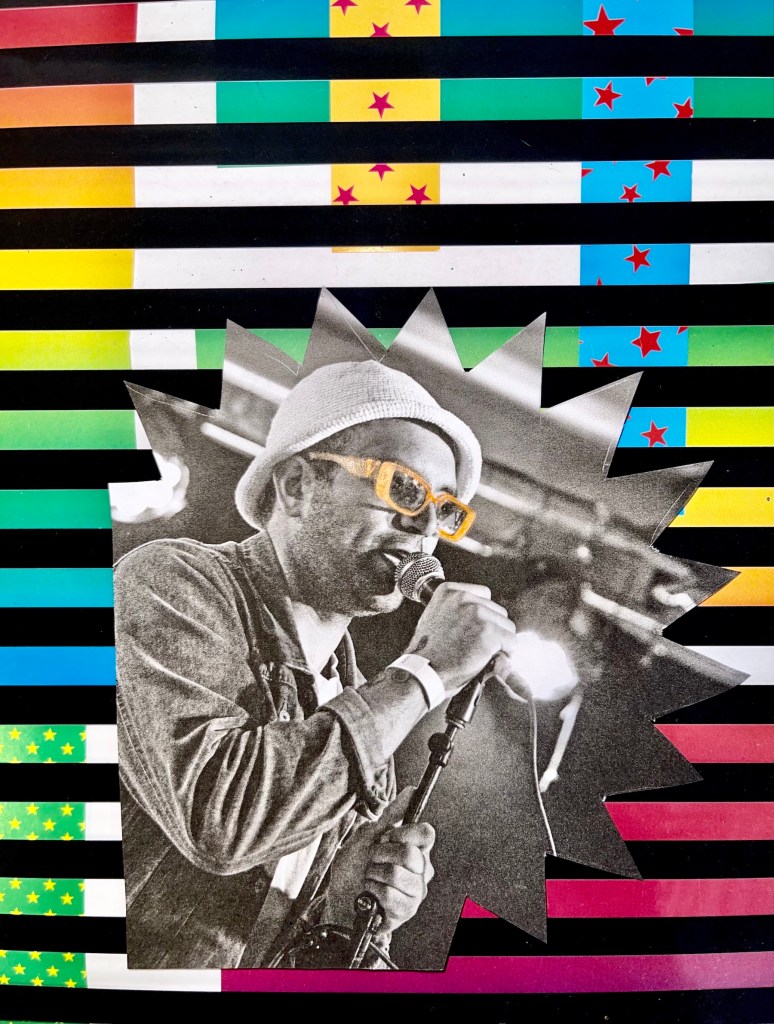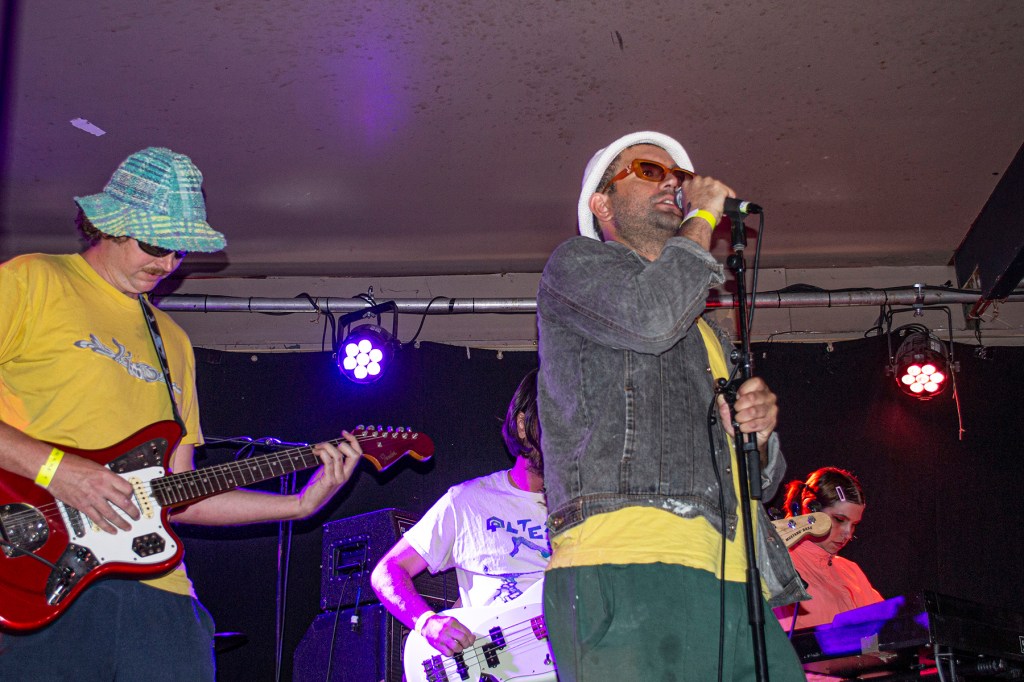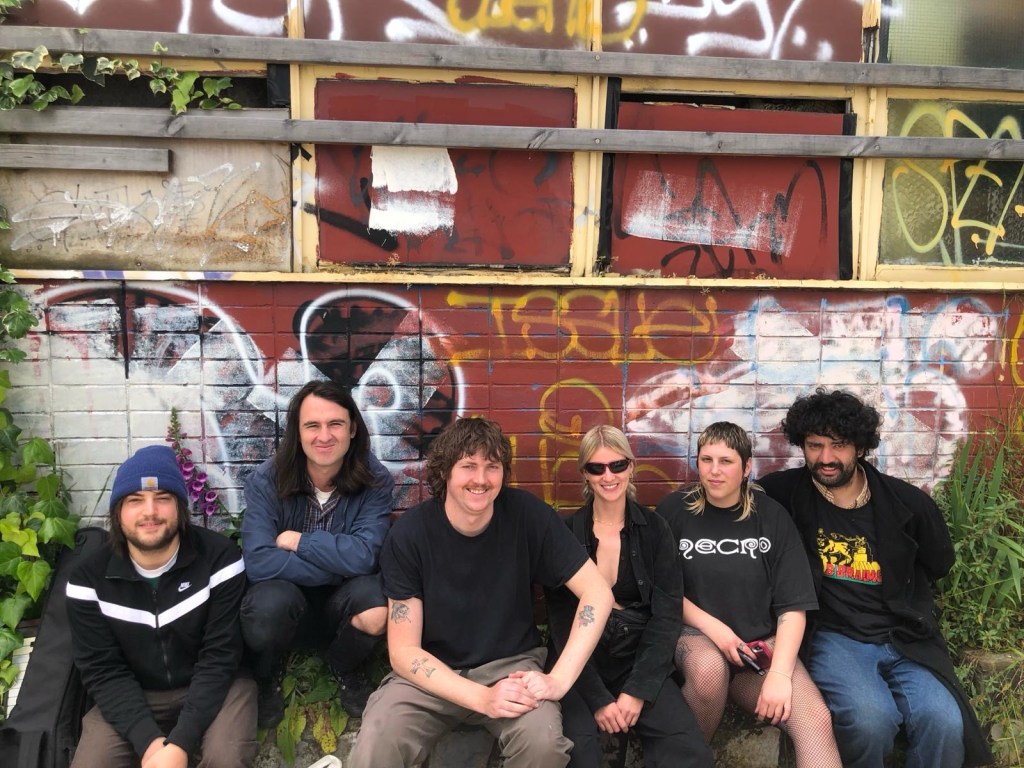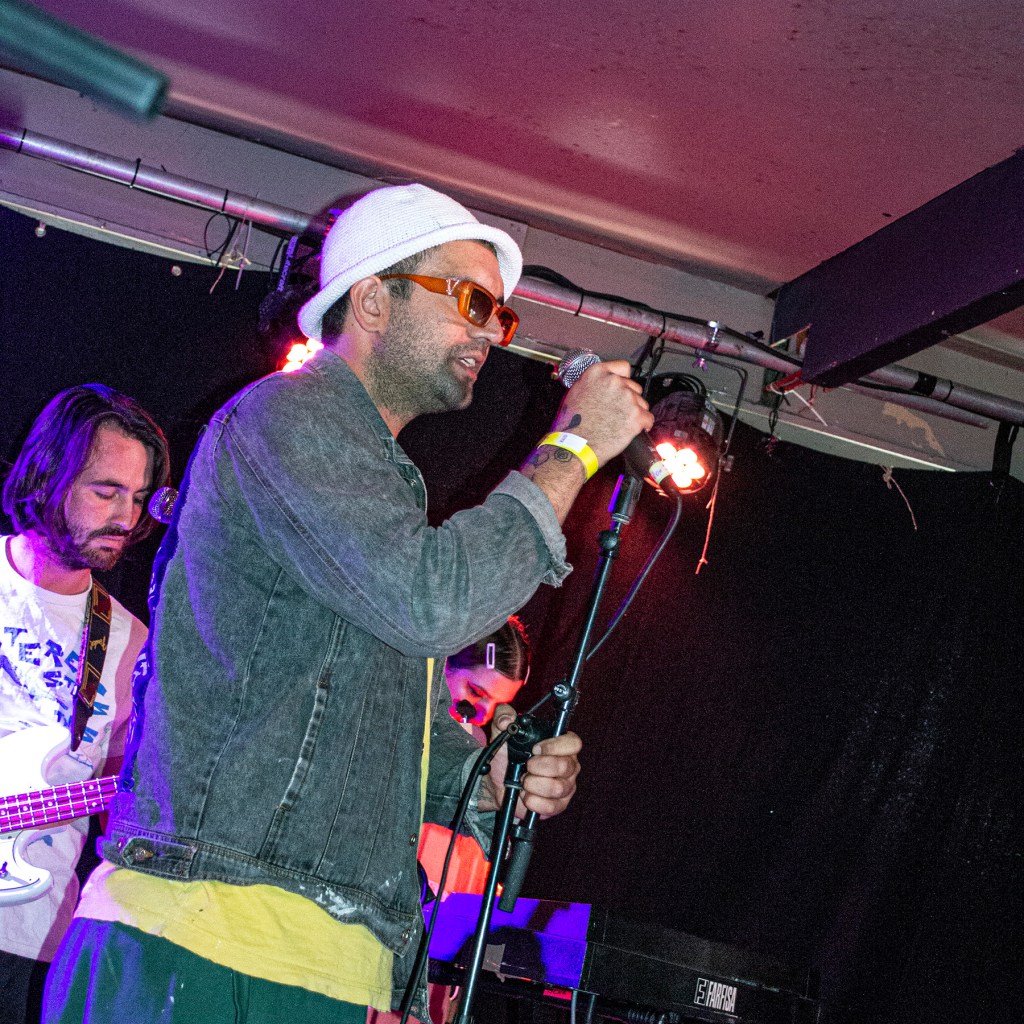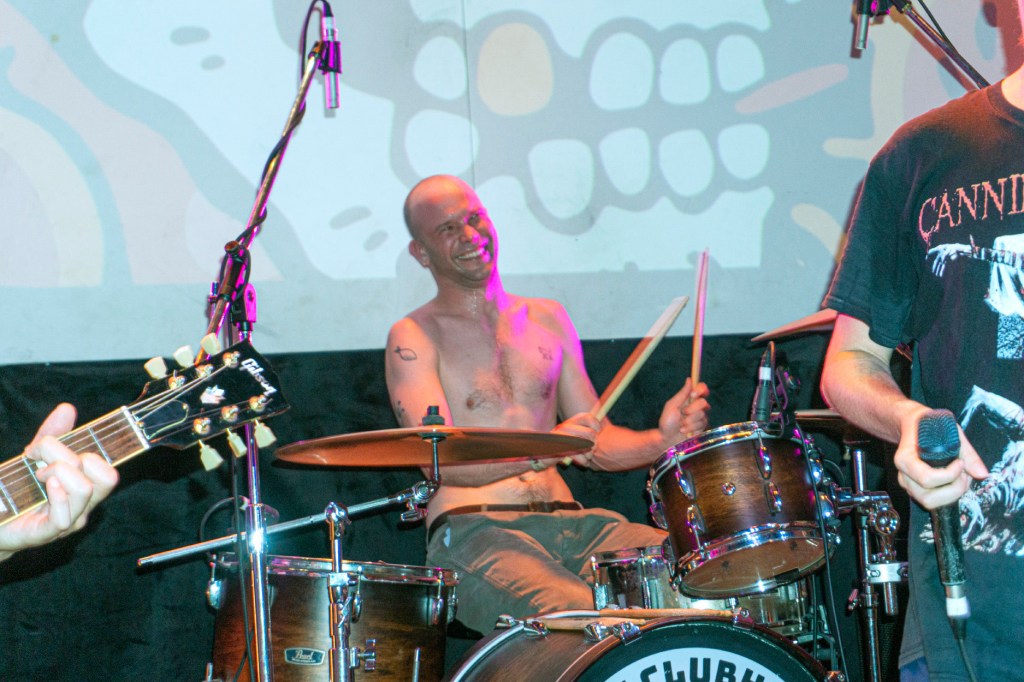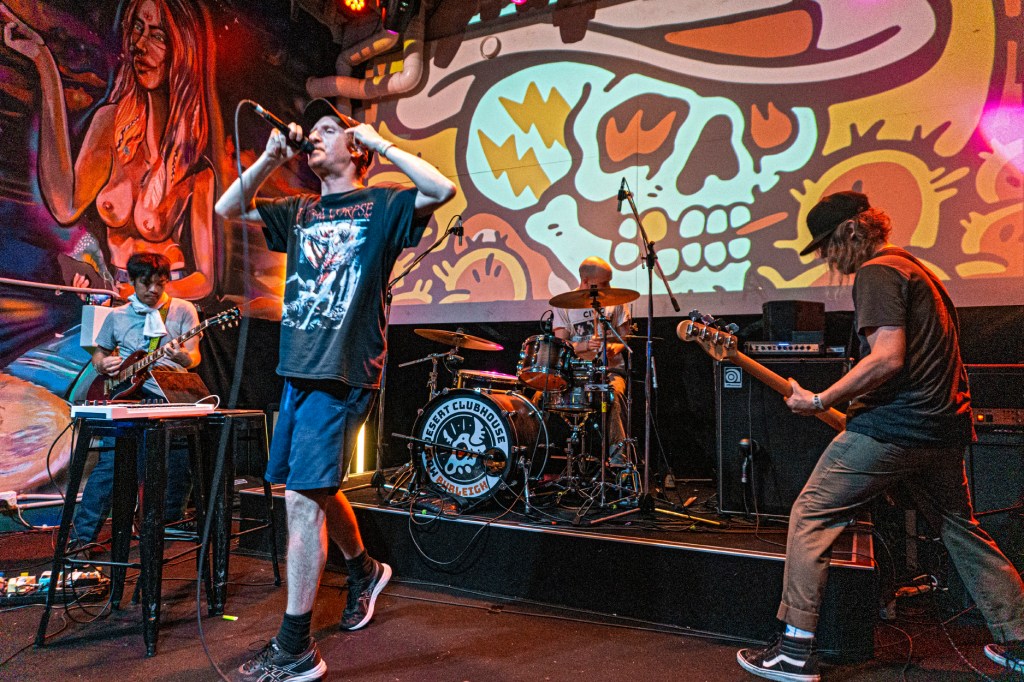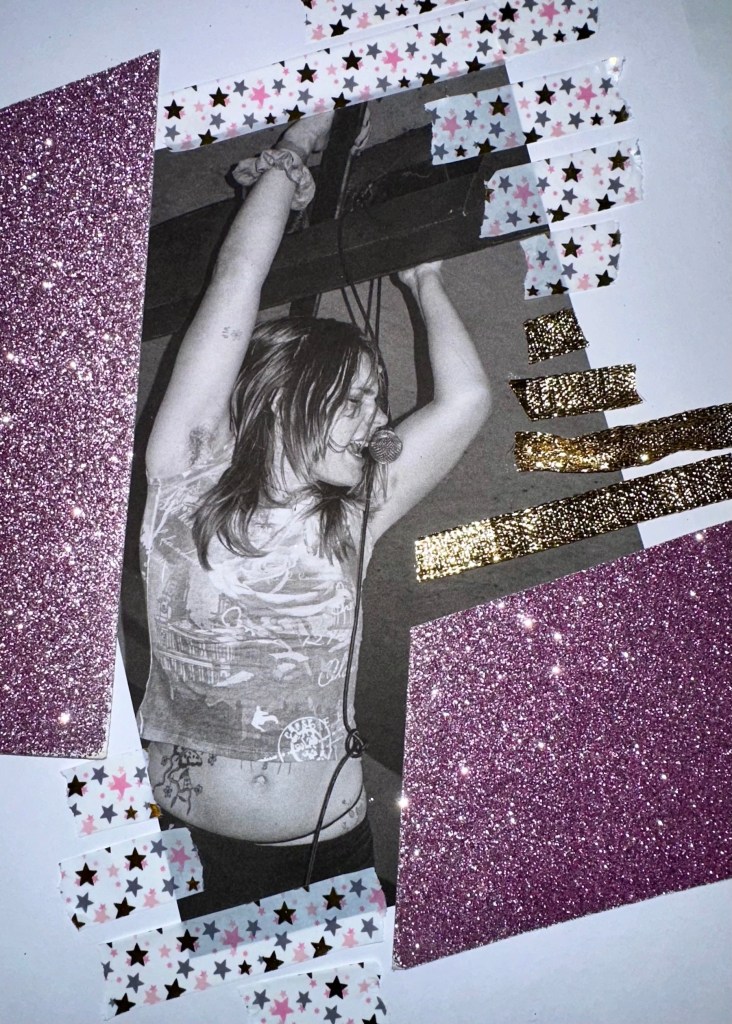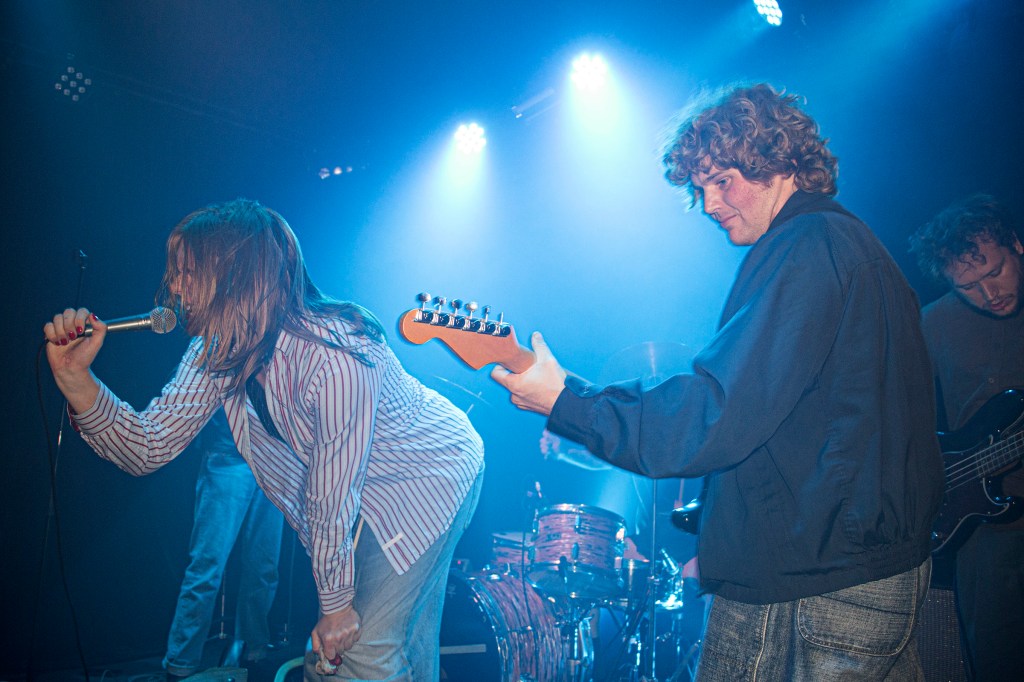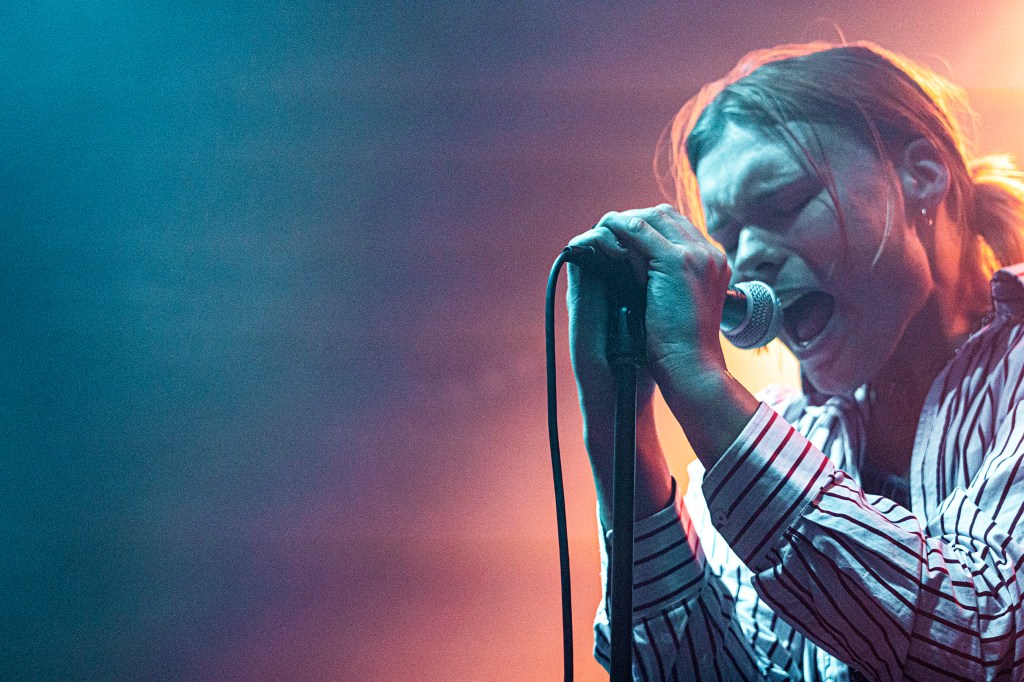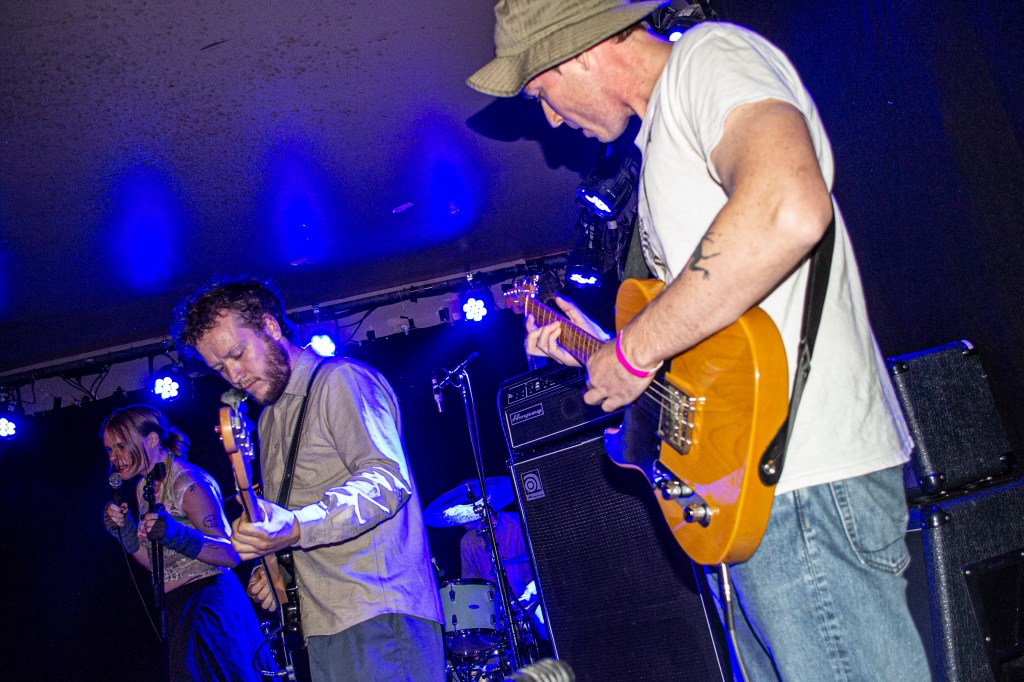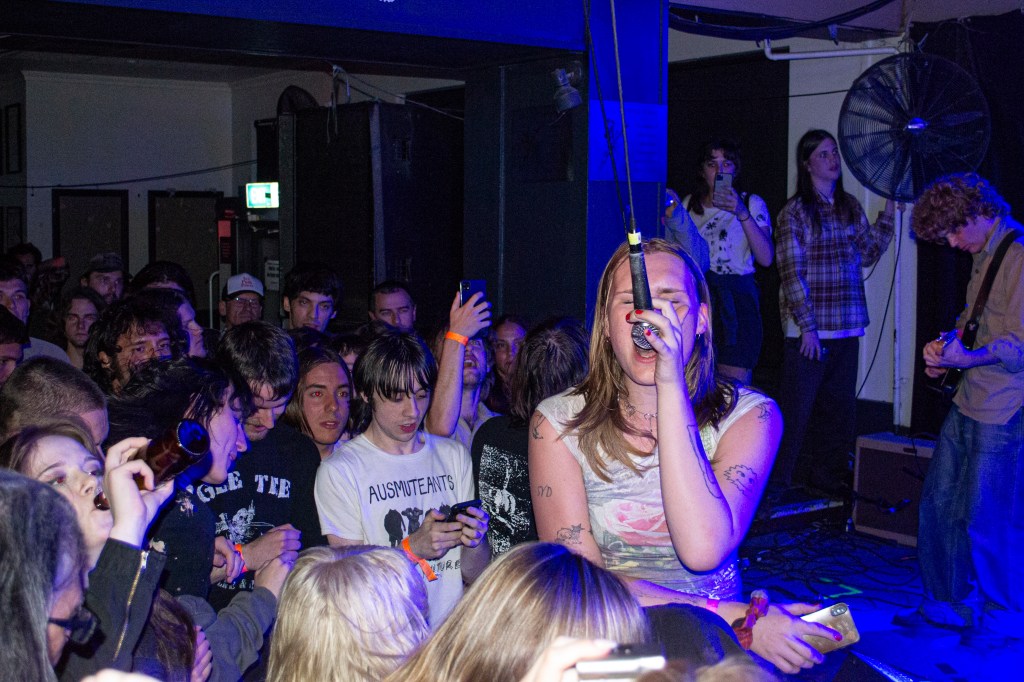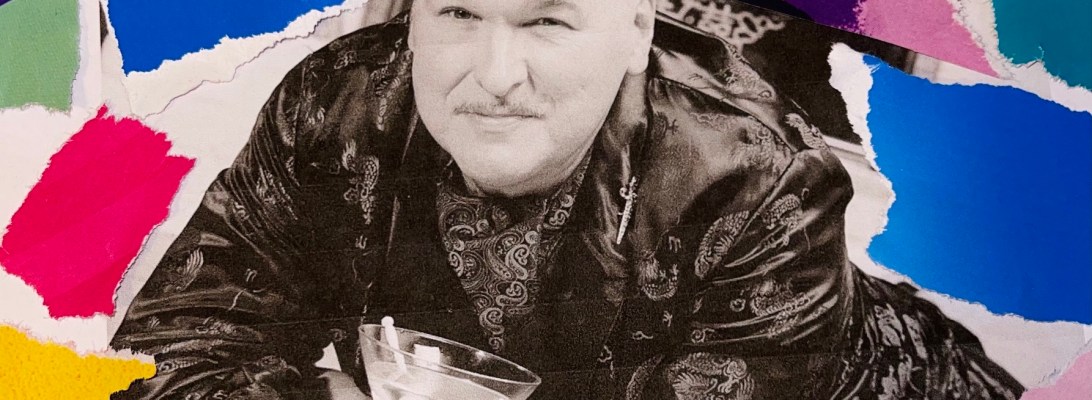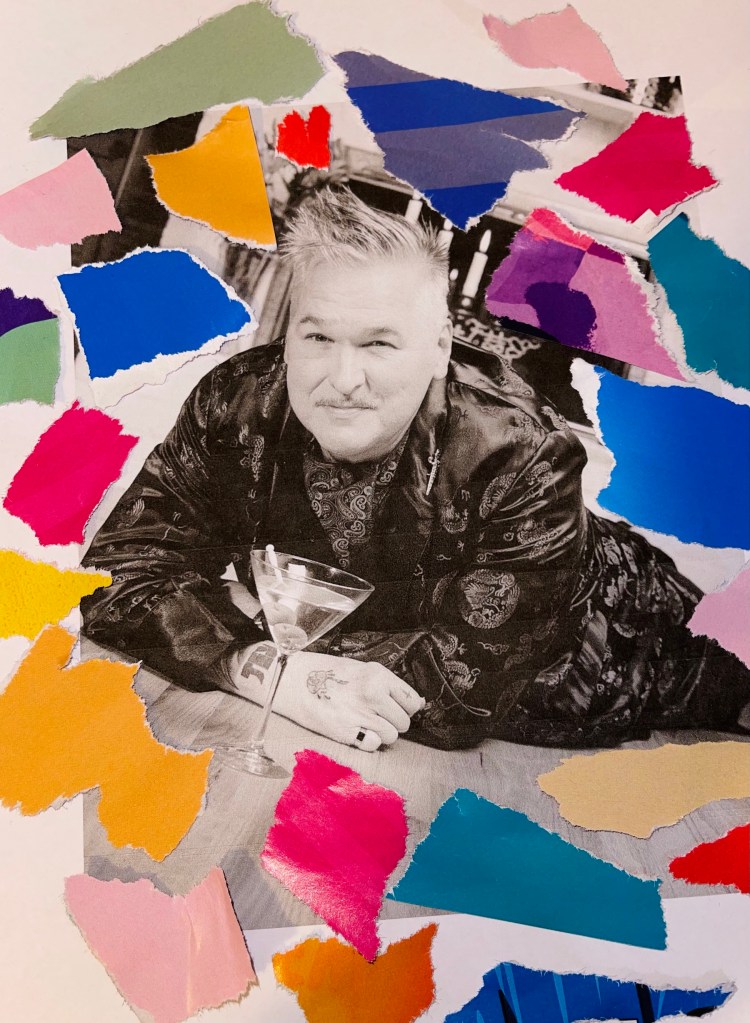
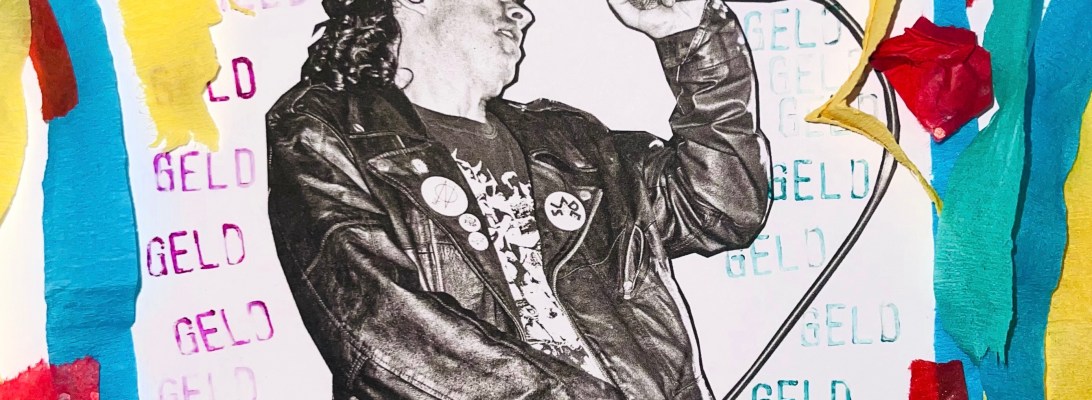
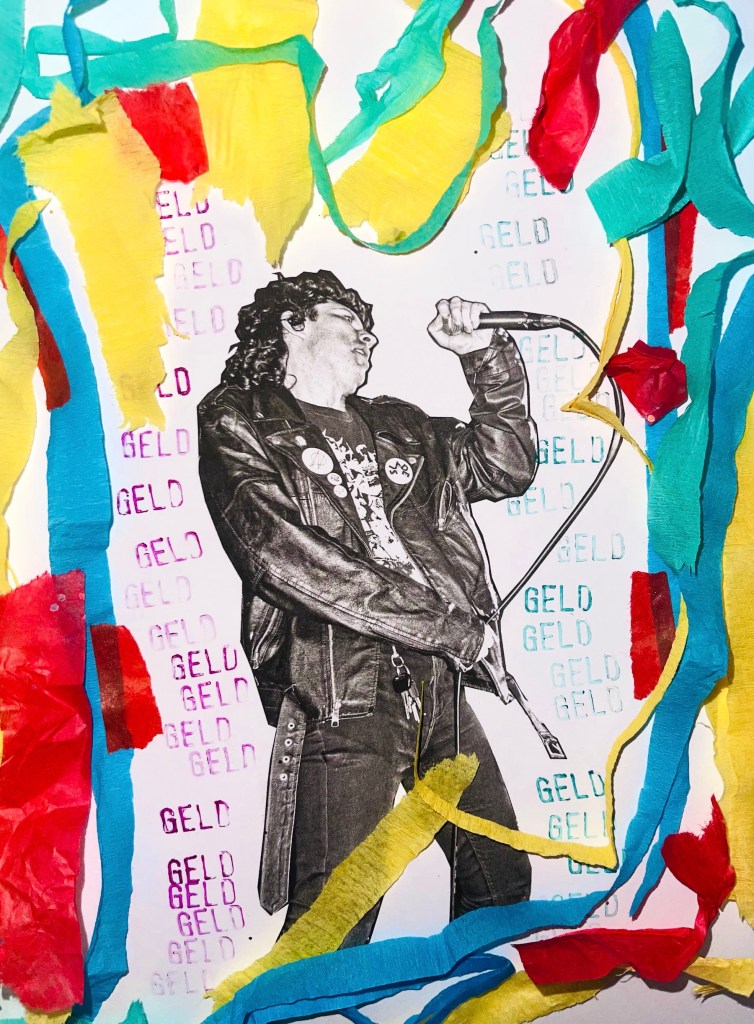
Al Smith from Geld: ‘It’s quite confronting to feel so much emotion surging through you.’

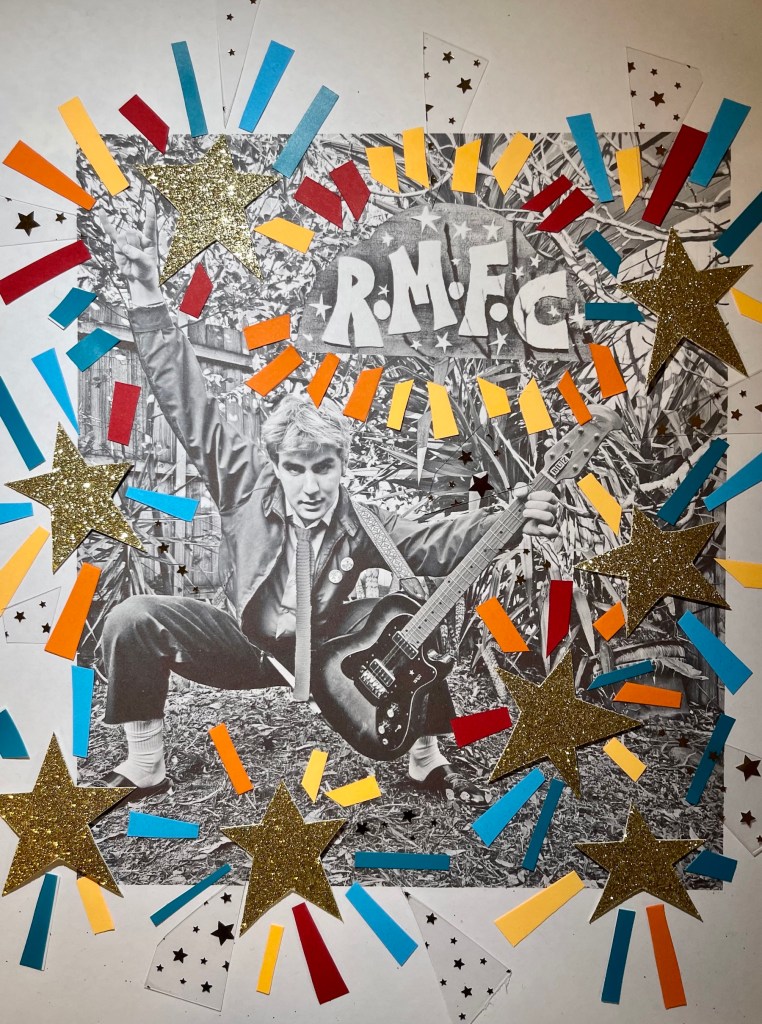
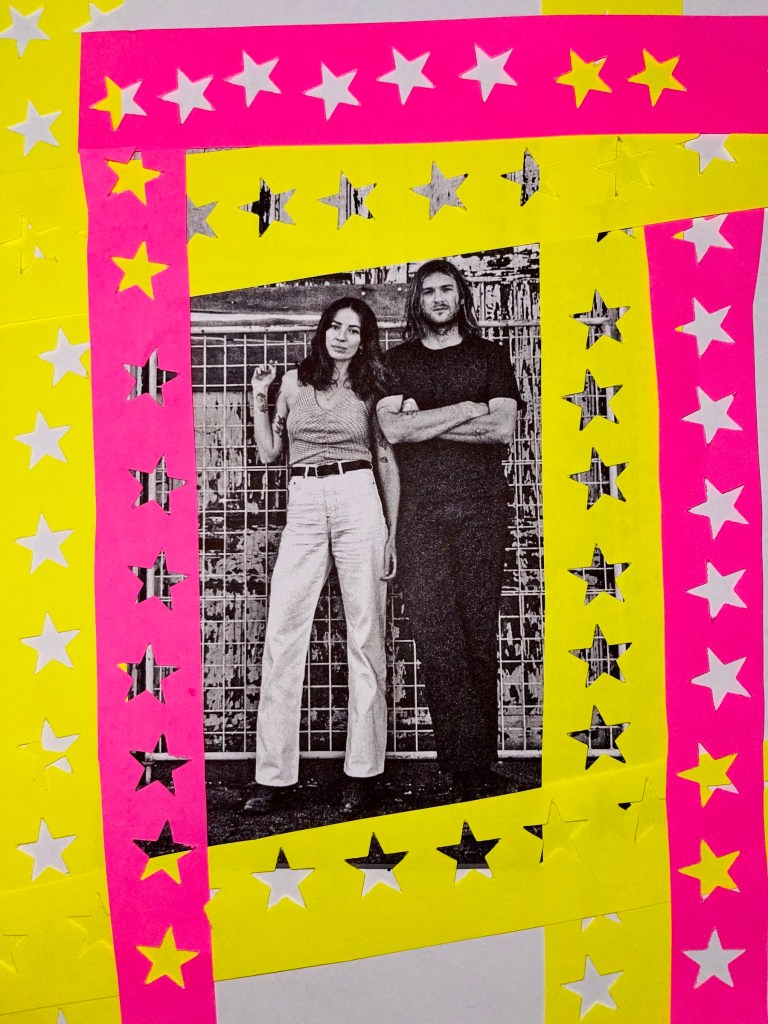
Original photo: Jhonny Russell / handmade collage by B

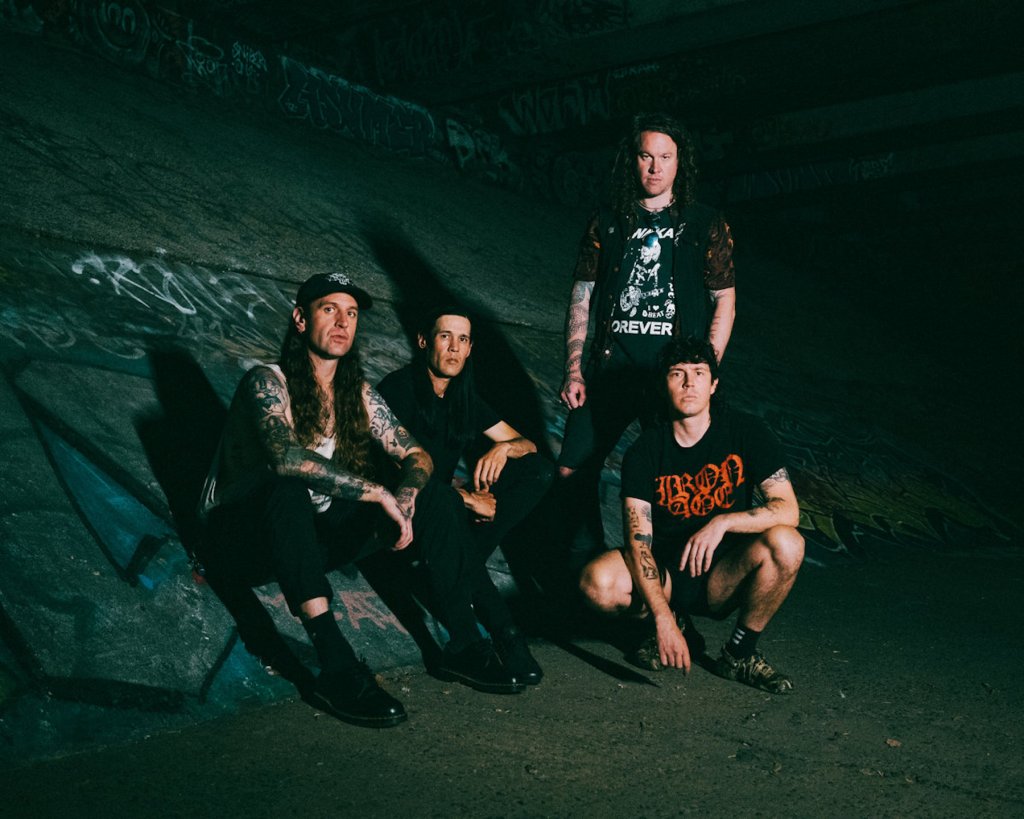
On album Currency // Castration Naarm/Melbourne hardcore band, Geld, have found a perfect balance of ferocity and ecstasy. Capturing the raw intensity of anxiety and the transformative power of release, they’ve dialled it up, coalescing all they’ve done before into making a brilliant record, their best yet. The album never drags, and it’s not the heavy moments that hit hardest, it’s the points of difference that have helped Geld carve out their own identity and enables them to stand apart from the heavy pack.

Geld’s guttural vocalist, Al Smith, sat down with Gimmie for an hours-long chat. He discussed the band, their album, hardcore, and the isolation the band has felt. Al also tells of wild shows, having a boner for community, and of a tour where he could have died. Additionally, we discuss Turnstile, soapboxes, and mental health. He also speaks about a Naarm/Melbourne band deserving of wider recognition, and his involvement in other bands with new releases in the works: The Neuros and The Vacant Lot.

In a couple of years, I’ll have been chatting with punk and hardcore bands for 30 years. I’ve been doing it since I was teen.

AL SMITH: Wow. There’s so much stuff in the scene aside from being in bands, those auxiliary roles of photographers and writers that are important. It seems like there’s no one actually doing any writing much at the moment. What you’re doing is pure music journalism.

Thank you. I just write about something I love and share that with people. 

AS: When I was young, I came from the suburbs and didn’t know anyone in music. The way that I would consume music and find out about stuff was through community radio. I had my Maximum Rocknroll subscription and I’d go down to Missing Link and get all the fucking zines and pore through it all. That’s not really a thing that happens anymore.

We started Gimme online during the pandemic and started doing the print issue too. In the first year I interviewed over 150 bands. We mail the print zine out ourselves, and it was really cool to see where it goes, a lot of regional places, which is awesome! We’d get nice messages from people that got it, saying that it really helped them feel connected to music and the scene, especially during lockdowns.

AS: That’s incredible. When we got interviewed to do our bio. Everyone at Relapse was like, ‘Look, if there’s going to be one thing, aside from the record itself, that you actually think about and want to get right, it’s the bio.’ Because every single publication is just going to rinse and repeat that.

I was vanity searching, seeing what people have been saying about the record. If someone does 200 words aside from them just posting the bio, that’s a lot of effort, it seems. It’s wild that that’s the landscape of music journalism.

On a grassroots level, it seems like people are just kicking these bios down the road. I was reading Gimmie, and it’s obvious you guys really care about music. It’s a dying art form to do actual hard music writing. What you’re doing is cool. We were really happy that you asked us to have a chat. 

I’ve been wanting to talk to you for ages! I only knew you through your live shows and music, and you seemed pretty scary, so I was reluctant to ask. Talking to you now, obviously you’re not scary.

AS: [Laughs]. It’s all pretend!

Just before we started chatting, I was really nervous, despite doing this for so long I still get nervous before talking to anyone. To be honest, I feel kind of awkward anyway in social situations. 

AS: I’m the same. With a one-on-one, I’m like aces. But if you get a group of four people, I’m shocking. But also, I could imagine it being a little confronting because you don’t know what this person’s gonna be like as conversationalist. Maybe you’ll be like, so how was making the record? And they’re like, ‘Oh, yeah, it’s fine.’ That’s it [laughs].

There’s lots of things I want to talk to you about, because I LOVE Geld, and other bands you’ve been part of as well. Why is music important to you? 

AS: I was a bit of a loner when I was younger, and getting into music in early high school was a thing that I actually cared about. The only reason I wanted to start playing in bands is, I wanted to contribute to the cause. All these people that I love from afar are doing all these fantastic things. And it feels disingenuous to get so much out of something without throwing your hat in the ring. Like you with writing, or again, photographers, or people that love to book shows and stuff. It’s contributing to something. A huge part of it was, on a personal level, my own sense of agency.

Playing in Geld has been something where it’s like, we’ve all been in heaps of bands and we’re all a little bit older and we just wanted to do a band that was the synthesis of everything we like about being in a band. That includes friendship, the social dynamic to how its collected in an artistic standpoint. It’s weird to think about it because I’ve been playing music for, shit, maybe almost going on 20 years now! It’s now just, like, fucking wallpaper—one big thing. 

When the pandemic happened and we didn’t have shows, that routine that we’re all so used to wasn’t there. For a while, it was refreshing because it can be exhausting going to shows and doing the whole thing.

When that period of lockdown was over and we could somewhat safely start going to shows again, I had this real come-to-Jesus moment where I was like, holy shit! I totally took for granted how much this enriches me as a person and how it’s like, magic. My mental health started to get so much better. I started going to shows and started playing shows again.

There’s that old adage: someone’s like, ‘Oh, I’ve got to go play this show,’ or ‘I’m going to The Tote again,’ or something like that. When it all came back, there was this refreshed air of positivity. I think a lot of people had the same experience as me. It was like, oh, this is actually a really important community that does offer lots to people.

It’s sort of always been the only thing that’s really made sense to me. It’s like an extra limb. It’s just sort of there.

I totally get you because I feel the same. We wouldn’t have stuck with this so long if it wasn’t important to us. Music gives us so much. You find friends through music. It’s gives you community. It helps you discover and express yourself. I found my husband through music. All the things that I do, it’s pretty much because of music. It can give a sense of purpose. 

When I first got into the punk and hardcore in my teens, I became really obsessed with it. For a while, it became so much part of my identity. As I experienced more and grew as a person, I learned that there’s a much bigger world out there.

AS: Yeah. I’m always a little tentative to drink the Kool Aid too hard. Because the last thing you want to be is a really fucking boring person that is just like, ‘My personality is hardcore,’ that sounds kind of gross.
Totally! 

AS: You can draw a direct line from punk and hardcore—by extension, music in general—to basically everything in my life. Like you, I met my partner through music. My entire friendship circle is sort of geared around this thing, and, again, something like the pandemic made you take a step back and realise, oh, okay, it is a pretty seismic change to take away something that you’re constantly doing; you just take it for granted.

At one point in my life, I enlisted into this thing because I cared about it from a personal level. It started to permeate into other parts of my life, like my social circle. I’m super lucky that I was around a scene that was a real diverse scene. A lot of people aren’t as lucky as us to be in a community that has different folks from different genders and backgrounds. I’m so lucky that I had heaps of women in my life—strong women—that were able to help shape a lot of my core values, that have sort of unconsciously come into me. I’m pretty happy with where I stand with my values right now.

Honestly, if you do the Sliding Doors-thing, and I went off and did something else, maybe I wasn’t going to have those values, and maybe I wouldn’t have this kind of mindset that I hold pretty dear. Along with having mates to get pissed with and being able to see sick bands, there’s also a certain moral compass that gets defined within people in a small community that is so diverse.

What are the things you value? 

AS: I’ve got a real massive boner for community. Ultimately, at the end of the day, those are the things that are important: having a connection to people and being able to create and do things in this very holistic context. We all take it for granted from time to time, but it’s something that’s so enriching for so many reasons. I guess I’m the biggest lefto soy boy cuck there is! [laughs].

To be honest with you, it’s somewhat uncomfortable to talk about your values because I don’t want to be like, ‘Of course, I’m like a far-left leaning person that is very heavily centred around community.’

I know what you mean. I asked about your values because you mentioned you’re happy with them and I was curious to know more. I got many of my values sparked from being part of our community, even just through listening to punk bands, reading liner notes, and interviews with bands, I learned so much. For example, it made me take an interest in politics and influenced my dietary and lifestyle choices.

AS: Those kind of things can spawn from a superficial standpoint, like, ‘That cool person is doing that thing.’ But then after a while, you can look back at it and think about it, and it’s like, ‘Oh, no, this is actually something that’s pretty cool.’

I’m endlessly grateful that I fell arse-backwards into a community that was able to help me shape my ideas in a pro-human context. Because if I was to be ingrained in a corporate community or something like that, I don’t know if I would still have these same values. That’s kind of scary.

People scare me most days. 

AS: Oh, that’s because everyone’s awful by and large. 

[Laughter]

Don’t even get me started. That’s part of why I do stuff like interviewing people one-on-one or doing behind-the-scenes stuff. I don’t want to be out the front or the face of anything. I’m not interested in attention. I just want to put good work out into the world to counter all the negative I see and experience.

AS: Yeah, I know what you mean. Having a one-on-one conversation, there’s a lot more meat on that bone.We’ve done a bunch of interviews with us as a band, and you kind of fall back into canned answers. Questions are the same, and so you’re just saying the same thing, and it feels like you’re just reeling off a script a little bit. Not that it’s not true, but there’s only so much you can talk about when someone’s like, ‘So you’re a psychedelic hardcore band…’ That was coined one day, and we feel really uncomfortable about it.

I get that; I find labels pretty flaky in general. Geld have a new album called Currency // Castration. One of the first things I noticed, is the title is two meanings for geld. 

AS: Correct. We wanted that title because it’s quite good from a visual standpoint; it looks pretty stark. Playing in Germany, basically the healthiest scene in Europe (it might have changed since we were last there, but it was so when we played seven or eight shows there), without fail, there would be some lovely but also equal parts punishing German person come up to me and be like, ‘Did you know that Geld means money in German?’ We were like, yes, we have access to the internet. That’s actually why we named it that. I would be like, ‘Do you know it actually means castration in English?’ And they would be like, ‘Oh, I don’t know.’ That’s been a running gag in Geld for a minute now.

To be a bit more serious about it, this record was also the most collaborative record that we have done thus far in terms of how many members are actually contributing songs. We also did think it was a pretty concise synthesis of what we thought the band was like, a good representation. For an all-encompassing record, it suits to have an all-encompassing name. 

I don’t know if we’ll make another record that we feel is so encapsulating of what we want Geld to be, or what we think Geld is supposed to be at this particular time.
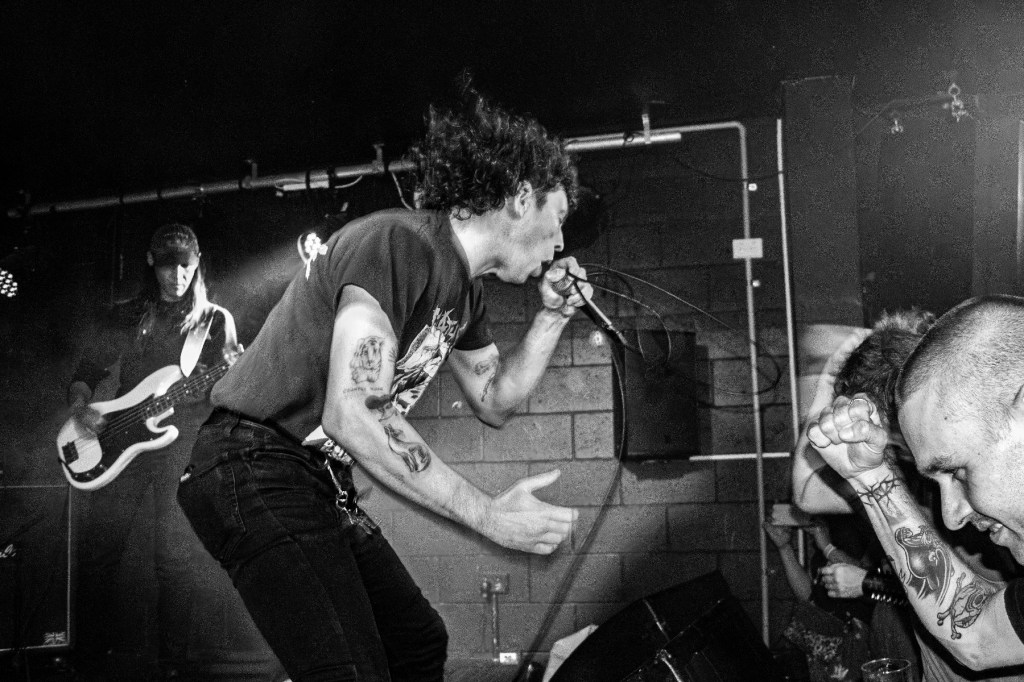
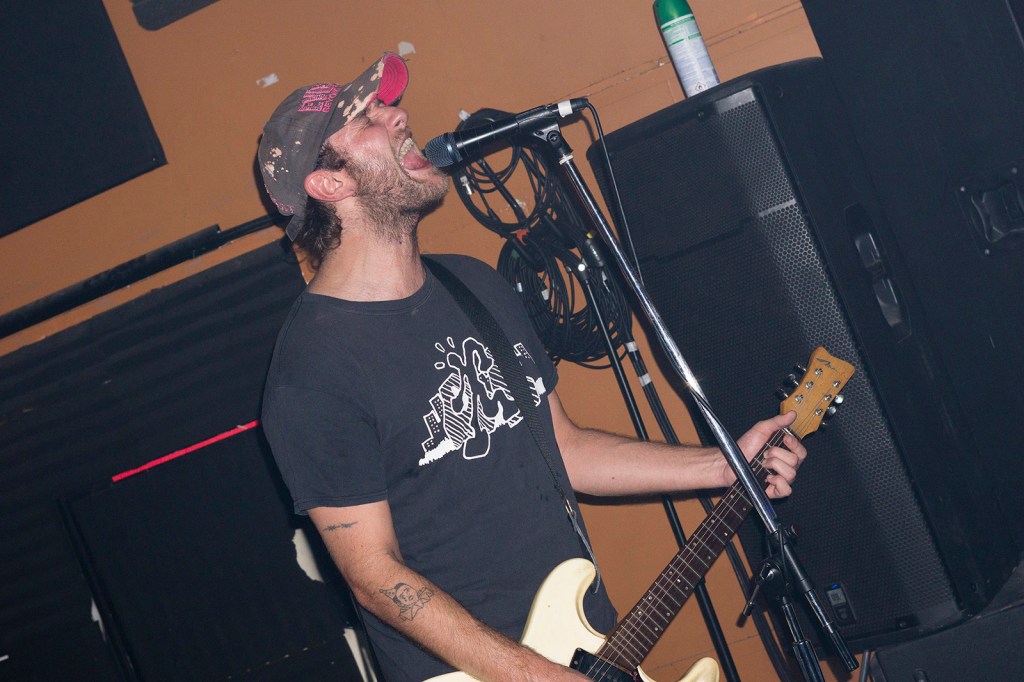
Photo: Jhonny Russell

Album opener ‘Currency’ and closer ‘Castration’ are instrumentals. ‘Across A Broad Plain’ in the middle is too. 

AS: A lot of the time when we’re writing these records, what we’ll usually do is write anywhere between 15 and 20 songs. There will be no preconceived notions of what the record is supposed to be or what it’s going to sound like, or there’s no kind of conceptual identity to it. We’ll just keep writing and writing and writing and writing and writing and then after, if we feel like we’ve got enough of a base to work with, we’ll start trying to put things together and see, okay, do we have a record in this? That’s when the songs go onto the canvas and we just look at it and we’re like, okay, does it need anything more

Most of the time, we are like, okay, it probably needs some kind of interlude. It needs some sort of intro, it needs other things. So I guess for a lack of a better word, the ‘Currency’ and ‘Castration’ situation are an aesthetic thing, placeholder titles for interludes that we think are important to make the record feel complete and concise.

I noticed that song ‘Hanging From A Rope’ has the lyric: Across a broad plain in the new age. That song appears before ‘Across A Broad Plain’; are they connected in any way?

AS: Not necessarily. I just thought that it was a good line. ‘Hanging From A Rope’ is definitely the most effort I’ve ever put into lyrics of any song at all—I tried a little harder. Not that I don’t try with lyrics otherwise. If you’re singing about what you know… [pauses]. I’ve always felt really uncomfortable… [pauses again] what’s the best way to put this? I don’t want to dump on anyone. But I feel comfortable standing up on a stage and screaming about something that I can then look back at and be like, ‘Yeah, this is something I believe in and this is something that I can speak truth to power to.’ 

As a cis white middle-class man [laughs], there is a lot of shit going on in the world that is really fucked up, but I am also someone that is directly benefiting from it because of who I am and my background. So, it feels disingenuous to talk about like… what are the things that actually are going on with me. Most of it is inward and it’s my own mental health. My anxiety and things that are going on inward feel much more comfortable to me. Getting up on a stage and screaming about it, rather than talking about current events. I also feel uncomfortable with people time stamping songs.

‘Hanging From A Rope’ was from a lyrical standpoint is all pretty introspective, like most of the record. That’s always been a running theme in Geld. It’s not like we are nihilistic or apathetic to the things going on around us. But, if everything has been focused inwards, all of the anger comes from our limitations and the things that we struggle with personally, rather than us projecting out what is wrong with the world. Because as a bunch of dudes, I don’t feel comfortable with that. I feel much more comfortable talking about everything that’s wrong with me rather than everything that’s wrong with the world. I understand how some people would see that as difficult.

Everyone has problems. Everyone’s problems matter to them, and sometimes someone is going through something that doesn’t seem big to you but it’s massive to them.

AS: For sure. You never want to get into a fucking dick measuring contest with someone else’s problems because there’s no baseline, there’s no manual for grief and pain. If someone feels something, they feel it, period. That’s it. 

It’s cathartic for me in my own mental health, writing about that stuff. 

By you being open and sharing those kinds of things, it can help others that resonate with it. How many times have you listened to lyrics and thought, ‘Oh my god, this person gets me!’?

AS: Totally. Also from another angle, Geld has never set out to be a band that sounded different. We’ve all done genre bands before. We’ve all been in D-Beat bands and did a whole bunch of different kinds of music. Those bands are great, some of my favourite bands in the world are like hard, dyed in wool genre bands. But we wanted to do something where there is literally nothing that is not on the table. The only prerequisite is—to do something good. We all have this trust in each other to be objective about what is good, and what is bad, and have a really good bullshit filter. You can do whatever you want in the band.

In the beginning at least, that ended up isolating us a little bit because we were too much of a hardcore band for the punks and too much of a punk band for the hardcore bands. We felt pretty alienated. Maybe unconsciously, that permeated into the way that I’d write lyrics, because I would feel that. If the band is focused inwards, it makes sense for the lyrical content to toe the line with that.

There’s themes of alienation, isolation and anxiety on the record. A lot of songs are about your own mortality and time ticking away. 

AS: Yeah. Bemoaning the concept of time being created. It’s a day of me just being stressed as fuck and thinking, ‘Who the fuck started this?’ Someone did it. I want to find that motherfucker and I want to beat them up because they’re the worst. Someone just went, ‘Aaannd, go!’ and that’s how our lives work now. 

Yeah. Then you’ve got calendars and everything else that measures our existence, and keeps us on a schedule. 

AS: [Laughs] Another thing, from an aesthetic point of view, when I deal with anxiety in an episodic standpoint, re: panic attacks, obviously they’re bad experiences, but the other side of the coin is that that’s one of the times in my life where I feel the most powerful. Because just in terms of pure energy that is being put out, it’s quite confronting to feel so much emotion surging through you. In the most uncomfortable way, it’s also cathartic. 

I’ve always related the idea of all the hardcore bands and punk bands I like, when you can see sound, the aesthetic correlation; punk and hardcore sounds anxious. Everything is a tight spring that’s about to break. I’ve always loved it so much, it’s like techno. It’s about attack and release. That’s why people can mosh to it and people can dance at club nights. I see a like direct correlation between anxiety, pent up and then releasing.  
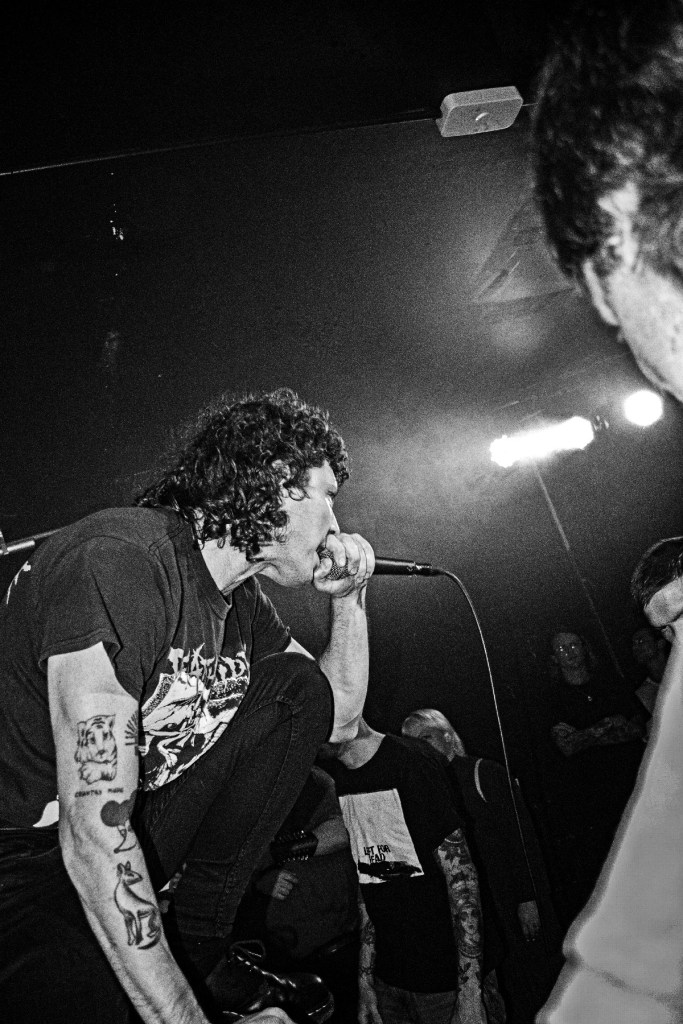
Photo: Jhonny Russell

Yeah. I know that feeling.

AS: Isn’t that the best feeling in the world? Where you are seeing a band that is killing it and then all of a sudden, out of nowhere, you realise that your whole body is tensed. It’s just like, ‘Oh, I haven’t breathed in a while.’ [Laughs].

Totally! That was me at your show on the Gold Coast when you played Vinnie’s Dive.

AS: That was such a weird show [laughs].

It was the wildest show I’ve ever seen there. One of my all-time favourite live moments ever, is when you were talking to the crowd and told them, ‘Do better!’ Just after that, I saw a table thrown right into the middle of the pit. After your set, I saw at least five people bleeding. 

AS: Sorry. Now we play on a lot of different lineups, a lot of them being HxC lineups, and they don’t really know what to do with fast music because we’re not a two-step band.

For the longest time, again, being a generally uncomfortable person, I wouldn’t say anything to the crowd. Because it’s staunch and it’s stoic and it has this nihilistic standpoint… I’m like, I’m not even going to speak to you. I’m just going to yell and yada, yada, yada.

And then after a while, Cormy [Geld’s guitarist] said to me, ‘Hey, you should actually say stuff and engage because it’s a good thing—you should do it.’ I was like, ‘That’s so stupid, I hate that!’ Eventually, it started to happen, and I started to actually engage and verbalise.

I always thought that the things some people said on stage was sort of time-wasting, placeholder things like, ‘Oh, yeah, thanks for coming out,’ stuff like that. When you see those hardcore bands, the singer going off on some fucking diatribe, I’m just like, ‘That’s so uncomfortable. I feel so weird about that.’

But it’s true, though, people actually engage with the words that you’re saying. People aren’t necessarily present of their own place at a venue and someone’s like, ‘Can you actually do something?’ They’re like, ‘Oh, okay, what? Sure!’ Again, it’s all pretend.

I was standing at the front at your show, and when that table got thrown, I was like, ‘Nah, I’m out.’ I’m going to go stand at the back now because I didn’t want to get hurt.

AS: I seem to remember me standing on that table and immediately regretting it because it was not stable. 

So we were talking about you telling the audience to do better…

AS: Oh, yeah. Geld, we’re really big pro wrestling fans. It’s not a character, but… it would be disingenuous, especially for hardcore front people, to be like, ‘Oh, yeah, that is totally how I am all of the time.’ Like, no, it’s not. Even if it is honest with yourself, it’s like this cartoony amplified version.

For me, it’s quite liberating to admit that it’s just a fucking… I’m just being antagonistic because… I don’t care if people move. It’s not going to keep me up at night [laughs]. But it’s fun playing to it. I get a giddy little thrill of just poking the bear and seeing if it’ll incite some kind of reaction. And it did at that show—win!

After seeing that show, we thought the Jerkfest set you were going to play, would be similar so we sat up on a table to avoid the craziness. But it didn’t end up being as wild.

AS: I’ve gotten to this unhealthy way of gauging the quality of shows by how much chaos happens. That is a bad road to go down. Especially because there’s a lot of variables that go into people going crazy and you would just be like, ‘Oh, not many people moved, so I guess we suck!’ Being a hardcore band that doesn’t make people move, you think it’s a bad show. But that’s not necessarily it at all. 

Do you have a show that you’ve played that was really memorable?

AS: Yeah, when we played in Boston in 2018, it was off the back of us doing Perfect Texture, the first record. People had moved at our shows before and we had some pretty crazy stuff happen, but it was the first insane show and probably because someone happened to film it. It’s on YouTube. I remember watching that back and it was like, oh, yeah, all of these wasted years seems like… it was really validating. 

it was during the summer in Boston and it was just like it would have been at, conservatively, north of 35, pushing 40 degrees on stage. Soon after that show, I ended up getting pneumonia. We still had four or five dates on the tour. I’m about to say something that’s going to be a real big flex, but if I hadn’t known it was pneumonia, 100% would have cancelled shows. But I just thought I had the flu or a bug. 

Every single night was hell. I was in the van shivering, freezing and sweating and just before we’re about to play, someone from the band would knock on the van window and I’d be, all right, let’s go do it! Peel myself out of the van and go and do it. I immediately get back into the van after, and be freezing. It was terrible. 

The last show was in New York and I had a couple of days with my partner. Luckily, I got travel health insurance and I went to the doctor. I was honest and told him what was actually going on. He was like, ‘You fucking idiot! You very easily could have died! Pneumonia is straight up, like water in the lungs. You had water in your lungs and you were screaming!’ [Laughs]. In a toxic masc[ulinity], part of my brain, I like, ‘Oh cool.’ But then I felt so embarrassed, like, all humans are supposed to not kill themselves. I felt like I did really badly at that. It was embarrassing. 

That’s so full on! Is there anything you do to look after your voice? Have you taught yourself ways to scream where it doesn’t harm you? 

AS:  Yeah, I think the latter. I try not to be an idiot about it because I have lost my voice on tour at times. Speaking of embarrassing moments, that is terrible. 

Do you feel like you let people down when that happens? 

AS: 100%. We played a show in Leipzig, and I had lost my voice. There was 250+ people at the show, and I was standing up in front of people being, ‘Sorry!’ It’s like, oh, god, no. I try and not overdo it. There’s ways to fake it without actually yelling. I’ve found a spot, because I haven’t lost my voice in a really long time.

You mentioned that playing the show in Boston, you felt really validated; did you feel validated signing to Relapse?

AS: Super. It’s so very validating! The nerdy suburban kid in me just feeling like I was listening to all of those Relapse bands when I was a teenager. All of us feel really over the moon with it.  

Because of the pandemic, by virtue of time, we ended up, this is the longest we’ve ever worked on a record. We  were working on the record for two years. It’s super validating, and it feels super rewarding to know that, the scope that Relapse has in terms of distribution and, how much effort goes into what they do; they’ve all been so fantastic. It feels good that something you’ve worked on for so long is getting the platform that is rewarding after that whole process. 

You guys have been doing it for sometime! In the next couple of weeks, it’s the anniversary of your first demo.

AS: Obviously you know more than I do [laughs]. It’s been a while. 

Your first demo came out in 2016.

AS: Oh, my god. Fuck. Yeah. So we’ll be skirting around 10 years soon. 

The discography that we’ve had, we are hyper-aware that it’s atypical for hardcore bands to exist for this long, and getting to a third record is not the most common thing for hardcore bands. We’ve spoken about it a bunch of times; we definitely do attribute that to the initial mission statement of Geld being a band that we all want to be in and that we all are concerned about each other. We’re concerned about how we all feel about it. We’re concerned about being able to be as artistically and socially free as possible.

It’s meant that whenever we finish a record, we don’t have time off. We’ll finish the record, and then it’s rehearsal the next week, and we’ll just start writing the next record. The initial mission statement of ‘nothing is off the table’ means that it’s always enriching to write stuff. It’s not like, ‘Well, I guess we’ll just cut out this riff again.’ It’s, ‘No, let’s mess around and see what happens.’ That’s exciting.

We rehearse at Cormy’s house and have a bungalow that has been really poorly soundproofed. Cormy just had his third kid. There is another side, quite a familial side to it, because we usually roll up to practice, we spend time with Cormy’s wife and the kids. We hang out for a while, play with them. And then eventually we’ll just go and rehearse. We’ll rehearse for like a tight 2 hours and then bail. So we’re not at a rehearsal room on a Tuesday night being either hungover or just mentally bereft from the week ahead, being in a rehearsal room for like 6 hours. That’s so draining and unsustainable. We’ve put a lot of work into the personal sustainability of the band. That attributes to being a band for almost 10 years.

In that 10 years, we haven’t had a break. There’s been forced breaks of someone might go on holiday or something like that, but usually it’s, Thursday, every week we go to practise and do the thing. No one’s really over it. We’re just going to keep the thing rolling. 
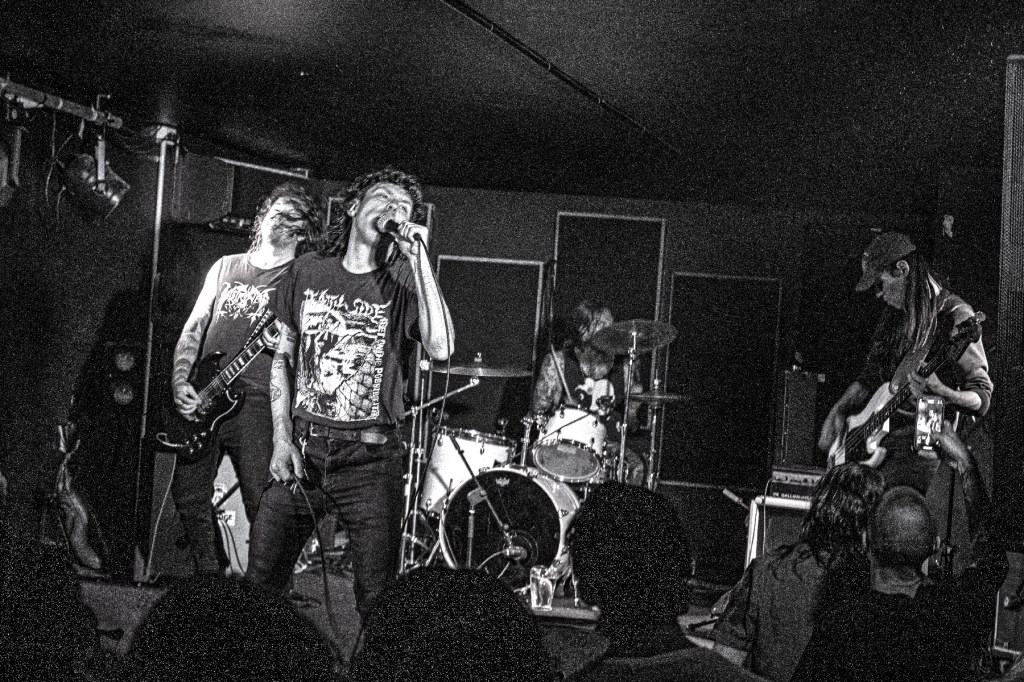
Photo: Jhonny Russell

You have something to look forward to every week? 

AS: Yeah. I get to hang out with everyone. I get to see Cormy’s family. Cormy and I are the only people that drink at practise. That’s one of my socialising nights. I’m sort of belabouring the point right now, but we’ve designed the band around us being happy and being enriched, so we want to actually do it. We want to make it the best thing it possibly can be. We are in love with this routine and this process that we’re in. 

Nice! One of the songs on the album is called ‘Success’; what does that looks like to you?

AS:  To be able to do this, you could argue that signing to Relapse is one of those things that would suggest that we have grander ideas of what we want to accomplish. But I think it’s more so that we just want to be a success making records that we’re proud of; that’s the most important thing. And going on tour and all of the other stuff that we got going on, that’s all just icing on the cake.

Success is feeling like we have done our best. When we eventually stop Geld, we’ll be able to look back on it and be like, ‘Yeah.’ We’ve been really lucky to get opportunities like Relapse. Being able to look back on that stuff and be like, these are opportunities that we seized rather than chased.

Someone made a gag the other day, ‘If we wanted to be successful, why the fuck would we start a hardcore band?’ [laughs]. A successful hardcore band is the biggest oxymoron of all time. There’s the gag of being ‘hardcore famous,’ where it’s, ‘Oh, you sold a thousand records.’ We’d start a fucking hyper-pop band if we wanted to actually be successful.

You’ve got bands like Turnstile, who I love. They’re a hardcore band. 

AS: Yeah. Turnstile is incredible! But they’re also incredible because they obviously did whatever the fuck they wanted  to. They’re a really good example of a band that emotionally puts work into connecting with people. It makes old-head hardcore dudes really mad. 

I love that. I love how Turnstile pushed hardcore to make something new. Glow On was one of my favourite albums the year it came out. To me it’s got all the cool bits I love from hardcore, but without all the gross bits of hardcore like toxic masculinity.

AS: Of course. Hardcore is inherently gross. [Laughs].

It seems disingenuous for someone to dump on Turnstile when it seems so (I’m starting to reuse words here but whatever) disingenuous, that hardcore as a style of music is this synthesis of emotion, and Turnstile have been so fantastic at that—they’ve opted for a different emotion. That emotion is still super synthesised and really full on. 

Cormy went to see Turnstile when they played here, and he was like, ‘Oh, my god!’ and was in awe of the reaction that they incite. It’s still aggressive. You still see motherfuckers headwalking and aggressive stage diving, but there is an air of positivity to it. You’d be the biggest idiot in the world if you didn’t see that, and be like, ‘Yeah, okay, that’s pretty cool!’

The guy who mastered your record, Arthur Rizk, played guitar on a Turnstile record. 

AS: See, this is some fucking Nardwuar bullshit, you know that! [laughs]. Did Arthur actually play on a Turnstile record? 

Yeah, he played additional guitar on the Time and Space record. 

AS: Really? I don’t believe you. 

The info is out there, have a look. It’s there.

AS: I believe you. 

I love the positivity that Turnstile have. Even though hardcore is an aggressive kind of music, I’ve gotten positive things from it. It’s been a positive force in my life. 

AS: Exactly. That’s like, again, going back to that’s the way that I felt connected to people. And obviously Geld isn’t a positive band, but I would like to think that there is some level of positivity in the amount of emotion that anyone puts into anything. 

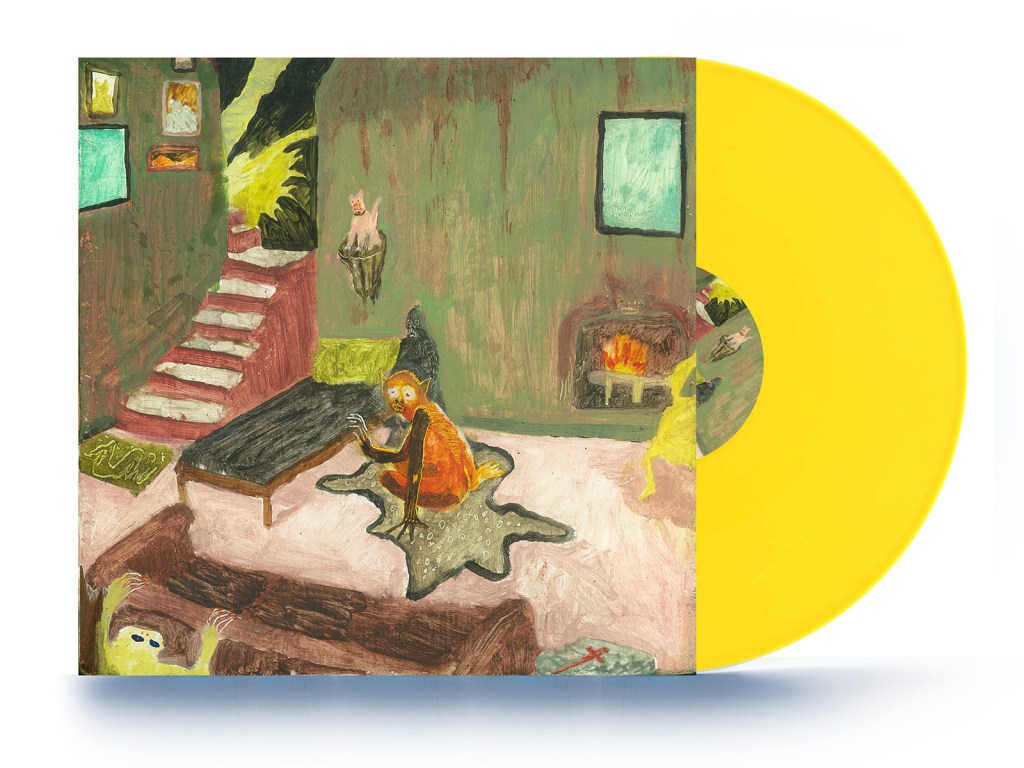
The artwork for your album has a pretty positive and happy feel to it. Like, the colour choice. 

AS: `I think we were talking about earlier, about us not wanting to subvert hardcore, but just do whatever our take on it is. If that happens to be something that is currently going on or what is a standard thing, we’d be like, ‘Okay, that’s fine,’ but at the same time, we never want to be that. One of my big pet peeves is people doing a style of music and trying to intellectualise it because it’s just, you know, ‘I’m playing hardcore, but I’m actually a smart person too.’ So I’m gonna do this in an interesting way, and it just ends up being super contrived and, like, really unnecessary.

The only time I think that we have wanted to subvert stuff is through, the artwork on records. 
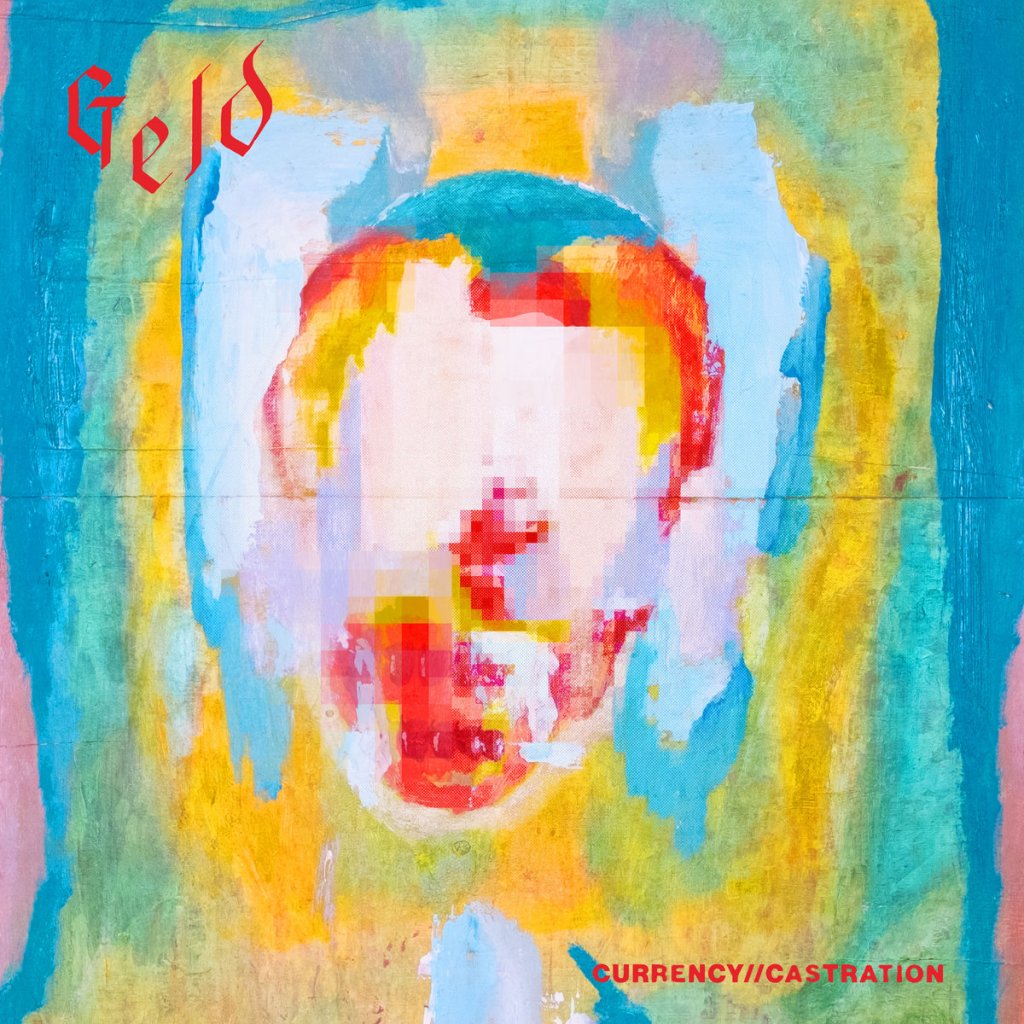
Album cover painting by Thomas Rowley

Yeah, I’ve noticed that with all the Geld artwork. I really enjoy what you’re doing with it.

AS: The main thing is that for Perfect Texture (and for all three records, actually), Thom the drummer for Geld, he painted the new record cover and he painted the Perfect Texture artwork. In fact, the Perfect Texture artwork is right there [motions to the wall].

You have it! That’s awesome you have the original.

AS: It’s not the original. You know Tom Lyngcoln? 

Yeah, I know Tom. 

AS: That bastard owns it [laughs]. Thom painted that, and then shortly after Tom Lyngcoln bought it, and we were like, ‘Oh, shit!’ We really wanted to use that for the record cover! So we had to go to Tom’s house in St. Kilda, and take a photo of it.

I love the music Tom makes.

AS: Yeah. We’ve just got so many good bands right now. Swab is one of my favourite bands in Melbourne. They deserve to be gigantic!

We love them too! Christina [Pap] is in my punk book I’ve been working on for a couple of decades that will be out soon. It’s been important for me to include voices that don’t normally get a chance to be heard in punk rock and the history of punk projects. Women, people of colour, queer and non-binary people. Lots of people could learn a lot from the punk community

AS: 100%. There is a weird kind of utopian level of idealism that permeates through punk and that doesn’t always shake out. Obviously, no community is perfect and has issues within it, especially when it comes to diversity and especially when it comes to hardcore. But there have been some pretty incredible stories from ultra-diverse people. It’s not all just white dudes having a yell, shirtless.

[Talk continues about the punk book]

AS: I’m pretty overwhelmed by this conversation. The attitude that you bring to all this is so infectious. There is definitely a purity to the way that you’re speaking about your book and the things that you want to talk about within punk and hardcore. It’s pretty inspiring, to be honest. 

That’s the plan!  

AS: Do you actually have any downtime ever? 

Not really. But everything I do is fun. So usually it doesn’t feel like I’m working. My day job is working as a book editor with fellow Indigenous writers to tell our stories in our own ways. I just like making art and talking to people too. I like sharing things that I find exciting, like we do with Gimmie.

AS: Are you like me? Where unfortunately for my friends and my partner, I’m a bit of a Punisher when it comes to things I’m excited about? I have that feeling when I might be overseas or somewhere, and see something that moves me in a way, and I wish that I could transport a specific person that I’m thinking about to be there right next to me. So you can hold them and have them experience the thing that you’re experiencing. 

Totally! That gave me goosebumps. 

AS: Then it can transcend into something that’s a little bit more like punishing, where it’s like, ‘Have you heard this band?! You’re showing a band to someone and you’re listening to a song and you’re like, ‘This bit, ready?’ And then, ‘Isn’t this the greatest thing ever?’

Yeah, and then you rewind it, so they can hear it again!

AS: Oh, my god, yes! It’s like I have all of this stuff inside me right now, and it’s too much for me to bear on my own and I just want to give some of it to you [laughs].

All that stuff that you and Jhonny are doing, it’s obviously coming from a place of an emotional connection. That you guys are creating with the things that you consume and love and are wanting to actually permeate that emotion out into the world. That’s really cool!

Awww, thank you! That means a lot that you can see that. Well, I’m so excited about your new record. And it’s so cool that you’ve found a home on Relapse Records. I love when cool stuff happens for other people, especially when they work hard like you guys have. Like you were saying, the record is an amalgamation of all the things that you believe in that you have been working towards.

AS: Yeah. Bands always want to try and create the perfect package that will give someone all of the information that they possibly need to understand what you’re trying to do. I reckon we have done this on this record. But having said that, by the time the next record comes along, that could be completely different. We always threaten each other that the next record is going to be the ‘make it’ record, where I’m going to start singing-singing [laughs]. 

Yes! I’d buy that. 

AS: It’s kind of like, okay, we’ve done the record that we wanted. Now, let’s just be really silly about it. I don’t think we’ll ever do it, but you never know. 

It’s a really good feeling when you record, and it comes out exactly how you want it to be. Seldom does it ever happen. There’s a lot of accepting that maybe you didn’t get the best takes on something or maybe you didn’t spend enough time on mixing—you have to be happy with whatever it is. This album is the closest we’ve been to whatever the hell was in our heads.
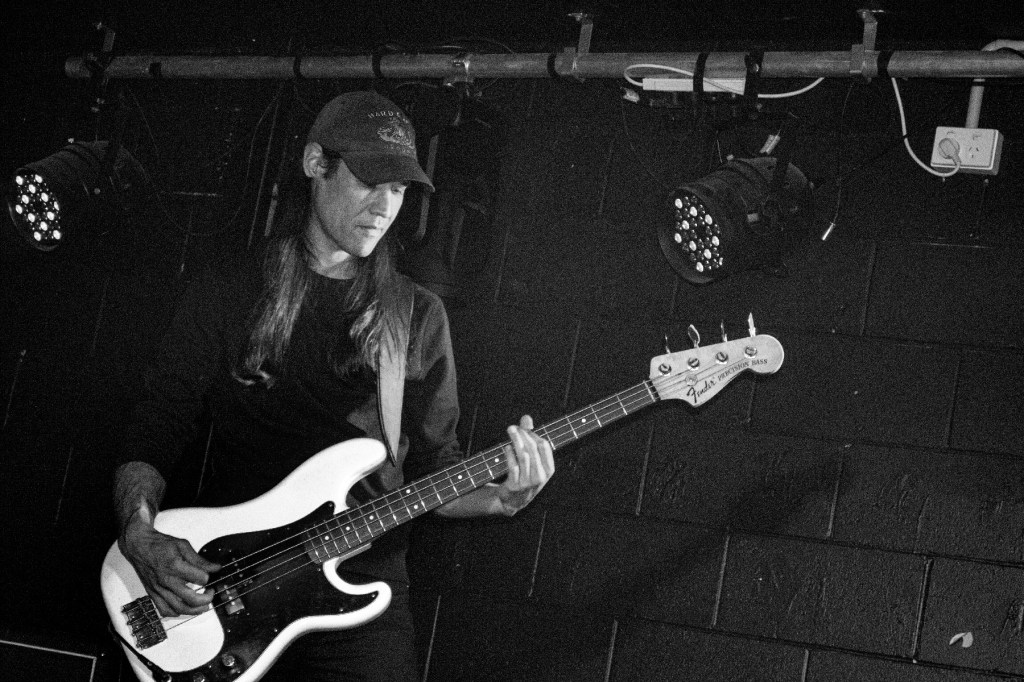
Photo: Jhonny Russell

That’s cool! Is there anything at the moment that you’ve been super into or excited about? 

AS: I have started boxing and I am training for a fight now. The biggest thing that’s not music in my life right now, aside from my partner and all my loved ones, is, I am all the way into boxing.

My grandfather boxed, in an amateur sense. When I was young, he sat me down in front of the Lennox Lewis/Mike Tyson fight ,and I have followed boxing and MMA ever since. I’ve actually been training with one of my mates, Kristy Harris, she was a bronze medalist at the Commonwealth Games.

She’s great! She plays in a band called Eyeroll too.

AS: Yeah. That’s who’s been training me. I got to know her because she bought some Geld stuff and we got talking. She’s close buds with Emily from Straitjacket [Nation], who also boxes.

Boxing, like learning the steps, is like learning a guitar riff. It’s body mechanics. Learning those body mechanics was my way of being like, ‘Okay, I’m into this, so I don’t have to worry about the fitness thing because I want to do it. Totally. 

When you started playing music, you started playing guitar?

AS: I’ve been a guitar player mostly. I write a lot of the Geld songs. Well, everyone everyone writes a lot of the Geld songs now. The demo was mostly me. As the records have kept going its changed; I only have three songs on the new record.

What was your first band?

AS: Going back to high school, I was in a metal band called Trench Warfare. I played in a garage punk band called, Bad Aches. Then I played in a band called Gentlemen with Tom.

Recently, I’ve been playing bass in The Vacant Lot; it’s been great—obviously I’m a real massive nerd about Australian first wave punk. I can’t wait to record with them because it’ll be like the smallest part of me being involved in history of Australian punk. Obviously, Australia as a fucking massive colony fucking sucks. And having any kind of nation pride or civic pride is pretty fucking hard to do at times. But the one thing that I was speaking to Pip, my partner the other day, the one thing I actually am quite patriotic about is the particular brand of punk that Australia has created. It actually sounds like Australian, and it does sound like there is something unique to it. And that’s something that I’ve thought about quite a lot. There’s not much to be proud about about our country.

You did the band Rabid Dogs too?

AS: Yeah, I did that with Kate and Kirk. Yeah, I did rabid dogs with Kate [Curtis] and Kirk [Scotcher]. That was awesome. I was living with Lee [Parker] at the time, and we were listening to The Damned a lot, and we wanted to do a band like that. I don’t think it ended up sounding like The Damned. Then Kate moved to New York, and shortly after that, Kirk and I started The Neuros. 

That’s my favourite band you’ve done. The 7 inch is amazing! 

AS: We basically have an LP together now. 

I can’t wait! That news makes me super excited! Anything else you wanted to talk about? 

AS: Sometimes the most liberating thing is to say to someone, ‘Hey, I actually really care about this,’ and being excited about that, and excited about what you are, and what something actually means to you. There’s no shame in being excited about something. I’m excited about lots of things all day long. Who doesn’t want to wake up and be excited about something? Again, like when I was talking about getting out of the pandemic and people being excited to go to shows again, that people had previously taken for granted. Not realising what a fucking gift it is to be able to pay $15 and have an evening’s worth of entertainment that is literally world-class. It’s bananas!

I didn’t say it outright earlier, but a big thing for me about lyrical content and presence of being a singer in Geld, is understanding, like not wanting to make everything inward focusing when it comes to content. Because I am essentially, as an existential form, checking my privilege or trying to check my privilege. Because it’s difficult to complain from such a comfy seat that I have. I deal with my own problems, but at the same time, from a societal systemic angle, I got it pretty good. I’m privileged enough to not have to deal with experiences like that. And that’s terrible. 

Again, I never want Geld to come off like I am…[pauses and thinks] I don’t have a plight. There’s no plight in me. I’m lucky, and I don’t want to take that for granted when I’m expressing myself because there are people that I know, that deal with things from a societal standpoint that are much more serious. I never want to minimise that by being too loud about issues that I don’t really feel like I have the right to stand up on a soapbox and talk about. Does that make any sense?

It does. 

AS: People that know me or people that know Geld understand our politics, and I don’t want to use our platform for that. I have thought about doing a call to Country (Acknowledgement of Country) at the start of our sets and decided I don’t want to do it, because when I see a lot of white people doing it, speaking as a white person, I don’t want to claim any cachet from anyone else, from First Nations pain. Does that make sense? 
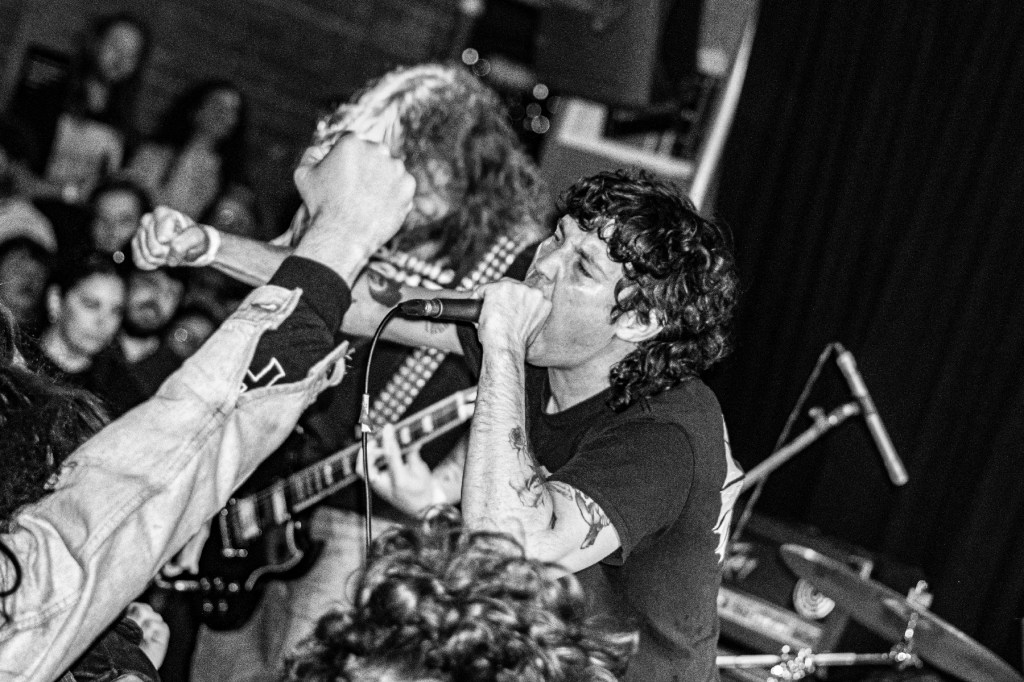
Photo: Jhonny Russell

Yeah, and I respect that. 

AS: Doing an Acknowledgement of Country in the community that we exist within, it’s not exactly an outrageous thing to do. But it’s just being conscious of the space I’m taking up and thinking about, why am I actually doing it to a whole bunch of people that already want a treaty? What is the subtext of me doing it?Am I doing it because I feel like I should? Or, am I doing it because I think that people will think higher of me for doing it? I know where my politics lie and it feels disingenuous, to me, personally.

I find it interesting that people talk about caring about mob and our struggles, and acknowledge they’re on our Country, but then how many of those people actually engage with us and actively support what we do or make. How many Indigenous people does the average person in hardcore know?

Yeah. For me, hardly any. I have a couple of friends that are mob, but what does that really mean? Nothing. Obviously I’m an ally, and I’m someone that cares about this stuff from a personal standpoint. But I never want my band to be a soapbox, or I never want my presence as a singer to be a soapbox for issues that ultimately have to do with me in terms of my responsibility, but also have absolutely nothing to do with me. Sometimes I can feel like it’s people taking up space. 

Speaking honestly about myself, if I’m making an Acknowledgement of Country, I don’t feel like I am doing enough in my personal life to warrant that, because a lot of the time when someone does that, what are you doing aside from that?

That’s what I always think—what are you doing outside of mouthing some words. I appreciate words but I appreciate action in the day to day more.

AS: People can always do more than what they’re doing. If other white folks want to do, do it. I don’t think it’s problematic or anything. I think it’s cool, but for me personally, I just feel a little uncomfortable about it. I apologise if this is too intense of conversation for a Sunday [laughs].

No, not at all.  I love these kinds of conversations, they’re important to have and I don’t see enough of them happening in the punk and hardcore.

AS: Totally. I really enjoyed chatting with you, seriously, though, it’s been actually really cool conversation. 

Follow @geldhc and check out geld.com.au 
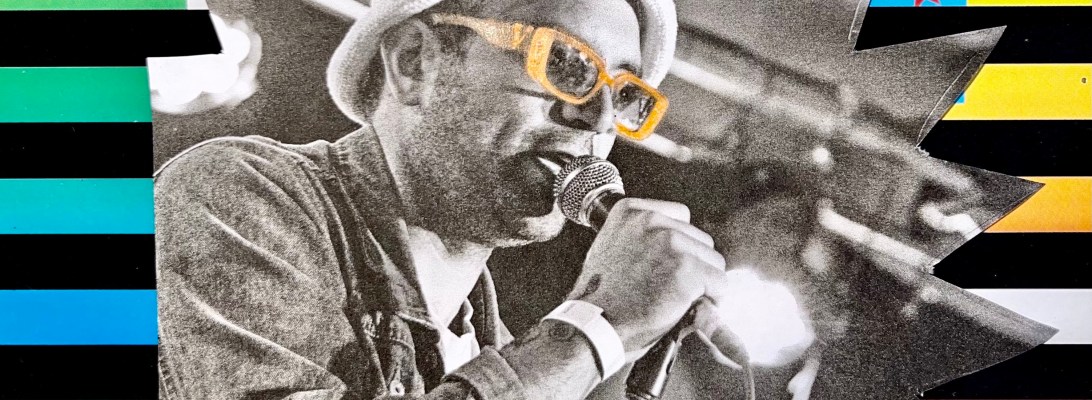
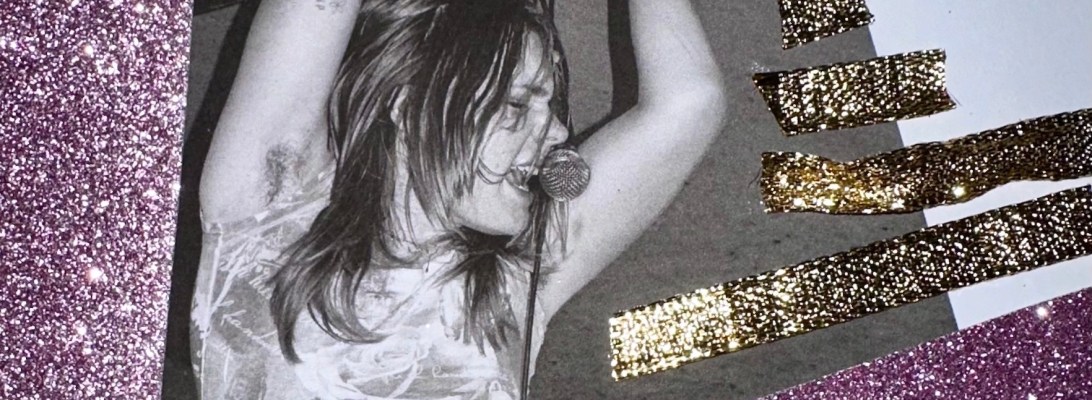
Phil and the Tiles’ Reef Williams: ‘I just want people to create something beautiful in their life.’

Original photo: Jhonny Russell / handmade collage by B

Phil and the Tiles are masters of the happy-sad song, the bounce of the music often belying the sentiment underneath. Like lightning in a bottle they’ve captured the human spirit feeling many emotions all at once in song. The writing on their debut fill-length Double Happiness is sophisticated, each member adding their stamp to make their unique, fresh sound. They’re not trying to be anything but themselves; a collective of outstanding individuals. Candid moments give a playfulness and brings levity on this destined for classic Australian punk album status. Lewis Hodgson from CIVIC said the band is, ‘For fans of the true shit, Germs, Sardine V, UV Race, Institute, Zounds, Crass and of course The Snakes.’ Don’t sleep on this album. Double Happiness brings us untold happiness.

Gimmie chatted with vocalist Reef Williams while on holiday in Vietnam. He explored the album with us: dedicated to dear friend Benaiah Fiu (from Sex Drive and Strange Motel) who recently passed. Reef also shared stories about growing up with hippie parents on the festival circuit, his time in the Byron Bay punk hardcore community as a teen, his first time singing live at a guerrilla gig in a drain with hundreds of punks, of living in a tent in a Berlin park alone for months during winter, and a job that inspired song lyrics referencing being splashed with human waste.
REEF: I’m in the hotel kicking back. I’m in Vietnam with my partner Erin, and Reilly [Gaynor], who plays guitar in Phil and the Tiles. Our drummer, Andre [Piciocchi], is here as well. We saw really cheap flights a few months ago, so we decided to come over. 

We went to a water park yesterday, and have been doing all the tacky stuff, it’s fun! I’ve been here before and done like all the hikes and stuff. We’re just going to go to more water parks throughout the next couple of days. We’ve been to a few museums too.

You were at Vietnam’s #1 waterpark yesterday?

REEF: Yeah! It’s the biggest one. It’s kind of like Wet N Wild—it’s the ultimate amount of fun! We’re going to cruise out to these raves in the bush; it’s quite far inland. Things are really cheap here, the food is great, and everybody’s friendly.

Do you get to travel much? 

REEF: I try to get away every six months, if I can swing it with work. I save up money, then travel, and when I get home I’m always starting from zero again. I’m getting to a point, though, where I’ll probably start chilling more and try to actually save money for later.

What do you usually do for work? 

REEF: During the festival season, me and Reilly build compost toilets, at the big doofs and festivals. Like, Strawberry Fields. It’s four months of work over the summer festival season, and then in winter I’m doing gardening and landscaping.

You work outdoors a lot.

REEF: Yeah, I love it, It’s hard work, but it’s nice to be able to kick it outside. 

How did you first discover music? 

REEF: My parents, basically. I grew up like going to festivals with them because they had a market stall. They are kind of hippies. My dad is into stuff like The Clash and Bad Brains. That trickled down to me. Growing up going to festivals, I’d see a lot of live music, so naturally it happens to become my thing. I got to see bands like Violent Femmes.

That’s rad your parents have such great taste in music and you didn’t feel you really needed to rebel against it, as a lot of people do.

REEF: I was lucky. Obviously, when I was a teenager I’d have phases of rebellion. I’d just be a little ratbag. There was always music playing around the house.

What kind of things would you listen to, to rebel? 

REEF: Aussie hip-hop! [laughs]. Like older 90s stuff is great. My parents couldn’t stand it. Anything popular, they would hate.

Is there any particular artist you’d listen to? 

REEF: There was this rapper that has a really sharp, piercing voice, and it sounds really angry. I didn’t just listen to it to rebel, I liked it. My sisters hated it too.

I like drum and bass. My parents are more into old reggae and country, or rock ’n’ roll; I’d put my earphones.

Going to the festivals with my parents, I knew I always wanted to go to shows. When I was of age, I started going to my own shows. The first ones I went to were hardcore and punk shows around Byron Bay and the Northern Rivers area. 

I didn’t know you lived up this way!

REEF: Yeah. I’m from New Zealand originally, I came over here when I was five. I went to primary school in Sydney. Then we moved to Byron and I went to high school there. At the time there were a lot of all ages hardcore shows and shed shows happening. All that really got me into punk. There was a band, Shackles, that had a shed in an industrial estate, around the corner from my parents place. They were a bit older, but they were always encouraging all the young kids to come and have. Everyone really looked after each other. It was a good scene for it for a long time. And then it dropped off, and I moved to Melbourne as soon as I turned 18. 

What attracted you to living in Melbourne? 

REEF: Do you remember Maggot fest? 

Photo: Jhonny Russell

Yeah!

REEF: I flew down to Melbourne for it, maybe the 2015 one? I was only 17, I thought, ‘If I go, I’ll get in!’ [laughs]. I stayed with my friend, who was from Byron and had lived there for a year already. It was such a breath of fresh air. I knew that I was 100% coming back. Byron’s view and stuff is beautiful, but it’s as soon as I saw those bands in Melbourne, I knew living in Byron I would never get to see stuff like that live because they’d never tour. I was like—this is the place! I turned 18 the next month and moved; I got a Centrelink payment and moved down and lived in a spare room at my friends’ for a bit. I’ve been here eight years now. 

I call Melbourne home. I wouldn’t say I didn’t fit in in Byron, but you know how Byron is, the people are different, it’s a small town. But I just knew I was born to go to punk shows and be in the city. As soon as I got there, I met a bunch of great people.

How did you get into making music yourself? 

REEF: This band is my first band. I’ve always wanted to do a band. I’m rubbish at playing instruments. I randomly met our guitarist when he was on Schoolies in Byron. He was a few years older than me; I was 16, he was 18. Then, at 2016 Golden Plains, I was watching Eddy Current Suppression Ring play, I looked over and the guy I met a Schoolies was there! I walked over to him. But we didn’t really hang out for a few years and I kept running into him.  We’d be like, ‘Let’s do a band!’ Eventually we started jamming at a friends house in the shed at Moorabbin. We were having so much fun, then things got put on hold because of COVID.

One of the original members, had to go over to America to work. They were away for a year. So Charlotte [Zarb from The Snakes] filled in. And when she came back from America, she got to play second guitar. That’s how we got to six people in the band. Hattie [Gleeson]’s left again, recently, because she’s studying Environmental Science, doing a PhD. She’s like, ‘I’m really sorry. I don’t have the time. I really want to.’ I was like, ‘Dude, don’t be sorry. You’re going to be a scientist! There’ll always be a spot for you in this band regardless of anything. Go do your thing!’ Now we’ve got Freya, on guitar now.

Your new album Double Happiness is about to come out—congratulations! It’s our favourite album we’ve heard so far this year.

REEF: Thank you so much, it means a lot. There’s six people in the band who all have different opinions and ideas, and we put it all into the music somehow, and it works. The genius behind it all is definitely Reilly. There’s no bossiness. Everyone puts in their own weird mixture.

Photo: courtesy of Legless

And that’s why it sounds different to anything else. We LOVE it!

REEF: I’m really happy. I never thought I’d be able to hold my own record.  When I was 16, 18, 19, I never though it possible and it wasn’t even in my mind. Then you get it, and people actually care about the art we’re all making it’s such a great feeling. It’s a long process to get all done. It’s such a special feeling. I still can’t believe we did it! 

I was always a bitch, like so shy, and I never thought I’d be seen in a band but then these guys really brought me on my shell. It was just laughing and jamming. Being a singer has helped me with so much. That positive reinforcement from people around me has been nice. 

I’ve always been pretty extroverted and but quite shy at the same time. I wouldn’t say I’ve never really struggled really bad with anxiety and stuff, but singing and the band has helped me. It’s hard to put it into words. It helped me in not really caring about what other people think about me. I’m not trying to impress anyone. In your teens and 20s, you’re always trying to impress people.

When you stop caring about what other people think, you’ve got nothing to lose and that gives you more freedom. 

REEF: Yeah, without double guessing yourself. All that stuff is the biggest thing that holds everybody back. They get scared. I know people that do so much great shit but they’re just like, ‘Nah, it’s not good. I don’t want to put it out there to show people.’ I always try to back my friends and encourage them because I’ve felt like that before. I’m so much happier now.

I was so inspired by the bands I’d watch as a teen, I hope we can inspire other people to get into and keep the cycle going. If one person starts playing guitar, that’s something. I just want people to create something beautiful in their life. Music is a really beautiful thing.

You inspire us! We’ve obsessed with Double Happiness. ‘Death Ship’ has become a bit of an anthem around Gimmie HQ. 

REEF: It’s got that happy-sad feeling to it. It’s my favourite song on the whole album. He just did it all, at home by himself. When he sent through, I was like, ‘Oh, that’s gonna be great!’ You can interpret the lyrics in many different ways. A lot of it is about being lonely, and COVID and overcoming that. When I read it I thought it could be about love. It’s a special song. It’s a wave of emotion.

That’s a great way to describe it. Phil and the Tiles do that happy-sad dynamic simultaneously, so well!

REEF: It’s a good thing to aim for. You want it to touch you. That song reminds me of riding a bike at night with my earphones in. Like riding home from work or to someone’s house, or it’s late at night and there’s no one around, there’s just you, and the street lights—and you’re taking in the world.

That’s such a lovely vision. I interpreted the song as existential. That line: Ask yourself, what’s the point of all of this? Pondering life.

REEF: Yeah, in Melbourne when the lockdown was happening, when the song was written, it’s like, ‘What’s the point? When is this going to end?’ And then it’s lifted and bring it back. And then I think that’s what was going through [Matt] Powelly’s mind when he wrote the lyrics. This may sound tough, but it’s about being complacent with death; it’s like, ‘It’s not going to end, I don’t even care.’ It’s not a suicide song, though. It’s about accepting that this is how it is now.

The song ‘Not Today’ (the one before it on the tracklist) pairs really nicely with ‘Death Ship’.

REEF: That was actually the second song we ever wrote. We didn’t put it on the 7-inch. We re-recorded it. I proudly wrote the riff for that one, and everyone came together to add their bits.The lyrics of that song was written after I came back from living in Berlin. I just ran around hitching with my backpack, sleeping bag, and a lightweight camping tent. I ended up staying in a park for seven months. I was standing on my own feet, living in a tent throughout the winter; it was so cold. It was real sad; I was away from my partner. I had mates who would let me shower at their place, but I didn’t want to burden them. I had a gas cooker, so it wasn’t too bad. But I was so lonely. I kind of got stuck there. I was a step above being homeless. It was by choice, though. I overstayed my visa. They didn’t even look closely at my passport when I left, they were happy I was going [laughs]. Who cares if you get a three year ban or whatever. I had so many crazy experiences. I went to crust-punk squats. If they see the situation you’re in, they try to help.

When I got back to Australia, it was summer. I went from being cold and a crazy bit of depression to, ‘I’m back,’ like everything seemed so beautiful to me. The line about the veggie patch—I could walk into the backyard and grab something and make some food. Being able to wake up beside my partner was perfect, I had been at such a low point while away, beside them it felt like life was great again.

It sounds like you had a real period of growth.

REEF: I did. It was nice to come home. 

While I was in Berlin, I had a solar power battery charger. I’d use free Wi-Fi to download podcasts, and a movie, then go back to my tent, make dinner. I’d cruise around on my bike a lot. I’d ride 50-80kms out of the city to go to this lake. It was a great experience but then it got really sad, and then it was cold; I missed being in warm Australia. 

I wrote ‘Not Today’ the second day I got back. I wrote down notes, then  came up with the riff, then we all worked on the song. I jumbled the words, and it was more of a poem kind of thing.

On that first day home, it was nice knowing I could live normally in a house, I could make money properly, I had all my friends around, and it was warm. The line in the song: I don’t want to sit by myself today; it was referring to the weeks before. I was feeling sorry for myself, and wanted to get outside and get amongst it.

Photo: Jhonny Russell

Just enjoy the day?

REEF: Yeah!

The album is called Double Happiness, which we love!

REEF: Me, Reilly, and Charlotte were in Sydney sitting around thinking, what would be a good name for the album? That same day someone picked up something from the ground that said Double Happiness. It was an empty pack of cigs, those cheap Chinese important ones. We took it as a sign to call it that [laughs]. It was going to be called And The Plot Thickens, but we thought Double Happiness sounds cooler.

By the way, I just want to say thank you for the amount of effort you guys put into Gimmie. It’s so good, it’s true passion. In my opinion, the best covering this weird little scene of ours.

Awww. Thank you! That means so much. We just cover all the stuff we love.

It’s all so great! The videos you guys put together too.

We love doing the live videos. It’s important to us to document bands in that way. Jhonny grew up in the country and when he was younger, he didn’t have access to shows. Also, with chronic health challenges we can’t always get to shows. So when we come across a live vid of a band we love, or discover a new band through someone’s vid, it means a lot. We also ship a lot of Gimmie print zines to regional places, and often people contact us and say that it helps them feel connected to a scene or they discover new bands from it. That’s what it’s all about, sharing cool stuff. I don’t know if a lot of people stop to think that not everyone has access to everything always. The cost of living also prices people out of being able to afford to go to a gig or buy a new record too.

REEF: Yeah. That’s awesome Gimmie goes to regional places. That in itself will inspire kids to do something, like I was talking about before. If one person picks up a guitar or starts playing music with their friends, that’s cool. I was lucky enough to have shows around, but it sounds quite sad and lonely not having access to that, especially when you want to be a part of it. 

My dad grew up in the country, in New Zealand. He would get a tape and magazine once a month in the mail. It could change the whole way he would think! He lived in a really bleak place in New Zealand. Getting that mail was a little bit of hope, in his eyes. That’s what you guys do and it’s beautiful.

Do you know Short Sharp Shock? That guy does a bit of filming. 

Yeah, we know his stuff. It’s great.

REEF: He’s really lovely. He’s another person that just documents and puts a lot of effort in.

We found Phil and the Tiles through Short Sharp Shock! We saw the video of the drains show you played!

REEF: That was the final end to all the lockdowns, so everyone was really keen to have fun. It was like my first time ever performing. There was so many people there. Everyone was so happy and in such a good mood. It was quite nice, how positive that show was. That show marked that lockdowns were finally over and that we can get back in the groove of things.

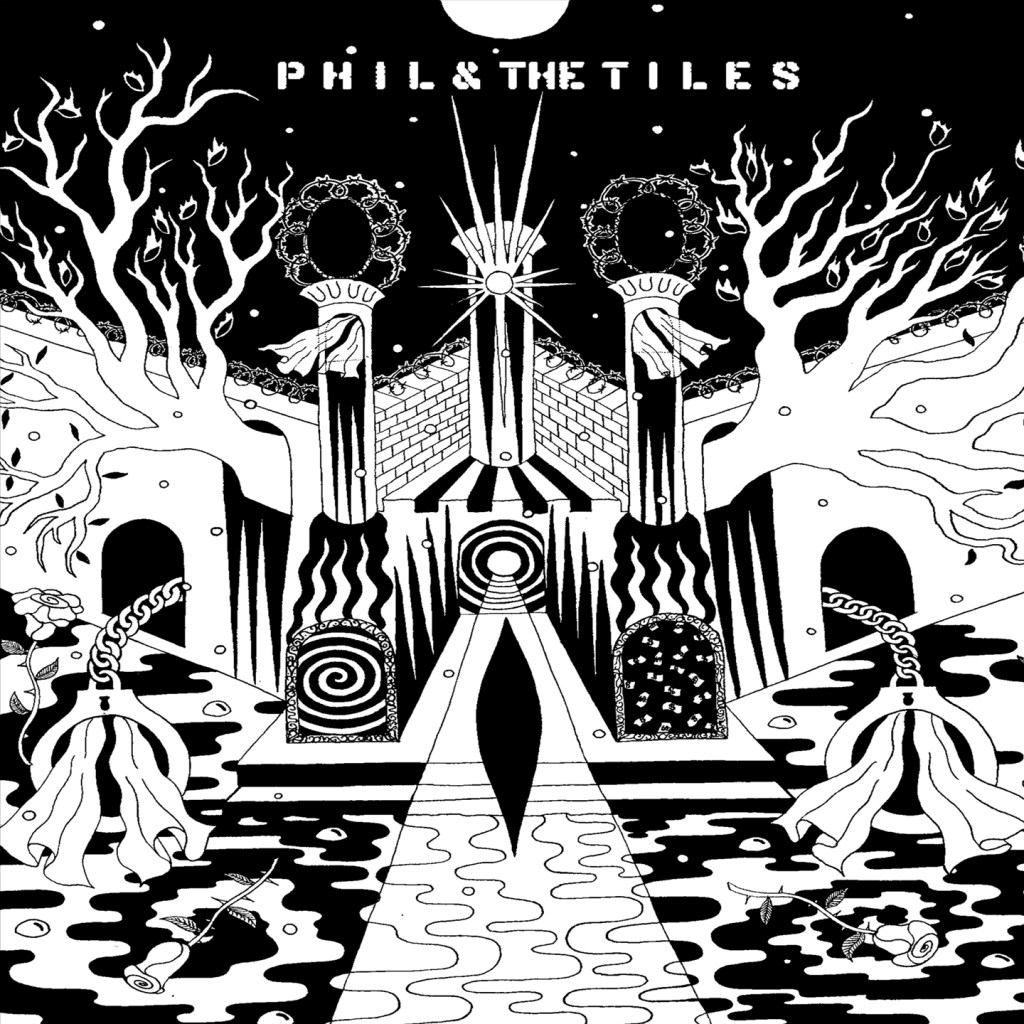
We really love the art on your new album!

REEF: It really captures the sound of the music. It’s real trippy. This guy, Noam Renn did it. He’s a tattooist.  I’ve been looking at his Instagram for years. I love his paintings and knew he was the guy to do it. I went to get tattooed at his shop, and then he was like, Yes, I’ll do it.’ He nailed it! He did three different ones; he put a heap of time and effort into it. The one we chose that first that best is very trippy, like a DMT trip but with no colours, if that makes sense?

Album cover art: Noam Renn

Totally!

REEF: There’s pathways, weird stuff, and it looks leek a portal. It’s my favourite artwork I have, I’ve got it framed in my house.

Cool! I saw when he posted it on his Insta with the caption: snow falls into military temples.

REEF: He’s very smart and poetic. When I met him he told me about how everything he does is just for the art and the love. You can tell he is very genuine, he’s really lovely to have a conversation with. When he does, he’s actually listening to what you’re saying.

Do you have shows or a tour planned for the album release?

REEF: We have our launch on the 15th of March at the Tote. The next day we’re playing with Drunk Mums and a bunch of other bands down the coast. I think this is the year we’re going to try get on the same page, I want to play to as many different people as we can. Everyone’s got jobs so it’s hard for the six of us to figure out a time we can do it. Everyone is frothing for it. We’ll make it work. I’m excited to get out there and for people to see us. I’m so excited about the record.

You should be—every song is a banger!

REEF: Thank you! It’s a roller coaster, it goes up and down, up and down. There’s harder songs and softer ones. There’s a song that sounds kind of Tom Tom Club, really dance-y.

‘Ode to Phil’ is a fun song.

REEF: Phil was Lewis’ cat. I lived with Lewis [Hodgson, guitarist for CIVIC] all through lockdown. I loved that cat; he died. 

Awww no! 

REEF: The band is  named after him. Lewis, my partner, and I were sitting there on a hot summer day and Phil was laying on the kitchen tiles to cool off. My partner was like, ‘Phil and the tiles – that’s a good band name. It went in the WhatsApp group chat, and then just stuck. He was a good cat. One of those cats that hung out the whole time. He had his own seat when you were drinking and stuff.

The song ‘The Watcher’ is a great one too.

REEF: I really like that song too. The lyrics are quite funny, I mixed two things. Part of it is from when we build the compost toilets at all the raves, after it’s over, we literally have big buckets, like, big wheelie bins of human shit. When you’re moving the compost bins you sometimes get splashed with it; we’ll look at each other and go, ‘For fuck’s sake!’ With the lyrics, I’m not talking about some weird fetish [laughs].

The other part is a couple of our Gold Coast friends Benaiah [Benzy] and Bor worked with this guy at this hat factory, who kept talking about writing a book about voyeurism. He’s cooked, man. The way they’d describe it was so funny. When I was writing that song, I remember that story. There’s always a weird thing happening in our lives, I’m constantly writing down funny lines and then will use them if it makes sense for the song.

Charlotte wrote the riff in that song. It was an old Snakes song she wrote years ago but they didn’t do anything with it. Charlotte always whips out cool stuff. I love that we all work together to make our songs, all six people’s input makes it what it is.

Anything else you’d like to share?

REEF: I miss Benzy so much. I’m currently in the works of putting on a fundraiser show for the end of April, to send money to his mum and family. This Phil and the Tiles record is dedicated to him. He was a real beautiful dude. How could anyone know what was going to happen. It’s tragic. There were so many people at the funeral. I was in a bit of a state. It was a beautiful funeral, a mixture of crying, and laughing about Benzy stories that were shared. He lived a fucking beautiful life and touched a lot of people. Rest in peace tonight, man. Literally the last text I ever got from him was: fuck off ‘Death Ship’ man, so good! He was always so positive about anything I did and he really pushed me with this band, and he never put me or anything down. He’d do that with a lot of people, he brings them up.

Phil and the Tiles Double Happiness out tomorrow on one of our favourite labels Legless – GET the album HERE

Follow @philandthetiles and @leglessrecords

Read our previous interview with Phil and the Tiles and our chat with Legless Records founder Mawson.

CRAFTY CUTS with CHARLOTTE GIGI (It Thing)

Original photo by @martdanza / Handmade collage by B.

At Gimmie, we’re massive music nerds, and we love geeking out about music with friends. Since our first print issue, we’ve been asking musicians we love to share some of their favourite songs with us. We always get such interesting, surprising, eclectic answers, and we’ve discovered lots of cool stuff as well as been reminded of gems we hadn’t heard in ages. So, we’ve decided to do it more often via our site.

Charlotte Gigi, vocalist for the punk band It Thing, shares her favourite song of all time. She reflects on discovering a band she wasn’t initially ready for, whose vocalist sounds like a squeaky toy. She recounts listening to a song for over 5 hours while sleeping in a tent at a bush doof, and shares some of her favourite silly lyrics. Additionally, she mentions a song that changed the shape of her brain, a punk song about cats, an emcee that never sleeps, and more.

We hope you find a new song or artist to listen to on repeat—over and over and over—as us music fanatics tend to do!

‘The Electrician’ – The Walker Brothers

This is possibly my favourite song of all time. The strings are so lush, and just the most wonderful contrast from the intensity of the intro. I think the song is about a drawn-out torture process, which is really grim. But I love it when he sings, ‘Oh, you mambos!’

‘Medicine Bottle’ – Red House Painters

Once, I fell asleep in a wet tent camping, listening to this song in my headphones next to a bush doof. I kept waking up like every 10 minutes for 5 hours to various moments of this song, and it was the most comforting thing ever. The guitar tone is so rich. The lyrics of this song, although it’s quite long, are so memorable because of how impactful they are.

‘Shut Me Down’ – Rowland S Howard

This song was introduced to me by a beloved friend and housemate one winter. He played it a thousand times a day. I love the lyrics. Everyone who knows this song thinks it’s the best song ever. I don’t need to say much.

‘Dear Diary’ – Divinyls

I love how soft and dynamic Chrissy’s voice is on this track, and how she sings about Preston Annual Fair. This song is so feverish; she talks about having a vivid memory of a certain day, perhaps in childhood, and not being sure why. It’s like a photo.

‘Swamp Thing’ – Chameleons

This band is criminally underrated. I love the lyrics in particular: ‘The storm comes, or is it just another shower?’ The pacing is so great; the mood keeps changing from hopeless to hopeful. This is one of the best things to come out of Manchester, in my opinion, which says a lot.

‘Epizootics’ – Scott Walker

My big brother showed me this song when I was 12, and I was like, ‘What the…’ and totally rejected it, but it stuck with me. By the time I was 16, Scott Walker was one of the most important figures to me, and he still is. This whole album is pretty massively important to me; like, it changed the shape of my brain. And then I listened to Tilt. Anyway, I love the Hawaiian lady with metal teeth, I love the beats, the phases throughout the song. I love Scott Walker’s yawny-operatic baritone. You can dance to this all day.

‘I’ve Seen Footage’ – Death Grips 

I’ve been in a little bit of a Death Grips rabbit hole lately. That’s all I’ll say about that. I like how MC Ride is on level 11 like, all the time. I don’t reckon he ever sleeps or sits down.

‘Unravel’ – Bjork

On YouTube, there is a beautiful video of Thom Yorke covering this, who is another one of my favourite musicians. He once said it’s his favourite song. It’s so cool to see your favourite artists being fans of one another. The cover gave me a new appreciation for this track, which is surrounded by huger, far less mellow songs on the album. Makes it hard to choose one to mention. I love the way Björk bursts into gibberish… she really uses her voice as an instrument in a unique way.

‘Strawberry Flower’ – 18cruk

I came across this perfect angsty Korean slow jam on the app Pandora when I was also a very angsty 14-year-old. I couldn’t find anything else on this band, but I’ve come back to it often since then. Recently, this entire album became available on streaming, which has been exciting because I never knew how the band sounded apart from this track, and I kind of love how shrouded in mystery this band has been for me for a decade now. And they’re good! Haha. I wonder what the members are doing now. I read somewhere once they disbanded and became rappers?

‘Ambulance Blues’ – Neil Young 

I’m not like a massive Neil fan, but this particular song is really special. The lyrics are so profound, with genius phrases scattered through this almost 9-minute track. His vocals ring out so crystal clear. This song is kind of melancholic in a way that makes you feel nice.

‘Shield Your Eyes, A Beast In The Well Of Your Hand’ – Melt Banana

The first time I heard Melt Banana, I was not ready for them, and I didn’t like it. Then, I listened to them a few years later, and I was so ready, and I loved it. This track was my second introduction to them. Yasuko’s vocals sound like a squeaky toy at times, which is so cool. I really love this band.

‘I Against I’ (Omega Sessions 1980) – Bad Brains

HR’s vocals on this are just on another level. He’s definitely one of the more technically good vocalists in punk music. I like how paranoid and rabid he sounds; it’s so full of raw energy. Dr. Know absolutely shreds; his guitar is perfectly parallel to HR’s vocal through all the phases of this song, but this particular version… it is so good like whaaat.

‘Sunglasses’ (single version)- Black Country New Road 

This track mentions Scott Walker, which is a huge win off the bat. The band is a 6-piece with the usual suspects and the additions of saxophone and violin, which are heavily utilised in a genius way on this track. I love the building intensity; it reminds me of Silver Mt. Zion. The lyrics are very unnerving with the guitar riff in the intro, and it used to make me really anxious. But I came around because it’s one of the best songs of the 2010s.

‘Teenage Lobotomy’ – Ramones

I just think it’s really funny. But the Ramones have like 40+ songs that are just as great, but ‘DDT did a job on me, now I’m a real sickie’ is such a silly lyric. The Ramones made making music accessible to so many people because they do genius on basics, and I love them for that.

‘Bocanda’ – Gustavo Cerati

This record is a great departure from his band Soda Stereo, who kind of put Argentina on the map musically. I love the trip-hop elements, his sweeping vocal. This track is so moody and visual; it kind of helps that I don’t speak Spanish and have lyrical insight to distract. A perfect song, like a warm bath on a rainy night.

‘Cat’ – The Sugarcubes

This is such an exciting song about cats! It has amazing energy; I’m not sure why that is. I love how it’s in Icelandic too – what a cool language. That guitar riff, especially on the outro, makes it a perfect punk song; it’s all so exciting! Björk’s voice is so intoxicating; she could sing about anything.

There’s a YouTube playlist with all the songs HERE!

Or a Spotify playlist of the songs HERE!


Read a Gimmie It Thing interview with Charlotte HERE.

You can check out IT THING via their bandcamp page HERE.

antenna vocalist shogun: ‘I can look back and laugh at a lot of the shit that happened. A lot of it was so fucking gnarly and sketchy.’

Original photo: Jhonny Russell / handmade collage by B

Tim ‘Shogun’ Wall is back with new band, Antenna. The Sydney/Gadigal Country native, that somewhat reluctantly rose from the Australian punk underground to worldwide visibility and acclaim with band, Royal Headache, is producing arguably the best music of his roller coaster life.

We’ve listened to the sneak peek of Antenna’s debut EP (which will be released in a month or so on Urge) over and over, and over. We also saw them live at the start of January when they played a random one-off show on the Gold Coast/Yugambeh Country with Strange Motel, and Boiling Hot Politician. The EP is ripe with energy and soul, of a man who’s experienced a lot of shit, and is still here, still working on things, still processing it all through art—it’s an emotional tour de force sparkling with highlights. It contains some of Shogun’s most exciting and heartfelt performances yet. There’s transcendence amidst chaos. All his influences and past projects are swirling around in this collection of songs. Across the album, guitarist Hideki Amasaki’s work soars as its backbone and defiantly provokes us to react. Indifference is not an option when it comes to this release. It’s already one of our top releases of the year, and it’s only February!

Gimmie sat down with Shogun a night last week, to talk about everything. He shared insights into his journey, discussing where he’s been, where he’s headed, and the significance of this year in his life—in some ways a feeling of make or break looms. It’s also a great reminder that us creatives and fans need to remember to look out for each other and support one-another. Life can be hard, but we’re firmly planted on the side of lifting people up, rather than tearing them down.

SHOGUN: I work a 9 to 5. It’s pretty gnarly, I do court transcription. I don’t really like it. When I fell off the Royal Headache bus, I needed to go and get myself a fucking job. My friend goes, ‘Oh, I do this, maybe you can do this?’ I was like, ‘There’s no way someone like me is gonna get that job!’ But a lot of people say that about a lot of jobs, don’t they? They assume there’s an inadequacy. Anyway, somehow I got through. After being there for a few years, they’re like, ‘You can come and do this permanently if you want’ and be a white collar stiff. I’m there in spite of all reason and logic, I’ll probably be there for the foreseeable future.

It’s not a bad thing to work a day job and do creative stuff. I’ve pretty much always had a job and then done creative stuff too. The job pays the bills and then the creative work is fun and I don’t have to ever compromise and do stuff that I don’t want to do. 

SHOGUN: Oh, absolutely. I completely agree. I’ll be at a day job forever. Back in the Royal Headache days, I made a good living off music for a couple years, but it didn’t bring out the best in me, really. Looking back, you’re sitting around the universe for one or two whole weeks, just waiting for a gig and a couple of band practices and, you know, what they say about idle hands. I wasn’t the happiest or best version of myself then by any means. 

I am very hyper and I do, even to this day, sadly, still get into mischief. I need routine, it’s good for me. It’s calmed me down a lot.

That’s so great to hear. 

SHOGUN: I was really missing playing loud music and punk. 

The last year has been a real transition. From being someone who felt definitely a little bit apart from the scene, somewhat bitter, sure, to then progressing to feeling included and optimistic. That’s been nice.

Despite contributing to the punk community for the past 30 years, since I was 15, there’s been so many times when I haven’t felt part of the scene too, so I get you.

SHOGUN: There’s different levels and gradient to it. I was a total hardcore zealot as a kid, I was straight edge, and right in there, in the mosh pits, mic grabs and stuff [laughs].

But then I rejected all that. Maybe it’s the sort of personal I am? I was so zealous and involved that I abruptly became really sick of it, or I found something weirder or more aggressive or more crazy. I went more into powerviolence and grindcore. Then was going to see techno parties and things like Passenger Of Shit and all the fucking Bloody Fist [Records] stuff. It was pretty amazing. I’ve always been part of scenes but then the Royal Headache thing, the whole irony was that, the band got so big. 

There’s a few ways to get excluded from a punk community. Obviously you can do something really fucking dodgy so you can’t come back and everyone knows that. But what surprised me and what I didn’t know is, if your band gets really popular, it’s almost the same thing. It’s not as horrific, you haven’t hurt anyone, but the treatment is always almost the same. 

I tried to form the ultimate punk band with Royal Headache—some Buzzcocks in there, some soul, a tiny bit of hardcore. It’s going to be great! You know, you’re going to love it! But then, something about the magnitude of the Royal Headache sort of fanfare actually alienated me from that community. Even though, that band was supposed to be my final gift to them. It’s nice to come back in and do it on a small and humble scale, not too thirsty to make any big waves. It’s just nice to be around loud guitars and fast drums again.

Photo: Jhonny Russell

It was great to see you live on the Gold Coast last month with Strange Motel.

SHOGUN: I hadn’t been up there since I was about 9 years old and I actually really loved it. It’s a beautiful community. I actually didn’t know that part of Australia really existed and it’s not like Sydney, Melbourne, or Brisbane—it’s really its own energy. 

Yeah. I wish more bands came and played here. 

SHOGUN: I was having the most beautiful holiday… until what happened [Benaiah Fiu founder of Strange Motel and guitarist for Sex Drive suddenly passed away after the show].

We still can’t believe it. We were talking to him and hugging him at the show only hours before it happened and then he wasn’t here anymore. You and I are a similar age, with the kind of scenes we’re involved in, unfortunately losing people too early, there’s a greater chance of that.

SHOGUN: Every time it happens it’s almost like you shed so much of yourself, you become a completely different person. It’s almost as if I’m taking like 17 fucking hits of acid or something. You feel spun by it.

Loss and death is a theme that has appeared in some of your songs. Like your project Finnogun’s Wake song, ‘Blue Skies’ was written after a friend’s passing. 

SHOGUN: It was. Even though it’s not really mentioned in the song. Sometimes the unmentionable central fact informs the energy of the song, but you never explicitly talk about it because there’s no real way to express it. 

Benaiah’s passing really reopened that wound. It had almost closed. I almost forgot the feeling of total grief. It was really good to get so close to him. I’ve known him for about 10 years, we got closer in the last few years. We were messaging all the time. We’d send each other lots of music, stuff that’s just coming out now. I was like sending him the Finnogun’s Wake and I asked, ’Is this shit?’ And he’s like, ‘Uh, yeah.’ And then I sent a new mix, and he’s like, ‘Oh, this is way better.’ He had my back and would get me psyched on it. Like myself, he’s a totally music obsessed, it’s always fucking number one. It’s like a quasi-religious thing.

Totally! Benaiah lived over in the next suburb from us. We’d have these really deep chats. He was trying so hard to do better and get away from the things that were brining him down. It makes it even sadder that ultimately, those things took him. He was looking forward to so much, like shows down south.

SHOGUN: Yeah. He was also one of the only people from the punk scene to give Antenna a show. We’ve been around for over a year now. He was one of the first guys to go, ‘Do you want to play with me?’ All the other shows we’ve done are just with randoms. He took a chance on us. I was really looking forward to doing a bunch of shit with him this year. I was hoping that would give him something to look forward to and work towards. He’s got all this amazing Strange Motel stuff getting rolled out. 

When I see my younger mates in trouble, without taking on a patronising bigger brother role, you need to give them something to look forward to. It’s all still very raw.

Yeah. It’s the same with us. It can get really heartbreaking when you see people in the scene you love going down a dark path—we get it, because we’ve been there too—and you want to help. Benaiah’s death really hurt.

SHOGUN: I loved the guy. But I’m down here. He’d come down to Sydney and we’d party. That’s what the Sex Drive guys always do. They get fucking loaded. It’s a fun tradition. I wasn’t perceptive enough to the fact that there’d been problems. I wish I’d known more. Only in the last few days I’d heard it was getting kind of serious. It’s heavy stuff.

You’ve dealt with your own heavy stuff, like addiction.

SHOGUN: Nothing too hard. There was always lots of shit around me, but for me, just booze and some other stuff, nothing hardcore. No smack, and no Ice… [pauses] really, not a lot. 

We’ve been totally thrashing the new Antenna EP on the home stereo, on the car stereo, on my phone going for a run, and it’s our favourite thing you’ve done.

SHOGUN: Thanks, man. Fuck yeah!

Photo: Jhonny Russell

It’s like all the things that you’ve done finally culminating and you’re making the music you always wanted to.

SHOGUN: Totally. I really appreciate that. I’m getting really gassed about it because I’ve had the nicest feedback. I sent to to Trae [Brown, vocalist] from Electric Chair. He’s an interesting, cool guy. He didn’t say anything for a couple of weeks and I’m like, ‘He hates it! That’ll be right. Fuck.’ Then he writes, and tells me, ‘This is fucking sick! I love this! You guys have to get over here’. He’s been thrashing it.

A couple of days ago we confirmed that it’s coming out on Urge Records in a month. It’ll be ready for our trip down to Melbourne mid-March. I’m psyched. 

A song that really stood out on the EP is ‘Antenna State’. When did you write that song? 

SHOGUN: Last year. I’ve been a little happier, maybe the last six months, but when I was writing those songs. I was completely miserable and really nothing was going right. But then I met these great guys; this amazing guitarist, Hideki Amasaki, he’s an incredible dude, a really killer guitarist. I thought, sometimes it’s a little cringy to go and start a punk band at my age. But I’m actually adequately angry and miserable enough to do this. Shit is actually going wrong enough that I can really throw it at a wall. Those songs were written at that time. 

‘Antenna State’, without confessing too much, it’s all true. I don’t make these things up. All the lyrics, that was going on for sure. It’s a list, or like a sandwich or a salad of how many things in your life can go wrong at once.

I was quite mentally sick at the very start of Royal Headache and instead of getting help—serious help is what I needed— I joined a band that started really going, and touring everywhere. It was like putting a bandaid over a fucking shotgun wound. 

This is all years ago now. I haven’t experienced anything like that in 9 nine years. 

Photo: Jhonny Russell

I’m so happy for you!

SHOGUN: Sometimes I wonder it’s gonna raise its head and it’s gonna hit again.

I think it’s important to be more understanding of others, you never know what’s going on with someone.  

SHOGUN: Yeah. At the show at the Gold Coast you were at, me and a friend were having a chat. He has an Indigenous background, he’s a graffiti writer. He’s saying, ‘Well, fuck, back in the day, we’d have to hide that shit,’ you know, like that you’re mentally ill or if your family’s from a different background. You couldn’t talk about that. Know what I mean?

I do. I’m also Indigenous and have struggled with mental illness, I’ve lived it.

SHOGUN: It’s cool nowadays that people do talk about that stuff more. Sometimes it feels like for us it’s come too late. Imagine if it would have been like that when we were younger. How it’s all out in the open. Maybe I wouldn’t have been in so much trouble. We got into shit having to hide our stuff and not having understanding in our community. 

Yep. I would have cried a lot less, especially at school. I used to get picked on all the time. School was a nightmare.

SHOGUN: Yeah, same. Fuck, man, the early-90s, in middle class, suburban Sydney might as well have been the fucking 1940s. If you liked anything but rugby, like you liked music and you were poor, which meant you deserve to be bashed. Like what is this chain of logic here? Especially in my neighbourhood, it’s a real kind of straw man masculinity. It’s all about showing strength on the footy field, but when it comes to standing against something that you can see is obviously wrong, there’s a terror of sticking out. A terror of being being thrown out with the person that you’re defending; being thrown into the same wasteland. 

I read somewhere that you said you’ve been singing since you were 5. For fun, obviously. It’s not like you were singing down at the local Italian restaurant or something. 

SHOGUN:[Laughs] Yeah. I wasn’t in a little sailor suit doing musicals and stuff—but that would have been great! Like if I was doing Oklahoma or even just being an extra, like a cactus. I always liked singing. My parents used to be like, ‘Just shut the fuck up!’ But also encouraging. Some people have things that they’ve always liked doing. Some people do sport; I sing. I have always been a motormouth and someone who likes to use his voice. It’s got me in shit at times. It’s got me punched in the head a couple of times [laughs]. I like to make up songs. 

What kinds of things did you like to sing?

SHOGUN: Definitely pop. I had two sisters and my dad used to work a lot, so it was definitely all about my mum had like Girls Greatest Hits. I’d sing to that, having a pre-pubescent voice with all the octaves and singing to shit like Belinda Carlisle, Whitney Houston, getting deeper into obscurities with stuff like the Eurogliders and Yazoo. I’d dance with my mum and sisters in the lounge room to all this shit and we were singing. Maybe that’s where my singing style came from; singing as a young boy in a female vocal range. Something to think about. 

I could see that. Your vocals are really powerful and unique.

SHOGUN: I’m glad that you were able to to grab that out of it. I’ve recorded a few things since Royal Headache like Shogun and the Sheets. But Antenna has caught me at a particular moment, similar to the Headache stuff, I was that little bit more vulnerable and giving a little bit more, because I was hurting more. 

It always amazes me when you when you somehow enshrine a piece of yourself or hide a piece of yourself within a recording. You encode it into the sound waves and people, like you, can actually pick that up. it’s always accidental. If you’re really going through something when you do that vocal track, people can hear it. You really mean it.

Photo: Jhonny Russell

I believe what you’re singing. 

SHOGUN: I believed it that day. I remember doing the vocal for ‘Antenna State’ and I’d been struggling a lot with alcoholism that year, in spite of every promise I made to myself, it was just broken again and again. When I sung that, I was actually really fucking angry. I hadn’t warmed my voice up, I’d been smoking the entire night before. I thought, ‘There’s no way I can sing today,’ but it turned out to be the best one and we just kept it all, one take. 

You were angry at yourself? 

SHOGUN: Yeah, myself. I don’t like projecting anger onto other people, not anymore, not at my age. I know some young guys and they get so angry at the scene and everyone else and everything is always everyone else’s fault. It’s bullshit man, like you can only ever really be angry at yourself I feel because you put yourself in a situation where you’re vulnerable to get used. I don’t know, maybe it’s not as simple as that but it’s more positive to take responsibility. Because you can change yourself. You can’t change other people. 

Sometimes you can’t immediately change the situations or what’s happening, but you can change how you react to things. I’ve learned, if you fight fire with fire, that doesn’t work. 

SHOGUN: That’s the whole fundamental philosophical flaw in a lot of hardcore. As much as I’m probably a hardcore kid to the grave, that’s the thing about that kind of anger, especially when it gets really aggressive and beat down hardcore stuff. I’ve been around it as a kid, I was part of it, though, always the gangly weird nerdy kid in that scene.

Now I’ve sort of aged out of it. Hardcore is really changing so fast at the moment. There’s a positive macho scene. Where it’s tough, hard, and crazy and fucked up, but not as toxic. It’s inclusive and it wants to better itself. But it’s still a place for those guys who want to fucking trash shit and do graffiti and go completely wild—that’s really who they are in their blood, and they really need that release. I’ve calmed down. There needs to be a place for those guys, as long as they know that other people should feel welcome there as well. 

Your music when younger was a lot darker. Even the new Antenna stuff you’re taking about darker things but it’s like you’ve hit a point where you’re maybe trying to embrace being more joyous. It in your vocal, like the mood of your delivery.

SHOGUN: Yeah, also at my age, learning to have a sense of humour. Antenna’s songs have got a real dark sense of humour. It was present in some of the Royal Headache stuff too. It wasn’t really like, oh, I feel sorry for me. More like, things are going to shit. Kind of in a Punch and Judy way, sort of funny; this burnt out punk singer and his life has gone to shit. In my head, Antenna is like a Netflix series about an ageing local musician. Incredibly entertaining [laughs]. Like you used to listen to that guy’s record and now he doesn’t have his shit together. I find this stuff deeply amusing. I don’t know if that comes through?

Photo: Jhonny Russell

I can see/hear that.

SHOGUN: This project has hit a nice balance of—life is hard/life is funny.

I think you nailed that. That’s why it resonates, because it’s fucking real.

SHOGUN: Thank you! Fuck yeah. That gets me psyched. There’s five more songs from that session that we’ve recorded. I think they are good, really good. There’s a funny kind of Judas Priest-style song, about a fictitious serial killer who lives in Marrickville. There’s also some hardcore songs. There’s a song called ‘Hellfest’ about my job; it’s named after that cheesy American hardcore festival. There’s a song called ‘Seed’, which sounds like early Lemonheads, kind of indie punk. 

The best thing about Antenna is it’s not really totally my brainchild in any way. All of the lovely melodic music comes from Hideki Amasaki, the guitarist, who had all these amazing riffs written and that’s why I got involved. He’s incredibly gifted. He writes pretty much all of the music.

There’s some really beautiful guitar work on the EP! Between that and your vocals it really makes it something special.

SHOGUN: I love a collaborative creative process, rather than writing from scratch. I did a band called Shogun and the Sheets and had the best fucking musicians to do that with. But I realised the problem was it was inorganic. I was writing the music as well; I was writing the chords and I was arranging everything. It felt like there was something missing. It really lacked the excitement because it’s all just coming from one guy. 

Like, it’s… [pauses and thinks]… not asexual, but what’s the word for those plants that reproduce on their own? Doesn’t matter, we can Google it later [laughs]. But it was inorganic and there’s was no sense of fun and surprise. 

I used to write all the time, I’ve slowed down a lot. I feel like your brain certainly changes at my age and you lose pain, and you also lose vision, the brightness comes with that and that’s where song comes from. You feel things less intensely, you’re able to control yourself a little more, but you’ve lost that part of yourself, which is where the music comes from. I wanna do everything I can before that door finally closes, ‘cause I can definitely feel it closing. 

I know some people make music forever, but let’s be honest, those artists that keep making music after they’re 50, some its’s okay. But most of them, I think we can all agree that after they’re about 40, it goes downhill pretty fucking fast. 

Everyone can say, ‘Oh, this guy from the fucking Buzzcocks just put out a record!’ but I’m not gonna run out and listen to that in a hurry.

I like the new OFF! record, Keith is 68!

SHOGUN: OFF! would be a prime example for me. They’re not terrible, but as a big Circle Jerks guy, OFF!’s like… [smirks].

I LOVE Circle Jerks’ Group Sex! Itwas one of my gateway records into punk. So I get it. But I disagree and think it’s possible to make the best thing they’ve done now. 

SHOGUN: Group Sex is perfect! Antenna is influenced by Circle Jerks in some ways. 

I noticed the ‘Wild In the Streets’reference on the new EP.

SHOGUN: That’s great! I absolutely cannot get enough. I’m such a nerd for Bad Brains, Circle Jerks, Black Flag.

Where’d the song ‘Don’t Cry’ – with the Circle jerks reference – come from? 

SHOGUN: It came from the gut. Having been around different communities of guys, all chaotic, let’s not pull any punches here—lots of hard drug use. Lots of crazy graffiti writing. Lots of total, total disaster. I was surprised when Benaiah’s death hit me so hard because, fuck, it must be death number 10 of a friend related to drugs. There’s been so many drug deaths. 

The last thing that really got me was a couple of years beforehand, my friend Alex [Wood], who used to play in my old grind band Dot Do Dot had a brain aneurysm that was drug related. There’s been a really grievous energy with a lot of guys I’ve known. I don’t know, if I’ve had the most positive community around me. It’s always the craziest fucking guys and the most like fucked up dudes; a lot have died, some of them have been like canceled. I don’t know why I’ve been drawn to, and attracted this. Maybe I’m a little extra for like the cool kids. I wind up around these guys, and they’re doing speed, fighting, and doing graffiti. The irony is, I’m not so much like that myself. But I have always felt like that’s where I belong. Around the craziest, most brutal people, I feel comfortable and they’re good to me. They’re my brothers. It’s fucked up, but that’s me. 

We really love the song ‘Lost’ on the EP.

SHOGUN: That was an interesting one. That’s not anything too recent. It’s reflecting on a break up that destroyed me so deeply. Much more than it should have. People need to move on and get their shit together. There was a symbolic value I’d inscribed into that relationship. It’s almost like I wasn’t really there for about two and a half years, and all I could do was drink and couldn’t fucking sleep. It wasn’t really about her; we’re still great friends.It’s more what happens when you’re too dependent on a relationship because there’s really something missing profoundly in yourself. 

It was pretty bad. I parted ways with this person, this was during the Royal Headache days. That was actually the beginning of the end of Royal Headache. My best friend died of an overdose and then this person left me and it’s like a detonation process happened. It’s like I wasn’t really roadworthy anymore. The next three years is a blur—I don’t think anything good happened. 

Photo: Jhonny Russell

We also love the hook in ‘English Three’.

SHOGUN: The lyric is actually: Don’t hold me or touch me. I didn’t say it properly cause I was drunk. So it sounds like I’m saying: Don’t hold me, touch me. And it’s kind of really creepy [laughs]. 

The song reflects on some low points, but the music’s kind of jaunty. I can look back and laugh at a lot of the shit that happened. A lot of it was so fucking gnarly and sketchy, it was pretty fucking off.

You posted in your Instagram stories the other day: 43 and still in it. 

SHOGUN: Yeah, I’m still going. The Benzy-thing really shook me like, and there’s been some other dramas. It was realising that life can be an endless downpour of shit. 

Some things are better, like I’m financially stable now, which goes a long way. Financial instability, and just not having routine and all that shit is what makes people get into trouble. I’m definitely still going through it in a few in a few ways. But if I keep my head down and stay in and make sure I’m not associating with too many younger cats who are just like completely fucking wild, I’ll get better. From here on in, I need to stay healthy enough to do music, it’s all about damage control and nights in. It’s not really in my character, but since I’m doing music again, rather than responding to it, like I would 10 years ago, by going out and fucking partying because I’m back in music, I think I’ll probably go the opposite way and become a bit of a hermit. That’s the only way I’m gonna stay healthy enough to really get it done and keep on providing quality stuff for people to enjoy. It won’t be trashed. I can’t stand mediocrity in music. 

Note: more of this chat will appear in the up coming punk book we’ve been working on – details coming soon!

Follow @antennnnnna.

Optic Nerve’s Gigi: ‘No one will ever make the world that you need other than yourself and your community.’

Original photo: Jhonny Russell / handmade collage by B.

Optic Nerve from Gadigal Country/Sydney aren’t just a band you listen to, they’re a band your feel. A band that defies the worn out tropes of hardcore punk, and expands its boundaries. Reimagining it, to gave us one of the standout albums of 2023, Angel Numbers. It flew under a lot of people’s radar; if you haven’t checked it out, we recommend you do. They’re a glow-up that uplifts the communities they speak to and care about. Vocalist Gigi is deeply sincere, and claims her power on the record, which is lyrically inspired by a French mystic, anti-trans violence, and exploring signs. We caught up with her, last year just as the album was being released, to talk about it. It was meant to be the cover feature interview for a print issue we had pretty much ready to put out last year – but life happened, and things were rough so we didn’t get it out. Finally, though, we get to share the chat with you.

GIGI: Our record [Angel Numbers] indexes a few moments of really intense transphobic violence. It felt pretty emotional to put out our new record, given the context of the last few weeks. Having it come out while there’s Nazis gathering in Melbourne and in Sydney. And Kimberly McRae [an author and trans sex worker], the man who killed her, didn’t get a murder charge. A bunch of friends have been feeling… [pauses]—it’s been a really bleak time for transsexuals. With everything happening, I sort of forget about the record. I didn’t even realise the single was coming out the other day. It was weird to return to some of the ideas or hopes that the record had in what is a really heavy few weeks.

I’m so sorry that it’s been such a challenging time. The craziness of the world seems to feel overwhelming a lot of the time. It’s been great to see the songs from the record live recently. We saw three Optic Nerve shows in three different states.

GIGI: It always feels like such a privilege to go to a city that you don’t really know and have people care about the music. The Optic shows often have a different energy. At punk shows, it’s mostly bro-y dudes. Often, when we play, those dudes move to the back, and all these younger, more interesting people move to the front. There’s space for that, which is really nice. I actually got really emotional playing Jerk Fest. At the front there was all of these really wonderful young, queer and trans people who were shouting out for songs that hadn’t come out yet. 

Photo: Jhonny Russell

I know that the Decline of the Western Civilization documentary had a really big impact on you.

GIGI: Definitely. When I was really young, I wanted to be like a lot of the bands, particularly The Bags. I drew a lot of inspiration from her [Alice Bag]. Being so defiantly, an outsider. Also, that music seems way more interesting to me than a lot of super self-serious punk music. I emailed Alice a few times after the first Concrete Lawn demo came out and had this really sweet correspondence. I sent her the band’s demo.

I feel like in a lot of the Optic songs, I always try and channel the Big Boys. They were a Texas hardcore band. They were all skateboarders and drag queens, and really flamboyant leather BDSM guys writing these cheesy love songs and having fun. That feels way more interesting to me than flexing.

Was there anything specific that you wanted to do from the outset with Optic Nerve?

GIGI: I’d always wanted to sing in a hardcore band. The first demo and all of the earlier songs are a lot more straightforward hardcore music. Moving forward, the record is quite a bit more spacey. I would say, not really hardcore at all. The intention is to continue on that trajectory of getting a little bit more studio with it.

Joel, Joe, and John, who was the original guitarist in Optic, they had all moved from Canberra at relatively the same time and all started writing songs together. Then, they just asked if I would sing. So, I came into it with a bunch of the songs already written and did lyrics over the top. It was nice to ease in because at that time, I was playing in three or four other really active bands. To have almost a ‘burner project’ where I could turn up to practice and, I don’t know, be on Twitter on my phone [laughs], and write lyrics. Then, we started to play shows. It’s become a really fab, more creative venture for us all together! 

Across the album there’s flute; that’s you, right?

GIGI: Yeah. I played flute as a kid. We were thinking about the flute as this sort of returning-to-childhood thing, which felt really nice. But we were also thinking about the record in parts, in the way you would frame a ballet or a really grand performance. We were thinking about setting up the listener—audience kind of engagement that our shows aim for. We were hoping to use the flute almost as this classical framing device that would bring people in and out of different moments on the record. Loosely there’s flute the beginning, middle and end. It almost provides an emotional structure to the music through flourishes. It was fun. I borrowed my boss’s flute and just winged it. I did it all in one or two takes.

That’s awesome. I love that! The album is playful, like your live show. It’s a cool lighter juxtapose to the heavy themes on the album.

GIGI: That’s it. When we were recording, we set this rule for ourselves that we couldn’t use any synths. We didn’t want to use any digital effects. So a lot of the record was recording a base of the song and then overdubbing things with really fucked up effects on it and then using heaps of tape delays and dubby effects to kind of give things this sort of synth-y ambient flutters throughout.

It’s nice to be playful. With the live shows, I play around and see if I can climb something on stage—like, climb on a speaker. Also, live, it’s worth protecting your energy. If you’re in a crowd full of people who don’t resonate with the kind of violence that the record talks to, it’s only going to be exhausting and exposing to talk about it really explicitly. Leaning into the playfulness of it and trusting that the people who will get it, will get it, was important. I’m glad that you picked up on the playfulness because I think it is.

Photo: Jhonny Russell

That’s one reason that I really love your band! It’s hardcore punk but without all the gross stuff—tough guy nonsense, perpetuating traditional gender norms, racism, homophobia etc.

GIGI: Yeah, we’re something else. 

Thank you for existing! I love people doing their own thing, standing up for what they believe in.

GIGI: For women and people of colour, anger is a really powerful tool. For boys, I don’t really know if it changes the world very much. There’s a lot of anger and a lot of hatred in the music, but I’m wary that the audiences who engage with it, that’s not necessarily a productive emotion for them to hold on to. Trying to make the shows feel a bit different to that is really important,

From your release Fast Car Waving Goodbye to the new record Angel Numbers, what do you think has been the biggest growth for you?

GIGI: The EP, we were just playing live. It was an assortment of songs; they are all really different from one another, in a nice way, but there’s not much cohesion. This record we wrote it to be a record, it was thought of as being singular, rather than writing music to play shows.

I’m proud of myself because now the music talks more directly to what I want it to be talking about and not just being vague, almost as a protection strategy. That’s how I feel listening to the older Optic stuff. 

The newer recording we spent a little more time on. We still mostly recorded it ourselves. It’s a more mature of a record.

It’s one of our favourite albums of 2023! The booklet/zine that comes with it is really interesting and cool. I love that we get more insight into inspiration and thought for the songs. The title Angel Numbers speaks to seeing signs. What influenced that? Did you see signs when writing the album?

GIGI: The title is half a joke and half not [laughs]. I was interested in these practices of divination or magic or whatever that really rely on a kind of politics of faith and really believing in yourself. At the same time, it also thinks that those things are a little bit bullshit. It tries to peddle the fact that no one will ever make the world that you need other than yourself and your community.

I was feeling that at the time the record was made. Maybe I felt a little abandoned, and like people were pinning too much stuff on almost leaving stuff to the stars. It felt like things that were needed in the world were too immediate to pin stuff on hope or fate or the stars. It was like, ‘Oh my god, get your head out of your arse’. But finding structures that can make the world meaningful or powerful to move through, felt really important as well.

A lot of the record is about context and bending the context of the world and social communities that you’re in, or social practices or things to make yourself and other people safe. One of the ways that can happen is creating a structure for yourself that creates meaning in your life. That’s very much what these magical, mystical practices I was looking into kind of do at their core when they’re really successful. They give you a set of structures that can really meaningfully harness your power and bring it to the fore. That’s what the record is talking to in the title.

Photo: Jhonny Russell

I picked up on the mysticism—that’s my jam.

GIGI: I was researching Silvia Federici (whom I left out of the citations on the lyric booklet for the album because she’s a massive TERF), this Italian Marxist feminist. She has this really fab book called Caliban and the Witch that talks about the beginning of capitalism coinciding with the mandate for gendered labour, necessarily creating a kind of subjugation of women. That coincided with women who were seen as independent, holders of deep spiritual knowledge, or community leaders being branded as witches.

She writes this really amazing historical overview of the beginnings of capitalism and the witch trials. Thinking about ‘witch’ as this kind of socially condemnable term rather than a cohesive set of magical practices. I found Marguerite Porete, the mystic and author, through that book. I got really obsessed with this idea of this woman totally on her own in the world, trying to make sense of God through her own desire or love or faith.

I got really captivated by this image of her getting burnt at the stake, and she’s just blissful and happy. Her almost giving over to the violence and persecution because it means not compromising yourself. That was a super meaningful image for me to understand. Like, you can never escape the violence or the risk or whatever of this world, particularly thinking about anti-trans violence. You just have to embrace risk and embrace joy in the face of that. It’s the most powerful thing you can do.


Has there been times in your life where you’ve experienced that kind of violence? 

GIGI: Yeah. The record speaks to this few-month period where I got jumped four times and was put in the hospital twice. It’s exhausting, so brutal. One thing that I’ve been trying to get into people’s minds, which also feels hard to justify when the record is about a French mystic and angel numbers and all these things, is that there are no metaphors in it, at all. A lot of it is explicitly about the stakes—life or death in a very literal sense.

I am so sorry that happened to you. I can’t even convey words of how much this upsets me to hear. 

GIGI: Yeah. It doesn’t feel valuable to list off traumas that anyone has gone through because it does just upset the people who get it, and then the people who don’t get it are just like, ‘Oh, that sucks.’ Instead, honing in on the ways that reverence and grief can exist together and hold each other up is really important to me.

The footnotes in the booklet are great.

GIGI: I thought they would be helpful for younger people to find out more about what I’m singing about. There was a period of time where I really lamented that a lot of the bands that I was getting into as a teenager had the same politics as me, but were really reserved about it. I was thinking that younger transsexual listeners could discover some of the things that are really foundational to my politics, that it would be nice to have a resource for people to go to if they needed to.

Our single ‘Trap Door’ is really powerful to me. It speaks to moments of violence and then moments of going out and having fun afterwards anyway. The other tracks speak a little bit more vaguely about liminal spaces or administrative violence or these kinds of facets that make up the record. ‘Trap Door’ is climatic, it talks about getting jumped. Making the music video was really healing. It was going back to something that has been really hurtful and really violent, and in a way making it beautiful and fun. If that makes sense?

I totally get what you’re saying. I spoke with filmmaker and musician Don Letts a while back. He told me about, how punk was seen as this negative, nihilistic thing, but really, it’s about empowerment and turning negatives into positives. Like what you’re talking about.

GIGI: Yeah. Punk is about empowerment and turning pain into something more joyful that you can share with others. It’s about a commitment to never having to compromise. It’s also very much about community and making a space to feel and process emotion. While songs or bands may not meaningfully change the world that much, they galvanise people to come together, creating a sense of collectivity that is powerful and special. It’s about processing, feeling, and working out what I feel about the world. Allowing that process of feeling emotion to become a chance for connection.

Photo: Jhonny Russell

Where are the places you find community now? 

GIGI: When I was first getting into punk and hardcore, it would have been at Black Wire Records. Tom [Scott] and Sarah [Baker], who ran that, are like my parents. I used to go there every day after school when I was a teen. It was this DIY record store that put on all-ages shows in Sydney. I saw so many of my favourite bands there, and it really gave me my sense of politics as well as my music taste. After that, Tom and Sarah were running another place called 96 Tears that I was helping out at, doing the bookings.

Sydney is a really interesting city because it doesn’t have much creative infrastructure, so there’s not really many clubs or venues that are safe. I feel really grateful for the continuous structure that practising with Optic has. I know personally, for me, a lot of raves in Sydney or the warehouse parties have really been super informative to that sense of community as well. 

But it’s always fleeting. The movements or people that this record is written towards, are never going to be the kind that have consistent, stable access to resources, like a venue or a building, or a place to come together. For me, community is always moving and that’s what makes it really exciting. That’s the real answer and also a poetry answer [laughs].

Poetry rules. In the booklet that comes with the record, it’s interesting to see the form of each of song on the page. 

GIGI: Yeah, it was my intention to have them read more like poems than lyrics.

When I read them on stage from my phone, because I’m actually so forgetful, I have line breaks every time I’m supposed to breathe. People think it’s a nerves thing or anxiety. I don’t really get particularly nervous when we play. If I was to write the lyrics out how they’re originally written, it would be annoyingly long to write. Some are one word per line. So it was nice to come back and rewrite them as poems. Poetry is a little more contemplative and lets people in more than just like a didactic lyric sheet. I was hoping that people could read it and come to terms with it however they wanted to.

When I wrote the lyrics for Angel Numbers it was pretty much while we were practising in a little studio in Marrickville. I would just sit there antisocially on my phone and write ideas down. With the last song ‘Leash’ on the record, I finished those lyrics two-minutes before we recorded [laughs]; I was really putting off finishing the lyrics. It was nice because the emotion of the record could be really confined to this space with my friends, where it felt safe. 

After recording, mastering, and the art was done, we sat on the record for 18 months. It felt like it came out at the right time though, it felt really serendipitous, given the political tensions of the last few weeks.

What else are you up to? 

GIGI: I’m playing solo a fuck tonne in the next few month. Optic are really hoping to go back to Europe. Joe needs knee surgery so we won’t be able to play for a bit because he’ll be healing. Hopefully we’ll be able to write and record more songs. I want to sing more and shout less. But I don’t really know how to do that—I’ll work it out.

With your solo stuff, what can you do that you don’t do with Optic? 

GIGI: I can make it in bed [laughs]. It’s the same emotions, but a different mode of address. They dovetail each other. Very inward and very much about my emotions: What does it mean to be angry? Or sad? Happy or horny? What does it mean to feel alive?

Angel Numbers available via Urge Records HERE. Gigi’s insta. GI music.

More Optic Nerve live videos – via the Gimmie YouTube.

R.M.F.C.’s Buz Clatworthy: “I procrastinated cause I was scared of it not turning out right”

Original photo by Vas. Handmade collage by B.

R.M.F.C.’s Buz Clatworthy seemingly writes songs with natural born ease—uncomplicated and catchy. But R.M.F.C.’s debut full-length album Club Hits came together over four years through self-doubt, rethinking, pushing through and determination to keep improving. It’s been worth the wait, the record gains energy and charm from both punchy songs and subtly, each song moves R.M.F.C. forward, holding something memorable. Club Hits is a well made rock record. Club Hits is one of the essential albums of the year.

Today we’re premiering track ‘The Trap’! We also caught up with Buz to find out about it and making the album.

What’s life been like lately for you? What have you been spending a lot of your time doing? Is there anything that you’ve been really getting into?

BUZ: I haven’t been up to much exciting business lately. Haven’t played any shows for a while since members of all the bands I’m in have been away on tour in Europe with Gee Tee or Research Reactor Corp. I’ve been recording a little bit for other projects or just for fun. I’ve been really getting into Dragon’s 1983 hit “Rain” which peaked at number 2 and stayed in the Kent Music Report singles chart for 26 weeks and also reached number 88 on the United States Billboard Hot 100 charts in mid-1984.

We’re premiering song ‘The Trap’ off of your up coming album, Club Hits; what do you love most about the song?

BUZ: I like the guitar melody/solo bits. 

Album art: painting by Oscar Sulich

What’s ‘The Trap’ about?

BUZ: I can’t really remember exactly what I was going on about when I wrote it now. I think it was one of the songs where I just collaged words together that sounded right more so than trying to have a considerable level of meaning behind the lyrics, it’s open ended. 

I know that you took your time making the new album; how’s it feel that it’s finally finished? How did you know that it was finally finished? What was the biggest challenge you faced working on it? 

BUZ: It feels really good to have it done. A lot of the time it took to make the record was circumstantial rather than making a conscious choice to take my time on it, but that gave me a chance to rethink and improve on what I otherwise wouldn’t have. In saying that, there were also a lot of times even in the late stages where I had finished writing & demoing everything and just needed to get the final recordings done but I procrastinated cause I was scared of it not turning out right. The biggest challenge was definitely writing the lyrics and recording vocals, some of the songs took me days of redoing vocal takes cause there’d be one little part where I’d make a minor & probably unnoticeable mistake like pronounce a word weirdly or sound too dramatic in my vocal delivery or something. I find doing vocals really hard cause I have to use my own voice rather than hiding behind the voice of an instrument. 

Musically, do you feel any pressure to conform to what people may expect from you? 

BUZ: I initially felt a little bit weird about how people would respond to the new songs cause they’re quite different to what I released when I was 17 & 18 which makes up the bulk of what people listen to of R.M.F.C having not released a whole lot since, but once the new songs started getting positive feedback at shows I felt better about that. I never necessarily felt any pressure anyway, I think the new songs are better and less derivative.

Photo: Jhonny Russell.

Your first release Hive Vol. 1 came out in 2018. Do you feel you’ve made any mistakes or had any regrets along your musical journey within these past five years? Do you try to not give them much energy or use them as fuel for your next creation?

BUZ: I try not to give them much energy anymore but I definitely have regrets with some of the creative decisions I made on the first few releases and avoid revisiting them. I also agreed to play a fair few questionable shows in the early days but I guess that’s all part of learning the ropes and figuring your shit out, especially at that age. I guess it’s also pretty normal to cringe at things you did when you were younger. 27 year old me looking back on 22 year old me and cringing at this album is not outside the realm of possibility. 

What can we expect from Club Hits, thematically? Did you draw from any specific inspirations when making the record?

BUZ: There weren’t really any specific inspirations that I drew from, I wanted to just write my own record and try to just sound like R.M.F.C. 

I asked Daniel Stewart [Total Control, SJN, UV Race, Distort zine etc. etc. etc.] to do a write up on the record in which he made a connection to Wire. I didn’t necessarily draw any direct inspiration from them but my obsession with Wire definitely peaked while I was making this record and I really like how they kinda defied the parameters of genre which is something I made an attempt to do with Club Hits 

How did you land on the album title, Club Hits?

BUZ: It came to me in a dream where Keith Urban was being mean to me so I hit him really hard in the head with a club. 

Last question, which song from the record means the most to you (and why)?

BUZ: Maybe ‘Harmless Activity’ or ‘Rock Tune’ because they feel more reflective of myself and my emotions as opposed to most of the R.M.F.C catalogue which is intentionally disconnected from that, I’ve always found it hard to make songs like that without hating them. Wistful pop songs are my favourite kind of songs and that’s how I’d describe ‘Harmless Activity’. I also really like drones and repetition in music and both of those songs reflect that. 

Pre-order R.M.F.C.’s Club Hits via Anti Fade Records HERE.

More Gimmie chats with Buz:

R.M.F.C.’S BUZ CLATWORTHY: “TRYING TO FIND A BALANCE BETWEEN MY PLACE IN THE DUMB SOCIAL HIERARCHY AND MY INDIVIDUALITY WHICH I’VE ALWAYS STRONGLY VALUED”

And

R.M.F.C.’S BUZ CLATWORTHY: “MOST OF MY FAVOURITE MUSIC WAS MADE BY PEOPLE WHO DIDN’T REALLY KNOW HOW TO PLAY”

The Unknowns and The Chats’ Josh Hardy: “I nearly died”

Original photo: Jhonny Russell. Handmade collage by B.

Josh Hardy is a genuine, down-to-earth guy, who is a fanatic music lover. We’re sitting at a burger joint in Meanjin/Brisbane as the excitable member of punk bands, The Unknowns and The Chats, sips on a strawberry milkshake. He’s wearing a shirt repping power pop band The Prize, has a Nikki and the Corvettes pin on his jacket, and is showing us the records he just bought, including the Hard-Ons’ Yummy. Hardy lives and breathes music. His own, is deeply influenced by punk and rock n roll bands of the past. 

Growing up on the Sunshine Coast, Hardy was introduced to bands such as The Celibate Rifles and The Hitmen, via his mum’s music collection. In high school he fell in love with Ramones, The Saints and The Scientists, learned to play guitar from a substitute teacher, and went on to form The Unknowns. Later he became friends with a fellow music nerd, Eamon Sandwith, and joined his “shed rock” band The Chats, who have become one of the biggest modern-day punk bands in this country. 

Chatting with Gimmie, Hardy is thoughtful and reflective as he opens up about his experiences, both positive and challenging, with a good dose of humour. He’s not afraid to address deeper topics including the night he almost died. Hardy also shares his thoughts on the music industry, meetings with celebs both good and bad, and of writing songs about vendettas against him. We also take a deep dive into The Unknowns’ East Coast Low album.

Strap in for an honest, vulnerable, and enlightening chat! 

It was really lovely meeting your parents the other night at your show. Are they really supportive of your music? Do they come to many shows? 

JOSH HARDY: They come to the local shows when we play up there [Sunshine Coast]. Or they came to some bigger Chats shows down here [Brisbane], and some bigger ones Unknowns have done down here. They’re quite supportive. 

My mum was one of the key people in my life that got me into the music that I love, to be honest. The [Radio] Birdman-era stuff like The Hitmen, Celibate Rifles, Beast of Bourbon, and all the Hard-Ons stuff. 

In my adolescent years, I had this massive CD collection with records like Yummy and j other greatest hits a compilation of Birdman or something. Mum really helped with that because before that I didn’t really have much and would just listen to radio music.

How old were you?

JH: I was about 13. I’m originally from the Northern Beaches, and we moved to Queensland. Before that, I wasn’t really into anything. Six months after we moved up, my grandparents followed, with the stuff that mum and dad left behind. There was a big box of CDs with Celibate Rifles, and everything. I never really listened to music until I started going through that box. There was a comp with all those 60s beat bands, Hermit and the Hermits and The Shags. I love all of that too.

From there, I went down this rabbit hole of the Ramones, The Saints, all those really formative bands, I just got obsessed with it. Mum’s always been really supportive because I feel like she always loved that music too. It’s’ pretty cool to have a mum like that. 

It’s very cool. Especially because a lot of people, spend their whole life, fighting against following their parents. 

JH: I’m lucky to get that from my parents. At the end of the day, it didn’t stop me being a little shit when I got a bit older [laughs]. 

[Laughter]. What was it like growing up on the Sunny Coat? 

JH: There was nothing to do with music. Every now and again I remember there was a music festival that would pop up and radio bands would come and play. There’s no real local band scene. At that stage, it was probably more the time of the hardcore straight edge stuff. It was early to mid-2000s. 

North Coast Hardcore!

JH: Yeah. At my age then, I had no idea about it. By the time I got to about 15 or 16, when I was really keen to go and see shows and start bands and stuff, that had fizzled out. I feel like it was kind of at a weird time where seriously, nothing going on up the coast and and then when I was in Grade 10, I started The Unknowns with my brother. 

I did’t know you had a brother. 

JH: Yeah. I made him play with me, sort of against his will, to be honest with you [laughs]. He had a drum kit my parents bought him. He’d be like, “This is boring!” And, I’d tell him, just keep playing! [Laughs]. 

At the time, I was loving anything Ramones-style. I’d go to school trying to look like the Ramones.

Amazing!

JH: I really liked the early Scientists, and The Saints stuff. I started the band wanting to be like that whole ’77 punk-thing. But then we’d do Kinks covers and stuff, and cover The Troggs. We’d do ‘Wild thing’ [laughs].

From there, we actually met this guy, he in charge of this lawn mower shop in Nambour. He had this hook up because his wife was this lovely old music teacher called Suzanne (she had a big afro, it was amazing – she’s a Singaporean lady) and she used to do shows in pubs. She’d do her little set and then have an open mic night. 

We started doing that sort of stuff; like at The Royal Mail pub. Then he finally booked us for a proper show in the front bar at the pub at 6PM on a Friday, while lingerie girls were going around doing the meat raffle. We played 3 hours for like $300. We’d do a half-arsed version of ‘Roll Over Beethoven’ and a Kinks song and then just play all our half-baked originals that we had at the time.We thought it was the sickest ever! That’s where it all sort of started. 

We started coming down to Brisbane heaps to do shows, then I just moved down when I was 19 or 20—rest is history. 

My parents were always supportive. My dad would come along when we were underage to those pub shows and he’d sit there while we play or just go home and then come back to be a legal guardian. It’s pretty amazing because a lot of kids wouldn’t have that. It’s really fortunate in that sense, they’re supportive of it. I’m lucky that they’re in the age bracket where into that music. They got it and didn’t turn out being narcs![laughs]. 

Photo: Jhonny Russell

You started out playing guitar? 

JH: Yeah, I started playing when I was ten. When I moved up to up here to QLD. There was this substitute teacher that started doing guitar lessons at lunchtimes. I always wanted to learn how to play guitar, so I go in there and he brought a guitar along for me to borrow. The Troggs ‘Wild Thing’ was one of the first things I learnt on the guitar. It’s just the two-finger power chord. 

When I found the Ramones, I thought, this makes so much sense now. You could write half a million songs on three chords, as long as you got a tune in your head. 

Do you always want to sing? 

JH: Well, in the beginning with The Unknowns, we tried out this other guy and he was a bit older and a bit of a wanker [laughs]. We were like, nah. The first ever show that we did as a band was a high school talent show. I just started singing because I had to.

How’d the talent show go? 

JH: We didn’t go that good that year, but the next year we actually did it again in Grade 11. That year we came second. I still reckon we would have came first, but my brother, who’s drumming in the band, actually got suspended from school that day for getting into a fight. I thought we ripped! [laughs].

Did you you got any other lessons for guitar? 

JH: Yeah, I got lessons for probably about a year, to be honest. Because at the time I also was mad about surfing. I’ve always just been into what I’m into.

That’s like me. Did you have older people around you or just your mum? I was always the youngest hanging out, so I was a punk when I was around seven. I had older heroin addict friends that were like, check out Slayer, check out this or that. 

JH:Ihad a lot of older friends. I never really used to hang out with kids from school. I always had a phobia of sleeping over other people’s houses. 

Same! 

JH: I always used to hang out with the older dudes down at the beach. It’d range from people in their early-20s to in their mid-60s. They were my best friends, you know, like a real entry point to things for me. 

Yeah. For me it was skateboarding. All the skate and surf videos had punk music at the time.

JH: Yeah, exactly. That’s how I get to know The Saints, there was this video of Michael Peterson from the Gold Coast and the song playing was ‘(I’m) Stranded’. It was around that time I started doing guitar lessons. I was like, what the fuck? I learned The Saints were from Brisbane! 

I started not showing up to guitar lessons because I was surfing. If I did show up, I’d have no shoes, no shirt and no guitar. Because it was at a music shop, I’d just use a guitar from there. I lost interest because when I first went in I was really bro-ing down with the teacher, but then it got to the point where (he was a real shredder) and he’d start trying to teach me Stevie Ray Vaughan. I’d rather go surf. 

I always hang out with a lot of older people though never really kids my own age. Not until I became friend with friends Eamon. Maybe one other dude that I started The Unknowns with, but that was it. 

I wouldn’t trade it for the world, though, because I feel like by the time I was 18, you start realising that the dudes that would hang out at the beach all day, there’s reasons why they’re at the beach all day, and there’s a reason why they’re always drunk and always probably not the most desirable characters. 

Photo: Jhonny Russell

Examples of what not to end up like!

JH: Yeah, exactly. I’m glad I got that realisation when I was 18, because I feel like you see people that only hang out with people that are their age growing up, which isn’t a bad thing, but I feel like they’re always going to have more chance of not really getting that until something bad happens or later in life. 

I grew up in Toowoomba around heroin addicts and that sort of shit. So you grow up learning what not to do. These drugs are all right, but don’t do heroin and stay away from the glass pipe!

JH: Yeah, totally.

We really love your album East Coast Low. It’s a lot of  fun. The songs have a familiar feel to the listener with nods to past great bands.

JH: Thank you. It’s all sort of what goes around, comes around. I feel like my songwriting really draws off the whole 60s beat thing, without realising it. You go back and listen to a lot of those bands and it’s a lot of very similar chord progressions and stuff that’s recycled. 

It’s stylistically, changed a little bit. 

JH: Yeah, fully. Tom (our drummer) come up with the album title, East Coast Low. I was thinking metaphorically, it’s like growing up in a rural or semi-rural area and getting the blues because there’s nothing really around, there’s not much of a scene, all the  kids that are on the block don’t get the shit that you listen to, and aren’t into the shit that. The surf might be great and there’s the blue skies, but at the end of the day, no one gets you.

With the Unknown songs, they’re really about feelings. I’m much better at writing songs about how I feel and a mood then being about going and doings something. They’re expressive songs.

Listening to your songs and watching you play live, there’s definitely a good vibe. It’s really uplifting.

JH: Awww, thank you!

When we posted video of an Unknowns show we went to recently, Billy from Anti Fade Records commented that you have the best guitar faces ever!

JH: [Laughs]. Sick! Yeah. I love Billy.

I feel like The Unknowns is celebrating that expelling of energy. I’m making it fun in the process instead of being too melancholy. 

I’m always a big fan of songs that sounds really happy when you first listen to it, but it’s actually about something deeper and morbid or whatever. 

Let’s chat about the songs on East Coast Low. Let’s start with ‘Shot down’. 

JH: That song is about a person that I knew from the coast, that we no longer keep in contact with. There’s those people that you’d meet in life… ahhh…

Toxic cunts?! 

JH: Yeah, toxic cunts! Exactly. You try your best, and at the end of the day, you keep walking away and you’re like, why did I even bother with you? You’re better off just leaving it alone. I went through a stage of reconnecting with them and it went really bad. I actually went for a holiday with my girlfriend on on Straddie, I was down about it. I was like, fuck, I shouldn’t be even thinking about this. I was overthinking. I’m a bit of a stewer. The weather was so beautiful, I thought, I just need to sit down and just write something. So I sat down and it came out. 

Do you know if they heard it or know it’s about them? 

JH: Yeah, I think there’s a few, but I feel like it’s still subtle enough and not too pointed [laughs].I didn’t want to start any dramas. 

What about ‘Dianne’?

JH: It’s basically, you’d think it’d be about a person Dianne, but it’s actually about my first experience trying Dianne sauce. 

[Laughter].

Two or three years ago, I tried it and I don’t know where it was my whole life. I couldn’t believe I’d be going to pubs and never tried it until then. It’s a very New South Wales thing, I’ve heard. I tried it in the town of Laurieton. It was amazing. 

It’s a very 1990s thing. Maybe they’re just still hanging on to the 90s. 

JH: [Laughs]. Exactly. Yeah. I fell in love with it. I was like, you saved my life! The line that says: Adventures of Betty – that came about because when I first left school there was this yuppie burger joint, Betty’s Burgers, in Noosa. I was actually a dishy there. And I was like, this song is going to be about sauces, but I’m going to try and make it sound like a love story. There’s Betty sauce. 

[Laughter]

You should try the reverse next, like it’s actually about a girl but everyone thinks it’s about sauces!

JH: Fully!

What can you tell us about ‘Rid Of You’?

JH: It’s about having a bit of a disagreement with the one that you love, but comes back around. That’s a song that sounds really happy, like the riff and everything. And then it’s nastier, like, I need to get rid of you. It came about because me and my girlfriend broke up for a period of time. I wrote a poem idea around then. W were both still living together and stuff and at each other’s throats.


Awww. Tense!

JH: Yeah, tense. It’s about having a disagreement and being melodramatic [laughs].

Musically, the chorus sounds a little like…

JH: ‘(I’m) Flipped Out Over You’…

Yeah, by The Victims. Was that influence was subconscious?

JH: Yeah. That one was subconscious. I did it and I showed the boys, especially Eamon because we listen to a lot of old punk stuff, and he was like, it’s just like ‘(I’m) Flipped Out Over You!” I was like, I’ll just tell people I deliberately did it [laughs], but I didn’t really mean to.

We were at a record store in the Gold Coast and the dude behind the counter was like, “Have you heard the new Unknowns record? We love it!” He said there’s a song that sounds like… I cut him off and was like, The Victims. He was like, “Yeah, but I love how they just embrace it.” 

JH: Yeah. The more I think about it, The Victims being a punk band for Perth, they deserve all the credit they can get. If we can incorporate a little tongue-in-cheek rip off in there, it’s an ode to them. 

Photo: Jhonny Russell

Next song is ‘Crying’. 

JH: I was feeling down. 

Emo Josh?

JH: [Laughs] Yeah, emo Josh! You know when you feel down and you don’t know why. Everyone gets it. You’re feeling down, but you’re still tough! Sad for no reason. It pops up every now and again for me—I’m still doing it tough though. I’ll be crying but I’ll be like, fuck you! 

[Laughter]

It’s interesting that the album track run is ‘Rid Of You’ and then ‘Crying’.

JH: Progression of moods [laughs].

Progression of mental states!  

JH: [Laughs] Yeah, fully. Things might be going really good for you and everything, but sometimes you’re still sad.

I’ve had that. I’ve been diagnosed with severe depression and anxiety throughout my life, especially when things are seemingly going great. 

JH: Yeah, for sure. Sometimes you just see something and you cry. Why is this happening to me?

How about ‘Beat Me’?

JH: That’s about another person from the coast who I no longer get on with. It’s actually the original guitarist from The Chats.

You should rename your album East Coast Beef.

JH: Fully, that’s amazing. He’s from Coolum too. When he got kicked out of The Chats and I joined, we all knew each other… I was never really that good of friends with him because for starters, I don’t think he really even knew what sort of band he was in. He was a bit of a douchebag. Basically I heard all this stuff when I joined and I wasn’t living on the coast still, I’d hear like, through the grapevine, that he said if he sees me at the pub he’s going to bash me. I go back to Coolum and no one ever said a fucking word to me. The song is about that person looking for a good old scrap in the street. Obviously, I’m not a huge fighter or anything. I envisioned a bit of a rumble and. 

Not backing down usually scares off people that are all talk. Jocks at my school growing up would say that they’ll bash me when I get off the bus tomorrow. I’d go up to them and say, let’s roll! Let’s do this motherfucker! They’d always freak out.

JH: Yeah, that’s what it’s about. 

You’re like too busy playing music and livin’ the dream to have scraps with losers anyway.

JH: Yeah, that’s the thing. There’s lines in the song: I’m on my own 10 to 1 / I’ll take you on, I wasn’t born to run.

Bring it! 

JH: Yeah. It’s still just a fun one. 

Less angst, more tongue in cheek?

JH: Fully. Like a 50s rumble knife fight, that you see in a movie like The Outsiders.

That’s exactly what I was thinking! I love that movie.

JH: I was just writing tongue-in-cheek about some dickhead that keeps saying he’s going to bash me. 

Photo: Jhonny Russell

I’m not looking for trouble, but I’m ready for it. 

JH: [Laughs] Yeah, exactly.

‘Thinking About You’? A love song?

JH: That is a love song, for sure. It’s about being on other sides of the world from each other and trying to sort things out. You might be going through a rough patch, but you know how hard it is trying to sort things out when there’s that much distance when you love someone.

You can’t just give them a hug. 

JH: You might have a disagreement, but thinking about them, I guess, sometimes that’s the best you can do.

‘Know It All?’

JH: It’s about someone that thinks they just know it all. The chorus is: Don’t come on to me / I’ve got no points to make, you’ll see. It’s like, don’t even try and talk to me because I’m not even going to give you any sort of answer.

I’m not going to feed your bullshit?

JH: Yeah, I’m not going to feed it.

We’ve all met people like that! I’ve been at shows sometimes and dudes will come up to me and start talking to me like, oh, you like punk do you? Then they start mansplaining punk to me and treat me like I have no idea. I’m actually friends with all of their punk heroes but I never tell them and just let them go on and on. You can’t talk to people like that, they’re more inserted in flexing their punk knowledge and cred than actually having a two-way conversation. Most recently at a show a dude was trying to mansplain power violence to me!

[Laughter]

JH: Yeah. It’s really frustrating! I guess you’ll always get that. But that’s the interesting thing about when punk started it was so mixed and it was everyone, all genders. 

Just all the weirdos getting together to express themselves. 

JH: Exactly. All the outsiders all banding together to actually work with each other and create something, not trying  to exclude each other and be too exclusive. The you can’t like that cos I like it culture, the you’re not like us culture, which I feel probably ruined it for a lot of people. It probably inspired a lot of bands to move away from the genre. 

Yeah like that Dead Kennedys’ song that talks about “a closed-minded, self-centered social club” and how the bright people get driven out of our so-called scene and you’re just left with thugs. What’s ‘I Don’t Know’ about?

JH: That song just about getting blind drunk and not remembering what happened the night before. Waking up with the booze horrors, which has been a reoccurring theme in my life. Everyone gets that growing up.

Have you ever got really drunk and ended up somewhere weird? 

JH: Oh, it actually happened here one time. I was in The Zoo and I was on a tear. I started drinking, it’s when Sailor Jerry’s brought out those bloody, apple flavoured rum. I drank too much and I basically ended up losing all memory. I got a bar stool and tossed it over the bar up in The Zoo. It was on a Wednesday and I got thrown out. I was just hanging out in the Valley, not even knowing what I was doing and basically I ended up in Winn Lane here. I was hanging out with these derelicts and I slipped and hit my head on the curb and was knocked out. I was bleeding very badly. I woke up to the ambulance lady. I was on a stretcher going to hospital. There was so much blood. I nearly died. 

I couldn’t find my card. These people that I was hanging out that I thought were friends in my distorted state, had stolen my card, my money and everything. I had told them where I live. During all this they went to my house and tried to rob it. My housemate was there and she was fucking petrified. I didn’t know any of this until I got back home. 

I got let out of the hospital 6AM. I had no phone, no card or anything, so I just walked to the Bowen Hills train station and got the train home with this bandage around my head. That was the worst I ever had. That’s basically what ‘I Don’t Know’ is about.

Did that kind of slow your roll for a bit? 

JH: Yeah, that changed things for me. I thad to go have a chat with someone after that because I was like, this is too much, the drinking culture. 

When I first just doing The Chats stuff I was stoked because I was earning a bit of money off that. Before that I was roofing, so I was heavily into the drinking culture anyway. In trade culture drinking is huge. 

I over did it. Because I’m a bit of an anxious person, I was an anxious drinker. It just turned into this snowball, when that happened, we had to postpone a sold out Tivoli show for The Chats. 

That would have been full on having to deal with repercussions from your actions that affected other people too. 

JH: It was very bad. So that’s ‘I Don’t Know’ [laughs].

Wow. I’m never going to listen to your songs in the same way. In a good way though, there’s so much more depth then you’d initially think there is. 

JH: It’s another song that sounds happy, but isn’t.

It’s so cool to learn more about you too. Every interview I read with you it annoys me that you always get asked such dumb questions. I finish reading them and think, I don’t know anything new about you, about what you’ve created, done, or where you’ve come from. Especially Chats interviews, ugh! The interviewers are the worst. It’s like they never treat you guys seriously.

JH:  They’re always vague and just goofy. 

Yeah. It’s kind of disrespectful because you guys have been playing music for ages and you’ve done lots of cool things. There’s lots to talk about.

JH: There’s a lot of people within the music industry that want to hear goofy shit. They’ll be like, everyone’s going to love this, it’s funny! I’m like, OK [laughs]. I’m enjoying this chat.

I’m glad. Do you ever feel external pressures?

JH: No, I was sort of bought into it. It’s the way I make my living now. It’s pressure. I just remember I’m lucky to be in an industry where if you can have a level head and you can learn how to navigate through it correctly, it’s one of the best because, it’s very flexible working hours. You can have beer while working. I only feel pressure, to be honest with you, if I’m too hungover or had too much, because then the anxiety starts kicking in. It’s like, fuck! I got to get steady on stage, I’m doing deep breaths. I just try and just be a good boy. 

You have a good time after you’re done? 

JH: Yeah, exactly. I feel like there’s only pressure bringing on to yourselves. 

Tell us about song ‘Deleted’.

JH: That’s like another long distance one. It’s like, I’m deleted from your heart and I can’t get back by your side. It’s also about being in Brisbane, it’s a very small world. So if something was to happen and you’re away and someone does the dirty with someone else, it’s a very small world. It’s too close to home. If you’re not there for someone enough, you’re just going to drift apart inevitably. 

That’s a common thing I’ve found with musicians over the years, it’s hard for them to have meaningful relationships. To have something that’s going to work, you have to share space and time with your partner. If you’re on tour all the time and you’re never home, how can you properly get to know someone? How can you truly be there for them?

JH: Yeah. You have to put in effort. It only takes ten minute phone call every day for it to be okay and still be present. Thinking of each other and doing everything you can, like calling each other. 

I love that you write love songs. That’s a big reason I love Eddy Current Suppression Ring too. A lot of power pop is about love also.

JH: That’s the thing. I didn’t even know the actual genre term of power pop until, to be honest, a lot later because people started calling it that. It was a bit ditzy of me [laughs]. I just thought they were the best rock and roll bands. Look at the Beatles and the Kinks, all the British Invasion,  they brought back the whole resurgence in rock n roll and got kids listening to that stuff again. A lot of those songs were love songs.

A lot of the Nuggets stuff too. 

JH: I love Nuggets. I don’t have any Nuggets thought, but I’ve nearly got the whole discography of Pebbles.

Do you find you get much support for The Unknowns in Brisbane? I ask because for us, we get more support for Gimmie from Melbourne, Sydney and overseas than we do in our own town.

JH: It’s funny around here. It’s the same for The Unknowns. People are, I don’t know…

Too cool for school?

JH: Yeah!

To be fair, it is a smaller scene and it does happen to Australian bands in general. Often I’ve seen bands have to go overseas and make it, then people here follow after. It’s such a big thing in punk especially, people hating something because it’s popular. It’s the same mentality of only liking something because it’s popular. It’s the same stupidity, you’re not liking it because of your own taste; you’re basing it on what other people are doing.

[Laughter]

JH: It’s not very punk, if you ask me.

Exactly. If music you like happens to get popular and it’s still the same music, why wouldn’t you still like it?

JH: It’s so weird. There’s a few older punks, the old crusty crew, that are like, “Fuck The Unknowns. They’re not underground, they’re not in the trenches!”

[Laughter]

It’s like come on mate. I don’t want to go see your punk pop band that plays at King Lear’s every weekend. The venue is good though, it’s good for local bands. I love the Beardo, it’s the best!

The Bearded Lady has the best sound and best vibes!

JH: It’s my favourite! I’ve had so many good times there. One of the best things about it is that it’s not in the fucking Valley! You don’t get stuck there at midnight when you’re trying to get a ride home and it’s just clowns walking passed. West End is much more chill. 

The last song on your record is ‘Supersonic Love’.

JF:  That’s one of Nato’s songs. He’s the Unknowns bass player. It’s a love song. It’s a a bit of an instrumental freak out in that one. We hang on the one riff and there’s a bit of an expression session at the end. We thought it’d be cool to do live. We usually play it at the end, ‘cause we’ve been playing the album through. We have some audience participation in that one too.

We saw seen Billiam get up with you guys!

JH: Yeah. And we played The Old Bar and Allan Stacey from Street Sleeper was there having a rip. Then we saw Wayland from Flight to Dubai and he played with us. I love Nato songs. He doesn’t write that many songs, but when he comes to us to us with a song it’ll alway be a fun one. 

What’s one of your favourite things you’ve ever seen live? 

JH: Kim Salmon playing Tym’s Guitars a few years ago, he played heaps of songs off the first Scientists record. I was loving it. I was 19 and drove down from Coolum for the afternoon. It was so sick. 

Also, the first time I saw Schizophonics, in Belgium, they played this small stage and it was absolutely insane. Pat Beers was pulling the splits and doing acrobatics.

Have you ever met someone who you’ve admired and they sucked? 

JH: Yeah. Tex Perkins. 

When I was a teenager, I stood beside him in a news agency in Sydney in Centre Point browsing music magazines. I didn’t say hello because he looked kind of mean.

JH:  He came and did a book signing on the Sunshine Coast. I had a Salamander Jim record. I took that to get it signed. He’s like, “Where’d you get this?” I was watching him and he’s still trying to be Tex to all the old married mums. 

[Laughter]

I snuck a joint with my friend, then went back and was observing him signing all these books and chatting up these mum’s and trying to cuckold… 

Being super sleazy?

JH: Yeah. I was like, what is this dude? Someone was like, “oh, that’s just Tex!” That’s not cool. I do love Beasts of Bourbon and all his bands, but I’ve never been a massive fan of the Cruel Sea.

Anyone you met that was super cool?

JH: The dudes from The Spits! They so sick. Also, John Brannon.

I saw that he wished you Happy Birthday, that was lovely of him.

JH: He is so lovely! He’s just like a classic Detroit music nerd. You’d think he’d be like real tough but he’s a goofball, man. He loves music. We hit it off!

Also, Nikki Corvette is an absolute sweetheart. She just is amazing. We were just talking and she told us stories of how she dated Johnny Ramone for two or three years. And of all the times that in the early-70s that Iggy would try to get to sleep with her because she was also from Michigan, but she never did. She always played too hard to get, which I love. I pinched myself because I never thought I’d met her. She’s a big influence on The Unknowns.

What’s the rest of the year look like for you? 

JH: Touring the UK and Europe. The Chats go overseas in October. We go to the States again, which will be fun, and then go straight to Europe. Lots of travelling. I love it. I’m so fortunate to be able to go around and play music and meet amazing people along the way!


I’m slowly starting to book Unknowns European tour for next year. We got an offer to do Funtastic Dracula in 2024 in Spain, which should be sick. It’s a big festival over there. They have bands play like The Mummies and those sort of bands. We’re looking at probably putting new music out for The Unknowns towards the end of the year.

Find The Unknowns:

theunknowns4.bandcamp.com/album/east-coast-low

instagram.com/the_unknowns_/

facebook.com/Theunknown4573/

Find The Chats:

thechatslovebeer.com

Jerry A. Lang: “As long as you keep someone in your heart… they’re never really going to die”

Handmade collage by B.

Sitting down to chat with founding member of Poison Idea and legendary frontman Jerry A. Lang, I noticed that he’s softly spoken and super lovely. A surprising contrast from his loud, in-your-face, envelope pushing “Kings of Punk” hardcore band that we’ve all heard crazy stories about over their 30 year career.

Last year, Jerry released a three-part memoir series Black Heart Fades Blue (which we highly recommend) that tell his intriguing, unconventional life story, the events that inspired his songs, and what made him stop hating and hurting. They’re a true reckoning of his past and present on the page. 

Why is music important to you? 

JERRY A: It seems like the easiest answer in the world, but it also seems like the hardest one. I don’t know why. Why do do children love their mother? Why do we breathe air? Why do we like sunshine? I had a great appreciation for art at a very young age. It’s just the music, it’s intoxicating. It’s like a drug. I was a little child and I heard it, and it was just magical. 

In one of your books in your memoir series, Black Heart Fades Blue, you mentioned that when you were a kid, music seemed magic for you and that it made you believe that anything is possible. 

J: It’s still that way. I hear some of the new stuff and I think it’s bad black magic, voodoo. These kids are throwing out some bad mojo. But I’m an old man, so that’s what people are going to think, damn you kids [laughs].

Can you remember the first piece of art that you experienced that had a really profound impact on you? 

J: I was at a birthday party for a friend of mine when I was young, his older brother had Let It Bleed by The Rolling Stones. I remember looking at that album cover, just staring at it, and they were playing it. The record cover has a bicycle tyre, then a cake and then little figurines of the Rolling Stones. It’s stacked up. I remember looking at that and thinking it was so cool. I was probably three or four. I remember looking at it and going, wow, that’s amazing! I was mesmerised. That’s still a really cool record. 

One of my favourite moments in your books is when you were talking about making art, all of your band’s flyers and album covers. It was cool to read about you making the logo for Poison Idea. How you had all these magazines and you used an X-ACTO knife to cut out letters, and how you turned a “B” into the “P”. 

J: Yeah, you know what? It never left either. Me and my wife do art together, we try to make a weekly calendar. There’s some evenings where we’ll paint. I make collages and just stuff like that too. And it’s still as fun as it was then. It’s great. It’s actually working with some kind of magic bringing these things to life. 

It makes me happy to hear that you still do art. I love that you still get excited about art and music after doing it for so long. I know so many people who get jaded.

J: Yeah. I’m on social media, I belong to this one group, it’s a bunch of old punk rock guys, a bunch of pissed off punk rock guys. They’re always taking the piss out of Amyl and the Sniffers and The Chats and bands like that. But these bands are saving punk rock. You don’t understand, you old bastards. They’re the new kids of punk rock. You guys just can’t accept it because you’re old and bitter. Australia’s always had just such great, amazing punk rock like The Saints, and it’s still coming.

I’ll make you a cassette mix tape of new Australian music! 

J: I would love that. Thank you. 

I love sharing music, that’s why we do our zine, Gimmie. It makes me so happy to be so stoked on someone’s music that I just want to share it with everyone!

J: Yeah, the mixtape thing in the 80s was such a really cool thing. 

I used to make YouTube playlists for my wife when I was courting her. I would send her playlists with these punk rock love songs, and soul songs, and Al Green. How could you say no to something like that? [laughs].

Totally. The same thing happened with me and my husband. We lived in different cities and we started sending each other mixes of music, and art; that’s how we got to know each other. Then one day I was like, I’m moving to his city, he’s the coolest person I’ve ever known, I can’t not be near this person every day!

J: It’s like a movie, like, You’ve Got Mail or Sleepless in Seattle. But with a good soundtrack [laughs].

[Laughter]. Yes! I’ve heard you say that being a singer is the best job in the world; how so?

J: Well, it’s the best and the worst. Because I could kind of phone it in, call in sick or I could drink and do drugs during the job and that’s really not healthy to do any kind of job when you’re not up to standard. I got used to it. 

You go on tour in Europe or wherever, and every city you play, the people are waiting for you. For them, it’s a big event. They’re waiting and they’re saving up all their party—they just blow out and have a giant party and go crazy. You’re thrown right in the middle of it. But the next day you have to do it again. The same exact thing, like Groundhog Day but in another city. So you you wake up and before you even open your eyes, you grab a beer and chug it to just try to take the drive to where you’re going to next. You do that for 50 days in a row, it’s going to do some wear and tear on you, but it makes you who you are. Hindsight is 20/20. But it can be a great job.

After writing the book and having people review it, I learned things that I didn’t know. It was pretty much a confessional. I listen to people’s podcasts and read stuff, people taking my songs and dissecting them. I was like, oh, that’s true. They say, it’s like a child screaming in anguish, it’s screaming in pain and throwing a fit, like firing on just the emotion. I never thought about that. I was like, hey, good call. And, besides maybe a politician, it’s the only job where you can get up there, scream and make a complete asshole of yourself. People agree with you or think you’re a complete asshole. I’ll put that on my job resume for future jobs [laughs]. 

[Laughter]. How does it feel different for you when you’re performing loaded to when you’re performing sober? 

J: Well, I’ve only done it a couple of times sober, and I was obviously nervous. There’s a happy medium with everything. I’ve been doing this a long time, and I still have a couple of cocktails in the evening when I’m making art or playing my records or dancing or doing whatever, and there’s nothing wrong with it. I learned I should have done that earlier, just had a couple of cocktails. Everybody, most of the musicians and authors that I respect and all the good actors that I like, they would do that. But there’s parts where you abuse it. You shouldn’t go there. It’s not good. 

Do you think having a couple of cocktails helps you relax? 

J: Well, it’s just what I know, it’s just what I’ve always done. To try to say that I’m not going to do that, I’m going to do it like this, that’s like me going up and trying to sing in Spanish or Japanese. I don’t know Japanese and I can’t sing in Japanese. So that would be the same thing as going up there and singing without having any drinks tonight. I’ve never done that. I don’t know how to do it. 

You mentioned you got nervous singing sober; have you gotten nervous before singing other times?

J: They say the chain is only as strong as its weakest link, I know that I can do my job, but there’s other people up there doing it with you. There’s the sound people, the instruments going out of tune, my band and the people at the club…It takes a perfect scenario for everything to go right. Things do tend to go wrong lots of times.

Sometimes I’m good to jump right in the middle of chaos and surf in it, I excel in that. But sometimes it’s hard, it’s like, your tyre flying off, as you’re driving down the street. You get a big rush of adrenaline, but sometimes it’s deadly. 

The first time that you sang was at house party?

J: Yeah, a house party in Portland. It was all-star. There was a Portland punk band called the Neo Boys. 

I love them!

J: I love them too. Pat [Baum] was playing drums and. K.T. [Kincaid] was playing bass, and people were up there, doing different songs. They were doing ‘I Want to Be Your Dog’ by The Stooges. I sang. It’s like riding a bike. 

Before that you were playing bass in Smegma. When you decided to go from playing bass to being a frontman was it a conscious choice? 

J: I was playing bass in a couple of different bands and it was fine. I really enjoyed it. But then I started seeing other bands and I didn’t think the singers were doing that great, I thought I could do better. They were really good musicians. I thought, wow, if I could do that, if I could get in that band with these people, then we could actually do something good. I made the effort to do it. It took a lot of tries. 

In the Poison Idea Legacy Of Dysfunction documentary Mark Barr mentioned that you’re really a sensitive and mild-mannered guy. Would you agree? 

J: I was just a kid, and I was taking everything in. I just kept my mouth shut, and I was watching everything happen and learning. 

What’s something you remember learning that’s stuck with you? 

J: I was a young child. I was a young man. There’s things you learn by yourself. I guess I pretty much confessed everything in the book.

Have you always been a sensitive person?

J: My wife seems to think so. Mark and I would watch the punks and the scene; the punk rock scene was very creative and very feminine-friendly. It was like a renaissance. But then the hardcore punk thing came in and like Tom [“Pig Champion” Roberts] said, it was an uglier music, it was a dumbing down. It was violent, it was mean and it embraced the nihilist stuff and all that crap. We were in it and we wanted to be the big band, so we wanted to be the kings of the nihilists. If you want to do that, you need to up your game. There was a time when I thought GG Allin didn’t have nothing on us. But honestly, who wants to fucking do that? 

Totally. Previously you’ve said that you started Poison Idea when you were around 18, and at the time you were kind of having these feelings, of feeling unwanted and alone, and that’s what brought out the anger and made your art so intense. 

J: It took me years and years to figure out why I did that stuff. Why all that, with everything, with the self-abuse and the drug abuse and the alcohol abuse and the abuse and the anger and the rage. Luckily, I married a therapist, a woman who’s actually, you know, kind of just tells me what what she sees. I was like, yeah, I guess you’re right. She’s an art therapist too.

That’s wonderful! Art can really help with healing and processing things. When I started reading your books, I actually read the last one first. 

J: Oh, wow. 

Yeah, I went backwards. Over the years, I’ve heard lots of full on stories about Poison Idea, and I was really interested to know where you were at now and what helped you change for the better? That’s why I read the last book first. You seem like you’re in such a happy space now. I feel like one of the biggest things that’s helped you is, love. 

J: Yeah, definitely. You know, I was a drug addict for a long time, we all were in the band. Out of five people, two are dead and one’s completely M.I.A. – I have no idea where the other one is, and the other one’s just trying to survive. You come to a time in your life where you’re just like, I don’t want to do that anymore. 

Now on the west coast of America, where I live, some drugs are decriminalised and you can be arrested or stopped on the street and nothing happens to you. There’s Fentanyl and stuff, it’s going to kill generations of people. Crime is going through the roof and businesses are closing down, and I don’t know what the end result is. 

If I was a conspiracy theorist, I would say that somebody is wanting this whole society to be a society of masters and slaves. They’re letting us burn it down. So finally we just go, we’ve had enough. It’s like some fucking movie. It’s like Batman or Road Warrior. It’s so bad. I don’t know why people would want this. I don’t know why they’re letting this happen. They’re letting it happen, so it gets so fucking bad that we just go, please, do anything. Anything. Just make this stop. And then they’re going to say, okay, we will. No more of this, no more that, no drugs, no guns, no freedom, no anything. We’re going to say, yes. Just make it stop, please. It’s scary. There’s no such thing as moderation. It’s horrible. Lucky for me, I got sober. I can see it happening because I was there. I was in that life, I know how horrible it was. 

Do you think with the times we’re living in, that maybe looking after yourself is more of an act of rebellion? 

J: Sure. Yeah. I don’t think a lot of people are thinking about tomorrow. There’s a lot of people on a death kick. There’s a lot of people who are dying from drugs, like young kids. We had three kids die last week. 

One of the things with punk rock, you were always taught to ask why about everything, to question everything— I’ve never stopped. I’m still questioning, why is this going on today? Why is this happening? Why are we letting this happen? 

Like I say, there’s no moderation. There’s no grey area. It’s either black or white, and it’s really polarised. The whole world has been broken up into that side or this side. We keep fighting with each other, and we don’t really see what’s really going on. We focus on who’s the enemy because we know we’re right and this person is wrong. Maybe stand back sometimes and just look, the signs are everywhere.

 It’s just about having awareness. There’s a lot of people out there that don’t even have awareness of themselves. 

J: Yeah. 

A lot of Poison Idea’s songs are based on things that have happened, personal experiences, and experiences of friends. What song do you consider to be your most personal that you’ve written? 

J: Every song is personal. There’s a few where people would give me titles of songs, like my guitar player would say, here’s a song called ‘Hangover Heart Attack’ then I would write the lyrics around that thing.

Like I said in the book, I was with my friends in New York and they said, why don’t you write a song about rebellion? About the old rock and roll, getting in your car and driving off a cliff as fast as you can with your girlfriend thing? So that was it. 

Two years ago, when we stopped playing, we did a series of shows because I wanted to come back and play good shows and then stop. And we did our second or third last show in Japan. I wanted to do a behind the stories type thing, where we played three songs, then I introduced a song and told the story about why I wrote it. So we chose Japan where they don’t speak English [laughs]. And I was up there explaining the songs to these crowds of people and they were just staring at me like, what are you talking about? A few people got my feeling; they were picking up on it. We said, this song’s about my friend dying, and this songs about my friend dying and this song I about my friend dying. There seems to be a theme here with our songs. They seem to be about people dying or people getting arrested or people having enough, or people being sad. 

All the songs do have their little stories. Songs, they’re kind of like movies. Three-minute movies where you try to jam the whole thing in there so you can picture it in your head. I’ve never really thought about that before. So now I’m reflecting and thinking about that and going, wow, these are sad little movies. 

There was a lot of losses of loved ones you wrote about in your books the one that really hit me and stood out was when your dog passed away. I feel like that really affected you. 

J: Yeah. They were somebody that gave me unconditional love, my best friend. 

My friend passed away about a week ago, I had a photo of him, and I saw the photo, and I thought that he really never left. As long as you keep someone in your heart and fondly remember them, you never really let them go, they’re never really going to die. Like Chris Bailey from The Saints. Because we’re all just energy and we’re all just stars anyway. So people never really left. We’ve always been here forever. It’s just how you look at things. I see some people walk around with black eyes, dead looks of not being there. Then there’s some people you just see and they just shine. I don’t think my friends are gone, the people that I love, I feel that they’re still here. I feel that they’re always there. We’re all stars. Wasn’t that like a stupid Moby song?

Yeah. ‘We Are All Stars’.

J: Oh, my god. I’m quoting Moby. I should stop [laughs].

[Laughter]. Speaking of stars, I noticed you have a copy of  Van Gough’s Starry Night painting on the wall behind you. 

J: Oh, yes. Right next to a Killing Joke poster, it’s from the Whisky a Go Go. Duality and balance!  

Very cool! One of my favourite lyrics of yours has always been from the song ‘It’s an Action’: You can’t change the world, but you can change yourself. What inspired that lyric? 

J: You know what? I wrote that thing when I was, like, 16 and I didn’t really honestly, at the time, I don’t think I believed it. I was just saying that. It’s one of these things, it’s like speaking in tongues. It just came out, and I had to eventually learn to understand what that meant. 

Do you believe it now? 

J: Of course. Definitely. 

What’s the significance of the lyrics from your song ‘Feel The Darkness’ that inspired your book title Black Heart Fades Blue from: At midnight my heart’s fading blue? 

J: That’s what black will fade to. It’s just the whole romantic symbolism of blue moon, blue hearts, and this horrific incident that was happening at midnight with this feel the darkness thing. It’s kind of like shining some light, getting some of that vitamin D, growing and opening up a little bit. It was an out of body thing. Sometimes things happen and it’s like you’re watching a movie and you don’t know why. You’re channelling it from somewhere or it’s all your experiences that are just coming through. Stream of consciousness. 

When I was reading your books, it felt like they were written stream of consciousness. 

J: That’s how we roll. A couple old friends who are reading it now and contacting me and asking me about it, I just tell them I kind of felt like I was caught for whatever I did. I was caught and convicted and I’m just confessing my crimes and I had nothing to lose anymore. I’m confessing everything. Saying all these things I kept for years. Confession is good for the soul. They say if you ever go into a jail cell you can see who the guilty person is, they’re the one who’s sleeping because he’s caught and he knows that, and it’s the other ones that are upset because they didn’t do anything. And so that’s how, I guess, I’m relaxing and sleeping because yeah, I did it [laughs].

Was it hard for you to face those things when writing? 

J: Yeah. There were some things, stream of consciousness, as I was doing them, it flowed like water. But when I stopped and went back and read them, what I just wrote, then I would really shake and get upset. Sometimes it’d be very emotional because it was like, wow, where did that come from?

I’m so thankful that you shared your story, as I’m sure many other people are. I love learning through people’s stories, I think that’s why I’ve spent most of my life interviewing people. I love learning from others.

J: Yeah, it feels good. I can’t believe that people don’t continue to learn forever because there’s so much to know, so much to learn and it feels good. 

You’ve been getting into to cooking and gardening lately!

J: Yeah! There’s so much out there. There’s so much in the world, it’s exciting and it just blows you away.

Find Poison Idea records at: americanleatherrecords.bigcartel.com

Find Jerry’s books at: rarebirdlit.com/black-heart-fades-blue-signed-by-jerry-a-lang/

Find Jerry’s solo album: jerryalang.bandcamp.com/album/from-the-fire-into-the-water

Gimmie Records new release!!: piss shivers

Original photo: Jacob McCann @blokeyoucantrust. Handmade collage by B.

Today we’re excited to announce Gimmie Records’ second release, the highly anticipated self-titled debut from Meanjin/Brisbane punk duo, Piss Shivers – Caleb Stoddart (guitar/vocals) and Gemma Wyer (drums). Their raucous on stage energy, which you may have witnessed at their shows supporting Amyl and the Sniffers, Civic, The Unknowns, C.O.F.F.I.N, Mini Skirt, and Arse, has been captured in a 16 minute and 30 second towering onslaught of explosion of focused fury and wry self-deprecation, by Pious Faults’ Tom Lipman’s live-in-the-room production style. Piss Shivers’ songs are emotionally charged and undeniably raw, manifested from being in one’s own head too much, driven by anxieties, addiction, a tumultuous homelife, and the premature loss of friends. The album has both depth and humour. Jack Mitchell from Guppy guests on the high tension track ‘Rats’ as well as painted the album cover art. The record was mastered by Mikey Young. Piss Shivers’ record unequivocally earns its spot as one of our top picks for Punk Album of the Year, that’s why we put it out.

We first saw Piss Shivers play in 2021 and were in awe of how full and huge they sounded. And, if you read Gimmie issue 5 you’ll already be familiar with them via the chat we featured with them (despite them never having released a song yet) and know that they met at a Propagandhi show, and of Gemma singing with Jello Biafra at a gig moments before acquiring a black eye!

We’re excited to be putting this record out. We love Piss Shivers and hope you will too!!

Piss Shivers finally have music coming out into the world. I know you were sitting on it for such a long time. When did you record it? 

CALEB: We recorded it in November 2021, it’s crazy it’s 2023 now. We recorded it in a National storage shed in Bowen Hills, which is where we currently practise. 

GEMMA: Deep underground. 

CALEB: It’s really tinny, it’s has the corrugated-iron-kind-of-roller-door-vibe. We tracked all the instruments live.

Who recorded it? 

GEMMA: Connor and Tom from Pious Faults. Tom agreed to record us, he’s looking to branch out and focus a little bit more on recording. 

CALEB: He wanted to practice recording so he said he’d do it for a couple of hundred bucks. 

GEMMA: Connor has done, like, audio engineering stuff before, so he kind of helps out, particularly with setting it up, like mic-ing everything and getting the sound right. You can imagine what it sounds like in a storage shed as opposed to a purpose built room. 

Maybe that’s why it sounds the way it does?

GEMMA: It has a pretty massive sound. When we practise there, if we take a recording on our phone, the drums particularly sound massive. That sound translated really well because obviously there’s only two of us, without bass. Having the drums and the cymbals and the big guitar sound fill that and occupy that space. It worked well for our sound. Tom mixed it and Mikey Young mastered.

Photo: Jhonny Russell.

How long did you take to record it? A few days? 

GEMMA: Two nights basically, all live.

CALEB: Then I just overdubbed another guitar. We recorded vocals at Dutch Vinyl…

GEMMA: In, like, a storage room filled with boxes of records. 

CALEB: Tom used to work there. After work I’d come up after the shop closed. 

GEMMA: That’s where Jack from Guppy came as well, to recorded vocals for ‘Rats’. We know, Guppy. We know she’s amazing. We gave her full control over that, and she came in and smashed it. She had a very specific idea of what she wanted.

It sounds pretty hectic. 

CALEB: [Laughs]. Evil or something!

Yeah. What else do you remember from the recording?

CALEB: I got grumpy at Gemma. We had this fight. In one of the songs ‘Hoodie’ when I sing a part it lets me know when I’m going to change, in the recording I thought the bit was going longer. I was like, ‘It’s three times!’ Gemma was like, “It’s four times!” I was like, ‘Bruh, it’s three!’ We were swearing at each other [laughs].

GEMMA: The whole thing was that you kept changing at three but you were counting four. I’d be like, one, two, three, four. You changed on the three. We were having a back and forth. Caleb was like, ‘For fucks sake!’ Tom was just sitting there listening…

CALEB: It was a bit awkward for him.

GEMMA: Tom was like, “It’s actually four Caleb.”

[Laughter]

CALEB: I was like, ‘You’re fucking gaslighting me. I know how it’s supposed to be.’ Then I was like, oh, yeah.

GEMMA: Basically, I’m always right [laughs].

CALEB: Also, we were going to do another bit of tracking and there was a bloke that was sleeping in one of the storage sheds down he was very angry and told us to “Shut the fuck up!” He was bashing on the roller door and we were all like, holy fuck! 

GEMMA: Jack was there, we were going to record her vocals for ‘Rats’.  We didn’t end up doing it because we didn’t want to piss off this guy again. 

CALEB: He went on a five minute rant of ‘Your mum hates you and your grandmother hates you.’ Very psychotic. 

GEMMA: It was really trippy. We were like, everybody be quiet, oh shit, hide.

CALEB: He was yelling. 

GEMMA: You were just warming up. It was so annoying because bands practise there all the time and nobody’s ever had that issue before. People run business out of there and I reckon there’s a few people that live in them.

CALEB: There was a guy there the other day belting it out singing, he must have been playing electric drums because you could hear him banging on something. 

GEMMA: There’s still like a piece of cardboard that I wrote:  hi, we’re just recording music, if you want to talk to us, please knock lightly, that we ended up sticking on the outside of the roller door. 

Let’s talk about the songs on your self-titled debut. What can you tell me about opener ‘Red Stripe’?

CALEB: We wanted to do like more of a hardcore song, like L.A. hardcore. Lyrically, it’s just about being brain dead [laughs]

GEMMA: It’s a common theme [laughs].

Do you write all the lyrics, Caleb?

CALEB: Songs are about alcoholism, drinking, displeasure. ‘Red Stripe’ is one of my favourites to play. 

Do you have a favourite song, Gemma? 

GEMMA: Funny, actually, because it’s sometimes my least favourite to play. I really like ‘Onerous’. 

Why is it your least favourite to play? 

GEMMA: Because there’s this part that fucking every single time… 

CALEB: This is the first time I’m hearing this [laughs]. 

GEMMA: The fill that I do. I don’t know what to call it. Like, the drum roll kind of thing. When we were recording, I feel like we were pretty tight. I felt drum fit. I felt like we had practise so much that we were really ready, but that was the one part that I couldn’t nail in recording. So in the record now, in the first section, I do that fill, I do it properly, and in the second one, I do like a sort of really stunted kind of like half, four notes instead of eight, and it really sticks out to me. It’s so frustrating to listen to. We tried it, like, ten times when recording, and I just couldn’t get it. They were like, “oh, it’s fine, no one will notice.” And now it’s forever on the record. And I’m just like it really gives me, like, a skin crawl. But I think our newest song that we haven’t recorded is probably my favourite to play now.  It’s called the ‘New, New, New Song’ [laughs].

CALEB: I’ve got vague lyrics in my head, but it always changes.


What’s song ‘Onerous’ about?

CALEB: It’s about being stuck in my own head. 

A lot of the album, except for maybe ‘Eyes Off You’, is in that theme. 

CALEB: Yeah. It’s all about being stuck in your head. Getting down about yourself, struggles with lifestyle choices.

Is that how you were feeling when you were writing this collection of songs? 

CALEB: Yeah. I was definitely in a place when I was writing it, coming up to writing the lyrics I wasn’t very happy. 

Was there anything in particular that was contributing to that? 

CALEB:I was doing a lot of drinking and drugs. I wasn’t happy in my work. I had a lot of friends falling out or moving away. That all contributed to that. 

GEMMA: Big time. 

CALEB: Yeah. You just go through the motions. I’m definitely in a way better place now. It’s funny, it’s kind of bittersweet sometimes singing, I want to die! Actually, I don’t want to die now. I have a nice job. I’ve got a cool girlfriend. 

Do you think letting all that stuff out through music, though yelling about it, helped?

CALB: Yeah, it did. It was cathartic. I don’t know if it is now. I feel like I’ve tried to change the way I look at them so I can sing them without being so bummed out.

GEMMA: Being detached a little bit. 

CALEB: Yeah, maybe it’s like, there’s always someone going through that. For me, even when I’m going through a shit time, certain songs stick out. So I’ve kind of tried to change the thing of like, well, maybe I don’t feel like that anymore but maybe if someone else bought the record and heard the songs they’d be like, fucking hell, this is exactly how I’ll feel!

Some of the saddest fucking things I can think of musically, like, a real harrowing song, can really make me happy. You think it shouldn’t be like that but listening to something that’s just so fucking sad and harrowing it can bring joy. 

GEMMA: That human connection, I guess, that you get through knowing that other people experience what you’re experiencing. You feel like, I’m not alone. You’re matching the vibe. Of course. Yeah, I get it. 

Photo: Jhonny Russell.

‘Hoodie’ is a relatable song. Every time over the winter I’ve put my hoodie on I get that line from the song in my head: I want to hide in my hoodie forever.

CALEB: [Laughs] True? When I was a teenager, I would sneak out of home a lot. I just love putting my hoodie on. If I’m walking home late at night I’ll have my hoodie on and it’s like, don’t talk to me. It’s like my safety thing [laughs]. It’s like the headphone trick, no one will want to talk to you.

Tell us about the song ‘Eyes Off You’ that I mentioned earlier. 

CALEB: That song was kind of just like a dumb one that we wrote. I kind of came up with the lyrics on the spot. It was at least something different for us. 

GEMMA: It’s a slutty club song.

[Laughter]

I guess there’s that feeling for everyone, you’re drunk in a gig and you see someone and you’re like, oh, they’re kind of cool. That’s a universal thing too.

It’s a fun song that definitely provides a lighter moment on a dark album.

GEMMA: Yes, definitely. I guess it’s you’re having a dark day, you have a few drinks and go out and have that moment of…

CALEB: Oh, there’s a really cute person over there.

GEMMA: Then you go home and sleep it off…

CALEB: And a few more beers and you’ll be back to it. To “I’ve cooked it”.

GEMMA: The funniest part about song is that when we first started playing it, I vividly remember a time at The Zoo where we started playing it at completely different tempos. That was quite a big gig. And, like, I cooked it massively! 

[Laughter]

CALEB: There’s a bit in the song  where I’m like, blah, blah, blah, because I didn’t want to keep singing it [laughs]. 

What about song ‘Chained’?

CALEB: It’s about [sings] marijuana.

GEMMA: They’re all about marijuana in a way.

CALEB: The first bit is kind of ripped off an Offspring song.

GEMMA: Oh my god, you said you wouldn’t say that.

CALEB: But it is [laughs]. I do this thing where I’m playing and then I’ll sing random words. When playing that song I just had the line in my head: Every day it’s the same… that’s from an Offspring song. 

GEMMA: Shut up.

[Laughter]

CALEB: The other part of the song is about losing someone. The songs have different meanings sometimes, there’s different little bits of things.It’s a fun one to play, its fast.

GEMMA:  I know. We originally called it ‘Mosh’ because we were like, please, someone mosh at our shows.  I feel like that’s the biggest dream of mine, to have a crowd moving. I haven’t really had that before, like, in CNT EVN. You kind of feel like, I guess, it’s not gonna happen. Seeing that movement and that energy in a crowd is the best.

CALEB: The show we played at Mo’s Desert Clubhouse when we played with C.O.F.F.I.N was kind of weird, half the crowd’s these tanned, blonde surfer chicks who were like “raaaaah” “blaaaah” and smacking each other on the walls. It was fun to watch. They were the last people you’d think you’d see going wild in the pit. Such a funny dynamic.

GEMMA: How about those lights? Hectic.

CALEB: They were a bit too much. 

GEMMA: It’s really off putting when you’re playing.

CALEB: It was a bit overkill.

Yeah, the lights were almost like a strobe but it’s just they were changing so fast, like every second. Way too much. It’s distracting from the band and it just becomes not fun. What can you tell us about the song ‘Aren’t Ever’’?

CALEB: When I was younger, my mum was pretty depressed and had a lot of episodes. I feel like I couldn’t talk to anyone about it. The line: You aren’t ever going to believe it… crying in the night and screaming or whatever. I often get up really early and watch Rage, from six until I was in high school. I’d focus on that and zone into the TV when all this shit would be going on around me. 

Music has been really helpful in your life, an escape? 

CALEB: Yeah. I just didn’t think that, well as a young person, I was ten, you couldn’t really talk about what was happening and no one in the family ever really acknowledged it. The second half to it is getting into the mischief. There’s a period, a couple of years ago, I had a friend overdose, and one go to rehab. Then sometimes I’d have to go to work and be like, oh, I have a nice job… like you don’t know what someone is going through.

GEMMA: As a teenager you are totally egocentric. You’re focused on your own identity and working out who you are and your whole being is sort of inward focused. Then you get to the stage where you understand a bit more about yourself, are more confident in yourself, and you can start to look outwards. I guess, start to observe those things in other people and think about it like the iceberg. You see a tip of someone’s experience. Their behaviour is that outward thing, but what’s underneath? You have no fucking idea. It’s better to give people the benefit of the doubt all of the time. No one really wants to be horrible, no-one wants to be mean. I’d like to think that we’re all doing our best, but some people have a lot of shit going on, I guess. 

We touched on it earlier; what can you tell us about song ‘Rats’?

CALEB: I had rats in our house for a little. The lyrics speak for themselves. There were some people that I worked with and I was like, yeah, you’re a bit of a rat [laughs], you talk shit behind my back. I was like, what else can I associate with rats? Rats in my work. Rats in the phone. Rats in my house… 

Jack has a pretty unique style, like how she screams in Guppy. I was really happy with it.

GEMMA: It makes it more dynamic.

Gemma, would you ever have a go at doing Jack’s vocal live if she couldn’t be there?

GEMMA: Sitting behind a drum kit feels really safe to me, but, like, vocals are such a it’s just you, it’s not you in an instrument, it is all you. It feels so vulnerable and really scary to me. We’ve tried to practise but I’m uncoordinated and it’s hard to sing and drum. Watching Ben from C.O.F.F.I.N, I’m like, fuck! It’s wild. He’s so good.

Album art by Jack Mitchell.

Or like when Jake Roberston plays at speed in SMARTS and sings.

GEMMA: It’s wild! Maybe is I was a more confident drummer. I used to get sick before we would play. I would feel so nervous, not even consciously. Say if we had a gig on a Saturday, on a Thursday I’d start being like, oh, I don’t feel too great. I’m feeling really jittery, I’m feeling really irritable, whatever, not feeling good. I’d realise on the Saturday when I was sweating bullets and freaking out and be like, fuck. I’ve been really nervous this week about the show. Performing in front of people was really, really big for me. So I think having the drunk, it’s almost like the barrier, I like being behind that. It’s my little fortress [laughs]. The vocal part really freaks me out because we there was a point where we lived together when we made an electronic thing…

CALEB: I was making beats and really wanted to do a Crystal Castles project. I still do.  I really wanted a femme voice to scream and be distorted over the top of this track. I got Gemma to try and do it.

GEMMA: I had to make him just go outside. He couldn’t even be in the house when I was doing it. So no vocals for me at this stage.

We super love song ‘Energy’!

CALEB: I met this person who was like a Ritalin child, heavy Ritalin child. He went off the rails and fried his brain. I thought that was an interesting concept. Amphetamines and frying your brain.

Musically, when we first started playing, I really wanted to be a Danzig-style vocalist, cos I love the old Misfits songs. I stopped doing that. I think ‘Energy’ was kind of in that vein. I feel like I just yell everything now [laughs]. In recording there’s more dynamics.

Was that kind of intentional? 

CALEB: Yeah, I definitely want to have that in the recording, but when I’m playing live, I get so nervous. It all comes out on stage.

GEMMA: It’s better now. We used to set each other up, freaking out from nervous. I’d say, oh, I feel nervous and he’d be like, “Don’t say that, now I’m nervous.” 

[Laughter]

We wouldn’t talk all afternoon so we didn’t freak each other out. 

CALEB: That’s when we first started playing. We haven’t played much together.

GEMMA: It’s started to feel good. Playing is something that I’m actually starting to look forward to. It feels like a bit of a build up and a release. I never really understood when people said that before. People would be like, “I love getting up there. It’s so much fun.” I’d be like, you’re fucking crazy! That is a crazy thing to say. But now I kind of get that. It’s that adrenaline rush. You go for it and then afterwards you’re riding that adrenaline wave. 

The last song on the album we haven’t talked about yet is ‘Gold Chains’. 

CALEB: ‘Gold Chains’ is a song that we wrote together. 

GEMMA: With a bottle of wine in COVID, sitting on the backstairs.

CALEB: Let’s write a song about this guy who’s…

GEMMA: Selling drugs [laughs]. 

CALEB: He just quit his job and dropped out of school and he’s got a gold chain and is still doing it, but it’s like nothing’s going right. There’s a slight narrative there. 

GEMMA: It’s the cheesiest song. The only song I’ve had any lyrics put on is of course rubbish lyrics.

[Laughter]

It’s like, what rhymes with chain? Good direction! 

CALEB: Co-writing lyrics is a fun thing to do!

Piss Shivers launch their album next Saturday August 12 at The Bearded Lady, West End. Get tickets HERE.

Get Piss Shivers’ debut self-titled album from Gimmie Records HERE.