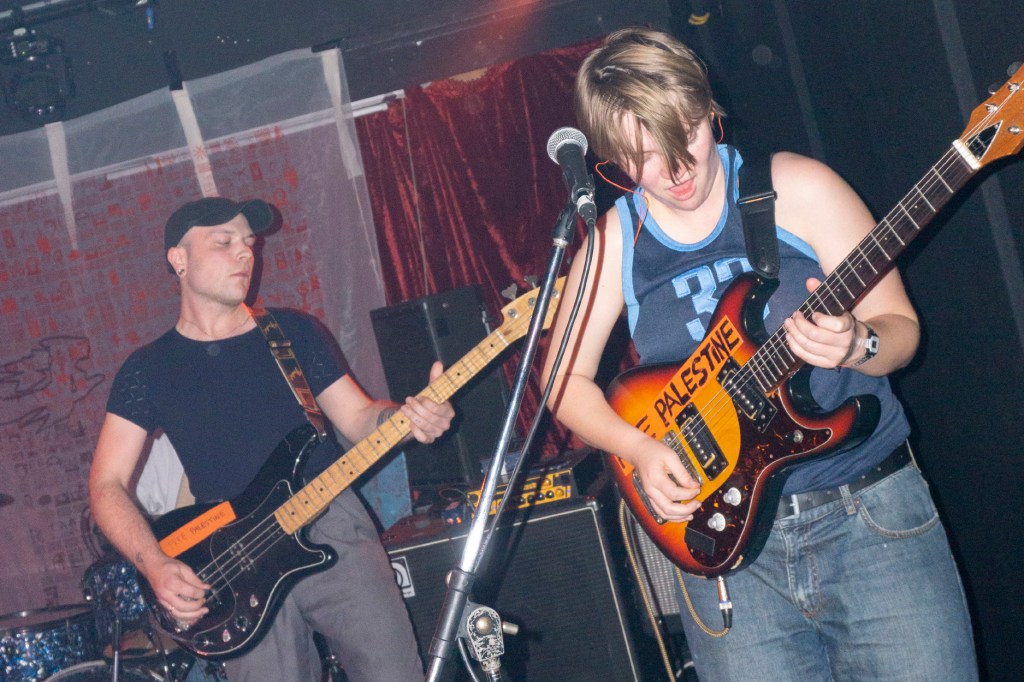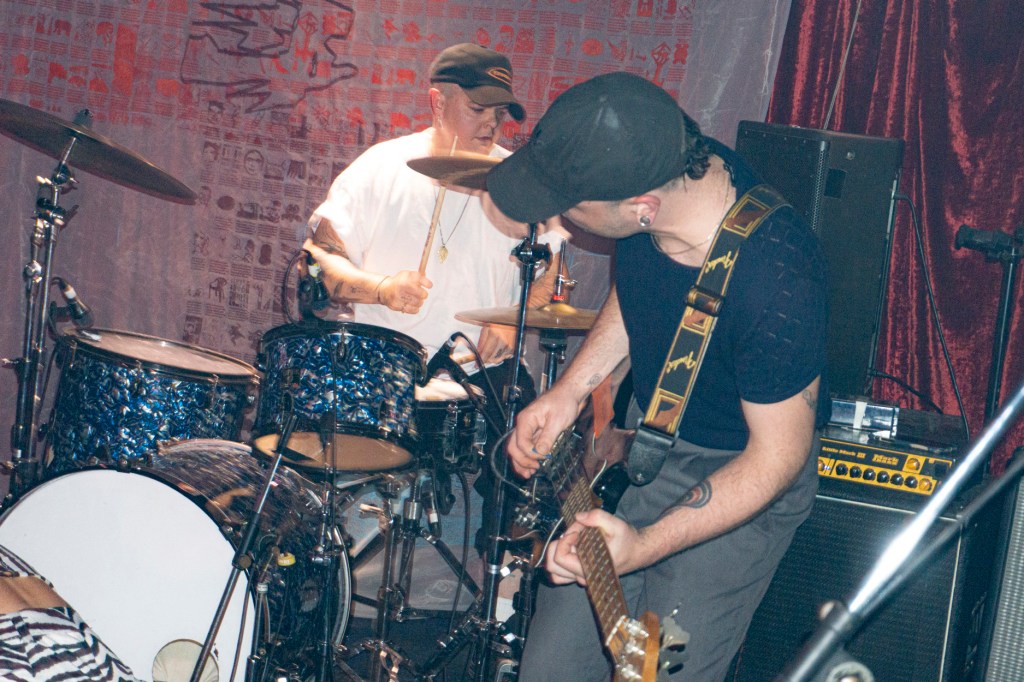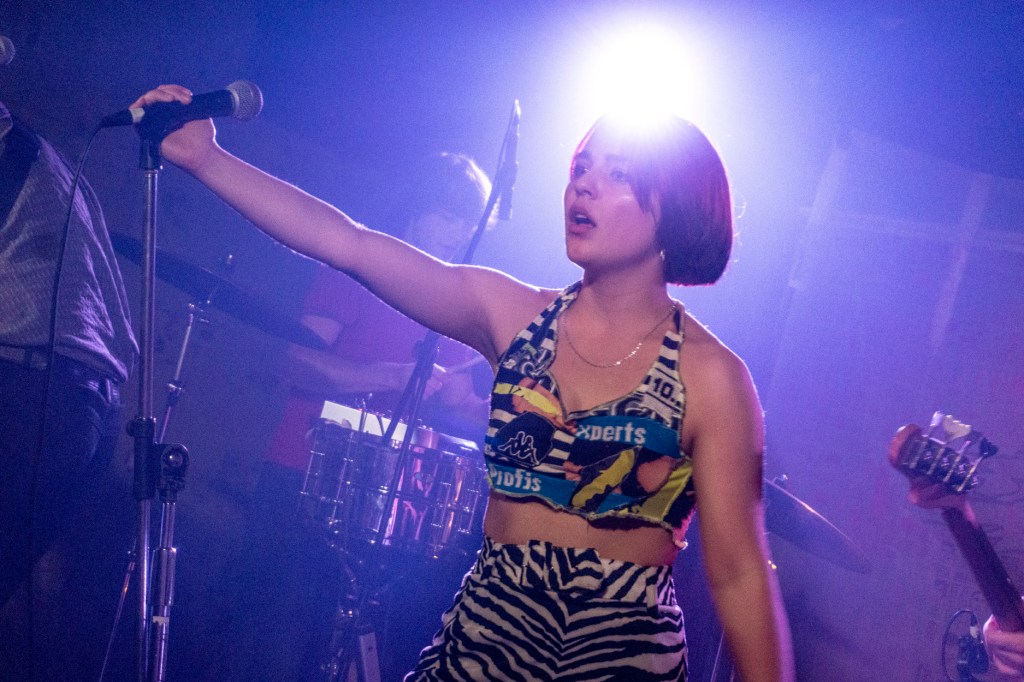
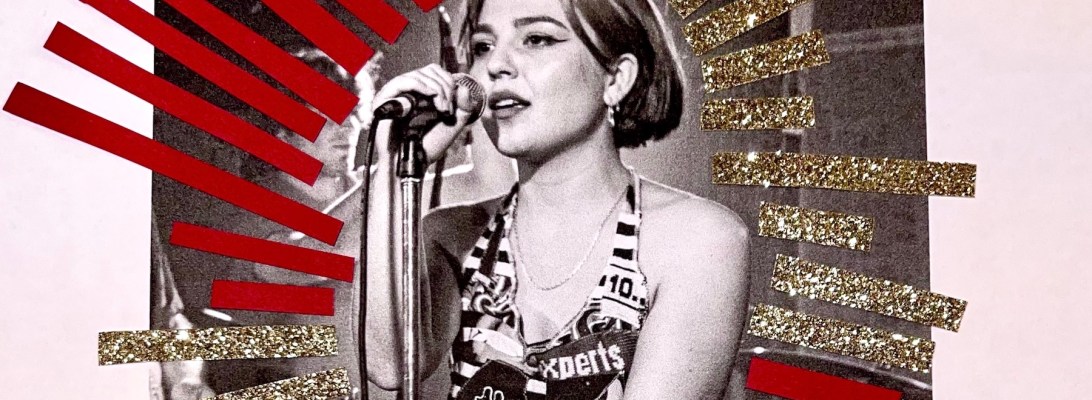
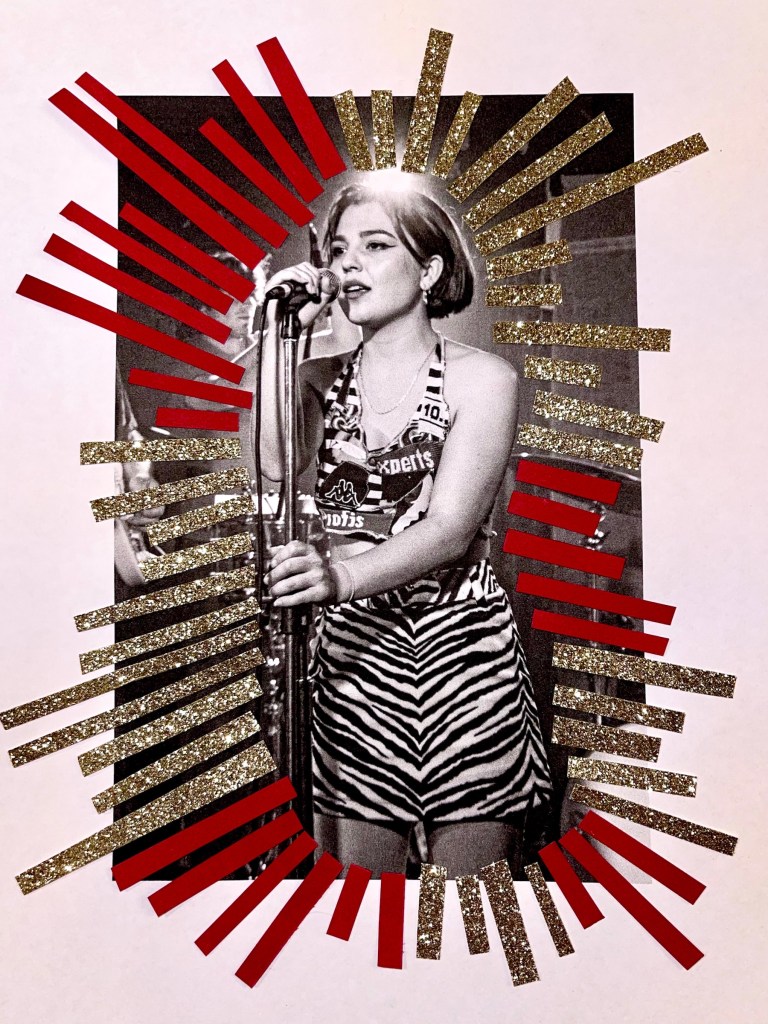
Shock Value: ‘All I want to do is scream and roll around on the floor, but society has forced me to have a job and wear clothes.’ 

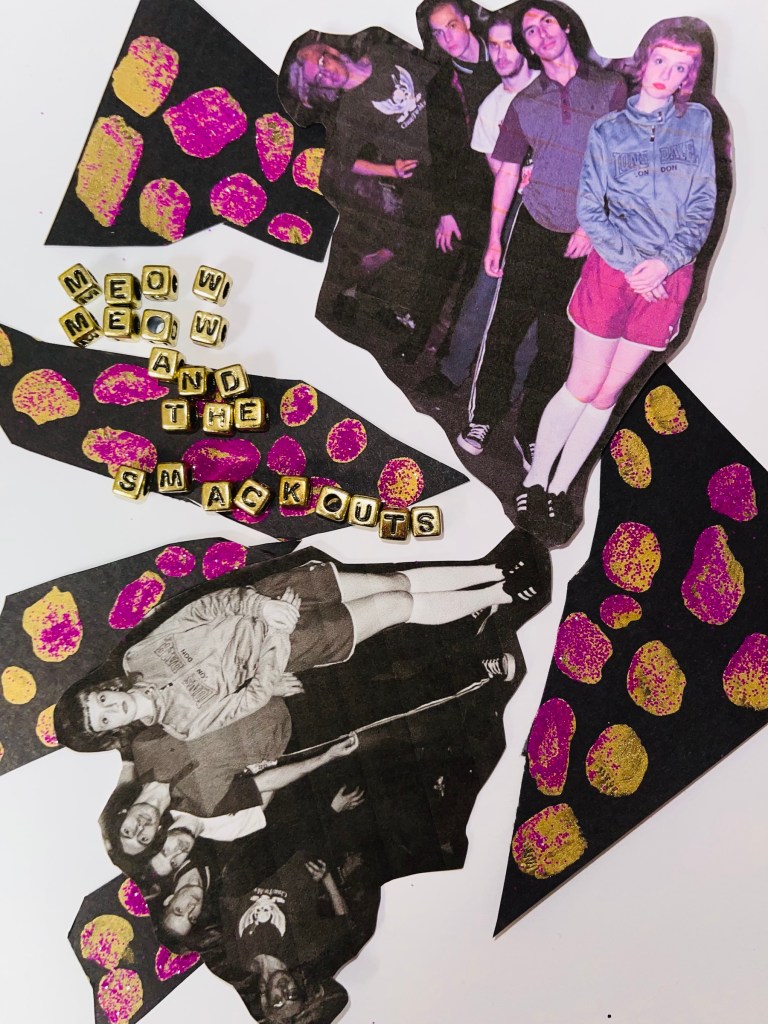
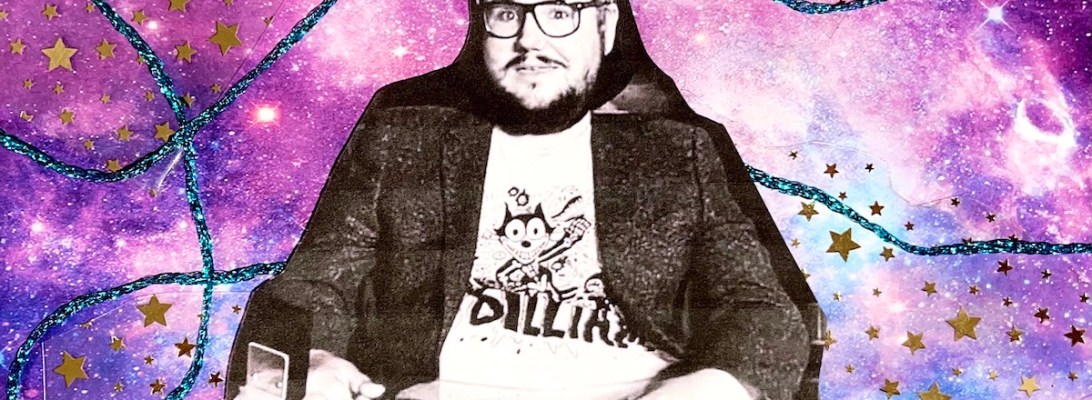
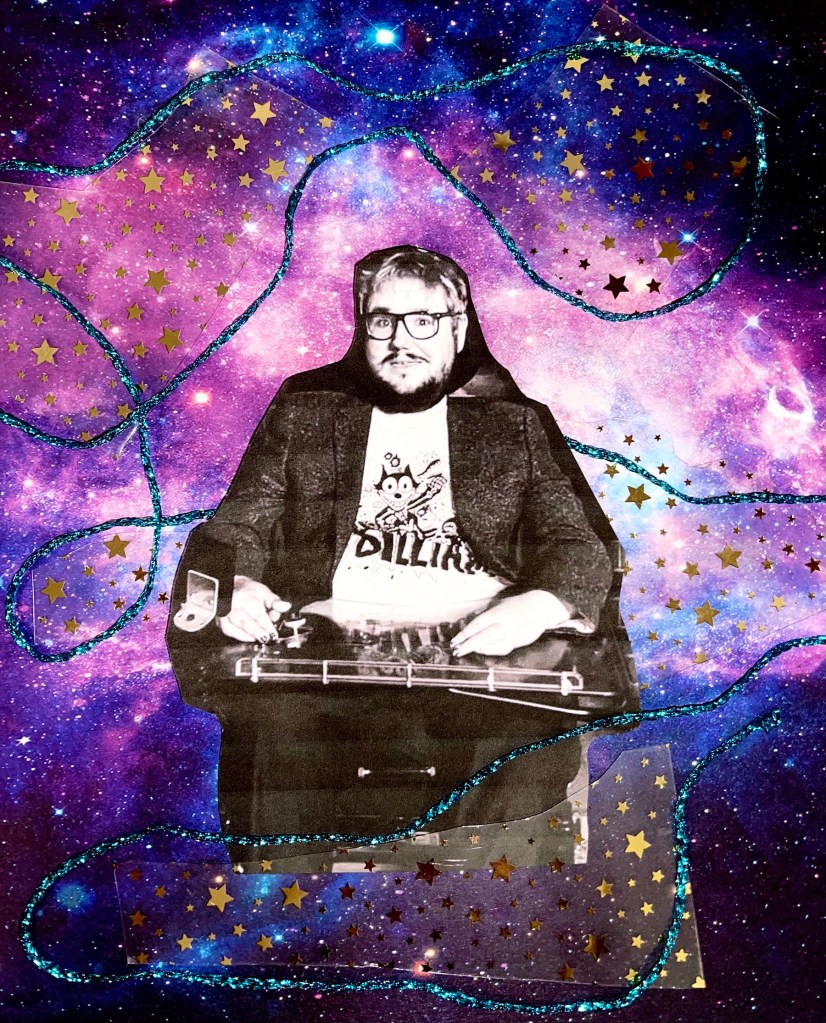
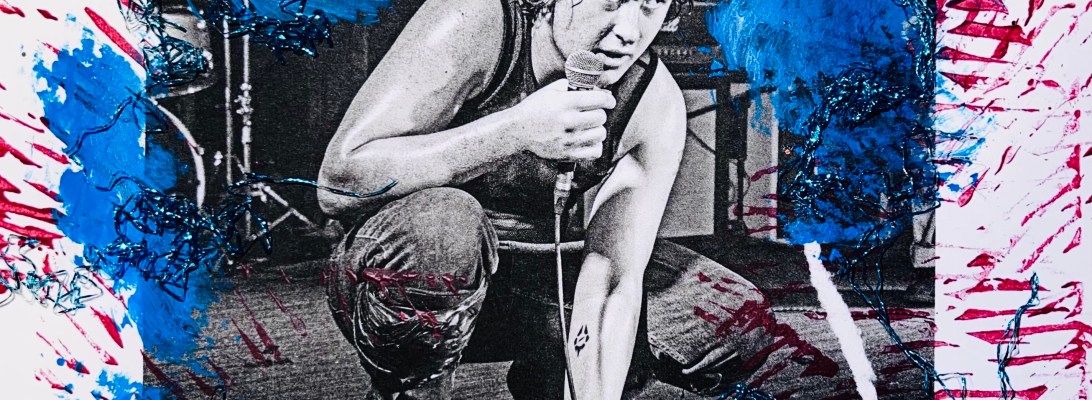
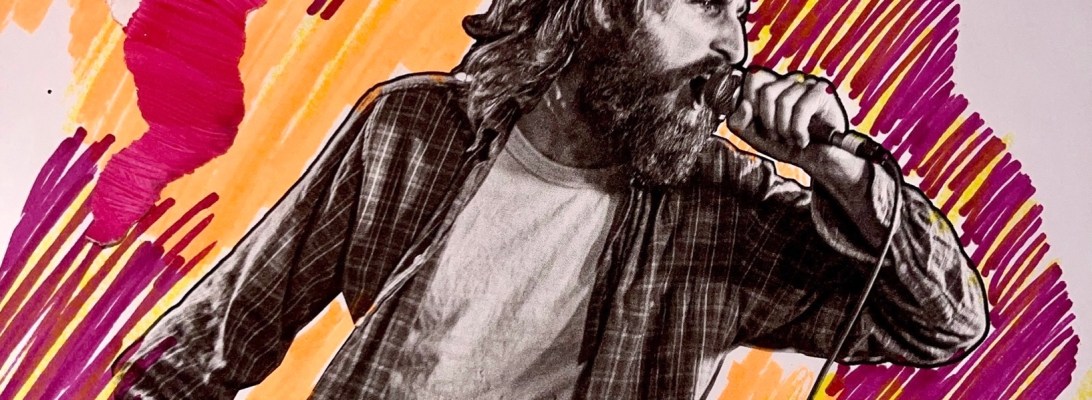
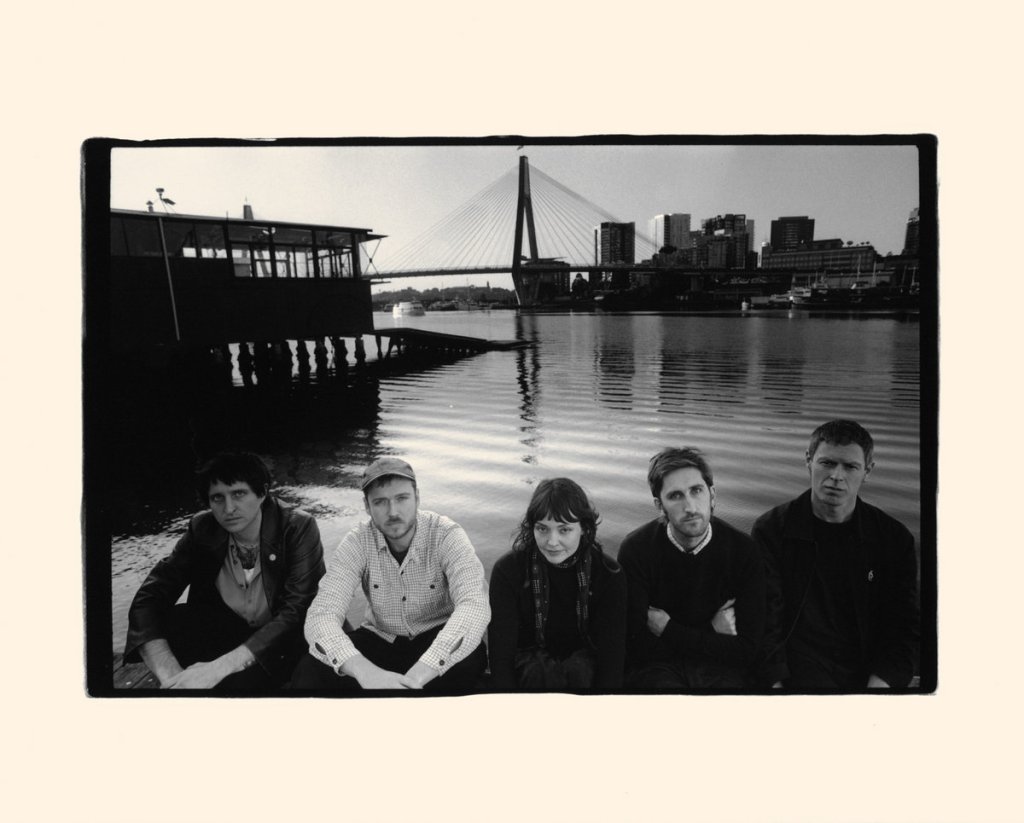
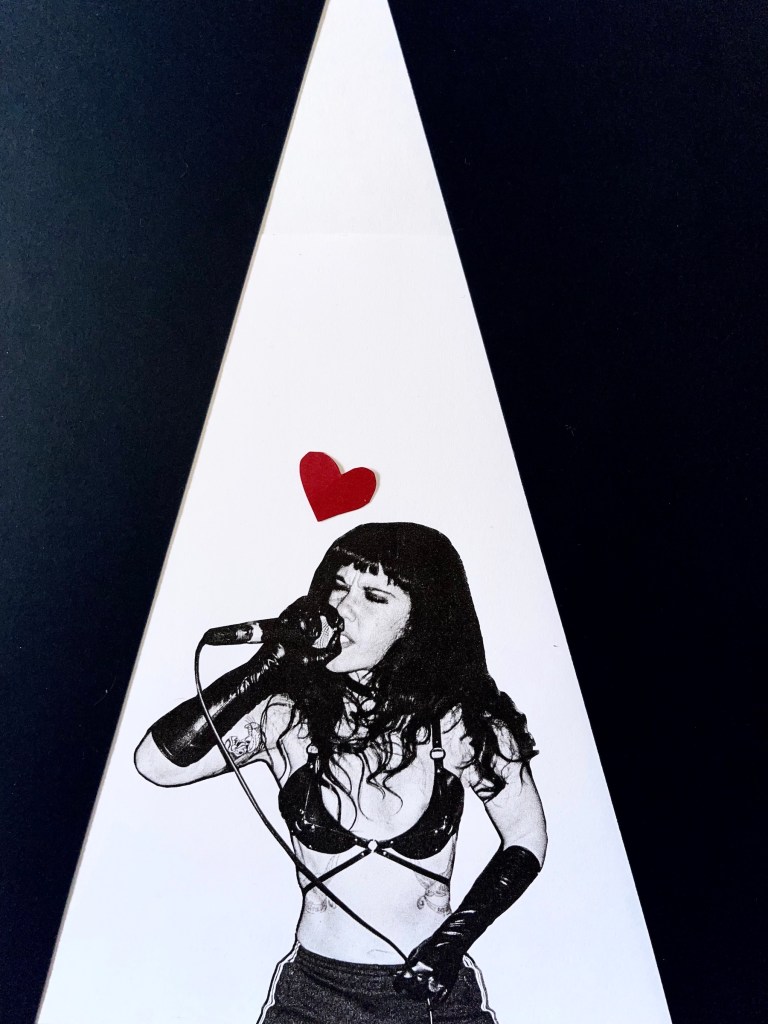
Original Photo: Jhonny Russell. Handmade mixed-media collage by B.

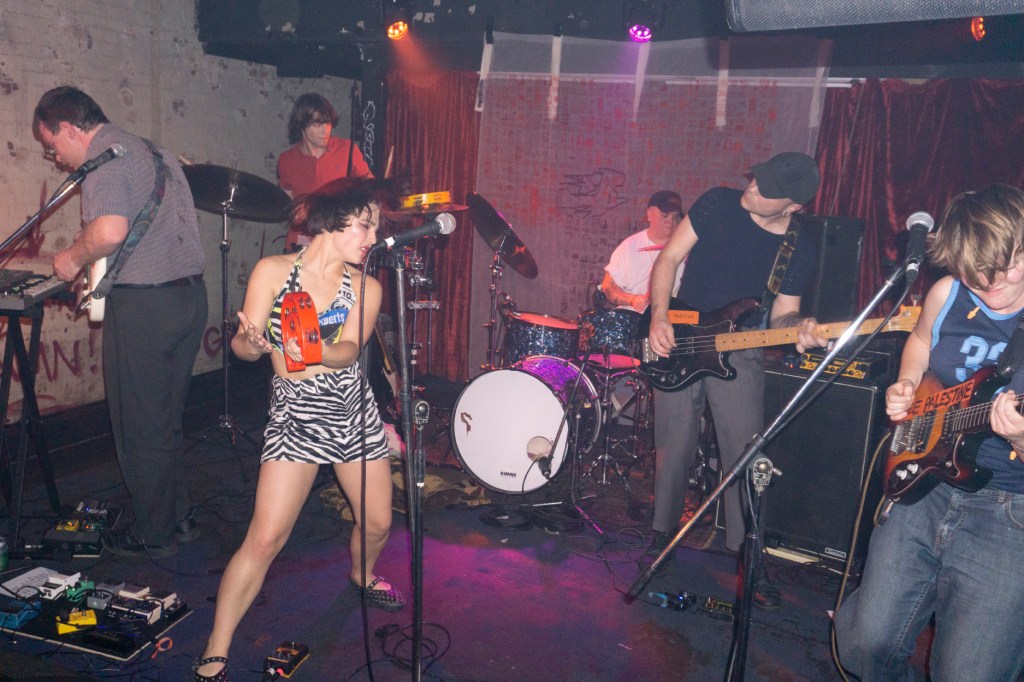
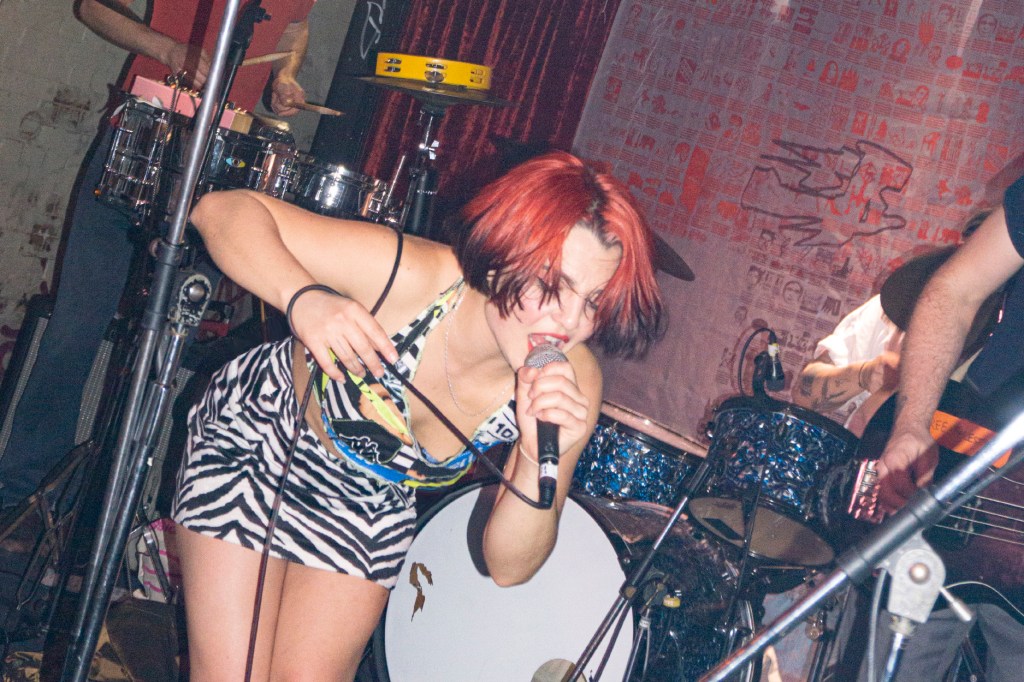
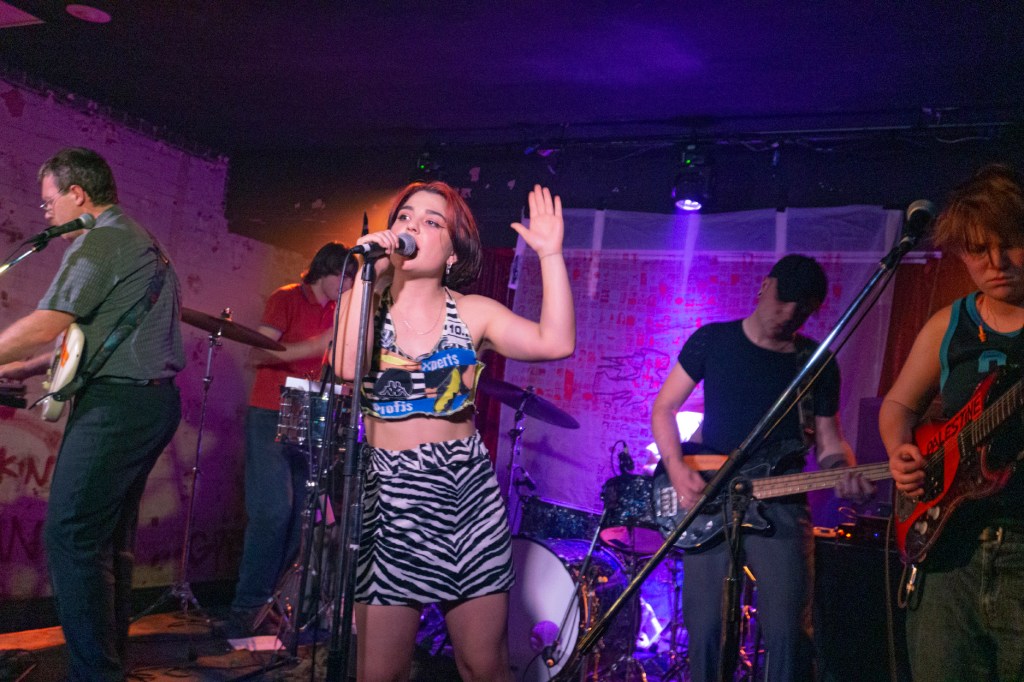
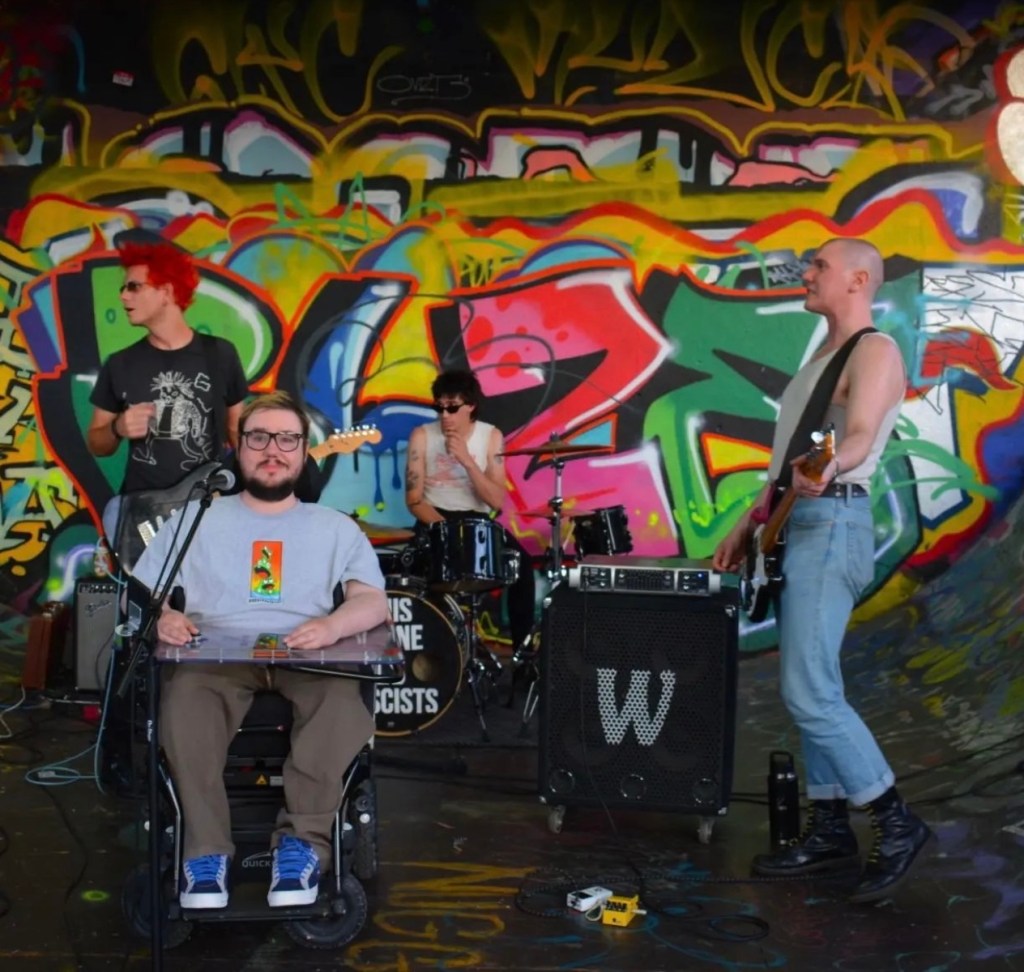
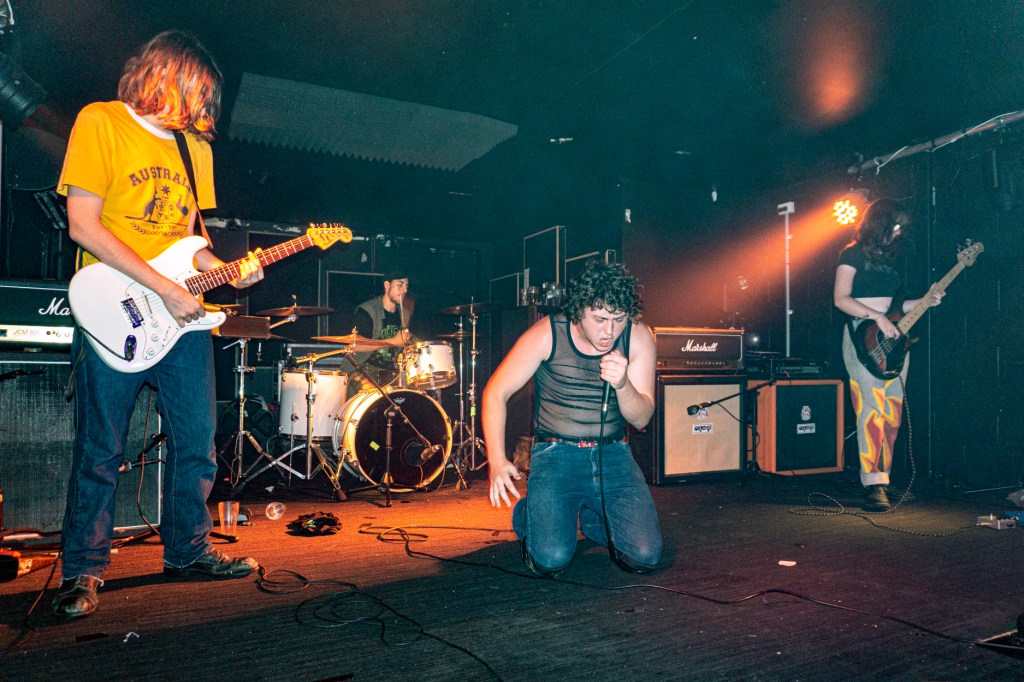
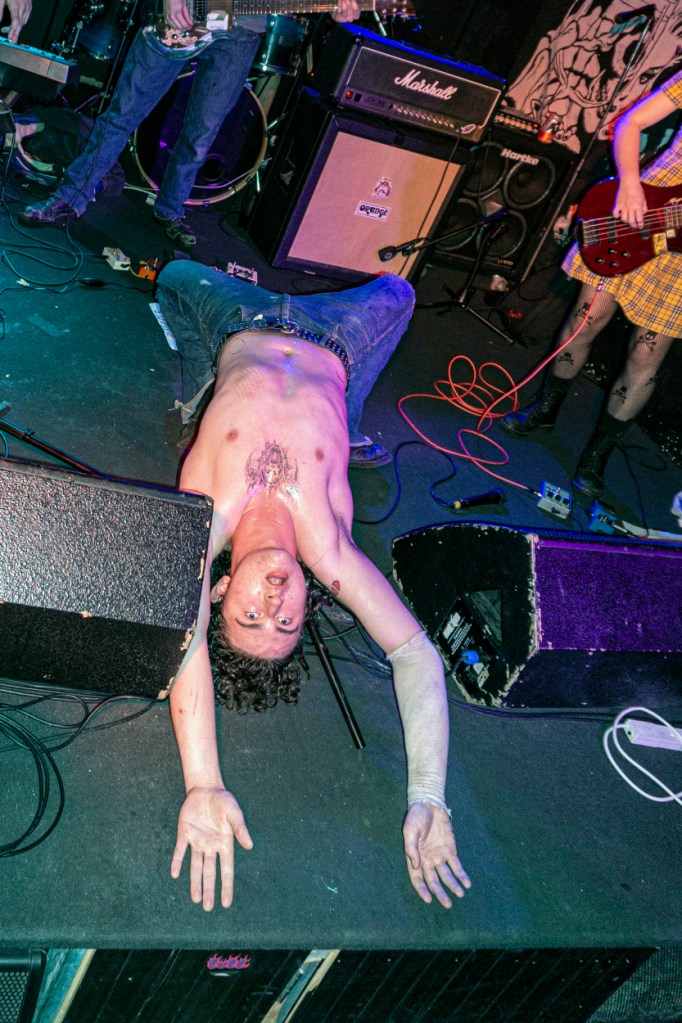
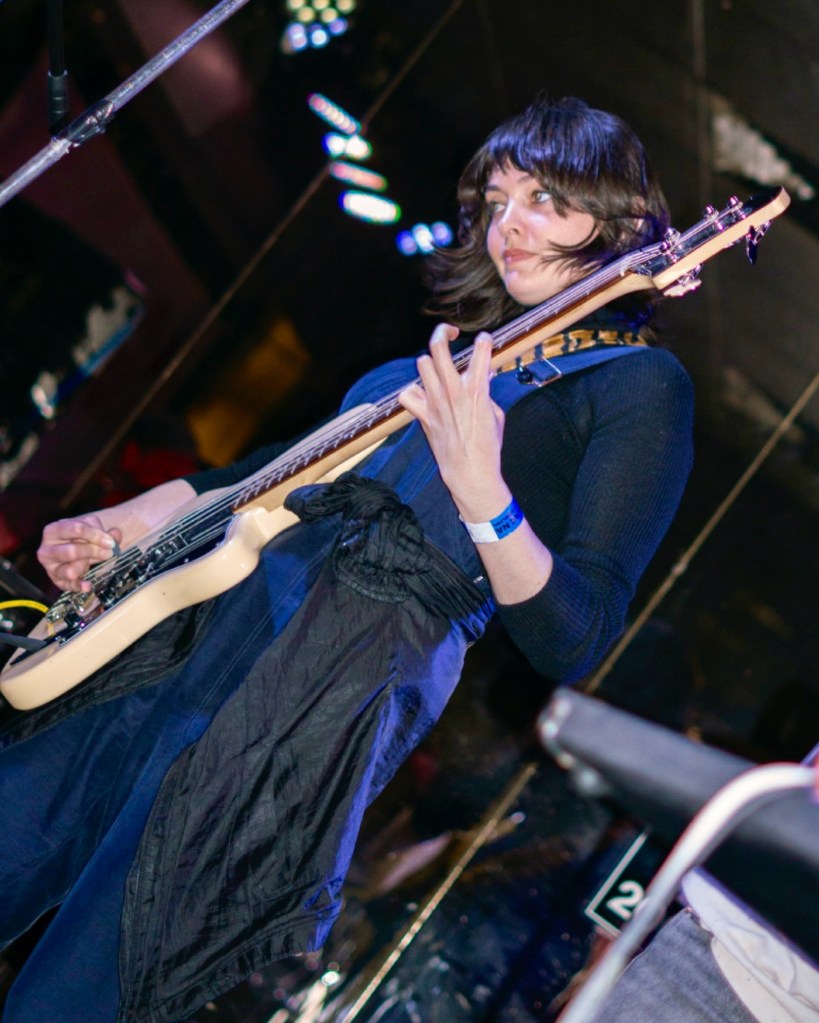
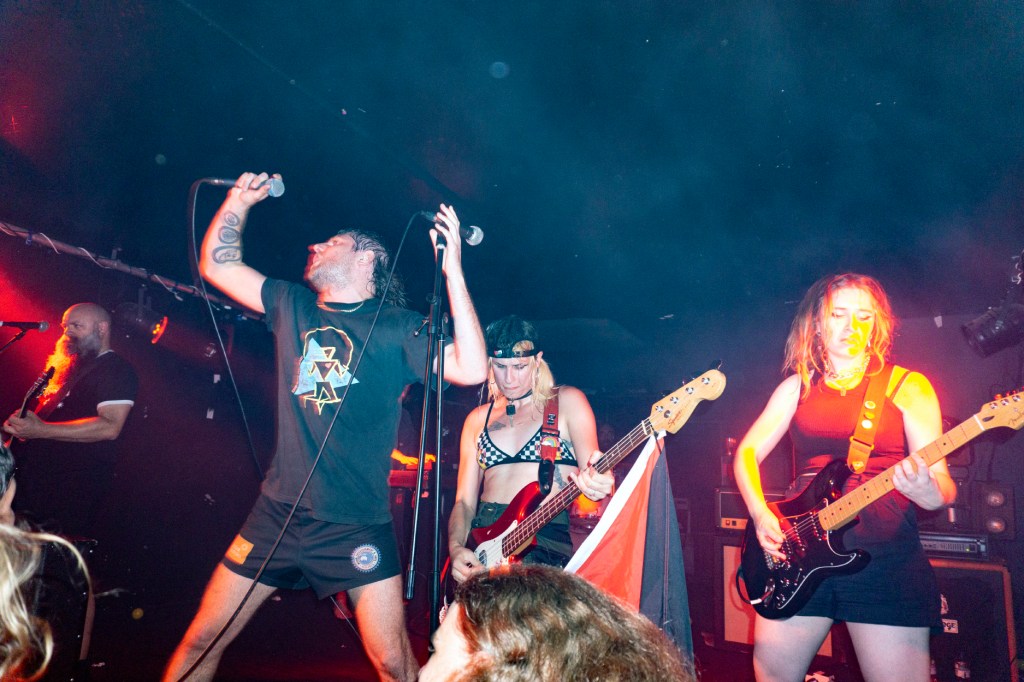
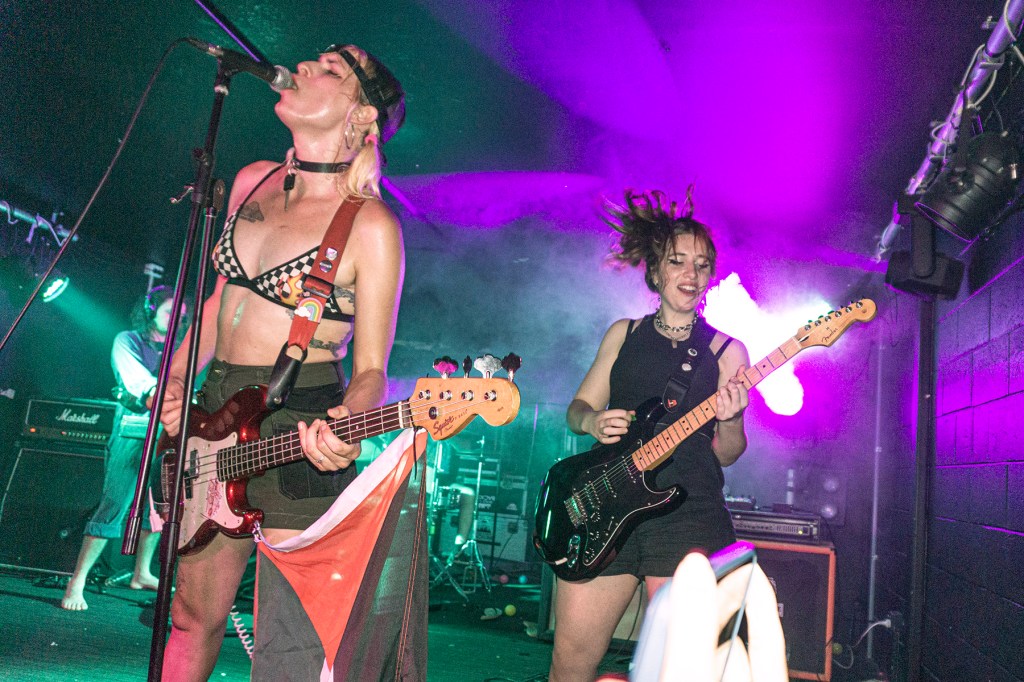
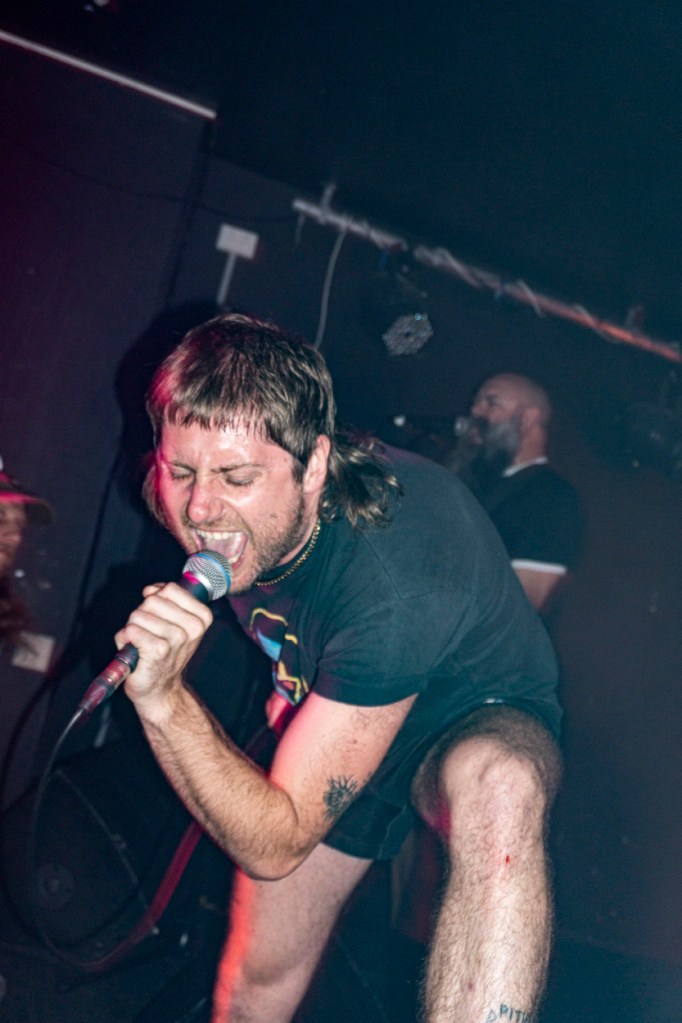
Meanjin/Brisbane punk band Shock Value’s live shows are fun, primal fury & unhinged moments. After we saw them the first time, we knew we’d seen something special. 

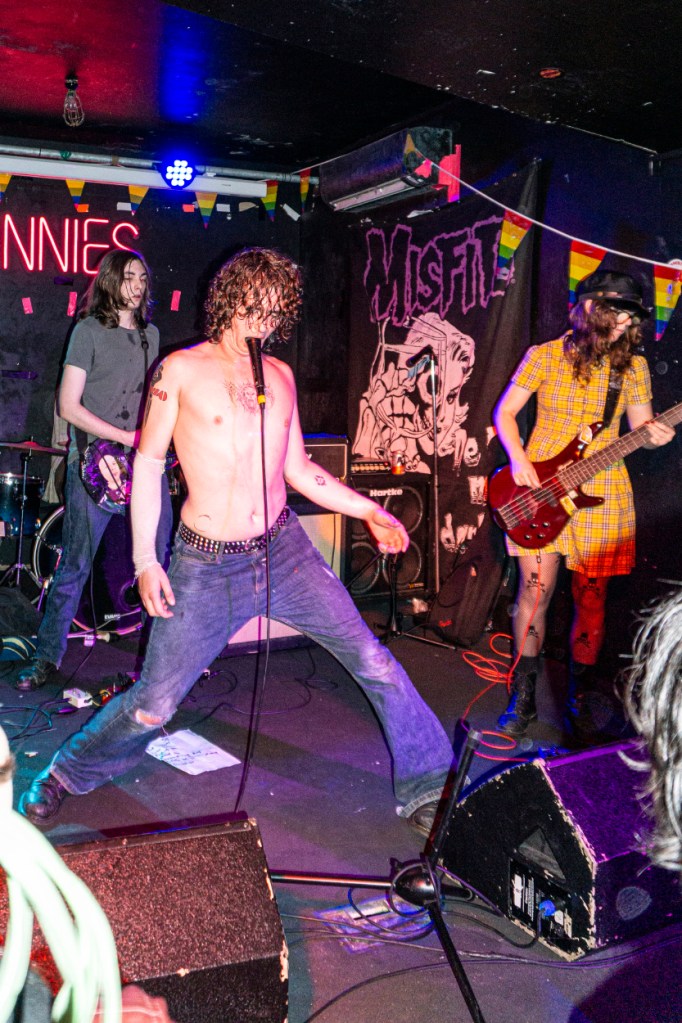
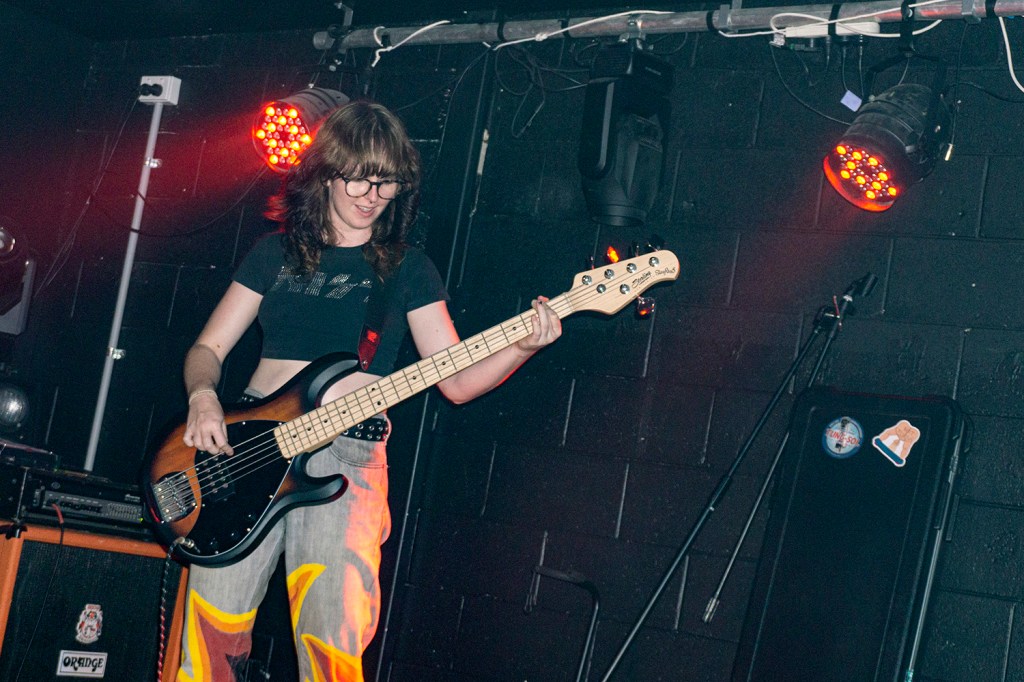
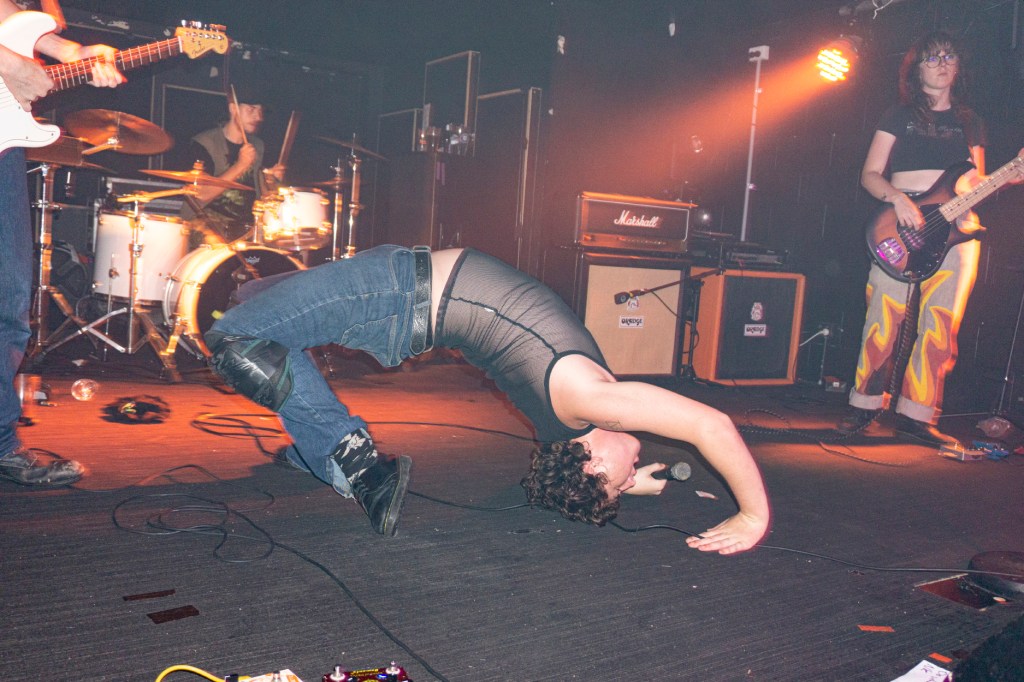
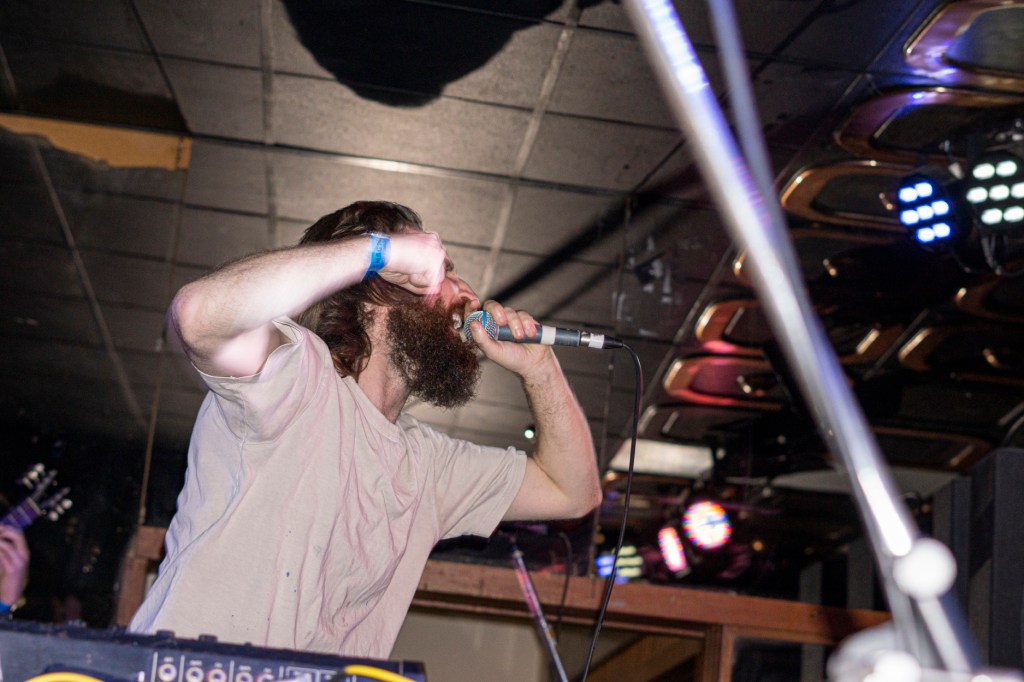
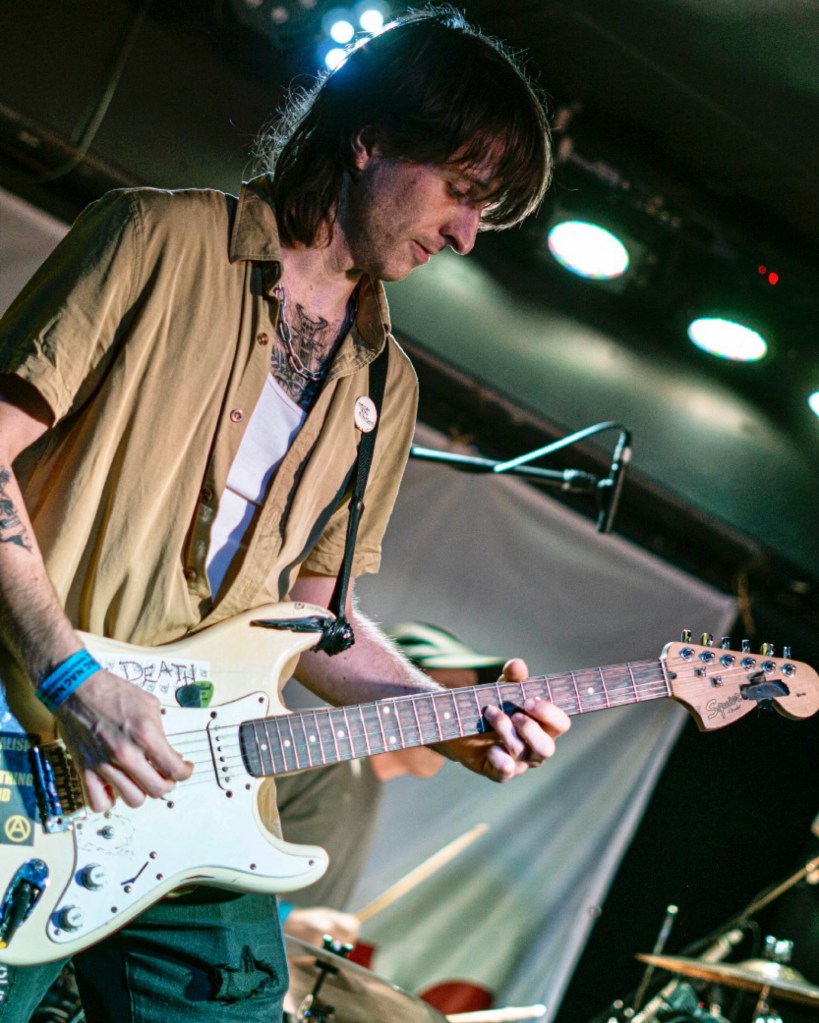
Gimmie sat down with Shock Value’s 19-year-old frontman George, while he was recovering from surgery. He’s renowned for his wild stage antics that resemble a character from the Conjuring franchise, as he contorts, howls, and grunts, while his bandmates keep the jams solid. He shared a lot with us: his up bringing in Mt Isa, being mob, the lessons learned from fighting, the attitude that drives Shock Value’s music, his experience at a Hillsong camp, having an Eminem haircut, being punched in a Domino’s, organising all-ages DIY punk shows at an old substation, online bullying, and more. 

It’s been a full-on week for you. You’ve had tonsillitis, undergone surgery, gone through a breakup—and one of your heroes, Dennis from the MC5, passed away.

GEORGE: Yeah. I held a heavy service for him at my house. I’ve been playing the MC5 all day. I stepped outside and walked down a couple of houses—you could hear it [laughs]. They got their play today! Like that quote, ‘When I listen to Led Zeppelin, my neighbours listen to Led Zeppelin!’

[Laughter] Nice. Have you always lived in Meanjin/Brisbane? 

G: Oh no, I’m from Mount Isa. 

When did you move to Brisbane? 

G: When I was seven or eight.

Do you remember much from growing up in Mount Isa? 

G: A little bit. It’s a tough place, but it’s pretty nice. 

Tough in what way? 

G: A lot of fights and stuff like that. You learn how to defend yourself. When I moved to the city, it was much different, kids wouldn’t be fighting at all. 

One time in Mount Isa, I was in this sand pit, in Year 2, and this kid was punching me in the head, he had me on my back and then suddenly he ran away. I thought it was because he just had enough, but there was actually a red belly black snake slithering up next to him—that was wild. But I’m glad I grew up in the country. 

How else was coming to the city different for you? 

G: It was cold. Even in Brisbane, it was so cold, to me. I also felt like people were a bit more judge-y down here. In Mount Isa everyone was poor, man, so no one really cared about what shoes you wore or what toys you had. Everyone was just going through it. But, when I came to Brisbane I got like made fun of ‘cause I didn’t have Nike’s or the cool shoes or whatever.

How did you first discover music? 

G: My mum always played music in the car, like Carole King, Powder Finger, stuff like that. On my sister’s 16th birthday she got a record player and my dad got a couple records for her, one from The Strokes.

I don’t think you hear it as a kid and go, ‘Oh, this is music.’ But the more I listened to it, the more I was captivated by what you could do with production. It’s an art form. They put so much wacky stuff in that album, and that’s why I love it so much. Then, I really got into The Beatles. 

In Year 5, I got a SoundCloud account. I’d go on SoundCloud in the computer lab at school because my mom is a principal. She got a good job, which is why we moved here to Brisbane. I didn’t know it at the time, but I was listening to weird versions of songs on SoundCloud. I was really into David Bowie, Green Day, Talking Heads, and—oh, I can’t remember his name—he’s a rapper [Ludacris], and he raps something like ‘Move, bitch, knock out your lights.’ I was really into that. A bit of Dead Kennedys too, because my dad’s a massive fan. I’d find these remixes and bring them to my parents, saying, ‘Oh, I found this cool song by Talking Heads,’ and they’d listen and say, ‘Oh, we haven’t heard that version before.’ It was some weird remix [laughs].

By Year 7, I had a phone, and that let me go on Spotify. After then, it was over—I couldn’t stop.

Sorry if I sound a bit foggy—I’m on oxycodone at the moment.

No probs. Hope you have a speedy recovery from your surgery.

G: Thanks. Also, my dad was so big into punk—he was always trying to push it onto me. But I’ve always been really into gangsta rap. My dad gave me this massive CD case, and in it was all the Public Enemy, N.W.A., Ice Cube, and Tupac stuff. That’s what got me into band music, because I was really nervous about singing. When I’d practice, I would rap Tupac, which is kind of cringe now, but at least it got me singing. It’s still a main influence of mine.

That’s awesome! We love hip-hop too, we both grew up on it, as well as punk and all kinds of music. I’ve been binging on Tyler the Creator’s Igor album.

G: Cool! He has a lot of beautiful stuff. I really love his first album, it was more shocking. I love stuff that can be shocking.

I’ve been getting into a lot of depression-esque classical. I was just listening to the classic radio channel in the hospital. I thought, oh, why not just listen to music while I’m here? I can’t stand TV ‘cause it has ads. Even on my phone, I switch off the sound and colour when ads come up. So, they can’t even get me with the pretty colours [laughs]. I wish classical songs had better names, though. I’ve been listening to a lot of Charlie Chaplin and classical instrumental stuff. I listen to music every day, it’s a journey. I’ve got a big wall, a sort of shrine dedicated to the Germs in my room. 

I know one of your other heroes was Blues musician, Lightnin’ Hopkins. 

G: Yeah, big time! I got onto him through Parquet Courts, that’s one of the first probably rock bands I was really, really into because my sister got their stuff on vinyl. They were doing a record plunge and were talking about Lightnin’ Hopkins. I already liked a lot of Texas music, so I thought I might like his—it blew me away. Not only his guitar playing is a really big influence on me, but the way he makes stories too. I like a lot of Blues music, but Lightnin’ has the most character, which is all that you really need. 

All the music, like we were talking about—the MC5, Germs, and also The Stooges—seem to have big characters that you’re really drawn to.

G: Yeah. I’ve always been into dressing up and creating characters. I was thinking back to a novel I just made. I used to make comic books when I was little and make up my own superheroes. One was called The Iron Butterfly—it was purple and yellow, which, looking back, I think is a dastardly arrangement of colours for a superhero.

It works for the Los Angeles Lakers! That’s cool you create across different mediums. How did you start playing music yourself? 

G: I wanted to play the guitar so bad when I was in primary school, but at school when you get to choose an instrument, they try it out on you and then they like pick one for you. I tried guitar and they were like, ‘No, it’s too big for you.’ It annoyed me so much, and now kids can go on mini guitars. They could have given me one of those but they gave me a 12-string acoustic guitar, which is obviously gonna be too big for a nine-year-old, so they gave a clarinet. But then I got demoted to percussion, not drums, but random miscellaneous percussion—‘cause you can’t fuck that up much [laughs]. 

Photo: Jhonny Russell.

Ha! 

G: I think that was good for me.

You like to paint too, right?

G: Yeah, I’ve been really enjoying painting again, because I just got a full -time job so I haven’t been able to paint as regularly. It’s so relaxing but I’m doing this dot painting right now it is pretty arduous. I was known as an artist at school but I wanted to do music—that’s so much cooler. I said to my parents, ‘I’m not going to make art for two years. I’m going to see what this music thing does.’ So I did that and I thought I’d probably never go back to art but then I came back to it this year. It’s so much fun. I forgot how much fun it is! 

Did you get into painting through school or was it an interest you found outside of school?

G: I used to work at Kmart in Chermside, and they had these art supplies. I’ve always done art at school and elsewhere, but not on canvas. I always thought canvas painting was a bit superior, because it’s different to drawing. While working at Kmart, restocking the shelves, I’d always see stuff and want to buy it. One day, I got a bunch of art supplies and set up my own studio in my room.

I like mob paintings; I like to do that style, and tie it in with optical illusion stuff. My grandma’s from Dharug, but there’s no connection to Country because she was stolen from her family.  

I didn’t know you were mob too!

G: Yep. But I don’t know much of where we’re from, it’s hard to connect, because my grandma was moved from Parramatta to Perth. And they made her be like a white person. 

I’m sorry. Same happened in my family. Disconnection from Country and kin is real. It’s a hard thing.

G: Yeah. It’s hard to connect. In Mount Isa, most of my friends were Indigenous too, but when I moved to Brisbane kids would ask me, ‘What percentage are you?’

If you’re Indigenous, you’re Indigenous; there’s no different levels of Aboriginally as some people think; and it’s definitely not defined by your skin tone or appearance.

G: It’s the way you walk the earth and taking care of your surroundings.

It’s—who you are. Its community, the Ancestors too; in lore, everything is connected.

G: Yeah. At one stage I wanted to be a lawyer. I was top of my class at my old school, but I got kicked out and moved to a different one. The teacher was so mean, she wouldn’t even let me go to the toilet when I needed to. I would always eat cereal at the beginning of the day, and I’m lactose intolerant, her class was at the start of the day, so I would always need to go to the toilet. I dropped that class, and joined Music in Practice class, which is not actual music theory. 

Me and the drummer wrote a version of Green Day’s ‘American Idiot ‘ but it was school-based, we called it ‘Kedron Idiot’. We had so much fun doing it, we thought, ‘Making songs is so much fun!’ And we’ve been recruiting band members ever since.

We were kind of a rap punk thing to start off with because I was so into Eminem at the time. I actually had an Eminem haircut. [Laughs]. It was very, ah, very… something. 

[Laughter]. It’s okay, dude. I actually knew a lot of guys that had that hair cut ‘cause they loved Eminem. It was a whole thing. 

So you mentioned that you got kicked out of your first school; how come? 

G: For fighting mainly. The first school I went to from seven to nine, I got bullied heaps. They actually called me, Shmuel, the boy from that movie The Boy in the Striped Pajamas because I had a buzz cut and big ears. It was quite cruel. 

I’m so sorry that happened to you. Kids can totally be cruel. I copped a lot at school too, so I know it can really hurt.

G: Yeah. People would kick me in the back at school and then somehow I’d be the one in trouble and I’d have to apologise to them for making a big scene. I was under the tuck shop block one time, I didn’t have a hat on but I was undercover, and the teacher came up to me and was pressing me a little bit, and I wasn’t having a good day and I came up in his face and pushed him. I got expelled for that. He said he could have charged me with assault but I was only like 11! He was a 40-year-old man. So I went to another school.

Another time, someone was picking on me and I brewed on it, sometimes I don’t really act in the moment, I plan on things. This kid beat me up one day, and then the next day I came in with a bike wrench and hit him over the head. He almost died—that was a wake-up call. At the time I was very violent. I was taking boxing lessons. My stepdad was a steroid junkie, so it was a very angry household.  

I just never liked school. I’m so happy I’m out of it. 

Same! I used to get into fights too. My dad and my brother taught me how to fight and defend myself against bullies. I was always getting in trouble. One day a “friend” called me the n-word and kicked me, bruising my leg bad, because she was losing the game we were playing. And then I ended up in front of the class with her being made an example of, and the teacher produced a photo from his Africa holiday, of a black hand shaking his white hand, and I had to shake the girls hand and we had to apologise to each other.

G: Was this in the 90s or something?

It would have been 1989, I think. It’s interesting how being bullied can shape you.

G: Yeah. 

Did it inspire you to gravitate towards art and music, to help express or process stuff?

G: I think it has pushed me that way. When I was in Year 12, I really got into punk. I found out about Henry Rollins and Ian MacKaye. I shaved my head and every day I would listen to SSD, Teen Idles, and Minor Threat. I’d walk around with this angry look on my face. I was so angry. Once I heard about anti-cool music, I just frothed it. 

What helped you to become less angry?

G: I’m actually reading a Hindu book at the moment, so things are very peaceful. I’m not violent. It’s a book by Srila Prabhupada; a kind of 10 Commandments on how to live your life. I’m yet to read the Bhagavad-Gītā; I got a copy for $20.

There’s something really nice about painting, but it can be a worst enemy at times too. 

In what ways? 

G: Sometimes I go too hard on a painting and stay up for days and days.Then I get super paranoid about things. I think sometimes the urge to create can overrun your psyche.It can be the thing that saves you or the thing that ruins you. Look at [Vincent] Van Gogh [laughs].

Where do you feel you’re at lately creative-wise? 

G: I’m just having fun because it’s not becoming my job. I think that’s when it really affects you. Whenever you’re going through something really bad, creativity helps you through it. But whenever I’m doing good, I’m like, ‘Oh, I should be creating more.’ But what I’m creating then isn’t very good.

You mention in correspondence that you had some news; what is it?

G: We just got picked up by a Wild Wax and we get to go tour Europe in 2025!

That’s exciting! We’re so stoked for you!

G: We’re so excited too! When we got off last weekend’s tour, I felt like going back on the road again straightaway—it’s an addictive thing.

Photo: Jhonny Russell.

Have you traveled much? 

G: No, not at all. We’re very, very inexperienced. We haven’t even been to Naarm/Melbourne. 

That’s okay, I’m sure you’ll get there. Not everyone can get to places, especially with how expensive things are right now. You’re going to Europe in a while, and that’s rad!

G: Yeah! We’ll be in Germany, France, and Finland, are the main ones. We’re not going to UK, though, so no Bovril sandwiches [laughs]. I’ve been using that joke a lot! I’m a big prankster, down to the soul. 

One of my earliest memories pranking was, my dad, he was a fly in fly out worker. I used to scare him from behind the car. I’d sneak out and hide behind the bushes and then when he turned off his car, I’d go under the car and then scare him as he got out. 

I just love pranks and shocking people. It makes sense as to why I would pick this genre of music to play.

Is that why you called your band, Shock Value? 

G: Exactly. We were going to be called The Shakes because I have nerve damage and I shake a lot, but I didn’t think it was a very good name at all. I got nerve damage because I fell from the top of a spider web [climbing net] at the play park. I’ve always been shaky since.

Oh-no. I’m sorry that happened. How did everyone in the band meet? 

G: George [SV’s former drummer] and Christina are from the music class I joined. We didn’t really play together for a long time until Isaac introduced himself to me; he plays guitar now. It was at one of the all-ages substation shows, and I had that awful Eminem haircut, he could spot me easily [laughs]. I really wanted to be his friend because he was so cool. I went over to his house to ask to borrow an amp, but I wasn’t actually going to use—I just wanted to hang out with him. I’m sure there were other ways I could have asked, but it seemed like the only logical way to me at the time. We went to hang out in his shed, and as soon as I walked in, I saw all his stuff everywhere and thought, ‘Wow, this guy’s into everything that I’m into—the same art, the same bands, the same movies, the same books. I’d just finished reading Junky by William Burroughs, and he had it pinned to his wall! 

Photo: Jhonny Russell.

Can you tell us something about each person in Shock Value? 

G: We’re sort of like a hive mind at this point, a well-oiled machine. We know what ticks each other off and what doesn’t. I don’t think we’ve ever really had a big fight. It’s like Christmas day, you act how you need to act for the presents to be given to you. 

We’re all big readers. Me and Christina like horror books. She’s a big knitter and likes to crochet.

How did you start doing the Project Punk all-ages gig stuff?

G: No one would book us, so I had to. My friend Kaleb was putting on gigs. I had no idea what to do, and it’s not like it was my idea or anything — people have been putting on gigs forever. What makes it even more unoriginal is that I stole his whole website and copied and pasted it to mine, but just changed the name. I told him this, and he was fine with it — even down to the ticket link and all the stuff on the tickets. That made it so easy. But, obviously, I did my shows differently to him; I just copied all the hard administration work [laughs].

Kaleb does Casualty Records too, right?

G: Yeah. I think he’s gone into 18+ gigs now, which I don’t know how it’ll go with all these venues shutting down. 

We used to ask him for shows so much but we were a bad band, there was no hiding it [laughs]. We knew we had to play gigs to get better—we’ll bite the ball. 

One of the first Shock Value shows was at the the LBNP Centre?

G: Yeah, where I’m doing my art gallery. It’s a great place. There’s actually a documentary on it. 

Rest In Peace?

G: Yeah. I was watching that the other night. I didn’t watch it all, it’s hard to watch. 

I thought you made made some good points featured in it. You said something like, ‘at shows you can have fun but don’t ruin other people’s fun.’ 

G: It’s something I took out of the Bible. I’m not religious whatsoever. I just really like reading. 

I don’t like the whole hardcore thing. I’ve never really been into, like, doing that circle thing, and tackling other people. I think a mosh is way better—it’s more passionate. I went to see DRI and there were so many Nazis there. They were all doing that hardcore thing, flexing their guns and sieg heiling. They were pretending to punch people, it was so lame. Stop like pretending that you’re so tough, just go away. It’s old men trying to relive the old days.

Nazis can fuck off! Some for the most interesting music and art out there right now is being made by people of colour. Another point you made in the documentary was if people were thinking of starting a band that they should just do it. And I love how you said, ‘I want you to succeed.

G: There’s not enough rock n roll bands these days. Rock n roll is so easy compared to other stuff. There’s too many shoegaze bands in Brisbane, it’s so, so sad. 

I liked how you’re supportive of others. I think sometimes when you’re in a band and it starts to get successful or seemingly successful to other people, some people get kind of jealous and they try and tear you down rather than uplift each other. 

G: There’s always going to be that. It’s a long way to the top, if you want to rock and roll [laughs]. It’s such a good song. So true to. 

I saw with the Project Punk stuff that you were coping a lot of hate recently.

G: Yeah. It’s just 14 year olds. It’s annoying. I don’t really want to be doing too many more gigs if it’s like that, threatening me. It’s just a headache. People were threatening to do stuff, and I don’t want to get the police involved. Especially Brisbane police, they find a way to mess everything up and scare as many people as possible. 

Hopefully they’ll grow up and realise how lame they’re being. I’m sure they’ll get bored of harassing you soon enough. We first met you at a Project Punk show at the sub station, last year, on your 18th birthday. It was really cool to see that so many people showed up to the gig.

G: Yeah… it was the Unknowns show. I’d been wanting to book them for so long. It sucked that the fucking mics weren’t working. I bought a Piss Shivers LP off you that night. That’s basically all I remember. 

I’ve stopped getting so drunk now. I had a bad period recently where I’d been drinking red wine every day, from dusk to dawn. Some bad stuff happened, and it was a wake-up call. I’m trying to control myself a bit more on stage because I think alcohol makes you lazier and a worse performer. It’s hard trying to be total chaos and then trying to control it as well. There’s a thin line you have to walk.

It’s interesting because I’ve been watching drugs come back into the scene and heavy drinking, and in turn shit behaviour. I’m not against drugs and alcohol, people can do what they want, but it’s been breaking my heart to see friends go down bad paths. People in bands I know, have OD’d recently but luckily they survived. I saw a friend from a band recently, and when he turned up to the venue he was his normal lovely self and then after some drinks and whatever he turned into a total jerk, wondering around like a zombie, smashing glasses and trying to fight the band that was playing. People have problems in their life and rather than facing them and doing something about it they numb themselves, zone out, and self-destruct. I don’t want to lose any more friends to that stuff.

G: Yeah. I had an altercation with my friend the other night because when he gets drunk, he gets really drunk and he speaks his mind when he’s suffering. He was getting up me because, I have another band and like some people in the band, they’re not very agreeable to him. He was getting angry at me because he thought that I like didn’t like him because these people didn’t like him and he punched me in the middle of a Domino’s when we were getting pizza. I was like, ‘Fuck. Dude!’ I didn’t do anything back. I was just like, ‘Don’t punch me! What the fuck? I’m your friend.’ I’m never one to retaliate because I’ve learned that lesson. But fuck, it was hard not to. I was so embarrassed because the Domino’s lady laughed at me. I had to go sit outside because I couldn’t do anything because it would make him more mad. I just had to sit there. I hate how alcohol affects some people. It’s 20/20 vision, I guess. It pisses me off, you can advertise it in gyms and hospitals, but marijuana is so illegal. I guess, it’s becoming less illegal but you still gotta jump through hoops to get it. It’s a plant! 

Photo: Jhonny Russell.

Shock Value’s debut album, was released on Christmas Eve. 

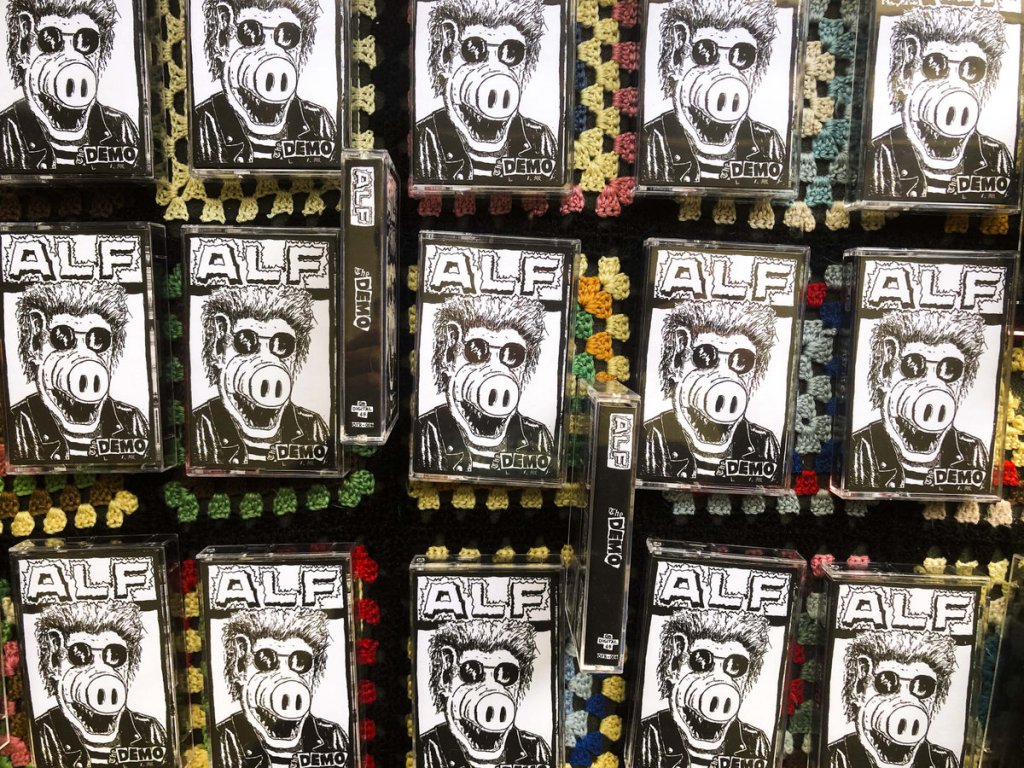
G: We just wanted to have an album in 2023 and then another one in 2024. We’re going to release our next one mid-year. It’ll be more blues-oriented and it has a small storyline. We have three songs—‘Angry Joe,’ ‘Iron Joe,’ and ‘Tibetan Joe.’ I feel way more proud of it because it’s so us. The first one is like Saints’ style punk rock, but this is more Little Richard meets the Germs. I’ve been working on more melodies too, like the Beatles and Carole King stuff. We’ve got a second vocalist, which really complexifies the choruses. Having a couple of voices makes it more interesting.

I love bluesy punk. That’s a big reason I loved Pale Horsey so much. I’m still sad they broke up. 

G: Cordell from Horsey is recording a cracker of an album right now on a cassette 4-track in his basement. When I first saw Pale Horsey, that was a big, big change for me. It was seeing something different in real life rather than seeing something on a Youtube video. Cordell taught me that you can do whatever and no one really gives a shit. 

That’s exciting news! I’ve been waiting to see what he does next. Have you recorded the new album yet? 

G: No. But we’ve got the Nepo baby set up, though. So my uncle—I just found out after we recorded the first album that he has a studio; he has two supercars parked in there. He’s mega-rich. My family isn’t rich, but he is. He’s got the Channel 10 News mixing desk from the ’70s. It sounds so good; like any rock album recorded before 1990. We’re going to have the drums isolated on this one, so there’ll be more bass and cleaner drums. I’m honestly just waiting for my hair to grow a little bit longer to release the album [laughs].

You should go back to the Eminem style. That’d be funny.

G: And pigs fly. I’m never cutting my hair again!

Where do you write most of your songs? 

G: I always write the words, and about 30–40% of the time, I make a guitar riff for it. Most of the previous album consists of songs that I wrote on guitar or bass and then made words for. I used to write them at school, on the bus, and sometimes at home after a concert or something. I find it helps with making guitar riffs and lyrics. I used to really be into taking stories from books and making them my own to write a song. But now, I don’t know; it’s organic. I feel a rhythm or hear a rhythm, and I sing it until I can make some words. Then I make another set of words, and I maybe think about what the song is going to be about and then get the chorus down. It all starts from very ‘50s and ‘40s stuff. But it’s hard. I find that if I’m in new places, I write the best songs. I always like going on walks, that helps.

Is there any songs from your first LP that remember writing while walking or being out and about? 

G: The only one I’m distinctly thinking of is I was in class. And wrote ‘White Bliss’. I was at uni in Media Training class. it was for my Music & Songwriting diploma. I don’t really hold a lot of attachment to songs anymore. Like Ed Sheeran says, ‘Once I write a song, I sort of don’t like it anymore.’ 

‘White Bliss’ sounds very bad, I know, but it’s not. It’s about this girl I was into who had long white hair and watching her dance. But I was too afraid to talk to her, and then I just went home. I got a song from it, though. I developed a story—what lust does to a man. I just finished watching the movie The Witch, and I tied that in. It’s about this pretty girl with long white hair who attracts this man out to the forest, and for lust, he’ll do anything. Eventually, she leads him into her cave and reveals herself to be this old, demon-like woman. So basically, it’s about how far a man’s mind can be taken by lust. But a lot of people think it’s about white people, and I’m like, ‘Shit, man.’ But the first lyric is like, ‘long white hair.’ We copped a lot of hate for it, people thought, ‘These guys are Nazis’ [laughs]. White supremacists are dumb, because everyone comes from Africa.

Photo: Jhonny Russell.

There’s a lot of reasons why white supremacists are dumb!

G: One formative thing in live music for me: I always wanted to go to a strict Christian camp, like a summer camp, because I thought I would meet cool, rebellious teens there. But I went to Hillsong. No parental guidance; I just went there myself. I went on this camp, and it was so lame. I thought I would be scared straight, but it was more free love—free love unless you were in another religion [laughs]. It was a kids’ festival sort of thing.

They had this really interesting thing like King of the Hill, but you had to put detergent on your body. There was water and tarps everywhere, and you were genuinely beating kids up. It was on a pile of couches, and you would fall down pretty far. I don’t know who signed off for that, but they could have gotten hurt pretty badly [laughs].

It was good, but I already knew what music I liked and what music I hated because they would play Pop music—really bad Hillsong stuff. I didn’t mind it, but the music? I thought it was going to be gospel, which I like, but no, not at all.

We have some piano on the new music but he can’t do tours yet, because old mate’s only 17 and his mum won’t let him. But she will let him go to Europe when we go.

You mentioned early that in social situations your sometimes feel awkward, and I know that you’ve said early on, you felt nervous singing; do you get that now?

G: I don’t really get nervous. It’s something that I really want to do. I never really get to express myself in a normal day. All I want to do is scream and roll around on the floor, but society has forced me to have a job and wear clothes.

You make music and paint, is there any other kind of mediums or that that you’d be interested in trying? 

G: i’ve been trying pottery. I’ve just found a clay deposit under my house. I was just digging one day and found 100% clay, pure stuff. I’ve been processing that, it’s very arduous and a lot of labour but it’s fun. I like work with my hands. No one can tell me what to do—I’m the master of my own trade [laughs].

I guess, working with your hands to create, is something where you get to have some kind of control in your life. 

G: Yeah—that’s deep! [laughs].

Follow: @shockvalueband. LISTEN to Shock Value HERE.

Negative Gears: ‘Making music has always been a part of personal growth.’

Original photo: Jhonny Russell. Handmade mixed-media collage by B.

Negative Gears’ Moraliser stands out as one of the most exciting punk albums to emerge from Australia in 2024, brimming with turbo-charged aggression and a time-bomb of tension. The Sydney-based band has crafted a record that not only captures the raw energy and intensity of punk but also layers in thoughtful, pointed commentary on the issues plaguing their city. From selfishness and materialism to a shallow obsession with wealth and status, Moraliser takes direct aim at Sydney’s desire to emulate America—critiquing how this trend often brings out the worst in people. Yet, amid the biting criticism, the album also celebrates the resilience and unity of Sydney’s underground communities, presenting a complex, vulnerable reflection on modern society.

What sets Moraliser apart is Negative Gears’ ability to summon intense emotions while dripping with excitement and urgency. The album resonates as a commentary on the cultural zeitgeist, capturing the frustration and hope that define the band. Drawing from years of personal growth, Negative Gears has found the motivation to push through, finishing an album that speaks not just to their local scene but to broader cultural discontent. Creating with no rules, their music embraces personal exploration and community over chasing status—Sydney has truly shaped this record, both in sound and spirit. 

I understand you work at Sydney Theatre Company, right? 

JULIAN: Yeah, I do. Four of us do—me, Charlie, Jaccamo, and Chris. Four out of five of us are there [laughs].

It seems like it’d be an interesting place to work? 

J: It is interesting. It gets the bills paid and most of the people there are pretty cool. The production end is all carpenters, props makers and painters Everyone is creative to some degree. 

It’s such a millennial stereotype to say “creative”. But the irony is that, at our end of the building, we get to make the stuff, take it to the theatre, set it up, and put a set together, or paint it. You get no credit for it. It’s pretty much exactly like the DIY scene, in the sense that you just do it with your peers. Your peers respect you if you’re good, but no one else gives a shit [laughs]. The people who are called the “creatives” are the designers who come in and give you their design, and then they talk about stuff like, ‘No, no, paint that black—blacker’ or whatever [laughs]. It’’s fun. Chris does a lot of painting and Jaccamo, he’s with us in logistics; we run a lot of trucks and help put up the sets. 

It sounds a lot like my job as a book editor, you do a lot of work behind the scenes and no one actually knows how much—in a lot of cases, a lot—you’ve contributed to a creatives finished work. And, as you said, you don’t get credit for it, which for me is fine. I’ve always preferred working behind the scenes.

J: A lot of people who are into the underground or slightly outside of art shy away from making that their job. So it’s nice when you can use the skills you’ve learned in your art or your passion and then, effectively, make your deal with society. I remember my mum would always say, ‘You take the skills you’ve got, and as long as the hours and the pay are all right, you make your deal.’ You might not be getting everything out of life; your job might not be what you live for. But if you love the stuff you’re doing outside of work, at least you can be happy with the deal you made.

Totally. I’ve always had jobs to pay the bills and then all the other stuff I do, like Gimmie, we just do it for fun. We do it because we love sharing music and stories with people. There’s quite a few writers out there that like to be unnecessarily critical of things and in fact make try to make a career and persona from that, they think they’re edgy and cool. I’d rather write about what I love than what I don’t, and share that.

J: That’s the difference between things that have impact and those that don’t, in a lot of ways. Like, all that Vice stuff, and all that muso journalism that was BuzzFeed-y, clickbait-y—it’s pretty much all dead. I remember around 15 years ago, that was the main way you’d hear about so many things. Now all that stuff is gone. The only things that remain are done by people who love to do it. 

What got you on the musical path? 

J: The first underground band I ever saw was Kitchen’s Floor in Canberra. I’m from Canberra—me, Charlie, and Chris all are—we went to school together. Chris and I saw Kitchen’s Floor when we were about 15. They played at the Phoenix with our friends. Kitchen’s Floor was kind of like the moment of, ‘Oh shit!’

Everything else we’d seen up until that point was stuff like The Drones, or various bands playing around pubs. But Kitchen’s Floor had this vibe—we were into The Stooges and Joy Division—so it was the first thing that had a bit of that kind of ethos. It was one of the first things that really clicked for us.

Bands going around Canberra too—Assassins 88, Teddy Trouble, The Fighting League—seeing them was sick. Melbourne bands came too, like Pets with Pets. You look at that stuff and you go, ‘Oh, I could do that.’ We already knew we could play; we’d been in little scrappy punk bands. So we formed a band at Tim from Assassins 88’s house. We were around at his place, and he was like, ‘You guys should have a jam.’ We had one, and he was like, ‘All right, you guys have a gig next Wednesday.’ And we were like, ‘Oh shit!’

Photo: Jhonny Russell.

Was that Sinkhead? 

J: No, no, no, that was when we were like kids. We’re all 32 now. That was when we were 16. Sinkhead was when we moved to Melbourne.

I moved when I was about 18. Did the whole classic ‘go away to Europe for a year, find yourself’ thing, and then came back to Canberra. But Canberra wasn’t very exciting anymore, so I went to Melbourne and moved into a house with Jonny Telafone, a really good solo musician who does a lot of John Maus-style stuff, but without the influence of John Maus. Charlie and I got together, we were 19 then, and she and Chris and I all lived together. And then we met Jaccamo that same year. 

Skinkhead was Charlie, Jaccamo and I initially. Chris was playing in another band, but it wasn’t really doing much at the time. And he ended up moving back to Canberra for a bit. But we basically did Sinkhead pretty much only in Melbourne initially, for four years. We only ended up playing three shows in Melbourne ever, maybe five max. Then we decided to move to Sydney after the Melbourne scene had died down. 

When we first moved to Melbourne, there were bands like UV Race, Total Control, and so many other good bands playing, like Lower Plenty. By the time we left in 2016, it felt like there wasn’t much to see anymore. The Tote was getting really monoculture. I remember lots of venues were just 98% dudes in leather jackets with full black outfits [laughs].

Then we started seeing all this stuff popping up from Sydney, like the Sex Tourists with their EP, Orion with theirs—both the tapes—and then The Dogging, Low Life record. There was the Destiny 3000 thing going on too. All the videos of the shows happening were really different. The crowd had colour and it was very diverse.

Randomly, Ewan from Sex Tourists was looking for a housemate. I said to him, ‘We’re thinking about moving to Sydney. We might come up and check it out.’ We went and saw a Sex Tourists show that weekend, and we liked that the entire scene was filled with all different kinds of people. It felt way more exciting and a lot more accepting. Jaz from Paradise Daily Records was putting on a lot of shows at that time, and it felt alive! There were really, really good bands, and it felt more like what Melbourne was like in 2010.

Melbourne had now gotten a bit rock-dodgy. People weren’t experimenting as much, or maybe the ones who were had chilled out and weren’t digging as much. Sydney has a really diverse underground scene. I don’t really know why Sydney does and Melbourne doesn’t. Like I said, Melbourne felt really monocultural, it’s the weirdest thing when the scene’s so big when it comes to punters. But it almost felt like it suffered from it. People who were in big underground bands almost started to get an ego. Like, you’d be talking to them, and they’d look past you. In Sydney, there’s just not enough people in the scene for it to be like that. Everyone knows everyone, and it’s got that real community feeling, which is more what we’re interested in. We’ve never had a huge interest in climbing the cultural ladder of Melbourne or wherever. It had started to feel boring. There were great elements too, but Sydney was definitely more exciting for us.

I understand that, I’ve had people look past me how you were saying. I find it funny when people in local bands can sometimes develop a big ego; I wonder if they even realise it? I find they’re usually the ones who are the most insecure and really care about what people think of them.

Congratulations on your new LP, Moraliser!  It is without a doubt one of our favourite albums we’ve heard all year. We’ve been waiting for something that’s truly amazing—Moraliser is it!

J: That’s awesome! 

We haven’t been as excited about a lot of music this year so far. There’s some cool things that came out but maybe not as much as previous years. There seems to be quite a few copycat bands around. Like, they see certain bands doing well and going overseas and then they decide to replicate the sound and even sometimes copy their look. Our favourite is people doing their own thing, like Negative Gears.

J: Thank you. I really appreciate it. I mean, I’m sick of this record at this point [laughs]. We put a lot of work into it. At the end of the day, hopefully that shows, that’s all you can hope for. It took us so bloody long to get this record done. 

So it’s a relief it’s out? 

J: Oh God, yeah. It’ll be even more of a relief when everything is done, because right now we’re in the position where we’re organising the Melbourne launch, and we’re going to go down to Canberra, and then we’re going to do a Europe tour in February next year and play all these songs. But the irony is, we’ve actually been playing lots of these songs for years.

Because the record took me so long to mix, it’s like, in our head, releasing it meant it was done, but then all of a sudden, you have to keep playing them, because that’s the first time people actually really enjoy seeing them—because they’ve heard them recorded. We misunderstood how important that was. Previously, after a show, people would be like, ‘Some of these new ones sound pretty good,’ but now that people can hear them recorded, they’re like, ‘Oh, I love this song now that I can really hear it.’

Why did it take so long to make? What was it that you weren’t happy with that made you keep trying new mixes?

J: Man, there’s lots of factors. I’ve got really hectic ADD, and my attention span goes through these wild cycles with creative stuff. I will hyper-focus on something, like, ‘Okay, I made this song sound like this and it sounded great.’ So I would then go back through the whole record and think, ‘I’m going to make everything sound like this song.’ That becomes my new thing—this song is the one that sounds good, and I’m sure of that.

Then I’ll go back, redo everything, and basically overcook the record. I’ll mess with it too much, and then, in a month, I’ll realise I screwed it up and need to scrap the whole thing and start again. That was part of it. But there was a point where I got better at that. About two years in, I kind of stopped doing that. But for the first years, I wasn’t entirely sure what the sound of the record was supposed to be, because it had really expanded.

The first EP was just one guitar, one bass, and a synth. We knew what every song should sound like—it was really stripped back and simple. There was a bit of arty noise stuff here and there, but I knew what I wanted that record to sound like from the start.

This time, we went in with no rules. When we started recording, my focus was, I don’t want to make a record we can necessarily play live. We can figure that out later. We just wanted to put in the stuff that sounded good. For example, ‘Lifestyle’ has six synth parts. Lots of them are really quiet, stereo-panned, but I knew we’d never be able to play any of that live. We were just trying to increase and decrease the dynamics.

Because we had it so open-ended, part of the challenge was not knowing when to stop adding things. We recorded the bones of the record pretty quickly—in about two or three months. But then COVID hit, and that wrote us off for a whole period.

We had movement restrictions, so Charlie and I couldn’t go to the studio. The whole thing was on pause for about six months. After that, it was trying to wind back up and get back into gear to finish it.

Near the end, it started to feel like it had been going on for so long that it became hard to find the motivation to finish. I was really struggling to wrap up the last 10%. After the whole COVID thing, it had been two years of being in and out, with no one playing shows. The whole scene in Sydney changed over that time, and I found it quite depressing.

All these bands we used to play with before COVID had split up. Bands I loved to see. When we started coming out of COVID, it was an unrecognisable environment. Oily Boys were gone because Drew had moved up north, and bands like Orion, and BB and the Blips had split up too.

Bryony from BB, went back overseas. She was in about five bands, she was in Nasho and a whole bunch of other bands that all broke up. 

Photo: Jhonny Russell.

I LOVED Nasho! I love all the delay and effects on the vocals. 

J: Yeah, yeah, yeah. Nasho was sick! Bryony is a powerhouse. Everywhere that she goes, she does that. I think she’s in Berlin at the moment. I’ve seen her already popping up in a couple other bands. She’s a total beast. She’s really good mates with Tom from Static Shock, who is the record label for us over there. It was pretty sick having her here for a year, she pretty much revitalised the scene by herself. She really stepped up and made stuff happen. 

So COVID hit and then the scene was really different, it was strange. It was like, can you play a show? A couple of shows that did happen everyone pretty much got COVID straight away. I was just struggling to find any motivation. I got it back when we started gigging again.

We met lots of the young people from the Sydney scene. It was like, ‘Who are these new people?’ We were always younger than the big, dominant Sydney scene from 2014 to 2019—the Repressed Records crowd, Bed Wettin’ Bad Boys, and Royal Headache etc. Now, for the first time, we weren’t the young ones.

All of a sudden, lots of good bands started to emerge, like Dionysus (which turned into Gift Exchange) and Carnations. All the new bands gave me a sense of, ‘I’m not over, we’re not over.’ I thought I was dead. I thought everyone was getting over it.

I knew I’d finish the album, but it felt like the immediacy or the purpose for it dropped a little bit. You write the music for yourself, but releasing it is usually something you do because you want to have a party, play some gigs, and go on tour. Like I said, it felt like so many people around us had stopped, and the community was dying a bit.

It wasn’t like that for everyone, but for me, that was part of what I enjoyed, and it felt like it wasn’t there. Then, it built back up again. And, we got enough juice to get through it.

Growing older, I’ve observed that things just work in cycles. Things ebb and flow and that’s natural. When things change or become a challenging it’s good to keep in mind why you do things, like you said, you make music for yourself. Sometimes people can lose sight of that or they can actually be making stuff for the wrong reasons. It’s your job to work out how you can live a creative life that you’re happy with.

J: Yeah. When COVID hit, you start to think like everyone did: what am I exactly doing here? We’re all getting older, and at the time I was thinking, I hadn’t really ever had a job that I enjoyed. I worked for 10 years at complete shitholes that I hated. It was like, what am I doing?

Charlie had it figured out. She’d gone to TAFE, got into this costume thing, and started making costumes for theatre and movies. 

That’s really cool!

J: Meanwhile, I had no idea what the fuck I was doing [laughs]. I think that probably played a part too in why the record took so long. Before COVID I was doing a bit of audio engineering for other bands. I’d record bands and thought, oh, maybe I’ll go into audio, work at the ABC or something.

But my passion for that died pretty hard when I was trying to sit in front of a computer constantly, feeling guilty, trying to make myself finish a record. I was like, I don’t want to do this for work as well. I need to get out of the house. I needed to do something physical because I was too wrapped up in guilt. That was the worst thing. Even though it took five years to mix, it’s not like I took massive stints off. I was thinking about it constantly, every day.

I thought, I’m letting our whole band down too. They’d send me messages like, Hey man, how’s the record going? Are you okay? And so it didn’t ever go away. It didn’t take five years because I was lazy. I was thinking about it and working on it all the time. I was cooking myself over it. Doing it again and again—trying to change the tones, overdubbing the guitars, deciding it doesn’t need guitars, pulling things out, putting things back in again, redoing the vocal takes.

Then there was one song where I couldn’t write the fucking last lyric, the last verse in ‘Ain’t Seen Nothing,’ the last song. I wrote it nine months ago. It took so long to write because I didn’t want the album to end on this really negative thing. I wanted it to have this gleam of hope at the end. By the time I’d done it all, I was in a very different mental headspace, and I was like, fuck man, this album is so dark at so many points. That was definitely where I was mentally when I wrote those songs, but I wanted there to be something at the end that was like—but it isn’t that bad.

I noticed that sense of hope on that song. I think the album reflects what a lot of us feel with all the challenges of modern living. ‘Room with a Mirror’ is a really powerful song. It sounds so brutal; was there a lot going on with you at the time it was written?

J: Oh, fuck yeah. It is brutal. It was definitely in that period of self-reflection or trying to get outside of your box and at the same time hating the concept of trying to get out your box in the first place. There’s some funny lines in that one for sure. 

Do you find that writing songs and getting all these emotions, thoughts and feelings out helps you? 

J: Yeah, for sure. It’s how I process emotion. Like a 100%. I’ve done it since I was 15. I remember writing a song on my 17th birthday about being 17, and how fucking hard it was, which is a joke now, obviously [laughs]. 

I write plenty of songs that I don’t release that aren’t for this band that will be me just getting shit out. Some of them occasionally get popped out, I did a random solo tape called Goose ages ago.

Living in Sydney influenced Moraliser. In our correspondence you mentioned gross attitudes, selfishness, wealth, status and obsession. 

J: Moving to Sydney is a great way to solidify anti-capitalist views. Living in Melbourne, especially in North Melbourne, you’re in this weird little lefty bubble where it’s like, ‘Oh, they make little bike racks so you can go fix your bike, and the council puts on music events twice a week, and they’ll do an organic market fair,’ and you feel like, ‘Man, Australia’s pretty good, it’s not that bad’ [laughs]. While moving to Sydney is a great way to be like, ‘Man, Australia is fucked.’ 

It’s bizarre here. Everything is zoned into these six or seven different cities: the Shire, Lower North Shore, Northern Beaches, Eastern Suburbs, Inner West, Far West and South Sydney, and the Hills District as well. Every single one’s its own little city with its own rules—social and economic—because the class distinction is so huge. It feels very American to me, very polarised. The wealth gap is huge. The privilege of the coast is huge, like the privilege of the views, because it’s not as flat as Melbourne; every hill is expensive, every flat is cheap.

I used to live in Dunedin for about a year, and Dunedin was like that too. The tops of mountains were the only expensive places. But Sydney definitely shaped the record. I found it pretty weird, especially since I grew up in Canberra.

Nic Warnock wrote a review of Moraliser, and he said at the end of the review, ‘I think growing up in Canberra informed this, even though it’s not in the presser.’ I asked him, ‘What the fuck do you mean by that?’ And he was like, ‘Oh, just your views are probably inspired by those previous places.’ I thought about it, and yeah, he’s totally fucking right.

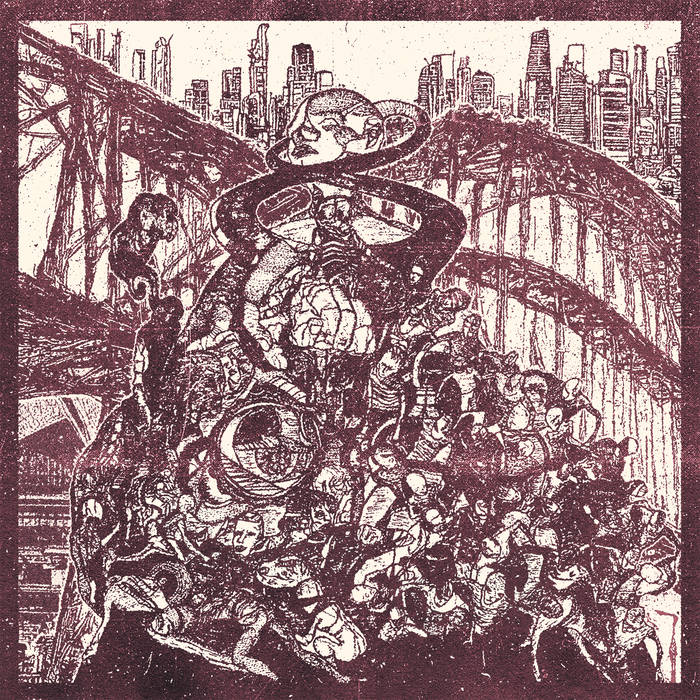
Art by Matteo Chiesara and Negative Gears. 

Canberra is this weird sort of zone outside of the rest of Australia. I go visit my parents, and there’s a little booklet on the table about what the Labour government—which, by the way, has been in power for about 34 years—has been doing for you. You look at the paper, and it’s, ‘Retirees have been getting together with the youth to graffiti,’ or, ‘We’re putting in a tram,’ and ‘We’ve re-greened this whole area.’ Canberra still has its problems, but it’s a bit of a left-wing bubble. Even though it’s gross in some ways, it doesn’t have the money or the display of wealth that Sydney has.

That was really shocking to me. You don’t see Lamborghinis in Canberra; everyone drives a fucking Subaru. It was quite weird to move to Sydney and be like, ‘Oh, we live in Sydney now, let’s go to the beach!’ And then you go to the beach, and it’s not a beach—it’s not Batemans Bay or Brawley. The beach is a park for rich people, a place where they show off designer outfits and spend their lives looking good. It’s a status symbol.

All of that was really confusing and exciting—not that I thought it was great, but I reacted to it strongly.

We live on the north side now, which is the home of the enemy. When we first moved here, Tony Abbott was the local minister.

For example, ‘Ants’—that song is about living in this apartment. My grandma bought this apartment in the late ’60s. She passed away, but she lived here her entire life after her husband died. It’s this tiny apartment—it’s got three rooms. We’ve been living here for a couple of years now, and the whole thing about ‘Ants’ was that we felt weird, like we’d crossed the bridge. We were living around all these fucking rich strangers. There’s a school across the road, and you can see the Harbour Bridge out the window.

The song was about, ‘God, I cannot fucking stay in this place. I’d rather fucking kill myself than be in this place’ [laughs]. But at the same time, understanding that the whole I’m alone in paradise lyric is like, no one knows us up here. We can leave the house looking like complete shit. We can leave the house and no one knows who the hell we are.

It’s basically a sea of old people who are chilling—presumably investment bankers or something like that. And it’s, wow, we are kind of alone in the middle of nowhere. It’s sort of nice being able to not see anyone, not having to interact with anyone, and to just be anonymous.

Photo: Jhonny Russell.

So where you live is the tower you talk about in the song?

J: Yeah, it is.

We can relate because we live on the Gold Coast, it’s laid back but there is a lot of wealth and status, or at least people trying to portray that, here. Everyone always spins out when we tell them Gimmie is based on the Gold Coast.

J: That’s so funny, isn’t it? Like people think that if you move away from the centre of a culture capital, that your art’s going to be damaged or like that you’re different in some way.

We love the weather and being near lots of beautiful nature spots. Brisbane and Byron Bay are an hour each in different directions. We also get to stay out of a lot of scene politics that can happen in bigger music communities. We feel like we’re alone in our own bubble most of the time.

J: Yeah. Living here reduces anxiety. Charlie, especially hates if we go somewhere, and we see someone we know, even if we love them, even if it’s a really good friend of ours, if she’s not prepared for for the social interaction, she’s not keen on it. Here we get to be on a bit of an island. We’re never gonna see someone we know at the local Coles or wherever. When we were living in St Peter’s, everyone who we work with lives there too. We’d go to the Marrickville Woolworths and you’d see three people from bands and your boss—we’re not particularly good at like living in that environment. 

Maybe it is because of growing up in Canberra where everyone’s separated so much in different suburbia. We’re not good at being in a city but this feels like we’re in a suburb. 

What was the thought behind the album title, Moralizer

J: I was listening to the lyrics. So much of this shit is so preachy [laughs]. Listening back, there are a lot of lines where I was like, oh, man, I wish I didn’t sound like I had the answers. That was never my intention. But there was so much fucking preachy shit about people who live ‘X’ way and people who live ‘Y’ way, and all this kind of shit. I felt like the title Moraliser was like a funny stab at what the record sounded like—someone standing on a fucking wooden box being, ‘This is how you should do it. This is how you live your life, and I love you. I’m a fucking false prophet.’ [laughs]. 

I thought it was funny because it was kind of true. It was a moralising record. There’s so much in there, so much critique, judgment and speculation. That was part of the reason I really wanted that last song to have a little upside to it.

In light of the darker take on living on the album, I wanted to ask you, what do you do for fun? 

J: What did I do for fun? God, I don’t know. Oh fuck this sounds lame but the funnest thing for me is every Friday the band writes or we record or we practice together, then we’ll go to the pub, it’s become a ritual. Our band is our closest unit of friends. 

I don’t have any other hobby I do outside of this. If I ever have free time i’m probably going to do it do music.

Is playing a gig fun for you? 

J: Sometimes. It’s not fun before, like the whole day before it’s—okay, here we go. We’re going to go do this again. But really, are we sure we want to do this? [laughs]. This is our life choices? Are we certain about this? And then when you’re doing it, I get on the stage, I’m like, yeah! Fuck yeah! I’m stoked. Afterwards, feels good and a relief too.

Photo: Jhonny Russell.

Is there a song that’s on the album that has a real significance for you? 

J: ’Ants’. It feels like the most whole song where I feel like everything in it is bookmarked really well. Everything is a holistically completed idea. I’m probably biased here because I wrote that song by myself [laughs]. Jack obviously did all the drum parts, and everyone recorded their bits at the time of the final recording. But, I did a demo version of it in 2019 that’s the same structure and mostly the same lyrics.

‘Pills’ maybe, too. It really feels like the first house we moved to in Sydney in St. Peters—with Ewan. That song was very much about time and a place. 

Maybe ‘Ain’t Seen Nothing,’ because the big final ending took forever for us to get to. It’s nice having a little verse in there about shacking up and having kids with Charlie.

Awww, that’s really sweet. How is being a part of Negative Gears affected your personal growth? 

J: It’s one and the same. Making music has always been a part of personal growth; it’s never been a thing that’s gone away. Seeing the songwriting actualised—seeing a song that I’ve worked on being turned into real life and then reaching completion—gives you a kick from the goal of it. Exploring the depth of how you feel about something is really good for personal growth. Sometimes you just have a feeling about something, but it’s not until you really dig into it that you understand where you stand on that issue. At least, that’s how I feel.

‘Attention To Detail’ is important. I remember I was fucking furious around the time that song got written, and I feel like I got it all out in that one song. Like, ‘Well, yep, I pretty much laid down everything I’m pissed about,’ and it was really cathartic. It was solidifying. It wasn’t just global lethargy; I wasn’t just over the world. I was very specifically pissed about a lot of things [laughs].

For everyone, I’d say it’s been a long journey. We’ve been a band for a pretty long time; all of us have played music since we were young. We all find it a constant ticking eternal thing. That you work on, that gives you a purpose to get through the rest of the week. When someone has a good riff, you’re like, ‘Oh, that’s pretty good!’ It keeps you interested and excited, and it’s something to fucking enjoy when you get off work.

It’s also something to talk about. We have a group band chat where I don’t think there’s been a two- or three-day gap in messages for maybe seven years. 


Wow. Is there any particular directions or collaborations you’re interested in exploring in the future? 

J: As far as art stuff there’s a bunch of people that I’ve been really interested in seeing if they can do some work for Negative Gears things. 

Music stuff, I was literally thinking about this today. Felipe from Rapid Dye, and Toto who I play in Perspex with, and Charlie and Jac did this band that started in the middle of COVID. It was called Shy Violets, sort of a poppy scrappy band. We wrote an album’s with of songs, 10 or 11. And then it all just flamed out. We never did anything with it. We never played a single gig. I’d really like to get that back together in some way, shape or form at some time.

I get to pour most of my creative energy into Negative Gears, which is a blessing and a curse. It is nice to have a break, though. 

We haven’t talked about the song ‘Negative Gear’ on the album yet; it’s almost like a theme song for the band, at least that’s what it seemed liked when we saw you play at Nag Nag Nag fest.

J: Yeah, it felt like the theme song on the record. That was kind of the plan. I fucking love that song. I think it’s one of our best. The coolest thing about that song is we all actually wrote it together.

Lyrically, it’s exactly what I described in some of those other songs. Like I mentioned earlier, I was in a spot where I’d been working fucking shit jobs for years, and I really had no idea what the fuck I was doing with my life. The whole thing was kind of flipping it on the band name, being like, ‘Yeah, I’m in a fucking negative gear. I can’t get anything going.’

At the time, I did have a $4000 credit card debt. And I had this big fucking growth in my throat that was freaking me out. That’s the first line of the song: I got a four grand credit card debt and a lump in my throat. It was painfully obvious when I was swallowing because it would make me puke. This weird fucking thing in my throat—I’d drink some beers, and I’d just start throwing up because it was clogging my throat.

Wow. 

J: It felt like I’d hit fucking rock bottom. God, my mum’s going to read those lyrics and she’s going to be sad. She’s going to send me some messages. I’m always honest with her. 

It sounds like your mum’s an important person in your life. 

J: For sure. She’s a very fucking incredibly strong, powerful force of nature. She was a behemoth of a person to grow up with for sure. And definitely still is. She’s a powerhouse. It was the reason I ran away from home when I was 14. But you know… [laughs]. We’ve been all good now for years. 

Can you tell us about the song ‘Connect’?

J: It was a bender song. We had the studio in Marrickville at the time. We weren’t the only ones there. Mickey from Den was recording a lot of bands there, and I was recording bands too. Eventually, the rent got too expensive. We turned it into a rehearsal space, which I think lots of the younger bands ended up using.

I’d pretty much tapped out of it. I was sick of managing it, so I passed it to Chris and was like, ‘Dude, I can’t handle this. Do you reckon you could do it?’ And he was like, ‘Fuck yeah,’ and just started getting people in. I think R.M.F.C. was in there, Carnations was in there, and Dionysus was definitely in there. It was this tiny little room in Faversham Street. We built a little studio, chucked all our gear in, and it became a hub.

It was pretty much a song about getting wasted at this place again and again. In the early periods of recording and writing that record—actually more the writing—we spent a lot of time in the studio in Marrickville, having these nights where the sun was fucking rising, and everyone was wasted. It was like, ‘Well, what’s next?’ There was a desperate sense of wanting to reach out to people, that horrible feeling you get at the end of the night where you’re like, ‘Oh, what’s everyone doing?’ or ‘What’s everyone up to?’ And, you’re realising you’re going to be the person chilling on the couch on a random street in Marrickville, sitting outside wasted at 6 o’clock in the morning. 

It’s a pretty straightforward song, not much depth, except for one line I throw in… I’m a master of the diss track. That’s the one thing I’ve got down—every song’s got disses in it [laughs]. There’s a diss in the song, something about buying fake iPhones and checking biceps. There was a crew of guys hanging around at that time, and I was like, ‘Oh yeah, these guys are mad!’ I remember telling the guys, ‘Yeah, bro, I gotta get the latest iPhone and start working out so I can fucking hang out with them—it’s gonna be sick.’ [laughs].

Photo: Jhonny Russell.

Last question, what’s some things that have been making you happy lately? 

J: I was stoked when I started realising that the Sydney music scene had regrown and was in a really good spot. 

I’m happy in most senses right now. Me and Charlie have a good life. We spend a lot of our time together, we work together and we play in this band and it’s fun. 

Outside of listening to, and making, music, I don’t fucking really think about that much. It’s been many years since I wrote the songs for Moraliser— you grow up. Charlie just said those feelings from the record, it’s still lurking, it doesn’t go away [laughs]. I’m very extroverted. I love talking to people. I come across as a super enthusiastic, excitable person, which I totally am in my life. But, Charlie is right in the sense that, I do still tip every couple of weeks, for days on end it goes and that’s when I write the majority of my music. I find that helps when I’m like that. I tip and I lose motivation. I do what everyone does—you fucking hate yourself and you feel like a piece of shit. It’s just part of my way of dealing with it all. 

I do think it’s funny, though, for the people that know me well—my close friends—when they hear my lyrics. Because most of the time, I’m like, ‘Hey, it’s so great to see you! Wow, so nice. We haven’t seen each other since Tuesday! It’s gonna be so good to hang out.’ I don’t seem like someone, I guess, who would have that darker side that’s in my lyrics.

But it’s just that I love people, and I love being around people, connecting with them. I love community, and I love building long-term friendships. That’s very different from how I feel inside when I’m alone.

I’m definitely in a much better place than I was five years ago—Christ! [laughs].

Follow: @negativegears. GET Negative Gears’ Moraliser (out on Static Shock/Urge) HERE.

Introducing HÄGÖL: “We need to keep talking about the ongoing process of colonisation and our complicity in it as settlers on stolen land.’

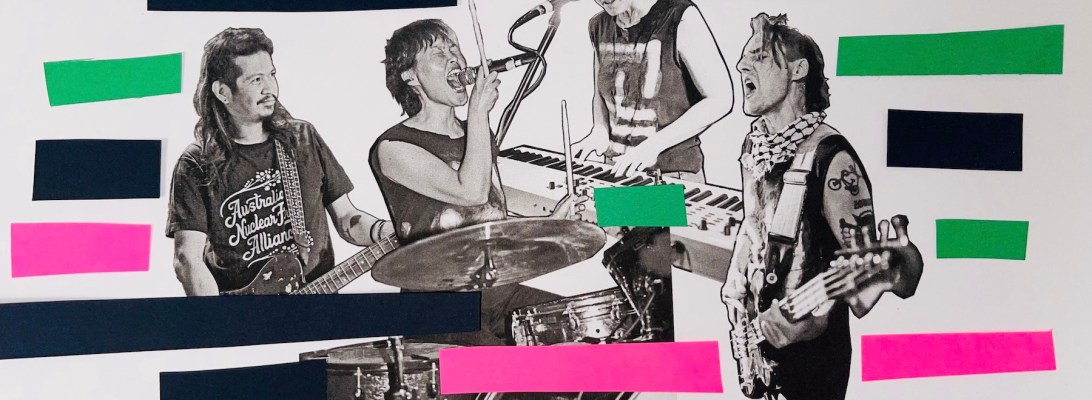
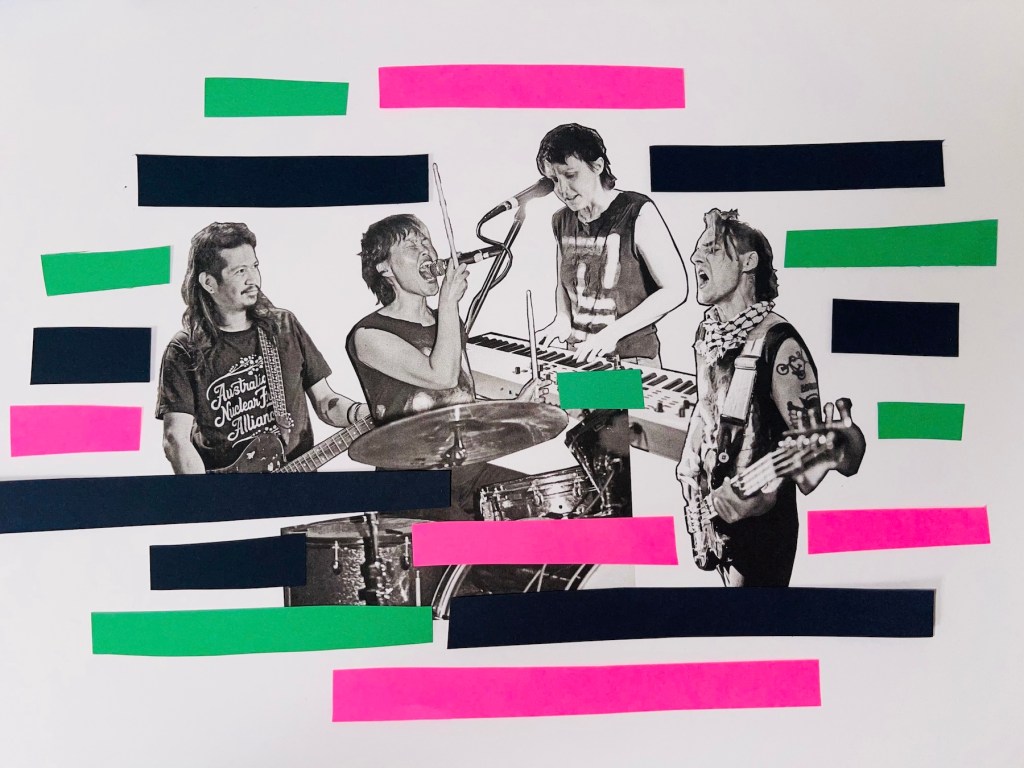
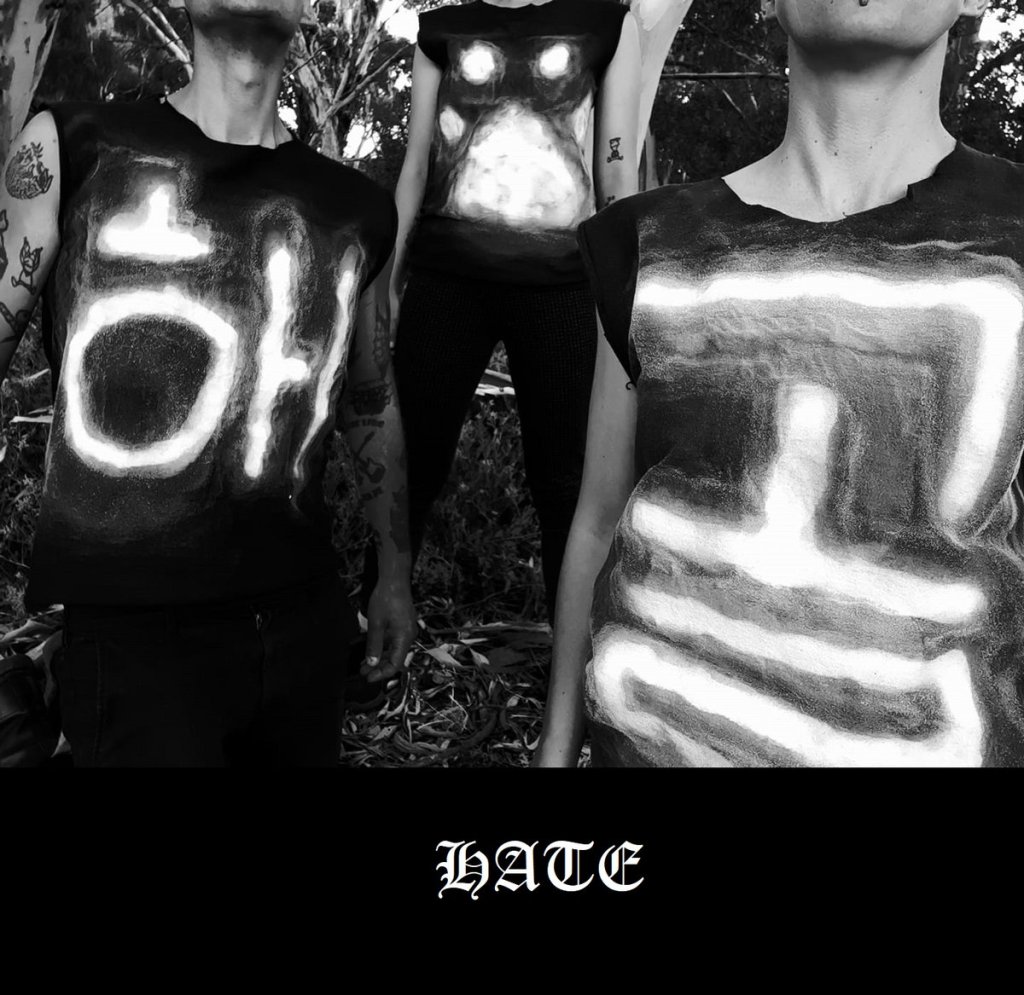
Original photos: Mark J Panizza. Handmade collage by B.

HÄGÖL is an anti-fascist, queer punk force—they’re also Nicholas Cage fans. HÄGÖL’s music is a chaotic celebration of life, through catchy tunes, activism from the heart, and a playful spirit. HÄGÖL’s every note is a call to action and every performance is a celebration of resistance.

Gimmie delved into members’ experiences growing up in the Korean and Philippines music scenes, their perspectives on colonisation, solidarity with Palestine, along with insights into the local Adelaide/Kaurna Country music community, learning about DIY from the Spiral Objective zine, playing a Village People song, and much more.

Their latest single ‘Dirt’ was released as ‘pay what you want’ but the band encouraged listeners to donate to Pay The Rent, APAN, Olive Kids, or a Mutual Aid Network instead.

HÄGÖL are an “angry anti-fascist keyboard, cat punk, nana loving, jerk destroying, queer, pinko” band; what else would you like to tell us about the band?

DOQ: Pretty much all those. And bicycle-loving, gardening enthusiast, and passive introvert supporters.

AARON: We do this as occupiers on the stolen lands of the Kaurna people – sovereignty has never been ceded. 

We are kind of a pop band with raw punk sensibilities, that wish we could write the next ‘Rock Lobster’. Three of us are the most awkward people you will ever meet and one of us is possibly the most laid back person you will ever meet. Anyone that guesses correctly who gets free entry to our next show…actually scratch that, I think maybe its too obvious.

KELLI: I’d add we’re Nicholas Cage fans.

TATING: We like to play live the Village People’s ‘Food Fight’ more faster and more noisy as much as we can.

What’s the story behind the band name, HÄGÖL? 

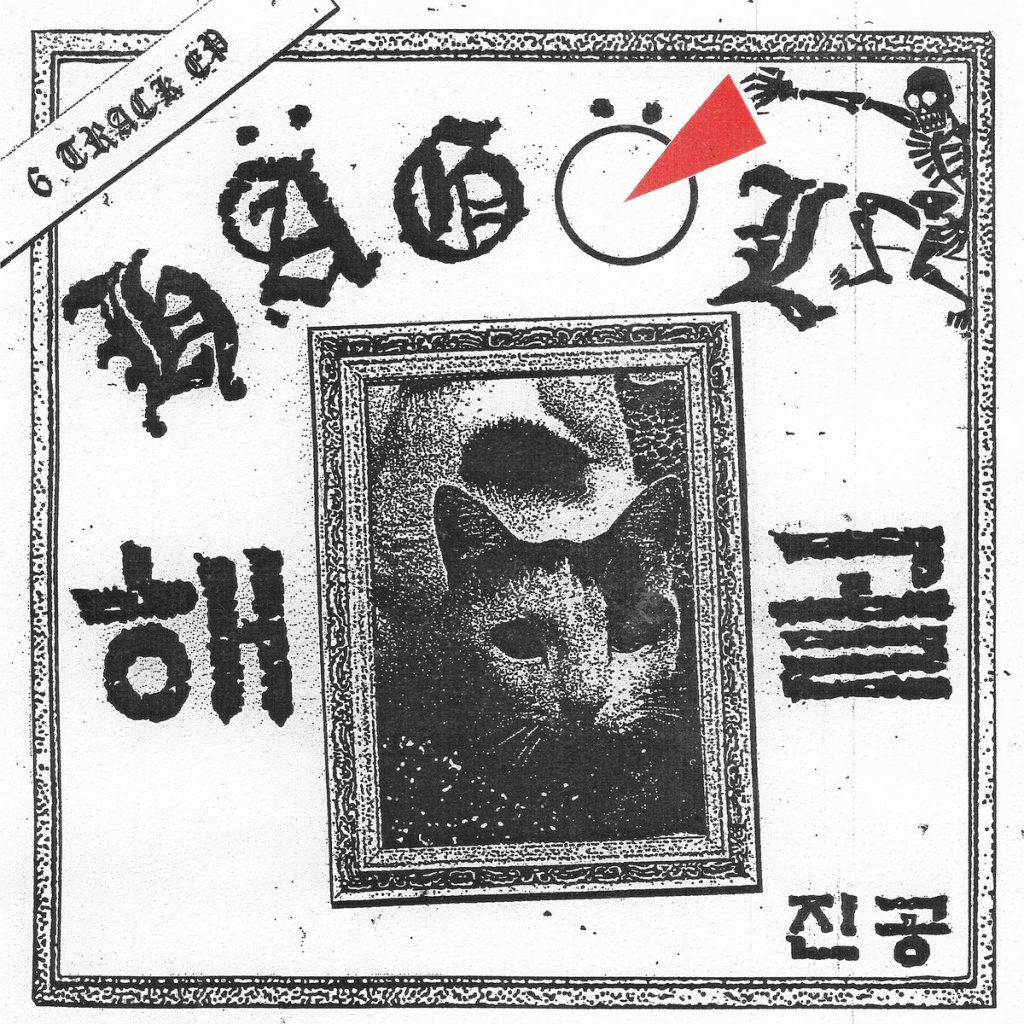
DOQ: It’s my awesome cat friend’s name. It’s Korean and it means skull. He was the sweetest cat you would ever meet. He came all the way from Korea to here—just like me! He was rescued from bullies on the street but he was still so kind. He would share meals with pigeons, even they tried to attack him. He is a good mascot for our spirit of sharing and not let the disgusting world take our humanity and kindness.

AARON: The sweetest cat ever! Also, I really like the way it sounds and the way it looks with the umlauts in English and the Hangul characters. Its also fun trying to hear people pronounce it on community radio (shout out to the best ever 3D 93.7FM!!)  

KELLI: I wear the gol character on my shirt

TATING: I knew it was Doq and Aaron’s cat. Its so cool to know its also skull in Korean.

Can you tell us a little about each member?

DOQ: I am a pretty lucky person. I’m friends with animals and nanas. Not good at talking. And, try to be no harm. But if you poke me, I will be your nightmare, like a wriggling worm into your brain ha ha. I like attention but need three days of break after. 

I wanted to play guitar with my first band, but I lost the rock, scissors, paper game. It was a feminist band, from the gay and lesbian activist scene in Seoul. We weren’t included in punk scenes because I thought all the boys were macho scumbags. I was pretty much right. But I realised and learned about how to deal with different opinions after joining the punk scene. I guess we are all tiny, tiny particles after all. Even the scene was surrounded by macho-ness. I never experienced too much discrimination but I could stand up for others. It was convenient to be older and taller than other people in the Korean punk scene back then. 

I really like this interview. I wish somebody makes 3-hours long documentaries about me someday. 

Oh, I still play drums in Hägöl by the way. I am playing with the most perfect people—Aaron! Kelli! Tating! It is such an honour to play with you.

AARON: I sometimes think that I am basically a cliché, privileged white male ‘punk,’ with the classic boring neuroses and self-doubt, and at times (thankfully more rarely the past few years), periods of debilitating anxiety and depression that remind me that reckoning with yourself and doing the work is an ongoing process. 

I am the least interesting member of the band (I’m even vegan!!), and I am constantly so full of gratitude and love that I get to play punk rock with these awesome humans and people seem to enjoy it sometimes. I also love cats, riding a bike, cooking spicy soup, and writing confusingly long sentences. Oh, and I’ve been totally sober for almost 20 years!

KELLI: This band is so much fun. I’m ongoingly stoked that Aaron asked me to come to a super secret rehearsal in the middle of Covid, and I rocked up and Doq was there, and I was instantly in because of that alone. Then Aaron kept writing these super catchy tunes, so here we are now with Tating, which is like the egg in the soup—its the best. But that’s more about the band. 

Me, I don’t come from legit punk background, I’ve played in a bunch of different bands. But I love this scene very much; the folks are unceasingly rad, accepting, weird and challenging, which is exactly perfect. Other than that, I’m a mum and sometimes we do band and family paddle boarding which is a bit cute, really.

TATING: I’m Tating. I like drinking coffee, eating rice and smoking.

How did you first discover music?

DOQ: My first music could be Korean traditional bbong jjak (or trot) because it was my grandma’s favourite. And, I was reading and learning song lyrics before I could write because my grandma loves to learn to write with song lyrics. I can still remember those songs. My first first tape was Seo Taiji, which is Korean Idol; he likes Metallica, and so I listened and I liked it. But I didn’t know how to find other music like them. Because I lived in a country village right next to North Korea and nobody I know cared for this nonsense. My strategy to find new music was to find the original song they covered, or covered by, the band’s friends or enemies, ex-band, new band and girlfriend’s band and so on. I didn’t  have the Internet but I had a magnificent booklet inside tapes which had reviews and gossip and translated lyrics. The journey begins from there like a climbing spreaded spider web. 

AARON: The first music I ever remember really enjoying was a taped copy of The Muppets Movie soundtrack. I kind of really enjoyed novelty songs. I remember one of the first CD singles I ever had was Big Audio Dynamite ‘The Globe’. At the time, I was just excited by the goofy samples and stuff it kind of sounded like a cartoon to me maybe. 

The first punk I heard, was The Offspring or Green Day on the radio. I think what appealed to me was that it was kind of heavy and loud but still peppy. I started deep diving from there. There were super cheap samplers from Fat Wreck and Epitaph all around the place, and it just kept going. I would read street press and the liner notes of anything I could get my hands on. I videoed a punk documentary off ABC or something and watched it obsessively. I learned about bands like The Slits and tried to copy Steve Jones’ swears…ha ha—that was my early teen blueprint.

The local council library had CDs. I would look through them as often as I could and borrow anything that appeared to be even slightly related to punk; or that I had heard/read someone mention. I remember coming home with a Clash CD from the library being so excited because they were supposed to be the big inspiration for Rancid – but i kinda hated it at first. I also remember the first time I heard DEVO it was a cassette copy of Oh, No! It’s DEVO from the library and it burrowed into my brain forever.

KELLI: I grew up listening to my Dad’s records and tapes, the usual stuff like Credence, Queen, Stones, and Willie Nelson. The first song I remember getting proper obsessed with was ‘Under Pressure’ with Bowie and Queen—I still love that song, it’s a perfect song. 

My grandma played piano, and she’d talk a lot about that, even though she didn’t play much once I was alive because of arthritis in her hands, and she was pretty deaf. But she got me into playing; I could see in her that buzz and joy and the making sense of things that I felt with music.

TATING: I grow up in Samar Island, where there is no punk community or any subculture. I remember during that time, FM stations were only available every Sunday. Few houses has television, and you can easily tell who’s TV is on, because people in the village will gather there to watch a show. But there is plenty of traditional bands that plays waray-waray music. I think I learned to play guitar just from watching others. Its a common thing in our town. Even now, people still prefer acoustic guitar, rather than karaoke to singalong, during gatherings or drinking sessions. I’m also lucky to have relatives and friends that can bring me cassette tapes, when they come back from big towns. I discovered punk culture and community when I moved to Manila in 2003.

What’s a band or an album that had a really big impact on you and what do you appreciate about them/it?

DOQ: Bikini Kill opened my eyes and bombed my brain. How I discovered them was pretty lame (because of a fight with Courtney Love ha ha), it was even after they broke up. I thought I was never gonna see their gig in my life. But hey, they came to Adelaide last year! Whaaat??? How lucky I am! I wanted Hägöl to play opening for them so badly but strongly against it at the same time because I was frozen by the fact I am gonna see Bikini Kill. I am shivering just thinking about it now. I might have had a heart attack if we played. It was a fantastic show and I cried a little. 

They are the reason I got into punk and the reason I am in a band. They are the reason that I am, how I am, now. Not only their music but also their attitude (how they said they are not musicians, they are activists), that always fight for women’s and girl’s rights amongst male-dominated ‘free spirited artists and musicians’. I think the fight still continues against those guys who want me to list songs when I say I like that band too.

AARON: For me, it was Propagandhi’s Less Talk More Rock. That album really helped to start shaping my worldview and give words to the fear and sickness I started to feel as a kid growing up and participating in a violent, racist, sexist and aggressively homophobic community. I mean, I was definitely incredibly privileged in all ways, but that feeling of suburban/semi-rural “Australian” society where it just felt like things were going to snap at any point and masculinity was constantly being judged and questioned. This record helped me to start to reckon with my complicity and participation in a fucked world, especially as a white man, who was taught racism and sexism from a young age—it’s been a constant learning thing since then. 

They were also an important gateway to a scene—thanks to the Spiral Objective Propagandhi show in ’96, with a bunch of local DIY punk and hardcore bands. It was really eye-opening; I’d been to all-ages ‘punk’ shows before, but this was the first time it felt like a real DIY community—there were zines, vegan food, and record distro. The Spiral Objective zine, distro, and shows were where I learned about DIY, activism, and the punk community. Finding less mainstream punk and hardcore—anarcho, d-beat, grind, crust—it was like a whole new world opening up. It literally changed the course of my life. But I still really like a lot of pop punk, too!

KELLI: A Laughing Death in Meatspace by Tropical Fuck Storm—it’s a fairly recent album for this question, but it’s the record I got into heavily after my daughter was born, and it brought me back to music in a way. If I could do anything musically, I’d want to do that. I love everything about it: the lyrics are both hard-hitting and absurd, the gang vocals are exactly what I dream of—snarky, whiny, with attitude-filled fems against the male lead—the guitars are wild, the drums sometimes feel like a guitar, and the bass holds it all together.’

TATING: Disrupt – Unrest LP is my all-time favourite. Their music is my definition of crust punk. The lyrics and their critique of society influence me a lot. Experiencing and witnessing police brutality, abuse of power, the violence of the corrupt government, colonisation, and the historical background of our society—it’s not impossible for me to have a radical perspective. Disrupt is my gateway to the anarcho/d-beat/crust punk community, which makes me more firm in what I stand for.

How did the band first get started? You’re been around since 2021-2022ish, right?

DOQ: Yeah. Aaron and I wanted to form a band. We were writing songs and jamming just the two of us for a while. We called Aaron’s old bandmate, Kellie (Näh, STP), to join. After our first recording, we thought it would be fun to have a guitar, so we called Jared (Apteria and hundreds of other bands) for live performances. After Jared moved to Melbourne, we paid millions of dollars to hire Tating (Repugnant).

AARON: We were coming up with ideas and song bones all through the COVID lockdowns, and the first show was early 2021, I think. After our first recording, we asked Jarrad from the Rancid cover band Roots Radishes to join us; then he left to play with much better bands (like Jalang and Persecutor!).

KELLI: I answered that already! But I will add that the millions of dollars were worth it.

TATING: Yes, I got rich since I joined the band last year.

The band is from Kaurna Country/Adelaide; how’s living their influence your music? What’s the music community like there?

DOQ: It sux, but I don’t really go out much to shows when we’re not playing. However, there are many, many good bands I enjoy. I like how everyone is not stuck with a ‘genre.’ Juliette Seizure, Munch, Church Moms, Demon Pig, Mortal Ambition, Soria Moria… You should definitely come check it out.

AARON: Being here has definitely shaped the sound in a way. There is really no cohesive ‘punk’ scene that shares a particular sound or aesthetic, which allows for a bit more freedom for unique music to develop. The punx keep leaving for Naarm, so the only sounds that seem to persist and develop are the off-kilter oddballs. That being said, there are really great bands going at the moment, and it definitely feels like a community of relatively like-minded freaks. My current faves are probably TGRX and BAG. TGRX has a lyric that goes something like, ‘Big hat is a wizard, yes!’ and I love that so much for some reason.

Probably the most interesting music in the punk scene here comes from the amazing solo noise/synth projects, and we play the same shows together: amamanitaaxaxaamamanitaaxaxaxanaxglassseer, anoname, Slayer Organa, Shuriken Cell, and EMSTE— all making such awesome, challenging sounds. The Metro Hotel is probably the most supportive venue in the punk scene. It’s always a treat to play there, and they are always open to booking shows with less well-known bands.

We have traditionally always had a very strong hardcore scene in Tartanya, with some amazing quality bands, super positivity, and scary dancing. Stressed are probably my favourite from that scene at the moment; such a great band.

But honestly, the best reason to come here is to go to the beach, or if you visit in the weeks leading up to Christmas, you can experience Volcano Jesus and the creepy truck driver along the Karrawirra Parri light display. It is truly bizarre.

KELLI: There are heaps of different music communities and scenes going on here, they don’t always mix well. But yeah, what Aaron said about the noise/punx DIY thing, I reckon it’s rad. 

TATING: I think my music calmed down a bit when I moved here. I spent 20 years of my life in Manila, and it’s the punk community that is the reason I stay in the middle of pollution, traffic, rude people, and a dog-eat-dog society. Adelaide is way more peaceful and has a smaller punk community; I guess there is a correlation between the two. The advantage of a smaller community is that you almost know and are friends with each other. I like playing shows with Demon Pig and Mortal Ambition. Most of the shows happening lately are at Hotel Metro, Cranker, Ancient World, and Cumberland Hotel. Check out our new band with Aaron, Yawa Politika, and Femiscura Chainmaille for some punk jewellery.
In August you released your first single ‘Dirt’ off your upcoming split release with South Korean band 1234-DAH!; what’s the song about? How did the split come about?

DOQ: The song is about how the whole system has gotten dirtier and dirtier with capitalism, as we all know. Open your eyes; survive your little heart from dirt. That was actually longer than the lyric itself, haha.

1234-Dah! is an awesome band; we had a chance to watch them when Aaron and I visited Korea. I like their simple rock ’n’ roll style of punk. Nothing like our music, but it strangely fits together with us, so I asked them to do a split with us. They recently released a new album, so check it out online.

AARON: Yeh, we aren’t about giving particularly sophisticated takes on anything in our songs. The chorus is “dirt system fuck,” haha. It is really a song that, for me, is more about just screaming, feeling angry, powerless, and complicit in the ongoing horror—the genocide we see being perpetrated specifically by the IDF in Gaza. But it’s also about our own inextricable participation in the ongoing process of colonisation everywhere and the occupying capitalist machine. The machine that criminalises children, the machine that rips families apart, the machine that destroys lands and cultures, the machine that rewards house hoarders and landlords while others are sleeping in the cold; where inequality is weaponised to stoke racism and division; where men are assaulting and killing women so often most people barely blink; the machine that encourages safe white folks to feel like they need to have an opinion on people’s gender and sexuality but not genocide; the machine that is murdering children.

Meanwhile, we are sitting around writing goofy songs and cuddling with cats. So, yeh, dirt system fuuucckkk!!!! That one is not really about communicating anything to anyone; it is just catharsis. Which is why we released it specifically tied to the causes we want to support and the things we want people to learn about to join us in our anger and keep helping in any way we can.

And the split—we have a few songs ready to go (one of them has a bass line that totally rips off Rudimentary Peni!!!). It’s just getting things together with 1234-Dah! to release… maybe early next year.

KELLI: The song came to Tating, and I pretty much formed it, even with the super catchy keyboard line. My contribution was the artwork—a lino cut of a Palestinian scarab beetle and watermelon vines. I’m fairly new to the lino cut thing; it was fun to do, and they were all super patient with me while I tried to get it happening.

TATING: ‘Dirt’ is one of the songs we first recorded with me on guitar. It was a trial and a learning experience for me on how to join or fit into the sound. It was a challenge because the trio had already established the drum-bass-keyboard setup on HÄGÖL’s first EP. But it turns out great, I think, thanks to King for the great recording and mixing. I am looking forward to the split with 1234-DAH!

You’ve released the single as ‘pay what you want’ but encouraged people to donate to Pay The Rent, APAN, Olive Kids, or a Mutual Aid Network; what motivated you to link your music release to these causes, and how do you see the relationship between your music and activism?

DOQ: We wanted to contribute to make it a little bit less suffering. Even it is nothing at least we are standing where we think it’s right and remind people think about it one more time.

AARON: We don’t really take ourselves or the music too seriously, but what we do take seriously is the obligation and responsibility we have to use any type of platform—not just as a band, but in everything we do. We definitely make missteps and could always do better, and we want to make some small way to encourage people to not feel paralysed by the isolation, confusion, and fear this system creates. We are just goofballs trying our best. But we can’t let our comfort make us complacent. We need to keep talking about the ongoing process of colonisation and our complicity in it as settlers on stolen land. We are directly benefiting from the structures of colonisation, the systems that incarcerate and dispossess Indigenous people.

We are currently witnessing a genocide in Gaza and attacks across the region perpetrated by the Israeli Defence Forces, and we are all responsible for our government’s tacit support and inaction. We do try to reach outside the “bubble” where we can actually have conversations and share, learn, and get angry together. We are regularly reminded that we actually do need to keep talking about Gaza and colonisation globally as occupiers of stolen land ourselves—because in the general white pub scene, these things are still often so far off the radar.

We need to all try to collectively come together and understand we are all struggling under a dehumanising system and to support each other, wherever we have the capacity, to share our (stolen) wealth, listen to community leaders, raise other voices, take all the opportunities we are so privileged to have to learn, call out injustice, make mistakes, correct ourselves where we need to, and share in every way we can, in every action we take.

KELLI: We’ve got a platform sitting right on top of stolen land, we must continually point out the platform, the privilege and the stolen land.

TATING: My motivation is decolonisation because what is happening in Palestine reminds me of my ancestors’ suffering under colonisation. We are witnessing how the superpowers send their billions of dollars and advanced military technology to crush the resistance of a small village. My ancestors also fought to defend our land, culture, way of life, beliefs, ancestral wisdom, knowledge, family, and community. But after 400 years of massacre, we ended up worshiping the god of the colonisers.

I’m in solidarity with the Palestinian people because I know how it feels to lose connection to the land and to your ancestors. As an individual, these donations, boycotts, protests, art, music, and willingness to learn new strategies are the best I can do. Activism happens every day, in every choice and decision I make. I would say music has a significant contribution to me. The ideas and points of view I learn through music serve as my lens for looking at social or political issues happening now and in my personal daily struggles. Music is a powerful media.

What’s been one of the best or worst shows you’ve ever played?

DOQ: One of the best show was at Metro with Ceschi. There’s no such thing as the worst show with these Three Musketeers!

AARON: Probably the best was our first and only (so far!!) show in Naarm—we got to play with Jalang and Punter, two of my all-time favourite bands. And yeh, the Ceschi show was just one of the most outrageously magical nights; that was such a random occurrence. There were very few people there, but so much electricity. I’d honestly never heard of Ceschi before we got asked to play, but I am a huge fan now.

The worst? Ah… every show is an honour and privilege, of course!

KELLI: Yeah, Ceschi for sure! We did a DIY park show with a bunch of the bands from the scene, Punx Alive, and I remember that day as one of my lifetime favourite shows. My worst was not with this band.

TATING: No worst show also. But the best show for now I think is with Buddhatta (Japan) in the Cumby. I just remember many friends went that night.

What’s your favourite thing that you’ve been listening to/reading/or watching lately?

DOQ: Pussy Willows, ‘Cattails’ by Gordon Lightfoot; I listen to this song from time to time secretly. I’m reading Rebel Girl and Why Fish Don’t Exist at the moment at the same time, just because I can. And my Bible: Sugoiyo Masaru-san by Usta Kyoske.

AARON: Just finished the ’90s volume of Orstralia and really enjoyed it! Your book, Conversations with Punx, just arrived in the mail, so I am super excited to read that next! My daily listen is ‘Love Today’ by Mika because it’s my wake-up alarm. ‘Cantina Band’ from Star Wars is the backup—both excellent ways to wake up.

There’s so much great new stuff on regular rotation: Vampire—‘What Seems Forever Can Be Broken,’ the Jalang/Unsanitary Napkin split, Lothario—‘Hogtied,’ Barkaa—‘Big Tidda,’ and the new Billiam has been all over community radio here, and it’s rad. I get kind of obsessed with one thing and just run it incessantly—probably Golden Dystopian Age the most at the moment because Enzyme just played here. And Punter—I love everything they’ve done—but that song ‘A Minute’s Silence’ just nails things so well; I listen to it often.
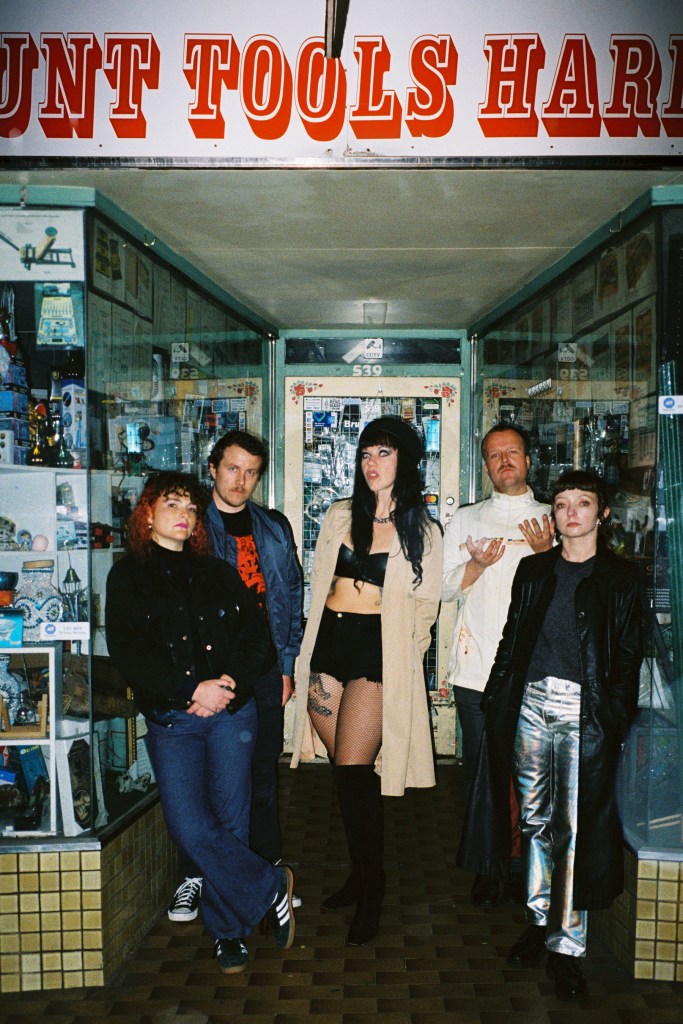
In terms of watching, aside from old Simpsons or Futurama to get to sleep, I recently watched The Substance and enjoyed it a bunch. Great practical effects, and the last 30 minutes of that film are probably my favourite part in any film so far this year.

KELLI: Dok is the best. I’ve been listening to that new Barkaa record, Brittany Howard’s latest one, and the Kim Dracula record—see, no punk cred at all. The book I just finished was José Saramago’s The Gospel According to Jesus Christ. Again, no cred. I read a lot, but I dunno that much of it is that cool. I’m watching Mr. Bean with my kid.

TATING: I been listening lately to Screams from the Cage by Rat Cage (UK). I just know them when they play the Metro last year. Since then its always now in my playlist. And Santau by Jalang (Naarm)

What’s next for HÄGÖL?

DOQ: Tour with 1234-Dah! maybe.. we have been playing with a variety of different bands, not just the punks. Its’ always an adventure what show comes next and who will call us to play. We will keep playing as long as we are young and beautiful as now. And our future will be bright.

AARON: There are so many things we want to do that we will probably never get around to. Would love to make a goofy music video and maybe do some songs with a super obnoxious X-Ray Spex saxophone sound, and definitely always keen to play other places… but probably the next few things will be more moderately attended shows at the Metro ahhaaha. 

KELLI: Our future will be bright and at the Metro

TATING: Looking forward to the 1234-Dah! split, and more tours.

Follow: @hagol_goyangi & facebook.com/hagolgoyangi. LISTEN here

Billiam: ‘Figuring out how to do stupid punk music in a way where I’m not completely destroying myself’

Original photo: Ada Duffy. Handmade mixed-media collage by B.

Gimmie caught up with Naarm/Melbourne-based musician Billiam just days before he set off on his first international tour across Europe to support his sophomore album, Animation Cel. The album showcases Billiam’s signature blend of ‘Autism-core’—a term he uses to describe the deeply personal, anxiety-fuelled punk—paired with irresistibly catchy hooks. Animation Cel is his strongest work yet and secured him a home on one of Australia’s best independent labels, Legless Records (Stiff Richards, Split System, Cutters, Phil & the Tiles & more). 

His music explores important issues like mental health and identity, while also embracing more playful subjects such as video games, defunct theme park Sega World, and even a tribute to enigmatic artist Shawn Kerri (known for her work with CARtoons Magazine and iconic images for the Germs and Circle Jerks). In our chat, Billiam shares how music helped him find a supportive community, identity, and discusses his creative process, and plans for his next album. Plus he reveals bands his been loving lately, that you just might too. As long-time Billiam supporters, we totally back him.

BILLIAM: Things have been absolutely hectic all year—lots of personal stuff, music stuff, gigging, and running around. It’s been fantastic. I’m very excited, and very happy the record’s out, very happy people have enjoyed it. I get to go over to Europe with the band. Everything is exciting.

That’s so great to hear! We’re so happy or you!

B: A few aspects have been challenging but like overall, hopefully it’ll be worth it when we’re over in Europe.

What’s been challenging? 

B: Last year was fairly hectic, mental health-wise, so I was just learning to deal with my head and translate what’s going on in my head into the real world, which sounds really wanky. But it was also about figuring out how to do stupid punk music in a way where I’m not completely destroying myself and can still look after myself. 

Managing Split Bills has been getting so hectic, making sure that everyone in the band is treated well and we’re not getting ripped off and that we’re able to make this massive Europe tour work and not come back in tattered rags and stuff like that. It’s really sad that you have to look out for people ripping you off, but it happens. I’m trying to avoid it as much as I can. 

Your upcoming European tour is the first time you’ve toured overseas?

B: Yeah, first time playing overseas, first time going over by myself as well! 

Other than playing shows; what are you most looking forward to?

B: I’m really looking forward to being in Glasgow. I’ve got a few days after the tour. I’m absolutely stoked to go to Glasgow. I’ve wanted to go for five years now. I LOVE Glasgow. 

I’m really excited to look at how different areas of Europe and the UK function when it comes to booking shows and the infrastructure around it. I’m really excited to jbe able to drive 3-5 hours and end up in a different city, with a different scene and different people. Obviously, Australia isn’t really designed for that, everything’s so spread apart.

Why do you love Glasgow so much? 

B: A lot of my favourite bands of all-time have come from Glasgow, like Yummy Fur, Bis, Lung Leg, stuff like that. Bands that have been incredibly instrumental to me, especially in the past few years. That gave me a new outlook on recording and writing stuff.

Your new album, Animation Cel is out! It’s one of our favourite things that you’ve ever done. 

B: Oh, that’s very kind of you. I’m really stoked you like it. 

It got started pretty quickly after Corner Tactics. The live band started, and it gave me a different outlook on what songs work well for Billiam. I’d been thinking about which songs work best live and how people react to that. At that time, I felt more confident with the little Tascam digital recorder I was using, so I was more willing to try different things. Halfway through recording, I found out Wild Wax wanted to book the European tour for us, so I had to get into gear to make sure all the labels had the final album ready. So they could like plan it and have the records ready for when we got over there. It was a pretty hectic production schedule, but a really fun one. 
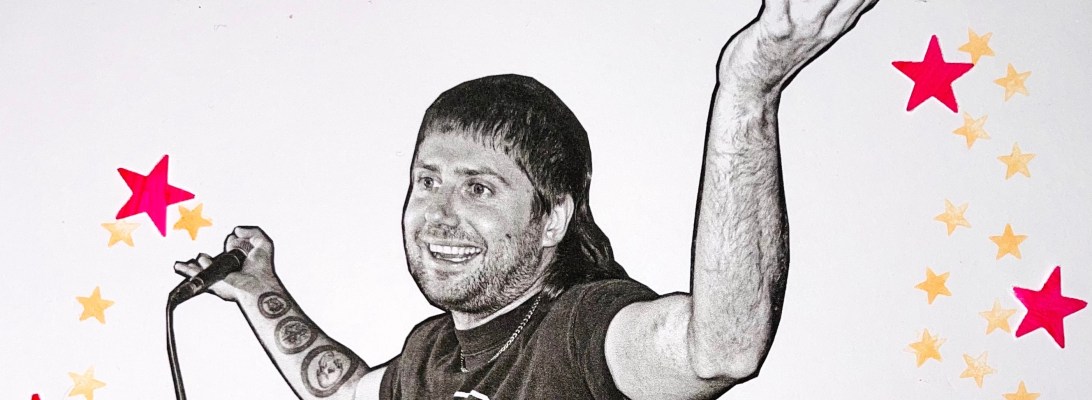
It was a really fun record to make—a fun snapshot of my life, where I was mentally. I sometimes view albums like TV show seasons, and this one feels like the fun, happy-go-lucky second season where we’ve got a bigger budget. The next one I’m working on is more the fucking dark, groovy reboot or something like that. It’s a bit more sad and stupid [laughs].

I love that analogy! For Corner Tactics I know you wrote around 130 songs…

B: Yeah. Corner Tactics, I did write around 130. For Animation Cel it was around 70. I haven’t actually counted. The rate of success was a lot higher with this one. 

Having so many songs to chose from, how do you decide which of the songs make the cut? 

B: Gut feeling. I tend to rely a lot on other people too. I’ll send songs to the band and friends and if they have a really strong reaction to it, I generally feel a lot more confident putting it on the record. Sometimes, I’m not the best judge of what is best like in terms of my music. I like a record that flows really well, so if I can’t find a way for a song to flow in the record, I’m just happy to leave it, rework it or put it out on like a compilation. 

What was one of the first songs that you sent to people that got a really strong reaction? 

B: People really were keen on ‘Maid Dress’. I wasn’t as confident putting that on the record cause it’s a slower song. I didn’t know how people would react to it. But they really liked it.

Also, people were keen on the title track ‘Animation Cel’. Ada had been begging me to use ‘Sega World’ for three years ‘cause it was an old Disco Junk song. There was a point where Ada was going to join Disco Junk, and the whole conceit of her joining was that we’d start playing ‘Sega World’ live. I finally recorded a version I was happy with. She’s pretty happy that it’s in the set and that it’s on the record. 

Is there a track on the album that you’re really, really happy with?

B: I was super happy with like the final track ‘Shawn Kerri’s Grave’. Also, some of the faster songs like ‘Carrot in Your Hand’ and ‘Bash My Head Against A Myki Pole’ and ‘My Metronome’. I like those songs production-wise. I was really happy with how they sounded. I was just happy that this record sounded a bit better than the last one. It’s kind of like that evolution a little bit. 

You recorded everything yourself again?

B: Yeah. But it’s the first time people have played on one of my albums. I recorded in the front room. 

Over time or sessions close together? Previously, it’s been a quick process, like a few days.

B: Over time. I would come home from work, record a song quickly, get the drums down, and then work on it until I went to bed or had dinner. At the end, I compiled them. It wasn’t like I did demos and then recorded them all at once. The album is basically the demos, pretty much.

One take? 

B: Generally the first take I got that I thought was good. Especially with drums. I’m not a good drummer. Once I get a take that’s usable—I’m done, done, done. Throw it in the pile! [laughs]. I definitely think there’s an advantage doing everything myself. 

The next Billiam record, I’m recording at the moment, is a bit more professional. I did the drums and bass with Eric who does Checkpoint and Hobsons Bay Coast Guard. 

The next album is a concept album, right?

B: I’d call it like a very shit concept album in that the concept’s not really entirely developed [laughs]. It’s based around a lot of the stuff that happened mental health-wise. It was a challenging year in a lot of aspects. The record’s, me, processing… [pauses] …maybe that’s the wrong word. I’m writing about it, looking at it. It was all I could think about for the year, and I only really was coming out of it March of last year. 

I’m sorry you were struggling so much. I feel you. Mental health is something that I struggle with, that’s part of why we haven’t been doing as much Gimmie stuff for a little. It can be hard to do stuff when it’s just hard to get through the day. Things are getting better, though.

B: Yeah, it’s awful that shit happens to you as well. It’s just shit trying to swim through everything. Sometimes it feels like you’re like trying to run in syrup and you can kind of get close, but you can never get to like full speed. There’s this weird guilt thing too. I feel like it’s self-indulgent to talk about my own mental health, but it’s been really good to write about it. I’m pretty proud of the songs. Hopefully people dig them and think they’re cool. 

So Animation Cel is a lighter and funner and the next record you’re working on is the opposite… 

B: I like doing a different thing each record. The next one is veering into The Cure and a lot of more dreary subjects. After, the next record is going to be very stupid. I’ve already got a list of songs that might go on it—all of them are very silly. I’m just going to flip-flop until I find a nice happy middle ground. 

You’ve been having a prolific output. We’re so proud of you! It’s been the coolest watching you grow. 

B: Thank you. Tell Jhonny I said, hello and that I love him.

Will do! What was inspiring you when making Animation Cel?

The Split Bills starting up. Since Disco Junk had ended, I hadn’t really had a band. I was doing solo shows with a backing track. I got to do a lot of great stuff because of it, but it wasn’t the same energy as a band. T second Split Bills started up, everything was so turbo so quickly. Obviously that takes a toll on you and can be stressful, but it was cool. 

Right out of the gate, we were playing shows and people were really responding to them, having a really good time. People were excited, people wanted to hear my music; I don’t say that in an egotistical way. But I could really stretch out and try different things and see how they worked.

Wanting people to hear your music and being happy people are responding positively to it isn’t egotistical. You should be stoked about that! It’s totally okay to celebrate that.

B: I guess. 

You’re always so humble. 

B: I don’t try to be I’m just in my head—that’s how I am. I think it’s a very common thing for people on the Autism spectrum to be unable to process how people perceive them a little bit. 

Being on the spectrum inspired quite a few songs that were on the album, right?

B: Yeah. ‘My Metronome’ was based on a conversation with Ada. We were talking about music and how sometimes Ada can’t listen to it because she’s worried the song’s going to go out of sync with itself, and that really upsets her. She couldn’t explain why the idea of a song going out of sync was so upsetting, but it stressed her out to that degree. Ada isn’t on the spectrum, but I related to that struggle—something you can’t fully describe, but it upsets you so much. I thought that was a really good idea for a song. A lot of my stuff has to do with living on the spectrum and that kind of thought process.

I don’t realise how much it impacts how I think about the world and how I write until I talk with other people or they talk to me about things. I’ve had people come up to me and say, ‘Hey, I really like how you title songs. I think that’s really unique and different.’ And I’m just like, ‘Oh, thank you,’ but—it’s not a conscious decision. It’s just something I did because I thought it was interesting; it’s how it sounds to me.

Two songs that are my favourites on the album is ‘Hydraulic Press’ and ‘Protect The Emerald’. 

B: They’re fun ones! 

And ‘Kerri Shawn’s Grave’. That’s your longest song on the album. 

I think it might be the longest song I’ve ever written. It has an actual drum kit on it. I was very proud of how that one came out, because it was cool to see I could do a slower, washier song, that wouldn’t turn out horrifically bad.

It’s about the cartoonist (who was one of the few female contributors to CARtoons Magazine, and produced iconic images used by the Germs and the Circle Jerks)?

B: Yeah, absolutely. I went down a rabbit hole on her and her art. The fact that we don’t know where she went—we don’t know if she’s dead or alive or if she had an accident and has been incapacitated because of it—there’s all this mystery surrounding this influential and important cartoonist.

I had heard she had a fall, which resulted in had chronic cognitive problems, and now lives with her mother.

B: Yeah, I read that too. I’ve also read people say, ‘I met up with her in the 2000s and she was completely fine.’ Then there’s people who are convinced that like she died basically as soon as she stopped publishing things. There’s no concrete answer. Sometimes that can really freak me out if there’s no concrete answer to a person’s existence, especially someone who’s like created something so sick. Especially when you go down the rabbit holes of punk, there are so many bands with songs I love from records I love, where there’s genuinely no information on the internet about them. It adds this kind of question to their music, like: what happened to them? I’d love to connect with them about their music, but can’t.

Yeah, totally. There’s quite a few women in punk that I really love, from older eras, and’ve tried to track them down to chat with them and many aren’t interested in talking to anyone, or have a whole different life, or can’t even be found.

 B: Hmm. that’s interesting. I’m so used to having grown up on the internet where everything is accessible. And if you had a question, you could just have it answered. And the absence of that can sometimes really wig me out, especially if it’s something that I’ve connected to so greatly. I think that’s the same for a lot of people my age, getting wigged out by how confusing living and not being able to know things easily. 

‘Manitee Show’ is a great song too. It has the sample with the woman’s voice at the beginning.

B: That’s Jane Fonda. She did for Good Morning America, because she was talking about how she didn’t end up going to the Oscars because it was on too late and she wanted to go to bed. I found that line, ‘I’m challenging musicians…’ made me laugh so hard. I wrote the song entirely just to use that example! [laughs]. There’s no other reason. That song only exists because I wanted to use that sample and it made me laugh every time I played it. 

Amazing. It made me laugh. I really like this variety on this album. 

B: Yeah, I think that’s something I like as well. It was really nice to try out different songs and experiment with different things. It’s definitely informed the future of Billiam because some artists, like Alien Nose Job, can have one concept and stick to it for an entire record, and that sticks. A part of me wishes I could do that, but I know I’m way too scatterbrained. I want to put every idea on there, and I like the idea of it almost feeling like a playlist—a very cohesive playlist—instead of a concrete record where every song is meant to sound exactly like one thing.

It’s cool that Legless Records put it out. Legless are one of the best labels in Australia right now. They’re a label we trust to bring the heat, everything has been gold.

B: Not only is everything that they’re putting out gold, but I have the most respect I can have for a person in the world for Mawson, because of how he runs Legless, Split System, Stiff Richards, and all his bands. There’s no ego behind it. He’s doing it entirely for the love of music and wanting to spread it.

When Animation Cel was coming out, he was having a kid, and I felt so fucking bad because I was like, this person is having a child—a physical being that’s going to be running around the house—and he’s packing up pre-orders for my fucking record. I was just like, oh my fucking God, I hope he’s somehow able to make this work and it’s not too much for him to do. He was so kind about it.

Mawson is definitely one of the nicest people we know in the Australian music scene. He’s a real one. It’s cool how’s he’s built Legless up and a community around it of bands and networks—like a big family. 

B: He’s lovely and cares so much about everything he does to a degree that’s sometimes scary [laughs]. Like we were talking about earlier, there’s like so many people who are out to scam people and use them. Mawson is just so obviously not that. It’s sick to see the label doing so well. I’m very honoured to be a part of that history. I feel like it’s going to go down as like one of the great independent labels. He’s got an incredible catalog. This year so far there’s Autobahns, a new Stiff Richard song, and the fucking Cutters record! Yeah. It’s so good—it’s fucked! AND the Split System album! It’s amazing what he’s done and how he’s put it together with no moral compromise—it’s all based on community. Even when he puts on shows, he treats the bands so well, and that whole crew, everyone’s so lovely and so supportive. I have as much love as I physically can for a human being towards Maswson and Legless. 

Totally. We love Mawson too. Since we first spoke to you all those years ago, your music has been getting a lot of attention. Like, you were featured on Bandcamp for the Best Punk Albums of August. 

B: That was so cool. That was very surprising. I didn’t even know what to do for a second! [laughs]. I was just like, holy shit! Damn!

And you were featured in the a Spin magazine article.

B: Yeah, that was a very funny article to be a part of. It’s been cool and very nice, the words people have said about the record. It’s lovely to hear that people care. I can’t ever really have a great grasp on what I make; I make things and hate them half the time. Whenever people have a response to it, I’m grateful that they’ve given me the time and put the effort behind it to listen to it. There’s so much INCREDIBLE music coming out right now, I’m so stoked people consider me to be a part of that. 

We love the artwork for the new album!

B: Sam [McKenzie] is a genius. He knocked it 5 miles out the park, to the next stadium and then knocked it out of that one. It was the perfect album cover. I’m so happy with how it turned out. So incredible. It elevated everything, like 10 levels. 

Album arty by Sam McKenzie

What have you been listening to lately? 

B: This is a bit embarrassing to admit, but The Dare. I love that new album, What’s Wrong With New York? It’s super silly dance punk; very much like a throwback to LCD Sound System. I love the new Rixe 7”. The new records from Party Dozen and Shove—love those bands.

So, you leave from Europe on Wednesday…

B:  I’ve never been to an international airport alone, so I’m a bit nervous about that, but I’m really excited to go. I think the excitement is making up for the fear at the moment [laughs]. I’m very excited to look for weird records, see weird bands, and meet cool people.

Out of all the things you’ve achieved so far, what’s something that you’re most proud of? 

B: The collaborative stuff I’ve done. I’m really proud ‘cause I feel like I’ve spent so much time in my room, writing with myself and I convinced myself I wouldn’t be able to collaborate. Those records I’ve made has shown I can. I’m proud that people connect with the music too—that’s like the main thing.

Why do you think you make music? 

B: I’m not good at anything else. When I was a kid, I don’t think I particularly excelled at anything. I just watched YouTube, played video games, and didn’t really have a social life. When I turned 13, I started finding more mainstream punk music. Then I heard Modern Living by The Living Eyes, and I found this community where people wanted to talk to me, were supportive, and were excited to connect. When I found that community, I thought, okay, I’m going to do music. I’m going to make music. I’m going to play it live. I didn’t know how, but I was determined to do it. And now I’ve done enough that people think I’m worthy of going to another country to do it! That’s really cool.

Follow: @billiamofbilliam. GET Animation Cel(Legless Records).

Lothairo: ‘The senses are heightened, the joys are heightened.’

Original photo: Jack Gruber / handmade collage by B

Lothario is the fierce solo project of Naarm/Melbourne musician Annaliese Redlich, a bold and unapologetic artist who channels her emotions into punk, born from restless nights and raw energy in late 2022. Exploring themes of rebellion, desire, and conflict, Lothario’s music exudes both vulnerability and defiance. Annaliese’s lyrics capture moments of catharsis as she sheds her skin, becoming who she is and who she wants to be. Initially composed in her living room, with only her beloved cat Gene Parmesan as a witness to the exorcism of old ghosts and dreams. Lothario has now evolved into a full band for live performances. They’ve quickly gained attention with sold-out releases and a rollicking US tour in 2023. Now, with her highly anticipated debut album Hogtied out, Lothario is gearing up for a European tour this October/November. Grab her record and catch a show if you can!

ANNALIESE: I’m totally floored by how much love and support there is out there for Lothario! My cup is fucking full with love and I want to keep focusing on that because that’s such a gift. I feel vulnerable around this record, but that’s what I wanted it to be. I wanted it to be me. I wanted it to be the first thing in my life that wasn’t attributed to a man. 

It was so important to see this through as much as possible by myself, with the wonderful contributions I requested from my amazing friends on drums and my amazing brother for mixing. I really wanted to stand on my own feet and spend time staring in the mirror, asking, ‘Who am I? Do I like what I see? Do I back who I am?’ Yeah, I fucking do! So when that comes out, you do have that ‘oh shit, I’ve got nowhere to hide’ moment. The senses are heightened, the joys are heightened.

The questions in your own mind, is what ‘Hogtied’is about. It’s me asking all those questions of myself: 

If I squeal like a pig would you let me win, roll me up tight like a second skin?

If I take the crown and kill the king would it wipe the doubt that lies within within?

And if I make you a lover would it take all the trouble that terrified double life, cries in the night that haunt me?

And the knives come out when the lights go out, when the lights go out, would you steal them from me?

It’s the ongoing questions. It’s a work in progress. It’s super important for me to back myself. 

Last time we spoke for Gimmie, you said that you felt that like your life was going at warp speed; has that changed? 

A: No, absolutely not! Although this year I’ve tried to slow it down a bit. I was burnt out at the start of this year. I put the first single, ‘Drunk Fuck’ / ‘Black Hair’ out in June last year. I ended up putting two other singles, ‘Doggy’ / ‘Missing Person’ and ‘Hogtied / King Rat’ out last year, finished the year off doing a US tour, and started this year, recording and getting all the rest of the tracks done for the album. 

We’re getting ready to launch the record in Naarm/Melbourne, and then we’ll go over to Europe for a month and a bit. So it’s been wild!

That’s so exciting! We’re so happy for you.  How do you feel both you and your creativity has grown in the last year? 

A: I feel unbridled joy. I feel anxiety. The nurturing of my creativity up until this point has never been… [pauses]… I’ll try and speak in positive terms. It’s always felt like it’s come in unpredictable seasons. While I’m really comfortable with that idea of creativity ebbing and flowing, and it being a season—not worrying too much if it goes away because it will return—having felt so creatively enriched in the making of this record, that sense of burnout at the start of the year did panic me a bit.

I was like, ‘Oh gosh, here we go again. Have I rung it dry? Have I emptied the well?’ And it’s like, no, it’s still there, but you have to slow down—the warp speed wasn’t something that could keep going like that. It’s almost like a bit of mania, in a way. I need that space to sit down, go into my cave, and record to flesh the rest of the songs out. But it’s felt incredible. It’s felt like the awakening of this thing in me that’s always been there, but now I have control and animus over it—this guiding hand, kind of directing it and making it happen. That’s the most important feeling in my life. 

We’re so happy for you! And, proud of you!

A: We all have fantasies, right? Of what we could do and how amazing we could create—how many records we could make or books we could write if we didn’t have to work for ‘the man’ or do whatever. But I think the most productive times for me in the early Lothario days were when I respected my own time. It was knowing when I had to work and do my job, and then knowing when I would be creating and purely doing that. Knowing when I needed to go exercise—it’s all part of a full, varied diet. I was in my state of flow.

What part of the process of making the album did you enjoy the most? 

A: Writing the songs, coming up with riffs, layering them together—every part! [laughs] Sitting down and challenging myself with guitar solos, layering those into the mix, and seeing the songs take shape. Feeling, particularly with the ones that are more deeply personal, like I’m excising trauma or anguish or pain—committing to putting those words and thoughts down on paper, voicing them, and hearing them in a song.

There’s so many parts I enjoyed, like working with the amazing Sorcha Wilcox from band, Aardvark, for the front cover. 

Cover photo: Sorcha Wilcox 

It’s a stunning cover! It really stands out, and is really memorable. 

A: I’m visually driven as well. It’s a strong part of Lothario, the visual unity with the sound. That was actually a bit of a stressful point for quite a while. Everything I was trying just didn’t feel right. But then finally, in April, I had this flash of idea, and I’d seen the cover for Aardvark’s record, and since then become friends with those guys, Sorcha is their guitarist and a photographer.

I loved her ideas about art and photography. I was really drawn to her, so I called her up. I had this idea and told her about it, and she was like, ‘Fuck yeah, I want to work on that.’ I’d seen Chains Of Metal, the amazing Sydney-based maker of fetish wear, on Instagram and messaged her. She hand-makes exquisite pieces of wearable art, but I couldn’t really afford to buy them—they’re expensive but totally worth it. I threw it out there: ‘Hey, can I borrow this for a shoot?’ She wrote straight back, and I thought we would have to go through a negotiation or something. But I had already given her my address, and she was like, ‘It’s already in the mail for you. Just send it back when you’re done.’

Sorcha was ready to take the photo, and my friend Baker lent me the dagger. As soon as that idea came together, it felt so strong. It was like the feeling of all the songs coming together, and this project—a wonderful state of flow.

What’s the newest song you wrote for Hogtied

A: ‘G.E.N.E.’, ‘Panter’, and ‘Suckhole’. ‘Suckhole’ was the final one, and definitely the narrative’s the most terrifyingly honest. Like, here’s my experience, and fuck you! 

Was that one hard to write? 

A: It scared me to write it. It wasn’t hard to write. Once I tapped back into that experience and feeling, it flowed out. It took on its own thing. And I was like, ‘Whoa, okay. Shit, do I really want to make that public?’ I mean, it’s still a story, a creative expression; it’s not a diary of my day-to-day. But I was like, ‘Oh, do I want to own that publicly?’ I was like, ‘Yeah, I fucking do. I really, really do.’ In this process with Lothario, I’ve learned that this is probably where the important, nourishing, life-building stuff is for me. If I can learn how to be openly vulnerable, strongly vulnerable, and truthful in my experiences, that’s going to help me and hopefully resonate with others who have had similar experiences or are drawn to it for whatever reason.

Since the record came out, a few people have told me they really identified with that song. They’ve messaged me or the song’s been talked about in reviews of the record, and it was really pretty overwhelming and moving for me to hear it talked about, as a song about relationship abuse or domestic violence. Calling it that, I was like, ‘Whoa, whoa,’ and then I was like, ‘Yeah, yeah.’ I don’t know why it’s such an overwhelming feeling, but I guess it’s the externalisation of internal stuff. That process is pretty magical and amazing to me, and empowering and scary.

I’m sure a lot more people will relate to it as your record gets further out there in the world. As scary and vulnerable as it can be, it’s important that, if we’re feeling comfortable enough, we can share our bad experiences, not just the good. I went through a similar process while putting my book (Conversations With Punx) together. Some not-so-great things I’ve experienced came out in my writing and some of the conversations I had, and I had to decide whether or not to share them. I wasn’t ready to share all of them, so some got edited out. But now I’ve started to talk about more of those things, like in an interview I did recently (Future Waves zine). Seeing strong women like yourself and Amy Taylor speaking up makes me feel a little braver. You sharing your experiences in ‘Suckhole’ might help a listener realise what’s going on in their own relationship and might help them get out of a bad situation too.

A: With that song, it’s about, you think you’re standing on one solid bit of ground, right? You think you’re on one bit of territory when you start out in a relationship. And even though you’re smart and you know, you can see what’s happening, you discount that. And then the next minute you’ve slipped a bit further in and then the next minute you slipped further in. And then when you look back, you’re right in the fucking hole. In the verses it’s:

Lock jaw, sink pit, worried sick, terror fit, deaf, dumb, blind, broken down to the bit

Pinch myself but I’m not there, all the cuts are just the cost of care, right?

Broken down but gritted teeth, my eyes start to see

Snap lock break bits finally, you’re fucking dead to me 

It’s like, I’m starting to see, even in this state of no strength. I’m feeling, and I’m seeing, and I’m knowing, and I’m fucking taking this back, and you’re done. Whatever that experience and pattern and trajectory is, it’s very different for everyone, but I think that realising you’re lost means you can find yourself again and get out of whatever the situation is. I don’t want to make any definitive statements about this stuff for other people; I’m sensitive to that…

People can always take what they want from a song. Once it’s out there, it’s sort of no longer yours in a way. You can’t control how people perceive it, because everyone’s going to bring their own lens and their own experience to it. You might say it’s about something, but then someone else hears it and thinks it’s about something totally different, and that’s fine. That’s the beauty of art.

A: Yeah. For that song, I really wanted a.. obviously ‘My Pal’ by God is one of the great Australian rock songs, and stuff like Radio Birdman and The Saints, and I really wanted to wrap it in that vibe of the classic male Australian rock thing, but have this message about losing yourself and the salvation that you can find as a person in the depths of despair. I wanted it to sound like despair, but there’s also a sign of hope and cathartic. We’ve played it once live at a secret small show last week. When we played it, and when we practice it—I get really emotional.

Listening to it, you can feel that emotion. Did you get emotional recording it?

A: It’s always like that for me. When I came up with the words, it just came out that way. A big—fuck you!

Where do you tend to write most of your lyrics? 

A: Everywhere. I can be walking around and have a riff in my head or have something and my first stage is recording voice memo notes in my phone. Then, I’ll either come up with words because I’ve got a pattern that I want to fit into something, but often there’s just sentiment that comes of an experience I want to write about. 
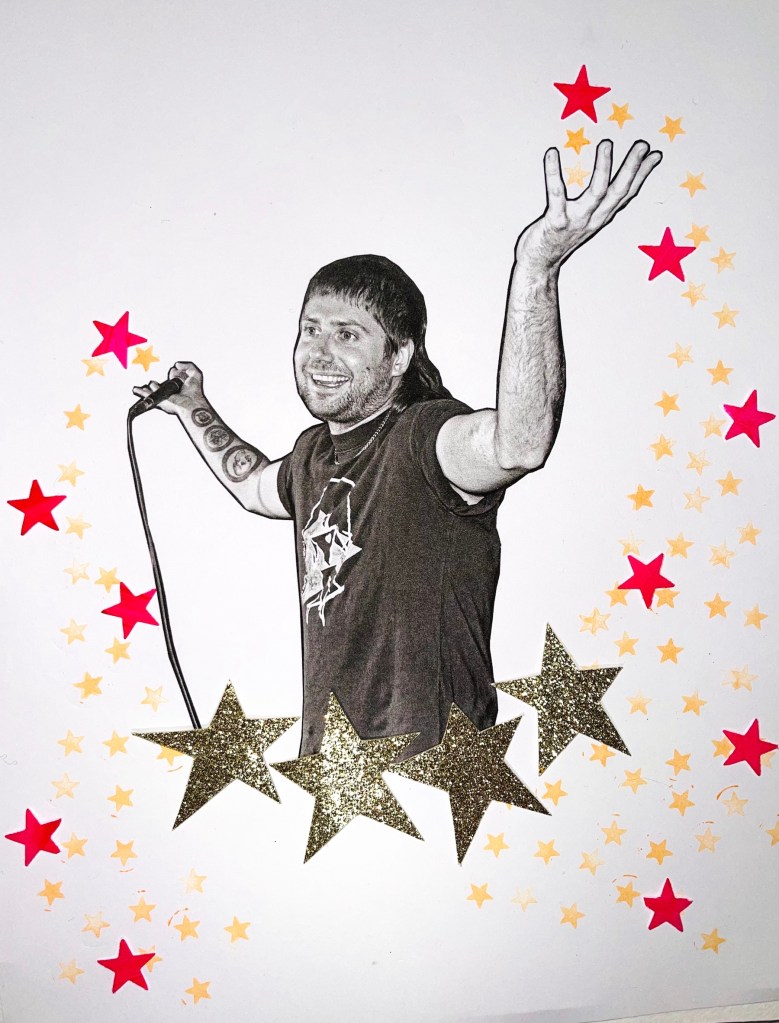
With ‘Suckhole’ the tune felt really desperate to me and it felt dark, but then ultimately it should have redemption.

I have lots of dreams with really strong themes. ‘Hogtied’ was a dream but also based on experience. ‘King Rat’ was about a dream and a series of visions I had around a certain time. Rats kept coming up in my life.

I saw a dead rat on the beach. It was really beautiful; it was bright blue, and it was after a storm. I was like, ‘Am I hallucinating? Wow.’ I was in a really bad situation in a relationship, and I went out in the middle of COVID, in winter, to the beach down in Melbourne, to the surf, and I got a wetsuit. I was winter swimming a bit at that time to shake myself out of a funk. I’d gone for a swim around Brighton, and there was so much crap in the water and flotsam and jetsam along the shore.
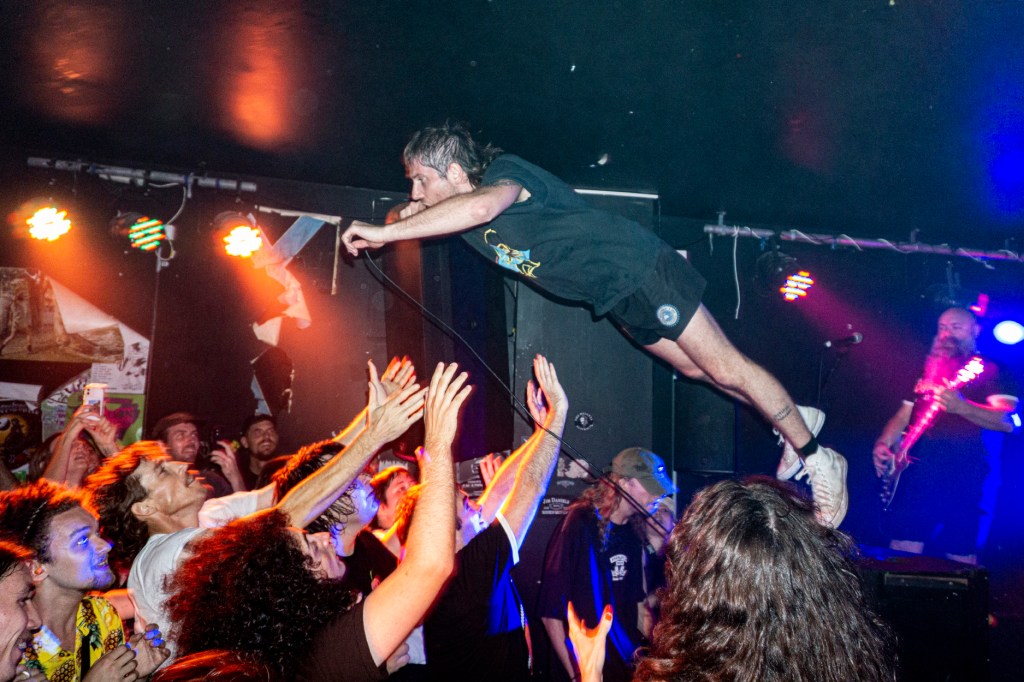
I was feeling devastated and was walking when a bright turquoise-blue thing caught my eye. I thought it was a bit of plastic, but it was this big, plump, dead rat on the edge of the water. It had no fur and was beautiful and grotesque. I felt so sorry for it; I felt this sense of grief for it. I left, wondering why I kept thinking about this rat and why it looked so beautiful. It was this alien, beautiful thing in the midst of rubbish, leaves, and stuff.
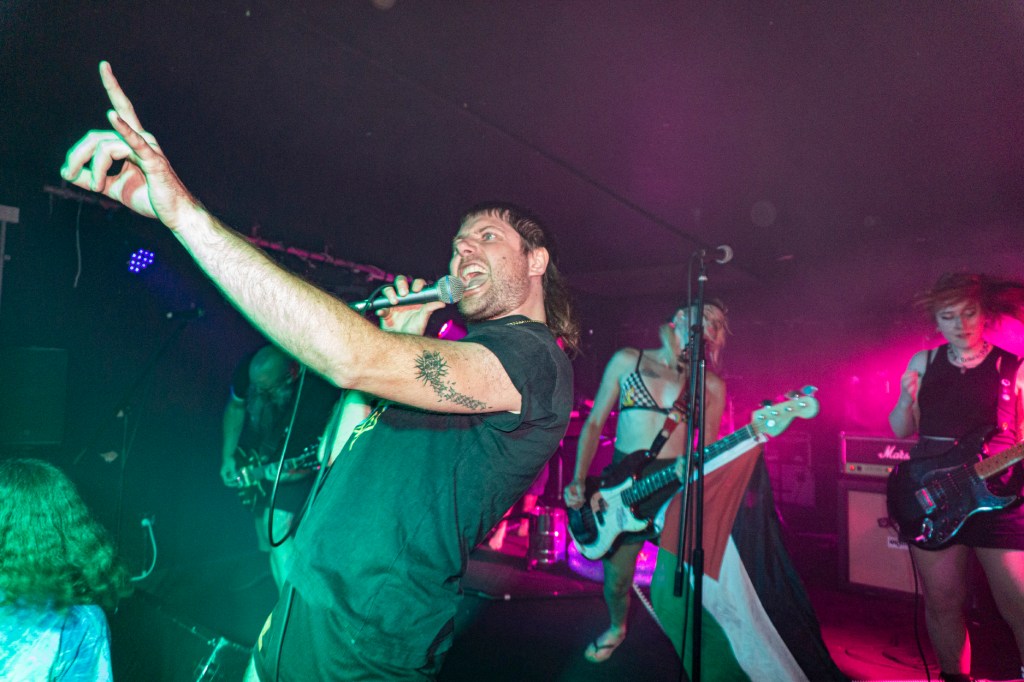
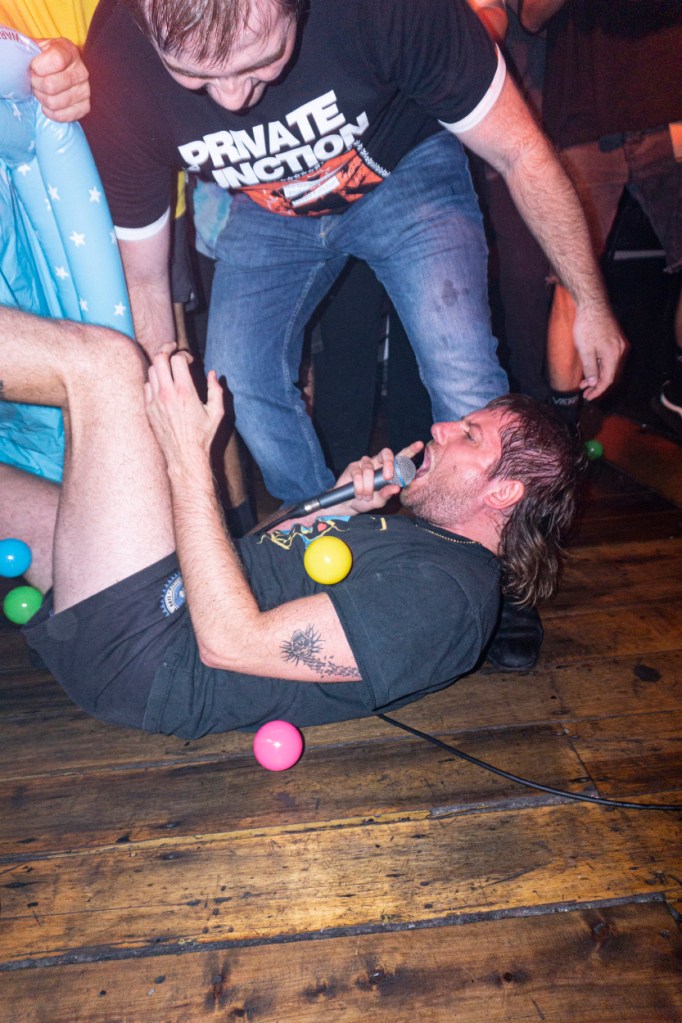
Rats are so maligned and regarded as dirty in Western culture, whereas, in other cultures, they’re not. In Chinese culture, they’re in the horoscope; I’m a Year of the Rat baby. They’re cunning, smart, clean, and such social animals. They’re actually so smart and beautiful. And just the symbolism of the rat—this poor dead rat that was shining like a beautiful diamond along the coastline amidst the garbage where no one would see it, but I saw it.

I have periods of intense deep dreaming. I feel like i’ve had less this year than usual, which makes me a bit sad. It’s more just a sign of that burnout and putting my head down and getting through stuff.

Was there anything in particular that had you burning out? 

A: The US tour last year was pretty full on. You have to be careful of the people you have around you and make sure that they’re like family. I’ve never done anything more than just a couple of days with a couple of shows, chilling with mates. It’s always been really family like. You’re doing this really big, difficult thing together with not much money and who knows how much payoff. You’ve got to make sure that everyone in that group is playing their part, helping, being supportive, and respectful. My live band—Shauna Boyle (Cable Ties, Leatherman), Elsa Birrel (Shove), Jay Power, and Al Hall (Cutters)—and former members who contributed to the project’s early live shows—Billiam, Sarah Hardiman (Brick Head, Deaf Wish, Lou), Moose (Rat Bait, The Uglies), and Lach Smith (Revv, Billiam and the Split Bills)—are amazing.

Every day, there were amazing, mind-blowing people showing up. People offered us to stay at their places. We played a show in Pensacola on Halloween, which is at the top of Florida, an hour from the border with Louisiana. It was an all-ages house show at a place called the Bug House, with an age bracket mostly between 12 and 20, and some parents. There were kids running Halloween stalls, zine stalls, and everyone had costumes. One person was doing tarot readings, and there were food stalls.

A girl and a non-binary tween grabbed me after the show and were like, ‘Oh my god, we have so many questions for you. We need to know: How do you do this? How did you start this? What do you do? How did you start playing guitar?’ I just let them talk at me super excitedly. They said things like, ‘We want to play guitar,’ ‘I was playing in a band with my male friends at school, and they were like, “I don’t like them”’ and ‘Nobody wants to do what I do, and I’m so frustrated’ and ‘I want to do what I want.’ The other one said, ‘I don’t play an instrument, but I really love this. I love this and want to be part of it.’

Photo: Matt Redlich

Good stuff like that, connections like that, makes it all worth it!

A: Yes! We shut everyone else off and sat down in a little huddle to talk about my experience. I told them, ‘Don’t worry too much about it. It will come, and you will find your people. Don’t feel pressure. Keep doing your thing. But also, if you need to stop doing it for a bit, that’s okay too. Don’t judge yourself for not having the resources around you right now to actualise the thing that you ultimately want to be. If you want to be involved in shows but don’t play an instrument, maybe you could organise shows, make flyers, or be someone who goes to your friends’ shows and tells other people about them and promotes them. You could take photos. Try a bunch of things. You’ll start to make friends and find what’s right for you.’ It was just a tremendously special conversation.

Another cool moment was when we played in Detroit with Timmy’s Organism, and having Danny Kroha from The Gories in the front row watching me play guitar and writhing around on the floor screaming! I was like, what the fuck?Oh my god!

I love America because of that crazy pendulum swing of existence there, for the good and for the bad, for the scary and for the beautiful—it’s a cartoon world in a lot of ways. That appeals to me. I’ve met so many Americans in the punk scene who are so open and so heart-on-their-sleeve friendly.

You mentioned the two young people who came up to you at the Halloween show. Was there someone when you were growing up, that you had an inspiring chat with, like you did with them?

L: No, which is why I recognise the importance in doing that. When I was growing up, you and I have talked about this before in our chats, going to shows when we were kids, and sadly we didn’t see many women on the stage. The ones you would see, would blow you away.

Adalita from Magic Dirt was one of those for me.

A: Yeah, and who didn’t want to be her? She is just a fucking goddess! you know, and 

I know that you’re close to your parents; what’s do they think of your record? Have they heard it? 

A: They have, they love it! They don’t like punk music. Obviously the aesthetic and narrative of the record is not necessarily something that my parents would choose, let alone choose to see their daughter excising. But they’re so proud. Dad and mum actually made it to a show when they were working in St. Louis. Mum had seen us play a few times. Dad had never seen us play. Dad’s a classical music guy, but he was cheering and losing his shit!  He was proud as punch. All these younger punks were coming up to him and having photos taken with him.

The themes on the record are pretty universal to the human condition. But, I’m a female and they’re my experiences of the hypocrisy of the patriarchy and treatment of women’s bodies. My mum’s a big one for words and she’s asked me about a lot of the songs. She is really proud and amazed that I can access and articulate my own experiences and excise my feelings and express his stuff. When she saw the cover, she was like, ‘Whoa, that’s powerful! So that’s, It really is. 

That’s awesome! I see that the record is pretty much sold out everywhere already! Congratulations.

A: I should be getting the records tomorrow from the States—I cannot wait to see it! They’ll be some available at the launch, if there’s any left over they’ll go up on the bandcamp. 

I’m sure you’ll sell all those at the show. All of your previous releases, the 7”s have been long sold out.

A: I’m always amazed and thrilled that happens!

You’re such a sellout! In the best way possible. 

[Laughter].

A: Yeah, unashamedly so!

You’ll be doing a European tour soon; what are you most looking forward to doing in Europe, besides playing shows?

A: Wild Wax that’s bringing us over asked is there anywhere particularly you want to tour? I was like, ‘I don’t care, anywhere that will have us.’ I love seeing places when I’m making music or DJing or just meeting music communities. I can’t wait to cruise around after the tour is finished. I’ve always wanted to go to Spain, so I’m particularly pumped for that. It seems so beautiful and romantic. My best friend’s coming over at the end of tour and we’re going to Turkey and Greece for a bit. 

I’m also looking forward to seeing my friend Marion, who is Fuzzgun, and he plays in Autobahns and Lassie, he does guest guitar on Panter too. They were out here in January doing a tour, and they stayed with me. He’s gonna be in our band in Germany because our guitarist Al can’t come. We’re’ landing in Leipzig and we’re gonna hang out at Marion’s place, he lives in a squat with Jules from Autobahns and Marion’s beautiful partner Tati. I’m looking forward to seeing what a European gas station is like too [laughs]. I’m sure we’ll see lots of them. I just can’t fucking believe I get to do this—it’s it’s a thrill for sure! 

Hopefully we can wrangle a US tour next year and maybe a bit more Europe. I don’t really want to stop. I want to keep going as long as we can.

We’re interested to see where Lothario goes next creatively. All your releases have been in a way are inspired by certain challenging life stuff, it’s cool to imagine where you might go now you’re in a better place.

A: There’s a song that I don’t have a title for yet, it has a catchy pop-ness like ‘Black Hair’, but even more so. I was really surprised when I wrote it. People I’ve shown it to have given it Joy Division comparisons, and Jay Retard. It has a post-punk meets edgier punk feel too. Maybe I’m leaning into that a little bit. I’m really excited.

My brother, is an amazing music producer and is one of my biggest supporters. He creates really polished music for other people. I don’t want to do that with this, but he was talking about how he’d love to record stuff for me; I recorded the other stuff all myself. I am equal parts totally keen and absolutely don’t want to do that. I don’t want to change the vibe. I don’t really want to overthink it too much. 

Anything else to share with us?

[Annaliese’s cat appears]

A: I wrote a tribute song to my cat Gene Parmesan [‘G.E.N.E.’] I imagined him as a street tough, a punk walking the night, being tough—a wild cat! just, He was my omnipresent producer in all the sessions. I’d record in the living room and he’d start to do zoomies and I’d be trying to ge a guitar take, and he’d run over the top of my lap and I’d fuck it up at the last minute [laughs]. He’s been my rock in my, in my darkest times. 

Follow: @xlothariox. Find the music HERE.

Private Function’s Chris Penney: ‘I try to create art as escapism because everything else freaks me out!’

Original photo: Johnny Russell / handmade collage by B

Private Function are a punk band that embodies more than just chaotic energy and humour. Beneath their wild shows, tongue-in-cheek attitude, and fun exterior lies a band that blur the lines between art and everyday life with witty commentary on modern life.

Gimmie recently caught up with Private Function’s frontman, Chris Penney, for a candid conversation that covered everything from his roots growing up in housing commission to his first experiences with therapy. He reflects on how his formative years and growing up with his metalhead single mum shaped him, and tells us about his first concert, and the time he sat on Ozzy Osbourne’s lap. He shares his theory on the moment he feels culture died, and his honest opinion on NOFX and Blink-182, while celebrating the revival of Australian music in the 2000s by bands like Eddy Current and Royal Headache. We hear the story of what drove their manager and booking agent to quit. And, talk about joy, creativity, and so much more. Chris’ blend of quick wit and sincerity makes for an unforgettable conversation.

CHRIS PENNEY: I’m the classic example of a housing commission boy, come good. I grew up in Redfern in Sydney on Morehead Street, which is a pretty gnarly street. 

You know, how you can do that thing where you say the name of your first pet and the name of the first street you lived on, and that’s your porn star name? Well, mine’s Jesse Morehead—that’s pretty good [laughs].

Seriously, it was a pretty crazy place. It’s the most condensed housing commission in Australia, which, to be honest, maybe isn’t the best idea. I think there’s talk about maybe taking it apart, but there are easily a thousand different apartments on that one block. So it’s pretty fucking full on to live there. Especially back in the ‘90s, I saw some crazy, full on stuff. There’s many, many stories; a chick got stabbed to death once. 

Whoa! Oh-no. I guess, high-density housing commission projects can face a lot of challenges like overcrowding, maintenance issues, strained infrastructure, and there’s also social stigmatisation. All these things can lead to deteriorating living conditions and lead to stress, anxiety, and depression, as well as diminished overall well-being and quality of life.

CP: Yeah! And these things do happen. There shouldn’t be that much housing commission condensed into one street. 

Did the things you’ve seen growing up there have an impact on you? 

CP: I don’t know. Maybe? I mean, the only thing I can think of is that I’m extremely emotionless—probably that. So this week, I actually went to talk to a psychologist for the first time in my life, which was pretty good.

That’s good to hear, I’m stoked for you. I’ve been to many over my lifetime and it takes a while to find a good one sometimes, but when you do, I’ve found it can help.

CP: Yeah, it’s interesting. I’ve never done it before. So I don’t really know what to do, because I don’t really know what I need out of it. I’m pretty together. Although it would seem very much like I don’t have it together [laughs]. But I have a bunch of crap going on. 

It’s cool; I can talk to the guy about the end of the world, which is kind of fun. I made him squirm. I talked to my girlfriend; we’ve been sitting down and chatting, and I go on these crazy doomsday rants about the end of the world, or World War III, and the climate crisis running in direct parallel with each other. And we’re storming ahead into this apocalypse. It’s coming so soon. She’s like, ‘Yeah, I don’t want to hear any of this.’ [laughs].

A lot of people are like that. It’s constantly in our face in the news so they don’t want to spend much more time thinking about it. It’s a really interesting time. But no matter when you look back in history, there’s always been terrible things happening. As humans, how do we cope with this? What do we do with this information? Because obviously it can start to affect our day-to-day lives.

CP: For sure. It’s something I think about a lot. The news is always happening, right? The world’s always happening, always changing. There’s always people dying. I guess there’s more emphasis on that stuff now because of social media, how dramatic that is now. Is it any more or any less important than it’s been in history? I don’t know. I don’t know shit. But, things are always gonna wrap up, and things are gonna begin. And people should want to know about it.

Yeah. I don’t have answers either. The world can definitely be a difficult place so to stop from feeling overwhelmed, I chose to dedicate my life to things like music, art, connection, conversation, and community, and sharing knowledge, ideas and experiences with others. Through my work it’s important to counter the shitty stuff in the world and offer something that’s a more positive offering for people’s lives. 

CP: Yeah, 100%. That’s absolutely what I try and do as well! All the art that I create, and that we create in Private Function, is hopefully that. I try to create art as escapism because everything else freaks me out! I try to keep this one escapist form of art that’s joyful, fun and stupid at the same time. I fucking swear to God, if this psychologist makes me cease it, if I become a more serious person because of this prick, and I have to release art that isn’t fun and dumb—I’ll be so upset! [laughs]. 

Photo: Jhonny Russell

There’s definitely a place for fun and dumb art. Not that I think your art is dumb, by the way. There’s a place for all kinds of art. Art is more important to society than a lot of people think it is. I think often there can be a misconception that real art has to be serious.

CP: Yeah, totally. I couldn’t be serious, man, even if I tried. Private Function definitely has an element of humour, obviously. But it’s not jokes. The way I try and approach it is that it’s like a joke without a punchline. The vibe is funny, but there’s no actual joke here. I really like relying on humour and comedy in a song to bring these artistic ideas to life because I feel like humour is the only artistic avenue that still has innovation in it.

For instance, the scratchie record we did, people would think that’s a funny, stupid idea. But it’s also innovative because it hadn’t been done before, which, to me, is important.

I couldn’t think of anything serious that hasn’t been done, and hasn’t been done significantly better than I could ever hope for it to be done. Like, every song about love has been written, every song about addiction has been written. It’s set in stone, how they’re meant to sound and how that it’s meant to be shown to people. But with humour, there’s this depth of endlessness that you can continually find things in. BUT then you just have to deal with people being like, ‘You’re a fucking joke band!’ [laughs]. 

Frank Zappa used to get that too. Full transparency, it took me a little while to come around to Private Function, and to get it. On the surface level, and the way PF were pitched by publicists and seen in the media, it kind of seemed that way. But when I took the time to listen and saw a live show, I realised it wasn’t that, it was more that. You write great songs and you’re one of the most exciting and entertaining live shows around.

CP: Yeah, it’s funny, right? [laughs].

When I look back on all the things that people discounted as just publicity stunts, I see the innovation that we’re talking bout.

CP: This has been an eight-year project now. At the beginning, in the first few years, people were really into it, and then some of those people left. People come and go, and there are always new fans. Now it’s almost like, to get into Private Function, you need to understand this linear story, along with all the concepts and imagery that are repeated and consistently used, blending into each other. There’s themes about the whole thing. To jump into the band now, and to take it at face value, is like jumping into a podcast after it’s been going for years. It’s like, ‘Oh, fuck, what the fuck is all this? Who are these characters and these people?’ It’s hard to do.

I think the live show sells quite a lot. That’s the one thing that’s changed a lot of people’s minds about us. I like our albums but the songs are quite different live to how they sound in the studio. Recording is hard. Especially for me, because I’m not the best singer. When we’re jamming, I’m like, ‘This is fucking amazing!’ And then you hear it in the studio and it’s like, ah, maybe, my hubris has gone to my head somewhat [laughs]. 

How did you first discover music? 

CP: My mum. I had a young mum. She’s only 19 years older than me—54. Because I grew up with a single mum who was a huge punk and metalhead growing up. She was massively into Metallica and all those kinds of bands. From a young age, she was taking me everywhere and making me go to shows.

My first show, I still got the ticket stubs, was in 1996, The Offspring. I was nine. There’s a photo of me with Ozzy Osbourne too, when I was 10 years old. She took me to a signing and I have a photo of me sitting on Ozzy’s lap! It’s really funny.

Photo: Jhonny Russell

Ha. That’s awesome!

CP: [Laughs]. So she would just fucking blare music through the house. She’d be cranking Tool. So I was listening to all that stuff from a young age, and it just went on from there. My mum would listen to The Stooges, so I would.

Self-exploration is such an important part of being a music fan, and formulating who you are. Remember before the internet? 

I sure do.

I think it’s the worst thing that the internet has taken away from us, like self-exploration and finding those things you like on your own and not just having someone hand them to you. In the pre-millennial age, finding stuff was a major part of formulating your self. 

Now it seems like everything’s at your fingertips and there’s overwhelming so much choice. Back in the 90s and before, you had to really dig for stuff and it wasn’t just readily available. Things seem to hold more value because of the effort you’d go to to discover them. Music didn’t seem as disposable.

CP: Yeah, 100%. It was way more satisfying to find things yourself. I went and saw EXEK the other night.

We LOVE them! They’re one of our favourite bands!

CP: Yeah, they’re great. The singer Albert asked this question to the audience on the mic, he said, ‘Does anyone even have passion for music anymore? Does anyone care? And, there was a quietness and awkwardness from the audience. I was like, yeah, people don’t care! [laughs]. It’s funny to see that; you could really feel it in the room, people don’t have that connection to music like they used to back in the day, and what it used to mean. 

Anyway, like I was saying, I was listening to all of this music way younger than I should have been because of my mum. Getting into my teenage years, it should have been pop-punk, like NOFX, Blink-182, and AFI, but I was like, ‘This is fucking shit!’ [laughs]. I missed all the music that I should have liked during my teenage years, and I’d think, ‘Well, we’ve already got The Stooges, so what’s the point in this?’ I jumped over this whole chunk of music that lots of people my age were into. It’s funny that older music was my teenage music. I’m pretty happy for that because that other stuff IS fucking shit—my mum was right [laughs].

Was there anything, though, that you discovered yourself? 

CP: For sure. Billions and billions of things. You ever heard this album? [holds up a record] Rites of Spring! I bought this just now. I actually hadn’t heard them until last year, which is so fucking funny, I went through my stupid Minor Threat thing and then I was like, who’s another guy in Fugazi? 

Guy Picciotto!

CP: Yeah. So I was listening to them all year and then I went into Rowdy’s Records today to go get a bunch of record sleeves. They had that album behind the counter and I bought it. It’s an original press, which is pretty cool. I’m always finding fucking new music. My fucking record player has been broken for over a year but I’m still buying records. 

Nice! When and how did you first start playing music? 

CP: High school. We just liked to play because we like rock and roll. None of us could play any instruments, AND some of us still can’t play instruments [laughs]. We jumped into it and figured it all out. That was a long time ago, I guess, I’ve been playing music for 20 years. 

Photo: Jhonny Russell

Did you ever think he’d be a front person? 

CP: Yeah, I’ve been a front man for a long time, in every band except for Mesa Cosa. I’m still technically in Mesa Cosa, I guess [laughs].

Is there anything that attracted you to being a vocalist? 

CP: Not being able to play an instrument [laughs]. And, it’s fun. I like a band with a front person, which sort of oddly it’s becoming kind of rarer. Especially front people that jump around. I like to jump around, it helps me sing, which is funny. Having a front person adds a whole other element to have a connection into the band, in a way, because you’re out in the crowd.

I noticed when you play live that you’re very aware of all the stuff that’s going on around you and you genuinely engage people.

CP: Yeah, yeah, totally. I like looking at people. It’s cool! [laughs].

Not all bands do that, but it’s always nicer when they do. Sometimes, when a band gets lost in their own world and ignores the audience, it can be boring. When we saw you play, it was great how you involved the crowd by letting them choose your set through picking song written on pieces of paper they’d pull out of an old vacuum cleaner. Everyone was into it. The show’s vibe was chaotic but positive, with people looking out for each other. After going to some rough hardcore shows lately, where a bunch of the audience felt pretty thoughtless, it was refreshing to experience the opposite. Your show was joyful, and I wasn’t on edge, hoping I didn’t get hurt watching a band play. It was a real highlight of my week.

CP: I love that you got that from our show! Thank you very much. You used the word joyful, which often has connotations with it being kind of silly and stuff but it doesn’t need to be that. It can be joyful in the way that… [pauses]… it’s cool to have a show that’s kind of like a [Steven] Spielberg movie, where you’re like, [puts his arms in the air triumphantly]. I always find that it’s a good movie if it’s got me going like, ‘YES!’ [pumps fists in the air]. Like, watching Smokey and the Bandit, it’s like, YES! They got the beer to the party! They beat the cops—fuck the cops! It’s that kind of joyfulness that could take you on an adventure. It’s a different kind of joy.

What you said about the show, really means a lot. I don’t even mind when we get criticism. I love really respectful, truthful opinions. Criticism of anything should be more truthful—more real.

So, we just talked about Private Function shows being joyous, in your tour diary, you’ve written for Gimmie, you mentioned a show you played in Adelaide that wasn’t so great; what happened?

CP: I really fucked the cat with that one [laughs]. So basically, what had happened is, I was very drunk, obnoxiously drunk, and there was a balcony. I got up there to jump off the balcony… I’ve done it before. But this time, I had an idea that before the show, I wanted to hide a 6-pack up there, and during the show, I could throw beers out to the crowd. I had to buy a 6-pack, and it was $66 from the bar.

I was like, ‘Can I get it half price ’cause I’m playing?’ And they were like, ‘No.’ So, I was like, ‘Alright, I’ll do the 66 bucks!’ I went and put them in the balcony. But then, during the show, I got up there, and they were gone. I was like, ‘What the fuck?’ I was up there and looked like an idiot.

Then I, literally like a small baby, threw these chairs off the balcony into the crowd. It was nothing of a deal, basically like crowd surfing; everyone got them and put them down. But, mid-show at the bar, I was like, ‘What happened to the 6-pack?’ And this chick was like, ‘Oh, I took it away. You can’t have an unopened beer in the venue.’ I was like, ‘Oh, what? That sucks!’ She felt pretty bad about that.

It wasn’t joyous that I made someone feel bad. Like I said, this was mid-show, and it’s always important to remember how much power you can have mid-show. I apologised that night to her, and I wrote her the next day too. It’s good to acknowledge when you’re wrong.

The show was a little bit more violent than usual. We had found a ladder that we were jumping off into the crowd, and the crowd surfing got a bit wild. It was a bit much. I got in so much trouble for that show. Like, we no longer have a manager or a booking agent anymore.

Our mosh pit is a fun mosh pit. It’s not as wild as Speed shows, and that early-2000s hardcore vibe is back in a way, kind of like that weird energy at shows.

Its funny you mentioned early-2000s hardcore, because after going to shows since I was young, that’s the era that made go, nah, I’m out for a while. With all the macho-ness happening and the way women were treated, the vibe was not fun anymore. 

CP: Should we talk about the early-2000s? It was full on. Like I was saying about Redfern, it was a different fucking time in the ‘90s and into the early-2000s—crazy, really bad shit happened. The art is bad as well, of the times. Does art imitate life here? Everything from the early-2000s fucking sucks. Especially rock and roll, man. From 2000 to 2009, it’s the most dogshit period of music [laughs]. It fucking blows, man. It’s like  everywhere lost, what it is to be a human, for some reason. Maybe because of the introduction of the internet? You can see it in Australian music as well, you know, that’s a period when Australiana, or sense of a national identity disappeared completely. People were like, ‘No, we have to play the game of what it is to be an American artist right now.’ So, they’re replicating these ideas of post-9/11 America. It’s like you’re really pushing that into your art, into everything you’re making, and it’s made the worst fucking things possible. 

Here’s a funny example, if you want to pinpoint what happened. The fan belt on my car broke and I had to wait on the side of the road for a fucking tow truck. So I watched the first episode of the show from mid-2000s, it’s called Supergroup. It’s this reality show where they get put together a super group of musicians like Sebastian Bach, Ted Nugent, Scott Ian from Anthrax, Jason Bonham, the dude from Biohazard, and so on. All these musicians who are washed up. Clearly, what’s happened is, the producer is like, ‘OK, guys, so you’re rock and roll icons, but we need you to play up to the South Park generation. Be a bit more pushy and a bit of a dickhead.’ I was watching it and was like, whoa! Scotty walks into this reality TV mansion and he’s like, ‘What a fag palace. Does Liberace live here?’ It’s like, boom, this is it’s so intense. I think it’s the pinpoint of the moment where rock and roll died. That TV show, everything about it, is everything I hate about rock and roll, and is what I had to grow up with. 

In the 2000s, I started to look elsewhere to find that energy I once got from rock n roll, punk etc. I did an interview with Michael Franti once and we talked about how sometimes you just have to go where the energy is. 

CP: Yeah, for sure. You chose the right time to get out [laughs].

I was going to a lot more hip-hop shows, and electronic shows, and doofs. I think there’s always good stuff going on somewhere, you just have to look harder for it and sometimes find it in unexpected places. 

CP: I have this weird time thing in my head. 1997, I think, is where music and all culture die. A little after, there’s some cool stuff because things had been in the pipeline and were finally coming out. But by 2000, that’s when everything stops and becomes convoluted and strange. It doesn’t make sense, and it took almost a decade to figure itself out again. It really was this blurred idea of everything coming at you. Like you were saying, it’s jumping from scene to scene; there was just so much happening. Predominantly because of the internet, it was a bombardment from every angle, on everything you could possibly be shown. And because you’re shown so much, everything became nothing.

But then 2009 rolls around, I was in Sydney, and not long after Royal Headache’s first release came out. I saw Eddy Current Suppression Ring at the Excelsior Hotel and holy shit, it was so good! In my mind, Eddy Current, and then Royal Headache changed everything. Things got back to some sort of level of normality for a while. 

Photo: Jhonny Russell

I chatted with Shogun from Royal Headache recently for his new project Antenna, which I think is even better than Royal Headache. He told me about how he was struggling mentally for a lot of the band’s existence, especially when they gained so much popularity. He spoke of how he felt a little abandoned by the local punk scene. Have you ever had anything like that?

CP: Yeah, for sure. It’s always gonna happen. I spoke to him about it back in the day. They were going through some weird stuff. They seem to always be going through weird stuff, though [laughs]. But he hatred it, I never really understood it. But now I do. You mix music and bravado, and Private Function are always gonna be on top! [laughs]. Some people sometimes see us say that or write that and they give us shit. It’s like we’re not the first band, artist, or human in history to have a bravado or be like—I am the greatest! [laughs].  It’s a stupid joke. But I think it’s a very easy thing for people to hate.

Where did ‘PF still on top’ come from?

CP: My mate is this tagger dude, Metho. There was this wall he tagged and then a friend, Matt, had written above it ‘Metho sucks. Fuck Metho.’ Then Metho wrote above that ‘Matt’s got no friends.’ Then Matt came back and he went on top of that one, like, ‘Metho fucks dogs.’ Metho came back and it kept going. Eventually Metho got this huge, huge ladder and went to the very top of this factory and just wrote ‘Metho still on top,’ above everything. So Matt couldn’t get any higher than him. Me and Joe, the old guitarist used to always see it and laugh—fuck it’s funny. Shout out to Metho wherever you are! 

I know a big thing for Private Function is concept over quality; where’d that approach came from?

CP: We’re all pretty artistically minded people in every aspect. We can all write songs, it’s very easy for us. We like to challenge ourselves with other things. We just recorded a new album last week. We went into the studio and figured most of them out in the studio while we’re recording.

Did you ever go to art school?

CP: I avoided all that stuff. I was too dumb. To me, art is innovation, and it doesn’t matter what the form is. It could be painting, it could be a movie, it could be whatever. But it has to have innovation in it, and the closer you get to innovation, the better the art gets. That’s my takeaway—that’s what I think art is. So that’s why I’m always trying to think about that, which is hard to do in rock and roll and in music because everything’s been done. You know, it’s been 70 years or whatever of people doing things, and it’s hard to really do more.

That’s why I try to focus on concepts because conceptuality is quality. Songwriting quality does have an end, but conceptuality—if you can think of an idea, there’s no limit to where it can go. 

The scratchie album cover, I was pretty proud of that. I thought it was cool because it hadn’t been done before; it was a conceptual idea. Or the idea of putting piss in the records—which maybe only had been done before once before.

Or pressing bags of speed into records, that hadn’t been done before. Maybe innovation is too strong a word, maybe they were just unique, and that’s the satisfaction I get from making art—trying to do something unique.

That’s something a lot of people come up to me and talk about. It’s inspired them in some way to think about things a little bit differently, and that’s more important than teaching them how to write a good song or whatever. If you can teach someone to just think about things a tiny bit differently, you’ve really given them something. It’s important.

Totally. That’s the stuff that really excites us the most. 

CP: Yeah, me too. 

All of us have ADD. So we also want to do a show, where we would be able to sit through it and be mentally entertained the entire time, something that creates its own story. I want to give people something, no matter how small, that they can take away from it, and retell it and it can be part of their life. I want to give them a pub yarn.

You mentioned you were working on the new record; what kind of things have you been writing about? 

CP: About things that I look at. Most of the times I’ll see a sign, her like I’ll see this bottle of water here and be like [sings]: ‘Cool Ridge, Cool Ridge, Co-cool Cool Ridge!’ I have these rules for songs which are, I don’t write about people I know, I think that’s really bad luck to write or get inspiration from people you know; that’s fucking instant karma for you, mate. I don’t write songs about sex, I can’t do it. 

Photo: Jhonny Russell

Why is that?

CP: I mean, I can do sex! [laughs]. Here’s the thing, Bianca, I respect sex too much. I really like having sex and when I write about sex, it either comes out as seedy or a joke—I don’t want to do that to sex. Sex is better than the songs I could write about it. There’s already a billion songs written. It’s hard to write a song about sex well.

That’s nice that you care about it so much you don’t want to fuck it up.

CP: Exactly. Yeah, somethings are off limits. I also try not to swear that much as well in songs, which is funny. 

Why? 

CP: I find it unnecessary. There’s a lot of words you can say. I swear, there’s a lot of swearing. But I tried not to do it. I really only swear when it like needs to be there. That’s the, I’m just not gonna swear for the sake of just like swearing rule. It has more impact then when you do.

Have you ever written la really personal song? 

CP: No, I don’t think so. 

You don’t use writing songs to process stuff in your life?

CP: I’m not smart enough, nor good enough as a musician to be able to put my problems and thoughts into a genuinely good song. It’s not going to come up, it’s going to be bad. I’m just going to stick to three chord songs about different signs and things I see. Otherwise, no one’s going to like it. I do like writing though, I liked writing the tour diary for you guys. 

You know how in records, there’s sometimes those really long, waffling inserts about the history of the artists? They’re so shit! I always try and read one, then get halfway through it, and it feels arrogant, waffling, irrelevant, or like they’re probably lying [laughs]. I wrote one of those for the new pressing of 370HSSV 0773H (the scrathie record). It’s poorly written nonsense about the story of this album. 

That’s cool. Looking forward to checking it out. I love what you write for Gimmie. In our correspondence you mentioned you took so personal stuff out; how come?

CP: I was going to bring up like what happened with the manager and the booking agent stuff. I showed it to the rest of the band they’re like, ‘Nah, now’s not the time.’ I really thanked them for the work they did for us, it can’t be underplayed how much they’ve done like for the band. 

We took that out bits and bobs just to make it even. That was the most dramatic part of Private Function’s career. We were like, ‘Shit, we didn’t know, maybe the band’s breaking up, I don’t know,’ because everyone was like, ‘Fuck, what’s gonna happen now? No manager, no booking agent.’ 

We’re actually kind of stoked, to be honest, like we’re not doing anything much. We wanted to have a little break. But we were like, ‘What’s going on? I don’t know what to do anymore, what do we do?’ And then everyone’s got their own mental health issues they’re going through, just like every band. We’re all just dealing with our own shit, dealing with the reality of the modern world, and dealing with all the problems that every single other artist is dealing with right now as well. We’re not immune from any of that, we just don’t wear it on our sleeves as much as some other artists do. And I don’t think we get a lot of—it’s awesome if artists can get inspiration from things like that—but for me, it doesn’t work.

Photo: Jhonny Russell

Is there any kinds of things that you do for your own self-care? 

CP: Not really, I’m all right. I’m sweet. I was a workaholic. I’m always working on different things 

What kind of things? 

CP: I’m always doing jobs. I’m always writing songs. Always focusing on something.

You mentioned challenges of being a band; like what?

CP: There’s this real expectation when you’re perceived to be successful that you have heaps of money and that everything’s really easy, and it’s like, motherfucker, there’s no money. It’s also like, we’re a 6-piece band who’s going to travel around Australia. The fucking costs of just dealing with six people to go play shows like Vinnie’s Dive—there’s no money there. Like, we have to pay for six flights, have six people in accommodation every night, and then pay for the opening bands, the gear hire, the venue hire, and then, at that point, the manager takes 20% of every ticket, the booker takes 10%. There’s so much going out that at the end of the day, you’re like, ‘Oh, that barely covered the costs at all.’

I thought managers got less than that? Like, 10%.

CP: I guess the industry standard is now like 20%. I think it’s a bit much to be honest, but it’s a hard thing to argue with the industry about that and individuals about that as well. 

I think there’s so many problems in the actual industry. The industry treats people as products for the most part. When I was young, I also wanted to work in the music industry because I love music, and then I started working in it and it was fucking horrible. 

CP: Yeah, it can be. The only time I do interviews is when there’s an album cycle and I’m forced to do it. I fucking absolutely hate interviews. But this chat is different, it’s really, really lovely.

Also, for the record, you’ve mentioned you’re dumb a few times throughout this chat; you’re totally not!

CP: Aww, thank you very much. That means a lot. I’m excited about the future!

I’m excited for your new album! 

CP: Me too. Have you ever thought of being a psychologist, you have a very calming aura, and you’re good at listening.

Thank you. I’m actually a book editor by day and work with fellow First Nations writers, helping them get their story on the page. It’s important to me, to try to do something that I think is worthwhile with my time because our time is really valuable. 

CP: Absolutely. Time is all we have. That’s it. Nothing else matters. As you get older, you start to see the value in time. Even to conceptualise the idea of time is fucking crazy, man—it goes like that. I heard an interesting thing about time the other day. There’s this kind of worldwide collective feeling that time is speeding up, and we’re losing time; most of the world are feeling this. This report said we were losing time because now a majority of the world have like iPhones, and if you look at the amount of hours you use in a a day and in a week, sometimes it’s four or five hours a day. You do the maths, that’s 24 hours a week. Now we’re down to six day week, because a day has been used being on your phone. You don’t actually really get anything out of that really. What you get back is quite a small amount to how much time you’re giving away. You’re basically giving away your fucking time to companies for free so they can advertise you bullshit.

I haven’t used my personal Instagram, since September last year. It was a New Year’s resolution. I can’t do that anymore. It’s a fucking weird realisation where it’s like, I’ve been on social media for 20 years. How much more time do I give the machine? When is this end? Is the answer, never? It’s this thing that I have to chase and follow, especially to be in a band now. It feels like I’m giving my time, my life away, for something that I’m already giving so much of my time to, being in a band. 

What do you reckon you’d do if you weren’t in a band? 

CP: I ask myself that every single day. I have never known a reality as a man where I wasn’t there. 

What do you kind of get from being in a band? 

CP: The avenue to be able to make the art that I to make, is a big one. Everything I want to do at the moment, artistically works in the realm of a band. I love all the the record covers and these weird little conceptual ideas. It scares me as well, though, because I have a small skill set of things. If I was to ever stop being in a band and get a real job and grow up and be a real boy, this fucking Pinocchio little motherfucker, it scares me because I’m pretty skill-less. And, I have no inheritance coming my way. I don’t know what’s gonna happen when I stop playing in a band. 

If you reflected on all the things it takes to be in a band, you’ll see you have many more skills than you think you do. It takes a lot to keep a band going for years.

CP: I guess, yeah. Hopefully with the end of this year the idea is to have a moment, after losing a manager and a booking agent and kind of like our mental state, and have some time off to reflect, recess, and reset. It’d be my first time in 20 years, where I’ve not been doing something. I don’t know how that’s going to go [laughs]. Expect a mental breakdown in the third quarter of this year. 

Ideally, in the perfect world for me, I would be asked to go on the reboot of Supergroup. And I can be in a piece of shit.

Yeah, but you’d actually have like a grasp on what South Park is. 

CP: [Laughs] Exactly! Yeah, instead of just effing and jeffing mindlessly. 

I’m sure I’ll be fine. I’ve never been massively phased by anything. I’m the kind of guy that, when stuff really does fall apart, I’m always pretty good at figuring things out.

I noticed that on social media, a lot of people comment about your band, and not always in the most positive light. But I love how you handle those comments. I saw a snarky one where you responded with, ‘Is that the best you can do?’ You seem to use humour to diffuse what they’re saying.

CP: Everything on the internet is a fucking joke. I don’t care how anyone feels about anything, and I don’t even care about how people feel about the art or who we are. To save debate, it doesn’t matter to me, so it’s funny to make fun of all these idiots. But I don’t want to do it because I don’t want to make fun of anyone or anything. Really, nothing matters. Nothing that we’re doing actually matters, so for people to get upset about something that doesn’t matter is just ridiculous. The idea of being really famous — oh man, I would definitely lose my mind. Even now, I’m relatively known to an audience, and, like, jeez, going to the pub sometimes can be a bit of an ordeal.

I had a great chat for my book with Amy Taylor the other week and we were talking about how she’s in the public eye and always being scrutinised by people, and of what it’s like to grow up in front of people, and make mistakes and grow. 

CP: I can imagine. She’s great! She’d have a pretty interesting story as well. Amy rules!

She does! 

CP: She’s always been a very real person. She’s the best. So cool. The first Private Function show was with Amyl & The Sniffers. That was the night their original bass player quit. That was a funny show. Bryce and Declan, for some reason, when they were playing, were just yelling at each other. I think Declan punched Bryce in the face, and then they just started fighting. The bass player was like, ‘Fuck this,’ threw his bass, and walked off. Then they were fighting, got into the mosh, and were pulled apart, dragged downstairs. And then they started fighting on the street. I think Amy was still on stage. So I hopped on the drums, and then my friend, my flatmate, got on bass, and we jammed for a while. Then they broke up for a bit, and Gus joined the band. I love seeing a show where everything just falls apart, and it becomes chaos.

Follow @privatefunction69 and get a piece of them HERE.

OSBO: ‘There hadn’t been anything to inspire hope or a positive outlook. When stuff like that happens, really good hardcore music gets made.

Original photos: Jhonny Russell / Handmade collage by B – inspired by Sukit

OSBO stands as a distinctive force in Sydney’s 2024 underground music community. Their new EP (out on Blow Blood Records) offers a raw, visceral experience that exemplifies modern hardcore punk. Its production strikes a fine balance—fiercely energetic and gritty, yet clear enough to highlight the potency of the songs. It’s a taut 10-minute wire, poised on the edge of snapping. With its powerful bass lines, frenetic guitar riffs, and intense vocals, OSBO brings their own unique edge. With plenty of fast, adrenaline-pumping tracks that capture the essence of hardcore’s loud and relentless drive, you’ll find a soundtrack for both your frustration with the world and moments of healing release. One of the best Australian hardcore punk EPs of the year!

Gimmie was excited to speak with OSBO’s vocalist, Tim, and bassist, Ravi.

RAVI: Tim said he’s running late. He said start without him. 

OK, cool. No problems. It’s so great to finally be speaking with you. I can’t find any other OSBO interviews anywhere. 

RAVI: We’re pretty low-key [laughs].

We love you guys so much. The first time we got to see you play live was at Nag Nag Nag, and you guys blew us away! You play the kind of punk we love!

RAVI: Thank you. Greg and Steph, who put on Nag… are the best and it’s always a lot of fun. We’ve played that a few times now. 

Greg and Steph are totally the best! Two of the nicest people in the community. So, what’s life been like for you lately?

RAVI: To be honest, it’s just been work. I hate saying this, but it’s true—work occupies a huge amount of time. Music-wise, OSBO previously had a free practice space, and the downside of a free practice space was that we were quite lazy. Sometimes we wouldn’t even get together for a few months, or we wouldn’t see each other at all. Now we’re paying for practice, and because we’re paying, we don’t want to skip it, so we actually get together every week now [laughs]. In the last three months, we’ve been more productive than we were in the past year and a half, which is good!

That’s great to hear. We kind of just figured OSBO was a pretty casual band.

RAVI: [Laughs] Yeah, well, we’re all well and truly in our 30s, and work a lot. Everyone’s quite understanding of each other when we can’t play or can’t practice. It’s all very low pressure. 

What do you do for a job? 

RAVI: I’m an Assistant Principal at a high school for students with mental health concerns. 

Wow, that must be such rewarding, and challenging, work. 

RAVI: Yeah. I have been doing it for a while. It’s quite a small school, only 56 students. But it is rewarding, you get to see kids grow and progress over a period of time, it can also be quite intense; there can be a lot of self-harm or suicidal ideation. We’ve unfortunately lost a couple of students, which is always hard. Overall, though, the school is hugely positive. Some of the kids are just going through a rough teenage patch, but then they wind up doing really well.

What made you pick that kind of work? 

RAVI: I stumbled into it, actually. I was teaching at a regular high school, and got fed up by it and quit. At the time, I was working at Repressed Records in Sydney.This guy was working at another record store in town, and I got chatting with him and it turns out, he worked at a mental health high school, and he hooked me up with work. I like it being small, we don’t churn through kids. I sometimes hear about kids that have finished school a few years ago, and they’re either finishing degrees or working, and doing well. So it’s nice to hear that. 

That’s so awesome! I saw on your Instagram that you have a therapy dog!

RAVI: I do—Scout. 

[Ravi talks to Scout, ‘Come here. Come here Scout. Say hello!’]

Oh my goodness! She is sooooo beautiful! 

RAVI: Scout comes to school with me. I got her from Guide Dogs Australia. She’s pretty awesome. I live in an apartment, so I never really wanted to have a dog because I would feel bad leaving them at home all day. It’s great being able to take her to work every day. I’m pretty appreciative of that. 

Dogs are the best! I mostly work from home and our pup Gia is always by my side keeping my company.

RAVI: Definitely. They’re good company. 

Photo: Jhonny Russell

Have you always lived in Sydney? 

RAVI: I grew up in Western Sydney, and then lived overseas for a few years but not long. I’ve lived in Sydney pretty much my entire life. I feel like this is it—an ‘I’ll be here’ sort of deal. I like it. There’s a lot of things not to like about Sydney, but then there’s enough good things to keep me here as well. My sister’s recently moved back to Sydney with my niece and nephew and I spend a lot of time with them, which is really nice. 

When I visit, Sydney it always seems so fast paced to me. It’s definitely got a different vibe from what I’m used to, having lived in Queensland most of my life. It’s pretty laid-back up here, especially on the Gold Coast where we are—no one seems to be in a real hurry.

RAVI: There’s parts of Sydney that are really hostile. The rent being so expensive makes it hostile; everyone has to work. It’s not an easy place to just live, which sucks. You hear stories from people about back in the ‘90s where you could just get the dole, play in a band, and hang out. It’s not like that anymore, everyone has to work quite hard to just survive. We have a good group of friends that are close, I’ve known a lot of them for a long time. Like, Greg and Steph I’ve known them for a dozen years. It’s nice to have a community.


One thing that I really love about going to shows in Sydney is that it’s much more multicultural. As a Brown person, it’s really nice to to not be the only BIPOC person in the room. 

RAVI: That was a shift a few years ago. Growing up, going to punk and hardcore gigs, it was pretty white. Being Indian, I noticed that where I grew up in Western Sydney was also quite white. It was definitely noticeable, but over the last dozen years or so, it’s definitely shifted, and it is really cool and nice to see. So, I get that.

My experience growing up in the punk and hardcore scene was similar to you, everything was very white. Being a Brown female at shows too, I really felt like an outsider in a subculture of mostly white male outsiders.

RAVI: Yeah. And that aspect was alienating. 

Yes!

RAVI: Having the whole traditional Indian parents, they were never like, ‘Go out and learn an instrument,’ or anything like that. So the whole idea of it all was just foreign to me. There was no access point So even though I was going to punk gigs and stuff from a very young age, it always felt like something other people do. It never really felt accessible in that sense. 

How did you get into music? 

RAVI: It was through a guy who sat next to me in roll call back in high school. He was into a lot of the skate punk stuff, like Epitaph and Fat Wreck Chords. The one local band that everyone seemed to be into was Toe To Toe because they’d play everywhere. If you talk to people my age, I’m in my late 30s, Toe to Toe was often the first band a lot of us saw, ‘cause they’d play the suburbs. Toe To Toe was a gateway band. From there, I’d go to the city and various youth centres to see shows quite regularly. 

Penrith was actually where I grew up, so for a while in the early 2000s, it was a hot spot. There was a lot of gigs out there. American Nightmare came and played. In the summer a lot of touring bands (Epitaph stuff) would play.

Yeah. I remember all of that. I’d go see anything. I was just so keen to see bands, and those were the ones I had access to too. I may not even like everything but it was a chance to get out there and be a part of something exciting. 

RAVI: I lapped it all up too, I couldn’t differentiate between good or bad stuff for the first couple of years, it was just all excellent [laughs]. After catching a lot of pop-punk stuff, I then that moved into a lot of hardcore stuff. After the mid-2000s, I got into to a bit more garage rock. I guess, I burnt out on hardcore punk. But then came Eddy Current Suppression Ring and I was like, oh god, this is really fresh! This is really cool! And, that kick things off again.

It seems we had a pretty similar music trajectory. I got burnt out on hardcore too, not the music but more the scene…

RAVI: It was too bro-heavy, yeah?

Exactly!  

RAVI: I got that sense. But then, in Sydney, there was a secondary punk scene, where there were punk and hardcore bands that would play with Eddy Current or Circle Pit or whoever, so there was that clash of things. I started working at a record store when I was probably 15, and then started working at Repressed when I was 17. Chris, who owned the shop, was always turning me on to stuff, and not just punk-related stuff. He’d be like, ‘Oh, you should listen to Guided by Voices or Modern Lovers.’

That’s awesome. I used to have the dudes that worked at Rocking Horse Records in Meanjin/Brisbane turning me on to different stuff. It’s funny you mentioned Toe To Toe before, Scott Mac, was the second person I ever interviewed!

RAVI: Cool. I often think of them. I had this conversation with Mikey from Robber, and we were all like, ‘Toe To Toe were like the Australian Black Flag of the 90s,’ in a way—just in the sense that they went everywhere. Like, you’d see flyers of them playing places like Townsville or wherever. Even talking to my friend Nick, who owns Repressed now, he said that he saw them in Cairns when he was a kid. I think that was hugely important, they played in places that other bands didn’t. 

Art by Sukit

Yeah. I know you collect records. What are some albums that have been really big for you? 

RAVI: Formatively, The ReplacementsLet It Be hit a spot so much so that, not that I listen to it frequently now, but I’d still call it one of my favourite albums. It was huge for me; I listened to it constantly. The first wave, as a kid, would have been bands like Good Riddance or Sick Of It All. Even now, I’m constantly buying records—lots of Australian stuff. Particularly right after Eddy Current, it felt like there were so many good Australian bands happening, so I’d be catching all of that stuff.

Totally, Eddy Current is such an important band! What’s one of the last records you bought? 

RAVI: I bought The Dicks [Kill From The Heart] reissue on Superior Viaduct. I was happy to get it. I also grabbed a couple of things from Sealed Records. I don’t know if you’re familiar with Sealed Records? But Paco who does La Vida Records, he runs a label called Sealed and they do a lot of archival stuff. I got a release by this band Twelve Cubic Feet, never heard of them but I trust the stuff that he’s putting out. It’s good!

What inspired you to start making music yourself? 

RAVI: Social stuff, I very much like spending time with my friends. It’s an extension of that. Pretty similar to playing in a team sport or any sort of group activity. Spending time with the same people regularly. I never felt like it was something I could do. But some friends of mine actually said, ‘No, let’s let’s do this,’ and following through, them pushing me to do it. 

Was OSBO your first band? I know you play in The Baby as well.

RAVI: Yeah. The Baby. And then, OSBO has a similar sort of cast of characters. So yeah, Lucy from OSBO played in The Baby as well. She’d never played in a band either and just started playing in Photogenic. Max the drummer had never played drums before. Ben the keyboard player had never played keyboards. So, The Baby was everyone just giving it a go.

I love that! I find bands like that seem to create really interesting music to me. I feel like there’s more experimentation, and the naivety, give you a better chance at developing something more unique. We love The Baby when we saw you play Nag. 

RAVI: Thank you. It’s very unorthodox. I remember our first practice, Max had to look at YouTube, how to set up a drum kit, he had no idea. Our band is just built around friendship.

Did you ever think you’d be a singer? 

RAVI: No, no, no. Other people suggested it. I’m glad they did. It was a similar thing with Tim from OSBO. He’s been a good friend, and he’d come around, and we’d play chess and hang out. Then he mentioned he was starting OSBO, and was like, ‘You want to play?’ I was like, ‘Yep.’ And OSBO started. It took a while to get off the ground because everyone has other things going on.

Had you played bass before then? 

RAVI: No, I hadn’t. Joe, our guitarist just taught me from scratch. There were times when I thought, I’m never going to get it! I should quit. But they were like, ‘No, no, you got to do it. We want you in this band.’  They really pushed me, which was awesome!

It’s so good to have that encouragement, support and camaraderie, hearing about that makes me love you guys even more.

RAVI: Yeah, exactly, and I’m really glad they did that. As I said, it’s primarily built around the social aspect, so everything else is secondary. We found our friends in Sydney were always so supportive, but not even just in Sydney, all our friends everywhere are really supportive. From the get-go, people were coming to shows. 

Where’d the band name come from?

RAVI: That was Tim. He had that band name for a while, and he had planned on starting a band called that, and various members had come and gone and it just never sort of happened. So it’s very much, in that sense, Tim’s band, I guess you could say. 

What’s something you could tell me about each member of the band? 

RAVI: Jacob, our drummer, he’s going to be having a new baby very soon. So that’s, parenthood and hardcore coming together—he’s very excited. 

Joe, our guitarist, was working an insane job where he was working 18 hours, and he’d even sleep over at work. But he quit and now is feeling a bit more of that life balance. He’s doing really good.

Lucy, our guitarist, she’s awesome. She’s a primary school Librarian and very good with young kids. 

Tim, our vocalist, is probably the focus point of the band. He has a good presence. He’s like an MMA guy, so he’s quite fit and energetic on stage. He’s been doing that for a few years. I think it was something that was really good for him. 

Art by Sukit

OSBO put out their EP on April 1. It’s really amazing! The art work is similar to the photo on the demo, the pile of bodies.

RAVI: Joe, our guitarist, does all of our artwork. He’s a graphic designer by trade. You’ll spot his artwork on Sydney bands’ records. It’s nice having someone you trust to do the art. I’ve never asked him where the image comes from, but to me, it almost looks like there’s a horse’s head in there, and it reminds me of The Godfather—the horse’s head in the bed. It’s sort of abstract. Maybe I’m just imagining that [laughs].

I’m gonna have to take another look at it now! How long did the EP take to record? 

RAVI: We did it over two days, at a random house. The contact came from our drummer at the time, Coil. It was this house in the suburbs that was clearly a rich person’s house in the ‘70s, but was now overgrown. The pool had been filled in and there were trees growing out of everywhere. We recorded in this old pool house. It was run down as all hell. 

[Tim joins the chat]

TIM: Sorry, I’m late. I was riding my bike in the Blue Mountains with a bunch of friends.

That would have been really lovely. It’s really pretty up there. I think I saw you post online earlier that you did something 40+ kilometres!

TIM: Yeah, I didn’t even record all of it, so it was more than that.

That’s a lot! Wow. Is that something you do often? 

TIM: I’d like to do it more often. Occasionally we go out and do long rides or overnight rides. 

You also do Jiu-jitsu? 

TIM: Yeah, that’s one of my other things that I do. 

RAVI: I mentioned that earlier too. 

TIM: It’s fun—it gets you out of your head. 

It’s so important to have stuff like that. Do you have any fond memories from recording the EP? 

RAVI: The guy who recorded it Ben [Cunningham] had nice gear, a nice drum kit, so that was nice. Next time we might record with friends in Melbourne. 

TIM: I was stoked that we got to do it in Macquarie Fields, and it being so close to where I grew up. Also, having that connection into somebody like Ben who’s younger, and who is doing something new, rather than it all just being like, if we’d gone and recorded with David Ackerman, it would have felt a bit different, you know, like recording in Marrickville or whatever.

The whole experience to me was so different to the other recording experiences I’ve had. It felt more like of the band as well, and it was cool to like have Coil there as his last thing to do with us as well. 

Other times I’ve recorded were either even more DIY or like more professional. And this was sort of somewhere in this weird kind of space in the middle, whilst being in the back of somebody’s house in the suburbs, 40 minutes from the city. It’s kind of this strange space that felt very DIY, but also very earnestly trying to do a great job of that. 

RAVI: Ben did a great job. If anyone is keen to record—hit Ben up!

It’s a pretty intense collection of songs; was there anything you did to get that vibe? 

TIM: [Laughs]. It’s kind of weird. It was a very chill day. We were sitting around. There was little bit of back and forth with the tracking. I did every song but one, in one take. 

RAVI: We were a bit concerned that Tim was going to blow out his voice, because he gives it 100%. 

TIM: [Laughs].

RAVI: We were hoping that didn’t happen.

TIM: Because I wanted to do it in one take, I went particularly hard at each song. We did just spend a lot of time just like chillin’ though.

RAVI: It was pretty low-key. There was a lot of sitting around in the overgrown backyard, with a tree growing through a bench, and a bicycle stuck up in another tree. There was this other shed that we went into and it was full of old movie posters…

TIM: And, dentist stuff.

RAVI: Yeah, and stuff from junior football teams from the 1970s. It was a weird vibe.

Photo: Jhonny Russell

We’re glad you were able to capture the ferocity of your live show on record. Often I find, a lot of bands miss that mark.

TIM: The imperative of the band is that we’re all pretty much on the exact same page about what we’re trying to do with the band and what our references are. Because of that, we go into that kind of situation knowing that’s what we want to capture about the band.

RAVI: We were conscious that we didn’t want it to sound too glossy.

TIM: I think it would be hard for me to sing these songs and not like blast on them. It needs to be full on, otherwise it’s not the thing that we’re trying to do. 

A lot of the songs on the EP are from the demo…

TIM: Having practiced them a lot more, makes a big difference [laughs].

RAVI: The demo was done with a Zoom mic at practice sort of deal. We recorded it and sent it out. 

TIM: Yeah, we probably should have done a better job with that.

RAVI: [Laughs]. But I feel like it captured what a demo was meant to be.

TIM: We re-recorded because the demo was so scratchy. We’re now in a spot where we’re practicing a lot more, writing a lot more. We’re working more consistently. COVID lockdowns, that kind of happened right in the middle of when we were starting to do stuff. Now we’re aware that we need to be tighter to be that sound as well. We need to be able to know the songs inside out before we can go into a recording situation and produce that kind of intensity. 

RAVI: Hopefully we’ll be able to record again before the end of the year or if not early next year. 

Yes! That’s great news. Do you have many new songs?

RAVI: A couple of new songs but then a bunch of part songs.

TIM: Since the EP, we probably got like another three or four. 

With the songs that were on the original demo that you’ve re-recorded, were they written back around like 2020? Was there anything that was happening in your lives that was influencing those songs? 

TIM: It wasn’t a particularly nice time [laughs]. I remember talking to Joe even before we started the band; I just felt like, politically, people were just very angry. There was a lot of stuff that had completely failed, and there hadn’t been anything to inspire hope or a positive outlook. When stuff like that happens, really good hardcore music gets made—which makes it sound a little cynical.

RAVI: It was a weird time, definitely.

TIM: Not for me personally, but I think it was an angry environment, and I just wanted something to put that in, and so I put it into this. 

What about the newest song, ‘Say It To My Face’? 

TIM: Same deal. A lot of the songs are about work, which is a very stressful and unpleasant environment. I have a professional job. I work in an office. There’s a lot of politics and that kind of thing. So a lot of the songs are just about me wishing I didn’t have to deal with those people.

I feel that, in my work experience, I know I’m not really built for an office.

RAVI: The song ‘Time’ probably captures that. Like, people who abuse your time in the work setting, they’re almost like vultures. 

TIM: Yeah. A lot of the songs are about feeling like you have to deal with things against your will. Like, I don’t want to go into those scenarios. I don’t choose those scenarios; I would prefer to not have to ever do any of that stuff. And then people make it worse, like ‘Say It To My Face’ is basically about people talking about you or your work, but not having the guts to tell you, and how frustrating that is to deal with—which is a general situation at work. But there were also some specifics I was dealing with at the time that I was extremely, really, really not enjoying.

I’m so sorry to hear that. That sucks. 

TIM: I wrote a nice song about it. 

What are the things that you do to counterbalance this shitty things, like, stuff that makes you happy? 

TIM: Write nasty songs about it. 

[All laugh]

TIM: Like we were talking about, I have Jiu-jitsu and cycling, and they’re really good outlets for dealing with mental health issues or dealing with just not being able to get out of your head. 

RAVI: I spend time with my niece and nephew—that forces me to be present and put everything else to the side because. Like, you can’t be zoned out thinking about work or anything like that. 

Photo: Jhonny Russell

What else do you do outside of music? 

RAVI: I go to see a lot of gigs; a lot of our friends play in bands. Some friends of ours have recently set up a bit of a record store in Sydney, so I’ve been helping them out with getting stock. Shout out to Prop Records in Ashfield. Aside from that, I babysit my niece and nephew at least once a week. Today, I went to visit my mum—just the usual family stuff.

TIM: Really just Jiu-jitsu and cycling, and work a lot. I’ve got a pretty big yard, so I have to garden a bit. That’s about it. I try and keep it simple. Sometimes I can let hobbies spiral [laughs].

RAVI: For a while, Tim and I were playing online chess against each other constantly, all day.

[Both laugh]

TIM: I like letting new hobbies in because I love to dig through information. I have to edit down and be tight. I also played Dungeons & Dragons, with some friends. 

Find OSBO’s EP HERE on Blow Blood Records. Find the demo at OSBO’s bandcamp.

Punter’s Nathan Burns: ‘We have to fight for change.’

Original photo: Jhonny Russell / handmade collage by B.

Naarm/Melbourne-based anarchist punk band Punter exploded onto the scene in early 2020 with a scorching demo, released on cassette by hometown label Blow Blood Records. Fronted by vocalist-guitarist Nathan Burns, Punter’s music challenges societal norms, with thought-provoking lyrics. Their 2023 self-titled debut full-length quickly became a staple on the Gimmie turntable, offering an eclectic mix of songs that delve into anxiety, fear, death, grief, boredom, and class politics. We caught up with Nathan just before he left Australia to tour Europe with Punter and travel indefinitely. He’s since explored Greece, the underground catacombs of France, and Spain, with his latest stop being the UK.

NATHAN BURNS: It’s been nonstop since Punter got back from tour with Rat Cage because we’re going on tour in Europe in three days. The space in between two tours is about a month and a half. Two weeks of that are taken up by me, realigning myself and working out who I am again, and adjusting to the fact that I have a lot of shit to do, but it can all happen on my own schedule. 

Prior to that, I’ve been working a lot, for about six months, and doing band stuff all day, every day after work. I’ve been floating in a kind of timeless continuum in a way, but it’s full of deadlines in another way. I’m wrapping up my life here as well—moving out of my house and getting rid of my shit. I sold my car. I’m going travelling indefinitely after the tour. So it’s a lot at once, changing stuff.

I read a list recently about stressful events humans go through and death of a loved one, losing a job, and moving house or country, were all up near the top of it. So much is happening for you right now.

No one in my family or immediate friendship group has died recently, but you’re on the periphery and it’s always going to be constant once you get to my age, 30. It’s funny, these nexuses where everything happens at once. All that energy.

It’s exciting you’ll be travelling indefinitely. Not a lot of people get to do that. Do you know where you might end up or are you just going to wing it? 


I’ll be lurking about in Europe. There’s options for me to get a visa until I’m 36, in France and Denmark. They’ve raised the age in those countries for Australians. In Switzerland, you can maybe get a permit to stay as an Australian now. It’s easier than before. I quite like Spain and connected with a few people there. I haven’t sorted out visas or anything yet. It’s all been too manic with the tour stuff, band shit and recording.

Have you been to Europe before? 

Yeah, my old band, Scab Eater toured there and I lived there, the cycle is repeating now. I lived in the UK after the Scab Eater tour in 2016 for about a year and hung about there and did little trips to the mainland, to the continent and back. The band had fallen apart over there and I came back here and started Punter. I’m ready to not be in Melbourne anymore.

Why did Scab Eater fall apart? 

We did two months of touring; it was stressful for certain members, to be honest with you. I felt like I was living the dream, but there was definitely struggling to cope with two months and 50 shows. We tried to tee up some other gigs in the summer, a year later from there, but by that point, a lot of people’s plans had changed, and we bailed on those gigs, which was pretty embarrassing, as far as I’m concerned. It had gotten pretty dysfunctional as a group. It can be really stressful when people are out on the road; you’re in such close quarters, and you’re basically living with each other the whole time. It can be really stressful for them. We pushed it further and further and further until we found out where our limit was.

Did that experience affect how you do things now with Punter?

Kind of. The personalities are slightly different with us. It’s a bit different playing in a three-piece. Jake, who played drums in Scab Eater, is also the drummer of Punter. In that way, we have that dynamic still as old friends. Then there’s just one other person, Bella, the bass player.

Scab Eater was a big rowdy boys club, and we’d fight like brothers, argue and be really stupid little boys together. You bounce off each other. With Punter, things are more chill; there’s less huge personality stuff and egos bashing their heads against each other. There’s probably more drinking and a bit less adventure as a group.

And I’m certain that although we are about to go on tour for a month in Europe, I don’t think two months on the road would ever be on the cards for this band like it was for Scab Eater. Everyone were travellers in that band, either on the dole or people were on their big holiday to Australia from the States. There was a lot of transients with that band. The other members of Punter are pretty settled in Melbourne for the time being.

Photo: Jhonny Russell

What do you enjoy about travel? The adventure? 

Absolutely. That’s what I’m in it for. I always want to improve myself through it somehow. It’s very easy to walk around sticking your beak into other societies and going, ‘Oh, that’s pretty, isn’t it? Oh, you’re pretty poor, aren’t you?’ Or how does that feel? And then you kind of get disillusioned. But the aim of long-term travel is to seek experiences that improve you as a person or connect you with other people you can learn from or offer what you have—skills, wisdom, or experience in an area—to whoever you meet along the way.

I enjoy that about travel too. You can actually see how other people live their lives firsthand. Lots of places in the world are very different to Australia. 

Yeah. There’s a fair bit of phobia that sort of infected Melbourne society, particularly in the last few years. In the punk scene, I’ve noticed a distinct lack of traveling punks or whoever coming through and being put up by people here.

When I was a teenager, let’s say like 14 years ago, I was hanging out at a big punk house, and there’d be six Europeans that had come through for the first half of summer and then another six had come through the other half, and they’d all crash on the floor or the couch. Everyone was constantly meeting people from different parts of the world. That exchange felt really vital to me because it showed us, our little squat in the suburbs, that if we ever went overseas, there was this whole network of people that we could connect with, and that gave us mobility for travel in the other side of the world.

Hearing people’s stories was inspiring. Learning about the ways in which we differ because of where we come from was also really important. I don’t see as much of it anymore. It’s very easy to feel daunted by the experience because it’s almost like that culture is really not in my sphere anymore and certainly not really in the punk culture that I’m a part of here right now.

Is there anything that you like like about European culture that’s different from here? 

It’s hard to say without coming off slightly insensitive because there are so many little cultures. Broadly, I guess what interests me with Europe is a twofold thing that’s sociopolitical. In that, it’s not colonised land in the way that we think of it being colonised land here in Australia. It’s also a place that has experienced vast amounts of political turmoil and change in the time in which Australia has been a British colony.

So, the average person there, between them and their parents, in certain countries, may have experienced really radical political change from regime to regime, to democracy, to fascism, or whatever you’ve got, within 60 years or something. They really have an ingrained understanding that politics matters. It affects your life, and it affects everyone, and that there are certain things worth fighting for.

I don’t think it’s as easy for Australians as a whole to feel passionate about political change because we’ve pretty much never seen one since the British came. There’s definitely things that we benefit from as workers or whatever, like the union movement from the 50s through the 80s, that now has resulted in quite high wages for certain parts of working-class society. There’s this narrative there. There’s the Eureka stockade. There’s all this stuff, but the system has remained the same, and its goals have remained the same. The exploitation of the country and the society that has resulted from that have remained the same. It’s very hard for us to imagine something being different, and there’s a lack of imagination there.

To go on a little bit, the struggle against capitalism or the state or whoever it is at the time that the people have essentially mobilised against in a popular movement, like right now, it’s in France. It’s [Emmanuel] Macron because he’s raised the retirement age. Those struggles are uncomplicated by this extra element we have here, where the European descent people or other migrant families that have come since, we have to fight for our rights as working-class citizens, or let’s say, working to middle-class citizens, anyone who’s not part of the elite. We have to fight for change.

But we also have to keep in mind that it’s not our country and that there’s this underneath that struggle, that shit’s the tip of the iceberg. That decolonisation is this huge other part of it that we have to learn to unpick as people who aren’t First Nations people. We have to work all that out and work out how that relates to our goals. A lot of our goals, let’s just say, like white activists or whoever, might have more of a relationship to things that we actually don’t like about colonisation than we admit.

And that’s saying we want the political change that we see in Europe. We want the radical political, we want their type of socialism or anarchism or socialist democracy. But to want that stuff here could be, at points, in direct opposition to what decolonisation actually means for First Nations people in Australia. In Europe, it’s likely that the movement is always going to be a bit more straightforward, and we’ve got a lot more to try and work through and learn here.

As a First Nations person, I know that many of us have immense intergenerational trauma that filters through everything, in ways that you wouldn’t even think it does.

My grandfather lived in a time where after 4 PM and on Sundays, Aboriginal people were forced to vacate the town centre beyond the boundary posts; this wasn’t even that long ago really. The society that he lived in made it seem shameful to be Aboriginal. A lot has changed but it’s such a complex and hard thing trying to navigate and process—to just exist. Being a First Nations person, just existing can be a political act. Everything you do is so often looked at and scrutinised.

It must be hard knowing that that’s the stage where it’s at, because that’s a long road from simply just existing.

It can be. Every time I walk out the door, I have so much to think about and protect myself from. 

What was your first introduction to punk? 

Superficially, my first introduction to punk would have been borrowing a Good Charlotte CD from the library when I was about 11. The lady at the library was like, ‘Oh, that’s that punk rock band, isn’t it?’ I was like, ‘I guess, maybe it is.’

Then I wound up in Borders Books one time. They had CDs and CD players on the wall that you could sample your CD with the little scanner and play what was on there. I found all these CDs, like the Punk-o-Rama compilations and Rock Against Bush CDs. I was pretty into all that pop-punk and ’90s skate-punk stuff. Through those compilations, I was exposed to a great variety of things that were happening in the mainstream. There was stuff on there, like Madball, which for 15 years, ever since, I’ve been like, ‘This just keeps getting better the more I listen to it.’

I liked all that kind of stuff until I was about 16 and wound up going to shows, finding out about gigs through meeting people around the neighbourhood. I grew up in Brunswick, which through the 2000s was the place where you went and lived if you were a punk on the dole because it was cheap. You could afford to live there. Back then, it was a rundown, working-class neighbourhood, and there were heaps of abandoned buildings everywhere, so everyone was squatting. There were lots of parties happening all the time in them.

I went to school across the road from a block of squatted warehouses; they were all artist warehouses that weren’t all even necessarily punk. There were unicycle-riding, circus-hippie types and all that kind of stuff. You’d run into people, and that sort of autonomous, anarcho-punk culture was right there. Anything else like hardcore or metal was all happening between Brunswick and the city too. I was very lucky geographically. It was a really exciting time.

At some point, I realised when I was 18, ‘Oh, shit, I think this is actually better than most places. We’re kicking ass over here in Melbourne.’ It’s not the same anymore; it’s more expensive to live there.

How did you learn to play guitar? 

I had the benefit of guitar lessons through school when I was about eight. Like your foot on the stand and reading the music off the page. That kept going until I was like 12 and I was starting to try and learn a bit of flamenco. About then was when the punk started happening and my folks got me like an electric guitar. I started to learn how to play power chords.

I had a band, some friends at school that we knocked about with when I was about 14. Classical guitar lessons was really important to the way I play now. I learned to be nimble and expressive through that. 

Photo: Jhonny Russell

I can see that, you have a unique style of playing. 

I don’t really know scales and keys very well, standard nuts and bolts. In the last four years I started playing leads. I stopped really being concerned with music theory. As a player, I was in a state of arrested development that I’m only really just emerging from now. It’s this kind of awkward, clunky stage where I think a lot of original sounding things happen by accident.

Are there any songwriters that are inspirational to you?

As a child, I was totally into The Living End. The sort of songwriting conventions that Chris Cheney has, crept into my songwriting decisions. There’s a lot of changes from minor bar chords to major ones.

Also, AC/DC and The Clash. When I was about 18, I was obsessed with Tom Waits. Hard to say how much of that ended up in my music, but I spent, endless hours with Tom Waits records.

King Crimson was another. They have an attitude towards creating music in a progressive and original way. Although to compare oneself to the King Crimson is pretty presumptuous. More recently, I became obsessed with The Jam and Paul Weller, his lyrics were observational and depicted scenes as he saw them in a way that said so much about who he was as a person without having to delve into his own personal feelings in an explicit way.

I was attracted to that in Sleaford Mods as well. It’s so accessible and witty. I remember when I was with them a lot around 2015 or 2016, those guys have this way of making everything sound like actual conversation. I’ve strived to replicate that a little bit because I’m good in conversations and not as good as a poet. I try and make the lyrics of a song more like having a conversation with me. I get across what I’m trying to express uninhibited.

Do you think your involvement with punk, helped shape a lot of your political views or how you see the world? 

It’s a chicken and egg situation. Yes, it did. Unequivocally, it did. But I was raised in a pretty political family, a decently educated, lefty, middle-class family in Brunswick, so that shit was all around, it was constant. John Howard here’s this guy, he’s on the newspaper, he runs the country, he’s a prick. Every day swearing at the newspaper, this guy’s a prick and he’s in charge. So when you get raised in that kind of environment, I was raised into anti-authoritarianism. 

My grandmother on my dad’s side was a Labor politician under government. They were, as a Canberra family, academics and so forth. My dad went on to work as a solicitor in Native Title. So that was obviously something he’d come home and talk about all the time. For what it’s worth, he got terribly jaded by it, which I’ve heard happens to almost every Native Title lawyer. For those that might be reading this, that are new to the concept of Native Title, it’s the attempt by the Victorian or State Government or whoever to resolve disputes between different mobs who claim traditional ownership of the land. The state attempts to mediate between the different groups that lay claim. It’s vastly complicated, obviously, by The Stolen Generations and genocide and who can actually trace their lineage back during all the chaos of what had happened in that time. 

And then on top of that, you’re trying to apply the white man’s legal system to this other culture that has their own way of doing things. And since you’ve come in and fucked it up and now you’re going to use your legal system to try and stop them from tearing each other apart over the land that you’re, oh so graciously, giving them back. My dad did that for a bit because he wanted to feel like he was doing a good thing while putting food on the table. He would have tried his darnedest. It sounds really, really hard to me. 

The politics in punk appealed to me as a kid because there was already conversations happening in my house all the time. On the other hand, my dad worked for the institutions of government, so I could be a bit like miffed about that if I wanted to on the odd day.

The more I listened to punk music, the more political bands always stuck out to me. Growing up around the sort of autonomous DIY and anarcho-punk stuff informed me on so many things that my parents wouldn’t have really held as their own political beliefs as well.

I noticed in the liner notes for your self-titled album, you mentioned that Punter are Anarchists. What does that mean or what does that look like for you?

Anarchism – there are different sorts of strains of it and different beliefs that people choose to express through that word. But the most pragmatic way to look at it for me is to try and establish a society which is not based upon structural violence or institutions whose sole purpose is to punish or inflict violence on other people.

So the idea is that everything that we’ve created as a society, let’s say, Western society, over the thousands of years, is built to rest on these pillars of enforcement, where the principles of the society must be enforced. That the only way to make things fair and just is to punish the few people that disobey. Institutions that have violence at their core are unnecessary.

From there, you could hope to build a somewhat utopian civilisation whereby people didn’t need to be punished and where bad things probably still happen, but maybe in much less frequent amounts.

In your liner notes you were also talking about, the trauma and the collective trauma, we experienced through the pandemic and lockdowns. Melbourne had the longest, most harshest lockdown out of every everywhere in the world—you mentioned you felt like it changed people’s brains. What were the changes you saw in yourself? 

I feel regularly more afraid—not just of the future and what’s going to happen broadly in a political sense or anything like that, but just afraid of taking risks on a day-to-day level. I feel more withdrawn into myself. I feel like the instances where I speak my mind in a confrontational way, maybe where I tell someone what I really think, even though it’s going to be hard to say, have diminished greatly. It’s hard for me to imagine change in my life or the lives of the people around me. You know that thing they say about depression – it’s impossible to envisage happiness or the change that’s going to, step by step, bring you out of that. It seems all-encompassing.

I feel like everyone went through that a little bit. There’s like a fog beyond the city limits here. And because Melbourne’s been such a self-absorbed cultural town anyway for so long, we’ve been up our own ass for ages. Then we got forced into the isolationism of Melbourne and I suppose a lot of people probably just went, well, yeah, that’s alright. What do we need the rest of the country for? Bogans. Whatever.

Photo: Jhonny Russell

Do you kind of get tired and overwhelmed by all the shit that’s happening in the world?

Currently that’s the case. 

How do you deal with this feelings? 

Just try and launch myself into it. That’s what I’m hoping to do when I hit the road after the band does our tour. 

Because you’re taking risks? It’s a risk not knowing what will happen or where you’ll go. You’re running headfirst into all these things that you’re afraid of or scared of, and going to do it. That’s a big leap. 

I hope so. Look, let’s be honest, there’s definitely been riskier things than an Australian citizen travelling in Europe and having a little holiday that he saved his money up for. But I’m hoping to engage in some risk taking behaviour whilst I’m over there. Hopefully it will make me a more fortified character when I do, because I know I need to break myself out of the rut that I feel I’m in and that I feel like a lot of people that we know down here are in. 

European societies, whilst being superficially similar to the Australian society here, it’s different, it’s older, there’s far more people, there’s more poor people. The systems in place for people’s health care are different. A lot of people died during the pandemic and it just gave me a bit of a different perspective on that.

My mother was in a coma in the Royal Melbourne Hospital during the first outbreak of the pandemic. We weren’t allowed to go there for months at a time. She was coming out of it and she’d had a stroke.

I’m so sorry you had to go through that. It must have been brutal nor being able to see her because of COVID. That’s full on. 

It was crazy. Obviously when someone in your family is sick or in a health crisis or in the fucking ICU, that’s this whole thing, it takes over your world. Then suddenly the pandemic happened out of nowhere on top of it. It was something that we obviously didn’t really see coming. 

Before, you were talking about a fog and depression and not being able to see happiness sometimes; I was wondering, where do you find moments of happiness?

Being able to lose yourself a little bit can be the closest you get. Happiness is probably a bit of a misrepresented overused word. The place that people commonly find happiness is in the arms of their lover. That to me is closest to the definition of happiness. But there’s all these other forms of release that we have and music is a really obvious one that allows us to transcend the happy/sad dichotomy because there’s so much melancholy in happiness, don’t you reckon? Sometimes sad songs make you real happy. When they’re singing about heartbreak or death or grief, all these things like that. Whenever I feel quite happy, there’s always got to be a little bit of a blue note to it, otherwise it wouldn’t be legit.

Jamming is a big one for me. I don’t mean jams in rehearsing the songs from start to finish. Jamming when you’re actually improvising or writing a new song with everyone in the room contributing parts and it’s coming together and everything outside of that room does legitimately go away because you’re building in there.

I tried to take up surfing in the pandemic. I fell off a lot. I was raised boogie boarding, so maybe I had some kind of base layer of knowledge for what waves to take and things like that. Unfortunately, I busted my shoulder, six months into the whole thing. I couldn’t really touch it for another nine months. But floating around on the surfboard just made me feel grouse. It was nice being on the water. That made me really happy.

It makes me happy too. I find Punter songs to be mostly observational. Is there a particular song on your album that’s more personal? 

They’re about broader things that we all experience. Look, when you say ‘personal,’ like something that I feel like I’ve really gone through just me… no, not really. I was trying to reach out into the pool of emotions out there amongst me and my peers and just the people of Melbourne. At that time, when we were stuck in Melbourne (where a lot of the lyrics came from), the closest it would get would be on our song ‘Curfew Eternal,’ is about grieving during a time of upheaval or change.

That’s when my mother was in a coma following a stroke or recovering from the stroke. It’s a bit of a blur. There were moments in which we didn’t know if she was going to survive or if she would want to survive, if that was available to her.

That song, whilst being set against the backdrop of the pandemic and lockdown, was really about these golden clichés – like embracing life and seizing the day – and trying to say that we’re heading into an era of increasing social instability. The powers that be are going to try and do whatever they can to make you feel like you cannot take risks. The greatest risk that you can take is to express solidarity with the other people in your community, and that as soon as you do that, you are giving up your only opportunities to make money and achieve security for yourself.

The song is desperately trying to push back against that concept and say that the only hope that we have is to constantly throw our lives into turmoil together to try and make it through and to push back against all authoritarianism. The really severe brand of authoritarianism that I feel is looming in the not too distant technocracy that’s coming quite soon.

I’ve always, like my parents were, been very anti-authoritarian too. Most people teach their kids that if something goes wrong, police are there to help you, well, my parents were always like, ‘Don’t trust cops.’

My parents eventually developed that position after I got arrested enough and they had to deal with them. But before that, it was very much like, oh, you know, the cops are all right, the Salvos are all right. They’re trying to do what they can. 

Photo: Jhonny Russell

What did you get arrested for? 

Kid things; graffiti or drinking. There was a couple of instances where I was involved in direct action stuff that wound up in criminal damage cases and stuff. I was in court. But generally just getting picked up by the cops and my parents would get called up.

Around 2015, wasn’t Scab Eater in the news in connection to an ANZAC War Memorial being graffiti? How was that time for you?

I’ll start by saying my parents were not particularly phased after everything they’d already gone through up until that point. That time, I’ll be quite honest here and say that it was terribly exciting for me, having grown up as a punk rocker as a little boy, as a teenager, and getting into the really up-against-the-system kind of political punk stuff. Suddenly I was public enemy number one. I felt great…

It was a good opportunity for the scene to have an argument with itself because there were so many people who were way more offended than they should have been. Also, a lot of really reasonable people that got to pick it apart for what it was.

It was a thing that happened in response to the 100 Years Centenary of ANZAC, which at that time was everywhere. They spent more money somehow on the 100 Years Anniversary in terms of billboards and bus stop advertisements, like ramming this glorious soldier shit down your throat. At some point, there was going to be this sentiment expressed in one way or another. These ANZAC memorials get defaced every year; this just had the band name on it.

Regardless of your opinion on the Australian Government or the Allies, or what’s become of the world since World War II, or whether or not we should have been involved going into World War I and II, it was deeply unpopular with working-class people. It was divisive. It wasn’t this one-sided thing where the working class all went off to war and then people like me, 100 years later, shat on them for it.

ANZAC was invented to stir up patriotism and militaristic patriotism at that. There was a lot of debate about how much money should actually be spent on it—millions and millions every year. It’s this huge amount of money for people to glorify stuff that we shouldn’t have been doing. There’s a way to still grieve the exploited people that wound up being tricked into going to war and killing each other. Everyone should just listen to Discharge on that day [laughs].

How was your show last night? 

It was killer. It was a mixed bill. Over 100 people through the door on on a mixed bill always feels like a success.

We love mixed bills! 

They’re always so under-attended. This is the only reason that all bills are not mixed because people know that they’ll get a crowd with five things that are the same thing. It’s a commercial decision every time you see it. And that’s the kind of artistic landscape, the heavy-handed over regulation of live music creates, less mixed bills in the city of Melbourne. What the fuck is that? 

Punter’s self-titled album is out via Drunken Sailor Records (EU) and Active Dero in (AUS/NZ) – GET it here. Punter have no socials. 

Ancient Artifax: unearthed punk-rock artifacts from the 1970s and 1980s – NYC, Washington, DC, and Midwest scenes

Handmade art by B.

Gimmie was really, really excited to talk with our good friend, Brian Gorsegner, about his new book, Ancient Artifax. It’s one of the essential punk-related releases of 2024. A hefty tome at 242 full-colour pages, it showcases rare and sometimes one-off 1970s and 1980s artifacts from his personal punk collection, lovingly curated over many, many years. 

Commentary throughout, provided by those who have connections to the items and speak of their provenance, gives an insider’s snapshot of the New York City, Washington DC, and Midwest punk scenes. We learn all kinds of nerdy stories and trivia: why Roger Miret really joined Agnostic Front; who taught John Brannon from Negative Approach about creativity; which hardcore drummer has the neatest handwriting; which punk has kept every Christmas card they’ve ever received; what songs Ian MacKaye was putting on a mixtape for a friend in 1979; which 45 Brian offered Tesco Vee from Touch & Go $4,000 for on the spot to be left to him in Vee’s will; why Creem magazine blows; the contents of a letter to the Screamers from a punk-icon-to-be living in NYC in 1978; why Brian LOVES the Necros, and much, much more!

If you’re a true music nerd, especially a punk music nerd—you’ll love this chat. AND you should 100% buy, Ancient Artifax. It’s truly a cave of punk rock wonders on the page. Brian’s love for what he does is palpable and infectious.

How did the book get started? And, how have you been?

BRIAN: I shot what was supposed to be a TV show. We shot the pilot and then three more episodes. When I did the second one, I decided I didn’t want to play music anymore. While I was working on the show, I got brought in to work on that [Punk] museum project in Vegas. While that was happening, I started working on the book. Then the band [Night Birds] broke up. And the TV show went away, I stepped away from the museum too, and I finished the book. The book came out and sold out [if you missed out it now has a 2nd run – but don’t snooze].

Last night, I was like, ‘Oh, fuck. That’s it. Oh, no! What’s next?’ I don’t have my next thing figured out, planned or even even thought about like, I just have never gave myself time to think about it. I would get up in the morning and go in some direction. But yesterday, I was really like, ‘Oh, shit. What do I? What do I want to do now?’ I don’t think I’ll ever make another book. That really feels like a one and done project. 

What was the TV show? Was it about collecting? 

BRIAN: Yeah. I drove from New Jersey to Detroit, like 18 hours, it’s not close. I went out to see John [Brannon] from Negative Approach. He found all of his old boxes, his fanzines, and his flyers, and a ton of cool stuff, in his mom’s attic after she passed away. He called me and he’s like, ‘You know how you’re always asking if I have stuff and I’m always saying no?’ And I’m like, ‘Yeah!’ He’s like, ‘I just found a bunch of boxes.’ And I’m like, ‘Yeah?!’ I was like, what the fuck?!

He started sending me pictures. He’s like, ‘You got to come out here.’ I knew it was going to be interesting. I was doing the TV show with the new revamped Creem magazine. I mentioned it to them and they gave me a crew and we flew out there. It was a big thing. We had a seven person camera crew and we shot the pilot. It went fucking really well. Then I ended up doing three more episodes that were all very good. I was feeling really good about it all. And then… Creem fucking sucks! They totally dropped the ball, they never knew what to do with it. It might get picked up at some point by somebody else, but they own the rights to all the footage. 

Oh-no! I’m so sorry that’s happened to you.

BRIAN: Yeah. It just ended up being a headache. So, the book was kind of a secondary thing, so I could still get my favourite stories across. I could still show images of my favourite things from those collections—that’s exactly what it is. It helped me be like, ‘Alright, I can still do this!’ But there’s still so much cool footage that I think people would really get a kick out of. 

I hope it sees the light of day! I would LOVE to see it. I love all those collecting and picking shows like King Of Collectables, Antiques Roadshow

BRIAN: Yeah. When I started watching American Pickers, it was like, I don’t necessarily care about old motorcycles, but when you watch those episodes you’re like, these guys make me care about it because I like old stuff and I like a story! 

Yes! Same.

BRIAN: So when I started doing this, it was very much the same kind of thing except the stories are like, ‘We were living in an abandoned building in Detroit and they were shooting shotguns at us. Then we lived out of the van. Then Nirvana came over and they stole my sweater. Like, what the fuck? stories! They were like a more dangerous edgy punk rock kind of American Pickers, with just crazier people. It was really funny too, everything about it was just like… man, this is great! This is really fun. Obviously a way more niche audience, though.

I feel like they could do those shows about anything, if you can prove that it’s important. What’s important and what’s not, I think is very subjective, but we were kind of getting the point across that—without this there would be no Nirvana, no Foo Fighters and no Beastie Boys. We made a pretty good case as to the cultural importance of early punk rock and hardcore. I think we would have had a wide audience.

Agreed. Look at the Agnostic Front documentary or the Kathleen Hanna documentary success and appeal. People love stories, and tend to pay more attention to things once they have a documentary about them. It’s like it legitimises things more in people’s eyes.

BRIAN: Yeah, it’s a more easily digestible thing. Somebody’s more likely to sit down and watch an interesting 30-minute thing that’s on TV, which is they already have it sitting in front of them, versus having to make the effort to buy a book and read a book. You have to be interested in the subject matter to buy a book. But anyone could be sitting around watching TV. 

Hopefully the show comes back around at some point. But right now, I was hoping that the book did well and would generate a little bit of interest. It only came out this weekend. 

AND it’s already sold out! Congratulations. It doesn’t surprise me. It’s such a quality, cool book. You did such a great job! I’m so proud of you.

BRIAN: It surprised me! Everybody kept saying, ‘A book is a really hard sell!’ I was like, ‘I don’t know. It’s not a book about me, though, it’s a book about stuff that people are already interested in.’ I put it together in a way that I thought people would dig it and it would be digestible. I think people were ready for it. 

Yes. People always say ‘Print is dead’ but I can tell you as a zine and book creator for three decades, that’s not true. You know what I’m talking about, though, you love paper stuff too. Are there any books on punk that have made an impression on you? 

BRIAN: Banned in D C: Photos and Anecdotes from the DC Punk Underground [by Cynthia Connolly and Leslie Clauge] was a really big one. That got me really into the early early stuff. 

Brian Ray Turcotte’s first book, Fucked Up + Photocopied: Instant Art of the Punk Rock Movement, that was a huge one! That was the first time I was seeing so many flyers. It even just got me thinking about flyers as being a thing that is designed for advertisement, then they get torn off of walls when you’re a teenager and they get thrown away. They get destroyed. Thinking about them as being like an artefact 40 or 50 years later—that shit fucking blows my mind. It got me really into collecting the paper stuff even more than records. Records have always been designed to keep and collect, you keep them in nice shape. Even back as far as 45s, they’re a tangible thing, but not paper so much. 

American Hardcore: A Tribal History [by Steven Blush] was a cool one. That was the first time I read about so many bands in one place, that didn’t have as much coverage.

Better Never Than Late: Midwest Hardcore Flyers and Ephemera 1981-1984 is a flyer book that the people that did my book, did. I’ve flipped through this thing a fucking million times, I love it! 

Also, Why Be Something That You’re Not: Detroit Hardcore 1979-1985 is a book about Detroit hardcore that my friend Tony [Rettman] did. So many cool stories that got me enthralled with the fucking Midwest hardcore scene. 

One that got taken off the shelves very quickly, Scream With Me: The Enduring Legacy of the Misfits,everything in there is fucking eye candy, all crazy, crazy collector shit. 

And then, the Radio Silence: A Selected Visual History of American Hardcore Music was another book that friends – Nathan Nedorostek and Anthony Pappalardo – did that has a lot of cool artifacts.  

The thing that I thought was unique about my book is that it’s my personal collection that I have purchased from people. I think the transition of the property from one generation to the next is cool and interesting, in the way of preserving some of that stuff. 

Otherwise, it’s interesting how many people sit on the stuff for their life. Like, ‘I’m never gonna get rid of it!’ And then it’s like, well, how much of that stuff ends up in dumpsters when people come clean out someone’s place when they die, because people don’t know what it is, so it doesn’t end up where it belongs. That shit happens a lot. People don’t have a game plan with their stuff. I guess once you’re dead, you don’t really give a fuck anyway, but… I don’t know, a lot of stuff that should have been preserved has been destroyed over the years. That’s an interesting point to convey. 

Now you got me thinking! We don’t have a plan for our stuff.

BRIAN: Yeah. You got a lot of records there behind you. So what happens tomorrow if you guys go out skydiving and you fucking splat on the ground? 

I totally see your point. 

BRIAN: it’s funny, I’m sort of the same, I don’t have any of my stuff in a will. But I make notes with certain things. Like, if I get something from someone, I put a note in there and I say: ‘This is from Brian [Baker] from Minor Threat.’ Or ‘This is from that or this,’ just so the provenance can continue to live, to move on, if something happens to me. My wife can give something to a friend or sell something. I want to be able to track it back to its original place it came from. Or be like, ‘Hey, this is valuable!’ I point things out every now and again, incase something happens to me, just so she knows. If something happens to both of us, there’s not really any great plan, so I guess the idea is to just not die ever! [laughs].

[Laughter]. 

BRIAN: I was talking to Tesco Vee from Touch and Go Records at one point. He had a record that I really wanted. I offered him $4,000 right then and there to leave me the record in his will. At the time it was a $10,000 record. I’m like, ‘I’ll give you $4,000 now while you’re alive, and then if you die in the next 30 years, I get the record.’ I was kind of kidding, but also dead serious [laughs]. He told me, I was fucking mental! [laughs].

What was the record?

BRIAN:  The Fix – Vengeance, the second record that they put out on Touch and Go. 

I’m guessing his collection must be pretty amazing!

BRIAN: I don’t know. I’ve never seen it. I’m hoping to maybe bother him to let me come take a look at it when we go do our Detroit pop-up book release thing, because it’s not super far from where he is. But I would like to see his archives!

Same!

BRIAN: The first two records, the first two singles, that he put out in 1980, they’re each like $10,000+ records. Because they just did 100 of one of them and 200 of the other, and they sat on them forever. Nobody wanted them. Eventually they sold out and then eventually they came big collector items.

I used to love the Touch and Go fanzine. 

BRIAN: Yeah. That’s my favourite early fanzine too. 

To give people context for Ancient Artifax, it started as an Instagram profile, the first post was 21st of December 2016 and you posted a Big Boys 7”.

BRIAN: Wow! So almost eight years ago, huh? Doesn’t feel that long [laughs]. Yeah, I was working a really boring job that I fucking hated. So I sat on the internet more than I should. I started a separate account to just post punk shit. My daughter was little. So, at that point, I wanted to have a traditional Instagram account with pictures of food and my daughter, and then have my punk account for all my bullshit. Before having a kid, my family didn’t really follow me on social media. But once I was posting baby pictures, all my fucking aunts came out of the woodwork. And I was like, ah, maybe I should keep these things separate. That’s funny, I haven’t even really thought about that, but that’s exactly how and why it happened. 

It was a way to share your collection with others?  Did selling things come after that? 

BRIAN: I’ve always sold stuff a little bit. I’ve been buying collections for a really long time. I bought my first collection, when I was probably 19 or 20. I spent every single dollar I had, but I knew that if I bought the collection, I could keep the things I wanted, and could sell some of the other things, and make a bunch of my money back. So then in the end, I get a pretty good deal on the stuff that I kept. I’ve always had stuff to sell, and I was never a big eBay seller. 

At that time, I was working at a screen printing shop with everybody else that collected records. If I bought a collection, I would literally just come in there with boxes of records and at lunchtime everybody would flip through the boxes and I would sell a bunch. So when I started the account, I definitely had stuff that I wanted to sell. Before that, I had started posting things here and there on my personal Facebook. It was just a nice way to kind of like generate trades; I like trading a lot.

I really love how in the introduction for your book, you talk about how you started to realise that it’s not even just about the item you find or what it is, it’s the stories that go behind it that became really interesting and exciting for you. Do you remember when you first felt that? 

BRIAN: Going back, the first collection I bought was from this guy Jim, he had done a really early New Jersey fanzine. I thought it was cool that I was getting records from him that bands had sent in for review. They were rare records. It wasn’t like a Ramones radio station copy or something that was on a major label. It really made me think about these tiny bands that only put out 400 copies of a record, and they were popping this in the mail to this guy. I always liked the provenance of stuff and knowing where things came from.

When COVID started, I was at a work, so I put a lot more focus on trying to find stuff and hitting people up. That definitely generated a lot of the really neat stuff I have from people’s personal collections. Because I think the other thing about COVID is that so many people were doomsday buying and doomsday selling. There were people who were like, ‘You know what? As a matter of fact, I just cleaned out my closet for the first time in 45 years, and I found stuff.’ That’s what happened with John, it was a perfect storm timing-wise. 

That makes sense. We go to a lot of the car boot sales locally, and we figured that during COVID people would cleanup around the house and want to get rid of stuff when things opened up again. 

BRIAN: What’s a car boot sale? 

It’s kind of like a swap meet. They have a market, usually in a carpark somewhere, and people sell stuff basically out of the boot of their car.

BRIAN: Oh, that’s so fucking Australian! 

Yeah. Just this weekend we ended up getting a bunch of 7”s. I find other stuff too, like I just got a Winnie the Pooh stuffed toy from 1950s for $2!

BRIAN: Oh, that’s fucking awesome. I wish I was more well-versed in stuff that wasn’t just punk. When I go buy collections, or if I’m in somebody’s basement, there’s always stuff that I’m like, fuck, I wish I knew more about, like, postmodern furniture, or even jazz and other music, or comic books, or toys. I’m getting better with some stuff. 

We also went to a big secondhand book fair recently too and got a lot of old Mad magazines from the 70s. 

BRIAN: That’s cool! 

Yeah. We love all that kind of stuff. Old stuff in general, pop culture stuff, and old underground comics.

In your book, the very first image is of you spreading out Necros flyers on the floor. What’s that band mean to you? 

BRIAN: I always loved the Necros! There’s like a weird something I always liked about them. When I got into playing in bands, it was so we could go play with our favourite bands, and we would make flyers and we would do fanzines and we were just really enthusiastic about the whole thing. That was always the impression I got from the Necros, they were always a very hands on band. They were record collectors, they did fanzines. They were just fucking hardcore kids through and through. 

The book really shows that they were doing a Ramones fanzine that’s like the most archaic fucking thing you’ll ever see. They went to see the Ramones when they were 17, and came home, and were so excited that they had to participate somehow. It’s like starting a band almost seemed secondary to them from being fans of hardcore. 

A lot of bands start because somebody takes guitar lessons when they’re a little kid or whatever but you know the hardcore movement, a lot of it were like—the Ramones came to town, you saw the Ramones, and then you went home and said, ‘We don’t know how to play an instrument, but we want to emulate what we see going on.’ I was always able to relate more to that because I’m not a musician. I just wanted to be a part of my generation’s hardcore scene. Necros were the pioneers of that stuff, everything they were doing and their fucking records are just terrific. 

When I was just getting into some baseline punk shit, my friend Evan introduced me to the Necros, he had a CD with like a million songs on it. It was so fucking raw and so wild. I thought it was the coolest thing I ever heard. That was really it. 

Doing the book and buying collections from some of them and getting to know them all a little bit, they’re still the coolest people, who are still super enthusiastic about the whole thing. Extremely supportive of the book and what I do. At this point, I call some of them friends, which is pretty awesome. 

Yeah! That’s exactly how I feel about all the people I interviewed for my book, Conversations With Punx. I grew up really inspired by these people and now I call a lot of them friends too. If you told teenage me that would happen, it would have blown my mind. I noticed that the next image in your book is of John Brannon’s handwritten lyrics for the song, ‘Can’t Tell No One.’ Was there a reason why you started the book with that piece? 

BRIAN: Somewhere in the middle of when I was putting the book together, but I wasn’t even thinking about putting the lyrics there, I wrote the last little bit about listening to ‘Can’t Tell No One’ for the first time. Or at least my recollection of hearing it when I was a kid and being like, jesus christ, this is the fucking meanest, but like such a meaningful, powerful song! I was like, oh, what better way to start the book than to put his hand-penned lyrics right next to the thing that I’m referencing? It was very organic in that way. 

I didn’t know how to put a book together. So when I started doing it, I knew I wanted to do it with three separate regions, and I would pull the things from each that were really cool. The first thing I did was chronologically laid everything out for each region, and then conducted my first rounds of interviews based on that and based solely on specific things that I wanted some feedback on. Once I did the first round, I realised that there was a real cohesive story in there. It’s cohesive while being very disjointed, intentionally disjointed in the book, because it’ll start a story and it’ll kind of skip to something. And it might not even ever go back to a story that it started. But there is a flow to it all. 

Once I realised I could put that all together, I went back and did some secondary and third interviews to help tie some of the stories together or to even help give some idea of the cultural landscape of what was going on in this city at this time. Or what was going on in politics, or what were the drugs of choice, whatever I thought needed to help paint the picture. 

I can see that. I think everyone is going to get something cool and different from your book. One of my favourite stories from it, is when John Brannon was talking about how his mum kicked him out of home, and he went to live with Larissa from L7. He said that he’s really, really lazy – which I would have never thought because he’s done so much – and he said that she would wake him up every day and be like, ‘What are you gonna do today? Are you gonna write lyrics?’ And she’d say something like, ‘To be a creative, you have to create.’ 

BRIAN: Yeah. I absolutely love that same thing for the same reason! It’s cool. I think the Midwest section shows a little bit of a softer side to a more fucking meat and potatoes, raw, angry kind of hardcore scene. They were kids, they were teenagers, and 20-year-olds doing what kids do and learning how to do shit. The stuff about Larissa is super sweet. I like that part a lot, too. It made me think a lot. I don’t know what came first, whether it was the interview or the image of the notebooks, (probably the image of the notebooks} but then having that as a segue. That was fun. 

I would see those little segues where I’m like, oh, fuck yeah! When I would put something together, I’d be like, god damn it! That gets me excited! I don’t expect anybody to like this book as much as I like it, because it’s so cultivated to my very specific tastes. 

I conducted hours and hours of interviews, but there’s not a lot of text in the book overall. I pulled the bits that I thought should be in there. Which I guess is the closest thing that makes me to an actual author with the book, the fact that I kind of carved the way that the whole thing was going to go. 

Another part in the book I really loved was I think it was when Parris Mayhew was talking about writing the set lists for the Cro -Mags because he had the neatest writing. When you look at the setlist included in the book, you really notice that. Also, I loved the boot print and Adidas shoe print on it! That’s telling another story visually and there’s so many layers if you really look at each object featured and start to dig down, it speaks to the culture and the time. I really nerded out on that.

BRIAN: Yeah, yeah, same! Because I already have a Cro-Mags set list in there that’s more interesting because I think it is their first set list ever. So really, the only reason the other set list made it in there is because of the boot and the Adidas print. You can picture people running across the stage and stage diving. What is more, 80s, more ’85, ’86, ’87, then an Adidas print and a fucking boot print?

Totally!

BRIAN: That’s New York City shoe wear, through and through. I thought that was the coolest thing. When I got that set list, I was like, ‘Oh, man, that’s fucking rad.’ And, that’s one that I was like, I’ve been in a bind where I’m like, ‘Maybe I should sell something? Maybe I sell that Cro-Mags set list?’ And I’m like, ‘I can’t do it. I can’t do it because of that fucking Adidas print!’ [laughs]. 

The stuff in the book is my personal collection and not stuff I’m going to sell. That finalised that stuff. If it made to the book, I’m like, ‘No, no, no, this is my stuff! This is my collection.’ When that set list went in there, I had to make a firm decision—this is definitely staying. 

[Laughter]. Being a massive fanzine nerd, collecting zines, and having made zines most of my life, I was really, really stoked to see the inclusion of the Ramones magazine masters in your book.

BRIAN: Yeah. There’s like 10 copies of those. That’s another thing, like when I dig through somebody’s collection, I’ll find stuff that I didn’t know existed. I don’t think anybody knew that existed and nobody’s ever really seen it. This will be the first time that people put eyes on it. And it is just the most… it is a fan-zine! It’s exactly what it fucking is! I LOVE the Ramones. Here you go. It’s this goofy, immature, fucking perfect thing. 

I know you love the Ramones as much as I do. We’re both big Ramones fans, they’re my favourite band in the world. So seeing the zine, it kind of takes you to a place in a time and you can imagine what it would have been like, to be that age in 1980 1979, go see the Ramones and come home and be like, I need to do something creative. You just have to do something. And that’s the fucking thing he made. It’s so funny and so weird. That’s one of my favourite things in the whole book. It’s the kind of thing that somebody might look at and be like, ‘Yeah, whatever.’ But that’s the kind of shit that I’m like—no, this is fucking counter culture! Like, here it fucking is, this is incredible. 

Exactly. And someone was so moved by the Ramones that they just had to make something themselves. I immediately identified with it when I saw those pages—I got it! Because as a teen, I’d go see local bands, and I wanted to be a part of what was happening so much and I found zines and that made me realise I could write about the bands and music I loved. I could be a part of it! You can use what you have on hand to make it. You can make something. There’s no rules. My first zine featured a hand-drawn illustration of a punk on the cover flipping the bird and drinking a beer! [laughter]. It may seem silly and immature but at the time that’s how I was feeling.

BRIAN: How old were you when you did that? 

14-15!

BRIAN: And there’s the fucking thing! That’s kind of it. The thing to remember is, hardcore especially, maybe not so much the first run of punk in ’76 and ’77, but hardcore was a youth movement. A lot of it was a counter action to what the 25 year olds were doing. It was people telling them, ‘Ah, punk’s dead, move on, find something else to do.’ And everybody’s strung out on drugs. And these were kids were like, ‘We’re going to do it our way! The songs are going to be faster. We’re going to do it with other kids. We are going to put on shows and put out records and put out fanzines.’ I love so many current and new bands, but it’s a totally different thing. 

The first era of hardcore, it’s exactly that. I can relate to it because when I was 15, it was the same thing. The songs were sloppy and stupid and the fanzines were goofy looking. And, you know, we didn’t know what the fuck we were doing. It was an artistic output because something in life sucked and we were looking for something to feel a part of. It’s interesting that things didn’t change from 1980 to 1997. 

When I was 17, years later, when I was doing the same thing, it was just that instinct to do it the same way. And I didn’t know what Touch and Go magazine was when I made my first fanzine. You’re just learning and figuring it out on your own. 

Seeing original mock-ups of flyers, and also seeing the hand-screen printed items in the book, like Tesco Vee’s shirt and his wife’s shirt was so cool!

BRIAN: Yeah, that’s the same kind of thing. Again, we had no frame of reference. Somebody in my middle school or high school had just taken silk screening classes. So we were like, ‘Oh, we can put any image we want on here.’ Then they were like, ‘Oh, you could put it on a t-shirt or a poster.’ I was like, ‘We’re going to do our band.’ Of course we’re going to do our band. So we printed our own band shirts. And then we once we knew how to do it, we went home and we did it on our own. 

Hearing that’s exactly how Youth Brigade did it in 1980, and that’s how Cause for Alarm did it in 1983, it’s like, man, that’s so fucking cool. There was like never a point… I’m sure there are some cases and people would slap me on the wrist for getting this incorrectly, but it’s less likely that a lot of major label stuff ever had to do that. Like being DIY on that kind of a level, booking your own shows, booking your own tours, making your own shirts, making your own records, making your own flyers, doing all your own shit. That’s fucking punk ethos, that’s hardcore. I’ll always think that’s the coolest shit in the world because you’ve got to work hard for what you want. No major label is going to cut you a big check and you’re not going to get any tour support. You just got to fucking go out there and do it yourself—make it happen. You have to really want it to to do that. When I was a kid and I did all that same shit, I really did. It was the only thing I cared about. 

There’s so much that I’ve picked up from getting out there and doing things myself, from making zines, to booking shows, running a distro, printing shirts, making a book. Before I did them, I had no idea how to do it but, like we’re talking about, I figured it out. I never waited around for someone to do it for me or to allow me to do something or expected anyone to do it for me—I just did it.

Another story from the book I really love is, you were talking to Todd from Necros and he just casually said that the chain from his boot he pulled out of a box was like, ‘Oh, I wore this when I first stage dived and it happened to be Fear on Saturday Night Live.’

BRIAN: Yeah! That was the other thing, once I had the regions, I coincidentally purchased multiple archives from the same cities, I realised, man, there’s cultural significance to a lot of these stories. 

That was another thing with the book, you could show a Beastie Boys flyer that nobody’s ever seen, like an impossibly rare, wildly archaic Beastie Boys flyer! Or talk about Fear on Saturday Night Live in a different way then it had been before. That stuff is really, really interesting, because some of those bands and some of those people did go on to have quite a legacy, even some of them being household names. 

To be able to put something in there and show my mom the book and be like, ‘Okay, well, you know what Saturday Night Live is, right? You know who the Beastie Boys are, right?’ It was a nice way where I was like, some normal ass people might be able to kind of digest some of this stuff.

That’s right! Punk has had an influence and impact on the world beyond our little underground communities whether people like to admit it or not. I’ve actually sold more copies of my book to more “normal” people than I have punks.

BRIAN: Yeah, I guess the other thing with your book, like mine, is more of a niche thing. But normal people think punks are weirdos. So if they see that book, they’re like, ‘Oh, I want to know what these people are talking about, I want to know what’s going on.’ And then, the weirdos, they get their fill of like plenty of fucking weirdo stories. And you know, it delivers in that, in a very thoughtful, cool way that I bet changes a lot of people’s perceptions. 

Even explaining punk to my parents, when I was a kid, I was like, ‘This isn’t the evil thing that they make it out to be. It’s a really positive thing.’ You don’t even know the trouble that it’s keeping me out of. Just because my hair looks funny, or I come home smelling like smoke, or whatever they didn’t like about it… I learned so much in those years, about so much shit, that I’m still fucking doing it. I’m 40. The stuff that I was doing that was so impactful, my particular trip during that whole thing was just very fucking productive. We were always being very productive.

Same! I’ve been going and going since I begun without a break—always doing something. I get you. I really love the handwritten mixtape tracklist that Ian MacKaye made for Nathan Strejcek (Teen Idles). Seeing the songs he picked and he thought were the best at the time (1979) to share with his friend was so cool.

BRIAN: What a crazy time capsule, man. You’re like, ‘I wonder what they were listening to?’ Here’s exactly what they were listening to! I literally took that list and I went on YouTube, and put every one of those songs on a YouTube playlist. So when the book comes out, it’s like, here it is, check it out. Here’s Ian’s playlist. You can hear the influence that it had on those bands that it had on his bands.

Yes! I really adore the letter written by Kid Congo Powers to the Screamers in the book.

BRIAN: Yeah. That was pretty special. That thing is fucking insane. So Howie Pyro passed away last year, he was a New York guy, his collection ended up in Los Angeles, and I got a phone call. The book was done, totally done. I got a call to go out and look at his stuff. I bought a bunch of flyers and I came home and I was going through them. I looked at the back of a Blondie flyer, and there was that fucking letter. I read it and I was like, holy shit! The page before it in the book, I had the Johnny Blitz benefit button, the CBGB brochure, and Cynthia Ross from the ‘B’ Girls talking about things changing in the city and how he had gotten stabbed; it all fit. I don’t know how Howie ended up with the letter. Kid wasn’t in The Cramps yet, but he was writing to the Screamers telling them what’s going on New York. He talked about like The Cramps being his favourite band in town and then he joins the fucking Cramps. It’s like, holy shit! He’s tells them there’s gonna be a show this weekend with Blondie, The Cramps, Ramones and The Dead Boys. Jesus christ! Imagine all of that at one show in one venue—that’s so mind blowing that was all coming out of the same place. 

Yeah. And then Kid talking about being kicked out of the place they were living and how they’ve got a new place, it really paints a picture for us.

BRIAN: Absolutely. I thought that that was so crazy the fact that something like that existed, it just ended up in a pile of paper in a box. And then it ended up across the country 3000 miles away, and then to go out there to find it and not even realise that it was on the back of the flyer when I got it and I came home, literally, it was the week that we were sending in the final files, and to flip it over and read that and be like, what is this?! What the fuck are the odds? I had to put that in the book. Such a fucking trip. That might that might be my single favourite moment of doing the book. It felt really… I don’t know, I don’t believe in anything, really. I’m not a God guy. I’m not a karma guy or anything. But that felt right! It was just like, holy shit, I was fucking meant to find that to put it here. It felt really cool. 

I love those moments! Synchronicity. Something else I really thought was cool in the book, was a quote from Roger Miret saying that, ‘My girlfriend made me join Agnostic Front.’

BRIAN: I hope he’s not mad at me for putting that in!

[Laughs]. I’m sure he’s not. Roger is a sweetheart. It’s true! If it wasn’t for her we may not of had Agnostic Front as we know it, right?!

BRIAN: I know. Yeah, so crazy! He was a bass player, played in The Psychos doing what he was doing. And, for whatever reason, she pushed him in that direction. 

I’m sure there’s a lot of unknown stories like that in punk and hardcore, moments where women helped shape things more than people know. Like, the one we talked about with Larissa from L7 pushing John Brannon to create every day.

Another moment in your book I thought was neat is Alex [Kinon] from Cause For Alarm and Agnostic Front telling you about how he saves all his Christmas cards! And in the book you have envelopes from people’s correspondence. It made me feel not so crazy because I keep all the stuff that’s been sent to me over the years, I’ve got mailers with handwriting from Keith Morris, Tim Kerr, Jesse Michaels, Toby Morse, all kinds of people. I kept them all. To some they’re just pieces of paper and card but to me they’re important. I’m a big fan of handwritten things AND paper! Handwriting is so personal.

BRIAN: That’s it, right?! People hold on to stuff. Even back then people knew what was going on in punk rock and hardcore and that it was going to have an impact. They knew that it was special, it was really cool, unique, and different. Initially, when I started doing the book, I wanted to get more people talking about why they held on to stuff. Obviously, some of it is a coincidence. Like, ‘I forgot I had it,’ or  ’It was in this attic.’ But a lot of people intentionally kept it safe for all these years, which makes me feel really good that, I was the person who they were. 

What’s something that you’ve come across in your collecting that absolutely floored you?

BRIAN: I’ve got four Teen Idles buttons, and they made 100 of them. I remember when I did my first band before we ever made a piece of music, a shirt, anything, going to make buttons, because there was a place that made them. And, when I got those Teen Idles buttons, it was like, fuck! It really like took me back. I was like, ‘I can’t believe that this exists.’ 

The Dead Boys contract that’s in there for the record release show of Young, Loud and Snotty, showing how much they made and their very funny rider, with the flyer that says ‘free chips’ on it! 

Then there’s the absolutely bananas set lists for the first Rites of Spring show and for the second Minor Threat show.Those are both really cool. 

Is there is there anything that didn’t make it into the book?

BRIAN: There was a couple things that as we were putting it together, it just didn’t have a place. Because it was going to only be the three regions, I had to go back and I pulled out some really cool Poison Idea stuff, like the bracelet that Jerry’s wearing on the cover of Kings of Punk. There was a ton of stuff that didn’t make it.

Do you have any holy grail item you’re still chasing for your collection? 

BRIAN: I would love one of the Globe posters for the last Minor Threat show –  especially like a ‘Minor Treat’ poster; they only made a very small handful that were spelling errors that they put the word ‘treat’ instead of ‘threat’. I love those old Globe posters. 

Putting the book together, collecting for so long, and all these conversations you’ve had for it; is there anything surprising or new you’ve learned about punk or the people that create it? 

BRIAN: I guess when it gets to that really early stuff, not that I didn’t necessarily know it, but it really puts it in perspective just how much those bands and those people, like… there wasn’t punk before it. So the bands that had such a large influence on them, whether it was Aerosmith or Black Sabbath or Kiss, that’s what they all grew up on, and how much of an impact a lot of that stuff had. Even going into the early-80s, because again, it’s like, if you’re 16 in the 80s, you’re not necessarily buying a Dead Boys record when you’re 15, you know, maybe like you’re buying an Alice Cooper record. So it’s not that it only influenced early punk, it influenced early hardcore too.

The other thing I did think was surprising, is it seems like every-fucking-body that got into punk, even as early as ’79, everybody knew the Sex Pistols, which is interesting of how much of a household name they were. My impression is that they got coverage on the news, they were popping up. It seemed like everybody was like, ‘I read about the Sex Pistols.’ They were in the newspaper, and on the TV. But it’s funny because we think of punk as being underground. But some of the stuff was way above ground. It wasn’t a secret. It doesn’t seem like the Sex Pistols were a secret to anybody in 1979. You didn’t have to dig too far to find it. A lot of people cite the Sex Pistols as such a huge influence because it was out there. It was available for people to discover. That’s pretty interesting.  Who would have fucking thought that their antics and their bullshit would have such a lasting impression on so many people. 

Yeah! And the Ramones desperately wanted to be popular, they wanted to write a hit. I always think it’s funny how people want to gatekeep punk and keep it underground and are so precious about it like it can only be their and their friends’ secret little thing. 

BRIAN: Who would have thought that it would have got so much attention and something so small and trivial made such giant waves in our world. 

I still hear people hating on underground bands for crossing over into the mainstream. It’s like, yeah, go on, hate on someone for actually being able to make a living out of doing what they love. That kind of mentality to me is so silly.

BRIAN: True. Yeah, that’s another thing people say, ‘Well, punks not about making money.’ I’ll never have an argument with somebody about what punk is and what punk isn’t because I don’t give a shit. There’s not enough time in the day. But if you want to call the Ramones the pioneers, it was a fucking goal for them to make a million dollars. They wanted to get fucking paid. 

I do believe it was more part of the hardcore way of thinking. When you’re 16 and you’re doing it just because life sucks and you’re looking for somewhere to go and you don’t know where else to turn, making money on something was never in anybody’s vision of sight, that it could have ever been a possibility. So I believe the Ramones were like, ‘No’ and thought, ‘You get signed to a major, you do this, and then you hit the road, you put in the work, and you fucking make money like a rock band.’

But then hardcore was very, you’re doing it for the passion, you’re doing it because you love it and no you’re not chasing a shiny object because there’s no shiny object to chase. Playing in front of your 18 friends in the basement, that’s your biggest payoff.

That’s another thing: what’s not to love about people doing something for the most pure possible reasons and not because they think they’re gonna get something out of it?

GET a copy of Brian’s ANCIENT ARTIFAX book here. Follow @ancientartifax.

GET to the book release partyAncient Artifax pop-up shop this weekend if you’re in NJ (wish we could be there)! We ❤ you Brian!