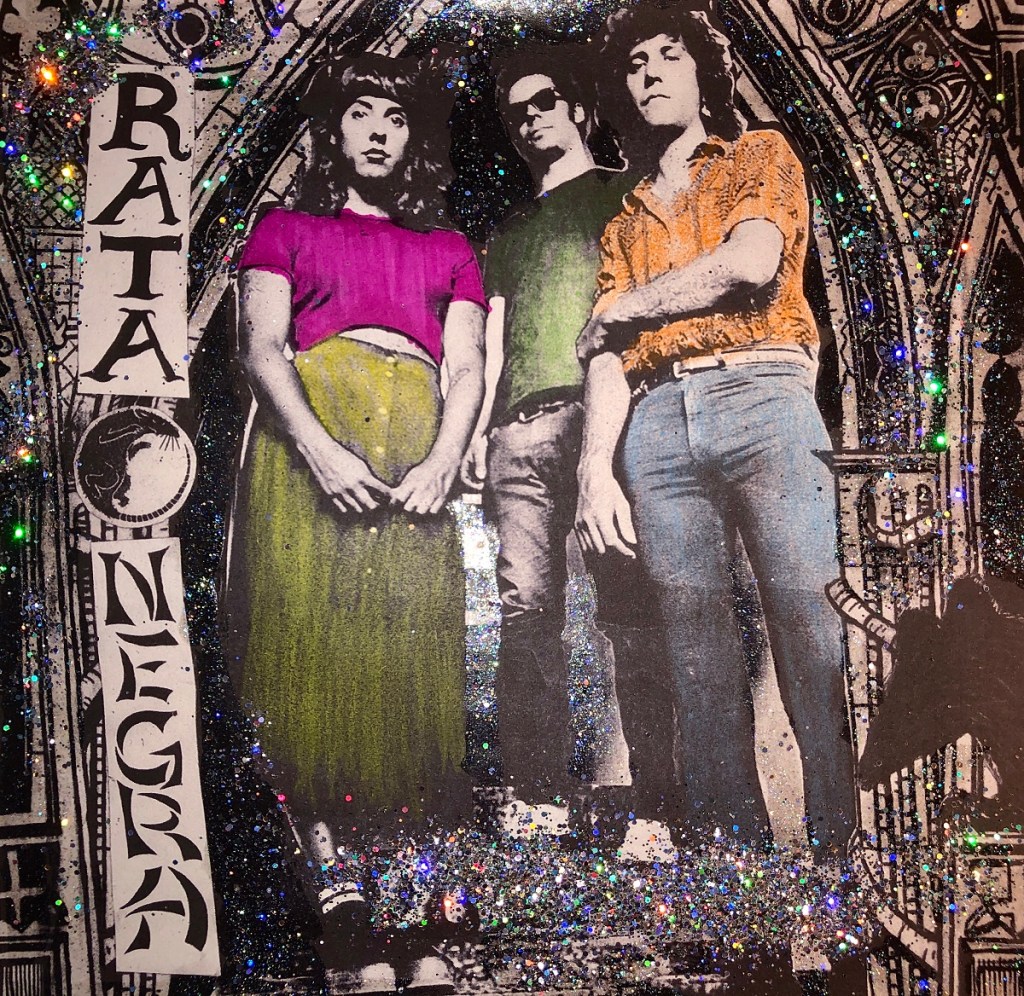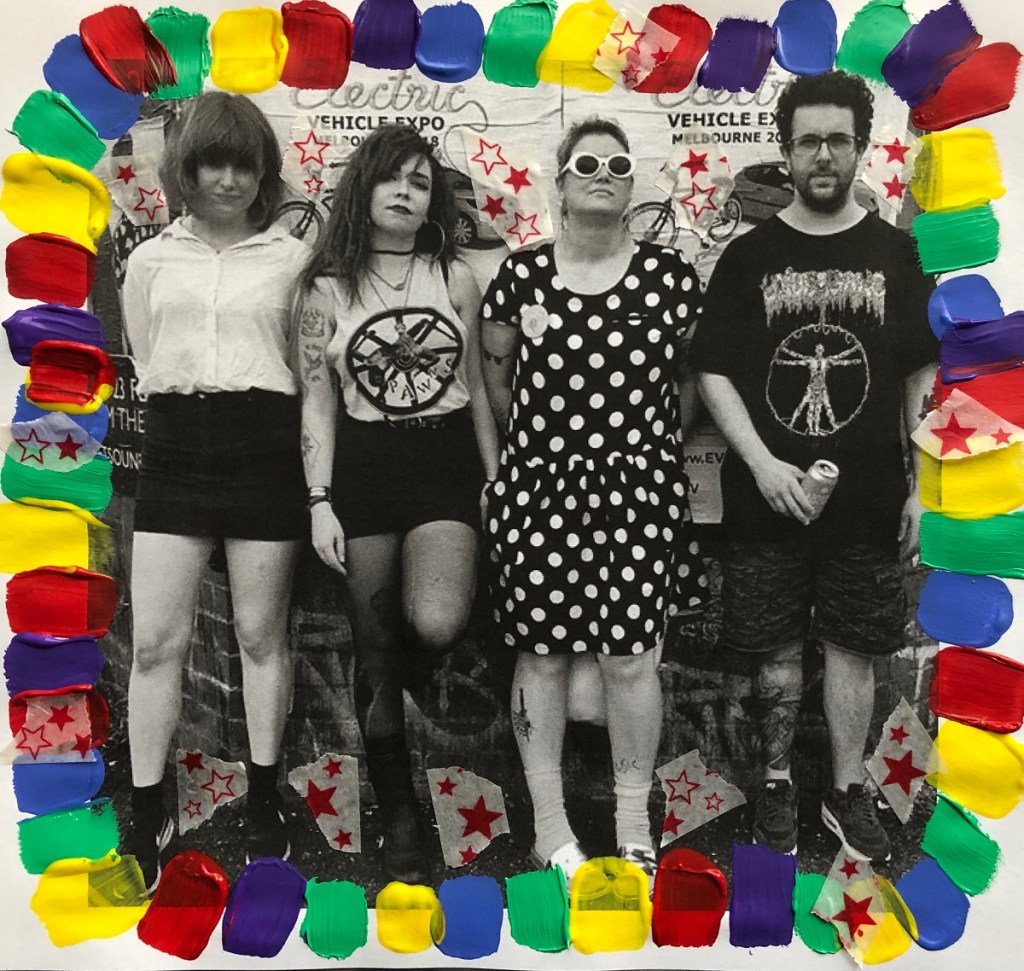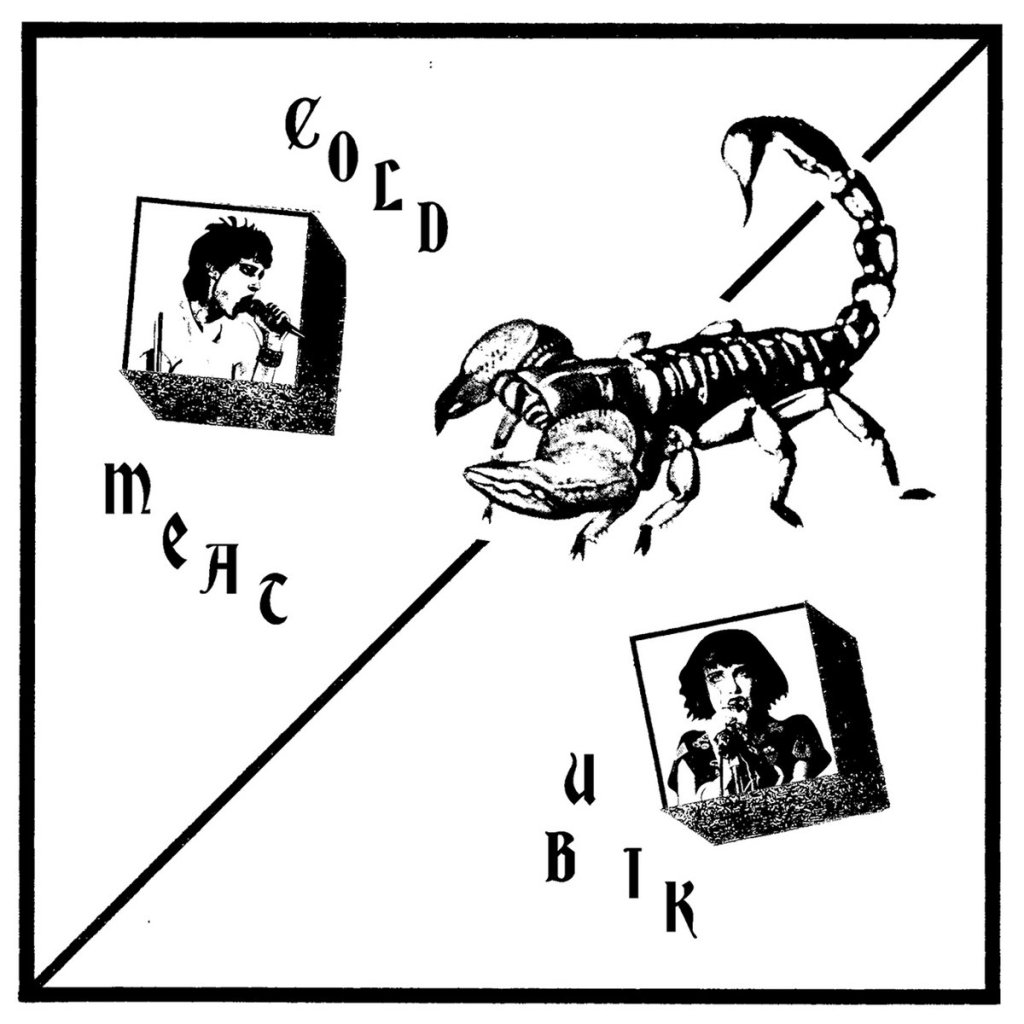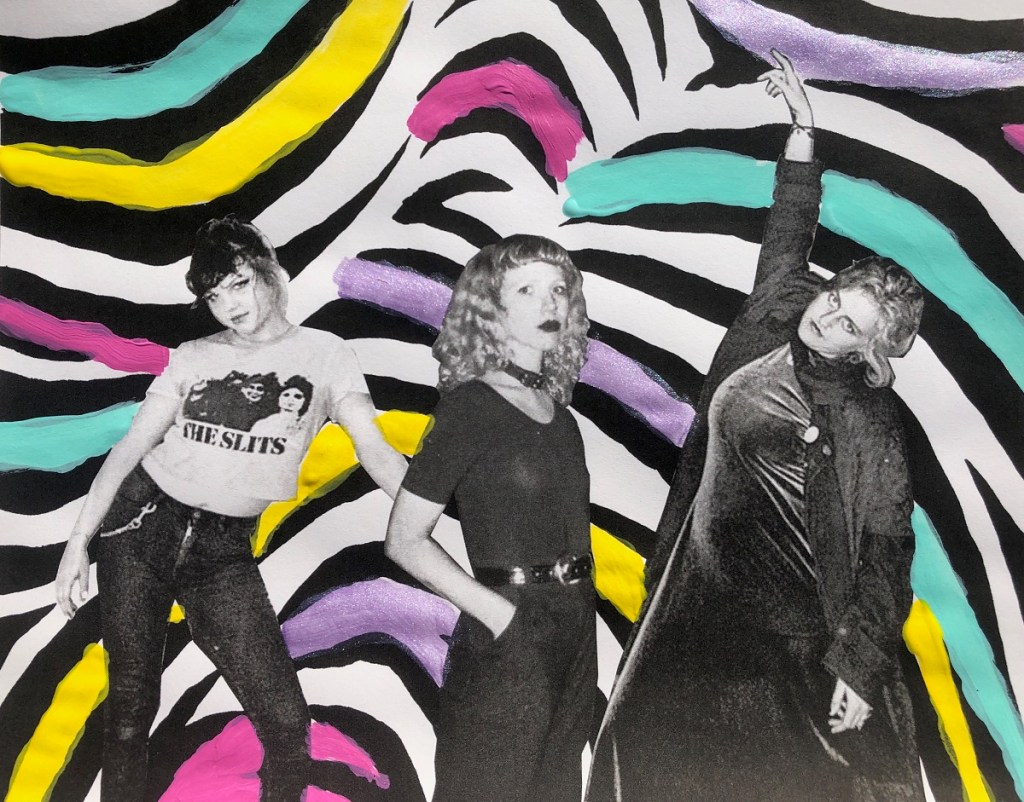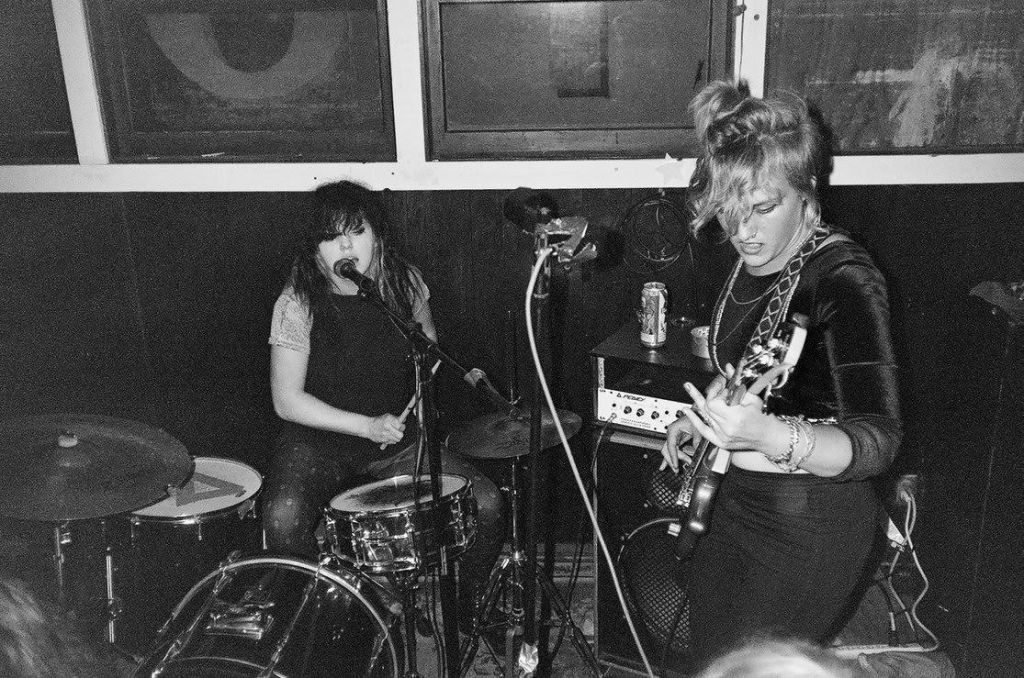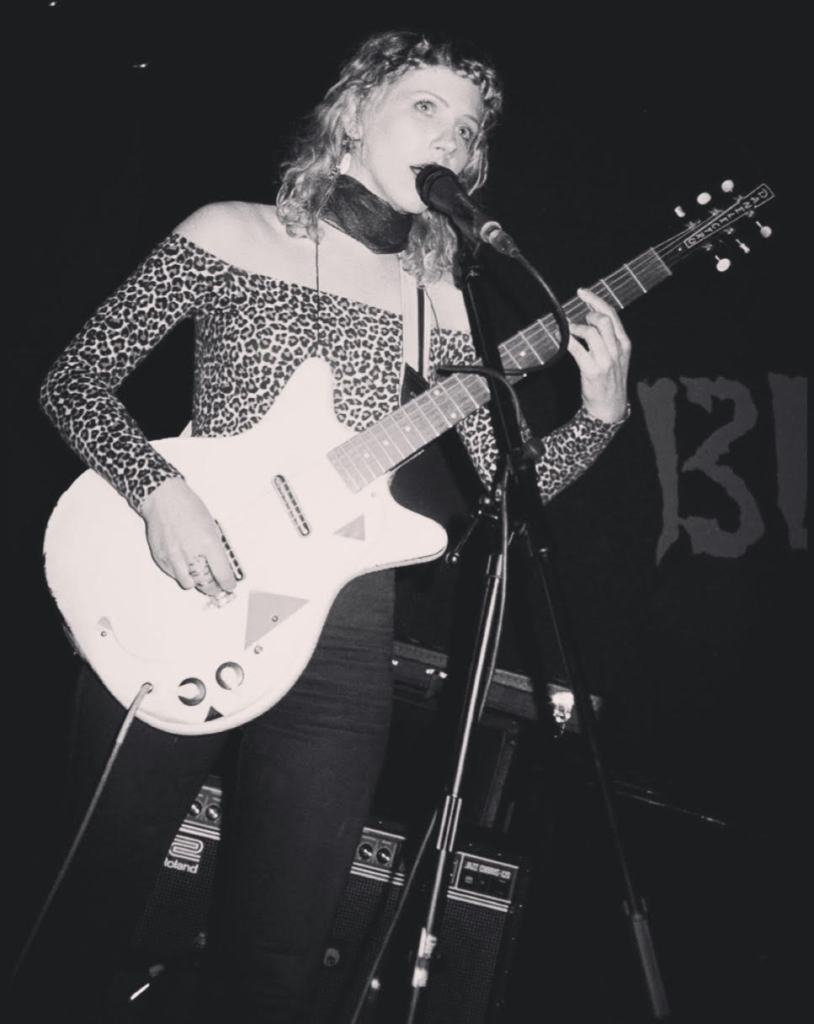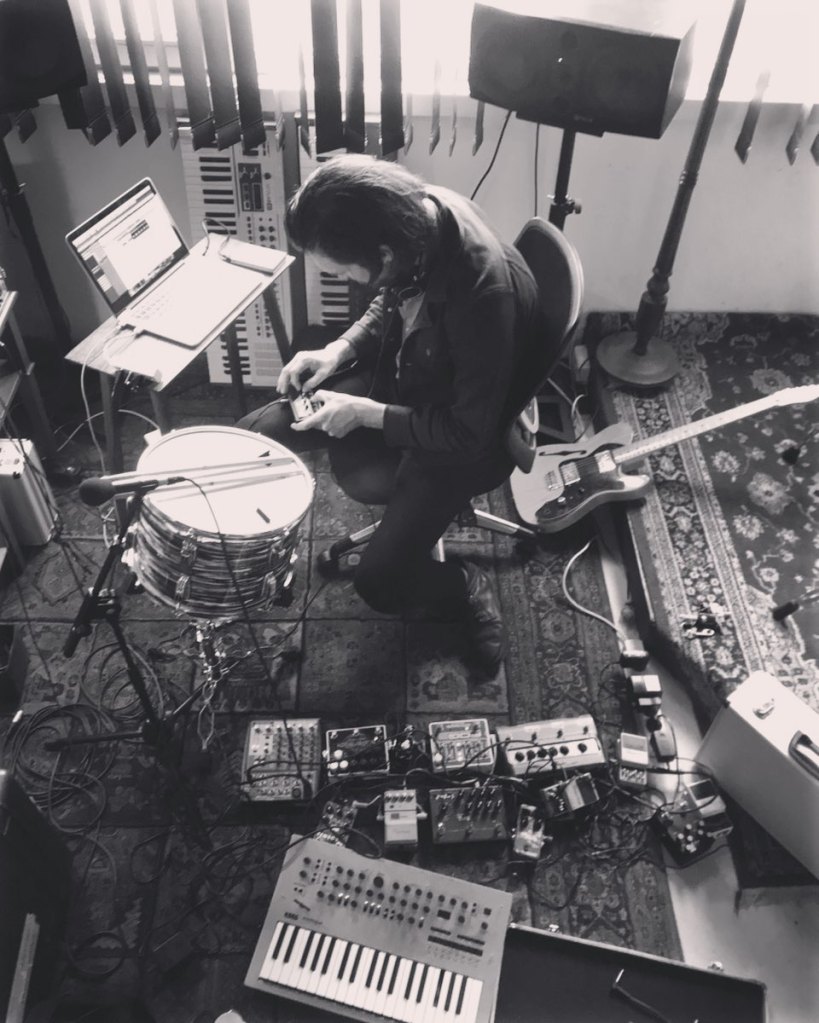
Violeta from Madrid punk band Rata Negra: “Sadness, anger… feelings are more interesting than positive ones ‘cause people can relate more easily… than when you are proclaiming how happy you are or how wonderful your life is”

Handmade mixed-media collage by B.

Great music transcends language because it is its own form of communication, it expresses feelings and captures moods and sparks the imagination, speaking volumes beyond words. Rata Negra are from Madrid, Spain and sing in Spanish; when we first found them we didn’t know yet what they were singing about (English being our first language) but the power of their great songwriting, their music and its melodies spoke to us. Rata Negra are one of the coolest punk bands you might not know yet. We interviewed bassist-vocalist Violeta to get to know Rata Negra better.

Rata Negra are from Madrid, Spain; what’s it like where you live? Can you tell us about your neighbourhood?

VIOLETA: Madrid is the capital and it’s a big city in the centre of the Spanish peninsula. It’s a pretty cool city with lots of things to do, but I live in the worst neighbourhood ever. Right now I live in an apartment which belonged to my grandmother. When she moved out here at the beginning of the 80’s this was the outskirts of the city in the north, and it was lots of open space. Right now it’s the rich neighbourhood of the city where the worst people live, all of them unsupportive rich bastards with a total lack of respect or solidarity. So right now I’m trapped here and can’t wait to move out.

What were you like growing up?

VIOLETA: I was a total loser, had lots of problems making friends and going through high school. That made me who I’m now, a total hater. Thankfully that hate was pretty productive so I came out as a very creative person and my concerns kept me making things, drawing and composing music.

How did you first find punk rock?

VIOLETA: My best and only friend in high school was from the US. Back then, we didn’t have internet or such an easy access to the culture as we have right now, so she introduced me to the Ramones first and then we started exploring punk music.

I understand that one of your favourite bands is the Adolescents; what do you love about them?

VIOLETA: Their music sound immediate and fresh to me. They have the best energy. Simple and perfect at the same time.

I know you are inspired by pop punk from Spain from the 80s; what are some of the bands you would recommend to us?

VIOLETA: Some of my favourite pop ones are Alaska y Dinarama or Pegamoides, La Mode or Los Zombies. Also some more punk like Deshechables, Parálisis Permanente or Ultimo Resorte. And finally the sad and darker ones like Décima Víctima, Ataque de Caspa or Golpes Bajos.

What made you start a band?

VIOLETA: I’ve always find making music a very fun process. I met our guitarist Fa the last year of High School and we used to spend the afternoons making songs with an acoustic guitar and recording them track by track in a double deck cassette player. Time went by and we met other people interested on music so we started Juanita y los Feos.

Can you tell us about your process for writing songs? Is it collaborative?              

VIOLETA: Some of the songs just come up at our practice space, but most of the times we start from an idea, the most common thing is that Fa composes a guitar line at home, record it and shape it adding other instruments in a digital format and then send it to the rest of us by mail so we can start thinking about our part and finally we put all the pieces together at the rehearsal. So yes, we all collaborate in the process.

What are some of the feelings you’re trying to get across in your music?

VIOLETA: I always say that sadness, anger or other obscure feelings are more interesting than positive ones ‘cause people can relate more easily when you are telling your problems than when you are proclaiming how happy you are or how wonderful your life is. So normally I talk about things that I find frustrating or that I’m struggling with. Mostly death and getting old. But also things that I see and find interesting.

Where did the title of your last album Justicia Cósmica (Cosmic Justice) come from?

VIOLETA: In the song ‘te elevas’ we talk about this person who is not moving on while everybody else is doing great, we try to reflect the frustration behind that feeling, and also how we find peace on thinking that the “cosmic justice” will put everyone in place sooner or later. We believe in karma in that sense.

What is the song ‘El chico de las estrellas’ about?

VIOLETA: ‘El chico de las estrella’s tells the story of a friend of us who is certain that some of these days the aliens would come and take him with them. He loves psychedelic drugs, and he is very serious about all that. I found a resemblance somehow with David Bowie and the Spiders from Mars, also inspired by Rocket Man by Elton John…you mix all that and ‘El chico de las estrellas’ came out.

Your latest release is the EP La Hija Del Sepulturero (which translates to The Daughter Of The Gravedigger); what inspired this song/EP?

VIOLETA: The song “Que tendrá” is based on a poem with the same name by Gabriel y Galán, a Spanish poet from the XIX century. My friend Hector from the band Sudor, found it and sent it to me because he knows very well the things I like and the poem is very dark but also very funny. It tells the story of this girl who happens to be the daughter of the gravedigger whom nobody likes but is always happy, and nobody likes her cause she is always showing off with new clothes and people gossip about how all of those clothes come from all the bodies his father buries.

I love that you include your lyrics with your music; why is this important to you?

VIOLETA: I’ve always loved to sing along with my records, so I try to help people to do the same with our music. Is not essential but I think that is important to know what a song talks about.

Outside of music what are some things that are important to you?

VIOLETA: Art and Literature. I’ve studied Fine Arts and I love drawing. I love making posters for the incoming shows. Pablo, our drummer and I screen print. Also love comic books and really enjoy reading.

What are your working on at the moment?

VIOLETA: Musically we are working on our third album. In the real world I’m an art teacher in High School. Pablo works as a printer in a workshop. Fa is a graphic designer and illustrator and he designs most of our artwork.

Please check out: RATA NEGRA. RN on Facebook. RN on Instagram. La Vida Es Un Mus Discos Punk Records.
Nellie Pearson From Melbourne Brat-beat Punk Band Ubik: “We’re all sitting at home getting weird because of the global pandemic. Instead of being at all productive… I wear soft pants and play video games”

Handmade mixed-media collage by B.

We love Melbourne’s Ubik with their brat-beat anarcho-punk stylings. They’re inspired by sci-fi & horror films as well as politics; who can tell the difference between the two right now though, with politics in Australia feeling like a sci-fi dystopian horror movie. We interviewed bassist-vocalist Nellie Pearson.

How did you discover music?

NELLIE PEARSON: I grew up with my parents being obsessed with classical music, and being forced/being privileged to learn classical instruments. As soon as I had any independence I started obsessing about modern music, reading old Q magazines at the library as a tween, buying Oasis cassingles etc.

How did you first get into making your own music?

NP: My first band was over a decade ago in Wellington; me and some other young women decided to all give it a go for the first time since we were a bit sick of seeing a heavily cis-dude hardcore scene. Thought it couldn’t be that fucking hard. It wasn’t! mostly.

What’s a record that had a really big impact on you; what was it about it?

NP: Honestly I’m a bit of a song magpie; I listen to my personal greatest hits of every band so often don’t go deep into a full album anymore (since it became an Online Streaming World). I refuse to apologise for this. The two DiE 7”s I was obsessed with for ages. I’m also a huge fan of ’90s British sort of stuff, so the Stone Roses self-titled has certainly had a huge impact on me. Definitely honed my ears for how a rhythm section can work together.

When you first started Ubik everyone had other bands – Masses, Red Red Krovvy and Faceless Burial + more; what inspired you to start Ubik?

NP: Tessa and Ash had plans to do like… an oi band I think? Then I inserted myself and suggested my friend Chris as a drummer. It was his first time in a band and Tessa’s first time playing guitar/writing. We sort of just went from there, had fun and ran with it.

You’ve had a couple of line-up changes; what’s something you can tell me about each person in your current line-up?

NP: Only one line-up change; Max has been the drummer for over 3 years, and we’ve been a band for less than 4. Ash and Tessa own two fluffy weird cats each. Max has a giant young dog and I have a tiny old dog. 

What’s your favourite song you’ve written? What’s it about?

NP: My favourite is ‘Sleep’. It has equal doses of dumb head bang and fiddly fun bits for me to play, personally. And good dynamics within the structure. I think it’s just about anxiety induced insomnia, which is something most people can identify with. 

Vid by PBS 106.7fm.

On the Ubik/Cold Meat split release each of you have a homage to amazing women in punk, Siouxsie Sioux and Exene Cervenka of X; why did you chose to cover X’s “Nausea”?

NP: We supported Cold Meat when they visited Melbourne (the first time but not the last time that happened, I think?), and we were all fans of each other. The singers of both bands are redheaded childcare workers called Ash so we were drunk and like hurhurhur Ash and Bizarro Ash (I still don’t know which is which). The split idea happened, and they had done their Banshees cover that night so we thought we’d get matchy-matchy.

Last year Ubik released Next Phase MLP; what sparked the idea to write the songs ‘John Wayne (Is A Cowboy (And Is On Twitter)’?

NP: This is one of my favourites, Ash-lyrics-wise. I believe it’s directed at internet right-wingers, trolls, MRAs, and other general digital filth. Skewering the misunderstanding of “free speech”, and pointing out how “free thinking” doesn’t often overlap with critical thinking.

What about “Peter Dutton Is A Terrorist”?

NP: Peter Dutton IS a terrorist. Music-wise, Tessa wanted to do another very anarcho song, so I always picture myself in a ‘80s squat playing this one. The lyrics that Ash wrote do a great job of expressing the shame and sadness regarding Australia’s offshore concentration camps, and the horrifying treatment that Peter Dutton and other potato-headed fascist stool samples think is justified in regards to refugees and asylum seekers. Just an utter lack of the basics of humanity.

Mikey Young recorded and mixed Next Phase MLP and your self-titled EP and mixed and mastered the Cold Meat split; how did you come to working with him?

NP: The self-titled EP was actually recorded by Adam Ritchie in the same session as the Cold Meat split. Max and Mikey go way back both personally and musically, so it was a great choice. It was very quiet and laid-back, and we were doing it all in one day (minus box) so we all just put our heads down and worked. He was, as usual, impeccable.

Who in the band has a love for sci-fi and horror films? You had song “The Fly” and one of your shirts featured Debbie Harry when she was in Videodrome; can you recommend anything else cool we should check out?

NP: I’m pretty sure all of us are sci-fi and horror fans. Genre stuff definitely goes with the punk territory in general. Me and Ash in particular are big on Cronenberg. Most of it has naturally stemmed from the name (evidently the Phillip K Dick book), and Ash’s specific interests, since she writes all the lyrics. I’ve been watching a lot of ‘90s movies with their visions of futuristic virtual reality; very pretty, very silly, very fun. Apart from the obvious Johnny Mnemonic, recently I really liked Virtuosity, where Russell Crowe plays a virtual reality murderer who crosses over into the real world. 

Have you been working on new music?

NP: Both me and Tessa have scraps of stuff, and we had one or two songs almost ready by the end of the Next Phase recording session. However we’ve all been madly busy, then we toured Japan, and now we’re all sitting at home getting weird because of the global pandemic. Instead of being at all productive while staying at home, I wear soft pants and play video games.

Other than making music do you do anything else creative?

NP: Most of my time is taken up with bands. I used to write but I realised I hate it.  Give me two more weeks of social distancing/isolation and I’ll probably start a podcast, just to make 2020 even worse.

Please check out: UBIK. Ubik demo on Lost In Fog Records/Distro. Ubik’s self-titled EP via Aarght Records. Next Phase MLP via Iron Lung Records. Ubik/Cold Meat split via Helta Skelta Records.
Portland Punks Mr Wrong on their new LP: “Create A Place acknowledges that the spaces we wanna exist in may not be fully formed yet but that we can create them together”

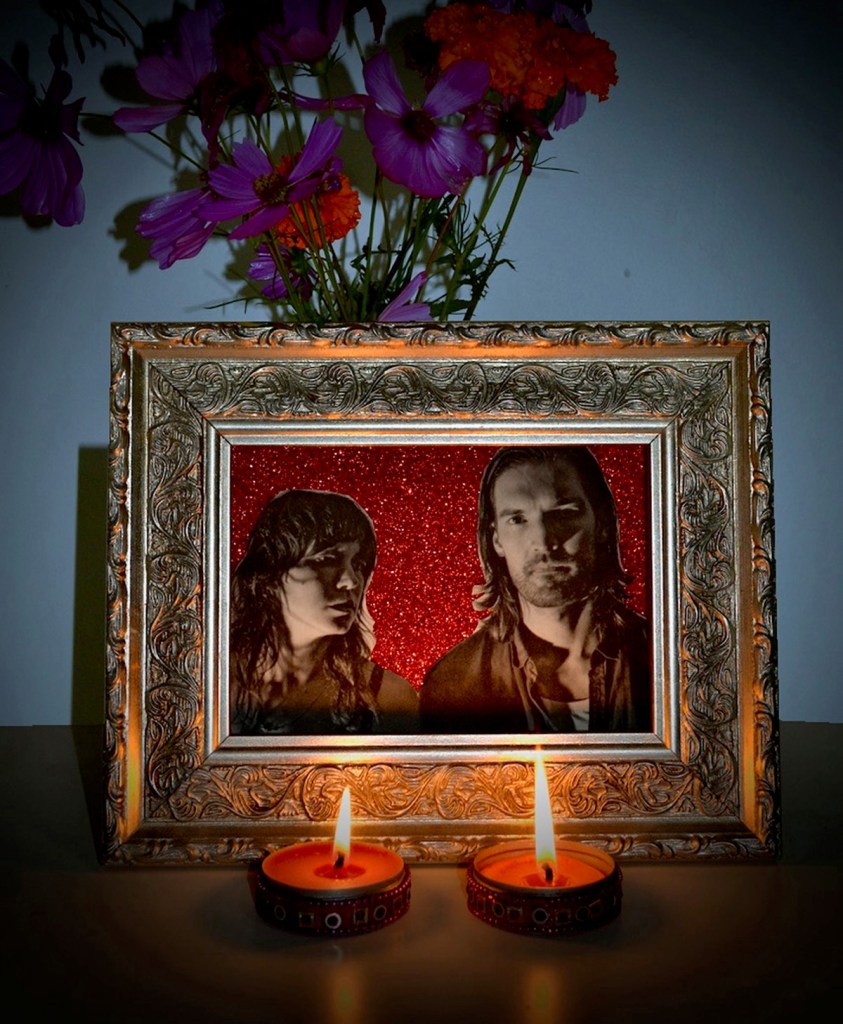
Handmade mixed-media collage by B.

Mr Wrong is our kind of right in every way, super fun in a Devo meets the B-52s kind of way. At the start of this year they released album Create A Place, we spoke to the band to get the bigger picture of where they’ve come from, what inspires them and of the place they’re creating for themselves with their powerful – tackling important subjects like politics, healthcare, oppression and rape culture – spirited punk.

What were you like growing up? How did you first come to music?

URSULA (drums, vox): I was a shy kid, very much in my own world, which music was a vital part of. Both my parents had great/really varied taste, and there was always music playing at home- from Balkan Choirs to Here Come the Warm Jets. Music gave me a context/outlet for the extreme emotional turbulence of adolescence. 

MOF (guitar/vox): the term my parents used for me as a kid was, “spacey.” Some of my earliest memories are listening to Gang of Four, Human League, Depeche Mode, The Buzzcocks, DEVO, etc. in my dad’s car and feeling overwhelmed with hope and excitement by the prospect of existing in those worlds someday. I was a sensitive kid that appreciated the emotional strength & honesty of the music my dad introduced me to, it was empowering and validating & I never grew out of loving it.

 LEO (bass/vox): I stared at the world through big eyes, fascinated in what was going on around me, but contemplative to the point of hesitancy. My family would sing together, we’d play dulcimers that we made out of long green boxes, and I would strum along as a lil beb in a high-chair belting with them, and not worrying about a thing. I grew up singing, folk songs and songs my grandparents grew up with, and slowly my dad’s rock n roll fascination with far-away music got infused in there too. My cousin taught me about punk rock, my friends and I would drive around immersed in PNW rap, and I fell asleep to Enya every night. I loved it all. 

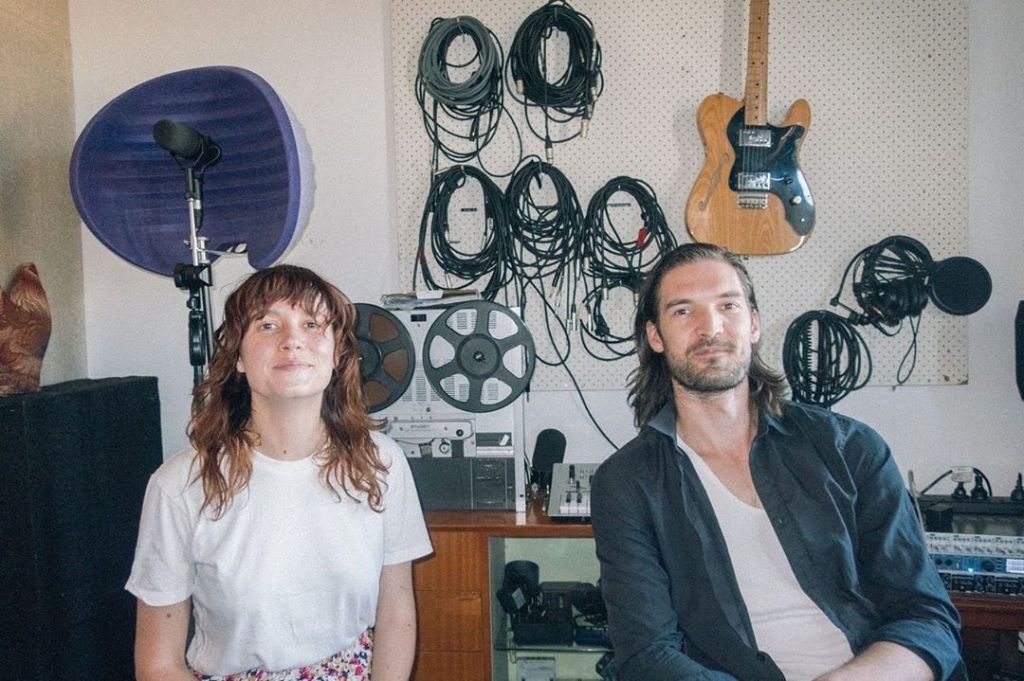
Photo courtesy of Mr Wrong.

What inspired you to start making tunes?

URSULA: I was always singing along to things. All of my heroes were musicians. My dad played in bands so it seemed like a somewhat accessible world (though it took me a really long time to be in a band- not until my early 20’s). As a kid I dabbled in piano, and guitar. 

MOF: I tried to write music a lot as a kid using layering in Garage Band but never had formal training or much confidence. After reading Girls to the Front I decided to finally kick that insecurity to the curb and form a band.

LEO: I always had big feelings, they were overwhelming and confusing, and often stuck inside me. Music became my way to process, to let the feelings out so I could look at them and turn it into something I could understand. I started on piano, quickly moved and got completely obsessed with acoustic guitar, where I started writing sad and freaky songs to myself and never really stopped.

How did you come to playing the instrument that you do in Mr. Wrong?

URSULA: Mof and our friend Colette (who now lives in Berlin) told me they were starting a band. At that point, we were just acquaintances, I had seen them around and thought they were super cool. When they asked me if I wanted to play drums, I jumped at the chance and started teaching myself to play. We jammed a few times in that incarnation, and then Colette moved away and Mof and I continued as a two piece. 

MOF: Shortly before staring Mr. Wrong, I found an off-white Squire with a teal pick guard on Craigslist for $50. I loved it (still do) and decided that would be what I tried to learn. I did end up painting the pickguard white with black triangles, however. 

LEO: I’m drawn to the low end. Bass is where rhythm meets melody and I’d always dreamed of basking in that magical crossroad. Getting to play with Mof and Urs is a dream come true.

I feel there’s little hints of Devo and B-52’s in your music; are you fans of either?

URSULA: We are giant fans of both- good instincts.

MOF: One of the two covers we’ve learned is 52 Girls by the B-52s and Ursula and I do a radio show with two other friends called Time out Four Fun, named after Devo’s song, “Time Out For Fun”. You could say we’re big fans of both bands! 

LEO: (Heart-eyes emoji). 

In January you released your LP Create A Place; where did the title come from?

URSULA: It’s a line from the song ‘Isolation Du Plenty’. We had a really hard time coming up with a name. Our first ideas were more apocalyptic in vibe, but we ended up feeling that, although the album deals with a lot of chaos and unrest, our ultimate outlook is still hopeful. Create A Place acknowledges that the spaces we wanna exist in may not be fully formed yet but that we can create them together. And it’s probably gonna be messy, but we have to try. 

MOF: The title comes from the song ‘Isolation du Plenty’” which was written in the winter of 2016/2017. Inspired, in part by, Tomata Du Plenty’s world, via The Screamers and his visual art. The lyrics are about creating a place of stability in your mind, even if it’s just a vision of a someday physical space that you hope to occupy, and drawing inspiration through artists you’ll never meet. I feel that the songs on Create A Place are all, in one way or another, critical of institutions that prevent stability for large portions of the population, the hopeful message we aspire to leave with listeners is that we can change that. 

 LEO: It’s about noticing what we need in the world around us and feeling inspired to create it for ourselves (and anyone who feels connected to it). It can seem scary to take those first steps when no one around you is doing something, but that makes it all the more important to trust your gut and do it.

How long were you working on the album for? Were there any challenges?

URSULA: About two years, I think? We were in a songwriting rut for a minute there- I think we were feeling the pressures-or perceived pressures- that can come with making a sophmore album.

MOF: A famous quote by Mark Twain that I always fall back on is, “I didn’t have time to write you a short letter, so here’s a long one instead.” Create A Place is Mr. Wrong’s short letter, we had a couple songs written when our first album came out in 2017 and let the next 7 evolve over the following two years.  We tried a lot of new things on this album and also went through a lot of changes as individuals over those two years, so there were certainly challenges. 

 LEO: Life is full of unexpected challenges. This album was us learning how to tenaciously push through the chaos of reality together, and learn how to be there for each other and ourselves in uncertain and scary times.

Photo by KC Weimann; courtesy of Mr Wrong.

How did you go about writing songs for this record? Was it collaborative?

URSULA: As usual, almost all of it was through jamming out ideas. Super collaborative. 

MOF: We write everything collaboratively, aside from some lyrics.

LEO: We talk about everything, and hold space for everyone’s ideas. The music is an extension of our relationship.

What’s your personal favourite track on the LP? What’s it about?

URSULA: I really love them all, but I’m especially proud of how ‘White Male Teacher’ turned out. That songs about all sorts of things- mostly power dynamics and oppression. The title is a reference to a high school teacher I had who wrote a public letter announcing that rape culture does not exist and passed it out to his freshman class. 

MOF: ‘Holding for Healthcare’ means a lot to me, It comes from a massive frustration with the inaccessibility & inefficiency of privatized healthcare; the discrepancy of care between poor and wealthy Americans. I remember thinking about how DEVO might broach the subject, with a hint of humour and absurdity, it feels cathartic to play every time. 

LEO: ‘Nuclear Generation’ will always hold a dear place in my heart. For me it’s about not giving up, even when there are many daunting forces out of our control, decisions being made in locked rooms by a lot of old white men, that started long before we were born and will continue to really fuck things up. But through acknowledging and learning about the past and the effects on the current systems can rally us together to change our future, to “reinvent it, power down” -bringing the power to the people, turning off our phones and screens and realizing how much beautiful world we still have to fight for.

What’s a song you wished you wrote?

MOF: ‘It’s Obvious’ by the Au Pairs

URSULA: ‘Nervous Tonight’ by Portland’s own, Lotek.

L: ‘Hounds of Love’ by Kate Bush 

All of you sing; when did you each discover your voice? Were you ever self-conscious or nervous when you started out singing? 

URSULA: Singing in public used to scare the shit out of me. The sense of support and empowerment that I get from my bandmates has gone a long ways towards evaporating that fear. I definitely found my voice in this band. 

MOF: I feel I truly discovered my voice when listening to bands like Bratmobile, The Petticoats, Delta 5. My only experience with singing before was as an alto in High School Choir, while I loved the harmonies and comradery of being in a choir, it didn’t feel expressive to me. Hearing a vocal style sang by women that was individualistic, verging on talking or yelling-but not without melodic elements- was an “aha” moment for me. Exploring that with Ursula at the start of MW (we were a 2 piece at first) is when I feel I truly discovered my voice, she was super supportive and encouraging, which really helped me find my way. That supportive dynamic has continued with the addition of Leo, I feel very fortunate to have a safe place be vocally expressive.

LEO: When I got exhausted by the pressure to sound pretty. I like singing at the top of my lungs, or making freaky sounds and seeing where my voice can take me, but it took me SO long to be confident enough to let my voice do it’s thing in the presence of any other living humans. It is still a struggle, and some days it feels way harder than others. But I try to remember how good it feels, and focus on the gratitude that there is a place in my life where I can let go.

Who did the art for Create A Place? What was the thought behind it?

URSULA: Mof. 

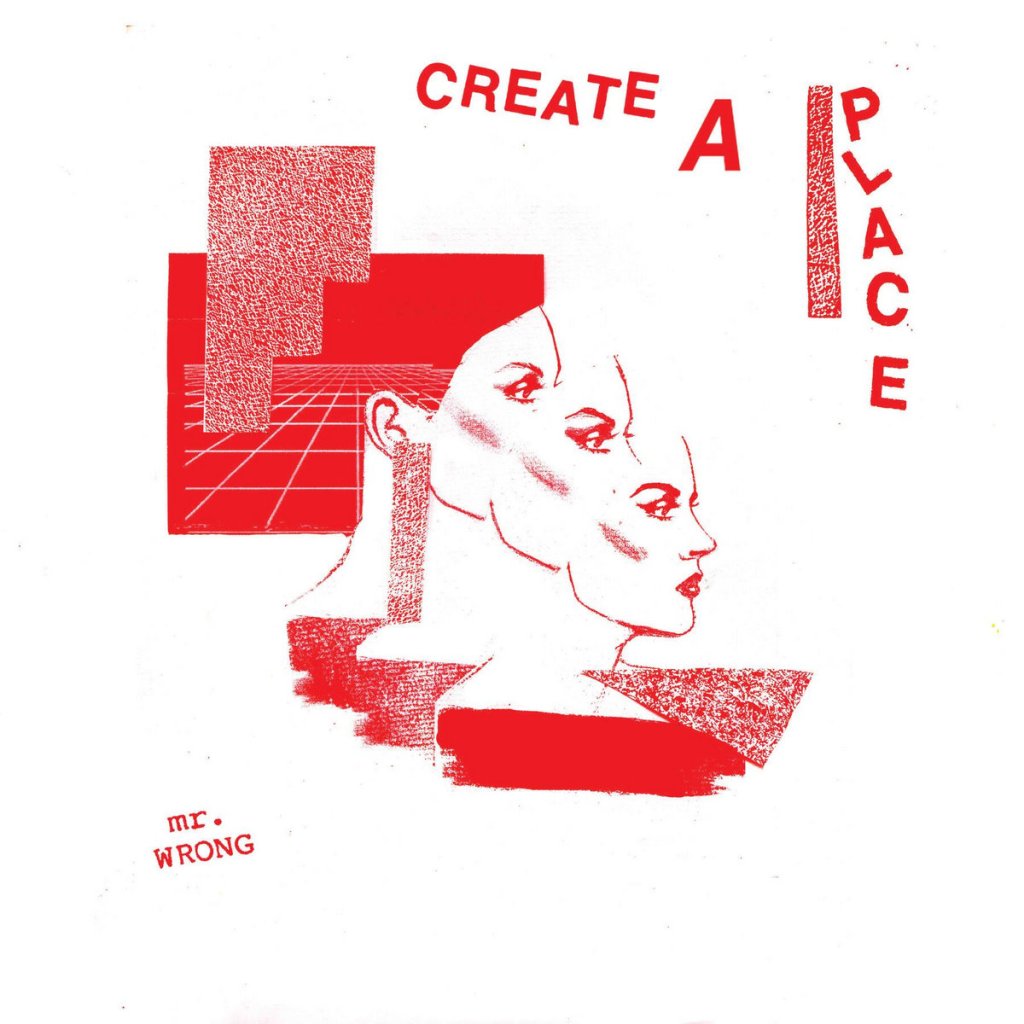
MOF: I was thinking about the future & creating that future amidst isolation, through solidarity with like-minded people, when I drew the cover for Create A Place.

Why is it important to keep creating art in these crazy/uncertain times?

URSULA: Art is a way of processing/ trying to make sense of the human condition (sometimes it cannot be made sense of, and you just need to scream about it). It’s important to know that someone else out there is feeling something you feel, and they turned that into a piece of art that can be experienced and enjoyed. That’s pretty fucking magic. 

MOF: There are nuggets of wisdom and catharsis in art from the past, the recent past especially. It’s important for artists to continue creating- not just as an outlet for them personally, which is important- but as a life raft for future generations as well. We need to keep a document of what’s happening so that our collective history isn’t solely written by the ruling class.

LEO: I often don’t even know what I’m feeling until I can express it. Being able to make some kind of art, and look at it from the outside is a window into myself. Art is something to hold on to, to be able to fully fall into when my mind is running away from me or I’m lost inside myself. Focusing and immersing myself something can allow me the space to come back to myself when some time has passed and I can think differently. It is an anchor to keep me here, to recover into, to be able to take a breath, get up and do what I need to do.

Why is community important to you? Where do you feel yours is?

URSULA: Community is important because no one has all the answers. Crowd sourcing is the way of the past, and I think we’re seeing it return in a big way right now. The people I’m lucky enough to call friends make me feel seen, supported, and loved. Art for art’s sake is great- but I think having a community to share it with really takes it to a different level that’s so special.

MOF: Art doesn’t occur in a vacuum, and as Ursula said, having community to share with is what gives art meaning. I guess I could say I feel community most when I feel understood and valued on an emotional level. As that’s what art is to me- an emotional exchange of ideas- I feel I have found a large part of my community through this band and the people we have connected with.   

LEO: Feeling in community can be difficult in such an individualistic society. I have started to think of community as family, and it’s clear to me: The nuclear family is not enough. We need to form our own families, with all different kinds of people, with elders and kids and babies and teenagers and neighbours and mentors and friends and plants and people we just met and from places we’ve never been. Community is giving and taking care in so many ways, reinventing old ones and imagining new ones. It is accepting and letting others see the beautiful and ugly mosaic of who we are, so we can confidently be our vivid and dynamic selves together. I always say it takes a village to be a band, because it does. It takes so many people believing and doing to make anything happen. And wow, do we all need to believe in each other and a future right now.

Please check out: MR WRONG. Create A Place out on Water Wing Records. Mr Wrong on Facebook. Mr Wrong on Instagram.

Pray For Party Dozen is on the way: “Party Dozen is a band that no one asked for, so I think it’s funny, the idea of praying for us”

Handmade mixed-media + still life collage by B.

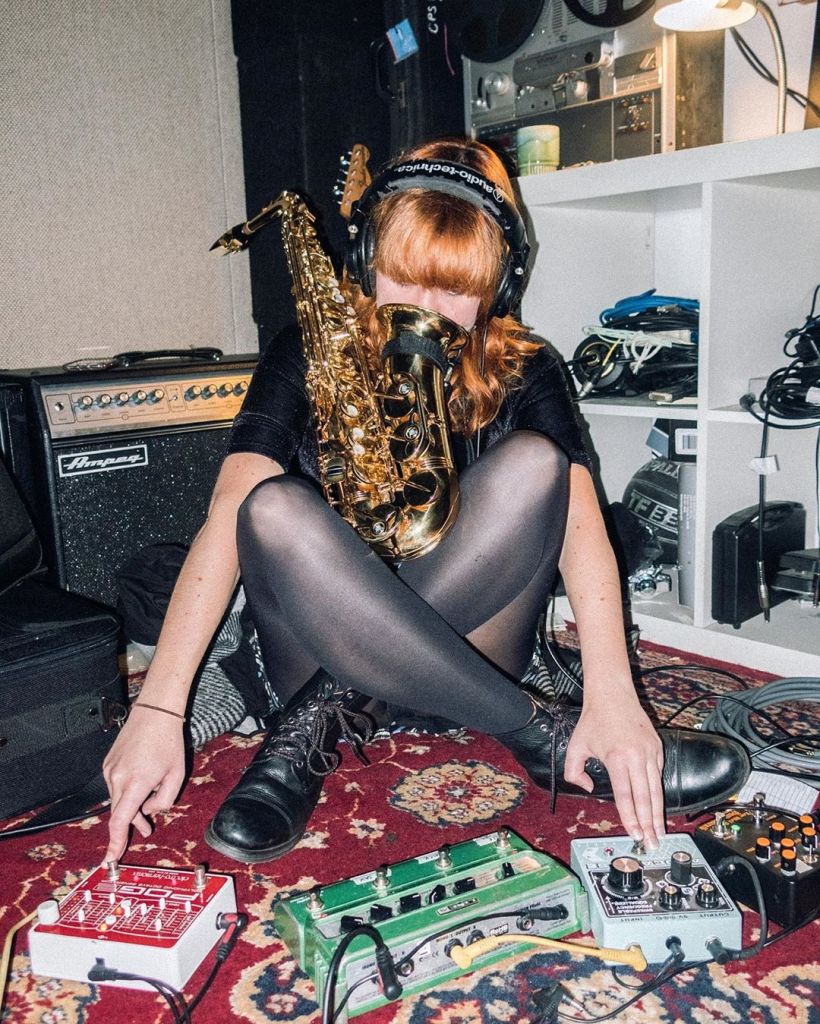
Sydney’s Party Dozen is the dynamite combo of Jonathan Boulet and Kirsty Tickle. They’re one of the most interesting and exciting bands around with an experimental musical fusion of saxophone, drums and electronics to create a unique, fierce sound. They’re getting set to release their highly anticipated sophomore LP Pray For Party Dozen. We interviewed them, getting to know them a little better and hearing more about the awaited release, out May 22 on their own label Grupo Records. Get on your knees and start to pray, the second coming is almost upon us!
Party Dozen is a project loosely based around improvisation; what appealed to you about taking this approach?

JONO: I think all live forms of music conjure some kind of energy, sometimes it’s a familiar energy and sometimes it’s not. Audiences aren’t stupid and they can sense when you’re checked in to your performance. For us, keeping our performances unhinged and untethered not only keeps shows fun for us but I think it brings a sense of danger and if we want to project more energy we simply play harder and faster. And even though there’s a lot of songs we now generally play structurally the same, there’s always room for spontaneity and expression if we’re feeling it.

You’ve known each other for over a decade; how does that familiarity help when playing music and writing songs together?

JONO: Obviously knowing each other’s tendencies and even subtle physical cues can help immensely when it comes to performing as a unit. I guess at the same time we’re always developing as players and not being too familiar with someone’s playing style can lead to surprises and new paths. Sometimes I think we’re dead on the same page but it’ll turn out we are on opposite ends of the book! A welcome surprise as there are no mistakes when you’re “making it up”.

How did each of you first get into music?

JONO: It started for me when I was 10. I tended to be a little on the hyperactive side but instead of opting for drugs, my folks bought an old drum kit from a country town that used to belong to a Jazz guy that was in the war but never came back.

KIRSTY: My start in music was pretty run of the mill. Bullied my parents for piano lessons age 4, because I was the youngest and my siblings were all having them already. Music was the only thing that ever really held my interest for a long period of time.

All photos courtesy of @partydozen Instagram.

How did you first come to creating music yourself?

JONO: When I hit high school my parents got me a keyboard. It had this looping arranger function on it where I could layer up 5 or 6 instruments. I would get home from school and play it every day, recording loops that I liked on to floppy disks.

KIRSTY: I started writing songs when I was around 13, just keyboard and vocal kind of stuff. But I didn’t get into experimenting until I met Jonathan. He really pushed me to think about music differently and follow my own path with creating it.

I understand that Party Dozen started while you were overseas and that you started out playing the reverse – with Jono on saxophone and Kirsty on drums – of what the band formation is now; firstly what inspired you to be a two-piece with these instruments? Why did you first experiment by switching instruments?

KIRSTY: Yeah, we did one jam like that. I think Jono really wanted to play sax and I’ve always wanted to play drums. But it was dogshit, so we went back to the ones we’re good at. My memory is that we spoke about making a band in Berlin, but recorded our first song while living in London. We started taking it seriously when we moved back to Sydney. Coming back to Australia was this real lightbulb moment for both of us – we love living here, we love creating here and we love the community here.

Party Dozen’s music has quite an aggressive vibe and has an edge to it that can push the parameters of what makes people feel comfortable both as a listener and as a live experience; was that an intentional goal when crafting your sound?

KIRSTY: For sure. We always want to push the boundaries of how much sound two people can produce, and then extend on that. For me Party Dozen is also an experiment in how to utilise our instruments in more interesting ways, and appreciating that that sometimes isn’t going to be “nice” or “pretty”. There’s a real strength in that for me.

You’ve previously mentioned that with Party Dozen you wanted to “form a band that could help us grow as musicians”; in what ways do you feel you’ve grown since starting PD?

KIRSTY: When we started this band I couldn’t really use effects pedals. So I’ve really grown in that department. I also feel like we’ve both gotten so much better at playing our instruments in a live setting – still plenty of room for improvement though.

JONO: Yeah with the current format of this band, the better we get on our instruments the more options we have for exploration. This band has forced me to play harder better faster stronger.

Where did the title of your forthcoming sophomore LP, Pray For Party Dozen, come from?

KIRSTY: I think it sort of started as a bit of a joke…

JONO: Party Dozen is a band that no one asked for, so I think it’s funny, the idea of praying for us.

What inspired the new record?

KIRSTY: Film Noir, cults, 1960’s rock, conversations about dead friends.
How did you record it? Jono you record, mix and master Party Dozen’s songs, right?

JONO: We recorded it in our little 15sqm box in Marrickville, Sydney. Generally we’ll improvise to a loop a couple times and pick the best one. We run the sax through an amp with a DI and generally use 4-6 mics on the kit. We mix and master in house because we’re possessive and greedy.

I know when writing songs that you like to experiment and that you like to play a few different takes over loops to find what sounds best; how important are feeling and intuition in your process?

KIRSTY: The writing process is very improvisational, so I’d say feeling and intuition makes up about 90% of it. If it feels good, we’ll explore. If we like the vibe, it’ll normally make the record.

JONO: You can tell pretty quick if a song is coming together and whether it’s worth pursuing. Once we’ve made a loop, you can envision the song and if that sounds good in your mind, it’s likely to sound good in reality. There’s only ever been a couple of jams that got to the jam phase and didn’t make it.

Were there any risks you feel you took while making the album? Or any happy accidents from the process that made it on to the album?

KIRSTY: There’s a song with no loops! Which is the first time we’ve done that, and we didn’t go into the recording aiming for that either – so I guess that’s a happy accident!

JONO: Nothing too risky. We were more focused on expanding our sonic palate. More colours to play with in the Party Dozen world. There was definitely an intentional focus on aesthetic and vibe this time around.

What gear really helped shape the sound of, Pray For Party Dozen?

KIRSTY: On my set up, I got some new pedals. A wah, a new fuzz and a couple of new delays.
JONO: I run all my loops off of a Roland SP-404, I use one crash, tighten the fuck out of my snare and try to hit everything as hard and consistent as possible.

What was one of your favourite moments of recording the new record?

KIRSTY: The opening track “World Prayer” is probably the most challenging track to listen to on the record. It was also the most fun, rule-free, throwing-shit-at-a-wall noisey tracks I’ve ever recorded.

JONO: Some songs you know just don’t feel right while you’re playing them, so it takes a few goes to get it right. But there are some songs, eg. “The Great Ape”, that feel right every time you play it. When it feels right the first time, you get this rush of excitement or a hit of some highly addictive drug.

What keeps music exciting for you?

KIRSTY: I get excited to just keep making. And trying different things. It’s not hard to keep excited with a band like PD… we can do whatever we want next.

JONO: Touring is what keeps it exciting for me. When there’s heat in the room and you can feel people’s energy on stage, nothing beats that.

As artists what are the things that you value most?

KIRSTY: I value time. Time to tour, practise, make records, hangout with friends who give me tonnes of inspiration. The more time we have as Party Dozen, the better.

JONO: I value a sense of humour, originality, and people with a sense of vision.

Please check out: PARTY DOZEN. Pray For Party Dozen out May 22 on Grupo pre-order here. PD on Instagram. PD on Facebook.

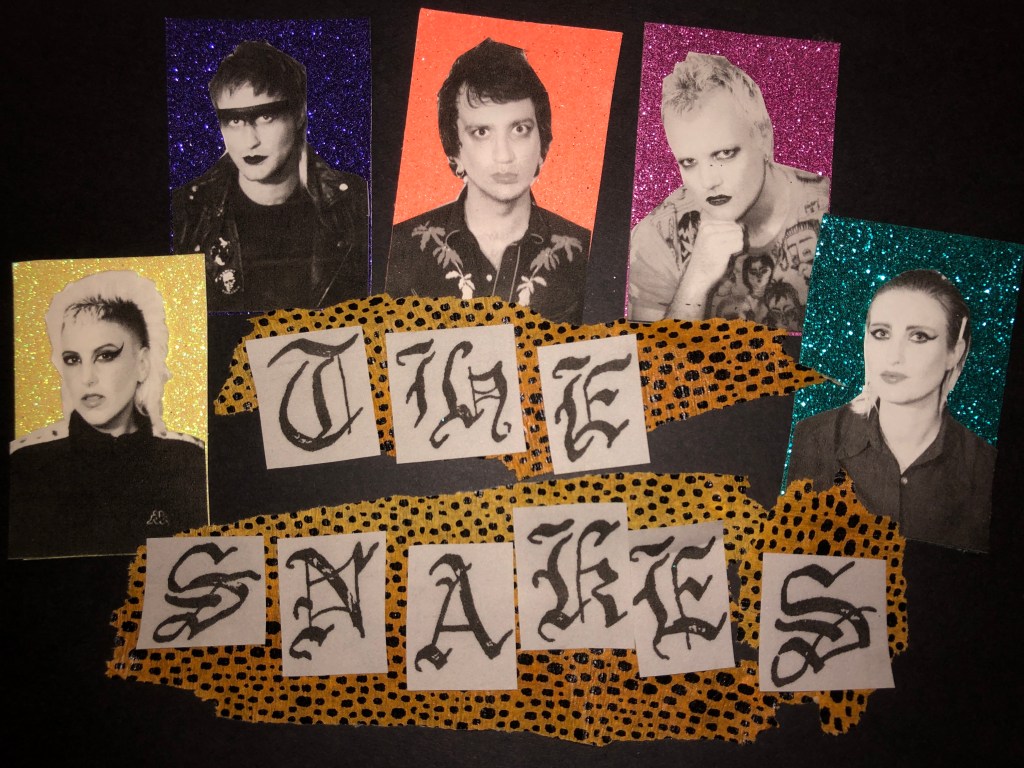
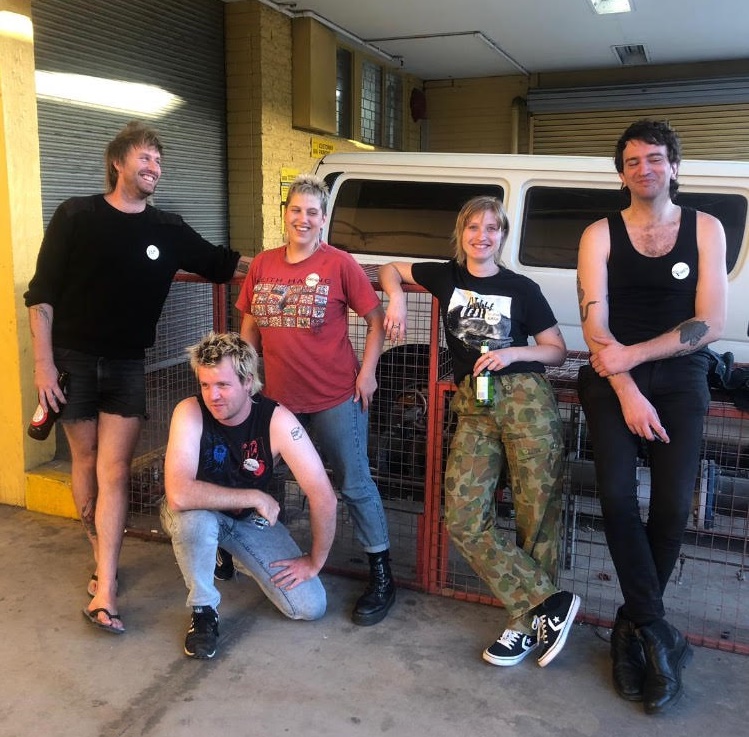
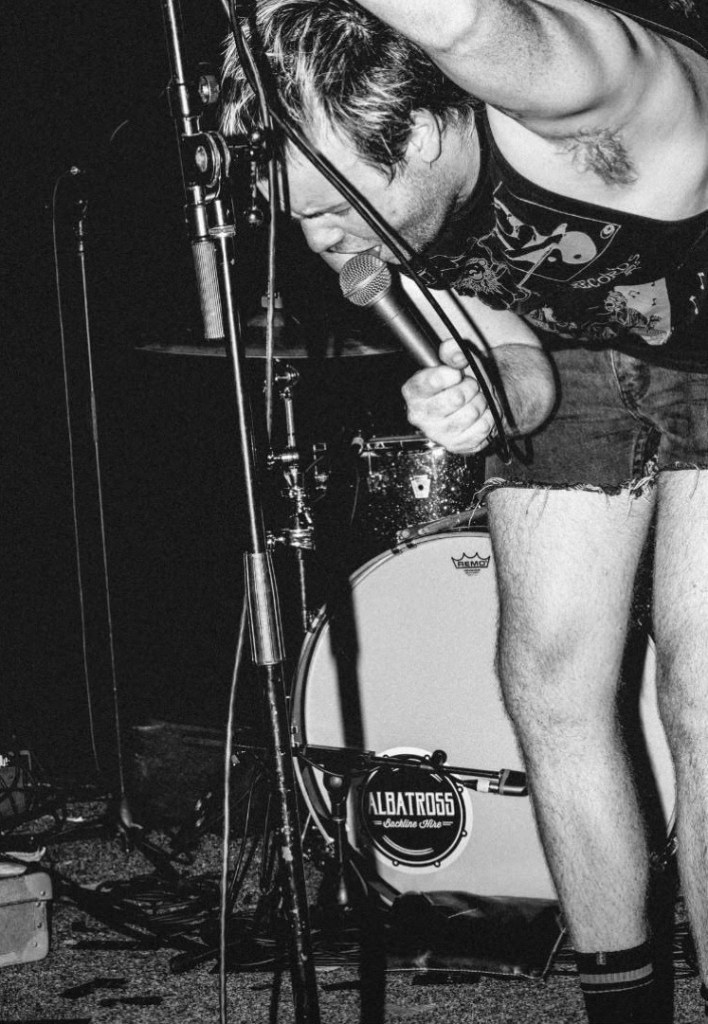
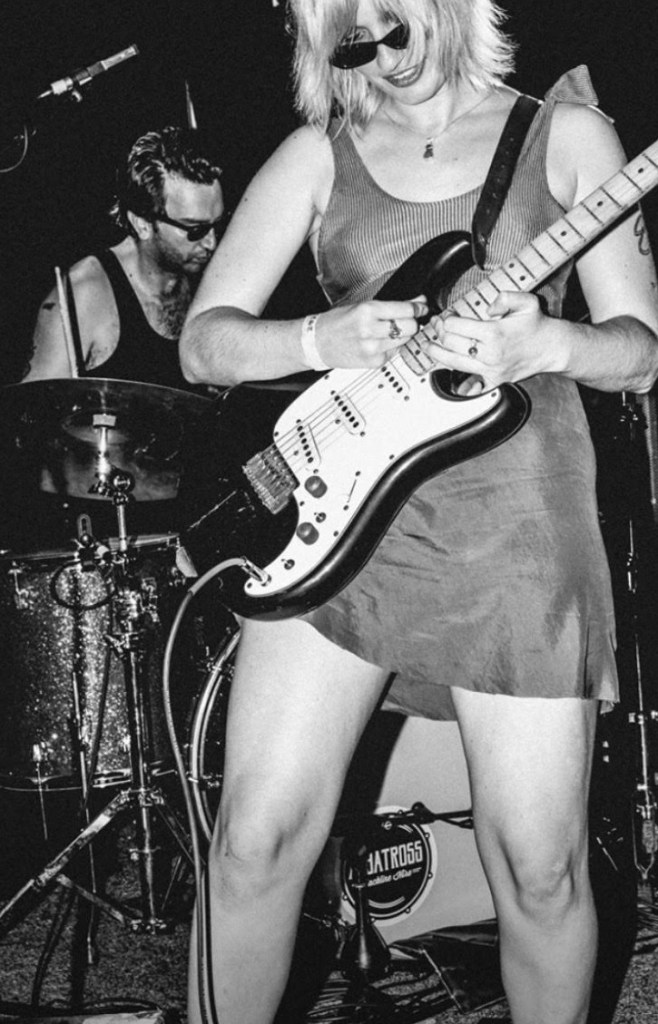
Melbourne punks The Snakes are: “An angular vortex of pain but you can dance to it.”

Handmade mixed-media collage by B.

The Snakes are one of our editor’s favourite bands. When we recommended their self-titled debut LP (on Anti Fade) on our Albums We Loved in 2019 list we described their music as early ‘80s underground L.A-style new wave punk. The actual underground though… The black market kind. You know, the “under the counter” kind. We interviewed The Snakes and found out they’re working on new music! Stoked much?!

How did you get into music?

LEWIS (vocals): Who has a choice? At some point some cunt’s gonna play some shit and you’re either gonna love it or hate it, I guess I liked it.

What have you been listening to lately?

CHARLOTTE (bass/vocals/harmonica): Ummm… Butch Willis, GG Allin, Roy Orbison, The Byrds, Rupture, Napalm Death, Traffik Island, Plantasia, Anohni, Ariana, X (Aus).

LEWIS: Death (from Florida), Extortion (aaaagain), The Kinks, Obituary.

JIMMY (drums): Jackhammers and my own inner dialogue.

STEPH (guitar/vocals): In the mornings we listen to ambient sounds such as the distant radio and twings and droplets from whatever James puts on the stereo. When we play cards we listen to hardcore and punk. And I like the start of the Exploding Hearts album so I listen to that in the shower. Same with The Loved Ones but that whole album is good. Could be in a musical rut… I like soul and country music a lot.

CHARLOTTE: You like Suzi Quatro, Steph.

STEPH: I like lots of things not mentioned. Loves Suzi but. Gets wild to Suzi!

When did you first know you wanted to make music yourself?

LEWIS: When I realised it was a piece of piss. It’s the socially acceptable way to be the loudest person in the room.

CHARLOTTE: I was in choirs my whole life but guitars were always for boys, I really just wanted the attention.

JIMMY: I didn’t, I was just jealous of my friend’s guitar when I was six.

STEPH: I got into music by being rejected from my family for not being as good a singer as my sister, and not being allowed guitar lessons like my brother cause I’m a girl. So I taught my damn self and now I rule the world!

Tell us the story of how you all got together. What inspired you to start The Snakes?

LEWIS: Three of us had on and off lived together for a while, two of us had planned to do a psychedelic proto-punk band called Giant Door (side note: Giant Door is one of the top three bands that never existed). We are two couples and at some point, Charlotte our bassist moved into a new house and we went over for a kind of house warming. We ended up jamming and writing about six songs that all pretty much ended up on the album. We had some shitty phone recordings and shared them with each other and realised we needed a drummer. It took us about two seconds to find him and that’s it.

STEPH: Jim completes us.

Photo by @sub_lation; courtesy of Snakes.

What do you feel are the key elements that make your sound?

CHARLOTTE: Jim’s drums swing, there’s no one like him.

LEWIS: Clearly the keys stands out, having James on them is a refreshing take. Flange plays a massive factor. It’s a mash of shit we listen to and shit we find fun. It’s an angular vortex of pain but you can dance to it.

How do you go about writing a song?

LEWIS: Charlotte generally comes up with the riffs with a few exceptions and we all just put our parts in from there. We’re natural, baby!

Photo by @sub_lation; courtesy of Snakes.

Last year you released your self-titled debut album on Anti Fade Records; can you tell us about recording it? Billy from Anti Fade recorded it, right?

CHARLOTTE: Yes, he did. We’d spent about a year playing together before our first show and he offered to record and put us out at that first show. Recording in Geelong was great but what was really fun was doing vocals and mixing with Billy. We had a lot of ideas, we had a vision, Bill helped us execute it.

JAMES (keys/vocals): Bully Gardner is our mentor and he wax trax layer to the max.

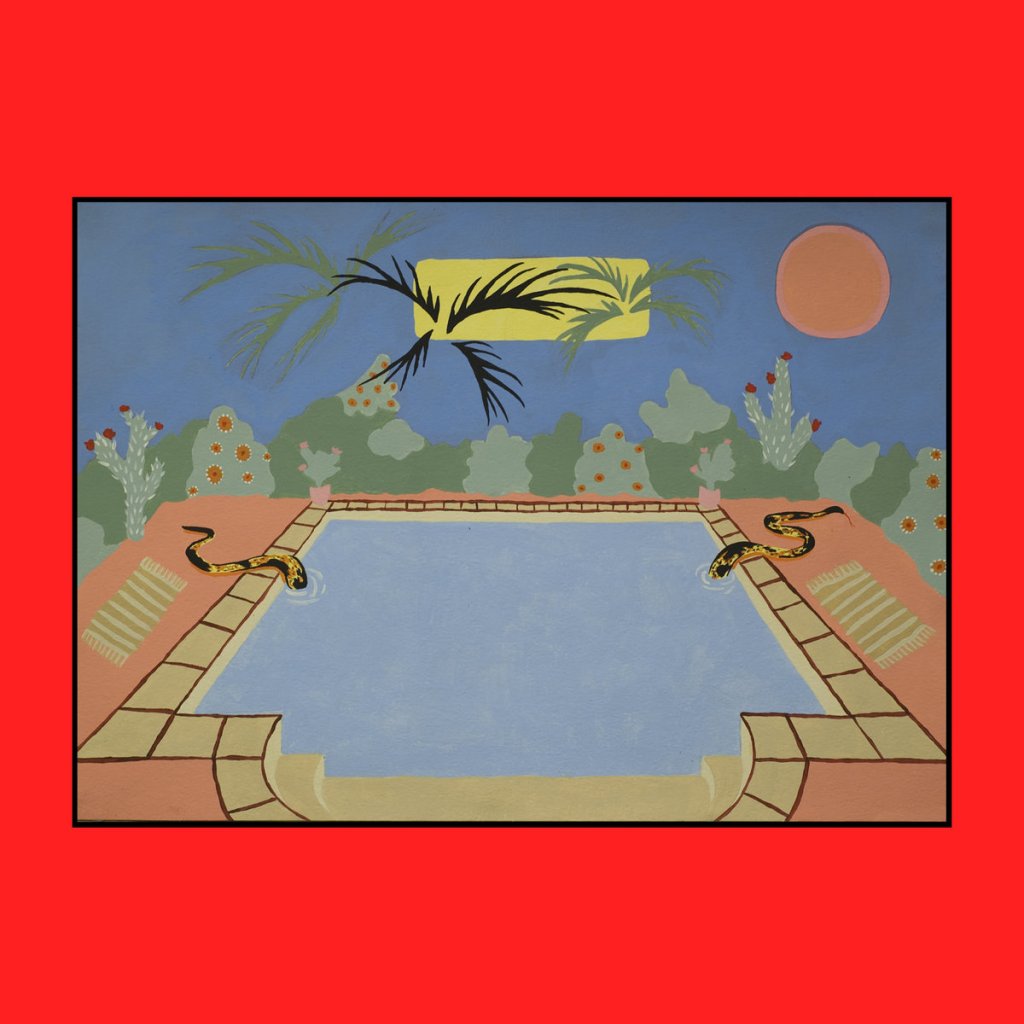
Cover art by Eve Dadd.

What’s your personal favourite track on the record?

LEWIS: We don’t play this one anymore but I really like singing “Drug Pig”. I came up with the lyrics on the fly and I love screaming “Virgin Mary, Jesus Christ, smoke a gram of pure ice”. “Solid Income” too, it just kind of cruises.

CHARLOTTE: I hate “Drug Pig”, even though it makes me feel tough, there’s a part that makes me feel kind of sick. I love playing “Ugly Faces” it’s simple but it’s rude. I know Steph loves “Pop Song”.

When you finished the record; who was the first person you played the songs to?

CHARLOTTE: I think my friend Kieran, they frothed for it!

Eve Dadd did your album’s cover art; what’s the story behind it?

STEPH: Eve does art and is related to James. She is talented and a boisterous bitch that lives on the South Coast of NSW. We love and hate her at the same time.

CHARLOTE: She’s a Scorpio.

LEWIS: Me and Charlotte outright bought it, it’s on our wall.

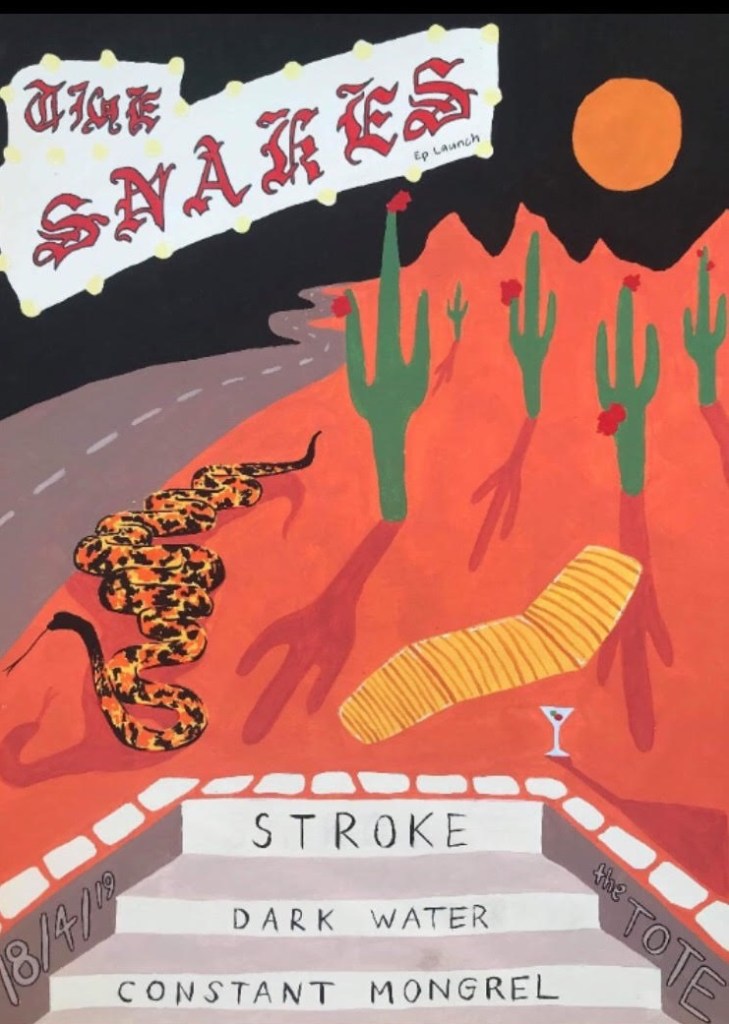
Launch poster by Eve Dadd.

How do you feel when you’re performing?

LEWIS: Extremely confident and self-conscious at the same time. I just go for it, I don’t really give a shit.

CHARLOTTE: When I play, I’m singing my bass parts in my head. I like watching Steph solo and smiling at James.

What’s been the best and worst gig you’ve played? What made it so?

STEPH: Best show was one at One Year (in Collingwood). I had just discovered the beta blockers and dexie combo and I did not give a fuck and people could tell. Smiling is good when playing fun music. Worst show was that one with Bloodletter. Can’t remember why but I know it was bad.

LEWIS: Last Maggot Fest was great, it actually went off. Supporting The Stroppies was pretty dry, not The Stroppies, I love The Stroppies I just don’t think that that crowd was really down for us. I remember putting on a show and crawling on the floor and screaming but still there was a big gap between us and the crowd. Maybe we’re too high brow.

Photo by @sub_lation; courtest of Snakes.

Have you been working on new music?

LEWIS: Yes.

What would we find you doing when not making music?

LEWIS: Working like a dog.

CHARLOTTE: Watching telly. I just bought a keyboard too, been trying to figure out how to play “Everytime” by Britney [Spears]. Also pretty heavily into Tik Tok at the moment.

JIMMY: Drink, complain, bate.

Vid by VOGELS VIDEO. Check out more of what they do here!

Please check out: THE SNAKES. The Snakes on Instagram. ANTI FADE records.

Gee Tee: “I just wanted to make some less serious sorta music, makes it easier to record everything by yourself too”

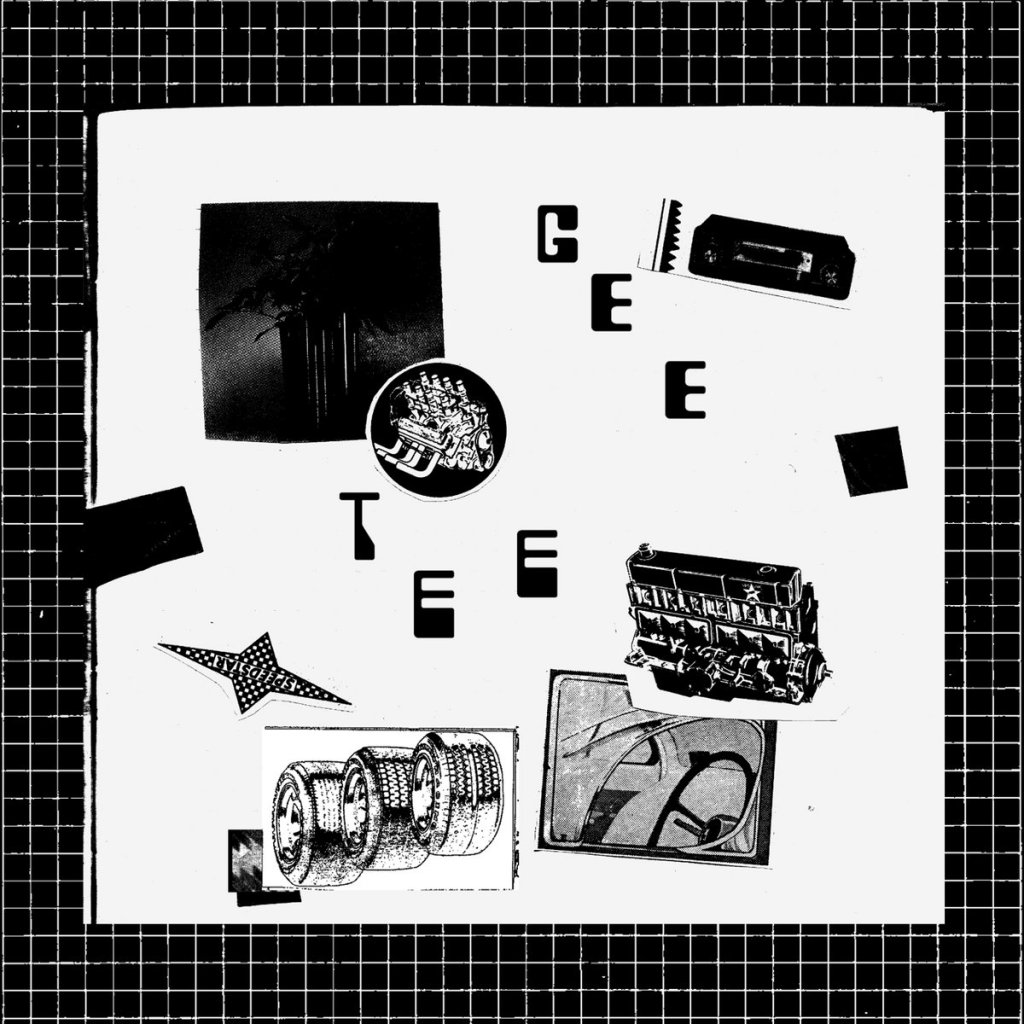
Handmade collage by B.

Gee Tee started out when its creator Kel began creating tunes solo in his bedroom on the Gold Coast. Gee Tee’s music is a touch unconventional, a little weird, humorous, lo-fi, buzzy, maxed out, wobbly and highly entertaining – think somewhere in the ballpark of Geza X, Dow Jones and the Industrials and Scientific Americans. Now residing in Sydney and having a full live band we’re excited to see what Gee Tee does next! We interviewed Kel and he told us of his beginnings, how he creates and lets us know what’s coming up.

How did you first get into music? Are there any albums that are really important to you?

KEL: My dad introduced me to music when I was a kid, he’s heaps into ‘70s and ’80s UK punk and Oi + a lot of late ‘80s and ’90s alternative, Dinosaur Jr, Flying Nun Records bands etc. Some of my favourite albums and bands though would be: Buzzcocks – Another Music In A Different Kitchen. D.L.I.M.C – Cassingles. Sickthoughts. King Khan & BBQ. Nikki and the Corvettes – Self-titled. The Spits – V. Set-top Box. Useless Eaters – Zulu. Ramones – Leave Home. Nancy – With Child. R.M.F.C. Jay Reatard. Satanic Togas – Chain Reaction. Muff Divers – Dreams of the Gentlest Texture. Research Reactor Corp. Devo. P.U.F.F – Living In The Partyzone. Ausmuteants – Order of Operation.

What was your first concert? Can you tell us a little bit about it?

KEL: Never went to concerts when I was younger hey, first big show I can remember going to would be Thee Oh Sees back in 2013.

You first started Gee Tee while living on the Gold Coast in 2016; what inspired you to start making your own music?

KEL: Yeah I guess I just wanted to make some less serious sorta music, makes it easier to record everything by yourself too. I was in Draggs at the time and that was sort of wrapping up. So thought it was a good time to start something new.

What’s the story behind your name Gee Tee?

KEL: It’s off these 1970’s trading cards/sticker series Odd Rods, its hell mongrels in blowout cars, real similar to “Ratfink” Ed Roth drawings. There’s a Gee-Tee-O card in the first series.

All the early Gee Tee stuff is written and recorded by yourself; can you tell us a bit about how you go about making a song?

KEL: It used to be mainly recording drums first with no idea on how the songs gonna be then hoping for the best keeping the original drum track/take. But I don’t have a kit set up in Sydney, so I use a drum machine to demo the songs on Ableton then re-record the finals on tape with a kit. Synth parts are just mucking around till something sounds right and vocal bits the same. Neanderthal stuff.

What kind of set-up do you use to record?

KEL: The drums are recorded on a Tascam Portastudio 2 then the rests recorded on a Yamaha MT1X or a MT4X. Using a mix of these AKG 190e mics and Shure 57/58’s. All the overdubs, backup vox/ synth etc. is done on Ableton.

What are the kinds of things that inspire you lyrically?

KEL: Just easy to remember choruses and lyrics + stuff I’m not gonna forget. Used to be full on car only themed tracks but that’s changed over the last year, only so many songs you can write about the same thing before you get burnt out on it.

What was the first song you wrote; what was it about?

KEL: “Flame Decals” was the first track I wrote and recorded for Gee Tee, pretty self-explanatory and pretty stupid haha!

What prompted the move to Sydney?

KEL: Just not a lot happening on the Gold Coast, in my opinion. It’s a chill place to grow up but there’s no weirdo music scene and barely any overseas bands that I like would come through on tours. I was friends already with a couple of people in Sydney too.

In October last year you released Chromo-Zone as a digital album and on cassette tape, it’s the first Gee Tee release featuring someone else, Ishka Edmeades (Set-top Box, Satanic Togas, Warttmann Inc); how did you come to working together?

KEL: I was living with Ishka for a couple of months when I moved to Sydney so it just kinda happened. He’s got a similar drumming style to me as well but better and can rip lead guitar. For the new Gee Tee tracks Ryan Ellem who plays drums in the live band and runs, Slime Street Records, is gonna be on ‘em mostly.

You also do the art for your releases, it has a real distinctive style; what influences it? Do you hand make it? Is it cut n paste?

KEL: Yeah, it’s mostly cut and pasting stuff outta old magazines then scanning it. Big fan of old punk posters, zines and the art/visual style of them. I still use a PC though to add extra bits etc. so it’s not all physical.

Were there any challenges in taking the Gee Tee songs you wrote by yourself to a full band live set?

KEL: Yeah, some of the songs just don’t work live, e.g. “Hot Rod Juice” and “Commando” don’t come off the same as they do in the recordings. Compared to songs like “FBI” and “I’m a Germ” which are smokers live!

What’s been the best and worst show you’ve played so far; what made them so?

KEL: I reckon the best show we’ve played recently was at the Lady Hampshire with Research Reactor Corp, R.M.F.C and Set-top Box. Heaps of people came out + playing a set on the floor is sweet! Also, playing The Tote for Maggot Fest was smokin’!

For the worst show I dunno, played a fair few stinkers when I was in Draggs. Wack greedy shit like bookers sending you an invoice for $50, when the venue was sold out! Getting set up playing with bands that are dickheads, etc. 

Have you been working on any new music; what can you tell us about it?

KEL: Yeah for sure, I’ve been working on recording tracks for a couple of 7”s and a LP. Not sure when they’re gonna be out though. A new G.T.R.R.C covers EP has been recorded that’ll be out in a couple of weeks on cassette, maybe on a 7”. Possibly a few guest rocker cameos on this one too from Melbourne and USA.

Vid GEE TEE @ Buz’s birthday bash footage by video. ezy (converted by Gordo Blackers, 60% of footage recorded by Gio Alexander).

Please check out: GEE TEE bandcamp. GEE TEE on Instagram.

Crass and Slice Of Life’s Steve Ignorant: “I don’t have to be conforming to the unwritten punk rule book”

Handmade collage by B.

Our editor spoke with Steve Ignorant for her forthcoming book. Steve was vocalist for one of the most important punk bands of all-time, Crass. Their political punk encouraged and inspired generations of punks to think for themselves and to question authority, the world around them and themselves. 2020 finds Steve still making music with latest project the acoustic-based, Slice Of Life. He’s still singing about injustice, but his songs have taken a more personal and vulnerable turn. The following is an extract, you can find the full longer in-depth chat in book, Conversations With Punx; along with thoughtful, insightful chats with Dick Lucas from Subhumans, CJ Ramone, Operation Ivy’s Jesse Michaels, Black Flag/Circle Jerks/OFF!’s Keith Morris, Zero Boys’ Paul Mahern and 100 more punks!

Why is music important to you?

STEVE IGNORANT: It’s a way of putting a message across and it can stir up all different kinds of emotions, really that’s it.

Two things that I have noticed that are very prevalent in your music is emotion and also compassion; have you always been a really compassionate person?

SI: Yeah, I have. I’ve often met people that say I’m a bit of a romantic, I don’t know so much about that but, I have always been compassionate ever since I was a child. Not to be depressive or anything but I think it’s because when I was growing up in the ‘50s and ‘60s there was even more injustice going on then there is today. From seeing that and the way certain people are treated, I think that’s where it comes from.

Before you started making music I know that you worked for the British Royal Infirmary, right? You were using Plaster of Paris on people’s broken arms and legs and you also wanted to do a First Aid course to become a paramedic.

SI: Yeah, that’s absolutely true. See I went for a job at that hospital as a Hospital Porter and I was asked if I can stand the sight of blood, I said, “yeah”. They said, “ok, well you can put Plaster of Paris on people’s arms and legs” and then it was possible for me to do a course with the St John’s Ambulance Brigade. From that I would have possibly been able to become an ambulance driver and from there a paramedic. It’s very interesting work.

So you’ve always liked helping people!

SI: Yeah, unknowingly. I don’t think I’ve ever sat around and gone, “Oh, I’m going to help people” like a missionary or something. I’m always helping people, if I’m doing gigs I’m giving money away [laughs]. I moved to this place where I live, by the seaside, and ended up working on a lifeboat. So you’re absolutely right—I’ve never thought of it like that! [laughs].

You just have an innate disposition to help others.

SI: Yes! You could say, I’m not a believer in God and all that stuff but, in some ways you could say that I’m a Christian really… helping other people and all that. I can’t help it, I’ve got to do it.

With the songs you’ve written in Crass and your newer band Slice Of Life, you’re singing about injustices in the world; do you still process your anger in the same way?

SI: Rather than being head on and writing something like “Do they Owe Us A Living?” or “So What”, I’ll find a more poetic way of doing it, a more subtle way. I think doing it more head on like “fuck you!” is more for younger people, I don’t think it’s for a sixty-two year old man to be doing [laughs]. I mean, you can if you want to… Things are more thought about these days, it takes me quite a while to write a song.

With your new band Slice Of Life’s music the songs are very personal; when do you feel your songwriting started to become more introspective?

SI: The day I realised was the day I started working with Pete [Wilson] and Carol [Hodge], we didn’t have a bass player at the time. When I started working with them I thought, I can do what I want! I don’t have to be conforming to the unwritten punk rule book. I can absolutely do what I want with these people! If I want to do a funk track, I can do that, if I want to do a reggae track I can do that, I could even do an orchestral thing—I can do whatever I want! The songs I do with Slice, tend to come from influences throughout my life. There’s a little bit of jazz in there, a little bit of Bowie, a little bit of doo-wop. Going back to your first question; how important is music? Well, it’s always been a part of my life. So that’s when it occurred to me that I could do whatever I wanted and fuck what anybody else thinks! Once I realised that it was a huge relief, a huge weight off my shoulders.

Did it feel empowering?

SI: It did! But, it was also a little bit frightening.

*Conversations With Punx (coming late 2020).

Please check out: STEVE IGNORANT.com.

Concrete Lawn on their forthcoming LP Aggregate: “Drums and bass are hench as fuck”

Handmade mixed-media collage by B.

Sydney punk band Concrete Lawn will be releasing their new LP Aggregate May 1st on Urge Records. They first came to our attention in 2018 when they put out a killer cassette tape, DEMO. We interviewed CL about the new forthcoming album, recorded, mixed, and mastered by Jono Boulet from Arse/Party Dozen.

How did you first discover punk?

CAMPBELL (guitar): I first discovered punk when I found The Stooges’ “Fun House” in my dad’ s CD pile when I was 14 and it blew me away from the moment I listened to it.

JACK (bass): Going to see shows at Black Wire Records (R.I.P).

What are some of your favourite punk records?

CAMPBELL: Some of my favourite albums are The Saints – Eternally Yours, Ausmuteants  – World In Handcuffs, Devo – Q: Are We Not Men?, Anaemic Boyfriends – Fake ID 7″, Radio Birdman – Radios Appear, The Cure – Boys Don’t Cry, Gee Tee – Live And Dangerous, MC5 – Kick Out The Jams, XTC – Drums And Wires, Gangajang – Sounds Of Then (I know it’s not punk but who cares!) and too many more to name.

JACK: All Bagged up by The Bags, as well as some of those early X records, also The Urinals. That Decline Of Western Civilisation doco really had a huge impact on me. Then also more angular stuff like No Trend was big to be honest, probably the only punk band I regularly listen to at home I think. In terms of locals: Nasho, Canine, Morte Lenta and Robber are my favourite punk bands.

MADDISON (vox): Can easily say Fuckheads by Gauze and Pick your King by Poison Idea but in terms of current punk/hc records, I would definitely say Binasa EP by Sial, Anxiety’s self-titled and Perfect Texture by Geld, mostly everything from Static Shock’s record label is simply sick. 

Photo by Dougal Gorman (courtesy of CL’s Insta).

Who or what made you think, ‘hey, I wanna make music!’?

JACK: Seeing small DIY bands and spaces and people doing things on their own terms, again, Black Wire Records; but also Paradise Daily Records, Sexy Romance, Dispossessed, Monster Mouse, Beat Disc, Sex Tourists, Pink Batts, No Refunds (remember those shows LOL?), Orion are all things that stick in my mind as like, things that made me want to do this. 

ALEX (drums): In high school a lot of my friends were in bands and I always wanted to do that. There was this show on at school like for the end of the year and I thought to myself, I could do that mad easy!

I know that everyone in the band grew up going to heaps of shows; what was the first show you went to?

CAMPBELL: First show I went and saw was AC/DC when I was about 15, it was pretty boring it was a bunch of 70 year old men on stage playing for 3 hours practically the same song. There was a heap of aggressive bikies there too LOL. But, the first proper show I saw was The Pinheads and some random indie bands. Pinheads pretty much blew the other bands out of the water with their wild spontaneous energy.

JACK: First show I ever went to was My Chemical Romance in 2007 and it is still the best show I’ve ever been to LOL.

MADDISON: For my 15th birthday, I got given my eldest sister’s ID. First time I officially used it was at the Lord Gladstone for this shit Violent Soho-like band. Got kicked out in the first 10 minutes LOL… maybe due to the fact that I was wearing a Grateful Dead tie-dye t-shirt, and purple gumboots.

You’ve about to release your new LP Aggregate; what’s your favourite thing about it?

CAMPBELL: The drum sound, that’s all I’m sayin’.

JACK: Drums sound great on the record, they often sound like break beats which is sick. Alex taught themselves drums via jazz I think, very cool.

ALEX: I like hearing how we’ve come together as artists, and how like everything has come together and it sounds tight.

MADDISON: Drums and bass are hench as fuck, especially in “Milk”.

You recorded with Jono from Arse; how did you come to working with him? What was it like working with him?

CAMPBELL: Jack just slid into his DMs that simple. Jono was super easy to work with and he was super patient with us, for example he sat down with me for like an hour to help me try and find a good guitar tone and he stayed back with Madz until late into the night doing vocal tracks.

JACK: Sent him a text message because we liked his recordings, that Top People EP [Third World Girls] is great.

MADDISON: Simply Jono’s chicken pillow, I want one.

What’s one of your fondest moments from recording?

CAMPBELL: Watching old blokes out of the studio window play lawn bowls, while we were trying to record.

JACK: I think I was really stressed about life stuff at that point so it was nice having three days or something to not really have to do real life things.

While writing for the record what kind of place where you writing from? What emotions were you tapping into?

JACK: Dissolution, boredom, hatred, I guess. Also, obligation, because people keep asking us to play shows LOL.

MADDISON: To be honest, this whole album has been written over a period of almost two years so I can’t remember what frame of mind I was in whilst writing the lyrics but probably anger/frustration LOL. It’s hard for those emotions not to arise as frequently as they do considering most of the population are clueless clowns.

What’s the title song “Aggregate” about?

MADDISON: Most of my lyrics touch on the issues of systemic oppression/abuse, although, this song in particular focuses on ecocide, land dispossession, and the lingering injustices of colonialism. Title itself is just a bunch of elements combined to form a solid. Needed in concrete mix I think IDK thought it was cute.

The cover art by Maxine Booker is beautiful; what was the idea behind it?

CAMPBELL: I’m not sure what the idea behind the art work is but, we all just thought the art work look really good. Sorry if that sounds super shallow but LOL.

JACK: Max is one of our dear friends and they made great art work what the fuck more do u want lad.

MADDISON: It’s a DIY artwork that evolved into an inverted wood block print. Concept surrounding the artwork is open to the audience’s interpretation.

Art by Maxine Booker.

What’s been one of the best shows you’ve ever played?

CAMPBELL: Playing at the Marrickville “Bowlo” early last year, it was super sweaty and it was a Sunday arvo so no one was being super serious.

JACK: My favourite live show was NAG NAG NAG 2019, we were playing wayyyy too late in the night and we just played super sloppy and I kept hitting Campbell with my bass. At some point he tried to hit me back and I tripped over the power cord for the whole stage!! I don’t really remember but it was nice to have fun in front of a crowd of serious punk people. This is may be contentious, though I think Mad wasn’t happy with that show LOL.

ALEX: I really liked the show we played with Pinch Points and Surfbort at the Croxton a couple months back. We played mad tight and I had met a bunch of people the night before and they came through it was lit.

Vid by Gummo.

Have you ever had an embarrassing moment on stage?

CAMPBELL: We were opening for Straight Arrows and playing a good set but then realising I had my fly undone throughout the whole entirety of the set.

JACK: I felt really sick one time on stage.

What’s one of the biggest challenges your band faces?

CAMPBELL: Old gronks!

JACK: Being organised enough to practice, coming up with interesting riffs, being treated as novelty teenagers by an aging scene of men in their 30s.

Besides music what are some things that are important to you?

CAMPBELL: Anti-gentrification.

JACK: Community and forms of care which don’t replicate broader systems of power.

ALEX: Not allowing wack shit to keep going on. I want to write plays one day.

MADDISON: DIY culture, solidarity, and my darling dog, Zeus.

Please check out: CONCRETE LAWN. CL on Facebook. CL on Instagram. Pre-order Aggregate on Urge Records.

Washington D.C.’s Bacchae: “We can have either decent human lives or capitalism, not both”

Original photo by Kara Donnelly, . Mixed media handmade collage by B.

Bacchae (pronounced Bock·Eye) are from Washington D.C. The punk quartet – Katie McD, Rena Hagins, Eileen O‘Grady and Andrew Breiner have just released their new LP, Pleasure Vision. The band jump between styles and mix genres, from synth-driven pop to heavy riffed, experimental post-punk; their songs are full of melody and bounce, lyrically tackling themes both personal and political. Bacchae are a band to watch.

How did you first discover music?

KATIE McD: I grew up going to church every Sunday and that was my first exposure to live music. At home, my mom would play a wide variety of music and watch VH1. One of my first memories of popular music was watching the music video for the B-52’s song “Love Shack” in the kitchen while my mom was singing along and preparing dinner. The line, “I got me a car, it’s as big as a whale” seemed like the height of comedy to my preschool self, but the music also gave me chills.

RENA HAGINS: My mother is really into music and would always take me to shows growing up. She is really into reggae and we would listen to her tapes and I would go with her to festivals. I expanded upon my musical tastes by buying compilation CDs. I remember getting every Punk-O-Rama and Give ‘Em the Boot and learning all the words to every song. I found local bands through friends at school and attended shows whenever I could. My favorite local venue was an indoor soccer arena called The Corner Kick. That is where I first saw one of my fave DC bands, The Max Levine Ensemble. My first major rock concert experience was Blink 182. Between songs they said “Let’s give it up for blow jobs and cumming!” and my 14 year old self was completely mortified to be witnessing that with my mother.

EILEEN O’GRADY: My extended family on both sides loves to sing. All of my aunts and uncles and cool older cousins sang at every family gathering. I have an early memory of listening to the band, Weather Report, on the radio with my Nana. The DJ was listing off the lineup of players on a particular song and apparently made a mistake, so Nana called and corrected them. She already had the radio station’s number from doing call-in quizzes.

ANDREW BREINER: First, I was into my parents’ albums: Michael Jackson and ’60s pop rock like the Byrds and the Monkees. That, plus the newly-available Napster, was the basis for developing my own taste. I got into what I thought was more “edgy” and “obscure” 60s stuff as a tween, you know, like the Beatles. Or even the Sonics. As silly as it seems now, what really excited me about music at the point was the feeling that it was countercultural and saying something different from the main narratives of the world. That’s how I went from 60s rock to anarcho-punk like Crass, and then learned that pretty much all genres can give some window into other worlds. Still, I will not comment on my nu-metal phase that somehow fit into my early musical development.

Who or what inspired you to want to make music yourself?

RH: I used to play cello and viola up until I was about 12 years old. I couldn’t afford to purchase any instruments, so I had to eventually give it up. I always loved to perform and participated in chorus and was also in a few plays during my school years. I’d always been fascinated by bassists when I went to see live music and made it a point to learn and join a band one day. I was given a bass by my partner about 4 years ago and started learning immediately.

KM: I started learning how to play piano when I was 8 or 9 years old. When I was 13, I decided to teach myself how to play guitar (because it was cooler) and began writing songs. I listened to WHFS and idolized Gwen Stefani and P!nk at the time; middle school was miserable for me, which also helped inspire me to write music. The songs were terrible and I never shared them with anyone; I just played them alone in my room.

EO: I played bassoon in school band growing up all the way through college and was actually pretty good. I’d always wanted to play drums but was intimidated for a long time, especially since I was used to seeing boy drummers. There was an extremely cool woman who taught drums at band camp who I never uttered a word to but was quietly obsessed with for years.

Then I grew up and came to DC and saw local punk bands with great drummers, like Ashley Arnwine from Pinkwash and Daniele Daniele from Priests. Those folks pretty much directly inspired me to start learning myself.

AB: I think my youthful excitement about music was always tied up with the idea of playing it. I had tried and failed to stick with piano lessons when I was pretty young, cause I was totally unmotivated by the goal of being able to play classical pieces. But I wanted a guitar basically as soon as I got into rock music and I’ve been playing on and off (sometimes off for years at a time) since then. It was a totally different experience, being able to actually learn the things I heard and loved. I think the amazement of being able to recreate or create something as cool as music myself is still why I do it.

Photo: Kara Donnelly.

How did Bacchae come together?

Katie, Eileen, and Andrew began playing music together as the backing band for a friend’s experimental rock musical. Around the same time, Andrew met Rena when they played together in a one-time band as part of Hat Band DC, a fundraiser for Girls Rock! DC. Bacchae was formed shortly after in the summer of 2016.

Your new LP, Pleasure Vision, came out at the start of March, congratulations! We’ve had it on high rotation here at Gimmie zine. How did the record get started? What was the first song you wrote for it?

RH: Happy to hear that y’all are enjoying the record, thanks! I don’t think we really have a defined start date of writing specifically for this album. Some songs we started writing 2 years ago (ex. “Turns Me”) and others came together in their final form at the studio (Ex. “See It Coming”).

AB: We spent some time playing shows off of our previous EP (S/T 2018) before we decided what we were going to work towards next. I don’t think we were certain this one would be an LP until a few months before recording or so. We just started working on new songs and it took shape from there as we tried them out at shows and tweaked them. “Everything Ugly” was the first one that we finished. I remember Katie brought it to us not long after the EP and it came together almost immediately.

Where was your head at when writing, Pleasure Vision? What kinds of things were inspiring your songwriting? I’ve noticed that all your lyrics are written in the first person.

KM: Half of the songs on Pleasure Vision are about emotions that almost everyone experiences and hides (sadness, longing, heartache) and the lyrics are inspired by a mix of my personal experiences and friends’ experiences. Half of the songs are more political and invoke anger, exasperation and hopelessness. “Older I Get,” and “See It Coming” are two examples of this–they’re both about being angry and dissatisfied at society/Capitalism and feeling sort of powerless in the face of it all. As for the first person thing: if you pick an album at random, the majority of the songs will usually be written in first-person. For example, Green Day’s album, Dookie, is written entirely in first-person.

What’s the significance of the LP’s title, Pleasure Vision?

AB: Pleasure Vision is interpreting the world around you through the lens of optimization and acquisition. Our world is increasingly uninterested in things unless they offer a straightforward, often quantifiable, benefit. If you have a hobby, for example, it’s supposed to help you develop a marketable skill, help you network, or make you healthier. Even if it’s for enjoyment, you’re encouraged to validate it by saying it’s to decompress (from work) or that you’re engaging in self-care. I imagine an overlay on anything we look at: Taking a bath gives you two pleasure points, which counteracts the two stress points you picked up by working a 10-hour day. Everything has to be done with intense purpose. Nothing can be idle or casual or meaningless.

What’s one of your fondest memories from recording your record?

EO: The recording studio has a little chillout area with a TV and collection of VHS tapes. While J was doing the first rough mixes, we crowded around the TV and watched Wallace and Gromit and ate snacks. It was a perfect way to decompress after a somewhat stressful process and be reminded that we’re all friends and love each other.

RH: We brought a Nintendo Switch to the studio and hooked it up to the TV and watched Andrew and Eileen play the Untitled Goose Game. It was so fun to see them wreaking havoc as a goose on the loose!

KM: Listening to everyone do overdubs and everybody’s words of support before and after takes. 

What’s your personal favourite song on the record? What do you love about it?

RH: It’s so hard to choose just one song as a favorite! I love the record as a whole. If I REALLY have to choose, I guess I would say “Losing War”. It’s unlike any song we have previously released as it is a bit heavier and grungy. We played it for the first time at the Pleasure Vision record release show and it was so much fun to play live. It’s got a good groove to it and the bassline just puts me in a zone. I also love that we had the opportunity to have Shawna Potter of War On Women add some guest vocals on the recording. It was so much fun to work together!

EO: “Hammer”–it’s such a bop. Andrew’s guitar solo always makes me want to stop playing and just dance around.

AB: “Leave Town”. I’m a sucker for intense fast songs like that. It has a type of heaviness that I don’t feel like we’ve gotten into before, stop-starts, and a tempo change, while still sounding pretty straightforward. And Katie’s singing on the breakdown part still surprises me with its force every time I hear it.

KM: I think “Older I Get” is my favorite because it’s heavy but fun; I really like the ascending guitar thing and the beat.

How did you feel upon first listening to your record in its entirety for the first time once you got the

mixes back?

AB: Honestly, the first time hearing mixes was when I was most fatigued from playing and hearing the songs over and over again. I had just listened so many times it was impossible to try and form any kind of objective judgement. Also it was hard not to just listen intently to my own parts to look for flubs. I spent a few days totally avoiding listening to the songs, and when I got back to it was much more “wow, we did this??”

RH: It’s really tough to listen to mixes and try to give any feedback on changes. When I had some time away from them, it was incredible to listen back and think about everything we accomplished with J. Robbins at the Magpie Cage studio. I am really proud of how far we have come as a band.

Where did the idea for the Rorschach Test style art on your album cover come from?

AB: It fits with the ideas about Pleasure Vision being a way of twisting and interpreting what you see around you to fit certain purposes and to have a particular kind of meaning. The Rorschach Test is the perfect example of that kind of thing: it has no inherent meaning and is entirely about the interpretation you bring to it. We were also experimenting with the idea of doing something based on a vision test chart, and while that’s not exactly evident in the final design, that is how they ended up being laid out as a kind of chart.

KM: Eileen has a good story about this!

EO: My parents are both therapists and they flipped out when they saw the cover. My mom didn’t know that the Rorschach inkblots are in the public domain, so she texted me frantically asking if I had found the inkblots in her office and, like, stole them. Once they realized it was all above board, they were just very interested in what underlying psychological reasons led us to the design. Typical. 

Can you tell us about the best and worst live show you’ve ever played?

EO: My favorite was playing House of Independents in Asbury Park. It was the best line up basically of any show I’ve ever been to: Paint it Black, Screaming Females, Give, HIRS, and us. The energy was WILD. Rena had this stellar crowdsurfing moment that our photographer friend Farrah Skeiky caught on camera and it looks like a literal Renaissance painting. Also we got to spend a lot of time at the beach that weekend and ate ice cream and boardwalk snacks.

RH: I started a spreadsheet to keep track of every show we have played since forming in 2016.  It’s wonderful to look back and see how much we have accomplished over the years. There’s a note section so we can add highlights like “Katie’s keyboard fell on top of her during Leave Town and she didn’t miss a beat!” or “A transformer blew and the show got shut down after our set!”

I don’t think there have been any shows I would consider to be the worst, and it’s really hard to narrow it down to the best one. Our first official show together was on August 8th, 2016 at a DC venue that no longer exists. The show wasn’t particularly amazing aside from the fact that it was the first time the 4 of us played live together and that was a really special moment. Our “Bandiversary”is August 8th because of this show.

Photo: Kara Donnelly.

Why is music important to you?

RH: Many of my favorite memories involve music and I am just happy to experience it in any way I can.

KM: Playing music and writing songs is cathartic; practicing music is something that can help you grow alone or with others.

AB: Related to how I found music: I think music can say things that aren’t generally said, both through words and the sounds of it. Music lets people smuggle kind of weird or new ideas into reaching an audience since there’s something universal or at least widely understandable about it, but also so much room for inventiveness and uniqueness.

When not making music what would we find you doing?

RH: I have gotten really into birds lately. There’s a Sparrow, that I’ve named Bird Alex, that lives in the awning by the front door. I recently put a bird feeder up on a tree outside my bedroom window so I can watch all the birds coming by. I’ve seen lots of Robins, Blue Jays, Cardinals, Mockingbirds, and Woodpeckers. There is one Woodpecker that had it out for me. It was coming to the bedroom window and pecking at the frame very early in the morning and waking me up before my alarm. I figured out a way to divert this unwanted wake up call by putting a stuffed Owl in the window as a decoy. Haven’t had any trouble with the Woodpecker in a few weeks. Fingers crossed the Owl decoy continues to work!

EO: I like pro wrestling. DC just got a new local pro wrestling promotion called Prime Time Pro Wrestling, which has put particular emphasis on LGBTQ wrestlers. They produced an explicitly queer show last month called Butch v. Gore where I saw a wonderful match between Effy and Faye Jackson. Effy wears a pink spiked leather jacket, fishnets, and a tiny speedo that says “Daddy” on the back. Faye has this famously great ass, and she kept shaking it at Effy (who is gay) to his visible horror. I was screaming the whole time.

KM: I’m a beekeeper; at this point I’m not sure if it’s a hobby or a lifestyle. Checking on my hives has always been a pleasure, but during the pandemic it also feels like a particularly special weekly event. Now that we’re confined to our homes, I’m also trying to focus on improving my drawing skills and taking better care of my houseplants.

AB: I like reading history a lot lately!

What’s something important that you think more people should know/care about?

EO: More people should know the power of a being in a union. Workers joining together is the only way we will end capitalism.

AB: We can have either decent human lives or capitalism, not both.

RH: Health care is a human right and everyone should have access to quality coverage.

KM: I keep thinking about how much violence and sorrow the pandemic is going to cause across the world. I wish that more people knew this: if you’re thinking about suicide, the best thing to do is to tell a friend about your feelings. You can also call your national suicide hotline. In the U.S, it’s the National Suicide Prevention Lifeline (1-800-273-8255) and in Australia it’s Lifeline (13 11 14), but also if you type “I want to kill myself” or “suicide” into Google, it will show you what the number is in your country. Most of these organizations also have 24/7 online chats.

Please check out: BACCHAE. Bacchae on Facebook. Bacchae on Instagram.