Sydney’s G2G sound somewhere between the Raincoats and Kleenex. They’re an inviting listen of freewheeling riotous music inspired by their “mums” and “Dolly Parton”. Despite currently living in different parts of Australia they’re still keeping in touch and working on new ideas which, if we’re lucky will materialize into their first LP.
How did G2G come together?
GEORGIA: Well it happened pretty quickly. I had lots of – I wouldn’t call them demos – but phone recordings of strange melodies, and Greta had lots of ideas too so we spent a couple of afternoons in her studio fleshing these parts out. It was obvious that we needed to get Australia’s’ best bass player (Gel) involved to make the songs truly work… We probably had one rehearsal together before our first show, which was Paradise Daily’s Fourth Birthday Party.
GRETA: Georgia and I met at a Body Type show and Gel and I met randomly through a mutual friend. Neither were particularly memorable occasions, I think only brief introductions, but we all slowly grew on each other. That’s the way I think real best friendships happen.
GEL: Greta showed me some demos in the car once of two songs that her and Georgia had written and I loved them so much! Our first show we played for about 10 minutes and it was a very fun 10 minutes- we all got together lots after that and kept writing. And yeah I think so too Greta!
What is the band’s biggest inspiration?
GEL: Dolly Parton, Nicholas Cage, our mums!
GEORGIA: I think we all have a similar sense of humor, and I think we are a curious group… We have an A3 sheet that lives above Greta’s bed with all of the things we love. Dolly, Nicholas and “our mums” are definitely on that, also on that list: Dixie Chicks, Brian Eno, Leah Sales, Terry…
GEL: Yeah I think curious is a good word for us! Curiosity is a big driver I think for us all.
GRETA: I’m currently in isolation in Melbourne but if I had a photo of that piece of paper it would show you… our kindergarten teachers are on there too. Our pets. I think our biggest inspirations are the people (and animals) that made the biggest positive marks on our lives. G2G is a happy band! We are celebratory humans and we like to sing about that.
We found it!
FIG A: THE G2G BIBLE WITH A TOUCH OF GRETA NOW WIG.
Growing up, how did you discover music?
GEORGIA: Family. Perth’s’ 1080 radio station had a fair bit to do with what I discovered.
GEL: Also family. In primary school I played in a two person Delta “Goodrum” cover band with my friend Claudia. We played exclusively Delta [Goodrem]. I think maybe being given a Destiny’s Child CD for my birthday one year provided a gentle push toward discovering other music!
GRETA: The first CD I ever owned myself was Ali G’s single “Julie” which I used to spin the shit out of on my walkman. I think my godparents gave it to me. The first way I liked to discover music was by going to HMV in Hurstville and picking a random CD from the top 10 section. I was pretty gutted when it shut down.
When did you first realise you wanted to play music?
GEORGIA: I won a guitar from the local video shop at the age of eight after writing a paragraph on why I loved Josie and the Pussycats. That was the instigating event but I didn’t realise I wanted to make music until I was in my twenties.
GRETA: I always wanted to play music, I can’t really remember when I realised! I used to love playing my dad’s bass when I was small and then he bought me a little Casio keyboard and I would just press play on the demo songs and make my own words and dances up to them so probably then.
GEL: My Mum played in a few bands when I was young. I liked that there were often people over playing and it was normal for it to be noisy and lots of kids running around and it felt fun! I think I have always liked the idea of having music as a part of day to day life in a similar way.
G2G are from Sydney; what’s it like where you live?
GEORGIA: G2G was born in Sydney but at the moment I’m in Perth, Gel is in Wombarra and Greta is in Melbourne. So we are living all over. The sun sets over the ocean where I live.
GEL: Where I am it’s nice, extra isolated during this shutdown but there’s a very empty beach and lots of nice places to walk.
GRETA: I am from Hurstville, St George. It’s a quiet, suburban place. I live there with my mum, dad and my grandmother. We are a super close family and St George has many things to offer us. Paul’s has the best burgers, Tom Ugly’s bridge is the best fishing spot and Mr Chow’s is the best BBQ Pork.
You released your first song “No Kid No Angel” in June last year; what’s the song about? Was it the first song you wrote?
GEORGIA: Um, the anxiety and repetition of loss. How about that.
GRETA: Yeah, that sounds about right G.
In January this year you released your first EP as a 7”; what’s your favourite song on it?
GEL: I think my favourite song on the EP is “Animated Satisfaction”. I like that it’s freewheeling and frantic but also kind of condensed.
GRETA: That’s so hard… Obviously I love all of the songs but I really love playing and listening to “Animated Satisfaction” too Gel. We sound tuff in the recording and it brings back really funny memories.
Are you currently working on anything?
GEORGIA: We are working on making a movie together, which is proving a little difficult as we are all in different states and self-isolating, but we are figuring it out. We also have a few songs we want to record so hopefully an album will happen when we are next together.
GEL: Sending each other phone recordings and lyrics and song ideas is something we’ve always done, so even though we’re in different places we’ve kept this up. There’s definitely an album there in our combined voice memos.
GRETA: In conclusion, we’re working on staying in touch with each other, making sure we call, check in, Facetime where we can. We miss each other A LOT!
What’s the most interesting thing someone’s said to you about your music?
GEL: Someone once described G2G as “like a chainsaw to the face, if that chainsaw was made of nails and sharks.” I definitely appreciated the creativity of this depiction of us… haha!
What do you love most about making music?
GEORGIA: I love making music with Greta and Gel because it’s quite chaotic and intuitive and filled with feelings that I like being inside of and communicating.
GEL: Yeah, me too. Georgia and Greta are the best to make music with. I like the way we build on and run with each other’s ideas. Writing songs together is supportive and fun and honest, and that feels good.
GRETA: I love making music with Gel and Georgia because we laugh SO MUCH. And there’s an amazing sense of freedom that comes with writing with these two. Ideas are never shunned because nothing is lame or repetitive or shit. We embrace all of each other’s ideas and we just work really well together.
What are the bands, songs or albums you’re listening to right now?
GEORGIA: Solo Career and Greta now. The song “This Kiss” by Faith Hill and the song “This Is Not A Dream” by Dadamah. The Lydia Lunch podcast.
GRETA: Creedence Clearwater Revival, Burial, Brian Eno, The soundtrack to Animal Crossing.
GEL: I’ve been listening to More Fun In The New World by X heaps, somehow it sets the right kind of mood during this weird time of shutdown/ isolation! Also the song “No Romance” by The Fates, the new Primo! song “Machine”. And band Girls at Our Best! and my friend Mardi’s Country Christmas album.
Where are you happiest?
GEL: In the bath.
GEORGIA: In the bath with Gel and Greta.
GRETA: In the bath with Gel and Greta and Georgia.
Original photo by Reece Lyne. Handmade collage by B.
Slag Queens play passionate post-punk with serious groove at times veering into alt-pop, dance-punk territory with an evident ‘90s grunge influence. Their debut LP You Can’t Go Out Like That was on our favourite records of 2019 list and is a well-crafted collection of catchy songs—addictive even. We’re excited for the new LP they’ve currently been in the studio making. We caught up with them to get the lowdown.
What albums put you on a musical path?
LUCY: In my house growing up Mum and Dad really only listened to classical music and a certain kind of folk music (i.e. it DID NOT include Bob Dylan). Hearing the White Stripes and the Pixies when I was in my early 20s was huge. Especially Kim Deal and her bass lines/vocals have been a huge influence. I fucking love the Doolittle album and still listen today.
CLAIRE: In terms of sending me down this musical path, when I picked up the drums for Slags I was binging hard on the first self-titled album by Memphis band Nots. But also Lucy made me a mixtape and that introduced me to Sneaks and I smashed her album Gymnastics too.
AMBER: Some of my parent’s tapes that I listened to constantly as a kid are still my favourites. Neil Young’s Harvest Moon, Bjork’s Debut, Nick Cave’s The Boatman’s Call and Joan Baez are still very strong for me.
CLAIRE: Oh when Wesley joined the band he got me into listening to lots of Malaria! (Self-titled album) and The Smiths The Queens Is Dead. Wesley has excellent taste.
How did Slag Queens first get together?
LUCY: I was drunk at this venue in Launceston. Strange place; doesn’t exist anymore, like a lot of venues in Launceston. And the smoker’s area is like bitumen with a sort of indoor cricket cage thing around it. The lighting is bad. And I’m there, and Claire is there, and Gracie (our first guitarist and epic legend) is there. Oh man. I had spoken to Gracie previously about being in a band and we were talking about it and Claire was like, “I’ll learn drums”. Our first practice was in my sister’s house in West Launceston. She got me into playing bass in Bansheeland and now Mary is doing her solo thing with Meres. The start of Slag Queens was really all about trying to play our instruments and eating pizza and commiserating about work and patriarchy.
Amber and Claire Hobart Pride 2020. photo by Allysha Fry.
Why the name Slag Queens?
CLAIRE: We came up with the name pretty early on when we were meeting as a weekly jam/hangout. It came about in a bit of a giggle storm fuelled by Boags Reds (the beer you drink in Northern Tasmania). And it really felt right for a number of different reasons. Firstly, we thought it was funny. On a deeper level it references queer and feminist traditions of drag queens and reclaiming derogatory slurs. But also, just as ‘slag’ is the discarded by-product of processing coal, Slag Queens could be considered the sloppy by-product of the clean, hyper-serious musical ambitions of male-dominated rock bands in regional Tasmania.
For me, the name was part of this defence wall I felt like we were constructing around us to preserve the kind of raw and exciting energy of being fresh to playing our instruments and making music together. Well before some rock bro in Launceston anointed us the town’s “Shittest Band”, we had already crowned ourselves with trash tiaras. By doing so I had given myself permission not to worry about being held to particular musical standards by stupid, made-up cultural norms and to just create music with my friends. At the time I revelled in this new-found, self-deprecating freedom. However, I would say that now some time has passed and I’ve significantly improved as a drummer (and as a whole band!) my feelings about my trash tiara have definitely changed and it feels less relevant. Still in love with the name though.
Can you tell us something about each band member?
Lucy: I have a chronic inflammatory bowel condition, and it was really horrible finding that out because it feels really unsexy.
CLAIRE: I have a fake, removable front tooth. Sometimes it goes missing.
WESLEY: I also smashed my front teeth out, on a tow bar.
Amber: I almost rolled a d20 to make up a random backstory to answer this question because it’s so difficult to think of one single fact about myself. I have spent an ungodly amount of time today playing Stardew Valley.
Amber and Jordy Marson recording guitars for new songs. Photo by Claire.
You’re from lutruwita (Tasmania); how does living there influence your music?
LUCY: Keen to hear Amber’s take on this as someone who’s done a lot in Hobart’s music scene and grew up in the far south. For me, starting out in the North, in Launceston there was definitely always this feeling of being expected to be a certain standard/do certain things with the music and Slags was very much a reaction to that. I think other things are about being in a regional place established through violent colonisation and the labour of prisoners. To put it mildly, that kind of stuff leaves a lot behind.
AMBER: I really like the small music scene vibes. For all the problems we have with people leaving the state/very few music venues, it’s really nice growing up and watching local bands and then becoming friends with them and making new bands together. It’s a very close knit community and I think that encourages more people to try things and be adventurous with their music.
You’re in the middle of making a follow up record to last year’s LP You Can’t Go Out Like That; what can you tell me about it at this point? What direction are the songs headed in?
CLAIRE: Perhaps what’s been both the most exciting and most challenging thing about Slag Queens has been that we’ve had changes to our line-up. Each line-up has understandably brought different flavours to the sound, especially because we do our songwriting quite collaboratively with everyone in the same room (currently the shed out the back of mine and Amber’s house).
AMBER: A lot of the new songs have moved further away from the punk-leaning sensibilities of the previous album and into a space that I can’t really put a genre to. I like it. It’s weird.
WESLEY: Because Amber and I are definitely chaotic in alignment, It’s become much more hard to steer the reigns, I’ve got no idea where it’s going, but it’s a fun ride.
What’s been lyrically inspiring the new songs?
LUCY: New songs are mostly about what’s been happening down south in Tassie. The housing crisis in particular. But also, I’ve been writing a bit about fashion – because I love fashion but it’s also really gross for so many reasons that I won’t go into here – you already know how fucked the fashion industry can be.
One of the new songs is based on Donna Tartt’s The Little Friend. I enjoyed that book despite some mixed reviews but I was totally in support of the main character – this little loner girl, angry, righteous, hard to like, focused. I don’t know if Donna Tartt is really a revolutionary writer and she’s coped criticism for the way she writes her female characters but I liked Harriet.
Apart from that, I don’t know. It’s weird times. A lot of lyrics I write by making up sounds that later become words or by automatic writing. So sometimes I don’t really feel like I choose an idea and then develop it, it’s more that I write stuff and then we try to work out what it means.
Wesley, Claire and Lucy recording new album. Photo by Jordan Marson.
You recently helped The Native Cats make a video clip for “Sanremo” the B-side t their Two Creation Myths 7”, I know that they’re good friends and have helped mentor you; in what way?
CLAIRE: I can’t actually remember the first time I met Julian and Chloe, but I think I might have met Julian at our EP launch in the front bar of The Brisbane Hotel in 2016. I learned about Rough Skies Records (Julian’s label) earlier that year when I went to see Powernap at Launceston’s The Royal Oak. The room was pretty-well empty but I loved it nonetheless. When I saw the 7inch they had on them I was just amazed that some guy in Hobart was doing short vinyl runs for bands like Powernap. I probably would have fallen over either from laughter or just straight-up shock if someone told me that I would end-up running Rough Skies with Julian.
What Julian has done for me beyond simply sharing his wisdom of having been around the scene for a long time, is he’s believed in me and consistently made me feel like I can do stuff. I’m not sure if other women in music have had this experience, but since taking on Rough Skies with Julian, I’ve been confronted by comments that I’m bossy or rumours/comments circulating the scene that I hadn’t “earned” that position (I don’t know if these are true sentiments that people hold but hearing them has had an impact on me). Julian – and Chloe for that matter – have always made me feel like my organisational skills and musical taste are valid and valued. And also having them believe in the music we’re making with Slags – not just appreciating our songs but really understanding our context – that’s a massive compliment.
Slag Queens and Native Cats at Gasometer Feb 2019. Photo by Gus Romer.
Speaking of video clips we really love your “Real 1” clip; can you tell us a bit about making it?
WESLEY: We really wanted to do something collaborative and work with some people we knew. We thought that it would be really nice to work with local fashion designer Lychandra Gieseman who makes size- and gender-less wearable pieces, and film maker Caitlin Fargher. Caitlin and I went on a bit of a scout and we found this (semi) abandoned quarry, and agreed it was perfect. After working with Lych to pick and match some of their pieces, we went to the quarry and danced and had some fun. It was a really nice and simple way of getting all the shots and then Caitlin came back super-fast with the edited version.
AMBER: I was suuuuper hungover and I had in my mind that if we borrowed a BMX I could do cool tricks on it. Turns out it’s actually really hard. I have a newfound respect for BMX riders.
We really love your debut LP You Can’t Go Out Like That; can you tell us the story behind the album cover please? It’s so fucking cool! We had it on our Fav Album Covers Of 2019 list.
LUCY: We were very, very honoured because Launceston artist, Andrew Leigh Green, agreed to do some photography for us. I’d never met him but had some friends model for him. Andrew is one of those incredible artists who no-one’s heard of (probably contributed to by the fact that his insta/fb is constantly being censored).
Anywho, the shoot. We rocked up to Andrew’s house and he came out wearing pyjama pants and carrying a plastic shopping bag and was just like, “I’ve got a great location scoped out!” So we headed up to this place that turns out to be the old rollerskating rink where, as a 13 year old, I would blade around to M People. Now it’s covered in possum shit and there was this bath in the middle of the rink, which Andrew threw this pink shawl over. And then hey presto, it’s not a bath, it’s a vortex, an opening, an arsehole, a vagina, a mouth.
Inside Roller World album art shoot. Photo by Claire Johnston.
I loved working with Andrew. I felt very connected to his experiences of growing up in Tassie and going to outer suburbs schools and being a bit of a weirdo and copping shit for that. I loved how excited Andrew was about the shoot. He was just constantly saying “beautiful” and talking about how “magic” shoots could be. And there was definitely that energy. Like something cool and special and accidental//preordained was happening.
Lucy and Wesley Real 1 shoot. Photo by Claire Johnston.
Slag Queens are on the brilliant compilation series Typical Girls’ 5th edition with the song “Waterfall”; what’s some cool bands you’ve found through that series? We have all volumes, they’re such killer compilations.
CLAIRE: Ah you’re so ahead of me, Bianca. I only discovered this series when we were asked to contribute and they really are excellent! The band I’ve been most excited about finding through this volume is Vital Idles. They remind me of The Raincoats and Pylon, but also sound like they could be a Melbourne jangle band – turns out they’re actually from Glasgow. I also really enjoyed the tracks from Snob, Helene Barbier and Mr. Wrong.
What’s been the best and worst show you played; what made it so?
AMBER: I think everyone has different best and worst shows. Best is always when everyone is in a good mood, the crowd dances, and we all look hot. Worst is when someone is in a mood or we’re all tired and hungover, we can’t hear each other, and there are no vibes on stage. My favourite ever show we’ve played was at a festival called Panama in March. Transcendent.
CLAIRE: The worst gig was definitely in Melbourne a couple of years back. We had driven all the way from Adelaide very hungover. Instead of being able to get a nap in our accommodation, I had to use our hire car to drive around Melbourne to pick up gear. Lucy’s sister had come over from Tas with her band for their first mainland show and they were due to open around 8.30pm. But the guy bringing a guitar amp was super late and I felt like he was never going to show up. From memory I think he turned up around 8.45/9pm. After a bunch of line-up changes we had unknowingly booked a band that had pissed a lot of people off recently. This, along with there being a couple of big shows on that night in Melbourne, meant very, very few people came. At the end of the night I collected the money from the venue and paid all the bands only to find out after that we needed to pay the sound tech. I had to send my bandmate to the bar to get money out to pay him. I still get anxious thinking about that gig.
What other things do you do outside of the band?
WESLEY: Doldrums, which is Lucy and I. Doldrums has played half a gig and hasn’t rehearsed in 12 months, but we should because I try to recite poems in German which and sing over Lucy’s porridge-like synth. I also do a solo radio noise project and a multi-media art practice. I also tell people not to touch things at MONA.
AMBER: I have a solo electronic project called, Slumber, and an emo-country band called, Dolphin. I like to garden and plot the downfall of capitalism.
WESLEY: Me too, we also play chess together.
LUCY: I’m doing solo stuff too which feels weird. Slag Queens is also about to start an online Dungeons and Dragons game.
CLAIRE: I’m a social worker and work in the area of sexual and reproductive health. I also run Rough Skies Records with Julian Teakle (The Native Cats) and have started doing Jonathon Van Ness’s yoga sessions in my living room with my housemate, Louis.
Original photo Spike Vincent. Handmade collage by B.
Melbourne band Cable Ties have released a new record, Far Enough. The album is a musical burst of joy while it’s lyrically introspective and vulnerable, reflecting on one’s place in the world. If their explosive debut album were a call to arms full of protest songs, follow up Far Enough is knowing who you are, being OK with that and linking arms on the frontlines of life, standing strong for your beliefs arm-in-arm with your community. We spoke to vocalist-guitarist Jenny McKechnie yesterday as she tried to stop her seven-month-old pup Barry from demolishing all the plant seedlings the household had recently planted in the backyard.
I know that community is very important to Cable Ties, especially the DIY Melbourne music community; when you first came to the music scene, did you know anyone? How did you start to get involved?
JENNY MCKECHNIE: I grew up in Bendigo and I moved to Melbourne for uni when I was nineteen. In uni I met a friend, Grace [Kindellan]. She was really into garage music and we both got into the local scene together and started a band a year later called, Wet Lips. So, just moving to Melbourne about nine years ago and going to The Tote, The Old Bar, got me into it!
How did you start playing guitar?
JM: I started playing guitar when I was twelve, my dad had a nylon string acoustic guitar that I picked up and learnt songs on. When I was a teenager I was in a bunch of bands that were playing Celtic folk music [laughs]. I used to like going to all the folk festivals and writing sweet folk songs on acoustic guitar. When I came to Melbourne I got more into the punk and garage scene; I first picked up the bass to start with and then with Cable Ties moved on to the electric guitar.
With your new record Far Enough, I understand that it came from a place where you were feeling really hopeless.
JM: Yeah, it did. The first record that we wrote is pretty much defiant protest songs. Making the sound we did was really liberating after playing softer folk music, which was all of my songwriting before. By the time we came around to writing this album I was feeling pretty hopeless and despondent about the world and unconvinced that I was able to have a positive impact on anything. I was coming from a place where I was suffering from anxiety and depression at that time, going through a bit of a spot in my mid-20s where I couldn’t quite work things out and what to do next. In the songwriting process I started in that spot but always wanted to find a way out of it, to find something to cling onto to be hopeful about and keep fighting for.
So writing things songs did help you do that?
JM: Definitely. Songs like “Hope” especially came out of the process of a lot of journaling and a lot of time spent thinking and processing these things. I had a good psychologist too! Some of the songs on the album were really helpful and part of a bigger process that I went through generally about feeling better about myself and the world.
When you posted about the album online you mentioned that it was really challenging to make; in what way?
JM: It was challenging because it was part of that process we just talked about, the album was pretty honest and talks about the things that I was struggling with. A lot of that is turning things in on myself, I was experiencing a lot of self-criticism and a lot of self-hate about stuff like, “oh, you don’t do anything, you just play in a band and wander around playing these protest songs but, what’s the good of it? What have you got to show for it? What’s the point of all of this?” In the process of writing this album I was really doubting myself and really doubting whether I was actually meant to be in a band. I had to come out the other end of it finding some meaning in it—the purpose of my life. By this stage, I’ve dropped out of university postgrad twice, just keeping up with music commitments. I didn’t know what I was doing with my life or if any of this would work out, it was a process!
Why is making music important to you?
JM: That’s a great question. Music is the thing that I just keep coming back to all of the time and from that perspective it’s just something that feels cathartic to me. It’s the only thing that I’ve kept doing in my life, writing songs since I was twelve years old, because it helps me process that way that I’m feeling. It’s something that I can’t get away from, it’s something that I really need. It’s also my entire social community, all of my friends, it’s my entire life! I am so grateful that I have gotten to live out my 20s in this incredible music community in Melbourne. People aren’t just creating really interesting art but they also have a vibrant discussion of political issues and different ways people can live their lives outside of the common norms we’re told. It’s the most nourishing and exciting way to live my life and I’m very thankful that I have done this in the end.
Do you find it hard to open up to write your lyrics and to be so honest?
JM: No, not really. I think that’s one thing that I don’t find that hard. I’m a very earnest songwriter. I find it more hard to not be open and honest about things. Writing songs is the thing I have to do and the challenging thing comes afterwards, I have to put that out there into the world. I have to analyse what I have written down and be like; what does that mean? What is that honesty? And, where do you go from there?
Every member of Cable Ties is integral to your sound; what kind of conversation do you feel you were having musically between one another on the album?
JM: When we write songs we get into a room and someone will have a bass line or a drum beat, we’ll just play and play and play for hours, we really like to jam for a long time. We might not necessarily go many places with the jam, we might just sit in the one spot to see how that feels, and make sure it sits well on your body. That’s where everything starts from. Then we go; what does this song feel like? What is it evoking? The lyrics will come after we’ve written the music and we’ve created a musical emotion as a scaffold to work off. The one thing that we had for this album is that we all committed to doing it; jamming, practising and writing twice a week, and going away for weekend and locking ourselves in. We worked and worked and worked on things until we had it right.
We wrote “Sandcastles” when we went to a house out where Shauna [Boyle; drums] grew up as a kid. We spent the whole weekend trying to put together this song, it didn’t end up making it onto the record, it was not working and a bit convoluted. In the last two and a half hours of the weekend we were frustrated and were like, let’s just have a “hit out”! We started with a simple beat, from there we came up with most of the music for “Sandcastles” in those last hours. We were like, wow! …we felt like we had finally got through the slog of the convoluted song and the payoff was coming up with something simple and to the point.
What inspired the album title, Far Enough?
JM: It’s a lyric at the start of “Hope”. The lyric is: my uncle Pete is complaining about the Greenies, he said that they have gone too far but I say, Pete they don’t go far enough. We took it from that line but we liked it because it is somewhat ambiguous in its meaning. It can have many meanings, it can be a question like; have we gone far enough? Has the world gone too far? We think it spoke to a lot of the questions on the album.
You mentioned that your lyrics came from an introspective, questioning of self and vulnerable place; how did you grow while making the album?
JM: I became a lot more comfortable with being a musician. I became a lot more grateful for the life that I’ve had in the music community. I’m more confident to live my life according to the values of this band and that community and of looking after the people around me—existing in the world where you fight for the things that you believe in. Don’t do stuff because you want the “right” career or anything like that, it made me really, really commit to a life of activism, being in the music community and being a musician.
Photo: Spike Vincent.
On the track “Anger’s Not Enough” it takes over a minute before the drums kick in; what was the idea behind leaving the space at its start?
JM: Nick [Brown; bass] did that at the start. I have this pedal that was made by this guy in Newcastle that has this pedal company called, Beautiful Noise Effects. The pedal is named, When The Sun Explodes. It’s a reverb pedal and a feedback pedal. To make the sound at the start of that song Nick just had all of the pedals on my board on – Overdrive and two boost things that I have and that pedal – he was pressing the buttons on it. That song is quite sonically different to the one that comes before it, we wanted it to sit out on it’s on. By the time it comes in with harsh and loud bass and guitar we wanted people to really be listening after that beginning, that something a little unsettling.
That part gives you a real suspenseful feeling.
JM: Good! That was the idea.
You’ve said that “It’s an album that is supposed to get you out of bed when you don’t feel like you can face it any more”; what helps get you out of bed when life gets overwhelming and you’d rather stay in bed?
JM: My dog, Barry, I’m looking at him right now [laughs]. Apart from the dog, sometimes getting up when you really don’t want to is just putting one foot in front of the other and doing something simple. Some days it’s just get out of bed, make coffee, see what’s next. Often then I’ll see something in my day that I can be thankful for—my friends, the music I have in my life. Those are the things that I live for! They have a really positive influence on me. Also, when things are hard and the world looks like it’s turning to shit, just remember even if you’re an activist and going to protests and doing everything you can and feel like you’re losing the battle, the fight in itself is intrinsically important. The purpose of it is not just to win the battle but fight for the things you believe in, things that you think are important; that’s part of your identity and way of life. Things that can get me out of bed for the day can be different each day.
In the spirit of the album’s main theme; where do you find hope?
JM: Hope on the album is an active emotion, it’s something that you have to find out of necessity to keep going. What gives me hope sometimes is trying to logic my way out of things like, you wake up and there’s another instance of environmental degradation happening and you say, “that’s contributing to climate change and we’re losing this! What the fuck are we going to do? We’re all doomed!” And then just going, it might be true but what good is it for you to be despairing about this, it makes the problem worse and you feel worse as well. Even if you don’t logically think this fight can be won, if you give into that fear then of course it’s never going to be won! Hope for me sometimes comes from a little bit of going, ok this might be hopeless but that’s no good for anyone, so you better believe somewhere that the fight is worth it and you could do something. If you don’t believe it, it never will happen. For me that’s something that I fall back on a lot when I’m in the worst depths of feeling doom and gloom about the world.
What’s your favourite thing about the new record?
JM: I like the conversations that I’ve ended up having about it, they’re so interesting. It is vulnerable… talk about it, face it! The conversations we get to have are personal, interesting and let you connect with other people. My favourite track changes every day but right now it’s “Lani”.
Why that one?
JM: I can really sink into it. You can’t play that track right unless you relax into it. The guitar playing is really emotive and expressive. If I don’t feel those things, the emotions within myself, then I don’t play it properly. Sometimes it’s the scariest song for me to play! When I do it right though, it is so satisfying. It can also really turn around a gig, or when I get on stage and I’m feeling nervous or things aren’t going right.
What are you doing while locked down?
JM: The job I had before I was supposed to go on tour, working for a university, I can do it from working at home. I’m lucky I can still work, and that they took me back after I was “bye! I’m going on tour” [laughs]. Looking after my dog that’s barking at people right now, he’s seven months now so he’s taking up a lot of my time. I’m probably going to go back to uni if I’m being honest, because it’s probably going to be a little while before we get to go anywhere.
Do you write songs all the time or only when you have to write for an album?
JM: Normally I write all the time. I was writing one just before we were leaving for tour. At the moment I’m not playing because after everything that happened with the tour being cancelled – we’d been rehearsing in the lead up to that and doing a lot of playing – after it was cancelled I really felt like I needed a bit of a mental break before I started writing new stuff. I’ve put the guitar down for a few weeks. I’m feeling like picking it up again now. I have a loop pedal now, so the rest of isolation will be me playing with my loop pedal over and over again—I hope my neighbours are ready!
Original photo by Kara Donnelly, . Mixed media handmade collage by B.
Bacchae (pronounced Bock·Eye) are from Washington D.C. The punk quartet – Katie McD, Rena Hagins, Eileen O‘Grady and Andrew Breiner have just released their new LP, Pleasure Vision. The band jump between styles and mix genres, from synth-driven pop to heavy riffed, experimental post-punk; their songs are full of melody and bounce, lyrically tackling themes both personal and political. Bacchae are a band to watch.
How did you first discover music?
KATIE McD: I grew up going to church every Sunday and that was my first exposure to live music. At home, my mom would play a wide variety of music and watch VH1. One of my first memories of popular music was watching the music video for the B-52’s song “Love Shack” in the kitchen while my mom was singing along and preparing dinner. The line, “I got me a car, it’s as big as a whale” seemed like the height of comedy to my preschool self, but the music also gave me chills.
RENA HAGINS: My mother is really into music and would always take me to shows growing up. She is really into reggae and we would listen to her tapes and I would go with her to festivals. I expanded upon my musical tastes by buying compilation CDs. I remember getting every Punk-O-Rama and Give ‘Em the Boot and learning all the words to every song. I found local bands through friends at school and attended shows whenever I could. My favorite local venue was an indoor soccer arena called The Corner Kick. That is where I first saw one of my fave DC bands, The Max Levine Ensemble. My first major rock concert experience was Blink 182. Between songs they said “Let’s give it up for blow jobs and cumming!” and my 14 year old self was completely mortified to be witnessing that with my mother.
EILEEN O’GRADY: My extended family on both sides loves to sing. All of my aunts and uncles and cool older cousins sang at every family gathering. I have an early memory of listening to the band, Weather Report, on the radio with my Nana. The DJ was listing off the lineup of players on a particular song and apparently made a mistake, so Nana called and corrected them. She already had the radio station’s number from doing call-in quizzes.
ANDREW BREINER: First, I was into my parents’ albums: Michael Jackson and ’60s pop rock like the Byrds and the Monkees. That, plus the newly-available Napster, was the basis for developing my own taste. I got into what I thought was more “edgy” and “obscure” 60s stuff as a tween, you know, like the Beatles. Or even the Sonics. As silly as it seems now, what really excited me about music at the point was the feeling that it was countercultural and saying something different from the main narratives of the world. That’s how I went from 60s rock to anarcho-punk like Crass, and then learned that pretty much all genres can give some window into other worlds. Still, I will not comment on my nu-metal phase that somehow fit into my early musical development.
Who or what inspired you to want to make music yourself?
RH: I used to play cello and viola up until I was about 12 years old. I couldn’t afford to purchase any instruments, so I had to eventually give it up. I always loved to perform and participated in chorus and was also in a few plays during my school years. I’d always been fascinated by bassists when I went to see live music and made it a point to learn and join a band one day. I was given a bass by my partner about 4 years ago and started learning immediately.
KM: I started learning how to play piano when I was 8 or 9 years old. When I was 13, I decided to teach myself how to play guitar (because it was cooler) and began writing songs. I listened to WHFS and idolized Gwen Stefani and P!nk at the time; middle school was miserable for me, which also helped inspire me to write music. The songs were terrible and I never shared them with anyone; I just played them alone in my room.
EO: I played bassoon in school band growing up all the way through college and was actually pretty good. I’d always wanted to play drums but was intimidated for a long time, especially since I was used to seeing boy drummers. There was an extremely cool woman who taught drums at band camp who I never uttered a word to but was quietly obsessed with for years.
Then I grew up and came to DC and saw local punk bands with great drummers, like Ashley Arnwine from Pinkwash and Daniele Daniele from Priests. Those folks pretty much directly inspired me to start learning myself.
AB: I think my youthful excitement about music was always tied up with the idea of playing it. I had tried and failed to stick with piano lessons when I was pretty young, cause I was totally unmotivated by the goal of being able to play classical pieces. But I wanted a guitar basically as soon as I got into rock music and I’ve been playing on and off (sometimes off for years at a time) since then. It was a totally different experience, being able to actually learn the things I heard and loved. I think the amazement of being able to recreate or create something as cool as music myself is still why I do it.
Photo: Kara Donnelly.
How did Bacchae come together?
Katie, Eileen, and Andrew began playing music together as the backing band for a friend’s experimental rock musical. Around the same time, Andrew met Rena when they played together in a one-time band as part of Hat Band DC, a fundraiser for Girls Rock! DC. Bacchae was formed shortly after in the summer of 2016.
Your new LP, Pleasure Vision, came out at the start of March, congratulations! We’ve had it on high rotation here at Gimmie zine. How did the record get started? What was the first song you wrote for it?
RH: Happy to hear that y’all are enjoying the record, thanks! I don’t think we really have a defined start date of writing specifically for this album. Some songs we started writing 2 years ago (ex. “Turns Me”) and others came together in their final form at the studio (Ex. “See It Coming”).
AB: We spent some time playing shows off of our previous EP (S/T 2018) before we decided what we were going to work towards next. I don’t think we were certain this one would be an LP until a few months before recording or so. We just started working on new songs and it took shape from there as we tried them out at shows and tweaked them. “Everything Ugly” was the first one that we finished. I remember Katie brought it to us not long after the EP and it came together almost immediately.
Where was your head at when writing, Pleasure Vision? What kinds of things were inspiring your songwriting? I’ve noticed that all your lyrics are written in the first person.
KM: Half of the songs on Pleasure Vision are about emotions that almost everyone experiences and hides (sadness, longing, heartache) and the lyrics are inspired by a mix of my personal experiences and friends’ experiences. Half of the songs are more political and invoke anger, exasperation and hopelessness. “Older I Get,” and “See It Coming” are two examples of this–they’re both about being angry and dissatisfied at society/Capitalism and feeling sort of powerless in the face of it all. As for the first person thing: if you pick an album at random, the majority of the songs will usually be written in first-person. For example, Green Day’s album, Dookie, is written entirely in first-person.
What’s the significance of the LP’s title, Pleasure Vision?
AB: Pleasure Vision is interpreting the world around you through the lens of optimization and acquisition. Our world is increasingly uninterested in things unless they offer a straightforward, often quantifiable, benefit. If you have a hobby, for example, it’s supposed to help you develop a marketable skill, help you network, or make you healthier. Even if it’s for enjoyment, you’re encouraged to validate it by saying it’s to decompress (from work) or that you’re engaging in self-care. I imagine an overlay on anything we look at: Taking a bath gives you two pleasure points, which counteracts the two stress points you picked up by working a 10-hour day. Everything has to be done with intense purpose. Nothing can be idle or casual or meaningless.
What’s one of your fondest memories from recording your record?
EO: The recording studio has a little chillout area with a TV and collection of VHS tapes. While J was doing the first rough mixes, we crowded around the TV and watched Wallace and Gromit and ate snacks. It was a perfect way to decompress after a somewhat stressful process and be reminded that we’re all friends and love each other.
RH: We brought a Nintendo Switch to the studio and hooked it up to the TV and watched Andrew and Eileen play the Untitled Goose Game. It was so fun to see them wreaking havoc as a goose on the loose!
KM: Listening to everyone do overdubs and everybody’s words of support before and after takes.
What’s your personal favourite song on the record? What do you love about it?
RH: It’s so hard to choose just one song as a favorite! I love the record as a whole. If I REALLY have to choose, I guess I would say “Losing War”. It’s unlike any song we have previously released as it is a bit heavier and grungy. We played it for the first time at the Pleasure Vision record release show and it was so much fun to play live. It’s got a good groove to it and the bassline just puts me in a zone. I also love that we had the opportunity to have Shawna Potter of War On Women add some guest vocals on the recording. It was so much fun to work together!
EO: “Hammer”–it’s such a bop. Andrew’s guitar solo always makes me want to stop playing and just dance around.
AB: “Leave Town”. I’m a sucker for intense fast songs like that. It has a type of heaviness that I don’t feel like we’ve gotten into before, stop-starts, and a tempo change, while still sounding pretty straightforward. And Katie’s singing on the breakdown part still surprises me with its force every time I hear it.
KM: I think “Older I Get” is my favorite because it’s heavy but fun; I really like the ascending guitar thing and the beat.
How did you feel upon first listening to your record in its entirety for the first time once you got the
mixes back?
AB: Honestly, the first time hearing mixes was when I was most fatigued from playing and hearing the songs over and over again. I had just listened so many times it was impossible to try and form any kind of objective judgement. Also it was hard not to just listen intently to my own parts to look for flubs. I spent a few days totally avoiding listening to the songs, and when I got back to it was much more “wow, we did this??”
RH: It’s really tough to listen to mixes and try to give any feedback on changes. When I had some time away from them, it was incredible to listen back and think about everything we accomplished with J. Robbins at the Magpie Cage studio. I am really proud of how far we have come as a band.
Where did the idea for the Rorschach Test style art on your album cover come from?
AB: It fits with the ideas about Pleasure Vision being a way of twisting and interpreting what you see around you to fit certain purposes and to have a particular kind of meaning. The Rorschach Test is the perfect example of that kind of thing: it has no inherent meaning and is entirely about the interpretation you bring to it. We were also experimenting with the idea of doing something based on a vision test chart, and while that’s not exactly evident in the final design, that is how they ended up being laid out as a kind of chart.
KM: Eileen has a good story about this!
EO: My parents are both therapists and they flipped out when they saw the cover. My mom didn’t know that the Rorschach inkblots are in the public domain, so she texted me frantically asking if I had found the inkblots in her office and, like, stole them. Once they realized it was all above board, they were just very interested in what underlying psychological reasons led us to the design. Typical.
Can you tell us about the best and worst live show you’ve ever played?
EO: My favorite was playing House of Independents in Asbury Park. It was the best line up basically of any show I’ve ever been to: Paint it Black, Screaming Females, Give, HIRS, and us. The energy was WILD. Rena had this stellar crowdsurfing moment that our photographer friend Farrah Skeiky caught on camera and it looks like a literal Renaissance painting. Also we got to spend a lot of time at the beach that weekend and ate ice cream and boardwalk snacks.
RH: I started a spreadsheet to keep track of every show we have played since forming in 2016. It’s wonderful to look back and see how much we have accomplished over the years. There’s a note section so we can add highlights like “Katie’s keyboard fell on top of her during Leave Town and she didn’t miss a beat!” or “A transformer blew and the show got shut down after our set!”
I don’t think there have been any shows I would consider to be the worst, and it’s really hard to narrow it down to the best one. Our first official show together was on August 8th, 2016 at a DC venue that no longer exists. The show wasn’t particularly amazing aside from the fact that it was the first time the 4 of us played live together and that was a really special moment. Our “Bandiversary”is August 8th because of this show.
Photo: Kara Donnelly.
Why is music important to you?
RH: Many of my favorite memories involve music and I am just happy to experience it in any way I can.
KM: Playing music and writing songs is cathartic; practicing music is something that can help you grow alone or with others.
AB: Related to how I found music: I think music can say things that aren’t generally said, both through words and the sounds of it. Music lets people smuggle kind of weird or new ideas into reaching an audience since there’s something universal or at least widely understandable about it, but also so much room for inventiveness and uniqueness.
When not making music what would we find you doing?
RH: I have gotten really into birds lately. There’s a Sparrow, that I’ve named Bird Alex, that lives in the awning by the front door. I recently put a bird feeder up on a tree outside my bedroom window so I can watch all the birds coming by. I’ve seen lots of Robins, Blue Jays, Cardinals, Mockingbirds, and Woodpeckers. There is one Woodpecker that had it out for me. It was coming to the bedroom window and pecking at the frame very early in the morning and waking me up before my alarm. I figured out a way to divert this unwanted wake up call by putting a stuffed Owl in the window as a decoy. Haven’t had any trouble with the Woodpecker in a few weeks. Fingers crossed the Owl decoy continues to work!
EO: I like pro wrestling. DC just got a new local pro wrestling promotion called Prime Time Pro Wrestling, which has put particular emphasis on LGBTQ wrestlers. They produced an explicitly queer show last month called Butch v. Gore where I saw a wonderful match between Effy and Faye Jackson. Effy wears a pink spiked leather jacket, fishnets, and a tiny speedo that says “Daddy” on the back. Faye has this famously great ass, and she kept shaking it at Effy (who is gay) to his visible horror. I was screaming the whole time.
KM: I’m a beekeeper; at this point I’m not sure if it’s a hobby or a lifestyle. Checking on my hives has always been a pleasure, but during the pandemic it also feels like a particularly special weekly event. Now that we’re confined to our homes, I’m also trying to focus on improving my drawing skills and taking better care of my houseplants.
AB: I like reading history a lot lately!
What’s something important that you think more people should know/care about?
EO: More people should know the power of a being in a union. Workers joining together is the only way we will end capitalism.
AB: We can have either decent human lives or capitalism, not both.
RH: Health care is a human right and everyone should have access to quality coverage.
KM: I keep thinking about how much violence and sorrow the pandemic is going to cause across the world. I wish that more people knew this: if you’re thinking about suicide, the best thing to do is to tell a friend about your feelings. You can also call your national suicide hotline. In the U.S, it’s the National Suicide Prevention Lifeline (1-800-273-8255) and in Australia it’s Lifeline (13 11 14), but also if you type “I want to kill myself” or “suicide” into Google, it will show you what the number is in your country. Most of these organizations also have 24/7 online chats.
Melbourne’s EXEK create beautiful, atmospheric post-punk-dub-krautrock magic. Their third LP released last year Some Beautiful Species Left (out on Anti Fade Records) takes you on an epic musical journey, from dystopian soundscapes through to poppy hooks. We interviewed EXEK creator Albert Wolski.
Why is music important to you?
ALBERT WOLSKI: It provides content. Filling up the gap between the ears. But it’s crazy how you can feel music too, and not just the low-end rumble in yr guts. But also across your skin. What a wild sensation! The French have a word for that – Frisson.
What inspired you to start making music yourself?
AW: Probably for the reason stated above. If music can be so powerful, then why not try your hand at creating some. What you create doesn’t have to be everyone’s bag, but some might like it.
Your background is in film and sound design; could you please share with us one of your favourite projects you’ve worked on?
AW: Sam Dixon’s short film Dancing Goat was a lot of fun. He had someone else doing the sound and they just played it way too straight for him. Sam realised he needed something a bit more surreal and fantastical. So we did some experimenting, like creating the voices for satanic goats and some other wildlife that lived off-screen. I remember that Selma’s pet Iguana Jub Jub was our inspiration. As a side note, Sam is currently working on our next clip. Since he’s jobless due to Covid-19 the clip will probably be done pretty soon!
How does your film work influence what you create with EXEK? Your songs are incredibly atmospheric.
AW: Thanks! I studied a lot of film scores at uni. I ended up writing my honours thesis on Mica Levi’s Under The Skin and Howard Score’s Videodrome. With both those films, it’s often hard to discern what is the score and what sounds are part of the film. I loved that ambiguity of treading the border of what is classified as ‘music’. I try to apply that concept to EXEK, by using field recordings and odd instruments. But more so, it’s all about depth and creating ambience. Utilising the spacial field, by having some sounds deep in the distance under what’s up close and dominant.
What was the inspiration behind the title of your latest album, Some Beautiful Species Left? It seems to really be in the spirit and themes of the albums tracks.
AW: It’s a lovely sentence isn’t it? The message can be viewed as being pessimistic or optimistic. That was the major draw card. I like to leave it up to the audience. And obviously the title gels well with the concepts discussed in the songs. I suppose it’s kinda a grim record. It’s about not being in control, with elements in your life coming and going. Like waves. Or species. Coming and going. Becoming extinct. And then the fires hit! It felt odd having our album launch in Melbourne, with the album called Some Beautiful Species Left, when there were all these add campaigns everywhere about the massive amount of species that just got annihilated.
You wrote the songs for the record and produced it; what was your initial creative vision for it?
AW: This record began by messing around with a bunch of drum beats whilst making another record. They were initially on the ‘cutting-room’ floor but I liked them so I quickly fleshed out some bass lines, and that’s how the record came about. The record that we were recording is yet to be released. It’s taking a while but I’m happy with the progress.
How did the albums opening track “Hobbyist” develop?
AW: Yeah pretty much just mucking around with a beat. The beat is quite imperfect – as in it folds over and starts again at odd times and doesn’t align with the bass. But it works in an unsettling way. I think it’s my favourite song off the album. It’s got a solid groove that sets the pace for the following tracks. Actually, most of the drums for the record were developed in a similar way. I would beat box the rhythm I had in my head to the drummer, and we’d figure out how to scribe it on a kit.
EXEK – Some Beautiful Species Left.
Why did you go with “How the Curve Helps” for the albums close?
AW: Funny how I mentioned that the album’s title was so strangely relevant during the bushfire catastrophe. And now, the title of this track seems to be so pertinent in regards to the current crisis of Covid-19. Spooky. Anyway. I can’t remember why it’s the closer. There must have been a reason for it. I usually don’t just chuck songs on a record in any old sequence. I find the sequence is very important. An album is like a canvas; all the tracks and instruments need to work together for the common goal. But yeah, can’t remember why, sorry, ha.
Is there a track on the record that was a real challenge to make?
AW: Yeah, “Curve” was a bit of a bitch actually. It took me a while to structure the ending. It needed a bit of a journey. The song’s about how life on earth if affected by what happens out in space, like tidal shifts for example. So it took me a while to shape how the song retreats and slowly eases back in. Several instruments build up and finally develop a bit of a melody. And the piano has a melody that reflects the main synth theme from the first half of the track. And then it ends with the sound of something so innately boring, which is a TNT courier backing up the driveway at my work.
How developed are your ideas before they are committed to a written form?
AW: Half baked. I like to allow things to happen organically. For example, I’d have a part of a track lined up that I know is going to be a guitar line or a synth line. I’d plug everything in and press record without knowing what I’m going play. 90% of the time, it’s the first take that ends up being what you hear on our records. Same goes for when Jai [K Morris Smith] records guitar, or [Andrew] Brocchi does synth. Sometimes they’ve barely heard the track and I’ll get ‘em in, press record, and capture their first impressions. It’s different with lyrics though. I stew on them for years. I can’t fathom how a freestyle rapper’s mind operates. Or hearing how Noel [Gallagher] wrote the last verse for “Shakermaker” in the cab on the way to the studio to record it. Sure, they are garbage lyrics, but suit their music so well.
What sparks your lyrical imagination?
AW: Science. Hard science and the social sciences. There’s a lot of material out there in those fields with interesting words and concepts that haven’t really been rinsed by lyricists yet. So it gives us a point of difference. Ah, this is kinda interesting. So we’re currently working on the next album. I wrote all these lyrics for it ages ago, most of them were written whilst I was on holiday in Europe in 2017. For some reason they’re all about pathogens, and dodgy markets in odd places around the world, and currency fluctuation. I might have to change all that now! I don’t want the next record to appear to be a ‘Covid-19 Sessions’ or some dribble. It’ll have to take a few generations for credible songs about Covid-19 to pop up. No one wants to hear that shit right now. In 50 years’ time it might be interesting, to channel what it was like to live in an era where some guy got sick cos he ate an animal he shouldn’t have eaten, and then the whole world literally got turned upside down.
EXEK – Ahead Of Two Thoughts.
Do you need solitude or have a preferred time of day to write?
AW: I enjoying walking. Doing something whilst writing is great to get the blood flowing, and walking is perfect. The shower is good too, but near impossible to retain ideas.
Does the instrument you use affect the writing of the melody in your songs?
AW: Na, it’s the opposite. The melody affects what instrument will be used. By their very definition, the instruments are the tools. And you need the right tool for the job! ; )
I understand that all of your music gets fed through a Roland Space Echo; how did you first come to using it? What do you love most about it?
AW: Ha, not all of it, but a fair chunk. I don’t run much compression, so the space echo is good to just colour instruments with a bit of tape warmth, even if I’m not using the echo or delay on it. Something like a synth needs to be fed thru some tape. The Space Echo is a great tool at creating atmosphere. Every delay reflection rolls off some higher frequencies and gets duller and duller. Can’t remember my first use. I bought a busted one for real cheap and sent it to Echo Fix on the Central Coast in NSW. They made it fit and working again. Great service, highly recommended.
Do you ever go back and listen to your records?
AW: Nah. But sometimes I enter a shop or something, and I think to myself, “oh this ain’t bad, I know this”, and one more second later I realise its EXEK.
EXEK – A Casual Assmebly.
What do you do to nurture your creativity?
AW: Watch a lot of films, and listening to a wide variety of music. Read too. And podcasts ain’t bad. Primarily it’s finding new music. Been on a heavy funk and soul trip for the past couple of years. Even though I guess we are technically a ‘post-punk’ band, I rarely listen to post-punk.
What are you working on now?
AW: LP4! It’s written, and mostly recorded. Some songs are done! And they sound killer. I hope you like it.
Melbourne band Dr Sure’s Unusual Practice play raw, angular, new wave-ish, post-punk delivering an intelligent, thoughtful perspective on hot topics in our society’s increasingly uncertain landscape. Multi-instrumentalist and songwriter, Dougal Shaw, chatted with Gimmie a few days ago about his musical beginnings, the challenges he’s gone through to do what he does, of the importance of having purpose in life and gives us an insight into his songwriting.
When did you first start playing music?
DOUGAL SHAW: It started when I was about eight years old, a bit of violin. Then I jumped on the trumpet for a couple of years, I was in the school band back in Central Queensland. I started out with the more classical instruments then it wasn’t until I was eighteen that I really got into playing the guitar. When I was twenty-three, when I first moved here [Melbourne], I started my first band.
Previously you’ve mentioned that Rowland S. Howard changed the trajectory of your guitar playing; how so?
DS: I reckon, yeah, for sure. Growing up in Central Queensland the only real source for alternative music outside of my parents’ record collection was Triple J, so you’re kind of reliant on the major broadcasters to give you alternative tunes [laughs]. In my early teens I got a lot more into punk and hardcore music, then worked my way back a bit from there. When I moved to Melbourne I was exposed to stuff like Roland S. Howard, The Birthday Party and that early ‘80s Melbourne vibe—that was a huge influence for me.
You lived on the Gold Coast for a little while?
DS: Yeah. When I was fifteen I moved from Rockhampton down to the Gold Coast. I did a solo mission. We’d talked for years as a family about getting out of Central Queensland [laughs]. I feel like it was something that was always on my radar, some kind of pipedream about getting out of Central Queensland and going to places that seemed like, from afar, they had so much going on—surfing and music, things I was really interested in. When I was fifteen I reached a point and I was like, I’m going with or without you! I bailed up there. My dad and my brother followed a year later.
I did my last two years of high school at the Gold Coast. The Gold Coast is where I fell into the hardcore scene, a real cool D.I.Y. community that were putting on shows in sheds, warehouses, community halls. It’s where all the misfits and outcasts, people that didn’t feel like they had a place, got together. Coming from Central Queensland, really not knowing anyone or not having a support network, which was a huge thing for me. All these people were just making really raw tunes and having a good time, jumping off balconies into crowds below, moshing—it was a real eye opener, a whole new world that have never before existed for me.
I spent a lot of time going to punk and hardcore shows on the Gold Coast too, we were probably at a lot of the same shows! I remember that shed venue, Shed 5.
DS: Yeah, true! That’s classic. Awesome!
There’s still a little scene, places like Vinnie’s Dive has really helped a little scene flourish.
DS: Yeah, we played there last time we were up. I think it’s the first time I’ve been to Southport in years since I used to go to the Southport Community Hall shows. It’s cool you were around the same scene.
How did you end up in Melbourne?
DS: I went to live overseas for a couple of years after high school, did a bit of travelling. I came back to the Gold Coast after living in the UK, I came back for my dad’s 60th! He ended up having a stroke the day after I got back. I ended up caring for him for a year and a half while he learnt to speak and stuff again. During that time, I was pretty much a full-time carer; I had a lot of time on my hands to play my guitar. In a way even though it was a really tough time it was also what lead me to where I am now. I had heaps of time to develop my art and music, all the things that I may not have had the time to commit to otherwise.
I’d been to Melbourne a couple of times during that period and my brother had moved there, a few friends too. A good friend and I were trying to get music stuff happening at the Gold Coast, we were trying to get a band together. That was where I really started hanging out with Jack Mccullagh, who plays guitar in Dr Sure’s now. He had moved to Coolangatta from the Sunshine Coast and we were going around doing open mic nights and random shit like that. It got to a point where we were like, fuck it, let’s move to Melbourne! That’s where everything is happening! That’s where the music scene is! The catalyst really was, chasing the dream! [laughs]; to move somewhere where I thought being a musician was actually a sustainable way of life.
How crazy is it now with all this COVID-19 stuff that so many people in music and arts sectors are effected and who knows if/when things will be sustainable again! Like, what do we do? You can’t play shows!
DS: Yeah, it’s wild! It’s a pretty scary time. Being a musician and making that lifestyle choice, it’s scary and uncertain at the best of times. When something like this happens it puts a lot of people in a really tough position. Everyone is pretty much living week to week, most of my friends and peers in the music scene are already working other jobs. People that make music generally have jobs that are around the music scene that’s sustaining them, whether it’s recording or doing live sound or printing merch for people, doing artwork and posters—all those things stop when these kinds of things go down. I feel like it’s also an unprecedented event, it’s hard to say what the long term effect is going to be in terms of people continuing to chase the dream, as I put it earlier.
You’re a visual artist as well as a musician, I wanted to ask you about the art on your album cover for your debut LP, The West; where did the inspiration for it come from? You studied art?
DS: I did study fine art but it was specialising in sound. My art degree was all sound stuff. I am a tattooist by trade. I do a lot of art work in my life. That design, it’s funny because I made the design for that album cover before I even had a band to play the music. I just drew it one day and thought it would make a good album cover [laughs]. It felt appropriate for the songs I was writing in that it’s got a little bit of a surrealist element to it, it’s also raw and got the little “yee boy” in the middle which is a reoccurring theme of my tattoo work, the little blob character dude, it’s almost like a little compass in a way; with The West it was so appropriate having that directional element.
When you were writing the songs that would become The West you were writing by yourself and you set a personal challenge of writing and recording a song a day…
DS: Yeah, in a way it was an extension of that fine arts degree. For my major project of the last year of my arts degree, I was developing a process which I called “reactionary composition”. It was basically a way of composing music or sound, it was reactionary and taking a lot of the thinking out and more or less just doing. I was trying to develop a new language around composition that makes it less exclusive. I can’t read music. A lot of the way music is written can be quite exclusive, with this reactionary composition it was designed around being more inclusive and interactive in that anyone can participate in this process no matter what your musical knowledge. I took that idea and applied it to the way I was making music. I started making these things with the idea of not thinking and not rewriting and picking things apart. I’d sit on the drums for two minutes and lay down a beat and then I’d pick up the bass and lay down a bass line that was a reaction to the drum part, and so on and so forth layering instruments. Having some restrictions in the way of saying, ok, there can only be two guitar parts, one vocal take or whatever. Having it as a fluid process and not going back over songs too much to perfect them, letting it be this raw thing.
So it’s like a stream of consciousness thing?
DS: Exactly! Letting the conscious mind flow.
Having a spontaneity as well?
DS: Yeah! It was the same with the lyrics, just a stream of conscious spew of whatever was at the top of my mind. A lot of the time it was taking “the feed” and turning it into some kind of spew of words, filtering the news of the day into song form.
A lot of your songs tend to have bleak themes but the way you deliver it has hope and humour in it; how important is it for you to have humour in your music?
DS: Totally! It’s something that I was subconsciously putting across. It wasn’t until I brought it to the band and I had to pick it apart more and you could see the threads running through it. I feel like it’s important to have some kind of light at the end of the tunnel because a lot of what we see in the world today is pretty bleak. Being able to find some glimmer of hope or being able to laugh about things, to not take yourself or the world too seriously is important… because if you don’t, you may as well find the nearest cliff, that’s how I feel a lot of the time! It’s a daily struggle to stay present and not dwell too much on the negativity you’re surrounded by. I’d pretty much lose my mind otherwise or end it!
I guess that’s why we make stuff though… we view the world and might not enjoy what we find and want to express our dissatisfaction, and through creating things we get to do this and make our own world. We have the ability to create our own happiness.
DS: Yeah, totally! Maybe that’s why I write a lot, because when I sit down to write a song it’s usually because I’m not happy [laughs]. I’m sitting down writing, alone in a room, and I’m processing everything. It makes me feel happy that you can get hope and humour out of my songs, you’re taking the positive elements out of it. I do sometimes feel like I dwell on the negative too much. It’s important to try and find some light in the dark.
Absolutely! After you wrapped up your tour for The West you took a trip to Bali and you started writing for your new album. I remember at the time you were stoked because you had such a productive time and you were happy with what you’d written then you came back home and your house was broken into while you slept. They stole your laptop with your new work on it as well as thousands of dollars worth of musical equipment. Obviously you would have been feeling bummed; tell us about that time.
DS: Yeah. It was a very strange time for sure. My dad and a couple of his buddies were going on a Bali trip and randomly the week of, I decided to jump on-board and go for a little mission. I was in this tropical paradise, way out of the west side of Bali away from all the chaos. It was an idyllic location, so far removed from where I’d usually be creating in a converted shed out the back of my house in Melbourne; which is often a bleak city to be in except from the couple of months a year where the sun comes out and the parks get packed out, people are more happy and bubbly [laughs]. It was funny to jump into that environment and try to write. I was writing all these happy songs about finding your centre and being balanced [laughs], all these things that since I’ve been writing songs I haven’t written. It’s been a little bit comical in a way that those songs got stolen and destroyed by the universe [laughs].
Were you able to write them again?
DS: Yeah. There was a couple of songs that I “bounced” out and sent to the band while I was overseas, that was cool. One of them was the song we just put out “Super Speedy Zippy Whipper”. That was the first song I wrote when I got over there. That song feels super appropriate to over there because when you get to Kuta you enter absolute chaos, there’s a million super speedy zippy whipper bikes cruising around. Going from there to the other side of the island where I was writing was the exact opposite of that. You can hear that in that song, a feeling, a juxtaposition of chaos and calm.
From the experience of losing your songs how did you bounce back so quickly creatively?
DS: I just got straight back into it, the fact that I lost those songs it made me want to get in there and see how much I could remember. Pretty quickly I just gave up on trying to remember the parts and just tried to make something else. I think I’m pretty much constantly writing, I get antsy if I don’t get my ideas down. My brain is constantly ticking over, I feel it’s my brain’s way of processing the world, if I don’t’ get it out it just builds up inside and turns into anxiety and it manifests itself in different uncomfortable ways. I always try to make time to get it out, to unleash the demons within! [laughs].
You have new 7 inch EP; what can you tell me about that?
DS: That one is four tracks that we recorded in December. We were initially working towards an album but everyone got super busy mid-year so we decided to put out these four now and another four in a month or two, then combine them. It’s called, Remember The Future? Volume 1. We’re working on Volume 2 at the moment.
Do you have a favourite song in that collection of songs?
DS: I feel like they work together super well as a four track thing. It’s really cohesive. It’s 11 minutes. It feels nice and snappy. They all quite different but there’s a common thread running through them.
What’s the common thread?
DS: With title, Remember The Future?, there are all these things which feel to me are talking about the future but, it’s all very present. It’s kind of a feeling that we’re living in this dystopian future, we all talk about it likes it’s in a future time. To me it feels like it’s already here, it’s upon us. It’s a common theme in a lot of things I’m writing at the moment, I have been for a while.
Like the book George Orwell book, 1984!
DS: Yeah, yeah, exactly! It’s not a new ground breaking idea. When I’m filtering the daily news it feels really dystopian—this is now! It’s a surreal feeling that I can’t quite grasp, I’m trying to explore it and articulate it in my songs. The absurdity of the present. [Laughs]
There’s a lot of unknowns right now, none of us know what will happen.
DS: Yeah, there’s an uneasiness in the air. It’s all a little bit comical though [laughs]. It’s a little bit ridiculous. We can either laugh or cry about it.
That’s right. Before my mother passed away, her thing was always that when things get tough or rough in life, you just gotta laugh! You gotta take a step back, realise you’re still alive and just do your best to keep moving forward.
DS: Yeah, that’s a great approach!
Why was it important for you guys to write the mini album, Scomo Goes To Hawaii?
DS: Again it was me processing this absolutely ridiculous scene that we found ourselves in, where the guy who’s meant to be leading up through this disaster unfolding, decides to go on a luxury holiday to Hawaii! It flowed out really quickly and easily, I wrote it over two days. I wrote it and released it within the time that he was in Hawaii! He cut the trip short because everyone was like, “what the fuck are you doing dude? You’re meant to be steering the ship”. It was all falling apart!
It was really pissing me off that the government had the power and position to support these fire fighters who were trying to stop our country from fucking burning and they weren’t. I thought, what can I do? I had these five songs and I thought I’d put ‘em up for a fundraiser and hopefully be able to help someone at least. It was born out of some feeling of hopelessness, that I was sitting here feeling useless. I thought it was something I could do to feel useful in this terrible situation.
I think it’s really important when there are hard times happening in the world that we ask, what can I do to help? Community is important. I believe we can all do something no matter how small to bring positive change. You can always find a way to help, your contribution does matter!
DS: Exactly, that’s so true. With the power of the internet… like people were saying, why don’t’ we do this more often? Record stuff, master it ourselves and put it up on bandcamp – that process is super easy and quick – and we can help different important causes. We made around $800 by selling that release on bandcamp. The technology we have at our finger tips makes it super easy for anyone to contribute in whatever was they can. What skills do you have? My skillset is that I can write a song and make some art and videos. Think about how you can take what your skillset is and use it to make a positive difference. As a human living in this anxiety riddle reality we find ourselves in, you need to find some way to make yourself feel useful. If I don’t find a way that makes me feel like I’m doing something useful, the walls start crumbling for me [laughs].
It’s important to have purpose!
DS: Yeah, that’s it.
What’s next for Dr Sure’s?
DS: We have a tour we were set to announce, right now it’s all hanging in the balance. We’re doing video clips at the moment, just trying to continue that theme from last year making surrealist video clips to go along with the tracks. I’ve just been writing heaps. I wrote a follow up of Scomo Goes To Hawaii called While Australia Burns. It’s sitting on my Google drive, I probably should have just put it out like the other one.
Do it! Do it!
DS: [Laughs] Yeah! Scomo Goes to Hawaii was written from his perspective just sitting in Hawaii. While Australia Burns was written from the perspective of me driving three and a half thousand kilometres from Central Queensland to Melbourne and seeing all the damage form the fires. I have way too many songs backed up that we just can’t keep up with. I made the call after putting out The West that I really wanted to do the next album with the band, we’ve been playing together for a while and I really love that energy that comes with playing with a full band, that power that doesn’t come across when you’re one person layering up the instruments. With that comes patience, I keep trying to work with everyone else’s schedule because everyone else had lots of other things going on in their life and different projects.
I have to find a balance right now of doing the band stuff and also releasing things that I’m doing. I don’t want it to get to a point where songs aren’t relevant anymore. Doing that Scomo one was important because it opened that up a little. I was stuck on the idea of doing an album with the band and that release has broken down that barrier in my own head, where I can just put things out and it doesn’t all have to have a tour and everything that goes with it. I’m letting go a little bit of all those processes.
Yeah. There’s no rules in punk rock!
DS: That’s it! Exactly. When I did the Scomo one it didn’t take months so I didn’t feel it owed me anything. Sometimes you get in a thing where you spend six months on a record or a year and you feel like you need to put a lot of energy behind releasing it, so that year wasn’t in vain. It’s easy to get caught up in all the bullshit! I just need to rely on myself to be present and create and not overthinking all this other crap that you can get sucked into.
I’ve released a lot of stuff now over the years and the more that you’re in the music industry the more you see the “proper” way of people doing things. There’s people paying for marketing campaigns and PR, all these things that were never really a part of my world. You kind of start to think, is that how I’m supposed to do it? Am I doing it wrong? Then you remind yourself, fuck all of that! I don’t want to conform to some process. I go to and fro with that, it’s a yin and yang tug of war between my punk non-conforming self and the ego-self going, I’m putting so much of myself into it and it would be nice if people heard it and the radio played it.
I think it’s natural for artist to want to share their work with people, a lot of people. Connection is also a part of the creative process and the human process. You go on tour, you play your songs, you connect with people; someone hears your song on the radio, they connect with it. It might spark something creative in their own life. We’re all in this together!
DS: Yeah! That’s the most important stuff. That’s why I’ll sit down and spend a month booking a tour, sending a million emails that suck the life out of me—because I love that! I love going to new places, seeing new bands, connecting with people and seeing what you do has some positive effect. All the hours spent in a dark room making stuff, the payoff is that connection, seeing it out in the real world.
Feminist post-punk-synth-pop bratwavers Hearts and Rockets are one of the coolest bands we’ve found in the last few years! This D.I.Y. duo, Kalindy Williams and Kurt Eckhardt, create drum-machine driven grooves that explore the complexity of the human condition and emotional depths. We love their call and response vocals. We love the 808 drum samples. We love that they’re not afraid to voice their opinions and stand up for what they believe. We love that their shows are the most fun! We also love that they’re the nicest people ever!
How did you first come together to create, Hearts and Rockets?
KALINDY WILLIAMS: We had plans to make a band before we moved to Melbourne, and after living here for a year or two we wrote a few songs together and put one of them online called Sirens.
KURT ECKARDT: I had forgotten about that song! After that, we ended up recording 13 songs at home which would become our debut album Dead Beats, though at that point we still hadn’t played anything live.
KW: Initially we told everyone we only wanted to be a house party band, but once we had played our first party, we realised it was really fun so started playing venue shows. Our first gig was at the Old Bar in September 2016 with Jenny McK from Cable Ties at her first solo show, and it was headlined by Piss Factory.
Why is making things important to you?
KE: I have to keep busy, and for a large part of my life that energy was spent on things that weren’t important to me. Making good things keeps me happy, and also serves as a way to cope with anxiety, while still having something to show for it. I also feel like making things like art and music can contribute to your community as a whole in a good way, and if it doesn’t as long as it’s not a negative then it’s OK.
KW: I want to make things I can’t find in the world – if I want a dress I can’t find, I make it, or a photo that doesn’t exist, I take it. It’s the same for songs!
How did you first discover music?
KW: I had an older sister who I thought was ‘cool’, and she listened to ‘cool’ alternative music. Eventually she grew out of it, but I didn’t. As a teenager on the internet I discovered Riot Grrl and it really spoke to me. I felt a connection to it, even though it wasn’t happening anymore I really connected with the Riot Grrl ethics, and music, and making space for and being a woman in the music scene.
KE: Every Saturday my parents would blast records for a few hours downstairs, while my sister played tapes upstairs. I guess I started to love those sounds and still do. I thank my parents for The Eurythmics and Zeppelin, and my sister for The Cramps and Richie Valens, for better or worse. Then my long-lost step-brother, who I’d end up never meeting, started sending me mix tapes when I was about 9. They had stuff like Pixies and Slayer and Dead Kennedys and X-Ray Spex and Husker Du and The Minutemen… those tapes changed my life.
You’ll be releasing a split single soon with Zig Zag; what can you tell us about it?
KW: Zig Zag are a fairly new band, and from their very first show I fell in love with them. I think I even said on the night, “Kurt, we have to work with them on something”. When the opportunity arose for us to be creating a 7”with Psychic Hysteria and Roolette Records, we thought long and hard about who we would want to be on the other side of a split record forever, and Zig Zag popped into our minds.
KE: Yeah we played that first show! It was a 40th anniversary show of the B-52’s debut album that we were organising, and they formed just so they could play! We knew from then on that we’d get along.
KW: Our song, which we just call Had Enough, started as a whinge-song about how the human race can be really uncaring towards each other. We wrote it when we were at the supermarket and people were being jerks. That song never really went anywhere, so we took that idea and thought a bit more broadly and made Had Enough.
Also, I wanted to talk about your LP, Power; what inspired it?
KW: Using the power you have to uplift yourself and others around you. This can mean voicing your opinions or emotions, creating spaces for people who have less privilege than you do, calling out terrible behaviour when it happens, and hating on gossip.
What are your fondest memories from recording it?
KW: My fondest memories are two songs that we changed completely while we were recording. Firstly, Lies Lies Lies was originally a song I used to sing around the house at Kurt, coz I’m such a grub, called My Grubby Girlfriend. Panic Dream was going to be sung like a normal song, but I did one take singing like a cheerleader on a whim and we listened back and loved it. The juxtaposition between the cheerleader type yelling, and the anxiety inducing lyrics, made for a better song.
KE: We recorded the whole thing at home, partly because we’re broke but mostly because we can. It’s pretty great to be able to record when you want, in a comfortable space, in your own time. There have been takes we haven’t been able to use because you can hear our dog’s collar jingling, which is way cuter than it is annoying, so they’re my favourite memories. That, and when Kalindy would just nail a guitar part even though she’d only just started playing guitar. She shreds on this album!
Hearts & Rockets have a couple of songs about anxiety “Feelings” and “Panic Dream; is anxiety something that you’ve personally dealt with? I ask as it’s something I’ve lived with in my own life and I feel it’s important to have open honest conversations about important stuff like this. Anxiety can be so debilitating. How do you cope?
KE: We both suffer anxiety. I have weird triggers, and if we’re being honest, I often ‘cope’ by drinking beer, which is something that I need to keep in check. Coping is different one day to the next for me, and the only thing I’ve gotten better at or that might help others to discuss, is coming to the realisation that I am in control of my own life (even though it doesn’t always feel like it). If I am finding it too hard to be somewhere, I leave. If the thought of going somewhere is too much, I stay home. This is coming from someone with a lot of privilege and a good relationship and homelife, so I am hyper-aware of how lucky that makes me, but letting go of the imagined expectations of others has really helped me.
KW: When I was younger, one of the things that made anxiety and depression easier was knowing that other people out there are going through similar things. And I feel like making songs like Panic Dream and Feelings, maybe we can be that for other people. I have had frank conversations with people about anxiety and depression since those songs came out, and it’s good to talk about your feelings!
You’ve said that the song “Dance Off” is a call to arms for non-men to start taking up space at the front of gigs; what motivated you to write this song?
KW: Just going to gigs my whole life! Making a safe space for friends and fans to enjoy our music is really important to us. SO many times in my life going to gigs, if I even got to the front of a packed out venue i’m either squished or groped, and people shouldn’t have to go through shit experiences just to see their favourite band. There should and can be space for everyone.
KE: Yeah guys we can do better. Don’t be that guy. #tallboystotheback.
Can you give us a little insight into the song “Haunting”?
KE: That song is actually about the (not real) haunting of me by my Dad’s ghost. He died a few years ago, and it’s really more about feeling like he’s still with me, everywhere I turn. It sounds weird and creepy, but to be honest I find it really comforting. That said, it’s also a funny song, and we like spooky stuff, so I don’t think I’ve ever told that story before!
I really love the song “Hot Tea” which is about gossip. You’ve previously commented that “If people spent half the amount of time and energy that they spend gossiping creating something positive, the world (and Melbourne) would be a much better place to live” … know them feels. What helps you stay positive?
KW: I stay positive by going to shows, seeing friends, making art and seeing bands, and only playing in nice venues with nice people, walking our dog every day, and riding a bike everywhere is super fun.
KE: Staying away from drama. Everything is political, it doesn’t mean you need to involve yourself in the politics of everything. Live your life in a way that benefits your community, directly and indirectly, and support those around you. Pick your battles.
What’s one of the coolest positive things you’ve seen, heard or experienced lately?
KW: Recently we discovered a bunch of animals we never knew existed, and it’s brought us so much joy! That there can still be animals that I’ve never heard of in my life that can be so weird and cool and cute and ugly. Like the Chinese Water Deer – have you seen this thing? It has fangs?! Why? It’s so cute. So let’s look at it and be happy.
KE: Those animals and dogs. Just all dogs bring me joy. I also feel like working with more people in our community on this release has really made me happy and made me feel the love. Working with Carsten and Kahlia from Roolette Records, and all the members of Zig Zag who are all so great and inspirational, has humbled me a bit and made me realise how lucky we are to be a part of a bigger thing than our band.
Hearts and Rockets have a strong visual component, your film clips and album art. I especially love Power’s still life photo cover. How did you arrive at this concept?
KW: I make weird art allllll the time. I’m a photographer and illustrator, and it all feeds into each other. I made a series of photos for this album that you can see on our bandcamp, one cover for each song. I wanted to portray something really soft and colourful to show that there can be power in being gentle.
KE: I watched Kalindy go from this vague idea, to such a strong concept. I have zero to do with the visual element of the band and am constantly in awe of it all. I agree with you that it is a huge part of the band. We have so many video clips! One more to come very soon. I feel like the visuals of the band inform decisions more than being informed by them.
Live you perform with a drum machine; is that out of necessity as a guitar/bass two-piece or do you simply prefer that sound?
KW: The reason we have a drum machine is coz it sounds cool, not because we don’t have a drummer.
KE: We just love using those sampled sounds! It suits the music we make, and was a conscious decision from the start. This new single is actually the first release to feature some live drums at the end, performed by Matt Chow who mixed and mastered the release. All our other drums are 808 and 909 samples, some through filters or re-recorded. We feel like getting through that barrier with people who only like or are used to a traditional rock set up with live drums is difficult, but not one that we worry ourselves with. Plus, it makes travelling easy.
You’re self-described as a feminist bratwave punk band; why is it important to be a feminist?
KW: Because the world still sucks for some! There is still inequality, and there shouldn’t be, that’s why you should be a feminist. That’s why everyone should be a feminist.
KE: And while we’ve always identified as feminists, we actually started making a point of it on our Facebook page and other places to deter dude-bro bands from asking us to play with them. We kept getting asked to play these all male punk line ups with bands that were clearly not centring the ideals that we think are important… Like, if us being feminists scares you off then GOOD we don’t wanna play with you. It worked a treat.
What’s something else that’s important to Hearts and Rockets?
KW: Being brats! Existing. Making stuff we’re proud of.
KE: And being active in our community and participating in a positive way. With the state of the world, it’s really all we have.
In the spirit of your album title; where do you find your power?
KW: In myself, I’m powerful! and the people I surround myself with.
KE: Yesss, this. and in seeing people I love and admire do the things they love. That inspires me so much. Hearing that Zig Zag song for the first time.
The Stress Of Leisure are one of Brisbane’s hidden gems of post-punk, indie, new wave excellence. Their shows are one big party, fun and engaging – frontman Ian Powne’s stage banter always witty – as are the group’s lyrics. They’ve shared the stage with Kid Congo, Dave Graney, Regurgitator, Shonen Knife, Custard and more. TSOL’s Ian and Pascalle (Burton) dropped by the Gimmie office to chat about their love of music, where the band’s been and where it’s headed next, the importance of community and artistic longevity! TSOL may very well be your new favourite band as they are ours.
Why is music important to you?
IAN: Music is important to me because I value culture in general, I’m interested in the expression of community or society. I think music is the one form I can grasp of that expression, of a place, of a time. For me, that’s from a punter’s perspective of a love of music, I get into the time and place of it and how it interacts with the environment that I’m in. On a musician level I really love the immersive experience that it gives, the physicality of the performance, of listening to the drumming or the guitars or the keyboards or whatever the thrust of the music is, I imagine myself in it—I don’t get that feeling from a lot of other art forms that’s probably why music feels, I’m moving when I say this because, it feels… I’m interacting with it on a physical level. Apart from all of that community, I get a physical response.
PASCALLE: I think I have to agree with that in terms of, when the band is playing together, something is coming together from all of us and you feel it, here [motions to heart] and here [motions to head]. It is amazing. Seeing music that moves you is an incredible experience as well because it’s not only as a live… or in a time and space that you are in and you’re being moved by it, but there’s something that happens inside your head, it really shifts your way of seeing or experiencing the world. It’s a very broad approach to why I like music, I also do the poetry stuff and often in that poetry journey when I’m making a piece, sometimes that lends itself to making soundtracks and stuff like that as well. I often think it’s a very isolating experience for me, but when we play it, it’s really a bringing together of all of us, and the audience, and all the other layers of it.
IAN: There’s great value of music in society, depending on how people value themselves, it’s always an important element that’s there. I’m involved in radio as well as being in a band, I just love… for me, because of the radio perspective but also being part of a band community it just comes back to that word of community, it’s communal, that’s what I love about it. It’s not just us it’s a whole community of people experiencing the same thing, getting a thrill from the same thing. That’s why it’s important to me because I find likeminded people that have that same communal experience as I do, that’s why I keep going back to music because it means so much more than all the other art forms.
I know that when you first started doing Stress Of Leisure stuff, around 2003, you would do it by yourself in the afternoons after work…
IAN: Yeah, I did it by myself. I actually performed at poetry gigs, it wasn’t really conventional. All the gigs I did were part of a book launch, or poetry gigs, to a lot of writers essentially [laughs]. It was just me on an acoustic guitar. There was no congruence to what the project was, how it was recorded to how it was being delivered. It was just me going, this is The Stress Of Leisure, I want to be a band but I don’t know. I didn’t have a lot of confidence in the whole thing. I was just fumbling in the dark. What I know now is, I was probably aiming for that community.
PASCALLE: The collaboration.
IAN: Yes, the collaboration and being part of a gang. I had no gang it was just me.
PASCALLE: Your song writing was prolific before you even started doing gigs.
IAN: Lots of people in music produce music over a long period of time trying to discover who they are through music. They have this vision that they can never quite capture, that’s what keeps them going. They’re like, this next album is going to be great, and you do that album and it’s not quite right and they keep going…
PASCALLE: They’ve got more to do.
IAN: Yes. At that beginning stage, I’m at the beginning spot and not really having the full realisation. Starting from there I think songs had to start to live on a solo performance aspect rather than a band. A lot of them are me, me, me, Ian, Ian, Ian! That’s really what broke me in terms of wanting to get to the band level, I wanted to escape that reality [laughs]. Dave Graney maintains that if you play with an acoustic guitar you have to tell the truth, maybe that was the issue I had… if you play electric guitar you don’t have to tell the truth [laughs]. Maybe I just wanted to get from the acoustic guitar to the electric.
You mentioned that in the beginning you weren’t confident, seeing your shows now, you seem so confident, times have changed.
IAN: Yes, well that’s part of the great journey.
PASCALLE: I remember seeing you in those early days and you were terrified.
IAN: Yes. The first time I ever played in a band Pascalle was part of it, that was 2009, when we finally became a full band. That first gig was one of those Sunday afternoon Powerhouse gigs. Jo Bell who was Brispop set it up, it was in conjunction with this movie that got made, Crooked Business. One of the songs off the first album was called “Rooster” and “The Rooster” was on the Crooked Business soundtrack, Chris Nyst wrote this character that was called The Rooster. That show was our first gig and it was terrifying.
PASCALLE: There was a statement in the contract for the show that said something about delivering quality, rehearsed music, or something like that. It was really funny. I remember Ian saying something about that and thinking, oh, well we’ve gotta be pretty good then [laughs].
IAN: That really added to the terror I think. That was my first ever band performance and it was more of a relief when I finished it rather than enjoying it. The more you play, obviously the more confidence you get. The confidence thing has taken a while, also doing a radio show has helped, being jokey and thinking of stuff to say, banter.
PASCALLE: I love watching Ian perform. I have seen him from being a terrified performer to just owning what he does. It didn’t take forever but having the band to back you gives you a lot more confidence and you can have a lot more fun now.
IAN: The present makeup of the band – Jessica Moore on drums, Jane Elliot on bass, Pascalle Burton on keyboards and myself – that’s been since 2015, the longest version of The Stress Of Leisure; that in itself gives a lot of comfort. You know that we’ve played the songs and we know what we’re doing, the more you play with people the more confidence you have in stretching it out a bit and having fun. It’s not a worry to play the wrong notes, everybody is on the same page.
One of the things I love the most about when I see you play is that you look like you’re having so much fun!
IAN: Thank you, we do. There was something before that made me think of this anecdote, we play a couple of shows for Deaf QLD, we played to people that were deaf. They designed it so it had to be a place with floorboards so you could feel the vibration and interact with it, but also they had balloons for the vibration. They had a signer, we had a signer that does it for the Premier, she signed for us in those couple of gigs we did. We got asked back the second time because Karen Lantry was the CEO, she’s deaf herself and she said she liked us because we felt good! That was one of the best compliments we’ve ever had—we feel good!
PASCALLE: You don’t have to be able to hear our music to get some sense of what it’s about. As you get further into the relationship to the band you know each other better, what direction you want to go in. When we come up with new songs, if Ian’s not happy with it, he’ll put it to the side. Every song we play is fun for us, that’s an important part of it.
I read somewhere that you feel with this line-up of the band it feels more collaborative; you’re used to writing the songs yourself Ian, right?
IAN: It feels like the start of the band was 2012, in 2011 we released a song called “Sex Time” that was the first song where each element of the band is doing something to contribute to the whole. What I mean is, the guitar is doing this, the bass is doing this, the drums are doing this pattern and the keyboard is doing something… it’s not all the same note. It’s not all coming in and the drums are fitting in with it, I’s not C, G, C, F, G… everything is playing something different. If you took one of the elements out, it doesn’t work, you have to have all of those four elements; that was the genesis to where we are now. It’s like early DEVO where their sound sounds a lot bigger because all the elements fit together, once you take one of those elements out there’s something missing…
PASCALLE: There’s a gap.
IAN: Yes, from there, that was what started the spirit of collaboration. The Cassowary album had a few collaborative songs, from then on I wanted the band to be more collaborative. The last album, half the songs are written by the band and the other half by me. I think the best music is created when people work together and contribute different ideas, it’s not about one person, it’s about interaction. It makes for a more interesting dynamic.
I love working with other people, because often someone will have a totally different idea that you might not have ever thought of.
IAN: Yes. I think you tend to devalue your own stuff. Some of your own stuff might go, oh it’s like this, then someone else will go, “That’s great, we should do something with that.” You can come up with an accidental pop song or something accidental that you never would of thought because you had that collaborative model.
How important are lyrics to you? Often your songs seem really fun and humorous but when you look deeper there’s a lot more going on.
IAN: Getting back to the philosophy of lyrics, the intent behind it is the important thing I think. People enter music for a whole lot of reasons, whether they want to be famous, whether they want to make a lot of money, whether they want to have sex with a lot of people, or they just want to sound like their favourite band, there’s another element which comes into it which is a certain ideology, you have a certain ideology you’re pushing… I think that’s where I think I’m focused with a lyric. I have a little bit of history in that my first degree was in Marketing, I’m fascinated by advertising. My fascination is that I see it as a monster, I see it as what’s behind the whole ills of our society at the moment. You see this constant sort of hyper-consumerist cycle which we’re all part of and enjoy to a certain extent. I think that’s the kind of conflict that I find in the world, being made to feel that we’re not quite enough. That’s what advertising does—you could be a whole lot better than you are. That’s the driving ideology of our music and a lot of what capitalist society is pushing. The whole album Achievement was so tongue-in-cheek about that. Aim high, get high. No Idea is the new idea. “Girl On A Lilo” is an acronym for GOAL [laughs].
PASCALLE: The reason I was very happy to be a part of the band was the lyrics, I think they’re fantastic. One of the things I appreciate about Ian is that he will get all those ideologies but put them in a certain kind of a snapshot of a narrative, he’s a storyteller. He doesn’t just spell it out for people, we have to get the ideologies from the story. I think it’s always fun.
IAN: Yeah, it’s not straight forward it’s metaphoric. A whole lot of stuff is going on. That’s why I got away from that stuff of me on guitar, me, me, me, I, I, I! A little bit of earnest and feelings and stuff. No more feelings in terms of me, it’s feelings about the community. There’s a little bit of me but it’s going more towards an ideological approach, we’re writing from the perspective that we’re told we’re not good enough. That’s’ where “the stress of leisure” is! [laughs].
PASCALLE: When we rehearse – there’s not too many people that can probably improvise over music but Ian does – he generates words easily off the top of his head. A lot of times we’ll be working on a song, and I’m glad we record a lot of the rehearsals because there will be a line that comes out that will be really good.
IAN: Some lyrics are easy but a lot are hard. I put them off for a long time and just revel in the thought of what it is. I’ll be like, ‘This is a great song but it doesn’t have any words yet’ [laughs], one day it will have words. That’ll be the boring part because I’ll have to sit down and really work at it. I really love the thought of the song before it gets to the lyrics, the lyrics are usually the last part of the song. A lot of the time we have unfinished songs, often they won’t be finished and we’ll play them live and I’ll just be improvising words. I’m just saying stuff but not saying anything. I’m just finishing off words. You think I’m saying a sentence but I’m not. [Laughs].
PASCALLE: There was one song that we were playing on the Regurgitator tour that was unwritten at that point and Greg Jard who does the sound – he was really great in giving us life experience of being on the road – in a soundcheck we decided we wanted to do this unwritten song and Ian who going “blah, blah blah” whatever over the music and Greg was like, “I can’t hear what you’re saying, you’ve gotta pronounce your words.” Ian was like, “It hasn’t been written yet!” [laughs].
You mentioned before that you studied marketing, I know at the start of The Stress Of Leisure you didn’t do much promotion; was that intentional?
IAN: It was just confidence really, and not having a band and not being confident, as a solo thing it didn’t really fit. I had friends that helped me out, who were really great in encouraging me but it wasn’t an easy fit because they didn’t live close to me. I didn’t have any idea of how it would happen until I started getting gigs.
PASCALLE: I sometimes say to Ian, you have a Marketing degree surely you would know what would make us better known!
IAN: When it comes to the business side of things…
PASCALLE: He hates it!
IAN: Yeah, I really hate it but it’s so important as an independent musician that you have to be across it. I find that when I’m working with other people and helping them…
PASCALLE: He’s a champion!
IAN: I know what to do and can hook them up with the right people; the networking brain comes on. Whereas the networking brain for myself is, ‘we’re just chumps don’t worry about us!’ I’d probably talk us down or not even talk about us. I’m just happy to meet people on whatever terms that may be.
PASCALLE: I think Ian has an idea that he would like everything to happen organically. This has happened. Our experience so far has been organic. You meet people, like we met Ben Ely (Regurgitator) and you just become friends with each other. It’s a nice feeling because it feels authentic. Whereas the rest of the machine of promotion doesn’t seem like it’s authentic, you have to work it and schmooze and all of that. I don’t think anyone in our band wants to do that! [laughs].
IAN: When people start talking industry stuff with us… when people suggest, “oh, you should tour with that band” and we’re like, we don’t have anything in common with that band, that would be horrible! We’ve only toured with bands we like, Custard, Regurgitator, Dave Graney and we’ve played with The Gin Club. That keeps it positive! It’s kept it on a level. If you start getting into the industry side of things… there’s always been a mercenary aspect to it, but when it becomes too focused on what someone in the industry thinks, it’s horrible—nobody really knows! [Laughs].
PASCALLE: It’s a challenge because there’s that part of putting yourself forward and saying we have a good band and want to play… and if we don’t, it’s almost apologising for what we do—I don’t like that either. I like the idea of standing by what we do. There’s a fine line of selling out and kissing arse…
IAN: The facts are you have to sell what you do, there’s no way around it. You have to get out there, say you’re great and that you can play.
I was really stoked for you guys when you got to play with Kid Congo!
PASCALLE: Oh my god! That was the best! It was so fun!
IAN: That was a nice feeling because they had been told about us. Before we played with them in Brisbane they told us that they were told to check us out! That was the best thrill. Meeting Kid was amazing! He told us that someone in the band, The Scientists, told him to check us out. I was like, really?! Dave Graney and Clare Moore are big supporters of us too, I’m sure they probably mention us too. They played with the Pink Tiles girls, we know them too… there’s always lovely connections. In the real world you have people talking about you, that’s what good managers do, they set it up for the band to succeed; we don’t have anybody like that though. We don’t have the hype machine.
PASCALLE: It was such an amazing show! They were such lovely people, great people. I love that when it comes along, that people you admire are also really nice.
I know that feeling, Kid was really lovely to me too. We met him after his show and he remembered the interview he did with me. People do a lot of interviews so the fact that he remembered it was nice. That was such a heavy week, my father passed away, seeing Kid Congo play on the beach in my town really helped. I guess rock n roll really does have power.
PASCALLE: Yes!
It was a really special show for me, it reminded me that there still are good things in the world. At the time I was really struggling, but seeing Kid up there in his sequinned cape play music really helped and brought me back to life.
IAN: That’s one of the great things about playing in bands, you get to meet other people and you get to see their world. You can touch it, it’s as easy as that. People have worked hard to get where they are.
I love such a variety of music. I love moving between the different worlds and maybe seeing something I love in one world and taking it to a new world and giving it a new interpretation and life.
PASCALLE: With my keyboard lines, not that you would say they sound like it, but I will see a band and go, I love what they did with that sound and I’ll see what would happen if I brought it to a synthesizer. We have a new song called “Beat The Tension” it doesn’t sound like it but it’s completely inspired by Xylouris White, Jim White and George Xylouris new band. We saw them play Woodford [Folk Festival] and they were just so inspirational. There was a song they were playing and I remember thinking that I really want to bring that into the synthesizer. I often do that, the last line I came up with that Ian liked was…
IAN: Was that from a Crete Lute? [laughs].
PASCALLE: “Beat The Tension” was basically something that George was playing.
IAN: I’ll have to listen to that line again and think of Crete [laughs]. This is what’s good about collaboration.
PASCALLE: Jane Elliot is a classically trained musician. I often play really discordant lines and you just see her face go, argh, do you have too? [laughs]. She’ll come around to it eventually. She’s like, “You can’t play a B flat with that!”
I love when people make things that sound different and that breaks rules. I find often people are like, I love this band and I love this other band because they sound just like the other band I like; people are often limited in the things they like.
IAN: It’s like the sound de jour is everywhere and you want to escape the sound de jour ‘cause you now things are already turning.
Things always work in cycles and often if something’s been popular for a while, the next thing that’s popular is the opposite. How do you guys inspire each other?
IAN: I’m restless creativity, so scientifically I tell everyone we’re coming up with new songs, bring ideas. Once you get everyone together you can try your idea and your idea together and see if they work, or go with one idea. The first couple of ideas we come up with after having a bit of a break, are really electric! There’s something about it, they really work. There’s a science. Everyone gets energized by it, that’s what keeps us bubbling along. If you’re playing the same set all the time it can get a little tough. Coming up with new stuff is important, it’s like regrowth.
PASCALLE: There was a time when you’d make mixtapes for us. You’d be like, “I think the album is going to take these kinds of sounds in.” We’d listen to that and come up with ideas. That was really good.
IAN: We’ve all got different ideas. We work with titles. “Achievement” was the overall title and we worked towards that. If I can just coast on the top of all the other ideas [laughs] that’s a perfect scenario, I can come in and my guitar can just fit amongst everything that’s already laid out.
PASCALLE: That’s what I’m thinking too! [laughs]. I’m just like, ‘You just all do your thing, I’ll work myself into the space’. We’re all probably thinking the same thing! We live together, Ian is always playing constantly, he has guitars in several rooms. He’ll just pick one up and start riffing on something.
IAN: I’m mainly just playing scales and stuff
PASCALLE: That’s not true [laughs]. You play all the time and I find that inspiring. I think, ‘wow! He’s so dedicated’ [laughs].
IAN: I like to work out corny songs like “Under The Bridge” (Red Hot Chilli Peppers) or “Money For Nothing” (Dire Straits) [laughs]. I look up guitar tablature online. You get ideas form everywhere. You go into somebody’s song book and you cop a few of their moves and you see if some of those moves work in another context. It’s important to keep ideas coming, that’s what gives the band sense of purpose. That’s what can be troublesome for some people in the industry, they get in this cycle of, they’ve got this album and they’re still on the same album… you need the regrowth, you need to burn that and grow something new! You might get a lot of satisfaction out of the live moment, but you keep needing to move forward creatively. We’re in a position where we can, and we do.
I know that TSOL is working on new stuff; how far are you into that?
IAN: We’ve tried four songs out live, we’re happy with how they worked and how they felt. We’re kind of road testing things a bit more than we have. We’ve probably got another four on top of that…
PASCALLE: That made the cut, we have more songs on top of that.
IAN: We’re pretty harsh judges…
PASCALLE: He’s the harshest! [laughs].
IAN: Out of twenty ideas, maybe six work. If you’re going to be playing them a lot you want to make sure they tick all the boxes going forward. Will they fit the album? How fun will they be to play? If you play it live and someone goes, “I really like that new song of yours,” you remember that and go tick.
TSOL used to wear matching outfits but you’ve moved away from that and want no rules; what was the thought behind wearing matching outfits? Is it ‘case you’re a gang?
IAN: Yeah! [laughs].
PASCALLE: I think when we didn’t have a unified uniform our clothes were really shooting off in different tangents, we wanted to be a gang. We had a winter and an autumn palette. We played at Girls Rock Camp and we were wearing our autumn look and after our set they threw it to the audience to ask questions… one of the questions was; would you ever think of wearing a uniform?
IAN: This ten-year-old girl smashed us [laughs]. It takes a 10-year-old girl to go, “Hang on, your idea is not defined enough” [laughs]. That’s the focus group we needed to have.
PASCALLE: Jane actually answered the question and said, “We’re actually wearing it right now.” Then from that point we thought, if we really want to get across the message that we’re a gang we probably have to start wearing the exact same thing, so that’s where that came from.
IAN: A lot of bands that stick in your psyche have a look. We choose a very simple look.
You guys had the shirt that said “Product”.
PASCALLE: We liked the idea of that one, we just used t-shirt transfers. We also wore shirts from Seth Bogart’s label Wacky Wacko.
“100% Fruit”?
PASCALLE: Yeah. We also wore a condom shirt, it’s just a shirt that has a whole heap of condoms on it. A lot of people didn’t realise they were condoms, they’d come up to us and go, “Oh, you look so great!” [laughs].
IAN: We played with Regurgitator throughout August last year and that gave us time to reflect…
PASCALLE: Are we ready to go beyond that uniform?
IAN: Yes. We’d been doing this for a while. Pascalle and I were having a chat whether we liked the uniforms or not and what the idea might be going forward. I don’t know where the tipping point was. We just wear what we want just as long as we’ve got a style that meshes.
PASCALLE: The point of agreement was, the idea of wearing lots of clashing patterns instead of block colours; it sets up a challenge for everyone to find something that’s bold.
IAN: We just didn’t want to be, wear whatever you want… come out in a Freddo t-shirt…
PASCALLE: And jeans…
IAN: Yeah, black jeans or something.
PASCALLE: We want to elevate it a little bit. Not too comfortable.
IAN: The band uniform was to distinguish us in the crowd. I’m noticing a lot more bands, a lot more younger bands, doing the uniform. I like it. Now we’re moving beyond though.
Do you have any themesyou’ve been writing to for the new material you’re working on?
IAN: We had a title, but I can’t really giving it out and jinx us. There’s no overriding theme other than we’re continuing on from Eruption Bounce. Eruption Bounce was the first album where we were all together, recorded, toured it, I want the same thing to happen with this one. It’s like Part two of this line-up. This album and the last should sit beside each other as companion pieces. The songs are different obviously, the song structures with the last album were kind of tight whereas this one is a bit more elastic. The influences are a little bit more, Eruption Bounce was more American post-punk, this new one is a bit more English post-punk.
PASCALLE: A little more like The Fall.
IAN: Yeah, there’s more ranting in there. It’s more collaborative than ever, so it’s probably going a lot more weirder and some of it’s going more poppy.
PASCALLE: It’s fun, I like what we’re doing. Now is a really fun time in the making of it.
IAN: We sit down to write songs together…
PASCALLE: Then there’s fighting [laughs]…
IAN: Couples must fight, that’s how it works [laughs]. When I write with Pascalle it usually hardens my reserve as to where the song will go, it’s very helpful, even though it must be very frustrating for Pascalle a times.
PASCALLE: Again, it’s another way to work out of you knowing the songs more, what works, what’s easier.
IAN: Yes, Pascalle is a springboard into being productive, essentially. There won’t be anything out this year [2019] but hopefully next year.
PASCALLE: We have some unreleased songs we might put out in the meantime.
IAN: There’s about seven songs we might do a digital release for. We have to get them mixed.
What are you both listening to at the moment? What’s exciting to you?
IAN: Because I do a radio show I’m always listening to stuff [Brighten The Corners on 4ZZZ FM]. I’m not talking whole bands or anything, I’m hearing ideas; I’ll be listening to bands and hearing ideas that I like. There’s a whole lot of stuff.
PASCALLE: We’ve been to a lot of the same gigs; Nun is amazing. We saw a band supporting Angel Olsen in Seattle called, Hand Habits, that were great. I’m stuck on that Destroyer album, Ken, it’s a beautiful album. There’s a few song that if I’m feeling down I’ll go to straight away like a Bonnie Prince Billy song.
IAN: I’m really impressed with Tropical Fuck Storm. It’s a great capture of their band’s name what they do. The lyrical depth and breadth of what Gareth Liddiard does is probably…. I have a different style but I can see a similarity with how he approaches… I’m not as dystopian as that. There’s a lot of inspiration in the way that he attacks it. Nun for the energy, Jenny [Branagan]’s performance, and just the clever way that music interacts. I’m always inspired by seeing older musicians play! Seeing someone like Neneh Cherry play, they don’t get worse, they get better! People that keep playing, I get inspired by that… they describe it as heritage acts…
What?!
IAN: Yeah, they call someone like Ed Kuepper a heritage act.
PASCALLE: That’s what Australia is like, it dismisses older acts.
IAN: I’m inspired by the facet of how people just stick with it, work with it and get better. You see Kim Salmon, Dave Graney and Ed Kuepper, any of the older artists…
PASCALLE: Even though they’re not that old, bands like Regurgitator and Custard, still producing really great music.
IAN: I think that’s the big thing that Australia misses, it’s so catered to the youth market, which fits in with that hyper-consumerist model, churn out the new act… but there’s really a depth to our scene. Because there’s not a big demographic of support, due to the bean counters, there’s that lost scene. That’s what I see as a big opportunity for Australia to embrace more of their older musicians rather than just the young ones, which is what a lot of industry effort goes into. I get inspired by longevity essentially, in whatever form. Bands that stick together and keep playing is inspiring.
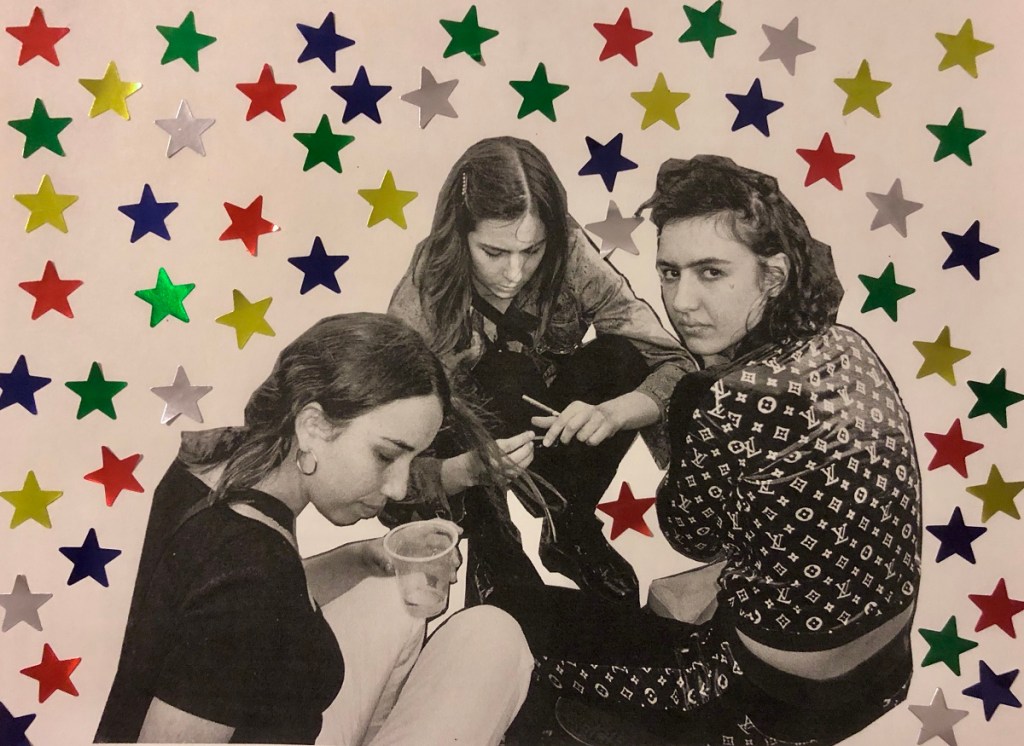
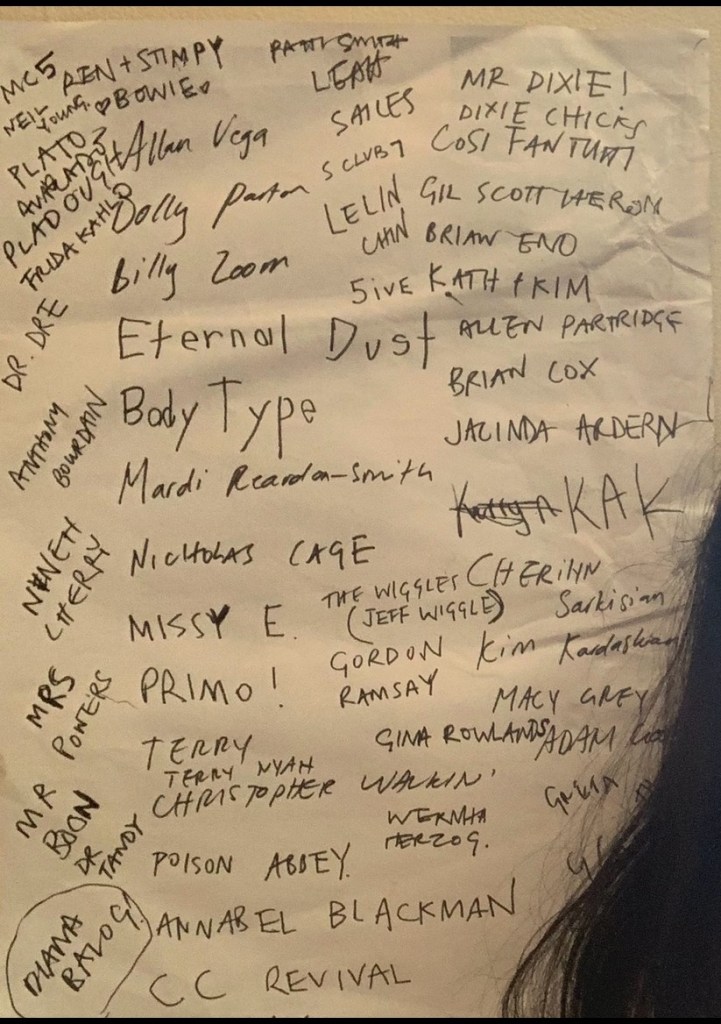
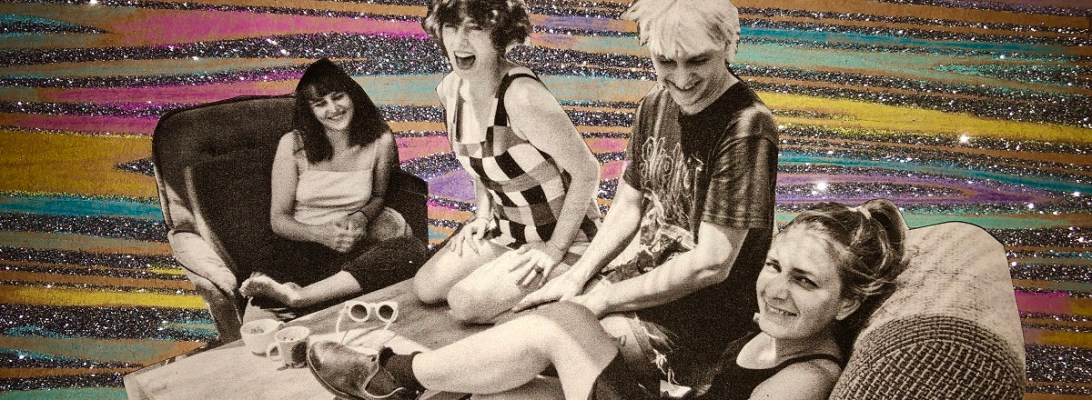
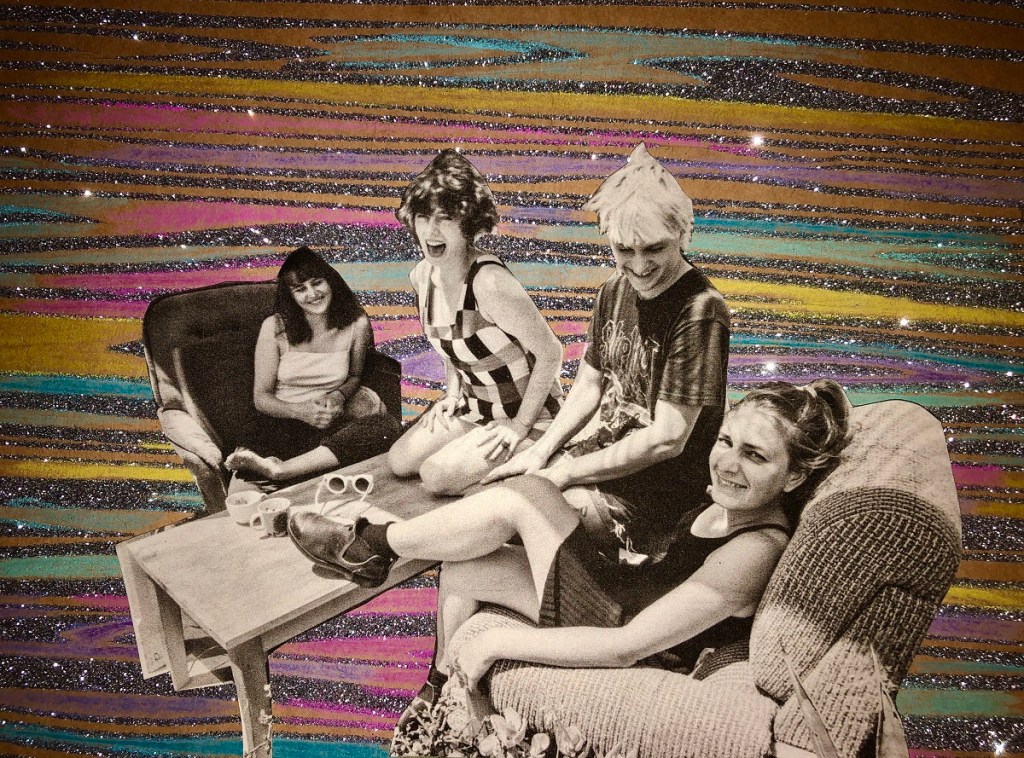

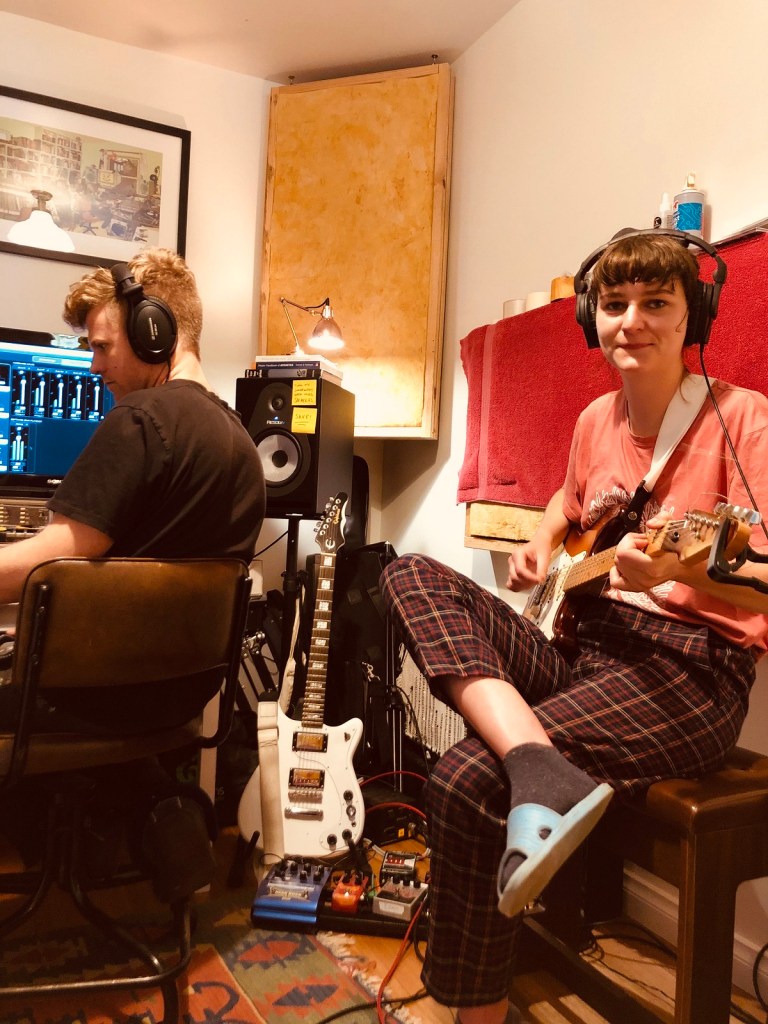
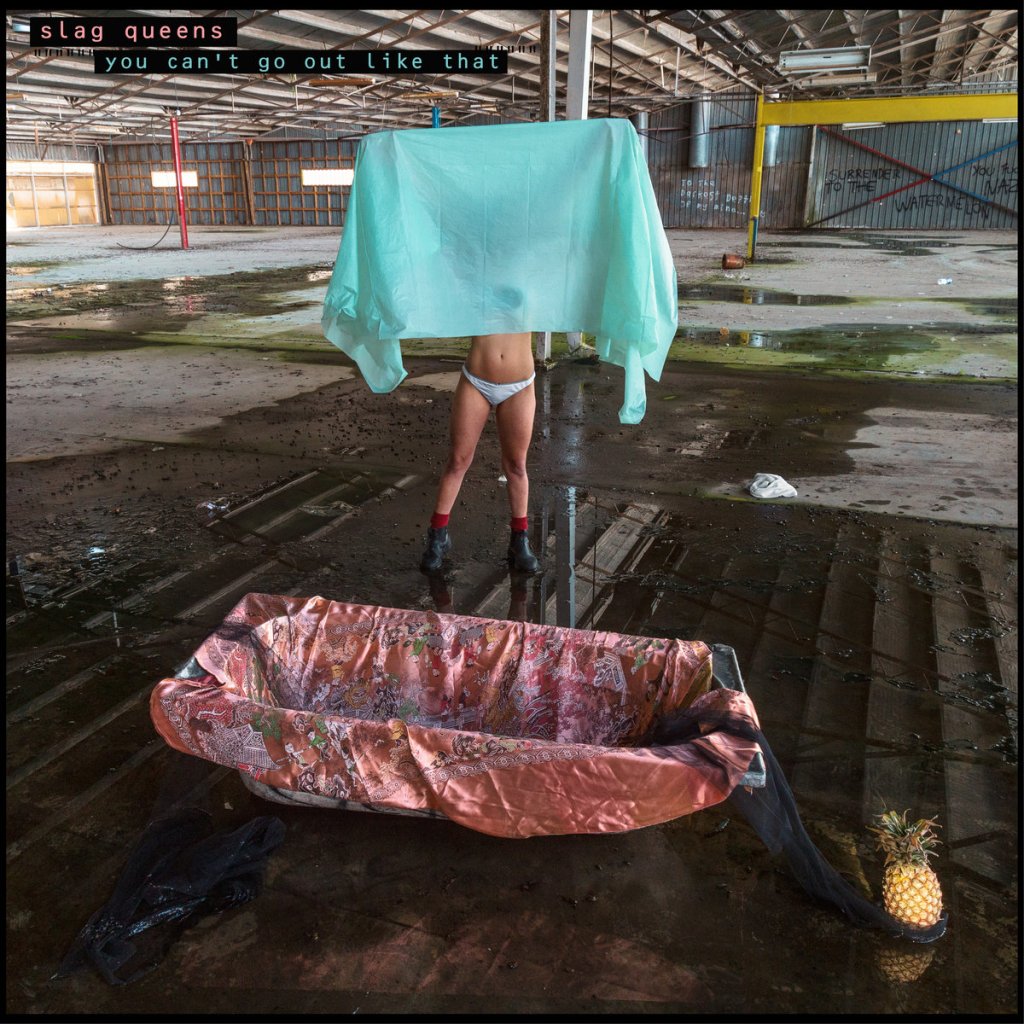
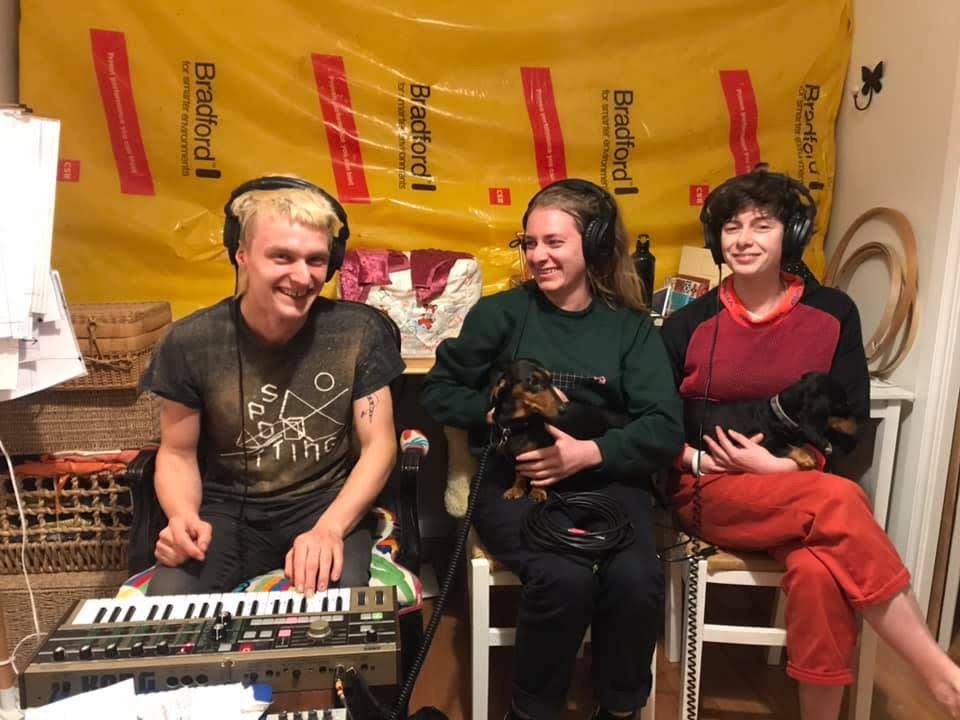


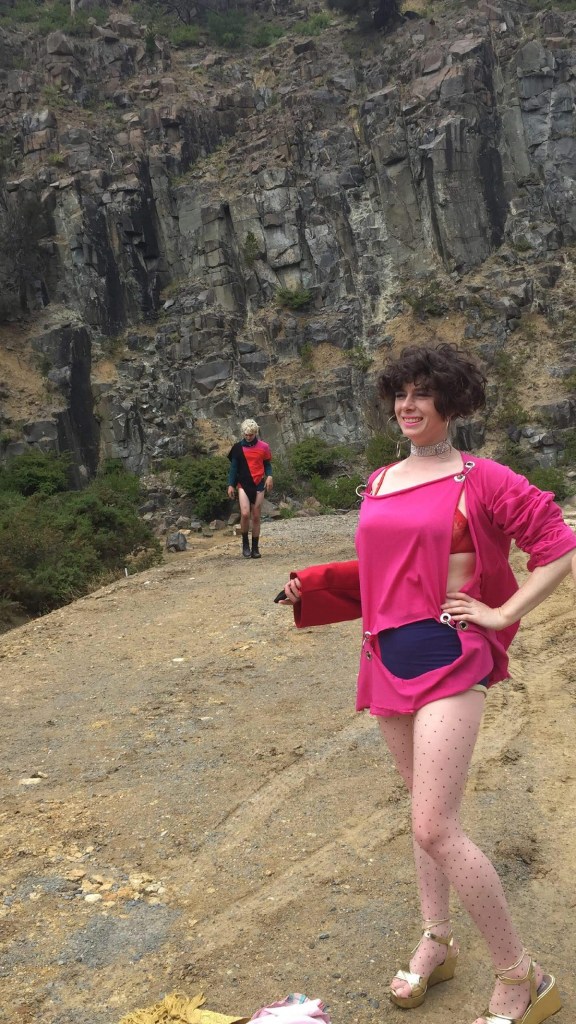

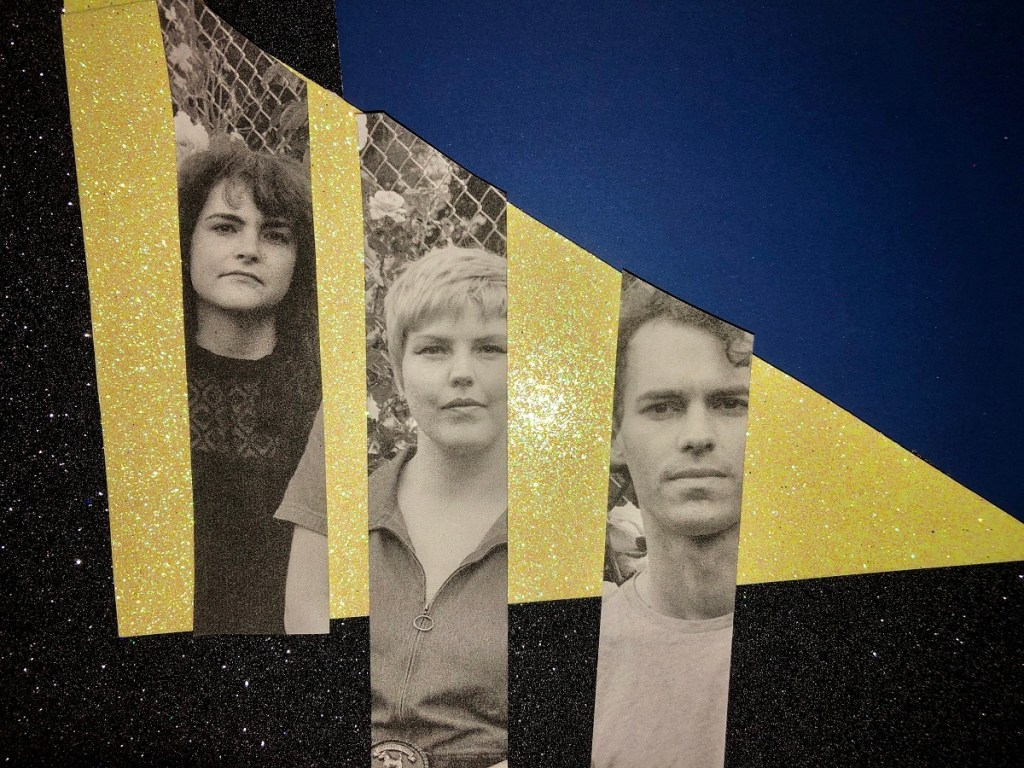


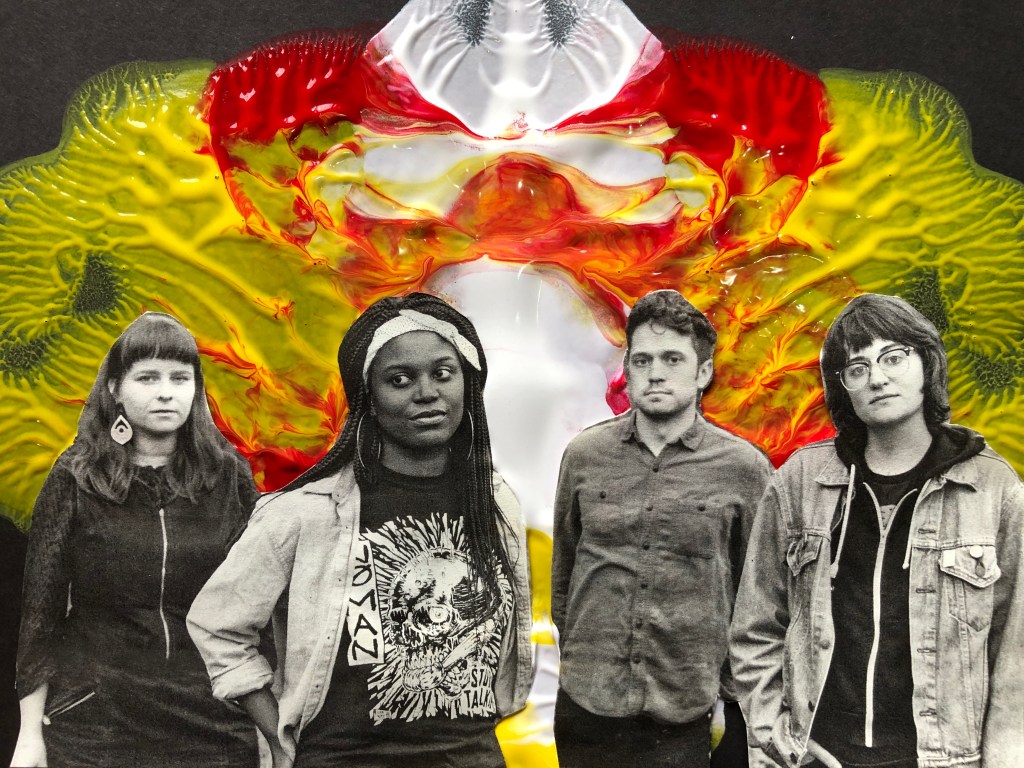


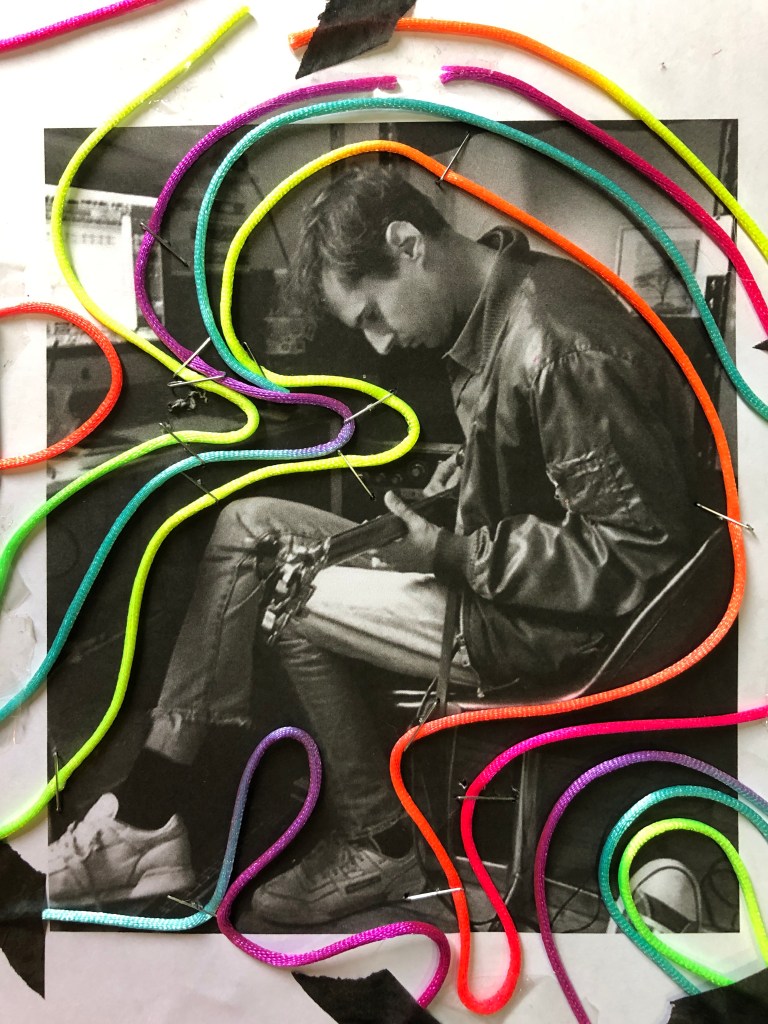
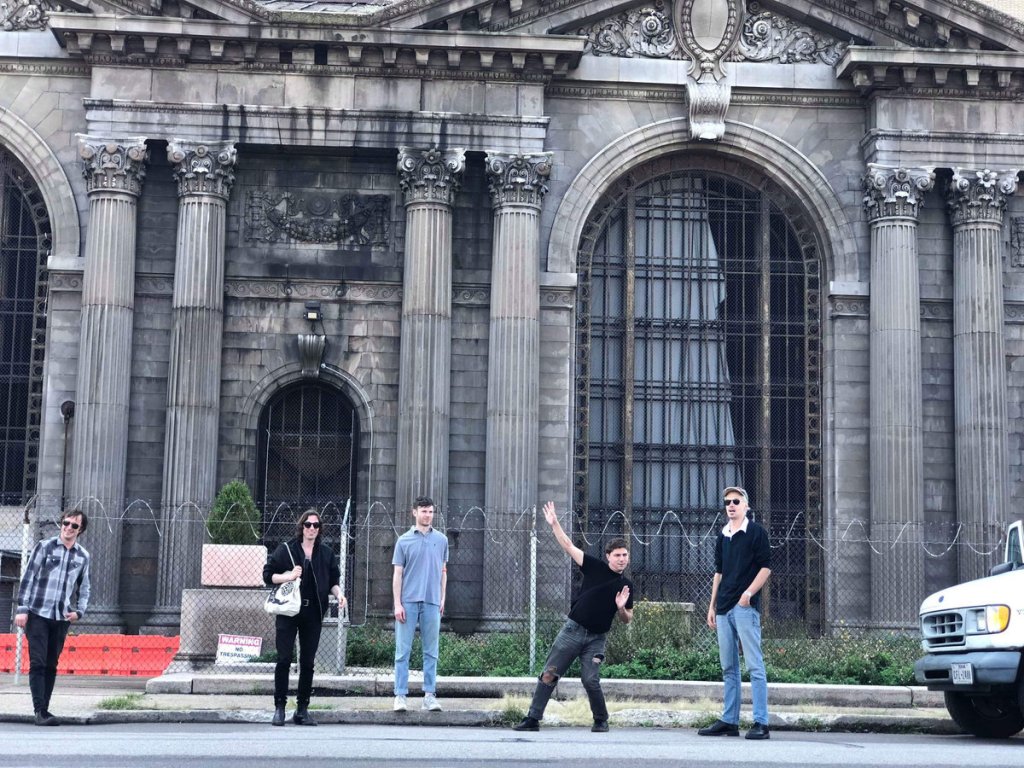
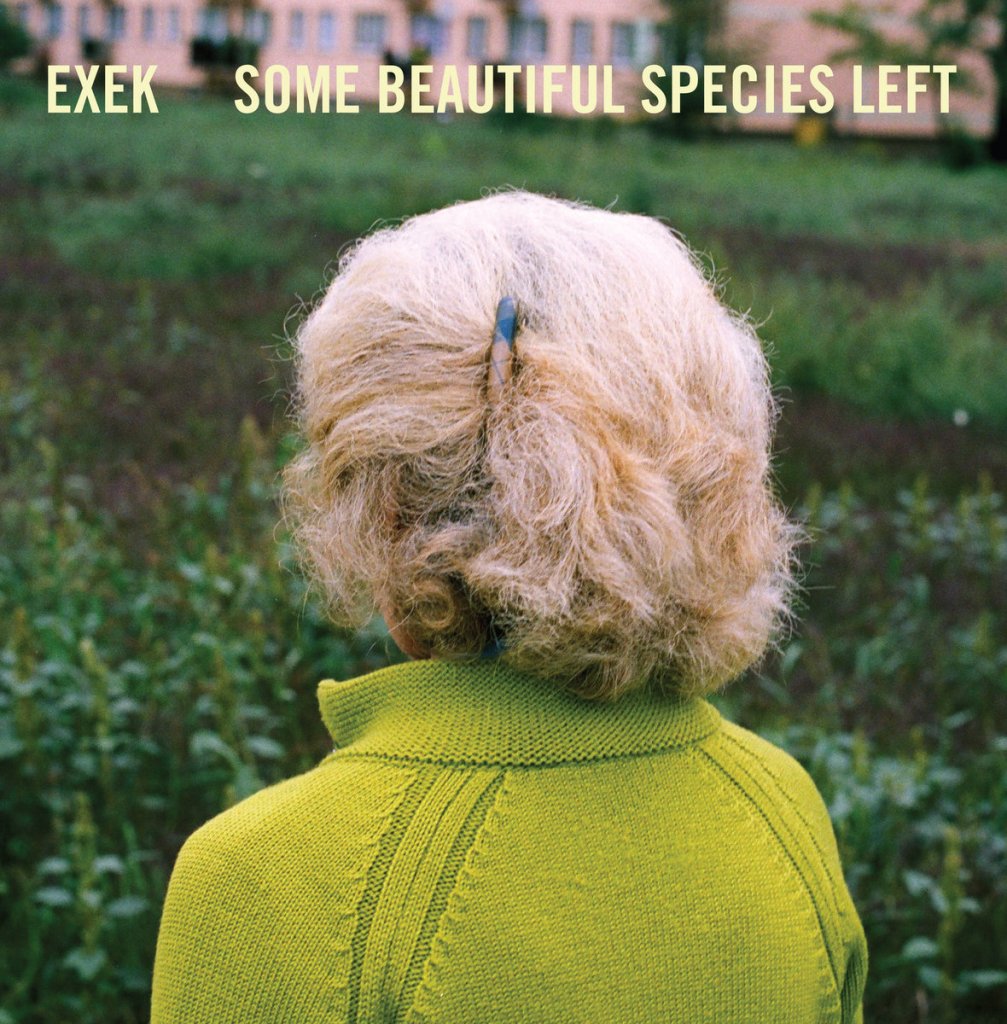

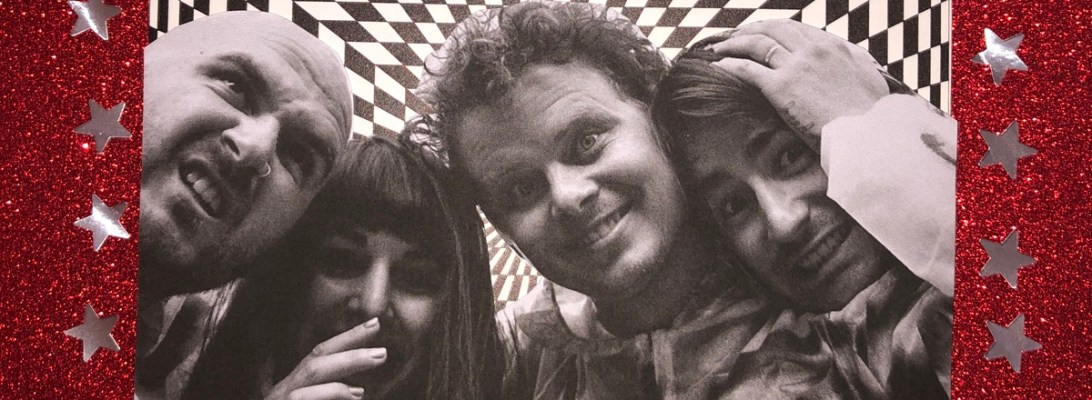

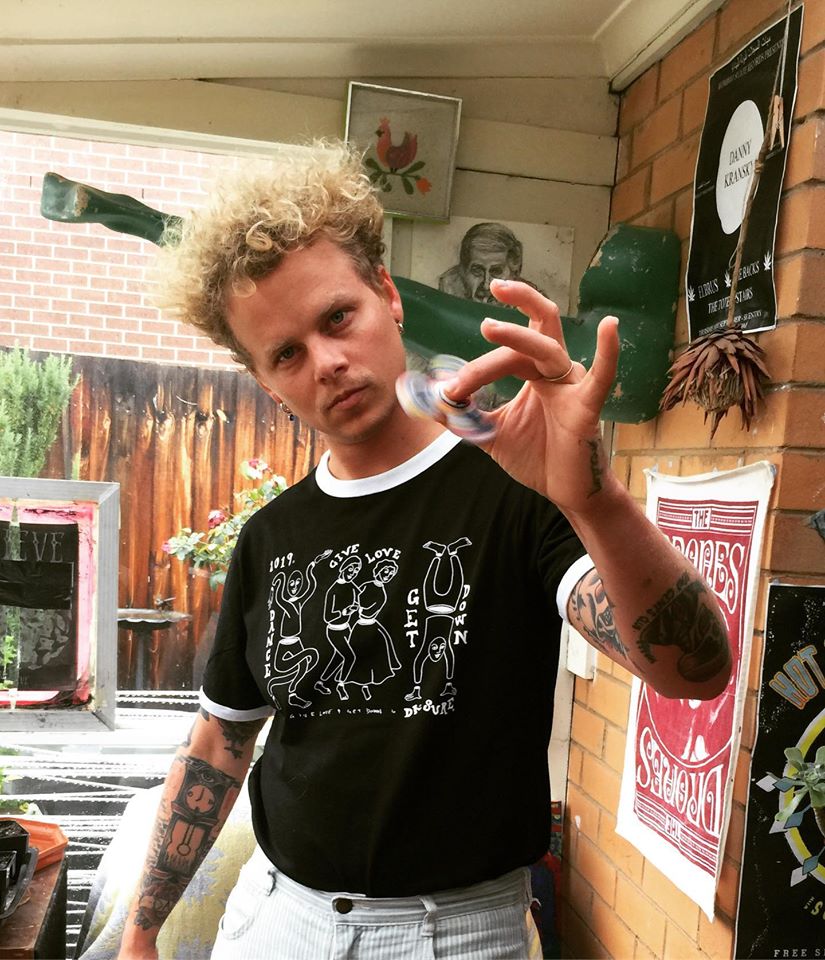
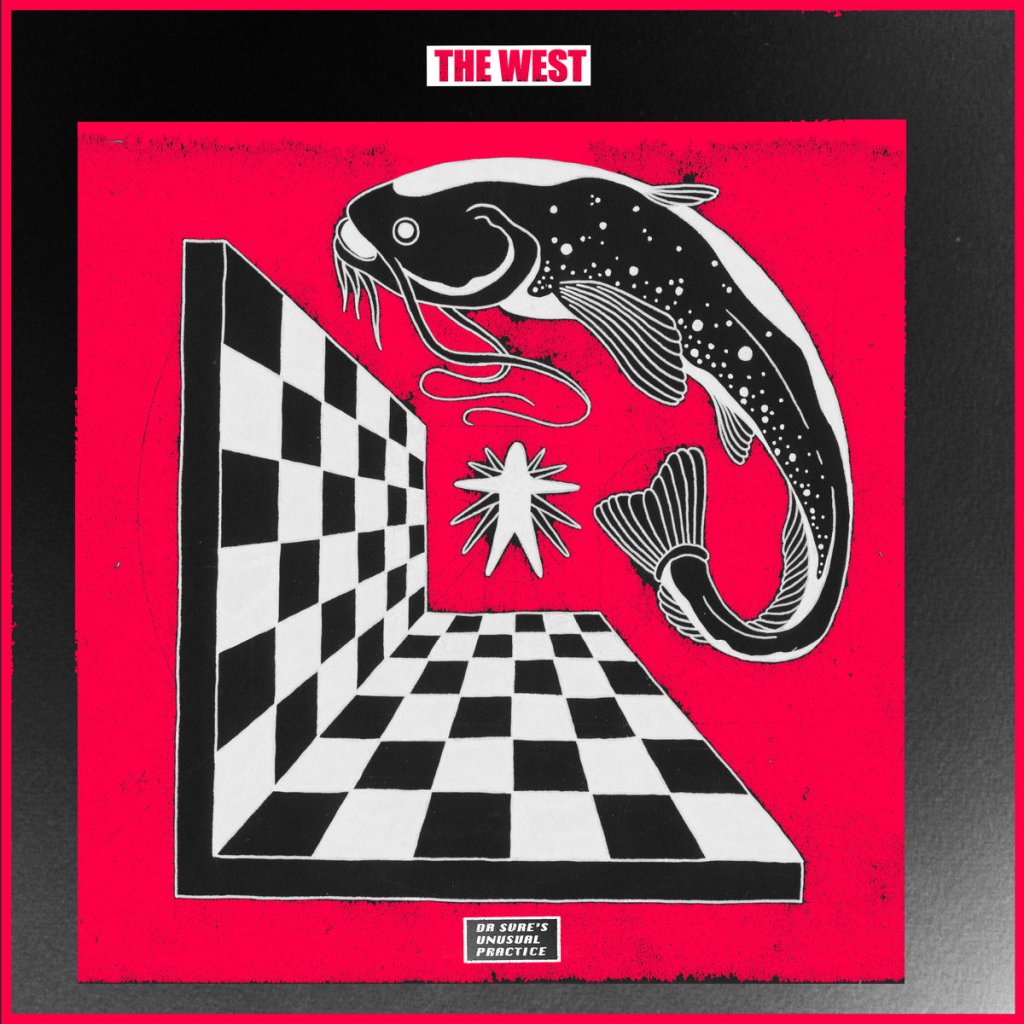
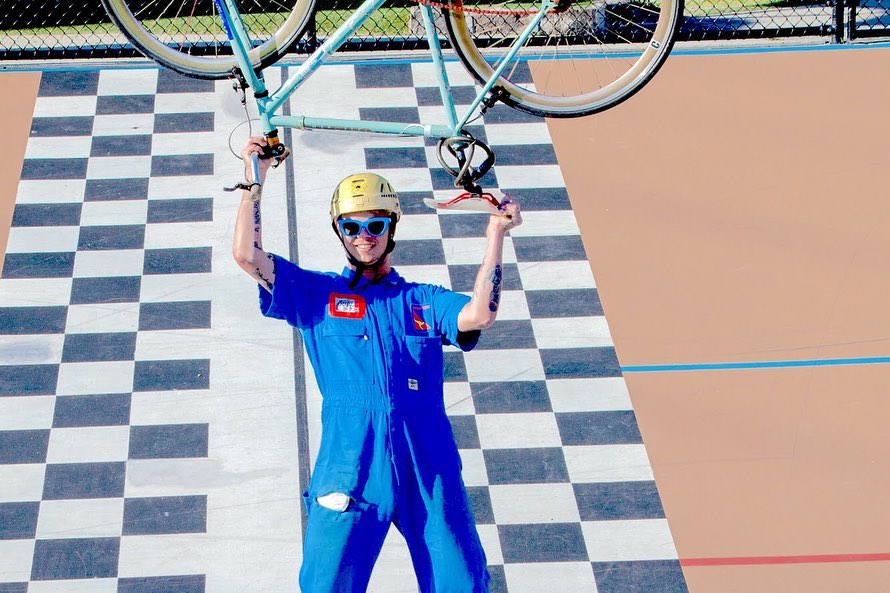
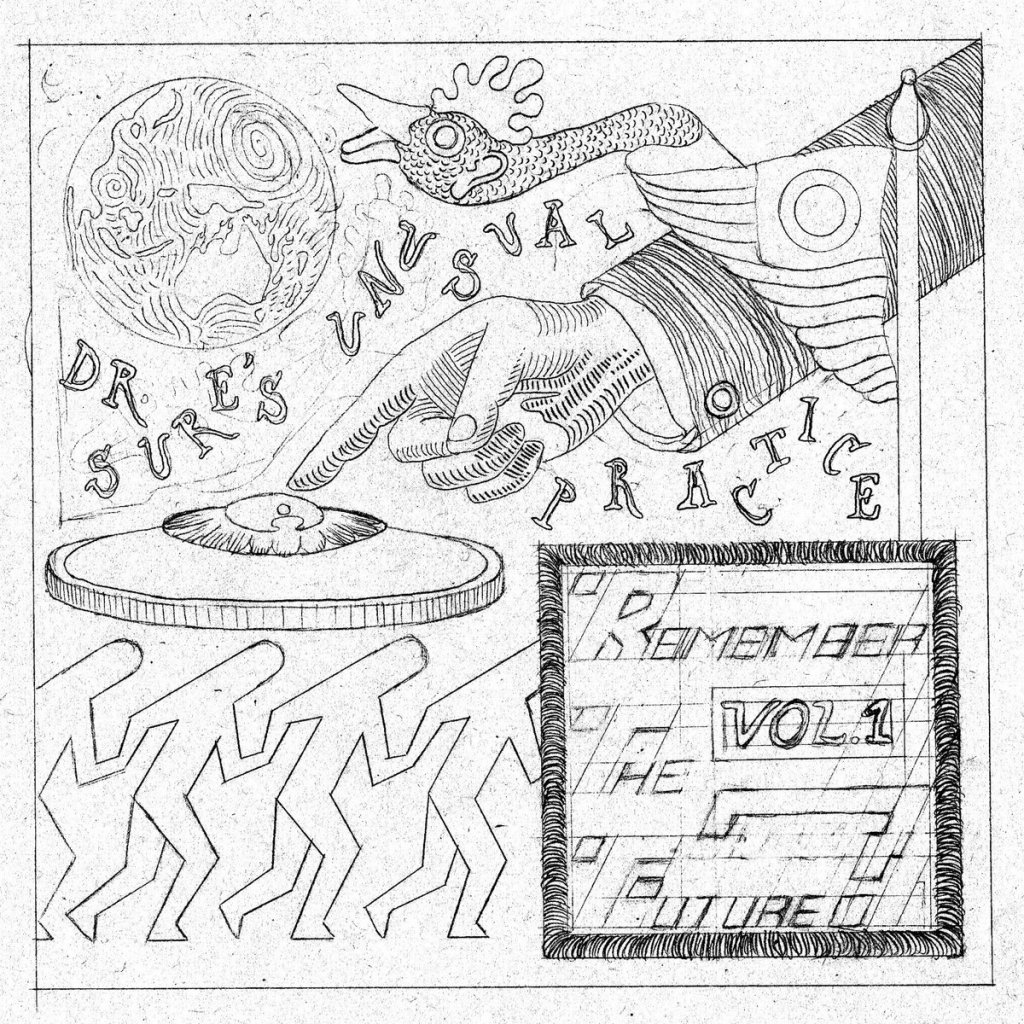
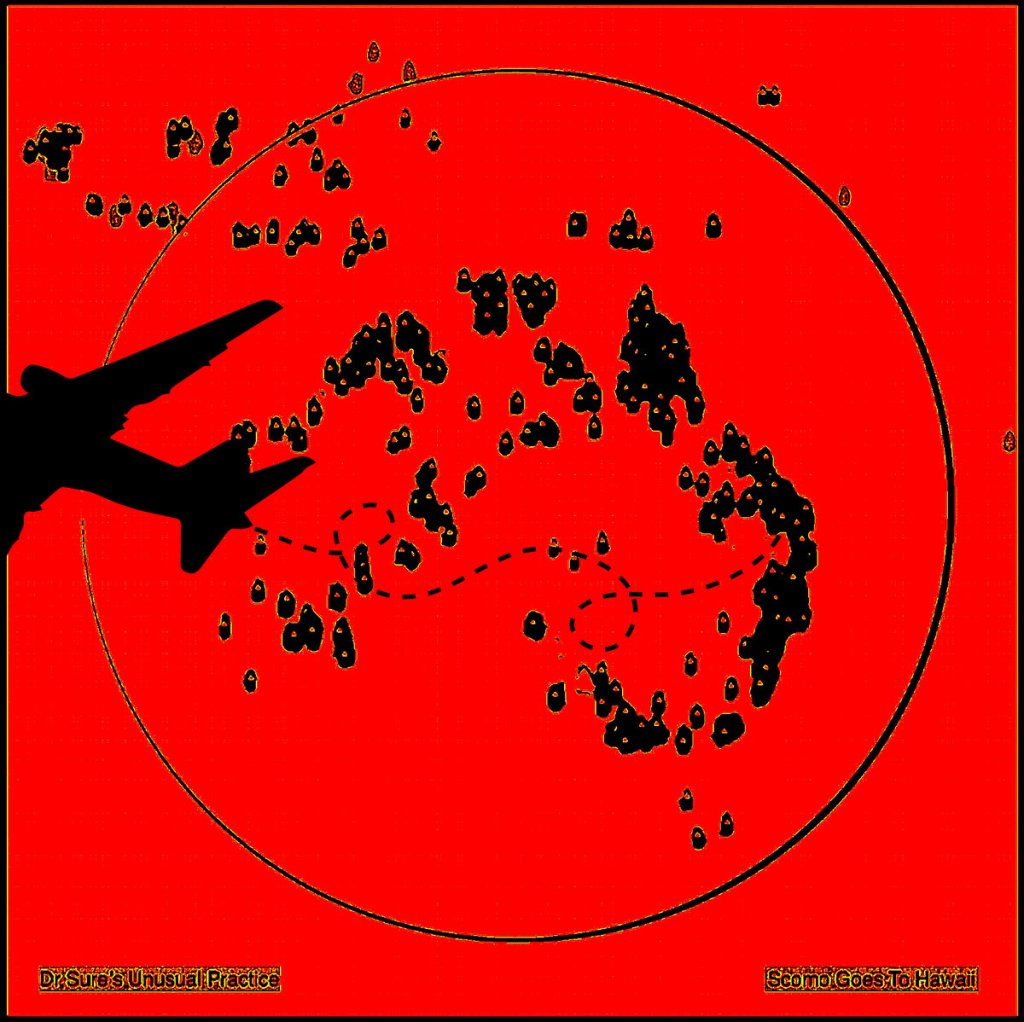
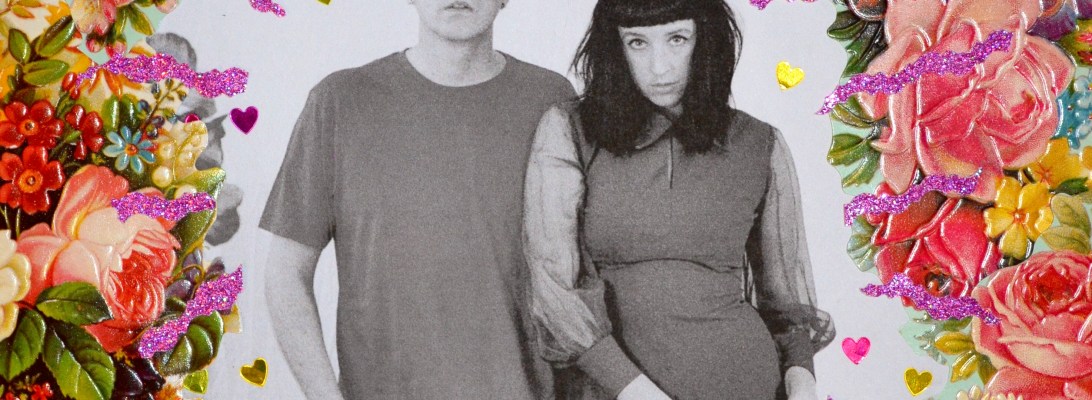
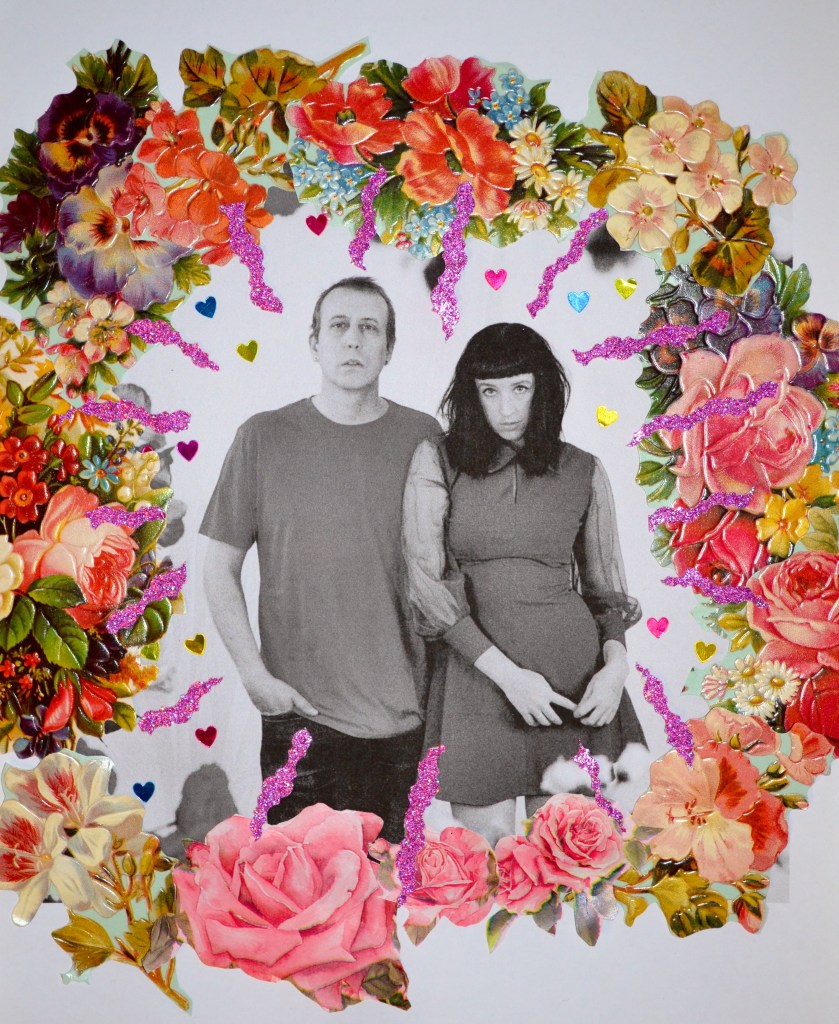
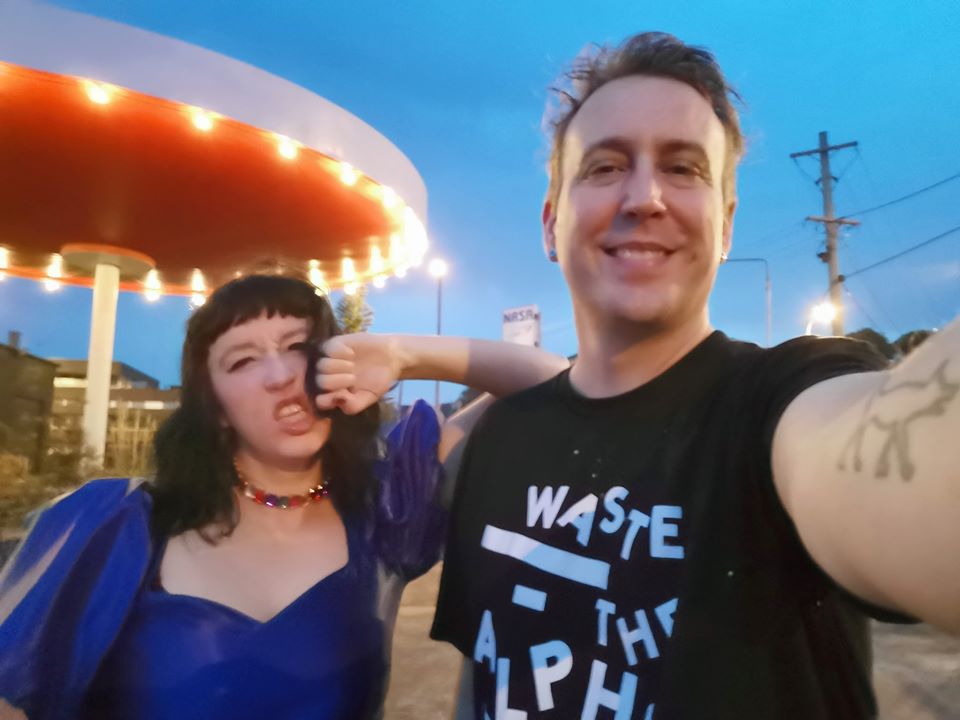
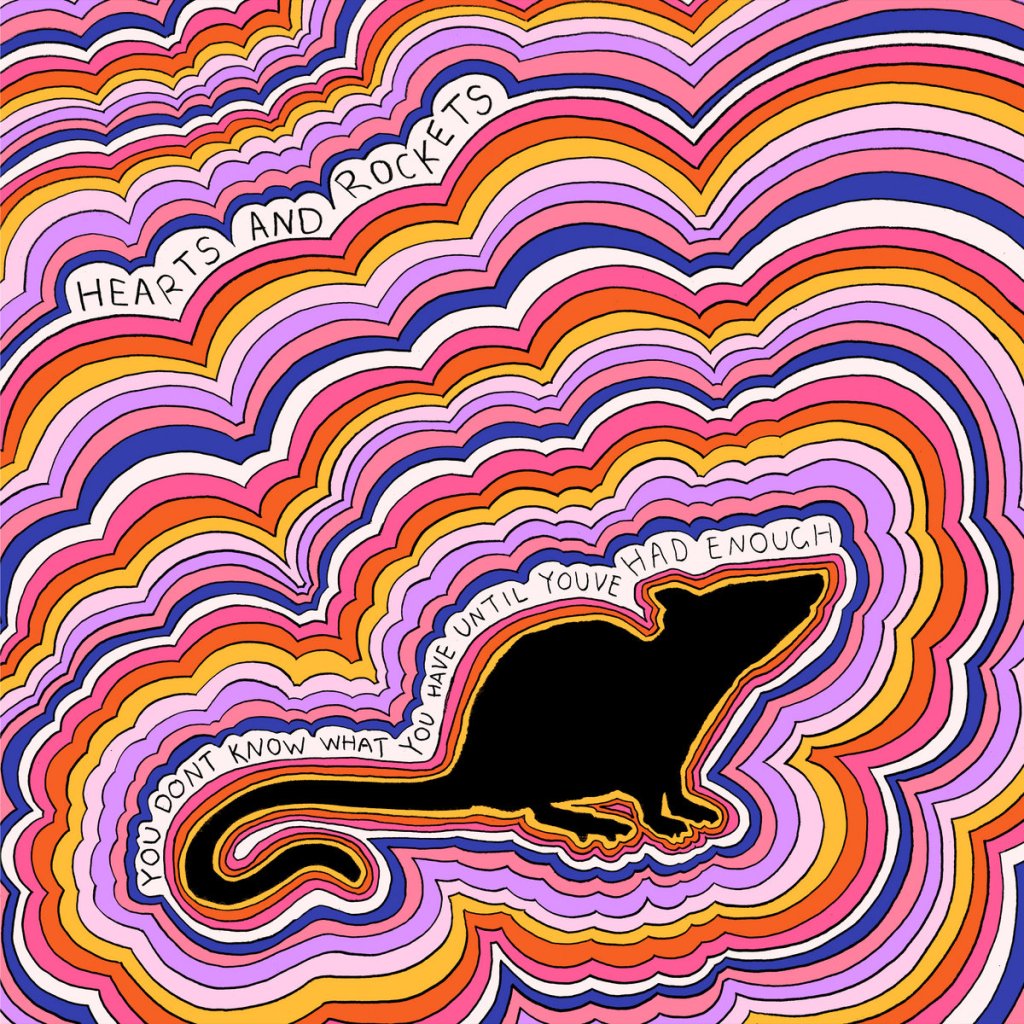
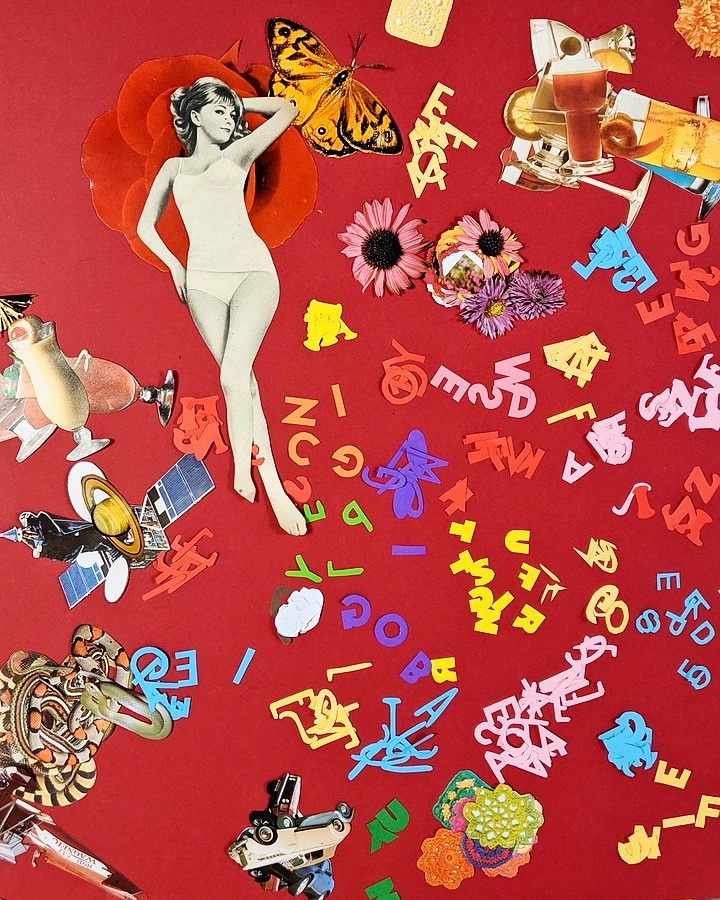
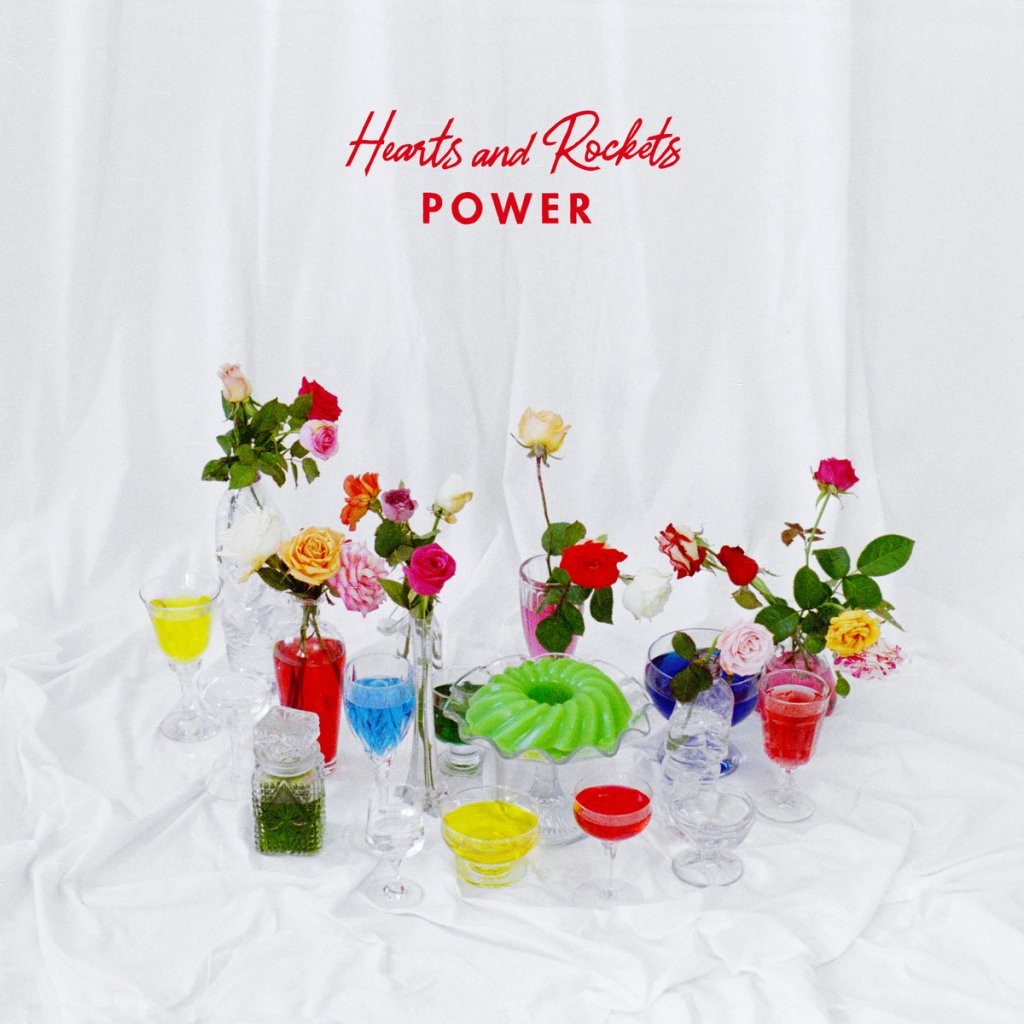
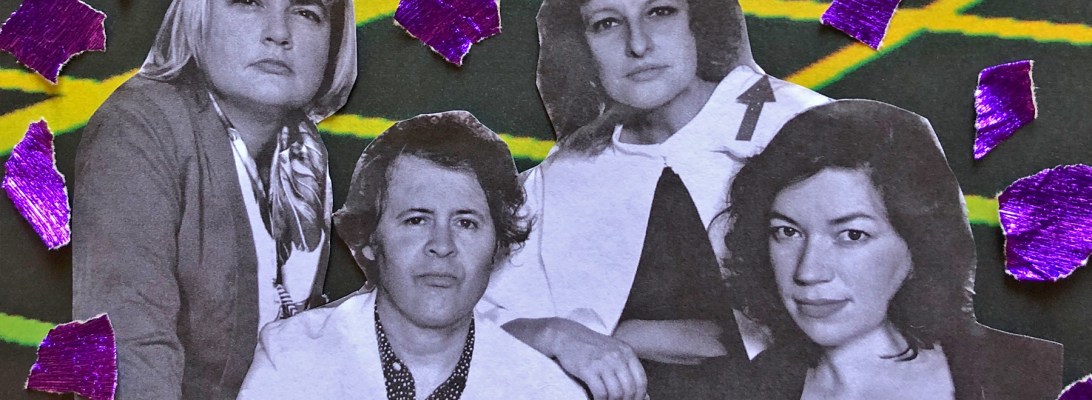
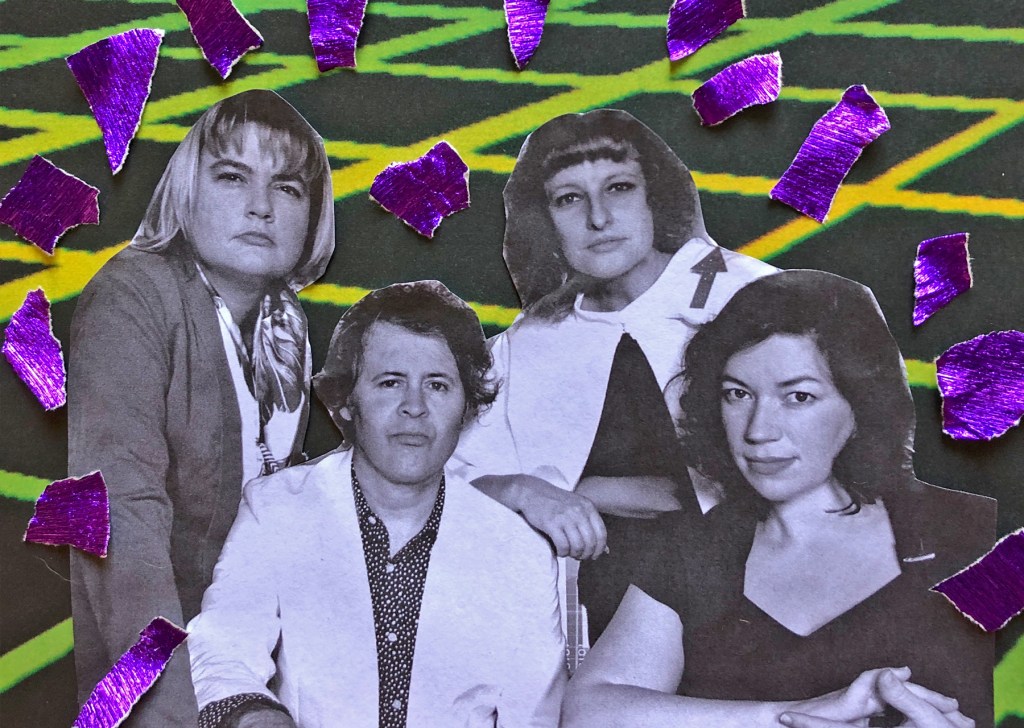
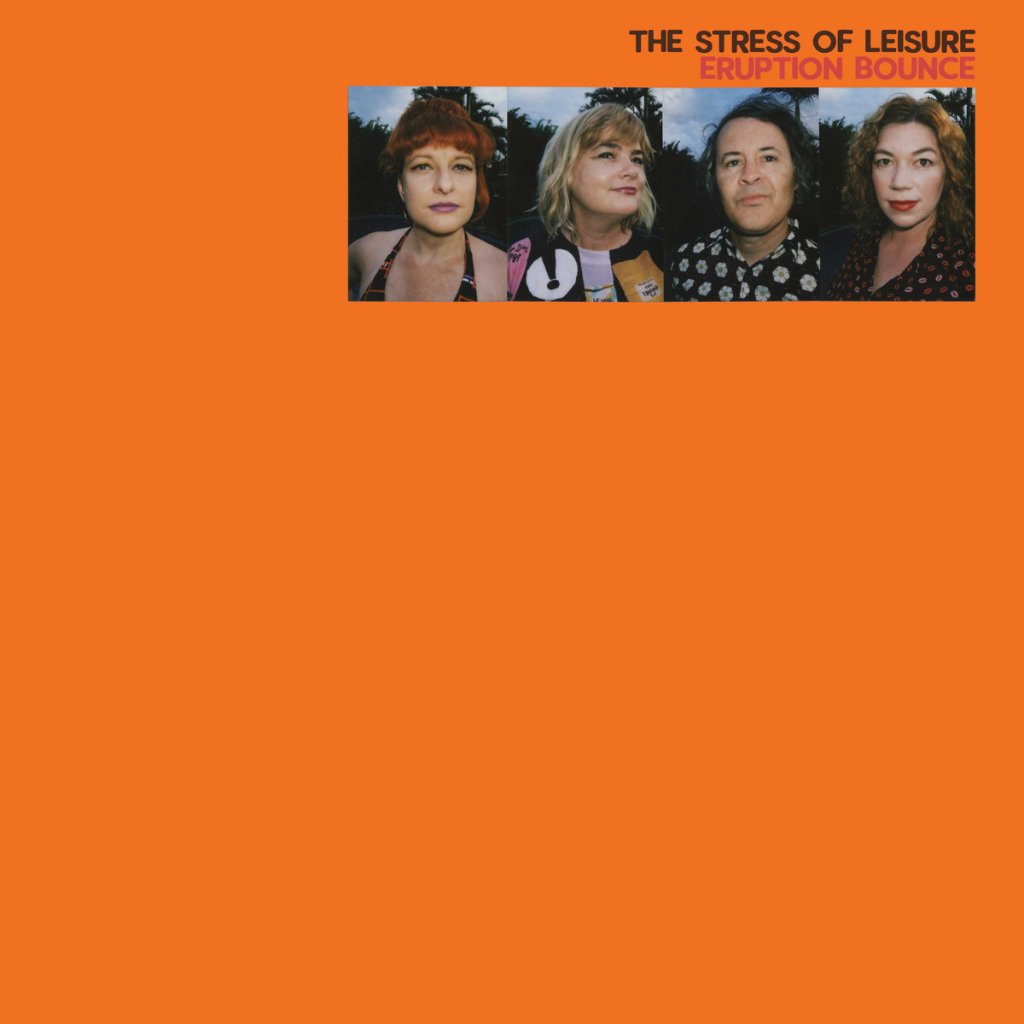
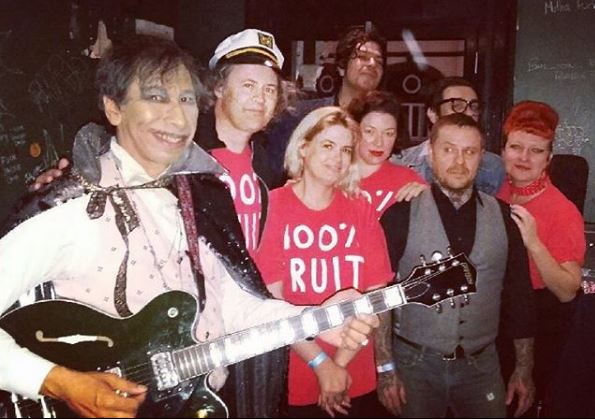
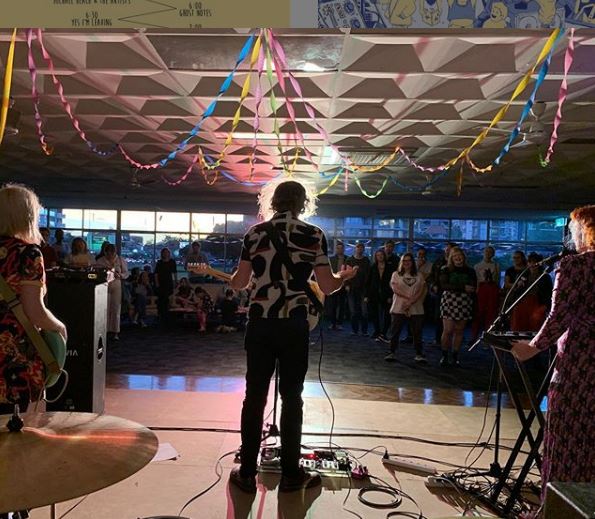
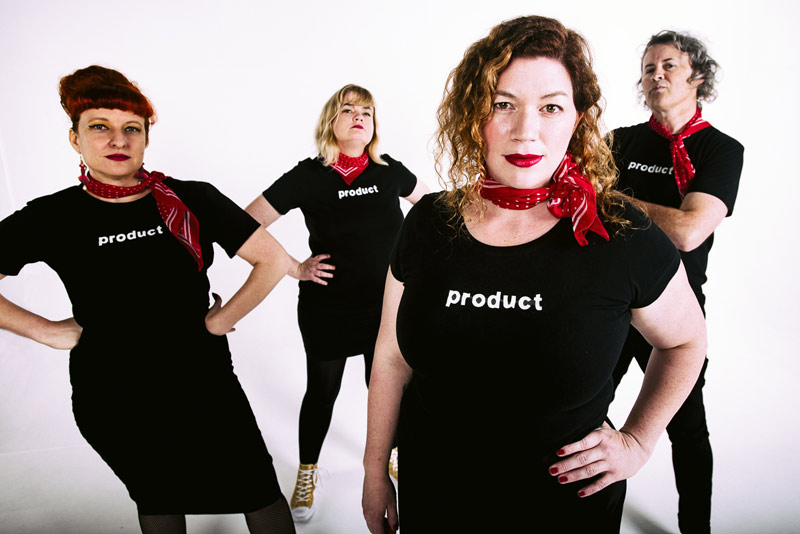
 Gimmie Gimmie Gimmie Zine