Armour, 100% and Bloodletter’s Lena Molnar: ‘I’ve always been a somewhat confrontational person’

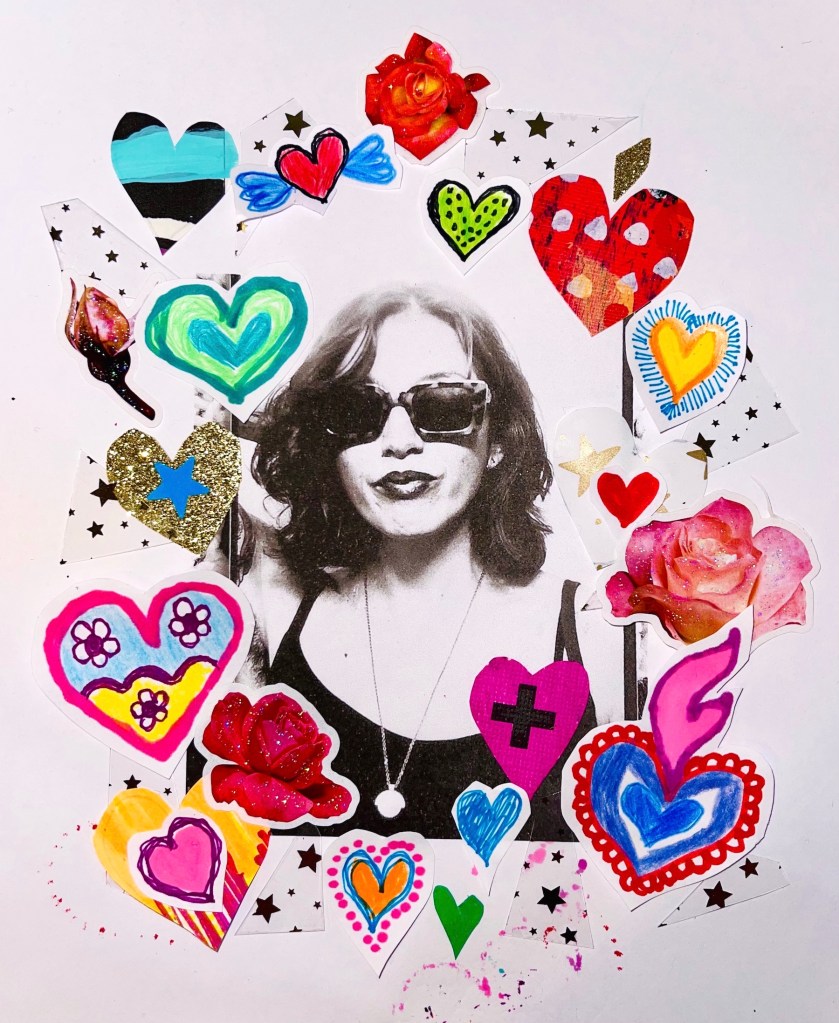
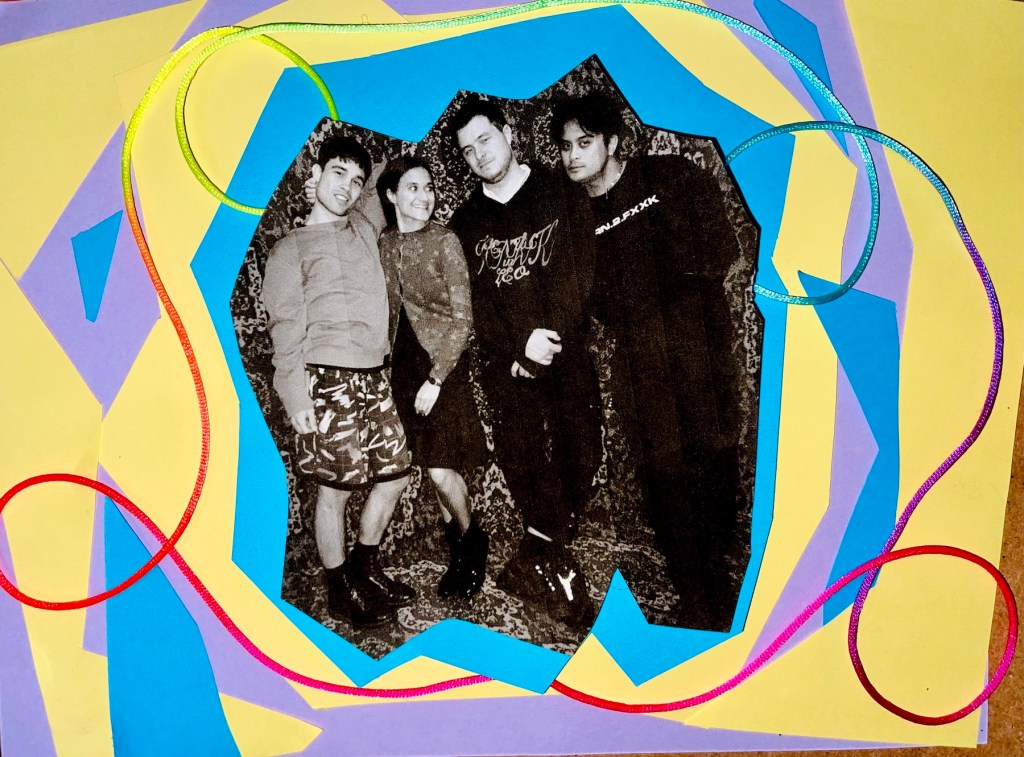
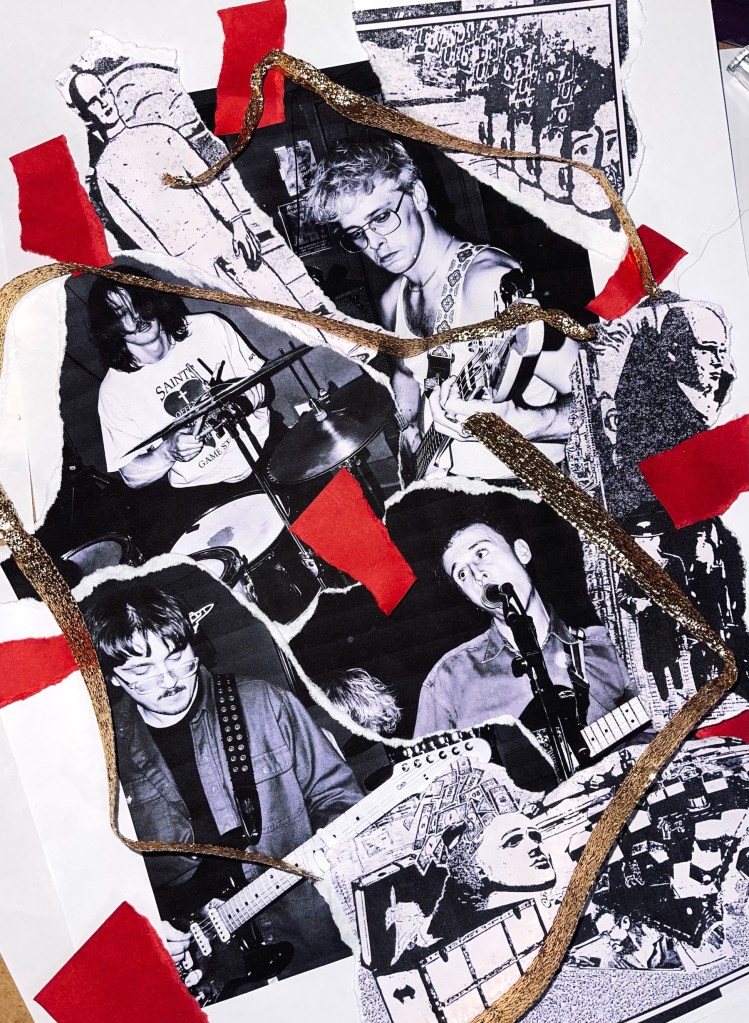
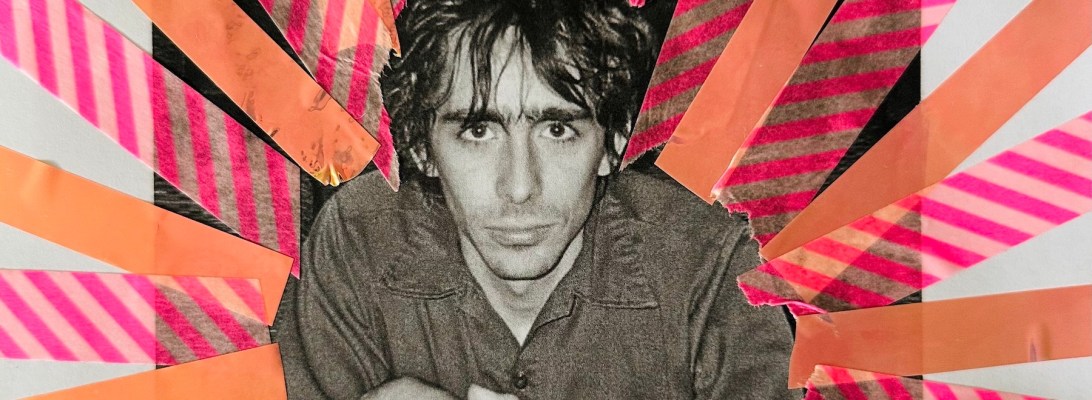
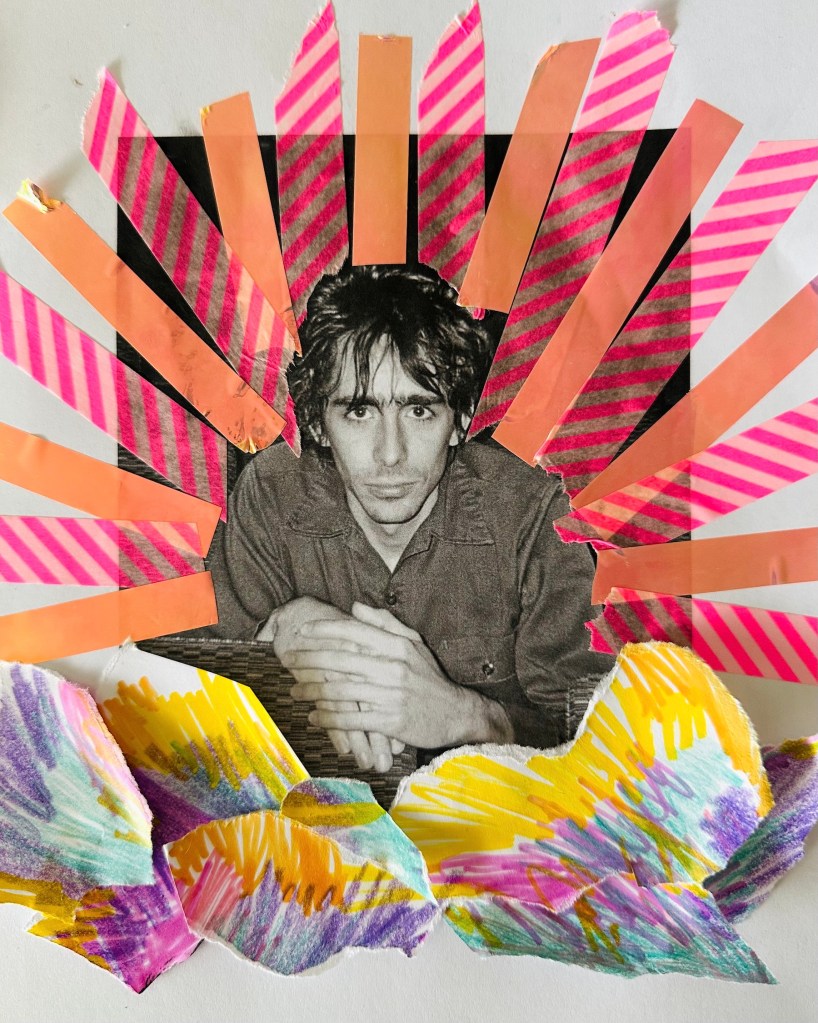
Handmade collage by B

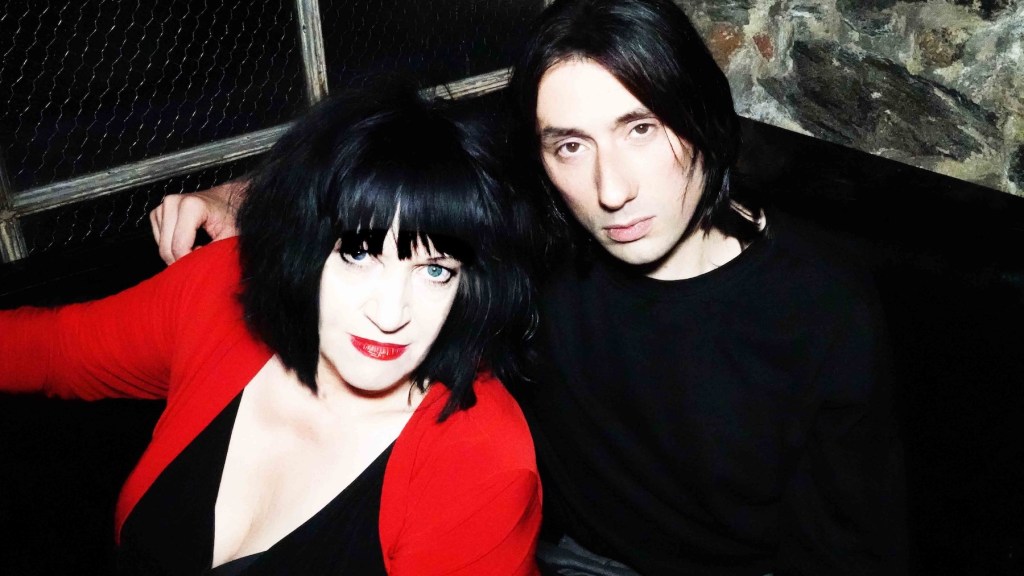
Lena is a force of nature—an advocate, researcher, and community builder whose work spans music, activism, and disability justice. From creating zines to process grief to putting on shows that strived to reshape Meanjin/Brisbane’s punk scene by prioritising non-male artists, to her current efforts in preventing violence against women with disabilities, she is driven by a deep commitment to change.

She’s not afraid to talk about hard things like death, power, and systemic inequality. Lena challenges the status quo through grassroots organising, academic research, and award-winning advocacy, carving out space for those too often overlooked.

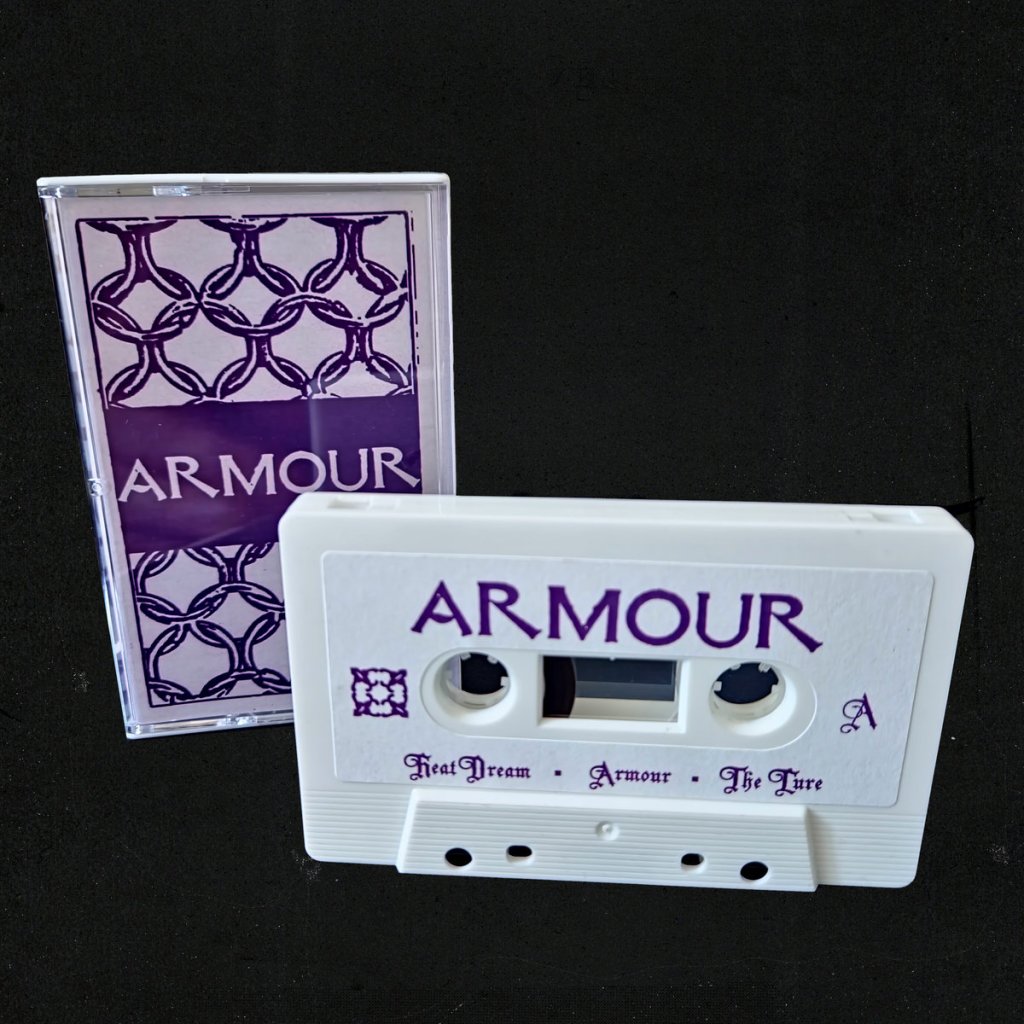
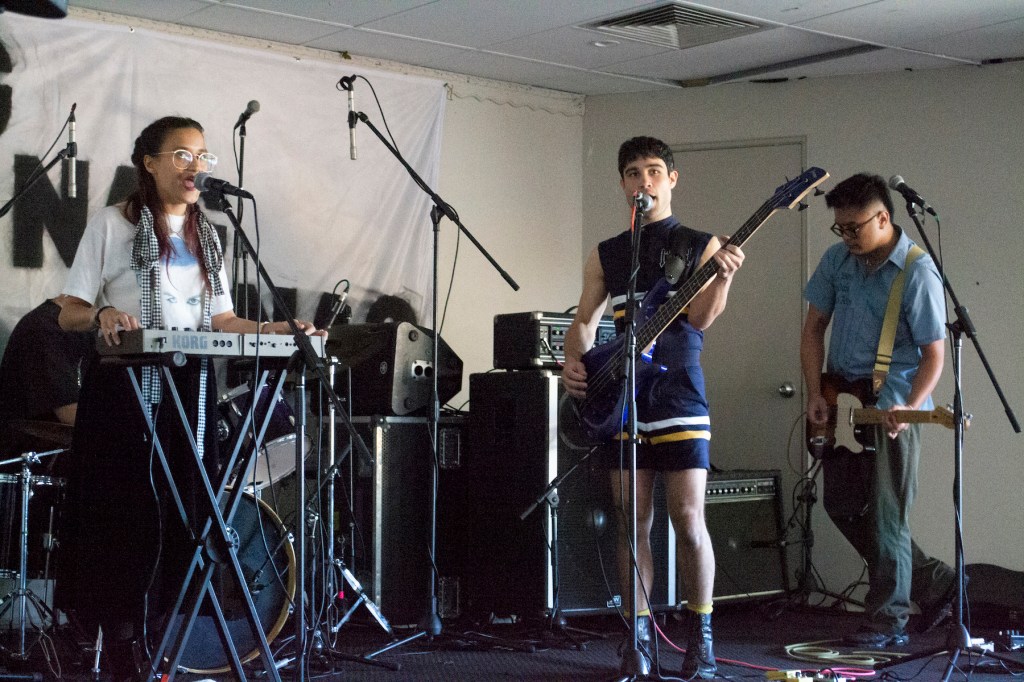
In this conversation, she reflects on loss, activism, and the ongoing evolution of both herself and her communities. Gimmie also dives into her musical journey, creative philosophy, progressive punk ethics, and the themes behind her projects—including her latest Naarm/Melbourne-based goth-rock post-punk band, Armour, as well as 100%, Bloodletter, and more.

 LENA: You’re a really good writer! 

GIMMIE: Thank you! I’ve been doing this for a long time—30 years, in fact. For a really long time, I didn’t believe I was even a writer. I doubted myself because I used to cop so much flack from people telling me I couldn’t write—mostly from guys in the scene. I was actually told that I should go back and pass high school English, along with so many other snarky comments that constantly put me down.

I used to get upset about it, but then one day, something changed for me. I realised: hey, I’m doing what I love, I’m having a lot of fun, I’m making these meaningful connections and doing work that means something to me. I feel like I have purpose.

LENA: There’s a couple of things I want to speak to there. I think you’ll just end up doing the thing that you want to do, regardless of what people tell you or say is the right way of doing something. If you feel good doing it, you’ll just keep on doing it or find a way to do it, because you feel bad when you’re not doing it.

You’ll feel like you’ll be doing it in some way—either professionally, in your own way, or by finding an outlet to do it, like a zine, writing a book, or whatever. Or you’ll just be having those conversations anyway. I’m speaking about you, but that’s the same for doing some sort of art, having a creative practice, or finding whatever your thing is.

If you’re a creative person or have some outlet, there’s always going to be people—especially when you’ve got some sort of marginalised experience—who tell you, ‘nah, the way that you’re doing it is not the way; it’s not my way.’

But if you do it from your heart, it doesn’t matter what the “right way” is. People are going to connect with it. If they connect with it, then it’s going to foster your own community and your own platform. That’s how you know it’s the right way, regardless of what the outlet ends up being.

Whether it’s through a zine, a book, a magazine, a piece of journalism, or even just using the radio or whatever, you’re obviously really good at drawing out conversation and stories from people. You have your own storytelling practice, and that’s really important. Like, fuck the correct writing conventions. People engage with how you tell stories, Bianca. It’s so cool.

Thank you. I just really care about the people I interview. I would never speak to someone whose work I didn’t find interesting or whose work I didn’t enjoy. My time is really limited because I do so many different things, so I have to just focus on what I really love.

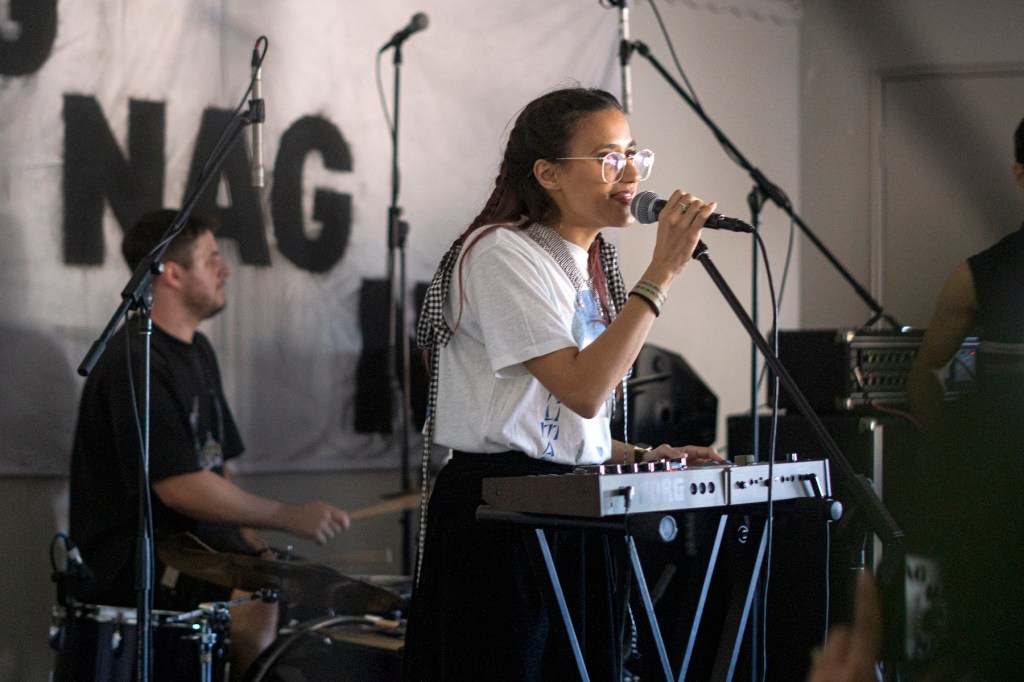
I’ve been wanting to chat with you for ages—even as far back as when we saw you at Nag Nag Nag. I especially love your band Bloodletter and your earlier band, Tangle. It’s been really cool to see your evolution as a creative and how one thing informs the next. It’s the coolest thing to watch people grow.

LENA: Thank you. It’s really special that you mentioned Tangle, not my first band, but one of the first bands that played a lot and I got to do a bunch of things with. It’s nice that you can see the connection between what I was doing then and what I’m doing now. One of the privileges of staying in the creative arts community, like punk or any underground scene is seeing the beautiful ways that people change and grow, but become more and more themselves. That’s just an honour to grow up together in the different ways that we do. 

In my experience of community, I’ve seen that sometimes people don’t want things to change—particularly in the punk and hardcore scenes. There’s that other side of things where, when people try to grow and evolve, others want to pull them back, saying, ‘Hey, no, but this is cool. Let’s just stay here.’

LENA: I’ve definitely felt that in many different ways, like with regards to style and genre. Especially in hardcore, there are very fixed ways of thinking. I have a respect for that in some regards, but also, I am not held down to any preconceptions that there’s a certain way to be—for me, at least.

It’s actually quite unhealthy for me to think that I have to be a certain way to be authentic or to be, like, quote-unquote, punk or whatever. That’s sort of the antithesis of how I relate to creative practice and the subculture that I’ve grown to love and be a part of. I wouldn’t want to hold anyone else back that way, but I understand why people sort of feel that way.

I feel it’s really important to hold things down in a particular way. But yeah, it’s a devil’s bargain of, yeah, these are the things that keep us safe and the logics of genre or punk, per se, or hardcore, while also it should be about letting people in and letting people be free to be their freaky selves as well.

I read an interview with you where you talked about growing up with punk and DIY. You mentioned that, in your youth, you noticed conflicts and approaches in hardcore and heavier music that were a little at odds with things in your life.

LENA: I have an interpretation of a punk ethic that is very progressive, very open, and about changing and supporting people to change while being accountable as well. There’s an openness to conflict in that sense, where conflict brings about disruption and change.

But there have been things that have happened in my life where people are very resistant to that kind of accountability—especially because of their own behaviour. These situations have been quite damaging within communities, and it’s severed ties due to the inability to communicate or because of what’s led up to some really poor choices. Yeah, violence and abuse within interpersonal relationships and smaller scenes in communities.

To me, that’s at odds with my personal ethics, which I drew from the people I had the privilege of hanging out with early on when I was coming into punk. That’s really informed my entire life. But I understand not everyone sees punk—or lives in the world—providing that kind of ethos.

And yet, not everyone has the same viewpoint as me, and that’s totally fine. I live in a community where folks don’t all have to agree. But, if you don’t agree with people, what do you do about that? 

It seems like it’s getting harder to have these conversations, even just in everyday life, because everyone is so this way or that way. I’ve always thought that opening up a dialogue with someone is how you can actually start to affect change.

LENA: Totally. If you can’t talk about it, then you probably can’t do anything about it. A lot of people are afraid of being wrong because they think that means they have to change, or that they have to do something that means their way of thinking hasn’t been right. It’s too difficult for them. And that’s not just a punk thing. Every community suffers with that. It’s very nuanced. There are some really beautiful people in our community who are quite open to having these kinds of conversations. I’ve been inspired by them throughout my life. I call a lot of those people my very good friends.

Was punk scene the first community that you came to? 

LENA: I grew up in a household where I had family around a lot of the time. There were a lot of folks who had migrated from the war, in a community with a lot of people who were struggling in different ways. I always lived around a lot of different kinds of people, and my community was always like family—extended family, neighbours.

There were a lot of interesting conversations about ageing and mental health that were normalised very early in my life because of my family’s mixed cultural background. We talked about trauma and death quite a lot, very early.

Those kinds of conversations meant that community was much more of a flexible idea to me: Who’s around you? What are you doing together? But also, what do you need from each other at that time?

I’ve got a really open idea about what community is, but I’ve never been the fixed-group, nuclear-family kind of girl. It’s always been more inclusive. I think that way of growing up has really imprinted on me, it’s a really special way to grow up.

You mentioned growing up where conversations about death were normalised. I know about a decade ago, you did a zine called Good Grief, and it explored grief and loss. I’m interested to talk about this; in the past few years I lost both of my parents. It’s been something that is on my mind a lot.

LENA: I’m sorry that you lost both your parents. 

I’m sorry you’ve lost your dad too. My parents no longer being here is something that still feels really strange for me. I’m not sure if it will ever not feel that way.

LENA: That was basically the reason why my friend Erica [Newby] and I put that zine together. We both lost a parent within a couple of months of each other, and we found that no one except for each other got it. My friends were really beautiful at the time; they tried, but mostly, it was like, ‘If there’s anything I can do,’ or ‘I have no words.’ It was very much like, ‘You tell me,’ like, you do the work. Then I started getting a lot of ‘You’re so strong.’ I’ve been getting that my whole life—‘Look at you go, you’re so strong,’ and ‘You fucking kill it.’ And I’m just crumbling inside.

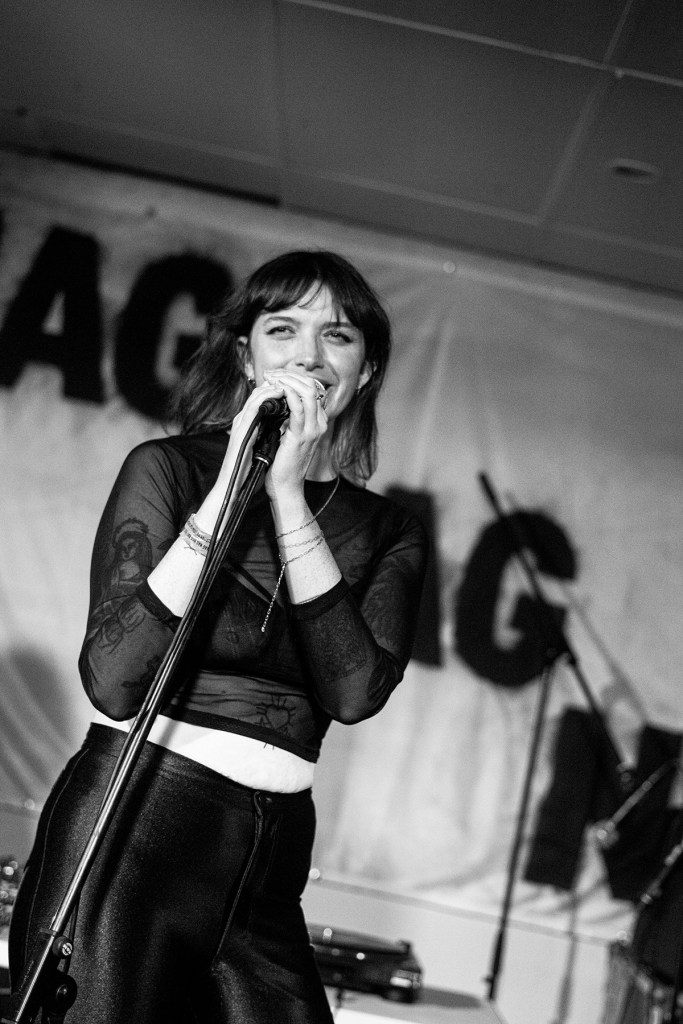
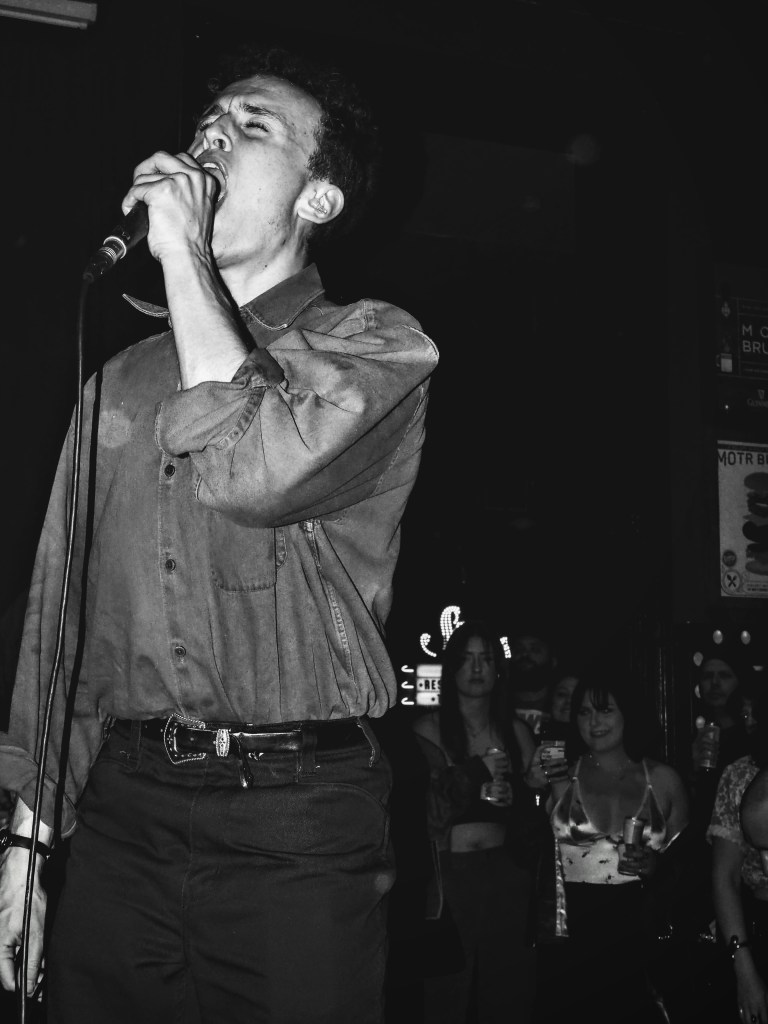
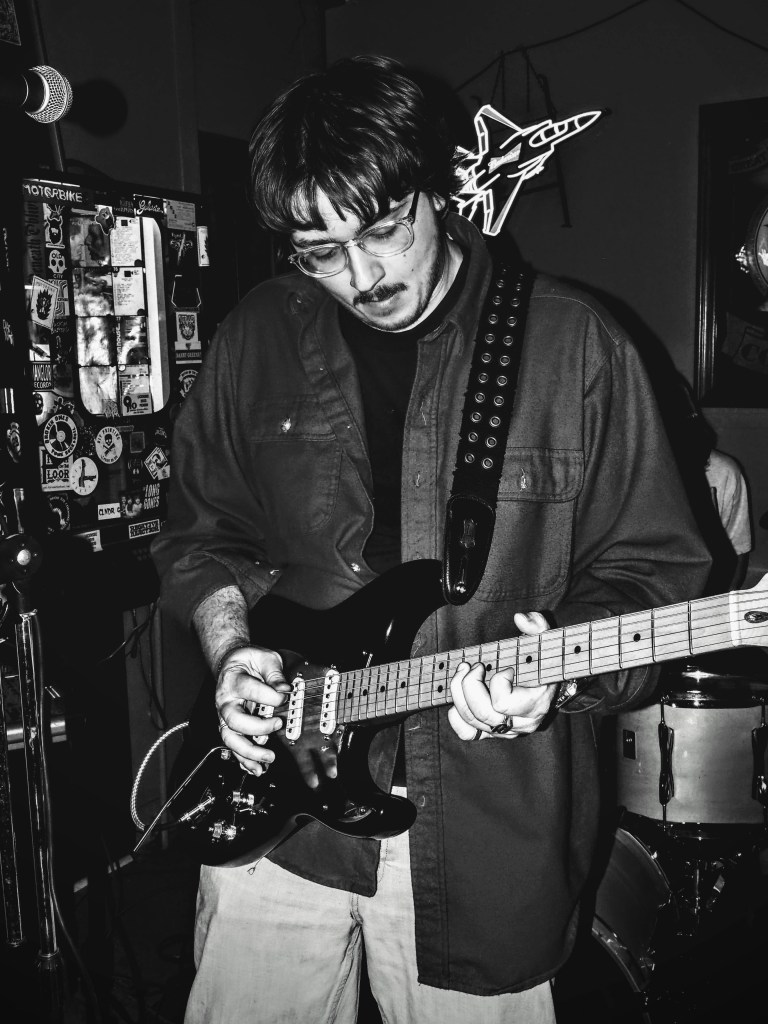
Photo: Jhonny Russell

Same! I also get, ‘You’re always so positive!’ It’s like, yeah, but you don’t see me on my bad days when I’m in a ball, crying and feeling so low.

LENA: I feel like I recognise that about you in the few moments that we have seen each other.

I’ve experienced very deep sadness, depression and crippling anxiety in my life, and in those lowest, low times, I felt no one was there for me, I didn’t have any support despite knowing A LOT of people; obviously that’s changed having Jhonny in my life. But because of those experiences, though, I always try to be there for others and try to remain on the positive side of things. But it’s not always realistic.

LENA: Yeah. And it does damage trying to be like that a lot. I had a feeling that we were gonna talk about death and grief. It’s washed all over me—I’m a death girlie. [laughs]. I’ve always been a spooky little bitch!

[Laughter]

LENA: I guess I had lost people prior to my dad dying; I was 22. But no one so close to me like my dad was. My dad was my best friend. My friend Erica lost her mother to cancer, so it was two very different kinds of grief. My dad passed away very suddenly. I was on the phone to him one day, and two days later, he was dead. Heartbreaking.

Whereas Erica was anticipating the loss of her mother, and that’s also very tragic, as anyone who loses a parent or a loved one over a long illness knows. Both are bad. Especially at that age when you’re still coming to terms with yourself, and everyone around you is still quite young too. In Anglo-Queensland, where we were, people offered lots of prayers but weren’t really sure what to do. So we came up with the idea of doing the zine. We reached out to folks that we knew, and beyond, to submit whatever creative stuff they had about their experience of loss—about what it felt like. We wanted to share that with others so they could gain some insight into what grieving can be like, and to normalise those conversations a little bit at that stage in our lives.

I still have a copy of one of the masters of that zine I made, and I look at it every now and then. I’ve lost people since. We’ve already talked about change, and now we’re talking about death. The only constants in life are change and death. I’m continuously reminding myself of that. I talk about it with my staff. You just have to roll with that—change and death. Those are the constants in life. You can’t be afraid of it. The better you get at anticipating it, but not living in fear of it—living in spite of it and building your life around the choices you make despite these things being inevitabilities—you’ll make better choices.

But you’ve got to be able to support people in their fear of those things as well. Especially folks who aren’t brought up in a way or are unable to come to terms with talking about it. It is scary, and people run away from it. In the disability community, there’s a very close relationship between how people perceive disability and death. We’re living reminders of mortality, and that you don’t have all the strength you think you do. Something could happen to you, and the world isn’t built for that.

You recently won the National Disability Award for Excellence in Innovation.

LENA: My organisation did. I delivered a program through my organisation called Changing the Landscape, which provides resources on preventing violence against women with disabilities. The program targeted a national audience of practitioners in the disability service sector, as well as gender-based violence workers. These resources include videos, posters, and materials based on a 100-page document detailing the rates of violence and what can be done to stop it. They’re beautiful resources that I’m very proud of, especially considering I did a lot of that work just after a significant surgery. While I’m the program manager for that suite of resources, it took a lot of work on my part, but I’m just happy to have been part of such a dedicated team.

What motivated you to start working in that kind of space? 

LENA: Gendered-violence or disability?

Both.

LENA: I have experiences of both. I had trained as a sociologist and did my honours thesis in urban sociology about gentrification—specifically, how people perceive their role in changing public space in a highly gentrified area known as West End. I was really interested in some things that didn’t end up getting discussed in the findings or didn’t emerge from the data. And that’s because I didn’t draw out a particular feminist analysis on the project, which was limited by the nature of an honours project.

So, I then just got into the swing of being a research assistant. But all the while, I was doing activist work on the side.

Before that, I had been doing activist work around gender-based violence, fundraising and learning how to mediate through grassroots organisations. I had been involved in this kind of work for a while. 

After the publication of Good Grief, people started asking Erica and me if we were going to table the zine somewhere or if we were planning to do a distro. At the time, we had no intention of doing anything like that. We just wanted to create the zine and put it out there. But after people kept reaching out, asking us to do more, we realised there was a need in the zine space. We thought about what we would want to do, and we decided to start collecting and distributing zines written by women and queer people to sell at a market in West End.

We started doing that, and then I began incorporating records that were not just from cis men—bringing in women and non-binary people into the lineups. Eventually, Erica didn’t have the energy to keep going, so I continued on my own. Because of my priorities in the music scene, it ended up being a little more music-focused than zines, but I always maintained a bit of both.

This background relates to your question because, in doing all of this, I began booking shows here and there. The key was that there would never be an all-male band on the lineup. As a result, the shows I booked in Brisbane at the time had very creative lineups—something different from what was happening in the punk scene. At that time, it was mostly bands with the same members, and while they were really talented, the shows felt repetitive. Sometimes that’s cool, but when it’s the only type of show you can attend, it becomes limiting. I wanted to create something different.

Every other show I did would be a fundraiser for an organisation like Sisters Inside. I also started selling secondhand T-shirt runs to raise money for Sisters Inside. It became a part of what I was doing—some form of fundraising or activism, mediation, and being that girlie who always had something to say about what was going on and why certain things were such a problem. I became a little bit problematic but just stopped caring.

Going back to my time as a research assistant, after finishing my degree, I had no intention of working in the gender-based violence space. However, when a scholarship came up at RMIT University, it seemed to align perfectly with my skill set. They were looking for someone with experience in visual methods and a background in gender-based violence activism to research how young people engage with social media to prevent gender-based violence. I saw it as an opportunity to do something new, to align something I was already doing with my skillset, and to see what would happen. I had never really thought about doing a PhD, but it seemed like a good opportunity, especially since I was starting to feel burnt out being that girlie in Brisbane.

I had a lot of friends in Melbourne who knew what I was about and wouldn’t make me feel like I was alone. So it just felt like a good time to take the opportunity and run with it. 

When I got to the end of my PhD, I was looking for work outside of academia because I don’t see the point in doing research if you can’t share the knowledge and apply it somewhere. I still feel like that. One of the roles that was coming up was at this organisation that I work for now, which is called Women with Disabilities Victoria.

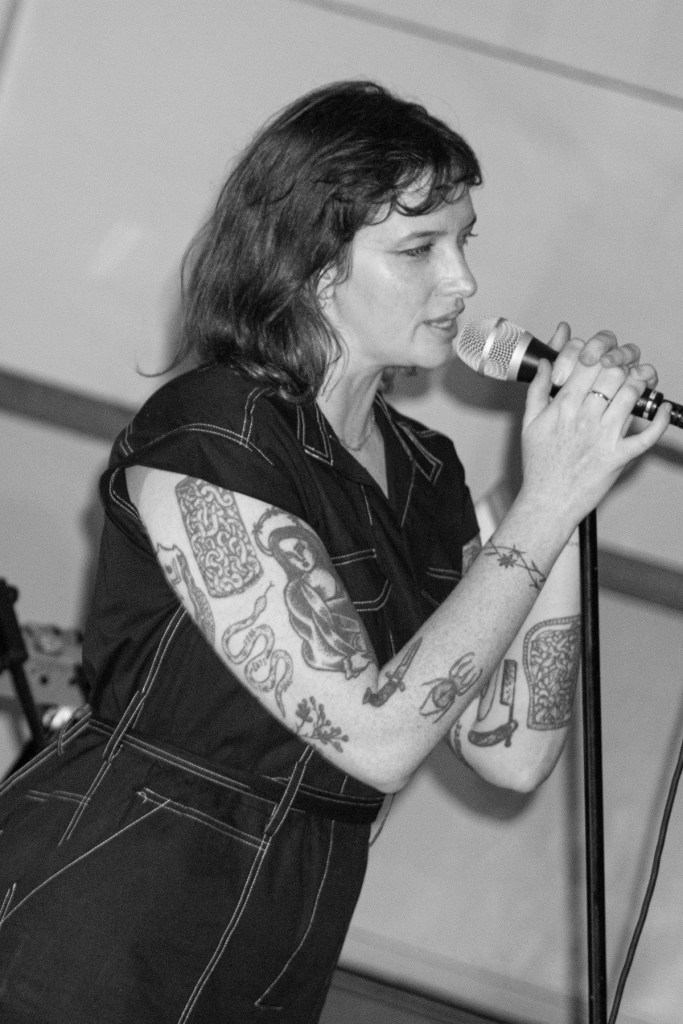
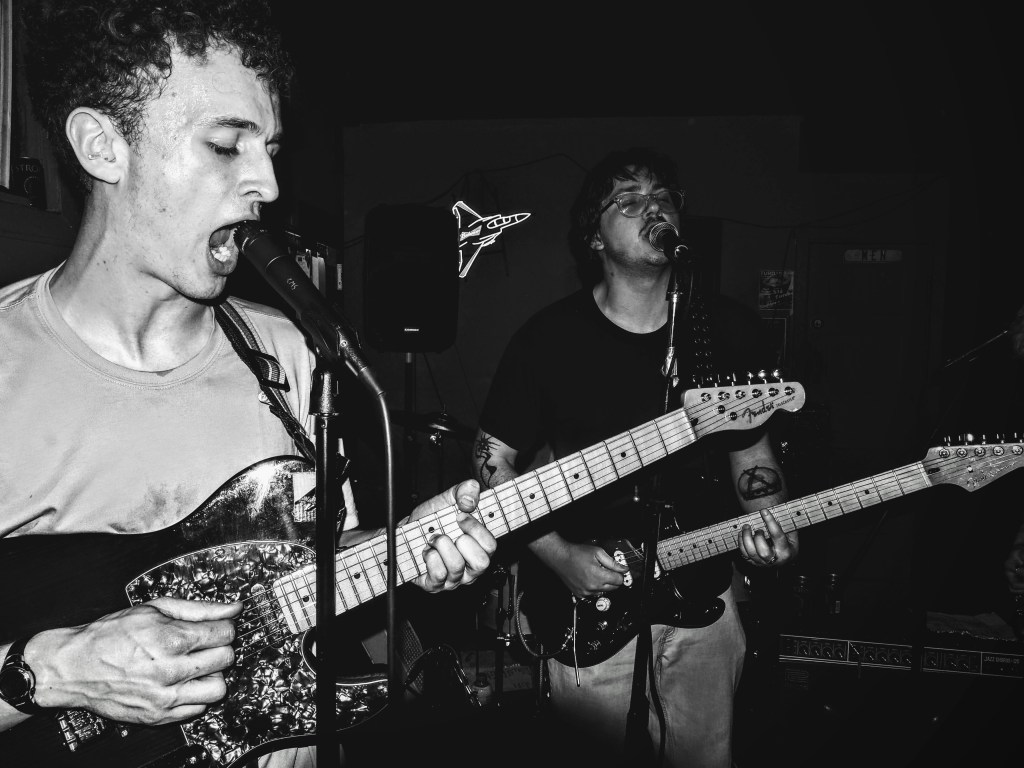
Photo: Jhonny Russell

To bring the conversation back to music, do you feel that each bands you’ve been a part of has represented different parts of your personal and musical development? 

LENA: I wouldn’t say different parts because I don’t like to separate the self. Maybe at one point, I would have, but I’ve gone through a bunch of stuff in the last couple of years, and I’ve done a lot of deep reflection on everything—the shit, all the little things I’ve done. Definitely, in my younger years, other people would have asked, ‘How do you make sense of all this? You do this, and you do that, and you do this—how is it all the same?’ But in my mind, when I look at all that stuff, I see it as the same girl. I see the common thread. It all makes sense to me, and I can see where it can go.

Creatively, I’ve done a lot of stuff that might not connect together on paper, but it all informs one another. It’s always been about asking, ‘What else can I do? How else can I express myself? That sounds fun, or I haven’t done that before’. That was the thinking at the time—‘I haven’t done that before. That sounds fun. That’s a nice group of people, or an interesting group of people to work with. I would really like to try that. Let’s give it a go.’ And when it stops feeling like that, you let go of it.

There have been a couple of times when I’ve been super passionate about something, and you can probably tell when you’re listening to it. It’s like, ‘Oh, all those steps, all those little pieces I’ve put together, they’ve come into play.’ But it also goes back to an old band I did. It’s like, ‘Oh, she’s still doing that. She’s still thinking about that thing, and it still matters.’ That’s how I know it’s always been about finding the best way to express myself. It doesn’t matter the genre or the medium.

I had some downtime a couple of months ago, and I was drawing a lot. To me, my drawings are the same—they’re about the same things that I write my lyrics about.

You mentioned threads; what are they?

LENA:That’s something that I’m less open about. I’d like to hear what you think. 

Thinking of your new band, Armour, even just in the name, there’s a really strong imagery to begin with. Armour feels like it’s both defensive and empowering. People go into battle wearing armour, so I was wondering if you’re exploring internal struggles or if it’s something larger and more outward?

LENA: Always, for sure. That’s always been a part of the ideas I’ve written about, throughout my practice as a creative person — as a poet, as a lyricist, as a writer. It’s stuff that I explore in my academic space as well.

I’m fascinated by struggle and change, and what people do to avoid it, or what people do when they are confronted. And that’s not necessarily a negative type of struggle or defence. It’s not something I’m always consciously aware of; it’s just something that I’m drawn to.

…I know that I’ve healed from some stuff I’ve gone through in my life because, working in the prevention of gender-based violence, for example, I see the long game. I can talk about violence all day, for example, because I know what the point is. And I see how to make change.

That’s why I’ve always been a somewhat confrontational person. But I know how to use those skills to get people, hopefully, going. I’ve got a good sense of humour to get people to think about things in a different way and bring them along for the ride, where it doesn’t have to be like this.

Part of why I really love your band 100% is because there is a lightness. I’ve read you say that the vibe of 100% is kind of like your aunt or Dolly Doctor. Any time I’m seen 100% live, it’s so joyful.

LENA: We have a cute little world that we created in that band. Like, it is what you imagine girlhood to be. And also, what maybe I do have nostalgia for. I did have moments of that typified girlhood with my friends when I was a teenager. But there’s the the dreaminess of that band— that was still, make-shift and put together through our own DIY lens, or in a futurist way of, like, what would the ideal be like? And what would we tell ourselves?

A lot of the lyrics were , okay, what would I want to hear if I was in this situation? And drawing from a few different situations that I did know about. Or if I was watching a movie, I’d think, what project would write the sweetest songs and charm each other through that? It was about supporting different aspects of songwriting between the three of us. None of us had ever done something like that before. It was really magical.

Yeah, well, it’s that— even though I really like the cover you put out that had the cake on it. That spoke to me in so many ways. One of my best friends made that cake too.

You mentioned a dreaminess, I feel Armour has a dreaminess, but a different kind of dreaminess. 

LENA: Armour is the step between 100% and Bloodletter with a touch of Tangle. But in terms of tone, it’s definitely, at times soft sweetness. But also, I’m sweet, but, if you fuck up me or my family, I will fucking kill you vibes! [laughs]. That’s what being community minded is about, right?

[Laughter]. One of the songs I really love on the EP is ‘Heat Dream’. It has this surreal vibe. 

LENA: What makes you say that? 

Well, for one thing, the imagery, the fantasy and the dreaming in its lyrics.

LENA: There is a literalness of, like, I don’t do well in the heat [laughs]. It’s verbatim describing my experience of not doing well on a hot night. Knowing that others feel the same as well and taking it to the extreme. Growing up in the tropics, like in Brisbane, but also, like, there’s definitely being— like, is this fantasy? Am I awake right now? What was going on? What the fuck was that dream?

Your song ‘Sides of a Coin’ has a bit of a different tone to the others. 

LENA: People are really engaging with that song. It’s really nice. I wrote the lyrics to that one really quickly. Those ones that just poured out. We weren’t sure whether or not we liked it as a band. So I tried to do something else with it. But I just kept going back to, this is how it has to be. 

Lyrically it mentions about breaking the chains and setting yourself free, and there’s a sense of freedom from constraint. Maybe a feeling of liberation? You mention seeing the coin from the other side; what’s the significance of that?

LENA: I’m going to speak abstractly, because people will have their own interpretations. When I wrote that, I was thinking about the nature of truth. 

I really like to write songs that engage with other songs, that sort of build a world. But that song, in itself, is a conversation. You see the coin from the other side—truth is subjective. There’s evidence, obviously. But if a rock fell between you and me, and someone who couldn’t see the rock asked us to describe it, how would we do so?

From your side, you might see the rock has some moss on it, some speckles, maybe a big crack from when it hit the ground. Thankfully, neither of us were hurt. From where I’m sitting, I can see that there’s light behind you, so you can notice details that I can’t. On my side, it’s the same rock, but all I see is grime. This rock is dirty. I mostly see the shadow of this rock right now.

We’re having a conversation about what we see, and to describe the rock, the arbitrator asks, ‘Are you sure you’re looking at the same rock?’

Yes, it’s the rock on this street, blah, blah, blah. So, what is the evidence? Are we going to fight about whose rock is the correct one? Do we get an opportunity to look at the other side of the rock? Or can we agree that on your side, it’s a nice green, sparkly rock with a crack, and on mine, it’s a funky, dark, grimy rock with webs?

It’s the same rock. And it’s a beautiful rock. And we’ve both survived.

Wouldn’t it be nice if everyone could be open to each other’s side of the rock? 

LENA: Yeah, well, you don’t always get to that part of the conversation [laughs]. Sometimes you’re just like, can I just move the rock? 

Do you see a narrative arc for the EP? 

LENA: We just thought they sounded good in that order. Most of the songs were written at the same time. From my side, as the lyricist, they probably represent different aspects of things I was processing and responding to. I also added other bits in terms of lyrical content and other elements. 

Was there a particular thing that comes to mind when you think about that period and what you were kind of writing to? 

LENA: Something I really like about Armour is that it feels authentic as a band. I think there’s a lot in my part of it, which is about bringing people together—for healing, but also for a fight.

I was interested in the EP closer, ‘Last Train,’ because a last train could be a powerful metaphor for endings, choices, or opportunities. I also got a sense of exploring how distance or endings can bring clarity—or even healing.

LENA: That’s a really apt interpretation, without getting into the direct inspiration for that song itself. Each song has its initial influence, but if a song is conceptually strong enough, it will have a meaning that resonates with anyone’s experiences. And that was definitely something I was going for with ‘Last Train’: how do we move past an ending? What choices can we make? It’s about ownership of choice as well.

There’s a line in it that talks about breaking apart and yet making amends. Sometimes, those things can be in contradiction with each other.

LENA: A long time ago, in my early 20s, I came across the notion of creation and destruction, either in a zine or on someone’s bum patch or something like that. I spoke to it at the beginning of our chat—how, as a particular kind of troublemaker, I see change as good. But confrontation, too, can be a way to make change. It’s not the only way, of course, but I’m not afraid of conflict because it means things are moving. It can mean things are moving, as long as you know what to do with it. I try not to be too stuck in place.

That doesn’t mean I’m not stubborn. Things can hurt when you’re forced to do things outside of your control, but learning to let go is a big part of life. When you know things are ending, there’s a beauty in being open to what happens next.

I’m a big fan of saying no, so that you can rest and open yourself up for what the next yes is. I really respect when other people do that, even if it means they’ve said no to me [laughs].

I say no to a lot of things now. As Gimmie grows and so does my book and editing work, I get asked to do a lot of events, projects and stuff. I used to always say yes to everything because I felt I had to. But I’m a lot better at saying no now. I listened to this interview with a writer [Shonda Rhimes] and it really stuck with me. She talked about saying no to things without saying sorry or giving a million excuses for why you can’t do something. I used to feel bad for saying no, or people would get upset with me for not doing what they wanted or not meeting their expectations. I felt I had to apologise or explain myself. I felt bad for saying no. The writer shared that she simply replies: ‘No, I’m unavailable for that.’ And the first time I did that myself, I felt so good. That should be good enough.

LENA: It’s really respectable to know exactly where your limits are and hold up your boundaries, especially at the stage of life I’m at now. It’s a valuable thing to model for others. It’s scary how many people-pleasers I see, or how much people-pleasing behaviour I observe, where folks take on so much because they think, ‘Yeah, that’d be fun. That’d be cool. I gotta do it. Nobody else is gonna do it, or nobody else is going to do it the way I think it should be done.’

There’s a huge risk, not only in overloading yourself but also in not allowing someone else the opportunity to do it. Even if they do it a way you wouldn’t necessarily agree with, or do it differently from how you would, there’s a control aspect for some people. It’s also just a fear — the fear that if people recognise you now, they might forget that you exist later.

But there’s a beauty in being comfortable enough to say, ‘My time will come again.’

I love that! I think coming from the punk and hardcore community, something I’ve struggled with is allowing yourself to have success and actually celebrating that. I’ve always thought the mentality was weird — that when something becomes more popular, people stop liking it, even though the people creating it are still doing what they did with the same heart.

LENA: It’s not just the punk thing, but also the punk and tall poppy syndrome thing that comes with being in Australia. Like, ‘Oh, if it’s popular, it must be shit.’ 

But I’m talking about when it’s the same — or it’s probably even better than when they started. 

LENA: Yeah, like ‘sellouts,’ all that shit. I understand sort of where that skepticism comes from. I goes back to what we were talking about with gatekeeping and of the purpose in small communities — why you would gatekeep, so that you keep your community safe. You want it to be special. You also don’t want yucky people or horrible people to come in and exploit what you worked so hard for or what was so important to you and gave your life meaning, to become like an open house necessarily. So, there’s a meaningfulness and care that goes into people saying, ‘No, no, no, no, no. It’s not for everyone. You go away.’

Lately, I’ve seen a lot of gross elements coming back into shows, stuff that was happening in the ‘90s and early ‘00s, there seems to be more violence and shit behaviour from crowds. Did you see what happened at Good Things festival on the weekend? In Brisbane there was lots of young girls reporting sexual assaults with older guys grabbing at them and not allowing them to exit the pit to safety. Also, people were crowd killing and going around punching people in the pit. Predictably, Good Things festival were deleting comments about it on their social media.

LENA: Something that I was thinking about when I was talking about, the ideal part of gatekeeping is that it keeps you safe, but the thing is, in my experience, a lot of the folks who end up doing that can also be the ‘yucky’ people — or they end up being the yucky people who have the loudest voices, saying, ‘This is what punk is.’ Like, ‘If you don’t like it, go back to the back of the room, don’t come into the mosh pit,’ and all this shit. And it does, regardless of how into being part of the mosh pit you are, or your perception of what’s a good time in a shabby mosh pit, and where the boundaries are, it does impact your engagement. Like, how ready am I to participate? Or when am I going to fuck off? Because, like, ‘Oh, that person’s there. This is no longer a fun time.’ Where, like, yeah, I can withstand a little bit of pushback. But like violence is different to what we recognise as like a mosh pit. For some people who come, there are some people who come to punk spaces or hardcore spaces because they’re attracted to being enabled to be violent. 

They then — and this goes back to some folks having adopted a totally different ethos than what I found in my punk upbringing — and that’s on them, and that’s on me. But, you know, part of it is not being able to have conversations about, like, ‘Is that a way to treat another human being who’s also trying to have a good time? Can you recognise when you’ve crossed the line?’ And then bringing in other factors, like sexual assault and ableist behaviour. I’ve been at shows where folks using mobility aids are completely dehumanised, completely objectified, or treated as though they’re not even there. Or their wheelchair is just a piece of furniture that people can dump their bags on. That hurts my feelings — as an audience member, as a performer, as a member of the disability community — to see that folks in the audience, my peers, my community members, are not being recognised as human beings who are afforded the same right to enjoyment. For whatever reason, they’re either not actually being seen in the space, or where they are, the things that enable their participation are being used as, like, dumping grounds, just regular furniture for other folks. And it’s going to impact their freedom. It’s not good enough. It’s not right. But, folks just don’t think about everyone.

Exactly. That’s my point. I don’t think it’s asking too much of people to be thoughtful and mindful of other people in the same space. I’m tired of being told by bros that I’m too sensitive and punk rock is about violence and I should get out of the way so they can have fun.

LENA: You’re not too sensitive. You see everything and, yeah, I do too. Stuff that other people just don’t see. It would just take the smallest change, hey?

Yes! What are some things that never fail to make you smile? I saw you had a little gathering yesterday of friends.

LENA: Every end of year, my friends do a barbecue before everyone goes away for the holidays. My friends are really good at getting together and eating food. My friends are big eaters. We’re really good at doing nice things together.

I’m very motivated to find a thing that folks will like to do, like a movie or a thing that’s happening out in the regional areas, getting folks in a car together. Or going on a trip.

I love my friends. I’ve got the most beautiful people in my life. I’ve had some really tough things happen in the last couple of years. And it previously has been really hard for me, and it’s still really hard for me to ask for help, but they’ve shown the fuck up for me. That speaks to stuff that I’ve done for them and for community as well.

I can smile so hard, I cry when I think about the beauty of my friends, that I have the privilege of keeping in my life.

I love bringing people together. That’s a big reason why I like like to do music with other people. It brings people together in a beautiful way to think about what we have in common.

I saw in your Insta bio, that you said you’re: living deliciously. What’s that mean to you?

LENA: I really try to hold on to the good moments and make space, ‘cause my work is really hard. It’s really stressful. I’ve had a lot going on. I really try to make sure that I have delicious moments in my life and indulgent times, or even just me time. I strategically place me-time in my life, but also I have so much time for my friends. They’re beautiful, beautiful, beautiful.

I try to hold that up, and I don’t think it’s just only trying to look on the sunny side of life. It’s making sure everything is in balance. ‘Cause I can easily tell when the scales have shifted to the side of no, no, no, no, no. It’s about going the other way.

Before we wrap up, I’d like to talk about Bloodletter a little more. 

LENA: Bloodletter was a band that I felt like, well, finally, I’m doing something that is the stuff that teenage me would be so proud of. I’m very proud of the recordings that we did. Fantastic group of people who liked music with some really heartbreaking songwriting. Some songs, every time we’d play them, I’d say, ‘Can we not play this song? It hurts my feelings.’

But I learned something every time I was a front person in a band. I learned how to work through that kind of thing—how much of myself to put into something—because I think it’s impossible for me not to put myself into it. But also, I learned how to work through it so it doesn’t feel like I’m bearing my soul every single time.

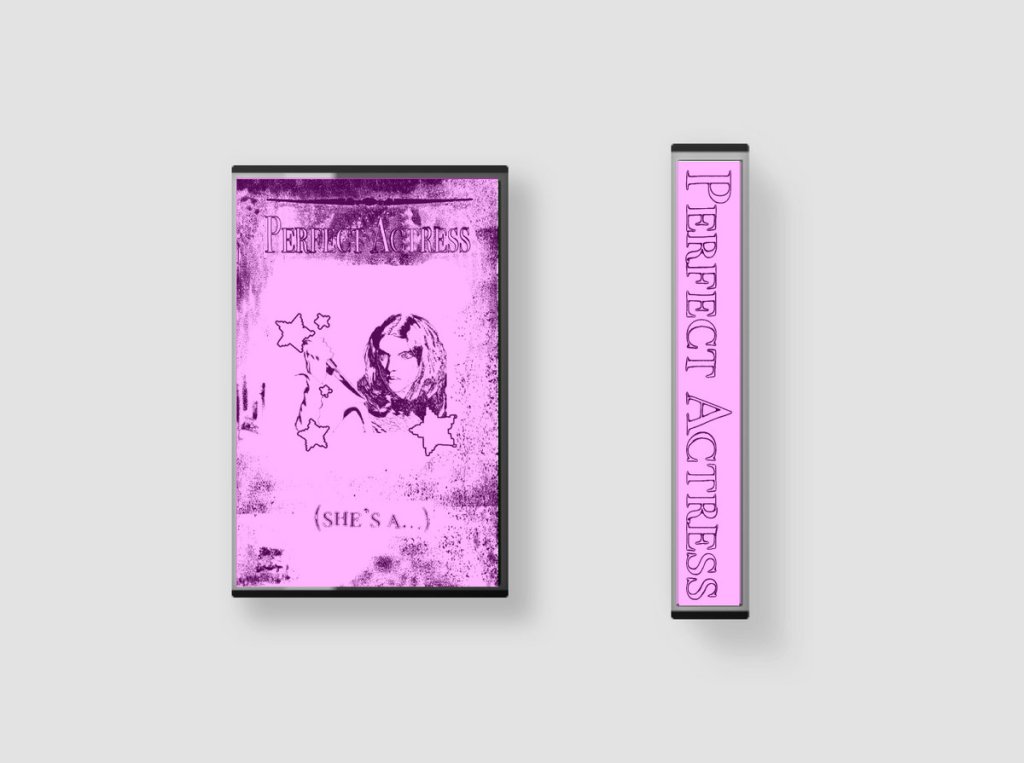
Jasmine [Dunn], who was in Bloodletter, played second guitar. She also plays in Armour. Moose is the main songwriter in Armour, and he had been sitting on five out of six of the songs on this current cassette for a few years. He’d demoed them and just been sitting on them. He’s a songwriting wunderkind, and we’ve been friends since maybe I was 20 or so. It’s a really lovely, long-standing friendship—he’s like a brother.

I was trying to figure out a solo project. I was teaching myself Ableton, which is still very hard. So, like, maybe in 20 years, there’ll be a solo project! [laughs]. But anyway, I sent him something I was tooling around with, and Moose said, ‘Lena, you need to be singing in a band. I’ve got some stuff I’ve been sitting on. Would you like to listen to it?’

I was like, ‘I’ve been waiting for you to tell me you had something. I’ve been waiting for a time where we were both available. Let’s do it.’ So he sent me five of the six songs that are on this tape in demo form, and I pretty much had two and a half of those songs written within a week. I broke away, and I was like, ‘I know exactly what to do. I’ve got stuff.’ It all just came out of me. I thought, ‘Perfect. This is gonna work out great.’

I knew exactly who to get as a second guitarist. When we got to that point, we filled out the band, and I thought, ‘Jasmine is someone I’ve always enjoyed working with in this kind of band.’ We had such a good time in Bloodletter together, and she lives in Melbourne now too. She’s so talented, as is everyone in Armour, so lovely to be in a room with.

That’s where that sound sort of comes in. Jasmine knows the tone, and she knows what I like. It’s very cheeky. Everyone in the band is very cheeky. They’ve got a good sense of humour, very chill, which makes it easy to be in that group.

With Bloodletter, you could lean into the horror, lean into the spooky stuff, while still talking about my lived experience. I really needed to do that band at that time. It was a good move away from having been in some ratty little punk and hardcore bands, which were great at the time, but Bloodletter was so different. Especially coming from Brisbane at that point in time, we were like, ‘Yeah, this is something else.’

Do you think that’s the band where you really started to find your voice?

LENA: I think so. I’ve always sung, but I definitely found my power in my voice at that time. I felt like I gained the most confidence through singing then. I was like, ‘No, I know this is what I have to do.’

And that connects to what we were talking about at the beginning. You go through all kinds of phases or times in your creative practice where people tell you the right way to do things, or what things need to sound like, or whatever. But if you trust yourself, you know.

This is the thing I always end up doing. This is the thing I’ve always done. I’ve got different ways of doing it. I’ve got my own way of doing it. But no one’s going to tell me how to use my voice.

Bloodletter in particular—and now in Armour as well—I don’t sound like anyone else. I trust the way that I sing. It’s not always in key, but it always sounds like me.

Follow: @armourmusicgroup + Armour bandcamp + 100% bandcamp + Bloodletter bandcamp.

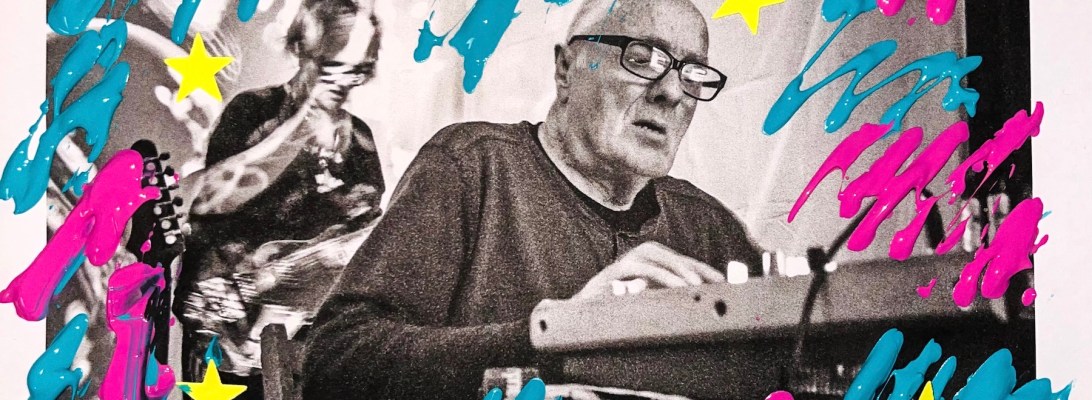
Scattered Order & M Squared’s Mitch Jones: If there’s emotion and heart in it—it’ll shine through!

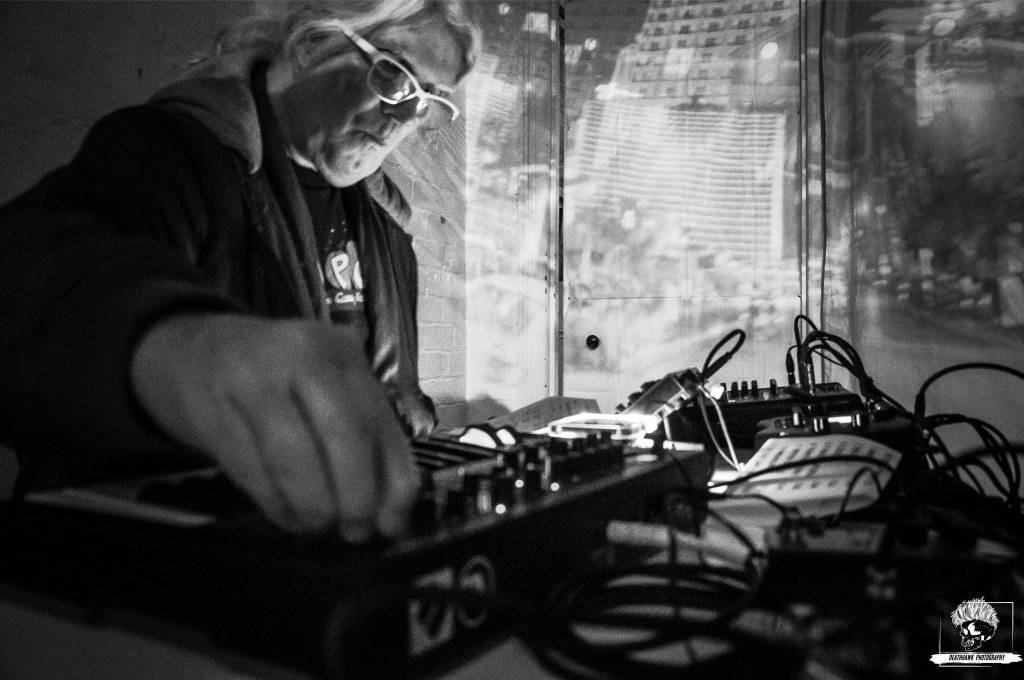
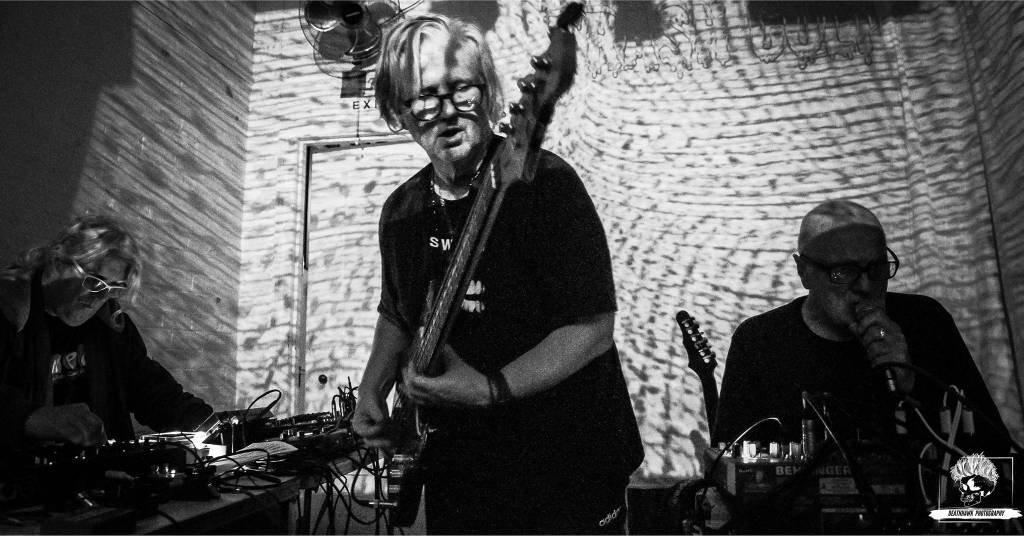
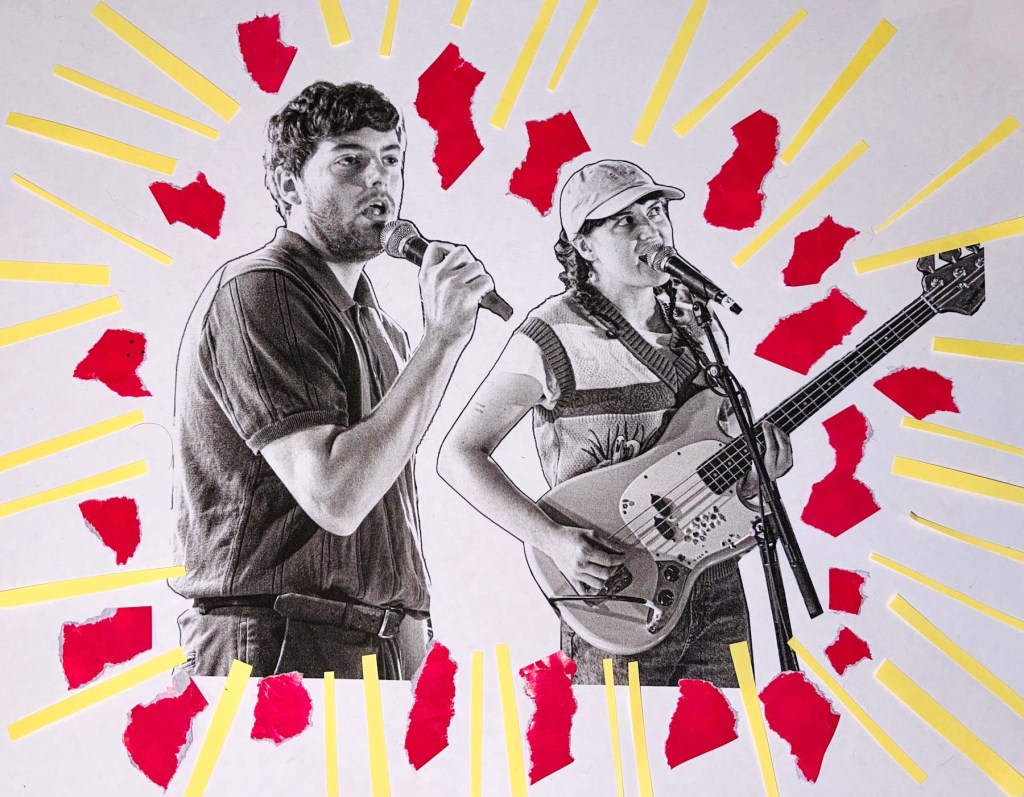
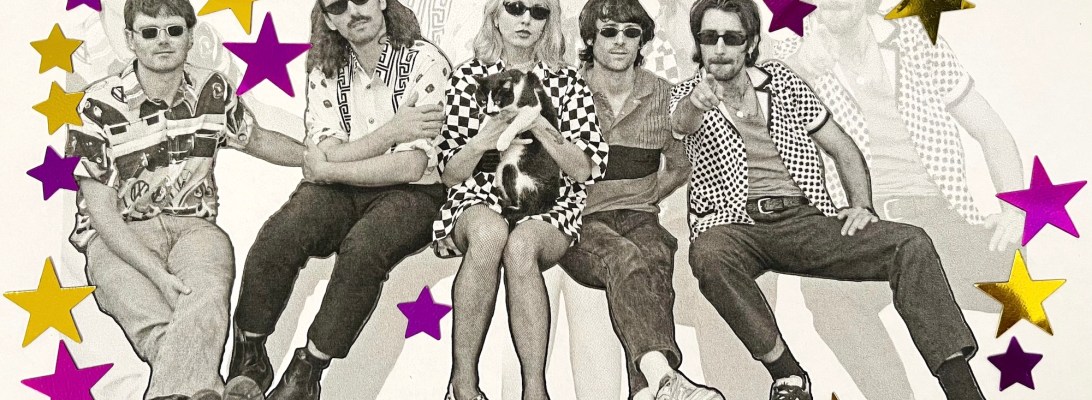
Original photo: Deathhawk Photography. Handmade mixed-media collage by B.

Scattered Order emerged from Sydney’s vibrant post-punk scene in 1979, founded by musician Michael Tee and sound engineer Mitch Jones. Their inception, born from a Boxing Day brainstorming session, epitomised a DIY ethos, as they pooled instruments and gear in a small Surry Hills house, igniting a musical spark that would define their legacy. Initially part of The Barons collective, Scattered Order soon charted their own path, founding the M Squared label to explore experimental soundscapes.

With a rotating lineup and an appetite for sonic exploration, they blurred genre boundaries, leaving an interesting and unique mark on the underground music landscape. Their music, characterised by a blend of found sounds, unconventional songwriting, and experimentation, challenged conventions and inspired subsequent generations of musicians.

Their live performances, often supporting international acts like New Order and The Residents, showcased their eclectic sound and infectious energy, further cementing their status as one of the pioneers of the Australian post-punk scene. Despite facing challenges and changes over the years, and a resurgence of interest in their music in the late 1990s and early 2000s, Scattered Order remain committed to their artistic vision.

The reunion of founding members Mitch Jones and Michael Tee sparked a new chapter for the band, leading to the formation of Scattered Order Mk1. Their live performances, ripe with forward-thinking experimentation, have garnered renewed appreciation from audiences.

As Scattered Order continues to embrace new technologies and collaborations, their dedication to pushing musical boundaries remains steadfast. With a renewed sense of affirmation and optimism for the future, the band continues to create a soundscape that embodies the essence of artistic freedom.

This is why Gimmie love them! We were excited to chat to Mitch Jones recently about new double album All Things Must Persist, their process, creativity, M Squared, and more. A conversation filled with insights, and all the fascinating secrets behind the music.

MITCH JONES: Music is an emotional release for me. I’ve always liked listening to it, and I found out that I really like creating it. I like manipulating sounds, placing different things with each other—I enjoy the thrill. I was never really a trained musician. I started this journey as a sound engineer, and I’ve taken that into creating my own music. I use whatever’s to hand. Over the years, technology’s changed and I pick and choose what I want to use. 

It’s good fun and it’s always exciting to make something new and then move on. You learn a little bit along the way – what you don’t like and what you do like – and you just keep doing. 

After school, I went to art school, but I never really carried that on. I found music and that suited me better than art. 

Did you find anything helpful about going to art school? 

MJ: I met my wife, Drusilla!

Ah, so it was totally worth it!

MJ: Totally! I met some friends there that I’m still friends with. A friend at art school actually started a band and that’s how I started as a sound engineer with their band, so that all helped. It was an exciting time to live. You’re at that age where everything’s exciting and new. I can’t imagine going and doing economics for a degree or something like that. 

Same. I couldn’t do anything like that either. How did you first discover music? 

MJ: As a child, I constantly listened to the radio, through a little transistor my parents would be listening to commercial radio. And then I discovered, my parents had a stereo. Then I discovered you could go to the local record shop and actually buy records. I started buying things that I liked, I started collecting records and songs I liked. On TV you had (I’m showing my age here [laughs]) like GTK on the ABC. As I got a bit older, in Sydney a lot of radio stations had put on free concerts in parks. So I started to go there and I enjoy live music. 

What were the bands that you found yourself gravitating towards? 

MJ: I always sort of gravitated towards something weird, slightly left field, not the most popular band at the time. I found that more interesting. Maybe I always went for the more underdog status bands. When I was growing up, it was all Skyhooks or Sherbet. Where I’d rather be listening to Band of Light or La De Da’s. I avoided the top 40.

All photos courtesy of Scattered Order: Deathhawk Photography.

Who were the bands you’d go see live?

MJ: I was lucky because when I was in art school because punk bands started appearing. I saw amazing bands like X, Wasted Daze and Johnny Dole and The Scabs—all this in your face in small rooms, it was loud and exciting. I thought, ‘Oh, this is fantastic!’ It was immediate and exhilarating. I got carried away with it all. 

Did you grow up in Sydney? 

MJ: Yeah, I grew up in Sydney and went to Sydney College of the Arts, which had just started, they were in Balmain. I was doing a graphics course and hanging around the inner city so I got to see a lot of small bands in small pubs.

What drew you to going to art school? 

MJ: At school, that was the only decent thing I was any good at, really. I actually went to university for a year and tried to do a science degree. I was useless. They kicked me out after a year. Then I found Sydney College of the Arts. I thought I’d enrol there and that worked out really well. 

You mentioned before, that you got into sound engineering through one of your friends’ bands; who were they?

MJ: The band ended up being The Numbers, which ended up quite a big power pop new wave band. I started learning there, on the job. In those days, it was all carrying PAs around and being a roadie, but I learned sound engineering; about microphones and mixing desks. Through half of 1978 and all of 1979. That was a great education. I ended up being a sound engineer for various bands for the next 15 years. 

It was good, but I decided that I could do this too. I wanted to make my own music and find like-minded people to collaborate with. 

I understand that sound engineering influenced how you made your own music; how?

MJ: I approach things by finding the sound, it doesn’t matter how it’s generated. Then I manipulate it through electronics or equalisation or effects to make that sound suitable for what I want to use it for. Then I cut things up and looped them. I rely more on my sound engineering skills rather than my musical skills. I could play rudimentary keyboards and bass. I was listening to how it would sound at the end. You’re always layering sounds and getting a good mix. Even something delicate or something powerful. That was the way we did things, rather than having a group of musicians and practicing a song. It all starts with a sound and I build on that. 

What is one of your favourite parts of that process? 

MJ: Finding something completely out of the box, something that would go with the original sound. You have an original sound, you really like it and you think the next step is to find something that either jars against it or fits really well. That next step is what I find the most enjoyable because it could take the piece in a completely different direction. From there you have a fairly good idea where the end point could be and work towards it. It’s a surprise! When you put that second thing in and it goes somewhere you never expected it would. 

You try and remain open while creating?

MJ: Yeah, always. I don’t have a pre-plan or a pre-idea in my head. With the band now, there’s three of us involved, and we all have input and none of us are sure where it will end up. We put things together, take a lot of things out, and try different ways of approaching it and the song ends up sounding like it does. Not by accident but by following the feel of it.

It’s almost like an audio collage?

MJ: That’s a good way to describe it. You’re putting things together, you put something down, you think that suits, or maybe that suits if I take something from the original out. It’s not just keep on adding, you have to subtract at the same time. You know, it might be other things that have come in, three or four steps beforehand. You might have to subtract that. You let it organically turn out the way it does. 

How do you know when a song’s finished? 

MJ: The way I know is I keep playing it, then I’ll go away for a few days and just not listen to it, then come back and listen to it with new ears. If it’s working, you think, right, that’s it. You need to give it time—keep coming back and thinking, is it still good? If it is, it’ll be released. Or if it isn’t, something might need to be done to it or some might be completely scrapped. We’ve got a bit of a scrap behind us in the history of this band [laughs]. 

I read somewhere that pulling apart your mum’s Telefunken radio with a soldering iron influenced your approach to music? 

MJ: She had this lovely valve radio. It had a little speaker in it, it had this button on it with pickup, which meant you could plug in an instrument. You could use it as an amplifier. Being a stupid teenager, I had this big speaker, but I couldn’t connect the big speaker to the amplifier. So I thought it needs a wire from the radio to the speaker. Instead of just running the wire out of the bag, I thought, I’ll put a socket on the side of it, but I didn’t have a drill. So stupidly, I got a soldering iron and just burned through the plastic to make a hole completely wrecked the look of the thing. Mum never forgave me. But the speaker worked, which I thought was great.

In the beginnings of Scattered Order you were, in your words, ‘railroaded’ into being the vocalist of the band. How did you feel about doing it then and how do you feel about still doing it?

MJ: Doing it then, I wasn’t that comfortable with it. But the thing is, right at the beginning the lyrics were a little bit secondary, but then they became more important. Then, I was conveying the lyrics, no real emotion. I was speaking them off.  That was fine and that worked. Then, when we got back with the three of us about 15 years ago now, we were just doing instrumentals. I just refused to do vocals. The other two were saying, ‘You should do vocals.’ And finally, I relented, but I really started to enjoy that. There’s less words in our songs now. So I’m not just reading off, like it sounded like I used to, read off a shopping list or something. Now I can put more emotion into them. I’m writing the lyrics now. It’s good. I wish I’d taken that approach much earlier, but you can’t change the past. 

Do you think that in the beginning you didn’t want to do vocals because you were self-conscious? 

MJ: Oh yeah! I’m still self-conscious about crying. At the beginning the other people in the band were all fairly competent musicians and were all doing other things. To justify my position, I thought, well, I’ll have to do the vocals. Come up to me these days and say, ‘Oh, I really liked it!’ But I could never remember the words and would have lyric sheets everywhere. We wanted vocals. There was no other vote. We didn’t want to go out and find a rock singer. I was chosen and I was it. 

You mentioned that later on lyrics became more important to you, and that because you were writing them…

MJ: In the beginning, Dru, my partner, was writing a lot of lyrics, and I was writing some lyrics. But even the one song I wrote, I just wanted to just say it, and that was it. I was more concentrated on the actual band sound. Now, I think the vocals are more integral to the band sound. Especially on the new album, they’re more integral to the song. There’s less musical things happening to hide the vocals, where in the earlier stuff, the vocals were buried under a wall of noise. 

I really love the vocals on the new album, especially in the song ‘Need to Increase Speed’. I love how at the end off the song you say ‘I. See. God.’ – it really caught my attention. I was listening in headphones and that really stood out.

MJ: That’s interring that you say that. The whole album was made in headphones, so listening in headphones is great! ‘I See God’ is a name of a track from Pretty Boffins from the 90s. The track was all about travel, travelling long distances, and crossing galaxies. It was a bit like 2001 A Space Odyssey.

It has a real cinematic quality to it. 

MJ: Yeah, and especially with that lovely brass line near the end, which really lifted it. It could have been a song that could have kept on going into affinity. 

Are you a spiritual person at all? 

MJ: Not really. I was brought up Presbyterian. I do believe there is a God or a higher being. I’ve got the call of God. I’m not very spiritual. I just believe that people should treat people like they want to be treated. People should get along. Life’s too short to argue and get angry. Walk outside and look at nature. 

Yeah, that’s one of my favourite things to do. No matter how much of a bad day I’m having, I can walk out my front door, look at the trees across the road in the park, and I feel better. It’s like it gives me a moment for a breath, a pause, a reset.

MJ: Yeah. My partner, Drusilla, and I, we live up in the Blue Mountains in Sydney. 

Oh, beautiful!

MJ: We’ve got all this bushland. We can look out our back door and over this valley and it’s peaceful. It’s fantastic—all the bird life and the change of the seasons, it’s beautiful. The mountain air is really crisp. I go out there and I think, ‘I’m glad to be alive.’

I noticed there’s song titles and references from previous songs on older albums in the lyrics of the new album. In the song ‘The Silent Dark’ you say: The ‘prat culture’ of youth is now faded. 

MJ: Well, that’s how I feel some days. Prat Culture was our first album. We’ were obnoxious young people, and ‘prat culture’ suited us then. But we’ve mellowed a bit. It’s good, it’s not a bad thing. It’s life—you just move on. Priorities change. You just go with it. 

For readers that might not be familiar with what prat culture is; what does it mean?

MJ: We took it from Linton Kwesi Johnson’s album, Bass Culture. We really liked that album. So we thought, ‘Right, what are we?’ We were at Prats: a bit obnoxious, a bit against the grain. I don’t think we’re obnoxious anymore [laughs].

I really love all your album titles, they’re always so interesting. I really love A Suitcase Full of Snow Globes

MJ: Dru might have come up with that. I keep a sheet of paper and write down interesting phrases from TV or talking or reading. When we need a song or album title we have something. A Suitcase Full of Snow Globes was a double album, over 20 tracks, and they’re all little sparkly gems to us.

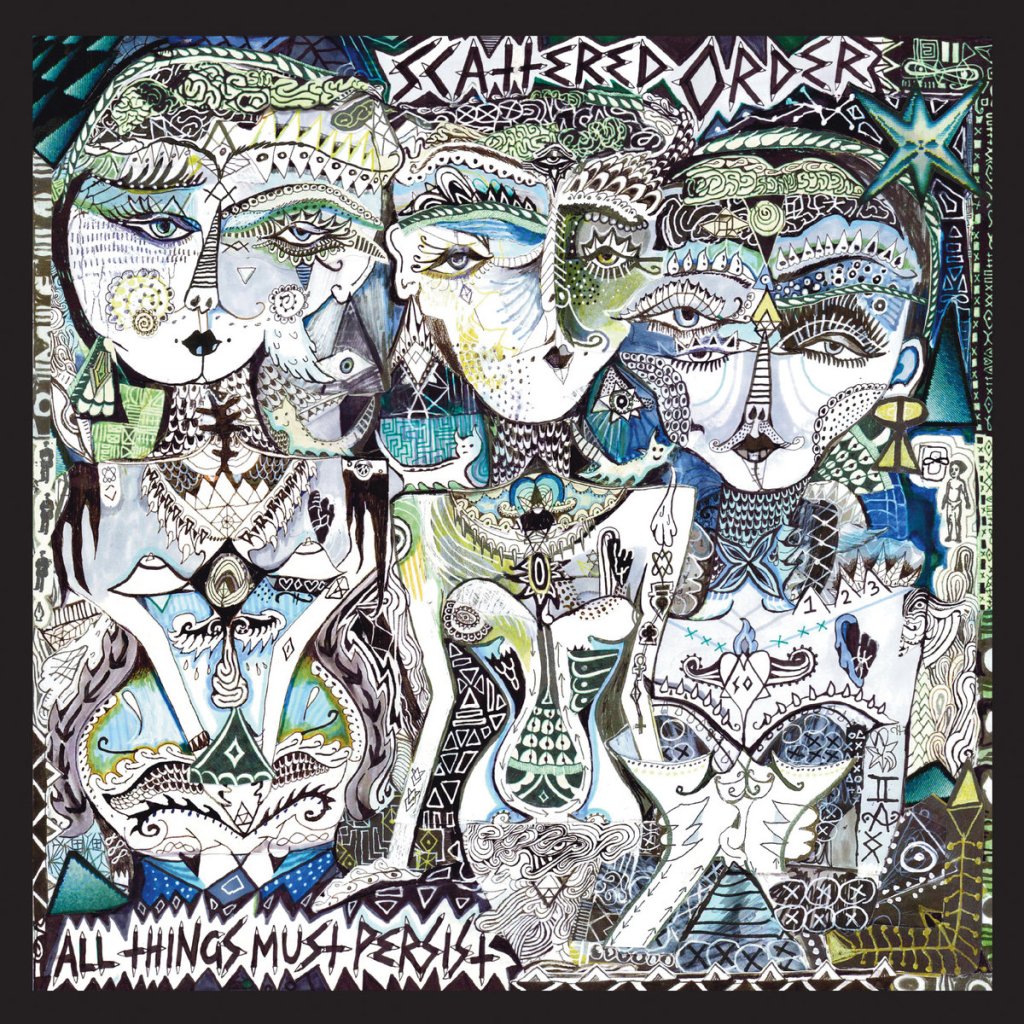
What’s the story behind the new album’s title, All Things Must Persist?

MJ: That’s even sillier [laughs]. 

But it sounds so profound!

MJ: Well, it does, doesn’t it? I think Shane came said, ‘George Harrison had All Things Must Pass. How about All Things Must Persist?’ We all agreed, we all thought it was a bit of a laugh. But, you know, I’m just thinking about it now, and well, all things shouldn’t really persist; bad things shouldn’t persist. All good things should persist. It sort of suits the band, because we’re not going to go anywhere, we’re just going to keep creating music—this is what we do. We’re persisting. 

Have there ever been times in your life when you didn’t make music? 

MJ: There was a time when my partner and I, in the early 2000s, we went to live in the UK. Before we left, the band was virtually just down to the two of us and the bass player. We wanted to get out of Sydney. John Howard was in power and we thought, bugger that. So we went to live overseas. We thought we’d do some music overseas, but circumstances conspired against that. We were too busy working to survive, to do any. There was a few years like that and we finally came back to Australia. By that stage, there was a lot of interest from overseas labels, mainly European labels, to start re-releasing earlier material and we started putting that together. Doing that, I got back in touch with Michael Tee and Shane Fahey and we decided to try making some new music together. That was around 2008.

How did it feel for you during that period when you weren’t able to make music?

MJ: I was listening to a bit of music. I thought at the time that I could do it. I put music behind me, I’ll do something else. And I was just working crappy jobs, but I thought I was living in a new place, new surroundings, which was fantastic and all that. But I came to realise that I really needed music in my life. So, we came back and we did that. Drusilla started doing all her own solo stuff and I was doing my solo stuff. We started to get into using computers for recording and using Ableton. I found out, you don’t need need all this equipment to realise what you want to do. Technology definitely helped us to get back into it. 

I love when people are open to embracing technology or whatever is available to create. 

MJ: I always see it as like an opportunity to try something new. I’m still trying to get my head around my mobile phone [laughs]. We save time and the cost.

You’ve mentioned your partner a few times and it seems that she inspires you; what’s one of the best things you’ve learned from her about creativity? 

MJ: So much. To be patient. Little and tiny sounds are good sounds. Everything doesn’t have to be loud and brash. Try new things. Don’t just settle on tried and tested ways. I’m in this little room in the house and she’ll be in another room and we’ll both be writing music on computers. We put music out together as a band called Lint. She’s a great influence on me, the love of my life, to be honest. 

Awww that’s so lovely! I feel that way about my husband too. Who lucky are we? Do you feel like there’s any prevalent emotions or moods on the new record? 

MJ: I thought it was a bit too sad, but there is a glimmer of hope throughout the whole album. It acknowledges where we’ve been as a band, it acknowledges it’s been a long journey, but it’s not the end, and it’s not this, there’s a future to explore.

The song ‘We Should Go’ lyrically seems like a sadder song.

MJ: It’s more things aren’t going well here at the moment, we should get the hell out of here. It was a bit of a warning shot, you know, we should move on. Don’t stay in this place. 

What about ‘It Was A Saturday’?

MJ: That is sad. It’s all about bastard men instigating violence on women. And in a lot of cases, the only way this could be ended is, if the woman kills the man. The last line: At least she has won. Well, she hasn’t really won, she’s negated the violence but put herself in a different, terrible situation. You can’t turn on the nightly news without hearing about a woman being murdered by a partner, which is a national disgrace. It’s distressing. 

Absolutely! I noticed with the song ‘I See the Old Man’ – it has the ‘I Am Sandy Nelson’ reference. 

MJ: That’s an in joke from years ago. We did a song called ‘Free Sandy Nelson’. Sandy Nelson was a drummer, ‘Let There Be Drums’ was a big hit he had. When we did the song, it was the beginning of the internet, and we thought it’d be a great idea to make the contact for the band: Sandy Nelson. We made a mythical character called Sandy Nelson, gave him a PO Box and he hung around the band for 30 years [laughs]. That’s why he keeps appearing in songs.

Is there any other conceptual continuity that runs through the albums? 

MJ: We keep trying to make albums that sound different to the previous album. We all try and stretch what our contributions are, to try and push it into newer areas. It’s just a general evolution really. 

How did you feel like you stretched yourself on this album? 

MJ: I felt really good. At first I was worried, but the more I got into it, the better I felt. I felt comfortable having the vocals quiet up front. I didn’t feel embarrassed about my singing, I didn’t feel embarrassed about the lyrics. I ended up feeling actually quite pleased with myself, to be honest. 

I’m really excited to see it all live when you come up here to Queensland. 

MJ: We’re only playing two tracks from the new album live. ‘It Was A Saturday’ and ‘Need To Increase Speed’.

I can’t wait!

MJ: The other tracks are so quiet, we decided it doesn’t really fit into a loud set. We’re playing a number of tracks off the previous album Where Is The Windy Gun? And one off  of Everything Happened in the Beginning. A couple earlier ones too. We try and keep a loud set, because we like playing live loud!

Was there certain sound on the new album that you had fun exploring or creating? 

MJ: Quite a lot of the tracks started with minimal drones – like ‘I See The Old Man’ or ‘Dust Bisquits‘ – and pianos or meanderings from Michael, which is different to what we’ve normally done. We’ve normally started with a drum track and work from there.

What do you get from working with Michael and Shane? 

MJ: The joy of hearing what they’ve come up with, really. We all live in different parts of New South Wales. So for the last few albums we have worked remotely. So somebody would send an idea out, then you receive all these things back. All the time it’s a surprise to me what they come up with. It’s like, I’d never think of doing that. It’s amazing. They’ve have a natural ability to quickly come up with something that enhances things. It’s a real privilege to be in a band with them. 

Are you ever inspired by everyday sounds that you around you? 

MJ: Yeah. I’ve got a little digital recorder and I record things around the house or outside. I have a selection of those I could go back to, cut them up, and use them. I record bits of the TV; dialogue of old movies. I can’t just sit there with my guitar and play out a tune. I need something to start me off and it’s normally a household sound.

Do you have a favourite old movie? 

MJ: Get Carter is really good. It was on TV a few days ago. I watch the silly afternoon movies. And there was Hell Is The City with Stanley Baker, is a nice black and white thing from the early 60s, set in Manchester. I like British movies. I like noir movies. I drop off mid-70s, my interest wanes in movies. So, I really like anything from 1940 to 1975, if it’s noir. British movies too; I like kitchen sink dramas.

Do you watch much comedy? I noticed that there’s like a real sense of humour in your music.

MJ: I used to, but there’s not much good comedy around. At the moment I’m watching stupid bloody, you know, those real death things, like Buried in the Backyard

Forensic shows?

MJ: Yeah. But comedy, no. Some British comedic game shows are pretty good. I don’t subscribe to any streaming television stuff. Just free to air TV, if it’s not on there, I don’t watch it.

Is there a particular album by another artist that had a real impact on you? 

MJ: There’s heaps over the years. As a kid, Are You Experienced by Jimi Hendrix. Then, Pawn Hearts by Van der Graaf Generator, that’s the early 70s one. But then we got to the Duck Stab EP by The Residents. The first of the first three Cabaret Voltaire albums—a big influence on us at the beginning. That you can make music with minimal equipment and a small studio. You didn’t have to sound commercial, that was fantastic. Later on I got into a lot of Sound Creation Rebel and things like that. But lately, a lot of Australian bands, I really like No Man’s Land from Ballarat, a two-piece sort of bass drone-y sort of outfit. I really like the Paul Kidney experience. What else? Fables from Sydney. There’s so much good music about.

Totally. I think there’s always good music around you just have to find it. 

MJ: That’s the thing you have to find it, you can go down these rabbit holes looking, I go through Bandcamp and see different things. I try and support smaller artists, that I know that are doing interesting things. 

You’ve been doing that for a long time, all the way back to doing label M Squared!

MJ: Yes. There’s lots of smaller artists around the world doing interesting things. They’re all doing it for the love of it, they’re not going to make any money out of it. So you want to support people like that. 

Absolutely. That’s why we do what we do as well. 

MJ: The music industry has always been strange. It’s always been lots of middlemen, lots of people hustling about trying to make a buck. A lot of good artists get burned. 

Yeah. Growing up, I wanted to work in the music industry because I love music. I tried it for a little but when I started to see what goes on behind the scenes and just the way artists are treated and other behind the scenes workers, it was horrible. It put me off working in the music industry. We just do our own thing regardless of the industry; it’s more exciting on the fringes anyway.

MJ: That’s the only way to do it. It happens in all levels of it, like in venues, you can tell which ones are all management-driven. Makes you think, ‘Oh, what’s the point?’ These days, they’re all scrambling over such small amounts of money, there’s no big money around.

When you’ve been recording bands over the years, is there anyone that you’ve worked with that had really interesting approaches to what they were doing? 

MJ: The most interesting was when I was doing the two M Squared albums for The Makers of the Dead Travel Fast, which was Shane’s band. They were amazing. We had minimal recording equipment, they had huge ideas; together we managed to get these ideas recorded and sounding really good. They’d ended up on records that sounded fantastic. These days, I don’t know how we did that, to be honest. They’d be recording outside, using whatever comes to hand, but then juxtaposing them to a delicate piano piece or shouted vocals. The way they combined different sounds for each piece.

A lot of other stuff I recorded, there were some good things happening, but a lot of the things I ended up doing at M Squared was more around the standard guitar-based drums; a band situation. Which I found interesting at the time, but it didn’t stretch your imagination. 

Is there anything that you could tell me about M Squared that people might not know? 

MJ: We didn’t make any money. We left the studio owing six months back rent. For a while there, it fractured friendships between myself, Michael, and Patrick. They had left Scattered Order by the end of M Squared. Things are getting grim financially. We were all getting a bit tired of each other’s company and tired of the situation. 

I guess everything runs its course naturally, and it’s time to move on. 

MJ: Yeah, it’s time to move on. If we kept going we wouldn’t have lasted and it would have diluted what was happening. I look back on it, some of the releases on M Squared, I personally wouldn’t have put out. I’m sure if you asked Michael, or Patrick, rest in peace, they’d probably have a different list of things they probably wouldn’t put out. But you can’t change the past. It was great while it lasted. It had its high point. I met all these wonderful people. I’m still recording with two of them. It served a purpose in the Sydney underground at the time. 

What do you sort of consider to be the high point? 

MJ: The high point was when all three bands were playing: Systematics, Makers Of The Dead Travel Fast, Scattered Order. We all toured; we actually got to Brisbane. That would have been February 1982. That was the high point. Everybody was recording. Everybody had records out. By the end of 1982, things started to go down.

What was it like for you when you reconnect again? 

MJ: I was good. I’d seen Patrick over the intervening years, but I hadn’t seen Michael for over 20 years! Because of this re-release business for all the Scattered Order and M Squared material, we arranged to meet up again. I was a bit wary beforehand, going, ‘Oh, what’s going to happen?’But it worked out really well. And we’ve been firm friends ever since. We’re all a bit older and a bit more mature now. We know each other’s strengths and weaknesses. Probably back then, I was too demanding of everybody. Michael was probably thought I was too much of a control freak.

Do you think that was because you wanted to get stuff done and were just excited about things? 

MJ: Yeah, yeah, yeah. But I wanted to do that. I wanted to keep paying the bills as well. That helps. Michael and Pat wanted to do things, but were sort of, bugger the bills, it’ll all be all okay. 

I’ve read that both you and Michael came up with the name Scattered Order, you each came up with a word?

MJ: Yeah, yeah. I came up with ‘order’ and he came up with ‘scattered’.

That makes sense, you were talking about how you were a bit more controlling back then and he was a bit more loose with things. 

MJ: It does, it makes total sense.It has suited the band throughout our history because there’s always been a bit of a scattered approach but there’s some sort of order there holding it all together. It’s getting that balance right. Sometimes there’s been heaps of scattered and not much order too [laughs].

I’m the sort of person that I needs something to hold on to. I need it to be a little bit grounded, there has to be something constant throughout the song, a beat or whatever, something to hold it all together. 

An anchor? 

MJ: Yeah. Shane and Michael, they’re a lot more proficient on what they’re doing, and can take things further and wander around with no anchor point, eschpeially live. I can’t do that. I go, ‘What the hell is going on here? How can I contribute to this?’

You’re sort of self taught, right? How does that benefit you? 

MJ: I can construct things in either simple little patterns that I could do, or if the song was constructed I could add to it. On the early stuff, Prat Culture, I was playing guitar, but I was just adding one long note every so often. I knew I could do that. I knew that I could do that live too. I knew I could do that in the recording. I knew it added to the song itself, so that was an advantage to me. Since then, I’ve learnt a bit more, but not much more. I’ve still got a guitar with all the notes actually written on the fretboard. 

There’s nothing wrong with that.

MJ: I still play two or three note phrases. The whole idea is—whatever you do, however little or large, it’s meant to add to the whole sound of the track. 

Is there anything that you find really challenging about creating music? 

MJ: The most challenging thing is not repeating yourself.  Sometimes I wish my prowess on guitar, was a little bit better than it is. But I finally come to realise it’s got to a certain point and won’t get any better. So, that’s challenging, to work with what you had and try to get the best out of it. And at the same time, don’t just repeat the last song you wrote or the last album you helped create. 

That’s good advice. I know a lot of musicians can be real snobby about gear, which I think is lame. You can have the best equipment in the world, but if you don’t do anything interesting with it, I don’t really care. But each to there own.

MJ: You can write fantastic songs with hardly any equipment. If there’s emotion and heart in it—it’ll shine through!

Cover art by Stella Severain 

Check out SO’s website: scatteredorder.com

Follow them: @scatteredorder and SO Facebook

Find their music on: SO Bandcamp

Lydia Lunch: ‘You owe it to yourself to find pleasure.’

Handmade collage by B.

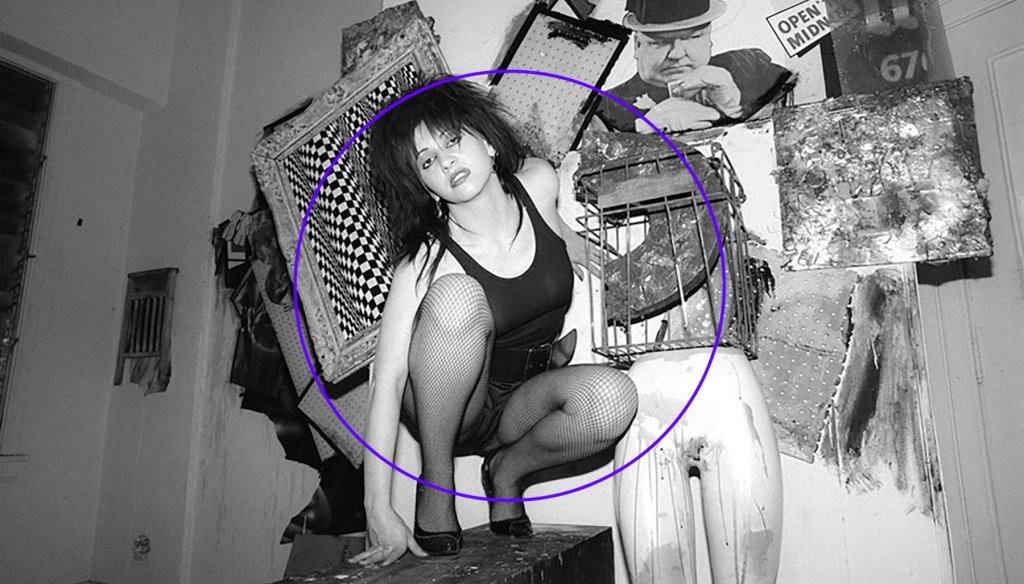
Lydia Lunch has always done what she wants. She has an idea, follows it, finds friends that are the right fit to help execute it, or is happy to do it herself if the situation demands it. Then she moves on to the next place ‘of pure existence’. She doesn’t limit herself with medium or form or labels. Lydia believes that pleasure and joy are the ultimate rebellion in our often difficult world.

Gimmie spoke to Lydia ahead of her Australian tour with Joseph Keckler. We talk about performance, getting paid to rage, energy, her podcast, the documentary she made on depression, of being your own lover, and who’s the daddy!

Do you ever write from a happy place? 

LYDIA LUNCH: Why should I? Isn’t that for pop singers to do? 

I didn’t say you should but I was wondering if you’d ever tried?

LL: No. I have written a few fiction pieces. I’m happy to be bringing spoken word to Australia this time because the stories all have a different language. I write in many different languages, as I have many different languages in my music. I’m very happy when I can express, when I can perform, the different types of language I write in. 

I’ve written about 3 or 4 fiction stories, and what’s interesting is that one of them, which was published in one of my books, people thought was the only true one in the book. I’m like, what are you looking at here, people? And, by the way, Joseph Keckler and I are bringing to Australia a book that we put together of some of my and some of his pieces, and we’re self-publishing just for Australia.

There are a few more humorous pieces only because they’re so ridiculously horrible—all about relationships, sexual adventures, and a little bit about female revenge. Let’s be serious here. It needs to happen [laughs].

How do you feel when you perform? 

LL: Fantastic. The thing is, I’ve brought many people to the spoken word stage for the first time, and a lot of them are horrified and never want to go back up again, especially exhibitionist male musicians, never doing that again [laughs]. It’s the most powerful place for me to be. It’s far more powerful than having three guys or a couple of women behind me. It’s what I’m meant to do. So I really feel like an evangelical. Welcome to my church. First commandment, rebellion from false virtue. It’s Sunday here—welcome to my church! 

Also, no rules?

LL: First rule is there’s no rules. Exactly. See, we are very much alike. 

Yes. I get you. When you perform, are you intentional with the kind of energy that you bring or the mood that you create? 

LL: What’s interesting in working with Joseph Keckler is he’s so smooth, charismatic, and romantic, in a way, operatic. Of course, I tried to be a little more subtle in the beginning of what I’m bringing because I’m harsh, I’m hardcore, I’m brutarian. The material I’m bringing, I hope, has a bit more humour and has a bit more nuance. But I am what I am. Am I much different on the stage than off? Well, I have an incredible focus on the stage, and I do tend to get a bit fiery, just like any evangelist. There’s not much difference except I laugh a lot more when I’m off stage; I like when people laugh. Don’t be afraid of laughing.

Lydia and Joseph

How important is spontaneity in your performances? 

LL: Since I started writing for spoken word, it could seem as if I’m just delivering a conversation. They’re all very scripted, but of course there’s room for spontaneity and improvisation. You never know what’s going to come out of my filthy fucking mouth. 

I know that in June you’ll be turning 65; does that mean anything to you? 

LL: Can you believe it? Look at me! [laughs]. I always forget how old I am. I have to look it up; like, wait a minute, get the calculator out! I used to be the baby. I was 16 in New York when I burst upon the scene. 

There’s a very big difference between my generation and the one that was before us, just in terms of how we look, how we behave, how we act, how we are. I’m not stopping. When I was 21, I’m like, ‘I will live to be the oldest living woman of rage.’ I’m getting there. Somebody’s got to represent. What are you, about 35? 

No, I’m 44. 

LL: You see how good we look? [laughs]. Look at us!

That’s because we’ve both lived a life doing the things that we love. There’s a lot to be said for that, and following your path and being of service to people through what you do.

LL: That’s what journalism is, it’s a service to inspire people to find out about something they may or may not know. It’s one of the reasons I have my podcast, The Lydian Spin. There’s 235 episodes to expose people to other people they might not know. Also people bring me people I don’t know either, which is great to be able to present them. Right now journalism is important. 

As a teenager, there were great rock magazines that were very alternative, that helped me to investigate what eventually became very important to me. Like the Stooges, the New York dolls, etcetera. 

As time goes by, is there anything that you value more now? 

LL: How slow my pulse is. Look, if you come out of evasive trauma, you have to learn to…

I just finished a documentary on artists, depression, anxiety, and rage. I don’t have depression or anxiety. My rage I’m paid for; I take it to the stage. A lot of artists have those things so it was important for me to make this documentary. I feel like a magnet for so many people that have it.

Making this documentary, I realised why I don’t have it. I realised that at 9 years old, when I saw a very unjust thing happening to my cousins that happened to me, I’m like, ‘Oh, this not only doesn’t happen here, this happens there; this is global, and this is a historical injustice, especially against children or women.’ That’s when I really got the impetus to do what I do.

And so then there comes a point where you’re like, it’s not enough to just survive; to not appreciate is to abuse yourself of the incredible beauty and joy, wonder and pleasure that one can have. That’s something that is very hard for people that have had trauma to understand. It’s a very important point to make: you owe it to yourself to find pleasure. It’s the first thing that’s stolen from us, especially as women—don’t do that, don’t act like that, don’t enjoy sex. Fuck you! Especially in this time when the world is on fire, when the climate is out of control, when politicians are so full of freaking shit, where there’s conflict in 174 out of 196 countries. We need to to preserve our right to a pleasurable existence. 

You’ve talked about how people need to look for fulfilment within themselves and not outside themselves. You seem to have a lot of self-love… 

LL: I have a lot of self-love. I’m my biggest motherfucking fan! I wish that more people could become their biggest fan because to fill the void within, only the self will suffice. If you’re looking for any outside stimulus to cure those empty pockets we have, it’s not going to happen. What don’t you like about yourself? Excuse me? Who told you not to like that? You’re all you fucking have in the end, so you better fucking like it. And if you don’t like it—change it. 

You can sound any way you want. You can look any way you want. Who’s better than you to be you? You have got to be you. That’s so important for women, especially as so many teenagers are committing suicide because of being pressured by internet bullshit. We need to, especially as women and others, be taught how to love ourselves, and how to fulfil ourselves. 

A big problem with a lot of women is they’re looking for this perfect other to come and complete them. Well, you know what? There might be a lot of them. So why don’t you be complete first? And then you could just dibble, dabble. I’ve had quite a few soul mates, some for 7 years. I’ve had many relationships that lasted 2 or 5 years; ending them gracefully, because it wasn’t as if I was trying to fulfil anything in myself. I wanted just the best for both. Nobody can fulfil you. That takes some deep work. Ladies, get to work! Take it from me, you got to learn to love yourself. 

I talk about it in the last chapter of my book, Paradoxia. Sometimes you have to learn to become your own lover. Talk to yourself. Masturbate. Come on, ladies. Put your makeup on or whatever. Take your panties off. Whatever you want. We deserve it. We owe it to ourselves. Sisters are doing it for themselves. Come on, get with the programme. 

I really admire that, the way that you create. You come up with a concept or idea. Sometimes you find people to collaborate with, sometimes you don’t. You document it, and then you go on. I find a lot of people get stuck.

LL: Not everybody has so many ideas. People might have only 1 or 2 ideas. Some people, it’s like they’re a one trick pony. But then if they do that really well, that’s what they do. I’m a functioning outside schizophrenic. This hotel houses many monsters. They all want to be heard. The concept does come first. And then who makes the most sense to do it with. 

Is there any particular thread that you found in all of your collaborators? 

LL: They said, ‘Yes!’ It’s interesting because I’ve worked with some powerful women: Exene Cervenka, Wanda Coleman, Karen Finley, various other women. Sylvia Black, who I’m working with, and put a lot of women on the stage, especially doing spoken word workshops. 

A lot of the men I’ve worked with are really sensitive, romantic, shy men. And they don’t fear me, because why should they? I’m there to protect them, because I’m the daddy! [laughs].

Follow @lydia.lunch.official and explore everything Lydia HERE.

TOUR DATES (click on date for tickets):

Thursday 7th & Friday 8th March 2024 – OHM @ Brisbane Powerhouse 

Saturday 9th March 2024 – Byron Theatre, Byron Bay

Thursday 14th March 2024 – Adelaide Town Hall @ Adelaide Fringe Festival

Friday 15th March 2024 – Melbourne Recital Centre

Saturday 16th March – Melbourne Recital Centre

Sunday 17th March 2024 – Theatre Royal Castlemaine

Tuesday 19th March 2024 – Two screenings of film “The War is Never Over” with Q&A – Thornbury Picture House6:10pm & 8:15pm 

Wednesday 20th March 2024 – Lydia Lunch & Black Cab perform the songs of SUICIDE – The Tote, Melbourne

Thursday 21st March 2024 – Phoenix Central Park, Sydney

Friday 22nd March 2024 – The Great Club, Sydney

Saturday 23rd March 2024 – MONA, Nolan Gallery, Hobart

Gimmie’s new favourite band: Perfect Actress

Original photo courtesy of Perfect Actress. Handmade mixed media collage by B.

We know saying that a band is our new favourite is a big call, well, it’s simply the truth. We saw Perfect Actress play at this year’s Nag Nag Nag fest. They were the opener and there was a handful of people in the room, us included. We saw them soundcheck a song and from just seeing that we were intrigued and blown away. When they played their set we witnessed four really cool, diverse, highly creative individuals – Naomi Kent, Darren Lesaguis, Gus McGrath and Marcus Whale – come together and make magic before our eyes. Their energy, fun, and smiles were infectious. Their songs were well-crafted compositions and the band are one of those ones that feel fully formed out of the gate. After the set, we spoke to them and discovered that they’re also really lovely, genuine humans. 

Gimmie spoke to vocalist and keys player, Naomi, just before they announced their debut EP and released single ‘Leather’. Today Gimmie premiere their very first music video shot by Garden Reflexx for banger ‘Perfect Actress’ and share that chat.

How’s your week been? 

NAOMI KENT: It’s been really busy. I work full time. I had an art show on Thursday. Work Friday. And then yesterday, we had a show in Canberra and I worked today. We drove down to Canberra, played, and then I left everyone in Canberra and I got the 6PM bus home. It was a big day, but it was really fun. 

You’re originally from the Yugambeh Country/Gold Coast?

NK: Yeah, I was born on the Gold Coast. I lived overseas growing up and then we moved back to Australia when I was eleven and then I moved to Sydney in 2019.

Whereabouts did you live overseas? 

NK: I grew up in Canada and America. My mom is Canadian and my dad got a job doing soccer coaching over there. So dad was driving every day from Canada to America and crossing the border.  And they would always say like, what are you doing here? And there was a bunch of casinos. So, I think at one point he just started telling them that he was going to the casino. 

What was it that inspired you to move to Sydney? 

NK: I had to do an internship with my studies. I studied fashion design and I couldn’t find one on the Gold Coast, so I thought, I have to move to Melbourne or Sydney. I just decided on Sydney and I never looked back. 

What was it that made you want to pursue fashion? 

NK: I’ve always wanted to. When I was little I watched The Flintstones and I would go on my mum’s really old Apple computer and I used to draw. I made a fashion line for Pebbles Flintstones. 

Amazing!

N:K Yeah, it was fun. 

Was there lots of leopard print? 

N: Yeah. I would name each piece of clothing. I think it’s nice to have your fingers in different pies and just see where it takes you. 

How did you start playing music? Did you play music before you moved to Sydney? 

NK: No, not at all. But I was always around people who played music. Maybe you would know the band called Donny Love?

Photo by Jhonny Russell.

 Yeah. 

NK: I used to live with Andrew and Randy from that band at one point.  So I’ve always been around people that were making music. And then I think it just happened. I never made music by myself. I guess I really started with Perfect Actress. There’s kind of an overlap of Carnations and Perfect Actress where I’d started.

I was living with Gus and Marcus, and we were like, let’s make a band. And then COVID happened so we couldn’t practise at all. After the second lockdown lifted, I think Mac from Carnations said that he wanted me to come and jam with them, so we did.

Carnations practise a lot more. I felt like Perfect Actress was on the back burner for a bit. And then our friend Grace, who does Rebel Yell and 100%, was doing a show and she wanted us to play, and I was like, okay, we really have to do this now.

I think at that point, we only had three songs, and then we just got the ball rolling. My first show with Carnations was only a few weeks before the first show with Perfect Actress. 

How did you feel like playing those shows for the first?

NK: It was really fun. I remember me and Mariana being really nervous for our first show, and then now we’re just like, oh, we’ve got this. We just have lots of fun with it. But it’s always funny when Perfect Actress play because my band Carnations always come, they’re always really supportive and its nice.

We really love Carnations as well. We’d been wanting to see you play for ages. At Nag Nag Nag, there were so many people there that had told us Carnations are the band you have to see in Sydney.

NK: That’s so nice. I love playing in both of the bands. It’s so fun. 

When you started Perfect Actress, was there like a particular sound that you wanted or did it just sort of come from playing together?

NK: In both bands we always like to make a playlist, especially when we were first starting, to figure out what our influences are and where we would see it going. I feel like Gus, in particular, loves Sonic Youth.

I love this band from Ohio called, Crime of Passing. I love them. 

They’re so good. I was meant to do an interview with them when they released their album but it unfortunately fell through. I called at our scheduled time and they didn’t pick up.

NK: I got to see them in Memphis last year when they played at GonerFest because my friend played. It was so good. I really love their style. I feel like they’ve influenced me a bit. 

Marcus loves prog rock, so there’s a lot of the drive and progression in it as well that I think comes from him. 

Your band combines so many things that we really love together, so well too. We really love your band. 

NK: Oh, that’s so nice. Thank you.

Is there any particular performance that you’ve seen a band play that has really stuck with you? 

NK: I feel like Marcus Whale my bandmate, when I first saw him play, I was shocked. Even when I see him play now, I really get a kick out of watching his audience because I feel like everyone is really captivated and mesmerised by him. That’s really fun to watch. It’s always fun to watch his shows.

Yeah, his solo stuff is really cool. 

NK: Who else have I seen that I’ve enjoyed watching? 100% the other night. They’re really fun. I loved the cover of ‘Relax’ by Frankie Goes To Hollywood.

Growing up, what kind of music did you used to listen to? 

NK: I grew up listening to a lot of UK pop music and then as I got older, I really started to appreciate a lot of 80s music. I feel like that has really stuck with me. I love China Crisis and Gary Newman. Obviously, Depeche Mode. I listened to The Cure a lot as well when I was younger. I like the British.

Perfect Actress have a cassette coming out? When will we see it? 

NK: I think July or August. We’re releasing one song, and then I feel because we’re all a bit busy, we’re kind of staggering each thing. We’ve filmed a music video. We’ll have a digital release launch night and video premiere type of thing. Our cassettes probably won’t be made until July or August. Yeah. 

What song is the video for?

NK: ‘Perfect Actress’. We did it with our friends Jenna and Andre, who are filmmakers. We filmed it a couple weeks ago. It was during one of our sets. There’s lots of close ups and us being rat bags. It’s nothing too crazy, but I think it’s a nice introduction to our music.

Video shot by Garden Reflexx

Was that one of the first songs you wrote? 

NK: No. I think ‘Instagram’ is the first song we wrote. We wrote that one really long ago. ‘Perfect Actress’ we wrote just before our first gig. Gus and Marcus had established a beat, and then Marcus was like, ‘You know what would be funny? If we just wrote a list. Of our favourite actresses in their movies.’ We were like, yeah, let’s do that!

Do you have an all time favourite actress that you’ve mentioned in the song? 

NK: My favourite is Nicole Kidman in To Die For. Her acting is so phenomenal in it. I actually saw Laura Dern in Wild At Heart the other day. I thought her acting in that was really good. I don’t think there’s a minute without her back being arched or her hands above her head. It’s so funny. I love it. Did you have a favourite movie? 

I really like the The Godfather trilogy. I like a lot of movies though. I went to film school. I grew up watching a lot of movies with my mum. She used to go to the video store and she’d get out 20 VHS tapes and watched them while she did the ironing and I’d sit with her. I love a lot of 80s movies. All the classics like The Outsiders, Pretty In Pink and Breakfast Club

NK: I love Molly Ringwald!

Me too! She should be in your song. 

NK: I’ll have to figure out where to fit her in!

When writing songs, do most of the songs sort of start the same way?

NK: Someone will bring something in. ‘Dream’, and this song ‘Hands’ (that is not on our EP, but I think we’ll record it at some point), those ones were Gus and Marcus. I guess because they live together, they have more free time to learn. Marcus wrote the lyrics for ‘Hands’ and I wrote ‘Instagram’, but they kind of start out the same. It’s usually like, if we’ve been at practise and we’ve figured out the instrumentals, then the next time we come in, I’ll try and think of some lyrics for it.

Do you find writing lyrics hard? 

NK: Yes, I do. I just feel like I don’t have that tapped in yet. Just because life is so busy and winding down, it’s hard to think of words sometimes or sit down and read and find inspiration.

Photo by Jhonny Russell.

Was writing ‘instagram’ hard? 

No, that one I found easy, but because it’s just kind of like one or two word increments. I really like performing that song. I always make a joke to the audience that it’s about deleting Instagram.

What was one of the first songs you ever wrote? 

NK: I guess it was ‘Instagram’.

So you were doing Perfect Actress before Carnations. 

NK: Yeah, I think I had the lyrics for that song before Carnations stuff. For Carnations, the first song I wrote by myself was ‘Videodrome’. That was inspired by the film [featuring Debbie Harry]. We have a song called ‘To Die For’ [featuring Nicole Kidman], which is about the movie as well. But I’m trying to not write about my favourite movies lately [laughs]. I got to think of another theme. But there’s endless inspiration in movies. 

Totally! Did you learn anything from making this EP?

NK: Probably that this stuff probably takes longer than you think. But also just that we will just keep getting better and better. Especially with the Carnations EP, I feel like we’re already onto more complex and intricate song structures. It’ll be the same with Perfect Actress as well. The songs that aren’t on the EP are songs that we’ve figured out, and wrote after that; they’re just getting better and better and more intricate and more fun and a bit different to what’s being released.

Illustration by Oscar Sulich.

I can’t wait to hear the new stuff! What’s one of your favourite places to play on Gadigal land of the Eora Nation/Sydney?

NK: Perfect Actress had their first show at Red Rattler; I thought that was really fun because it’s a DIY project space and it’s a safe space. It’s queer friendly, which is a big important thing for all of us. I would love to do more shows at Red Rattler I also really like MoshPit in Erskineville. It’s cute. It’s like really little, it’s really cosy and nice, the sound is good.

Nice! I like smaller, inclusive, DIY spaces best. 

NK: Yeah, me too. 

I’ve seen bands I love play bigger stages and sometimes it just doesn’t hit right, it doesn’t have that same feel as they might at a more intimate venue.

NK: Yeah. When you’re a bit more squished, it’s more personal, I guess. 

Totally. I’m still buzzing from seeing Tee Vee Repairmann at Nag Nag Nag, they were amazing. 

NK: Yeah, yeah! He [Ishka] really knows how to get the crowd going.

I got teary when they were playing I was moved so hard by the power of rock n roll!  It was so great to finally see Ish do his thing as frontman.

NK: You can just tell that he loves what he’s doing. He’s always jumping around.  He was just born to be up there. 

After the show, I went up and I told him and told him how incredible the set was. I think it’s important to tell people you really dig what they do. He said, ‘It’s just rock and roll!’ 

NK: So modest. That’s so lovely. 

Photo by Jhonny Russell.

Yeah. You mentioned that you had an art show this weekend. You were knitting?

NK: It’s was on a knitting machine. My friends do art programmes here and there and they were running this programme at the Powerhouse Museum, which was fun. It was very distracting trying to knit and have people ask questions and coming through.

The night before, Perfect Actress had a rehearsal and we figured out that we wanted to do a cover of ‘Star Power’ from Sonic Youth. We did that, and then it was stuck in my head all day, so I thought for the knitting piece I would do text of Star Power written on it.

That’s awesome. I’ve seen a few of your creations and I’m hoping you’ll do a new drop soon! 

NK: Yeah, one day. It’s so hard to balance work life sometimes. I work full time and I practise with Carnations once a week too. I do have a studio, but I feel like I don’t get enough time there. 

What kind of job do you do? 

NK: I’m a shop manager at a second hand buy sell clothing shop. I took the job because it’s like a five minute walk away from my house. I love it. Working full time is a bit rough sometimes when you want to do so much more outside of it. 

Totally! I work two jobs and do Gimmie stuff the rest of the time.

NK: Yeah, it’s a lot, but you got to hustle.

You mentioned earlier that Perfect Actress was the first time you’d started doing music…

NK: Yeah. 

Was music something that you thought you would do when you first moved to Sydney? 

NK: Not really. I always wanted to, because I had so many musician friends, like Grace from Rebel Yell. Then I met Marcus. I met Gus from California Girls. My boyfriend was in Eternal Dust, which I loved very much. Music was always around me. It was probably inevitable that I’d start making music. 

I’m so glad you did! 

NK: Yeah, me too. It’s always fun to get together and make music. I like that Perfect Actress and Carnations sound quite different. It allows me to scratch both itches. 

What’s something music-wise you’ve been really getting into lately?

NK: I’ve been obsessed with Colin Newman for a while, who’s a singer of Wire, but I really love his solo stuff. I’m always in and out of obsessively listening to his music all the time, listening to all his albums through and through. I really love his music. I feel like I’m really into New Wave at the moment, which is fun, because I get to play the keys and try to mimic things. That type of music is just so fun too, the whole sound, but even the look of it. And everyone just having lots of fun and experimenting with things.

Any shows coming up?

NK: Carnations has a show with Snooper, Gee Tee, and R.M.F.C.. We saw Snooper play in Memphis last year when we were there for GonerFest and they were so fun. I’m really excited for the Australians to see them! I’m really excited to play that show.

Perfect Actress’ EP available HERE. Follow them: @perfect.actress

Dragnet’s Accession: “Everything we’ve got is on the album, nothing left up our sleeves.”

Original Photo by Jhonny / Handmade collage by B.

Dragnet’s new album The Accession has humour, technique and style, rolling out songs about Tony Hawk’s Pro Skater, horse tranquilliser, arrogance, and feelings. Lyrical one-liners pull punches with impeccable timing; the songwriting their sharpest to date. Gimmie spoke to vocalist Jack Cherry and bassist-vocalist Meaghan Weiley about their record.

What’s life been like lately?

MEAGHAN WEILEY: it hasn’t been too bad. I started a new job at the ASU which has been super fun. I feel like everything is so busy at the moment, so I’m trying not to be busy [laughs].

JACK CHERRY: I feel like I’m at the stage now where both Dragnet and Vintage Crop are both ramping up to do stuff this year. I feel like I’m in the eye of the tornado at the moment, where I feel like I’m not busy, but I know in three weeks time I’m going to be so busy. It’s exciting though, I guess that’s kind of why you do it. I can’t complain too much.

We know a little about your background from our previous chats, Jack; Meaghan how did you come to be in Dragnet?

MW: I met Jack through going to Vintage Crop shows. Vintage Crop were the first band I found through listening to all the stuff on Anti Fade. I found them through going to see shows at The Tote… actually I think the first show was at The Old Bar. I thought the show was so sick. That’s how we connected and met. 

A couple of years later, Jack said, ‘I’m doing this new project do you want to play bass in it?’ I was like, ‘Cool. I don’t play bass but I’ll do it’ [laughs]. It sounded super exciting, it’s always exciting to play music with new people or people you never really get to hang out with heaps. 

Had you played music before?

MW: I had. I did music in school. For my HSC I played piano but I hadn’t really picked up a guitar or any of that kind of stuff. I had done a band called, House Deposit, which was the only time I had picked up a guitar. We put out an album, but it wasn’t very frequent.

Jack, you’ve previously told me that making your last Dragnet album All Rise For Dragnet was about immediacy and not having to go through the kind  of creative process you do with Vintage Crop; has the way you make songs changed since then? I feel like everyone contributes on new album, The Accession.

JC: Yeah, it couldn’t be more different from what I said back then. We recorded this album in November 2021 and it’s coming out now. It’s been the slowest process I’ve had with any album. I really have to eat those words because it’s not immediate. It’s probably better this way though, to be honest, because we had time to work on it and think about it. If we did it the way we did the last one then it probably would have been the same as the last one. This one feels like it’s growth. Everyone contributes. Maybe this album is more about me letting go of a lot of that control-freak-ness. But, I haven’t let go at all; the idea is nice [laughs].

I don’t think it was on purpose for it to sound different. It was recorded to tape this time and we did it all with less of a rush, even though it was done in a full day. 

It was recorded live, right? You mention that on the first song.

JC [Laughs] Yeah. It was recoded live and we didn’t use any tricks. What you hear is just us, what you’d hear at a show, but it’s on your stereo instead. 

It reminds me of hip-hop albums I love to listen to, it has a braggadocios-ness.

JC: I’m so glad you said that because that’s it, 100% it is. That’s perfect. 

We really love the song ‘Lighten the Load’ that you sing on Meaghan!

MW: I actually didn’t write that song. As fas as I know it’s an old Vintage Crop song that didn’t work for Vintage Crop. Jack was like, ‘I have this song, you should sing on it.’ It’s cool because our voices work really well together. That one was fun, I got to yell into a microphone for one take. I really enjoyed doing that. One take and it was good enough. 

I love the opening lyric: I want talk about my feelings. 

MW: It’s funny because… maybe Jack chose that song for me because a lot of the stuff that I had written prior for House Deposit is quite honest and talking about feeling.

JC: Just to go back a little bit, that song was never a Vintage Crop song. It was always a Dragnet song.

MW: You pranked me?!

JC: Did I tell you it was a Crop song? Because it never was.

MW: Maybe Luke or Tyler told me, they knew that song.

JC: I did a big batch of demos before we started  writing that album and I had shown the guys all of the songs but they were never meant for them. I wrote the lyrics thinking of me but then it felt like something Meaghan would sing anyway. I thought it was a good chance to share the song and to literally “lighten the load”. It seemed perfect. 

Let’s talk about the song on the new record. Let’s start with ‘M-99’.

JC: I wrote that one in a night, it just happened at the computer. I was like, ‘This is exactly the song and how it will go. It just rips as a band. I don’t know how it happens that way sometimes but it was one of those rare easy songs that came together. Lyrically, it’s about a TV show, Dexter. He uses M-99 horse tranquilliser to subdue his victims, and that’s literally the whole song.

MW: The first time  we did it at practice we were like, ‘Whoa, this is sick!’ We were loving it. It’s so fun to play, its really awesome. 

When we saw Dragnet at Jerkfest last year it was one of our favourite sets of the day. 

JC: Thank you. Awesome! That’s so great to hear. 

MW: That’s so cool.

JC: Playing early in the day felt fun in that there’s no expectations, we can just go out there and try and have some fun and it didn’t matter if people didn’t enjoy it or we played sloppy. I find that with performing there’s a line where you want to be exciting and unpredictable but you also want to play well, I’m exploring that a lot more now. 

Being just the frontman I din’t have to worry about technical proficiency. I’m still learning the best way to let loose but also still maintain that image of the band. I’m not the sort of frontman that is going to crawl on my knees or do backflips. I’m trying to find the right storage moves. Jerkfest was great for that because we had an audience but it was low expectations.

Artwork by Rowena Lloyd 

What about the song ‘Strike’? There’s a video clip for it. 

JC: We put it together at a practice in Geelong years ago. 

MW: Dragnet has gone through a million different practice spaces for some reason. I think we were in an industrial warehouse in Werribee. Some dude had built a studio there. I remember Jack had the bass line for it and we just played it over and over again. Everyone figured out the right stuff for it. 

JC: It had to of been the end of 2019, a long time ago.

MW: Really early Dragnet. 

JC: I have a voice recording of it on my phone. I reckon we revisited it two years later. Everyone reconstructed their parts from a poorly recorded phone recording. I remember Dane playing around trying to find this riff because he had forgotten it. 

What do you remember from making the video for it?

JC: The whole thing was orchestra by Sam and James. Sam runs Spoilsport Records, he lives with James, who does a lot of our art stuff. Sam had told us he wanted to do a clip of the song and that he and James were going to step out into the video world and make stuff. They said, ‘Let’s do a green screen video.’ They found the other footage. We turned up on the day and played the song twice to a backing track and the rest was all them. We didn’t get a draft of it until two days before it came out and then it was out in the world. Our side of it was really easy, I codlin’t imagine there side was. 

MW: I remember that it was really, really hot that day. It was in a converted office space that used to maybe be a dance studio, the walls were lined with mirrors. We also went to the pub afterwards and there was a party at the pub.

What can you tell us about song ‘Birdman’?

MW: That’s a Dane specialty.

JC: [Laughs]. That’s Dane start to finish – he wrote the music and words. We all just try and do it justice. 

MW: It’s about Tony Hawk’s Pro Skater. Dane likes to write a lot of songs about gaming. That game is so fun.

JC: Yeah, he insisted that we have those audio grabs for the Tony Hawk game in the song.  That breakdown bit, he had already made a 30 second clip with noises from the game that he said we had to use. I respect the vision, it’s great. 

MW: I hope we don’t get sued [laughs].

That could be good press for you, with a headline like: Tony Hawk sues Naarm band Dragnet.

MW & JC: [Laughter]. 

The ‘Interlude’ track is fun!

JC: [Laughs] Yeah. That grew out of, when we first started I was really into it… I had a prerecorded intro which is the first song on the first album ‘All Rise For Dragnet’ and we’d play it over the speakers while we’re on stage going about our business, but there’s a backing track on. It’s like part of the show but it’s not really. It’s almost like a kind of performance art. We used to have an interlude intermission in the live show. We’d press a button on the sample pad and play a 30 second break and we’d all stand around and tune our guitars while the song played. It kind of confused everyone, which I love. I thought it would be even funnier to do an interlude on the album, purely for my own enjoyment. I think the band think it’s funny too…

MW: Yeah I think it’s funny.

JC: The motto of the band is: funny but not a joke. That’s something that we walk the line of really well. That track is funny but it also serves a purpose of being the end of the A-side and and preps you to come into the B-side. I think that’s our brand. 

MW: Sometimes I don’t know if it’s a joke or not as well [laughs]. We get so carried away sometimes. People think we’re a funny joke band, and I’m like, ‘Is it?’ 

JC: That’s the thing, I remember seeing Sam the mixes of the record to see if he wanted to release it. He wrote back: this is so funny. I had to clarify that it’s not meant to be a joke. There’s funny parts but the whole thing is serious. 

MW: I think it’s important not to take that stuff seriously. It’s so easy to get caught up in it all—even just in life as well. 

Side-B kicks off with ‘Purple Agitator’…

JC: That’s the other one on the album that was made in 2019. It just came out. It still feels like a bit of a weird song for us. When we play it, I’m not quite sure if it suits the band or not. It’s probably one of the most different songs I’ve written. It doesn’t sound like something I’d write. I’m excited for the album to be out, people might enjoy hearings omitting different from us. The three Dragnet singles have all been angular and punky. ‘Purple Agitator’ is more subdued. 

It’s one of my favourites on the album. I think it does fit. When I listen to Dragnet I expect the unexpected, so in that spirit it fits.

JC: I guess that’s fair. 

Next up is ‘Maths Test’.

JC: That’s Dane as well, he wrote the music and pretty much the lyrics; I jumbled a few tings when we recorded. That one is not about a video game. It’s self-explanatory lyrically. I don’t know if he was exploring anything too metaphorical with that one. It’s just like, no one likes maths. 

MW: [Laughs]. We always struggled learning that one. I love the way Dane writes a song because they’re a little bit complicated. It’s always a fun challenge learning his songs. 

JC: Dane’s riffs are a nice compliment to the rest of the songs because his influences are a little bit different. We recorded with Billy from Anti Fade, when we did that one as we were recording he asked, ‘Is that one of Dane’s?’He knew just by the riff. That’s a good thing. 

‘Sabor Attacks’?

JC: That’s Dane again.

MW: It’s so fun to play, it’s so fast.

JC: He demoed a whole album with songs about the Nintendo 64 game Tarzan. He had 12 songs that were all title after levels in the game. Sabor Attacks is one of the levels. He had the music but nit the lyrics, so I did a deep dive and found a bunch of terms and words for the game. It’s a real time strategy game, it’s in the same format as a scrolling screen. It’s like describing the game, the mechanics of the game, but not what the game is about, which was an artistic choice. 

MW: It’s really cool. I used to play that game, and actually still have it on PlayStation. When I heard the lyrics Jack write it really describes the way you feel when you play that level. It’s so frustrating and annoying, and because the song is fast and agitated in a sense, it really compliments it.   

How about ‘Faces Around’?

JC: It was one of the earlier ones that I had for the album. I can’t remember the lyrics right now, but I know the “faces around” bit was in my head one day when I was at work and I thought it’d be a good name for a song. It was after my grandmother died and I just kept thinking I was seeing her. It was interesting. She lived in Tasmania and I never saw her very much to begin with. I don’t know why I think I’d see her face. The song isn’t about my grandma though, just that idea. We did the funny thing where the guitars go back and forth and Dragn-ified it. It was probably the most challenging bass riff I’ve written. 

MW: It’s a lot of down strokes for me. I remember always thinking when we play it, how am I going to do this for 3 minutes [laughs]. I don’t know how to play bass! We got it in the end! Jack, you actually sing one of my favourite Dragnet lyrics on that song: I don’t talk about the internet / I don’t have it at my house. Every time I hear it I try not to laugh because I think it’s so funny. 

JC: [Laughs]. My favourite is on the HMAS Wanker in the middle of the…

MW: [Laughs]. That’s so good!

JC: The lyrics are all from different things. I think not’s good having songs that don’t have to be stories, it can just be words. That probably fits with our don’t take yourself to seriously thing. If something sounds good, it sounds good and you don’t have to worry about it too much. 

The last track on the album, when I first heard it, it was labeled ‘New Idea’ but now it’s called ‘Swell Head’…

JC: Originally I wanted to call the album Swell Head. When that feel by the wayside I took it and used it for the song. I was listening to an episode of Hamish and Andy from 2008 or 2009 and they were interviewing Robbie Williams. Robbie said that when he was in high school everyone used to call him “Swell Head” as he was really arrogant. I liked that name for someone that’s arrogant. At the time I felt like I was a Swell Head for a little while. I felt like I was taking Vintage Crop more seriously and that I was being perceived a little arrogant or too self-assured or something and that album name felt like a good way to acknowledge that and make fun of it. It was a great way to poke fun at myself. 75% of my material comes from…

MW: Hamish and Andy! [laughs].

JC: [Laughs]. From quotes from people, movie lines or stuff out of books. Things that make me laugh. Things that are interesting. It’s like it flips and switch and I have all the lines that go with it; I can write a song in half an hour because something just hits in the right spot.  

Why were you feeling like a Swell Head at the time you wrote it?

JC: I was at a point where Vintage Crop had just done our first European tour, we were also about to put out a new album. I was wrapped up in the band and taking it seriously. It felt like I might be coming off that way. An inflated sense of self for a while. I was very conscious that, that kind of thing is very visible to people. I wanted to say, I know, I get it, but I can’t help it.’

Tell us about recording with Billy Gardner.

MW: It was really cool. It’s always fun recording with someone you never have before, you get to see how they do everything. His approach was great because I feel Dragnet, for example, will start writing a new song and we’ll be like, how does everyone feel about that? We’d ask Billy and he’d be like, ‘Yeah.’ It was really easy.

JC: I’ve done a few things with Bill before. This one felt like home for me. Billy’s way is very hands off, he presses record and lets you do your thing, and then he gets out a book and reads while you’re playing. It’s nice because you feel like you’re not under the microscope. Because Billy is a friend, no one feels nervous or embarrassed. It’s cruisy. There’s not a whole lot of judgement, which is nice.

You mentioned the album was almost called Swell Head but it ended up titled The Accession; where’d that come from?

JC: When you sit with a name too long it can get stale, same with any idea. We were kind of directionless for a long time, we talked about names and artwork for ages. It took a long time for stuff to fall into place. When it did, the original name no longer fit. We found the right name. 

I think I messaged you at midnight one night, Meaghan, to say The Accession would be the album name. 

MW: I remember getting the text and being like—that’s it! It ties in well with All Rise For Dragnet

Rowena Lloyd did the album art?

JC: Her doing the artwork really lit a fire under everything, she couldn’t finish the art until we had the name. I kept putting it off. 

Anything else to share with us about the album?

MW: If you play the first album back to back with the send one the last song ‘Dragnet I’ goes into ‘Dragnet II’.

JC: Strangely, that was the most important thing coming into the process—the second need to start where the last one ended. That was the only rule we had. We left it open enough that we can continue it on the third one, if we want. We don’t have to though. We’d play ‘Dragnet I’ at the end of our live shows, cut it and walk offstage. It felt nice to resolve that, even just for ourselves. Everything we’ve got is on the album, nothing left up our sleeves. 

Dragnet’s The Accession is out now via Spoilsport Records or in Europe through Polaks Records. Follow @allrisefordragnet and @spoilsportrecords and @polaksrecords.

Dr Sure’s Unusual Practice: “I’ve been anxious to show anyone, it felt a bit too real, a bit too personal”

Original photo by Jacob McCann / Handmade mixed media collage by B

Dr Sure’s Unusual Practice’s driving force, frontman – Dougal Shaw, has welcomingly leaned further into electronic elements gleaning krautrock, new wave and ambient music in the creation of new release Bubble

Exisiting in a solo/experimental space rather than the usual full-band and born of solitude over a two-week period, it’s Shaw’s most personal, vulnerable and full of quirk (textures and randomness abounds) collection of songs yet. They explore solitude, sorrow and the line between sanity and insanity, while coloured with the wry humour that has resonated and endeared Dr Sure’s to us over the years. 

Listeners of Bubble will get to understand how this period of upheaval in Shaw’s life has been one of great inward reflection and growth as an artist and human. Bubble is a rewarding listen.

What’s life been like lately for you, Dougs? What’s news in your world?

DOUGAL SHAW: I’m a dad! That’s the big seismic shift in my life. I’m really trying to prioritise being with this little human as much as possible. But yeah trying to keep everything rolling outside of that means not sleeping much and just having every spare moment filled up. My partner is a saint and together we can kinda keep it all rolling.

Dr Sure’s have a new release, a “mixtape” of sorts, that was recorded during a two-week period of solitude; what was happening in your life during these weeks to inspire you to focus on making something? What made you want to explore solitude via song?

DS: It was a kind of involuntary solitude haha. It was during the big lockdown in Naarm/Melbourne that went for like six months. My partner was up in QLD visiting family when it started and ended up staying there for about five months. I was backing her to stay up there, it was pretty rough down here, but also I was definitely going a bit loopy alone. I was fairly void of creative energy and then my shed/studio flooded and the carpet was getting mouldy so I decided to pull everything out, got some self levelling concrete and raised the floor so I could seal the walls. A shitty thing ended up giving me some purpose to get outta bed in the morning. Once I set it back up I spent two weeks straight in there, it’d never been so well organised. Everything was patched in and I’d kinda just go in and hit record and wander around the room playing different things and talking to myself. I made the Bubble songs and another album worth of krauty instrumental ambient things or ‘Frog Songs’ as I was calling them.

Bubble is the album’s title; where did it come from? A reference to song ‘Life in a Bubble’? Is this how life was feeling during the two weeks making this collection of songs?

DS: Yeah, they were calling it the ‘bubble’, you couldn’t go further than 2 kms from your home or talk to anyone not in your house. I was in the shedio round the clock, which felt like my own little bubble within the bubble, and the songs were going into a drive folder called ‘BUBBLE SONGS’. ‘Life In A Bubble’ was just instrumental for ages but I found a note/poem from the same day it was recorded, so I got the robot to recite it for me. It ends with the words ‘life in a bubble’ so I thought it was a nice intro to the project. Also, totally unrelated, when the bub was in Liv’s tummy we started calling it Bubble, cos it looked like a little Bubble on the ultrasound. When he was born we called him Bubble for the first three months before he got a name.

What’s the story behind track ‘All My Friends Are All My Friends’?

DS: It’s like a little bit of insanity in a song. It’s about little faces appearing on my limbs and having yarns with them. It says something about keeping it on the down low so I don’t have to put on 13 masks when I leave the house. Eventually the faces start showing up on mugs and other things. It’s essentially about wanting to introduce my partner to all these new friends of mine when she comes back home and navigating how to break the ice. A lot of these songs are addressed to Liv.

We really love the song ‘Low On Time’ – especially the lyrics: No light for you is no light for me / I think we’ve found the light; what’s it in reference to?

DS: Honestly, it feels like a fever dream when these were made, but I’m gonna do my best to speculate. It’s talking about the simple things that seem so much more desirable once they’re no longer accessible, like driving into the night with the one you love. It talks about the joy of seeing other people succeed and wanting the best for them, and wanting to share in that experience. I think maybe that realisation was ‘the light’ that I refer to. It’s kinda like the epiphany ‘HAPPINESS ONLY REAL WHEN SHARED’, in that movie (I’m blanking on the name) where the guy treks to Alaska solo.

‘Outside Looking In’ is another fav; where did the imagery for these intriguing lines: A hostage inthe porridge / An avatar on a dodgem car / A donkey with a house key – come from?

DS: It’s not quite Alaska but seems I was trekking inward haha. A lot of the lyrics were coming from that train of consciousness type writing so it’s a reflection of where my head was at. I was running around this “shedio” and I guess like I was saying about the fever dream, it’s almost like I was outside of myself just watching it all unfold. I think it says, ‘Like a voyeur in the foyer of my mind’. Seems like I was tweaking out a bit. I was trying meditating and some other things to stave off the anxiety and existential rabbit holes my mind was trying to take me down. Just doing whatever I could to hold it together. The music video is a pretty solid visual representation of my headspace.

Was the song ‘Saturday Night’ literally made on a Saturday night? We’re curious, with the line: I just come here for the conversation – what conversation are you talking of?

DS: Yeah it was a Saturday night. Another weekend in the bubble. I just found some handycam footage on a hard drive a couple of days ago, it’s pretty funny, it seems I’d started setting up the camera and kind of chatting to it, documenting the creative process and whatnot. It was 10 or 11pm and I was like ‘it’s Saturday night, I’m back in the shedio solo, let’s party’. It goes for ages like I forgot it was recording and I’m just walking around playing different things and layering up this tune and humming to myself. I think the conversation I’m referring to is with the Juno, my synthesiser. I say something in the song about ‘mother of mars’, which is a reference to Juno in Roman mythology.

Music-wise how did ‘Ophelia’ come together?

DS: I reckon it’s written like the day after I made this Sleaford Mods ‘Jobseeker’ cover for a compilation my pal made on Critter Records. That’s an assumption, but the drum machine is pretty much the same beat. I reckon I walked in the next day and hit ‘start’ on the drum machine and just started layering up fresh sounds from there. Lyrically it’s another one for Liv and talking about how modern technology has failed us cos we can’t hold hands from 3000km’s away and how her internet in Central QLD was really shitty so our convos were always broken.

For us album closer ‘Ghostwriter’ is one of the most interesting on this release; what can you tell us about the ideas behind this track?

DS: So this is like the first and only time I’ve done this but it’s fully improvised. I did the synth, drum machine and vocals in one take and didn’t have anything written down or planned. It’s funny every time the drum machine adds an element I kinda stop playing synth cos I struggle to do both at a time. And I only do the synth lead when I stop singing. The words are ad lib. I guess it’s like the ghostwriter I’m singing about in the song is writing the song. The only overdub is piano which is also one take, as is. To be honest initially I was like oh that’s the rough idea, now I’ll record it properly, I think I tried twice on seperate occasions before realising it just is what it is.

Was there any happy accidents while recording that you actually kept on the release?

DS: Yeah I reckon most of it! I thought about going back and redoing some bits but in the end I think I just decided to keep it true to the time. It’s loose and raw and kind of written free from any idea of a release or a tour or any future to work towards, it was a time of all those things being stripped away and having to face reality and the present. I think that’s why I’ve been anxious to show anyone, it felt a bit too real, a bit too personal. In hindsight after sitting on it for long enough, and having enough distance from that time and that head space, I’m happy for it to exist as it is.

The photo on the cover of Bubble was taken by Jacob McCann; what do you remember most from the day shooting with him? And, what made you go with that image? How is it connected to these songs?

DS: It was at our first annual ODD BALL at Brunswick Ballroom last year. Jacob’s a great photographer, he’s not afraid to give direction and he always pulls something interesting out of his subjects. He spotted that random doorway to nowhere in the green room and got me up there. I just thought it was a striking image that fit with the bubble concept. I always liked cheesy solo album covers with a portrait on them, this is my cheesy solo album moment.

What’s something that you’ve been super into lately that you’d like to share with us?

DS: Mainly hugging my little guy, watching rubby the rubber tree, laying on the floor, learning to crawl. We listen to the Mug record most mornings, it’s his favourite, and mine. And then we listen to Mikey or Cluster & Eno or Gary Numan. We like to get up early and listen to records and let mum sleep in.

What does the rest of the year look like for you both professionally and personally?

DS: Hopefully lots of the aforementioned hugs. This Saturday we’ve got the big double launch with Kosmetika at Northcote Social Club, got Program and Adored on the bill. Last big home headline for the foreseeable but got some tours coming up. Doing a run up the East Coast with Bad//Dreems in June/July. Touring with my other band the Last Drinks, got a new album out this week as well which I’m super excited about. We’re working on new Docs stuff with the band at the moment, polishing a coupla albums worth of songs which I can’t wait to show ya. Some new stuff coming up on Marthouse. Massive thanks to you guys, Bianca & Jhonny, for the support over the years, appreciate you guys heaps and all your do for underground music here in Aus.

Dr Sure’s Unusual Practice’s Bubble out now digitally and on cassette via Marthouse Records HERE. For more info follow @drsuresunusualpractice and @marthouserecords.

Read previous Gimmie X Dr Sure’s chats: 

It’s important to have some kind of light at the end of the tunnel because a lot of what we see in the world today is pretty bleak

Being human is a lot to fucking handle

Cincinnati Punks Choncy: “The DIY punk scene here is ever evolving…”

Original photos by Zachary S. Pennington courtesy of Choncy / Handmade mixed media collage by B.

Cincinnati band, Choncy, make sharp, propulsive post-punk, garage, and hardcore-adjacent music.  Their debut album Community Chest recently came across our radar and we’ve been giving it a thrashing on the stereo ever since. Inspired by Parquet Courts, Gee Tee, Vintage Crop, and The Coneheads, their fun punk tunes talk about regular day occurrences while having a “rust belt flair. Gimmie got the scoop about all things Choncy from the band – Liam Shaw (guitar/vox), Nathan McVeigh (bass/vox), Simon Schadler (guitar )and Joe Carpenter (drums).

Choncy are from Cincinnati, Ohio; what’s your town like? What are the best and worst bits about it?

CHONCY: Cincinnati is a sprawling city with a tight knit and supportive community. Some of the best bits are the parks in the area and the zoo is pretty sick. We are also overrun with craft breweries so take that as you will. Some of the worst parts of Cincinnati are the dog water infrastructure, the poor quality of public transportation, and they also shot Harambe.

What’s the DIY punk scene like where you are? Who are the bands we should check out?

CHONCY: The DIY punk scene here is ever evolving, new bands come out of the woodwork from the plethora of niche scenes and neighborhoods around the city, combining their influences to create genuine music. Also, Sam Richardson of Feel it Records has moved here which has really kickstarted the scene and put Cincinnati on the map for punk and adjacent. Some bands you should check out are Devils Cross Country, Corker, Spoils, Beef, Louise, and Comando.

In February Choncy released a debut album, Community Chest. Thematically the album explores the trials and tribulations of the modern day workforce culture day-by-day in the Rust Belt; when not making music, what do you each of you do? Liam’s a videographer and editor, and Joe an artist, right?

CHONCY: Joe is indeed an artist; he specifically does freelance graphic design work while he is not working in the meat department at Kroger. Nathan is a mix and master engineer when he is not slinging drinks and pies. Simon is a lighting designer for The Seed, a studio in Brooklyn, NY. Liam does a lot of video editing work including freelance editing for twitch streamers, Poggers.

How did you first discover music?

SIMON: When I was born my dad was playing in the Fairmount Girls, who are still around today, and a handful of other bands in the punk/rock scene in Cincinnati, and my mom was a bass player. So, music has always been a looming factor when growing up, but I distinctly remember Queen’s News of the World being the first album I loved as a kid.

LIAM: I used to make Call of Duty trickshotting montages when I was a kid, so I listened to a lot of dubstep and YouTube rap.

NATHAN: I grew up listening to 70’s and 80’s rock n’ roll because it was the only thing my dad would listen to. I really didn’t start discovering punk and indie music until early high school, the first band was Knuckle Puck, I heard them playing on the speakers in a Zumiez.

JOE: I have never known life without music, but I remember getting my iPod touch in 4th grade and discovering minor threat, which lead me down the rabbit hole.

What’s an album that has had a big impact? What do you appreciate about it?

LIAM: Light Up Gold – Parquet Courts. Their style of punk resonates a lot with my style. My song ideas are stolen from them basically.  

JOE: Songs From The Big Chair – Tears for Fears. I appreciate the excellent song writing, which tackles socio-political topics and turns them into timeless pop songs. 

NATHAN: Floating Coffin – Thee Oh Sees. John Dwyer is essential one of my idols for music and that album will never get old. His raw power in the music with cryptic lyrics has and will blow me away.

SIMON: My Love is Cool – Wolf Alice. When I first listened to the record, I was blown away by the layering of complex sounds that are highly chaotic but functional. The album conveys a particular emotion that is hard to describe.

Live photos courtesy of Choncy / by Zachary S. Pennington.

How did you get into making music?

JOE: Started playing guitar at 12, it hurt my hands too much so then I bought a drum set with my birthday money and it just clicked.

LIAM: I have the least experience with music in the band. I picked up guitar like 3 years ago. But I’ve always had a knack for performing on stage because I used to be a ballet dancer so screaming and dancing is what drew me into wanting to be in a band.

NATHAN: I met my dearest friend Drake Hinkle at a minimum wage pizza job in high school, he introduced me to just jamming in a basement with him and his friend. I had never picked up a guitar before that, but I fell in love with the energy and wanted to join in. I started playing with them on a $50 knockoff Walmart Strat and then switched over to a squire P bass I got for my 17th birthday.

SIMON: I started drums and piano lessons when I was around 6, and like most kids do I ditched the piano for the instrument that matched my desire to be loud and crazy. During the covid lockdown, I was fortunate enough to keep myself sane by teaching myself guitar and bass using my parent’s hand-me-down instruments and learning some casual audio production through friends to write my own songs. 

How did all you meet? How did Choncy come into being?

CHONCY: So Choncy was originally just Liam (guitar,vox), Simon (drums), and Nathan (bass). Liam and Simon were both good buddies throughout high school. Coincidentally during our freshman year of college Simon and Nathan lived across the hall from each other and quickly became pals. Fast forward to fall 2021 we cleaned out Nathan’s basement and then boom baby Choncy. Shortly before Simon moved to NYC for the majority of 2022, we met Joe at the GAG & Corker show at Torn Light Records and were able to convince him to take over the drumming role. When Simon moved back to Cincinnati in August, he quickly joined back as the lead guitarist.

Choncy’s first show was a costume party in October 2021 with Red Metaphor and Heat Death; what do you remember about your debut show?

CHONCY: We went with country/western costume theme, everyone thought Simon was a minion and people thought Liam was John Denver. It was in a frat style basement with a makeshift bar and a Keg. It was a great warm up for the show we played the next day in Simon’s garage (another kegger) with our good friends Gool. Kegs on Kegs on Kegs, Joe didn’t come.

Community Chest was recorded in Amish Studios with Joe Tellman in Nashville, Tennessee; what’s’ one of your fondest memories from recording?

CHONCY: The dizzy wizzy burger on the drive through Louisville, and both the Joes indoctrinating Nathan and Liam into the rip-it energy drink culture. Did you know they were the prime energy drink for active United States military personnel in the Iraq war?

What’s one of your favourite songs from Community Chest?

CHONCY: ’Swatted’ is one of our favorites because it’s about a kid getting swatted in a Black Ops II Ranked S&D Standoff match. Joe wrote the bass part even though he couldn’t play it, that shit is disgusting.

What song was the most fun to write? 

CHONCY: ’Company Man’ was probably the most fun to write because it was the first song where we fully locked in with Joe as the new drummer. It is arguably our most musically inclined song, lots of substance.

What’s the story behind the album title?

CHONCY: Community Chest is a card you get from the board game monopoly. Even with rampant monopolies in America still existing, nobody gets a community chest card. We also thought it was a good metaphor for the hodgepodge of our sound.

Joe, you do the art for Choncy releases; how did the art for Community Chest come together? Aesthetically were you inspired by anything specific?

JOE: Initially I was inspired by Snooper’s use of a puppet/shtick on stage and so I bought a dummy from Spirit Halloween as the representation of Choncy- a landlord, boss, capitalist, weak willed and dull individual. After a few shows his body was all but entrails of filling and cardboard on the venues floor. This scene inspired me a lot in the creation of the artwork, seeing parallels between the destruction of our bodies for a large game of life in America. A realization of the use of propaganda, fear mongering, physical attachments, and fleeting desires from someone who was once unaware of such a narrative being projected onto them.

In the artwork, I use elements of the monopoly board game, which ties into the album title or vice versa. I use tools of photography, xeroxed images, and illustrations that are mixed digitally with a distorted perspective, collaged outgrowths, and deep manipulation. Those stylistic choices came naturally after a 2-month period of band group chat banter on half-baked artwork which I wouldn’t have come to alone.

When do you feel most creative? Is it ever a challenge for you to create? What helps?

JOE: I don’t have a specific time when I feel most creative, but it comes in waves very unexpectedly. Often when creativity strikes, I start jotting down notes/poetry/song ideas on my phone to create a repository to remind me of my thoughts later on. It is always a challenge, a good exercise for me is the practice of automatic drawing (closing your eyes and drawing intuitively.) This tends to relieve the perfectionist anxiety, as well as exercise.

LIAM: I feel most creative when I am at work or right before I go to bed. I find myself humming melodies and recording voice memos more and more. Yes, if you can’t create its not worth trying to push through the block. It helps to give your brain time; I also get good ideas on my runs.

SIMON: I feel most creative when I can take leisure breaks and when I have no external distractions. Every aspect of my life requires me to be creative in one way or another whether its work, school, or music. As much as I love creating, everyone needs their breaks. I usually cycle through the focus of my creativity. A lot of my creativity is fueled by real world experiences that I can use as inspiration and motivation, especially projects from friends.

NATHAN: I feel the most creative after I get back from someone else’s gig, I get a lot of inspiration from live settings. I struggle with landing on an idea that sounds good in my ear, I tend to be hyper-critical of my own craft but realistically who isn’t? I usually try and take a step away from what I’m doing to clear my ears and head. 

If you could move to any city in the world, where would you go?

JOE: New Delhi. Cows are sacred.

SIMON: Amsterdam. If I ride my bicycle into a car, legally it’s their fault.

LIAM: Sydney. Catch me at a Gee Tee show. *Insert hot rod revving noises*

NATHAN: Outskirts of Zürich. The alps look beautiful.

What’s the rest of the year look like for you personally and for Choncy?

NATHAN: The rest of the year is going to consist of me graduating from the university this April and then hopefully landing a studio job or some good freelance work with mixing and mastering in Cincinnati. I am going to keep working on a few side projects I have going but nothing too crazy. Looking forward to doing a lot with my plants and maybe building a garden once it starts to warm up here. Going to be gaming on some gs-go add me on discord and I will buy you awp, spungas#5145.

JOE: Working and creating. My other band Waning has an ep coming out soon. I am trying to turn my music and design side hustle into a main gig. I’ll be moving into my grandparents’ house to help them out, while rebuilding their barn. I plan on using this opportunity to dig into myself and my creative work while enjoying the simple pleasures of life.

SIMON: I graduate from the University of Cincinnati in April and am wrapping up two design competitions as well as a lighting exhibition for Blink. Going to continue working remote full time with my studio and using the extra time to pursue more musical endeavors with a future move back to New York in mind. Might also speedrun the resident evil 4 remake.. we will see.

LIAM: I might start a solo project, getting into synthesizers and digital audio spaces. Trying to get a better paying job. My degree is useless.

CHONCY: We are working on writing more songs, we want to start introducing more sounds into our music and possibly other instruments. We are also working on more visual content for some upcoming releases. We are starting to branch out to other cities for shows. Just had a successful first weekender, hitting Chicago and Bloomington with Pat and the Pissers. There are hopes to do more things like this soon, especially with how well this weekend went. But most importantly we are going to have fun.

Choncy’s Community Chest out now digitally and cassette via Feel It Records – get it HERE. Follow @choncyband and @feelitrecordshop.

Kosmetika: “Dreaming big and being excited about the future”

Original photo courtesy of Kosmetika / handmade mixed media collage by B.

Mysterious art pop project Kosmetika is about to gift us one of the best and brightest contenders for  album of the year with new record Illustration. We’re loving the intricate drum machine bops, melodic basslines, memorable synth lines, English/Russian vocals and odd-form structures. Today Gimmie are premiering single ‘Eighty Four’ and caught up with Kosmetika’s driving creative forces Veeka Nazarova and Mikey Ellis to chat about it and the forthcoming album.

We first spoke with you three years ago when your debut album, Pop Soap, came out. Excitingly we’re premiering a single ‘Eighty Four’ from your new record, Illustration; what’s the song about?

VEEKA: ’Eighty Four’ was one of the first tracks that Mikey and I wrote for Illustration. I would say it’s about a love/hate relationship with the Internet. If you were to translate the lyrics from Russian to English it would read quite abstract, sort of like a collage – a bunch of very surrealistic images mashed together, but overall lyrically it does have this slightly creepy feel to it, despite being a very funky upbeat song. 

For instance, in one of the verses I’m describing a moment of me reading a book as a kid and vividly imagining all the characters as if they were right in front of me,  just this very special feeling when you are connecting with a book on a personal level. Then on the other hand there is a time when the internet becomes more advanced  and takes over humanity, so in the lyrics I refer to the Internet as ‘the water cycle effect’, how it all starts from one drop and slowly turns into rain, makes up a river then evaporates and it happens all over again. Throughout the whole song there is a dialogue between one of my favourite book writers of all time Gogol and ‘the kids’ and it’s him trying to get all the kids to stand up against the Internet and stop them from looking at the screens and being miserable. In the end of the song the Internet supposedly crashes forever.

You told us last time that Pop Soap didn’t have a strong concept and was more a collection of ideas; is there a theme or thread lyrically that links these songs?

VEEKA: Yes absolutely, Illustration has a very strong concept to it. It was written within a couple of months and most of the songs were inspired by the idea of diving deep into your subconsciousness, being self-aware, thinking about yourself throughout the time and embracing who you are as an individual. A lot diving into the past and self-reflection. It’s also about dreaming big and being excited about the future in general. 

I would recommend listening to Illustration when you are driving/walking through the city on a quiet night. There were a few songs on the album that were influenced by the astounding stillness of the night city in 2020. This crazy feeling when you are walking through empty streets of the night city and it feels like the most comforting place on earth.

We understand that you were unable to work on the music as the five-piece band, and that co-founders Michael and Veeka started working on Illustration as a home recording project; what were some of the best and worst bits doing things this way? Michael recorded it all, right?

VEEKA: I think a lot of bands/artists faced a similar situation when you couldn’t go out and collaborate/write music with other people. We were just lucky to be living in the same house and because we’ve written music together in the past, overall it seemed like a very natural process. The only thing we struggled with was that we couldn’t record the drums for ages, so had to wait in between lockdowns to be able to go into the studio we had at the time. 

MIKEY: The best part about doing it during lockdown was that we didn’t really have any other distractions that would normally interfere with writing an album.

That left a lot of room for experimentation and arranging parts etc which has resulted in quite a strange sounding collection of songs!

The worst/hardest part about it was not getting to work through the songs together as a full band.

I think it would’ve sounded quite different if we’d all been able to work together on the songs but it’s a nice little snapshot of that moment in time – what a bizarre moment in time it was!

What’s your preferred way to write a song?

VEEKA: Usually one person comes up with a concept for the song and then we try to work on it together. Sometimes both of us would have a more solid song idea and the other person just adds a few things to it, it really depends. On this particular album I came up with a basic concept for most of the songs and Mikey shaped them into more finished ideas, doing a lot of the production and arrangement for the songs.

Unlike the previous album that had dual lead vocals, Veeka only sings on this one; are there any different things you’ve been able to explore with in relation to your voice this time?

VEEKA: There are a lot of alternations between spoken word and singing on Illustration, I definitely enjoyed focusing on the spoken word bit and getting it perfect. 

Veeka, you sing in English and your native tongue of Russian; do you feel more comfortable singing in either? Why is it important for you to sing in your native language?

VEEKA: I love singing in both languages, it’s honestly a challenge to be able to do both, especially when it switches between the languages in the same song, sometimes my brain gets overloaded and I blank haha but I love the challenge. 

I guess I like the idea of singing in a foreign language because it’s very unique and unusual. I believe it gives people some space to focus on the music first, yet at the same time gets the audience intrigued about the meaning of the lyrics. I like to give people the option to translate the lyrics or not, so there is more room for personal interpretation.

What is one of your favourite moments on the new record? Can you give us a little insight into it?

VEEKA: I really enjoyed experimenting with a drum machine and the new synthesisers we bought at the time. 

MIKEY: One of my favourite moments on the album is the instrumental track “Institute of Kosmetika”. The song just kind of appeared out of nowhere and one of the main percussion instruments on the track is an empty wooden wine box.

I like to think of the song as a sort of intermission moment in the middle of the album. A palate cleanser perhaps?

What’s the story behind the album title, Illustration?

VEEKA: I participated in this HTRK album title competition back in 2019. They’ve asked people to come up with a name for the new album and the best three names could win tickets to their show. My name was shortlisted and in the end it was my suggested name or the other person’s name. They decided to go with someone else’s title which was ‘Venus in Leo’ instead of mine which was… sIllustration’ 🙂 – so it was sort of stuck with us and we chose to use it for our album.


We love the album’s art by Mikhail Nazarov!

VEEKA: Mikhail Nazarov is my father and he is a very talented artist. Mikhail is a huge Kosmetika fan and he asked me if he could draw an album cover for us. We love his work so much so of course we said yes! We’ve always known it’s gonna be called Illustration so having a hand drawn cover was important to us. We sent Mikhail the demos and he drew the funny robot-like face which we thought was fantastic for the Illustration cover! 

What have you been listening to a lot lately? Who are some bands people should check out?

VEEKA: I have been listening to a lot of Eastern European new wave/synth wave plus some experimental Japanese synth albums from the 80s. Artists like Kate NV, Yasuaki Shimizu, Ryuichi Sakamoto ,Yellow Magic Orchestra. Oh and also Mong Tong who are from Taiwan!  

MIKEY: I’ve been listening to Vera Ellens new album a lot over the last few days – it’s awesome – it came out last week I think on Flying Nun? She’s an incredible musician/songwriter from NZ and has two other amazing albums which I would highly recommend checking out.

Also been listening to a lot of the Go-Go’s and Melbourne’s magnificent Cool Sounds.

What’s the rest of the year look like for you personally and Kosmetika?

MIKEY: We are planning on playing heaps of shows around Australia and work on some new ideas of course!

VEEKA: Yeah, personally I think we just wanna get better jobs and record as much new music as we can! 

Kosmetika’s Illustration out April 21 on vinyl and digitally via Spoilsport Records – GET IT HERE. Follow @kosmetikamuzika_ and @spoilsportrecords

Get excited for The Toads!

Original photo: Matt Shaw. Handmade mixed media collage by B.

Naarm/Melbourne band The Toads’ jittery post-punk hums with both a nervous energy and a groundedness with a mordant sharpness lyrically they dissect the mundanities, grind and absurdity of life. The band features members of The Shifters, The Living Eyes and Parsnip. Gimmie is excited to premiere The Toads’ first single ‘Nationalsville’ from their forthcoming debut album, In The Wilderness (which features many indelible moments). We were excited to learn more about the band, their coming album, new single and its accompanying video, from members Stella Rennex, Elsie Retter, Miles Jansen and Billy Gardner.

We saw The Toads play your first show last year at Jerkfest; how did you feel in the lead up to the show and what do you remember about the show?

STELLA [bass]: I remember that I was wearing a t-shirt that said “Chicken Every Sunday” and we couldn’t find Jake’s snare and cymbals before we played. 

BILLY [guitar]: We rocked up super late and were playing first, I was stressed on the drive down but the show went sweet and we all had fun.

ELSIE: [drums] It was my first show ever so I was pretty nervous and had a tequila sunrise to calm my nerves. I remember my friend Bec (Delivery, Blonde Revolver) rocked up in some home made Toads merch, which I think we should replicate and sell.

MILES [vocals]: First shows are always a touch nervy,  I think.

We did ok? I had to play twice so I was trying not to drink too much. 

I remember the show and the evening being a bit stressful as I was going overseas the next day and I was paranoid about getting Covid. Somehow I avoided it and got to Belgium, all good. 

What initially brought The Toads together?

STELLA: Billy and I have played in other bands together and with each other’s bands for a long time. So we jammed a few songs with my dear friend Elsie who wasn’t playing in any other bands and had learned drums earlier in life! We were just having fun with friends really. Then when it sounded good we tried hard to think of the perfect singer. After several options that didn’t quite make sense Billy suggested Miles who is a great friend of ours and was the perfect match! ❤

Photo: Matt Shaw

How did you find your sound?

STELLA: We all have relatively similar taste in music so it’s not difficult to agree on things. 

BILLY: We tried a few different ideas at first and discussed which direction to go in. We all agreed that we should make more songs in minor keys, so we did, but recently realised the album is five minor and five major songs – so it ended up an even mix anyway.  

Does The Toads have a preferred way to write songs?

STELLA: Mostly Billy makes the tunes and Miles makes the words. And I doodle around on bass and Els plays the drums. 

BILLY: The songs are extremely simple even at the finished point but they start off so, so basic. Usually just some chords and a melody that work over each other. Stella plays the melody on bass over my chords for the verse and then I’ll play the melody as a solo or lead over her rhythm as some sort of break. Elsie makes a cool beat and Miles usually has words before the night’s over. It’s a very basic and fun process. 

MILES: Chuck-Billy and Stella write the music and I just add my words. It’s cool to see them working stuff out together. 

We’re premiering your first single ‘Nationalsville’ for The Toads’ debut album; what’s the song about?

MILES: It’s about a cotton farmer/ National party donor, water farming in the northern sector of the Murray Darling. He removes the water gauge and lies about how much water they are stealing, while diverting a huge amount of it into his catchment.  A charming situation. 

BILLY: The working title for this one “Country Song”. When we first jammed it, it felt real ’65 era Stones song or something – with some country I guess. Miles’ vocals’ gave it its own vibe. 

Album cover art: Ian Teeple

The clip for it is fun! It was made by Leland Buckle. What can you tell us about making it? Where was it filmed? How did the audience seated in the chairs watching the band come into being?

BILLY: We referenced “Stranded” and “What Do I Get?” video clips and then passed the baton over to Leland….

LELAND: The old folks in the chair is a homage to the ‘Underwater Moonlight’ album cover, was listening to that one a fair bit when we started talking about the video. 

ELSIE: It was a great day, pretty funny playing in some hall in Preston on a Saturday morning, surrounded by references to catholicism whilst staring down the eyes of Leland’s creepy (but amazing) paper mache people. 

How long did the album take to record? Who recorded it? Where did you record? What was the most fun you had during recording?

STELLA: We recorded the album in two batches because we initially were planning on an EP. But once that was too long for a 7” and we made some more songs we decided to make it an album. Recorded it at Billy’s place in Preston. Took two full days, three months apart, with many overdubs after the fact. We had lots of fun and always do.  

BILLY: Yeah, what Stella said – initially it was just five songs for a 7”. And then we went for eight songs to be a 12” EP. But along the process we fleshed out two tracks (Two Dozen… and Tale of a Town…) into their own new interlude/reprise things with new words and melodies. I like those ones. Miles’ vocals on The Wandering Soul are terrifying. The funnest part of recording was definitely – and pretty much always is – the overdubs.

ELSIE: It was definitely a lot of fun. I think we lost our minds a little at the end of each session but just made the overdubs a lot more fun and out there.  I think it took Stella and I a few extra takes to get some harmonies done without cracking up laughing. We are also really lucky that we have Billy in the band who can record everything himself, so it made the whole process seem a lot more comfortable. 

MILES: We always have fun together. Lots of beers/seltzer’s and dexies. It was really cold on the first day and I slept all rugged up in my coat while the others were busy laying down the tunes. You gotta respect it. 

Which track from the forthcoming album do you like to play live the most? What do you appreciate about it?

STELLA: I like Gimme Little More to play on bass because it feels tough. 

BILLY: Probably just Nationalsville or something. Tale of a Town is fun when we hit the quiet part. 

ELSIE: Agree with Bill, seeing him rip his solo in Nationalsville is always sick to watch. For me, I like playing in the ‘In The Wilderness’ because the song has grown so much from what it was once. I think it has a lot of quirkiness and sort of goes against the structure of a ‘normal song’, like the extended outro. I also love the bass in this and Miles’s vocals do a few twists and turns which just sound so good.

MILES: I think I like playing “In the Wilderness” I like the end part , it’s a bit Eno / Bryan Ferry or something. 

What have you been listening to, watching and/or reading lately?

BILLY: Michael Rother. Fair bit of krautrock in general. 

STELLA: Been listening to lots of Rosalia, watching Atlanta and rewatching Extras. 


ELSIE: I’ve been listening to this album Fantastic Planet by Lealani which is kinda moody synth pop which is a big vibe. I’ve been watching The Last of Us like the rest of society at the moment. And reading Politics of Public Space. 

MILES: I have not been listening or reading much at all lately. I’ve been watching Will Ferrell movies, The Mandalorian and It’s Always Sunny in Philadelphia. 

What do you get up to when not making music?

BILLY: I’ve been cooking heaps. Lots of salsa verde’s. 

STELLA: Going to Tafe and working mostly! 

ELSIE: I work full time at a local Council so mostly that, but outside of work, I’ll either be walking my dog, going for a run down the creek or in a Youtube hole. I also have just picked up Spanish classes!

MILES: Work, watch people play Dayz on Twitch, play Total war games, visit the same pub every weekend and hang out with my partner. 

What’s the rest of the year look like for The Toads? Also, are members working on any other projects?

BILLY: Just hope to work on some more songs. Also hope to do a split record with Modal Melodies at some stage, but where all members play on all the songs like a collab. There’s a Toadal Melodies joke in there somewhere.

MILES: I have been very lazy with The Shifters, so I would like to get back into that, soon. 

Video by Leland Buckle.

In The Wilderness out via Anti Fade Records (AUS) and Upset The Rhythm (UK) June 9 – pre-order HERE.