The Green Child: ‘There’s something special about the intention behind the music created in the spaces we’re in’

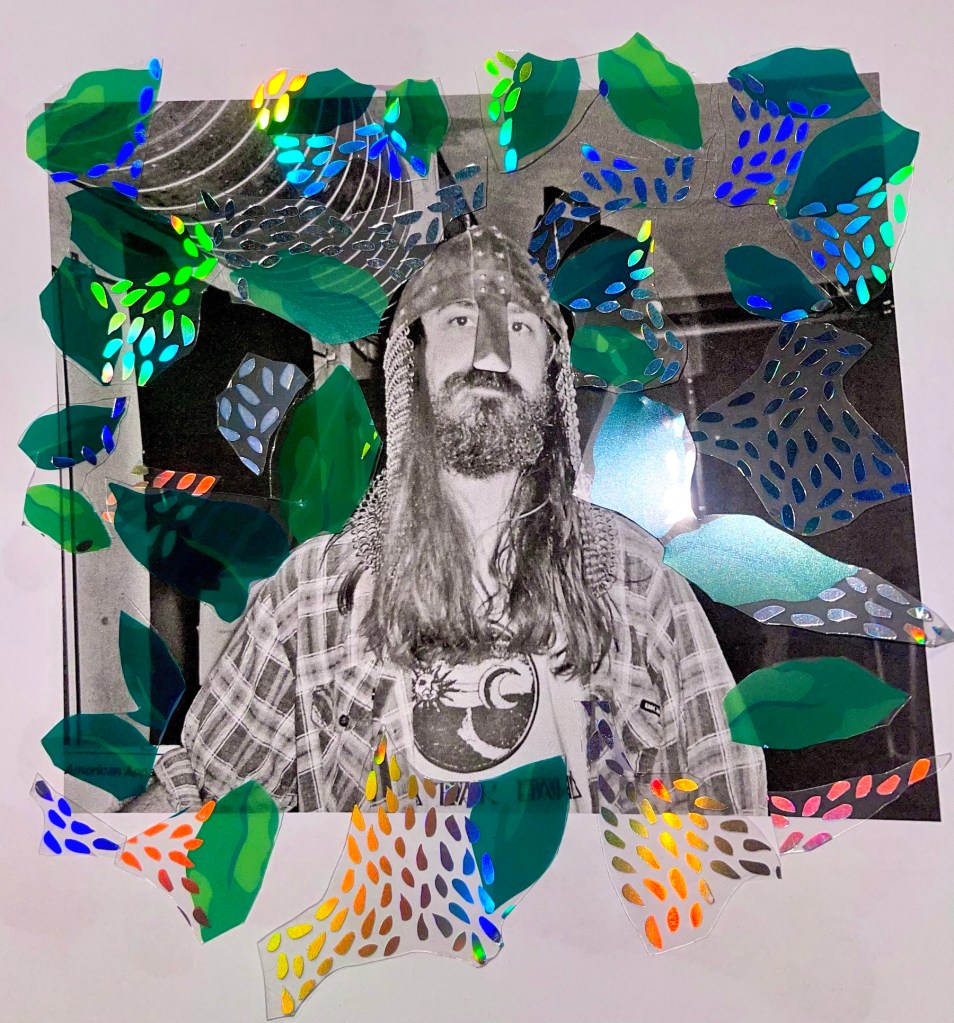
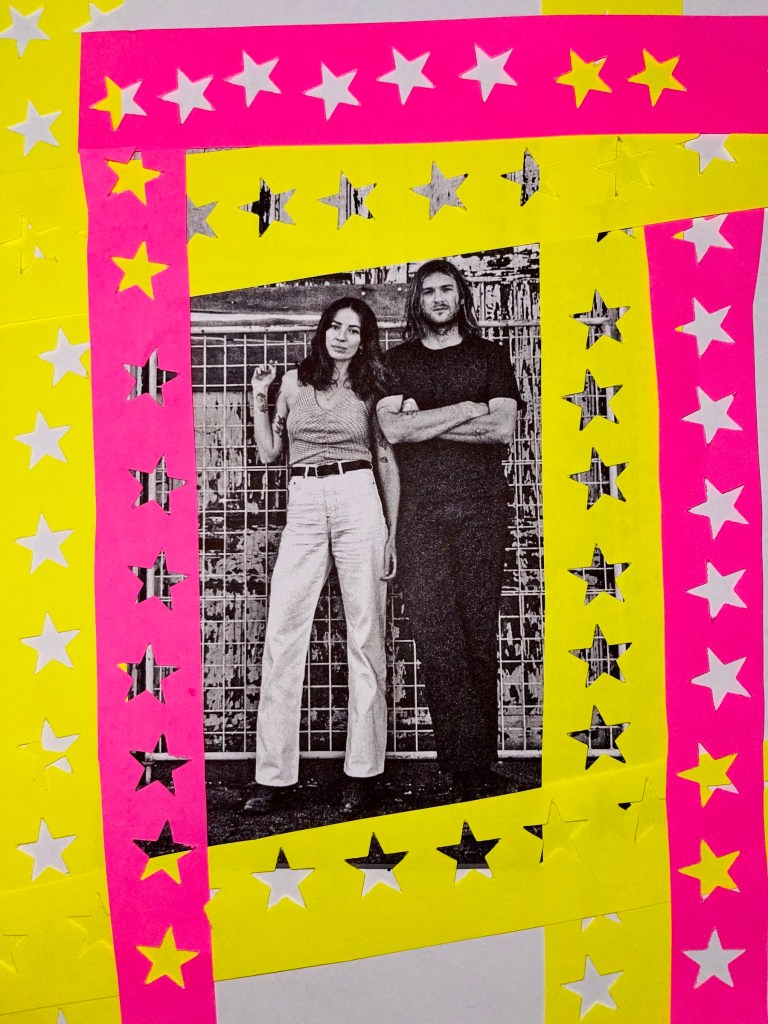
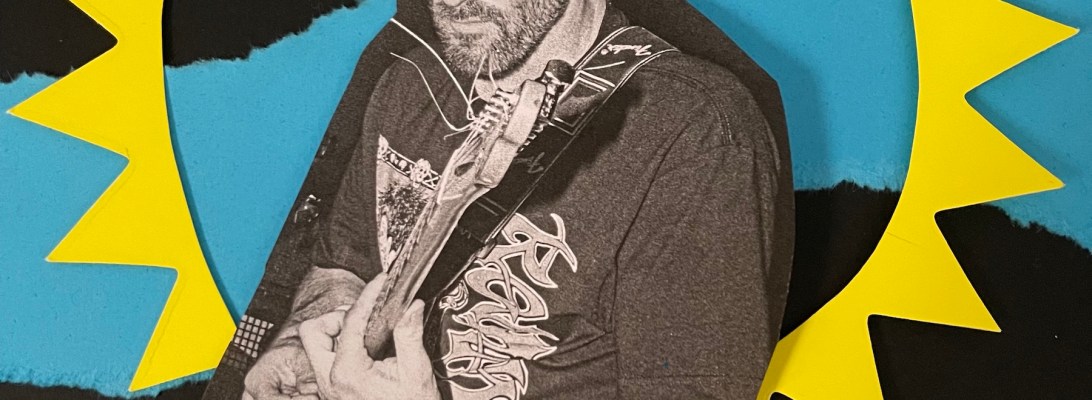
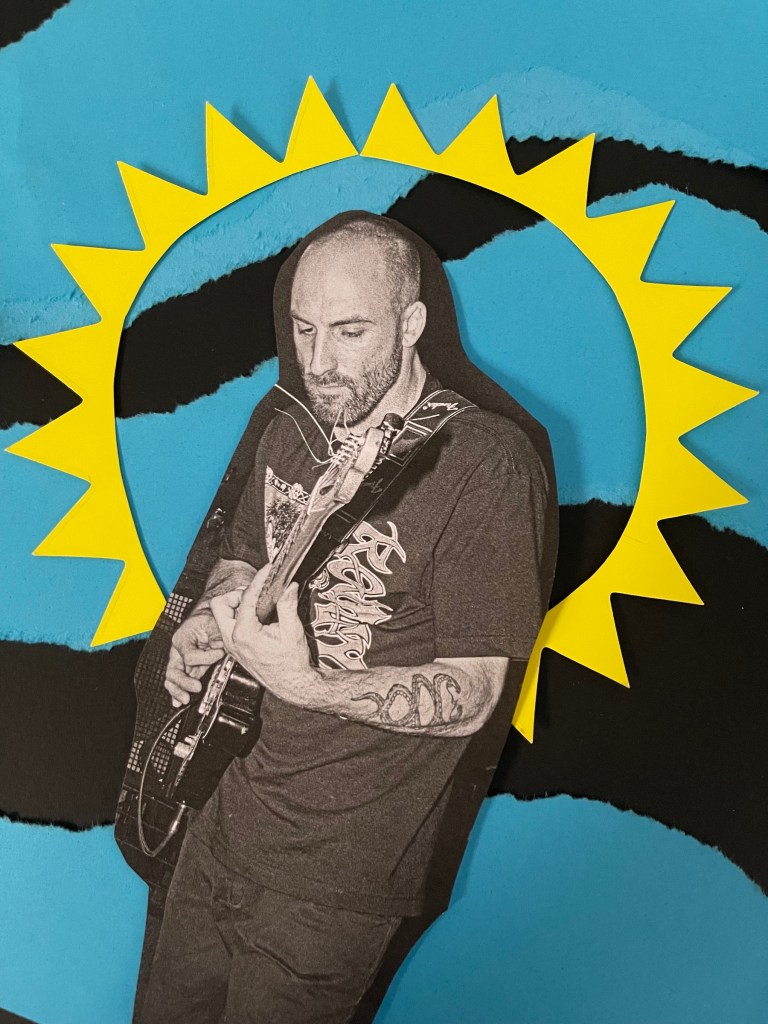
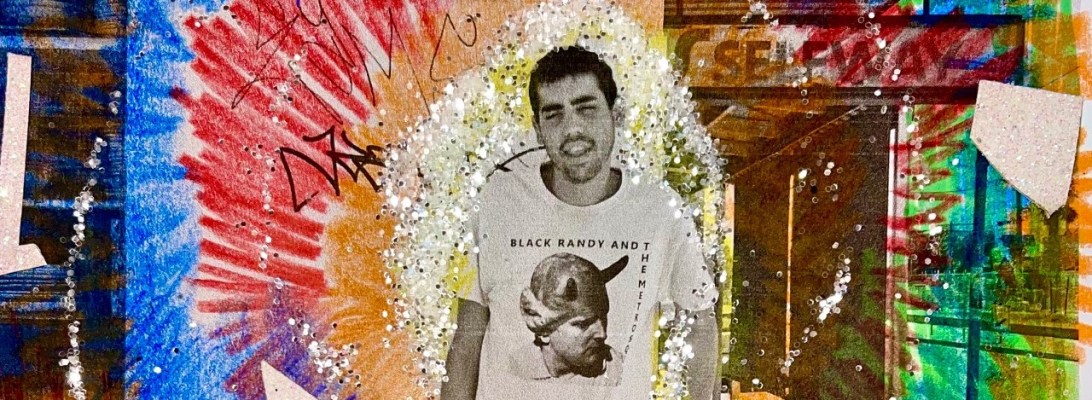
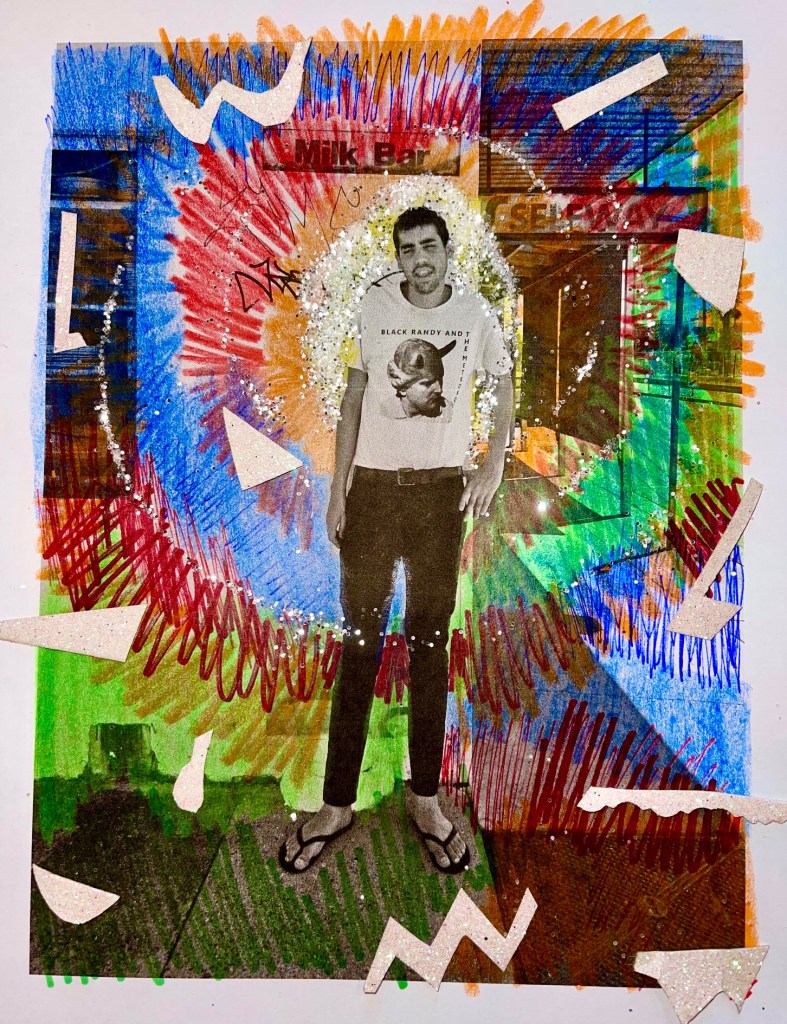
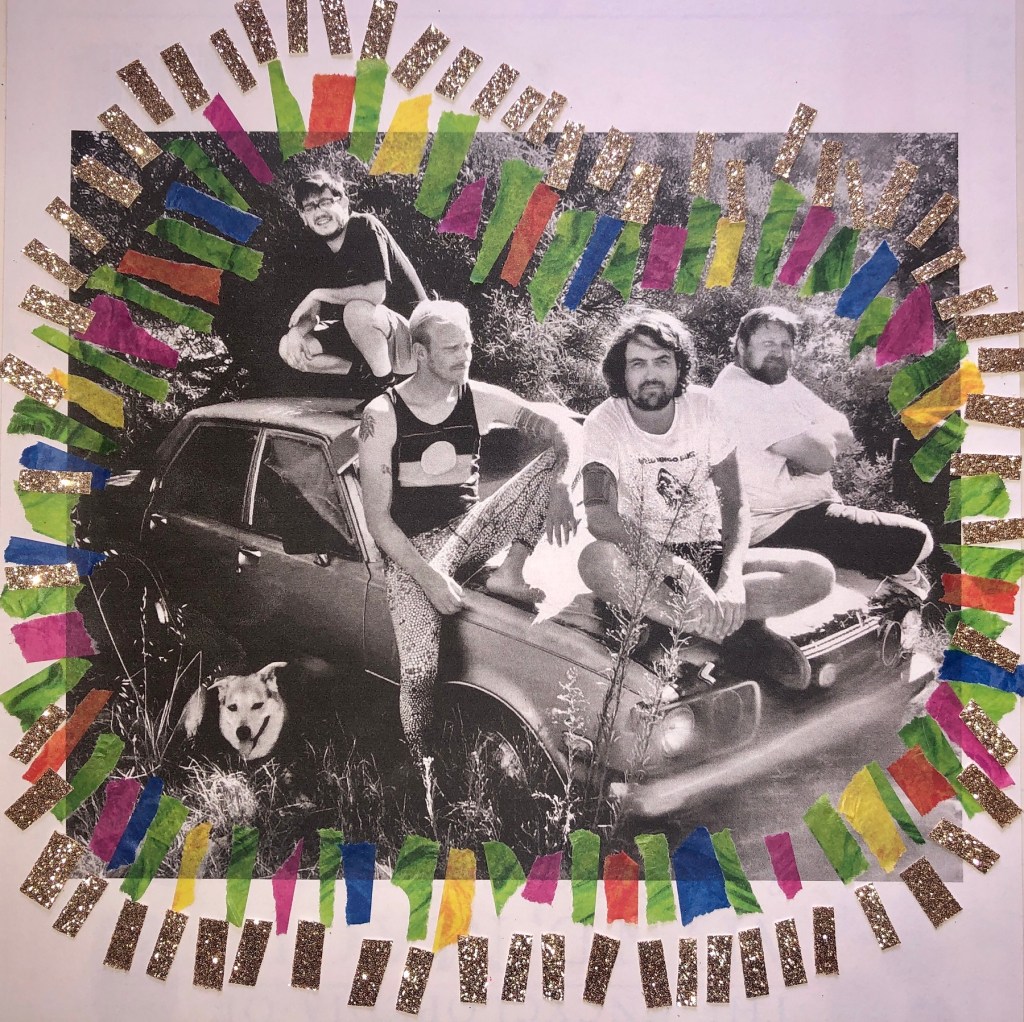
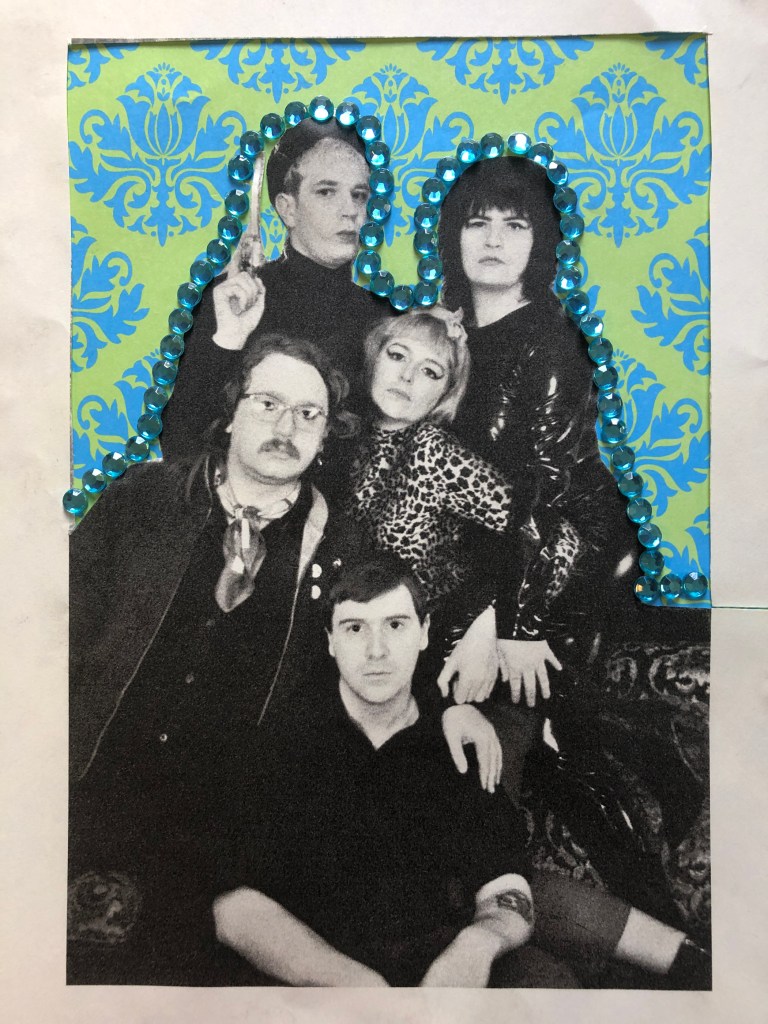
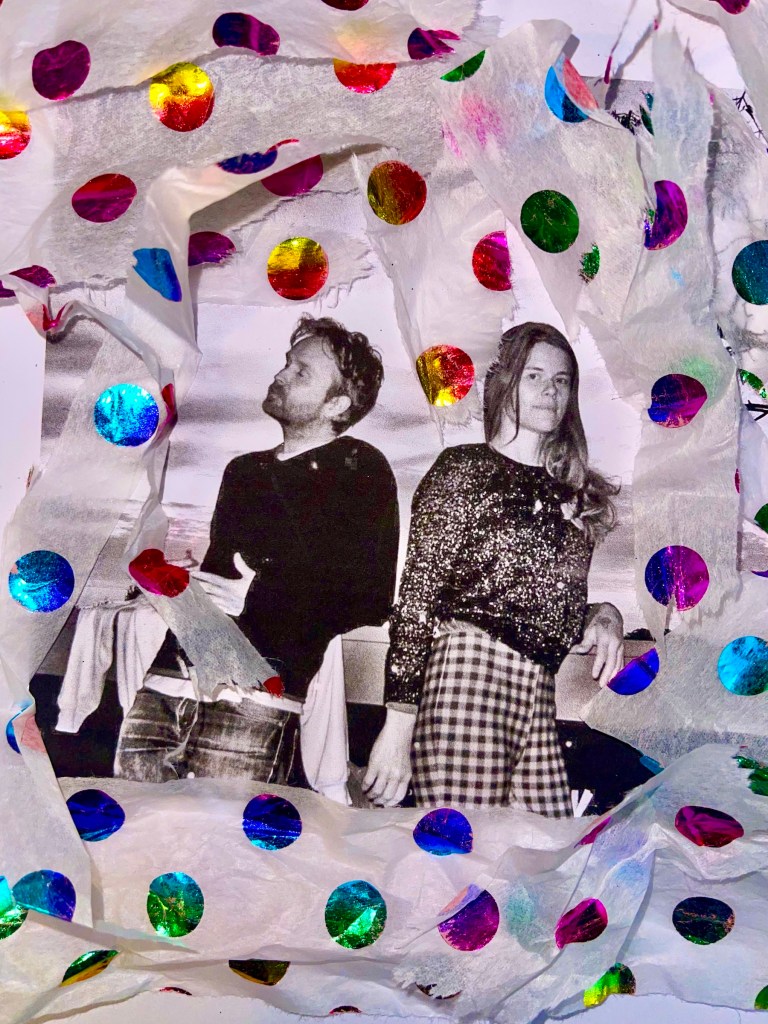
Handmade collage by B

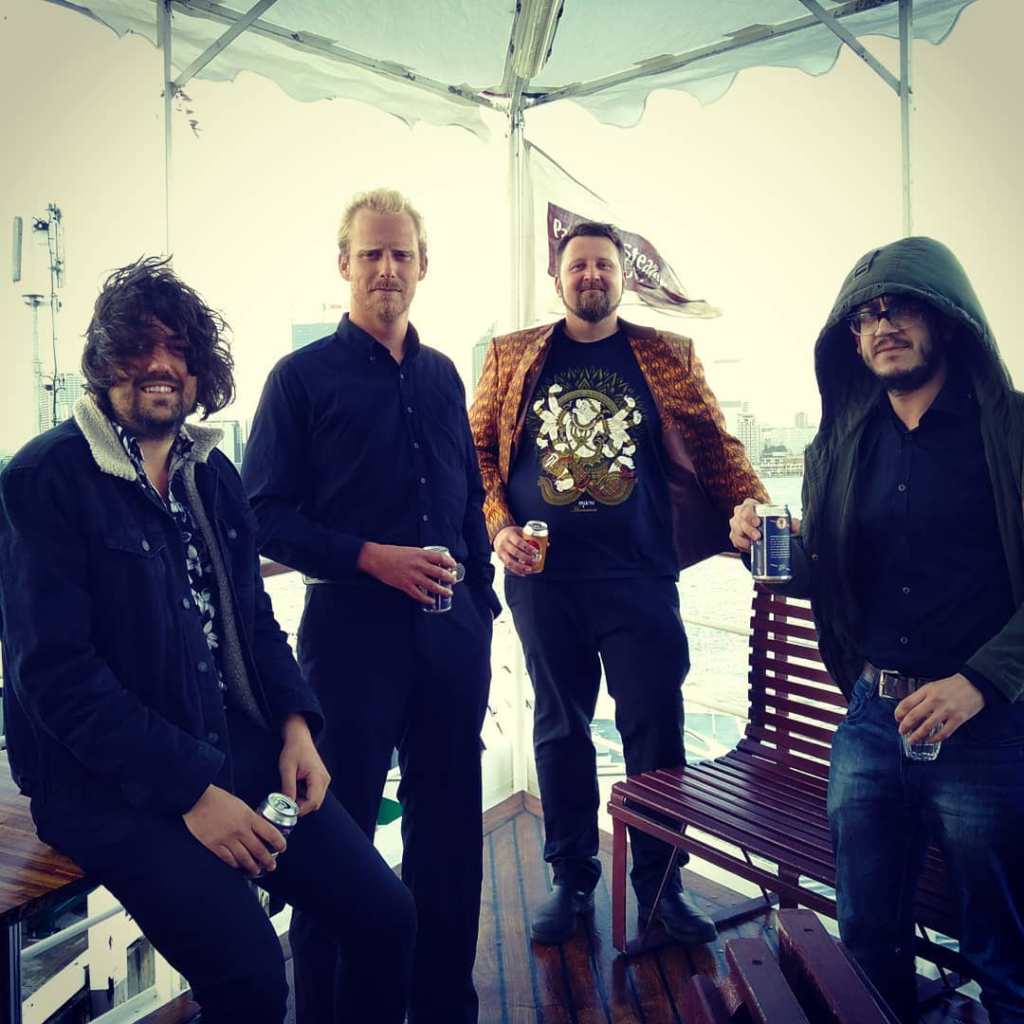
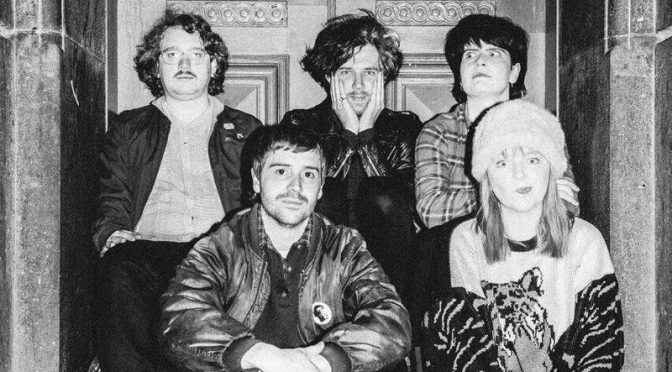
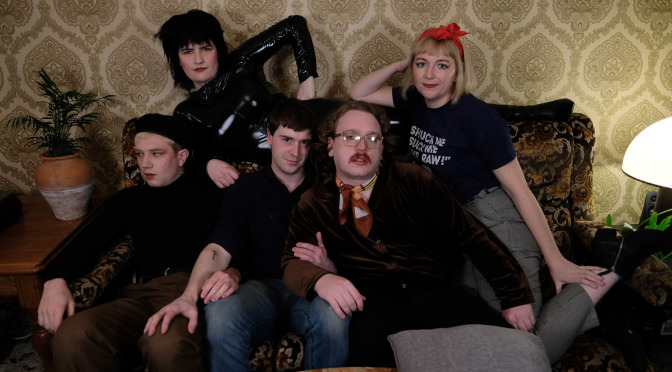
With their third album Look Familiar, The Green Child has grown into a fully realised band. Originally the recording project of Raven Mahon (Grass Widow, Rocky) and Mikey Young (Eddy Current Suppression Ring, Total Control), the group now includes Shaun Gionis (Boomgates) on drums and Alex Macfarlane (Hobbies Galore, Faceless Burial) on guitar and synths. Writing and demoing the album together in Naarm/Melbourne, the quartet found new energy in playing as a unit, shaping a more dynamic, expansive sound while staying true to their refined psychedelic pop.

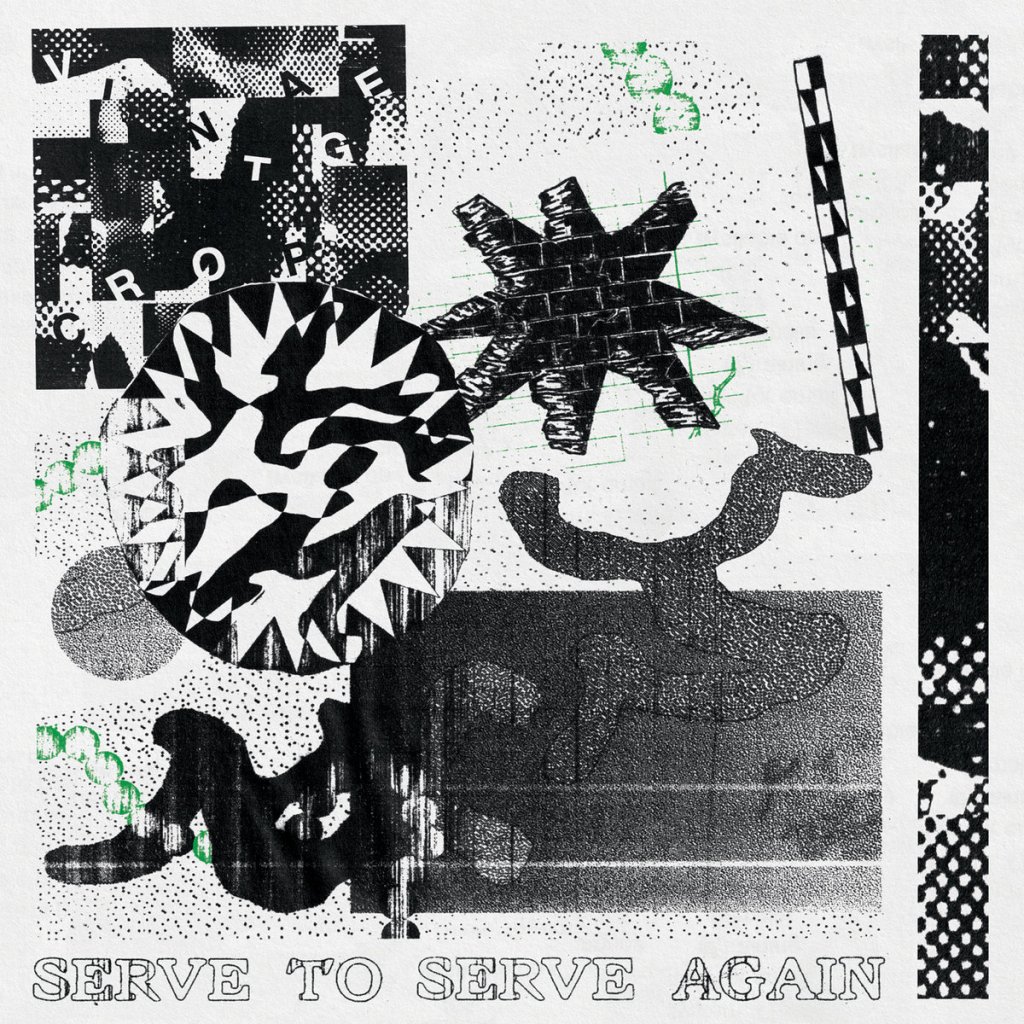
Look Familiar is an album alive with shifting textures and unexpected turns, its lustrous sound blending propulsive rhythms with hazy, cinematic layers to create a sense of movement through both time and memory. With shimmering synths, reverberant guitars, and Raven Mahon’s ethereal vocals threading through each track, The Green Child has crafted a work that feels both intimate and transcendent. Lyrically, it is rich with shifting realities and personal histories, with Raven incorporating vignettes of family memories alongside reflections on world events. The album’s artwork, painted by her mother in the early ’90s, further ties into this theme of past and present converging.

Gimmie recently spoke with Raven and Mikey about the stories behind Look Familiar.

We’re really excited about your album—it was one of our favourite albums of last year (2024). We love music that is unique, does its own thing, and incorporates lots of different elements, or when an artist takes influences and puts a new twist on them.

RAVEN: Yeah, I feel the same. You always have your influences—whether you’re conscious of them or not—they make their way into the songwriting. It’s always kind of there. But then, being able to add something… or maybe just the process of writing in the moment, responding to whatever you’re feeling at the time, that shapes the song. It might have some references or a particular style, but it just becomes its own thing anyway.

It’s cool to see bands that have something particular to say. And then that just becomes a vehicle for it—like a familiar genre or something. Because you can tell they’re in it, that they’ve put themselves into it. That’s always going to be unique.

A word thought that came to mind when listening to your album was ‘dreamlike” and there’s a warmth too. There’s such like a brightness to it. Listening to it is almost like getting a hug from a friend you haven’t seen in ages. Your album generates beautiful feelings for the listener. It has a familiarity to it. 

RAVEN: Thank you.

MIKEY: Yeah. I wonder if making music with more people, rather than just ourselves, makes it sound more inviting or warm. I feel like the first record doesn’t sound very warm at all—I could be wrong. It just sounds kind of cold to me. But having more people around probably lifts it up a little.

When you made the first Green Child album, you were both living in two different places, right? Do you think the distance might have made it feel that way?

MIKEY: Possibly. Although, weirdly, it hasn’t really changed how we write music. The first thing we ever did, we were in the same room, which ended up being a track on the first album. But I do find that, initially, it was a bit cold. I feel like the first record doesn’t sound very warm at all. I could be wrong— it just sounds cold to me. I found that I worked better if I was alone, trying to figure out ideas. I get kind of claustrophobic if people are around when I’m trying to figure out stuff, so that distance was helpful.

With the second one, when we lived together— weirdly, it was kind of the same. I’d be like, ‘You go in the other room. I’m just going to do this.’ And there wasn’t much interaction about ideas. It wasn’t really until this one, Raven wrote a lot more of the music as well. We left things really open for Shauny and Alex to be involved in. That kind of collaboration—that lack of distance has helped make it more uplifting, maybe.

RAVEN: I feel like the sentiment has always been there, even early on, without explicitly talking about constructing the songs together or what the parts would be like. There’s still something in the melodies or the instrumental ideas you would send—they’d be kind of open, maybe not structured yet, but just melodies and beats, the makings of a song. It’s funny that we work this way, but I feel like I do better by listening first and coming up with vocal melodies and then letting the lyrics follow. I like doing that on my own, but I’m sure they were still informed by the feeling of the songs and the ideas you were sending. There’s still some kind of subconscious communication about it in It’s like evolution.

MIKEY: Yeah.

RAVEN:I feel like there’s not really a conscious decision to make a particular kind of song or a particular kind of sound. It just ends up being what it is.

What we end up making together sounds softer, has a warmth to it, but the subject matter isn’t always warm. There’s a contradiction in there somewhere. 

I noticed that. For example, ‘Wow Factor’ is talking about double standards of the international justice system, but then also caring for and protecting those that are close to you. 

RAVEN: Yeah, it was specifically about Gaza and Palestine, and feeling horrified by it. And also thinking about what we’re able to do to prevent it—or to react to it, or to hold the government that is supposed to represent us, accountable for their participation in it—it’s really frustrating. It’s hard to be on the outside, just watching it happen.

Watching the systems at play—the way the veil falls away, revealing how governments handle international relations—has been striking. It’s been a stark reminder of how power is held and exercised, and how little power it can feel like the public has to do something about it.

That was part of it, as you mentioned, the other side—caring for the community in whatever ways we can, looking out for each other, and the exercise of self-protection. There’s a lot of feelings and reactions that end up coming out in the lyrics. They’re not always literal or narrative, but they contain those feelings—the impulse to react, to say something, to do something, to feel something and express it. Because, It’s been a pretty horrible thing to witness.

I’ve been writing to register to vote—I’m still an American citizen. I was writing to representatives in California and writing to Biden, this kind of regular correspondence, and feeling like the messages are increasingly desperate. You feel like you’re just saying that into the ether, that it’s not landing anywhere, but it feels like one possibility for a way you can kind of exercise your power as a constituent. In the end, you do feel pretty helpless when it feels like there’s a lot that’s out of your hands.

When the world feels overwhelming and life gets really hard, is there anything that helps you get through those moments?

MIKEY: It’s probably not the right attitude, but I personally probably just get smaller and concentrate on work, making music, and the people I know. Otherwise, some things seem too crushing, and I can’t read the news anymore. I’ve been in a bit of that state lately. 

RAVEN: It’s been a strange year and a half. I’ve just joined Instagram, which is something I was feeling pretty conflicted about—or more just uninterested in. And then, at a certain point, I felt like, for my work, maybe I should try it. I had a vague curiosity about what it would actually feel like to join, to have an account and to participate.

And so I did set up an account, and I posted a few work-related things. Then October 7 happened, and it wasn’t long after I’d set it up, I realised how incredibly useful it is for sharing things you wouldn’t see in other places.

Since that point, I’ve continued to feel really conflicted about using it, especially now that Mark Zuckerberg has taken away fact-checking—which things can only get worse.

Yeah, it’s pretty wild.

RAVEN: It is really wild—and really dangerous. But I still find that it’s really useful for learning about what other people are doing or just hearing from others around all the issues that I care about or want to stay informed about.

Even though there’s a danger in being confronted with so much in such a concentrated format, I also recognise how a community can exist there. You can feel not as alone in the frustrations, the sadness, or whatever it is that these world events and the state of the world make you feel. There’s something comforting about seeing the activity of people who are also reacting to it.

So, I don’t really want my answer to be that I go on Instagram when I feel down—but it does create some kind of balance, or ballast, to it. Music really helps too—just playing music. I was feeling down today, and we ran through some songs because we have a show coming up. And it was making me feel nice to play.

Listening to music changes your channel a bit. Playing, because it’s such a physical act, you have to focus on it. That physical engagement is part of what can be comforting.

Your album is called Look Familiar. That’s the name of one of the songs on the album, too. Why did you choose that for an album title? Does it tie to a theme?

RAVEN: There was no theme to the album that we set out to follow, but when we were coming up with song titles—because we’re not very good at that—we’d just be naming them at the last minute, and sometimes they’re not really connected to the songs at all. But I was looking at some subject lines from emails that my mom had sent me.

We’re really close. I communicate with her a lot. She lives by herself out in the desert in New Mexico. She’s maybe from a generation that uses technology in her own way, so often she’ll put the entire body of a message in the subject, and there just won’t be anything in the email itself. Some of her subjects were really funny or just funny imagery.

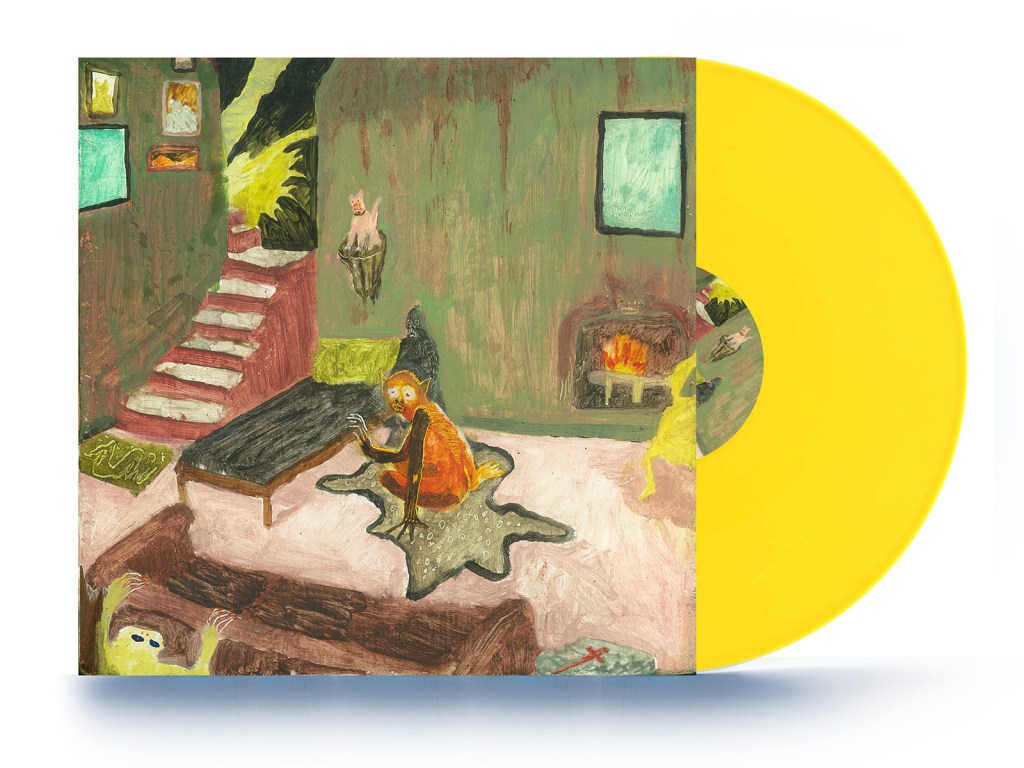
Even though “look familiar” is not necessarily an interesting couple of words together, that was on the list of things, so we went from there. Then we ended up using one of her paintings for the album art. Everything converged and made sense—not because we had intended to make that happen, but it just sort of did in the end.

One of the people in the painting is my dad. She went back to school and studied art when they divorced when I was young. This was a painting that she did post-divorce. It was kind of loaded. It’s a way, I think, for me to bring the past and other people—family members in other places—into something that I’m doing now because I live so far away from them.
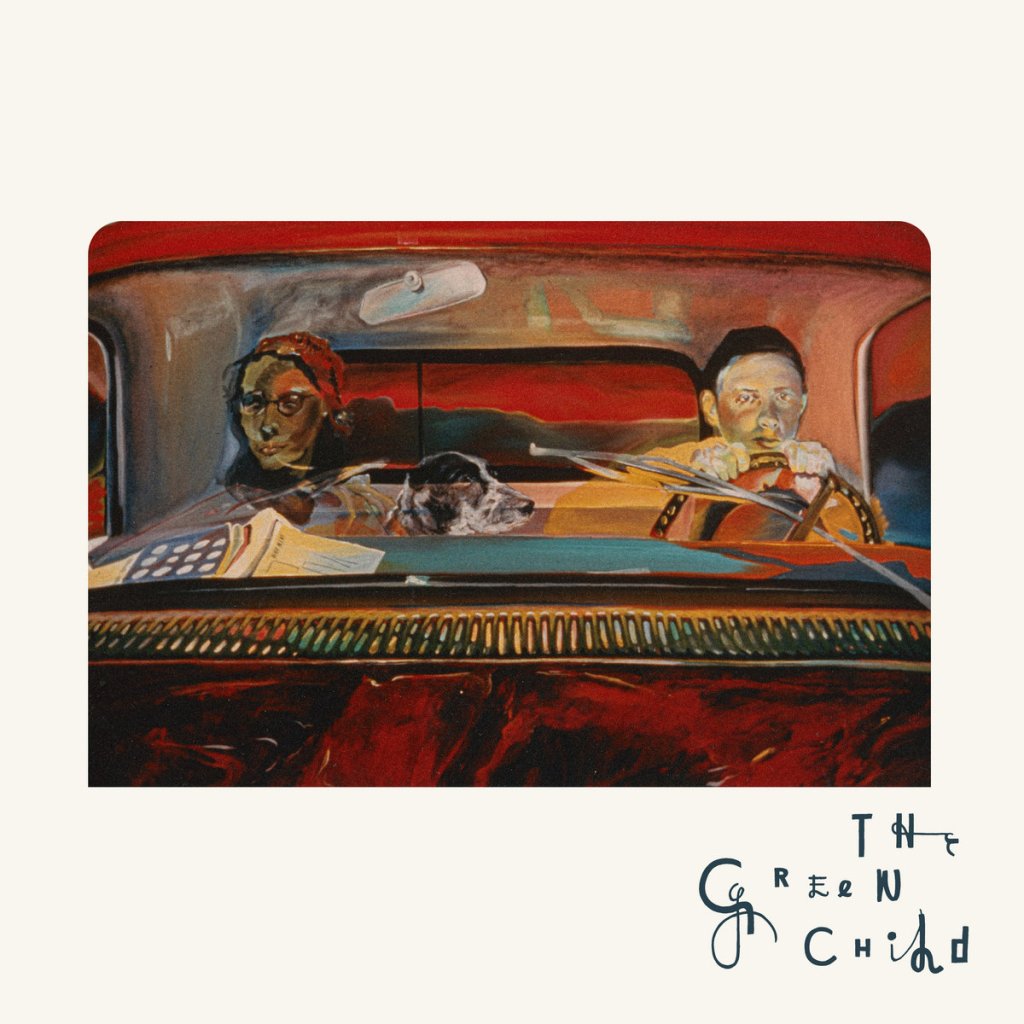
‘RTNW’ PAINTING BY JANE MAHON, 1991 

That’s really beautiful. Another song, ‘The Lawn’ has a connection to one of your family members as well.

RAVEN: Yeah, that’s my paternal grandmother. 

She lived in a commune?

RAVEN: A desert community out on the east side of the San Gabriel Mountains in LA, in Southern California. In the ’50s, they started selling parcels of land, thinking—imagining—it was going to be like Palm Springs or something, but it never really came to fruition.

She lived in this small community that’s half-built and right on the edge of things. That land, 40 years before she moved there, was a socialist commune, and there are still remnants of it. There’s a kiln—this stone structure on the dirt road that her house was on—and a couple of other things dotted around.

The commune didn’t survive. The other parts of the community didn’t want the socialists taking hold there, so they did some pretty nasty things, like turning off their water—kind of sabotaging their water rights—so that their orchards wouldn’t flourish and that sort of thing.

I spent a lot of time there when I was a kid and would go down to visit her in my 20s. So, a lot of that environment is lodged pretty deep in my subconscious.

Obviously, you moved to Australia because you found love. You met at a gig you played together, right? 

RAVEN: Yeah!

MIKEY: It was the last Grass Widow show, and Total Control played the show in Oakland in 2013. We had a mutual friend who was playing in Total Control at the time, David West, who does Rat Columns. He was living in San Francisco at the time, and he kind of set that up in a weird way.

That’s so lovely. Mikey, you’ve talked about the record, and said it felt like a step forward for you and it felt real fresh and new. What kind of things did you guys try on the record that made it fresh for you? 

MIKEY: It maintained a freshness for me because I backed away and let other people in a little more. 

Did that feel hard for you? 

MIKEY: No, not at all. Any record I’m involved in, by the time I get to the end of it, I’m pretty conflicted about the damn thing anyway, and it’s hard for me to enjoy. It takes time for me to come out the other side feeling joyous about it.

Usually, it takes some nice words from people like yourself to realise it’s okay. I think leaving even more space helps. If you’ve got people like Alex to make music with—he’s so talented and thinks so hard about what he’s going to do in a given space—you want to allow him as much room as he needs. That definitely influenced how I went about making the tunes. Getting to the end and hearing what he and Shauny decided to do on the songs makes it much easier for me to enjoy. If it were just me and Raven, my lulls would be even worse.

When you’ve got other people bringing their own ideas, you can listen back and go, ‘Ah, that’s so sick.’ So no, I don’t think it was hard. There were probably moments where it was hard to step back because I’ve been a bit of a control freak in a lot of my bands, maybe out of necessity. But once I got over it, I think it’s better, and it’ll be better in the long run.

For a good while, we even thought about not calling it a Green Child record because it didn’t feel like a continuation of the other two records, but I’m glad we didn’t change the name in the end. It seems to fit.

RAVEN: Yeah, maybe they’re not as different as we think they are. But it’s just getting used to hearing other people, other people’s ideas too, like in the evolution of it.

I like the idea of a name also being able to contain different versions and different things, different records with different configurations. 

MIKEY: Yeah, like, even Total Control records, for instance. A lot of those records didn’t have the same lineup of people, or, the songwriters changed over time. I like a band being able to be a bit malleable.

There’s been a Total Control record in the works for a little while now, hasn’t there?

MIKEY: There’s a kind-of-finished Total Control record sitting in limbo. I’m not sure—it got put on hold. By the time we finished it, people had moved interstate, and we weren’t really an active band anymore. So the personal motivation to get it over the line has dropped off. Maybe it’ll just disappear. Who knows?

Was it fun making it?

MIKEY: Yeah, that’s the weird thing. I realised when I finished it that I cared more about that than releasing it. It was interesting. I realised that with a lot of music—it made me think about a lot of the music I make—and how it’s often not about releasing it or turning it into a product. Sometimes, it’s just about taking all these three-quarter-finished things on my computer and turning them into something I’m done with. And, it allows my mind to start other things. It was fun making it. It was fun to finish it, and maybe that’s all I needed from it. Not everything has to come out.
Totally. I do a lot of writing that never ends up coming out but doing it helped me with whatever was happening in my life or it documents how I was thinking or feeling. Also, though, with the interviews/conversations that I do for Gimmie, I find it’s about the connection with others.

MIKEY: Yeah, totally. Nearly all my friends seem to be the people I’m in bands with. Most of my social engagements throughout the week are with them. The joy of just coming up with something—even if that record never came out—was worth it, I think. Just doing it for so long made it worthwhile.

One of the highlights for me on the album is the song ‘Feet Are Rebels’. I love the guitar line of that song. It just soars and keeps climbing and climbing. 

MIKEY: That would be Alex. He did write to us afterward and was like, ‘That was the first thing I came up with, and I’m kind of embarrassed by it.’ He thought it was just a bit over the top—just ridiculous—for that song. I was like, ‘Man, that’s staying.’ But I guess that one almost didn’t make the album because it’s not one of Raven’s favs.

Really?

RAVEN: It went through a few evolutions. Like Mikey was saying, when you’re so involved in the mixing and recording, you kind of lose perspective. I was like, ‘What is this song? I don’t know.’ Then Alex came in and was like, ‘Sounds like The Cars,’ or at least he heard The Cars in it. So I’m glad he ran with that—I feel like that made sense to me.

But, I could never quite shake the feeling of questioning whether it was any good, you know? Like, was it worth being on the record or worth playing? I mean, I could be convinced, but it’s just one that I lost perspective on.

I understand that half the ideas were from you, Raven, and the other half from Mikey. What were some of your personal influences while making it? It was made over four years, right?

MIKEY: God, I don’t know how… Yeah, I guess some of the initial ideas are probably four years old—who knows? We probably only put a conscious effort into making a record over the last year or so. 

RAVEN: The ideas are probably drifting around for a while.

MIKEY: I have no idea about influences anymore. There are certain songs that feel like obvious rip-offs to me—like, there’s a very specific idea where I wanted to rip-off. I don’t know if you picked up on any of that.

There’s a demo version that doesn’t sound like this, but as soon as we started jamming ‘Easy Window’ it basically turned into Tusk by Fleetwood Mac straight away. I was like, ‘Let’s just roll with that—lean hard in that direction and be shameless about it.’ Because, you know, sometimes you do try to rip something off. But because we’re our idiot selves, it’s not gonna come out sounding like the intended object.

RAVEN: Someone called it though. Was it Rory? 

MIKEY: Yeah. A few people have called that one out.

RAVEN: It’s the drums. As far as direct influences, I feel like it’s all kind of swirling around—whatever comes out, and then having other people with their own ‘soup’ of inspiration ends up being something completely different anyway. Everyone’s got their own reference points.

I do feel like this record sounds particularly different because of everything Alex brings to it. He has these certain notes or combinations of notes that he uses, that give it this kind of medieval frog bent [laughs]. I love that he just goes for it too.It feels really free.

He doesn’t make it sound indulgent. It’s just like, this is what needs to happen in this particular place. When you open up a songwriting process to other people, they come back with ideas you wouldn’t have thought of. Everything Alex has done is not something I would have thought of, but that’s the nice thing about collaborating.

MIKEY: Yeah.What I was trying to say before is that the influences are more secondary. Like, you start a song without an influence, and then you realise there’s something in it—like The Cars or something. Then, I start to go down that path.

Like, the ballad—which I can’t remember the name of—did not start out sounding like a Serge Gainsbourg song. But as soon as it started, I was like, ‘Ah, I said to Shawny, just play drums like that Serge Gainsbourg track.’

It’s not like I wake up and think, ‘I’m going to write a song that sounds like Serge Gainsbourg,’ but it’s more like, ‘Oh, I accidentally started something that sounds like it could or should go in that direction.’

Although that’s not true. There’s one, ‘The Lawn.’You know, New Musik? ‘The Lawn’ was made totally trying to write a New Musik-type song.

Do each of you have a particular song on the album that you’re really happy with?

RAVEN: I really like that ‘The Lawn’ New Musik-type song. I feel like it’s challenging to play, but when we get it right, I really think I like that one a lot. But then the other one, called ‘Private Laugh,’ is sort of like that idea initially came to us a few years ago, it had just been drifting around and then came together right at the end of the process of getting all of the album songs together.

It came up pretty quickly, and I didn’t really think too much of it. It just felt like a good addition to the album, and maybe it sounded different from the other songs. But now that we’ve been playing it and practicing to play it live on a show, that’s becoming my favourite song to play. It feels like like the recorded version. Although, I don’t know, I don’t go back and listen to any of them. There are the songs that you’re writing, and then there are the songs that you’re recording and mixing, and then they’re out. This is the first time we’ve ever played any of these songs live, and I’m pretty nervous about it, actually. 

We’re excited to see it live! We’ll be at Jerkfest this year. 

MIKEY: Cool. 

Jerkfest is always a highlight of our year! We get to see so many cool bands and people that we love. We also feel so inspired by it and everyone. I chatted with Alex a few weeks back and he was telling me that you guys have been practicing. How’s it all going? 

MIKEY: It’s going good. Alex is good to have in it because he’s not a ‘half-baked, it should be right on the night’ kind of person. He’s more like, ‘We must practice this until there’s no chance of anything falling apart.’ We probably need a bit of that kind of whipping into gear. We’re getting there.

We’ve got two practices a week for the next three weeks, so I think we’re looking good. It’s been funny, I look forward to playing, but I also look forward to getting these over with so we can write new tunes again [laughs].

What’s something that’s made you a better songwriter over the years?

MIKEY: I would never call myself a songwriter because I can’t write lyrics. I can write riffs and stuff. Sometimes I can get my ideas from A to B a little better on a production level. Like, I used to have an idea, and then what I wanted to sound like at the end—I couldn’t get to because I didn’t have the skill to get to that point. Maybe that’s just gotten a little easier.

RAVEN: I feel like if I am any better at it now than I was like 10 years ago, it’s just because of watching you [Mikey] mix things and write things for other projects, and even just the way that you’ve approached these songs. There’s maybe something structural… I don’t know what it is exactly, but I do feel like I’ve learned a lot. Some of it is probably technical—understanding the program and what the possibilities are, which I still feel like I only understand a tiny smidgen of what’s possible.

But being able to navigate it a little bit easier helps fully form a song, or at least I have more elements than like, ‘I’ve got this idea in my head.’ Because I feel like, as soon as I have an idea, it’s just gone. So if I can’t get it down in some form, then that’s it.

MIKEY: My problem is I’ve ran out of good riffs.

RAVEN: The riffs run dry. 

MIKEY: It gets harder and harder. 

Because you do mix and master other people’s music so extensively, Mikey, and there’s a lot of technical side to how you work, and then obviously making music yourself would be more emotional and intuitive—do you have to switch that technical side off when you’re playing?

MIKEY: Yeah, that’s easy. The feeling of working on people’s music during the day most of the time does not feel creative at all. It’s a totally different mindset, and it doesn’t interfere with my feelings about making music or my desire to make music.

Usually, the first part of when I’m making music is not very technological at all. It’s scrapping together an idea as quickly as I can. I still think I’m a pretty scrappy musician. I don’t think much has changed over time. Usually, it’s just finding new instruments or programs to kind of feel inspired about.

For me, there’s usually a point where I’m finding something new—be it a new instrument that I can’t play very well or a new program. There’s a point where I get good enough to make something, but I’m still ridiculously naive at that thing. And there’s a window there where most of my favourite ideas come from because you can do these simple things. Now, there are certain riffs I wouldn’t write on a guitar that I would have when I was 15, because I’m like, ‘You can’t write that.’ But if you’ve got something new that you don’t quite know what you’re doing, you can go back to that mindset and be a teenager again. For me, it’s usually finding that window where something’s still raw and fun and stupid.
I love that! 

MIKEY: It’s a fun mindset to be in. On the other hand, I really respect people when they craft and can write a perfect pop song. Alex is a good example of someone that to my eyes, he really tries to do something properly all the time. 

I love both ways.

MIKEY: Yeah, that’s a good thing to be open. 

What’s something that you’ve been really invested in lately?

MIKEY: Because I’m working on modern music a lot, a lot of my spare time is looking up music for the compilations that I’ve done on the side. Often the thrill of the chase and finding things with that whole process is pretty inspiring to me.

There’s not really much in my life that’s outside of music. We watch a lot of films.

Anything you’ve found lately that you’ve really loved? 

MIKEY: There’s been a bunch of stuff, and that’s going to be on another comp that should be out next year. I find stuff I like all the time. When it’s late at night and you stumble across something that is just mind-altering, it’s like, ‘Oh my god, this is like my favourite song ever for now.’ I don’t find that as easily as I get older, so when it does happen and it’s that strong, it’s cool! It feels the same as it did when I was 10 years old.

Can you remember the first song you were obsessed with when you were young? 

MIKEY: From two, I was mega into Rod Stewart and KISS. In 1979, it was ‘I Was Made For Loving You’ and a few songs off the Dynasty album. There was also a Rod Stewart album that I had the poster for on the wall. At two or three years old, they’re the only two cassettes I had. I was probably just obsessed about every detail, as much as you can be when you’re three years old and just trying to understand what music is.

What about you Raven?

RAVEN: I was thinking about my dad’s record collection and INXS, and about the albums that first made it over into America and were big. It would be something that I would have heard in there, probably the Beatles’ White Album or something. But something that got me personally…

I feel like there’s a moment when you— not when you feel like you could make that music, but that you realise that it makes you feel something really strong. Whether you make music or you’re just listening to music and a fan of it, there’s a particular moment where it affects your whole world or transforms your whole perspective.

I don’t know what that first moment was of feeling like I could make music. It probably came way later, actually. Well, I was in band, I played saxophone when I was seven, and I feel like that was my first experience. But it wasn’t really like what I listened to and then what I played. It was like what we played in the school band versus, you know, the things that I listened to—my Mariah Carey tape that just made me feel really good.

Slowly those things start to come together and, you know, you realise you can play and it gives you a similar feeling to listening to things that you love.

MIKEY: I definitely didn’t hear KISS or Rod Stewart and think I can do this. The idea of being inspired directly to make music, I’m sure that can’t wait later on. I have no idea how.

RAVEN: I do remember being in a school band at around 11, playing some kind of John Williams soundtrack, like Jurassic Park or something, which I think we did play, and feeling genuinely moved by it, and feeling part of something. I feel like some people talk about their early days, like singing in church or playing an instrument in a church band, and how it was their first experience of playing something and feeling like part of a whole. Playing Jurassic Park in sixth grade was probably that moment for me [laughs].

That’s cool. It’s funny that you mentioned the Jurassic Park theme, when Jhonny would play solo shows he’d start of his set with that and I’d be standing out in the crowd and I’d watch everyone around me hear it and get so stoked on it. It’s a pretty magical piece of music.

RAVEN: That’s so great.
I love seeing music move people and being in a space where you can share that. During the pandemic, it was the first time I hadn’t been to gigs for a prolonged period since I started going to them as a teen. When I started going back to shows, I realised how much I missed it, and that there’s nothing that gives me the same feeling.

MIKEY: Totally. 

RAVEN: Yeah, I feel really lucky to have experienced what I have. Whatever happens in the future, just to have had the experience of playing and touring— that really particular thing. Whether you’re in the audience or playing music on stage, there’s nothing else like it, really. 

MIKEY: Especially small shows. It’s the visceral thrill of being face to face with someone, whether you’re playing or watching. It’s something I don’t think I’ve experienced in any other fashion.

I’m forever fascinated by the mysteries of creating and music and connecting and sharing. 

RAVEN: I think about how much work it takes. We’ve done a tiny bit of work with our music for film and a little for TV, and it’s given me some insight into how people make a film—how organised you have to be, how many layers there are, how many people need to be involved, and how long the whole process is. There’s this will, this intention to create something, and an idea of what that is, what someone wants to communicate, or what a group of people want to communicate.

And I feel like, on a smaller scale with music, all of that is channeled into this media.All this work has gone into it— the ideas, the intentions, the imagery, the lyricism… everything. As derivative as some music is, or fits into defined genres, there’s still a lot that goes into it, especially in bands we listen to. I’m not saying that pop music doesn’t have something behind it, but I also feel there’s something special about the intention behind the music created in the spaces we’re in. Small shows, small runs of records—it’s ambition is to be made, to create, and to express something. And that’s what you end up hearing, or seeing, or feeling when you listen to it.

Last question: In the past year (2024), what’s something that’s brought you a lot of joy?

MIKEY: Hmmm, joy?

RAVEN: It’s been a hard year, honestly. But I feel really fortunate to be able to make music. In my other life, my job is making furniture. I share a workshop with a handful of people, and we’ve got this collective thing that’s grown. It feels like I’m really fortunate to have both the band space and this work space. I mean, it’s work; people hire me and make furniture. But there’s a lot of creativity, ideas, and information and experience shared amongst the people I work around. I wouldn’t have called it “joy” but it is something that really makes me happy, and I’m really grateful for it. I’ve spent so much energy on that and into the music and I feel like both of those things feel affirming and are positive places to be channeling energy at the moment. So, I think that would be it for me—just feeling happy about those opportunities.

MIKEY: It always comes back to music, and making music with people. There’s lots of ups and downs with, so the word “joy” is probably, maybe it’s not as straightforward as that. But I was thinking learning a new instrument over the last year has brought me a lot of frustration, but a lot of joy.

That’s the instrument I can see there beside you?

MIKEY: Yeah, the double bass. It’s going to take me about 10 frickin’ years to get  anywhere with it [laughs]. Also, I’ve been jamming a lot. Since we moved back to the city from the coast, over the last year, Eddy Current started jamming every week again—just because. Once we started working on the album and the idea of playing live, Green Child started jamming every week too.

We also started jamming with Shaun, our drummer, who’s one of our best friends. We used to live with him down the coast, but once we moved away, there was a period where we didn’t see each other as much. But making these regular times for jamming was key. It’s not just like, ‘This is when we’re gonna practice,’ it’s also the time I get to hang out with my friends and family.

I’ve got another band, Kissland, with my buddy Max, and just having these moments—because if I don’t have bands, sometimes months can go by without seeing some of my best friends—but being in a band forces that opportunity to hang out and make stuff every week. It definitely has its frustrating times, but overall, it’s bringing a lot of joy.

Is there a new Eddy Current record in the works?

MIKEY: Not really. We decided to start jamming about a year ago, or maybe even a year and because we jam in here, we record every week, and we’ve written a heap of songs. But it’s almost just this insular thing that we do for ourselves, and we don’t really talk about putting out an album or anything. It’s just sitting on all these stupid recordings.

I think that’s what has made it so much fun: because we don’t really talk about the outside world so much. For now, we’re just happy being that. 

I love that you said that ‘we just jam because’!

MIKEY: it’s just a good time for everyone. People’s jobs have changed, or their kids have gotten old enough where they’ve got spare time. So, it’s just a good time for everyone.

I don’t have Total Control playing anymore. We’ve got this space that we can jam and leave stuff set up. It’s just a good feeling for all of us to do it every week.

What both of you and Raven are doing, you’re creating things and you’re connecting with people that you love. And that’s the base human things that you need to. For me, I know that’s what I need to have a happy life. Lots of shit could be happening in my life, but if I have the ability to have those two things on a pretty regular basis, I feel like I’m like the richest person in the whole world. 

RAVEN: Yeah!

MIKEY: Yeah, totally. 

RAVEN: Well put.

MIKEY: I do find music baking also really frustrating sometimes. Not just with other people, but by myself. I can have extreme lows when I feel like I’m just making crap. I don’t really think about how music makes me happy. It’s more like, it just doesn’t even seem like a choice. It’s what I do and have always done without even thinking about why I’m doing it. 

You’re compelled. It’s like breathing, basically, and if you don’t do it, you’ll die. 

MIKEY: Totally. It’s not like you wake up one morning and go, ‘Damn, I love breathing!’ [laughs]. That’s it—you just do it.

LISTEN/BUY Look Familiar via Hobbies Galore (AUS) and Upset The Rhythm (UK).
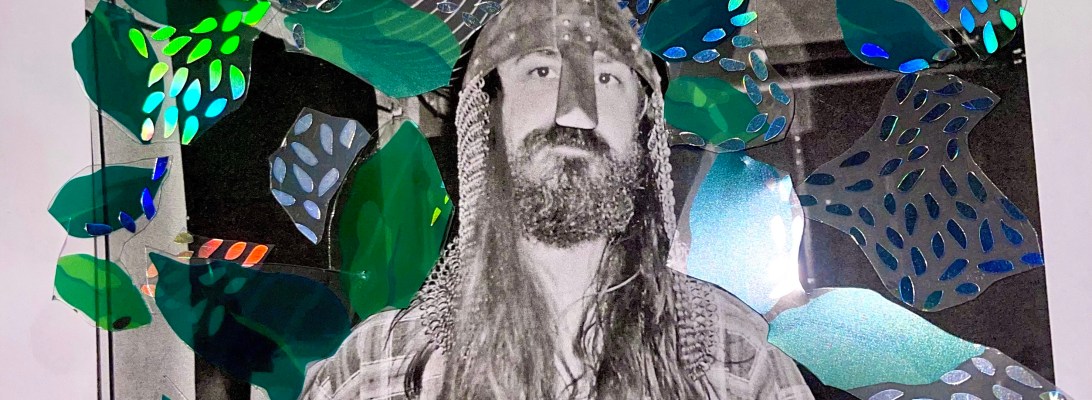
Alex Macfarlane: ‘You can’t really ever regret working within your means and not grasping at every opportunity for the big time. You can always be happy that you’ve done things yourself.’

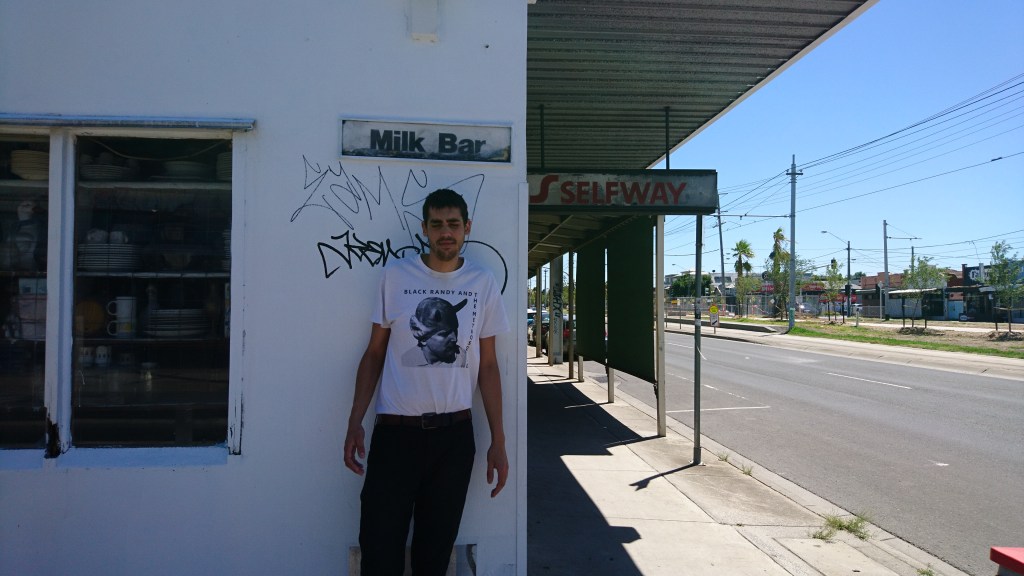
Original photo: Füj / Handmade collage by B.

Alex Macfarlane is a passionate music enthusiast with a deep appreciation for creativity and individuality. He values authenticity and the unpolished nature of music, often prioritising natural expression over technical perfection. Alex is deeply connected to the music community, he plays in Faceless Burial, The Green Child, Francis Plange, and played in The Stevens, The Twerps, Tyrannmen, Pious Faults and more. His commitment to fostering creativity is evident in his role in starting a label, Hobbies Galore, to support artists he loves, like Mikey Young, The Stroppies, Blank Realm, and J McFarlane’s Reality Guest, as well as his own solo releases. Above all, Alex embraces the unexpected, finding beauty in unconventional music and performance.

Gimmie caught up with Alex for an in-depth conversation that spanned a couple of hours. In this epic chat, we dive into his musical life—from playing with his dad in a prog band as a teenager, to his one-man grind band in high school to now. We also touch on his lifelong friendships with local musicians who inspire him, his new album Meanderings, the Faceless album they’re working on, international bands he’s helping bring out, and his experience running the label. Plus, we discuss his writing process, the music and bands he’s been getting into recently, burnout, books that have had a big impact, and so much more!

ALEX MACFARLANE: Having been involved in various other labels—being on them—and being like, ‘Why does it all have to fit into the calendar? And why does this need to go here? Or why do we need to do that? Why do we need to have video clips and photos and that kind of stuff?’ It’s like, can’t we just do what we like?

Exactly. I think it’s weird that everyone often conforms to certain ways of releasing an album that’s set by particular systems that I don’t really care for. I was really happy that you released your latest album, your solo release Meanderings on a Monday. Because the standard is to release things on Fridays.

AM: Well, I don’t work Mondays. I usually get most orders on the first day, so I thought, anyone who ordered on that day would be in the post that afternoon.

I love when a label is prompt with mailing out orders. I’ve experienced many labels (unfortunately many indie ones) that take ages and have little care for getting your order out to you in a reasonable time once they have your money, which sucks. I find too, that when everything comes out on the Friday, there’s so much new stuff that sometimes things get lost and I don’t always see everything, and miss out on seeing/hearing some cool stuff. 

AM: I feel like I’m pretty tapped out on Fridays as well. By the time I get to the end of the week, I don’t feel very like absorbent for new things. 

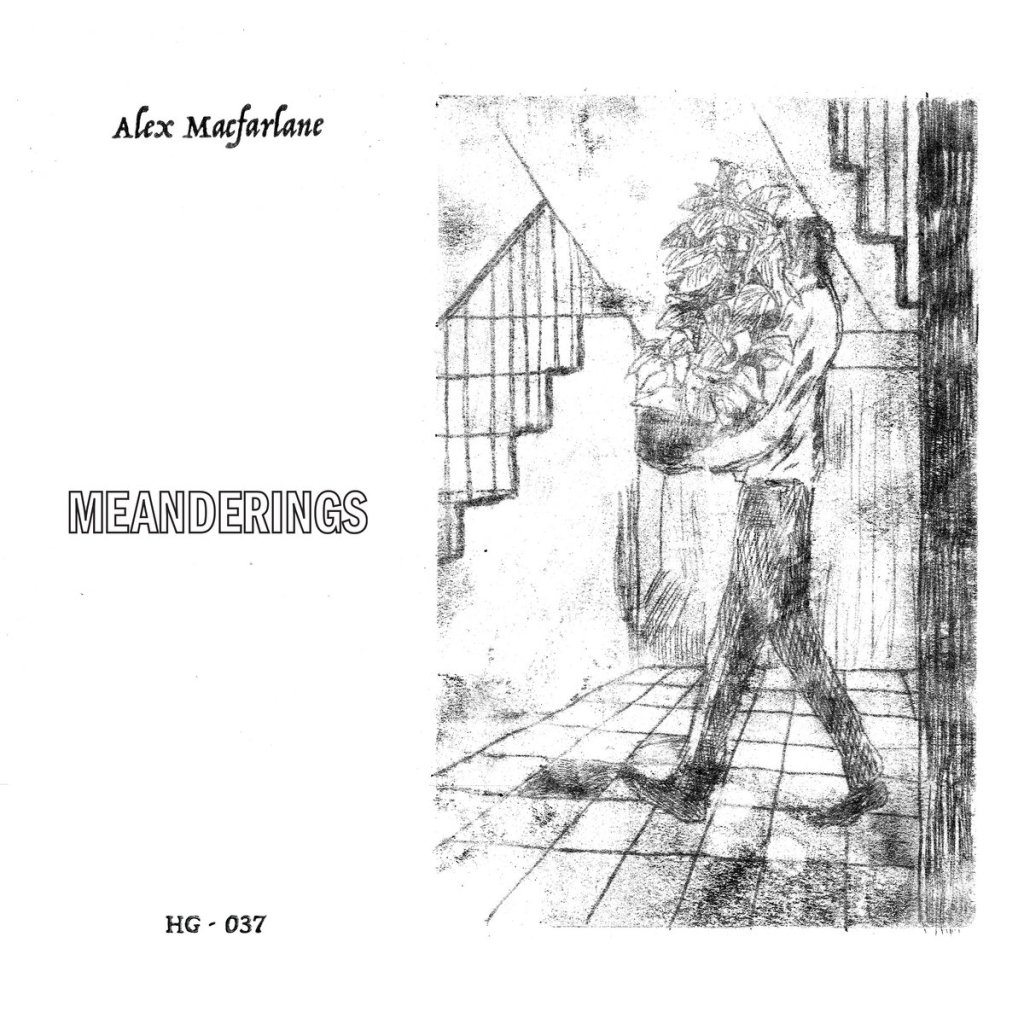
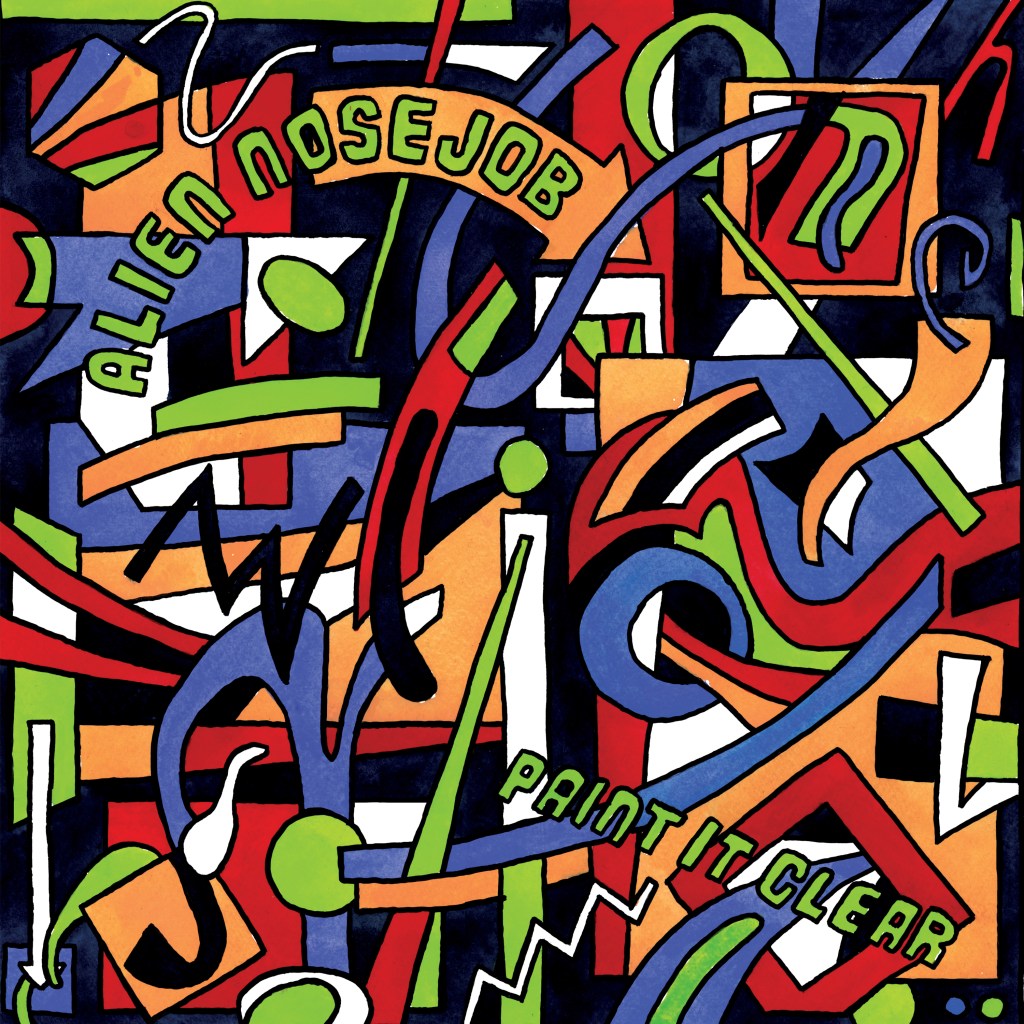
Cover illustration by Travis MacDonald

I get that. What do you do for a job? 

AM: I work for a bunch of barristers in the city, where I was the mailman for seven years, delivering parcels to the courts and stuff like that. Eventually, they found out that I recorded music. So now they’ve got me, basically, going around fixing people’s fax machines, and they’ve got me recording a podcast for them. I do the sound for live webinars too. Anything that has an electronic element, I’m now doing. But it led to me getting calls from random barristers at all hours, being like, ‘I can’t get my Zoom to work,’ and that kind of stuff. But then, suddenly, it leaked into day-to-day life.

Do you like that work or did you prefer being in the mail room? 

AM: I got to walk around, and no one really knew what you were doing, which was good [laughs].

I noticed that you put out your first Hobbies Galore release on October the 4th, 2016. Today is October 1st, so in the next week it’s coming up to your labels eight year anniversary!

AM: There you go. I wouldn’t have known that. That was a while ago. I’m trying to remember where I was at that point. I was living in Footscray, and memories are a little hazy from that time. It definitely happened, there’s obviously a definitive date. 

What have you been up to lately? 

AM: Pretty busy. It’s always busy with music stuff. The last couple of weeks were really busy because I’ve been playing in the band, The Green Child. We’ve been trying to figure out how to turn it from a recording project into a live project. That’s been a lot of programming sounds and relearning songs that I maybe didn’t think I was ever gonna play live.

Then a similar thing coincided with Pious Faults, who I was playing with the other night. I recorded a bunch of keyboards for their new album. Then they were like, ‘Do you want to play this show with us?’ So I said sure, but that, again, was a bunch of stuff I wasn’t considering actually playing live. So I was relearning all of that.

I also had to relearn the Frances Plange set. All his songs are 20 minutes long with no repeating parts. On top of all that, the metal band, Faceless Burial, I’m playing in is recording this coming weekend. It’s this 18-minute song with a million notes in it.

And we’re also booking this festival in November, where we’re bringing out two international acts—friends of ours from Copenhagen and New York. We’re organising nine visas, internal flights, accommodation, venues, and all that kind of stuff.

Then I’ve got the sort of four-ish releases on the label at the moment, and they’re all getting posted out all the time, so there’s that to finish. That all happened in the last month.

Before that, I was doing a lot of solo shows, which I’ve now cut off so I can have some time to think about these other things. Prior to that, it was just a string of international tours with the metal band. We had two Euro tours, the second one just Scandinavia. Then we got back for a week, went to Southeast Asia, came back from that, did a national tour, and then went straight into all the solo shows, which led me up to this time.

Phew! You do more in a few months than a lot of people do all year. I admire that work ethic. Do you like being that busy? 

AM: I think so. I mean, yeah, I have always been playing in a lot of bands at once. As long as all of the bands are completely different, it’s fine. I’d have a harder time if I was playing the same instrument in every band, or if the projects sounded similar. I’d feel like it’s less necessary to be doing them all at once. The individual ones, keep me on track a bit, so that I don’t try and put some horrendous metal riff in a folk song or something like that [laughs]. I’ve got compartmentalised sections in which I can more effectively channel things.

I know there was one point where you were doing six bands at once. Have you ever got burnt out from doing so much? 

AM: Yeah, I’m pretty, pretty constantly burnt out. I don’t really sleep very much. There’s a genetic insomnia thing that’s hard to beat. I feel like I don’t really relax very often, or if I do, it’s reading or listening to records. There’s always some sort of activity; I’m always up and doing things. I’ve found ways to be able to do a lot of projects at home, I find it relaxing to be at home working on projects. I definitely find being out of the house to be the taxing aspect of it. Even though I really like seeing people, seeing other bands, and collaborating with people, I would sort of—if I was working on a solo release—I wouldn’t really find that to be a tiring experience. That would be what I do in the downtime from shows.

Like I mentioned earlier, you just released Meanderings, and I was looking back at your catalog, and noticed that you’ve released over 100 solo songs. Why do you like writing songs? 

AM: I really like it, but it’s always just been a compulsion. I’ve been playing in bands since I was like five. From early high school, I was regularly gigging in pub bands.

The writing was my reprieve from that. At that point, I was drumming in everything—I wasn’t playing any other instruments. I was teaching myself how to play guitar and record stuff as the break from that. I was doing pretty shitty at school, so I guess it was an escape from that as well.

It’s kind of been a way of diary keeping. The songs became less and less autobiographical because I realised that if I wrote stuff about what was entirely happening to me personally, I’d never want to hear or sing those songs again. So they became more a way of cataloging everything I was seeing, reading, watching, or listening to.

It would be very rare that I would ever listen to anything again that I’ve written or recorded. But if I look back at the song titles, I can occasionally remember what I was reading or thinking about, or trying to combine at the time.

I got into home recording pretty early. It’s just a fun and funny thing to do.

Having a foundation playing drums, does that influence the way that you think about songwriting at all? 

AM: It definitely makes me wish that I could afford to rent a house where I could play drums—like something that’s larger and doesn’t have neighbours all around it. I miss playing drums, it definitely gives me more natural timing. 

I was playing bongos in my dad’s band when I was a child. That was a decent foundation—well, purely only in skills that stem directly from playing bongos, not really a decent foundation in the accumulation of wealth or anything like that, something someone else might find to be important. But, the bongos is a good place to start. It definitely, definitely set me up.

Your album’s called Meanderings, and meandering is kind of wandering and not really having a direction, just taking it slow; was that the approach you took to writing this collection of songs?

AM: Yeah, I would say so. Generally, I don’t realise that I’ve got a release until I’ve got too much for a release, and so I’ll cut it down from a bunch of songs. It always seems like a random amalgamation of all kinds of different things that I was working on all at once. I see them all together and I think, ‘Oh, that could make a release.’ And then I seal that off as one point and then move on from there.

It’s certainly the approach to any solo thing that I’ve ever done. It has been relatively aimless. The binding factor becomes clear only once all of the elements are on the table.

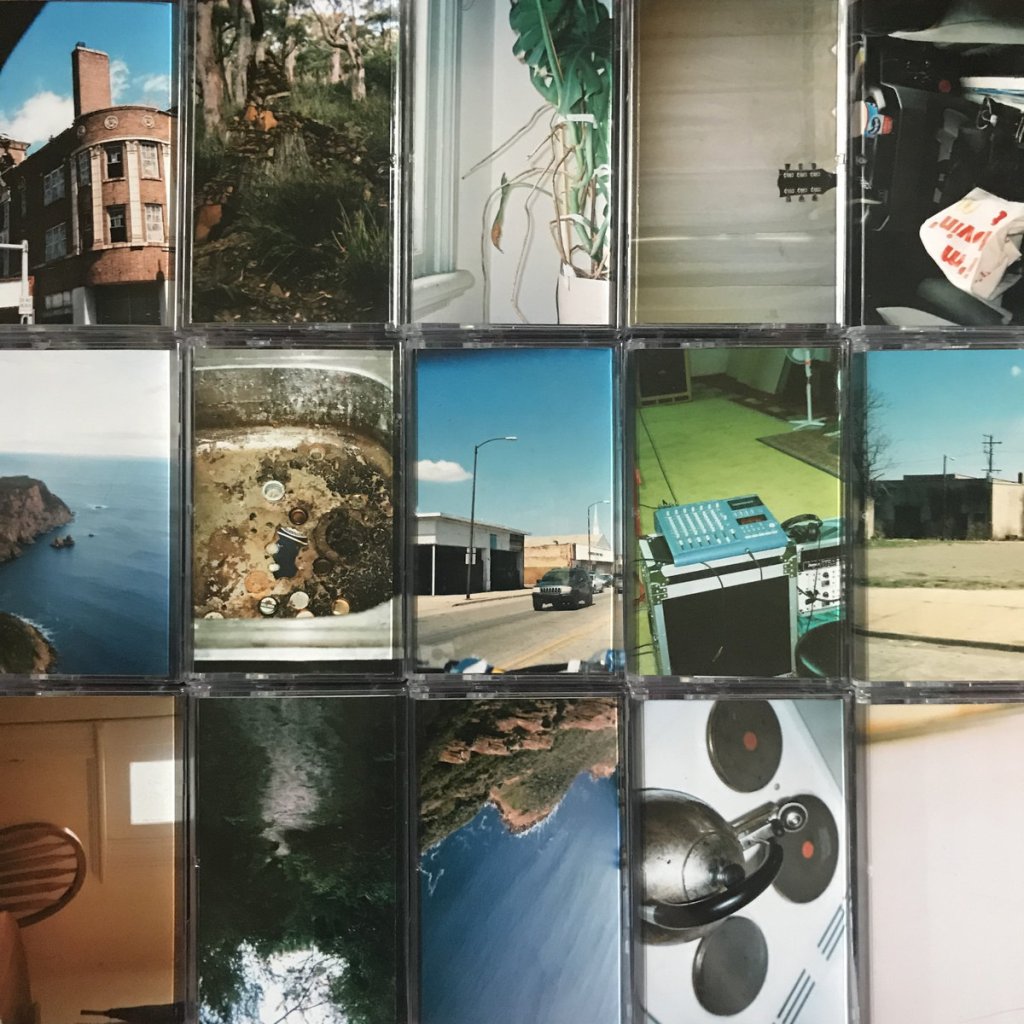
I really loved the Lucky Dip release in 2021, where you made 15 tapes taking portions from over a hundred unreleased songs, making a unique tape for each person. Even the art was one of a kind for each.

AM: That was during lockdown, so I had some spare time. I had a lot of spare music, folders and folders of things that weren’t necessarily good enough on their own, but I didn’t want to throw them in the bin.

I had a bunch of cassettes from a defective pressing of the first Hot Topic release, who became J McFarlane’s Reality Guest. The first bunch of tapes had someone else’s music pressed on them, so I had spare 20-minute tapes. I made a playlist that lasted the amount of time that all of those tapes would take to run through. 

I played that playlist for a whole day, and into the night, and put tapes in as it was coming up to a random point that people would get on the release. All of the covers were folded photographs taken from either around the house or the last trip I’d taken before lockdown.

I don’t really like wasting stuff. I figured I may as well do something with the tapes, and didn’t want to waste the tracks, so it seemed like a good way to free both of them from my house and mind.

Do you have any idea how many songs you’ve written? There seems to be hundreds and hundreds, like, too many to count.

AM: I’m not sure. Some of the bands that I was playing in had really short songs. So we’d have a lot on an album. Prior to any of that, I did maybe 15 albums in high school under the name Major Macfarlane, which were burnt CDRs with hand-drawn covers. They were extremely disposable. Songs would be, my friend Gus playing slap bass and me destroying a mandolin over the top of it or something. And then I’d be like, that’s a release! [laughs]. Let’s put that out. 

Luckily, that was more before most people had internet and things really got digitised. That stuff doesn’t really exist on the internet, which I’m happy about. Because most of it would be pretty embarrassing, but it does exist. Some people have sent me photos, that  they’ve still got it, and it always kind of seems like a threat.

That’s so cool you were doing that so early. I remember when I was in school I’d make zines, and people didn’t seem to understand that you could actually make your own things, you didn’t have to wait to finish school or didn’t have to be a professional or make it perfect.

AM: That’s it. When I was starting to record music and had a CD burner, I felt like it was a really good way to show other people that you can make stuff as well. You could have them feature in your project, or record someone and seal off where they’re at, and then put it out. Even if it’s in really meagre quantities, you still have that record.

A lot of that maybe you wish wasn’t documented, but at the same time, it’s better than wondering, ‘I wonder what that was like.’ Yeah. It was—oh, it was horrible [laughs].

I look back on all my old zines and totally cringe, but you’ve got to start somewhere. I didn’t know what I was doing. I just wanted to share all this cool stuff, bands and music, that was happening around me.

AM: Totally. Yeah. Yeah. Yeah. That’s a similar motivation that was getting me to do things as well—being able to not be precious about things. When you have the pressure of a real label or a larger publisher or something, I can imagine it would be that pressure of thinking whatever you put out has to be a really concise, a boiling down of where you’re at, at the time— I feel that stunts your ability to move forward. If there’s a lot of pressure on something, and then maybe it gets let down with the way it’s received. If you do it in smaller quantities and a lot quicker, you don’t have as much time to think, ‘I should have changed that.’ Then you’re already thinking about how you can amend those errors on your next release, rather than thinking about how you should have done it on the one that’s already out.

There’s a lot to be said for like that spontaneity. I really like a lot of music when people record stuff and they’re recording the song as they’re making it. Sometimes if you record something over and over and over, it can lose the magic that first take had. 

AM: The majority of bands that I’ve been in, I’ve done at least some of the recording. Many bands that I’ve played in, that would be very demo quality to someone else, but if that does the trick, then there’s no point in trying to do like a slick version of it.

One band that I was playing in, The Stevens, we had really low standards for what was releasable. There was a larger international label that we looked up to a lot when we were getting into music. They called up because they were interested in putting out the record, and they were like, ‘We really love the demos. When’s the album going to be ready?’ And we’re like, ‘That’s the album. Sorry. It’s not gonna get any better than that.’ 

So, you might miss some opportunities, but I feel like it’s a fairly true way of doing things. I feel like you can’t really ever regret working within your means and not grasping at every opportunity for the big time. You can always be happy that you’ve done things yourself.

Totally! I don’t think you could pay me to be a part of the big time or industry. The music industry has never been kind to me.

AM: Those two words need to be separated as quickly as possible. 

Yep! [Laughter]. I’ve seen many bands I love get caught up in bad deals and situations chasing the wrong things, and I think what they ended up creating suffered for that. 

AM: Yeah, without a doubt. I feel like if it gets a hold of you at the wrong time, when you’re young for example, it creates a bunch of, in my opinion, incorrect reasons for making things. I guess there’s no incorrect reason, but there are less pure intentions.

I remember I was talking to Shogun from Royal Headache/Antenna, a little while ago, and he was talking about when their band blew up, and he told me that at the time, he was hating every second of it. 

AM: Yeah, that is often the case. 

I’ve been around a while now, I’ve seen it happen over and over again, and sometimes it destroys the want to make music, and that’s really sad. 

AM: I guess, it becomes more of a job and usually people don’t like their job. 

Do you feel like there’s a conceptual continuity with your solo music? 

AM: Maybe. It’s all pretty disparate. All the different things that I’ve been doing comes from the same pool of like influences, which is always expanding and changing. But it always has the same foundations. Like we were talking bout, the solo stuff, it’s really unplanned. I don’t really know the purpose of the song, even sometimes after it’s already been released. There’s that kind of continuity. I can always tell what I’ve been into on the day of making a song. It’s usually all made at home by me in a state that I can’t really remember that well. Then I have a song at the end. 

Most things usually start on the couch. I’ll sit on the couch with a guitar, and then I’ll go into the music room. It’s not really a studio, just a small room. I’ll come out of that, and it’ll sound really different from what I was anticipating. The continuity is unexpected experimentation and unclear aims. But that doesn’t really make for much audible continuity, aside from the fact that I try to have fun with language and try to put some note groupings together that don’t sound quite right to me at the time. The general rule is if I think it sounds like a song I’ve heard, then I won’t release it. I try to combine a lot of elements that maybe shouldn’t be combined, just so I can trick myself into thinking it’s worth releasing in some small portion.

What kind of things were you into while you were writing this collection of songs? 

AM: Looking over at my box of recently played records—I’m trying to think of any things that directly influenced it. I was liking this guy called Daniel Schell a lot, who played in a band called Cos and some other bands. I was listening to traditional folk stuff, but that’s been kind of a constant because my dad was into a lot of that. I was also listening to Véronique Chalot, and I started getting classical guitar lessons at one point, but quit them really quickly.

I was listening to a lot of Brazilian guitar music, so I was playing a lot more—very poorly—on a nylon string guitar. But then I was also listening to a lot of electronic music and metal, too. All of that swells in. 

As for direct influences, I’m not entirely sure on this group of songs. The second-to-last song was a progression from—I ripped up a lot of chords from a Donald Fagen solo song. Sometimes, when I get really stuck on a track, I’ll try to learn a song by someone who’s completely out of my realm of abilities. They’ll go back and forth between chords so much, whether it’s Donald Fagan or Egberto Gismonti or, Grant Green—someone who’s so unattainably talented. I’ll learn a few seconds of one of their songs and, within the first half-minute, there’ll be enough chord changes to sustain me for two songs.

I end up doing a similar thing with lyrics. I’ll have a bunch of things around me; I’m always taking a lot of notes. So I’ll have notes and then a reference book of poetry or the local paper, the Banyule Banner, or something like that. Whenever I have a gap in my notes, I’ll flip to one of those pages and get something out of it. It all blends together.

That was a long and confusing answer, but that’s the long, confusing process when I’m making tracks.

Photo by Ella Cattach

No, that’s not confusing. I followed.

AM: Okay, that’s good. I got confused by the answer [laughs]. The pulling together of really disparate things—musically, it can start with one or two notes, and then I play around with those until they’re harmonised. There was one track on this album called ‘Golden Braid’. I was enjoying a movie by an Australian filmmaker, Paul Cox. He made some nice, and some less nice, movies in the 80s and 90s.

There was a section in one of his movies without music that I took and stripped out the video. I soundtracked along with the audio. The scene involves a guy who works on old clocks, and he’s moving through his house, flicking the clocks and walking up and down the stairs. I added sounds to react to his footsteps and to the notes made by the clocks.

I often use methods like this when I don’t feel inspired to make music. I’ll watch a movie or read a book with the intention of borrowing from it. Even if I don’t have any specific ideas, I might take note of a particular scene—from, say, 33 to 38 minutes in a film—and come back to it later. Then I pick it apart or bookmark a page in a book, and those elements might end up combined into a song.

It’s not always about having original ideas but about reprocessing what you take in. What you ingest, media-wise, is important if you want to create. It’s similar to a diet—if you have a bad one, you won’t make anything good out of yourself. If you don’t read, watch, and listen to good things, you won’t be able to turn that into anything worthwhile either.

I remember talking to the band Adult from Detroit once, and they told me that when they made a particular album, they like set up an area in their basement and painted everything black so it was this big black space with nothing else there to stimulate them. They wanted to see what they could make with no distractions, which I found interesting.

AM: That sounds terrifying!

I’m always fascinated by the different things people will do to experiment with music, sound, and art. I enjoy when things are pushed further into some other place to what I’ve seen/heard/experienced before. I loved to be awed by things.

Something I’ve always loved about your work is the songs is the titles. They’re all very prog rock kinds of titles. 

AM: It’s what I was raised on. I spent a lot of time as a kid reading and listening to music. My dad was really enthusiastic about getting me into the music he liked—maybe “forceful” isn’t the right word, but he was definitely very passionate. So, I’d spend hours reading King Crimson liner notes, Jethro Tull inserts, and Genesis albums. It was all very fantastical.

My folks were hippies in a good way. They’d say things like, ‘If you don’t want to go to school, you can stay home and read this Ursula Le Guin book instead,’ and I’d think, ‘Great, I’ll just do that.’ They were ahead of their time when it came to the idea of a “mental health day.” I heard them use that phrase long before it became more mainstream. It was useful, and I think you can certainly get a child more enthusiastic about learning if they’re not forced into the rigid structure of the education system. People tend to forget that.

Words have always been really important to me. I’ve always found them funny, especially when they’re misused or when people take poetic license to invent words. Whether it’s Donovan, Flann O’Brien, or Monty Python, there’s a playful way to use language that keeps it entertaining for me.

I noticed that you tagged your new release on Bandcamp as “silly”. 

AM: Oh, yeah. That was a suggested tag. I probably would have said something a lot more mean about it if if it didn’t suggest that. I was glad they gave me something as silly as the word silly. 

Are there any books you’ve read over the years that had a big impact on you? 

AM: A lot. It’s a relatively typical answer, but [Italo] Calvino was important when I first read him, as was Flann O’Brien, who I mentioned before. I’ve read a lot of sci-fi, like Stanislaw Lem, and authors who wrote short stories. There’s also Leonora Carrington, who created these fantastical micro-worlds.

For me, there wasn’t much distinction between a song and a book. I didn’t get into movies until much later because, when I was younger, I couldn’t grasp how many people it took to make a movie. I’d get to the credits and think, ‘It takes so many people to make that—that’s ridiculous.’ If I saw an actor in another movie, it was confusing. I’d think, ‘Wait, he’s not that person?’

In contrast, if someone wrote and recorded their own music, it felt like there were so few steps between the creator and the listener. The same goes for a book—the separation between the writer and the reader seemed much smaller. There were fewer hands the work needed to pass through, at least as far as I understood those industries.

I feel like I have a very high threshold for whimsy. Growing up, I listened to a lot of folk rock. Whether it was Fairport Convention, Shirley Collins, Pentangle, or similar bands, there was always a mix. You’d have a few serious ballads that everyone gravitates towards, but then there’d be a really ridiculous track—something with everyone dancing around the maypole and full of whimsy.

Now, it seems like most modern folk, or even the dreaded term “neo-folk,” leans heavily into the mournful, dark elements. I suppose that’s more palatable, but it feels like whimsy has really gone out the window.

Photo by Sarah Pilbeam

Maybe that’s what sells better? I’m a big fan of whimsy too.

AM: I feel like consistency has become increasingly important. For people trying to sell records, everything needs to maintain the same vibe from start to finish. There’s a sense that listeners don’t want to disrupt the flow of their experience. This trend has only worsened with playlist culture, where people choose a single vibe and then listen to an endless list that matches it, without really exploring the artist’s broader work.

I’m not a fan of complacent listening. I don’t like algorithms, playlists, or anything that curates music based solely on a single mood. But people are free to enjoy what they like—I suppose I shouldn’t be harsh about it.

Is there a reason why you don’t listen back to your own stuff much? 

AM: There’s a lot of great music out there. I tend to spend any spare money I have on records. I really enjoy talking about them, visiting record stores, and chatting with whoever’s working there. I love learning about what they’re listening to and getting their recommendations. 

When I find a record I like, I research everyone who worked on it—the people in the studio, the musicians—and I try to connect all the dots. I’ve spent so much time doing that, so it’s rare that I listen to my own stuff. When I’m making music, I listen to it a lot because I’m focused on working out the sounds. But after the gruelling process of production, I don’t always want to hear it again. I remember what it sounds like, and when I’m playing shows, I’m performing those songs. Some are okay, some are bad, and I try to focus on making more that are just okay, avoiding any of the bad ones.

What records have you got lately or be recommended? 

AM: I’ve got a pile of records over there. Some of my favourites include a reissue by Enno Velthuys, which I really like. There’s also one of Alvin Curran’s reissues, the new Oren Ambarchi record, and a beautiful album called Small Boats by Steve Atkinson. I also picked up a record by Pari Zangeneh, a blind Persian singer who’s amazing. And there’s the reissue of Dorothy Carter’s Waillee Waillee, which is gorgeous, slow folk music.

I try not to get too deep into the reissue culture, but when something I haven’t heard before pops up and I can grab a copy at a reasonable price, I do. I really appreciate the people working to make these albums available again. Of course, there are mixed views about the environmental impact of vinyl production, but compared to other manufacturing processes, I guess it’s relatively more acceptable. Records have always been important to me, along with books. I know they’re made of paper and plastic, but I forgive myself for that.

Yeah, I’m the same. Our house is filled with records and books, more than anything else. I read this interesting article not too long ago about the environmental impacts of vinyl versus streaming. It said that vinyl is actually less harmful in some respects, and is considered more sustainable when compared to streaming in terms of long-term usage—one record can be played countless times, spreading out the initial environmental cost over time. Whereas streaming carries a high carbon footprint primarily due to the energy required to power data centres and network infrastructure and the components used to make your phone or computer to stream stuff. It was interesting to hear a different take, usually people automatically think vinyl is worse and don’t take into consideration what it actually takes to stream things.

AM: Yeah, I think you also become complacent with waste because you rely on devices like your phone. You need it to work all the time, so when it stops, you throw it out and get a new one. Meanwhile, with my turntable, I’ve repaired it several times. Most people wouldn’t bother repairing their phones; they just get a new one instead.

Additionally, for the new Green Child record we’re working on, we found a pressing plant that uses recycled cooking oil, making the process more environmentally friendly. The records are injection moulded, which avoids traditional pressing methods. We’re doing it as a split with Upset The Rhythm from the UK. I’m always trying to find better ways of doing things. 

That’s great! That’s like with Gimmie, we print on environmentally certified and recycled papers, which are from sustainable sources, and use vegetables based inks, and the printer recycles all waste products. But we definitely live in a society that’s all about convenience. 

AM: Yeah, it’s less important to have all the knowledge in your head because you can just look it up on your phone. That’s good and bad—mainly bad, maybe. I’m undecided about the merits of technology and its impact on creativity, as well as the general retention of knowledge. There are certainly some benefits, but I’d have to think harder about them because my apprehension tends to outweigh my appreciation.

We haven’t done a print issue in a little while, though. We know people can’t really afford stuff right now with the out of control cost of living. I see on Bandcamp, even other musicians I follow, that used to buy other artists records all the time have stopped doing that so much.

AM: Yeah, everyone’s feeling that. The cost of making things in general has risen, along with the cost of postage. It’s really tough—if I want to send a ten-dollar tape to America, it costs about 26 dollars. So, I charge slightly less, but anything I’m sending overseas, I’m losing money on. I like the idea of someone having it far away. There’s something really exciting about that. I guess I had a good deal with postage in the early days, so I feel like I’m still making up for that, and I can pass on the savings, a bit

Yeah. I put out a book this year and in I wrestled internally with having to charge people so much for postage, especially overseas. 

AM: People who appreciate physical media will always find ways to access it. Books, in particular, are often still quite affordable, especially when you consider the value they provide. For example, a single book can offer so much in terms of knowledge or entertainment. When I discovered online book stores, I realised I could get almost any book delivered to my house for about $8. That’s remarkable when you think about it—you’re getting someone’s life’s work brought straight to your doorstep for such a reasonable price.

Of course, newer books can be more expensive. When I’m in a bookstore, though, I don’t mind paying a bit more. It feels like it balances out, considering how inexpensive secondhand books or online deals can be. The same applies to records. You can often find a great album for around $10 at the right places. That’s essentially an encapsulation of someone’s creative vision, available for less than the price of a pint.

And what does a pint really give you? At best, a moment of enjoyment; at worst, a ruined next day—and it might even keep you from reading that book you just bought.

Yeah. I try and buy stuff from the actual artists at shows. 

AM: Yeah, absolutely. Bandcamp is still one of the better options online, but there aren’t many alternatives. I’m always brainstorming creative ways to avoid relying on platforms like that. Sometimes I think, Maybe I could find a different approach.

But anything that delivers directly to someone’s house feels a bit intrusive. There’s a need for some level of anonymity—you wouldn’t want me showing up at your house in the dead of night with a tape. That would be horrifying!

Maybe something like a community drop-off could work. For example, if I had 10 deliveries in Thornbury, I could say, Hey folks, they’re all in the neighbourhood library at the end of the street. Go for it! But then again, you can’t always trust people. They’d probably all get stolen anyway.

Unfortunately, that can be true.

AM: I’ve been thinking about ways to navigate these challenges. There’s definitely a shift happening with physical media. It’s becoming less of a middle ground—dominated either by massive producers or by extremely niche creators. For someone relatively obscure, like myself, using the same facilities as mass producers can be frustrating. If you’re pressing a record at the same place handling huge albums, your project is likely to get pushed to the back of the line.

That’s why I’m considering how to make my process less dependent on those channels. It might mean going back to hand-painting and stamping all the tapes, doing the covers myself, and dubbing the tapes manually. It’s more work, but it seems like the only way to keep costs down. In my mind, a cassette should never cost more than $10. The last batch I made was $11, just because that was close to the production cost. To balance things out, I tried to offset the Bandcamp cut and offer slightly discounted postage. As a posted package, that price seemed fair.

Still, I think I’ll need to get more creative to keep things affordable. People who buy tapes from completely independent artists deserve something extra. Whether it’s throwing in free items or adding a personal touch, it’s important to show appreciation. After all, buying a tape from an unknown artist isn’t a typical thing most people do. It’s not often someone wonders, I wonder what this person has been working on at home all year? Maybe I’ll buy their tape. It’s rare, and when it happens, it means a lot.

Totally. The’s why I hand-gift wrapped each book and included a handwritten note. I notice that all your tapes sell out. 

AM: That’s because I don’t make very many, which is good because I also don’t like going to the post office much [laughs]. So I condense it into three or four trips where I’ll take everything down.

I’m lucky to have friends here and overseas who run record stores and are willing to take the risk of stocking my tapes. That helps a lot. I feel like word of mouth plays a big role in these things. I find out about so much if a record store posts about something. If I like what they like and they post something I don’t know, I’ll check it out right away.

Whenever I take anything I’ve put out to a shop, even a simple picture of it can be a great way for people to find out about it. For like-minded people who enjoy discovering niche things, record stores are still a good place to explore. You can chat with whoever’s working, look at posters, or browse the recent releases rack. It’s like stepping into a different world—a world you wouldn’t encounter unless you visited that specific place.

I see this more often in Melbourne, especially when friends from overseas visit. Part of their trip usually involves visiting lots of record stores. I’ll introduce them to the shop owners, and soon they’re talking about what they’re buying, exchanging recommendations they wouldn’t have found anywhere else.

That kind of localised, face-to-face interaction is becoming rarer, but it still exists, and I appreciate that.

Same! You mentioned earlier that your dad was very insistent on you listening to his kind of music. What was the first kind of music that you listened to that was not his stuff? Did you ever rebel? 

AM: Yeah, a lot. I don’t think he fully gets any of the stuff I make. His music is very from the heart, whereas mine feels more from the head. He reminds me of that all the time. He’ll say things like, What is this? What could this song possibly mean? And I’m like, I don’t really want people to know what it means.

The other day, I recorded some demos for him. His songs are very direct, like, I know exactly what that song is about—that song is about being furious about the referendum result forever. And I agree with him, which was nice. But I like keeping things a little more obscured so that I feel safer, I suppose. He’s a pretty heart-on-the-sleeve kind of guy.

That said, a lot of what he’s into has influenced me, whether I like it or not. He’s always been into folk and prog, which is still a big part of what I listen to. But everything just got more extreme from there. My two older sisters introduced me to metal and industrial music, which definitely broadened my tastes.

My mum, on the other hand, got me into a ton of amazing stuff, especially early electronic music. So, growing up, I didn’t stray too far outside of that realm. Getting into really extreme metal was a bit outside my family’s wheelhouse, though. That happened thanks to one of my sister’s friends, who taped me some truly out-there albums when I was way too young for them. That was mind-blowing.

As for the more heady ends of electronic music, that came from a friend’s dad. He gave me a bunch of stuff that absolutely blew my mind—Kraftwerk, Laibach, and Autechre, for example—when I was still in early high school. That music was confusing in a good way. Even though it was retro by then, it felt completely fresh to me.

I think my family stopped exploring new music at a certain point. They were lucky enough to grow up in times when incredible stuff was happening. My mum, for instance, is American, and she lived in California in the seventies. She saw bands like The Who, Led Zeppelin, and Crosby, Stills, Nash & Young playing in her town. If you’ve experienced that, maybe it’s not going to be super impressive when your kid comes along and says, Hey Mum, here’s Primus.

I love Primus. I met Les Claypool when I was 16 and showed him where the local record shop in Brisbane was. Watching him flip through records and picking out things he was interested in was so interesting to me.

AM: That’s incredible. I suppose it was just the more extreme stuff that was slightly outside the family’s usual listening habits. But at the same time, my sisters were really into a certain level of extreme music—maybe not as much the rest of the family, though. Between all of us, we covered a pretty broad range of styles.

It’s like that in my family too. I have four older siblings and my mom and dad, and we all love music. Being the youngest, I absorbed everything.

AM: Yeah, my sisters are both more than ten years older than me, so there was this big gap where it felt like I got an early introduction to everything everyone liked. By that time, they already had their own personalities and tastes—it wasn’t like a bunch of kids growing up together. It was more like a kid surrounded by adults. We didn’t live together much, but we still hung out a lot.

Photo by Mochammad Rezy Diandra Putra

You had a one-man death metal band in high school, right?

AM: Yeah, yeah, yeah. I made a lot of different kinds of music in high school, and kind of still do. There’s always been a lot of wanting to do everything at once. So, there was a really bad one-man grind band, and then a more electronic grind band. Then, really silly solo stuff that was super slapstick, skit songs, where I would get any friend who was at my house to play a part. We’d record all of that.

I was lucky and unlucky in some ways that the place I spent most of my time, from late primary school to whenever I moved out, was with my dad. It was a one-bedroom apartment, and he wasn’t working at the time. So, I was working several jobs while trying to do school and play in these bands. My room was the living room of the house. There was band gear around all the time, and my sister’s friends would jam there, my bands would jam there, and there were a bunch of other musicians from the area who’d come around and play.

That meant there were constantly parties happening, which wasn’t always great. But it definitely solidified a lot of friendships, and you were allowed to experiment a lot with music—and other stuff. I was lucky in a way, though. The apartment was on top of a clock shop and between two banks, so the walls were really thick on either side. As long as we were done by 10 o’clock, we could make as much noise as we wanted. So, if I got home from school, and thought, I’m going to make a solo grind EP tonight, I could just do that. I could drum and shout really loudly without really disturbing anyone, though I’m sure I was disturbing a lot of people walking past on the street.

I’ve been told in recent years—when I mention the circumstances—that people would walk past and hear crazy music coming out of that house. We’d have parties where people would pull up in cars, get out of the car, and climb onto the roof. They’d crawl up onto the awning of the shop and climb through the front window just to see what band was playing. It was a bit of a mess, but we always had a “whoever wants to join” vibe. It was tough to find the entrance since it was off a little alleyway, but we met a lot of strange friends that way.

A lot of them were really good musicians in the area, and I still play music with some of them now. It solidified a lot of friendships, especially with the older crowd. I was still in the safety of the family home, but it was when everyone else was in their teenage prowling phase; they’d hear rock music and just think, Let’s go into that house.

Did you did you teach yourself to record? 

AM: Yeah, I can’t really remember how that started. I just had a microphone and a cassette deck and slowly built off that. The school I was at had a digital 8-track, so I borrowed that. I didn’t have a computer until quite a lot later when I bought one for myself. Then I started using that along with a tape recorder and things like that. It all built from there.

Also, any of my sister’s or my dad’s friends who had equipment they didn’t need would dump it at the house, knowing it would get used. I’d end up with guitar amps, pieces of a drum kit, recording gear, or a keyboard. There was a constant rotation of people and music gear coming through. It meant I was talking with a lot of different people all the time and using a lot of different gear. People brought in different influences, which made it interesting.

But, as I’ve said about a few things, it wasn’t very good for schooling. I had a lot of friends, though. It was a cool house.

You mentioned having a band with your dad and your solo stuff; what was your first band with your peers? 

AM: That was, oddly enough, probably still the core group of people I’m friends with now and have made a lot of music with. I’ve known my friend Gus since he was born, basically, since our parents were friends. He did The Stroppies, and we were in Tyrannamen, Twerps, and Stevens together. Before that, we were in a few other bands, including one called Teen Archer, which wasn’t very good, and another called Showcard. I was in Showcard from when I was about 13.

That was probably the first proper band I was in. For 13-year-olds, we weren’t the worst band in the world. We played a lot of cool supports, like Spiderbait, Frenzal Rhomb, Bodyjar, and The Datsuns, all while still in high school.

What did Showcard sound like?

AM: This could be the first time I’ve publicly talked about this band. It was very rock. The shows were fast and crazy. We loved The Datsuns, that New Zealand band. All of us moved from one school to another together at one point, and at assembly, they had heard that there was a new band at the school. So they asked us to play. We did a Radio Birdman song and a Stooges song.

We started off as a Metallica cover band. Our first show was at my sister’s birthday, and we played stuff from Metallica’s first three albums. After us, her friends played songs from And Justice for All and The Black Album. They were really good players. The guy in that band gave us our first proper drum kit and taught me how to play drums.

It was a bad stadium glam band, I guess. As a live band, it was okay, but there’s a recording that exists. I think my dad still has about 50 unsold copies of it, gathering dust under his bed next to his own album, which is doing the same thing. But, they’re probably both fun. I don’t think it’s on the internet, so that’s good [laughs].

You mentioned in our correspondence that Hobbies Galore have a couple of releases coming out. Tell us about them.

AM: Most of them are out or announced now. We had the J. McFarlane’s Reality Guest CD, which was sort of my idea—I thought, ‘CDs are going to come back.’ I think I’ve been proven wrong, as they’re not quite there yet. But in my mind, they’re back. I still really love CDs. They’re an important format for me. That’s how I got into most stuff, on CD. The CD is still in the car, and in the house too. 

Then, there’s my new Matt Harkin tape, and The Green Child LP, which is getting out there. I’ve never really done a proper release where there were singles, a lead-up, and video clips. But, Upset The Rhythm in the UK is driving this one. They’re really good, and they’re doing a lot of the hard work, which is nice. I’m along for the ride a little bit, which is cool. I’ll be handling the physical distro in Australia once the copies arrive. In the meantime, he’s planned everything out really well. I’m like, ‘Oh, that’s how you do it.’ That’s how you run a label.

After that, I’ll probably take a break for a while, because I’ll be doing a lot of shows with Faceless Burial at the start of next year. I’m also working on some new stuff with Francis, and that always takes a bit of mental energy because the songs are complicated. I’ll also start doing Green Child shows next year, which takes a lot of learning as well. So I feel like I won’t have much time to focus on making more releases.

I’ve never really put out anything by someone I haven’t met. I get a lot of emails from people, and a lot of it is really good. But if they’re not a friend of mine, I’m like, ‘Oh… you should start your own label.’ That’s usually my first piece of advice. Then I lie and say it’s fun [laughs]. There’s no huge queue of releases waiting to come out, but if anyone I’ve known for a long time wanted to release something tomorrow, I’d be like, ‘Sure.’ It doesn’t need to fit into any kind of schedule.

That’s kind of how poor I am at planning and running a real label. All of my releases for this year are coming out in the same month. But that’s fine—there are no rules. I feel like it saves people on shipping. A lot of people now can order two things at once and avoid paying shipping on two separate orders. I had a bunch of people who ordered the Matt Harkin tape, and I emailed them saying, ‘Hey, I’m releasing something next week. I know you usually buy everything from me, so I’ve just put it in with your order. Don’t order it when it comes out.’ That’s probably the kind of behaviour that will make sure you never break even on releases, but people appreciate it.

There’s a group of regulars who seem to buy everything before even listening to it. I can pretty much guarantee there’s a group of people who will get whatever I release, some of whom live overseas. It’s expensive to ship things overseas, so if you release everything at once, you can bundle them together and save on shipping costs. It’s hard to buy physical media from Australia. So it’s nice that people want to do it at all. 

You mentioned that Faceless Burial is going to record some new stuff. Is there anything you do to prepare for that? 

AM: Lots of practice. I practice before work, most days, leading up to a tour or a recording. At the moment, I’m practicing pretty much every night of the week with Faceless or Green Child, or I was doing practice for the Francis and Pious Faults stuff as well, just in my own time. When I was doing solo shows, I practiced a lot for those because I get really nervous.

For Faceless, it’s really on the edge of all of our abilities. None of us are technical players with any real theory knowledge. We don’t demo a lot of stuff—we still operate kind of like a pop or rock band in that sense, but it’s very much not like one. Pop bands will demo everything and send you exactly what to play. But with the metal band, we write in a room together, which seems counterintuitive because we’re just relying on our memory to remember all of these crazy time signature changes from the week before. The only thing we have to refer to is someone’s phone notes or a quick recording, and we’re always chasing our tails, trying to piece it together.

The first song on this album is 17 minutes long, with very few repeating parts. And if a part does repeat, there are a number of intricate changes that make it impossible to remember. Everything about the progressions is reversed when it happens again, that kind of stuff. It’s really fast the whole time, which is another thing. Max, the drummer, is like the best fast drummer in town, to the point where he really hates playing slow. So if we’re writing a long song, it can’t be a slow one—it has to be fast. He might perish at the end of this recording; it’s really pushing him.

It’s pushing all of us, which is good because I like to be challenged. But I also get really nervous about recording or playing, so it means I have to practice a lot at home.

Photo by Charlie Foster

Why do you get nervous? 

AM: Letting other people down is the main thing, especially if I’m working on someone else’s project. I’m not very good at remembering other people’s songs, and I’m not very good at improvising on other people’s stuff. I can do it on my own songs, but I just don’t feel confident doing it on someone else’s music. So, I have to try my hardest to commit everything to memory.

But there are a lot of conflicting things. For one, I’ve only recently figured out what the notes are on the guitar neck and the keyboard. Before that, it was all based on shapes and remembering those, but the shapes were getting really mixed up because I was storing different band stuff at the same time. So, I tried to get some basic theory knowledge. It’s quite hard when you’ve never worked with it before, but I’m realising that’s probably how people remember multiple things at once, because there’s a connection.

For example, if I’m playing an A in one band’s song, it feels like a completely different note in someone else’s project. In my head, it’s within a totally different context, and the shape it links to in the song is completely different. I guess I don’t have those safe tricks or routes worked out yet. But it’s something I’m working on. In the meantime, it just means I have to practice the individual songs a lot to remember them because I haven’t figured out a better way of remembering all of the stuff yet.

Do you have to be in a different headspace for each of the things that you do? 

AM: To some extent, with Faceless, there’s a huge performative aspect to it. You’re moving around constantly, that kind of thing. But I feel like it’s just really about what the music makes you do. It sounds cheesy, but it’s true. In a band like that, you’re sort of permitted to let the music take over, to let it do anything to you.

Whereas, if I’m playing in something like a sit-down folk duo with Francis, even if the music is telling me to jump around, I usually feel out of respect for the project that I should probably stay in my seat. I wouldn’t do a big circle motion or anything like that because it would detract from the person’s vision.

I did get kicked out of one band for behaving incorrectly, but it was pretty subtle. I think I just held my sticks in the wrong way or something, and they said, ‘You’re out.’ But yeah, you have to be in a fairly different headspace for each project. Still, I take a pretty similar approach to all of them.

What’s something that you’ve seen lately that’s felt really refreshing to you?

AM: People like Francis, and Mikey and Raven from Green Child are people I’m regularly impressed by. They’re always sending me stuff that I think is incredible. I was a huge fan of their work even before collaborating with them.

I feel like there’s a degree of effort that goes into metal bands’ shows, setting a bar that isn’t always matched in terms of effort in other genres I see more often. Local metal bands like Vile Apparition, who are my favourite local band of any genre, impress me every time. Every show is impeccable. They’re great writers, great players, and just good people.

There’s a base level of effort in metal shows that I really respect. I find it impressive that there’s no commercial desire, just an unusual compulsion within that world to keep pushing for no reason. Being technically impressive isn’t everything, but I do find that drive inspiring.

Sometimes, though, I can get a little disillusioned with seeing shows all the time. That said, I’m regularly impressed by certain metal bands, or really anything with that live-show energy. You can get totally taken away by it. Bands like local punk and hardcore groups—Syntax and others—always put on a show where you can tell they’re fully there for the duration.

Kissland, a new band I like, has Max from Faceless in it. But I don’t want to just name friends’ bands. I’m trying to think of what else I’ve seen recently that isn’t metal or hardcore. I finally saw Kraftwerk, and that was incredible. They’re a band you know will always put on a good show.

Otherwise, I’m blanking on other recent shows. I should make some notes to refer to, because there are a lot of great things I’ve seen recently that I’m forgetting. I feel like when you’re seeing so much all the time, it’s harder to remember what has really stood out, at least for me. A lot of the people I see are my friends, and the more I know about the individual, the more impressed I am with what they do.

Photo by Füj

I think that all the time. I’ll see people I know and, you know, we’ll just be chatting and then they’ll get up and do their thing. And it will just be like, who are you? This is amazing. I’m always impressed, and always inspired by all the people that I know. We’re lucky to know so many creative people.

AM: Yeah. If you’ve been doing something for a long time, you tend to gravitate towards the people you admire in many ways. It’s strange for me, even with someone like Max from Faceless. I looked up to him when I was growing up, seeing him play in hardcore and grind bands at underage shows. Then, years later, I end up working with him. Or Mikey—before we started playing together, I was really into all of his stuff. It’s funny to think, ‘Oh yeah, you’re that same guy whose t-shirts and releases I used to buy.’ Now, we’re making t-shirts and releases together, which is surreal. But I do feel lucky to be regularly impressed by a lot of my friends’ output and to be able to support that.

In terms of like creativity, what are the things that are important to you? 

AM: As cliché as it may sound, I’m always impressed by people who do a lot themselves in the DIY scene. There’s a split in my head, though, where I really appreciate people who have no technical training or regard for it. People who might just say, ‘I know these three people, let’s make a band together,’ even if one of them has never played guitar—that I love. Sometimes, it’s as exciting for me as seeing one of the best technical death metal bands in the world. For me, there’s no real separation between these things. If someone is following their natural instincts—what they enjoy making and hearing—that’s what matters. You can tell when people are genuinely following their desire to create. It sounds cheesy, but when people are truly passionate, it comes through in the music.

I also enjoy massive pop bands, though, and it all comes down to the sound for me. Whether the audio is technically good or bad doesn’t matter as much. I can strip away everything else and just say, ‘That song is great.’ In the end, it’s about the sound, and beyond that, the intention behind it.

Do you get a lot of enjoyment listening to music or do you find that you do kind of pull it apart? 

AM: It’s really equal, like, I feel I can just tell what’s happening a lot of the time. I don’t really sit there and analyse it; I never think, What is happening in this track, and how can I make something like it? It’s more about hearing everything at once. For me, a lot of it is about connecting the dots—understanding where something fits in the greater landscape of music. Like, how that band came from where they did, when they did, and who else they were involved with.

I definitely don’t technically analyse songs while I’m listening to them, but I can absorb those elements without fully deconstructing everything. I do listen to each instrument individually and how what it’s playing relates to every other instrument. Then, I think about how those parts fit into the album as a whole, how the album fits into that artist’s catalog, how that catalog connects to other artists on the label, how the label connects to other labels at the time, and so on. You can connect all the dots about where things were coming from and who was making them. But then, you still get those complete anomalies—and those are the most intriguing.

Absolutely. That’s when we found Guppy and ended up putting out their record. We started a label just to release it because we loved them so much. My husband Jhonny and I saw them play, and we both had that moment where we looked at each other and said, Are you seeing this? Are you hearing this? Then we ended up becoming friends with them.

AM: It’s hard to find, especially if you’re not actively seeking it out, but occasionally something pops up, and you’re like, That’s pretty wild.

I felt the same way when we finally got to see Pious Faults.

AM: Yeah. They’ve had a really unusual trajectory, where most people know them for that release, which had more of a cooked hardcore vibe. But over time, they’ve evolved into a completely different band. They’re about to release a really strange album, and they had me do a bunch of stuff on it.

We’ve heard it’s been in the works for a while. Is it the stuff you played at the Brisbane Institute of Art show the other night?

AM: Yeah, we pretty much played the most of the album. 

The sound in the room was incredible. 

AM: It was fun, and I got to catch up with a bunch of old Brisbane friends, Blank Realm, and Leighton, who put on the show, and some other folks. I always have a great time in Brisbane. I was seeing someone from there for a while, so I spent a lot of time up there. 

I’ve always felt like there’s a unique microcosm in Brisbane, where what’s internationally recognised as refreshing in Australia is the entire lack of ambition. And I mean that in a really positive way. Ambition within yourself is great, but ambition in terms of fitting into the world or proving something to others can sometimes be detrimental. Brisbane seems like an even more distilled version of that, with so many bands doing their own thing. They’re really happy to just play for their talented, interesting friends without any need to push for broader recognition, continually putting out impressive and bizarre stuff.

I know a bunch of people who went to this big festival in Japan earlier this year, which featured a lot of huge noise artists. Masonna played, and I think his set lasted just a couple of seconds—like, the main act people went there to see was just this burst of light and noise, and then that was it. People were talking about it. I was like, you’re never going to forget that.

Wow.

AM: Yeah. But it’s kind of rude as well, but it made for a great story. That might not have been a story otherwise.

Follow: @hobbies.galore + facebook.com/hobbiesgaloremelbourne/. Check out: hobbiesgalore.bandcamp.com

Gimmie Records new release!!: piss shivers

Original photo: Jacob McCann @blokeyoucantrust. Handmade collage by B.

Today we’re excited to announce Gimmie Records’ second release, the highly anticipated self-titled debut from Meanjin/Brisbane punk duo, Piss Shivers – Caleb Stoddart (guitar/vocals) and Gemma Wyer (drums). Their raucous on stage energy, which you may have witnessed at their shows supporting Amyl and the Sniffers, Civic, The Unknowns, C.O.F.F.I.N, Mini Skirt, and Arse, has been captured in a 16 minute and 30 second towering onslaught of explosion of focused fury and wry self-deprecation, by Pious Faults’ Tom Lipman’s live-in-the-room production style. Piss Shivers’ songs are emotionally charged and undeniably raw, manifested from being in one’s own head too much, driven by anxieties, addiction, a tumultuous homelife, and the premature loss of friends. The album has both depth and humour. Jack Mitchell from Guppy guests on the high tension track ‘Rats’ as well as painted the album cover art. The record was mastered by Mikey Young. Piss Shivers’ record unequivocally earns its spot as one of our top picks for Punk Album of the Year, that’s why we put it out.
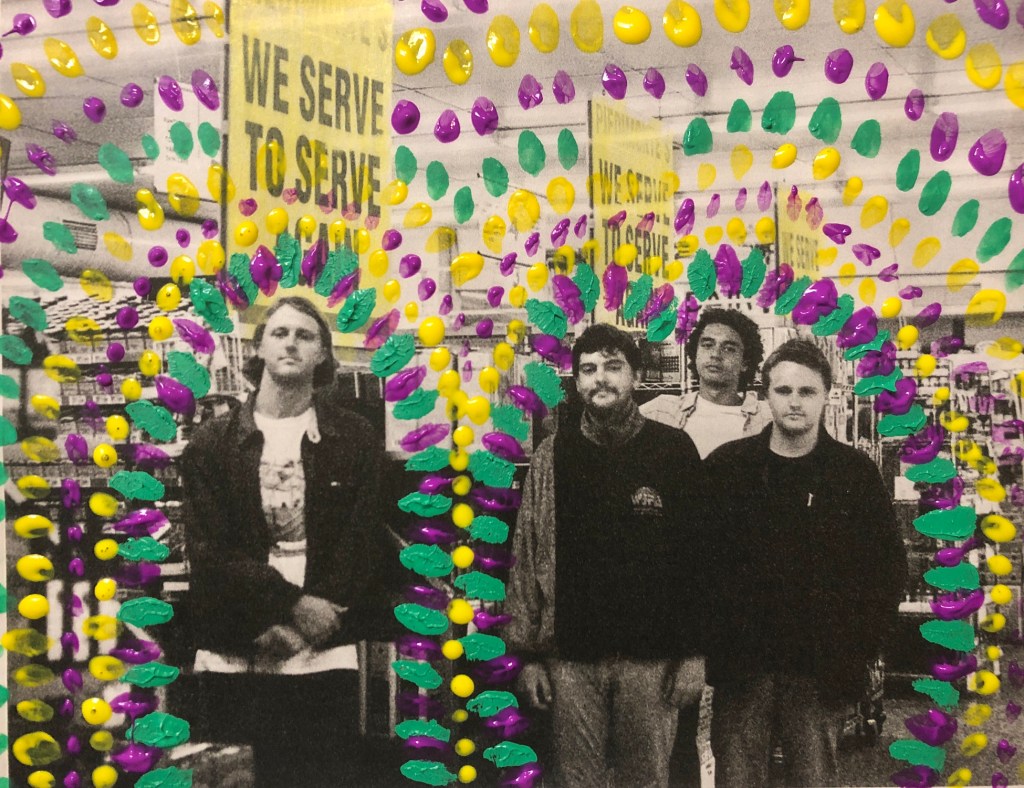
We first saw Piss Shivers play in 2021 and were in awe of how full and huge they sounded. And, if you read Gimmie issue 5 you’ll already be familiar with them via the chat we featured with them (despite them never having released a song yet) and know that they met at a Propagandhi show, and of Gemma singing with Jello Biafra at a gig moments before acquiring a black eye!

We’re excited to be putting this record out. We love Piss Shivers and hope you will too!!

Piss Shivers finally have music coming out into the world. I know you were sitting on it for such a long time. When did you record it? 

CALEB: We recorded it in November 2021, it’s crazy it’s 2023 now. We recorded it in a National storage shed in Bowen Hills, which is where we currently practise. 

GEMMA: Deep underground. 

CALEB: It’s really tinny, it’s has the corrugated-iron-kind-of-roller-door-vibe. We tracked all the instruments live.

Who recorded it? 

GEMMA: Connor and Tom from Pious Faults. Tom agreed to record us, he’s looking to branch out and focus a little bit more on recording. 

CALEB: He wanted to practice recording so he said he’d do it for a couple of hundred bucks. 

GEMMA: Connor has done, like, audio engineering stuff before, so he kind of helps out, particularly with setting it up, like mic-ing everything and getting the sound right. You can imagine what it sounds like in a storage shed as opposed to a purpose built room. 

Maybe that’s why it sounds the way it does?

GEMMA: It has a pretty massive sound. When we practise there, if we take a recording on our phone, the drums particularly sound massive. That sound translated really well because obviously there’s only two of us, without bass. Having the drums and the cymbals and the big guitar sound fill that and occupy that space. It worked well for our sound. Tom mixed it and Mikey Young mastered.

Photo: Jhonny Russell.

How long did you take to record it? A few days? 

GEMMA: Two nights basically, all live.

CALEB: Then I just overdubbed another guitar. We recorded vocals at Dutch Vinyl…

GEMMA: In, like, a storage room filled with boxes of records. 

CALEB: Tom used to work there. After work I’d come up after the shop closed. 

GEMMA: That’s where Jack from Guppy came as well, to recorded vocals for ‘Rats’. We know, Guppy. We know she’s amazing. We gave her full control over that, and she came in and smashed it. She had a very specific idea of what she wanted.

It sounds pretty hectic. 

CALEB: [Laughs]. Evil or something!

Yeah. What else do you remember from the recording?

CALEB: I got grumpy at Gemma. We had this fight. In one of the songs ‘Hoodie’ when I sing a part it lets me know when I’m going to change, in the recording I thought the bit was going longer. I was like, ‘It’s three times!’ Gemma was like, “It’s four times!” I was like, ‘Bruh, it’s three!’ We were swearing at each other [laughs].

GEMMA: The whole thing was that you kept changing at three but you were counting four. I’d be like, one, two, three, four. You changed on the three. We were having a back and forth. Caleb was like, ‘For fucks sake!’ Tom was just sitting there listening…

CALEB: It was a bit awkward for him.

GEMMA: Tom was like, “It’s actually four Caleb.”

[Laughter]

CALEB: I was like, ‘You’re fucking gaslighting me. I know how it’s supposed to be.’ Then I was like, oh, yeah.

GEMMA: Basically, I’m always right [laughs].

CALEB: Also, we were going to do another bit of tracking and there was a bloke that was sleeping in one of the storage sheds down he was very angry and told us to “Shut the fuck up!” He was bashing on the roller door and we were all like, holy fuck! 

GEMMA: Jack was there, we were going to record her vocals for ‘Rats’.  We didn’t end up doing it because we didn’t want to piss off this guy again. 

CALEB: He went on a five minute rant of ‘Your mum hates you and your grandmother hates you.’ Very psychotic. 

GEMMA: It was really trippy. We were like, everybody be quiet, oh shit, hide.

CALEB: He was yelling. 

GEMMA: You were just warming up. It was so annoying because bands practise there all the time and nobody’s ever had that issue before. People run business out of there and I reckon there’s a few people that live in them.

CALEB: There was a guy there the other day belting it out singing, he must have been playing electric drums because you could hear him banging on something. 

GEMMA: There’s still like a piece of cardboard that I wrote:  hi, we’re just recording music, if you want to talk to us, please knock lightly, that we ended up sticking on the outside of the roller door. 

Let’s talk about the songs on your self-titled debut. What can you tell me about opener ‘Red Stripe’?

CALEB: We wanted to do like more of a hardcore song, like L.A. hardcore. Lyrically, it’s just about being brain dead [laughs]

GEMMA: It’s a common theme [laughs].

Do you write all the lyrics, Caleb?

CALEB: Songs are about alcoholism, drinking, displeasure. ‘Red Stripe’ is one of my favourites to play. 

Do you have a favourite song, Gemma? 

GEMMA: Funny, actually, because it’s sometimes my least favourite to play. I really like ‘Onerous’. 

Why is it your least favourite to play? 

GEMMA: Because there’s this part that fucking every single time… 

CALEB: This is the first time I’m hearing this [laughs]. 

GEMMA: The fill that I do. I don’t know what to call it. Like, the drum roll kind of thing. When we were recording, I feel like we were pretty tight. I felt drum fit. I felt like we had practise so much that we were really ready, but that was the one part that I couldn’t nail in recording. So in the record now, in the first section, I do that fill, I do it properly, and in the second one, I do like a sort of really stunted kind of like half, four notes instead of eight, and it really sticks out to me. It’s so frustrating to listen to. We tried it, like, ten times when recording, and I just couldn’t get it. They were like, “oh, it’s fine, no one will notice.” And now it’s forever on the record. And I’m just like it really gives me, like, a skin crawl. But I think our newest song that we haven’t recorded is probably my favourite to play now.  It’s called the ‘New, New, New Song’ [laughs].

CALEB: I’ve got vague lyrics in my head, but it always changes.


What’s song ‘Onerous’ about?

CALEB: It’s about being stuck in my own head. 

A lot of the album, except for maybe ‘Eyes Off You’, is in that theme. 

CALEB: Yeah. It’s all about being stuck in your head. Getting down about yourself, struggles with lifestyle choices.

Is that how you were feeling when you were writing this collection of songs? 

CALEB: Yeah. I was definitely in a place when I was writing it, coming up to writing the lyrics I wasn’t very happy. 

Was there anything in particular that was contributing to that? 

CALEB:I was doing a lot of drinking and drugs. I wasn’t happy in my work. I had a lot of friends falling out or moving away. That all contributed to that. 

GEMMA: Big time. 

CALEB: Yeah. You just go through the motions. I’m definitely in a way better place now. It’s funny, it’s kind of bittersweet sometimes singing, I want to die! Actually, I don’t want to die now. I have a nice job. I’ve got a cool girlfriend. 

Do you think letting all that stuff out through music, though yelling about it, helped?

CALB: Yeah, it did. It was cathartic. I don’t know if it is now. I feel like I’ve tried to change the way I look at them so I can sing them without being so bummed out.

GEMMA: Being detached a little bit. 

CALEB: Yeah, maybe it’s like, there’s always someone going through that. For me, even when I’m going through a shit time, certain songs stick out. So I’ve kind of tried to change the thing of like, well, maybe I don’t feel like that anymore but maybe if someone else bought the record and heard the songs they’d be like, fucking hell, this is exactly how I’ll feel!

Some of the saddest fucking things I can think of musically, like, a real harrowing song, can really make me happy. You think it shouldn’t be like that but listening to something that’s just so fucking sad and harrowing it can bring joy. 

GEMMA: That human connection, I guess, that you get through knowing that other people experience what you’re experiencing. You feel like, I’m not alone. You’re matching the vibe. Of course. Yeah, I get it. 

Photo: Jhonny Russell.

‘Hoodie’ is a relatable song. Every time over the winter I’ve put my hoodie on I get that line from the song in my head: I want to hide in my hoodie forever.

CALEB: [Laughs] True? When I was a teenager, I would sneak out of home a lot. I just love putting my hoodie on. If I’m walking home late at night I’ll have my hoodie on and it’s like, don’t talk to me. It’s like my safety thing [laughs]. It’s like the headphone trick, no one will want to talk to you.

Tell us about the song ‘Eyes Off You’ that I mentioned earlier. 

CALEB: That song was kind of just like a dumb one that we wrote. I kind of came up with the lyrics on the spot. It was at least something different for us. 

GEMMA: It’s a slutty club song.

[Laughter]

I guess there’s that feeling for everyone, you’re drunk in a gig and you see someone and you’re like, oh, they’re kind of cool. That’s a universal thing too.

It’s a fun song that definitely provides a lighter moment on a dark album.

GEMMA: Yes, definitely. I guess it’s you’re having a dark day, you have a few drinks and go out and have that moment of…

CALEB: Oh, there’s a really cute person over there.

GEMMA: Then you go home and sleep it off…

CALEB: And a few more beers and you’ll be back to it. To “I’ve cooked it”.

GEMMA: The funniest part about song is that when we first started playing it, I vividly remember a time at The Zoo where we started playing it at completely different tempos. That was quite a big gig. And, like, I cooked it massively! 

[Laughter]

CALEB: There’s a bit in the song  where I’m like, blah, blah, blah, because I didn’t want to keep singing it [laughs]. 

What about song ‘Chained’?

CALEB: It’s about [sings] marijuana.

GEMMA: They’re all about marijuana in a way.

CALEB: The first bit is kind of ripped off an Offspring song.

GEMMA: Oh my god, you said you wouldn’t say that.

CALEB: But it is [laughs]. I do this thing where I’m playing and then I’ll sing random words. When playing that song I just had the line in my head: Every day it’s the same… that’s from an Offspring song. 

GEMMA: Shut up.

[Laughter]

CALEB: The other part of the song is about losing someone. The songs have different meanings sometimes, there’s different little bits of things.It’s a fun one to play, its fast.

GEMMA:  I know. We originally called it ‘Mosh’ because we were like, please, someone mosh at our shows.  I feel like that’s the biggest dream of mine, to have a crowd moving. I haven’t really had that before, like, in CNT EVN. You kind of feel like, I guess, it’s not gonna happen. Seeing that movement and that energy in a crowd is the best.

CALEB: The show we played at Mo’s Desert Clubhouse when we played with C.O.F.F.I.N was kind of weird, half the crowd’s these tanned, blonde surfer chicks who were like “raaaaah” “blaaaah” and smacking each other on the walls. It was fun to watch. They were the last people you’d think you’d see going wild in the pit. Such a funny dynamic.

GEMMA: How about those lights? Hectic.

CALEB: They were a bit too much. 

GEMMA: It’s really off putting when you’re playing.

CALEB: It was a bit overkill.

Yeah, the lights were almost like a strobe but it’s just they were changing so fast, like every second. Way too much. It’s distracting from the band and it just becomes not fun. What can you tell us about the song ‘Aren’t Ever’’?

CALEB: When I was younger, my mum was pretty depressed and had a lot of episodes. I feel like I couldn’t talk to anyone about it. The line: You aren’t ever going to believe it… crying in the night and screaming or whatever. I often get up really early and watch Rage, from six until I was in high school. I’d focus on that and zone into the TV when all this shit would be going on around me. 

Music has been really helpful in your life, an escape? 

CALEB: Yeah. I just didn’t think that, well as a young person, I was ten, you couldn’t really talk about what was happening and no one in the family ever really acknowledged it. The second half to it is getting into the mischief. There’s a period, a couple of years ago, I had a friend overdose, and one go to rehab. Then sometimes I’d have to go to work and be like, oh, I have a nice job… like you don’t know what someone is going through.

GEMMA: As a teenager you are totally egocentric. You’re focused on your own identity and working out who you are and your whole being is sort of inward focused. Then you get to the stage where you understand a bit more about yourself, are more confident in yourself, and you can start to look outwards. I guess, start to observe those things in other people and think about it like the iceberg. You see a tip of someone’s experience. Their behaviour is that outward thing, but what’s underneath? You have no fucking idea. It’s better to give people the benefit of the doubt all of the time. No one really wants to be horrible, no-one wants to be mean. I’d like to think that we’re all doing our best, but some people have a lot of shit going on, I guess. 

We touched on it earlier; what can you tell us about song ‘Rats’?

CALEB: I had rats in our house for a little. The lyrics speak for themselves. There were some people that I worked with and I was like, yeah, you’re a bit of a rat [laughs], you talk shit behind my back. I was like, what else can I associate with rats? Rats in my work. Rats in the phone. Rats in my house… 

Jack has a pretty unique style, like how she screams in Guppy. I was really happy with it.

GEMMA: It makes it more dynamic.

Gemma, would you ever have a go at doing Jack’s vocal live if she couldn’t be there?

GEMMA: Sitting behind a drum kit feels really safe to me, but, like, vocals are such a it’s just you, it’s not you in an instrument, it is all you. It feels so vulnerable and really scary to me. We’ve tried to practise but I’m uncoordinated and it’s hard to sing and drum. Watching Ben from C.O.F.F.I.N, I’m like, fuck! It’s wild. He’s so good.

Album art by Jack Mitchell.

Or like when Jake Roberston plays at speed in SMARTS and sings.

GEMMA: It’s wild! Maybe is I was a more confident drummer. I used to get sick before we would play. I would feel so nervous, not even consciously. Say if we had a gig on a Saturday, on a Thursday I’d start being like, oh, I don’t feel too great. I’m feeling really jittery, I’m feeling really irritable, whatever, not feeling good. I’d realise on the Saturday when I was sweating bullets and freaking out and be like, fuck. I’ve been really nervous this week about the show. Performing in front of people was really, really big for me. So I think having the drunk, it’s almost like the barrier, I like being behind that. It’s my little fortress [laughs]. The vocal part really freaks me out because we there was a point where we lived together when we made an electronic thing…

CALEB: I was making beats and really wanted to do a Crystal Castles project. I still do.  I really wanted a femme voice to scream and be distorted over the top of this track. I got Gemma to try and do it.

GEMMA: I had to make him just go outside. He couldn’t even be in the house when I was doing it. So no vocals for me at this stage.

We super love song ‘Energy’!

CALEB: I met this person who was like a Ritalin child, heavy Ritalin child. He went off the rails and fried his brain. I thought that was an interesting concept. Amphetamines and frying your brain.

Musically, when we first started playing, I really wanted to be a Danzig-style vocalist, cos I love the old Misfits songs. I stopped doing that. I think ‘Energy’ was kind of in that vein. I feel like I just yell everything now [laughs]. In recording there’s more dynamics.

Was that kind of intentional? 

CALEB: Yeah, I definitely want to have that in the recording, but when I’m playing live, I get so nervous. It all comes out on stage.

GEMMA: It’s better now. We used to set each other up, freaking out from nervous. I’d say, oh, I feel nervous and he’d be like, “Don’t say that, now I’m nervous.” 

[Laughter]

We wouldn’t talk all afternoon so we didn’t freak each other out. 

CALEB: That’s when we first started playing. We haven’t played much together.

GEMMA: It’s started to feel good. Playing is something that I’m actually starting to look forward to. It feels like a bit of a build up and a release. I never really understood when people said that before. People would be like, “I love getting up there. It’s so much fun.” I’d be like, you’re fucking crazy! That is a crazy thing to say. But now I kind of get that. It’s that adrenaline rush. You go for it and then afterwards you’re riding that adrenaline wave. 

The last song on the album we haven’t talked about yet is ‘Gold Chains’. 

CALEB: ‘Gold Chains’ is a song that we wrote together. 

GEMMA: With a bottle of wine in COVID, sitting on the backstairs.

CALEB: Let’s write a song about this guy who’s…

GEMMA: Selling drugs [laughs]. 

CALEB: He just quit his job and dropped out of school and he’s got a gold chain and is still doing it, but it’s like nothing’s going right. There’s a slight narrative there. 

GEMMA: It’s the cheesiest song. The only song I’ve had any lyrics put on is of course rubbish lyrics.

[Laughter]

It’s like, what rhymes with chain? Good direction! 

CALEB: Co-writing lyrics is a fun thing to do!

Piss Shivers launch their album next Saturday August 12 at The Bearded Lady, West End. Get tickets HERE.

Get Piss Shivers’ debut self-titled album from Gimmie Records HERE.

Legless Records, Stiff Richards and Split System’s Arron Mawson: “Getting bunkered down with negativity and anger can stop you from actually achieving things”

Original photo Ben Hudson@distorted.youth. Handmade collage by B.

Meet Arron Mawson, a powerhouse behind some of Australia’s most dynamic bands – Stiff Richards, Doe St, Split System, and Polute. But his journey transcends the realm of music; it’s a story of authenticity, passion, and a pursuit of doing things for the right reasons.

For Mawson, making music is a visceral calling he shares with his friends. It’s about connecting through art, driven by an unwavering compulsion that pushes him to create from the heart. 

Disenchanted with the traditional music industry, Arron took matters into his own hands, birthing Legless Records – a testament to DIY spirit.

In the whirlwind of the modern underground music community, where countless people, music, events, and distractions clamour for attention, Arron Mawson stands out as a beacon of authenticity and passion. It’s not just the fast-paced punk rock ‘n’ roll anthems or the inspiring DIY achievements that set him apart; it’s the very essence of his character. 

Gimmie recently had the privilege of sitting down with Mawson before Split System embarked on their first European tour. In this candid conversation, we explore his bands, creative process, the art of songwriting, his inspirations, and the upcoming label releases. But beyond the music, we venture into the depths of his experiences – trekking in Nepal, confronting mortality, challenging the “too cool” attitudes, and embracing the art of “getting on with it.” Prepare to be inspired and enlightened by someone who embodies dedication, goodness, and the true spirit of the underground.

How’s life been lately?

ARRON MAWSON: Good. Moving house before we go to Europe, me and my partner moved into her mum’s place. That’s been nice. It’s been a really busy year, to be honest. It was sort of like a treadmill, I guess. It felt like it was nonstop, and then it’s finally settled down now right before going away.

I feel like after COVID, there was that massive rush. Everybody was saying “yes” to everything. And it kind of got to mid this year, like maybe a month ago, and I was like, ‘Oh, jeez, I really need to slow down.’ It’s been the craziest twelve months. 

There’s so many good things that have been happening for you. 

AM: Yeah, I’m kind of ready to go camping or something, though. 

I feel like that as well. I work two jobs, freelance, and do all the Gimme stuff on top of that. It’s all fun stuff, but I just don’t have enough hours in the day to do all the things I want to do or that people want me to do. I always feel like I’m letting someone down.

AM: Yeah, exactly. You feel bad because you want to help your friends and you want to help everyone, but just you don’t have that capacity because it takes a lot. It’s been so nice seeing everybody back out after the couple of years that we had. There’s been so many good releases, so much positive energy. I feel like people are a lot more patient now and appreciative. It’s been a really fun year, but I think I can sort of feel it petering out, where it’s like everyone’s sort of chilling out now a little bit. 

Definitely. I’ve noticed that as well. Everyone was so excited to get back into it and then we threw ourselves in so much that, like you were saying, you burn out and just want to go camping. I noticed on your Instagram there’s lots of music stuff, but then there’s also lots of nature stuff. 

AM: Yeah, well, I guess that’s sort of my other hobby. I love hiking and I love being in nature. I live in Rye, which is about an hour and a half southeast of Melbourne on the coast. So I’ve always been drawn to the country and the coast. When I’m not doing music stuff or working, I’m usually doing something in nature. 

I noticed that you trekked in Nepal!

AM:Yeah, I did that a couple of times

What drew you to going to Nepal? 

AM: Don’t really know. I’ve always had a fascination with mountains. When I was younger, I really loved snowboarding. It was less of the sport that actually drew me in. It was more the being in the mountains thing.

Why the mountains? 

AM:I don’t know. A form of solitude. It’s cool. Doing a trek in Nepal, I wanted to be on my feet for over a month, and just be me and backpack. That was a place that I could do it. 

I don’t know anyone who’s gone off trekking in Nepal for a month; what was the experience like?

AM: It was cool. When I started, I came straight off, I can’t remember what gig it was, but I think we had played a festival in Melbourne on the Saturday night and I left on the Monday, and I was trekking on the Tuesday. You basically basically start at sea level. The first few days it’s really hot and quite dusty and dirty. I was like, ‘Oh, jeez, what have I got myself into?’ But after five or six days I really got into it; I trekked for about five weeks. After a week, it was incredible realising your body’s made for that stuff. You get over the tired part of it and this primal thing kicks in and by the second week, you’re just like a walking beast [laughs]. It’s like, I can walk forever. It’s a pretty cool experience getting in touch with that side of your body a little bit more and switching off, not being on your phone and just being you and your feet.

I assume you’d have a lot of time to think while you trek? 

AM: Yeah, it was really funny. I actually wrote more songs. I was humming songs, with the rhythm of my breath. I had walking poles and I ended up getting into a rhythm and writing songs in my head to the beat of my breath.

Wow. I love that.

AM: I’d hum these weird songs into my phone in my voice recorder on my phone. I got back and I had a ton of songs to go through. You get into that different creative headspace, but I didn’t really have an instrument or anything with me, so it was bizarre for me. 

I find I get my best ideas when I go for a walk or I’m driving in the car or I’m just doing something else not creative. It’s like you kind of go on automatic pilot. It frees up your brain space to be able to let those good ideas come in.

AM: We’ve got so much noise around us. Walking undistracted with our own thoughts, a lot of people aren’t used to doing that, they don’t get the chance to do it. I think it’s a really important thing for us to do. You can go on hikes and just be alone with your thoughts, which can be quite intimidating sometimes, and then quite liberating as well. Because you’re just out there. You’ve got nothing to hide behind.

Totally. I found that you can never just run away from problems in your life, you can never outrun yourself. Wherever you go, you’ve still got you to deal with. Your problems go with you, until you sort them out.

AM: Totally. 

Previously, someone asked you about your philosophy behind all the stuff you do and you said that you just get on with it. 

AM: Yeah. I’ve got a pretty full on personality. I’ve met some challenges in my life. Doing this music stuff, especially at the start of COVID, that it really kicked into gear with my label, Legless Records. I used to have a lot of anger and frustration with the world. Sometimes approaching challenges and things with that, you don’t get anywhere. Sometimes you just got to pick yourself up and move forward. I guess the get-on-with-it-thing is, I don’t know how to put that to words, but you’re finding something positive to do. Sometimes getting bunkered down with negativity and anger can stop you from actually achieving things, results. 

Yeah, totally. I think that you kind of realise that more as you get older. When I was younger, I was that punk rock kid with the spiky hair and the mohawk, and I was so angry at the world. But a friend told me that you can’t really fight fire with fire. Getting angry at someone when they’re angry is not going to achieve much. 

AM: I guess that’s the thing. We have a right to have anger, but it’s your choice how you channel that. I used to get frustrated with the music industry, people around me, there’s so many things. I made that decision to make the positive change that I’m looking for rather than complaining about other people not doing it.

Absolutely. I’ve been doing my own thing for a long time, so I very much get that. That’s kind of why we started Gimmie, There were so many bands that we love all over Australia and no one was covering them. 

AM: It’s nice when people do things for the right reasons. It’s out of passion. It’s not for profit or self-glorification or anything like that. It’s just because you’re genuinely interested in it. And I think it shows. Things immediately get grabbed by people because they actually respond well to that—the honesty, the passion. 

People hit us up, wanting to give us hundreds of dollars to be on/in Gimmie and we’re just like, no, that’s not us. What were the particular aspects of the music industry that were annoying you? 

AM: Well, I guess it can be an element of your own perception of what people are like and the reality. But it felt like a lot of the music scene was really too cool, hard to break, it was hard to get through to radio or record stores would be kind of dismissive. After that experience, I wanted to create an umbrella, sort of make this bubble, that me and my friends can sit under and use each other’s momentum to help each other skip that exclusivity. It does feel like that when you’re at the bottom and it feels like no one cares. And then if we work together, with the momentum of each band, we can give a bit of a spotlight to the next band that comes up. With a lot of people being too cool, I guess, I just wanted to drop that and just let people be a bit daggy and just play music for the sake of playing music. I don’t really know how to put words to it, to be honest. It just felt like unless you knew the right person… if you want to try to get on a festival and you want to try to get on a gig, it’s like, who are you? I was like, well, I’ll just do it myself. Does that make sense? 

Yeah, totally. I’ve had that feeling before, that’s why you make your own things!

AM: Yeah. I feel better for it. I don’t really want to throw anyone under the bus, of course. It was actually good that happened, because it stimulated me to do something that I’m now really proud of. With that kind of pushback, it inspired me to do something. Now I’ve got all these incredible people around me. I wouldn’t take it back. 

Totally! You’ve been releasing so much amazing stuff on Legless.

AM: Thank you. 

I’m really excited that I finally get to talk to you about it all at length. Our favourite people are people that work hard and they just make stuff because they love making it. You’ve told me previously that your dad played in bands and you’ve been surrounded by music your whole life. What kind of bands did he play in?

AM: Dad grew up in Cornwall, in England. He was playing rockabilly, rock and roll bands for most of my life. He was a frontman-guitarist and he sort of switched between a few different bands. And then I lost him, when I was about 21. I had music around me most of my life but I think after losing him, I definitely got more drive having a loss like that at that age. It kicked me into gear. I’d always played music, but where I grew up in Frankston, there was not really many people that I aligned with. It’s a lot of fights, a lot of shit music, shitty clubs and as soon as I got my license, I moved to the beach. Half my mates either moved to the city or to the beach. 

That’s where I started jamming with people more, sort of between that 18 to 21-year-old time in my life. Music has always been there, but it wasn’t until then, I sort of started surrounding myself with a few mates, who introduced me to Eddy Current Suppression Ring and stuff like that. For most of my life it was just rockabilly and rock and roll. I listen to Brian Setzer, stuff like that. 

A lot of my buddies went to all ages hardcore gigs, but back then, I looked at it as very blokey and people punching each other in the head. I didn’t really find anywhere that I enjoyed until older age, and liking Eddy Current. That put me on to other things like Thee Oh Sees. I was like, what is this world? I haven’t ever experienced it. 

I’m so sorry that you lost your dad so young. I’ve lost both my parents as well, so I very much understand what it’s like. Especially when you lose your parent/s when you’re younger. Friends don’t necessarily get it because they still have their parents. It’s just such a massive thing

AM: Yeah. It’s a bizarre thing, death. I feel like our modern society is really not prepared for it. The loss wasn’t actually the hardest thing. It’s like that’s the only guaranteed thing in this life, is that we’re all going to die. It’s just the inability to process it. We don’t have the sort of community… the word that I’m looking for, like, rituals and stuff to process death properly; I feel like it’s something that we’re missing these days. That was probably the hardest thing, but it’s something that I’m really okay with because I started realising how much people are unprepared for death. It’s really weird. Yeah. Sorry, I’m thinking and talking at the same time. 

No, that’s fine. I totally get you. Thank you for sharing that with me. Changing the subject then, I know you play guitar and bass. Which one was first?

AM: Probably guitar. I never really ever played bass. Bass just came with guitar. Guitars were always in the house. I think dad taught me, ‘Johnny B. Goode’ and ‘Smoke on the Water’ when I was real young, and then it was just like through listening to songs. I never really had lessons. Me and my sister would usually just be sitting around, and occasionally jam with dad.

Your sister plays in a band? 

AM: She plays in The Miffs. They’re killing it at the moment. They’ve been playing around Melbourne and Australia. I’m really stoked for them!

That must be cool to see your sister ruling it. Is it your little sister or big sister?

AM: Little sister, three years younger. It’s great. The fact that we grew up with dad playing music and now we’re both playing in bands and stuff, it’s really nice. After dad passed away, it was probably about six, seven years there where we were kind of pretty separated, and it’s really heartwarming to be close again. 

Lovely. You mentioned, Eddy Current Suppression Ring was such a big band for you.. 

AM: Where I was getting a bit stuck before, is rock and roll and that environment, it’s very blokey and it just felt really “too cool”. Eddy Current had this daggy, raw energy where everybody felt honest. I wasn’t this big, masculine guy. Eddy Current was such an unorthodox approach to music that I hadn’t heard before. I know there’s so much of that in history, but it was the first thing that I put on and it just blew me away. It was just like, what is going on here? The awesomeness of what Mikey does! This is the first thing that really grabbed me and started an introducing me to bands like UV Race and the Thee Oh Sees, and the plethora of other bands that came from there.

How great are all those bands you just mentioned? I love them all too, especially UV Race. I super love Mikey’s band Total Control too.

AM: Yeah. Eddy Current especially for me. I grew up in Frankston and they’re all Frankston boys as well. So it was like, ‘Oh, there’s someone from here that is actually doing something interesting!’ Growing up it was a lot of fighting and just people that weren’t aligned with anything. I wanted to build bike jumps and cubbies, just hang out, go skateboarding and stuff. But everyone else just wanted to fight. It was just odd. 

Yeah. I’ve talked to Jim from Civic about growing up in Frankston a bit. 

AM: It’s like this love/hate thing. Split System are playing at Singing Bird tomorrow night. Got our going away fundraiser thing. What Stu’s done there, all ages gigs, he’s got the studios and jam rooms, kind of made this institution for Frankston. It’s nice seeing the next generation of kids, actually having something to do. I don’t hear much of all ages gigs at all anymore. It’s all licensed venues that are based around selling booze. That’s how they profit. What’s for the kids?

Totally. Growing up in the 90s in Brisbane, I used to go to all ages shows most weekends. In my Senior year of high school I went to over 100 shows. It made such a difference in my life. I do all the things I do today because I went to those shows early on, and there was a lot of younger bands, even my age (15-16) at the time, that played, and I was like, wow, I could do that!

AM: Yeah. I was talking to the C.O.F.F.I.N fellas because they played in Frankston just before tour before they went off to the UK. That’s where they started, they all met when they were like 14. One of my favourite live bands now, wouldn’t have existed without that environment for them. 

Stiff Richards. Photo: Jack Golding.

What was your first band that you had? 

AM: Stiff Richards was the first band that actually did anything. I had like a couple of jam bands with mates. I had a band called Green Waste, which was my buddy, he had a property maintenance company and we all worked mowing lawns for him. Then we’d rock up at his joint, he had a jam room at the bottom of his house. There was a big pile of green waste out the front, every night when we finished. We did a couple of gigs, and that actually kind of led into us making Stiff Richards. Me and Tim, the other guitarist, were in Green Waste. That was pretty funny. That was probably ten random mates that switched in and out on different instruments. Probably seven guitarists trying to bash the drums [laughs].

The next band for you was Split System?

AM: Probably Doe St. Doe St and Split System were roughly a similar time. Polute, a little fun recording project with me, Benny and Stringer, came after that. 

Is there much difference for you between the different bands? Do you get different things from being in each of them?

AM: Well, Stiffs, they’ll always be my brothers. We’ve had this journey from playing in sheds to being able to go over to Europe, and just everything that we’ve experienced musically together, is like such a family. I’ll hold that close to my heart forever. It’s a really special friendship. Wolfie, our singer, his sister has kids with Gazzo, the guitarist. 

Split System, definitely feels like there’s a member from a bunch of different bands, and that seems to be really productive. They’ve become best friends as well. It feels really good writing-wise. That’s one of my main focuses at the moment, just because it feels really creatively stimulating and everyone’s getting along really well and having a great time. 

Doe St, are all friends from the Peninsula that just sort of organically came together. My old house was on Doe St. Everyone was living on the same street or in the same neighbourhood. We wrote all the songs and recorded it there, just friends hanging out.

Doe St, pic courtesy of Legless.

It’s funny, I’m literally thinking out loud right now. There’s not much thought been put into any of them. It’s just things have aligned at the right time and feels good.

Sometimes it’s that simple. Sometimes when you’ve got too much intention with something, you set yourself up to be disappointed. 

AM: Totally. 

So, Split System is going to Europe?

AM: Yes. Going over for Shock Fest. We’ve got one show at the start of July and then I got a holiday with my partner for a few weeks, and then Split System start with Binick Folk And Blues Festival, which is the 29th of July, I think. Then we’ve got a bit over four weeks. I don’t think we have a day off either. I think we’ve got one night off in a month! 

Wow. Do you like touring?

AM: Well, I’ve only done it once with Stiff Richards. And that was last year. It was one of the best experiences I’ve ever had. I’m definitely keen to go back.

What were some of the best things from that tour that you enjoyed? 

AM: Honestly, the people, the hospitality in Europe. We had no expectations. We thought we’d be playing for ten people some nights and we ended up selling out almost every show; I don’t mean that in a bragging way. It was just mind blowing that people actually came out, in another country. We haven’t even toured in Australia. We’ve been out of Melbourne once, we went to Sydney, played with Celibate Rifles once and Meanies once. To go over there and have such a good response and such friendly people, it was unreal. 

Yeah. Many bands I know that have toured Europe say the same thing and talk about how they have cool squats and places to stay in. 

AM: Yeah. You rock up, they’ll have bread and cheese and stuff for you. There’ll always be someone to meet you. A lot of people touring are cramming as much in as possible because it’s quite expensive to be there. You’ll get in, then you set up, and they’ll cook you dinner and sit you down with the other bands and the staff. Sharing a meal with a bunch of people is the best way to break the ice. By the time the gig starts, you’re friends with 30 people. It’s really beautiful. 

Stiff Richards Dig LP, pic courtesy of Legless.

Nice! So, you started Legless to put out Stiff Richards’ Records? 

AM: Yeah, basically. I guess that comes back to some of those frustrations. It was hard figuring out how to navigate the music industry. I was like, I reckon I could just do this myself. Well, with the help of my friends as well, I feel like we can do this together. Then as mates were asking me how we approached it, I was like, ‘Do you want me to just help you out with it?’

Is there anything that you wish someone would have told you when you started the label? 

AM: Well, kind of as I said, those challenges, even though they can be frustrations in the start, they end up being the things that make you stronger. Keep pushing through. Do things for the right reasons. Don’t expect to make money. Do things that make you feel happy and then you’re never going to get bummed out. Do things how you want to. There can be a lot of pressure to get bookers and management and stuff like that. That can work for some people, but if you’re willing to work hard, you can make it work really well for yourself. Positive encouragement for bands and people that want to do stuff. It’s like back yourself and have a crack. 

Definitely felt defeated sometimes, it’s hard navigating that world sometimes when you’re outside. If you don’t have any super cool friends or people in the know, you’re just in this big open world. People need to stick on their path and stay true to their art.

Totally! You’re speaking our language. Putting out records with your bands, do you feel like there’s any mistakes that you’ve made along the way that you’ve learned a lot from?

AM: Not really. All mistakes can become lessons if you are aware of them and you utilise them. I can definitely be quite opinionated and get grumpy about things. And that’s where as I get further into things, I know that I shouldn’t have given those things as much fuel as I did, but I wouldn’t have learnt that without going through it. I don’t really regret it. You know what I mean? 

Yeah. This is like anything in life, you get frustrated and then you learn to deal with something and you channel it into something else. 

AM: Totally. Yeah. I don’t really regret anything. I’m pretty happy. 

You seem it! Did any of the songs that you mentioned that you’d wrote when trekking in Nepal end up on any albums that you’ve put out? 

AM: They definitely would have. I can’t remember. I’ve got the most obscene voice memos folder saved on my computer and it’s like pretty funny. Sometimes when I’m drunk with mates, you go back through all your voice recordings and find early takes of songs that you’ve done. That’s like, basically how most of our bands do stuff, record things on the iPhone and then you get a better take of it and it just disappears into the ether. I reckon there’d be some funny recordings of me in Nepal somewhere, like humming a couple of Stiff Richard songs.

Polute self-titled debut release, pic courtesy of Legless.

Do you have a song that you’ve been a part of that you’re really proud of? 

AM: It’s weird, I don’t really approach music with heaps of intention. A lot of the time it’s me, grabbing a guitar and mashing chords until stuff starts feeling good. Sometimes it’ll be utter crap for three minutes and then something will feel right. I feel the beauty of a song is when everybody else contributes to it and then it becomes what it does. So I’m equally as proud of everything. Fluff it out with the rest of the team! 

What else is in the works for Legless at the moment? 

AM: We just finished recording the second Split System album. Can’t wait. I’m pretty stoked on that. That was a really fun process. The first seven inch and album were written, I think we’d only really played with each other properly like five times up until that first Vol. 1. 

Wow. It’s a great record.

AM: To have like a year under the belt and a lot of it was done over the phone, sending snippets. We had a couple of jams and recorded Vol. 1 and then with this one, playing with each other for a year and actually having a few jams leading up to it, it was fun. 

We’ve got the Stepmother album coming out later in the year as well. There’s a few other things in the pipe works, but I’m still not sure, I don’t want to jump the gun on a few things. Stepmother and Split System you can expect later in the year, most likely.

Split System Vol. 1, pic courtesy of Legless.

Cool! Looking forward to them. What can you tell me about Stepmother? 

AM: It’s like a completely bonkers horror movie rock and roll album. It’s pretty crazy. Graham’s done an exceptional job. It’s going to be a split release with Tee Pee Records in the US. That’ll be out later in the year. 

Who’s one of the most raddest people that you’ve met through what you do? 

AM: Honestly, it’s really funny. I feel like the thing I feel most privileged about is that my favourite bands are the people that I’m actually putting out at the moment. So, between C.O.F.F.I.N, Smooch, you can go through the catalog; they’ve all become really good friends. So equally, everybody. The Rack Off Records girls from Blonde Revolver and all that crew. It’s a really good little community at the moment and everyone’s having a good time. 

Before doing any of this, Mikey Young was definitely one of those people I looked up to and he definitely influenced me. When we were in the early days of Stiff Richards, he was a really good mentor without intentionally doing it, just being a good person and making me realise that all the people you’re going to meet in the music industry aren’t just wankers. I’d go around and mix at his house. He’d just be in his boxer shorts and have coffee with you, super casual. I was thinking, ‘Oh, this dude is my hero. And he’s just the most normal guy ever!’ He’d load me up with five records and send me off on my way. 

With Gimmie, when we started, we knew no-one. We’ve met so many lovely people in the Australian underground music community. There’s moments when it feels like everyone is really supportive of each other.

AM: Yeah, I think that age of bolstering yourself up, and those “glory” years of, like, oh, look at me, it’s gone. There’s actually strength in supporting each other, and the competitiveness is starting to die out a little bit, and everyone’s kind of bringing each other along with them. So it’s nice. 

Yeah. That’s why I really love Nag Nag Nag fest that Greg and Steph from Display Homes put on every year. It just has such a great environment and vibe. Everyone’s just really nice. It was such a nice day this year. Every single band was great. We were there from the very beginning till the end and watched every band, everyone totally ruled!

AM: Oh, totally. And everyone had a happy day. You get a lot of drunk people in a room, and it’s like there’s always one idiot that ruins it for it. But it didn’t seem to be any negative energy there for the whole day, so it was good. It just seemed like a happy family. 

Before, you mentioned sometimes you feel defeated by things. How do you flip that for yourself? 

AM: I don’t know. I’ve had a lot of things happen in my life that I won’t bore you with, but I just found with a lot of those challenges, even with losing my dad and stuff like that, through processing my own anger, I realised that you don’t get results from letting that negativity have a flame. Move on to something positive and time will heal everything. Life will throw you punches, but it’s a complicated world and it’s never going to be perfect. And if you feel like a victim all the time or let things get you down, you’re never going to get back up. You’ve really got to just keep trucking and do the things that you know is right and elevate yourself instead of complaining about what else is going on. You know what I mean? 

Yeah, absolutely. Surrounding yourself with positive things and positive people, really makes a difference too.

AM: Yeah. Everyone has a right to be down and stuff, but unfortunately I feel like unless you can get back into some kind of momentum, it’s easy to get stuck. So I keep busy and do the things that make me feel good. And it’s worked. Like doing the Legless-thing. I run a property maintenance business as well. I do window cleaning. I’ve been really busy, but when I slow down, I realise that I like being occupied. And if I’m not doing stuff, then I’d rather be in nature. I like exerting energy by walking or doing something else. When I get stagnant, I want to go do something. 

We go to the beach if we’re having a rough day. Going for a swim or a walk can change your day. 

AM: Yeah. The ocean heals a lot of stuff hiking. I do diving, and I go free diving with my partner a bit. I’ve always been drawn to the mountains too.

As we mentioned you’re about to go on tour, what’s the rest of the year hold for you? 

AM: That’s going to absorb a bit of time [laughs]. As I said at the beginning of our chat, I’ve just moved house. I’m not back until mid-September, so by the time I get back, and get back into work, I’ve got the Legless releases teed up and then Christmas gets really busy for work for me. Usually once Christmas is over, we get back in a creative mode again once all the craziness of the holidays is over. Then probably start recording stuff again. I’m hoping that Stiff Richards might have some new music sometime next year, we have the intention of trying to record over January, we’ll see. 

Will the Split System record come out before the end of the year?

AM: That’s the aim at the moment we’re talking with discussing label options. I’ll definitely be putting it out, but we’re just contemplating a few things at the moment. Before Christmas, otherwise early next year. Probably do a big run of shows for that. See a bit more of Australia. 

It was so cool to see Split System at Nag Nag Nag this year! We loved your set!

AM: It was a pretty loose set. We got a bit excited early and were super drunk by the time we played, but it was such a good energy there. We were a little bit worried after, like, oh, jeez, that was pretty rough. Everyone was having such a good time, it didn’t matter.

Check out all the awesome things Mawson does and is a part of: 

Legless Records: leglessrecords.bandcamp.com 

Stiff Richards: facebook.com/stiffrichardsband/ & instagram.com/stiffrichardsband/ 

Split System: splitsystem.bandcamp.com & instagram.com/splitsystem666/ 

Doe St: doest.bandcamp.com/ & instagram.com/doestband/ 

Polute: polute.bandcamp.com/ 

Alien Nosejob’s Jake Robertson on new record, Paint It Clear: “Hopefully it will mean something to somebody.”

Original pic by Carolyn Hawkins. Handmade mixed-media collage by B.

One of our favourite creators, Jake Robertson (you might know him from Ausmuteants, Hierophants, School Damage, Swab, Drug Sweat, SMARTS and more) is back with a new album for his solo alter-ego project Alien Nosejob. Paint It Clear is ANJ’s fourth full-length. 11 brilliant tracks mixing post-punk with 80’s new wave and even a little disco. Recorded by Mikey Young, the record has ANJ sounding more dynamic and brighter than ever. Gimmie loves Jake’s quirky, humorous and wry observational lyrics and skilful songcraft. We’re excited to share with you, the first track released from the ANJ camp in thirteen months ‘Leather Gunn’ along with our chat with Jake, a sneak peek insight into the forthcoming album.

JAKE ROBERTSON: I’ve been working a lot, it’s taken a toll, I’m basically always tired. I still have a job, which half of my friends don’t since Covid, so I’m pretty lucky in that respect. It’s hard to come home and be motivated to do anything.

When we spoke the other day, you mentioned that you’ve been having a little bit of a break creatively, and that you’ve spent most of your spare time just chilling watching TV and reading.

JR: Yeah. I’ve been reading a bunch, and watching heaps of TV. Kerry my housemate, when he moved in, he brought a giant TV with him; we’ve been going to town on it. It’s the first time that I’ve had a television in ten years—I’m lovin’ it! [laughs]. It’s so good. I’m still writing heaps; I’m constantly writing in-between watching The Righteous Gemstones or whatever.

I feel like maybe a year ago, when I was working a little bit less, I’d finish work, come home and do music for a bit, then go see some mates. Since lockdown has happened, I can’t really see friends, and sometimes can’t be bothered doing music. It’s weird, like I’ve kind of got extra time, but I don’t [laughs].

I feel like you’ve been pretty prolific and released a lot over the last few years though.

JR: Yeah, I have. But everything I’ve released, even the album you’re interviewing me about, most of that was written a while ago. I probably would have recorded it around the time the last Gimmie interview happened.

Yeah, it was around November 2020.

JR: Yeah, that was when I recorded it, but some of the songs were written around 2015, at least the embryonic versions. I’ve just touched them up a little bit.

Having a bunch of songs you’ve written over a long period of time, how did you decide which ones to use for this record Paint It Clear?

JR: The majority of the stuff that I do under the Alien Nosejob name was written with other bands in mind. One or two of them were potentially going to be an Ausmuteants song back in the day. One of them was going to be a Leather Towel song. I have a little log of all my half-finished demos that is written up and pasted on my wall. Every now and then I’ll listen back to something and go, yeah, I could do something with this.

It’s interesting that you said a few of the songs were written with other projects in mind, I had wonder that, because I got that feeling from listening to the album. Jhonny and I were talking about how it doesn’t have one particular sound like other Nosejob releases. I commented that tracks sounded like a Ausmuteants track or even Hierophants or even reminded me of the Nosejob Italo-disco album. The album feels a little like an amalgamation of all the stuff you’ve done.

JR: Yeah, kind of. When I was putting it together, I was trying to be conscious of not making it sound like it’s being too influenced by something else, even though there’s definitely a couple of songs where I’m like, ‘Oh, I was listening to a lot of The Cure’ [laughs]. I haven’t listened to it since I got the test pressing in February. It’s like The Cure with a crappy singer, not Robbie Smith [laughs]. Those two songs are ‘Clear As Paint’ and ‘Duplicating Satan’, which is the Italo-disco-sounding one you were talking about; I remember trying to make it sound like ‘The Walk’ by The Cure, one of their singles from 1983-ish. Hopefully it doesn’t actually sound like it, but I was definitely going for it.

I can totally hear the in there. What can you tell us about the album’s title Paint It Clear?

JR: [Laughs] I literally just jumbled the words of the song ‘Clear As Paint’ around. That song and the title, it was an amateur attempt of a contranym, like painting something clear. If you painted something clear it could be see-through, like glass.

Nice. You mentioned you’ve been watching a lot of TV and films. I love movies, I have since I was a kid. I’d go to the video shop with my mum and we’d get out twenty VHS is $20 for the week. What have you been watching?

JR: We had a very similar upbringing, Bianca. We’d get seven weeklies for $7; you’d pick them up on a Thursday, spend the week watching them and then pick up another seven when you brought those back the following week. I did that from when I was about eight until I was eighteen. It would be a weird week if I didn’t get out at least three videos.

Rad! Whenever I look at those 1001 movies you have to see before you die or 100 best movies of the 80’s and 90’s lists, I’ve seen most of them except for a small handful of titles.

JR: In that 1001 movie list there’s probably another 800 I’d need to see! [laughs]. I’d watch and lot but also rewatch a lot.

Pic by Carolyn Hawkins.

What are some of your favourite movies?

JR: One of my favourite movies lately, because I’ve just rewatched it is, Blue Murder, the mini-series. I created a Letterboxd account the other day, so I was actually thinking about this. I really like the movie The Vanishing, it’s a Dutch one. It’s good if you’re a fan of eerie-ish horror movies. It’s so good. Not the remake with Kiefer Sutherland, but the original. I watched Blood Simple with my housemate, it was awesome, I’ve never seen it before. Movies! Woo! [laughs]. I love Mean Girls and stuff like that as well.

We were talking about comic books before too; I was a really big fan of Ghost World growing up and still am now.

I love ­Ghost World too, and the Mean Girls movie is a classic!

JR: You have to mix up the arty ones with the blockbusters.

For sure. I can’t watch too much of anything at once, mixing things up is essential. For example, if I’ve watched a run of horror movies or true crime, I have to watch something nice and fun and not dark and brutal.

JR: Yeah, it’s time for a Pixar movie! [laughs]. Pixar know how to rip your heart out more than anything else. I feel like the only time that I shed a tear is when I’m watching a Pixar movie [laughs]. The last time I got on a plane, which seems like a long time ago now, I thought it would be a good time to watch the Pixar movie Up. I feel very sorry for the person that was sitting next to me because I was crying, slobbering all over them [laughs].

Awww [laughter]. So, the first single for your album will be ‘Leather Gunn’…

JR: Yeah, it is. When Billy [Anti Fade], Sam [Feel It Records] and I were thinking of what the first single off the album should be, we were like, we’ll each say our top three. That wasn’t in mine, but they both had it in theirs, they have the outsider perspective. To me, all of the songs, I just shit them out and I’m done with it [laughs], I don’t think about them anymore. They both had that song first, so I was like, ok, let’s do that one first.

What was happening when you wrote it?

JR: John Douglas who plays in Leather Towel with me, he was moving back to Australia from New Zealand and we were talking about doing a new Leather Towel album. I was trying to come up with something that sounded different to the first album; that was the only song that I wrote for it. We played two or three gigs, then Covid happened and he went back to New Zealand. We didn’t even get to try that song as a band. It seemed at the point where it probably wouldn’t happened, so I made it a Nosejob song. I kept the ‘Leather’ in there as a nod to that, and the ‘Gunn’ was because the original demo of it, the guitar was single note surfy, like a Peter Gunn da na da na da na na na. Lyrically, it’s about people not doing what they’re told no matter how minuscule and pointless or petty the thing they’re not doing is.

What are the songs the you really love on the album?

JR: I really like ‘Duplicating Satan’.

Was that one of the songs on you top three list?

JR: My list was ‘Duplicating Satan’ and ‘King’s Gambit’ (which will be the second one released, I wrote it in 2015 but never put lyrics to it) that was probably my best written song on the album, it took me ages to write it. The other song is the last one ‘Bite My Tongue’. I get why that wouldn’t be a not-released-before-the-album-comes-out one. That’s another one that took me ages to write. It took me ages to learn how to play it too. ‘Bite My Tongue’ and a few songs that I have, are about… you know when you have a thought or a way of feeling about a certain situation but you can’t find the words to get it out. It’s almost like a block and you just can’t say your mind. It’s a feeling I have sometimes, I can’t even tell myself what it is. Basically, it’s about a mental block and not being able to get your words out properly.

I get that, it makes sense.

JR: Kind of, I think I was trying to make sense of it in the song. Hopefully it will mean something to somebody.

I really love the song ‘Jetlagging’ on the album.

JR: That one was originally written with Ausmuteants in mind, I wrote the lyrics on an Ausmuteants tour, travelling 400kms a day and just eating the same meal over and over again. It’s a very my-first-tour, Tours’R’Us or Tours For Dummies lyrics! [laughs]. I really love that song too.

Also, I love ‘The Butcher’ which is before ‘Jetlagging’ in the album sequencing.

JR: A couple of years ago, I was getting obsessed with Terry Hall and Fun Boy Three. I was trying to write something a little bit from that camp, and The Zombies’ song called ‘The Butcher’ as well; it was definitely an influence on it, but I didn’t mean to call it the same song [laughs]… I’m kind of noticing that now.

I got Mikey [Young] to record the drums; he recorded the drums, bass and guitar for the album. Except for ‘Duplicating Satan’ which I recorded at home, and ‘The Butcher’. I couldn’t work out what I had played in the demo, I had to drag the demo out and stretch it over the drums that I played. I don’t think anyone else will notice this, but if you listen closely the drums and the rest of the music keeps on going out of time because of that. I tried to relearn how to play it, but after a while I was like, I can’t be bothered! [laughs].

Is it weird sometimes listening back to your songs and being able to remember what was happening in your life or what you were doing at the time of writing or recording it? Kind of like having a sonic diary.

JR: Yeah, it is. I might think something is not about something, but it will be. I’ll generally listen to an album that I’ve done when I get it on record, and that’s it. I actually listened to an Ausmuteants album, Amusements, the other day, it was the first time since we recorded it. It was a nice feeling; I definitely like it more than I thought I would. It was good to have an eight-year distance of not hearing it, it was recorded in 2012 or 2013. I won’t rush to listen to it again [laughs], but I didn’t hate it as much as I thought I did.

Album art by Nicky Minus.

Who did the album art for Paint It Clear?

JR: How good is it?!

Really, really good! That’s why I was asking, it’s very cool.

JR: It was done by Nicky Minus. They grew up in Hornsby in New South Wales, but they’re living in Melbourne now, and does a lot of work for the Worker’s Art Collective doing a lot of work for Union. I got onto them by following Sam Wallman who is a comic book artist/cartoonist.

Is that the same Sam who has done artwork for you before?

JR: Yeah, he did the first Ausmuteants 7 inch in 2010. I’ve been following his stuff before then, he’s besties with Nicky, I saw their stuff through that and was blown away by it. I just bought some of their art for my wall, and because I look at it every day, I was like, it could suit this album. They were into it, they wanted to make something from scratch. I’m glad they did and am super happy with the way it turned out.

What else have you been up to of late?

JR: I’ve been doing some home-recording with Vio [Violetta DelConte Race] from Primo! I’ve loved her songwriting for ages, she has a good idea of space, if it doesn’t need to be played, she won’t; the way I play is the opposite of that [laughs]. It’s kind of inspired by Michael Rother, and sounds basically like School Damage and Primo! If I could sound half as good as Primo! I’d be happy. It’s called Modal Melodies. The only rule of the project is that we’re not allowed to play live, it’s just a recording thing.

Cool! I can’t wait to hear that. I love Primo! too. They’re all such incredible songwriters.

JR: There’s a new Swab album around the corner too coming out on the label Hardcore Victim in around January or February. And, I’m playing drums on the new Ill Globo album!

Alien Nosejob’s Paint It Clear is out November 12. Pre-order now: Anti Fade (AUS) and Feel It Records (USA).

Anti Fade are also offering a bundle deal, including Paint It Clear on vinyl, the last record Once Again The Present Becomes The Past on cassette and a t-shirt and a ANJ shirt! Get it HERE.

Read another Gimmie interview with Jake: Alien Nosejob: “I wanted to make it sound like a mixtape that you’d give to your friends”

Please check out: aliennosejob.bandcamp.com

Power Supply: In The Time of The Sabre-toothed tiger

Photo: Matt Weston. Handmade collage by B.

Power Supply have come together to bring us an inspired record for grim times. The Naarm/Melbourne group features Leon Stackpole (The Sailors), Richard Stanley (Drug Sweat), Per Bystrom (Voice Imitator) and Mikey Young (The Green Child). In the Time of the Sabre-toothed Tiger packs a one two punch with its bright melodies and first-class songwriting. An invigorated, yet chilled and charming style of garage rock, that will have you smiling; the sincere and entertaining lyrics a highlight.

Gimmie are excited to premiere first single ‘Infinity’! We chat with vocalist-guitarist Leon about the track and forthcoming album, out October 22, a co-release between Anti Fade and Goner Records.

We’ve been listening to the new Power Supply album In the Time of the Sabre-toothed Tiger on high rotation all week. It’s such an incredible record. It has a really bright feel to it and it’s made us really happy. In grim times, like the world has been experiencing of late, it’s nice to have something like your record to lift the mood.

LEON STACKPOLE: That’s really nice to hear. It makes me feel happy too.

When I recently spoke to Billy from Anti Fade Records (who is putting the record out) he told me that you’re one of the funniest guys he knows. How important is humour in your life?

LS: It’s through everything really for me. I really like music that has a sense of humour. I also like music that is serious too, but I think that some of my favourite stuff has that extra little bit, that humour, in it. I gravitate towards those sorts of things.

One of the things that I really love about Power Supply is your lyrics. There is a comedy in there, but then there is also introspection and a lot of thought behind it.

LS: I think you could say that… [pauses]. Sorry, I’m just walking past my wife in the garden.

Lovely!

LS: There is humour. The lyrics that are on there are probably no particular theme, yeah?

I feel like it’s a real collection of thoughts, from everywhere, just from living life.

LS: Yeah, there is. I made up all of the album pretty much. Probably the ones that get on there are the ones that are the least ridiculous [laughs]. Some of the songs I’d take to rehearsal to play to the guys and they’d just go, “Oh my god, what is that?” [laughs]. They may consider it to play live once in a while, but other than that they just go, “All right, it’s a bit too absurd.”

[Laughter]. I understand that when you got back into the shed to write the record that “jams became songs, jokes became lyrics”; what is one of your favourite jokes that became a lyric?

LS: I think the ‘Time of the Sabre-toothed Tiger’ one makes me laugh. It comes from the concept of when people talk about anthropology and evolution, these sorts of concepts, and how all of our behaviours go back to early humans, back in the time of the sabre-toothed tiger. When my wife and I are talking about things, we’d be like, ‘what would they have done back in the time of the sabre-toothed tiger?’ That crept into the lyrics to the point where I suppose you hop into a time machine and go find out. To me, that’s funny! I don’t know if it is to anyone else though [laughs].

[Laughter] It is. I totally get that. There are a lot of moments lyric-wise on the record that had me smiling in amusement and laughing.

LS: I think ‘Infinity’ is funny as well. That song is completely absurd. I haven’t actually talked about these songs to anyone, you’re the first person I’ve spoken to. It’s funny you’re asking me these questions because I was just out in the bush taking the child for a ride, feeding the guinea pigs and things, it was getting closer to the time for us to chat and I thought, aww sheezus those songs, I have to talk about those songs! [laughs]. I called up Per and said, Per, what do you think are the themes of the songs on this album? He said, “It’s kind of like all these songs that you made up before lockdown that kind of predicted lockdown. Fuck, we’re soothsayers or something like that!” [laughs]. I don’t know if I honestly believe that, but it’s interesting to hear his perspective on it.

I love how the opening lyrics for ‘Infinity’ literally say that Mikey sent you an MP3 and the title was ‘Infinity’.

LS: [Laughs] That’s exactly how it happened.

Did you ask Mikey about why he called it ‘Infinity’?

LS: I never did ask him about it. My son became a but obsessed by that song. With the last verse about lying on your deathbed, he’s like, “What’s a deathbed, dad?”

Wow. That’s a big question.

LS: [Laughs] Yeah. Then he became obsessed with the concept of infinity as well. I pinched all of his little phrases that he says for the other song… what’s it called?

Photo: Raven Mahon

‘Infinity and 90′?

LS: Yeah. ‘Infinity and 90’.

I was going to ask you if there is a connection between the songs ‘Infinity’ and ‘Infinity and 90’?

LS: Yeah, there’s a connection… I’ve never really thought of this before. So, since hearing ‘Infinity’, my son was obsessed with the concept and we were driving along in the car and he’s like, “Daddy, I think I know the biggest number ever! Infinity and 90!” [laughs]. I wrote it down and when it came time to write the song, I thought they made good lyrics, so I threw Archie’s lyrics on there.

That was one of the songs that had me amused by the lyrics. I also love the line: Does the mountains make the mist or does the mist make the mountains?

LS: I love that one too. We were driving to Melbourne passed Mount Macedon, it was covered in cloud. My son was contemplating that and said that, that’s how that lyric came.

The next line too, about there being a bee in the car; that was real too?

LS: We were in the car and there was a panic. In absolute terror and fear he’s like, “There’s a bee! There’s a bee in the car!” But actually, it was a piece of dust [laughs]. I don’t know how he confused dust with a bee, by the way.

It’s funny because as a listener who has no idea of the backstory of the song, you could listen to the lyrics and it could sound like an abstract metaphor and you could read really into it like, oh this is such a deep concept! In reality though, it comes from the everyday ordinary life stuff you experience.

LS: Yeah, for sure. I love that.

The way you deliver the vocal for ‘Infinity and 90’ is almost whisper-like; what inspired that?

LS: I’d been listening to a lot of La Düsseldorf that day and somehow or another that voice ended up on that song.

I think the vocal delivery really suits it. I also love how every song on the record sounds different. I don’t want to sound too wanky, but the cohesiveness of the album feels like a journey.

LS: Yeah, yeah. There’s nothing wrong with a good journey here and there.

Are there any lyricists that you really love?

LS: Yeah. It’s funny, this morning the local radio station was asking people about that, to text in and say their favourite lyricists. People were writing in fairly regular things. I thought, what would I do? I’ve been listening to Kate Wolf lately, a lot. I ended up texting in and saying, Kate Wolf. Some of her lyrics, songs like ‘Green Eyes’, I love that song. It’s beautiful, just so perfect and genuine.

When did you first start singing?

LS: I used to sing in bed when I was a kid, until I’d finally fall asleep. I didn’t really sing that much until we started a band with some friends of mine called, The Sailors. It was a good band because we’d all jump in and have a go. With Power Supply, I’m trying to get everyone to do backing vocals. I think Mikey is finally coming around to the concept [laughs]. I like to hear backing vocals, I love them.

Same! I’m a big fan of backing vocals. The band No Doubt have some really cool backing vocals that Gwen Stefani does. They’re actually really interesting and have some cool harmonies.

LS: Yeah, right. I haven’t really listened to their records except for the hits and a bit of her first solo record [Love. Angel. Music. Baby]. I kind of like that record.

That record rules!

LS: I like the big hit off of that one. The one where she’s basically struggling to come up with new songs.

‘What You Waiting For?’?

LS: Yes! That’s a classic that song. I do like that record. When the harmonies are done really well it’s just wonderful.

Totally! Do you ever get self-conscious doing vocals?

LS: Not so much anymore. I remember the first gig that us guys played, I didn’t really have any lyrics [laughs]. I was driving to the gig trying to make them up; that was probably a bit nerve-racking.

How did the gig end up going?

LS: Well, it’s amazing what you can get away with! [laughs]. The gig was fine.

Art by Mark Rodda

How did a Mark Rodda painting end up becoming the album’s cover?

LS: That was Per’s research. How it went about it, I’m not sure. We did look at a few different things and a few different artists’ styles. Per looked at all that stuff and we discussed a few. In the end he said, “This is the one.” And, we all agreed.

When you look at the album cover, what do you get from it?

LS: I haven’t seen it for a little while, but it makes me feel warm inside.

[Laughter]. Awww.

LS: It probably looks a little desolate. I’m living in Central Victoria right now, so everything is a little like that sort of a landscape, which I feel pretty comfortable with. How about you?

I get more of a lush feeling from it. The tree gives me ancient forest vibes. I think it ties in with Time of the Sabre-toothed Tiger theme too.

LS: I do recall us making that connection. I do guess that’s why Per suggested it.

What’s one of your favourite things about the new album?

LS: I love the sound; I think it sounds amazing. We recorded it at The Tote in the front bar. We did a residency in September two years ago; we played each Sunday afternoon. We left our gear there on the last night and came in on the Monday and recorded it there, cos we were pretty well-practiced. You’ve got the traffic out the front, I thought it was all going to come through the windows, but it’s fairly well insulated and you couldn’t really hear anything else. In fact, the beer fridge was making more noise than anything else and we had to turn the beer fridge off.

What did recording at The Tote add to the songs or experience?

LS: It made it feel more comfortable because we’d just played there. It’s been hard for us to get together to play. I’ve been in Castlemaine, Mikey is down on the Peninsula, the other guys are in Melbourne. We have to make an effort. We played five gigs in a row over five weeks and recorded, we were hoping that we would feel comfortable, relaxed and well-practised. We do have fun together. We recorded in one day. We’ve added some overdubs and things in since; a few years for some overdubs! [laughs].

How does it feel to finally have the album coming out in October?

LS: A relief really. Just last year I was saying, oh, let’s just put this out on Bandcamp and be done with it. It kind of felt like that for me [laughs].

I’m glad you didn’t just release it digitally. It’s such a beautiful album and deserves a physical release. The album is too special for it to only be digital!

LS: It’s been such a long time since we recorded it all.

Have you listened back to it recently?

LS: Nah, but I probably should. We have been talking about playing some gigs, but I don’t think it’s going to happen for a while.

When we jam and it’s Mikey, Richard and Per just playing away, it’s the best thing for me, I just sit back and listen to those guys.

We’re excited to be premiering ‘Infinity’ the first single from the new album!

LS: That’s so great!

There’s a lot of stuff around water and the environment that seeps into the music.

I know that you work in environment protection roles, so obviously you have a passion for doing that.

LS: For sure. It’s probably the sub-theme in the whole sabre-tooth-tiger-thing—environmental change.

I totally got that. It’s interesting how a lot of the world seems so divided right now and people get so hyper-focused on particular things and who is right and wrong, but they also forget that there’s crazy stuff going on with the planet, climate change, depletion of land and resources. If we don’t have a planet then we’re not going to have anything! It’s pretty much the number one base thing we should be concerned about.

LS: Yeah. It’s pretty fundamental [laughs]… that’s just trying to add some humour to it, because it is fundamental.

Photo: Matt Weston

**Note: This interview is an extract. The entire chat where we talk more about the album, Sun Ra, turning every day occurrences into song, and more, will appear in the October print issue of Gimmie**

Here’s the first sneak peek at ‘Infinity’ from Power Supply’s forthcoming album, In the Time of the Sabre-toothed Tiger:

Available for pre-order HERE at Anti Fade and HERE (in the US) at Goner Records.

Perth’s Anti-Fascist Punks Last Quokka: “Today Western Australia had the third Aboriginal death in custody in the last two months which brings the country to about 440 since 1991”

Original photo courtesy of Last Quokka; handmade collage by B.

Political punks Last Quokka are set to release album four, unconscious drivers (out September 4). Their music is urgent and timely, their lyrics conveying emotional, thought provoking social commentary.  Gimmie interviewed them to find out more.

Last Quokka are from Perth “the most isolated city on the planet”; can you tell us a little bit about where you live?

TRENT (vocals): Perth is pretty great… Love the sunshine and lots to do. It’s especially great being able to leave the house without a face-mask and go get a parmy at the pub. Isolation definitely has its perks. Personally I am really happy with the support and love we get from the close friends around us, we are surrounded by great people and I think sometimes that is more important than location.

RAY (bass): Perth is a really strange place. While it can be dominated by conservative yuppie assholes, there is also a really incredible local music and arts community that produces some of the most committed artists and activists in the country. We feel very lucky to be a part of such a rad community of folks doing what they can to make the scene and broader community a better place. It’s also just really beautiful, especially the forests down south.

KIRILL (guitar: Perth is a great place to live, we have forests and beaches, sand dunes, rivers, walking trails. We have an amazing park right in the middle of the city called Kings Park, it overlooks the city and swan river and makes for a great picnic spot. The weather is great too.

JOSE (drums): Perth it’s a strange place.

I know that everyone in the band is from different places – Jose is from El Salvador, Kirill from Russia, Ray from Fremantle and Trent from the northern suburbs of Perth; how did you each discover music? What were things like growing up for you?

JOSE: I use to listen to a lot of Latino music, get those hips to shake. And I Remember always listening to the same Frank Sinatra tape over and over again. As I got much older, I listened to a lot of hip hop, that’s actually where I think my love for drumming and music really started. I couldn’t break dance very well to the hip hop music so the next best thing was drums.

TRENT: My first ever album was John Farnham – Whispering Jack and my excellent music tastes cascaded from there. I used to love Rage Pop of the 90’s and early noughties. I still adore it actually, give me some Killing Heidi or Vanessa Amorosi, cover me in sparkles, put me on a dancefloor and watch me groove. I think my first movement into punk music was when I saw the video clip for Joy Division’s song ‘Atmosphere’ and fell in love with the feel of it. I was a pretty angry kid; the northern suburbs will do that to kids that don’t fit the pre-bogan mould – so I started journeying into punk music from there. For me, punk was a way to validate my anger of growing up surrounded by people that didn’t understand me and always feeling like an outcast. I connected online with a lot of people from all over the world in similar situations and I started to feel accepted.

RAY: I grew up listening to my mum and dad’s records, I don’t think I bought my own album until I was 17 when I also started playing in my first band with a bunch of much older hectic, drug-addled street punks. I grew up down south in Gracetown, what was absolutely incredible. I don’t have any siblings so just spent my childhood hanging with my dogs at the beach. I reckon the best thing about WA is the coastline, it’s why after moving away a few years ago I moved back.

KIRILL: I started playing guitar when I was maybe 13 or 14, I was playing Euphonium in high school band too. Worked a summer job at a metal fabrication shop and used the money to buy my first electric guitar and amplifier. After that it was the usual run of grunge and rock and playing at patries.

What are some of your all-time favourite bands? What do you appreciate about them?

TRENT: A Silver Mt, Zion – I find this band so inspirational on so many levels, especially politically and they have been blowing me away for decades. I can’t see myself ever growing out of love with them; Joy Division – there is an authenticity and darkness to their music that I find really honest and comforting; Death Cab for Cutie – they make cute music and have always kind of been there for me as a comfort, they often unlock a lot of emotion for me; Eddy Current Suppression Ring – because they’re fucking Eddy Current; Salary – a local band from here in Perth that hit me right in the feels all of the time; Propagandhi – they are the package deal.

JOSE: My taste changes so often, but I think what I’m currently drawn to is 60’s Garage Rock, like The Sonics or The Electric Prunes. Raw “Rock’n’Roll” with really nice melodies.

RAY: I am huge fan of the 90’s Washington D.C. Scene, bands such as Fugazi, Minor Threat, Fire Party etc. I’m really interested in what Ian Mackaye and others did with Dischord Records. That unwavering commitment to DIY has really inspired me.

KIRILL: I like oldies like ACDC, Metallica, Slayer, Pantera – there’s mad energy about those bands that seems to be lacking in most popular bands today. A while ago after watching the documentary “DIG” about Brian Jonestown Massacre and Dandy Warhols, I got into those bands too. There’s also a bunch of Soviet and Russian bands that I listen to as well.

What have you been listening to lately?

TRENT: I am actually completely obsessed with pretty much everything Phoebe Bridgers has ever done. She is phenomenal and will be with me for the rest of my life. Outside of listening to her on repeat every day, I just discovered an album by a band called Life Without Buildings which they released it in 2005 and it was their own ever album – but it’s excellent.

RAY: Speaking of Fugazi, I am really enjoying the new Coriky album (featuring members of Fugazi and The Evens). But I’ve also discovered Katiny Slezki from Yakutsk in Siberia and The Hu Band from Mongolia who are both amazing.

KIRILL: Been listening to a band from Greece called Villagers of Ioannina City.

JOSE: Allah-Las, Ty Segall…

What initially made you want to be in a band?

TRENT: It was a bit of a running joke in my friendship group for ages – “fuck Trent, you’re loud, have a lot to say and don’t shut up, you should be a vocalist”. Problem is, I couldn’t sing. But it turns out that doesn’t matter with Last Quokka.

JOSE: I just love make art and music. That’s why I wanted to be in a band.

RAY: I think I’ve always wanted to be in a band, ever since being a kid and flicking through music mags, there was always something so romantic about it, from the leather jackets to the tours and everything in between. But as I got older I thought more about the idea of being in a band as being a part of a community and creating a platform for ideas and action. And once I started playing I just got addicted to the catharsis of performing.

KIRILL: I just wanted to play music, the band thing is cause and effect type of thing.

Last Quokka are an anti-fascist punk band; why is it important for you to let people know this? What does it mean to you?

RAY: This is something we often discuss as we all share similar political values and are all united in our anti-fascist and broadly anarchist politics. But lately we’ve been debating whether it is necessary to describe ourselves as such or just let our lyrics speak for themselves. Personally, I think it is important to be openly anti-fascist as fascism is no longer a relic of the 20th century. We are facing the rise of very real and dangerous fascist movements, the world over. While it may not be significant if some random rock band in Perth is anti-fascist or not, for the sake of history and global solidarity, it’s still important to use any opportunity to declare our opposition to the forces of control, domination and exploitation… Also I guess I hope it inspires some local folks to take action.

TRENT: Look at the world we are living in at the moment. Abuses of power have become so commonplace that nobody even bats an eyelid anymore. We have such a small minority of people with all of the wealth doing whatever they can do grow that wealth and maintain power, and the people, largely, support them in that quest. It’s completely absurd, we have the working class hating their unions, we have disunity, and slowly our freedoms are being eroded away. Rather than uniting to resist, change and overthrow this toxic power, we are fighting with each other. Today Western Australia had the third Aboriginal death in custody in the last two months which brings the country to about 440 since 1991. Surely that’s enough to unite people to create change, but white Australia largely allows this to happen. The struggle against oppression is all of ours. Unfortunately, most of the population has fucking Stockholm Syndrome and have sided with their captors. I mean, it’s becoming an insult to be anti-fascist? The media is perpetuating divisive messages to prop up political parties of their choice and maintain their business interests. The world is a copybook of the 1930s and we saw how that turned out. And we have a huge recession on the way. We have to resist now. Fucking Bazil Zempilas is running for Mayor of Perth, surely now is the time to scream from rooftops.

Can you remember what it was the first got you interested in politics?

RAY: I grew up surrounded by political activism, with both my parents being active in environmentalism and other causes. But I clearly remember the moment I wanted to get involved in activism: I was living with my mum during the September 11th terror attacks and when the towers went down my mum was devastated. I couldn’t understand why she was so upset, but she said she wasn’t just crying for those who had died in the towers but because now America would invade Afghanistan, Iraq and eventually Iran and she was crying for the hundreds of thousands of people who going to suffer as the result of the US-led wars to come. Of course not not long after that the US invaded Afghanistan and Iraq and I got involved in the anti-war movement.

TRENT: Punk music started it… I was 13 years old when the war in Iraq started and that’s about the same time I started listening to punk. I started applying the critical lens that punk music was giving me to messages in my family, school, government, and on a global scale such as the invasion of Iraq. I started wanting to do something about it and started organising small actions at school which pretty much only I would attend.

I saw that you attended the Black Lives Matter protest rally in Perth. BLM is something that has very much been in the forefront of a lot of people’s minds especially of late and it’s stirred up a lot of thoughts, feelings, emotions, discussion and action in the community both locally and worldwide; what’s something important you’ve been learning?

RAY: It’s been incredible to see so many people organising and taking to the streets to demand justice. But I’ve been thinking a lot about how these kind of movements can escape the media cycle and the unfortunate online spectacle that seems to consume most contemporary movements. I’m not sure any of us have learnt the answer to that but it’s great to see people trying to build community that exists beyond one off events and rallies.

TRENT: I have been learning Noongar language on-and-off for the last couple of years – first at Langford Aboriginal Association with Merinda Hansen and now with Sharon Gregory at RePlants in Fremantle. I find it is important to listen and learn about injustice and act in solidarity, and it is also important to understand and learn. It’s great fun as well, you get to understand Noongar culture at a much deeper level and my love and appreciation for it continues to grow. Other than that, I have just been supporting those around me who have to cop racial oppression every day, being there in solidarity is hugely important. I have been trying to use my own privilege as much as possible to challenge the status quo.

JOSE: We need to listen and help those in need. Really Listen!

Your song “Colony” is a commentary on Australia colonialism; what inspired this song? Why was it important to you to write it?

RAY: To be honest despite being politically conscious people we don’t ever set out to write political songs and we’re not really a ‘political band’ or at least don’t try to be. The songs are usually just a reflection of whatever we are talking about or thinking about at the time. But I guess this issue is really important to all of us. Personally, I think that in order to address any social, economic or environmental justice issues in this country we must first deal with the ongoing effects of colonialism.

TRENT: We are on stolen land that was never ceded, it is quite simple really. The British Empire and the Nazi Party have too much in common for me to be comfortable with us not calling that out.

“Privilege” is about online trolling and macho right-wing keyboard warriors; what first sparked the idea for this song?

RAY: Pretty sure it was something to do with an uber annoying local facebook group here in Freo and Trent and I were arguing with a bunch of privileged yuppie dickheads…

TRENT: Haha, yeah Ray and I are part of a Facebook group called ‘Freo Massive’ and it is a breeding ground for neo-liberals to spout their privileged shit. We actually took a bunch of quotes from one of these privileged dudes and turned it into a song.

RAY: Actually I’m currently banned from the group…

Your latest release is a song called “Wake Up Geoff” which is about Western Australian premier Geoff Gallop; why did you chose to write about him?

RAY: We should probably make it clear that none of us are really fans of politicians and I think it started out as a bit of a joke… We don’t really ever think about what songs we’re going to write… But we’d been chatting about how bizarre it was that given how much shit has shifted to the right someone like Gallop seems like a radical lefty.

TRENT: Yeah he was just a long way better than the shit we have to put up with now.

You’ll be releasing your fourth album unconscious drivers in August; what’s the significance of the LP title?

TRENT: It has a couple of meanings and I think its best we let the people make up their minds on what they make of it.

Can you tell us about recording it?

TRENT: We recorded with Stu and Dave at Hopping Mouse Studios and it was mastered by Mikey ‘the dolphin’ Young. It was such a fun recording process; they were great people to work with and bought some great ideas and enthusiasm. It took one weekend and then a number of week nights… plus lots of beer.


RAY: It was such a joy recording this album with the guys at Hopping Mouse. Stu and Dave totally get where we are coming from and are just absolutely lovely people to work with. I think we all really wanted to get it sounding as swish as possible, being our fourth release and also I guess we’re really proud of these songs, so they deserved to be done right.

KIRILL: It was over two sessions about six months apart plus some overdubs. Most tracks are maybe third of fourth take I reckon. Definitely not a perfect record in terms of technical aspect and Stuart had to cut’ n chop a few mistakes I made here and there. In terms of energy and feeling I think it’s bang on. The last track we just made up on the spot, played once, then called Madeline in, she listened once to what we recorded and then just nailed the violin part first go – well I guess that’s what professional ‘mussos’ do!

What’s your favourite track on the new album? What do you love about it?/What’s it about?

RAY: That’s a hard one, I think with any songs you have favourites that change. I definitely enjoy playing “Colony” the most live at the moment. But i’d say my favourite track is “Punks in the Palace”. It’s all about the hope and despair we all find ourselves in and that maybe hope will win out. It’s just a real high energy and kinda emotional song, plus it’s a kinda nod to the 90s indie grunge stuff that we love.

Trent: Yeah “Punks in the Palace” is my favourite track on the album, I really love each element of the song a lot. Kirill’s guitar midway through the song gives me spine tingles.

KIRILL: “Conversations” starts off pretty slow n rocky but when it breaks it’s like “ohh wow ok, this is music now!”

JOSE: The “secret” track at the end.

Is there anything that you’d like people to know about that’s important to you or that you’d like more people to be aware of?

RAY: I think people are pretty aware of a lot of things these days. Our collective problem is one of organising, how we can project power and create alternatives to all of the capitalist bullshit. I’d personally love to see more physical community, DIY events, spaces, gardens, collectives etc and more thinking more about what unites us all, our common interests, passions and struggles rather than what divides us.

JOSE: Empathy.

KIRILL: There’s a bug goin’ around, wash your hands people and cover your mouth when you cough.

TRENT: Follow ‘Trent Steven’ on Spotify and follow my playlist that’s called ‘emotional regulation…’ it’s got some ripper tracks on there and is guaranteed to get any party started.

Please check out: LAST QUOKKA; on Facebook; on Instagram.

Geelong Punk band Vintage Crop’s Jack Cherry: “The first big thing for me was listening to Eddy Current Suppression Ring…”

Original photo by Chelsea King. Mixed-media art by B.

Vintage Crop are set to release a cracker of an album! Serve To Serve Again captures sardonic, disenchanted, unromantic story telling from the grind of the day and observations of the world in a bold 12-song package. Gimmie spoke to vocalist-guitarist Jack Cherry.

JACK CHERRY: I’ve had a nice day so far, I’m on holidays from work and I’m just taking it easy.

What do you do for work?

JC: I clean swimming pools, clean and maintain I should clarify, little bit and bobs. It’s a funny kind of job.

It would be nice to be outside a lot for work.

JC: All day, which is great in summer and not so much in the winter [laughs].

When did you first become interested in music?

JC: I’ve always had an interest, I think most people probably do, it’s a part of everyone’s life when they’re kids. I don’t think it was until I was twelve or thirteen, my brother asked me what I wanted for Christmas one year, and he steered me in the direction of a drum kit. I was like, yeah, I’d love to play drums! I wasn’t very good at it for a while. I wasn’t into anything outrageous, maybe just The White Stripes or the Foo Fighters, that was probably the first kind of inkling.

What did your parents think about you playing drums?

JC: We lived on a farm and the drums were set up in a different shed from the house so it wasn’t really an issue for them, which was nice.

What was it like growing up on farm?

JC: It was cool. We were there since I was a baby and I didn’t leave there until I was twenty. For the first twenty years I could make as much noise as I wanted! We’d always practice at my place, it was easy.

Photo: Chelsea King.

What made you move to the city?

JC: I’m still in Geelong, just not on a farm anymore. I’m ten minutes down the road on the other side of town now. I’m in a block of units at the moment so I can’t make much noise here. Geelong is pretty laid back, as long as you’re in a house, I don’t think people make too much of a fuss. We practice at our drummer’s house now and do a couple of hours a night and no one seems to have a problem with it.

How do you go about approaching your song writing?

JC: I wonder if it’s normal or not? I just play around with the guitar for half an hour or something until something half descent comes from it. I’ll play that riff or chords for two or three days until some idea for words come along and then I take it to the band. I don’t write much down. I just play around until something cool happens and take it to the band and they do the structuring and adding their own parts. I find it hard to write for everyone, it’s hard to not only come up with the parts but it feels like a dick move to come to the band and be like; you’re playing this on bass; you’re playing that on guitar; you play this drum bit on the drums. I feel like everyone is happy if they write their own parts.

When did you start playing guitar?

JC: When I was about sixteen. I had three to four years solid of playing drums and then it got to the point where I can’t really play a full song on the drums. I can’t invite people to come listen to a song and just whack the drums for two and a half minutes. It’s more interesting learning how to play the song on the guitar.

You mentioned that you don’t really write stuff down when you’re making songs; do you ever forget something really cool?

JC: Surprisingly I remember most things. I might forget the phrasing of something or the song itself; like I’ll know what I’m meant to play but can’t remember how to play it. It’s so infuriating to have the base of it but to not remember the intricacies of how I used to play it, that sometimes weighs on me. If it’s really important I will record it but I try not to, I try to keep it free like that because maybe someone in the band might have an idea for it and they’ll change it again and make it even better. I try not to lock it in too strictly otherwise you could stop it from turning into something even better!

Do you feel the new album Serve To Serve Again has an overarching theme?

JC: I tend to look back on things and retrospectively apply things and go, oh, that’s what I was looking at with this. I’d have to have a real think about it to give you something. I know that there’s something there but I don’t consciously write to a theme. There’s probably a theme there but I haven’t really nailed it yet.

I find that a lot of Vintage Crop songs have a social commentary, observations of life in general, themes of entitlement, privilege.

JC: Yeah, that’s something that subconsciously finds its way in. I try not to be too loaded in my lyrics but sometimes things just come out that way and stay that way, and it just works. A lot of the time I’m not consciously attacking anything or poking fun at things, it just comes through. I figure that’s obviously what I must feel about things or what I must have intended to say or feel because, again I feel if it’s too edited it loses the flow. I keep it as it is and that’s probably a better depiction of how I’m feeling and thinking.

How long have you been working on the record for?

JC: We did the Company Man 7” in January of last year, that was recorded six months prior but we’d been working on that for six months. It was originally going to be a full album, we originally had a few ideas that we took off of it and we moulded those into new songs that we sat with for a year. We had three songs a year ago and we went on tour to Europe in April and came back and said, let’s take a break and we’ll come back with some ideas. We probably didn’t get flying until September when we really knuckled down and said, we’ve got half an album let’s finish it. We took our time with it. We got it through ‘til February and that’s when we recorded. Give or take it was about a year from start to finish.

Where did you record it?

JC: We recorded it Frankston in Singing Bird Studios with Mikey Young. We were just happy for him to record it so we thought we would accommodate him and go down to Frankston, it’s about two and a half hours from where we are. We thought if he’s agreed to do it, we’ll do it on his terms [laughs]. We thought he’s the best man to ask for, he’s done everything that is in our scene, he’s the man for the job.

We really love the song “Jack’s Casino” on the LP.

JC: That one is the last one we wrote for the album. I came in with the idea three weeks before we recorded the album. Because it’s pretty fast and it doesn’t take much, you learn the things and play them really fast. I think it’s one of everybody’s favourites because it feels so fresh. It’s maybe indicative of where we’re going after this album. It seems like there’s always a couple of songs an album that will sound like maybe what the next one will be.

What‘s the second one?

JC: “Serve To Serve Again” the title track. It incorporates synths into our sound, it’s a lot better than the other stuff we’ve done, I think it takes a lead. We’re all happy with it. It’s exciting to change and get a new instrument in there to sound new and fresh.

The whole record is so solid. The three songs I love the most – “Jack’s Casino”, “Streetview” and “Serve To Serve Again” all appear in the middle of the record.

JC: Track listing was something we did think a lot about. It’s interesting that the three in the middle were the ones that are your favourite, because we thought the middle songs would be a really strong core for the album. The first three or four songs are the more single worthy songs and then the second half of the album has “Gridlock” which is the lead single, we thought we’d put the lead single on the B-side just to even things out. It’s interesting that you’d pick out the strong core as your favourites, it means we did a good job I guess.

So often we love the songs that aren’t the singles. What can you tell me about “Serve To Serve Again”?

JC: We wanted something more… my vocal patterns tend to be say three or four words then break. Say three or four words then break, we wanted it to have a bit more flow in the words. I took a bit more care to ditch the style I usually work with and be a bit more consistent with the vocals, to fire the vocals off a bit faster and really think about the words themselves and fit them all to a theme and keep it strong. The song itself may be a bit repetitive but if the lyrics are firing over the top… it gives us a bit more to work with.

Do you have any vocal inspirations?

JC: I’m very conscious of trying to do too much with my voice. When we first started I had kind of an American accent thing going on. It just sounded weird to me to use my normal voice. I think the first big thing for me was listening to Eddy Current Suppression Ring where it’s his voice amplified, that’s pretty much what I’m doing with mine, not trying to sound like anyone else, just trying to make sure I’m capturing my own voice properly. My favourite vocalist are the ones that amplify their own voice like Sleaford Mods, The Fall. I think that’s where we’re at with the vocal stylings.

When did you start feeling more comfortable with your own voice?

JC: Just after TV Organs came out. With the band, I was doing it on my own for the first couple of years, 2013-2015 was just me doing bedroom recordings and putting it on Soundcloud. They’re definitely not available anywhere, they’re definitely all gone! [laughs]. That was me, and I was struggling with the vocal thing, the songs weren’t great. After we did TV Organs and people were interested and came to shows it was like, oh… the voice isn’t too much different from what I was doing but I figured if people like the music I’d be more comfortable with my voice. Someone told me once that people will forgive a slightly out of tune voice if the music is good. If people are interested in the songs than making my voice sound more like myself would only be a good thing.

I’m always drawn to unique voices rather than perfect ones that all sound the same, I like character.

JC: The more you try to make it perfect it loses quality, it loses feeling.

Is there a song you’re proud of writing?

JC: I like them all, I think they’re all good. Maybe “The Ladder” on the new album, I think it came out well because there’s lots of different parts, it sounds tough but it’s interesting. The chord we use in the song, I don’t even know what its’ called, it’s like a minor diminished chord, it’s a really unusual chord but we use it and it almost sounds normal. That might be the song I’m most proud of.

I really love all the Dragnet stuff you do too! What inspired you to start that?

JC: It was last year at some point. Because of the ways we write things in Vintage Crop, it’s collaborative. With the ‘Crop stuff everything is recorded and mixed and mastered and sent off, maybe over a six month period. With Dragnet I wanted something that was just done on the spot. I was recording demos on my own, I play all the instruments and I’d finish it and that was the end of the song. Once I had a bunch of songs I’d just release it. We did. I put out a cassette and it was six songs and I got friends to play the show and gave the tapes away for free. It was fun and we thought, maybe we should do it properly.

Polaks Records in Europe wanted to do a vinyl release of it. I don’t like to do things slowly so I had a couple of other songs that I didn’t put on cassette that I thought I’d include on the vinyl release. He’s got it pressed already. I think Dragnet for me is immediacy. Getting it done straight away as opposed to the process we go through with Vintage Crop.

There’s a song called “Networking” on the record; what’s it about?

JC: That one is… a comment about people in music scenes in general. Everyone is very self-aware, there’s a lot of judging of other people but also judging of yourself. A lot of times you can feel like people are saying things about you or feeling certain things about you but they’re really not at all. I think maybe it’s a depiction of insecurities around people who are essentially just copies of yourself. Someone in a music scene, a lot of the bands that sound the same is because they have the same influences and they do the same thing; everyone’s kind of the same and it can get really competitive. You feel like you have to outshine these people or you feel like these people don’t like you or you don’t like them… it can be pretty… phwoar… ugly! The lyrics work for that. I don’t know if it comes across but that was the feeling behind it. I don’t think that deeply about the lyrics but there is definitely feeling behind it. It’s a good way of summing up how I’m feeling.

That song then rolls into next track “Music Business”.

JC: Yes. That one is a bit of fun. I did a music business course a few years ago as a one year thing. I didn’t want to go to uni and didn’t have much of a job so I thought I should do that because it was better than doing nothing. The music business course was very pretentious. It wasn’t aimed at me. It really made me see what my ambitions were and it was not to be someone in the music industry. When I say “music industry” I mean more the mainstream in Australia. That song is silly and makes me laugh when I think about it all.

Very with you there. I went to do a music industry course and I started off going to a shorter-course of it to see if I liked it and the lady that was doing it was the absolute worst! I ended up getting an internship at a major label on my own merits and I later found out it was usually her full-time students that got those places… anyway, it came up in class that I’d gotten the placement and she started treating me horribly and said in front of the whole class “You’re just getting people’s coffee!” and some other things that were trying to demean me. I never went back to that class again and thought, if this is the industry I don’t want to be a part of it.

JC: Aww that’s terrible. When I was doing the course it was around 2016 and I started getting into the local scene. Anti Fade Records was from Geelong where I was from as well and all of the things I was learning at the course, I looked at what Billy from Anti Fade was doing and was like, he’s not doing any of that stuff I’m learning?! I learnt the class was more geared to people that care about stuff like Triple J or artist management. I don’t need that stuff. I’m just better off talking to Billy about stuff and doing things like he does.

By the end of the course I had properly got Vintage Crop going, we were playing a couple of shows and starting the recording process. I started my own little record label. I thought, all of this stuff is in spite of the course! I wanted to do it my own way and not how I was taught.

What does success mean to you then?

JC: Having fun! To be completely basic about it, it’s just enjoying it. Sometimes I have trouble when people want to make a career out of it, it’s traditionally not a career, it’s a hobby. I have a full-time job and music is the fun thing I get to do every weekend and sometimes after work, that for me is a success. Doing it for fun and not hurting anyone, I think the rest of the band feel the same way. You have to keep yourself in check with it sometimes, especially now with an album coming out and you have to practice, do press, to make sure everything looks good and sounds good… it’s like, yeah, but don’t get carried away. At the end of the day we’re happy with the songs, artwork and that Upset the Rhythm and Anti Fade are putting it out—that’s the success! We’ve already kicked the goal. Now we’re just enjoying it all.

What was your European tour like?

JC: It was amazing! We were there for four and a half weeks, we did 29 shows in 32 days, it was ridiculous. To meet people and hear new bands and see new things was incredible. We made so many connections with people. The only downside was that I got really sick, in the second last week I came down with glandular fever. We soldiered trough, we wouldn’t change anything. It was my first time overseas and I was really put out by it all, at least I was with friends. If I was on my own it probably would have been a different story.

Outside of music of music, what’s important to you?

JC: Family and friends. I’m really invested in the Black Lives Matter movement. I’ve been doing my part where I can. I don’t like to promote things by social media but, I do like to do things like donate money where I can and help people if I can. I go to rallies.

As a POC I find it’s more helpful for people to do things offline and just in their everyday life, like if you see/hear racism happening, call it out! If you see someone that looks uncomfortable, go stand beside them and say “hi” and make them feel comfortable. Having conversations with people and helping educating people and your self helps too.

JC: The more you post, the more you can perpetuate arguments. I think the actions you mentioned are more valuable than sharing something on Facebook.

Please check out: VINTAGE CROP; on Facebook; on Instagram. Serve To Serve Again is out on Anti Fade Records and Upset The Rhythm (UK) August 8.

Maq of Melbourne punk band The Faculty: “All snappy dressers… just people with a lot of heart and soul and warmth and love to give”

Photo courtesy of The Faculty. Handmade collage by B.

We love The Faculty! Punchy and fun, and punk and fun, and explosive and fun, and cheeky and fun, and really rock n roll and FUN!; did we mentioned fun enough yet?! Next month the Melbourne punks are set to release new EP, Here’s To Fun. We spoke to Maq from The Faculty to get the low down!

You’re currently laid up recovering from back surgery; how are you doing? How have you been passing your recovery time?

MAQ: I’m doing really well thank you for asking! I collapsed on a walk to A1 bakery and ended up having an emergency discectomy on my spine, crazy shit but feeling all the better for it! Recuperating at my mum’s house on the coast and getting there slowly but surely. I had my staples taken out yesterday so I’m no longer a cyborg but I’m able to go for very middle age style strolls along the beach and take photos of the sunset. To pass the time I’ve been watching Tik Toks, reading about celebrity scandals (Heidi Fleiss & yachters) and giving the Stan account a good rinse haha.

What first got you interested in music?

MAQ: My parents had me and my brother when they were fairly young and they were avid RRR listeners. When mum was pregnant with me she went and saw Fugazi play in Geelong, nothing could stop her. On our yearly holiday to Cactus Beach in SA we’d listen to a selection of tapes over and over that were really eclectic and reflect both my parents all-over-the-shop taste to this day – Supergrass, Kraftwerk, Smashing Pumpkins, The The – all big favourites in the car. I think I gained musical sentience when I discovered The Ramones though. That was when everything changed.

Growing up in Torquay for the first part of my life, my brother and I were into skateboarding and we got into a lot of music through skate videos. There was one skate video Sorry that had John Lydon as the narrator and it was the first time I heard The Stooges and it set off a firecracker in my ass. From there on I met a bunch of skaters in Geelong who shared a lot of music with me. When I was about 13 my first boyfriend was Zak from Traffik Island and he had the coolest music taste I’d ever heard. He still does now I reckon. I knocked around with that crew with my best friend Hanna and every party was soundtracked by Johnny Thunders and The Sonics and shit. Basically thankyou to my young horny-for-skaters self ‘cause that got me into the good shit.

What was the first show you ever went to? What do you remember about it?

MAQ: I don’t know what came first – Robbie Williams at Vodaphone Arena or Area 7 at St Kilda Fest. I remember Robbie covering Kiss or Nirvana or something and all the old birds really getting hot for him – I remember just thinking he was a bit “bad” and I wanted to be like that myself. Like he’s naughty but he’s still a bit of a dork, I can relate to that. Area 7 was the first time I’d ever been in a moshpit. Watching people skank and stuff really tripped me out and set me on a little ska phase. We’ve all had a ska phase. Embrace your ska phase.

Photo : Jamie Wdziekonski

What was it that drew you to making music yourself?

MAQ: When I was a kid I had a drumkit and I’d practice along to punk and try and emulate it. My dad’s mate who was in a cover band was my drum teacher and he’d teach me like paradiddles and stuff and I’d be like “ok Elvis Costello when are we gonna learn the good shit? I wanna know how to play like I’m in the Ramones” – I was never any good. I kind of let it go for a long time and got into DJing and doing radio. It was only with The Faculty that I decided to finally fulfil a lifelong fantasy of being in a band. A real Riff Randall complex.

What inspired The Faculty to get together?

MAQ: All the other members of The Faculty are incredible musicians and have been in some absolutely unreal bands – Meter Men, Franco Cozzo, and Whitney Houston’s Crypt. I’d never been in a band I was just a wannabe but I think I was feeling bold one day and chucked a status on Facebook “Who wants to start a band”. James who plays guitar and I had known each other since we were about 13 and used to DJ underage at Streetparty events haha, Tommy I’d known vaguely from going to gigs, Lorrae and I worked together. They were the people who replied. A total motley crew. After our first practice I asked the gang if we could add a fella in who had really good hair and a cool cross earring and that was Al who then took it up to the next level on second guitar. The band works because it shouldn’t – we are all really different but somehow that makes us, us. There’s something for everyone in The Faculty.

What’s something you can tell me about each member of the band?

MAQ: Lorrae (bass) is a legit witch and powerhouse of a woman. She is the most inspiring, strong and badass woman I’ve ever met. She runs the label Our Golden Friend amongst a myriad of other things and she has next level psychic energy. James (guitar) is in like 1 billion bands and is an absolute workhorse both physically and spiritually. I think he is powering half of Melbourne on his rock n roll energy. Tommy (drums) loves WWE and being naughty but in the best way like teehee naughty, he also looks better than any of the fellas who take their top off when he takes his top off. Fellas love taking off their top don’t they?  Al (guitar) is a superstar. He is training to be a hairdresser and is like one of those freakish people who can pick up any instrument and be like rreeeeoooowdiddleydooo. All snappy dressers too and just people with a lot of heart and soul and warmth and love to give. For a punk band were all quite sensitive and in tune to each other’s needs and vibe.

In June The Faculty are getting set to release new EP Here’s To Fun, in the spirit of the title; can you tell us about one of the most fun The Faculty-related times you have ever had?

MAQ: I think every time we hangout is pretty funny. We do chip reviews on our Instagram and we all love memes a lot. But the funniest Faculty moment was when we were recording, Tommy took off his clothes and James hosed him down in the backyard. I think we got it on some kind of camcorder. I think Al Montfort who recorded us was probably like…. Dr Evil voice: Riiiiiiiiiiight.

The first single from the EP is called ‘Chrissy Moltisanti’ is inspired by the character from The Sorpranos, right? What sparked the idea to write this track?

MAQ Sure is! Christopher is my love-hate character from the show. You wanna root for him but he is an orboros. The song is about having someone in your life who wants to be a “made man” like Chrissy, someone super aspirational to the point where it’s kind of endearing but they just keep getting in their own way and behaving like a derro. A lot of the EP is lyrically related to a breakup but I wrote that before that even happened so maybe it was a self-fulfilling prophecy. I think men should really consider ethical non monogamy before they go and fuck people’s shit up. There’s also vague themes of the Moreland Hotel because I like the decor and I wanted to put Metallica lyrics in a song and try and get away with it. I also wanted an opportunity to really yell at fellas who are total dickheads and stare them dead in the eye and pretend I’m just singing a fun little ditty about The Sopranos. It’s nice to have the protection of being in a band to be a bitch although I did tell a fella I hope his dick falls off recently ‘cause I heard he’d been a drongo so maybe I’m just a regular bitch haha

When did you start writing for the EP—how did it come about?

MAQ: It’s funny because the songs are quite old now – a couple of them have been in our set since day dot (P2P, The Locks) so the stuff I was writing then I have probably either dealt with those emotions or forgotten about whatever was pissing me off. We have a nice process I reckon.  We all kind of collaborate together at practice, people will bring riffs and ideas musically. Often I’l have a bunch of fragmented ideas in notebooks and my phone and then the band will jam out the song and I’ll just fill in the blanks with the lyrical themes and jigsaw the themes or little bits of writing I have to fit the patina of the song were writing. The way I write songs is usually to have two themes going at once, one might be something personal and the other just some bullshit I fancied in an action movie. We are all pretty busy in our day to day so the EP was pretty much the only songs we had going so it was quite easy to put it together ‘cause it’s all we had haha.

Can you tell us a little bit about the recording of your new EP? I know it was recorded and mixed by Al Montfort and mastered by Mikey Young.

MAQ: We were so lucky to have Al record the EP for us. That man is worth the lore. He set up his gear at Tommy’s house in Coburg and we recorded it live in the room we always practice in. Al made us all feel really comfortable and had a few tips but was never overbearing or like that producer from 24 Hour Party People, he was a gentleman. We also introduced him to bubble tea and got him in on a chip review.  It was pretty special for us that he agreed to doing it, I’ve been a fan of basically everything he’s ever done. I went to a Lower Plenty show on my own once when I was like 19 and he and his partner Amy chatted to me for ages and were such rippers and I think so many of your heroes you can meet and be like disappointed but those two were the most warm and beautiful people and that extended to Al’s process as an engineer. Mikey did a fantastic job as always and put up with our daggy old questions and made the EP sound even better than we thought possible. There’s a reason these blokes are the Kings.

Is song ‘Alexis Texas’ about the porn actress? How’d this song get started?

MAQ: HAHAHA. Kind of. Its only when someone holds a mirror up to you that you realise some of the stuff you spout off is so silly haha. I was really obsessed with this other porn star’s Instagram where she would post herself getting these like skin treatments where they’d cryogenically freeze her in a tank thing and I wanted to write a song about that but her name didn’t sound as good as Alexis Texas’. It’s a good litmus test that song, shows you who in your audience is a horny bugger. One of my good friends like blushes whenever we play that song which has become a running joke. #Teamtexass

What’s the song ‘Mr. Sardonicus’ about?

MAQ: Ooh, it’s about this really unreal movie Mr Sardonicus which was directed by this legend William Castle. Castle was like a kind of Kmart version of Hitchcock but made films that I think are just as compelling. It’s about a man who becomes a ghoul and I wanted to write about it and when I was trying to beef up the lyrics I just kept thinking ghoul…Misfits…Danzig!! So I then turned it into a song about how I wanted to see Danzig and Nick Cave have a death match. Like Celebrity Death Match. Remember that show? I remember watching that on Foxtel at nanna’s and loving the Gallagher brothers episode. And it’s also about how I didn’t want to clean my room. Slice of life, y’know? LOL!

What music/bands/songs have you been loving lately?

MAQ: Contrary to the music I play, I don’t listen to a lot of punk outside of the fabulous gigs my peers play. I am usually listening to country music or something I found on a YouTube vortex. I reckon I have the music taste of a Mojo Magazine reader, always waiting for a new Roxy Music bootleg or B sides ahha. But lately I’ve been gagging for Mink Deville, Levon Helm’s solo albums, this song On The Road Again by Rockets, Amanda Lear, Spotify playlists my friend Charlie makes me that jump from like Yes to Killing Joke and the Delta Goodrem Megamix on Youtube from her Mardi Gras performance. I think a lot of what I listen to is symbiotic, whoever I’m around and what they like fascinates me. My housemate loves that Delta Megamix and at first it shit me how much he wanted to chuck it on now I’m like mouthing the bits where she’s like “How am I guys” along with him.  Locally my favourite band is Bitumen. They are the sexiest, coolest and most interesting band in the world. Pure sex magic. I’m gagged for that new band Shove I think they are formidable and I always listen to Constant Mongrel like over and over again and love seeing Future Suck live. Parsnip rock too – virtuosos, we’re so lucky to have them! Moth rip and anything and everything Union Jerk records. I keep up with the Lulus-wave stuff with fellas singing songs about men in companies and shit like every man and his dog but amongst the mix there’s some real standouts that are mostly hot chicks making hot shit.

Outside of music what are some things important to you?

MAQ: I love movies big time. I have a film night ‘Top Of The Heap’ which is on hiatus at the moment due to the current situation but the energy of that is being kept alive in a movie group chat I’m in Movie Magic with some nears and dears and most of my life is consumed by watching De Palma movies and screenshotting hot dudes in blue jeans in neo noirs. I’d like to think I have two lives. One as a big mouthed psycho fronting me band and wearing latex and mouthing off about horny shit and then my truer self which is a celibate straight edge nerd who is a meme farmer and obsessed with videos of people stepping on cakes in TNs and shit.

Why don’t The Faculty put out?

MAQ: You’ll have to watch the movie Ladies and Gentleman, The Fabulous Stains to find out.

Please check out: THE FACULTY. The Faculty on Instagram.