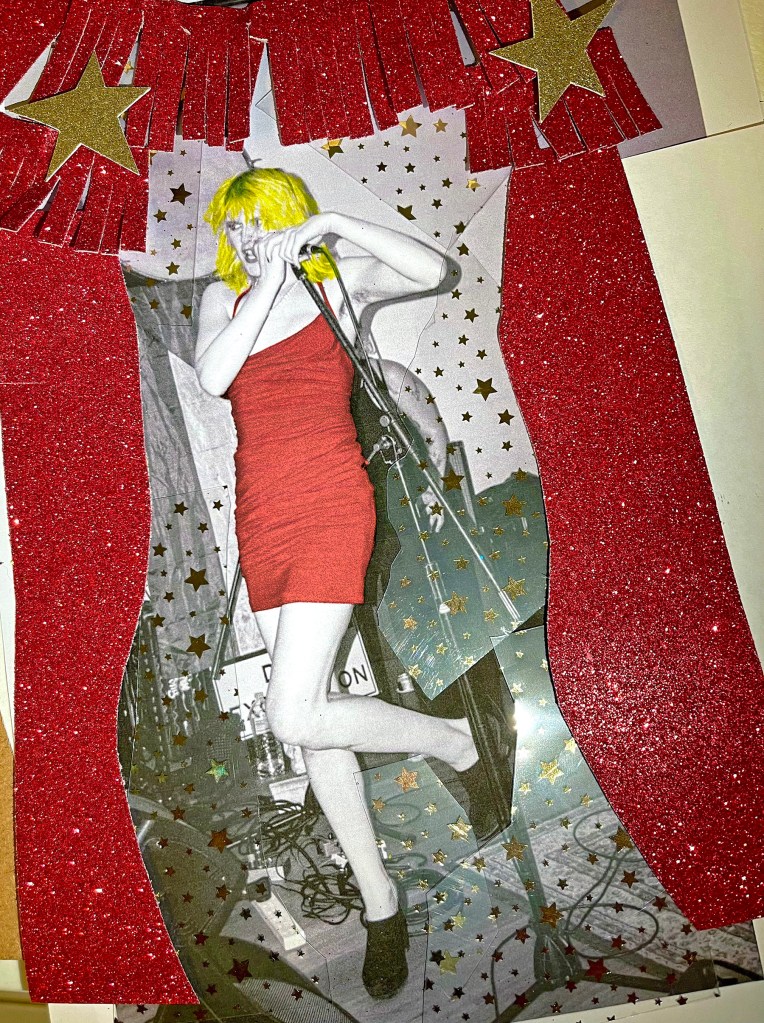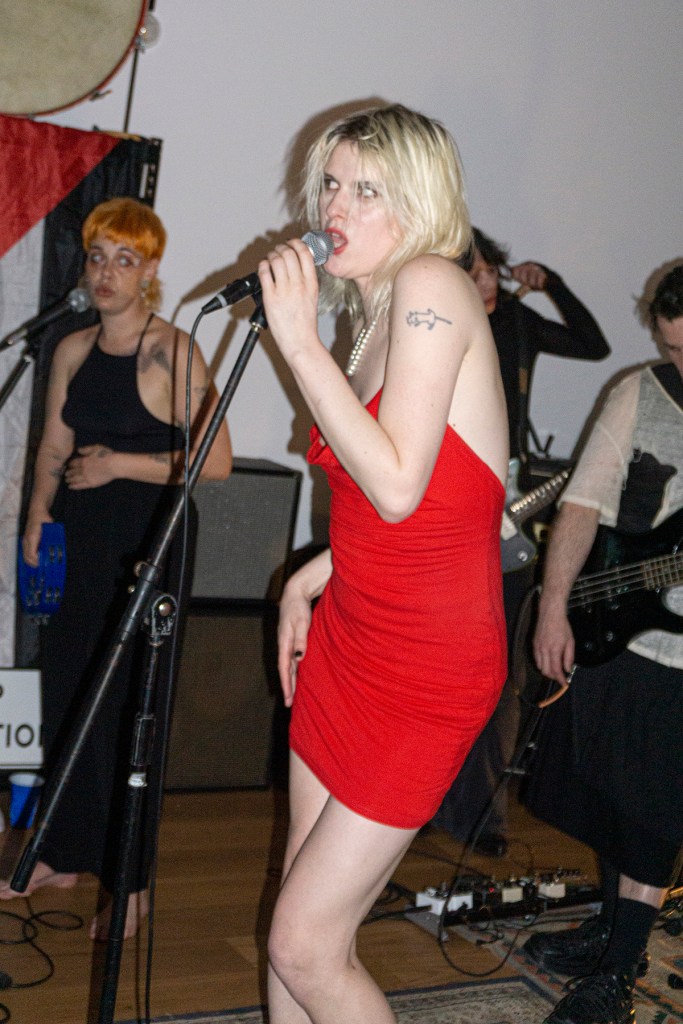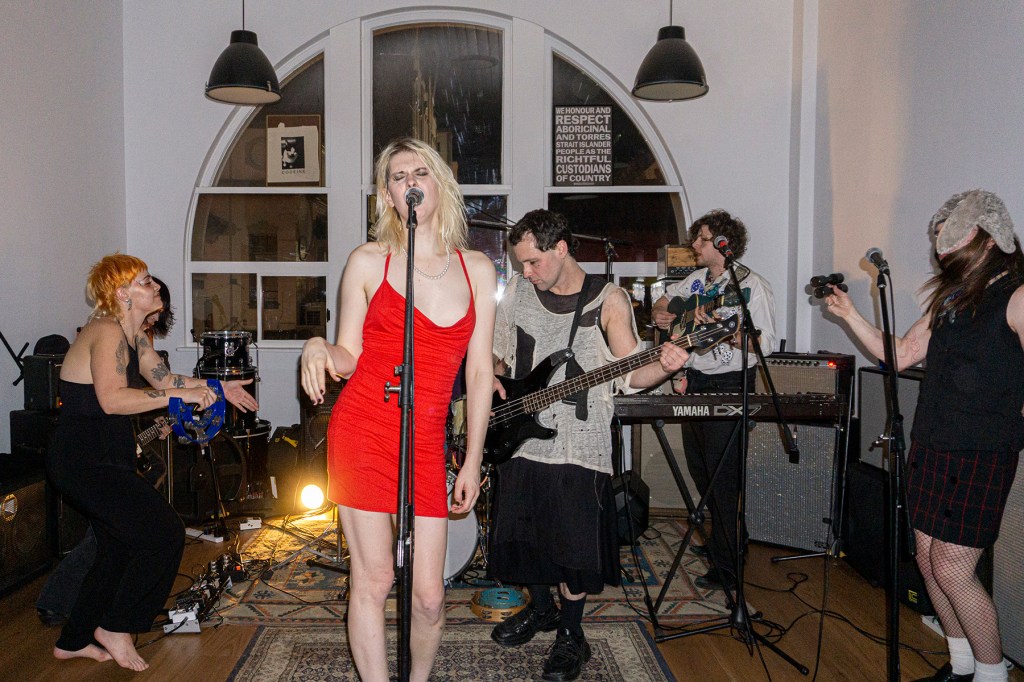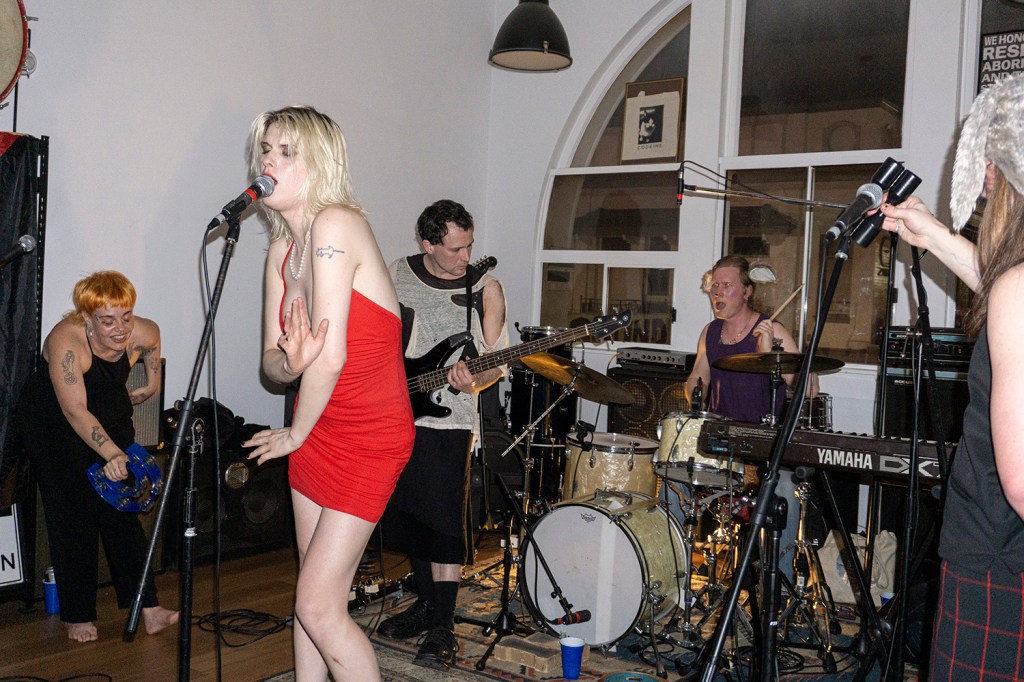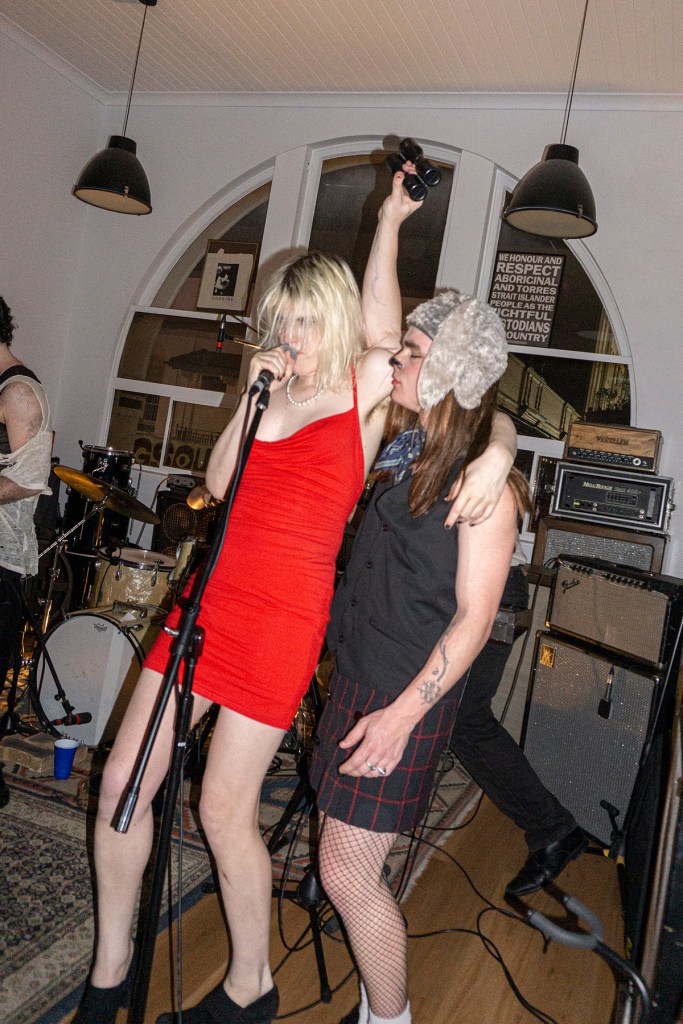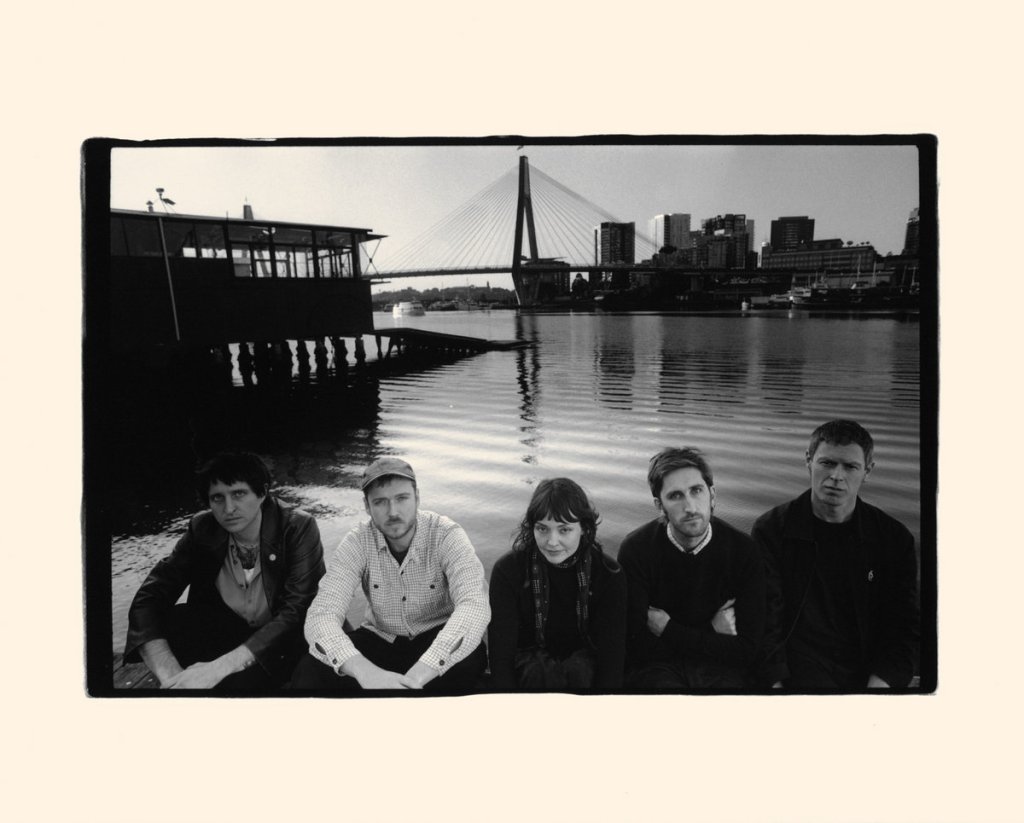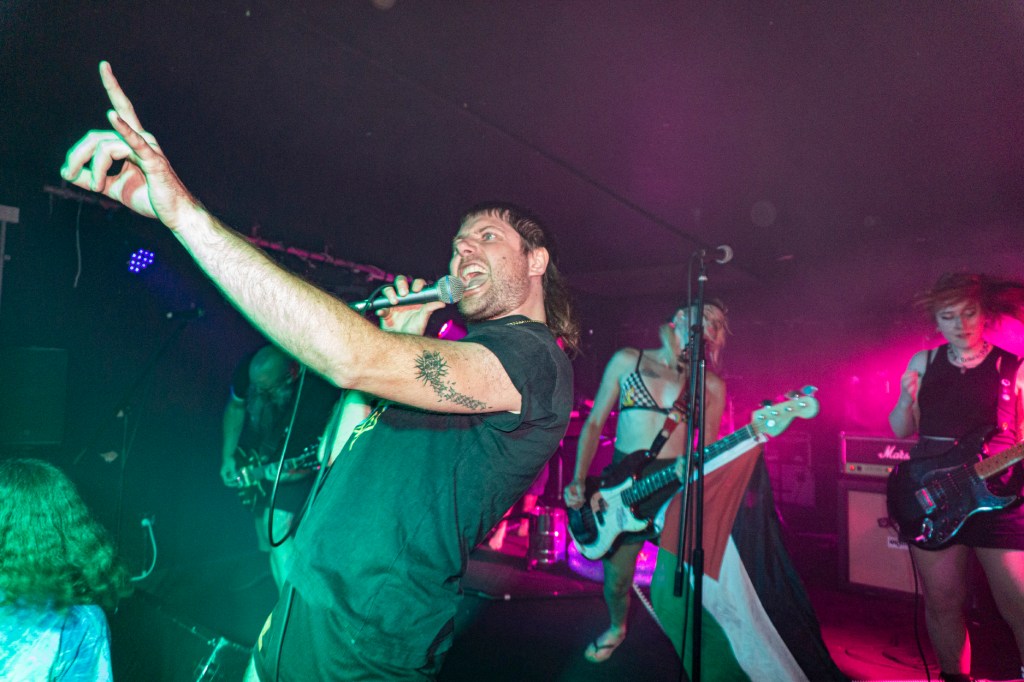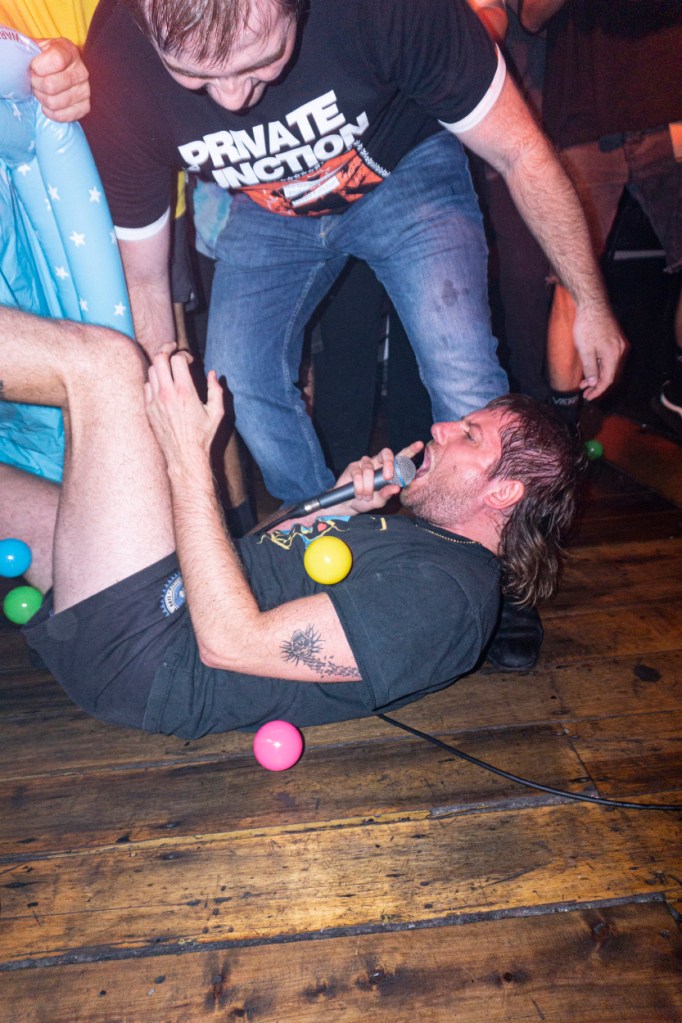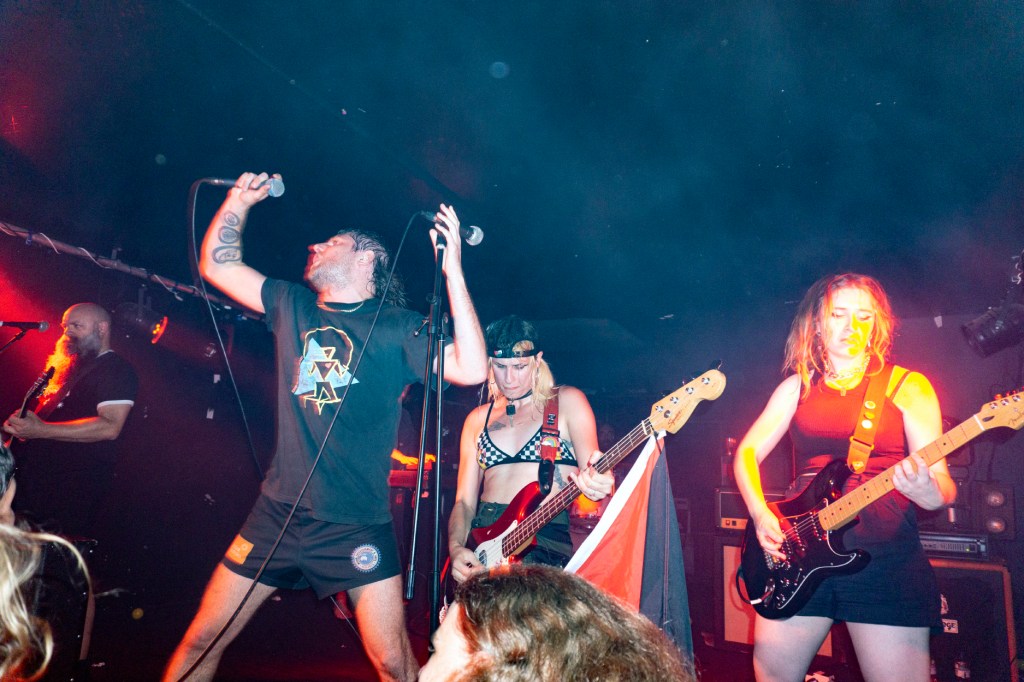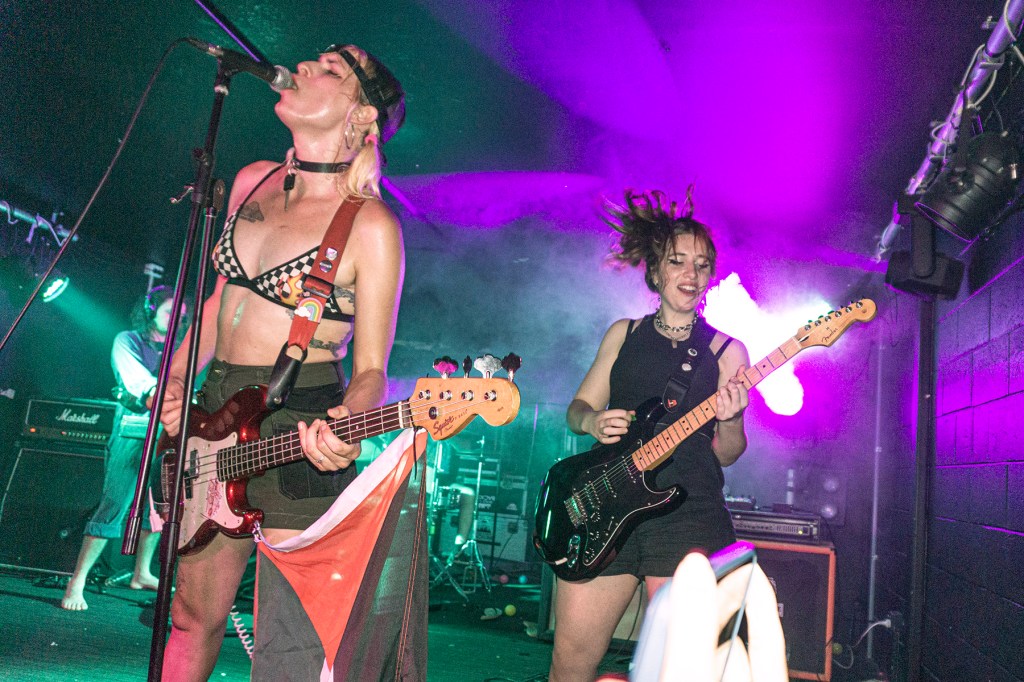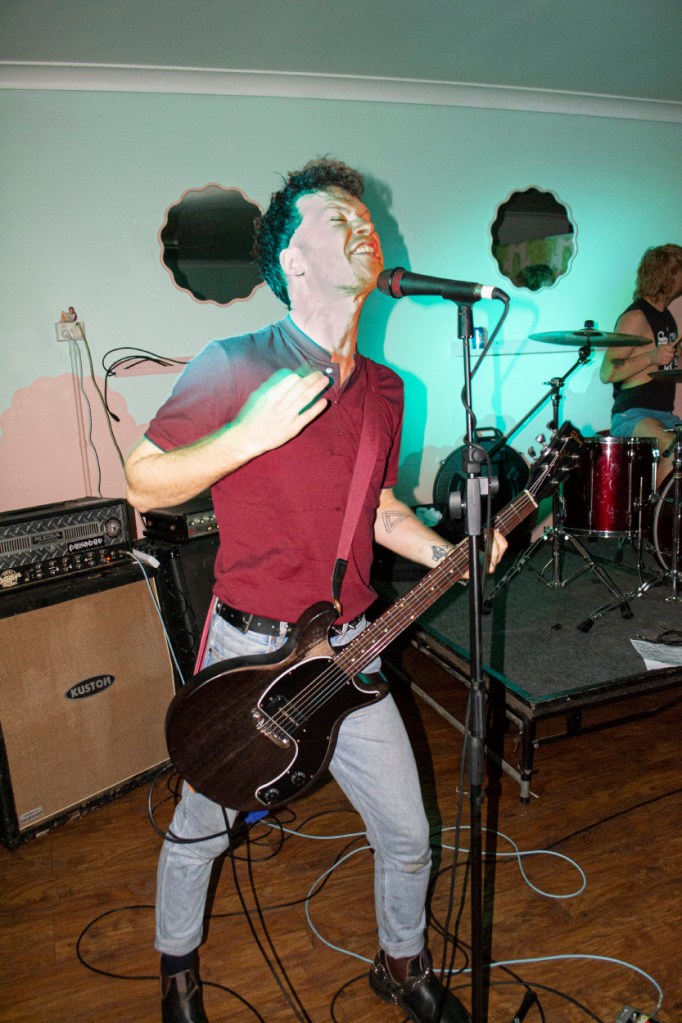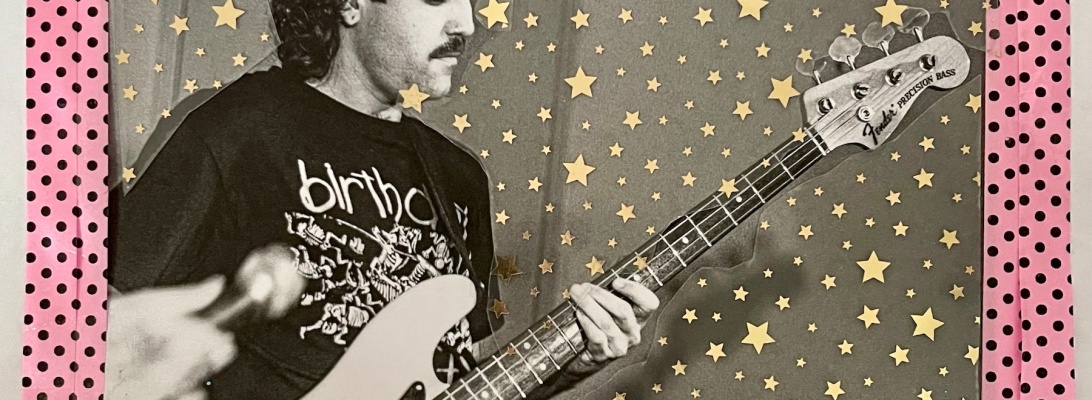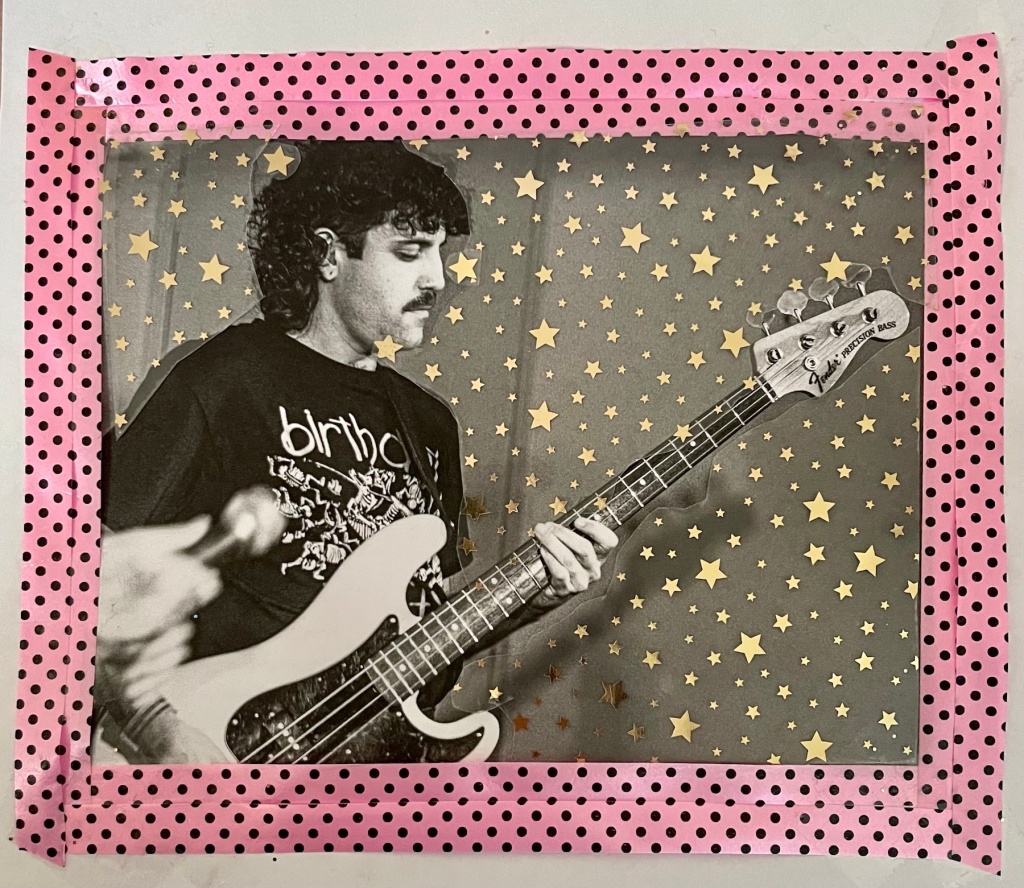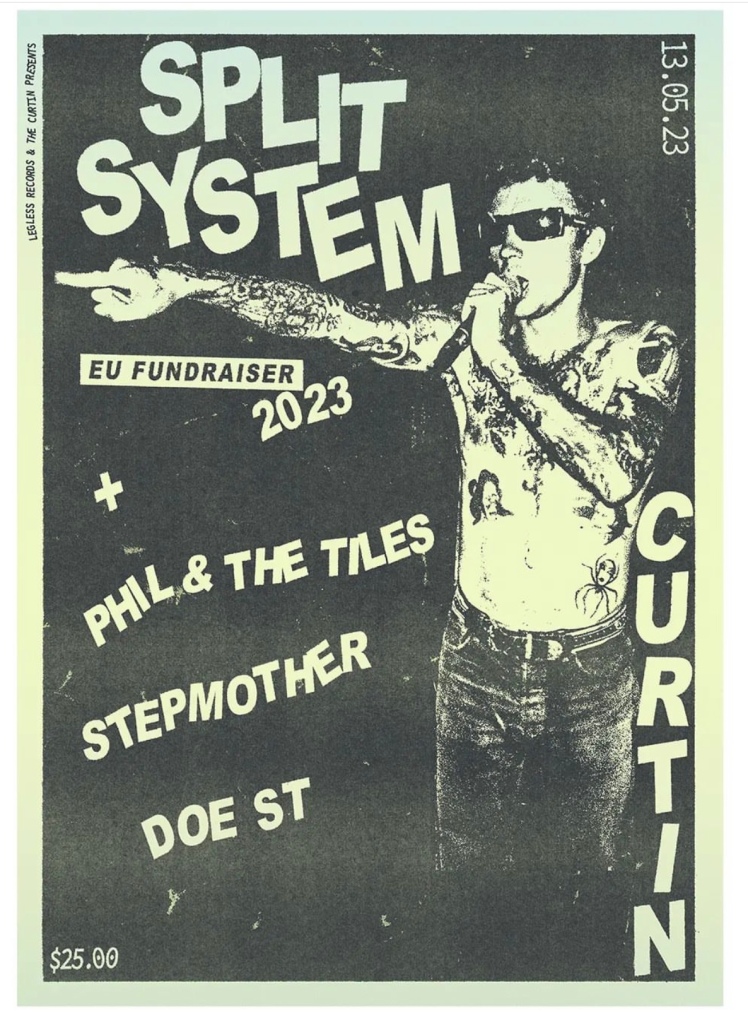
Lothairo: ‘The senses are heightened, the joys are heightened.’

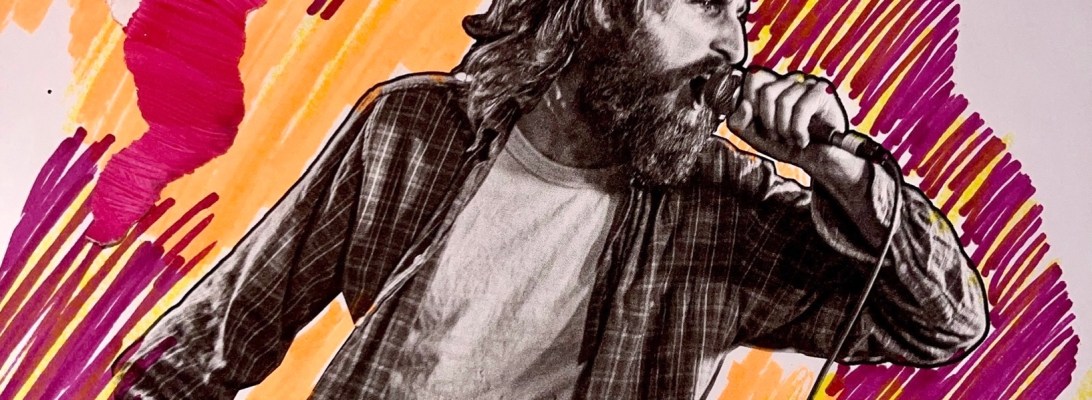
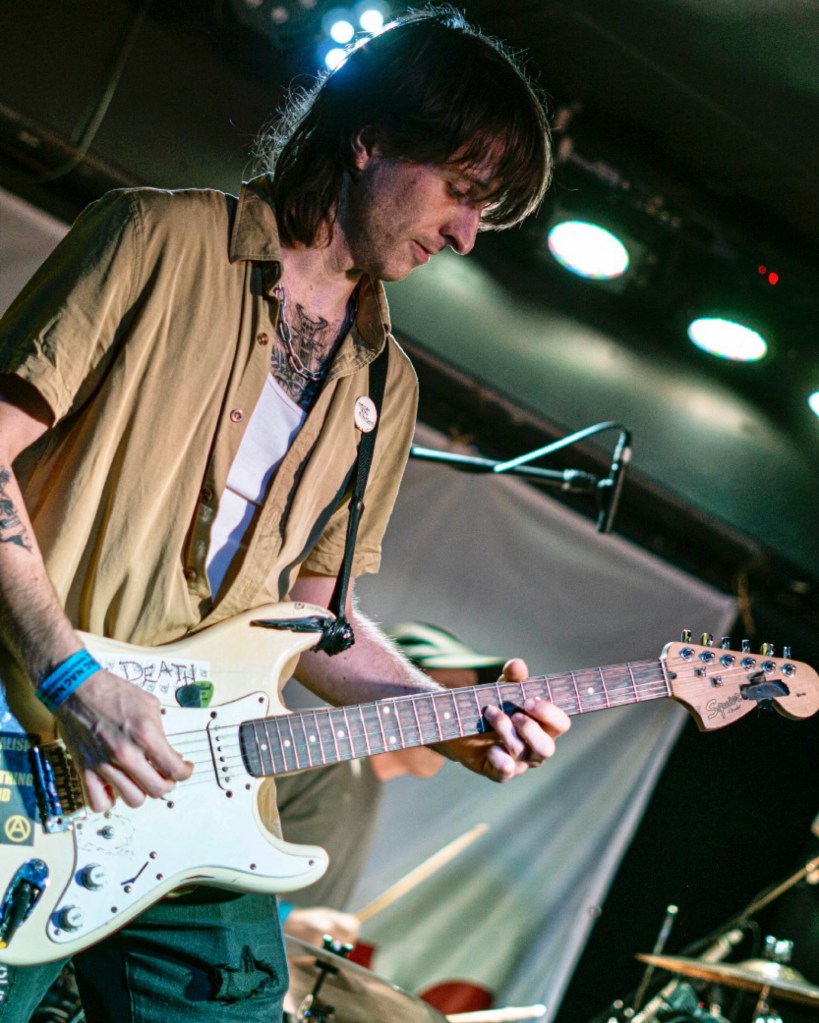
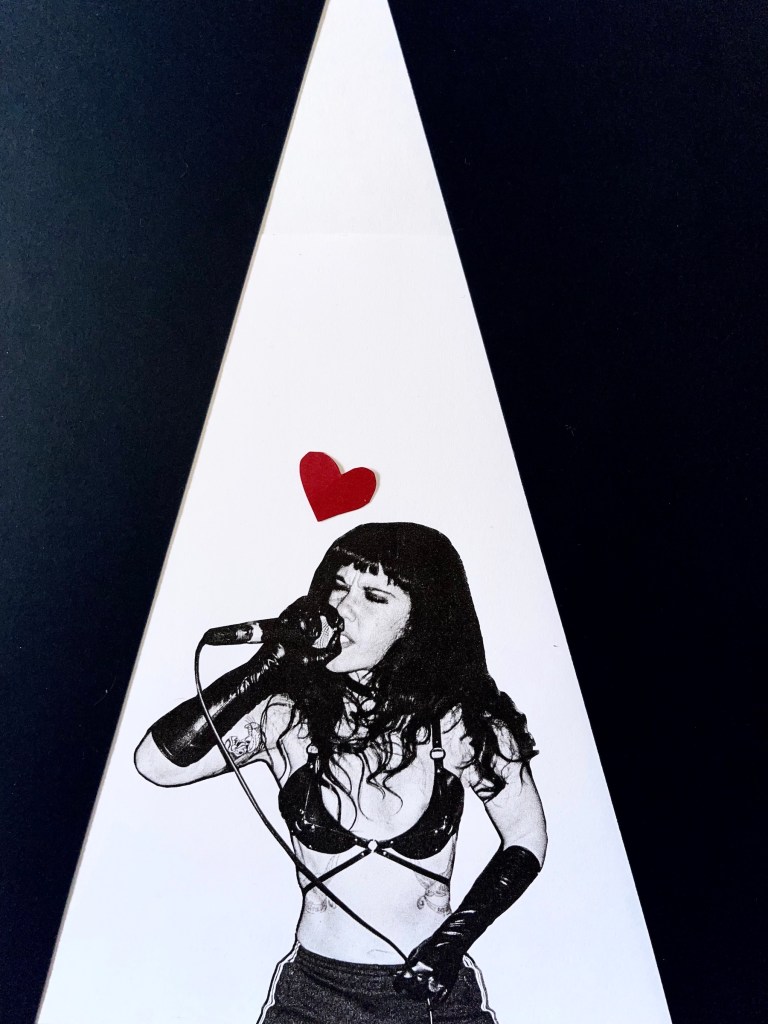
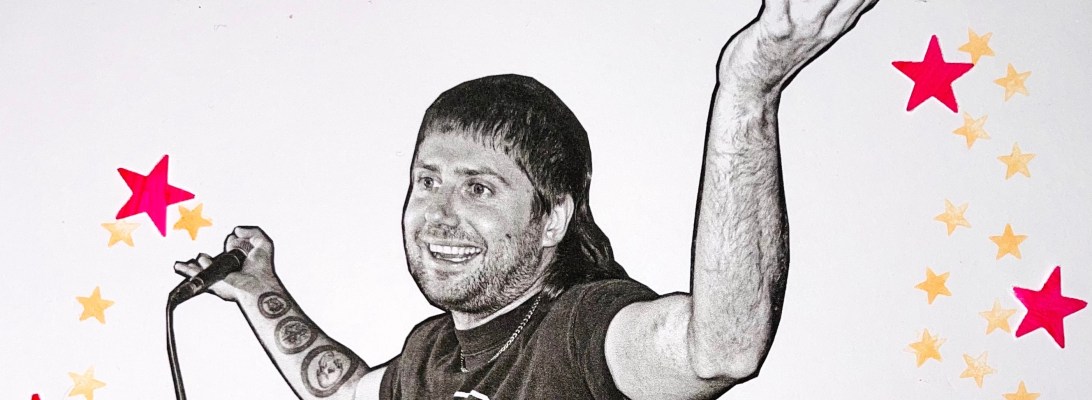
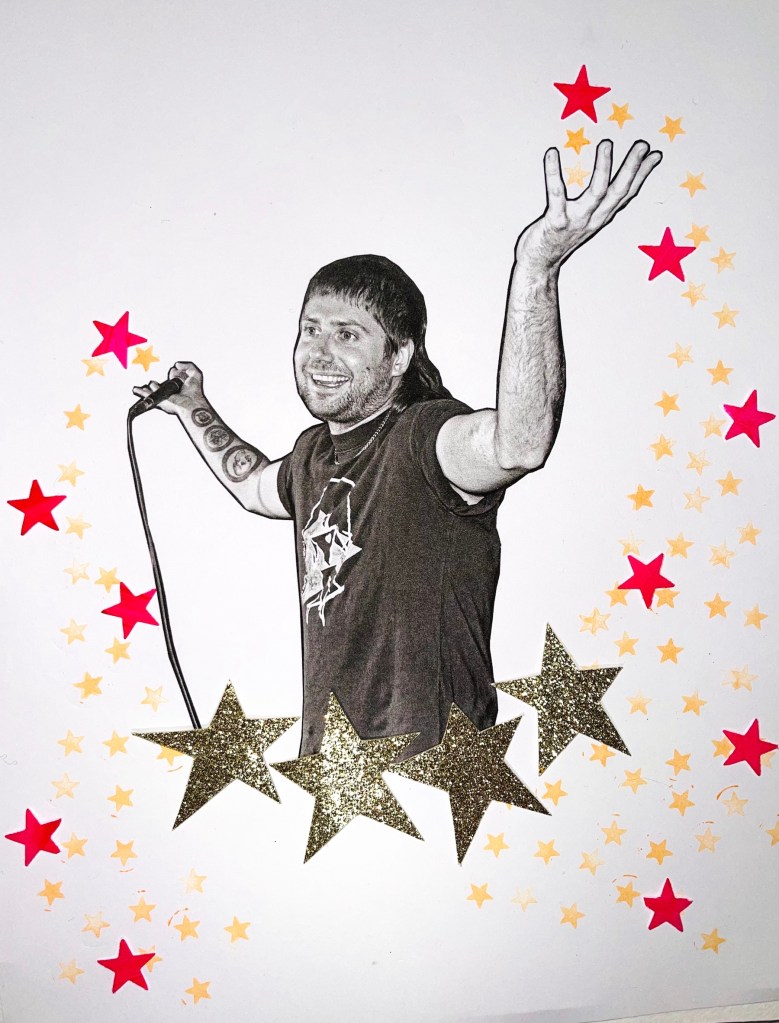
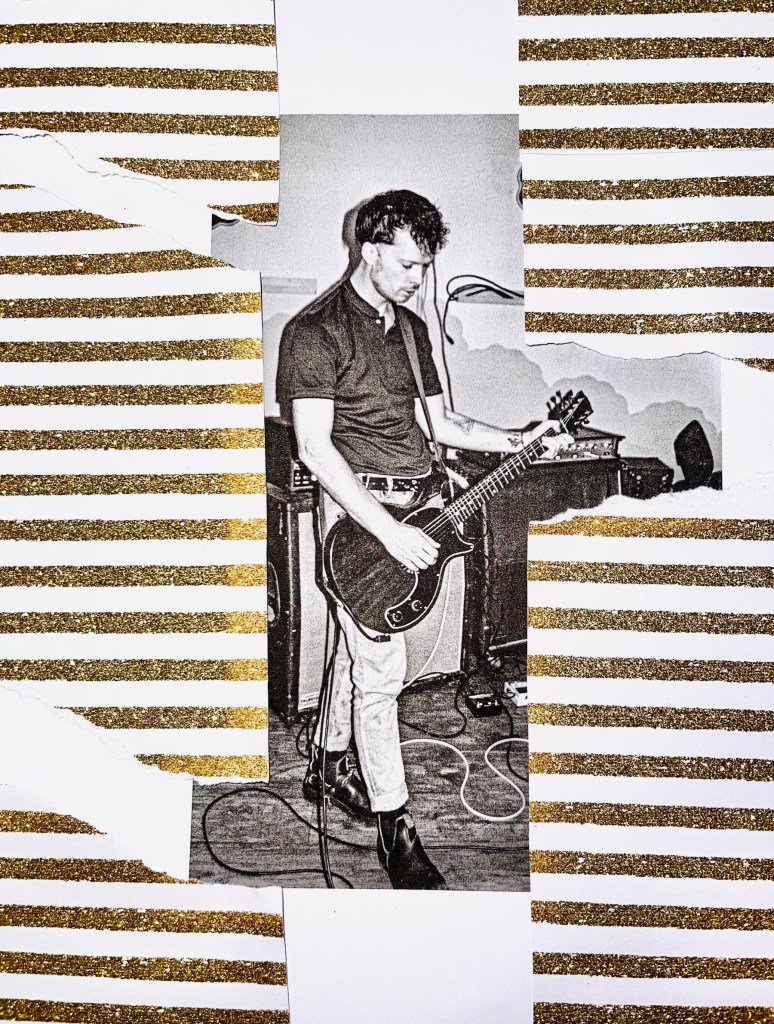
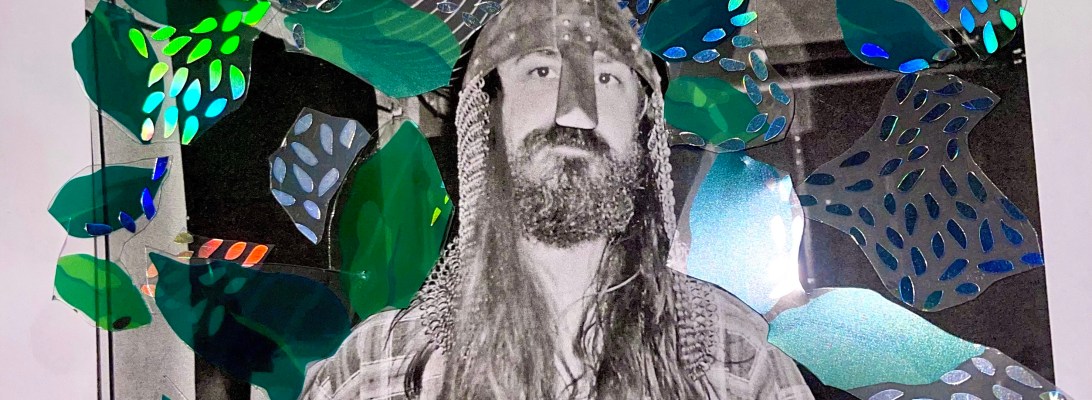
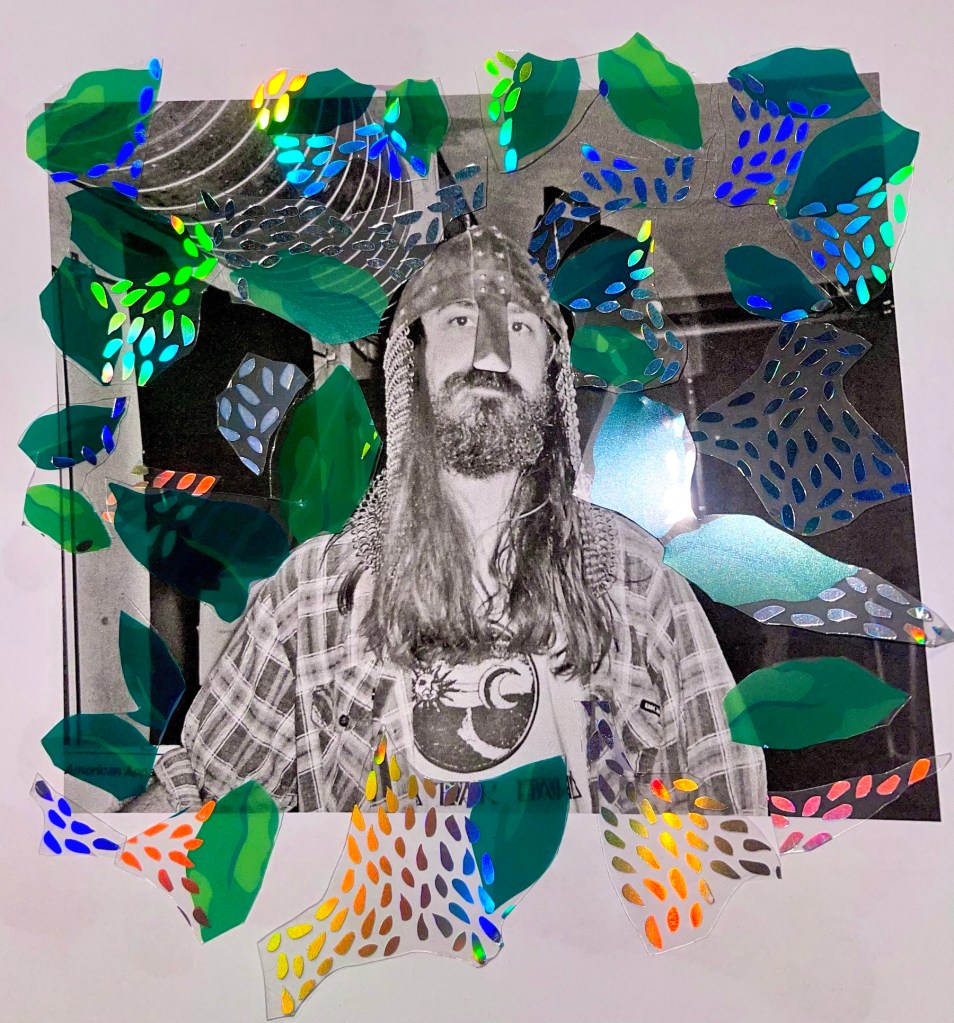
Original photo: Jack Gruber / handmade collage by B

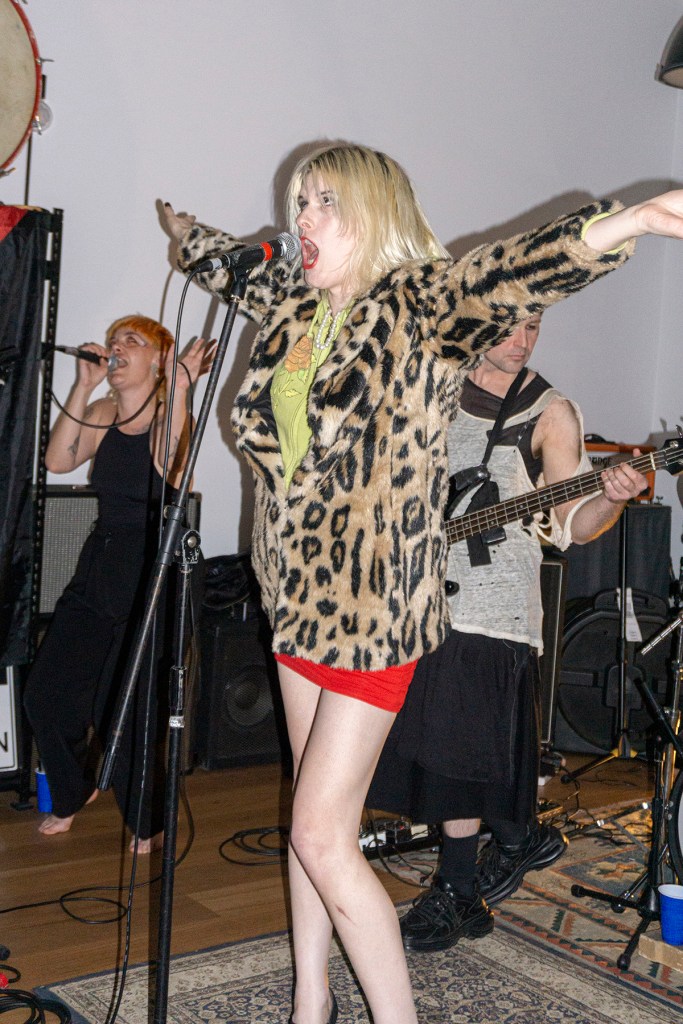
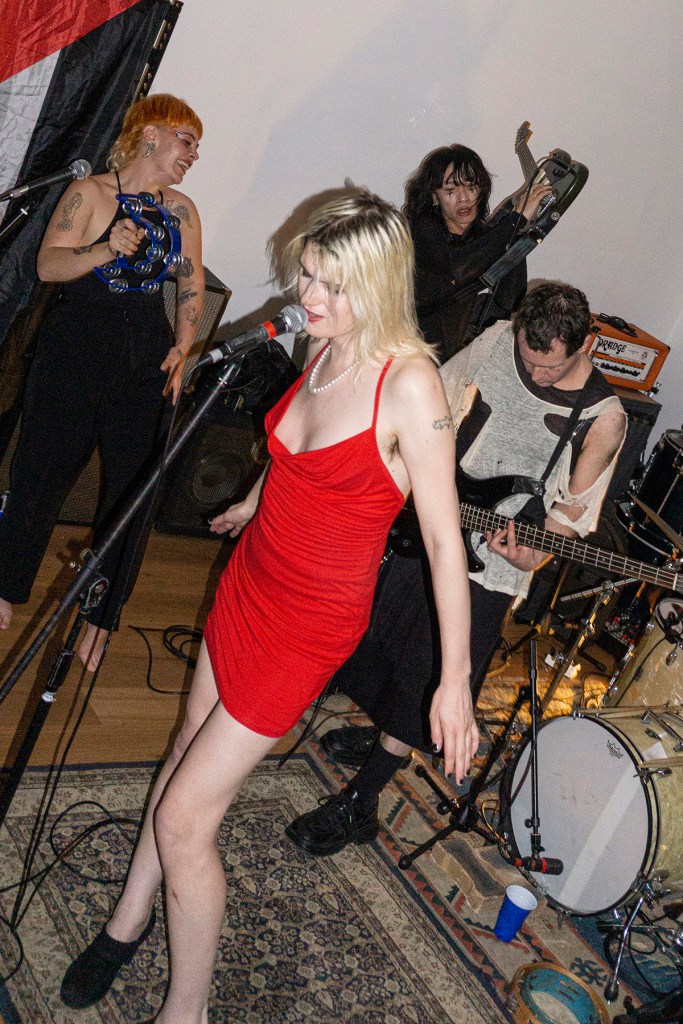
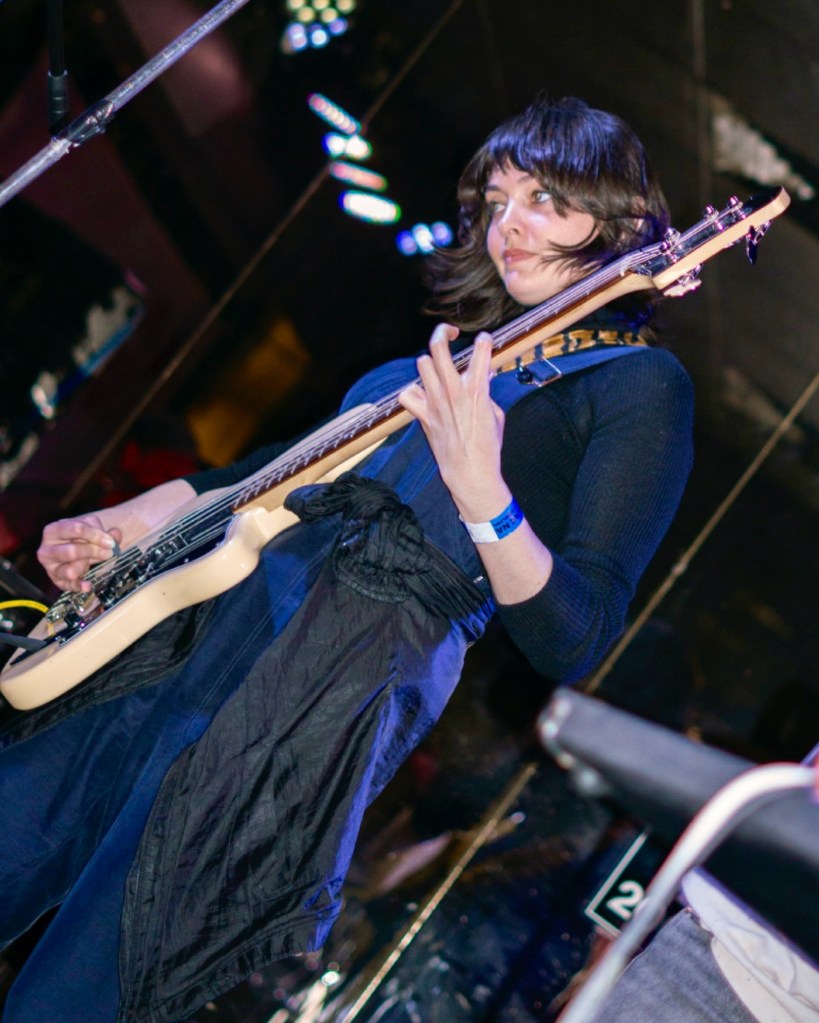
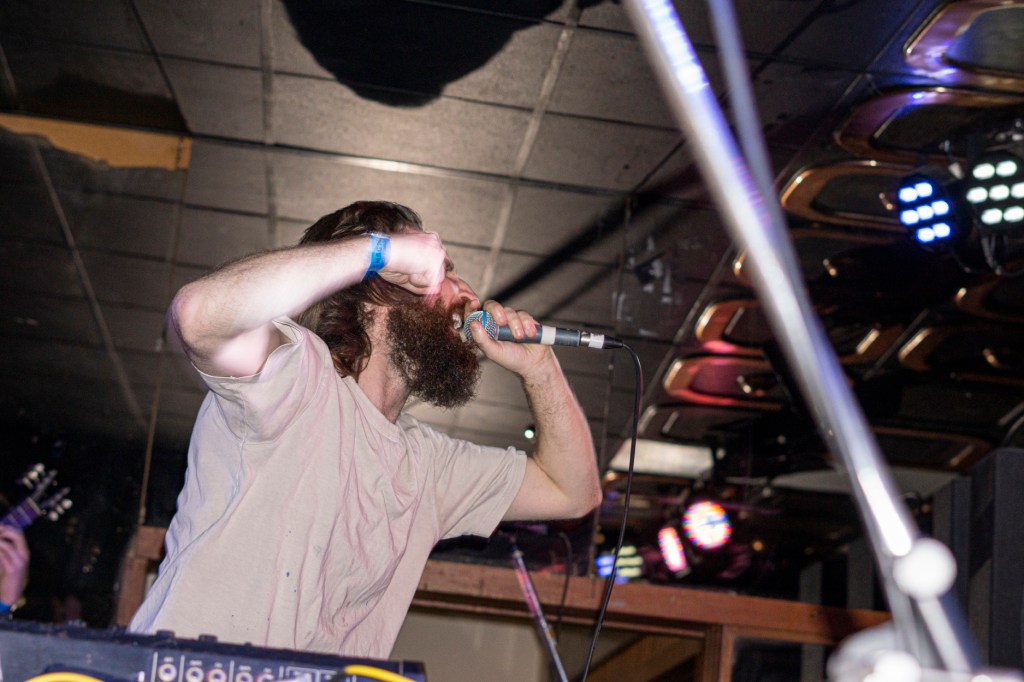
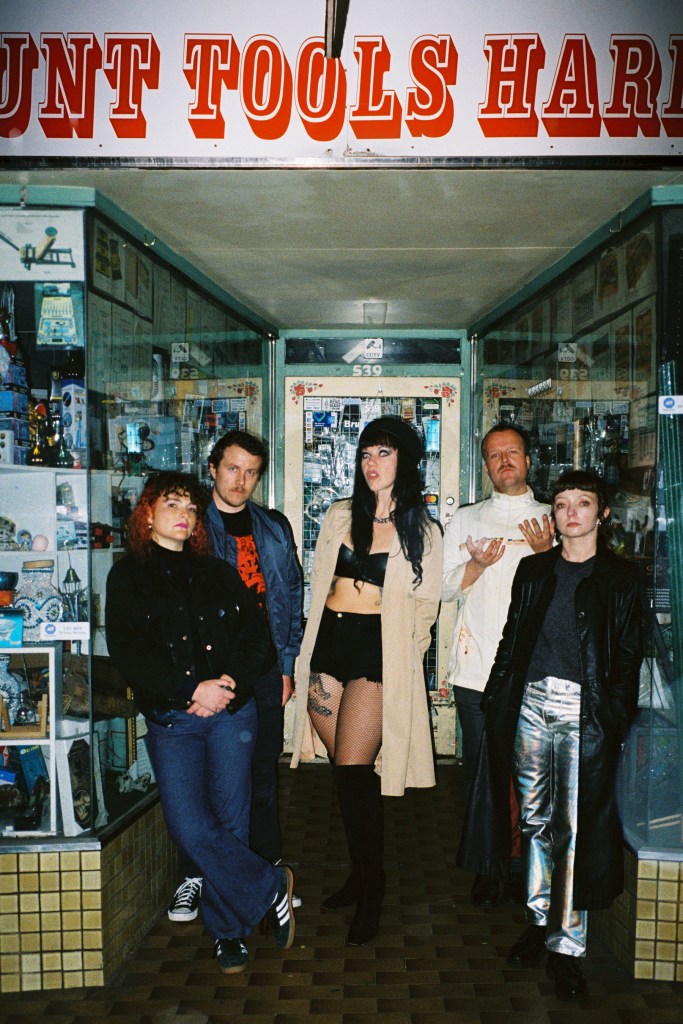
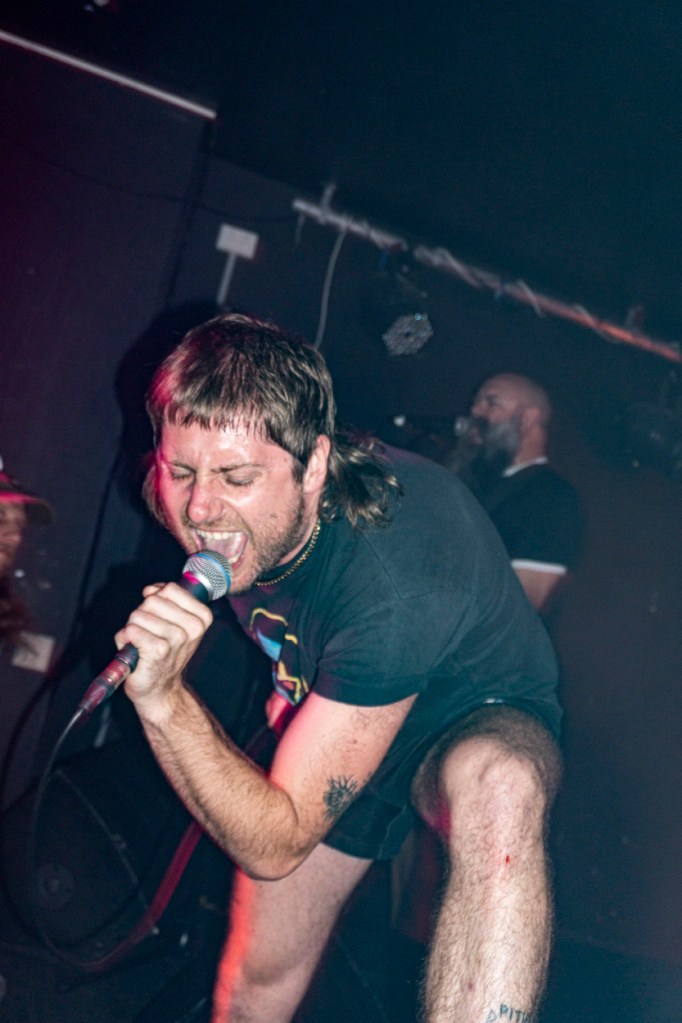
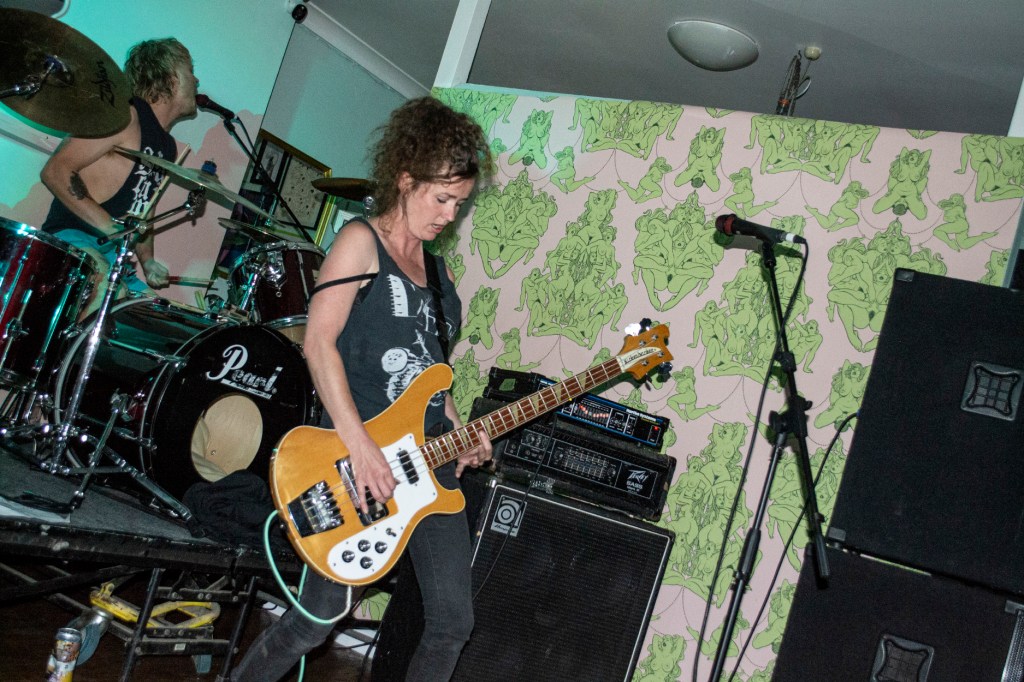
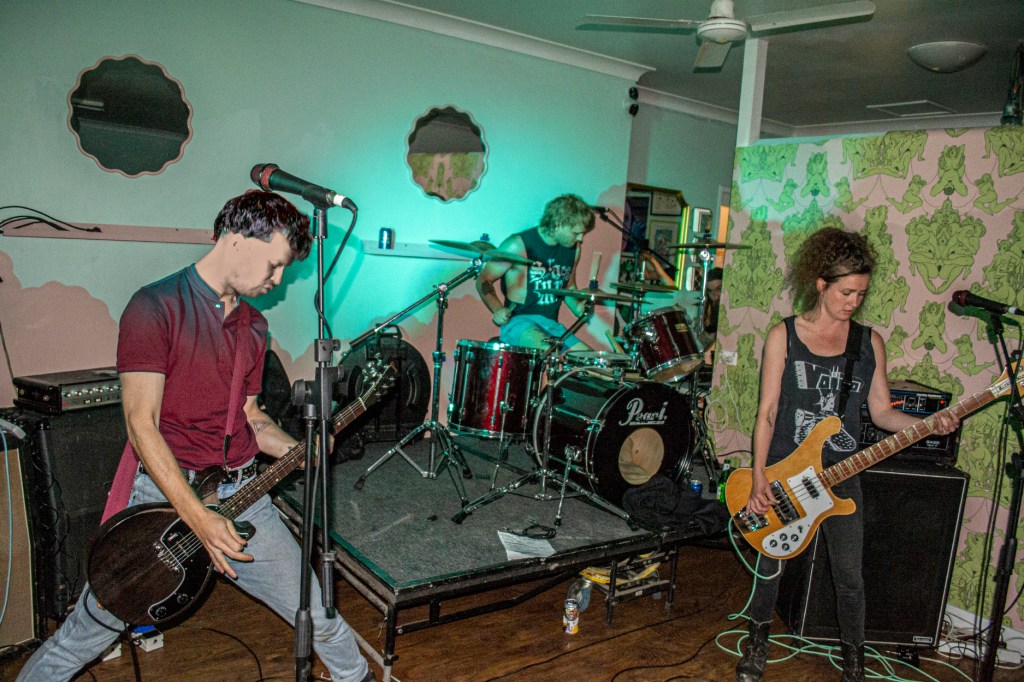
Lothario is the fierce solo project of Naarm/Melbourne musician Annaliese Redlich, a bold and unapologetic artist who channels her emotions into punk, born from restless nights and raw energy in late 2022. Exploring themes of rebellion, desire, and conflict, Lothario’s music exudes both vulnerability and defiance. Annaliese’s lyrics capture moments of catharsis as she sheds her skin, becoming who she is and who she wants to be. Initially composed in her living room, with only her beloved cat Gene Parmesan as a witness to the exorcism of old ghosts and dreams. Lothario has now evolved into a full band for live performances. They’ve quickly gained attention with sold-out releases and a rollicking US tour in 2023. Now, with her highly anticipated debut album Hogtied out, Lothario is gearing up for a European tour this October/November. Grab her record and catch a show if you can!

ANNALIESE: I’m totally floored by how much love and support there is out there for Lothario! My cup is fucking full with love and I want to keep focusing on that because that’s such a gift. I feel vulnerable around this record, but that’s what I wanted it to be. I wanted it to be me. I wanted it to be the first thing in my life that wasn’t attributed to a man. 

It was so important to see this through as much as possible by myself, with the wonderful contributions I requested from my amazing friends on drums and my amazing brother for mixing. I really wanted to stand on my own feet and spend time staring in the mirror, asking, ‘Who am I? Do I like what I see? Do I back who I am?’ Yeah, I fucking do! So when that comes out, you do have that ‘oh shit, I’ve got nowhere to hide’ moment. The senses are heightened, the joys are heightened.

The questions in your own mind, is what ‘Hogtied’is about. It’s me asking all those questions of myself: 

If I squeal like a pig would you let me win, roll me up tight like a second skin?

If I take the crown and kill the king would it wipe the doubt that lies within within?

And if I make you a lover would it take all the trouble that terrified double life, cries in the night that haunt me?

And the knives come out when the lights go out, when the lights go out, would you steal them from me?

It’s the ongoing questions. It’s a work in progress. It’s super important for me to back myself. 

Last time we spoke for Gimmie, you said that you felt that like your life was going at warp speed; has that changed? 

A: No, absolutely not! Although this year I’ve tried to slow it down a bit. I was burnt out at the start of this year. I put the first single, ‘Drunk Fuck’ / ‘Black Hair’ out in June last year. I ended up putting two other singles, ‘Doggy’ / ‘Missing Person’ and ‘Hogtied / King Rat’ out last year, finished the year off doing a US tour, and started this year, recording and getting all the rest of the tracks done for the album. 

We’re getting ready to launch the record in Naarm/Melbourne, and then we’ll go over to Europe for a month and a bit. So it’s been wild!

That’s so exciting! We’re so happy for you.  How do you feel both you and your creativity has grown in the last year? 

A: I feel unbridled joy. I feel anxiety. The nurturing of my creativity up until this point has never been… [pauses]… I’ll try and speak in positive terms. It’s always felt like it’s come in unpredictable seasons. While I’m really comfortable with that idea of creativity ebbing and flowing, and it being a season—not worrying too much if it goes away because it will return—having felt so creatively enriched in the making of this record, that sense of burnout at the start of the year did panic me a bit.

I was like, ‘Oh gosh, here we go again. Have I rung it dry? Have I emptied the well?’ And it’s like, no, it’s still there, but you have to slow down—the warp speed wasn’t something that could keep going like that. It’s almost like a bit of mania, in a way. I need that space to sit down, go into my cave, and record to flesh the rest of the songs out. But it’s felt incredible. It’s felt like the awakening of this thing in me that’s always been there, but now I have control and animus over it—this guiding hand, kind of directing it and making it happen. That’s the most important feeling in my life. 

We’re so happy for you! And, proud of you!

A: We all have fantasies, right? Of what we could do and how amazing we could create—how many records we could make or books we could write if we didn’t have to work for ‘the man’ or do whatever. But I think the most productive times for me in the early Lothario days were when I respected my own time. It was knowing when I had to work and do my job, and then knowing when I would be creating and purely doing that. Knowing when I needed to go exercise—it’s all part of a full, varied diet. I was in my state of flow.

What part of the process of making the album did you enjoy the most? 

A: Writing the songs, coming up with riffs, layering them together—every part! [laughs] Sitting down and challenging myself with guitar solos, layering those into the mix, and seeing the songs take shape. Feeling, particularly with the ones that are more deeply personal, like I’m excising trauma or anguish or pain—committing to putting those words and thoughts down on paper, voicing them, and hearing them in a song.

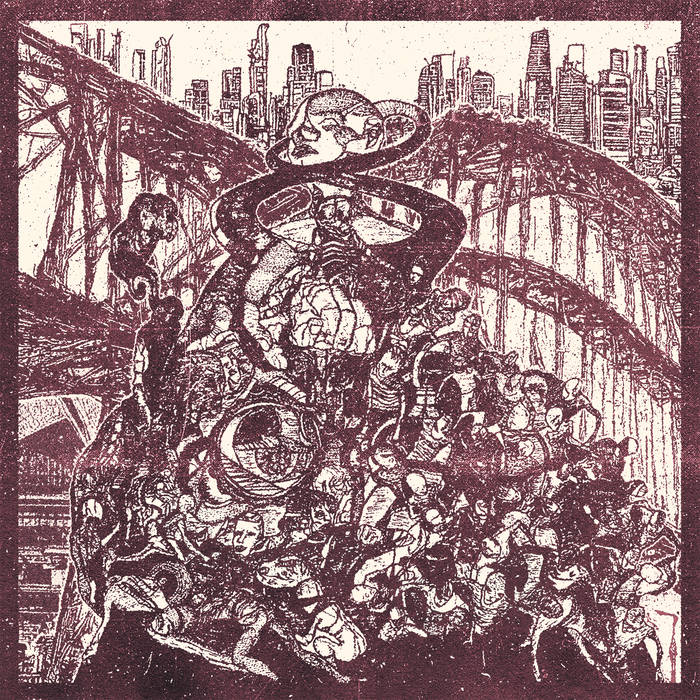
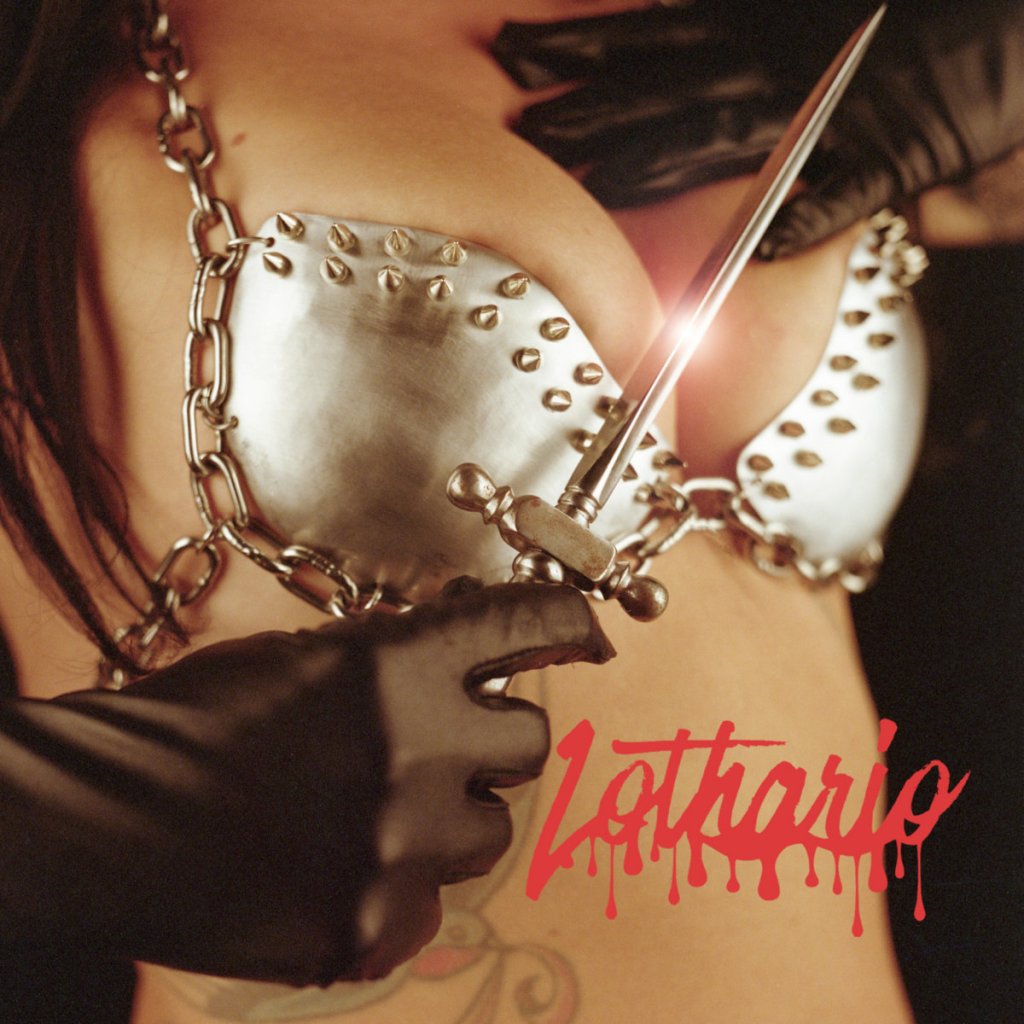
There’s so many parts I enjoyed, like working with the amazing Sorcha Wilcox from band, Aardvark, for the front cover. 

Cover photo: Sorcha Wilcox 

It’s a stunning cover! It really stands out, and is really memorable. 

A: I’m visually driven as well. It’s a strong part of Lothario, the visual unity with the sound. That was actually a bit of a stressful point for quite a while. Everything I was trying just didn’t feel right. But then finally, in April, I had this flash of idea, and I’d seen the cover for Aardvark’s record, and since then become friends with those guys, Sorcha is their guitarist and a photographer.

I loved her ideas about art and photography. I was really drawn to her, so I called her up. I had this idea and told her about it, and she was like, ‘Fuck yeah, I want to work on that.’ I’d seen Chains Of Metal, the amazing Sydney-based maker of fetish wear, on Instagram and messaged her. She hand-makes exquisite pieces of wearable art, but I couldn’t really afford to buy them—they’re expensive but totally worth it. I threw it out there: ‘Hey, can I borrow this for a shoot?’ She wrote straight back, and I thought we would have to go through a negotiation or something. But I had already given her my address, and she was like, ‘It’s already in the mail for you. Just send it back when you’re done.’

Sorcha was ready to take the photo, and my friend Baker lent me the dagger. As soon as that idea came together, it felt so strong. It was like the feeling of all the songs coming together, and this project—a wonderful state of flow.

What’s the newest song you wrote for Hogtied

A: ‘G.E.N.E.’, ‘Panter’, and ‘Suckhole’. ‘Suckhole’ was the final one, and definitely the narrative’s the most terrifyingly honest. Like, here’s my experience, and fuck you! 

Was that one hard to write? 

A: It scared me to write it. It wasn’t hard to write. Once I tapped back into that experience and feeling, it flowed out. It took on its own thing. And I was like, ‘Whoa, okay. Shit, do I really want to make that public?’ I mean, it’s still a story, a creative expression; it’s not a diary of my day-to-day. But I was like, ‘Oh, do I want to own that publicly?’ I was like, ‘Yeah, I fucking do. I really, really do.’ In this process with Lothario, I’ve learned that this is probably where the important, nourishing, life-building stuff is for me. If I can learn how to be openly vulnerable, strongly vulnerable, and truthful in my experiences, that’s going to help me and hopefully resonate with others who have had similar experiences or are drawn to it for whatever reason.

Since the record came out, a few people have told me they really identified with that song. They’ve messaged me or the song’s been talked about in reviews of the record, and it was really pretty overwhelming and moving for me to hear it talked about, as a song about relationship abuse or domestic violence. Calling it that, I was like, ‘Whoa, whoa,’ and then I was like, ‘Yeah, yeah.’ I don’t know why it’s such an overwhelming feeling, but I guess it’s the externalisation of internal stuff. That process is pretty magical and amazing to me, and empowering and scary.

I’m sure a lot more people will relate to it as your record gets further out there in the world. As scary and vulnerable as it can be, it’s important that, if we’re feeling comfortable enough, we can share our bad experiences, not just the good. I went through a similar process while putting my book (Conversations With Punx) together. Some not-so-great things I’ve experienced came out in my writing and some of the conversations I had, and I had to decide whether or not to share them. I wasn’t ready to share all of them, so some got edited out. But now I’ve started to talk about more of those things, like in an interview I did recently (Future Waves zine). Seeing strong women like yourself and Amy Taylor speaking up makes me feel a little braver. You sharing your experiences in ‘Suckhole’ might help a listener realise what’s going on in their own relationship and might help them get out of a bad situation too.

A: With that song, it’s about, you think you’re standing on one solid bit of ground, right? You think you’re on one bit of territory when you start out in a relationship. And even though you’re smart and you know, you can see what’s happening, you discount that. And then the next minute you’ve slipped a bit further in and then the next minute you slipped further in. And then when you look back, you’re right in the fucking hole. In the verses it’s:

Lock jaw, sink pit, worried sick, terror fit, deaf, dumb, blind, broken down to the bit

Pinch myself but I’m not there, all the cuts are just the cost of care, right?

Broken down but gritted teeth, my eyes start to see

Snap lock break bits finally, you’re fucking dead to me 

It’s like, I’m starting to see, even in this state of no strength. I’m feeling, and I’m seeing, and I’m knowing, and I’m fucking taking this back, and you’re done. Whatever that experience and pattern and trajectory is, it’s very different for everyone, but I think that realising you’re lost means you can find yourself again and get out of whatever the situation is. I don’t want to make any definitive statements about this stuff for other people; I’m sensitive to that…

People can always take what they want from a song. Once it’s out there, it’s sort of no longer yours in a way. You can’t control how people perceive it, because everyone’s going to bring their own lens and their own experience to it. You might say it’s about something, but then someone else hears it and thinks it’s about something totally different, and that’s fine. That’s the beauty of art.

A: Yeah. For that song, I really wanted a.. obviously ‘My Pal’ by God is one of the great Australian rock songs, and stuff like Radio Birdman and The Saints, and I really wanted to wrap it in that vibe of the classic male Australian rock thing, but have this message about losing yourself and the salvation that you can find as a person in the depths of despair. I wanted it to sound like despair, but there’s also a sign of hope and cathartic. We’ve played it once live at a secret small show last week. When we played it, and when we practice it—I get really emotional.

Listening to it, you can feel that emotion. Did you get emotional recording it?

A: It’s always like that for me. When I came up with the words, it just came out that way. A big—fuck you!

Where do you tend to write most of your lyrics? 

A: Everywhere. I can be walking around and have a riff in my head or have something and my first stage is recording voice memo notes in my phone. Then, I’ll either come up with words because I’ve got a pattern that I want to fit into something, but often there’s just sentiment that comes of an experience I want to write about. 

With ‘Suckhole’ the tune felt really desperate to me and it felt dark, but then ultimately it should have redemption.

I have lots of dreams with really strong themes. ‘Hogtied’ was a dream but also based on experience. ‘King Rat’ was about a dream and a series of visions I had around a certain time. Rats kept coming up in my life.

I saw a dead rat on the beach. It was really beautiful; it was bright blue, and it was after a storm. I was like, ‘Am I hallucinating? Wow.’ I was in a really bad situation in a relationship, and I went out in the middle of COVID, in winter, to the beach down in Melbourne, to the surf, and I got a wetsuit. I was winter swimming a bit at that time to shake myself out of a funk. I’d gone for a swim around Brighton, and there was so much crap in the water and flotsam and jetsam along the shore.

I was feeling devastated and was walking when a bright turquoise-blue thing caught my eye. I thought it was a bit of plastic, but it was this big, plump, dead rat on the edge of the water. It had no fur and was beautiful and grotesque. I felt so sorry for it; I felt this sense of grief for it. I left, wondering why I kept thinking about this rat and why it looked so beautiful. It was this alien, beautiful thing in the midst of rubbish, leaves, and stuff.

Rats are so maligned and regarded as dirty in Western culture, whereas, in other cultures, they’re not. In Chinese culture, they’re in the horoscope; I’m a Year of the Rat baby. They’re cunning, smart, clean, and such social animals. They’re actually so smart and beautiful. And just the symbolism of the rat—this poor dead rat that was shining like a beautiful diamond along the coastline amidst the garbage where no one would see it, but I saw it.

I have periods of intense deep dreaming. I feel like i’ve had less this year than usual, which makes me a bit sad. It’s more just a sign of that burnout and putting my head down and getting through stuff.

Was there anything in particular that had you burning out? 

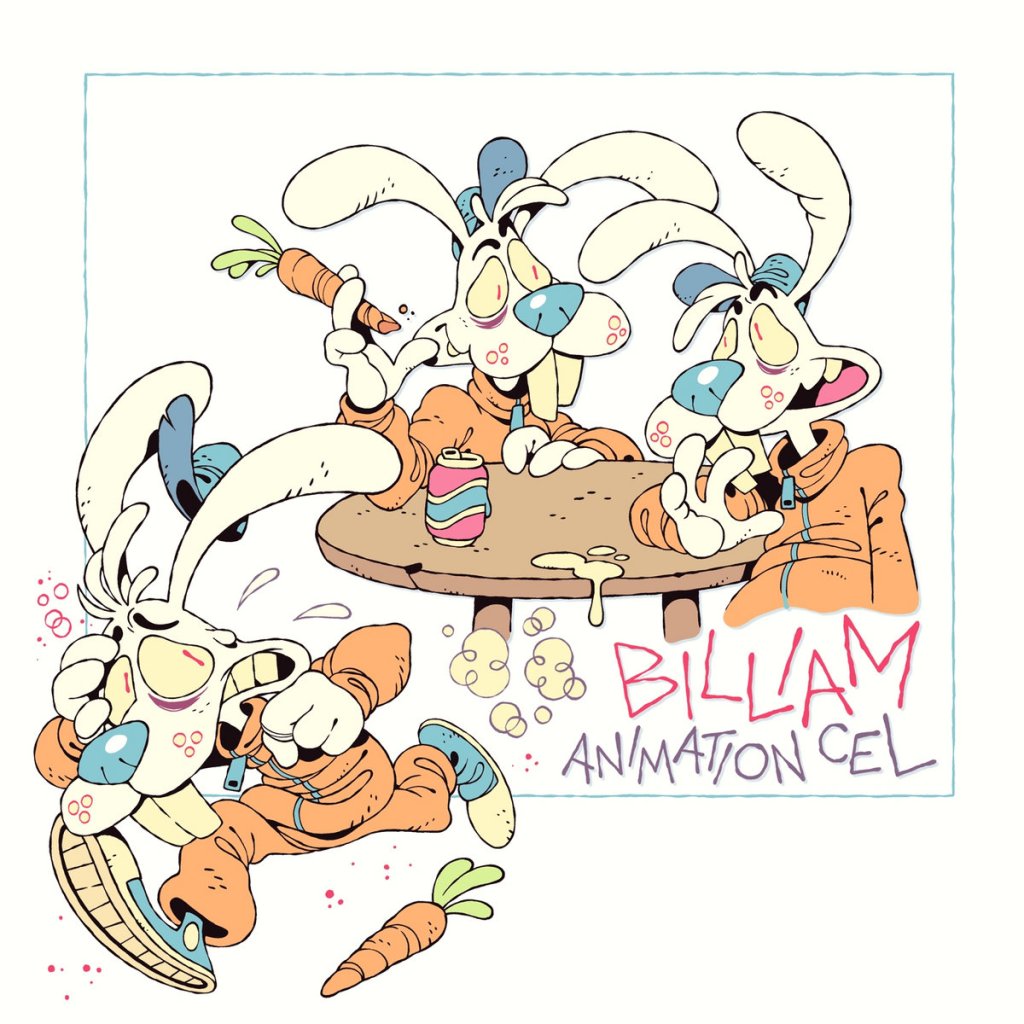
A: The US tour last year was pretty full on. You have to be careful of the people you have around you and make sure that they’re like family. I’ve never done anything more than just a couple of days with a couple of shows, chilling with mates. It’s always been really family like. You’re doing this really big, difficult thing together with not much money and who knows how much payoff. You’ve got to make sure that everyone in that group is playing their part, helping, being supportive, and respectful. My live band—Shauna Boyle (Cable Ties, Leatherman), Elsa Birrel (Shove), Jay Power, and Al Hall (Cutters)—and former members who contributed to the project’s early live shows—Billiam, Sarah Hardiman (Brick Head, Deaf Wish, Lou), Moose (Rat Bait, The Uglies), and Lach Smith (Revv, Billiam and the Split Bills)—are amazing.

Every day, there were amazing, mind-blowing people showing up. People offered us to stay at their places. We played a show in Pensacola on Halloween, which is at the top of Florida, an hour from the border with Louisiana. It was an all-ages house show at a place called the Bug House, with an age bracket mostly between 12 and 20, and some parents. There were kids running Halloween stalls, zine stalls, and everyone had costumes. One person was doing tarot readings, and there were food stalls.

A girl and a non-binary tween grabbed me after the show and were like, ‘Oh my god, we have so many questions for you. We need to know: How do you do this? How did you start this? What do you do? How did you start playing guitar?’ I just let them talk at me super excitedly. They said things like, ‘We want to play guitar,’ ‘I was playing in a band with my male friends at school, and they were like, “I don’t like them”’ and ‘Nobody wants to do what I do, and I’m so frustrated’ and ‘I want to do what I want.’ The other one said, ‘I don’t play an instrument, but I really love this. I love this and want to be part of it.’

Photo: Matt Redlich

Good stuff like that, connections like that, makes it all worth it!

A: Yes! We shut everyone else off and sat down in a little huddle to talk about my experience. I told them, ‘Don’t worry too much about it. It will come, and you will find your people. Don’t feel pressure. Keep doing your thing. But also, if you need to stop doing it for a bit, that’s okay too. Don’t judge yourself for not having the resources around you right now to actualise the thing that you ultimately want to be. If you want to be involved in shows but don’t play an instrument, maybe you could organise shows, make flyers, or be someone who goes to your friends’ shows and tells other people about them and promotes them. You could take photos. Try a bunch of things. You’ll start to make friends and find what’s right for you.’ It was just a tremendously special conversation.

Another cool moment was when we played in Detroit with Timmy’s Organism, and having Danny Kroha from The Gories in the front row watching me play guitar and writhing around on the floor screaming! I was like, what the fuck?Oh my god!

I love America because of that crazy pendulum swing of existence there, for the good and for the bad, for the scary and for the beautiful—it’s a cartoon world in a lot of ways. That appeals to me. I’ve met so many Americans in the punk scene who are so open and so heart-on-their-sleeve friendly.

You mentioned the two young people who came up to you at the Halloween show. Was there someone when you were growing up, that you had an inspiring chat with, like you did with them?

L: No, which is why I recognise the importance in doing that. When I was growing up, you and I have talked about this before in our chats, going to shows when we were kids, and sadly we didn’t see many women on the stage. The ones you would see, would blow you away.

Adalita from Magic Dirt was one of those for me.

A: Yeah, and who didn’t want to be her? She is just a fucking goddess! you know, and 

I know that you’re close to your parents; what’s do they think of your record? Have they heard it? 

A: They have, they love it! They don’t like punk music. Obviously the aesthetic and narrative of the record is not necessarily something that my parents would choose, let alone choose to see their daughter excising. But they’re so proud. Dad and mum actually made it to a show when they were working in St. Louis. Mum had seen us play a few times. Dad had never seen us play. Dad’s a classical music guy, but he was cheering and losing his shit!  He was proud as punch. All these younger punks were coming up to him and having photos taken with him.

The themes on the record are pretty universal to the human condition. But, I’m a female and they’re my experiences of the hypocrisy of the patriarchy and treatment of women’s bodies. My mum’s a big one for words and she’s asked me about a lot of the songs. She is really proud and amazed that I can access and articulate my own experiences and excise my feelings and express his stuff. When she saw the cover, she was like, ‘Whoa, that’s powerful! So that’s, It really is. 

That’s awesome! I see that the record is pretty much sold out everywhere already! Congratulations.

A: I should be getting the records tomorrow from the States—I cannot wait to see it! They’ll be some available at the launch, if there’s any left over they’ll go up on the bandcamp. 

I’m sure you’ll sell all those at the show. All of your previous releases, the 7”s have been long sold out.

A: I’m always amazed and thrilled that happens!

You’re such a sellout! In the best way possible. 

[Laughter].

A: Yeah, unashamedly so!

You’ll be doing a European tour soon; what are you most looking forward to doing in Europe, besides playing shows?

A: Wild Wax that’s bringing us over asked is there anywhere particularly you want to tour? I was like, ‘I don’t care, anywhere that will have us.’ I love seeing places when I’m making music or DJing or just meeting music communities. I can’t wait to cruise around after the tour is finished. I’ve always wanted to go to Spain, so I’m particularly pumped for that. It seems so beautiful and romantic. My best friend’s coming over at the end of tour and we’re going to Turkey and Greece for a bit. 

I’m also looking forward to seeing my friend Marion, who is Fuzzgun, and he plays in Autobahns and Lassie, he does guest guitar on Panter too. They were out here in January doing a tour, and they stayed with me. He’s gonna be in our band in Germany because our guitarist Al can’t come. We’re’ landing in Leipzig and we’re gonna hang out at Marion’s place, he lives in a squat with Jules from Autobahns and Marion’s beautiful partner Tati. I’m looking forward to seeing what a European gas station is like too [laughs]. I’m sure we’ll see lots of them. I just can’t fucking believe I get to do this—it’s it’s a thrill for sure! 

Hopefully we can wrangle a US tour next year and maybe a bit more Europe. I don’t really want to stop. I want to keep going as long as we can.

We’re interested to see where Lothario goes next creatively. All your releases have been in a way are inspired by certain challenging life stuff, it’s cool to imagine where you might go now you’re in a better place.

A: There’s a song that I don’t have a title for yet, it has a catchy pop-ness like ‘Black Hair’, but even more so. I was really surprised when I wrote it. People I’ve shown it to have given it Joy Division comparisons, and Jay Retard. It has a post-punk meets edgier punk feel too. Maybe I’m leaning into that a little bit. I’m really excited.

My brother, is an amazing music producer and is one of my biggest supporters. He creates really polished music for other people. I don’t want to do that with this, but he was talking about how he’d love to record stuff for me; I recorded the other stuff all myself. I am equal parts totally keen and absolutely don’t want to do that. I don’t want to change the vibe. I don’t really want to overthink it too much. 

Anything else to share with us?

[Annaliese’s cat appears]

A: I wrote a tribute song to my cat Gene Parmesan [‘G.E.N.E.’] I imagined him as a street tough, a punk walking the night, being tough—a wild cat! just, He was my omnipresent producer in all the sessions. I’d record in the living room and he’d start to do zoomies and I’d be trying to ge a guitar take, and he’d run over the top of my lap and I’d fuck it up at the last minute [laughs]. He’s been my rock in my, in my darkest times. 

Follow: @xlothariox. Find the music HERE.

Private Function’s Chris Penney: ‘I try to create art as escapism because everything else freaks me out!’

Original photo: Johnny Russell / handmade collage by B

Private Function are a punk band that embodies more than just chaotic energy and humour. Beneath their wild shows, tongue-in-cheek attitude, and fun exterior lies a band that blur the lines between art and everyday life with witty commentary on modern life.

Gimmie recently caught up with Private Function’s frontman, Chris Penney, for a candid conversation that covered everything from his roots growing up in housing commission to his first experiences with therapy. He reflects on how his formative years and growing up with his metalhead single mum shaped him, and tells us about his first concert, and the time he sat on Ozzy Osbourne’s lap. He shares his theory on the moment he feels culture died, and his honest opinion on NOFX and Blink-182, while celebrating the revival of Australian music in the 2000s by bands like Eddy Current and Royal Headache. We hear the story of what drove their manager and booking agent to quit. And, talk about joy, creativity, and so much more. Chris’ blend of quick wit and sincerity makes for an unforgettable conversation.

CHRIS PENNEY: I’m the classic example of a housing commission boy, come good. I grew up in Redfern in Sydney on Morehead Street, which is a pretty gnarly street. 

You know, how you can do that thing where you say the name of your first pet and the name of the first street you lived on, and that’s your porn star name? Well, mine’s Jesse Morehead—that’s pretty good [laughs].

Seriously, it was a pretty crazy place. It’s the most condensed housing commission in Australia, which, to be honest, maybe isn’t the best idea. I think there’s talk about maybe taking it apart, but there are easily a thousand different apartments on that one block. So it’s pretty fucking full on to live there. Especially back in the ‘90s, I saw some crazy, full on stuff. There’s many, many stories; a chick got stabbed to death once. 

Whoa! Oh-no. I guess, high-density housing commission projects can face a lot of challenges like overcrowding, maintenance issues, strained infrastructure, and there’s also social stigmatisation. All these things can lead to deteriorating living conditions and lead to stress, anxiety, and depression, as well as diminished overall well-being and quality of life.

CP: Yeah! And these things do happen. There shouldn’t be that much housing commission condensed into one street. 

Did the things you’ve seen growing up there have an impact on you? 

CP: I don’t know. Maybe? I mean, the only thing I can think of is that I’m extremely emotionless—probably that. So this week, I actually went to talk to a psychologist for the first time in my life, which was pretty good.

That’s good to hear, I’m stoked for you. I’ve been to many over my lifetime and it takes a while to find a good one sometimes, but when you do, I’ve found it can help.

CP: Yeah, it’s interesting. I’ve never done it before. So I don’t really know what to do, because I don’t really know what I need out of it. I’m pretty together. Although it would seem very much like I don’t have it together [laughs]. But I have a bunch of crap going on. 

It’s cool; I can talk to the guy about the end of the world, which is kind of fun. I made him squirm. I talked to my girlfriend; we’ve been sitting down and chatting, and I go on these crazy doomsday rants about the end of the world, or World War III, and the climate crisis running in direct parallel with each other. And we’re storming ahead into this apocalypse. It’s coming so soon. She’s like, ‘Yeah, I don’t want to hear any of this.’ [laughs].

A lot of people are like that. It’s constantly in our face in the news so they don’t want to spend much more time thinking about it. It’s a really interesting time. But no matter when you look back in history, there’s always been terrible things happening. As humans, how do we cope with this? What do we do with this information? Because obviously it can start to affect our day-to-day lives.

CP: For sure. It’s something I think about a lot. The news is always happening, right? The world’s always happening, always changing. There’s always people dying. I guess there’s more emphasis on that stuff now because of social media, how dramatic that is now. Is it any more or any less important than it’s been in history? I don’t know. I don’t know shit. But, things are always gonna wrap up, and things are gonna begin. And people should want to know about it.

Yeah. I don’t have answers either. The world can definitely be a difficult place so to stop from feeling overwhelmed, I chose to dedicate my life to things like music, art, connection, conversation, and community, and sharing knowledge, ideas and experiences with others. Through my work it’s important to counter the shitty stuff in the world and offer something that’s a more positive offering for people’s lives. 

CP: Yeah, 100%. That’s absolutely what I try and do as well! All the art that I create, and that we create in Private Function, is hopefully that. I try to create art as escapism because everything else freaks me out! I try to keep this one escapist form of art that’s joyful, fun and stupid at the same time. I fucking swear to God, if this psychologist makes me cease it, if I become a more serious person because of this prick, and I have to release art that isn’t fun and dumb—I’ll be so upset! [laughs]. 

Photo: Jhonny Russell

There’s definitely a place for fun and dumb art. Not that I think your art is dumb, by the way. There’s a place for all kinds of art. Art is more important to society than a lot of people think it is. I think often there can be a misconception that real art has to be serious.

CP: Yeah, totally. I couldn’t be serious, man, even if I tried. Private Function definitely has an element of humour, obviously. But it’s not jokes. The way I try and approach it is that it’s like a joke without a punchline. The vibe is funny, but there’s no actual joke here. I really like relying on humour and comedy in a song to bring these artistic ideas to life because I feel like humour is the only artistic avenue that still has innovation in it.

For instance, the scratchie record we did, people would think that’s a funny, stupid idea. But it’s also innovative because it hadn’t been done before, which, to me, is important.

I couldn’t think of anything serious that hasn’t been done, and hasn’t been done significantly better than I could ever hope for it to be done. Like, every song about love has been written, every song about addiction has been written. It’s set in stone, how they’re meant to sound and how that it’s meant to be shown to people. But with humour, there’s this depth of endlessness that you can continually find things in. BUT then you just have to deal with people being like, ‘You’re a fucking joke band!’ [laughs]. 

Frank Zappa used to get that too. Full transparency, it took me a little while to come around to Private Function, and to get it. On the surface level, and the way PF were pitched by publicists and seen in the media, it kind of seemed that way. But when I took the time to listen and saw a live show, I realised it wasn’t that, it was more that. You write great songs and you’re one of the most exciting and entertaining live shows around.

CP: Yeah, it’s funny, right? [laughs].

When I look back on all the things that people discounted as just publicity stunts, I see the innovation that we’re talking bout.

CP: This has been an eight-year project now. At the beginning, in the first few years, people were really into it, and then some of those people left. People come and go, and there are always new fans. Now it’s almost like, to get into Private Function, you need to understand this linear story, along with all the concepts and imagery that are repeated and consistently used, blending into each other. There’s themes about the whole thing. To jump into the band now, and to take it at face value, is like jumping into a podcast after it’s been going for years. It’s like, ‘Oh, fuck, what the fuck is all this? Who are these characters and these people?’ It’s hard to do.

I think the live show sells quite a lot. That’s the one thing that’s changed a lot of people’s minds about us. I like our albums but the songs are quite different live to how they sound in the studio. Recording is hard. Especially for me, because I’m not the best singer. When we’re jamming, I’m like, ‘This is fucking amazing!’ And then you hear it in the studio and it’s like, ah, maybe, my hubris has gone to my head somewhat [laughs]. 

How did you first discover music? 

CP: My mum. I had a young mum. She’s only 19 years older than me—54. Because I grew up with a single mum who was a huge punk and metalhead growing up. She was massively into Metallica and all those kinds of bands. From a young age, she was taking me everywhere and making me go to shows.

My first show, I still got the ticket stubs, was in 1996, The Offspring. I was nine. There’s a photo of me with Ozzy Osbourne too, when I was 10 years old. She took me to a signing and I have a photo of me sitting on Ozzy’s lap! It’s really funny.

Photo: Jhonny Russell

Ha. That’s awesome!

CP: [Laughs]. So she would just fucking blare music through the house. She’d be cranking Tool. So I was listening to all that stuff from a young age, and it just went on from there. My mum would listen to The Stooges, so I would.

Self-exploration is such an important part of being a music fan, and formulating who you are. Remember before the internet? 

I sure do.

I think it’s the worst thing that the internet has taken away from us, like self-exploration and finding those things you like on your own and not just having someone hand them to you. In the pre-millennial age, finding stuff was a major part of formulating your self. 

Now it seems like everything’s at your fingertips and there’s overwhelming so much choice. Back in the 90s and before, you had to really dig for stuff and it wasn’t just readily available. Things seem to hold more value because of the effort you’d go to to discover them. Music didn’t seem as disposable.

CP: Yeah, 100%. It was way more satisfying to find things yourself. I went and saw EXEK the other night.

We LOVE them! They’re one of our favourite bands!

CP: Yeah, they’re great. The singer Albert asked this question to the audience on the mic, he said, ‘Does anyone even have passion for music anymore? Does anyone care? And, there was a quietness and awkwardness from the audience. I was like, yeah, people don’t care! [laughs]. It’s funny to see that; you could really feel it in the room, people don’t have that connection to music like they used to back in the day, and what it used to mean. 

Anyway, like I was saying, I was listening to all of this music way younger than I should have been because of my mum. Getting into my teenage years, it should have been pop-punk, like NOFX, Blink-182, and AFI, but I was like, ‘This is fucking shit!’ [laughs]. I missed all the music that I should have liked during my teenage years, and I’d think, ‘Well, we’ve already got The Stooges, so what’s the point in this?’ I jumped over this whole chunk of music that lots of people my age were into. It’s funny that older music was my teenage music. I’m pretty happy for that because that other stuff IS fucking shit—my mum was right [laughs].

Was there anything, though, that you discovered yourself? 

CP: For sure. Billions and billions of things. You ever heard this album? [holds up a record] Rites of Spring! I bought this just now. I actually hadn’t heard them until last year, which is so fucking funny, I went through my stupid Minor Threat thing and then I was like, who’s another guy in Fugazi? 

Guy Picciotto!

CP: Yeah. So I was listening to them all year and then I went into Rowdy’s Records today to go get a bunch of record sleeves. They had that album behind the counter and I bought it. It’s an original press, which is pretty cool. I’m always finding fucking new music. My fucking record player has been broken for over a year but I’m still buying records. 

Nice! When and how did you first start playing music? 

CP: High school. We just liked to play because we like rock and roll. None of us could play any instruments, AND some of us still can’t play instruments [laughs]. We jumped into it and figured it all out. That was a long time ago, I guess, I’ve been playing music for 20 years. 

Photo: Jhonny Russell

Did you ever think he’d be a front person? 

CP: Yeah, I’ve been a front man for a long time, in every band except for Mesa Cosa. I’m still technically in Mesa Cosa, I guess [laughs].

Is there anything that attracted you to being a vocalist? 

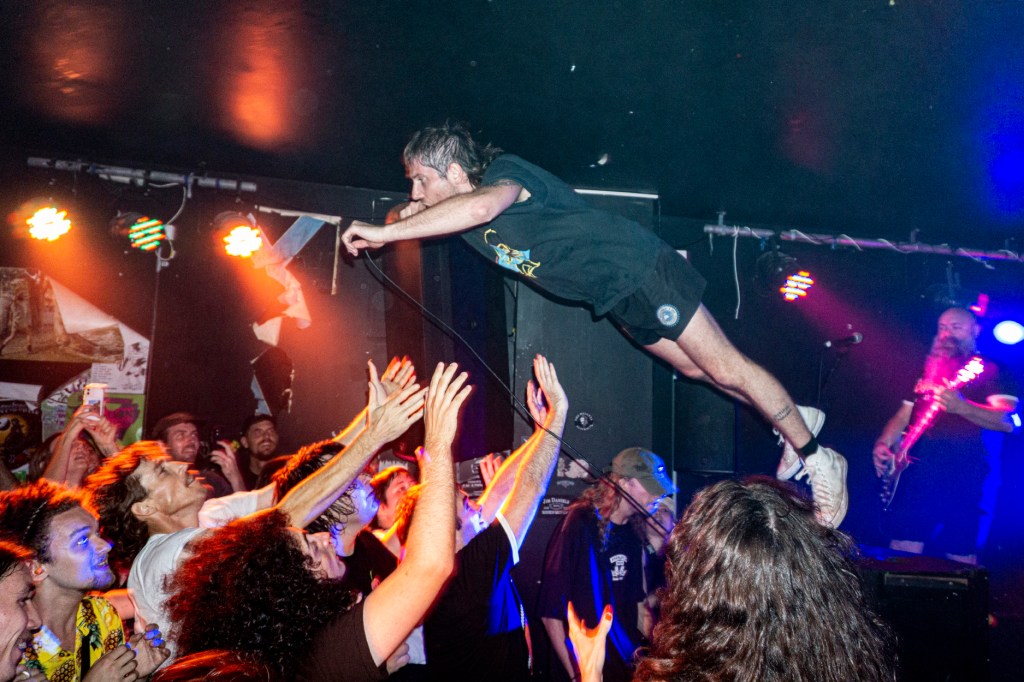
CP: Not being able to play an instrument [laughs]. And, it’s fun. I like a band with a front person, which sort of oddly it’s becoming kind of rarer. Especially front people that jump around. I like to jump around, it helps me sing, which is funny. Having a front person adds a whole other element to have a connection into the band, in a way, because you’re out in the crowd.

I noticed when you play live that you’re very aware of all the stuff that’s going on around you and you genuinely engage people.

CP: Yeah, yeah, totally. I like looking at people. It’s cool! [laughs].

Not all bands do that, but it’s always nicer when they do. Sometimes, when a band gets lost in their own world and ignores the audience, it can be boring. When we saw you play, it was great how you involved the crowd by letting them choose your set through picking song written on pieces of paper they’d pull out of an old vacuum cleaner. Everyone was into it. The show’s vibe was chaotic but positive, with people looking out for each other. After going to some rough hardcore shows lately, where a bunch of the audience felt pretty thoughtless, it was refreshing to experience the opposite. Your show was joyful, and I wasn’t on edge, hoping I didn’t get hurt watching a band play. It was a real highlight of my week.

CP: I love that you got that from our show! Thank you very much. You used the word joyful, which often has connotations with it being kind of silly and stuff but it doesn’t need to be that. It can be joyful in the way that… [pauses]… it’s cool to have a show that’s kind of like a [Steven] Spielberg movie, where you’re like, [puts his arms in the air triumphantly]. I always find that it’s a good movie if it’s got me going like, ‘YES!’ [pumps fists in the air]. Like, watching Smokey and the Bandit, it’s like, YES! They got the beer to the party! They beat the cops—fuck the cops! It’s that kind of joyfulness that could take you on an adventure. It’s a different kind of joy.

What you said about the show, really means a lot. I don’t even mind when we get criticism. I love really respectful, truthful opinions. Criticism of anything should be more truthful—more real.

So, we just talked about Private Function shows being joyous, in your tour diary, you’ve written for Gimmie, you mentioned a show you played in Adelaide that wasn’t so great; what happened?

CP: I really fucked the cat with that one [laughs]. So basically, what had happened is, I was very drunk, obnoxiously drunk, and there was a balcony. I got up there to jump off the balcony… I’ve done it before. But this time, I had an idea that before the show, I wanted to hide a 6-pack up there, and during the show, I could throw beers out to the crowd. I had to buy a 6-pack, and it was $66 from the bar.

I was like, ‘Can I get it half price ’cause I’m playing?’ And they were like, ‘No.’ So, I was like, ‘Alright, I’ll do the 66 bucks!’ I went and put them in the balcony. But then, during the show, I got up there, and they were gone. I was like, ‘What the fuck?’ I was up there and looked like an idiot.

Then I, literally like a small baby, threw these chairs off the balcony into the crowd. It was nothing of a deal, basically like crowd surfing; everyone got them and put them down. But, mid-show at the bar, I was like, ‘What happened to the 6-pack?’ And this chick was like, ‘Oh, I took it away. You can’t have an unopened beer in the venue.’ I was like, ‘Oh, what? That sucks!’ She felt pretty bad about that.

It wasn’t joyous that I made someone feel bad. Like I said, this was mid-show, and it’s always important to remember how much power you can have mid-show. I apologised that night to her, and I wrote her the next day too. It’s good to acknowledge when you’re wrong.

The show was a little bit more violent than usual. We had found a ladder that we were jumping off into the crowd, and the crowd surfing got a bit wild. It was a bit much. I got in so much trouble for that show. Like, we no longer have a manager or a booking agent anymore.

Our mosh pit is a fun mosh pit. It’s not as wild as Speed shows, and that early-2000s hardcore vibe is back in a way, kind of like that weird energy at shows.

Its funny you mentioned early-2000s hardcore, because after going to shows since I was young, that’s the era that made go, nah, I’m out for a while. With all the macho-ness happening and the way women were treated, the vibe was not fun anymore. 

CP: Should we talk about the early-2000s? It was full on. Like I was saying about Redfern, it was a different fucking time in the ‘90s and into the early-2000s—crazy, really bad shit happened. The art is bad as well, of the times. Does art imitate life here? Everything from the early-2000s fucking sucks. Especially rock and roll, man. From 2000 to 2009, it’s the most dogshit period of music [laughs]. It fucking blows, man. It’s like  everywhere lost, what it is to be a human, for some reason. Maybe because of the introduction of the internet? You can see it in Australian music as well, you know, that’s a period when Australiana, or sense of a national identity disappeared completely. People were like, ‘No, we have to play the game of what it is to be an American artist right now.’ So, they’re replicating these ideas of post-9/11 America. It’s like you’re really pushing that into your art, into everything you’re making, and it’s made the worst fucking things possible. 

Here’s a funny example, if you want to pinpoint what happened. The fan belt on my car broke and I had to wait on the side of the road for a fucking tow truck. So I watched the first episode of the show from mid-2000s, it’s called Supergroup. It’s this reality show where they get put together a super group of musicians like Sebastian Bach, Ted Nugent, Scott Ian from Anthrax, Jason Bonham, the dude from Biohazard, and so on. All these musicians who are washed up. Clearly, what’s happened is, the producer is like, ‘OK, guys, so you’re rock and roll icons, but we need you to play up to the South Park generation. Be a bit more pushy and a bit of a dickhead.’ I was watching it and was like, whoa! Scotty walks into this reality TV mansion and he’s like, ‘What a fag palace. Does Liberace live here?’ It’s like, boom, this is it’s so intense. I think it’s the pinpoint of the moment where rock and roll died. That TV show, everything about it, is everything I hate about rock and roll, and is what I had to grow up with. 

In the 2000s, I started to look elsewhere to find that energy I once got from rock n roll, punk etc. I did an interview with Michael Franti once and we talked about how sometimes you just have to go where the energy is. 

CP: Yeah, for sure. You chose the right time to get out [laughs].

I was going to a lot more hip-hop shows, and electronic shows, and doofs. I think there’s always good stuff going on somewhere, you just have to look harder for it and sometimes find it in unexpected places. 

CP: I have this weird time thing in my head. 1997, I think, is where music and all culture die. A little after, there’s some cool stuff because things had been in the pipeline and were finally coming out. But by 2000, that’s when everything stops and becomes convoluted and strange. It doesn’t make sense, and it took almost a decade to figure itself out again. It really was this blurred idea of everything coming at you. Like you were saying, it’s jumping from scene to scene; there was just so much happening. Predominantly because of the internet, it was a bombardment from every angle, on everything you could possibly be shown. And because you’re shown so much, everything became nothing.

But then 2009 rolls around, I was in Sydney, and not long after Royal Headache’s first release came out. I saw Eddy Current Suppression Ring at the Excelsior Hotel and holy shit, it was so good! In my mind, Eddy Current, and then Royal Headache changed everything. Things got back to some sort of level of normality for a while. 

Photo: Jhonny Russell

I chatted with Shogun from Royal Headache recently for his new project Antenna, which I think is even better than Royal Headache. He told me about how he was struggling mentally for a lot of the band’s existence, especially when they gained so much popularity. He spoke of how he felt a little abandoned by the local punk scene. Have you ever had anything like that?

CP: Yeah, for sure. It’s always gonna happen. I spoke to him about it back in the day. They were going through some weird stuff. They seem to always be going through weird stuff, though [laughs]. But he hatred it, I never really understood it. But now I do. You mix music and bravado, and Private Function are always gonna be on top! [laughs]. Some people sometimes see us say that or write that and they give us shit. It’s like we’re not the first band, artist, or human in history to have a bravado or be like—I am the greatest! [laughs].  It’s a stupid joke. But I think it’s a very easy thing for people to hate.

Where did ‘PF still on top’ come from?

CP: My mate is this tagger dude, Metho. There was this wall he tagged and then a friend, Matt, had written above it ‘Metho sucks. Fuck Metho.’ Then Metho wrote above that ‘Matt’s got no friends.’ Then Matt came back and he went on top of that one, like, ‘Metho fucks dogs.’ Metho came back and it kept going. Eventually Metho got this huge, huge ladder and went to the very top of this factory and just wrote ‘Metho still on top,’ above everything. So Matt couldn’t get any higher than him. Me and Joe, the old guitarist used to always see it and laugh—fuck it’s funny. Shout out to Metho wherever you are! 

I know a big thing for Private Function is concept over quality; where’d that approach came from?

CP: We’re all pretty artistically minded people in every aspect. We can all write songs, it’s very easy for us. We like to challenge ourselves with other things. We just recorded a new album last week. We went into the studio and figured most of them out in the studio while we’re recording.

Did you ever go to art school?

CP: I avoided all that stuff. I was too dumb. To me, art is innovation, and it doesn’t matter what the form is. It could be painting, it could be a movie, it could be whatever. But it has to have innovation in it, and the closer you get to innovation, the better the art gets. That’s my takeaway—that’s what I think art is. So that’s why I’m always trying to think about that, which is hard to do in rock and roll and in music because everything’s been done. You know, it’s been 70 years or whatever of people doing things, and it’s hard to really do more.

That’s why I try to focus on concepts because conceptuality is quality. Songwriting quality does have an end, but conceptuality—if you can think of an idea, there’s no limit to where it can go. 

The scratchie album cover, I was pretty proud of that. I thought it was cool because it hadn’t been done before; it was a conceptual idea. Or the idea of putting piss in the records—which maybe only had been done before once before.

Or pressing bags of speed into records, that hadn’t been done before. Maybe innovation is too strong a word, maybe they were just unique, and that’s the satisfaction I get from making art—trying to do something unique.

That’s something a lot of people come up to me and talk about. It’s inspired them in some way to think about things a little bit differently, and that’s more important than teaching them how to write a good song or whatever. If you can teach someone to just think about things a tiny bit differently, you’ve really given them something. It’s important.

Totally. That’s the stuff that really excites us the most. 

CP: Yeah, me too. 

All of us have ADD. So we also want to do a show, where we would be able to sit through it and be mentally entertained the entire time, something that creates its own story. I want to give people something, no matter how small, that they can take away from it, and retell it and it can be part of their life. I want to give them a pub yarn.

You mentioned you were working on the new record; what kind of things have you been writing about? 

CP: About things that I look at. Most of the times I’ll see a sign, her like I’ll see this bottle of water here and be like [sings]: ‘Cool Ridge, Cool Ridge, Co-cool Cool Ridge!’ I have these rules for songs which are, I don’t write about people I know, I think that’s really bad luck to write or get inspiration from people you know; that’s fucking instant karma for you, mate. I don’t write songs about sex, I can’t do it. 

Photo: Jhonny Russell

Why is that?

CP: I mean, I can do sex! [laughs]. Here’s the thing, Bianca, I respect sex too much. I really like having sex and when I write about sex, it either comes out as seedy or a joke—I don’t want to do that to sex. Sex is better than the songs I could write about it. There’s already a billion songs written. It’s hard to write a song about sex well.

That’s nice that you care about it so much you don’t want to fuck it up.

CP: Exactly. Yeah, somethings are off limits. I also try not to swear that much as well in songs, which is funny. 

Why? 

CP: I find it unnecessary. There’s a lot of words you can say. I swear, there’s a lot of swearing. But I tried not to do it. I really only swear when it like needs to be there. That’s the, I’m just not gonna swear for the sake of just like swearing rule. It has more impact then when you do.

Have you ever written la really personal song? 

CP: No, I don’t think so. 

You don’t use writing songs to process stuff in your life?

CP: I’m not smart enough, nor good enough as a musician to be able to put my problems and thoughts into a genuinely good song. It’s not going to come up, it’s going to be bad. I’m just going to stick to three chord songs about different signs and things I see. Otherwise, no one’s going to like it. I do like writing though, I liked writing the tour diary for you guys. 

You know how in records, there’s sometimes those really long, waffling inserts about the history of the artists? They’re so shit! I always try and read one, then get halfway through it, and it feels arrogant, waffling, irrelevant, or like they’re probably lying [laughs]. I wrote one of those for the new pressing of 370HSSV 0773H (the scrathie record). It’s poorly written nonsense about the story of this album. 

That’s cool. Looking forward to checking it out. I love what you write for Gimmie. In our correspondence you mentioned you took so personal stuff out; how come?

CP: I was going to bring up like what happened with the manager and the booking agent stuff. I showed it to the rest of the band they’re like, ‘Nah, now’s not the time.’ I really thanked them for the work they did for us, it can’t be underplayed how much they’ve done like for the band. 

We took that out bits and bobs just to make it even. That was the most dramatic part of Private Function’s career. We were like, ‘Shit, we didn’t know, maybe the band’s breaking up, I don’t know,’ because everyone was like, ‘Fuck, what’s gonna happen now? No manager, no booking agent.’ 

We’re actually kind of stoked, to be honest, like we’re not doing anything much. We wanted to have a little break. But we were like, ‘What’s going on? I don’t know what to do anymore, what do we do?’ And then everyone’s got their own mental health issues they’re going through, just like every band. We’re all just dealing with our own shit, dealing with the reality of the modern world, and dealing with all the problems that every single other artist is dealing with right now as well. We’re not immune from any of that, we just don’t wear it on our sleeves as much as some other artists do. And I don’t think we get a lot of—it’s awesome if artists can get inspiration from things like that—but for me, it doesn’t work.

Photo: Jhonny Russell

Is there any kinds of things that you do for your own self-care? 

CP: Not really, I’m all right. I’m sweet. I was a workaholic. I’m always working on different things 

What kind of things? 

CP: I’m always doing jobs. I’m always writing songs. Always focusing on something.

You mentioned challenges of being a band; like what?

CP: There’s this real expectation when you’re perceived to be successful that you have heaps of money and that everything’s really easy, and it’s like, motherfucker, there’s no money. It’s also like, we’re a 6-piece band who’s going to travel around Australia. The fucking costs of just dealing with six people to go play shows like Vinnie’s Dive—there’s no money there. Like, we have to pay for six flights, have six people in accommodation every night, and then pay for the opening bands, the gear hire, the venue hire, and then, at that point, the manager takes 20% of every ticket, the booker takes 10%. There’s so much going out that at the end of the day, you’re like, ‘Oh, that barely covered the costs at all.’

I thought managers got less than that? Like, 10%.

CP: I guess the industry standard is now like 20%. I think it’s a bit much to be honest, but it’s a hard thing to argue with the industry about that and individuals about that as well. 

I think there’s so many problems in the actual industry. The industry treats people as products for the most part. When I was young, I also wanted to work in the music industry because I love music, and then I started working in it and it was fucking horrible. 

CP: Yeah, it can be. The only time I do interviews is when there’s an album cycle and I’m forced to do it. I fucking absolutely hate interviews. But this chat is different, it’s really, really lovely.

Also, for the record, you’ve mentioned you’re dumb a few times throughout this chat; you’re totally not!

CP: Aww, thank you very much. That means a lot. I’m excited about the future!

I’m excited for your new album! 

CP: Me too. Have you ever thought of being a psychologist, you have a very calming aura, and you’re good at listening.

Thank you. I’m actually a book editor by day and work with fellow First Nations writers, helping them get their story on the page. It’s important to me, to try to do something that I think is worthwhile with my time because our time is really valuable. 

CP: Absolutely. Time is all we have. That’s it. Nothing else matters. As you get older, you start to see the value in time. Even to conceptualise the idea of time is fucking crazy, man—it goes like that. I heard an interesting thing about time the other day. There’s this kind of worldwide collective feeling that time is speeding up, and we’re losing time; most of the world are feeling this. This report said we were losing time because now a majority of the world have like iPhones, and if you look at the amount of hours you use in a a day and in a week, sometimes it’s four or five hours a day. You do the maths, that’s 24 hours a week. Now we’re down to six day week, because a day has been used being on your phone. You don’t actually really get anything out of that really. What you get back is quite a small amount to how much time you’re giving away. You’re basically giving away your fucking time to companies for free so they can advertise you bullshit.

I haven’t used my personal Instagram, since September last year. It was a New Year’s resolution. I can’t do that anymore. It’s a fucking weird realisation where it’s like, I’ve been on social media for 20 years. How much more time do I give the machine? When is this end? Is the answer, never? It’s this thing that I have to chase and follow, especially to be in a band now. It feels like I’m giving my time, my life away, for something that I’m already giving so much of my time to, being in a band. 

What do you reckon you’d do if you weren’t in a band? 

CP: I ask myself that every single day. I have never known a reality as a man where I wasn’t there. 

What do you kind of get from being in a band? 

CP: The avenue to be able to make the art that I to make, is a big one. Everything I want to do at the moment, artistically works in the realm of a band. I love all the the record covers and these weird little conceptual ideas. It scares me as well, though, because I have a small skill set of things. If I was to ever stop being in a band and get a real job and grow up and be a real boy, this fucking Pinocchio little motherfucker, it scares me because I’m pretty skill-less. And, I have no inheritance coming my way. I don’t know what’s gonna happen when I stop playing in a band. 

If you reflected on all the things it takes to be in a band, you’ll see you have many more skills than you think you do. It takes a lot to keep a band going for years.

CP: I guess, yeah. Hopefully with the end of this year the idea is to have a moment, after losing a manager and a booking agent and kind of like our mental state, and have some time off to reflect, recess, and reset. It’d be my first time in 20 years, where I’ve not been doing something. I don’t know how that’s going to go [laughs]. Expect a mental breakdown in the third quarter of this year. 

Ideally, in the perfect world for me, I would be asked to go on the reboot of Supergroup. And I can be in a piece of shit.

Yeah, but you’d actually have like a grasp on what South Park is. 

CP: [Laughs] Exactly! Yeah, instead of just effing and jeffing mindlessly. 

I’m sure I’ll be fine. I’ve never been massively phased by anything. I’m the kind of guy that, when stuff really does fall apart, I’m always pretty good at figuring things out.

I noticed that on social media, a lot of people comment about your band, and not always in the most positive light. But I love how you handle those comments. I saw a snarky one where you responded with, ‘Is that the best you can do?’ You seem to use humour to diffuse what they’re saying.

CP: Everything on the internet is a fucking joke. I don’t care how anyone feels about anything, and I don’t even care about how people feel about the art or who we are. To save debate, it doesn’t matter to me, so it’s funny to make fun of all these idiots. But I don’t want to do it because I don’t want to make fun of anyone or anything. Really, nothing matters. Nothing that we’re doing actually matters, so for people to get upset about something that doesn’t matter is just ridiculous. The idea of being really famous — oh man, I would definitely lose my mind. Even now, I’m relatively known to an audience, and, like, jeez, going to the pub sometimes can be a bit of an ordeal.

I had a great chat for my book with Amy Taylor the other week and we were talking about how she’s in the public eye and always being scrutinised by people, and of what it’s like to grow up in front of people, and make mistakes and grow. 

CP: I can imagine. She’s great! She’d have a pretty interesting story as well. Amy rules!

She does! 

CP: She’s always been a very real person. She’s the best. So cool. The first Private Function show was with Amyl & The Sniffers. That was the night their original bass player quit. That was a funny show. Bryce and Declan, for some reason, when they were playing, were just yelling at each other. I think Declan punched Bryce in the face, and then they just started fighting. The bass player was like, ‘Fuck this,’ threw his bass, and walked off. Then they were fighting, got into the mosh, and were pulled apart, dragged downstairs. And then they started fighting on the street. I think Amy was still on stage. So I hopped on the drums, and then my friend, my flatmate, got on bass, and we jammed for a while. Then they broke up for a bit, and Gus joined the band. I love seeing a show where everything just falls apart, and it becomes chaos.

Follow @privatefunction69 and get a piece of them HERE.

Lost Animal: ‘I don’t want to sound like anything else.’

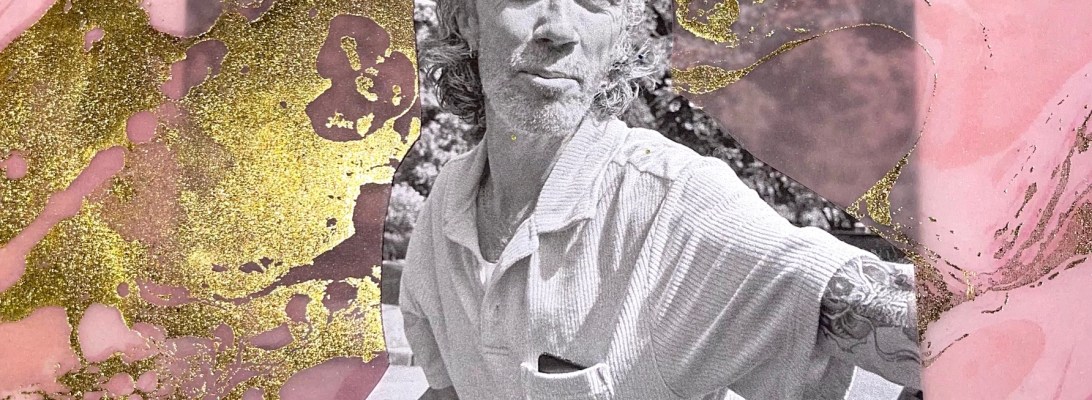
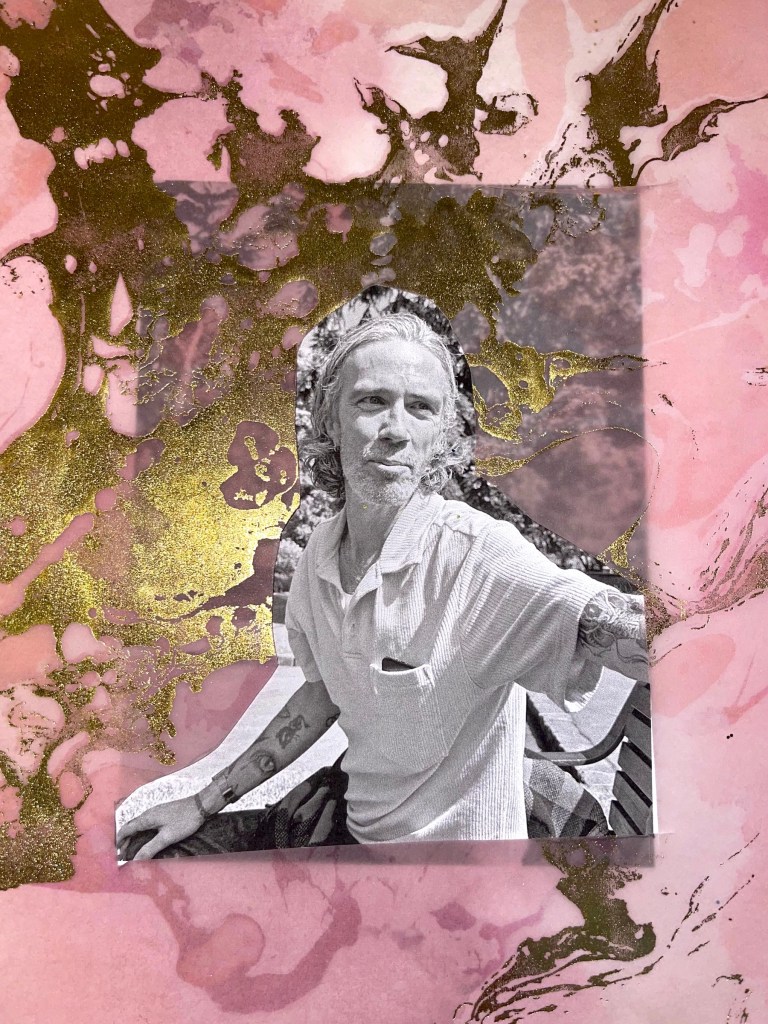
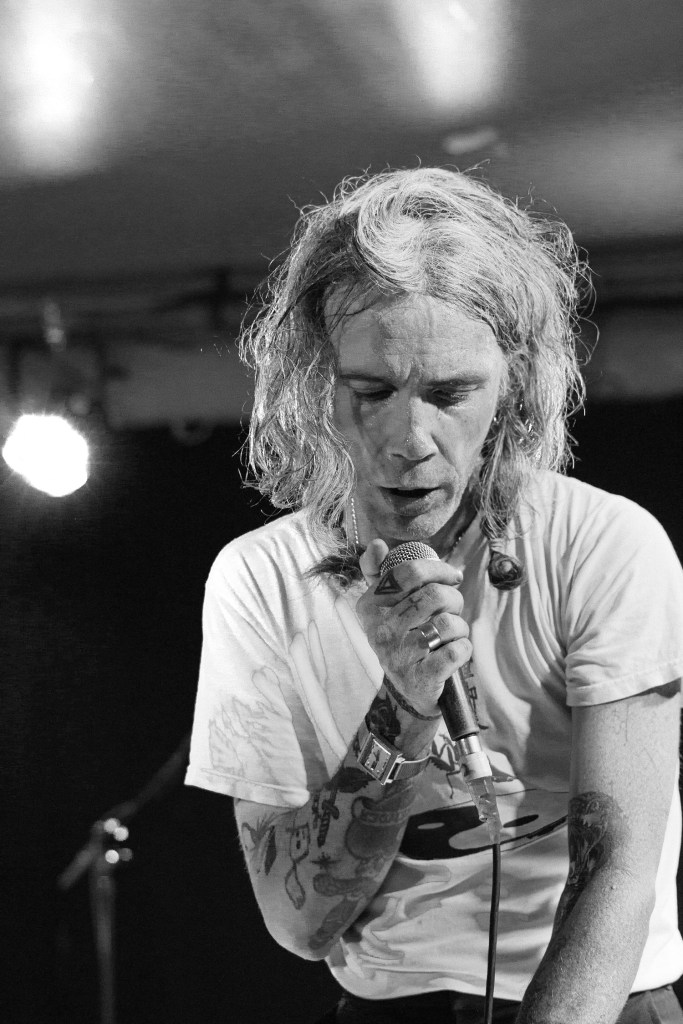
Photo: Jhonny Russell / handmade collage by B

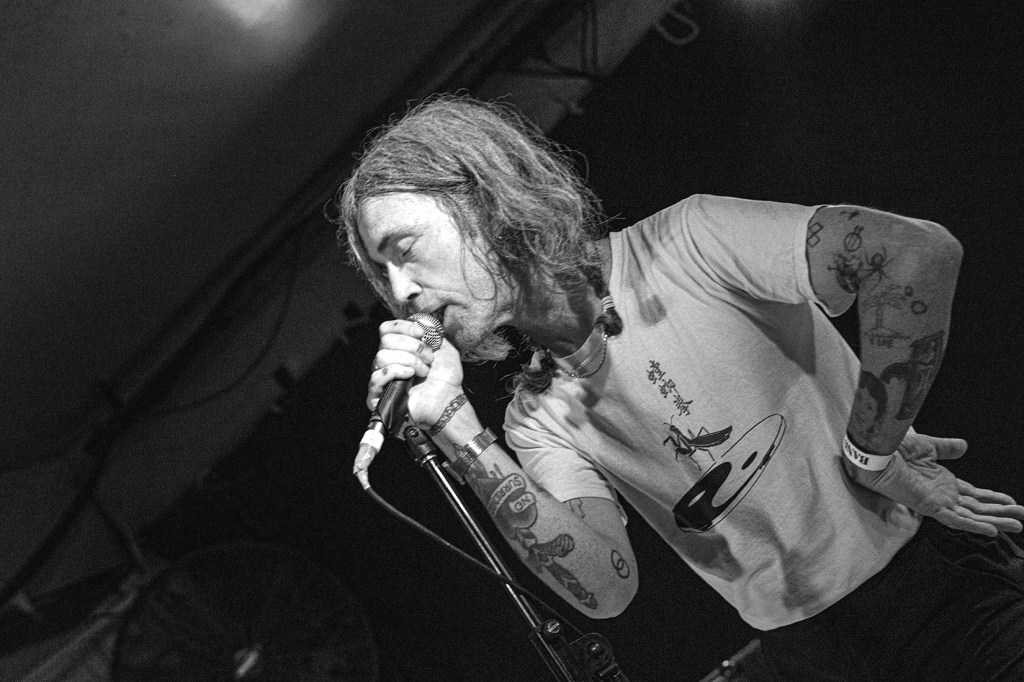
To us here at Gimmie HQ, Jarrod Quarrell, creator of Lost Animal, is one of the most underrated songwriters in Australia and one of our all-time favourites. He creates poetic expressions. His work is very interesting in a highly original way and richly emotional. The songs reveal themselves more over many listens and always feel fresh. His powerful, beautiful, transformative, and unforgettable songs possess the vast depth of the human spirit. Last time we were in Naarm/Melbourne, we met Jarrod in Fitzroy Gardens, a historic park lined with elms and autumn leaves, to chat about life, feeling good, and the music he’s working on in his own time.

It meant a lot to have this chat—enjoy!

Thanks so much for meeting us today! We’ve been having such a nice time in Naarm/Melbourne. It’s always such a pleasure to come down here for Jerksfest out in Djilang/Geelong, Billy does such a wonderful job. It’s nice to explore the city too. We went to a shop that sold all these old movie day bills. We got this awesome Breakin’ one!

LOST ANIMAL: Breakin’ was one of my favourite movies as a kid. I was in a breakdance gang in Papua New Guinea called, The Rap City Connection. 

That’s awesome. Do you reckon you could still do it. 

LA: I’m sure I could do a dolphin dive or something. Might hurt myself, though [laughs]. 

I’ve always loved breakdancing too, but I was so bad at it!

LA: Well, yeah, I was the worst in the game. They were all legit dudes in Papua New Guinea. They had afros, were good dancers, and did helicopters and headspins. I couldn’t do all that. 

How’s life been lately? It seems like you’re in a really good place.

LA: Life’s really good. I’m making a new record, so that’s probably got a lot to do with it. Always happy when I’m making tunes. I’m very well. Thanks for asking. 

I remember you saying once that, ‘Music on records I make, are a fuck you to the bad things in my life.’

LA: Yeah, I guess. The new music feels like I’ve transcended all that shit and I’ve finally got to a good place, where I can just be good and make tunes.

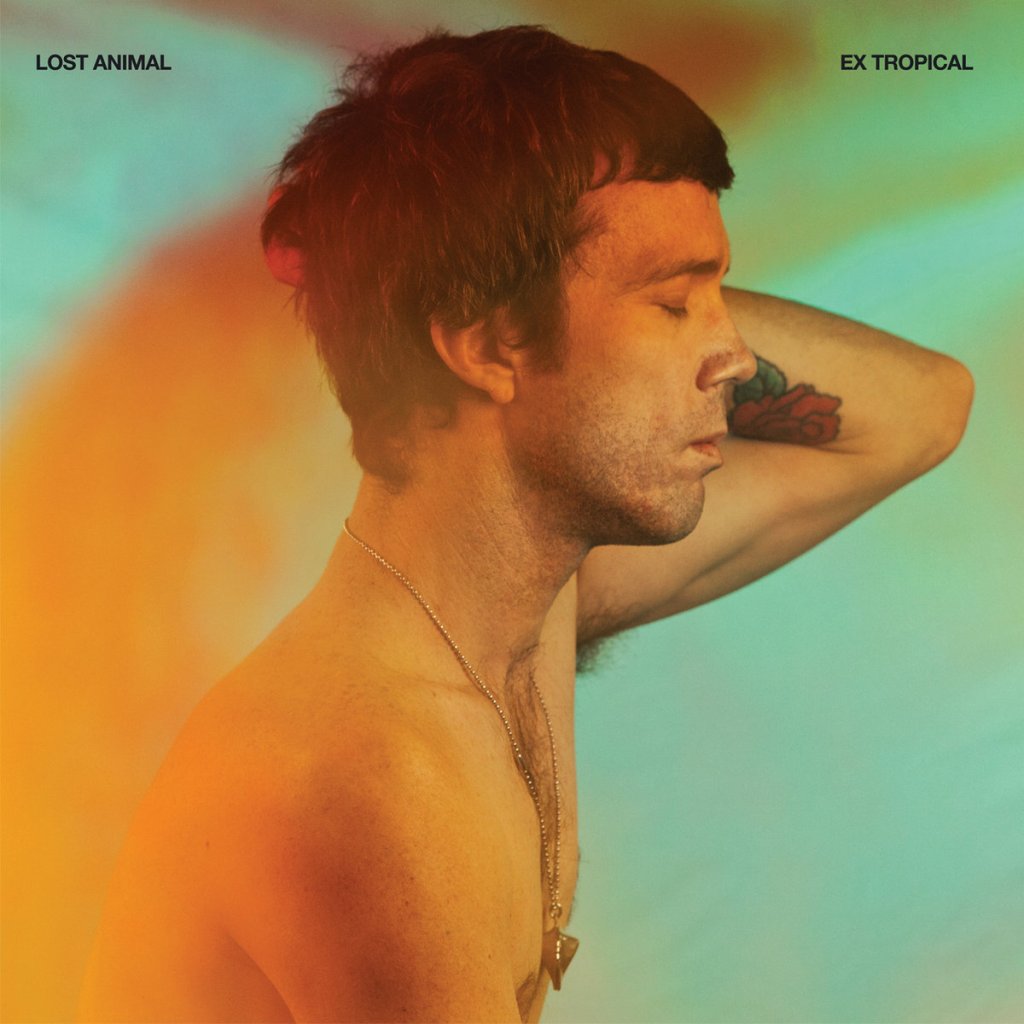
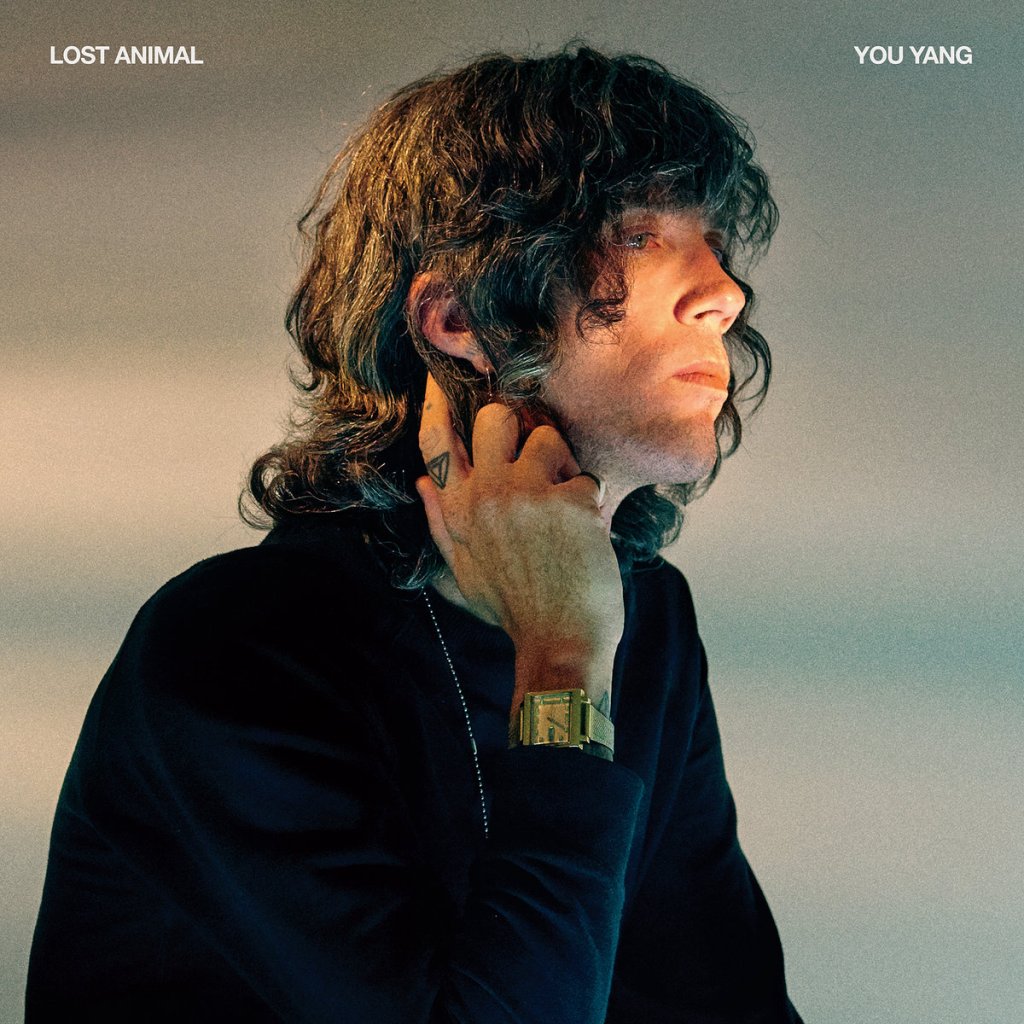
I was talking about it to a friend recently. Those were dark times for me—those two records, Ex Tropical (2011) and You Yang (2016), were hard to make. It was my spirit trying to get out, trying to shine through when I wasn’t well, trying to overcome all the shit that gets you down.

The music you created before Lost Animal was darker as well?

LA: The lyrics are a bit dark. I always wanted Lost Animal music to not be dark; I wanted that to be up. 

When I listen to a lot of your songs, even though they are dark lyrically, the music is uplifting.

LA: Yeah. You can dance to it. Lyrically, it’s hard to write songs about feeling well, I’ve found, without sounding like an idiot [laughs]. I’m rewriting lyrics a lot on this record. Like, I write them and think, yeah, that’s it. Then I’ll go to record and think, is it because it’s cheesy? Or not because it’s cheesy—just because I want to nail it. I really want to get it right. I’m more engaged. I am happy making the effort, happy just doing it.

What are the things that have helped you be more engaged? 

LA: Therapy. Psychedelics. Music.

Jerk Fest last year was probably the impetus for it all. When Billy asked me to play, my instinct was to say ‘yes,’ but I kind of didn’t want to do it. Even up until the day, I didn’t want to go. But then I had a great time and really enjoyed playing. It dawned on me how lucky I was to be able to do it, and how fortunate I was to be asked to play good shows like that, six years after putting out my last record. It hit me. Then, around that time, I started feeling better. I found a good therapist after searching for one and going through a few bad ones. That gradually led to writing the right tunes.

I started a side project with a friend, Stuart from Primitive Calculators. That really helped with the playing. I was always just a songwriter—I wrote, and I was a front guy. So it was really good to just play. All those things combined put me in a better place.

Photo: Jhonny Russell

Jerk Fest is a pretty special event. It’s such a great opportunity to see so many bands play, and catch-up with people.

LA: Yeah, that was part of it—nice people saying nice things.

We were so stoked to see you play! You mentioned being asked to play shows six years after you put out your last record, those albums are timeless. You could listen to them today, and they still sound so fresh. I don’t know anything else that sounds like that. 

LA: That’s cool. I’ll take that [laughs].

We love that there’s so many different elements from all over the place. I know you’ve got a punk rock background and like you were saying there’s a love of hip-hop, and then there’s rock and electronic elements.

LA: That’s where the new record is. It’s kind of along those lines but maybe a little less electronic. Lost Animal, to me, has been beats and piano chords, songs built like that. Now it’s just become a bit more jamming in one key and building songs around grooves and little riffs rather than me writing songs. Then they turn into songs. It could go any number of ways. I was trying to make it go that keyboard chord way, and it really wasn’t working.

We had two songs we were working on that I thought were shit. Then I wrote one that was good, and four months later we had the whole record. You Yang was mostly written in the studio. I had a handful of songs I’d written. So for this record, I was like, I’m never going to do that again. Because it’s expensive, taxing, and stressful, but I really like doing it—almost writing songs to tape.

Before, I’d always done demos to write. With this new record, I got to a point where I’d written a song and recorded it, and then we had nothing else to do, so we wrote two songs in a day, Dan Luscombe and I, who I’m making the record with. It’s been written in the room together. I’m usually the impetus, and he’s the finesse guy, making me redo things or asking, ‘How about you try it this way?’

Are you ever surprised at how he finesses things? 

LA: I’m surprised at everything. I try to say ‘yes’ to everything he suggests and just try it. If I don’t like it, I’ll tell him later. But I don’t think it’s come to that. I’m less controlling now. There’s co-writes with him; I’ve never done that before. Maybe once with Shags [Chamberlain]. 

So you’ve been more controlling? 

LA: Yeah, way more. Now, I feel like the less I try to control things, the better things are. And if you’ve got a talented person in the room that wants to do something cool, you should probably shut your mouth and let them do it.

He’s the man. He finessed the fuck out of Amyl and the Sniffers for their latest album. 

LA: Was it a big change? 

Yeah. He really brought their sound together. Comfort To Me is miles ahead of their other releases. Sonically it sounds really big. It’s so cool seeing them progress as songwriters too.

LA: Dan’s got really good taste. He can play anything. He’s got that classic songwriting sensibility, but is open to stuff. He’s played with everybody. 

I remember a post you made on Instagram a while back and at the time you mentioned you were exploring Middle Eastern scales. 

LA: Yeah, because I never learnt how to play. 

You’re self-taught?

LA: Yeah. When I started this thing with Stuart, because it’s a guitar duo, I thought, ‘I better brush up on my guitar playing.’ I loosely learned different scales from around the world, but mostly I stuck to the blues minor pentatonic. Most of the new record is in the blues minor pentatonic, which is the first thing everybody learns.

I’ve kind of grown up on some basics, and that was enough because I’ve been playing for so long. My playing feels pretty good. Even if you’re not trying to learn, if you play music for 30 years, you’re going to learn.

How many songs do you have? 

LA: Right now, we have 10. So we’ve got an album on tape. They’re not all finished, but they’re all pretty much structured up and I’m writing the lyrics.

Do you usually write lyrics afterwards? 

LA: Yeah. If I demo something, often there’ll be a phonetic vocal line, so sounds or sometimes, whole lines will jump out. But I often don’t finish writing the lyrics until all the songs are done and it’s time to put the vocal on. Sometimes a whole vocal will just fall out with the song. But generally I’ll wait till the end because it can change. And there’s always a better fucking line.

Is there any lines that you’ve written at the moment that you really love? 

LA: Yeah. Some say that life’s a game, it’s just a setting. Some but life’s a bowl of berries, so come get some. I wrote a really trad soul ballad, ‘The Sun Cleared the Rain’ which I’m really proud of.


Was there anything in particular that inspired that one? 

LA: I was just writing a song. I was sitting playing keyboard. It was one of those things where I’ll mumble it a line, and it just all fell out of my mouth. I was listening back to it. Sometimes that happens, but it’s really rare. It kind of feels like channelling. You’re not really thinking about it too much. Trying not to think about it. I try to not direct it and not control it. I try to let it come and to recognise what it is and let it become that. 

You’re really great at writing narratives.

Narratives? Really? I don’t feel like I write that, really. I feel like I’m a surrealist. It’s just feelings. But sometimes they do turn into stories. ‘Lose The Baby’ is a little bit like that, I guess. But ‘The Sun Cleared the Rain’—that’s kind of just telling. That’s a narrative. There you go. It’s about when you need something and something comes along into your life, but it’s not necessarily great for you. It’s quite relatable for everyone, I think. Very universal.

What else are you writing? 

LA: There’s a song called ‘On A Bird Now,’ which is about transcendence—about turning into a bird. I wrote it when I got back from Indonesia. I was trying to write proper haikus: five, seven, five syllables, which is fun. And that led to that song. We just pressed record. It was a weird way to record a song. That’s fine. It’s just about being in the now, transcendent. Maybe a bit psychedelic. Maybe a bit witchy. 

I noticed in a story on Instagram you posted a photo of a book on the occult.

LA: I am reading those books, yeah. I’m just a curious guy. I like to read. It’s too early for me to talk about that stuff. I’m learning. But it’s definitely not what people think it is. It’s an occult universe, for sure. There’s more out there that people don’t get. 

Totally. So many unseen things!

LA: Yeah. I guess that’s what the record is about. 

You mentioned Indonesia, I know travelling there recently inspired you. You said you cured your insomnia while there.

LA: I don’t know what it was. Maybe the weather; it was the wet season, balmy, raining. Maybe it was because we were busy doing a lot, and I wasn’t concerned about shit. I was with my godson and my best friend, so I was chill. I was fucking glad though, man, because when we left, I was literally sleeping two hours a night. It’s fucking horrible. At home you’ve got your routine, your comforts when you wake up in the middle of the night, you don’t have that shit when you’re away. So that was a challenge. Gradually, like a week into the trip, I started sleeping better. By the end of it, I was sleeping 8 hours a night. 

How did that feel? 

LA: It felt amazing. I cried with happiness, a few times, on that trip because I was just so relieved to be out of the country and to be sleeping. I used to live in New Guinea, and the smells are the same, the weather felt the same, it brought a lot of things back. It was very emotional. Also lots of fun.

Was there anything in Indonesia that you saw that was really cool? 

LA: I saw the fucking devotion. Because there’s Hinduism, there’s Buddhism, there’s Christianity, there’s Islam. Hinduism especially seems really just present. They put out offerings every day. Light a candle. They’re more present. It’s so chaotic. But the chaos kind of works. I thrive in chaotic places.

I felt I got mega-stressed when I got off the plane back here. It was a culture shock. It was just like, oh, fuck, this again. Back to all that shit. I was cool, though. Went back in the studio, wrote two songs, wrote two songs a week after that.

You asked me what I liked about Indonesia? Probably the sense of connection. It just seems so fucking ancient, too.

Is there any other places you feel really connected to?

LA: I feel kind of connected to Castlemaine, because I was born there, and conceived there. But no, not really. 

You mentioned that a lot of your album and just in general, your life lately, has been about being present. When did you first start noticing that?

LA: Therapy. She helps sort me out. 

A good therapist makes all the difference. I’ve been through some terrible ones. 

LA: Yeah, well, the first ones I went to were. She spoke to me for half an hour and then prescribed me something which made me feel awful.

This lady I’m seeing now is a psychologist, so it’s just talk therapy. A little bit reiki as well. So feels me out. Sometimes if we get stuck, she does tarot. In a nutshell she was like, ‘You’re awesome. Just be awesome.’ And I was like, ,What? I’m so fucked up. What are you talking about?’ It took me months to get on that. 

I guess the therapist could see beyond all the stuff you’re hung up on to see that real you, which IS awesome! 

LA: As soon as I walked in the door, she could see what I was, and what I’d forgotten, or it was a flickering flame, and she put that in me back there.

That’s so great! Do you have any thoughts on what your album you’re working on might be called?

LA: Yeah. A Dragon Ascending Toward Heaven

Where inspired that? 

LA: A friend did my my birth chart when I was 21, and he was like, ‘That’s what you are. You’re a dragon ascending toward heaven.’ I was like, ‘Okay!’ [laughs]. 

I was going to call it I’m a Bird Now. But we were recording the song and Dan’s like, ‘There’s an album called, I’m a Bird Now.’ Luckily, I’d already thought of the other title, and decided to call it that.

I think that one’s seems really fitting. That’s exciting! I’ve got goosebumps as soon as I heard it. 

LA: [Laughs]. It suits it. 

Have you thought about cover art yet? I know you paint, have you thought of painting it yourself? 

LA: I won’t paint it. I haven’t been painting much. I tend to do other things like that if I’m not writing to try and have an outlet. I’m not sure what it will be yet. The last albums have been a side profile shot, maybe it could be a side profile shot of an animal or a bird. I did some photos with a friend, and one was double exposed, that looks really good. 

Have you tried anything different on this album? 

LA: I’m playing a lot more guitar. I’ve be singing a bit more rather than just sort of the talk singing I do.

Is singing something you’ve always done since you were little? 

LA: Yeah, I always wanted to be a singer. Always wanted to be a front man. 

Who was the first performer to inspire you?


LA: Michael Jackson. No one’s done it like Michael Jackson has done it. Maybe Prince too. 

The first people that made me think I want to do that more, was maybe Bob Dylan, and songwriters like that. Dylan is a big fav. If I could write songs like he’s writing when he’s fucking 85 or whatever he is, that’d be cool. I just don’t want to sound like that, though. I don’t want to sound like anything else. 

That’s the best thing anyone can do—not be a replica of something that already exists. That’s the highest achievement you can get. 

LA: I think so. People ask me, ‘What kind of music do you make?’ I just say—good. I refuse to describe it. I can’t describe it. That’s all a little bit stupid. 

Most reviews these days should just be called ‘comparisons’ because that’s all they do. But they’re really bad with the comparisons. I find that a lot of people who write about music don’t have many reference points; they have a real limited knowledge and just compare it to something popular, even though it doesn’t sound anything like it.

LA: Oh, man. You shouldn’t seen some of the comparisons we got in America. One said we were a cross between Pearl Jam and Gorillaz. I mean, yeah, there’s a little bit of dubby stuff and melodicas and stuff. It’s like, ‘Okay, your record collection is big Billboard Top 20 stuff, right.’ I used to get really annoyed at all that. I’ve just let it all go. 

I used to go see a psychic, and I’ll always remember a piece of advice she gave me: what other people say about you is none of your business. 

LA: Very true. Yeah. My therapist really helped me with that.

You don’t want to take on that energy they’re putting out there. It really has no effect on you unless you let it. 

LA: Yeah, totally. 

Or people will say something to you and they haven’t even really thought about it much, but then you take it to heart and it’s a big deal for you and upsets you, but it doesn’t do a thing bad from them.

LA: Yeah. And perception is a funny thing too. A lot of times someone has been a bit standoffish and I thought, they haven’t liked me. But it’s come to pass that they’re just a bit shy and actually admire me. Sometimes your perception is off of what people think.

Some people definitely mean it, though [laughter]. I always take people on a case by case basis because sometimes you can hear things about people, but then whatever your interaction is with them could be different.

LA: Yeah, it’s a good way to be. 

In front of us is, over there, is a fairy tree apparently and it was created as a place that is sacred and safe and it’s a place for kids to imagine and dream. I was wondering, do you have a place like that? 

LA: Yeah. 

Where’s your fairy tree? 

LA: In my mind, my consciousness is my fairy tree. 

Do you meditate?

LA: Yeah, I meditate. I’m reading a book on Astral travel, which is basically a form of meditation. 

I’ve meditated on and off for about 20 years. I find it really useful, especially for my mental health.

LA: I did a short course on Transcendental Meditation. They gave me a mantra.

I’ve always wanted to try that. 

LA: Just make up your own. 

Really? 

LA: It’s like, we know what to do. Just make up your own mantra, really. That’s all it is. I changed mine because I didn’t like it. It didn’t feel right. I was like, well, fuck that, I’m just going to change it.

And then it felt right?

LA: Perfect. Yeah. 

That’s very punk rock! [laughter]

LA: [Laughs] Well, meditation is pretty punk rock, I guess. 

Photo: Jhonny Russell

Has it helped with being present?

LA: Yeah. Or maybe not. No, it definitely does. I’ve been thinking about meditation. People think you’ve got to quiet the mind. That’s not it. It’s like getting away from your mind—like, consciousness is here, it’s not in there. It has to be nothing. I feel like that’s what I’ve seen. Consciousness feels like that. And I feel like I’ve got consciousness on multiple levels. My instinct feels like it’s here. My intuition is in my solar plexus. Sometimes I can feel things going on behind me, in my back. I’m just starting to become aware of things that maybe I had little inclinations towards and maybe ignored. I’ve looked at these things in the past but never stuck to them, never really put them into practice in any kind of way. I’m becoming a bit more disciplined about it, being more disciplined about my mental health and doing what it takes to protect it. If I’m tired, I rest. If I’m stressed, I don’t go to those places that stress me out. Hard-earned lessons. Same mistakes made over and over again.

A lot of stuff in Buddhism and different spiritual texts, say that you’re just going to keep learning a lesson over and over and over until you get it.

LA: Yeah, that makes a lot of sense to me. 

And then if you get it—you level up. 

LA: Yeah, I think so. 

It’s so good to see you healthy and it’s such a good place and making music. Like, you mentioned to us before that you were thinking, you have this opportunity, you’re still here to make music, you can do this! 

LA: Yeah. I realise that’s a great thing about music. It’s not like we’re the people that are going to come up with the thing that’s going to save the planet, but it might be the people that write the song that inspires the person that saves the planet, and that’s enough. Just play your part and do it the best you can. 

I love that when we make a song it can inspire and go places that we may never go, and affect people in ways we’ll never know.

LA: Yeah. I get people write to me all the time, from Europe and America. Or they’ve heard, Tropical Fuck Storm do my song [‘Lose the Baby’] and they reach out to me. So, yeah, it’s beautiful. 

How did you feel when they did your song? How did it come about? 

LA:They told me they were playing it. Dan was still in The Drones; they’d done a side project thing and played the song a few times, so I knew that. Then Gareth wrote to me and said, ‘Look, we’ve been playing the song, and we want to put it on a 7”.’ I played it with him a couple of times. It was cool.

I was in a band called St. Helens. Towards the end of St. Helens, I’d started Lost Animal and had written ‘Say No To Thugs,’ ‘Lose The Baby,’ and a bunch of the songs on Ex Tropical. I thought, oh, maybe I should give them to St. Helens. So I tried them in St. Helens. The St. Helens version of ‘Lose The Baby’ isn’t too far off from the TFS version. It’s a long version. To me, the TFS version just sounded like the St. Helens version, but they wouldn’t have heard that. Gareth is a great songwriter, and he wanted to do my song—that’s cool.

Both you and Gareth are my all-time favourite Australian songwriters.

LA: Oh, really? 

Yeah, for real!

LA: I’m playing on a song of Gareth’s next week. He’s reissuing his solo album, he’s re-recording a song. 

Awesome! I know you grew up in the bush, like country Victoria, and Papua New Guinea, and you lived in Geelong.

LA: Yeah. Castlemaine too. Some other places, and then I moved to Melbourne when I was 21. 

Why Naarm/Melbourne?

LA: When I was a teenager, Geelong was awesome. Heaps of fucking great bands three to four nights a week. 

What bands did you see? 

LA: Bored!, Magic Dirt. There was Warped and She Freak, they were Geelong bands. There’d be bands that tour, like, Meanies, and Hard-ons. And then international bands. Especially back in the 90s, like Shellac and Fugazi. They’re probably the best live band I’ve ever seen, as far as energy goes. 

We love those bands. I saw Fugazi when I was younger and they were incredible. When you play, is there a kind of, like, energy that you try to bring? When we saw you play at Jerk Fest, you brought a really cool vibe to the room.

LA: I just try to be open. I try to give as much of myself as I can and not hold back. 

When you first started doing Lost Animal, that was the first time you were playing with a backing track, and I understand that was challenging in the beginning?

 LA: Yeah. I used to shake.

Really? Wow. 

LA: Yeah. But that’s what I wanted to do, so I just made myself do it.

It’s good to put yourself in situations that scare you sometimes, I feel like we really grow in moments like that. What are the things that are making you happy right now? 

LA: I’m happy knowing I don’t feel like it’s a struggle anymore. I feel like I could sit down and write a song anytime I want to. I just hope I keep feeling like that. It feels like after this record, the next one will be ready in a year and a half. I’d be very surprised if there weren’t four records in the next five years. That’s how I feel. We’ll see.

I hope your creativity keeps flowing. We’re so here for as many Lost Animal records as you’ve got! 

LA: Let’s hope! I feel good, which is nice. 

Follow @lostanimal_. Listen to/Buy Ex Tropical HERE. Listen to/Buy You Yang HERE.

Punter’s Nathan Burns: ‘We have to fight for change.’

Original photo: Jhonny Russell / handmade collage by B.

Naarm/Melbourne-based anarchist punk band Punter exploded onto the scene in early 2020 with a scorching demo, released on cassette by hometown label Blow Blood Records. Fronted by vocalist-guitarist Nathan Burns, Punter’s music challenges societal norms, with thought-provoking lyrics. Their 2023 self-titled debut full-length quickly became a staple on the Gimmie turntable, offering an eclectic mix of songs that delve into anxiety, fear, death, grief, boredom, and class politics. We caught up with Nathan just before he left Australia to tour Europe with Punter and travel indefinitely. He’s since explored Greece, the underground catacombs of France, and Spain, with his latest stop being the UK.

NATHAN BURNS: It’s been nonstop since Punter got back from tour with Rat Cage because we’re going on tour in Europe in three days. The space in between two tours is about a month and a half. Two weeks of that are taken up by me, realigning myself and working out who I am again, and adjusting to the fact that I have a lot of shit to do, but it can all happen on my own schedule. 

Prior to that, I’ve been working a lot, for about six months, and doing band stuff all day, every day after work. I’ve been floating in a kind of timeless continuum in a way, but it’s full of deadlines in another way. I’m wrapping up my life here as well—moving out of my house and getting rid of my shit. I sold my car. I’m going travelling indefinitely after the tour. So it’s a lot at once, changing stuff.

I read a list recently about stressful events humans go through and death of a loved one, losing a job, and moving house or country, were all up near the top of it. So much is happening for you right now.

No one in my family or immediate friendship group has died recently, but you’re on the periphery and it’s always going to be constant once you get to my age, 30. It’s funny, these nexuses where everything happens at once. All that energy.

It’s exciting you’ll be travelling indefinitely. Not a lot of people get to do that. Do you know where you might end up or are you just going to wing it? 


I’ll be lurking about in Europe. There’s options for me to get a visa until I’m 36, in France and Denmark. They’ve raised the age in those countries for Australians. In Switzerland, you can maybe get a permit to stay as an Australian now. It’s easier than before. I quite like Spain and connected with a few people there. I haven’t sorted out visas or anything yet. It’s all been too manic with the tour stuff, band shit and recording.

Have you been to Europe before? 

Yeah, my old band, Scab Eater toured there and I lived there, the cycle is repeating now. I lived in the UK after the Scab Eater tour in 2016 for about a year and hung about there and did little trips to the mainland, to the continent and back. The band had fallen apart over there and I came back here and started Punter. I’m ready to not be in Melbourne anymore.

Why did Scab Eater fall apart? 

We did two months of touring; it was stressful for certain members, to be honest with you. I felt like I was living the dream, but there was definitely struggling to cope with two months and 50 shows. We tried to tee up some other gigs in the summer, a year later from there, but by that point, a lot of people’s plans had changed, and we bailed on those gigs, which was pretty embarrassing, as far as I’m concerned. It had gotten pretty dysfunctional as a group. It can be really stressful when people are out on the road; you’re in such close quarters, and you’re basically living with each other the whole time. It can be really stressful for them. We pushed it further and further and further until we found out where our limit was.

Did that experience affect how you do things now with Punter?

Kind of. The personalities are slightly different with us. It’s a bit different playing in a three-piece. Jake, who played drums in Scab Eater, is also the drummer of Punter. In that way, we have that dynamic still as old friends. Then there’s just one other person, Bella, the bass player.

Scab Eater was a big rowdy boys club, and we’d fight like brothers, argue and be really stupid little boys together. You bounce off each other. With Punter, things are more chill; there’s less huge personality stuff and egos bashing their heads against each other. There’s probably more drinking and a bit less adventure as a group.

And I’m certain that although we are about to go on tour for a month in Europe, I don’t think two months on the road would ever be on the cards for this band like it was for Scab Eater. Everyone were travellers in that band, either on the dole or people were on their big holiday to Australia from the States. There was a lot of transients with that band. The other members of Punter are pretty settled in Melbourne for the time being.

Photo: Jhonny Russell

What do you enjoy about travel? The adventure? 

Absolutely. That’s what I’m in it for. I always want to improve myself through it somehow. It’s very easy to walk around sticking your beak into other societies and going, ‘Oh, that’s pretty, isn’t it? Oh, you’re pretty poor, aren’t you?’ Or how does that feel? And then you kind of get disillusioned. But the aim of long-term travel is to seek experiences that improve you as a person or connect you with other people you can learn from or offer what you have—skills, wisdom, or experience in an area—to whoever you meet along the way.

I enjoy that about travel too. You can actually see how other people live their lives firsthand. Lots of places in the world are very different to Australia. 

Yeah. There’s a fair bit of phobia that sort of infected Melbourne society, particularly in the last few years. In the punk scene, I’ve noticed a distinct lack of traveling punks or whoever coming through and being put up by people here.

When I was a teenager, let’s say like 14 years ago, I was hanging out at a big punk house, and there’d be six Europeans that had come through for the first half of summer and then another six had come through the other half, and they’d all crash on the floor or the couch. Everyone was constantly meeting people from different parts of the world. That exchange felt really vital to me because it showed us, our little squat in the suburbs, that if we ever went overseas, there was this whole network of people that we could connect with, and that gave us mobility for travel in the other side of the world.

Hearing people’s stories was inspiring. Learning about the ways in which we differ because of where we come from was also really important. I don’t see as much of it anymore. It’s very easy to feel daunted by the experience because it’s almost like that culture is really not in my sphere anymore and certainly not really in the punk culture that I’m a part of here right now.

Is there anything that you like like about European culture that’s different from here? 

It’s hard to say without coming off slightly insensitive because there are so many little cultures. Broadly, I guess what interests me with Europe is a twofold thing that’s sociopolitical. In that, it’s not colonised land in the way that we think of it being colonised land here in Australia. It’s also a place that has experienced vast amounts of political turmoil and change in the time in which Australia has been a British colony.

So, the average person there, between them and their parents, in certain countries, may have experienced really radical political change from regime to regime, to democracy, to fascism, or whatever you’ve got, within 60 years or something. They really have an ingrained understanding that politics matters. It affects your life, and it affects everyone, and that there are certain things worth fighting for.

I don’t think it’s as easy for Australians as a whole to feel passionate about political change because we’ve pretty much never seen one since the British came. There’s definitely things that we benefit from as workers or whatever, like the union movement from the 50s through the 80s, that now has resulted in quite high wages for certain parts of working-class society. There’s this narrative there. There’s the Eureka stockade. There’s all this stuff, but the system has remained the same, and its goals have remained the same. The exploitation of the country and the society that has resulted from that have remained the same. It’s very hard for us to imagine something being different, and there’s a lack of imagination there.

To go on a little bit, the struggle against capitalism or the state or whoever it is at the time that the people have essentially mobilised against in a popular movement, like right now, it’s in France. It’s [Emmanuel] Macron because he’s raised the retirement age. Those struggles are uncomplicated by this extra element we have here, where the European descent people or other migrant families that have come since, we have to fight for our rights as working-class citizens, or let’s say, working to middle-class citizens, anyone who’s not part of the elite. We have to fight for change.

But we also have to keep in mind that it’s not our country and that there’s this underneath that struggle, that shit’s the tip of the iceberg. That decolonisation is this huge other part of it that we have to learn to unpick as people who aren’t First Nations people. We have to work all that out and work out how that relates to our goals. A lot of our goals, let’s just say, like white activists or whoever, might have more of a relationship to things that we actually don’t like about colonisation than we admit.

And that’s saying we want the political change that we see in Europe. We want the radical political, we want their type of socialism or anarchism or socialist democracy. But to want that stuff here could be, at points, in direct opposition to what decolonisation actually means for First Nations people in Australia. In Europe, it’s likely that the movement is always going to be a bit more straightforward, and we’ve got a lot more to try and work through and learn here.

As a First Nations person, I know that many of us have immense intergenerational trauma that filters through everything, in ways that you wouldn’t even think it does.

My grandfather lived in a time where after 4 PM and on Sundays, Aboriginal people were forced to vacate the town centre beyond the boundary posts; this wasn’t even that long ago really. The society that he lived in made it seem shameful to be Aboriginal. A lot has changed but it’s such a complex and hard thing trying to navigate and process—to just exist. Being a First Nations person, just existing can be a political act. Everything you do is so often looked at and scrutinised.

It must be hard knowing that that’s the stage where it’s at, because that’s a long road from simply just existing.

It can be. Every time I walk out the door, I have so much to think about and protect myself from. 

What was your first introduction to punk? 

Superficially, my first introduction to punk would have been borrowing a Good Charlotte CD from the library when I was about 11. The lady at the library was like, ‘Oh, that’s that punk rock band, isn’t it?’ I was like, ‘I guess, maybe it is.’

Then I wound up in Borders Books one time. They had CDs and CD players on the wall that you could sample your CD with the little scanner and play what was on there. I found all these CDs, like the Punk-o-Rama compilations and Rock Against Bush CDs. I was pretty into all that pop-punk and ’90s skate-punk stuff. Through those compilations, I was exposed to a great variety of things that were happening in the mainstream. There was stuff on there, like Madball, which for 15 years, ever since, I’ve been like, ‘This just keeps getting better the more I listen to it.’

I liked all that kind of stuff until I was about 16 and wound up going to shows, finding out about gigs through meeting people around the neighbourhood. I grew up in Brunswick, which through the 2000s was the place where you went and lived if you were a punk on the dole because it was cheap. You could afford to live there. Back then, it was a rundown, working-class neighbourhood, and there were heaps of abandoned buildings everywhere, so everyone was squatting. There were lots of parties happening all the time in them.

I went to school across the road from a block of squatted warehouses; they were all artist warehouses that weren’t all even necessarily punk. There were unicycle-riding, circus-hippie types and all that kind of stuff. You’d run into people, and that sort of autonomous, anarcho-punk culture was right there. Anything else like hardcore or metal was all happening between Brunswick and the city too. I was very lucky geographically. It was a really exciting time.

At some point, I realised when I was 18, ‘Oh, shit, I think this is actually better than most places. We’re kicking ass over here in Melbourne.’ It’s not the same anymore; it’s more expensive to live there.

How did you learn to play guitar? 

I had the benefit of guitar lessons through school when I was about eight. Like your foot on the stand and reading the music off the page. That kept going until I was like 12 and I was starting to try and learn a bit of flamenco. About then was when the punk started happening and my folks got me like an electric guitar. I started to learn how to play power chords.

I had a band, some friends at school that we knocked about with when I was about 14. Classical guitar lessons was really important to the way I play now. I learned to be nimble and expressive through that. 

Photo: Jhonny Russell

I can see that, you have a unique style of playing. 

I don’t really know scales and keys very well, standard nuts and bolts. In the last four years I started playing leads. I stopped really being concerned with music theory. As a player, I was in a state of arrested development that I’m only really just emerging from now. It’s this kind of awkward, clunky stage where I think a lot of original sounding things happen by accident.

Are there any songwriters that are inspirational to you?

As a child, I was totally into The Living End. The sort of songwriting conventions that Chris Cheney has, crept into my songwriting decisions. There’s a lot of changes from minor bar chords to major ones.

Also, AC/DC and The Clash. When I was about 18, I was obsessed with Tom Waits. Hard to say how much of that ended up in my music, but I spent, endless hours with Tom Waits records.

King Crimson was another. They have an attitude towards creating music in a progressive and original way. Although to compare oneself to the King Crimson is pretty presumptuous. More recently, I became obsessed with The Jam and Paul Weller, his lyrics were observational and depicted scenes as he saw them in a way that said so much about who he was as a person without having to delve into his own personal feelings in an explicit way.

I was attracted to that in Sleaford Mods as well. It’s so accessible and witty. I remember when I was with them a lot around 2015 or 2016, those guys have this way of making everything sound like actual conversation. I’ve strived to replicate that a little bit because I’m good in conversations and not as good as a poet. I try and make the lyrics of a song more like having a conversation with me. I get across what I’m trying to express uninhibited.

Do you think your involvement with punk, helped shape a lot of your political views or how you see the world? 

It’s a chicken and egg situation. Yes, it did. Unequivocally, it did. But I was raised in a pretty political family, a decently educated, lefty, middle-class family in Brunswick, so that shit was all around, it was constant. John Howard here’s this guy, he’s on the newspaper, he runs the country, he’s a prick. Every day swearing at the newspaper, this guy’s a prick and he’s in charge. So when you get raised in that kind of environment, I was raised into anti-authoritarianism. 

My grandmother on my dad’s side was a Labor politician under government. They were, as a Canberra family, academics and so forth. My dad went on to work as a solicitor in Native Title. So that was obviously something he’d come home and talk about all the time. For what it’s worth, he got terribly jaded by it, which I’ve heard happens to almost every Native Title lawyer. For those that might be reading this, that are new to the concept of Native Title, it’s the attempt by the Victorian or State Government or whoever to resolve disputes between different mobs who claim traditional ownership of the land. The state attempts to mediate between the different groups that lay claim. It’s vastly complicated, obviously, by The Stolen Generations and genocide and who can actually trace their lineage back during all the chaos of what had happened in that time. 

And then on top of that, you’re trying to apply the white man’s legal system to this other culture that has their own way of doing things. And since you’ve come in and fucked it up and now you’re going to use your legal system to try and stop them from tearing each other apart over the land that you’re, oh so graciously, giving them back. My dad did that for a bit because he wanted to feel like he was doing a good thing while putting food on the table. He would have tried his darnedest. It sounds really, really hard to me. 

The politics in punk appealed to me as a kid because there was already conversations happening in my house all the time. On the other hand, my dad worked for the institutions of government, so I could be a bit like miffed about that if I wanted to on the odd day.

The more I listened to punk music, the more political bands always stuck out to me. Growing up around the sort of autonomous DIY and anarcho-punk stuff informed me on so many things that my parents wouldn’t have really held as their own political beliefs as well.

I noticed in the liner notes for your self-titled album, you mentioned that Punter are Anarchists. What does that mean or what does that look like for you?

Anarchism – there are different sorts of strains of it and different beliefs that people choose to express through that word. But the most pragmatic way to look at it for me is to try and establish a society which is not based upon structural violence or institutions whose sole purpose is to punish or inflict violence on other people.

So the idea is that everything that we’ve created as a society, let’s say, Western society, over the thousands of years, is built to rest on these pillars of enforcement, where the principles of the society must be enforced. That the only way to make things fair and just is to punish the few people that disobey. Institutions that have violence at their core are unnecessary.

From there, you could hope to build a somewhat utopian civilisation whereby people didn’t need to be punished and where bad things probably still happen, but maybe in much less frequent amounts.

In your liner notes you were also talking about, the trauma and the collective trauma, we experienced through the pandemic and lockdowns. Melbourne had the longest, most harshest lockdown out of every everywhere in the world—you mentioned you felt like it changed people’s brains. What were the changes you saw in yourself? 

I feel regularly more afraid—not just of the future and what’s going to happen broadly in a political sense or anything like that, but just afraid of taking risks on a day-to-day level. I feel more withdrawn into myself. I feel like the instances where I speak my mind in a confrontational way, maybe where I tell someone what I really think, even though it’s going to be hard to say, have diminished greatly. It’s hard for me to imagine change in my life or the lives of the people around me. You know that thing they say about depression – it’s impossible to envisage happiness or the change that’s going to, step by step, bring you out of that. It seems all-encompassing.

I feel like everyone went through that a little bit. There’s like a fog beyond the city limits here. And because Melbourne’s been such a self-absorbed cultural town anyway for so long, we’ve been up our own ass for ages. Then we got forced into the isolationism of Melbourne and I suppose a lot of people probably just went, well, yeah, that’s alright. What do we need the rest of the country for? Bogans. Whatever.

Photo: Jhonny Russell

Do you kind of get tired and overwhelmed by all the shit that’s happening in the world?

Currently that’s the case. 

How do you deal with this feelings? 

Just try and launch myself into it. That’s what I’m hoping to do when I hit the road after the band does our tour. 

Because you’re taking risks? It’s a risk not knowing what will happen or where you’ll go. You’re running headfirst into all these things that you’re afraid of or scared of, and going to do it. That’s a big leap. 

I hope so. Look, let’s be honest, there’s definitely been riskier things than an Australian citizen travelling in Europe and having a little holiday that he saved his money up for. But I’m hoping to engage in some risk taking behaviour whilst I’m over there. Hopefully it will make me a more fortified character when I do, because I know I need to break myself out of the rut that I feel I’m in and that I feel like a lot of people that we know down here are in. 

European societies, whilst being superficially similar to the Australian society here, it’s different, it’s older, there’s far more people, there’s more poor people. The systems in place for people’s health care are different. A lot of people died during the pandemic and it just gave me a bit of a different perspective on that.

My mother was in a coma in the Royal Melbourne Hospital during the first outbreak of the pandemic. We weren’t allowed to go there for months at a time. She was coming out of it and she’d had a stroke.

I’m so sorry you had to go through that. It must have been brutal nor being able to see her because of COVID. That’s full on. 

It was crazy. Obviously when someone in your family is sick or in a health crisis or in the fucking ICU, that’s this whole thing, it takes over your world. Then suddenly the pandemic happened out of nowhere on top of it. It was something that we obviously didn’t really see coming. 

Before, you were talking about a fog and depression and not being able to see happiness sometimes; I was wondering, where do you find moments of happiness?

Being able to lose yourself a little bit can be the closest you get. Happiness is probably a bit of a misrepresented overused word. The place that people commonly find happiness is in the arms of their lover. That to me is closest to the definition of happiness. But there’s all these other forms of release that we have and music is a really obvious one that allows us to transcend the happy/sad dichotomy because there’s so much melancholy in happiness, don’t you reckon? Sometimes sad songs make you real happy. When they’re singing about heartbreak or death or grief, all these things like that. Whenever I feel quite happy, there’s always got to be a little bit of a blue note to it, otherwise it wouldn’t be legit.

Jamming is a big one for me. I don’t mean jams in rehearsing the songs from start to finish. Jamming when you’re actually improvising or writing a new song with everyone in the room contributing parts and it’s coming together and everything outside of that room does legitimately go away because you’re building in there.

I tried to take up surfing in the pandemic. I fell off a lot. I was raised boogie boarding, so maybe I had some kind of base layer of knowledge for what waves to take and things like that. Unfortunately, I busted my shoulder, six months into the whole thing. I couldn’t really touch it for another nine months. But floating around on the surfboard just made me feel grouse. It was nice being on the water. That made me really happy.

It makes me happy too. I find Punter songs to be mostly observational. Is there a particular song on your album that’s more personal? 

They’re about broader things that we all experience. Look, when you say ‘personal,’ like something that I feel like I’ve really gone through just me… no, not really. I was trying to reach out into the pool of emotions out there amongst me and my peers and just the people of Melbourne. At that time, when we were stuck in Melbourne (where a lot of the lyrics came from), the closest it would get would be on our song ‘Curfew Eternal,’ is about grieving during a time of upheaval or change.

That’s when my mother was in a coma following a stroke or recovering from the stroke. It’s a bit of a blur. There were moments in which we didn’t know if she was going to survive or if she would want to survive, if that was available to her.

That song, whilst being set against the backdrop of the pandemic and lockdown, was really about these golden clichés – like embracing life and seizing the day – and trying to say that we’re heading into an era of increasing social instability. The powers that be are going to try and do whatever they can to make you feel like you cannot take risks. The greatest risk that you can take is to express solidarity with the other people in your community, and that as soon as you do that, you are giving up your only opportunities to make money and achieve security for yourself.

The song is desperately trying to push back against that concept and say that the only hope that we have is to constantly throw our lives into turmoil together to try and make it through and to push back against all authoritarianism. The really severe brand of authoritarianism that I feel is looming in the not too distant technocracy that’s coming quite soon.

I’ve always, like my parents were, been very anti-authoritarian too. Most people teach their kids that if something goes wrong, police are there to help you, well, my parents were always like, ‘Don’t trust cops.’

My parents eventually developed that position after I got arrested enough and they had to deal with them. But before that, it was very much like, oh, you know, the cops are all right, the Salvos are all right. They’re trying to do what they can. 

Photo: Jhonny Russell

What did you get arrested for? 

Kid things; graffiti or drinking. There was a couple of instances where I was involved in direct action stuff that wound up in criminal damage cases and stuff. I was in court. But generally just getting picked up by the cops and my parents would get called up.

Around 2015, wasn’t Scab Eater in the news in connection to an ANZAC War Memorial being graffiti? How was that time for you?

I’ll start by saying my parents were not particularly phased after everything they’d already gone through up until that point. That time, I’ll be quite honest here and say that it was terribly exciting for me, having grown up as a punk rocker as a little boy, as a teenager, and getting into the really up-against-the-system kind of political punk stuff. Suddenly I was public enemy number one. I felt great…

It was a good opportunity for the scene to have an argument with itself because there were so many people who were way more offended than they should have been. Also, a lot of really reasonable people that got to pick it apart for what it was.

It was a thing that happened in response to the 100 Years Centenary of ANZAC, which at that time was everywhere. They spent more money somehow on the 100 Years Anniversary in terms of billboards and bus stop advertisements, like ramming this glorious soldier shit down your throat. At some point, there was going to be this sentiment expressed in one way or another. These ANZAC memorials get defaced every year; this just had the band name on it.

Regardless of your opinion on the Australian Government or the Allies, or what’s become of the world since World War II, or whether or not we should have been involved going into World War I and II, it was deeply unpopular with working-class people. It was divisive. It wasn’t this one-sided thing where the working class all went off to war and then people like me, 100 years later, shat on them for it.

ANZAC was invented to stir up patriotism and militaristic patriotism at that. There was a lot of debate about how much money should actually be spent on it—millions and millions every year. It’s this huge amount of money for people to glorify stuff that we shouldn’t have been doing. There’s a way to still grieve the exploited people that wound up being tricked into going to war and killing each other. Everyone should just listen to Discharge on that day [laughs].

How was your show last night? 

It was killer. It was a mixed bill. Over 100 people through the door on on a mixed bill always feels like a success.

We love mixed bills! 

They’re always so under-attended. This is the only reason that all bills are not mixed because people know that they’ll get a crowd with five things that are the same thing. It’s a commercial decision every time you see it. And that’s the kind of artistic landscape, the heavy-handed over regulation of live music creates, less mixed bills in the city of Melbourne. What the fuck is that? 

Punter’s self-titled album is out via Drunken Sailor Records (EU) and Active Dero in (AUS/NZ) – GET it here. Punter have no socials. 

Artist and Split System bassist, Deon Slaviero: ‘Looking for new ways to approach creating… keeps the process fresh and interesting.’

Original photo: Jhonny Russell / handmade collage by B.

Split System bassist, Deon Slaviero’s creative journey began in childhood, inspired by his brother’s guitar sessions. He started playing music himself in high school, forming bands and collaborating with friends. His love for art grew alongside his passion for music, influenced by the dark, bold imagery of heavy metal album covers and the chaotic style of street artists. Additionally, the warped, monstrous characters from cartoons fuelled his creative vision. These diverse influences continue to shape Deon’s distinctive artistic style. He creates artwork for releases, shirts & posters, for bands including EXEK, Screensaver, Autobahns, C.O.F.F.I.N, Stiff Richards, Grade 2, Unknowns, Cong, Ghoulies, Lothario, Private Function, Civic, and more—basically, everyone! 

Gimmie caught up with Deon to explore his art, creative process, influences, challenges, and future plans—it’s exciting, and we can’t wait for it to manifest.

Also, we got him to choose songs he’s been listening to on repeat for our CRAFTY CUTS selections. He chose a track from a local band who he recently saw live that were fire! A track that’s his go-to when creating. There’s also his go-to track for creating, a gem from a 1978/79 Brisbane/Meanjin punk band, and a favourite from a local band whose entire discography he loves. Additionally, he selected a track from a band blending Lou Reed, Iggy Pop, and T-Rex, a standout German punk band, and favourites from Sydney/Gadigal and Melbourne/Naarm bands.

Why is it important to you to make art?

DEON SLAVIERO: Making art is somewhat meditative for me, once I get into a flow with an idea I’m completely absorbed by it – it’s a nice space to be in. It’s also a really good activity to shut off from a hectic schedule and hang out with the creative part of my brain for a bit. 

How did you first become interested in music and art? What kinds of things did you find yourself drawn to?

DS: As a kid I remember my brother playing guitar at home and bashing around with his mates in our shed. I always thought it looked like heaps of fun and wanted to be involved. I started noodling on the guitars he had lying about and just fluffed around till something eventually sounded okay. In high school (around Year 8) I started hanging with some crew who were into similar music to me and jamming with them. I’ve stuck to that approach which has given me the opportunity to collaborate with some really inspiring musicians and make some great friends over the years.

My interest in art kind of coincided with my interest in music, in my early teens I was introduced to a bunch of bands on the heavier side (Diamond Head, Mortal Sin, Venom, Dead Kennedys, Slayer, Metallica, Misfits, Motorhead, Iron Maiden) which all had bold and iconic album covers usually including some kind of mortal decay paired with bold illustrated logos. Discovering these bands and the associated imagery really resonated with me and sparked my interest in horror/darker leaning imagery.

Did you have a favourite artist growing up? What do you appreciate about them?

DS: As a kid I was always drawn to animation, in particular Aaahh!!! Real Monsters which featured all these bent monster characters usually with multiple limbs and warped faces – Gromble and Ickis are my favourites. ARM is great for inspiration when illustrating. 

As I got into my teens I was drawn to street art. One artist that stood out to me was Neck Face, I love all his line work, bold colours and how chaotic his ghoul characters look. I also draw heaps of inspo from his work.

When and how did you first begin making art?

DS: I remember loving drawing as a kid. Mum always encouraged creativity in the household, I remember her teaching me how to draw Disney characters and always having art supplies around to tinker with. Towards the back end of high school I found a deeper interest in art and started to develop more of a style. 

As for what I’m making now, that kind of came out of just making art for myself and mates musical projects and it’s snowballed from there.

You studied at RMIT; was formal study helpful to your art practice in anyway?

DS: After studying at RMIT I actually stopped practicing art for a while, I think the structure of study stifled my creativity/drive and I shifted my creative energy to making music. Now that I’m back to practicing art on a daily basis I definitely draw a lot from what I learned about spacial awareness and composition and weaving in and out of those ‘guidelines’ to try and create something visually interesting. 

Can you tell us a little about your art workspace?

DS: Currently I’m set up in my spare room at home which doubles as my music studio. Amongst guitars, amps and keyboards are a few old scanner/printers and a bookshelf filled with my collection of reference books. The dream is to set up a shared creative space with a music studio and have the room to do some more large scale works and printing.

We admire your unique art style, particularly your striking posters, flyers, and album artwork. Your distinctive aesthetic is easily recognisable. Could you share some of the key inspirations behind it?

DS: Thank you so much! I’m stoked you’re liking it.

I’m really interested in creating movement/flow through the interplay of layering shapes and creating a storyline through that. I generally find shape inspiration through everyday objects around me, observing my surroundings whilst going for a walk or ride. I think the inner city marriage of organic and man made structures creates a unique landscape through the interplay of dissonant and complementary shapes. 

I am also an avid collector of old printed material, specifically fan zines, travel guides, coupons, instructional material and classified sections. Distorted and aged print just looks so gritty and has heaps of depth, I love it. Old booklets and brochures can sometimes have some real quirky taglines which can also spark up an idea for me.

Has your style changed over time?

DS: I’m constantly trying to evolve my style and explore new ideas. Looking for new ways to approach creating and coming up with a concept keeps the process fresh and interesting.

I used to be caught up in making more concise and cleaner works, letting go of that has allowed me to be more free within what I’m making and just trust the process rather than being too calculated from outset. Sometimes the little mistakes can make a piece stand out and lead to more ideas.

What mediums and techniques do you enjoy working with most? Are there any downsides to the mediums you choose? 

DS: Collage, cut ups and mixed media are the techniques I enjoy working with most, I love my scanners and photocopiers. Collaging, scanning and digital processing can be laborious but I do think the end result is worth the yakka.

Are there particular motifs that you’ll never get tired of using in your work? Do they have a special significance to you?

DS: I always try to base my work around a central character that ties into the subject of the work. Depending on the imagery I use, whether it be photographs or illustrations, these elements can really set the tone for the work, create a narrative and dictate how I choose to lay out the composition.

I really enjoy artwork that looks striking on first glance and at closer inspection more elements pop out and send your eyes on a journey around the page – that’s what I’m ultimately trying to achieve through my work. 

What do you find most challenging about making art?

DS: Self-doubt in my output is definitely something I struggle with. I‘m super critical of my work which can be stifling at times, especially longer lasting work like record covers and merch. Posters are good in the sense that they only exist for a small period of time. I like how they are somewhat disposable so it takes the pressure off allowing me to be more experimental.

Can you tell us about the best and worst bits of doing commissions making art for someone else?

DS: I really enjoy collaborating with the clients I work with, workshopping visual ideas and concepts really helps the process and gets the best results. Bringing someone’s idea/vision to life and seeing their reaction is so rewarding.

The worst part would be trying to balance my commission work with other parts of my life, there are a lot of moving parts at the moment so it can be tricky to balance at times. I wouldn’t change anything though, it keeps me on my toes and I love what I do.

What’s one of the pieces that you’ve had the most fun making? What did you enjoy about the process?

DS: Probably the ‘Whip Around Melb’ poster for Split System – I had heaps of fun creating the Speed Demon character and the piece has a good balance of hand drawn, scanned collage and digital elements. The band ended up using this imagery for some T-Shirts and as a backdrop for our Golden Plains set which was animated, it was so cool to see the little devil dude bouncing around on the big screen.

What’s some of the best advice you’ve ever gotten in relation to making art, and who gave it to you?

DS: Advice from my high school art teacher which has stuck is: Try to create something new everyday, you never know what might come out’. I think it’s a great habit to be in and has helped me develop some ideas I’m really proud of.  

What’s next on your ‘to-make’ list?

DS: Ahhh, there are so many things to do!!

Planning to screen print a few of my own t-shirt designs which I have been meaning to do for a while. I’ve just got a few screens made so I’ll be printing some tees soon!  

I’ve been working on putting a zine together which will be purely illustrations and little comics mostly drawn whilst sitting in the van during my two month stint touring Europe with Split System and Bad Dreems last year. I’m keen to showcase some of my art that is 100% hand drawn and not digitally manipulated. 

Split System is taking some time off gigs over the next couple months to work on some new music which I’m really excited about. It’s always great creating some noise with my Splitties brothers and I’m really looking forward to what we cook up next. 

What do you like to get up to when not making art?

DS: When I’m not making art I’m usually playing bass with Split System and Bad Dreems. Other than that hanging out with my partner doing some wholesome outdoor exploring.

I also really enjoy music research and finding some gems from the past. Recently I’ve been deep diving into the NTS radio archive finding some focus shows. Here are a couple playlists I’ve been enjoying: ‘POST PUNK BRITAIN: IN FOCUS – THROBBING GRISTLE’ and ‘OUTSIDER OLDIES – HOZAC ARCHIVAL SPECIAL’. 

Anything else you’d like to share with Gimmie readers? 

DS: DM for commissions! 

Plus, Deon’s CRAFTY CUTS selections:

Future Suck: ‘Hell For Leather’

Buddies from Melbourne. This track hits so hard and Rhys’ guitar solo in this rips. Their set at the Legless/Rack Off – Total Tote Takeover gig recently was on fire.

The Cleaners From Venus: ‘Living On Nerve Ends’

The Cleaners are a newish discovery for me. Martin Newell’s output of jangly lo-fi pop tunes with clever one liners is in great abundance. Cleaners are always my go to when I’m doing some artwork.

Exek – ‘The Lifeboats’

I love all of Exek’s output, so it’s hard to pick one song. The Lifeboats is one I’ve had on rotation a lot lately, hits some NEU! and Brian Eno (another green world era) areas which I really dig. 

Fun Things – ‘Savage’

Brisbane band from 78/79, this one is an Aussie punk rock nugget. 

Buzzcocks – ‘Breakdown’

From their Spiral Scratch release with Howard Devoto on vox. I love how raw and bratty these songs sound.  

Listen HERE.

Lafff Box – ‘Talking’

Nothin’ like some fast German punk. Lafff Box rule and their whole S/T is great – quirky, catchy and hardcore, all the good stuff.

Peace de Resistance – ‘Heard Your Voice’ 

This track is my favourite from PDR’s Bits and Pieces LP. The record is like a mix of all the bits I love about Lou Reed – Rock N Roll Animal, Iggy Pop – The Idiot and T̤.̤R̤ex ̤- ̤̤Electric W̤a̤r̤r̤i̤o̤r̤̤. PDR has a knack for making songs that sound so familiar and nostalgic but fresh at the same time. I’m also a big fan of their other projects, Institute and Glue.  

The Velvet Underground – ‘White Light/White Heat’

Post Warhol VU. This track is so gritty and groovy, I really love the constant piano and claps throughout the track. Feels like they were trying to get back to basics on this release and keep things gritty/stripped back compared to the debut which was a lot warmer sounding.

Listen HERE.

The Judges – ‘The House Always Wins’

Relatively new Melbourne band with some shredders on the tools, this track streams along nicely from start to finish. 

Gee Tee – ‘Pigs In The Pit’

I was a little late to party with Sydney punx Gee Tee but after catching them at Binic Festival last year I was a convert. I love that their songs aren’t too serious but seriously rock. The Pigs In The Pit chorus line is a real earworm too.

Check out Deon’s work @deonslaviero + find and listen to his band Split System out via Legless Records.

Al Smith from Geld: ‘It’s quite confronting to feel so much emotion surging through you.’

Original photo: Jhonny Russell / handmade collage by B

On album Currency // Castration Naarm/Melbourne hardcore band, Geld, have found a perfect balance of ferocity and ecstasy. Capturing the raw intensity of anxiety and the transformative power of release, they’ve dialled it up, coalescing all they’ve done before into making a brilliant record, their best yet. The album never drags, and it’s not the heavy moments that hit hardest, it’s the points of difference that have helped Geld carve out their own identity and enables them to stand apart from the heavy pack.

Geld’s guttural vocalist, Al Smith, sat down with Gimmie for an hours-long chat. He discussed the band, their album, hardcore, and the isolation the band has felt. Al also tells of wild shows, having a boner for community, and of a tour where he could have died. Additionally, we discuss Turnstile, soapboxes, and mental health. He also speaks about a Naarm/Melbourne band deserving of wider recognition, and his involvement in other bands with new releases in the works: The Neuros and The Vacant Lot.

In a couple of years, I’ll have been chatting with punk and hardcore bands for 30 years. I’ve been doing it since I was teen.

AL SMITH: Wow. There’s so much stuff in the scene aside from being in bands, those auxiliary roles of photographers and writers that are important. It seems like there’s no one actually doing any writing much at the moment. What you’re doing is pure music journalism.

Thank you. I just write about something I love and share that with people. 

AS: When I was young, I came from the suburbs and didn’t know anyone in music. The way that I would consume music and find out about stuff was through community radio. I had my Maximum Rocknroll subscription and I’d go down to Missing Link and get all the fucking zines and pore through it all. That’s not really a thing that happens anymore.

We started Gimme online during the pandemic and started doing the print issue too. In the first year I interviewed over 150 bands. We mail the print zine out ourselves, and it was really cool to see where it goes, a lot of regional places, which is awesome! We’d get nice messages from people that got it, saying that it really helped them feel connected to music and the scene, especially during lockdowns.

AS: That’s incredible. When we got interviewed to do our bio. Everyone at Relapse was like, ‘Look, if there’s going to be one thing, aside from the record itself, that you actually think about and want to get right, it’s the bio.’ Because every single publication is just going to rinse and repeat that.

I was vanity searching, seeing what people have been saying about the record. If someone does 200 words aside from them just posting the bio, that’s a lot of effort, it seems. It’s wild that that’s the landscape of music journalism.

On a grassroots level, it seems like people are just kicking these bios down the road. I was reading Gimmie, and it’s obvious you guys really care about music. It’s a dying art form to do actual hard music writing. What you’re doing is cool. We were really happy that you asked us to have a chat. 

I’ve been wanting to talk to you for ages! I only knew you through your live shows and music, and you seemed pretty scary, so I was reluctant to ask. Talking to you now, obviously you’re not scary.

AS: [Laughs]. It’s all pretend!

Just before we started chatting, I was really nervous, despite doing this for so long I still get nervous before talking to anyone. To be honest, I feel kind of awkward anyway in social situations. 

AS: I’m the same. With a one-on-one, I’m like aces. But if you get a group of four people, I’m shocking. But also, I could imagine it being a little confronting because you don’t know what this person’s gonna be like as conversationalist. Maybe you’ll be like, so how was making the record? And they’re like, ‘Oh, yeah, it’s fine.’ That’s it [laughs].

There’s lots of things I want to talk to you about, because I LOVE Geld, and other bands you’ve been part of as well. Why is music important to you? 

AS: I was a bit of a loner when I was younger, and getting into music in early high school was a thing that I actually cared about. The only reason I wanted to start playing in bands is, I wanted to contribute to the cause. All these people that I love from afar are doing all these fantastic things. And it feels disingenuous to get so much out of something without throwing your hat in the ring. Like you with writing, or again, photographers, or people that love to book shows and stuff. It’s contributing to something. A huge part of it was, on a personal level, my own sense of agency.

Playing in Geld has been something where it’s like, we’ve all been in heaps of bands and we’re all a little bit older and we just wanted to do a band that was the synthesis of everything we like about being in a band. That includes friendship, the social dynamic to how its collected in an artistic standpoint. It’s weird to think about it because I’ve been playing music for, shit, maybe almost going on 20 years now! It’s now just, like, fucking wallpaper—one big thing. 

When the pandemic happened and we didn’t have shows, that routine that we’re all so used to wasn’t there. For a while, it was refreshing because it can be exhausting going to shows and doing the whole thing.

When that period of lockdown was over and we could somewhat safely start going to shows again, I had this real come-to-Jesus moment where I was like, holy shit! I totally took for granted how much this enriches me as a person and how it’s like, magic. My mental health started to get so much better. I started going to shows and started playing shows again.

There’s that old adage: someone’s like, ‘Oh, I’ve got to go play this show,’ or ‘I’m going to The Tote again,’ or something like that. When it all came back, there was this refreshed air of positivity. I think a lot of people had the same experience as me. It was like, oh, this is actually a really important community that does offer lots to people.

It’s sort of always been the only thing that’s really made sense to me. It’s like an extra limb. It’s just sort of there.

I totally get you because I feel the same. We wouldn’t have stuck with this so long if it wasn’t important to us. Music gives us so much. You find friends through music. It’s gives you community. It helps you discover and express yourself. I found my husband through music. All the things that I do, it’s pretty much because of music. It can give a sense of purpose. 

When I first got into the punk and hardcore in my teens, I became really obsessed with it. For a while, it became so much part of my identity. As I experienced more and grew as a person, I learned that there’s a much bigger world out there.

AS: Yeah. I’m always a little tentative to drink the Kool Aid too hard. Because the last thing you want to be is a really fucking boring person that is just like, ‘My personality is hardcore,’ that sounds kind of gross.

Totally! 

AS: You can draw a direct line from punk and hardcore—by extension, music in general—to basically everything in my life. Like you, I met my partner through music. My entire friendship circle is sort of geared around this thing, and, again, something like the pandemic made you take a step back and realise, oh, okay, it is a pretty seismic change to take away something that you’re constantly doing; you just take it for granted.

At one point in my life, I enlisted into this thing because I cared about it from a personal level. It started to permeate into other parts of my life, like my social circle. I’m super lucky that I was around a scene that was a real diverse scene. A lot of people aren’t as lucky as us to be in a community that has different folks from different genders and backgrounds. I’m so lucky that I had heaps of women in my life—strong women—that were able to help shape a lot of my core values, that have sort of unconsciously come into me. I’m pretty happy with where I stand with my values right now.

Honestly, if you do the Sliding Doors-thing, and I went off and did something else, maybe I wasn’t going to have those values, and maybe I wouldn’t have this kind of mindset that I hold pretty dear. Along with having mates to get pissed with and being able to see sick bands, there’s also a certain moral compass that gets defined within people in a small community that is so diverse.

What are the things you value? 

AS: I’ve got a real massive boner for community. Ultimately, at the end of the day, those are the things that are important: having a connection to people and being able to create and do things in this very holistic context. We all take it for granted from time to time, but it’s something that’s so enriching for so many reasons. I guess I’m the biggest lefto soy boy cuck there is! [laughs].

To be honest with you, it’s somewhat uncomfortable to talk about your values because I don’t want to be like, ‘Of course, I’m like a far-left leaning person that is very heavily centred around community.’

I know what you mean. I asked about your values because you mentioned you’re happy with them and I was curious to know more. I got many of my values sparked from being part of our community, even just through listening to punk bands, reading liner notes, and interviews with bands, I learned so much. For example, it made me take an interest in politics and influenced my dietary and lifestyle choices.

AS: Those kind of things can spawn from a superficial standpoint, like, ‘That cool person is doing that thing.’ But then after a while, you can look back at it and think about it, and it’s like, ‘Oh, no, this is actually something that’s pretty cool.’

I’m endlessly grateful that I fell arse-backwards into a community that was able to help me shape my ideas in a pro-human context. Because if I was to be ingrained in a corporate community or something like that, I don’t know if I would still have these same values. That’s kind of scary.

People scare me most days. 

AS: Oh, that’s because everyone’s awful by and large. 

[Laughter]

Don’t even get me started. That’s part of why I do stuff like interviewing people one-on-one or doing behind-the-scenes stuff. I don’t want to be out the front or the face of anything. I’m not interested in attention. I just want to put good work out into the world to counter all the negative I see and experience.

AS: Yeah, I know what you mean. Having a one-on-one conversation, there’s a lot more meat on that bone.We’ve done a bunch of interviews with us as a band, and you kind of fall back into canned answers. Questions are the same, and so you’re just saying the same thing, and it feels like you’re just reeling off a script a little bit. Not that it’s not true, but there’s only so much you can talk about when someone’s like, ‘So you’re a psychedelic hardcore band…’ That was coined one day, and we feel really uncomfortable about it.

I get that; I find labels pretty flaky in general. Geld have a new album called Currency // Castration. One of the first things I noticed, is the title is two meanings for geld. 

AS: Correct. We wanted that title because it’s quite good from a visual standpoint; it looks pretty stark. Playing in Germany, basically the healthiest scene in Europe (it might have changed since we were last there, but it was so when we played seven or eight shows there), without fail, there would be some lovely but also equal parts punishing German person come up to me and be like, ‘Did you know that Geld means money in German?’ We were like, yes, we have access to the internet. That’s actually why we named it that. I would be like, ‘Do you know it actually means castration in English?’ And they would be like, ‘Oh, I don’t know.’ That’s been a running gag in Geld for a minute now.

To be a bit more serious about it, this record was also the most collaborative record that we have done thus far in terms of how many members are actually contributing songs. We also did think it was a pretty concise synthesis of what we thought the band was like, a good representation. For an all-encompassing record, it suits to have an all-encompassing name. 

I don’t know if we’ll make another record that we feel is so encapsulating of what we want Geld to be, or what we think Geld is supposed to be at this particular time.

Photo: Jhonny Russell

Album opener ‘Currency’ and closer ‘Castration’ are instrumentals. ‘Across A Broad Plain’ in the middle is too. 

AS: A lot of the time when we’re writing these records, what we’ll usually do is write anywhere between 15 and 20 songs. There will be no preconceived notions of what the record is supposed to be or what it’s going to sound like, or there’s no kind of conceptual identity to it. We’ll just keep writing and writing and writing and writing and writing and then after, if we feel like we’ve got enough of a base to work with, we’ll start trying to put things together and see, okay, do we have a record in this? That’s when the songs go onto the canvas and we just look at it and we’re like, okay, does it need anything more

Most of the time, we are like, okay, it probably needs some kind of interlude. It needs some sort of intro, it needs other things. So I guess for a lack of a better word, the ‘Currency’ and ‘Castration’ situation are an aesthetic thing, placeholder titles for interludes that we think are important to make the record feel complete and concise.

I noticed that song ‘Hanging From A Rope’ has the lyric: Across a broad plain in the new age. That song appears before ‘Across A Broad Plain’; are they connected in any way?

AS: Not necessarily. I just thought that it was a good line. ‘Hanging From A Rope’ is definitely the most effort I’ve ever put into lyrics of any song at all—I tried a little harder. Not that I don’t try with lyrics otherwise. If you’re singing about what you know… [pauses]. I’ve always felt really uncomfortable… [pauses again] what’s the best way to put this? I don’t want to dump on anyone. But I feel comfortable standing up on a stage and screaming about something that I can then look back at and be like, ‘Yeah, this is something I believe in and this is something that I can speak truth to power to.’ 

As a cis white middle-class man [laughs], there is a lot of shit going on in the world that is really fucked up, but I am also someone that is directly benefiting from it because of who I am and my background. So, it feels disingenuous to talk about like… what are the things that actually are going on with me. Most of it is inward and it’s my own mental health. My anxiety and things that are going on inward feel much more comfortable to me. Getting up on a stage and screaming about it, rather than talking about current events. I also feel uncomfortable with people time stamping songs.

‘Hanging From A Rope’ was from a lyrical standpoint is all pretty introspective, like most of the record. That’s always been a running theme in Geld. It’s not like we are nihilistic or apathetic to the things going on around us. But, if everything has been focused inwards, all of the anger comes from our limitations and the things that we struggle with personally, rather than us projecting out what is wrong with the world. Because as a bunch of dudes, I don’t feel comfortable with that. I feel much more comfortable talking about everything that’s wrong with me rather than everything that’s wrong with the world. I understand how some people would see that as difficult.

Everyone has problems. Everyone’s problems matter to them, and sometimes someone is going through something that doesn’t seem big to you but it’s massive to them.

AS: For sure. You never want to get into a fucking dick measuring contest with someone else’s problems because there’s no baseline, there’s no manual for grief and pain. If someone feels something, they feel it, period. That’s it. 

It’s cathartic for me in my own mental health, writing about that stuff. 

By you being open and sharing those kinds of things, it can help others that resonate with it. How many times have you listened to lyrics and thought, ‘Oh my god, this person gets me!’?

AS: Totally. Also from another angle, Geld has never set out to be a band that sounded different. We’ve all done genre bands before. We’ve all been in D-Beat bands and did a whole bunch of different kinds of music. Those bands are great, some of my favourite bands in the world are like hard, dyed in wool genre bands. But we wanted to do something where there is literally nothing that is not on the table. The only prerequisite is—to do something good. We all have this trust in each other to be objective about what is good, and what is bad, and have a really good bullshit filter. You can do whatever you want in the band.

In the beginning at least, that ended up isolating us a little bit because we were too much of a hardcore band for the punks and too much of a punk band for the hardcore bands. We felt pretty alienated. Maybe unconsciously, that permeated into the way that I’d write lyrics, because I would feel that. If the band is focused inwards, it makes sense for the lyrical content to toe the line with that.

There’s themes of alienation, isolation and anxiety on the record. A lot of songs are about your own mortality and time ticking away. 

AS: Yeah. Bemoaning the concept of time being created. It’s a day of me just being stressed as fuck and thinking, ‘Who the fuck started this?’ Someone did it. I want to find that motherfucker and I want to beat them up because they’re the worst. Someone just went, ‘Aaannd, go!’ and that’s how our lives work now. 

Yeah. Then you’ve got calendars and everything else that measures our existence, and keeps us on a schedule. 

AS: [Laughs] Another thing, from an aesthetic point of view, when I deal with anxiety in an episodic standpoint, re: panic attacks, obviously they’re bad experiences, but the other side of the coin is that that’s one of the times in my life where I feel the most powerful. Because just in terms of pure energy that is being put out, it’s quite confronting to feel so much emotion surging through you. In the most uncomfortable way, it’s also cathartic. 

I’ve always related the idea of all the hardcore bands and punk bands I like, when you can see sound, the aesthetic correlation; punk and hardcore sounds anxious. Everything is a tight spring that’s about to break. I’ve always loved it so much, it’s like techno. It’s about attack and release. That’s why people can mosh to it and people can dance at club nights. I see a like direct correlation between anxiety, pent up and then releasing.  

Photo: Jhonny Russell

Yeah. I know that feeling.

AS: Isn’t that the best feeling in the world? Where you are seeing a band that is killing it and then all of a sudden, out of nowhere, you realise that your whole body is tensed. It’s just like, ‘Oh, I haven’t breathed in a while.’ [Laughs].

Totally! That was me at your show on the Gold Coast when you played Vinnie’s Dive.

AS: That was such a weird show [laughs].

It was the wildest show I’ve ever seen there. One of my all-time favourite live moments ever, is when you were talking to the crowd and told them, ‘Do better!’ Just after that, I saw a table thrown right into the middle of the pit. After your set, I saw at least five people bleeding. 

AS: Sorry. Now we play on a lot of different lineups, a lot of them being HxC lineups, and they don’t really know what to do with fast music because we’re not a two-step band.

For the longest time, again, being a generally uncomfortable person, I wouldn’t say anything to the crowd. Because it’s staunch and it’s stoic and it has this nihilistic standpoint… I’m like, I’m not even going to speak to you. I’m just going to yell and yada, yada, yada.

And then after a while, Cormy [Geld’s guitarist] said to me, ‘Hey, you should actually say stuff and engage because it’s a good thing—you should do it.’ I was like, ‘That’s so stupid, I hate that!’ Eventually, it started to happen, and I started to actually engage and verbalise.

I always thought that the things some people said on stage was sort of time-wasting, placeholder things like, ‘Oh, yeah, thanks for coming out,’ stuff like that. When you see those hardcore bands, the singer going off on some fucking diatribe, I’m just like, ‘That’s so uncomfortable. I feel so weird about that.’

But it’s true, though, people actually engage with the words that you’re saying. People aren’t necessarily present of their own place at a venue and someone’s like, ‘Can you actually do something?’ They’re like, ‘Oh, okay, what? Sure!’ Again, it’s all pretend.

I was standing at the front at your show, and when that table got thrown, I was like, ‘Nah, I’m out.’ I’m going to go stand at the back now because I didn’t want to get hurt.

AS: I seem to remember me standing on that table and immediately regretting it because it was not stable. 

So we were talking about you telling the audience to do better…

AS: Oh, yeah. Geld, we’re really big pro wrestling fans. It’s not a character, but… it would be disingenuous, especially for hardcore front people, to be like, ‘Oh, yeah, that is totally how I am all of the time.’ Like, no, it’s not. Even if it is honest with yourself, it’s like this cartoony amplified version.

For me, it’s quite liberating to admit that it’s just a fucking… I’m just being antagonistic because… I don’t care if people move. It’s not going to keep me up at night [laughs]. But it’s fun playing to it. I get a giddy little thrill of just poking the bear and seeing if it’ll incite some kind of reaction. And it did at that show—win!

After seeing that show, we thought the Jerkfest set you were going to play, would be similar so we sat up on a table to avoid the craziness. But it didn’t end up being as wild.

AS: I’ve gotten to this unhealthy way of gauging the quality of shows by how much chaos happens. That is a bad road to go down. Especially because there’s a lot of variables that go into people going crazy and you would just be like, ‘Oh, not many people moved, so I guess we suck!’ Being a hardcore band that doesn’t make people move, you think it’s a bad show. But that’s not necessarily it at all. 

Do you have a show that you’ve played that was really memorable?

AS: Yeah, when we played in Boston in 2018, it was off the back of us doing Perfect Texture, the first record. People had moved at our shows before and we had some pretty crazy stuff happen, but it was the first insane show and probably because someone happened to film it. It’s on YouTube. I remember watching that back and it was like, oh, yeah, all of these wasted years seems like… it was really validating. 

it was during the summer in Boston and it was just like it would have been at, conservatively, north of 35, pushing 40 degrees on stage. Soon after that show, I ended up getting pneumonia. We still had four or five dates on the tour. I’m about to say something that’s going to be a real big flex, but if I hadn’t known it was pneumonia, 100% would have cancelled shows. But I just thought I had the flu or a bug. 

Every single night was hell. I was in the van shivering, freezing and sweating and just before we’re about to play, someone from the band would knock on the van window and I’d be, all right, let’s go do it! Peel myself out of the van and go and do it. I immediately get back into the van after, and be freezing. It was terrible. 

The last show was in New York and I had a couple of days with my partner. Luckily, I got travel health insurance and I went to the doctor. I was honest and told him what was actually going on. He was like, ‘You fucking idiot! You very easily could have died! Pneumonia is straight up, like water in the lungs. You had water in your lungs and you were screaming!’ [Laughs]. In a toxic masc[ulinity], part of my brain, I like, ‘Oh cool.’ But then I felt so embarrassed, like, all humans are supposed to not kill themselves. I felt like I did really badly at that. It was embarrassing. 

That’s so full on! Is there anything you do to look after your voice? Have you taught yourself ways to scream where it doesn’t harm you? 

AS:  Yeah, I think the latter. I try not to be an idiot about it because I have lost my voice on tour at times. Speaking of embarrassing moments, that is terrible. 

Do you feel like you let people down when that happens? 

AS: 100%. We played a show in Leipzig, and I had lost my voice. There was 250+ people at the show, and I was standing up in front of people being, ‘Sorry!’ It’s like, oh, god, no. I try and not overdo it. There’s ways to fake it without actually yelling. I’ve found a spot, because I haven’t lost my voice in a really long time.

You mentioned that playing the show in Boston, you felt really validated; did you feel validated signing to Relapse?

AS: Super. It’s so very validating! The nerdy suburban kid in me just feeling like I was listening to all of those Relapse bands when I was a teenager. All of us feel really over the moon with it.  

Because of the pandemic, by virtue of time, we ended up, this is the longest we’ve ever worked on a record. We  were working on the record for two years. It’s super validating, and it feels super rewarding to know that, the scope that Relapse has in terms of distribution and, how much effort goes into what they do; they’ve all been so fantastic. It feels good that something you’ve worked on for so long is getting the platform that is rewarding after that whole process. 

You guys have been doing it for sometime! In the next couple of weeks, it’s the anniversary of your first demo.

AS: Obviously you know more than I do [laughs]. It’s been a while. 

Your first demo came out in 2016.

AS: Oh, my god. Fuck. Yeah. So we’ll be skirting around 10 years soon. 

The discography that we’ve had, we are hyper-aware that it’s atypical for hardcore bands to exist for this long, and getting to a third record is not the most common thing for hardcore bands. We’ve spoken about it a bunch of times; we definitely do attribute that to the initial mission statement of Geld being a band that we all want to be in and that we all are concerned about each other. We’re concerned about how we all feel about it. We’re concerned about being able to be as artistically and socially free as possible.

It’s meant that whenever we finish a record, we don’t have time off. We’ll finish the record, and then it’s rehearsal the next week, and we’ll just start writing the next record. The initial mission statement of ‘nothing is off the table’ means that it’s always enriching to write stuff. It’s not like, ‘Well, I guess we’ll just cut out this riff again.’ It’s, ‘No, let’s mess around and see what happens.’ That’s exciting.

We rehearse at Cormy’s house and have a bungalow that has been really poorly soundproofed. Cormy just had his third kid. There is another side, quite a familial side to it, because we usually roll up to practice, we spend time with Cormy’s wife and the kids. We hang out for a while, play with them. And then eventually we’ll just go and rehearse. We’ll rehearse for like a tight 2 hours and then bail. So we’re not at a rehearsal room on a Tuesday night being either hungover or just mentally bereft from the week ahead, being in a rehearsal room for like 6 hours. That’s so draining and unsustainable. We’ve put a lot of work into the personal sustainability of the band. That attributes to being a band for almost 10 years.

In that 10 years, we haven’t had a break. There’s been forced breaks of someone might go on holiday or something like that, but usually it’s, Thursday, every week we go to practise and do the thing. No one’s really over it. We’re just going to keep the thing rolling. 

Photo: Jhonny Russell

You have something to look forward to every week? 

AS: Yeah. I get to hang out with everyone. I get to see Cormy’s family. Cormy and I are the only people that drink at practise. That’s one of my socialising nights. I’m sort of belabouring the point right now, but we’ve designed the band around us being happy and being enriched, so we want to actually do it. We want to make it the best thing it possibly can be. We are in love with this routine and this process that we’re in. 

Nice! One of the songs on the album is called ‘Success’; what does that looks like to you?

AS:  To be able to do this, you could argue that signing to Relapse is one of those things that would suggest that we have grander ideas of what we want to accomplish. But I think it’s more so that we just want to be a success making records that we’re proud of; that’s the most important thing. And going on tour and all of the other stuff that we got going on, that’s all just icing on the cake.

Success is feeling like we have done our best. When we eventually stop Geld, we’ll be able to look back on it and be like, ‘Yeah.’ We’ve been really lucky to get opportunities like Relapse. Being able to look back on that stuff and be like, these are opportunities that we seized rather than chased.

Someone made a gag the other day, ‘If we wanted to be successful, why the fuck would we start a hardcore band?’ [laughs]. A successful hardcore band is the biggest oxymoron of all time. There’s the gag of being ‘hardcore famous,’ where it’s, ‘Oh, you sold a thousand records.’ We’d start a fucking hyper-pop band if we wanted to actually be successful.

You’ve got bands like Turnstile, who I love. They’re a hardcore band. 

AS: Yeah. Turnstile is incredible! But they’re also incredible because they obviously did whatever the fuck they wanted  to. They’re a really good example of a band that emotionally puts work into connecting with people. It makes old-head hardcore dudes really mad. 

I love that. I love how Turnstile pushed hardcore to make something new. Glow On was one of my favourite albums the year it came out. To me it’s got all the cool bits I love from hardcore, but without all the gross bits of hardcore like toxic masculinity.

AS: Of course. Hardcore is inherently gross. [Laughs].

It seems disingenuous for someone to dump on Turnstile when it seems so (I’m starting to reuse words here but whatever) disingenuous, that hardcore as a style of music is this synthesis of emotion, and Turnstile have been so fantastic at that—they’ve opted for a different emotion. That emotion is still super synthesised and really full on. 

Cormy went to see Turnstile when they played here, and he was like, ‘Oh, my god!’ and was in awe of the reaction that they incite. It’s still aggressive. You still see motherfuckers headwalking and aggressive stage diving, but there is an air of positivity to it. You’d be the biggest idiot in the world if you didn’t see that, and be like, ‘Yeah, okay, that’s pretty cool!’

The guy who mastered your record, Arthur Rizk, played guitar on a Turnstile record. 

AS: See, this is some fucking Nardwuar bullshit, you know that! [laughs]. Did Arthur actually play on a Turnstile record? 

Yeah, he played additional guitar on the Time and Space record. 

AS: Really? I don’t believe you. 

The info is out there, have a look. It’s there.

AS: I believe you. 

I love the positivity that Turnstile have. Even though hardcore is an aggressive kind of music, I’ve gotten positive things from it. It’s been a positive force in my life. 

AS: Exactly. That’s like, again, going back to that’s the way that I felt connected to people. And obviously Geld isn’t a positive band, but I would like to think that there is some level of positivity in the amount of emotion that anyone puts into anything. 

The artwork for your album has a pretty positive and happy feel to it. Like, the colour choice. 

AS: `I think we were talking about earlier, about us not wanting to subvert hardcore, but just do whatever our take on it is. If that happens to be something that is currently going on or what is a standard thing, we’d be like, ‘Okay, that’s fine,’ but at the same time, we never want to be that. One of my big pet peeves is people doing a style of music and trying to intellectualise it because it’s just, you know, ‘I’m playing hardcore, but I’m actually a smart person too.’ So I’m gonna do this in an interesting way, and it just ends up being super contrived and, like, really unnecessary.

The only time I think that we have wanted to subvert stuff is through, the artwork on records. 

Album cover painting by Thomas Rowley

Yeah, I’ve noticed that with all the Geld artwork. I really enjoy what you’re doing with it.

AS: The main thing is that for Perfect Texture (and for all three records, actually), Thom the drummer for Geld, he painted the new record cover and he painted the Perfect Texture artwork. In fact, the Perfect Texture artwork is right there [motions to the wall].

You have it! That’s awesome you have the original.

AS: It’s not the original. You know Tom Lyngcoln? 

Yeah, I know Tom. 

AS: That bastard owns it [laughs]. Thom painted that, and then shortly after Tom Lyngcoln bought it, and we were like, ‘Oh, shit!’ We really wanted to use that for the record cover! So we had to go to Tom’s house in St. Kilda, and take a photo of it.

I love the music Tom makes.

AS: Yeah. We’ve just got so many good bands right now. Swab is one of my favourite bands in Melbourne. They deserve to be gigantic!

We love them too! Christina [Pap] is in my punk book I’ve been working on for a couple of decades that will be out soon. It’s been important for me to include voices that don’t normally get a chance to be heard in punk rock and the history of punk projects. Women, people of colour, queer and non-binary people. Lots of people could learn a lot from the punk community

AS: 100%. There is a weird kind of utopian level of idealism that permeates through punk and that doesn’t always shake out. Obviously, no community is perfect and has issues within it, especially when it comes to diversity and especially when it comes to hardcore. But there have been some pretty incredible stories from ultra-diverse people. It’s not all just white dudes having a yell, shirtless.

[Talk continues about the punk book]

AS: I’m pretty overwhelmed by this conversation. The attitude that you bring to all this is so infectious. There is definitely a purity to the way that you’re speaking about your book and the things that you want to talk about within punk and hardcore. It’s pretty inspiring, to be honest. 

That’s the plan!  

AS: Do you actually have any downtime ever? 

Not really. But everything I do is fun. So usually it doesn’t feel like I’m working. My day job is working as a book editor with fellow Indigenous writers to tell our stories in our own ways. I just like making art and talking to people too. I like sharing things that I find exciting, like we do with Gimmie.

AS: Are you like me? Where unfortunately for my friends and my partner, I’m a bit of a Punisher when it comes to things I’m excited about? I have that feeling when I might be overseas or somewhere, and see something that moves me in a way, and I wish that I could transport a specific person that I’m thinking about to be there right next to me. So you can hold them and have them experience the thing that you’re experiencing. 

Totally! That gave me goosebumps. 

AS: Then it can transcend into something that’s a little bit more like punishing, where it’s like, ‘Have you heard this band?! You’re showing a band to someone and you’re listening to a song and you’re like, ‘This bit, ready?’ And then, ‘Isn’t this the greatest thing ever?’

Yeah, and then you rewind it, so they can hear it again!

AS: Oh, my god, yes! It’s like I have all of this stuff inside me right now, and it’s too much for me to bear on my own and I just want to give some of it to you [laughs].

All that stuff that you and Jhonny are doing, it’s obviously coming from a place of an emotional connection. That you guys are creating with the things that you consume and love and are wanting to actually permeate that emotion out into the world. That’s really cool!

Awww, thank you! That means a lot that you can see that. Well, I’m so excited about your new record. And it’s so cool that you’ve found a home on Relapse Records. I love when cool stuff happens for other people, especially when they work hard like you guys have. Like you were saying, the record is an amalgamation of all the things that you believe in that you have been working towards.

AS: Yeah. Bands always want to try and create the perfect package that will give someone all of the information that they possibly need to understand what you’re trying to do. I reckon we have done this on this record. But having said that, by the time the next record comes along, that could be completely different. We always threaten each other that the next record is going to be the ‘make it’ record, where I’m going to start singing-singing [laughs]. 

Yes! I’d buy that. 

AS: It’s kind of like, okay, we’ve done the record that we wanted. Now, let’s just be really silly about it. I don’t think we’ll ever do it, but you never know. 

It’s a really good feeling when you record, and it comes out exactly how you want it to be. Seldom does it ever happen. There’s a lot of accepting that maybe you didn’t get the best takes on something or maybe you didn’t spend enough time on mixing—you have to be happy with whatever it is. This album is the closest we’ve been to whatever the hell was in our heads.

Photo: Jhonny Russell

That’s cool! Is there anything at the moment that you’ve been super into or excited about? 

AS: I have started boxing and I am training for a fight now. The biggest thing that’s not music in my life right now, aside from my partner and all my loved ones, is, I am all the way into boxing.

My grandfather boxed, in an amateur sense. When I was young, he sat me down in front of the Lennox Lewis/Mike Tyson fight ,and I have followed boxing and MMA ever since. I’ve actually been training with one of my mates, Kristy Harris, she was a bronze medalist at the Commonwealth Games.

She’s great! She plays in a band called Eyeroll too.

AS: Yeah. That’s who’s been training me. I got to know her because she bought some Geld stuff and we got talking. She’s close buds with Emily from Straitjacket [Nation], who also boxes.

Boxing, like learning the steps, is like learning a guitar riff. It’s body mechanics. Learning those body mechanics was my way of being like, ‘Okay, I’m into this, so I don’t have to worry about the fitness thing because I want to do it. Totally. 

When you started playing music, you started playing guitar?

AS: I’ve been a guitar player mostly. I write a lot of the Geld songs. Well, everyone everyone writes a lot of the Geld songs now. The demo was mostly me. As the records have kept going its changed; I only have three songs on the new record.

What was your first band?

AS: Going back to high school, I was in a metal band called Trench Warfare. I played in a garage punk band called, Bad Aches. Then I played in a band called Gentlemen with Tom.

Recently, I’ve been playing bass in The Vacant Lot; it’s been great—obviously I’m a real massive nerd about Australian first wave punk. I can’t wait to record with them because it’ll be like the smallest part of me being involved in history of Australian punk. Obviously, Australia as a fucking massive colony fucking sucks. And having any kind of nation pride or civic pride is pretty fucking hard to do at times. But the one thing that I was speaking to Pip, my partner the other day, the one thing I actually am quite patriotic about is the particular brand of punk that Australia has created. It actually sounds like Australian, and it does sound like there is something unique to it. And that’s something that I’ve thought about quite a lot. There’s not much to be proud about about our country.

You did the band Rabid Dogs too?

AS: Yeah, I did that with Kate and Kirk. Yeah, I did rabid dogs with Kate [Curtis] and Kirk [Scotcher]. That was awesome. I was living with Lee [Parker] at the time, and we were listening to The Damned a lot, and we wanted to do a band like that. I don’t think it ended up sounding like The Damned. Then Kate moved to New York, and shortly after that, Kirk and I started The Neuros. 

That’s my favourite band you’ve done. The 7 inch is amazing! 

AS: We basically have an LP together now. 

I can’t wait! That news makes me super excited! Anything else you wanted to talk about? 

AS: Sometimes the most liberating thing is to say to someone, ‘Hey, I actually really care about this,’ and being excited about that, and excited about what you are, and what something actually means to you. There’s no shame in being excited about something. I’m excited about lots of things all day long. Who doesn’t want to wake up and be excited about something? Again, like when I was talking about getting out of the pandemic and people being excited to go to shows again, that people had previously taken for granted. Not realising what a fucking gift it is to be able to pay $15 and have an evening’s worth of entertainment that is literally world-class. It’s bananas!

I didn’t say it outright earlier, but a big thing for me about lyrical content and presence of being a singer in Geld, is understanding, like not wanting to make everything inward focusing when it comes to content. Because I am essentially, as an existential form, checking my privilege or trying to check my privilege. Because it’s difficult to complain from such a comfy seat that I have. I deal with my own problems, but at the same time, from a societal systemic angle, I got it pretty good. I’m privileged enough to not have to deal with experiences like that. And that’s terrible. 

Again, I never want Geld to come off like I am…[pauses and thinks] I don’t have a plight. There’s no plight in me. I’m lucky, and I don’t want to take that for granted when I’m expressing myself because there are people that I know, that deal with things from a societal standpoint that are much more serious. I never want to minimise that by being too loud about issues that I don’t really feel like I have the right to stand up on a soapbox and talk about. Does that make any sense?

It does. 

AS: People that know me or people that know Geld understand our politics, and I don’t want to use our platform for that. I have thought about doing a call to Country (Acknowledgement of Country) at the start of our sets and decided I don’t want to do it, because when I see a lot of white people doing it, speaking as a white person, I don’t want to claim any cachet from anyone else, from First Nations pain. Does that make sense? 

Photo: Jhonny Russell

Yeah, and I respect that. 

AS: Doing an Acknowledgement of Country in the community that we exist within, it’s not exactly an outrageous thing to do. But it’s just being conscious of the space I’m taking up and thinking about, why am I actually doing it to a whole bunch of people that already want a treaty? What is the subtext of me doing it?Am I doing it because I feel like I should? Or, am I doing it because I think that people will think higher of me for doing it? I know where my politics lie and it feels disingenuous, to me, personally.

I find it interesting that people talk about caring about mob and our struggles, and acknowledge they’re on our Country, but then how many of those people actually engage with us and actively support what we do or make. How many Indigenous people does the average person in hardcore know?

Yeah. For me, hardly any. I have a couple of friends that are mob, but what does that really mean? Nothing. Obviously I’m an ally, and I’m someone that cares about this stuff from a personal standpoint. But I never want my band to be a soapbox, or I never want my presence as a singer to be a soapbox for issues that ultimately have to do with me in terms of my responsibility, but also have absolutely nothing to do with me. Sometimes I can feel like it’s people taking up space. 

Speaking honestly about myself, if I’m making an Acknowledgement of Country, I don’t feel like I am doing enough in my personal life to warrant that, because a lot of the time when someone does that, what are you doing aside from that?

That’s what I always think—what are you doing outside of mouthing some words. I appreciate words but I appreciate action in the day to day more.

AS: People can always do more than what they’re doing. If other white folks want to do, do it. I don’t think it’s problematic or anything. I think it’s cool, but for me personally, I just feel a little uncomfortable about it. I apologise if this is too intense of conversation for a Sunday [laughs].

No, not at all.  I love these kinds of conversations, they’re important to have and I don’t see enough of them happening in the punk and hardcore.

AS: Totally. I really enjoyed chatting with you, seriously, though, it’s been actually really cool conversation. 

Follow @geldhc and check out geld.com.au 

Phil and the Tiles’ Reef Williams: ‘I just want people to create something beautiful in their life.’

Original photo: Jhonny Russell / handmade collage by B

Phil and the Tiles are masters of the happy-sad song, the bounce of the music often belying the sentiment underneath. Like lightning in a bottle they’ve captured the human spirit feeling many emotions all at once in song. The writing on their debut fill-length Double Happiness is sophisticated, each member adding their stamp to make their unique, fresh sound. They’re not trying to be anything but themselves; a collective of outstanding individuals. Candid moments give a playfulness and brings levity on this destined for classic Australian punk album status. Lewis Hodgson from CIVIC said the band is, ‘For fans of the true shit, Germs, Sardine V, UV Race, Institute, Zounds, Crass and of course The Snakes.’ Don’t sleep on this album. Double Happiness brings us untold happiness.

Gimmie chatted with vocalist Reef Williams while on holiday in Vietnam. He explored the album with us: dedicated to dear friend Benaiah Fiu (from Sex Drive and Strange Motel) who recently passed. Reef also shared stories about growing up with hippie parents on the festival circuit, his time in the Byron Bay punk hardcore community as a teen, his first time singing live at a guerrilla gig in a drain with hundreds of punks, of living in a tent in a Berlin park alone for months during winter, and a job that inspired song lyrics referencing being splashed with human waste.

REEF: I’m in the hotel kicking back. I’m in Vietnam with my partner Erin, and Reilly [Gaynor], who plays guitar in Phil and the Tiles. Our drummer, Andre [Piciocchi], is here as well. We saw really cheap flights a few months ago, so we decided to come over. 

We went to a water park yesterday, and have been doing all the tacky stuff, it’s fun! I’ve been here before and done like all the hikes and stuff. We’re just going to go to more water parks throughout the next couple of days. We’ve been to a few museums too.

You were at Vietnam’s #1 waterpark yesterday?

REEF: Yeah! It’s the biggest one. It’s kind of like Wet N Wild—it’s the ultimate amount of fun! We’re going to cruise out to these raves in the bush; it’s quite far inland. Things are really cheap here, the food is great, and everybody’s friendly.

Do you get to travel much? 

REEF: I try to get away every six months, if I can swing it with work. I save up money, then travel, and when I get home I’m always starting from zero again. I’m getting to a point, though, where I’ll probably start chilling more and try to actually save money for later.

What do you usually do for work? 

REEF: During the festival season, me and Reilly build compost toilets, at the big doofs and festivals. Like, Strawberry Fields. It’s four months of work over the summer festival season, and then in winter I’m doing gardening and landscaping.

You work outdoors a lot.

REEF: Yeah, I love it, It’s hard work, but it’s nice to be able to kick it outside. 

How did you first discover music? 

REEF: My parents, basically. I grew up like going to festivals with them because they had a market stall. They are kind of hippies. My dad is into stuff like The Clash and Bad Brains. That trickled down to me. Growing up going to festivals, I’d see a lot of live music, so naturally it happens to become my thing. I got to see bands like Violent Femmes.

That’s rad your parents have such great taste in music and you didn’t feel you really needed to rebel against it, as a lot of people do.

REEF: I was lucky. Obviously, when I was a teenager I’d have phases of rebellion. I’d just be a little ratbag. There was always music playing around the house.

What kind of things would you listen to, to rebel? 

REEF: Aussie hip-hop! [laughs]. Like older 90s stuff is great. My parents couldn’t stand it. Anything popular, they would hate.

Is there any particular artist you’d listen to? 

REEF: There was this rapper that has a really sharp, piercing voice, and it sounds really angry. I didn’t just listen to it to rebel, I liked it. My sisters hated it too.

I like drum and bass. My parents are more into old reggae and country, or rock ’n’ roll; I’d put my earphones.

Going to the festivals with my parents, I knew I always wanted to go to shows. When I was of age, I started going to my own shows. The first ones I went to were hardcore and punk shows around Byron Bay and the Northern Rivers area. 

I didn’t know you lived up this way!

REEF: Yeah. I’m from New Zealand originally, I came over here when I was five. I went to primary school in Sydney. Then we moved to Byron and I went to high school there. At the time there were a lot of all ages hardcore shows and shed shows happening. All that really got me into punk. There was a band, Shackles, that had a shed in an industrial estate, around the corner from my parents place. They were a bit older, but they were always encouraging all the young kids to come and have. Everyone really looked after each other. It was a good scene for it for a long time. And then it dropped off, and I moved to Melbourne as soon as I turned 18. 

What attracted you to living in Melbourne? 

REEF: Do you remember Maggot fest? 

Photo: Jhonny Russell

Yeah!

REEF: I flew down to Melbourne for it, maybe the 2015 one? I was only 17, I thought, ‘If I go, I’ll get in!’ [laughs]. I stayed with my friend, who was from Byron and had lived there for a year already. It was such a breath of fresh air. I knew that I was 100% coming back. Byron’s view and stuff is beautiful, but it’s as soon as I saw those bands in Melbourne, I knew living in Byron I would never get to see stuff like that live because they’d never tour. I was like—this is the place! I turned 18 the next month and moved; I got a Centrelink payment and moved down and lived in a spare room at my friends’ for a bit. I’ve been here eight years now. 

I call Melbourne home. I wouldn’t say I didn’t fit in in Byron, but you know how Byron is, the people are different, it’s a small town. But I just knew I was born to go to punk shows and be in the city. As soon as I got there, I met a bunch of great people.

How did you get into making music yourself? 

REEF: This band is my first band. I’ve always wanted to do a band. I’m rubbish at playing instruments. I randomly met our guitarist when he was on Schoolies in Byron. He was a few years older than me; I was 16, he was 18. Then, at 2016 Golden Plains, I was watching Eddy Current Suppression Ring play, I looked over and the guy I met a Schoolies was there! I walked over to him. But we didn’t really hang out for a few years and I kept running into him.  We’d be like, ‘Let’s do a band!’ Eventually we started jamming at a friends house in the shed at Moorabbin. We were having so much fun, then things got put on hold because of COVID.

One of the original members, had to go over to America to work. They were away for a year. So Charlotte [Zarb from The Snakes] filled in. And when she came back from America, she got to play second guitar. That’s how we got to six people in the band. Hattie [Gleeson]’s left again, recently, because she’s studying Environmental Science, doing a PhD. She’s like, ‘I’m really sorry. I don’t have the time. I really want to.’ I was like, ‘Dude, don’t be sorry. You’re going to be a scientist! There’ll always be a spot for you in this band regardless of anything. Go do your thing!’ Now we’ve got Freya, on guitar now.

Your new album Double Happiness is about to come out—congratulations! It’s our favourite album we’ve heard so far this year.

REEF: Thank you so much, it means a lot. There’s six people in the band who all have different opinions and ideas, and we put it all into the music somehow, and it works. The genius behind it all is definitely Reilly. There’s no bossiness. Everyone puts in their own weird mixture.

Photo: courtesy of Legless

And that’s why it sounds different to anything else. We LOVE it!

REEF: I’m really happy. I never thought I’d be able to hold my own record.  When I was 16, 18, 19, I never though it possible and it wasn’t even in my mind. Then you get it, and people actually care about the art we’re all making it’s such a great feeling. It’s a long process to get all done. It’s such a special feeling. I still can’t believe we did it! 

I was always a bitch, like so shy, and I never thought I’d be seen in a band but then these guys really brought me on my shell. It was just laughing and jamming. Being a singer has helped me with so much. That positive reinforcement from people around me has been nice. 

I’ve always been pretty extroverted and but quite shy at the same time. I wouldn’t say I’ve never really struggled really bad with anxiety and stuff, but singing and the band has helped me. It’s hard to put it into words. It helped me in not really caring about what other people think about me. I’m not trying to impress anyone. In your teens and 20s, you’re always trying to impress people.

When you stop caring about what other people think, you’ve got nothing to lose and that gives you more freedom. 

REEF: Yeah, without double guessing yourself. All that stuff is the biggest thing that holds everybody back. They get scared. I know people that do so much great shit but they’re just like, ‘Nah, it’s not good. I don’t want to put it out there to show people.’ I always try to back my friends and encourage them because I’ve felt like that before. I’m so much happier now.

I was so inspired by the bands I’d watch as a teen, I hope we can inspire other people to get into and keep the cycle going. If one person starts playing guitar, that’s something. I just want people to create something beautiful in their life. Music is a really beautiful thing.

You inspire us! We’ve obsessed with Double Happiness. ‘Death Ship’ has become a bit of an anthem around Gimmie HQ. 

REEF: It’s got that happy-sad feeling to it. It’s my favourite song on the whole album. He just did it all, at home by himself. When he sent through, I was like, ‘Oh, that’s gonna be great!’ You can interpret the lyrics in many different ways. A lot of it is about being lonely, and COVID and overcoming that. When I read it I thought it could be about love. It’s a special song. It’s a wave of emotion.

That’s a great way to describe it. Phil and the Tiles do that happy-sad dynamic simultaneously, so well!

REEF: It’s a good thing to aim for. You want it to touch you. That song reminds me of riding a bike at night with my earphones in. Like riding home from work or to someone’s house, or it’s late at night and there’s no one around, there’s just you, and the street lights—and you’re taking in the world.

That’s such a lovely vision. I interpreted the song as existential. That line: Ask yourself, what’s the point of all of this? Pondering life.

REEF: Yeah, in Melbourne when the lockdown was happening, when the song was written, it’s like, ‘What’s the point? When is this going to end?’ And then it’s lifted and bring it back. And then I think that’s what was going through [Matt] Powelly’s mind when he wrote the lyrics. This may sound tough, but it’s about being complacent with death; it’s like, ‘It’s not going to end, I don’t even care.’ It’s not a suicide song, though. It’s about accepting that this is how it is now.

The song ‘Not Today’ (the one before it on the tracklist) pairs really nicely with ‘Death Ship’.

REEF: That was actually the second song we ever wrote. We didn’t put it on the 7-inch. We re-recorded it. I proudly wrote the riff for that one, and everyone came together to add their bits.The lyrics of that song was written after I came back from living in Berlin. I just ran around hitching with my backpack, sleeping bag, and a lightweight camping tent. I ended up staying in a park for seven months. I was standing on my own feet, living in a tent throughout the winter; it was so cold. It was real sad; I was away from my partner. I had mates who would let me shower at their place, but I didn’t want to burden them. I had a gas cooker, so it wasn’t too bad. But I was so lonely. I kind of got stuck there. I was a step above being homeless. It was by choice, though. I overstayed my visa. They didn’t even look closely at my passport when I left, they were happy I was going [laughs]. Who cares if you get a three year ban or whatever. I had so many crazy experiences. I went to crust-punk squats. If they see the situation you’re in, they try to help.

When I got back to Australia, it was summer. I went from being cold and a crazy bit of depression to, ‘I’m back,’ like everything seemed so beautiful to me. The line about the veggie patch—I could walk into the backyard and grab something and make some food. Being able to wake up beside my partner was perfect, I had been at such a low point while away, beside them it felt like life was great again.

It sounds like you had a real period of growth.

REEF: I did. It was nice to come home. 

While I was in Berlin, I had a solar power battery charger. I’d use free Wi-Fi to download podcasts, and a movie, then go back to my tent, make dinner. I’d cruise around on my bike a lot. I’d ride 50-80kms out of the city to go to this lake. It was a great experience but then it got really sad, and then it was cold; I missed being in warm Australia. 

I wrote ‘Not Today’ the second day I got back. I wrote down notes, then  came up with the riff, then we all worked on the song. I jumbled the words, and it was more of a poem kind of thing.

On that first day home, it was nice knowing I could live normally in a house, I could make money properly, I had all my friends around, and it was warm. The line in the song: I don’t want to sit by myself today; it was referring to the weeks before. I was feeling sorry for myself, and wanted to get outside and get amongst it.

Photo: Jhonny Russell

Just enjoy the day?

REEF: Yeah!

The album is called Double Happiness, which we love!

REEF: Me, Reilly, and Charlotte were in Sydney sitting around thinking, what would be a good name for the album? That same day someone picked up something from the ground that said Double Happiness. It was an empty pack of cigs, those cheap Chinese important ones. We took it as a sign to call it that [laughs]. It was going to be called And The Plot Thickens, but we thought Double Happiness sounds cooler.

By the way, I just want to say thank you for the amount of effort you guys put into Gimmie. It’s so good, it’s true passion. In my opinion, the best covering this weird little scene of ours.

Awww. Thank you! That means so much. We just cover all the stuff we love.

It’s all so great! The videos you guys put together too.

We love doing the live videos. It’s important to us to document bands in that way. Jhonny grew up in the country and when he was younger, he didn’t have access to shows. Also, with chronic health challenges we can’t always get to shows. So when we come across a live vid of a band we love, or discover a new band through someone’s vid, it means a lot. We also ship a lot of Gimmie print zines to regional places, and often people contact us and say that it helps them feel connected to a scene or they discover new bands from it. That’s what it’s all about, sharing cool stuff. I don’t know if a lot of people stop to think that not everyone has access to everything always. The cost of living also prices people out of being able to afford to go to a gig or buy a new record too.

REEF: Yeah. That’s awesome Gimmie goes to regional places. That in itself will inspire kids to do something, like I was talking about before. If one person picks up a guitar or starts playing music with their friends, that’s cool. I was lucky enough to have shows around, but it sounds quite sad and lonely not having access to that, especially when you want to be a part of it. 

My dad grew up in the country, in New Zealand. He would get a tape and magazine once a month in the mail. It could change the whole way he would think! He lived in a really bleak place in New Zealand. Getting that mail was a little bit of hope, in his eyes. That’s what you guys do and it’s beautiful.

Do you know Short Sharp Shock? That guy does a bit of filming. 

Yeah, we know his stuff. It’s great.

REEF: He’s really lovely. He’s another person that just documents and puts a lot of effort in.

We found Phil and the Tiles through Short Sharp Shock! We saw the video of the drains show you played!

REEF: That was the final end to all the lockdowns, so everyone was really keen to have fun. It was like my first time ever performing. There was so many people there. Everyone was so happy and in such a good mood. It was quite nice, how positive that show was. That show marked that lockdowns were finally over and that we can get back in the groove of things.

We really love the art on your new album!

REEF: It really captures the sound of the music. It’s real trippy. This guy, Noam Renn did it. He’s a tattooist.  I’ve been looking at his Instagram for years. I love his paintings and knew he was the guy to do it. I went to get tattooed at his shop, and then he was like, Yes, I’ll do it.’ He nailed it! He did three different ones; he put a heap of time and effort into it. The one we chose that first that best is very trippy, like a DMT trip but with no colours, if that makes sense?

Album cover art: Noam Renn

Totally!

REEF: There’s pathways, weird stuff, and it looks leek a portal. It’s my favourite artwork I have, I’ve got it framed in my house.

Cool! I saw when he posted it on his Insta with the caption: snow falls into military temples.

REEF: He’s very smart and poetic. When I met him he told me about how everything he does is just for the art and the love. You can tell he is very genuine, he’s really lovely to have a conversation with. When he does, he’s actually listening to what you’re saying.

Do you have shows or a tour planned for the album release?

REEF: We have our launch on the 15th of March at the Tote. The next day we’re playing with Drunk Mums and a bunch of other bands down the coast. I think this is the year we’re going to try get on the same page, I want to play to as many different people as we can. Everyone’s got jobs so it’s hard for the six of us to figure out a time we can do it. Everyone is frothing for it. We’ll make it work. I’m excited to get out there and for people to see us. I’m so excited about the record.

You should be—every song is a banger!

REEF: Thank you! It’s a roller coaster, it goes up and down, up and down. There’s harder songs and softer ones. There’s a song that sounds kind of Tom Tom Club, really dance-y.

‘Ode to Phil’ is a fun song.

REEF: Phil was Lewis’ cat. I lived with Lewis [Hodgson, guitarist for CIVIC] all through lockdown. I loved that cat; he died. 

Awww no! 

REEF: The band is  named after him. Lewis, my partner, and I were sitting there on a hot summer day and Phil was laying on the kitchen tiles to cool off. My partner was like, ‘Phil and the tiles – that’s a good band name. It went in the WhatsApp group chat, and then just stuck. He was a good cat. One of those cats that hung out the whole time. He had his own seat when you were drinking and stuff.

The song ‘The Watcher’ is a great one too.

REEF: I really like that song too. The lyrics are quite funny, I mixed two things. Part of it is from when we build the compost toilets at all the raves, after it’s over, we literally have big buckets, like, big wheelie bins of human shit. When you’re moving the compost bins you sometimes get splashed with it; we’ll look at each other and go, ‘For fuck’s sake!’ With the lyrics, I’m not talking about some weird fetish [laughs].

The other part is a couple of our Gold Coast friends Benaiah [Benzy] and Bor worked with this guy at this hat factory, who kept talking about writing a book about voyeurism. He’s cooked, man. The way they’d describe it was so funny. When I was writing that song, I remember that story. There’s always a weird thing happening in our lives, I’m constantly writing down funny lines and then will use them if it makes sense for the song.

Charlotte wrote the riff in that song. It was an old Snakes song she wrote years ago but they didn’t do anything with it. Charlotte always whips out cool stuff. I love that we all work together to make our songs, all six people’s input makes it what it is.

Anything else you’d like to share?

REEF: I miss Benzy so much. I’m currently in the works of putting on a fundraiser show for the end of April, to send money to his mum and family. This Phil and the Tiles record is dedicated to him. He was a real beautiful dude. How could anyone know what was going to happen. It’s tragic. There were so many people at the funeral. I was in a bit of a state. It was a beautiful funeral, a mixture of crying, and laughing about Benzy stories that were shared. He lived a fucking beautiful life and touched a lot of people. Rest in peace tonight, man. Literally the last text I ever got from him was: fuck off ‘Death Ship’ man, so good! He was always so positive about anything I did and he really pushed me with this band, and he never put me or anything down. He’d do that with a lot of people, he brings them up.

Phil and the Tiles Double Happiness out tomorrow on one of our favourite labels Legless – GET the album HERE

Follow @philandthetiles and @leglessrecords

Read our previous interview with Phil and the Tiles and our chat with Legless Records founder Mawson.

CRAFTY CUTS with CHARLOTTE GIGI (It Thing)

Original photo by @martdanza / Handmade collage by B.

At Gimmie, we’re massive music nerds, and we love geeking out about music with friends. Since our first print issue, we’ve been asking musicians we love to share some of their favourite songs with us. We always get such interesting, surprising, eclectic answers, and we’ve discovered lots of cool stuff as well as been reminded of gems we hadn’t heard in ages. So, we’ve decided to do it more often via our site.

Charlotte Gigi, vocalist for the punk band It Thing, shares her favourite song of all time. She reflects on discovering a band she wasn’t initially ready for, whose vocalist sounds like a squeaky toy. She recounts listening to a song for over 5 hours while sleeping in a tent at a bush doof, and shares some of her favourite silly lyrics. Additionally, she mentions a song that changed the shape of her brain, a punk song about cats, an emcee that never sleeps, and more.

We hope you find a new song or artist to listen to on repeat—over and over and over—as us music fanatics tend to do!

‘The Electrician’ – The Walker Brothers

This is possibly my favourite song of all time. The strings are so lush, and just the most wonderful contrast from the intensity of the intro. I think the song is about a drawn-out torture process, which is really grim. But I love it when he sings, ‘Oh, you mambos!’

‘Medicine Bottle’ – Red House Painters

Once, I fell asleep in a wet tent camping, listening to this song in my headphones next to a bush doof. I kept waking up like every 10 minutes for 5 hours to various moments of this song, and it was the most comforting thing ever. The guitar tone is so rich. The lyrics of this song, although it’s quite long, are so memorable because of how impactful they are.

‘Shut Me Down’ – Rowland S Howard

This song was introduced to me by a beloved friend and housemate one winter. He played it a thousand times a day. I love the lyrics. Everyone who knows this song thinks it’s the best song ever. I don’t need to say much.

‘Dear Diary’ – Divinyls

I love how soft and dynamic Chrissy’s voice is on this track, and how she sings about Preston Annual Fair. This song is so feverish; she talks about having a vivid memory of a certain day, perhaps in childhood, and not being sure why. It’s like a photo.

‘Swamp Thing’ – Chameleons

This band is criminally underrated. I love the lyrics in particular: ‘The storm comes, or is it just another shower?’ The pacing is so great; the mood keeps changing from hopeless to hopeful. This is one of the best things to come out of Manchester, in my opinion, which says a lot.

‘Epizootics’ – Scott Walker

My big brother showed me this song when I was 12, and I was like, ‘What the…’ and totally rejected it, but it stuck with me. By the time I was 16, Scott Walker was one of the most important figures to me, and he still is. This whole album is pretty massively important to me; like, it changed the shape of my brain. And then I listened to Tilt. Anyway, I love the Hawaiian lady with metal teeth, I love the beats, the phases throughout the song. I love Scott Walker’s yawny-operatic baritone. You can dance to this all day.

‘I’ve Seen Footage’ – Death Grips 

I’ve been in a little bit of a Death Grips rabbit hole lately. That’s all I’ll say about that. I like how MC Ride is on level 11 like, all the time. I don’t reckon he ever sleeps or sits down.

‘Unravel’ – Bjork

On YouTube, there is a beautiful video of Thom Yorke covering this, who is another one of my favourite musicians. He once said it’s his favourite song. It’s so cool to see your favourite artists being fans of one another. The cover gave me a new appreciation for this track, which is surrounded by huger, far less mellow songs on the album. Makes it hard to choose one to mention. I love the way Björk bursts into gibberish… she really uses her voice as an instrument in a unique way.

‘Strawberry Flower’ – 18cruk

I came across this perfect angsty Korean slow jam on the app Pandora when I was also a very angsty 14-year-old. I couldn’t find anything else on this band, but I’ve come back to it often since then. Recently, this entire album became available on streaming, which has been exciting because I never knew how the band sounded apart from this track, and I kind of love how shrouded in mystery this band has been for me for a decade now. And they’re good! Haha. I wonder what the members are doing now. I read somewhere once they disbanded and became rappers?

‘Ambulance Blues’ – Neil Young 

I’m not like a massive Neil fan, but this particular song is really special. The lyrics are so profound, with genius phrases scattered through this almost 9-minute track. His vocals ring out so crystal clear. This song is kind of melancholic in a way that makes you feel nice.

‘Shield Your Eyes, A Beast In The Well Of Your Hand’ – Melt Banana

The first time I heard Melt Banana, I was not ready for them, and I didn’t like it. Then, I listened to them a few years later, and I was so ready, and I loved it. This track was my second introduction to them. Yasuko’s vocals sound like a squeaky toy at times, which is so cool. I really love this band.

‘I Against I’ (Omega Sessions 1980) – Bad Brains

HR’s vocals on this are just on another level. He’s definitely one of the more technically good vocalists in punk music. I like how paranoid and rabid he sounds; it’s so full of raw energy. Dr. Know absolutely shreds; his guitar is perfectly parallel to HR’s vocal through all the phases of this song, but this particular version… it is so good like whaaat.

‘Sunglasses’ (single version)- Black Country New Road 

This track mentions Scott Walker, which is a huge win off the bat. The band is a 6-piece with the usual suspects and the additions of saxophone and violin, which are heavily utilised in a genius way on this track. I love the building intensity; it reminds me of Silver Mt. Zion. The lyrics are very unnerving with the guitar riff in the intro, and it used to make me really anxious. But I came around because it’s one of the best songs of the 2010s.

‘Teenage Lobotomy’ – Ramones

I just think it’s really funny. But the Ramones have like 40+ songs that are just as great, but ‘DDT did a job on me, now I’m a real sickie’ is such a silly lyric. The Ramones made making music accessible to so many people because they do genius on basics, and I love them for that.

‘Bocanda’ – Gustavo Cerati

This record is a great departure from his band Soda Stereo, who kind of put Argentina on the map musically. I love the trip-hop elements, his sweeping vocal. This track is so moody and visual; it kind of helps that I don’t speak Spanish and have lyrical insight to distract. A perfect song, like a warm bath on a rainy night.

‘Cat’ – The Sugarcubes

This is such an exciting song about cats! It has amazing energy; I’m not sure why that is. I love how it’s in Icelandic too – what a cool language. That guitar riff, especially on the outro, makes it a perfect punk song; it’s all so exciting! Björk’s voice is so intoxicating; she could sing about anything.

There’s a YouTube playlist with all the songs HERE!

Or a Spotify playlist of the songs HERE!


Read a Gimmie It Thing interview with Charlotte HERE.

You can check out IT THING via their bandcamp page HERE.

RED HELL is: ‘Humorously, terrifying!’

Original Photos: Jhonny Russell / handmade collage by B

People have been talking about Red Hell, calling them ‘the hardest band in Naarm’ and ‘innovative and wild,’ since the release of their debut album last year. It started out as a project from Shaun Connor from Ausmuteants, forged in Fruity Loops and from his love of electronic music and hardcore punk. It has since morphed into a fierce live band with drummer Alejandro Alcazar and guitarist D taking the material to the next level. The self-titled debut is dark and subversive, fused with a special brand of humor while taking a jab at the atrocities in the world, steeped in internet culture, conspiracies, and nods to anime. There’s more than what’s happening on the surface to draw you in.

Gimmie chatted with Shaun and Alejandro about the album, their Canberra origins and the scene there, as well as asking about what they’re listening to. Excitingly, there’s also a Red Hell album number two in the works!

ALEJANDRO: I haven’t done much today. I went to the gym and then I made dinner. That’s about it. I listened to music, nothing I can remember right now. I don’t usually have days off, so it’s quite nice. I’m a chef.

SHAUN: I’ve sat around at home all day, this is my second last day in my job. Because I just did the bare minimum, I’ve just been absolutely taking the piss at work because I move into another role next week. I made some pasta for dinner. 

Red Hell played a show on the weekend?

SHAUN: Yeah, it was really good. New hardcore band, Belt—solid hardcore. Two bands on a lineup, that’s the ideal. I don’t really want to watch more than two, and I get to be home before 9:00 PM.

What was the idea for Red Hell in the beginning? 

SHAUN: I was doing a lot of demos for Ausmuteants on Fruity Loops and was going in a certain direction. I’ve always just written with Fruity Loops. All these demos had this electronic edge to them. I ran in that direction. Active Shooter was another name idea for the band [laughs]. 

I just had this idea for a digital punk band, a digital hardcore band that sounded like some of the Ausmuteants demos that made it out on some really obscure compilation that got put out on a tape label. If you look hard you can find it online. I’d always write these demos in Fruity Loops and then we’d learn them as a band—Red Hell is an extension of that direction. Then I ask Alejandro and D to join. 

Photo: Jhonny Russell

How did you first meet?

SHAUN: When we were teenagers. 

ALEJANDRO: I definitely remember the first conversation we had back in Canberra interchange. You were coming from the bus stop. I was going towards the bus stop and you stopped me. I was wearing a Sonic Youth Washing Machine shirt. You asked me ‘What’s a good Sonic Youth alum to get into?’ I said, ‘All of it!’ Then we played a gig together at a youth centre. I was in an indie pop band and you were in an indie pop band. 

SHAUN: Yeah, that was my Year 10 band, that I did with friends from school. It was called, Go Go Attack Squad. But then before that, I was making tracks in Fruity Loops and putting out CDs that I’d just print myself. It. You can still find those tracks around if you look really hard. But I’m not going to give anybody any hot tips because they’re horrible! 

Okay, I’m going to go look really hard now. 

SHAUN: [Laughs] It’s stuff I was doing since I was a kid. I’d just make tracks in Fruity Loops and then just put 15 of them on a CD and try and sell them to friends. I’d print out a little cover. It was total compulsion shit before I did any kind of rock bands. I only really got into guitar music when I was 14, and everything before then was just all electronic. 

That’s cool, you usually come across people that have gone the other way, guitar music to electronic. 

SHAUN: Yeah. I was like obsessed with Warp Records. That was my bread and butter listening from 12 to 14, before getting into Ramones in Year 10.

What about you Alejandro?

ALEJANDRO: I started off playing guitar and then did a bunch of stuff with friends. I had a friend from primary school, we used to busk at the local shops together. Then in high school I started a band with some friends. I started playing drums because a friend needed a drummer and they asked me to do it. I don’t think I’d ever played drums before, but I did for a very long time. I stopped playing guitar and have been focusing on drums now, so it’s kind of weird. 

SHAUN: Was that, Are The Brave All Dead? 

ALEJANDRO: Yeah. That’s the first band I started.

When did you have these indie bands?

ALEJANDRO: Maybe when we were in Year 8, like 2001.

SHAUN: That band was sick!

How you come up with the name Red Hell? There were other names?

SHAUN: Yeah. I kept thinking about the concept. This will sound really silly, but there’s like an unreleased Ausmuteants song that’s about being part of a terrorist group that paints things red. I dreamed that and then wrote the song.  It works with all the other themes I had in mind.

All the themes are general interests. I’m not going to commit to this mass murder bit 24/7, but you can generally find things that I’m thinking about, or how I feel about things. Not in a direct way.

All of the tips to South Asian religion is stuff I’m actually interested.

Let’s talk about the album.

SHAUN: ’666’—Satan’s cool. Selling drugs is cool. Just a cool vibe. Sell a drug that makes you kill people. That’s freaking sick.

[Laughter]

SHAUN: I don’t know if you have anything else to say Alejandro? [Laughs].

ALEJANDRO: Umm… Shaun wrote all the music and then me and D listened to it. They’re all terrifying songs to hear, for a bunch of reasons, topic-wise. Then actually listening to the music and trying to figure out what Shaun wants me to do with a live drum kit over the electronic elements. Every song I heard was—daunting. Humorously, terrifying!

SHAUN: Alejandro has the hardest job in music. It’s brutal. 

Photo: Jhonny Russell

There’s a lyric in the song that mentions a ‘Savage Gardener’ that I really like.

ALEJANDRO: [Laughs]. That’s a good one.

SHAUN: ’Drones’ some of the lyrics are just straight up… like, I read Theory of the Drone, which was a book of political theory about drone warfare. I was thinking about it a lot. It’s a pretty scary piece of technology, it changes the texture of warfare. Especially reading articles about drone pilots, you’d think that they’d carry some kind of extreme vicarious trauma, but I mean, not really. It’s like the same kind of fatigue you get from doing shift work. It’s so wild that this job that is basically just sitting in a chair and interfacing with the computer, it’s a pretty sort of drab shit to work office job. But what it produces is murder. That’s wild to me. Very compelling imagery. 

Yeah. I was watching a documentary once and they were talking to soldiers, like guys that drove tanks in warfare, and a lot of them were saying it almost like they’re in a video game. It blew my mind that killing people was akin to a game for them. 

SHAUN: War is probably pretty fun, hey! [laughs]. I don’t remember the article exactly, but there’s one that’s about how war is the best game and the actual experience of it is pretty sick when you’re in it, because everything’s so heightened. You’re sexually heightened, sensually heightened. Just something else I thought about a bit. 

‘Enemy’ is adversarial stuff. Pretty thrilling to write lyrics about murdering people [laughs]. There’s some pretty hectic lines in that. Trafficking children. Come on, now. I’m a normal guy. You know, I’m not out there trafficking children. But when [Jeffrey] Epstein was at the forefront of the news, I was thinking about that a lot. 

Thinking about how this is something that’s in everybody’s face right now. It’s fairly undeniable that this is how kinds of power consolidates itself, by sexual abuse and human trafficking. It’s done to solidify ties in the same way that businessman go to the strip club together. But it’s a really extreme version of it. I could only really conceive of it as something demonic, some deep-seated demonic influence in the halls of power. 

How did you choose the track order?

SHAUN: I feel a bit embarrassed to say this, but they’re in alphabetical order [laughs].

I don’t know if I’ve seen that before.

SHAUN: Why not? Maybe I’ll do it again on Red Hell 2. Take them or leave them [laughs].

We really love the next track on the album ‘Kali’.

SHAUN:  This is dipping my toes into some fairly edgy online Ideologies. It’s an obsession. It’s an old Hindu concept, but currently it’s an obsession of Alt-right circles. This notion that the age we’re living in now is kind of like a degenerate age. Again, compelling imagery. If you compare descriptions of the age of Kali Yuga to other ages, it sounds pretty bad in comparison. You got a cool God, carrying mad weapons.

Representing age of darkness and violence, misery, and The Age Of Quarrel.

SHAUN: Cro-Mags! 

Yeah, it made me think of them. 

SHAUN: There’s all kinds of little hardcore references dotted in there. It’s the music that I love.

I know you don’t usually write personal songs…

SHAUN: Not really, nah. It’s got to be a bit or a concept. ‘Martyr’ is just deep inside the mind of a spree killer. A lot of references to contemporary Internet subcultures, some anime that I like. 

The music for that, I figured out how to do slide 808 on Fruity Loops, so I really wanted to put those in a track. That was probably the major production discovery, actually. The slide note in Fruity Loops. Put the slide note on an 808—fucking awesome. [Laughs]. Every track has a slide 808. Nice—shout out to drill music!

How did you record it? 

SHAUN: The CD is all just tracks I made in Fruity Loops. Hell yeah!

I met up with Jake [Roberston] at the old Ausmuteants practise space and then did all the vocals. Mixed it myself.

The next record, Red Hill 2, that’ll have drums and guitar. I’m confident it will be better than this one. I’m confident that the next one will rip. I wrote most of the first one during the pandemic in my little bedroom.  With drums and guitar, it’s more of realised sound, getting that on record will be good. I’ll happier with the new one. Not that I’m unhappy with the first one. 

I don’t know if you can tell, that the general sort of rigmarole of doing bands and putting stuff out… I’ve been sitting on these tracks for ages. I don’t want to bother too much with promotion, running an instagram. I’m pretty lazy in that way. 

You don’t have to promote things. You can just do it because you love it.

SHAUN: Yeah, yeah, yeah. Like just making a demo for group chat, that’s just to send to friends, is still the most fun thing. 

How’d it go when you transferred it from you making stuff of Fruity Loops to a live setting, with live band?

ALEJANDRO: IIt was long and arduous. It’s difficult, but we got there. Trying to figure out what to do underneath a song that’s already finished with a lot going on, this is from a drum perspective. I remember a few of the early practices, trying to figure out the song structure and what to do.

First off, I started playing a lot of stuff, trying to keep up with it. Then it made more sense to do less but keep myself interested in it rather than just playing exactly what the drum or the drum tracks are playing. The songs are definitely something different, a different form, live. We got to where we wanted to be.

SHAUN: D is such a shredder live, lots of cool riffs.

ALEJANDRO: A lot of Drop D.

SHAUN: Stomping on that DS-1! The songs are way better live.

Photo: Jhonny Russell

When do you think we’ll see Red Hell 2?

SHAUN: Middle of next year [2024]. CD only, Red Hell is an anti-vinyl band. I still keep a crate or two, but it’s really expensive. It takes ages to press. The whole fixation on vinyl, it’s a real rock dog thing. There’s entire genres of music that don’t put out vinyl; like no contemporary rap music has come out on vinyl for ages.

I was reading an old rap blog, and this guy was like, ‘You can’t really DJ rap music on vinyl anymore unless you play old stuff.’ I’ve always listened to MP3s. There was a period where I got into vinyl because it’s what hardcore records came out on. You still buy wax, right, Alejandro?

ALEJANDRO: Yeah, but they are expensive. They take up a lot of space. I hate getting up and flipping over the side, but I do like them a lot. CDs are cool. I like CDs. I have a lot of CDs. But yeah, it’s just so much easier to get a CD done over pressing vinyl.

Would you press your music on vinyl if someone else did it for you and took away the stress of manufacturing etc?

SHAUN: Yeah, maybe if it was intended for dance floor use or something like that. Like on a weird breakbeat label [laughs]. 


A CD feels cheap and disposable, and easy to pass around. There’s something about that I like. For ages, I was sending people the tracks in a mega upload link, and that was how you could listen to the album. You had to download MP3s. There’s something cool about how fast digital music gets shared. I’d rather lean into that than this big long form format that isn’t meant to be chopped up or passed around or pirated.

I’m the happiest when I see music that I’ve made being passed around on Soulseek. I’m still a major Soulseek user. I don’t know if you have these kinds of feelings Alejandro? 

ALEJANDRO: Nah [laughs].

SHAUN: I just listen to music from Soulseek. Sorry to all my friends whose music I’ve stolen. People think that piracy is something that ended because most people moved to streaming services. But it’s better than ever. Everybody’s internet is really fast now and storage is cheaper than ever.

We thought about doing a USB, but it’d come in like a Ziploc bag, like how you buy drugs or contraband. That’d be something cool to get in the mail [laughs]. But I quite like CDs.

Can you tell us about song ‘Messed with the Best’?

SHAUN: It’a Hackers reference. Look, it’s more threats of violence. Just a very dependable formula to keep on writing rhyming couplets about murdering people. It’s just so easy, so fun. 

[Laughter]

How about ‘Oppenheimer’ – the father of the atomic bomb?

SHAUN: Hell yeah! [laughs]. That was maybe the first one I wrote chronologically and I was like, ‘Okay, yup, this is the formula.’ I can just keep doing this. No need for a chorus. I’ll write a long verse that’s it. This is the tempo. This is what the drums do. Write a B section, then the verse continues. Maybe there’s a quiet bit. Alright, cool, this is the formula I’ll keep running into the ground. Red Hell 2 is similar but it’s got drums and guitars—executed on a bigger scale.

Are the songs more collaborative now or are you still writing everything Shaun? 

SHAUN: Oh, I don’t know. Maybe they should be more collaborative. 

ALEJANDRO: [Laughs].

SHAUN: Shit! We’ve maybe five songs deep. I’ll write a demo and then everybody will learn it. D wrote some lyrics. They haven’t used them yet, they were pretty good! I’ll have to go find them deep in the group chat. 

What were they about? 

SHAUN: Havana Syndrome [laughs].

Photo: Jhonny Russell

How about ‘Redline’?

SHAUN: This is where it would have been good if I put the songs in sequence. ‘666’ is about selling the drugs that make you kill people. Then this one is about taking the drug that makes you kill people and then killing people. Really its from a scene in the anime called [Serial Experiments] Lain, where this dude eats a microchip that is drug-like and then kills someone. It’s a nightclub shooting scene related to drugs. That’s where I bit all the imagery from. 

Next song ‘Remote Viewing’ is about the process of remote viewing. The CIA were looking into it. Its this psychic technique, where you try to view other places. There’s a lot of stuff about how to do this online. 

The final track is ‘Torture’.

SHAUN: It’s about waterboarding some dudes, it’s pretty hectic. Our friend Emma, who is also ex-Canberra. That was one of the tracks that tipped it over for her. She was like, ‘Oh, I don’t know if I want to play in this band.’ I was like, ‘Well, I don’t want to rewrite every song.’ Shout out to Emma, we’re cool and everything. It’s a cool punk tempo, fancy drum beat. Cool outro. 

ALEJANDRO: It goes really well live. It goes hard. 

I love all your banter between songs live. 

SHAUN: I love having a yarn. That’s what the people want to see. They want to see someone talking shit. 

[Laughter].

We enjoyed when we saw you at Jerkfest and you were doing push ups and flipping the bird at the same time during the set.

SHAUN: Listen, when you read this, Tino, I’m still fucking coming for you. Fucking bashed bro.

[Laughter]

Who did the Red Hell cover art?

SHAUN: It’s my friend Rel Pham, an internet friend. We met on a Discord server. A very talented illustrator. He has an installation at the NGV—a glowing room of computer fans. I did the audio for it. It was a pretty weird experience to be booting up Fruity Loops in this weird back room at the NGV to do audio for this massive installation. I’m on the computer I’m using now, it’s an office computer from 2008, very underpowered computer that can just run Fruity Loops.

Album art: Rel Pham

What have you both been listening to lately?

ALEJANDRO: A lot of metal and jazz. I watched a Fat Boy Slim set from four or five years ago at Revs. I watched it twice. The first time I enjoyed it, and then the second time I watched it again to watch the people’s reaction to it. A lot of hugging. It was pretty good to watch!

SHAUN: I got a super Eurobeat compilation. Its Initial D – Best of Super Eurobeat 5. I been rinsing that on my bike, riding around town, pumping the Eurobeat, it’s a good time [laughs]. 

What’s one of the best bands or artists you you’ve ever seen live?

ALEJANDRO: The first time I saw Lightning Bolt was really great. I was with a really good friend of mine and we were obsessed with them. We went and saw them in two different cities, but three times.

SHAUN: The first hardcore show I travelled for was Limp wrist in 2000. That was sick. One that I think is relevant for Red Hell, was seeing Sir Spyro play Laundry bar, he’s a legendary grime DJ. There was Spyro and three emcees. There were, ten dudes there, five of them were in track suits and they somehow knew all the lyrics. It was the hardest thing I’d ever seen. More recently in Melbourne, I’ve been enjoying Donk World and Dance Party Records, those two nights are really fun. 

Will you make it up to Queensland?

SHAUN: Yeah, why not? Canberra later in the year too. It’s like a victory lap,  the triumphant return to Canberra.

ALEJANDRO: We are all ex-Canberra. We’re all from the same suburb in Canberra, which is really funny to think about.

What was it like growing up in Canberra? Was there much of a music scene there? 

ALEJANDRO: Yeah.

SHAUN: There was one scene of people who went to shows. Then hardcore people, and some interplay between. That’s what was cool about it.

ALEJANDRO: It’s the same crowd of people. Canberra was diverse. 

SHAUN: Dream Damage [Records] years were sick when they were popping off. The Fighting League was mad, Alejandro’s old band was sick but not really appreciated outside of Canberra. Canberra had a really interesting little scene

ALEJANDRO: I guess coming from a small town mentality, you just don’t care what people think of you or you want to do stuff with your friends that’s fun and interesting. I’ve noticed that people from Canberra have a certain type of humour, which doesn’t really fall well on other people’s ears. That comes out musically, somewhat. 

SHAUN: Yeah, I think to, say you grow up in Melbourne, you could just go and watch Melbourne guitar band every weekend for all of your formative years, and then you could then just start a guitar band and then you’re in the Melbourne guitar band lineage. The depths of your musical references is like the last six years of Melbourne guitar music. It’s not like the worst thing. It’s something to be celebrated. I like anything that’s unique and hyper-local. 

But if you start bands in small towns, the influences you draw from are probably going to be kind of random, because there’s no dominant scene or vibe, really. Because Canberra was so small, I don’t think there were two bands that sounded similar at any point when we were growing up there.

ALEJANDRO: True. It’s also so small, that competitive nature makes it that everyone doesn’t sound the same.

SHAUN: It’d be seen as totally silly if you sounded like anyone else. That would be so funny.

Photo: Jhonny Russell

What drew you to Melbourne?

ALEJANDRO: I’ve never liked Sydney. I like going there, but I could never live there. I don’t like the way it works. It’s good to visit. I have a lot of friends there. Good on them for living there. I’m not a big fan of Sydney. After a while, Canberra gets pretty small, and your friends start growing up and getting married, having kids, and get boring—I don’t want to be a part of that. I don’t mean boring in a bd way. I hope they don’t ever hear me say that. I got out twice. I left when I was too young, and then I went back, and then I moved back again. This time I was more aware of how to live [laughs].

SHUAN: I moved for a romance that didn’t really work out. I probably wanted to stay in Canberra forever. 

[Laughter]

Anything else to share with us? 

ALEJANDRO: Stay hydrated. 

SHAUN: To everyone who’s reading this go to buyredhill.com—buy some Red Hell products. Sign up to the Red Hell mailing list if you want to hear and learn more about the Red Hell lifestyle.

And—fuck Dragnet, and anybody who loves them. 

We heard there’s a beef with Dragnet. 

SHAUN: Fuck them! They were on the radio talking shit about me today. It’s shocking, they were lying. Last time I saw Jack Cherry [vocalist for Dragnet], there were kids around, and I didn’t want to bash him in front of kids. They’re not really a band to be trusted. I’m a bit ashamed about all my Geelong connections from the past, just because of what’s been conspiring.

Find RED HELL at buyredhell.com and listen HERE on their Bandcamp.