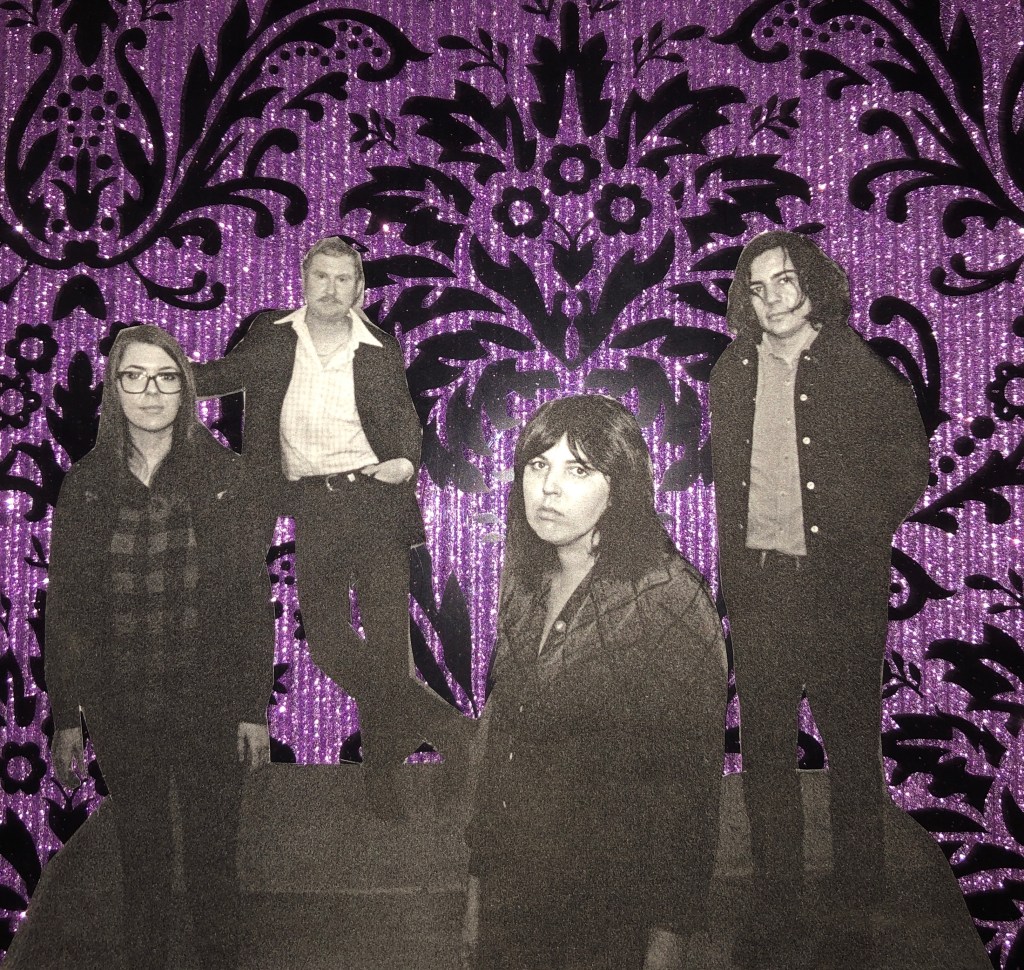
Original photo by Anna Cunningham. Handmade collage by B.
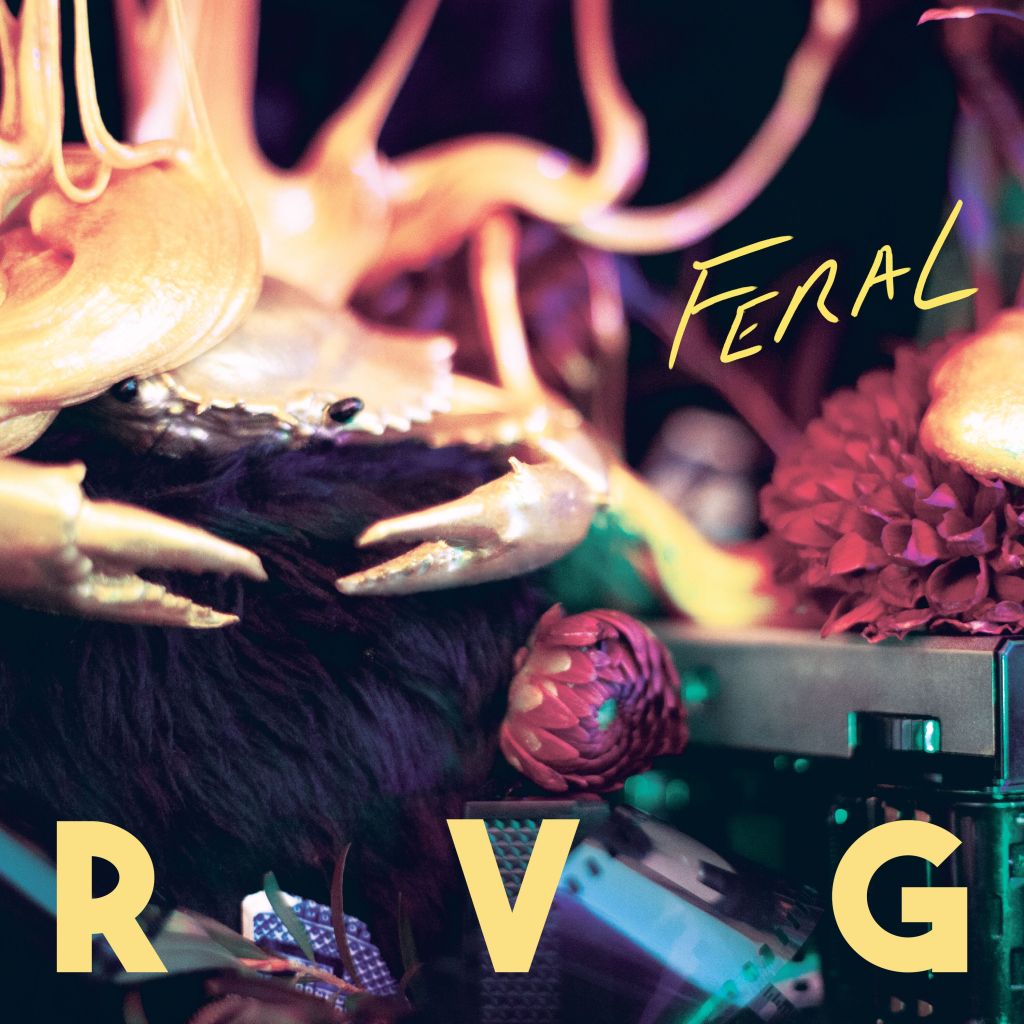
Melbourne band RVG ride the road of a Southern Gothic sound, travelling high along the dark musical horizon of bands like The Gun Club and Nick Cave and the Bad Seeds, vocalist-guitarist Romy Vager baring her soul giving a unique slant to the genre. Their sophomore album Feral – follow up to beloved debut LP A Quality Of Mercy – will be out April 24 on Fire Records. We interviewed Romy about the record.
How did you first come to playing guitar?
ROMY VAGER: Growing up I got lessons from this guy Greg who caught a snake in our backyard. I use to go to his house down the road and he’d show me how to play classic rock riffs.
Your debut album A Quality Of Mercy was written in isolation; was the writing process for new album Feral like that?
RV: Yeah I guess so. We don’t tend to jam out the songwriting stuff at first so it starts with me. I like a warm place in the dark where nobody’s gonna bother me, I’m a lizard. Or maybe a mushroom.
Where did the album’s title Feral come from?
RV: Feral just sorta summed up everything I’ve been feeling recently. There’s something about the last few years that’s been quite difficult for me. I feel like a wild animal a lot of the time, licking my wounds and hissing at everybody! I want a place to belong but I’m having trouble getting there. Does that make sense?
Also “feral” is what Right-wingers call you if you care about social issues or climate change. You’re called feral for giving a fuck! I guess Feral can be interpreted in that sense as a call to arms.
You’ve commented that your “new material is actually a lot more depressing than the first record in parts”; while writing what was influencing this even darker mood?
RV: I just think there’s a lot less hope in it than the first one. The world’s become a lot more sinister in the last couple of years. I guess, like a lot of people, my songwriting has changed according to that. I can’t pretend that things are normal anymore. The first album’s like [Stars Wars movie] A New Hope, this one’s like The Empire Strikes Back.
Did you have any challenges writing the album?
RV: I guess it took me a while to get all the songs together. I’m not a quick writer like other people. I have to really concentrate to get the lyrics right, they have to be framed in a certain way.
The songs I’ve heard from Feral have a really lush sound to them; what inspired you to go for this sound?
RV: I think mostly because we like lush sounds. But also because I get kinda bored of punkier music being very one dimensional and grimy. It’s always been important for this band to have that angular energy but to pretty it up a bit.
Your last album was recorded live on the floor at The Tote for around $150; what was it like for you to record in a studio this time?
RV: It was nice! It’s not better or worse or anything. I like that you’re forced to take things more seriously in a studio because it’s costing you money. When you do stuff yourself you get lazy because you don’t have to commit to anything. When we did Quality… there was a gap of like a month and a half when I thought it wasn’t gonna ever get finished cause people kept putting it off. You have to be a bit more professional about it.
You worked with music producer Victor Van Vugt who’s known for working with artists like PJ Harvey and Nick Cave; how did he help craft the album’s sound?
RV: I guess he just really understood that it was best to get the songs as live as possible.
When I saw you perform in Brisbane recently, I noticed you made jokes between songs and there’s a track on your album called “Little Sharky & The White Pointer Sisters”; how big a part of your life is humour? How’d that song come about?
RV: I try to have a sense of humour! It’s this weird British kind of humour that’s a product of growing up in Adelaide. Maybe only Adelaidians find it funny!
Sharkie was a guy I lived with when I was a teenager. He was convinced that psych nurses were after him and you’d spook him if you entered a room too quickly. He said he was in a band called, Little Sharkie and the White Pointer Sisters, but I don’t think it was real. I wanted to write a song that made it real, I didn’t want him to slip through the cracks.
Why is it important for you to create?
RV: It’s cathartic to me. I’m shy in real life and playing music gives me a way to communicate to people where I usually can’t. It’s precious.
Last question, as I mentioned before a lot of your songs have a depressing mood, I wanted to ask; where do you find great joy?
RV: Mostly by singing to my cat.
Please check out: RVG. New album ‘Feral’ available here through Our Golden Friend in Australia and Fire Records overseas. RVG on Instagram.
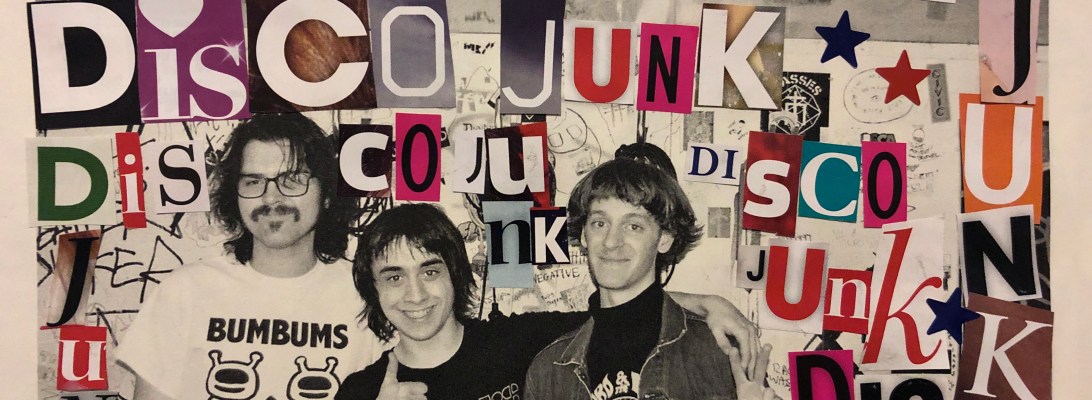
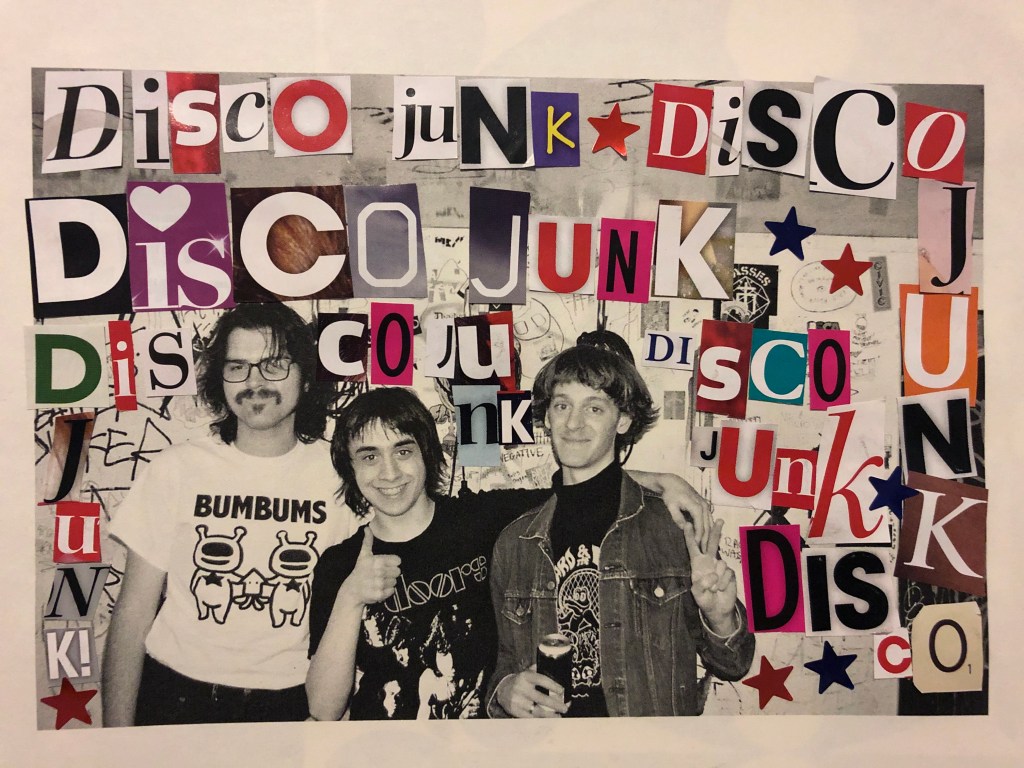
Original photo by Bridget Angee. Handmade collage by B.
We love Melbourne punk band, Disco Junk! Guitarist-vocalist-songwriter Billy really, really loves music and wanted to make his own so bad he taught himself how to play guitar and recorded his first songs simply using an iPad. At Gimmie we believe that if you really want to do something, you’ll find away—be like Billy! He’s already put out 15+ releases, including a compilation of 32 underground bands to raise money for Australia’s recent bushfire tragedy relief, has a zine Magnetic Visions AND he only turned 18 in January this year!
How did you first discover music?
BILLY: The earliest memories of music I have are listening to Midnight Oil and Spice Girls with my parents when I was like 3. I guess a more technical definition of me discovering music was when I heard “Warning” by Green Day on some internet video and was sucked into that fandom. I got into local music when I was 15 and one of my mum’s friends told me to listen to Modern Living by The Living Eyes and it changed my entire perception on reality, went from the Beatles to Ausmuteants real fast. Long story short Spice Girls and Green Day!
When did you first know you wanted to make music?
B: I guess after listening to Green Day I started wanting to make music. I’d always been somewhat “creative” but very lacking. Tried painting, drawing, animation, film making and other hobbies for years with no success. But once my aunty gave me an acoustic guitar, I just wanted to do stuff on it, and I started to figure out how to do stuff on it. Once you start seeing some success in what you’re doing it really motivates you to continue, every time I’d learn a new chord or I’d figure out how to open Garageband, I’d just want to do it more.
What was the first gig you ever went to? Tell us a bit about it.
B: The first gig I ever went to was Courtney Barnett at the Palais Theatre, it was kinda weird, Courtney seemed like she was really uncomfortable. I’ve seen her three times since and they where MUCH better. I think the true first gig was Jebediah at Melbourne Zoo, met the band and they were amazing live. I bought my first electric guitar after seeing them in order to try and do what they were doing.
When you started Disco Junk you wrote, recorded and produced all your songs yourself; can you tell us about how you got started? Were there any challenges?
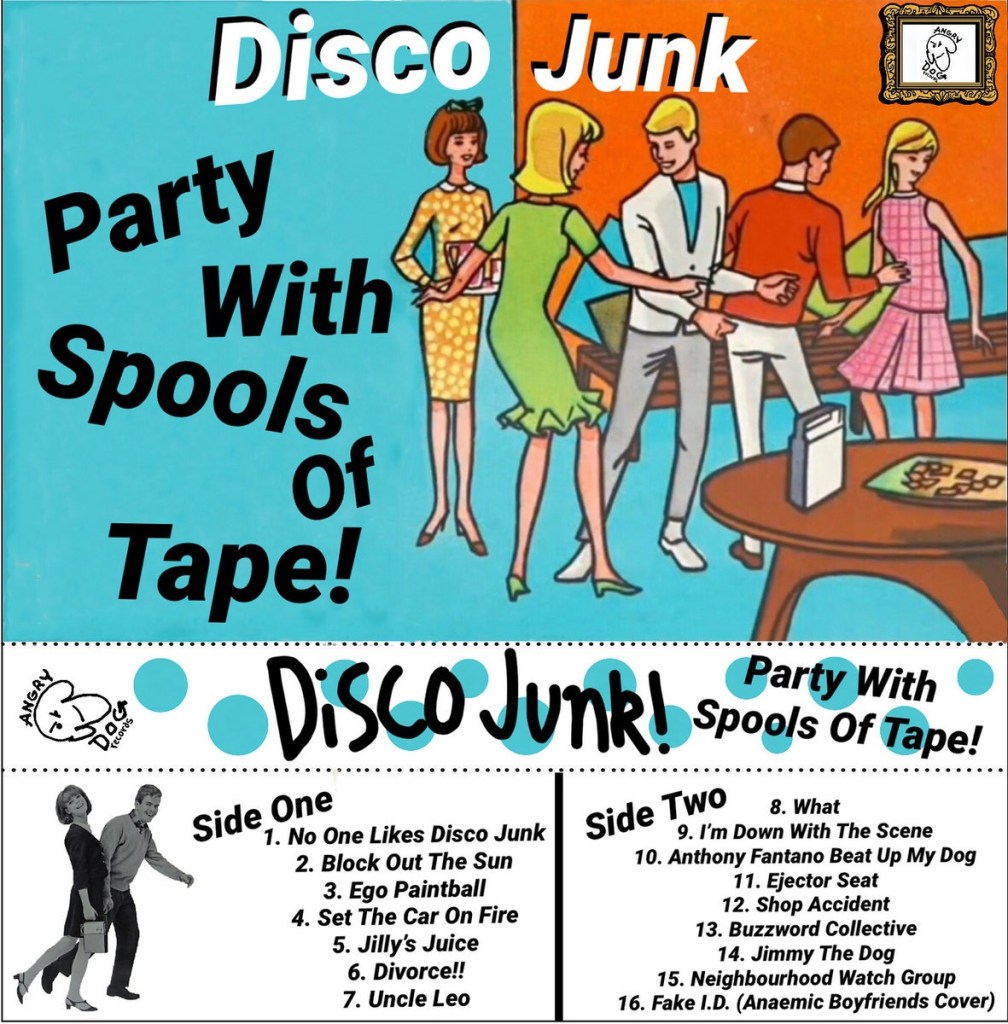
B: I got started by just pointing my iPad at my guitar amp and just pressing record, it was a hellish set up and there where a lot of angry screams trying to get a decent sound. Eventually I just sorta gave up and worked with what I have, which is what you sorta hear on Disco Junk’s Party With Spools Of Tape. I eventually got a lot better at it through a lot of trial and error.
What kind of things inspires your songwriting?
B: Really anything. I’ve had times where I’ve put my heart and soul into it, tried to come up with really deep lines and its just been awful and then a song I write about the film Robots will be (in my wrong opinion) a million times better. The main inspiration is other people, bands like Pinch Points, Rhysics, Living Eyes, Program, Sunnyboys, Lemon Demon and Lassie are some big inspirations right now.
What’s your favourite song you’ve written so far? What’s it about?
B: In terms of released stuff, I think “Outta Melbourne” (which is just meaningless, it’s a bunch of lines I put together) and “Defenestration” (which is just a social outcast song). In terms of UNRELEASED AND EPIC stuff I think “Where’s Bigweld” (the song about the film Robots), “Investment Banker” (a song my dad wrote so I cant really take credit) and “All The Cows Come Home” (which is sort of a self-referential song, in the vein of Ouch!!).
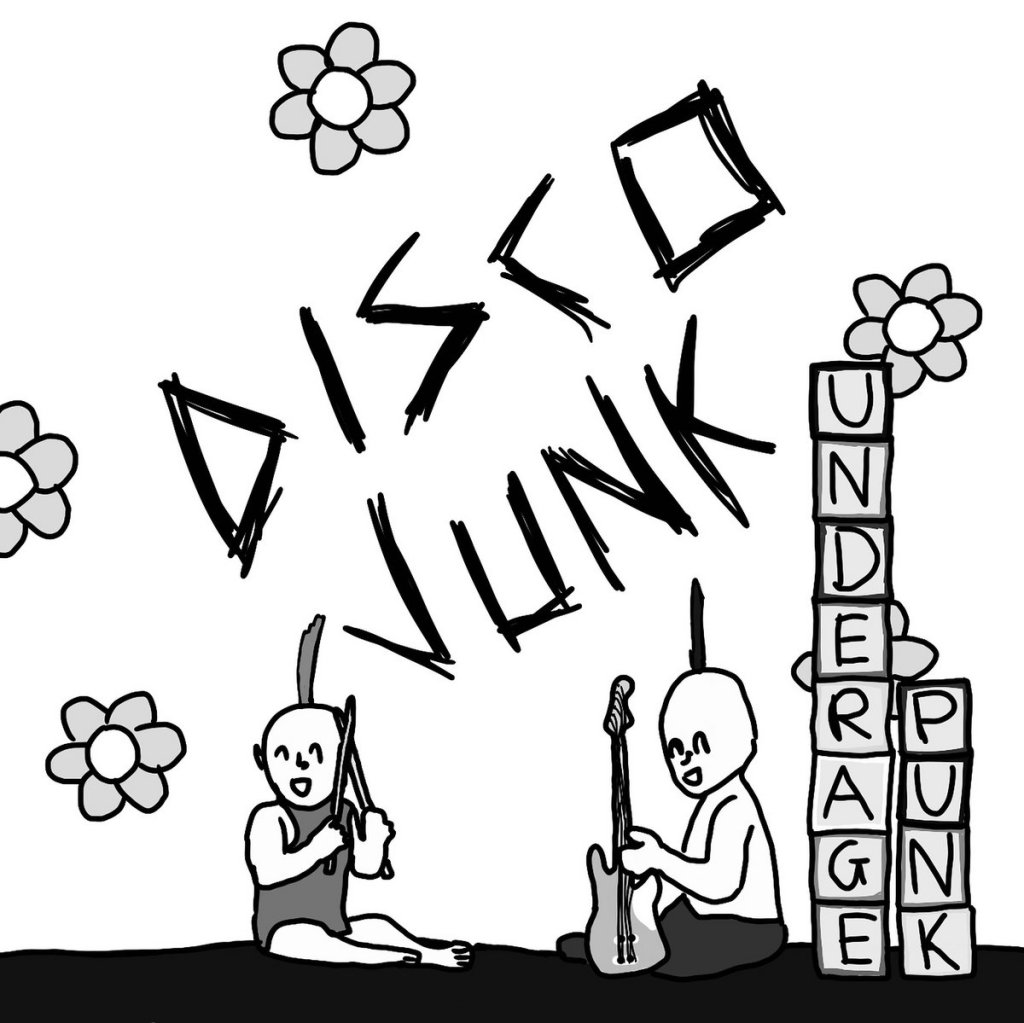
You recorded your “four best songs” in a “proper studio” with Billy from Anti Fade last year; what’s one of your fondest memories from recording your Underage Punk 7” (on Hozac Records)?
B: Really it was just all the time I got to spend with Lachie and Billy Gardner. Lachie (the man behind Under Heat Records) is one of my best friends and he came down to Melbourne from Mount Gambier to do the drums and it was so good to hang out with him. We went and saw Drunk Mums and Meat and it was so good. And it was incredible to spend time with Billy, he’s so switched on and wise and is such an incredible man. I learned so much from talking with him during the session. Also me loosing my voice and trying to order from a burger shop afterwards was pretty funny.
Can you tell us about your favourite gig you’ve played?
B: I can’t decide between playing with Amyl And The Sniffers at Record Paradise and the birthday show I did at Cactus Room. They where both just a bunch of friends coming together to have fun and watch some incredible bands. The energy at both shows were just incredible!
When you first started playing live you were on stage by yourself, right? Were you nervous?
B: Yes! I got offered my first gig by Ishka from Warttmann Inc before I had a band so I decided to just play by myself with a backing track. I wasn’t actually that nervous to be honest, I think I was in such a tight state of fear that I didn’t feel any emotion. But after playing with a live band and having played some more solo shows recently I now get a lot more nervous on stage solo. It’s harder to go back to if that makes sense.
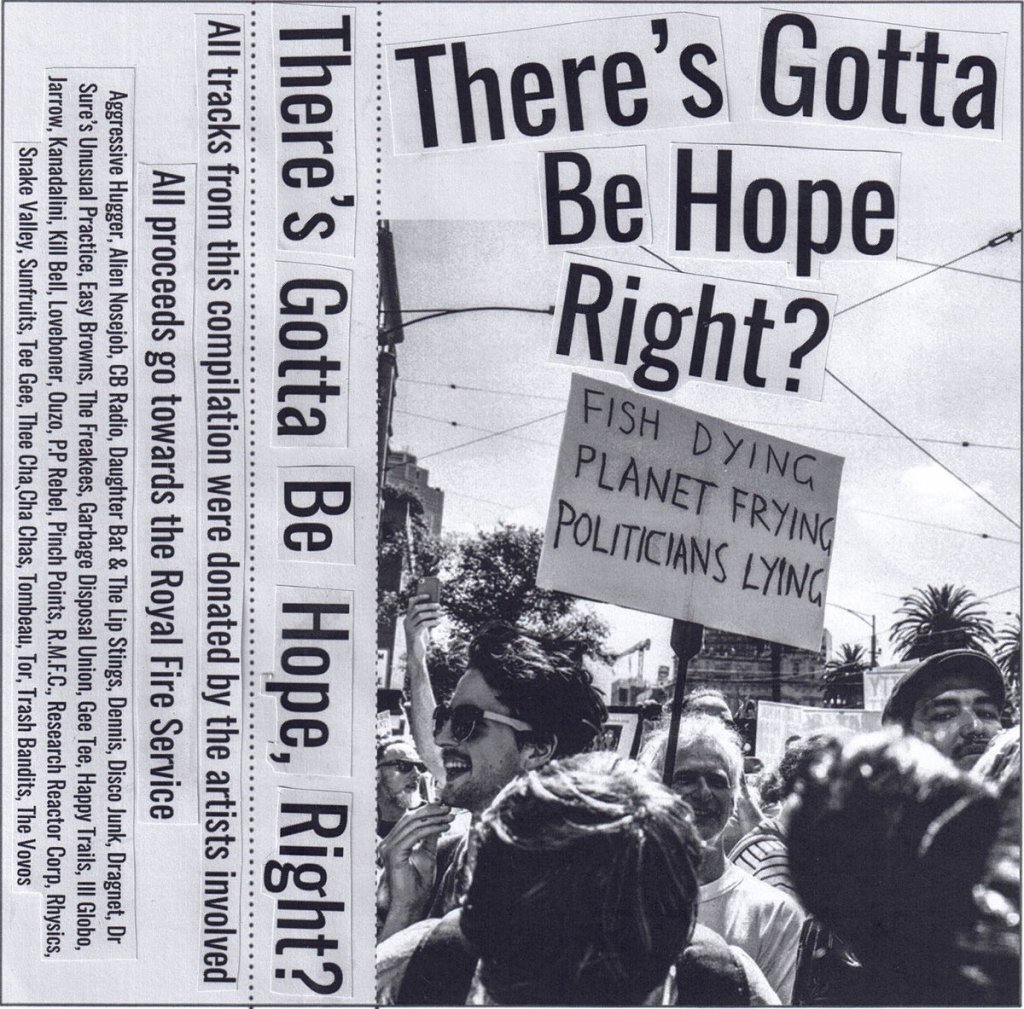
Last year in 11 days you put together a cassette compilation, There’s Gotta Be Hope Right?, featuring 32 bands with money from sales going to NSW and VIC Rural Fire Services; why was it important for you to do this?
B: Well it was important because if I didn’t do it I would’ve gone insane! During the bushfires I was having some very serious mental problems and I found that working on ANYTHING was better than thinking about it. It was a nightmare to do and I still haven’t been able to donate the money because of one fuckwit but it GREATLY helped. I’ve had to start doing a similar thing with the Beer Virus epidemic recently where I upload one song at a time onto the Billiam Bandcamp in order to keep my mind off things (#shamelessselfpromotion).
Around the time you put out the cassette you mentioned online that you had a “panic attack/nervous breakdown about the state of the world”; what do you do to get through this period and manage your anxiety? It can be pretty scary and debilitating!
B: I honestly don’t even know what got me through it. I think the only thing that helps with me is work as previously mentioned. It is really scary and debilitating but some good stuff does come out of it. I’m truly proud of that compilation and I think so far it will be my biggest legacy on Melbourne music and that’s helped me get through hard times since them.
What’s something important that you think more people should care about?
B: I could say environment but thank god people are starting to clue into the fact that MAYBE all these weather events are caused by humans pumping sludge into the atmosphere constantly. But other than that people need to be more aware of what their friends are feeling. Like not in just an empty “Are you ok?” way but in a way where people understand that things they might be doing or not doing really impact other people and that they need to be aware of that. Just check up on friends and do things to make them happy, sending a funny YouTube video or talking with them on the phone does so much more than just asking if they’re ok and saying that you are there.
What have you been listening to lately?
B: A lot! ha ha… Quarantine gives you time to listen to some records. There’s a Chicago band called Spam Risk I’m obsessed with at the moment, they’re really good Eggy nervous punk rock. Other than that a list of bands and artists I really like are Hannah Kate, ISS, XTC, Leeches, Toyotal, P.R.N.D.L., Jungle Breed, Nick Normal, Met Dog and Gonzo. Lots of great music coming out at the moment
What are you working on now?
B: A lot. There’s going to be a Disco Junk album eventually but I need to finish writing it, were releasing a 7 inch through Goodbye Boozey in Italy but that will most likely be delayed but stay tuned. Ruben is working on a solo album of punky psychedelic stuff, Tom is continuing to finish the Aggressive Hugger tape and I (Billiam) am making an album available on bandcamp as I go (meaning I upload one song a day for like two weeks) and I’m writing the next issue of my zine Magnetic Visions (Issue one and two are out now #againshamelessselfpromotion).
Anything else you like us to know about Disco Junk?
B: All the members are actually just really elaborate Muppets.
Video by Vogel’s Video (please check them out for rad underground band vids).
Melbourne band Dr Sure’s Unusual Practice play raw, angular, new wave-ish, post-punk delivering an intelligent, thoughtful perspective on hot topics in our society’s increasingly uncertain landscape. Multi-instrumentalist and songwriter, Dougal Shaw, chatted with Gimmie a few days ago about his musical beginnings, the challenges he’s gone through to do what he does, of the importance of having purpose in life and gives us an insight into his songwriting.
When did you first start playing music?
DOUGAL SHAW: It started when I was about eight years old, a bit of violin. Then I jumped on the trumpet for a couple of years, I was in the school band back in Central Queensland. I started out with the more classical instruments then it wasn’t until I was eighteen that I really got into playing the guitar. When I was twenty-three, when I first moved here [Melbourne], I started my first band.
Previously you’ve mentioned that Rowland S. Howard changed the trajectory of your guitar playing; how so?
DS: I reckon, yeah, for sure. Growing up in Central Queensland the only real source for alternative music outside of my parents’ record collection was Triple J, so you’re kind of reliant on the major broadcasters to give you alternative tunes [laughs]. In my early teens I got a lot more into punk and hardcore music, then worked my way back a bit from there. When I moved to Melbourne I was exposed to stuff like Roland S. Howard, The Birthday Party and that early ‘80s Melbourne vibe—that was a huge influence for me.
You lived on the Gold Coast for a little while?
DS: Yeah. When I was fifteen I moved from Rockhampton down to the Gold Coast. I did a solo mission. We’d talked for years as a family about getting out of Central Queensland [laughs]. I feel like it was something that was always on my radar, some kind of pipedream about getting out of Central Queensland and going to places that seemed like, from afar, they had so much going on—surfing and music, things I was really interested in. When I was fifteen I reached a point and I was like, I’m going with or without you! I bailed up there. My dad and my brother followed a year later.
I did my last two years of high school at the Gold Coast. The Gold Coast is where I fell into the hardcore scene, a real cool D.I.Y. community that were putting on shows in sheds, warehouses, community halls. It’s where all the misfits and outcasts, people that didn’t feel like they had a place, got together. Coming from Central Queensland, really not knowing anyone or not having a support network, which was a huge thing for me. All these people were just making really raw tunes and having a good time, jumping off balconies into crowds below, moshing—it was a real eye opener, a whole new world that have never before existed for me.
I spent a lot of time going to punk and hardcore shows on the Gold Coast too, we were probably at a lot of the same shows! I remember that shed venue, Shed 5.
DS: Yeah, true! That’s classic. Awesome!
There’s still a little scene, places like Vinnie’s Dive has really helped a little scene flourish.
DS: Yeah, we played there last time we were up. I think it’s the first time I’ve been to Southport in years since I used to go to the Southport Community Hall shows. It’s cool you were around the same scene.
How did you end up in Melbourne?
DS: I went to live overseas for a couple of years after high school, did a bit of travelling. I came back to the Gold Coast after living in the UK, I came back for my dad’s 60th! He ended up having a stroke the day after I got back. I ended up caring for him for a year and a half while he learnt to speak and stuff again. During that time, I was pretty much a full-time carer; I had a lot of time on my hands to play my guitar. In a way even though it was a really tough time it was also what lead me to where I am now. I had heaps of time to develop my art and music, all the things that I may not have had the time to commit to otherwise.
I’d been to Melbourne a couple of times during that period and my brother had moved there, a few friends too. A good friend and I were trying to get music stuff happening at the Gold Coast, we were trying to get a band together. That was where I really started hanging out with Jack Mccullagh, who plays guitar in Dr Sure’s now. He had moved to Coolangatta from the Sunshine Coast and we were going around doing open mic nights and random shit like that. It got to a point where we were like, fuck it, let’s move to Melbourne! That’s where everything is happening! That’s where the music scene is! The catalyst really was, chasing the dream! [laughs]; to move somewhere where I thought being a musician was actually a sustainable way of life.
How crazy is it now with all this COVID-19 stuff that so many people in music and arts sectors are effected and who knows if/when things will be sustainable again! Like, what do we do? You can’t play shows!
DS: Yeah, it’s wild! It’s a pretty scary time. Being a musician and making that lifestyle choice, it’s scary and uncertain at the best of times. When something like this happens it puts a lot of people in a really tough position. Everyone is pretty much living week to week, most of my friends and peers in the music scene are already working other jobs. People that make music generally have jobs that are around the music scene that’s sustaining them, whether it’s recording or doing live sound or printing merch for people, doing artwork and posters—all those things stop when these kinds of things go down. I feel like it’s also an unprecedented event, it’s hard to say what the long term effect is going to be in terms of people continuing to chase the dream, as I put it earlier.
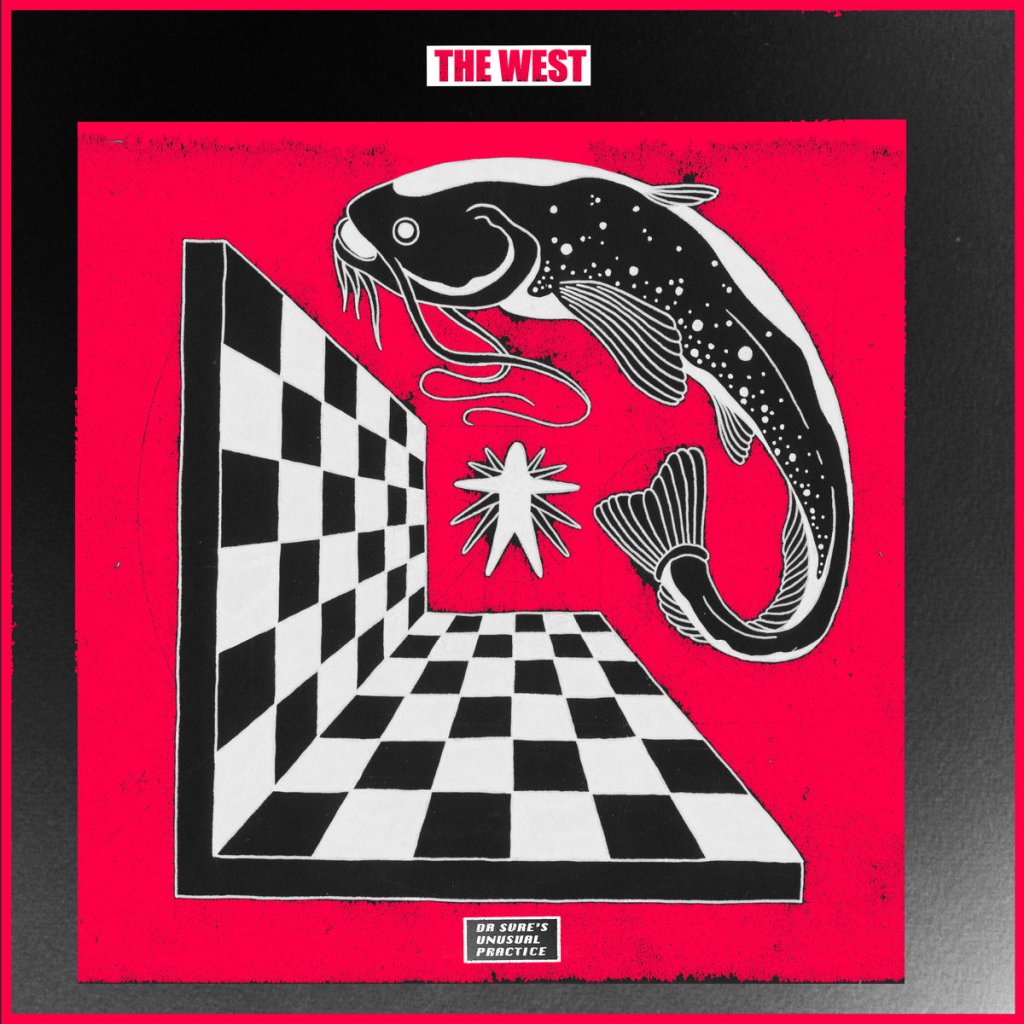
You’re a visual artist as well as a musician, I wanted to ask you about the art on your album cover for your debut LP, The West; where did the inspiration for it come from? You studied art?
DS: I did study fine art but it was specialising in sound. My art degree was all sound stuff. I am a tattooist by trade. I do a lot of art work in my life. That design, it’s funny because I made the design for that album cover before I even had a band to play the music. I just drew it one day and thought it would make a good album cover [laughs]. It felt appropriate for the songs I was writing in that it’s got a little bit of a surrealist element to it, it’s also raw and got the little “yee boy” in the middle which is a reoccurring theme of my tattoo work, the little blob character dude, it’s almost like a little compass in a way; with The West it was so appropriate having that directional element.
When you were writing the songs that would become The West you were writing by yourself and you set a personal challenge of writing and recording a song a day…
DS: Yeah, in a way it was an extension of that fine arts degree. For my major project of the last year of my arts degree, I was developing a process which I called “reactionary composition”. It was basically a way of composing music or sound, it was reactionary and taking a lot of the thinking out and more or less just doing. I was trying to develop a new language around composition that makes it less exclusive. I can’t read music. A lot of the way music is written can be quite exclusive, with this reactionary composition it was designed around being more inclusive and interactive in that anyone can participate in this process no matter what your musical knowledge. I took that idea and applied it to the way I was making music. I started making these things with the idea of not thinking and not rewriting and picking things apart. I’d sit on the drums for two minutes and lay down a beat and then I’d pick up the bass and lay down a bass line that was a reaction to the drum part, and so on and so forth layering instruments. Having some restrictions in the way of saying, ok, there can only be two guitar parts, one vocal take or whatever. Having it as a fluid process and not going back over songs too much to perfect them, letting it be this raw thing.
So it’s like a stream of consciousness thing?
DS: Exactly! Letting the conscious mind flow.
Having a spontaneity as well?
DS: Yeah! It was the same with the lyrics, just a stream of conscious spew of whatever was at the top of my mind. A lot of the time it was taking “the feed” and turning it into some kind of spew of words, filtering the news of the day into song form.
A lot of your songs tend to have bleak themes but the way you deliver it has hope and humour in it; how important is it for you to have humour in your music?
DS: Totally! It’s something that I was subconsciously putting across. It wasn’t until I brought it to the band and I had to pick it apart more and you could see the threads running through it. I feel like it’s important to have some kind of light at the end of the tunnel because a lot of what we see in the world today is pretty bleak. Being able to find some glimmer of hope or being able to laugh about things, to not take yourself or the world too seriously is important… because if you don’t, you may as well find the nearest cliff, that’s how I feel a lot of the time! It’s a daily struggle to stay present and not dwell too much on the negativity you’re surrounded by. I’d pretty much lose my mind otherwise or end it!
I guess that’s why we make stuff though… we view the world and might not enjoy what we find and want to express our dissatisfaction, and through creating things we get to do this and make our own world. We have the ability to create our own happiness.
DS: Yeah, totally! Maybe that’s why I write a lot, because when I sit down to write a song it’s usually because I’m not happy [laughs]. I’m sitting down writing, alone in a room, and I’m processing everything. It makes me feel happy that you can get hope and humour out of my songs, you’re taking the positive elements out of it. I do sometimes feel like I dwell on the negative too much. It’s important to try and find some light in the dark.
Absolutely! After you wrapped up your tour for The West you took a trip to Bali and you started writing for your new album. I remember at the time you were stoked because you had such a productive time and you were happy with what you’d written then you came back home and your house was broken into while you slept. They stole your laptop with your new work on it as well as thousands of dollars worth of musical equipment. Obviously you would have been feeling bummed; tell us about that time.
DS: Yeah. It was a very strange time for sure. My dad and a couple of his buddies were going on a Bali trip and randomly the week of, I decided to jump on-board and go for a little mission. I was in this tropical paradise, way out of the west side of Bali away from all the chaos. It was an idyllic location, so far removed from where I’d usually be creating in a converted shed out the back of my house in Melbourne; which is often a bleak city to be in except from the couple of months a year where the sun comes out and the parks get packed out, people are more happy and bubbly [laughs]. It was funny to jump into that environment and try to write. I was writing all these happy songs about finding your centre and being balanced [laughs], all these things that since I’ve been writing songs I haven’t written. It’s been a little bit comical in a way that those songs got stolen and destroyed by the universe [laughs].
Were you able to write them again?
DS: Yeah. There was a couple of songs that I “bounced” out and sent to the band while I was overseas, that was cool. One of them was the song we just put out “Super Speedy Zippy Whipper”. That was the first song I wrote when I got over there. That song feels super appropriate to over there because when you get to Kuta you enter absolute chaos, there’s a million super speedy zippy whipper bikes cruising around. Going from there to the other side of the island where I was writing was the exact opposite of that. You can hear that in that song, a feeling, a juxtaposition of chaos and calm.
From the experience of losing your songs how did you bounce back so quickly creatively?
DS: I just got straight back into it, the fact that I lost those songs it made me want to get in there and see how much I could remember. Pretty quickly I just gave up on trying to remember the parts and just tried to make something else. I think I’m pretty much constantly writing, I get antsy if I don’t get my ideas down. My brain is constantly ticking over, I feel it’s my brain’s way of processing the world, if I don’t’ get it out it just builds up inside and turns into anxiety and it manifests itself in different uncomfortable ways. I always try to make time to get it out, to unleash the demons within! [laughs].
You have new 7 inch EP; what can you tell me about that?
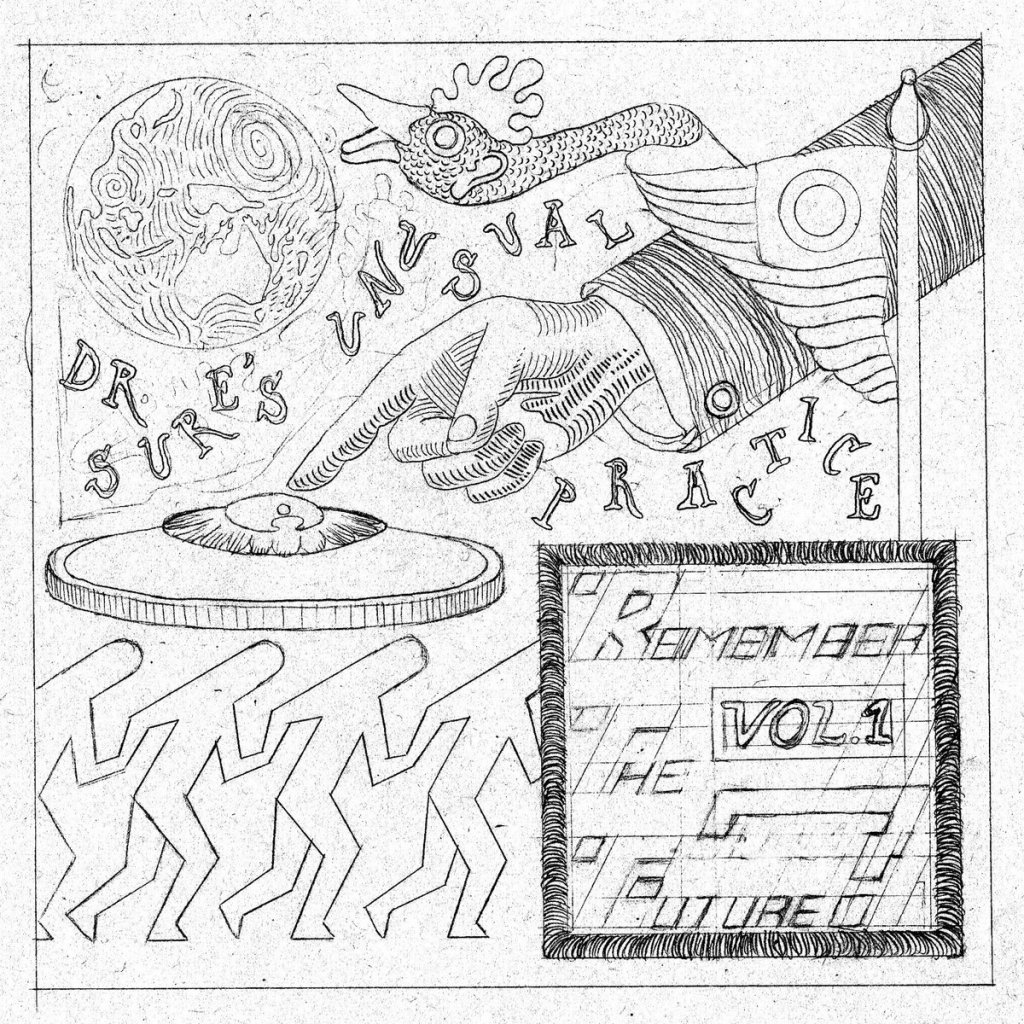
DS: That one is four tracks that we recorded in December. We were initially working towards an album but everyone got super busy mid-year so we decided to put out these four now and another four in a month or two, then combine them. It’s called, Remember The Future? Volume 1. We’re working on Volume 2 at the moment.
Do you have a favourite song in that collection of songs?
DS: I feel like they work together super well as a four track thing. It’s really cohesive. It’s 11 minutes. It feels nice and snappy. They all quite different but there’s a common thread running through them.
What’s the common thread?
DS: With title, Remember The Future?, there are all these things which feel to me are talking about the future but, it’s all very present. It’s kind of a feeling that we’re living in this dystopian future, we all talk about it likes it’s in a future time. To me it feels like it’s already here, it’s upon us. It’s a common theme in a lot of things I’m writing at the moment, I have been for a while.
Like the book George Orwell book, 1984!
DS: Yeah, yeah, exactly! It’s not a new ground breaking idea. When I’m filtering the daily news it feels really dystopian—this is now! It’s a surreal feeling that I can’t quite grasp, I’m trying to explore it and articulate it in my songs. The absurdity of the present. [Laughs]
There’s a lot of unknowns right now, none of us know what will happen.
DS: Yeah, there’s an uneasiness in the air. It’s all a little bit comical though [laughs]. It’s a little bit ridiculous. We can either laugh or cry about it.
That’s right. Before my mother passed away, her thing was always that when things get tough or rough in life, you just gotta laugh! You gotta take a step back, realise you’re still alive and just do your best to keep moving forward.
DS: Yeah, that’s a great approach!
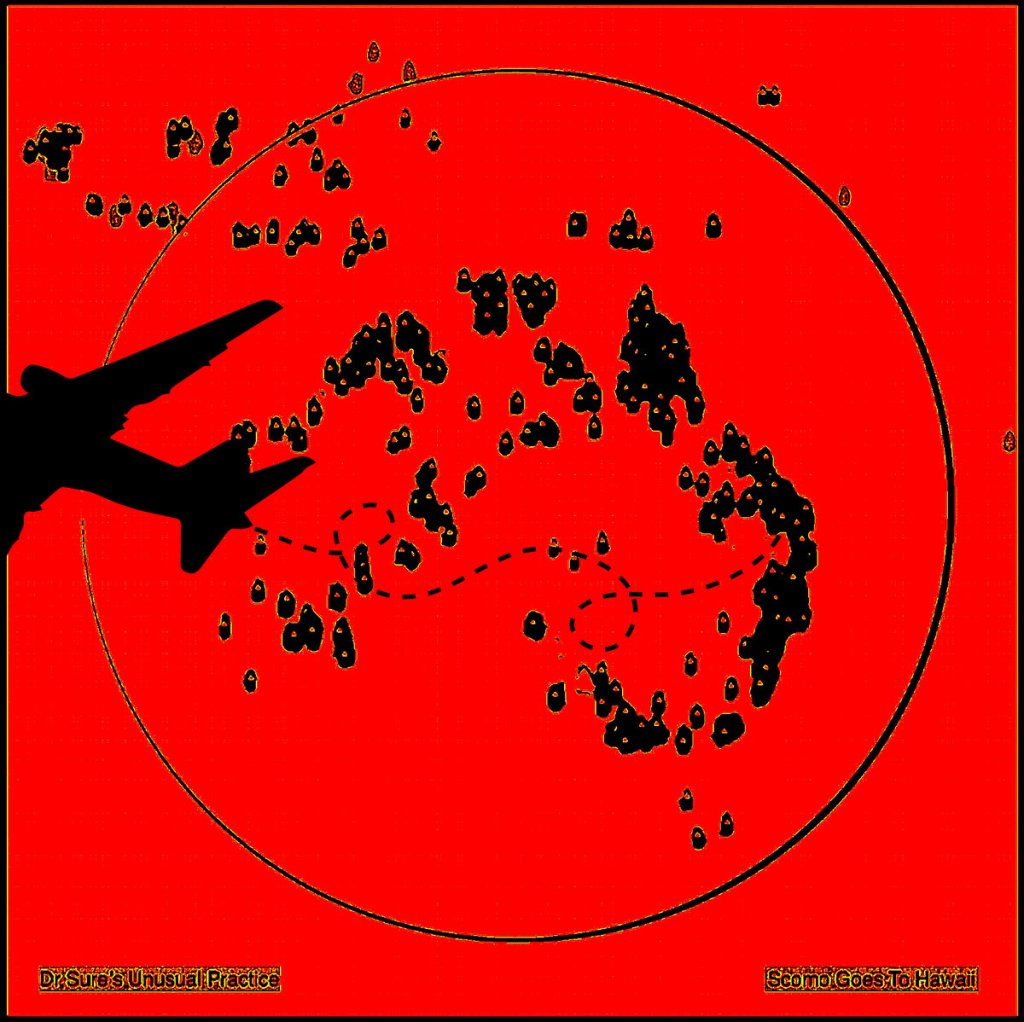
Why was it important for you guys to write the mini album, Scomo Goes To Hawaii?
DS: Again it was me processing this absolutely ridiculous scene that we found ourselves in, where the guy who’s meant to be leading up through this disaster unfolding, decides to go on a luxury holiday to Hawaii! It flowed out really quickly and easily, I wrote it over two days. I wrote it and released it within the time that he was in Hawaii! He cut the trip short because everyone was like, “what the fuck are you doing dude? You’re meant to be steering the ship”. It was all falling apart!
It was really pissing me off that the government had the power and position to support these fire fighters who were trying to stop our country from fucking burning and they weren’t. I thought, what can I do? I had these five songs and I thought I’d put ‘em up for a fundraiser and hopefully be able to help someone at least. It was born out of some feeling of hopelessness, that I was sitting here feeling useless. I thought it was something I could do to feel useful in this terrible situation.
I think it’s really important when there are hard times happening in the world that we ask, what can I do to help? Community is important. I believe we can all do something no matter how small to bring positive change. You can always find a way to help, your contribution does matter!
DS: Exactly, that’s so true. With the power of the internet… like people were saying, why don’t’ we do this more often? Record stuff, master it ourselves and put it up on bandcamp – that process is super easy and quick – and we can help different important causes. We made around $800 by selling that release on bandcamp. The technology we have at our finger tips makes it super easy for anyone to contribute in whatever was they can. What skills do you have? My skillset is that I can write a song and make some art and videos. Think about how you can take what your skillset is and use it to make a positive difference. As a human living in this anxiety riddle reality we find ourselves in, you need to find some way to make yourself feel useful. If I don’t find a way that makes me feel like I’m doing something useful, the walls start crumbling for me [laughs].
It’s important to have purpose!
DS: Yeah, that’s it.
What’s next for Dr Sure’s?
DS: We have a tour we were set to announce, right now it’s all hanging in the balance. We’re doing video clips at the moment, just trying to continue that theme from last year making surrealist video clips to go along with the tracks. I’ve just been writing heaps. I wrote a follow up of Scomo Goes To Hawaii called While Australia Burns. It’s sitting on my Google drive, I probably should have just put it out like the other one.
Do it! Do it!
DS: [Laughs] Yeah! Scomo Goes to Hawaii was written from his perspective just sitting in Hawaii. While Australia Burns was written from the perspective of me driving three and a half thousand kilometres from Central Queensland to Melbourne and seeing all the damage form the fires. I have way too many songs backed up that we just can’t keep up with. I made the call after putting out The West that I really wanted to do the next album with the band, we’ve been playing together for a while and I really love that energy that comes with playing with a full band, that power that doesn’t come across when you’re one person layering up the instruments. With that comes patience, I keep trying to work with everyone else’s schedule because everyone else had lots of other things going on in their life and different projects.
I have to find a balance right now of doing the band stuff and also releasing things that I’m doing. I don’t want it to get to a point where songs aren’t relevant anymore. Doing that Scomo one was important because it opened that up a little. I was stuck on the idea of doing an album with the band and that release has broken down that barrier in my own head, where I can just put things out and it doesn’t all have to have a tour and everything that goes with it. I’m letting go a little bit of all those processes.
Yeah. There’s no rules in punk rock!
DS: That’s it! Exactly. When I did the Scomo one it didn’t take months so I didn’t feel it owed me anything. Sometimes you get in a thing where you spend six months on a record or a year and you feel like you need to put a lot of energy behind releasing it, so that year wasn’t in vain. It’s easy to get caught up in all the bullshit! I just need to rely on myself to be present and create and not overthinking all this other crap that you can get sucked into.
I’ve released a lot of stuff now over the years and the more that you’re in the music industry the more you see the “proper” way of people doing things. There’s people paying for marketing campaigns and PR, all these things that were never really a part of my world. You kind of start to think, is that how I’m supposed to do it? Am I doing it wrong? Then you remind yourself, fuck all of that! I don’t want to conform to some process. I go to and fro with that, it’s a yin and yang tug of war between my punk non-conforming self and the ego-self going, I’m putting so much of myself into it and it would be nice if people heard it and the radio played it.
I think it’s natural for artist to want to share their work with people, a lot of people. Connection is also a part of the creative process and the human process. You go on tour, you play your songs, you connect with people; someone hears your song on the radio, they connect with it. It might spark something creative in their own life. We’re all in this together!
DS: Yeah! That’s the most important stuff. That’s why I’ll sit down and spend a month booking a tour, sending a million emails that suck the life out of me—because I love that! I love going to new places, seeing new bands, connecting with people and seeing what you do has some positive effect. All the hours spent in a dark room making stuff, the payoff is that connection, seeing it out in the real world.
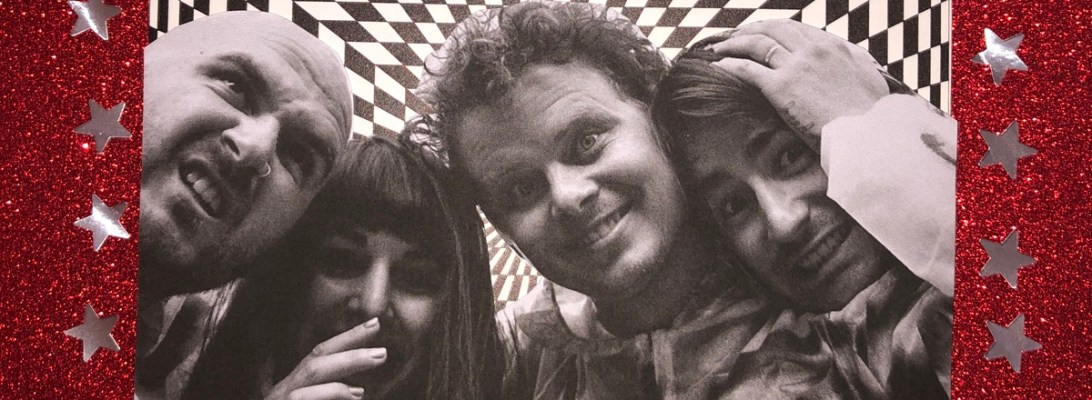
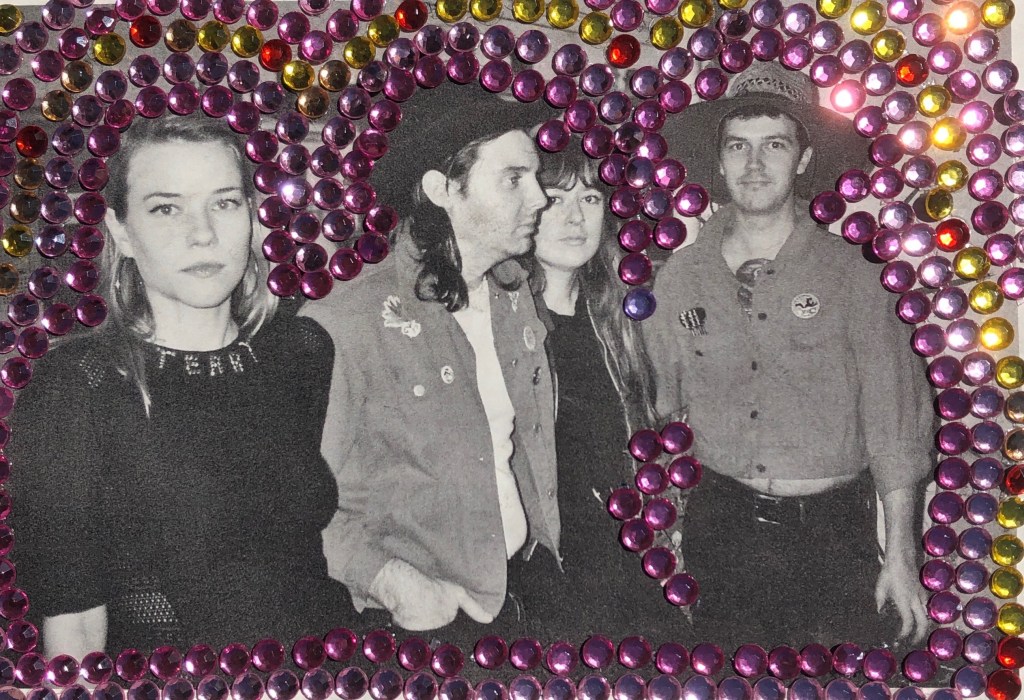
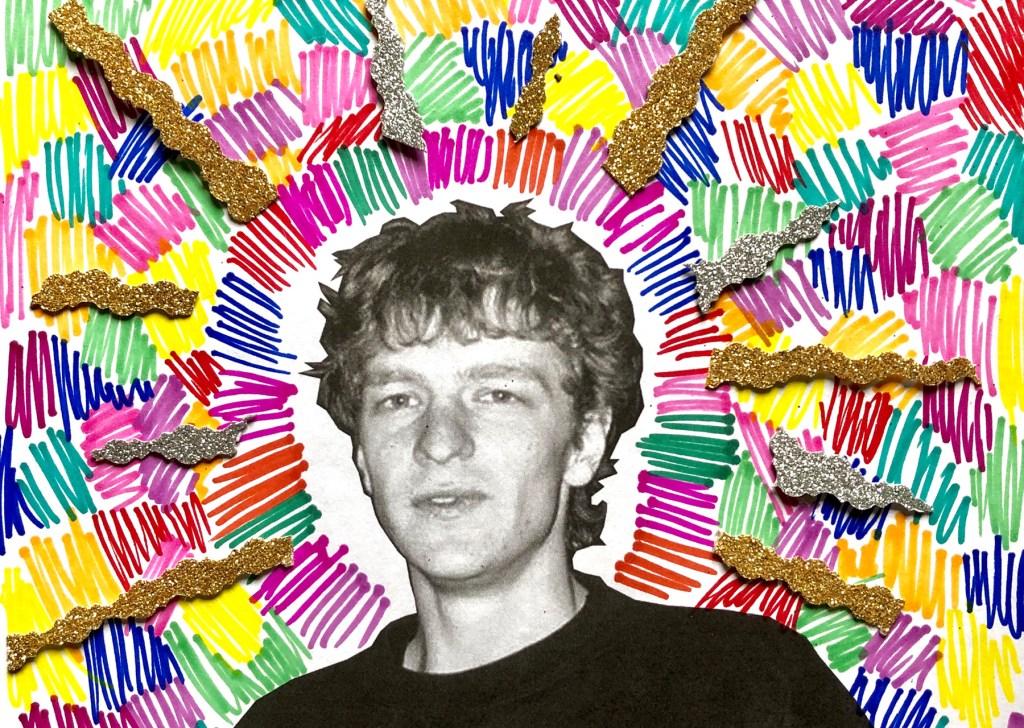
Original photo: courtesy of Upset The Rhythm Records. Collage by B.
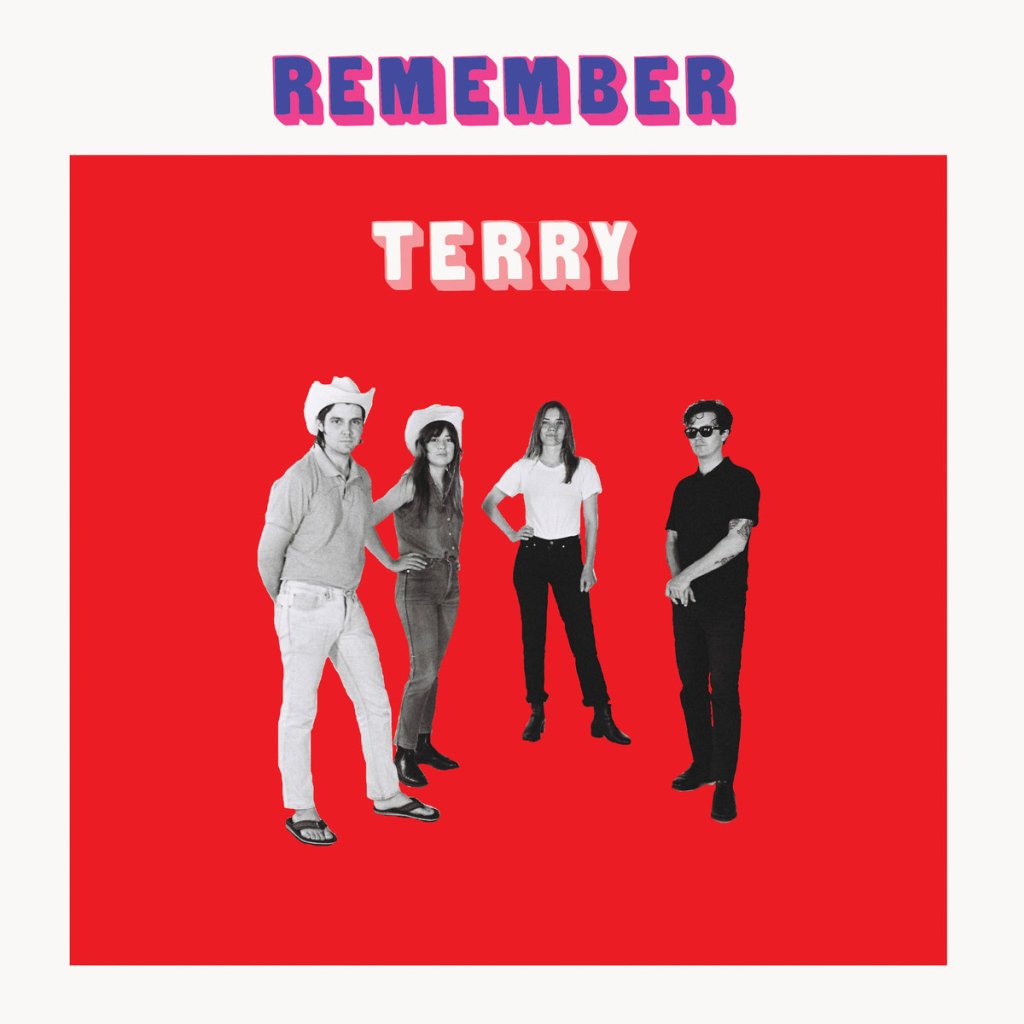
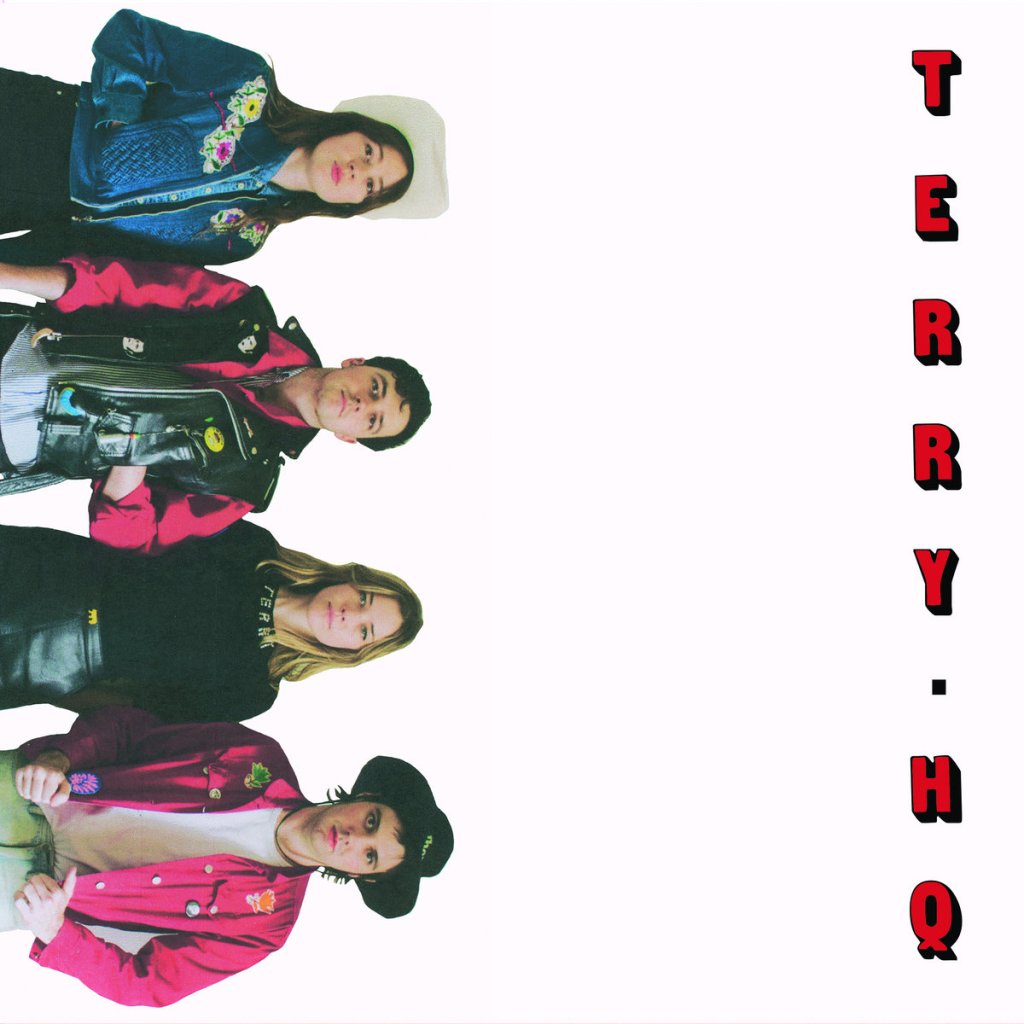
Terry are one of our favourite Melbourne bands. They’re always on high rotation at Gimmie HQ! Being the nerds that we are, we have all their releases. Terry is a 4-piece: Zephyr Pavey (Eastlink, Total Control, Russell St Bombings), Xanthe Waite (Mick Harvey Band, Primo), Amy Hill (Constant Mongrel, School Of Radiant Living) & Al Montfort (UV Race, Dick Diver, Total Control). Jangly guitar, nonchalant male-female vocals, relaxed-sounding rhythm section and playful, intelligent songwriting make Terry a real treat. We interviewed Zephyr and Xanthe!
Why is music important to you?
ZEPHYR: Music is good for exercising feelings that are a bit awkward to deal with in other ways and it is generally a fun way to spend time with other people.
What inspired you to first start playing music?
Z: I can’t remember. My family love it so it’s just been around… just became aware white male privilege probably relevant to how I’ve strolled on up and grabbed the mic without a second thought. My grandma just sang me the school song she wrote for Nabiac Primary School in 1989.
Everyone in Terry plays in other bands; why did you decide to start Terry? I know the seeds of it were sown while on holiday in Mexico.
XANTHE: Yeah, I can’t remember the exact conversation. We were hanging out a lot at the time and we went to Mexico City for a holiday together, that’s where the discussions began, like “wouldn’t it be fun”! I hadn’t played guitar in a band before, Zeph hadn’t played drums so it was definitely conceptual before we actually started jamming. I think we just liked a lot of similar music and wanted to hang out more!
When did you realise you had something special/interesting/cool musically?
Z: Not sure it’s any of those things, don’t really think about it beyond making tunes.
What is the role of humour in Terry’s music?
Z: We aren’t very analytical about ourselves, it’s sort of just our normal way of communicating.
Two couples make up Terry; what’s the best part about creating – making music and playing shows – with your partner?
Z: Romantically speaking it means we avoid separation anxiety, also great logistically because there is no driving around to some other bandmates house after a show and when you share a room and on tour it makes all the bed sharing a bit more comfortable. I guess we have also really honed our communication to the point of blurred identity too which makes all the creative and administrative discussion a bit easier.
All four of you sing; how do you decided who will sings which parts?
X: That’s a fun part of songwriting with Terry. It’s organic how we figure that out. Someone will write a demo but then we play around with who sings what at practice. Often we’ll all be singing to start with but find parts tricky to play and sing at the same time, so some of us drop away… other times it’s more intentional or gendered, depending on what the song is about.
Are your songs solid before you record them or do they change much when you’re recording?
X: Generally we record pretty quickly; in that we won’t have played the song a lot before it’s recorded but the core of the idea will be there. We usually work from demos written individually or in households rather than writing a song from start to finish together. So sometimes recording is a process of figuring out how the song should be structured as a band. And we really get into overdubs, and then have to figure out how to play them live! The core idea is there but the songs do evolve/ change as we record them.
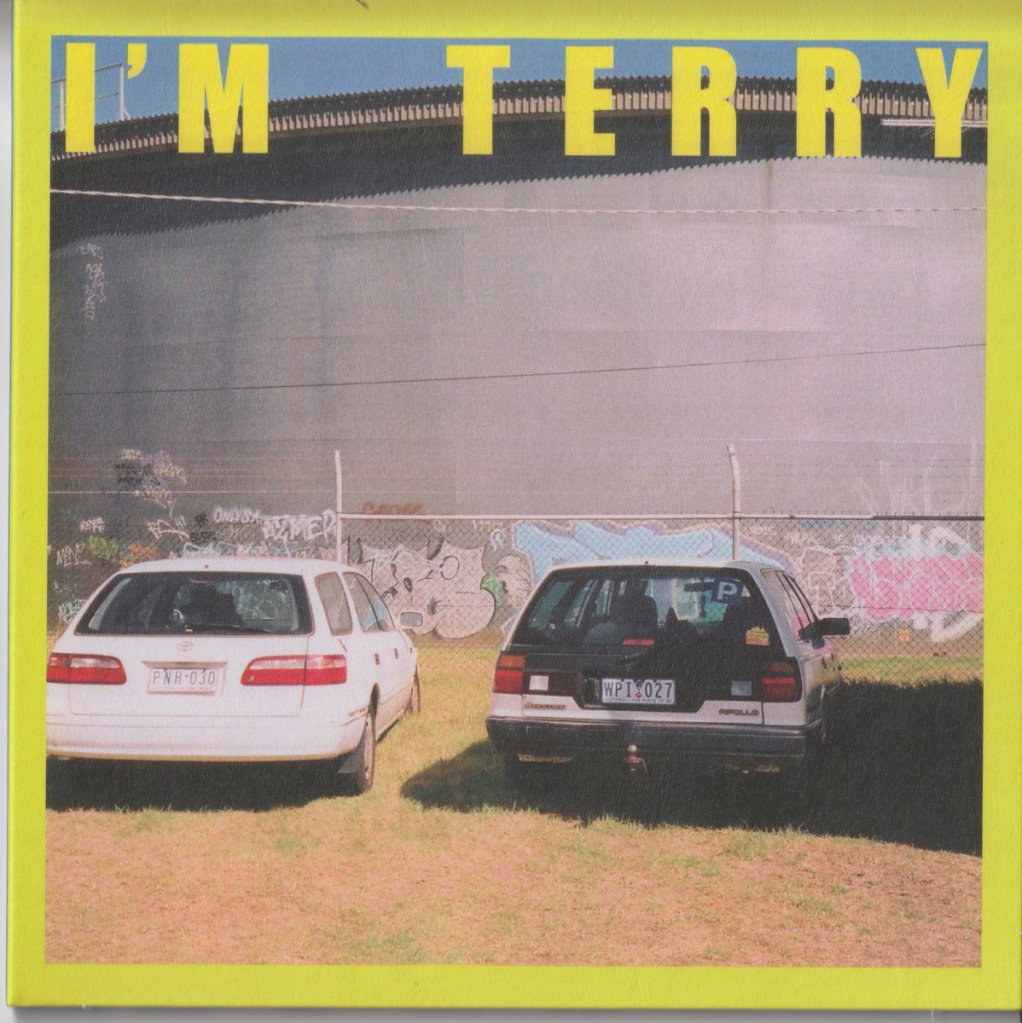
On your LP, I’m Terry, there seems to be a lot of car-related references; where does this come from?
Z: We all got cars at the time and it was awesome. Also probably because suburban Australia is inconsistent public transport wise and very sparse geography wise so the three Australians in the band have grown up around some kind of deep automotive experience. Also scared shitless of cars full of men driving around.
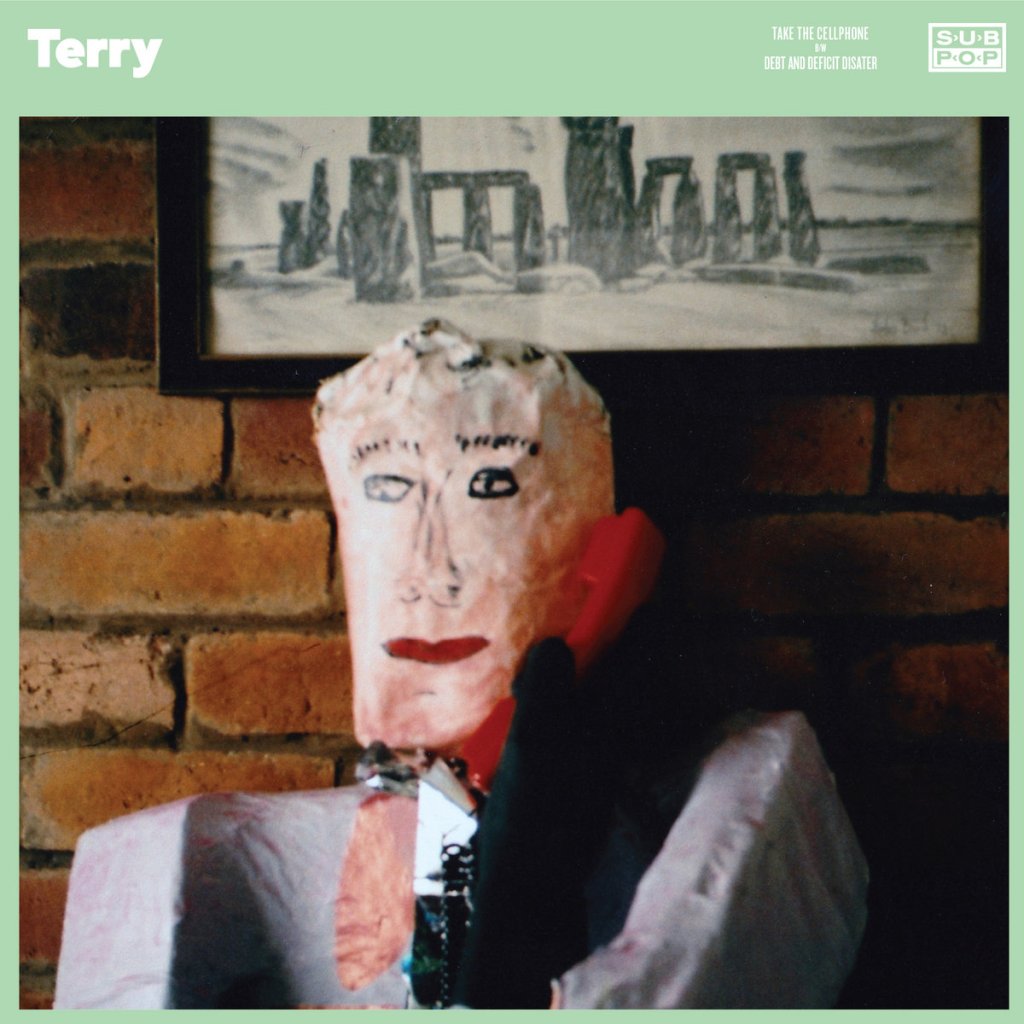
Terry recently released a single “Take The Cellphone/Debt and Deficit Disaster” for Sub Pop Singles Club subscribers; can you please tell us a little about each song?
X: These two songs were in the Terry archive that we loved but hadn’t released.
‘Take the Cellphone’ was written thinking about youth/recklessness/innocence. I’ve recently started studying law and was amazed to learn the age of criminal responsibility is 10 years old in Australia. I guess that song was crudely thinking about how easily kids can fall into trouble with the law and how problematic that is. Raise the age!
‘Debt, Deficit and Disaster’ was a song we wrote initially as part of a soundtrack for a French TV film about a surf gang in Biarritz we were working on. The production company dropped us half way through which was lucky in the end because we repurposed a lot of the songs for our own use.
What is one of the most fun moments Terry has had playing live? What made it so?
X: We’ve had so many fun/ funny moments playing shows with Terry, it’s hard to pick one. A few that come to mind… Our last London show was really fun, we played with the Homosexuals who are one of our fave bands so that was thrilling. Playing in Cuneo, a tiny town in the mountains in Italy in the basement of a guy’s house where the locals all came and seriously made us play every song we have written, I think we played a few songs twice. We were paid in risotto and focaccia for that show, it was a good one. The last show we played was a fun one too, it was at the Thornbury Bowls Club with Ripple Effect Band who were visiting from Maningrida NT. They are so good.
Do you do anything else creative beyond music?
X: I went to art school and still take photos, occasionally I do something with them but mostly just take them. Amy paints, Zeph also takes photos and has been spending quite a lot of time on our balcony fixing up old furniture/making things out of wood. Al made a life size papier mache Terry that we cart along to shows and sometimes paints too. So we are all pretty creative and into making things.
What’s next for Terry?
X: Zeph and I are living in Sydney at the moment and Amy and Al in Melbourne so we are a bit slower than usual because of the geographical distance but we have some songs we’re working on so…more records, and more shows that will probably be cancelled because of Covid-19.
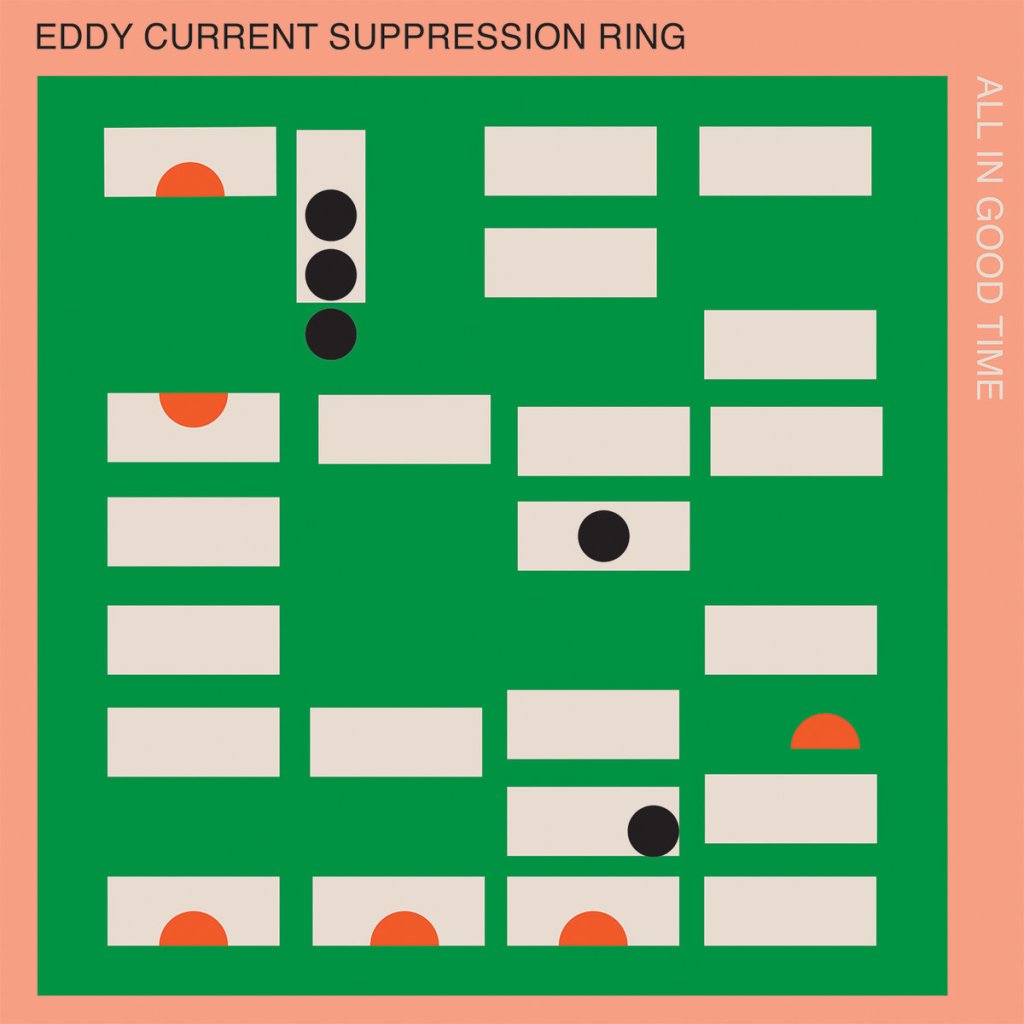
Eddy Current Suppression make stripped-down, barebones, raw, punk, rock n roll. In 2003 they started as friends hanging out making music, all these years later they’re still friends hanging out making music. At the end of last year the Melbourne band released album, All In Good Time, we caught up with guitarist Mikey Young aka Eddy Current to get a little insight into how he came to doing what he does and ECSR.
Why is music important to you?
MIKEY YOUNG: I don’t really know. I can’t remember ever not loving it. I just do and I have no choice. Certain chords and melodies and sounds make me feel so fricken happy and excited and and bummed out and full of regrets.
What inspired you to first pick up a guitar? The first song you learnt was Devo’s “Mongoloid” right?
MY: Yeah that and Peter Gunn Theme in Grade 4 guitar at primary school. Both easy to learn one stringers…once again really not sure why though. Seemed fun to learn I guess. Maybe my bro had started playing drums by then so it seemed logical. I stopped after primary school for a year and a bit then got psyched again in Year 8 and bought an electric.
When you started Eddy Current Suppression Ring I understand that you didn’t really have ambitions or expectations; what’s one of the biggest surprises you’ve experienced over ECSR’s existence?
MY: The whole thing has been a surprise, still is. Even that people cared about a new album and the upcoming shows so much. It may seem naive but we really don’t realise most of the time that people care so much. It’s really nice. Maybe the biggest surprise was the AMP award. I tried to give a speech but I was a mumbling fool. Rob Solid saved the day.
Personally what do you get out of playing live?
MY: I can be overly analytical when playing live, worrying about sound, pockets of the audience, all kinds of things, but when it’s right and I forgot everything and I stop thinking about where I am and what’s happening, that can be pretty glorious. The response from the audience can be pretty overwhelming and heart-warming too. Also, in all my bands, I get to play and travel with my best friends and family. Getting paid to do that is a pretty sweet deal.
After creating music for all these years, what still makes it exciting for you?
MY: Trying to make music I can’t do very well. New toys, new collaborations, probably that the most. Making music with new people is the best thing to kick me out of a slump
What does it mean to you to still be doing ECSR in 2020?
MY: Same as ever. I really longed for that simple approach to music again and I missed hanging out with those dudes. Being in a band is the best way to force me to hang out with my friends, or else I get lazy and reclusive and a year goes by and I haven’t seen people I care about. Jamming over the last year and having no expectation from the outside world was really nice. It’ll be a different kettle of fish playing live again but I feel like it’ll all be ok.
In December last year you released album, All In Good Time; what got you writing? How did it start?
MY: Golden Plains jams in 2016 started some ideas. Then they got shelved for a while and we got busy with other things. Family, work, other bands…Brendan, Brad and I started jamming for a while with a drum machine in a real quiet fashion while Danny was busy and we wrote a bunch of songs. Maybe half the songs from the LP are from that time. Hence the slightly mellower vibe. Over the last year, time opened up for Danny again and we got back into it for real.
What was the concept or significance of All In Good Time’s cover art?
MY: No concept really. My partner Raven painted some shapes as an idea for it when we were struggling to nail something. It was great but a little too painty so we computerised it and made it all blocky and rigid and changed the colours and that’s what came out. It happened really quickly. I like it.
As far as publicity for your work goes; why do you prefer to take a low key approach?
MY: To try my best to not make external things matter. Just make music and the world will take care of the rest. I’m not chasing a career in any band I’m in so I have no need or desire to force what I/we do on the public. I think it’s nice to let people get to something in their own time.
Previously you’ve said that when things with the band get to a certain size you “just want to run away and start something else”; where does this feeling come from?
MY: I’m a wimp and a homebody that doesn’t really want to be a full time rocker. Chasing the joy of starting something new. Small shows are often more fun than big shows. Money talk and contracts make me feel weird sometimes. Not dealing with being in a band and attention as well as I could. All those things and a few more.
As well as being a musician, you’re also a producer; what do you enjoy most about collaborating with other people?
MY: Aaah I don’t know if I’m a producer. I wouldn’t call myself that. Most bands I’ve recorded and mixed, I’ve been pretty hands off and just try to be the engineer and let the band sound like the band. I don’t really inflict my personality and tastes too much on a band unless forced to. I’m not great at being assertive.
Feminist post-punk-synth-pop bratwavers Hearts and Rockets are one of the coolest bands we’ve found in the last few years! This D.I.Y. duo, Kalindy Williams and Kurt Eckhardt, create drum-machine driven grooves that explore the complexity of the human condition and emotional depths. We love their call and response vocals. We love the 808 drum samples. We love that they’re not afraid to voice their opinions and stand up for what they believe. We love that their shows are the most fun! We also love that they’re the nicest people ever!
How did you first come together to create, Hearts and Rockets?
KALINDY WILLIAMS: We had plans to make a band before we moved to Melbourne, and after living here for a year or two we wrote a few songs together and put one of them online called Sirens.
KURT ECKARDT: I had forgotten about that song! After that, we ended up recording 13 songs at home which would become our debut album Dead Beats, though at that point we still hadn’t played anything live.
KW: Initially we told everyone we only wanted to be a house party band, but once we had played our first party, we realised it was really fun so started playing venue shows. Our first gig was at the Old Bar in September 2016 with Jenny McK from Cable Ties at her first solo show, and it was headlined by Piss Factory.
Why is making things important to you?
KE: I have to keep busy, and for a large part of my life that energy was spent on things that weren’t important to me. Making good things keeps me happy, and also serves as a way to cope with anxiety, while still having something to show for it. I also feel like making things like art and music can contribute to your community as a whole in a good way, and if it doesn’t as long as it’s not a negative then it’s OK.
KW: I want to make things I can’t find in the world – if I want a dress I can’t find, I make it, or a photo that doesn’t exist, I take it. It’s the same for songs!
How did you first discover music?
KW: I had an older sister who I thought was ‘cool’, and she listened to ‘cool’ alternative music. Eventually she grew out of it, but I didn’t. As a teenager on the internet I discovered Riot Grrl and it really spoke to me. I felt a connection to it, even though it wasn’t happening anymore I really connected with the Riot Grrl ethics, and music, and making space for and being a woman in the music scene.
KE: Every Saturday my parents would blast records for a few hours downstairs, while my sister played tapes upstairs. I guess I started to love those sounds and still do. I thank my parents for The Eurythmics and Zeppelin, and my sister for The Cramps and Richie Valens, for better or worse. Then my long-lost step-brother, who I’d end up never meeting, started sending me mix tapes when I was about 9. They had stuff like Pixies and Slayer and Dead Kennedys and X-Ray Spex and Husker Du and The Minutemen… those tapes changed my life.
You’ll be releasing a split single soon with Zig Zag; what can you tell us about it?
KW: Zig Zag are a fairly new band, and from their very first show I fell in love with them. I think I even said on the night, “Kurt, we have to work with them on something”. When the opportunity arose for us to be creating a 7”with Psychic Hysteria and Roolette Records, we thought long and hard about who we would want to be on the other side of a split record forever, and Zig Zag popped into our minds.
KE: Yeah we played that first show! It was a 40th anniversary show of the B-52’s debut album that we were organising, and they formed just so they could play! We knew from then on that we’d get along.
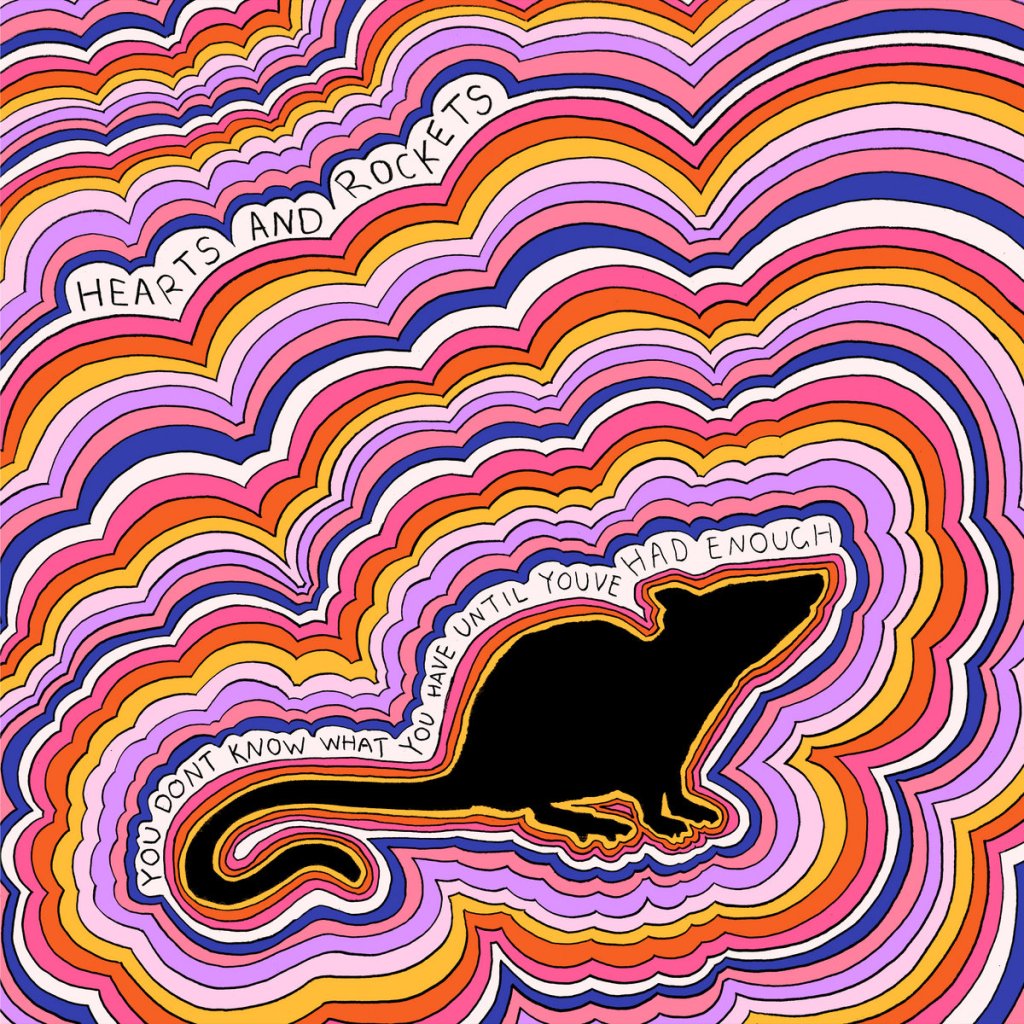
KW: Our song, which we just call Had Enough, started as a whinge-song about how the human race can be really uncaring towards each other. We wrote it when we were at the supermarket and people were being jerks. That song never really went anywhere, so we took that idea and thought a bit more broadly and made Had Enough.
Also, I wanted to talk about your LP, Power; what inspired it?
KW: Using the power you have to uplift yourself and others around you. This can mean voicing your opinions or emotions, creating spaces for people who have less privilege than you do, calling out terrible behaviour when it happens, and hating on gossip.
What are your fondest memories from recording it?
KW: My fondest memories are two songs that we changed completely while we were recording. Firstly, Lies Lies Lies was originally a song I used to sing around the house at Kurt, coz I’m such a grub, called My Grubby Girlfriend. Panic Dream was going to be sung like a normal song, but I did one take singing like a cheerleader on a whim and we listened back and loved it. The juxtaposition between the cheerleader type yelling, and the anxiety inducing lyrics, made for a better song.
KE: We recorded the whole thing at home, partly because we’re broke but mostly because we can. It’s pretty great to be able to record when you want, in a comfortable space, in your own time. There have been takes we haven’t been able to use because you can hear our dog’s collar jingling, which is way cuter than it is annoying, so they’re my favourite memories. That, and when Kalindy would just nail a guitar part even though she’d only just started playing guitar. She shreds on this album!
Hearts & Rockets have a couple of songs about anxiety “Feelings” and “Panic Dream; is anxiety something that you’ve personally dealt with? I ask as it’s something I’ve lived with in my own life and I feel it’s important to have open honest conversations about important stuff like this. Anxiety can be so debilitating. How do you cope?
KE: We both suffer anxiety. I have weird triggers, and if we’re being honest, I often ‘cope’ by drinking beer, which is something that I need to keep in check. Coping is different one day to the next for me, and the only thing I’ve gotten better at or that might help others to discuss, is coming to the realisation that I am in control of my own life (even though it doesn’t always feel like it). If I am finding it too hard to be somewhere, I leave. If the thought of going somewhere is too much, I stay home. This is coming from someone with a lot of privilege and a good relationship and homelife, so I am hyper-aware of how lucky that makes me, but letting go of the imagined expectations of others has really helped me.
KW: When I was younger, one of the things that made anxiety and depression easier was knowing that other people out there are going through similar things. And I feel like making songs like Panic Dream and Feelings, maybe we can be that for other people. I have had frank conversations with people about anxiety and depression since those songs came out, and it’s good to talk about your feelings!
You’ve said that the song “Dance Off” is a call to arms for non-men to start taking up space at the front of gigs; what motivated you to write this song?
KW: Just going to gigs my whole life! Making a safe space for friends and fans to enjoy our music is really important to us. SO many times in my life going to gigs, if I even got to the front of a packed out venue i’m either squished or groped, and people shouldn’t have to go through shit experiences just to see their favourite band. There should and can be space for everyone.
KE: Yeah guys we can do better. Don’t be that guy. #tallboystotheback.
Can you give us a little insight into the song “Haunting”?
KE: That song is actually about the (not real) haunting of me by my Dad’s ghost. He died a few years ago, and it’s really more about feeling like he’s still with me, everywhere I turn. It sounds weird and creepy, but to be honest I find it really comforting. That said, it’s also a funny song, and we like spooky stuff, so I don’t think I’ve ever told that story before!
I really love the song “Hot Tea” which is about gossip. You’ve previously commented that “If people spent half the amount of time and energy that they spend gossiping creating something positive, the world (and Melbourne) would be a much better place to live” … know them feels. What helps you stay positive?
KW: I stay positive by going to shows, seeing friends, making art and seeing bands, and only playing in nice venues with nice people, walking our dog every day, and riding a bike everywhere is super fun.
KE: Staying away from drama. Everything is political, it doesn’t mean you need to involve yourself in the politics of everything. Live your life in a way that benefits your community, directly and indirectly, and support those around you. Pick your battles.
What’s one of the coolest positive things you’ve seen, heard or experienced lately?
KW: Recently we discovered a bunch of animals we never knew existed, and it’s brought us so much joy! That there can still be animals that I’ve never heard of in my life that can be so weird and cool and cute and ugly. Like the Chinese Water Deer – have you seen this thing? It has fangs?! Why? It’s so cute. So let’s look at it and be happy.
KE: Those animals and dogs. Just all dogs bring me joy. I also feel like working with more people in our community on this release has really made me happy and made me feel the love. Working with Carsten and Kahlia from Roolette Records, and all the members of Zig Zag who are all so great and inspirational, has humbled me a bit and made me realise how lucky we are to be a part of a bigger thing than our band.
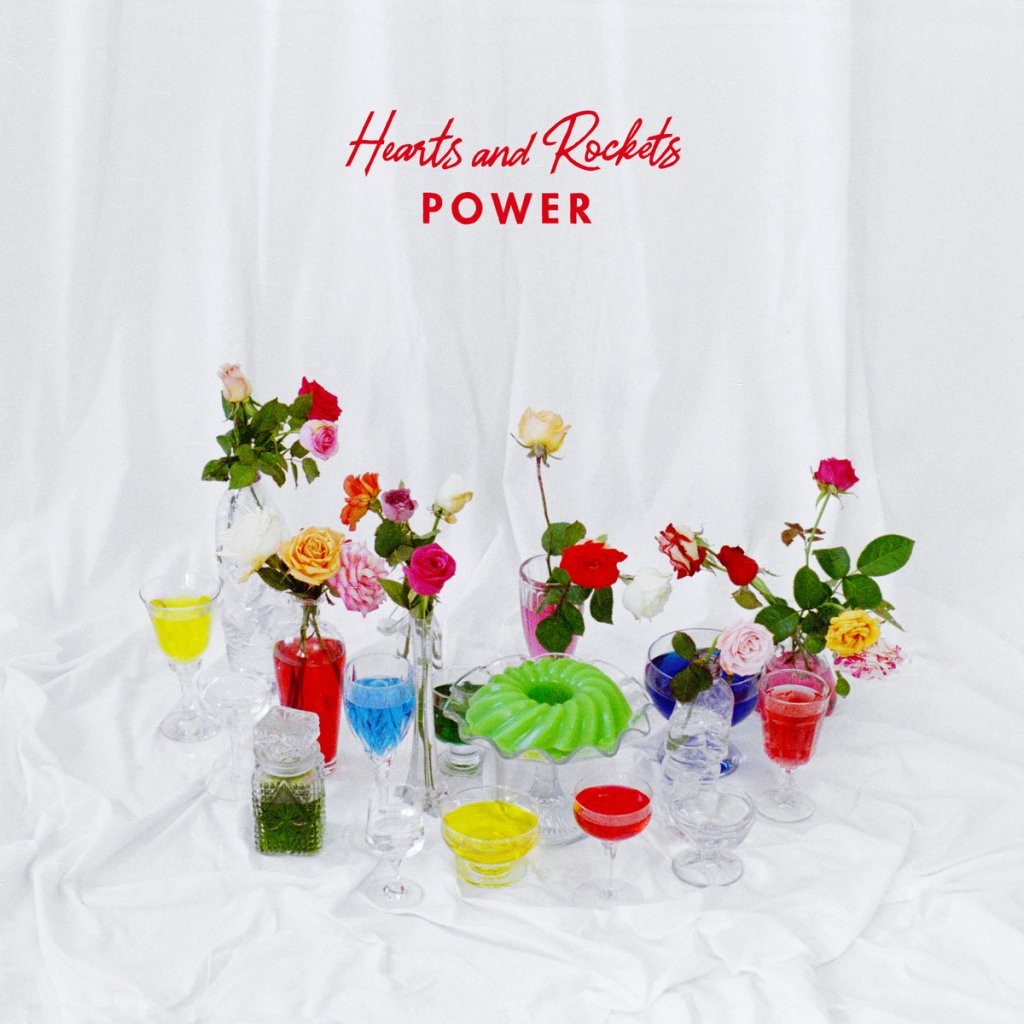
Hearts and Rockets have a strong visual component, your film clips and album art. I especially love Power’s still life photo cover. How did you arrive at this concept?
KW: I make weird art allllll the time. I’m a photographer and illustrator, and it all feeds into each other. I made a series of photos for this album that you can see on our bandcamp, one cover for each song. I wanted to portray something really soft and colourful to show that there can be power in being gentle.
KE: I watched Kalindy go from this vague idea, to such a strong concept. I have zero to do with the visual element of the band and am constantly in awe of it all. I agree with you that it is a huge part of the band. We have so many video clips! One more to come very soon. I feel like the visuals of the band inform decisions more than being informed by them.
Live you perform with a drum machine; is that out of necessity as a guitar/bass two-piece or do you simply prefer that sound?
KW: The reason we have a drum machine is coz it sounds cool, not because we don’t have a drummer.
KE: We just love using those sampled sounds! It suits the music we make, and was a conscious decision from the start. This new single is actually the first release to feature some live drums at the end, performed by Matt Chow who mixed and mastered the release. All our other drums are 808 and 909 samples, some through filters or re-recorded. We feel like getting through that barrier with people who only like or are used to a traditional rock set up with live drums is difficult, but not one that we worry ourselves with. Plus, it makes travelling easy.
You’re self-described as a feminist bratwave punk band; why is it important to be a feminist?
KW: Because the world still sucks for some! There is still inequality, and there shouldn’t be, that’s why you should be a feminist. That’s why everyone should be a feminist.
KE: And while we’ve always identified as feminists, we actually started making a point of it on our Facebook page and other places to deter dude-bro bands from asking us to play with them. We kept getting asked to play these all male punk line ups with bands that were clearly not centring the ideals that we think are important… Like, if us being feminists scares you off then GOOD we don’t wanna play with you. It worked a treat.
What’s something else that’s important to Hearts and Rockets?
KW: Being brats! Existing. Making stuff we’re proud of.
KE: And being active in our community and participating in a positive way. With the state of the world, it’s really all we have.
In the spirit of your album title; where do you find your power?
KW: In myself, I’m powerful! and the people I surround myself with.
KE: Yesss, this. and in seeing people I love and admire do the things they love. That inspires me so much. Hearing that Zig Zag song for the first time.
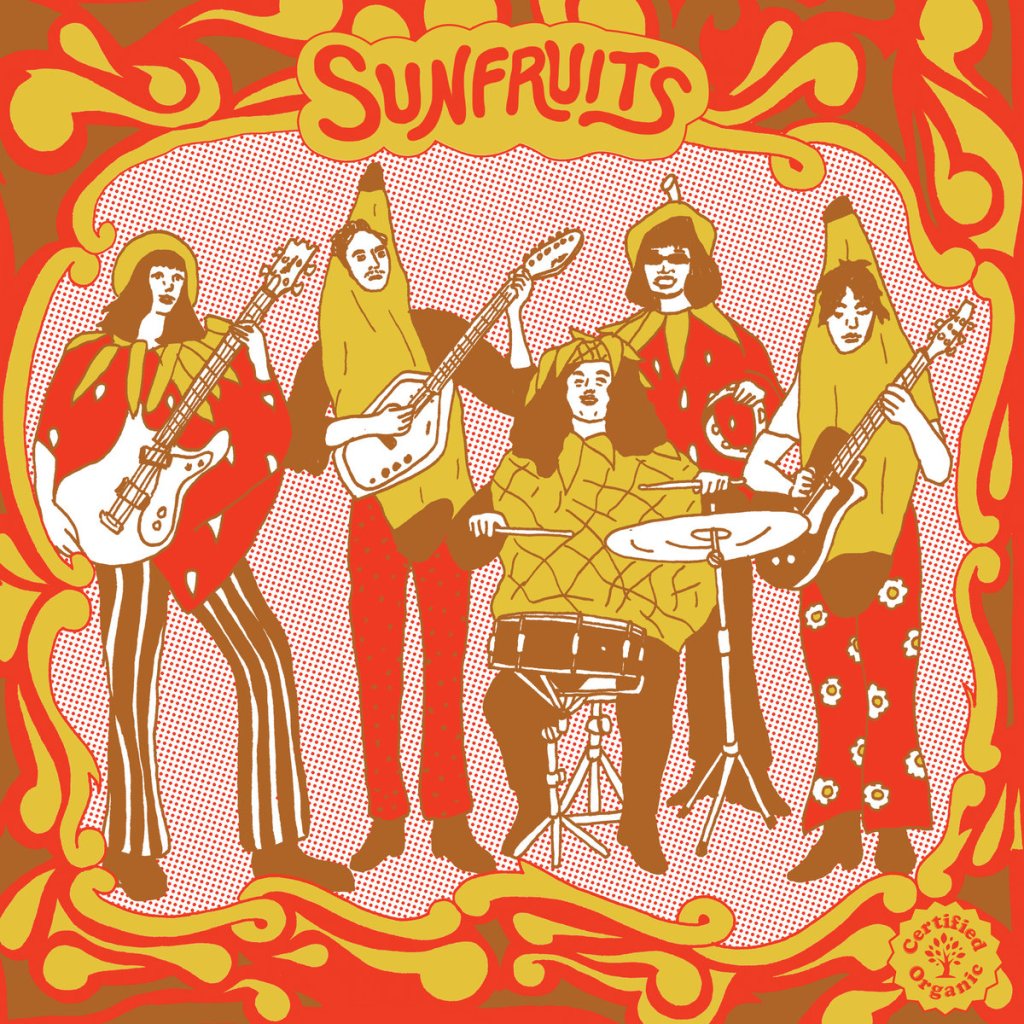
Melbourne band, Sunfruits, are making our world brighter with their sun-soaked ‘60s-pop-psych-rock! Their debut EP Certified Organic is out on Third Eye Stimuli Records (Australia) and also Six Tonnes De Chair (Europe). We interviewed guitarist-vocalist Winnie McQuinn about the EP, climate change, the importance of acknowledging First Nations people, of being thoughtful and staying positive.
Sunfruits have a very ‘60s psych-garage-pop sound; how did you get into this style of music?
WINNIE: We’d all been fans of this style of music prior to coming together in Sunfruits through our parents’ record collections and all the great current bands that are playing music from that sphere. It feels like the genre is moving forward into something new and exciting whilst still keeping the style and roots in the vintage world.
Previously you’ve commented that Sunfruits “are all for a vintage sound with a new message”; what’s your message?
W: We love vintage 60s/70s sounds and aesthetics but are conscious of the fact that that era was full of problems including sexism, racism and conservative values that we aren’t about at all. We want to try and revive the aspects of that culture that we love without the old fashioned values that suck.
What’s something interesting you can tell me about each band member?
W: Gene our drummer has become a bit of a diva whenever we’re touring which we think is directly related to him downloading the astrology app The Pattern… it’s a scary one, proceed with caution. Our bassist Elena is a cryptic crossword queen, our guitarist Evie is the road trip playlist guru aka DJ Hydralyte and I’m angry about the lack of milk alternatives in rural town cafes/petrol stations.
How do Sunfruits’ songs form? Tell us a bit about your process, I’ve heard it can be quite relaxed and free-form/free-flowing.
There’s no particular pattern in which all our songs form but we try to keep it a pretty open process. Winnie will usually come with a basic structure and form which is then jammed with the band. We’re a big fan of stretching songs out when we play them live to give it a bit of a more fun and improvised feel compared to the recordings.
What was the idea behind your new EP title, Certified Organic?
W: We got the idea originally from the Mort Garson “Plantasia” reissue which came with download cards containing seeds that you could plant. I wanted to keep it in a similar vein to the songs and what they’re about and also it’s on a lot of products so the name is easy to remember.
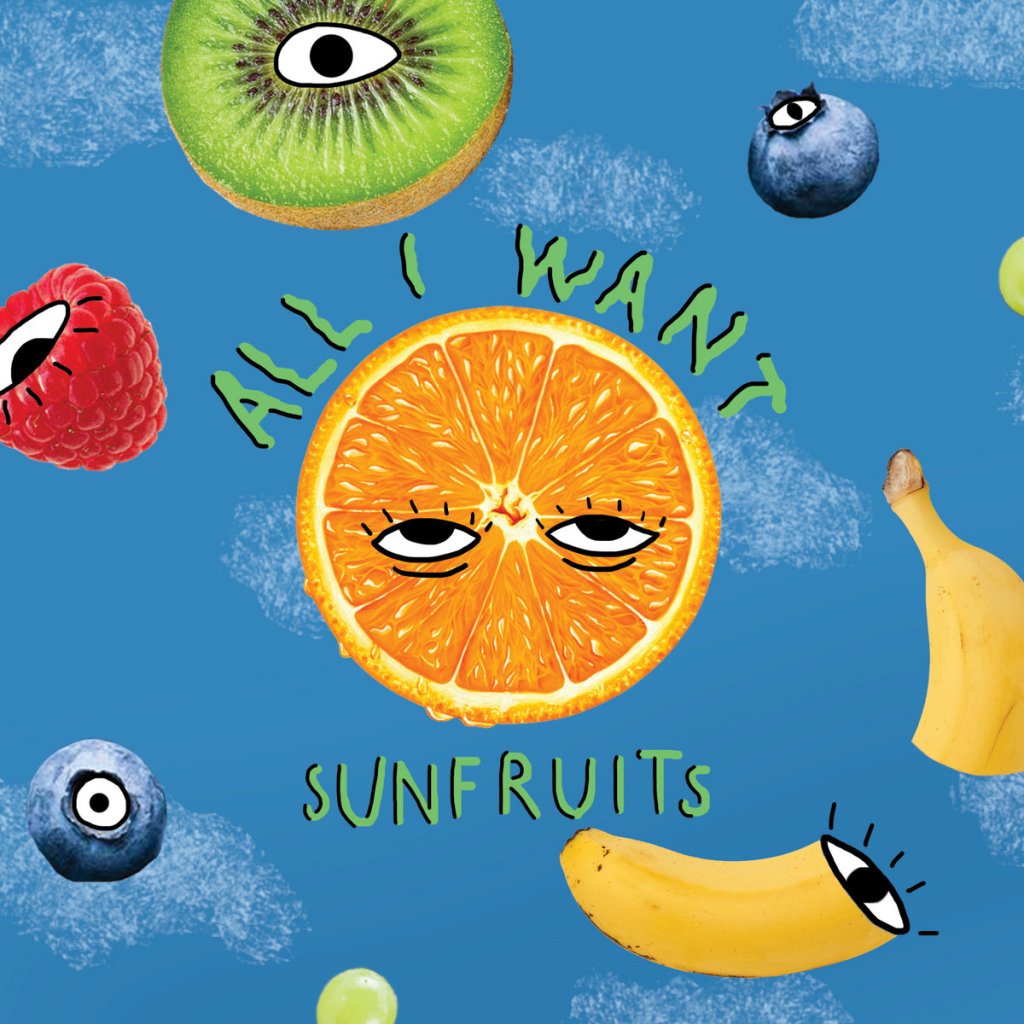
Your first single “All I Want” was about society’s addictions to material possessions and consequences of consumerism; what sparked you off thinking about these kinds of things?
W: I got the idea for the lyrics after a good chat with my Mum – thanks mum – about consuming less and wanting to be more minimalist minded. I think everyone needs to think about how much they consume and what we all really need in life.
“Above The Clouds” is the second single from the EP out on Third Eye Stimuli Records and features French dialogue; what was the inspiration for this? Why did you decided to kick the EP off with this track?
W: Originally we we’re going to have “Sunfruits” as the opener but decided against it after some sound advice from Josh at Third Eye, thanks Josh. We think it kicks off the EP with a bang and sets the tone for the rest. The French monologue was a spur of the moment thing that sounded good, big shout out to Acacia’s sister Minnie for the great selection of words and delivering it with style.
Environmental themes come up in Sunfruits’ music, for example “Forest” talks to climate change; why is this an important topic for you?
W: It’s the biggest issue of our time and holds so many other issues under its umbrella. It’s always in the back of my mind so when it comes to writing lyrics I feel as though I can’t really write about anything else. It also feels cathartic to talk and write music about it as a way of doing something to help raise awareness and to combat it.
Tell us about the art for Certified Organic? Who did it?
W: The art was a collab between our very own Shelby, our label big dog Josh and good pal Luke. The main image is an illustration of a photo that our friend Ivy took at a music video shoot. They all did a great job and we’re super happy with it.
You acknowledged that your EP and all your music is made and recorded on Wurundjeri indigenous land of people from the Kulin nation and pay our respects to elders past present and emerging; why is this essential for you to do? As a First Nations woman myself, this means a lot.
W: We feel as though recognising and acknowledging the history of this country is so important. We want to try our best to support and fight for First Nations issues and rights. We are ultimately benefiting off of stolen land and the least people in the music world and bands can do is acknowledge that, realise our privileges and support First Nation issues and rights. It’s also super important to recognise that First Nations justice is climate justice as the two are inextricably linked.
Despite the serious issues the planet is facing that you sing about, I feel your music still inspires the listener to stay positive; what are some things you do to stay positive?
W: That’s exactly what we’re trying to do, inspire positivity and energy to act in the face of this existential crisis as that’s what we gotta do. Get involved in a sustainable activity no matter how big or small, it does wonders for your mental health and contributes to the fight against the climate crisis. A single action when multiplied by billions has a significant effect.
What bands have you been listening to lately?
W: We’ve been loving local heroes Eggy, Snowy band, Zoe Fox and The Rocket Clocks, Parsnip and also been diving into 70s disco pretty heavily as well.
What’s next for Sunfruits?
W: We’ve got some great shows coming up that we’re excited for, a new era has dawned in Sunfruits as well with Elena and Evie jumping on bass and guitar, we’re currently writing and recording an album which will hopefully be out early next year. Expect new music from that before the end of the year.
Billy has put out some of the Gimmie Team’s favourite Australian underground releases of the past several years on his label Anti Fade Records (you can check out some of AF’s catalogue HERE). AF is one of only a handful of independent Australian labels that avid record collector and music aficionado Henry Rollins buys anything from—“I like what they do,” Rollins’ has said. Us too! Billy plays in Ausmuteants, The Living Eyes, Cereal Killer and Smarts. We thought Billy was the perfect person to chat to, kicking off our chats with Australian artists who we think should be celebrated!
We love Anti-Fade Records, a lot of our favourite releases of 2019 have come out on your label.
BILLY: Awww sick! Thank you so much for getting in touch. I feel very blessed, I have a lot of close friends making music.
Right now we think Australia has some of the best music in the world, most diverse too, all the bands on your roster have their own thing happening.
BILLY: There’s a bunch of different things, the new Program record I’m putting out is a little different.
How did you first discover music?
BILLY: I have knowledgeable parents, they were always playing me music from a young age. Particularly my dad, he played in bands when he was my age. Both mum and dad taught me heaps about music, so I guess there.
What was the first stuff that you started to discover for yourself?
BILLY: In high school I got heaps into ‘60s garage through The Frowning Clouds guys, we went to the same school as them. They were into ‘60s garage stuff and I picked up on all of this.
Your band, The Living Eyes, that’s a reference from the ‘60s garage band, The 13th Floor Elevators, right?
BILLY: Yeah, everyone thinks it’s a Radio Birdman reference but deep down it’s 13th Floor Elevators [laughs].
Artwork by Paris Richens.
I love that band.
BILLY: They’re the best!
Did you start playing drums first?
BILLY: Yeah, I started playing drums really early, I think in grade 6. I gave it up for ages and came back to it in Grade 11 or 12. I kind of picked it up again properly when Ausmuteants stared in 2011. Drums were the first instrument for me but they got neglected for a few years.
What started you off playing them again?
BILLY: Me and Jake from Ausmuteants started the band as a two-piece that we would just do in the bedroom. We’d swap between playing keyboard and guitar and the other person playing drums. Once it came to doing the live band we decided we had to pick instruments. I volunteered to play drums, because I felt Jake was writing most of the songs anyway; as it went on it just way more sense like that.
You’ve been doing Anti-Fade since 2011-2012?
BILLY: Yeah right at the end of 2011 I first started, I made plans for it, two days before Christmas I put out one cassette. In 2012 was when it really started rolling, there was actual record releases.
Why did you start the label?
BILLY: New Centre Of The Universe, I had the idea to do a compilation before I had the idea to do a label. I remember getting the idea for it one night, I spent so long thinking about it and the possibilities—I got really excited about it! I started talking about the label idea and I put out four cassettes of friends’ bands – Ausmuteants were one of them. Centre Of The Universe came out in 2012. The first eight months or so were just getting things together.
When you first starting out did you find it hard to deal with people because you were so new?
BILLY: I suppose so. I was asking a lot of people that I knew that did labels for their advice and tips. I have three handy friends that helped me out with all of that stuff at the time, which made things way easier.
What was a tip that you got that was super helpful?
BILLY: At first my idea was to press this many records but then my friend talked me down to only press 300 instead of 500 because this market isn’t as big as it might seem. That was pretty good advice, I’m glad I didn’t press 500 of the first bunch of releases.
I understand it took you months to get the latest New Centre Of The Universe track list done?
BILLY: Yeah it took ages! The whole process of the comp took at least a year. I did spend quite a while with that track list. Track lists are getting more and more important to me as I get older [laughs]. I was happy with the end result. I kept changing my mind about track two on each side.
What makes track lists more important to you now?
BILLY: I’ve just been noticing things a bit more. I think it can add a lot to a record, choosing a really good order as opposed to a bad one—it has to flow.
Artwork by Carolyn Hawkins.
I get that, I make a lot of mix tapes for friends and there’s different moods and peaks etc. to consider.
BILLY: You know how important it is then.
Yes. Now Anti-Fade is sixty-one releases in?
BILLY: Yeah, jesus! It sounds crazy when you say it. I feel like the last two years have been really good and I’m stoked with how it is going. I feel very blessed that all of my talented friends let me release their stuff. Pretty much everyone on the label is a close friend, there’s not really any strangers or people that approach me out of the blue.
That’s nice that it’s all friends.
BILLY: I’m really lucky!
Has there been a release on Anti-Fade that’s been really significant for you?
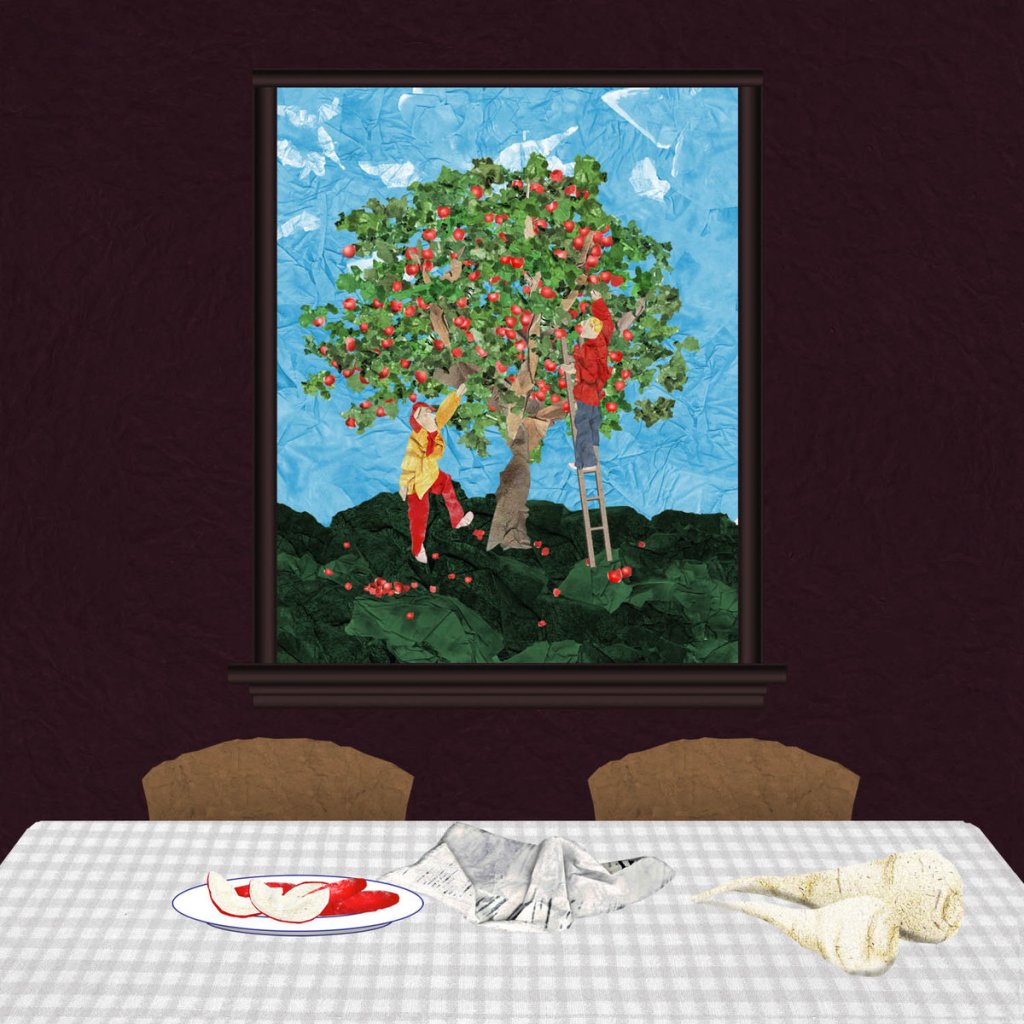
BILLY: The Parsnip album [When The Tree Bears Fruit] that has just come out is a big one! It’s something that has been in the works for a few years. I wasn’t expecting the opportunity to release it. I was over the moon when they asked me to do that. I also feel like the debut Civic record was pretty important. Both of those bands have been the two main ones revolving around the label for the last two years, both kicking goals big time.
Art by Paris Richens.
What do you have in the works that you can tell me about?
BILLY: There’s a few things next year, a lot of split releases, another label will be doing it in Europe or America and I’ll be doing it in Australia. There’s lots of good albums coming, I’ll leave it at that [laughs].
I totally trust your taste in bands, we’ve bought most of the releases on your label, except for the early stuff we missed out on.
BILLY: Nice! Thank you.
Are there any local songwriters that inspire you?
BILLY: There’s a bunch. The people that I play in bands with, Jake Robertson [Ausmuteants/School Damage/Alien Nosejob/Hierophants/Aarght Records] is one. A long term friend – who I don’t play in a band with – Zak Olsen [Orb/Traffik Island/Hierophants]. These are people that I’ve grown up with. Also, Paris Richens [Parsnip/Hierophants/ PP Rebel] always blows me away with her songs. That’s just three, there’s more out there.
I’d pick the same! As well Albert Wolski of EKEK—that new record is incredible. I also super love The Snakes. I love Hierophants, their record, Spitting Out Moonlight, is mega!And I love New War’s records.
Cover art by Eve Dadd. Layout by David Forcier.
BILLY: That’s awesome! I just made this connection, all of the people I mentioned are in Hierophants! [laughs]. There you go! They’re a meeting of the minds.
Songs on that record are so clever. I listen to the songs and I’m like, how did you even write that?!
BILLY: [Laughs] Yeah I know! So many great ones.
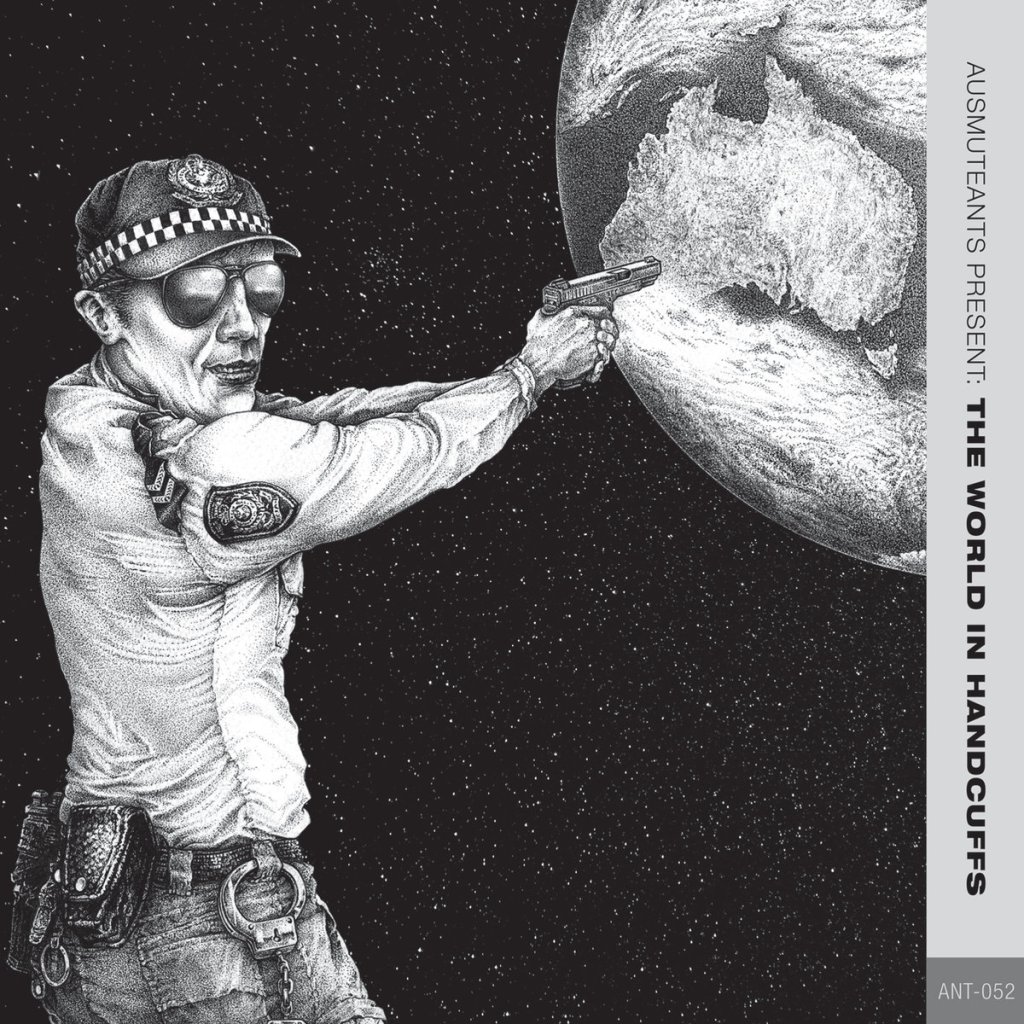
Another album I really love from this year is your band Ausmusteants’ …Present The World In Handcuffs.
BILLY: Oh, sweet!
A funny thing is, that when me and my husband see cops when we’re out and about, we get some of the lyrics in our head!
BILLY: [Laughs] That’s funny as!
You know like [singing]: My dad was a cop!
Billy: [Laughs] That’s hilarious!
Artwork by Per Bystrom.
It’s funny how your brain can just connect stuff to songs. I think I’m such a music nerd my mind can connect most things to song.
BILLY: I’m gonna tell Shawn [Connor] the guy that wrote the record, he’ll love it!
When he brought that concept – a concept album that explores a piss-take look on life from the perspective of a police officer – for the songs to you guys; what was your first impression?
BILLY: He came with a set of lyrics to the song “We’re Cops” which is from 2015. He wrote the lyrics and the riff to that, a year or so later he toyed with the idea of writing a part two to it. He wrote a part two and then three and then a whole new album. It took him a while, he was chipping away at that as Jake was writing other songs for the band. So it started in 2015 and we finally put it out this year.
What’sbeen one of your favourite songs to come out this year?
BILLY: Holy moly! That’s a tough one…
Or something you’ve been obsessed with listening to recently?
BILLY: I discovered, New Values, by Iggy Pop. I’m having a blank here though… I can’t even think right now.
Henry Rollins often plays a lot of Anti-Fade bands on his radio show…
BILLY: Yeah he played three on his most recent one!
He really has his finger on the pulse when it comes to great new music, especially Australian stuff.
BILLY: He’s totally on to it. I have never met him but I’ve emailed with him a few times, he’s a cool guy.
He is. I’ve interviewed him several times over the years. He’s always lovely. The one thing that has always stuck with me about him is that he is the biggest fan of music!
BILLY: He came to an Ausmuteants show once actually. I was standing next to him, everyone was going up to him and hassling him but I didn’t want to do that. It was cool that he came!
You should totally talk to him next time, ‘cause he is such a fan boy of music and bands himself, he totally understands that.
BILLY: When I talked to him on email he said that too.
What’s the best live show you’ve seen lately?
BILLY: The launch for the new Parsnip record.
Man, I would have loved to have seen that! Now they’re in the US, right?
BILLY: Yeah. I found out this morning that they’re all safely there.
Do you ever get stressed when bands on your label tour overseas?
BILLY: Yeah. There’s been a couple of little scares…
Like the EXEK van rolling in Europe?!
BILLY: Yeah, that was wild. I still don’t know exactly what happen there. They’re back on the road again now, I look forward to speaking to them about it when they get back, I’ve only heard dribs and drabs about it.
Cover photo by Robyn Daly. Layout by Ying-Li Hooi.
Last question, what do you want people to know about Anti-Fade in general?
BILLY: It’s a small little thing that I run out of my bedroom, all the bands involved are my friends.
Do you have lots of stock boxes crammed in your room?
BILLY: Yeah, under my bed, beside my bed… there’s a lot! [laughs].










 Gimmie Gimmie Gimmie Zine