Mystery Guest: “Inspired by Sun Ra and the musical output of cults like The Source Family in the 70s”

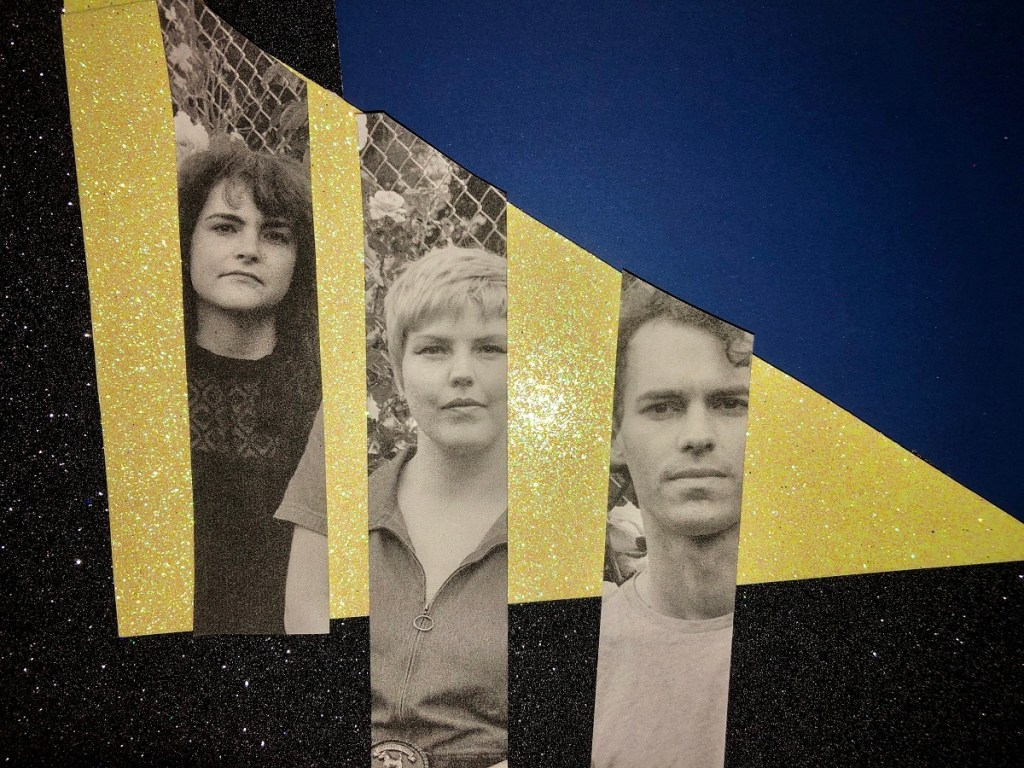
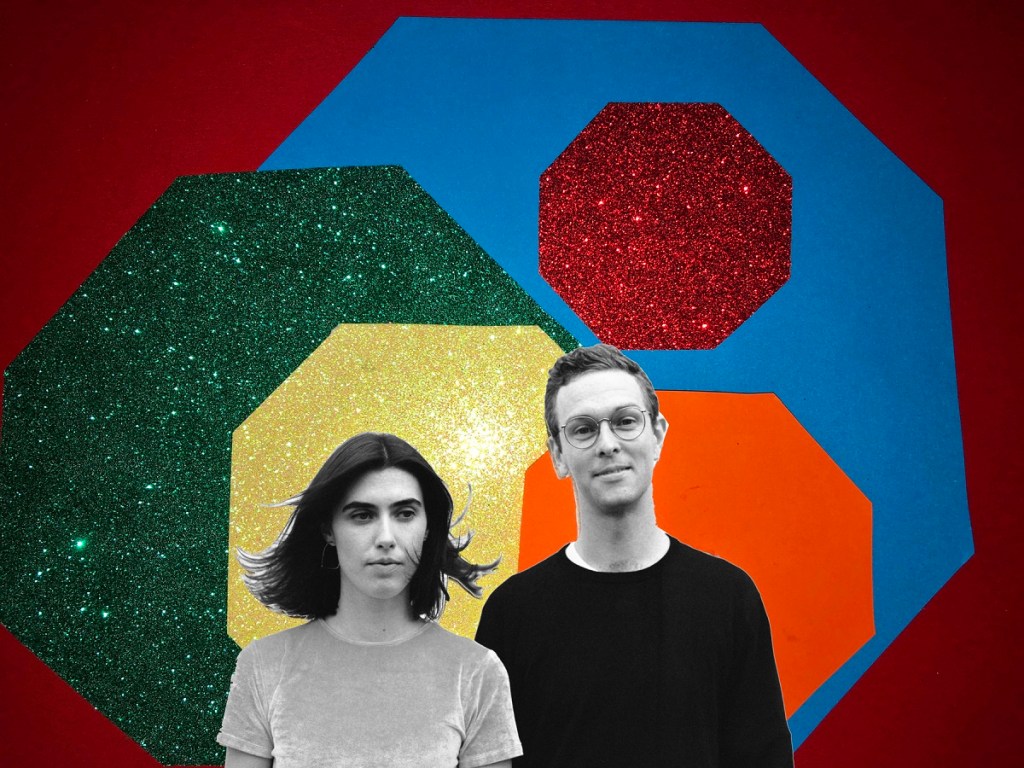
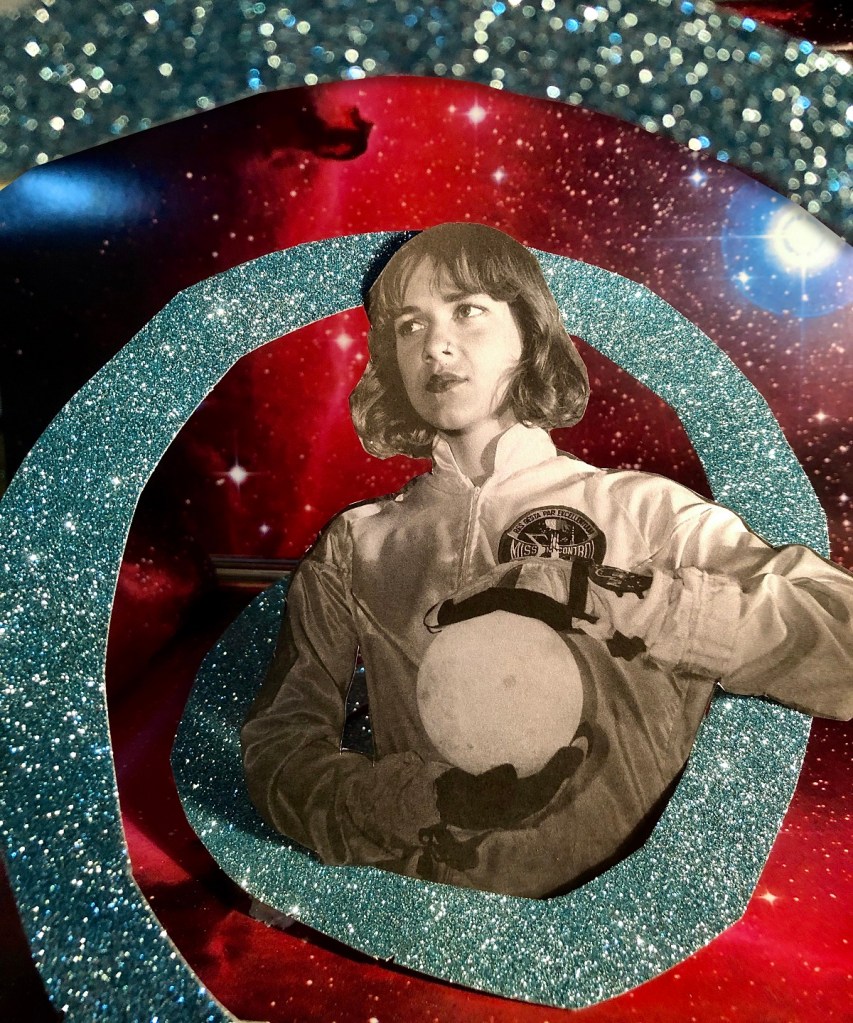
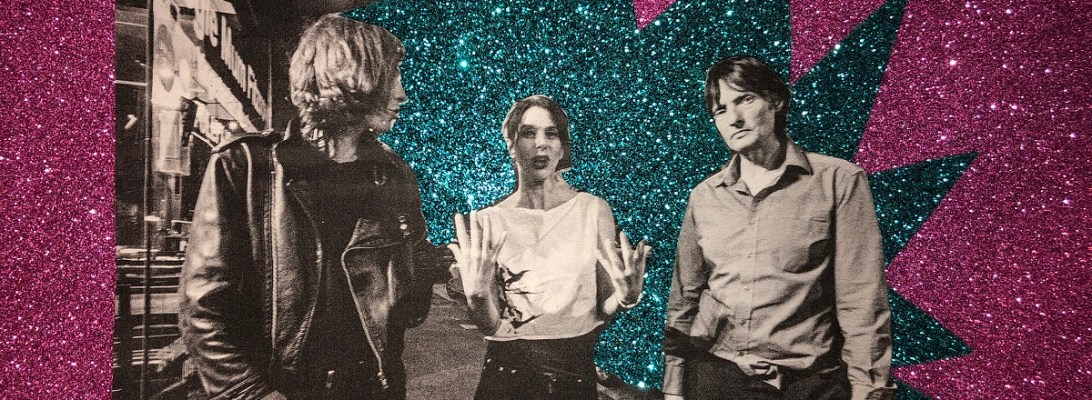
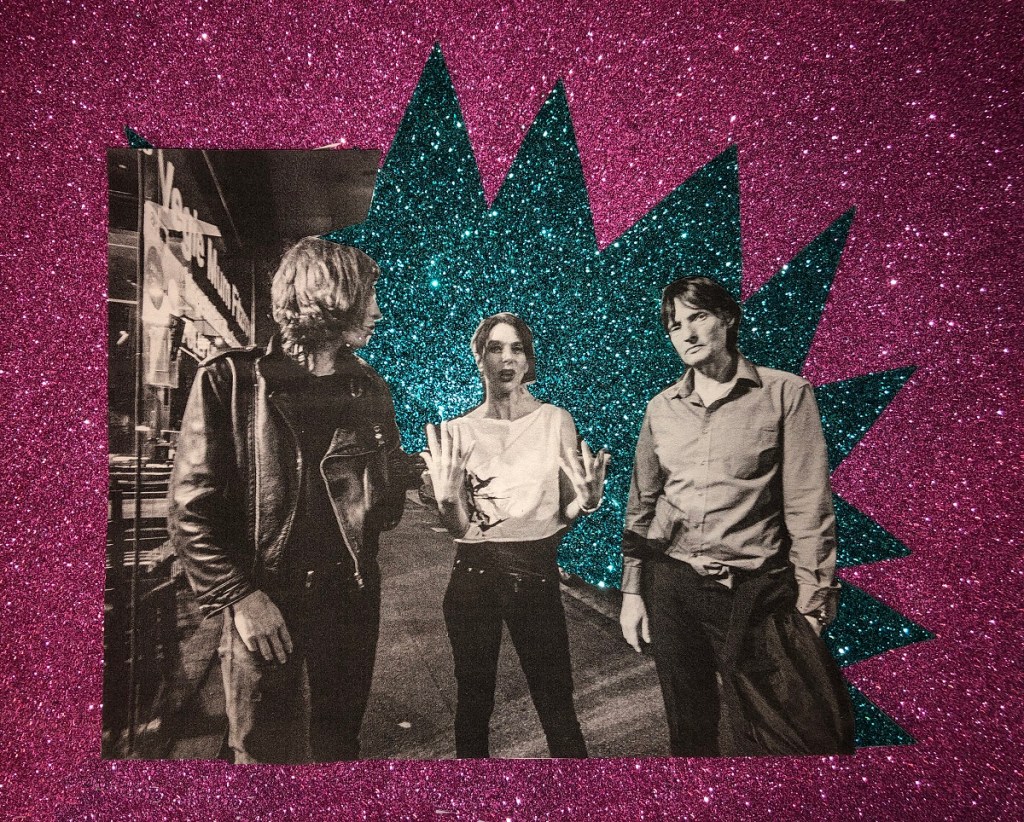
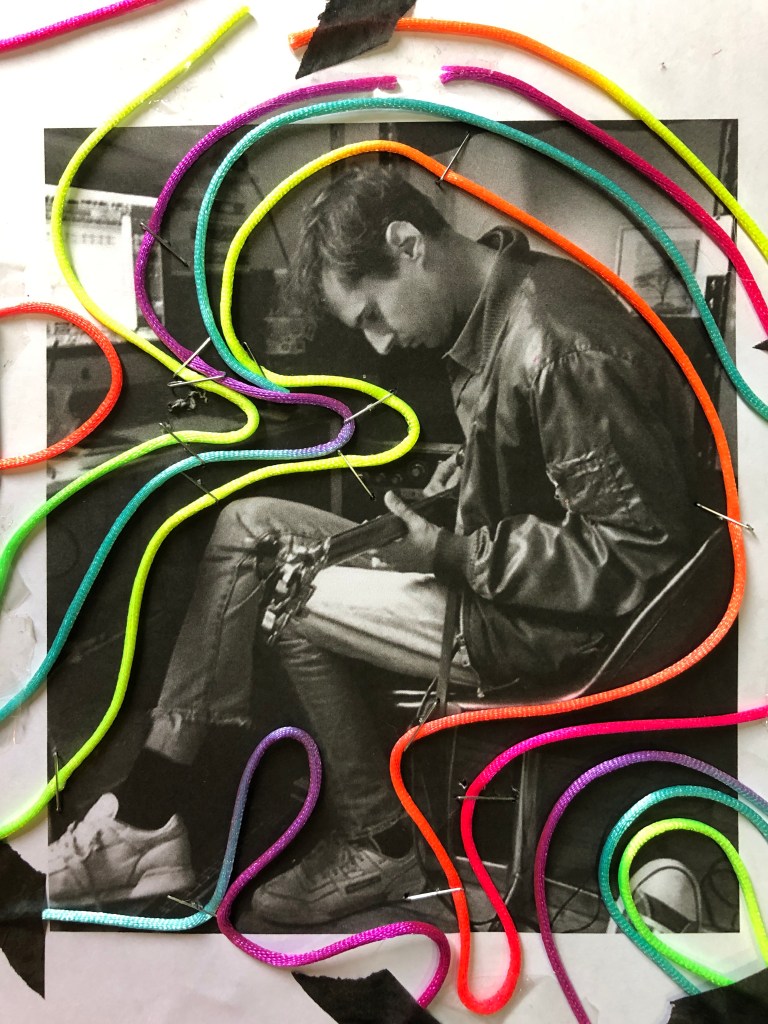
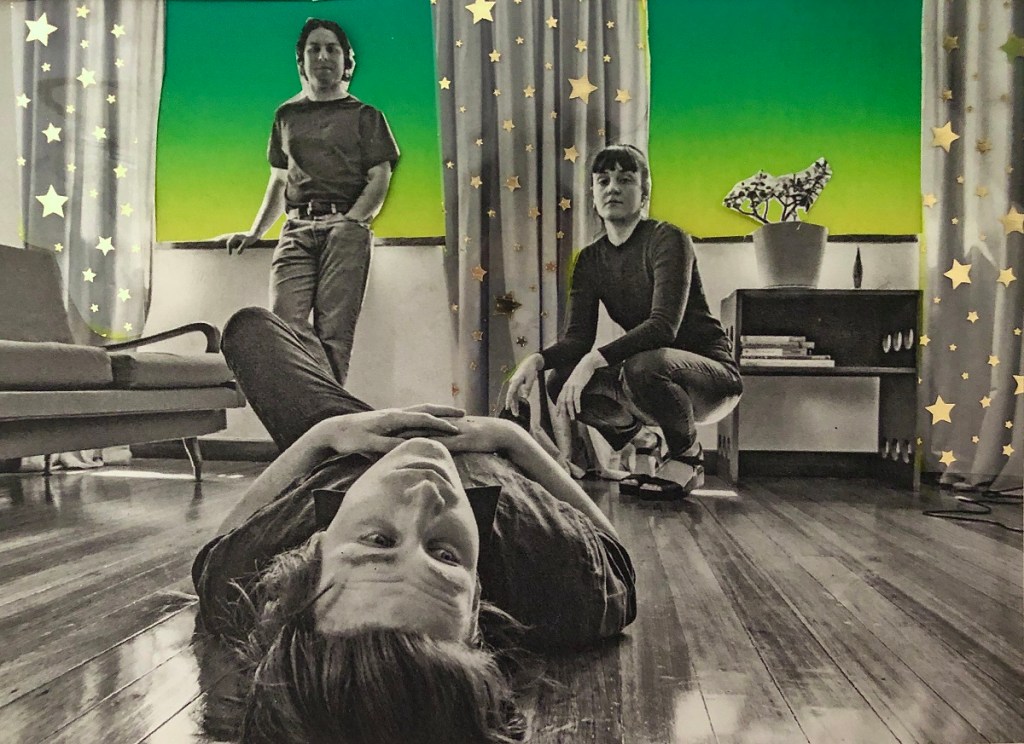
Original photo by Louis Roach. Handmade collage by B.

Retro-futurist pop duo Mystery Guest from Melbourne have just released their first album – Octagon City – on Tenth Court Records. The album is an interesting electronic, minimal-synth record, born out of a genuine curiosity to explore sounds in the studio. Throughout the record we are given heavy doses of a Bene Gesserit, ADN’ Ckrystall, SSQ type 80’s vibe (with the monologue on the album’s opener and title track reminding us of Algebra Suicide), though updated with their own style, clearly informed by post-80’s club culture. We interviewed Mystery Guests’ Patrick Telfer and Caitlyn Lesiuk to learn more about their LP and creative journey.

Can you tell us about your creative journey; how did you first come to playing music?

PATRICK TELFER: I was always interested in the process of music making, but only started doing this after school: I got hold of a Roland hard disk recorder—a VS880—which was really,really cool. I would make silly music with friends as a form of entertaining ourselves, call it “experimental music” and never show it to anyone.

CAITLYN LESIUK: I had piano lessons as a kid, but really started getting excited about music when I got my first guitar. There was something fascinating about not knowing what the “notes” were in the traditional sense: I loved learning shapes and experimenting with them.

Did you have any favourite bands or musicians growing up?

PT: The Beatles is the one that I always come back to! Also Wu-Tang Clan.

CL: My most enduring musical obsession has been with ABBA.

How did Mystery Guest come to be?

PT: It was a project based entirely on a curiosity about the potential of using a studio – it was our first experience of a proper commercial recording studio and we had a lot of fun playing with different sounds and methods of production.

CL: We had played in bands together before, and were both interested in creating music outside the traditional “bass/drums/guitar” format.

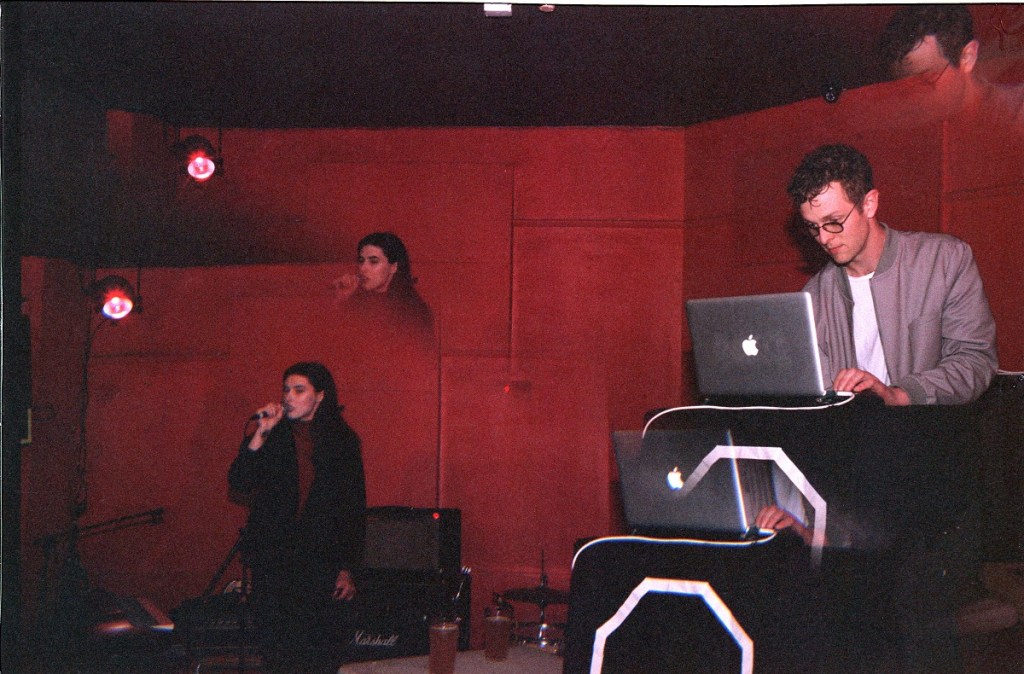
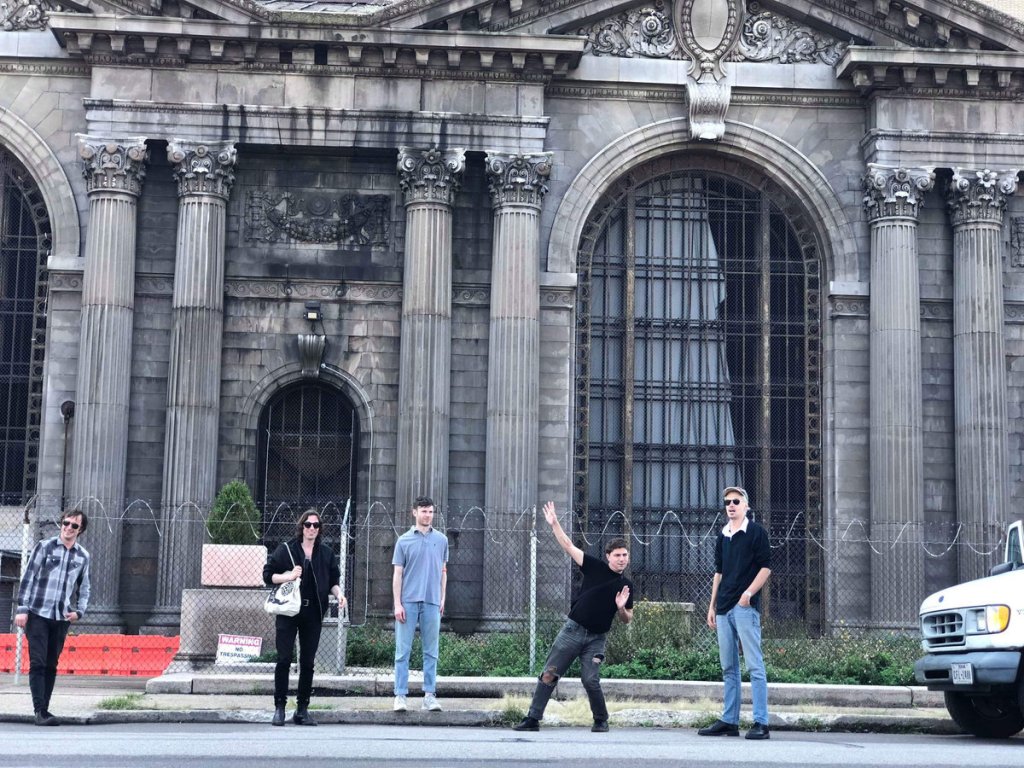
Photo: Louis Roach.

What kind of headspace were you in writing and recording your new record, Octagon City?

PT: It was just pure clarity and bliss.

CL: I was somewhat trepidatious because I’d never recorded my own songs before, but it was an overwhelmingly positive experience.

What was the vision you had for the record?

PL: The vision I had for the record was completely surpassed by my incredible collaborators. There’s so much talent in everyone and I feel really lucky to have collected this much of it around me for enough time to make music out of it.

CL: I wanted to explore the idea of making a “musical manifesto”  in the vein of albums like Tropicália: ou Panis et Circencis. I felt inspired by Sun Ra and the musical output of cults like The Source Family in the ’70s.

You’re a duo; can you tell me about your dynamic and how you work together? What’s your songwriting process?

PT: A lot of the time I think of a song I like and say ‘let’s make that’. I’ve always had this idea that even if you set out to directly replicate something, the end product will be far enough away from the original that you can truly say it’s a new thing. It’s an interesting way to work – there’s nothing new!

CL: Aside from “The Day Lou Died” and “Moon Moon”, Pat would send me a beat and I’d take that away and start thinking about lyrics and melodies, and the song would start to take shape as we passed it back and forth. I hadn’t ever written songs like that before (or since), but it was an interesting process.

When do you feel most creative?

PT: When I’m happy. I find that my mental health is a little too linked to the quality—as I perceive it—of my current work.

CL: I’m only creative when I have to be, when there’s a deadline… whether that’s self-imposed or coming from somewhere else. I guess I’m still waiting to be touched by the muse.

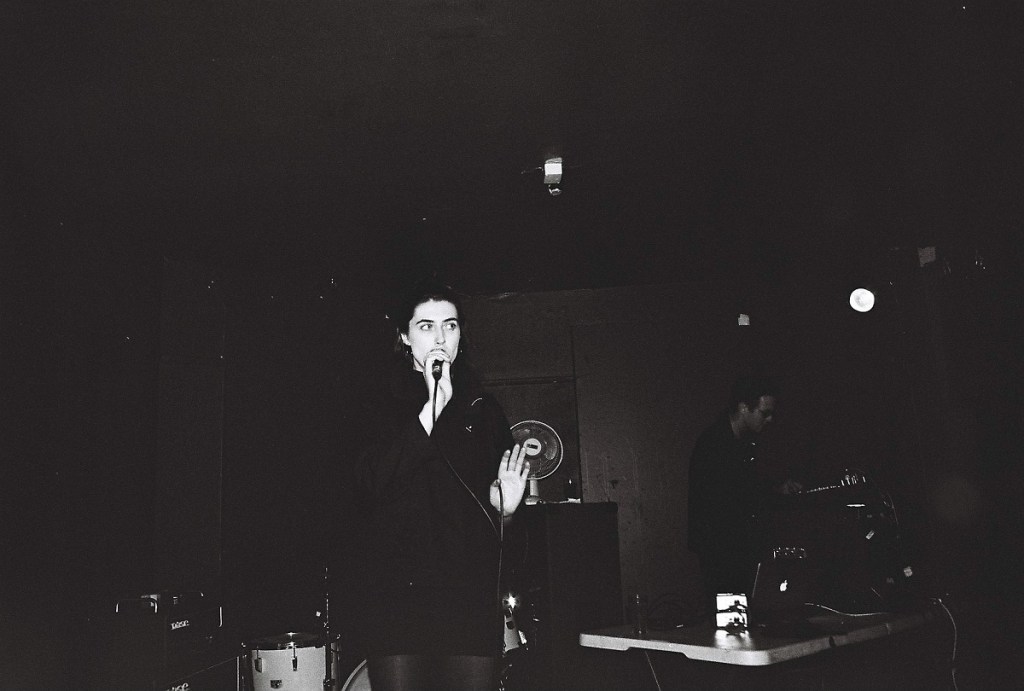
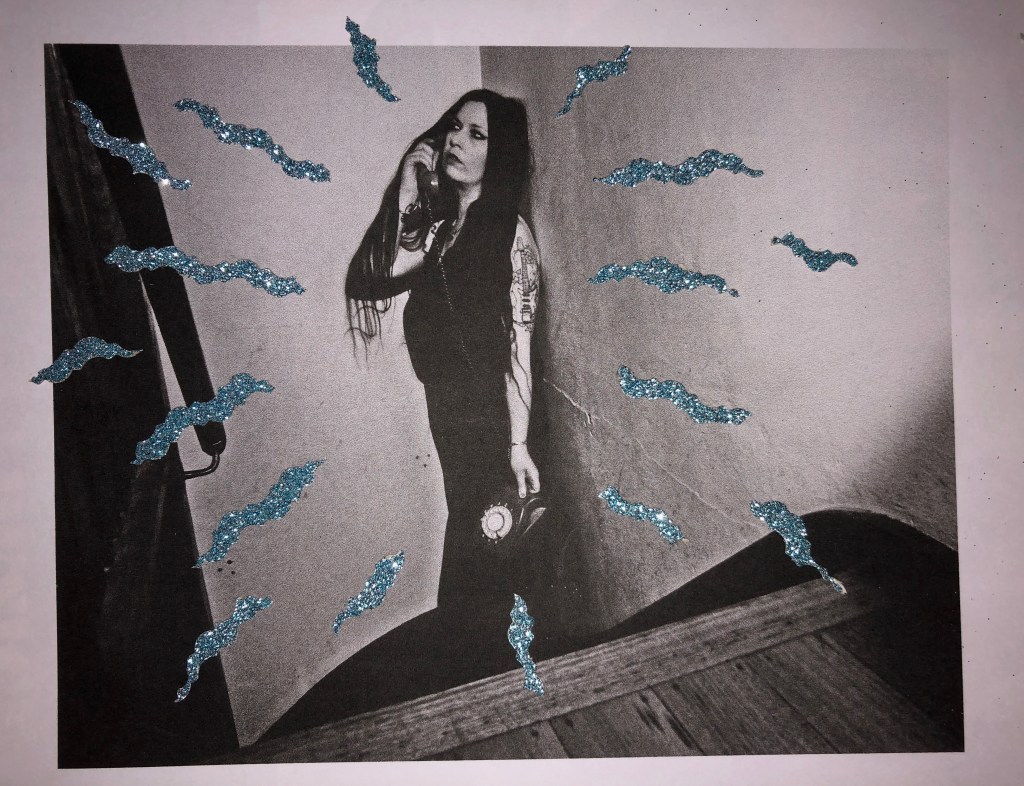
Photo: Kurt Eckardt.

I love all the electronic sounds in your music; what’s one of your favourite sounds?

PT: White noise has it all! Every frequency is represented. I have a friend who taught me the healing qualities of white noise when it is filtered to sound like the ocean.. like a perfectly symmetrical ocean.

CL: The Mellotron (an early 70s version of a synth made using tape). It’s such an amazing hybrid of old and cutting edge technology of the time.

Do lyrics come easy for you or do you have to work at it?

PT: I don’t ever even try any more!

CL: I try not to get too hung up on lyrics: if I can’t think of anything, I’ll look for an interesting reference in a book or image, and write about that. I wouldn’t say they come easy, but I’m mindful of spending too much time slaving over them.

What inspired the song “The Day Lou Died”?

CL: The Day Lou Died is riffing on a poem by Frank O’Hara about Billie Holiday called “The Day Lady Died”. The lyrics—taken literally—are quite dramatic I suppose: they’re about killing pop stars because it provides the opportunity to reminisce with an old love on the music that you shared. I was also trying to emulate the form and melodrama of songs by The Shangri-Las.

How did you feel when in the middle of creating the record? Were there any challenges?

PT: Knowing when to stop is a challenge! There’s always one more thing you could add… 

CL: Because we’d never played the songs live, and were writing a fair few of them in the studio

What’s the most unexpected thing that’s happened on your music-making adventures so far?

PT: Caitlyn Leisuk.

CL: For want of anything else to do, I often walk around off stage when performing with a double mic lead. I never anticipated I’d perform in such an ostentatious way.  

As well as doing Mystery Guest you also both created, Little Music Lab, a program for children 4 – 12 years old with a focus on learning and play through music technology; what inspired this?

PT: I’ve always worked with kids, for a long time in childcares and kindergartens. I find it to be so rewarding to engage with really young people. There are so many interesting perspectives and ideas that emerge when you enter into a conversation with a child with a really open mindedly. They can be so creative and weird and crazy.. I’ve always got along well with them and music is such a powerful language to communicate with.

Electronic, technological music opens up even more interesting avenues as this can level the playing field in terms of creating music without the need for years of disciplined rehearsal of theory and technique.

CL: I was interested in giving the kids instruments that were thoughtfully (diatonically) tuned, to avoid the kind of cacophony you get when you have a whole class haphazardly playing xylophones and ukuleles in regular tuning. If you set them up for success, even the youngest, least dexterous humans among us can make cool music.

Photo: Louis Roach.

What’s your best non-musical skill?

PT: Cooking.

CL: Philosophising.

Why is music important to you?

PT: Music is important because it opens up new ways to communicate with people. It’s a really good vessel for expression – and it’s so suppressed in our culture – we’re all dying to sing but we almost never do. I mean aren’t we? Or is that just me?

CL: Because it creates community. That was one interesting aspect of exploring a fictional cult: in the absence of organised religion, music is a forum for bringing people together in a shared experience.

Please check out: MYSTERY GUEST. Get Octagon City on TENTH COURT Records. MG on Facebook. MG on Instagram.
Zoë Fox And The Rocket Clocks: “I’ve been writing about this relationship between humans and technology”

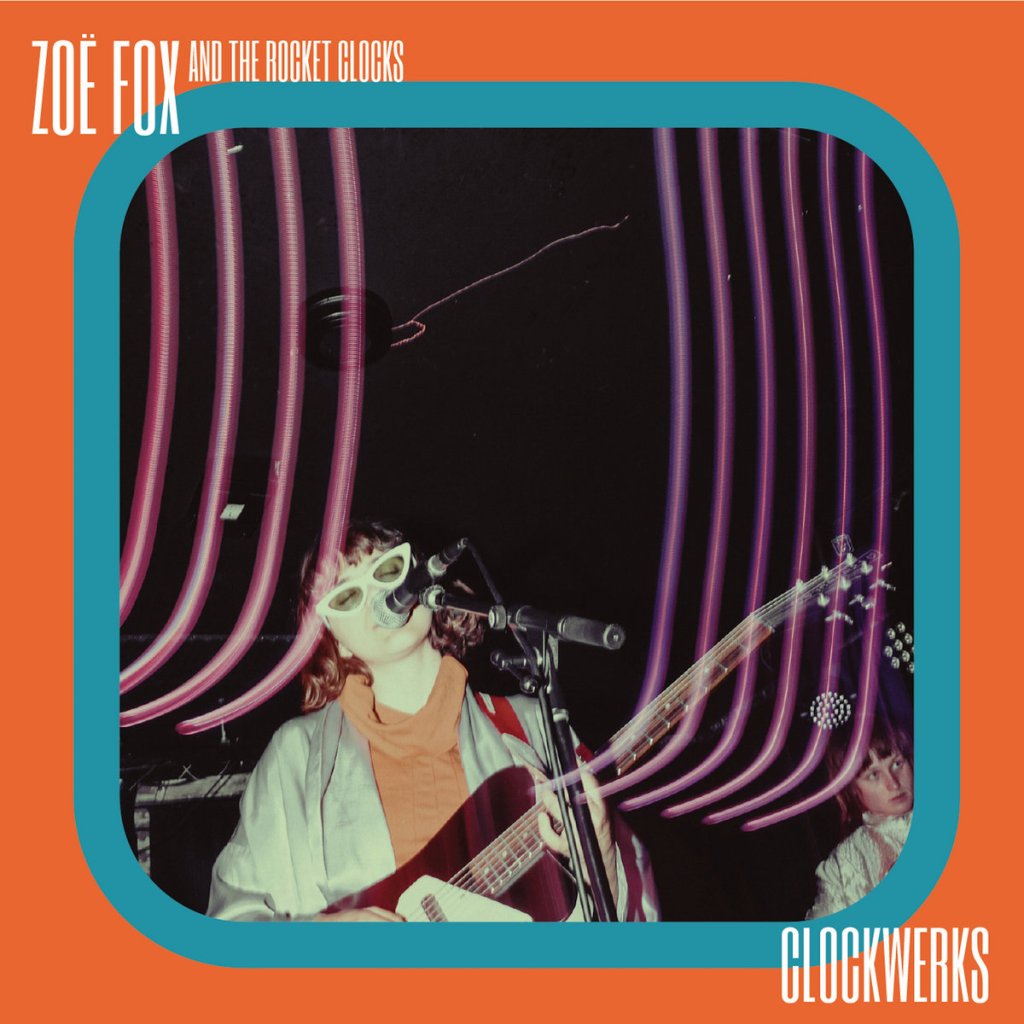
Handmade mixed-media collage by B.

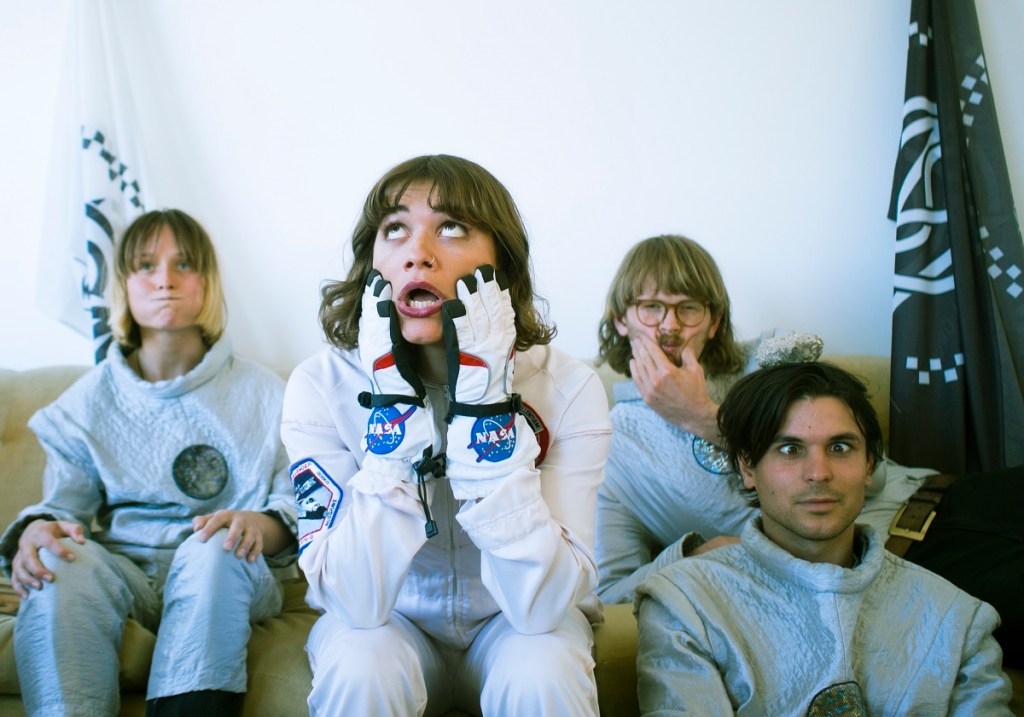
Melbourne-based singer and multi-instrumental Zoë Fox has released her debut album Clockwerks, an out of this world collection of intergalactic pop! It’s exciting, it’s fun, and it’ll make you dance. Zoë’s album launch was postponed due to the global pandemic we’re all living in right now, she took her music to live streaming via her Instagram stories and totally killed it!—she does live stream like no one else does. We chatted this week to get the lowdown on her LP and found Zoë to be warm and charming, funny and a fellow book lover! Maybe Zoë’s next project should be an online book club! We’d sign up for that!

How did you first get into music?

ZF: We always had a music room in our house when we were growing up, we were so lucky. My mum was in a bunch of different bands, so I was surrounded by it from a very early age. All of my favourite children’s entertainers when I was a kid were my biggest influences. I started writing songs and poems as experiments, it just evolved. I was never really a good singer when I was growing up, but did it anyway because I enjoyed it.

Do you think you can sing now?

ZF: I don’t really care anymore [laughs].

When did you first start playing guitar?

ZF: I started playing guitar when my mum gave me a few lessons when I twelve. When I was fourteen I had a friend in high school that could play and we got back into it together. I started playing songs from The Sound Of Music in her bedroom [laughs].

You originally started out doing covers; what put you on the path to writing your own songs?

ZF: I guess I always wrote my own stuff, even when doing covers. I thought people just wanted to hear songs that they already knew [laughs]. I thought no one wanted to hear the songs I was making up. When I started doing gigs I thought, maybe I can just slip a couple of originals into here.

Your debut LP Clockwerks came out last week; how are you feeling now it’s finally been released into the world?

ZF: It’s a relief! I feel like it’s not only released into the world but it’s released out of my body and my entire system, which is so good because often projects just build up inside you. Releasing it is releasing it from you and actually clearing space for new creative ideas to flow in. It’s bizarre circumstances to release your debut album in right now in the middle of a global pandemic [laughs]; selling it on bandcamp for the price of a brunch! I’m so relieved it’s out. I feel like I can cross that off my list: make an album, done!

How long were you working on it for?

ZF: I’ve been writing those songs for years. “Perfume” I probably wrote that maybe six years ago. I was just writing songs and I didn’t know that they were going to be an album until very recently and it all fell together really quickly. It was all recorded in the space of two weeks.

What was it that made you think, I have an album now?

ZF: I don’t know actually. I guess when I was recording it and I was choosing songs I just picked ones with a similar theme. I realised the whole time I’ve been writing about this relationship between humans and technology. I pulled songs that I thought would be a good family together, out of their little pockets and put them into one nest together and went, yeah, that’s an album!

What’s the significance between the album title Clockwerks?

ZF: It’s got so many meanings, so many things have lots of meanings. Initially when I first decided I wanted to call it Clockwerks I was reading Even Cowgirls Get The Blues by Tom Robbins.

I know that book!

ZF: Yeah! Well, you know how he talks about the clockworks all the time?

Yes.

ZF: Throughout the whole book he is just harping on and on about the clockworks. My interpretation of it was… you know how there’s all those caves that go into the middle of the Earth and the clock people maintain the clockworks and the Earth time is different from our constructive time, it was measuring a countdown until the end of man. I’ve been fascinated by time and space forever, it’s just so wild! I was reading that book and I thought the clockworks were perfect… it’s all about time and space and this notion that there might be something bigger going on.

I interviewed my grandad for the “Earthling Interludes” and he’s a massive clock collector, he’s like the clock master in a way; my grandparents’ house was like a clockworks of their own [laughs]. They had clocks all over the walls and every hour the whole entire house would ring and chime and tick and tock and cuckoo and ding and dong! It was the most magical thing in the whole world. All of that combined created the name Clockwerks.

Could you give us a little insight into one of our favourite songs on your LP “Tiny Little Robots”?

ZF: It got started, I picked up this tiny little robot earrings from a garage sale for $2 or $1. Every time I went over my friend’s house I’d take off my jewellery and put it on the table. I’d always forget them and I’d lose those earrings everywhere. I got a text from my friend and it said: you’ve left your tiny robots here again and they’re taking over the world! [laughs]. We started a text war in the style of Graeme Base’s Animalia. Like, “Someone needs to stop these mindless metal-heads from making such a mess!” He’d send me little pictures of them doing really naughty things like smoking a cigarette. He said they were being too naughty and they had to put them to bed, he put them to bed in a little matchbox with cotton wool. I took some of our alliteration text history and combined it with the mental image I had of all these tiny little robots in tiny little rowboats coming over to take over the city and with their technological ways making their ways into the minds of everyone and taking over from the inside.

That’s so fun! That’s one thing I love about your music—it’s so much fun!

ZF: I have a lot of fun writing it and playing it!

What about the song “Mr Gravity”?

ZF: Ohhhhhhh [laughs]. That was inspired by a relationship gone wrong, I found myself getting completely worn down. I don’t know why I always seem to date men like robots? [laugh]s. Maybe that’s something I need to look into! I was just frustrated. I created this thing where he was like “Mr Gravity” bringing me down like gravity, keeping everything down. I want people to interpret it the way they want to. I had someone go “I thought it was about being brought down to Earth and it was really grounding!” I was like, that’s great! It’s good it can be different things for different people. I was frustrated with boys that were judgemental, that would make comments about my appearance. In one of the verses – I was also learning about the war on waste at the time as well, so it was all paired in – I say: ‘you’re like a supermarket with high standards for cosmetics / disregarding nature’s fruits and all their imperfect genetics / I am a crooked house complete with feelings, thoughts and fears / three eyes, two hearts, too many ears for hearing.’ I was just saying, hey, stop bringing me down! Don’t judge me on how I look or how I am. I ended up getting out of that relationship and breaking up with him, and said: my mechanical friend I’m sure our times come to an end [laughs].

I’m sure a lot of people could relate to that! I know I do, I once dated a guy that was always complaining about how frizzy my curly hair was, it’s like, dude, it’s humid, my hair curls, hair gets frizzy, deal with it!

ZF: Yeah, or having hairy armpits. It’s like, come on dude, take me as I am. Sometimes you might be so deep in it that you don’t see that it’s happening. That was me breaking free of that! It’s a powerful song for me, I don’t feel run down by it, I feel empowered by it now. That song was my empowering breakthrough, where I rose from the ashes as a phoenix.

Was there any song that you wrote on the album that surprised you?

ZF: Probably the way the “Shiny Car” and “Tin Can Man” ended up sounding. They weren’t finished songs when I started recording but I went, nah, these are going on the album. I sat down with the producer and we used as many descriptive words as possible. I had written the main song but I didn’t know how it was going to sound, what style it was going to be. We worked on it so much and it really surprised me how it came together. I was so pleased.

I know you love to use descriptive words in your lyrics; do you have any favourites?

ZF: It’s one of those things that you can’t think of it until you’re saying it.

I was asking ‘cause I’ve worked in libraries my whole life and I’m a big book and word nerd, being a writer my whole life too, I’m just in love with words and sentences and how things go together, how things sound. I love fashion magazines because of the descriptive words they use, they can be describing an item of clothing, something that’s just made out of fabric and stitches and they make it sound like this magical thing! It can be so poetic. Words are the best.

ZF: Incredible! Yes! They are the best. I studied English Literature at uni actually, I majored in it; I write children’s books on the side.

That’s so cool!

ZF: So I’m so on-board with what you’re saying, I love it. I love when people describe the world in a different way…. Like I received a letter from my friend Archibald the other day, I was sitting in the garden and I noticed that it had been pegged to the clothes line, there was an envelope with my name on it – I guess my housemates were trying to disinfect it because of what’s going on in the world right now. He wrote: Dear Lady Fox, in my isolation I’ve been writing letters and I just wanted to write to you and pick your brain. Here’s a letter “Z”… it’s not my best but it will do. He had just written the letter “Z” and I love it when people talk about words in that way, like saying “here’s a letter” and then writing a big letter “Z”! [laughs]. It was so genius.

Have you read the The Phantom Tollbooth by Norton Juster?

I have!

ZF: That is my favourite book of all-time! The way they talk about words, like you can taste a letter “A” in your mouth and see how it feels on your tongue! Or you can spill over a bucket of words and then your sentences become jumbled! I love that. It’s so genius. I think I read it like every year.

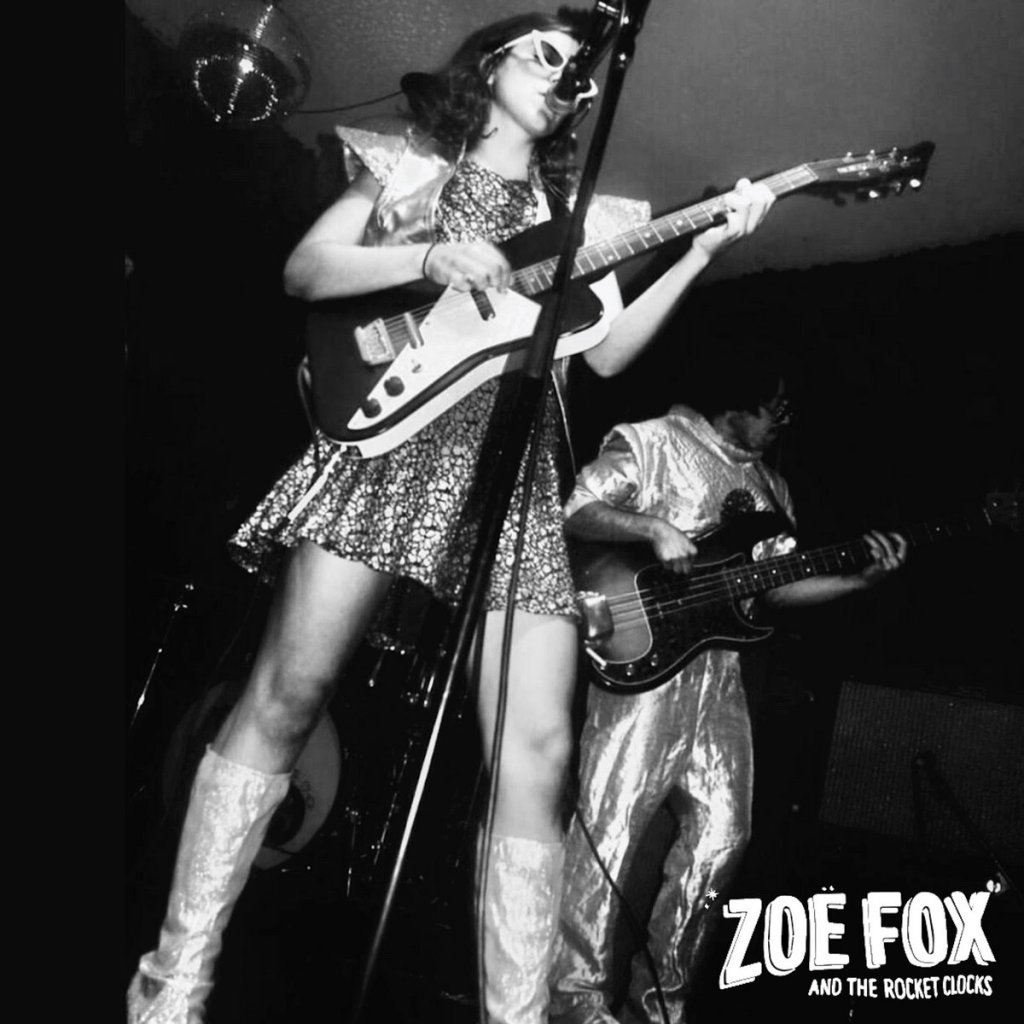
Nice! You wear really fun costumes when you play; did you see someone growing up wearing an amazing costume and were just so in awe of it?

ZF: Bands who I grew up with that had a common theme, I guess the Beatles did and Devo did it, they just had a look. That’s how I want to see bands. I thought what would I want to see? I want to see a show, I don’t’ want people to just stand there and play their instruments! I want costumes and dancing! Another band that does it that I saw that I love is, Sugar Fed Leopards. That’s Steph Brett, she’s in Empat Lima.

I love Empat Lima!

ZF: They had fluffy pink costumes and I thought, that’s another band that’s doing what I want to be doing!

Do you have a favourite track on the album yourself?

ZF: It changes every day. “Perfume” the first track, it’s the oldest track… I wrote that one years before the others. I’d just been reading the book Perfume: The Story of a Murderer I went into that world, I won’t’ explain it too much because I don’t’ want to spoil it if anyone’s reading it. I was reflecting on humans’ search for happiness in that song. I was feeling sad when I wrote that song…

Vid by Sofar Sounds.

Lastly, why is music important to you?

ZF: It is the way that I process all this information that is coming in from the world. Without it I would just overflow like a bath full of information and colours and ideas and sensations—music is me pulling the plug on that bath and letting it out! Letting it flow out in any way it wants to!

Awww that’s lovely! Thanks for doing what you do!

ZF: That you for what you do too! Writing is so important.

Directed by Sean Sully.

Please check out: ZOE FOX & THE ROCKET CLOCKS (get Clockwerks here also). Zoë Fox on Facebook.

ATOM’s Harry Howard: “Universally in art, death and sex and love are the big themes… I’m constantly writing songs that mention death”

Handmade collage by B.

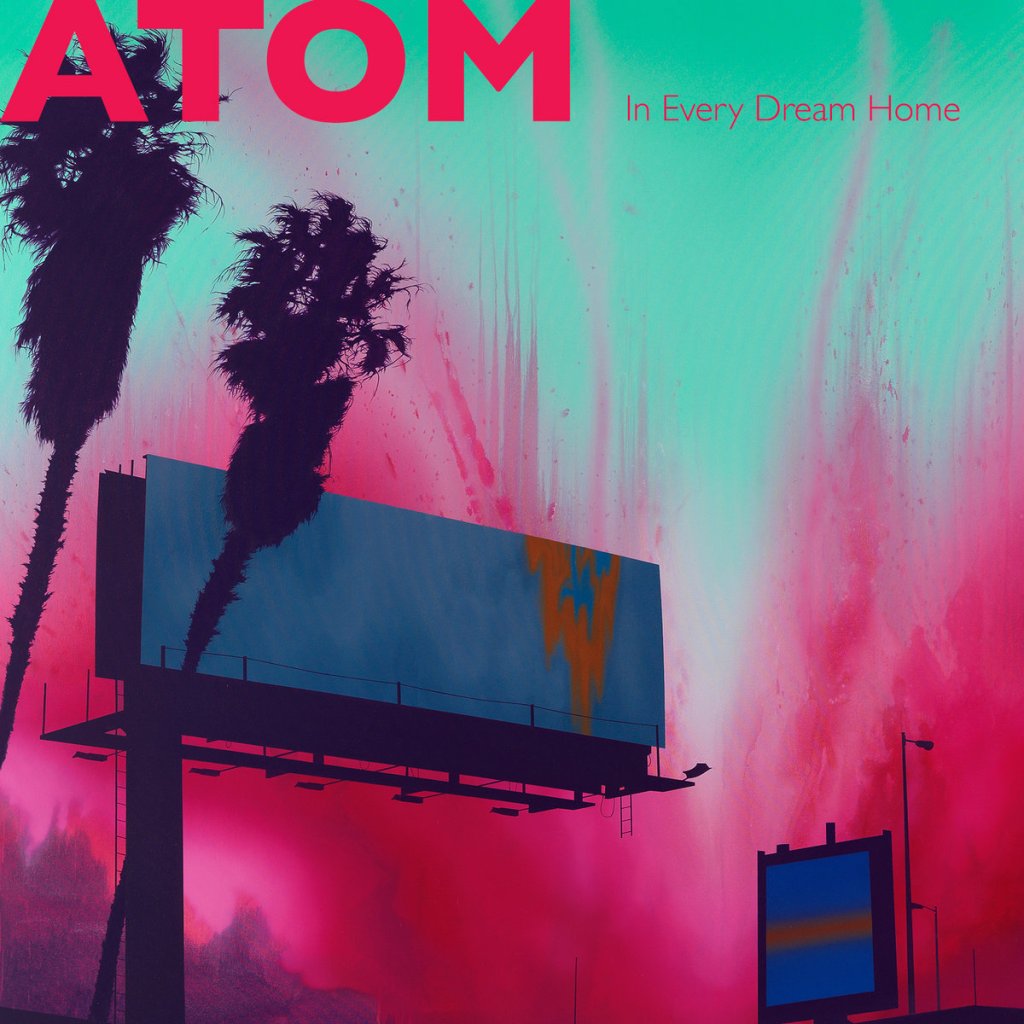
Melbourne trio ATOM made one of the best records of last year that you may not have heard. In Every Dream Home is a dark synth-punk outing in an apocalyptic world, their music is primal yet futuristic at the same time. On Sunday, guitarist and co-vocalist Harry Howard chatted to us from his Melbourne home while eating chocolate. FYI, there’s a new ATOM record in the works!   

You’ve been making music for a long time; what keeps things fresh and interesting for you?

HARRY HOWARD: It’s just endlessly fascinating really. Having a creative outlet is just such a great thing, it’s worth going through all the little doldrums that you go through for the breakthroughs and for the good times—the good times are just so good!

As an artist what are the things that you value the most?

HH: What I value is when people put their own personal input into things. It’s very hard to be original in this world. I think it’s completely fine to borrow ideas from people, that’s what culture is, a pool of shared ideas and as long as you put something new into it it’s fine to borrow things. When people put something into it that really comes from them then it becomes unique. It’s hard to explain, but all of my favourite artists seem to be… they might not even be well on a mental health level, but perhaps that helps them put more of themselves into what they’re doing.

They also may interrupt the world in a different way and give us a unique, unfiltered new perspective.

HH: Exactly! For some people things come out of them more directly than other people, some people are very filtered. That’s the stuff that I like, when you really get personality.

Same! What inspired you to start ATOM?

HH: Meeting Ben Hepworth. I met him on a video shoot we did with NDE [Near Death Experience], we got on really well and had a lot of common taste in music and we shared a perspective about music. He told me about his band Repairs that were playing live at that time, we went and checked them out and we got them to play with the NDE. I was invited to do a project for the Little Band…

The late Alan Bramford’s Little Band Scene?

HH: Yes. It was Stuart Grant [Primitive Calculators] too, I was invited to take part in a Little Bands night at The Old Bar. I had to make up something new and I thought, god if I go along with my songs it’s just going to sound like a solo NDE show. I thought to ask Ben to do something with me. I knew anything that I did with Ben would really sound different, with him doing beats and synths. I thought it would be such a huge change for me and it was something I wanted to explore, that was a few years ago now. It just worked from the start. Edwina [Preston] joined as well. Whenever we work it’s very quick and pretty easy. It took a while to get the live shows together though. We don’t do work that often but when we do it’s great. I credit Ben as the missing link we needed to create the whole project.

ATOM’s also a new way for you to say things musically?

HH: It is. More than that it inspires me in different ways, to do things differently, because of the mood of those instruments, it is so distinct and then there’s the references that it brings up in your mind. For me it’s taken me back to all these early electronic bands that came out at the start of new wave after punk, there was quite a bit of interesting experimental stuff and then it developed into that synth-y pop, some of which I like as well. With punk and after and before there was Suicide – Alan Vega and Martin Rev – all of those things it just brought out those influences. Synthesisers have this futuristic thing about them, the sound, even though it’s not quite old it still references some kind of made up idea about the future that we have, it gives you an opportunity to write about different things like how the world’s going.

Where did you get the album title In Every Dream Home? Is it from the Roxy Music song “In Every Dream Home A Heartache”?

HH: Yes it is. It’s also a kind of pop art reference, there’s an English pop art painting that has something about a dream home in it, it has that kind of ‘50s isn’t-everything-marvellous-in-our-dream-home vibe—of course though, it never is!

A lot of the themes on the album are things that I feel are happening right now in the world, like us all running out of stuff.

HH: I know, I know. It’s weird because some of the songs that I wrote since then and after that are even more relevant. It’s like people would think I would have written them lately. There’s one song called “Teenage Saviour” about how a teenager inspires everyone to change their way, politically. That was before the movement of the teenagers coming up about the shootings in America. I thought, oh god everyone’s going to think it’s about that! Then Greta Thunberg came out and I thought, oh my god, this song is about Greta [laughs], this is ridiculous. That might be on the next album. I think sometimes when you write about the future you’re going to get it right [laughs].

You’re prophetic!

HH: [Laughs]. I think it just happens.

How did In Every Dream Home start? Does Ben, Edwina and yourself write collaboratively?

HH: We do, overall it’s collaboratively but some of the songs, I would have music and words and I’d bring it along and they’d make up their parts and things would develop from that. The other option is that Ben would bring in a track of music and either me or Edwina would add vocals or another instrument. Everything is getting quite strongly effected by what the other members bring in. Everyone gets a credit in the end. You come up with some of the best ideas on your own but you can still collaborate on those and make them better.

How do you go about writing songs? Do you have any rules you like to follow?

HH: No, not really, it’s good not to have rules about anything and go for what works at the time. Sometimes I’ll write music and I’ll try to put words to it, sometimes I’ll write words then try to make up music for the words; sometimes you just get a bit of both, you’ll be banging away and a phrase will come to mind then it will turn into a song.

I really like how in ATOM songs there’s a lot of repetition.

HH: Yeah, yeah [laughs], I know. I thought that was something that suited it, I really love the way it was so minimal, reusing versus of words. Part of it was expediency, I will admit. It was also though that it suited the robotic quality of the music to be like that. It helped create a comic book quality to it… do you think?

I do. I also think that the album artwork by Darren Wardle lends itself to creating that comic feel. As the tracks unfold it is almost a journey through a comic, a story.

HH: I like that. It’s different for me. I think we’ve all really enjoyed that aspect of it, it feels really quite cool when we can make stuff like that—it’s a good feeling.

Cover art by Darren Wardle.

Something else that I have noticed in your song writing is that you often write about the theme of death; where does that come from?

HH: Yes, yes. I can’t help that, I’ve always done that to some extent I’ve always been a dark writer. Universally in art, death and sex and love are the big themes. It’s such a big thing. I was very sick, for a while it was quite touch and go, for over a year with my own health. My brother Roland died after I started getting better, and my parents have died… it’s a good way to deal with these things, making songs about it and stuff. It’s hard to talk about things like that, but if you put it into this framework of song lyrics, you can take any attitude you want and be quite playful with it. I don’t know though, I’m just attracted to doing it. I’m constantly writing songs that mention death.

Like you said, I guess it’s just processing stuff.

HH: Exactly. Even if you’re not thinking about them, these things are there in your mind, you know them and you can’t ignore them. Whatever you say about them can be useful, it doesn’t matter what attitude you take with them, if it’s some sort of dialogue it’s going to be useful.

Absolutely. I’ve lost both of my parents as well… I don’t know if you ever get to deal with things like that, for me anyway, like you said, it’s always there. It sucks that you can’t just simply hug a loved one anymore once they’re gone. Making stuff helps.

HH: Yeah, they’re the things you can’t change; what can you do about them? [laughs]. Not much! You have to have a release for it in some way.

I even noticed with your band names, ATOM is the building blocks of life, The Near Death Experience is death, then you have These Immortal Souls that’s life after death or eternal life.

HH: [Laughs]. There you go, it’s all about death.

Yeah, the whole cycle of life!

HH: I hadn’t thought about that! Things are strange how they work out, they can start making sense after a while. It’s very odd. For example when you write words and you have no idea of what you’re writing about and then you realise after, oh that make sense now.

Where did the ATOM song “I Used To Win” come from?

HH: Ahhh, well… that’s a good question. I was actually trying to write something a bit dark and a bit negative, I’m a big fan of film noir, that’s almost like a celebration of things going bad in a way. I wanted to do something along those lines and I just came up with that phrase and I thought it was evocative because it implies so much. “I Used To Win” is a more interesting way of saying that you lose or that you’ve lost a great deal. It’s got nothing to do with the Ollie Olsen song “Win/Lose” but it somehow clicked ‘cause I was doing a thing and writing about winning and losing, it was a personal reference for me. That’s a side thing that sometimes you might be influenced by people but you’ll have a reference from wherever and it encourages you. There’s a connection to Ollie’s song but I was just doing my own thing. I thought Simon Grounds did a good production job on that song, it turns into an apocalypse of noise!

I love that the album has a lot of atmospheric sounds.

HH: Synths are very atmospheric. They have such a strong personality.

It’s interesting that you’re in a band with synths now, I remember reading an interview with you from a while ago and you mentioned that as kids your brother and sister was enrolled in piano lesson but you dodged them.

HH: [Laughs] Yeah, I did! When I think of synths now, the keys are like a way into the sounds. I can’t play keyboards, I can only play rudimentary riffs on the keyboard, it takes me ages to work things out. So, I should have gone to more lessons! [laughs].

A lot of the music you write is quite dark; where do you find joy and happiness in your life?

HH: Just in the silly things [laughs]. There is an awful lot about life that is dark, e.g. the fact that you die and everyone you love that’s around you dies. There’s a lot of misfortune and there’s a lot of people that never get to be as one bit lucky as we are in Australia, being one of the richest countries in the world. There’s lots that you could describe as dark that goes on, on top of that I’m a bit of a sceptic about happiness, I don’t think we’re meant to be happy all the time. I don’t know if we’re designed to do that, I think it’s a bit of a high ideal. If you’re going to really look at things realistically I don’t think you can be happy all of the time. People use mind-altering substances because it’s easy to forget about why you’re not feeling happy at a particular time. I don’t want to be grim about it, I think life is really great, there’s so much to enjoy. I’m dubious about optimism, of always looking on the bright side, ok, but the dark side is alright sometimes as well, I don’t think we should block that out completely. It’s quite enjoyable when you embrace it in the way of film noir or look at all of the literature, film and music that is dark and how incredibly life affirming it can be—it can inspire you.

I get you. Sad songs often make me happy.

HH: Yeah and it can be a quite useful way to get out your own emotions. There’s nothing wrong with a bit of sad.

That’s been a big lesson for me in the last year. I was one of those I-should-be-happy-all-the-time people until my husband pointed out that it’s insane to try and live like that.

HH: I agree. You’d have to make yourself really shallow to live like that, we have many sides; I don’t want to be like that.

Same! What are you working on now?

HH: At the moment we’re working on a new ATOM record.

Yes!

HH: We’re doing it in isolation. Ben told us today that he was working on some updated beats and things we’ve got going. Ed and I will work on them here. We’ve got songs on the go, about half the record is written, it just needs to be arranged. We have three writers and things happen pretty quickly with us, everyone really wants to get their stuff in so we can be quite competitive; there’s no shortage of material. So there’s the next ATOM album, ATOM 2, and then I’ve got all this solo stuff I keep working on. I’ve just been in touch with Dave [Graney] and Clare [Moore] – Dave has a lung condition and he will be isolating quite seriously for a while – I thought we might try emailing stuff back and forth for a potential NDE project. I work in a hospital, so I’m in this lull before the storm too! Which is taking up a bit of my mind right now, it’s very stressful.

It’s scary what’s happening in the world right now?

HH: It is! It’s like the future is here now!

The ATOM record has come true!

HH: I know! All those shows we’ve watched on Netflix about the dystopia has come, it’s really arrived.

We’re very excited that you’re still creating throughout it all!

HH: Thank you!

You’ve made our day that a new ATOM record is coming! It was such an underrated record, when I first heard it I thought it was so cool and different; sonically it was like a punch in the face in a good way!

HH: [Laughs]. I wish it had punched more people in the face, not many people I think have heard it.

That’s why we’re having this chat with you! It was one of our favourite records of last year!

Please check out: ATOM. Get In Every Dream Home out now on IT RECORDS.

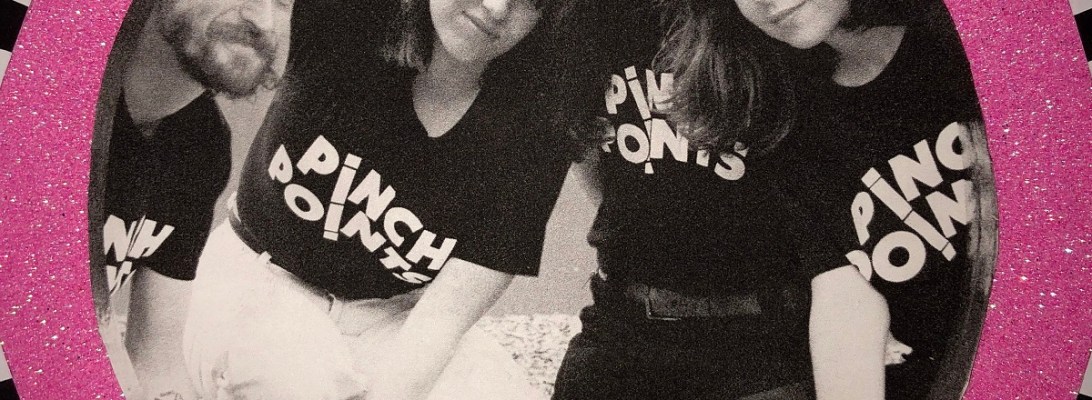
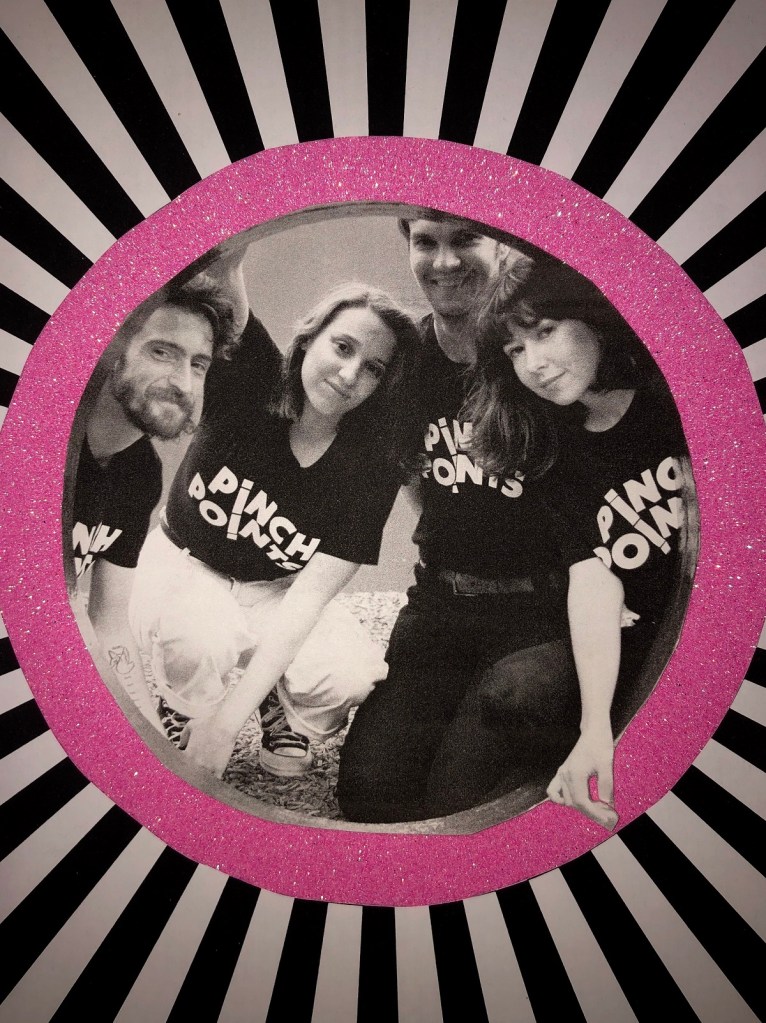
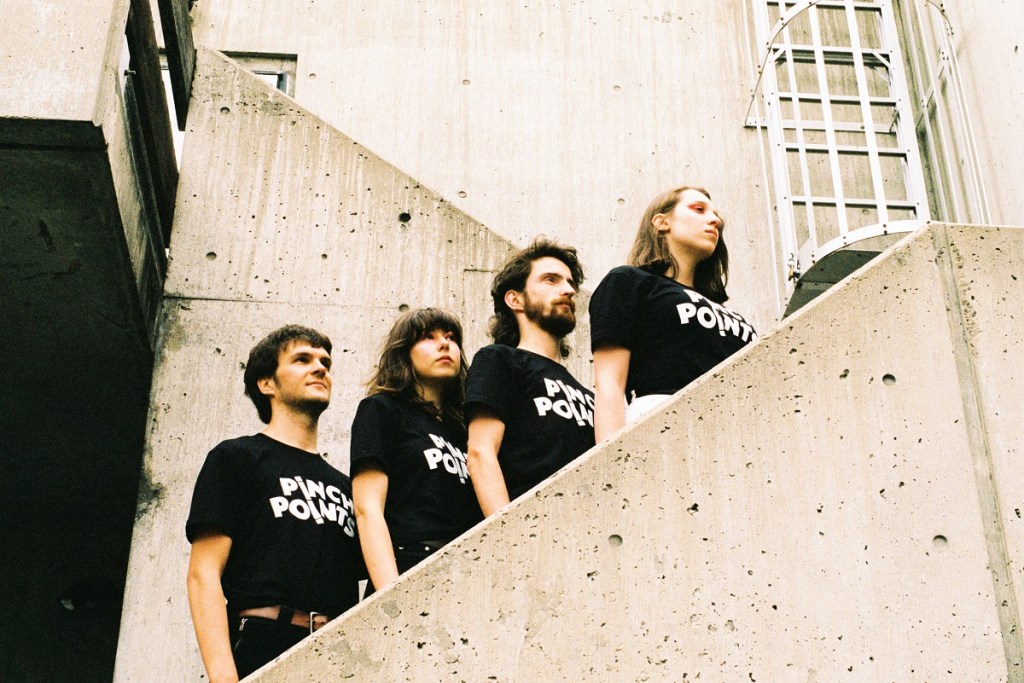
Melbourne’s Pinch Points: “Community, diversity, big riffs!”

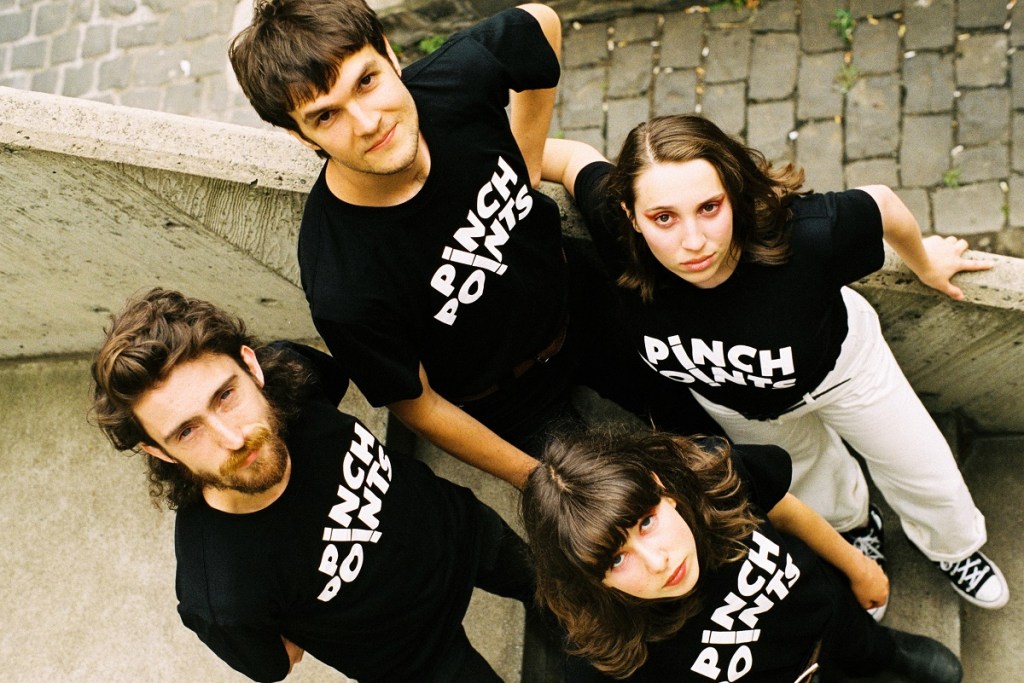
Original photo Chelsea King. Handmade collage by B.

Pinch Points make fast-paced punk with jangly guitars and a tone so sharp it could cut diamonds. Their songs are catchy with no-frills, while writing their own book of sarcasm with lyricism expressing sardonic observations of society, done so cheekily and fun you can’t help but smile along with them—after all, we’re all in this together. Pinch Points aren’t afraid to say what we’re all thinking.  We caught up with them to talk about their new live record and music in the works.

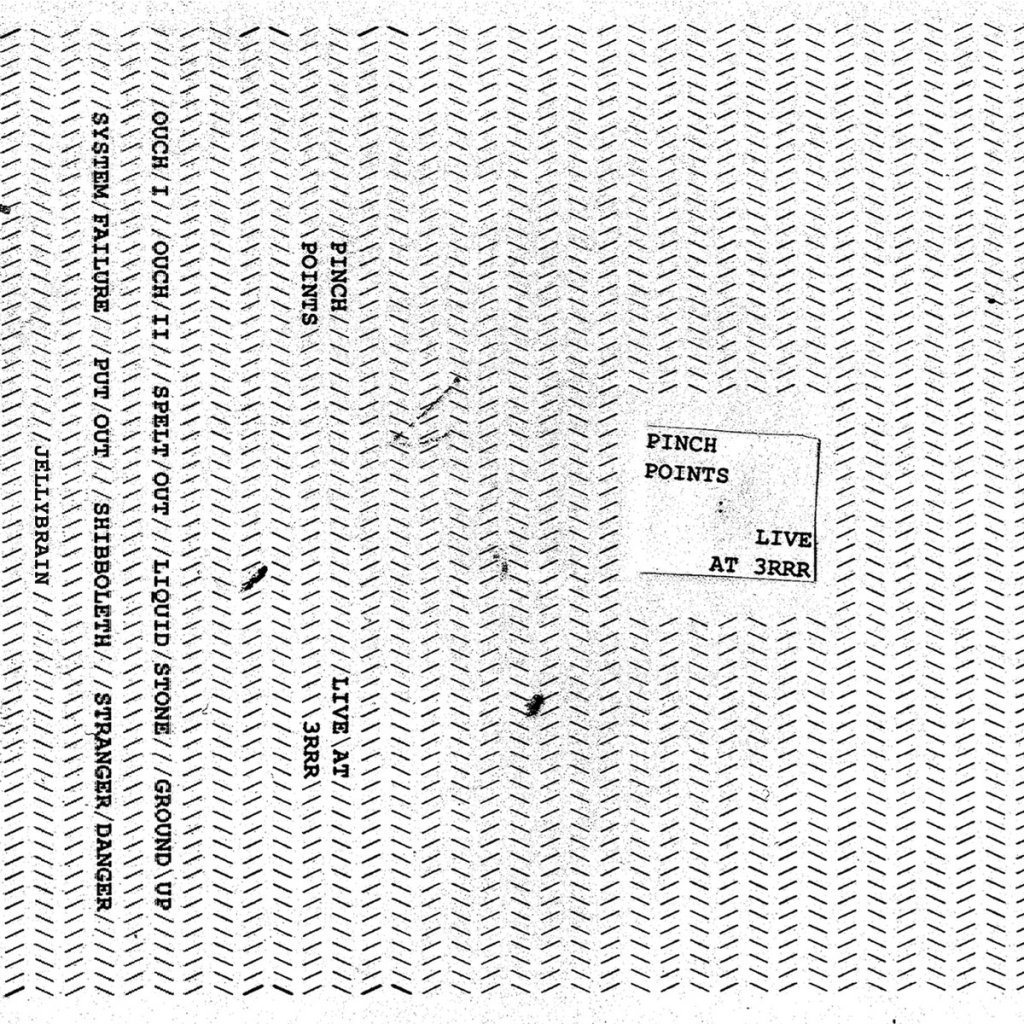
A few days ago you released your LIVE at 3RRR digital album and limited edition cassette; can you tell us about the best and worst show Pinch Points have played?

PINCH POINTS: That RRR show was a great night and we’re so glad we recorded it. By far the most amazing show we’ve played so far has to be opening Golden Plains the other weekend. The adrenaline that comes from playing in front of 10,000+ eager punters is overwhelming. It’s surreal to think about that happening now that we’re all cooped up inside self-isolating.

Our worst show might have been at the Landsdowne in Sydney. Our original venue was shut down last minute so we switched to a graveyard slot show, playing right after another gig in the same bandroom. The band before us went on and on with a Rolling Stones cover and by the time we played we were fairly frazzled and not many people turned up that late.

What do you personally get from playing live?

ISSY: immense joy playing with my best friends! And the adrenaline rush that comes with it.

Can you remember who or what made you first think, I want to play music?

JORDAN: My first introduction to playing music was when I was 13 and super bored, sharing one room in a guest house with my parents in Fairfield. All I did up to that point in my life is play video games but we no longer had a TV. There was an old nylon string acoustic in the corner though and my Dad taught me a few chords one day and I guess that was the beginning of a lifelong obsession…

ACACIA: Like Jordan, my dad taught me basic chords when I was about nine. I was obsessed with The Ramones, Nirvana, Hole and The Runaways, so I started learning covers of “Cherry Bomb” and “Celebrity Skin”, which led to writing my own stuff. Joan Jett and Courtney Love were two big figures for me, who made me feel like I could have a place in rock music.

ADAM: There was a tiny bass lick somewhere on the first Jet album that I thought was unreal as a kid – and then at high school they offered bass lessons. Played bass for about five years before I bought a guitar. Never learned that bloody lick though!

ISSY: Definitely dancing around my living room to Avril Lavigne’s Sk8ter boy when I was five brought out my inner punk. My parents really wanted me to find an instrument to play so I started with keyboard, then flute, then guitar, but none of them really clicked like the drums did. My brother was learning drums at the time and unfortunately for him I shared/stole his drum kit and haven’t looked back since!

When you first started playing live did you ever get nervous or scared?

PP: For sure, and we still do. Backstage at Golden Plains when we were waiting for our cue to walk on stage, the adrenaline was hitting us all in a big way. We hold some perfectionist tendencies when it comes to executing some of our trickier songs, and definitely get nervous about stuffing them up (not that mistakes matter, they add character).

Photo by Chelsea King.

You played and recorded the RRR’s Dropout Boogie with Zara set two days after wrapping your tour with Tropical Fuck Storm; what’s something you learnt from your time with TFS and watching them play night after night?

PP: It was amazing hanging out with TFS and watching them every night. When they play it seems like they’re all working in harmony to conjure up this gigantic beast for the audience. Each member plays their own parts separate from the others as well, though. Also, they have so much power. They put all of their energy into the show but in a really unique way.

What was the first concert you ever went to? Tell us a little about it.

JORDAN: I bet Acacia has a good one. Mine was the Powderfinger and Silverchair double headline tour! You ripper!

ACACIA: Besides The Wiggles or my dad’s band, perhaps Missy Higgins and Tim Rogers. Classic Aussie pairing.

ISSY: My parents took me to see Michael Bublè when I was about 10. I used to listen to “Call Me Irresponsible” with my Mum every day on the way to school, as well as Metallica’s “Enter Sandman”.

ADAM: I don’t think I remember the first concert or show, but the earliest large show I remember was Herbie Hancock at the Palais. Still the best show I’ve ever seen.

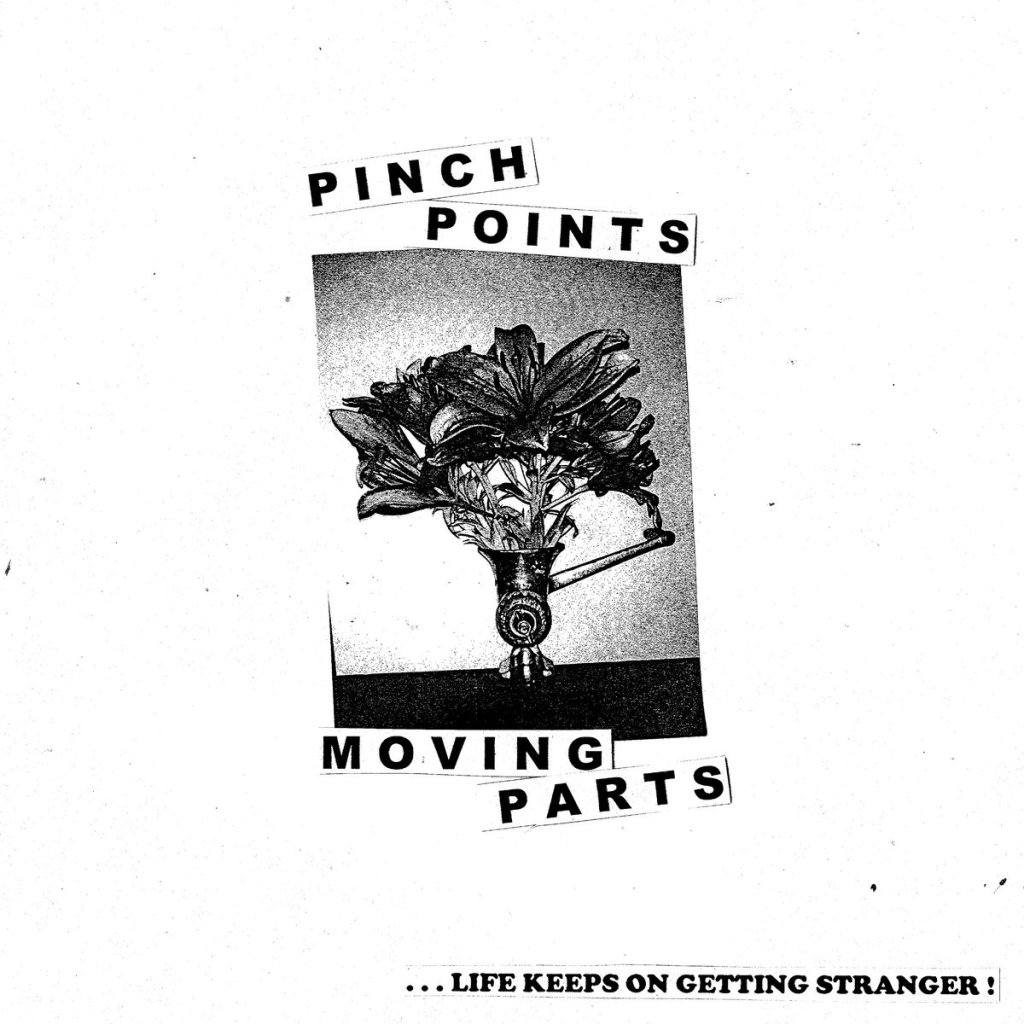
Have you been writing new music? When might we see a follow up to last year’s Moving Parts LP?

PP: We have been! We’ve written more than half of a new album already and it’s sounding fierce. We had a whole bunch of plans in place for the release already but it looks like the whole pandemic situation has derailed that. All we can say is we’re doing our best to work on the album and will release it when the world is more ‘normal’.

What direction is your writing headed in?

PP: One of the most rewarding but also challenging parts of the writing process for our new record has been incorporating more collaboration. In our first two releases, Adam brought in a lot of material that was already pretty fleshed out. We’ve made a conscious effort this time to include everyone’s ideas from the beginning, which has made for a slower writing process but amounted to us having some really awesome songs that we feel represent everyone’s creativity.

Sound-wise, the new album will broaden the PP sound even more to include some softer and heavier moments, while being generally more direct and perhaps even simpler at times. We’re still figuring it out though.

Photo by Chelsea King.

We super love your guitar tone, nerdy question; how do you get your sound? Why did you decide to go clean rather than distorted?

ADAM: As well as punk, metal, rock etc., I always liked jangly bands. I’d been writing some hardcore stuff a few years ago, and couldn’t find the “tubescreamer” pedal I’d been using. Then I heard Nutrition and Uranium Club on Bandcamp and it all made sense.

We just use compressor pedals so that the lead lines jump over the chords and we don’t have to do the ‘pedal dance’ when playing. Recipe as follows:

  1. Humbuckers, bridge pickup, all guitar knobs on full;
  2. $50 compressor pedal, sustain on full and attack at zero;
  3. Fender-style valve amp, clean channel, and turn up the pedal output until it’s about to get crunchy;
  4. Bass at zero, mid and treble full, presence as high as possible without it being too harsh.

How does playing live help your songs develop?

PP: We often record at the first chance we get, so playing the songs over and over again at shows lets us get way more familiar with them. This leads to us picking up the pace of a lot of them and learning to belt them out with more energy than the recordings.

What’s something that’s really important to Pinch Points?

PP: Community, diversity, big riffs!

Please check out: PINCH POINTS. PP on Facebook. PP on Instagram. You can find PP releases on their bandcamp and via Roolette Records in Australia and Six Tonnes de Chair in Europe.
EXEK’s Albert Wolski: “If music can be so powerful, then why not try your hand at creating some. What you create doesn’t have to be everyone’s bag, but some might like it”

Handmade collage by B.

Melbourne’s EXEK create beautiful, atmospheric post-punk-dub-krautrock magic. Their third LP released last year Some Beautiful Species Left (out on Anti Fade Records) takes you on an epic musical journey, from dystopian soundscapes through to poppy hooks. We interviewed EXEK creator Albert Wolski.

Why is music important to you?

ALBERT WOLSKI: It provides content. Filling up the gap between the ears. But it’s crazy how you can feel music too, and not just the low-end rumble in yr guts. But also across your skin. What a wild sensation! The French have a word for that – Frisson.

What inspired you to start making music yourself?

AW: Probably for the reason stated above. If music can be so powerful, then why not try your hand at creating some. What you create doesn’t have to be everyone’s bag, but some might like it.

Your background is in film and sound design; could you please share with us one of your favourite projects you’ve worked on?

AW: Sam Dixon’s short film Dancing Goat was a lot of fun. He had someone else doing the sound and they just played it way too straight for him. Sam realised he needed something a bit more surreal and fantastical. So we did some experimenting, like creating the voices for satanic goats and some other wildlife that lived off-screen. I remember that Selma’s pet Iguana Jub Jub was our inspiration. As a side note, Sam is currently working on our next clip. Since he’s jobless due to Covid-19 the clip will probably be done pretty soon!

How does your film work influence what you create with EXEK? Your songs are incredibly atmospheric.

AW: Thanks! I studied a lot of film scores at uni. I ended up writing my honours thesis on Mica Levi’s Under The Skin and Howard Score’s Videodrome. With both those films, it’s often hard to discern what is the score and what sounds are part of the film. I loved that ambiguity of treading the border of what is classified as ‘music’. I try to apply that concept to EXEK, by using field recordings and odd instruments. But more so, it’s all about depth and creating ambience. Utilising the spacial field, by having some sounds deep in the distance under what’s up close and dominant.

What was the inspiration behind the title of your latest album, Some Beautiful Species Left? It seems to really be in the spirit and themes of the albums tracks.

AW: It’s a lovely sentence isn’t it? The message can be viewed as being pessimistic or optimistic. That was the major draw card. I like to leave it up to the audience. And obviously the title gels well with the concepts discussed in the songs. I suppose it’s kinda a grim record. It’s about not being in control, with elements in your life coming and going. Like waves. Or species. Coming and going. Becoming extinct. And then the fires hit! It felt odd having our album launch in Melbourne, with the album called Some Beautiful Species Left, when there were all these add campaigns everywhere about the massive amount of species that just got annihilated.

You wrote the songs for the record and produced it; what was your initial creative vision for it?

AW: This record began by messing around with a bunch of drum beats whilst making another record. They were initially on the ‘cutting-room’ floor but I liked them so I quickly fleshed out some bass lines, and that’s how the record came about. The record that we were recording is yet to be released. It’s taking a while but I’m happy with the progress.

How did the albums opening track “Hobbyist” develop?

AW: Yeah pretty much just mucking around with a beat. The beat is quite imperfect – as in it folds over and starts again at odd times and doesn’t align with the bass. But it works in an unsettling way. I think it’s my favourite song off the album. It’s got a solid groove that sets the pace for the following tracks. Actually, most of the drums for the record were developed in a similar way. I would beat box the rhythm I had in my head to the drummer, and we’d figure out how to scribe it on a kit.

EXEK – Some Beautiful Species Left.

Why did you go with “How the Curve Helps” for the albums close?

AW: Funny how I mentioned that the album’s title was so strangely relevant during the bushfire catastrophe. And now, the title of this track seems to be so pertinent in regards to the current crisis of Covid-19. Spooky. Anyway. I can’t remember why it’s the closer. There must have been a reason for it. I usually don’t just chuck songs on a record in any old sequence. I find the sequence is very important. An album is like a canvas; all the tracks and instruments need to work together for the common goal. But yeah, can’t remember why, sorry, ha.

Is there a track on the record that was a real challenge to make?

AW: Yeah, “Curve” was a bit of a bitch actually. It took me a while to structure the ending. It needed a bit of a journey. The song’s about how life on earth if affected by what happens out in space, like tidal shifts for example. So it took me a while to shape how the song retreats and slowly eases back in. Several instruments build up and finally develop a bit of a melody. And the piano has a melody that reflects the main synth theme from the first half of the track. And then it ends with the sound of something so innately boring, which is a TNT courier backing up the driveway at my work.

How developed are your ideas before they are committed to a written form?

AW: Half baked. I like to allow things to happen organically. For example, I’d have a part of a track lined up that I know is going to be a guitar line or a synth line. I’d plug everything in and press record without knowing what I’m going play. 90% of the time, it’s the first take that ends up being what you hear on our records. Same goes for when Jai [K Morris Smith] records guitar, or [Andrew] Brocchi does synth. Sometimes they’ve barely heard the track and I’ll get ‘em in, press record, and capture their first impressions. It’s different with lyrics though. I stew on them for years. I can’t fathom how a freestyle rapper’s mind operates. Or hearing how Noel [Gallagher] wrote the last verse for “Shakermaker” in the cab on the way to the studio to record it. Sure, they are garbage lyrics, but suit their music so well.

What sparks your lyrical imagination?

AW: Science. Hard science and the social sciences. There’s a lot of material out there in those fields with interesting words and concepts that haven’t really been rinsed by lyricists yet. So it gives us a point of difference. Ah, this is kinda interesting. So we’re currently working on the next album. I wrote all these lyrics for it ages ago, most of them were written whilst I was on holiday in Europe in 2017. For some reason they’re all about pathogens, and dodgy markets in odd places around the world, and currency fluctuation. I might have to change all that now! I don’t want the next record to appear to be a ‘Covid-19 Sessions’ or some dribble. It’ll have to take a few generations for credible songs about Covid-19 to pop up. No one wants to hear that shit right now. In 50 years’ time it might be interesting, to channel what it was like to live in an era where some guy got sick cos he ate an animal he shouldn’t have eaten, and then the whole world literally got turned upside down.

EXEK – Ahead Of Two Thoughts.

Do you need solitude or have a preferred time of day to write?

AW: I enjoying walking. Doing something whilst writing is great to get the blood flowing, and walking is perfect. The shower is good too, but near impossible to retain ideas.

Does the instrument you use affect the writing of the melody in your songs?

AW: Na, it’s the opposite. The melody affects what instrument will be used. By their very definition, the instruments are the tools. And you need the right tool for the job! ; )

I understand that all of your music gets fed through a Roland Space Echo; how did you first come to using it? What do you love most about it?

AW: Ha, not all of it, but a fair chunk. I don’t run much compression, so the space echo is good to just colour instruments with a bit of tape warmth, even if I’m not using the echo or delay on it. Something like a synth needs to be fed thru some tape. The Space Echo is a great tool at creating atmosphere. Every delay reflection rolls off some higher frequencies and gets duller and duller. Can’t remember my first use. I bought a busted one for real cheap and sent it to Echo Fix on the Central Coast in NSW. They made it fit and working again. Great service, highly recommended.

Do you ever go back and listen to your records?

AW: Nah. But sometimes I enter a shop or something, and I think to myself, “oh this ain’t bad, I know this”, and one more second later I realise its EXEK.

EXEK – A Casual Assmebly.

What do you do to nurture your creativity?

AW: Watch a lot of films, and listening to a wide variety of music. Read too. And podcasts ain’t bad. Primarily it’s finding new music. Been on a heavy funk and soul trip for the past couple of years. Even though I guess we are technically a ‘post-punk’ band, I rarely listen to post-punk.

What are you working on now?

AW: LP4! It’s written, and mostly recorded. Some songs are done! And they sound killer. I hope you like it.

Please check out: EXEK. Some Beautiful Species is out now on Anti Fade Records. EXEK on Facebook. EXEK on Instagram.
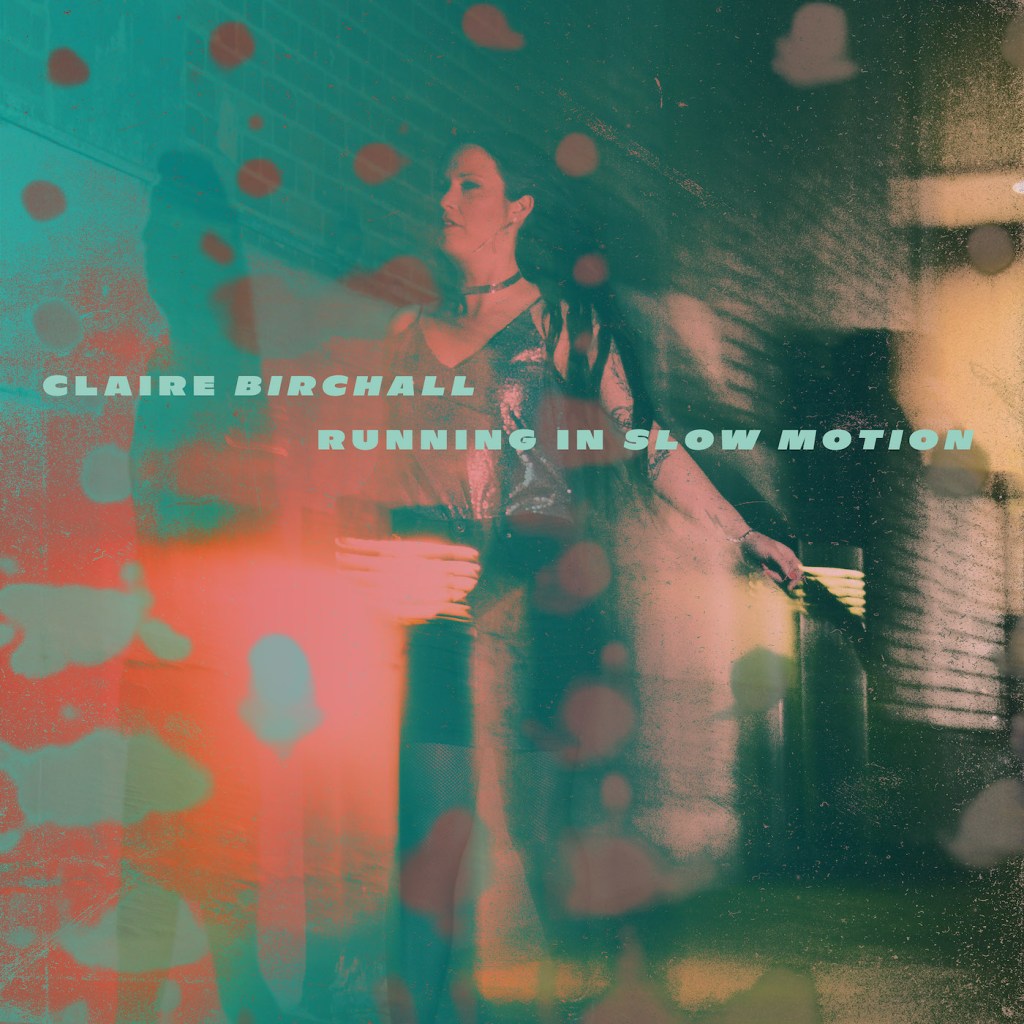
Claire Birchall’s Running In Slow Motion: “It’s a nightmare song. A waking nightmare, or a blurred line between reality & a dream… you’re trying to escape your demons or run away from monsters, but you can’t scream”

Melbourne musician Claire Birchall is set to release album Running In Slow Motion April 24th through It Records. It’s a moody, emotive, darkwave synth-pop collection of songs that Claire wrote and recorded herself on a 4-track, and is a departure from her usual indie rock exploits. Today we’re premiering the album’s title track which sounds somewhere between UK band Broadcast, France’s Marie Davidson and the Australian cult classic “Cold Café” by Karen Marks. We chatted with Claire about Running In Slow Motion and her musical journey.

Tell us a little bit about your music journey.

CLAIRE BIRCHALL: I grew up in a musical family down the coast, just outside of Geelong. Dad and Mum both played guitar and sang, and they bought a piano when my sister Bec and I were quite young, so we got lessons. Dad also taught us both how to play guitar, which quickly became our favoured instrument. By high school, I was already playing guitar constantly, joined my first band, and also did some busking in the Geelong mall in the summertime.

My high school music room had a cassette 4-track that I was fascinated with. I borrowed it once, and was completely smitten.  I ended up buying one myself at age 17, and got hooked on home recording, churning out tapes that I would swap with friends. Through recording, I started trying out as many different instruments as I could get my hands on, and ended up picking up a bit of drums, bass, mandolin and other things. I finally properly released my debut album, the acoustic based Captain Captain in 2001, which I played most of the instruments on.  The album did pretty well on community radio, and got some great support from RRR and PBS in particular.

I formed my own band, Paper Planes, which started out playing the songs from Captain Captain.  I’m not sure how, but we gradually morphed into a full tilt rock band. We got some decent support slots over the years, Magic Dirt, Catpower, Ed Kuepper, Band Of Horses….  We also released a self titled album, and two 7” singles (all recorded at the legendary Birdland Studios) which were all quite well received. Also around the same time as Paper Planes, my partner (Matt Green) and I, formed country rock band the Happy Lonesome, which I still play in today.  Though I started out on guitar in that band, then moved to keys and mandolin, and back to guitar, these days I’m the drummer!

After Paper Planes I released two solo albums, both recorded on the 4-track (PP and Electricity), then formed another band, Claire Birchall the Phantom Hitchhikers, to launch Electricity.  Though it wasn’t properly discussed or intended to be a full time band, we really hit it off, and we’ve been playing ever since.  We released our debut single, “All That Matters (it’s Christmas time)” in 2016, then our debut album Nothing Ever Gets Lost in 2017, and we’ve played a hell of a lot of shows. Also unintentional, was the small break the Phantom Hitchhikers ended up having towards the end of 2018, which unusually took me to this synth pop place I’m in now.

You’re more known for your rock, guitar-based music; what inspired you to make a synth record Running In Slow Motion by yourself on 4-track in your bedroom?

CB: It was a bit of an accident really. My band mates (the Phantom Hitchhikers) were pretty busy with various things at the time, and it was getting hard to get everyone together. I got an idea for a song one day, and decided to get out my old 4-track and demo it, for something to do.  Using my Casio keyboard for drums, and laying down a simple keyboard line, it somehow didn’t feel like it needed much guitar. The song was “Dead Air”, which turned out being the first single from the album. I liked the relative sparseness of the recording compared to my usual wall of sound, fuzz rock stuff, and it kicked off the inspiration for more writing and recording.

I wasn’t planning on making an album, but I got more and more addicted to experimenting with the new sound and returning to my roots of recording on the old 4-track.  It was really refreshing to step away from the guitar and sit there at my Casio, get a beat and a keyboard line going and write a song.  It completely changed my way of writing, and got me away from using the same old guitar chords/rhythms etc. Before I knew it, I was programming beats on a drum machine, scouring my collection of dinky little keyboards for cool sounds, and recording at every spare minute.  I ended up writing and recording the entire album in just a few months (plus a few songs to spare!).

What vision did you have for the record?

CB: It just happened.  But as I got further into recording, things started to take shape. I felt like the Casio keyboard drums weren’t sounding punchy enough on a few songs I’d already recorded, and maybe sounded a little too lo-fi. So I re-recorded a couple of them with programmed drum machine instead, and it really gave the songs the kick they needed. I instantly got hooked on programming my own beats, it’s so much fun. I then started digging the idea of getting the most hi-fi sounding recordings out of my lo-fi 4-track.  And I liked the idea of minimal tracks, minimal instrumentation, to let the songs talk without clogging them up with a million overdubs. I wanted to write the sort of songs that’d get stuck in your head. Pop songs.  I agonised over the track list for ages, cutting quite a few that weren’t up to scratch to make the poppiest catchy album I could muster. I can’t help that it’s pretty dark too, I’ve always had a little of that in my songwriting.

We’re premiering the third single, title track, “Running In Slow Motion”; what’s the song about?

CB: The song came together super quickly, and I used a little old cream coloured Yamaha keyboard for the drums. I still think the song’s got one of the best drum sounds on the whole album. It sounded kind of eerie, and I guess that inspired the eerie lyrics. It’s kind of a nightmare song. A waking nightmare, or a blurred line between reality and a dream, where people’s faces become distorted and turn into something/someone you don’t know. And you’re trying to escape your demons or run away from monsters, but you can’t scream, and you can only manage to run in slow motion.  It’s crazy how fitting it is to be releasing such a nightmarish song right at this point in time, when the whole world is truly living in a nightmare.

What was the best things about working alone on your new collection of songs?

CB: As much as I adore my band and bandmates and what they bring to my songs, there’s something to be said about being able to completely follow through with your sole vision for a song. When I write, I often instantly get ideas for multiple instrument parts, not just guitar or vocals, so it’s interesting to try and lay it all down just as I hear it in my head.

Also, I just love recording on the 4-track. Time absolutely flies by. I forget to eat, to drink water, anything. I just get so engrossed and obsessed. Often I’d write and record the whole song in one night, and end up with a tangle of leads and equipment all over the floor. I really love getting into that headspace, where the inspiration is positively flowing and you don’t want to waste time packing up anything, you’ve just got to keep going. I love the no bullshit simplicity of recording on the 4-track, it allows me to be completely spontaneous.

What was the most challenging?

CB: Definitely the mixing. I lost track of how many hours/days/months I spent doing that! I mix down from the cassette 4-track onto the computer, and then occasionally I’ll add some extra bits and pieces there.  Some of this involved tedious synching up and cutting/pasting individual tracks loaded in from the 4-track.  Plus, I’m so used to doing more lo-fi stuff, where the vocals are a little more buried. I had to work really hard on getting the vocals to stick out and sound more present and poppy. This involved double tracking, FX, and plenty of other little “secret” tricks. 

As a songwriter how do you feel you’ve grown while continuing to evolve, making a different kind of album than what your listeners are used to? Do you feel you took a risk?

CB: Even though I hadn’t made a synth-pop album before, I don’t really feel like I’ve strayed too much into the unknown. Every album I’ve ever done has been different from the previous one. I’ve experimented with all kinds of different sounds, instruments, and recording techniques over the years. Being a multi-instrumentalist really lends itself to experimentation. Plus I’ve got a pretty diverse taste in music. My first album, Captain Captain was a real acoustic guitar based album, totally different to my next one, which was the debut full tilt rock album with my band, Paper Planes. There’s also hints of my keyboard/programmed drums leanings throughout all of my solo albums. That being said, this is a very different sounding album, sure. It’s the first one that is a dedicated synth/drum machine album. But I think it still sounds like me.

What are some things you do to nurture your creativity?

CB: I absolutely always carry a notebook with me. It’s so great having an abundance of snippets of ideas to flick through when I’m stuck for ideas/lyrics.  I’ve pieced together many a song from individual lines I’ve written in that book.

I also think it’s also incredibly important to not force creativity. I try not to get too worried if I have a dry spell and don’t get inspired to write any new songs for a while. Sometimes it’s good to have a break, clear your head. The songs come when they’re ready.

You’ve played with Kim Salmon; what’s something you’ve learnt from working with him?

CB: You know, I was really quite scared that I wasn’t going to be capable of playing the stuff that I needed to be able to play with Kim. Some of the guitar stuff I felt was completely out of my league!  He really is an incredible guitarist.  I couldn’t believe he was trusting in me to pull this off!  But I worked my arse off, rehearsing by myself at home. I rehearsed more than I’d ever rehearsed for anything in my life. And incredibly I got it together. I surprised even myself. And it goes to show, you really shouldn’t write yourself off and think you’re not capable of something that looks hard and scary, cause it can turn out totally fine and you can have so much fun!

Kim’s taught me heaps. He’s the ultimate professional, but doesn’t like to over-rehearse to the point where you’re “wasting it all up” and losing the spark. I love that, I really agree with that. I love being kept on my toes when I play with him.  It keeps it super exciting and fun. I’m always grinning so much on stage with him. He’s a super lovely guy, he’s great to his fans, talks to everyone, signs stuff, all that. It’s no surprise that people really love him.

Why is making music important to you?

CB: I’ve been doing it for so long, I don’t know how not to do it!  It’s essential for my soul, my wellbeing.  I feel incredibly lucky to be able to write songs, especially when they feel like they’ve simply fallen out of the sky like a gift from the gods. You can’t ignore that shit, you’ve got to see it through. Music has also allowed me to play with and connect with so many wonderful and talented people over the years. I’m currently playing in multiple bands/projects, two of which I play drums in (The Happy Lonesome, and Teresa Duffy-Richards & the Fifty Foot Women), plus the Phantom Hitchhikers, my solo synth thing, and Kim’s band. It’s hectic, but I wouldn’t give this up for the world.  My life would not be the same without it.

Please check out: Claire Burchill. It Records. Claire on Facebook. Claire on Instagram.
RVG’s Romy Vager: “There’s something about the last few years that’s been quite difficult for me. I feel like a wild animal a lot of the time, licking my wounds and hissing at everybody!”

Original photo by Anna Cunningham. Handmade collage by B.

Melbourne band RVG ride the road of a Southern Gothic sound, travelling high along the dark musical horizon of bands like The Gun Club and Nick Cave and the Bad Seeds, vocalist-guitarist Romy Vager baring her soul giving a unique slant to the genre. Their sophomore album Feral – follow up to beloved debut LP A Quality Of Mercy – will be out April 24 on Fire Records. We interviewed Romy about the record.

How did you first come to playing guitar?

ROMY VAGER: Growing up I got lessons from this guy Greg who caught a snake in our backyard. I use to go to his house down the road and he’d show me how to play classic rock riffs.

Your debut album A Quality Of Mercy was written in isolation; was the writing process for new album Feral like that?

RV: Yeah I guess so. We don’t tend to jam out the songwriting stuff at first so it starts with me. I like a warm place in the dark where nobody’s gonna bother me, I’m a lizard. Or maybe a mushroom.

Where did the album’s title Feral come from?

RV: Feral just sorta summed up everything I’ve been feeling recently. There’s something about the last few years that’s been quite difficult for me. I feel like a wild animal a lot of the time, licking my wounds and hissing at everybody! I want a place to belong but I’m having trouble getting there. Does that make sense?

Also “feral” is what Right-wingers call you if you care about social issues or climate change. You’re called feral for giving a fuck! I guess Feral can be interpreted in that sense as a call to arms.

You’ve commented that your “new material is actually a lot more depressing than the first record in parts”; while writing what was influencing this even darker mood?

RV: I just think there’s a lot less hope in it than the first one. The world’s become a lot more sinister in the last couple of years. I guess, like a lot of people, my songwriting has changed according to that. I can’t pretend that things are normal anymore. The first album’s like [Stars Wars movie] A New Hope, this one’s like The Empire Strikes Back.

Did you have any challenges writing the album?

RV: I guess it took me a while to get all the songs together. I’m not a quick writer like other people. I have to really concentrate to get the lyrics right, they have to be framed in a certain way.

The songs I’ve heard from Feral have a really lush sound to them; what inspired you to go for this sound?

RV: I think mostly because we like lush sounds. But also because I get kinda bored of punkier music being very one dimensional and grimy. It’s always been important for this band to have that angular energy but to pretty it up a bit.

Your last album was recorded live on the floor at The Tote for around $150; what was it like for you to record in a studio this time?

RV: It was nice! It’s not better or worse or anything. I like that you’re forced to take things more seriously in a studio because it’s costing you money. When you do stuff yourself you get lazy because you don’t have to commit to anything. When we did Quality… there was a gap of like a month and a half when I thought it wasn’t gonna ever get finished cause people kept putting it off. You have to be a bit more professional about it.

You worked with music producer Victor Van Vugt who’s known for working with artists like PJ Harvey and Nick Cave; how did he help craft the album’s sound?

RV: I guess he just really understood that it was best to get the songs as live as possible.

When I saw you perform in Brisbane recently, I noticed you made jokes between songs and there’s a track on your album called “Little Sharky & The White Pointer Sisters”; how big a part of your life is humour? How’d that song come about?

RV: I try to have a sense of humour! It’s this weird British kind of humour that’s a product of growing up in Adelaide. Maybe only Adelaidians find it funny!

Sharkie was a guy I lived with when I was a teenager. He was convinced that psych nurses were after him and you’d spook him if you entered a room too quickly.  He said he was in a band called, Little Sharkie and the White Pointer Sisters, but I don’t think it was real. I wanted to write a song that made it real, I didn’t want him to slip through the cracks.

Why is it important for you to create?

RV: It’s cathartic to me. I’m shy in real life and playing music gives me a way to communicate to people where I usually can’t. It’s precious.

Last question, as I mentioned before a lot of your songs have a depressing mood, I wanted to ask; where do you find great joy?

RV: Mostly by singing to my cat.

Please check out: RVG. New album ‘Feral’ available here through Our Golden Friend in Australia and Fire Records overseas. RVG on Instagram.
Billy from Disco Junk: “People need to be more aware of what their friends are feeling.. not in just an empty “Are you ok?” way.. check up on friends & do things to make them happy”

Original photo by Bridget Angee. Handmade collage by B.

We love Melbourne punk band, Disco Junk! Guitarist-vocalist-songwriter Billy really, really loves music and wanted to make his own so bad he taught himself how to play guitar and recorded his first songs simply using an iPad. At Gimmie we believe that if you really want to do something, you’ll find away—be like Billy! He’s already put out 15+ releases, including a compilation of 32 underground bands to raise money for Australia’s recent bushfire tragedy relief, has a zine Magnetic Visions AND he only turned 18 in January this year!  

How did you first discover music?

BILLY: The earliest memories of music I have are listening to Midnight Oil and Spice Girls with my parents when I was like 3. I guess a more technical definition of me discovering music was when I heard “Warning” by Green Day on some internet video and was sucked into that fandom. I got into local music when I was 15 and one of my mum’s friends told me to listen to Modern Living by The Living Eyes and it changed my entire perception on reality, went from the Beatles to Ausmuteants real fast. Long story short Spice Girls and Green Day!

When did you first know you wanted to make music?

B: I guess after listening to Green Day I started wanting to make music. I’d always been somewhat “creative” but very lacking. Tried painting, drawing, animation, film making and other hobbies for years with no success. But once my aunty gave me an acoustic guitar, I just wanted to do stuff on it, and I started to figure out how to do stuff on it. Once you start seeing some success in what you’re doing it really motivates you to continue, every time I’d learn a new chord or I’d figure out how to open Garageband, I’d just want to do it more.

What was the first gig you ever went to? Tell us a bit about it.

B: The first gig I ever went to was Courtney Barnett at the Palais Theatre, it was kinda weird, Courtney seemed like she was really uncomfortable. I’ve seen her three times since and they where MUCH better. I think the true first gig was Jebediah at Melbourne Zoo, met the band and they were amazing live. I bought my first electric guitar after seeing them in order to try and do what they were doing.

When you started Disco Junk you wrote, recorded and produced all your songs yourself; can you tell us about how you got started? Were there any challenges?

B: I got started by just pointing my iPad at my guitar amp and just pressing record, it was a hellish set up and there where a lot of angry screams trying to get a decent sound. Eventually I just sorta gave up and worked with what I have, which is what you sorta hear on Disco Junk’s Party With Spools Of Tape. I eventually got a lot better at it through a lot of trial and error.

What kind of things inspires your songwriting?

B: Really anything. I’ve had times where I’ve put my heart and soul into it, tried to come up with really deep lines and its just been awful and then a song I write about the film Robots will be (in my wrong opinion) a million times better. The main inspiration is other people, bands like Pinch Points, Rhysics, Living Eyes, Program, Sunnyboys, Lemon Demon and Lassie are some big inspirations right now.

What’s your favourite song you’ve written so far? What’s it about?

B: In terms of released stuff, I think “Outta Melbourne” (which is just meaningless, it’s a bunch of lines I put together) and “Defenestration” (which is just a social outcast song). In terms of UNRELEASED AND EPIC stuff I think “Where’s Bigweld” (the song about the film Robots), “Investment Banker” (a song my dad wrote so I cant really take credit) and “All The Cows Come Home” (which is sort of a self-referential song, in the vein of Ouch!!).

You recorded your “four best songs” in a “proper studio” with Billy from Anti Fade last year; what’s one of your fondest memories from recording your Underage Punk 7” (on Hozac Records)?

B: Really it was just all the time I got to spend with Lachie and Billy Gardner. Lachie (the man behind Under Heat Records) is one of my best friends and he came down to Melbourne from Mount Gambier to do the drums and it was so good to hang out with him. We went and saw Drunk Mums and Meat and it was so good. And it was incredible to spend time with Billy, he’s so switched on and wise and is such an incredible man. I learned so much from talking with him during the session. Also me loosing my voice and trying to order from a burger shop afterwards was pretty funny.

Can you tell us about your favourite gig you’ve played?

B: I can’t decide between playing with Amyl And The Sniffers at Record Paradise and the birthday show I did at Cactus Room. They where both just a bunch of friends coming together to have fun and watch some incredible bands. The energy at both shows were just incredible!

When you first started playing live you were on stage by yourself, right? Were you nervous?

B: Yes! I got offered my first gig by Ishka from Warttmann Inc before I had a band so I decided to just play by myself with a backing track. I wasn’t actually that nervous to be honest, I think I was in such a tight state of fear that I didn’t feel any emotion. But after playing with a live band and having played some more solo shows recently I now get a lot more nervous on stage solo. It’s harder to go back to if that makes sense.

Last year in 11 days you put together a cassette compilation, There’s Gotta Be Hope Right?, featuring 32 bands with money from sales going to NSW and VIC Rural Fire Services; why was it important for you to do this?

B: Well it was important because if I didn’t do it I would’ve gone insane! During the bushfires I was having some very serious mental problems and I found that working on ANYTHING was better than thinking about it. It was a nightmare to do and I still haven’t been able to donate the money because of one fuckwit but it GREATLY helped. I’ve had to start doing a similar thing with the Beer Virus epidemic recently where I upload one song at a time onto the Billiam Bandcamp in order to keep my mind off things (#shamelessselfpromotion).

Around the time you put out the cassette you mentioned online that you had a “panic attack/nervous breakdown about the state of the world”; what do you do to get through this period and manage your anxiety? It can be pretty scary and debilitating!

B: I honestly don’t even know what got me through it. I think the only thing that helps with me is work as previously mentioned. It is really scary and debilitating but some good stuff does come out of it. I’m truly proud of that compilation and I think so far it will be my biggest legacy on Melbourne music and that’s helped me get through hard times since them.

What’s something important that you think more people should care about?

B: I could say environment but thank god people are starting to clue into the fact that MAYBE all these weather events are caused by humans pumping sludge into the atmosphere constantly. But other than that people need to be more aware of what their friends are feeling. Like not in just an empty “Are you ok?” way but in a way where people understand that things they might be doing or not doing really impact other people and that they need to be aware of that. Just check up on friends and do things to make them happy, sending a funny YouTube video or talking with them on the phone does so much more than just asking if they’re ok and saying that you are there.

What have you been listening to lately?

B: A lot! ha ha… Quarantine gives you time to listen to some records. There’s a Chicago band called Spam Risk I’m obsessed with at the moment, they’re really good Eggy nervous punk rock. Other than that a list of bands and artists I really like are Hannah Kate, ISS, XTC, Leeches, Toyotal, P.R.N.D.L., Jungle Breed, Nick Normal, Met Dog and Gonzo. Lots of great music coming out at the moment

What are you working on now?

B: A lot. There’s going to be a Disco Junk album eventually but I need to finish writing it, were releasing a 7 inch through Goodbye Boozey in Italy but that will most likely be delayed but stay tuned. Ruben is working on a solo album of punky psychedelic stuff, Tom is continuing to finish the Aggressive Hugger tape and I (Billiam) am making an album available on bandcamp as I go (meaning I upload one song a day for like two weeks) and I’m writing the next issue of my zine Magnetic Visions (Issue one and two are out now #againshamelessselfpromotion).

Anything else you like us to know about Disco Junk?

B: All the members are actually just really elaborate Muppets.

Video by Vogel’s Video (please check them out for rad underground band vids).

Please check out: Disco Junk. Disco Junk Instagram.
Dougal Shaw of Dr Sure’s Unusual Practice: “It’s important to have some kind of light at the end of the tunnel because a lot of what we see in the world today is pretty bleak”

Handmade collage by B.

Melbourne band Dr Sure’s Unusual Practice play raw, angular, new wave-ish, post-punk delivering an intelligent, thoughtful perspective on hot topics in our society’s increasingly uncertain landscape. Multi-instrumentalist and songwriter, Dougal Shaw, chatted with Gimmie a few days ago about his musical beginnings, the challenges he’s gone through to do what he does, of the importance of having purpose in life and gives us an insight into his songwriting.

When did you first start playing music?

DOUGAL SHAW: It started when I was about eight years old, a bit of violin. Then I jumped on the trumpet for a couple of years, I was in the school band back in Central Queensland. I started out with the more classical instruments then it wasn’t until I was eighteen that I really got into playing the guitar. When I was twenty-three, when I first moved here [Melbourne], I started my first band.

Previously you’ve mentioned that Rowland S. Howard changed the trajectory of your guitar playing; how so?

DS: I reckon, yeah, for sure. Growing up in Central Queensland the only real source for alternative music outside of my parents’ record collection was Triple J, so you’re kind of reliant on the major broadcasters to give you alternative tunes [laughs]. In my early teens I got a lot more into punk and hardcore music, then worked my way back a bit from there. When I moved to Melbourne I was exposed to stuff like Roland S. Howard, The Birthday Party and that early ‘80s Melbourne vibe—that was a huge influence for me.

You lived on the Gold Coast for a little while?

DS: Yeah. When I was fifteen I moved from Rockhampton down to the Gold Coast. I did a solo mission. We’d talked for years as a family about getting out of Central Queensland [laughs]. I feel like it was something that was always on my radar, some kind of pipedream about getting out of Central Queensland and going to places that seemed like, from afar, they had so much going on—surfing and music, things I was really interested in. When I was fifteen I reached a point and I was like, I’m going with or without you! I bailed up there. My dad and my brother followed a year later.

I did my last two years of high school at the Gold Coast. The Gold Coast is where I fell into the hardcore scene, a real cool D.I.Y. community that were putting on shows in sheds, warehouses, community halls. It’s where all the misfits and outcasts, people that didn’t feel like they had a place, got together. Coming from Central Queensland, really not knowing anyone or not having a support network, which was a huge thing for me. All these people were just making really raw tunes and having a good time, jumping off balconies into crowds below, moshing—it was a real eye opener, a whole new world that have never before existed for me.

I spent a lot of time going to punk and hardcore shows on the Gold Coast too, we were probably at a lot of the same shows! I remember that shed venue, Shed 5.

DS: Yeah, true! That’s classic. Awesome!

There’s still a little scene, places like Vinnie’s Dive has really helped a little scene flourish.

DS: Yeah, we played there last time we were up. I think it’s the first time I’ve been to Southport in years since I used to go to the Southport Community Hall shows. It’s cool you were around the same scene.

How did you end up in Melbourne?

DS: I went to live overseas for a couple of years after high school, did a bit of travelling. I came back to the Gold Coast after living in the UK, I came back for my dad’s 60th! He ended up having a stroke the day after I got back. I ended up caring for him for a year and a half while he learnt to speak and stuff again. During that time, I was pretty much a full-time carer; I had a lot of time on my hands to play my guitar. In a way even though it was a really tough time it was also what lead me to where I am now. I had heaps of time to develop my art and music, all the things that I may not have had the time to commit to otherwise.

I’d been to Melbourne a couple of times during that period and my brother had moved there, a few friends too. A good friend and I were trying to get music stuff happening at the Gold Coast, we were trying to get a band together. That was where I really started hanging out with Jack Mccullagh, who plays guitar in Dr Sure’s now. He had moved to Coolangatta from the Sunshine Coast and we were going around doing open mic nights and random shit like that. It got to a point where we were like, fuck it, let’s move to Melbourne! That’s where everything is happening! That’s where the music scene is! The catalyst really was, chasing the dream! [laughs]; to move somewhere where I thought being a musician was actually a sustainable way of life.

How crazy is it now with all this COVID-19 stuff that so many people in music and arts sectors are effected and who knows if/when things will be sustainable again! Like, what do we do? You can’t play shows!

DS: Yeah, it’s wild! It’s a pretty scary time. Being a musician and making that lifestyle choice, it’s scary and uncertain at the best of times. When something like this happens it puts a lot of people in a really tough position. Everyone is pretty much living week to week, most of my friends and peers in the music scene are already working other jobs. People that make music generally have jobs that are around the music scene that’s sustaining them, whether it’s recording or doing live sound or printing merch for people, doing artwork and posters—all those things stop when these kinds of things go down. I feel like it’s also an unprecedented event, it’s hard to say what the long term effect is going to be in terms of people continuing to chase the dream, as I put it earlier.

You’re a visual artist as well as a musician, I wanted to ask you about the art on your album cover for your debut LP, The West; where did the inspiration for it come from? You studied art?

DS: I did study fine art but it was specialising in sound. My art degree was all sound stuff. I am a tattooist by trade. I do a lot of art work in my life. That design, it’s funny because I made the design for that album cover before I even had a band to play the music. I just drew it one day and thought it would make a good album cover [laughs]. It felt appropriate for the songs I was writing in that it’s got a little bit of a surrealist element to it, it’s also raw and got the little “yee boy” in the middle which is a reoccurring theme of my tattoo work, the little blob character dude, it’s almost like a little compass in a way; with The West it was so appropriate having that directional element.

When you were writing the songs that would become The West you were writing by yourself and you set a personal challenge of writing and recording a song a day…

DS: Yeah, in a way it was an extension of that fine arts degree. For my major project of the last year of my arts degree, I was developing a process which I called “reactionary composition”. It was basically a way of composing music or sound, it was reactionary and taking a lot of the thinking out and more or less just doing. I was trying to develop a new language around composition that makes it less exclusive. I can’t read music. A lot of the way music is written can be quite exclusive, with this reactionary composition it was designed around being more inclusive and interactive in that anyone can participate in this process no matter what your musical knowledge. I took that idea and applied it to the way I was making music. I started making these things with the idea of not thinking and not rewriting and picking things apart. I’d sit on the drums for two minutes and lay down a beat and then I’d pick up the bass and lay down a bass line that was a reaction to the drum part, and so on and so forth layering instruments. Having some restrictions in the way of saying, ok, there can only be two guitar parts, one vocal take or whatever. Having it as a fluid process and not going back over songs too much to perfect them, letting it be this raw thing.

So it’s like a stream of consciousness thing?

DS: Exactly! Letting the conscious mind flow.

Having a spontaneity as well?

DS: Yeah! It was the same with the lyrics, just a stream of conscious spew of whatever was at the top of my mind. A lot of the time it was taking “the feed” and turning it into some kind of spew of words, filtering the news of the day into song form.

A lot of your songs tend to have bleak themes but the way you deliver it has hope and humour in it; how important is it for you to have humour in your music?

DS: Totally! It’s something that I was subconsciously putting across. It wasn’t until I brought it to the band and I had to pick it apart more and you could see the threads running through it. I feel like it’s important to have some kind of light at the end of the tunnel because a lot of what we see in the world today is pretty bleak. Being able to find some glimmer of hope or being able to laugh about things, to not take yourself or the world too seriously is important… because if you don’t, you may as well find the nearest cliff, that’s how I feel a lot of the time! It’s a daily struggle to stay present and not dwell too much on the negativity you’re surrounded by. I’d pretty much lose my mind otherwise or end it!

I guess that’s why we make stuff though… we view the world and might not enjoy what we find and want to express our dissatisfaction, and through creating things we get to do this and make our own world. We have the ability to create our own happiness.

DS: Yeah, totally! Maybe that’s why I write a lot, because when I sit down to write a song it’s usually because I’m not happy [laughs]. I’m sitting down writing, alone in a room, and I’m processing everything. It makes me feel happy that you can get hope and humour out of my songs, you’re taking the positive elements out of it. I do sometimes feel like I dwell on the negative too much. It’s important to try and find some light in the dark.

Absolutely! After you wrapped up your tour for The West you took a trip to Bali and you started writing for your new album. I remember at the time you were stoked because you had such a productive time and you were happy with what you’d written then you came back home and your house was broken into while you slept. They stole your laptop with your new work on it as well as thousands of dollars worth of musical equipment. Obviously you would have been feeling bummed; tell us about that time.

DS: Yeah. It was a very strange time for sure. My dad and a couple of his buddies were going on a Bali trip and randomly the week of, I decided to jump on-board and go for a little mission. I was in this tropical paradise, way out of the west side of Bali away from all the chaos. It was an idyllic location, so far removed from where I’d usually be creating in a converted shed out the back of my house in Melbourne; which is often a bleak city to be in except from the couple of months a year where the sun comes out and the parks get packed out, people are more happy and bubbly [laughs]. It was funny to jump into that environment and try to write. I was writing all these happy songs about finding your centre and being balanced [laughs], all these things that since I’ve been writing songs I haven’t written. It’s been a little bit comical in a way that those songs got stolen and destroyed by the universe [laughs].

Were you able to write them again?

DS: Yeah. There was a couple of songs that I “bounced” out and sent to the band while I was overseas, that was cool. One of them was the song we just put out “Super Speedy Zippy Whipper”. That was the first song I wrote when I got over there. That song feels super appropriate to over there because when you get to Kuta you enter absolute chaos, there’s a million super speedy zippy whipper bikes cruising around. Going from there to the other side of the island where I was writing was the exact opposite of that. You can hear that in that song, a feeling, a juxtaposition of chaos and calm.

From the experience of losing your songs how did you bounce back so quickly creatively?

DS: I just got straight back into it, the fact that I lost those songs it made me want to get in there and see how much I could remember. Pretty quickly I just gave up on trying to remember the parts and just tried to make something else. I think I’m pretty much constantly writing, I get antsy if I don’t get my ideas down. My brain is constantly ticking over, I feel it’s my brain’s way of processing the world, if I don’t’ get it out it just builds up inside and turns into anxiety and it manifests itself in different uncomfortable ways. I always try to make time to get it out, to unleash the demons within! [laughs].

You have new 7 inch EP; what can you tell me about that?

DS: That one is four tracks that we recorded in December. We were initially working towards an album but everyone got super busy mid-year so we decided to put out these four now and another four in a month or two, then combine them. It’s called, Remember The Future? Volume 1. We’re working on Volume 2 at the moment.

Do you have a favourite song in that collection of songs?

DS: I feel like they work together super well as a four track thing. It’s really cohesive. It’s 11 minutes. It feels nice and snappy. They all quite different but there’s a common thread running through them.

What’s the common thread?

DS: With title, Remember The Future?, there are all these things which feel to me are talking about the future but, it’s all very present. It’s kind of a feeling that we’re living in this dystopian future, we all talk about it likes it’s in a future time. To me it feels like it’s already here, it’s upon us. It’s a common theme in a lot of things I’m writing at the moment, I have been for a while.

Like the book George Orwell book, 1984!

DS: Yeah, yeah, exactly! It’s not a new ground breaking idea. When I’m filtering the daily news it feels really dystopian—this is now! It’s a surreal feeling that I can’t quite grasp, I’m trying to explore it and articulate it in my songs. The absurdity of the present. [Laughs]

There’s a lot of unknowns right now, none of us know what will happen.

DS: Yeah, there’s an uneasiness in the air. It’s all a little bit comical though [laughs]. It’s a little bit ridiculous. We can either laugh or cry about it.

That’s right. Before my mother passed away, her thing was always that when things get tough or rough in life, you just gotta laugh! You gotta take a step back, realise you’re still alive and just do your best to keep moving forward.

DS: Yeah, that’s a great approach!

Why was it important for you guys to write the mini album, Scomo Goes To Hawaii?

DS: Again it was me processing this absolutely ridiculous scene that we found ourselves in, where the guy who’s meant to be leading up through this disaster unfolding, decides to go on a luxury holiday to Hawaii! It flowed out really quickly and easily, I wrote it over two days. I wrote it and released it within the time that he was in Hawaii! He cut the trip short because everyone was like, “what the fuck are you doing dude? You’re meant to be steering the ship”. It was all falling apart!

It was really pissing me off that the government had the power and position to support these fire fighters who were trying to stop our country from fucking burning and they weren’t. I thought, what can I do? I had these five songs and I thought I’d put ‘em up for a fundraiser and hopefully be able to help someone at least. It was born out of some feeling of hopelessness, that I was sitting here feeling useless. I thought it was something I could do to feel useful in this terrible situation.

I think it’s really important when there are hard times happening in the world that we ask, what can I do to help? Community is important. I believe we can all do something no matter how small to bring positive change. You can always find a way to help, your contribution does matter!

DS: Exactly, that’s so true. With the power of the internet… like people were saying, why don’t’ we do this more often? Record stuff, master it ourselves and put it up on bandcamp – that process is super easy and quick – and we can help different important causes. We made around $800 by selling that release on bandcamp. The technology we have at our finger tips makes it super easy for anyone to contribute in whatever was they can. What skills do you have? My skillset is that I can write a song and make some art and videos. Think about how you can take what your skillset is and use it to make a positive difference. As a human living in this anxiety riddle reality we find ourselves in, you need to find some way to make yourself feel useful. If I don’t find a way that makes me feel like I’m doing something useful, the walls start crumbling for me [laughs].

It’s important to have purpose!

DS: Yeah, that’s it.

What’s next for Dr Sure’s?

DS: We have a tour we were set to announce, right now it’s all hanging in the balance. We’re doing video clips at the moment, just trying to continue that theme from last year making surrealist video clips to go along with the tracks. I’ve just been writing heaps. I wrote a follow up of Scomo Goes To Hawaii called While Australia Burns. It’s sitting on my Google drive, I probably should have just put it out like the other one.

Do it! Do it!

DS: [Laughs] Yeah! Scomo Goes to Hawaii was written from his perspective just sitting in Hawaii. While Australia Burns was written from the perspective of me driving three and a half thousand kilometres from Central Queensland to Melbourne and seeing all the damage form the fires. I have way too many songs backed up that we just can’t keep up with. I made the call after putting out The West that I really wanted to do the next album with the band, we’ve been playing together for a while and I really love that energy that comes with playing with a full band, that power that doesn’t come across when you’re one person layering up the instruments. With that comes patience, I keep trying to work with everyone else’s schedule because everyone else had lots of other things going on in their life and different projects.

I have to find a balance right now of doing the band stuff and also releasing things that I’m doing. I don’t want it to get to a point where songs aren’t relevant anymore. Doing that Scomo one was important because it opened that up a little. I was stuck on the idea of doing an album with the band and that release has broken down that barrier in my own head, where I can just put things out and it doesn’t all have to have a tour and everything that goes with it. I’m letting go a little bit of all those processes.

Yeah. There’s no rules in punk rock!

DS: That’s it! Exactly. When I did the Scomo one it didn’t take months so I didn’t feel it owed me anything. Sometimes you get in a thing where you spend six months on a record or a year and you feel like you need to put a lot of energy behind releasing it, so that year wasn’t in vain. It’s easy to get caught up in all the bullshit! I just need to rely on myself to be present and create and not overthinking all this other crap that you can get sucked into.

I’ve released a lot of stuff now over the years and the more that you’re in the music industry the more you see the “proper” way of people doing things. There’s people paying for marketing campaigns and PR, all these things that were never really a part of my world. You kind of start to think, is that how I’m supposed to do it? Am I doing it wrong? Then you remind yourself, fuck all of that! I don’t want to conform to some process. I go to and fro with that, it’s a yin and yang tug of war between my punk non-conforming self and the ego-self going, I’m putting so much of myself into it and it would be nice if people heard it and the radio played it.

I think it’s natural for artist to want to share their work with people, a lot of people. Connection is also a part of the creative process and the human process. You go on tour, you play your songs, you connect with people; someone hears your song on the radio, they connect with it. It might spark something creative in their own life. We’re all in this together!

DS: Yeah! That’s the most important stuff. That’s why I’ll sit down and spend a month booking a tour, sending a million emails that suck the life out of me—because I love that! I love going to new places, seeing new bands, connecting with people and seeing what you do has some positive effect. All the hours spent in a dark room making stuff, the payoff is that connection, seeing it out in the real world.

Please check out: Dr Sure’s Unusual Practice. Dr Sure’s Facebook. Dr Sure’s Instagram. Marthouse Records.