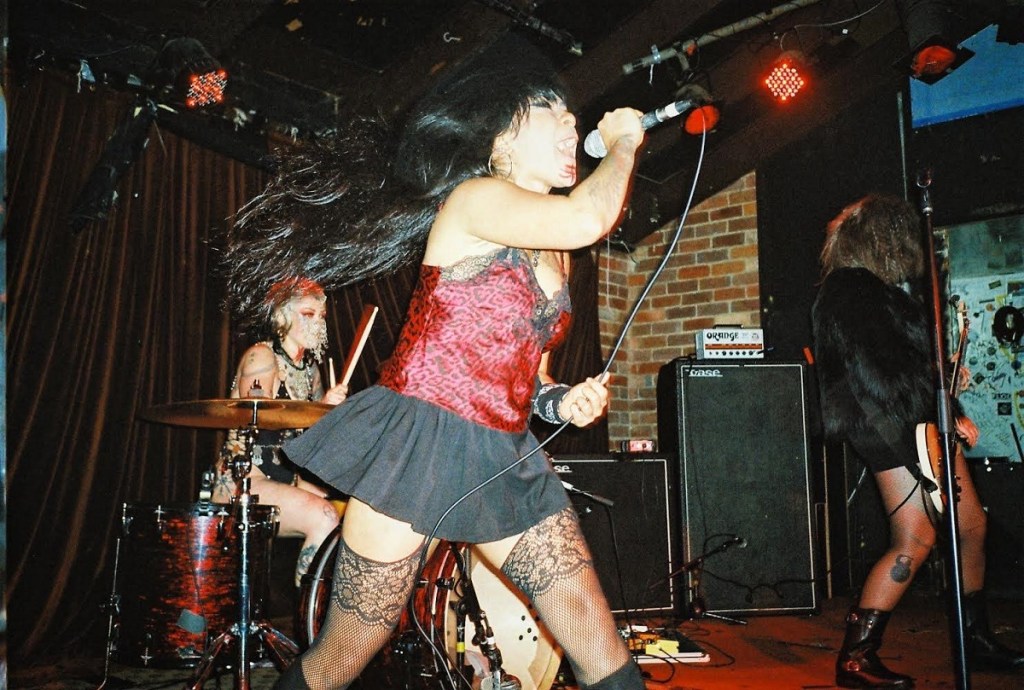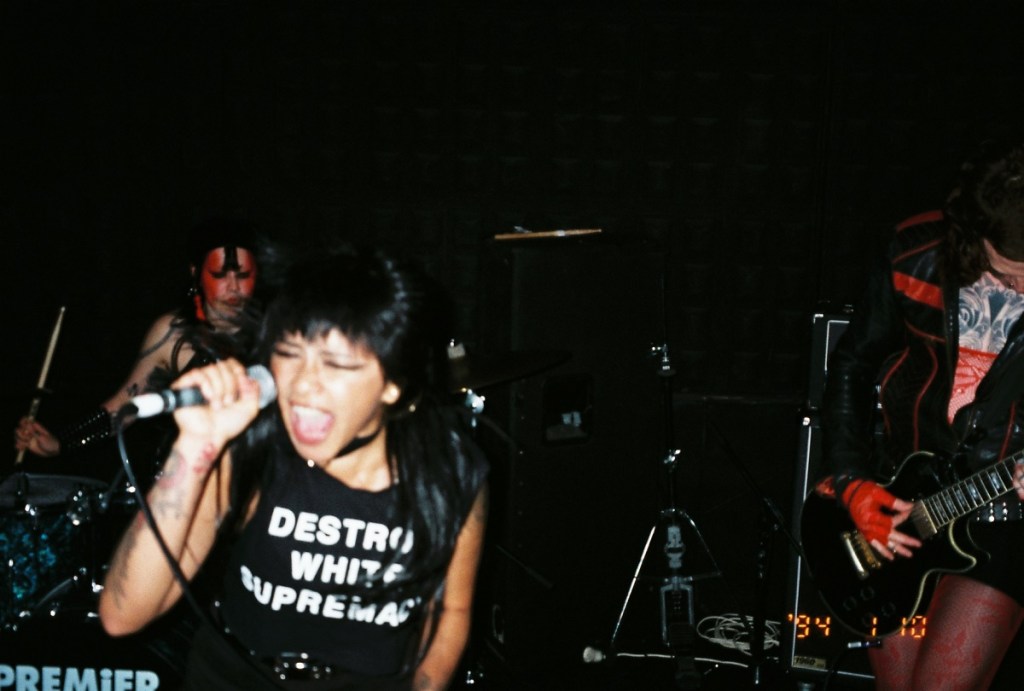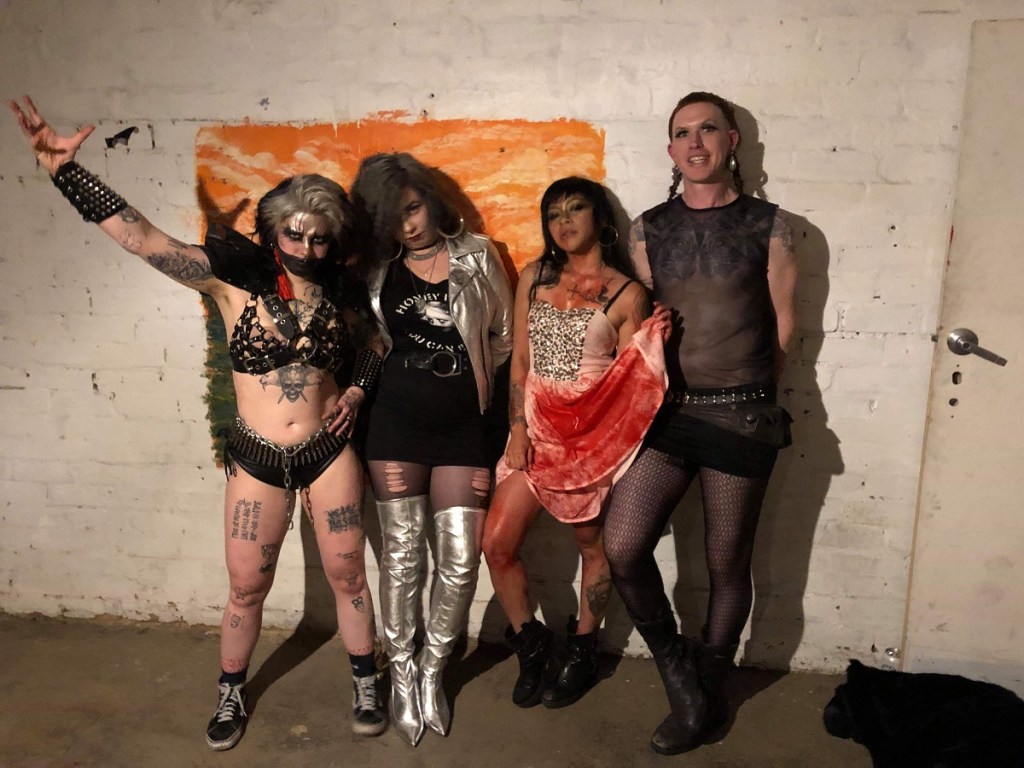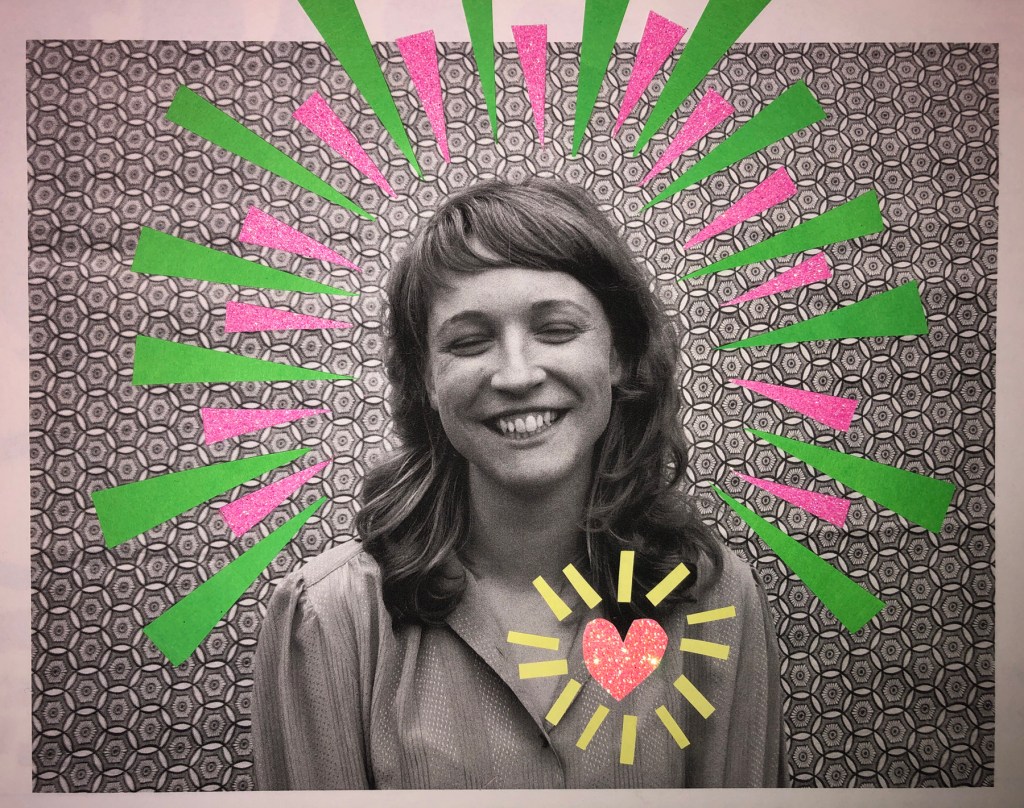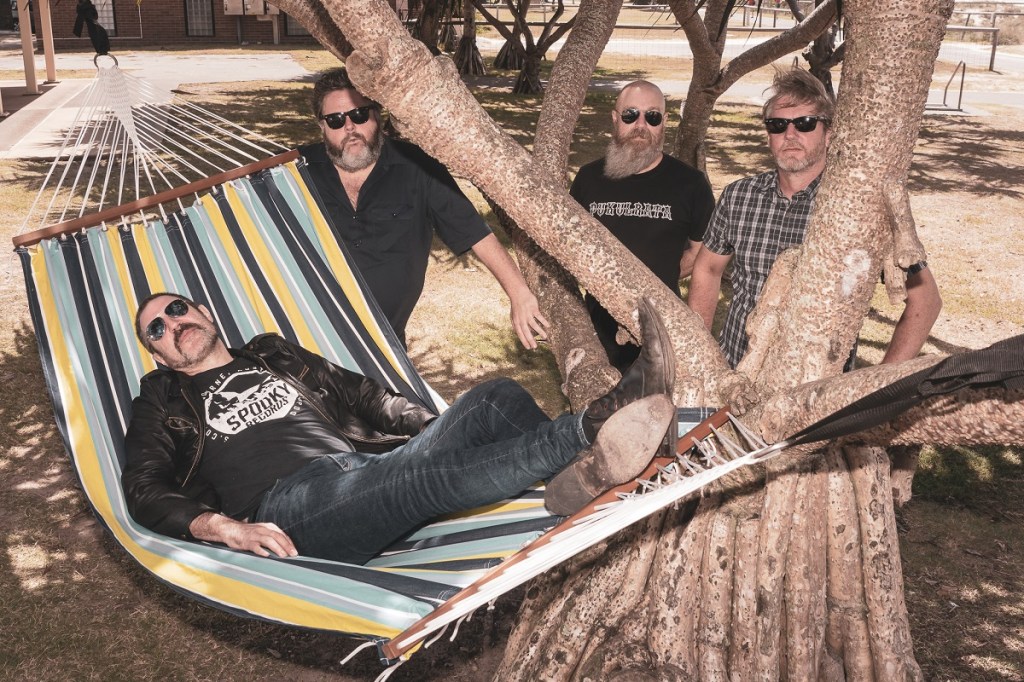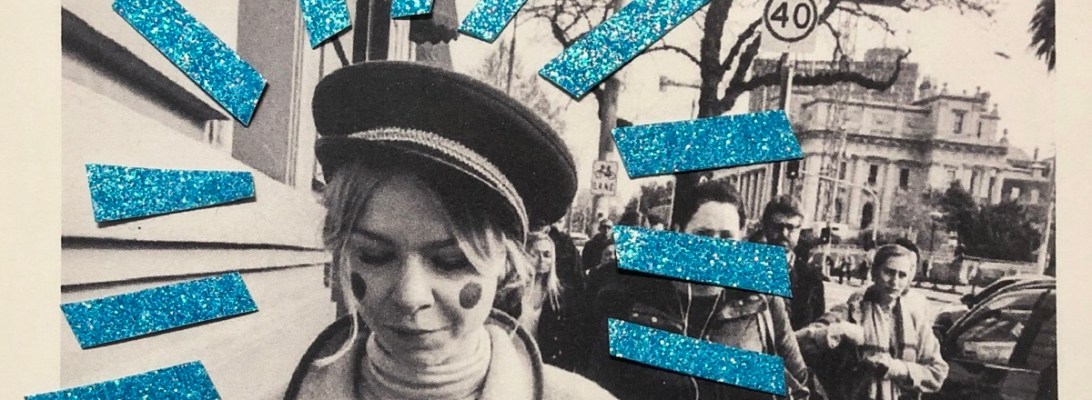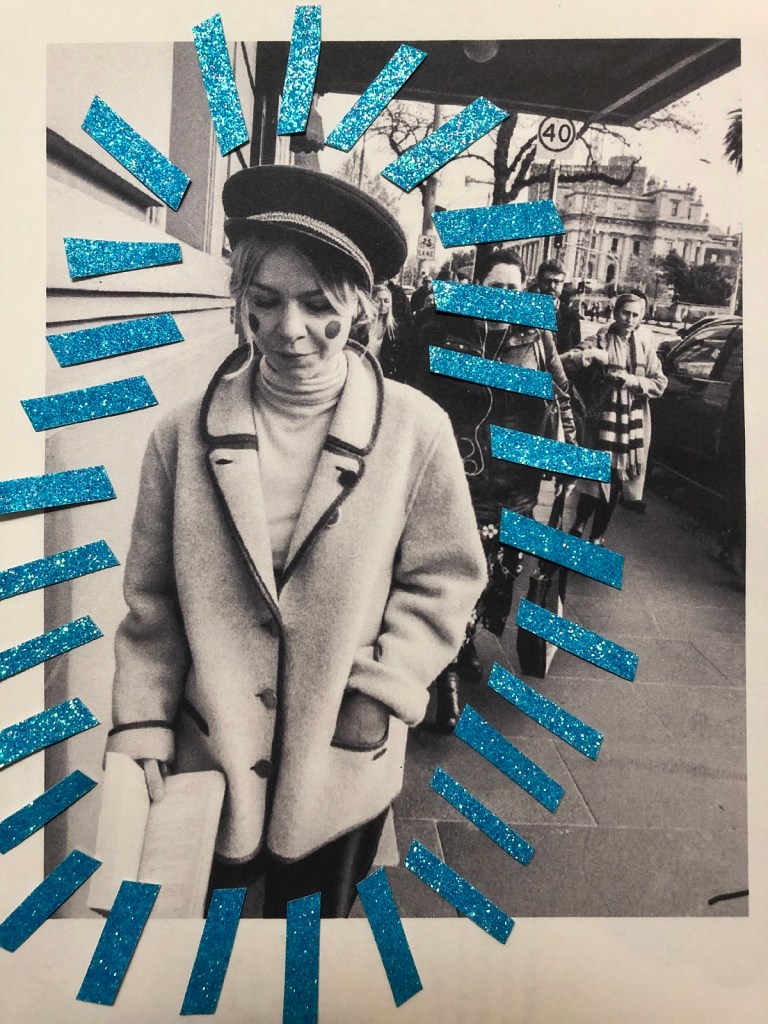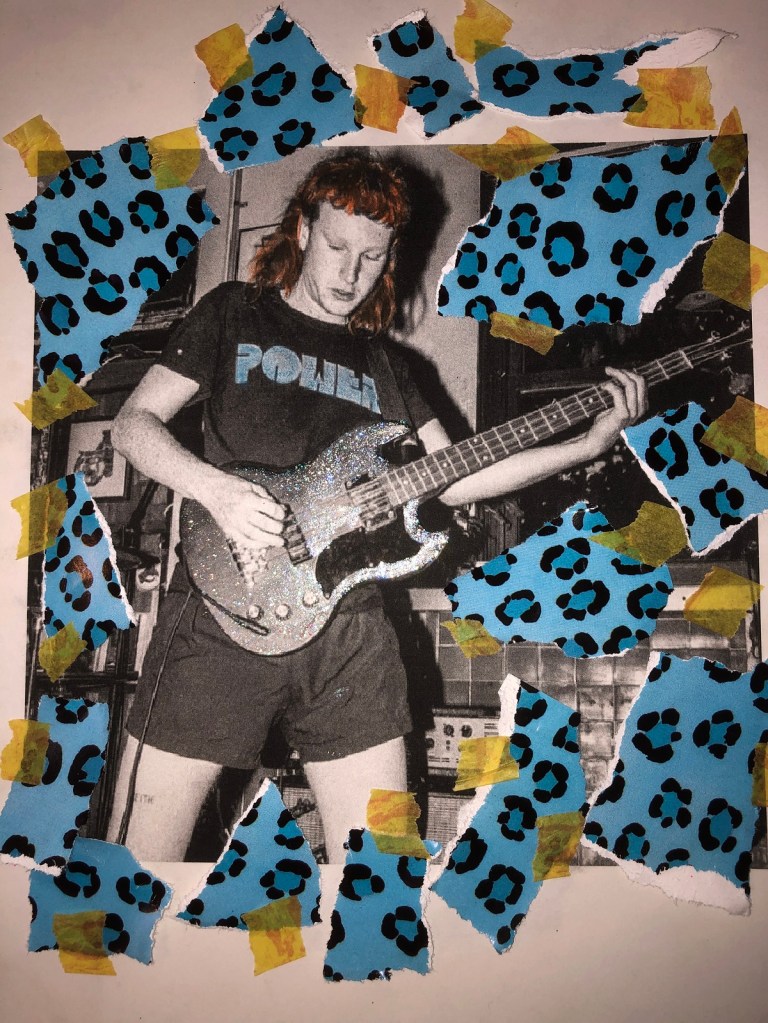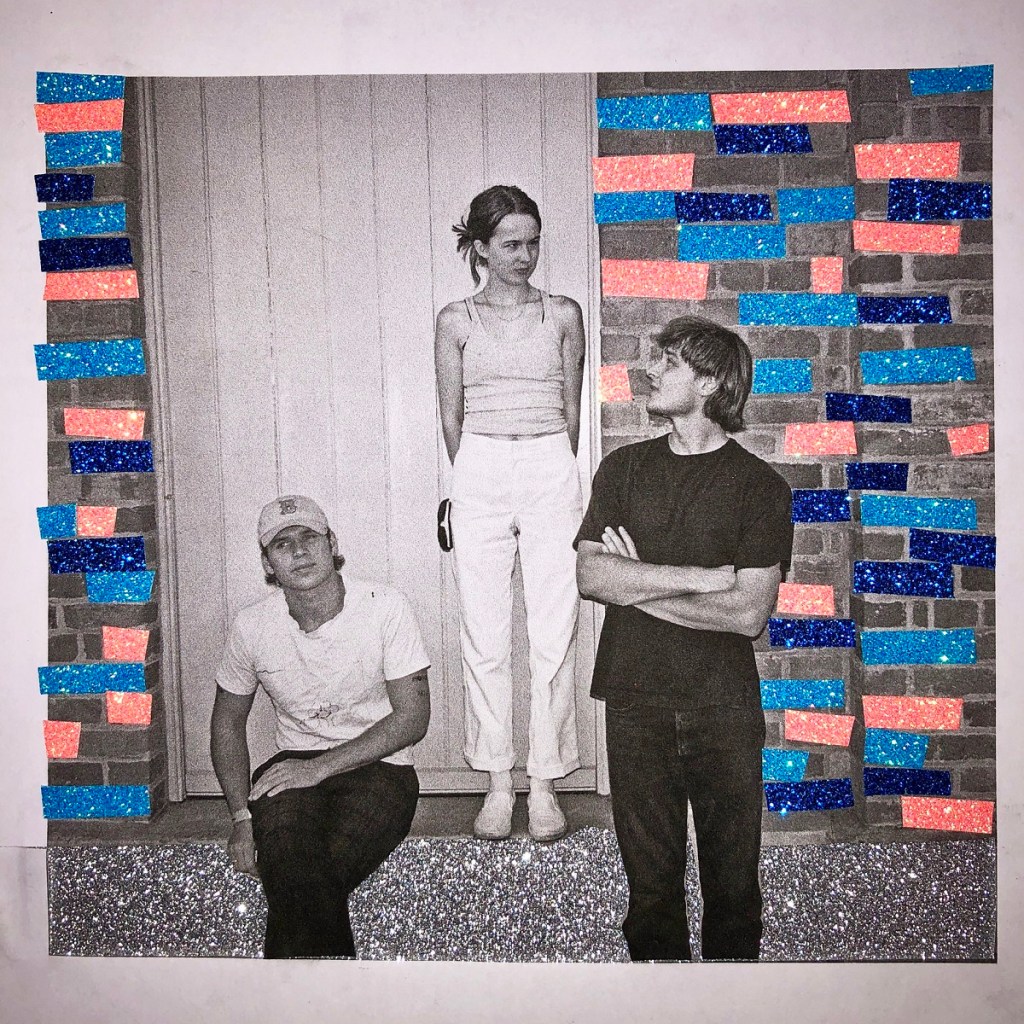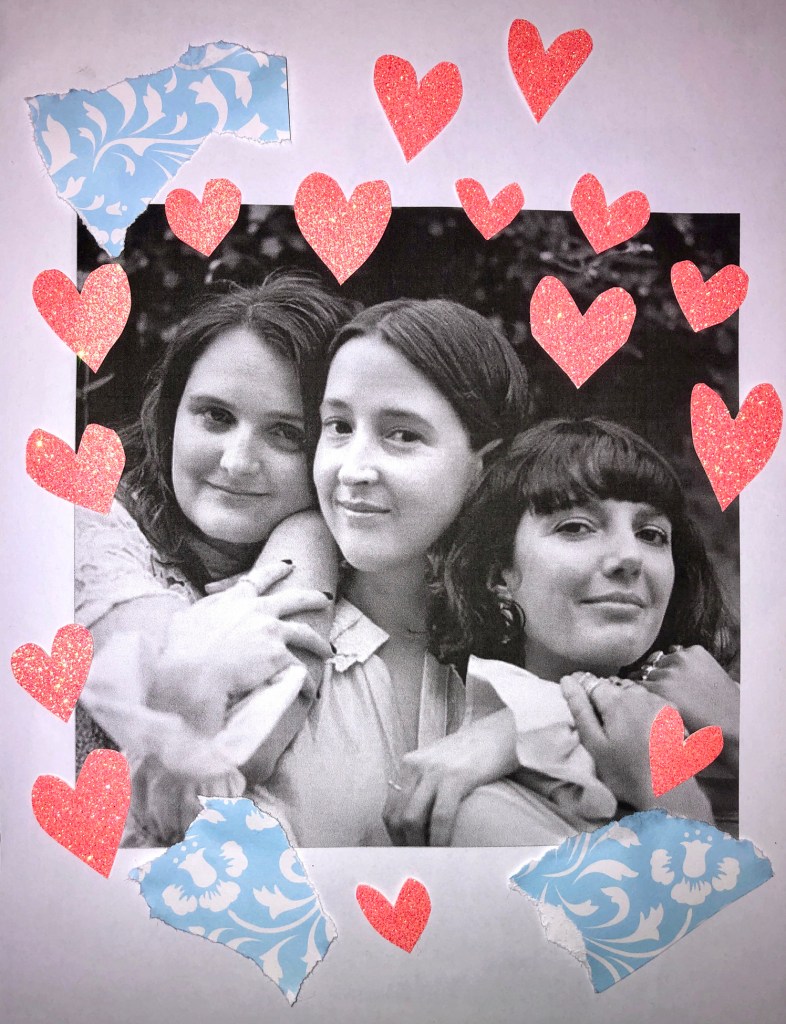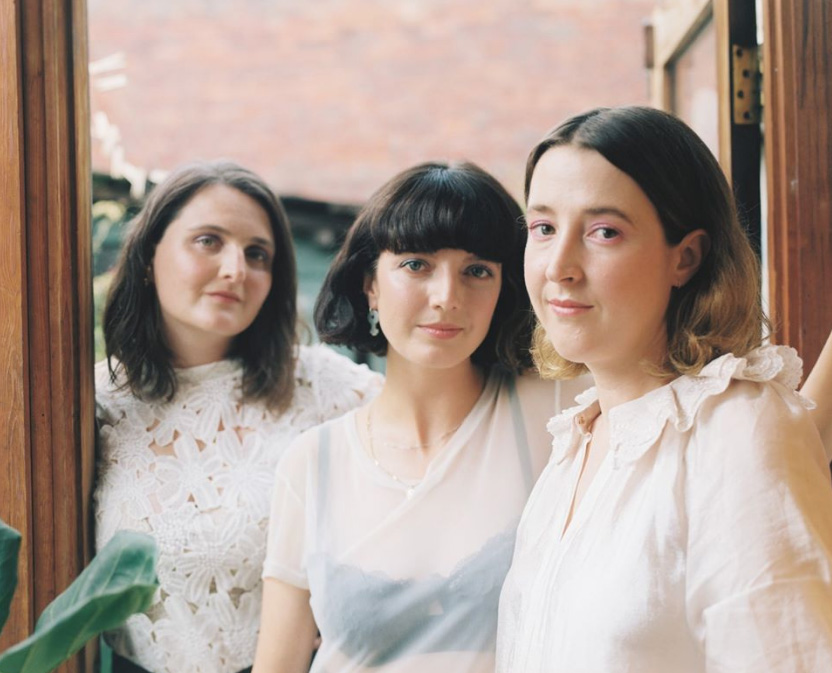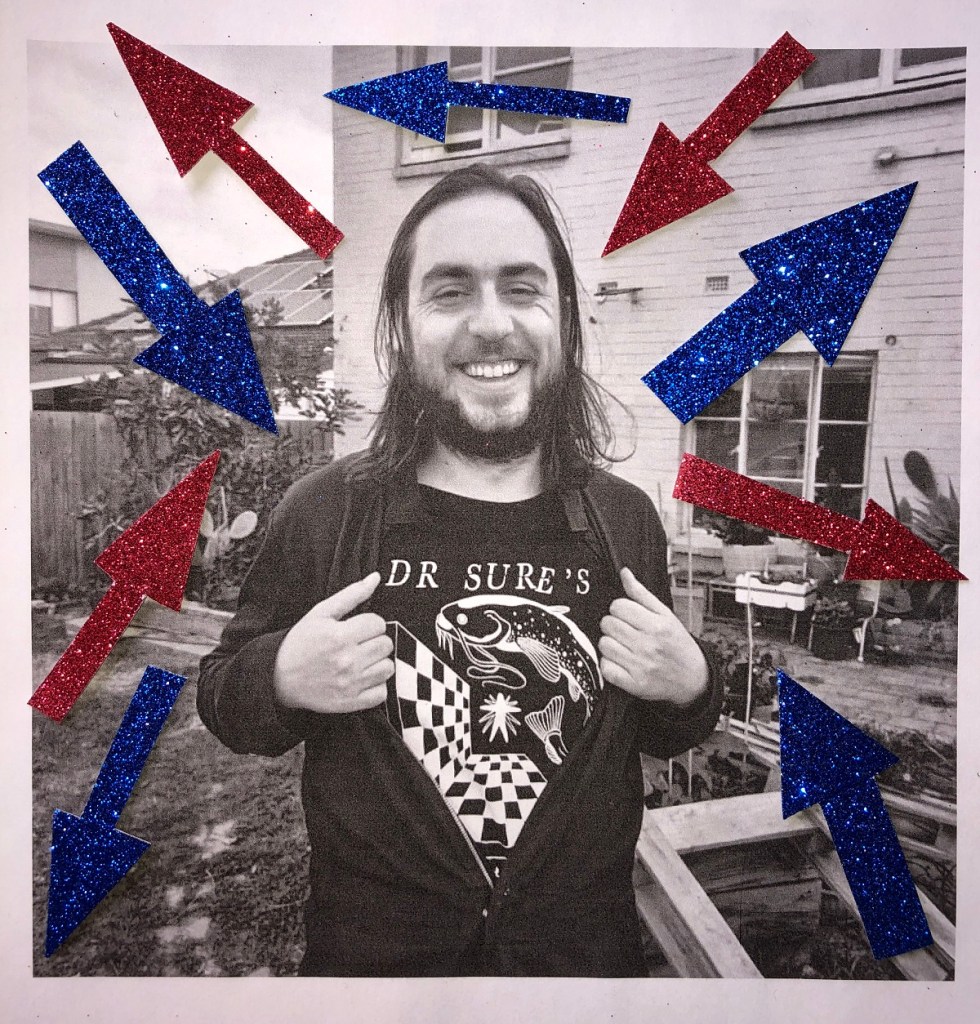
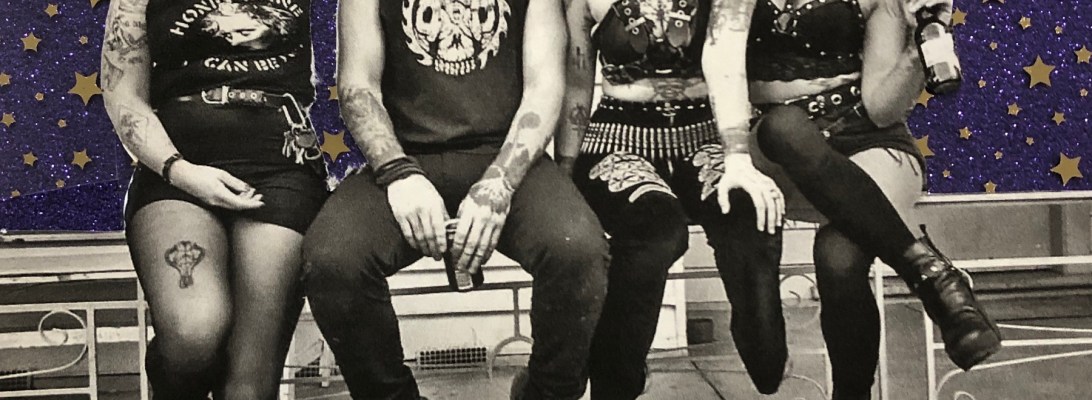
Original photo: Peter Wheeler. Handmade collage by B.
The Meanies are one of Australia’s all-time bands. Forming decades ago, their music is melody-driven, explosive power-pop with lyrical tongue planted firmly in cheek. Their live shows are the stuff of legend, wild and action-packed. 2020 sees them releasing a new studio album Desperate Measures, one of their greatest yet. Gimmie’s editor started going to Meanies all-ages shows as a teen in the ‘90s and was very, very stoked to catch up with guitarist-vocalist, Link, to find out more about the LP and his song-craft.
What do you love most about writing songs?
LINK MEANIE: It’s therapy [laughs], it really is! Honestly there’s many things that you can get out of being creative but for me, if I didn’t have that I’d probably go insane. The actual process of writing in some ways is the most enjoyable part for me, getting into the studio to varying degrees it can be fun but I find it a bit stressful.
Before you started writing songs was there any other ways that you expressed yourself creatively?
LM: Gang fights! [laughs]. No, I didn’t. I’ve always done it since as long as I can remember, from twelve years old I was always being creative with a guitar. It’s always played that therapeutic role in my life.
What got you interested in writing your own songs?
LM: I came from a kind of musical family I guess. My mum went to a pretty high level in piano and my brother played in a school band, he was a bass player and also a better guitarist than me, just being surrounded by that and a family of music lovers. It was inevitable.
I’ve read that you’re the kind of song writer that writes best when you have a deadline to work towards; was this the case for this record?
LM: No, that proves that statement to be an actual lie [laughs]. When I started writing this record there wasn’t any plan to record another album, I just did it because I was bored out of my skull over here in Spain… obviously though, I love being here with my wife and her kids… just not having that creative outlet though, to me it was medicine. I didn’t know if it was going to get recorded or not, it just evolved from there.
How much song writing did you do for it?
LM: The exact amount of songs that we recorded [laughs]. Actually, we recorded one extra which I think is coming out as a single. There wasn’t many throwaways, but I took that much time with it that I was pretty sure of those songs before we went into the studio. Sometimes if you do have a deadline and you write a whole bunch of songs and you get into the studio and for one reason or another a song just doesn’t work; even on paper if it looks good something just doesn’t click. Didn’t have that with this, which is fortunate but it helps spending a lot of time with the structure and demo-ing.
Do you write most of your songs on guitar?
LM: Yeah, or flugelhorn, one or the other. Mostly guitar. I use an online recording service called Soundtrap, I’m not getting money for that, it’s just a basic kind of setup and just demo on there and send them to the guys fairly complete. The songs end up getting a different feel just because of people’s different styles once you get in the studio, which is nice. On this one we have Wally singing the verse to one of the songs [“Cruel To Be Caned”] which has never happened before, which I’m pretty excited about, I can go up and grab a drink while he starts that one. I also co-wrote a song with Jaws which is something I’ve never done. There’s been a couple of firsts on this one.
One thing I have always loved about Meanies songs is the melody; where does your love of melody come from? Where does that knack for doing it come from?
LM: I really don’t know. Having a family that introduced me to good quality song writing, the obvious ones like The Beatles, The Who, my mum listening to Carol King or Burt Bacharach or whatever—growing up with a lot of very melodic stuff. It seeps into the consciousness and it’s just a part of me, man! [laughs].
When you first started The Meanies did you have a vision for it? Out of the gate you had a sound that was your own and even all the art you drew for your releases, it’s very fully formed.
LM: I’m glad you think so [laughs]. To me, I guess it has a certain continuity to it. I don’t know if it was very conscious. To start with, I think the imagery on the early posters was inspired by the Hard-Ons, pseudo-metal satanic imagery that they would do [laughs], then it developed a bit more into our own thing. Things didn’t always pan out the way I’d like it to, I didn’t always have the last say in things like artwork or choice of singles, I kind of like that though because I’m a lazy person—just tell me what to do! [laughs].
How did you first get into punk rock?
LM: Probably the Sex Pistols hearing them, or the Ramones, stuff like that is probably the earliest experiences… apart from Plastic Bertrand “Ca Plane Pour Moi” [laughs], that’s probably one of the earliest “punk rock” songs I ever heard. Also though, define punk; there’s so many different descriptions of what punk is, you could call something like The Romantics “What I Like About You” punk. All the things you hear growing up are part of the formative appreciation for the style.
Yeah. When punk started all the bands sounded different.
LM: Yeah, that’s the thing it wasn’t very homogeneous, there’s such a variety of sound. A bit later on people started narrowing the parameters of what punk was… that’s OK, but I just find it a little bit boring when it’s sort of cookie cutter.
Totally! With the new album Desperate Measures; what kind of emotion or place where you writing from?
LM: The same—a miserable bastard basically [laughs].
Photo: Peter Wheeler.
You seem pretty happy to me.
LM: This is all a façade! [laughs]. Inside I’m an emo. Most of the songs are pretty negative or analytical, a lot of them are about myself and then there’s more external songs like “Monsters” and “All the Bought Men” which are a bit more political.
When you write songs do you find it helps you learn stuff about yourself?
LM: Oh yeah, for sure. It’s always therapeutic to me because you are confronting parts of yourself that you might not otherwise do unless you were writing it down on paper, even if it is a little bit abstract—that’s probably a part of me not wanting to face it! [laughs].
When you write your lyrics do you do much revising?
LM: My lyrics? Not a great deal. Occasionally you’ll go back and find a line that’s a bit naff! You’re being lazy and you just wanted to move on and you go back and you’ve got a line like: I was walking down the street just the other day [laughs]. It’s like, c’mon! That’s what you wrote when you were fourteen. There’s a lot more consistency and quality with the lyrics now, a little less clumsy metaphor than I used to use when I was younger.
Is there a song you’ve written hat you’re really proud of?
LM: On this record?
Yeah.
LM: I’m really proud of the whole thing. It has a cohesion which isn’t always there in terms of how I view the record; maybe it always seems cohesive to people but, to me… I think because it was written when I’m older and also written in a similar time period. I think “Sousa” is one for me, it’s probably the least punk one on the record. I really love the melody, I think it’s a really sweet melody.
That’s one of my favourites on the album too and I also really love “Drowning Tower” as well.
LM: Ah, good! That’s the one I co-wrote with Jaws, he’ll be happy to hear that.
What’s that one about?
LM: That’s another sooky song about me [laughs]. You know man, like, I’m the tower! [laughs].
You make Meanies film clips too. You’ve made a couple so far for new songs “Cruel To Be Caned” and “Jekyll & Hide”.
LM: Yeah, really lo-fi clips that you probably couldn’t show on television because they’re too dodgy. We just figured we can get them done cheaper if I make them; how many times are they going to get played on television anyway? It’s mainly for YouTube and social media.
I still think they’re really fun! I love the clip with the dog!
LM: [Laughs] Aww thank you! Roveo! It’s so fucking daft! [laughs]. I’m really happy with them. It’d be nice if I had more technical know-hows and I could make them of a higher quality. I’m using a really old version of Movie Maker, it crashes every couple of frames. The clip I’m doing now, I’m up to about 500 frames and I’m halfway through, it takes a long time.
What are you making the clip for now?
LM: I’m doing one for the next single which is “Monsters”.
Nice! That’ll be a fun one.
LM: There’s a lot of scope for animation with a title of “Monsters”.
In the song, what kind of monsters are you speaking about?
LM: I’m speaking about the demonization of cultures, religions, anything you know… not that I really agree with religion, I think it’s had a lot of negative affect in the world; not so much religion but organised religion. By nature it becomes corrupted, when they become to big obviously you’re going to get someone at the top controlling things and they’re going to have their own vested interests, which corrupts any sort of message, positive message that a religion has. I’m not religious myself at all. I think it’s everyone’s right to believe what they want to believe, no matter how stupid [coughs]. We’re just seeing it more and more with the rise of the right-wing around the world and it’s really worrying. There’s this fucking insane clown running America, not to mention Australia! It’s scary and weirdly exciting because these sort of moments, no matter how fucked up they are, there’s great scope for change, possibly for the better. We’ll see.
What are the things that you believe in?
LM: Not a lot. I’m a bit of a cynic and a nihilist. I believe in friends actually. I believe in trying not to be an arsehole, which I manage to do sometimes. Just trying to treat people with respect, which I don’t do sometimes. Not judging, trying not to judge people with generalisations and not listening to people in power, they’ve all got their own interests—I don’t trust them at all!
Same! I’ve been like that since I was a kid. My parents always taught me not to trust authority figures and those in power.
LM: Yeah, same! [laughs].
Life can be so tough; what helps you get through?
LM: Love and music!
What’s life like for you in Spain?
LM: I love the vibe here, it’s a really nice culture, really relaxed attitude. Lots of just sitting in cafes drinking and soaking up the sun, I love it! I do miss Australia… well I miss my family and friends in Australia a lot. I should be coming back soon. Hopefully we can start doing gigs!
What do you get from playing live?
LM: Money! [laughs]. No, I don’t. Just enjoyment, it’s just fun! It’s a different kind of therapy than the actual creative side of it. I just loved catching up with old friends, it’s really great when you’re playing with a band you’ve known for 30 years, like Tumbleweed or Spiderbait, any of those sort of bands like that. It’s really some of my happiest times, just catching up with some of those people.
Original pic: Jamie Wdziekonski. Handmade collage B.
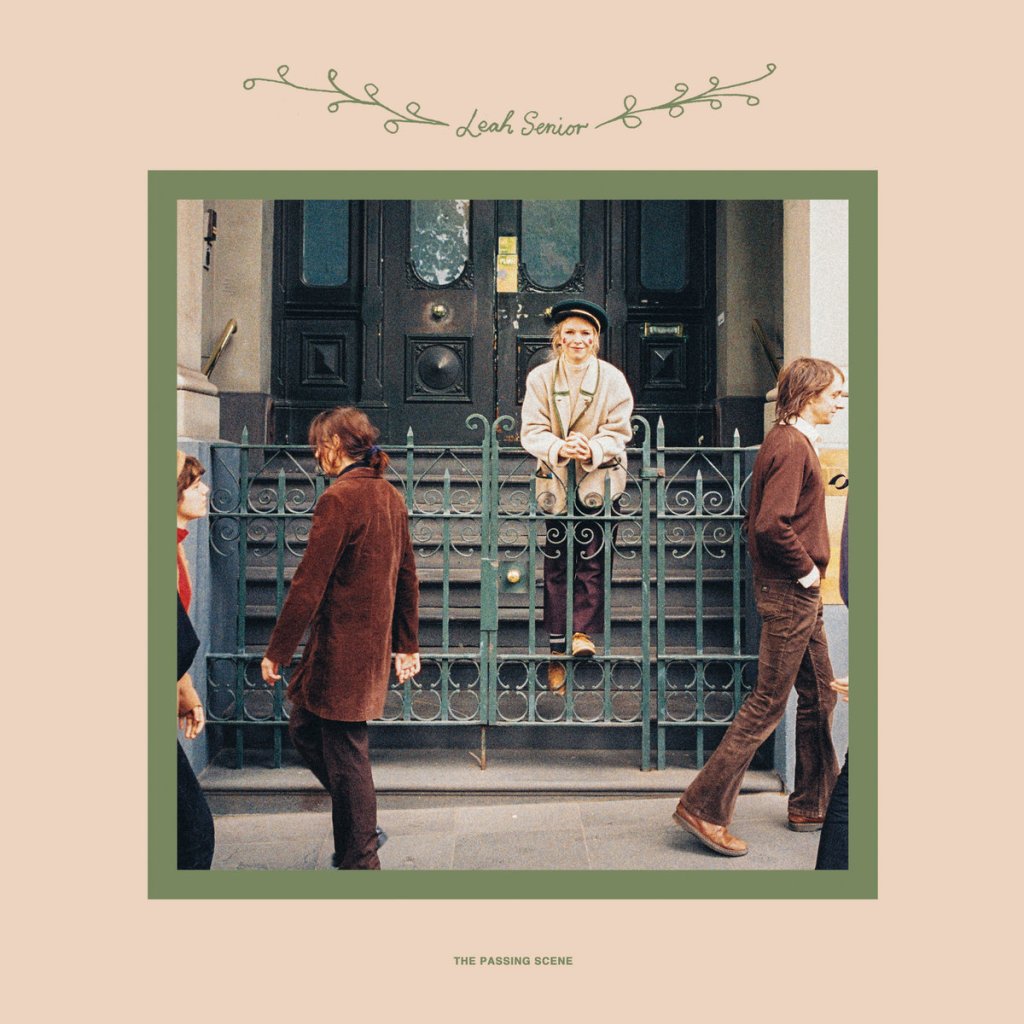
Melbourne-based musician Leah Senior writes philosophical, thoughtful, joyous songs. New LP The Passing Scene explores impermanence, acceptance, the natural world and the freedom of simply being. Gimmie spoke to Leah about her new record.
Right now you would have been finishing up a US tour with King Gizzard and the Lizard Wizard but due to the pandemic it was cancelled. You decided to go ahead and release your album; what inspired you to put it out now?
LEAH SENIOR: I don’t think the pandemic holds that much sway, from my perspective it was always going to come out now and it doesn’t matter if I’m touring or not, it’s a totally separate thing. Now is as good a time as any to put out music, if not more so.
The title of the album The Passing Scene is taken from the song of the same name on the album; as the title of the album what did you want it to represent?
LS: Looking back on all of the songs on the album there’s a real theme I suppose and it’s just acceptance of transit, that nothing ever stays the same. I just started reading a book by Pema Chödrön who is a Buddhist writer. I was reading this morning about the idea that everything falls apart and then comes back together and then falls apart. I think that “The Passing Scene” the song is about tuning into nature but at the same time accepting that nothing stays the same.
Impermanence?
LS: Yes, impermanence is the word I’m looking for.
I love the moving cover of your record, it’s pretty incredible!
LS: Yeah, it’s the same idea, that impermanence or that the passing scene is always changing. It was a way to visually express that idea.
Jamie Wdziekonski did the cover, right?
LS: Yeah, Jamie did it, yep.
Photo/album cover: Jamie Wdziekonski.
Was it his idea or yours?
LS: It was his idea to have it lenticular. I would never have thought of that.
Going into the album did you have a vision for it?
LS: No. This album has been recorded at home over the last few years. It’s taken a long time, I’m a slow song writer. It gradually was a piecing together of a record. I’d have a few songs that took it in one direction so I’d follow that and then I’d have songs that took it in another direction, so I’d cut songs; it was a real process of slowly piecing together the puzzle.
It’s a little bit of a departure from your previous work.
LS: Yeah. It comes out of trying to change my approach to creativity, I suppose. After my second album I went through a really long period of not being able to write, this album is rediscovering play in creativity. I was trying to relax a bit more, the songs come from play rather than anguish.
Often an artist’s work reflects or correlates with what’s going on in their life; were you writing from a happier place?
LS: Absolutely. It’s having stability.
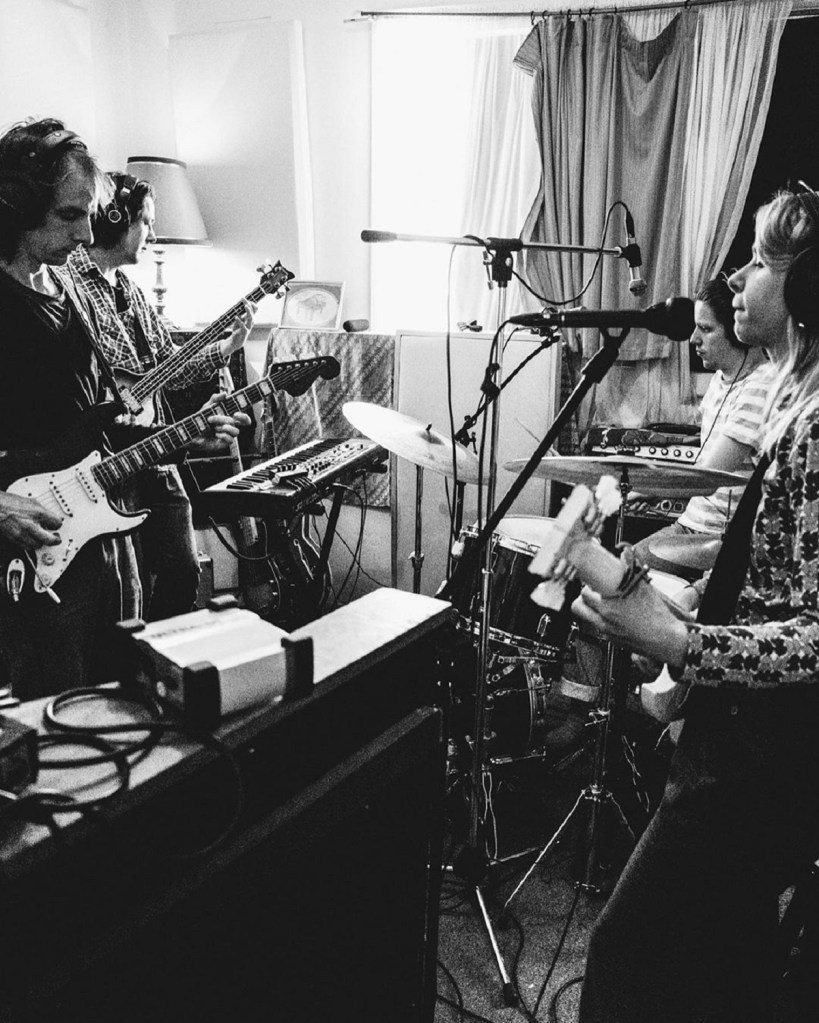
You mentioned you recorded in your lounge room over a long period of time; how did this help shape the record? It feels more intimate.
LS: That’s good. Me and my partner Jesse Williams worked on it. He recorded the album. It affected the way it sounds so much. I have a really strong vision of how I like things to sound and for better or for worse having my partner record it means that I can really get it exactly how I want it. Having total control over how it sounds has affected it. It’s definitely intimate and relaxed and it’s meant that I haven’t been on anyone else’s time when I’ve been making it. I think the relaxed approach has translated to the sound.
I get that from the record, I also get that it’s hopeful and joyous.
LS: That’s good, I hope so.
Photo: Jamie Wdziekonski.
Can you share with us a fond memory from the recording process?
LS: I love doing full band stuff, again it’s just being relaxed and getting to play with all of your friends in the lounge room, it’s the best possible way of recording; studios can be cold and scary and impersonable. It’s great to be able to just sit in my pyjamas and record [laughs].
I really love the last song on the record “Time Traveller”; what’s it about?
LS: That one I wrote about my niece Eleanor, she was a baby at the time. It’s about being frightened to look into the future. There’s a line in there: see the smoke hanging over the city… that was like a prediction for the summer [bush fires], I guess. It’s about being scared to look into the future and feeling that we never seem to learn from our mistakes.
What were you like growing up?
LS: I guess I was a lot of things. I grew up in the country. I was always really obsessed with music. My dad would sing me Beatles’ songs and my mum would sing me folky songs; she’s Swiss, and would sing me folk songs. From there I really just went on my own discovery expedition. I would work at a shop blowing up balloons on a Saturday morning and then go to the shop next door and look at the covers of CDs and buy the ones I liked trying to find new music.
Nice! I know that Howard Eynon performed in your living room not too long ago; did you learn anything from watching him play?
LS: Yeah, absolutely. That was a really powerful night! He can teach us all a lot. I felt a lot of the themes that I’ve been feeling on the record I made, he embodies that stuff; trying to relinquish ego and accepting impermanence. His presence is so joyous and free and youthful. He’s a perfect example of a way to live a life, I reckon.
Another song I really love on your album is “Jesus Turned into a Bird” it’s really pretty, especially the piano; how did that one come together?
LS: That song was written from being up really, really late one night and looking around me and seeing the sun come up and feeling so profoundly disconnected from nature. I wrote it the very next day. I constantly feel that way, I feel like we are so, so far away from nature the way that we live our lives.
Is there any songs on the album that hold a special significance for you?
LS: I feel like “Graves”… I really like playing that one still, even though we released it a little while ago. My partner Jesse and I wrote that one together. I’ll never not feel like I felt, what I was expressing, in that song. They’re all genuine expressions, they’re all real.
Jesse is from the Girlatones?
LS: Yep.
Is it nice having a partner that is also creative?
LS: Yeah, it’s great. I don’t think I couldn’t not have a creative partner. It’s especially nice working on my music with him. He can play anything on anyone of my songs and it sounds like how I would envision it. He has a total musical understanding of my emotions or something. I feel very lucky to have that.
The video for your song “Evergreen” was shot at a castle?
LS: Yeah. Kryal Castle.
Where did the idea for that come from?
LS: My friend Jess who shot the video we were talking and she was envisioning some kind of fun medieval thing. It was her idea. We were scouting out places and that place was perfect.
Do you have any other film clips coming up?
LS: Nah. I have a live clip… I’m not sure. Not at this point in time.
How has not being able to play live affected you?
LS: It’s been fine. It’s actually been pretty good. It’s freeing and fun for me. I’m not an extrovert, I don’t get my kicks from that sort of thing. I like trying to make things. For me, it’s been fine.
Have you been making anything lately?
LS: I’m always making things here and there. I haven’t been writing that many songs. One day I’ll do a tiny bit of poetry and the next day I’ll do a tiny bit of painting—I’m bad at settling and focusing on things.
What have you been writing about with your poetry?
LS: The last poem I wrote was about this idea that we are attracted to nature because nature can only be itself. It’s not my own idea, it was inspired by John O’Donohue. He was saying that a crow doesn’t wake up one day and go “oh, I wish I was a crow” it can only be itself, and there’s something really beautiful about that. We spend our time trying on new outfits and constantly trying to become, whereas birds don’t sing the song of becoming, they’re not song writers, they’re song singers.
Why is music important to you?
LS: That’s a huge question. It speaks the language of nonsense, the reality of the world is all nonsense—music is in tune with that. Music expresses so much more than we ever could express without it.
Original photo Jamie Wdziekonski. Handmade collage by B.
Melbourne pub punk band Amyl and the Sniffers need no introduction. We recently chatted to bassist Gus Romer to find out about the progress on new music, how he came to join the band and about their travels all over the world.
When we were teeing up this chat you mentioned that you’re a late sleeper; have you always been one? Is it because you’ve played so many shows – I think around 250 or so in the last year – that contributes to you keeping late hours?
GUS ROMER: In the past two years we’ve played a lot of shows. I’ve always been like that though, I’ve always cherished a good lie in [laughs].
How did you first discover music?
GR: From a young-ish age my mother always had an emphasis on my brother and I learning an instrument, doing something musical.
Why do you think she pushed you guys towards something creative?
GR: She’s an art teacher, so we’ve always done creative stuff from the start. It’s a good outlet to always have, something to do and something to work on.
You’re originally from Tasmania?
GR: Yep, yep.
What was it like growing up there?
GR: It was great! I love Tassie a lot. Super small. Super beautiful. Pretty cold [laughs].
What kind of stuff were you into as a kid?
GR: Mainly music, bits and bobs, that came in and out of my interest because I spent most of my childhood and teens just skateboarding, I was really into that!
What bands were you listening to?
GR: At the very start when you’re really young it’s just listening to the radio and whatever is around you. I got really into the Red Hot Chilli Peppers, Led Zeppelin and Rage Against The Machine. I fell off for a while and got really into hip-hop for a few years in my teens, that’s all I listened to, I wasn’t into too much else at the time. Later on I got back into punk rock.
What hip-hop were you listening to?
GR: I was really into Big L and MF Doom and Wu-Tang.
Did you start off playing bass? Was that the first instrument you learnt?
GR: What got me into playing bass was that in primary school we had a strings program where you could get out of class for an hour a week and this person would come around and teach a few kids how to play. I played the cello. When I finished primary school and went into high school, I obviously couldn’t do that anymore, so I got a bass for my birthday. I joined this band with my friends.
Was that the band Bu$ Money?
GR: No, that was way later. This is when I was younger. I got into playing bass initially from that transition from playing the cello.
Did you have a bunch of other bands before Bu$ Money?
GR: Bu$ Money was when I started listening to more local music and shit around in my scene in Hobart and what inspired me to get back into it and have a crack. Even though I didn’t play bass in Bu$ Money, I played drums.
How did you first get into your local scene?
GR: There’s not a great deal of places to go out and drink in Hobart. The Brisbane Hotel was where me and my friends always went ‘cause there wasn’t a bunch of dickheads there. There was alternative people, more like-minded people. I started going to drink with my friends, I started going to more shows from that and really started getting into it. I thought, this is pretty good! I’m gonna have a crack. I got one of my friends and a guy I worked with and pretty much forced them to start and be in a band with me! [laughs].
What local bands were you listening to and seeing live?
GR: Treehouse were a big one! I’m a big fan! The Dreggs, are a great, great Hobart band. There were a lot of bands that came and gone. Native Cats are a great, great Hobart band!
How did you end up being in Amyl and the Sniffers?
GR: I was already good friends with the band, I met them when Declan’s old band, Jurassic Nark, came to Hobart and Bu$ Money supported them. So that’s how I met him and then I went to Melbourne soon after and hung out with everybody else; I was good friends with them and a big fan of the band. When their old bass player parted ways with the band they called me one day and said, “Move to Melbourne and join the band”. I thought, sweet! I quit my job and moved to Melbourne.
Did you have to give much thought to it?
GR: I’d already been toying with the idea of moving to Melbourne for a while but it would have taken me even longer to do if they hadn’t asked me, it was a nice little push. It got me going and got me moving. I was already such good friends with them and a really big fan of the band so it wasn’t too much of a decision. It was super natural, cool, let’s do it!
In around March 2017, I think, is when you played your first show with them?
GR: I don’t even know ‘ey? [laughs].
Do you remember anything about that first show with them?
GR: Yeah. It was the band’s second tape launch. It was at the Curtin. I was so, so nervous! I couldn’t really play bass that good. At the time I hadn’t played bass in seven years! [laughs]. I got my friend to teach me all the songs. We had one practice. I remember being really nervous and didn’t think I played that well. I was like, oh god! I blew it! I blew! They said, “Nah! That’s great!” No one was looking at me anyway [laughs]. It was a good time. A couple of drinks loosened me up a bit and I just got up and it was fine.
Do you ever get nervous now playing shows?
GR: Not at all. Being filmed makes me really nervous though and feel uncomfortable [laughs], doing an in the studio kind of thing. We played on Jools Holland last year.
I saw that!
GR: I was off it before that, I was losing my mind, I was so nervous. It’s insane. I hadn’t experienced anything like that before.
You guys have got to do all kinds of interesting things. I saw photos from when you did a Gucci campaign and walked in their Fall 2019 show and there was a photo shoot at an Archaeological Park.
GR: It was at these ruins in Sicily. It’s pretty crazy. The first time doing that and going into that it was the first time I’d ever experienced anything like it, the level of the production, the money and effort that goes into that stuff is just mind blowing! The scale is insane. For one campaign there was over 100 staff there, everyone running around doing this, that and everything. It was crazy! It was an hour out of Palermo the capital of Sicily. There were all these old, old buildings, these ruins on the coast.
Is there something else cool that you’ve seen in your travels that sticks out to you?
GR: Too much! There’s always something crazy going on somewhere. Having the opportunity… we’ve played in Russia before, stuff like that sticks out, we were only there a day and a half. Getting to play places like Russia and Istanbul, is pretty mind blowing! I never thought I’d get the opportunity to do anything like that.
What was Istanbul like?
GR: It was so cool! Definitely the coolest place I’ve ever been, we were only there for a day though. We flew in and out. I got to walk around for two hours but it was so cool. Everything was so cool, the vibe, the architecture, it was super, super beautiful.
What was Russia like?
GR: Russia was pretty, pretty crazy. We went to Red Square. It was pretty insane, the drive from the airport to our hotel was an hour, hour and a half, and on the outskirts of the city it seems like there’s really intense poverty, in the city there is so much money! On the outskirts you see massive, massive apartment blocks that look so run down and dilapidated; in the city centre it’s so clean and there’s so much money everywhere, sports cars everywhere!
What was it like playing shows in places like that? Is it similar to here?
GR: The show in Moscow was for a festival, that was the very first show we played in Europe. We played a festival to a relatively small crowd, they were getting it though and a few people even knew all the lyrics! It’s always pretty wild because you go in not expecting much and then you have people singing your lyrics back to you. It’s mind blowing!
Have you got to see many beautiful nature spots in your travels?
GR: Driving through America is always really, really cool, the diversity of the landscape; you drive through the hills of Oregon and then drive through the desert. That stands out in terms of nature to me.
What’s one of the coolest things that you’ve seen in America?
GR: It’s all a blur to be honest [laughs]. There’s a lot, a lot of driving and a lot of drinking!
You’ve been working on a new Sniffers album?
GR: Yep, at the moment we’re trying to get some songs together to become an album at some point.
In December I think you guys mentioned you had around 12 songs?
GR: Yeah, November last year we had a fair long slog of trying to do it, trying to get something going—we got a lot of good stuff. Now we’ve just hired a little unit at a storage place near our house, which has been great. At the start of lock down we were bumming around doing nothing for the first six to eight weeks. We’ve set up in the storage unit and we’ve been hitting that up quite a bit, which has been really good. We’re trying to write new stuff and trying to do stuff that we’re all super happy with.
You all live together?
GR: Yep, yep. It’s cool. Because we’ve toured so solidly for the past two years, we’ve pretty much spent 24-hours a day with each other, we’ve been overseas together for months at a time so, it’s a pretty smooth transition for us. We all know how each other rolls.
Was it weird for you at the start of isolation not being able to tour?
GR: Kind of. It was a nice break though. We were meant to be in the States for a month, not too long after it all started. We’ve been so busy the past few years, this past six months has been the biggest break that we’ve had, the most time we’ve spent in Australia in such a long time. I’ve just been enjoying being home.
With the new stuff you’re writing have you been trying anything different to previous work?
GR: Yeah, there’s a couple of tracks that are heavier and faster, on the other spectrum there is some different stuff. We’re not trying to limit ourselves too much to a particular sound or style, just playing around and seeing what we like. Most of the time either Declan, Bryce or myself will bring a riff and we’ll jam it out. Most of the time we just try to finish it, get something and then talk about it afterwards, see what we like about it and if we keep it or don’t.
When you’re making your own music do you listen to other people’s music much?
GR: Always, I always have something going. Lately I’ve been listening to a lot of Dick Diver and Low Life, Vertigo—I’ve been pumping all them recently. There’s always good stuff!
Previously, just after the Sniffers debut album came out, you mentioned that you felt a really big sense of relief that the album was done and it was nice to not have to stress and worry about it; what kind of things do you stress and worry about when making an album?
GR: Well, with that, that was in the thick of us touring like crazy… when we recorded it we had come off of four months non-stop touring overseas; we flew to Sheffield in the UK and recorded the album there. We’d been away for too long, we’d work so hard non-stop touring—we just wanted to be home, we were so over it! It was definitely not the greatest time and was really stressful.
What were you tired of?
GR: We were pretty happy with what we had but we were happy to get the album out of the way. A lot of the songs, we’d already been playing for a couple of years, we just wanted to record it and get it out and never think about it or listen to it again.
Do you have a favourite Sniffers song to play?
GR: I’d probably say “Some Mutts (Can’t Be Muzzled)”. That’s my favourite. Usually we play it last. I like the build-up, it’s fun to play.
What was the last band you saw live before lockdown?
GR: Just before everything went to a halt we were in the middle of an Australian tour, we played Sydney and Newcastle, they were the two last times I went out. I got to see Gee Tee and R.M.F.C. supporting us in Sydney, that’s always, always a great time! Concrete Lawn are a Sydney band who we are really good friends with us played in Newcastle. They were the last live shows I got to see before everything stopped.
Do you have plans yet for the rest of the year or is it too hard to plan with all the uncertainty around?
GR: There’s always stuff. We’re hoping to do an Australia tour before the end of the year, it just depends. We’re hoping to get overseas again from the start to the middle of next year. It’s a guessing game though and no one is too sure how it will go.
What have you been doing in isolation to keep sane?
GR: Now that we have the practice space we’ve been utilising that a quite a bit, other than that we haven’t been doing much… bumming around watching dumb shit on the internet and movies. The boys bought an Xbox, so they’re playing a lot of FIFA [laughs].
Last question; what inspired you to get your mullet haircut?
GR: I was really, really into the Cosmic Psychos. I was watching a lot of old footage and the doco Blokes You Can Trust and decided I wanted to look like Ross Knight! [laughs]. It’s pretty funny! I love the Cosmic Psychos.
Original photo by Oscar Oshea. Handmade collage by B.
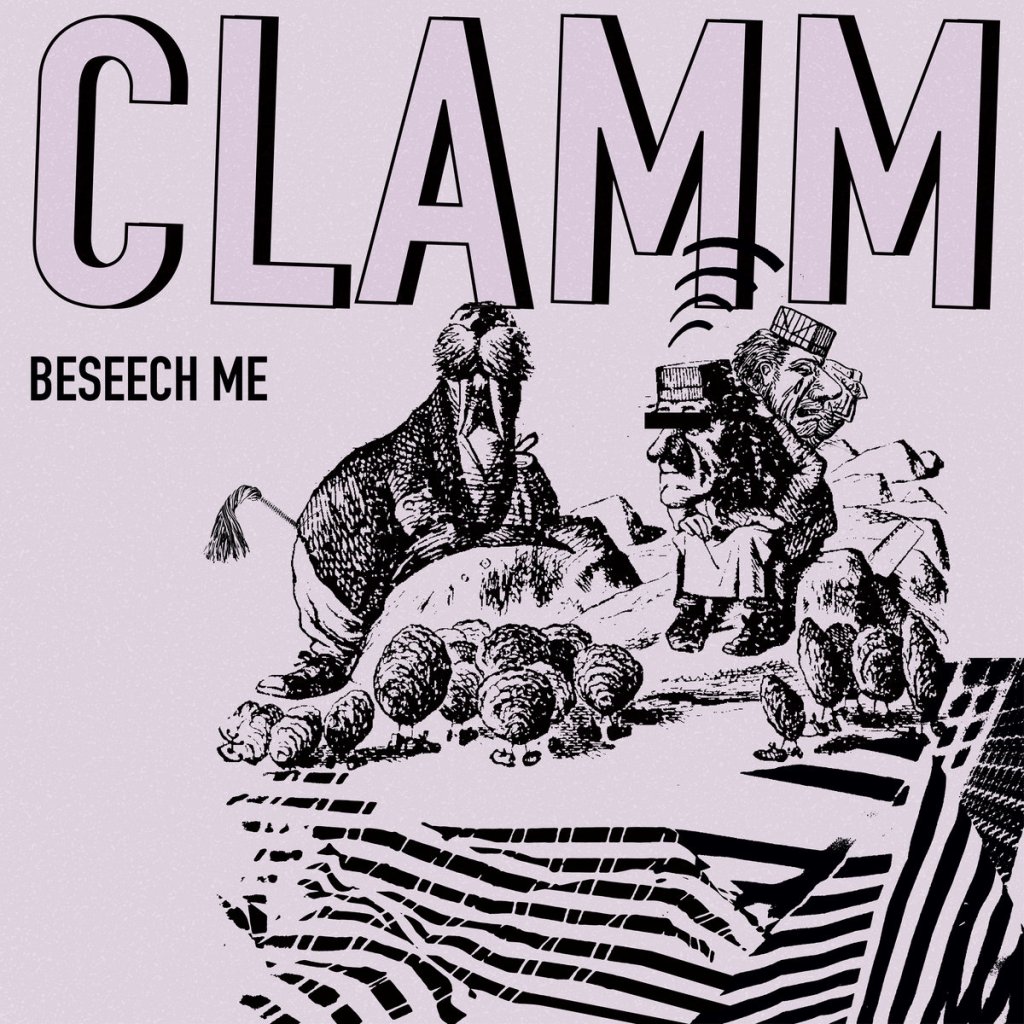
At the beginning of the year Melbourne “plant-based diet rockers” CLAMM released their debut album Beseech Me – a 10-track banger touching on mental health, materialism, anti-violence and tuned in self-aware social commentary. Gimmie interviewed guitarist-vocalist Jack and drummer Miles.
How did you first discover music?
JACK: My first memories music is listening to Roy Orbison and Elvis Presley in my grandfather’s old Peugeot. I was probably about six or something. I couldn’t get over tracks like ‘Pretty Woman’ when old Roy does that snarl thing… and then like ‘Hound Dog’. I remember being really moved by music like that and it made me want to dance. He had an iPod and I think they had only been out for a few years so I remember just flicking through his iPod in wonderment. That or dancing to Daddy Cool or the Eagles at Dad’s place when I would have been around the same age.
What does music mean to you?
JACK: Ah it’s everything I guess (couldn’t think of a less cliché answer). A world without music and art sounds like a horrible, horrible place. Being able to create is something of main importance to me, I don’t really need much else I reckon! I feel lucky to have it as a cathartic experience and one that provides me with an outlet and an interaction with things that are not of the (sometimes) mundane day-to-day life. Music tends to allow me to guide me through and answer questions about existence.
How did music become the vehicle for you to express yourself?
JACK: I was always really into music but couldn’t really play. When we were around maybe 17 and 18 a group of us used to try and sneak in watch Miles’ brother play in this band called Water Bear. Full psychedelic rock! We loved it, it made us all want to start a band and so we did (Dragoons). Most of us couldn’t play our instruments. Miles and our mate Rudi Saniga luckily held it down on bass and drums but Archie (of Floodlights) and I basically just started learning guitar through Dragoons. You can hear it too if you listen, some of it is shocking stuff but it is simultaneously the best thing ever. We just sort of said ‘Fuck it’ and played shows and learnt together. Something about the ‘fuck it’ of Dragoons and me simultaneously maybe getting into punkier stuff made me realise that I didn’t need to be “good” at guitar to be able to express myself and not long after came CLAMM I guess.
What brought CLAMM together?
JACK: Like I said, Miles and I played together in Dragoons. We then joined Gamjee with Miles’ brother and absolutely loved that. I think I’ve played in four bands and Miles has drummed for three of them. Miles and I are soul bound I reckon. We’ve been through two bass players and met Maisie one night at a gig we’d played with her band (The Belair Lib Bombs), she came up to us and told us she really liked it and when our bass player at the time Scotty shipped off to art school in Poland we asked Maisie if she wanted to join.
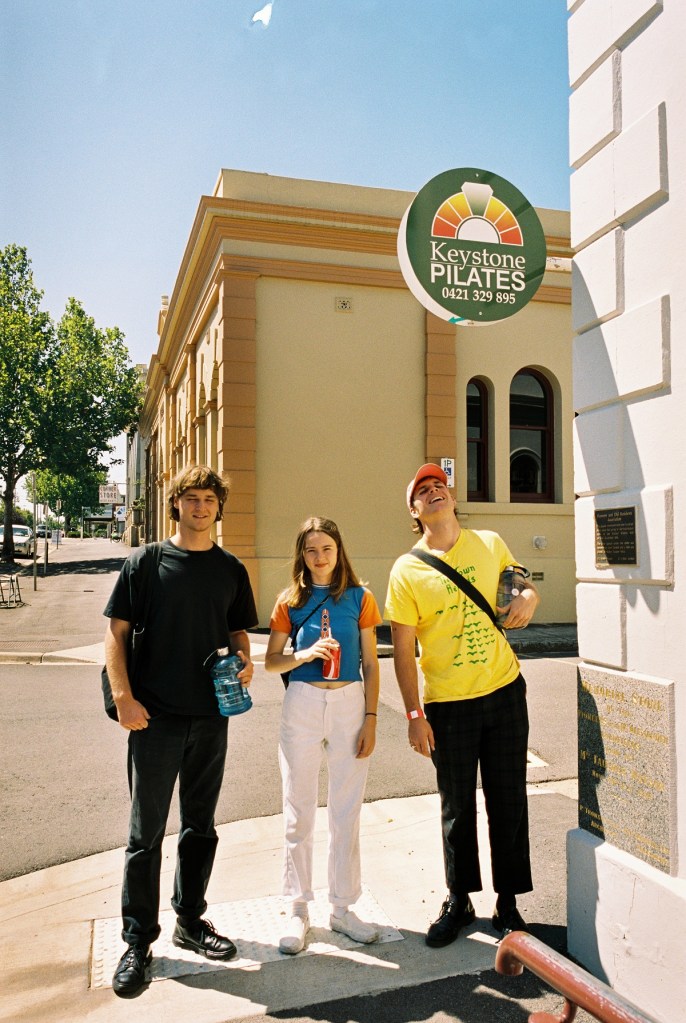
All photos by Oscar Oshea.
Can you tell us a little something about everyone in CLAMM?
MILES: Jack is “The Driving Force” like a pilot in a pod of Orcas. Maisie… she is like the training wheels on a bike of an over excited child, keeping us on the right path. And I’m the treasurer of CLAMM Industries.
At the beginning of the year you put out your debut LP Beseech Me what was the starting point for creating the album?
JACK: I was playing in a few bands when I sort of realised I was maybe trying to write heavier music that wasn’t really appropriate for the bands. So I just started writing on the side with the thought of one day possibly pursuing it. I think the first few songs were like ‘Dog’ and maybe ‘Sucker Punch’ and I just did shocking demos on my iPhone and then one day brought them to Miles and we started jamming them and possibly thought about a two piece. We got about ten songs down and were playing them live a fair bit. We had worked with Sonic God Nao Anzai before and thought it was the best move.
Themes on the record include anti-violence, materialism and mental health; what inspired you to tackle each of these important subjects?
JACK: I suppose I always found the music really intense and moving like I was trying to get some anger or something out of me. And so I think I had to be honest about it when I was writing the lyrics and sort of ask: What are you trying to get out? What are you angry about? What’s going on? I don’t know I guess the anger sort of carries across into my day- to-day when I think about our society. I think there are countless problems within our political structure and it seems like we have a government (or system) that either have the inability or lack of care to do anything about it. CLAMM for me is sorta like: Everything is fucked! How can I write music about anything else?
Beseech Me was recorded by Nao Anzai; what attracted you to working with Nao?
MILES: Another project of ours called Dragoons had recorded with him previously and we loved the Nao experience. His approach to recording appealed to us a lot… record it live and try not to try do too many takes on one song. That formula seems to make a potent energy in the room, and we think Nao captures that energy really well.
On an Insta post you mentioned that bassist Maisie has brought positive and calm energy to CLAMM since she joined; what’s her secret to staying positive and calm, especially in a world which can get a bit chaotic?
JACK: Maisie just seems to be calm with who she is as a person. And she is a great person. For a 20-year-old its scary stuff. Her head seems to be just screwed on TIGHT and there’s nothing anybody is going to do about it. Miles is sort of the same. Maisie refused to detail any of her secrets to me or to the public but let it be known I wish I knew.
What’s the story behind Beseech Me’s art? Darcy Berry from Moth did it, right?
MILES: Correct! Our friend showed us a picture that had something to do with a poem about a walrus and a carpenter and Alice in Wonderland. Not much behind it, think we weren’t sure what to use and that had clams on it and that’s all it took to have some appeal. Darcy played around with it a bit and put his own spin on it, and it came out quite nice.
What influenced your decision to release your LP on cassette tape?
MILES: A mixture of not a lot of money and not a lot of interest from someone else to release it, out of necessity I suppose. Cheap and easy to do.
Can you tell us about your favourite show CLAMM has played to date? What made it so?
JACK: We got asked to play a Bass Drum of Death gig after our second bass player left. ‘Fuck’ Miles and I probably thought. We had a few bass players in mind, and when we went on Bass Drum of Death’s Facebook event we saw that Maisie had pressed interested. She learnt the songs in two sessions and we played the following weekend and it was sorta like, ‘fuck we are back and Maisie is sick!!!!!!!’ hard to go past that one I reckon. Our tape launch at The Tote was pretty special too I don’t think I’ll forget that one.
What’s next for CLAMM?
MILES: Tough to say at the minute with all that is going on of course, but we have recorded and are now in the midst of mixing a new album. Other than that, CLAMM spends there days sitting at home and pondering what could have been… we had some very cool gigs lined up that have been postponed, so hopefully they happen sometime in the future. CLAMM will look after each other and see everyone on the other side at the many gigs to come, sooner rather than later we hope!
Original photo by Tom Mannion. Handmade collage by B.
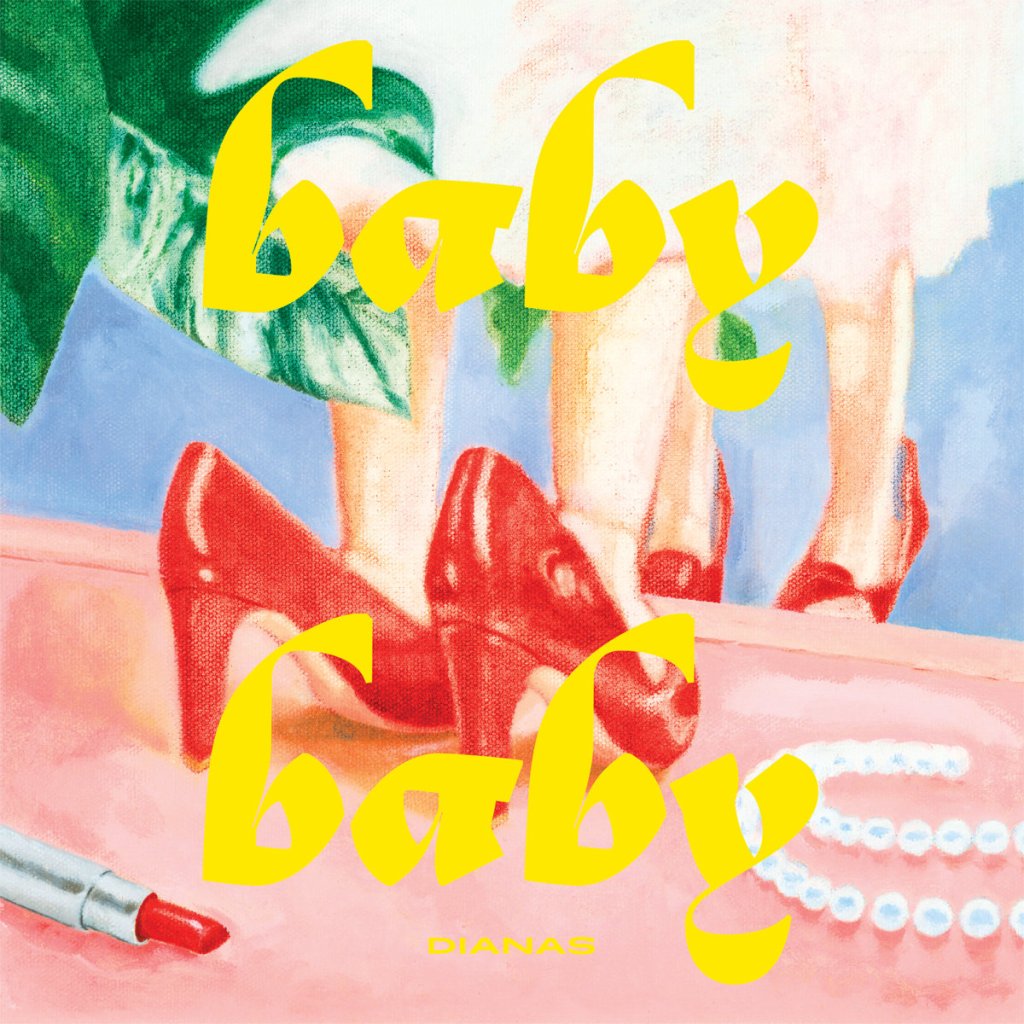
Dianas dropped a beautiful, dreamy sophomore album Baby Baby last month, it twists and turns through tracks as polyrhythms unfold, and their melodic interplay and charming vocal harmonies build around them. It’s dream pop, but it’s no nap, it’s a wild and energetic lucid dream. We caught up with them to explore their Perth-based beginnings, their move to Melbourne and the crafting of their new LP.
How did it all begin? How did Dianas get together?
CAITY: Nat moved into my house something like nine years ago and soon after broke up with her partner so we started hanging out a lot. Nat had been playing acoustic guitar for a while and writing songs, and I had stolen my brother’s electric guitar with the intention of learning to play but hadn’t got very far. We kind of just started playing together and tentatively writing songs whilst drinking a lot of cheap wine and generally annoying our neighbours. It’s kind of funny because I remember that as a really good time and Nat remembers it as one of the worst of her life, but either way that cocktail of boredom and heartbreak was essential to get us started because we’d probably have been too shy and awkward otherwise.
NAT: That story pretty much sums it up! It was definitely one of the worst times of my life but also the best, and the absolute best thing in my life has come out of it so it all balances out. Some of my fondest memories are learning how to play Best Coast, The XX and other extremely indie covers on bass and guitar together and just thinking it was the coolest. Also Caitlin taught me how to play bass!
What’s the story behind the name?
CAITY: We don’t have a good story behind the name. I’d love to say it came from the goddess Diana, of hunting and the moon, but actually it came from an op shopped Princess Diana portrait that had been tastelessly defaced for a party and was lying around our lounge room.
NAT: We were literally sitting in our lounge room naming stuff we could see so it was either Dianas or Sofabed. Fun fact we were originally called Undead Dianas but thankfully dropped the Undead before our first show.
What kind of musician would you say you are?
CAITY: A lazy one. I never had enough motivation to learn to play anything properly – despite the fact my mum is a music teacher who tried repeatedly to teach me piano – until Nat and I started playing together and writing songs. So maybe I can say a collaborative or a creative one – I’m never going to be a great guitarist but I love the process of turning ideas into songs especially when the input of other people makes it into something bigger than the sum of its parts.
NAT: That’s a hard one! I’m all over the shop. I really enjoy trying to fit in with other people and what or how they’re playing, move with them while still trying to fit in whatever it is that I want to do or hear. I think similarly to Caity I’m not really the kind of musician who gets great joy out of being totally technically proficient, but can take pleasure in playing with others and for others, trying to make something out of nothing.
Dianas are originally from Perth; what prompted the move to Melbourne? Nat wanted to pursue sound engineering, right? Was it a hard/big decision to move the band there?
NAT: I was always staunchly against the idea of moving to Melbourne, cos it just seems like the ‘classic’ Perth thing to do, but I also really wanted to get into sound engineering, and Melbourne was the best place for it. I didn’t really admit to anyone at home for ages that I’d moved out of embarrassment for totally flipping, and I planned to only come for 5 months but still here 5 years later! Caity and I initially did a long distance thing, flying between cities to play shows, but eventually she missed me too much and followed me over here
CAITY: I was staunchly for leaving Perth at some point so yes, I followed Nat here. I guess I figured I’d have at least one friend and something to do even if I couldn’t get a job!
What do you think of Melbourne now you’ve been there for a little? How is it different to Perth?
CAITY: It’s colder – I do miss the sun and the beach. But there’s a bit more going on culturally (sorry Perth) and in terms of the music scene there’s a lot more venues to play at and local festivals and things going on.
NAT: Quite a few winters in and I’m still not used to how goddam cold and dark it is. But I’ve also really loved getting involved in the music scene here, although there’s some similarities, it’s pretty different to Perth I think, obviously way more bands and venues, but there’s also this collective feeling of experimental space. Also being able to explore up the coast and make new friends all over this side has been amazing.
Photo by Tom Mannion.
You recently released your sophomore album Baby Baby into the world; what do you love most about the record?
NAT: I just love how ‘us’ it sounds. We’ve put so much of ourselves into every aspect of it, from obviously the writing and playing together, but then the whole recording and mixing process to all the design and videos and releases. I’m not sure how I’ll feel in the future but I’m just honestly really proud of this thing that we made.
Can you tell us a bit about the writing of it; what was inspiring it lyrically? Do you feel there’s an overarching theme? I picked up on love, relationships, self-love and a mood of sadness.
CAITY: I think those are themes that are always present in our music and how they show up just shifts and changes depending on where we’re at personally at the time. The lyrics are usually pretty simple and direct but hopefully capture a specific mood or feeling that other people can relate to. The inspiration is mostly just our own little lives; trying to navigate our way through life and love and defining ourselves as people, the sadness and hope in growing up.
One of my favourite tracks on the LP is closer ‘Learning/Unlearning’; what sparked this song?
CAITY: ‘Learning/Unlearning’ was just me trying to tell myself not to have regrets about the past – a self-help song! I think a lot of women especially can look back and see that the way they thought about themselves and allowed themselves to be treated was ill advised and damaging, and it’s hard sometimes not to see that as wasted time. There’s a lot of bad ideas we internalise that take a lifetime to unlearn, so it’s really about going easy on yourself and allowing for the fact that you have to go through things to learn from them.
I also really love the piano, drums and bass combo in song ‘Jewels’; how did that song get started?
CAITY: ‘Jewels’ started with just the piano and vocals, which Nat and Anetta then added their parts to. We had a song on our last album that was just piano, bass and drums that we really liked so I suppose we were going for something similarly simple, but then we ended up adding lots of different vocal layers to the second part in the recording and it became a bit of a different beast. We really like this song though, possibly because it’s the newest and we’re not sick of it yet. We actually only had a chance to play it live once before all our shows got cancelled!
You recorded the record at Phaedra Studios, Nat recorded it; why did you decided to self-record? Can you tell us about the sessions? What were the best and most frustrating bits?
NAT: It sort of started off from a place of necessity, I’d dipped my toes into half recording us on our last EP, as the result of another tumultuous breakup leaving us without our usual recording engineer halfway through the recording process. I was a bit hesitant at first that I’d be able to do it but Caitlin said I should and I just do what she says. (Caity’s edit: not true)
Having the space in the sessions just by ourselves was really amazing. There was no pressure to try and fit in with anyone else’s views or notions, we could just be ourselves and get down and do it. In the past we’ve maybe struggled with communicating what we want or how we feel, but I think that we’ve learnt and grown a lot over the years and there were only minimal tears this time – a record! I think the hardest part was just trying to keep up the confidence and objectivity that what we’d done sounded good, I guess the flip side to doing it ourselves is we then only had ourselves to look to. I just had a really fun time mixing it too, I learnt a lot and had a lot of space to experiment. I think there was only one thing in the end that we had to compromise on (too many delays in a chorus vs not enough!), and I’m real happy and content with how the album sounds as a whole.
Dianas harmonies are really cool; how do you approach making them?
CAITY: Usually one of us just starts singing and the other one joins in when they feel like it. We’ll keep going over things until we find something we like, but it’s not really planned out. At this point it’s just kind of assumed that we’ll both sing in one way or another on a song, rather than have a single vocalist. At least I’ll usually make Nat sing along with me because my voice is kind of weak on its own!
How did you first find your voice? Is confidence something that’s come to you over time? Do you really have to work on it? Are you still working on it?
CAITY: I don’t know if I would ever have got up onto a stage if Nat hadn’t encouraged (forced) me to – or even maybe sung at all. I tried to make her be the front person and just sing the songs I wrote herself but she refused, which I’m now thankful for because I really enjoy it. We’ve definitely become a lot more confident on stage than we used to be, which has just come from time and practice, but we are shy people by nature and can tend to be a bit too self-effacing at times. I think we’ve learned to own our voices a bit more and have hopefully stopped with the “what I don’t even know how to play a guitar hahahah” interview style/stage presence. But it is something we are constantly working on yes.
Baby Baby’s cover art is by artist Tamara Marrington; how did you come to her work?
NAT: We’ve known Tammy for a while (I guess since Perth days!) she’s one of those artists who just elicits a complete emotional response from me, I don’t think there’s been an exhibition of hers I’ve been to where I haven’t had tears streaming down my face. She was very patient working with us and our often indecisive natures, and we’re just so happy with how the record looks
You’ve made videos for the tracks off your LP (people can watch them all over at Baby TV) ‘Weather Girl’ is a favourite; what was the thought behind that one? I really love the fullness and chaotic-ness of this track!
CAITY: I just wanted to make a video about witches, but the kind of less cool TV witches of my childhood from shows like Charmed or Sabrina. The track was always pretty chaotic and only got more so when we recorded it so it seemed like a good fit for a narrative music video involving love potions and a stabbing (sorry spoilers).
As well as doing Dianas Nat does Blossom Rot Records; what’s one of the coolest and hardest things about doing your own label?
NAT: It’s been really cool to just do things on our own terms, in our own way, and on our own time – not having to stick to anyone else’s schedule or run anything by anyone. I think the hardest thing has just sorta been having to write about my own band and trying not to sound too wanky. Definitely looking forward to working on some other releases! It’s also great working with Sophie, I feel like we balance each other out perfectly, she’s the boot to my scoot.
What’s next for Dianas?
NAT: I’m not sure about the others but it’s actually been a bit of a relief for me to be able to slow down, and not get too wrapped up in the constant next step motion. Having said that it will be really really nice when we’re able to play again, we’d love to reschedule the tour we had booked at some point but I’m not in a massive rush to do so until its super safe and would be enjoyable. I think for now I’d love to get back to our roots and sit at home together with some cheap wine and write some more songs 🙂
CAITY: Personally I have not found this time to be a relief at all, and I’m definitely looking forward to that tour. Looks like we’ll be waiting out the winter though so revisiting our roots sounds good – I think I’ll splurge on some nicer wine this time around though.
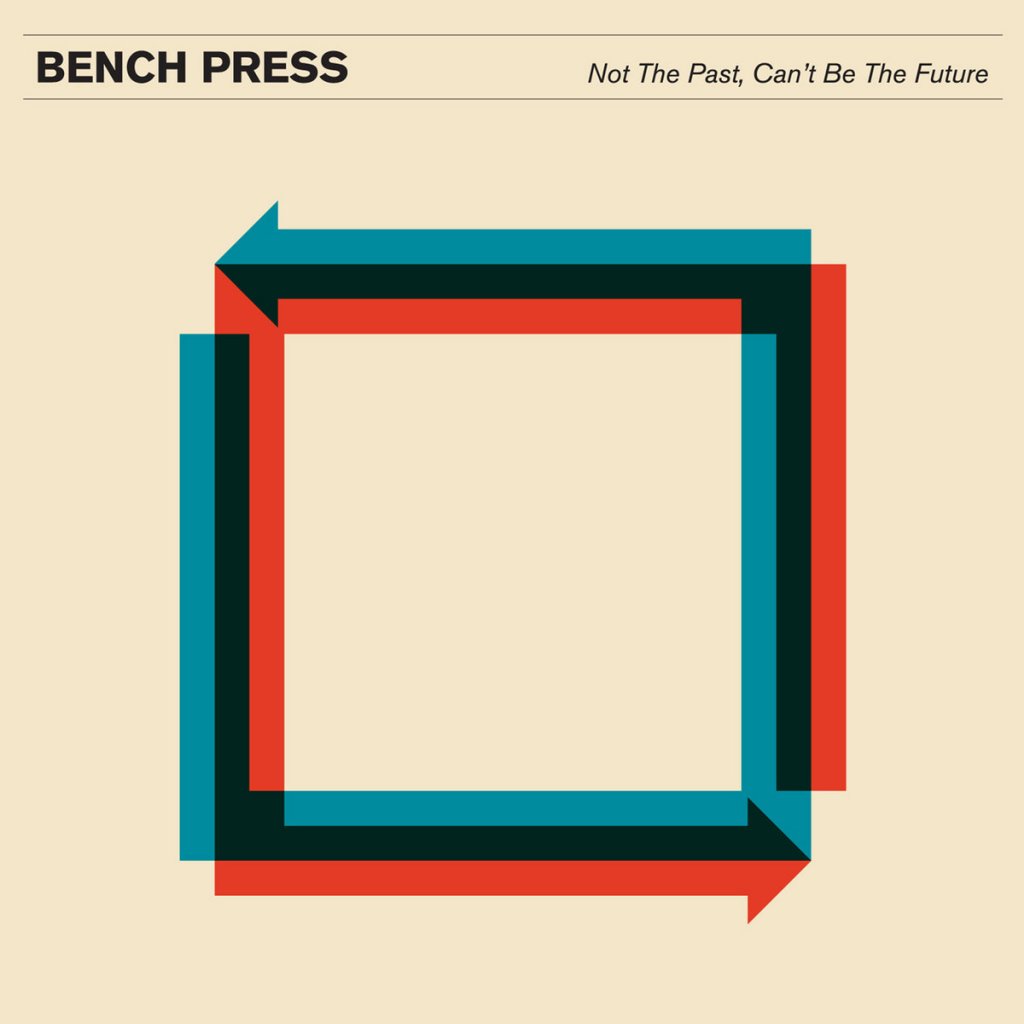
Melbourne post-punk band Bench Press released an album to shout about last year, their sophomore LP, Not the Past, Can’t Be The Future was motivational, thoughtful and witty power-punk. As vocalist Jack Stavrakis was working on himself, the band was working on the album, the transition and transformation that came in ‘Baby Steps’ sounds good on the band, they’re still angry but that energy is more focused. Jack spoke to Gimmie about all this as well as dealing with anxiety, how Bench Press came into being, songwriting, doing better and working in “the industry”.
What have you been up to today?
JACK STAVRAKIS: I watched the final episode of Better Call Saul for the season, then I exercised.
Keeping fit in iso!
JS: Not so much keeping fit but getting fit for the first time in a long time ‘cause I got nothing else to do.
How did you end up being the vocalist for Bench Press?
JS: Originally Bench Press formed from two bands. Me and the original drummer used to be in band called Bowel Movement, which I sung for, and then the bassist and guitarist used to be in the band, Luna Deville—they were both crappy pop bands really. Pretty shit stuff. We played a couple of shows together. Bowel Movement broke up first then Luna Deville broke up pretty soon after. For their final show they were doing a B-52’s cover and they had a female singer and they wanted someone to do the male part because none of them could sing. We didn’t really know each other all that well, but they asked me to do it and it went really well. It was a lot of fun! After the show Morgan and Lewis awkwardly asked me, “so, we’re looking to start a new band, it will sound nothing like this. We like Shellac and Jesus Lizard”. I wasn’t sure if they were asking me to sing or not? I was really drunk and I left the conversation and went home. I asked my girlfriend; were they asking me to join the band? She’s like, “I don’t know just ask them! If they say ‘no’ and they’re not interested then you never have to see them again anyway!” I asked them and they were interested, we trialled one other drummer and I was like; what about Jordan from Bowel Movement? He came on-board and I guess that’s how all of that happened.
What do you get from singing?
JS: I can’t play an instrument and I love, love music! I started singing because I couldn’t play an instrument well enough and I really wanted to play in a band; no one I knew could play, I figured if I could rope some people in who could play, I could just figure out singing. At first it was a way for me to play music without having to practice anything, that’s how I used to see it. As time has gone on and I’ve taken it a lot more seriously, the big thing for me is that it’s a way to get my opinion and my views of things across, it’s also a bit of a cathartic release. I guess a lot of people that would yell like I do would say that. I’m a fairly anxious and awkward guy and being able to talk about that and hopefully help some people that feel the same way understand it better.
I’ve seen you play live and you would never tell that you’re awkward or anxious.
JS: No, not on stage, I suppose not. The pacing is me feeling anxious and an extension of that, and me just feeling really self-conscious. It’s the only thing I know to do! I guess it’s not so obvious when I’m on stage. People who know me say that when I’m on stage it’s a different version of me, it’s still me but an extroverted version of myself, more out there and a little more in your face.
Have you always been an anxious kind of person?
JS: I’ve always tried to figure that out and look back on how I used to be as a kid and figure out if I was. I’m not sure that I have always been. I think it’s important to say, I don’t think I’m the most anxious and awkward guy in the world, I think what I go through is fairly mild compare to lots of people I know that go through something far more serious. It still feels real to me though.
Photo courtesy of Bench Press bandcamp.
Totally! It doesn’t matter what degree others see it as, because to the person that’s experiencing it, it can be so debilitating and the worst thing in the world when you’re in it; at least that’s how I’ve felt suffering severe depression and anxiety at times in my life.
JS: Exactly! That’s why I want to normalise that more mild thing, because I think it’s something that does affect a lot of people. People can be a little afraid to talk about stuff. We all have friends that have friends who suffer from various sorts of mental illness and there’s no point comparing yourself to what others are going through, it’s all very valid and it’s important for people to understand those things and feel normal about them in order to feel better and to start improving. Bench Press has helped me come to grips with who I am and what I’m like and how I deal with situations, how I react to certain things.
The second album the title Not the Past, Can’t Be the Future was a reference to the fact that I don’t always think I was like this, I wasn’t always anxious about things. The title of the album and the album itself was trying to bookend certain feelings that I have about myself; I wasn’t always like this in the past and I want to move past this and not be like that in future, how I am now.
I wanted to ask you about the title, the way I interpret it is, it’s not the past or the future that matter or define us but it’s right now, the present, because that’s when we’re truly alive and it’s the only moment in which we can really work on ourselves and take action!
JS: Yep, yep! For sure! That’s a perfectly good application of the title as well. Everyone has their own ideas about it, anyone who talks to me about it has pretty much been in the same ball park. I’ve never seen the singer or the person who is trying to get the message across as necessarily the holder of the truth of it. Whoever looks at it and takes something from it, that’s how they interpret it and how it’s meant to be taken. Art is up for interpretation. It’s really cool that everyone has different ideas and gets different meanings from what I am saying—that’s the great thing about art and music in general.
Where does the song ‘Old. Self. Doubt.’ come from?
JS: The gang vocals are meant to be me saying, I’m so unsure about these things and saying, no, that’s actually not what’s happening… work is where I get most anxious and I second-guess myself all of the time. I really struggle with various aspects of my job and how I feel about myself. It’s sort of meant to be me telling myself that everything I’m thinking in those times is not the reason these things are happening. It’s a reference to a particular job that I had in the past where I used to just put everything on myself, like everything was my fault if things were going terribly, when it wasn’t necessarily the case. I took a bit of distance from there and my friends were looking at it going “no, that’s not the case, it isn’t your fault! These things can’t be controlled”. I guess it’s a play on how I felt in the moment at the time and a more realistic, objective way of looking at it, which came from my friends and the people around me and the distance.
What kind of work do you do?
JS: I work in the music industry. I’m a venue booker.
Ah, ok. I could see how that could be stressful. I’ve always loved music my whole life, since I was a kid I always thought I might work in the music industry so I could work around the thing I love the most all day, music. I wanted to be a part of it so bad, when I finally got there – I saw the workings of major labels, touring companies, mainstream press, PR companies etc. – I found out the reality of the music industry and I hated it!
JS: Yep, yep! It was exactly the same for me. The way I got into it, my dad was always involved in the music industry and he ran a publicity company and that company booked a venue. One of the bookers of the venue left my dad’s business and he didn’t want to re-hire someone to book the venue—I was twenty and begging him to let me do it! There was no way I should have gotten the job at the time, I was not remotely ready. I begged him every single day, eventually he said “yes, but it was my funeral!” Nine years on and I’m still doing it. I guess I did a good job, which is why I’m comfortable telling that story; originally, I thought everyone would judge me for it but, I feel better about my role now and that I deserve it. It definitely isn’t the idealised dream that you have as a kid. You think that you’ll book all the most amazing bands and you’ll see the most amazing stuff ever and that you’ll do this and that! It’s not quite like that. I still love it though, I do get to sit around and listen to music a lot, that is the best thing in the world to me. There are definitely negative aspects of the industry that are there and strong.
I have met some very good people in the industry though, that are doing great things. Having them and someone like you in the position that you are there is opportunity to change the negative things and how things have always been done.
JS: 100%! The longer that I’ve been in it, the more great people I have found. You choose who you have around you, you can choose who you like, respect and work with. I’ve stumbled into incredible, incredible musicians and people. You distance yourself from the aspects you don’t like, that’s the key.
I think the majority of people get into it because they truly do love music but then because of the industry and having to treat art as a product—the bottom line being money—can make people lose sight of why they loved it and got into it in the first place. Then it just becomes a job as opposed to a passion.
JS: 100%! It can be hard as a venue booker, at least when the venues are running. I book nine shows a week, it’s my full-time job. There’s no way you’re going to like all the bands on the shows, three bands per shows, that’s twenty-seven bands through the venue each week. I used to find that a lot harder to deal with but it’s also allowed me to find a lot more good music. I like applying that to Bench Press, Bench Press is my excuse to book every single band that I love. Every show we play has bands that are a reflection of what we like as a band, that’s the fun part! I love booking my favourite bands and helping people get a leg up.
It was so cool how you came up here and toured with Dr Sure’s Unusual Practice!
JS: It was so lucky and the best experience ever ‘cause that band is truly, truly mind-blowing and special!
Absolutely! Dougal from Dr Sure’s is one of my favourite Australian songwriters. Your album Not The Past, Can’t Be the Future to me is almost like a notes-to-self kind of record.
JS: 100%! It’s a reminder. The album is going to exist as a reminder of how I can be and how I should try to be.
The songs on the record ‘Baby Steps’, ‘Take It Slow’, ‘Better Mirror’, ‘Good Guy’ and ‘Enough’; there seems to be a bit of a theme there.
JS: Yes! That’s how I wanted it to be: what I am? What I could be? How I should be? I wanted to touch on all of those things. I hope I did it?
Totally! It’s really inspiring, especially the song ‘Baby Steps’: exhale, stand up!
JS: I’d just seen a psych for the first time and they were like “take a deep breath, all the stuff is so obvious and it doesn’t always work but these are the things you have to do”.
What about the song ‘Take It Slow’?
JS: ‘Take It Slow’ is about… you know when you’re in high school and they’re like you have to do this and you have to do it well and you gotta go to Uni and do this and that… they make you feel rushed. Even now I look around at some of my friends – we’re all in our late 20s now – people still feel that; I feel it stays with everyone. I don’t think necessarily moving so quickly and panicking into things is the right way to do it. It’s a reminder to be slow and that if I carefully do everything, then I or anyone can achieve what they want to. Sometimes I think the idea of taking things slow is a little bit privileged, I have the ability to take things slow and ease my way into things to make sure everything is right but not everybody has that opportunity.
I really love your lyrics, I feel like they’re really thoughtful.
JS: Thank you. I try really hard to write about something that I care about, everything has to be about something I care deeply about. I can’t bring myself to write a song that doesn’t mean anything to me or potentially someone else. I can’t write silly, I’m not going to sit around and write about chugging on beers and smashing bongs! I love drinking beer but I don’t think it’s something important that I have to sing about; I’d feel frivolous like I am wasting an opportunity.
Every song is a chance to get a point of view across and hopefully trying to impact someone. They all impact me and change me in a certain way and gets me thinking about different things more, but it’s all about trying to help someone else and to try and help them change in some positive way—that’s one of the most rewarding aspects of Bench Press. I occasionally will get someone come up to me and say “Thank you so much, your song helped me” and inside I’m like, what the fuck?! That’s so crazy I could help them. I think it’s the most important thing that a lyricist can do. I don’t want to waste my time writing frivolous songs.
When writing and making the record; what was one of the biggest changes that you saw within yourself?
JS: It was a real moment of transition for me from the beginning of the album. The previous album was angry, it was me feeling upset about various things. When we started writing for the new album, the first song we wrote was ‘Respite’ and that was turning point for me because I was actually starting to get help and I was actually starting to open up to my friends. People in my circle started opening up about all these things, it was a moment of transition of looking and seeing a problem and trying to find a solution; the first album was seeing problems and the second was trying to find solutions to problems.
It started with ‘Respite’ then one of the last songs would have been something like ‘Old. Self. Doubt.’ Which were the last lyrics I finished. I could see the problems and tell myself that that’s not the way things are and that things can be better—that I can change them!
It’s a really cool thing when you finally realise your own power, your strength and resilience and your ability to change things!
JS: Totally!
Was there anything that happened in your life that sparked the changes?
JS: [*Takes a big breath*] Yeah. My work life was improving, that was one thing, but to be honest the big thing was me and my partner was approaching ten years together and I was having problems. Problems which stemmed from my own problems; I saw myself as the problem and that I had to fix it because otherwise I was going to lose the most important person in the world to me. That was a really big catalyst, to start realising that I needed to work on myself and to not just be upset and angry all the time.
I totally understand. My husband and I, we’ve been together over 11 years – how cool is it when you find that forever person?! – and there’s been a lot of things that I’ve had to work on within myself too. Sometimes you don’t see how your behaviour is hurting the one you love most, facing those truths are hard.
JS: Congratulations! It’s incredible, and realising that if things are going to work it has to come from changes that I make or in your case, that you make. These things were all happening round the time of our album. ‘Home’ is about my life with my partner, Bianca.
Good name!
JS: [Laughs] Yes, exactly.
Where do you think your writing will go now? Have you started working on anything?
JS: Yeah, we’ve started working on new songs. We’ve got one finished that we’ve played a couple of times. We have a whole bunch of ideas on the go, it’s been a bit hard without prac[tice]. I’ve always liked the idea of writing something political, but I’m always really scared about writing political because so often it can be cliché and obvious. I wanna start moving down that road, I don’t know how well it’s going though. It’s more political but still to do with identity and self-help, exploring it in a bigger way is what I’d like to do.
Cool! Whenever I listen to your last album I feel like I have my own personal cheer squad!
JS: [Laughs] Excellent! That’s awesome!
What kind of things would we find in your music collection?
JS: Oh heaps of stuff! I’m a massive, massive nerd when it comes to music! I’m a hoarder and I’m a digger!
Same!
JS: I saw the interview you did with Matt from Shepparton Airplane and he talked about Fugazi a whole bunch—Fugazi are my all-time favourite band! Anything to do with that scene, Rites Of Spring, Happy Go Licky, Bad Brains and Teen Idles, all that stuff are at the heart of my collection. I really love this Japanese band called CHAI that toured here last year…
I love CHAI! [*sings*] You are so cute, nice face, c’mon yeah!
JS: [Laughs] Yes! They’re just the best. They are the happiest thing ever, so I play a lot of that! I listened to Melt Banana this morning, which is great while I exercised.
Have you seen how Henry Rollins does his exercise?
JS: No, how?
Well, you know how much he is fanatical about music? Well, he’ll play a 7” and while the side’s playing he’ll see how many push-ups or whatever exercise he’s doing he can do, then when that side is finished he gets up and flips the record then does another exercise. That’s the best interval training circuit idea I’ve ever heard of!
JS: That’s so great! [laughs]. A couple of years ago we found out that a friend of my dad’s has a record store, I think it’s in Newcastle, and Henry Rollins came in to buy records – right after our first album came out – apparently Henry was asking for recommendations. The guy pulled out our record and Henry asked, what it sounded like? He said “sort of like Fugazi” and Henry was like, “nope, not interested” [laughs]. I just love that. Apparently since then he has listened to the record.
I was a late bloomer with music, I was around seventeen when I started figuring it all out and stopped listening to crap. I was listening to The Saints and the Sex Pistols, really obvious things like that and my dad gave me Fugazi’s In On the Kill Taker. I remember watching a YouTube clip of ‘Last Chance For A Slow Dance’ and just seeing Ian and Guy play with so much passion, that was one catalyst for getting me into music.
The other one was, I’m a massive Pavement fan as well, I read an interview with Stephen Malkmus and he said: I think anyone can sing as long as they can fit a tune to a song and that they’ll make it work no matter how terrible their voice is essentially. I was like—I can do that! Ian and Guy made me want to be in a band. Steven Malkmus made me realise I can sing, badly! [laughs].
Have you ever had a real life changing moment?
JS: I don’t necessarily think of things like that, I think of things as tiny incremental changes over a long period of time.
‘Baby Steps’?
JS: [Laughs] Exactly! That’s just it and how I’ve always seen change in myself. When I was in high school people always said that they couldn’t live without music and I hated that and thought, you fucking idiot, of course you can live without music! Thinking that then, I feel hypocritical in saying it now but, music as a whole has been the thing that has impacted my life the most. It’s been where I’ve spent the last ten years of my life, working. I’ve been playing music since I was seventeen. These are the things that I base my life around and these are the things where I’ve met everyone that I know and love, it’s also influenced everything… stuff like Fugazi doing cheap shows and benefits, had me thinking about those things when I was younger. I guess music over time, in incremental ways has helped shape me rather than one big moment.
What’s something that you’re working towards changing now?
JS: I started this year with different goals to what I have now, I’ve been planning on going back to Uni and doing counselling or social work. It was going to be a big year for the pub I book, the first three months were incredible. Now that that is gone for the foreseeable future, I’m just trying to relax, I’m trying to feel calmer and lose the panic that I get when I’m in a situation I don’t’ want to be in. I’m trying to improve my overall health, physically and mentally. Figuring out what I want to be.
What are some things that help you relax?
JS: There’s the good and bad thing of pot [laughs], that helps me relax or sometimes it does the total opposite! Exercise. I’m trying to see isolation as having this time to completely relax and decompress and make sure that when I do get back to work that I will be in the best mental shape of my life. I’m trying not to do too much and not freak out about things. I’ve been playing a lot of video games. I’ve been trying to read. Just really, small, basic things. I just want to be the best that I can be.
That’s so great. Thanks so much to speaking to us.
JS: Thank you for including us and interviewing me.
It was wonderful to finally get to chat with you. As a fan of Bench Press I’ve read a couple of other interviews with you and the things you get asked always annoys me; you write such great songs and music I’ve always wanted to know more about that… not an answer to some novelty question you’re being asked so the writer gets to feel clever about how funny they can be!
JS: I think part of that is having a publicist hit someone up to do something on your band and the publication may not necessary know us or really give the album a listen beyond once if that and do it as a job and not a passion.
I’ve had bands tell me that they wanted to get press in different Australian music magazines and street press and they were told it would be $200 for a review and $400 for an interview in one particular publication! Having interviewed Creatives and written for all kinds of publications and making my own zines for the past 25 years, I found this absolutely crazy! It’s a terrible practice, very dishonest to your readers accepting money for a feature and not telling them it’s been paid for.
JS: Yep.
At least now I know why there is rarely anything good in those publications!
JS: Yes, it’s one of the most upsetting things to me. We got hit up by a publication and they said they would love to interview us. I thought that was cool and said we’d love to do that. Then they sent us their rates! Like c’mon! Why would anyone do that? Not everyone knows that happens and is privy to the fact that bands have paid for this stuff. Once you know you can’t unsee it, and when you read interviews in the publication you know someone paid for it—where’s the care? Where’s the love?!
Exactly! I can’t believe people pay for that shit. Just like that that bullshit pay to play or in some cases pay for the possible chance to play on shows scam! And application fees for bands for an “opportunity” to play showcases that are already getting money from sponsors and grants. It’s sad that it’s often younger, upcoming bands that do this because they think that’s what you do! This is where I see the industry exploiting bands. I may be old school and an interview purist but shouldn’t you interview a band because you like them? You’re a fan? Don’t you simply want to share ideas and get an insight into what they do? Put that out into the world to document culture now? Inspire others?
JS: Anyone asking you to pay money to interview you is taking advantage of you. I find it really ill. I’ve actually thought about writing a song about this!
Do it!
JS: Every time I try, it comes out too obvious, like how earlier I was telling you that happens when I try to write political stuff. I want to wait ‘til I have that perfect ammunition, that perfect phrase—it will be easy then and all the annoyance will fall out of me! [laughs].
And like I was saying before, paying to support bands is wrong too. They should be paying you to play! And paying you a reasonable amount too, especially if it’s a bigger band/show/tour. I understand people really wanting to support bands they love and get in front of bigger crowds, but at what price to everything else? It sets a bad standard.
JS: We got offered a fairly big support slot late last year, they’re one of my all-time favourite bands. The money that was offered meant that we would have lost money to do the show! In my mind they were one of the bands that helped bring punk to the fore, I couldn’t understand it, so we said ‘no’ to the show. That’s actually what our new song is about! [laughs]. We were asked to play and we would have lost money, I just can’t wrap my head around that. Maybe the band had no idea how much we were being offered? It made me ill. It’s taking advantage of people and it’s totally, totally unfair.
Photo courtesy of The Faculty. Handmade collage by B.
We love The Faculty! Punchy and fun, and punk and fun, and explosive and fun, and cheeky and fun, and really rock n roll and FUN!; did we mentioned fun enough yet?! Next month the Melbourne punks are set to release new EP, Here’s To Fun. We spoke to Maq from The Faculty to get the low down!
You’re currently laid up recovering from back surgery; how are you doing? How have you been passing your recovery time?
MAQ: I’m doing really well thank you for asking! I collapsed on a walk to A1 bakery and ended up having an emergency discectomy on my spine, crazy shit but feeling all the better for it! Recuperating at my mum’s house on the coast and getting there slowly but surely. I had my staples taken out yesterday so I’m no longer a cyborg but I’m able to go for very middle age style strolls along the beach and take photos of the sunset. To pass the time I’ve been watching Tik Toks, reading about celebrity scandals (Heidi Fleiss & yachters) and giving the Stan account a good rinse haha.
What first got you interested in music?
MAQ: My parents had me and my brother when they were fairly young and they were avid RRR listeners. When mum was pregnant with me she went and saw Fugazi play in Geelong, nothing could stop her. On our yearly holiday to Cactus Beach in SA we’d listen to a selection of tapes over and over that were really eclectic and reflect both my parents all-over-the-shop taste to this day – Supergrass, Kraftwerk, Smashing Pumpkins, The The – all big favourites in the car. I think I gained musical sentience when I discovered The Ramones though. That was when everything changed.
Growing up in Torquay for the first part of my life, my brother and I were into skateboarding and we got into a lot of music through skate videos. There was one skate video Sorry that had John Lydon as the narrator and it was the first time I heard The Stooges and it set off a firecracker in my ass. From there on I met a bunch of skaters in Geelong who shared a lot of music with me. When I was about 13 my first boyfriend was Zak from Traffik Island and he had the coolest music taste I’d ever heard. He still does now I reckon. I knocked around with that crew with my best friend Hanna and every party was soundtracked by Johnny Thunders and The Sonics and shit. Basically thankyou to my young horny-for-skaters self ‘cause that got me into the good shit.
What was the first show you ever went to? What do you remember about it?
MAQ: I don’t know what came first – Robbie Williams at Vodaphone Arena or Area 7 at St Kilda Fest. I remember Robbie covering Kiss or Nirvana or something and all the old birds really getting hot for him – I remember just thinking he was a bit “bad” and I wanted to be like that myself. Like he’s naughty but he’s still a bit of a dork, I can relate to that. Area 7 was the first time I’d ever been in a moshpit. Watching people skank and stuff really tripped me out and set me on a little ska phase. We’ve all had a ska phase. Embrace your ska phase.
Photo : Jamie Wdziekonski
What was it that drew you to making music yourself?
MAQ: When I was a kid I had a drumkit and I’d practice along to punk and try and emulate it. My dad’s mate who was in a cover band was my drum teacher and he’d teach me like paradiddles and stuff and I’d be like “ok Elvis Costello when are we gonna learn the good shit? I wanna know how to play like I’m in the Ramones” – I was never any good. I kind of let it go for a long time and got into DJing and doing radio. It was only with The Faculty that I decided to finally fulfil a lifelong fantasy of being in a band. A real Riff Randall complex.
What inspired The Faculty to get together?
MAQ: All the other members of The Faculty are incredible musicians and have been in some absolutely unreal bands – Meter Men, Franco Cozzo, and Whitney Houston’s Crypt. I’d never been in a band I was just a wannabe but I think I was feeling bold one day and chucked a status on Facebook “Who wants to start a band”. James who plays guitar and I had known each other since we were about 13 and used to DJ underage at Streetparty events haha, Tommy I’d known vaguely from going to gigs, Lorrae and I worked together. They were the people who replied. A total motley crew. After our first practice I asked the gang if we could add a fella in who had really good hair and a cool cross earring and that was Al who then took it up to the next level on second guitar. The band works because it shouldn’t – we are all really different but somehow that makes us, us. There’s something for everyone in The Faculty.
What’s something you can tell me about each member of the band?
MAQ: Lorrae (bass) is a legit witch and powerhouse of a woman. She is the most inspiring, strong and badass woman I’ve ever met. She runs the label Our Golden Friend amongst a myriad of other things and she has next level psychic energy. James (guitar) is in like 1 billion bands and is an absolute workhorse both physically and spiritually. I think he is powering half of Melbourne on his rock n roll energy. Tommy (drums) loves WWE and being naughty but in the best way like teehee naughty, he also looks better than any of the fellas who take their top off when he takes his top off. Fellas love taking off their top don’t they? Al (guitar) is a superstar. He is training to be a hairdresser and is like one of those freakish people who can pick up any instrument and be like rreeeeoooowdiddleydooo. All snappy dressers too and just people with a lot of heart and soul and warmth and love to give. For a punk band were all quite sensitive and in tune to each other’s needs and vibe.
In June The Faculty are getting set to release new EP Here’s To Fun, in the spirit of the title; can you tell us about one of the most fun The Faculty-related times you have ever had?
MAQ: I think every time we hangout is pretty funny. We do chip reviews on our Instagram and we all love memes a lot. But the funniest Faculty moment was when we were recording, Tommy took off his clothes and James hosed him down in the backyard. I think we got it on some kind of camcorder. I think Al Montfort who recorded us was probably like…. Dr Evil voice: Riiiiiiiiiiight.
The first single from the EP is called ‘Chrissy Moltisanti’ is inspired by the character from The Sorpranos, right? What sparked the idea to write this track?
MAQ Sure is! Christopher is my love-hate character from the show. You wanna root for him but he is an orboros. The song is about having someone in your life who wants to be a “made man” like Chrissy, someone super aspirational to the point where it’s kind of endearing but they just keep getting in their own way and behaving like a derro. A lot of the EP is lyrically related to a breakup but I wrote that before that even happened so maybe it was a self-fulfilling prophecy. I think men should really consider ethical non monogamy before they go and fuck people’s shit up. There’s also vague themes of the Moreland Hotel because I like the decor and I wanted to put Metallica lyrics in a song and try and get away with it. I also wanted an opportunity to really yell at fellas who are total dickheads and stare them dead in the eye and pretend I’m just singing a fun little ditty about The Sopranos. It’s nice to have the protection of being in a band to be a bitch although I did tell a fella I hope his dick falls off recently ‘cause I heard he’d been a drongo so maybe I’m just a regular bitch haha
When did you start writing for the EP—how did it come about?
MAQ: It’s funny because the songs are quite old now – a couple of them have been in our set since day dot (P2P, The Locks) so the stuff I was writing then I have probably either dealt with those emotions or forgotten about whatever was pissing me off. We have a nice process I reckon. We all kind of collaborate together at practice, people will bring riffs and ideas musically. Often I’l have a bunch of fragmented ideas in notebooks and my phone and then the band will jam out the song and I’ll just fill in the blanks with the lyrical themes and jigsaw the themes or little bits of writing I have to fit the patina of the song were writing. The way I write songs is usually to have two themes going at once, one might be something personal and the other just some bullshit I fancied in an action movie. We are all pretty busy in our day to day so the EP was pretty much the only songs we had going so it was quite easy to put it together ‘cause it’s all we had haha.
Can you tell us a little bit about the recording of your new EP? I know it was recorded and mixed by Al Montfort and mastered by Mikey Young.
MAQ: We were so lucky to have Al record the EP for us. That man is worth the lore. He set up his gear at Tommy’s house in Coburg and we recorded it live in the room we always practice in. Al made us all feel really comfortable and had a few tips but was never overbearing or like that producer from 24 Hour Party People, he was a gentleman. We also introduced him to bubble tea and got him in on a chip review. It was pretty special for us that he agreed to doing it, I’ve been a fan of basically everything he’s ever done. I went to a Lower Plenty show on my own once when I was like 19 and he and his partner Amy chatted to me for ages and were such rippers and I think so many of your heroes you can meet and be like disappointed but those two were the most warm and beautiful people and that extended to Al’s process as an engineer. Mikey did a fantastic job as always and put up with our daggy old questions and made the EP sound even better than we thought possible. There’s a reason these blokes are the Kings.
Is song ‘Alexis Texas’ about the porn actress? How’d this song get started?
MAQ: HAHAHA. Kind of. Its only when someone holds a mirror up to you that you realise some of the stuff you spout off is so silly haha. I was really obsessed with this other porn star’s Instagram where she would post herself getting these like skin treatments where they’d cryogenically freeze her in a tank thing and I wanted to write a song about that but her name didn’t sound as good as Alexis Texas’. It’s a good litmus test that song, shows you who in your audience is a horny bugger. One of my good friends like blushes whenever we play that song which has become a running joke. #Teamtexass
What’s the song ‘Mr. Sardonicus’ about?
MAQ: Ooh, it’s about this really unreal movie Mr Sardonicus which was directed by this legend William Castle. Castle was like a kind of Kmart version of Hitchcock but made films that I think are just as compelling. It’s about a man who becomes a ghoul and I wanted to write about it and when I was trying to beef up the lyrics I just kept thinking ghoul…Misfits…Danzig!! So I then turned it into a song about how I wanted to see Danzig and Nick Cave have a death match. Like Celebrity Death Match. Remember that show? I remember watching that on Foxtel at nanna’s and loving the Gallagher brothers episode. And it’s also about how I didn’t want to clean my room. Slice of life, y’know? LOL!
What music/bands/songs have you been loving lately?
MAQ: Contrary to the music I play, I don’t listen to a lot of punk outside of the fabulous gigs my peers play. I am usually listening to country music or something I found on a YouTube vortex. I reckon I have the music taste of a Mojo Magazine reader, always waiting for a new Roxy Music bootleg or B sides ahha. But lately I’ve been gagging for Mink Deville, Levon Helm’s solo albums, this song On The Road Again by Rockets, Amanda Lear, Spotify playlists my friend Charlie makes me that jump from like Yes to Killing Joke and the Delta Goodrem Megamix on Youtube from her Mardi Gras performance. I think a lot of what I listen to is symbiotic, whoever I’m around and what they like fascinates me. My housemate loves that Delta Megamix and at first it shit me how much he wanted to chuck it on now I’m like mouthing the bits where she’s like “How am I guys” along with him. Locally my favourite band is Bitumen. They are the sexiest, coolest and most interesting band in the world. Pure sex magic. I’m gagged for that new band Shove I think they are formidable and I always listen to Constant Mongrel like over and over again and love seeing Future Suck live. Parsnip rock too – virtuosos, we’re so lucky to have them! Moth rip and anything and everything Union Jerk records. I keep up with the Lulus-wave stuff with fellas singing songs about men in companies and shit like every man and his dog but amongst the mix there’s some real standouts that are mostly hot chicks making hot shit.
Outside of music what are some things important to you?
MAQ: I love movies big time. I have a film night ‘Top Of The Heap’ which is on hiatus at the moment due to the current situation but the energy of that is being kept alive in a movie group chat I’m in Movie Magic with some nears and dears and most of my life is consumed by watching De Palma movies and screenshotting hot dudes in blue jeans in neo noirs. I’d like to think I have two lives. One as a big mouthed psycho fronting me band and wearing latex and mouthing off about horny shit and then my truer self which is a celibate straight edge nerd who is a meme farmer and obsessed with videos of people stepping on cakes in TNs and shit.
Why don’t The Faculty put out?
MAQ: You’ll have to watch the movie Ladies and Gentleman, The Fabulous Stains to find out.
Original photo by Kalindy Williams. Handmade collage by B.
From the first jangly-twang of song ‘Everyday Things’ that we heard while watching Rage one morning last year, the Gimmie team have been addicted to Swim Team. Their infectious sweet melodies, hypnotic harmonies and catchy hooks reel you in. We interviewed Sammy to talk about their debut LP Home Time, their beginnings, self-care and more.
How did Swim Team first come together?
SAMMY: I had been thinking about starting a new band for a while. At the time Krystal was playing in Bad Vision and I was playing tambourine with the Pink Tiles, and we were gigging around a lot and I was really into the scene and the kinds of garage pop bands that were popping up. In 2016, Krystal moved in with me and we had already been friends since we worked together in Perth back in 2005. Back in those days she was playing in punk garage bands and I was playing in twee indie bands. I suggested that we should start a new band together with both of us on guitar and so we both just started jamming at home.
I asked my friend Esther to join – I really wanted her to be in the band even though she had never played the bass, and Krystal recruited TJ even though she had never played drums. We built our band based on how we thought the dynamics would work with the four of us hanging out together, not for how technically good a player or songwriter anyone was. It was kinda like building our own fantasy football team or something, and luckily they were both keen to give it a red hot go haha.
We got together in a rehearsal room and the first song we played together was ‘Green Fuzz’ by the Cramps. Eventually I booked us our first gig which was with Girl Crazy at their Tote residency, and that meant we had a deadline to write a few songs and get our shit together. If there’s one thing that Swim Team are collectively good at, it’s working under pressure!
We love the jangly guitars in Swim Team’s music; what inspired you to choose this sound?
SAMMY: A combined love for bands like The Clean and Go-Betweens, a tendency to lean towards Fender and a penchant for chorus pedals haha.
I think that given mine and Krystal’s backgrounds in music and the kinds of bands we were both used to playing in and listening to, when we brought them together we ended up with this kind of sound naturally. It’s kinda a combination of my pop background, Krystal’s punk background, and both of us meeting in the middle, then evolving together.
Last year you released your LP Home Time which was written over the course of a couple of years, one of the main themes of the record being change; over the time of writing what do you think was one of the biggest changes you went through in your own life that helped colour the songs you were writing?
SAMMY: Oh boy, there was a lot of change during that period for us all, not to mention that in the time it took us to start writing the songs, recording and then releasing it, we had three different bass players.
Krystal and I are the main songwriters in the band and we both had a lot going on over the course of a couple of years. Krystal’s dad sadly passed away while we were writing the album and so there is some really personal grieving there. There are relationship breakdowns for both of us, whether it be family or friendships or just simple observations. For me, at the beginning it was the end of a long-term relationship, and then by the end of the writing process it was meeting someone new. So yes, it’s quite the rollercoaster thematically!
Many of your songs can be self-deprecating; where does this come from?
SAMMY: Haha you might have to ask my therapist that! At the end of the day, I think that sarcasm and self-deprecation is embedded in our personalities and sense of humour – we certainly don’t take ourselves too seriously most of the time.
Your songs are deeply personal but written ambiguously so listeners can imagine themselves in the song story; who are the songwriters that you admire? What is it about their songs you love?
SAMMY: I have a deep appreciation of many different styles of songwriting, whether it’s poetic and metaphorical or literal story telling. One of my favourite songwriters is Mara Williams from the Pink Tiles. If you want deeply personal but ambiguous and completely charming, she is the queen of it!
What’s the significance of the album’s title, Home Time?
SAMMY: Aside from being one of the tracks from the album that we thought tended to sum up the entire vibe pretty well, it’s also a play on the title of our first EP ‘Holiday’. We went from ‘Holiday’ to ‘Home Time’ with these releases which is kinda symbolic of us growing as a band as well as our own personal situations.
Why did you decide to kick your record off with the track ‘Grown Up’?
SAMMY: We wanted something with a bit of an intro to kick things off sonically, but we found ‘Grown Up’ set the tone for the rest of the album in terms of context. It’s kinda a proclamation of this feeling of never really quite achieving those expectations that we set for ourselves as adult humans, and then bam – the rest of the album runs through and it’s a continuation of those general musings. Thematically we write about all aspects of life, whatever takes our fancy at the time: our crushes, our bad habits, our ex’s bad habits, our dysfunctional families, our grievances – both serious and silly.
The song ‘Everyday Things’ is an ode to first world problems; what first sparked this song idea?
SAMMY: Basically one long complaint about all the things that didn’t go right in a single day. They’re all a part of daily existence and not ‘actual’ problems. The song is laughing at the way we tend to complain about everything when in all reality the scenarios mentioned are trite and trivial.
What’s your favourite track on Home Time? What’s it about?
SAMMY: For me it’s probably a tie between ‘Time and Sacrifice’ and ‘New Year’. ‘Time and Sacrifice’ I feel has a different vibe to it than the rest of the album. The subject matter is far more complex and I think it ended up that way musically too. It’s also the one we experimented with the most as far as production goes, which was really fun. ‘New Year’ has been a favourite for a while, I have always loved what everyone has brought to the song in terms of parts and the feel – Anna really brought this to life for us!
Could you tell us a little about recording the record please?
SAMMY: We were lucky enough to have our dream team for our album recording. We had Anna Laverty produce and engineer it at our favourite studio in Melbourne, Audrey Studios. We tracked the majority of it live, all four of us in the room playing our parts, and then afterwards we did a few guitar overdubs and vocals. Working with Anna is always a real pleasure. We were lucky enough to have a bit of extra time to play around, and some of the songs had parts that were written on the spot which was something I’ve never had the privilege to experiment with before.
You’ve mentioned online that there’s been “a bunch of personal and health stuff that’s gone down since late last year” which has made you take a little break from making music. I hope everything’s alright? During the downtime what do you do to take care of yourself? Self-care is so important!
SAMMY: Thank you! Yes, self-care is super important for both our physical and mental health. For us it means eating well, exercising, doing things that make you calm and happy (for me it’s things like listening to music, pottering around the house, cooking and tending to plants), and not being too hard on yourself or having unrealistic expectations of yourself (that part is hard sometimes!) We had a really busy year with the release of the album and then with the personal stuff happening on top of that it felt like we needed to just step back and look after ourselves and put a priority on those things. We are actually really close friends outside of music so we have a really strong support network in each other – we are really lucky to have that level of support and understanding from one another I think.
Other than making music do you do anything else creative?
SAMMY: Krystal has a podcast that she hosts with her friend Ruth called ‘First Time Feelings’ that you can check out here. TJ is a tattoo artist and when there’s no pandemic you can find her at her shop Heart & Soul Tattoo in Melbourne CBD. Our original bass player Esther is a designer and owns the label Togetherness Design. Our newest member and current bass player Jill is involved in a bunch of comedy and fringe festival shows, but is known best for her role in co-founding the iconic Shania Choir. I don’t have many creative talents outside of music, but it keeps me busy enough for now.
What’s something – band, album, song – that’s really cool you’re listening to at the moment?
SAMMY: RVG’s new album Feral, and patiently anticipating the new Dianas record Baby Baby.
Dead are a band that don’t fit neatly into the heavy music community, their sludge metal goes beyond the rules and pushes the parameters incorporating lighter melodies and interesting elements. Every facet of this band is thoughtful and well-crafted, even right down to their album packaging which is illustrated by guitarist-vocalist Jace and laid out and screenprinted by drummer-vocalist Jem. They’re the deep feeling and thinking person’s heavy band. Today we’re premiering the homemade clip for song ‘Grifted Apart’. We spoke to Jem about it and their new album Raving Drooling out on their own label We Empty Rooms Records.
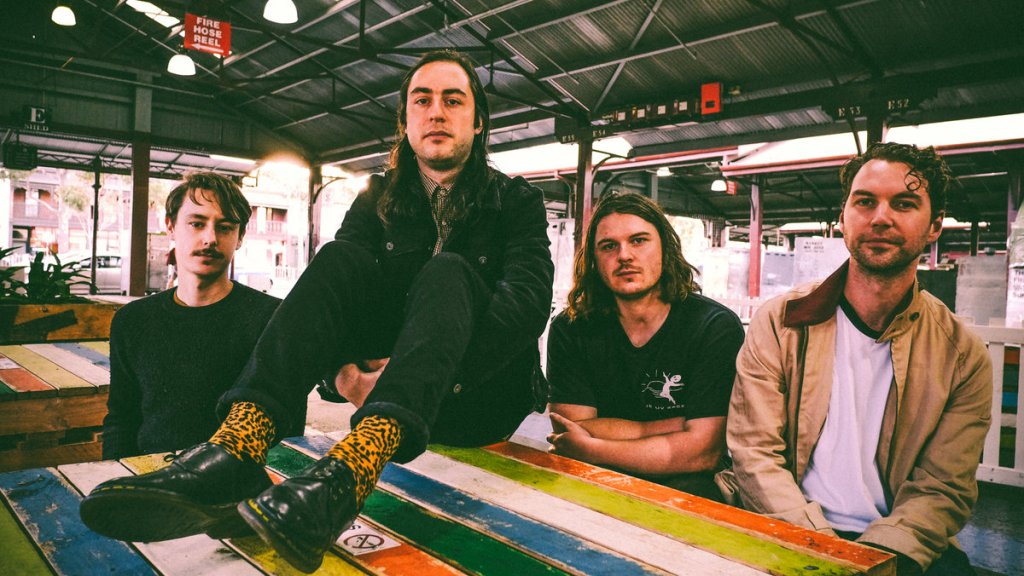
What do you love about playing the drums?
JEM: [Laughs] It’s a very physical instrument and that probably brings with it endorphins from exercise, it’s a happy side effect from playing the drums. I didn’t really actively seek out the drums in the beginning, I started learning because my older brother was getting some lessons through a family friend that happened to be a drum teacher and they owed my dad a favour… [pauses] …oh my god there’s an enormous kangaroo about a foot away from me [laughs nervously].
It’s an accompanying instrument really. For the first time ever, yesterday I started recording some solo stuff which is kind of a result of this isolation stuff. Drums in general means that you’re playing with someone and that’s something I’ve always loved about music, the interaction with the other human beings that you play with. That’s probably why I’ve played in a lot of two-pieces, like this conversation now, it’s easier to have a conversation with two people than it is with six or seven.
How did you and Jace first meet?
JEM: He’s from all over the place, but he was living in Lismore when I first met him. He was playing in a band from there and he needed some shows down in Melbourne. I have no idea how he discovered my band then, it was in the MySpace days. I booked some shows for him and shortly after he moved to Melbourne, he had some music that he wanted to play with people. I found myself for the first and only time in my life since I picked up a pair of drumsticks not really with a band. I agreed to do some demos with him. Honestly I wasn’t super jazzed in the beginning but he was such a lovely dude. I wanted to just get back on the horse. It’s like someone going “I should get back into dating because I’ve just broke up with my long term partner” [laughs].
Really quickly that turned into a band called Fangs Of… a three-piece that proceeded Dead. Very quickly that band became really active and productive. We literally have not stopped playing since then, that was 2007. That band lasted a few years, Mikey the other guy in it didn’t really have the passion that we had, the drive to keep going; you have to drive long distances and might get abused by people or shut down by venues, stuff like that—it can be hard work. Dead just ended up forming out of necessity because we were the only two left that shared the desire that we wanted to keep touring and releasing stuff.
You mentioned that you weren’t so jazzed when you guys first started playing together; when did you start to feel excited?
JEM: Probably within a couple of hours [laughs]. What was strange to me is that I never in my life have had to seek out people to play music with; I started really young, I started gigging when I was fourteen. I did at least two shows a week in Melbourne from the age of fourteen to somewhere into my 20s really. I’ve always just played with the people around me, I guess I’m a bit lucky that I knew really great people and played in bands that were very democratic, sometimes painfully so. When I said I wasn’t so jazzed, I come from an improvisational background, I never learnt covers or never learnt to play in the style of others; my brain struggled with even basic song structures. I struggled to compute Jace’s songs because I hadn’t had a part in writing them. It was more I just didn’t think it was my strength, I’m not good at playing a verse, chorus kind of thing. Really quickly Jace just started to write music that more suited the style of the players, it’s a real strength of his.
Is improvisation important now when you guys are creating?
JEM: Yeah, it’s hugely important to me. Because there’s the two of us it’s mostly unwritten, we don’t have to verbalise because we tend to be in the same frequency as each other. For me, I’ve never played a song the same way twice, I just have that in me. When we practise it’s not as improvisational as I would naturally be. I think Jace is always up for elaborating on something or changing it. Usually he’ll bring in something solid and we’ll start from there. There’s no rules though, we can write music any way we want.
What music were you listening to growing up?
JEM: I was born in ’85 so I pre-date streaming and readily available music by a far bit. At about five I really got into music and became obsessed with it. I was lucky I have an older brother ahead of the game and that was aware of what’s being pitched at teenagers. I just remember really liking music, it almost wouldn’t have mattered what kind, just the actual medium was exciting and you had to take what you could get.
Early on I was drawn to things like Metallica, Megadeth, The Smashing Pumpkins and Nirvana but, I always thought none of those bands were good at executing this as much as stuff from the ‘60s and ‘70s. Having a six-year-old mind I probably didn’t have the language for it but I remember listening to The Beatles on a pair of headphones and thinking it was amazing and so exciting! I felt like the music that was coming out now at the time wasn’t quite as exciting. I just wasn’t aware there was great music going on at the time, as a kid I didn’t have access to the Butthole Surfers. I remember hearing Ministry as a six-year-old and being a bit scared but the song ‘Cannibal Song’ stuck in my head for so long that it wasn’t until I was in high school that I ended up being able to get a copy.
When I was in primary school I bought the second Mr. Bungle album on CD and was so mortified, I thought I wasted so much money on something unlistenable. I bought it because there was a connection to Faith No More. Three of four years later, I got to see them live at an under 18’s show and it was mind blowing and I went back and listened to it. I realised the album was incredible but it’s really hard work to listen to. I didn’t have the language to understand it as a kid. A lot of my favourite records I can’t listen to too often because they take a lot of energy to listen to. I’m not going to put on the last Harvey Milk album if I’ve got really important work to do, because I’ll be too distracted with trying to understand the music; I’ll happily put on a Beatles record because it’s really familiar or trashy pop stuff because it doesn’t take much effort for me to understand it.
In April you put out your latest record Raving Drooling, it’s really heavy to it but still has a lightness and humour.
JEM: Coming from the improvising background, I genuinely take a lot of pleasure in playing very light and dynamic stuff in Dead. Playing with Jem he challenged me as a player to work on my strength of endurance of playing heavy for extended periods of timer rather than going up and down all the time. We don’t just want to do the same thing that’s been done before, a lot of that heavier stuff that’s kind of like us, alternative metal, is often lacking melody or humour or dynamics—those are the areas we like to explore. We just do what we like. We enjoy melody as much as we enjoy brutality. Melody in heavy music is a rarity because there’s a vulnerability to it, people don’t want to admit that or talk about that. If you get up there and just sing gruff, gruff, gruff stuff – that’s fine I’m not canning it – you don’t have to reveal yourself as much. We like the challenge and the exhilaration that comes with playing live and being a bit more vulnerable. We’re used to it because we’ve spent a long time playing music in often hostile environments, we’ve built up a tolerance for that [laughs].
Where did your album title Raving Drooling come from?
JEM: ‘Raving and Drooling’ was the original name of the Pink Floyd song ‘Sheep’ off the album Animals. I just always loved that album. We’re quite big fans of Pink Floyd, they had kind of the same habit that we do, they’d go tour and playing all the material that they hadn’t yet recorded, meaning the audience would sit through a few hours of material they’ve never heard. We do that a lot, our fans are always willing to go with it. Our fans are never upset that we don’t play this hit or that hit, because we don’t have hits. We always have themes to our records vaguely, as we were making this record to I said it Jace, “This is going to be our Animals” whatever that means. As an album it’s a bit more aggressive than the last one we made, that came from that Roger Waters kind of cynical vibe he has.
We’ve premiering the clip for song ‘Grifted Apart’; can you tell me a little bit about that song?
JEM: I don’t really know what ‘Grifted Apart’ is about, it’s more of an energy to us. That whole side of the record that it’s from is our version of heavy metal. Jace just made that clip last week, as far as I know he shot it on his phone and edited it on his home computer. He’s done stop motion stuff for us before, this time he said it would take too long though. We never really play the song live. Most of the lyrics would be written and sung by Jace. We make things vague so we can give credit to the listener and they can interpret it in their own way. It also allows the song to evolve as we grow. We’re a very 50/50 split it down the middle band with writing. If you want to do something more specific you just need to be a solo artist.
Will you be writing specific stuff for your solo stuff then?
JEM: It’s all ambient percussion. Our friend from New Zealand is putting together a compilation and he wants people to only record in this isolation time. Jace and I both try to leave things open to interpretation, so they can mean different stuff to different people.
One of my favourite songs on the record is ‘Follow The Breathing’.
JEM: I’m really happy with how that turned out. That whole first whole side of the record is really just heavy rockin’ tracks and one of the problems with recording stuff like that is well, we can play stuff like that very well live – that’s our bread and butter – there’s a lot of energy and it can be hard to capture when you’re in the studio. With a song like ‘Follow The Breathing’ it’s the complete opposite, we composed it with the purpose of recording it rather than playing live. There’s two different ways of playing: the live way that’s a bit more aggressive and rougher on the edges; then there’s the studio way which is a bit more considered. At the end when the synths come in you have Joe Preston of the Melvins, High On Fire, Harvey Milk fame. He’s on one side playing the synths then our friend Veronica Avola is on the other side, in the other channel, reacting to him. She plays synths with us when we’re in the US.
Creston Spiers from Harvey Milk is also on your album on the song ‘Nunchukka Superfly’.
JEM: It was heaps of fun and a learning experience. The fun thing about being a two-piece is that we have a lot of room if we want to involve other people. Creston was an interesting one, I worked with him on releasing his solo record, we had gone back and forth and spoken on the phone a bit; we had a good understanding of where we were at. It was a bit challenging for me because I thought he’d do anything he wants but he wrote back to me and said I needed to give him direction. It was such a weird feeling having to direct someone who I think is by far a superior musician to me and someone I look up to. He was making incredible records when I was still in primary school! I had to give him a briefing on how to do the solo. He emailed me back and said he was just going to do it then, so he did and sent it back. It took him half an hour.
The art on the new album is pretty cool.
JEM: Jace has done the art for every record we’ve ever done. I do the layout and screenprinting. On this particular record we got our friend Simon from the band Pissbolt to do the colouring. One of his jobs is that he is a professional colourer of comic books. We gave him a briefing of the colours we wanted him to use and he went for it. In the heavy music world it’s nice to play something brutal but make sure there’s always something pink, because it’s such a world that’s dominated by how everything has to be black and dark—that’s not really how we are as people.