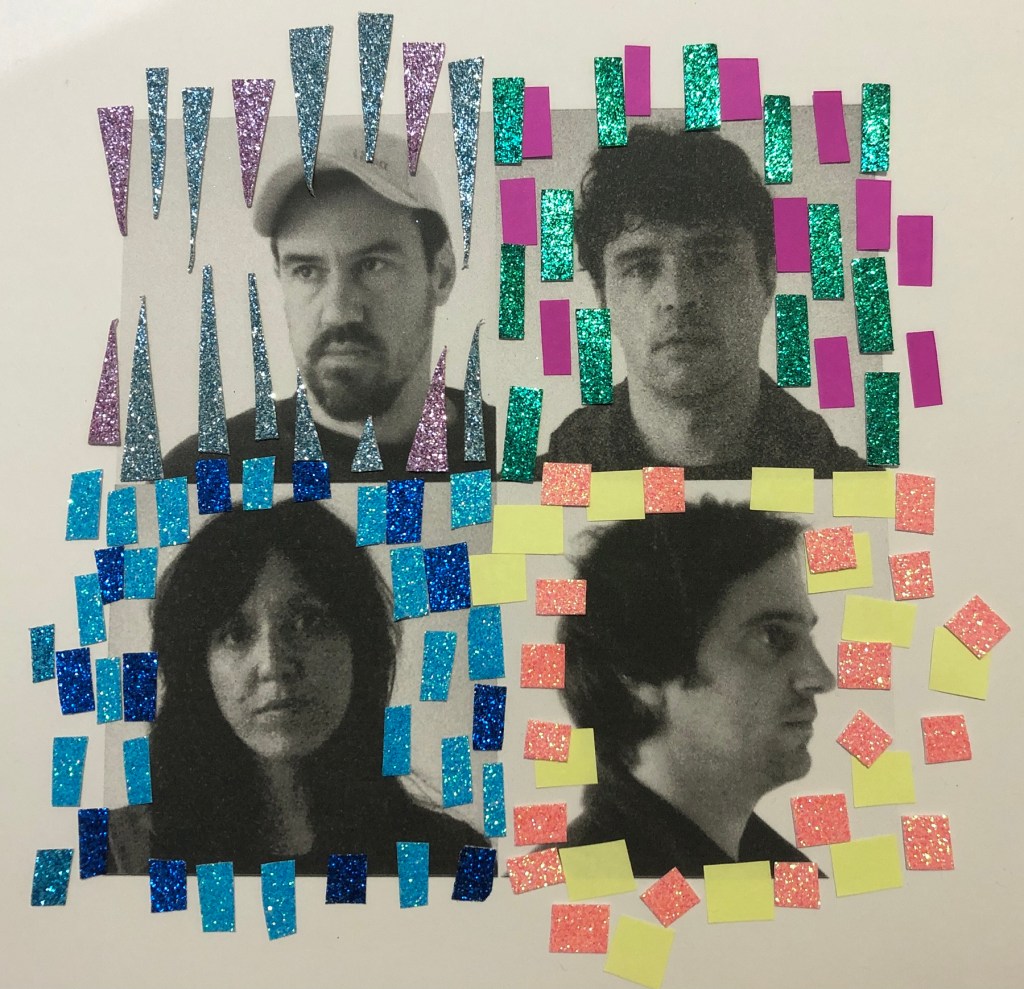
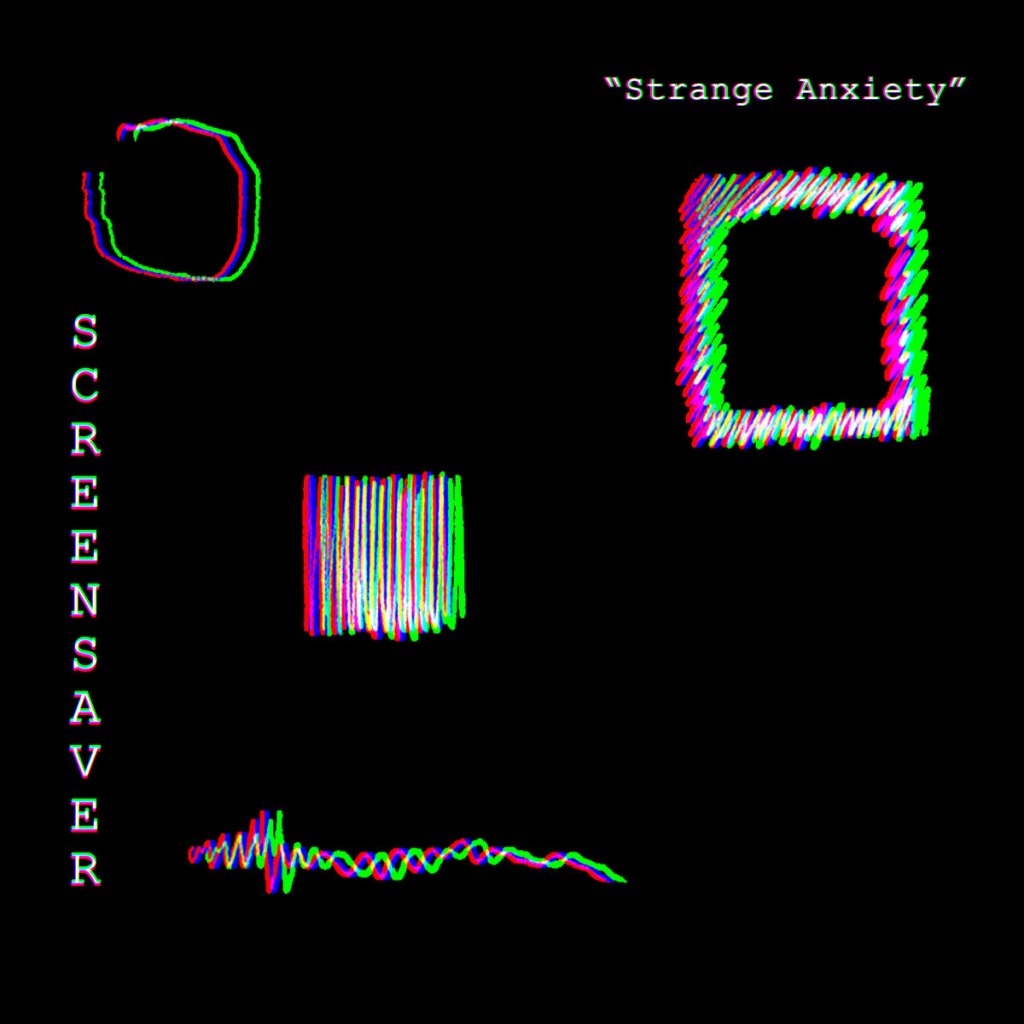
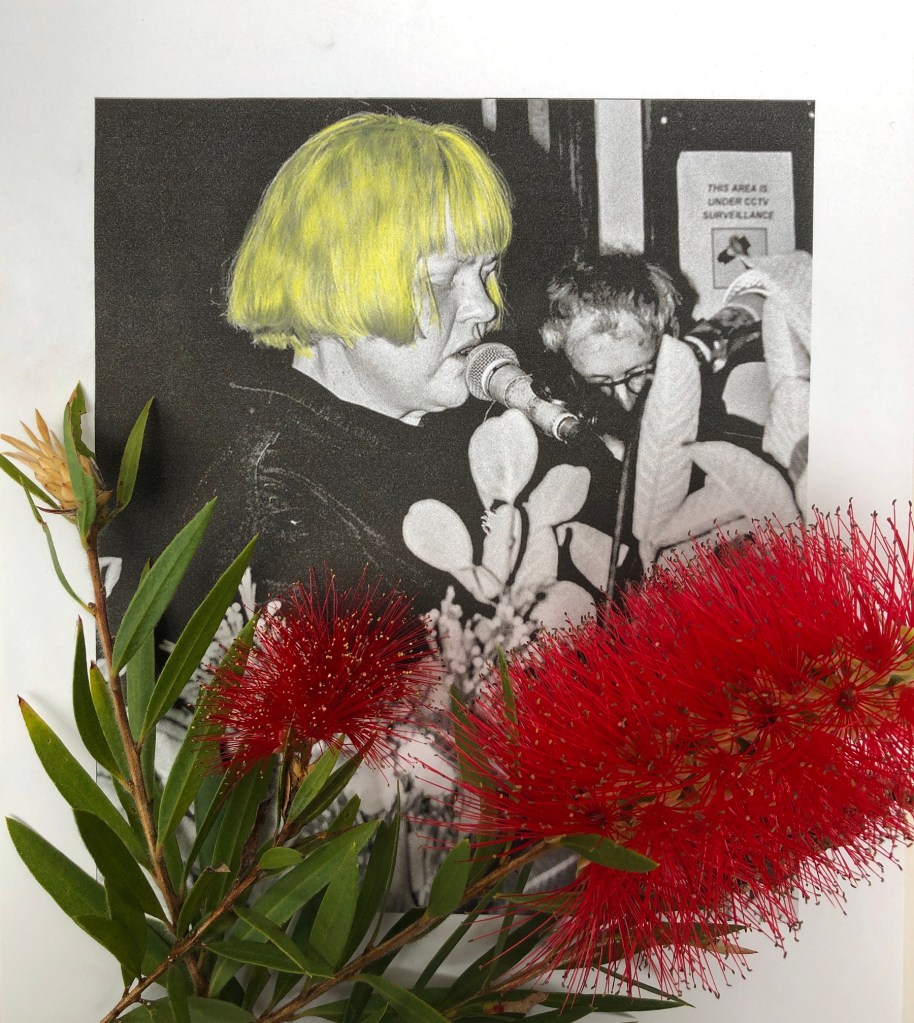
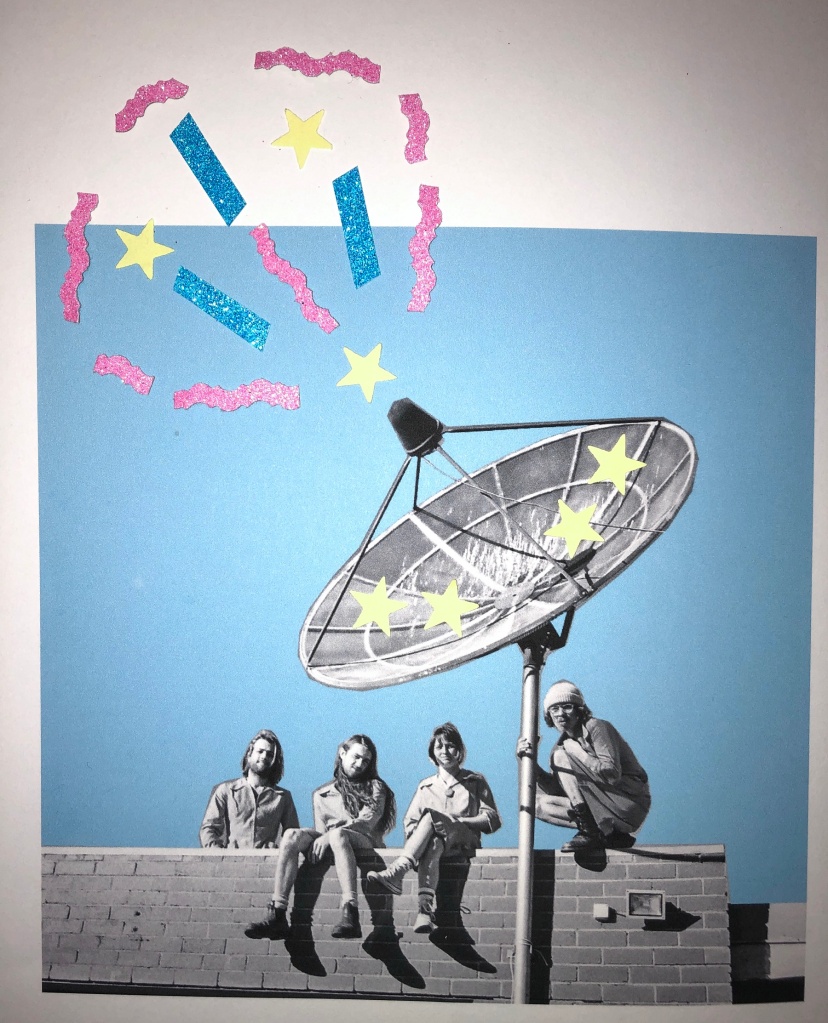
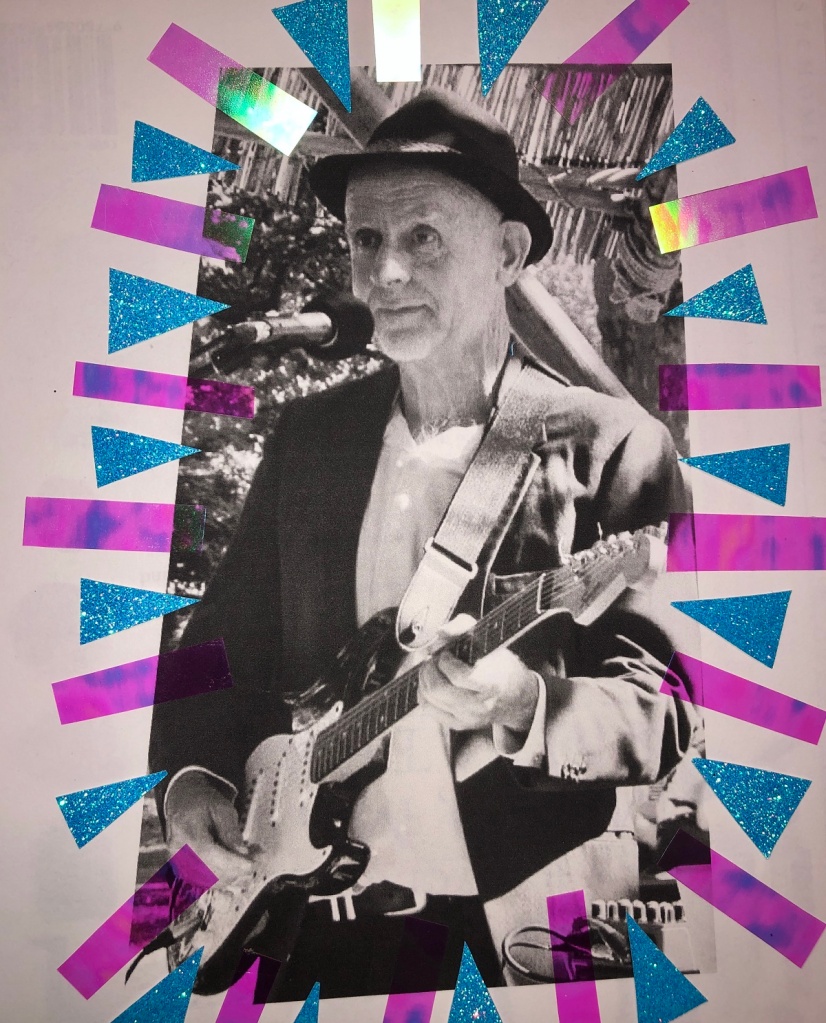
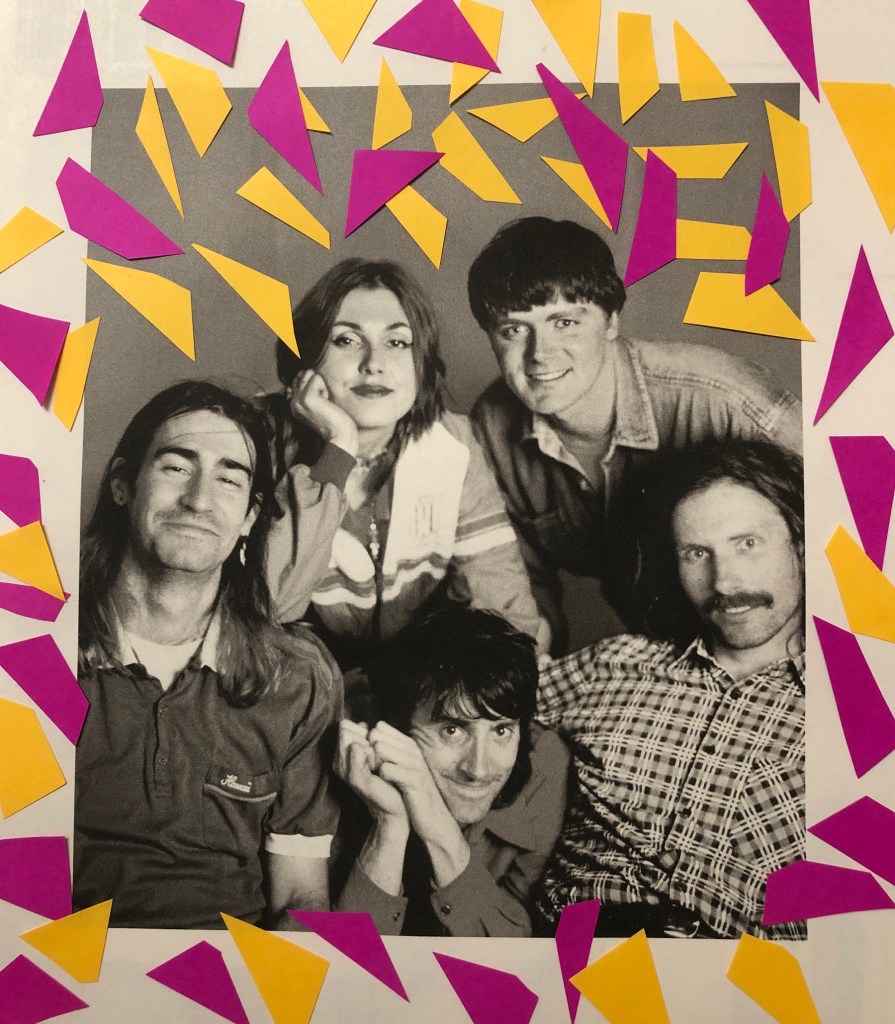
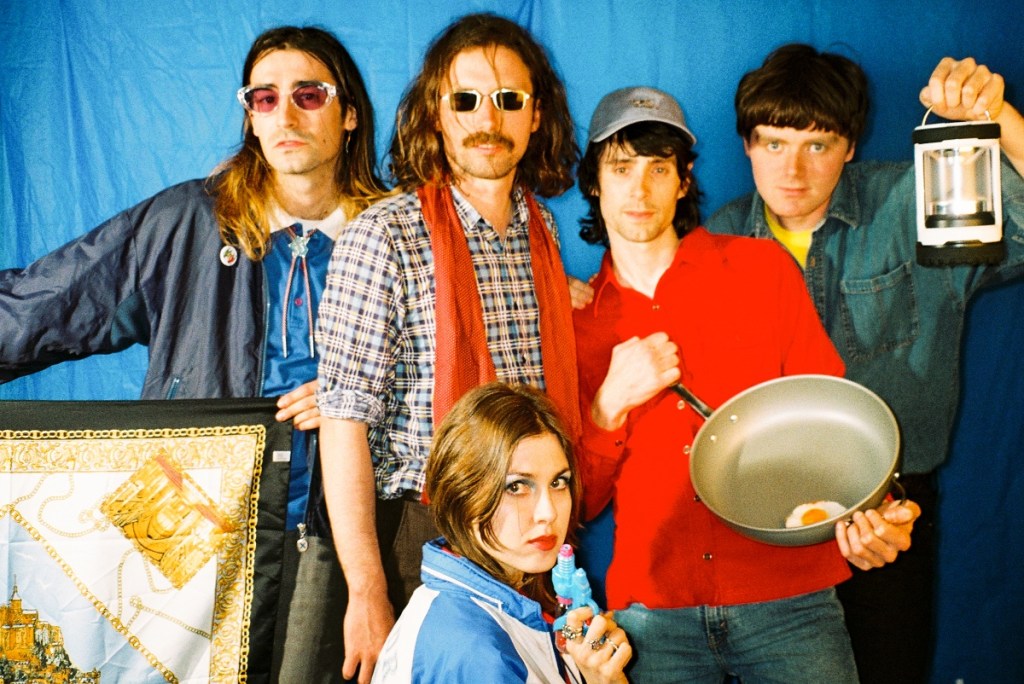
Gimmie interviewed Krystal Maynard and Christopher Stephenson from Naarm/Melbourne post-punk, synth-heavies, screensaver. Last year they released demos with a lot of heart and promise and this year as well as featuring on two essential compilations – A Complication for Edgar – a fundraiser for Edgar’s Mission Sanctuary providing, shelter and care for homeless, abused, injured, or abandoned animals and the latest Blow Blood Records ALTA2 compilation – they released a new single ‘Strange Anxiety’.
How did you first meet?
CHRISTOPHER STEPHENSON (guitar/synth): We first met in 2014 in Berlin when our bands Spray Paint and Bad Vision played together. The following year Spray Paint travelled to Australia and played with Krystal’s band Polo.
KRYSTAL MAYNARD (vocals/synth): Yeah, our first official meeting was at some heinous hour of the morning on the very last night of Bad Vision’s tour at the kick on at some bar in a suburb of Berlin that I remember very little detail of.
I understand that you both started collaborating musically over the internet beginning in 2016 with Chris in Austin, Texas and Krystal here in Melbourne, Australia; what kinds of songs were you making back then?
CS: At the time I had a great 4-track in my share house bedroom, I didn’t have any real drum machines or great synths, so I tapped beats out on a thrift store Casio into a loop pedal and ran keyboard sounds through enough guitar pedals to sound somewhat synth-y. The project started as me sending over instrumentals and Krystal doing vocals.
What inspired you to go for a synth-punk, new wavey, gothy sound for screensaver?
CS: After I moved over we decided to expand into a full band format where Krystal played keys and I added guitar. Once we brought in bass and drums with Giles and James the sound naturally settled into where we’re at presently.
KM: It wasn’t really a conscious decision, Chris’s original demos really lent themselves to the sound and vocally it made sense for me to go down that path. We’ve both played in a variety of different sounding bands over the years and I was enthused to do something I hadn’t dived into before but actually was core to my musical origins. When I was a teenager I was super into The Cure, Siouxsie and the Banshees, Joy Division as well as the 77 punk stuff. So for me, it’s been like tapping back into my origins but whilst having had many years of developing a broader palette to take those influences but ( hopefully) not just reproduce their sound but incorporate more wide ranging sounds. I find genre discussions both interesting and tedious. As a band you can’t really escape using genres to describe your music which is frustrating but unavoidable!
What’s the story behind the band name?
CS: I recall coming up with the name as we drove together to Office Works in Coburg in our black Volvo station wagon. I think I had to print a certified copy of my passport that day.
Your debut single ‘Strange Anxiety’ that’s about to come out was recorded remotely in isolation; what sparked the idea for this song?
CS: Krystal had a garage band demo with the initial low keyboard and then sent it to James who programmed the beat. She’s amazingly quick with lyrics and vocals in general, so by the time I started working on it as a session the structure was all there.
KM: I’m pretty sure that this song began as me teaching myself how to program drums in Garageband and having a play with making music that way, it could have easily been a throwaway practice session of mine that nothing happened with. When our drummer James got his hands on it he turned my basic beat into something super dynamic which brought the bass line to life and we built from there.
What’s something that we might be surprised to know about your writing or recording process?
CS: I suppose we’re still getting to know our process ourselves! In an otherwise normal year I doubt we ever would have seen a song through from start to finish without going into a studio to amplify guitar or bass at the very least.
KM: Covid-19 and the restrictions in Melbourne have meant that we’ve had to reinvent our processes completely, it’s enabled us to stretch out into sounds we may not have if we were just jamming as a four piece is a room, the method of making (mostly) in the box music over the last six months has had a lot of positives for us and developing our sound.
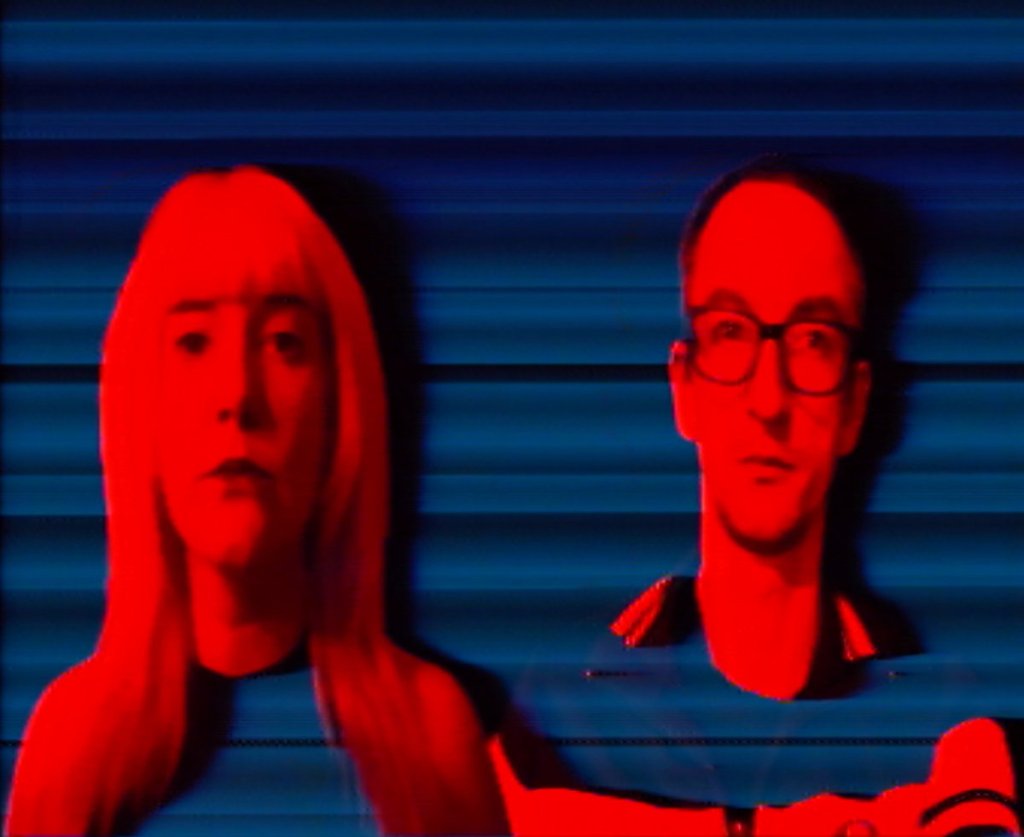
The video for the song is a collaboration between screensaver’s bass player Giles Fielke and animator Juliet Miranda Rowe; can you tell us about making it?
KM: We filmed the video using our bass player Giles’ Super 8 camera at his apartment back in June when the restrictions were briefly lifted. Giles riffed off the simplicity of Andy Warhol’s screen tests for the black and white shots of the band members and he edited the foundation of the clip. Juliet came in afterwards and animated over the top of the footage to give it even more movement, working with the songs rhythm’s to give it punch in all the right places.
In 2019 you started playing gigs locally and then did a short run of shows in the US opening for Wiccans and Timmy’s Organism; besides playing, what was one of your favourite moments on the trip?
CS: Personally it was good to be back in my former hometown and reconnect with bandmates and friends in Austin.
KM: My first instinct is to say the breakfast I had in New Orleans! I still find eating food in the USA such a novelty, the diners and greasy spoons and the really regional foods. But yes, the shows were great too, tour is always fun, sometimes the best moments are just being juvenile in the van and flogging the tour joke until it’s got no life left in it.
screensaver are featured on the Blow Blood Records ALTA2 compilation (a comp of Australian bands who have made music whilst in isolation); how did the song you contributed to this get started?
CS: That one started as some Michael Rother worship I put over a terrible sounding beat on a cheap machine. James improved the rhythm track immensely and Krystal belted the vocals out in our apartment.
KM: I’m positive that our neighbours think we are crazy, because I am always laying down vocal tracks in headphones really loud, so all they are getting is vocals sans music which we all know sounds pretty bizarre/not very good. I’m now at peace with it. We hear things we don’t wanna hear in the apartment block all the time, so I guess its payback.
ALTA2 is a really impressive compilation and such a great idea to put out songs of artists who have continued to produce music during this lock down. It’s a big reminder of how much talent we have in own backyard, we highly recommend you pick up a copy and discover a whole bunch of new artists.
You also had a live track “Meds” on A Complication for Edgar – a fundraiser for Edgar’s Mission Sanctuary featuring 20+ punk bands; why was it important for you to be a part of it?
CS: In addition to supporting a great cause it actually happens to document our first live show at the Last Chance. Max Ducker did a great job with the live sound and making it sound great on tape.
KM: Max Ducker is a really old friend of mine so we couldn’t say no! But honestly we are happy to support an organisation that is looking after the welfare of animals.
What’s something that has really engaged your attention lately?
CS: I thoroughly enjoyed Sand Talk by Tyson Yunkaporta.
KM: I am very enamoured with Miles Brown’s album The Gateway released early this year, it’s so danceable, moody and evocative and the theremin works it magic to replace any desire you might have for vocals.
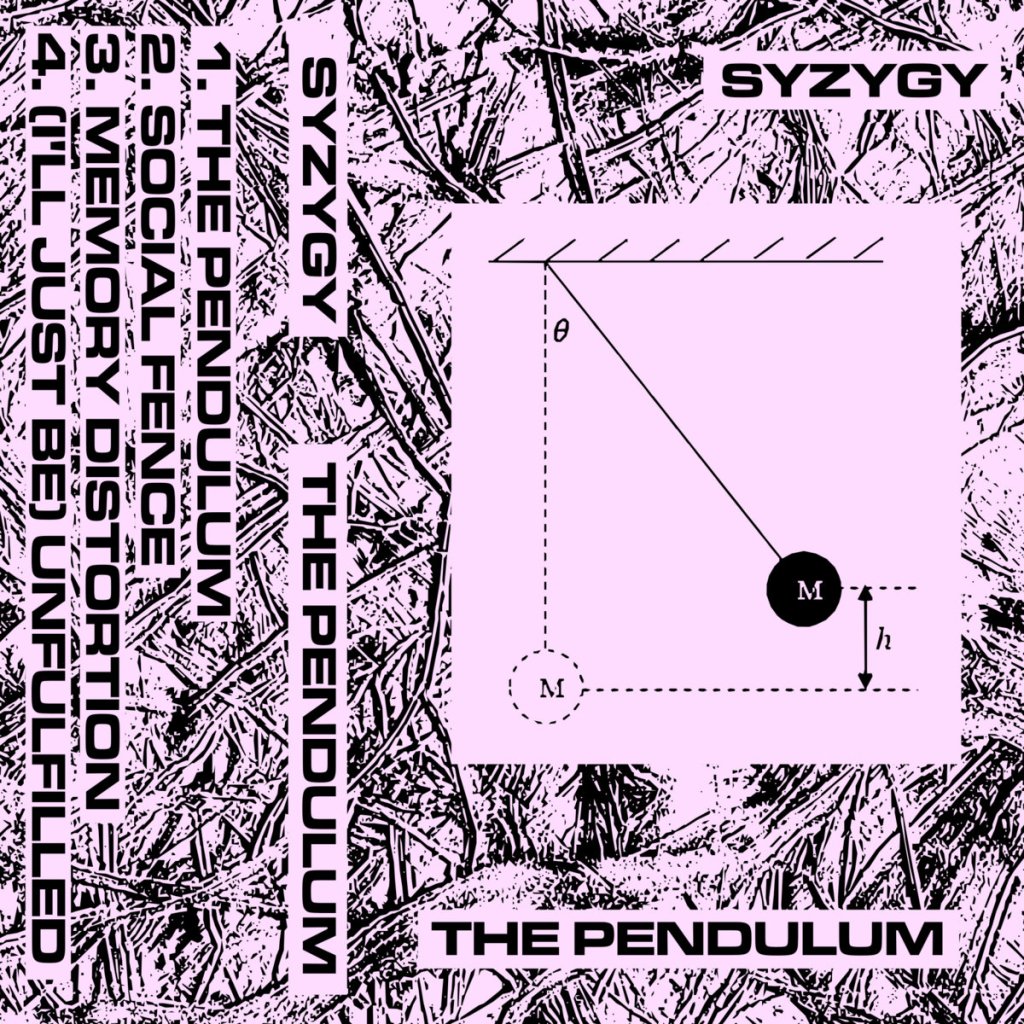
Naarm/Melbourne synth-pop duo Syzygy – Bec Maher and Gus Kenny – are one of the brightest new electronic bands we’ve heard this year. Their debut release The Pendulum is full of spirit, charm and very danceable drum machine driven, hook laden bangers.
How did you first start making music?
BEC MAHER: I was actually kinda late to the game when it comes to making music. I have always been a little obsessed with music and have loved singing in particular. I remember as a kid I would take my mum’s dictaphone and record my favourite songs from movies and listen back, writing out all the lyrics and learning to mimic the singer. Then when I started getting into punk as a teenager I spent most of my weekends going to all the shows I could and have kinda kept that up since.
However playing music myself always seemed out of reach. I’m not sure if it was because there weren’t many women playing live music as I was growing up and therefore I struggled to see myself in it, to understand the path from punter to participant. Or if it was that I revered music so much, it felt overwhelming to imagine myself making it. But in my late 20’s a group of close friends (which included Gus, the other half of Syzygy), some of which were in the same position as me where they have never played before or wanted to try new instruments, were starting a band and I decided to play bass. So I learned a few Ramones songs, an Au Pairs and Nots cover and that was the start of my first band Spotting.
We love your previous band Spotting! Both you and Gus make up Syzygy; how did you first meet? How did Syzygy come about?
BM: Gus and I met through some mutual friends in 2006 going to shows around Melbourne and have stayed close friends ever since. We’ve done a lot together in the past 14 years; lived together, travelled together and one of the most significant was probably Spotting. Gus was pretty integral in helping me learn to play bass, as well as the basics of arrangement and how instruments fit together as he had a bit more experience than me and a lot of patience.
We really loved working on music together, perhaps because we both have the same somewhat obsessive love or approach to it. We have really similar tastes but also, sometimes quite different tastes too. So talking about music and the way we experience it, and how that can differ, has always been a part of our friendship.
I think Gus was looking to make something more on the synth pop side of things, so when Spotting ended he started writing. By the time he approached me to see if I wanted to sing, he already had quite a few songs pretty much fully written. It took a little bit of thought on my behalf as although I loved singing, I actually had never really done it before. I had been doing punk vocals a bit here and there, but I knew this was going to push me and honestly I was pretty terrified. But I just loved the songs Gus had written so much and we had worked so well together in the past that I knew that we’d figure it out along the way. It was also a good way to hang out and spend time doing something fun and fulfilling.
What was it about the name Syzygy that you like so much to call yourselves that?
BM: So first things first, Syzygy is a strange name and we do realise now that it’s going to be difficult for people to try to say and spell. A simple definition we have been using to explain it is a syzygy is the conjunction of any two related things, either alike or opposite. It’s often used in astronomy to describe the alignment of bodies such as an eclipse but has uses in psychology, philosophy and mathematics.
When we realised the looming day was coming where you have to name your band, possibly one of the worst times in a new band’s progress haha. Everything sounds cheesy and weird until you say it enough. So we started trying to think of concepts that represented us or the music.
We kept coming back to this idea of our relationship as friends and as band mates as being mutually beneficial or a mutual exchange. We are very different people in some ways. The way we see, experience and react to the world can be different and we both have quite contrasting strengths when it comes to making music and the wider elements of being in a band.
But these different and at times, opposing personalities are really complimentary. It helps us create balance when we make music as we have a huge amount of respect and trust in what the other one brings to the table. Balance was also something that was also coming through as a common theme in the lyrical content.
At the time Gus was reading a book called The Three-Body Problem and the word syzygy is used in that and it stuck with Gus as an interesting word that was fitting to the themes we’d discussed and reflected some of the genre conventions of electronic music.
In July you released a limited edition cassette The Pendulum; how did it get started? What was the first song you wrote for it?
BM: So Gus wrote the music to the title track ‘The Pendulum’ first out of those 4 songs. However he sent me a few at once to start putting vocals to and I chose (I’ll Just Be) Unfulfilled as I absolutely loved that opening melody and I thought I could take a shot at that repetitive hook at the end.
I’d never really done vocals for pop music before so I listened to melodic pop music I admired like The Go-Go’s, Eurythmics and Tom Petty and thought about which is the part in the song that pulls you in and makes you just want to rewind that 15 seconds over and over. That part that you feel like you are waiting for the whole song. That hook is sometimes the most satisfying part of the song when it comes to the vocals.
So if I prioritise that bit and make sure it’s something I’d want to hear if I was listening to it, the rest can follow. We ended up with 3-4 songs with half written vocals where I had gotten excited about a particular part and then moved on to the next haha. I think ‘Social Fence’ was the first one that was completely finished.
What were the things that were inspiring the writing of The Pendulum?
BM: I’m going to answer this just about the lyrical content as I can’t really speak for Gus’ inspiration when it comes to writing the music. When I write lyrics I have usually spent a few weeks prior researching concepts I find interesting that can work as a wider metaphor for what I am trying to convey.
For example, ‘Social Fence’ is a term used primarily in psychology to describe when an individual’s short sighted or avoidant behaviour leads to society as a whole, suffering. At the time of writing it I was feeling frustrated with lazy individualist choices (including my own, I’m definitely not perfect either) to do the easy thing, not the right thing and the effect I felt that was having on the community around me. It felt to me that the people setting the tone for the community were unaware of the power they hold and what they could do to transform it into a place we all wanted to be. So it’s perhaps a little comment on the music scene but also I think it can extend to interpersonal relationships too.
‘The Pendulum’ as a song is based on a joke that I had with an old friend of mine about the frustrations of having, let’s say, somewhat fluctuating mental health and that the goal is to try and have more of a balanced approach to life instead of being so 0 or 100. For me, structure and staying busy is the key to that so I think this song is a reminder to stay centred instead of being so up and down.
I guess in general the songs are comments, reminders or pep talks to myself to help me understand who I am, accept or criticise the way I see the world and process my relationships and experiences. I’ve tried to write songs without the first person perspective and I am just terrible at it. So I’ve just decided to commit to them being pretty personal with this thinly veiled metaphor over the top haha.
I often like to put a little reference or nod to something that Gus and I have spoken about, as well as its intended meaning. In 14 years you develop quite the repertoire of in-jokes so that’s nice a layer to it as well.
Can you tell us about recording this collection of songs?
BM: The songs start out being written on computer, but the software synths that Gus has access to are not very sophisticated, and they come out sounding a bit like “MIDI versions” of the songs they are supposed to be. So, once the songs are written, he records the MIDI through a couple of different analogue synths to make it sound a bit less clinical. This means that each instrument is effectively recorded twice, and that helps to fill out the sound a bit.
Then we send all the stems to our friend and I guess we’ll call him our producer Julian Cue. He has a studio so I went over there and recorded the vocals with him. I often refer to him as almost the third member of the band as he really helps it go from sounding like a DIY bedroom project to something much more polished with lots of dynamics and depth. He also is great to work with so he helps me get more comfortable when recording vocals and get a better outcome.
What might people be surprised to know about your music making process?
BM: I don’t know if it’s surprising but it’s definitely different for me coming from bands, but that we essentially write and make all the music separately. Gus comes to me with the songs pretty much written and recorded, often he even has an idea of how and where the vocals will sit, as they are almost like another synth line or layer. Then I take it and write my parts and record some demos at home. When we can work around COVID restrictions, we get together and combine everything and maybe play with the arrangement. It’s actually the perfect project for the pandemic because we can keep making music without each other. However we do text A LOT. Sometimes when we are working on something it can be 100s of messages a day haha.
We actually managed to make an entire film clip for the title track ‘The Pendulum’ last lockdown in April without ever seeing each other. I grew up watching Rage every weekend, recording my favourite clips onto VHS and I would watch them over and over. It felt like you got to engage with the band and the song on an extra, almost intimate level which I loved. So I’ve always wanted to make a film clip and Gus had made this video synth a few years earlier. He had been waiting to use it again for something cool.
So we created a little storyboard so we knew what to do and I would film myself lip syncing with an iPhone taped to a mirror or with the help of my housemate and then send them to Gus. He would run them all through an analogue video synth he made himself to get all the effects. Then he edited it all together with some stock footage. It was really awesome to see us being able to work together and adapt to the restrictions and still get to make fun and interesting projects.
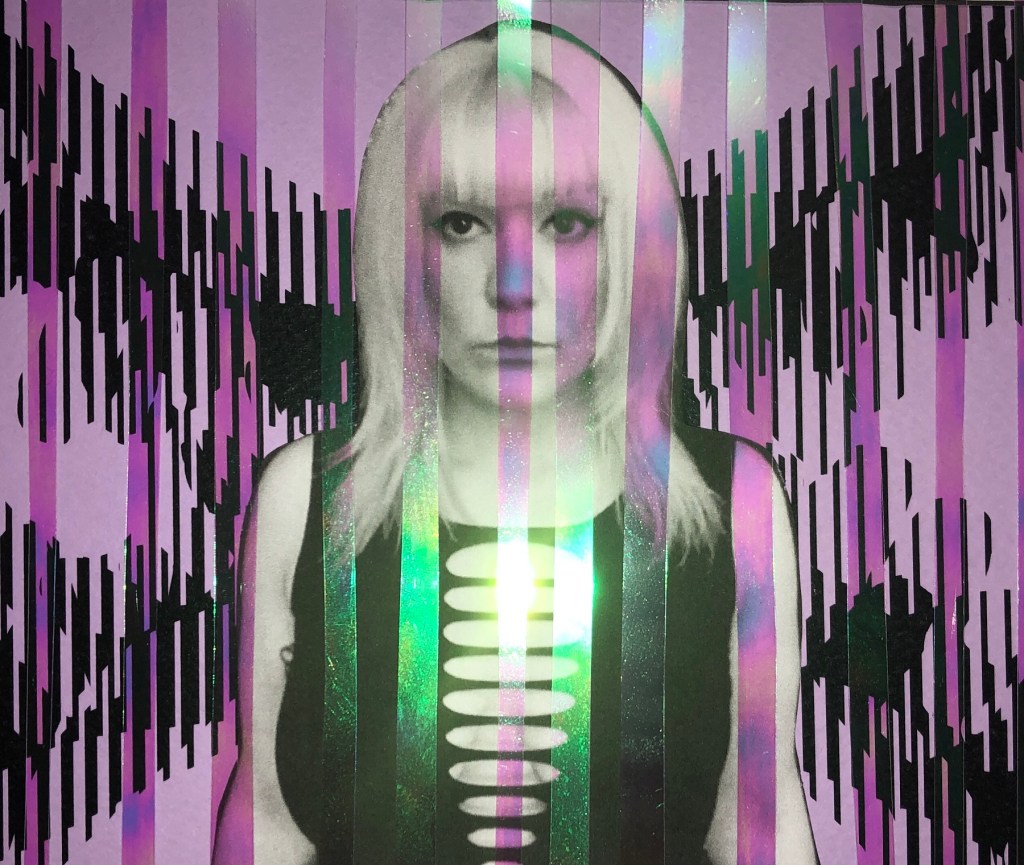
The lathe cut release on Wintergarden Records is super cool! Where did the idea for the “moving picture” cover design come from?
BM: That was an idea that Gus has been wanting to try for a long time, and when the Wintergarden Records 7” came up, it was the perfect opportunity, because we could be so involved in its production. It is an example of a Moire pattern, which is a type of interference pattern that happens when two similar patterns with transparent gaps are overlaid on each other. The four frames of the animation are split up into vertical lines and the transparent gaps in the plastic expose each frame as they move across it, making it look like its moving.
Spider from Wintergarden loves things that are unique and collectable and as these are small run 7s, individually pressed, he was fully on board with the idea and let us go for it.
What either excites or frustrates you about the local music scene?
BM: If you had asked me this nine months ago I think I would have had a lot to say in regards to the way it approaches representation or access. Or talked about the bands and labels which are really interesting to me. However post-COVID, I actually have no idea what the music scene will be or how it is going to adapt. I think that I honestly just want to wait and see what emerges from this, particularly as I’m from Melbourne and we are still very much in strict lockdown, and re-evaluate from there.
What was the last gig you saw before lockdown?
BM: The last gig I saw was a punk show I was playing with my other band Vampire supporting Cream Soda from Sydney on the 7th of March. It was actually one of the most fun shows I’ve played with that band and although I didn’t know at the time it would be the last one for what could be a whole year, it was a really great send off.
What’s next for Syzygy?
BM: We are finishing up some songs and getting ready to record them when restrictions ease in Victoria and the plan is to combine them with the cassette to make an LP. The songs were always designed to be an album, but COVID made that plan pretty unviable so we had to go about it all a different way. We will hopefully have them recorded and mixed by the end of the year.
Zines are really important! Good ones burst with life and can capture a culture, a scene, community, document a time, and share ideas and stories in a way that conventional publications can rarely, if ever; they offer an alternative narrative to the mainstream. There’s a genuineness, imperfection and sometimes awkwardness on their pages we resonate with. They’re written with unfiltered voices and self-expression of someone finding themselves (aren’t we always?), navigating the world and exploring their local creative community, likes and dislikes. They spread music, art, thoughts, feelings, information and perspectives. Anyone can make a zine. Making zines hones your skills or teaches you new ones you might not have known you had! Making one can sometimes save your sanity. A zine gives creative freedom. It can help you use your voice. A zine most importantly connects people.
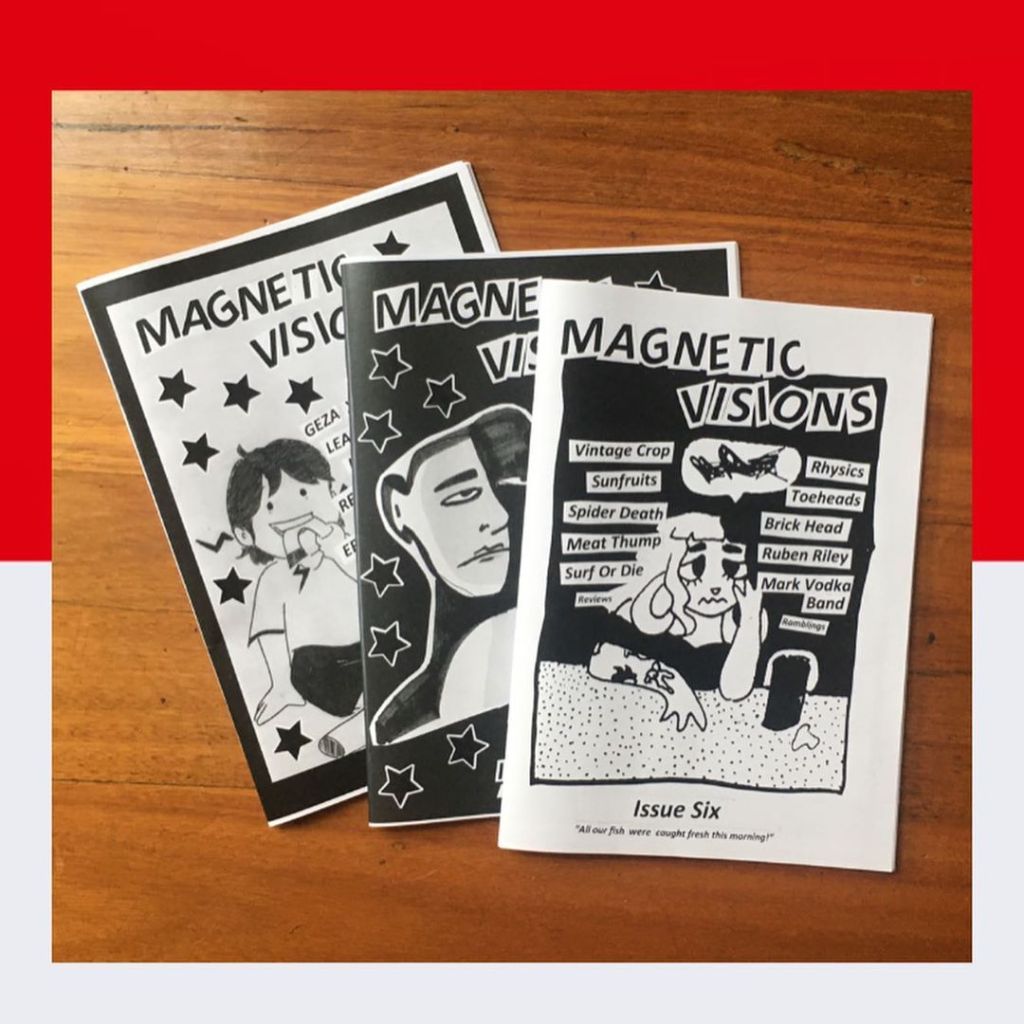
Through making Gimmie zine this past year, we’ve connected with so many amazing creatives throughout Australia and the world! One of the coolest is Billy who creates Magnetic Visions zine, a predominately music-based print zine from Naarm/Melbourne. He also makes music: Disco Junk, Billiam, Collective Hardcore, TOR, Dot Com, Aggressive Hugger, GDU and Under Heat Records. We love his passion for music and compulsion to share it—a kindred spirit.
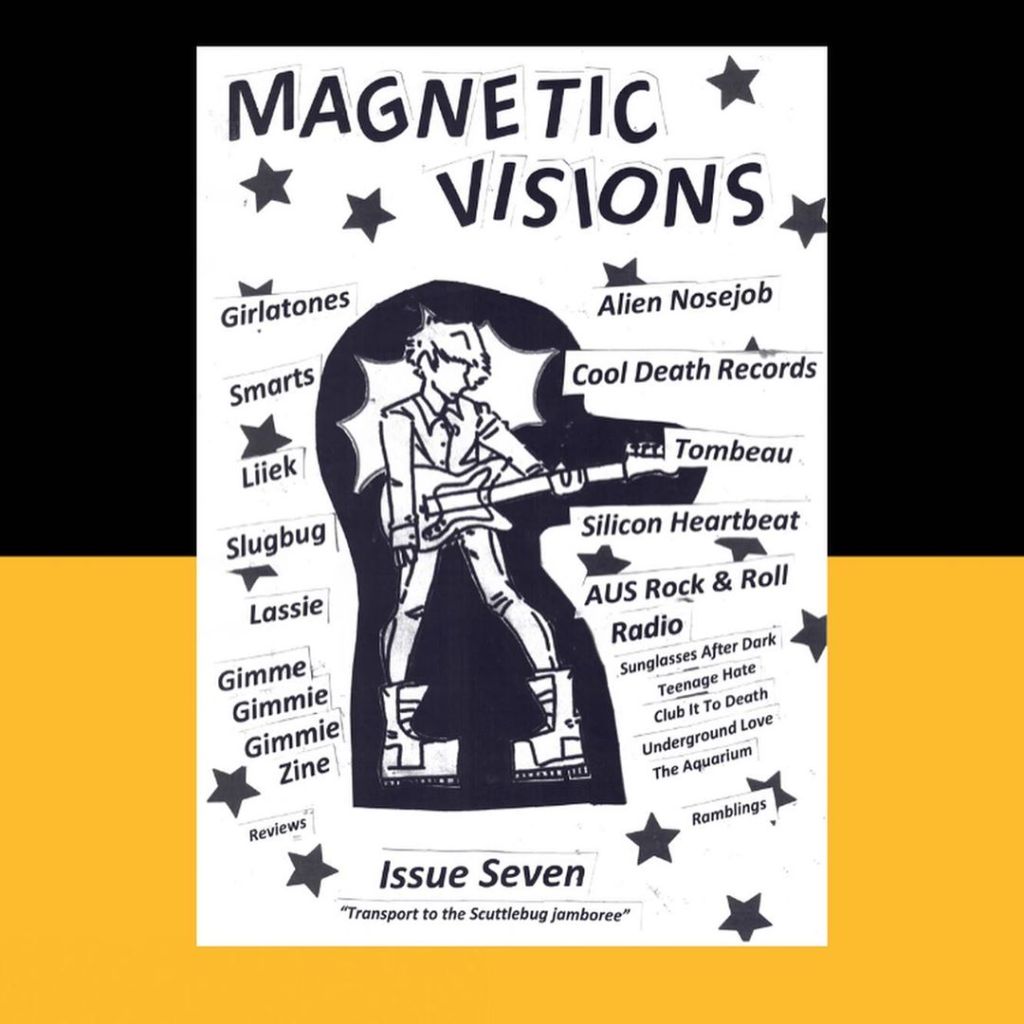
A few weeks back Gimmie’s Editor Bianca sat down for a chat with Billy, they did an interview collaboration! Billy interviewing Bianca can be found in the new issue (#7) of Magnetic Visions, which also features interviews with Alien Nosejob, Lassie, Girlatones, Cool Death Records and more! Bianca interviewing Billy is below.
It’s important to support each other! The more people making interesting, unique rad stuff and expressing themselves creatively the better!
How did you first discover zines?
BILLY: A while ago Strangeworld Records had a flood and they needed to get rid of a lot of the water damaged 7-inches so I went in there and bought quite a few. Richie who runs Strangeworld Records threw in a couple for free. One of them was Meat Thump which is the band ran by Brendon Annesley who made Negative Guest List zine. I ended up contacting Matt who put out the Meat Thump 7-inch to ask if he had another cover for it, because it was completely destroyed from water damage. When he sent the cover, he sent a few copies of Negative Guest List. I remember being completely blown away by them, the journalism and the whole formatting of zines. I developed a curiosity about them and I’d find a couple at Lulu’s and eventually I discovered Sticky Institute in Melbourne. From there I learnt about zine culture. I’ve probably learnt the most since doing Magnetic Visions because it’s put me in contact with a lot of people that know a lot more than me.
Nice. I used to have my earlier zines stocked at Sticky back in the early to mid-2000s.
B: It’s a really great place! I don’t think I’ve asked to stock there but maybe post-pandemic I should see if I could get a few put in there.
Totally! Do it. What inspired you to take the plunge and start making your own zine?
B: Initially it was just meant to be a one-off thing. I’ve always wanted to do a comp tape with a zine, so I put together five or so of my friends’ bands; I interviewed them and I put an exclusive track on a cassette. I put it out and I found that it was a really freeing process because it allowed me to be connected to music without actually making music. I sat on it for a bit and I started working on issue two during February, as that turned into COVID time, I plunged completely deeper into zine making, making it properly, properly publishing it and trying to put in as much effort as possible as I can to make it as good as I possibly can.
What are the zines that you really enjoy?
B: Negative Guest List is the main one, which ended in 2012 when Brandon died. I absolutely love Distort from the issues I’ve been able to get, there aren’t that many. There’s a zine in Europe called Rat Cage which is starting up at the moment that I really like, it’s focused on European hardcore and post-punk. Of course I love Gimmie Gimmie Gimmie zine! A friend of mine runs a zine called DST that I really like that’s based in the US, its half writing like short stories and half interviewing bands.
Do these zines have any similar qualities?
B: I like really good interviews, I like interviews that are very conversational and have good graphic design. I’ve always loved the visual appeal of a zine, making it as visually appealing as possible because you are paying for that physical visual aspect.
Is there a difference for you reading a zine digitally vs. reading print?
B: Digitally I have less of an incentive to read it. If I buy a zine I’m more inclined to read it because I’ve spent money and there’s an investment in there so I might as well get as much out of it as I can. I also find I’m able to get more value or enjoyment out of something on paper because I put more of myself into it.
What are your favourite and least favourite parts of making a zine?
B: I’ll start with least favourite, it can be very intense trying to put something together that you think you’re truly proud of, hoping people will buy it, that’s not particularly fun. I’ve had a lot of trouble dealing with that and at times the zine has been quite taxing on me. I think I’m a lot better at it now. I’ve figured out the main parts.
The best part is being able to be involved with so many music scenes around the world and being able to talk to artists that I absolutely adore, in a somewhat conversational way is absolutely fantastic!
Yeah, it’s pretty cool getting an insight into people who make stuff that you admire and appreciate.
B: Yeah, I did an interview with Jake from Alien Nosejob for the next issue. Even though I’ve talked to him a bunch this was the first time that I think I felt really comfortable really talking to him and it was absolutely incredible!
Amazing! I can’t wait to read it.
B: It’s really good. It’s a good issue, I’ve also done an interview with Lassie and Silicon Heartbeat—awesome bands.
I love all the zines, they’re all really good.
B: Thank you, it’s good that people are actually seeming to enjoy them. I didn’t really know there was much of a zine market until I started doing it, I had no idea that people would actually consume and enjoy them.
For me growing up in the ‘90s zines were such a normal thing, there were lots of them and there was a vibrant zine culture.
B: Yeah, back then I guess it was more essential to have zines. That was the only way to publish things on somewhat of a budget.
Yeah. I used to have friends that would have access to photocopiers and I’d get to photocopy my zines for free a lot of the time.
B: That’s what I’ve been trying to do at the moment. I started off printing them at school but they put the hammer down on that so at the moment I’ve had to go through Office Works.
Here in Brisbane there’s a really great place in Fortitude Valley called Visible Ink, it’s a Youth Arts Hub and you can go in there and photocopy your zines for free. They have lino printing resources and a badge maker you can use too. Do you stand there and photocopy it yourself or do you leave it with them and get them to print it and come back later to pick it up?
B: When I’m printing the final version that’s what I do but when it comes to designing it and all that, I’m usually just there getting specific things or trying to get a specific paper stock that will stick better to the background and all that.
I’ve been there! I love doing zines with a coloured paper cover, I’ve done full colour and A3 folded and A4 folded sizes.
B: I think right now at the moment doing just A4 black & white is the best for me because colour printing is so expensive. For this issue I might do colour covers just for fun, I like the way it looks.
It’s always good to keep trying different things and evolving.
B: Plus colour covers stand out more when everything else is in black & white.
Yes. What’s something that making zines has taught you?
B: I don’t know? I guess it’s taught me how to put together a complete artistic product. I’ve done albums before but I feel like putting together a zine is a lot more than just releasing an album because you’re involved in every aspect, asking every question, cutting out everything, paying or the printing and all that. I hadn’t really had much experience doing that until making a zine. I’d done tapes but some part of them I was able to rely on other people, this one, a zine, was all me. The main thing it’s taught me is to create a completed product.
Do you set deadlines when making zines?
B: No, not at all but they’ve all somehow been finished! Since issue three they’ve all come out, one a month or at least thirty days in between them. I sort of want to slow down but no matter how many brakes I put on like, I’ll only do one interview a week, or don’t work on it during this time period, I always manage to at least finish one by the end of the month. There’s no deadline but one forms naturally, I guess.
That’s how I felt when we started doing Gimmie, it’s been six months now and I’ve done over 100 interviews up on gimmiezine.com, I think there’s 113 maybe at this point.
B: That’s pretty fantastic!
Yeah, I just started and kept going. I love interviewing so much and I like making the art that goes with each interview. I love sharing new bands and music with people.
B: Yeah, it seems to be going pretty well so far.
One of the things I love about your zines is when you write your personal pieces; are you every scared of putting your thoughts out there, committing them to paper? Do you ever censor yourself?
B: Not really, I’m not really self-conscious of putting out my actual thoughts. I often find that I’m just not able to put them in words. There isn’t very much of it in issue six, because mainly when I would write about something I wouldn’t be happy with it, it would feel show-off-y or not correct. I’ve put the brakes on it for issue six but issue seven will have a lot more of it. I’ve been doing some writing on bands I like. I’m doing a big piece right now on probably one of my favourite bands right now, Bis.
I love Bis!
B: I don’t get why more people don’t talk about them. I don’t know if you’ve heard the new TOR single, but TOR is basically my love letter to Bis—I love that band so much!
I’ll have to check TOR out. I’ve seen Bis live!
B: Did they ever tour Australia?
Yeah, they did. I have the ticket stub somewhere here.
B: That’s awesome! I have an old poster I was able to get on eBay that I have in my room, it’s a promo poster for The New Transistor Heroes; it’s probably the coolest piece of art that I own. Mandarin’s art is fantastic!
Agreed! We have a lot of art on our walls here.
B: I’ve got a lot of posters from gigs or prints that I’ve bought from photographers, or flyers.
That sounds like our place. We have a pretty big collection of posters some from the ‘70s through to the ‘80s and ‘90s to now.
B: That’s awesome!
How do you choose what bands you’ll feature in your zines?
B: I pick bands that I’m listening to at the moment or that I think could give an interesting interview. I don’t like to just pick bands that have a record coming out, but that sometimes helps because they have a reason to talk, things to talk about and they’re in that mindset of sharing it. I really just try to pick people that I think are interesting. I don’t try and pick from one particular scene or a particular area of music to follow, I just pick what I find interesting. Issue six has a mish-mash of a bunch of different things: Toeheads, are from Detroit, they’re an amazing garage rock band; there’s an interview with two of the members of Meat Thump and we were able to talk about Brendon Annesley, it was fantastic. I interviewed Jack from Vintage Crop and that went really well. Even Mark Vodka who is this obscure Canadian artists who is probably the closest thing to a second Ramones we’re ever going to get.
Is there anyone you’d like to interview that you haven’t yet?
B: A lot! Usually it’s because I don’t feel comfortable asking them. The dream interview, the one I’ve always been desperate to do is someone from Razar, the Brisbane punk band—that’s the dream! I’ve never been able to find a single interview with them. I consider them to be pretty close to being the most important Australian punk band of all-time. I’m still on the chase for it so if anyone knows any of them send me a message!
ABC put out a punk compilation, I bought it because it had Frenzal Rhomb on but I heard ‘Task Force’ on it and [Psychosurgeons] ‘Horizontal Action’ and it set me on the path towards what I’m doing now.
What’s been one of your favourite interviews you’ve done so far?
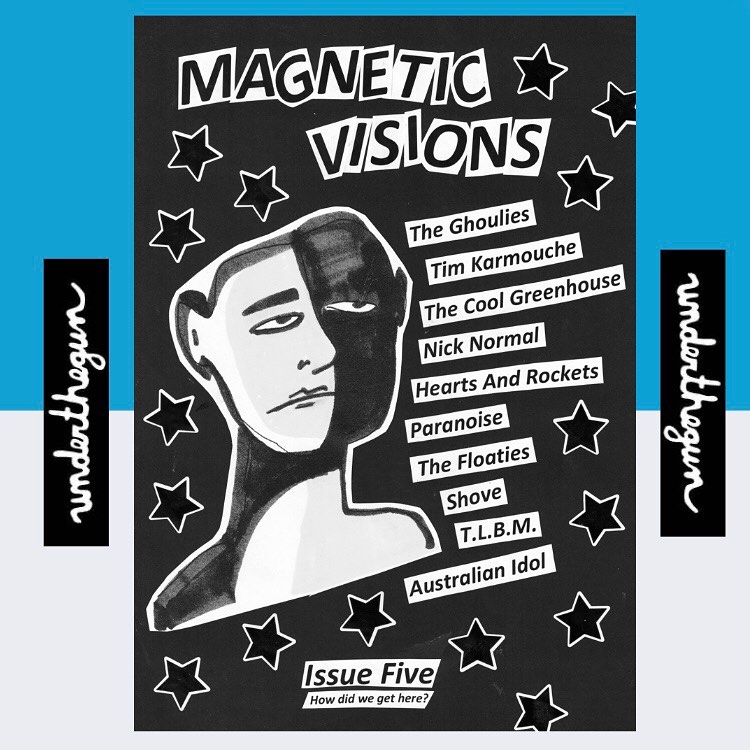
B: Issue one I was pretty proud of the one I did with CB Radio and Glue Eater, I think they both turned out really well. Issue two, Mikey Young I was really happy with, same with the one with Spoil Sport Records. Issue three, I think I did a good one with Drunken Sailor and Dr Sure’s Unusual Practice, those were ones I was really proud of. Issue four is where I think I start to get it down and I’m more or less happy with every single one in there, Research Reactor Corp, I was really happy with. Issue five, I was really happy with my interview with The Ghoulies and Hearts & Rockets. The one I did with Australian Idol I was extremely proud of and I still think that tape is the most underrated thing released this year. I’m really happy with everything in issue six, all of those are pretty good.
What makes an interview good for you?
B: It’s having a conversational feel and revealing interesting information. The interviews I really like I feel they show the artist’s personality really well and they’re interesting to read. Not every interview I read is with a band I like but, if the person is interesting to talk to I can get something out of that.
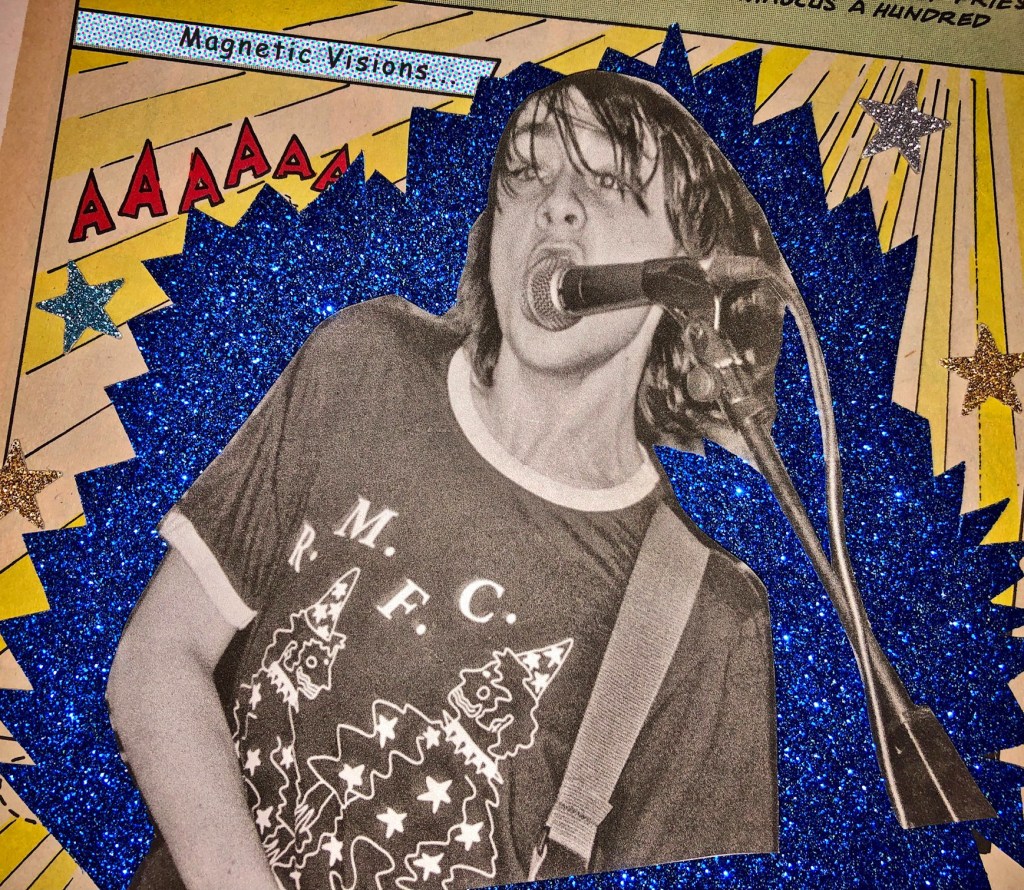
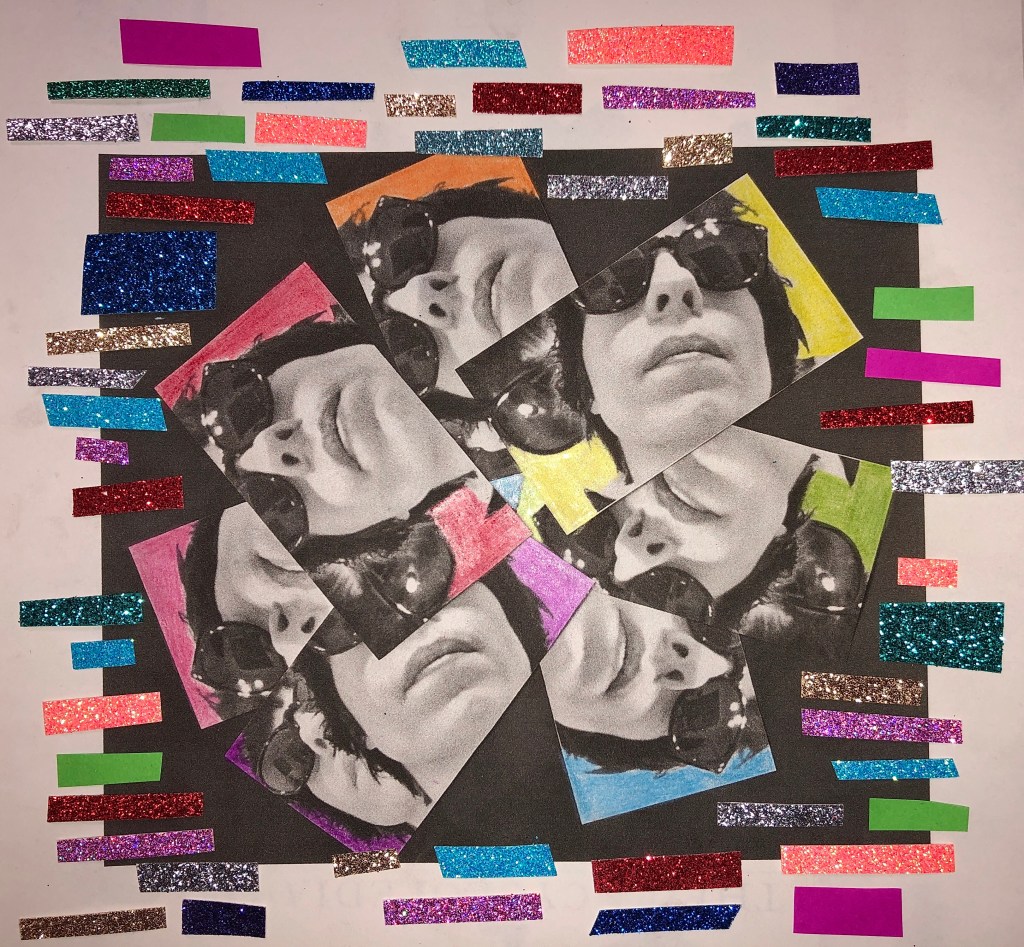
Original photo: Jamie Wdziekonski. Handmade collage by B.
Thibault is a new indie-pop outfit from Naarm/Melbourne created by Nicole Thibault featuring contributions from Zak Olsen (ORB, Traffik Island), Rebecca Liston (Parsnip), Lachlan Denton (The Ocean Party) as well as Julian Patterson (from Nicole’s previous band, Minimum Chips). They’re getting set to release their debut album Or Not Thibault, a collection of songs straight from the heart, that are as beautiful, mysterious and eerie as the surroundings in which they recorded, near Hanging Rock; a spot made famous by the 1967 historic mystery novel by Joan Lindsay, Picnic at Hanging Rock. Gimmie caught up with Nicole last week to explore the writing and recording of the album.
The black and white cover image on your record Or No Thibault is really beautiful; what inspired it?
NICOLE THIBAULT: It’s Hanging Rock! You can look at it from where we recorded the album up at Mount Macedon in Victoria. James Cecil recorded it in an old school. It’s a beautiful, spooky part of the world, it’s covered in clouds half the time. I think there’s one part of the mountain that doesn’t see the sun. We had this idea, it was a group effort, of cutting out letters hiding behind rocks, just the letters poking up. We climbed up to the top and hand a play around. Jamie Wdziekonski took the photos, he came out for the day, it was a really good vibe. He did some studio photos and we all went up to Hanging Rock, none of us disappeared! [laughs]. It’s a very eerie place.
Cover: Jamie Wdziekonski.
Did the environment inspire the sound of the record?
NT: Yeah. The actual studio is an 1800-1900’s school, that’s spooky enough in itself. There’s photos of all of the little children, which was eerie, but also quite beautiful. It’s surrounded by tall trees. Being away from the city is really, really nice. James has made it his own, he’s leasing it through the Council but he’s made it really homely. I stayed there at night a few times. It’s really just a nice place to be, that definitely had an influence. Time stands still somewhat, it’s a really dreamy kind of place.
You didn’t encounter any ghosts while there?
NT: I was ready for it! [laughs]. I stayed over night on my own twice, one time in a bell tent, and it was very Blair Witch! Not that I’ve seen the movie but, I’ve seen the trailers and was too scared to watch it. I was like, this is how I’m going to go, this is how I’m going to die! [laughs]. It was really fun.
James used to live in France for a little bit so he’d make us crepes and we were very, very spoiled. He makes really good coffee. It was five-star treatment for sure! It was really, really fun! It took about a year to make. I’d go out once every few weeks and James would fit me in between his other, more professional customers [laughs].
That sounds amazing! You’ve made music since the ‘90s and I know you took time off to raise a family; how did it feel coming back to music?
NT: It felt really good! I think I can’t not make music. I think I really committed myself to raise a couple of children and I was like; this is it now, this is what I do, I’m not Kim Gordon and I don’t have a team of people to look after my child while I stay up and party on to 4am. I have to become an adult and snap out of it. I separated from the father of my children and that was the best thing that ever happened to me [laughs]. Can I say that?
You sure can!
NT: I didn’t really have any family support, like grandparents or anything, so it was just 24/7 child looking after… which I’m not complaining about, but it’s good now because I have a little bit of time to myself ‘cause there’s shared parenting duties. I wish I had done it sooner!
Why did you feel it was time to create this new musical project, Thibault?
NT: I got encouragement from a friend of mine. I started playing solo, I had some songs that I had been twiddling around with. I hadn’t played live for a while but I always had fiddled around with some songs. I did a few solo shows but they weren’t great, let’s just be honest, they weren’t great. A friend of mine was like “let’s start a band; do you want some people to play with?” It went from there. I got people offering to play with me, I’m so lucky that they did!
Did you have a vision for how you wanted this project to sound?
NT: No. Am I meant to? It just kind of happened. I listen to music all day every day and I listen to the radio… it just goes in and it’s got to come out somewhere sounding like something. It sounds like what was inside me.
How did you first discover music?
NT: I was actually born in Tamworth and my mum had a piano, my sister was getting music lessons and I wasn’t really interested in it, but one day I walked up to the piano and could play the Mickey Mouse March by ear! I thought, this is fun! I started playing the trombone in high school because it was the only instrument left that no one wanted to play, it was that or nothing, so I played it. I wasn’t amazing at it but I went to university for a couple of years and studied it. I wasn’t really good at university either. I made some friends and I joined the band Clag. I met Julian Patterson at uni, he was studying architecture and then we started Minimum Chips. We all had a bit of a classical music background but we were more into My Bloody Valentine and The Cure [laughs]. I remember having a cassette of The Cure and being like, oh my god, this is amazing! We thought we were underground [laughs].
You mentioned that you went out to recorded bits and pieces of the record when you could; what about the writing for the album? Did it take a while to get this collection of songs?
NT: I think so. I didn’t sit down and go studiously, I’m going to write a song now! It was little ideas and then we were playing them live for a little bit. They had the structure, the melodies, all the parts and then taking them to James’ studio is where the magic happened; he had this array of old synthesizers and organs, a beautiful piano. We let the songs be free. We added layers upon layers. They evolved that way. I write very melodic songs, on their own they might not sound so great but when everyone came in, Zak came in with his guitar and he played a ‘60s twelve string; everyone was such great musicians. Julian Patterson played bass on the album and came up with all the melodies. Lachlan Denton played all the drums, he made all of the songs a hundred times better. It was a lot of experimenting—we thought we were The Beach Boys [laughs]. It was very free-form.
Photo: Jamie Wdziekonski.
A while back there was a post on your social media and you commented: we wanted to reassure you that we recorded a fair bit of tambourine on the record.
NT: Yeah! [laughs]. Tambourine is something that you either love it or hate it. It’s always too loud but sometimes it can be amazing. It’s such a contentious instrument [laughs].I just didn’t want to be too serious. It’s hard to play, it’s so hard to make it sound in time.
One of my favourite songs on the album is “Continuer” it’s very cinematic.
NT: Yes! I’ll let you in on a little secret, it used to be called “Morricone” as in Ennio Morricone [the Italian composer known for his movie scores]. He recently passed away. I’ve always been a fan, as is probably everyone on the planet. I came up with melody and we just went to town and went hard, and didn’t want to pretend we weren’t ripping of Morricone. It’s definitely meant to be cinematic and atmospheric and inspired by one of my heroes. I’m glad you like that one. It’s hard to play live. It’s such a slow song. The recording really captured a slow and moody piece of music. It’s hard to play it in front of people, I think fast songs are easier to play. You kind of need the Philharmonic Orchestra behind you to play it [laughs]. We ended up going, nah, we’re not playing that live anymore. I’m glad it’s on the album. I got everyone to sing on it.
Is there a song on the album that was hard for you to write?
NT: Yeah, all of them! [laughs]. Sometimes I‘d be having a pretty bad day and stupid stuff would happen and I’d be like, ahhh geez! I have to drive up to Mount Macedon. I’d be trying to keep it together. I’d be singing these lyrics, which are very personal and I’d written about something specific, I’d have to go on walks and gather myself. Some of them were hard to sing and play. Because James is a friend, we’re even better friends now, he’d just be like, “Go for a walk and then come back and do it.” It’s so good that you can actually walk through a forest, it was a nice place to have lots of meltdowns! [laughs].
Awww.
NT: In a good way though! I feel things and we didn’t shy away from it, let’s just put it that way. It’s all good. It’s really good to get over those… some were hard but it’s good to get over it and have done it!
Yeah. Kind of like that saying: sometimes you have to breakdown to breakthrough.
NT: Definitely! To not be afraid of mistakes too and to learn from them.
One of my favourite things about the album is your vocals, it’s really emotional; what did you do to tap into that?
NT: [Laughs] You don’t want to know! Being alive on this planet! Stuff happens to you. A person got me to sing some harmonies on their album and I couldn’t hit the high notes anymore… I think my voice has just lived. Your voice has to go through everything you do, and you can just hear it. We didn’t want to make it perfect and polished. We wanted to leave the emotion in it, I wanted it to just be from the heart.
When I first heard it, I was like, I just want to give this person a hug!
NT: A lot of my friends told me they cried when listening to it; why do you write such sad songs? I’m like, sorry! [laughs]. It’s good to cry. It’s good to have a time out, the world is not always a happy place… sometimes it is though! It’s good to feel real moments of sadness so you can appreciate the good things that happen.
Do you have a favourite piece of equipment you used for the recording?
NT: I reckon the Hammond organ, it had all these beautiful shimmery sounds. There was an old Yamaha organ and the piano James had was really beautiful. He had a few synths but I didn’t know how to play them so he played them. There was a little percussion instrument too that went “dooooiiiiig”.
The album is called Or Not Thibault; is that a play on words from Shakespeare?
NT: Yes, it is! I think Julian Patterson thought of it, it was a kind of tongue-in-cheek joke. I don’t want to take myself too seriously.
How is making music now fun and exciting for you compared to how you used to do things?
NT: I’ve just gotten over myself. I’ve run out of fucks to give. I don’t care what people think of me anymore. I believe in myself a little bit more. I’m around really supportive, positive people… I don’t think I’ve ever really experienced that [laughs]. This is nice. It’s really fun, so fun! I’m so lucky to have really beautiful, talented people playing music with me who aren’t just megalomaniacs from hell. It’s a good vibe now.
It sounds like you’re starting a whole new chapter!
NT: It is. It’s really nice to have this going on. I’m so glad we did it last year because I’m just sitting starring at walls now. I’m just like, oh my god, I’m so happy I achieved this album because I’m not very good in this pandemic, I haven’t been very inspired or productive. Some people are able to do things but I’m not one of those people…
And that’s totally OK.
NT: Yeah, you’re right. You just have to try and get through. It’s pretty bad down here. I haven’t seen anyone for so long, we can’t leave our houses. It’s pretty grim. Hopefully at the end of it everyone will appreciate everything so much more. I spend a lot of time by myself, I don’t have housemates or anything. I am getting myself some gear and teaching myself to record at home, that’s good and positive! I just have to do it.
Naarm garage-psych rockers Easy Browns are about to release a new record – Down On The Farm – that features ten clever animal-themed songs. We interviewed Easy Browns’ Zak Brown and Shelby Wilton to find out more about the release.
We’ve heard that you grew up in regional Victoria; how did you find music?
ZAK BROWN: Early days were spent digging through my parents CD collection, it was mostly Australian rock like Hoodoo Gurus, Cold Chisel, ACDC with some ABBA and Shania Twain thrown in there, but the folks were always buying new CD’s. In Grade 6 a friend showed me Gorillaz Demon Days album which changed me, I couldn’t stop listening to it, the sounds on that record are so unique.
I remember when my Dad started listening to Triple J mid-2000’s because “Delta Goodrem got cancer” and they were playing a lot of sad Delta G on pop radio, he started buying the Hottest 100 compilations and I loved the wacky mix they had on there, that introduced me to some contemporary alternative tunes.
I just pilfered through whatever I could get my hands on really, which was still quite limited, we didn’t really have computer access for a lot of years because my siblings and I destroyed our first computer with virus’ from downloading shit so that put my parents off getting another one for quite a while and took us back to the stone age in terms of music discovery.
How did you start making music?
ZB: My friends and I played guitar hero together every day after school together and with basic music knowledge started jamming Metallica’s “For Whom The Bell Tolls” every day in the music room at school, much to the annoyance of our music teacher (he still let us come in every day and jam). It soon transformed to playing every day after school when one of us got a drum kit and boom! Music.
Tell us a bit about yourself and how Easy Browns came to be?
ZB: I moved to Melbourne to study sound engineering and missed playing live, my late teens were spent playing in local bands, skating and subversive missions throwing rocks at KFC and I wanted to re-live the glory so I started Easy Browns Truckstop Chicken Jam Band with my housemates at the time.
I know Easy Browns are influenced by artists like Frank Zappa, Dead Kennedys and CAN; what do you appreciate about them?
ZB: I love how sardonic Frank Zappa is, and the music is so manic and silly. Dead Kennedys are so potently political and the music is quick and catchy, makes you want to throw yourself violently around in a sweaty mass. CAN takes the cake for interesting repetitive grooves, Jacky Liezbeit is my favourite drummer but all the members have a lot to offer, Holger Czukay was one of the first people to start sampling (by laboriously cutting and gluing magnetic tape) and when Damo Suzuki was in the band he bought such an interesting personality and unparalleled moodiness.
There’s often themes of environmental issues in your songs; what’s something happening in the world that more people should give a shit about?
ZB: I grew up in Morwell, a town surrounded by coal mines and lived through the Hazelwood Mine fire in 2013 which was quite an eye opener. Expansion of the fossil fuel industry is a huge issue, one example of MANY is the Adani coal mine at Abbott Point, one of the biggest coal projects in history; undertaken at such a time as this? Not only does it disrespect the land ownership of the Juru people, but carves a hole straight through the Great Barrier Reef (which is already being adversely affected by coral bleaching from rising ocean temperatures) and destroys local wetlands and habitats.
Easy Browns’ new record Down On the Farm comes out in September and features ten animal-themed songs; what inspired you to write songs about animals?
ZB: I feel remorse for injustices against the animal kingdom. Exposure to wild and agricultural creatures was frequent in my upbringing and I love the base nature of beasts, that being said humans can be base and beastly too, rational thought has not completely separated us. We should be living in harmony with creatures not abusing them.
We had also spent time on our friend Dougal’s (from The Sunken Sea) parents’ farm while touring in Lutruwita/Tasmania, and it seemed a funny idea to do a themed album. Animals are great for use in analogies, I think that’s one of the things that made the titles fun to come up with.
Were any of them particularly fun to write?
ZB: I think “Hog Wild” triumphs for me; there are so many fun parts to it. It’s meant to feel like a motorbike roaring down the highway, plus I get to scream like a demon and flute-to-boot. I always sing to myself on the motorbike because it’s one of the only times I feel like no one can hear me being silly.
Videography and editing by Michael Ridley. Animation by Shelby Wilton.
How do you stay motivated and interested when making songs?
ZB: I enjoy writing songs at my own pace, I don’t see the point in trying to push shit uphill so I do it when inspiration strikes. Being able to make the gang (the rest of Easy Browns) giggle is a bit driver for me too, if I can make them laugh that’s when you know it’s a winner.
Can you share with us some of your all-time favourite lyrics?
ZB: Here’s a few tracks:
“Maggie” – Alien Nosejob: Complain about the front bar, complain about the main-stage / Complain about the people, complain about the line-up. And ends with a huge: And get an Uber hooooooooommmmeeeeeee. Utterly delightful, Shelby and I always sing it to each other and makes us miss The Tote.
“The O-Men” – Butthole Surfers: (go listen!)
“Pay No Mind” – Beck: Give the finger to the rock ‘n’ roll singer /As he’s dancing upon your pay check / The sales climb high through the garbage-pail sky / Like a giant dildo crushing the sun.
“Electricity” Captain Beefheart:High voltage man kisses night to bring the light to those who need to hide their shadow deed / Go into bright find the light and know that friends don’t mind just how you grow.
This is your third LP; what would we be surprised to know about your recording process?
ZB: We always track live as a band, I think that’s the best way to convey the energy we create as a team, but there’s always a lot of overdubbing outside of that.
The artwork Shelby did for your record is really cool, there’s a lot going on, there’s a little more than meets the eye; what can you tell us about it?
ZB: I’ll let Shelby take the reins on this one.
SHELBY WILTON: Hahaha yeah there is a lot happening. All of the nine animals mentioned in the album are around the edges in the comic strip, with the classic “down on the farm” illustration in the middle. It’s my own interpretation of Zak’s lyrics and ideas, which are already quite hefty in themselves. The concepts I come up with surrounding them become abstracted and made sense in my own sort of way and bam it’s a recipe for a lot of fucked stuff. I put a bunch of little stories, characters, and concepts hidden in there as well, they have their own narrative in my own brain but I feel part of the fun looking at it is coming up with your own ideas, though it’s all definitely thought out in a way where everything is connected.
What are you doing when not doing band-related stuff?
ZB: I like to garden and learn about plants, read novels, cook for the house family (which includes Brodie and Shelby) and ride my bicycle.
What helps you feel better when the world gets you down?
ZB: Hanging out with Shelby, listening to The Kinks, sitting in the sun, watering plants and watching The Simpsons.
Recorded by Stive Collins. Mixed by Brodie Casey. Mastered by Mikey Young.
This year Chapter Music released The Job which is a collection of lost recordings from between 1979-83 of Melbourne post-punk-disco-funk band, Use No Hooks. We spoke to UNH bandleader Mick Earls to get an insight into the band and that era of the Melbourne music scene. They were part of the experimental Little Band Scene. UNH were pioneers and rule breakers, it’s no surprise their music has stood the test of time to finally become revered today.
We’re really big fans of your band Use No Hooks! The album – The Job – of previously unreleased recordings that Chapter Music released this year is really ace!
MICK EARLS: Thank you. Can I ask you what it is that you like about it?
Of course! There’s so much. I really love punk rock but then I really love people that take it further, like what Use No Hooks do. It’s almost like your music has no rules and that there is a real freedom on the record. If you think back to the time period that you made it in and what else was going on, you realise that what you were doing was very different back then as well as even now. The lyrical content is still relevant now too.
ME: Well, thanks a lot! You’ve made a couple of really perceptive observations there about the freedom of it. You mentioned punk and you mentioned taking it a bit further, doing the best I can to think back to what we were thinking then, if you play that record to a lot of people who have a certain idea of what punk was they would think there is no connection because it doesn’t sound like the [Sex] Pistols. What we thought punk did was clear the ground for pop music to start again from scratch, it wasn’t just a new musical style, category or genre; it made it possible for literally anyone again to start playing music without any preconceptions of what they ought to be capable of or what was expected of them.
Fairly soon punk started to think of itself as a particular image and style, which is perhaps modelled on the British bands or American bands like the Ramones, or even going back into the Velvets a bit, these were models for new artists to aspire to, once it started to think of itself in that way it started to lose contact with that enabling idea—that music can start again from scratch. What became post-punk took up that idea and recovered that enabling idea, without feeling obligated to sound like punk. It was quite the contrary to go right away from it while still honouring the aesthetic. That aesthetic was put to work in many ways on many fronts during that period of ’78 to roughly ’84 in inner Melbourne and Sydney too.
In Melbourne it was still really quite a small scene and there wouldn’t have been more than a couple of hundred people who were aware of this and attending gigs and playing in the bands. It was very vibrant! There was certainly a freedom about it. Audiences had had their ears blasted off and they were kind of ready for something that might extend their sensibilities beyond what punk had done, and beyond what punk had wiped away to some extent. There was almost a clear horizon, where people were prepared to accept anything. We were one of those bands together with the Primitive Calculators, with that idea of starting from scratch without preconceptions and musical training. It’s not really a new idea though. If you for instance listen to the early Johnny Cash records in the ‘50s, he and his co-musicians could barely play their instruments but they did it in a way that was unprecedented, very distinctive and completely compelling; they did what they could with what they had without any vision of where it might lead them in the end. That’s the kind of things we were doing with the ‘Calculators.
It must have been an exciting time!
Photo courtesy of Chapter Music.
ME: Yes, there was a real sense that anything is possible. Myself and Arne Hanna got Use No Hooks going with drummer Steve Bourke. We all had sufficient musical experience and knowledge, we weren’t punks or starting off having played for five minutes. We knew quite a bit more than three chords and a beat. We were able to draw on that idea of starting again and to do it in a way anything was possible. We could pull in a really eclectic mix of elements coming from different music like surf, soul, electronic drone music, American minimalism and jazz, which had been taboo during the punk period. There was also disco and eventually the funk and rap that ended up on this LP.
The three of us got going with very minimal approaches to things. We would do things like bring in tape recorders with pre-recorded sound on them like, the TV and news broadcasts, which we would operate through reel-to-reel tape recorders—we were sampling it effectively. Our first band was called Sample Only, that’s what we were doing before we even knew we were doing it [laughs]. This was the kind of experimental process we took but then we started adding more players and changing players. We pretty much devised new material for every gig; a lot of it worked, a lot of it didn’t. There were long-form compositions with blending different elements usually over some kind of pumping beat in parts, then it would drift away into other things. Every now and again we would craft some songs. We had a singer and that singer might disappear [laughs] and if somebody else came along and offered themselves we would usually bring them in in some way or another; that’s what I meant by anything is possible.
You can hear some of that material on the digital downloads that came with this LP, some of the early material. Not so much the audio-collage drone music stuff though, the audio quality isn’t good enough to be included. We had to patch the stuff up quite a lot.
It wasn’t until the final phase of the band, which is the phase that produced the material on this album, that we had anything like a regular set-list and even probably formed songs. It was still experimental, in the sense that I had never written rap lyrics before; I just came up with a whole heap of almost clichés, familiar expressions you’d hear around worksites and hearing people in the media talk about work or politics and so on, that’s where I drew all that from. I thought of rap as a sort of rhyming machine.
At the time we had been playing these long soul, funk, disco grooves with a four-piece. After our singer Cathy Hopkins left, and our saxophone player at the time Michael Charles left, we just decided to bunker down and try to play long grooves that were danceable. We all loved American funk. We acquired a fabulous bass player called Andre Schuster who could play in that style, like the band Chic for instance. Steve the drummer left and Arne switched to drums because we wanted a more basic drumming style with steady beats and good solid tempos, which he could do without having prior experience as a drummer. Here we were on the punk idea—just do the best you can with what you’ve got!
Hearing that material now for me, after all these years, that’s what I notice the most, the drumming on that record. I notice it more than the vocals or guitar and even the bass playing, it’s just done so right. We ended up playing that material without any idea of where it would go but it started to acquire a bit of a following and we started to play outside of the smaller venues and inner city pubs where we had played previously.
The excitement was there! It was also right outside the music industry. There was no sense that we should build up a following and make ourselves famous and get on Countdown. We had no idea what we were doing but, it seemed to work and here we are! [laughs].
What first inspired you to pick up a guitar?
ME: This was when I was a kid when I was really young, I’m a bit older than most of the others involved in this, I heard guitar music in the 1950s. In those days there was a lot of instrumental music on the radio in the Pop Charts. Duane Eddy was an American guitarist and theme from Peter Gunn was his big hit and then there was an Australian guitarist called Rob E. G. and then there was The Shadows and the surf bands and groups and the rock n roll guitars like the Elvis Presley records. I had an older cousin that looked like a rocker and had an electric guitar… and then along came The Beatles and so on, which almost became obligatory if you were interested in music to start playing guitar. You could get guitars relatively cheaply and bang away without really needing any sort of tuition. There were books, I basically just learnt out of books and just strumming away in my teenage bedroom [laughs].
I read that in the mid-1970s you were exposed to non-narrative experimental films at the Melbourne Filmmakers Co-op in Carlton; did that influence your creativity?
ME: Yeah, oh yeah! I did! It’s a bit of a personal idiosyncrasy in a way, I was exploring anything that was outside the cultural mainstream at the time, there was a lot going on. In Melbourne there was the Carlton Filmmakers Co-operative and they use to screen a lot of that stuff but there was also a place in Flemington called The New Music Centre, which was a government funded facility in an old church. It was mainly run by electronic and experimental composers coming from the classical music tradition and sound poets and people like that there.
Around the same time I also attended something that was a festival of tape music, music that was composed purely for recording. That was in a run-down factory space, behind the Filmmakers Co-op. I was also interested in writing, I was interested in contemporary literature and poetry. I was open to almost anything! These ideas got into how we compose music. You wouldn’t necessarily start off with an idea of beginning, middle and end, and a progression to get from a verse to a chorus to a pre-chorus; we didn’t bother with those ideas so much.
The non-narrative film style that really caught my attention was the minimalist style using repeating images. There was an Australia filmmaker called Paul Winkler whose films I saw quite a lot of. He would have maybe an image of a brick wall with almost a jackhammer kind of sound going, filmed through a handheld camera that would be shaking back and forwards in time with the jackhammer sound—that synchronised sound and music. You couldn’t take a real lot of it but, it had a very powerful affect. This is what I first thought of when I saw The Primitive Calculators play. It was very much small repeating cels of music played with a lot of distortion and a relentless drive coming from the drum machine.
Experiences of seeing those early films gave me a bit of a sensibility that enabled me to appreciate some of the things I was hearing the punk bands do, even though I was never going to be a punk player myself. I was very appreciative of it though and that’s what went in to Use No Hooks a bit. We used noise occasionally but also the aesthetic of minimalist repetition was something that underlaid most things we did from the earliest to the funk period. We realised that the idea of minimalist repetition could be taken and just applied to different music material, soul beats (which we did in the earlier stages), then disco beats (which we used much later). We’d make up rhythmic parts that would interact and repeat in a way that might be sustainable indefinitely. These were the ideas that went into what we were doing.
Improvisation and experimentation are very important parts of Use No Hooks’ way of doing things; why was this important to you?
ME: Part of this was political, politically inspired, because this was a period it almost seems impossible to imagine now but, very large numbers of people, young people especially, thought that there was some prospect of a major revolution in the Western world. Not in the sense of the Soviet Revolution but something where people could take charge of their own lives to some extent and build some kind of new society that couldn’t be programmed, I suppose. These ideas were very prevalent at the time and very influential and very powerful. People in the Arts in general were pretty much seized by them. The experimentation in a way you could see, was sort of an attempt at modelling how a new world could be constructed. A new society could be constructed from first principles which is what people across the Arts were doing. I’d say that perhaps might help give some understanding of why we felt driven to do this rather than to follow the accepted path of working out of a particular style, or format an image you wanted to follow and getting a manager and trying to promote it through the industry; it’s not what we were remotely interested in doing. The Primitive Calculators too! There were a lot of people in the punk scene that were interested in those ideas! An element of despair had kind of come in by that stage though, it’s not going to happen so we’re angry just the same.
Is there a Use No Hooks song that has a real significance to you?
ME: Not really. There are some I like more than others for the groove really. The ones that have significance for me personally are more of the earlier material, some stuff that didn’t make it on to the record or download. Lyrically, see none of it really has personal significance because all of the material, the rap-based stuff, is all impersonal; they’re all bits of language expression that have come from elsewhere, that have come out of common usage. That was the idea at the time, I wasn’t going to try to write about personal experience or values or so on, that comes through to certain extent in the irony that infuse all of those lyrics.
The track I’m most pleased with lyrically is “In The Clear”. There’s an emotional tenor in those lyrics that I like. There’s a humour. The humour that’s in it all seems to work pretty well. In terms of the groove, the music, “The Hook” is the one I like best. That nice bassline of Andre Schuster! The bluesy, slightly dirty harmonic element in it!
I understand that in 1984 Use No Hooks took a bit of a break because you were going to write new material; what kind of stuff were you writing then?
ME: Yep. Arne and I had decided that we wanted to get into Afrobeat, the music of Fela Kuti was something that we both were taken by. I first heard of a Fela Kuti record in 1971 and gathered quite a few recordings over the next ten years or so, and they influenced us a real lot. We didn’t really have the technical capabilities to compose that sort of music. We wanted to get into it partly because the stuff that we were doing on the record wasn’t working so well in live performance for various reasons. We thought if we got into more Afrobeat stuff… music on the record was pretty much put together in layers and sometimes that wouldn’t work live, if the tempo wasn’t right the song wouldn’t work, this was a problem we were having… because we didn’t pay attention to foldback and couldn’t hear ourselves on stage. We thought if we could compose music that had more interlocking parts where all the various rhythmic components leaned against each other or sat in each other’s space a lot more it would work better. Then we discover we didn’t have the technical expertise to do that. Then I had to get a job.
I had a very high-powered job and others went off to do other things. It just sort of died and never got back together. Although Arne Hanna went to Sydney and did a music degree and computer technology degree. He got into Afrobeat music big time and had a couple of bands of his own playing that music. He also then became a mainstay of the Sydney jazz scene as a guitarist doing session work for people, and also as a producer.
Finally after Arne and I got back together in 2016, I hadn’t played music really since 1984, he’d acquired the necessary expertise to compose in that style… we’ve since done a bit of work using those ideas, plus more sophisticated musical ideas that come out of Latin music and funk. That’s what become of that particular band.
Will you be putting out any of the newer stuff?
ME: We’re working in it! We did a few gigs as a duo, using computerised backing tracks, pretty much all new material. Some of the old things we re-worked pretty quickly to get them ready for gigs. They sound quite different, you wouldn’t think it was the same people. I’ve been doing the vocals and I don’t sound like Stuart Grant [also frontman for Primitive Calculators] who’s on the record, I’d never done them before! The experimental approach continues! [laughs].
There are recordings of one of the gigs that could partly be released in time. We are thinking about getting around to posting up some of these tracks plus some of the early material. We have other things in our lives and getting around to doing that stuff takes time. We hope to be able to. Arne and I are working on some tracks we’ve recorded sections for. There’s a fair bit in the works!
What was it like for you to do vocals for the first time?
ME: Look, I found it strangely relaxing if you would believe. I never enjoyed performing, I was always too nervous and too introverted. To come back now, virtually as an old man, and start doing vocals, particularly with writing new material, I found it really helped in light of performance. It was completely unexpected. Vocalising those raps, I’m not a singer and I don’t sing anything in tune [laughs] but to recite rap lyrics I found it relaxing in the sense that you have so many syllables say to fit a bar or two bars, and it’s a bit like rhythmic improvisation, you can put those syllables where you like but you have to get them out. You’re concentrating on the next word like; where am I going to break this or put it? You do it and then it’s gone and you’re on to the next and then the next. You’re fully concentrating on what’s coming in much the way that would a guitar solo or something. You’re less concerned with; how am I feeling? Am I nervous? Can I do this? What are they thinking out there? How is this sounding? All of these things that go through live musicians heads and that can really get in the way of enjoying the experience of playing. That was a most unexpected discovery, quite weird in a way because I thought, there’s a lot of gall involved with me pretending to do this! Somebody my age getting up on stage and out comes these words! It seems preposterous. Someone had to do it though. Arne can actually sing and sing well but he didn’t want to do it in this case. He was too preoccupied with managing the computing side of things. He played guitar on some of these gigs. He would interject with singing when he had to, when I was reciting these lines. It was good to get a response out of him when performing. It was an unexpected, enjoyable discovery.
That’s so wonderful to hear.
ME: The other thing that some people who have heard these recordings of live gigs said was “Your age has helped give you a slight huskiness in your voice and it suits the lyric and material”. The strange paradox of it all is a lot of people work and work at the craft of singing and vocalising and all I did was get old! [laughs].
You mentioned that you stopped playing music in 1984 and you didn’t start up again until 2016; during that time did you miss it?
ME: No. I didn’t. It ended badly for me really. I wasn’t really happy with how things were going and where it might go. There were a lot of personal issues that came up, which just led me to think that I didn’t want to be part of it anymore. I was working full-time. I went and worked on Smash Hits magazine, which had just started up here. It had been going in England for a couple of decades and then I was part of a team that got an Australian edition started in 1984. I was running production on that. It was a huge, very stressful thing and didn’t leave time for much else. Then my guitar got stolen and that finished things off.
I never stopped listening to music. I got right into classical music, which I never done so much before. I found it such a rewarding thing to do, particularly 20th Century composition, then went backwards from there. I’d always listened outside of the box; for me that was out of the box at that stage. Then I expanded my collection of Afrobeat music and got into Washington Funk of the mid-‘80s, the Go Go scene like Chuck Brown & the Soul Searchers and Trouble Funk, those influences stayed with Arne and I and found their way in to the newer material. I didn’t miss music.
Then I had a problem with my hand. Because I’d never been trained to play guitar properly, I never really had the right posture and I almost ended up with my fret board hand pretty much crippled! Dupuytren’s contracture, it’s a condition that involves a calcification of the tendons. The hand curls up. I had to have an operation on it to have it straightened, which meant that I’m left with hand that doesn’t have the strength it did originally. I thought I’d never play guitar again but when Arne and I started up, I had to play again. I can’t finger the fret board with same dexterity that I could before. I’m limited to mainly rhythm playing. There’s certainly nothing wrong with my right arm, I can still play rhythms reasonably well. I can’t do that much with the left-hand, I had to invent a new approach. I hit certain combinations of strings and move the hand around minimally between complex chords and play parts of them. I’ve got around it in that way and it’s still enjoyable but it’s prevented me from ever becoming a proper guitarist again like I was. That was a sad consequence of the early years, we did a lot of playing. Quite often I’d play for hours on end and be in pain but I thought it was part of it but I ended up stuffing my hand up!
I’m sure now playing guitar in your own way because of your hand, you can play stuff in a way that other people can’t. I believe that if you play guitar, you’re guitarist.
ME: [Laughs] Yes, point taken. I suppose I’m comparing myself to myself and how I was. As a guitarist I was the only guitarist and in some ways, not so much on that record but the early stuff, the guitar is quite prominent and I’m playing with a delicacy and speed that I couldn’t replicate now.
It’s a new guitar playing you!
ME: I guess I have made some advances! I’ve always been an experimenter, and I guess I can play in a way that’s appropriate for what we’re playing now.
I’m excited for new stuff!
ME: Thanks so much!
Why is music important to you?
ME: I’ve read a lot and thought a lot about music aesthetics, I’ve read a lot of philosophers’ writings on music which I could dip into but, that doesn’t get to what attracted me to it in the first place and before I had any theoretical perspective on it. What’s kept me listening to music constantly is its capacity to put you in a certain mood and ability to enable you to constantly modify those moods to what your desires might be or your needs might be in some cases. People that listen to a lot of music, particularly different sorts of music, know that if you’re in a really rotten mood there’s music you can put on that will most likely get you out of it. Alternatively if you’re feeling a bit flippant and light-hearted, frivolous, and you want to hear something more substantial, you know where to go to get that. This is something I learnt at a young age, that there’s a whole universe or feeling that can be generated through music. If you hear enough of it often enough you carry it with you internally without need to actually be hearing it through device, that’s been the experience of my life. There’s often some music that will come up in my head that suits the occasion I’m in, or even provides some sort of commentary on it. It can do that in a way that visual and verbal media can’t. It does it at such a basic level even babies seem to have an instinctive understanding of this; music makes me happy, if you take it away I feel unhappy and I want to hear more. Once you realise it’s actually possible for you to play some of this yourself, you’re on a bit of a road that you know other people are going to hear it and then you have a bit of a capacity to put them in certain moods.
Then there’s a technical element of music, because it happens in time you can put sounds together in a certain order and see where it leads to construct patterns and structures and things and combine elements—it’s a very, very intriguing, engaging process. You can never be sure of the outcome because it’s happening in time and there’s a compulsion to keep doing it. If you can do it well enough and you’re aware of your limitations and work within what you’re capable it can be really satisfying.
Anything else you’d like to share with us?
ME: I think I’ve said enough but, I am fascinated and amazed with the interest that’s been shown for our music now. We never paid much attention to recording and putting out records then, these recordings on the record were done at a practice session in a single take. There was also a fellow Alan Bamford, who is not long deceased, he came to all of our gigs and recorded them all. We weren’t so interested and didn’t want to hear them but Alan had the foresight to realise that in years to come someone might be interested in this stuff. It’s intriguing to think why people of your generation is interested in this music.
Maybe part of is that… if you look at a lot of music now, everyone records themselves at home, very lo-fi and maybe in one take, and they make the most of what they have, they aren’t trained musicians, and it’s the rawness that they can relate to.
ME: The idea that it’s being pulled together in a way.
And it comes back to the no rules and doing things how you wanted without caring for commercial success. Lots of musicians Gimmie talks to don’t care about being popular of famous, they just love making music with their friends and making art for art’s sake. AND I’m sure people like it because it’s just a really, really cool record—that infinite groove! It makes me so happy and it makes me want to dance, it simply moves me!
ME: That’s a really pleasing thing to hear. If something makes you happy, that’s the highest praise really.
Your record also gets one thinking about the endless possibilities in music.
ME: That’s even more gratifying to hear. I think the female voices in there has some appeal too, they’re not trained, you’re not listening to The Pointer Sisters or anything [laughs]. Hearing them gets you thinking that, I could do that! That could be me!
Original photo courtesy of Brick Head; handmade collage by B.
Deaf Wish’s Sarah Hardiman has written and recorded a new record – Thick As Bricks – under the name Brick Head! It’s a high energy, spirited and riotous lo-fi home recorded album making our ears happy and our hearts swell. The release features Carolyn Hawkins (Parsnip/School Damage) on drums. We interviewed Sarah to find out more about the punk project. We’ve also got Brick Head’s first clip for track “Deja Vu” to share with you!
How did you first get into music?
SARAH HARDIMAN: Through my mum and brother really. Mum blasted The Beatles, The Stones, Pink Floyd etc. and my brother plays bass, so he taught me guitar. My bro and his mates raided all the work sites in Melton at night time to find wood, insulation, plasterboard etc. and built a jam room in our shed. I spent hours out there. I was probably better on guitar during high school than I am now.
What was your first introduction to the punk community? What attracted you to it?
SH: It was definitely going to Rock n Roll High School on Easey St, Collingwood. I had heard about it in fanzines and word of mouth. My band at the time called up and played a song live over the phone to Stephanie Bourke. She mustn’t have been able to decipher anything but she said we could come in and kind of ‘audition’ to rehearse at the school. Steph and other people that ran workshops there taught me how to book gigs and communicate with bands. They taught me how to act with integrity. I met a lot of people at the school and in the band scene, people I still know. I was so shy and nervous every time I left the house but I kept going because I knew I found something that made me feel good and understood.
What excites you about your local music community?
SH: You know, this has become much clearer under ‘lockdown’. It’s about the people. I miss the people. When you shake off the gossip and posturing (both things I’m guilty of), the community is strong and positive. We’re seeing how important the local music community is to the character of this city. Live music really is cathartic. And the records that come out of this town are brilliant. Record stores are a lesser talked about part of the fabric that help promote locals. Community radio is huge. They’ve been working their arses off, keeping things cool-headed and positive, keeping people connected. I miss gigs and real people. I miss the friends I’ve made from music.
We love both your new project Brick Head and your band Deaf Wish; what inspired you to do Brick Head? I understand that you made LP Thick As Bricks in three weeks during the first lockdown in Melbourne.
SH: Thanks. I guess being in one room for too long inspired it.
Where did you get the name Brick Head?
SH: I had a list of juvenile sounding band names and Caz liked this one the most which helped me choose.
How did the songs get started? What did you write first? Did you have an initial idea of what you wanted to write about?
SH: I was at a friend’s house and he was playing the electric eels and I felt really in the mood for nasty guitars again. I went home and tried to rip a song off. Then Dave Thomas from Bored! died and I listened back to that band and it all kind of tumbled into this debauched bender at home alone in West Footscray trying to rip off iconic riffs. I didn’t want to write about anything in particular. I wanted it to be dumb and immediate. Scary. Tough. Unfeminine. The first song was ‘D.I.E.D’ which is written as an acronym although it isn’t one. I moved into this new flat and the neighbour said, “I’m really glad you’ve moved in”. I was like, ok, weird. Then he goes, “Let me explain that. The last two old ladies died in a row. And you’re young-ish, so you might break the curse”. It is the only house I’ve broken a lease on.
Who are some of your favourite songs writers? What is it about their writing that you enjoy?
SH: I’m a huge fan of Molly Nilsson. I even wrote her a fan letter this year. I love the feeling of being a fan. It doesn’t happen often. Her songs are honest and deceivingly simple. They’re philosophical. I respect the atmosphere she creates. And the humour. I like it when artists take their art seriously but can see the bigger picture, y’know? Like, no one’s that important. Do your job and then knock off, you don’t have to be a star 24/7.
Your songs on Thick As Bricks have almost a live feel to them; can you tell us a little about recording them? You recorded them yourself, right?
SH: Yeah I did, it was really fun. I set everything up in my small living room and set out to write a song every couple of days, whether I was in the mood or not. I put a simple drum beat down, then would listen to records until I found a riff I wanted to rip off. I had neighbours on both sides so when I mic’d up the amp, I pulled my bedding over the whole thing to try and dampen the sound. I actually had the amp really low on 1-2 gain but I could hear their TV’s so I knew they could hear me. Then I put simple bass lines down. Lyrics were last but I didn’t fuss too much. If anything took too long or if I started thinking too much, I would dump it. Maybe that’s the live feel.
What was your set-up for this recording?
SH: My 50 watt MusicMan valve combo, my 1964 lefty Burns guitar tuned a whole step down, and GarageBand. This is the first thing I’ve recorded myself (for release) and the first time I’ve used GarageBand. I really love using plugins. I’m all about computers now.
After you wrote and recorded all the material, you sent it to Carolyn to do the drum parts which Jake Robertson recorded (Alien Nosejob/School Damage/Ausmuteants etc.); what inspired you to have Caz part of this project? What do you appreciate about her drumming?
SH: Caz is a great drummer. She knows music. And she stylistically knows what suits. She makes it look effortless even though she clearly works hard at everything she does. She’s also really humble which makes her easy to work with. It’s a no-brainer. Caz rocks!
What’s your favourite album you’ve been listening to at the moment?
SH: There’s two I’ve been mad for lately, ‘Sweet Whirl – How Much Works’ and ‘Ryuichi Sakamoto – One Thousand Knives.’
Why is music important to you?
SH: It’s everything to me. It’s where I find inspiration, friends, solace, community, belonging, fun and excitement. It teaches me and is a reflection of how I change and the ways I don’t.
How have you been looking after yourself during this pandemic?
SH: Imagine a game of keepings off that goes for too long and you never get possession of the ball.
What do you get up to when you’re not playing, writing or recording?
Melbourne-based musician Kim Salmon has been creating art and music his whole life, over six decades. He tells engaging stories with both his visual art and musical endeavours. His work is passionate, adventurous, compelling, thought sparking and journey making. Each time he creates something, he starts from scratch and has an aversion to the formulaic. Gimmie had a thoughtful chat with Kim about his work, creativity, the new Surrealists’ double LP Rantings From The Book Of Swamp and of a new Scientists record that’s done!
How was your morning walk?
KIM SALMON: [Laughs] I’m still on my walk! I can walk and talk.
Have you always been a walker?
KS: No, I used to swim because I’ve got a dodgy back and years ago a doctor told me that it was the best thing to do, but you can’t really swim in these days so I try and stay in shape by walking—I’m trying to stay alive basically.
Besides the fitness aspect of it, do you get anything else out of it?
KS: Yeah. They’ve restricted it now, down here [in Melbourne], you can go a radius of five kilometres from your house. There’s plenty of stuff to see, I’m getting to know a lot of it. I did this crazy thing at the start of all this lockdown stuff, somebody gave me these postcards that were blank, the idea was to do little paintings on them. I thought, yeah, I’m never going to do that! Suddenly, I have all the time in the world and I started sending people little paintings in watercolour of these things that are around Northcote; things like little garden cherubs and strange looking topiary and bizarre things that you don’t usually notice when you’re walking around. When you do it every day, you see lurid detail.
Art by Kim Salmon
Nice! I love being out in nature. I walk around my neighbourhood a lot.
KS: It’s nice to do that. We’re near Merri Creek and Darebin Creek, those are nice walks to go on very close to nature, you wouldn’t think you were anywhere near a city.
What do you love about painting?
KS: I’ve always done it. Music was kind of like a highjack for me [laughs]. I’ve always loved painting. I was studying it but then I dropped out of art school and became a musician, which is the biggest cliché out; isn’t it? [laughs].
It’s all creativity! I’ve seen some of your paintings and really love them. There’s this one that’s a bedroom scene.
KS: I did that one when I was about sixteen.
Do you remember painting it?
KS: Oh, yeah. There’s a piano in it.
What’s the significance of the piano?
KS: It was in my room, that was my bedroom, that was basically it. There’s a pair of clogs in the middle of the floor because it was the ‘70s and people were wearing platform shoes, often clogs, that was a thing!
Did you learn to play piano before you learnt to play guitar?
KS: No, I persuaded my mum to buy the piano because she had learnt piano as a child and I wanted to maybe take it up, I thought I might learn some piano. I could already play the guitar. I figured out a few chords and had a muck around on it but I never really developed any real techniques for playing the piano.
Art by Kim Salmon
When you dropped out of art school that would have been around ’76? That was around the time you got into music more and you had the punk band the Cheap Nasties, right?
KS: That’s exactly right [laughs].
What attracted you to proto-punk and punk music?
KS: I was looking for my own thing, if you know what I mean? I had just met Dave Faulkner and some of his friends. I was hanging out with them and each of those blokes seemed to have a thing they were into. Dave was into Bob Dylan and Randy Newman, lyrically driven stuff; a lot of America stuff like Cosby, Stills, Nash & Young, that kind of thing. I didn’t really have a thing, my taste was really eclectic, I liked a lot of stuff, like King Crimson and a bit of prog and a bit of folk, there wasn’t really any kind of theme to it. I used to devour those trade weeklies like New Musical Express and Melody Maker. One day I saw an article about CBGB and the scene there attracted me, it was the way that the writer described everything, a netherworld full of people wearing leather jackets. It all sounded so different to everything where I was in Perth.
I read that from that article you went to track down some punk records and you came across The Modern Lovers?
KS: Yeah. I went on a quest to find what punk was! [laughs]. It was a word that was bandied about in the articles but we couldn’t work out what it was. The Stooges were mentioned, the Velvet Underground and the New York Dolls, I went looking for them all. I’d never heard of The Modern Lovers but I found them. It didn’t matter if they were punk or not as far as I was concerned, I loved it, so that was going to be punk to me!
Is there anything from the punk music community that you were involved with early on that was valuable that you learnt from it?
KS: A lot of friends I’m still friends with. That’s probably it you know, the people that I became friends with and still keep in touch with. [Laughs] It’s as simple as that really. We’ve all moved on along our travels, musically or in our career.
Why do you like making things?
KS: Good question! Why do people do that? [laughs]. So they can stay around after they’ve gone. It’s a way of communicating, it’s a way of being present in the world. For me I couldn’t explain it at all, I paint and draw because it gives me pleasure and I want to do it, it’s the same with music. Music is just another form of painting to me; I’m painting when I’m making music, if that makes any sense?
It does. What do you value as an artist?
KS: Some kind of originality if that’s even possible. I think everyone is unique and everyone is universal at the same time; it’s a strange thing that we can express some universal ideas through your own uniqueness.
It seems like throughout your career you haven’t ever really been motivated by money, it’s more about the process and making things.
KS: Oh yes, unfortunately for me and those around me [laughs]. Money doesn’t really drive me, money is a means to an end… it’s numbers, I don’t have anything against maths [laughs], it’s not really what drives me. Even in school, I was good at maths as far as the abstractness of it went but when it came down to arithmetic, I was hopeless [laughs]. I was good at geometry and trigonometry, I was OK with them things but… look, I think I lost ten grand in a bank I worked in one day! I’m not good at numbers.
Previously you’ve said that when you want to create something you need focus; what kinds of things do you do to help focus?
KS: It’s different for every particular endeavour. I’m one of those people that sometimes needs to set something up or I will sit around not doing anything forever [laughs]… out of inertia and fear, I suppose. Once I get going the inertia is there and I guess I keep going… it’s a big one for me. Like this pandemic, I think I’m OK, it’s kind of forced me to do something. I try. I stare at a blank piece of paper. I go down to the art shop and buy myself some nice inks and watercolours and then I come home and stare at the paper for weeks on end and finally I do something. Once it’s started I just go where the paints flows [laughs].
What kinds of things have you been painting lately?
KS: The last thing I painted was… I don’t know what you’d call it? It could be molecular size or nebula size. It’s these organic forms that I made up. I got this stuff that’s like masking tape but it’s like glue, you squirt it on the paper, it’s nice and blue and pretty and you can see where it is. You can do a painting with it and then paint over that and then you rub it all off and it leaves a white area. I did this thing that’s kind of inspired by a book of art forms in nature, done by one of those 19th Century scientist, philosopher-types who believed… it’s a book of drawings and diagrams of one-cell creatures like jellyfish and bats, birds and fungus. His point was that there are all these beautiful, symmetrical forms in nature and there was art at work.
It was my girlfriend Maxine who looked at one of my paintings with the masking thing and she came upon this book and ordered it for me. One day it showed up in the mail from New Zealand, she had to tell me it was for me [laughs]. I looked at this book and it inspired me. I put all this glue stuff over the canvas, it’s pretty big, maybe a metre across. I used a vivid ink. I just let it run and mix and carry on and paint forms around the masking material. I was really happy with what it ended up as, I couldn’t tell you what it was though [laughs]. I could see some strange monstrous forms, but I think they’re kind of beautiful. You can’t tell if it’s in deep space or at a microscopic level. It could be anything really!
Art by Kim Salmon
I can’t wait to see it. I hope you have another art exhibition.
KS: One day! If we come out of lockdown. I’m sure there’s going to be a lot of Covid art out there! [laughs].
That’s OK though! When you talk about making art, I feel like it brings you so much joy!
KS: Oh absolutely! It really takes you somewhere. You really have a conversation with the paint and the paper and the canvas and the ink. It sounds a bit mad but I definitely finds it leads me somewhere—it’s quite an enchanted place.
You mentioned the book you got recently and that the guy that made it was into philosophy; do you get into much philosophy or anything like that?
KS: I try to, but I haven’t really made a big study of that. There’s so many things that I might do. There’s a lot of people around that time, when religion was being challenged by science. There were some shaman and crazy people and frauds and con-artists out there like Gurdjieff and Madame Blavatsky and Rudolph Steiner… I guess Steiner wasn’t really a con-artist, but what I mean is there were a lot of ideas out there being explored. It was an interesting time.
Are you a spiritual person at all?
KS: Not in any formal religious kind of way, no. I suppose everyone says they’re spiritual. I don’t know that my way of being that would seem particularly spiritual to someone else. I have my music and art and I guess that’s my spirituality really. I’m probably more scientific if anything about those things.
Why did you feel it was time to make a new Surrealists’ album?
KS: It has a funny story. The Surrealists have been playing forever, particularly this line-up, we always enjoyed playing, never rehearse, just play a gig every now and then. I thought the band deserved more than a few hundred bucks from just playing a gig, you can only do some many shows, we got a show before lockdown and I got this bright idea that we would do a show that was completely improvised and we’d record it, that would be the draw card for the show. It was Phil [Collings] the drummer’s idea actually to do a completely live album. I thought if you’re a band recording you need to have songs and stuff; how do you do that like that? Over the years I’d write lyrical things into my books that I’d read the lyrics out of but I hadn’t used them yet so I thought I’d use them, that’s what they were for this album.
We had the gig booked and lockdown occurred. We had to postpone it. A film producer that had done the Scientists… actually Scientists actually have an album in the can would you believe!
That’s great news!
KS: It’s on a US label, so who knows when that will come out. We did a film clip for the new album and he approached me about taking this idea that I had into a recording studio and it being streamed. We wanted it set up with lots of cameras in a proper studio, we eventually got that happening. We called it Rantings From The Book Of Swamp, basically because that’s what it is; it’s me singing things out of my books to have lyrical content to the things we were making up.
How did you feel in the moment when you were making it?
KS: Terrified!
Really?!
KS: Yeah, because when you do something like that… we all had ideas but didn’t consult with each other, we thought we’d just be able to flesh them out. Nothing went the way at the time that I thought it would go. Everything felt like it went wrong! It was about an hour’s worth of “oh no” and trying to fix it up. Stu [Thomas] felt the same. Phil was just eating it up, you could tell he was having the best time of his life [laughs].
It was done over two sessions, I couldn’t be convinced that it was any good. I thought, nah, that’s it, I’ve blown it! They said “no, no, it’s good!” I didn’t believe them. I ended up looking at it and thinking, nah, OK, that’s good. You can see Stu and I really concentrating and trying to make it work, and that’s what made it good, we thought about it every second of the way. It was the most switched on I’ve ever been.
I remember hearing you mention a little ways back that it’s been a long journey and process for you to get comfortable with lots of things, being on stage, stuff like that; was there something that changed that made you feel more comfortable?
KS: I couldn’t tell you the answer to that. At some point now I couldn’t imagine being uncomfortable but I was. I’ve heard recordings of those times and I’m still the same person… that’s probably what was good about this last recording, it probably brought me back out of my comfort zone into somewhere strange, I think that’s what happens… things that aren’t in your comfort zone, as long as you can move out of them and explore them, eventually you’ll become comfortable with them. I think that’s the process. In a way this particular album is good because it’s a reminder of not being comfortable, of being lost [laughs]. I think there’s actually something good about being lost and not knowing what you’re doing.
It’s so cool that with all of your projects and records that the new one is a reaction to the previous one and you always evolve to do something different.
KS: Yeah, I think you have to do it. I remember Tex Perkins used to say the same thing too. He’d say that things do tend to be a reaction to what I’ve done before. I’m not alone in that. It’s probably a little bit more extreme in my case for some reason [laughs]. I’m a bit more of a random nut job! [laughs].
You mentioned that making the new record was terrifying but; what made it fun for you?
KS: That same thing! I look back and think it was terrifying but, in a good way. I can hear myself there and everyone that was watching it online can see me, I was making a joke out of it and trying to spin a yarn out of it [laughs], weaving a narrative.
Do you think you use your humour to deflect from the fact you are terrified?
KS: I think that’s a common trait in comedians and artists, people on a stage. I don’t think that’s unique.
A lot of your lyrics tend to be from a darker more primal place; why do you think that is?
KS: I just think that’s part of the artistic process really, in the creative process you do have to look inside of yourself and express things that are at the heart of you, which by their nature is primal. Things become a lot more elemental when you do that. Having said that, you can still do things that are the opposite of that, I don’t know that all of my stuff is like that. I’m sure I do things that are light-hearted and witty and pharisaical [laughs].
Talking to you, you seem like such an easy going person.
KS: Yeah, I am.
What’s the most personal song that you feel you’ve ever written?
KS: In a way a lot of songs are about things that are outside of myself. I often put myself in other people’s point of view… that can still make songs personal. I like all my songs for different reasons. Maybe there’s not one that’s more personal than another. In a way I probably write for other people in a strange way, even though I am expressing and doing things for myself… what I mean is that other people can look at something and project their own meaning onto it, I’m OK with that. The thing about writing songs or poetry and a lot of art as well, it’s full of ambiguity and symbolism, symbols mean different things to different people… in a way the loudness and ambiguity of words, simple words as in a song as opposed to dense literature, is the strength of it—that’s what makes it powerful and universal.
I know songs must come to you in all kinds of ways but, is there a way that they come more often?
KS: When we did this particular project, there were a couple of songs on the album that were things like walking around the neighbourhood. There’s a song “Did You Pick It Up In The Playground?” it is about; where did you get that language from? It’s about behaviour like; is that you? It also had a meaning to do with picking up Covid. I found that it was just a line that came to me, it came with a tune already. I had to try and sing it. I knew what the chords were that I was playing under the singing. The band could be on the same page as me, or not, and take it somewhere really strange. As it happened the melody and song that I had in my head was indestructible enough it was added to by what Phil and Stu did.
When choosing the words for the songs you were making in real time; did you turn to a random page in your notebooks?
KS: No, I had ones that I thought would be good. I looked at them and pored over them and had a few in mind. For instance I already had a bit of a tune for “Did You Pick It Up In The Playground?” and “Burn Down The Plantation” I had a form in my head of what it would be like; to me it was like The Rolling Stones around the 1970s, Sticky Fingers era. Whether it came out like that is another thing! [laughs]. I had lyrics that I’d written around January and doing something that was kind of Blues-based took me back to days of slavery and the Civil War. I wrote a few lines and thought “Burn Down The Plantation” was a cool line and it went with that kind of music. I was wonder if I should take it into the recording given that there is all of this Black Lives Matter protest going on. I was scared of it really, I thought, oh god, we’re just three white guys; what right do we have to go singing about plantations burning down? I thought, I’m not going to censor myself, we’ll do it.
I had a few other things that were on my mind. For the recording I put little post-it notes on the ones that I thought I’d use. I also knew that if I went scrambling and scurrying for pages I’d be very lost and it would be a waste of time. I picked ones I thought I’d be more at ease with.
With the notebooks you drew from, you mentioned that you’ve been collecting thoughts in them for a while?
KS: Yeah. Those books I have, even then there’s a story. I had set-lists and I put them in there and I have lyrics and I put them in there. I write in them in such a random way. One starts at the back of the notebook and then it starts upside down from the other way. Sometimes there’s drawings. It’s really random things, random expressions of thoughts that I have. Often set-lists though – set-lists to me don’t mean a set out list of a repertoire – I have lists of songs from my bands and I call them out to the other members.
Have you always kept notebooks like this?
KS: Yeah, but it’s kind of become more obsessive as I’ve gotten older. I have one from The Scientists’ days. It was halfway through The Scientists that I thought I should be a proper singer and have notebooks, like a proper artist [laughs]. Now I’m glad I did because then you find out about Jim Morrison or Kurt Cobain and they’ve always got these books full of art and crazy things. I feel accomplished, that’s a good club to be in! [laughs].
Art by Kim Salmon
You mentioned there’s a new Scientists’ record?
KS: Yeah! We recorded it, because there was a bit of a renaissance with the band, we did a tour of Europe, two tours of the USA and two of Australia a few years back. It was all on the back of that Chicago archival label Numero releasing our back catalogue and a box-set. We did a few singles and me and the guitar player [Tony Thewlis] would send each other things, I would send him drum beats of all things [laughs]. I’d get Leanne and Boris down from Sydney and I’d show them what I had and they’d knock ‘em into shape. Tony came over here to be part of The Scientists’ getting inducted into the WAM Hall of Fame. We spent that time in Perth in a studio and knocked that album together. We’d been working on it for a long time. I got Tony to build me some riffs. I’d think up crazy drum patterns and send them to him and then he’d build riffs on that, I’d do melodies and words on top of that. I’d send that to Boris [Sujdovic] and Leanne [Cowie] and they’d be the final process.
We don’t’ know when it will come out though, it’s all ready, it’s got the cover art and we did a film clip for it. It’s very strange because the thing that The Surrealists have just done is probably a lot closer to where The Scientists were in 1983 and the new Scientists’ album has travelled somewhere different. I don’t know how people are going to take it. I’ve tried really hard to have enough elements that people accept it’s The Scientists but, we’ve taken it somewhere else. I’ve listened back to the lyrics of it and it’s not in the same place as Blood Red River.
That’s really exciting to me! Bands evolving and going somewhere new is super exciting to me. I grew up in the punk world and it was always about individuality and pushing things… your new record sounds like it’s those things to me.
KS: Yeah, we’ve done that! It’s a bit more crafted. I think that’s why The Surrealists thing got more closer, it’s more visceral… this Scientists thing has some visceral elements, it’s heavy, it’s got the brutality in sound but, it’s crafted as well because of the way we made it. It wasn’t a spontaneous process. It was put together because we thought we should do it and wanted to do it, that’s a different process to when a band is young and say “Oh yeah, let’s just do this” which is how we used to do it [laughs]. That’s kind of what The Surrealists just did! [laughs].
You said that your lyrics for Scientists now were in a different place; where are they?
KS: I was listening to it thinking, god it’s taken me to get this long to get where Dave Graney was in The Moodists [laughs]. That’s what it makes me think of. He had these songs that had bizarre stories to them; I was listening to it yesterday thinking it sounds like Graney. There is a song that references him called “The Science Of Swarve” and I talk about him and Lux Interior and Nick Cave and I kind of say that their threads, meaning their lyrical threads, their threads, their clothes being in tatters and no narrative could ever save [laughs]. That was fun putting that in there. It was all about being swarve, it’s a bit of a boast. I think it’s a storytelling yarn that Graney would have done in those days.
I’m looking forward to hearing it! You do a lot of stuff; where does your hard work ethic come from?
KS: That’s what everyone says. I sit around looking at blank paper and canvases. I sit around doing nothing and wasting my time—that’s what creativity is. Until you can’t stand it anymore and you have to do something and once you get started you can’t stop!
I know you teach people to play guitar; have you learnt anything from teaching?
KS: Yeah, absolutely. I had to get across a lot of theory that I didn’t have, things like modes for scales and various harmonic ideas that I knew about… I used to use them without knowing what I was doing. Now I know what I’m doing and it takes a bit of the mystery out of it. I’ve got a lot out of teaching. I know how songs are put together now, which I wouldn’t have had a clue before! [laughs]. I use to break the rules without knowing what rules I was breaking.
That’s funny to hear you’ve learnt how to put together a song after all this time doing it. Have you ever had a really life changing experience?
KS: Gosh! When I read an article about CBGB it was pretty life changing—it sent me on the journey.
The first one I can remember, I must have been about three and my mum always told me that I didn’t speak until I was three and then I spoke in complete sentences, she’d know what I wanted but I didn’t talk. I remember her one day showing me a watercolour set and explaining to me what it was. I didn’t know what it was, I didn’t have a clue. She got the water and a brush and she started using red and she did a little loop thing. I got the brush and started filling up the page with these little strange loops of red. I didn’t know that it was for me, I just thought she was showing this thing. I thought, wow, you can say stuff with this, this is fantastic! That definitely was a thing for me! I can still see it so vividly. That’s probably where art came from for me. That was life changing really early.
It’s so cool that you’re painting now, it’s like things have come full circle for you.
KS: Yeah, I love watercolour, there’s just something about it. You get to leave some of the paper blank, you can leave some bits alone and not disturb it, and some of it you use—it all becomes one big story.
Art by Kim Salmon
And coming across all the punk rock stuff in publications was life changing too?
KS: Yeah, yeah. I guess I was looking for a place to be in my music, for a starting point, I wanted something to bring in a focus and that became it. I think it was probably the same for a lot of people.
Is painting and making songs similar in any way to you?
KS: Yes and no. I’d go so far as to say that even every song is different to make. I try to look at everything from not having a formula, I don’t like formula as much, which is a bit funny for a guy in a band called The Scientists [laughs]. I like to think I’m starting from scratch every time that I do something and not knowing what you’re doing is part of it. Learning about music sort of takes away from that so; what do I do? What I just did with The Surrealists was a way of getting back to that thing… it’s that aspect, the mystery, that you don’t know where the hell you are and you’re lost, that makes the start of creating something, not knowing where it’s going to go or where it’s going to be. You might have an idea of what you’re going to do, but you don’t know what it’s going to be in the end. That mystery and not knowing is the thing that is the unifying factor.
Being open to all of the possibilities! A freedom in that?
KS: Yeah, I think so. Like when we were talking about philosophy before, being open to ideas and not fixed and to appreciate what life has to offer. To make the best of it and not just think, this is it, this is what I’m going to do!
I’ve heard you say before that looking after yourself and simply enjoying the day are important things to you; what does an enjoyable day look like to you?
KS: [Laughs] It’s a strange combination of routine and getting lost in something, that’s a good day for me. Going for my walk and seeing something new in it and going a different way every time, to just make something different about it. With all the border restrictions and other restrictions and parameters of late, I guess it has to be that.
I guess you need to use your imagination in doing things more and doing things differently, adapting; how can I get the most out of what I have and what’s happening now?
KS: Yes, you’re right.
Last question; what makes you really, really happy?
KS: [Laughs]. I think just my life now, there’s things about it that I’d hate it to be taken away from me. I have my partner Maxine and we have a really good thing going, it’s been a few years now. I have my kids that I have a really good relationship with. I’ll be talking to my son after this and giving him a bass guitar lesson; he’s really starting to find his way, he’s twenty. All those things make me happy. Making stuff, all of it! [laughs].
Original photo: Chelsea King. Handmade collage by B.
There’s a little mystery surrounding Melbourne-based pop band Kosmetika and Gimmie love them so much we wanted to learn more so we interviewed co-founder, Veeka Nazarova.
Veeka, you were born in born in Khabarovsk in south-eastern Russia; what was it like growing up there?
VEEKA NAZAROVA: I love my hometown! It’s was definitely a very interesting and quirky place to grow up in. No doubt, it shaped me the way I am now and I have no regrets growing up in Khabarovsk! The ‘Far-East’ of Russia has a much tougher climate than the European side of our country and I reckon it definitely makes the Far-Eastern people stronger in some ways. When I was younger and growing up in Khabarovsk, we didn’t have much exposure to the Western world and the internet, so all the kids mainly listened to Russian or Russian-speaking bands/artists, watched Russian speaking TV-shows/films and sort of made up our own little sub-cultures! I mean… we definitely had pop punk and emo at the time [laughs]. It was a little bit of a blend, I suppose, but still predominantly Russian/Post-Soviet culture. It’s a completely different place right now in terms of the music and arts scene, unfortunately a lot of the ‘new’ generation in Khabarovsk are too absorbed in the social media and don’t want to put much effort into creativity. A lot of cool creatives I knew at the time have left to study in big cities such as Moscow and Saint-Petersburg and now permanently live there, and I think there haven’t been many others who would follow their creative pathways in Khabarovsk. On the other hand, I’m still friends with some musicians and artists who stayed in my hometown, but there is a handful of them and they definitely don’t make living as artists. I know it sounds grim but unfortunately in Russian culture, most of the time, you have to sacrifice your life to have a family and /or a ‘good job’ so a lot of people have given up their art/music dreams to 100% dedicate themselves to a family life or career. I really hope it can change one day.
When did you first discover music? How did you start playing music yourself?
VN: I first discovered music when I was seven. My parents brought a piano home and it was decided that I’ll be going to a special music school to learn piano, music theory and singing. It is very common in Russia for kids to go to music school, it’s a separate institution where you go after your ‘normal’ school hours. I guess I was always a musical kid singing here and there. My parents had a big music collection on CD and cassettes and that’s how I started getting into heaps of Soviet bands and weirdly enough they also had tapes of artists like Nirvana, Red Hot Chilli Peppers , Blur and Madonna and a lot of 80’s and 90’s disco music, so I was absorbing all these completely different influences [laughs].
How did Kosmetika come into being?
VN: Kosmetika is my first ever band and I always knew I will start or join one [laughs]. One day I decided to post on Facebook asking if anyone in Auckland wanted to start a group, half serious half joking, and suddenly Mikey [Ellis] responded asking me what I wanted to play. We started jamming every week and I got really into it and slowly we formed some solid ideas and Mikey recorded everything properly and mixed it all in his bedroom and vu a la the songs were ready! Then we both moved to Melbourne and asked Jake [Suriano], James [Lynch] and Dom [Moore] to join Kosmetika and have been playing together ever since!
Photo: Chelsea King.
Where did the name Kosmetika come from?
VN: The name ‘Kosmetika’ comes from one my favourite Soviet bands ’The Institution of Kosmetika-Nee Kosmetiki’, I am very inspired by this band. Also Kosmetika sounds like a cool word, sort of a mash up between ‘cosmetics’ and ‘cosmos’ …I don’t know, it is just my interpretation.
I understand your LP Pop Soap is lyrically about/themed on your experience of moving to New Zealand from Russia when you were younger; what was the catalyst for your move? Is there anything you vividly remember about your move?
VN: To be honest, I don’t think Pop Soap is about anything specifically or has a strong concept. It’s a collection of ideas. There is just one song that sort of talks about me moving to NZ but overall it highlights mine and Mikey’s experiences living in NZ and Australia and how we dealt with it. And yeah, back to your question about my moving to NZ. It was pretty hard and I couldn’t relate to a lot of things in their culture to start with, but now finally I consider it my home and miss it a lot, it’s a very precious place to me.
Another theme is of nostalgia and memories; is there anything particular that you get really nostalgic for?
VN: I can’t speak for Mikey, but as many people everywhere in the world, I get nostalgic about being a teenager or young adult and not having a lot of responsibilities. I think it’s the best time for creativity. I also get very nostalgic about 70’s and 80’s pop culture and style, it definitely has a special place in my heart, even though I can’t really explain why [laughs]. I guess it’s my ‘fake’ nostalgia.
Was there a song on Pop Soap that was particularly challenging for you to write?
VN: All the songs on our first album were written by Mikey and I, so whenever i would come up with an idea Mikey helped me to develop it further and vice versa. I guess it’s our process of writing music. I mainly have an initial melody or lyrics and Mikey just turns it into something much more solid and cooler. At the same time, heaps of the songs from Pop Soap were Mikey’s demos from ages ago, so it’s a bit of a mix. I can’t really emphasise any particular song that was hard for me to write because it’s a mutual process. I suppose the hardest part was to mix the songs that were recorded in a bedroom and Mikey did it all of it so, it was definitely hard for him in terms of a production.
I know that you had planned to release an EP of unreleased songs from your current live set; will we see it anytime soon? What inspired this idea?
VN: We have thought about releasing a small EP of the other songs but now we have a lot of ideas enough for another album or two, so we are currently deciding on what we are going to do with it [laughs]. We have recorded a bunch of songs with the band and without so just need to figure out how we would put it together, but something is definitely coming out soon so keep your eyes wide open!
Can you tell us about your favourite Kosmetika show you’ve played?
VN: My favourite Kosmetika show was probably when we played in Rebecca Allan’s kitchen at her house party. It was extremely loud and super hot but, I loved how packed the kitchen was and people going crazy trying to dance [laughs] great party!
How is not being able to play live because of the pandemic affecting both the band and yourself personally?
VN: Pandemic is very strange times for everyone for sure… At first I felt very productive and was coming up with many ideas almost every day and now since it has been dragging for so long, I have been feeling very jaded and quite frankly depressed. Every day is a challenge, trying to keep sane and at the same time trying to stay creative. It is very hard, but a lot of people are going through the same thing, so I know I’m not alone. It has definitely been super difficult to get together with the band. We had a few practices but unfortunately had to stop due to stage 4 restrictions. On the good side, Mikey and I live together and have a little studio set up in our room which is great for recording, so we are currently trying to finish off some ideas while we are in isolation.
Have you been working on anything new? Has anything been inspiring your creativity of late?
VN: As I said previously, we have been writing a lot of new music recently. I think a lot of inspo came from our imaginary worlds that we live in at the moment [laughs]. I personally have been getting inspired by a lot of 80’s Soviet music too. Being away from the Motherland makes me re-discover more things about my culture and turn it into the source for my inspiration I guess. But this is just my inspo things.
What bands/albums/songs have you been listening to lately?
VN: I have been listening to a lot of electronic 80’s music, more weird synth-y stuff [laughs]; a lot of European and Soviet music!
Outside of music what do you do?
VN: Outside of music I love to go for nature hikes, ride my bike around the city, take photos, read some old books and paint.