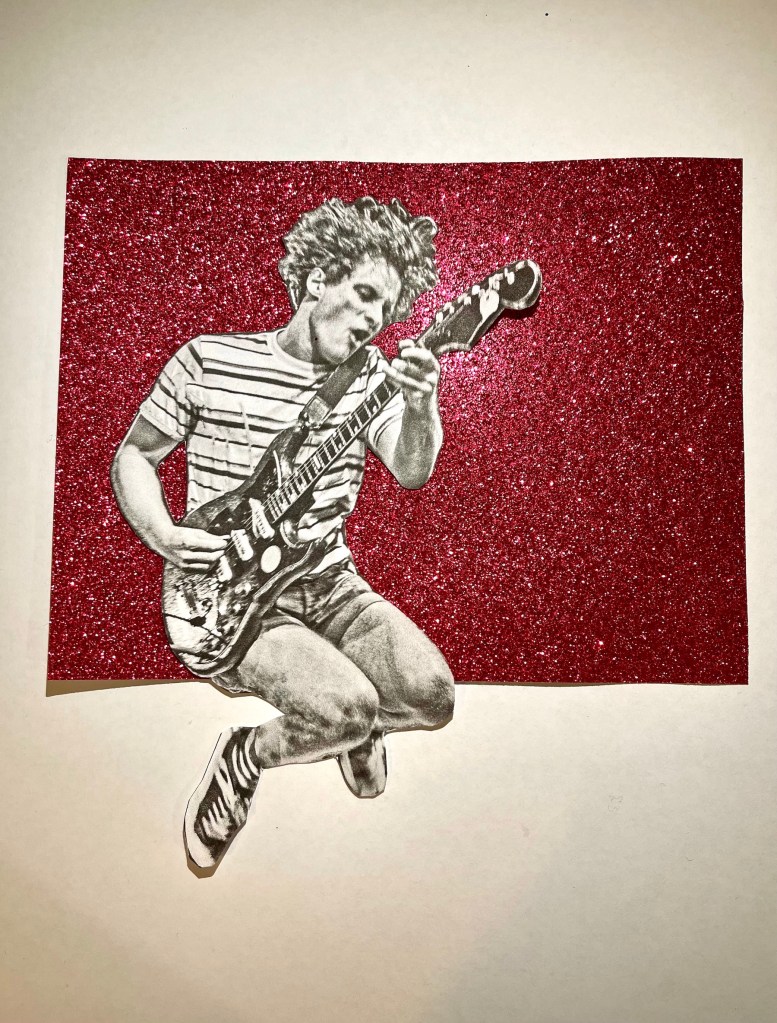
The Sonic Adventures of Owen Penglis 

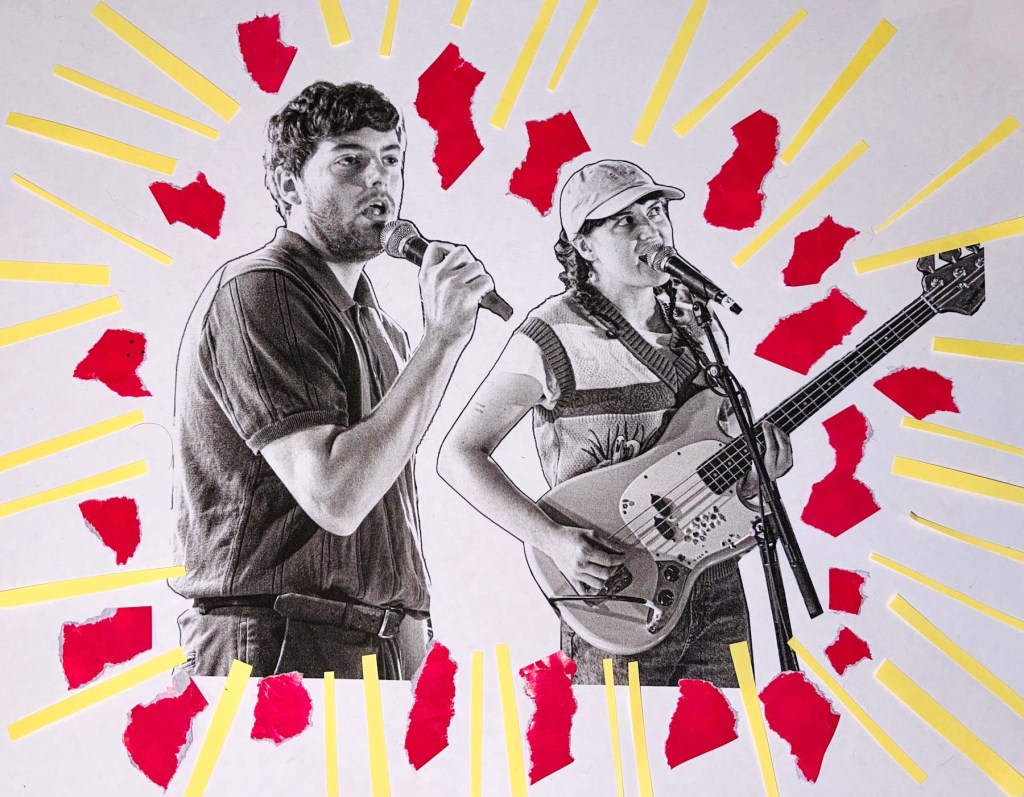
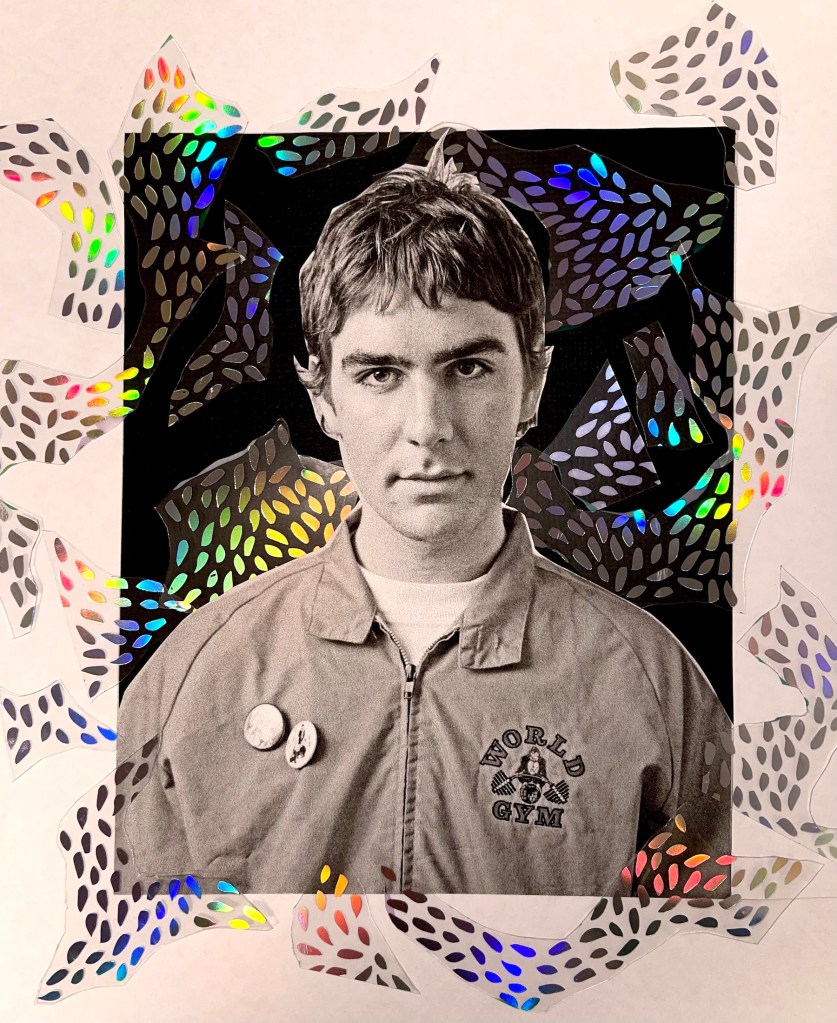
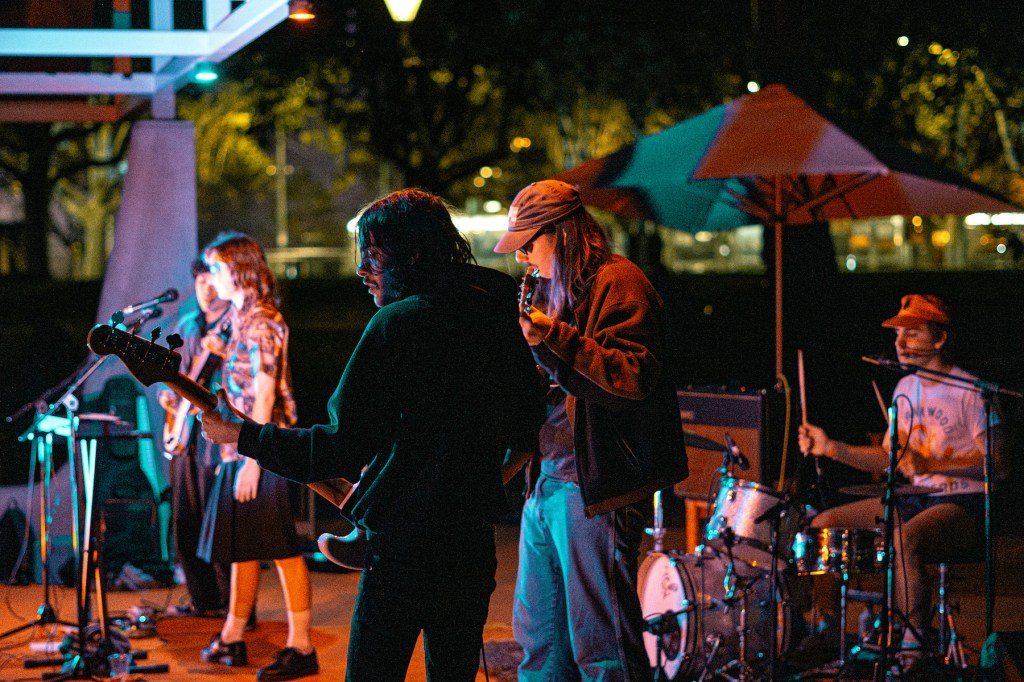
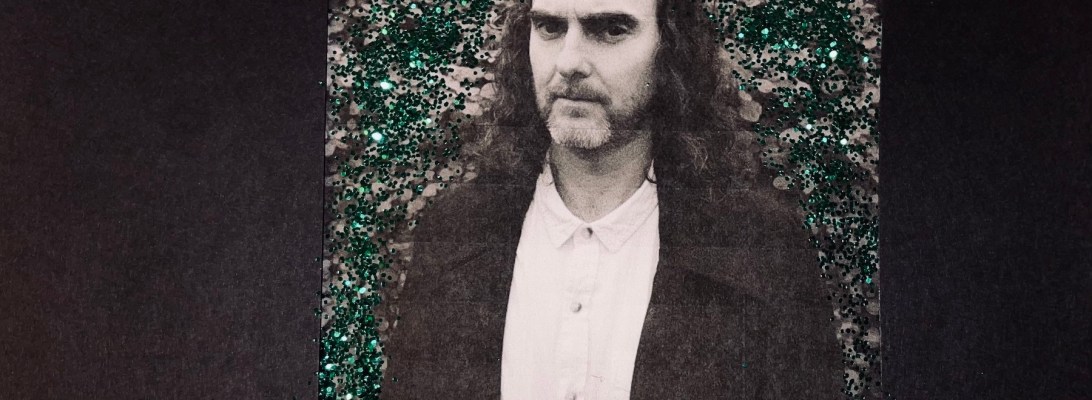
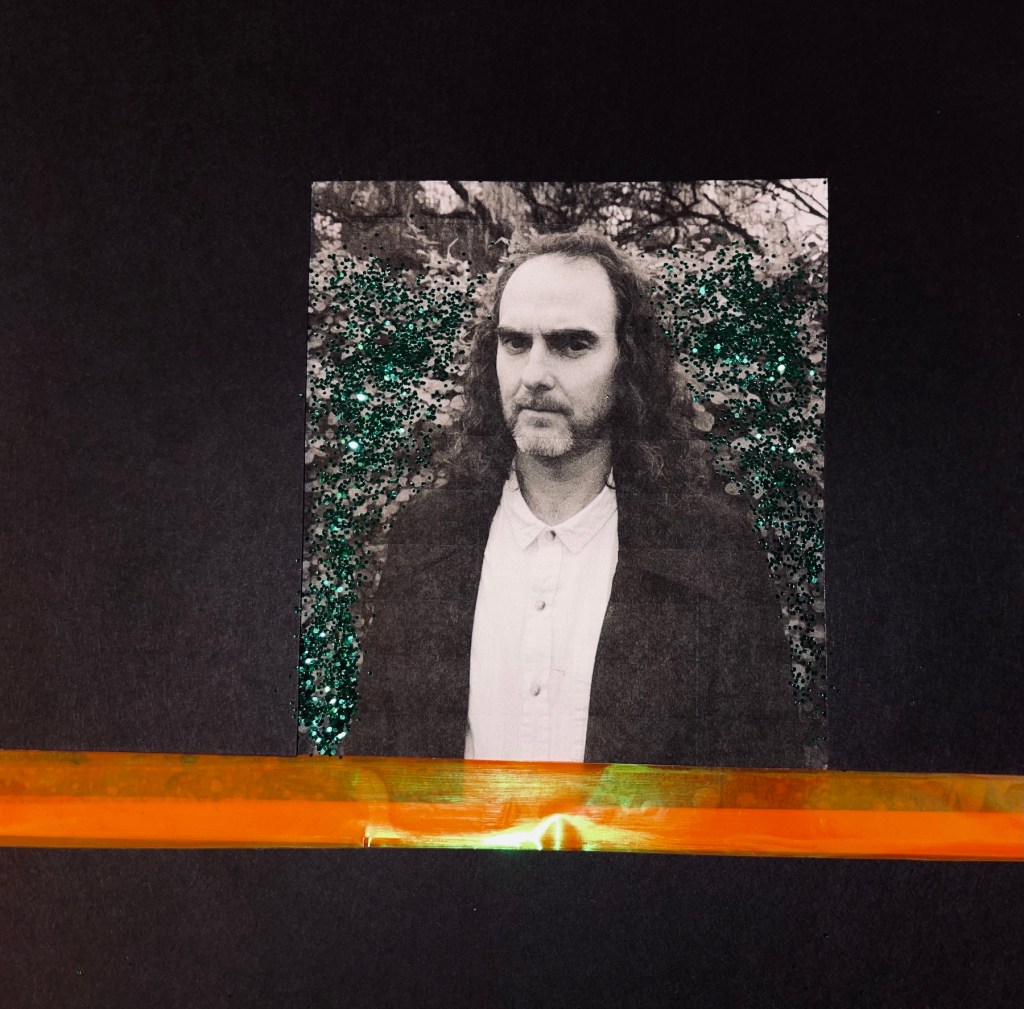
Original photo: Jhonny Russell. Handmade collage by B.

Seasoned musician and skilled producer Owen Penglis is a massive music fan and has carved a remarkable path for himself in the world of sound. Hailing from a musical family (his father played in legendary 60s Australian surf band, The Atlantics) Penglis immersed himself in digging for records at a quaint secondhand shop nestled in the Sydney suburbs, seeking the weird and wonderful. 

Penglis went on to be in many bands, starting out as a drummer before moving to guitar. He spent time exploring music at university but wasn’t vibing on it, and in a bold move, bid farewell to the classroom and became a Vespa mechanic. He eventually started one of the coolest Australian garage rock bands, Straight Arrows, in 2007. 

Music’s magnetic allure beckoned him to pursue his sonic dreams. Armed with a borrowed 4-track recorder, Penglis took on the role of a musical alchemist, teaching himself the art of recording through his own and friends’ musical endeavours. He started his own studio recording bands Circle Pit, The Frowning Clouds, Bloods, The Living Eyes, Mini Skirt, Display Homes and many more.

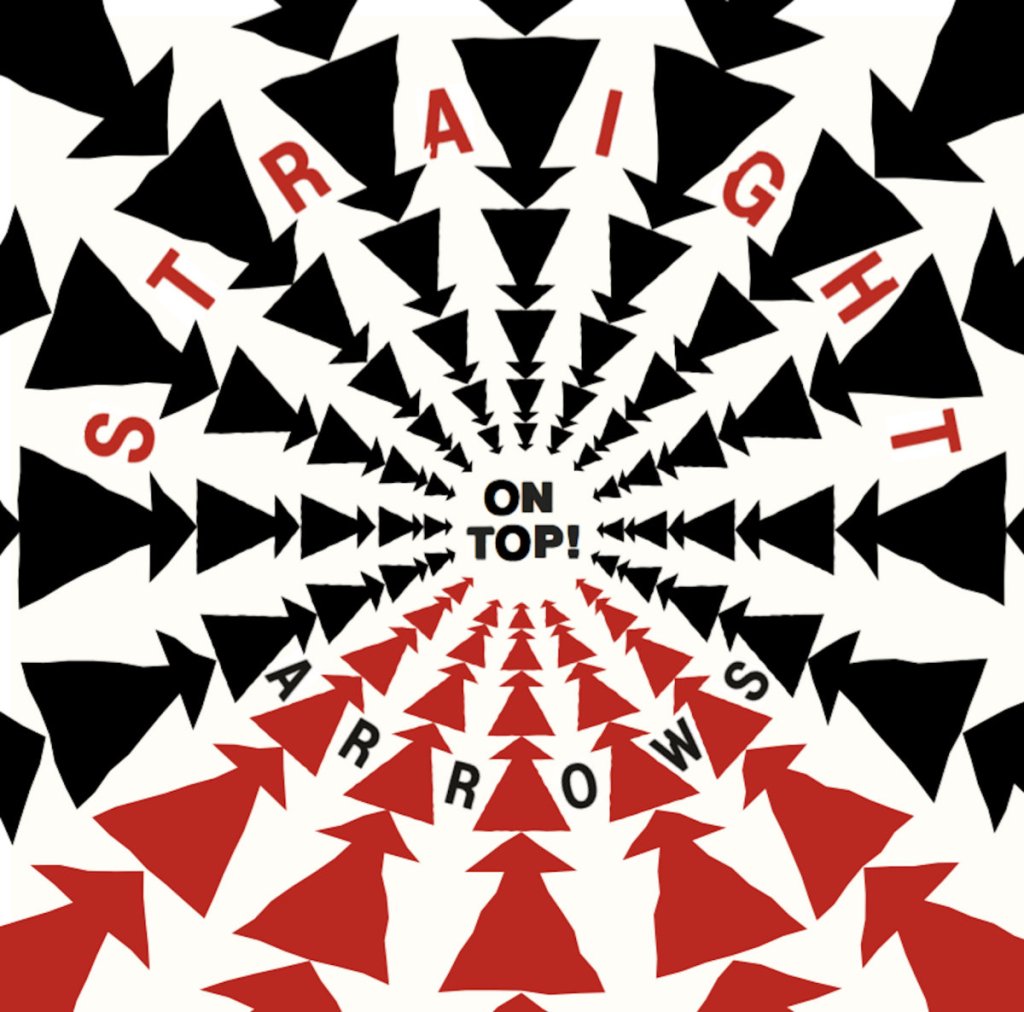
In our insightful conversation, Penglis unveils details about a new Straight Arrows album, and recording a new Mini Skirt record. Delving into his memories, he tells us stories of mentoring a teenage Ishka from Tee Vee Repairmann, and collaborating on intriguing ventures like a sitar project with Lawrence from Royal Headache. We talk touring with The Oh Sees and Eddy Current Suppression Ring. And we discover the depths of Penglis’ creativity, including the fun project where he donned a gorilla suit and sang a dance anthem that went out for an ARIA Award.

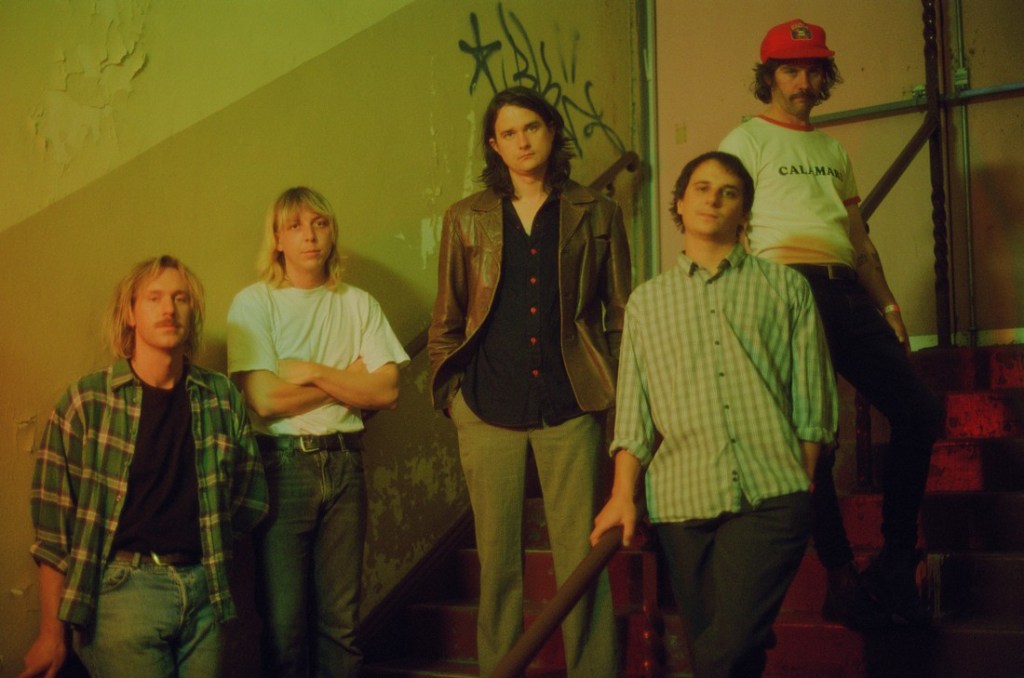
Gimmie chatted to Penglis in a shipping container converted into a backstage area at Miami Marketta on Yugambeh Country/Gold Coast before they played the Cargo Stage at the night market, opening for The Oh Sees.

You’re on tour right now with The Oh Sees!

OWNEN PENGLIS: Yeah. The highlight so far was probably when we went to Sunshine Coast yesterday, but the show was cancelled because of the venue shutdown. So we went anyway, we had a hotel up there. We went bowling. We got up today and went for a swim. And then we played mini golf.

Nice! Who won?

OP: Al won mini golf. Will won bowling. 

The first time you toured with The Oh Sees was with Eddy Current Suppression Ring in 2009. 

OP: That was really cool, and funny because the shows weren’t very well attended. Eddy Current didn’t really click with people until maybe, Rush to Relax. I mean people who were into that stuff knew about it, but it gained a wider audience, maybe up to that record, as they were kind of starting to wind down a bit. Us and The Oh Sees played in Wollongong, we played to 30 people. Then we did Newcastle with Eddy Current, too, and there were 80 people in a big room at the Cambridge. But Sydney was really good.

What a lineup! We love all the bands. 

OP: It was really cool. We’re very lucky just to randomly get on it because this band called Witch Hats, they pulled out, and I said, we’ll do it. They said, “Ok. Cool!” And then we made friends.

The Oh Sees, at the time were doing all the vocals through a Space Echo, a proper tape machine box one and that shit itself. And so I was like, take mine on the road and bring it back at the end. We became friendly and chatted a lot. And then the next time they came, we played with them again, and then next time after that. 

I understand that there was a conversation that you and John Dwyer had about potentially doing an Oh Sees/Straight Arrows split release?

OP: Yeah, we were doing the merch together in Newcastle and they’d just written this cool song called ‘I Was Denied’ that ended up being on album, Warm Slime. I think they had just started playing it. They played that song every night. I thought, this is mad. I was like, you’ve got a record label, do you want to do a 7 inch? And he’s like, “Let’s do a split 7 inch!” I was like, okay, cool. And then I just never really pulled my finger out and followed it up. Stupid mistake. 

You should remind John of the convo while on tour now, and finally do it! I’d buy that.

OP: I was like, hey, do you remember we were going to do a Split like, four years ago. He was like, “I don’t really do it anymore.” And I was like, I guess I learned my lesson.

Has there ever been other opportunities that you’ve had that didn’t eventuate? 

OP: I got one, but I can’t tell ya. I got asked to tour with a band. It’s not a big regret. 

How did you get into music?  

OP: I grew up in a musical house. My my old man played in a 60s band called, The Atlantics. An instrumental surf band with a hit song called ‘Bombora’. The Beatles hit, like, six months later and you had to have a vocalist, now certain music is not cool anymore. They got a vocalist who was an older dude who’s a bit of a rockabilly guy from the 50s who tried to do 60s rock and roll, it didn’t go well. They put out singles for years. They didn’t sell. But now some of them are really cool, and they’re really valuable. So I grew up with that. Although he hated that and wouldn’t talk about the band or anything. He just thought it was crap and old.
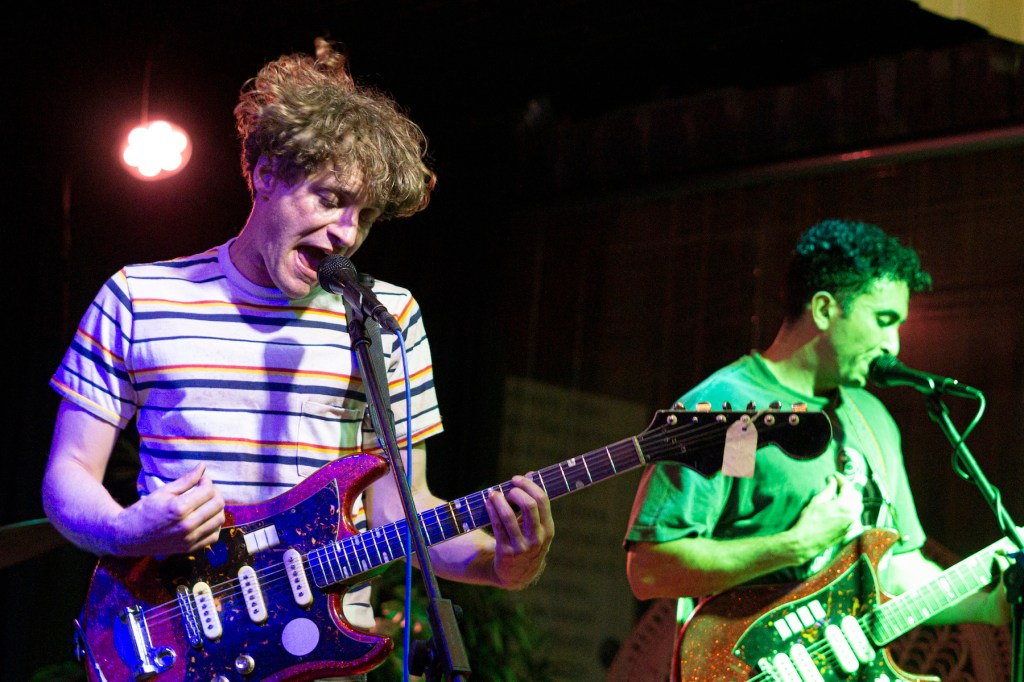
Photo: Jhonny Russell.

You initially started playing drums? 

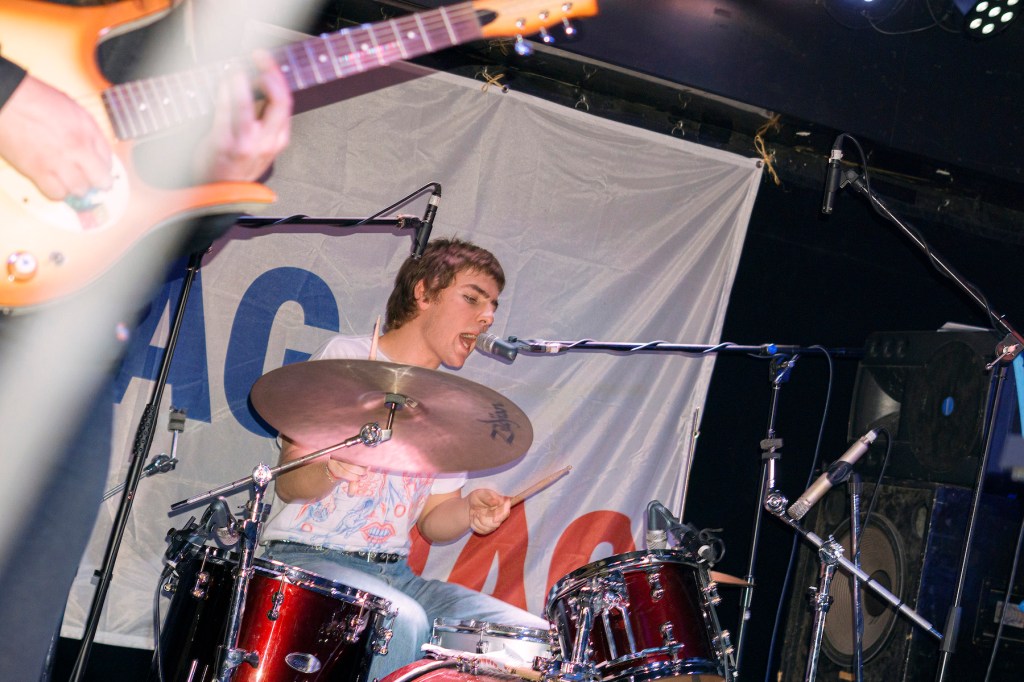
OP: Yeah, I started as a drummer, played in a few bands when I was a teenager. 

What kind of bands? 

OP: I played in a band that’s still going called The Holy Soul, when I was 17. I met them when I went to university in Penrith, West Sydney.

What were you studying at uni? 

OP: I was doing music. I hated it so much, I quit and became a mechanic.

Why a mechanic? 

OP: I got offered a job as an apprentice at a shop that fixed old Vespas and Libras. The guy there said, “Come work for me and stop delivering pizzas.”

During that time you were still making music, though? 

OP: Yeah, I was still making music, but when I was doing uni stuff… rather than a strict this-is-how-you-plug-in-a-microphone-thing, and this is how you get a drum sound, it was on the creative side, which is cool. But it was early digital equipment. I thought it all sounded crappy. I hated it. I hated the academic side of it and the people that it attracted. 

For you, is music more of a feeling kind of thing then? 

OP: I’d say so. Yeah. I’d much rather pick up a guitar then write it down. I couldn’t write it down [laughs]. Not very well. 

So I became a mechanic and then I borrowed a 4-track cassette deck off someone, and started again from scratch.

Teaching yourself? 

OP: Yes, teaching myself. I was a drummer and I thought no-one wants to see a drummer write songs [laughs], or sit behind a kit and sing.

I do. I love watching drummers sing. Ben from C.O.F.F.I.N, Nadine from The Prize, Buz from R.M.F.C.

OP: [Laughs] Maybe I should have stuck with that. 

Does being a drummer help you write songs? 

OP: Yeah, probably. I’m sure it does. Just thinking about a song rhythmically is something I do first and then it goes from there. 

Do your lyrics come after the music?

OP: It depends. Me and Al in the band always talk about it and are like, if you’re writing a song and your lyrics kind of come with the melody it’s really nice, but if you write cool sounding music and then write the lyrics after, it can be really difficult. It’s like trying to fill out a crossword with no questions on it. 

You have a new album that you’re going to put out? 

OP:Yeah.

We’ve heard six songs. They’re really awesome. Is there going to be more?

OP: Thanks. There’s heaps more. They’re the only ones I wasn’t embarrassed about [laughs]. 
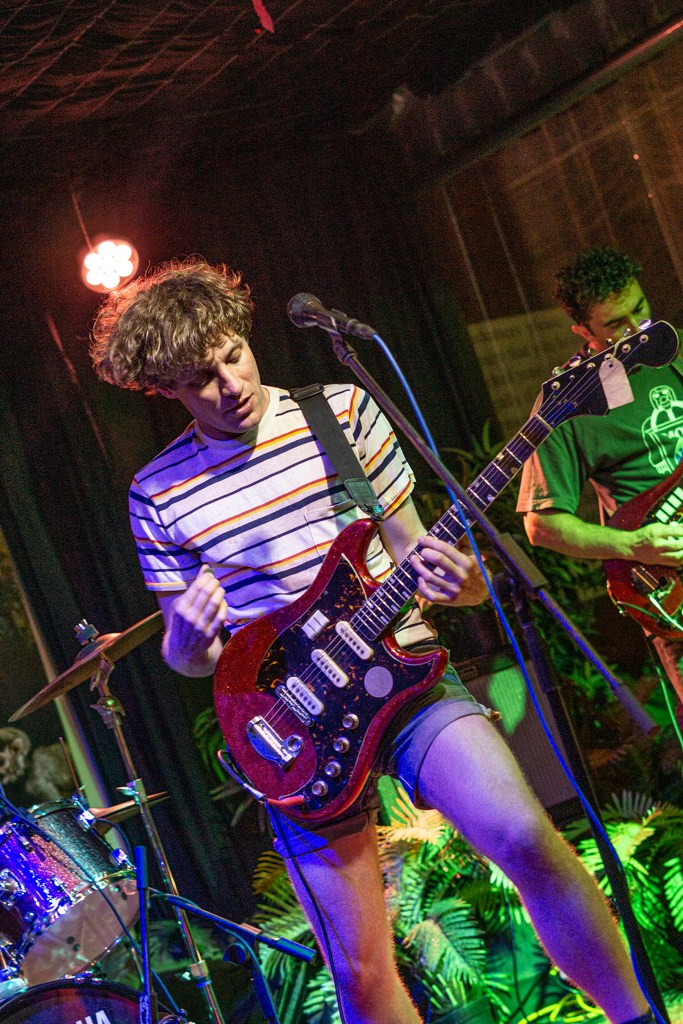
Photo: Jhonny Russell.

How long of a period were you writing over for the new record?

OP: During COVID so it all melts together. In Sydney it was all locked down. There was a while where we couldn’t go more than 5kms from your house. When they finally let you do that, I could go to my studio and I’d go in two or three days, sit down and write some music. If today is good, it’s good, and if it’s shit I had to do better. At the moment, there’s no work for me. I can’t mix anyone’s record because no one’s recording because no-one knew what was happening. 

Your studio is called Goliath?

OP: Yeah. So I actually had to move studios, at the start of January. I got a new one which is close to my house but haven’t got a name for it yet. It’s a five minute walk or I just get on my pushy and ride over. 

Do you know what the new album will be called? 

OP: I have no idea. 

When do you think it’ll come out? 

OP: I was supposed to finish it off in December but I moved studios, which pushed everything back. I’m hoping towards end of the year, maybe September/October. It kind of depends on the record plants because everything takes so long now. Major labels have discovered that they’ve got a physical piece that they can sell again. And it’s like maybe 60 bucks retail for them now, for a single record. People seem to think that’s normal. You get big artists, like Adele clogging up the plants. 

Yep. And Taylor Swift. All the Record Store Day things too. Reissues of everything.

OP: It’s all bullshit, likeTop Gun 2 soundtrack. Whatever. [Laughs] I need that on vinyl! It’s funny because they’re almost, like, keepsakes rather than playable things to a lot of people buying.

I remember reading that when you were younger you used to find bands, new music and you used to love getting records, looking at record covers and then choosing them that way.

OP: Totally. I was really lucky when I was a teenager, there was a secondary record store. I grew up in an outer suburb of Sydney called Asquith, which is like 45-50 minutes on the train from the city. The next suburb was Hornsby and there was one secondhand record shop and it was great and really cheap. They had a listening station. I’d go in all the time. They didn’t care if I just took a pile of records and sat there and listened to them all and maybe didn’t buy anything. It was that it was a great education. And then I had to figure out what I liked. All the dudes running it was, “There’s a $2 copy of this Pretty Things record. Think you might like it, listen to it, it’s cool.” I just dig through and find weird records with strange covers and be like, who is this? Sam The Sham. Cool. Chuck that on. Digging through boxes and seeing cool names. 
I do that. I also look for fun song titles. I especially like songs that mention dogs or space.

OP: [Laughs]. Space is always good.

[Shows the screen of his phone] This could maybe be the new album cover. A friend took this amazing photo of a building in Bundaberg. He still lives up there. His name is Brad and  he used to play the band Chinese Burns. Think he works for for the ABC taking photos.

Is recording other artists your full time job or do you do that on the side of something else?

OP: It’s my full time job, weirdly. I can finally feel confident saying that’s my full time job. 

You were just recording Mini Skirt?

OP: Yes, I was just up in Byron recording Mini Skirt, which was cool. They got a really nice studio up in the hills, in Coorabell. It used to be a studio in the 70s and maybe like Cold Chisel and that school of bands would use it. It went to disrepair and a very rich lady bought the land it’s on and restored the studio to how it was back then, including finding all the old equipment. Mini Skirt flew me up to work on the record.

Have you been working on anything else as well? 

OP: I’ve been doing a lot of mastering, which is nice to do. I mastered the Wiggles covers album, which is pretty funny [laughs]. That made my mum understand and respect what I do. I’ve been mastering all sorts of weird stuff, cool local bands and also country artists .All sorts of stuff comes through. 

Do you find that when you’re working on something and you might not totally be into it or what the artist is doing, do you find something in there that makes it okay and you can get through it? 

OP: Oh, yeah. Mastering I try to be kind of totally objective. It’s a technical thing. There’s joy in any of it. I’m fairly uncontactable, I don’t advertise or try and actively get something, I’m lucky enough tI don’t have to actively try and push to get work from bands. People come to me, and I’m able to leave it like that. If people have made the effort to find me, then they probably know what I’m doing. And we’re probably going to understand each other. I’ve had a couple of weird ones [laughs]. 

I get that. I was speaking with Ishka from Tee Vee Repairmann recently, and he was saying he likes likes recording, but he doesn’t want to advertise either.

OP: Ishka was my intern. 

I know. He told me you were the one who got him into Back to the Grave and all these cool compilations.

OP: That’s cool. When he was in high school, year 11 or 12 he came and worked with me for his work experience, I was recording that band The Grates. They came in for a couple of weeks, so come in and hang out. He’d come in and everybody loved him. He was a quiet, tall kid that wanted to learn lots. Ishka is such a lovely guy. We played New Year’s eve the one before last and Al was away and I caught up with Ishka and asked if he’d like to play guitar for a show. He said, “Yeah, cool, ok.” He came to one practise and learnt everything really fast. He was so good at it I had to ask him, can you play it a bit bit shittier [laughs]. I told him he had to make it bad.  

We love Ishka, he’s the best, one of the nicest people we know. With, like, the new album did you have an idea of what you wanted it to sound like?

OP: I’m so caught up in listening to shit all the time that I’ll hear record be like, yeah, I love that I should record something like that, and then the week it’s something else. Each song is probably like a weird snapshot of what I was loving that day or week.

Is there a song on the album that’s significant for you? 

OP: There’s some darker stuff in there, but I don’t want to talk about it.

Not a problem. I guess that’s why we write songs sometimes. We can communicate things that are sometimes hard to talk about and it can also help us process what we’re going through.

OP: Oh, totally. I mean, that’s what it’s all about, right? Getting up and yelling on stage.

Yeah, it’s a release. It can also just be total fun and bring immense joy.

OP: It’s so great to do this stuff. I’m so thankful that I get to travel with some ofmy best friends and see some great friends from overseas. 
Are you working on anything else musically besides Straight Arrows? 

OP: Not really at the moment. I went through a weird patch in, maybe, 2015 or something. I did a bunch of weird records. I did a sitar record. I lived with a guy Lawrence who played that band Royal Headache. We hanging out and I found a sitar on the side of the road that had a hole in it. I fixed it. We were just hanging out and with it, Royal Headache’s High had just come out, and I was listening to these great double 60s records. There was like a band playing a track but with sitar as the vocals. I was like, let’s do that with Royal Headache. We started this dumb band called The Royal Sitars. We put out a 7 inch and played few shows. Then Royal Headache got quite busy. He was off doing festival, running around, and that was the end of that. But there’s a Sitar record out with me and him [laughs].

There’s another one I did around the same time which is called. The Green Bananas, which was like me dressed as a gorilla singing a song about a dance song called ‘Do Ape’. 

Amazing!

OP: [Laughs] And that ended up getting picked up by the ABC and it was a 7 inch. The guy from the ABC called up, he said, “Don’t be offended, but would you consider making a kids release?”

You did it, right?

OP: Yeah. I ended up doing an EP. The main reason we did the EP was, “Okay, so the ARIA Awards are coming up and we get to submit like three albums or mini-albums to the nominations in the children’s section. And we have some space. So if you can write and record this in two weeks, we can try and nominate it for an ARIA Award.” I sat down and did it, and then I think the Wiggles put out two albums and I got left behind [laughs].

And now you’re working with The Wiggles! A full circle moment. 

OP: [Laughs]. 

What kind of things are you enjoying music-wise lately? 

OP:I spend so much time digging through the past. My other job is DJing, I do that heaps. Touring doing that is much easy than touring a band. I really like The West Coast Pop Art Experimental Band, their records are amazing. Their story is really strange. A rich older guy was an orphan who was adopted by an oil baron, he decided that he wanted to start a popular rock group and recruited these 18 year olds to start a band with him. He paid for everything. The recordings, the light show. He got them on Reprise, Frank Sinatra’s label. He had them touring around America and kind of slowly started to appear more on stage, playing tambourine and singing. I love the records. 

Is there anything musically you haven’t done yet that you’d like to? 

OP: I just sit down and play and see what comes out. I guess Straight Arrows is within some sort of confines but I can kind of put out almost anything that’s guitar-related in that band. The new single ‘Fast Product’ we just did, I feel like it’s a weirder one for us. It’s almost like egg punk. 

Was there anything you were listening to then when you made it to influence that sound?

OP: The newer wave of egg stuff, I suppose. Like Coneheads. Uranium Club. Even R.M.F.C., those guys are awesome! 

Find Straight Arrows here:
straightarrows.bandcamp.com/music

instagram.com/straightarrows/

facebook.com/straightarrows

Dragnet’s Accession: “Everything we’ve got is on the album, nothing left up our sleeves.”

Original Photo by Jhonny / Handmade collage by B.

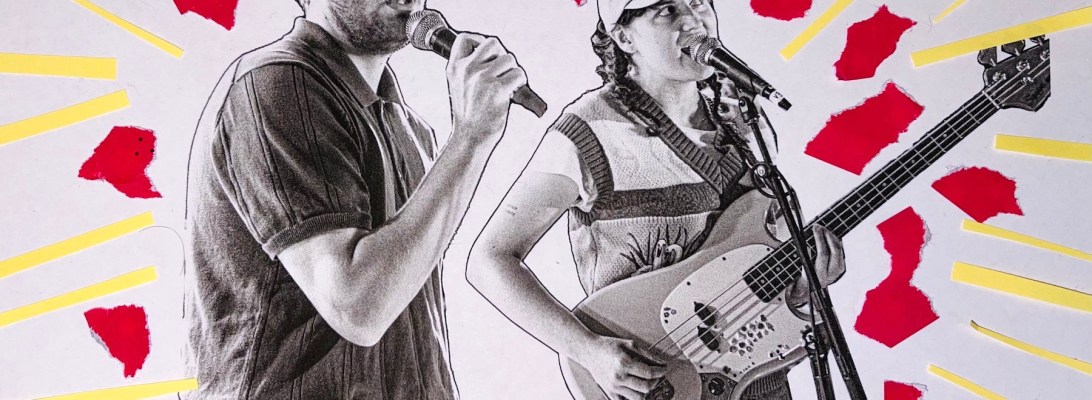
Dragnet’s new album The Accession has humour, technique and style, rolling out songs about Tony Hawk’s Pro Skater, horse tranquilliser, arrogance, and feelings. Lyrical one-liners pull punches with impeccable timing; the songwriting their sharpest to date. Gimmie spoke to vocalist Jack Cherry and bassist-vocalist Meaghan Weiley about their record.

What’s life been like lately?

MEAGHAN WEILEY: it hasn’t been too bad. I started a new job at the ASU which has been super fun. I feel like everything is so busy at the moment, so I’m trying not to be busy [laughs].

JACK CHERRY: I feel like I’m at the stage now where both Dragnet and Vintage Crop are both ramping up to do stuff this year. I feel like I’m in the eye of the tornado at the moment, where I feel like I’m not busy, but I know in three weeks time I’m going to be so busy. It’s exciting though, I guess that’s kind of why you do it. I can’t complain too much.

We know a little about your background from our previous chats, Jack; Meaghan how did you come to be in Dragnet?

MW: I met Jack through going to Vintage Crop shows. Vintage Crop were the first band I found through listening to all the stuff on Anti Fade. I found them through going to see shows at The Tote… actually I think the first show was at The Old Bar. I thought the show was so sick. That’s how we connected and met. 

A couple of years later, Jack said, ‘I’m doing this new project do you want to play bass in it?’ I was like, ‘Cool. I don’t play bass but I’ll do it’ [laughs]. It sounded super exciting, it’s always exciting to play music with new people or people you never really get to hang out with heaps. 

Had you played music before?

MW: I had. I did music in school. For my HSC I played piano but I hadn’t really picked up a guitar or any of that kind of stuff. I had done a band called, House Deposit, which was the only time I had picked up a guitar. We put out an album, but it wasn’t very frequent.

Jack, you’ve previously told me that making your last Dragnet album All Rise For Dragnet was about immediacy and not having to go through the kind  of creative process you do with Vintage Crop; has the way you make songs changed since then? I feel like everyone contributes on new album, The Accession.

JC: Yeah, it couldn’t be more different from what I said back then. We recorded this album in November 2021 and it’s coming out now. It’s been the slowest process I’ve had with any album. I really have to eat those words because it’s not immediate. It’s probably better this way though, to be honest, because we had time to work on it and think about it. If we did it the way we did the last one then it probably would have been the same as the last one. This one feels like it’s growth. Everyone contributes. Maybe this album is more about me letting go of a lot of that control-freak-ness. But, I haven’t let go at all; the idea is nice [laughs].

I don’t think it was on purpose for it to sound different. It was recorded to tape this time and we did it all with less of a rush, even though it was done in a full day. 

It was recorded live, right? You mention that on the first song.

JC [Laughs] Yeah. It was recoded live and we didn’t use any tricks. What you hear is just us, what you’d hear at a show, but it’s on your stereo instead. 

It reminds me of hip-hop albums I love to listen to, it has a braggadocios-ness.

JC: I’m so glad you said that because that’s it, 100% it is. That’s perfect. 

We really love the song ‘Lighten the Load’ that you sing on Meaghan!

MW: I actually didn’t write that song. As fas as I know it’s an old Vintage Crop song that didn’t work for Vintage Crop. Jack was like, ‘I have this song, you should sing on it.’ It’s cool because our voices work really well together. That one was fun, I got to yell into a microphone for one take. I really enjoyed doing that. One take and it was good enough. 

I love the opening lyric: I want talk about my feelings. 

MW: It’s funny because… maybe Jack chose that song for me because a lot of the stuff that I had written prior for House Deposit is quite honest and talking about feeling.

JC: Just to go back a little bit, that song was never a Vintage Crop song. It was always a Dragnet song.

MW: You pranked me?!

JC: Did I tell you it was a Crop song? Because it never was.

MW: Maybe Luke or Tyler told me, they knew that song.

JC: I did a big batch of demos before we started  writing that album and I had shown the guys all of the songs but they were never meant for them. I wrote the lyrics thinking of me but then it felt like something Meaghan would sing anyway. I thought it was a good chance to share the song and to literally “lighten the load”. It seemed perfect. 

Let’s talk about the song on the new record. Let’s start with ‘M-99’.

JC: I wrote that one in a night, it just happened at the computer. I was like, ‘This is exactly the song and how it will go. It just rips as a band. I don’t know how it happens that way sometimes but it was one of those rare easy songs that came together. Lyrically, it’s about a TV show, Dexter. He uses M-99 horse tranquilliser to subdue his victims, and that’s literally the whole song.

MW: The first time  we did it at practice we were like, ‘Whoa, this is sick!’ We were loving it. It’s so fun to play, its really awesome. 

When we saw Dragnet at Jerkfest last year it was one of our favourite sets of the day. 

JC: Thank you. Awesome! That’s so great to hear. 

MW: That’s so cool.

JC: Playing early in the day felt fun in that there’s no expectations, we can just go out there and try and have some fun and it didn’t matter if people didn’t enjoy it or we played sloppy. I find that with performing there’s a line where you want to be exciting and unpredictable but you also want to play well, I’m exploring that a lot more now. 

Being just the frontman I din’t have to worry about technical proficiency. I’m still learning the best way to let loose but also still maintain that image of the band. I’m not the sort of frontman that is going to crawl on my knees or do backflips. I’m trying to find the right storage moves. Jerkfest was great for that because we had an audience but it was low expectations.

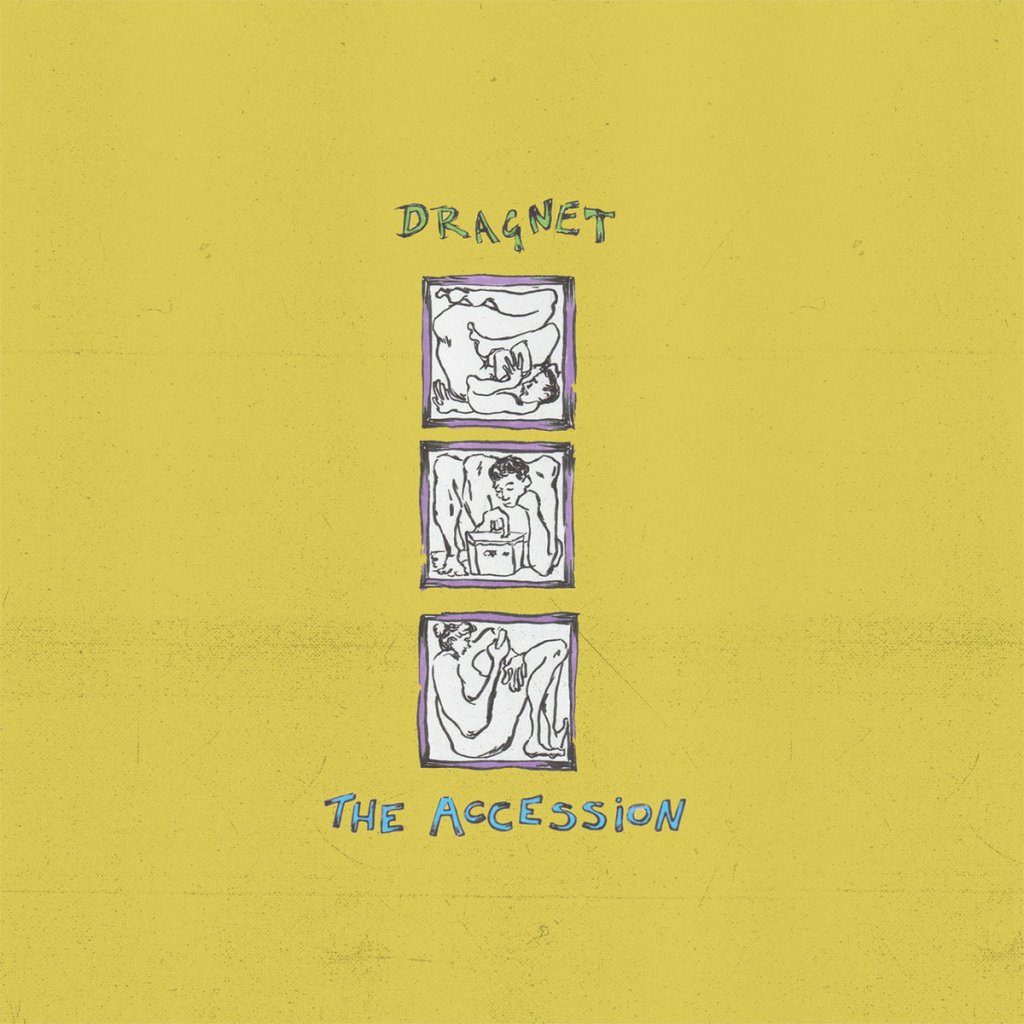
Artwork by Rowena Lloyd 

What about the song ‘Strike’? There’s a video clip for it. 

JC: We put it together at a practice in Geelong years ago. 

MW: Dragnet has gone through a million different practice spaces for some reason. I think we were in an industrial warehouse in Werribee. Some dude had built a studio there. I remember Jack had the bass line for it and we just played it over and over again. Everyone figured out the right stuff for it. 

JC: It had to of been the end of 2019, a long time ago.

MW: Really early Dragnet. 

JC: I have a voice recording of it on my phone. I reckon we revisited it two years later. Everyone reconstructed their parts from a poorly recorded phone recording. I remember Dane playing around trying to find this riff because he had forgotten it. 

What do you remember from making the video for it?

JC: The whole thing was orchestra by Sam and James. Sam runs Spoilsport Records, he lives with James, who does a lot of our art stuff. Sam had told us he wanted to do a clip of the song and that he and James were going to step out into the video world and make stuff. They said, ‘Let’s do a green screen video.’ They found the other footage. We turned up on the day and played the song twice to a backing track and the rest was all them. We didn’t get a draft of it until two days before it came out and then it was out in the world. Our side of it was really easy, I codlin’t imagine there side was. 

MW: I remember that it was really, really hot that day. It was in a converted office space that used to maybe be a dance studio, the walls were lined with mirrors. We also went to the pub afterwards and there was a party at the pub.

What can you tell us about song ‘Birdman’?

MW: That’s a Dane specialty.

JC: [Laughs]. That’s Dane start to finish – he wrote the music and words. We all just try and do it justice. 

MW: It’s about Tony Hawk’s Pro Skater. Dane likes to write a lot of songs about gaming. That game is so fun.

JC: Yeah, he insisted that we have those audio grabs for the Tony Hawk game in the song.  That breakdown bit, he had already made a 30 second clip with noises from the game that he said we had to use. I respect the vision, it’s great. 

MW: I hope we don’t get sued [laughs].

That could be good press for you, with a headline like: Tony Hawk sues Naarm band Dragnet.

MW & JC: [Laughter]. 

The ‘Interlude’ track is fun!

JC: [Laughs] Yeah. That grew out of, when we first started I was really into it… I had a prerecorded intro which is the first song on the first album ‘All Rise For Dragnet’ and we’d play it over the speakers while we’re on stage going about our business, but there’s a backing track on. It’s like part of the show but it’s not really. It’s almost like a kind of performance art. We used to have an interlude intermission in the live show. We’d press a button on the sample pad and play a 30 second break and we’d all stand around and tune our guitars while the song played. It kind of confused everyone, which I love. I thought it would be even funnier to do an interlude on the album, purely for my own enjoyment. I think the band think it’s funny too…

MW: Yeah I think it’s funny.

JC: The motto of the band is: funny but not a joke. That’s something that we walk the line of really well. That track is funny but it also serves a purpose of being the end of the A-side and and preps you to come into the B-side. I think that’s our brand. 

MW: Sometimes I don’t know if it’s a joke or not as well [laughs]. We get so carried away sometimes. People think we’re a funny joke band, and I’m like, ‘Is it?’ 

JC: That’s the thing, I remember seeing Sam the mixes of the record to see if he wanted to release it. He wrote back: this is so funny. I had to clarify that it’s not meant to be a joke. There’s funny parts but the whole thing is serious. 

MW: I think it’s important not to take that stuff seriously. It’s so easy to get caught up in it all—even just in life as well. 

Side-B kicks off with ‘Purple Agitator’…

JC: That’s the other one on the album that was made in 2019. It just came out. It still feels like a bit of a weird song for us. When we play it, I’m not quite sure if it suits the band or not. It’s probably one of the most different songs I’ve written. It doesn’t sound like something I’d write. I’m excited for the album to be out, people might enjoy hearings omitting different from us. The three Dragnet singles have all been angular and punky. ‘Purple Agitator’ is more subdued. 

It’s one of my favourites on the album. I think it does fit. When I listen to Dragnet I expect the unexpected, so in that spirit it fits.

JC: I guess that’s fair. 

Next up is ‘Maths Test’.

JC: That’s Dane as well, he wrote the music and pretty much the lyrics; I jumbled a few tings when we recorded. That one is not about a video game. It’s self-explanatory lyrically. I don’t know if he was exploring anything too metaphorical with that one. It’s just like, no one likes maths. 

MW: [Laughs]. We always struggled learning that one. I love the way Dane writes a song because they’re a little bit complicated. It’s always a fun challenge learning his songs. 

JC: Dane’s riffs are a nice compliment to the rest of the songs because his influences are a little bit different. We recorded with Billy from Anti Fade, when we did that one as we were recording he asked, ‘Is that one of Dane’s?’He knew just by the riff. That’s a good thing. 

‘Sabor Attacks’?

JC: That’s Dane again.

MW: It’s so fun to play, it’s so fast.

JC: He demoed a whole album with songs about the Nintendo 64 game Tarzan. He had 12 songs that were all title after levels in the game. Sabor Attacks is one of the levels. He had the music but nit the lyrics, so I did a deep dive and found a bunch of terms and words for the game. It’s a real time strategy game, it’s in the same format as a scrolling screen. It’s like describing the game, the mechanics of the game, but not what the game is about, which was an artistic choice. 

MW: It’s really cool. I used to play that game, and actually still have it on PlayStation. When I heard the lyrics Jack write it really describes the way you feel when you play that level. It’s so frustrating and annoying, and because the song is fast and agitated in a sense, it really compliments it.   

How about ‘Faces Around’?

JC: It was one of the earlier ones that I had for the album. I can’t remember the lyrics right now, but I know the “faces around” bit was in my head one day when I was at work and I thought it’d be a good name for a song. It was after my grandmother died and I just kept thinking I was seeing her. It was interesting. She lived in Tasmania and I never saw her very much to begin with. I don’t know why I think I’d see her face. The song isn’t about my grandma though, just that idea. We did the funny thing where the guitars go back and forth and Dragn-ified it. It was probably the most challenging bass riff I’ve written. 

MW: It’s a lot of down strokes for me. I remember always thinking when we play it, how am I going to do this for 3 minutes [laughs]. I don’t know how to play bass! We got it in the end! Jack, you actually sing one of my favourite Dragnet lyrics on that song: I don’t talk about the internet / I don’t have it at my house. Every time I hear it I try not to laugh because I think it’s so funny. 

JC: [Laughs]. My favourite is on the HMAS Wanker in the middle of the…

MW: [Laughs]. That’s so good!

JC: The lyrics are all from different things. I think not’s good having songs that don’t have to be stories, it can just be words. That probably fits with our don’t take yourself to seriously thing. If something sounds good, it sounds good and you don’t have to worry about it too much. 

The last track on the album, when I first heard it, it was labeled ‘New Idea’ but now it’s called ‘Swell Head’…

JC: Originally I wanted to call the album Swell Head. When that feel by the wayside I took it and used it for the song. I was listening to an episode of Hamish and Andy from 2008 or 2009 and they were interviewing Robbie Williams. Robbie said that when he was in high school everyone used to call him “Swell Head” as he was really arrogant. I liked that name for someone that’s arrogant. At the time I felt like I was a Swell Head for a little while. I felt like I was taking Vintage Crop more seriously and that I was being perceived a little arrogant or too self-assured or something and that album name felt like a good way to acknowledge that and make fun of it. It was a great way to poke fun at myself. 75% of my material comes from…

MW: Hamish and Andy! [laughs].

JC: [Laughs]. From quotes from people, movie lines or stuff out of books. Things that make me laugh. Things that are interesting. It’s like it flips and switch and I have all the lines that go with it; I can write a song in half an hour because something just hits in the right spot.  

Why were you feeling like a Swell Head at the time you wrote it?

JC: I was at a point where Vintage Crop had just done our first European tour, we were also about to put out a new album. I was wrapped up in the band and taking it seriously. It felt like I might be coming off that way. An inflated sense of self for a while. I was very conscious that, that kind of thing is very visible to people. I wanted to say, I know, I get it, but I can’t help it.’

Tell us about recording with Billy Gardner.

MW: It was really cool. It’s always fun recording with someone you never have before, you get to see how they do everything. His approach was great because I feel Dragnet, for example, will start writing a new song and we’ll be like, how does everyone feel about that? We’d ask Billy and he’d be like, ‘Yeah.’ It was really easy.

JC: I’ve done a few things with Bill before. This one felt like home for me. Billy’s way is very hands off, he presses record and lets you do your thing, and then he gets out a book and reads while you’re playing. It’s nice because you feel like you’re not under the microscope. Because Billy is a friend, no one feels nervous or embarrassed. It’s cruisy. There’s not a whole lot of judgement, which is nice.

You mentioned the album was almost called Swell Head but it ended up titled The Accession; where’d that come from?

JC: When you sit with a name too long it can get stale, same with any idea. We were kind of directionless for a long time, we talked about names and artwork for ages. It took a long time for stuff to fall into place. When it did, the original name no longer fit. We found the right name. 

I think I messaged you at midnight one night, Meaghan, to say The Accession would be the album name. 

MW: I remember getting the text and being like—that’s it! It ties in well with All Rise For Dragnet

Rowena Lloyd did the album art?

JC: Her doing the artwork really lit a fire under everything, she couldn’t finish the art until we had the name. I kept putting it off. 

Anything else to share with us about the album?

MW: If you play the first album back to back with the send one the last song ‘Dragnet I’ goes into ‘Dragnet II’.

JC: Strangely, that was the most important thing coming into the process—the second need to start where the last one ended. That was the only rule we had. We left it open enough that we can continue it on the third one, if we want. We don’t have to though. We’d play ‘Dragnet I’ at the end of our live shows, cut it and walk offstage. It felt nice to resolve that, even just for ourselves. Everything we’ve got is on the album, nothing left up our sleeves. 

Dragnet’s The Accession is out now via Spoilsport Records or in Europe through Polaks Records. Follow @allrisefordragnet and @spoilsportrecords and @polaksrecords.

The Murlocs’ Ambrose Kenny-Smith on new album, Rapscallion: “I was having a lot of fun reminiscing about growing up skateboarding”

Original photo: Izzie Austin. Handmade mixed-media collage by B.

The Murlocs’ upcoming new album Rapscallion sees them forging into new territory with a playful mix of drama and effervescence as they give us a loosely conceptual coming-of-age story of searching, love, loss, independence and belonging. There’s effortlessly catchy garage-rock groovers that we’ve come to love from The Murlocs, along with detours into chaotic heavy moments and unabashedly cool drifts into fruitful synth work that will pleasantly surprise listeners. Rapscallion has shown the band humbly continue to hone their songwriting craft, the writing even more precise and confident than previous outings. It’s an exciting and inspiring album. Gimmie chatted with The Murlocs’ Ambrose Kenny-Smith about the record. 

What’s life been like lately for you?

AMBROSE: I’m good . I’ve been home for two weeks. We had that tour in Europe cancelled. I went to Budapest and hung out with friends for a week and then came home back to the winter. Budapest is pretty fun, I found a couple of cool dive bars, went to some baths and went skateboarding. It was good to decompress after the shattering news of tour being cancelled. It was nice to avoid the Melbourne winter for longer. It’s been really cold, I guess I’ve just been acclimatised to the Europe summer for so long now [laughs].

Last we chatted, was for your album Bittersweet Demons and at the time I thought that was my favourite Murlocs record, but now I’ve heard your new record, Rapscallion, and it’s become my favourite Murlocs album. Congratulations! It’s an incredible album! I feel it’s stretched you guys into new territory; what do you think?

A: Sick, thank you. For sure it’s stretched us, it’s probably the heaviest thing we’ve done so far. I’m so proud of it. It’s been the easiest to talk about in interviews too, cos I actually have enough to talk about for once, rather than cringing thinking about my anxieties and shit. It’s nice to have something more conceptual that has a storyline. The music side of things has all come from our guitarist, Callum Shortal. It’s been the most seamless record we’ve had. 

Do you find it easier when someone else does the music and you just have to worry about arranging, adding things and the lyrics?

A: Yeah, but I’ve never had to do too much, over the years it’s gotten less and less. For the first time, I didn’t have to arrange or do anything, he’s just nailed it. He knows how our songs work. He knows when I’m supposed to sing and all of this, that and the other. For a while there, he would send me one-minute demos and had not really finished them off, but waited ’til we got together in a room and we’d piece it together. Because we were in the first lockdown here in Melbourne, he took it all on, did it himself and would send me tunes frequently. 

We finished Bittersweet Demons and that was 70% my songs written on piano. Cook [Craig] gave songs. Tim [Karmouche] contributed two songs and[Matt]  Blachy contributed. At the end, it was more half and half with the other guys song-wise. I wanted to try and step back and contribute more to King Gizzard, so I encouraged the guys to write. I told them I wanted to go back to focusing on lyrics. Callum had one song on that album, it was cut from Manic Candid Episode the album before. All of a sudden he got into a rhythm and was on a roll and would send me songs once a week or so. Before we knew it we had the whole record. We only cut one.

He’d quickly send stuff to me while I was working on Gizzard stuff, and I could sequence the album musically and write the storyline. I got the flow of the music and then it was like, cool, now I can conceptualise what this is going to be. I wrote lyrics as I went. The songs came in pretty much in order they ended up. It was a good flow. 

I read that the concept was inspired by Corman McCarthy’s book Blood Meridian. Where you reading that at the time?

A: Yeah. It was one of the first books that I had actually finished in the last couple of years. I connected with it, started riffing off it and channelling past experiences from my youth. It’s a lot more of a light-hearted version. 

In that book the main character is a teenager called “The Kid” and the story is of his adventures, He’s kind of an anti-hero.

A: Yeah, totally. Ours is a similar concept, but not as gruesome as the book. It’s that coming-of-age, outcast, ugly duckling-figure that runs away from home story. He has an attitude of, fuck trying to find his feet. As the album goes along, each song is a step by step progression into him going through all of these life changing experiences.

I enjoyed listening to it unfold. The book you were inspired by is a Western novel and I noticed easter egg references throughout the album, lyrically and musically. In the first song ‘Subsidiary’ there’s the lyrics: I’m leaving this one horse town.

A: There’s a bit of an urban cowboy vibe! [laughs]. 

The second song ‘Bellarine Ballerina’ sees the character hitchhiking and crossing paths with truckers and transient folk. I love fiction narratives (in my day job I work as a book editor), I really got into the story you were telling. There’s so many cool lines on the album. There was one in song ‘Bobbing And Weaving’: Last train departing on the platform for the unloved. 

A: [Laughs]. Yeah. I’m glad you like that one. There’s a lot of sombre people getting the train sometimes. That song is about him dodging ticket inspectors and trying to find the ropes of living independently. 

I got a sense as well, that the character has always been a fighter.

A: Yeah, it’s totally about that, and about trying to find a second family, a group he can connect with. While I was writing it, I was having a lot of fun reminiscing about growing up skateboarding. I thought about all the friendships that I’ve gained from those experiences, travelling interstate or just being around the city and sleeping on whoever’s couch that I made friends with that day. It was derivative of that stuff, real experiences, but taken to a more extreme level. There were definitely people that I grew up with who had similar upbringings, and skateboarding was acceptance for us, any shape or form was welcomed. 

Photo: Izzie Austin.

As the story unfolds I found that there’s elements and a sense of danger, transience and free-wheeling, which is all stuff that ties in with being young and skateboarding; being nomadic, being spontaneous. I think all of that translated well and can be felt on the album.

A: Great!  It was a good coping mechanism to escape when I was locked down and couldn’t go anywhere. I couldn’t write diary entires or personal experience at the time because there wasn’t really much going on. It was nice to reminisce. 

Another line I loved was from ‘Compos Mentis’: Chubby rain soaking heavy like cinder blocks. That’s such strong imagery. 

A: Sweet. It’s self-explanatory, especially when you’ve got some real soggy socks [laughs]. 

[Laughter]. Each song is like a scene in a novel or film.

A: That was the name of the game.

In ‘Compos Mentis’ the character seems to be reflecting on his life.

A: Reflecting and trying to navigate what route he’s going to take next. He’s taking things day-by-day. That was my thought process for a lot of my life until all of a sudden, now I’m thirty. It’s all about taking things as it comes. 

Compos mentis means taking control of your mind, right?

A: Yeah, that part of the album has him by himself for a while and he starts to question if he has a sound mind and is cable of continuing on his journey [laughs].

In the beginning of his journey his parents don’t really understand him or even really just believe in him. Taking it back to the song ‘Living Under A Rock’ it’s like his life started a little sheltered but then the character realises that there’s this big world out there.

A: Totally! It’s that small town syndrome and not really been aware of stuff beyond his street and the shops down the road. He’s trying to escape and make it to the big smoke to see what’s happening [laughs]. 

That’s what you do when you’re a skateboarder living out in the suburbs, you head into the city to meet your friends and skate spots.

A: You hang around the streets and you meet different kinds of people, some your own age, but a lot of the time, people older. I was always surrounded by older people and was corrupted. My character was built quickly, early on. I was streetwise from a young age. All those elements were thrown in there. 

Then in song ‘Farewell to Clemency’ he gets into a fight and there’s the great line: Toxic masculinity is dead. That was a powerful lyric.

A: That’s just him trying to crush that whole scenario. I feel it’s a good way to stamp that song at the end [laughs]. 

As the story continues there’s song ‘Royal Vagabond’. I feel like that song is about survival.

A: Totally. When I was listening to it when I would skate back and forth to the studio, I felt like in that song, he felt like he was on the up and he’s found a family that he can call home with a leader that’s larger than life; someone who can direct him and give him some words of wisdom. He can help steer him in a direction where he finally starts to feel confident within himself. It’s about him finding a gang under a bridge, they’re hanging around fires and shooting the shit. He finally feels like he’s become a part of something. 

‘Virgin Criminal’ is next and it reflects that he’s new to crime, but then  in the following song his life takes a little turn in ‘Bowlegged Beautiful’ and he falls in love with Peg.

A: Yeah! [laughs]. Peg is a member of the gang but doing her own thing as well. When I heard that bass line, I thought of someone strutting down the street in the city towards him and he’s fixated on this person that’s coming into his life. He’s overwhelmed and all he wants is this one person. 

It totally captures that feeling.

A: She’s the love of his life.

Yeah. ’Wickr Man’ sees them both go dumpster diving and they have a violent itch in common, like when they kick the rats. Then they’re waiting around for the guy up stairs so they can get drugs. 

A: It’s a ‘I’m Waiting For The Man’ Velvet Underground rip. Each song is a new experience. He’s met this girl that’s in to dabbling in drugs. She teaches him a lot of things quickly and he grows up fast. By the end of that, it falls into tragedy with ‘The Ballad of Peggy Mae’.

You broke my heart with that song! I was so sad listening to it. I wanted them to win.

A: She didn’t last for long [laughs]. 

Like three songs! When she ODs you get a sense from both the music and lyrics that the protagonist feels guilty and grief-stricken. 

A: I’ve had friends OD before on the street, so it’s channelling that vibe. It’s a very broad daylight and in your face that song. That’s why I put the city sounds at the start of it. I wanted it to sound chaotic. I couldn’t imagine the song without it having a sad narrative. I even tear up a bit when I listen to that one too [laughs].

Awww. Well, that is the reality of that life, these things totally happen. You mentioned that you’ve experienced friends OD-ing. It’s a hard thing to see. Do you find it’s easier to write about these kinds of things in a fictional narrative?

A: Yeah, you can let your guard down and dive into it being something else and put a different light on it.

Last song is ‘Growing Pains’ which has another line I really dig: Highlander with a harrowing track record. Growing up in the 80s and 90s I grew up watching the original Highlander movies. I used to watch them with my mum.

A: [Laughs]. He’s already thinks he’s seen it all by this point now. He’s experienced a lot. He’s had a fast-paced life, and now he’s just trying to keep his chin up. He rides off into the sunset and the horizon is an open book! [laughs]. 

Do you think there could have been another song after the last one? Where might he have gone?

A: Nah, I think ‘Growing Pains’ was a pretty good way to wrap it up. You can picture him walking off down the highway to go hitchhike and start again. There wasn’t anywhere to go from there. It’s a perfect closer song. 

Agreed. It’s pretty cool how you initially just started listening to the musical tracks Callum sent and then you just started imagining everything.

A: I’m lucky because Cal can write such great, gritty, garage-y songs that work will with my tone of voice and the themes I go for. In the past he’s written more poppy song, but it still has a bit of grunt to it, which I really like, and that’s because quite a theme to our music. It was great to have it set out. It had a great flow and I could just tell what would happen. The last three or four songs he goes very extreme. Then there’s a nice little trot along to the finish. 

The garage-y elements of Murlocs that we love are still present on Rapscallion but then it goes into a more post-punk kind of territory. There’s lots of cool noise and synths on this record. 

A: We got synth heavy at times, that was to add textures throughout for once instead of being straight. I’m still wondering how we’re going to pull off some of those noises live, because there’s overlapping things going on. We’ll find a way to work it out and make some things squeal [laughs]. There’s definitely a lot of layers, but then some parts there’s not much at all. There’s a couple of moments in songs where there’s lots going on. It was so fun! We were messing around with a Behringer Poly D synthesiser. Tim bought one as well, so we can play with that live. It made it go down more of a post-punk prog way. 

It was recorded at your houses, sending songs back and forth?

A: In hindsight, it’s a record that I wish we would have recorded the beds together in the same room. As it went along, Blachy got better at recording his drums. Ultimately, when we gave it to Mikey Young to start mixing, he nailed it. Each track took him one or maybe two goes.

Cal was listening to a lot of Eddy Current [Suppression ring] as he always does. He was listening to Country Teasers. There’s even elements of Pixies on there. I even hear Neil Young. He listens to a lot of Doom metal as well; he was in metal bands before we started the Murlocs, so he’s always had a darker shade of things going on than the rest of us. It was great because I got to take myself out of my usual shoes and write from another perspective.

On song ‘Wickr Man’ there’s a spoken verse.

A: Yeah. In ‘Bowlegged Beautiful’ and ‘Wickr Man’ I do my tryhard breath-y Tom Waits voice [laughs]. The first time I started realising it could be something was when I did the King Gizzard ‘Straws In The Wind’ song, I sing it differently live. But with those songs it just felt like those parts needed to be more spoken word and less sing-y. They didn’t need any melody because they already had this badass feeling to it. I wanted to riff on some things rather than always just sing a tune. 

It took me a few listens to realise it was you doing that part, I was like, ‘Is that someone else?’ 

A: [Laughs} These bits do kind of sound like some husky dude that’s been sitting at the end of the bar for too long. The voice suited those tracks.

How did you come up with the title, Rapscallion?

A: [Laughs]. Well, we always name our album titles after songs. It’s hard to go out on a limb and name an album something completely random that just sounds cool or makes sense for the whole thing. This time, because it was more conceptual, it didn’t make sense just to name it after a track. 

I was visiting my dad, we were talking about the storyline of the album and that I wanted some kind of word for this feral kid protagonist, that didn’t have a name throughout the album. He said, “What about rapscallion?” There was another one like “curmudgeon” and a few other words that came up. He said “rapscallion” first. I thought it sounded a bit Pirates Of The Caribbean [laughs]. I think it fits perfect though. I think some of the guys were a bit [talks in a comedic voice]  “Rapscallion!” kind of in a Monty Python-type voice! It makes sense now, so I’m glad we stuck with it. 

It’s a memorable, fun word to say. 

A: Yeah. It has been used a whole bunch, Cal sent me a scene from The Simpsons the other day where someone says it [laughs]. 

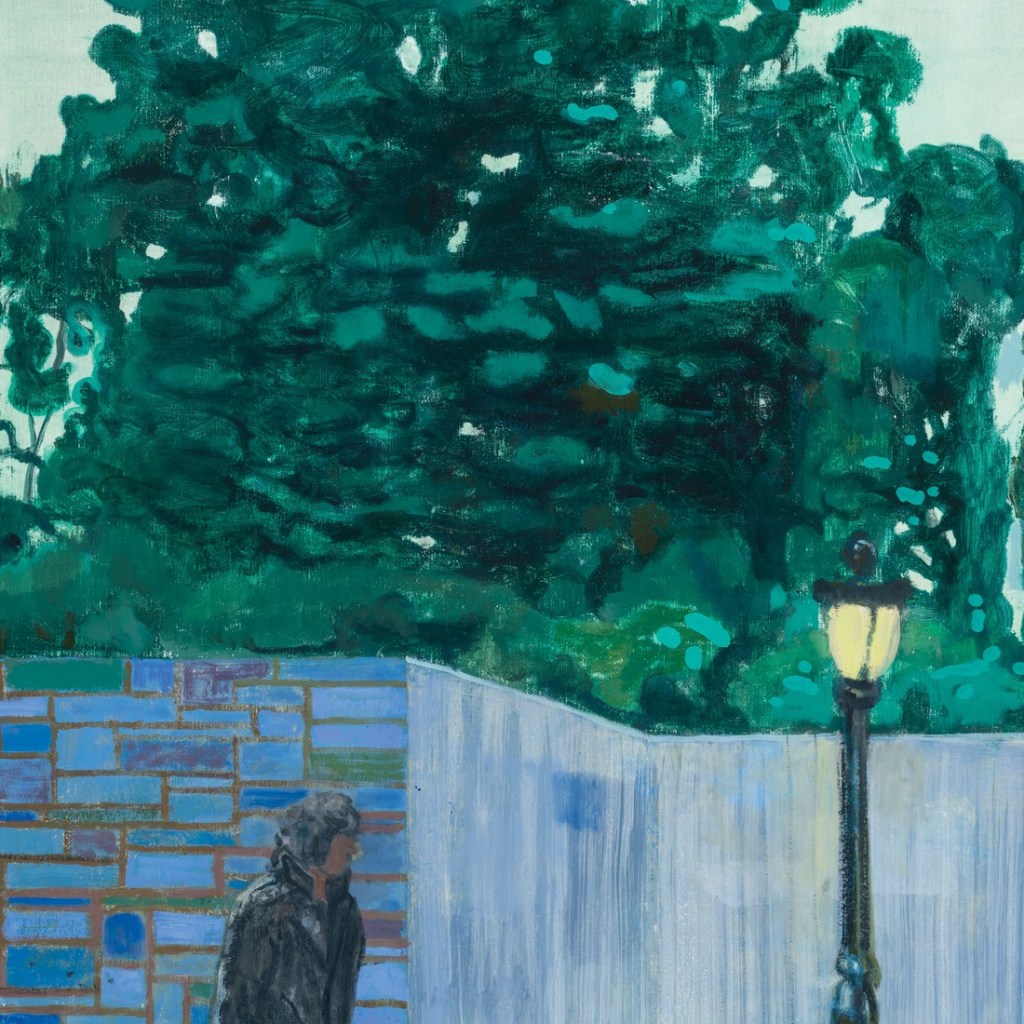
The album art is by Travis MacDonald; was it made specifically for the album or was it an existing piece?

A: It was an existing piece, someone in Sydney owns the original painting. We’d been friends for a bit, and I was looking at a bunch of Travis’ paintings and I thought they would suit the vibe of a classic rock, 70s-sounding record that we were going for. I wanted to have a n album cover that could work without titles for once. I just wanted to make a statement that was timeless. I had a bunch of references of paintings I grew up with and a few other things, I set him some drawings and he started to sketch up what it was going to be and was going to commission me for that. But, I just kept going back to that painting we ended up using. I was already too hung up on it. It was perfect, that’s just Rapscallion, right there. 

Album art: Travis MacDonald.

The figure in the painting does look like a street tough. 

A: Yeah, someone said the other day that it looks like the cover of a novel that is a coming-of-age story, which I agree with. The original painting was called, Graceland. He said it was of a random weirdo-lurker out the front of Graceland. The way it’s come out with the street light lamppost and all of the colours and textures, it fits it perfectly. I didn’t want it looking all dark and gloomy, I think the painting is a good happy medium. 

After having listened to the album a lot and been immersed in the Rapscallion  world, I can imagine that when you came across that painting you would have thought, ‘That’s it!’ I know the feeling because sometimes with Gimmie we’ll come across something we love when making it, but then we’ll try other things and more often than not we end up coming back to what we first were drawn to.

A: Yeah, when you do art and creative things, even like writing songs, when you make demos, often you end up just going back to the original of what it was before it got too out of hand. I didn’t want to go down that road where I was just going to do a 180 and go back to the beginning anyway, so we stuck with it [laughs]. 

Is there a specific moment on the album that you really, really love and think is super cool?

A: There’s lots of different sections, they all have their moments really. I listen to softer music generally rather than heavier stuff, so I’ve probably listen to ‘The Ballad Of Peggy Mae’ the most more recently than the other songs. In ‘Growing Pains’ there’s some parts in there too. I like how the album starts and finishes with synth intros to album opener ‘Subsidiary’ and closer ‘Growing Pains’. 

We’ve finally learned to play ‘Bellarine Ballerina’ live and ‘Living Under A Rock’. I definitely have a lot of fun playing those two songs. ‘Bellarine Ballerina’ is a good one, it’s nice to have some more uptempo songs. We did ‘Subsidiary’ once at a gig, but I feel like it’s not quite there yet.

What have you been listening to lately in general?

A: Not a whole bunch really, that’s probably way I’m so understimulated. 

Is that because you’ve been so busy?

A: Yeah, I feel like I’m always too over my own head in shit that’s going on whether it’s with Gizzard or Murlocs. I feel like I’m always trying to keep up with things. I listened to the new Chats record [Get Fucked] this morning. R.M.F.C. is great, so is that new The Frowning Clouds [Gospel Sounds & More from the Church of Scientology] record on Anti Fade. Listening to that takes me back to being a teenager and hanging out with this guys and going to those gigs.

That was a great record. We’ve heard some of the new R.M.F.C. full-length that’s in the works, it’s sounding incredible. 

A: Sick! They’re great. 

There’s also a new Gee Tee album in the works that rules too!

A: Cool! I haven’t seen them play live yet but I’ve heard stuff and I’ve seen video snippets online and they’re sick!

Totally! What’s the rest of the year look like for you?

A: I’ve got four or five weeks rehearsing with The Murlocs, we’re going to start to learn this album on Wednesday. We’re going to do a test run of those songs at a show here in Melbourne, so we can get more confident with that. We’re going to rehearse a couple of nights a week forth month, but then I go to the States with King Gizzard for all of October, then the three Murlocs will come over and meet us towards the end of the tour and we’ll do three shows supporting Gizzard. At that point we wanted have played together for a month. I’m getting a bit nervous about that, rocking up to Levitation and Red Rocks hoping that our muscle memory will be enough to go off. Then Murlocs do the US in November. Then I’ll come home for December and we might do a Gizzard Melbourne show. That’s about it!

That’s all! Phew, that seems like a lot to me. 

A: [Laughs]. It is a lot, I’m just trying to play it down in my head, so I don’t stress too hard.

[Laughter]. Do you enjoy rehearsals? Is that fun for you?

A: Yeah, I’m really looking forward to it and how we’re going to be doing these new Murlocs songs. It’ll all come together. I haven’t played much guitar in a while. I’m going to have to play guitar pin a few of the newer ones, that’ll be a bit wonky [laughs]. I’m looking forward to just hanging out with the guys, we don’t get to hang out as much as we’d like. 

Do you have anything else other than music stuff happening?

A: I’ve been skateboarding a little. I had that week in Budapest skating with friends. I skated a few times since I’ve been home. It’s the classic I’m-starting-to-get-my-groove-back thing and I fell over on my wrist a few times and hurt it, so I have to stop again. I was getting too excited! [laughs]. I can’t risk hurting my hands or arms. When you don’t do it for a while, you forget how to fall. 

Do you still get the same feeling now that you had when you were younger skateboarding?

A: Yeah, totally. It’s really good for my mental health or for anyones. You get a nice release, a feeling of freedom. You’re out and about and you catch up with old friends. You get back on your feet and it’s a nice feeling—that feeling you get when you land something after trying for a while. It’s a nice rush of adrenalin. 

There is plenty in the pipeline. With Gizzard there’s always stuff, and we have another Murlocs record that’s done as well. I’m just trying to figure out the art for it now and trying to talk everyone into doing video clips, but everyone tells me to “chill out!” [laughs]. That’s all well and good, but I’m never home enough and I like to do things well in advance so I’m not scrambling to do things at the last minute. 

Totally! As this album is loosely a concept album with a narrative, is the next album different to that?

A: Yeah, the next one is less strings attached. It’s still a while off ’til it will be released, but I’m really pumped on this next release! Somehow we’ve maybe topped Rapscallion! It’s more poppy. I’m starting to think of the plan of attack for that one. Things seem to only be getting better and better. As we all get older we’re getting better and better at writing songs. It’s all good. 

Rapscallion is out September 16 –  pre-order HERE. Follow @themurlocs + The Murlocs on Facebook. Murlocs’ Bandcamp.

**Another in-depth chat with Ambrose can be found in the our print zine – Gimmie issue 3.**

R.M.F.C.’s Buz Clatworthy: “Most of my favourite music was made by people who didn’t really know how to play”

Original photo: Alex Wall. Handmade mixed-media collage by B.

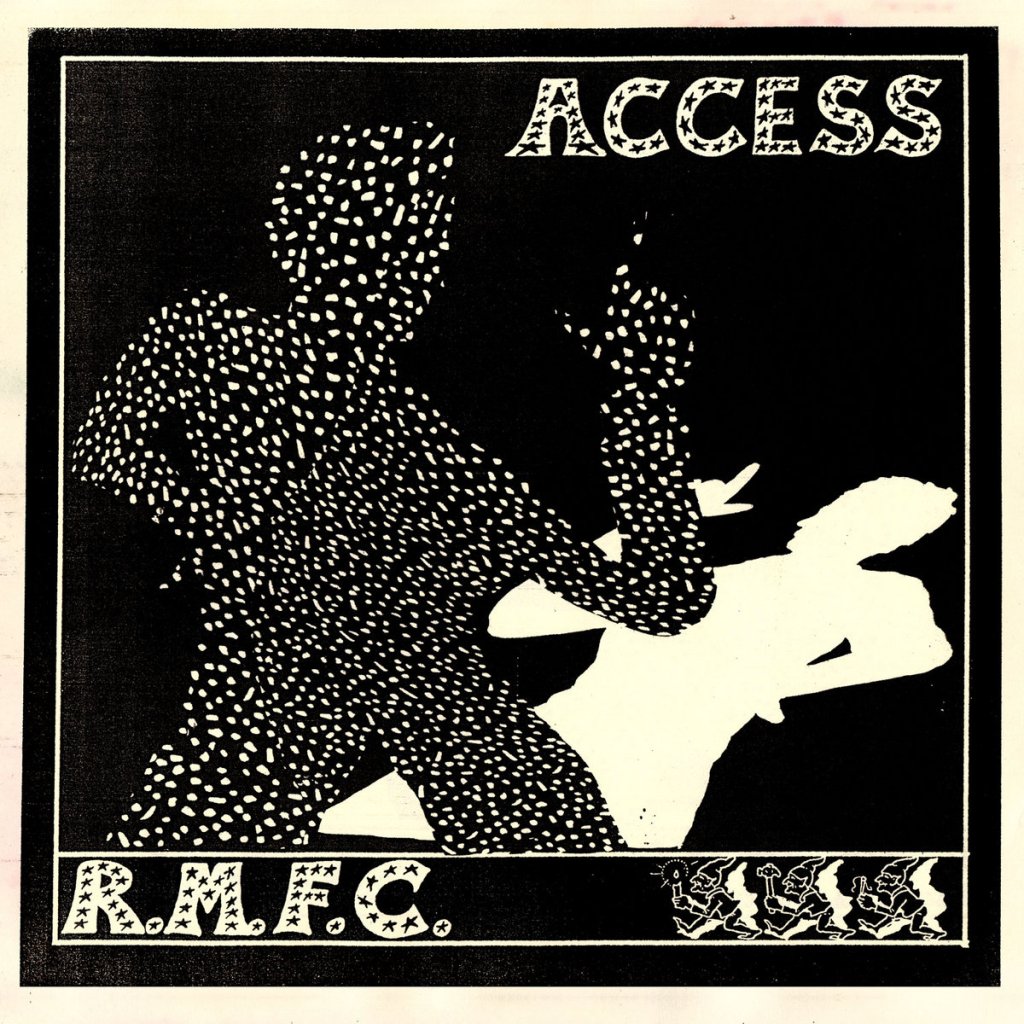
We’re excited about the new R.M.F.C. 7” Access! Its addictive, energetic garage rock jangle with anarcho-punk drumming, and infectious melody. The combination is dizzying and sees R.M.F.C.’s sound transcend influences and fast track into a fervent lane of its own. The addition of 12-string guitar into the band giving us a fuller sound. Buz’s songwriting has taken leaps and bounds from first release Hive. This taster of things to come has us waiting with bated breath for the full-length album set for release in 2023.

Whenever we see you play live, we’re always in awe of how great everything sounds. Playing the drums while singing isn’t an easy thing to do; what was it like for you when you started doing it? What helped you get better at it?

BUZ CLATWORTHY: It was difficult at first when the original live band formed but I’ve always found it way harder to play guitar or bass and sing than I have drums; drums have always been my main instrument. I think it’s maybe something to do with the way my brain works that drums just make more sense to me, but in saying that I’ve never gotten very deep into the technical side of things, my style of playing is very simple and straightforward.


Aside from naturally getting better at it by repetition, I’ve got some little cheats to make it easier like adding breaks in the drums when I structure new songs. My drumming & singing role in the live setting definitely had a part in informing how I wrote the newer songs. I think the very blocky/rhythmic phrasing of my words also helps a lot cause it slots in with what my limbs are doing on the kit. 

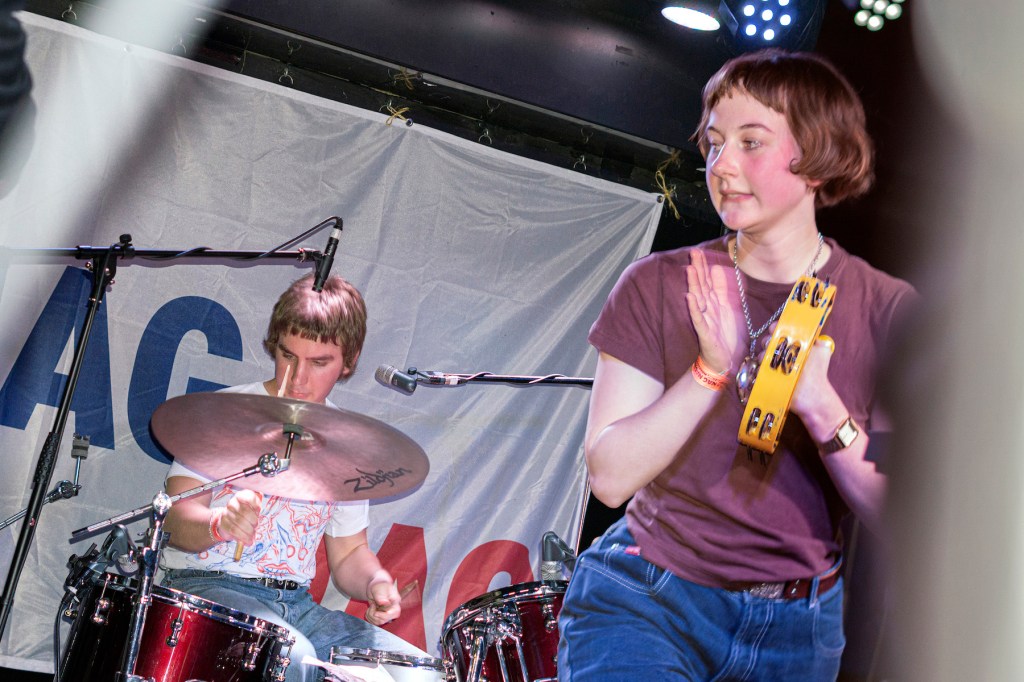
Photo by Jhonny Russell.

Are there any drummers, vocalists or songwriters that you’re inspired by? What do you appreciate about their style?

BC: Stephen Morris of Warsaw/Joy Division/New Order, Laurence Tolhurst from The Cure and whoever drummed on the first Gang Of Four album. Those three all have a similar snappy drum sound & semi-robotic feel and were big inspirations in my formative years style-wise. As most R.M.F.C. songs are built around bass lines, Klaudia Schiff from Kleenex/Liliput and Peter Hook from Warsaw/Joy Division/New Order are very important songwriting inspirations. I love their use of the bass as a leading instrument, the bass lines are what make most of my favourite tracks by those bands. 

I was talking with Kel from Gee Tee the other day and he mentioned that when you look back on your earlier releases you can really hear some of your influences coming through. You’ve been writing and making a new R.M.F.C. album; were you mindful of influences coming through for this one? How do you feel your sound had developed for those earlier releases?

BC: Yeah, being mindful of influences coming through is always something I keep in the back of my head when I’m writing/recording songs. There are definitely still subconscious attempts here and there to sound like whatever I’m enjoying listening to at the time but I always maintain a conscious effort to just sound like R.M.F.C. It’s usually more an attempt to replicate what I enjoy about the actual sonic aspect of older bands I like now.


For the earlier releases, I never thought anyone would care much for what I put out and I just wanted to make what I thought was cool at the time. When I listen to the Hive 1 & 2 releases now I just hear 17 year old me trying to sound like Jay Reatard and The Coneheads and that’s basically what it is, I was obsessed with bands like that. 

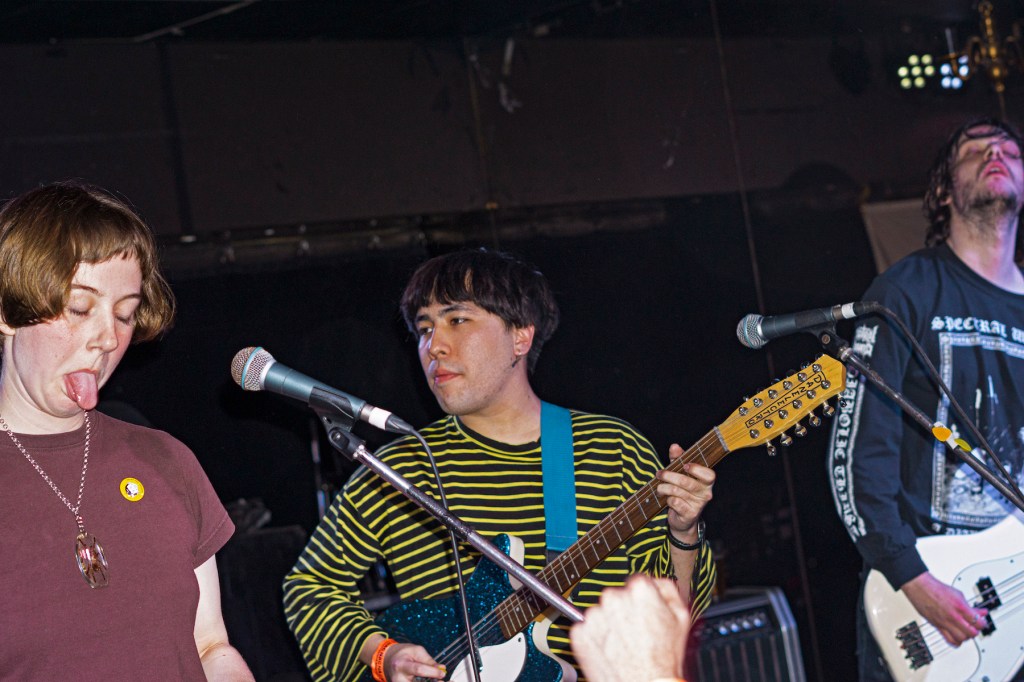
Photo by Jhonny Russell.

Kel and I were also talking about how everyone in you guys’ friend group are great song writers and supportive of each other’s work. He mentioned that you don’t record at your house, but you go back to your parent’s place in Ulladulla; where to my knowledge all off your stuff’s been recorded? Why do like to there to record? 

BC: On one hand it’s just hard to find a good spot in Sydney to record let alone somewhere consistent to leave your stuff set up but I also feel like that room has become kind of an integral part of R.M.F.C in a way, It would feel weird not recording there for this band. It’s good having that space down there to visit and have nothing to do but make demos or record songs. It’s all set up in my old bedroom so when I go down to record I’m spending the majority of my time in that space and don’t really have to think about anything else. Once I finish the album recordings I think I’ll bring my recording desk up to Sydney and set up in my room so I can make demos and focus on something different for a while. 

Last we spoke, you told us that you were finding inspiration to write a little harder than usual because you hadn’t been able to travel as much and hang out with your friends because of the pandemic and it’s lockdowns. Has that changed?

BC: Yeah that’s definitely no longer an issue but since moving away from home and not having my recording setup I’ve found it just as difficult to make songs as I was during that stint. With R.M.F.C being a solo thing I find it so much easier to develop song ideas when I have my recording desk on hand to place the different parts together and make necessary adjustments, It’s a good writing tool. 

We love that you’ve been taking your time with the album: things more often than not, turn out better when you don’t force them and allow the songs to unfold in their own time. Has there been a turning point moment during your album’s creation were songs and the process has started to progress quicker for you? 

BC: There hasn’t necessarily been any specific turning point where things have progressed quicker. It seems to come in waves, I’ll have an off period where it feels like nothing is working out and then I’ll have a wave of productivity and get a bunch done. Everything’s pretty much written now it’s just a matter of finding time to go down and record the songs and getting them right. 

Photo by Jhonny Russell.

You’ve just released a new 7” on Anti Fade Records – Access/Air Conditioning; what made you choose these two songs? How do you feel they compliment each other?

BC: I basically chose ‘Access’ cause I felt it was the best song to have as a standalone release out of what I already had recorded, I have other songs I maybe like more but they just seem to work better in the company of the rest of the album. 

I mainly chose to cover ‘Air Conditioning’ (by UK post-punks The Lillettes) for the B-side cause I just really like that song but it also has that “human condition” phrase in it. I use the same phrase in two other songs that will be on the album which gives this 7″ an extra little connection. The two songs complimenting each other wasn’t necessarily a consideration but I think they work together as a good representation of where I want to go with the band. 

We love ‘Access’ and remember seeing you play it live when we saw you earlier in the year; is it challenging for you to get a song you’re used to playing live recorded the way you’d like?

BC: Every new song starts with a demo or final recording that I take to the band to learn so it’s usually the other way around, but the way I heard and thought about ‘Access’ definitely changed during the period between making the initial demo and making the final recording. I don’t think this is necessarily because I was used to playing it live but it took a while to get the final recording to sound right, I don’t think anything could make the process harder than I already make it for myself. 

Art by Ian Teeple.

What was the idea behind the 7” art? 

BC: I pretty much just gave Ian [Teeple] a bunch of Wire 7″ covers for reference and we went back and forth with ideas. I was very pedantic with this design suggesting adjustments etc. which probably annoyed Ian but he was very patient and I think we both really like how the artwork turned out, I’ve had lots of good feedback on it too. Thank you Ian! ❤ 

You told us about the recent Other, Like Me: The Oral History of COUM Transmissions and Throbbing Gristle documentary. Thanks! What’s something, in relation to creativity or performance, that you took away from watching it?

BC:I really liked the emphasis they placed on the idea that you don’t actually need any form of training to make successful new radical music or art. I did music through to my final year in high school and while I did enjoy aspects of it, for the most part it contradicted what I felt music should be, so that resonated with me. Most of my favourite music was made by people who didn’t really know how to play/had a very basic level of knowledge and skill in regards to their instruments and TG’s influence was probably instrumental in the existence of a lot of those projects. 

I also really like how a lot of what COUM did wasn’t intended to be art, rather just something that existed and didn’t have to mean anything. 

What’s something that you’ve been interested in and getting into lately? 

BC: Angelica from G2g/Wanderlust got me onto this duo called Lives Of Angels who I’ve been obsessed with. I’ve also been listening to a lot of country music lately. My friend showed me this Numero Group compilation called Wayfaring Strangers: Cosmic American Music. Lots of great tracks on it that all sorta came in the wake of the first Flying Burrito Brothers album, shout out to Dyl Scott <3.  I’ve also been loving Operating Theatre/Roger Doyle. I heard their track ‘Spring Is Coming With A Strawberry In The Mouth’ on a radio show playlist Ian Teeple did recently and have been really enjoying exploring their catalogue. It’s so good having lots of friends to share music with 

Photo by Jhonny Russell.

Is there anyone you know that’s working on, or created something really cool, that you’d like to shout out?

BC: Ian is currently working on the second Silicone Prairie album, I’ve heard it in its current form and it’s very very good. What The Toads have so far for a release they’re doing next year is also very very good. Carnations from Sydney should have a release out soon which I’m super keen to hear. Aside from that there are a bunch of friends working on things I’ve seen/heard that I’m very excited about and would like to shout out, but cannot share. 2023 is shaping up to be a good year for the underground. 

What’s the rest of the year looking like for you? 

BC: I’ve made some time here and there over the next couple of months to finally finish recording the new album. R.M.F.C has a few shows coming up, playing with the Ramones and The Prize at the Lansdowne on the 28th of October which is very exciting. We also have an exciting show coming up in Naarm/Melbourne in November. 

R.M.F.C.’s Access 7” is out now on Anti Fade Records – get it HERE and in the US find it via Feel it Records. Follow @r.m.f.c.fanclub and @antifaderecords + R. M. F. C. On bandcamp.

Michael Beach: “No rules ever. Keep it wild and free.”

Original photo by Sarah Gilsenan. Handmade mixed-media collage by B.

Naarm/Melbourne-based musician and songwriter Michael Beach is back with new song ‘Out In A Burning Alley’ from his forthcoming self-titled EP. Beach is intensely cool and has become a master of writing and harnessing beautiful melodies, creating a spontaneous feel in his songs, wrapped up in a lively, elegant squall of garage rock n roll and swirls of distortion. Beach’s work is always engaging and vulnerable. ‘Out In A Burning Alley’ reminds us of what makes him an excellent songwriter. 

How are you? What’s life been like lately for you? You’re currently in the US spending time with family.

MICHAEL BEACH: I’m well, thanks! It’s been real nice to get back to California after too long away.  We came over to visit my parents but my mom got COVID the day before we got here, so we’ve had to improvise a bit. Life was pretty busy before I left…a ton of work to do with the new record coming out, but Goner and Poison City have helped so much, so I feel pretty lucky. Off to Big Sur today, plus a visit to Robinson Jeffers house in Carmel. Stoked!

We’re premiering your new song ‘Out In A Burning Alley’ the first single from your up coming 12” EP that will be out in September; were there any specific influences for this song?

MB: Thanks! I recall wanted to cross a Saints-style guitar tone with a Peter Laughner rambling narrative—not sure why but I think those were my compass points for this one.


What’s one of the biggest things you’ve learnt about while songwriting for your new EP? Do you have any rules for yourself?

MB: No rules ever. Keep it wild and free. Ha!  The old ‘serve the song’ maxim is a good one. Otherwise I’d say the more time goes on, the less I know.  ’m gradually unlearning everything. My brain is decaying nicely by this point.

What was the experience like of recording ‘Out In A Burning Alley’?

MB: It was a grand old time. Andy/Poison City offered up his family’s country house for us to record in. I moved my 8-track up there and we spent a couple winter days recording, eating, and drinking. Excellent memories with excellent friends—it was a totally enjoyable recording experience. 

Video Directed by Alexandra Millen.

You’ve been making music for some time now; who or what helps you trust your instincts in relation to your creativity?

MB: As far as trusting myself, I think friends help a lot, and I’m lucky to have such excellently creative friends. Time and experience have helped. I enjoy the process of creation so that’s enough most of the time.  

You’ll be touring the US in September/October and play this year’s Goner Fest; what is something that you have to do before a performance?

MB: Yeah, can’t wait to be back in Memphis! Before a show…stay connected to the band, connected to the audience, connected to spirit of the thing I’m trying to get across. Keep it connected!! 

What’s something that’s been bringing you a lot of joy of late?

MB: Nan Shepherd’s The Living Mountain. Anybody out there wanna book me some shows in Scotland?!

Michael Beach will launch the new EP in Naarm on October 29 at The Curtin. MB’s music via Poison City Records and in the US on Goner Records.

More Michael Beach: michaelbeach.org + @michaelbeach__ + facebook.com/MBandtheartists + michaelbeach.bandcamp.com.

Read our previous chat with Michael: “Good Things In My Life Have Happened Because Of Music.”

The Frowning Clouds: “We’re like brothers, we did everything together.”

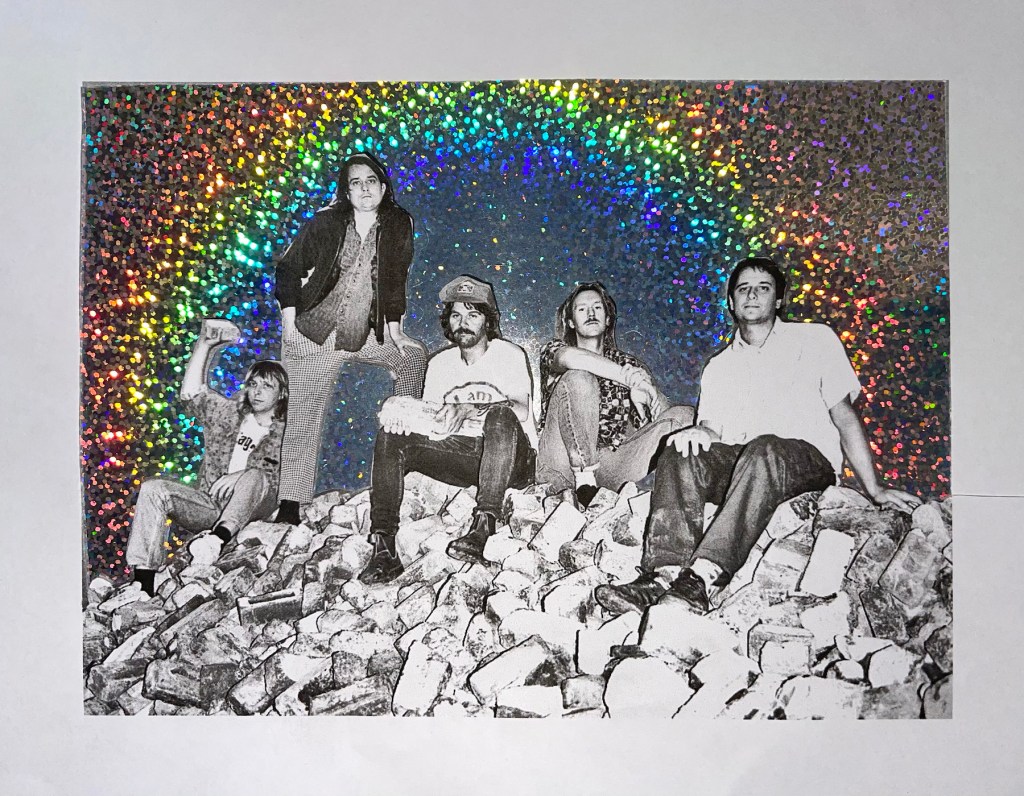
Original photo by Jamie Wdziekonski. Handmade mixed-media collage by B. 

The Frowning Clouds’ Gospel Sounds & More from the Church of Scientology is a great record. They unabashedly wear their 60s influences on their sleeve. The songs are sunny, folksy, at times wild and nostalgic; it has a homespun quaintness, their charm and the group’s chemistry coming through loud and clear. In 14-tracks the band captures the beating heart of why we love music, why we make music, and why we try to express ourselves and find ourselves, and our need to connect with each other. It’s all here, raw, flawed and honest, exploring love in its various forms, longings and infatuations. 

The Clouds are an important Australian band that were under-appreciated while active, but over time ignited a garage-rock scene in Djilang/Geelong and beyond, influencing countless creatives. Clouds’ members went on to evolve their craft, innovate and continue to inspire in bands Bananagun, Orb, Traffik island, Ausmuteants, Alien Nosejob and more. Gimmie chatted with Frowning Clouds’ guitarist-vocalist Nick Van Bakel to get an insight into the band and release what you could view as the Clouds’ sophomore album that never came out… until now. Over a decade after it was recorded it still feels fresh and rousing.  

What’s your earliest memory of The Frowning Clouds?

NICK VAN BAKEL: My earliest memory is probably just me and Zak [Olsen] playing a couple of originals, some Velvets & 13th Floor Elevator songs in my bedroom and our friend Danny recording it on his video camera. We took the audio off it for our first recordings [laughs].

I know that the band was very much inspired by the 60s, specifically the period 1964-1967, as well as the Back From The Grave series and Nuggets compilation; when did you first get into that kind of music and what is it about that period that resonated so strongly?

NVB: Probably about 16 or so, we’d heard some more obvious stuff like The Kinks and The Stones etc., but the deep garage comps were like even more outlaw than that. The attitude and spirit of it all. We were real young and those comps are mostly all teen bands, so it was what we wanted to do. Also they’re just amazing songs played with high energy.

How did you learn to write 60s-sounding songs? Previously you’ve told me songwriting for you back then was very much about craft. What kinds of things catch your attention in songs? 

NVB: Well, that was our introduction to playing/writing, so we just did what they we’re all doing. Seeing documentary Dig! just showed that you could go DIY. The crafty bit is like all the girl group stuff of the 60s and pop. There’s a billion 60s songs that all have the main chords and motifs, and that’s where you can get creative and bend your idea into this little 3-minute song. Like the professional writing teams going into a room and making five songs a day.

The Clouds have a new release coming out on Anti Fade, Gospel Sounds & More from the Church of Scientology, which is predominately songs from the 2013 Frowning Clouds European tour tape called Gospel Sounds For The Church Of Scientology, with a handful of singles and unreleased tracks; what do you remember most about that tour?

NVB: A Spanish label called Saturno released our first stuff and organised the tour; the best part of that was going to Nacho and Dario from Saturno’s home town Seville. Seville is a medieval city. Star Wars has been filmed there. It’s where Flamenco was invented. We just loved the lifestyle of having siestas, meeting all their friends in the park in the afternoon, having a relaxed beer and tapas. They were adults to us, so it was cool to see that you could be an adult and have a job and family, but not have the weird Aussie thing of all the milestones like getting married, a house, having kids etc.

During the tour you record in Berlin with King Khan; tell us about the experience. 

NVB: It was fun because he’s also, another big kid [laughs]. He came to one of our shows. We were hanging out at a bar and he invited us to record the next day. We had this super legend, but super regimented, tour driver who was like “C’mon guys we gotta go!” Then Arish being like “Oh, you know what? We should actually do a whole album!” He’s real lightning in a bottle, just having new ideas every five minutes and changing directions. We recorded four songs or so just in the lounge room live with a toy kit and practice amps.

That’s so cool. I’ve seen videos online. There’s a western instrumental you guys did during those sessions that Khan released on an album Let Me Hang You that features spoken word by William S. Burroughs; what do you think of it?

NVB: It was fun to do and it’s funny to have a song credited to me and William s. Burroughs!

What’s it like for you to revisit these songs on the new release now?

NVB: Over lock down I had some good nights getting drunk like an old man listening to all the stuff we did when we were young. Only good memories. I feel proud overall, that we didn’t half ass it.

We’ve been listening to Gospel Sounds & More from the Church of Scientology heaps, we’re really excited the songs are seeing the light of day. What do you like most about the release?

NVB: Well, it’s mostly stuff at the time, we thought we’d leave out and I still feel the same way, but not so precious now after some time away from it.

I also love the art that Millar Wileman (who plays percussion in Bananagun) did for the cover. He’s got a pretty distinct style, he uses a lot of old world-y stuff and has a Monty Python Flying Circus kind of vibe.

Album art by Millar Wileman.

What was the earliest song you wrote in this collection?

NVB: That’s hard to say exactly, maybe ‘Open Your Eyes’? Or probably ‘Stick Fight’. That was about me challenging this guy that my ex left me for to a stick fight [laughs]. Tender days!

I know that a favourite song of yours from the album is ‘All Night Long’; what do you love about it?

NVB: There’s always something about a recording or performance that bugs me, little mistakes, but I think we really nailed it with that take. It’s the band in a nutshell really—raw teenager energy.

I think it’s probably the best performance we ever did. It was the best vibe. We recorded it with Owen [Penglis].

Do you remember writing it?

NVB: I remember Jake [Robertson] came over to work on some songs together and I had the riff for ‘All Night Long’ and we made headway from there. I don’t remember all the details but I remember sitting in my room and writing it. I remember riding around on my bike with it in my head and doing little monos and banging the front tyre down getting real pumped! 

That’s how I think creativity emerges, just when you’re relaxed, like in the shower or washing the dishes. I’ve been running a lot and I get a lot of ideas running.

A lot of the songs (like ‘If Youre Half Then Ill Make You A Whole’, ‘Thought About Her’ & ‘Not the Fool’…) are love songs, yearning for love, breaking up etc. How do the songs reflect you as a person?

NVB: I guess it says I’m a sucker for love [laughs]. Love songs are pretty universal and eternal.

Most things that most people do deep down are trying to find themselves some love. I like emotional content, I can’t get into things as much on an intellectual level, or clever use of language is impressive but what is the transfer? What’s the communication? Besides being wordy usually. Mostly though, I was just trying to make stuff like my heroes, Ray Davies or John Lennon. Lots of genuine expression.

Yourself and Zak were the primary songwriters in The Clouds; what are the differences and similarities you see in both your writing?

NVB: Hard to answer, we both started writing together and grew up together and influenced each other and wrote together. Zak’s definitely more of a poet than I am and more collaborative, but I’m physically stronger and a faster runner, and could easily take him down with a single fly kick!

What do you feel each member brought to the Clouds?

NVB: There’s been member changes, but for the most part I’ll say:

Jake, brings chords, scales and proficiency, punk vibes.

[Jamie] Harmer, allowed us to write in more open terrain because he had a broader pallet. (Both Jake and Harmer were like phase two, the best bit).

Daff [Gravolin] is like a studio player, he can do anything in any style, but you can still tell it’s him. There’s only one Daff!

Zak is the researcher, finding all the awesome records and writing awesome tunes. 

We’d really need all night to cover this properly cos we’re like brothers, we did everything together. Everyone brought their own little things to the party. They are all super funny too.

The Frowning Clouds really inspired a lot of other bands that came after you; what are you feelings about this?

NVB: Can only be a good thing! We really got so lucky with our friend circle. We got a bit territorial sometimes which is kinda funny and fine for teenagers to do. 

When we first started, Geelong had just punk and hardcore gigs that we used to go to. The first one that I went to, I remember getting punched in the head in the mosh pit [laughs]. I was just like, ‘Fuck these guys!’ Heaps of them had big brothers and they were just these big punk bully dudes. We all just got bitten by the 60s bug because it was the coolest thing that we had heard. It does seem like we got the ball rolling for people to follow suit. 

Is there anything that you didn’t appreciate back then that you do now?

NVB: I have to give huge props to Katie Jones who saw us play when we’re underage and volunteered to drive us around Australia for four years; five rude, stinky kids basically. She was beyond generous to us. Did so much for us and never asked for anything in return. The real Queen of The Barwon Club, always will be.

The Frowning Clouds seem like they were a really tight knit gang; tell us about a funny Clouds moment.

NVB: I remember opening for Little Red at the Toff and we got so drunk in the green room and started throwing crates of wine bottles out the 4th story window [laughs]. We’d honestly get canceled so fast nowadays. It felt like actual family though, thick n thin, and The Living Eyes were our little brothers.

Are you going to play any shows for the album?

NVB: We’re hoping to! Bananagun are moving overseas to Portugal for a bit to do a bunch of touring, but we haven’t bought tickets yet. I’m hoping we can squeeze The Frowning Clouds stuff in before that happens. I’m working on album number two for Bananagun. 

Awesome! What have you been listening to lately?

NVB: I’ve been listening to a lot of Beach Boys this morning, it’s been a while. I gave Pet Sounds a spin. I’ve been listening to a lot of Sun Ra and spiritual jazz stuff. I’ve been listening o a lot of Gamelan music and Indonesian folk. I’ve been listening to a lot of 60s garage again over the last few months because putting together this release has reawakened my fire for it! 

Gospel Sounds & More from the Church of Scientology is out August 5th, 2022 on Anti Fade Records. PRE-ORDER HERE.

Power Supply: In The Time of The Sabre-toothed tiger

Photo: Matt Weston. Handmade collage by B.

Power Supply have come together to bring us an inspired record for grim times. The Naarm/Melbourne group features Leon Stackpole (The Sailors), Richard Stanley (Drug Sweat), Per Bystrom (Voice Imitator) and Mikey Young (The Green Child). In the Time of the Sabre-toothed Tiger packs a one two punch with its bright melodies and first-class songwriting. An invigorated, yet chilled and charming style of garage rock, that will have you smiling; the sincere and entertaining lyrics a highlight.

Gimmie are excited to premiere first single ‘Infinity’! We chat with vocalist-guitarist Leon about the track and forthcoming album, out October 22, a co-release between Anti Fade and Goner Records.

We’ve been listening to the new Power Supply album In the Time of the Sabre-toothed Tiger on high rotation all week. It’s such an incredible record. It has a really bright feel to it and it’s made us really happy. In grim times, like the world has been experiencing of late, it’s nice to have something like your record to lift the mood.

LEON STACKPOLE: That’s really nice to hear. It makes me feel happy too.

When I recently spoke to Billy from Anti Fade Records (who is putting the record out) he told me that you’re one of the funniest guys he knows. How important is humour in your life?

LS: It’s through everything really for me. I really like music that has a sense of humour. I also like music that is serious too, but I think that some of my favourite stuff has that extra little bit, that humour, in it. I gravitate towards those sorts of things.

One of the things that I really love about Power Supply is your lyrics. There is a comedy in there, but then there is also introspection and a lot of thought behind it.

LS: I think you could say that… [pauses]. Sorry, I’m just walking past my wife in the garden.

Lovely!

LS: There is humour. The lyrics that are on there are probably no particular theme, yeah?

I feel like it’s a real collection of thoughts, from everywhere, just from living life.

LS: Yeah, there is. I made up all of the album pretty much. Probably the ones that get on there are the ones that are the least ridiculous [laughs]. Some of the songs I’d take to rehearsal to play to the guys and they’d just go, “Oh my god, what is that?” [laughs]. They may consider it to play live once in a while, but other than that they just go, “All right, it’s a bit too absurd.”

[Laughter]. I understand that when you got back into the shed to write the record that “jams became songs, jokes became lyrics”; what is one of your favourite jokes that became a lyric?

LS: I think the ‘Time of the Sabre-toothed Tiger’ one makes me laugh. It comes from the concept of when people talk about anthropology and evolution, these sorts of concepts, and how all of our behaviours go back to early humans, back in the time of the sabre-toothed tiger. When my wife and I are talking about things, we’d be like, ‘what would they have done back in the time of the sabre-toothed tiger?’ That crept into the lyrics to the point where I suppose you hop into a time machine and go find out. To me, that’s funny! I don’t know if it is to anyone else though [laughs].

[Laughter] It is. I totally get that. There are a lot of moments lyric-wise on the record that had me smiling in amusement and laughing.

LS: I think ‘Infinity’ is funny as well. That song is completely absurd. I haven’t actually talked about these songs to anyone, you’re the first person I’ve spoken to. It’s funny you’re asking me these questions because I was just out in the bush taking the child for a ride, feeding the guinea pigs and things, it was getting closer to the time for us to chat and I thought, aww sheezus those songs, I have to talk about those songs! [laughs]. I called up Per and said, Per, what do you think are the themes of the songs on this album? He said, “It’s kind of like all these songs that you made up before lockdown that kind of predicted lockdown. Fuck, we’re soothsayers or something like that!” [laughs]. I don’t know if I honestly believe that, but it’s interesting to hear his perspective on it.

I love how the opening lyrics for ‘Infinity’ literally say that Mikey sent you an MP3 and the title was ‘Infinity’.

LS: [Laughs] That’s exactly how it happened.

Did you ask Mikey about why he called it ‘Infinity’?

LS: I never did ask him about it. My son became a but obsessed by that song. With the last verse about lying on your deathbed, he’s like, “What’s a deathbed, dad?”

Wow. That’s a big question.

LS: [Laughs] Yeah. Then he became obsessed with the concept of infinity as well. I pinched all of his little phrases that he says for the other song… what’s it called?

Photo: Raven Mahon

‘Infinity and 90′?

LS: Yeah. ‘Infinity and 90’.

I was going to ask you if there is a connection between the songs ‘Infinity’ and ‘Infinity and 90’?

LS: Yeah, there’s a connection… I’ve never really thought of this before. So, since hearing ‘Infinity’, my son was obsessed with the concept and we were driving along in the car and he’s like, “Daddy, I think I know the biggest number ever! Infinity and 90!” [laughs]. I wrote it down and when it came time to write the song, I thought they made good lyrics, so I threw Archie’s lyrics on there.

That was one of the songs that had me amused by the lyrics. I also love the line: Does the mountains make the mist or does the mist make the mountains?

LS: I love that one too. We were driving to Melbourne passed Mount Macedon, it was covered in cloud. My son was contemplating that and said that, that’s how that lyric came.

The next line too, about there being a bee in the car; that was real too?

LS: We were in the car and there was a panic. In absolute terror and fear he’s like, “There’s a bee! There’s a bee in the car!” But actually, it was a piece of dust [laughs]. I don’t know how he confused dust with a bee, by the way.

It’s funny because as a listener who has no idea of the backstory of the song, you could listen to the lyrics and it could sound like an abstract metaphor and you could read really into it like, oh this is such a deep concept! In reality though, it comes from the everyday ordinary life stuff you experience.

LS: Yeah, for sure. I love that.

The way you deliver the vocal for ‘Infinity and 90’ is almost whisper-like; what inspired that?

LS: I’d been listening to a lot of La Düsseldorf that day and somehow or another that voice ended up on that song.

I think the vocal delivery really suits it. I also love how every song on the record sounds different. I don’t want to sound too wanky, but the cohesiveness of the album feels like a journey.

LS: Yeah, yeah. There’s nothing wrong with a good journey here and there.

Are there any lyricists that you really love?

LS: Yeah. It’s funny, this morning the local radio station was asking people about that, to text in and say their favourite lyricists. People were writing in fairly regular things. I thought, what would I do? I’ve been listening to Kate Wolf lately, a lot. I ended up texting in and saying, Kate Wolf. Some of her lyrics, songs like ‘Green Eyes’, I love that song. It’s beautiful, just so perfect and genuine.

When did you first start singing?

LS: I used to sing in bed when I was a kid, until I’d finally fall asleep. I didn’t really sing that much until we started a band with some friends of mine called, The Sailors. It was a good band because we’d all jump in and have a go. With Power Supply, I’m trying to get everyone to do backing vocals. I think Mikey is finally coming around to the concept [laughs]. I like to hear backing vocals, I love them.

Same! I’m a big fan of backing vocals. The band No Doubt have some really cool backing vocals that Gwen Stefani does. They’re actually really interesting and have some cool harmonies.

LS: Yeah, right. I haven’t really listened to their records except for the hits and a bit of her first solo record [Love. Angel. Music. Baby]. I kind of like that record.

That record rules!

LS: I like the big hit off of that one. The one where she’s basically struggling to come up with new songs.

‘What You Waiting For?’?

LS: Yes! That’s a classic that song. I do like that record. When the harmonies are done really well it’s just wonderful.

Totally! Do you ever get self-conscious doing vocals?

LS: Not so much anymore. I remember the first gig that us guys played, I didn’t really have any lyrics [laughs]. I was driving to the gig trying to make them up; that was probably a bit nerve-racking.

How did the gig end up going?

LS: Well, it’s amazing what you can get away with! [laughs]. The gig was fine.

Art by Mark Rodda

How did a Mark Rodda painting end up becoming the album’s cover?

LS: That was Per’s research. How it went about it, I’m not sure. We did look at a few different things and a few different artists’ styles. Per looked at all that stuff and we discussed a few. In the end he said, “This is the one.” And, we all agreed.

When you look at the album cover, what do you get from it?

LS: I haven’t seen it for a little while, but it makes me feel warm inside.

[Laughter]. Awww.

LS: It probably looks a little desolate. I’m living in Central Victoria right now, so everything is a little like that sort of a landscape, which I feel pretty comfortable with. How about you?

I get more of a lush feeling from it. The tree gives me ancient forest vibes. I think it ties in with Time of the Sabre-toothed Tiger theme too.

LS: I do recall us making that connection. I do guess that’s why Per suggested it.

What’s one of your favourite things about the new album?

LS: I love the sound; I think it sounds amazing. We recorded it at The Tote in the front bar. We did a residency in September two years ago; we played each Sunday afternoon. We left our gear there on the last night and came in on the Monday and recorded it there, cos we were pretty well-practiced. You’ve got the traffic out the front, I thought it was all going to come through the windows, but it’s fairly well insulated and you couldn’t really hear anything else. In fact, the beer fridge was making more noise than anything else and we had to turn the beer fridge off.

What did recording at The Tote add to the songs or experience?

LS: It made it feel more comfortable because we’d just played there. It’s been hard for us to get together to play. I’ve been in Castlemaine, Mikey is down on the Peninsula, the other guys are in Melbourne. We have to make an effort. We played five gigs in a row over five weeks and recorded, we were hoping that we would feel comfortable, relaxed and well-practised. We do have fun together. We recorded in one day. We’ve added some overdubs and things in since; a few years for some overdubs! [laughs].

How does it feel to finally have the album coming out in October?

LS: A relief really. Just last year I was saying, oh, let’s just put this out on Bandcamp and be done with it. It kind of felt like that for me [laughs].

I’m glad you didn’t just release it digitally. It’s such a beautiful album and deserves a physical release. The album is too special for it to only be digital!

LS: It’s been such a long time since we recorded it all.

Have you listened back to it recently?

LS: Nah, but I probably should. We have been talking about playing some gigs, but I don’t think it’s going to happen for a while.

When we jam and it’s Mikey, Richard and Per just playing away, it’s the best thing for me, I just sit back and listen to those guys.

We’re excited to be premiering ‘Infinity’ the first single from the new album!

LS: That’s so great!

There’s a lot of stuff around water and the environment that seeps into the music.

I know that you work in environment protection roles, so obviously you have a passion for doing that.

LS: For sure. It’s probably the sub-theme in the whole sabre-tooth-tiger-thing—environmental change.

I totally got that. It’s interesting how a lot of the world seems so divided right now and people get so hyper-focused on particular things and who is right and wrong, but they also forget that there’s crazy stuff going on with the planet, climate change, depletion of land and resources. If we don’t have a planet then we’re not going to have anything! It’s pretty much the number one base thing we should be concerned about.

LS: Yeah. It’s pretty fundamental [laughs]… that’s just trying to add some humour to it, because it is fundamental.

Photo: Matt Weston

**Note: This interview is an extract. The entire chat where we talk more about the album, Sun Ra, turning every day occurrences into song, and more, will appear in the October print issue of Gimmie**

Here’s the first sneak peek at ‘Infinity’ from Power Supply’s forthcoming album, In the Time of the Sabre-toothed Tiger:

Available for pre-order HERE at Anti Fade and HERE (in the US) at Goner Records.