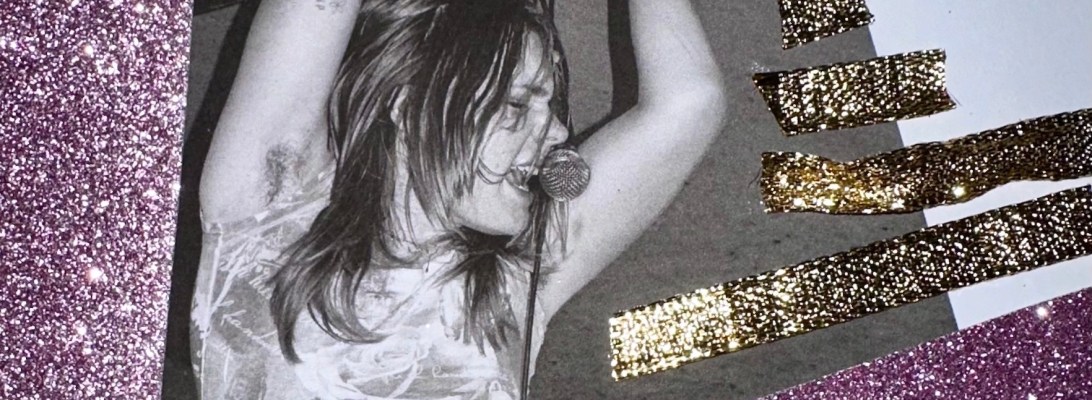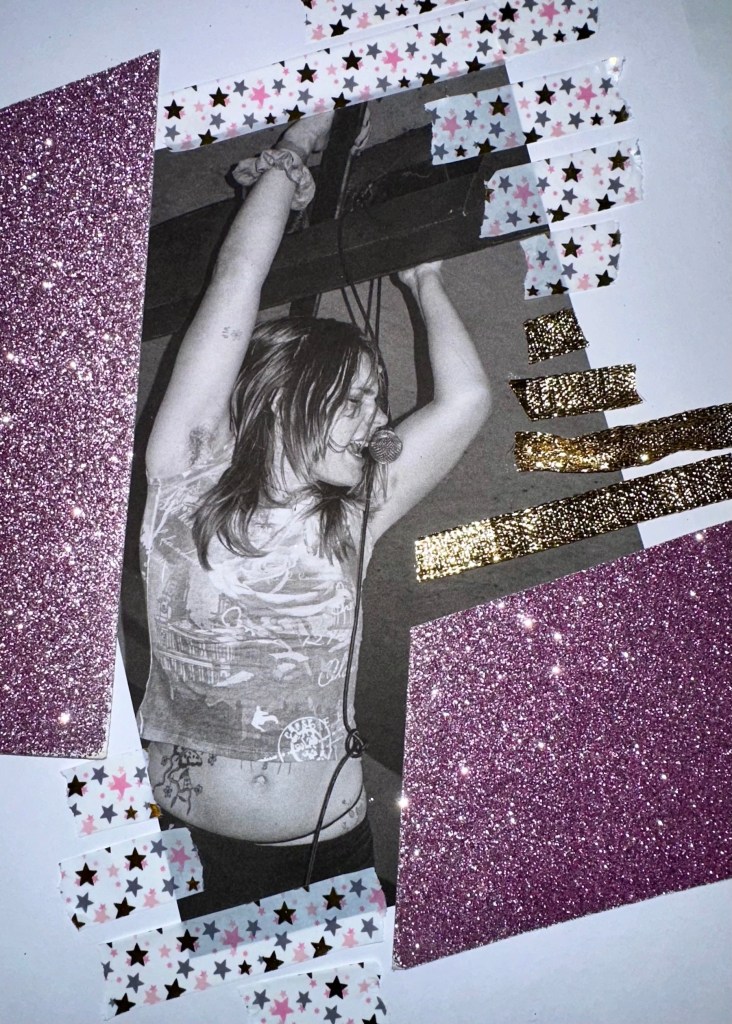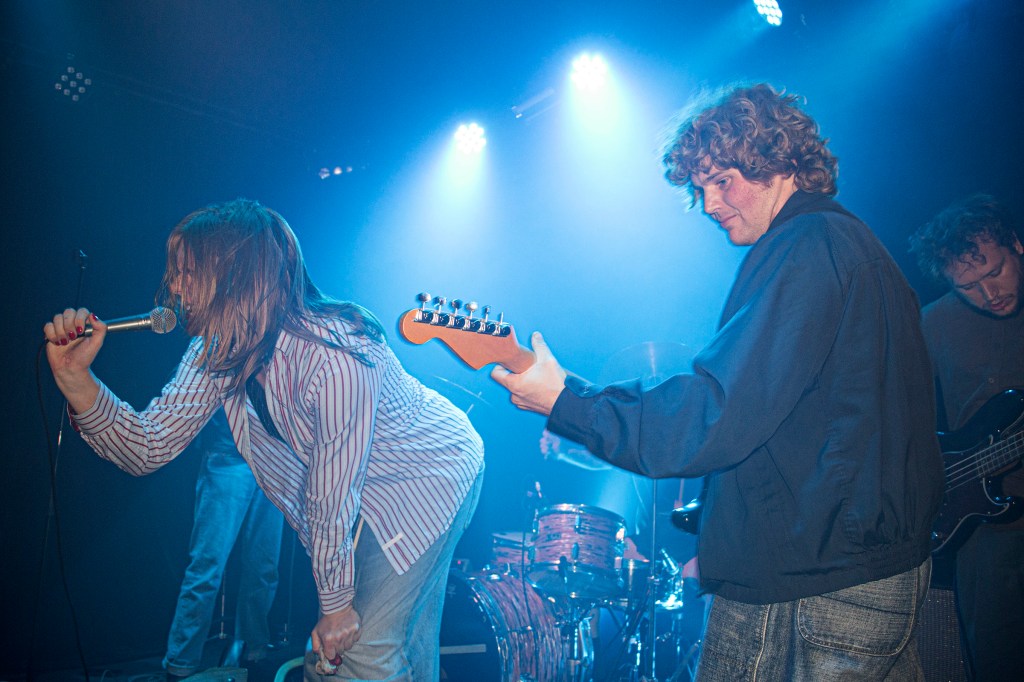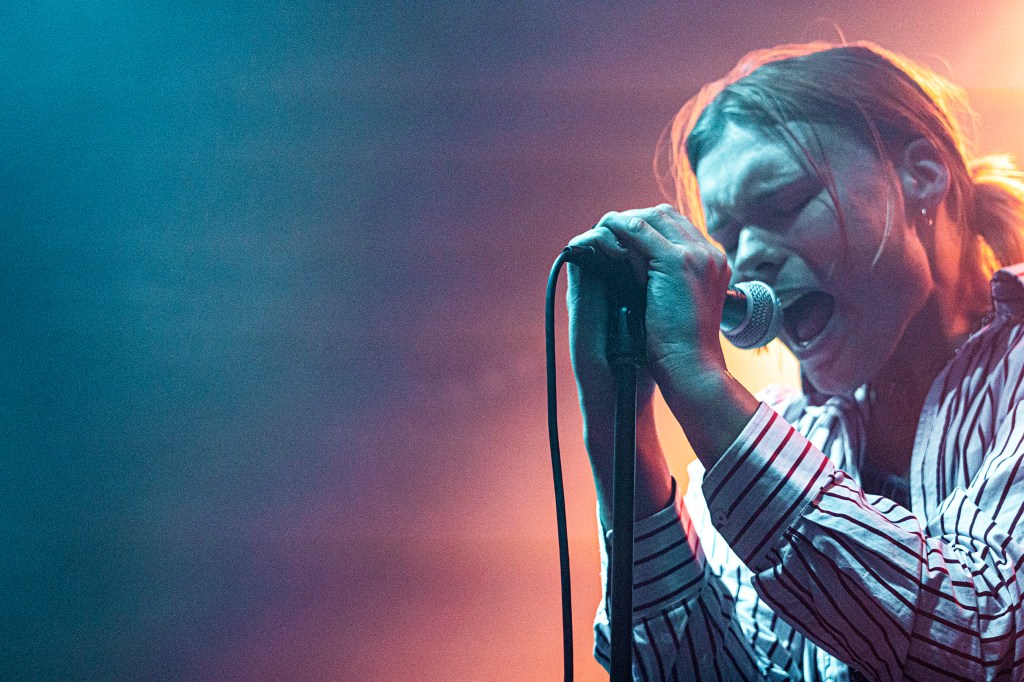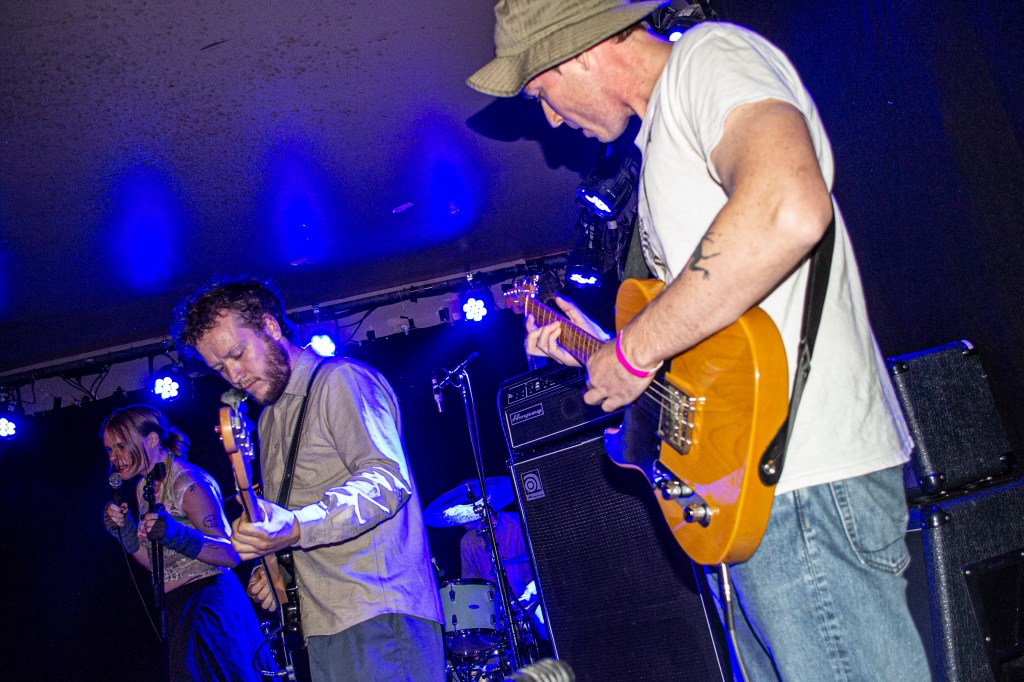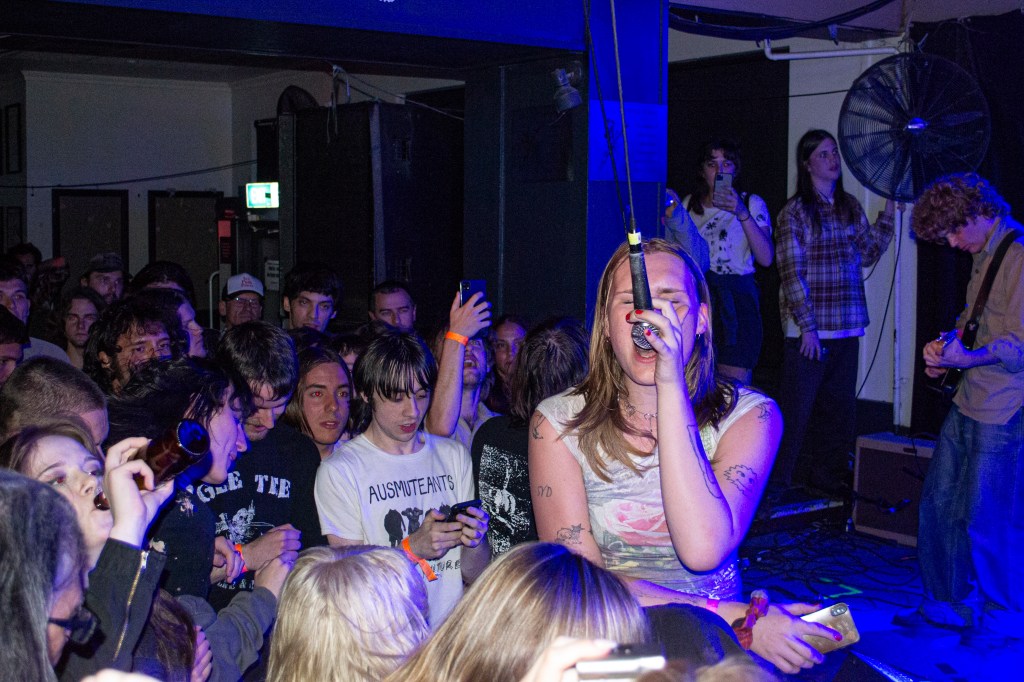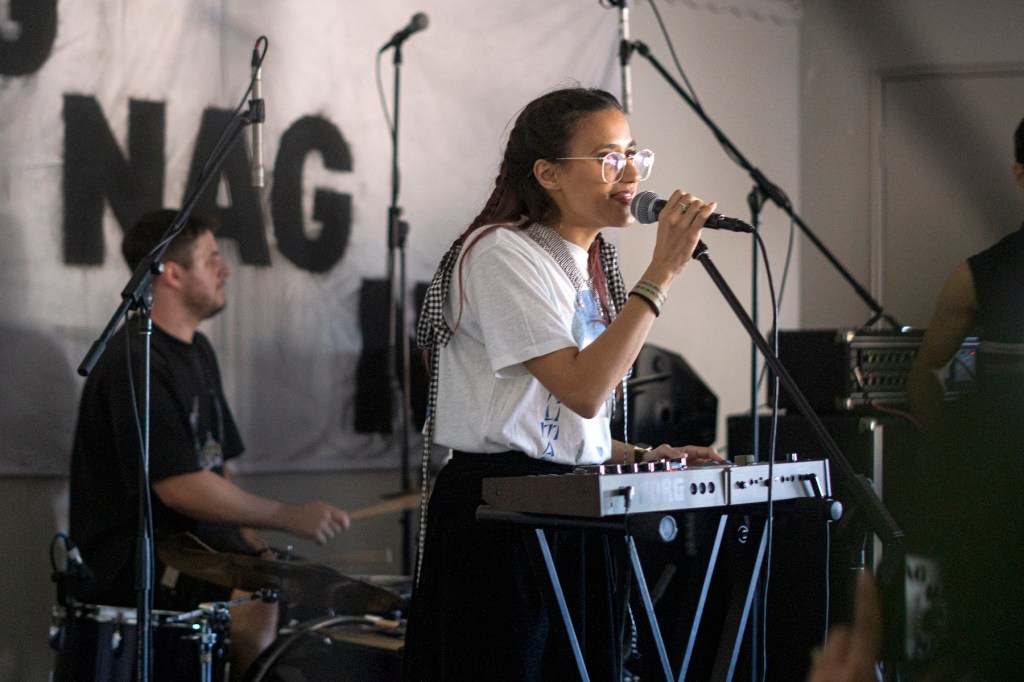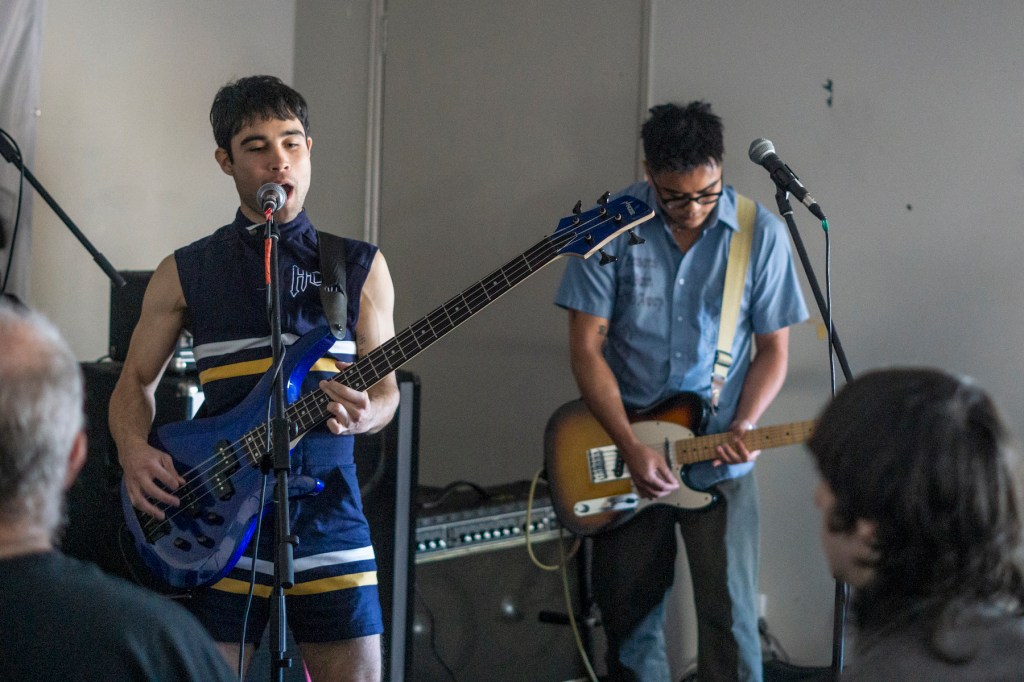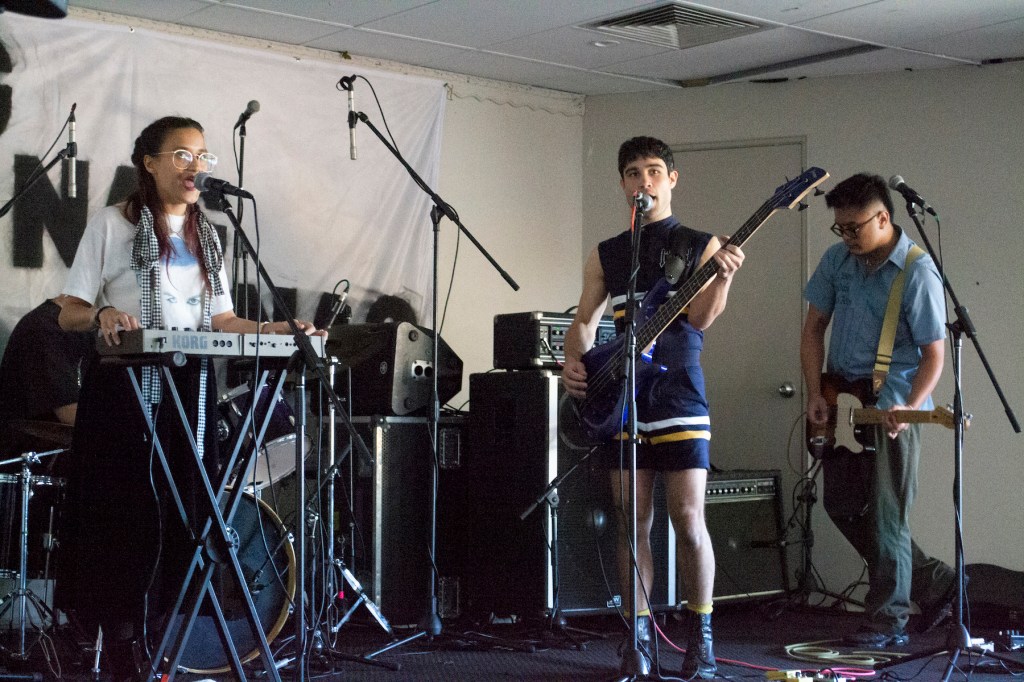
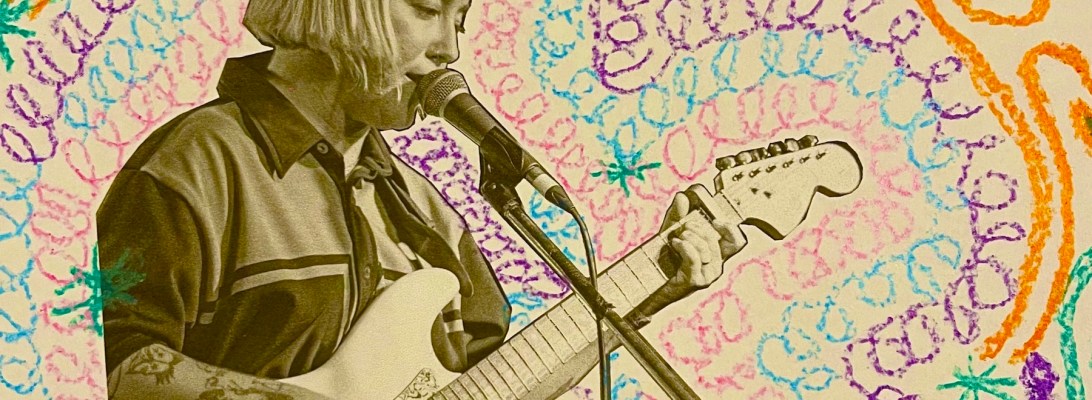
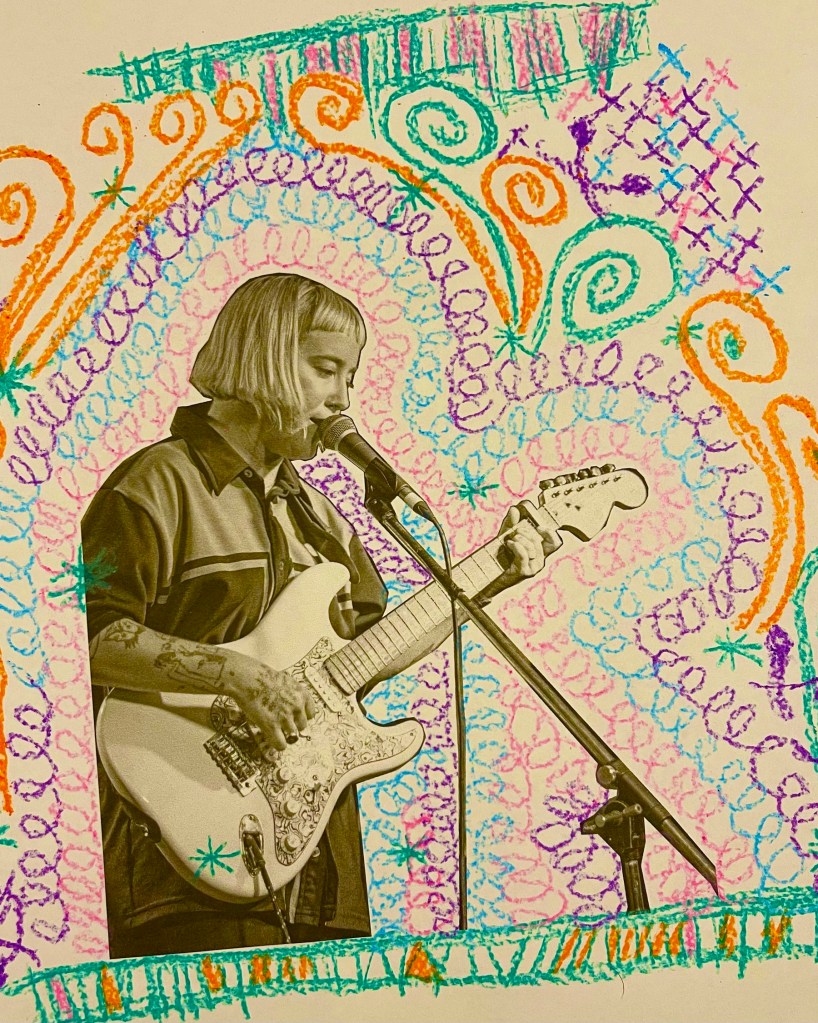
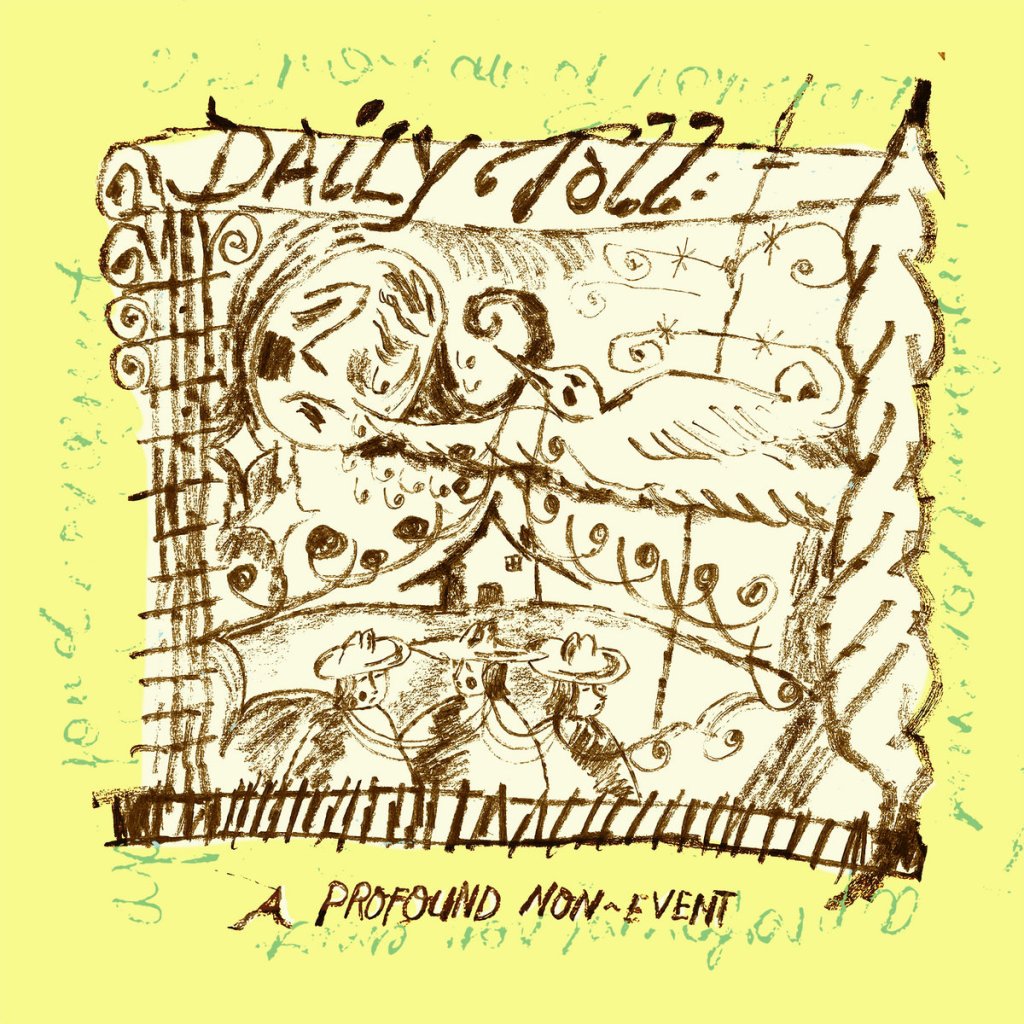
Daily Toll’s debut album A Profound Non-Event was one of the most beautiful records we heard in 2025. The Sydney band resists easy categorisation, shifting between tenderness, tension and experimentation, both intimate and expansive.
At its core is the creative partnership of kata szász-komlós and Jasper Craig-Adams, a project that has grown out of shared trust, intuition and a commitment to making things on their own terms.
In this in-depth conversation with Gimmie, Kata reflects on the album as a collective process, grounded in vulnerability, communication and the act of listening. What emerges is not just a portrait of a band becoming, but a way of thinking about art as relational and deeply human.
KATA: Life lately has been good. It was a huge year for us last year. The UK tour, after releasing our debut album, A Profound Non-Event, was just wild. The 16-year-old in me was so stoked. I could feel that younger version of myself living out this dream. It was really fulfilling, and kind of surreal.
On the back of that, lately I’ve been feeling pretty creatively inspired. I feel curious again—about the guitar, and about how to experiment with it as a tool. I’m also trying to find more ways to align my creativity with my social activism.
I’ve been spending a lot of time with my nephew and my family, too. That side of things has been feeling really great with family and friends, just being grounded in that.
And I’ve been writing new stuff with Jasper for Daily Toll. We’ve got some awesome things happening this year. It feels like a mix of creative rejuvenation and creative dreaming.
I love that!
K: Yeah, it’s feeling so good at the moment.
When we first corresponded about chatting, about a year ago, when you were still in the planning stages of your album release, you mentioned you were coming out of a really dark couple of months. You said you were slowly starting to feel re-inspired by art, community and music again.
K: I wasn’t feeling great about my songwriting or about working in spaces where there wasn’t that alignment. But now I feel like I’m coming out of that. I feel free again. I feel like I’ve come back to where I was when I first started writing music, teaching myself guitar, just figuring it out as I went. There’s this kind of fumbling freedom I’m feeling at the moment, and I’m really leaning into that. I’m loving being there.
I have an inherent discomfort with creativity and art being commodified in the way it is under colonial capitalism. These things feel sacred to me. If you trace any of our ancestry back far enough, everyone was singing, everyone was making things. Creativity is inherent to how we exist as human beings.
It’s been challenging at times, especially releasing this album and coming up against the music industry, and the different ways people think about what it means to be a musician or to put work into the world. Even in the UK, we encountered perspectives that felt really different to our own.
What struck me most is how differently people relate to their craft. And I do love that difference. I would hate for everything to become homogenised. But it is interesting when you’re confronted with something that sits so far outside your own understanding. There’s something almost comical about it, in a kind of cosmic way.
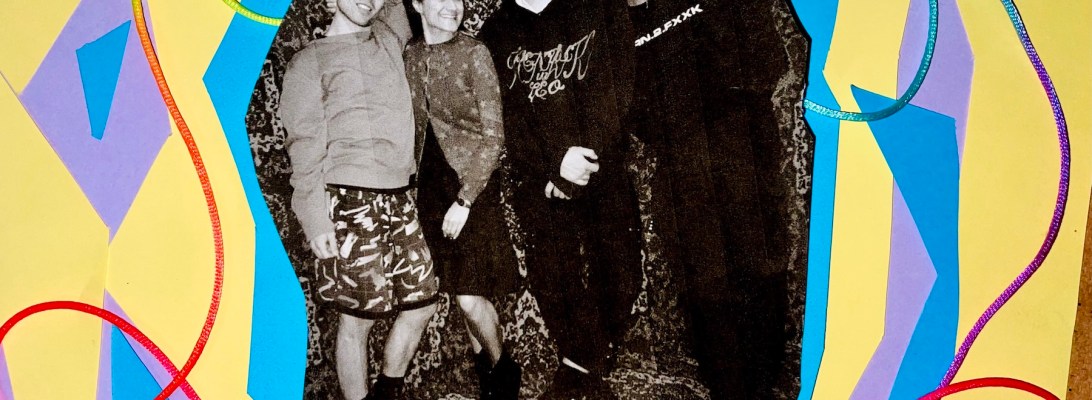
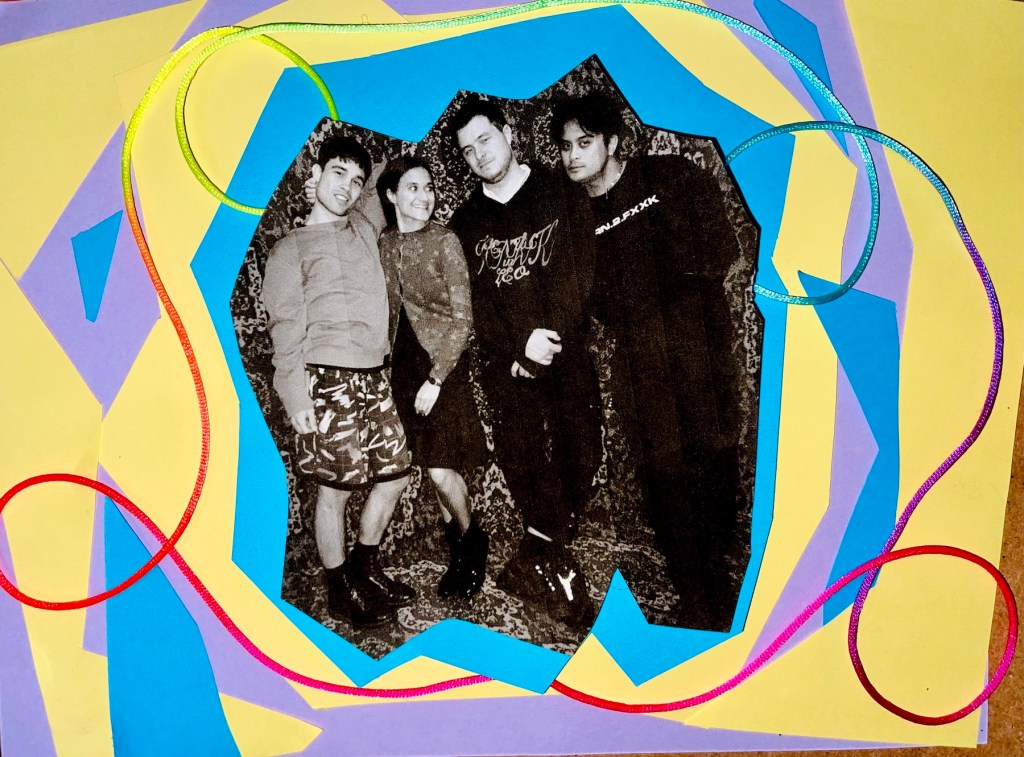
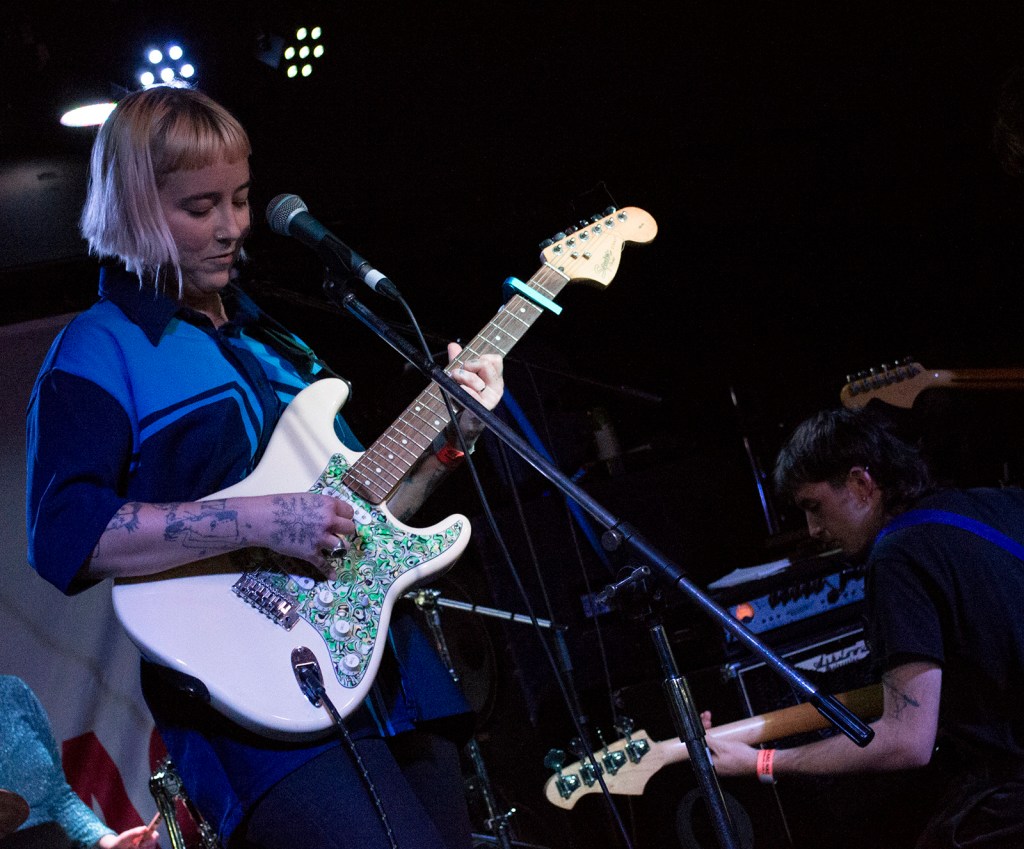
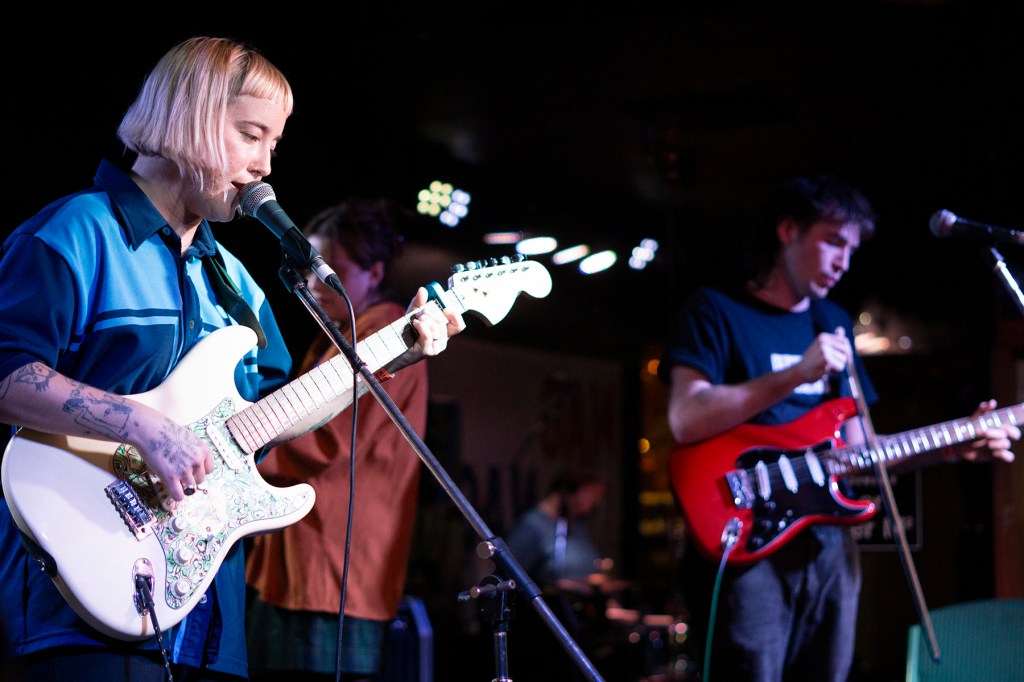
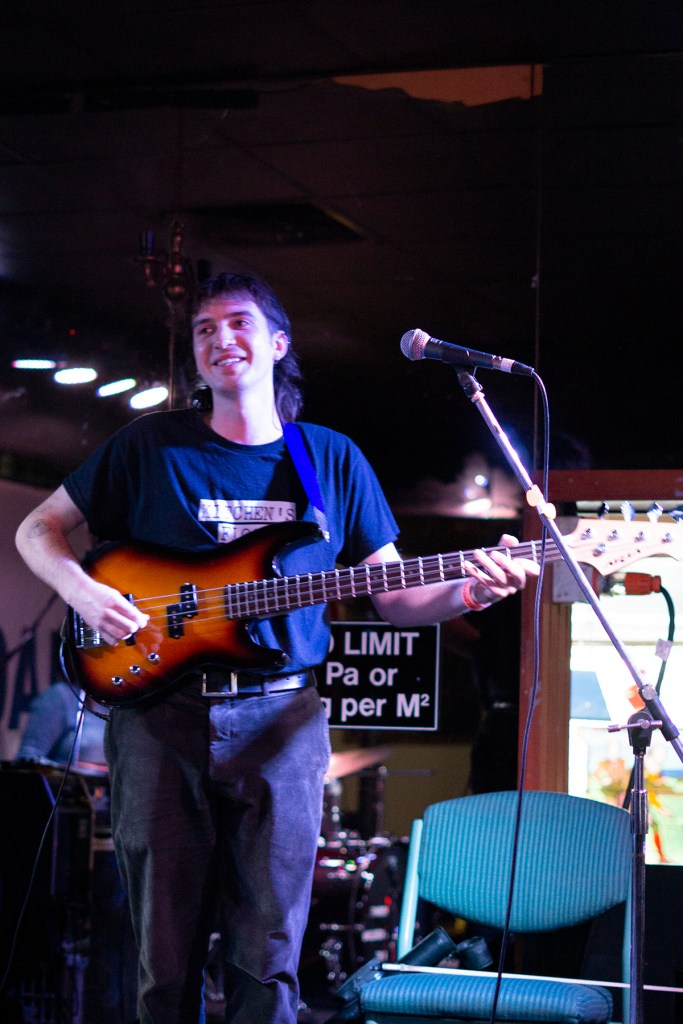
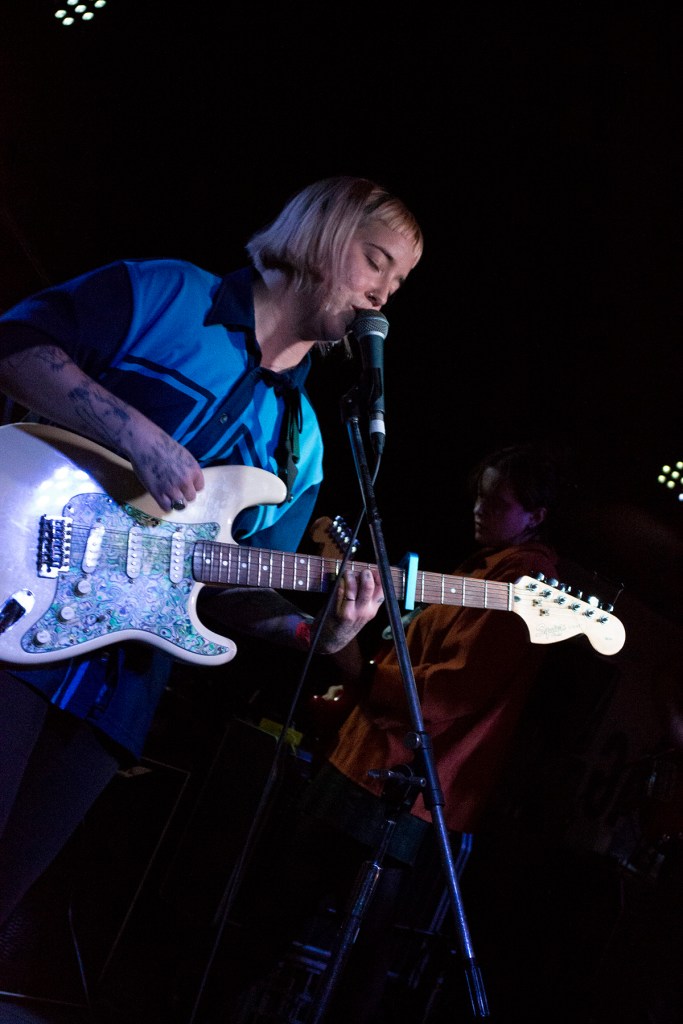
Right now, Daily Toll is me, Jasper, our friend Milo from Giant Hammer, and our friend David on trumpet. It’s a new formation, which I’m really excited about. It just feels really good. Three of us are gender non-conforming or non-binary, a lot of us are queer, and those identity markers don’t feel like labels so much as part of a shared experience. It feels like our values, and the way we move through the world outside of music, are really aligned.
That can only help a project. Being in a space where you feel like you can truly be yourself, where there’s love, understanding, and a genuine desire to understand one another, it makes everything stronger.
K: It’s really hard dealing with band tensions. It’s painful, and it’s sad. You’re working on something so intimate and vulnerable that it can feel like a breakup at times.
We had people saying, “Just ride it out. Daily Toll is going somewhere. Don’t change it. Just deal with how bad it feels.” And I remember thinking, is everyone completely off? That’s not why I joined a band. I’m not here to cater to someone else’s insecurity.
Lately, though, it’s actually been feeling good to advocate for myself and for my craft. To move through that discomfort and think, okay, that sucked, but what does it open up? What does it make space for?
I feel like I’m moving back into alignment with my values, both relationally and musically. There’s this really invigorating sense of freedom, like I’m going to do what I want to do, and I’m going to do it with people I love and care about. People who will hold me when I need it, and who I’ll show up for in return. That, to me, is the foundation of any kind of relational work.
What are the things that you do value?
K: Through this project, I’ve really learned how important communication is for me. It’s become a core value. Singing has also played a big part in that. I was never really a singer growing up, and there were times when I would go almost non-verbal, completely in my head. People would be talking to me, and I just couldn’t respond. That happened quite a lot.
So there’s something about singing that feels like a stepping into my voice. I don’t want to overstate it, but it does feel like a kind of owning of that space. Early on in the band, there were times when I couldn’t communicate what I needed to, and it didn’t end well. Now, I really value being able to speak openly, and to know that the people in my life feel they can do the same with me. That there’s trust, openness, and a willingness to learn alongside each other.
That kind of communication is something we need more of in the world as well. The ability to truly listen, to hear each other, and to express our own experiences honestly. Trust is built over time, through how we show up. Integrity is a big one for me. I find it really difficult when someone’s beliefs don’t align with their actions. That kind of disconnect can sit with me for a long time.
At the same time, I’m learning that things aren’t always black and white. There’s nuance in every relationship and every experience. But it’s still important to me to work with people who care about the world, who are paying attention, and who are thinking about the systems we’re all living within and how they shape our lives.
Yes. Sometimes I get so burnt out thinking about these systems and all that’s happening in the world.
K: And that burnout is painful, but also can be a beautiful thing. I’m reminded that it means that we’re in touch with our humanity in a way that a lot of people aren’t. People can scroll past this or move past that very quickly and not be affected. That pain of witnessing what’s occurring in the world is ultimately a really beautiful and important thing to be in touch with.
I keep coming back to what our role is as artists and musicians. I’ve been thinking about this in the art world for a while. I opened up a gallery in my garage in 2019, and a lot of that was about redirecting funds to First Nations organisations and mutual aid funds, instead of it going into the pockets of commercial art galleries here in Sydney, which are incredibly inaccessible. It’s definitely financially inaccessible, and it also relies a lot on a kind of social clout currency.
Since then, and even before, I’ve been thinking about what our role is as artists in a time like this. There’s no clear-cut answer, and I’m learning to get used to that. As much as I want to find one, it just isn’t there.
There are people and artists who are trying really hard, and who will do whatever they can with any opportunity to shed light, redistribute funds, or move towards solidarity in whatever way they can. And I think anyone who’s trying to make their corner of the world a better place for others is ultimately doing the best they can.
Did you grow up with activism or talk of politics in your household or is that something you came to yourself?
K: I’m Hungarian, my family’s Hungarian, and we’re very passionate people. I found it really interesting growing up in Australia, because I always felt like there was this cultural difference. I’m talking about white Anglo Australians, this desire to sweep everything under the rug. Whereas I remember my family talking about everything all the time, politics, heavy topics, big opinions, and those big opinions being okay.
My dad was a big influence for me. He was a really soft and gentle person. He really believed in the good in everyone, and he was more Buddhist-leaning in his understanding of the world, this idea that we’re given a body, it’s a gift, and what we can do to help others is what we’re here for, essentially.
He really struggled with addiction, his whole life and my whole life, and our relationship was pretty fraught. But he was so beautiful in the way that he saw the world, and I think that was a big influence on me.
And then my twin got into activism, maybe at like 16 or 17, and brought me into it. We were working for a youth organisation for a while, running workshops for young people to help them navigate their emotions, talk about their feelings, and be in touch with their creativity.
And I’m been big on First Nations solidarity. There’s a strong thread of social justice through my family, and definitely through me and my siblings.
You mentioned, helping young people tap into their creativity and getting their feelings out; what do you do to help you do that?
K: I always knew that I wanted to be an artist, from a really, really young age. It was so clear to me that I just wanted to spend my time making things and helping others find their way to make things.
For me, painting is a huge one. I studied art, but I studied printmaking and analogue photography, mainly analogue camera-less photography. I was always painting and drawing for a very long time, since I was 10 or 11 or something, but I used to draw these really creepy things. My mum thought I was mentally ill because I was drawing quite spooky things, like these emaciated women. Kind of gothic, strange drawings.
She took me to see an art therapist when I was 16 or 17, and this woman just changed my life. She was this really young Irish art therapist with flaming red hair. And I was telling you before that I had issues expressing myself when I was younger, so the first three sessions I didn’t say anything at all to her. We just sat in silence for an hour.
Then by the fourth session, I came in, and I’d always come in with headphones. The first question she asked me was, “Oh, what are you listening to?” And it was the one thing that opened me up completely. No one had ever asked me that question before. No one had ever taken an interest in what I was listening to and why. So it opened up this huge door, which then became one of the greatest parts of my life. It was a huge healing moment for me to work with her, and it opened the door for art and music to be genuinely healing modalities.
Now I paint. I paint to think through things, or to be present with feelings. Or I’ll just sit and play guitar for hours. I’ll probably smoke a joint and play guitar for like four hours, and that’s its own kind of healing modality.
That’s what I’ve been doing lately, and I’m so grateful for it. I’m so grateful that I have these methods or avenues, because losing my dad, or seeing what’s going on in the world, I feel really lucky, and quite privileged, to have ways to navigate things that feel really overwhelming.
I also have a pretty consistent meditation practice, so that alongside music and art has changed my life. It’s really changed my life.
Meditation is such a key thing for me in life too. It’s a non-negotiable, essential. Do you remember what you were listening to when you went to see the therapist?
K: I wish I could remember like what it was.
What kinds of music were you listening to at that time?
K: I was really overwhelmingly into The Cure, like The Cure is one of the best bands that’s ever existed. I was really into The Doors, and then I was madly in love with this skater in high school who would burn me CDs of skate video soundtracks and songs. Then I had this period where I got super into The Shins [laughs]. And Leonard Cohen, I remember being very into lyrics, and writing. Lyrics are such a fascinating aspect of songwriting.
I remember being really struck by how people were able to write so poignantly, or so specifically, about something that I felt only I was going through. You know, when you’re a teenager, you think no one else feels these things. Like no one else feels lonely, or no one else has experienced unrequited love, or that kind of eternal “who am I, what’s my purpose?” And then you start to listen to music that reminds you that this is just part of the human experience. This is what it means to be alive, to some degree.
My older sister was so obsessed with Nirvana. And so I was too. Then I got into Placebo like quite heavily.
My mum had three of us when she was 23, so really young. Which means, essentially, we were growing up while she was growing up as well. And she took us to so many gigs. I’ve seen Nick Cave and the Bad Seeds more times than I can count because she loves them so much. I saw the Pixies a couple of times.
The first time I greened out was at a Rodriguez concert, while he was playing ‘Sugar Man.’ She took us to see Leonard Cohen while he was still alive, in a vineyard in the Hunter Valley, which was a spiritual experience for me. That gig, by the end of it, everyone was helping each other pack up their rugs, helping each other out. It felt like I was watching the communal power of song and music in real time.
And The Cure actually came to Australia under a contract with Splendour in the Grass, where they weren’t allowed to play any side shows. So my mum took us to Splendour in the Grass so I could see them.
So yeah, she’s a big reason for my connection to music, and how I got into it. I guess she’s just a big part of why I am the way that I am. She’s always supported the art-punk in me.
Is there any lyricists that you’re super into at the moment?
K: Ryan Davis. That’s the one that came to mind first. I haven’t listened much to the new album. I’ve been listening to the album before it, because it’s a cassette that I have in my car and I just play it endlessly, like actually endlessly. It’s so good. Fucking hell.
His way with words is just… at once I’m in awe, and then at times I’m just so strangely jealous. But you can tell he’s someone who’s extremely well read and very funny.
I love Maxine Funke. She has a way of writing worlds, that’s just so utterly unique to her, and I think of her music and her words a lot like paintings.
I really like the Possible Humans album as well.
Before you started writing lyrics and doing music, you wrote poetry first?
K: Yeah, poetry first. I’ve got a very long-standing journaling practice as well, so I’ve been writing every day. When I first started teaching myself guitar and writing songs, they all actually came from poems, because I would be reading the poems and thinking, oh, this has such a rhythm to it. Poems and words have their own kind of beat and colour and texture, and the way they feel in the mouth.
I started with the guitar and writing music because I was dating someone who was making really awesome music, and I must have just said to him one day, oh, I wish I could do that. And he was like, you can, what the hell? I was really into The Velvet Underground, The Stevens, The Shifters, Twerps, The Chills and Cool Sounds at the time, so he was like, all that music that you listen to, no one knows what the fuck they’re doing, just do it. Honestly, learn four chords, find different ways of playing them, you just have to start.
That was a huge kind of turning point. It made me think about how the guitar can be used to aid the inherent rhythm of poetry, and what the difference is between a song and a poem. I don’t think there is much.
When did you first start playing guitar?
K: I was 24/25. I didn’t take lessons, and I didn’t want to go to YouTube or anything like that to learn. So many of the things I play are because I associate the finger shapes with animals. I’m like, oh cool, this is the bird chord; you know, different shapes.
It’s so funny, because we got an email after we released the album, someone being like, “Hey, I’m trying to learn ‘Bell Jar Convenience’ on the guitar. I think I’ve got it, but do you reckon you can send me…” and I was like, I actually don’t know what it is. I don’t know what to send you. It looks like a bird. It’s a bird on fret three, so go for it.
And that’s kind of fun. I’m at this point where I’m like, should I learn it more? Should I take lessons or something? And I’m kind of like, no, I don’t think so.
What I’m more interested in is reaching out to guitarists who practice a lot of different styles of guitar, and maybe even different melodic scales. Perhaps it’s like an Indian style of guitar or something, and then just sitting alongside them while they tell me what it is they like to play. It’s kind of like secondhand learning, getting knowledge from people who play it and think about it very differently to me. I’m curious about that. But I just love the fumbling. I love the figuring it out, and all the bum notes in between.
The nature of being an artist is that you have to believe that the way you see and hear the world is your craft. That transmuting of the way you experience the world, and turning it into your craft. It’s about how well you can listen to something that feels inherently like your experience, and then the next step is how you can produce something that is not only yours, but could speak to something bigger, or speak to someone else in a language they would understand.
I thought it was interesting that you called your album, A Profound Non-Event.
K: I just thought it was funny. Because that album is quite old for us, the songs are quite old. There’s a couple on there that are new, and there’s one song that I wrote the lyrics to the morning that we recorded it, but I’d had those songs for a while, and I’d had the album name for a while.
I was like, this album is going to mean so much to me. It is so profound to me, but it’s not happening in a specific event. It’s just happening outside of something that might occur.
I thought it was kind of funny that you can put something out into the world and call it a profound non-event. To me, it reminds me that the profound happens outside of events. All the things that occur outside of something are also profound. It’s the small moments, the small relational moments, or moments of connection.
What does the album mean for you?
K: It means a lot of things. It’s a moment of who me and Jasper are, where we are in our musical journey.
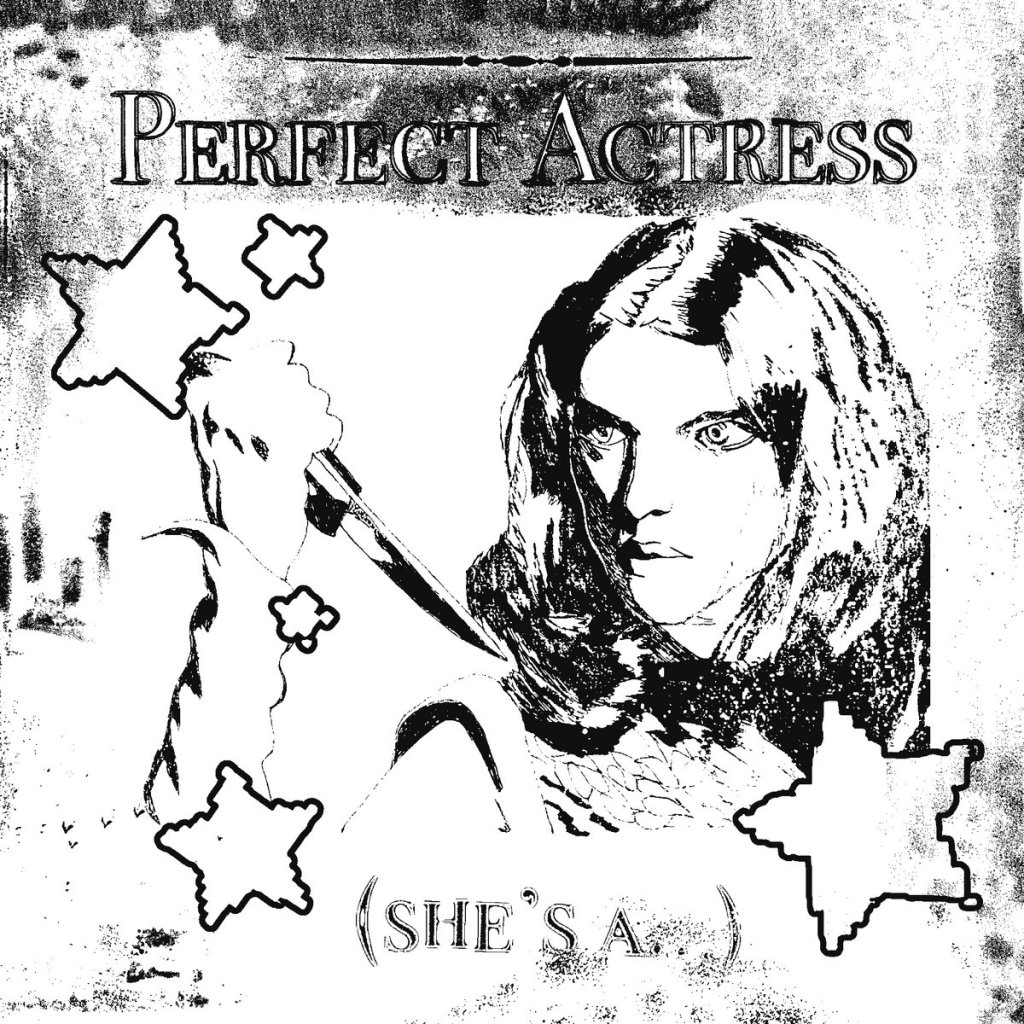
I’m really proud of myself also. Having anything on vinyl was literally a dream of mine since I was like 13. Designing it, and having one of my drawings on it!
And I think there’s something about believing in yourself. There are a lot of things I’ve believed to be true of myself, but that I’ve never enacted or taken steps towards. This feels like this object in the world is an accumulation of all the things that I’ve learned, and stepping into a kind of creative courage that I can feel more as I get older. This belief in myself, and in what I’m doing, that is blooming.
This feels like the first step towards fostering that. And to know that there is a place in the world for the things that I create… the connections that this album has elicited are more than I could have ever expected.
It means a lot of open doors, and a lot of relationships built and fostered. It means a step towards a kind of creative self-actualisation that is always in bloom, always changing, always growing, as I am.
And yeah, it’s kind of nice to have this album as the first step in something that feels like it will be, hopefully, a long lineage.
Is there a through thread for the album?
K: My songs are always about relationships. It’s always about the relationship I have to the world, or the relationship I have to myself, or sometimes they’re just straight down the middle, like conversations that I didn’t have or couldn’t have. There’s a beauty in how different a lot of them are. So I’m not sure that there’s much of a sonic through line, or maybe I can’t hear it because it’s a bit closer to me. The bass lines that Jasper does are just fucking hectic and epic, so that’s a pretty good through line.
For me, songwriting-wise, it’s me working through things that I need to work through. And within that, there’s a palette where I’m using anger, or frustration, or confusion, or… one song I wrote when I was just fucked up, depressed, fleeting.
It feels like a kind of holistic expression of what it means for me to be human. What it means to be thinking and feeling and figuring things out for myself. Some of the songs are quite political.
So it’s been interesting review that was like, “Oh, they sing about the mundanity of life and the bric-a-brac,” and me and Jasper were kind of like, oh, that’s so interesting, because that’s not really how we see the album.
But, everything is valid. It’s just interesting when you have an idea of what the album is, and then it’s out in the world, and all of a sudden everyone else has their own idea of what it is.
When I was listening to your record I got a sense of traveling, arriving, or almost arriving even, or a rejection of cynicism and stuff. It also felt kind of communal, but kind of not collective, if that makes sense.
K: Totally. The album starts with ‘Another World’. Maybe the through line is that I’m always kind of struggling between hope and a kind of despairing realism, and that’s an internal tension that I’m trying to figure out through song.
I don’t really want it ever to be just one or just the other, because I think both exist hand in hand. And I like the idea that some songs can be really pretty, and some songs don’t have to be.
These days there’s a lot of pressure for artists to specialise, to box themselves in, and to have a sound that’s very easy to explain in three sentences. I just don’t really like that. It’s not how I want to do things. I really like the idea of fucking with people’s expectations of what it is and what it could be.
Is there something in the record that you relate to differently now than when you first wrote it?
K: It’s just how I was feeling at the time. A lot of the things I still relate to, and I also know that, for whatever reason, they needed to come out in that way and in that song. So there might be a bit of distance from it, or distance from the intention, but I still think it’s valid.
‘Fated to Pretend’ is one of our oldest songs. I wrote that about often being the only public school person at private school parties. I would invite my friends and we would raid their bathroom cabinets, and raid their rich parents’ cellars, and drink their fancy wine.
That song is obviously about class. It’s about class disparity, and it was something that I was experiencing, and even feeling weird about at that age. Just the questions I’d be asked at these parties, like whether people were getting stabbed at my school, or whether I was selling drugs.
At first, I remember being 16 or 17 and feeling offended, and then I would just play into it. I would have so much fun knowing that there was such a divide, that these two different worlds existed. Largely based on the fact that their parents were rich, and that they were going to inherit more money and land and houses and whatever else, and that they were different from me.
Was there any song on the album that felt really vulnerable writing and putting it out there?
K: I feel that way about ‘Killincs’. That’s the emotional hinge. It’s like trying to put into words something that I felt for a really, really long time, which I know is a common feeling amongst people on the spectrum and different kinds of neurodiverse experiences. That sense of always feeling on the outside.
Like, how do I try and put words to this feeling where it feels like I’ve been living in a fishbowl my whole life, watching people experience life. I always felt like people were in on a joke, or in on a reality that I wasn’t aware of for a really long time, or that I’m still not.
Again, that was a poem, quite a long poem, just navigating my experience of being alive, and being Hungarian, and growing up in Australia, and growing up with a dad who loved me but wasn’t around a lot, who was caught up in his own stuff. So, that one was kind of gnarly.
And then there’s a song on the first EP called ‘The Hunt’, which for a while I actually couldn’t even play live, because it just felt too hectic. Too emotional.
Were both songs about similar things at home?
K: Yeah, it was about my dad as well. I was having pretty crazy nightmares at the time, so it’s about these kinds of recurring nightmares.
Some people see this album as a very hopeful album, and sometimes I wonder whether it’s perceived as this kind of very happy, pretty album. I’ve been thinking about why I sometimes have a discomfort with being viewed that way. Because in a lot of ways I do associate with that, but I associate with it from having gone through so much darkness that I actually need the light. Otherwise I’m worried about what might occur.
I’ve dealt with a lot of suicidal ideation for a very, very long time, and so hope is a part of the album, but to me it’s quite a powerful hope. It’s not something that feels flimsy. Hope is something that I need to maintain my survival.
So I think ‘A Light’ is also one on the album that feels really emotional. It’s just a mantra song about not killing yourself. That’s how I see it.
And then people will hear that and hear it very differently, and it’s a beautiful song to play in a crowd. We say, if you want to sing along, go for it, because it’s just the same thing over and over again.
Music means different things to everyone, but I think the connection you make with an audience is determined by your willingness to be vulnerable, and to give yourself over to the thing that is being asked in the song.
Yeah, I find in my own life, when I’ve been the most vulnerable, whether it’s creating something or whatever, that tends to resonate more with people. I guess it’s because it’s coming from a real place, and you’re saying things that other people are also experiencing. Alot of creative people I talk to just feel so, so much. But that’s good, because then they channel that into their art, hopefully.
K: It’s true.
Daily Toll recorded the album in three days?
K: Three days of recording and one day of mixing.
All analog?
K: Yeah, such a cool process.
I love how you described the processes as “candlelight and creative camaraderie”.
K: I’ve got a candle man here in Newtown who’s just an absolute legend, so I always buy his handmade candles. I brought some candles with me, and we were just cooking dinner in the cottage every night, me and Jasper. We’d light a candle and bring them into the studio as well. It was a really beautiful experience.
When I was listening to A Profound Non-Event, it almost gave me a sense of moving from the afternoon to night.
K: I’ve thought that.
The second half of the album felt more quieter and more interior maybe. Was that your intention?
K: Yeah, it felt like the first one was maybe navigating more of the darker feelings. Or setting that tone or that parameter. Then ‘My Sister’s Loom’ being a kind of palette cleanser between that and the other side, which just feels a bit softer, a bit more friendly, or a bit warmer.
I’m not sure if I thought about it too much. Not altogether intentional, but sometimes that beauty just makes itself known like that. The intention kind of reveals itself later. It’s like, oh yeah, true, that makes sense.
I love doing things via intuition. Trusting yourself is a big thing for me. In my life there have always been so many things outside of myself telling me “you’re not normal” and that “you’re an outsider” and “you’re not enough” or “your way is wrong” or whatever. By listening to yourself you kind of reclaim yourself, rather than being shaped by everything outside. You have agency and Sovereignty.
K: Exactly. And that it is an act of listening to one’s own self and one’s own body. And that happens so much through this album, and so much through the tour.
I feel like the older… [pauses and reflect] …it’s not even age, actually, it’s just the more I’m learning to listen to myself, and listen to my body, and listen to what makes my heart feel excited, or what makes me feel glow-y and soft and warm, or if I tense up. All these sensations are information. It’s telling you something. It’s a language that permeates through the album, or through the thing that you’re creating.
I read a review of a Daily Toll live performance at Phoenix Central Park and it noted how much of the story was visible in how you all look at each other on stage. That non-verbal language you’re talking about.
K: And that only works when you’re working with people that you trust. Because I’m not a trained musician, a lot of what I do is just intuitive. It’s fun and experimental, and I get really shy if I’m working with people that I don’t trust or that I can’t be myself around.
That show was really special, because we just had so much fun. Everyone was so passionate and curious and silly, and wanting to make it a beautiful experience for each other. It was such a unique show for us, but a really fun one to try something different.
I love how it was described as “a modern folktale”.
K: Yeah, huge. It’s like he climbed inside my brain and took out what the intention was.
The set started with a sound bite, I ripped a little bit from this Hungarian animation. In Hungarian it’s called Fehérlófia, but I think in English it’s The Son of the White Mare.
The sound design won heaps of awards because it’s one of the craziest sound designs. It’s that kind of Soviet-era, synth-driven, spooky stuff.
The horse is presenting the beginning of the story, and it starts with the Hungarian version of “Once upon a time. There was a young prince that…” And that’s how we came onto the stage.
Is there any kind of stories that really stuck with you from growing up?
K: I grew up watching Hungarian folk animations, on DVD, and then we found out that someone put them all on YouTube, so it’s all there, which is amazing.
I don’t think that there’s one story. I’m more just fascinated by the idea of folk tales as being these kind of morally coded warnings for humanity. Folk tales are really powerful, and there’s a reason why they’ve persisted across every single culture on this planet, so-called Australia having one of the longest cultures of storytelling.
When we first started, we never had a drummer, we just had a typewriter. So it was me and Jasper and a typewriter, and people would come up and play the typewriter. I have a video from ages ago of one of our first gigs, of Buz from R.M.F.C. coming up and typewriting.
I’m always just surprised when anyone likes anything we do.
When did community start playing a big role in your creative life?
K: Forever! But specifically music, me and Jasper were just going to so many gigs and seeing these people do something that we really admired, and they’re all lovely people.
I’ve been thinking about this lately, because I think it bleeds into everything. I’m a very communal person. Not to make that sound like I’m tooting my own horn or anything. That’s why I have such an inherent discomfort with the way the world is at the moment. There’s more than enough for everyone.
We’ve been put on this earth that has provided for people living in harmony with it for hundreds of thousands of years, and what’s lacking right now, is a ground-level communality. What are we really willing to give up for one another, and how can we really be there for one another, knowing that our lives are entwined in ways that we’ll never truly comprehend or understand?
That’s where my spiritualism leans into. We’ve been given this life, it’s a gift. It’s a magical gift. We’ve been given these bodies. It’s such a privilege, and it feels like such a waste to move through life only thinking about your own experience, because you miss out on the ways that we are so tethered to one another.
I know that someone in my community, their success means my success, and their loss is a loss for me. And if someone kills themselves, what does that mean for the community that we’ve created? What does that mean for us? Obviously that’s hella nuanced, and again, something that has no clear answer.
But I think I’m just governed by this idea that I was put on this earth for a reason. I’m here talking to you for a reason. I’m in this community for a reason. I released this album for a reason. Whether that reason makes itself known to me or not is not my business. I just have to trust that it serves a purpose that’s valid, even if it’s outside of my understanding.
Is there anything that you felt feel like you had to let go of to write the songs and put the album out there?
K: I had to go over a lot of fear, and a lot of fear in trying to control the way people perceive me, or perceive the band, or perceive the songs.
Me and Jasper have worked together for so long because we work really well together. We love each other. We care about one another’s visions. We understand where things are coming from, and there’s a kind of safety in riding with him and making with him. But then, as soon as it’s other people involved, that collaboration is a giving up, or a surrendering, of some control. Fear and control are the main ones. And also just letting go. You have to just do it sometimes.
Anything else you’d like to share with us?
K: A lot of Daily Toll is me and Jasper’s friendship, and what it means to be able to make art with someone that you can be yourself around, and push and support each other.
After this album came out, I kept getting questions about whether me and him were dating. People see someone that looks like us and assume that it has to be romantic. And I always thought that was kind of silly, and a bit of a shame, because he’s just my best friend, and that’s what it is.
I’ve learned so much from him, through music and through us figuring this whole thing out together. I wouldn’t be the musician I am, or Daily Toll wouldn’t be what it is without that. The album wouldn’t be what it is without Jasper, who’s not here talking with us today because he’s at work.
So shout out to Jasper. Shout out to friendship. Shout out to collaboration, and people doing the best they can in this small corner of the world.
Find more Daily Toll HERE. Follow @daily.toll. A Profound Non-Event out via Tough Love. WATCH Daily Toll live on our YouTube channel.