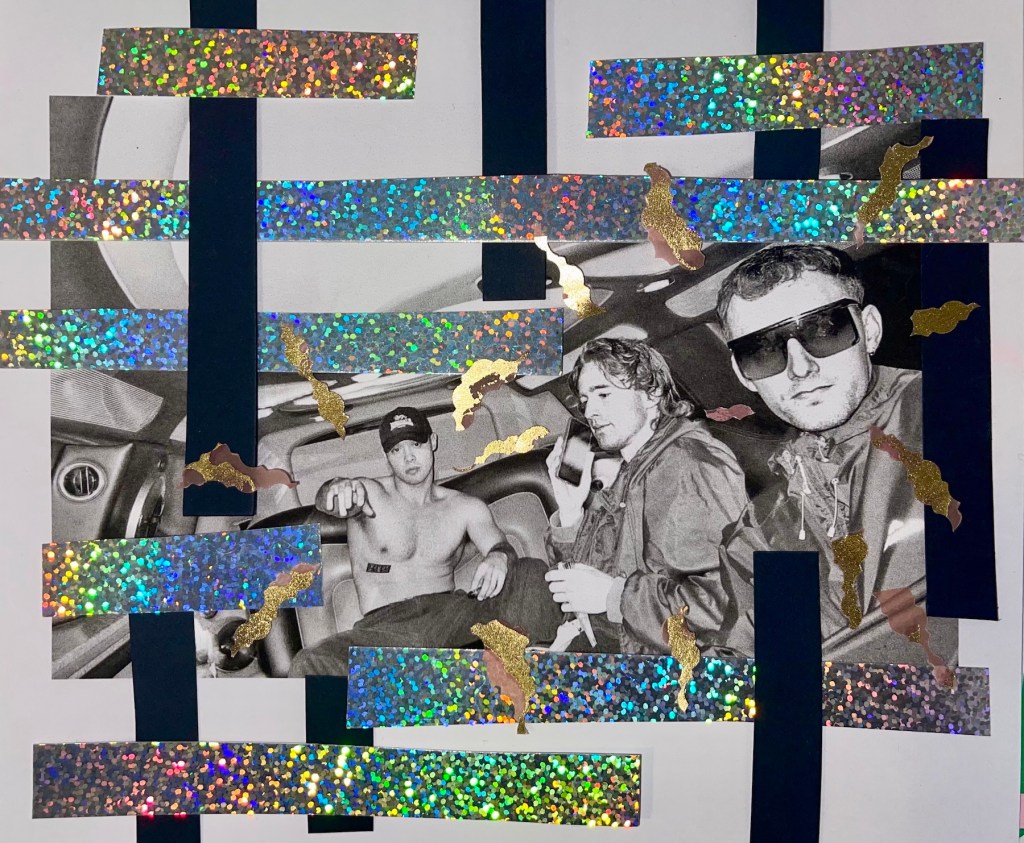
Shady Nasty: ‘Making music keeps you sane.’

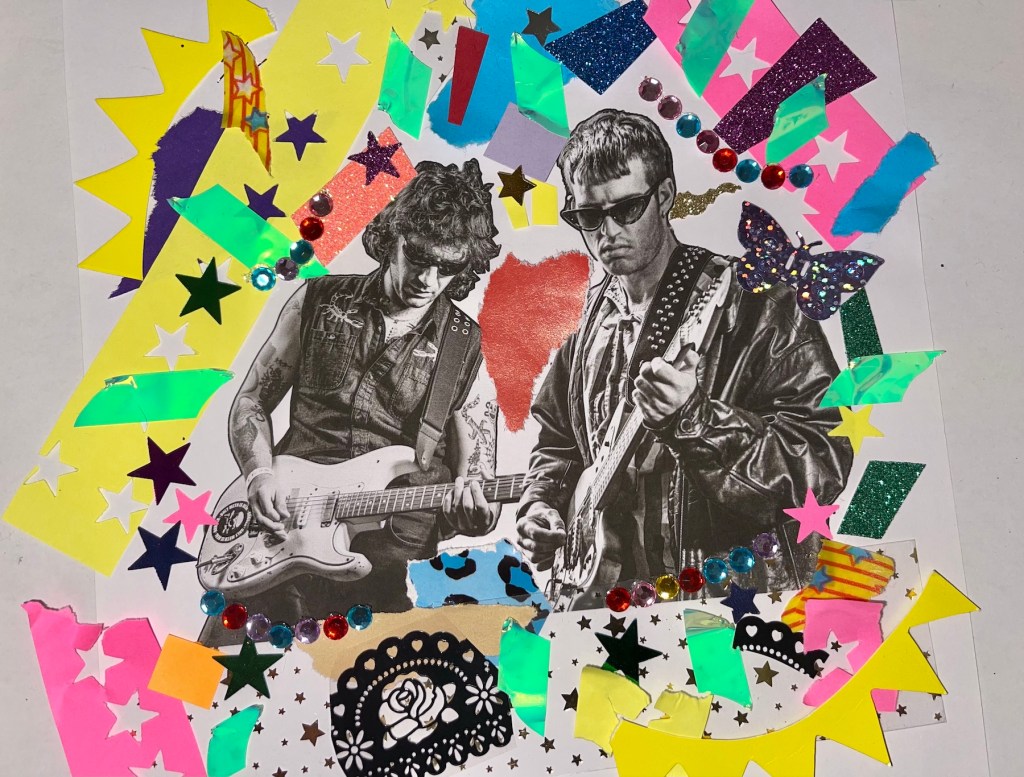
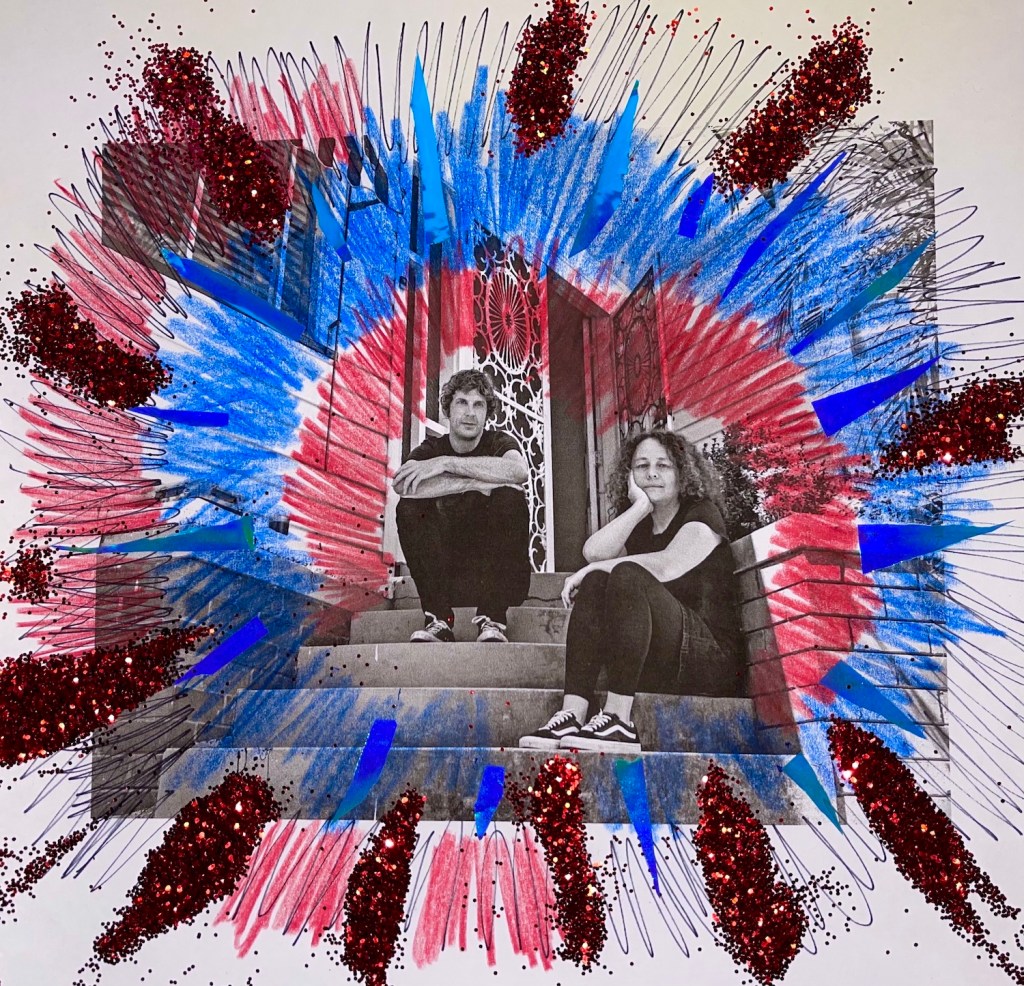
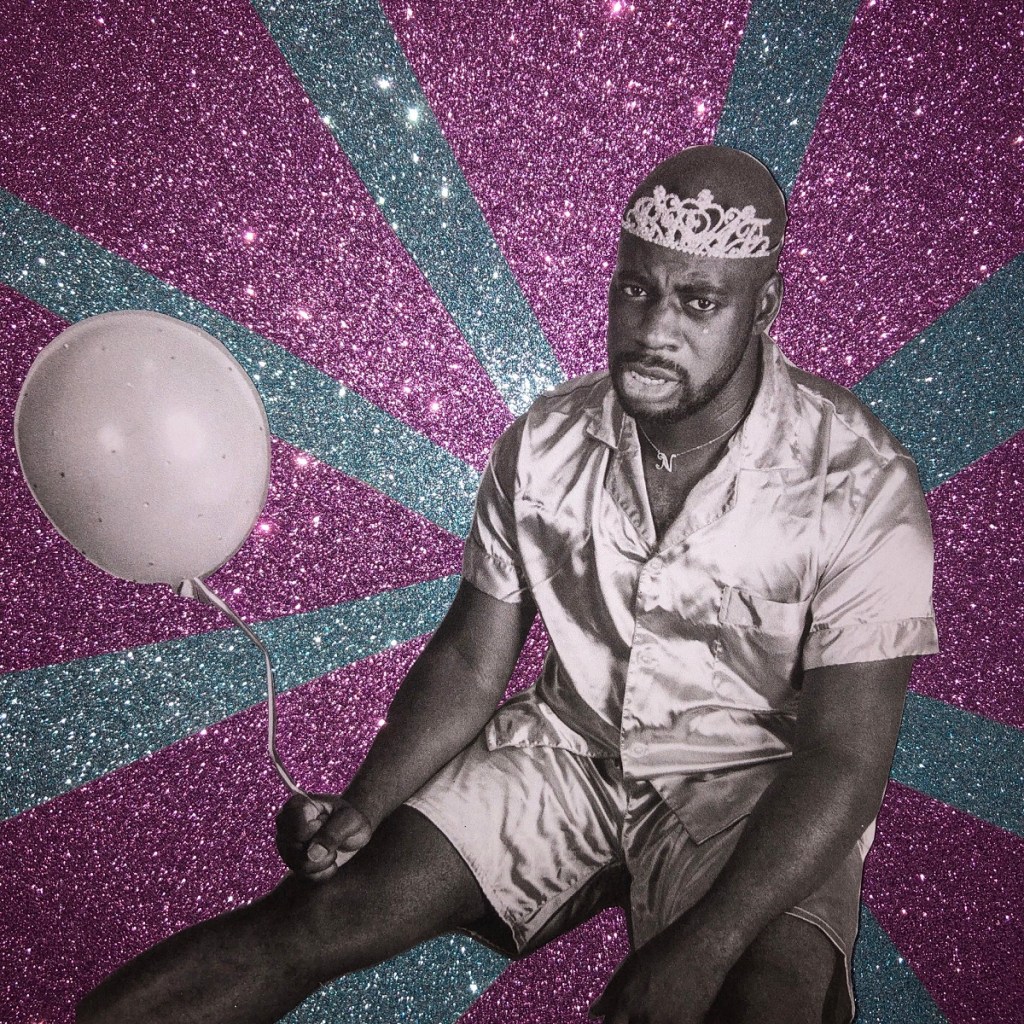
Original photo: @kataomoi__ / handmade collage by B

Gimmie have been bumpin’ Shady Nasty’s debut album non-stop while cruisin’ through the Gold Coast suburbs ever since we got our hands on it! But TREK isn’t just a collection of bangers or only one of the coolest albums of 2025 so far—it’s a reflection on personal growth, hard work, and the pursuit of one’s dreams, deeply rooted in their beloved city, Sydney. 

For Kevin Stathis (vocals, guitar), the post-punk-meets-hip-hop album with electronic elements draws on band’s day-to-day life. ‘My dad has done solo excavation his whole life, like proper blood, sweat, and tears stuff,’ he shares. ‘About nine years ago, he was like, ‘Fuck it, I’m going to treat myself,’ and bought a Lexus,’ which to his dad wasn’t just a car (it appears on TREK’s cover)—it was a symbol of everything he’d achieved, coming to Australia as an immigrant with only $200 in his pocket.

For the band, TREK is the pursuit of their own dreams while sometimes feeling lost in the rush of life and disconnection, which we can all relate to. The tracks on TREK bubble with the energy of their suburban neighbourhoods and the everyday hustle of its people. In this in-depth conversation, Kevin, Haydn Green (bass), and Luca Watson (drums) open up to Gimmie about the making of TREK, working with The Presets’ Kim Moyes, their roots, and the balancing act of staying true to who they are while embracing change.

KEVIN: I’ve been working a lot. I’m a technician. I’m currently building speed cameras! 

Wow. That’s funny. 

KEVIN: Yeah. It’s very ironic considering my interests [laughs]. I only just started it so we’ll see how long it goes for. Hopefully I don’t get kicked out when people discover my true identity. 

[Laughter]

HAYDN: I’m a tennis coach. We were down there this morning, actually, taking photographs at the tennis courts. It’s an interesting job, I suppose— a little bit left field.

LUCA: I work for the University of Sydney in an air-conditioned office. I’m very email-based, from nine to five.

Why is music important to each of you? 

HAYDN: It’s one of those things, because we all played together in school. I suppose we had a little bit of a knack for it. If you’re told that at some point, you’re probably going to think, ‘Well, maybe I’m all right at this,’ and you follow it a little bit. 

LUCA: Like, ‘Yeah, I’m gifted.’ [laughs].

HAYDN: That’s right. It’s good for your brain too. 

LUCA: That’s not the fucking reason we do it though. 

HAYDN: For me, I would be playing music, even if I wasn’t doing the band. I think it could be a meditation of sorts. 

LUCA: Making music keeps you sane. We all do a lot of things that other people have to do in their lives, and it’s just this one thing where we can come together and do something that has no sort of pre-set expectation. We can do whatever we want.

KEVIN: It’s freedom to an extent.

Freedom—different forms of it—seems to be a big theme on your new album, TREK.

KEVIN: Yeah, it’s a good way to put it. 

LUCA: Most definitely. And, ironically, I am situated at—” [turns camera to show that he’s in a car park outside of Freedom Furniture].

[everyone laughs]

TREK is an interesting title for your debut album. How did you guys get to that? 

HAYDN: After absolutely spamming the group chat with options…

KEVIN: There was some bad ideas in there. 

HAYDN: It was just throwing words at the group chat. Does this word sound good?

KEVIN: One day, Luca was just like, ‘TREK,’ and we’re like, ‘Oh—’

LUCA: I was on the toilet at work. How good is that? Thinking about it, because we’d been talking about it so much. Trek is one of those words we use almost every day to describe things in our life. For example, you’re talking to your parents growing up, and they’re like, ‘Oh, you’ve got to go do X, Y, and Z.’ You might be like, ‘Uggh, trek.’ I told my parents about it, and the fact that they didn’t get it—that’s not a word from their generation. It’s very much ours, from our era in Sydney. 

HAYDN: You wouldn’t say, ‘That sounds extremely arduous.’

Did you all grow up in Sydney? 

HAYDN: Yep. We all went to the same school.

I think I read you were jazz musicians or is that a stretch?

LUCA:  The press release really gives us a little bit too much credit there. We all played jazz together. 

Did you have any other bands before this one? 

KEVIN: Nothing serious. This band, we’ve stuck together. I only do it cuz I like hanging out with these two.

When you first started the band, what kind of music were each of you listening to?

KEVIN: Sticky Fingers.. it’s been a long time since then. 

LUCA: It was such a wide range.

KEVIN: I remember you always were like, ‘Oh, you’ve got to listen to Ice Age. Ice Age is the best.’ I remember listening to it and being like, ‘This shit is trash.’ Now I’m like, ‘Yeah, it’s pretty good.’ I just didn’t understand. Because, me personally, I’ve played piano since I was a kid, so I guess I’m classically trained. It was just painful listening to this music where the guy couldn’t sing in tune, but now I get it.

LUCA: We had to convince Kevin. We had to get in the backend and change some of the plugins and the wires [laughs].

KEVIN: They had to rewire my brain.

I really love the album cover; whose car is that? 

KEVIN: My dad has done solo excavation his whole life, like proper blood, sweat, and tears stuff. About nine years ago, he was like, ‘Fuck it, I’m going to treat myself.’ And he bought that Lexus. He didn’t really drive it much, but it was kind of like a symbol of this guy who flew from Greece when he was 22 with like 200 bucks in his pocket—he literally came from nothing. And for him, having that kind of material possession was much more than just a material possession. It represents a lot of people in Sydney who are struggling, but they’re trying to achieve this dream. There’s a lot of mountains that one has to climb just generally. 

We’re all trying to chase this dream, too. It’s obviously a bit of a different dream from what my dad wanted to achieve, but it’s still, as the son of migrant parents, where I wouldn’t say I had a hard upbringing. They worked hard. They were able to provide. So, my dream is a bit different.

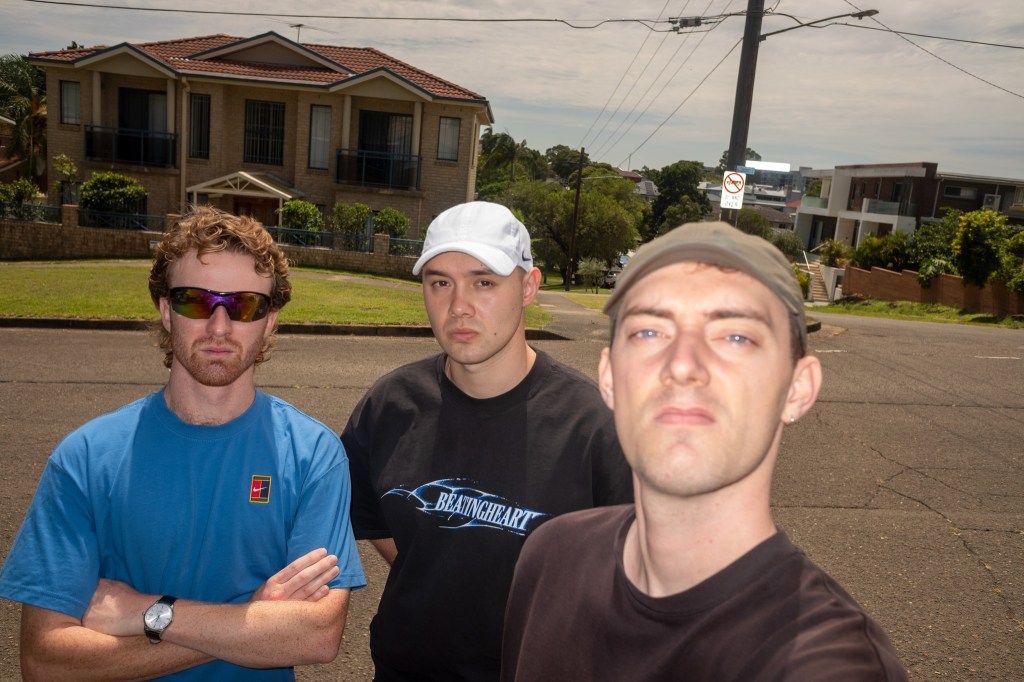
HAYDN: We were taking some press photos in my area the other day, and that photograph very much reminds me of it. Kevin’s in Campsie, I’m in Bexley, and that’s where we grew up. The image just looks like a photograph of suburbia around our parts—like the houses of that style. It’s very Aussie in a way. It has a temperature to that photo as well. It’s a real warm picture, and it reminds you of walking down the streets.

LUCA: The image represents the hard graft of everyday life. If a car is something you care about and it’s precious to you, it’s about putting in the work to keep it from falling to pieces. There’s a level of upkeep in that photo—like investing in the things you love.

The band’s name is borrowed from a drifting team, isn’t it?

KEVIN: Yeah, look, I regret the band name, but I was 18. 

LUCA: [Laughter].

Where did your love of modded cars come from? 

KEVIN: I was procrastinating during my HSC exams. I was bored and discovered drifting, and it’s been an obsession of mine ever since. It’s such a unique niche. To most people, it looks like the most boneheaded shit, but every car is so creative. They’re such an expression of their owner, and that’s what I like about it. They really stand out from the norm, and I gravitated toward that—because I don’t want to be like everyone else.

In the Shady Nasty song ‘Get Buff’ your mum’s voice can be heard talking about you getting a car.

KEVIN: I was going to buy a certain car, which I absolutely knew she would disapprove of, and I recorded her reaction. 

I feel like there’s a lot going on in both your music and the visual accompaniments to it. There’s a lot of meaning and thought behind it. Many of the songs seem to be a balance of the duality of life’s chaos and the search to find meaning in it. 

KEVIN: Nah, you’re giving us too much credit. 

HAYDN: It’s all bone-headed fun [laughs].

LUCA: We do put a lot of time and effort into it. It’s very considered—it’s not just like, ‘We wrote this mad song about our mad car, and our epic mates did a burnout. Hectic!

KEVIN: Nah, it is what we’re about [laughs].

LUCA: A lot of our work is about Sydney—what’s in our own backyard and how we process our day-to-day experiences, especially as people living in the 21st century with an iPhone. When you take all that in and try to make a music video, it comes from the small things we observe or overlook in daily life. We try to code them honestly through our own Harbour City experience, whether that’s using the words our friends use or simply acknowledging the environment around us—like right now, I’m sitting in a car park in front of Spotlight, Freedom, The Good Guys. The typefaces, the colours, the cars in front of me—this is what life actually looks like for a lot of people.

Music videos can sometimes feel detached from reality. Not to say ours don’t have VFX and layers, but they are born from a collective reality for people who live here. 

KEVIN: Inherently, we’ve always wanted to be as genuine and authentic as possible. I get the shits when I hear songs that clearly aren’t about real experiences the artist has done. So we put a lot of effort into that authenticity. Our lives aren’t that exciting most of the time, so we dig deep into certain moments to pull meaning from them. Maybe that’s why the lyrics and visuals turn out the way they do.

HAYDN: A lot of people write lyrics that lean into fantasy—big upping themselves. For us, though, it’s different. Take our track ‘Ibiza’ for example. It’s about living vicariously through other people’s lives, which is exciting in its own way. None of us have been to Ibiza, and that club scene isn’t our lifestyle, but it’s fascinating because so many regular people love that idea. 

LUCA: You see them at the gym, at Westfield—there’s this shared space.

KEVIN: That said, TREK as an album is much less about vicarious living. It’s all pretty grounded in our own lives.

I’ve been really obsessed with the song ‘Caredbrah’ since you dropped it in November last year. It felt like he song of the summer. The vibe and hook rules. Is the song a reflection on ambition and what it costs to make it?

KEVIN: Maybe, in a way, yeah. It’s inspired by the relationship between me and one of my closest mates. We live completely different lifestyles, yet whenever I see him, it’s just like, yo, let’s go. I find that really special, and I’m very fortunate to be mates with this guy—that’s kind of what Caredbrah’ is about.

The ambition part—yeah, I feel like I’m being extremely ambitious trying to play in a three-piece live band in 2025. And he is extremely supportive of it, despite knowing that heaps of people out there will never be able to make a living off doing that kind of stuff. But why not give it a red-hot crack?

I reckon you guys can do it! 

LUCA: That would be very cool if we could do that. If you could organise that for us, that would be great. 

[Laughter]

Do you have a favourite song from TREK

HAYDN: I like ‘A86’ the most. I like the idea of it. A lot of sampled music—particularly in hip hop—takes an older track, like a Motown song, and lifts a full bar from it.

KEVIN: Tell them how you did it!

HAYDN: I took four bars from our rehearsal and turned it into a sample. Then we took it to the studio and layered other elements over it. I started wondering—has anyone ever sampled themselves? It just seemed like an odd concept to me.

Kevin’s chant vocal on it—I really like it. It’s a great representation of what we can do. It’s traditional instruments, but with an electronic or hip-hop element that might surprise people. That combination is what makes it stand out.

That’s cool. I know that Randy the vocalist for 80s-90s Sydney hardcore punk band Massappeal took samples from the bands practices and used the ringing out parts of songs to make an electronic project called Wolf Shield.

HAYDN: Man, somebody’s onto it before me. I’m just stealing his ideas! [laughs].

What about you, Luca and Kevin? Which song do you really love on the record? 

KEVIN: My top two are probably ‘SCREWDRIVA’ and ‘I Don’t Want To Lose’ (‘I.D.W.T.L’)

‘SCREWDRIVA’ because I remember listening to the first mix Kim [Moyes] sent us in the car—it banged so hard. I played it over and over, like six times, on the way to work.

Then ‘I.D.W.T.L’—the demo was so different from what it sounds like now. It really became its own thing. I can’t say I enjoyed the process because it took forever—it was painful trying to work things out. But the end result is completely different from the original, and I think it’s beautiful what it became.

What was it originally? 

KEVIN: There were live drums and heavy guitars—it pumped a lot more. But the version of it now is probably the most laid-back song on the album. It was cool to see what it could become.

Lyrically, it’s again, about having ambition and knowing that it’s a a difficult road to traverse but just doing it anyway.

I feel like that one seems a little more introspective. 

KEVIN: Yeah, I think so. I don’t know what I was thinking when I wrote it. 

LUCA: Your mum and your dad yelling at you.

KEVIN: Yeah, they roast me a lot for not having a stable career, but what are they going to do about it? 

[Laughter]

What’s ‘SCREWDRIVA’ about? 

KEVIN: The long stretches of driving when we play interstate shows. You just want to get there. So, you drive well above the speed limit and you have lots of energy drinks. And it’s about the tunnel vision that you get as you’re just barreling down the highway. You stop caring about getting done by speed cameras or crashing into kangaroos. That’s what it’s inspired by.

I still can’t believe you you’re building speed cameras!

KEVIN: Yeah, me too. I’m on my second week of the job. 

I found a mention online that said you were a stunt driver?

KEVIN: I did some burnouts for a short film. I’ve done stunt driving a couple of times, but it’s not actual stunts, it’s just moving a car into the frame stuff. It’s good fun. 

Luca, what song’s your favourite on TREK?

LUCA: ‘SCREWDRIVA’ or I actually really liked the song ‘Hesitance’, even though I hated it for so long.

KEVIN: That song wasn’t even going to be on the album

Really? That’s actually one of my favourites on the album. With each listen it grew and grew on me even more.

LUCA: That’s how I feel about it. It  leaves me wanting more, every time we did it. We couldn’t get it over the line. And even when we’d finished it, I still had this feeling of unease about it. I’d almost say I like the fact that it doesn’t perfectly scratch that itch for me. I like that it feels like there’s something slightly off, like it never quite makes it over the line. I don’t know why, but I just like that feeling in that particular song. It’s a grower [laughs].

KEVIN: We reworked that song multiple times in the studio with Kim. We tried so many different things. Even like the first mix, after we finished all the studio sessions. Luca you still hated it. I

HAYDN: It sounded flat. It didn’t have any aggression; it didn’t have the bite it probably needed. It was only able to get enough bite by mixing it differently—especially by that point, because we’d spent so much time on it. Turns out, that’s actually all it needed—some compression and mixing. That’s all it fucking needed.

What was it like working with Kim? How did he help shape the album? 

LUCA: Kim is a beast. Kim is fucking awesome—and a very intense guy. Much like us, he has strong reactions to things, and he will fight you tooth and nail to realise what he thinks is best for the song. So he makes you fight for what you want, which was honestly a really cool experience for me.

I liked that he was quite full-on and that you basically had to wrangle him if you wanted to get what you wanted. He really questions your resolve and challenges you on why you think something’s good. I love Kim—he’s a total eccentric. He’s a wonderfully talented and smart guy who can be quite difficult at times, but I have a lot of respect for him.

Kevin and Haydn, how do you feel about him? 

KEVIN: Luca put it perfectly. Although, Kim basically did whatever I wanted him to do, he fought with Luca and Haydn a lot more. 

HAYDN: Yeah, look, there were some fights. But he also brought something valuable to the process—he probably highlighted a mistake we often make. There’s a commercial element that’s lacking. That’s not to say things are worse if they have it, but it’s probably something we hadn’t considered exploring as much as he pushed us to. As for the album as a whole, that was definitely an aspect worth looking at.

He would say things like, ‘Yeah, that’s great—if you just don’t want to make any fucking money and fade into obscurity.’ [Laughs] It’s like, ‘Yeah, yeah… but I like it that way.’ And he’s like, ‘Yeah? Why? Why do you like it that way?’ And then I think, ‘Well… okay, maybe I’m not that attached to it.’

[Laughter]

When you first started the band, did you have an strong idea of what you wanted to sound like?

KEVIN: I probably want it to sound like Sticky Fingers, but then like my tastes have changed, they change monthly. So you just go with it and it’s what it is now, at least for me.

HAYDN: Yeah, I think so. It all changes, even when you’re playing or writing. But I think you can surprise yourself with how far your tastes reach. You might write something and think, ‘Oh, I don’t even know if I’d listened to that before,’ but then it grows on you—and it might inform your later writing as well. It’s all part of the full package of what we set out to do, and it just works.

We kept saying to each other, ‘We’ve got to write a banger. We have to write a banger! We have to write something that’s loud and hits.’ But when you try to put things in a box like that, it often doesn’t get you the result you want anyway. So it’s a pretty organic process in the end.

What’s the most fun you had while making the album?

KEVIN: We’ve been trying to write an album for five or six years. So every rehearsal, if we didn’t come up with something I thought was good, I—well, I think the boys can attest to this—I would just go silent and get really down. Literally, every week. So every rehearsal was a rollercoaster.

My favourite moments were when, for example, we came up with the main riff for ‘SCREWDRIVA’ and thought, ‘Fucking finally!’ It was just pure relief. It wasn’t even joy—it was just the relief of finally getting something, you know?

HAYDN: Yeah, that was memorable. I can still picture that moment when we started to play it. And we all just went, ‘Five!’ I mean, that was the quickest and easiest thing. But is it though, if it costs you months of work to stumble on something?

KEVIN: Bro, like years of work, stumbling!

HAYDN: Well, yeah. And then you come across it and think, ‘That was so easy and quick.’ But that one session, though—it just happened to come together in half an hour. But, you know, it’s years of work leading up to that. And when something like that happens, it’s a huge relief.

Has there been any moments where you thought you just might quit and not do the band? 

HAYDN: Yeah. 

KEVIN: Yeah, I think about that every second day. 

[Laughter]

HAYDN: We had a big chat after we came back from Europe. It wasn’t a particularly good tour, all things said and done. It was fun in a lot of ways, but I think we all came back from that thinking, ‘This is impossible.’ We have to get this done; we have to do an album. I think it was a moment where we had to talk ourselves into it, because you realise you can’t stay at this level forever. It’s just not feasible.

KEVIN: The fact that we all have other interests—like, I love cars, Haydn loves tennis, and Luca loves RuneScape—all these things pull you away from music. In a way, having those breaks is really good. Because if I tried to write music every day, I’d be like, ‘Nah, fuck that,’ I’d be out of here, you know? So, I think, yeah, the fact that it took so long was necessary too.

Was there any big challenge making TREK

LUCA: We all know when it works. 

KEVIN: Yeah! 

LUCA: We all collectively have this intuitive, like, fuck yes moment when it clicks. But we don’t often know, like, what we’re searching for or, like, how to get it there. It’s just grinding it out. And the grind can be brutal—weeks upon weeks. We go to the studio twice a week for over a year, four or five hours each session.

We have tons of music that, maybe to other people, yeah, might have some decent bits in it. But for us, it’s just not hitting that particular nail on the head. And when it does, it’s like—fucking holy shit. Thank Christ.

HAYDN: There’s also the amount of times we’ve said, That’s a great song—for another band. We’ve written something, even fleshed it out, and it takes listening back to it, maybe playing it the week after, to realise—yeah, the parts are good, but it’s not really us. It doesn’t suit the character.

And again, I’d probably listen to something like this, but does it fit the mould? No, probably not.

KEVIN: Like Luca said, we all know when something is right. So it’s basically just about keeping at it until something clicks. I wouldn’t recommend trying to write music this way, though—it’s pretty heavy.

LUCA: We strongly discourage anyone from making music. 

[Laughter]
How have each of you evolved since you started the band?

KEVIN: I don’t play guitar anymore.

LUCA: For you Kev, if I could make a comment on your evolution, you’ve embraced the things that make you, you a lot more. So for instance, you had a lot of like shame and embarrassment attached to your obsessions. 

KEVIN: Yeah, that’s ‘cause my parents were probably roasting me every day. So I held onto that, and I felt shame for being obsessed with cars for a long time. But now, I’m pretty open about it—I really like it. But yeah, that’s definitely changed.

There’s so many references to cars throughout your songs. 

KEVIN: Yeah, sorry about that [laughs].

I saw a mention of you guys being into Avicii and David Guetta? I happy your honest about your influences.

LUCA: The creative world—particularly music—so much of it is stylised. Not to say our work isn’t, but at the end of the day, when we’re not on stage or whatever, we’re scrolling reels at home, you know? We’re going on RuneScape like everyone else, looking at all this stuff, doing shit that we like.

I’m not really sure what I’m trying to say…

HAYDN: Well, it’s not embarrassing to admit that, because, you know, everyone else is scrolling reels at home. There’s no sense that we’re above that.

LUCA:  That’s the point that I’m making. 

HAYDN: Yeah. This extra highfalutin thing—it’s like, no, it’s the same. We’re all digesting the same meal of TikTok.

KEVIN: We’re professional doom-scrollers.

What have you been listening to lately? 

HAYDN: The Fontaines D.C. album was one of my most-played last year—both the artist and the song. And that album is fantastic. It’s just got depth to it. There are parallels to our music in there, and I think that’s part of it. It’s a bit of inspiration.

LUCA: That came out when we were recording, in the middle of recording, actually, and it very much affected the drum sound, on ‘SCREWDRIVA’. 

HAYDN: And ‘Hesitance’ . 

LUCA: I haven’t listened to anything but Top 40 that I’ve really loved in a bit. In my car, I’m either listening to Nova or I’m listening to Smooth FM. 

[Laughter]

LUCA: Whatever they’re playing, I’m into it. I like the Troye Sivan song. [Sings] ‘I feel the rush.’

KEVIN: Holy crap! Bro, you’re out of the band!

[Laughter]

How did you come to play your respective instruments? And why don’t you play guitar anymore Kev?

KEVIN: I just don’t play it at home. I would rather do anything, but play guitar by myself. So I literally, and I know this might sound weird, but like I only crack it out when I’m in rehearsal. I probably should play it more at home. But yeah, I’m too busy. 

Do you think that not playing so much adds to your playing style? Does it lend itself to keeping a freshness for you?

KEVIN: That would be a great justification for my laziness. Maybe, maybe. 

HAYDN: For me, I didn’t play bass until we started the band. I wasn’t very good at it.

KEVIN: Haydn was a guitarist.

HAYDN: Now, I’m okay. I don’t know if I loved it at first, but now I do. I think it sort of became like a new toy, you know? I still don’t, really sit down at home much to play bass. But it’s something where I’m like, how do I make this thing sound… you know, like a guitar?

I played piano before I picked up bass, and that influenced me. I was better at guitar, but I never got piano lessons. With bass, it was the same—I never really had lessons. So I sort of treat them similarly. In my head, I’m like, well, the bass doesn’t have to just be low notes. It definitely should be sometimes, but I like playing chords on it, mucking around with harmonics, that sort of thing. And it ends up sounding like… well, you just don’t usually think of bass that way.

I certainly didn’t think of it as an instrument with that much depth until I started playing. And then that made me want to seek it out more.

KEVIN: Most of the time, Haydn is the one who comes up with the main riffs—he’s usually the main meat and potatoes guy in the band. Luca and I just sprinkle stuff on top.

That didn’t used to be like that. It used to be, you’d think of the guitar as a traditional riff instrument. So it was on me—until Haydn came out of his box and started playing high notes, chords, and harmonics. And I was like, Damn, he’s way better at that than I am. I’ll let him do that.

Is there anything else you’d like to tell me?

LUCA: I’m an artistic genius [laughs].

KEVIN: All the videos are spearheaded and done by Luca. We do get help from our good friend Harry [Walsh], who’s in Behind You—he co-directs a few of the videos. But the most recent video was just Luca being like, ‘Oh, Kevin, I need you to come here at this time.’ Then I’d rock up, and he’d be completely hungover.

We’d film some stuff. I don’t know if you’ve seen the SCREWDRIVA’ video?

Yeah, it’s awesome!

KEVIN:  All the crazy 3D stuff?… Luca bought five GoPros off Amazon, and Haydn built a rig in his backyard to put them on. We went to a bunch of different servos, and Luca would be like, ‘Okay, Kevin, go walk into the servo.’ I hated it so much. But the shots came out pretty cool.

Luca, you come from a creative household growing up, right? Your dad is a photographer?

LUCA: Yeah, my dad’s an artist, and so is my mum. I think being around them from a very young age exposed me to pretty out-there stuff. Some of my parents’ favourite artists were often people who made things that hadn’t really been made before. I remember growing up listening to The Fall with Mark E. Smith, or watching Harmony Korine’s films.

That’s what influenced me. My dad, for his PhD, swam the Parramatta River as a performance piece. There’s a screenshot of it hanging in our house, and that’s stuck with me for a long time. It’s a big part of my aesthetic.

Rad! Last question; what’s something really awesome that’s happened to you in the last week? 

KEVIN: I bought a new bicycle today because me and my girlfriend have gotten really into cycling, as lame as that might sound. 

That’s not lame. That’s rules!

KEVIN: I love toys, you know, so got the drift car, got the mountain bike. That makes me happy. 

If you had a skateboard too, you’d have it all.

KEVIN: I’m too old for that. I’ll shatter my femur multiple times!

[Laughter]

HAYDN: I got nothing. Nothing awesome has happened to me this last week. 

LUCA: It’s all doom and gloom. I reckon the most awesome thing that’s happened has been honestly showing up at work. No one I work with—God bless them, I love all these people so much—really knows what my life is like outside of work. I love the feeling of walking into work and no one gives a fuck about what I’ve been doing. It’s so funny. All your friends and family are like, ‘Oh, great video, great song,’ but I walk into work and everyone’s just like, ‘Have you seen the email? Have you done it?’

[Laughter]

HAYDN: It may be a cop-out sort of response, but I had a similar realisation when I was doing a lesson. I was like, You know, it’s very different. I’m a different guy when I’m a tennis coach. I realised that this week as well, especially because we haven’t been working very much. I’ve been doing it all, you know, six days a week, and then suddenly, I’m not during this break, and we’re focusing on music. I go, Man, I turn into Coach Haydn. My voice changes, everything’s different. And I think it takes time away from work to realise that sometimes.

KEVIN: Haydn’s a weapon on Minecraft, by the way. 

HAYDN: Yeah, I’m pretty good at Minecraft,.

KEVIN: If he’s not doom-scrolling or playing tennis, he’s building crazy shit on Minecraft.

HAYDN: That’s absolutely true. I’m pretty good at woodworking too.  

LUCA: I’m amazing at the online MMORPG RuneScape. Thank you for asking good questions.

KEVIN: Yeah. Thanks for the lovely chat!

Find SHADY NASTY online HERE. Follow @shady_nasty. Listen/Buy TREK on bandcamp.

Cloud Ice 9: ‘The function of art, at its purest form, is to make you not feel so alone.’ 

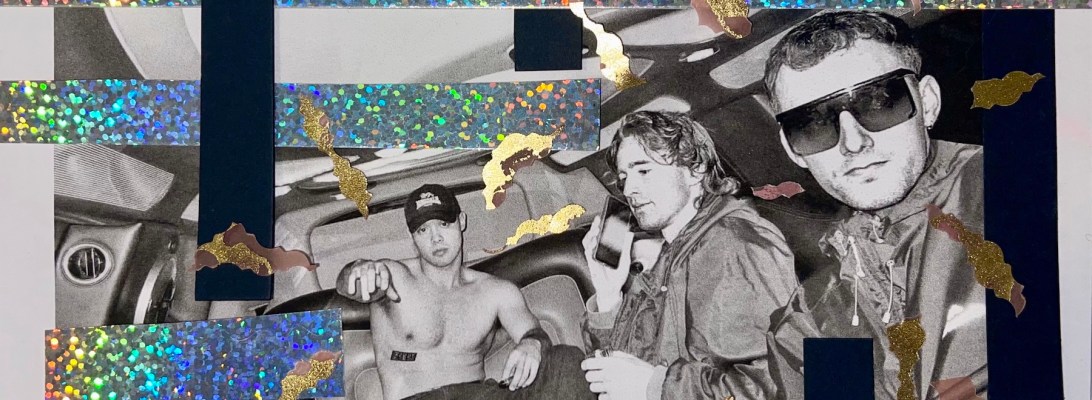
Original photo by Jhonny Russell / handmade collage by B

Cloud Ice 9 were one of the most interesting bands we saw at Jerkfest last year. Their hard-to-define music is punctuated with unexpected moments. Delightfully wonky, unfolding like a constantly shifting kaleidoscope, each note rearranging itself into new, mesmerising patterns creating a brand-new galaxy for listeners. Their output is immersive and explores the relationship between sight and sound with limited information about them out in the world, beyond their music and videos—until now. We chatted at length with vocalist-guitarist Jordan, and guitarist Reis. They have a great approach to creativity and life, we think anyone could get something cool out of this read. 

REIS: I’m nursing some heartache.

Awww, I’m sorry to hear that.

JORDAN: Things have been up and down. In Melbourne, at least, we’ve been out of lockdown for a year and a bit now. So that initial exciting time of being free and enjoying each other’s company out in the big bad world has sort of simmered down a little bit. It’s gotten a bit more about recalibrating and figuring out one’s general approach to life and your trajectory [laughs]. There’s been lots of changing and fluctuating, mostly for the positive. A lot of people are stressed—money-wise, job-wise, and life-wide. It’s all a little bit turbulent at the moment.

REIS: Definitely. I’d say that there isn’t a single person that I’m dear friends with that is financially secure at the moment. But maybe that’s a reflection on the kind of people we hang out with [laughs]. The general sense of optimism post-COVID has just been crushed by this impending recession and the rise in the cost of living—the whole shebang. As people doing the kind of things we do, a little bit out on the fringes, those waves are definitely felt a lot harder. 

JORDAN: But by that same token, I feel like it’s times like these when it feels like the best things kind of come to the surface and to combat that. Winter is coming, I feel like it’s the best time for people to actually generate interesting, positive things to kind of cope and help them manage.

REIS: Easy for you to say, mate. You’re fucking off to Europe! It’s going to be so hard for you.

[Laughter]

JORDAN: I’ve done my time. I wanted to do some writing and some soul-searching. I’m going to Poland, where my family’s from, and I’ve never really been before. Mostly just to explore and take a break. Spend some time being very present and focusing on where am I going to sleep, what am I going to eat, how much money does this mean in my pocket. Be a lot more day-to-day for a couple of months.

Are you both from Naarm/Melbourne? 

REIS: The short answer is, yeah, We both grew up in Melbourne for the most part. 

JORDAN: I was born in Sydney and moved here when I was four.

REIS: I was born in Turkey and my family came over when I was young. and  have gone back and forth a couple of times. For the most part, Melbourne has been home.

How did you get into music? 

JORDAN: Pretty differently, I guess. Different ages, different times. I’m turning 29 in a month.

REIS: I’m 28.

JORDAN: We went to high school together and lived together for a while afterwards. I got into music pretty young and was learning different instruments. I went to art school and got spat out and felt pretty dejected by it all. It was then that I moved in with Reis, when we were around 23. That’s when we really started making music.

REIS: I was definitely a big fan of music. I picked up a guitar when I was 21. I had a very different musical upbringing to Jordan. Only from punk and hardcore, that level of accessibility, got me to think about it in any sort of serious way. Then I just played in a band and just went from there. It definitely took over my life in a way that I really didn’t expect [laughs]. 

JORDAN: That punk accessibility thing, and what Reis had going, was really inspiring for me. Because, like I said, I was feeling dejected and confused about going to art school and getting chewed up and spat out.

Reis would be in the shed, making music on Audacity with iPod earphones and just really winging it—DIY-ing it. That inspired me to get back into doing things in a way that feels very organic. It felt free from any things you might think you need: the right gear or a sound engineer or this and that. Which can all get quite paralysing because it’s not really always feasible.

REIS: Earlier than that, Jordan literally showed me how to hold a guitar and play chords. I learned so much from being around this guy. What I do would be very different if it wasn’t for him.

JORDAN: Our first project was called, Dingo and Rocco. That was born out of Reis letting me stay at his mum’s house when we were younger. We started playing acoustic guitars together and started writing weird, chaotic love ballads.

[Laughter]

REIS: We’d be busking out the front of the IGA. 

JORDAN: We’d get $20, say, ‘That’s a hard day’s work,’ then go across the road to the pub and get a pint. 

When we were living together in our own place, it became more experimental and bigger. We had a big barn full of Hammond organs and a lot of weird junk we found at tips shops.

REIS: We had a pirate radio station [laughs].

JORDAN: We were experimenting, and Cloud Ice 9 started to form, around 2018 or 2019. It was a fair bit before any thing tangible really came together.

Photo: Jhonny Russell


When you first started hanging out, what were the things you’d bond over? 

REIS: Knowing each other in the high school days, I guess, just puberty blues. 

JORDAN: We liked weird things. When we lived together, we had this huge, sprawling property in Brunswick West with all these sheds; we had heaps of room. Reis had a van and we’d go pick up a lot of weird gear. We had a huge VHS collection too; we were really obsessed with watching old weird tapes.

The experiment and play surrounded with all these different toys, like broken organs and old pump action pianos, and even balloons in microphones of heaps of delay. We just love to play. We bonded through that musically. 

REIS: It felt very insular. It felt like a very small world that we just kind of carved out and spent a lot of raw hours nutting out the details.

JORADN: I liked that it felt like we obviously didn’t have big musical inspirations; what we were doing was far removed from that. Just play and experimentation—that felt like a nice organic process. It inevitably started to take a form. Saying that, we are both very obsessed with Alan Vega and Suicide, and some of those old heads.

REIS: I was watching this interview with Vega where he was talking about some of his sculptures that he’s made, and he has the approach of just making something to make something. I wonder about those kinds of people that are completely unaffected by what’s going on around them—to have such a strong sense of what you’re doing is right. That doesn’t just come with music; it comes with fucking everything. Knowing people that even a salad they’re making is art—it’s a bit much for me, but I like having those people around.

JORDAN: They’re more into the entity and context of the art than the art itself a lot of the time. We both grew up on Brian Jonestown Massacre. I really felt like that was more about that ‘schiz’ dynamic that Anton had orbiting around him. It was more about the life and the headspace and the dysfunctionality of it all—that was more fascinating. The strange creative humans navigating a contemporary civilisation and what comes out of that. There’s a lot of Brian Jonestown Massacre music I could take or leave, but I feel the whole context really adds to it. The same is true for a lot of artists that do inspire us.

When you started Cloud Ice 9, was there anything at all that you had in mind for the project?

JORDAN: It took a long time. It was me, Reis, and Jim in that shed in Brunswick West. It was more about getting stoned and making music that almost wasn’t music. Literally feeling it out and then trying to make sense out of complete nonsense. It slowly formed into actual songs. The songwriting was mostly inspired from books and film. Musically, that stuff was quite intuitive. 

Conceptually, I was obviously reading a lot of Kurt Vonnegut at the time and weird sci-fi stuff. I wanted to write music from the perspective of aliens that had come to Earth, and sort of celebrating the apocalypse. Natural musical influences from Suicide and outside of rock came to the surface too. Essendon Airport.

REIS: Definitely all of that. I felt like when we were starting it, we didn’t really have much of a vision of what it was going to be. For me, it felt like it was a really strong anecdote of a lot of the music that was around that we didn’t identify with—kind of how formulaic a lot of it was. It’s funny because I feel like a lot of people have said to me, ‘Cloud Ice 9 is so weird!’ But I think it’s fairly tame.

JORDAN: I always really liked bands that didn’t really sound like anything else. I grew up on the Gorillaz. Demon Days was the first CD I ever owned. Maybe I can break it down a bit more now, but at the time, it sounded like nothing I’d ever heard. It crosses so many genres and has that world-immersive thing that you do feel like it’s its own entity. I don’t know if Cloud Ice 9 is there yet, but I would love it to create its own world and sort of be able to touch on certain things but retain a certain element of its own thing.

REIS: Ben Wallers and the Country Teasers is a definite influence of that—being reminiscent of something you’ve heard before but completely different.

REIS: Something gone wrong. 

[Laughter]

People keep asking us what bands we loved most at Jerkfest this year and the ones that resonated most were you guys, Red Hell, and Essendon Airport. Then people ask, ‘What do they sound like?’ That’s hard to answer because you all have created your own thing. I believe that you have succeeded in creating your own world.

JORDAN: That’s sick. So nice to hear. We’re about to put out this album of live takes of improvisations that we’ve been recording and archiving over the years. We’ve got hours and hours and hours of nonsensical jams, essentially. No tangible vocals really. We’re casting a wide net. We’ve been playing for a while, and it only feels like in the last year or so, it’s starting to get a bit of traction.

I’ve been describing it as country sci-fi to people/jazz gone wrong. I like that you can’t really describe it. There’s a lot of bands that sound like a lot of bands around where we’re playing. It’s nice to be a bit different, but I guess we also don’t want to become the ‘weird’ band [laughs]. We want to also write good music!

REIS: I don’t think it ever has mattered what we want, it’s just what we do. 

Photo: Jhonny Russell

Jhonny, who I do Gimmie with, mentioned that Cloud ice 9 sounds wonky. 

REIS: Yeah!

[Both nod in a agreement]

JORDAN: I like it when music is kind of a walking pace. I like when the beat is like, dun, dun, dun, dun. It kind of gives it that off kilter thing. 

REIS: Recently, we have a real point of contention in the band, as to how slow to play one of the songs.

Your album Circus St, is your second album. Where did the title come from?

JORDAN: It was just an idea I had that, basically, life, at the moment felt like that. Coming out of COVID. Cloud Ice 9, in general, is about enjoying a sense of liberation in the fact that the world is kind of ending. Circus St was an embellishment on that—life is a bit of a circus. When you walk out onto the street, it can sometimes feel like that, just the bizarreness and ridiculousness of it all. 

It reminds me off, Reis and I, did this interview with this person called Barbara, who’s a puppeteer, and they’re a bit of like an icon around Melbourne. They’d  dress up in a wedding dress, this bearded, ragged old man. We actually got them to perform with us a little before Circus St came out. They would busk. That really coined the idea of Circus St to me, because they were this strange clown on the sidelines of the streets of inner-city Melbourne, reminding you of how bizarre and crazy everything is. The acknowledgment of what Barbara was doing was more genuine than a lot of people that are going into Myer and trying on perfumes, or people in suits late for things. It was that acknowledgment of, it’s all a kind of a strange, mad construction. Circus St came out of thebizarreness of our modern little world that we’ve created. 

REIS: I made a documentary about Barbara.

Me and Jordan also do a little label, which all the Cloud Ice 9 stuff comes out on—Happy Tapes.

JORDAN: We’ve kind of slowly been tracking down curious individuals that interest us. Spend a day with them and document them, chatting, and making little things out of it. 

I spent hours talking to Barbara on the phone after that. Barbara is coming from a similar place. When we went over to do the doco, Barbara was like, ‘Oh, so are you two with the SBS or the ABC?’ We’re like ‘No, we’re kind of like you. We’re weird dudes.’ We bonded over that. 

[Laughter]

JORDAN: They are a very difficult person to track down. 

REIS: The latest I heard was that they were sleeping in their car, and their housemate had just gone to jail. 

JORDAN: They have a pretty unstable world…

REIS: But, hey, who doesn’t?

Photo: Jhonny Russell

Why’d you call it Happy Tapes? 

REIS: It’s just kind of neutral name…

[Laughter]

There’s a lot of ideas in this label. We didn’t want it to be pigeonholed by slapping some sort of like a death metal name on it, or something like…

JORDAN: Spiky Tapes!

REIS: We wanted something that’s open and accessible, like the things we like. 

JORDAN: Not always accessible.

REIS: But fairly accessible. 

JORDAN: Very eclectic. We do a lot of different stuff, maybe to our detriment sometimes. Stuff that we’re interested in. 

What’s something that’s been making you happy lately?

REIS: Music. Me and Jordan did a trip to Vietnam and got some pretty wild cassettes and VHS that we bartered tooth and nail for. We’ve been watching those, listening to a lot of the music that we got from there, and trying to learn how to play it.

JORDAN: Olive bread, and Magic The Gathering, mostly. I’ve been really getting into shakshuka at the moment, I’ve been honing my recipe. Honestly, though, just being with friends and talking has been bringing me the best feelings as of late.


Same. What made you want to seek out interesting people, get to know them and document them? 

REIS: I’m doing another video now on this 60 year old Congolese guy, Leona Kakima, who’s been a bit of a local around Footscray. He’s like the Alan Vega of the Congo. This dude is amazing. He’s an absolute superstar that produces all his own music and performs solo to a backing track in little African restaurants and clubs around Footscray.

I really love documenting people that are not getting the recognition that they deserve, or those larger-than-life characters—diamonds in the rough, real assets to culture from my perspective. These are people that never got their little piece of pie cut out for them. The thing that I’d love to see, a commonality between all these people, is that they keep going and keep doing what they do, regardless of what anybody says and regardless of any acclaim anybody gives them or pats on the back. For people who have been doing any sort of creative pursuit for a while, that’s one of the most inspiring things you can digest. 

JORDAN: They’re outsiders that don’t really fit the mould and can’t really be commodified in a lot of ways because they don’t fit into our idea of what’s marketable in modern society. That doesn’t matter.

Barbara, for instance, who’s living this chaotic life, It’s a really hard thing to do, but when they perform, it is unwavering. They couldn’t do anything else. There’s something very empowering about that. It’s very inspiring for people like us that also refuse to play ball a lot of the time…

REIS: For better or worse.

JORDAN: There’s a lot of us out there that don’t want to conform, and capitalism, and the way that the world works at the moment, doesn’t make sense for us. You can either morph yourself into a mould that fits the shape of society, or you can go down your weird little dark, off-the-beaten-track trail in the woods and see what you find.

Artwork by  Alexandra Obarzanek

That’s where things are most exciting to me! We love the cover artwork for Circus St, your grandma painted it Jordan? 

JORDAN: Yeah. I inherited a couple of her paintings. My grandparents house was full of them; I grew up with them. She was an artist her whole life. The painting is from the 80s. It’s called ‘The Feast’. It’s huge, it’s in my bedroom, actually, and it’s intense. It takes up a whole wall; it’s a little weird to witness constantly. 

She was a pretty interesting lady. She’s my Polish side. Her, my grandpa, my dad, and uncle lived on a kibbutz in Israel for quite a long time before moving to Melbourne. She was constantly making art, but she never really exhibited or tried to. It’s like Barbara and these people that don’t have that mindset of, how can this fit into something tangible? It just poured out of her. She was actually a very anxious and depressed person, so it never really came to the surface. It always really resonated with me, and I always wanted to find a way to give it new life and celebrate it. It seemed to really fit in with what we were doing. There’s more to come.

REIS: If we can scrape some more money together to keep putting out records, then you’ll see a lot more of her paintings, that’s for sure. 

Wonderful! I can’t wait. I find that a lot of artists and musicians can be anxious and depressed people. We make art to help us process everything that’s happening in the world and our world. Also, we create beautiful things to try and connect with something other than our immediate pain, something better. 

JORDAN: Yeah, it’s ironic in a way, because if she was able to share that work when she was alive, it would have given her a lot of happiness. But she couldn’t. If she was able to be in a mental position to share it and allow it to resonate with others, then I think it would have helped her. It’s just the way it is sometimes. Maybe that art wouldn’t exist without that sort of headspace in the first place.

REIS: I agree with that sentiment so much. We’re so caught up, we’ve lived our whole lives just in this small skull and experienced the world through these eyes. And there’s very few things that allow you to connect with people beyond anything that you could describe or touch. The function of art, at its purest form, is to make you not feel so alone. 

Totally. And your music can go places that you might not get to. How did the Circus St album get started?

REIS: We made one in a lockdown. Jordan’s kind the real pants wearer…

JORDAN: I do wear pants.

[Laughter]

REIS: We come up with a lot of the ideas and the songs together, but when push comes to shove, Jordan really does produce most of the records. I’ll spit out some demos and stuff every now and then, and we’ll work on stuff together. But there’s a couple of couple of songs on there that has got no one else besides Jordan. The reason that the record sounds the way it does is because of his ability. It’s a beautiful thing. We’ve talked a lot about the live thing being a very different kind of rendition of those songs, not trying to replicate the way that it sounds.

JORDAN: We do play a lot together, at home and stuff and we record pretty much everything. What the end product is, is a lot of, me meticulously going through these recordings, taking sections, twisting them and re-recording them. So it all does come from a pretty organic place. Then there’s this arduous production side that I’m pretty obsessive about. Every day I’m unravelling that stuff. 

Circus St came from off the back of 8BALL. When 8BALL came out, we didn’t have a fully formed band. We hadn’t played live before. That only started happening even after 8BALL came out, and very infrequently because of sporadic lockdowns. The idea of the live band was a lot less fleshed out and came secondary. Now it feels like the opposite, where the live band is becoming the focal point and the recorded stuff is coming off the back of that.

Circus St was sort of somewhere in between. We were recording, we spent some time at RMIT Studios, scamming some free session time with students. That brought to life a lot more of the band element in the recorded stuff. They are strange renditions of live jams and things. I feel those two worlds are coming closer together now, with this improv album we have. We’ve also got the workings of, not a straightforward album, but songs with vocals. We’ve only had a fully-formed band for two years. So that’s starting to make more sense and inform recorded stuff a lot more in the future.

What inspired the more spoken word vocal?

JORDAN: Aesthetically, it feels more punchy and I like the feeling; they’re more like slogans and announcements than lyrics. I appreciate that. And maybe I’ve just got into the habit of it and forgot how to sing properly [laughs]. 

REIS: He’s saving his Alicia Keys moments for the record. It’s coming.

Nice! I love Alicia Keys.

REIS: Me too!

[Laughter] 

JORDAN: The singing is coming back. Maybe I’m a bit traumatised from my alt-rock Radiohead days. 

Photo: Jhonny Russell

You were doing the band,  Dull Joys? 

JORDAN: Yeah, that was my ‘how to play in a band’ instruction manual through my early 20s. Technically, it was engaging, but stylistically, it was not exactly what I was interested in. But it was very informative. The whole ‘singing your little heart out’ got a bit squashed by all that. It was like, ‘I’m just going to talk now. Keep to casual.’

REIS: I remember listening to ‘Casual Assembly’ by EXEK with you and you really liking that a lot. 

JORDAN: Yeah, definitely inspired by a lot of post-punk and new wave. My biggest inspiration for making music was soundtrack music for film. There’s always talking with with music in the background. I really appreciate the atmosphere of the casualness of conversation with a lot more evocative things happening behind it.

We love the video you made for ‘Horny Snail Pyramid’.  It’s very Dungeons and Dragons. 

JORDAN: Yeah. Me and my girlfriend at the time were very obsessed with old mediaeval films: the dress ups and fantasy element.

REIS: The Soviet Lord of the Rings as well. 

JORDAN: Have you seen that? 

REIS: Oh, my lord! 

JORDAN: You should YouTube it. It’s incredibly terrible. The green screens! Golem is this fucked up alien, gremlin creature in the caves. It’s incredible. Masterfully terrible. Reis had also been honing in on his VHS camcorder craft. So it all just made sense. We were originally wanted to go to a castle but it just ended up as a few green sheets in Reis’ garage. It came out all the better for it.

Doing things yourself you can be uncompromising. You don’t have to diminish or change what you’re doing. You present it how you want to. It doesn’t matter about views, at the end of the day, you have the people that will get it and you appreciate that more. We definitely want to do more film work.

REIS: We’ve got a couple of schemes for the next one. We’re about to release a more instrumental album. It’s us in various sheds and garage around the place just wining it.

JORDAN: It’s an experimental album called Hocus Pocus. We were thinking about doing something more sci-fi for that. It will all come to the surface soon enough.

On your Bandcamp, there was this really great comment that someone left about Circus St, it said: this album fills me with energy of daring and endless possibilities. I feel so alive listening to it. 

JORDAN: Yeah, that’s my mum! She’s a very special woman and very supportive.

[Laughter]

Have your parents been to any of you shows?

REIS: No, mine haven’t. But shout outs to all the mums. We dedicate all the Cloud Ice 9 records to our mums and the women who raised us.

JORDAN: Yeah. I reckon my mum comes to about 80% of our shows. She’s very supportive. I love her lots— shout out to my mum. She’s like us in a lot of ways. She appreciates the stranger and more off kilter things. She’s a huge, huge inspo!

REIS: The first Cloud Ice 9 video clip was cut up of a short film that Jordan’s mum made. She used to make short films in the 80s. She gave us a whole bunch of her movies she made on VHS movies.

JORDAN: She used to do Super8 stuff and was part of the Sydney creative scene in the 80s. Similarly, with Grandma’s paintings, I used to work with Mum’s footage and make music to it. It just feels like a nice way to [puts on a Don Vito Godfather voice]—keep it in the family!

[Laughter]

REIS: We love to reappropriate lost media. 

That’s awesome. Do each of you have a favourite song from Circus St?

REIS: The last song of the record, ‘Lion Tamer’. I don’t want to pat ourselves on the back too hard but we had this idea for this AI-generated voice and Jordan had written a pretty great little story that flows throughout the record. I like that ambient drone juxtaposed with the AI stuff. That one gets me.

JORDAN: I’ve got such a soft spot for ‘Horny Snail Pyramid’. I feel like that really encapsulates a lot of what we’re trying to do. The song almost doesn’t make sense. It feels like it’s teetering on the edge of falling apart the whole time. We wrote that riff together years and years ago go. We had no idea what to do with it. I slowly formed these words for it and almost wrapped over the top of the guitar line. I was begging these guys to give it a go, showed them with the vocals and they were like, ‘Yeah! Let’s do it.’ It took ages to figure out how the hell that song works.

Photo: Jhonny Russell

Is there anything you guys hope people get listening to Circus St?

JORDAN: I hope the general theme of Circus St and ideas behind it come through. I’m proud of what that album talks about and how it relates to modern society. I don’t know if it’s a car album or background album. There’s a lot of weird AI voices. I do hope people can enjoy it in a pretty relaxed setting in a low key way.

REIS: I hope that after a long day at work, someone who wants to disconnect a little bit can put that record on and get taken to our world. 

JORDAN: Like with Barbara, the puppeteer, I hope that it makes you feel like that a little bit; that everything’s a bit wonky and bizarre. That you take a moment to be like, ‘Oh, I am a human being in a modern society; that’s actually not that straightforward.’ It’s actually quite a strange thing as an animal.

[Laughter]

I get it. A lot of things in our society aren’t really geared towards nurturing humans. We’re bombarded with so much every day.

JORDAN: Yeah. There’s a lot of manipulation. There’s a lot of chemicals that need gratifying and become strange obsessions. 

REIS: The bottomline is that—life offers you a lot of disconnect. It’s not for the benefit of you but it’s an extraction of your attention. It takes from you but doesn’t give a whole lot back. The power of art and music is that it does have that symbiotic relationship where it can give you something back and it can affect your mood, and you.

JORDAN: The art that makes your brain change is inspiring. You can feel new synaptic waves firing in different directions. It’s what it’s all about.

REIS: 100%. I’ve been listening to Public Enemy so loud over the last week that my neighbour, who I haven’t actually spoken to ever, came over and told me to keep it down. 

[Laughter]

Nice! Anything else you’d like to share with me? 

REIS: We’re always tinkering. We’re open books. Let the public see it all.

JORDAN: Give the public what they want. 

REIS: I don’t know if they want it.

[Laughter]

JORDAN: Give the public what they’re going to get!

[Laughter]

Check out the home of Cloud Ice 9 – HAPPY TAPES here. Follow @happytapes. They’re playing at Jerkfest again this year – don’t miss them – get tickets HERE.

Wollongong post-punk duo Chimers’ ‘Paper trails’ video premiere

Original photo courtesy of Chimers. Handmade collage by B.

Wollongong post-punk duo Chimers’ energy levels are high on their galloping, melodic-filled noise-pop debut self-titled release. Padraic’s shimmering guitars and urgent vocals against Binx’s staunch backbeat conveys a confidence of musicianship (they also play in Pink Fits, Drop Offs & Fangin’ Felines) that gives us a memorable, powerful collection of songs.

Today Gimmie is premiering their video for song ‘Paper Trails’ and we couldn’t be happier! We chatted with vocalist-guitarist Padraic to get insight into the song and clip.

What’s life been like lately for Chimers? You played a show this weekend past with Arse.

PADRAIC: Busy! We got excited and overcommitted a bit for December but it’s been great, we haven’t really had a run of gigs before so it’s been nice to play regularly and try a few new songs out live. The gig with Arse was fun, great band, great people. 

We’ve also just finished recording 2 songs for a single that’ll come out in January 22 so yeah…we’ve been keeping busy

Did it change or evolve much after jamming it over and over from the initial writing?

P: ‘Paper Trail’ was written about a specific time and place. I’d been through a breakup, was working a shit job doing 12 hour days, 7 days a week and didn’t have a band going so had no real focus in my life. Very much a “what the fuck am I doing with my life?” kind of stage and I wasn’t in a good place mentally. The title is from an old journal I found during the first lockdown which was cringeworthy to read, I wish I’d done Ian MacKaye style journals and written about events or things I’d done rather than my feelings….it was tragic reading it now but probably helped at the time I suppose. I met Binx not long after and the rest as they say is history.

We’re excited to be premiering your new clip for song ‘Paper Trail’; what inspired the writing of the track?

P: I can’t really remember to be honest! We were in lockdown and writing a lot of stuff at the time. It was pretty early in the band’s existence, so we were throwing a lot of ideas around. I’m guessing it got faster and more intense as that seems to be how our process works in general. It wasn’t really in the running to be on the album when we went to record, it was more of a throwaway “let’s do a take and see how it sounds”. I’m glad we did; we’ve never played it live so it probably would’ve been long forgotten by now

What helps to get your creative juices flowing?

P: I know it was different for everyone and some people couldn’t get motivated or whatever, but the lockdowns were great for us! We probably wouldn’t have started the band if they didn’t happen. The fact that we have a jam room at home definitely helps, we can jam for 20 minutes if we like, just plug in and play. I think that all helps with momentum, which is massive. We can write quickly, make decisions about songs, recording, artwork whatever without the usual back and forth between band members etc. The fact that we know each other so well too, there’s no dramas, we just get on with it. I mean, I get to play music with my best mate/soul mate/life partner whatever you want to call it! I love looking over and Binx is smashing that kit…that makes me want to write more….

What can you remember from recording it?

P: We recorded it at The Pinshed with Jez Player as part of the album sessions. When we were doing vocals, Jez had an idea for a falsetto harmony in the chorus which he sang, and it sounds great and really added to it. I love how you can hear it on its own for a split second at the very end of the song.

Chimers cover art by MollySkehan.

Can you tell us a little bit about making the video? It was filmed on Dharawal Land. What kind of story does it tell?

P: As for telling a specific story that’s not really what we did with this one as opposed to the one we did for ‘Surrounds’. We made it with our friend Charlie Conlan (who also did ‘Surrounds’) and we basically set up a green screen in our loungeroom and then Charlie did his best to get some shots in between us either laughing at each other or feeling (and looking) really awkward in front of the camera. From there it was all Charlie’s work with the time lapse footage etc.

What was the most fun part of the clip to make?

P: Just hanging out and having fun making a video with our good mate. ‘Surrounds’ was a bit more of a collaborative effort whereas this was a bit more of a lockdown limited contact kind of thing. The real fun part for us was watching the finished product when Charlie had sent it through.

What would you like people to get from ‘Paper Trail’?

P: Mmmmm…. I suppose like anything you put out there you hope some people like it! I mean that shouldn’t matter if you like what you’re doing that’s enough but there’s plenty of music out there so if yours connects with someone then that’s pretty gratifying and a bit overwhelming. A mate actually called me to tell me that he’d had ‘Paper Trail’ on repeat when he was driving to work and was giving it all kinds of raps and I respect his opinion on music so that was nice to hear. I know what music means to us so if ours does that for someone else then that’s pretty cool right! There’s no way to not sound corny saying that but y’know, it does mean a lot

What’s next for Chimers?

P: New single in January which will also have a limited release as a split 7” with a band that we both really love so that’s going to be great. Planning to record again in February and we have King St Carnival, Yours & Owlsx and Snake Valley Festivals to play. Fingers crossed we get to Ireland later in 2022 for some gigs with hopes of a quick dash to Spain for a week or two tacked on, that would be fun!

FYI we have an in-depth interview with Chimers in our new issue of Gimmie Gimmie Gimmie zine – available HERE.

Chimers debut album is available HERE. Follow Chimers @chim_ers 

Chicago Musician NNAMDÏ: “Everyone should use their skills in order to help people”

Original photo by Jess Myers. Handmade collage by B.

Chicago musician NNAMDÏ dropped two powerful releases in the last few months. The latest being EP Black Plight – which raised over $10,000 for not-for-profit organizations eatchicago.org and assatasdaughters.org. And the other being LP, BRAT (released in April), an exploration of needs and wants as a human being and of reaffirming life purpose that brings you joy while helping others. Both are timely releases, both just might have you taking a look at your own place in the world and remind you to ask; how I can help those in a place with less privilege? Good art engages and entertains; great art changes you—NNAMDÏ’s genre-bending, breaking and blurring songs – fusing math-rock, hip hop, pop, R&B and more – definitely did this for us.

How are you?

NNAMDÏ: I’m doing OK, Bianca. I just got home, I was at this food drive and we were giving out meals and food to people.

That’s wonderful, I love how there has been so many positive things happening in the community of late, it’s been a rough, crazy time.

NNAMDÏ: It is a crazy time. It’s really been putting into perspective the things that are important. During all this community building, donating groceries is important, especially now, so many people are suffering and can’t go to work or haven’t gone to work for a long time, it’s intense. It got me thinking, there’s always people going through it, this community building energy needs to continue even after all of this. I’m really trying to check myself so I keep the momentum going after things start to look up in the future.

You’ve mentioned that lately you’ve been learning a lot and seeing a lot of community building and positivity amidst all the turmoil that’s been happening right now; what are some of the things that you’ve been learning?

NNAMDÏ: I feel like I’ve always been for the reform of law enforcement… when you grow up in it, I think a lot of people have ingrained in their brain that it just is the way it is, which is not a great way to live. I’m learning from people that have always been pro community based programs and teaching. Especially in Chicago, there’s a lot of conflicting views where the money goes towards police departments, almost half of the city’s budget is spent towards police. There was couple of years ago where they were planning on building a $90 million cop academy and everyone that I met were against it. There’s been a lot of people in Chicago that are police and law enforcement abolitionist so I’m just learning from that; it’s always been a part of my mindset but I was never actively involved. I’m trying to learn from people that have been doing it for a long time.

Last week you released the ‘Black Plight’ EP with sales raising $10,297.78 with proceeds split between eatChicago and Assata’s Daughters and 2K of the total going directly to people in the community that are in immediate need of food and housing assistance; why was it important for you to make this EP now?

NNAMDÏ: There’s a lot of anxiety going on in my mind and it was forming into physical stomach aches, everything has been piling on for a lot of people this year and like most people, I just didn’t know how to handle it. I feel like it just needed to be done, I forced myself to finish it the week that all the shit went down. I’d gone to one protest but I get a lot of anxiety in those situations. I felt this was my best opportunity to use the skills that I have to help anyone. It felt really important so I pushed myself, I went pretty deep down the rabbit hole trying to finish this; it was going to be five songs but I realised that wasn’t going to happen. I did what I could and made sure it got my point across. I think everyone should use their skills in order to help people, music is one skill that I have.

I can relate with getting anxiety when going to protests. I used to go to them all the time but it started to get so overwhelming for me to the point of panic attacks.

NNAMDÏ: It’s wild to me that so many people can just chill in that situation, there’s so many different sounds, especially in something like this protesting violence; there’s horns and people on megaphones and people honking and chanting. It’s very intense. At any moment I’d look around and be like; is this person yelling a chant or are they yelling at some other person? Or is this person honking because they’re in agreement with what’s going on or are they honking ‘cause they’re mad at something? Also, just being engulfed in a huge crowd of people is never something I’ve really been into.

Same! Was there any significance in having the first song ‘My Life’ on the EP kick off with a drumroll?

NNAMDÏ: No. Musically it just happened how it happened honestly. It all just came together. I didn’t really put that much thought into how the music was being placed or where things were going, I just did exactly what felt right to me and felt like it needed to sound like. It’s very much a projection of emotions felt at that point in time.

Last week was also your 30th birthday, Happy Birthday! What did turning 30 mean to you? Did you get reflective?

NNAMDÏ: Aww thank you! I feel like I was too distracted with everything going on in the world to care. A lot of people think of 30 as this crazy benchmark but it never really felt that way to me. It never really felt old to me. People are like, oh thirty is over the hill; but it’s never really felt that way to me at all. It’s such a crazy thing for people to think. I feel like the situation that a lot of people are in made me realise that I have it really good, I live in a comfortable house and can afford groceries. There was no room for any sort of conflict or crisis because I feel I’ve lived a very privileged life compared to a lot of people that are doing a lot worse off than I am right now. It feels the same being 30 [laughs].

I had a “milestone” birthday last year and I didn’t feel any different either, I’ve been doing all I do, things like doing interviews and making zines for over 25 years since I was fifteen and now I just feel like I do everything better than I ever have and I have a better perspective on the world and things; you can totally rule things at any age.

NNAMDÏ: Yeah, you’re kind of settled into most of the things that you’re into, there’s always room for surprises and improvement but, I feel like most people should be comfortable with themselves by this point, hopefully. Luckily I think I’ve reached that point a few years back.

Speaking of surprises, that’s something I love about your music – I love listening on headphones so I can hear everything that’s going on – there’s always so many surprises in your songs and I never know where it’s gonna go! It’s exciting.

NNAMDÏ: Thank you.

What is the importance of music and art in your life?

NNAMDÏ: It’s the most important thing, it’s pretty much all that I think about [laughs]. It’s so interesting just getting into people’s brain and witnessing the world through other people’s eyes and you can present things in whatever way you want—it’s a maximum expansion of people’s imagination and emotions. It teaches people in a way that is very different from what we learn in school and through teachers. It teaches people a different emotional connection and appreciation for humanity. It’s engulfed in everything that I think about [laughs]. It’s pretty much everything to me.

Totally! I know the feeling. Did you have a moment when you realised music is what you were meant to be doing with your life?

NNAMDÏ: Yeah, I still think I’m having that moment [laughs]. I feel anything involving entertainment, I wanted to be a comedian or actor when I was little – I still do – music has been the medium that has allowed me to express myself in the broadest form. I get real silly with it a lot, I can get real serious with it, I can also make happy fun songs. It’s allowed me to most comfortably express myself and a range that I wasn’t able to do through any other medium. It’s definitely something that I’m going to do until I can’t do it anymore.

Yay! That makes me so happy. You’ve mentioned that putting out your latest album BRAT was very therapeutic for you; how so?

NNAMDÏ: A lot of it has to do with the way I was thinking as I was going through the recording process and learning what’s really important to me. If I had to stop everything, if I couldn’t do music anymore; what’s important to me? Interestingly enough, I feel a lot of musicians are feeling that because of the [Corona]virus and not being able to tour, they have to really focus on; what will I do if I’m not working? What is the thing that actually brings me joy outside of what I have to do all of the time? It’s a lot about that. Also, realising that making art is not a selfish pursuit, even though it can feel like it when you have bigger problems in the world, it doesn’t feel like as an immediate solution. I feel like I’m constantly reminded of how important it is. It always shows itself in a different way like—no, this is important! Even after I put on the EP I’m like, OK, art is important! I don’t really need a reminder anymore but I feel any empathic artist goes through that, where they’re like; am I doing enough? Is this just gassing myself up? Does this mean anything to anyone else or am I just doing it because I want to do it? Both are important, you should do things that you want to do and do things for other people. That was a lot of what I was thinking while making this album and it helped me realise what else is important in my life. Things like making time for people that make time for me was a big thing on that record and doing whatever was in my ability to reach people.

BRAT has such a cool flow to it; how did you go about arranging the run order? Did it take you a while?

NNAMDÏ: It didn’t really take a while. The order just falls into place once there’s chunks of songs written. It wasn’t really a task it was more fun, like a Sudoku puzzle [laughs]. I feel like that’s such an important part of records, the flow of it, you can have all great songs and you can put it in a different order to have a different effect. It’s very important.

I love how with your album if you listen closely you realise that each songs is connected to the next whether in theme or sounds etc. It takes you through all these emotions and unfolds, it’s kind of like a movie in a way.

NNAMDÏ: Yeah, thank you.

In regards to BRAT I’ve read that you were stubborn in some of your decisions regarding it; what were they?

NNAMDÏ: I think I’m just stubborn in general when I’m working on my own music, that’s part of the reason I make solo music. I was in a bunch of bands for so long, and I always need an outlet to be solely in control of everything. This was the first record that I mixed with someone else, I mixed it with my bandmate – I play in this band Monobody – he has a studio, it’s where we recorded everything. I think there was a couple of moments where he wanted me to re-record a couple of things and sometimes I was like, no, we’re just going to keep it like that. Other times I was like, he’s absolutely right! I could do this better. I wasn’t stubborn the whole time [laughs] but I think it’s important to be stubborn with your art sometimes. I feel like a lot of people start a project with a specific intention in mind and then the more people they add to the mix the less their original intention shines through. I never want that to happen!

I wanted to ask you about the song ‘Really Don’t’, at the time of writing that you’ve said that you weren’t feeling that great; what was getting you down?

NNAMDÏ: [Laughs] Everything about life. Shit is hard and sad and things are fucked up a whole lot. Sometimes things feel out of your control. It was one of those times that I was in a dark place and I was letting my thoughts get the best of me.

Following that track there’s the song ‘It’s OK’ and its theme is that, it’s OK not to feel OK. That’s something I feel is important to talk about, ‘cause often people feel that they have to be happy all the time. When you are feeling down; what are the things that help you?

NNAMDÏ: Music a lot! Lately though it’s been less music and more funny shows, I watch a lot of Netflix shows, that’s been what cheers me up lately. I’m really into comedy. The beautiful thihng about comedy is that a lot of it comes from pain [laughs]. I feel that’s a good way to escape if you’re feeling down, because you can see the humour in your situation even if it’s not a humorous situation.

Where did the name of your album BRAT come from?

NNAMDÏ: It came from my brain! [laughs]. It wasn’t the original name, it wasn’t the first name that I thought of. As the songs progressed I realised that more and more songs were talking about my wants and my needs as a human… that’s where the humour comes in, I was like, all these songs are about me, me, me! I’m gonna call it BRAT [laughs].

What was the idea behind the cover image?

NNAMDÏ: That was another thing that came pretty quickly, it was the first image that came into my head when I thought of the name BRAT, me wearing a tiara on a blue background. That stuck with me through the recording of the whole album. Sometimes I’ll have an idea and it will evolve over time, it’ll be like, maybe the first idea wasn’t great but I think it’s really cool when an idea stays with you the whole time, then it’s like this is what it definitely needs to be!

One of my favourite tracks on the album is ‘Semantics’. I love how that song really builds. There’s a line in the song: fuck the world in every language…

NNAMDÏ: Yeah [laughs]. That song is like a giant puzzle. I tried to make a bunch of lines that could be perceived in different ways like, I remember I did the full line where it could mean something completely different, every syllable. It will be interesting to explain one day, maybe someone will go and digest it and be nerdy and figure out some of those lines.

You’ve set me a challenge now!

NNAMDÏ: [Laughs] Oh yeah!

Do you have a favourite track right now?

NNAMDÏ: Honestly, I like them all. I feel like they all stand on their own. The only song that isn’t meant to be a song by itself is ‘Really Don’t’. ‘Really Don’t’ without ‘It’s OK’ is complete insanity. It’s so depressing beyond the point of redemption which is not something I want to put out in the world but, the two of them together is a good combination.

Do you write songs or do something creative every day?

NNAMDÏ: Yeah, more or less. I would say I do two days of being creative and then one lazy day [laughs].

Do you find when you’re trying to have a lazy day that your brain is still thinking of creative things?

NNAMDÏ: Oh, yeah. My thoughts don’t stop. I’m still always taking notes and will write little things down, so it never really stops. I guess sometimes it’s just me trying to actively do a song.

I wanted to end by asking you a question that you asked people online not too long ago; comment one thing you’re grateful for?

NNAMDÏ: I’m really grateful for health, being healthy is a big blessings. I’m grateful for people. I feel like there’s so many beautiful people that have beautiful minds. I feel like we can do anything if we really try and that’s pretty amazing!

Please check out: NNAMDÏ bandcamp to get Black Plight EP and BRAT LP via Sooper Records. NNAMDÏ on Facebook. NNAMDÏ on Instagram.