We love Melbourne’s Ubik with their brat-beat anarcho-punk stylings. They’re inspired by sci-fi & horror films as well as politics; who can tell the difference between the two right now though, with politics in Australia feeling like a sci-fi dystopian horror movie. We interviewed bassist-vocalist Nellie Pearson.
How did you discover music?
NELLIE PEARSON: I grew up with my parents being obsessed with classical music, and being forced/being privileged to learn classical instruments. As soon as I had any independence I started obsessing about modern music, reading old Q magazines at the library as a tween, buying Oasis cassingles etc.
How did you first get into making your own music?
NP: My first band was over a decade ago in Wellington; me and some other young women decided to all give it a go for the first time since we were a bit sick of seeing a heavily cis-dude hardcore scene. Thought it couldn’t be that fucking hard. It wasn’t! mostly.
What’s a record that had a really big impact on you; what was it about it?
NP: Honestly I’m a bit of a song magpie; I listen to my personal greatest hits of every band so often don’t go deep into a full album anymore (since it became an Online Streaming World). I refuse to apologise for this. The two DiE 7”s I was obsessed with for ages. I’m also a huge fan of ’90s British sort of stuff, so the Stone Roses self-titled has certainly had a huge impact on me. Definitely honed my ears for how a rhythm section can work together.
When you first started Ubik everyone had other bands – Masses, Red Red Krovvy and Faceless Burial + more; what inspired you to start Ubik?
NP: Tessa and Ash had plans to do like… an oi band I think? Then I inserted myself and suggested my friend Chris as a drummer. It was his first time in a band and Tessa’s first time playing guitar/writing. We sort of just went from there, had fun and ran with it.
You’ve had a couple of line-up changes; what’s something you can tell me about each person in your current line-up?
NP: Only one line-up change; Max has been the drummer for over 3 years, and we’ve been a band for less than 4. Ash and Tessa own two fluffy weird cats each. Max has a giant young dog and I have a tiny old dog.
What’s your favourite song you’ve written? What’s it about?
NP: My favourite is ‘Sleep’. It has equal doses of dumb head bang and fiddly fun bits for me to play, personally. And good dynamics within the structure. I think it’s just about anxiety induced insomnia, which is something most people can identify with.
Vid by PBS 106.7fm.
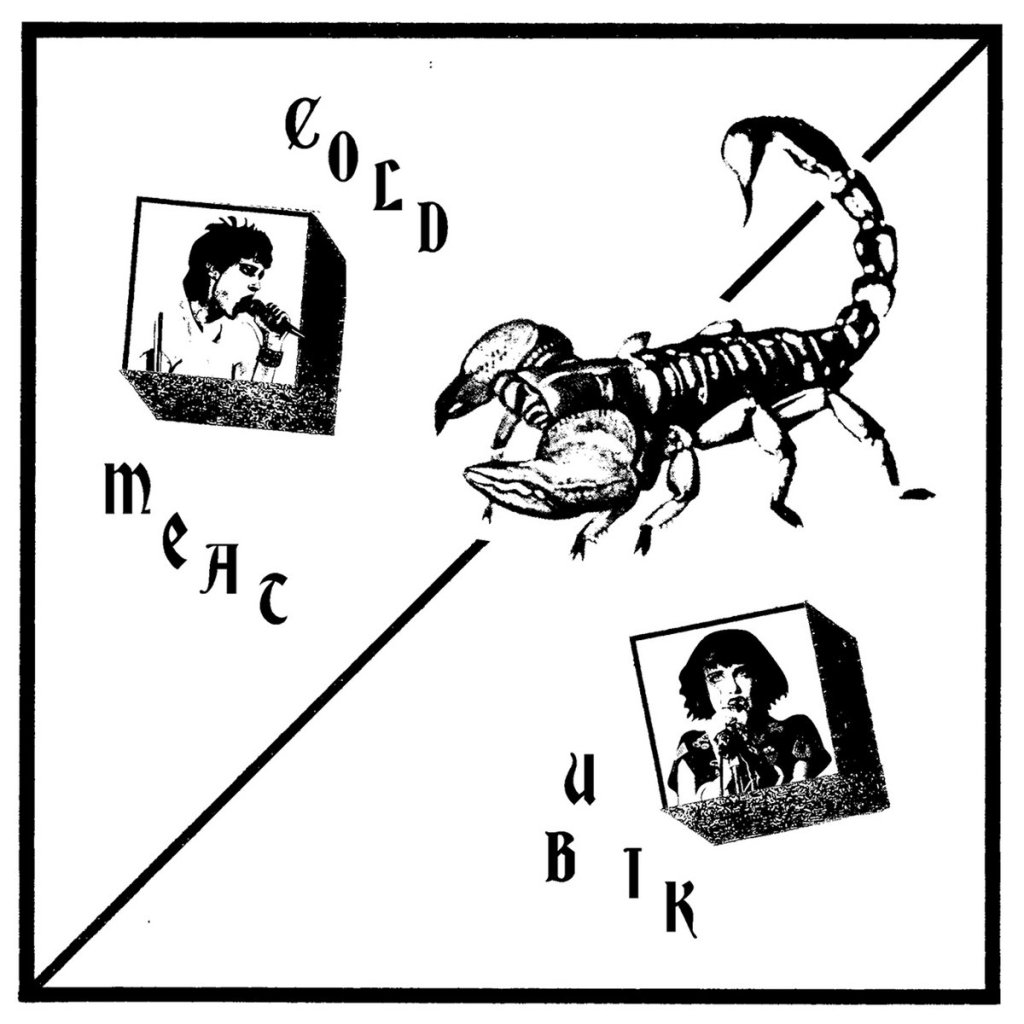
On the Ubik/Cold Meat split release each of you have a homage to amazing women in punk, Siouxsie Sioux and Exene Cervenka of X; why did you chose to cover X’s “Nausea”?
NP: We supported Cold Meat when they visited Melbourne (the first time but not the last time that happened, I think?), and we were all fans of each other. The singers of both bands are redheaded childcare workers called Ash so we were drunk and like hurhurhur Ash and Bizarro Ash (I still don’t know which is which). The split idea happened, and they had done their Banshees cover that night so we thought we’d get matchy-matchy.
Last year Ubik released Next Phase MLP; what sparked the idea to write the songs ‘John Wayne (Is A Cowboy (And Is On Twitter)’?
NP: This is one of my favourites, Ash-lyrics-wise. I believe it’s directed at internet right-wingers, trolls, MRAs, and other general digital filth. Skewering the misunderstanding of “free speech”, and pointing out how “free thinking” doesn’t often overlap with critical thinking.
What about “Peter Dutton Is A Terrorist”?
NP: Peter Dutton IS a terrorist. Music-wise, Tessa wanted to do another very anarcho song, so I always picture myself in a ‘80s squat playing this one. The lyrics that Ash wrote do a great job of expressing the shame and sadness regarding Australia’s offshore concentration camps, and the horrifying treatment that Peter Dutton and other potato-headed fascist stool samples think is justified in regards to refugees and asylum seekers. Just an utter lack of the basics of humanity.
Mikey Young recorded and mixed Next Phase MLP and your self-titled EP and mixed and mastered the Cold Meat split; how did you come to working with him?
NP: The self-titled EP was actually recorded by Adam Ritchie in the same session as the Cold Meat split. Max and Mikey go way back both personally and musically, so it was a great choice. It was very quiet and laid-back, and we were doing it all in one day (minus box) so we all just put our heads down and worked. He was, as usual, impeccable.
Who in the band has a love for sci-fi and horror films? You had song “The Fly” and one of your shirts featured Debbie Harry when she was in Videodrome; can you recommend anything else cool we should check out?
NP: I’m pretty sure all of us are sci-fi and horror fans. Genre stuff definitely goes with the punk territory in general. Me and Ash in particular are big on Cronenberg. Most of it has naturally stemmed from the name (evidently the Phillip K Dick book), and Ash’s specific interests, since she writes all the lyrics. I’ve been watching a lot of ‘90s movies with their visions of futuristic virtual reality; very pretty, very silly, very fun. Apart from the obvious Johnny Mnemonic, recently I really liked Virtuosity, where Russell Crowe plays a virtual reality murderer who crosses over into the real world.
Have you been working on new music?
NP: Both me and Tessa have scraps of stuff, and we had one or two songs almost ready by the end of the Next Phase recording session. However we’ve all been madly busy, then we toured Japan, and now we’re all sitting at home getting weird because of the global pandemic. Instead of being at all productive while staying at home, I wear soft pants and play video games.
Other than making music do you do anything else creative?
NP: Most of my time is taken up with bands. I used to write but I realised I hate it. Give me two more weeks of social distancing/isolation and I’ll probably start a podcast, just to make 2020 even worse.
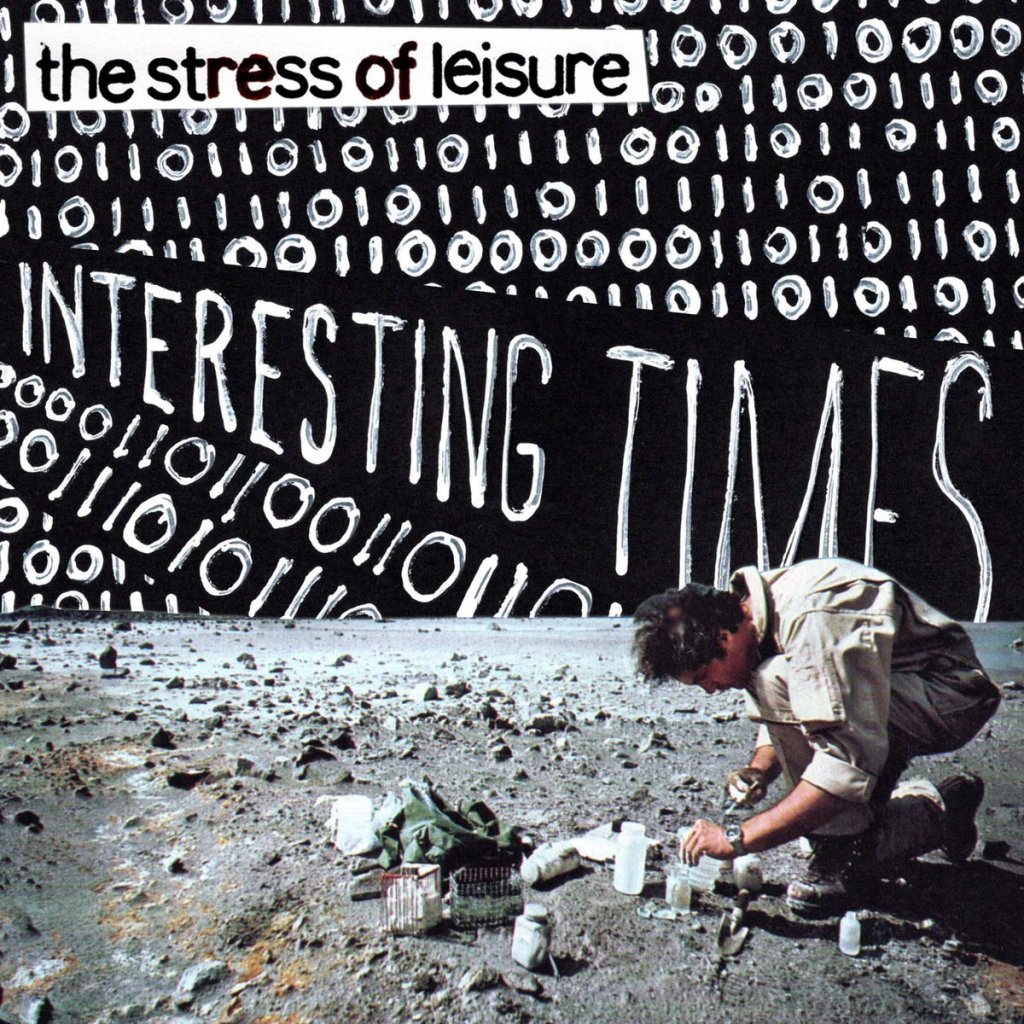
One of our Brisbane-based favourites The Stress Of Leisure are premiering the song ‘Interesting Times’ along with its DIY made in isolation video here on Gimmie today. The track is a mix of post-punk and new wave goodness with hypnotic keys, a stomping drum beat and Tina Weymouth-ish bass line. We spoke to guitarist-vocalist Ian Powne about the track.
The Stress of Leisure are premiering a song today “Interesting Times” which was recorded during the sessions for your album Eruption Bounce; why was the time right to release this track now?
IAN POWNE: Jessica Moore (drums) had been lobbying hard for this song ever since it didn’t fit Eruption Bounce. Subtle representations were made again at the start of March. I’d kind of forgotten about it. Jessica is smarter than me, so here we are.
Can you tell us a little bit about writing the song?
IP: We wrote the music for this song at the end of a rehearsal from memory, very quickly, most probably in 2016. My memory of this song is quite blurry but I remember spending a lot of time on the lyric and really hollowing it out to it being very non-specific subject matter. It feels like kind of a response to modern ‘tough guys’ like [Donald] Trump and [Jair] Bolsonaro, but then again strangely, it also feels aligned with the present pandemic.
You’ve made a real DIY clip for it while in isolation; how did you go about making it?
IP: DIY is the word. Pascalle Burton was the creative force behind this. She had assembled a whole lot of Prelinger footage. Coupled with that, was her idea to have a social media feed. We set up a green screen in our living room and I was the difficult talent in the end performing to the song. Pretty much like training a cat. I find it hard to watch, but I’m trusting my bandmates’ judgement on this one.
How have you been faring during these interesting times currently happening in the world? Other than making videos, what else have you been doing while in isolation?
IP:Observing all the health systems and people struggling around the world, it’s not hard to feel vulnerable. Both Pascalle and I are working from home so we’re very lucky. I’ve become an infectious disease armchair expert in the meantime.
Recently you went to Melbourne to record for a new record; what can you tell us about it at this point? What is it sounding like?
IP:We recorded it just in time it seems, and have mixed it now. It feels like a great capture of who we are, all the idiosyncrasies of what makes us tick. John Lee who has recorded and mixed it for us, ‘got us’ pretty much straight away and has really drawn out our punkier side. There’s something a little No Wave-ish about the spirit of it. It’s our most political album too, a lot of discontent in the lyric. We’ll release it later this year, Scomo will be trembling.
Can you recommend something we should check out?
IP: Have really enjoyed the release of Use No Hooks The Job that Chapter Music just put out. Basically it’s a collection of songs this funky Melbourne art band recorded in 1983, but had never put out. Lots of fun, and smart. We’ve played with Cable Ties before and am excited for their new album Far Enough which I’ve just started listening to.
Melbourne’s Shepparton Airplane are about to unleash their best album yet into the world. Sharks sees the band stride confidently into a more noisy and in moments more punky and shoegaze-y territory than previous efforts that were rooted firmly in ’90s post-punk and ’80s oz-rock. This is a mature evolution garnered from years of playing together and the synthesises of true mateship. We spoke to guitarist-vocalist Matt Duffy to dive deep into the making of Sharks, and we also discovered his deep seated love for band, Fuagzi.
We’ve been listening to your new record Sharks a lot since we got the sneak peek a week or so ago, it’s almost time for it to be released into the world; how are you feeling?
MATT DUFFY: We’re really happy with it. We went to a bit more effort than we have with the last two [Self-titled and Almurta]. We’re happy with how it sounds, especially since we got the test pressings back and can actually listen to it on vinyl—it sounds awesome!
Did you have an idea for what you wanted it to sound like from the beginning?
MD: Yeah, we did. We recorded a lot of stuff. Before we recorded that album we had twenty-something songs, some were finished, some not. We went through all of our recordings from rehearsals and the ten that we picked for the record just seemed to work together really well as a full experience rather than a bunch of songs just slapped together.
The record seems a lot more shoegaze-y and noisy and punky as well compared to previous releases.
MD: Yeah, there’s a lot of stuff going on. In one way it’s all over the shop but somehow it all makes sense. The two albums before have certain feels throughout them and didn’t jump around a lot like this one. We jam a lot and come up with all kinds of things.
I think I like this one the best out of all of your albums.
MD: [Laughs] I think we do too! I know the band always likes their latest thing the most though! [laughs]. The first two albums we did all ourselves but this time we thought we should go to a really nice studio [Sing Sing Recording Studios] and get some cool sounds, record on tape and put it in someone else’s hands to get an outside perspective. I think that helped a lot doing something different.
You worked with producer Anna Laverty.
MD: Yeah, she’s awesome! Most of us have worked with her before, half the band is in The Peep Tempel and she’s recorded all of their albums. I did some stuff with them too even though I’m not in that band. We’ve got a good working relationship with her, she’s great to bounce ideas off and tell us when we’ve done something good or not good [laughs]. She’s really, really, really good at what she does and she’s a good friend. It made sense to do it with her.
I love album opener ‘Citrus’ it’s a beautiful song.
MD: That song came out of nowhere. Most of our songs come from the four of us bashing it out in the rehearsal room. We work on things on our own too though, that was one that Steve [Carter] our drummer brought in. He had it half-formed, he did a recording at home on this electronic drum kit and a bunch of synths and we just added guitars to it. Once the whole band gets into a song it usually changes into something even better. That song took on a few different forms, it morphed from a weird electro thing to a shoegaze-y thing. When we recorded with Anna she said it had an indigenous-feel to it, she said it sounded like percussion with sticks. We never had really thought of it that way. It had an English ‘90s shoegaze-feel to an Australian desert touch to it.
I put it on first thing this morning and it’s actually a really nice song to start your day.
MD: I think so too. It does get a bit chaotic though [laughs]. It was always going to be the first song on the album, it’s a cruisy instrumental.
What were the songs that you worked on by yourself and brought into everyone?
MD: The second one [‘Say What Again’] was one that I had started about a year ago just messing around. When I record something on my own I don’t necessarily think it’s going to be a Shepparton Airplane song, I just do stuff for fun. I had all the music done and thought it could work well with the band; someone always brings something new to stuff and it really brings it to life! It’s quite exciting when that happens. There’s been a few on the album that was someone’s throw away song but together we’ve moulded it into something cool. The lyric ideas sometimes come from one of us just shouting things freeform and then someone else might get an idea for the lyrics. It’s great having freedom in the band where no one is calling the shots, we’re all in together.
Another track I really loved on the album is ‘No Stars’.
MD: That was an epic jam that came out of nowhere. At one point it was 16 minutes long, we kept chopping it down. Longer it was a little bit too self-indulgent [laughs]. We eventually got it down to eight and a half minutes.
What’s the song ‘Fear’ about?
MD: That just came together from jamming it out. Myself and Stu the bass player were both at the time talking about a bunch of documentaries we’d been watching on cults. We both had written a bunch of lyrics on that topic, we put them together and realised we’d written the same song! Music-wise it came together so organically, we didn’t labour over it too much. There’s bits in it… though it may not totally sound like it but, to us we can hear influences in it, there’s a Slayer bit, a guitar part that sounds like it, or an AC/DC part. Lyrically you may be talking about cults but you may as well be talking about government. We never try to write too topical though because stuff can often become dated. We don’t want to do what everyone else is doing too.
What kind of feeling do you get when you play?
MD: That’s a good question. There’s a lot of adrenalin, even in the quieter moments. The way we feed off each other works well. There’s a really good chemistry between us and I feel that’s infectious with the punters too, we all feed of each other. We have a party but it’s also dark and joyous too.
The new album is very much a journey.
MD: I’m glad that you said that, I’ve been trying to write bios and stuff and I started writing and used that word but thought it sounded naff coming from me but, I’m so glad you’ve said that because we truly do feel that! [laughs].
It so is! You put it on and your start with ‘Citrus’ and then you go through the rollercoaster of emotions in each song before ending with ‘Fleeting’.
MD: I’ve felt it too. We really made sure we captured that when we chose the songs, put them together – there’s three short, loud punk songs we chucked in the middle – to take you places. We thought the two instrumentals were perfect to bookend it all. It’s all really beautiful. We didn’t want to take things too far though and put on it everything we’ve ever liked; we all love hip hop but were not going to do a hip hop song on this record. We couldn’t pull it off convincingly.
We were just talking about how there’s lots of cool guitar moments throughout the record; what’s your favourite?
MD: ‘No Stars’ because there’s so much going on. We had a scratchy recording of it and we turned it around and created a Yo La Tengo sounding song and turned it into an epic journey. We had to learn it again because we just made it up on the spot. The guitar in that is a highlight of the album for me. It’s probably the cleanest guitar we’ve done too, a lot of our earlier stuff is driven and distorted. We don’t usually use loads of effects too, that song is a guitar plugged straight into an amp.
Until you guys got to this album I don’t think I ever would have used the word beautiful to describe your music.
MD: [Laughs] I certainly wouldn’t have either!
The album has a really nice feel.
MD: Yeah. Because we’ve been playing for a few years now we’re able to do a lot more things, we’ve developed and we sincerely mean what we’re playing—we own it and play it convincingly. We really wanted to make the album move around, some of my favourite bits are the most pleasant bits!
Anna has worked with Lady Gaga and Florence and the Machine who are poppy and have a really slick sound; do you think she helped in getting you to the sound on this record too?
MD: Yeah, she’s done all kinds of stuff. One of her biggest qualities is that she gets what we’re doing. She saw us live a few times and always said she’d love to work with us. She worked well in terms of not getting in the way of anything, she let us do everything we wanted. She’s great for positive reinforcement. It was a pleasant experience.
Where did the album title Sharks come from?
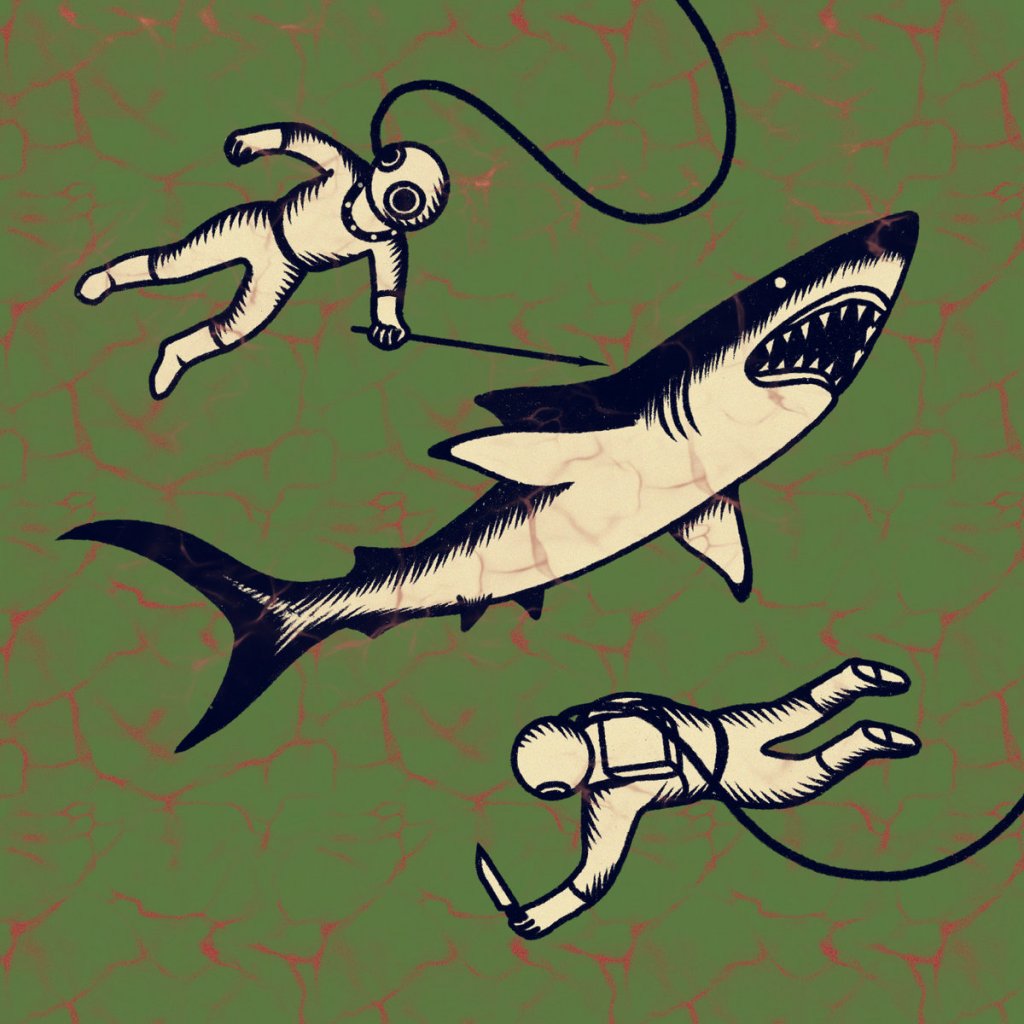
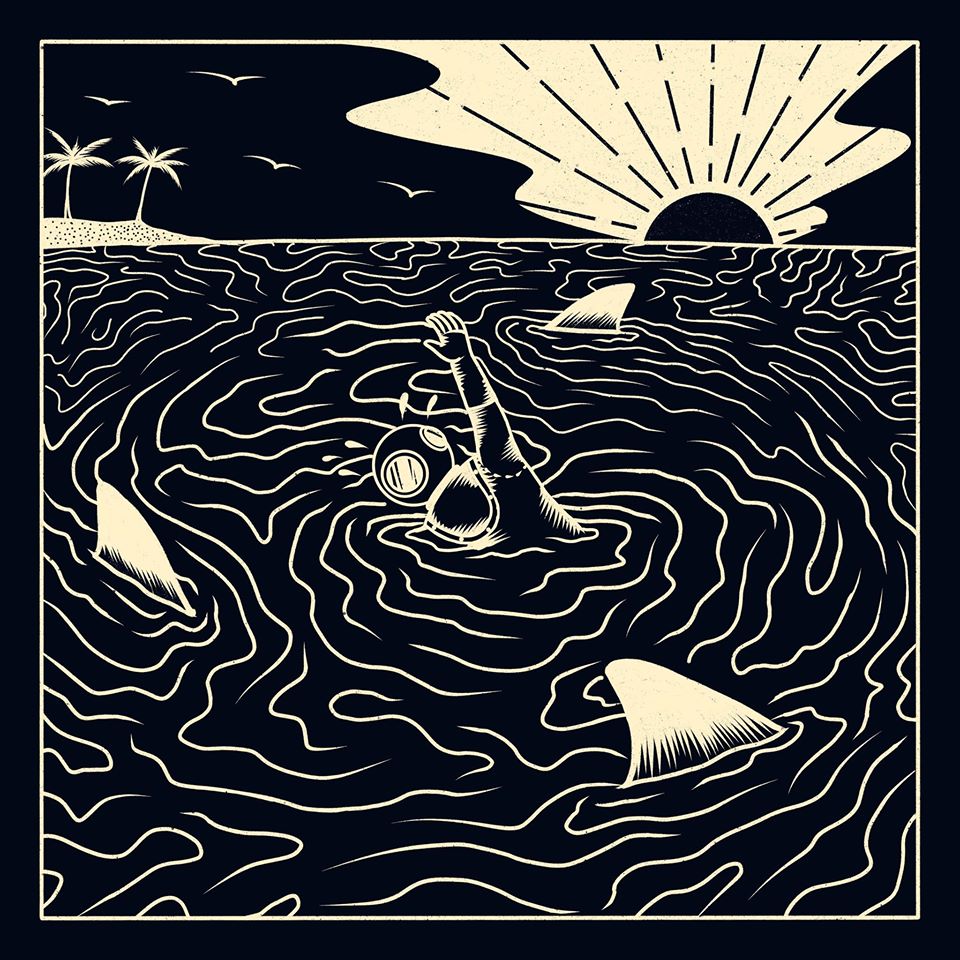
MD: Steve threw that out one day, I was immediately “I’m in” because I’m obsessed with sharks [laughs], they’re incredible. There’s so many different ideas you can draw from the word sharks. People are often “sharks”. If there is an underlying theme on the record it’s that it touches on the darker side of humanity. Sharks are seen as big fearsome creatures whereas in real life they’re not. But people sharks, particularly men are the worst sharks of all. The art work plays into that too, people hunting a shark, this is the fucked up things that people do.
How did you first come to playing guitar?
MD: When I was a little kid around eight, my sister who is ten years older than me had a crappy acoustic guitar. She was learning it at school but didn’t do anything with it so I got it and when I was twelve I got my first electric guitar. I really got into it in my teens. I spent about ten years playing bass in bands then came back to the guitar. I’m not a virtuoso but I’m happy with that because it lends itself to more creativity. If you don’t know if things you’re playing is wrong, all you have to do is care if you think it sounds good. You can give yourself nightmares or you can bliss out! [laughs]. I love having the freedom to do whatever.
Anything else to tell me?
MD: A lot early on we were more conscious that we didn’t want to sound like anyone else. We’d come up with something we’d think sounded really cool and then listen back to a song and be like, that sounds exactly like Fugazi! We love Fugazi but we can’t sound exactly like them, otherwise people are going to think we sound like Fugazi [laughs]. This time around we were like, oh, that sounds like Hüsker Dü or that sounds like Sonic Youth and we’re like, fuck it who cares what anyone else thinks! We love those bands, why pretend we’re not influence by them. Freeing ourselves up from that was a real turning point for us.
Did you see Fugazi when they came to Australia?
MD: I did! They’re pretty much my #1 favourite band ever, still to this day! They’re incredible live. I can’t deny their influence on everything I have ever done really [laughs]. They’re one of those bands that are four people playing together that really feed off each other and improvise a lot and there’s a real connection that goes beyond people writing songs. It was in the late ‘90s more than 20 years ago! I saw them twice, two nights in a row. Steve our drummer and I went. I just remember being totally blown away. I have the recordings of those shows, because they recorded all of their shows over their career.
Yeah, you can buy them from Dischord.
MD: Yeah. I have a bunch of those, all the shows I’ve seen, you get to relive it! They were playing songs they hadn’t recorded yet – they played all my favourite songs off of all my favourite albums – I was like, what is all of this?! There was an interlude in the middle of the show and they were playing all this kind of stuff that I’d never heard them do. I was blown away. It was cool with everyone being there to see a band they love and hear all the songs they know but then Fugazi playing all this unheard stuff. I guess they just had the confidence to throw completely new things at us that was a real departure from their other stuff. I remember being completely impressed by that. Everything about them is incredible—there’s very few bands you can say that about.
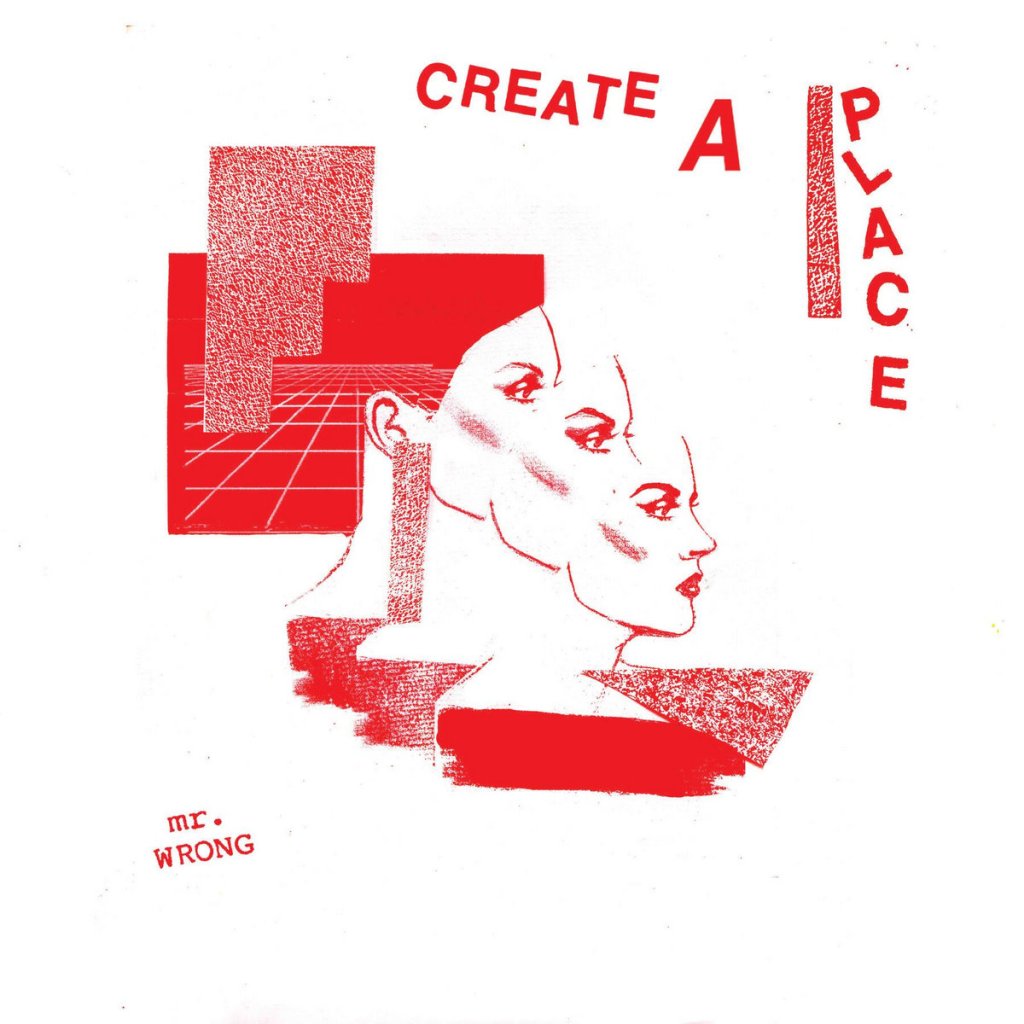
Mr Wrong is our kind of right in every way, super fun in a Devo meets the B-52s kind of way. At the start of this year they released album Create A Place, we spoke to the band to get the bigger picture of where they’ve come from, what inspires them and of the place they’re creating for themselves with their powerful – tackling important subjects like politics, healthcare, oppression and rape culture – spirited punk.
What were you like growing up? How did you first come to music?
URSULA (drums, vox): I was a shy kid, very much in my own world, which music was a vital part of. Both my parents had great/really varied taste, and there was always music playing at home- from Balkan Choirs to Here Come the Warm Jets. Music gave me a context/outlet for the extreme emotional turbulence of adolescence.
MOF (guitar/vox): the term my parents used for me as a kid was, “spacey.” Some of my earliest memories are listening to Gang of Four, Human League, Depeche Mode, The Buzzcocks, DEVO, etc. in my dad’s car and feeling overwhelmed with hope and excitement by the prospect of existing in those worlds someday. I was a sensitive kid that appreciated the emotional strength & honesty of the music my dad introduced me to, it was empowering and validating & I never grew out of loving it.
LEO (bass/vox): I stared at the world through big eyes, fascinated in what was going on around me, but contemplative to the point of hesitancy. My family would sing together, we’d play dulcimers that we made out of long green boxes, and I would strum along as a lil beb in a high-chair belting with them, and not worrying about a thing. I grew up singing, folk songs and songs my grandparents grew up with, and slowly my dad’s rock n roll fascination with far-away music got infused in there too. My cousin taught me about punk rock, my friends and I would drive around immersed in PNW rap, and I fell asleep to Enya every night. I loved it all.
Photo courtesy of Mr Wrong.
What inspired you to start making tunes?
URSULA: I was always singing along to things. All of my heroes were musicians. My dad played in bands so it seemed like a somewhat accessible world (though it took me a really long time to be in a band- not until my early 20’s). As a kid I dabbled in piano, and guitar.
MOF: I tried to write music a lot as a kid using layering in Garage Band but never had formal training or much confidence. After reading Girls to the Front I decided to finally kick that insecurity to the curb and form a band.
LEO: I always had big feelings, they were overwhelming and confusing, and often stuck inside me. Music became my way to process, to let the feelings out so I could look at them and turn it into something I could understand. I started on piano, quickly moved and got completely obsessed with acoustic guitar, where I started writing sad and freaky songs to myself and never really stopped.
How did you come to playing the instrument that you do in Mr. Wrong?
URSULA: Mof and our friend Colette (who now lives in Berlin) told me they were starting a band. At that point, we were just acquaintances, I had seen them around and thought they were super cool. When they asked me if I wanted to play drums, I jumped at the chance and started teaching myself to play. We jammed a few times in that incarnation, and then Colette moved away and Mof and I continued as a two piece.
MOF: Shortly before staring Mr. Wrong, I found an off-white Squire with a teal pick guard on Craigslist for $50. I loved it (still do) and decided that would be what I tried to learn. I did end up painting the pickguard white with black triangles, however.
LEO: I’m drawn to the low end. Bass is where rhythm meets melody and I’d always dreamed of basking in that magical crossroad. Getting to play with Mof and Urs is a dream come true.
I feel there’s little hints of Devo and B-52’s in your music; are you fans of either?
URSULA: We are giant fans of both- good instincts.
MOF: One of the two covers we’ve learned is 52 Girls by the B-52s and Ursula and I do a radio show with two other friends called Time out Four Fun, named after Devo’s song, “Time Out For Fun”. You could say we’re big fans of both bands!
LEO: (Heart-eyes emoji).
In January you released your LP Create A Place; where did the title come from?
URSULA: It’s a line from the song ‘Isolation Du Plenty’. We had a really hard time coming up with a name. Our first ideas were more apocalyptic in vibe, but we ended up feeling that, although the album deals with a lot of chaos and unrest, our ultimate outlook is still hopeful. Create A Place acknowledges that the spaces we wanna exist in may not be fully formed yet but that we can create them together. And it’s probably gonna be messy, but we have to try.
MOF: The title comes from the song ‘Isolation du Plenty’” which was written in the winter of 2016/2017. Inspired, in part by, Tomata Du Plenty’s world, via The Screamers and his visual art. The lyrics are about creating a place of stability in your mind, even if it’s just a vision of a someday physical space that you hope to occupy, and drawing inspiration through artists you’ll never meet. I feel that the songs on Create A Place are all, in one way or another, critical of institutions that prevent stability for large portions of the population, the hopeful message we aspire to leave with listeners is that we can change that.
LEO: It’s about noticing what we need in the world around us and feeling inspired to create it for ourselves (and anyone who feels connected to it). It can seem scary to take those first steps when no one around you is doing something, but that makes it all the more important to trust your gut and do it.
How long were you working on the album for? Were there any challenges?
URSULA: About two years, I think? We were in a songwriting rut for a minute there- I think we were feeling the pressures-or perceived pressures- that can come with making a sophmore album.
MOF: A famous quote by Mark Twain that I always fall back on is, “I didn’t have time to write you a short letter, so here’s a long one instead.” Create A Place is Mr. Wrong’s short letter, we had a couple songs written when our first album came out in 2017 and let the next 7 evolve over the following two years. We tried a lot of new things on this album and also went through a lot of changes as individuals over those two years, so there were certainly challenges.
LEO: Life is full of unexpected challenges. This album was us learning how to tenaciously push through the chaos of reality together, and learn how to be there for each other and ourselves in uncertain and scary times.
Photo by KC Weimann; courtesy of Mr Wrong.
How did you go about writing songs for this record? Was it collaborative?
URSULA: As usual, almost all of it was through jamming out ideas. Super collaborative.
MOF: We write everything collaboratively, aside from some lyrics.
LEO: We talk about everything, and hold space for everyone’s ideas. The music is an extension of our relationship.
What’s your personal favourite track on the LP? What’s it about?
URSULA: I really love them all, but I’m especially proud of how ‘White Male Teacher’ turned out. That songs about all sorts of things- mostly power dynamics and oppression. The title is a reference to a high school teacher I had who wrote a public letter announcing that rape culture does not exist and passed it out to his freshman class.
MOF: ‘Holding for Healthcare’ means a lot to me, It comes from a massive frustration with the inaccessibility & inefficiency of privatized healthcare; the discrepancy of care between poor and wealthy Americans. I remember thinking about how DEVO might broach the subject, with a hint of humour and absurdity, it feels cathartic to play every time.
LEO: ‘Nuclear Generation’ will always hold a dear place in my heart. For me it’s about not giving up, even when there are many daunting forces out of our control, decisions being made in locked rooms by a lot of old white men, that started long before we were born and will continue to really fuck things up. But through acknowledging and learning about the past and the effects on the current systems can rally us together to change our future, to “reinvent it, power down” -bringing the power to the people, turning off our phones and screens and realizing how much beautiful world we still have to fight for.
What’s a song you wished you wrote?
MOF: ‘It’s Obvious’ by the Au Pairs
URSULA: ‘Nervous Tonight’ by Portland’s own, Lotek.
L: ‘Hounds of Love’ by Kate Bush
All of you sing; when did you each discover your voice? Were you ever self-conscious or nervous when you started out singing?
URSULA: Singing in public used to scare the shit out of me. The sense of support and empowerment that I get from my bandmates has gone a long ways towards evaporating that fear. I definitely found my voice in this band.
MOF: I feel I truly discovered my voice when listening to bands like Bratmobile, The Petticoats, Delta 5. My only experience with singing before was as an alto in High School Choir, while I loved the harmonies and comradery of being in a choir, it didn’t feel expressive to me. Hearing a vocal style sang by women that was individualistic, verging on talking or yelling-but not without melodic elements- was an “aha” moment for me. Exploring that with Ursula at the start of MW (we were a 2 piece at first) is when I feel I truly discovered my voice, she was super supportive and encouraging, which really helped me find my way. That supportive dynamic has continued with the addition of Leo, I feel very fortunate to have a safe place be vocally expressive.
LEO: When I got exhausted by the pressure to sound pretty. I like singing at the top of my lungs, or making freaky sounds and seeing where my voice can take me, but it took me SO long to be confident enough to let my voice do it’s thing in the presence of any other living humans. It is still a struggle, and some days it feels way harder than others. But I try to remember how good it feels, and focus on the gratitude that there is a place in my life where I can let go.
Who did the art for Create A Place? What was the thought behind it?
URSULA: Mof.
MOF: I was thinking about the future & creating that future amidst isolation, through solidarity with like-minded people, when I drew the cover for Create A Place.
Why is it important to keep creating art in these crazy/uncertain times?
URSULA: Art is a way of processing/ trying to make sense of the human condition (sometimes it cannot be made sense of, and you just need to scream about it). It’s important to know that someone else out there is feeling something you feel, and they turned that into a piece of art that can be experienced and enjoyed. That’s pretty fucking magic.
MOF: There are nuggets of wisdom and catharsis in art from the past, the recent past especially. It’s important for artists to continue creating- not just as an outlet for them personally, which is important- but as a life raft for future generations as well. We need to keep a document of what’s happening so that our collective history isn’t solely written by the ruling class.
LEO: I often don’t even know what I’m feeling until I can express it. Being able to make some kind of art, and look at it from the outside is a window into myself. Art is something to hold on to, to be able to fully fall into when my mind is running away from me or I’m lost inside myself. Focusing and immersing myself something can allow me the space to come back to myself when some time has passed and I can think differently. It is an anchor to keep me here, to recover into, to be able to take a breath, get up and do what I need to do.
Why is community important to you? Where do you feel yours is?
URSULA: Community is important because no one has all the answers. Crowd sourcing is the way of the past, and I think we’re seeing it return in a big way right now. The people I’m lucky enough to call friends make me feel seen, supported, and loved. Art for art’s sake is great- but I think having a community to share it with really takes it to a different level that’s so special.
MOF: Art doesn’t occur in a vacuum, and as Ursula said, having community to share with is what gives art meaning. I guess I could say I feel community most when I feel understood and valued on an emotional level. As that’s what art is to me- an emotional exchange of ideas- I feel I have found a large part of my community through this band and the people we have connected with.
LEO: Feeling in community can be difficult in such an individualistic society. I have started to think of community as family, and it’s clear to me: The nuclear family is not enough. We need to form our own families, with all different kinds of people, with elders and kids and babies and teenagers and neighbours and mentors and friends and plants and people we just met and from places we’ve never been. Community is giving and taking care in so many ways, reinventing old ones and imagining new ones. It is accepting and letting others see the beautiful and ugly mosaic of who we are, so we can confidently be our vivid and dynamic selves together. I always say it takes a village to be a band, because it does. It takes so many people believing and doing to make anything happen. And wow, do we all need to believe in each other and a future right now.
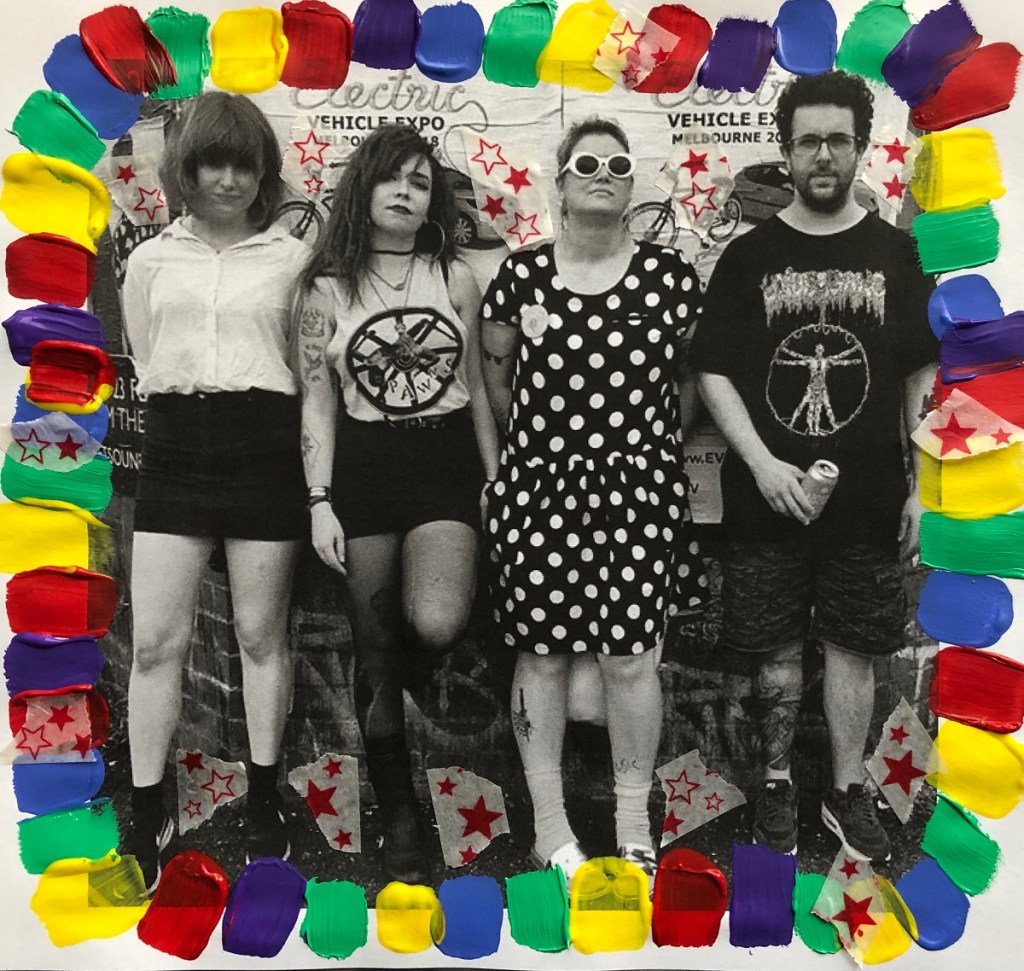
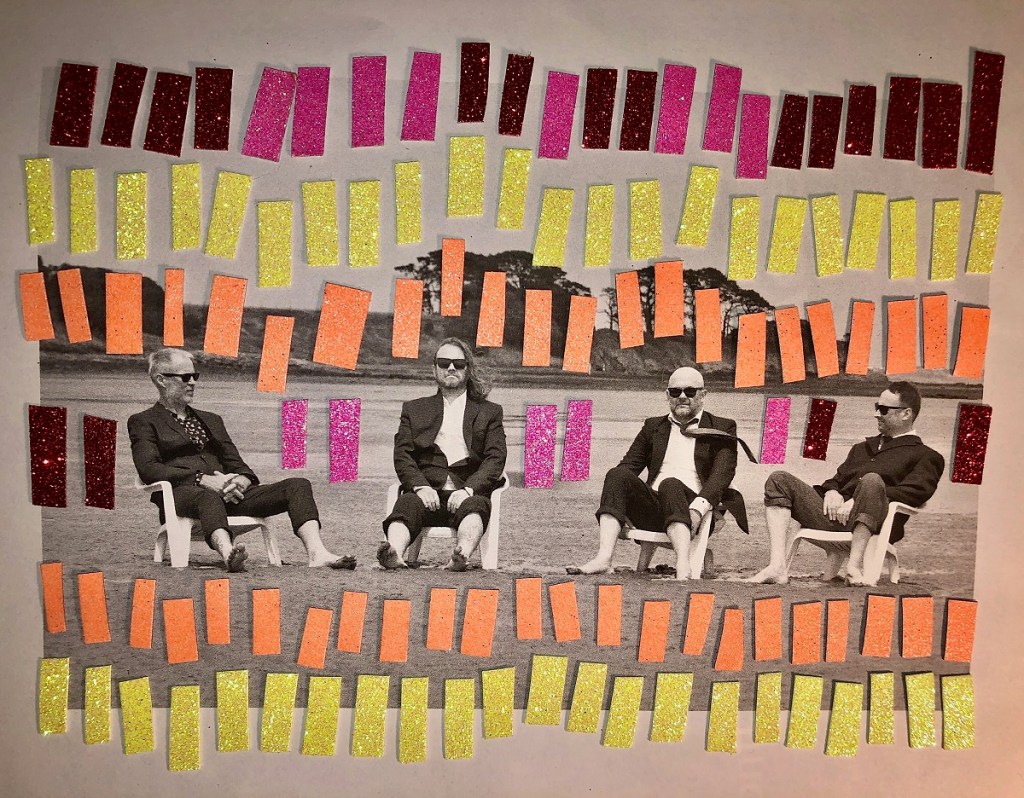
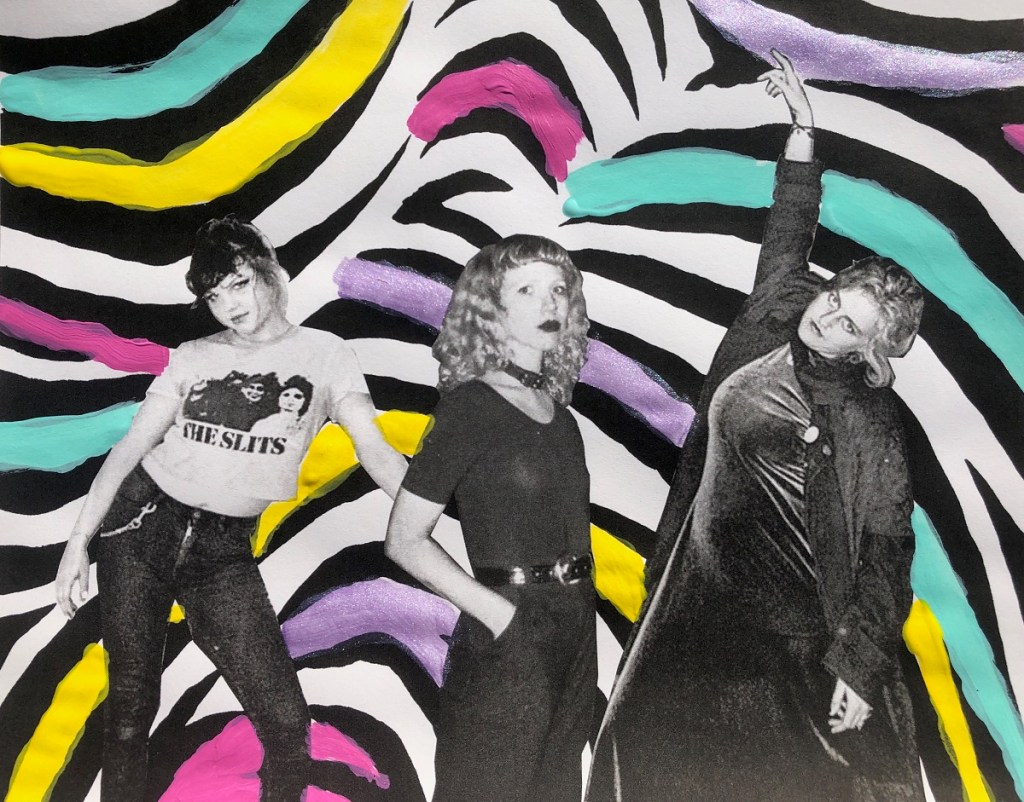
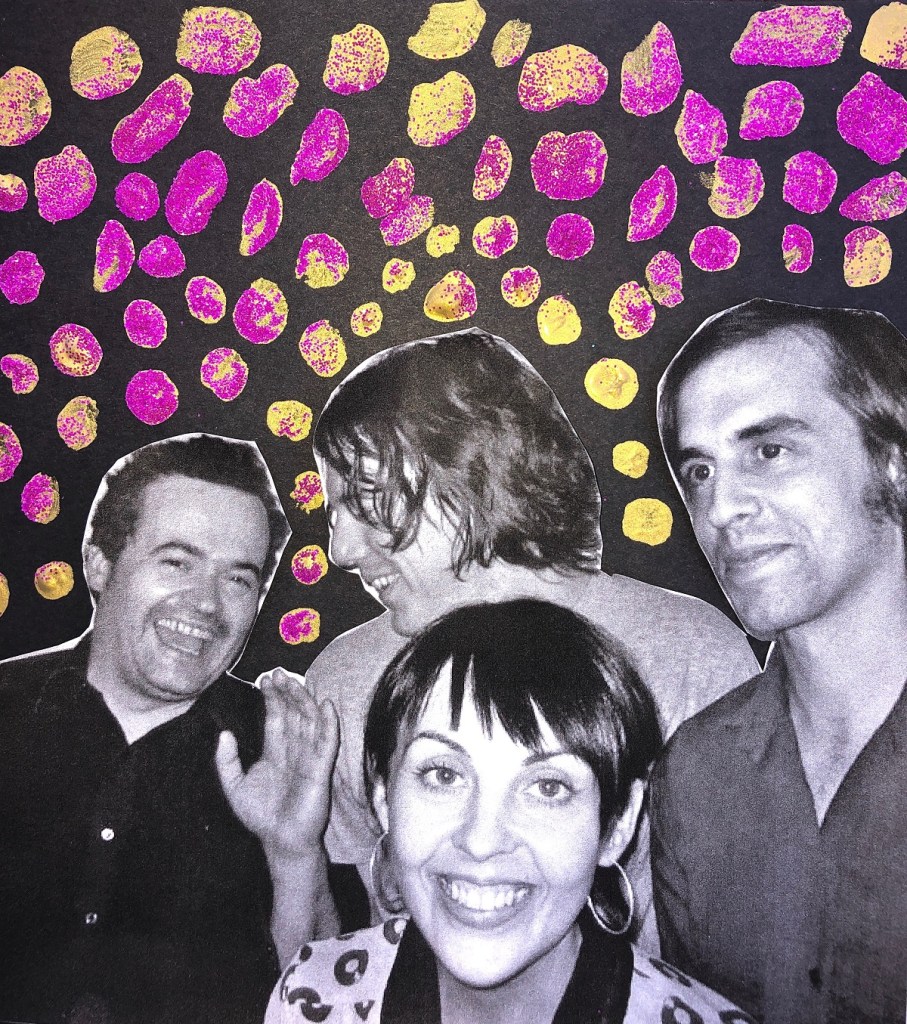
Original photo by Nathan Howdeshell. Handmade mixed-media collage by B.
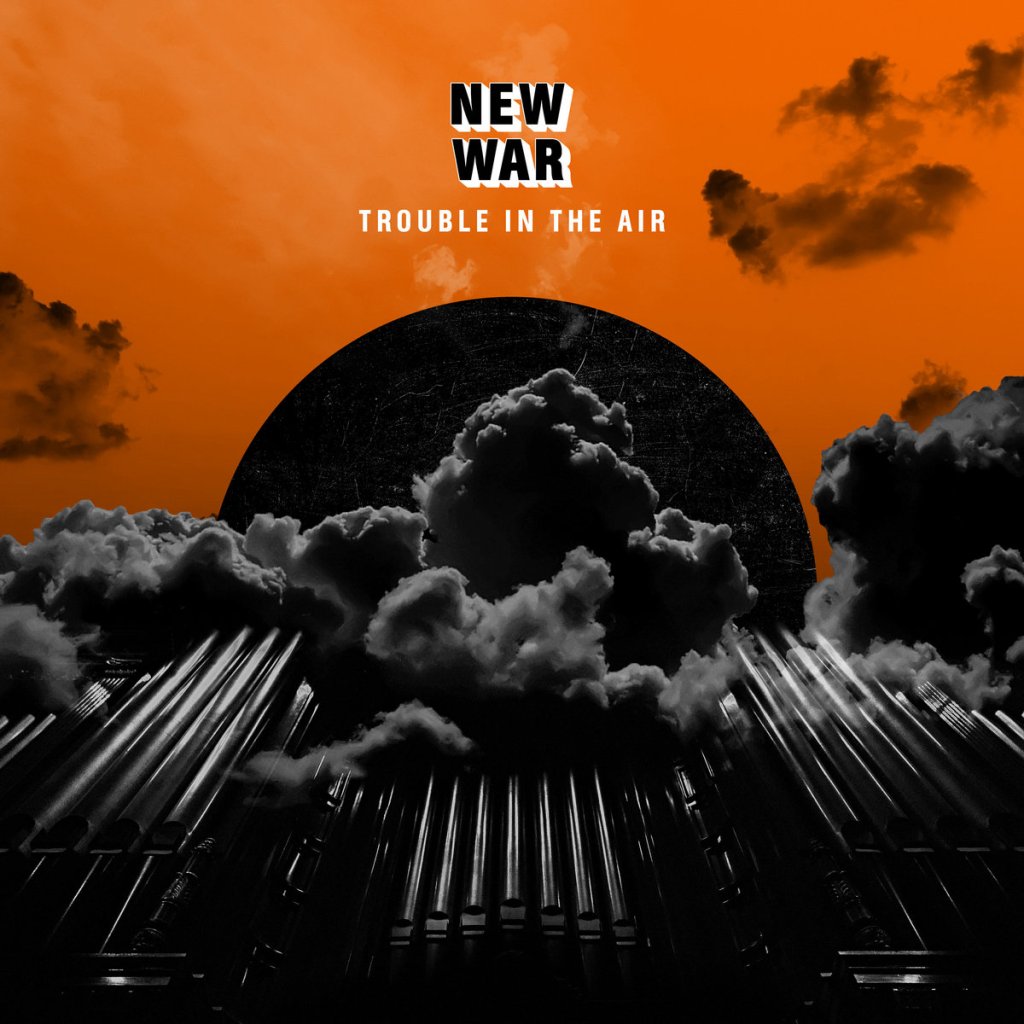
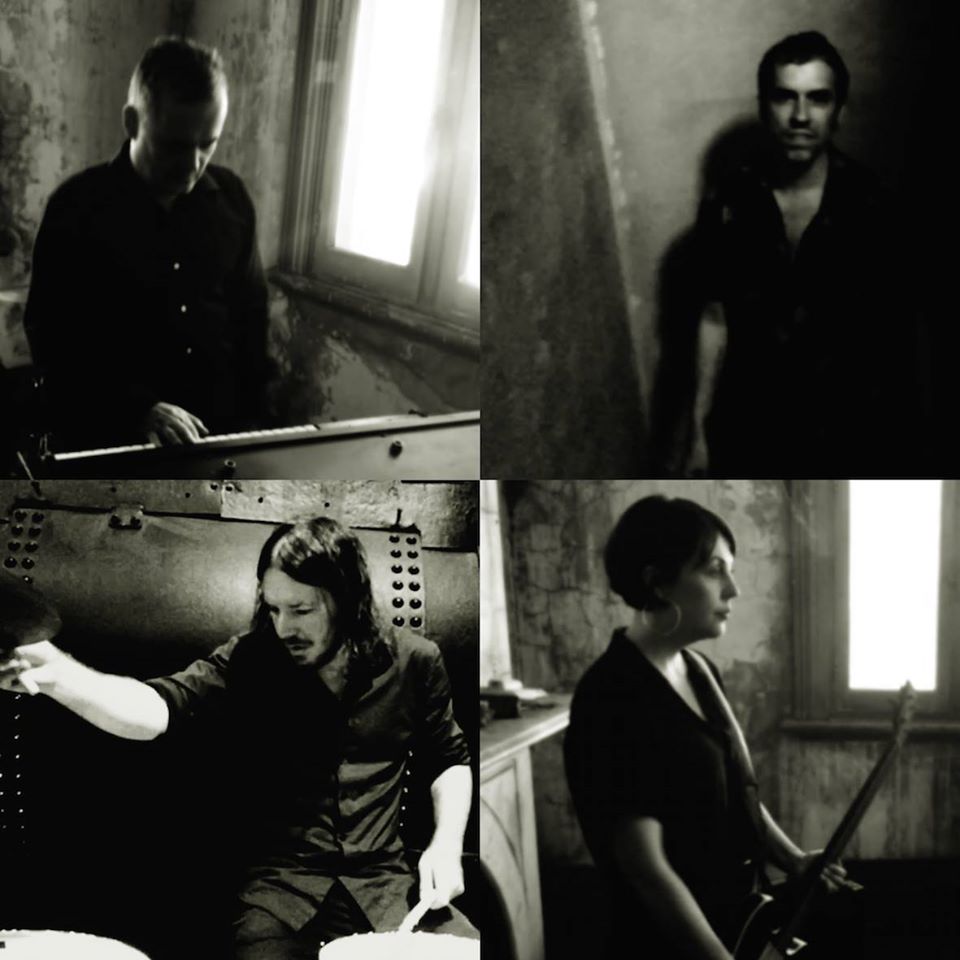
New War are one of those special bands: they defy genre; they have voice, keys, bass, guitar and drums yet there feels like there is so much more going on; they push boundaries and most importantly their music has the ability to move you intensely and deeply. Their self-titled LP and follow up Coin are always on high rotation at Gimmie HQ. Latest record Trouble In The Air saw New War take up a new challenge recording in Melbourne Town Hall using it’s four-story high Grand Organ—the resulting collection of songs is haunting and transcendental. We chatted to vocalist Chris Pugmire about the album, the deep side of art, discovering music, being history buff, a transformative year spent in Germany as a teen, anarchism, lyricism and more.
As an artist what are the things that you value the most?
CHRIS PUGMIRE: Art that’s strong and slippery, that refracts meaning in a new way each time you approach it, that has the sense of a truth that isn’t fixed and didactic but introduces you to worlds or ideas you hadn’t considered or been exposed to before – even (or especially) if it comes from you. Art that expands or reflects your own inner and outer worlds, that has a complex emotional core that can take intimidating subjects like politics or history or economics or whomever controls whom and crack them open, make them seem less inevitable. Whether I make it or someone else makes it doesn’t particularly matter, I want to be thrilled. When I make something that ticks those boxes I’m ecstatic.
Same if I discover someone else. I get giddy, high, almost hysterical. Then I get obsessed and need to explore it from every possible angle. Then I chase that compulsion again. I make it or find someone. And so often it has nothing to do with money and what money does to art and people, it is money’s antithesis. It can be any act of creation: music, painting, drawing, literature, film, photography, birth, life, sex, death… etc, etc.
Why is music important to you?
CP: It combines so many senses. Hearing of course. But you physically feel it, bass pushing against your stomach and chest, treble pricking at all your nerve endings, beats making your heart race and whole lower torso to move in time. Vocals making synapses fire and drawing tears and shivering your spine. Sudden changes or silence or spikes or climaxes of emotion that make your head tingle, your cheeks hot. And that’s only physical. It’s so powerful, it can change your whole worldview in a few minutes. It can make you feel just about anything. It’s that alchemy, it makes you something new.
How did you first discover music?
CP: It happened via the radio, talking to friends and sharing mixtapes. Taking a punt on an album or a show because the cover or flyer looked interesting or you vaguely remembered a review. Like going to see Bikini Kill because it was this new kinda secret thing, what’s this all about? and feeling zapped by a zillion watt thunderclap. I read one of the ladies in Huggy Bear looked like a mean supermarket checker so I jumped at Taking the Rough with the Smooch which blew my mind. Swell Maps’ Trip to Marineville had the house on fire which was impossible to resist, there was no way it could sound bad with that cover.
I had (and have) a really cool older friend named Jennifer who I worked at a coffee shop with when I was 17, 18 and she made the best mixtapes with stuff like Opal, Thinking Fellers Union, Scorn, Faust, etc. and took me to see stuff like Tindersticks with a fake ID (most good shows were 21+). Then I volunteered at the Velvet Elvis, a great, slightly lawless all-ages club and it just kept going…
When you were sixteen you spent a year in Germany, previously you’ve mentioned that it was really instrumental for you; how? Could you please share with us a little about that year?
CP: I was raised Mormon and my world was very small. I was a little tuning fork and the church’s instilled fear, patriarchy, homophobia, sexual repression, etc. struck and struck at me and its deeply ugly tones felt like the spiritual death I was supposed to be being indoctrinated against. During the first Gulf War there was a palpable bloodlust both at church and school and it revolted me, so much I refused to speak for its six weeks. But my parents were for the most part not as rigid or cruel as this culture even though they made me be part of it and it was deeply confusing.
So when I went to Germany shortly after it was like the veil was lifted. I still had to go to church but it wasn’t the all-encompassing experience it was at home. In Germany I saw neo-Nazis spring up in the aftermath of reunification. You’d see them at soccer matches abusing African players or occasionally roaming the city, they were terrifying. There were attacks on Turks and Kurds and other immigrants in Mölln and Rostock. Part of a large family were murdered by fascist arson in Solingen. There were quite full-on demonstrations.
My cousin Jonny and I shared a room and we’d talk all night about that stuff, church, the future, music, everything we could think of. We both had a taste for adventure and got up to a lot of no good. At school we studied Woyzeck (both play and film) and that had a profound impact on me as well, the instability of men’s emotions and how they could slip from desire to violence and how class and its humiliations played such a malign role in that destabilisation. The beginning of a lifelong fascination with the machinations of power and all little steps of experience and tastes of freedom that meant the church lost its grip and in a few years I wriggled free.
Your new record, Trouble In The Air, was recorded live at Melbourne Town Hall using its Grand Organ; what inspired this?
CP: It wasn’t something we considered or imagined until the invitation was extended by the curator. What a fun challenge, how would we pull it off?! We thought it gave us the chance to try a different palette both with the organ (simultaneous new possibilities and limitations) and drums. Our live engineer had done sound there and suggested drum machine might be preferable for the sake of clarity and balance between everyone.
You recorded the record live in 2017 and now in 2020 it’s seeing the light of day; in hindsight what are your feelings about this record?
CP: I like that it happened and it’s not overthought. That it’s a snapshot of freshly written songs the first and possibly only time they’ll be performed.
What mood were you trying to capture on this recording?
There’s a lot of moods. “Emerald Dream Eyes” is a love song. “Purple Heart” and “Cocaine Blue are mourning songs. “I am Position Yellow” is a frustration song. “Bang On” is a mystery song. “Redbeard USA” is an investigation song. And there’s a lot of other little moods in each song as well, and they all exist within the title and that’s the vision and overarching mood. All three records are like that. I mean it sounds dumb, of course they are. But they really are.
I understand that you wrote the record over three months, which is a very short time for New War compared to how you would usually write; how did that influence your song writing?
CP: It was the first time we’d written our parts separately, where we were emailing ideas back and forth and building the songs up at home and then rehearsing solid ideas with a lot of focus. Our other records were written by playing in a room every week for several years and refining initial ideas over a long period of time. And the same lyrically, often starting as a really long stream of consciousness and gradually whittling down to rhymes because I think decent rhymes are really hard! We’ve probably lost about two or three records worth of songs just by being picky. So for this record, because of the time constraint, we had to set all that aside and make all the initial ideas work quickly because there wasn’t time to nitpick. It was refreshing being able to accomplish not only the writing but the performance, it made me only want to think of new ways to approach any future recordings.
Lyrically what kinds of themes do you find yourself drawn to? Are they ever reoccurring?
CP: Just observing the world… what’s happening now, what happened before, how that affects what’s happening now… same with my life, my past, my present, the same thing… And dreams are a big part, whether their own thing or relating to all the aforementioned stuff. There’s a thread through all the songs and albums, there’s recurring images and words just like there are in dreams, history, life…
Who are your favourite lyricists?
CP: I’ve always loved and found new ways to appreciate Kim Gordon. Her new record is conceptually and in its execution the work of a master. Revisiting Dirty and Goo recently, which were two of the first CDs I bought, I’m so struck by her incredible character acting and how wide her emotional range is. And that she’s so funny. And that she writes such complex moods into such accessible language.
I love Bim Sherman, Kathleen Hanna, Tobi Vail is a total genius lyricist and great essayist as well, Horace Andy, Ari Up and Viv Albertine, Nas, all of Wu Tang, Bahamadia, Guru, Rakim, Mobb Deep, AZ, Ana da Silva, all of Huggy Bear, Jarvis Cocker, Iggy Pop, Mark E Smith… The Sleaford Mods guy is fantastic. I’ve always loved Nisa from Fabulous Diamonds’ lyrics… I could go on forever.
What were the challenges you faced making this record in such a space and using the organ?
CP: That we only got to rehearse once before performing! Jesse got to play the organ a few times late at night (and besides the fact there’s so many keyboards on the organ itself he said it was like playing grandma’s organ), but we only had one full band rehearsal with the organ, using our shitty PA running both vocals and drum machine. So trying to write for such a weird instrument in such a big space and having to basically imagine how it would all sound until the day of the performance was hard.
Aside from music I’ve heard that you’re a history buff; where did this fascination stem from?
CP: Yeah! Mostly because history is so crazy and so much of it gets buried. I’m not into conspiracy but I love secret histories. Like how the Bolshevik and western versions of the Russian Revolution are total bullshit written by the victor or misinterpreted by the enemy.
Voline’s ‘The Unknown Revolution’ and Peter Arshinov’s ‘History of the Makhnovist Movement’ (as well as Nestor Makhno’s own writings) flesh out such a radically different version of the Revolution and the Civil War, where’s Makhno’s (Ukranian Anarchist) Black Army defeated the White (Monarchist) Army on several occasions, only to be double crossed by the Red Army, which as with Kronstadt, didn’t hesitate to eliminate anyone to the left of them in order to consolidate power. It’s where communism in the 20th century first fails as a humanist, revolutionary project and lapses into authoritarianism and portents the Ukranian Holodomor in the 1920s, Spain in the 1930s, Hungary in 1956, Prague in 1968, as well as Maoism in the Cultural Revolution and its variants in Cambodia, North Korea, etc. I think these are lessons the left always has to remind itself of, whether it’s a political or cultural tendency to lapse into Bolshevism. You have to plan for it or every worthy project from the smallest collective to a state eventually falls prey to authoritarians. Which sucks for everybody.
I digress. This fascination stems from stories, which the best histories are. Whether reading Lipstick Traces or Howard Zinn or Robert Fisk in my early 20s or reading Svetlana Alexievich or Ryszard Kapuscinski now, the best history tells everyday – but extraordinary – people’s stories with a novelist’s touch and a journalist’s economy and commitment to the facts.
In true history nerd style, did you research the space before you performed/recorded there?
CP: All I knew was that the organ had burnt down at some point and had to be rebuilt? Jesse and I went and saw a classical organist perform on an afternoon not long after we got the commission. Watching that gave us the sense it wasn’t going to be easy, ha.
You were also once an Anarchist collective bookstore owner; are there any Anarchist ideas present in your life today?
CP: It wasn’t ownership in the classic sense but I was responsible for a few years. Are there still Anarchist ideas in my life? Absolutely. I might go weasel words and say anarcho-communist or libertarian socialist or whatever. I think mutual aid is the building block, that people innately lean towards cooperation and that hierarchy isn’t necessary for a society to function. That a more central apparatus would work better as a federation made up of worker’s councils or neighbourhood councils or whatever. And you’ve got to prevent that ossification that allows for authoritarians to get a foothold and consolidate power. I wish I was organised enough to be less of a worker and ‘artist’ and more of a proper agitator. I think that’s half the reason we’re in the shit because too many people wanna be artists instead of the hard yards of organising and that’s been the one of the main reasons elites have been able to wind back the clock to the 1920s or even Victorian times. Everyone’s pissed off but we don’t have our eye all the way on the ball. And the right wing always sticks together no matter what. And they don’t give a shit about culture in terms of it getting in the way of doing their job. The left needs to learn from that. Get tight and get organised and stay that way.
I know that New War like to keep moving forward and not repeat themselves; what’s next?
CP: Not sure yet but it’ll have to be interesting and different (to us) or it won’t happen.
Portland’s Lithics first came to our attention in 2016 with their debut post-punk album Borrowed Floors. June 2020 will see the release of a new LP, Tower Of Age, both a continuation and evolution of their art-punk, with hints of no wave, sound we’ve come to love from them. Think a mix of Wire, Bush Tetras, Pylon, Erase Errata and Contortions.We spoke to Lithics’ Aubrey Hornor (guitar, vocals) and Bob Desaulniers (bass, guitar, tape loops) to find out more.
How did you first come to making music?
BOB: I’ve been playing guitar since I was twelve or thirteen and started my first band not long after. I had older friends that were in punk bands and played shows and I wanted to do that too.
AUBREY: I started playing drums when I was sixteen and my first band was in college.
Why is it important for you to create?
AUBREY: I enjoy the collaborative aspect and the creative process itself. Seeing an initial idea come to fruition through improvisation and group dynamics is gratifying. It’s a form of communication with music as the language.
BOB: When I was younger, music primarily appealed to me as an emotional outlet. While that’s still the case, in recent years I’ve become more interested in aesthetic or organizational considerations. My motivations are always evolving and I think that’s part of what keeps it an interesting activity for me.
In June you’re releasing your new LP Tower Of Age; how did the record start?
BOB: It takes us about two years to write a record. We’ve been playing some of the songs on Tower of Age live for a long time now. Recording the songs is only half of it though. Editing and sequencing is where you give the album its character.
Lithics uses a lot of cool wordplay in your lyrics; do lyrics come easy for you or do you have to work for them?
AUBREY: Sometimes it comes easy and sometimes not. It’s usually the last piece of the songwriting process. I work from notebooks of observations and poetry, and sometimes the words come from ideas I have for phrasing.
What are some things that were inspiring the writing for Tower Of Age?
AUBREY: I drew inspiration from everywhere-nature, literature, my personal life. It’s mostly hidden in abstraction in the final form.
What’s the significance of the album’s title?
AUBREY: It refers to the fortress you build up within yourself over time and the walls you erect to protect yourself. And personally, it’s about tearing those walls down and the process of letting go.
Lithics recorded with Evan Mersky (and Molly his dog) using tape; what kinds of things did you try during this recording that you haven’t tried before?
BOB: This was the first time we tried tracking instead of all playing live in a room. Wiley and I recorded the rhythm section parts first and really took our time getting takes we were happy with. It’s really difficult for everyone to get a good take at the same time and usually somebody is forced to compromise and leave in something they would rather not. This new way was less stressful.
We also took a cue from our 2017 tour tape Wendy Kraemer and decided to be a little more adventurous and include practice recordings, tape loops, and weird audio fragments. I regret not taking this approach for Mating Surfaces.
Were there any challenges making the album?
BOB: Songwriting felt like it took a long time. We wanted to challenge ourselves and let our sound evolve without resorting to older formulas or making any major aesthetic shifts. Physically recording the songs is always a challenge as well, with many emotional ups and downs.
What’s one of your fondest memories from recording?
BOB: It was really nice to have Evan’s dog Molly running around the studio lightening the mood.
You’ve released a film clip for the first single “Hands” where was it shot? The location looks pretty cool!
AUBREY: Desert Christ Park in Yucca Valley California and Joshua Tree national park. The indoor scenes were filmed in our friend Carole Anne’s studio here in Portland. I went on a trip to Joshua Tree with some friends and we happened to find the Desert Christ Park at sunset when we took a wrong turn. It was really beautiful.
What’s your favourite thing about your new record?
AUBREY: I like the two improvised tracks the most: “The Symptom” and “Half Dormancy”. They are unique performances we were never able to reproduce and I’m glad they made it onto the record.
BOB: The band very graciously gave me a lot of leeway with editing and as a result the whole record feels more personal. I’m glad it didn’t end up as just a collection of songs recorded in a studio.
Outside of making music what would we find you doing?
BOB: I am not very well rounded so it’s mostly music for me. I recently started studying classical guitar, which has been an exciting and humbling experience. I am not much of a visual artist but I enjoy working with collage as well.
AUBREY: I spend my time looking at birds when I can and I’ve been getting into gardening. I also occasionally work in ceramic sculpture.
Sydney’s Party Dozen is the dynamite combo of Jonathan Boulet and Kirsty Tickle. They’re one of the most interesting and exciting bands around with an experimental musical fusion of saxophone, drums and electronics to create a unique, fierce sound. They’re getting set to release their highly anticipated sophomore LP Pray For Party Dozen. We interviewed them, getting to know them a little better and hearing more about the awaited release, out May 22 on their own label Grupo Records. Get on your knees and start to pray, the second coming is almost upon us!
Party Dozen is a project loosely based around improvisation; what appealed to you about taking this approach?
JONO: I think all live forms of music conjure some kind of energy, sometimes it’s a familiar energy and sometimes it’s not. Audiences aren’t stupid and they can sense when you’re checked in to your performance. For us, keeping our performances unhinged and untethered not only keeps shows fun for us but I think it brings a sense of danger and if we want to project more energy we simply play harder and faster. And even though there’s a lot of songs we now generally play structurally the same, there’s always room for spontaneity and expression if we’re feeling it.
You’ve known each other for over a decade; how does that familiarity help when playing music and writing songs together?
JONO: Obviously knowing each other’s tendencies and even subtle physical cues can help immensely when it comes to performing as a unit. I guess at the same time we’re always developing as players and not being too familiar with someone’s playing style can lead to surprises and new paths. Sometimes I think we’re dead on the same page but it’ll turn out we are on opposite ends of the book! A welcome surprise as there are no mistakes when you’re “making it up”.
How did each of you first get into music?
JONO: It started for me when I was 10. I tended to be a little on the hyperactive side but instead of opting for drugs, my folks bought an old drum kit from a country town that used to belong to a Jazz guy that was in the war but never came back.
KIRSTY: My start in music was pretty run of the mill. Bullied my parents for piano lessons age 4, because I was the youngest and my siblings were all having them already. Music was the only thing that ever really held my interest for a long period of time.
All photos courtesy of @partydozen Instagram.
How did you first come to creating music yourself?
JONO: When I hit high school my parents got me a keyboard. It had this looping arranger function on it where I could layer up 5 or 6 instruments. I would get home from school and play it every day, recording loops that I liked on to floppy disks.
KIRSTY: I started writing songs when I was around 13, just keyboard and vocal kind of stuff. But I didn’t get into experimenting until I met Jonathan. He really pushed me to think about music differently and follow my own path with creating it.
I understand that Party Dozen started while you were overseas and that you started out playing the reverse – with Jono on saxophone and Kirsty on drums – of what the band formation is now; firstly what inspired you to be a two-piece with these instruments? Why did you first experiment by switching instruments?
KIRSTY: Yeah, we did one jam like that. I think Jono really wanted to play sax and I’ve always wanted to play drums. But it was dogshit, so we went back to the ones we’re good at. My memory is that we spoke about making a band in Berlin, but recorded our first song while living in London. We started taking it seriously when we moved back to Sydney. Coming back to Australia was this real lightbulb moment for both of us – we love living here, we love creating here and we love the community here.
Party Dozen’s music has quite an aggressive vibe and has an edge to it that can push the parameters of what makes people feel comfortable both as a listener and as a live experience; was that an intentional goal when crafting your sound?
KIRSTY: For sure. We always want to push the boundaries of how much sound two people can produce, and then extend on that. For me Party Dozen is also an experiment in how to utilise our instruments in more interesting ways, and appreciating that that sometimes isn’t going to be “nice” or “pretty”. There’s a real strength in that for me.
You’ve previously mentioned that with Party Dozen you wanted to “form a band that could help us grow as musicians”; in what ways do you feel you’ve grown since starting PD?
KIRSTY: When we started this band I couldn’t really use effects pedals. So I’ve really grown in that department. I also feel like we’ve both gotten so much better at playing our instruments in a live setting – still plenty of room for improvement though.
JONO: Yeah with the current format of this band, the better we get on our instruments the more options we have for exploration. This band has forced me to play harder better faster stronger.
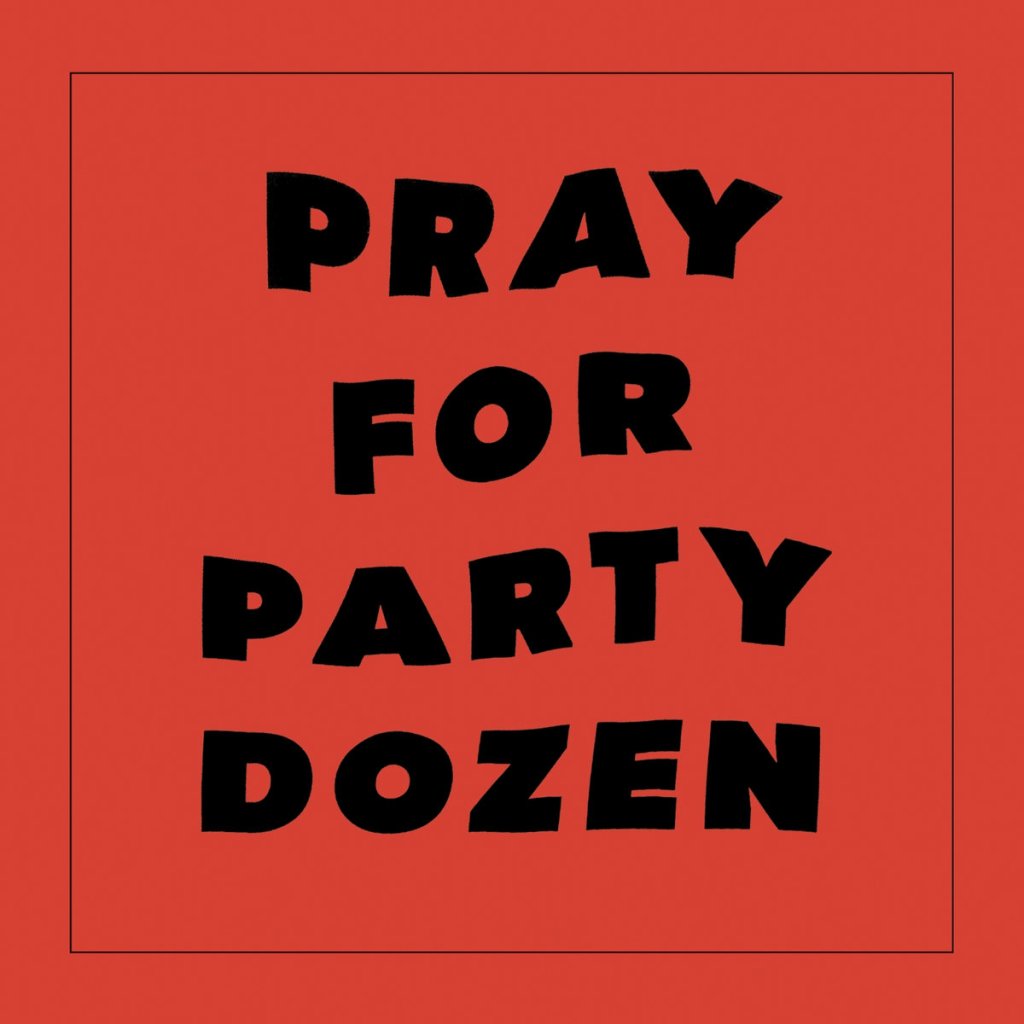
Where did the title of your forthcoming sophomore LP, Pray For Party Dozen, come from?
KIRSTY: I think it sort of started as a bit of a joke…
JONO: Party Dozen is a band that no one asked for, so I think it’s funny, the idea of praying for us.
What inspired the new record?
KIRSTY: Film Noir, cults, 1960’s rock, conversations about dead friends.
How did you record it? Jono you record, mix and master Party Dozen’s songs, right?
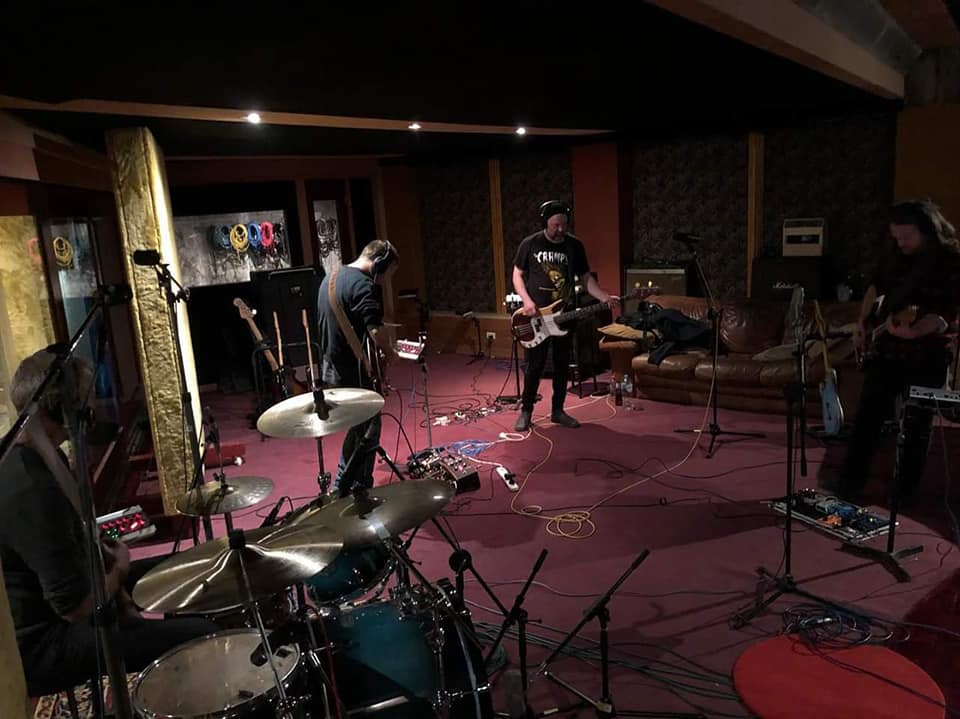
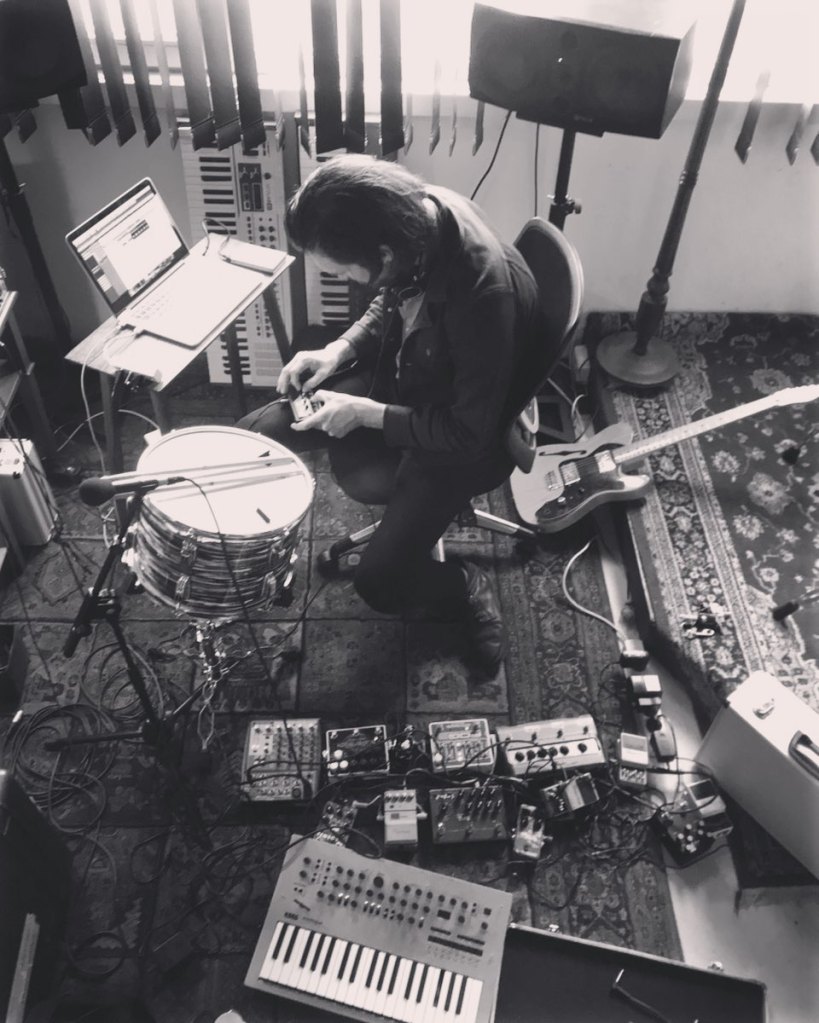
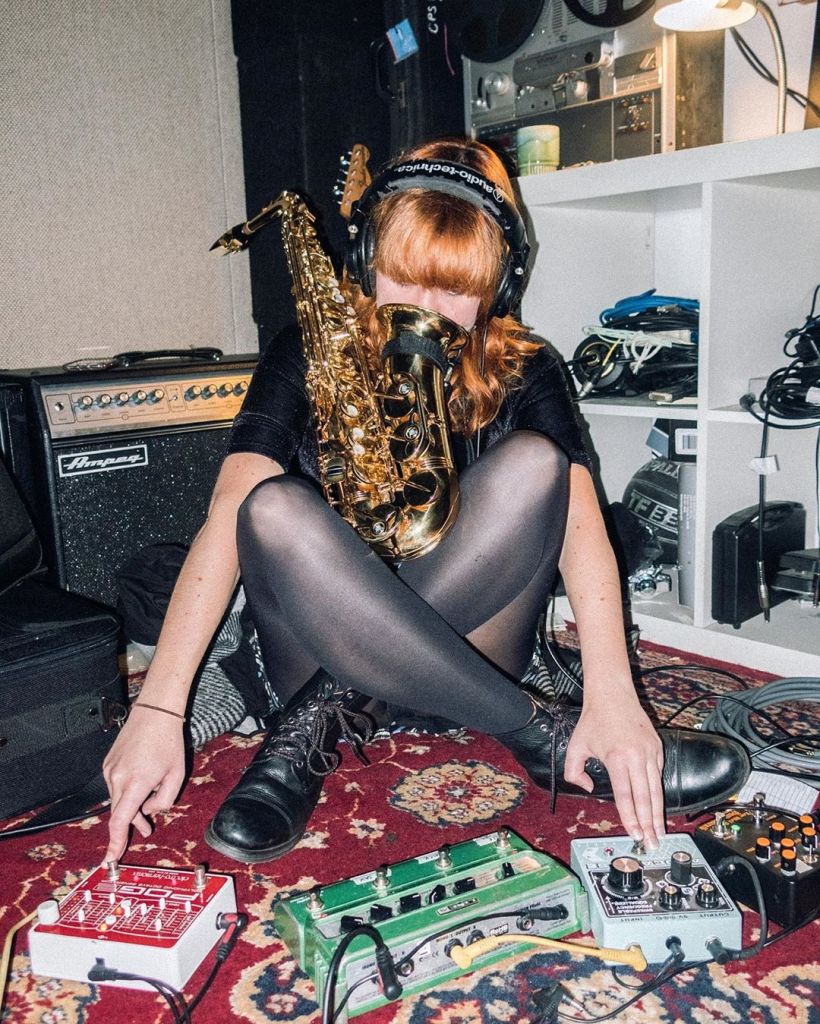
JONO: We recorded it in our little 15sqm box in Marrickville, Sydney. Generally we’ll improvise to a loop a couple times and pick the best one. We run the sax through an amp with a DI and generally use 4-6 mics on the kit. We mix and master in house because we’re possessive and greedy.
I know when writing songs that you like to experiment and that you like to play a few different takes over loops to find what sounds best; how important are feeling and intuition in your process?
KIRSTY: The writing process is very improvisational, so I’d say feeling and intuition makes up about 90% of it. If it feels good, we’ll explore. If we like the vibe, it’ll normally make the record.
JONO: You can tell pretty quick if a song is coming together and whether it’s worth pursuing. Once we’ve made a loop, you can envision the song and if that sounds good in your mind, it’s likely to sound good in reality. There’s only ever been a couple of jams that got to the jam phase and didn’t make it.
Were there any risks you feel you took while making the album? Or any happy accidents from the process that made it on to the album?
KIRSTY: There’s a song with no loops! Which is the first time we’ve done that, and we didn’t go into the recording aiming for that either – so I guess that’s a happy accident!
JONO: Nothing too risky. We were more focused on expanding our sonic palate. More colours to play with in the Party Dozen world. There was definitely an intentional focus on aesthetic and vibe this time around.
What gear really helped shape the sound of, Pray For Party Dozen?
KIRSTY: On my set up, I got some new pedals. A wah, a new fuzz and a couple of new delays.
JONO: I run all my loops off of a Roland SP-404, I use one crash, tighten the fuck out of my snare and try to hit everything as hard and consistent as possible.
What was one of your favourite moments of recording the new record?
KIRSTY: The opening track “World Prayer” is probably the most challenging track to listen to on the record. It was also the most fun, rule-free, throwing-shit-at-a-wall noisey tracks I’ve ever recorded.
JONO: Some songs you know just don’t feel right while you’re playing them, so it takes a few goes to get it right. But there are some songs, eg. “The Great Ape”, that feel right every time you play it. When it feels right the first time, you get this rush of excitement or a hit of some highly addictive drug.
What keeps music exciting for you?
KIRSTY: I get excited to just keep making. And trying different things. It’s not hard to keep excited with a band like PD… we can do whatever we want next.
JONO: Touring is what keeps it exciting for me. When there’s heat in the room and you can feel people’s energy on stage, nothing beats that.
As artists what are the things that you value most?
KIRSTY: I value time. Time to tour, practise, make records, hangout with friends who give me tonnes of inspiration. The more time we have as Party Dozen, the better.
JONO: I value a sense of humour, originality, and people with a sense of vision.








 Gimmie Gimmie Gimmie Zine