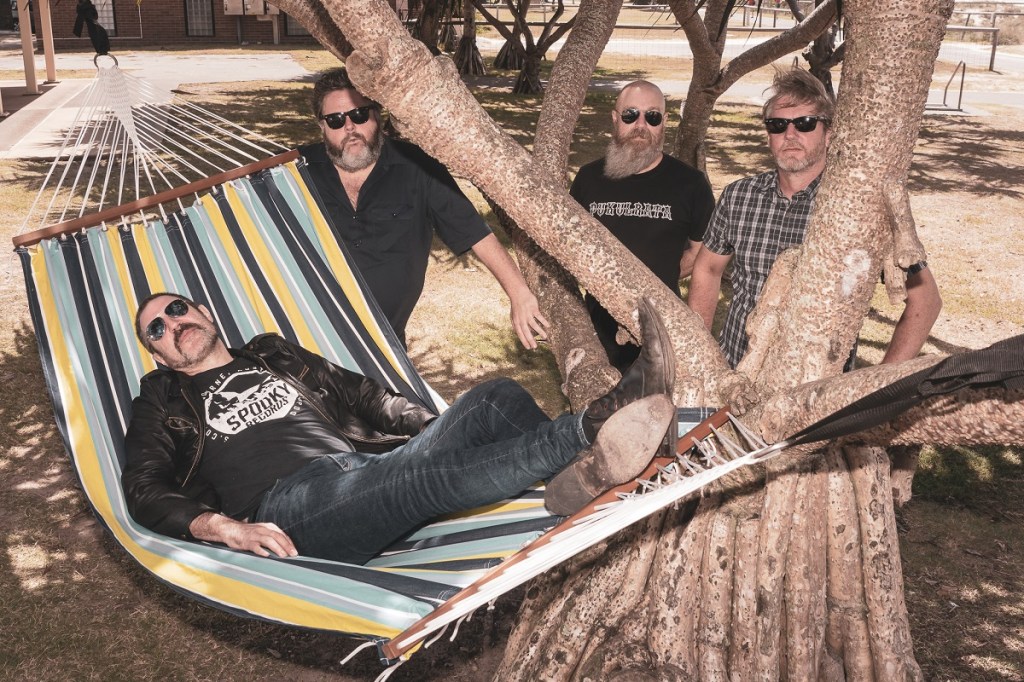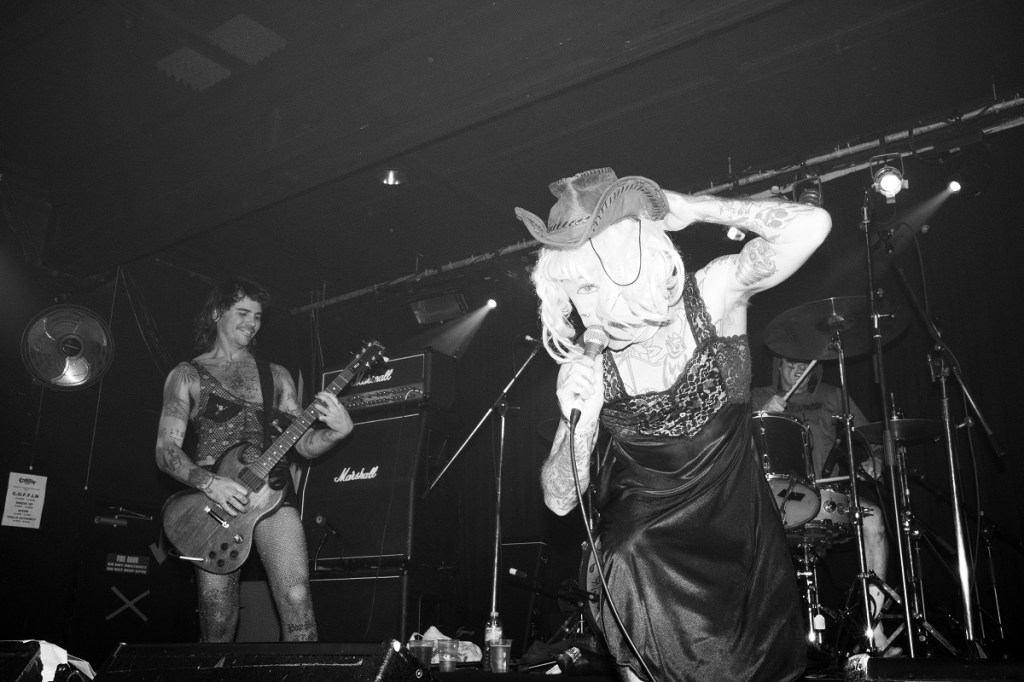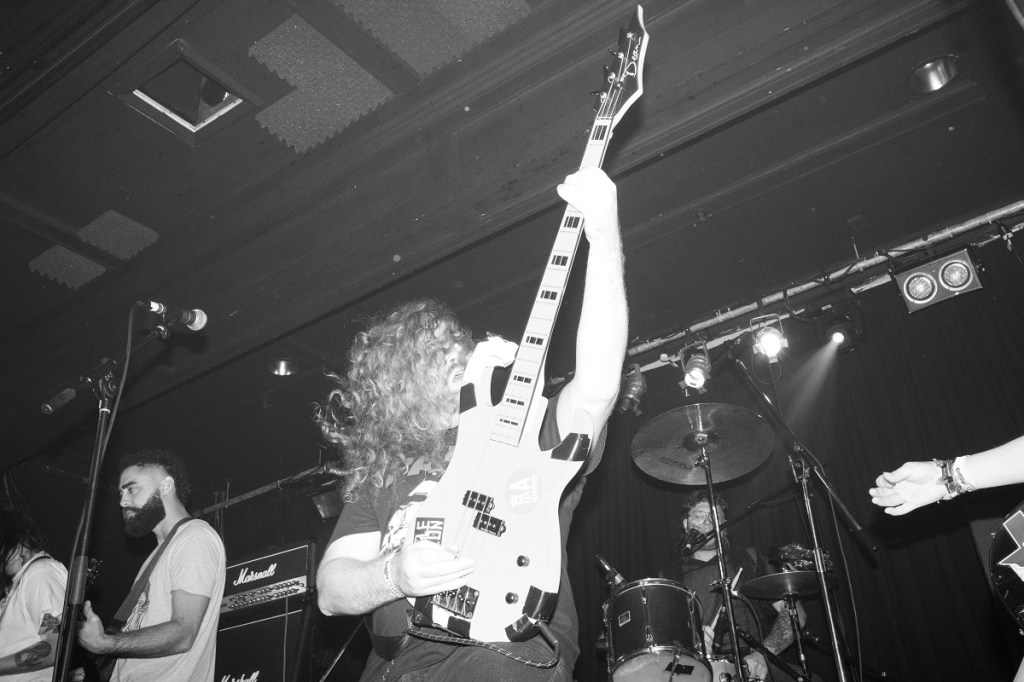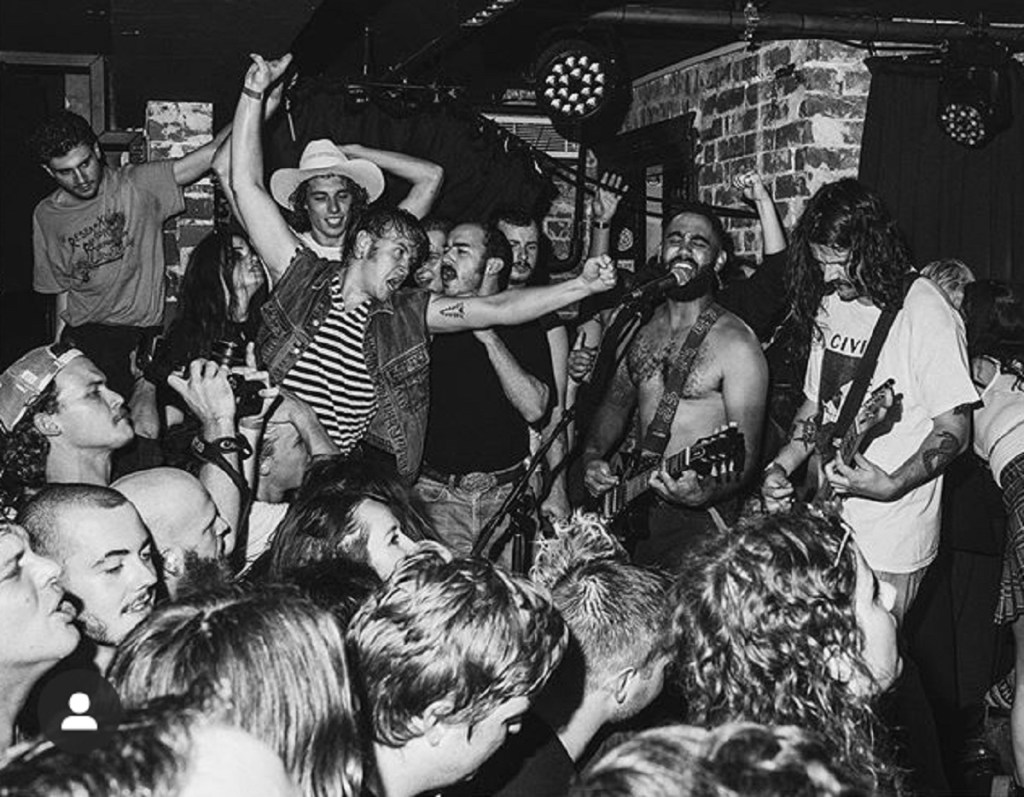
Link Meanie of Legendary Melbourne Punk Band The Meanies: “There’s many things that you can get out of being creative but for me, if I didn’t have that I’d probably go insane”

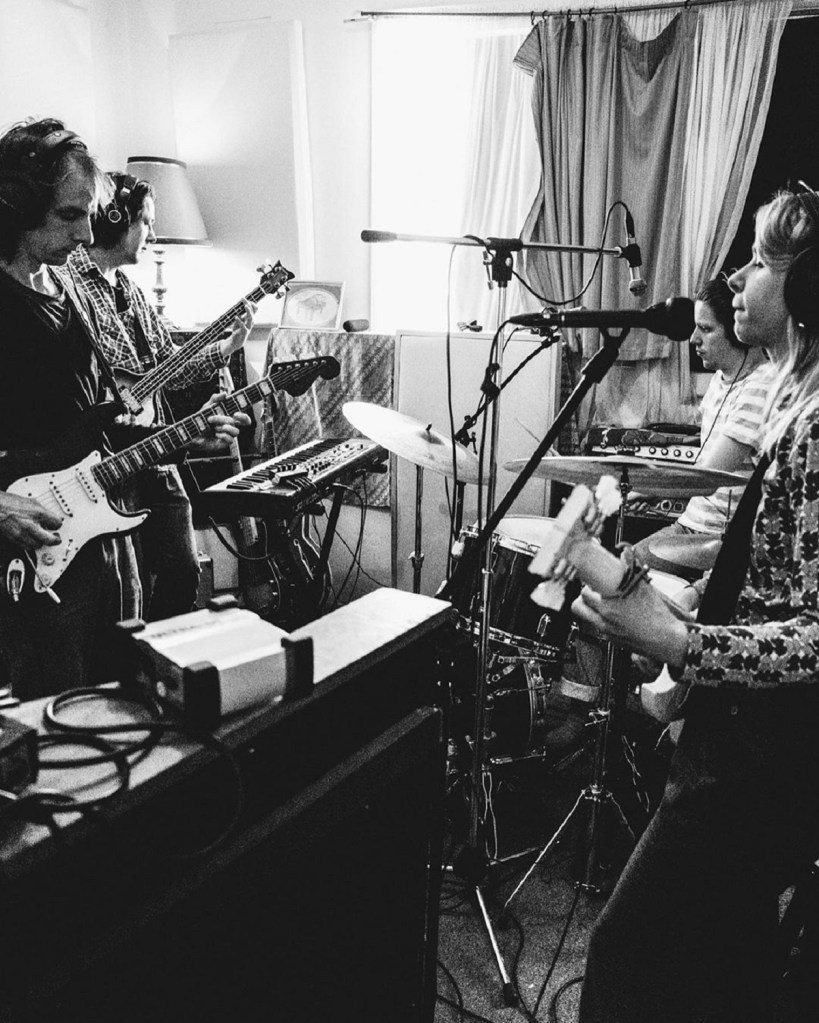
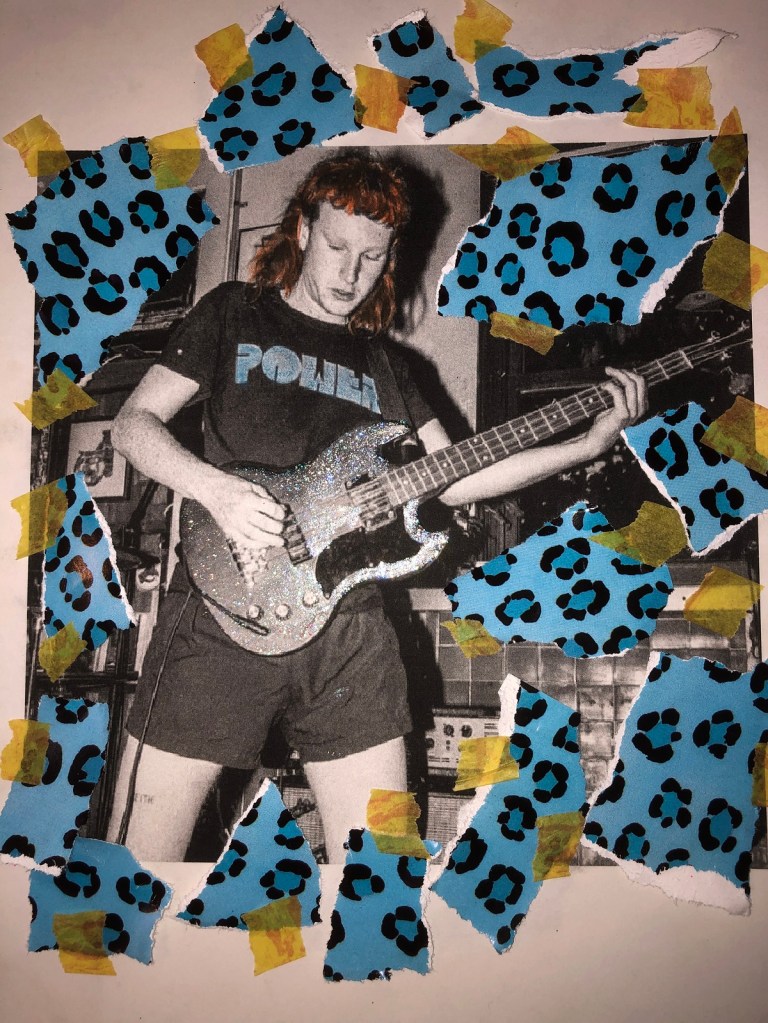
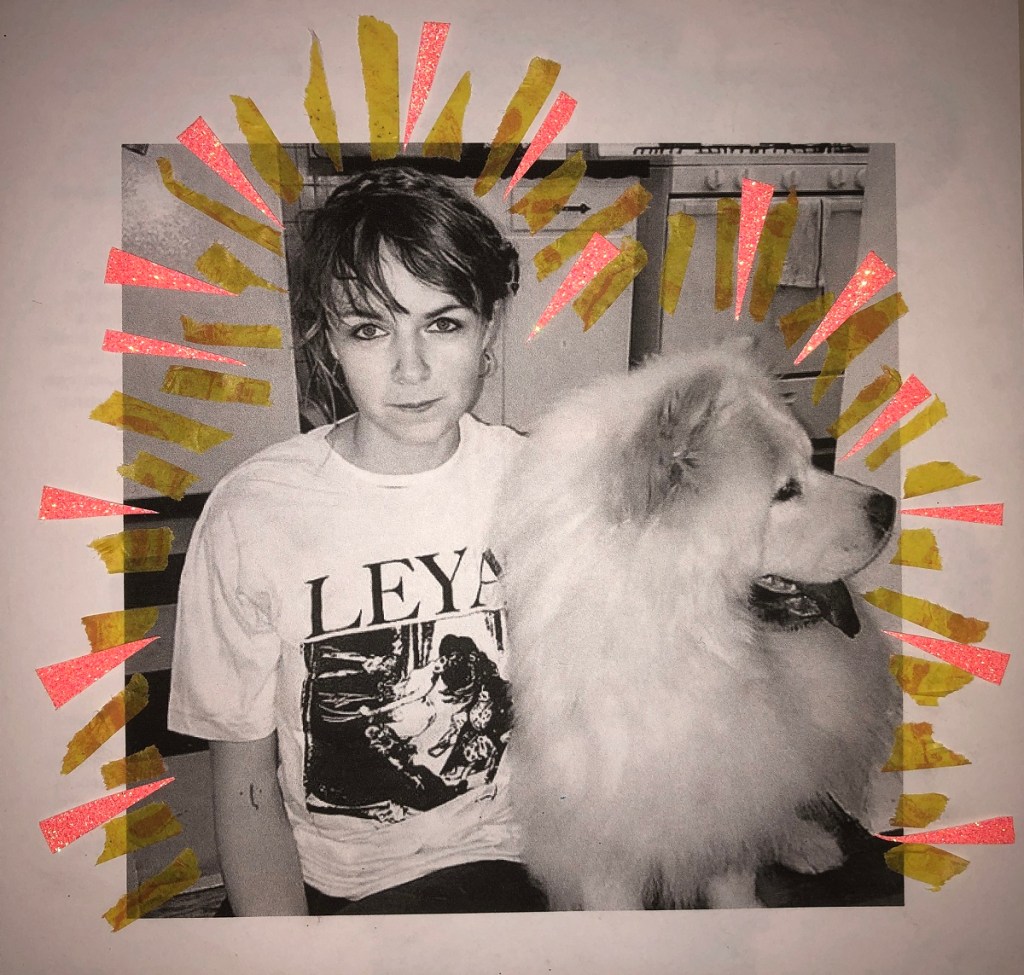
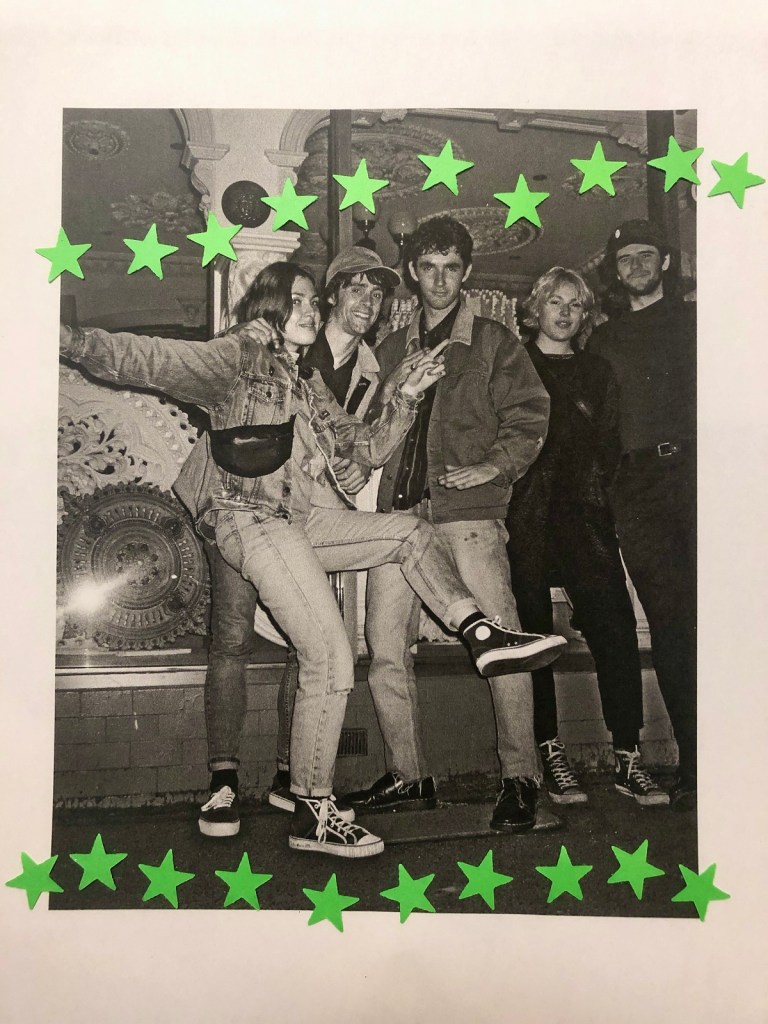
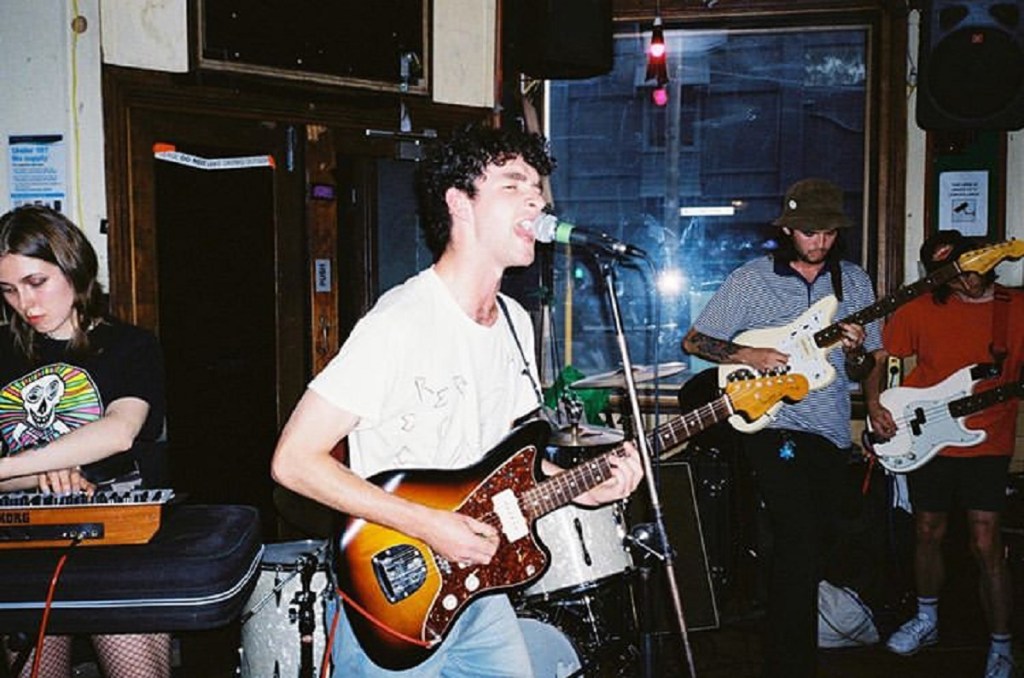
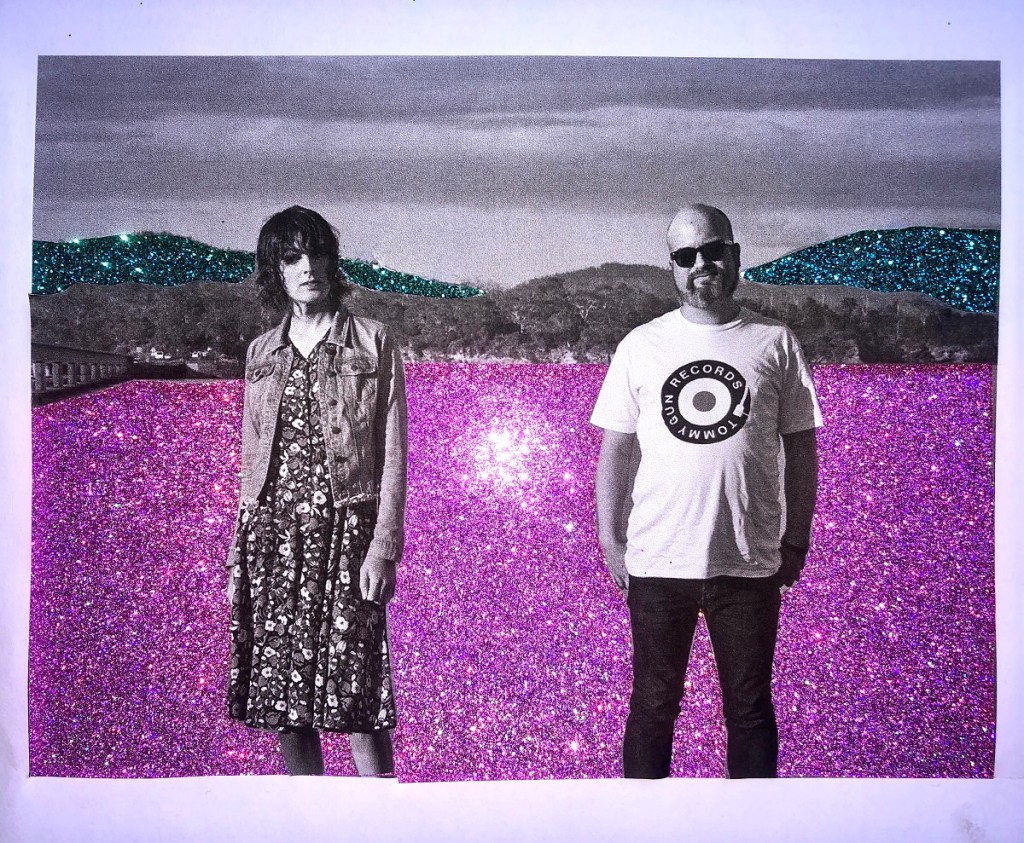
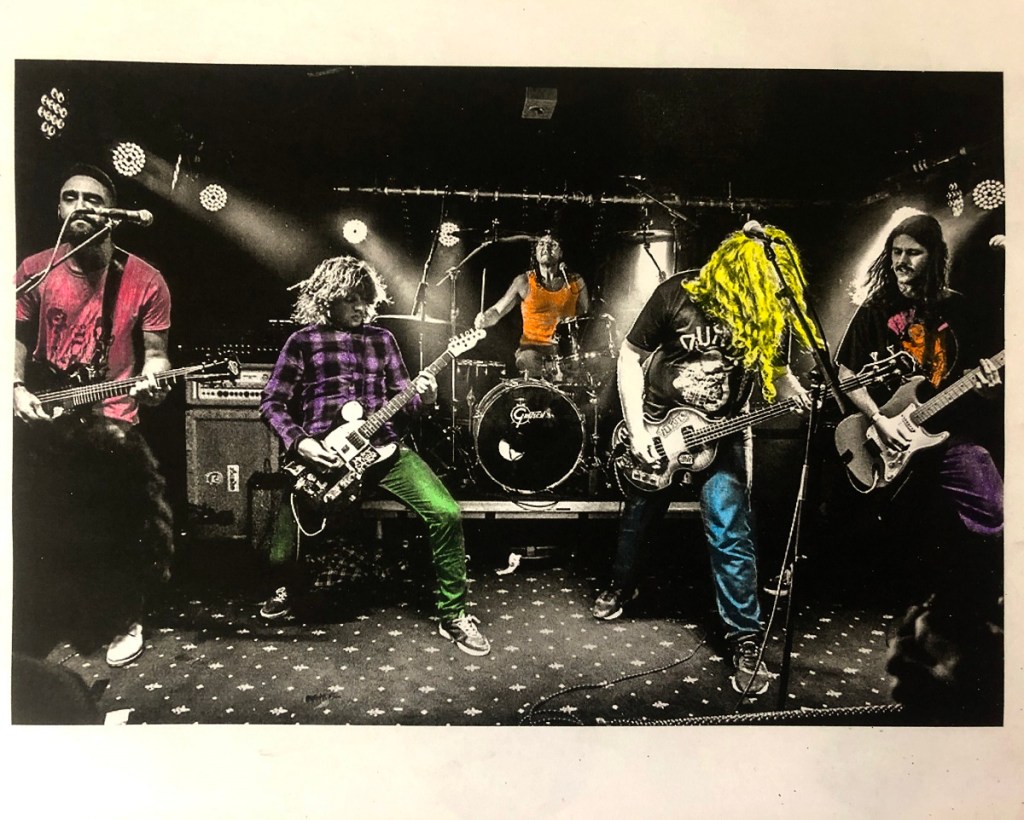
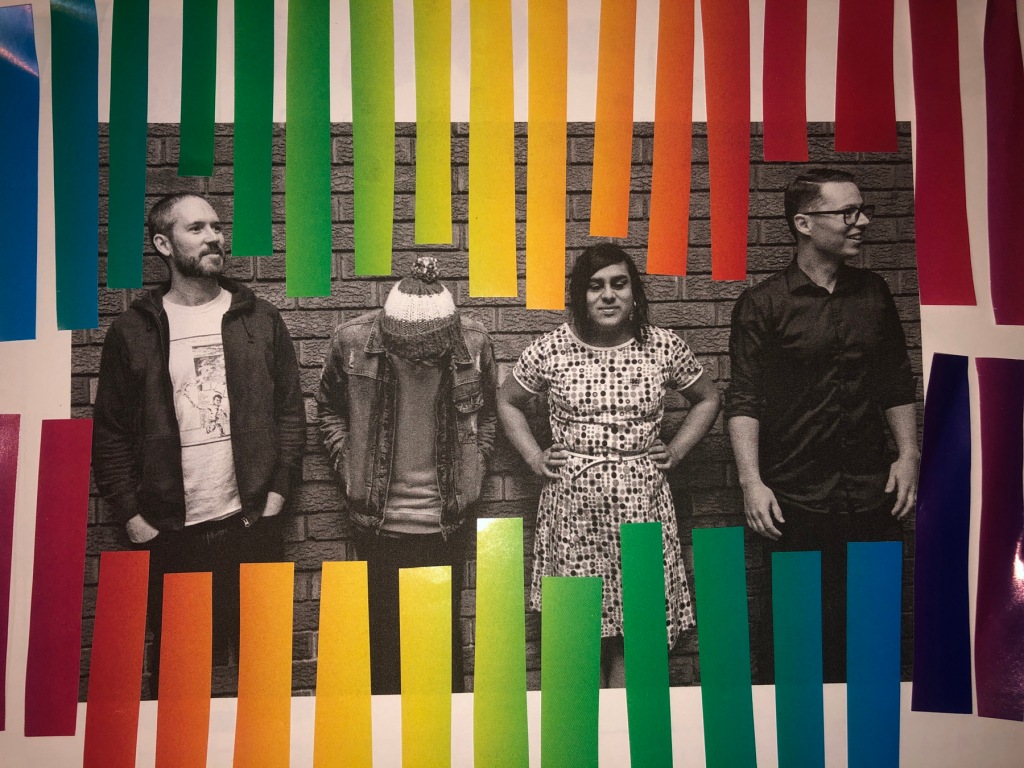
Original photo: Peter Wheeler. Handmade collage by B.

The Meanies are one of Australia’s all-time bands. Forming decades ago, their music is melody-driven, explosive power-pop with lyrical tongue planted firmly in cheek. Their live shows are the stuff of legend, wild and action-packed. 2020 sees them releasing a new studio album Desperate Measures, one of their greatest yet. Gimmie’s editor started going to Meanies all-ages shows as a teen in the ‘90s and was very, very stoked to catch up with guitarist-vocalist, Link, to find out more about the LP and his song-craft.

What do you love most about writing songs?

LINK MEANIE: It’s therapy [laughs], it really is! Honestly there’s many things that you can get out of being creative but for me, if I didn’t have that I’d probably go insane. The actual process of writing in some ways is the most enjoyable part for me, getting into the studio to varying degrees it can be fun but I find it a bit stressful.

Before you started writing songs was there any other ways that you expressed yourself creatively?

LM: Gang fights! [laughs]. No, I didn’t. I’ve always done it since as long as I can remember, from twelve years old I was always being creative with a guitar. It’s always played that therapeutic role in my life.

What got you interested in writing your own songs?

LM: I came from a kind of musical family I guess. My mum went to a pretty high level in piano and my brother played in a school band, he was a bass player and also a better guitarist than me, just being surrounded by that and a family of music lovers. It was inevitable.

I’ve read that you’re the kind of song writer that writes best when you have a deadline to work towards; was this the case for this record?

LM: No, that proves that statement to be an actual lie [laughs]. When I started writing this record there wasn’t any plan to record another album, I just did it because I was bored out of my skull over here in Spain… obviously though, I love being here with my wife and her kids… just not having that creative outlet though, to me it was medicine. I didn’t know if it was going to get recorded or not, it just evolved from there.

How much song writing did you do for it?

LM: The exact amount of songs that we recorded [laughs]. Actually, we recorded one extra which I think is coming out as a single. There wasn’t many throwaways, but I took that much time with it that I was pretty sure of those songs before we went into the studio. Sometimes if you do have a deadline and you write a whole bunch of songs and you get into the studio and for one reason or another a song just doesn’t work; even on paper if it looks good something just doesn’t click. Didn’t have that with this, which is fortunate but it helps spending a lot of time with the structure and demo-ing.

Do you write most of your songs on guitar?

LM: Yeah, or flugelhorn, one or the other. Mostly guitar. I use an online recording service called Soundtrap, I’m not getting money for that, it’s just a basic kind of setup and just demo on there and send them to the guys fairly complete. The songs end up getting a different feel just because of people’s different styles once you get in the studio, which is nice. On this one we have Wally singing the verse to one of the songs [“Cruel To Be Caned”] which has never happened before, which I’m pretty excited about, I can go up and grab a drink while he starts that one. I also co-wrote a song with Jaws which is something I’ve never done. There’s been a couple of firsts on this one.

One thing I have always loved about Meanies songs is the melody; where does your love of melody come from? Where does that knack for doing it come from?

LM: I really don’t know. Having a family that introduced me to good quality song writing, the obvious ones like The Beatles, The Who, my mum listening to Carol King or Burt Bacharach or whatever—growing up with a lot of very melodic stuff. It seeps into the consciousness and it’s just a part of me, man! [laughs].

When you first started The Meanies did you have a vision for it? Out of the gate you had a sound that was your own and even all the art you drew for your releases, it’s very fully formed.

LM: I’m glad you think so [laughs]. To me, I guess it has a certain continuity to it. I don’t know if it was very conscious. To start with, I think the imagery on the early posters was inspired by the Hard-Ons, pseudo-metal satanic imagery that they would do [laughs], then it developed a bit more into our own thing. Things didn’t always pan out the way I’d like it to, I didn’t always have the last say in things like artwork or choice of singles, I kind of like that though because I’m a lazy person—just tell me what to do! [laughs].

How did you first get into punk rock?

LM: Probably the Sex Pistols hearing them, or the Ramones, stuff like that is probably the earliest experiences… apart from Plastic Bertrand “Ca Plane Pour Moi” [laughs], that’s probably one of the earliest “punk rock” songs I ever heard. Also though, define punk; there’s so many different descriptions of what punk is, you could call something like The Romantics “What I Like About You” punk. All the things you hear growing up are part of the formative appreciation for the style.

Yeah. When punk started all the bands sounded different.

LM: Yeah, that’s the thing it wasn’t very homogeneous, there’s such a variety of sound. A bit later on people started narrowing the parameters of what punk was… that’s OK, but I just find it a little bit boring when it’s sort of cookie cutter.

Totally! With the new album Desperate Measures; what kind of emotion or place where you writing from?

LM: The same—a miserable bastard basically [laughs].

Photo: Peter Wheeler.

You seem pretty happy to me.

LM: This is all a façade! [laughs]. Inside I’m an emo. Most of the songs are pretty negative or analytical, a lot of them are about myself and then there’s more external songs like “Monsters” and “All the Bought Men” which are a bit more political.

When you write songs do you find it helps you learn stuff about yourself?

LM: Oh yeah, for sure. It’s always therapeutic to me because you are confronting parts of yourself that you might not otherwise do unless you were writing it down on paper, even if it is a little bit abstract—that’s probably a part of me not wanting to face it! [laughs].

When you write your lyrics do you do much revising?

LM: My lyrics? Not a great deal. Occasionally you’ll go back and find a line that’s a bit naff! You’re being lazy and you just wanted to move on and you go back and you’ve got a line like: I was walking down the street just the other day [laughs]. It’s like, c’mon! That’s what you wrote when you were fourteen. There’s a lot more consistency and quality with the lyrics now, a little less clumsy metaphor than I used to use when I was younger.

Is there a song you’ve written hat you’re really proud of?

LM: On this record?

Yeah.

LM: I’m really proud of the whole thing. It has a cohesion which isn’t always there in terms of how I view the record; maybe it always seems cohesive to people but, to me… I think because it was written when I’m older and also written in a similar time period. I think “Sousa” is one for me, it’s probably the least punk one on the record. I really love the melody, I think it’s a really sweet melody.

That’s one of my favourites on the album too and I also really love “Drowning Tower” as well.

LM: Ah, good! That’s the one I co-wrote with Jaws, he’ll be happy to hear that.

What’s that one about?

LM: That’s another sooky song about me [laughs]. You know man, like, I’m the tower! [laughs].

You make Meanies film clips too. You’ve made a couple so far for new songs “Cruel To Be Caned” and “Jekyll & Hide”.

LM: Yeah, really lo-fi clips that you probably couldn’t show on television because they’re too dodgy. We just figured we can get them done cheaper if I make them; how many times are they going to get played on television anyway? It’s mainly for YouTube and social media.

I still think they’re really fun! I love the clip with the dog!

LM: [Laughs] Aww thank you! Roveo! It’s so fucking daft! [laughs]. I’m really happy with them. It’d be nice if I had more technical know-hows and I could make them of a higher quality. I’m using a really old version of Movie Maker, it crashes every couple of frames. The clip I’m doing now, I’m up to about 500 frames and I’m halfway through, it takes a long time.

What are you making the clip for now?

LM: I’m doing one for the next single which is “Monsters”.

Nice! That’ll be a fun one.

LM: There’s a lot of scope for animation with a title of “Monsters”.

In the song, what kind of monsters are you speaking about?

LM: I’m speaking about the demonization of cultures, religions, anything you know… not that I really agree with religion, I think it’s had a lot of negative affect in the world; not so much religion but organised religion. By nature it becomes corrupted, when they become to big obviously you’re going to get someone at the top controlling things and they’re going to have their own vested interests, which corrupts any sort of message, positive message that a religion has. I’m not religious myself at all. I think it’s everyone’s right to believe what they want to believe, no matter how stupid [coughs]. We’re just seeing it more and more with the rise of the right-wing around the world and it’s really worrying. There’s this fucking insane clown running America, not to mention Australia! It’s scary and weirdly exciting because these sort of moments, no matter how fucked up they are, there’s great scope for change, possibly for the better. We’ll see.

What are the things that you believe in?

LM: Not a lot. I’m a bit of a cynic and a nihilist. I believe in friends actually. I believe in trying not to be an arsehole, which I manage to do sometimes. Just trying to treat people with respect, which I don’t do sometimes. Not judging, trying not to judge people with generalisations and not listening to people in power, they’ve all got their own interests—I don’t trust them at all!

Same! I’ve been like that since I was a kid. My parents always taught me not to trust authority figures and those in power.

LM: Yeah, same! [laughs].

Life can be so tough; what helps you get through?

LM: Love and music!

What’s life like for you in Spain?

LM: I love the vibe here, it’s a really nice culture, really relaxed attitude. Lots of just sitting in cafes drinking and soaking up the sun, I love it! I do miss Australia… well I miss my family and friends in Australia a lot. I should be coming back soon. Hopefully we can start doing gigs!

What do you get from playing live?

LM: Money! [laughs]. No, I don’t. Just enjoyment, it’s just fun! It’s a different kind of therapy than the actual creative side of it. I just loved catching up with old friends, it’s really great when you’re playing with a band you’ve known for 30 years, like Tumbleweed or Spiderbait, any of those sort of bands like that. It’s really some of my happiest times, just catching up with some of those people.

Please check out: THE MEANIES; on Facebook; on Instagram; Desperate Measures out now on Cheersquad Records and Tapes.

Leah Senior on new LP The Passing Scene: “I went through a really long period of not being able to write, this album is rediscovering play in creativity”

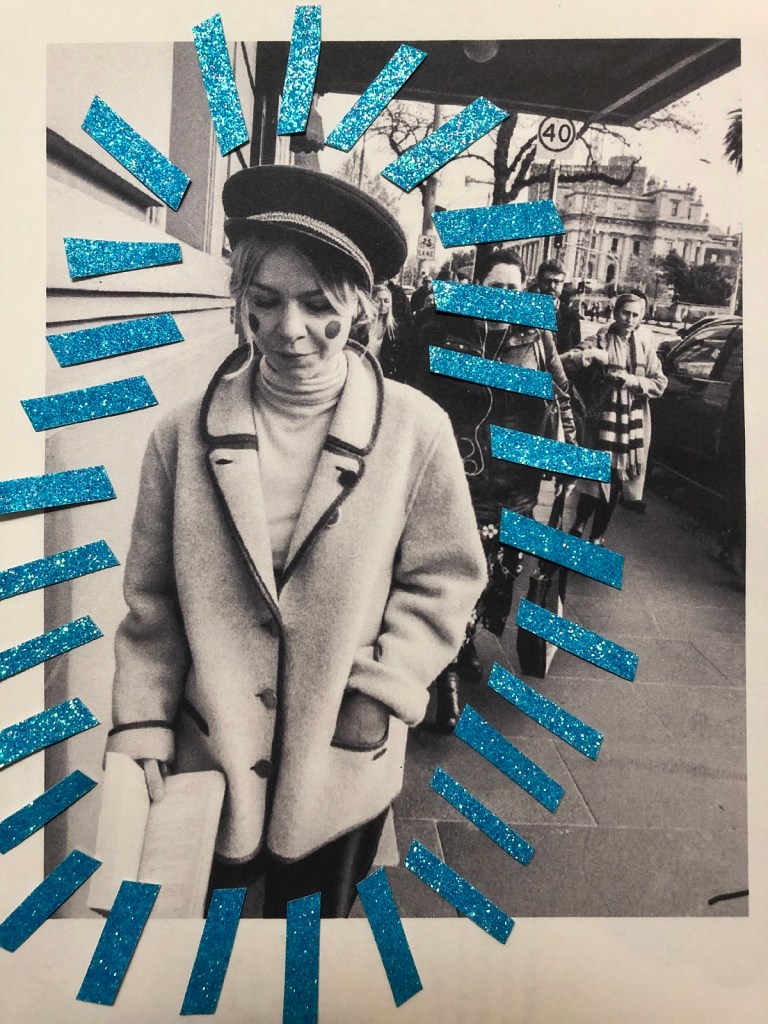
Original pic: Jamie Wdziekonski. Handmade collage B.

Melbourne-based musician Leah Senior writes philosophical, thoughtful, joyous songs. New LP The Passing Scene explores impermanence, acceptance, the natural world and the freedom of simply being. Gimmie spoke to Leah about her new record.

Right now you would have been finishing up a US tour with King Gizzard and the Lizard Wizard but due to the pandemic it was cancelled. You decided to go ahead and release your album; what inspired you to put it out now?

LEAH SENIOR: I don’t think the pandemic holds that much sway, from my perspective it was always going to come out now and it doesn’t matter if I’m touring or not, it’s a totally separate thing. Now is as good a time as any to put out music, if not more so.

The title of the album The Passing Scene is taken from the song of the same name on the album; as the title of the album what did you want it to represent?

LS: Looking back on all of the songs on the album there’s a real theme I suppose and it’s just acceptance of transit, that nothing ever stays the same. I just started reading a book by Pema Chödrön who is a Buddhist writer. I was reading this morning about the idea that everything falls apart and then comes back together and then falls apart. I think that “The Passing Scene” the song is about tuning into nature but at the same time accepting that nothing stays the same.

Impermanence?

LS: Yes, impermanence is the word I’m looking for.

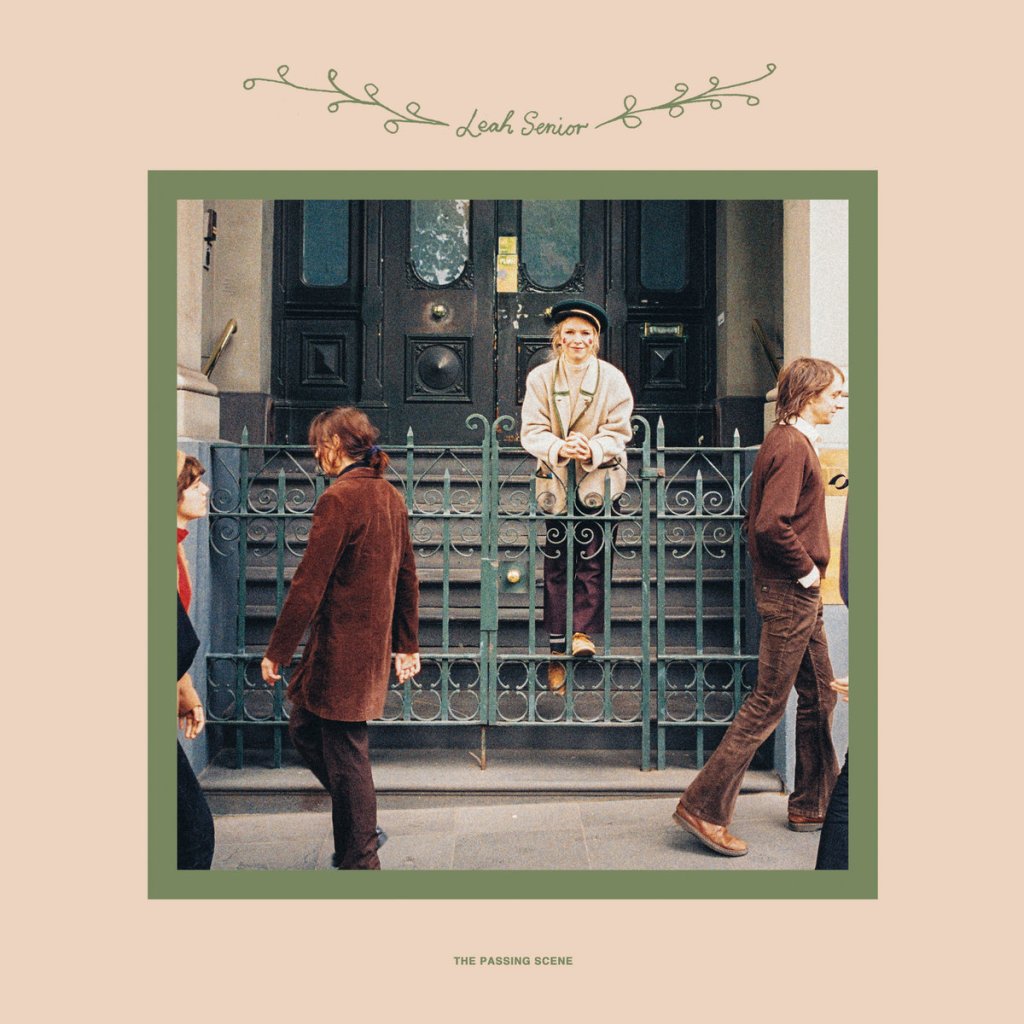
I love the moving cover of your record, it’s pretty incredible!

LS: Yeah, it’s the same idea, that impermanence or that the passing scene is always changing. It was a way to visually express that idea.

Jamie Wdziekonski did the cover, right?

LS: Yeah, Jamie did it, yep.

Photo/album cover: Jamie Wdziekonski.

Was it his idea or yours?

LS: It was his idea to have it lenticular. I would never have thought of that.

Going into the album did you have a vision for it?

LS: No. This album has been recorded at home over the last few years. It’s taken a long time, I’m a slow song writer. It gradually was a piecing together of a record. I’d have a few songs that took it in one direction so I’d follow that and then I’d have songs that took it in another direction, so I’d cut songs; it was a real process of slowly piecing together the puzzle.

It’s a little bit of a departure from your previous work.

LS: Yeah. It comes out of trying to change my approach to creativity, I suppose. After my second album I went through a really long period of not being able to write, this album is rediscovering play in creativity. I was trying to relax a bit more, the songs come from play rather than anguish.

Often an artist’s work reflects or correlates with what’s going on in their life; were you writing from a happier place?

LS: Absolutely. It’s having stability.

You mentioned you recorded in your lounge room over a long period of time; how did this help shape the record? It feels more intimate.

LS: That’s good. Me and my partner Jesse Williams worked on it. He recorded the album. It affected the way it sounds so much. I have a really strong vision of how I like things to sound and for better or for worse having my partner record it means that I can really get it exactly how I want it. Having total control over how it sounds has affected it. It’s definitely intimate and relaxed and it’s meant that I haven’t been on anyone else’s time when I’ve been making it. I think the relaxed approach has translated to the sound.

I get that from the record, I also get that it’s hopeful and joyous.

LS: That’s good, I hope so.

Photo: Jamie Wdziekonski.

Can you share with us a fond memory from the recording process?

LS: I love doing full band stuff, again it’s just being relaxed and getting to play with all of your friends in the lounge room, it’s the best possible way of recording;  studios can be cold and scary and impersonable. It’s great to be able to just sit in my pyjamas and record [laughs].

I really love the last song on the record “Time Traveller”; what’s it about?

LS: That one I wrote about my niece Eleanor, she was a baby at the time. It’s about being frightened to look into the future. There’s a line in there: see the smoke hanging over the city… that was like a prediction for the summer [bush fires], I guess. It’s about being scared to look into the future and feeling that we never seem to learn from our mistakes.

What were you like growing up?

LS: I guess I was a lot of things. I grew up in the country. I was always really obsessed with music. My dad would sing me Beatles’ songs and my mum would sing me folky songs; she’s Swiss, and would sing me folk songs. From there I really just went on my own discovery expedition. I would work at a shop blowing up balloons on a Saturday morning and then go to the shop next door and look at the covers of CDs and buy the ones I liked trying to find new music.

Nice! I know that Howard Eynon performed in your living room not too long ago; did you learn anything from watching him play?

LS: Yeah, absolutely. That was a really powerful night! He can teach us all a lot. I felt a lot of the themes that I’ve been feeling on the record I made, he embodies that stuff; trying to relinquish ego and accepting impermanence. His presence is so joyous and free and youthful. He’s a perfect example of a way to live a life, I reckon.

Another song I really love on your album is “Jesus Turned into a Bird” it’s really pretty, especially the piano; how did that one come together?

LS: That song was written from being up really, really late one night and looking around me and seeing the sun come up and feeling so profoundly disconnected from nature. I wrote it the very next day. I constantly feel that way, I feel like we are so, so far away from nature the way that we live our lives.

Is there any songs on the album that hold a special significance for you?

LS: I feel like “Graves”… I really like playing that one still, even though we released it a little while ago. My partner Jesse and I wrote that one together. I’ll never not feel like I felt, what I was expressing, in that song. They’re all genuine expressions, they’re all real.

Jesse is from the Girlatones?

LS: Yep.

Is it nice having a partner that is also creative?

LS: Yeah, it’s great. I don’t think I couldn’t not have a creative partner. It’s especially nice working on my music with him. He can play anything on anyone of my songs and it sounds like how I would envision it. He has a total musical understanding of my emotions or something. I feel very lucky to have that.

The video for your song “Evergreen” was shot at a castle?

LS: Yeah. Kryal Castle.

Where did the idea for that come from?

LS: My friend Jess who shot the video we were talking and she was envisioning some kind of fun medieval thing. It was her idea. We were scouting out places and that place was perfect.

Do you have any other film clips coming up?

LS: Nah. I have a live clip… I’m not sure. Not at this point in time.

How has not being able to play live affected you?

LS: It’s been fine. It’s actually been pretty good. It’s freeing and fun for me. I’m not an extrovert, I don’t get my kicks from that sort of thing. I like trying to make things. For me, it’s been fine.

Have you been making anything lately?

LS: I’m always making things here and there. I haven’t been writing that many songs. One day I’ll do a tiny bit of poetry and the next day I’ll do a tiny bit of painting—I’m bad at settling and focusing on things.

What have you been writing about with your poetry?

LS: The last poem I wrote was about this idea that we are attracted to nature because nature can only be itself. It’s not my own idea, it was inspired by John O’Donohue. He was saying that a crow doesn’t wake up one day and go “oh, I wish I was a crow” it can only be itself, and there’s something really beautiful about that. We spend our time trying on new outfits and constantly trying to become, whereas birds don’t sing the song of becoming, they’re not song writers, they’re song singers.

Why is music important to you?

LS: That’s a huge question. It speaks the language of nonsense, the reality of the world is all nonsense—music is in tune with that. Music expresses so much more than we ever could express without it.

Vid: Button Pusher more here.

Please check out LEAH SENIOR; on bandcamp; on Facebook; on Instagram; Get The Passing Scene via Flightless Records.

Amyl And The Sniffers’ Gus Romer: “I was losing my mind, I was so nervous. It’s insane. I hadn’t experienced anything like that before”

Original photo Jamie Wdziekonski. Handmade collage by B.

Melbourne pub punk band Amyl and the Sniffers need no introduction. We recently chatted to bassist Gus Romer to find out about the progress on new music, how he came to join the band and about their travels all over the world.

When we were teeing up this chat you mentioned that you’re a late sleeper; have you always been one? Is it because you’ve played so many shows – I think around 250 or so in the last year – that contributes to you keeping late hours?

GUS ROMER: In the past two years we’ve played a lot of shows. I’ve always been like that though, I’ve always cherished a good lie in [laughs].

How did you first discover music?

GR: From a young-ish age my mother always had an emphasis on my brother and I learning an instrument, doing something musical.

Why do you think she pushed you guys towards something creative?

GR: She’s an art teacher, so we’ve always done creative stuff from the start. It’s a good outlet to always have, something to do and something to work on.

You’re originally from Tasmania?

GR: Yep, yep.


What was it like growing up there?

GR: It was great! I love Tassie a lot. Super small. Super beautiful. Pretty cold [laughs].

What kind of stuff were you into as a kid?

GR: Mainly music, bits and bobs, that came in and out of my interest because I spent most of my childhood and teens just skateboarding, I was really into that!

What bands were you listening to?

GR: At the very start when you’re really young it’s just listening to the radio and whatever is around you. I got really into the Red Hot Chilli Peppers, Led Zeppelin and Rage Against The Machine. I fell off for a while and got really into hip-hop for a few years in my teens, that’s all I listened to, I wasn’t into too much else at the time. Later on I got back into punk rock.

What hip-hop were you listening to?

GR: I was really into Big L and MF Doom and Wu-Tang.

Did you start off playing bass? Was that the first instrument you learnt?

GR: What got me into playing bass was that in primary school we had a strings program where you could get out of class for an hour a week and this person would come around and teach a few kids how to play. I played the cello. When I finished primary school and went into high school, I obviously couldn’t do that anymore, so I got a bass for my birthday. I joined this band with my friends.

Was that the band Bu$ Money?

GR: No, that was way later. This is when I was younger. I got into playing bass initially from that transition from playing the cello.

Did you have a bunch of other bands before Bu$ Money?

GR: Bu$ Money was when I started listening to more local music and shit around in my scene in Hobart and what inspired me to get back into it and have a crack. Even though I didn’t play bass in Bu$ Money, I played drums.

How did you first get into your local scene?

GR: There’s not a great deal of places to go out and drink in Hobart. The Brisbane Hotel was where me and my friends always went ‘cause there wasn’t a bunch of dickheads there. There was alternative people, more like-minded people. I started going to drink with my friends, I started going to more shows from that and really started getting into it. I thought, this is pretty good! I’m gonna have a crack. I got one of my friends and a guy I worked with and pretty much forced them to start and be in a band with me! [laughs].

What local bands were you listening to and seeing live?

GR: Treehouse were a big one! I’m a big fan! The Dreggs, are a great, great Hobart band. There were a lot of bands that came and gone. Native Cats are a great, great Hobart band!

How did you end up being in Amyl and the Sniffers?

GR: I was already good friends with the band, I met them when Declan’s old band, Jurassic Nark, came to Hobart and Bu$ Money supported them. So that’s how I met him and then I went to Melbourne soon after and hung out with everybody else; I was good friends with them and a big fan of the band. When their old bass player parted ways with the band they called me one day and said, “Move to Melbourne and join the band”. I thought, sweet! I quit my job and moved to Melbourne.

Did you have to give much thought to it?

GR: I’d already been toying with the idea of moving to Melbourne for a while but it would have taken me even longer to do if they hadn’t asked me, it was a nice little push. It got me going and got me moving. I was already such good friends with them and a really big fan of the band so it wasn’t too much of a decision. It was super natural, cool, let’s do it!

In around March 2017, I think, is when you played your first show with them?

GR: I don’t even know ‘ey? [laughs].

Do you remember anything about that first show with them?

GR: Yeah. It was the band’s second tape launch. It was at the Curtin. I was so, so nervous! I couldn’t really play bass that good. At the time I hadn’t played bass in seven years! [laughs]. I got my friend to teach me all the songs. We had one practice. I remember being really nervous and didn’t think I played that well. I was like, oh god! I blew it! I blew! They said, “Nah! That’s great!” No one was looking at me anyway [laughs]. It was a good time. A couple of drinks loosened me up a bit and I just got up and it was fine.

Do you ever get nervous now playing shows?

GR: Not at all. Being filmed makes me really nervous though and feel uncomfortable [laughs], doing an in the studio kind of thing. We played on Jools Holland last year.

I saw that!

GR: I was off it before that, I was losing my mind, I was so nervous. It’s insane. I hadn’t experienced anything like that before.

You guys have got to do all kinds of interesting things. I saw photos from when you did a Gucci campaign and walked in their Fall 2019 show and there was a photo shoot at an Archaeological Park.

GR: It was at these ruins in Sicily. It’s pretty crazy. The first time doing that and going into that it was the first time I’d ever experienced anything like it, the level of the production, the money and effort that goes into that stuff is just mind blowing! The scale is insane. For one campaign there was over 100 staff there, everyone running around doing this, that and everything. It was crazy! It was an hour out of Palermo the capital of Sicily. There were all these old, old buildings, these ruins on the coast.

Is there something else cool that you’ve seen in your travels that sticks out to you?

GR: Too much! There’s always something crazy going on somewhere. Having the opportunity… we’ve played in Russia before, stuff like that sticks out, we were only there a day and a half. Getting to play places like Russia and Istanbul, is pretty mind blowing! I never thought I’d get the opportunity to do anything like that.

What was Istanbul like?

GR: It was so cool! Definitely the coolest place I’ve ever been, we were only there for a day though. We flew in and out. I got to walk around for two hours but it was so cool. Everything was so cool, the vibe, the architecture, it was super, super beautiful.

What was Russia like?

GR: Russia was pretty, pretty crazy. We went to Red Square. It was pretty insane, the drive from the airport to our hotel was an hour, hour and a half, and on the outskirts of the city it seems like there’s really intense poverty, in the city there is so much money! On the outskirts you see massive, massive apartment blocks that look so run down and dilapidated; in the city centre it’s so clean and there’s so much money everywhere, sports cars everywhere!

What was it like playing shows in places like that? Is it similar to here?

GR: The show in Moscow was for a festival, that was the very first show we played in Europe. We played a festival to a relatively small crowd, they were getting it though and a few people even knew all the lyrics! It’s always pretty wild because you go in not expecting much and then you have people singing your lyrics back to you. It’s mind blowing!

Have you got to see many beautiful nature spots in your travels?

GR: Driving through America is always really, really cool, the diversity of the landscape; you drive through the hills of Oregon and then drive through the desert. That stands out in terms of nature to me.

What’s one of the coolest things that you’ve seen in America?

GR: It’s all a blur to be honest [laughs]. There’s a lot, a lot of driving and a lot of drinking!

You’ve been working on a new Sniffers album?

GR: Yep, at the moment we’re trying to get some songs together to become an album at some point.

In December I think you guys mentioned you had around 12 songs?

GR: Yeah, November last year we had a fair long slog of trying to do it, trying to get something going—we got a lot of good stuff. Now we’ve just hired a little unit at a storage place near our house, which has been great. At the start of lock down we were bumming around doing nothing for the first six to eight weeks. We’ve set up in the storage unit and we’ve been hitting that up quite a bit, which has been really good. We’re trying to write new stuff and trying to do stuff that we’re all super happy with.

You all live together?

GR: Yep, yep. It’s cool. Because we’ve toured so solidly for the past two years, we’ve pretty much spent 24-hours a day with each other, we’ve been overseas together for months at a time so, it’s a pretty smooth transition for us. We all know how each other rolls.

Was it weird for you at the start of isolation not being able to tour?

GR: Kind of. It was a nice break though. We were meant to be in the States for a month, not too long after it all started. We’ve been so busy the past few years, this past six months has been the biggest break that we’ve had, the most time we’ve spent in Australia in such a long time. I’ve just been enjoying being home.

With the new stuff you’re writing have you been trying anything different to previous work?

GR: Yeah, there’s a couple of tracks that are heavier and faster, on the other spectrum there is some different stuff. We’re not trying to limit ourselves too much to a particular sound or style, just playing around and seeing what we like. Most of the time either Declan, Bryce or myself will bring a riff and we’ll jam it out. Most of the time we just try to finish it, get something and then talk about it afterwards, see what we like about it and if we keep it or don’t.

When you’re making your own music do you listen to other people’s music much?

GR: Always, I always have something going. Lately I’ve been listening to a lot of Dick Diver and Low Life, Vertigo—I’ve been pumping all them recently. There’s always good stuff!

Previously, just after the Sniffers debut album came out, you mentioned that you felt a really big sense of relief that the album was done and it was nice to not have to stress and worry about it; what kind of things do you stress and worry about when making an album?

GR: Well, with that, that was in the thick of us touring like crazy… when we recorded it we had come off of four months non-stop touring overseas; we flew to Sheffield in the UK and recorded the album there. We’d been away for too long, we’d work so hard non-stop touring—we just wanted to be home, we were so over it! It was definitely not the greatest time and was really stressful.

What were you tired of?

GR: We were pretty happy with what we had but we were happy to get the album out of the way. A lot of the songs, we’d already been playing for a couple of years, we just wanted to record it and get it out and never think about it or listen to it again.

Do you have a favourite Sniffers song to play?

GR: I’d probably say “Some Mutts (Can’t Be Muzzled)”. That’s my favourite. Usually we play it last. I like the build-up, it’s fun to play.

What was the last band you saw live before lockdown?

GR: Just before everything went to a halt we were in the middle of an Australian tour, we played Sydney and Newcastle, they were the two last times I went out. I got to see Gee Tee and R.M.F.C. supporting us in Sydney, that’s always, always a great time! Concrete Lawn are a Sydney band who we are really good friends with us played in Newcastle. They were the last live shows I got to see before everything stopped.

Do you have plans yet for the rest of the year or is it too hard to plan with all the uncertainty around?

GR: There’s always stuff. We’re hoping to do an Australia tour before the end of the year, it just depends. We’re hoping to get overseas again from the start to the middle of next year. It’s a guessing game though and no one is too sure how it will go.

What have you been doing in isolation to keep sane?

GR: Now that we have the practice space we’ve been utilising that a quite a bit, other than that we haven’t been doing much… bumming around watching dumb shit on the internet and movies. The boys bought an Xbox, so they’re playing a lot of FIFA [laughs].

Last question; what inspired you to get your mullet haircut?

GR: I was really, really into the Cosmic Psychos. I was watching a lot of old footage and the doco Blokes You Can Trust and decided I wanted to look like Ross Knight! [laughs]. It’s pretty funny! I love the Cosmic Psychos.

Please check out: AMYL AND THE SNIFFERS; on bandcamp; on Facebook; on Instagram.

Guerilla Toss’ Kassie Carlson: “I don’t need to be super rich or super popular with my music, I just want to see the world and see amazing shit!”

Handmade collage by B.

New York art-punk band Guerilla Toss make fun, interesting, super cool, cosmic, synth-pop post-punk! They recently released two new songs – “Human Girl” and “Own Zone” – as part of the Sub Pop Singles Club. Gimmie chatted to vocalist Kassie Carlson from her home on a farm in Upstate New York as they work on new music.

How have you been Kassie?

KASSIE CARLSON: I’ve been good, I’ve just been quarantining here. I don’t live in New York City, I live in Upstate New York, which is two hours away from the city. I’m on a bunch of land, I’m able to not be around people. New York City is pretty crazy right now!

The area you live in has a lot of woodland, a lot of countryside, right?

KC: Yeah, wilderness and farmland. I live on a 260-acre farm, but it’s not a farm anymore it’s kind of… mow the grass and make hay. There’s a lot of open space, we go hiking a lot up here.

You go hiking with your Chow Chow dog, Watley?

KC: Yes, definitely [laughs]. He’s actually outside with me right now as I chat to you.

Do you have a favourite spot you like to go?

KC: There’s lots of different places to go. The other day we hiked to a place called the Balsam Fir Fire Tower, which is an old fire tower that they used to go up to the very top and look over the whole forest to see if there was any fires. That was really cool. It was a really warm day and we hiked all the way to the top of the mountains and at the top there was snow and all of these Balsam Fir trees, it looked like a fairy tale!

That sounds beautiful. I love natural places and just being outside in nature.

KC: Yeah, me too.

Do you ever get inspired creatively from nature?

KC: Yeah, definitely, how could I not!

Have you been doing anything creative lately?

KC: Always, every day I’m doing something… working on music, some days it doesn’t always pan out… just working, writing, reading, stuff like that.

Why is music important to you?

KC: Oh, I don’t know? I guess I’ve always been a fan and then I started making music. I started off young singing in choirs and playing violin, but I was always really into rock music. My brother was a musician in punk rock and metal bands, I thought that was kind of cool. Haphazardly it happened for me, it didn’t happen right away, it happened when I was older. As a teenage girl I was kind of just observing music but then as I got older I became a part of it.

It’s great when you can finally get the confidence to give something a go yourself.

KC: Yes!

Is there anything that’s helped shaped some of your ideas about art and creativity?

KC: When I say I entered the music world being in a band, it was kind of because the entryway was easy, it was paved out… I don’t know if they have these in Australia but, here we have a lot of underground shows, basement shows; I lived in a house that had basement shows every night. It was easy to just try something out, the atmosphere was very supportive. I hung out with a lot of people that went to art school and music school. There was a lot of room to experiment in a way that I think a lot of people don’t necessarily have, I was lucky in that sense. I had a really supportive audience.

I read that when you were younger you liked to listen to Mariah Carey, TLC and Destiny’s Child…

KC: Yeah, of course! [laughs]. Did you?

Yes, sure did! I grew up liking those artists and then punk and hip hop and all kinds of things, I had four older siblings that all liked different music and my mum and dad too, I kind of just absorbed everything. I love stuff from doo-wop all the way through to noise stuff.

KC: Yeah, same.

I saw a photo of Watley online and there was a big record collection in the background; is that yours?

KC: They weren’t my records, they’re the drummer from Guerilla Toss’ records. We have a lot of records in the house that’s for sure.

Is there an album that you’ve listened to more than any other?

KC: I’m all over the place. I’m always listening to a million things. I’ve been trying to find new things lately, I’ve been going through things and just picking random shit to get my creative ideas flowing. I have a lot of cassette tapes too.

I used to find a lot of new music through trading tapes with my friends.

KC: Yeah, I feel like that’s how I discovered a lot of new music too. I grew up in Cape Cod, which is kind of like a beach town in Massachusetts. They have these swap shops there at the dump so it’s basically like a free store and you take whatever you want, sometimes there’s really good stuff there; I got my first guitar amp there and a bunch of cool clothes. I got my very first cassettes there too, they were mixtapes that somebody had made.

That’s awesome! I love going to thrift stores and the dump shop near where I live here too. It’s good for the environment too reusing items rather than putting them in landfill; people can be so wasteful.

KC: Oh yeah! People don’t want to take it to the second-hand shop and they just leave them at these places and it won’t just go to the trash. So much clothing gets thrown away.

Totally! Basically my whole wardrobe is made up of clothes from thrift stores. You find so much cool stuff, and its stuff that not everyone else is wearing. I find it so hard to go the regular shops/mall to buy stuff. Before you started playing in a band; did you express yourself creatively in any other way?

KC: I’ve done some painting but nothing major really. [Laughs] Sewing, I guess.

You mentioned that you started singing in choirs; did you jump into bands from there or were you making music yourself?

KC: It was kind of like hot and cold, off and on. I didn’t really play in bands until I was in my twenties. I’d mess around on the keyboard and make little guitar songs… I was kind of in a metal band! Then I made my own music.

Your solo stuff was the Jane La Onda stuff, right?

KC: Yeah [laughs].

I understand that you have a real love for words and enjoy reading; what are you reading at the moment?

KC: I’m reading a lot of magazines. I’m reading Italian Folktales by Italo Calvino. They’re really cute, interesting, whimsical Italian folktales with a cerebral twist. I really like the way he uses words and meaning. I started reading The Water Dancer [by Ta-Nehisi Coates].

One of your favourite books is Siddhartha by Herman Hesse?

KC: Yeah, yeah. I like him a lot. I like the way he uses words and perception. He takes you on a journey with words.

I wanted to ask you about your writing; do you ever have a vision for a song before you sit down to write it?

KC: Not usually. Usually I’ll be listening to sounds that could become a song and those sounds have a meaning in them that I like after listening to it over and over. Sometimes I write little things before but it’s more that I hear the music and the words are already in there, the pattern is in there somewhere and I have to find it by listening to it over and over again.

What kinds of things have you been finding yourself writing about lately?

KC: Honestly, I’ve been writing a lot of political stuff in a way. Coronavirus isn’t as crazy in Australia, right?

That’s right, we’ve been pretty lucky compared to a lot of countries.

KC: New York is crazy. I haven’t worked for a whole month because I have a heart condition. I’m usually working a lot and keeping busy being out and about talking to people, but I haven’t really gone out much. It’s interesting writing in this time.

Do you feel lonely living away from your band members Upstate?

KC: Oh definitely! The drummer is up here and the guitar player is up here right now too, we’ve been working a new music. It’s kind of like a reprieve though, we played over 100 shows last year and toured all over the country as well as going to Europe. To be in a city too is really taxing too.

I feel that when I go into the city too, I live in a costal beachside town that’s really laidback. I’ll drive to the nearest capital city that’s an hour away from me and after being there a half hour I’ll get too overwhelmed!

KC: Yeah, it’s like chaos!

Previously you’ve mentioned that when you play live it’s like a deep meditation for you; do you do meditation in any other areas of your life?

KC: Yeah, walking meditation when I’m walking through the woods with Watley. Anytime really, doing anything. Even washing dishes, like feeling the warmth of the hot water on your hands or pausing in any way; looking at a plant; or even driving is a meditation in a way, I think.

So for you it’s having an awareness of what you’re doing and being in the moment?

KC: Yeah, awareness and a pause, remembering that you’re in a body. It can be resting for a second.

In isolation do you have a typical day or a routine you do?

KC: Yeah. I wake up around 9 or 10am and then I make some oatmeal and coffee. I take a shower. Then I’ll work on music from 11 to 7. Maybe have a snack somewhere in there at around maybe 2pm. At 7 I’ll make dinner. After that I’ll work on music again until 10pm. At 10 I’ll watch a movie. That’s what I do every day. Maybe in the middle of the day I’ll take a hike or two.

 Do you learn things about yourself when making music?

KC: Definitely. Writing lyrics is like going; what’s happening in my brain? How am I feeling? What is my current experience? What do my past experiences mean? Even the lyrical process beyond writing the lyrics initially, when I’m performing, the meaning of lyrics singing them over and over again for many years, eight years now in some cases, the meaning of the lyrics change. I feel like I’m constantly learning about myself, it’s like a constant self-awareness and the awareness of people around you and what’s happening on the Earth and how you interpret that. I’m a pretty high anxiety person, so the profession of being a frontwoman in a band is a weird choice; it’s also not a weird choice because it’s a process, the process of me coming out of my shell and me interpreting my anxieties and dealing with them and dealing with trauma. I would definitely say that I am always learning about myself and other people [laughs] and those interactions.

So by your showing those parts of you and you trying to work yourself out, because it’s honest and really looking at things, that resonates with others and might help them in their life?

KC: Yeah. I hope someday you can see us perform because I think our performance brings the music to a different level. I can act things out and you can see different accents on things. The music recordings are great but I hope you can see us perform.

Same!

KC: When I first started touring we would be the only band with a girl on it on the bill. It was crazy and so weird. Now there’s a lot more women and all different types of people. It felt like; do they just like us because I’m a girl? I want people to like us because it’s good music.

Another thing I love about Guerilla Toss is the art work for your albums, I’s always so colourful!

KC: Yeah! [laughs].

Is there any thought behind making it so colourful?

KC: I guess to make it fun and interesting. We’re doing a release for the Sub Pop Singles Club and that one is actually not colourful.

What songs will be on that release?

KC: It’s actually two new songs that no one has heard.

I love that Guerilla Toss’ music is all so different.

KC: I always think it’s weird when someone’s like, ‘I like your older stuff’; if we were to make stuff that sounds the same all the time that wouldn’t be very genuine.

Is sharing your music with others important to you?

KC: Yeah. I hope people listen to it and have fun or have some kind of experience, even if it’s, ‘oh god, this is intense!’ and they think it’s awful… at least they had some sort of reaction and experience with it [laughs]. Or if they see us and go, ‘oh, that was really harsh’ or ‘wow! That was softer than I thought it would be’.

Ok, last question; have you ever had a really life changing moment?

KC: Yeah. So many. When I had heart surgery, is an easy thing to say. I had open heart surgery two years ago. I had an infection in one of my heart valves. It was crazy, really intense. For the first time… I usually feel my whole life that I’ve been kind of like a tank: I’m super strong, I don’t really get sick, I feel strong-willed and do what I want. I was really floored by this sickness. I didn’t really feel right until kind of recently. It took a long time to recover. The recovery was so abstract that I didn’t really feel like I could relate to anyone. It was a multi-faceted recovery. I felt alone in it but I really am glad that I am where I am right now—in a beautiful place in nature and still writing music and still alive! It’s cool to have Watley too, he’s a great dog!

Is there anything that you’d really love to do creatively or in life in general right now?

KC: I really just want to travel more. That’s probably my favourite thing about touring. It wasn’t until more recent years of touring that we started to be more tourist-y, like going to national parks. We went to Yellowstone National Park! That was always my dream to go there. I remember having a National Geographic magazine when I was a kid and seeing all the geysers in it and the buffalo—I love animals and nature! Another time we were in Calgary, Alberta, Canada and we went to this amazing place and went on a river raft ride. In San Diego we went on this kayak ride, we were ocean kayaking through these sea caves. It was super epic! That’s what I really want to do with the rest of my life, I don’t need to be super rich or super popular with my music, I just want to see the world and see amazing shit!

Please check out GUERILLA TOSS; on bandcamp; on Facebook; on Instagram.

GIMMIE RADIO [11] ‘Best and Fairest’

Gimmie Radio is back and for this edition we have done a round up of songs from the Gimmie team’s favourite releases of 2020 so far (well, the one’s that are available on Spotify, that is). Including Cold Meat, Alien Nosejob, Bananagun, Dr Sure’s Unusual Practice, Nnamdi, Primo!, Zoe Fox and the Rocket Clocks, Parsnip, Hearts and Rockets, Sunfruits, the Stroppies, Mystery Guest, Traffik Island, Thao and the Get Down Stay Down, Millionaire and many more!

Melbourne Post-Punk Band Moth’s Darcy Berry: “The whole point of the band was to do something completely different, new and weird”

Original photo: Guy Tyzack. Handmade collage by B.

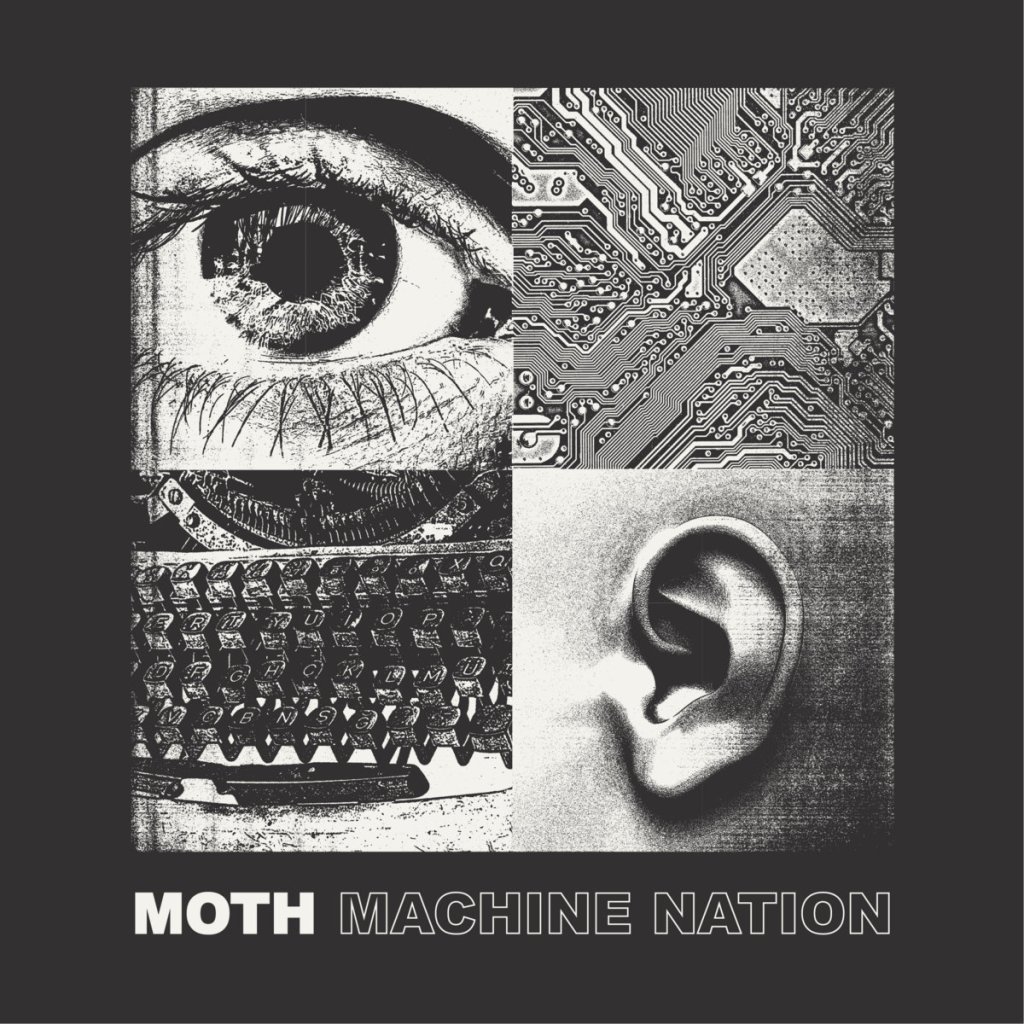
We’re big fans of Darcy Berry’s creative work, post-punk band Moth and rockers Gonzo, as well as his graphic design work from various bands. Moth have recently put out EP Machine Nation a slice of “discordant robot rock”. We spoke with Darcy to hear more about the EP, his art and a new Gonzo record in the works.

Hi Darcy! What have you been up to today?

DARCY BERRY: Not much, it’s my day off. I was working on a little demo this morning but now I’m just sitting in the sun.

Nice! I wanted to start by asking you; what do you personally get from making stuff?

DB: It’s just not being bored and having something to do really. I get really happy from being productive and not just sitting on my arse doing nothing.

Same! I know that you’ve grown up with a real passion for rock n roll; where did this start?

DB: When I was younger, my brother that was eight years older than me, showed me a lot of music. I was into Rage Against the Machine when I was ten years old, which I think is pretty funny. My parents love Aussie rock n roll as well. My dad’s a big AC/DC fan and loves Rolling Stones and the Beatles. I just got introduced to it, I guess.

When you fourteen I understand that’s when you really started getting into music?

DB: Yeah. I’d met Jack Kong, who I play in the band Gonzo with. We realised we lived a few doors down from each other and he played guitar and I played drums. I’d never really played music with anyone before, it just went from there. Playing with him, we’d show each other different things; he showed me a lot of ‘60s music and I showed him a lot of punk, we met in the middle. I became really obsessed with music from there.

All photos courtesy of Darcy Berry.

Was drums the first instrument you played?

DB: Yeah, it’s the only instrument that I’ve actually learnt to play and taken lessons for, everything else I’ve taught myself. I started playing drums when I was ten years old.

You moved to the city, the Melbourne/Geelong area; where were you before that?

DB: Ocean Grove, its right down the coast near Geelong and Torquay. I was a surf rat growing up.

How did you find new music?

DB: There was a cool little scene going on in Geelong with The Frowning Clouds and Living Eyes. I started getting into Melbourne bands, I didn’t even know there was a Melbourne scene! I got into Total Control and thought they were an American band [laughs]. I was at a party and some dude told me “they’re from Melbourne”. I thought, I’ve gotta get to Melbourne and check more of these bands out!

Did you also move to Melbourne for school too? I know you’ve studied art.

DB: Yeah, yeah. Uni was up in Melbourne but I was still living down the coast at that point. I stayed at my friend’s house and then I moved up myself and realised you could go to a good gig any night of the week. It was an overload of music, which was great!

Why did you choose to study graphic design?

DB: It was one of the only things that I was good at, at school. I dabbled in that and art and at uni I could do a sub-major as well, my sub-major was art. I wanted to blend art with graphic design. I became more passionate about it.

Do you have any art influences you could share with us?

DB: I really like the whole Dada movement. I really, really respect lots of different painters but, I’m not very good at painting or drawing. I really just appreciate good art.

A lot of your art and design work is digital?

DB: Yeah. It’s mainly digital. I always try to do other stuff like drawing and collage, photography but it always ends up coming back to the computer and just messing things up digitally.

Is there something that you find challenging in regards to making your art?

DB: Trying to just do it more and more. Sometimes I can get real lazy with it and not be in the mood, that’s why it’s good when I get hit up to do a poster or an album cover for someone—it makes me do it and makes me not be lazy!

It’s funny how with things that we love we can sometimes get lazy with it and procrastinate.

DB: Yeah, definitely. Even with writing songs, if I’m not in the mood, I don’t want to be anywhere near a guitar or anything. I have to really be in the mood, I have to really want to do it to make something.

Is there a piece of art you’ve made that has a real significance to you or that’s special to you?

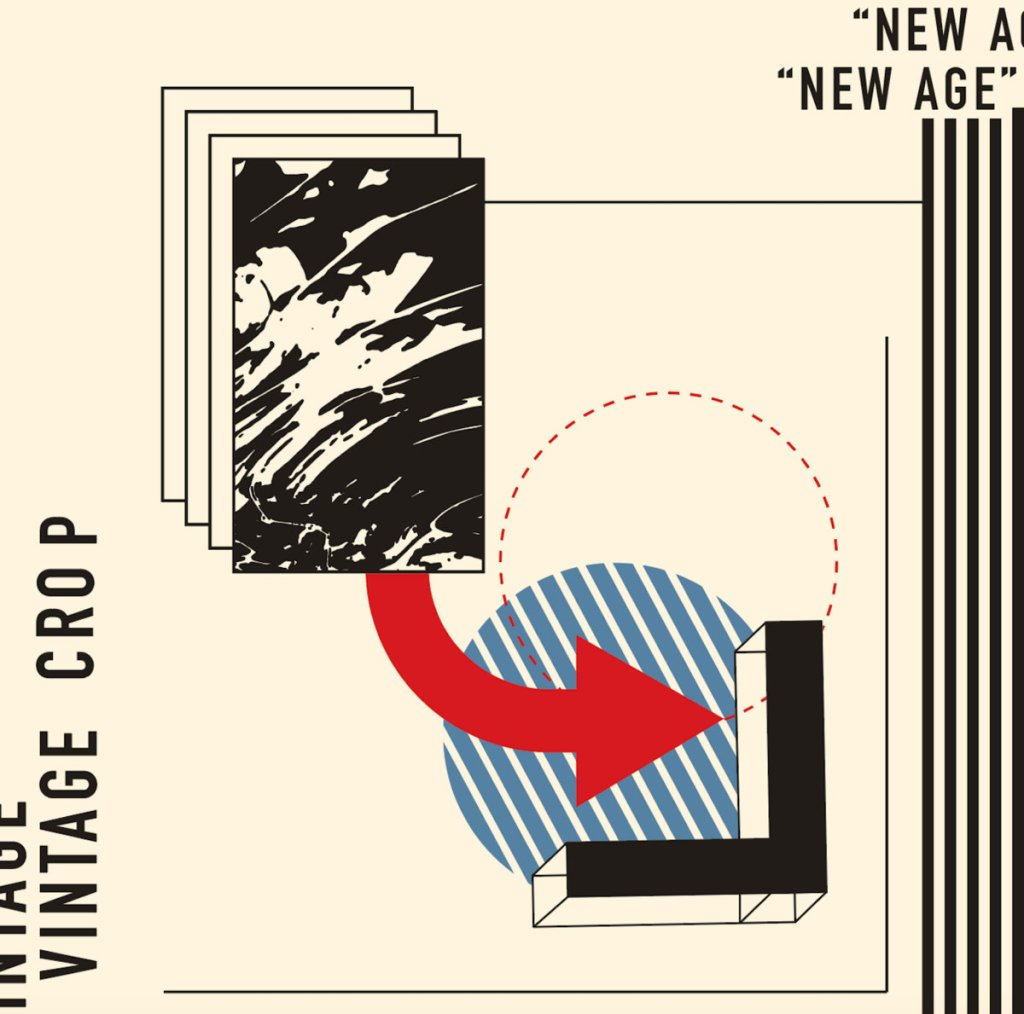
DB: The album cover I did for Vintage Crop’s album New Age. Everyone really seemed to like it, I got praised for it, which was really weird. I thought it was a bit of a fluke! Since doing that it gave me more confidence.

Do you remember making it?

DB: Yeah. I remember I did an initial idea and it really sucked so I just started all again. I feel like when I do something good, that it just happens really quickly. I’m like, ah, cool, it’s done! I try not to spend too much time on one thing because then I start getting in my own ear like, oh, that’s shit, you shouldn’t have done that! I like to just do it and get it out of the way.

Yeah, I get that. I do that with the interview art for Gimmie. I come from a punk background and I love punk art, flyers etc. and if you look into the history of that, a lot of stuff is photocopied and taken from elsewhere and reused and they’re typically done quickly using the resources you have on hand. I like the spontaneity, get it done, resourcefulness.

DB: Yeah. That’s it. I like using my computer because I don’t have to buy another one and it doesn’t really cost me anything to use it.

Are you working on any art pieces at the moment?

DB: Not really. I’ve set up a little screen printing studio in my shed. I’m going to get some t-shirts done. That’s been good because it’s more hands on, trial and error, and messy, which is fun!

You have your band Moth, and play in Gonzo and U-Bahn, as well as make art for bands, you do a zine…

DB: I was working on a new zine but I’ve just kicked it to the curve, I will do another one eventually though.

I feel like you’re really immersed in the creative community but, it wasn’t always the case for you and a few years back you were really struggling with things and felt isolated and didn’t want to be part of a scene; what was happening?

DB: Yeah, just some personal things happened. I was in a place where I didn’t really want to talk to anyone and I didn’t really have any friends around, they were all travelling and I broke up with my girlfriend at the time… I was like, OK, I’m just going to lock myself in my house. A lot of art works and songs came from that period though, it’s classic, cliché… I think Kurt Cobain said it: thanks for the tragedy I need it for my art. It does make sense I guess. Your influences don’t have to be sad though or bad things that have happened to you, these days I try to be influenced by different things.

Do you find it harder to write from a happier place?

DB: Yeah, definitely [laughs]. I’ve always wanted to write a really nice, beautiful, happy song. I guess it’s really hard for me though.

What was it that brought you back from that darker period and got you back into doing stuff again?

DB: When I joined U-Bahn. I knew one of the dudes in the band but didn’t even really know him that well. I met Zoe and Lachlan in it and they were great. We started playing a lot of gigs and people really started liking the band. That really threw me back into everything. I think playing in a new band is exciting and fresh. That was the same thing with starting Moth, it was good not to be a drummer for a change.

I heard that U-Bahn had a new record recorded?

DB: Yeah, I’m not in the band anymore. I know they were recording with the same guy that Gonzo recorded our new album with. I don’t know what they’ve done with it or if it’s coming out or not.

You started doing Moth as a solo thing and now you’ve expanded into a full band… I noticed on your bandcamp you had the Russian word “мотылек” which means motility…

DB: Yeah. Veeka [Nazarova] who plays synths in the band, she also sings one of the songs on the 7” [Machine Nation] in Russian.

The song “Jealousy”?

DB: Yeah. That all came from a lot of the lyrics I was writing was just gibberish and didn’t make sense, I was like; what if Veeka sang in Russian? Then it’s going to sound like gibberish to people but there will actually be meaning behind it. She’s writing some more Russian lyrics for new songs too. The whole point of the band was to do something completely different, new and weird. I feel like no one really sings in Russian in Melbourne, so we just rolled with that.

Did you get the title of your new EP Machine Nation from the Richard Evans book of the same name?

DB: No, I haven’t even heard of him.

He writes sci-fi and his book Machine Nation is about developing biological robots, it’s got a real modernised society/sci-fi theme and I thought because your release has a modernised society kinda theme through it, it may have been influenced by it.

DB: I’m going to check it out, it sounds cool! The title actually came from the word “machination”. I’ve forgotten what it means, but I think it’s doing things or making things with an evil push behind it [laughs]. I read it in a book once and thought it sounded like “machine nation”. A lot of the songs I was writing revolve around the modern world, the digital aspect of everything and of humans becoming machines.

I understand you’re inspired by writers’ like Henry Miller and JG Ballard?

DB: Yeah. I really like Henry Miller, I like how the way that he speaks about himself is quite honest. You read his books and it’s just him telling you the story. JG Ballard’s books has a lot of weird subjects. Reading stuff like that makes me want to write stuff that’s honest but weird as well—it’s about embracing your inner weirdo! [laughs].

Vid: VOGELS VIDEO (for more vids go here).

Recording-wise I know you like learning different techniques and that changes the style of the way you write, with your new EP; what techniques did you use?

DB: With this one I recorded it with my friend Matt Blach who plays in The Murlocs and Beans. He’s trying to get into the whole recording world and I was talking to him about it. He wanted a guinea pig, someone to play music so he could fiddle with the controls and work all that out. I’m comfortable with him and thought it would be much easier to do it with someone other than myself. It turned out way better than I thought it could. I bought him a slab of beer for it [laughs].

Is there a song on the EP you’re especially loving right now?

DB: Maybe the last one “Indulgent Indeed” because it was the newest out of all of them; some of the songs I wrote two years ago. I wasn’t getting sick of them but, I guess it was more exciting for me to have a newer one. It was also maybe going in more of a refined direction from the other songs.  

What’s it about?

DB: [Laughs] Ahhh… it’s about people. Maybe specific people that have wronged me. It’s about back stabbing and wanting to be successful and doing anything to be successful and just leaving your friends behind.

What does success mean to you?

DB: Being content and happy with what you’re doing. It doesn’t matter if you’re praised for it or not. The whole Moth thing wasn’t meant to be enjoyed by others, my indulgence was just playing it, not putting it out or being praised for it. I just wanted to enjoy it. I feel like success is just enjoying what you do and doing it for yourself.

Just making art for art’s sake!

DB: Yeah, that’s it!

I feel like you seem to be in a really happy place with all the stuff you’re doing now.

DB: I’m pretty satisfied, I couldn’t really ask for much more.

What’s happening with Gonzo right now?

DB: We’ve finished recording the new album, it’s been done for ages, we just haven’t mixed it yet. We have plans for doing a little instrumental thing, we’re also going back to garage roots and just doing a real classic garage rock album. We’ve been starting to write new songs for it.

Is there anything else you’d like to tell me or that you’re working on?

DB: I’ve just really been trying to keep my sanity during this crazy time.

What’s helping with that?

DB: Getting drunk and doing karaoke with house mates is good! [laughs]. Dancing. I’ve gone back to work this week which has been nice, ‘cause I was getting really cooped up. I’m a graphic designer for a fashion brand, I make t-shirts and it pays the bills.

The fashion world is just a whole other world unto itself!

DB: Yeah, I never had any interest in that world but then I got offered this job and thought, I should take it, even just for an experience thing. It’s been great to learn how that whole world woks. It’s pretty crazy!

Please check out: MOTH on bandcamp; on Instagram. Get Moth’s Machine Nation on MARTHOUSE Records; GONZO bandcamp.

Hobart Post-Punk Band The Native Cats: “The satisfaction of a healthy and creative work ethic paying off in expected and unexpected ways”

Handmade collage by B.

The Native Cats make beautiful, poetic music. We’ve been fans of their sonic art and have been watching them evolve for almost a decade now. When corresponding with the Cats’ Chloe Alison Escott (vocals-electronics) about having a chat, we were encouraged to go as deep and challenging, and unrelated to music with questions as we like. Both Chloe and Julian Teakle’s (bass) answers gave as a little more insight into the people behind the music.

Tell us a little bit about how you spend your days of late.

JULIAN: I work in a large public library, so that has been pretty busy recently, with changing restrictions on access. Slightly returning to normal now, but we know what to expect if something akin to these times happens again/continues. Pretty quiet home life, running the label [Rough Skies Records] I operate with Claire from Slag Queens. Having bursts of song ideas for the Cats, and other unfinished non-Cats outlets. Really missing playing gigs, was looking forward to touring on the last 7’. 

CHLOE: This seems like the best place to start from: these past few months of Covid isolation have been utterly devastating for my mental health, as has been the case for so many others. I’m very fortunate in a lot of ways, with a steady place to live in a city that the virus has seemingly barely reached, with a job as a transcription typist that has simply carried on uninterrupted. But my friends and my life as an artist and a performer bring out the best in me, and being cut off from all that felt like being cut off from everything I actually like about myself. And you’ve sent me a wonderful list of deep and challenging questions, and I’d love to dive headlong into each one, but I’ve had very little to do with my spare time for three months except roll depressive, solipsistic thoughts around and around in my mind. So I might dodge some of these as part of my current project of getting back out of my head and into the world. I mean no disrespect! You’ve caught me at a difficult time!

Are you an optimist or a pessimist? What’s shaped this view?

JULIAN: Both I guess? On the same issues/subjects sometimes, it’s really affected by my mood at the time.

CHLOE: I’ve always been an optimist, on every scale from the personal to the global. The work is in staying focused and informed and never being complacent or naive in my optimism. No reassuring inevitabilities, no necessarily linear progress, no “all the racist boomers will die out and elections will start going our way”, no faith in electoral politics to save us at all, honestly. As I write this, we’re about two weeks into worldwide protests against police brutality and systemic racism, two weeks of sustained direct civilian action that has dramatically shifted public opinion not only on police brutality but on the very notion of policing itself, and has already achieved so much more than years and years of incrementalism from politicians and business leaders ever could. I can’t claim that I expected this to happen! But my optimism has always been in believing that it could.

Can you please share with us a life changing moment that has helped shaped who you are today?

JULIAN: Deciding to return to study and Tasmania when I was 28. I’d been living in Melbourne for three years. I was pretty over aspects of my job and living in a bigger city. My last 16 months there was marked by the death of my grandfather, having (not properly diagnosed) glandular fever and my band breaking up just when we staring to get somewhere after some rough times. It was pretty shit.

Coming back to Tasmania was a reset of my life, I’d could use what I learnt in Melbourne, and I felt like I really progressed in a musical sense. I had a better idea of what I wanted, and what I didn’t. I learnt to love writing and playing music again, with Matt & Lisa in the Bad Luck Charms, then Chloe with the Cats.

Who has had the most prominent influence on your life? How so?

JULIAN: I’d say my oldest friend Alex Lum, we met at high school, lived in the same suburb and we both dug sci-fi, comedy and music. He is a year older so he was going to gigs just before I started, so he’d give me heads up on the cool local bands to check out when I started going to gigs. In fact his whole family were super welcoming, we had kinda different backgrounds, his folks were University educated so it was good be exposed to varied cool shit in Claremont Tasmania in the 1980s. Alex and I shared a lot of stuff, worked on projects together and had some crazy fun social times. I wish we’d formed a band in retrospect

Is there a piece of art or music that you’ve had a profound experience with? Can you tell us a bit about it please?

JULIAN: I had a day at work where I was doing some repetitive processing work, I had a Discman to listen to stuff while I did this and there was a good CD store next to my work called Tracks. They had a cheapo copy of Funhouse by the Stooges, and although I’d experienced it in the past, listening to it that day turned me inside out, I listened to it about six times in a row while working. It’s a staggering piece of work, I feel flattened (in a good way) by its subtleties and depth. It’s not trying to be raw, it just is.

Another thing that really touched me was the movie ‘Good Vibrations’, it’s set during the Troubles in Northern Ireland in the 1970s and follows the journey of Terri Hooley, who ran record stores and labels. Most music bio-pics are awful, usually glamourising shitty situations, never getting to any reality or wonder of being involved in music. There’s a reason why ‘This Is Spinal Tap, as ridiculous as it is in parts is the still one of truest of music films. Anyway, there’s a scene where Terri sees the Undertones for the first time. For me the scene, and the reactions of Richard Dormer who plays Terri conveys the pure joy of discovering music and letting it course through you. It was quite emotional for me seeing this cos I know this experience and it’s the best.

CHLOE: My first girlfriend, when I was 20, was an American on a study abroad program. We fell desperately in love, and we were together for three months before she had to go back to the US. A while later she told me she’d started seeing someone new, and, look, by 20-year-old having her first experience of romantic jealousy standards, I handled it well, but it still utterly consumed me, just a flood of overwhelming emotions with nowhere conclusive or productive to go. Then one night I was listening to Night of the Wolverine, by Dave Graney ‘n’ the Coral Snakes – new to me at the time, but it’s my favourite album of theirs now – and a song I’d never paid much attention to before suddenly appeared to me with startling clarity: the closing track, “Out There (In the Night of Time)”. In four verses the singer reflects on good times with an old lover, sees them happy in a new relationship, has a simple, beautiful, physically impossible dream about them, and ponders broader questions of imagination and possibility, and there’s a tremendous sense of peace to the entire thing. I was so young and lost and distressed in that moment, and that song gave me a way to feel. It wouldn’t have necessarily worked the same way for anyone else in that situation, but I was receptive to it, so it worked for me. Art affects and changes us all in subtle and imperceptible ways, over and over and over again, but that song at that time gave me a response I simply didn’t previously possess, and I’ve carried that full awareness of the power of a song or a film or a story ever since.

What are the things that you value most in regards to your creativity?

JULIAN: The satisfaction of a healthy and creative work ethic paying off in expected and unexpected ways. It doesn’t always work out that way, but you can attempt a red hot go I guess?

CHLOE: It saves my life, over and over and over.

What’s the best idea you feel you’ve ever had?

JULIAN: Forming a band with Chloe. It’s paid off in so many fun, challenging and satisfying ways. First time I saw Chloe play I knew she had considerable talent. I brought my experience of doing music for about 15 years, and I can be a pushy bastard, for all the good reasons, natch. It’s been weird and tough sometimes, but which band isn’t. It’s been a real privilege to be part of, and step back and witness, our progression.

CHLOE: Gender transition. The idea of myself as a woman. Nothing else comes close.

The Native Cats released Two Creation Myths earlier this year; what’s its significance to you?

JULIAN: I’ve been very happy to release the last two Cats record on mine and Claire’s label, very satisfying to have this control and see hard work pay off. I love the idea of stand-alone singles, entities unto themselves. Inspired by a lot of my favourite artists, maybe not with the times? But fuck it, this is one of the joys of DIY and independent music.

CHLOE: Two Creation Myths in particular stands out to me as a wonderful sequence of one-on-one collaborations I was fortunate enough to take part in: developing the instrumentals with Julian, which I then went away and wrote lyrics for on my own; recording with Ben Simms and being present for the entire mixing process, coming up with ideas on the spot and explaining them as best I could and watching him click and drag and bring each one exquisitely to life; devising and starring in music videos for each track, one in Melbourne with Julia Suddenly and one locally with Izzy Almaz, which is honestly fast becoming one of my favourite creative outlets on earth; and giving Molly Dyson just enough guidance and direction on the artwork for her to deliver something vivid and stunning once again. Those collaborative processes – leading and being led, being surprised and being inspired to even surprise myself – are at the very centre of what brings me joy about living as an artist.

How do you keep yourself inspired?

JULIAN: Watching and learning from friends and peers. Maybe a little envy of someone who’s written a corker tune, can be nice to get that little push. Have many friends who work in other art fields, great to have yarns about where our processes intersect and sharing ideas. The Hobart visual art scene is fkn amazing and inspiring. Funny when I find have more in common with visual artists than other people doing music.

CHLOE: When I need inspiration and I can’t find it, and I’ve made sure I don’t just need something to eat or to catch up on some sleep, I usually find that the problem is dissociation. Losing touch with myself as a unique person with moves and responses nobody else in the same situation would make, or at least not in precisely the same way. Once I’ve found myself in the crowd, once I’m fully aware of being Chloe Alison Escott and not, say, just any old anonymous interchangeable post-punk vocalist – which isn’t to say such a thing even exists! Every artist has their own idiosyncrasies, whether they consciously foreground them or not – that’s when the inspiration starts to flow again.

What is both a positive and negative experience you’ve had related to your band?

JULIAN: Playing the Meredith Music Festival in 2018 was one of the best playing experiences of my life. Normally I dislike festivals and camping, but we had a good crew of friends with us, and Meredith has a good rep for not attracting punishing dickheads. We were treated really well and played one of the best sets of our career. We also really bought our in-between song banter game.

Getting ripped off by promoters has been super rare for us fortunately, but the one time we did was for a gig we wouldn’t normally play, but we’re always up for new experiences. We (meaning I) provided backline for the headline act, which I had to transport via cab. It wasn’t the headliner’s fault, but I think bands should be a bit more aware of what’s going on around them. Anyway, it was a slog of a gig to an unfriendly audience, and then we didn’t get paid. I had to warn a few local acts about working with that promoter again. I was pretty angry.

CHLOE: I’m yet to have any negative experiences in this band that haven’t led to something positive somewhere down the line. Though perhaps that’s just my outlook on life – mistakes to learn from, opportunities for empathy, being knocked off one path and onto an arguably better one, that’s some of the best stuff life is made of. We had someone we’d known for a long time working very closely with us who reacted very badly to my gender transition. He privately messaged me about it, we wrote back and forth a couple of times. At first I thought his questions were from a sincere place and he was trying to understand, but, no, he’d made up his mind that I was misguided and thoughtless and selfish, and his questions were all rhetorical, intended to hurt me. I phoned Julian and told him that I couldn’t work with this person anymore, nervous about how he’d feel or how he might react – I’d only been an out trans woman for a couple of weeks and I already felt like a stereotype, making trouble, complaining, getting offended – but he didn’t hesitate for a second in taking my side and deciding we wouldn’t be working with this person any further. So that negative experience led to Julian showing his dedication as a friend and an ally, our bond grew stronger, and, as a bonus, our records also got a lot better from the lack of this person’s influence. But that’s an extreme example. Sometimes the negative is that someone says they don’t like the drum sound on one record and the positive is I make sure it’s better on the next one.

What are some things that bring you great joy?

JULIAN: My family, especially seeing my nieces and nephew growing up. My friends. Being able to still do interesting things with music after 26 years.

CHLOE: Jon Bois. Joe Pera Talks With You. @i_zzzzzz on Twitter. Destroyer songs. Destroyer interviews. Hunter Harris’s favourite line readings. The Fall covering “Black Night” by Deep Purple in 1982. Public Image Ltd on American Bandstand in 1980. Adrian Edmondson and Rik Mayall breaking character for seven minutes during the first Bottom live show in 1993. Michael Kupperman. Michael DeForge. Michael Brough. Jason Schwartzman in Listen Up, Philip. Everybody and everything in A Serious Man. Freckle invites two beautiful skateboarders up to their apartment. 

If you could change the world, what would you do?

JULIAN: Greater social mobility. Free education and health. Greater access to the arts for everyone, that doesn’t talk or punch down.

Do you have a philosophy you live your life by?

JULIAN: Live, and let live. It doesn’t always work out like that, but I guess it’s a good start.

Are you a spiritual person?

JULIAN: I don’t know. Music, art and experiences feel profound sometimes, but not always. I understand how spirituality and faith can be a balm for some people. I like to be grounded in something real, but I get the appeal of some intangible something or other. I hate hippies and religious nuts and I detest the idea of someone’s increased “spirituality” being used as some psychic superiority.

CHLOE: If you watch A Serious Man and Uncut Gems back to back you should get a pretty clear picture of where I’m at spiritually right now.

What keeps you going?

JULIAN: Family, friends, music, food, good times.

CHLOE: What keeps me going even in my lowest moods is that I would like to see and take part in as much of this story as I can.

Please check out: THE NATIVE CATS on bandcamp; on Facebook; on Instagram.

Sydney Punks C.O.F.F.I.N on their new forthcoming LP: “The anguish of having things beyond your control controlling your life… music can be a really powerful therapy”

Original photo by Rhys Bennett. Handmade art by B.

From the Northern Beaches of Sydney come C.O.F.F.I.N with their loud rock n roll punk and wild shows putting the fun, danger and excitement back into punk rock. They’ve been in the studio recording their new record which is getting ready to see the light of day. Gimmie caught up with them for a chat.

How did you first get into music?

BEN (vocals-drums): Hard to tell, it’s been a key component of my life as far back as I can remember. My mum had really good mixtapes an old boyfriend of hers from NY had made. They were always playing in the car. Maybe that. Apparently I got loose from her when I was two at a benefit gig Midnight Oil were playing on Freshwater Beach. She found me side of stage captive and clapping along. So probably a combination of that and watching Video Hits with my old man at his place on the weekend.

ARTY (guitar-vocals): Whole family loves music. But when I was little my parents were still having parties and house shows and my dad was still always playing gigs in his bands (Crazy Legs Vermin, Knucklehead and others). CLV were out there punk with psychedelic and scientific themes and influences. My imagination went nuts every time the ol’ man had a gig. Probably didn’t even understand what gigs were but there was always a wanting of inclusion.

AARON (guitar-vocals): I listened to Big Willie Style by Will Smith.

I know you guys spin records at events/gigs from your personal collections sometimes; what is: the last record you bought? The most treasured record in your collection? A record we’d be surprised you own? A record that never fails to get the party started?

AARON:  Last I bought: All That Glue – Sleaford Mods. Most treasured: My dad’s original Beatles – Revolver. A surprise one: Wrestling Rocks – Real Rock ‘n’ Roll Sung by the World’s Greatest Professional. Party starter: Abijah’s copy of Eddie Murphy’s Party All The Time.

BEN: Last I bought: Greta Now – S/T. Most treasured: OG copy of Motörhead – On Parole. A surprise one: Enoch Light – Big Band Bossa Nova. Party starter: Three 6 Mafia – Mystic Stylez.

C.O.F.F.I.N all grew up together, bonding over a love of music and skateboarding; what initially sparked the idea to start the band?

BEN: We’d always be telling our folks we were staying at each other’s places and then just sneak out and skate, cause a ruckus, and go Shanti Hunting. Shanti Hunting was scoping out well enough covered areas like bin rooms or unit block fire escapes to sleep in for that night.

On the weekends when we did end up staying in we’d just jam anything for hours and talk about rock ‘n’ roll, and usually prank dominoes to con them into delivering free pizza.

We didn’t have any songs or a proper band name really, we’d always just improvise and start again the next time. This is where one of the really uncanny moments in our story takes place. We got our first gig in year 7 and were compelled to make an actual band because Loz who was in year 12 at the time was putting on a show with the Hard-Ons at our local youth centre (aka KANGA). Arty hearing this and being a major fan of the Hard-Ons lied to Loz and told him we had a punk band and really wanted to play. Loz let us open, and we had to get a set together in a month. Who would have known that a decade later Loz would end up joining the band he sorta spring-boarded into creation. 

Photo: Oisin Demony.

On a sidenote; who’s your favourite skateboarder? Why do they rule?

BEN: Well our favourite “blader” is Robert Grogan. And our favourite skateboarded is Rhys Grogan. They are both excellent shlonkers.

The band name stands for Children of Finland Fighting in Norway; were there any other names that you consider for the band? What made C.O.F.F.I.N the one that stuck?

BEN: Yeah it’s a fucked name. Well, the full version is at least weird, but C.O.F.F.I.N is a bit ordinary. I guess that happens when you’re 11 years old and naming your band.

Me and Arty had sorta played around with a couple other names (Leatherface, Val Halla) but they were kinda other projects going before the three of us (me, Arty, & Abijah) we’re fully jamming together.

We’d often go to these gigs that would happen at a heavier local rehearsal space in Brookvale called ‘Scene Around Sound’ or maybe ‘Rockafella’s’ because it was one of the only places we could see live music while being underage. The way I remember it was that Arty pleaded with one of the dudes running night to let us get up and play! WE HAD NO SONGS! The bloke said ‘sorry but there was no room’, yet he was intrigued by Arty’s forwardness, and that such young kids had a band. He told Arty that we could possibly do so next time and asked what the name of this young boy’s band was.

Arty being put on the spot for name answered ‘Children Of Finland!’ My only guess being because we were listening to lots of Scandinavian metal at the time. He came back to the couch we were squished in and recounted to Abijah & myself what had happened. We all agreed that was a shithouse name but stupidly felt it had to be kept because we announced to this guy that’s what it was. We decided to try and redeem it somewhat by turning it into an acronym and say that Arty hadn’t told him the full band name. C.O.F…COFFIN…’Fighting In Norway’ was the first thing that came out.

And here we are 15 years later still confusing folks and having Jerry Only implore us to trademark.

What was the inspiration behind having three guitarists?

BEN: Arty being stuck in an anarchist squat in Athens with no passport or idea of when he’d be able to return to Australia hahaha. Aaron filled in for the few gigs Arty missed and he ripped. He was already our best mate and at most of the shows. It seemed stupid to stop the fun he added and stifle his input so we told him he should stay. He’s got great taste and it just makes the sound and already odd setup more offensive and unique. In the new stuff it creates a wall of sound, but they’re different interlocking bricks. I really love Cuban music and how skits the layering is.

We’ve tried to make each guitarists’ part different but not so that it’s sounds obnoxious.

It’s sorta like when the Power Rangers make that one big Megazord or whatever it is.

Photo: Oisin Demony.

When C.O.F.F.I.N started out you were all underage and found it hard to get shows because of that fact; can you tell us a little bit about this time? How did you work around the situation?

BEN: We continued on playing countless shows at KANGA (Manly Youth Centre) and got heavily involved in the Manly Youth Council because of that. It kinda allowed you to put on or influence the shows that happened there, and the community projects proved to be pretty great too.

We did lots of creative collaborations with kids that had intellectual disabilities, and environmental awareness festivals. I was even a penguin warden for a while hahah. Basically I had to stop dogs from chomping fairy penguins at the wharf.

We played for free anywhere that would let us. Other youth centres (YOYOs), band comps, parties, rehearsal studio shows. We’d lie and say we had the same focus or theme as some public event just so we could play at that, and at around age 17 we all stared looking old enough to just tell a venue we were 18+ and hope no questions were asked.

As for going to shows we were pretty skilled at sneaking into places and staking out the shadowed corners or sitting under tables.

You have a new album in the works; what’s it called? When will we see it released? How did you challenge yourself while writing and recording it?

BEN: Not sure about a name yet, maybe S/T. Probably end up releasing it when we are able to tour it properly, hahaha sigh.

I think a major difference and intentional challenge for this one was to sorta just have the skeletons of the songs sorted and work the rest out while doing it – keep a bit of the looseness and spontaneity.

I remember once hearing someone say “an album is never finished, it just has a deadline.” We set a deadline.

You recorded vocals through a vintage mic; what difference did it make to the vocals? Did you experiment with any other interesting equipment?

BEN: The old home phone thing right? We actually recorded harmonica through that, it sounds sick! Antique, like an old Maurice Chevalier recording. Usually we do very little to the vocals but do really like messing around with a few uncommon things.

Some of the odd stuff we used that I can think of is: A lap steel guitar I got second hand in Austin that’s from 1947, heaps of hand percussion and random shit I tink ered together, a bullroarer, and as I mentioned before harmonica.

We met and became friendly with Briggs while recording because he was working on demos at a studio in the same building as The Pet Food Factory. We were going to record him thwacking the roller doors out front with this baseball bat we had for this new song called Dead Land. Unfortunately we didn’t end up at there at the same time again. But that would have been boss.

Photo: Grit Van.

During the creation of the new record, when was the point that you started to get really fired up about it?

BEN: About a month before we were booked in at the Pet Food Factory do it. But we are constantly scribbling notes and jamming riffs. It’s more just that the refined editing that becomes whipped into orbit as we get closer to that deadline.

What kinds of things are informing the new record lyrically?

BEN: Frustrations, depression. The stuff that probably keeps me grinding teeth at night. Holding people accountable for shitty behaviour. There are songs about the consequences of mistreating the land, how appalling domestic abuse against women in Australia is, dead shit abusers disguising themselves as artists…..and the pit gets deeper. The anguish of having things beyond your control controlling your life. But music can be a really powerful therapy for such grief and anger. If a song is done well it sorta becomes a timeless ‘fuck you’ or mirror to whatever it is you’re quarrelling with.

Last year C.O.F.F.I.N toured the country with T.S.O.L.; what did you take away from that experience?

ABIJAH (guitar-vocals): touring with a sober band is great because you get their rider.

ARTY: Been a fan since 13-ish, so stoked that they were all proper legends. Really nice, honest, funny blokes who were great to hang out with. They shared a lot of fucked up & insightful stories with us that’ll probably save our lives a few times in the future.

LOZ (bass-vocals): It’s really good hanging out with a band who have been playing together for so long and still loving it, even with a collection of so many fucked up stories as large as they have.

You guys have toured quite a lot; what’s be one of the most memorable places you’ve been? What made it so?

Ben: Hell, there are so many, a lot that probably can’t even be told yet…

LOZ: Let’s go with China, we were at the tail end of a tour that had gone through Japan and South Korea. Ben had a broken foot, Arty had 2 broken hands, and I shat myself on stage after drinking a bad shoe beer.

Language obstacles, sickness, travelling by public transport city to city, it was more charged than anywhere else we have toured. We witnessed some of most astoundingly beautiful scenery and conversely there some really stained sections too. Some gigs were the loosest and psycho shows we’d ever played and at others the police barged in, took over, and locked everyone in until each person had been drug tested. Just really felt like we never had a clue what was going on and that was awesome.

What do you all do outside of music?

ABIJAH: Snorkelling or diving whenever I get the chance and boring work shit in between

LOZ: I dedicate a lot of my time to music but I’ve also been a sign writer for the last 10 years

AARON: Uni and Radio Shack.

BEN: I also play in Research Reactor Corp and White Dog. I make jewellery, do video stuff, work construction, and sometimes assist my mum with her glass artwork. Essentially make money anyway I can so I can make more music and tour.

Photo: James Brickwood.

What’s something really important that C.O.F.F.I.N care about that you’d like everyone to be informed/aware of?

BEN: Inclusivity and equality, to respect those around you who deserve it, don’t waste it on those who don’t.

What’s one of THE best things you’ve experienced lately?

BEN: Recording with Jason Whalley at The Pet Food Factory, bush walks and the beach.

ABIJAH: You can get Ichi Ran Ramen in Australia!

AARON: I’d have to think about it, not much. Getting our US tour with Amyl & The Sniffers cancelled and staying inside for two months fucking sucked.

LOZ: Great K-hole last weekend.

ARTY: First and foremost is seeing my best mates since this big dumb brain freeze.

Please check out: C.O.F.F.I.N. on bandcamp; on Facebook; on Instagram.

Melbourne Punk Band CLAMM: There are countless problems within our political structure… CLAMM for me is sorta like: Everything is fucked! How can I write music about anything else?”

Original photo by Oscar Oshea. Handmade collage by B.

At the beginning of the year Melbourne “plant-based diet rockers” CLAMM released their debut album Beseech Me – a 10-track banger touching on mental health, materialism, anti-violence and tuned in self-aware social commentary. Gimmie interviewed guitarist-vocalist Jack and drummer Miles.

How did you first discover music?

JACK: My first memories music is listening to Roy Orbison and Elvis Presley in my grandfather’s old Peugeot. I was probably about six or something. I couldn’t get over tracks like ‘Pretty Woman’ when old Roy does that snarl thing… and then like ‘Hound Dog’. I remember being really moved by music like that and it made me want to dance. He had an iPod and I think they had only been out for a few years so I remember just flicking through his iPod in wonderment. That or dancing to Daddy Cool or the Eagles at Dad’s place when I would have been around the same age.

What does music mean to you?

JACK: Ah it’s everything I guess (couldn’t think of a less cliché answer). A world without music and art sounds like a horrible, horrible place. Being able to create is something of main importance to me, I don’t really need much else I reckon! I feel lucky to have it as a cathartic experience and one that provides me with an outlet and an interaction with things that are not of the (sometimes) mundane day-to-day life. Music tends to allow me to guide me through and answer questions about existence.

How did music become the vehicle for you to express yourself?

JACK: I was always really into music but couldn’t really play. When we were around maybe 17 and 18 a group of us used to try and sneak in watch Miles’ brother play in this band called Water Bear. Full psychedelic rock! We loved it, it made us all want to start a band and so we did (Dragoons). Most of us couldn’t play our instruments. Miles and our mate Rudi Saniga luckily held it down on bass and drums but Archie (of Floodlights) and I basically just started learning guitar through Dragoons. You can hear it too if you listen, some of it is shocking stuff but it is simultaneously the best thing ever. We just sort of said ‘Fuck it’ and played shows and learnt together. Something about the ‘fuck it’ of Dragoons and me simultaneously maybe getting into punkier stuff made me realise that I didn’t need to be “good” at guitar to be able to express myself and not long after came CLAMM I guess.

What brought CLAMM together?

JACK: Like I said, Miles and I played together in Dragoons. We then joined Gamjee with Miles’ brother and absolutely loved that. I think I’ve played in four bands and Miles has drummed for three of them. Miles and I are soul bound I reckon. We’ve been through two bass players and met Maisie one night at a gig we’d played with her band (The Belair Lib Bombs), she came up to us and told us she really liked it and when our bass player at the time Scotty shipped off to art school in Poland we asked Maisie if she wanted to join.

All photos by Oscar Oshea.

Can you tell us a little something about everyone in CLAMM?

MILES: Jack is “The Driving Force” like a pilot in a pod of Orcas. Maisie… she is like the training wheels on a bike of an over excited child, keeping us on the right path. And I’m the treasurer of CLAMM Industries.

At the beginning of the year you put out your debut LP Beseech Me what was the starting point for creating the album?

JACK: I was playing in a few bands when I sort of realised I was maybe trying to write heavier music that wasn’t really appropriate for the bands. So I just started writing on the side with the thought of one day possibly pursuing it. I think the first few songs were like ‘Dog’ and maybe ‘Sucker Punch’ and I just did shocking demos on my iPhone and then one day brought them to Miles and we started jamming them and possibly thought about a two piece. We got about ten songs down and were playing them live a fair bit. We had worked with Sonic God Nao Anzai before and thought it was the best move.

Themes on the record include anti-violence, materialism and mental health; what inspired you to tackle each of these important subjects?

JACK: I suppose I always found the music really intense and moving like I was trying to get some anger or something out of me. And so I think I had to be honest about it when I was writing the lyrics and sort of ask: What are you trying to get out? What are you angry about? What’s going on? I don’t know I guess the anger sort of carries across into my day- to-day when I think about our society. I think there are countless problems within our political structure and it seems like we have a government (or system) that either have the inability or lack of care to do anything about it. CLAMM for me is sorta like:  Everything is fucked! How can I write music about anything else?

Beseech Me was recorded by Nao Anzai; what attracted you to working with Nao?

MILES: Another project of ours called Dragoons had recorded with him previously and we loved the Nao experience. His approach to recording appealed to us a lot… record it live and try not to try do too many takes on one song. That formula seems to make a potent energy in the room, and we think Nao captures that energy really well.

On an Insta post you mentioned that bassist Maisie has brought positive and calm energy to CLAMM since she joined; what’s her secret to staying positive and calm, especially in a world which can get a bit chaotic?

JACK: Maisie just seems to be calm with who she is as a person. And she is a great person. For a 20-year-old its scary stuff. Her head seems to be just screwed on TIGHT and there’s nothing anybody is going to do about it. Miles is sort of the same. Maisie refused to detail any of her secrets to me or to the public but let it be known I wish I knew.

What’s the story behind Beseech Me’s art? Darcy Berry from Moth did it, right?

MILES: Correct! Our friend showed us a picture that had something to do with a poem about a walrus and a carpenter and Alice in Wonderland. Not much behind it, think we weren’t sure what to use and that had clams on it and that’s all it took to have some appeal. Darcy played around with it a bit and put his own spin on it, and it came out quite nice.

What influenced your decision to release your LP on cassette tape?

MILES: A mixture of not a lot of money and not a lot of interest from someone else to release it, out of necessity I suppose. Cheap and easy to do.

Can you tell us about your favourite show CLAMM has played to date? What made it so?

JACK: We got asked to play a Bass Drum of Death gig after our second bass player left. ‘Fuck’ Miles and I probably thought. We had a few bass players in mind, and when we went on Bass Drum of Death’s Facebook event we saw that Maisie had pressed interested. She learnt the songs in two sessions and we played the following weekend and it was sorta like, ‘fuck we are back and Maisie is sick!!!!!!!’ hard to go past that one I reckon. Our tape launch at The Tote was pretty special too I don’t think I’ll forget that one.

What’s next for CLAMM?

MILES: Tough to say at the minute with all that is going on of course, but we have recorded and are now in the midst of mixing a new album. Other than that, CLAMM spends there days sitting at home and pondering what could have been… we had some very cool gigs lined up that have been postponed, so hopefully they happen sometime in the future. CLAMM will look after each other and see everyone on the other side at the many gigs to come, sooner rather than later we hope!

Please check out CLAMM. CLAMM on Facebook. CLAMM on Instagram.