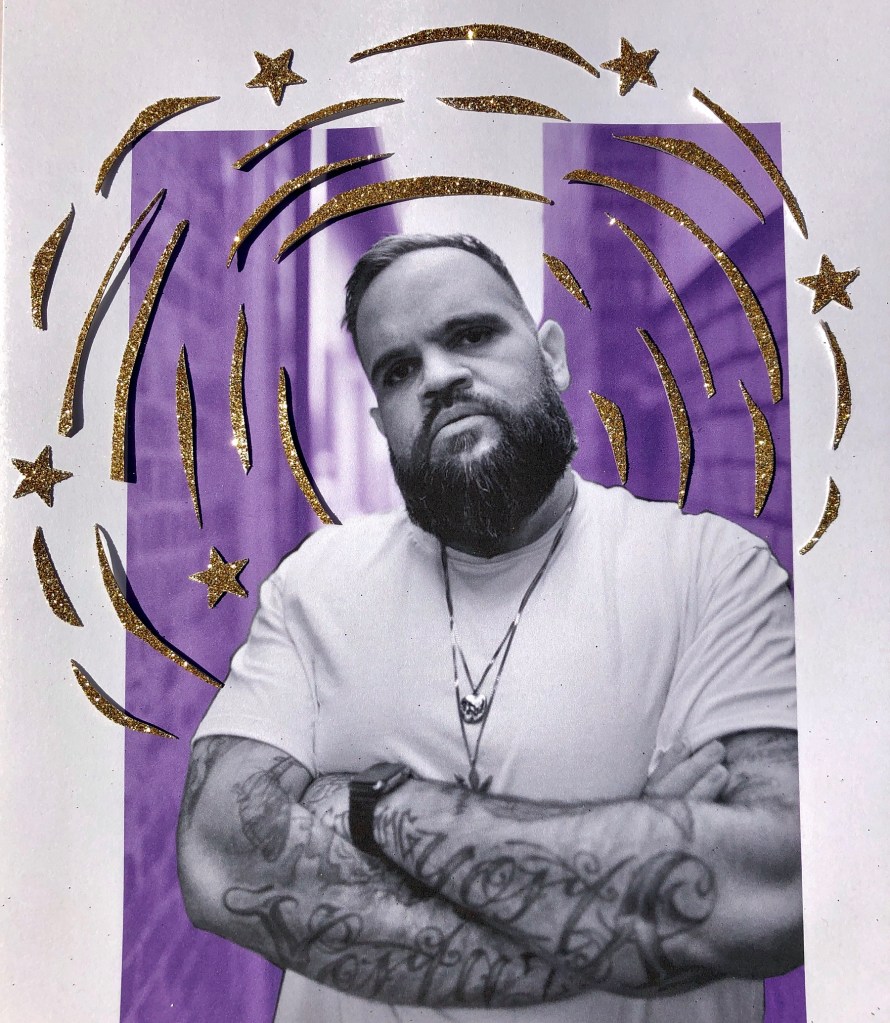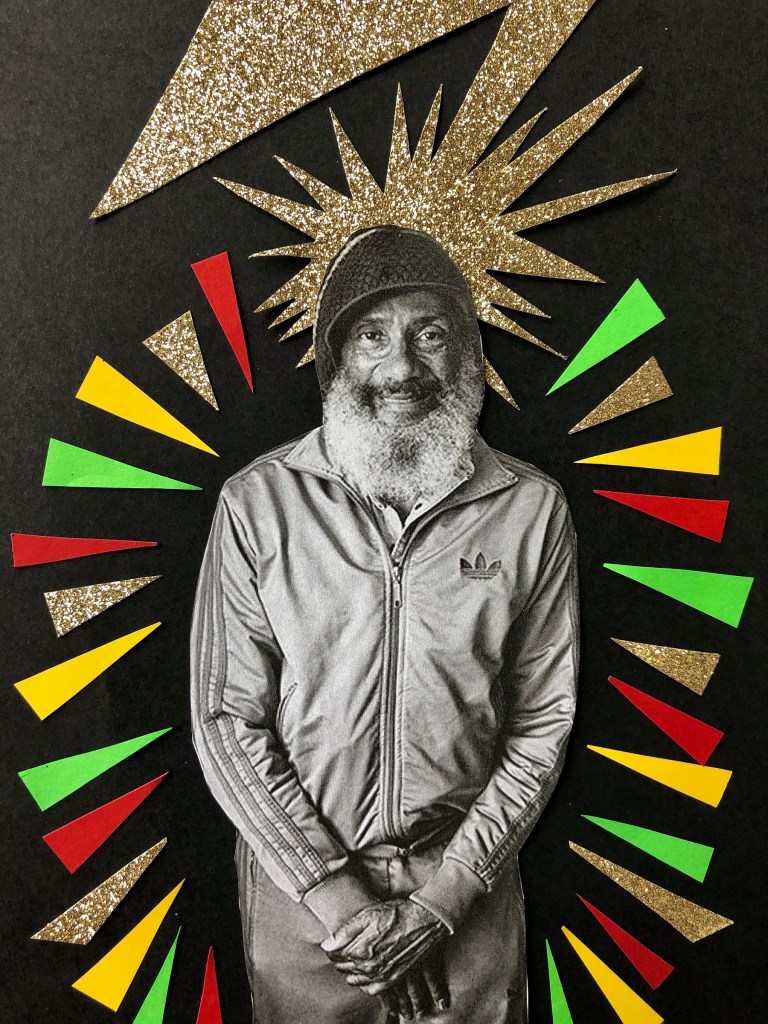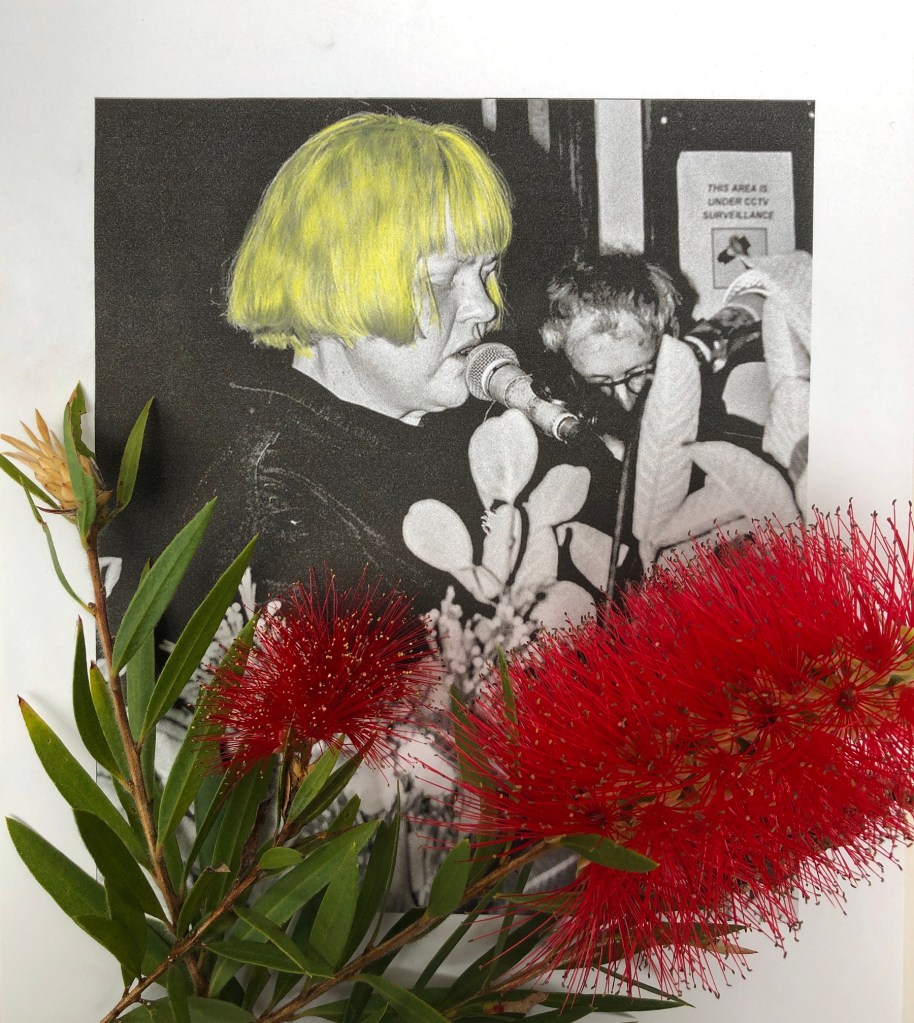
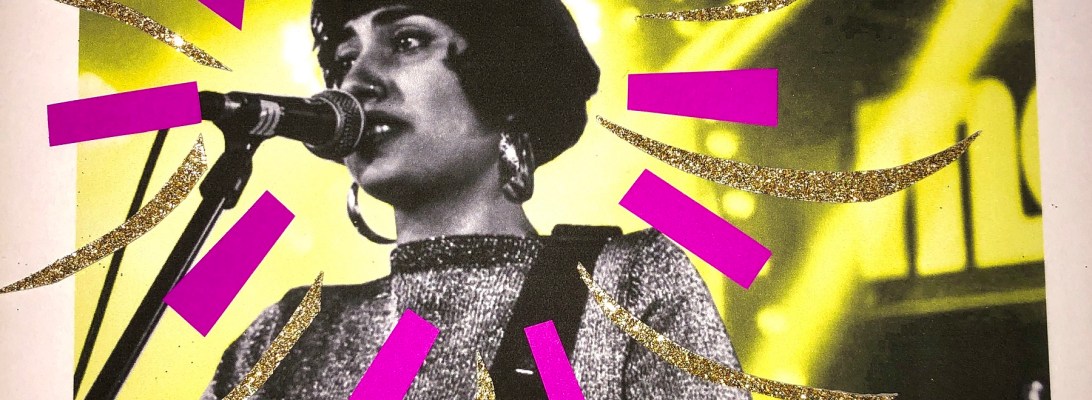
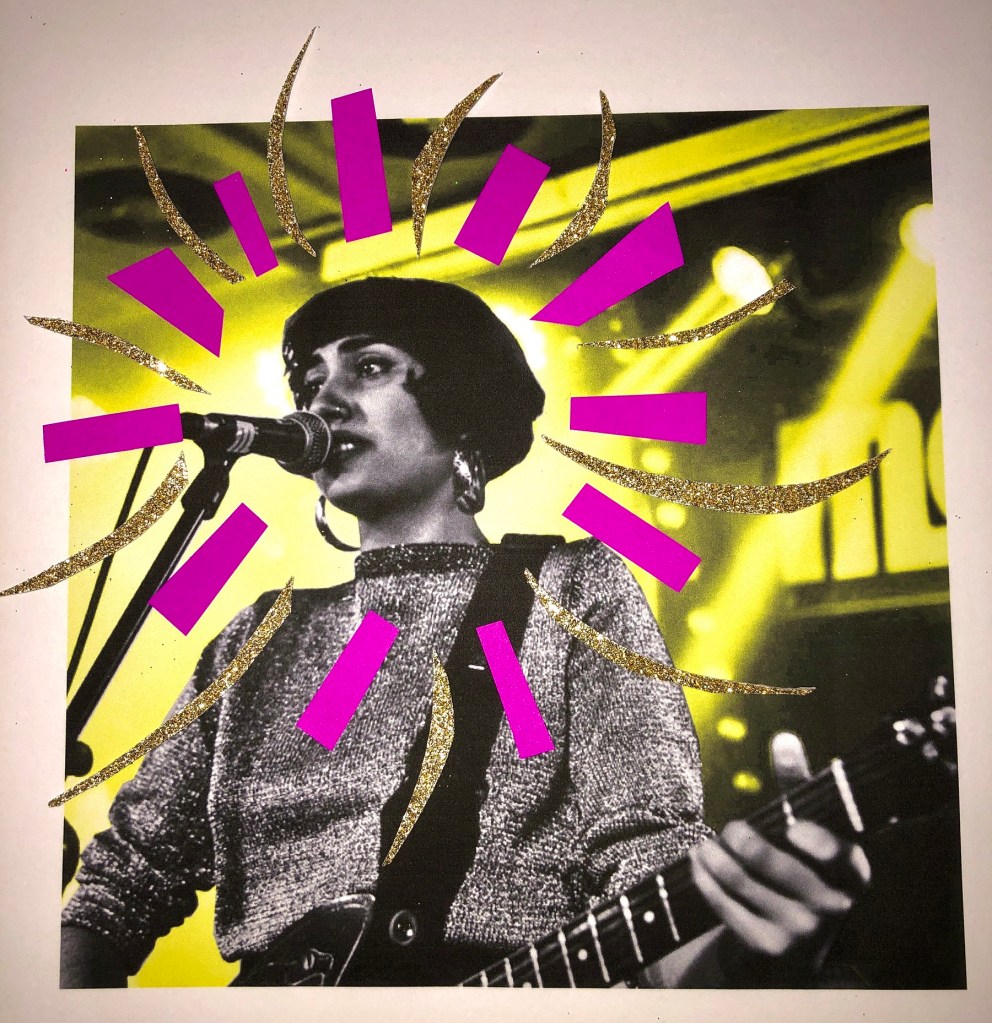
Briggs: “There’s always challenges but once you learn and fail and fall down, you realise that failure is not the end and you get back up”

Original Photo: Tristan Edouard. Handmade collage by B.

Proud Yorta-Yorta man and creator Briggs does many, many things, he’s a comedy writer, best-selling children’s book author, actor and rapper. Latest project EP Always Was sees Briggs back in his wheelhouse and home, making music. He’s stepped out of the safety net of simply writing rhyme though, and taken a leap forward bringing us six joints, each unique, each representing different aspects of his personality, each speaking to the possibilities of where he’s on his way to with upcoming full-length Briggs For PM. Gimmie caught up with Briggs for a dose of inspiration and an insight into his process and passion.

You’re a writer in many capacities – lyrics, scripts, a book – when did your love of words and writing first develop?

BRIGGS: The first thing was the love of entertainment, that’s where it all started for me because I was such a consumer of TV, comedy and music. I didn’t really put it all together until much later and realised that people have to actually write these jokes [laughs].

What is it that you love about the process of creating?

B: It’s a hard thing to wrap up succinctly. I’ve always just liked making things, ever since I was a kid, making stuff was always where I was happiest. Even later on in life, over the lockdown period, I was just making food with my mates. I just like creating and making stuff in general. Like with this EP, I made it and now I’m off making something else.

It’s a pretty cool feeling getting lost in the moment when you’re creating.

B: Yeah, it is.

When did you find the calling for hip-hop?

B: Hip-hop was always the music I had the most affinity for, it was something I was drawn to since I was a kid. It was just the coolest thing there was! [laughs]. It was the simple for me. As a young man I was drawn to the absurdity and audaciousness. Everything I was drawn to was audacious and the absurd. I loved professional wrestling, heavy metal and rap music and action movies; they were the things I enjoyed most. Everything was always over the top! I think Gangster Rap really gave me that fix.

You used to have a punk band in high school before you started rapping, right?

B: Yeah, I had a punk band in the sense that I was a kid that tried to play guitar [laughs]. I think that’s every kid from the country’s right of passage at some point, playing guitar. It really was, I just wanted to be involved in music somehow, whether it was going to be radio, behind the decks, or creating—I just wanted to be involved. There wasn’t a lot of opportunities to make rap music in Shepparton where I grew up for a long time, until I was like, nah, I can do this! I’ll do this! [laughs].

You created your own opportunity!

B: Yeah! You had to.

I’ve heard that setting goals and goal accomplishment is a really big thing for you; when did you first realise the power of setting goals and following through in your life?

B: It was probably around the time of my first EP, the Homemade Bombs EP. I realised that I was essentially starting my own business, I was like, OK, I’m going to get 1,000 CDs made and I’m going to sell 1,000; I’m going to do a video clip; I’m going to do all of these things. They were all really simple things. I started ticking off each one. I wanted to tour nationally, I wanted to sell 1,000 of my CDs, and I wanted to do a video clip. Eventually I did all of those things over the course of a year of having that EP put by myself. There were boxes of CDs and I was with my mates, when we were just able to have fun and could weather the storm and sleep on the floors and do all the hard things, I’m too soft now! [laughs].

I know the feeling of staring out and doing things for yourself, I came from both the punk and hip-hop communities. It’s all very do-it-yourself.

B: They’re very similar, super similar. The difference between punk rock, hardcore and hip-hop is just the jackets! [laughs]. Everyone had buzz cuts but just different jackets on. It’s still the same, at the core of all of the good stuff, the communities of punk rock, hip hop, hardcore, metal, they’re all parallel. I was lucky because I enjoyed all of the music, I was a big fan of all of it. They’re more in tune than they’re not, I don’t think a lot of people realise that.

Geometric patterns designed by Reko Rennie.

Same! I wanted to ask you about your philosophy of: good work is hard work; what do you mean by that?

B: It’s a mantra that I kind of spit to myself when things are tough or things are harder than normal. When you go to take the high road on some things, the high road is always the hardest road to take. Good work is hard work reminds me that you’re doing the right thing, that it’s tough now but it pays off. It works in a lot of different facets in my life, be it in the gym doing work and exercising, trying to be healthy—going the extra mile for yourself so it doesn’t suck so hard tomorrow! [laughs].

Previously you’ve mentioned self-esteem and how that’s a big issue you like to address; why is that important to you?

B: I think maybe because I don’t really remember feeling super confident as a kid. I was very performative – I was the class clown – but I was never very confident. There’s a difference there that people need to identify. You might have teachers identify how to better interact with their students; really anyone that interacts with a young person. Performative acts, being loud and boisterous, doesn’t always equal confidence, they might need a hand here or there or something. Self-esteem and tying it back to the Indigenous community because that’s where I grew up, it was extra hard to be yourself in what it felt like, a world that didn’t understand you or want you in it. Ya’know what I mean?

Yes, I really do. As an Indigenous kid, a Bla(c)k kid, growing up I didn’t think there was much different about me until I went to school and other kids, white kids, pointed out I was different. I’d get called all kinds of names.

B: It’s like, everything’s good until it’s not, right?! [laughs]. You don’t realise you’re different until people start telling you you’re different. It’s quantum physics, you change the outcome by measuring it [laughs].

What’s helped you with your confidence?

B: it’s a weird analogy but, I just got a puppy the other day. She’s great, she’s fantastic and she plays really well with me and anyone that comes around, but she was a little bit fearful in the beginning with other people and other dogs. I got her a treat ball, you keep her food in and she pushes it around and gets food out of it. When I first got it she was terrified of it, she stood there and barked at it and didn’t want to go near it. I rolled it near her, she didn’t know there were treats inside, until she did and then she went to work! She now breaks this thing open, even when it’s not meant to be broken open. When she figured out she was a problem solver, it changed her personality. She was suddenly interacting with other dogs much more openly. I feel like that was part of the thing for me, once I figured out that I could get over it and own a stage or speak my mind somewhere on stage and have a microphone and talk about my point of view, it was much easy to interact with people on a daily basis. Do you get what I mean?

Yes, I do. What’s your puppy’s name?

B: Carmella!

That’s a lovely name. I do get what you mean though, I started making my own zines, independent publications when I was 15, and once you start doing that and using your voice and you know that you can, you just keep going! I did a zine workshop once and a young boy said he didn’t know what to write and I told him he could write anything he wanted to. He replied “What I have to say doesn’t matter” and I told him it did matter; he said no one had ever told him that before and then he started writing.

B: Yeah! Once you get over that first hump, that first moment and you break the ice on it… there’s always challenges but once you learn and fail and fall down, you realise that failure is not the end and you get back up.

Your new EP is called Always Was and the image on the cover is a photo of the tattoo on your hand that says “Always Was” and I know the slogan “Always was, always will be Aboriginal land”; what does the EP title mean to you?

B: I didn’t want to call it Always Was, Always Will Be because it was only an EP [laughs]. I wanted people to understand that this wasn’t the whole story. “Always was, always will be” the slogan itself to me, was one of the very first things that I remember as a kid with protests and being present as Aboriginal People. Bringing it back to my music felt right. I didn’t want to do the whole thing because I wasn’t done yet! I thought it was a good title because it says there’s more to come because it’s only half the slogan. “Always was, always will be” is about longevity. It’s not just a thing to ring off—it is about longevity, it is about strength.

Absolutely! I feel like also with you putting out new music is that you’re back to the fundamentals of Briggs, the core of what you do.

B: Yeah, ‘cause I do a lot of different things. It’s good to be back in the house that I built, making tunes with my friends and doing the stuff that I love.

What’s your favourite lyric you’ve written on the EP?

B: [Pauses and thinks] There’s a few: nervous people make me nervous [laughs]. I like stuff like that.

Do you have a process for writing?

B: I just write to the beat that I get, especially lately, I’m trying to write more songs than just write raps. It’s mostly just write off the beat.

I’ve heard you mention that each song on the EP represents a different aspect of your personality…

B: Yeah! I should have done seven and you could have had them all! [laughs].

What’s the aspect we don’t have?

B: I don’t know, maybe gluttony isn’t on there [laughs]. You got wrath, that’s “Go To War”.

What about the song “Good Morning”?

B: That one might be pride [laughs].

I really love the lyrics of that one: When the sunshine says good morning / Good morning, I say what’s up.

B: That song is about not going to sleep. It’s like “good morning” because I haven’t been to bed. Everything I do is very tongue-in-cheek, more often than not.

I got something totally different from that song. I was thinking it’s more a positive, I’m waking up what can I do today.

B: Well that’s the beauty of music, people can interpret it any way they need it. Whatever that song means to you or whatever you take away from it it’s great! I read this thing about art: once it’s out there, it’s yours!

Yeah, it takes on a life of its own and it keeps evolving beyond the people who created it.

B: Yeah, for sure!

Recently, you were talking about the combination of singing and rapping on your joints and you said something of how it’s light and dark, yin and yang, it’s the balance and that you feel the universe is built on balance; how do you keep the balance in your life?

B: As much possible! That’s all I got [laughs]. That’s all I know.

Do you take time out to reset or do anything like meditation?

B: The closest thing I get to meditation is going to the gym. Anytime I put my phone down and I’m not working, that’s the closet thing I’ve got to meditation. I used to go to the theatre a lot and see movies. I’m terrible with that.

Last question,  you’ve supported Ice Cube on his Australian tour, I know hearing his song “Today Was A Good Day” as a youth was a big deal for you; did you learn anything from spending time with him?

B: I’ve learnt things from spending time with all of my heroes. You watch how they work and it’s all about focusing on caring about the art and longevity, whether it’s with Ice Cube or Ice-T, RZA or Matt  Groening.

Please check out BRIGGS. Briggs on Facebook. Briggs on Instagram. Always Was EP out via Island Records/Bad Apples Music.

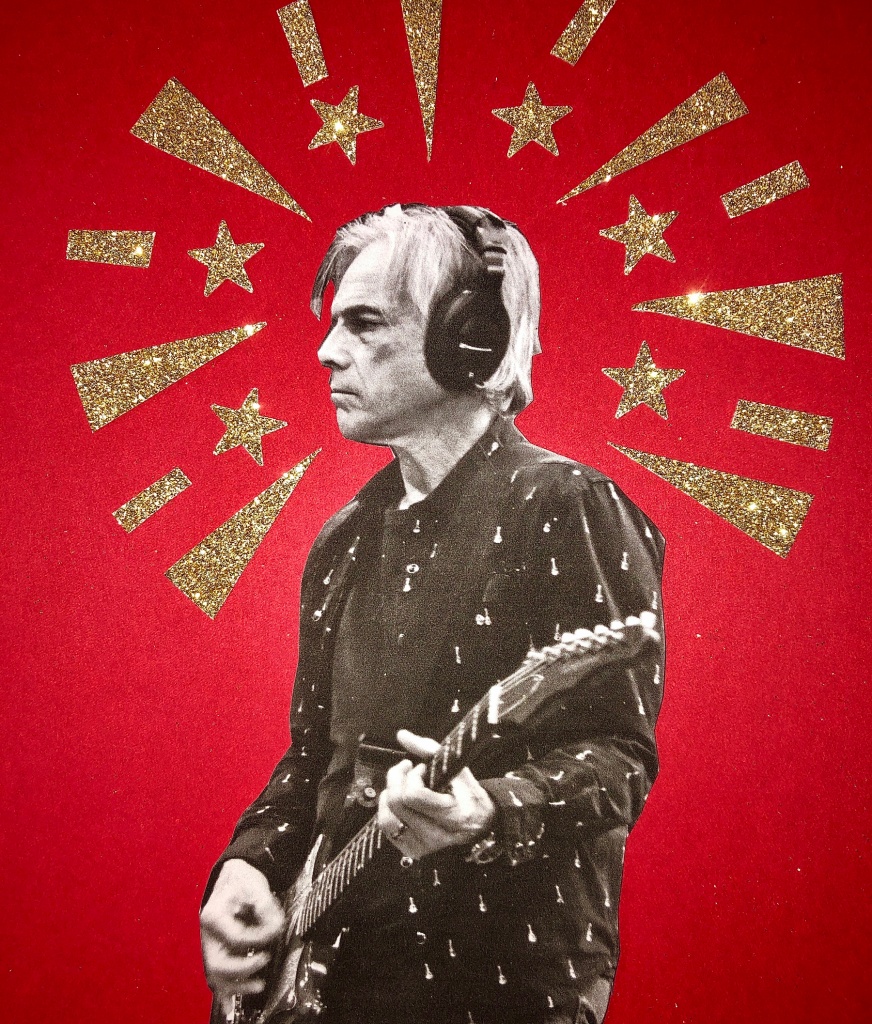
Deniz Tek: “The creative process itself is extremely rewarding, it’s not a financial reward but, it’s more of a spiritual reward”

Original photo: Franklin Avery. Handmade collage by B.

Deniz Tek is best known as the guitarist and primary songwriter from pioneering, influential and rule-breaking Australian rock n roll band Radio Birdman. He’s packed a lot into his life thus far, not only has he lived many musical lives creating in various incarnations – TV Jones, The Visitors, Angie Pepper Band, New Race, Dodge Main, The Glass Insects, The Soul Movers and more – but he’s also saved lives as an ER doctor and ex-navy flight surgeon, and these days he’s also a coffee farmer living in Hawaii with his own blend of Kona coffee, Tekona.

Gimmie caught up with Deniz recently to chat about his latest project, album Two To One, a collaboration with long-time friend and Stooges’ guitarist James Williamson.

How’s your morning been?

DENIZ TEK: Good. Very productive so far, I got a lot of work done this morning. It’s been a good day! How about yourself?

Very good too! I think every day is a good day though, your day is what you make it.

DT: Yeah. At our age every day you wake up should be a good day, time is limited and you have to make the most of every minute you’ve got.

You’re at The Tek Farm in Hawaii at the moment?

DT: Yeah, I am.

Is that a special place for you?

DT: Yeah, my parents started it about forty years ago, when my dad retired from his job at the University of Michigan. They moved out here to Hawaii and started this farm. My wife Ann and I are out here taking care of the place, we took over running the farm. After my dad died my mother needed the help so we moved out here about three and a half or four years ago, we had been living in Australia before that. She’s now gone into a nursing home for about the last year. We’re just going to stay here and take care of the place for the time being.

That’s lovely of you both. Do you enjoy working outside, outdoors in nature?

DT: Oh yeah! Absolutely. I enjoy it so much better than working inside.

What attitude and spirit do you approach playing the guitar in?

DT: It’s just part of my life. I’ve played guitar since I was twelve years old. I’ve been in bands since high school. I approach it as part of daily life. It’s like eating, drinking, breathing. I play most days, occasionally I don’t play but typically, I’ll play every day.

Does it give you a particular kind of feeling?

DT: Yeah, time disappears for one thing, you stop being aware of the passage of time—you’re totally in the process. Time goes by and it’s very involving, it’s something I can really focus on without any effort involved. When my attention is focused on that, I don’t have any outside distractions.

Is it like a meditation for you?

DT: I suppose you could say that. I’ve tried meditating and I’ve never been very good at that because I keep thinking of too many things but, when I play guitar that’s not an issue so, I guess it is my meditation in some ways. I’ve never really thought about it like that but I think you’ve right.

I understand that having commercial success from your music has never really been a big a motivating factor for you; what are the things that motivate you to create?

DT: The creative process itself is extremely rewarding, it’s not a financial reward but, it’s more of a spiritual reward you get from that. Especially if it’s something that you create that other people can relate to or if it resonates with other people and they like it and it makes their life better in anyway or happier, it helps people forget their problems for a short time—what better reward could you ever hope for.

When you’re creating, whether it’s writing a song or painting; where do you find the most magic in the process?

DT: Whenever there is something new happening that’s going really well its magical. That can be just sitting with a guitar at home or in the recording studio or it can be at a concert. When you’re playing live to people that are throwing energy at the stage and we’re recycling that energy and giving it back to people; also doing it between ourselves in the band, band members giving energy back and forth between each other, that’s real magic—that’s transformational. It works with some higher powers that I don’t’ understand. It’s pretty amazing!

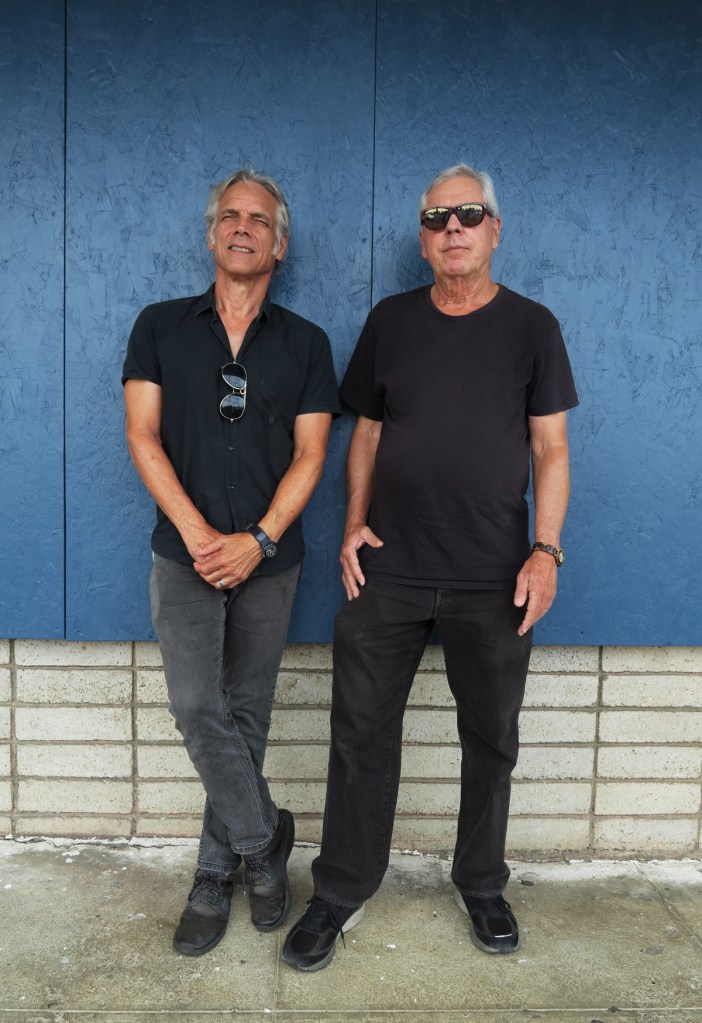
Photo: Anne Tek.

On the new album – Two To One – that you made with James Williamson from The Stooges there’s songs like “Take A Look Around” and “Climate Change” that speak to environmental issues; are these things that are important to you?

DT: Oh yeah! Yeah. These songs are not necessarily meant to be protest songs or political propaganda but they are observational. These songs were holding up a mirror and saying, this is what we’re seeing and this is what you may be seeing as well; maybe to increase awareness in certain ways.

Previously you’ve said that The Stooges album Raw Power helped shape your path as a young guitar player; in what way? What resonated?

DT: That was in 1973 when it came out. I was living in Sydney, I was a student. I was in a band called TV Jones, about a year before [Radio] Birdman started. I already had great inspiration from many other guitar players that were well-known but, I think the guitar playing on Raw Power brought a new element to it. The tone was so brutal and the playing was so aggressive and hard and I hadn’t heard anything quite like it in some time. To me it was wonderful to hear that, it was an affirmation for me that rock n roll music that is very high energy and aggressive was still alive, that The Stooges were able to do that. It was inspirational!

You’re good friends with James now and you’ve worked together before; have you ever had a fan moment with him in any way? Like, this is the guy whose guitar playing resonated with me as a youth!

DT: Yeah, you can’t push that too hard but, I enjoy it when I can get him to tell Stooges stories [laughs]; when he tells me stories that nobody else knows, it’s good to hear that stuff. I love that! That’s being a fan, to want to hear that stuff. Of course I was very curious as to how he got that guitar sound. He’s very happy to tell me about it and show me how he got this or that guitar sound. A Gibson Les Paul through a Vox AC30, cranked up loud with no effects pedals. It’s a balance of being a fan and being a partner in the work we do together AND being a friend. We hang out a fair bit together too, we play tennis and us and our wives go out to dinner together and do things like that.

Nice! Why is writing songs important to you?

DT: I don’t know. I guess it important to me because I feel like I’m contributing something and I have an impulse to create, that satisfies that for me. I have a hope that the songs I write will also benefit others, that people will hear it, like it, dance to it or it will help their day go better. That’s what I hope.

You’ve mentioned before that you’re not quite sure where songs come, that they just arrive, that you have to be tuned into their frequency in a way to find them; is there anything you do to tap into that frequency?

DT: The best thing is to just have a guitar in your hand and be playing, you don’t have to be playing anything specific, you could just be tuning it up, and just have a clear mind, not being distracted. When songs come you grab them out of the air, they come out of you or through you, and then the challenge is to remember it when it happens. You have to try and get it down right away, you write it down or record it. That’s what’s nice about our modern phones, you can record straight away. When these ideas come, if you don’t save them somehow you never remember them the next day. I suppose they float off and someone else gets them [laughs].

Maybe! [Laughter]. I love the storytelling in all of the songs on your new record. One that really stood out to me was “Small Change”.

DT: The thing about “Small Change” was James presented the music for it and a friend of his, Frank Meyers, had written words for it as well. The story for “Small Change” was suggested by Frank’s lyrics but it didn’t quite gel with me, so I took his basic idea and re-wrote it. I turned it more into a story of a woman who decides to become free and leave the small-town single mother existence that she was stuck in, that she’d go off and do something else. The story of how it would take a lot of courage to do that. Sort of like a mini-episode of a movie.

I love the lyric from it: It takes a little bit of change and a great big heart. I think a lot of people can resonate with that. Has there been moments in your life where you’ve done that yourself?

DT: I suppose leaving home when I was sixteen or seventeen years old was sort of like that. Leaving the country at eighteen and just going off overseas with nothing but a backpack and a guitar.

Do you have favourite track on the album?

D: Not really. After it was mixed I didn’t really listen to it. You work so hard on these things and put so many hours into it and you hear it over and over and over again so many times when you’re finishing the production on it that you don’t want to hear it again for a while. I’ve actually put it aside and haven’t listened to it for about a month. When it comes out on vinyl and I have a copy of it I’ll listen to it again. I like all the songs, if I didn’t like them they wouldn’t be on there, I have a different favourite every day.

Why did you decided to call the album, Two To One?

DT: It was a big struggle to find a name for the album until we found one that we could agree on and that hadn’t been used. We’d decide on a name, look it up on allmusic.com and find out there were already thirty albums with that name so, finding something that hadn’t been used before was the challenge. My wife Anne came up with it. It’s an old blues expression and it’s a lyric in a Blind Boy Fuller song from the thirties. Two To One sounds good and it’s two guys doing one thing together.

For both you and James playing guitar is expressing your emotions; is it hard when you have to work with somebody else to get your vision through to fruition?

DT: It can be! It wasn’t in this case. We pretty much agreed on everything. When we first started writing for the album there were come ideas I presented that he didn’t like and likewise, there was a couple he presented that I didn’t like. We didn’t pursue those and we tossed them out early on and focused on the things we both agreed on and both felt were good. Once we had decided on that it was straightforward.

Are you working on new songs now yourself?

DT: Yeah, I am. I’m putting together songs for a new album now. It should have been recorded already but because of the coronavirus we couldn’t travel. Basically, I have another album written and arranged and ready to go. That will be a solo album.

You’ve been working on songs with your wife?

DT: She’ll play guitar on that album as well, when we finally get around to recording it.

Is it nice to have someone so close to you to bounce creative ideas off?

DT: It is! I’ve never had that in that way before. I’ve usually been the only guitar player in the family [laughs].

As well as your music I know you love to do art as well, you paint; is painting for you similar in any way to writing a song?

DT: It’s pretty similar. I’m a much more experienced song writer and guitar player than I am a painter. I’m just getting started with painting and figuring out how to do it. It’s just as much fun. It’s one of those things like I was saying, where time just disappears.

Over the years has there been any advice you’ve gotten I regards to creativity that’s really stuck with you?

DT: Not directly but, I read something that Keith Richards said when he was asked about creativity and he said that the thing he would like to have on his grave would be the words: he passed it on. In other words, you take from your influences in music and then you add something to it of your own and then you pass it on to the next generation. If you can form a link in that chain, that’s the greatest thing that you can do. I always took that it heart. I thought it was a really cool idea and that it was something that I would like to be able to say, I also did that—I formed a link in the chain and passed it on.

I think that you have done that, many times over!

DT: [Laughs] Thanks!

What makes you really, really happy?

DT: Not thinking about happiness but just being, existing in the world and being part of it—that’s what makes me happy. The minute you try to be happy, it just all goes away! [Laughs]. Just being makes me happy!

** Coming soon on Gimmie we also have a chat with The Stooges’ guitarist James Williamson**

Please check out deniztek.com; Deniz on Facebook; Deniz on Instagram; DT & James Williamson on Instagram. Two To One out September 18 on Cleopatra Records. Two To One via bandcamp.

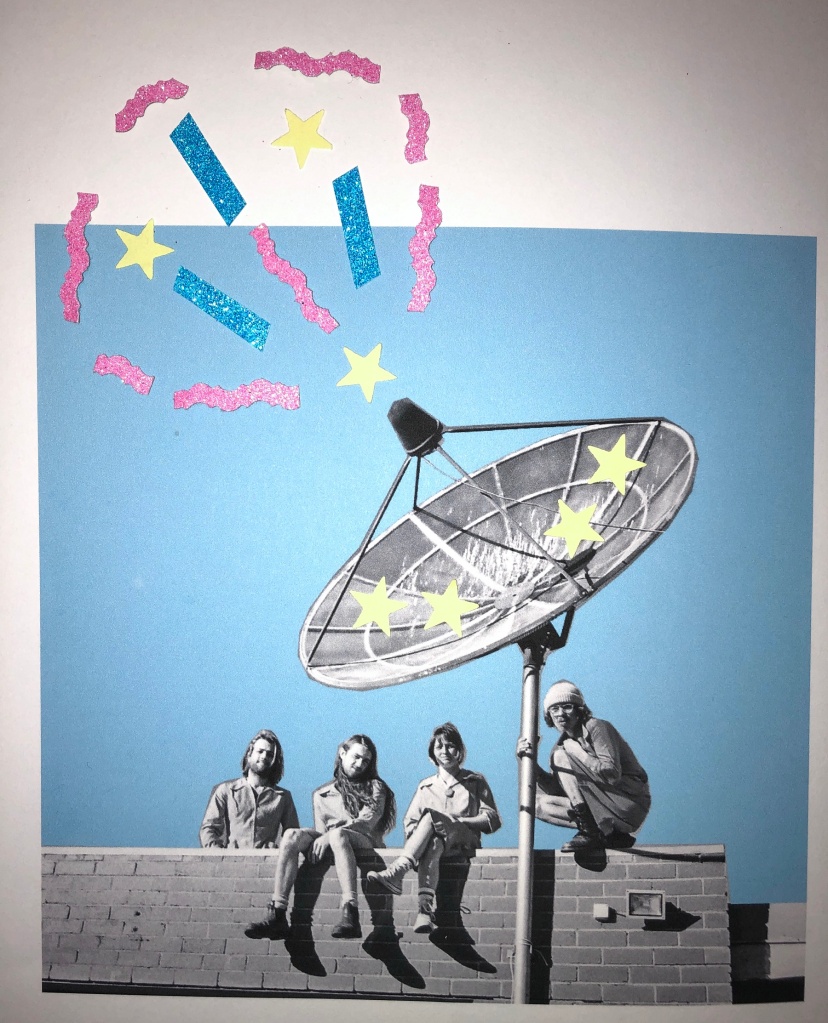
Boston Post-Punk Band Sweeping Promises: “Dreaming of a future where shows and traveling and hugs are a thing again”

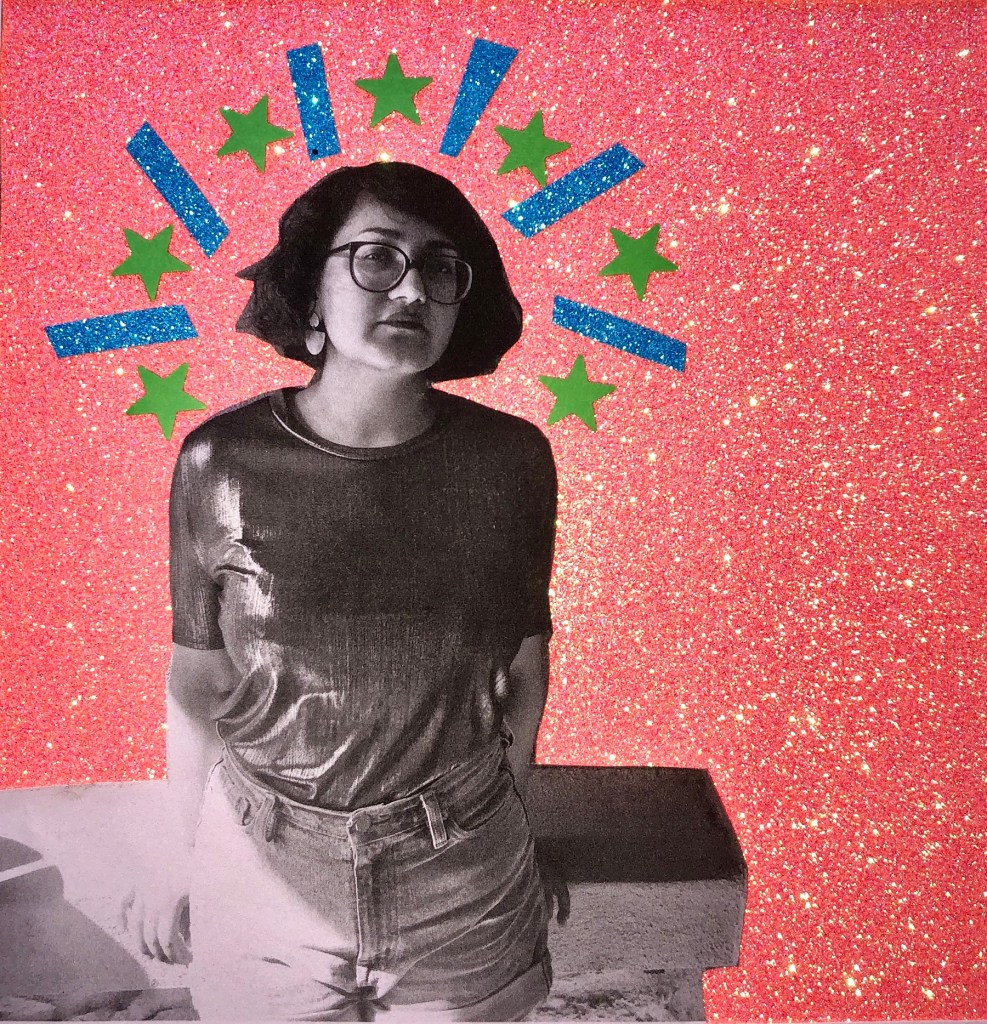
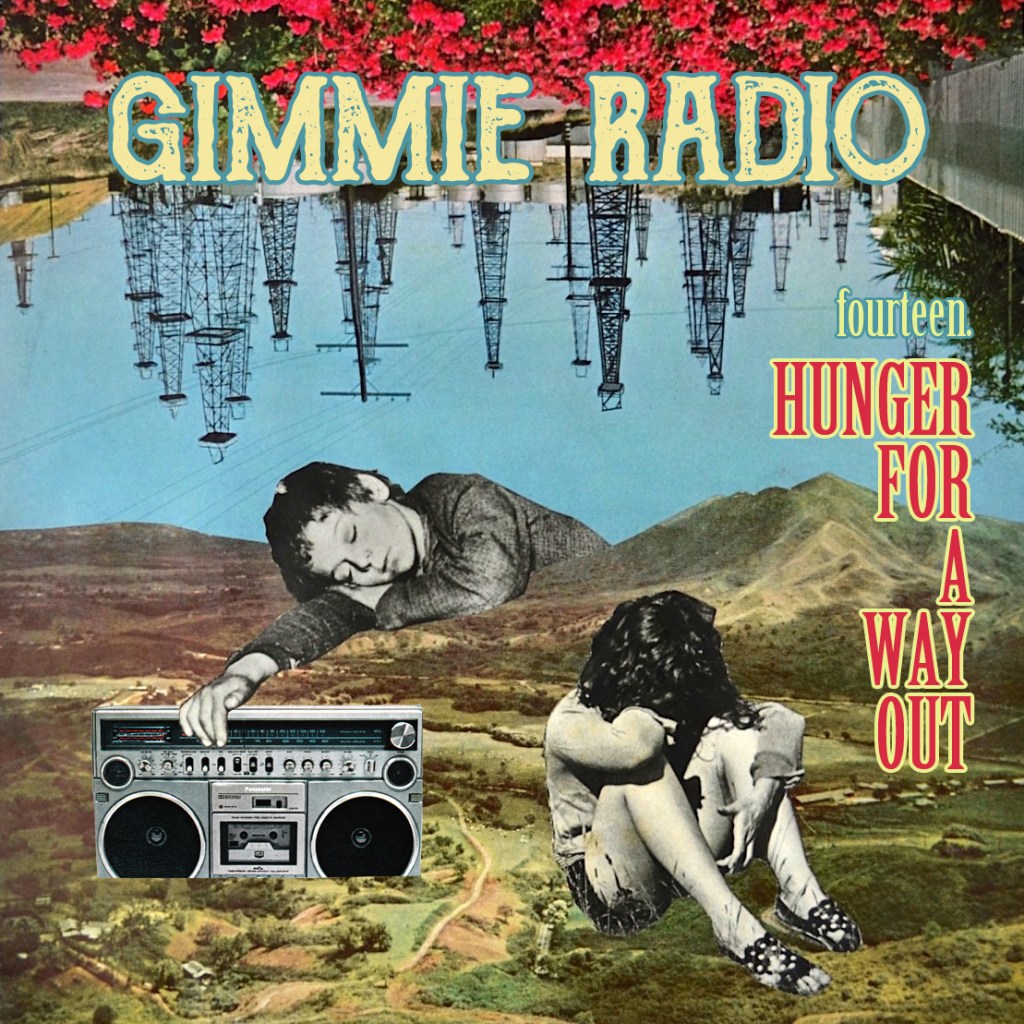
Original Photo: Caufield. Handmade collage by B.

Sweeping Promises may just be the coolest band we’ve found so far all year! If you follow us at @gimmiegimmiegimmiezine you’ll know how much we love their debut album Hunger For A Way Out—we’ve already declared it our favourite release of 2020! Their music is raw, simple, yet spirited and absolutely thrilling. From the bouncy and urgent title track opener with its angular guitars to moody, slower tempo closer “Trust” this record is from go to whoa solid! The vocals alone are so right on that they made our editor cry. Gimmie interviewed Sweeping Promises’ bassist-vocalist Lira Mondal.

How did you and Caufield first meet? Can you tell us about your creative partnership please?

LIRA MONDAL: I met Caufield when we were both undergrads. I was in the basement practice room of the music building playing with some other music majors when I noticed this very tall lanky blond guy peeking in through the tiny window in the door. His first words to me were, “Are you in a band? Can I play in your band?” Soon after that we were writing together exclusively, and have been for over a decade now.

Our creative partnership is rooted in total trust in and respect for one another, something that only comes with having worked together for years. For instance, I used to be very guarded about writing lyrics and would absolutely destroy myself laboring over them for fear that they weren’t good enough to show anyone. But when you’re working with just one other person, there’s no room to be coy or shy. Not if you want to get anything done.

We’ve cobbled together a pretty efficient songwriting method where I’ll play something on bass and he’ll drum along, and then I’ll work out a melody to put on top, and once we’re satisfied, we’ll track it and he’ll put guitar on it while I work on words. We both offer up suggestions to one another – change the riff up here, draw out a vocal part or change some words there. It’s intensely collaborative. Not only is Caufield a hyper-talented multi-instrumentalist, but also a consummate engineer and producer. He’s mixed and mastered everything we’ve worked on, as well as a bunch of other projects. I’m extremely lucky and grateful to have him as a collaborator!

When and how did you first discover music?

LM: It was all around me, constantly. My parents immigrated to the United States from Bangladesh in the late 70s/early 80s, so I heard Lata Mangeshkar mixed in with lots of ABBA and Madonna. I listened to a lot of radio, and as an older Millennial I was one of those kids who would vigilantly post up by my boombox which was always loaded with a blank cassette tape, my finger quivering above the “record” button and ready to strike should the deejay demigods mercifully heed my song requests.

As a solitary kid who was glued to my computer, I spent countless hours trawling through Launch.com, a pre-Pandora/pre-YouTube Internet radio and music video site. Later in high school, I discovered music magazines like Tokion and Under the Radar, which really expanded my horizons. Music magazines were a big source of education and inspiration for me, and I cherished the ones that occasionally came with compilation CDs.

Speaking of compilations, another absolutely vital part of my musical upbringing came in the form of a highly influential mix CD my older brother and sister-in-law made for me when I was 12. It featured a bunch of Mazzy Star and Portishead and Björk, and it changed my life, most notably by curbing my (troubling) Red Hot Chili Peppers habit.

How did Sweeping Promises come into being?

LM: We were jamming one night in this abandoned science lab-turned-art/gallery space that Caufield miraculously had access to through his grad department; it was sometime in late 2019, and we ended up writing “Hunger For a Way Out” in about 20 minutes. It wasn’t like anything we’d written up to that point. Since it didn’t fit into any of our existing projects, we decided on the spot to create a project around that song, because we couldn’t just leave it. The next night we were in the space, we wrote “Blue” and “Out Again”, and then we just kept on writing.

I know that you also have the bands Mini Dresses, Splitting Image and Dee-Parts; what did you want to do differently in Sweeping Promises?

LM: We wanted to capture the exhilaration of writing songs in the moment, of irrepressible energy and things just barely holding together. A lot of our other projects featured very in-depth production efforts; we wanted Sweeping Promises to work fast n’ loose.

The band is from Boston, Massachusetts; what can you tell us about living there?

LM: It’s a compact city, but it’s awfully charming. We miss it already, and the neighboring cities of Somerville and Cambridge where we also lived and worked. I personally happen to love the cold, so the snow and single-digit winters suited me just fine.

As for music, it’s very expensive and increasingly becoming hostile to anyone who isn’t in the tech or finance sectors. That said, there is a passionate population of incredible musicians, artists, organizers and promoters, studio engineers, activists, and scene folks who are trying their best to unify the fractured musical landscape of the city, and we are beyond grateful to call a bunch of those people our friends. There’s formidable talent and creativity in Boston and the surrounding areas, and it’s a shame that no one seems to care or notice beyond the music community itself; with venues shuttering left and right to make way for more and more condos that no one can afford to live in (even pre-COVID), it remains to be seen what the musical landscape’s going to look like there. I have hope, but it’s looking pretty grim now.

Your debut record Hunger For A Way Out was recorded using a “single mic technique”; can you tell us a little about this technique and what made you decide to record this way? You record at home don’t you?

LM: With this project we wanted to capture the action of the space we were in, this cavernous concrete subterranean lab. Because it was so naturally reverberant, we didn’t want to have to sort through the sludgy frequency layering that would’ve occurred if we’d mic’d everything individually. And we were riding high on the spontaneity of the songwriting process and wanted to capture that. So we put our one Shure KSM32 in the middle of the space facing the drums, and then I plugged in my bass amp and had it also facing the mic, and we recorded the basic tracks that way.

There are overdubs, of course! There’s no way we could have done the whole thing live just the two of us. But most of those overdubs are all with that same Shure mic, usually keeping it in the exact same position after tracking the drums and bass. It’s on the guitar amp, it’s on my vocals (with the monitor on, so there’s quite a bit of bleed to make them crunchy and ultra-saturated).

Lyrically what kinds of things were influencing your songwriting for this record? I understand that you usually write from an immediate source of inspiration like books and movies. Was it that way this time? Or did you feel you had something to say yourself?

LM: These songs emerged out of feelings of frustration, dissatisfaction, alienation – an acknowledgment that life in late capitalism is harmful and destructive, and a summoning of strength to be defiant in the face of it. Whereas in earlier projects I would tap into some external source like a book or a film for a perspective to write from, these songs are very much my impressions and feelings at the time of writing. I was pulling from everything: my experience in the restaurant industry, the need to “hustle-ify” your creativity, self-care culture.

What do you personally get outta making songs?

LM: I love performing, which for me is the culmination of making music. Songwriting gets me there. One of the hardest parts about quarantine, which I know so many other musicians can relate to, is not being able to perform live and feel the thrill of getting up on a stage and engaging with other people in that immediate and visceral way.

I also love going back to songs we wrote or projects we did years ago, and hearing how much our sensibilities have changed. It’s like a time capsule: I’m immediately transported back in time, and I remember what the recording session was like, where I was at in my life, the mood I was trying to conjure. I cherish that aspect of songwriting – that diaristic, transportive quality.

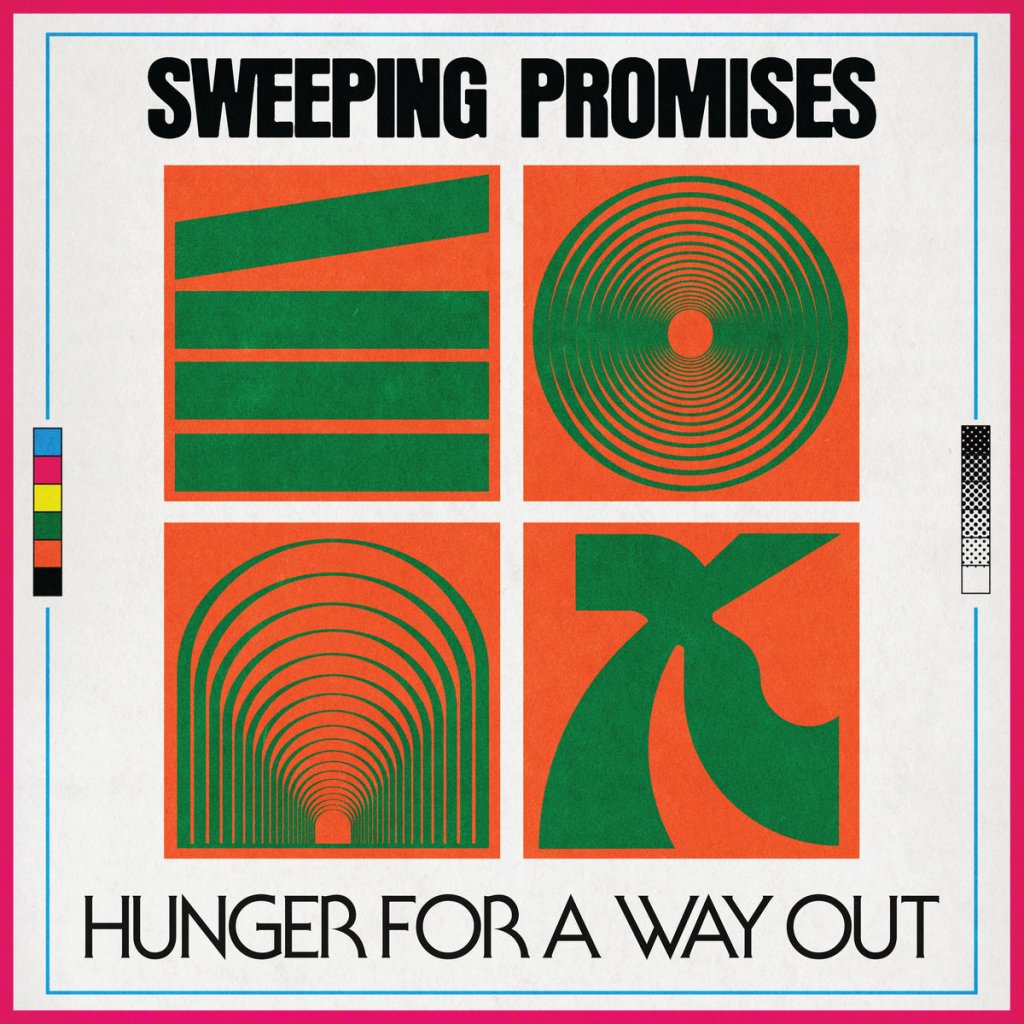
Hunger For A Way Out’s artwork is by D.H. Strother; can you tell us a little about the symbolism?

LM: David was in complete control of the art for the album, actually! We sent him the record and told him he had free reign, and he came up with these utterly dazzling visuals. They remind me of the experimental visual music films of Mary Ellen Bute and John Whitney with their bold colors and hypnotic, kinetic lines.

I know that you’re very inspired by Ari-Up from The Slits; how did you first come to her music? Why is she an inspiration?

LM: I think it was sometime in high school; I heard “Typical Girls” and “Instant Hit” and fell in love with her vocal delivery, dripping with attitude and playfulness and killer wit. I love how free her singing was, like she was making it all up on the spot, but it’s still very focused and rhythmic and sharp. She, along with Poly Styrene, Exene Cervenka, Vanessa Briscoe Hay, and Cindy Wilson, possessed a kind of no-holds-barred expressivity and confidence that really resonated with me, and still does.

When did you first start singing? How did you feel when you first started doing it? How do you feel now?

LM: Honestly, I don’t remember! I’ve been singing pretty much all my life. I started singing in choirs when I was in grade school, and it definitely became a defining part of my nerdy persona. I loved it. I loved being part of a large group of people, weaving our individual voices together to create a rich, dynamic tapestry of harmony and unity. It’s a precious connection.

In college I studied music with a concentration in vocal performance. I remember bristling at the techniques my instructor employed, feeling extremely self-conscious about the goofy warm-ups and physical exercises meant to strengthen my breath control or develop my whistle register. After I graduated, I enthusiastically unlearned everything I was taught in an effort to bring more instinct and intuitiveness into my singing. Now that I’ve been away from classical repertoire for almost a decade, I’ve noticed a growing urge in me to sing that way again. Funny how that works.

What have you been listening to lately?

LM: Caufield showed me the new Kate NV record the other day. She’s amazing! We admire her other project Glintshake. Earlier in quarantine I came across The Techniques and fell head-over-heels for their song “Travelling Man”. I’m also a huge fan of Erika Elizabeth’s show on MRR called Futures and Pasts, which is a veritable treasure trove of obscure and insanely catchy post-punk from all over the world. Highly recommended listening! Her band Collate also rules.

Outside of doing music, I’ve read that you’re a pastry chef! What interested you about pursuing that line of work? What’s one of your favourite things to make?

LM: It began purely as a hobby/distraction from applying to graduate programs in musicology. Once I realized I was more interested in looking at recipe blogs than theories of music and meaning in Romantic art song, I figured I might as well pursue a career in baking and pastry. It’s one of the most fulfilling and pleasurable ways I can think of spending time. Every small act – measuring ingredients, mixing a batter, kneading dough – is a ritual, imbued with the tantalizing possibility that something sweet lies just within your grasp. It’s tactile and meditative, alchemical. I particularly took to chocolate and spent a glorious year as a chocolatier at a small women-owned chocolate and confectionery shop; now that we’ve moved, I’m learning how to make chocolate from bean to bar, with the goal of starting a modest savory chocolate project. Let me just say, the aroma of cocoa beans roasting in the oven is otherworldly.

How has all the uncertainty in the world due to the pandemic been affecting you?

LM: For the most part I’m able to keep my worries and anxieties at bay, but it’s hard. It’s hard to live in a country where there is no leadership, where our “president” wilfully denies the existence and severity of the pandemic and loses no sleep at night as the death toll climbs above 180,000. It’s hard to see our news cycle portray protesters of racial injustice as “violent mobs” when cops get away with shooting Black people in the back and teenagers can buy automatic assault weapons and shoot activists with impunity. It’s hard to live in a world where millions upon millions of people are living in uncertainty because they’ve lost their livelihoods to the pandemic and are desperate to make sense of a senseless situation. Making music and connecting to other people through music…that helps.

What cheers you up when you’re feeling down?

LM: Writing and recording new music with Caufield. Sharing something I cooked or baked with the people I love. An ice-cold seltzer on a hot day. Watching my sourdough starter grow. Dreaming of a future where shows and traveling and hugs are a thing again.

Please check out SWEEPING PROMISES; SP on Instagram. Hunger For A Way Out out now on Feel It Records.

Bad Brains’ HR On His Solo Album ‘Give Thanks’: “We put our heart and souls into it, we put our Mind Powers into it and it came to fruition”

Original photo: Jack Grisham. Handmade collage by B.

These days H.R. – known best as the frontman for Washington D.C. hardcore punk pioneers Bad Brains and the instigator and driving force of their Positive Mental Attitude (P.M.A.) philosophy – is really, really happy, living a life of love, overstanding, compassion and gentleness. His latest roots-reggae-rock album Give Thanks reflects a man very appreciate of life itself and has spent a lot of time “seeking within”. Gimmie caught up with H.R. to get an insight into the record.  

At the end of last year you released an album called Give Thanks; what are the things in your life that you’re thankful for?

HR: I’m thankful to be alive. I’m thankful to be able to have the strength to see the Lord and see the Lord’s work; I’m just so grateful and thankful for what he has done for us. I’ve been working on this new album very hard. I’ve been waiting for it to come together for ten years! I’m so thankful that it finally came out. We put our heart and souls into it, we put our ‘Mind Powers’ into it and it came to fruition.

You can really feel that on the record, as I said it’s very joyous, it’s very beautiful. The second track on the album is called “The Lord’s Prayer” and in the body of the song you actually say The Lord’s Prayer; where did the idea for you to do this come from?

HR: I got it from my mother. She used to sing it in church. She said, “One day when I pass away you can sing it to the world.” Last year she went to her transition and I just wanted something that would be in memory of her, and something that the whole world could grasp at the same time. I said, I’m going to do our Lord’s Prayer, I’m going to do it to some rock n roll music! [laughs]. That’s how it came to be.

Thank you for sharing that with me, hearing that made me teary. We spoke in 2008 when you released your album Hey Wella and you told me that when you first started singing you started singing in the church as a child; what feeling did it give you to praise the Lord through music?

HR: It gave me the fulfillment of what God is all about, what His works is all about and what we should do in His works; what destiny He has for each one of us in our own special way.

When you write songs and create things; how do they start for you?

HR: I would like to say that God’s love, Jah love, and happiness and the joy that it brings us, is the ability to put it down with pencil and paper. Sometimes it comes to you in the night, in a vision, sometimes it comes to you in a daze, or something that you’re trying to interpret that’s close to you. It’s all through God’s love, through Rastafari’s love!

Do you find sometimes when you write songs that you learn about yourself?

HR: Oh yes! Most definitely. Yeah Mon. [Sings] You love, you know you learn, about how you live. You learn about what you want to achieve in life. You learn about the love God has for you and other people, and how you can set an example for them to learn from.

Love is a big theme that comes through in your music; having your love, your wife Lori in your life must have helped you a lot?

HR: Yes, she’s been good to me. She’s been supportive. She’s a very big and special Queen. Without her I would feel separation and a big hole in my life. I wouldn’t be able to get what I want to get. She helps me to understand and to be able to have that heartfelt thoughtfulness—I need that so much in my life. It would be such a drag to know that she didn’t exist. Through God’s love and through God’s fulfillment of what He wants us to have, she is able to be able to interpret that.

At the start of your song “Steady Is Compassion” you repeat that line: steady is compassion; what does that mean to you?

HR: It means that we should have more compassion in our lives and be warm, and able to exist in a compassionate way to people, and be steady about that. We need to maintain the preparations for it and also a strong desire to hold on, we need to be steady in compassion, before hatred and violence. You have to hold on to what you’re trying to achieve and discuss the matter faithfully and rise above what it is we want to do. Hold on and give faith a chance and give yourself a chance to manifest compassion—to have compassion for your brethren and your sistren.

Another track off Give Thanks I really love is “Seeking From Within”, there’s a lyric that goes: seek from within, knowing from without; could you tell me about that?

HR: Yes, it’s about going inside your inner being and not letting things outside yourself bother you. To be able to know, what it is you want to do from within and look in your heart and let your heart guide you. To know that things outside of your heart don’t really matter so much. It’s what you do, and what you’re trying to do within that matters.

Please check out therealofficialhr.com + HR on Facebook; HR on Instagram. HR’s children’s book: I’ve Got the PMA. Give Thanks available via Hardline.

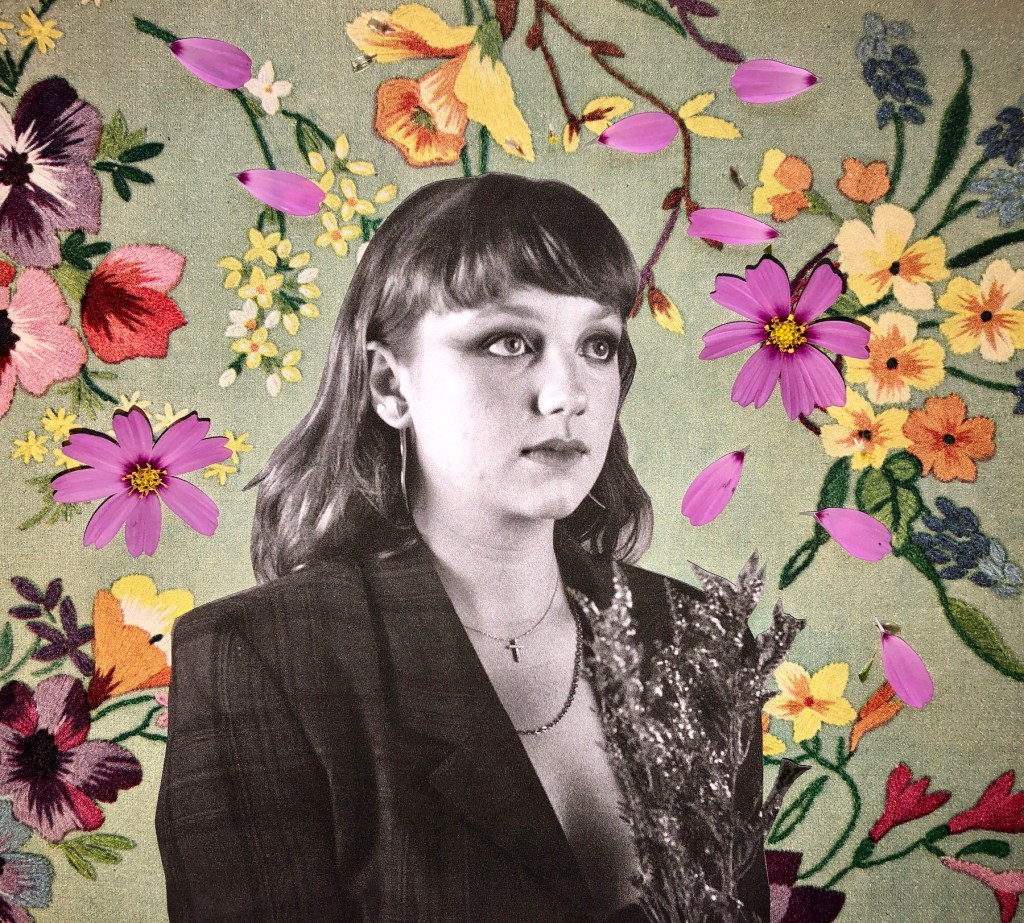
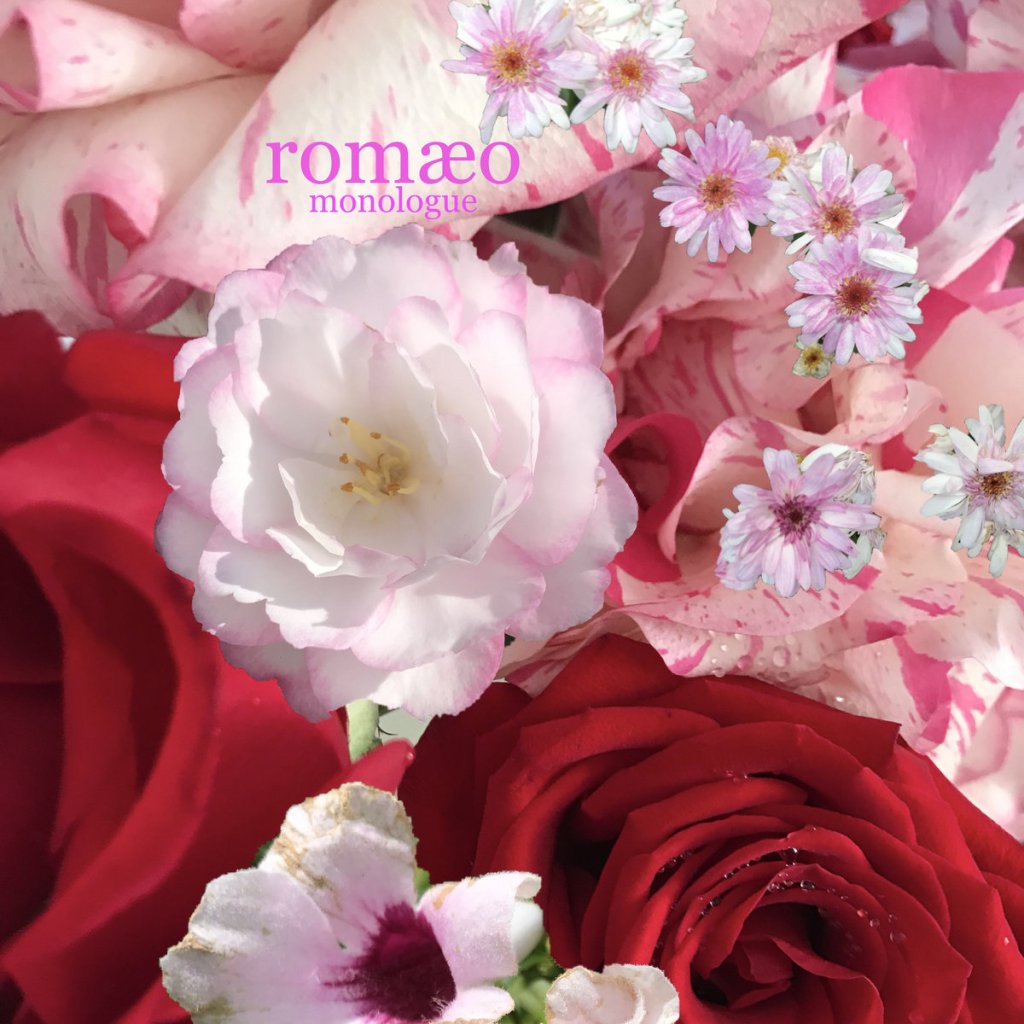
Sydney Ethereal Experimental Bedroom Art-Pop romæo: “My music is exciting, its unexpected, its weird”

Original photo: Matt Sitas. Handmade collage by B.

We’ve fallen in love with romæo’s music—gorgeous shimmering electronics, lush sounds, dreamy melodies, hypnotic vocals and radio-ready hooks. Gimmie interviewed romæo to explore her world.

How did you first discover music?

ROMÆO: My parents are big music fans and always had the speakers blaring as I was growing up, so I was always singing along to a variety of artists. But the record that really made me want to be a musician was Missy Higgins’ The Sound of White. It came out when I was five and I was immediately sold – I started taking piano lessons and joined a choir.

When did you first start singing? We really love the harmonies and spoken word parts. Do you have any vocal inspirations?

R: Like I said, I was always singing along to the household high-rotation records. I still remember Sharon Jones’ Naturally and Nick Cave’s The Boatman’s Call back to front. I’ve struggled a lot with where I think my vocals sit and where I used to want them to be. I used to wish my voice was more powerful and mature, but as I’ve developed more confidence in my music, I’ve realised that I can do a lot with what I’ve got. My current vocal inspirations are Kacy Hill, Cecile Believe and Okay Kaya. They all deliver really vulnerable performances and aren’t trying to be anything they aren’t, and in that there is a lot of power. Their vocal melodies are also unusual and unexpected; I love when a melodic line continues further than you expect.

Your music is experimental bedroom art-pop; how did you first start making your own music?

R: I’ve been writing songs for a long time now, albeit most of them were iffy at best and a lot of them where much more indie singer-songwriter vibes. I started playing around with more electronic sounds over the last four years. I’ve always really loved pop but only really came across experimental pop in the last few years, so it’s been quite a recent thing in the grand scheme of things.

What’s your favourite instrument/piece of equipment to use right now when making your music?

R: I bought my first synth earlier this year – the Korg Minilogue XD (in white) so this has been a lot of fun, although every time I think I understand it something weird happens and I’m reminded I don’t.

So far you’ve put out a couple of releases and demos – monologue, revealed & iso demos; could you tell us a little about the progression of your work so far?

R: monologue details the period of time where I fell in love with ‘experimental pop’ and discovered my production potential. I’d always been afraid of trying to be a producer, and to be honest I still shy away from the term, but as I was working on those tracks I built up a lot of confidence. I guess I felt like I finally proved myself to myself. iso demos was thrown together in about a week right at the start of COVID-19. I’ve reconnected with the guitar after disowning it for a few years, so it was fun to combine that with my electronic production. Weirdly, I actually made revealed before any of the other stuff. I was really proud of this track and knew right away I wanted to ‘officially’ release it, so I’ve just been quietly sitting on it for about a year now.

I noticed on your bandcamp you’ve written “written/produced/mixed/mastered (lol)”; why the LOL? It sounds pretty fucking awesome to us!

R: Aaaaa you’re making be blush!!! I guess I’m just giving myself an out in case people think it doesn’t sound too good LOL. Confidence is a slow burn, but we’re getting there.

In November last year you were talking about the first EP you released and mentioned “I’m excited to finally have some faith in myself and my music, albeit unsteady and unreliable”; what changed for you to finally have faith in yourself and what you’re doing?

R: Hmm… I think what I finally realised is that what I’m making is solely my own. I think my music is exciting, its unexpected, its weird – it doesn’t sound quite like anything else. And that is what I look for when discovering new artists. So I kind of shifted my priorities and expectations. My music doesn’t have to be perfect or pristine, it just has to excite me. I still have to remind myself of that constantly though.

When you wrote song “don’t be so hard on yourself” was that a kind of note to self?

R: Oh gosh yes. That song is quite funny, because I listen to it and go ‘yikes that doesn’t sound too good’ but that is the whole point right!! I also laugh at myself for saying “don’t be so hard on yourself/be so hard on yourself”. I know I need to ease off on myself, but personal criticism is such a hard habit to break and can sometimes be valuable. This song was basically my Self pleading to my ego; pleading to be freed in a sense… for these two opposing forces I hear within me to make peace.

Your lyrics are very thoughtful and really honest; are you ever afraid to put yourself out there via your lyrics?

R: Definitely. I do have some unheard songs where I’m like ‘this could be a bit brutal’ for people who actually know me to hear lol. In terms of releasing stuff, I guess I’m conscious of coming off a bit ‘sad girl-y’ and being almost absurdly direct in my lyrics, but I don’t really know any other way. I can be very upfront in person so it is pretty natural for me. I also laugh at my own melodrama and don’t expect it to all be taken too seriously.

Has there been a song that’s been hard for you to write? Why?

R: revealed was actually really challenging to write. I wrote and recorded the first verse and then had no idea how to develop the idea / where to take it or what I even wanted from the song. I basically sat on it for a couple of months and hated everything I tried. Then finally one session, the chorus and bridge just flew out and came together almost insanely quickly. I think the best songs are the ones you can’t even remember writing; they just happen.

Musicians Paul Mac and Rainbow Chan have given you a little guidance with what you’re doing; what’s something you learnt from both of them?

R: Paul and Rainbow are so inspiring for soooo many reasons. What I admire about both of them is their versatility as both musicians and creative, artistic people. They each apply their skills to a variety of different artistic endeavours and kill it every time. Paul helped me learn how to make cool/wacky beats that are both disorienting but also keep the listener engaged. Rainbow has helped me realise how much you can do without overloading a song with different tracks and sounds. As in, we always want to over complicate and add different elements and ‘sparkles’ to a song, but you can also manipulate the same sound in so many different and weirdly wonderful ways. Sometimes less is more.

You use flowers in your artwork; what’s the idea behind that? What do they symbolise to you?

R: Flowers are the ultimate symbol of traditional femininity. Delicate and beautiful, they also allude to female genitalia. Flowers come in all different varietals, all of which are precious. I really struggle with how women in the media must brand themselves. We have to be bold and fierce, or soft and gentle. We are either sexually liberated or innocent and pacificist. But we are all these things, and none of them.

Have you been reading anything interesting, enthralling or great lately?

R: I was enthralled by Murakami’s Colourless Tsukuru Tazaki and His Years of Pilgrimage the other week. His writing is of course stunning – it is as simple or philosophical as you wish, and he hits you with the occasional deep cut. When discussing the unity of heart in relationships, Murakami notes “they are.. linked deeply through their wounds. Pain linked to pain, fragility to fragility”. That hurt.

I’ve also just started my honours thesis on music philosophy, so I’ve been reading a lot about music’s relationship to consciousness and time. Interesting, enthralling and great, it also is an absolute killer.

What’s a song that never ceases to make you happy/cheer you up when you hear it?

R: “Young Hearts Run Free” [by Candi Staton].

What are you working on next?

R: I’m gearing up to release my second ‘official’ single soon which is super exciting. I’m sitting on a number of tracks that I might throw together in a mixtape soon-ish. I’m a master procrastinator and perfectionist, but I think it will be sort of liberating to get these songs out there. It is really hard to stay creative and inspired right now, so I’ve really just been enjoying listening to music and playing around with little ideas. Who knows what’s next!

Please check out romæo; romæo on Facebook; romæo on Instagram.

Naarm/Melbourne musician Nicole Thibault: “It’s good to feel real moments of sadness so you can appreciate the good things that happen”

Original photo: Jamie Wdziekonski. Handmade collage by B.

Thibault is a new indie-pop outfit from Naarm/Melbourne created by Nicole Thibault featuring contributions from Zak Olsen (ORB, Traffik Island), Rebecca Liston (Parsnip), Lachlan Denton (The Ocean Party) as well as Julian Patterson (from Nicole’s previous band, Minimum Chips). They’re getting set to release their debut album Or Not Thibault, a collection of songs straight from the heart, that are as beautiful, mysterious and eerie as the surroundings in which they recorded, near Hanging Rock; a spot made famous by the 1967 historic mystery novel by Joan Lindsay, Picnic at Hanging Rock. Gimmie caught up with Nicole last week to explore the writing and recording of the album.

The black and white cover image on your record Or No Thibault is really beautiful; what inspired it?

NICOLE THIBAULT: It’s Hanging Rock! You can look at it from where we recorded the album up at Mount Macedon in Victoria. James Cecil recorded it in an old school. It’s a beautiful, spooky part of the world, it’s covered in clouds half the time. I think there’s one part of the mountain that doesn’t see the sun. We had this idea, it was a group effort, of cutting out letters hiding behind rocks, just the letters poking up. We climbed up to the top and hand a play around. Jamie Wdziekonski took the photos, he came out for the day, it was a really good vibe. He did some studio photos and we all went up to Hanging Rock, none of us disappeared! [laughs]. It’s a very eerie place.

Cover: Jamie Wdziekonski.

Did the environment inspire the sound of the record?

NT: Yeah. The actual studio is an 1800-1900’s school, that’s spooky enough in itself. There’s photos of all of the little children, which was eerie, but also quite beautiful. It’s surrounded by tall trees. Being away from the city is really, really nice. James has made it his own, he’s leasing it through the Council but he’s made it really homely. I stayed there at night a few times. It’s really just a nice place to be, that definitely had an influence. Time stands still somewhat, it’s a really dreamy kind of place.

You didn’t encounter any ghosts while there?

NT: I was ready for it! [laughs]. I stayed over night on my own twice, one time in a bell tent, and it was very Blair Witch! Not that I’ve seen the movie but, I’ve seen the trailers and was too scared to watch it. I was like, this is how I’m going to go, this is how I’m going to die! [laughs]. It was really fun.

James used to live in France for a little bit so he’d make us crepes and we were very, very spoiled. He makes really good coffee. It was five-star treatment for sure! It was really, really fun! It took about a year to make. I’d go out once every few weeks and James would fit me in between his other, more professional customers [laughs].

That sounds amazing! You’ve made music since the ‘90s and I know you took time off to raise a family; how did it feel coming back to music?

NT: It felt really good! I think I can’t not make music. I think I really committed myself to raise a couple of children and I was like; this is it now, this is what I do, I’m not Kim Gordon and I don’t have a team of people to look after my child while I stay up and party on to 4am. I have to become an adult and snap out of it. I separated from the father of my children and that was the best thing that ever happened to me [laughs]. Can I say that?

You sure can!

NT: I didn’t really have any family support, like grandparents or anything, so it was just 24/7 child looking after… which I’m not complaining about, but it’s good now because I have a little bit of time to myself ‘cause there’s shared parenting duties. I wish I had done it sooner!

Why did you feel it was time to create this new musical project, Thibault?

NT: I got encouragement from a friend of mine. I started playing solo, I had some songs that I had been twiddling around with. I hadn’t played live for a while but I always had fiddled around with some songs. I did a few solo shows but they weren’t great, let’s just be honest, they weren’t great. A friend of mine was like “let’s start a band; do you want some people to play with?” It went from there. I got people offering to play with me, I’m so lucky that they did!

Did you have a vision for how you wanted this project to sound?

NT: No. Am I meant to? It just kind of happened. I listen to music all day every day and I listen to the radio… it just goes in and it’s got to come out somewhere sounding like something. It sounds like what was inside me.

How did you first discover music?

NT: I was actually born in Tamworth and my mum had a piano, my sister was getting music lessons and I wasn’t really interested in it, but one day I walked up to the piano and could play the Mickey Mouse March by ear! I thought, this is fun! I started playing the trombone in high school because it was the only instrument left that no one wanted to play, it was that or nothing, so I played it. I wasn’t amazing at it but I went to university for a couple of years and studied it. I wasn’t really good at university either. I made some friends and I joined the band Clag. I met Julian Patterson at uni, he was studying architecture and then we started Minimum Chips. We all had a bit of a classical music background but we were more into My Bloody Valentine and The Cure [laughs]. I remember having a cassette of The Cure and being like, oh my god, this is amazing! We thought we were underground [laughs].

You mentioned that you went out to recorded bits and pieces of the record when you could; what about the writing for the album? Did it take a while to get this collection of songs?

NT: I think so. I didn’t sit down and go studiously, I’m going to write a song now! It was little ideas and then we were playing them live for a little bit. They had the structure, the melodies, all the parts and then taking them to James’ studio is where the magic happened; he had this array of old synthesizers and organs, a beautiful piano. We let the songs be free. We added layers upon layers. They evolved that way. I write very melodic songs, on their own they might not sound so great but when everyone came in, Zak came in with his guitar and he played a ‘60s twelve string; everyone was such great musicians. Julian Patterson played bass on the album and came up with all the melodies. Lachlan Denton played all the drums, he made all of the songs a hundred times better. It was a lot of experimenting—we thought we were The Beach Boys [laughs]. It was very free-form.

Photo: Jamie Wdziekonski.

A while back there was a post on your social media and you commented: we wanted to reassure you that we recorded a fair bit of tambourine on the record.

NT: Yeah! [laughs]. Tambourine is something that you either love it or hate it. It’s always too loud but sometimes it can be amazing. It’s such a contentious instrument [laughs].I just didn’t want to be too serious. It’s hard to play, it’s so hard to make it sound in time.

One of my favourite songs on the album is “Continuer” it’s very cinematic.

NT: Yes! I’ll let you in on a little secret, it used to be called “Morricone” as in Ennio Morricone [the Italian composer known for his movie scores]. He recently passed away. I’ve always been a fan, as is probably everyone on the planet. I came up with melody and we just went to town and went hard, and didn’t want to pretend we weren’t ripping of Morricone. It’s definitely meant to be cinematic and atmospheric and inspired by one of my heroes. I’m glad you like that one. It’s hard to play live. It’s such a slow song. The recording really captured a slow and moody piece of music. It’s hard to play it in front of people, I think fast songs are easier to play. You kind of need the Philharmonic Orchestra behind you to play it [laughs]. We ended up going, nah, we’re not playing that live anymore. I’m glad it’s on the album. I got everyone to sing on it.

Is there a song on the album that was hard for you to write?

NT: Yeah, all of them! [laughs]. Sometimes I‘d be having a pretty bad day and stupid stuff would happen and I’d be like, ahhh geez! I have to drive up to Mount Macedon. I’d be trying to keep it together. I’d be singing these lyrics, which are very personal and I’d written about something specific, I’d have to go on walks and gather myself. Some of them were hard to sing and play. Because James is a friend, we’re even better friends now, he’d just be like, “Go for a walk and then come back and do it.” It’s so good that you can actually walk through a forest, it was a nice place to have lots of meltdowns! [laughs].

Awww.

NT: In a good way though! I feel things and we didn’t shy away from it, let’s just put it that way. It’s all good. It’s really good to get over those… some were hard but it’s good to get over it and have done it!

Yeah. Kind of like that saying: sometimes you have to breakdown to breakthrough.

NT: Definitely! To not be afraid of mistakes too and to learn from them.

One of my favourite things about the album is your vocals, it’s really emotional; what did you do to tap into that?

NT: [Laughs] You don’t want to know! Being alive on this planet! Stuff happens to you. A person got me to sing some harmonies on their album and I couldn’t hit the high notes anymore… I think my voice has just lived. Your voice has to go through everything you do, and you can just hear it. We didn’t want to make it perfect and polished. We wanted to leave the emotion in it, I wanted it to just be from the heart.

When I first heard it, I was like, I just want to give this person a hug!

NT: A lot of my friends told me they cried when listening to it; why do you write such sad songs? I’m like, sorry! [laughs]. It’s good to cry. It’s good to have a time out, the world is not always a happy place… sometimes it is though! It’s good to feel real moments of sadness so you can appreciate the good things that happen.

Do you have a favourite piece of equipment you used for the recording?

NT: I reckon the Hammond organ, it had all these beautiful shimmery sounds. There was an old Yamaha organ and the piano James had was really beautiful. He had a few synths but I didn’t know how to play them so he played them. There was a little percussion instrument too that went “dooooiiiiig”.

The album is called Or Not Thibault; is that a play on words from Shakespeare?

NT: Yes, it is! I think Julian Patterson thought of it, it was a kind of tongue-in-cheek joke. I don’t want to take myself too seriously.

How is making music now fun and exciting for you compared to how you used to do things?

NT: I’ve just gotten over myself. I’ve run out of fucks to give. I don’t care what people think of me anymore. I believe in myself a little bit more. I’m around really supportive, positive people… I don’t think I’ve ever really experienced that [laughs]. This is nice. It’s really fun, so fun! I’m so lucky to have really beautiful, talented people playing music with me who aren’t just megalomaniacs from hell. It’s a good vibe now.

It sounds like you’re starting a whole new chapter!

NT: It is. It’s really nice to have this going on. I’m so glad we did it last year because I’m just sitting starring at walls now. I’m just like, oh my god, I’m so happy I achieved this album because I’m not very good in this pandemic, I haven’t been very inspired or productive. Some people are able to do things but I’m not one of those people…

And that’s totally OK.

NT: Yeah, you’re right. You just have to try and get through. It’s pretty bad down here. I haven’t seen anyone for so long, we can’t leave our houses. It’s pretty grim. Hopefully at the end of it everyone will appreciate everything so much more. I spend a lot of time by myself, I don’t have housemates or anything. I am getting myself some gear and teaching myself to record at home, that’s good and positive! I just have to do it.

Please check out THIBAULT. Thibault on Instagram. Or Not Thibault out September 4 on CHAPTER MUSIC.

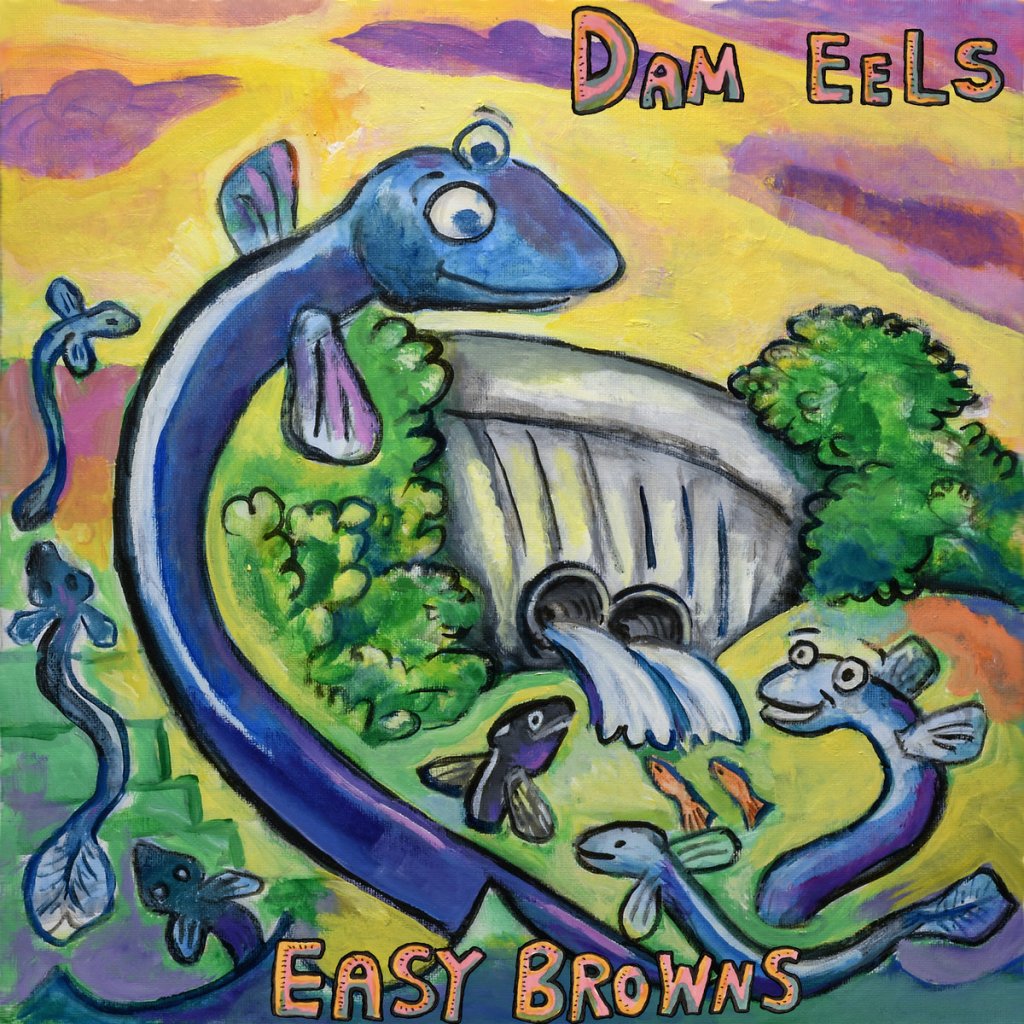
Garage Psych from Naarm/Melbourne Easy Browns’ Zak Brown: “I feel remorse for injustices against the animal kingdom… We should be living in harmony with creatures not abusing them”

Handmade collage by B.

Naarm garage-psych rockers Easy Browns are about to release a new record – Down On The Farm – that features ten clever animal-themed songs. We interviewed Easy Browns’ Zak Brown and Shelby Wilton to find out more about the release.

We’ve heard that you grew up in regional Victoria; how did you find music?

ZAK BROWN: Early days were spent digging through my parents CD collection, it was mostly Australian rock like Hoodoo Gurus, Cold Chisel, ACDC with some ABBA and Shania Twain thrown in there, but the folks were always buying new CD’s. In Grade 6 a friend showed me Gorillaz Demon Days album which changed me, I couldn’t stop listening to it, the sounds on that record are so unique.

I remember when my Dad started listening to Triple J mid-2000’s because “Delta Goodrem got cancer” and they were playing a lot of sad Delta G on pop radio, he started buying the Hottest 100 compilations and I loved the wacky mix they had on there, that introduced me to some contemporary alternative tunes.

I just pilfered through whatever I could get my hands on really, which was still quite limited, we didn’t really have computer access for a lot of years because my siblings and I destroyed our first computer with virus’ from downloading shit so that put my parents off getting another one for quite a while and took us back to the stone age in terms of music discovery.

How did you start making music?

ZB: My friends and I played guitar hero together every day after school together and with basic music knowledge started jamming Metallica’s “For Whom The Bell Tolls” every day in the music room at school, much to the annoyance of our music teacher (he still let us come in every day and jam). It soon transformed to playing every day after school when one of us got a drum kit and boom! Music.

Tell us a bit about yourself and how Easy Browns came to be?

ZB: I moved to Melbourne to study sound engineering and missed playing live, my late teens were spent playing in local bands, skating and subversive missions throwing rocks at KFC and I wanted to re-live the glory so I started Easy Browns Truckstop Chicken Jam Band with my housemates at the time.

I know Easy Browns are influenced by artists like Frank Zappa, Dead Kennedys and CAN; what do you appreciate about them?

ZB: I love how sardonic Frank Zappa is, and the music is so manic and silly. Dead Kennedys are so potently political and the music is quick and catchy, makes you want to throw yourself violently around in a sweaty mass. CAN takes the cake for interesting repetitive grooves, Jacky Liezbeit is my favourite drummer but all the members have a lot to offer, Holger Czukay was one of the first people to start sampling (by laboriously cutting and gluing magnetic tape) and when Damo Suzuki was in the band he bought such an interesting personality and unparalleled moodiness.

There’s often themes of environmental issues in your songs; what’s something happening in the world that more people should give a shit about?

ZB: I grew up in Morwell, a town surrounded by coal mines and lived through the Hazelwood Mine fire in 2013 which was quite an eye opener. Expansion of the fossil fuel industry is a huge issue, one example of MANY is the Adani coal mine at Abbott Point, one of the biggest coal projects in history; undertaken at such a time as this? Not only does it disrespect the land ownership of the Juru people, but carves a hole straight through the Great Barrier Reef (which is already being adversely affected by coral bleaching from rising ocean temperatures) and destroys local wetlands and habitats.

Easy Browns’ new record Down On the Farm comes out in September and features ten animal-themed songs; what inspired you to write songs about animals?

ZB: I feel remorse for injustices against the animal kingdom. Exposure to wild and agricultural creatures was frequent in my upbringing and I love the base nature of beasts, that being said humans can be base and beastly too, rational thought has not completely separated us. We should be living in harmony with creatures not abusing them.

We had also spent time on our friend Dougal’s (from The Sunken Sea) parents’ farm while touring in Lutruwita/Tasmania, and it seemed a funny idea to do a themed album. Animals are great for use in analogies, I think that’s one of the things that made the titles fun to come up with.

Were any of them particularly fun to write?

ZB: I think “Hog Wild” triumphs for me; there are so many fun parts to it. It’s meant to feel like a motorbike roaring down the highway, plus I get to scream like a demon and flute-to-boot. I always sing to myself on the motorbike because it’s one of the only times I feel like no one can hear me being silly.

Videography and editing by Michael Ridley. Animation by Shelby Wilton.

How do you stay motivated and interested when making songs?

ZB: I enjoy writing songs at my own pace, I don’t see the point in trying to push shit uphill so I do it when inspiration strikes. Being able to make the gang (the rest of Easy Browns) giggle is a bit driver for me too, if I can make them laugh that’s when you know it’s a winner.

Can you share with us some of your all-time favourite lyrics?

ZB: Here’s a few tracks:

“Maggie” – Alien Nosejob: Complain about the front bar, complain about the main-stage / Complain about the people, complain about the line-up. And ends with a huge: And get an Uber hooooooooommmmeeeeeee. Utterly delightful, Shelby and I always sing it to each other and makes us miss The Tote.

“The O-Men” – Butthole Surfers: (go listen!)

“Pay No Mind” – Beck: Give the finger to the rock ‘n’ roll singer /As he’s dancing upon your pay check / The sales climb high through the garbage-pail sky / Like a giant dildo crushing the sun.

“Electricity” Captain Beefheart: High voltage man kisses night to bring the light to those who need to hide their shadow deed / Go into bright find the light and know that friends don’t mind just how you grow.

 This is your third LP; what would we be surprised to know about your recording process?

ZB: We always track live as a band, I think that’s the best way to convey the energy we create as a team, but there’s always a lot of overdubbing outside of that.

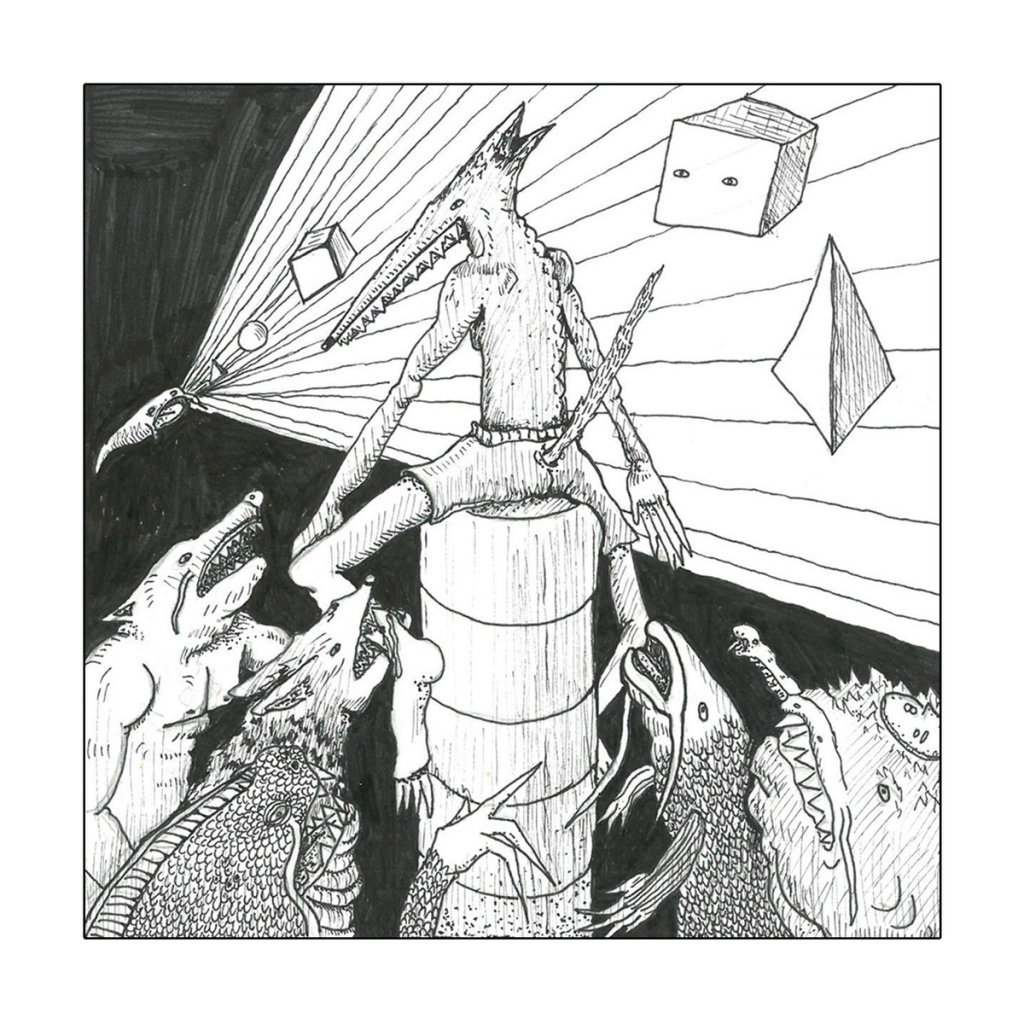
The artwork Shelby did for your record is really cool, there’s a lot going on, there’s a little more than meets the eye; what can you tell us about it?

ZB: I’ll let Shelby take the reins on this one.

SHELBY WILTON: Hahaha yeah there is a lot happening. All of the nine animals mentioned in the album are around the edges in the comic strip, with the classic “down on the farm” illustration in the middle. It’s my own interpretation of Zak’s lyrics and ideas, which are already quite hefty in themselves. The concepts I come up with surrounding them become abstracted and made sense in my own sort of way and bam it’s a recipe for a lot of fucked stuff. I put a bunch of little stories, characters, and concepts hidden in there as well, they have their own narrative in my own brain but I feel part of the fun looking at it is coming up with your own ideas, though it’s all definitely thought out in a way where everything is connected.

What are you doing when not doing band-related stuff?

ZB: I like to garden and learn about plants, read novels, cook for the house family (which includes Brodie and Shelby) and ride my bicycle.

What helps you feel better when the world gets you down?

ZB: Hanging out with Shelby, listening to The Kinks, sitting in the sun, watering plants and watching The Simpsons.

Recorded by Stive Collins. Mixed by Brodie Casey. Mastered by Mikey Young.

Please check out EASY BROWNS; EB on Facebook; EB on Instagram. Down On The Farm out September 4.

Melbourne Disco-Punk Band Use No Hooks’ Mick Earls: “I was exploring anything that was outside the cultural mainstream…”

Handmade collage by B.

This year Chapter Music released The Job which is a collection of lost recordings from between 1979-83 of Melbourne post-punk-disco-funk band, Use No Hooks. We spoke to UNH bandleader Mick Earls to get an insight into the band and that era of the Melbourne music scene. They were part of the experimental Little Band Scene. UNH were pioneers and rule breakers, it’s no surprise their music has stood the test of time to finally become revered today.

We’re really big fans of your band Use No Hooks! The album – The Job – of previously unreleased recordings that Chapter Music released this year is really ace!

MICK EARLS: Thank you. Can I ask you what it is that you like about it?

Of course! There’s so much. I really love punk rock but then I really love people that take it further, like what Use No Hooks do. It’s almost like your music has no rules and that there is a real freedom on the record. If you think back to the time period that you made it in and what else was going on, you realise that what you were doing was very different back then as well as even now. The lyrical content is still relevant now too.

ME: Well, thanks a lot! You’ve made a couple of really perceptive observations there about the freedom of it. You mentioned punk and you mentioned taking it a bit further, doing the best I can to think back to what we were thinking then, if you play that record to a lot of people who have a certain idea of what punk was they would think there is no connection because it doesn’t sound like the [Sex] Pistols. What we thought punk did was clear the ground for pop music to start again from scratch, it wasn’t just a new musical style, category or genre; it made it possible for literally anyone again to start playing music without any preconceptions of what they ought to be capable of or what was expected of them.

Fairly soon punk started to think of itself as a particular image and style, which is perhaps modelled on the British bands or American bands like the Ramones, or even going back into the Velvets a bit, these were models for new artists to aspire to, once it started to think of itself in that way it started to lose contact with that enabling idea—that music can start again from scratch. What became post-punk took up that idea and recovered that enabling idea, without feeling obligated to sound like punk. It was quite the contrary to go right away from it while still honouring the aesthetic. That aesthetic was put to work in many ways on many fronts during that period of ’78 to roughly ’84 in inner Melbourne and Sydney too.

In Melbourne it was still really quite a small scene and there wouldn’t have been more than a couple of hundred people who were aware of this and attending gigs and playing in the bands. It was very vibrant! There was certainly a freedom about it. Audiences had had their ears blasted off and they were kind of ready for something that might extend their sensibilities beyond what punk had done, and beyond what punk had wiped away to some extent. There was almost a clear horizon, where people were prepared to accept anything. We were one of those bands together with the Primitive Calculators, with that idea of starting from scratch without preconceptions and musical training. It’s not really a new idea though. If you for instance listen to the early Johnny Cash records in the ‘50s, he and his co-musicians could barely play their instruments but they did it in a way that was unprecedented, very distinctive and completely compelling; they did what they could with what they had without any vision of where it might lead them in the end. That’s the kind of things we were doing with the ‘Calculators.

It must have been an exciting time!

Photo courtesy of Chapter Music.

ME: Yes, there was a real sense that anything is possible. Myself and Arne Hanna got Use No Hooks going with drummer Steve Bourke. We all had sufficient musical experience and knowledge, we weren’t punks or starting off having played for five minutes. We knew quite a bit more than three chords and a beat. We were able to draw on that idea of starting again and to do it in a way anything was possible. We could pull in a really eclectic mix of elements coming from different music like surf, soul, electronic drone music, American minimalism and jazz, which had been taboo during the punk period. There was also disco and eventually the funk and rap that ended up on this LP.

The three of us got going with very minimal approaches to things. We would do things like bring in tape recorders with pre-recorded sound on them like, the TV and news broadcasts, which we would operate through reel-to-reel tape recorders—we were sampling it effectively. Our first band was called Sample Only, that’s what we were doing before we even knew we were doing it [laughs]. This was the kind of experimental process we took but then we started adding more players and changing players. We pretty much devised new material for every gig; a lot of it worked, a lot of it didn’t. There were long-form compositions with blending different elements usually over some kind of pumping beat in parts, then it would drift away into other things. Every now and again we would craft some songs. We had a singer and that singer might disappear [laughs] and if somebody else came along and offered themselves we would usually bring them in in some way or another; that’s what I meant by anything is possible.

You can hear some of that material on the digital downloads that came with this LP, some of the early material. Not so much the audio-collage drone music stuff though, the audio quality isn’t good enough to be included. We had to patch the stuff up quite a lot.

It wasn’t until the final phase of the band, which is the phase that produced the material on this album, that we had anything like a regular set-list and even probably formed songs. It was still experimental, in the sense that I had never written rap lyrics before; I just came up with a whole heap of almost clichés, familiar expressions you’d hear around worksites and hearing people in the media talk about work or politics and so on, that’s where I drew all that from. I thought of rap as a sort of rhyming machine.

At the time we had been playing these long soul, funk, disco grooves with a four-piece. After our singer Cathy Hopkins left, and our saxophone player at the time Michael Charles left, we just decided to bunker down and try to play long grooves that were danceable. We all loved American funk. We acquired a fabulous bass player called Andre Schuster who could play in that style, like the band Chic for instance. Steve the drummer left and Arne switched to drums because we wanted a more basic drumming style with steady beats and good solid tempos, which he could do without having prior experience as a drummer. Here we were on the punk idea—just do the best you can with what you’ve got!  

Hearing that material now for me, after all these years, that’s what I notice the most, the drumming on that record. I notice it more than the vocals or guitar and even the bass playing, it’s just done so right. We ended up playing that material without any idea of where it would go but it started to acquire a bit of a following and we started to play outside of the smaller venues and inner city pubs where we had played previously.

The excitement was there! It was also right outside the music industry. There was no sense that we should build up a following and make ourselves famous and get on Countdown. We had no idea what we were doing but, it seemed to work and here we are! [laughs].

What first inspired you to pick up a guitar?

ME: This was when I was a kid when I was really young, I’m a bit older than most of the others involved in this, I heard guitar music in the 1950s. In those days there was a lot of instrumental music on the radio in the Pop Charts. Duane Eddy was an American guitarist and theme from Peter Gunn was his big hit and then there was an Australian guitarist called Rob E. G. and then there was The Shadows and the surf bands and groups and the rock n roll guitars like the Elvis Presley records. I had an older cousin that looked like a rocker and had an electric guitar… and then along came The Beatles and so on, which almost became obligatory if you were interested in music to start playing guitar. You could get guitars relatively cheaply and bang away without really needing any sort of tuition. There were books, I basically just learnt out of books and just strumming away in my teenage bedroom [laughs].

I read that in the mid-1970s you were exposed to non-narrative experimental films at the Melbourne Filmmakers Co-op in Carlton; did that influence your creativity?

ME: Yeah, oh yeah! I did! It’s a bit of a personal idiosyncrasy in a way, I was exploring anything that was outside the cultural mainstream at the time, there was a lot going on. In Melbourne there was the Carlton Filmmakers Co-operative and they use to screen a lot of that stuff but there was also a place in Flemington called The New Music Centre, which was a government funded facility in an old church. It was mainly run by electronic and experimental composers coming from the classical music tradition and sound poets and people like that there.

Around the same time I also attended something that was a festival of tape music, music that was composed purely for recording. That was in a run-down factory space, behind the Filmmakers Co-op. I was also interested in writing, I was interested in contemporary literature and poetry. I was open to almost anything! These ideas got into how we compose music. You wouldn’t necessarily start off with an idea of beginning, middle and end, and a progression to get from a verse to a chorus to a pre-chorus; we didn’t bother with those ideas so much.

The non-narrative film style that really caught my attention was the minimalist style using repeating images. There was an Australia filmmaker called Paul Winkler whose films I saw quite a lot of. He would have maybe an image of a brick wall with almost a jackhammer kind of sound going, filmed through a handheld camera that would be shaking back and forwards in time with the jackhammer sound—that synchronised sound and music. You couldn’t take a real lot of it but, it had a very powerful affect. This is what I first thought of when I saw The Primitive Calculators play. It was very much small repeating cels of music played with a lot of distortion and a relentless drive coming from the drum machine.

Experiences of seeing those early films gave me a bit of a sensibility that enabled me to appreciate some of the things I was hearing the punk bands do, even though I was never going to be a punk player myself. I was very appreciative of it though and that’s what went in to Use No Hooks a bit. We used noise occasionally but also the aesthetic of minimalist repetition was something that underlaid most things we did from the earliest to the funk period. We realised that the idea of minimalist repetition could be taken and just applied to different music material, soul beats (which we did in the earlier stages), then disco beats (which we used much later). We’d make up rhythmic parts that would interact and repeat in a way that might be sustainable indefinitely. These were the ideas that went into what we were doing.

Improvisation and experimentation are very important parts of Use No Hooks’ way of doing things; why was this important to you?

ME: Part of this was political, politically inspired, because this was a period it almost seems impossible to imagine now but, very large numbers of people, young people especially, thought that there was some prospect of a major revolution in the Western world. Not in the sense of the Soviet Revolution but something where people could take charge of their own lives to some extent and build some kind of new society that couldn’t be programmed, I suppose. These ideas were very prevalent at the time and very influential and very powerful. People in the Arts in general were pretty much seized by them. The experimentation in a way you could see, was sort of an attempt at modelling how a new world could be constructed. A new society could be constructed from first principles which is what people across the Arts were doing. I’d say that perhaps might help give some understanding of why we felt driven to do this rather than to follow the accepted path of working out of a particular style, or format an image you wanted to follow and getting a manager and trying to promote it through the industry; it’s not what we were remotely interested in doing. The Primitive Calculators too! There were a lot of people in the punk scene that were interested in those ideas! An element of despair had kind of come in by that stage though, it’s not going to happen so we’re angry just the same.

Is there a Use No Hooks song that has a real significance to you?

ME: Not really. There are some I like more than others for the groove really. The ones that have significance for me personally are more of the earlier material, some stuff that didn’t make it on to the record or download. Lyrically, see none of it really has personal significance because all of the material, the rap-based stuff, is all impersonal; they’re all bits of language expression that have come from elsewhere, that have come out of common usage. That was the idea at the time, I wasn’t going to try to write about personal experience or values or so on, that comes through to certain extent in the irony that infuse all of those lyrics.

The track I’m most pleased with lyrically is “In The Clear”. There’s an emotional tenor in those lyrics that I like. There’s a humour. The humour that’s in it all seems to work pretty well. In terms of the groove, the music, “The Hook” is the one I like best. That nice bassline of Andre Schuster! The bluesy, slightly dirty harmonic element in it!

I understand that in 1984 Use No Hooks took a bit of a break because you were going to write new material; what kind of stuff were you writing then?

ME: Yep. Arne and I had decided that we wanted to get into Afrobeat, the music of Fela Kuti was something that we both were taken by. I first heard of a Fela Kuti record in 1971 and gathered quite a few recordings over the next ten years or so, and they influenced us a real lot. We didn’t really have the technical capabilities to compose that sort of music. We wanted to get into it partly because the stuff that we were doing on the record wasn’t working so well in live performance for various reasons. We thought if we got into more Afrobeat stuff… music on the record was pretty much put together in layers and sometimes that wouldn’t work live, if the tempo wasn’t right the song wouldn’t work, this was a problem we were having… because we didn’t pay attention to foldback and couldn’t hear ourselves on stage. We thought if we could compose music that had more interlocking parts where all the various rhythmic components leaned against each other or sat in each other’s space a lot more it would work better. Then we discover we didn’t have the technical expertise to do that. Then I had to get a job.

I had a very high-powered job and others went off to do other things. It just sort of died and never got back together. Although Arne Hanna went to Sydney and did a music degree and computer technology degree. He got into Afrobeat music big time and had a couple of bands of his own playing that music. He also then became a mainstay of the Sydney jazz scene as a guitarist doing session work for people, and also as a producer.

Finally after Arne and I got back together in 2016, I hadn’t played music really since 1984, he’d acquired the necessary expertise to compose in that style… we’ve since done a bit of work using those ideas, plus more sophisticated musical ideas that come out of Latin music and funk. That’s what become of that particular band.

Will you be putting out any of the newer stuff?

ME: We’re working in it! We did a few gigs as a duo, using computerised backing tracks, pretty much all new material. Some of the old things we re-worked pretty quickly to get them ready for gigs. They sound quite different, you wouldn’t think it was the same people. I’ve been doing the vocals and I don’t sound like Stuart Grant [also frontman for Primitive Calculators] who’s on the record, I’d never done them before! The experimental approach continues! [laughs].

There are recordings of one of the gigs that could partly be released in time. We are thinking about getting around to posting up some of these tracks plus some of the early material. We have other things in our lives and getting around to doing that stuff takes time. We hope to be able to. Arne and I are working on some tracks we’ve recorded sections for. There’s a fair bit in the works!

What was it like for you to do vocals for the first time?

ME: Look, I found it strangely relaxing if you would believe. I never enjoyed performing, I was always too nervous and too introverted. To come back now, virtually as an old man, and start doing vocals, particularly with writing new material, I found it really helped in light of performance. It was completely unexpected. Vocalising those raps, I’m not a singer and I don’t sing anything in tune [laughs] but to recite rap lyrics I found it relaxing in the sense that you have so many syllables say to fit a bar or two bars, and it’s a bit like rhythmic improvisation, you can put those syllables where you like but you have to get them out. You’re concentrating on the next word like; where am I going to break this or put it? You do it and then it’s gone and you’re on to the next and then the next. You’re fully concentrating on what’s coming in much the way that would a guitar solo or something. You’re less concerned with; how am I feeling? Am I nervous? Can I do this? What are they thinking out there? How is this sounding? All of these things that go through live musicians heads and that can really get in the way of enjoying the experience of playing. That was a most unexpected discovery, quite weird in a way because I thought, there’s a lot of gall involved with me pretending to do this! Somebody my age getting up on stage and out comes these words! It seems preposterous. Someone had to do it though. Arne can actually sing and sing well but he didn’t want to do it in this case. He was too preoccupied with managing the computing side of things. He played guitar on some of these gigs. He would interject with singing when he had to, when I was reciting these lines. It was good to get a response out of him when performing. It was an unexpected, enjoyable discovery.

That’s so wonderful to hear.

ME: The other thing that some people who have heard these recordings of live gigs said was “Your age has helped give you a slight huskiness in your voice and it suits the lyric and material”. The strange paradox of it all is a lot of people work and work at the craft of singing and vocalising and all I did was get old! [laughs].

You mentioned that you stopped playing music in 1984 and you didn’t start up again until 2016; during that time did you miss it?

ME: No. I didn’t. It ended badly for me really. I wasn’t really happy with how things were going and where it might go. There were a lot of personal issues that came up, which just led me to think that I didn’t want to be part of it anymore. I was working full-time. I went and worked on Smash Hits magazine, which had just started up here. It had been going in England for a couple of decades and then I was part of a team that got an Australian edition started in 1984. I was running production on that. It was a huge, very stressful thing and didn’t leave time for much else. Then my guitar got stolen and that finished things off.

I never stopped listening to music. I got right into classical music, which I never done so much before. I found it such a rewarding thing to do, particularly 20th Century composition, then went backwards from there. I’d always listened outside of the box; for me that was out of the box at that stage. Then I expanded my collection of Afrobeat music and got into Washington Funk of the mid-‘80s, the Go Go scene like Chuck Brown & the Soul Searchers and Trouble Funk, those influences stayed with Arne and I and found their way in to the newer material. I didn’t miss music.

Then I had a problem with my hand. Because I’d never been trained to play guitar properly, I never really had the right posture and I almost ended up with my fret board hand pretty much crippled! Dupuytren’s contracture, it’s a condition that involves a calcification of the tendons. The hand curls up. I had to have an operation on it to have it straightened, which meant that I’m left with hand that doesn’t have the strength it did originally. I thought I’d never play guitar again but when Arne and I started up, I had to play again. I can’t finger the fret board with same dexterity that I could before. I’m limited to mainly rhythm playing. There’s certainly nothing wrong with my right arm, I can still play rhythms reasonably well. I can’t do that much with the left-hand, I had to invent a new approach. I hit certain combinations of strings and move the hand around minimally between complex chords and play parts of them. I’ve got around it in that way and it’s still enjoyable but it’s prevented me from ever becoming a proper guitarist again like I was. That was a sad consequence of the early years, we did a lot of playing. Quite often I’d play for hours on end and be in pain but I thought it was part of it but I ended up stuffing my hand up!

I’m sure now playing guitar in your own way because of your hand, you can play stuff in a way that other people can’t. I believe that if you play guitar, you’re guitarist.

ME: [Laughs] Yes, point taken. I suppose I’m comparing myself to myself and how I was. As a guitarist I was the only guitarist and in some ways, not so much on that record but the early stuff, the guitar is quite prominent and I’m playing with a delicacy and speed that I couldn’t replicate now.

It’s a new guitar playing you!

ME: I guess I have made some advances! I’ve always been an experimenter, and I guess I can play in a way that’s appropriate for what we’re playing now.

I’m excited for new stuff!

ME: Thanks so much!

Why is music important to you?

ME: I’ve read a lot and thought a lot about music aesthetics, I’ve read a lot of philosophers’ writings on music which I could dip into but, that doesn’t get to what attracted me to it in the first place and before I had any theoretical perspective on it. What’s kept me listening to music constantly is its capacity to put you in a certain mood and ability to enable you to constantly modify those moods to what your desires might be or your needs might be in some cases. People that listen to a lot of music, particularly different sorts of music, know that if you’re in a really rotten mood there’s music you can put on that will most likely get you out of it. Alternatively if you’re feeling a bit flippant and light-hearted, frivolous, and you want to hear something more substantial, you know where to go to get that. This is something I learnt at a young age, that there’s a whole universe or feeling that can be generated through music. If you hear enough of it often enough you carry it with you internally without need to actually be hearing it through device, that’s been the experience of my life. There’s often some music that will come up in my head that suits the occasion I’m in, or even provides some sort of commentary on it. It can do that in a way that visual and verbal media can’t. It does it at such a basic level even babies seem to have an instinctive understanding of this; music makes me happy, if you take it away I feel unhappy and I want to hear more. Once you realise it’s actually possible for you to play some of this yourself, you’re on a bit of a road that you know other people are going to hear it and then you have a bit of a capacity to put them in certain moods.

Then there’s a technical element of music, because it happens in time you can put sounds together in a certain order and see where it leads to construct patterns and structures and things and combine elements—it’s a very, very intriguing, engaging process. You can never be sure of the outcome because it’s happening in time and there’s a compulsion to keep doing it. If you can do it well enough and you’re aware of your limitations and work within what you’re capable it can be really satisfying.

Anything else you’d like to share with us?

ME: I think I’ve said enough but, I am fascinated and amazed with the interest that’s been shown for our music now. We never paid much attention to recording and putting out records then, these recordings on the record were done at a practice session in a single take. There was also a fellow Alan Bamford, who is not long deceased, he came to all of our gigs and recorded them all. We weren’t so interested and didn’t want to hear them but Alan had the foresight to realise that in years to come someone might be interested in this stuff. It’s intriguing to think why people of your generation is interested in this music.

Maybe part of is that… if you look at a lot of music now, everyone records themselves at home, very lo-fi and maybe in one take, and they make the most of what they have, they aren’t trained musicians, and it’s the rawness that they can relate to.

ME: The idea that it’s being pulled together in a way.

And it comes back to the no rules and doing things how you wanted without caring for commercial success. Lots of musicians Gimmie talks to don’t care about being popular of famous, they just love making music with their friends and making art for art’s sake. AND I’m sure people like it because it’s just a really, really cool record—that infinite groove! It makes me so happy and it makes me want to dance, it simply moves me!

ME: That’s a really pleasing thing to hear. If something makes you happy, that’s the highest praise really.

Your record also gets one thinking about the endless possibilities in music.

ME: That’s even more gratifying to hear. I think the female voices in there has some appeal too, they’re not trained, you’re not listening to The Pointer Sisters or anything [laughs]. Hearing them gets you thinking that, I could do that! That could be me!

Please check out USE NO HOOKS; The Job out now on CHAPTER MUSIC.