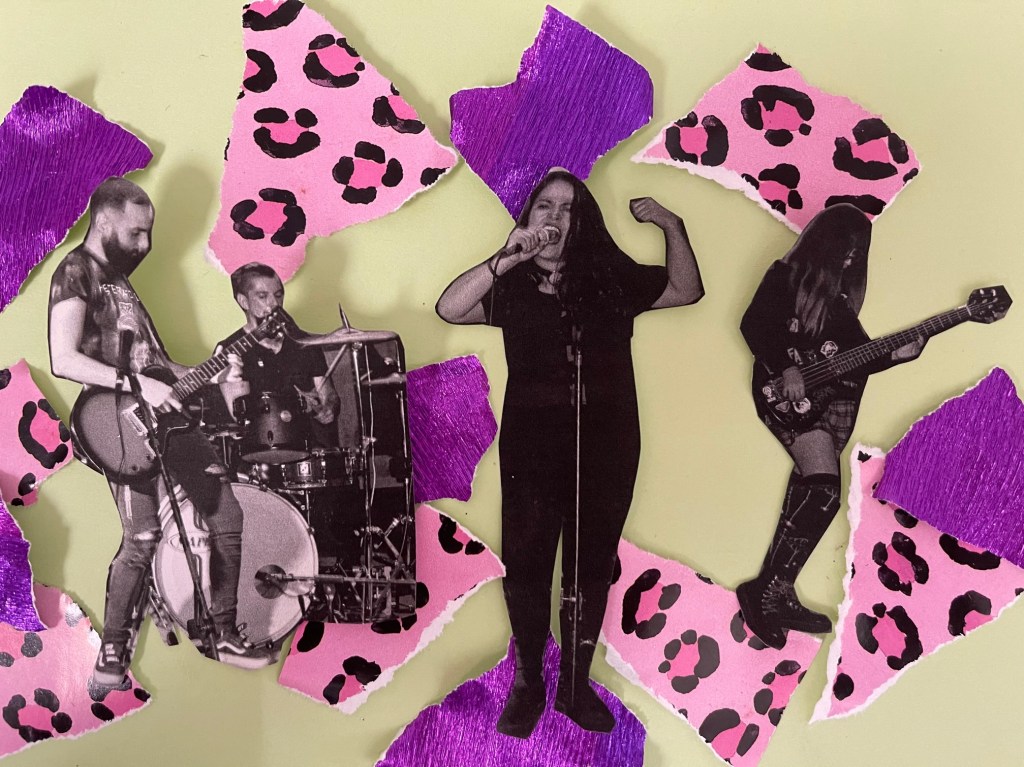
Brisbane goth trio It’s Magnetic: “There’s usually a pretty emotive story or feel driving the songs.”

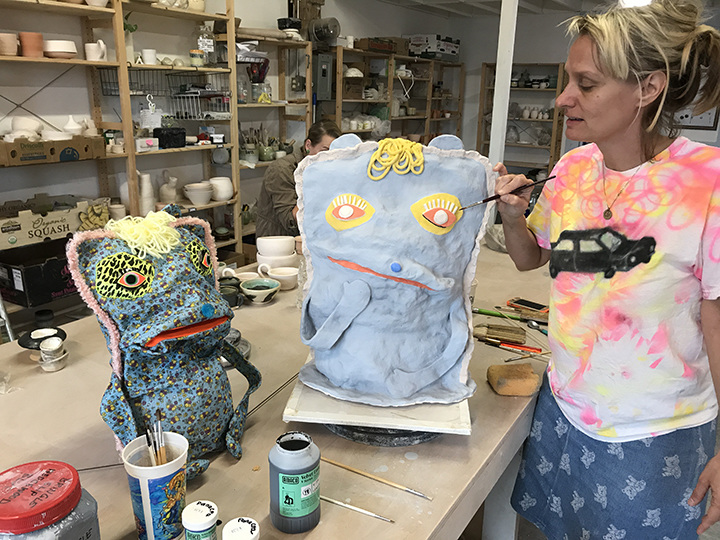
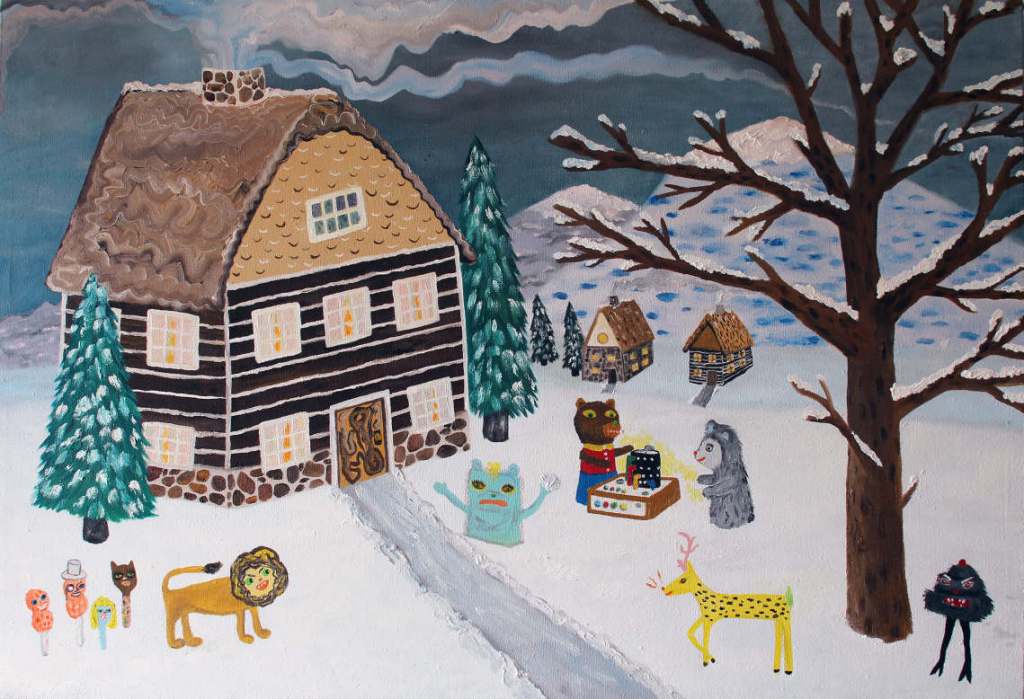
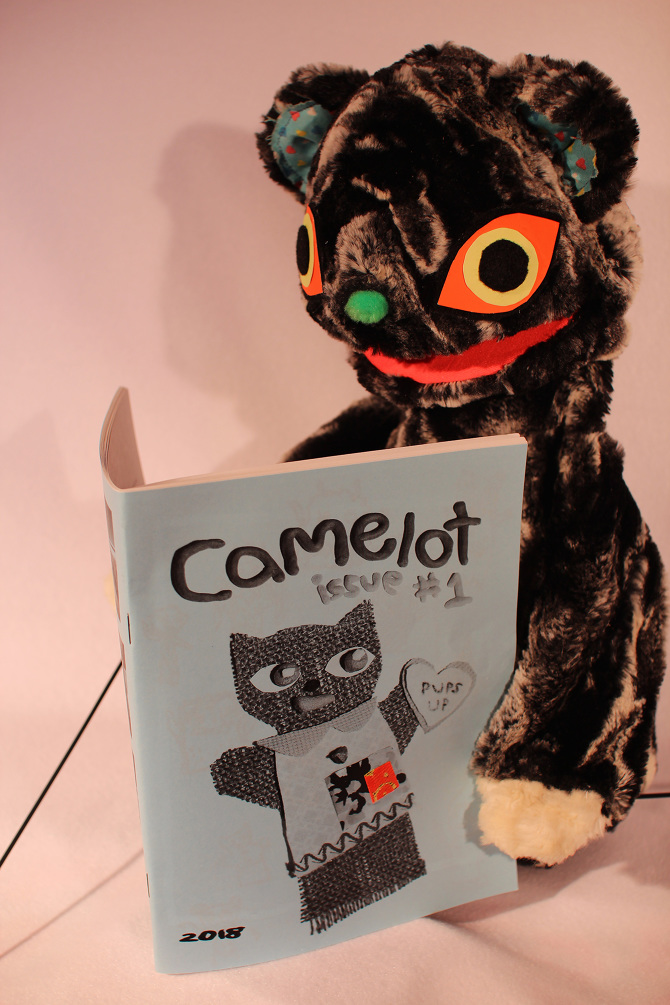
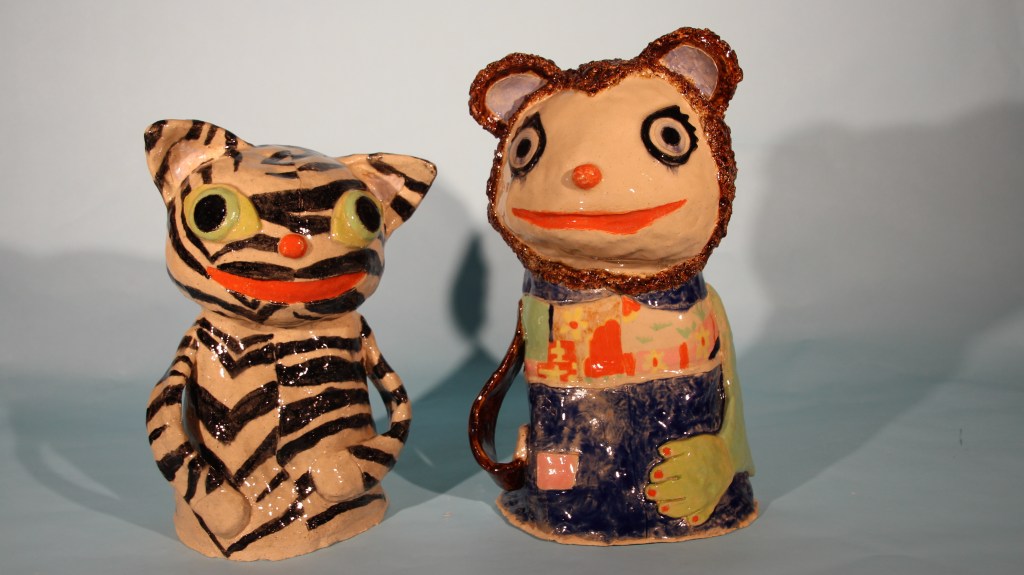
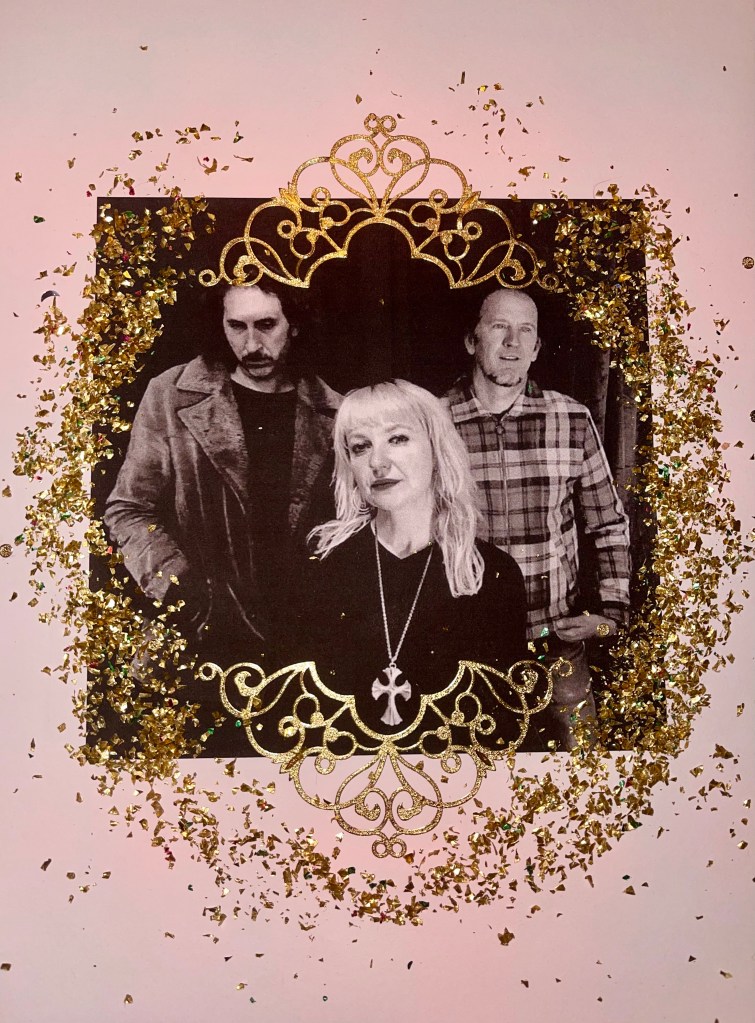
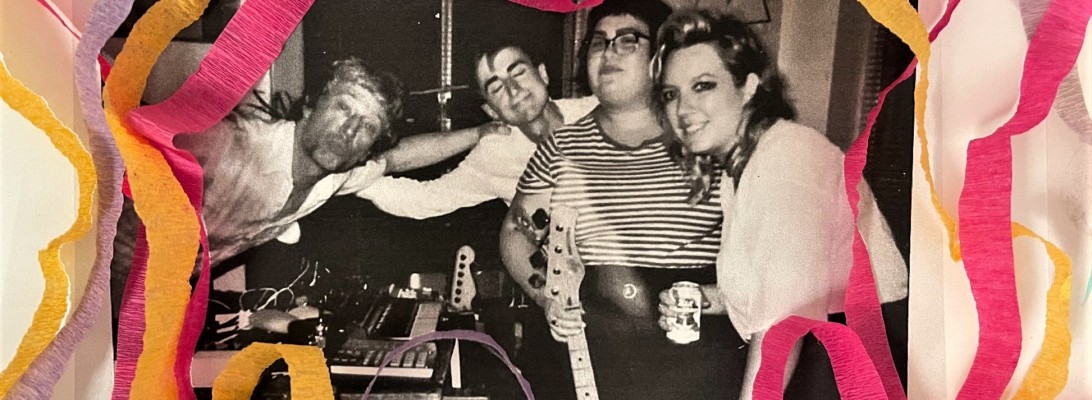
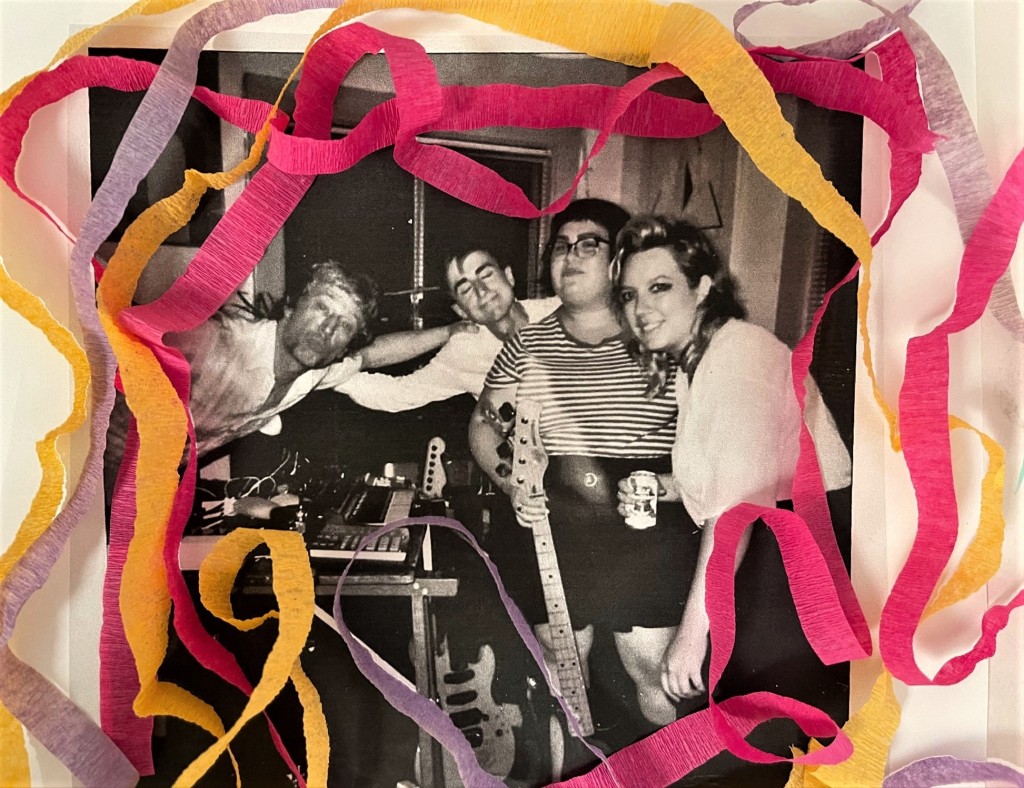
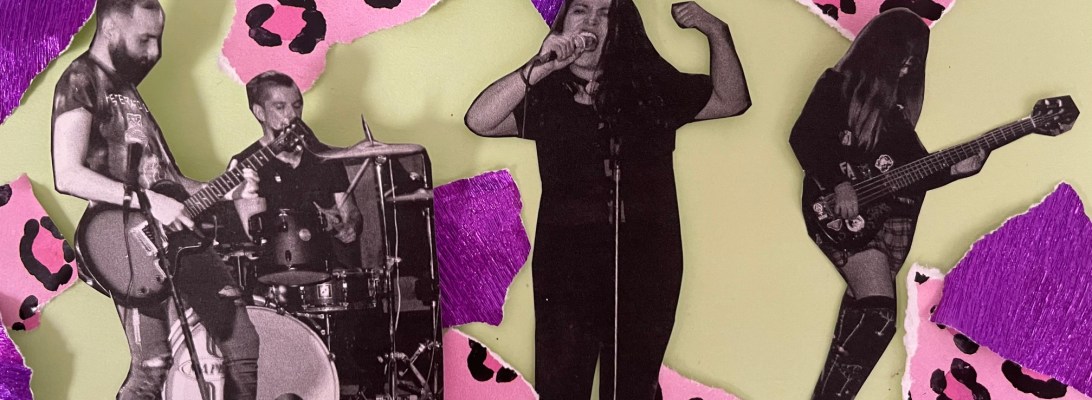
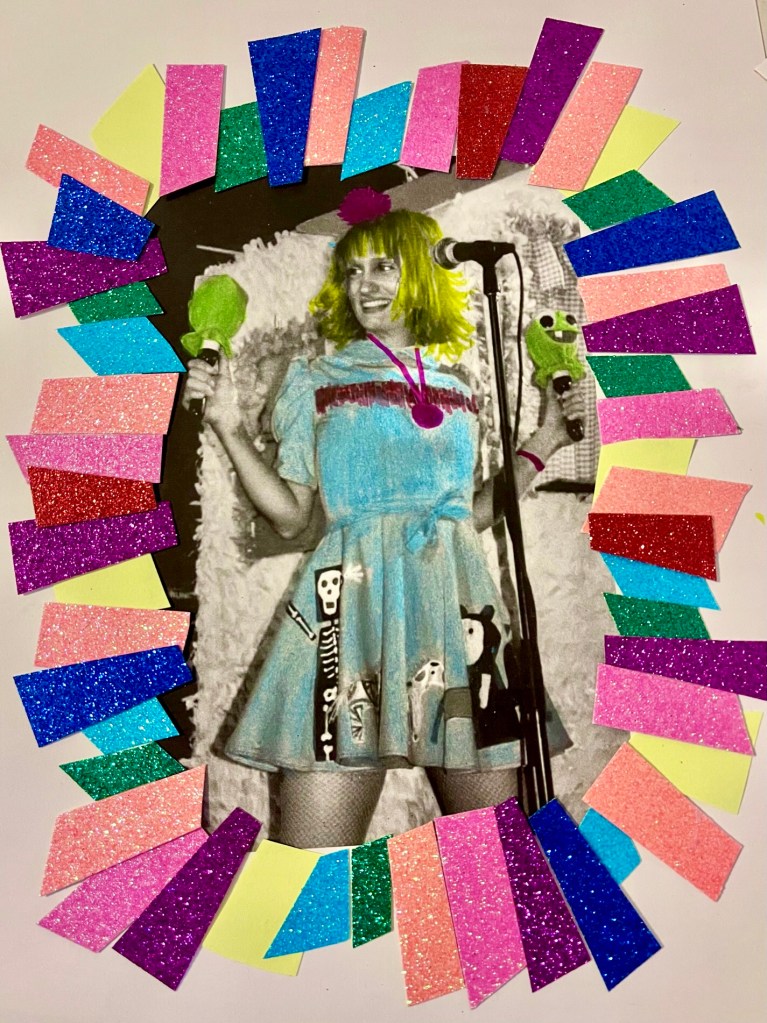
Handmade mixed-media by B.

Conjuring a heady mix of primal rhythms, atmospheric guitar and moody vocals Brisbane’s It’s Magnetic are spellbinding. This year manifested their debut self-titled release. Gimmie caught up with bassist Ben Ely, vocalist Mia Goodwin, guitarist Jamie Trevaskis and drummer Black Prizm.

How did you first discover music? 

BEN: Through my older brother listening to his Midnight Oil tapes. His excitement about the band and the first time I saw them blew me away.

JAMIE: I grew up in a tiny country town and would listen to the radio to fall asleep every night- the music was strange to me, it was mysterious.

MIA: Video Hits for me. I used to just love watching it all morning as a young girl. 

What was the first concert you went to?

BEN: Haha, Midnight Oil at Boondall Entertainment Centre. I rode there on the back of a friends motor bike. He rode like a total psycho so my adrenaline was already up when I got there. The show absolutely blew me away…

JAMIE: The Cure at The Entertainment Centre. 

MIA: It was the musical Phantom Of The Opera. Quite gothic really. 

How did It’s Magnetic get together? 

BEN: Jim put together the track ‘Leaving Is Neon‘ [it’s on the album] with Mia and he invited me up to play bass on the track… then we decided to do some more tracks and it led onto the band taking it seriously. 

Where did your band name come from? 

BEN: Jamie came up with the name and it was in context to everything just being – magnetic. 

The It’s Magnetic sound has a real 80’s goth vibe to it; is that something you’ve consciously worked to curate? Or is it just a natural progression of your interests and influences? 

BEN: I feel we are all fans of that kind of music and general vibe. I feel naturally drawn to darker sounds when I’m writing…I personally consume really a really downer style of music when I’m at home… I’m a massive Joy division, New order, Peter Hook fan, Jamie found The Cure at the age of 15, and Mia sang on the recent Twin Peaks tour so… I guess it all happened naturally…

You recorded your debut album at Jamie’s Wild Mountain Sound Studio (a tape-based studio), Mt Nebo set in a natural subtropical eucalypt forest setting; did the environment inspire your creativity/music? What was it like recording away from distractions?

BEN: Yes, it does have an alienated feel when you’re up there. We rehearse up there also. When I hit the forest-y part of the road heading up the mountain it does feel as though you are travelling through a portal of some kind. It is another world. Having that peaceful place to create is really great.

I understand that the record was recorded in a night; tell me about it. What was the first song you created? How did you feel when writing it?

BEN: The first song we wrote together as a band was ‘Heatwave‘. It all flowed very naturally. I feel all our best songs just fall out. Most of the album was done live in a few hours one Monday night. We went in with the intention of just recording ‘Heatwave‘… the second take was great… we kept it… then just kept going until most of the album was finished. We did do a couple of overdubs and mix it later. It surprised us all. 

One of our favourite tracks on the record is ‘Heatwave’; what inspired it?

BEN: I feel our band works well when there is a lot of space in the sound. If we create a sound that’s minimal then there is a lot of room to hear all the parts. I like that.

MIA: I wrote the lyrics coming into summer. That kind of oppressive Brisbane heat- you can feel it coming. And I was thinking about late nights when you can’t sleep, and the city, and small apartments, and lovers in those small apartments, hot together, uneasy together, anxious together.

Can you tell us a bit about making album closer ‘Disallowed The Past’?

MIA: It was a instrumental drum and noise guitar piece that Jamie recorded. Ben came up and put his bass part on and it just sounded like the closer for an album so that’s where it went. 

Mia, your vocals are very emotive; is there anything that you tap into to give that kind of vocal performance?

MIA: I just love to sing- and I love to sing strong- and I feed off the guys and all the emotion that is coming out of them and their instruments, and I think of the emotion behind the lyrics. There’s usually a pretty emotive story or feel driving the songs.

We saw you play live a couple of weeks ago at your album launch with Adele & the Chandeliers; how did it feel to finally get to play your album live?

BEN: Oh man… we practiced a lot for the launch and put a lot of work into setting up the stage… planned costumes etc.. so when it finally happened it was very exciting and felt really special to us. It did feel as though time flew by very quickly though.

It’s Magnetic use a drum machine, was that out of necessity or did you want that kind of sound? 

BEN: I feel it allows a lot of space for the guitars and vocals to stand out. We also love the cold hard evening hand our drummer provides. We did name our drummer to give him a human quality. His name is BLACK PRIZM.

JAMIE: It was always intentional for me for sonic reasons and I don’t really like cymbals.

What do you feel was the value of working to tape?

BEN: Tape does have a lot of character with tape hiss etc, though I feel it is very forgiving when it comes to vocal performances. Any slightly weird note doesn’t sound as obvious on tape. It’s some kind of witch craft I think…

JAMIE: I always record to tape for everybody else’s projects so it’s my most natural way to capture music and I love what it does to the sound. It does something whether you like it or not, and we like it.

There seems to be a witchy-occult-ish kind of theme to, It’s Magnetic; where does that come from?

BEN: We are all very superstitious people and have varying beliefs. Also I think Jim performs some kind of rituals before he plays. his guitar sound is not of this world, it’s from another realm… No one makes a sound like that…

Why do you feel that you work so well together?

BEN: I think we are all sensitive people who are conscious of the parts each of us play in the group. We allow space for each other. I think that’s the reason I love playing in the band so much.

What have you been listening to lately?

BEN: Danzig Sings Elvis. [its actually an amazing record], Trees Speak, Lost Animal, Gong, Spaceman 3, Crack Cloud.

JAMIE: Steve Von Till, Danzig sings Elvis, SWANS, Wet Taxis.

MIA: Chelsea Wolfe, Brendan Perry’s Songs Of Disenchantment:Music From The Greek Underground. The Blue Nile- Hats.

What’s next for It’s Magnetic?

BEN: We are about to go back into the studio on the Mountain and record a follow up album. We probably won’t do this one in one evening. We plan to take a lot more time and create a broader range of sounds. It’s very exciting…

It’s Magnetic’s debut LP is out now through Valve Records.

San Francisco Jazz Maverick Idris Ackamoor: “Community Is Everything”

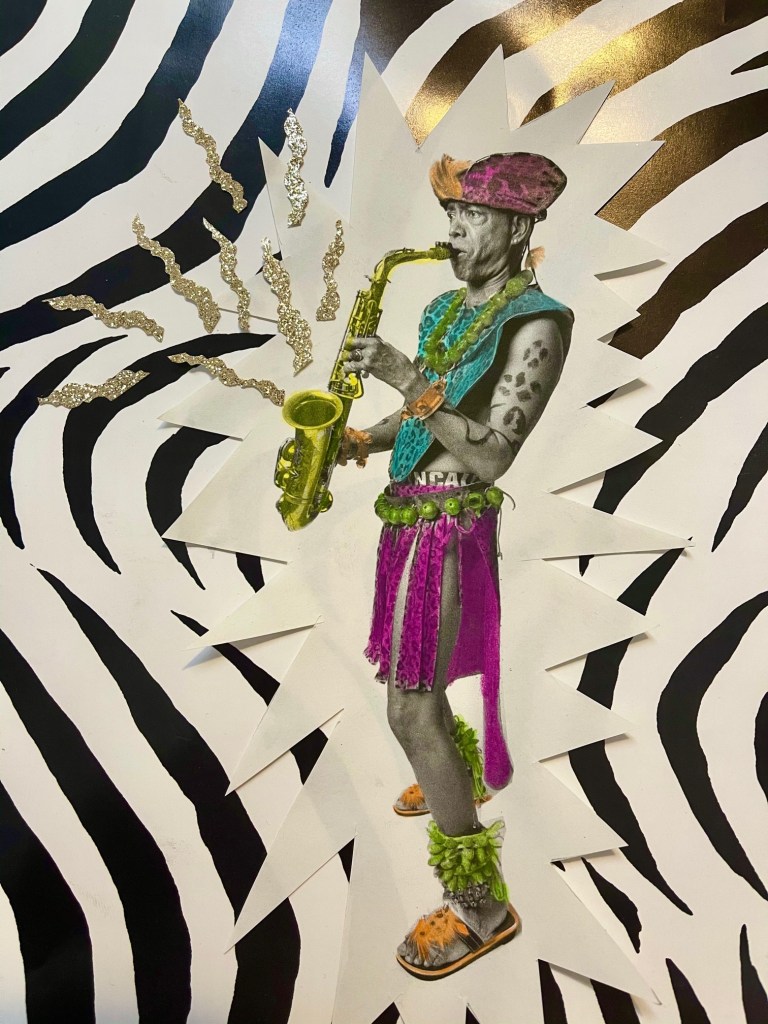
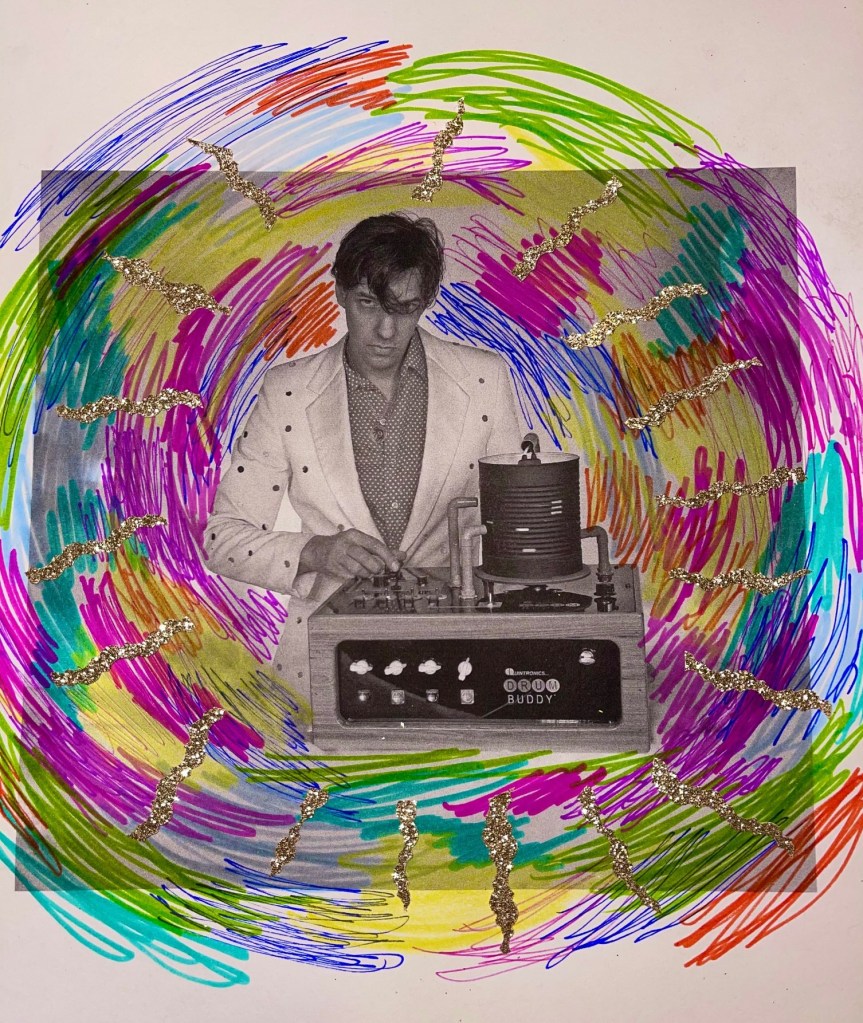
Handmade collage by B.

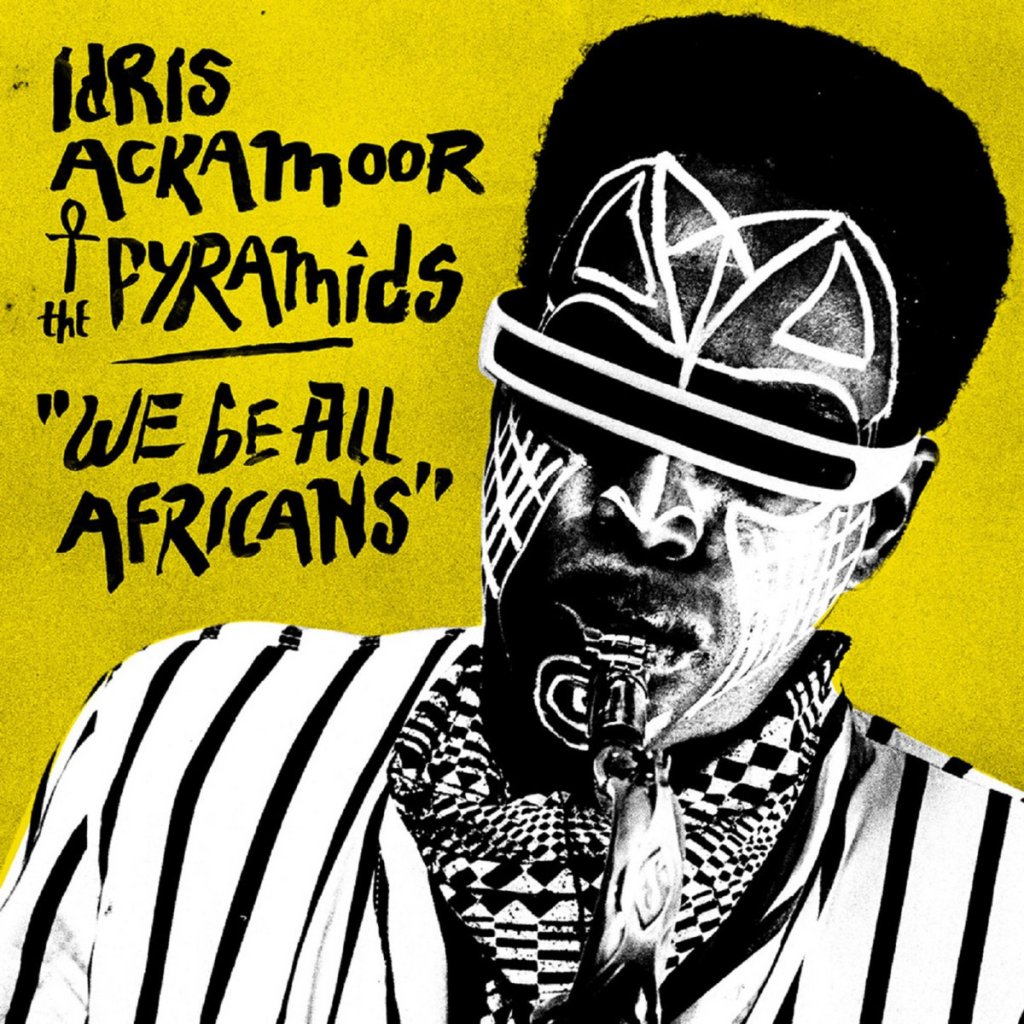
Idris Ackamoor is an inspiration. He has created and played music since the ‘70s, a veteran of pioneering free jazz musician Cecil Taylor’s Black Music Ensemble and founder of Afro-jazz outfit The Pyramids. Idris was one of the first musicians of his generation to travel to, and live and study in Africa in the early ‘70s.

Today he is still playing music and doing more than ever under the umbrella of Cultural Odyssey, a not-for-profit that believes in art as social activism and creating original work that builds artistic, cultural and political bridges across continents, fostering community and change.

Gimmie interviewed Idris from his home in San Francisco and chatted about his latest album Shaman!  as well as his journey and what he learned during his life changing time in Africa. His positivity, enthusiasm and zest for creation, community and life is infectious.

IDRIS ACKAMOOR: I’m doing good today, the sun is shining, it’s a sunny day so that’s good!

Good to hear, Idris. Where did your name Idris Ackamoor come from?

IA: I was born with the name Bruce Baker, but my family’s true name, our ancestral name, is Ackamoor. It goes back in to the 18th century but was changed to Baker in inter-marriage. I was the first to reclaim my great-great-grandfather’s name; his name was Dick Ackamoor. Our family reunions are now called Baker-Ackamoor reunions.

The name Idris, I was in high school in the last part of the ‘60s, from ’64 to ’68. ’68 was of course around the time of Black Power and the return to the understandings of our ancestors in Africa, Black Pride, afro haircuts and dashikis—it was a back to Africa vibe happening for a lot of African-Americans. That was around the time a lot of young people were changing at least a part of their name to more reflect what they were feeling. So, I choose the name Idris.

The meaning of the name Idris means interpreter, righteous and to learn.

IA: Yes. There are several different meanings in different languages, sometimes a name goes across ethnicities and groups. It’s even known in Egypt and there’s a derivative of it in Ireland. When I choose it from where I selected it, Idris was ‘messenger of the moon’.

Why is music important to you?

IA: Music is life. I’ve been playing music since I was seven years old. I consider myself an artistic being, meaning if there was a planet out in space for artist types, I’d be on that planet and I’d be an artistic being because I am surrounded by art. I love art and I have been surrounded by and known music for most of my life. Music is everything to me, it’s also very much a part of my spiritual beliefs. It occupies a lot of my life, even in how I celebrate, how I worship; I worship with music. I conduct rituals on stage with my band, with community, with audience members. Music is about my life.

Through listening to your music, seeing live performance videos and knowing the work you do through Cultural Odyssey, things like spirituality and community seem like they are very important to you.

IA: Absolutely. They are the motivation. The foundation of my work is community, family and healing.

In what way healing?

IA: Music is one of my influences. Albert Ayler, the great tenor saxophone player, he coined the phrase: ‘music is a healing force of the universe’. I think it can be seen; it’s even been documented, music goes back as far as humankind. The music of the breeze going through the trees, the music of different animals and birds. It’s been used in many ancient cultures as a healing, it’s been used in many ceremonies to help with things like childbirth or to help console when a family member has died—music is played a lot like that in Africa and in many different ancient cultures. I know Africa, so I’m speaking from Africa. I’m speaking also here in America with the Indigenous Peoples; they use music for healing and ceremony. Even if you take it to the present day with yourself and myself, a good song can make you feel so much better during the day, it can soothe you, bring back memories. Music is an art form that is really magical. It has many, many different uses. For me it’s one of the most influential artistic disciplines.

Agreed.

IA: Music is also something that is intangible. Music is invisible, we hear it… you can see it written on paper but it’s an invisible medium in a sense, it’s in the air. I have vinyl records that I play over and over and over again like John Coltrane’s My Favorite Things and every time you play it, it means something to you but if you look at film… maybe there’s some real filmheads that could see a movie over and over, for me it’s hard to even see a movie two times let alone ten or twenty or thirty… music though is infinite, you can listen to your favourite album or a piece of music you like over and over and you can’t even count the times you’ve listened to it, and you don’t get tired of it.

I do that all the time. I just get obsessed with pieces of music and play them over and over and over and often each time I hear something new. Or they’ll be a little part that I love and I just keep rewinding and listen to it over and over.

IA: [Laughs] You do what I do sometimes. Music affects each of us so differently. That’s the funny thing about music, something that can be your favourite song might not be someone else’s; what determines what is your most loving piece of music? It’s so individual.

In the early ‘70s you went to Africa. I understand that this really changed you; in what way?

IA: Sometimes something happens in life and it can affect your whole life—my trip to Africa was one of those. It still influences me to this day. It was one of those magical trips because I was there close to nine months. I studied music. I experienced community and how African culture worships with music. I learnt how they combine the different art forms, music is combined with dance which is combined with ritual, theatre, masquerade; it’s very rare in Africa that there is only one art form that is displayed for an audience. If a musician is playing then he is probably also reciting poetry or singing or conducting somewhat of a theatre piece. I was just loving the depth of the culture in Africa, the colours of the costumes, the innumerable amount of instruments that I could see and sometimes brought back and collected.

I also underwent ceremonies, healing ceremonies, with traditional African priests or Medicine Men, they call them Juju men or shaman. Shaman!  is the name of my new album. Shamans in Africa are very, very essential. They might be called a traditional healer—they are a religious being.

What type of ceremonies were they?

IA: I didn’t know a lot about Africa before I went, I had a very elemental knowledge from when I was in college; I was a college student when I travelled. I knew a little from my reading, I knew the word Juju. Juju is a religion in some parts of Africa. I knew that I wanted to undergo a ceremony by a Juju priest. When I was in northern Ghana, in Bolgatanga I asked a resident, I told them that I wanted to undergo a ceremony. The resident guided me way out into the bush and that’s where I met my Juju man who put me through a ceremony. The ceremony was called ‘The Washing of the Legs’. He sung and played instruments, he washed my legs in Juju, in the magic, which would then allow me to walk anywhere in the world unmolested, no one would mess with me and I wouldn’t have any problems. He was giving me a spiritual shield to my body. It sounds pretty far out [laughs] but I experienced it!

What is the significance of Shaman! for your new record title?

IA: It’s basically a lot to do with what I just mentioned. ‘Shaman!’ is a title track. It set up my musical theatre piece. The album was composed as a four-act music suite. ‘Shaman!’ begins act one. I put a very contemporary spin on it because… it was basically about a love affair that was broken up, this was a girlfriend I had many years ago. When we were about to break up, I wrote a poem to her. The idea was that… a lot of times men are the ones that do a lot of the heartbreaking but in reality, it goes both ways—basically I got my heart broke. I wrote a poem:

If I was a Shaman I’d run my hands together and I’d reach down into your soul

If I was a Shaman, if I was magical, I’d clap three times, spit in the air

I’d create a whole new world

I’d reach down into your heart and find that buried spark

I’d massage it until it started back up again

I used the concept of a ceremony to reclaim our love we had as a couple.

That’s really beautiful.

IA: I think so too. The poem was inspired by this South African historian who wrote a book about Zulu mythology of the Zulu people. In his book he talks about the ‘fire rites’, the fire rites of penance. A part of my poem talks about how I’m telling you the truth that I really love you.

I’ll grab a white-hot axe and grab onto that axe and burn my flesh to tell you that I love you, I won’t let go.

[Laughs] So, it got pretty deep!

I love that there are so many layers to your music. It always gives me chills.

IA: I’m glad. I really want it to mean something different to each person, I want everyone to take away something that is unique to them. I don’t believe in shoving anything down anyone’s throat, into someone’s ears, I want them to interpret it almost like when you’re looking at an abstract painting; everyone will have a different description of what they’re looking at.

One of the songs on the record that really resonated with me was ‘When Will I See You Again?’ I think partly for me, both my parents have passed away now and when I heard the line from the tracks title it made me think of that. It brought me some comfort and reminded me that I will see them again.

IA: Well, you really picked up on the song exactly as… it’s very interesting that you say that because when I was thinking of composing the song, I was visiting my sister. We were having a conversation of; do I believe in the afterlife? Do I believe in Heaven? She’s quite religious herself, more from the Christian element. She said, “Idris, don’t you want to believe in Heaven? Don’t you want to believe that we will see Mommy again?” There was no argument, of course. Just the way she said it… even though I might not believe in “Heaven” but I do believe in the spirit. I do believe that you meet your parents again in some form or fashion, some spiritual fashion. She was of the same idea that you just mentioned, the idea that we would see some of our loved ones again.

I know there’s no way we can know until we do transition into whatever is next for us from here but it’s nice to think there is something.

IA: [Laughs] Yeah, that’s for sure! Absolutely! It can relate on a lot of different levels because ‘When Will I See You Again?’ I composed it actually before the pandemic… it was almost like forecasting this terrible pandemic. So far, here in America, we have lost close to 200,000 people, they’ve died. There’s particularly resonance to that song now with that’s what we’re facing right now.

The song starts with me talking about mass shootings. I was naming certain cities where mass shootings took place, where they were in schools… a parent can think their child is just leaving the house to go to school… I say in the song: and too soon a loved one parts, sometimes it’s just a blink of an eye. I know when my girlfriend heard it, she had tears in her eyes. Once she listened to it over and over again, she also understood it was about like you said, very positive with the idea that we see loved ones again or that you want to be more appreciative of your loved ones now. It’s a pretty heavy piece.

The whole album goes through so many emotions and moods, everything is really in there. Soul-searching, self-healing, mortality, salvation, love, loss and so much more. It’s very powerful.

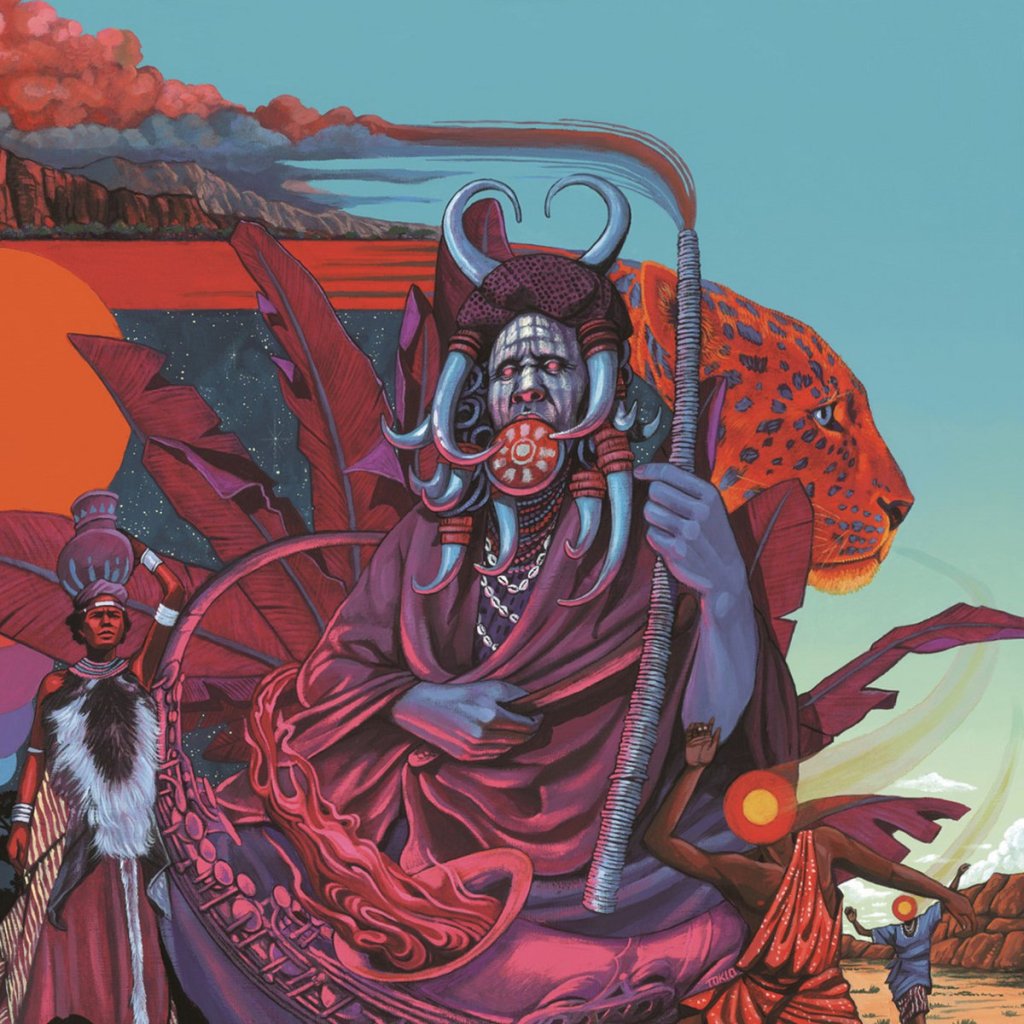
IA: Thank you. I’ve spent a lot of years in the theatre. I’ve done a lot of plays and a lot of musical theatre so I brought a lot of that experience, that inspiration and put it into the album. That’s why when you look at it and you look at the album cover it all becomes a piece of art.

Are there ways that songs come to you most often?

IA: It’s another one of those things that are so magical. Obviously, a lot of the music just comes from living my daily life, what I’m experiencing. I’ve been writing, I’ve written enough compositions for my next album. It’s very exciting! A lot of it is coloured by what we are experiencing now, not just the bad parts but also the good. There’s a song that I’m really excited about called ‘Heroes (or Heroines)’, it’s all about the heroes that have played a part in this pandemic. It’s a homage to the nurses and the doctors and the farm workers, everyone that’s put their life at risk helping other people. I find that very, very amazing. I am so appreciative that people would put their life at risk to help other people—that is the height of humanity. It’s a very uplifting piece, it’s almost like angels singing.

There’s another song called ‘Police Dem’. I sit here in my apartment, I’m sheltering in place like a lot of people are, we’re all watching a lot of news, what’s been happening with the police and George Floyd and what just happened in Wisconsin where police shoot a Black man seven times in the back… I have a very afrobeat piece that’s inspired by Fela Ransome-Kuti’s song ‘Zombie’. It’s about soldiers and how they’re automated, you tell ‘em what to do and they do. My song is basically about dealing with the police.

What’s kept you positive this year through everything?

IA: Music. Music and family go hand-in-hand because you can’t move forward without the support of your loved ones, it’s very hard, it’s very difficult, because that’s what you’re living for in some ways. My father is going to be ninety-nine years old in May… obviously this is a time when we’re not able to be with family much so, music is one thing I don’t have to worry about the virus touching [laughs]. Music is keeping me moving forward; composing new music, playing every day—it’s hard to know what I would do without it.

Is there anything that you like to do to challenge yourself creatively?

IA: Yeah, I go back to the beginning when I was just starting out. What I’m doing right now is that I’m going back to a time… I had a teacher that used to play with Charlie Parker, he’s dead now because I know he was old back then… he told me one thing long ago that I’m rediscovering right now, I’m going way back when I began to learn and prove myself now. I found it very interesting because someone can tell you something thirty, forty or fifty years ago and that one thing can be with you your whole life. I’m going back to things that were revealed to me over fifty years ago and getting new meaning out of it. It’s so exciting for me that feeling of beginning all over again. [Laughs] It can be hard but mostly it’s exciting.

You’re a band leader; how do you get such great performances out of everyone?

IA: I think it’s mostly because I am a great band leader. I am a great judge of character. I have a really good understanding; I can hear someone immediately… I think a lot of it transcends music, it goes beyond music, because you can find exceptional, technical musicians, musicians that have studied all of their life but they may be lousy band members. I’ve gone through that a lot, very talented musicians but terrible band members; they’re not good on the road, they’re not good travelling, they don’t know how to support you. I’m much more interested in getting the best performance out of their unique character, sometimes they are incredibly technical and great human beings! I’m not interested in someone who is great technically but not a great human being.

Same! I like having good people around me, it’s important.

IA: Yeah, I think that’s almost the most important thing. This album I am so happy because quite frankly, I love having two women in my band, they are incredible improvisers and great performers but more than anything they’re so supportive, supportive in ways that most men could never be. Women have that motherly instinct in some ways or another kind of instinct that is soft. Sandy and Margaux have made a huge difference. We were on the road for two months before we did the album, being on the road can be very difficult, you’ve got to have a good group of people to live on the road.

We talked about how your trip to Africa changed your life; have you had other life changing moments you could share with us?

IA: In many ways travelling through Europe and performing and this new rebirth of The Pyramids. We were initially only together for 1972 to 1977 and then we broke up and didn’t get back together again for over thirty years. What’s been life changing for me is to be able to play my music all over the world, every place. I was scheduled to come to Australia!

What?! Really?

IA: I was supposed to play a big festival in Melbourne. It was pretty obvious then though that things were getting very bad and they ended up cancelling it. I was so looking forward to coming to Australia. I’ve traveled all my life, as we talked abut going to Africa when I was twenty-one, all the travelling I’ve done particularly the last ten years has been amazingly profound in my life. The audiences that I’ve met and performed for, the people that have booked me have become my friends, it’s been extraordinary for me and mind-blowing epiphany in my life that at this age I can be so regarded and celebrated around the world with my music for what I’m doing.

That connection!

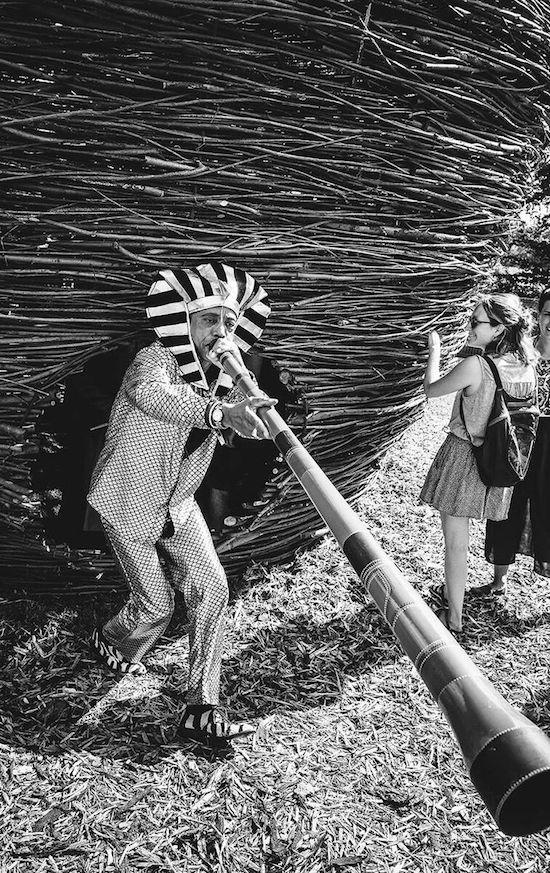
IA: Yeah, it’s hard to think when we were finishing up… we recorded Shaman!  in early November 2019, maybe the 4th to the 10th, we were playing a lot of those songs on tour right before the virus hit Italy. We were in Italy, one of the places where the virus impacted people hard, we were there in July and August, then in Spain. I got back to America around November 21st and a couple months later that’s when all hell broke loose. The tour was magical where we were playing though, the people we’d meet. We played in Turkey; I went to Istanbul for the first time! I’m looking forward to coming to Australia, I love playing the didgeridoo, it’s one of my favourite instruments. I have a portable one that’s about six and a half feet long but it folds down to maybe a foot and a half. For several years that’s been one of the signatures of the band, I come on playing this huge long didgeridoo.

Why do you like to start with that?

IA: Firstly, it’s the visual, because a lot of people in Europe don’t know what a digeridoo is. Secondly, it’s got this deep, deep sound [makes noise] baaaarooooooo! Wooooo! Whooooo! We walk in through the audience. It’s also consistent with the whole idea of community; we start the concert in the audience amongst the people! It’s rare that we begin onstage.

I can’t wait to see you play live.

IA: We sometimes leave through the audience too. We like creating a real community feel.

I know with your organization Cultural Odyssey you have a philosophy of art as social activism; can you please tell us about this? You also spearhead the African American Theatre Alliance For Independence.

IA: When The Pyramids broke up in 1977 I kept playing my own music and growing and in 1979 I founded a non-profit performing arts company – in America there’s a big non-profit community where we have philanthropy, foundations and government funding for the Arts… I founded Cultural Odyssey and it’s sustained me for over forty years as an artist. During that time, I’ve never had a day job. I have a salary, healthcare, a retirement fund, all the things you often think you can only have if you work for a corporation. We’re like a mini opera or a theatre. It’s my myself and my partner, Rhodessa Jones. Our model is: art as social activism.

Her main project is called The Medea Project which is theatre for incarcerated women. For thirty years underneath Cultural Odyssey she’s gone into prisons all over the world, particularly here in San Francisco, she works with incarcerated inmates and ex-inmates to create theatre based on their lives. It’s all original theatre that they write themselves and then they perform it in a major theatre around the world. We even took it to South Africa. We’ve taken it to Italy, performing in Italian prisons.

Another of the projects we do is my Idris Ackamoor and The Pyramids, which is the resurrected band. We’ve been touring again for the last ten years.

It’s wonderful that you can do work that you love and help other people doing it.

IA: Community is everything. We had an orchestra out here that was made up of closet musicians, people that weren’t really performers but maybe practiced in their closest or they just like to play. I combined amateur musicians with professional musicians and created the Music Is A Healing Force Community Orchestra. We got funding from a foundation that wanted to have art in non-traditional places, places that don’t usually have live music. We played in United Nations Plaza.

Is there anything else you’d like to share with us?

IA: I’m always thinking of what’s next! I don’t want to rest on my laurels. I’m always thinking of continuing to make music and art and collaborations. I want to make every album I release to be something special and it’s something to bring forth the transforming and the healing that brings meaning to people. For me it’s about quality not quantity. Looking forward!

Please check out: IDRIS ACKAMOOR & THE PYRAMIDS on bandcamp and Cultural Odyssey.

French post-punk-rrriot band Radical Kitten: “Silence Is Violence”

Original album art by: Anne Careil. Handmade collage by B.

Radical Kitten are a rrriot post-punk, queer feminist band from Toulouse, France. We caught up with RK’s Marin (bass-vocals), Marion (drums) and Iso (guitar-vocals. Très bien!

ALL: Hi! We’re Radical Kitten, a post-punk-rrriot band from Toulouse! We formed two and a half years ago and we just released our first album Silence is Violence.

How did you first discover music?

MARIN: I was very young, my uncle played guitar really well and even sang with his dog (and it also sang!), I think it marked me.

ISO: very young too, I come from a family of classical musicians and started playing an instrument at an early age.

MARION: As a child, I was surrounded by my father and his sisters who played folk songs and sang together at family gatherings. We had instruments at home: violin, piano, drums, banjo, auto-harp…

What did finding the underground Riot Grrrl feminist punk movement mean to you?

MARIN: It was really nice to discover a scene with people I could identify with. I think the Riot Grrrl movement showed me that women could also play music on their own, to have this kind of insurgent energy, these powerful personalities at a time when the pressure of the codes imposed on women was very important, it opened the field of possibilities and it was an important discovery for the teenager I was, even if musically I always remained much closer to hip hop.

ISO: As a teenager, I listened a lot to Nirvana, and that brought me to the Riot Grrrls (and to many other excellent bands by the way!). I always liked raw and/or energetic music, most of the time with women singing, and hated rock bands of old macho guys! Even if I didn’t identify myself directly with the Riot Grrrls musicians because I didn’t consider myself as a girl (without putting then the word trans on my identity) I was, obviously, very touched and concerned by their words and their rage (which are still completely up to date!)

MARION:  I actually don’t identify too much with the Riot Grrrl movement as I never really listened to it. But I admire those women who, at one point, even in underground music circles, had to shout out loud that they were able to make music as well, put their rage on the table and took the space they deserved and needed. It surely inspired other women until now to make music the way they want, not necessarily with a sensual aesthetic or whatever, just to be musicians.

What inspired Radical Kitten to get together?

ALL: We don’t pretend to do more than just enjoy making music together, we are lucky to have this musical and friendly/human connection, it’s hard to find!

You’re from Toulouse, France; what’s it like where you live? Is your song ‘I’m Bored’ about where you live?

MARIN: In fact, this song wasn’t about Toulouse but about the city where I come from even if to tell the truth in France at the moment with the confinement, I imagine that we’re really starting to get bored everywhere!

Recently you released your album Silence is Violence; where did the album title come from?

MARIN: The title refers to the silence that invisibilizes social problems. It’s also a nod to the album that is anything but silent!

ISO: The title of the album can be understood in many different ways, that’s also what we liked. When we chose it, last February, we didn’t yet know that it was starting to be one of the slogans of the Black Lives Matter movement…!

There is their silence, as Marin speaks, but also ours, which we must fight as well, as evoked by Audre Lorde, “a black (lesbian) woman warrior poet doing (her) work” in this beautiful text: “The Transformation of Silence into Language and Action” that you can read here.

What kinds of things did you find yourself writing about for the new album? Do you have a process for writing your lyrics?

MARIN: The lyrics come spontaneously after the instrumental part. I compose them like a musical instrument, my approach is more rhythmic than literary.

For the subjects I am very often inspired by personal stories, dramas. It has often been a good way to move on. We also deal with political subjects: coming out (‘Blind’), fed up with work (‘Say Shit’), transphobia (‘Shitty Questions’) of which Iso also wrote the lyrics etc…

Songs ‘Say Shit (to your boss)’, ‘Sorry’ and ‘Full Circle’ were originally on your demo Contre nature han that came out last year; how do you think the songs changed from being on your demo to being on the full-length album?

MARIN: Clearly…. the tempo!

MARION: Those songs were released just a few months after we started to play together. That was the very beginning, so since then, we improved in lots of ways. For the full album, we knew better what sound we wanted, and had a much better look at the whole thing.

Can you tell us about recording Silence Is Violence? You recorded at La Grange Cavale with Manuel Duval, right? What was one of your favourite memories from making it?

MARIN: Recording in socks next to the wood stove that was heating with the view at the field and of course spending time with the kittens and our great hosts!

MARION: When we recorded the voices at the end, it was funny (and a bit sadic, I admit) to hear Marin singing with her raw (nude?) voice, without any effect and no music. It was a bit like a little kitty trying with all his strength to be a tiger. I also loved to watch how the whole recording was driven by Manuel, see how to use the software, and all the technical parts.

ISO: I very much appreciated those moments when we prepared the meals all together with our adorable hosts, and enjoyed them together (the French side!). The emotion on the last day to hear for the first time our compositions with such a sound, and also a huge laugh when that same evening we listened again to our very first rehearsals with notably the song ‘I’m Bored’ in an embryonic state and at a ridiculously slow tempo!!!

Who did the cover art for your album? It’s really beautiful! What can you tell us about it?

MARION: Thank you! Anne Careil did the cover art for the album. We actually recorded the album at her house and we got along well. We learned that she was a great graphist and drawer, she made the cover arts for Rien Virgule (her band with Manuel) for instance and it’s very cool. Her website can be found here. We asked her to make ours, she was very thrilled at this idea, and paid close attention to our “expectations” while keeping her own style.

What have you been listening to lately? Is there any other cool bands in your area we should know about?

ISO: I’m currently looking back at the Raincoats’ discography, which I really love! For more recent stuff: Sweeping Promises, Cheap Meat, Special Interest, Immigranti, Lithics, Romain de Ferron.

Cool bands from Toulouse: Docks – a great shoegaze slow-core instrumental duo, in which plays Manon, from Hidden Bay Records, super cassette label.

Petit Bureau – a post-punk duo that has just released a great first album.

The Guilty Pleasures – a very cool surf post punk band which has also just released its first album, and in which Emily plays, from the very cool label Dushtu records (and who had recorded the demo for us too!).

BooM – super power-violence noise band, in which some friends from the Pavilions play, the place where we rehearse.

For the Riot Grrrl style, there is Trholz from Toulouse, and from Bordeaux, Judith Judah and LKill.

To finish, it is not a Riot Grrrl band but we recommend you very strongly to listen to La Chasse de Marseille!

What’s something that is important to Radical Kitten?

ISO: Having fun playing together.

MARION: Getting famous!

MARIN: [Laughs at Marion’s answer]!

ALL: What is really important for us is… cats!!

Is there anything else you’d like to share with us or tell us?

ISO: We dream of doing a tour in Australia, I’m just saying!

MARIN: As Iso said.

MARION: Here is a very nice recipe I’d like to share with you, it’s a Turkish soup or “mercimek corbasi” very easy. In a big saucepan, you sear with olive oil, a big onion, a big potato, 2 regular carrots, tomato pulp, some garlic. Add some spices: cumin, curcuma, paprika, chilli. Then, you put 500 grams of coral lentils and water. If you find dry mint to add, it’s perfect. Mix it and eat it. Bon appétit bien sûr!

Please check out: RADICAL KITTEN on bandcamp; on Facebook.

Berkeley post-punks Naked Roommate: “Knowing when to stay minimal and when to get maximal.”

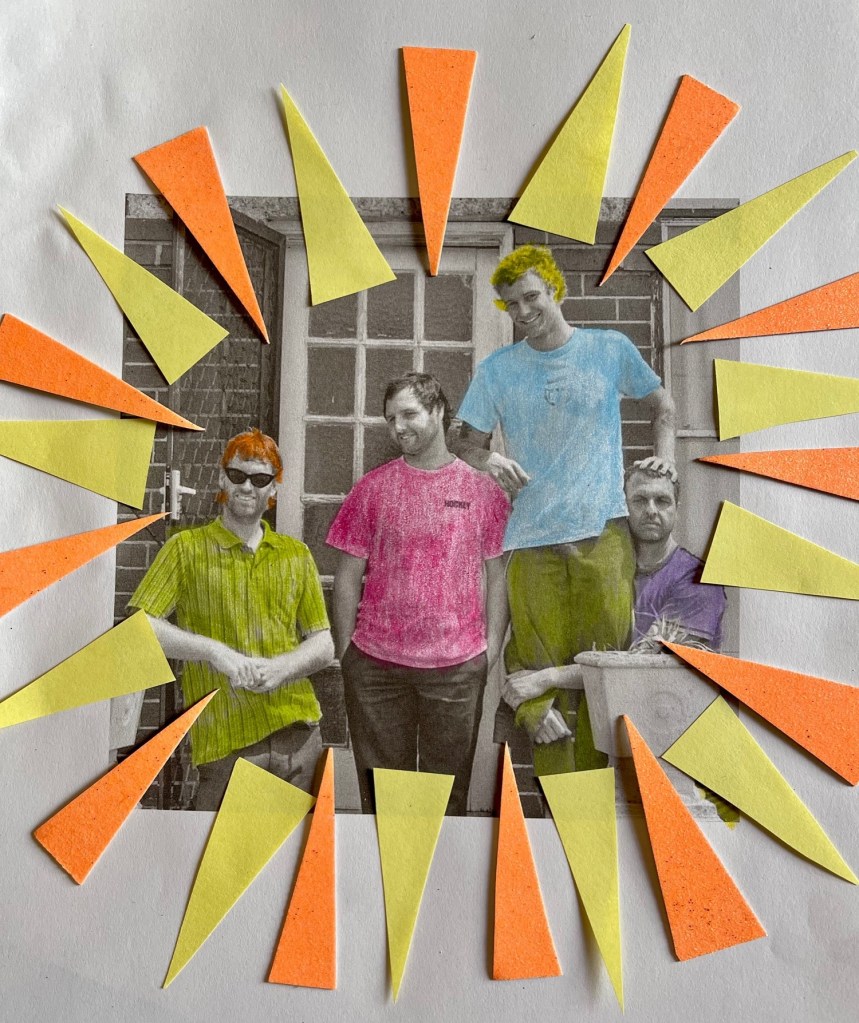
Original photo: Polaroid by Katie Beata Bryan. Mixed-media collage by B.

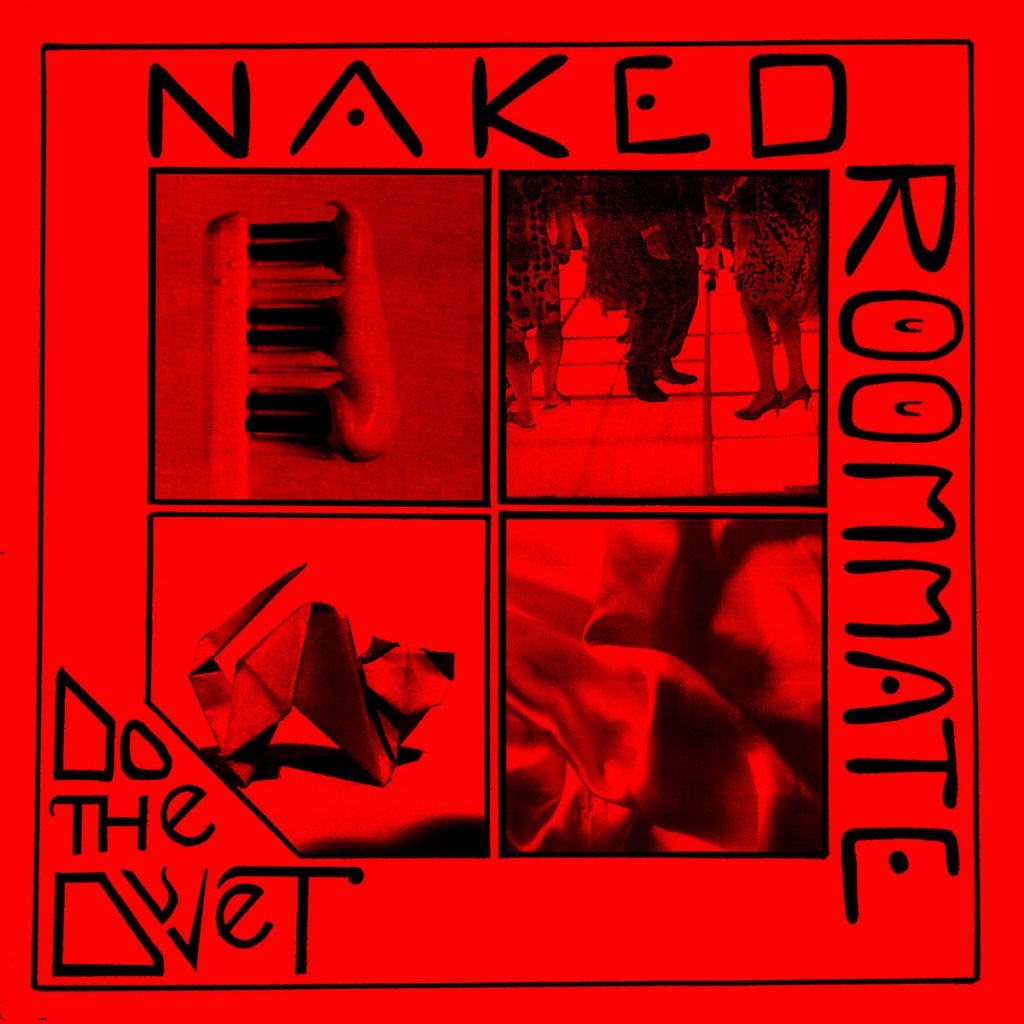
Creatives Amber Sermeńo and Andy Jordan (from beloved Oakland band, The World) are behind Naked Roommate—a project with punk spirit, a dance heart and progressive post-punk thought. The band also features Michael Zamora (from Bad Bad) and Alejandra Alcala (Blues Lawyer and Preening). Their record Do The Duvet is on our list of most played releases at Gimmie HQ for 2020. We interviewed Amber and Andy.

Naked Roommate are from Berkley, California; what’s it like where you live? Can you tell us a bit about your neighbourhood?

AMBER SERMEŃO: We got a high walk score of 91, 8th highest houseless population in the country and great sandwiches.

ANDY JORDAN: We live right on the border of Oakland/Berkeley, so we have both NIMBYs and regular people.

How did you first find music?

AJ: Or how did music first find me, right? I’ll say that the first music I was into was The Wild Tchoupotoulas, an LP of medieval Andalusian music and Mekons, or so my parents report. That’s when I was three, in 1983.

AS: For me, it would have to be cruising in L.A. with my ma. There’d always be C&C Music Factory, Ace of Base or Prince on the radio.

What excites you the most about making music?

AS: When something that could’ve just been a fart in the wind gets caught and turned into something that makes people dance. Seeing that is incredibly gratifying

You both started the band; how did you first meet?

AJ: On a deserted dance floor in San Francisco, surrounded by unsavoury types.

AS: Haha, oh god… Yeah that was back in 2007. Anyway, that was silly. Years later we bumped into each other at a bookstore his dad worked at. I guess he was a little more charming in that setting. That’s when we really started hanging out.

What’s the best thing about making stuff together?

AJ: I guess the question answers itself, or I’d rephrase it to say: the best part about making music is doing it together.

AS: I’m not gonna lie and say it’s a wonderful experience. It’s pretty hard sometimes. We’re both hard headed so it’s a process. When barriers break and he sees what I see or vice versa it feels well worth it. A more permanent manifestation of our struggles and growth. I think it’s special to have somewhat of a record of that.

I know you had band The World; how was Naked Roommate born?

AJ: I had been working on a bunch of recordings at home and rather than contaminate them with my confused vocal approach, I had Amber sing over them.

What’s the story behind the band name, Naked Roommate?

AJ: No story. It was as simple as might be expected: we were the naked roommates one day, and upon referring to ourselves as such, we paused and said, “ha ha”!

Can you tell us about the recording of your album Do the Duvet? You recorded over few months, right?

AJ: We took our time. We recorded where we practice, in the studio behind Michael’s house. Our bunker-clubhouse. Although now we practice outside the bunker, in the bricoláge garden. To record, we used analogue tape plus digital. The initial performances were done in a few takes, ‘(Re)P.R.O.D.U.C.E.’ was just an improvised thing we did while the tape was rolling. We liked it so it ended up on the record, with a few overdubs and some editing here and there. The recording and overdubbing process helped us form the songs. We experimented with everything, figured out what worked and went with it.

AS: Clubhouse is a good word for it. It got filled with books and various objects to prompt ideas and we got into our habits. That being everyone forming songs while I hung out outside with Michael’s partner Katie smoking cigarettes. Once they had something I’d hop in there, riff some gibberish, and sometimes even words. Then we’d have a song.

What were some things that you tried doing on this album while recording that you think worked really well?

AJ: Knowing when to stay minimal and when to get maximal.

Amber, can you tell us about writing the lyrics for the LP; what’s your writing process?

AS: I just “bleee blahhh blooo” until words start forming over the song. What comes out is sometimes surprising but often not. I know my brain fairly well by now. Interesting though, how gibberish and non-sequiturs can form a solid theme and you’re like, “oh so this narrative has just been waiting to come out of me from somewhere in there. Had no idea.” Sometimes it works out well. But my favourite lyrics have happened when the rest of the band helped form them too, like in ‘We are the Babies’. And you know Andy wrote the lyrics to a couple of songs on there. ‘Repeat’ and ‘(Re)P.R.O.D.U.C.E.’. I think he has the opposite approach to mine but it all works.

How did you approach the vocals on the record? Did you have an idea of how you wanted it to sound before you started?

AS: I’m better at knowing what I don’t want to sound like and avoiding it. Whatever else comes out I’m open to. I guess what I admire more is honesty, at least in a vocal delivery. You know, embracing idiosyncrasies rather than striving for technicality. So yeah, I’m not scared to show my weaknesses as a vocalist. What would be more terrifying is sounding bluesy.

What feeling do you get from playing live? Do you miss it (since everything’s been locked down with the pandemic happening)?

AJ: When things go well, it feels great. I just saw a YouTube video of us performing in February, it feels like much longer ago. That made me miss playing very much indeed.

AS: I’m actually a pretty anxious person when it comes to public speaking. But I must like the torture or else I wouldn’t find myself fronting bands so often. So, I’d say the tension and relief. Having the endorphins and calming them outside with a smoke. Am I turning this interview into a Marlboro commercial? Well now I have. But really the best is seeing a crowd move. That’s elating. So, when shows become a thing again y’all better get movin’. It’s about the only payment we get besides a couple of drink tickets.

What bands/albums/songs have you been obsessing over lately?

AS: Chronophage is one of my favourites right now and Chano Pozo’s percussions are timeless

AJ: I’m 40 now, so I only listen to Jazz, Dylan, and the Velvet Underground. As far as new stuff goes, I haven’t been paying enough attention but Natalie from Nots has a new band called Optic Sink, and I dig that. 

Do you have any other creative outlets? When not making stuff what would we find you doing?

AJ: I’ve been known to do some origami. I have four different dragons and three dinosaurs memorized. I also draw and design the records I make. When not making stuff, I’m reading stuff. Or biting the Big R, which is beatnik slang for working.

AS: Yes, the house is FILLED with origami. I for one do everything, half completed in my corner. So yeah, I really need the discipline of collective projects to make things happen. You’ll actually find some clay sculptures I did for First World Record in the insert and on the cover. That’s one thing I completed besides music.

Please check out: NAKED ROOMMATE; on Instagram. Do The Duvet via Trouble In Mind Records.

Punk from Mexico! Huraña: “We talk mostly about being a girl, a punk girl, a tough girl, a sad girl sometimes but always fighting against the people who want to hurt us.”

Original photo: courtesy of Huraña. Handmade collage by B.

When Gimmie’s editor came across Huraña from Mexico this year she was super excited, falling in love with their lo-fi scrappy, punchy punk with hints of ‘80s hardcore, layered guitar and reverbed drench delay-laden vocals sung in Spanish. Gimmie interviewed bassist Daniela to learn more about where they live, their community and release Brujas, Cholas E Inventadas.

Can you tell us a little bit about yourself?

DANIELA: I play the bass in Huraña. I love cats, big black clothes, tattoos and hair dye. I’ve been playing with Huraña since the beginning, which was like two years ago. I love music, I love playing music with friends, going to concerts and everything that has to do with music. I’ve played the bass for like seven years now and I would say that what I enjoy the most is making a lot, a lot of noise.

Huraña are from Chiapas, Mexico; what’s it like where you live?

D: We live in a small city called Tuxtla Gutiérrez, which is the capital of Chiapas. You can find all kinds of people. The weather is mostly hot, we actually have a song called “Odio el calor” which means “I hate hot weather” because we do hate it a lot. I personally like the city, but sadly there is a lot of insecurity everywhere, police brutality, murders and assaults all the time, that has turned Tuxtla into a dangerous city, but still, not as dangerous as other cities in Chiapas.

How did you first discover punk?

D: I always liked rock and metal music, so that lead me to punk. I got into it when I was invited to a punk band, I was insecure at first because I thought I wouldn’t be as good as they expected, but it came out naturally and it was a lot of fun playing, because before that I only had been in metal bands, cover bands and experimental rock.

How did Huraña get together?

D: We all come from different bands that no longer exist, and we all have played together at some point. We used to have two vocalists but one of them just wasn’t into it, so she left, also we recently got a new drummer, so we are in the process of getting all together again, but it has been very fun and exciting to create new stuff, and also we all enjoy extreme and noisy music so that definitely helps when it comes to understanding each other when we play.

Where did your band name came from?

D: Huraña comes from “huraño” which is a term used mostly when a cat is shy or grumpy or doesn’t like being with people, being petted or any contact at all, it’s also used in people or dogs, but cats are like that almost all the time. We are all cat lovers so we kept the name as a way to express our lyrics, our type of music and our love for cats.

What is the punk scene like where you are? What are some bands we should know about?

D: There aren’t many punk bands here, maybe like three including us, so there is not much to say about that. My favourite local punk band is Cabronas, their songs, lyrics and the attitude of the lead singer are great and contagious, they have just released their material on Bandcamp so you should definitely check them out. I also really like Zoque Caníbal which is more a ska punk band, but the drummer is awesome and a lot of the guitar riffs are very punk-ish.

This year you released 7-inch EP Brujas, Cholas E Inventadas on Iron Lung Records; what was inspiring you when writing songs for it?

D: Our lyrics talk about what we do, what we think, what we stand for. We talk about feminism, women empowerment, harassment in the streets, fake friends and allies, our generation and similar stuff. Sometimes we do funny themes like “Odio el calor” saying how much we hate hot weather and sweat. The lyrics are written by Chax, the guitarist, and Tania, the lead singer. In “Brujas, Cholas E Inventadas” we talk mostly about being a girl, a punk girl, a tough girl, a sad girl sometimes but always fighting against the people who want to hurt us, the fake friends and the danger that’s out there in the streets for us.

Can you tell us about recording it?

D: The recording was very fast, we did it all in a few hours, except for the collaboration with the saxophone which had to be done the next day, but we got it all together pretty quickly. A friend of ours came from CDMX to record us, so it was all chill, fun and natural. I enjoyed a lot.

We really love the reverb on your vocals and the delay on the guitar; what influenced your sound?

D: We have different influences and we take inspiration from what we listen to and what we like. I guess we have always looked for a deep, dark sound, something that is not like the other punk bands in our city. We wanted to sound like a hardcore band but also like a goth, post punk band. I personally take my inspiration from goth bands, post punk, death rock, and similars.

Why did you choose to cover a Vulpes song “Me Gusta Ser Una Zorra”?

D: Tania, the lead singer, and I studied together in college, and back in those days we used to love that song and sing it all the time because we felt so related to it. We wanted to form a punk band and play that song, so when we finally got the chance of playing together, we suggested the cover to the band and they agreed. Also is an awesome classic punk tune that we all enjoy, and the only cover we have done.

What’s something that’s important to Huraña ?

D: I think that the most important thing for us as a band is staying true to ourselves. We can’t sing about one thing and do the opposite in our daily lives. Also having each other’s back, and always enjoy what we do. We think that punk should be supportive to us and our community, that it should be honest and straightforward, so that’s what we try to stick to at all times.

Is there anything else that you’d like to tell us or share with us?

D: I could just say that I’m very happy that our music is being played in places that are so far from us, and that we received so many different comments and critiques from different sources. We are very grateful to Iron Lung Records for helping us reach a great audience that are enjoying what we do. We will keep working on new songs and doing what we like to do. Thanks a lot for this interview and for taking the time to listen to our music.

Please check out: Huraña on Instagram. Brujas, Cholas E Inventadas out on Iron Lung and if you’re in Australia get it at Lulu’s in Melbourne.

NOLA Musician & Inventor Quintron: “The joy is in the creation.”

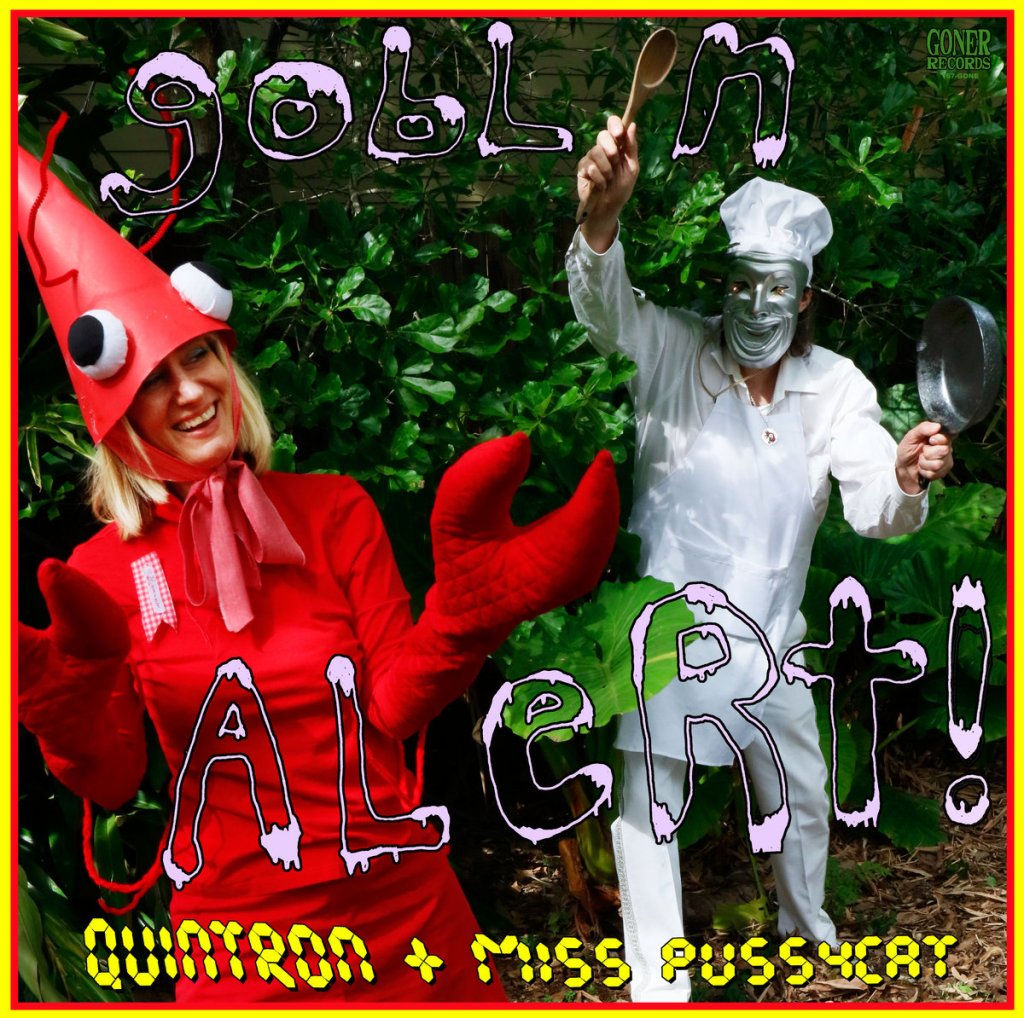
Original photo: Jonathan Traviesa. Handmade mixed-media by B.

Here at Gimmie we’re big fans of Quintron and Miss Pussycat! The New Orleans-based creatives have recently released new album Goblin Alert, a rollicking good time of organ-driven electronic rock n roll done as only they can do. For this record they ditched the drum machine in favor of including musicians Sam Yoger (Babes, AJ Davilla) on drum kit and Danny Clifton (Room 13, Jane Jane Pollock) on hollow body guitar. Gimmie interviewed both Quintron and Miss Pussycat; today we share our chat with Quintron, with Miss P’s chat coming next week.

QUINTRON: I released a new product of this invention I’ve been working on all through the Covid times called ‘The Bath Buddy’ it’s a water conservation device. I just put an infomercial out for that.

What inspired you to create The Bath Buddy?

Q: Check out the informercial. There’s a website for it bathbuddy.space. I don’t know what that ‘space’ is all about but it’s the cheapest website I could buy.

In our house we have three or four people and no showers, only bath tubs ‘cause it’s New Orleans and everybody has those big clawfoot tubs. They take a while to fill up, you turn the water on and you go check your email or do something and you forget about it then the water goes into the overflow drain and you start wasting tons of water; we’ve left them on for way to long sometimes and flooded the house downstairs a couple of times. I was like, why isn’t there this thing that alerts you to when your water is at just the right level that you want it? I invented this thing for us and our roommates, I made us put them on all of the tubs and it totally worked. Our water bill started going down, a lot! I thought it would probably be something that other people would be interested in so I built some, letting people check ‘em out. Farmers and people who have livestock, horses especially, where you’re filling up these giant metal tubs of water, hundreds of gallons. You put the hose in it and leave it for a while. I was talking to people that would forget overnight and they’d really waste thousands of gallons of water; those people are into what I made too.

What is it that interests you about making things?

Q: That one was to solve a problem. As long as mankind has ever and shall ever exist there will always be gaps between problems and solutions, there’ll be voids there and that’s usually what interests me in making something. Usually, it’s that there’s a thing I want to do or problem I want to solve and there’s nothing that I know of that’s available to solve it or do that thing.

In the case of the Drum Buddy, it was a musical thing where I mostly play by myself one-man band style and I wanted to do something with my right hand that made a certain type of sounds like cylinders, like scratching a record but playing an analogue synth at the same time, where I could still play with my left hand with the organ, that’s how that project got started.

You’ve been making things your whole life; what’s something valuable that you’ve come to know about creativity that you could share with us?

Q: It’s something that everybody kind of knows but it’s that nothing is ever done, at no point will civilization be able to kick up their feet and say, ‘Alright, we got it licked’ and read magazines and play video games for the rest of eternity. There’s always going to be whatever you’ve built to solve whatever problems is going to become obsolete in that it’s not sustainable anymore; it is suddenly in the world wasteful or too expensive to operate or too big or heavy or whatever. The main thing that occurs to me over and over is that everything is a prototype, everything is just getting ready for the next, for Mach 20.

The first track on your new album Goblin Alert is called ‘Teenagers Don’t Know Shit’; what were you like as a teenager?

Q: I didn’t know shit! [laughs]. I was a pretty lonely, insecure, confused teenager, that probably describes most teenagers but some hide it better than others. I was super-duper insular, brooding, moody and private; not confident, not good in school, not a good relationship with my parents, pretty unhappy honestly. The song is by no means a diss on teenagers either or some political statement at all, it’s something else though, I hope it doesn’t come off like that.

No, I don’t think it does. How did you first discover music?

Q: Everybody discovers music by living in a musical world, it’s all around us, especially growing up in the South. I think people are surrounded by music, no matter what culture or no matter where you are.

Who were the first bands or artists that really spoke to you?

Q: There’s like your childhood musical curiosities. Children’s music is really special in its own thing. Then music turns into this thing where it represents the type of person that you’d like to become or the dream that you would like to dream or the fantasy that you want to perpetually have or the escape pod that you want to get into. A lot of the music I liked when I was really little were these dramatic… I was really into story songs like ‘Dark Lady’ by Cher and ‘Half Breed’; songs that were little mini-movies. Then the energy and the excitement of punk rock, like every other person that got into that [laughs].

You started making your own music when you were a teenager?

Q: Yeah. I started building instruments. I started out as a drummer. I built trashcan woodblock kits in the garage. I was always fooling around with tools, my dad’s an engineer so I always had toolkits and wood to build stuff and I had a garage because I was a suburban nobody kid. I was building big junky homemade trashcan drumkits in the garage.

What drew you to making your own music?

Q: I sort of did right away as a pretty young teenager started having bands and playing covers of songs that we could learn and stuff. It was something to do that I was kind of good at.

Do you think making music and inventions helped you with your confidence?

Q: Yeah, for sure, fooor sure. If you’re a creative kid or an artsy kind you might try a bunch of different things and I did. I tried Art class because I liked the art teachers and I liked the other kids who were into art.  I liked Drama because I liked the drama teacher and the other kids that were into drama. I thought I liked them but then they were just so outgoing and something else that wasn’t my thing and then I found the brooding, angry behind-the-dumpster music kids and was like, okay! I’m good at this thing and I like those kids better [laughs].

Why did you feel it was time to make a new Quintron and Miss Pussycat album?

Q: Well, to be perfectly honest, we had the songs, a good batch that were mostly, except for a couple, that were road-tested. We hadn’t made an album for a while where… a lot of bands get stuck in a rut where the first album is really great because it’s road-tested and the lyrics, it’s your life on the page, then you make another one and you start recording it and maybe it’s half-baked. We didn’t make one for a really long time because we wanted the next one to be baked fully. We spent a real long time baking it and it was time to put it out and we had a great opportunity to go into this new recording studio in Gainesville, Florida; one street from Tom Petty’s boyhood home! We were the guinea pig band for this very fancy new tape studio called Pulp Arts. They let us have almost free recording and the engineers got to learn their way around a tape machine, the new equipment and the room. It was a great situation.

How do you capture your energy on record?

Q: I think most of the time we’ve failed to be honest [laughs]. This album gets pretty close. We had a live drummer and live bass player; we’ve never had that before, that makes a living breathing human musical experience a lot easier to capture. Being a first-time thing for us, it was really exciting. We’ve never toured with a live drummer, so it was all new and the excitement of the new keeps everything popping for everybody. For the most part though, I would say that we’ve always been better live than anything we’ve put out on record, with the exception of the more abstract experimental records that are made to be on record, those stand on their own. As far as capturing the Q & P live experience, I’d say it’s more misses than hits.

I know that you like to invent your own sounds and that your music often comes from hundreds of hours of experimenting; what experimenting did you try with this batch of songs?

Q: I had a new Mellotron at my disposal, so there was lots of messing around with that. I just made a solo Mellotron record and I’ve really been getting into that instrument, I’ve been exploring what it can do, playing it through other things and using it with a Talkbox. It’s usually finding new pathways through new sounds and new instruments and the fun of going into a big fancy recording studio and they’ll have amps and weird stuff laying around, your ideas come from the things around you, also the people you’re with.

Do you and Miss Pussycat work on the lyrics together?

Q: Sometimes yes and sometimes no. There’s definitely songs where it’s all me written, I have all the lyrics and I’ll present them to Miss P and she’ll be like “I don’t like that word, why don’t you change it to this” and it will explode my head in a whole new direction! I’ll change a word here and there; she’s like a final look editor sometimes.

Then there’s songs that she writes completely. I’ve pretty much been the one that writes all the music but sometimes she comes with a set of lyrics and it always has to do with puppetry or some crazy story that she has. With ‘Goblin Alert’ we sat down at the kitchen table while we were in the studio and wrote the lyrics together.  

Were any songs a challenge to write?

Q: ‘Goblin Alert’ was the biggest challenge because it was so last minute. I’m not the fastest draw in the west when it comes to organ, I’m more of a slow, nod-your-head- jamming kind of guy; that song was really fast! Getting the riffs down the way I wanted to, I had to do a lot of takes, it was really hard. We were stuck on the lyrics almost to the last day of recording and we had some brainstorm epiphany between the producer Greg Cartwright and me and Miss P sitting down to write the lyrics. That was a tough one.

There’s a song on the album called ‘Where’s Karen?’ that was written about a girl the went missing at Mardi Gras.

Q: It was actually a friend of ours. It was a friend who… it was Mardi Gras day and he was off in his own world, if you know what I mean being Mardi Gras and everything, and he kept talking about this girl named Karen that he was worried abut and where she was. We didn’t know what or who he was talking about and we had to go out. It’s how the song describes it; it was freezing rain. We went out into the day and we locked him in this apartment so he wouldn’t hurt himself but I left the tape recorder in there recording to see if he was going to spill the beans on who this Karen was. That inspired the fantasy of the song, it’s not a direct from life narrative telling.

So, you kind of made a field recording of him?

Q: Yeah, and the whole day walking around Mardi Gras I was thinking this is going to be a song. When we get back, he’s going to tell us what he is talking about and we’ll find out who this is. It’s such a great line for a song, this was way before the stupid meme, it was way before that was a thing that this was going to be the name of the song.

One of my favourites on the album is ‘Block The Comet’.

Q: That’s a collaboration on lyrics between me and Miss P.

What’s something that you’ve learnt from Miss P? Last time I spoke with her she told me that one of the best things you’ve taught her was to make a marshmallow casserole.

Q: A marshmallow peanut casserole!

What I’ve learnt from her is how to be happy, honestly, that’s the god’s honest truth. How to ignore other people’s negativity and to be happy, to walk through life in a dream of your own making, how to make that purposeful and helpful. That’s kind of oblique but that’s the biggest thing I’ve learnt from her. Miss P is just one of those people that… it’s scary sometimes when the world kind of cracks through the shell, sometimes it does for everyone and it’s like, hey, the devil is out here and sometimes the sky is falling and sometimes people die. When you’re so intent on just being happy and spreading joy, sometimes those are the people that get hurt the most when that bubble gets cracked a little bit, which can worry me but I have seen it’s a better way to be than to be constantly aware of that and ultimately playing to it, it’s more cynical.  

What drives you to create so much? You have the Weather Warlock invention, you put out a book, lots of different kinds of records. You always seem to be making things.

Q: I don’t know. Anything I could say would sound corny. It’s just to keep from going crazy, I suppose. I get ideas and I become obsessed with them becoming reality.

Is it satisfying once you make it reality?

Q: It is! I’m not one of those people that are depressed when a record come out. I like results. I like finishing things. I like putting the stamp on it and putting it in the mail, saying that is done, that is ready for primetime! Then moving on to the next thing. Really the joy is in the creation. I’m proud of having records out and it’s nice when people say they like them, but the real joy in life and the most time that you spend as a living organism is in doing the actual things, that’s just fun, right?

Totally!

Q: It’s not saying thank you very much and taking a bow—it’s doing stuff.

Yeah, it’s the process, those moments and it’s the connections you make with yourself or with someone else you’re working with, it’s an experience you’ve had together.

Q: Yeah, that’s the essence of friendship and relationships. In order for me to become intimate with somebody or become friends even with somebody, we have to work together or we are just not on the same page, it’s not going to happen. Everybody that I really end up spending a lot of time with or becoming friends with or having relationships with, it’s only through work. That’s when your facade is gone, that’s when your ego is gone, that’s when you’re chipping away at something that is not you. It’s the only way to produce a really truthful communication between people.

Do you learn things about yourself when making songs?

Q: I can’t say I’ve ever stopped and said, hey, Quintron, that’s not your real name is it? No. Did you learn something about yourself today? [laughs].

I read an interview with you in Popular Science magazine and it said your name was David.

Q: Ah-ha. I’m named after my father. I’m a III. Even my dad calls me Quintron. It’s been a nickname for so long. It just sort of happened because the first album is under that name, it’s something that people just started doing and journalist started doing because they thought that’s what I wanted to be called or that it was my real name or something. It’s been so long and I think it amuses my family enough that they have adopted that.

That’s nice.

Q: Yeah, when your parents participate in your rejection of reality! [laughs].

Please check out: QUINTRON & MISS PUSSYCAT. Goblin Alert out now on Goner Records; get it HERE and HERE.

Byron Bay punk band Mini Skirt’s vocalist Jacob Boylan: “Super frustrated by purposefully hateful and bigoted right-wing pigs.”

Handmade collage by B.

Northern New South Wales band Mini Skirt play Aussie pub punk that captures the climate of current-day Australia, things aren’t always picturesque and idyllic; the vocals are urgent and frustrated while the music has a rawness and melody sonically painting a picture of the hope through the struggle. Gimmie interviewed vocalist Jacob Boylan about this year’s debut LP, Casino.

Mini Skirt are from Byron Bay; how would you describe where you live?

JACOB BOYLAN: The area is absolutely beautiful. It’s also more and more like Hollywood but can’t complain about too much.

Where does the band name Mini Skirt come from?

JB: Pulled it out of our asses. Pretty much the best we could come up with the time [laughs]. We don’t really think about it too much. I don’t think any of us even really associate the actual article of clothing with the name anymore.

What do you enjoy most about music?

JB: That you can listen to it in the car.

What first got you into it?

JB: I think probably my dad’s tape/CD collection. And then Eminem.

How did Mini Skirt get together?

JB: Over a beer and a yarn at the Railway Hotel.

You’ve released debut LP Casino this year. Previously you’ve mentioned that often your songs come from your observation of things; what kinds of things were inspiring this album while writing it?

JB: The lyrics were kind of compiled over a year or so, so there are a few different things and different moods that kind of get tapped into. A lot about being frustrated by the echo chamber of the elite lefty PC police and at the same time being super frustrated by purposefully hateful and bigoted right-wing pigs. It’s all about the tightrope baby.

I especially love the first track ‘Pressure’; what kind of place was this song being written from? Were you feeling pressures in your own life?

JB: A little bit. I just felt like I was working heaps at the time and felt like having a sook about it. The song didn’t help much though, I still sook to my girlfriend every night.

Was there any song on the album that was a challenge to write?

JB: I personally struggled a bit with writing a chorus for ‘Face Of The Future’. Sometimes they take a bit of panel beating, but generally they come together fairly naturally over time.

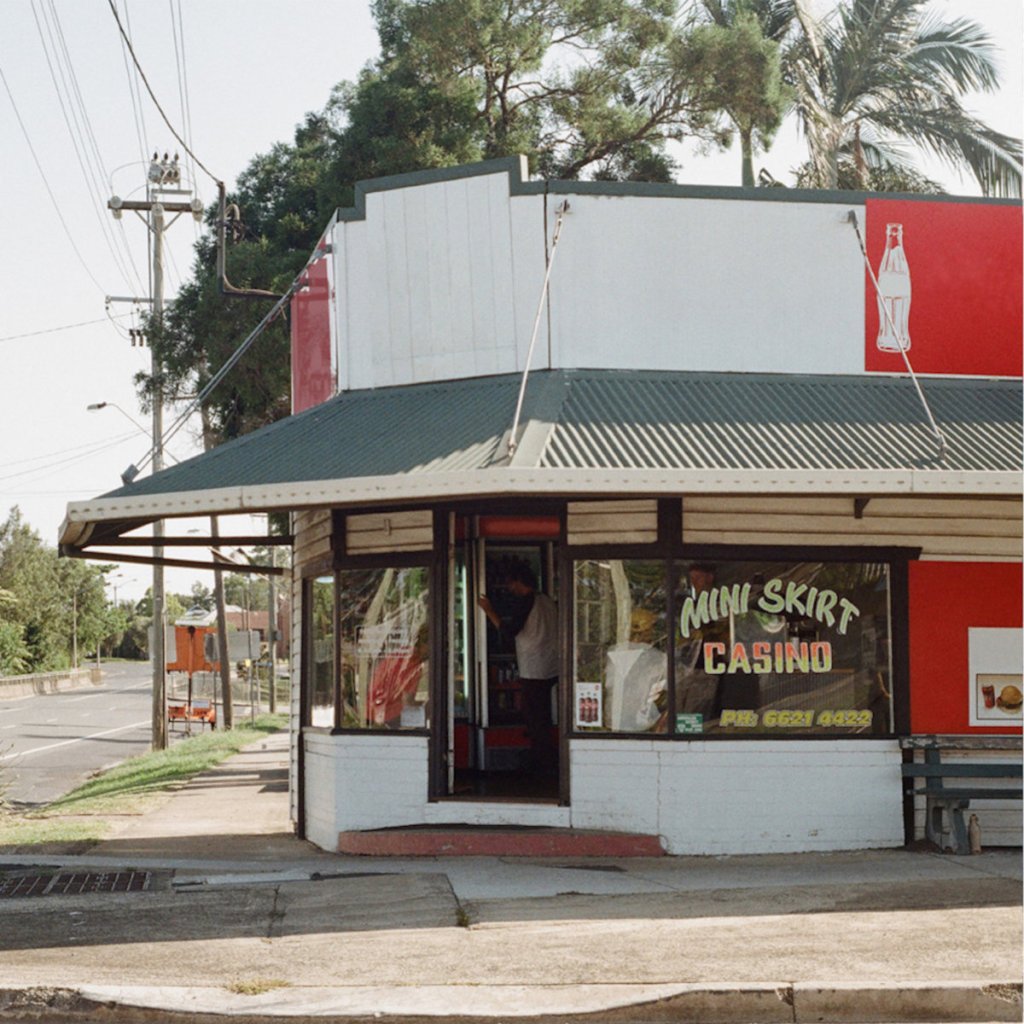
Can you tell us the story behind the album cover image with the band’s name and the album title written on the shop window?

JB: I kind of had the rough idea of having our name and album written on a corner store window where it would normally say “Fish’n’Chips” or whatever. Then one day I drove past “Skimmo’s” in the Lismore Industrial Estate on my way to work and was like “That’s the shop!” Long story short we called up old mate and he was sweet with it so we got our friend Nathan Pickering to come out and do the signwriting and our other mate Parko to come and get the pic. Pretty iconic. I think we were all pretty stoked. The shop owner wanted us to leave it up, he was a legend.

The album was recorded at The Music Farm in Byron which is a historic recording studio first born in the 1970s; how did you come to record there? What was the space like?

JB: Our dear friend and the Mayor of Byron Paul McNeil was managing The Music Farm and it’s one of the most crazy and beautiful properties I’ve ever seen so we figured that was the spot to record. It’s so good in there. Paul did a great job setting it all up.  

You recorded with Owen Penglis from Straight Arrows; how’d you get together? Did you learn anything from working with him?

JB: Indeed! Through Nick from Nick Nuisance and The Delinquents, we hit up Owen and he was psyched. I think he was mainly just psyched for a holiday. But he didn’t get much time for recreation. We learnt that he’s real good at pinball and that he’s a total badass.

When you think back to recording; what’s the first memory of the process that pops out at you?

JB: Going for a swim out the front with Owen each morning before we went out to record was pretty classic. Just watching Owen in general was pretty great. Also seeing all the stuff we’d been putting together for over a year finally come together into something tangible.

What have you been listening to lately?

JB: Right now, I’m listening to ‘Russell Coight’ by Shadow feat Huskii and Vinsins. I know a couple of us have been listening to a fair bit of country. Cam and I always listen to a fair bit of hip-hop. Jesse was listening to Underoath the other day. Also, The Floodlights album is excellent. Other Jacob said he listened to the new Flatbush Zombies album the other day when he was cleaning his house.

What do you do outside of music?

JB: We all work full time. Surf a bit. Watch the footy. Enjoy our fair share of neck oil. I’ve got a print studio I spend heaps of time at. Jacob has a motorbike, so that’s pretty cool.

The world’s a pretty weird and uncertain place at the moment; what helps keep you positive and get through?

JB: I just got a pet Lorikeet, his name is Raffy, he keeps me pretty happy. I can send a photo if you want!                           

Please check out: Mini Skirt on bandcamp; on Facebook; on Instagram.

German Experimental Musician Michael Rother: “I am always very optimistic because I love music…”

Original photo: HPschaefer. Handmade collage by B.

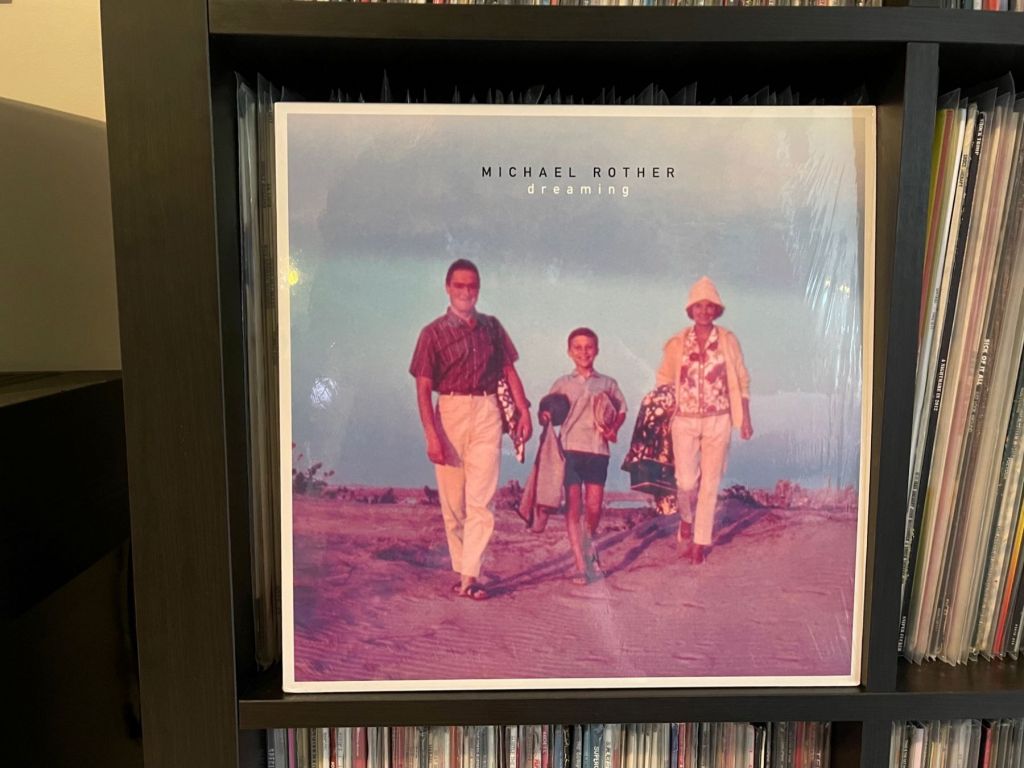
Michael Rother has been making music for most of his life—he is a sound pioneer that is always evolving and very passionate about his work still to this day. Rother is a founding member of Neu! and Harmonia, as well as an early member of Kraftwerk. His latest album Dreaming is lush with a fragility and beauty that can only come from being vulnerable and opening one’s heart, as Rother does here in this very personal piece of art. Gimmie spoke with him about its creation, of creativity and freedom.

How important is it to you to have tranquillity and solitude when you create?

MICHAEL ROTHER: I can concentrate better when I’m on my own but sometimes it’s good to be in a group of course when playing live, this is also in a way being creative, maybe not the same as when you’re working on new material but tranquillity and absence of noise are really important factors for me. The place where I live – now I’m actually in Italy with my partner – in Germany is a perfect example of tranquillity because there is no big city nearby, no autobahn, of course now in Corona times there are even less airplanes in the sky. There’s a big river in front of the house and fields and hills in the distance, this is an environment I started loving when I first moved there in 1973 to work with Harmonia.

Yes! That’s when you built a recording studio.

MR: Yes. I started a professional recording studio. We always had a room we called our studio which was filled with the gear that we could afford, for the first Harmonia album it was simple stereo recording devices, a very simple mixer and our own sound creating gear. In the late ‘70s I started with my professional gear because I was so successful [laughs], strangely with the three solo albums, that I could afford to buy the same gear Conny Plank had in his studio, that’s the old analogue 24 track 2-inch, which is in the studio. Now days, for quite a few years I have a living room studio which I especially like working in. It’s always been my dream to not separate the music from my life, the other life, daily life. I always had this idea of one big loft, but this is being immodest because I have such great opportunities, it’s wonderful to have a studio like the one that I have. That’s the problem with wishes, you always get more wishes, one wish is fulfilled and the next wish is born.

The last album I recorded and worked on in my living room studio with mostly the gear I use when I play live, it’s small, a computer and some effects and of course the necessary hardware and monitor system, which I don’t carry around. It’s the best state for me, to come from the kitchen corner and sit down and listen to the new mixes I’m working on when I’m around the corner. Are you a musician?

Yes. I’m not one for labels much but I do like making noise and sounds!

MR: I can relate to that! You can call everything noise. I would like to know how cats hear my music! So you will know the situation, that it’s very different if you sit in front of your monitors like ears straight-ahead and listen intensely to what’s happening or you go five meters away around the corner and you let the mix play, then you suddenly have a totally different hearing, listening possibility. You notice somethings are maybe too loud or just get drowned, you have to maybe work on better to keep them listenable. Anyway, this is a situation I have been enjoying working on Dreaming.

Dreaming is such a beautiful album there’s a real intimacy to it, it’s very dreamy.

MR: The history of the material on Dreaming goes back to the late ‘90s when I did a recording session with the British cello player and singer, Sophie Joiner. When I worked on Remember (The Great Adventure), I had so much material, much more than I could put on that album and I left it unfinished, some of the material were only sketches with some voice material; I knew that I would always come back to that material. In the years that followed I very much enjoyed playing live around the world, I was in Australia twice, after that also Japan, Russia, China, Mexico and all-around Europe. I did some film scores and other music, that kept me very busy and I enjoyed being on the move and being in a live environment, enjoying the music with an audience in front of me instead of working on my own and getting feedback months or years later, which is nice. That’s why the material was sleeping all these years and when Corona hit us in spring this year and suddenly all the concerts were cancelled, I had time. I had so much free time that I thought, this is the opportunity to pick up that material, it was some kind of duty that I felt. It sounds a bit strange but it was not only the joy of going back to that material, it was also some kind of duty because I felt that it was so beautiful. Sophie Joiner’s voice is unbelievable.

I talked to the label and they were very happy that I could record a new album to also include in the second boxset, which was released a few weeks ago—time just flies, it’s crazy! I had a plan and a purpose. It wasn’t a total lockdown but we had restrictions in Germany which were in no way as bad as in Paris, Madrid and Italy for instance; the situation now as I’m talking is actually exploding again, the situation is frightening. It’s troubling just today the child of my partner received a test result, fortunately there was no Corona.

That’s great news! When you were finishing Dreaming did you have an artistic vision of where you wanted it to go?

MR: I’m not always fully of aware of the motives and where the music is leading me. It’s actually the material that also makes me follow. It’s not having a wish and forcing the music to become as you would like it to become, it’s more the other way around, I guess. A track like ‘Quiet Dancing’, this was the original sketch then I reacted to the basic idea. When I recorded the melodies those were reactions, they weren’t premeditated. Especially because there was this time gap of maybe nearly twenty years with some of the sketches, I had a new start—everything was still deep in my system though. I remembered every moment – it’s strange how music stays so fresh in the system – I remember every second.

Artistic vision, it’s not some kind of formula that I develop on a storyboard then put into music. I work with material, some artists would use clay or paint colours, I work with sounds and melodies. It’s not a theoretical thing. I’ve never been someone that is interested in discussing theories about music, like when Brian Eno was in force, he was full of theories; he’s a very interesting person. It was the same with Klaus Dinger in Neu! or with [Hans-Joachim] Roedelius and [Dieter] Moebius in Harmonia—we were always musicians who worked on music and that was the result. It was different from the Kraftwerk people that maybe had a vision, some kind of idea; let’s make an album that has this vision of a train running through Germany or Europe and make Trans Europe Express. It’s always connected to sounds. If you ask someone who is capable of analysing the ingredients of the music, the deeper connections they find in the music, they will probably be able to explain some theory to my music but I’m not that theory guy.

What is the significance of the title Dreaming?

MR: Dreaming has been an important element in my life for many years. I sometimes have very great dreams, not always but I’m often travelling at night and dreaming, also meeting people that are no longer there, this happens frequently. I’m not any different from any other people but for me the state of sleeping and dreaming is important. I enjoy when I have the chance to wake up slowly and remember what happened at night, what I was dreaming about, to think about those impressions and how they came about.  The album Traumreisen that came out in 1987 was already an indication, that was a word game because traumreisen in the German language is an expression used by travel agencies, I sometimes do that although it’s not very wise because people get it mixed up and don’t understand the joke. It’s like a dream voyage, mostly known as an expression of travel agencies. For me of course, it was something I did at night, travel at night in dreams.

Wow! That’s really cool.

MR: Yeah. I sometimes like to play with titles, with double meanings. I have noticed that quite a few people just stick to the surface, the first meaning, they don’t even expect a second meaning to be hidden or beyond that. Also, my album Katzenmusik ‘cat music’ was an example. There were comments from fans saying: why does he call his music cat music? It’s not screeching like cats fighting! [laughs]. It’s not very wise of me but I enjoy it and playing with language.

With the album title Dreaming this was very clear though. I don’t know when in the recording sessions I thought, that was so magical the way she uttered that word. To be honest I wasn’t sure if it was too sweet but then I stuck to it. Now I am totally happy that I didn’t waiver.

I think it really fits the music. Where does the cover image come from?

MR: That’s a family photo. It’s my brother, my mother and me. My father took that photo when we were in Karachi in Pakistan. It is very personal. It’s actually the same with music, music is also, how personal can you get? It’s connected to my person and my history; it actually means a lot to me. This photo is wonderful, I enjoy looking at it every day.

It’s a beautiful, emotive image. I get the feeling that you are very fond of water too? You seem to have a connection to it.

MR: [Laughs] Oh yes! I really do. I don’t’ know if that’s typical but if you see little children they also enjoy running into the water at the beach. I feel very at home in water. Thinking about it, I’ve lived next to water all my life. I had the opportunity of swimming in the Mediterranean in the summer and it’s wonderful. I like waves actually, so Australia would be great. Although I’m afraid of sharks, I must confess.

Same! Me too.

MR: [Laughs].  People talk about fears of flying, I don’t have that. I tell them just look at the statistics and yeah, hmmm… with sharks it’s the same, more people die falling off ladders or hit by lightening than from sharks. It’s just something from the subconscious. I wouldn’t want to hurt a shark but I wouldn’t want to be attacked by one either.

I remember once when I was in California, I was staying at Flea from the [Red Hot] Chilli Peppers’ beach house with friends and they took me on a canoe trip on the water and I remember looking suspiciously at the water [laughs]. I felt quite vulnerable. It’s crazy. I am very, very much into water and water activities also. I hope to still have the chance one day to learn to surf, real surfing, maybe when I’m ninety! [laughs].

In Karachi we were at the beach every weekend, Saturday and Sunday. I was in and out of the water all day long. I remember there being nice waves and doing bodysurfing. It was so much fun!

Living next to the river like in Germany now or in Munich, we also live next to a river in Hamburg and even when we were in Winslow near Manchester in the UK there was a little small river, which I was in a lot. I don’t want to say this is more pleasure for me than other people, but it is a real pleasure to be in this element. Also, to look at the water surface, the mystery, you don’t see what’s below the surface and the imagination of how the sea bed develops—that’s something that drives my imagination.

Yes, and we are composed of a lot of water and water can be so many different forms liquid, frozen and it can be rain or perspiration, so many things.

MR: Yes [laughs]. Very good!

I really loved the film clip for your song ‘Bitter Tang’. It contains footage from your archive of when you were young.

MR: That’s right. You see my father; he died many, many years ago when I was fifteen, he died in ’65. And my mother… it’s also a very personal piece of work the video. My friend Thomas Beckmann edited it in collaboration with me. I will use his expression, “We did a great job!” [laughs]. Thomas did a wonderful piece of work with the video; I am very happy we have it. Some of the footage I filmed. Thomas was also with me when we found Sophie Joiner in Hamburg.

I know that, in regards to your creativity, you enjoy total freedom and in your music you like to create a feeling of freedom; what does that freedom look like or what does it mean to you?

MR: That’s an interesting question. Freedom is like for a cat, a cat needs to be free, if you try to hold a cat, she’ll go crazy. The possibility of deciding upon your own personal wishes, not being forced by some problems regarding money, being independent, artistic freedom is of course a part of that. I was fortunate from the beginning, it was the same for Klaus Dinger and my Harmonia colleagues, we were in the same spirit. We wanted to be free and we accepted the downside of this freedom, although we expected the best; I am always very optimistic because I love music. Being independent of the record companies, of their decisions and decisions made by other people, this I think was one of the most important elements.

Please check out: Michael Rother; on Facebook; on Instagram. Dreaming and Solo II out now on Grönland Records.

Rotterdam’s Lewsberg: “Perfection is boring.”

Hailing from the Netherlands, four-piece rock band Lewsberg came to our attention while listening to an episode of 3RRR’s Teenage Hate radio show. Their latest release LP In This House is elegant, stripped down rock n roll with simple, eloquent storytelling. Gimmie spoke with vocalist-guitarist Arie Van Vliet and guitarist Michiel Klein.

Why is music important to you?

ARIE: Music makes things easier.

MICHIEL: Easier in the way that it can help you deal with the absurdity of life.

A: Yes, exactly.

What interests you about making your own music?

M: Why only listen to music? Or carefully try to reproduce old music? Why not make your own music?

A: Sometimes I am so bored of making music, of tuning my guitar, of singing our songs again and again, of the music industry, that I almost decide to quit playing and start doing something completely different. But in these occasions, I’ve always realised right in time that nothing else would give me satisfaction either. So I guess that’s the reason why I keep on making music.

M: And you still wonder why people call you a nihilist? I think it’s important to realise that you can make music without having to follow the ‘rules’ in the music industry or in society in general.

Lewsberg are from Rotterdam; what’s it like where you live? Can you describe your neighbourhood for us?

A: Rotterdam used to be a pretty rough city, unpolished, with a lot of concrete and with a lot of space for outsiders of all sorts. Until very recently. A couple of years ago Rotterdam started changing, and all the imperfect buildings and people had to pay the price. Rotterdam these days is a city where the streets are tidy, the flowers blossom and the people smile. But I miss the Rotterdam that welcomed anyone, the city where you could park on the sidewalk and pee against a bus shelter.

M: Rotterdam was not a city that welcomed you with open arms when I moved here around twelve years ago. You had to make an effort and have quite some stamina before it started to feel like home. But I think this is a good thing. Things shouldn’t come too easy.

I understand that the band’s name was inspired by writer Robert Loesberg and that reading his first novel Enige Defecten changed the way you looked at language and how it can be used completely; can you please elaborate on this a little and tell us how it changed the way you look at language?

A: I always thought pleasing people was the main goal of writing a book. Or maybe even the main goal of creating things in general. Until I read ‘Enige Defecten’, and I realised that you can use language in a completely different way. That you don’t have to take the reader into account. That you can decide to annoy a reader. With the way you use language, or with the stories you tell.

Another thing I found out while reading ‘Enige Defecten’, is that I have a preference for rather boring stories. Stories that don’t have a start or an end, everyday scenes, thoughts without morals.

Photo by Cheonghyeon Park.

We really love the Lewsberg sound: bare-boned and not hiding the mistakes; why was it important for you to not hide mistakes?

M: I’ve never understood people who say they want to write the perfect song. Perfection is boring. It suggests that there is nothing left to add or to change. It’s static. It leaves no space for alternatives. And I think alternatives are very important. There is not just one way, the right way. There are a lot of ways, all with mistakes. Why do people think it’s important to hide mistakes?

A: Now we’re talking about hiding mistakes… That’s the thing that really frustrates me about how Rotterdam, or the world, is changing. That most people think the world is a better place when all bumps have been eliminated, when all mistakes are erased. But they’ve never asked themselves why this would necessarily be a good thing.

I know that you don’t make your songs lyrically personal and that you write more from the perspective of an observer about everyday ordinary things; what inspired you to write this way?

A: To be honest, I think I am an observer. I have never really been a part of anything, I’ve always been the witness. I feel comfortable in this role, it makes me feel at ease in almost every situation. So actually, it just feels natural to write this way. This is just the way I experience things.

What was one of the most interesting things for you about writing or recording your latest album In This House?

A: We recorded our album during a heat wave. We never had such warm days before in the Netherlands. Most people stayed inside, because it was too warm outside. Henk’s studio, where we recorded, is a dark and cool place in a narrow alley in The Hague’s city centre. We forgot about the heat outside while we were working on our music. I’ll never forget the feeling I experienced each time I opened the front door of the studio, right before walking into a hot, bright, silent world.

What was the idea behind the minimalist cover art of the album?

A: I don’t think it’s really minimalist. There’s actually an entire world behind the black surface.

M: I see it as an invitation for people to fill in some of the blanks for themselves.

Being a native Dutch-speaker; how does your limited knowledge of the English language shape or contribute to your song writing process?

A: The boundaries of a language that I don’t fully have a grip on, make it easier for me to write. When I write things in Dutch, the words leave my pen too quickly. I like language when it’s compact, when it doesn’t say more than needed. When you write things in a language that isn’t your first language, that’s one of the things you get for free. Besides, writing in English makes it possible to write with the necessary distance from the subjects I want to depict.

I enjoy how you have different versions of the same song – single versions are different from the album versions and live versions are different from the recorded versions; what was the thought behind having the different versions?

M: I once read this great quote by Matt Valentine (MV & EE / Tower) in an interview: “It just seems ridiculous to play things the same way each time, I mean, you ever brush your teeth the same way?” And although Lewsberg is not a psychedelic improvisation outfit like Tower Recordings, this remark is just so relatable. He also talks about “making sure the emotion of the environment is captured”. I wouldn’t use these words exactly but obviously the environment is very important in relation to how songs are performed. The environment can be different things. Is a song placed on a single or an album? Where is it placed on the album? Where is it placed in a live set? Because a previous song will affect how the next song is being played. Where is the performance taking place? Is it a crowded place or almost empty? There are just so many factors that can and will influence a performance, both during recordings and live shows, and I think it’s good to be conscious about this and embrace it.

A: That’s one thing we really enjoyed about the recent shows. That we played in circumstances we had never played before. We never played shows for a seated audience before, we never played shows for only fifty people in a hall with a capacity of four thousand people before, we never played five shows in three hours before. Completely new circumstances, that allowed us to play our songs in a different way, both intentionally and unintentionally.

You played your first live shows in nine months; how did it feel?

A: At first I wasn’t really looking forward to it. I didn’t touch my guitar for almost six months and I hadn’t missed making music at all. Plus I didn’t feel the urge to be on a stage after six months of isolation. But looking back on these first live shows, I have to admit it was nice to be on the road again. Though it was exhausting to talk to people after the shows. After spending so much time without seeing too many people, I wasn’t used to talking to strangers anymore. Sometimes people were really emotional about the gig, because for many people it was the first gig they attended in 2020.

I’ve heard that you love to read! What was the last thing you read that you found really fascinating? What was it that piqued your interest?

M: Lately I’ve been reading some of the poetry by Hendrik de Vries, a Dutch poet and painter from Groningen, a town in the North of the Netherlands, also the town where I was born and grew up. He started his literary career around 100 years ago. He was something of an outsider, literal in a geographic way, but also because he was really traditionalist in the way he structured his poetry in an age where experimenting with free verse was the trend in avant-garde circles. The language itself is also kind of old-fashioned and archaic but very personal, wild, melancholic, scary and dreamlike. Surrealist in a way. It’s not poetry that I can understand or fathom, but the images and atmospheres it conjures are just so strong. Fascinating is the right word.

A: I didn’t read a proper book for ages, but thanks to the lockdown I discovered reading again. I read a lot of Dutch books, from dead writers like Gerard Reve to young writers like Marieke Lucas Rijneveld. And I loved reading the first two books of Danish writer Tove Ditlevsen’s Copenhagen Trilogy. Now I’m waiting for the third book to come out in Dutch. All these books have in common that nothing is really happening. If a writer can put that nothing into words, I’ll read the book. But if I had to pick one book that really left an impression this year, it’s Bell Hooks’ The Will To Change: Men, Masculinity, and Love, an explanation and denunciation of patriarchy. I read it in August, and I still think about it almost every day.

Is there anything else you’d like to share with us?

A: We’ve started a label recently, called Soft Office. The first release came out today (on Friday, November 13th), it’s Austin-based band Chronophage’s second album The Pig Kissed Album. If you like Lewsberg, it could be interesting to keep an eye on these releases, since this is the music we like. You can find more info on Soft Office’s Bandcamp-page.

Please check out: Lewsberg.net; on bandcamp.