Barely Human’s Max Easton: ‘Punk taught me to think more critically.’

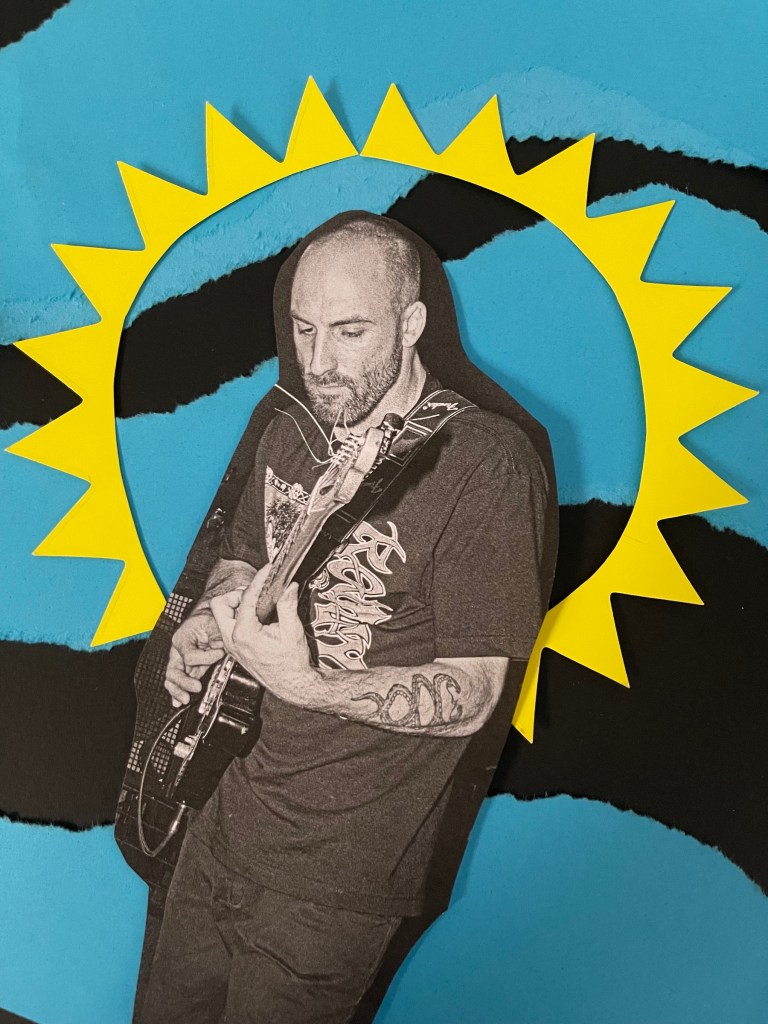
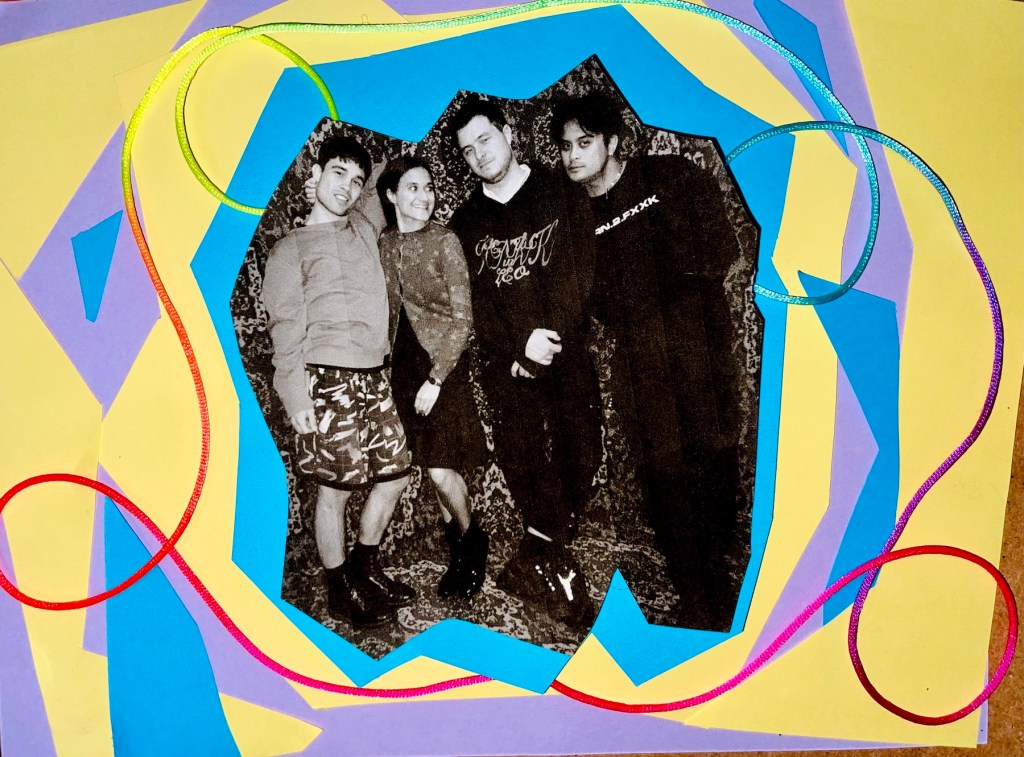
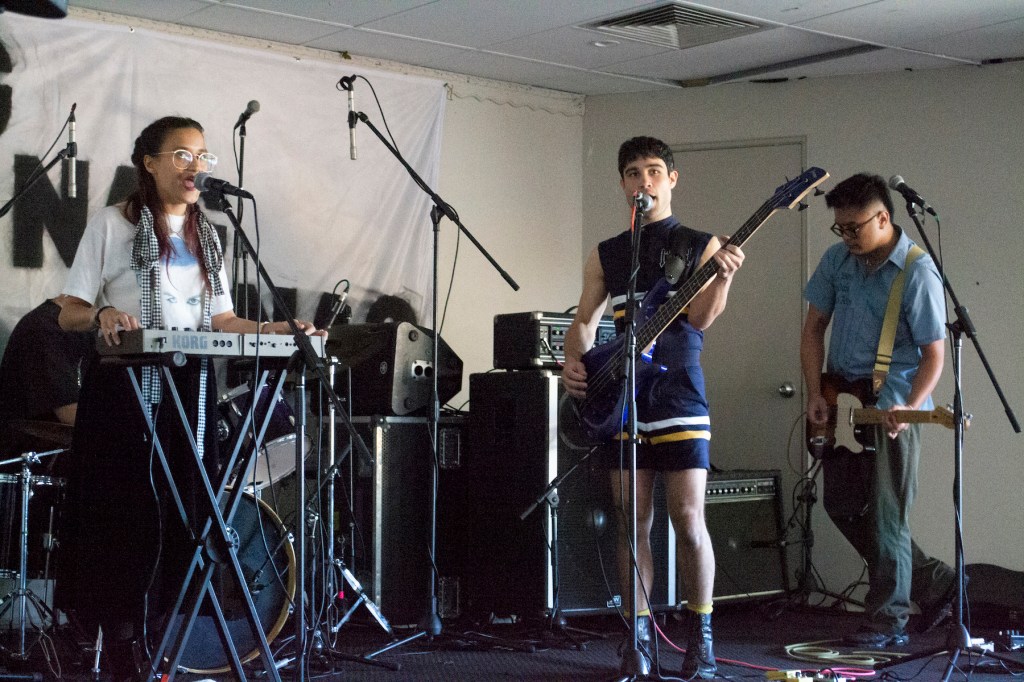
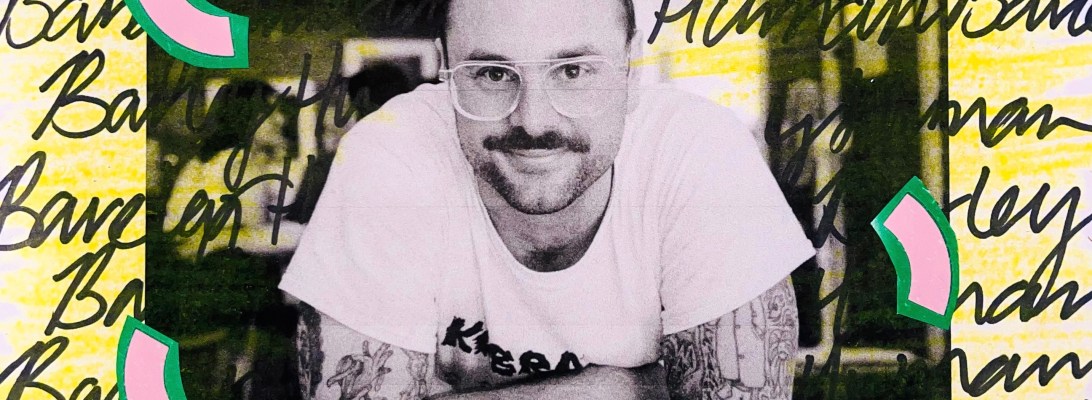
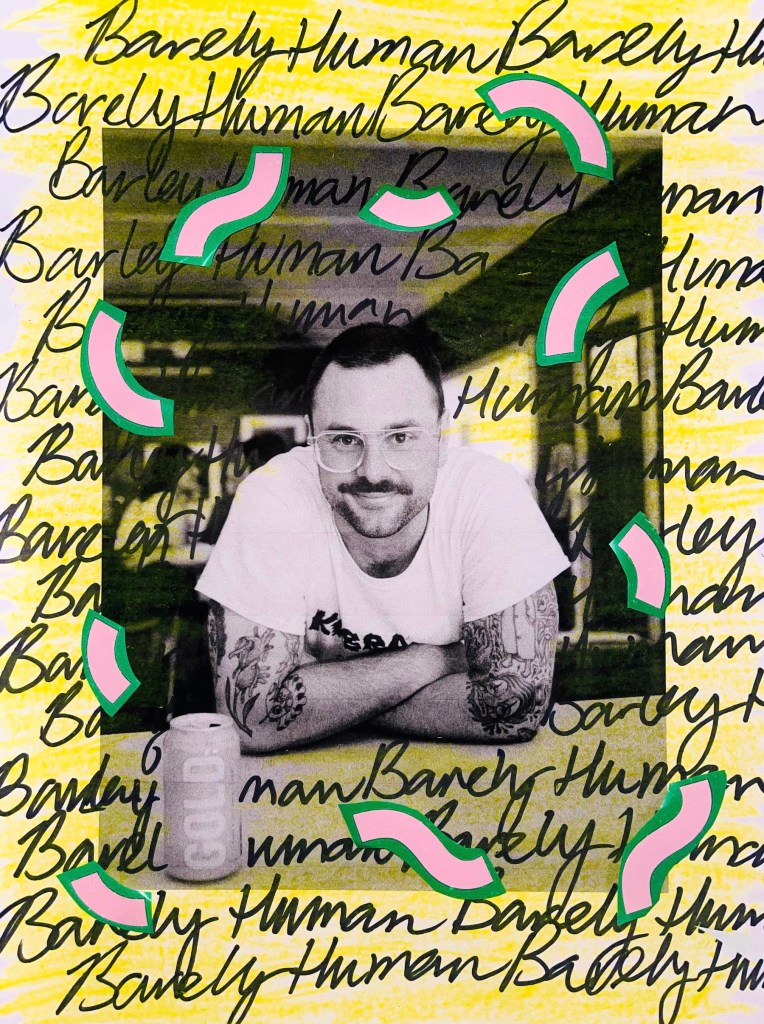
Original photo: Lauren Eiko / handmade collage by B.

Max Easton is a writer from Gadigal Country/Sydney with a deep love for music and storytelling. He’s the mind behind BARELY HUMAN, a zine and podcast exploring underground music’s ties to counterculture and subculture. Now, ten years of that work has been collected in his self-published book, Barely Human: Dispatches From An Underground Music Anti-History (2014–2024), featuring print essays, podcast scripts, zines, polemics, and lost writing on Australian underground music and beyond. He’s also the author of two novels published by Giramondo—The Magpie Wing (2021), longlisted for the Miles Franklin Literary Award, and Paradise Estate (2023), longlisted for the Voss Literary Prize and Highly Commended for the Victorian Premier’s Literary Award.

With a new novel in the works for 2025–26, Gimmie caught up with Max to talk writing, DIY music, and the impact of bands like Low Life, Los Crudos, Wipers, Haram, and The Fugs. We also discussed the influence of zines like Negative Guest List and Distort, along with his own experiences playing in Romance, The Baby, Ex-Colleague, Double Date, and Next Enterprise.

GIMMIE: Honestly, I don’t really enjoy a lot of music writing that’s out there. Your work with Barley Human is one of the exceptions.

MAX EASTON: That’s so nice to hear.

Your work is thoughtful and explores the underground, but it also gets you thinking about your own life by the time you’re finished listening to a podcast or reading the zine or book.

ME: That’s cool. That’s a nice effect. 

How’s the year (2024) been for you?

ME: Good. I’m doing pretty good. I’ve been very lucky this year. It’s the first year since I was a teenager where I haven’t had to work a regular job. I got a grant to write a novel.

That’s great! This is for your third novel?

ME: Yeah, which is amazing because I’ve never had anything like that before. It’s been this really interesting, small-business-y type year where I’m trying to be very careful with my spending and accounts—just doing my best to make it last as long as I can. I’ve been able to write whenever I want, which has been great.

It’s also given me more time to focus on music. I’ve been working on archival projects and putting together a collection of music writing, something I’ve always wanted to do but never had the time for. I’ve even been starting bands and putting on shows again. Being free of full-time work for a year has been really, really good. I’m so lucky.

It’s like you really want to make the most of it!

ME: Exactly, because the money will run out in January or February. Then I’ll go back to work, which I’m honestly looking forward to as well. I’m going to be very grateful for this time.

Congratulations on being longlisted for the Miles Franklin Literary Award too. How’s that feel? 

ME: Super weird! Especially with the first novel I wrote, I didn’t really realise it at the time. I didn’t think anyone would actually finish reading it. Like, I never thought anyone would get to the end.

When I was drafting it, my process was very much like, oh, maybe I like this joke in the back; maybe I should put it in the front—that kind of thing. Because, in my mind, no one was going to get to the end anyway.

Why did you think no one will get to the end? 

ME: I just didn’t think there’d be any interest in it. I had never written fiction before and then suddenly locked into this book deal. It’s one of those weird things—I didn’t expect it to do much.

Even with the Miles Franklin longlisting, I didn’t know what that was. I’d never heard of the award before until my publisher was like, ‘Oh, we’ve got some really good news for you.’ So yeah, it’s been really weird to enter into the world of literature.

Especially because I was more familiar with being a blog writer or a zine writer—writing about bands I had connections with and that kind of thing. It felt strange to step out into the public and suddenly be seen as a fiction writer.

How’s the third book going? 

ME: Good. I’ve got a lot of words, but the quality is not really there yet. 

That can be fixed in editing. 

ME: It can. I’m really impatient. I want it to be done so I can start editing, but I need to be done first. You edit as well, right?

Yeah, I edit book manuscripts. I work in publishing as a freelance editor.

ME: That’s sick. So, you’ve dealt with a lot of frail writers.

That’s my specialty. I always tell writers that they have to push through and get words on the page, even if they’re not the greatest. Then you can finesse them. But if there’s nothing on the page, you have nothing to work with. Progress not perfection, that can come later. Being a writer too, I know how hard it can be to get ideas onto a page.

ME: Yeah, it’s a really interesting mental game—trying to write, think, and navigate all the different steps and phases. I’m trying to get better at not overthinking things, panicking, or stressing out, but you can only control so much in your brain.

I saw you mention that with this book, you wanted to have a more positive view on the ideas of independence and autonomy. 

ME: Yeah, because I think the second book was quite cynical. It was a satirical novel, kind of satirising everyone, including myself. It had this flat cynicism to it. The first one, on the other hand, had a kind of flat existentialism.

For the third book, I really wanted to do something different. I wanted to capture the joy of organising things and doing things with your friends—the joy of being in a band, the fun you have, and the creativity involved. Like, what happens when you decide to organise a show in a weird, unexpected space that hasn’t hosted a show before? I feel like the first two books were missing that fun side.

So with this third one, I’m aiming for more positivity and optimism, while still grounding it in reality. You know, not everything works out, and that’s okay. It’s about trying to strike that balance at the moment.
That sounds interesting. I can’t wait to read it. I’ve been thinking a lot about joy lately, especially because there’s a lot in the world not to be joyful about that we’re constantly encountering every single day without even leaving our own home. Stuff we see online, on TV, and in the media.

ME: Yeah, 100%. It’s like a very stressful dark time. There’s a lot of stressful dark information, which is very serious. And I think like we’ve got to engage with it and think about it in a serious way. But, like you said, you still have to appreciate the good things that are happening and try to rally around that instead of letting the bad stuff pull you down, which it’s just really easy to do. 

We were talking earlier about having shows in spaces that haven’t had shows before. I recently did an interview with Rhys who does Boiling Hot Politician. He mentioned how his album launch show at a pub got bumped last minute for a wedding and he ended up having it in a rotunda, guerrilla-style. The Sydney Harbour Bridge and Opera House were the backdrop. He told me how joyful it was, so much so he literally hugged every single person that came.

ME: Wow. That’s perfect. 

He knew of the spot because, during the Olympics, he had taken his big-screen TV there, plugged it into a power point, and watched the skateboarding with his friends.

ME: I love that. That’s real community to me. It’s about autonomy, which I’ve been thinking about heaps lately. There’s so much you have to do, so many people you have to ask permission from to get something going.

It’s often a missed opportunity. Like, we want to play a show this weekend, but we have to ask these 10 venues if they’ll let us. I miss the idea of truly doing it yourself.

A few outdoor shows with generator setups have been some of the best I’ve been to, even if they sounded awful. It’s fun. You’re doing it together, without asking anyone’s permission. It’s hard to find that kind of experience.

I felt that way watching the drain shows, especially after the lockdown in Naarm (Melbourne). Like the one Phil and the Tiles played—it looked wild and so cool.

ME: They’re awesome. 

It’s the best when people come together and think outside the box and achieve something cool.

ME: We played a show at a pub recently where no one really wanted to play this show at the venue, everyone I spoke to didn’t want to be there. We all talked about how anxious the place made us feel, how we don’t really get along with anyone who runs it, or it’s just a bit difficult.

Then it was like, well, why are we doing this? It’s because we don’t have as many choices as we’d like, but I’d love to just open a pub where we wouldn’t feel so bad.

I’ve always had a dream to open an all-ages space. Being a teen in the 90s, we had a lot of those spaces. It was so cool to have something fun to do, and to be able to go to a show where people didn’t need to (or couldn’t) drink.

Drinking is a massive part of the culture for a lot of people. I’ve done a lot of interviews with creatives lately, and I’ve noticed that people get to a certain age and get stuck in a bad cycle with that, and it really starts to affect their life. Often, there’s not a lot of support for that. It can really start to impact mental health too.

ME: It’s really hard to break those habits, especially if it becomes part of how you make music. Isn’t it the same?

It’s only been in the last few years with band practices where I’d always bring a six-pack, you know, because it makes things easier or whatever. It’s just the way it is. Then, over the last few years, I started asking, ‘Wait, why?’ Now I just bring a big soda water—it’s the same thing.

Once you’ve got the habit, it’s like you’re in your head thinking, ‘That’s how you do it.’ I’m still the same. When I start a show, I feel like I need two or three drinks before I play, but I don’t know why. It’s just what I’ve always done. It’s funny, these habits we develop over time, and then one day you stop and think, ‘Why do I do that?’

As I’m heading into my late 30s, part of that is becoming a bit more cynical and negative. This year, I’ve really wanted to make sure that if I get into a negative mode, I do something to counter it. Like, if I’m going to complain about a venue we have to play, then I have to put on a show at a venue everyone likes to make up for it. I really don’t want to become that kind of complaining, older person.

Like, old man yells at cloud! 

ME: Yeah, totally. It is easy to fall into. 

Do you think anything in particular is impacting you feeling more negative?

ME: I’m just finding it hard to find the conditions that helped me discover the idea of DIY and punk music. I didn’t really discover this kind of music or this world until my early 20s, because I grew up in Southwest Sydney. I was trying to be a rugby league player. That was all I cared about. I liked music, but the music I liked was just whatever was in Rolling Stone. I’d buy the magazine from the newsagent, and whatever they told me was good, I’d say, ‘Oh, yes, this is good.’ I just didn’t know.

Moving into the city and going to DIY spaces like Black Wire and warehouse spaces in Marrickville was when I realised I’d never really liked music before. I realised what I’d been looking for was there.

What were you looking for?

ME: A sense of community and a sense of connection. I did access that through message boards and fandom, but there was this huge distance. The bands in Rolling Stone would never be bands I’d play in. I never thought about playing music either.

The DIY spaces were different. Within a couple of months of going there, people asked if I played any instruments because they were starting a new band. I’d never thought of it before, but I said, ‘Yeah, sure, I play bass.’ I went and bought a bass and tried to learn it before the first practice.

It was really exciting. It changed the direction of my life.

I think about Sydney now, though, and the lack of all-ages DIY spaces. How would someone discover that now? It’s like going back to this idea of the band on stage, the punter off stage. The band is ‘king’, and you are watching them.

That’s sort of informed a little bit of negativity over the years, but like I said before, I really don’t want to get bogged down in that. I want to build something so people can discover this stuff on their own.
How did you feel when you first realised, I CAN play music or I CAN be a part of that?

ME: Just happy. It was that simple. It was happiness. When I moved to the city, I didn’t have many friends, and I didn’t really understand or believe in depression or anxiety at that time either. It was the late 2000s, early 2010s – it wasn’t really a conversation.

But playing music, having scheduled band practice every week, planning how to play a show, how to record – it really gave me a lot of meaning. Especially since I couldn’t play rugby league anymore. I missed that teamwork aspect, the purpose of going to something two days a week. Music gave me purpose again.

It also opened things up. Because I could play in a band, go to a show, organise a show, and then start talking about worldly political ideas I’d never been exposed to before. I was really just a centrist, working-class guy who voted Labor and thought that was it – that’s all he had to do.

Punk taught me to think more critically, to consider all the intersecting ideas in the world. It opened my world so much.

Same! What compels you to write underground music histories with your zine and podcast, Barley Human?

ME: Like you, I had written in the past. When I started writing for stress press, it was mostly to get free CDs and gig tickets. Then, discovering punk, I realised there was a purpose – telling people about the stuff you’re seeing rather than just mooching off the industry. It was about finding the connecting elements between all these small scenes in the cities.

Eventually, it turned into more international history stuff. Like I said, I discovered punk in my early 20s, and everyone else already knew the references to all these bands. I didn’t know who Crass were, for example, so I’d have to look them up, research them, and figure it out. I learned about anarcho-punk, then had to dig deeper into these worlds.

At the time, I was doing the work for myself. I thought if I could use that research as a primer for others interested in the scene, it could help people who don’t know all the main names. It would make the transition easier.

Even with some less positive bands, I think it’s important to understand why people are interested in figures like GG Allin – the positives and negatives. He’s a very present cultural figure. It was cool to wrap that into a story or explain why X-Ray Spex and Crass were so influential. Why were they cool? Why are these people interesting?

That’s cool you do primers. In my experience of punk culture, there’s often times people can be very pretentious and clique-y and condescending to people because they might not know whatever band. Not everyone can know everything. I’ve always hated that elitist attitude and the ‘I’m better than you’ vibe. It’s lame.

ME: As a community, it should be about saying, ‘Hey, have you checked this out?’ You should be able to explain things to people without judging the fact that they don’t know. It’s a real bummer too because everyone had to learn something at some point, right? A lot of it is a replaying of the treatment someone felt when they first started going to shows. It’s like, ‘Oh, everyone was snooty to me for not knowing all the bands, so now I’ve got to be snooty.’ But no, you’re supposed to help them in. You’ve done it, so give yourself credit for learning all this stuff, and use that to bring others through.

And that’s not even just for punk stuff, but everything in life. Life’s better for everyone when we help each other.

ME: 100%—you get it. 

Being a part of the Sydney scene is there anything that you might know of that’s unique or lesser known that outsiders might not easily discover or know about it? 

ME: It’s hard to say because I can’t really get a feel for what is well-known and what isn’t. I feel like a lot of bands do a pretty good job of making themselves known these days. But, I don’t really look at much social media to get a feel for which bands are really popular and which ones aren’t.

Is there a reason why you don’t really look at that much social media for that stuff? 

ME: I mean, I do look at it, but I don’t really get a feel for it, you know? My favourite band in Sydney right now is my friend’s band, Photogenic. They’re so good. I feel like a band like Photogenic deserves a little more recognition. They’re the best band in town. They taught themselves their instruments not that long ago—about six years ago. I feel like that’s a part of it too. I love their music, I love them as people, and I love the message it sends to others. It’s like… anyone can be the best band in town if you get together and try to make something happen.

I wanted to ask you about the band Low Life, because you did that episode, ‘I’m in Strife; I Like Low Life’, and I was reading on your blog, where you mentioned that Low Life are probably the band that for you, has most closely dealt with aspects of your upbringing and present. I was wondering, what kind of aspects were you talking about?

ME: A lot of it was that sort of Low Life mentality. Maybe they were the first band I got excited about in that 2012–2014 period. A lot of it was because they seemed really depressed, and the world around the music was quite violent. They dealt with stuff like childhood trauma, the resulting depression, what it’s like to be at the hands of violence, and also to feel anger and sadness. There was this mentality of coming together with people, not in a super positive way, but more about finding your way in the world, a world that doesn’t really want you there. It resonated with me, especially with the backdrop of crappy experiences. They really meant a lot to me when I first heard them and got excited about them.

Isn’t it interesting how a band can write about all those things you just mentioned that aren’t so positive but then listening to it felt like such a positive thing for you?

ME: Yeah, it wasn’t even an album track; it was a song called ‘No Ambition’ that they just put out on the internet. It was maybe one of the first songs of theirs I heard, and it really hit me. It was weird—it made me realise I was depressed. Like, this buzzword I’d seen everywhere was a real thing. Stuff like that is why I think I care so much about music. Sometimes, it just accesses a part of your brain that you didn’t even know needed accessing.

Do you feel like you were kind of going through depression at the time, partly because of the sporting injury, losing that whole community, and then moving to the city, not knowing many people—like, all those things?

ME: Yeah, that was all a big part of it. But it was also childhood stuff I’d never dealt with that I was dealing with at that time. Plus, I was really stressed with work and uni. So, it was like high levels of stress, anxiety, and depression hitting at the same time, without the language to understand what it was or how to deal with it.

I’ve dealt with severe anxiety and depression throughout my life too. I remember the first time I had a panic attack—I thought I was dying. I had no idea they were even a thing. Even when I think back to being a child, I used to get a lot of stomach aches and things. Knowing what I know now, I understand it was probably from all the stress I was going through.

ME: Yeah, when you’re experiencing those things for the first time, especially as a kid, it’s hard to know what they are. I would get anxious, and people would just tell me I was worked up. The first time I had a panic attack, I thought my childhood asthma had come back, so I went to the doctor and got a puffer. With depression, I thought it was just a being lazy thing.

But you learn and now you know better, which is great. You mentioned on your blog about going through multiple versions of the Low Life episode, and you mentioned you were sort of having a bit of an identity crisis. How did that sort of shape the final direction of the narrative? What did you learn from that process? 

ME: A lot of it was because they came on really strong, which was exciting. They were this unknown band that brought a lot of people together, and people got really excited about them at first. Over time, though, it was like the realisation that, even though their lyrics were often satirical, they made people uncomfortable. The crowds were violent, and some of my friends didn’t feel comfortable going to the shows. But by that point, I’d already gotten a Low Life tattoo. I thought it was just like getting a Black Flag tattoo—this was the best band in Sydney during our lifetime, and they were playing right then.

I was reading when you wrote about that, and you were talking about how, you’d seen a bunch of Black Flag tattoos and had a lot of band tattoos yourself. But then you were like, why don’t you have any local band tattoos? 

ME: We’re always so backwards-looking—always looking back to 50 years ago, and now it’s even more so. Before the Barely Human stuff, all I cared about was what was happening in the moment. But the last 10 years or so, it’s been more about trying to look back while still focusing on the present. I feel like there are lots of lessons for us to learn, but we act like they’ve already been learned, like it’s over. It’s that “end of history” feeling. There’s so much we can learn from the past and apply now in a new context.

You’ve called Barely Human an anti-history.

ME: When I was trying to outline which bands to profile, I asked myself, what’s the unifying theme? Part of it was that, if I wanted to talk about the birth of punk as a genre, I didn’t want to talk about The Clash or The Sex Pistols. I’d rather introduce it via X-Ray Spex. When I wanted to talk about blues music, I didn’t want to focus on Robert Johnson alone—I wanted to talk about people like R.L. Burnside and lost versions of the genre, the kind of stuff people usually skim over.

Same with post-punk: I thought the stories of bands like the Television Personalities and The Raincoats would be the best way to tell that story—not the typical narrative people think of when they think of post-punk as a genre. The anti-history part was to take the mainstream history, read it, and then ask, who’s being left out?

For example, when we talk about hardcore, we mention Black Flag, Dead Kennedys, Minor Threat, or some variation of that story. But Los Crudos, who came in the ’90s toward the end of that movement, represent one of the best versions of what hardcore became—a community-driven movement, an identity discussion, and the expression of personal struggle or the struggles of your background.

I wanted to pull out those hidden aspects that lie beneath the mainstream story. I’m not sure if it’s truly anti-history, but for me, it felt like I wanted to retell the accepted version of events.

I’m not sure if you experienced this when you were writing for street press, but there was a point when I wanted to make music writing my living. It shifted from writing about bands I was genuinely interested in to writing about whatever band the editor sent an email about. They’d say something like, ‘We’ve got this touring band, we can pay $100 for an interview, and it’ll be published across all these different magazines.’ And I started saying yes to that kind of stuff.

It was so depressing. There was this one band, I can’t even remember their name, but they were a huge touring power-pop band in the early to mid-2000s, and I thought their music was terrible. The things they said in interviews were like, ‘I just love changing the world with my music,’ and that kind of stuff. I just couldn’t handle it anymore.

I got paid $100, which, at the time, felt like a big win, but for what? For all that suffering? I never want to go back to that, writing about things I don’t actually want to write about.
I’ve totally been there. Almost every publication I’ve written for, except my own and when I wrote for Rookie, has been like that. I really hate the way the industry works, especially with PR companies. 

For example, I have a friend who runs a podcast, and he’s been getting really depressed and worn out from it. He told me that certain publicists have said, ‘If you want to interview this band, the one you really want to interview, you’re going to have to interview these four other bands on our roster first.’ So, he’s spending all his time doing interviews with bands he’s not interested in, just to get the one he actually wants, or they blacklist him.

ME: Wow!

Yep. It makes me so angry. I had an interview set up with a band through a publicist not too long ago, but then something terrible happened. A family member, he’s a teenager, was with his friends, and a horrific accident happened and his friend tragically died. Understandably, we went to be with our family, and I had to cancel the interview. I told the publicist, ‘I’m really sorry, I can’t do this, I need to be with my family right now.’ I offered to reschedule when I could, but she seemed annoyed with me. They even asked, ‘Can’t you at least post about the show on your social media?’ It just felt so cold and transactional and heartless.

ME: Oh my god! 

Yeah, true story. At the time, I had another interview lined up with a different publicist, but that publicist’s response was the opposite. He immediately asked if we were okay, if there was anything he could do, and assured me that he totally understood. We ended up rescheduling the chat for another time. He was like, ‘Don’t sweat it,’ which is the right response—the human response.

ME: Yeah. That’s unbelievable. And just the idea of blacklisting your friend for not doing all the interviews.

That happens more than you’d think. Back in the day, I was blacklisted by a promoter because I didn’t turn up to review one of their shows, even though I explained I was with my mum who was very sick in the hospital! I have so many terrible stories like this about publicists and the industry here in Australia, and my writer friends have told me heaps they’ve experienced too. 

ME: I want to blacklist whoever that is. I have a very quiet, small boycott list. I will never book a show for anyone with a manager, anyone who’s a publicist, or anyone who demands a guarantee from a DIY show. There are all these things, and I’ve got a little list. I’m never doing any work for them because, when I put on a show, I don’t take a cut or anything. So, it’s like, if I’m going to work for free, I’m going to do it for like-minded people who are here to have a good time and try to bring people into this world together so we can keep building it and go somewhere with it. But the idea of what you went through with your family member—heavy stuff, like the death of a teenage boy—it’s not like a broken fingernail. It’s repulsive behaviour.

It is! This is why Gimmie exists outside of the industry and we only work with with good people.

ME: 100%! Same here.

What have been some of the aspects that you found most fascinating about underground music that you’ve discussed with Barely Human

ME: Once I started making it a bigger project, where I was connecting different bands together, a lot of it was the connections that bands from completely different sounds, completely different cities, and worlds all kind of had similar to each other. Or the things that they’d be inspired by and the way that a movement or a kind of style developed. There’s so much in common between, say, The Fugs and Crass, which is like a hippie band and a punk band. Those ideas and notions I found really interesting, and something I hadn’t thought about until I started looking into them. Same with a lot of the proto-punk bands and the post-punk bands: they had this similar kind of response to what was going on around them and this antagonism. Or, like, Electric Eels were influenced by a poet like E.E. Cummings. It’s finding all these different connections as you read about a band, which you don’t get when you just play their music.

I really like the idea of bands coming together through time. It’s really almost a conspiracy-theory-type way of looking at the world—all this stuff kept happening through this process, and we kind of connected back to another time. 

One of the coolest bits was I did a Stick Men with Ray Guns podcast episode, a documentary-style thing, and then the guitarist from Stick Men with Ray Guns emailed me in the middle of the night, a year later, saying I’d made all these mistakes. 

Oh no! 

ME: I emailed him back. He’s like, ‘Let’s talk to each other about it.’ And we had this two-hour-long conversation. I posted him some stuff, and he posted me some stuff, and I got a channel to the guitarist from one of my favourite bands in this late ’70s, early ’80s era.

Stuff like that is really, really cool. And you find out that, so much of what motivated those musicians motivates my friends now. Or talking to him about how they just wanted to annoy their audience, and wanted to be so loud that it made them hurt. They wanted to feel violence. It’s kind of like, the second band I played in, Dry Finish, we had to play at this pub that I didn’t want to play at. And I was like, ‘Let’s do a noise set instead of our punk set.’ It was like almost like what he was saying to me was something I said 10 years ago to our friends. I love those sorts of things. 

Barely Human started as a zine series; how did you first find zines? 

ME: Through the punk scene, Negative Guest List and Distort were the first zines I ever saw. It was at a time when I was discovering punk too. It was like, okay, cool, I can read what these people have to say, what’s new that’s coming out. They’d also have these historical type things. Whatever obsession they had at that time would just end up in the zine. It would be books as well.

So much of Dan Stewart’s writing with Distort was philosophy. I’d never thought about philosophy before. That was my first exposure to the big historical thinkers. Same as Negative Guest List. It was movies. Sometimes, they’d just talk about a movie that had been really influential on me. Both of those zines were super influential.

Why did you decide to shift into a podcast? 

ME: When the zine started, it was with the long essays that I couldn’t get published anywhere. So it was like self-publishing these thoughts. The podcast wasn’t something I’d ever thought of.

But then this guy emailed me out of the blue and asked if I’d be interested in any audio work. They were kind of doing seed funding for new creatives, and if the podcast went well, they’d give you a deal with Spotify or something like that. So it was like, yeah, sure, I’ll do it.  

The podcast did, by my standards, really well. I think about 2,000 people listened to every episode, which is crazy. But to them, it was like nothing. Still, I got it going, and it got me thinking in that way. So I’ve continued back via the zines and mixtapes in the years after that, even when it didn’t get picked up or whatever. And now I want to try and see if I can DIY it and do more episodes, on cassette. 

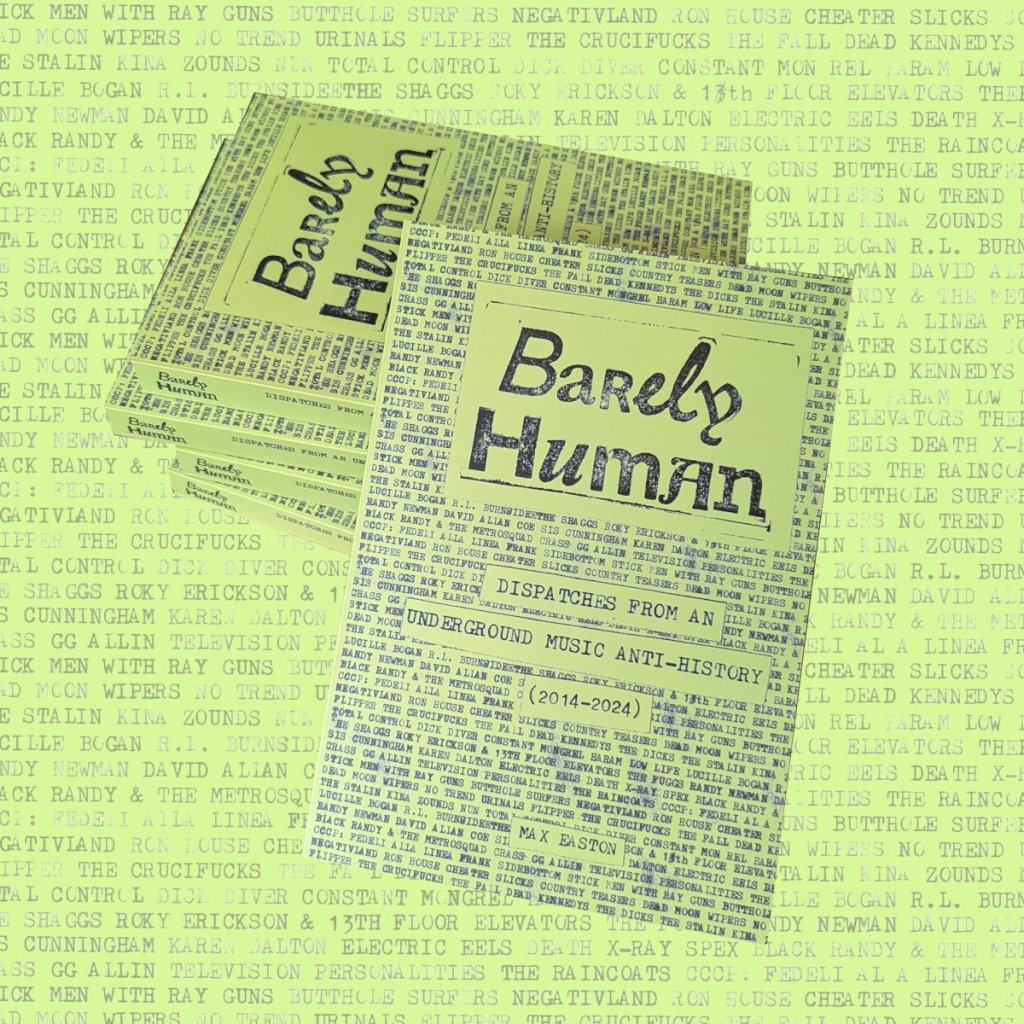
What led to the decision to evolve Barely Human into a 300 page book? 

ME: It got to the point where I was starting to think about doing a new podcast season, trying to figure out how to do it. I was going through all my old notes. Even just searching through Gmail—it’s like, I don’t know where I wrote about this band, I can’t find where it was. So I just started putting everything together, archiving all my stuff.

And then, as things go, a lot of this writing is quite old now. It’s 10 years old or stuck somewhere. You can only listen to it on a podcast, so it’s stuck somewhere on the web. I thought it would be nice to bring it all together, just to wrap up that 10-year period for myself.

Then I thought that would make sense, especially when every now and then someone emails me, like, ‘Oh, I’ve always been looking for your Butthole Surfers zine.’ It’s like, so out of print. The podcast I hear is like half of what you wrote. That’ll happen once a year, so it’s not a huge demand. But I thought it would be good to have everything in one place, in case someone wants to find some of this stuff.

So it was kind of just this idea of wrapping everything together, putting it down, and then I could move on and think about the next thing. It’s nice to have as a document.
Was there a band or artist that is featured in your book that you found had an interesting or unexpected story? 

ME: Stick Men with Ray Guns’ story. I didn’t realise how dark their story was. I just thought they were a fun Texan hard punk band. That was a surprise, and to the point where I had to wonder whether I should finish writing about them too. I just started hearing about the singer and cases of domestic violence in his past. It’s like, I don’t think I should be talking about this band. But then it was kind of, well, should I not talk about it? Should I finish telling the story? It seemed important for me to finish that story.

Some of the other bands, were bands that were very present in the world. I didn’t really know much about bands like Dead Moon and Wipers. I wanted to write about them, kind of like at the start, just wondering, ‘Why are they on punk t-shirts everywhere? Why have I seen them on t-shirts everywhere, but I’ve never listened to them? What makes them so interesting?’ And I thought I wouldn’t find anything interesting. But they’re so cool. They’re like, they were two of my favourite bands after I started thinking about them, you know, and finding out the way that they made music and the way that they were so defiantly independent for so long.

I really loved reading about band Haram in your book. You mentioned on your blog that it was a tough section to write; why?

ME: Because I really wanted to write about them, it was more from the podcast, the way that that started. It started with these bands trying to provoke the FBI and the CIA, like The Fugs and their run-ins with the FBI and the CIA, and their run-ins with Crass. So, I kind of wanted to do this full-circle type thing, because their arm was tracked by an FBI anti-terrorism task force purely because they sang in Arabic, which is also something they played with in their imagery, you know, like just using Arabic script to write ‘Not a terrorist’ on a t-shirt. Then to find out that this FBI task force never translated this stuff and just the pure anti-Arabism, pure Islamophobia. The hard thing for me, writing that, which was once I was already in and doing it, it’s like, this isn’t really my story to tell. I felt like I was really writing about things I didn’t understand. No matter how I put it together, it felt like I was sensationalising the fucking horrible experiences that Nader had growing up and then as a punk musician being trailed by the FBI. I did the best job of it I could, but it was really important to me to tell that story of a punk band of today in New York getting tailed by the government, by the racist government.

Whenever we, you know, are all like a little bit like, ‘Man, it’s just so hard playing punk music in Sydney’ and like, ‘Oh, no, I have to play a venue around the corner that I don’t really like’ there’s a bigger context, like, people are being watched and isolated and surveilled. 

I liked that you told the story using a lot of archival and interview stuff, so it was being told in Nader’s own words.

What have you been listening to lately? 

ME: II was listening to The Spatulas this morning, they’re a really interesting DIY type folk adjacent type thing. Celeste from Zipper was in town, I’ve been listening to them a lot lately.

We LOVE Zipper! What have you been reading?

ME: I just finished the Tristan Clark’s Orstralia book, the 90s one. I loved it. It was really, really interesting, especially the Sydney stuff. f

I’m three quarters of the way through Alexis Wright’s Praiseworthy, on a fiction front. It’s wild. It is so good. It’s the trippiest, it’s hilarious. It’s really funny. 

I love Alexis’ work. She just writes with total freedom. What are you doing music-wise? 

ME: The last two bands broke up. I was playing in The Baby with Ravi from OSBO, and the band Romance. We got our last releases out and kind of broke up. We’ve started new bands now—a band with Greg and Steph from Display Homes called Ex-colleague. We played the other night. My partner Lauren, who used to play years and years ago, has taught herself drums for this other new band we’re in with my friends. We’re called Double Date. We’re both couples. Then, starting after Witness K slowed down a bit, Andrew and Lyn started jamming, and I’ve been jamming with them as well. We’re playing our first show soon—we’re called Next Enterprise. It’s been really fun to play again!

Check out: barelyhuman.info.
Legless Records, Stiff Richards and Split System’s Arron Mawson: “Getting bunkered down with negativity and anger can stop you from actually achieving things”

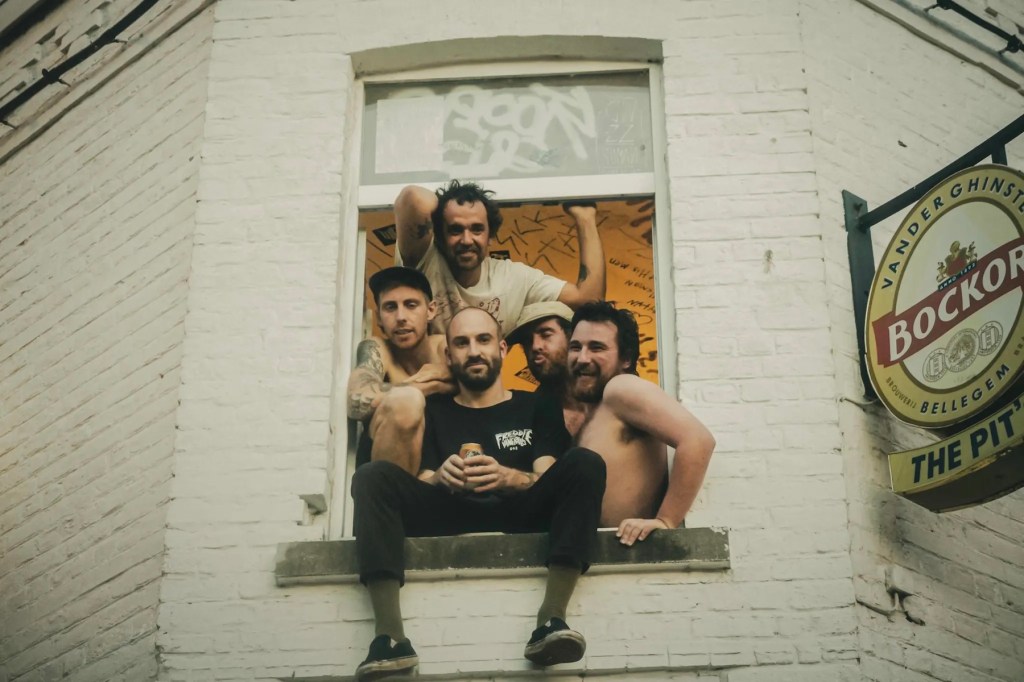
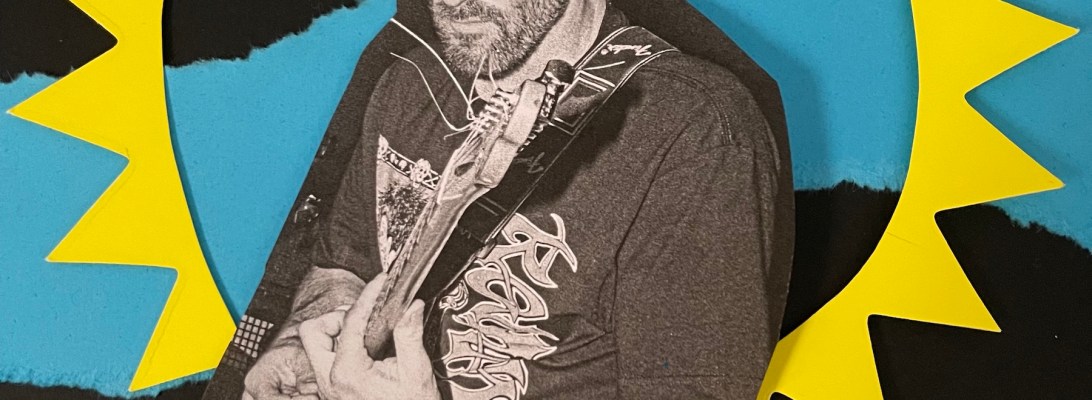
Original photo Ben Hudson@distorted.youth. Handmade collage by B.

Meet Arron Mawson, a powerhouse behind some of Australia’s most dynamic bands – Stiff Richards, Doe St, Split System, and Polute. But his journey transcends the realm of music; it’s a story of authenticity, passion, and a pursuit of doing things for the right reasons.

For Mawson, making music is a visceral calling he shares with his friends. It’s about connecting through art, driven by an unwavering compulsion that pushes him to create from the heart. 

Disenchanted with the traditional music industry, Arron took matters into his own hands, birthing Legless Records – a testament to DIY spirit.

In the whirlwind of the modern underground music community, where countless people, music, events, and distractions clamour for attention, Arron Mawson stands out as a beacon of authenticity and passion. It’s not just the fast-paced punk rock ‘n’ roll anthems or the inspiring DIY achievements that set him apart; it’s the very essence of his character. 

Gimmie recently had the privilege of sitting down with Mawson before Split System embarked on their first European tour. In this candid conversation, we explore his bands, creative process, the art of songwriting, his inspirations, and the upcoming label releases. But beyond the music, we venture into the depths of his experiences – trekking in Nepal, confronting mortality, challenging the “too cool” attitudes, and embracing the art of “getting on with it.” Prepare to be inspired and enlightened by someone who embodies dedication, goodness, and the true spirit of the underground.

How’s life been lately?

ARRON MAWSON: Good. Moving house before we go to Europe, me and my partner moved into her mum’s place. That’s been nice. It’s been a really busy year, to be honest. It was sort of like a treadmill, I guess. It felt like it was nonstop, and then it’s finally settled down now right before going away.

I feel like after COVID, there was that massive rush. Everybody was saying “yes” to everything. And it kind of got to mid this year, like maybe a month ago, and I was like, ‘Oh, jeez, I really need to slow down.’ It’s been the craziest twelve months. 

There’s so many good things that have been happening for you. 

AM: Yeah, I’m kind of ready to go camping or something, though. 

I feel like that as well. I work two jobs, freelance, and do all the Gimme stuff on top of that. It’s all fun stuff, but I just don’t have enough hours in the day to do all the things I want to do or that people want me to do. I always feel like I’m letting someone down.

AM: Yeah, exactly. You feel bad because you want to help your friends and you want to help everyone, but just you don’t have that capacity because it takes a lot. It’s been so nice seeing everybody back out after the couple of years that we had. There’s been so many good releases, so much positive energy. I feel like people are a lot more patient now and appreciative. It’s been a really fun year, but I think I can sort of feel it petering out, where it’s like everyone’s sort of chilling out now a little bit. 

Definitely. I’ve noticed that as well. Everyone was so excited to get back into it and then we threw ourselves in so much that, like you were saying, you burn out and just want to go camping. I noticed on your Instagram there’s lots of music stuff, but then there’s also lots of nature stuff. 

AM: Yeah, well, I guess that’s sort of my other hobby. I love hiking and I love being in nature. I live in Rye, which is about an hour and a half southeast of Melbourne on the coast. So I’ve always been drawn to the country and the coast. When I’m not doing music stuff or working, I’m usually doing something in nature. 

I noticed that you trekked in Nepal!

AM:Yeah, I did that a couple of times

What drew you to going to Nepal? 

AM: Don’t really know. I’ve always had a fascination with mountains. When I was younger, I really loved snowboarding. It was less of the sport that actually drew me in. It was more the being in the mountains thing.

Why the mountains? 

AM:I don’t know. A form of solitude. It’s cool. Doing a trek in Nepal, I wanted to be on my feet for over a month, and just be me and backpack. That was a place that I could do it. 

I don’t know anyone who’s gone off trekking in Nepal for a month; what was the experience like?

AM: It was cool. When I started, I came straight off, I can’t remember what gig it was, but I think we had played a festival in Melbourne on the Saturday night and I left on the Monday, and I was trekking on the Tuesday. You basically basically start at sea level. The first few days it’s really hot and quite dusty and dirty. I was like, ‘Oh, jeez, what have I got myself into?’ But after five or six days I really got into it; I trekked for about five weeks. After a week, it was incredible realising your body’s made for that stuff. You get over the tired part of it and this primal thing kicks in and by the second week, you’re just like a walking beast [laughs]. It’s like, I can walk forever. It’s a pretty cool experience getting in touch with that side of your body a little bit more and switching off, not being on your phone and just being you and your feet.

I assume you’d have a lot of time to think while you trek? 

AM: Yeah, it was really funny. I actually wrote more songs. I was humming songs, with the rhythm of my breath. I had walking poles and I ended up getting into a rhythm and writing songs in my head to the beat of my breath.

Wow. I love that.

AM: I’d hum these weird songs into my phone in my voice recorder on my phone. I got back and I had a ton of songs to go through. You get into that different creative headspace, but I didn’t really have an instrument or anything with me, so it was bizarre for me. 

I find I get my best ideas when I go for a walk or I’m driving in the car or I’m just doing something else not creative. It’s like you kind of go on automatic pilot. It frees up your brain space to be able to let those good ideas come in.

AM: We’ve got so much noise around us. Walking undistracted with our own thoughts, a lot of people aren’t used to doing that, they don’t get the chance to do it. I think it’s a really important thing for us to do. You can go on hikes and just be alone with your thoughts, which can be quite intimidating sometimes, and then quite liberating as well. Because you’re just out there. You’ve got nothing to hide behind.

Totally. I found that you can never just run away from problems in your life, you can never outrun yourself. Wherever you go, you’ve still got you to deal with. Your problems go with you, until you sort them out.

AM: Totally. 

Previously, someone asked you about your philosophy behind all the stuff you do and you said that you just get on with it. 

AM: Yeah. I’ve got a pretty full on personality. I’ve met some challenges in my life. Doing this music stuff, especially at the start of COVID, that it really kicked into gear with my label, Legless Records. I used to have a lot of anger and frustration with the world. Sometimes approaching challenges and things with that, you don’t get anywhere. Sometimes you just got to pick yourself up and move forward. I guess the get-on-with-it-thing is, I don’t know how to put that to words, but you’re finding something positive to do. Sometimes getting bunkered down with negativity and anger can stop you from actually achieving things, results. 

Yeah, totally. I think that you kind of realise that more as you get older. When I was younger, I was that punk rock kid with the spiky hair and the mohawk, and I was so angry at the world. But a friend told me that you can’t really fight fire with fire. Getting angry at someone when they’re angry is not going to achieve much. 

AM: I guess that’s the thing. We have a right to have anger, but it’s your choice how you channel that. I used to get frustrated with the music industry, people around me, there’s so many things. I made that decision to make the positive change that I’m looking for rather than complaining about other people not doing it.

Absolutely. I’ve been doing my own thing for a long time, so I very much get that. That’s kind of why we started Gimmie, There were so many bands that we love all over Australia and no one was covering them. 

AM: It’s nice when people do things for the right reasons. It’s out of passion. It’s not for profit or self-glorification or anything like that. It’s just because you’re genuinely interested in it. And I think it shows. Things immediately get grabbed by people because they actually respond well to that—the honesty, the passion. 

People hit us up, wanting to give us hundreds of dollars to be on/in Gimmie and we’re just like, no, that’s not us. What were the particular aspects of the music industry that were annoying you? 

AM: Well, I guess it can be an element of your own perception of what people are like and the reality. But it felt like a lot of the music scene was really too cool, hard to break, it was hard to get through to radio or record stores would be kind of dismissive. After that experience, I wanted to create an umbrella, sort of make this bubble, that me and my friends can sit under and use each other’s momentum to help each other skip that exclusivity. It does feel like that when you’re at the bottom and it feels like no one cares. And then if we work together, with the momentum of each band, we can give a bit of a spotlight to the next band that comes up. With a lot of people being too cool, I guess, I just wanted to drop that and just let people be a bit daggy and just play music for the sake of playing music. I don’t really know how to put words to it, to be honest. It just felt like unless you knew the right person… if you want to try to get on a festival and you want to try to get on a gig, it’s like, who are you? I was like, well, I’ll just do it myself. Does that make sense? 

Yeah, totally. I’ve had that feeling before, that’s why you make your own things!

AM: Yeah. I feel better for it. I don’t really want to throw anyone under the bus, of course. It was actually good that happened, because it stimulated me to do something that I’m now really proud of. With that kind of pushback, it inspired me to do something. Now I’ve got all these incredible people around me. I wouldn’t take it back. 

Totally! You’ve been releasing so much amazing stuff on Legless.

AM: Thank you. 

I’m really excited that I finally get to talk to you about it all at length. Our favourite people are people that work hard and they just make stuff because they love making it. You’ve told me previously that your dad played in bands and you’ve been surrounded by music your whole life. What kind of bands did he play in?

AM: Dad grew up in Cornwall, in England. He was playing rockabilly, rock and roll bands for most of my life. He was a frontman-guitarist and he sort of switched between a few different bands. And then I lost him, when I was about 21. I had music around me most of my life but I think after losing him, I definitely got more drive having a loss like that at that age. It kicked me into gear. I’d always played music, but where I grew up in Frankston, there was not really many people that I aligned with. It’s a lot of fights, a lot of shit music, shitty clubs and as soon as I got my license, I moved to the beach. Half my mates either moved to the city or to the beach. 

That’s where I started jamming with people more, sort of between that 18 to 21-year-old time in my life. Music has always been there, but it wasn’t until then, I sort of started surrounding myself with a few mates, who introduced me to Eddy Current Suppression Ring and stuff like that. For most of my life it was just rockabilly and rock and roll. I listen to Brian Setzer, stuff like that. 

A lot of my buddies went to all ages hardcore gigs, but back then, I looked at it as very blokey and people punching each other in the head. I didn’t really find anywhere that I enjoyed until older age, and liking Eddy Current. That put me on to other things like Thee Oh Sees. I was like, what is this world? I haven’t ever experienced it. 

I’m so sorry that you lost your dad so young. I’ve lost both my parents as well, so I very much understand what it’s like. Especially when you lose your parent/s when you’re younger. Friends don’t necessarily get it because they still have their parents. It’s just such a massive thing

AM: Yeah. It’s a bizarre thing, death. I feel like our modern society is really not prepared for it. The loss wasn’t actually the hardest thing. It’s like that’s the only guaranteed thing in this life, is that we’re all going to die. It’s just the inability to process it. We don’t have the sort of community… the word that I’m looking for, like, rituals and stuff to process death properly; I feel like it’s something that we’re missing these days. That was probably the hardest thing, but it’s something that I’m really okay with because I started realising how much people are unprepared for death. It’s really weird. Yeah. Sorry, I’m thinking and talking at the same time. 

No, that’s fine. I totally get you. Thank you for sharing that with me. Changing the subject then, I know you play guitar and bass. Which one was first?

AM: Probably guitar. I never really ever played bass. Bass just came with guitar. Guitars were always in the house. I think dad taught me, ‘Johnny B. Goode’ and ‘Smoke on the Water’ when I was real young, and then it was just like through listening to songs. I never really had lessons. Me and my sister would usually just be sitting around, and occasionally jam with dad.

Your sister plays in a band? 

AM: She plays in The Miffs. They’re killing it at the moment. They’ve been playing around Melbourne and Australia. I’m really stoked for them!

That must be cool to see your sister ruling it. Is it your little sister or big sister?

AM: Little sister, three years younger. It’s great. The fact that we grew up with dad playing music and now we’re both playing in bands and stuff, it’s really nice. After dad passed away, it was probably about six, seven years there where we were kind of pretty separated, and it’s really heartwarming to be close again. 

Lovely. You mentioned, Eddy Current Suppression Ring was such a big band for you.. 

AM: Where I was getting a bit stuck before, is rock and roll and that environment, it’s very blokey and it just felt really “too cool”. Eddy Current had this daggy, raw energy where everybody felt honest. I wasn’t this big, masculine guy. Eddy Current was such an unorthodox approach to music that I hadn’t heard before. I know there’s so much of that in history, but it was the first thing that I put on and it just blew me away. It was just like, what is going on here? The awesomeness of what Mikey does! This is the first thing that really grabbed me and started an introducing me to bands like UV Race and the Thee Oh Sees, and the plethora of other bands that came from there.

How great are all those bands you just mentioned? I love them all too, especially UV Race. I super love Mikey’s band Total Control too.

AM: Yeah. Eddy Current especially for me. I grew up in Frankston and they’re all Frankston boys as well. So it was like, ‘Oh, there’s someone from here that is actually doing something interesting!’ Growing up it was a lot of fighting and just people that weren’t aligned with anything. I wanted to build bike jumps and cubbies, just hang out, go skateboarding and stuff. But everyone else just wanted to fight. It was just odd. 

Yeah. I’ve talked to Jim from Civic about growing up in Frankston a bit. 

AM: It’s like this love/hate thing. Split System are playing at Singing Bird tomorrow night. Got our going away fundraiser thing. What Stu’s done there, all ages gigs, he’s got the studios and jam rooms, kind of made this institution for Frankston. It’s nice seeing the next generation of kids, actually having something to do. I don’t hear much of all ages gigs at all anymore. It’s all licensed venues that are based around selling booze. That’s how they profit. What’s for the kids?

Totally. Growing up in the 90s in Brisbane, I used to go to all ages shows most weekends. In my Senior year of high school I went to over 100 shows. It made such a difference in my life. I do all the things I do today because I went to those shows early on, and there was a lot of younger bands, even my age (15-16) at the time, that played, and I was like, wow, I could do that!

AM: Yeah. I was talking to the C.O.F.F.I.N fellas because they played in Frankston just before tour before they went off to the UK. That’s where they started, they all met when they were like 14. One of my favourite live bands now, wouldn’t have existed without that environment for them. 

Stiff Richards. Photo: Jack Golding.

What was your first band that you had? 

AM: Stiff Richards was the first band that actually did anything. I had like a couple of jam bands with mates. I had a band called Green Waste, which was my buddy, he had a property maintenance company and we all worked mowing lawns for him. Then we’d rock up at his joint, he had a jam room at the bottom of his house. There was a big pile of green waste out the front, every night when we finished. We did a couple of gigs, and that actually kind of led into us making Stiff Richards. Me and Tim, the other guitarist, were in Green Waste. That was pretty funny. That was probably ten random mates that switched in and out on different instruments. Probably seven guitarists trying to bash the drums [laughs].

The next band for you was Split System?

AM: Probably Doe St. Doe St and Split System were roughly a similar time. Polute, a little fun recording project with me, Benny and Stringer, came after that. 

Is there much difference for you between the different bands? Do you get different things from being in each of them?

AM: Well, Stiffs, they’ll always be my brothers. We’ve had this journey from playing in sheds to being able to go over to Europe, and just everything that we’ve experienced musically together, is like such a family. I’ll hold that close to my heart forever. It’s a really special friendship. Wolfie, our singer, his sister has kids with Gazzo, the guitarist. 

Split System, definitely feels like there’s a member from a bunch of different bands, and that seems to be really productive. They’ve become best friends as well. It feels really good writing-wise. That’s one of my main focuses at the moment, just because it feels really creatively stimulating and everyone’s getting along really well and having a great time. 

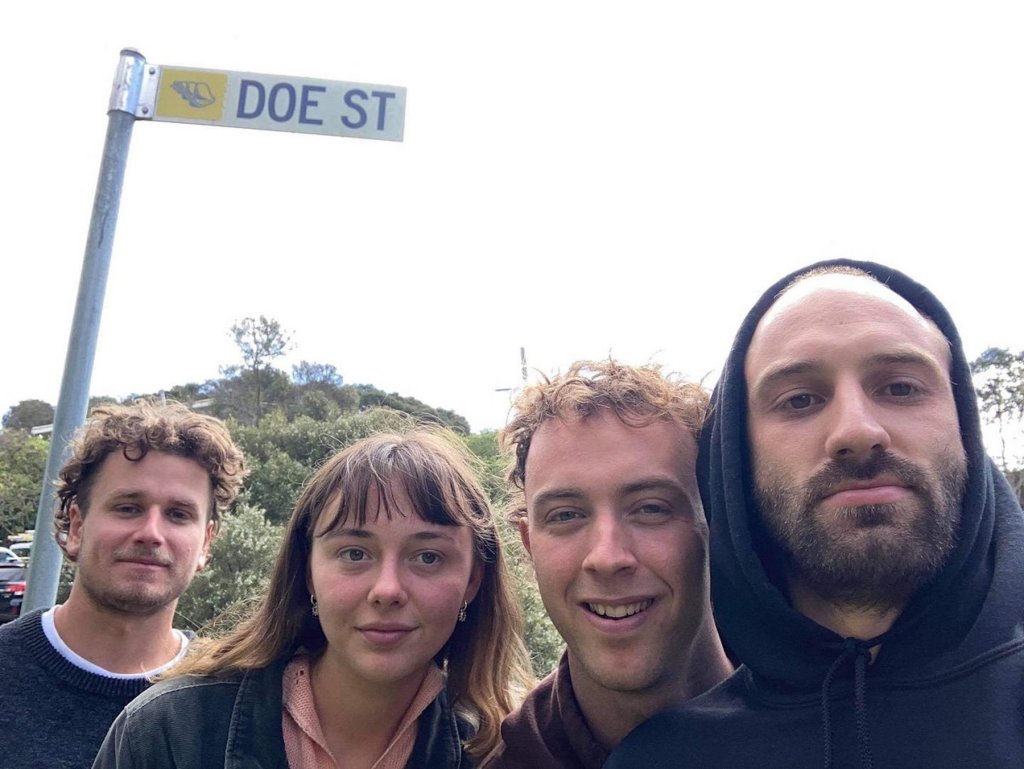
Doe St, are all friends from the Peninsula that just sort of organically came together. My old house was on Doe St. Everyone was living on the same street or in the same neighbourhood. We wrote all the songs and recorded it there, just friends hanging out.

Doe St, pic courtesy of Legless.

It’s funny, I’m literally thinking out loud right now. There’s not much thought been put into any of them. It’s just things have aligned at the right time and feels good.

Sometimes it’s that simple. Sometimes when you’ve got too much intention with something, you set yourself up to be disappointed. 

AM: Totally. 

So, Split System is going to Europe?

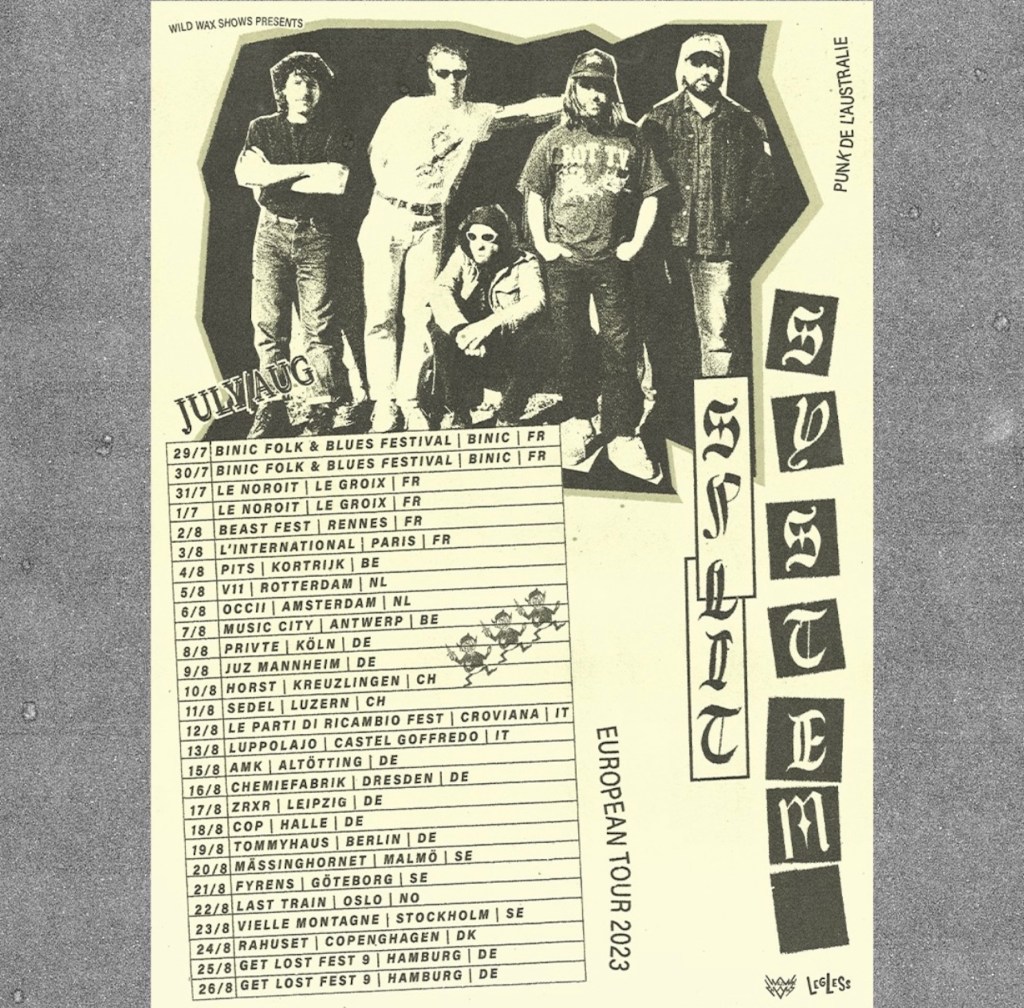
AM: Yes. Going over for Shock Fest. We’ve got one show at the start of July and then I got a holiday with my partner for a few weeks, and then Split System start with Binick Folk And Blues Festival, which is the 29th of July, I think. Then we’ve got a bit over four weeks. I don’t think we have a day off either. I think we’ve got one night off in a month! 

Wow. Do you like touring?

AM: Well, I’ve only done it once with Stiff Richards. And that was last year. It was one of the best experiences I’ve ever had. I’m definitely keen to go back.

What were some of the best things from that tour that you enjoyed? 

AM: Honestly, the people, the hospitality in Europe. We had no expectations. We thought we’d be playing for ten people some nights and we ended up selling out almost every show; I don’t mean that in a bragging way. It was just mind blowing that people actually came out, in another country. We haven’t even toured in Australia. We’ve been out of Melbourne once, we went to Sydney, played with Celibate Rifles once and Meanies once. To go over there and have such a good response and such friendly people, it was unreal. 

Yeah. Many bands I know that have toured Europe say the same thing and talk about how they have cool squats and places to stay in. 

AM: Yeah. You rock up, they’ll have bread and cheese and stuff for you. There’ll always be someone to meet you. A lot of people touring are cramming as much in as possible because it’s quite expensive to be there. You’ll get in, then you set up, and they’ll cook you dinner and sit you down with the other bands and the staff. Sharing a meal with a bunch of people is the best way to break the ice. By the time the gig starts, you’re friends with 30 people. It’s really beautiful. 

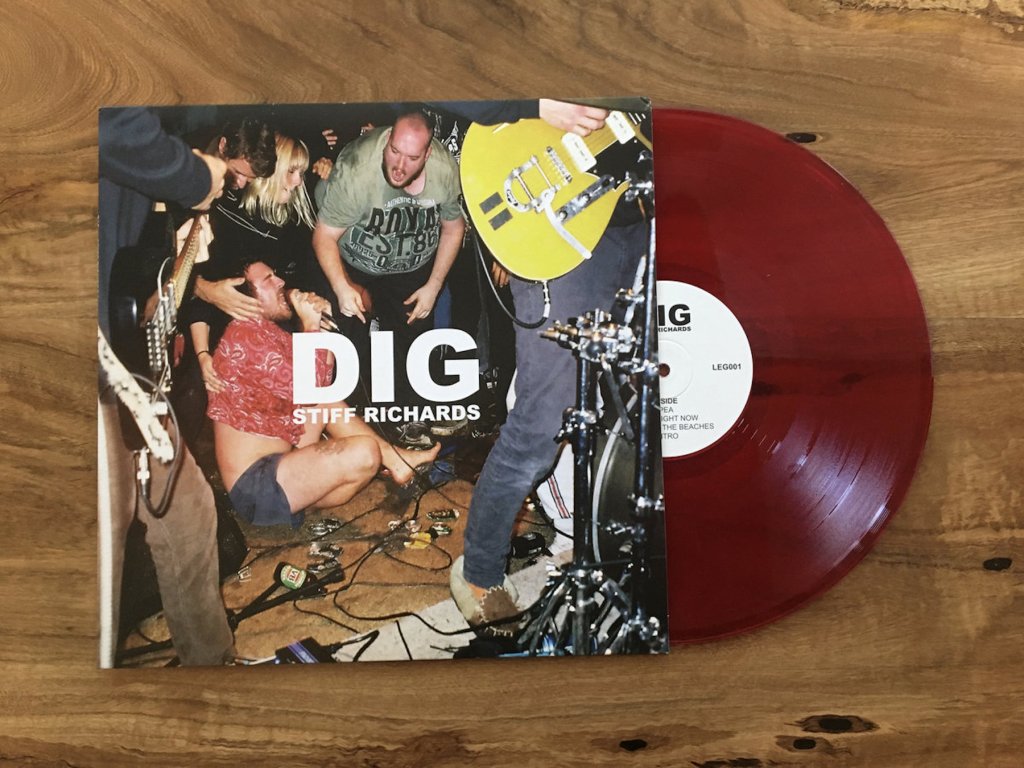
Stiff Richards Dig LP, pic courtesy of Legless.

Nice! So, you started Legless to put out Stiff Richards’ Records? 

AM: Yeah, basically. I guess that comes back to some of those frustrations. It was hard figuring out how to navigate the music industry. I was like, I reckon I could just do this myself. Well, with the help of my friends as well, I feel like we can do this together. Then as mates were asking me how we approached it, I was like, ‘Do you want me to just help you out with it?’

Is there anything that you wish someone would have told you when you started the label? 

AM: Well, kind of as I said, those challenges, even though they can be frustrations in the start, they end up being the things that make you stronger. Keep pushing through. Do things for the right reasons. Don’t expect to make money. Do things that make you feel happy and then you’re never going to get bummed out. Do things how you want to. There can be a lot of pressure to get bookers and management and stuff like that. That can work for some people, but if you’re willing to work hard, you can make it work really well for yourself. Positive encouragement for bands and people that want to do stuff. It’s like back yourself and have a crack. 

Definitely felt defeated sometimes, it’s hard navigating that world sometimes when you’re outside. If you don’t have any super cool friends or people in the know, you’re just in this big open world. People need to stick on their path and stay true to their art.

Totally! You’re speaking our language. Putting out records with your bands, do you feel like there’s any mistakes that you’ve made along the way that you’ve learned a lot from?

AM: Not really. All mistakes can become lessons if you are aware of them and you utilise them. I can definitely be quite opinionated and get grumpy about things. And that’s where as I get further into things, I know that I shouldn’t have given those things as much fuel as I did, but I wouldn’t have learnt that without going through it. I don’t really regret it. You know what I mean? 

Yeah. This is like anything in life, you get frustrated and then you learn to deal with something and you channel it into something else. 

AM: Totally. Yeah. I don’t really regret anything. I’m pretty happy. 

You seem it! Did any of the songs that you mentioned that you’d wrote when trekking in Nepal end up on any albums that you’ve put out? 

AM: They definitely would have. I can’t remember. I’ve got the most obscene voice memos folder saved on my computer and it’s like pretty funny. Sometimes when I’m drunk with mates, you go back through all your voice recordings and find early takes of songs that you’ve done. That’s like, basically how most of our bands do stuff, record things on the iPhone and then you get a better take of it and it just disappears into the ether. I reckon there’d be some funny recordings of me in Nepal somewhere, like humming a couple of Stiff Richard songs.

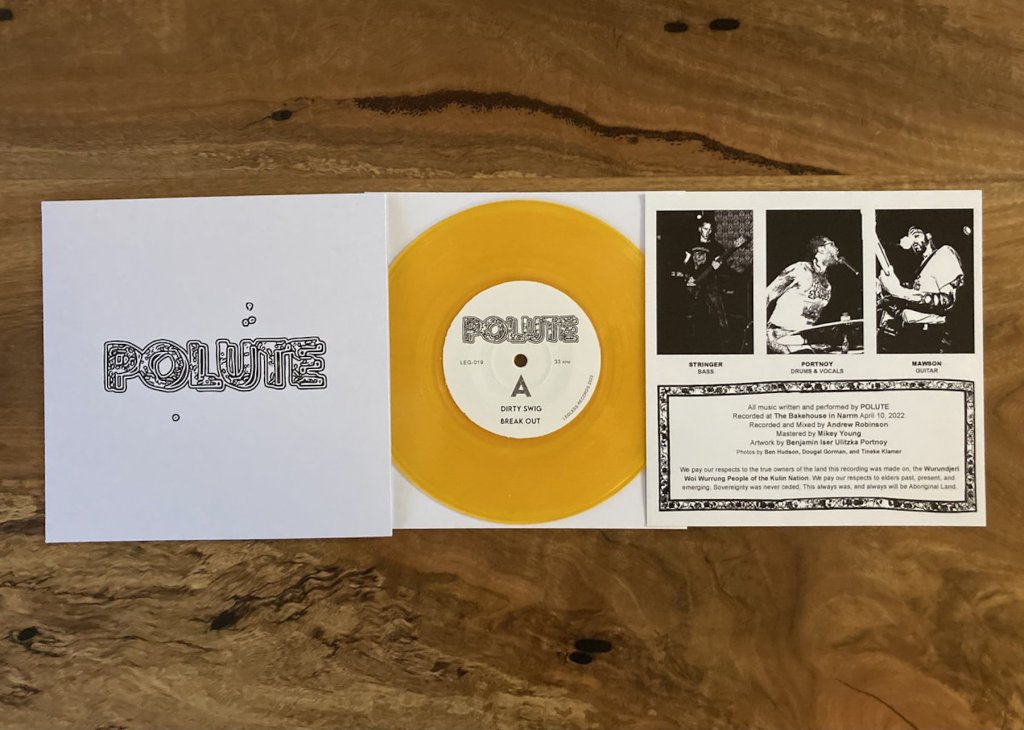
Polute self-titled debut release, pic courtesy of Legless.

Do you have a song that you’ve been a part of that you’re really proud of? 

AM: It’s weird, I don’t really approach music with heaps of intention. A lot of the time it’s me, grabbing a guitar and mashing chords until stuff starts feeling good. Sometimes it’ll be utter crap for three minutes and then something will feel right. I feel the beauty of a song is when everybody else contributes to it and then it becomes what it does. So I’m equally as proud of everything. Fluff it out with the rest of the team! 

What else is in the works for Legless at the moment? 

AM: We just finished recording the second Split System album. Can’t wait. I’m pretty stoked on that. That was a really fun process. The first seven inch and album were written, I think we’d only really played with each other properly like five times up until that first Vol. 1. 

Wow. It’s a great record.

AM: To have like a year under the belt and a lot of it was done over the phone, sending snippets. We had a couple of jams and recorded Vol. 1 and then with this one, playing with each other for a year and actually having a few jams leading up to it, it was fun. 

We’ve got the Stepmother album coming out later in the year as well. There’s a few other things in the pipe works, but I’m still not sure, I don’t want to jump the gun on a few things. Stepmother and Split System you can expect later in the year, most likely.

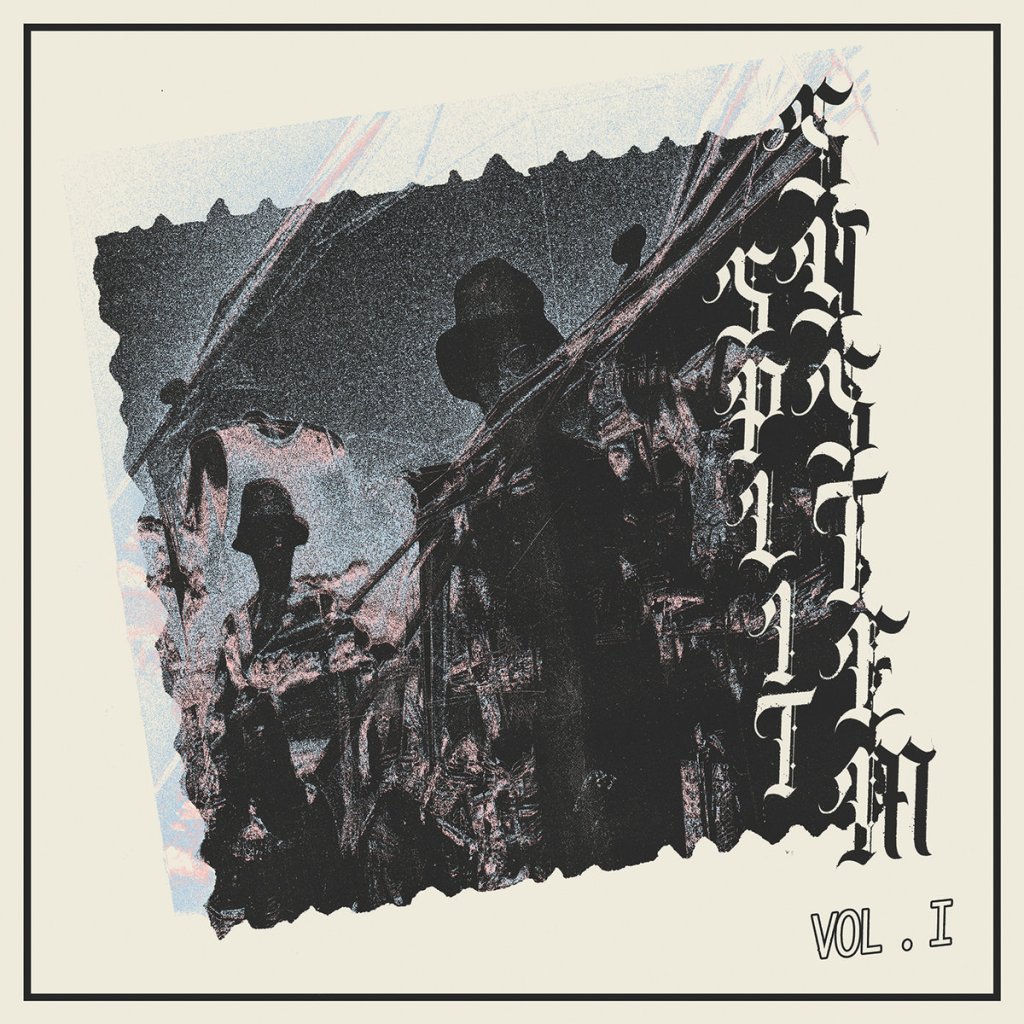
Split System Vol. 1, pic courtesy of Legless.

Cool! Looking forward to them. What can you tell me about Stepmother? 

AM: It’s like a completely bonkers horror movie rock and roll album. It’s pretty crazy. Graham’s done an exceptional job. It’s going to be a split release with Tee Pee Records in the US. That’ll be out later in the year. 

Who’s one of the most raddest people that you’ve met through what you do? 

AM: Honestly, it’s really funny. I feel like the thing I feel most privileged about is that my favourite bands are the people that I’m actually putting out at the moment. So, between C.O.F.F.I.N, Smooch, you can go through the catalog; they’ve all become really good friends. So equally, everybody. The Rack Off Records girls from Blonde Revolver and all that crew. It’s a really good little community at the moment and everyone’s having a good time. 

Before doing any of this, Mikey Young was definitely one of those people I looked up to and he definitely influenced me. When we were in the early days of Stiff Richards, he was a really good mentor without intentionally doing it, just being a good person and making me realise that all the people you’re going to meet in the music industry aren’t just wankers. I’d go around and mix at his house. He’d just be in his boxer shorts and have coffee with you, super casual. I was thinking, ‘Oh, this dude is my hero. And he’s just the most normal guy ever!’ He’d load me up with five records and send me off on my way. 

With Gimmie, when we started, we knew no-one. We’ve met so many lovely people in the Australian underground music community. There’s moments when it feels like everyone is really supportive of each other.

AM: Yeah, I think that age of bolstering yourself up, and those “glory” years of, like, oh, look at me, it’s gone. There’s actually strength in supporting each other, and the competitiveness is starting to die out a little bit, and everyone’s kind of bringing each other along with them. So it’s nice. 

Yeah. That’s why I really love Nag Nag Nag fest that Greg and Steph from Display Homes put on every year. It just has such a great environment and vibe. Everyone’s just really nice. It was such a nice day this year. Every single band was great. We were there from the very beginning till the end and watched every band, everyone totally ruled!

AM: Oh, totally. And everyone had a happy day. You get a lot of drunk people in a room, and it’s like there’s always one idiot that ruins it for it. But it didn’t seem to be any negative energy there for the whole day, so it was good. It just seemed like a happy family. 

Before, you mentioned sometimes you feel defeated by things. How do you flip that for yourself? 

AM: I don’t know. I’ve had a lot of things happen in my life that I won’t bore you with, but I just found with a lot of those challenges, even with losing my dad and stuff like that, through processing my own anger, I realised that you don’t get results from letting that negativity have a flame. Move on to something positive and time will heal everything. Life will throw you punches, but it’s a complicated world and it’s never going to be perfect. And if you feel like a victim all the time or let things get you down, you’re never going to get back up. You’ve really got to just keep trucking and do the things that you know is right and elevate yourself instead of complaining about what else is going on. You know what I mean? 

Yeah, absolutely. Surrounding yourself with positive things and positive people, really makes a difference too.

AM: Yeah. Everyone has a right to be down and stuff, but unfortunately I feel like unless you can get back into some kind of momentum, it’s easy to get stuck. So I keep busy and do the things that make me feel good. And it’s worked. Like doing the Legless-thing. I run a property maintenance business as well. I do window cleaning. I’ve been really busy, but when I slow down, I realise that I like being occupied. And if I’m not doing stuff, then I’d rather be in nature. I like exerting energy by walking or doing something else. When I get stagnant, I want to go do something. 

We go to the beach if we’re having a rough day. Going for a swim or a walk can change your day. 

AM: Yeah. The ocean heals a lot of stuff hiking. I do diving, and I go free diving with my partner a bit. I’ve always been drawn to the mountains too.

As we mentioned you’re about to go on tour, what’s the rest of the year hold for you? 

AM: That’s going to absorb a bit of time [laughs]. As I said at the beginning of our chat, I’ve just moved house. I’m not back until mid-September, so by the time I get back, and get back into work, I’ve got the Legless releases teed up and then Christmas gets really busy for work for me. Usually once Christmas is over, we get back in a creative mode again once all the craziness of the holidays is over. Then probably start recording stuff again. I’m hoping that Stiff Richards might have some new music sometime next year, we have the intention of trying to record over January, we’ll see. 

Will the Split System record come out before the end of the year?

AM: That’s the aim at the moment we’re talking with discussing label options. I’ll definitely be putting it out, but we’re just contemplating a few things at the moment. Before Christmas, otherwise early next year. Probably do a big run of shows for that. See a bit more of Australia. 

It was so cool to see Split System at Nag Nag Nag this year! We loved your set!

AM: It was a pretty loose set. We got a bit excited early and were super drunk by the time we played, but it was such a good energy there. We were a little bit worried after, like, oh, jeez, that was pretty rough. Everyone was having such a good time, it didn’t matter.

Check out all the awesome things Mawson does and is a part of: 

Legless Records: leglessrecords.bandcamp.com 

Stiff Richards: facebook.com/stiffrichardsband/ & instagram.com/stiffrichardsband/ 

Split System: splitsystem.bandcamp.com & instagram.com/splitsystem666/ 

Doe St: doest.bandcamp.com/ & instagram.com/doestband/ 

Polute: polute.bandcamp.com/ 

Gimmie’s new favourite band: Perfect Actress

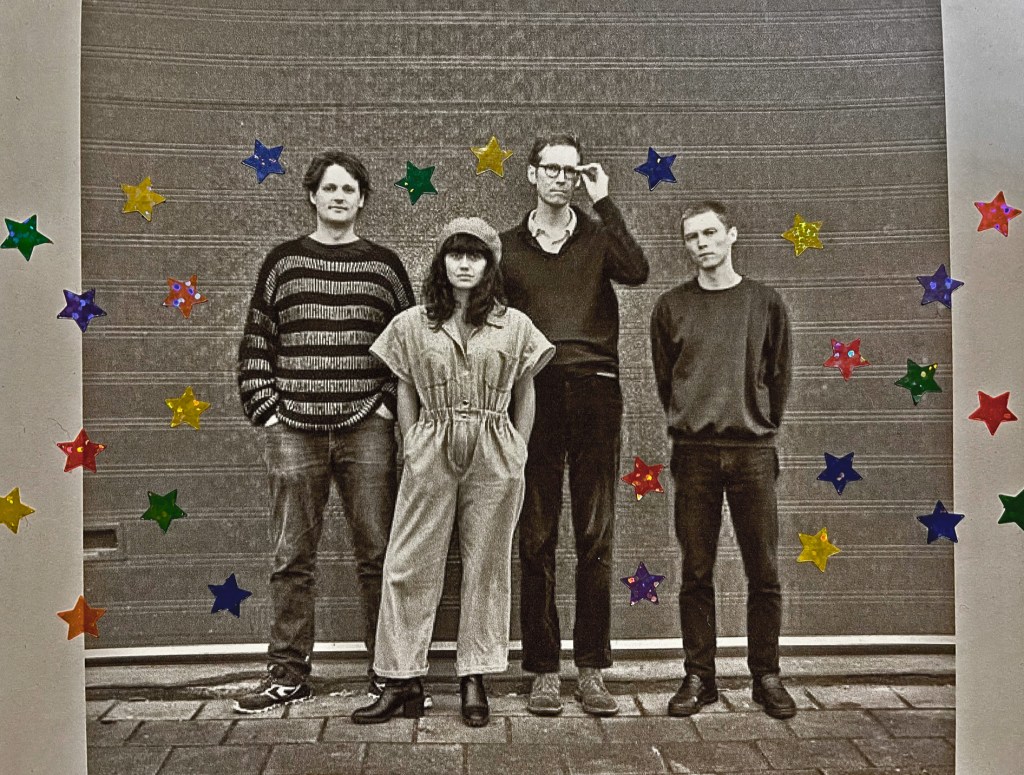
Original photo courtesy of Perfect Actress. Handmade mixed media collage by B.

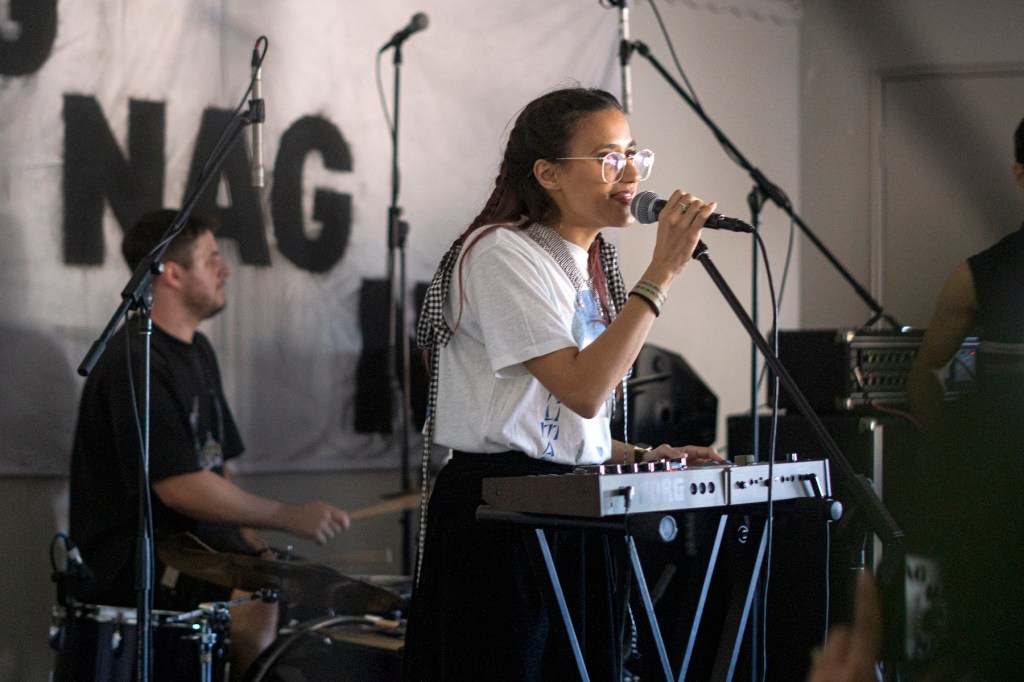
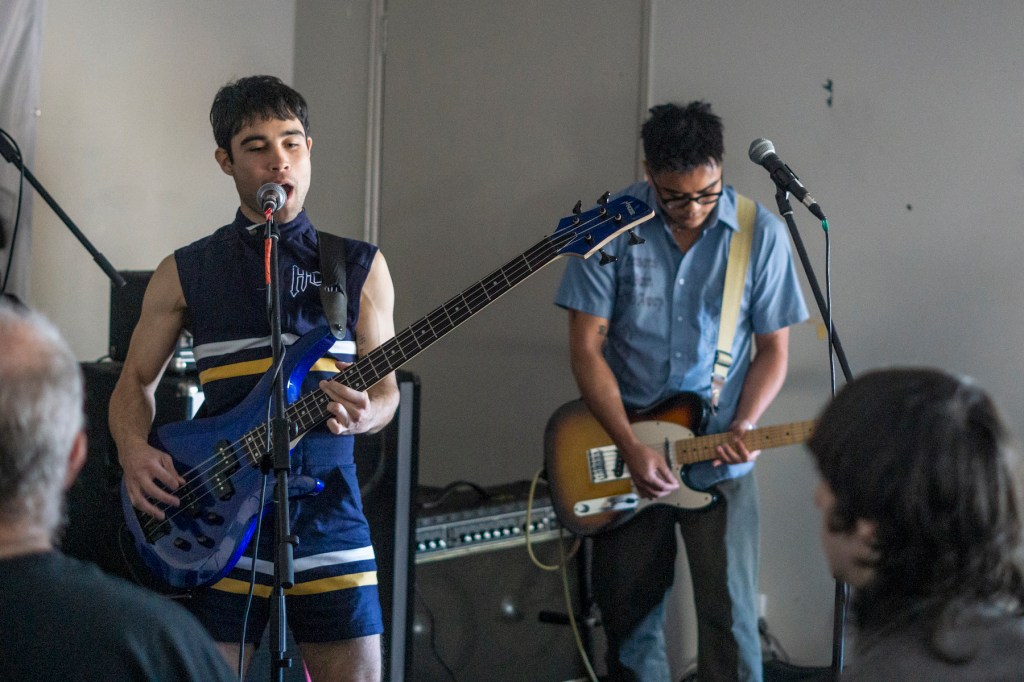
We know saying that a band is our new favourite is a big call, well, it’s simply the truth. We saw Perfect Actress play at this year’s Nag Nag Nag fest. They were the opener and there was a handful of people in the room, us included. We saw them soundcheck a song and from just seeing that we were intrigued and blown away. When they played their set we witnessed four really cool, diverse, highly creative individuals – Naomi Kent, Darren Lesaguis, Gus McGrath and Marcus Whale – come together and make magic before our eyes. Their energy, fun, and smiles were infectious. Their songs were well-crafted compositions and the band are one of those ones that feel fully formed out of the gate. After the set, we spoke to them and discovered that they’re also really lovely, genuine humans. 

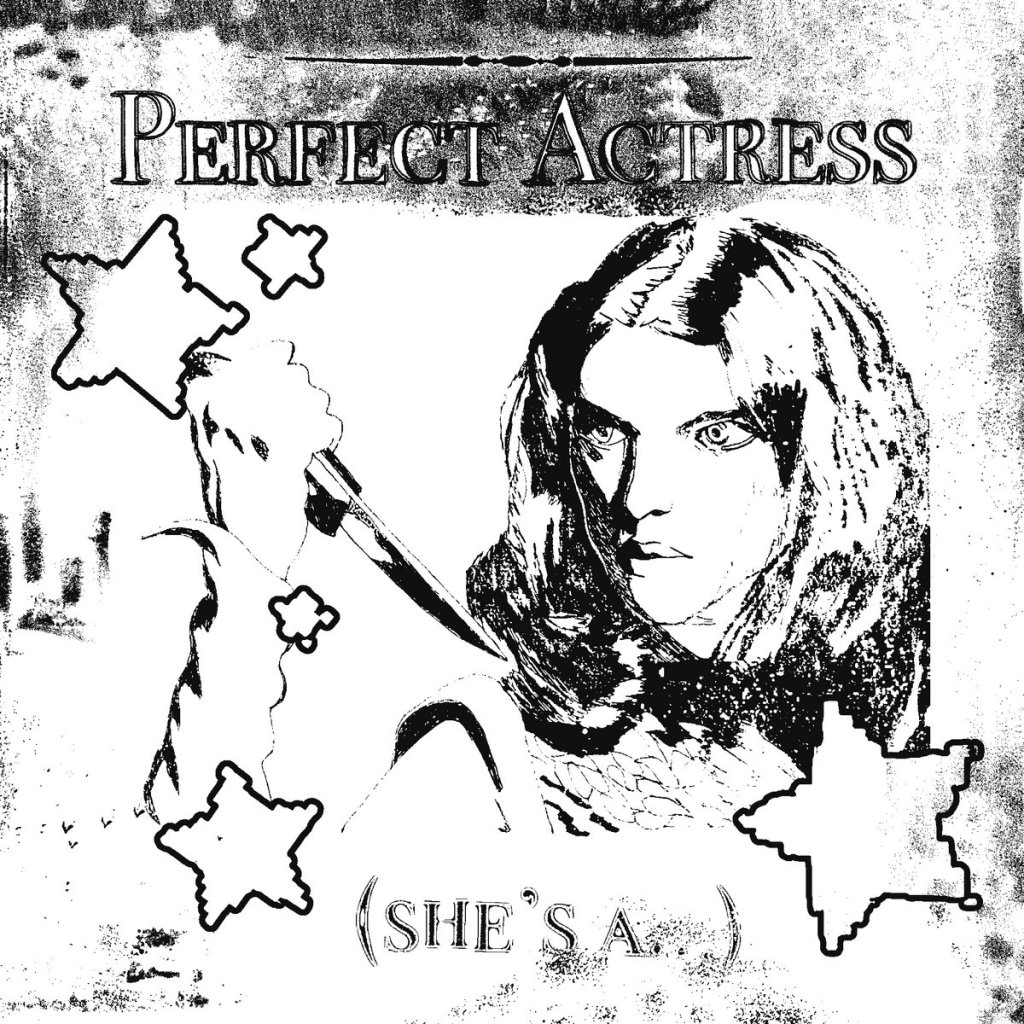
Gimmie spoke to vocalist and keys player, Naomi, just before they announced their debut EP and released single ‘Leather’. Today Gimmie premiere their very first music video shot by Garden Reflexx for banger ‘Perfect Actress’ and share that chat.

How’s your week been? 

NAOMI KENT: It’s been really busy. I work full time. I had an art show on Thursday. Work Friday. And then yesterday, we had a show in Canberra and I worked today. We drove down to Canberra, played, and then I left everyone in Canberra and I got the 6PM bus home. It was a big day, but it was really fun. 

You’re originally from the Yugambeh Country/Gold Coast?

NK: Yeah, I was born on the Gold Coast. I lived overseas growing up and then we moved back to Australia when I was eleven and then I moved to Sydney in 2019.

Whereabouts did you live overseas? 

NK: I grew up in Canada and America. My mom is Canadian and my dad got a job doing soccer coaching over there. So dad was driving every day from Canada to America and crossing the border.  And they would always say like, what are you doing here? And there was a bunch of casinos. So, I think at one point he just started telling them that he was going to the casino. 

What was it that inspired you to move to Sydney? 

NK: I had to do an internship with my studies. I studied fashion design and I couldn’t find one on the Gold Coast, so I thought, I have to move to Melbourne or Sydney. I just decided on Sydney and I never looked back. 

What was it that made you want to pursue fashion? 

NK: I’ve always wanted to. When I was little I watched The Flintstones and I would go on my mum’s really old Apple computer and I used to draw. I made a fashion line for Pebbles Flintstones. 

Amazing!

N:K Yeah, it was fun. 

Was there lots of leopard print? 

N: Yeah. I would name each piece of clothing. I think it’s nice to have your fingers in different pies and just see where it takes you. 

How did you start playing music? Did you play music before you moved to Sydney? 

NK: No, not at all. But I was always around people who played music. Maybe you would know the band called Donny Love?

Photo by Jhonny Russell.

 Yeah. 

NK: I used to live with Andrew and Randy from that band at one point.  So I’ve always been around people that were making music. And then I think it just happened. I never made music by myself. I guess I really started with Perfect Actress. There’s kind of an overlap of Carnations and Perfect Actress where I’d started.

I was living with Gus and Marcus, and we were like, let’s make a band. And then COVID happened so we couldn’t practise at all. After the second lockdown lifted, I think Mac from Carnations said that he wanted me to come and jam with them, so we did.

Carnations practise a lot more. I felt like Perfect Actress was on the back burner for a bit. And then our friend Grace, who does Rebel Yell and 100%, was doing a show and she wanted us to play, and I was like, okay, we really have to do this now.

I think at that point, we only had three songs, and then we just got the ball rolling. My first show with Carnations was only a few weeks before the first show with Perfect Actress. 

How did you feel like playing those shows for the first?

NK: It was really fun. I remember me and Mariana being really nervous for our first show, and then now we’re just like, oh, we’ve got this. We just have lots of fun with it. But it’s always funny when Perfect Actress play because my band Carnations always come, they’re always really supportive and its nice.

We really love Carnations as well. We’d been wanting to see you play for ages. At Nag Nag Nag, there were so many people there that had told us Carnations are the band you have to see in Sydney.

NK: That’s so nice. I love playing in both of the bands. It’s so fun. 

When you started Perfect Actress, was there like a particular sound that you wanted or did it just sort of come from playing together?

NK: In both bands we always like to make a playlist, especially when we were first starting, to figure out what our influences are and where we would see it going. I feel like Gus, in particular, loves Sonic Youth.

I love this band from Ohio called, Crime of Passing. I love them. 

They’re so good. I was meant to do an interview with them when they released their album but it unfortunately fell through. I called at our scheduled time and they didn’t pick up.

NK: I got to see them in Memphis last year when they played at GonerFest because my friend played. It was so good. I really love their style. I feel like they’ve influenced me a bit. 

Marcus loves prog rock, so there’s a lot of the drive and progression in it as well that I think comes from him. 

Your band combines so many things that we really love together, so well too. We really love your band. 

NK: Oh, that’s so nice. Thank you.

Is there any particular performance that you’ve seen a band play that has really stuck with you? 

NK: I feel like Marcus Whale my bandmate, when I first saw him play, I was shocked. Even when I see him play now, I really get a kick out of watching his audience because I feel like everyone is really captivated and mesmerised by him. That’s really fun to watch. It’s always fun to watch his shows.

Yeah, his solo stuff is really cool. 

NK: Who else have I seen that I’ve enjoyed watching? 100% the other night. They’re really fun. I loved the cover of ‘Relax’ by Frankie Goes To Hollywood.

Growing up, what kind of music did you used to listen to? 

NK: I grew up listening to a lot of UK pop music and then as I got older, I really started to appreciate a lot of 80s music. I feel like that has really stuck with me. I love China Crisis and Gary Newman. Obviously, Depeche Mode. I listened to The Cure a lot as well when I was younger. I like the British.

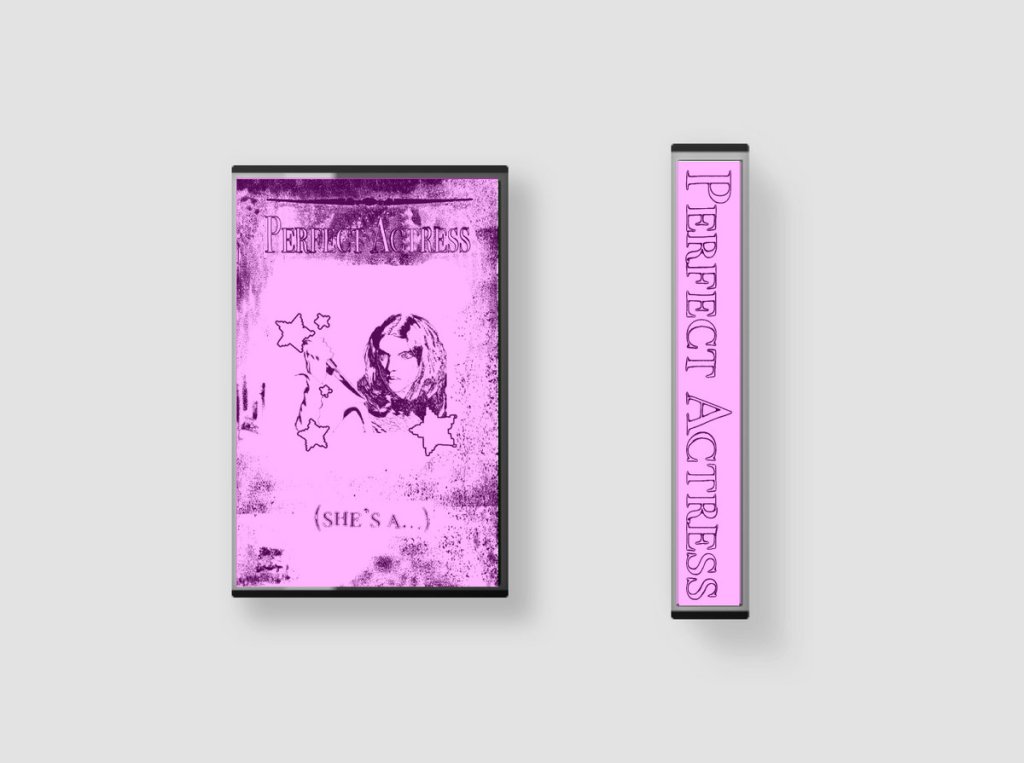
Perfect Actress have a cassette coming out? When will we see it? 

NK: I think July or August. We’re releasing one song, and then I feel because we’re all a bit busy, we’re kind of staggering each thing. We’ve filmed a music video. We’ll have a digital release launch night and video premiere type of thing. Our cassettes probably won’t be made until July or August. Yeah. 

What song is the video for?

NK: ‘Perfect Actress’. We did it with our friends Jenna and Andre, who are filmmakers. We filmed it a couple weeks ago. It was during one of our sets. There’s lots of close ups and us being rat bags. It’s nothing too crazy, but I think it’s a nice introduction to our music.

Video shot by Garden Reflexx

Was that one of the first songs you wrote? 

NK: No. I think ‘Instagram’ is the first song we wrote. We wrote that one really long ago. ‘Perfect Actress’ we wrote just before our first gig. Gus and Marcus had established a beat, and then Marcus was like, ‘You know what would be funny? If we just wrote a list. Of our favourite actresses in their movies.’ We were like, yeah, let’s do that!

Do you have an all time favourite actress that you’ve mentioned in the song? 

NK: My favourite is Nicole Kidman in To Die For. Her acting is so phenomenal in it. I actually saw Laura Dern in Wild At Heart the other day. I thought her acting in that was really good. I don’t think there’s a minute without her back being arched or her hands above her head. It’s so funny. I love it. Did you have a favourite movie? 

I really like the The Godfather trilogy. I like a lot of movies though. I went to film school. I grew up watching a lot of movies with my mum. She used to go to the video store and she’d get out 20 VHS tapes and watched them while she did the ironing and I’d sit with her. I love a lot of 80s movies. All the classics like The Outsiders, Pretty In Pink and Breakfast Club

NK: I love Molly Ringwald!

Me too! She should be in your song. 

NK: I’ll have to figure out where to fit her in!

When writing songs, do most of the songs sort of start the same way?

NK: Someone will bring something in. ‘Dream’, and this song ‘Hands’ (that is not on our EP, but I think we’ll record it at some point), those ones were Gus and Marcus. I guess because they live together, they have more free time to learn. Marcus wrote the lyrics for ‘Hands’ and I wrote ‘Instagram’, but they kind of start out the same. It’s usually like, if we’ve been at practise and we’ve figured out the instrumentals, then the next time we come in, I’ll try and think of some lyrics for it.

Do you find writing lyrics hard? 

NK: Yes, I do. I just feel like I don’t have that tapped in yet. Just because life is so busy and winding down, it’s hard to think of words sometimes or sit down and read and find inspiration.

Photo by Jhonny Russell.

Was writing ‘instagram’ hard? 

No, that one I found easy, but because it’s just kind of like one or two word increments. I really like performing that song. I always make a joke to the audience that it’s about deleting Instagram.

What was one of the first songs you ever wrote? 

NK: I guess it was ‘Instagram’.

So you were doing Perfect Actress before Carnations. 

NK: Yeah, I think I had the lyrics for that song before Carnations stuff. For Carnations, the first song I wrote by myself was ‘Videodrome’. That was inspired by the film [featuring Debbie Harry]. We have a song called ‘To Die For’ [featuring Nicole Kidman], which is about the movie as well. But I’m trying to not write about my favourite movies lately [laughs]. I got to think of another theme. But there’s endless inspiration in movies. 

Totally! Did you learn anything from making this EP?

NK: Probably that this stuff probably takes longer than you think. But also just that we will just keep getting better and better. Especially with the Carnations EP, I feel like we’re already onto more complex and intricate song structures. It’ll be the same with Perfect Actress as well. The songs that aren’t on the EP are songs that we’ve figured out, and wrote after that; they’re just getting better and better and more intricate and more fun and a bit different to what’s being released.

Illustration by Oscar Sulich.

I can’t wait to hear the new stuff! What’s one of your favourite places to play on Gadigal land of the Eora Nation/Sydney?

NK: Perfect Actress had their first show at Red Rattler; I thought that was really fun because it’s a DIY project space and it’s a safe space. It’s queer friendly, which is a big important thing for all of us. I would love to do more shows at Red Rattler I also really like MoshPit in Erskineville. It’s cute. It’s like really little, it’s really cosy and nice, the sound is good.

Nice! I like smaller, inclusive, DIY spaces best. 

NK: Yeah, me too. 

I’ve seen bands I love play bigger stages and sometimes it just doesn’t hit right, it doesn’t have that same feel as they might at a more intimate venue.

NK: Yeah. When you’re a bit more squished, it’s more personal, I guess. 

Totally. I’m still buzzing from seeing Tee Vee Repairmann at Nag Nag Nag, they were amazing. 

NK: Yeah, yeah! He [Ishka] really knows how to get the crowd going.

I got teary when they were playing I was moved so hard by the power of rock n roll!  It was so great to finally see Ish do his thing as frontman.

NK: You can just tell that he loves what he’s doing. He’s always jumping around.  He was just born to be up there. 

After the show, I went up and I told him and told him how incredible the set was. I think it’s important to tell people you really dig what they do. He said, ‘It’s just rock and roll!’ 

NK: So modest. That’s so lovely. 

Photo by Jhonny Russell.

Yeah. You mentioned that you had an art show this weekend. You were knitting?

NK: It’s was on a knitting machine. My friends do art programmes here and there and they were running this programme at the Powerhouse Museum, which was fun. It was very distracting trying to knit and have people ask questions and coming through.

The night before, Perfect Actress had a rehearsal and we figured out that we wanted to do a cover of ‘Star Power’ from Sonic Youth. We did that, and then it was stuck in my head all day, so I thought for the knitting piece I would do text of Star Power written on it.

That’s awesome. I’ve seen a few of your creations and I’m hoping you’ll do a new drop soon! 

NK: Yeah, one day. It’s so hard to balance work life sometimes. I work full time and I practise with Carnations once a week too. I do have a studio, but I feel like I don’t get enough time there. 

What kind of job do you do? 

NK: I’m a shop manager at a second hand buy sell clothing shop. I took the job because it’s like a five minute walk away from my house. I love it. Working full time is a bit rough sometimes when you want to do so much more outside of it. 

Totally! I work two jobs and do Gimmie stuff the rest of the time.

NK: Yeah, it’s a lot, but you got to hustle.

You mentioned earlier that Perfect Actress was the first time you’d started doing music…

NK: Yeah. 

Was music something that you thought you would do when you first moved to Sydney? 

NK: Not really. I always wanted to, because I had so many musician friends, like Grace from Rebel Yell. Then I met Marcus. I met Gus from California Girls. My boyfriend was in Eternal Dust, which I loved very much. Music was always around me. It was probably inevitable that I’d start making music. 

I’m so glad you did! 

NK: Yeah, me too. It’s always fun to get together and make music. I like that Perfect Actress and Carnations sound quite different. It allows me to scratch both itches. 

What’s something music-wise you’ve been really getting into lately?

NK: I’ve been obsessed with Colin Newman for a while, who’s a singer of Wire, but I really love his solo stuff. I’m always in and out of obsessively listening to his music all the time, listening to all his albums through and through. I really love his music. I feel like I’m really into New Wave at the moment, which is fun, because I get to play the keys and try to mimic things. That type of music is just so fun too, the whole sound, but even the look of it. And everyone just having lots of fun and experimenting with things.

Any shows coming up?

NK: Carnations has a show with Snooper, Gee Tee, and R.M.F.C.. We saw Snooper play in Memphis last year when we were there for GonerFest and they were so fun. I’m really excited for the Australians to see them! I’m really excited to play that show.

Perfect Actress’ EP available HERE. Follow them: @perfect.actress

Rotterdam’s Lewsberg: “Perfection is boring.”

Hailing from the Netherlands, four-piece rock band Lewsberg came to our attention while listening to an episode of 3RRR’s Teenage Hate radio show. Their latest release LP In This House is elegant, stripped down rock n roll with simple, eloquent storytelling. Gimmie spoke with vocalist-guitarist Arie Van Vliet and guitarist Michiel Klein.

Why is music important to you?

ARIE: Music makes things easier.

MICHIEL: Easier in the way that it can help you deal with the absurdity of life.

A: Yes, exactly.

What interests you about making your own music?

M: Why only listen to music? Or carefully try to reproduce old music? Why not make your own music?

A: Sometimes I am so bored of making music, of tuning my guitar, of singing our songs again and again, of the music industry, that I almost decide to quit playing and start doing something completely different. But in these occasions, I’ve always realised right in time that nothing else would give me satisfaction either. So I guess that’s the reason why I keep on making music.

M: And you still wonder why people call you a nihilist? I think it’s important to realise that you can make music without having to follow the ‘rules’ in the music industry or in society in general.

Lewsberg are from Rotterdam; what’s it like where you live? Can you describe your neighbourhood for us?

A: Rotterdam used to be a pretty rough city, unpolished, with a lot of concrete and with a lot of space for outsiders of all sorts. Until very recently. A couple of years ago Rotterdam started changing, and all the imperfect buildings and people had to pay the price. Rotterdam these days is a city where the streets are tidy, the flowers blossom and the people smile. But I miss the Rotterdam that welcomed anyone, the city where you could park on the sidewalk and pee against a bus shelter.

M: Rotterdam was not a city that welcomed you with open arms when I moved here around twelve years ago. You had to make an effort and have quite some stamina before it started to feel like home. But I think this is a good thing. Things shouldn’t come too easy.

I understand that the band’s name was inspired by writer Robert Loesberg and that reading his first novel Enige Defecten changed the way you looked at language and how it can be used completely; can you please elaborate on this a little and tell us how it changed the way you look at language?

A: I always thought pleasing people was the main goal of writing a book. Or maybe even the main goal of creating things in general. Until I read ‘Enige Defecten’, and I realised that you can use language in a completely different way. That you don’t have to take the reader into account. That you can decide to annoy a reader. With the way you use language, or with the stories you tell.

Another thing I found out while reading ‘Enige Defecten’, is that I have a preference for rather boring stories. Stories that don’t have a start or an end, everyday scenes, thoughts without morals.

Photo by Cheonghyeon Park.

We really love the Lewsberg sound: bare-boned and not hiding the mistakes; why was it important for you to not hide mistakes?

M: I’ve never understood people who say they want to write the perfect song. Perfection is boring. It suggests that there is nothing left to add or to change. It’s static. It leaves no space for alternatives. And I think alternatives are very important. There is not just one way, the right way. There are a lot of ways, all with mistakes. Why do people think it’s important to hide mistakes?

A: Now we’re talking about hiding mistakes… That’s the thing that really frustrates me about how Rotterdam, or the world, is changing. That most people think the world is a better place when all bumps have been eliminated, when all mistakes are erased. But they’ve never asked themselves why this would necessarily be a good thing.

I know that you don’t make your songs lyrically personal and that you write more from the perspective of an observer about everyday ordinary things; what inspired you to write this way?

A: To be honest, I think I am an observer. I have never really been a part of anything, I’ve always been the witness. I feel comfortable in this role, it makes me feel at ease in almost every situation. So actually, it just feels natural to write this way. This is just the way I experience things.

What was one of the most interesting things for you about writing or recording your latest album In This House?

A: We recorded our album during a heat wave. We never had such warm days before in the Netherlands. Most people stayed inside, because it was too warm outside. Henk’s studio, where we recorded, is a dark and cool place in a narrow alley in The Hague’s city centre. We forgot about the heat outside while we were working on our music. I’ll never forget the feeling I experienced each time I opened the front door of the studio, right before walking into a hot, bright, silent world.

What was the idea behind the minimalist cover art of the album?

A: I don’t think it’s really minimalist. There’s actually an entire world behind the black surface.

M: I see it as an invitation for people to fill in some of the blanks for themselves.

Being a native Dutch-speaker; how does your limited knowledge of the English language shape or contribute to your song writing process?

A: The boundaries of a language that I don’t fully have a grip on, make it easier for me to write. When I write things in Dutch, the words leave my pen too quickly. I like language when it’s compact, when it doesn’t say more than needed. When you write things in a language that isn’t your first language, that’s one of the things you get for free. Besides, writing in English makes it possible to write with the necessary distance from the subjects I want to depict.

I enjoy how you have different versions of the same song – single versions are different from the album versions and live versions are different from the recorded versions; what was the thought behind having the different versions?

M: I once read this great quote by Matt Valentine (MV & EE / Tower) in an interview: “It just seems ridiculous to play things the same way each time, I mean, you ever brush your teeth the same way?” And although Lewsberg is not a psychedelic improvisation outfit like Tower Recordings, this remark is just so relatable. He also talks about “making sure the emotion of the environment is captured”. I wouldn’t use these words exactly but obviously the environment is very important in relation to how songs are performed. The environment can be different things. Is a song placed on a single or an album? Where is it placed on the album? Where is it placed in a live set? Because a previous song will affect how the next song is being played. Where is the performance taking place? Is it a crowded place or almost empty? There are just so many factors that can and will influence a performance, both during recordings and live shows, and I think it’s good to be conscious about this and embrace it.

A: That’s one thing we really enjoyed about the recent shows. That we played in circumstances we had never played before. We never played shows for a seated audience before, we never played shows for only fifty people in a hall with a capacity of four thousand people before, we never played five shows in three hours before. Completely new circumstances, that allowed us to play our songs in a different way, both intentionally and unintentionally.

You played your first live shows in nine months; how did it feel?

A: At first I wasn’t really looking forward to it. I didn’t touch my guitar for almost six months and I hadn’t missed making music at all. Plus I didn’t feel the urge to be on a stage after six months of isolation. But looking back on these first live shows, I have to admit it was nice to be on the road again. Though it was exhausting to talk to people after the shows. After spending so much time without seeing too many people, I wasn’t used to talking to strangers anymore. Sometimes people were really emotional about the gig, because for many people it was the first gig they attended in 2020.

I’ve heard that you love to read! What was the last thing you read that you found really fascinating? What was it that piqued your interest?

M: Lately I’ve been reading some of the poetry by Hendrik de Vries, a Dutch poet and painter from Groningen, a town in the North of the Netherlands, also the town where I was born and grew up. He started his literary career around 100 years ago. He was something of an outsider, literal in a geographic way, but also because he was really traditionalist in the way he structured his poetry in an age where experimenting with free verse was the trend in avant-garde circles. The language itself is also kind of old-fashioned and archaic but very personal, wild, melancholic, scary and dreamlike. Surrealist in a way. It’s not poetry that I can understand or fathom, but the images and atmospheres it conjures are just so strong. Fascinating is the right word.

A: I didn’t read a proper book for ages, but thanks to the lockdown I discovered reading again. I read a lot of Dutch books, from dead writers like Gerard Reve to young writers like Marieke Lucas Rijneveld. And I loved reading the first two books of Danish writer Tove Ditlevsen’s Copenhagen Trilogy. Now I’m waiting for the third book to come out in Dutch. All these books have in common that nothing is really happening. If a writer can put that nothing into words, I’ll read the book. But if I had to pick one book that really left an impression this year, it’s Bell Hooks’ The Will To Change: Men, Masculinity, and Love, an explanation and denunciation of patriarchy. I read it in August, and I still think about it almost every day.

Is there anything else you’d like to share with us?

A: We’ve started a label recently, called Soft Office. The first release came out today (on Friday, November 13th), it’s Austin-based band Chronophage’s second album The Pig Kissed Album. If you like Lewsberg, it could be interesting to keep an eye on these releases, since this is the music we like. You can find more info on Soft Office’s Bandcamp-page.

Please check out: Lewsberg.net; on bandcamp.