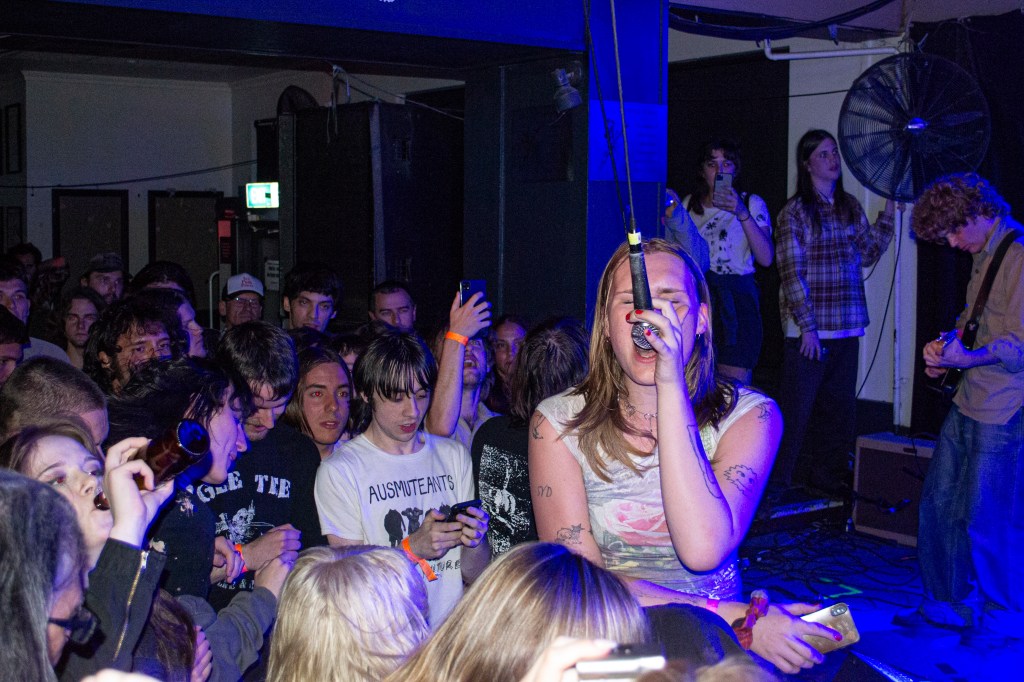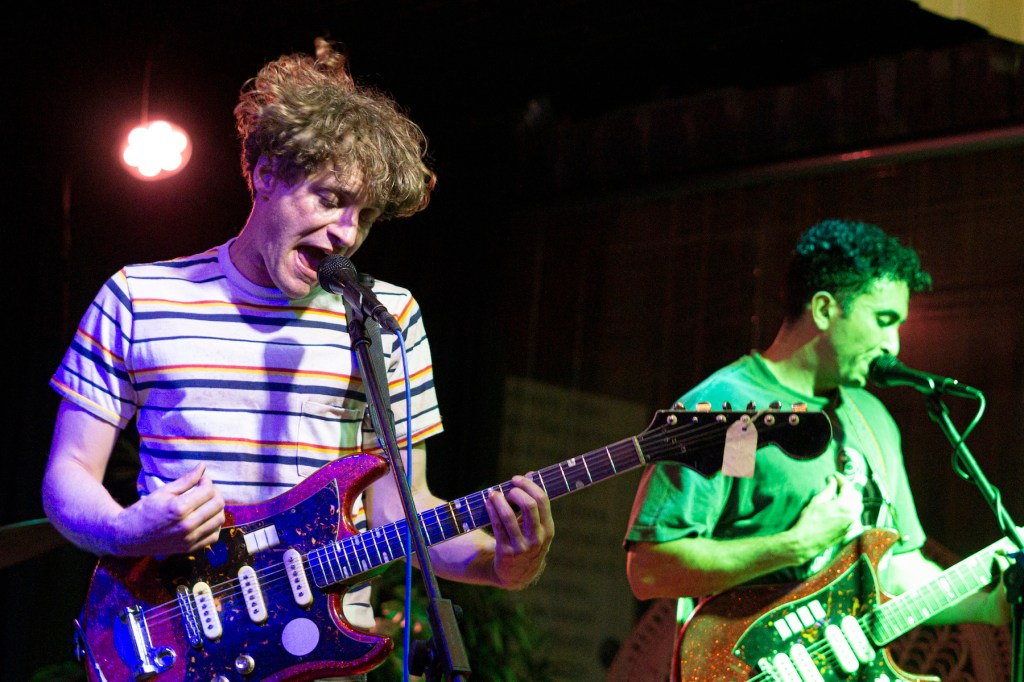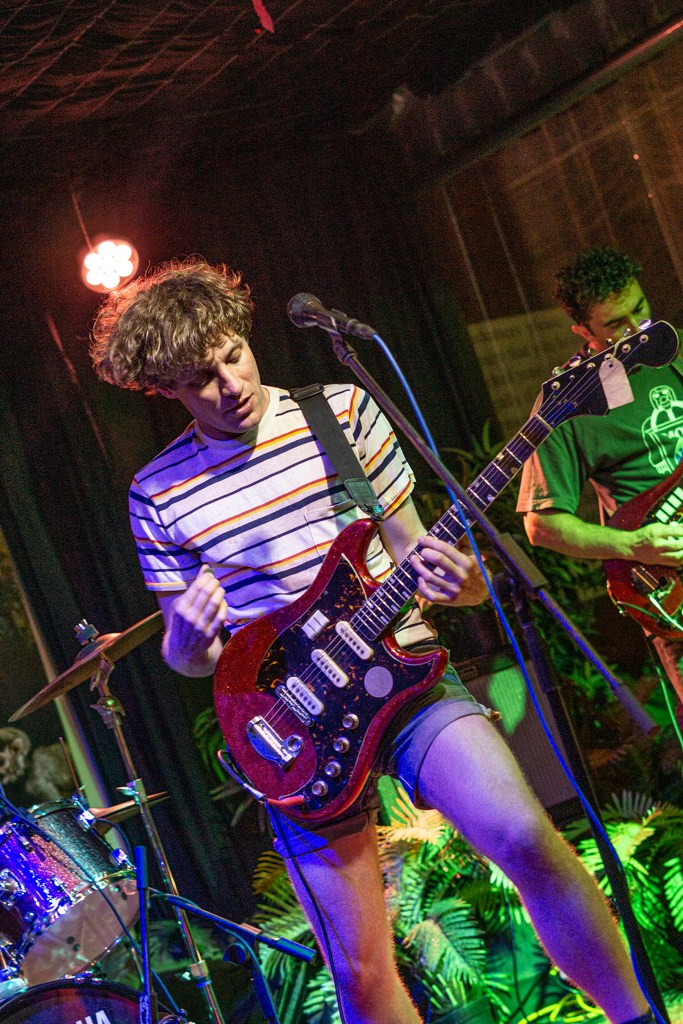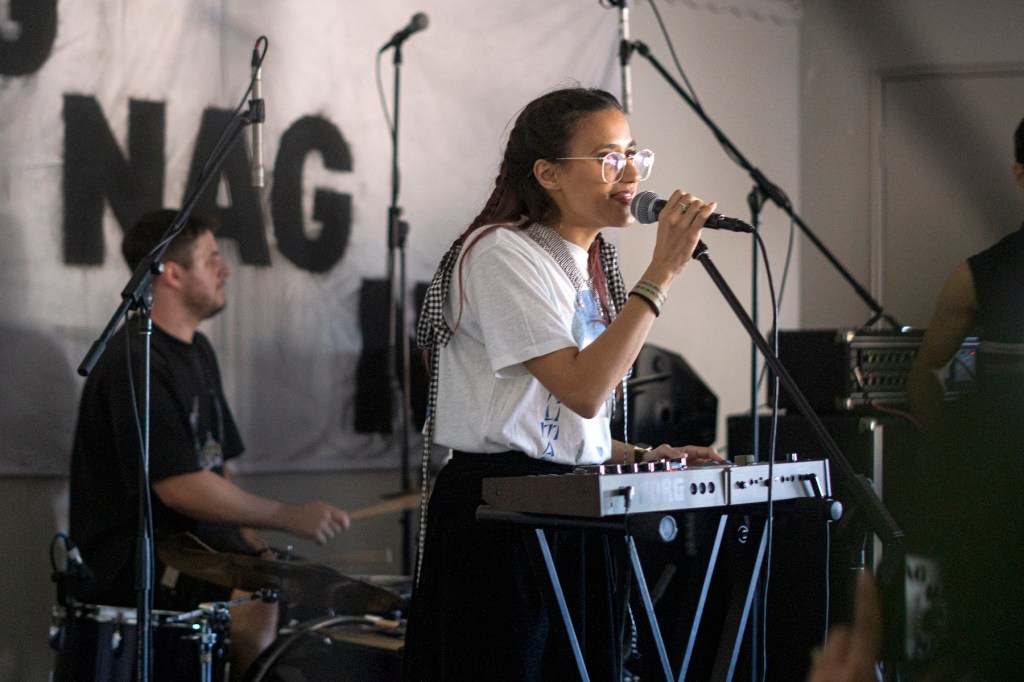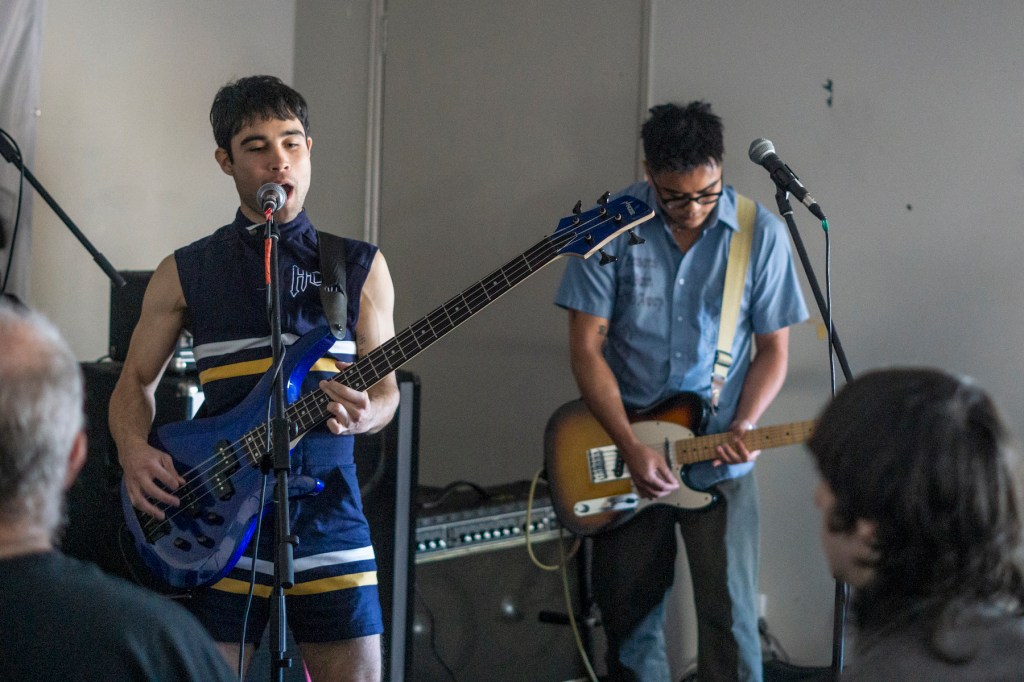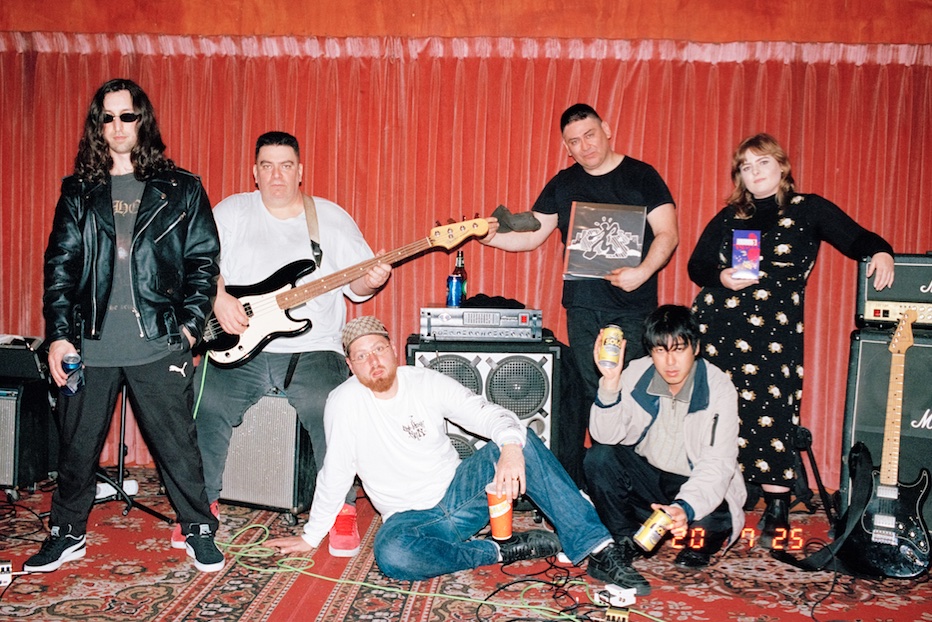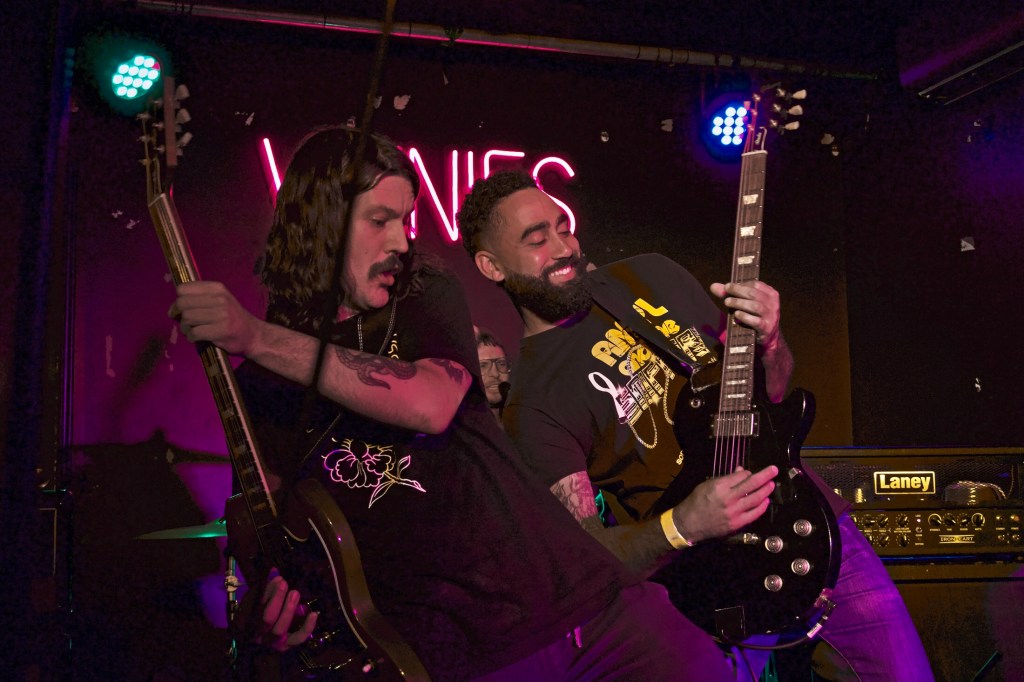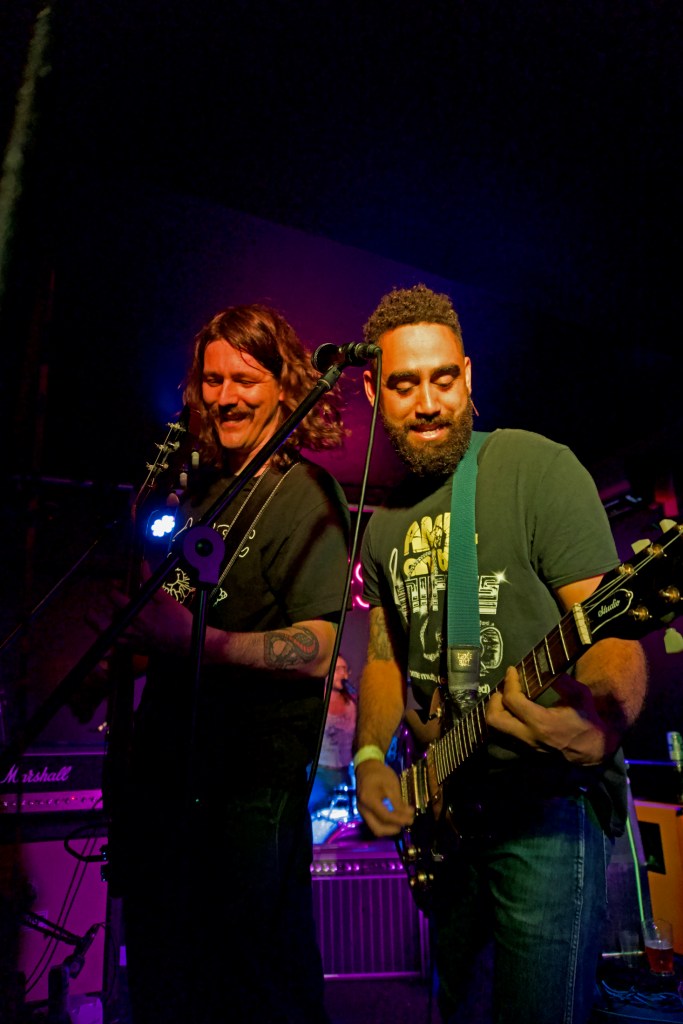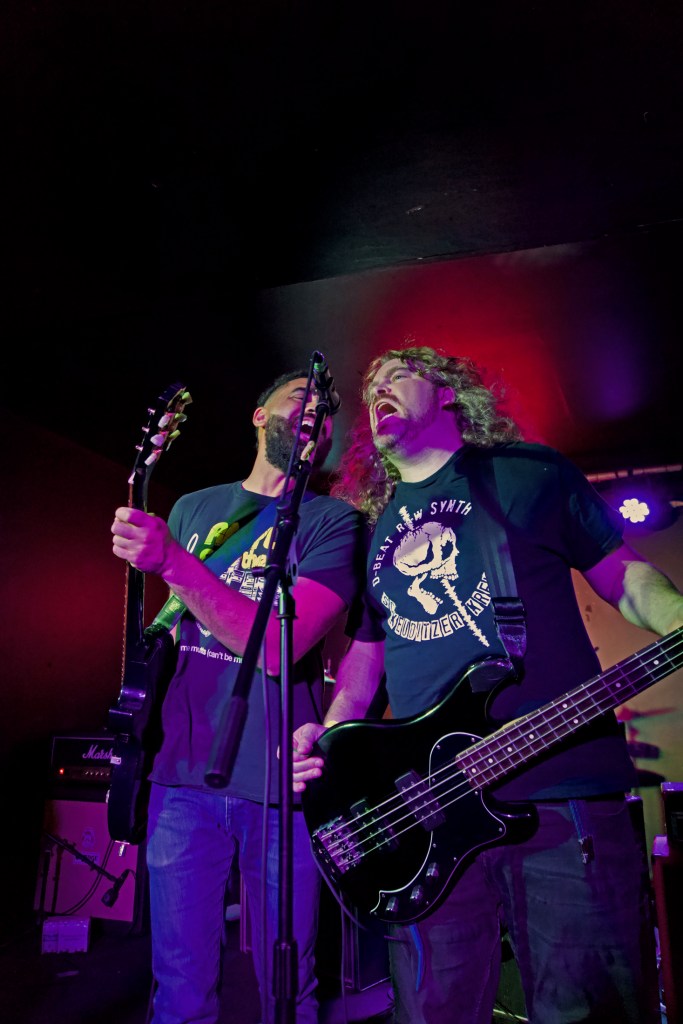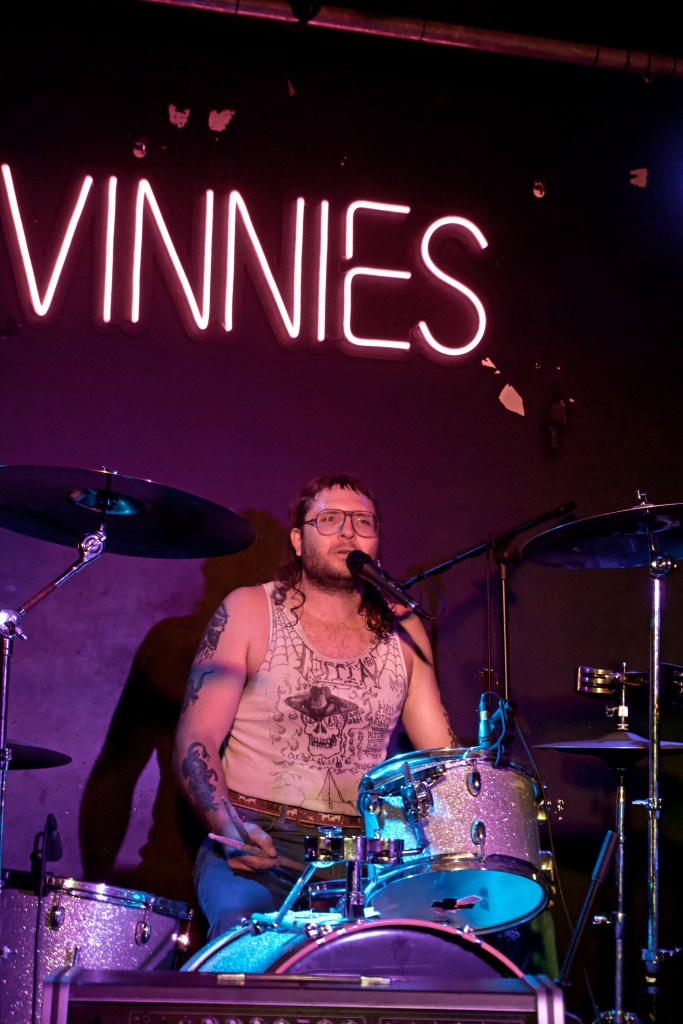
antenna vocalist shogun: ‘I can look back and laugh at a lot of the shit that happened. A lot of it was so fucking gnarly and sketchy.’

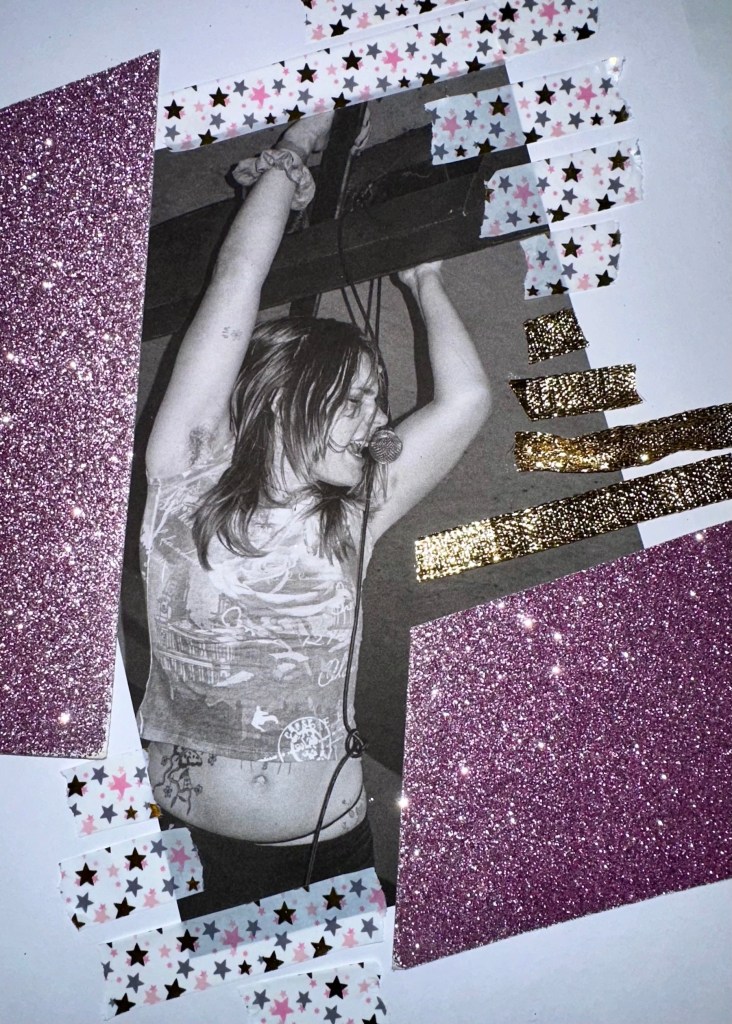
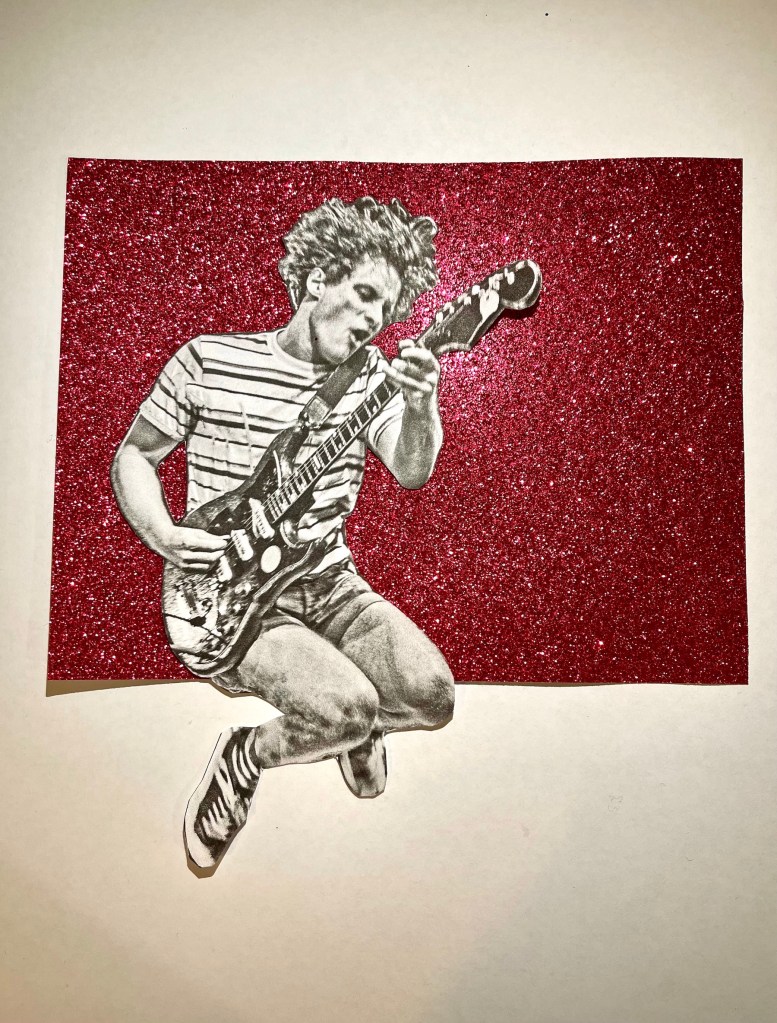
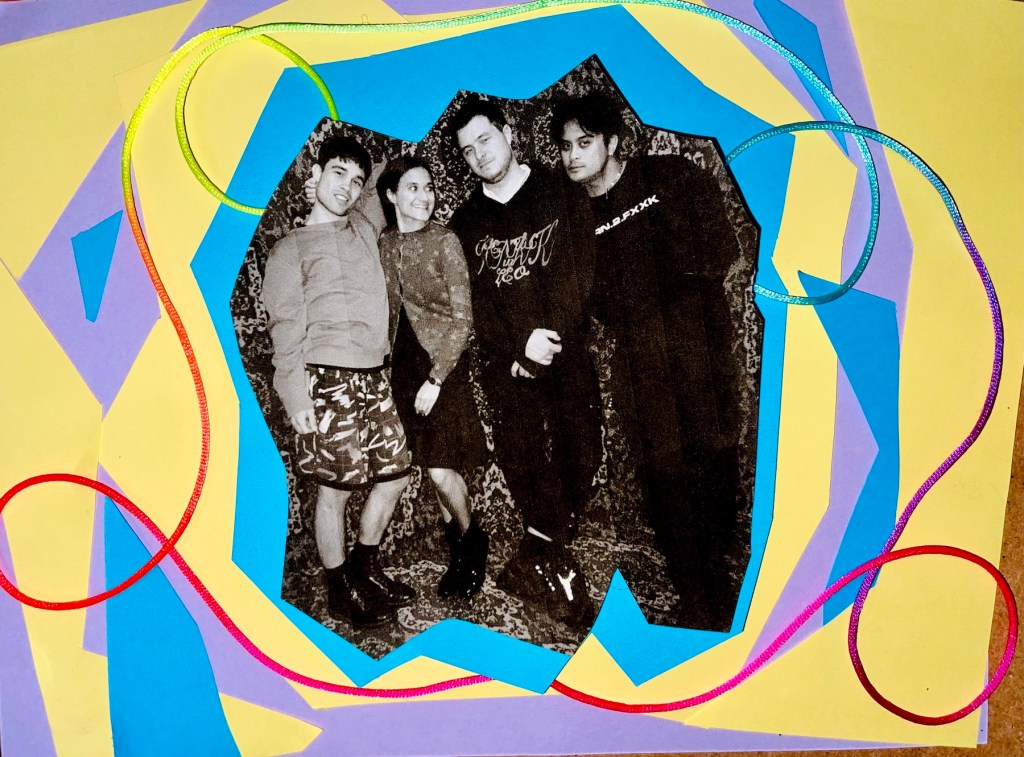
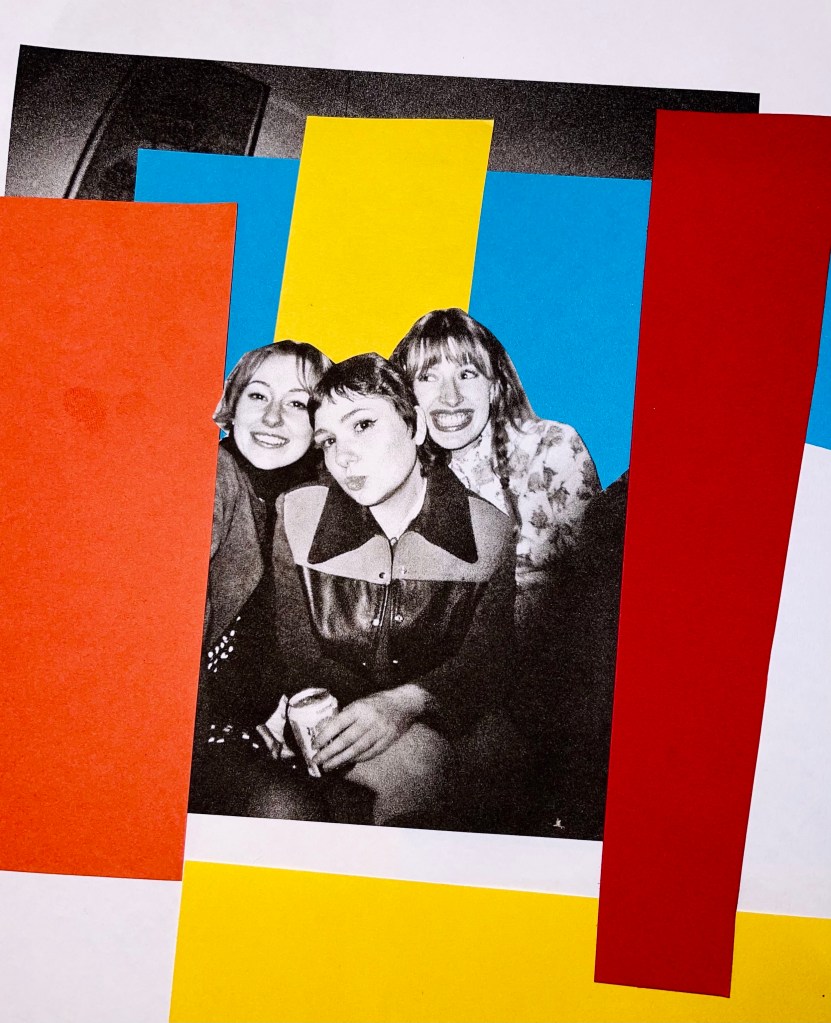
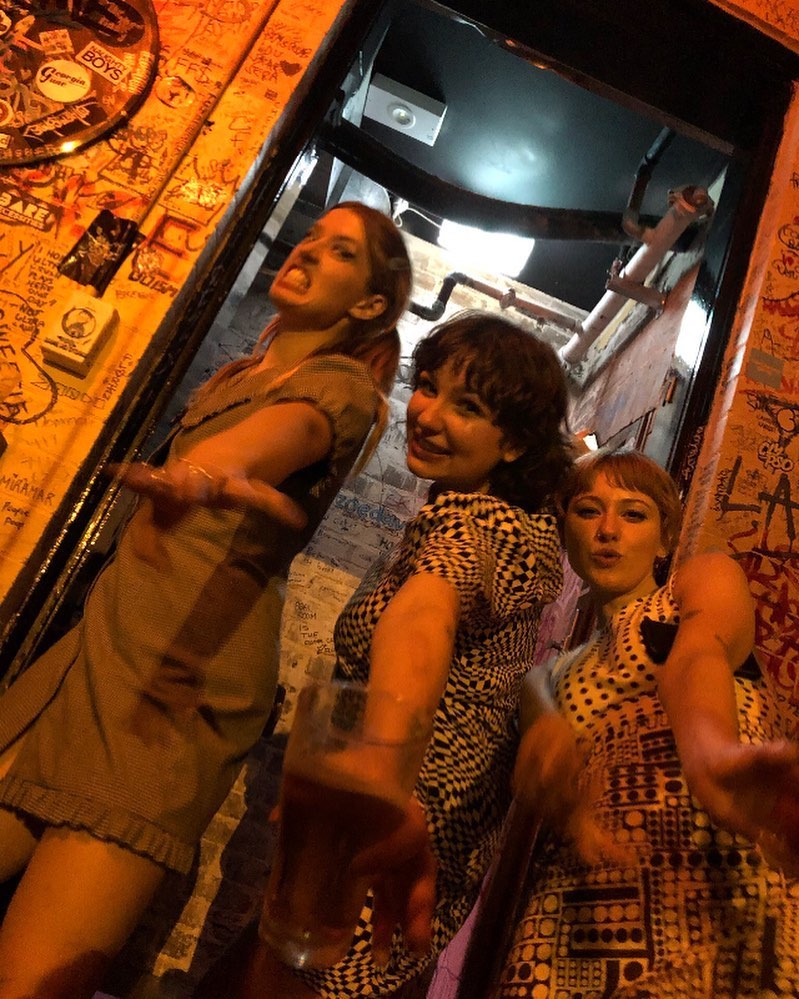
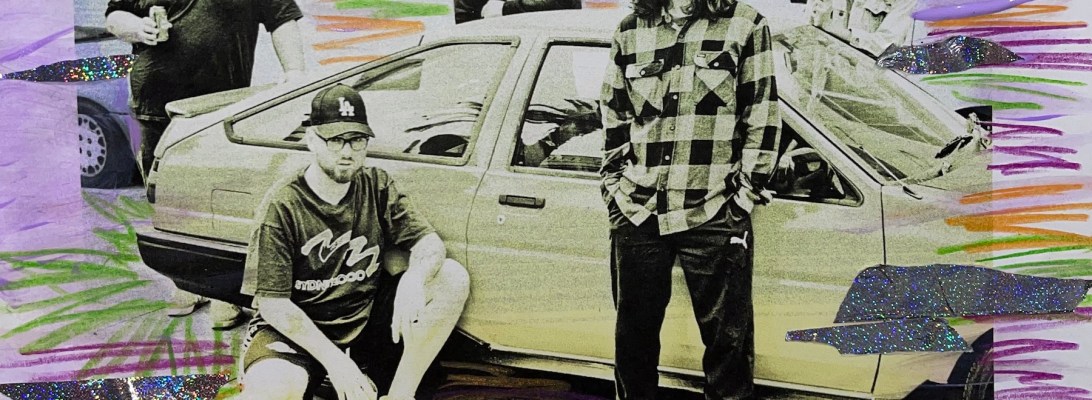
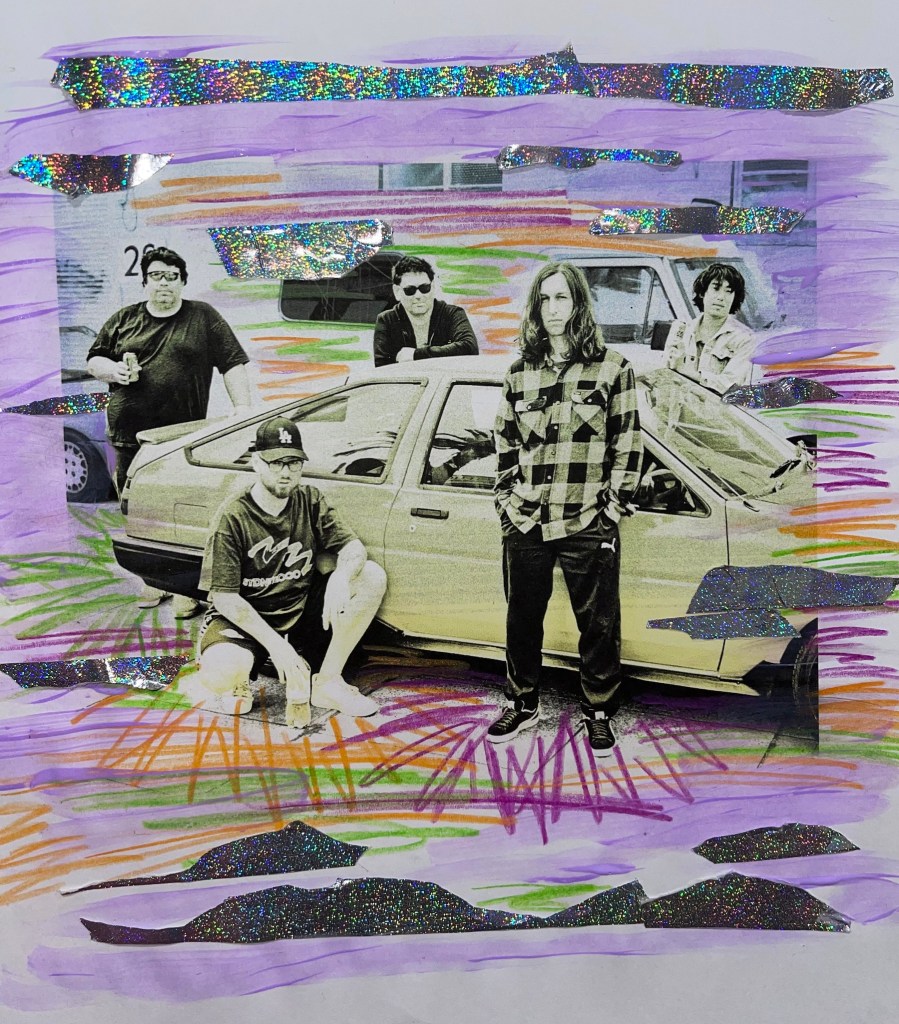
Original photo: Jhonny Russell / handmade collage by B

Tim ‘Shogun’ Wall is back with new band, Antenna. The Sydney/Gadigal Country native, that somewhat reluctantly rose from the Australian punk underground to worldwide visibility and acclaim with band, Royal Headache, is producing arguably the best music of his roller coaster life.

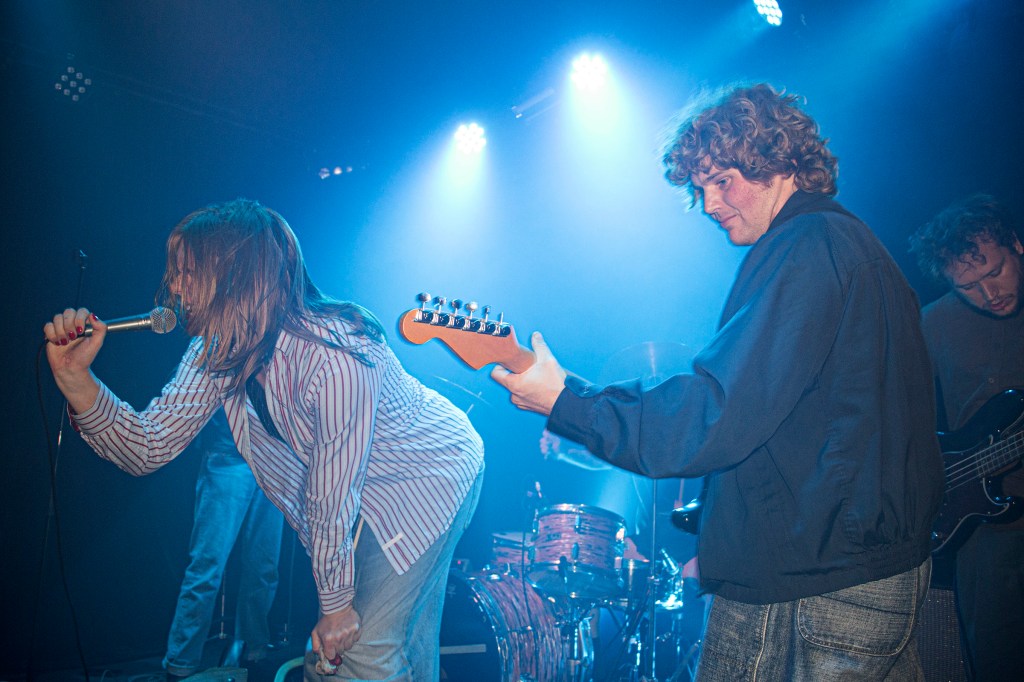
We’ve listened to the sneak peek of Antenna’s debut EP (which will be released in a month or so on Urge) over and over, and over. We also saw them live at the start of January when they played a random one-off show on the Gold Coast/Yugambeh Country with Strange Motel, and Boiling Hot Politician. The EP is ripe with energy and soul, of a man who’s experienced a lot of shit, and is still here, still working on things, still processing it all through art—it’s an emotional tour de force sparkling with highlights. It contains some of Shogun’s most exciting and heartfelt performances yet. There’s transcendence amidst chaos. All his influences and past projects are swirling around in this collection of songs. Across the album, guitarist Hideki Amasaki’s work soars as its backbone and defiantly provokes us to react. Indifference is not an option when it comes to this release. It’s already one of our top releases of the year, and it’s only February!

Gimmie sat down with Shogun a night last week, to talk about everything. He shared insights into his journey, discussing where he’s been, where he’s headed, and the significance of this year in his life—in some ways a feeling of make or break looms. It’s also a great reminder that us creatives and fans need to remember to look out for each other and support one-another. Life can be hard, but we’re firmly planted on the side of lifting people up, rather than tearing them down.

SHOGUN: I work a 9 to 5. It’s pretty gnarly, I do court transcription. I don’t really like it. When I fell off the Royal Headache bus, I needed to go and get myself a fucking job. My friend goes, ‘Oh, I do this, maybe you can do this?’ I was like, ‘There’s no way someone like me is gonna get that job!’ But a lot of people say that about a lot of jobs, don’t they? They assume there’s an inadequacy. Anyway, somehow I got through. After being there for a few years, they’re like, ‘You can come and do this permanently if you want’ and be a white collar stiff. I’m there in spite of all reason and logic, I’ll probably be there for the foreseeable future.

It’s not a bad thing to work a day job and do creative stuff. I’ve pretty much always had a job and then done creative stuff too. The job pays the bills and then the creative work is fun and I don’t have to ever compromise and do stuff that I don’t want to do. 

SHOGUN: Oh, absolutely. I completely agree. I’ll be at a day job forever. Back in the Royal Headache days, I made a good living off music for a couple years, but it didn’t bring out the best in me, really. Looking back, you’re sitting around the universe for one or two whole weeks, just waiting for a gig and a couple of band practices and, you know, what they say about idle hands. I wasn’t the happiest or best version of myself then by any means. 

I am very hyper and I do, even to this day, sadly, still get into mischief. I need routine, it’s good for me. It’s calmed me down a lot.

That’s so great to hear. 

SHOGUN: I was really missing playing loud music and punk. 

The last year has been a real transition. From being someone who felt definitely a little bit apart from the scene, somewhat bitter, sure, to then progressing to feeling included and optimistic. That’s been nice.

Despite contributing to the punk community for the past 30 years, since I was 15, there’s been so many times when I haven’t felt part of the scene too, so I get you.

SHOGUN: There’s different levels and gradient to it. I was a total hardcore zealot as a kid, I was straight edge, and right in there, in the mosh pits, mic grabs and stuff [laughs].

But then I rejected all that. Maybe it’s the sort of personal I am? I was so zealous and involved that I abruptly became really sick of it, or I found something weirder or more aggressive or more crazy. I went more into powerviolence and grindcore. Then was going to see techno parties and things like Passenger Of Shit and all the fucking Bloody Fist [Records] stuff. It was pretty amazing. I’ve always been part of scenes but then the Royal Headache thing, the whole irony was that, the band got so big. 

There’s a few ways to get excluded from a punk community. Obviously you can do something really fucking dodgy so you can’t come back and everyone knows that. But what surprised me and what I didn’t know is, if your band gets really popular, it’s almost the same thing. It’s not as horrific, you haven’t hurt anyone, but the treatment is always almost the same. 

I tried to form the ultimate punk band with Royal Headache—some Buzzcocks in there, some soul, a tiny bit of hardcore. It’s going to be great! You know, you’re going to love it! But then, something about the magnitude of the Royal Headache sort of fanfare actually alienated me from that community. Even though, that band was supposed to be my final gift to them. It’s nice to come back in and do it on a small and humble scale, not too thirsty to make any big waves. It’s just nice to be around loud guitars and fast drums again.

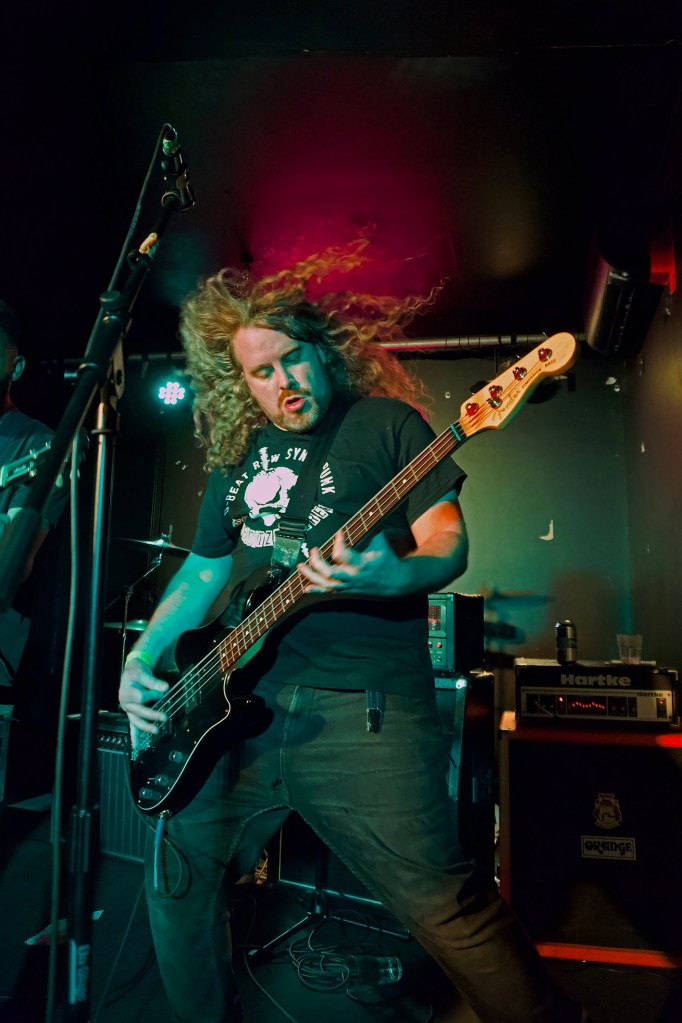
Photo: Jhonny Russell

It was great to see you live on the Gold Coast last month with Strange Motel.

SHOGUN: I hadn’t been up there since I was about 9 years old and I actually really loved it. It’s a beautiful community. I actually didn’t know that part of Australia really existed and it’s not like Sydney, Melbourne, or Brisbane—it’s really its own energy. 

Yeah. I wish more bands came and played here. 

SHOGUN: I was having the most beautiful holiday… until what happened [Benaiah Fiu founder of Strange Motel and guitarist for Sex Drive suddenly passed away after the show].

We still can’t believe it. We were talking to him and hugging him at the show only hours before it happened and then he wasn’t here anymore. You and I are a similar age, with the kind of scenes we’re involved in, unfortunately losing people too early, there’s a greater chance of that.

SHOGUN: Every time it happens it’s almost like you shed so much of yourself, you become a completely different person. It’s almost as if I’m taking like 17 fucking hits of acid or something. You feel spun by it.

Loss and death is a theme that has appeared in some of your songs. Like your project Finnogun’s Wake song, ‘Blue Skies’ was written after a friend’s passing. 

SHOGUN: It was. Even though it’s not really mentioned in the song. Sometimes the unmentionable central fact informs the energy of the song, but you never explicitly talk about it because there’s no real way to express it. 

Benaiah’s passing really reopened that wound. It had almost closed. I almost forgot the feeling of total grief. It was really good to get so close to him. I’ve known him for about 10 years, we got closer in the last few years. We were messaging all the time. We’d send each other lots of music, stuff that’s just coming out now. I was like sending him the Finnogun’s Wake and I asked, ’Is this shit?’ And he’s like, ‘Uh, yeah.’ And then I sent a new mix, and he’s like, ‘Oh, this is way better.’ He had my back and would get me psyched on it. Like myself, he’s a totally music obsessed, it’s always fucking number one. It’s like a quasi-religious thing.

Totally! Benaiah lived over in the next suburb from us. We’d have these really deep chats. He was trying so hard to do better and get away from the things that were brining him down. It makes it even sadder that ultimately, those things took him. He was looking forward to so much, like shows down south.

SHOGUN: Yeah. He was also one of the only people from the punk scene to give Antenna a show. We’ve been around for over a year now. He was one of the first guys to go, ‘Do you want to play with me?’ All the other shows we’ve done are just with randoms. He took a chance on us. I was really looking forward to doing a bunch of shit with him this year. I was hoping that would give him something to look forward to and work towards. He’s got all this amazing Strange Motel stuff getting rolled out. 

When I see my younger mates in trouble, without taking on a patronising bigger brother role, you need to give them something to look forward to. It’s all still very raw.

Yeah. It’s the same with us. It can get really heartbreaking when you see people in the scene you love going down a dark path—we get it, because we’ve been there too—and you want to help. Benaiah’s death really hurt.

SHOGUN: I loved the guy. But I’m down here. He’d come down to Sydney and we’d party. That’s what the Sex Drive guys always do. They get fucking loaded. It’s a fun tradition. I wasn’t perceptive enough to the fact that there’d been problems. I wish I’d known more. Only in the last few days I’d heard it was getting kind of serious. It’s heavy stuff.

You’ve dealt with your own heavy stuff, like addiction.

SHOGUN: Nothing too hard. There was always lots of shit around me, but for me, just booze and some other stuff, nothing hardcore. No smack, and no Ice… [pauses] really, not a lot. 

We’ve been totally thrashing the new Antenna EP on the home stereo, on the car stereo, on my phone going for a run, and it’s our favourite thing you’ve done.

SHOGUN: Thanks, man. Fuck yeah!
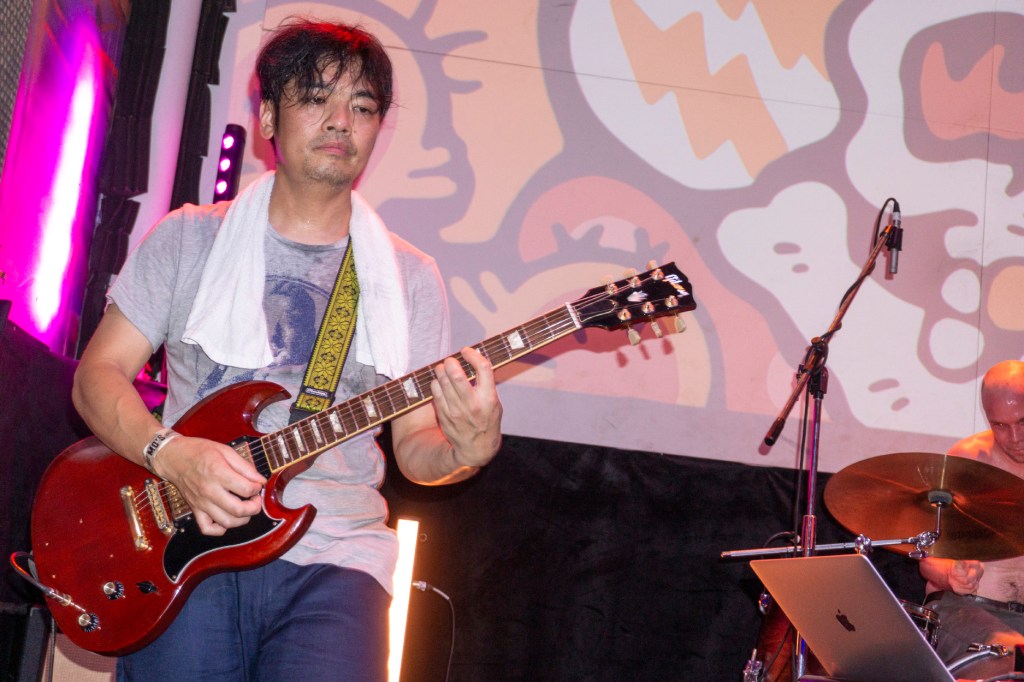
Photo: Jhonny Russell

It’s like all the things that you’ve done finally culminating and you’re making the music you always wanted to.

SHOGUN: Totally. I really appreciate that. I’m getting really gassed about it because I’ve had the nicest feedback. I sent to to Trae [Brown, vocalist] from Electric Chair. He’s an interesting, cool guy. He didn’t say anything for a couple of weeks and I’m like, ‘He hates it! That’ll be right. Fuck.’ Then he writes, and tells me, ‘This is fucking sick! I love this! You guys have to get over here’. He’s been thrashing it.

A couple of days ago we confirmed that it’s coming out on Urge Records in a month. It’ll be ready for our trip down to Melbourne mid-March. I’m psyched. 

A song that really stood out on the EP is ‘Antenna State’. When did you write that song? 

SHOGUN: Last year. I’ve been a little happier, maybe the last six months, but when I was writing those songs. I was completely miserable and really nothing was going right. But then I met these great guys; this amazing guitarist, Hideki Amasaki, he’s an incredible dude, a really killer guitarist. I thought, sometimes it’s a little cringy to go and start a punk band at my age. But I’m actually adequately angry and miserable enough to do this. Shit is actually going wrong enough that I can really throw it at a wall. Those songs were written at that time. 

‘Antenna State’, without confessing too much, it’s all true. I don’t make these things up. All the lyrics, that was going on for sure. It’s a list, or like a sandwich or a salad of how many things in your life can go wrong at once.

I was quite mentally sick at the very start of Royal Headache and instead of getting help—serious help is what I needed— I joined a band that started really going, and touring everywhere. It was like putting a bandaid over a fucking shotgun wound. 

This is all years ago now. I haven’t experienced anything like that in 9 nine years. 

Photo: Jhonny Russell

I’m so happy for you!

SHOGUN: Sometimes I wonder it’s gonna raise its head and it’s gonna hit again.

I think it’s important to be more understanding of others, you never know what’s going on with someone.  

SHOGUN: Yeah. At the show at the Gold Coast you were at, me and a friend were having a chat. He has an Indigenous background, he’s a graffiti writer. He’s saying, ‘Well, fuck, back in the day, we’d have to hide that shit,’ you know, like that you’re mentally ill or if your family’s from a different background. You couldn’t talk about that. Know what I mean?

I do. I’m also Indigenous and have struggled with mental illness, I’ve lived it.

SHOGUN: It’s cool nowadays that people do talk about that stuff more. Sometimes it feels like for us it’s come too late. Imagine if it would have been like that when we were younger. How it’s all out in the open. Maybe I wouldn’t have been in so much trouble. We got into shit having to hide our stuff and not having understanding in our community. 

Yep. I would have cried a lot less, especially at school. I used to get picked on all the time. School was a nightmare.

SHOGUN: Yeah, same. Fuck, man, the early-90s, in middle class, suburban Sydney might as well have been the fucking 1940s. If you liked anything but rugby, like you liked music and you were poor, which meant you deserve to be bashed. Like what is this chain of logic here? Especially in my neighbourhood, it’s a real kind of straw man masculinity. It’s all about showing strength on the footy field, but when it comes to standing against something that you can see is obviously wrong, there’s a terror of sticking out. A terror of being being thrown out with the person that you’re defending; being thrown into the same wasteland. 

I read somewhere that you said you’ve been singing since you were 5. For fun, obviously. It’s not like you were singing down at the local Italian restaurant or something. 

SHOGUN:[Laughs] Yeah. I wasn’t in a little sailor suit doing musicals and stuff—but that would have been great! Like if I was doing Oklahoma or even just being an extra, like a cactus. I always liked singing. My parents used to be like, ‘Just shut the fuck up!’ But also encouraging. Some people have things that they’ve always liked doing. Some people do sport; I sing. I have always been a motormouth and someone who likes to use his voice. It’s got me in shit at times. It’s got me punched in the head a couple of times [laughs]. I like to make up songs. 

What kinds of things did you like to sing?

SHOGUN: Definitely pop. I had two sisters and my dad used to work a lot, so it was definitely all about my mum had like Girls Greatest Hits. I’d sing to that, having a pre-pubescent voice with all the octaves and singing to shit like Belinda Carlisle, Whitney Houston, getting deeper into obscurities with stuff like the Eurogliders and Yazoo. I’d dance with my mum and sisters in the lounge room to all this shit and we were singing. Maybe that’s where my singing style came from; singing as a young boy in a female vocal range. Something to think about. 

I could see that. Your vocals are really powerful and unique.

SHOGUN: I’m glad that you were able to to grab that out of it. I’ve recorded a few things since Royal Headache like Shogun and the Sheets. But Antenna has caught me at a particular moment, similar to the Headache stuff, I was that little bit more vulnerable and giving a little bit more, because I was hurting more. 

It always amazes me when you when you somehow enshrine a piece of yourself or hide a piece of yourself within a recording. You encode it into the sound waves and people, like you, can actually pick that up. it’s always accidental. If you’re really going through something when you do that vocal track, people can hear it. You really mean it.

Photo: Jhonny Russell

I believe what you’re singing. 

SHOGUN: I believed it that day. I remember doing the vocal for ‘Antenna State’ and I’d been struggling a lot with alcoholism that year, in spite of every promise I made to myself, it was just broken again and again. When I sung that, I was actually really fucking angry. I hadn’t warmed my voice up, I’d been smoking the entire night before. I thought, ‘There’s no way I can sing today,’ but it turned out to be the best one and we just kept it all, one take. 

You were angry at yourself? 

SHOGUN: Yeah, myself. I don’t like projecting anger onto other people, not anymore, not at my age. I know some young guys and they get so angry at the scene and everyone else and everything is always everyone else’s fault. It’s bullshit man, like you can only ever really be angry at yourself I feel because you put yourself in a situation where you’re vulnerable to get used. I don’t know, maybe it’s not as simple as that but it’s more positive to take responsibility. Because you can change yourself. You can’t change other people. 

Sometimes you can’t immediately change the situations or what’s happening, but you can change how you react to things. I’ve learned, if you fight fire with fire, that doesn’t work. 

SHOGUN: That’s the whole fundamental philosophical flaw in a lot of hardcore. As much as I’m probably a hardcore kid to the grave, that’s the thing about that kind of anger, especially when it gets really aggressive and beat down hardcore stuff. I’ve been around it as a kid, I was part of it, though, always the gangly weird nerdy kid in that scene.

Now I’ve sort of aged out of it. Hardcore is really changing so fast at the moment. There’s a positive macho scene. Where it’s tough, hard, and crazy and fucked up, but not as toxic. It’s inclusive and it wants to better itself. But it’s still a place for those guys who want to fucking trash shit and do graffiti and go completely wild—that’s really who they are in their blood, and they really need that release. I’ve calmed down. There needs to be a place for those guys, as long as they know that other people should feel welcome there as well. 

Your music when younger was a lot darker. Even the new Antenna stuff you’re taking about darker things but it’s like you’ve hit a point where you’re maybe trying to embrace being more joyous. It in your vocal, like the mood of your delivery.

SHOGUN: Yeah, also at my age, learning to have a sense of humour. Antenna’s songs have got a real dark sense of humour. It was present in some of the Royal Headache stuff too. It wasn’t really like, oh, I feel sorry for me. More like, things are going to shit. Kind of in a Punch and Judy way, sort of funny; this burnt out punk singer and his life has gone to shit. In my head, Antenna is like a Netflix series about an ageing local musician. Incredibly entertaining [laughs]. Like you used to listen to that guy’s record and now he doesn’t have his shit together. I find this stuff deeply amusing. I don’t know if that comes through?
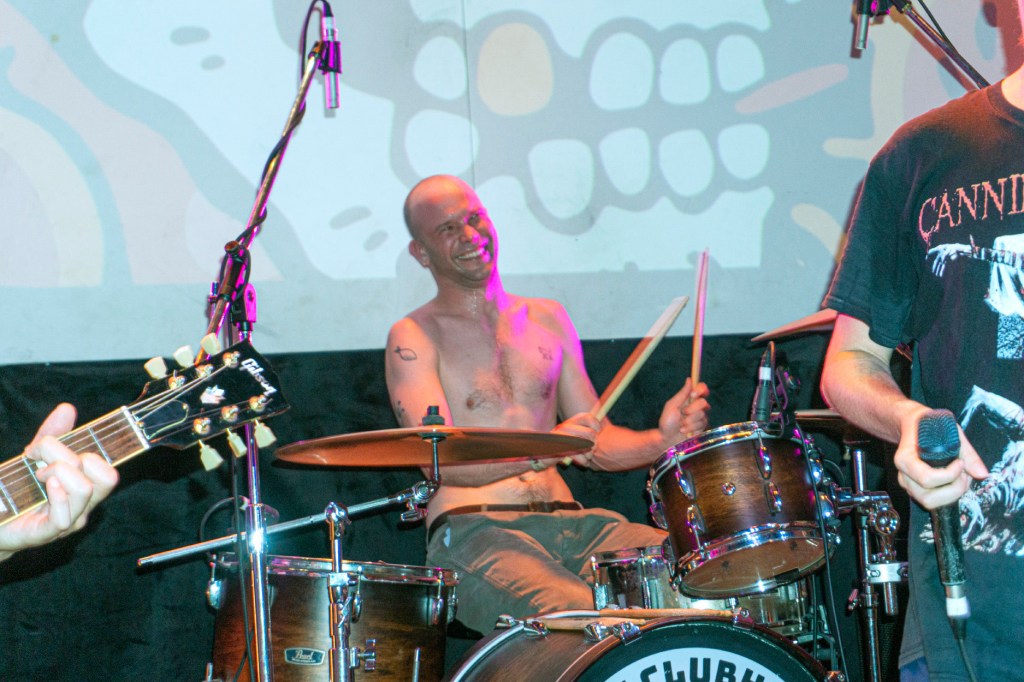
Photo: Jhonny Russell

I can see/hear that.

SHOGUN: This project has hit a nice balance of—life is hard/life is funny.

I think you nailed that. That’s why it resonates, because it’s fucking real.

SHOGUN: Thank you! Fuck yeah. That gets me psyched. There’s five more songs from that session that we’ve recorded. I think they are good, really good. There’s a funny kind of Judas Priest-style song, about a fictitious serial killer who lives in Marrickville. There’s also some hardcore songs. There’s a song called ‘Hellfest’ about my job; it’s named after that cheesy American hardcore festival. There’s a song called ‘Seed’, which sounds like early Lemonheads, kind of indie punk. 

The best thing about Antenna is it’s not really totally my brainchild in any way. All of the lovely melodic music comes from Hideki Amasaki, the guitarist, who had all these amazing riffs written and that’s why I got involved. He’s incredibly gifted. He writes pretty much all of the music.

There’s some really beautiful guitar work on the EP! Between that and your vocals it really makes it something special.

SHOGUN: I love a collaborative creative process, rather than writing from scratch. I did a band called Shogun and the Sheets and had the best fucking musicians to do that with. But I realised the problem was it was inorganic. I was writing the music as well; I was writing the chords and I was arranging everything. It felt like there was something missing. It really lacked the excitement because it’s all just coming from one guy. 

Like, it’s… [pauses and thinks]… not asexual, but what’s the word for those plants that reproduce on their own? Doesn’t matter, we can Google it later [laughs]. But it was inorganic and there’s was no sense of fun and surprise. 

I used to write all the time, I’ve slowed down a lot. I feel like your brain certainly changes at my age and you lose pain, and you also lose vision, the brightness comes with that and that’s where song comes from. You feel things less intensely, you’re able to control yourself a little more, but you’ve lost that part of yourself, which is where the music comes from. I wanna do everything I can before that door finally closes, ‘cause I can definitely feel it closing. 

I know some people make music forever, but let’s be honest, those artists that keep making music after they’re 50, some its’s okay. But most of them, I think we can all agree that after they’re about 40, it goes downhill pretty fucking fast. 

Everyone can say, ‘Oh, this guy from the fucking Buzzcocks just put out a record!’ but I’m not gonna run out and listen to that in a hurry.

I like the new OFF! record, Keith is 68!

SHOGUN: OFF! would be a prime example for me. They’re not terrible, but as a big Circle Jerks guy, OFF!’s like… [smirks].

I LOVE Circle Jerks’ Group Sex! Itwas one of my gateway records into punk. So I get it. But I disagree and think it’s possible to make the best thing they’ve done now. 

SHOGUN: Group Sex is perfect! Antenna is influenced by Circle Jerks in some ways. 

I noticed the ‘Wild In the Streets’reference on the new EP.

SHOGUN: That’s great! I absolutely cannot get enough. I’m such a nerd for Bad Brains, Circle Jerks, Black Flag.

Where’d the song ‘Don’t Cry’ – with the Circle jerks reference – come from? 

SHOGUN: It came from the gut. Having been around different communities of guys, all chaotic, let’s not pull any punches here—lots of hard drug use. Lots of crazy graffiti writing. Lots of total, total disaster. I was surprised when Benaiah’s death hit me so hard because, fuck, it must be death number 10 of a friend related to drugs. There’s been so many drug deaths. 

The last thing that really got me was a couple of years beforehand, my friend Alex [Wood], who used to play in my old grind band Dot Do Dot had a brain aneurysm that was drug related. There’s been a really grievous energy with a lot of guys I’ve known. I don’t know, if I’ve had the most positive community around me. It’s always the craziest fucking guys and the most like fucked up dudes; a lot have died, some of them have been like canceled. I don’t know why I’ve been drawn to, and attracted this. Maybe I’m a little extra for like the cool kids. I wind up around these guys, and they’re doing speed, fighting, and doing graffiti. The irony is, I’m not so much like that myself. But I have always felt like that’s where I belong. Around the craziest, most brutal people, I feel comfortable and they’re good to me. They’re my brothers. It’s fucked up, but that’s me. 

We really love the song ‘Lost’ on the EP.

SHOGUN: That was an interesting one. That’s not anything too recent. It’s reflecting on a break up that destroyed me so deeply. Much more than it should have. People need to move on and get their shit together. There was a symbolic value I’d inscribed into that relationship. It’s almost like I wasn’t really there for about two and a half years, and all I could do was drink and couldn’t fucking sleep. It wasn’t really about her; we’re still great friends.It’s more what happens when you’re too dependent on a relationship because there’s really something missing profoundly in yourself. 

It was pretty bad. I parted ways with this person, this was during the Royal Headache days. That was actually the beginning of the end of Royal Headache. My best friend died of an overdose and then this person left me and it’s like a detonation process happened. It’s like I wasn’t really roadworthy anymore. The next three years is a blur—I don’t think anything good happened. 
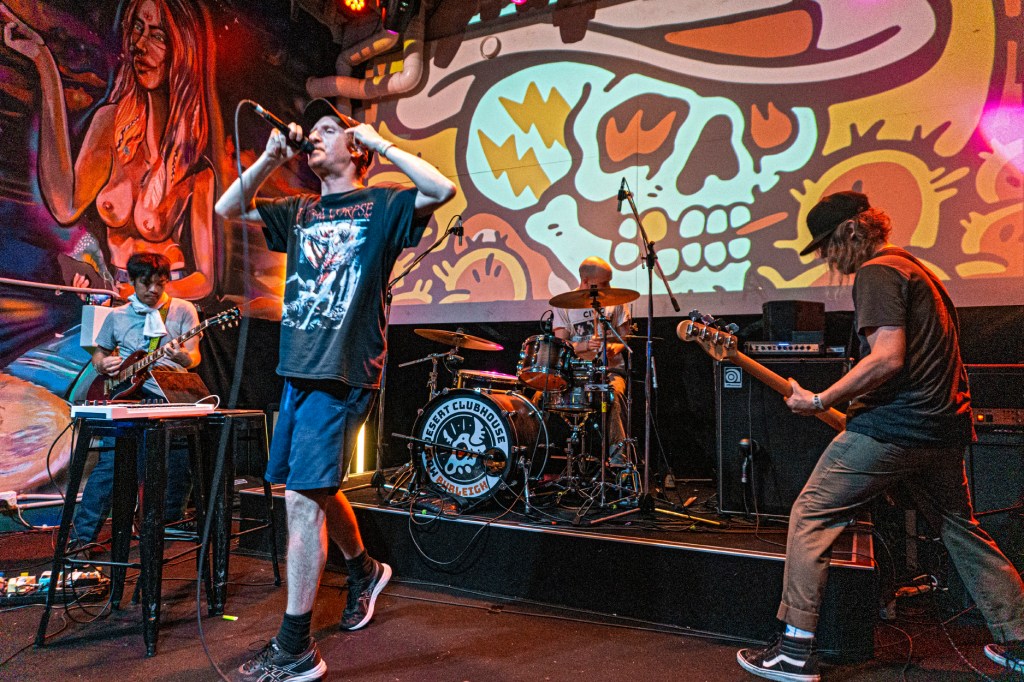
Photo: Jhonny Russell

We also love the hook in ‘English Three’.

SHOGUN: The lyric is actually: Don’t hold me or touch me. I didn’t say it properly cause I was drunk. So it sounds like I’m saying: Don’t hold me, touch me. And it’s kind of really creepy [laughs]. 

The song reflects on some low points, but the music’s kind of jaunty. I can look back and laugh at a lot of the shit that happened. A lot of it was so fucking gnarly and sketchy, it was pretty fucking off.

You posted in your Instagram stories the other day: 43 and still in it. 

SHOGUN: Yeah, I’m still going. The Benzy-thing really shook me like, and there’s been some other dramas. It was realising that life can be an endless downpour of shit. 

Some things are better, like I’m financially stable now, which goes a long way. Financial instability, and just not having routine and all that shit is what makes people get into trouble. I’m definitely still going through it in a few in a few ways. But if I keep my head down and stay in and make sure I’m not associating with too many younger cats who are just like completely fucking wild, I’ll get better. From here on in, I need to stay healthy enough to do music, it’s all about damage control and nights in. It’s not really in my character, but since I’m doing music again, rather than responding to it, like I would 10 years ago, by going out and fucking partying because I’m back in music, I think I’ll probably go the opposite way and become a bit of a hermit. That’s the only way I’m gonna stay healthy enough to really get it done and keep on providing quality stuff for people to enjoy. It won’t be trashed. I can’t stand mediocrity in music. 

Note: more of this chat will appear in the up coming punk book we’ve been working on – details coming soon!

Follow @antennnnnna.
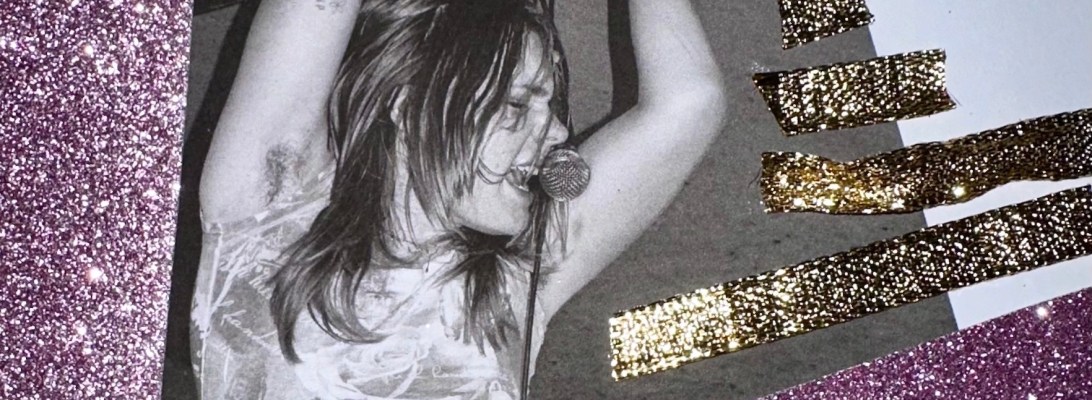
Optic Nerve’s Gigi: ‘No one will ever make the world that you need other than yourself and your community.’

Original photo: Jhonny Russell / handmade collage by B.

Optic Nerve from Gadigal Country/Sydney aren’t just a band you listen to, they’re a band your feel. A band that defies the worn out tropes of hardcore punk, and expands its boundaries. Reimagining it, to gave us one of the standout albums of 2023, Angel Numbers. It flew under a lot of people’s radar; if you haven’t checked it out, we recommend you do. They’re a glow-up that uplifts the communities they speak to and care about. Vocalist Gigi is deeply sincere, and claims her power on the record, which is lyrically inspired by a French mystic, anti-trans violence, and exploring signs. We caught up with her, last year just as the album was being released, to talk about it. It was meant to be the cover feature interview for a print issue we had pretty much ready to put out last year – but life happened, and things were rough so we didn’t get it out. Finally, though, we get to share the chat with you.

GIGI: Our record [Angel Numbers] indexes a few moments of really intense transphobic violence. It felt pretty emotional to put out our new record, given the context of the last few weeks. Having it come out while there’s Nazis gathering in Melbourne and in Sydney. And Kimberly McRae [an author and trans sex worker], the man who killed her, didn’t get a murder charge. A bunch of friends have been feeling… [pauses]—it’s been a really bleak time for transsexuals. With everything happening, I sort of forget about the record. I didn’t even realise the single was coming out the other day. It was weird to return to some of the ideas or hopes that the record had in what is a really heavy few weeks.

I’m so sorry that it’s been such a challenging time. The craziness of the world seems to feel overwhelming a lot of the time. It’s been great to see the songs from the record live recently. We saw three Optic Nerve shows in three different states.

GIGI: It always feels like such a privilege to go to a city that you don’t really know and have people care about the music. The Optic shows often have a different energy. At punk shows, it’s mostly bro-y dudes. Often, when we play, those dudes move to the back, and all these younger, more interesting people move to the front. There’s space for that, which is really nice. I actually got really emotional playing Jerk Fest. At the front there was all of these really wonderful young, queer and trans people who were shouting out for songs that hadn’t come out yet. 

Photo: Jhonny Russell

I know that the Decline of the Western Civilization documentary had a really big impact on you.

GIGI: Definitely. When I was really young, I wanted to be like a lot of the bands, particularly The Bags. I drew a lot of inspiration from her [Alice Bag]. Being so defiantly, an outsider. Also, that music seems way more interesting to me than a lot of super self-serious punk music. I emailed Alice a few times after the first Concrete Lawn demo came out and had this really sweet correspondence. I sent her the band’s demo.

I feel like in a lot of the Optic songs, I always try and channel the Big Boys. They were a Texas hardcore band. They were all skateboarders and drag queens, and really flamboyant leather BDSM guys writing these cheesy love songs and having fun. That feels way more interesting to me than flexing.

Was there anything specific that you wanted to do from the outset with Optic Nerve?

GIGI: I’d always wanted to sing in a hardcore band. The first demo and all of the earlier songs are a lot more straightforward hardcore music. Moving forward, the record is quite a bit more spacey. I would say, not really hardcore at all. The intention is to continue on that trajectory of getting a little bit more studio with it.

Joel, Joe, and John, who was the original guitarist in Optic, they had all moved from Canberra at relatively the same time and all started writing songs together. Then, they just asked if I would sing. So, I came into it with a bunch of the songs already written and did lyrics over the top. It was nice to ease in because at that time, I was playing in three or four other really active bands. To have almost a ‘burner project’ where I could turn up to practice and, I don’t know, be on Twitter on my phone [laughs], and write lyrics. Then, we started to play shows. It’s become a really fab, more creative venture for us all together! 

Across the album there’s flute; that’s you, right?

GIGI: Yeah. I played flute as a kid. We were thinking about the flute as this sort of returning-to-childhood thing, which felt really nice. But we were also thinking about the record in parts, in the way you would frame a ballet or a really grand performance. We were thinking about setting up the listener—audience kind of engagement that our shows aim for. We were hoping to use the flute almost as this classical framing device that would bring people in and out of different moments on the record. Loosely there’s flute the beginning, middle and end. It almost provides an emotional structure to the music through flourishes. It was fun. I borrowed my boss’s flute and just winged it. I did it all in one or two takes.

That’s awesome. I love that! The album is playful, like your live show. It’s a cool lighter juxtapose to the heavy themes on the album.

GIGI: That’s it. When we were recording, we set this rule for ourselves that we couldn’t use any synths. We didn’t want to use any digital effects. So a lot of the record was recording a base of the song and then overdubbing things with really fucked up effects on it and then using heaps of tape delays and dubby effects to kind of give things this sort of synth-y ambient flutters throughout.

It’s nice to be playful. With the live shows, I play around and see if I can climb something on stage—like, climb on a speaker. Also, live, it’s worth protecting your energy. If you’re in a crowd full of people who don’t resonate with the kind of violence that the record talks to, it’s only going to be exhausting and exposing to talk about it really explicitly. Leaning into the playfulness of it and trusting that the people who will get it, will get it, was important. I’m glad that you picked up on the playfulness because I think it is.

Photo: Jhonny Russell

That’s one reason that I really love your band! It’s hardcore punk but without all the gross stuff—tough guy nonsense, perpetuating traditional gender norms, racism, homophobia etc.

GIGI: Yeah, we’re something else. 

Thank you for existing! I love people doing their own thing, standing up for what they believe in.

GIGI: For women and people of colour, anger is a really powerful tool. For boys, I don’t really know if it changes the world very much. There’s a lot of anger and a lot of hatred in the music, but I’m wary that the audiences who engage with it, that’s not necessarily a productive emotion for them to hold on to. Trying to make the shows feel a bit different to that is really important,

From your release Fast Car Waving Goodbye to the new record Angel Numbers, what do you think has been the biggest growth for you?

GIGI: The EP, we were just playing live. It was an assortment of songs; they are all really different from one another, in a nice way, but there’s not much cohesion. This record we wrote it to be a record, it was thought of as being singular, rather than writing music to play shows.

I’m proud of myself because now the music talks more directly to what I want it to be talking about and not just being vague, almost as a protection strategy. That’s how I feel listening to the older Optic stuff. 

The newer recording we spent a little more time on. We still mostly recorded it ourselves. It’s a more mature of a record.

It’s one of our favourite albums of 2023! The booklet/zine that comes with it is really interesting and cool. I love that we get more insight into inspiration and thought for the songs. The title Angel Numbers speaks to seeing signs. What influenced that? Did you see signs when writing the album?

GIGI: The title is half a joke and half not [laughs]. I was interested in these practices of divination or magic or whatever that really rely on a kind of politics of faith and really believing in yourself. At the same time, it also thinks that those things are a little bit bullshit. It tries to peddle the fact that no one will ever make the world that you need other than yourself and your community.

I was feeling that at the time the record was made. Maybe I felt a little abandoned, and like people were pinning too much stuff on almost leaving stuff to the stars. It felt like things that were needed in the world were too immediate to pin stuff on hope or fate or the stars. It was like, ‘Oh my god, get your head out of your arse’. But finding structures that can make the world meaningful or powerful to move through, felt really important as well.

A lot of the record is about context and bending the context of the world and social communities that you’re in, or social practices or things to make yourself and other people safe. One of the ways that can happen is creating a structure for yourself that creates meaning in your life. That’s very much what these magical, mystical practices I was looking into kind of do at their core when they’re really successful. They give you a set of structures that can really meaningfully harness your power and bring it to the fore. That’s what the record is talking to in the title.

Photo: Jhonny Russell

I picked up on the mysticism—that’s my jam.

GIGI: I was researching Silvia Federici (whom I left out of the citations on the lyric booklet for the album because she’s a massive TERF), this Italian Marxist feminist. She has this really fab book called Caliban and the Witch that talks about the beginning of capitalism coinciding with the mandate for gendered labour, necessarily creating a kind of subjugation of women. That coincided with women who were seen as independent, holders of deep spiritual knowledge, or community leaders being branded as witches.

She writes this really amazing historical overview of the beginnings of capitalism and the witch trials. Thinking about ‘witch’ as this kind of socially condemnable term rather than a cohesive set of magical practices. I found Marguerite Porete, the mystic and author, through that book. I got really obsessed with this idea of this woman totally on her own in the world, trying to make sense of God through her own desire or love or faith.

I got really captivated by this image of her getting burnt at the stake, and she’s just blissful and happy. Her almost giving over to the violence and persecution because it means not compromising yourself. That was a super meaningful image for me to understand. Like, you can never escape the violence or the risk or whatever of this world, particularly thinking about anti-trans violence. You just have to embrace risk and embrace joy in the face of that. It’s the most powerful thing you can do.


Has there been times in your life where you’ve experienced that kind of violence? 

GIGI: Yeah. The record speaks to this few-month period where I got jumped four times and was put in the hospital twice. It’s exhausting, so brutal. One thing that I’ve been trying to get into people’s minds, which also feels hard to justify when the record is about a French mystic and angel numbers and all these things, is that there are no metaphors in it, at all. A lot of it is explicitly about the stakes—life or death in a very literal sense.

I am so sorry that happened to you. I can’t even convey words of how much this upsets me to hear. 

GIGI: Yeah. It doesn’t feel valuable to list off traumas that anyone has gone through because it does just upset the people who get it, and then the people who don’t get it are just like, ‘Oh, that sucks.’ Instead, honing in on the ways that reverence and grief can exist together and hold each other up is really important to me.

The footnotes in the booklet are great.

GIGI: I thought they would be helpful for younger people to find out more about what I’m singing about. There was a period of time where I really lamented that a lot of the bands that I was getting into as a teenager had the same politics as me, but were really reserved about it. I was thinking that younger transsexual listeners could discover some of the things that are really foundational to my politics, that it would be nice to have a resource for people to go to if they needed to.

Our single ‘Trap Door’ is really powerful to me. It speaks to moments of violence and then moments of going out and having fun afterwards anyway. The other tracks speak a little bit more vaguely about liminal spaces or administrative violence or these kinds of facets that make up the record. ‘Trap Door’ is climatic, it talks about getting jumped. Making the music video was really healing. It was going back to something that has been really hurtful and really violent, and in a way making it beautiful and fun. If that makes sense?

I totally get what you’re saying. I spoke with filmmaker and musician Don Letts a while back. He told me about, how punk was seen as this negative, nihilistic thing, but really, it’s about empowerment and turning negatives into positives. Like what you’re talking about.

GIGI: Yeah. Punk is about empowerment and turning pain into something more joyful that you can share with others. It’s about a commitment to never having to compromise. It’s also very much about community and making a space to feel and process emotion. While songs or bands may not meaningfully change the world that much, they galvanise people to come together, creating a sense of collectivity that is powerful and special. It’s about processing, feeling, and working out what I feel about the world. Allowing that process of feeling emotion to become a chance for connection.

Photo: Jhonny Russell

Where are the places you find community now? 

GIGI: When I was first getting into punk and hardcore, it would have been at Black Wire Records. Tom [Scott] and Sarah [Baker], who ran that, are like my parents. I used to go there every day after school when I was a teen. It was this DIY record store that put on all-ages shows in Sydney. I saw so many of my favourite bands there, and it really gave me my sense of politics as well as my music taste. After that, Tom and Sarah were running another place called 96 Tears that I was helping out at, doing the bookings.

Sydney is a really interesting city because it doesn’t have much creative infrastructure, so there’s not really many clubs or venues that are safe. I feel really grateful for the continuous structure that practising with Optic has. I know personally, for me, a lot of raves in Sydney or the warehouse parties have really been super informative to that sense of community as well. 

But it’s always fleeting. The movements or people that this record is written towards, are never going to be the kind that have consistent, stable access to resources, like a venue or a building, or a place to come together. For me, community is always moving and that’s what makes it really exciting. That’s the real answer and also a poetry answer [laughs].

Poetry rules. In the booklet that comes with the record, it’s interesting to see the form of each of song on the page. 

GIGI: Yeah, it was my intention to have them read more like poems than lyrics.

When I read them on stage from my phone, because I’m actually so forgetful, I have line breaks every time I’m supposed to breathe. People think it’s a nerves thing or anxiety. I don’t really get particularly nervous when we play. If I was to write the lyrics out how they’re originally written, it would be annoyingly long to write. Some are one word per line. So it was nice to come back and rewrite them as poems. Poetry is a little more contemplative and lets people in more than just like a didactic lyric sheet. I was hoping that people could read it and come to terms with it however they wanted to.

When I wrote the lyrics for Angel Numbers it was pretty much while we were practising in a little studio in Marrickville. I would just sit there antisocially on my phone and write ideas down. With the last song ‘Leash’ on the record, I finished those lyrics two-minutes before we recorded [laughs]; I was really putting off finishing the lyrics. It was nice because the emotion of the record could be really confined to this space with my friends, where it felt safe. 

After recording, mastering, and the art was done, we sat on the record for 18 months. It felt like it came out at the right time though, it felt really serendipitous, given the political tensions of the last few weeks.

What else are you up to? 

GIGI: I’m playing solo a fuck tonne in the next few month. Optic are really hoping to go back to Europe. Joe needs knee surgery so we won’t be able to play for a bit because he’ll be healing. Hopefully we’ll be able to write and record more songs. I want to sing more and shout less. But I don’t really know how to do that—I’ll work it out.

With your solo stuff, what can you do that you don’t do with Optic? 

GIGI: I can make it in bed [laughs]. It’s the same emotions, but a different mode of address. They dovetail each other. Very inward and very much about my emotions: What does it mean to be angry? Or sad? Happy or horny? What does it mean to feel alive?

Angel Numbers available via Urge Records HERE. Gigi’s insta. GI music.
More Optic Nerve live videos – via the Gimmie YouTube.

The Sonic Adventures of Owen Penglis 

Original photo: Jhonny Russell. Handmade collage by B.

Seasoned musician and skilled producer Owen Penglis is a massive music fan and has carved a remarkable path for himself in the world of sound. Hailing from a musical family (his father played in legendary 60s Australian surf band, The Atlantics) Penglis immersed himself in digging for records at a quaint secondhand shop nestled in the Sydney suburbs, seeking the weird and wonderful. 

Penglis went on to be in many bands, starting out as a drummer before moving to guitar. He spent time exploring music at university but wasn’t vibing on it, and in a bold move, bid farewell to the classroom and became a Vespa mechanic. He eventually started one of the coolest Australian garage rock bands, Straight Arrows, in 2007. 

Music’s magnetic allure beckoned him to pursue his sonic dreams. Armed with a borrowed 4-track recorder, Penglis took on the role of a musical alchemist, teaching himself the art of recording through his own and friends’ musical endeavours. He started his own studio recording bands Circle Pit, The Frowning Clouds, Bloods, The Living Eyes, Mini Skirt, Display Homes and many more.

In our insightful conversation, Penglis unveils details about a new Straight Arrows album, and recording a new Mini Skirt record. Delving into his memories, he tells us stories of mentoring a teenage Ishka from Tee Vee Repairmann, and collaborating on intriguing ventures like a sitar project with Lawrence from Royal Headache. We talk touring with The Oh Sees and Eddy Current Suppression Ring. And we discover the depths of Penglis’ creativity, including the fun project where he donned a gorilla suit and sang a dance anthem that went out for an ARIA Award.

Gimmie chatted to Penglis in a shipping container converted into a backstage area at Miami Marketta on Yugambeh Country/Gold Coast before they played the Cargo Stage at the night market, opening for The Oh Sees.

You’re on tour right now with The Oh Sees!

OWNEN PENGLIS: Yeah. The highlight so far was probably when we went to Sunshine Coast yesterday, but the show was cancelled because of the venue shutdown. So we went anyway, we had a hotel up there. We went bowling. We got up today and went for a swim. And then we played mini golf.

Nice! Who won?

OP: Al won mini golf. Will won bowling. 

The first time you toured with The Oh Sees was with Eddy Current Suppression Ring in 2009. 

OP: That was really cool, and funny because the shows weren’t very well attended. Eddy Current didn’t really click with people until maybe, Rush to Relax. I mean people who were into that stuff knew about it, but it gained a wider audience, maybe up to that record, as they were kind of starting to wind down a bit. Us and The Oh Sees played in Wollongong, we played to 30 people. Then we did Newcastle with Eddy Current, too, and there were 80 people in a big room at the Cambridge. But Sydney was really good.

What a lineup! We love all the bands. 

OP: It was really cool. We’re very lucky just to randomly get on it because this band called Witch Hats, they pulled out, and I said, we’ll do it. They said, “Ok. Cool!” And then we made friends.

The Oh Sees, at the time were doing all the vocals through a Space Echo, a proper tape machine box one and that shit itself. And so I was like, take mine on the road and bring it back at the end. We became friendly and chatted a lot. And then the next time they came, we played with them again, and then next time after that. 

I understand that there was a conversation that you and John Dwyer had about potentially doing an Oh Sees/Straight Arrows split release?

OP: Yeah, we were doing the merch together in Newcastle and they’d just written this cool song called ‘I Was Denied’ that ended up being on album, Warm Slime. I think they had just started playing it. They played that song every night. I thought, this is mad. I was like, you’ve got a record label, do you want to do a 7 inch? And he’s like, “Let’s do a split 7 inch!” I was like, okay, cool. And then I just never really pulled my finger out and followed it up. Stupid mistake. 

You should remind John of the convo while on tour now, and finally do it! I’d buy that.

OP: I was like, hey, do you remember we were going to do a Split like, four years ago. He was like, “I don’t really do it anymore.” And I was like, I guess I learned my lesson.

Has there ever been other opportunities that you’ve had that didn’t eventuate? 

OP: I got one, but I can’t tell ya. I got asked to tour with a band. It’s not a big regret. 

How did you get into music?  

OP: I grew up in a musical house. My my old man played in a 60s band called, The Atlantics. An instrumental surf band with a hit song called ‘Bombora’. The Beatles hit, like, six months later and you had to have a vocalist, now certain music is not cool anymore. They got a vocalist who was an older dude who’s a bit of a rockabilly guy from the 50s who tried to do 60s rock and roll, it didn’t go well. They put out singles for years. They didn’t sell. But now some of them are really cool, and they’re really valuable. So I grew up with that. Although he hated that and wouldn’t talk about the band or anything. He just thought it was crap and old.

Photo: Jhonny Russell.

You initially started playing drums? 

OP: Yeah, I started as a drummer, played in a few bands when I was a teenager. 

What kind of bands? 

OP: I played in a band that’s still going called The Holy Soul, when I was 17. I met them when I went to university in Penrith, West Sydney.

What were you studying at uni? 

OP: I was doing music. I hated it so much, I quit and became a mechanic.

Why a mechanic? 

OP: I got offered a job as an apprentice at a shop that fixed old Vespas and Libras. The guy there said, “Come work for me and stop delivering pizzas.”

During that time you were still making music, though? 

OP: Yeah, I was still making music, but when I was doing uni stuff… rather than a strict this-is-how-you-plug-in-a-microphone-thing, and this is how you get a drum sound, it was on the creative side, which is cool. But it was early digital equipment. I thought it all sounded crappy. I hated it. I hated the academic side of it and the people that it attracted. 

For you, is music more of a feeling kind of thing then? 

OP: I’d say so. Yeah. I’d much rather pick up a guitar then write it down. I couldn’t write it down [laughs]. Not very well. 

So I became a mechanic and then I borrowed a 4-track cassette deck off someone, and started again from scratch.

Teaching yourself? 

OP: Yes, teaching myself. I was a drummer and I thought no-one wants to see a drummer write songs [laughs], or sit behind a kit and sing.

I do. I love watching drummers sing. Ben from C.O.F.F.I.N, Nadine from The Prize, Buz from R.M.F.C.

OP: [Laughs] Maybe I should have stuck with that. 

Does being a drummer help you write songs? 

OP: Yeah, probably. I’m sure it does. Just thinking about a song rhythmically is something I do first and then it goes from there. 

Do your lyrics come after the music?

OP: It depends. Me and Al in the band always talk about it and are like, if you’re writing a song and your lyrics kind of come with the melody it’s really nice, but if you write cool sounding music and then write the lyrics after, it can be really difficult. It’s like trying to fill out a crossword with no questions on it. 

You have a new album that you’re going to put out? 

OP:Yeah.

We’ve heard six songs. They’re really awesome. Is there going to be more?

OP: Thanks. There’s heaps more. They’re the only ones I wasn’t embarrassed about [laughs]. 

Photo: Jhonny Russell.

How long of a period were you writing over for the new record?

OP: During COVID so it all melts together. In Sydney it was all locked down. There was a while where we couldn’t go more than 5kms from your house. When they finally let you do that, I could go to my studio and I’d go in two or three days, sit down and write some music. If today is good, it’s good, and if it’s shit I had to do better. At the moment, there’s no work for me. I can’t mix anyone’s record because no one’s recording because no-one knew what was happening. 

Your studio is called Goliath?

OP: Yeah. So I actually had to move studios, at the start of January. I got a new one which is close to my house but haven’t got a name for it yet. It’s a five minute walk or I just get on my pushy and ride over. 

Do you know what the new album will be called? 

OP: I have no idea. 

When do you think it’ll come out? 

OP: I was supposed to finish it off in December but I moved studios, which pushed everything back. I’m hoping towards end of the year, maybe September/October. It kind of depends on the record plants because everything takes so long now. Major labels have discovered that they’ve got a physical piece that they can sell again. And it’s like maybe 60 bucks retail for them now, for a single record. People seem to think that’s normal. You get big artists, like Adele clogging up the plants. 

Yep. And Taylor Swift. All the Record Store Day things too. Reissues of everything.

OP: It’s all bullshit, likeTop Gun 2 soundtrack. Whatever. [Laughs] I need that on vinyl! It’s funny because they’re almost, like, keepsakes rather than playable things to a lot of people buying.

I remember reading that when you were younger you used to find bands, new music and you used to love getting records, looking at record covers and then choosing them that way.

OP: Totally. I was really lucky when I was a teenager, there was a secondary record store. I grew up in an outer suburb of Sydney called Asquith, which is like 45-50 minutes on the train from the city. The next suburb was Hornsby and there was one secondhand record shop and it was great and really cheap. They had a listening station. I’d go in all the time. They didn’t care if I just took a pile of records and sat there and listened to them all and maybe didn’t buy anything. It was that it was a great education. And then I had to figure out what I liked. All the dudes running it was, “There’s a $2 copy of this Pretty Things record. Think you might like it, listen to it, it’s cool.” I just dig through and find weird records with strange covers and be like, who is this? Sam The Sham. Cool. Chuck that on. Digging through boxes and seeing cool names. 

I do that. I also look for fun song titles. I especially like songs that mention dogs or space.

OP: [Laughs]. Space is always good.

[Shows the screen of his phone] This could maybe be the new album cover. A friend took this amazing photo of a building in Bundaberg. He still lives up there. His name is Brad and  he used to play the band Chinese Burns. Think he works for for the ABC taking photos.

Is recording other artists your full time job or do you do that on the side of something else?

OP: It’s my full time job, weirdly. I can finally feel confident saying that’s my full time job. 

You were just recording Mini Skirt?

OP: Yes, I was just up in Byron recording Mini Skirt, which was cool. They got a really nice studio up in the hills, in Coorabell. It used to be a studio in the 70s and maybe like Cold Chisel and that school of bands would use it. It went to disrepair and a very rich lady bought the land it’s on and restored the studio to how it was back then, including finding all the old equipment. Mini Skirt flew me up to work on the record.

Have you been working on anything else as well? 

OP: I’ve been doing a lot of mastering, which is nice to do. I mastered the Wiggles covers album, which is pretty funny [laughs]. That made my mum understand and respect what I do. I’ve been mastering all sorts of weird stuff, cool local bands and also country artists .All sorts of stuff comes through. 

Do you find that when you’re working on something and you might not totally be into it or what the artist is doing, do you find something in there that makes it okay and you can get through it? 

OP: Oh, yeah. Mastering I try to be kind of totally objective. It’s a technical thing. There’s joy in any of it. I’m fairly uncontactable, I don’t advertise or try and actively get something, I’m lucky enough tI don’t have to actively try and push to get work from bands. People come to me, and I’m able to leave it like that. If people have made the effort to find me, then they probably know what I’m doing. And we’re probably going to understand each other. I’ve had a couple of weird ones [laughs]. 

I get that. I was speaking with Ishka from Tee Vee Repairmann recently, and he was saying he likes likes recording, but he doesn’t want to advertise either.

OP: Ishka was my intern. 

I know. He told me you were the one who got him into Back to the Grave and all these cool compilations.

OP: That’s cool. When he was in high school, year 11 or 12 he came and worked with me for his work experience, I was recording that band The Grates. They came in for a couple of weeks, so come in and hang out. He’d come in and everybody loved him. He was a quiet, tall kid that wanted to learn lots. Ishka is such a lovely guy. We played New Year’s eve the one before last and Al was away and I caught up with Ishka and asked if he’d like to play guitar for a show. He said, “Yeah, cool, ok.” He came to one practise and learnt everything really fast. He was so good at it I had to ask him, can you play it a bit bit shittier [laughs]. I told him he had to make it bad.  

We love Ishka, he’s the best, one of the nicest people we know. With, like, the new album did you have an idea of what you wanted it to sound like?

OP: I’m so caught up in listening to shit all the time that I’ll hear record be like, yeah, I love that I should record something like that, and then the week it’s something else. Each song is probably like a weird snapshot of what I was loving that day or week.

Is there a song on the album that’s significant for you? 

OP: There’s some darker stuff in there, but I don’t want to talk about it.

Not a problem. I guess that’s why we write songs sometimes. We can communicate things that are sometimes hard to talk about and it can also help us process what we’re going through.

OP: Oh, totally. I mean, that’s what it’s all about, right? Getting up and yelling on stage.

Yeah, it’s a release. It can also just be total fun and bring immense joy.

OP: It’s so great to do this stuff. I’m so thankful that I get to travel with some ofmy best friends and see some great friends from overseas. 

Are you working on anything else musically besides Straight Arrows? 

OP: Not really at the moment. I went through a weird patch in, maybe, 2015 or something. I did a bunch of weird records. I did a sitar record. I lived with a guy Lawrence who played that band Royal Headache. We hanging out and I found a sitar on the side of the road that had a hole in it. I fixed it. We were just hanging out and with it, Royal Headache’s High had just come out, and I was listening to these great double 60s records. There was like a band playing a track but with sitar as the vocals. I was like, let’s do that with Royal Headache. We started this dumb band called The Royal Sitars. We put out a 7 inch and played few shows. Then Royal Headache got quite busy. He was off doing festival, running around, and that was the end of that. But there’s a Sitar record out with me and him [laughs].

There’s another one I did around the same time which is called. The Green Bananas, which was like me dressed as a gorilla singing a song about a dance song called ‘Do Ape’. 

Amazing!

OP: [Laughs] And that ended up getting picked up by the ABC and it was a 7 inch. The guy from the ABC called up, he said, “Don’t be offended, but would you consider making a kids release?”

You did it, right?

OP: Yeah. I ended up doing an EP. The main reason we did the EP was, “Okay, so the ARIA Awards are coming up and we get to submit like three albums or mini-albums to the nominations in the children’s section. And we have some space. So if you can write and record this in two weeks, we can try and nominate it for an ARIA Award.” I sat down and did it, and then I think the Wiggles put out two albums and I got left behind [laughs].

And now you’re working with The Wiggles! A full circle moment. 

OP: [Laughs]. 

What kind of things are you enjoying music-wise lately? 

OP:I spend so much time digging through the past. My other job is DJing, I do that heaps. Touring doing that is much easy than touring a band. I really like The West Coast Pop Art Experimental Band, their records are amazing. Their story is really strange. A rich older guy was an orphan who was adopted by an oil baron, he decided that he wanted to start a popular rock group and recruited these 18 year olds to start a band with him. He paid for everything. The recordings, the light show. He got them on Reprise, Frank Sinatra’s label. He had them touring around America and kind of slowly started to appear more on stage, playing tambourine and singing. I love the records. 

Is there anything musically you haven’t done yet that you’d like to? 

OP: I just sit down and play and see what comes out. I guess Straight Arrows is within some sort of confines but I can kind of put out almost anything that’s guitar-related in that band. The new single ‘Fast Product’ we just did, I feel like it’s a weirder one for us. It’s almost like egg punk. 

Was there anything you were listening to then when you made it to influence that sound?

OP: The newer wave of egg stuff, I suppose. Like Coneheads. Uranium Club. Even R.M.F.C., those guys are awesome! 

Find Straight Arrows here:

straightarrows.bandcamp.com/music

instagram.com/straightarrows/

facebook.com/straightarrows

Gimmie’s new favourite band: Perfect Actress

Original photo courtesy of Perfect Actress. Handmade mixed media collage by B.

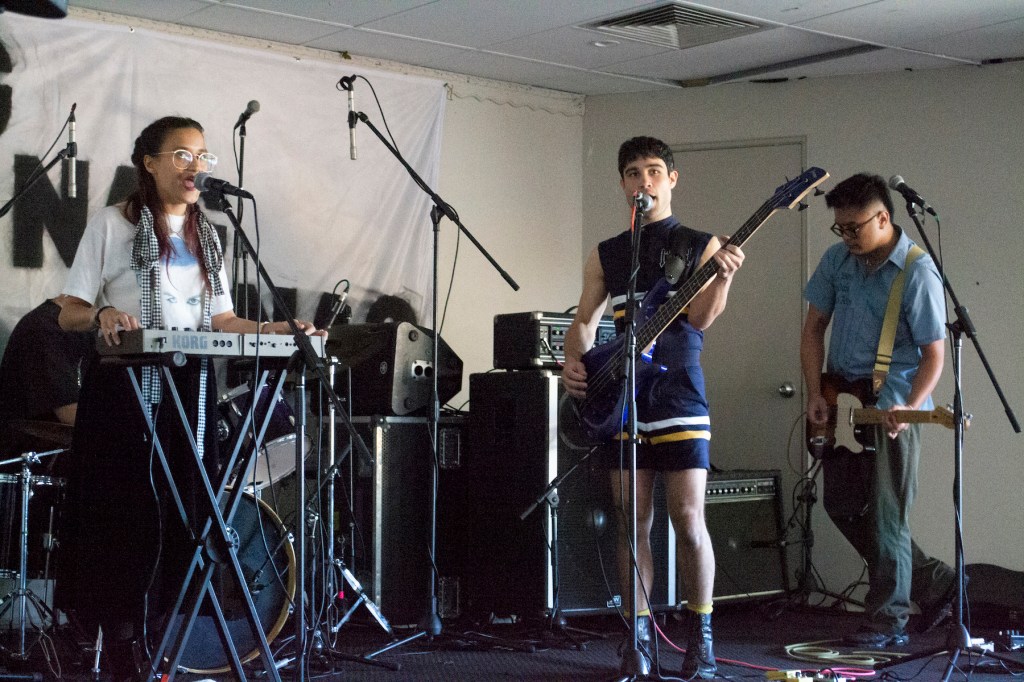
We know saying that a band is our new favourite is a big call, well, it’s simply the truth. We saw Perfect Actress play at this year’s Nag Nag Nag fest. They were the opener and there was a handful of people in the room, us included. We saw them soundcheck a song and from just seeing that we were intrigued and blown away. When they played their set we witnessed four really cool, diverse, highly creative individuals – Naomi Kent, Darren Lesaguis, Gus McGrath and Marcus Whale – come together and make magic before our eyes. Their energy, fun, and smiles were infectious. Their songs were well-crafted compositions and the band are one of those ones that feel fully formed out of the gate. After the set, we spoke to them and discovered that they’re also really lovely, genuine humans. 

Gimmie spoke to vocalist and keys player, Naomi, just before they announced their debut EP and released single ‘Leather’. Today Gimmie premiere their very first music video shot by Garden Reflexx for banger ‘Perfect Actress’ and share that chat.

How’s your week been? 

NAOMI KENT: It’s been really busy. I work full time. I had an art show on Thursday. Work Friday. And then yesterday, we had a show in Canberra and I worked today. We drove down to Canberra, played, and then I left everyone in Canberra and I got the 6PM bus home. It was a big day, but it was really fun. 

You’re originally from the Yugambeh Country/Gold Coast?

NK: Yeah, I was born on the Gold Coast. I lived overseas growing up and then we moved back to Australia when I was eleven and then I moved to Sydney in 2019.

Whereabouts did you live overseas? 

NK: I grew up in Canada and America. My mom is Canadian and my dad got a job doing soccer coaching over there. So dad was driving every day from Canada to America and crossing the border.  And they would always say like, what are you doing here? And there was a bunch of casinos. So, I think at one point he just started telling them that he was going to the casino. 

What was it that inspired you to move to Sydney? 

NK: I had to do an internship with my studies. I studied fashion design and I couldn’t find one on the Gold Coast, so I thought, I have to move to Melbourne or Sydney. I just decided on Sydney and I never looked back. 

What was it that made you want to pursue fashion? 

NK: I’ve always wanted to. When I was little I watched The Flintstones and I would go on my mum’s really old Apple computer and I used to draw. I made a fashion line for Pebbles Flintstones. 

Amazing!

N:K Yeah, it was fun. 

Was there lots of leopard print? 

N: Yeah. I would name each piece of clothing. I think it’s nice to have your fingers in different pies and just see where it takes you. 

How did you start playing music? Did you play music before you moved to Sydney? 

NK: No, not at all. But I was always around people who played music. Maybe you would know the band called Donny Love?

Photo by Jhonny Russell.

 Yeah. 

NK: I used to live with Andrew and Randy from that band at one point.  So I’ve always been around people that were making music. And then I think it just happened. I never made music by myself. I guess I really started with Perfect Actress. There’s kind of an overlap of Carnations and Perfect Actress where I’d started.

I was living with Gus and Marcus, and we were like, let’s make a band. And then COVID happened so we couldn’t practise at all. After the second lockdown lifted, I think Mac from Carnations said that he wanted me to come and jam with them, so we did.

Carnations practise a lot more. I felt like Perfect Actress was on the back burner for a bit. And then our friend Grace, who does Rebel Yell and 100%, was doing a show and she wanted us to play, and I was like, okay, we really have to do this now.

I think at that point, we only had three songs, and then we just got the ball rolling. My first show with Carnations was only a few weeks before the first show with Perfect Actress. 

How did you feel like playing those shows for the first?

NK: It was really fun. I remember me and Mariana being really nervous for our first show, and then now we’re just like, oh, we’ve got this. We just have lots of fun with it. But it’s always funny when Perfect Actress play because my band Carnations always come, they’re always really supportive and its nice.

We really love Carnations as well. We’d been wanting to see you play for ages. At Nag Nag Nag, there were so many people there that had told us Carnations are the band you have to see in Sydney.

NK: That’s so nice. I love playing in both of the bands. It’s so fun. 

When you started Perfect Actress, was there like a particular sound that you wanted or did it just sort of come from playing together?

NK: In both bands we always like to make a playlist, especially when we were first starting, to figure out what our influences are and where we would see it going. I feel like Gus, in particular, loves Sonic Youth.

I love this band from Ohio called, Crime of Passing. I love them. 

They’re so good. I was meant to do an interview with them when they released their album but it unfortunately fell through. I called at our scheduled time and they didn’t pick up.

NK: I got to see them in Memphis last year when they played at GonerFest because my friend played. It was so good. I really love their style. I feel like they’ve influenced me a bit. 

Marcus loves prog rock, so there’s a lot of the drive and progression in it as well that I think comes from him. 

Your band combines so many things that we really love together, so well too. We really love your band. 

NK: Oh, that’s so nice. Thank you.

Is there any particular performance that you’ve seen a band play that has really stuck with you? 

NK: I feel like Marcus Whale my bandmate, when I first saw him play, I was shocked. Even when I see him play now, I really get a kick out of watching his audience because I feel like everyone is really captivated and mesmerised by him. That’s really fun to watch. It’s always fun to watch his shows.

Yeah, his solo stuff is really cool. 

NK: Who else have I seen that I’ve enjoyed watching? 100% the other night. They’re really fun. I loved the cover of ‘Relax’ by Frankie Goes To Hollywood.

Growing up, what kind of music did you used to listen to? 

NK: I grew up listening to a lot of UK pop music and then as I got older, I really started to appreciate a lot of 80s music. I feel like that has really stuck with me. I love China Crisis and Gary Newman. Obviously, Depeche Mode. I listened to The Cure a lot as well when I was younger. I like the British.

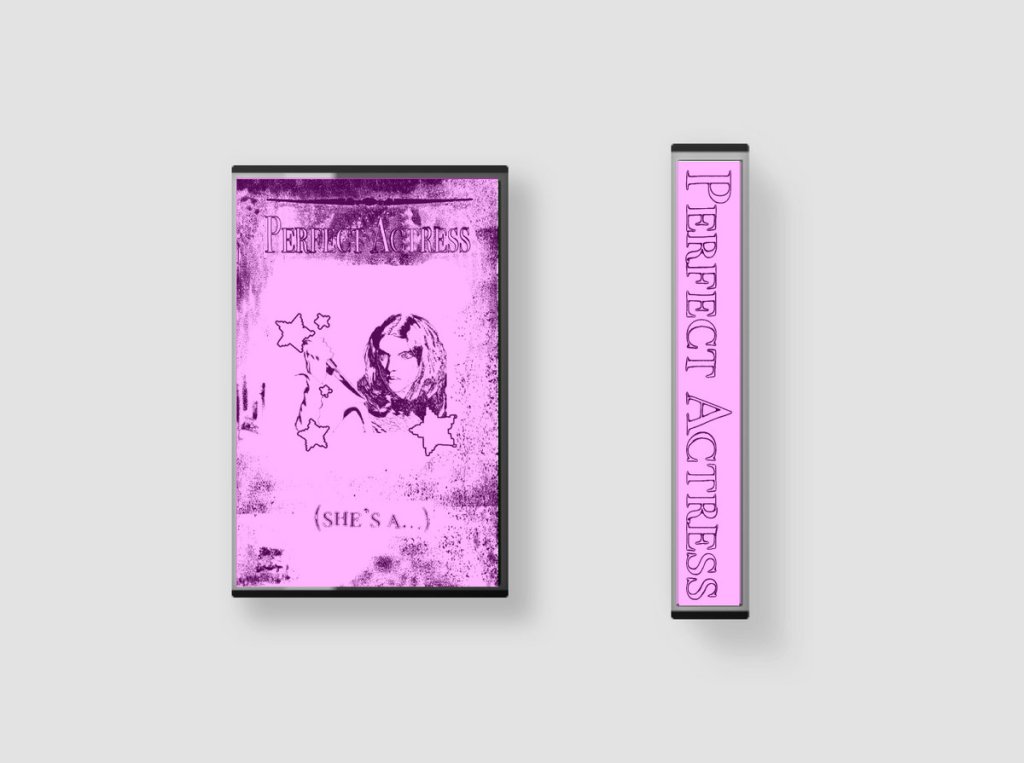
Perfect Actress have a cassette coming out? When will we see it? 

NK: I think July or August. We’re releasing one song, and then I feel because we’re all a bit busy, we’re kind of staggering each thing. We’ve filmed a music video. We’ll have a digital release launch night and video premiere type of thing. Our cassettes probably won’t be made until July or August. Yeah. 

What song is the video for?

NK: ‘Perfect Actress’. We did it with our friends Jenna and Andre, who are filmmakers. We filmed it a couple weeks ago. It was during one of our sets. There’s lots of close ups and us being rat bags. It’s nothing too crazy, but I think it’s a nice introduction to our music.

Video shot by Garden Reflexx

Was that one of the first songs you wrote? 

NK: No. I think ‘Instagram’ is the first song we wrote. We wrote that one really long ago. ‘Perfect Actress’ we wrote just before our first gig. Gus and Marcus had established a beat, and then Marcus was like, ‘You know what would be funny? If we just wrote a list. Of our favourite actresses in their movies.’ We were like, yeah, let’s do that!

Do you have an all time favourite actress that you’ve mentioned in the song? 

NK: My favourite is Nicole Kidman in To Die For. Her acting is so phenomenal in it. I actually saw Laura Dern in Wild At Heart the other day. I thought her acting in that was really good. I don’t think there’s a minute without her back being arched or her hands above her head. It’s so funny. I love it. Did you have a favourite movie? 

I really like the The Godfather trilogy. I like a lot of movies though. I went to film school. I grew up watching a lot of movies with my mum. She used to go to the video store and she’d get out 20 VHS tapes and watched them while she did the ironing and I’d sit with her. I love a lot of 80s movies. All the classics like The Outsiders, Pretty In Pink and Breakfast Club

NK: I love Molly Ringwald!

Me too! She should be in your song. 

NK: I’ll have to figure out where to fit her in!

When writing songs, do most of the songs sort of start the same way?

NK: Someone will bring something in. ‘Dream’, and this song ‘Hands’ (that is not on our EP, but I think we’ll record it at some point), those ones were Gus and Marcus. I guess because they live together, they have more free time to learn. Marcus wrote the lyrics for ‘Hands’ and I wrote ‘Instagram’, but they kind of start out the same. It’s usually like, if we’ve been at practise and we’ve figured out the instrumentals, then the next time we come in, I’ll try and think of some lyrics for it.

Do you find writing lyrics hard? 

NK: Yes, I do. I just feel like I don’t have that tapped in yet. Just because life is so busy and winding down, it’s hard to think of words sometimes or sit down and read and find inspiration.

Photo by Jhonny Russell.

Was writing ‘instagram’ hard? 

No, that one I found easy, but because it’s just kind of like one or two word increments. I really like performing that song. I always make a joke to the audience that it’s about deleting Instagram.

What was one of the first songs you ever wrote? 

NK: I guess it was ‘Instagram’.

So you were doing Perfect Actress before Carnations. 

NK: Yeah, I think I had the lyrics for that song before Carnations stuff. For Carnations, the first song I wrote by myself was ‘Videodrome’. That was inspired by the film [featuring Debbie Harry]. We have a song called ‘To Die For’ [featuring Nicole Kidman], which is about the movie as well. But I’m trying to not write about my favourite movies lately [laughs]. I got to think of another theme. But there’s endless inspiration in movies. 

Totally! Did you learn anything from making this EP?

NK: Probably that this stuff probably takes longer than you think. But also just that we will just keep getting better and better. Especially with the Carnations EP, I feel like we’re already onto more complex and intricate song structures. It’ll be the same with Perfect Actress as well. The songs that aren’t on the EP are songs that we’ve figured out, and wrote after that; they’re just getting better and better and more intricate and more fun and a bit different to what’s being released.

Illustration by Oscar Sulich.

I can’t wait to hear the new stuff! What’s one of your favourite places to play on Gadigal land of the Eora Nation/Sydney?

NK: Perfect Actress had their first show at Red Rattler; I thought that was really fun because it’s a DIY project space and it’s a safe space. It’s queer friendly, which is a big important thing for all of us. I would love to do more shows at Red Rattler I also really like MoshPit in Erskineville. It’s cute. It’s like really little, it’s really cosy and nice, the sound is good.

Nice! I like smaller, inclusive, DIY spaces best. 

NK: Yeah, me too. 

I’ve seen bands I love play bigger stages and sometimes it just doesn’t hit right, it doesn’t have that same feel as they might at a more intimate venue.

NK: Yeah. When you’re a bit more squished, it’s more personal, I guess. 

Totally. I’m still buzzing from seeing Tee Vee Repairmann at Nag Nag Nag, they were amazing. 

NK: Yeah, yeah! He [Ishka] really knows how to get the crowd going.

I got teary when they were playing I was moved so hard by the power of rock n roll!  It was so great to finally see Ish do his thing as frontman.

NK: You can just tell that he loves what he’s doing. He’s always jumping around.  He was just born to be up there. 

After the show, I went up and I told him and told him how incredible the set was. I think it’s important to tell people you really dig what they do. He said, ‘It’s just rock and roll!’ 

NK: So modest. That’s so lovely. 

Photo by Jhonny Russell.

Yeah. You mentioned that you had an art show this weekend. You were knitting?

NK: It’s was on a knitting machine. My friends do art programmes here and there and they were running this programme at the Powerhouse Museum, which was fun. It was very distracting trying to knit and have people ask questions and coming through.

The night before, Perfect Actress had a rehearsal and we figured out that we wanted to do a cover of ‘Star Power’ from Sonic Youth. We did that, and then it was stuck in my head all day, so I thought for the knitting piece I would do text of Star Power written on it.

That’s awesome. I’ve seen a few of your creations and I’m hoping you’ll do a new drop soon! 

NK: Yeah, one day. It’s so hard to balance work life sometimes. I work full time and I practise with Carnations once a week too. I do have a studio, but I feel like I don’t get enough time there. 

What kind of job do you do? 

NK: I’m a shop manager at a second hand buy sell clothing shop. I took the job because it’s like a five minute walk away from my house. I love it. Working full time is a bit rough sometimes when you want to do so much more outside of it. 

Totally! I work two jobs and do Gimmie stuff the rest of the time.

NK: Yeah, it’s a lot, but you got to hustle.

You mentioned earlier that Perfect Actress was the first time you’d started doing music…

NK: Yeah. 

Was music something that you thought you would do when you first moved to Sydney? 

NK: Not really. I always wanted to, because I had so many musician friends, like Grace from Rebel Yell. Then I met Marcus. I met Gus from California Girls. My boyfriend was in Eternal Dust, which I loved very much. Music was always around me. It was probably inevitable that I’d start making music. 

I’m so glad you did! 

NK: Yeah, me too. It’s always fun to get together and make music. I like that Perfect Actress and Carnations sound quite different. It allows me to scratch both itches. 

What’s something music-wise you’ve been really getting into lately?

NK: I’ve been obsessed with Colin Newman for a while, who’s a singer of Wire, but I really love his solo stuff. I’m always in and out of obsessively listening to his music all the time, listening to all his albums through and through. I really love his music. I feel like I’m really into New Wave at the moment, which is fun, because I get to play the keys and try to mimic things. That type of music is just so fun too, the whole sound, but even the look of it. And everyone just having lots of fun and experimenting with things.

Any shows coming up?

NK: Carnations has a show with Snooper, Gee Tee, and R.M.F.C.. We saw Snooper play in Memphis last year when we were there for GonerFest and they were so fun. I’m really excited for the Australians to see them! I’m really excited to play that show.

Perfect Actress’ EP available HERE. Follow them: @perfect.actress

ITCHY AND THE NITS: “Fast, happy, silly, outrageous and contagious.”

Original photo courtesy of Itchy and the Nits / Handmade mixed media collage by B.

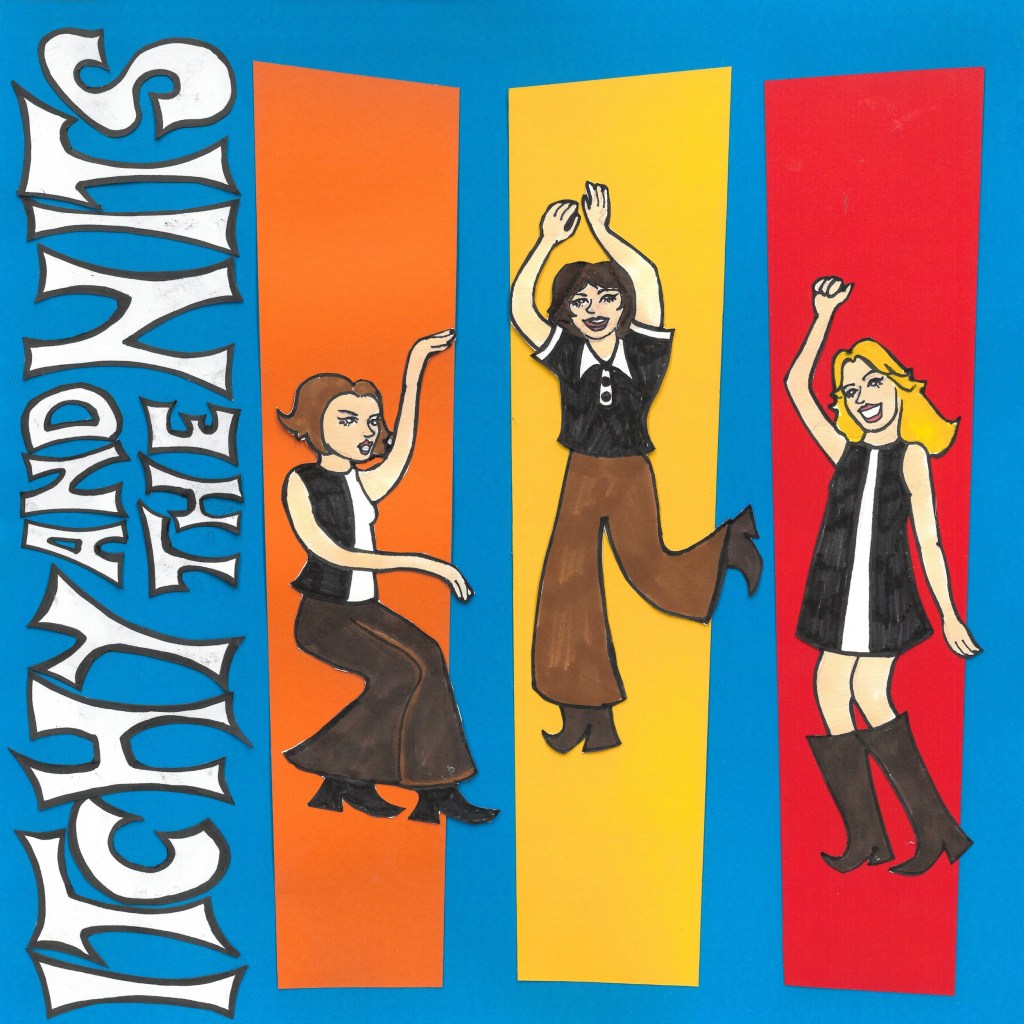
Garage punk weirdo trio from Gadigal Country/Sydney, Itchy And The Nits released their debut EP last week and we’re totally vibing on it! They’re super fun and super cool – read our interview with Beth, Cin and Eva, give their songs a listen, and find out for yourself.

Who or what first made you want to be in a band?

BETH (drums/vox): I think probably going to gigs and seeing all different kinds of bands I just thought it seemed like it would be fun! Cin and I always planned to be in a band together growing up.

CIN (bass/vox): I played bass in the school band and me and two of my friends who played baritone saxophone and trombone tried to form a band and obviously it was terrible. I guess it always seemed like fun! I thought the girl who played bass in school of rock was super cool.

EVA (guitar/vox): When I was 15 I saved up my dog walking money to buy my guitar and I guess from there it made sense to wanna jam with other people! My friend Charlotte and I were always into punk in school and used to jam together, and I guess I wanted to be like girls I thought were awesome like Kim Deal or Poly Styrene!

Growing up, how did you discover music?

BETH: Me and Cin’s Dad played in bands when we were kids and still does, he played a lot of 60s garage and punk records at home  so we always loved that stuff and got really into it as we got older

EVA: Mostly my Dad, when I was five he gave me a Madness CD that I was obsessed with and took to school for show and tell to play ‘One Step Beyond’ hahaha. From there I just grew up into all the same music as him, and then as a teenager kept looking for more.

CIN:: Family who liked cool music! Our parents were always playing punk tapes in the car and me and Beth would get hooked on particular songs and they’d have to spend the whole car ride rewinding the tape manually for us.

How’d you all meet?

BETH: I met Charlotte (who used to play in the band) at work and she introduced me to Eva, We all had similar taste in music and when Eva started working with us we starting jamming together at my house. Cin my sister started playing bass with us about a year later!

EVA: Me and Charlotte have been best friends since we started high school. Charlotte got a job working with Bethany at the ice cream shop, and then I got a job there where I met Bethany and the rest is history… I met Cin through Bethany as they’re sisters hehe.

CIN:: Yeah!

What influences the Itchy & The Nits sound?

At the moment probably Nikki and the Corvettes, The Donnas and The Gizmos!

What’s the story behind the band name?

We had our first gig coming up but we didn’t have a name yet so we had to come up with one quick. We had a song called Charlotte’s Got Nits, so we thought The Nits but then Charlotte and Beth came up with Itchy And The Nits and we thought that was just lovely.

In exciting news, you’re releasing music! Seven songs recorded with Ishka (Tee Vee Repairmann, RRC…) and mixed by Owen (Straight Arrows); what’s five words you’d use to describe it?

Yeah! They’re out now! Maybe fast, happy, silly, outrageous and contagious.

How long have you been working on this release?

We’ve had a lot of the songs for like a year or two and just recorded our favourites with Ishka last June, and we’ve been taking our sweet time putting them out cause we weren’t really sure what we were meant to do with it or how to do any of that kinda stuff! But it’s finally out!

What’s one of your fondest memories from recording with Ishka?

It was relaxed and fun! It wasn’t about getting everything perfect. We recorded on an 8 track and played our parts all at once so it was like doing a mini show. Hanging out with Jen, Ishka and their cat Egg McMuffin is always lovely!

What’s one of your favourites in this collection of songs? Tell us a little bit about it.

Maybe ‘Dreamboat’! We actually wrote it about our shared celebrity crush haha. Also when we play it live now we do a dance in unison during the verses which we accidentally spent almost three hours of band practice perfecting instead of rehearsing the songs.

What would we find each band member doing when you’re not making music?

Cin’s always off on adventures driving around and camping hehe. Eva’s usually going for a swim or bushwalk with her special bird binoculars and Beth is probably watching telly and playing tricks on people

Has anyone in the band got a secret talent or hobby?

BETH: Eva is good at identifying Australian Birds so whenever a bird flies past she can usually say what kind of bird it is and a few interesting facts about it. Cin makes her own ice cream at home and is always making delicious new flavours!

EVA: Beth does amazing paintings and drawings and comic strips. She did the drawings on the album cover, and has made a lyric/comic strip for ‘Crabs’!

What’s been the best and worst show you’ve played? What made it so?

The worst was probably when we played on New Year’s Eve in 2021 I think it was, and the headliner band couldn’t make it and lockdown had just ended. There were about 10 people there including the seccies, the bartenders and the people playing pool up the back. It was probably also the best because we played better than ever since no one was there to see it.

Any pre-show or after-show rituals?

Right after every show just as we’re taking our things off stage we have someone off to the side who has a big hook that catches us and drags us away.

What have you been listening to lately? What’s something you recommend we listen to right now?

EVA: These aren’t so much new discoveries as albums that I am just obsessed with constantly, but I reckon for the last couple years I have listened to the albums Pinky Blue by Altered Images and True Love Stories by Jilted John at least twice a week.

BETH: There’s these YouTube channels- bolt24 hot sounds and Glendoras they upload heaps of different cool 60s stuff so I like checking what’s new on there. Also been listening to The Go Gos and the Delmonas heaps lately!

CIN:: I’ve been listening to the album ‘las canciones de conchita velasco’ a lot lately!

What’s the rest of the year look like for you?

Hopefully doing some more recordings with Ishka! Playing some more gigs and working on some new songs too!

Itchy And The Nits’ self-titled EP out now – get it HERE via Warttmann Inc. Find them on Facebook and Insta @itchyandthenits.

1-800-Mikey: “I encourage everyone to stay true to who they are”

Original photo courtesy of Mikey. Handmade collage by B.

We love 1-800-Mikey the lo-fi bedroom garage punk project of Eora/Sydney musician Michael Barker, who also plays in the live line-ups of R.M.F.C. and Gee Tee. Latest album Plushy is “for all the cuties”, sunny, full of infectious hooks and features Kel from Gee Tee and Tee Vee Repairman (Ishka) sharing drumming duties. If you want an album to make you smile and brighten your day—this is it! We spoke to Mikey and got an insight into his super kawaii world.

How did you discover music?

MIKEY: I was initially introduced to music by my dad. As a young boy he would always be buying CDs and would crank rock n roll and blues through the sound system he had. Once I was a bit older the internet was my gateway to music. That’s when it took over my life. 

Youre from a musical family, your dad sang in a band in the 60s; tell us about that. A couple of years back you came across photos of him singing in Chile, right?

M: Yea, that’s right! My mother and I were cleaning the garage out and she handed me these photos of my dad when he was about 18. I had no idea that he was in a band and so I was literally speechless seeing these photos for the first time. I really wish I knew more about this, he passed away when I was in high school, but it’s really awesome to know that were more similar than I thought.     

When did you first start making music? Who or what initially encouraged you to give it a go yourself?

M: I started making music in 2014 when I was in year 11. I started to get into garage rock and I found this band called Surf Curse on Bandcamp, which then led me to find the lead singers solo project Tele/visions which is now more commonly known as Current Joys. I was absolutely obsessed with Nick Rattigan and he did everything at home with whatever he had lying around. This convinced me if he could do it then I could as well. From there I started to find more artists with the same ethos and thanks to Bandcamp I found further inspiration from Frankie Cosmos, Alex G and Porches who all did it themselves. 

You have a prized possession in an original art work drawn and painted by outsider, lo-fi musician Daniel Johnston; is he an inspiration for you? I feel 1-800-Mikey has some of the innocence, charm and playful qualities that DJ has?

M: Yes absolutely! I’m so grateful to own one of his drawings and I have to thank my partner who got it for my birthday. He is a massive inspiration, especially how his family didn’t approve of him being an artist, that really hit home. His story is really special and it makes me so happy knowing he just went for it because he loved it. His work definitely seeps through my creative process, I really love his honesty and simplicity. He’s an absolute legend. RIP Daniel ❤ 

Have you always lived in Eora/Sydney? How did you find your local music scene? When you were under 18 it was hard for you to find shows to go to, so you and your friends would have house shows or warehouse shows, didn’t you?

M: Yea, I’ve always lived in western Sydney my whole life and it was very hard finding a scene not living close to the city. I found that I never sat comfortably within a scene until just recently. It felt like I was jumping around scenes when I was younger which wasn’t bad at the time but it feels really nice to know I have a family and am part of a community now. The first show I played was a gig at my mother’s house in Blacktown. It was heaps random and we had friends from high school come around. Shortly after I played a show at the MCA for an all ages event where I met more people who would then introduce me to other warehouse/house shows happening in the inner west. To be honest, there weren’t to many DIY shows, but when they did happen it was super exciting, even still to this day.

What are the local bands you super love?

M: Two underrated bands in Sydney that I love to death are Shady Nasty and Cakewalk. Shady Nasty have been around for ages and they sound completely different to everything else that’s happening. They have gone through many different sounds and I love it all, especially their punk stuff. Definitely keep your ears and eyes out for Shady Nasty. Cakewalk is also another band I love who are super low-key and barely play any shows. They are another super interesting band who are doing something different who I encourage everyone to go and check out. 

Photo courtesy of Mikey.

Youve previously been in bands Bleeding Knees Club, Wax Witches, Neighbourhood Void and Dying Adolescence; can you tell us a little about your experience in each?

M: Dying Adolescence was my first project which I started in high school. This was my bedroom pop project and kind of like a diary where I wrote and recorded everything. 

Neighbourhood Void was the sister band to Dying Adolescence and that is led by Gio. I did some of the writing and recording here and there for NV but it was mainly Gio’s project. 

I played lead guitar in Wax Witches and Bleeding Knees Club and it was thanks to these two bands I got to play heaps of shows and tour Australia straight out of high school. I cant thank Alex enough for giving me the opportunity to do that. 

Your album Please Be Kind for previous project Dying Adolescence was about all the things that affected you and that you experienced in adolescence. 1-800-Mikey is your next musical chapter. Whats the new album Plushy about? Tell us about the writing process. It seems as though cute (kawaii)is a theme running throughout? 

M: I wanted to do something fun and less serious with 1-800-Mikey. The new album Plushy is a collection of everything I love since childhood and its nothing too serious. I really like all things cute and kawaii, so it made sense to me to make an album with these themes.  

What inspired the song Plushythat the album is titled after?

M: I guess I’ve heard lots of other songs based upon different perspectives from the songwriter and so I wanted to give it a go. During the time of writing, I was obsessed with claw machines which led me to the idea. I thought it would be cool to write a song from the perspective of a plush toy. I was surrounded by plushys from all the winnings I made from claw machines. After writing the song, I thought it would be the album title as it draws a clear line from the EP I did with the song claw machine. 

Song Pressureis about working 9 to 5; what do you do for a day job? Do you find it a challenge to work a day job and play music? 

M: I currently work at Relationships Australia as a Client Services Officer. I’m on the phones all day and I help people book in counselling or mediation when they are seeking support. I have always worked at a call centre which made me name the project 1-800-Mikey. I sometimes find it difficult working full time and playing music but my colleagues and managers find it really cool so they are heaps supportive and flexible about the whole thing. 

One of our favourite songs on the record is Snoopy; whats your connection to Charles M. Schulzs loveable cartoon beagle?

M: Oh man Snooooopy <3. My mother loves Snoopy. She would always get me Peanuts pyjamas, t-shirts and toys as a kid. He’s an absolute cutie and I wish Snoopy was mine. 

Kel from Gee Tee plays drums on five of the tracks and Tee Vee Repairman (Ishka) plays drums on two; what does each of their styles add to the songs? How do they differ?

M: Both of them are killer drummers. I’d say they are both quite similar but Kel’s got more of that budget home-style sound while Ishka’s got more of a tight garage sound. I reckon Kel adds more of a groove to the songs while Ishka drives the songs forward. Both of them are amazing and I thank them for helping me ❤ 

What was the recording process for the album? Kel lent you a 4-track, right? What was the setup for recording?

M: Kel lent me a 4-track in 2020 to record the EP. I’ve never recorded to tape before so it was a new way to get obsessed with recording again. After finishing the EP I got myself a 4-track for Christmas. The general setup is to record everything on tape then bounce it to GarageBand and complete the song there. It really makes recording drums a breeze. 

Who’s in the 1-800-Mikey live band?

M: At the moment the live band consists of Kel, Buz and Rohan. Kel is Gee Tee, Buz is RMFC and Rohan plays in a Grindcore and Hardcore band called Maggot Cave and Seethin. They are all sweethearts and I’m super lucky to have them in the live band.

On your Insta a few months back you sang your first song in Japanese Iggy Pop Fanclubby Number Girl; what inspired it?

M: Ahhh yes, I got obsessed with Number Girl and the lead singer’s second project Zazen Boys. I find that I get obsessed with different pockets of music around the world and so I wanted to little Insta cover. I’ve never sang in another language and I really love the melody to that Number Girl song so I gave it a go. It’s also motivating to see another Asian make rock music. Shutoku Mukai looks like a normal and nerdy guy and that is very relatable, which is heaps nice. 

You look like you had a lot of fun making the video for Claw Machine; what was one of the most fun or funny things that happened making it?

M: Yea, that was a really spontaneous one. Me and my long time friend Gio went into the city on a Thursday night to film a music video at the claw machines in Chinatown. The idea was that I’d leave with heaps of plushys as I would always win a couple. But this time around, I went in and I won nothing which was pretty funny as Gio didn’t believe I was heaps good at the claw. Also, the shop owner wasn’t impressed with us filming there after an hour or two. She asked if we wanted to continue filming that we would have to pay her. By this point we had enough footage so we bounced. 

Youve recently joined the live lineup of R.M.F.C. playing a 12-string guitar; whats the best thing about being part of R.M.F.C.?

M: I’ve never played 12-string before so that’s been very exciting. I’m very honoured to be able to play in Buz’s band. I think the best thing about being a part of R.M.F.C. is that I can pick Buz’s brain when learning his songs. It’s very inspiring to see how he writes songs and composes melodies. 

What’s next in the pipeline for you creatively? 

M: I’m definitely gonna have a little break while Gee Tee and R.M.F.C. are getting busy. I’ll be writing songs again soon, so keep an eye out. Also, I might be joining another band, which will be a secret for now. 

Anything else youd like to share with us?

M: I encourage everyone to stay true to who they are and do what they believe is right. Love Mikey.

1-800-Mikey is out now get it HERE. Follow @1800mikey.

Display Homes: “We started to draw more on influences from bands of the 80s like Delta 5, AU Pairs, Pylon, B-52s”

Original photo courtesy of Display Homes. Handmade collage by B.

Eora/Sydney 3-piece Display Homes are back with new music! The asymmetric guitars, bass grooves and dynamic drums we’ve come to love on their previous two EPs are all there brighter than ever on forthcoming debut album What If You’re Right & They’re Wrong?. It’s raw but sharp, minimalist and danceable. Their pop sensibilities make it accessible while their post-punk leanings make it exciting. We’re calling it now as one of our favourite albums of the year! 

Today Gimmie are premiering first single ‘CCTV’ with accompanying video shot via CCTV at a pub vocalist Steph King once worked at. We caught up with the band for a yarn.

We’re excited that you have new music coming out. The sneak peek copy of your debut full-length album, What if you’re right & they’re wrong? has been on high rotation at Gimmie HQ! It’s one of our favourite releases we’ve heard so far this year. How long have you been working on it and how does it feel to be releasing it into the world?

GREG CLENNAR: Thanks, glad to hear you are enjoying it! We recorded the album at the end of 2020 and the songs were written over the two years prior to that, so it has been a long time coming. To finally announce the album is very exciting to say the least. The delay caused by COVID and the subsequent delay with pressing plants has drawn it out as I am sure many other bands have experienced. It’ll definitely be a relief once it’s out.

What influences have shaped Display Homes’ sound?

GC: I’m not sure if there’s been any one collective influence for our sound, even though it may come across that way. At our first ever practice, none of us had any idea of what we wanted to do, except that Darrell had already declared our name was Display Homes, which Steph and I both wholeheartedly endorsed. We didn’t even know who was going to sing, which entailed a few failed attempts on mine and Darrell’s behalf before realising that Steph was clearly the best singer in the band. As we evolved and the sound started to make more sense, I think we started to draw more on influences from bands of the 80s like Delta 5, AU Pairs, Pylon, B-52s etc, who we all love.

How has the band grown from 2019’s EP E.T.A.?

DARRELL BEVERIDGE: In 2019 we all lived together in one of the most beautiful sharehouse in Marrickville. Seriously, this place was incredible, a true Display Home inhabited by us FRAUDS. It looked like one of those places that instagram bedsheet companies use to shoot their ads and people look at them and go, “If I get these pistachio coloured sheets, maybe I can live somewhere like that!”  Unfortunately the owner dogged us and kicked us out because they wanted to move back in. 

In terms of progression as a band, I think we’ve just tightened a few loose screws. When we were recording the album and I was doing guitar for one of the songs, Owen the producer stormed into the room on about the 38th take of a very simple guitar part and said to me, “You keep hitting that top string, do you even use it?” I replied, “I do not.” Owen: “Then take it out!” So now I only play with 5 strings (seriously).  So technically, I’ve regressed musically.

Where did the album title come from?

STEPH KING: I always find it hard to give anything a title. I couldn’t think of a title for one of the songs on the album and I asked Darrell and he named it ‘Neenish’– which was the name of his cat at the time, probably because he remembered he needed to feed her. It worked out surprisingly well as the lyrics very much matched the behaviour of a little kitty cat. 

I was struggling to think of an album name and was rewatching season 1 of Fargo during lockdown. What if you’re right & they’re wrong? is the quote on the poster in the basement that Lester reads moments before he loses the plot. It just stuck with me. I asked Greg and Darrell what they thought, and they liked it, so we went with it. I think if I asked Darrell for an album name he probably would have suggested ‘Beans’ – which is the name of his current cat. But cat names can only go so far.

Photo courtesy of Display Homes.

We’re premiering first single ‘CCTV’ as well as the video for it, which is your first music video. Tell us about the writing of ‘CCTV’.

SK: The lyrics were inspired by a game that I’d play when I was bored on long car trips using letters from number plates. Using the three letters I would add one more letter to make a word. I came up with a drum beat and brought it to practice and then Greg and Darrell added their parts. I think it was one of the quickest songs we have ever written. Over time I have found that if I bring an idea to practice that has the drums and vocals already aligned it makes it a lot easier. Playing both at the same time means they really need to work together, and if it isn’t written with that in mind, it can be a struggle to play live. 

The album was recorded and mixed by Owen Penglis; what brought you to working together? What was recording like? What was one of the most fun moments for you? What was one of the most challenging?

DB: I met Owen close to 10 years ago and was actually going to record one of my old bands EP with him (we were called Sucks) but we ended up going with someone cheaper for the same reason one would drink cask wine over bottled wine.  Sucks were cask-punk, Display Homes is more bottle-punk. It’s still cheap but it’s in a bottle at least. 

It was all fun except for this satanic devil dog in the studio that had it in for me and wanted to fucking bite me all the time. I find recording really difficult and uncomfortable and while I enjoyed the process as a whole, actually doing my parts made me pretty self-conscious on many levels.  Why am I self conscious? Why do I keep fucking these parts up? But Owen was great, he could really pull you out of your head. Just as you’d finish a song and convince yourself you had nailed it, you would look up and see Owen with a big smile and he would say, “Tune your guitar and do it again!” He really encouraged us to get the best out of the recordings.

The video was made using the CCTV cameras at the Cricketers Arm Hotel, a pub, that Steph used to work at. Steph, what were some of the best and worst bits about working there?

SK: The Crix is a very special place. It’s the best pub in Sydney! It’s like the clock stopped in 1995 and everything is the same. It was my first job when I moved to Sydney and the overwhelming sense of community with staff and locals was very welcoming. Worst bits – hmm, it’s near the SCG so maybe on game nights when rude men would buy three Jack and Cokes at a time. It always felt weird, kinda like the outside world was entering the pub for a few hours and then leaving again. 

What do you remember most about the day of filming ‘CCTV’?

SK: It was an interesting music video to ‘shoot’ because there wasn’t a great deal of shooting involved. As it was all done on the CCTV cameras, we would set up in front of one of the cameras with the help of our very good friend Luke Smith who brought along some lights and his handy cam to get some additional footage. I would yell out to our friends who we coaxed into coming along with a couple of free beers “Ok everyone we are doing it now”, often without anyone hearing me, and then one of the bartenders would start the song on the speakers so that we could try and play along to keep the footage in time. We couldn’t hear a thing and every take we would finish a couple of seconds before the recording ended. The whole day was very much an experiment and even by the end of it we didn’t know what was caught on the cameras. It wasn’t until we got home that we could really try and figure out how we would put it all together. 

What was it like putting together the downloaded footage for the clip?

SK: The first hurdle was downloading the footage. After we finished up for the day I was told by the pub manager that “the security camera guy is coming in the morning and last time he came he wiped all the footage from the system”. Panic mode kicked in at the thought of losing it all and involved me arriving at the pub at 7.30am the next morning and contacting several different people to get a hold of the key that opened the cupboard of the security system. I kid you not, there was about 10 seconds remaining on the last piece of footage as the camera guy was walking up the stairs at 10.30am. Then came sorting through the thousands of files of footage, which was very tedious, but also very fun at times. It was my first time editing and I obsessed over it for months – but we got there in the end and we are all really happy with it.

Which is a favourite from the album?

DB: I liked recording ‘Proof Read’. When Steph was doing the vocals, me and greg were standing in the other room looking through the window psyching her up to make her get as tough and intense as she could. Jumping up and down yelling “GO STEPH!!! FUCKING BELT IT OUT!!!!!! YESSS !!!! IT’S A HIT!!!!” Steph nails it in that song I reckon.

Album closer ‘Aufrutschen’ was on the E.T.A. cassette; how do you feel the album version has changed?

DB: Part of me didn’t want to do it, but then I remembered growing up hearing multiple versions of the same song from bands I liked – I really liked that. Like a live recording, EP version, and then an album version or whatever. I always thought there was no bad that could come from that.  If people like it they’ll listen to both, if they don’t they’ll listen to neither. It’s like if you put $5 in the pokies and got $10 credit, or put nothing in there and got nothing. Everybody wins! Or no-one wins! Take your pick!

We love the album art; who did it?

SK: We actually had a completely different cover that I did on lino. We were sitting on it for a while and I just wasn’t sold on it. I am studying architecture and almost every semester I always partnered up with my friend Allyson because we worked so well together. We always managed to produce our best work at the last minute. Five minutes before a presentation we both grabbed pastels and started scribbling our building on the page. I asked her if she would mind if I used it for the album cover and she said go for it (thanks Allyson!). It reminds me of a time when my studies and hobbies were at peak productivity. Sometimes it’s crazy how much you can get done in a day.

Can you tell us a fun fact about Display Homes?

GC: When we supported Real Estate at the metro the official run sheet said ‘Display House’. As Darryl Kerrigan of The Castle says, “It’s a home not a house”. 

What do you do when not making music?

SK: I think I can answer this one for all of us. We all work 9-5, enjoy swimming laps, and eating delicious charcoal chicken. 

What’s next for Display Homes?

GC: The record will be out on Erste Theke Tontrager this European Summer and then we will look to play some album launch shows. We have played Melbourne and Brisbane before but we are excited to play some other cities/towns this time round. We have started writing some new music too, so maybe another album!

Display Homes’ debut album What if you’re right & they’re wrong? out soon via Erste Theke Tontrager.  Follow @displayhomesband + DH on Facebook. DH on Bandcamp.

From Squats To Lots: The Agony And XTC Of Low Life

Original photo: courtesy of Lulu’s Sonic Disc Club. Handmade mixed-media collage by B.

Low Life are back with third LP From Squats To Lots: The Agony And XTC Of Low Life! A rich and complex album, that has vitality and backbone with an air of cool and restraint. There’s spades of texture and unfiltered emotion on this shining record. Gimmie recently caught up with Low Life’s drummer Greg Alfaro.

How are you? What’s life been like lately for you? What did you get up to today?

GREG ALFARO: All things considered, pretty damn good thanks. No band stuff for ages though, which sucks, just busy parent life. I’m far from the perfect father/role model type but I’m still learning things every day. There’s lots of lockdown home-schooling, work from home, trampoline sessions, feeding chooks, storytimes, watering gardens, kicking footballs, Lego, enforcing screen time limits, peacekeeping, nurturing and yelling, Dad shit.

Today was chill though, got first Vax jab, so come what may. 

Low Life are from Warrang/Sydney; did you grew up there? What was your neighbourhood like then and how have you seen it change?

GA: I actually grew up in a housing commish suburb down the freeway in the Dharawal/Illawarra. It was rife with the type of intergenerational criminality and mental illness you’d find in pockets of struggle all over the land. It was the typical BMX, bush and beach childhood mostly, but I do remember lots of overt and casual racism towards us wogs and Indigenous folk from the, I suppose, terminal bogan kids (Westies to us then) who didn’t know any better, and their older, scarier (to me) generations. Some wised up, worked hard and moved on from all that, some even became cherished friends, but most didn’t. Fun childhood, just fraught with bit of paranoia. 

I do remember lots of family trips to places like Fairfield, Liverpool, Redfern, Bondi for South American festivals, functions and family friends sleep overs. My uncle had a band so music was central to those Sydney trips. 

Sydney skateparks, record stores and eventually gigs featured a lot as I got older. Shows around all the ‘live music mecca’ venues from the Annandale over to Selinas. For me this wasn’t in some classic yobbo, beer drenched, oz rock, heyday nostalgia terms (that vibe was still around). I was just out of high school, so heading up to watch proper weirdo local and overseas bands most weekends was a real eye and ear opener. The 90s were also way darker and more violent in my recollection than the pre-pandemic decade or so. Young and winging it with a lot of funny and heavy ‘firsts’ to discover. 

These days (or before lockdowns) there’s still the proper weirdo bands and characters, just seems everyones nicer to everyone’s faces. There’s no real pub circuit and its punch-ons (no great loss). More warehouses and DIY shows by dedicated fans and the odd friendly swindling scumbag. Still heaps of great young and middle aged bands too.

Recently on the LL Instagram you guys posted a photo of a “pseudo squat” on Shepherd Lane in Chippendale where LL was born; what do you remember about the place? 

GA: That was just before I joined Lowlife. I did work with Mitch & Cristian & was in a different band with them around that crazy time too(2009-ish?), so I was all too familiar with that energy. I just don’t remember personally ever going to that particular house. From what I’ve gathered it sounds just like places I’ve lived and squatted in(some with Cristian) where decadent, deviant behaviour festered and thrived. But also a special place where deep, lifelong friendships and grudges form and intensify.

How did you first discover music?

GA: Remember that ‘Moscow!Moscow!’ song? Where the blokes are doing the Fonzie dance? It’s wild.  That’s my first musical memory. 

When did you start playing drums and who or what first inspired you to play? Was there ever any other option for you?

GA: My uncle’s wog band had this exotic looking  drum with a proper black and white cow skin, looked like it had been violently hacked off its rump somewhere in the Andes and plonked straight on this big arse bass drum. This thing fascinated me as a kid and I would whack the shit out of it with gusto every chance I got. From there I was hooked and would tap out beats and make whimsical childish songs on and about anything and everything. 

I kept tapping away, absent-mindedly encoding lots of 80s metal, pop and hip hop I’d hear as a kid for many years before I properly started giving two shits about bands. I’m pretty sure it happened one day when my older bro and his mates must have been smoking some of that gold-stamped red-cellophane hash that was everywhere back then. Because the dodgy fuckers put on The Doors (as they do). With those vapours swirling around I remember zoning intently into the drums on ‘Peace Frog’, a simple beat doing some heavy lifting on the galloping rhythm. After that, they probably greened out,  and I started taking drums slightly more seriously. 

Punk & hardcore stuff got me going faster and more intense. Fuck, I even tried and failed those blast beats, but that shit is unnatural to me, more human torture ordeal than drumming. But hats off if you can be bothered learning it.

I’ve played different instruments in different bands over the years too,  but plodding along on drums is my favourite thank you very much. 

How did you find your local music community? What was the first local show you ever went to? 

GA: Kinda inevitable, music was so linked with our skating so much back then, but also a bit of blind luck. We just happened to grow up where some older friends were getting amongst the Sydney and Melbourne punk underground scenes, which spurred us on. We sputtered through attempts at various covers and line ups until we got it going for ourselves. Eventually we’d get our own songs and shows on the scene. Sometimes our friends would invite us onto their bills. Been at it ever since. 

Pretty sure first show was ‘Proton Energy Pills’ and ‘Social Outcasts’ at Thirroul Skating Rink/Skatepark around 1990-ish. They were our older mates and had 7″ records so were totally legit to us. I remember seeing old VHS copies of ‘Decline..’ some ‘Target’ vids, ‘Repoman’ & even ‘Thrashin’ and the cluster of punk clips on Rage. We were doing our post pubescent aping of all that action down the front. Pretty funny memory. One of the records was actually sponsored by the governments ‘Drug Offensive’ harm reduction campaign, which we all found utterly hilarious.  Holy shit, if only they knew the completely unhinged animals they’d sponsored. 

I understand that Iggy Pop’s albums Lust For Life and The Idiot were reference points sonically for Low Life’s new album, From Squats To Lots: The Agony And XTC Of Low Life; in what ways? What do you appreciate about those records?

GA: Probably were, but I just can’t remember anyone mentioning it or writing that in the album notes. It’s been ages and too much has happened since. I can really only remember Killing Joke’s name being tossed around somewhere in the haze. 

But so they should be reference points, they’re amazing albums. I think there’s definite nods to them, and I appreciate shitloads. 

I knew this duo had form because my younger self heard Bowie’s polarising mix of ‘Raw Power’ first. That hellride became an instant all time favourite.

I heard ‘Lust for Life’ next and that immediately raced for the title, just via different neural pathways. The famous usual suspect songs are lauded with good reason. They are perfect anti pop masterpieces that manage to spark the intellect and warm the genitals. Thats some feat.

But songs like ‘Sixteen’ ‘Some Weird Sin’ ‘Turn Blue’ ‘Fall in Love With Me’, they carved slow & sinister routes into my subconscious, they’re still carving. This record has often been a flaming torch in a dark cave for me. The cover alone should cheer any sad fuck up. 

I heard ‘The Idiot’ last. This record took longer to seep deep into my bones. Big departure from what I’d grown up on to that point, but I trusted their instincts. Before actually hearing it, I’d read in Iggys ‘I Need More’ book that they were mostly Bowie arrangements with Iggy chiming in his nihilistic poetry and ad libs. I thought I was ready for it. So when ‘Sister Midnight’ kicked in like the depraved evil twin of ‘Fame’, it was clear it was gonna be an awkward journey through Bowie’s coke-ravaged musical psyche, just with Iggy, fresh from the asylum, as the (mis)trusted co-pilot. I love how its cold monotony almost smothers it’s funk pulse (Low Life turf), but it’s there, as is Iggy’s, reanimated from his death tripping scumfuck years, just without all the mania pushing his voice to its limits. Yep, less was finally more here (more Low Life vibe too). The rest of the album stays icy, but with beautiful, fleeting hooks on ‘Baby’ and ‘China Girl’.

‘Nightclubbing’ still washes over like a heavily tranquillised cabaret number, squinting west through a glory hole in the old Iron Curtain at all the fake, sexy madness swanning around. Uncomfortable, but at peace, piling out in its own warm fluids. Great song.

‘Mass Production’ is an almighty closer. Building and writhing into almost David Lynch creep territory. An unnerving loop of self loathing & cruelty (LL anyone?) and oppressive, unrelenting head-in-a-greasy-vice synth that essentially does the job of squeezing any remnants of Dum-Dum-Motor-City guitar muscle out of Iggy (for some decades anyway) and any poor, unsuspecting, punker-wanna-be (young me included) who sat through a listen, axe at the ready, impatiently waiting in vain for some kind, any kind of ‘Extra’, ‘Rawer’ or ‘Furthermore’ fucking power. It’s brave. Glad I persisted with it. 

Each listen still astounds, and it’s still casting a long shadow over the rich post punk underground from mid 70s Berlin all over the anti mainstream music world & my feeble brain. I just can’t help but imagine influential bands like… ahem… Einsteurzende Neubauten, Tuxedomoon, Wire, Siouxsie & The Banshees, Boys Next Door, Warsaw, Big-blah-Black blah fucking blah etc, all having the initial fire cracker lit under their pimply post punk arses upon hearing ‘The Idiot’ back then. 

And so they should of, because despite Iggy’s penchant for self-sabotage back then, and Bowie’s possible own attempt on his careers life with ‘The Idiot’, it’s still an amazing fucking album. So yeah, shitloads. 

It’s up to each listener who gives enough of a flying fuck, to decide if we’ve summoned anything sonically from those records. I certainly won’t be dwelling on it, they poisoned my blood years ago. But from what I’ve heard so far of the new album, and remember making it, it definitely feels like they’ve been stirred through the LL cauldron of ideas. Mitch is a lifer, no hand-brake, always stirring. Next!

The album’s title borrows a little from the Irving Stone 1985 novel title, The Agony and Ecstasy, about Italian Renaissance artist, Michelangelo; how did it work its way into your title? 

GA: Hahaha, It does? Never read it. 

The boys may or may not have a deep appreciation for that book that they drew the inspiration from, I don’t know or care really. Sounds interesting though. I just figured it was a common enough relatable phrase that rolls off the tongue nicely? Innit? Triumph/Tragedy, Comedy/Horror, Pleasure/Pain, Mushrooms/Manure, it’s all part of the calm and the chaos. It all suitably applies to the Low Life saga over our lifespan that’s for bloody sure. 

What has been the most standout moment of both agony and ecstasy for you from LL’s journey so far?

GA: There are reams to draw from here, but I think the ill-fated USA tour some years back perfectly encapsulates both.

Imagine all that organising, booking, payment, anticipation, excitement & long arse flights. Only for poor Salmon to be detained in immigration limbo with Guatemalan gang bangers and unceremoniously shafted back across the ocean. After the initial confusion, stress & shock, and after it was clear he was home safe, we just accepted our cards. We were in America and we weren’t playing any gigs. So naturally we pivoted to glass half full mode. Met old friends over there and made new ones. Had a ball. 

Photo courtesy of Lulu’s Sonic Disc Club

How long did you guys spend writing for The Agony And XTC..? Is there a particular way that your songs often form/come together? 

GA: Maybe a year, Mitch had half the song ideas mostly worked out not long after Downer Edn came out. But different things stretched it out, and even standard band stuff like getting a jam locked in can take us ages. I remember getting a lot of these new songs started around practising sets for upcoming shows, then we’d run out of time. I really felt underdone before finally recording this one too. Covid wiped out heaps of preparation time. We only had a few proper band sessions where we got to write stuff, flesh out ideas and refine them where necessary. But I felt like I personally just needed a few more ahead of recording my drum parts. The guys, bless them, would sweetly reassure me it was sounding fine though. Liars. Normally we would have done just enough without over cooking it. 

What’s the song ‘Hammer & The Fist’ about?

GA: I’m so sorry but I haven’t even heard that song in ages. I still haven’t received the record, Cristian’s got ’em all. I only have scant memory of a slowish beat with a sombre bass run, no guitar or vox. So fuck knows what it’s exactly about yet. I do have my own suspicions about ‘Hammer’ & ‘Fists’, and they ain’t pretty. Mitch insists it’s all open to listener interpretation anyway, so choose your own misadventure I suppose, yeah sorry, maybe just ask Mitch?

How did song ‘CZA’ get started?

GA: I did hear a rough cut of this with some Samoh footage early this year. Dizzy started up that riff and it sizzled straight away. Yuta and I jumped onto it quick smart, not wanting to lag on the flavour he was frying up. Cristian rumbled in. I do remember pissing ourselves laughing at all the backing vox on this one, because Salmon had put on some suitably absurd, dark but hilarious lyrics to harden it’s crust.

Which song on the new record means the most to you? Why do you have a fondness for it? 

GA: So far ‘Collect Calls’. This tempo is right in my sweet spot and the mood kinda shifts gears quickly into some unexpected guitar twists. Like that Crossroads-Battle of the Hot Licks duel, but with Johnny ‘Dizzy’ Marr vs Greg ‘Yuta’ Sage. Sounds like the lyrics could be about a troubled soul who isn’t completely detached from family and friends, but possibly wanting to detach from a desperate reality? Your mate? I dunno, ask Mitch. But they are kinda harrowing and beautifully delivered by him and his sister Beth. 

 I only heard a mix of some songs together while my son was in a major surgery in October 2020, which was a welcome distraction. Then nothing for ages while dealing with all that in hospital. When we finally got him settled home in December 2020, the Passport video came out with ‘Collect Calls’. Hearing that song in that video really snapped me out the hospital reality that had been all consuming and all around grim. That song reminds now reminds me of starting a very different phase of life with great hope for his recovery & future. Ripping skating clip and a beautiful song. 

The album was recorded last year with Mickey Grossman (who also did your previous release Downer Edn and Oily Boys’ Cro Memory Grin); What was the process like for you? What can you recall of the recording sessions?

GA: Disjointed & gruelling, but fun. With no practice for months, I did about 10+ songs in about four hours and was exhausted, pretty out of it and just plain struggling. The vocal sessions were cool though, just back to clowning around with the gang again, yelling & hooting funny backing vox and improper dining. Mickey rules, he seemed to innately know what we were doing more than we did sometimes, and had more patience with us than we probably deserved. He is a treasure. Luv him. 

One of the overarching themes of the new collection of songs is the celebration of resilience. I know that personally you and your family went through a lot last year with your beautiful boy Vincent having an awful accident while bushwalking. How is everyone doing now? What are some things that have helped you with your resilience and helped you get through this challenging time? 

GA: Doing great now, just got the all clear for all physical activities again but the nature of a brain injury means possible future challenges. He is totally still the sweet, fun loving and mischievous little boy he always was. We were lucky on many different fronts with this outcome because it is clear that after a whole year that his selfless nature and bright personality are still all there. That is probably the biggest joy and relief to us all. Getting him and his brothers back to the school environment amongst friends is next in his recovery. 

His strength recharged my resilience when it got dark for me. I can still be a nervous wreck around him in some situations too, but having the family, friends and band behind me, random texts, big and small gestures, sympathetic smiles and hugs, lovely meals cooked and delivered, rides to and from the hospital, babysitting, was all so important. All this support from family, friends and even strangers will be appreciated for as long as I’m breathing. Thanks again gang..X

Can you share with us a funny Low Life-related moment that still makes you laugh when it comes to mind?

GA: Yuta the scooter rebooter cracking the public scooter code in Adelaide and shredding down the boulevard towards our show was hilarious. We ended up getting fed so much food off the venue before playing that it actually ruined us. 

That may sound silly, and it is, but it stands out to me because it happened in a heightened emotional time just after some close friends had passed, and just before Covid stopped everything. This bizarre inter-zone period in time and space also coincided with a super rare Low Life purple patch of gig momentum (about 3 gigs!) that was focused and fun, with plenty more on the horizon. 

That and the last Maggotfest featuring Coco-the astounding human kick pedal, that was funny. 

Turns out these were our last two real life, beer drenched, oz rock, sweaty gigs. 

Why is music important to you?

GA: Wow, again, reams.

Being preoccupied with Vincent’s recovery in and after hospital, Covid lockdowns, home schooling and the general pandemonium of family life within this whole shitstorm, has just meant that music hasn’t been important at all for so long now.

But this interview has brought it all home for me. I’ve dribbled on heaps, so I’ll try to keep it short.

It’s been a direct portal and a soundtrack to countless worlds, perspectives, memories, emotions and the odd nightmare.  Creating music with friends (and kids now), and expelling all the energy, good and bad, through it. That’s important and shitloads of fun for me.  Hopefully do it again ASAP. 

Low Life’s From Squats To Lots: The Agony And XTC Of Low Life out now on Lulu’s Sonic Disc Club (AUS) and Goner Records (US). Please check out lowlifebandcamp.com