Annabel Blackman, the musical shapeshifter behind weirdo pop project Solo Career and member of Body Type, brings the same curiosity and coolness that defines her debut album Interior Delirium to this eclectic Crafty Cuts selection. Moving between oceanic calm, nostalgic pop reverence and hypnotic ambient drift, her picks reveal a listening world driven by feeling, humour and quiet obsession.
You’ll find a track that channels the cleansing power of a peaceful ocean swim; a song you just may have heard a gazillion times watching Gilmore Girls ; a confidence-boosting pop classic; a spontaneous, funky DIY gem from a friend whose brilliance feels effortless; a soaring spiritual love song from a hook-writing master; an iconic dance-floor hit that sparked a thrift-store pop deep dive; a jam from her favourite LA witch; smooth yacht-rock comfort with an outro built for kitchen bopping + more.
But first, check out the ultra-cool, Solo Career:
Jordan Ireland – Swimming
I live on the South Coast of NSW and often rely heavily on the therapeutic powers of jumping in the ocean. If the conditions are right, and the water’s peaceful and clear, it can really strip you of any ick. This is off Jordan’s ‘Spirit Walking’ album, which is very dear to me on the whole but this track in particular hits me because it somehow summons that power of the mysterious big blue.
2. Carole King – Feeling Sad Tonight
I never intended to get into Carole King, I don’t really know how it happened. I heard that one song on Gilmore Girls too many times and was never interested in listening to any more of her music but something flipped and I found myself listening to her album ‘Rhymes & Reasons’ on repeat. It’s groovy and there might even be bongos in the mix but it’s balanced with darker concerns / Carole wrestling with her troubles. This track has a resigned sense of drama – perfect for driving home from work. Or sitting in your car in the driveway before you go inside.
3. T-Pain – I’m Sprung
I came across T-Pain’s NPR tiny desk performance and it was unexpectedly gut-wrenching. It got me hooked and now I listen to his music cos it pumps me up. The way he got torn down for his pioneering use of auto-tune was brutal (“You ruined music” – Usher) but when I listen to I’m Sprung, Bartender, Buy U a Drank, I smile because no one can deny nor destroy that talent. At work I’m the office DJ and I play a lot of ambient music / Severance vibraphone soundtrack stuff so when that’s over I need to strike out on a firm tangent and T-Pain is the answer.
4. Boba Lego – I Might Dissolve
Rumour has it that Boba Lego aka Occy writes his lyrics on the spot. Whatever he’s channeling speaks to me through its simplicity and sweetness. And I’m kinda obsessed with his guitar manoeuvres but we’re friends so I try not to let the depth of my fandom show. Don’t read this Occy. Anyways this song and this album are hella funky but I recommend listening to Memorys of Newnes too.
5. Todd Rundgren – Healing Pt. 1
Been on a Todd tear for a while now and have yet to listen to everything he’s made cos there’s a lot, but have been particularly enjoying the Hermit of Mink Hollow and Healing, which this song is from. Todd is a pro at writing hooky love and heartbreak songs – it’s almost too easy for him so I think he likes busting out of the conventional hit box and writing soaring songs about spirituality and socioeconomics. He’s coming to Australia for the second year in a row this March so I’m making it my public internet wish that he play this one at the Sydney show.
6. Madonna – Into the Groove
This came on the radio a couple years ago when I was driving and it dawned on me how cool Madonna is, spawning an op shop CD collect-a-thon. At one point I had all Madonna CDs in my car’s 6 stack CD player, a high point in my life. You can’t go past the Immaculate Collection comp if you want a good time on a road trip, or in general. I love Madonna cos she’s outspoken and a self-proclaimed bitch and isn’t a perfect singer.
7. Jessica Pratt – Life Is
When I heard the opening drums to this it blew my mind. They’re a reference to Glen Campbell’s ‘Guess I’m Dumb’ (I’m assuming) which I used to do a silly Solo Career cover of using a ripped youtube instrumental that’s exactly the same as what you hear in the O.G. song. It framed her whole new album ‘Here In the Pitch’ for me as a subtle Hollywood glamour affair. I love how her sound has changed over the last couple of records to accentuate her style without losing the magic of her earlier simple acoustic recordings. She’s my favourite LA witch.
8. SWV – Rain
Just when I thought I’d heard the coolest rain sample on Erika De Casier’s song ‘Little Bit’, I came across this one by SWV which is far more drippy. I used to be scarred by the 90s R’n’B my sister pumped when I was a kid but now I’ve done a 180 flip and can’t get enough. SWV is my fave to cook dinner to and there’s a really good NTS compilation of their hits I like to rinse.
9. Ned Doheny – If You Should Fall
As I’ve said I like groovy stuff and am probably some kind of blue eyed soul yacht rock tragic. I wholeheartedly love the Hard Candy album this song is from so the choice is almost irrelevant cos I just like listening to the whole thing, however the outro on this song deserves an honourable mention for high quality bopping value. Was very excited that Numero Group reissued this record and even more excited to come across it at Northside Records in Melb. Another fave to cook to, good chopping tempos.
10. Blue Divers – Part Way
Bookending this selection with another local coastal, Alec aka the Blue Divers cult leader revels in the powers of ambient guitar loop de loop, and this track is particularly hypnotic. I was lucky enough to be an imposter bean bag shaker on a short Blue Divers tour across New Zealand last year and it was super cool having a break from rock and roll rigmarole. The calmness of the music somehow imbued the whole tour with a sense of calm but maybe it was actually because a certain energetic Joe was running around TMing everything seamlessly.
Original photo: @kataomoi__ / handmade collage by B
Gimmie have been bumpin’ Shady Nasty’s debut album non-stop while cruisin’ through the Gold Coast suburbs ever since we got our hands on it! But TREK isn’t just a collection of bangers or only one of the coolest albums of 2025 so far—it’s a reflection on personal growth, hard work, and the pursuit of one’s dreams, deeply rooted in their beloved city, Sydney.
For Kevin Stathis (vocals, guitar), the post-punk-meets-hip-hop album with electronic elements draws on band’s day-to-day life. ‘My dad has done solo excavation his whole life, like proper blood, sweat, and tears stuff,’ he shares. ‘About nine years ago, he was like, ‘Fuck it, I’m going to treat myself,’ and bought a Lexus,’ which to his dad wasn’t just a car (it appears on TREK’s cover)—it was a symbol of everything he’d achieved, coming to Australia as an immigrant with only $200 in his pocket.
For the band, TREK is the pursuit of their own dreams while sometimes feeling lost in the rush of life and disconnection, which we can all relate to. The tracks on TREK bubble with the energy of their suburban neighbourhoods and the everyday hustle of its people. In this in-depth conversation, Kevin, Haydn Green (bass), and Luca Watson (drums) open up to Gimmie about the making of TREK, working with The Presets’ Kim Moyes, their roots, and the balancing act of staying true to who they are while embracing change.
KEVIN: I’ve been working a lot. I’m a technician. I’m currently building speed cameras!
Wow. That’s funny.
KEVIN: Yeah. It’s very ironic considering my interests [laughs]. I only just started it so we’ll see how long it goes for. Hopefully I don’t get kicked out when people discover my true identity.
[Laughter]
HAYDN: I’m a tennis coach. We were down there this morning, actually, taking photographs at the tennis courts. It’s an interesting job, I suppose— a little bit left field.
LUCA: I work for the University of Sydney in an air-conditioned office. I’m very email-based, from nine to five.
Why is music important to each of you?
HAYDN: It’s one of those things, because we all played together in school. I suppose we had a little bit of a knack for it. If you’re told that at some point, you’re probably going to think, ‘Well, maybe I’m all right at this,’ and you follow it a little bit.
LUCA: Like, ‘Yeah, I’m gifted.’ [laughs].
HAYDN: That’s right. It’s good for your brain too.
LUCA: That’s not the fucking reason we do it though.
HAYDN: For me, I would be playing music, even if I wasn’t doing the band. I think it could be a meditation of sorts.
LUCA: Making music keeps you sane. We all do a lot of things that other people have to do in their lives, and it’s just this one thing where we can come together and do something that has no sort of pre-set expectation. We can do whatever we want.
KEVIN: It’s freedom to an extent.
Freedom—different forms of it—seems to be a big theme on your new album, TREK.
KEVIN: Yeah, it’s a good way to put it.
LUCA: Most definitely. And, ironically, I am situated at—” [turns camera to show that he’s in a car park outside of Freedom Furniture].
[everyone laughs]
TREK is an interesting title for your debut album. How did you guys get to that?
HAYDN: After absolutely spamming the group chat with options…
KEVIN: There was some bad ideas in there.
HAYDN: It was just throwing words at the group chat. Does this word sound good?
KEVIN: One day, Luca was just like, ‘TREK,’ and we’re like, ‘Oh—’
LUCA: I was on the toilet at work. How good is that? Thinking about it, because we’d been talking about it so much. Trek is one of those words we use almost every day to describe things in our life. For example, you’re talking to your parents growing up, and they’re like, ‘Oh, you’ve got to go do X, Y, and Z.’ You might be like, ‘Uggh, trek.’ I told my parents about it, and the fact that they didn’t get it—that’s not a word from their generation. It’s very much ours, from our era in Sydney.
HAYDN: You wouldn’t say, ‘That sounds extremely arduous.’
Did you all grow up in Sydney?
HAYDN: Yep. We all went to the same school.
I think I read you were jazz musicians or is that a stretch?
LUCA: The press release really gives us a little bit too much credit there. We all played jazz together.
Did you have any other bands before this one?
KEVIN: Nothing serious. This band, we’ve stuck together. I only do it cuz I like hanging out with these two.
When you first started the band, what kind of music were each of you listening to?
KEVIN: Sticky Fingers.. it’s been a long time since then.
LUCA: It was such a wide range.
KEVIN: I remember you always were like, ‘Oh, you’ve got to listen to Ice Age. Ice Age is the best.’ I remember listening to it and being like, ‘This shit is trash.’ Now I’m like, ‘Yeah, it’s pretty good.’ I just didn’t understand. Because, me personally, I’ve played piano since I was a kid, so I guess I’m classically trained. It was just painful listening to this music where the guy couldn’t sing in tune, but now I get it.
LUCA: We had to convince Kevin. We had to get in the backend and change some of the plugins and the wires [laughs].
KEVIN: They had to rewire my brain.
I really love the album cover; whose car is that?
KEVIN: My dad has done solo excavation his whole life, like proper blood, sweat, and tears stuff. About nine years ago, he was like, ‘Fuck it, I’m going to treat myself.’ And he bought that Lexus. He didn’t really drive it much, but it was kind of like a symbol of this guy who flew from Greece when he was 22 with like 200 bucks in his pocket—he literally came from nothing. And for him, having that kind of material possession was much more than just a material possession. It represents a lot of people in Sydney who are struggling, but they’re trying to achieve this dream. There’s a lot of mountains that one has to climb just generally.
We’re all trying to chase this dream, too. It’s obviously a bit of a different dream from what my dad wanted to achieve, but it’s still, as the son of migrant parents, where I wouldn’t say I had a hard upbringing. They worked hard. They were able to provide. So, my dream is a bit different.
HAYDN: We were taking some press photos in my area the other day, and that photograph very much reminds me of it. Kevin’s in Campsie, I’m in Bexley, and that’s where we grew up. The image just looks like a photograph of suburbia around our parts—like the houses of that style. It’s very Aussie in a way. It has a temperature to that photo as well. It’s a real warm picture, and it reminds you of walking down the streets.
LUCA: The image represents the hard graft of everyday life. If a car is something you care about and it’s precious to you, it’s about putting in the work to keep it from falling to pieces. There’s a level of upkeep in that photo—like investing in the things you love.
The band’s name is borrowed from a drifting team, isn’t it?
KEVIN: Yeah, look, I regret the band name, but I was 18.
LUCA: [Laughter].
Where did your love of modded cars come from?
KEVIN: I was procrastinating during my HSC exams. I was bored and discovered drifting, and it’s been an obsession of mine ever since. It’s such a unique niche. To most people, it looks like the most boneheaded shit, but every car is so creative. They’re such an expression of their owner, and that’s what I like about it. They really stand out from the norm, and I gravitated toward that—because I don’t want to be like everyone else.
In the Shady Nasty song ‘Get Buff’ your mum’s voice can be heard talking about you getting a car.
KEVIN: I was going to buy a certain car, which I absolutely knew she would disapprove of, and I recorded her reaction.
I feel like there’s a lot going on in both your music and the visual accompaniments to it. There’s a lot of meaning and thought behind it. Many of the songs seem to be a balance of the duality of life’s chaos and the search to find meaning in it.
KEVIN: Nah, you’re giving us too much credit.
HAYDN: It’s all bone-headed fun [laughs].
LUCA: We do put a lot of time and effort into it. It’s very considered—it’s not just like, ‘We wrote this mad song about our mad car, and our epic mates did a burnout. Hectic!
KEVIN: Nah, it is what we’re about [laughs].
LUCA: A lot of our work is about Sydney—what’s in our own backyard and how we process our day-to-day experiences, especially as people living in the 21st century with an iPhone. When you take all that in and try to make a music video, it comes from the small things we observe or overlook in daily life. We try to code them honestly through our own Harbour City experience, whether that’s using the words our friends use or simply acknowledging the environment around us—like right now, I’m sitting in a car park in front of Spotlight, Freedom, The Good Guys. The typefaces, the colours, the cars in front of me—this is what life actually looks like for a lot of people.
Music videos can sometimes feel detached from reality. Not to say ours don’t have VFX and layers, but they are born from a collective reality for people who live here.
KEVIN: Inherently, we’ve always wanted to be as genuine and authentic as possible. I get the shits when I hear songs that clearly aren’t about real experiences the artist has done. So we put a lot of effort into that authenticity. Our lives aren’t that exciting most of the time, so we dig deep into certain moments to pull meaning from them. Maybe that’s why the lyrics and visuals turn out the way they do.
HAYDN: A lot of people write lyrics that lean into fantasy—big upping themselves. For us, though, it’s different. Take our track ‘Ibiza’ for example. It’s about living vicariously through other people’s lives, which is exciting in its own way. None of us have been to Ibiza, and that club scene isn’t our lifestyle, but it’s fascinating because so many regular people love that idea.
LUCA: You see them at the gym, at Westfield—there’s this shared space.
KEVIN: That said, TREK as an album is much less about vicarious living. It’s all pretty grounded in our own lives.
I’ve been really obsessed with the song ‘Caredbrah’ since you dropped it in November last year. It felt like he song of the summer. The vibe and hook rules. Is the song a reflection on ambition and what it costs to make it?
KEVIN: Maybe, in a way, yeah. It’s inspired by the relationship between me and one of my closest mates. We live completely different lifestyles, yet whenever I see him, it’s just like, yo, let’s go. I find that really special, and I’m very fortunate to be mates with this guy—that’s kind of what ‘Caredbrah’ is about.
The ambition part—yeah, I feel like I’m being extremely ambitious trying to play in a three-piece live band in 2025. And he is extremely supportive of it, despite knowing that heaps of people out there will never be able to make a living off doing that kind of stuff. But why not give it a red-hot crack?
I reckon you guys can do it!
LUCA: That would be very cool if we could do that. If you could organise that for us, that would be great.
[Laughter]
Do you have a favourite song from TREK?
HAYDN: I like ‘A86’ the most. I like the idea of it. A lot of sampled music—particularly in hip hop—takes an older track, like a Motown song, and lifts a full bar from it.
KEVIN: Tell them how you did it!
HAYDN: I took four bars from our rehearsal and turned it into a sample. Then we took it to the studio and layered other elements over it. I started wondering—has anyone ever sampled themselves? It just seemed like an odd concept to me.
Kevin’s chant vocal on it—I really like it. It’s a great representation of what we can do. It’s traditional instruments, but with an electronic or hip-hop element that might surprise people. That combination is what makes it stand out.
That’s cool. I know that Randy the vocalist for 80s-90s Sydney hardcore punk band Massappeal took samples from the bands practices and used the ringing out parts of songs to make an electronic project called Wolf Shield.
HAYDN: Man, somebody’s onto it before me. I’m just stealing his ideas! [laughs].
What about you, Luca and Kevin? Which song do you really love on the record?
KEVIN: My top two are probably ‘SCREWDRIVA’ and ‘I Don’t Want To Lose’ (‘I.D.W.T.L’)
‘SCREWDRIVA’ because I remember listening to the first mix Kim [Moyes] sent us in the car—it banged so hard. I played it over and over, like six times, on the way to work.
Then ‘I.D.W.T.L’—the demo was so different from what it sounds like now. It really became its own thing. I can’t say I enjoyed the process because it took forever—it was painful trying to work things out. But the end result is completely different from the original, and I think it’s beautiful what it became.
What was it originally?
KEVIN: There were live drums and heavy guitars—it pumped a lot more. But the version of it now is probably the most laid-back song on the album. It was cool to see what it could become.
Lyrically, it’s again, about having ambition and knowing that it’s a a difficult road to traverse but just doing it anyway.
I feel like that one seems a little more introspective.
KEVIN: Yeah, I think so. I don’t know what I was thinking when I wrote it.
LUCA: Your mum and your dad yelling at you.
KEVIN: Yeah, they roast me a lot for not having a stable career, but what are they going to do about it?
[Laughter]
What’s ‘SCREWDRIVA’ about?
KEVIN: The long stretches of driving when we play interstate shows. You just want to get there. So, you drive well above the speed limit and you have lots of energy drinks. And it’s about the tunnel vision that you get as you’re just barreling down the highway. You stop caring about getting done by speed cameras or crashing into kangaroos. That’s what it’s inspired by.
I still can’t believe you you’re building speed cameras!
KEVIN: Yeah, me too. I’m on my second week of the job.
I found a mention online that said you were a stunt driver?
KEVIN: I did some burnouts for a short film. I’ve done stunt driving a couple of times, but it’s not actual stunts, it’s just moving a car into the frame stuff. It’s good fun.
Luca, what song’s your favourite on TREK?
LUCA: ‘SCREWDRIVA’ or I actually really liked the song ‘Hesitance’, even though I hated it for so long.
KEVIN: That song wasn’t even going to be on the album
Really? That’s actually one of my favourites on the album. With each listen it grew and grew on me even more.
LUCA: That’s how I feel about it. It leaves me wanting more, every time we did it. We couldn’t get it over the line. And even when we’d finished it, I still had this feeling of unease about it. I’d almost say I like the fact that it doesn’t perfectly scratch that itch for me. I like that it feels like there’s something slightly off, like it never quite makes it over the line. I don’t know why, but I just like that feeling in that particular song. It’s a grower [laughs].
KEVIN: We reworked that song multiple times in the studio with Kim. We tried so many different things. Even like the first mix, after we finished all the studio sessions. Luca you still hated it. I
HAYDN: It sounded flat. It didn’t have any aggression; it didn’t have the bite it probably needed. It was only able to get enough bite by mixing it differently—especially by that point, because we’d spent so much time on it. Turns out, that’s actually all it needed—some compression and mixing. That’s all it fucking needed.
What was it like working with Kim? How did he help shape the album?
LUCA: Kim is a beast. Kim is fucking awesome—and a very intense guy. Much like us, he has strong reactions to things, and he will fight you tooth and nail to realise what he thinks is best for the song. So he makes you fight for what you want, which was honestly a really cool experience for me.
I liked that he was quite full-on and that you basically had to wrangle him if you wanted to get what you wanted. He really questions your resolve and challenges you on why you think something’s good. I love Kim—he’s a total eccentric. He’s a wonderfully talented and smart guy who can be quite difficult at times, but I have a lot of respect for him.
Kevin and Haydn, how do you feel about him?
KEVIN: Luca put it perfectly. Although, Kim basically did whatever I wanted him to do, he fought with Luca and Haydn a lot more.
HAYDN: Yeah, look, there were some fights. But he also brought something valuable to the process—he probably highlighted a mistake we often make. There’s a commercial element that’s lacking. That’s not to say things are worse if they have it, but it’s probably something we hadn’t considered exploring as much as he pushed us to. As for the album as a whole, that was definitely an aspect worth looking at.
He would say things like, ‘Yeah, that’s great—if you just don’t want to make any fucking money and fade into obscurity.’ [Laughs] It’s like, ‘Yeah, yeah… but I like it that way.’ And he’s like, ‘Yeah? Why? Why do you like it that way?’ And then I think, ‘Well… okay, maybe I’m not that attached to it.’
[Laughter]
When you first started the band, did you have an strong idea of what you wanted to sound like?
KEVIN: I probably want it to sound like Sticky Fingers, but then like my tastes have changed, they change monthly. So you just go with it and it’s what it is now, at least for me.
HAYDN: Yeah, I think so. It all changes, even when you’re playing or writing. But I think you can surprise yourself with how far your tastes reach. You might write something and think, ‘Oh, I don’t even know if I’d listened to that before,’ but then it grows on you—and it might inform your later writing as well. It’s all part of the full package of what we set out to do, and it just works.
We kept saying to each other, ‘We’ve got to write a banger. We have to write a banger! We have to write something that’s loud and hits.’ But when you try to put things in a box like that, it often doesn’t get you the result you want anyway. So it’s a pretty organic process in the end.
What’s the most fun you had while making the album?
KEVIN: We’ve been trying to write an album for five or six years. So every rehearsal, if we didn’t come up with something I thought was good, I—well, I think the boys can attest to this—I would just go silent and get really down. Literally, every week. So every rehearsal was a rollercoaster.
My favourite moments were when, for example, we came up with the main riff for ‘SCREWDRIVA’ and thought, ‘Fucking finally!’ It was just pure relief. It wasn’t even joy—it was just the relief of finally getting something, you know?
HAYDN: Yeah, that was memorable. I can still picture that moment when we started to play it. And we all just went, ‘Five!’ I mean, that was the quickest and easiest thing. But is it though, if it costs you months of work to stumble on something?
KEVIN: Bro, like years of work, stumbling!
HAYDN: Well, yeah. And then you come across it and think, ‘That was so easy and quick.’ But that one session, though—it just happened to come together in half an hour. But, you know, it’s years of work leading up to that. And when something like that happens, it’s a huge relief.
Has there been any moments where you thought you just might quit and not do the band?
HAYDN: Yeah.
KEVIN: Yeah, I think about that every second day.
[Laughter]
HAYDN: We had a big chat after we came back from Europe. It wasn’t a particularly good tour, all things said and done. It was fun in a lot of ways, but I think we all came back from that thinking, ‘This is impossible.’ We have to get this done; we have to do an album. I think it was a moment where we had to talk ourselves into it, because you realise you can’t stay at this level forever. It’s just not feasible.
KEVIN: The fact that we all have other interests—like, I love cars, Haydn loves tennis, and Luca loves RuneScape—all these things pull you away from music. In a way, having those breaks is really good. Because if I tried to write music every day, I’d be like, ‘Nah, fuck that,’ I’d be out of here, you know? So, I think, yeah, the fact that it took so long was necessary too.
Was there any big challenge making TREK?
LUCA: We all know when it works.
KEVIN: Yeah!
LUCA: We all collectively have this intuitive, like, fuck yes moment when it clicks. But we don’t often know, like, what we’re searching for or, like, how to get it there. It’s just grinding it out. And the grind can be brutal—weeks upon weeks. We go to the studio twice a week for over a year, four or five hours each session.
We have tons of music that, maybe to other people, yeah, might have some decent bits in it. But for us, it’s just not hitting that particular nail on the head. And when it does, it’s like—fucking holy shit. Thank Christ.
HAYDN: There’s also the amount of times we’ve said, That’s a great song—for another band. We’ve written something, even fleshed it out, and it takes listening back to it, maybe playing it the week after, to realise—yeah, the parts are good, but it’s not really us. It doesn’t suit the character.
And again, I’d probably listen to something like this, but does it fit the mould? No, probably not.
KEVIN: Like Luca said, we all know when something is right. So it’s basically just about keeping at it until something clicks. I wouldn’t recommend trying to write music this way, though—it’s pretty heavy.
LUCA: We strongly discourage anyone from making music.
[Laughter]
How have each of you evolved since you started the band?
KEVIN: I don’t play guitar anymore.
LUCA: For you Kev, if I could make a comment on your evolution, you’ve embraced the things that make you, you a lot more. So for instance, you had a lot of like shame and embarrassment attached to your obsessions.
KEVIN: Yeah, that’s ‘cause my parents were probably roasting me every day. So I held onto that, and I felt shame for being obsessed with cars for a long time. But now, I’m pretty open about it—I really like it. But yeah, that’s definitely changed.
There’s so many references to cars throughout your songs.
KEVIN: Yeah, sorry about that [laughs].
I saw a mention of you guys being into Avicii and David Guetta? I happy your honest about your influences.
LUCA: The creative world—particularly music—so much of it is stylised. Not to say our work isn’t, but at the end of the day, when we’re not on stage or whatever, we’re scrolling reels at home, you know? We’re going on RuneScape like everyone else, looking at all this stuff, doing shit that we like.
I’m not really sure what I’m trying to say…
HAYDN: Well, it’s not embarrassing to admit that, because, you know, everyone else is scrolling reels at home. There’s no sense that we’re above that.
LUCA: That’s the point that I’m making.
HAYDN: Yeah. This extra highfalutin thing—it’s like, no, it’s the same. We’re all digesting the same meal of TikTok.
KEVIN: We’re professional doom-scrollers.
What have you been listening to lately?
HAYDN: The Fontaines D.C. album was one of my most-played last year—both the artist and the song. And that album is fantastic. It’s just got depth to it. There are parallels to our music in there, and I think that’s part of it. It’s a bit of inspiration.
LUCA: That came out when we were recording, in the middle of recording, actually, and it very much affected the drum sound, on ‘SCREWDRIVA’.
HAYDN: And ‘Hesitance’ .
LUCA: I haven’t listened to anything but Top 40 that I’ve really loved in a bit. In my car, I’m either listening to Nova or I’m listening to Smooth FM.
[Laughter]
LUCA: Whatever they’re playing, I’m into it. I like the Troye Sivan song. [Sings] ‘I feel the rush.’
KEVIN: Holy crap! Bro, you’re out of the band!
[Laughter]
How did you come to play your respective instruments? And why don’t you play guitar anymore Kev?
KEVIN: I just don’t play it at home. I would rather do anything, but play guitar by myself. So I literally, and I know this might sound weird, but like I only crack it out when I’m in rehearsal. I probably should play it more at home. But yeah, I’m too busy.
Do you think that not playing so much adds to your playing style? Does it lend itself to keeping a freshness for you?
KEVIN: That would be a great justification for my laziness. Maybe, maybe.
HAYDN: For me, I didn’t play bass until we started the band. I wasn’t very good at it.
KEVIN: Haydn was a guitarist.
HAYDN: Now, I’m okay. I don’t know if I loved it at first, but now I do. I think it sort of became like a new toy, you know? I still don’t, really sit down at home much to play bass. But it’s something where I’m like, how do I make this thing sound… you know, like a guitar?
I played piano before I picked up bass, and that influenced me. I was better at guitar, but I never got piano lessons. With bass, it was the same—I never really had lessons. So I sort of treat them similarly. In my head, I’m like, well, the bass doesn’t have to just be low notes. It definitely should be sometimes, but I like playing chords on it, mucking around with harmonics, that sort of thing. And it ends up sounding like… well, you just don’t usually think of bass that way.
I certainly didn’t think of it as an instrument with that much depth until I started playing. And then that made me want to seek it out more.
KEVIN: Most of the time, Haydn is the one who comes up with the main riffs—he’s usually the main meat and potatoes guy in the band. Luca and I just sprinkle stuff on top.
That didn’t used to be like that. It used to be, you’d think of the guitar as a traditional riff instrument. So it was on me—until Haydn came out of his box and started playing high notes, chords, and harmonics. And I was like, Damn, he’s way better at that than I am. I’ll let him do that.
Is there anything else you’d like to tell me?
LUCA: I’m an artistic genius [laughs].
KEVIN: All the videos are spearheaded and done by Luca. We do get help from our good friend Harry [Walsh], who’s in Behind You—he co-directs a few of the videos. But the most recent video was just Luca being like, ‘Oh, Kevin, I need you to come here at this time.’ Then I’d rock up, and he’d be completely hungover.
We’d film some stuff. I don’t know if you’ve seen the SCREWDRIVA’ video?
Yeah, it’s awesome!
KEVIN: All the crazy 3D stuff?… Luca bought five GoPros off Amazon, and Haydn built a rig in his backyard to put them on. We went to a bunch of different servos, and Luca would be like, ‘Okay, Kevin, go walk into the servo.’ I hated it so much. But the shots came out pretty cool.
Luca, you come from a creative household growing up, right? Your dad is a photographer?
LUCA: Yeah, my dad’s an artist, and so is my mum. I think being around them from a very young age exposed me to pretty out-there stuff. Some of my parents’ favourite artists were often people who made things that hadn’t really been made before. I remember growing up listening to The Fall with Mark E. Smith, or watching Harmony Korine’s films.
That’s what influenced me. My dad, for his PhD, swam the Parramatta River as a performance piece. There’s a screenshot of it hanging in our house, and that’s stuck with me for a long time. It’s a big part of my aesthetic.
Rad! Last question; what’s something really awesome that’s happened to you in the last week?
KEVIN: I bought a new bicycle today because me and my girlfriend have gotten really into cycling, as lame as that might sound.
That’s not lame. That’s rules!
KEVIN: I love toys, you know, so got the drift car, got the mountain bike. That makes me happy.
If you had a skateboard too, you’d have it all.
KEVIN: I’m too old for that. I’ll shatter my femur multiple times!
[Laughter]
HAYDN: I got nothing. Nothing awesome has happened to me this last week.
LUCA: It’s all doom and gloom. I reckon the most awesome thing that’s happened has been honestly showing up at work. No one I work with—God bless them, I love all these people so much—really knows what my life is like outside of work. I love the feeling of walking into work and no one gives a fuck about what I’ve been doing. It’s so funny. All your friends and family are like, ‘Oh, great video, great song,’ but I walk into work and everyone’s just like, ‘Have you seen the email? Have you done it?’
[Laughter]
HAYDN: It may be a cop-out sort of response, but I had a similar realisation when I was doing a lesson. I was like, You know, it’s very different. I’m a different guy when I’m a tennis coach. I realised that this week as well, especially because we haven’t been working very much. I’ve been doing it all, you know, six days a week, and then suddenly, I’m not during this break, and we’re focusing on music. I go, Man, I turn into Coach Haydn. My voice changes, everything’s different. And I think it takes time away from work to realise that sometimes.
KEVIN: Haydn’s a weapon on Minecraft, by the way.
HAYDN: Yeah, I’m pretty good at Minecraft,.
KEVIN: If he’s not doom-scrolling or playing tennis, he’s building crazy shit on Minecraft.
HAYDN: That’s absolutely true. I’m pretty good at woodworking too.
LUCA: I’m amazing at the online MMORPG RuneScape. Thank you for asking good questions.
Original photo: Lauren Eiko / handmade collage by B.
Max Easton is a writer from Gadigal Country/Sydney with a deep love for music and storytelling. He’s the mind behind BARELY HUMAN, a zine and podcast exploring underground music’s ties to counterculture and subculture. Now, ten years of that work has been collected in his self-published book, Barely Human: Dispatches From An Underground Music Anti-History (2014–2024), featuring print essays, podcast scripts, zines, polemics, and lost writing on Australian underground music and beyond. He’s also the author of two novels published by Giramondo—The Magpie Wing (2021), longlisted for the Miles Franklin Literary Award, and Paradise Estate (2023), longlisted for the Voss Literary Prize and Highly Commended for the Victorian Premier’s Literary Award.
With a new novel in the works for 2025–26, Gimmie caught up with Max to talk writing, DIY music, and the impact of bands like Low Life, Los Crudos, Wipers, Haram, and The Fugs. We also discussed the influence of zines like Negative Guest List and Distort, along with his own experiences playing in Romance, The Baby, Ex-Colleague, Double Date, and Next Enterprise.
GIMMIE: Honestly, I don’t really enjoy a lot of music writing that’s out there. Your work with Barley Human is one of the exceptions.
MAX EASTON: That’s so nice to hear.
Your work is thoughtful and explores the underground, but it also gets you thinking about your own life by the time you’re finished listening to a podcast or reading the zine or book.
ME: That’s cool. That’s a nice effect.
How’s the year (2024) been for you?
ME: Good. I’m doing pretty good. I’ve been very lucky this year. It’s the first year since I was a teenager where I haven’t had to work a regular job. I got a grant to write a novel.
That’s great! This is for your third novel?
ME: Yeah, which is amazing because I’ve never had anything like that before. It’s been this really interesting, small-business-y type year where I’m trying to be very careful with my spending and accounts—just doing my best to make it last as long as I can. I’ve been able to write whenever I want, which has been great.
It’s also given me more time to focus on music. I’ve been working on archival projects and putting together a collection of music writing, something I’ve always wanted to do but never had the time for. I’ve even been starting bands and putting on shows again. Being free of full-time work for a year has been really, really good. I’m so lucky.
It’s like you really want to make the most of it!
ME: Exactly, because the money will run out in January or February. Then I’ll go back to work, which I’m honestly looking forward to as well. I’m going to be very grateful for this time.
Congratulations on being longlisted for the Miles Franklin Literary Award too. How’s that feel?
ME: Super weird! Especially with the first novel I wrote, I didn’t really realise it at the time. I didn’t think anyone would actually finish reading it. Like, I never thought anyone would get to the end.
When I was drafting it, my process was very much like, oh, maybe I like this joke in the back; maybe I should put it in the front—that kind of thing. Because, in my mind, no one was going to get to the end anyway.
Why did you think no one will get to the end?
ME: I just didn’t think there’d be any interest in it. I had never written fiction before and then suddenly locked into this book deal. It’s one of those weird things—I didn’t expect it to do much.
Even with the Miles Franklin longlisting, I didn’t know what that was. I’d never heard of the award before until my publisher was like, ‘Oh, we’ve got some really good news for you.’ So yeah, it’s been really weird to enter into the world of literature.
Especially because I was more familiar with being a blog writer or a zine writer—writing about bands I had connections with and that kind of thing. It felt strange to step out into the public and suddenly be seen as a fiction writer.
How’s the third book going?
ME: Good. I’ve got a lot of words, but the quality is not really there yet.
That can be fixed in editing.
ME: It can. I’m really impatient. I want it to be done so I can start editing, but I need to be done first. You edit as well, right?
Yeah, I edit book manuscripts. I work in publishing as a freelance editor.
ME: That’s sick. So, you’ve dealt with a lot of frail writers.
That’s my specialty. I always tell writers that they have to push through and get words on the page, even if they’re not the greatest. Then you can finesse them. But if there’s nothing on the page, you have nothing to work with. Progress not perfection, that can come later. Being a writer too, I know how hard it can be to get ideas onto a page.
ME: Yeah, it’s a really interesting mental game—trying to write, think, and navigate all the different steps and phases. I’m trying to get better at not overthinking things, panicking, or stressing out, but you can only control so much in your brain.
I saw you mention that with this book, you wanted to have a more positive view on the ideas of independence and autonomy.
ME: Yeah, because I think the second book was quite cynical. It was a satirical novel, kind of satirising everyone, including myself. It had this flat cynicism to it. The first one, on the other hand, had a kind of flat existentialism.
For the third book, I really wanted to do something different. I wanted to capture the joy of organising things and doing things with your friends—the joy of being in a band, the fun you have, and the creativity involved. Like, what happens when you decide to organise a show in a weird, unexpected space that hasn’t hosted a show before? I feel like the first two books were missing that fun side.
So with this third one, I’m aiming for more positivity and optimism, while still grounding it in reality. You know, not everything works out, and that’s okay. It’s about trying to strike that balance at the moment.
That sounds interesting. I can’t wait to read it. I’ve been thinking a lot about joy lately, especially because there’s a lot in the world not to be joyful about that we’re constantly encountering every single day without even leaving our own home. Stuff we see online, on TV, and in the media.
ME: Yeah, 100%. It’s like a very stressful dark time. There’s a lot of stressful dark information, which is very serious. And I think like we’ve got to engage with it and think about it in a serious way. But, like you said, you still have to appreciate the good things that are happening and try to rally around that instead of letting the bad stuff pull you down, which it’s just really easy to do.
We were talking earlier about having shows in spaces that haven’t had shows before. I recently did an interview with Rhys who does Boiling Hot Politician. He mentioned how his album launch show at a pub got bumped last minute for a wedding and he ended up having it in a rotunda, guerrilla-style. The Sydney Harbour Bridge and Opera House were the backdrop. He told me how joyful it was, so much so he literally hugged every single person that came.
ME: Wow. That’s perfect.
He knew of the spot because, during the Olympics, he had taken his big-screen TV there, plugged it into a power point, and watched the skateboarding with his friends.
ME: I love that. That’s real community to me. It’s about autonomy, which I’ve been thinking about heaps lately. There’s so much you have to do, so many people you have to ask permission from to get something going.
It’s often a missed opportunity. Like, we want to play a show this weekend, but we have to ask these 10 venues if they’ll let us. I miss the idea of truly doing it yourself.
A few outdoor shows with generator setups have been some of the best I’ve been to, even if they sounded awful. It’s fun. You’re doing it together, without asking anyone’s permission. It’s hard to find that kind of experience.
I felt that way watching the drain shows, especially after the lockdown in Naarm (Melbourne). Like the one Phil and the Tiles played—it looked wild and so cool.
ME: They’re awesome.
It’s the best when people come together and think outside the box and achieve something cool.
ME: We played a show at a pub recently where no one really wanted to play this show at the venue, everyone I spoke to didn’t want to be there. We all talked about how anxious the place made us feel, how we don’t really get along with anyone who runs it, or it’s just a bit difficult.
Then it was like, well, why are we doing this? It’s because we don’t have as many choices as we’d like, but I’d love to just open a pub where we wouldn’t feel so bad.
I’ve always had a dream to open an all-ages space. Being a teen in the 90s, we had a lot of those spaces. It was so cool to have something fun to do, and to be able to go to a show where people didn’t need to (or couldn’t) drink.
Drinking is a massive part of the culture for a lot of people. I’ve done a lot of interviews with creatives lately, and I’ve noticed that people get to a certain age and get stuck in a bad cycle with that, and it really starts to affect their life. Often, there’s not a lot of support for that. It can really start to impact mental health too.
ME: It’s really hard to break those habits, especially if it becomes part of how you make music. Isn’t it the same?
It’s only been in the last few years with band practices where I’d always bring a six-pack, you know, because it makes things easier or whatever. It’s just the way it is. Then, over the last few years, I started asking, ‘Wait, why?’ Now I just bring a big soda water—it’s the same thing.
Once you’ve got the habit, it’s like you’re in your head thinking, ‘That’s how you do it.’ I’m still the same. When I start a show, I feel like I need two or three drinks before I play, but I don’t know why. It’s just what I’ve always done. It’s funny, these habits we develop over time, and then one day you stop and think, ‘Why do I do that?’
As I’m heading into my late 30s, part of that is becoming a bit more cynical and negative. This year, I’ve really wanted to make sure that if I get into a negative mode, I do something to counter it. Like, if I’m going to complain about a venue we have to play, then I have to put on a show at a venue everyone likes to make up for it. I really don’t want to become that kind of complaining, older person.
Like, old man yells at cloud!
ME: Yeah, totally. It is easy to fall into.
Do you think anything in particular is impacting you feeling more negative?
ME: I’m just finding it hard to find the conditions that helped me discover the idea of DIY and punk music. I didn’t really discover this kind of music or this world until my early 20s, because I grew up in Southwest Sydney. I was trying to be a rugby league player. That was all I cared about. I liked music, but the music I liked was just whatever was in Rolling Stone. I’d buy the magazine from the newsagent, and whatever they told me was good, I’d say, ‘Oh, yes, this is good.’ I just didn’t know.
Moving into the city and going to DIY spaces like Black Wire and warehouse spaces in Marrickville was when I realised I’d never really liked music before. I realised what I’d been looking for was there.
What were you looking for?
ME: A sense of community and a sense of connection. I did access that through message boards and fandom, but there was this huge distance. The bands in Rolling Stone would never be bands I’d play in. I never thought about playing music either.
The DIY spaces were different. Within a couple of months of going there, people asked if I played any instruments because they were starting a new band. I’d never thought of it before, but I said, ‘Yeah, sure, I play bass.’ I went and bought a bass and tried to learn it before the first practice.
It was really exciting. It changed the direction of my life.
I think about Sydney now, though, and the lack of all-ages DIY spaces. How would someone discover that now? It’s like going back to this idea of the band on stage, the punter off stage. The band is ‘king’, and you are watching them.
That’s sort of informed a little bit of negativity over the years, but like I said before, I really don’t want to get bogged down in that. I want to build something so people can discover this stuff on their own.
How did you feel when you first realised, I CAN play music or I CAN be a part of that?
ME: Just happy. It was that simple. It was happiness. When I moved to the city, I didn’t have many friends, and I didn’t really understand or believe in depression or anxiety at that time either. It was the late 2000s, early 2010s – it wasn’t really a conversation.
But playing music, having scheduled band practice every week, planning how to play a show, how to record – it really gave me a lot of meaning. Especially since I couldn’t play rugby league anymore. I missed that teamwork aspect, the purpose of going to something two days a week. Music gave me purpose again.
It also opened things up. Because I could play in a band, go to a show, organise a show, and then start talking about worldly political ideas I’d never been exposed to before. I was really just a centrist, working-class guy who voted Labor and thought that was it – that’s all he had to do.
Punk taught me to think more critically, to consider all the intersecting ideas in the world. It opened my world so much.
Same! What compels you to write underground music histories with your zine and podcast, Barley Human?
ME: Like you, I had written in the past. When I started writing for stress press, it was mostly to get free CDs and gig tickets. Then, discovering punk, I realised there was a purpose – telling people about the stuff you’re seeing rather than just mooching off the industry. It was about finding the connecting elements between all these small scenes in the cities.
Eventually, it turned into more international history stuff. Like I said, I discovered punk in my early 20s, and everyone else already knew the references to all these bands. I didn’t know who Crass were, for example, so I’d have to look them up, research them, and figure it out. I learned about anarcho-punk, then had to dig deeper into these worlds.
At the time, I was doing the work for myself. I thought if I could use that research as a primer for others interested in the scene, it could help people who don’t know all the main names. It would make the transition easier.
Even with some less positive bands, I think it’s important to understand why people are interested in figures like GG Allin – the positives and negatives. He’s a very present cultural figure. It was cool to wrap that into a story or explain why X-Ray Spex and Crass were so influential. Why were they cool? Why are these people interesting?
That’s cool you do primers. In my experience of punk culture, there’s often times people can be very pretentious and clique-y and condescending to people because they might not know whatever band. Not everyone can know everything. I’ve always hated that elitist attitude and the ‘I’m better than you’ vibe. It’s lame.
ME: As a community, it should be about saying, ‘Hey, have you checked this out?’ You should be able to explain things to people without judging the fact that they don’t know. It’s a real bummer too because everyone had to learn something at some point, right? A lot of it is a replaying of the treatment someone felt when they first started going to shows. It’s like, ‘Oh, everyone was snooty to me for not knowing all the bands, so now I’ve got to be snooty.’ But no, you’re supposed to help them in. You’ve done it, so give yourself credit for learning all this stuff, and use that to bring others through.
And that’s not even just for punk stuff, but everything in life. Life’s better for everyone when we help each other.
ME: 100%—you get it.
Being a part of the Sydney scene is there anything that you might know of that’s unique or lesser known that outsiders might not easily discover or know about it?
ME: It’s hard to say because I can’t really get a feel for what is well-known and what isn’t. I feel like a lot of bands do a pretty good job of making themselves known these days. But, I don’t really look at much social media to get a feel for which bands are really popular and which ones aren’t.
Is there a reason why you don’t really look at that much social media for that stuff?
ME: I mean, I do look at it, but I don’t really get a feel for it, you know? My favourite band in Sydney right now is my friend’s band, Photogenic. They’re so good. I feel like a band like Photogenic deserves a little more recognition. They’re the best band in town. They taught themselves their instruments not that long ago—about six years ago. I feel like that’s a part of it too. I love their music, I love them as people, and I love the message it sends to others. It’s like… anyone can be the best band in town if you get together and try to make something happen.
I wanted to ask you about the band Low Life, because you did that episode, ‘I’m in Strife; I Like Low Life’, and I was reading on your blog, where you mentioned that Low Life are probably the band that for you, has most closely dealt with aspects of your upbringing and present. I was wondering, what kind of aspects were you talking about?
ME: A lot of it was that sort of Low Life mentality. Maybe they were the first band I got excited about in that 2012–2014 period. A lot of it was because they seemed really depressed, and the world around the music was quite violent. They dealt with stuff like childhood trauma, the resulting depression, what it’s like to be at the hands of violence, and also to feel anger and sadness. There was this mentality of coming together with people, not in a super positive way, but more about finding your way in the world, a world that doesn’t really want you there. It resonated with me, especially with the backdrop of crappy experiences. They really meant a lot to me when I first heard them and got excited about them.
Isn’t it interesting how a band can write about all those things you just mentioned that aren’t so positive but then listening to it felt like such a positive thing for you?
ME: Yeah, it wasn’t even an album track; it was a song called ‘No Ambition’ that they just put out on the internet. It was maybe one of the first songs of theirs I heard, and it really hit me. It was weird—it made me realise I was depressed. Like, this buzzword I’d seen everywhere was a real thing. Stuff like that is why I think I care so much about music. Sometimes, it just accesses a part of your brain that you didn’t even know needed accessing.
Do you feel like you were kind of going through depression at the time, partly because of the sporting injury, losing that whole community, and then moving to the city, not knowing many people—like, all those things?
ME: Yeah, that was all a big part of it. But it was also childhood stuff I’d never dealt with that I was dealing with at that time. Plus, I was really stressed with work and uni. So, it was like high levels of stress, anxiety, and depression hitting at the same time, without the language to understand what it was or how to deal with it.
I’ve dealt with severe anxiety and depression throughout my life too. I remember the first time I had a panic attack—I thought I was dying. I had no idea they were even a thing. Even when I think back to being a child, I used to get a lot of stomach aches and things. Knowing what I know now, I understand it was probably from all the stress I was going through.
ME: Yeah, when you’re experiencing those things for the first time, especially as a kid, it’s hard to know what they are. I would get anxious, and people would just tell me I was worked up. The first time I had a panic attack, I thought my childhood asthma had come back, so I went to the doctor and got a puffer. With depression, I thought it was just a being lazy thing.
But you learn and now you know better, which is great. You mentioned on your blog about going through multiple versions of the Low Life episode, and you mentioned you were sort of having a bit of an identity crisis. How did that sort of shape the final direction of the narrative? What did you learn from that process?
ME: A lot of it was because they came on really strong, which was exciting. They were this unknown band that brought a lot of people together, and people got really excited about them at first. Over time, though, it was like the realisation that, even though their lyrics were often satirical, they made people uncomfortable. The crowds were violent, and some of my friends didn’t feel comfortable going to the shows. But by that point, I’d already gotten a Low Life tattoo. I thought it was just like getting a Black Flag tattoo—this was the best band in Sydney during our lifetime, and they were playing right then.
I was reading when you wrote about that, and you were talking about how, you’d seen a bunch of Black Flag tattoos and had a lot of band tattoos yourself. But then you were like, why don’t you have any local band tattoos?
ME: We’re always so backwards-looking—always looking back to 50 years ago, and now it’s even more so. Before the Barely Human stuff, all I cared about was what was happening in the moment. But the last 10 years or so, it’s been more about trying to look back while still focusing on the present. I feel like there are lots of lessons for us to learn, but we act like they’ve already been learned, like it’s over. It’s that “end of history” feeling. There’s so much we can learn from the past and apply now in a new context.
You’ve called Barely Human an anti-history.
ME: When I was trying to outline which bands to profile, I asked myself, what’s the unifying theme? Part of it was that, if I wanted to talk about the birth of punk as a genre, I didn’t want to talk about The Clash or The Sex Pistols. I’d rather introduce it via X-Ray Spex. When I wanted to talk about blues music, I didn’t want to focus on Robert Johnson alone—I wanted to talk about people like R.L. Burnside and lost versions of the genre, the kind of stuff people usually skim over.
Same with post-punk: I thought the stories of bands like the Television Personalities and The Raincoats would be the best way to tell that story—not the typical narrative people think of when they think of post-punk as a genre. The anti-history part was to take the mainstream history, read it, and then ask, who’s being left out?
For example, when we talk about hardcore, we mention Black Flag, Dead Kennedys, Minor Threat, or some variation of that story. But Los Crudos, who came in the ’90s toward the end of that movement, represent one of the best versions of what hardcore became—a community-driven movement, an identity discussion, and the expression of personal struggle or the struggles of your background.
I wanted to pull out those hidden aspects that lie beneath the mainstream story. I’m not sure if it’s truly anti-history, but for me, it felt like I wanted to retell the accepted version of events.
I’m not sure if you experienced this when you were writing for street press, but there was a point when I wanted to make music writing my living. It shifted from writing about bands I was genuinely interested in to writing about whatever band the editor sent an email about. They’d say something like, ‘We’ve got this touring band, we can pay $100 for an interview, and it’ll be published across all these different magazines.’ And I started saying yes to that kind of stuff.
It was so depressing. There was this one band, I can’t even remember their name, but they were a huge touring power-pop band in the early to mid-2000s, and I thought their music was terrible. The things they said in interviews were like, ‘I just love changing the world with my music,’ and that kind of stuff. I just couldn’t handle it anymore.
I got paid $100, which, at the time, felt like a big win, but for what? For all that suffering? I never want to go back to that, writing about things I don’t actually want to write about.
I’ve totally been there. Almost every publication I’ve written for, except my own and when I wrote for Rookie, has been like that. I really hate the way the industry works, especially with PR companies.
For example, I have a friend who runs a podcast, and he’s been getting really depressed and worn out from it. He told me that certain publicists have said, ‘If you want to interview this band, the one you really want to interview, you’re going to have to interview these four other bands on our roster first.’ So, he’s spending all his time doing interviews with bands he’s not interested in, just to get the one he actually wants, or they blacklist him.
ME: Wow!
Yep. It makes me so angry. I had an interview set up with a band through a publicist not too long ago, but then something terrible happened. A family member, he’s a teenager, was with his friends, and a horrific accident happened and his friend tragically died. Understandably, we went to be with our family, and I had to cancel the interview. I told the publicist, ‘I’m really sorry, I can’t do this, I need to be with my family right now.’ I offered to reschedule when I could, but she seemed annoyed with me. They even asked, ‘Can’t you at least post about the show on your social media?’ It just felt so cold and transactional and heartless.
ME: Oh my god!
Yeah, true story. At the time, I had another interview lined up with a different publicist, but that publicist’s response was the opposite. He immediately asked if we were okay, if there was anything he could do, and assured me that he totally understood. We ended up rescheduling the chat for another time. He was like, ‘Don’t sweat it,’ which is the right response—the human response.
ME: Yeah. That’s unbelievable. And just the idea of blacklisting your friend for not doing all the interviews.
That happens more than you’d think. Back in the day, I was blacklisted by a promoter because I didn’t turn up to review one of their shows, even though I explained I was with my mum who was very sick in the hospital! I have so many terrible stories like this about publicists and the industry here in Australia, and my writer friends have told me heaps they’ve experienced too.
ME: I want to blacklist whoever that is. I have a very quiet, small boycott list. I will never book a show for anyone with a manager, anyone who’s a publicist, or anyone who demands a guarantee from a DIY show. There are all these things, and I’ve got a little list. I’m never doing any work for them because, when I put on a show, I don’t take a cut or anything. So, it’s like, if I’m going to work for free, I’m going to do it for like-minded people who are here to have a good time and try to bring people into this world together so we can keep building it and go somewhere with it. But the idea of what you went through with your family member—heavy stuff, like the death of a teenage boy—it’s not like a broken fingernail. It’s repulsive behaviour.
It is! This is why Gimmie exists outside of the industry and we only work with with good people.
ME: 100%! Same here.
What have been some of the aspects that you found most fascinating about underground music that you’ve discussed with Barely Human?
ME: Once I started making it a bigger project, where I was connecting different bands together, a lot of it was the connections that bands from completely different sounds, completely different cities, and worlds all kind of had similar to each other. Or the things that they’d be inspired by and the way that a movement or a kind of style developed. There’s so much in common between, say, The Fugs and Crass, which is like a hippie band and a punk band. Those ideas and notions I found really interesting, and something I hadn’t thought about until I started looking into them. Same with a lot of the proto-punk bands and the post-punk bands: they had this similar kind of response to what was going on around them and this antagonism. Or, like, Electric Eels were influenced by a poet like E.E. Cummings. It’s finding all these different connections as you read about a band, which you don’t get when you just play their music.
I really like the idea of bands coming together through time. It’s really almost a conspiracy-theory-type way of looking at the world—all this stuff kept happening through this process, and we kind of connected back to another time.
One of the coolest bits was I did a Stick Men with Ray Guns podcast episode, a documentary-style thing, and then the guitarist from Stick Men with Ray Guns emailed me in the middle of the night, a year later, saying I’d made all these mistakes.
Oh no!
ME: I emailed him back. He’s like, ‘Let’s talk to each other about it.’ And we had this two-hour-long conversation. I posted him some stuff, and he posted me some stuff, and I got a channel to the guitarist from one of my favourite bands in this late ’70s, early ’80s era.
Stuff like that is really, really cool. And you find out that, so much of what motivated those musicians motivates my friends now. Or talking to him about how they just wanted to annoy their audience, and wanted to be so loud that it made them hurt. They wanted to feel violence. It’s kind of like, the second band I played in, Dry Finish, we had to play at this pub that I didn’t want to play at. And I was like, ‘Let’s do a noise set instead of our punk set.’ It was like almost like what he was saying to me was something I said 10 years ago to our friends. I love those sorts of things.
Barely Human started as a zine series; how did you first find zines?
ME: Through the punk scene, Negative Guest List and Distort were the first zines I ever saw. It was at a time when I was discovering punk too. It was like, okay, cool, I can read what these people have to say, what’s new that’s coming out. They’d also have these historical type things. Whatever obsession they had at that time would just end up in the zine. It would be books as well.
So much of Dan Stewart’s writing with Distort was philosophy. I’d never thought about philosophy before. That was my first exposure to the big historical thinkers. Same as Negative Guest List. It was movies. Sometimes, they’d just talk about a movie that had been really influential on me. Both of those zines were super influential.
Why did you decide to shift into a podcast?
ME: When the zine started, it was with the long essays that I couldn’t get published anywhere. So it was like self-publishing these thoughts. The podcast wasn’t something I’d ever thought of.
But then this guy emailed me out of the blue and asked if I’d be interested in any audio work. They were kind of doing seed funding for new creatives, and if the podcast went well, they’d give you a deal with Spotify or something like that. So it was like, yeah, sure, I’ll do it.
The podcast did, by my standards, really well. I think about 2,000 people listened to every episode, which is crazy. But to them, it was like nothing. Still, I got it going, and it got me thinking in that way. So I’ve continued back via the zines and mixtapes in the years after that, even when it didn’t get picked up or whatever. And now I want to try and see if I can DIY it and do more episodes, on cassette.
What led to the decision to evolve Barely Human into a 300 page book?
ME: It got to the point where I was starting to think about doing a new podcast season, trying to figure out how to do it. I was going through all my old notes. Even just searching through Gmail—it’s like, I don’t know where I wrote about this band, I can’t find where it was. So I just started putting everything together, archiving all my stuff.
And then, as things go, a lot of this writing is quite old now. It’s 10 years old or stuck somewhere. You can only listen to it on a podcast, so it’s stuck somewhere on the web. I thought it would be nice to bring it all together, just to wrap up that 10-year period for myself.
Then I thought that would make sense, especially when every now and then someone emails me, like, ‘Oh, I’ve always been looking for your Butthole Surfers zine.’ It’s like, so out of print. The podcast I hear is like half of what you wrote. That’ll happen once a year, so it’s not a huge demand. But I thought it would be good to have everything in one place, in case someone wants to find some of this stuff.
So it was kind of just this idea of wrapping everything together, putting it down, and then I could move on and think about the next thing. It’s nice to have as a document.
Was there a band or artist that is featured in your book that you found had an interesting or unexpected story?
ME: Stick Men with Ray Guns’ story. I didn’t realise how dark their story was. I just thought they were a fun Texan hard punk band. That was a surprise, and to the point where I had to wonder whether I should finish writing about them too. I just started hearing about the singer and cases of domestic violence in his past. It’s like, I don’t think I should be talking about this band. But then it was kind of, well, should I not talk about it? Should I finish telling the story? It seemed important for me to finish that story.
Some of the other bands, were bands that were very present in the world. I didn’t really know much about bands like Dead Moon and Wipers. I wanted to write about them, kind of like at the start, just wondering, ‘Why are they on punk t-shirts everywhere? Why have I seen them on t-shirts everywhere, but I’ve never listened to them? What makes them so interesting?’ And I thought I wouldn’t find anything interesting. But they’re so cool. They’re like, they were two of my favourite bands after I started thinking about them, you know, and finding out the way that they made music and the way that they were so defiantly independent for so long.
I really loved reading about band Haram in your book. You mentioned on your blog that it was a tough section to write; why?
ME: Because I really wanted to write about them, it was more from the podcast, the way that that started. It started with these bands trying to provoke the FBI and the CIA, like The Fugs and their run-ins with the FBI and the CIA, and their run-ins with Crass. So, I kind of wanted to do this full-circle type thing, because their arm was tracked by an FBI anti-terrorism task force purely because they sang in Arabic, which is also something they played with in their imagery, you know, like just using Arabic script to write ‘Not a terrorist’ on a t-shirt. Then to find out that this FBI task force never translated this stuff and just the pure anti-Arabism, pure Islamophobia. The hard thing for me, writing that, which was once I was already in and doing it, it’s like, this isn’t really my story to tell. I felt like I was really writing about things I didn’t understand. No matter how I put it together, it felt like I was sensationalising the fucking horrible experiences that Nader had growing up and then as a punk musician being trailed by the FBI. I did the best job of it I could, but it was really important to me to tell that story of a punk band of today in New York getting tailed by the government, by the racist government.
Whenever we, you know, are all like a little bit like, ‘Man, it’s just so hard playing punk music in Sydney’ and like, ‘Oh, no, I have to play a venue around the corner that I don’t really like’ there’s a bigger context, like, people are being watched and isolated and surveilled.
I liked that you told the story using a lot of archival and interview stuff, so it was being told in Nader’s own words.
What have you been listening to lately?
ME: II was listening to The Spatulas this morning, they’re a really interesting DIY type folk adjacent type thing. Celeste from Zipper was in town, I’ve been listening to them a lot lately.
We LOVE Zipper! What have you been reading?
ME: I just finished the Tristan Clark’s Orstralia book, the 90s one. I loved it. It was really, really interesting, especially the Sydney stuff. f
I’m three quarters of the way through Alexis Wright’s Praiseworthy, on a fiction front. It’s wild. It is so good. It’s the trippiest, it’s hilarious. It’s really funny.
I love Alexis’ work. She just writes with total freedom. What are you doing music-wise?
ME: The last two bands broke up. I was playing in The Baby with Ravi from OSBO, and the band Romance. We got our last releases out and kind of broke up. We’ve started new bands now—a band with Greg and Steph from Display Homes called Ex-colleague. We played the other night. My partner Lauren, who used to play years and years ago, has taught herself drums for this other new band we’re in with my friends. We’re called Double Date. We’re both couples. Then, starting after Witness K slowed down a bit, Andrew and Lyn started jamming, and I’ve been jamming with them as well. We’re playing our first show soon—we’re called Next Enterprise. It’s been really fun to play again!
Original photo: Brendan Frost. Handmade collage by B.
Contagiously energetic garage punks Cammy Cautious and the Wrestlers, originally from the Blue Mountains and now based on Gadigal Country in Sydney, consist of Sarah Rheinberger (guitar/vocals), Will Cooke (drums), and Callum Dyer (bass). Starting out recording in their lounge room on GarageBand, the band released their first EP in 2020. Since then, they’ve put out a series of self-released tracks, a cassette through Warttmann Inc., and, in 2024, their much loved CCATW EP, on 7-inch, recorded with Straight Arrows’ Owen Penglis. Ready to rumble for your attention and pin you down with their catchy hooks.
When did you first know that you wanted to play music?
WILL: Growing up, we had an AC/DC live VHS, and when they played ‘Hells Bells,’ a huge wrecking ball swung down and smashed the stage. I remember thinking, ‘Damn, that’s awesome.’
CALLUM: Mum and Dad were working musos, so there was no choice.
SARAH: Same sorta thing, the house was empty without music, so when mum wasn’t home I had to fill the gap and teach myself a thing or two.
What was the first song you remember loving?
CALLUM: ‘Robots’ by Flight of the Concords.
SARAH: ‘Pizza Angel’ by Larry the Cucumber (VeggieTales) .
WILL: ‘Joker and the Thief’ by Wolfmother.
Photo: Brendan Frost.
Who are your musical heroes? Why do you think they’re ace?
SARAH: II love Amy Taylor because she is doing everything I wanna do and saying ‘fuck you’ to everything that I say ‘fuck you’ to.
CALLUM: I love Peter Walker. I love his music and his ethos behind it. If you know you know.
WILL: I love Shogun. Royal Headache was the first Aussie album I loved as a teenager.
What initially brought Cammy Cautious and the Wrestlers together? You started the band in Grade 12, right? And, it was just you two, Sarah & Will? How’d you meet?
WILL: Sarah and I met through mutual friends. We are all from the Blue Mountains, which is a small space. Not many people were into music, etc., so we started hanging out and making music together! Then I met Callum at a party when we were young because he spotted me wearing a King Gizz shirt, haha!
SARAH: Callum had been stalking what we were doing as well, tehe!
Your band name has something to do with your brothers, right Sarah?
SARAH: Yes. Will and I were recording our first EP during lockdown, so my family of seven were all home, and in our recordings, you can hear the bangs and clangs of my three brothers getting mashed-wrestling.
What are the best and worst aspects of the Gadigal Country/Sydney scene you’re a part of?
SARAH: We have been playing a few years now so the venue circuit is getting a bit repetitive.
WILL: The best are the people. We have made so many sick friends from playing shows, so super grateful!
In August you released the CCATW 7”; what did you love most about the process of making it?
SARAH: It was super fun to punch it all out in a day, and by the end, we had a tangible copy of all this rock that had been living in my head.
WILL: It was a super hot day, and Callum and I did all of our bass and drums in 40 minutes. Then we sat and drank tequila while we watched Sarah work the rest of the day, which was fun, haha!
You recorded your first EP back in your lounge room on GarageBand in 2020 and now your latest release was recorded with Owen Penglis; what was the experience like for you having someone else record you?
WILL: It was super fun. Owen is a legend, and he got us sounding good. We are all big fans of him and his work, so it was super cool to work with him! It was a scorcher of a day, so we were hot and sweaty, which I think rubs off on the recordings.
Photo: Brendan Frost.
Do you have a favourite song you’ve wrote? What’s it about?
SARAH: I’m really loving some of the new stuff that I’ve written for our next album. It’s always fun witnessing songs develop from what I’ve written at home to what they become when the boys add their flavour. In terms of released tracks, though, I’d say I’m rather fond of ‘Want It,’ as it’s always a hoot to play. It’s mostly lyrical nonsense, apart from one reference to my Pop’s adoration of coal trains: ‘my lady’s cooler than a coal train.’
What kinds of stuff have you enjoyed writing about lately?
SARAH: I’ve been writing a bunch of tracks for our new album recently and have been enjoying the range of substance lyrically between these songs—dipping from love and pain to lunch innuendos and utter nonsense. I like that sometimes, when I write, I have something I want to express, and I enjoy doing that somewhat poetically. Other times, I just put words together that sound cool, which is poetry in itself anyway, I suppose.
What’s your preferred way to write? Is there anything you find hard about songwriting?
SARAH: I don’t think too much about writing; it just happens when it does and can happen anywhere. Sometimes in small fragments over a while, and other times all in a matter of minutes. I do sometimes challenge myself to write about random things, as I find it’s easy to fall into patterns topically, so I try to freshen things up with a bit of absurdity. ‘Feet Up’ is a song I get asked about frequently, as people are curious about the lyrics. I’m just talking about feet and stroking on meat. Take that as you will.
You’ve been a band for four years, since around 2020; What has been your proudest moment during that time?
SARAH: I remember the day that I made the choice to keep going at this whole Cammy thing. Will and I were in year 12 when the two of us started it up, and I remember when he would call me about gigs, I was so, so anxious about being perceived on stage that I was always hesitant to accept the gig offers. But I remember one day being like… care less, queen. Just send it, hey. Reflecting on what we’ve done since then makes me proud of younger me, who managed to mash those fears.
WILL: Just that we have continued to have fun and move forward, it doesn’t feel boring. i’m still excited to play and write
What’s been the most influential live show you’ve seen?
WILL: When I first moved to Sydney, I remember watching Satanic Togas the night before my 20th birthday. It was as COVID was wrapping up and shows were back. I turned 18 and 19 during COVID, so I never got to watch live music until I moved, and I just remember thinking, ‘This is the best thing ever.’
CALLUM: Bill Callahan or Melbourne Drone Orchestra—Bill was just breaking hearts with a 3/4 nylon, and the MDO was a sensory experience that haunts my dreams to this day.
Can you share with us what you’ve been getting into lately?
WILL: I’ve been reading Into the Wild, which is interesting. Watching the first season of Underbelly, which is hilarious. And loving, the Protex album Strange Obsessions.
CALLUM: I’ve been getting into some light category theory and reading lots on additive synthesis. Spending lots of time on acoustic spectra at the moment too.
What’s next?
WILL: A few more shows, then lots of writing and maybe some relaxing. We’ve had a cool year, but it’s been super busy, so we might kick our feet up for a bit and finish our album.
Original photo by Jhonny Russell / handmade collage by B
Rhys Grogan is a Sydney skateboarder and self-described “outsider freak musician” creating feel-good bangers under the moniker Boiling Hot Politician. His music pulls no punches, celebrating the good, the bad, and the ugly of life with grooves, emotion, and plenty of silliness. In September, he dropped his sophomore album, Underwater Clowns—a record brimming with ideas and bursting with sheer visceral excitement—recorded at home in 2022-2024 under the watchful eyes of his cats.
Gimmie caught up with Rhys to chat about creating music as a late bloomer, growing up on the edge of civilisation, the skateboarding community, pushing yourself out of your comfort zone, songcraft, reality show MAFS, shaping his record Underwater Clowns, losing friends, the importance of having something to look forward to, and launching his album with a guerrilla gig at the “gazebo on greatness,” the Sydney Harbour Bridge and Opera House as the backdrop. Life might feel like a circus, but Rhys grinds through in his unorthodox style—with a grin.
To be honest, I’ve had a really rough week, mentally. I know many of us struggle with mental health in varying ways, and we all go through bad days, weeks, or sometimes even longer. But I almost cancelled (and I hate doing that) because I was feeling so low, but I chose to push through. I’ve often found that when I do that, good things tend to follow. So here we are.
RHYS GROGAN: Yeah, yeah, I find that too! Like, sometimes you’re really tired, but you force yourself to leave the house, and then that energy and effort comes back.
That’s it! I feel that way sometimes when I’m heading to a gig. I might’ve had a really shit day, and the last thing I want is to go out, be around people, and deal with overstimulation. But when I do make the effort, those nights often turn out to be the best.
RG: Yeah. It’s click selling in brain. I swear, it’s good! [laughs]. Even when you’re zonked.
Life lately has been good but also kind of annoying—work was annoying me because there was too much data in the spreadsheets. It fries your brain a lot. Last week, we went camping for a week by the Murray River. So now I’m back in—I like my job again. It’s good.
What kind of work do you do?
RG: I make maps of trees for the New South Wales government. We try to make computer models that predict where threatened species and threatened plant communities are going to occur. And then we go out and test if they’re working by going to find those plants. I work with good people, and there’s a good balance of office and field.
How did you get into that kind of work?
RG: I did an Environmental Science degree at university, and I was pretty good at maths and statistics. So mapping trees was kind of perfect—it’s just using giant data sets, mashing them all together, and putting them into a model to see what comes out. I find it very stimulating, and it’s great to be able to get out of the office into the field. It’s nothing like making music, but it’s good.
Have you always lived in Sydney?
RG: I grew up an hour and a half southwest of Sydney, near Warragamba Dam, right on the edge of civilisation. My mum and dad still live out there. I was a skateboarder but grew up on a farm, so I was always stuck and isolated with my two brothers. I didn’t appreciate it at the time because we were in the bush. On weekends, Mum and Dad would be out, and we’d be stranded on the property the whole time. I grew up in the country and moved to the city when I was 19.
How’d you get into skateboarding?
RG: A friend got me into it. I started when I was 10, and I’ve been doing it ever since. I’m 39 now, and yeah, my body’s destroyed, but I still go to the skate park a few times a week. All my friends are degenerate skaters—it’s a good community.
Totally! A lot of my friends skate. My family had skateboard shops in the 80s and the 90s so I grew up around skateboarding culture. I wasn’t very good at it [laughs].
RG: I’m not either! [laughs]
That’s not true! You’re rad at it.
RG: I’m okay [smiles].
How do you feel skateboarding helped shape your identity growing up?
RG: It was really good, especially since it was pre-internet. You couldn’t just find music anywhere—you could only hear what was on Recovery or Triple J. But skate videos had all this cool music in them, and there were so many great videos. That aspect massively changed everything because you’d hear all these bands in skate videos, like Sonic Youth or even weird hip-hop groups like Hieroglyphics.
I love Hieroglyphics! Working in a skate shop everyone would come visit and watch the new skate vids, all the 411 video mags; they had the best soundtracks: ATCQ, Mobb Deep, Dr Octagon…
RG: Yeah, it was incredible! You could go on Napster and download all these albums, and people at school would be like, ‘Where the hell did you find this? What is this?’ It was just skate video soundtracks. They were amazing. That really helped shape my identity in a way because, you discover music and musicians, and it clicks something in your brain that changes you forever.
Did you move to Sydney just because you wanted to get out of the country?
RG: Yeah, I got a girlfriend when I was 19, and she lived in the city. I was working a job out in the country, welding handrails. During the week, I’d stay home with Mum and Dad, but I’d spend all weekend in the city with my friends. Then I just moved—I chucked the towel in on my country friendships and made the leap. It was huge for me.
What were things like for you like when you arrived in Sydney?
RG: It was good because I already had a bunch of friends, but day to day, you’d start noticing things happening during the week that were invisible to you before. I used to put so much pressure on the weekend—skating all day, then going to the Judgment Bar or hitting Oxford Street every Friday and Saturday night. The Sunday night drive home was always so depressing, knowing you had five days of horrendous manual labor ahead.
Moving to the city really took the pressure off. I wasn’t an 18-year-old binge drinker crashing at friends’ houses two nights a week anymore. I kind of chilled out because I didn’t feel the need to cram everything into the weekend. It’s hard to articulate, but I guess I spread out my interests more.
The music scene on Oxford Street back then was pretty strong, too.
Photo by Jhonny Russell
Yeah. I spent a lot of time in Sydney in the ‘90s and early ’00s because my sister lived there. She had an apartment on Oxford Street and the Gay and Lesbian Mardi Gras parade would go right past her balcony every year. There was a bunch of live clubs we’d go to and see all kinds of bands.
RG: Yeah. There was Spectrum back then Q Bar and later was the Oxford Art Factory, which is still there, which is mad. There was this place called Blue Room, it was like the top end of Oxford Street. They used to get any touring band to DJ there, it was a really funny scene. The Brian Jonestown Massacre DJ’d this one weekend, and all these old indie bands.
I just remember being 18 and going to so much live music. You’d get way more FOMO back then because there was no social media. If you weren’t out, you’d have no idea who was out or what was happening. Now, you can just see it all on people’s stories, which is kind of sad.
I remember when I was younger I thought that if I missed a show it would be the end of the world.
RG: Yeah, it still is sometimes.
We haven’t been able to afford to go to as many shows this year. But we go to as much as we can. We really love artists that do their own thing, something different, that pushes stuff further.
RG: Yeah! There’s so much out there—I’m drawn to the weirdos!
Same!
RG: But you know, I’m a “normie” [laughs]. I’m in a government office right now, but just cosplaying being a big freak.
Ha! I get it. I worked for the government at the State Library for ages. From looking at me, people would have no idea that I like all the stuff that I do. Sometimes it almost feels like you have two different lives — the going-into-the-office one, and then all the other stuff you do outside of it. But like you were talking about before, it’s a balance. I’ve found that anytime I’ve had to create stuff for money, I didn’t really enjoy it as much as when I’m making something just to make.
RG: Definitely. Oh man, it would be a nightmare if I had to monetise the music I make—if I was dependent on it. I wouldn’t make much money.
But yeah, the way I make music is, I’m lucky—I’m obsessed with skateboarding, and I’m obsessed with making music. I’m probably obsessed because there’s no money involved. I just freaking love creating it. Sometimes I love performing it, and other times it’s a total nightmare. But that’s all part of the fun—not knowing what to expect.
Recently, I used to be kind of weird about people at work knowing I made music. Then one guy found out, and I thought, ‘Actually, who gives a shit?’ Now I’m an open book. Everyone knows, and it’s kind of funny how it works. I reckon everyone should be an open book.
Even these two guys from work came to one of my gigs a while ago with Our Carlson. They loved it. It was really freeing—I made this weird music with a loop pedal. These two scientists I work with, they have young kids and don’t get out to the city much, but we had the night of our lives. We actually stayed up. It was excellent.
How did you first get into making music? You were in band, This Is Authority. Did you do stuff before that?
RG: I did stuff before that, but not really. I would always find instruments in the street. I made this horrible Olivia Newton-John cover and put it on Facebook—that was the first thing I made: ‘Please Don’t Keep Me Waiting.’
Why’d you choose that one?
RG: Because Crispin Glover sang it in this weird short film series, and I was obsessed with him. I was 25 or something, and I just loved him because he’s a freak. He did this thing where he covered that Olivia Newton-John song, and I decided I would do the same with the instruments I found.
Throughout my 20s, I made silly songs on the computer, but then, in my late 20s, my friend Luke and I started this band called This is Authority. It was really like, ‘This is…’ and then we couldn’t think of anything. We had so many words after, This is, and, This is Authority was what we came up with. It was good.
At the time, I knew nothing about hardware or songwriting or anything—I didn’t even know what a mixer was. I’d be like, ‘What’s that thing you plug your bass and all these pedals into?’ He had all these drum machines and cool synths, and I would drink XXXX Gold and come up with vocal melodies over it. Then we played a few shows, and it was mad.
It was really later in life—we played our first This is Authority show in 2016, so I would’ve been 31. Very late—late bloomer.
Photo by Jhonny Russell
Nice! There’s nothing wrong with that. Better late than never. I always think you can make music whatever age, wherever you’re at.
RG: Yeah.It was good because if I’d started earlier, it would’ve probably all been really cringe, like early 2000s indie style, like The Killers or something [laughs]. But yeah, it was really fun. We played for two years, maybe longer.
We’d recorded this EP, and spending summer at his house every week—probably for six weeks. We’d just record, and we had four songs ready to go. Then he called me one day and said, ‘Oh man, I accidentally deleted all the songs.’ I was like, ‘What?’ He said, ‘Yeah, I didn’t know formatting the hard drive meant deleting everything.’ We both just cracked up laughing.
I was like, ‘Holy shit, dude.’ But I was also like, ‘Oh, let’s just take a break, and we’ll get back into it in a couple of months or something.’ But we never did. We might again at some point.
Before that you were just making music yourself on your computer?
RG: Yeah, with my Yamaha keyboard and multi-effects pedal—it looks like one of the ones The Edge from U2 uses. It was fun!
Was there anyone or anything in particular that made you think, ‘Wow, I can make music myself’? Because, you know, a lot of people usually think, ‘Oh, I’ve got to have a band,’ but you were just doing it on your own.
RG: Yeah, actually, there was a defining moment. Dark Mofo, maybe 2013. It was at the main Odeon Theatre. Total Control played, along with some other bands, but at 2 AM, there was this guy on stage. He looked stressed and had all this gear, he was singing and doing techno stuff. Kind of a rave, with people in different corners of the theatre. It felt like a scene from a movie—only a few people paid attention, while the rest danced and talked. I thought, ‘What is this? It was incredible.
It was Lace Curtain, one of the guys [Mikey Young] from Total Control doing a solo thing. He looked really stressed and nervous, but it was amazing. I thought, ‘Oh, shit.’ I hate public speaking and performing, but seeing him so nervous and still doing it made me think, “No one cares, and it’s incredible.’
That was probably the main thing that made me think, ‘I could do that.’ I wanted to make music with electronic gear—not just use a laptop and press play, but do something creative on stage. Even if you’re freaking out, it adds to the show, rather than seeing a confident person engaging the audience. I guess I identify with the nervous wreck.
I saw him again later in Sydney—still nervous, still great.
You don’t really seem very nervous performing, like at The Mo’s show you played up here on the Gold Coast at the the beginning of the year with Antenna and Strange Motel.
RG: That was a crazy night. Benaiah [from Strange Motel] organised it; I’d never met him before. When we met, we chatted for ages. He was really interested in my gear and said he wanted to do solo stuff. I knew he was in that band Sex Drive—they’re a really cool band. They came and played festivals in Melbourne and stuff.
I thought, Cool, I’m this outsider skateboard guy, and I’ve met this cool guy. It was exciting. We even talked about playing a show in Sydney in a months time.
But then he died that night. It was horrible—such a bummer. I couldn’t believe it. The next day, I had this very weird feeling. You make a new friend, it’s exciting, and then you find out they died. It was bizarre and awful.
We couldn’t believe it when we were told. We’d just seen him a few hours before. He gave us a huge hug and was so stoked we came to his show. He used to live near us and would come over. He enjoyed talking to us, probably because we were outside his usual crowd. I know he was dealing with a lot at the time, so we’d just talk about music and art, trying to encourage him towards the positive stuff. Like you said, he really wanted to focus more on his own music. He was looking forward to so much, and then, suddenly, he was gone. It was heartbreaking.
RG: So sad. Yeah, that was crazy. He is the G.O.A.T.. I’m very happy I got to meet him. Very sad that he died that night, it freaks me out still.
Yeah, he really made an impact on everyone he met. I sometimes imagine what kind of music he’d be making if he were still here. To go back to what we were talking about, your sets are so much fun, and you can really see that energy transfer to everyone in the room. It’s a great vibe.
RG: Good—that’s what I want. I’m like shitting my pants until I just press the first button and then it’s all fine, normally. But a lot of times, I stress out so much for a gig that I’ll make myself sick. About 40% of the time I play, I get the flu because I’m stressed leading up to it. But it’s always fine. Even if I’m sick and my voice is squeaking.
How did you get from ‘I hate public speaking’ to ‘I’m in front of everyone playing these songs I wrote’?
RG: It was like a personal challenge, in a way, because I remember when Luke and I started, This Is Authority. He suggested, ‘Let’s make a song’ and my first instinct was, ‘Absolutely not! There’s no way, I’m not going to die.’ And I was going through this thing of getting out of my comfort zone and forcing myself against that instinct — that intrinsic freaking out, that repellent feeling of not wanting to do it — and knowing it was going to be okay.
I saw on your Instagram, you wrote about how you had a feature in a skateboard vid and you said in your post, ‘Thanks to my friends for bullying me into doing these tricks.’
RG: Yeah. Yeah! Well, that’s ‘cause all the other skaters in that video are a lot younger than me. I’m like the older guy tagging along with them, and they would literally trick me into doing these tricks. They’d claim like, ‘Oh, you should do a trick down this rail.’ And I’d be like, ‘Oh, no, no, no, that’s ridiculous.’ And they’d be like, ‘Let’s just go look at the spot.’ I’d go, ‘Alright, we’ll go look at it, but I’m not going to skate it!’ And we get there and they go, ‘Well, we’re here now, so…’ Then I’d be pressured into doing it and it just works out.
I guess, it’s the same for music. Like if you agree to play a show, then you hang up the phone and you’re like, ‘Shit, what have I done? This is a nightmare!’ Then the day comes and you’ve got no choice. Nine out of 10 times it works out. I kind of enjoy the pressure put on by doing it to yourself just against your own will. It’s not therapy, but it’s always just coming out the other side better.
Seriously, every time I play a show, a couple of hours before, I’m in my head screaming, ‘WHY HAVE YOU DONE THIS TO YOURSELF?’ I’m looking in the mirror going, ‘You idiot! What have you done?’ But then, you start playing and it’s fine.Or sometimes it’s not, but that’s still fine.
Photo by Jhonny Russell
Speaking of playing, you launched your album recently by playing in the Observatory Hill Rotunda, after the venue you had booked fell through.
RG: I won’t name them because I don’t want to throw them under the bus.
Of course. You got bumped for a wedding?
RG: Yeah. I got bumped from the pub because someone was like, ‘I’m so sorry, man. My boss is overseas and someone has offered us four grand to hire the pub, they said they’d spend four grand on booze for the wedding. I can’t say no, I’m really sorry.’ It was a couple of weeks before it was supposed to happen.
When skateboarding was in the Olympics, I’d already taken my TV to the rotunda, plugged it in because there’s a powerpoint there, and we watched the skateboarding on the screen. And between heats, we sang karaoke and had a really fun time, no security came. Nothing happened to us. The Harbour Bridge was right there. It was incredible.
So I just thought, alright, screw it. I’ll borrow Trent’s speakers from Passport, get this PA, and set up a big projector screen. I’m going to play a gig at the rotunda with the Harbour Bridge in the background!
Last time I released an album, I had no gigs, and it just came out—no launch, nothing. It felt weird, this time I felt like I had to do something. So I did that.
It was good because there was no venue asking, ‘How many tickets will you sell? How much money will you make?’ Once you take the money out of it, you can do whatever you like. I thought I might get arrested, but it wouldn’t be a big deal. It’d even be funny if I got shut down by the police since I wasn’t charging tickets. Worst case, I’d get a fine, and people would think it was funny.
But it went off without a hitch. Three bands played 90 minutes straight of really loud music. A guy from the Observatory stuck his head over the wall, nodding along—he was into it. It was freaking amazing!
It looked amazing! The photos photos I saw from Dougal Gorman capture it beautifully, and it looked like such an incredible time. I got warm, happy feelings from just seeing the photos.
RG: Yeah, that’s that thing. On the day at first, I was like, ‘What have I done? I’m going to get arrested and it’s going to suck.’ I thought the wind’s going to blow over the projector screen, but it all worked out. It was so sick. Everyone said like the vibes were amazing. The atmosphere was incredible.
What is one of the things that you remember most from the day?
RG: I hugged everyone who was there!
Awww, I love that!
RG: It was my friends’ band, Hamnet’s first gig ever and like, it’s pretty amazing to say that their first gig ever was in front of the Harbour Bridge near the Sydney Opera House at an illegal show with a projector screen. It pissed down with rain about an hour beforehand and then it just stopped. It was all meant to be.
The universe was on your side.
RG: It seriously was. It was unreal.
It worked out way better than just playing a regular pub gig.
RG: Oh yeah! Everyone was saying that, and they could bring their own booze. Afterwards, we cleaned up all the rubbish, of course. It felt like a miracle. I’m still trying to work out if that was the most epic venue ever. I’ve been trying to think of other places that could top it, but I can’t. It was the most epic, beautiful outlook place. Maybe next time I could go the opposite way and play in the sewer, like the most disgusting place [laughs].
The DIY drain shows we see happening occasionally in Naarm/Melbourne always look like a whole lot of fun.
RG: Yeah, I’d say there needs to be a bit more of that in Sydney.
So you were launching your latest album, Underwater Clowns. It’s really got such a unique energy to it—we LOVE it! It’s one of our favourite albums to come out this year.
RG: Thank you. As I started recording music super late, that might be why it sounds like that. It’s a mashup of everything I’ve liked since I was a teenager. I swear it’s a bit of insane, repetitive techno, a bit of Britpop maybe. It’s just a mix of all the stuff I like, and it somehow comes together to make this weird noise.
You can definitely hear that Brit pop-style in some of the choruses.
RG: Yeah. In the ‘MAFS’ song. It’s meant to be like an old pop song. It doesn’t really sound like pop, though.
I started trying solo stuff around the time This Is Authority ended. My brother, who I used to live with, got his girlfriend pregnant and said, ‘I’ve got to move out because I’m having a baby. Do you want to borrow all my music gear indefinitely?’ I was like, alright.
So I ended up with a drum machine, two synthesisers, and a mixer. I didn’t buy anything—just plugged it all in, barely looked at the instructions, and mucked around with it. The only thing I bought was the looper pedal, which I used to tie it all together.
Maybe it’s that ‘mucking around’ approach that comes through in the final product. It sounds like someone drinking XXXX Gold, fiddling around, and trying to make songs they like. It’s a ‘mucking around’ aesthetic.
Photo by Jhonny Russell
There seems be so many textures on there. And all these different emotions. I noticed there’s a character Mr. Hogan that turns up in three songs; was there a concept happening there?
RG: That’s a really funny name because I always call my friend, Mr. Hogan, like when we were young, we had no money and we’d go skating. We used to always go to Hungry Jack’s cause I had this app and you could win free stuff. And we used to call Hungry Jack’s, Hogan’s. It’s just this dumb thing with my friends. I’d call my friend and would say ‘How are you, Mr. Hogan?’
I swear that there’s that documentary about the guy who founded McDonald’s and he says, ‘The reason McDonald’s is so successful is because the name McDonald is so Americana.’ And I swear that Hogan is the Australian version of that. There’s something funny about it.
Sometimes you get songs stuck in your head that are just made up and it doesn’t exist yet, so you have to make it, you muck around with gear and try to make something until it sounds like what’s in your head. That’s where heaps of the song come from. I’m sorry I don’t have a better explanation for what that, but that’s actually just what it is. Mr. Hogan is a silly name that keeps coming back into my head.
There’s ’Feed Me Mr. Hogan, ‘Mr. Hogan Workplace Assault’, and ‘Mr. Hogan Loses The Plot’.
RG: Yeah. ‘Mr. Hogan Workplace Assault’ is fantasising about paying someone to come into your work and beat you up so you can get out of work. It’s a mythical character, and they both end up in jail in the song.
Does that ‘I wish someone would come beat me up so I don’t have to go to work’ thing come from a real place?
RG: Oh, yeah! It’s about being too scared to take a sickie ’cause you think you’ll get caught—so you do something really elaborate instead. It’s so dumb. But, that song was made because…I’ve got this club, and we call it Feed Bag. I’ve got these friends who make techno music, and I don’t understand most of it. It’stooavant-garde noise music. These guys—Luke, who was in This Is Authority, and my other friends Tristan, Jerome, Tom, and my cousin Nick—are in the club, and you’ll go home, make a song by yourself every week, and then we all get together and everyone plays their song, then you get feedback on it. You kind of get roasted, but you get good feedback too. We do this every couple of weeks.
‘Mr. Hogan Workplace Assault’ was one of those songs. I came home, had 40 minutes to make a song, and made the skeleton of it. The first iteration was just me saying, ‘Mr. Hogan, won’t you beat me up at work,’ over and over again. I recorded all the loops in 40 minutes, then changed a couple later when I put it on the album.
It’s good having this club that forces me to make songs. Like you said before, sometimes you’re tired or feeling down, but with the club there’s this pressure—you don’t want to show up without a song. It’s allowed, of course, but the point is to find something. Sometimes you just make something without feeling that itchy inspiration, and it does turn into something. It’s freakish.
A song I dig on the album is ‘Consumed by Brucey’.
RG: I just saw a picture of Brucey—Bruce Lehrmann—in the news. He’s horrible. The song is about how sometimes you think back to a time in your life, and you tie it to something significant that was happening at the time. Like, I’ll think, ‘When was that gig?’ and I’ll go, ‘Oh, yeah, it was right before Bruce Lehrmann got sentenced.’
Now, historically, I’ve got this stupid, annoying connection to Bruce Lehrmann because I was seeing his face everywhere—on TV, on my phone. I ended up using that to reference when and where I was, and I hate it. I constantly have to think about him. So I just wrote a dumb story about it.
The song is about someone who keeps dying and respawning as some kind of seafood. They get eaten by Bruce Lehrmann, and Bruce vomits them up on a reporter. Then they die again and respawn as a mollusk, only to get thrown in a kitchen bin. There’s a TV in the corner, and all you hear is Bruce’s whiny voice on it.
It’s silly, but it came from that frustration. Like, whenever I think about my friend dying, I tie it to the 2019 bushfires. Or I’ll think about something else, and it’s linked to another significant event I don’t want to remember. Sorry—I’m just unpacking all this now for the first time.
After the first album, I ran out of meaningful lyrics so now it’s all just this stream of consciousness rambling.
In the chorus of that song, you’ve got the lyrics: ‘Every time you wake up, there’s an awful new surprise, and everything you try to grow eventually dies.’ It always gets stuck in my head.
I related it to how you wake up every day, and there’s something awful and new on the TV or happening in the world. And then there’s the fact that, well, eventually everything you love—and everything that does grow—will die, because that’s the cycle of life.
For me, it had a deeper meaning. I mean, yeah, it has absurd imagery and other stuff around it, but that line really struck me.
RG: It does tie into that because it’s about reincarnation. I try not to collect heaps of stuff because the thought of someone having to throw it out or give it to Vinnie’s one day when I die, really creeps me out. That’s exactly what it’s about.
Even at work, there’s a screen in the elevator that has news and ads on it. When I’m looking at it, I’m already thinking about what’s going to be on it next. I’m like, ‘Oh, tomorrow it’ll be some other crap.’ And in the long term, it’s all going to be gone and forgotten.
I’m glad you like that line, and I’m glad people interpret it in their own way. It frees me up because sometimes I’ll listen back to it and think, ‘That is what it means,’ even though I don’t know where it came from.
Things can totally have different meanings. They don’t have to just have one. People always bring their own experiences to whatever they’re looking at. Like, how many times has something terrible happened to you, and you’ve listened to a song and thought, ‘Oh my God, they get me,’ or, ‘I get this.’
RG: Yeah, definitely. It’s so good!
‘MAFS’, the song you mentioned before, is a really cool song too. The sample at the beginning is from the movie Lost Weekend, right?
RG: Yeah, right when I was finishing the album, I was drinking too much, not in a good way. The sample doesn’t really have much to do with the song, but it has something to do with me. The line says, ‘I’m not a drinker, I’m a drunk.’
I wanted to put that in there—it reminded me to slow down, stick to mid-strength, and get therapy. I’ve always liked albums where there’s a weird clip from a movie or something between songs. I enjoy that kind of thing.
Same. I can see what you mean, with the movie being about the difference between casually drinking, being consumed by it, and it becoming an addiction. The emphasis on self-awareness.
RG: YeahIt was funny because I didn’t have a song specifically about going overboard on the sauce. So I just put it at the start of ‘MAFS’ because it fit there, right before the end of the album. Now, every time I hear it, I’m like, ‘Oh, note to self—seriously.’
The cultures we grew up in—skateboarding and music—definitely have a big drinking and drug culture. It’s really ingrained, and that can eventually cause a lot of suffering, whether people like to admit it or not.
Often, you’re attracted to those subcultures because you struggle with life or you’re very sensitive. When we’re out with our mates doing these things, it feels like it helps—and maybe it does, for a while. But from my own personal experience, and from what I’ve seen over the years, those things can get really toxic. You end up in a lonely place, and I don’t think society really talks about this stuff enough.
RG: Definitely. It sneaks up on you. As someone with severe social anxiety, you drink more to try to feel less anxious, and it never works. You’re just constantly putting a lid on it, constantly struggling with that.
I haven’t hit total rock bottom, but it’s something I always have to be mindful of. It takes time—it really does. Sometimes, you just have to realise that you’re the only person who can make changes for yourself.
Yeah. People can tell you and remind you forever, but sometimes, it’s just about having that moment when it clicks.Like, I don’t not drink, but I haven’t had a drink in a really, really long time. I can go out, have fun, and not do all those things. And I actually remember stuff. I’ve been seeing live music since I was a teenager and I don’t really remember much because I was having way too much of a good time.
RG: Yeah, I’ve got way too many of those ones too. It’s not good. I wish I could remember that stuff.
I know in June you played a show in Naarm and it raised funds for suicide prevention and the Black Dog Institute; what made that particular gig significant for you?
RG: That was really significant. I’ve had a bunch of friends die, a couple by their own hand. Actually, it was crazy, that night, I found out after I played that a friend had taken his own life, so that was shocking.
Oh, man, I’m so sorry.
RG: Horrifically ironic. Gigs like that are really important. It’s so annoying, I’ve lost two friends to suicide this year. Sometimes it does feel like pissing on a bushfire. Sometimes I think, if my friend Harvey and my friend Jack had just committed to getting proper help… [voice trails off; reflects] …I’m sure they tried.
Photo by Jhonny Russell
It can definitely be hard to reach out and get helps sometimes when you’re in a bad place…
RG: Yeah. I’ll never stop playing gigs like that one because you have to do whatever you can to raise awareness and support these places that help people. Every time it happens, you mentally go through a list of people in your life that you think might be susceptible to these things. You just have to do what you can to make this stuff stop happening or curb it as much as possible.
Of course, I’m going to play that gig. It’s important to me just because… my friends’ deaths, at this point, has almost become numb and boring. It’s like, oh, right, another… We have a routine now. It’s scary when it’s gotten to a stage where a death in the community has become part of the routine checklist. It’s messed up.
There’s only one song I’ve made in my life that expresses sadness over a friend dying. That was on the first album, about a friend, Keggz, who died of a heroin overdose.
The last song on the album?
RG: Yeah. I remember it like it was yesterday—when Sydney was full of smoke in 2019 because of the bushfires. We were at Taylor Square, our skate spot, and it was so smoky. Everyone was crying and feeling sad. It was awful. But, you know, it’s those times that can make you realise how lucky you are to have such a big community of friends. That’s the silver lining. Sorry…
No need to be sorry, I get it. That’s one of the things I’ve always loved about the skate community. Having a shop, people would come in and just hang out, watching the skate vids with us. Often, a lot of the young dudes would start talking to me, sharing whatever their troubles were. Being a little older, I’d be able to give them advice, or at least point them in the right direction. It’s something I’ve always really loved about the skate community—there’s this real camaraderie.
RG: Yeah, it’s incredible. The only downside of being a skateboarder growing up in the 90s or 2000s is that 97% of my friends are male. But it’s changed now in skateboarding, which is freaking great!
Especially with the Olympics, and the visibility it brings. When people see stuff on TV, it really reaches a whole other audience. I remember growing up, waiting in my family’s lounge room sitting on the floor right next to the TV screen to watch Nirvana Unplugged, before the internet was a thing. Those events felt special. It was such a big deal for me!
RG: Yeah! Watching Recovery on Saturday mornings, not knowing what band would come on next. And Rage—holy crap! Life changing.
Totally. Where did the album title Underwater Clowns come from?
RG: You know when you’re a kid, and you go to a Chinese restaurant, running around like an idiot while your parents are getting drunk? As a kid, you’re pressing your face against the fish tank glass when you’re bored and freaking out because the fish look ridiculous. That’s where it comes from.
And the other part is, I kind of love clowns too—not in a spooky, nu-metal way. Clowns are cool, and they get a bad rap. When Halloween comes around and people talk about evil clowns, I can’t stand it. I think clowns are amazing. Maybe I identify with them. It’s one of those recurring things. All my friends are like clowns, but yeah, it has that childhood significance—being freaked out by exotic fish and just that memory. It’s special.
I love how you take all these different aspects of your life and put it together in this way that’s really unique, and it forms these interesting narratives.
RG: It seems to work out. It really takes effort.
What’s the story of the last song on the new record, ‘The Factory Farmed Panel Show Disorder’? I ask because that was the name of your last album.
SG: It’s about panel shows like The Gruen Transfer, The Project, and all the others like Good News Week. And then there’s QI—I can’t stand it. There’s something in me that just doesn’t like when people are paid to be clever, and we look to them as our intellectuals, like people we should admire. It bothers me when you catch someone repeating something they’ve heard on Good News Week or The Gruen Transfer or even Q&A—it’s like they’re identifying with that rather than having their own thoughts about it. It’s not bothering to think critically because someone else is offering the opinion for you.
Whenever I turn on the TV and a panel show is on, it just annoys the hell out of me. There’s this disdain I feel for these public intellectual figures, like Ben Shapiro. I remember seeing people on a bus watching weird right-wing streamers, or YouTube videos, the ones that just spew nonsense. They consume it and adopt their exact views. There’s one called Tim Bull, and he’s terrible. I call it ‘Factory Farmed Panel Show Disorder’ because it’s like a disorder—regurgitating stuff that you hear without thinking. It’s pretty cliché. There’s this smugness about these shows, this cleverness they try to give off.
Looking at news sites, I always find the stories are either about something horrible happening in the world, something clickbait to make you angry, or something that just reinforces terrible ideas and behaviour for people.
RG: Definitely. People watching TV on planes and buses creeps me out. YouTube videos. It’s a nightmare to me.
What can you tell me about the song ‘Wombat Online’?
RG: People like that one. That started ’cause it was one of those songs I had to make in a rush before going to my music club, but it came together more later.
Did you get good feedback at your club?
RG: Yeah! It used to have a completely different chorus, but I swear, it started as a line in my head: There was Joseph Kony at the door, he’s bought a rancid leg of lamb, and I am on the menu. I am last year’s Christmas. But I didn’t know what it meant. I just thought it was dumb. It’s kind of about goofing off in the metaverse.
I saw that story about these Japanese teenagers who refuse to leave their rooms or participate in society. And it’s like that line: your mother slaps you in the face, you tell her that you’re fine. It’s also about Joseph Kony, a wombat and a guy driving around in the metaverse, goofing around. You need a bit of silliness, a bit of emotion, a bit of groove, and you can make cool songs.
My songs are all so metronomic, and I don’t know if there are many cool changes. I had this other song I liked the chorus of but hated the verses and synths. So I just took the chorus and slapped it into this song, and it worked perfectly. That’s why I love making music—you can muck around and occasionally create something you really like, and there are always a few freaks who’ll like it too. It helps me work stuff out too.
Photo by Jhonny Russell
There’s that great lyric too: what’s the point of getting up if you spend the day online.
RG: That’s me every day. It speaks more to the teenager who won’t leave his room. I feel like that a lot. I don’t work from home much, but when I was drinking more, I was just being a slob. My alarm would go off at 8, but I’d get out of bed at 8:57, turn on my work computer—my “terminal” because it sounds dystopian—and just sit in the living room, not talking to anyone all day. If my mum were there, she would’ve slapped me. I don’t live with her anymore, but you get to a point where you forget the day, the month, everything. It all blurs, and the only way to track time is by horrible news or events like bushfires or floods that remind you where you were. It’s so weird.
I thought the song ‘Job Wife Self Life’ almost sounds like a mantra. Like you’re trying to tell yourself that you love these things, trying to convince yourself.
RG: Yeah, I wrote it on the train during my divorce. That was my mantra before COVID, when I was going to the office every day. I’d repeat it to myself: I love my job. I love my wife. I love myself. It helped. Years later, I turned it into that song, and people really like it. I still need to work on the live version, though—it kind of goes nowhere. I put it in the middle of the album because it feels like an odd song that separates the two halves of the album.
You worked on this album over two to three years; were there any other big things that happened in your life that helped shape this album or the songs?
RG: Friends dying, getting a divorce—those are big things. They’re all in there somewhere. I started watching Married at First Sight with my girlfriend. People shit on it, and they shit on the people who go on it. But some of these people just want to find love. Sure, they might be a bit narcissistic, wanting social media followers, but everyone’s a bit of a narcissist.
Sometimes, they get absolutely destroyed by the show—paired with awful people, ridiculed, and laughed at. It’s horrible. I watched a lot of Married at First Sight, and it inspired at least one song. It might spill into others. The culture of laughing at reality TV stars is very dark.
It’s kind of weird that people get pleasure and entertainment from other people suffering.
RG: Yeah. I feel sorry for most of the people on there. It’s horrific. I’m sure most of the people on that show come out in a very dark place with mental damage. It’s not good.
I noticed that on the album, even though songs might be darker, it has moments of happiness and fun, with all the shimmery synths and parts and all these really cool little quirky noises you put in there.
RG: You want to make it feel hopeful. There’s a lot of terrible stuff, but there’s also a lot of real silliness, and I like finding that in things. Laughing at yourself is important—it’s about just enjoying it.
I’m a big fan of music that makes you feel hopeful, that makes you giggle, that makes you feel something. I listen to a lot of Underworld,I think it’s uplifting. I’m not great at playing synths, but I love chords that make you feel. In ‘Factory Farmed Panel Show’ it gets me really pumped up! I don’t know, there’s probably a musical theory way of explaining it.
Song ‘Feed Me Mr. Hogan’ has a real rave-y vibe, and it took me back to when I used to go to raves, doors, and warehouse parties with my friends.
RG: Funnily enough, it was for the feedback club. I was listening to two songs on repeat at the time: ‘Past Majesty’ by Demdike Stare and ‘Me, White Noise’ by Blur. It’s actually those two mashed together. It doesn’t sound as good as either of them, but it’s got that really silly vocal with long delays going in and out.
‘Past Majesty’ has this thrash-y, techno, repetitive vibe. I don’t go to the gym, but you could definitely run to it or something. That’s the feeling I wanted.
I swear, everything I love is sloppily slotted in there a bit. There are traces of it—DNA of it.
You don’t have to classify yourself as much these days. Younger kids have way less pressure to pigeonhole themselves into little groups. It’s mad.
Making music is just DIY mucking around, like a kid would do. It sounds a bit like a kid made it, which is good. I love that—it’s got those moments of wonder where you’re listening and thinking, What the fuck is he doing here? But you love it. You’re try to work things out, but you can’t, and that’s okay. You just go with that.
It’s like seeing someone having the time of their life—it’s infectious. Like when you see Crispin Glover on David Letterman, goofing around, being an absolute maniac. You can tell he’s having the time of his life, and it makes you want to be a bit of a maniac too, to let go and enjoy yourself. Some of my songs, at least, might make people feel like that. Throw crap at the wall and go ape!
I didn’t make music for ages because I was like, Oh, I’m a skateboarder guy. I’d see bands and think, They’re musicians. That’s them. I’m me.
I was always such a mega, mega, mega fan of music. I thought everybody—when they were walking home—would purposely take six hours just so they could listen to a song
150 times in a row. I thought that was normal. But then I realised it wasn’t [laughs]. Not everyone was constantly coming up with silly song ideas in their head all the time.
When I started making music with Luke, he was like, ‘This is mad!’ And I was like, ‘Oh, right.’ I thought, oh, you just get some cheap gear and goof around. It’s heaven. I love doing it!
I’ve got two albums on the internet now, and about 70 songs sitting on my computer, that suck [laughs]. But you know what? You have to do it.
Another thing I love about what you do is the artwork that accompanies your music!
RG: I love doing that.
You do that yourself?
RG: Yeah. When I was a kid, I always mucked around in MS Paint, and I loved it. It’s just me drawing in MS Paint now—they kind of look the same, with the black at the top. I could have gotten someone else to do it, but… I’m a real control freak.
And I’m also really passive-aggressive. I hate confrontation. If another artist did it and they made something I didn’t quite like, I’d hate to say no. That would be a nightmare.
That’s why I’m really bad at collaborating with people. I can’t do it. I want things to be my way, but I’m also too much of a people pleaser to disagree. If they said, Oh, we should take this out, I’d be like, It’s fine. It’s fine. Then I’d go home and cry [laughs].
I actually made a song with Ben from C.O.F.F.I.N the other day and we had a freaking ball! Maybe I’ll make another one with him, it was heaps funny!
Where did the name Boiling Hot Politician come from?
RG: When I was a kid— not so much now, but like you’d see on TV— there’d be an election coming up, and there’d be politicians in Dubbo, somewhere really hot in summer, and they’d be wearing a suit. Now, they wear the Akubra and the RM Williams, with the sleeves rolled up. So it’s more normal, but they used to always wear a suit and tie, even on a 35-degree day. They’d be kissing babies, shaking farmers’ hands, and it just seemed so stupid. We live in one of the hottest climates on Earth, and formality just feels dumb.
I really love the name Tropical Fuck Storm because heaps of people don’t like it. It’s abrasive and kind of horrible. Boiling Hot Politician is about sweaty politicians. I saw my friend Mike the other day in Melbourne, and he said, ‘Oh yeah, my friends were asking. They saw your name on a poster, and they didn’t know I knew you. They were like, ‘Who the fuck is boiling a politician? What the hell is that?’ It sounds dumb, and it should be silly.’ I like how silly it is.
When we saw your name on the Nag Nag Nag fest line-up last time when went, it really piqued our interest and sounded like something we’d be into.
RG: I was so nervous because my friend Jackson, who’s in Split System, was speaking to me about it. I was like, ‘I’m still a big outsider-freak musician, and that’s the cool festival. I don’t normally get nervous for gigs, but this is the cool one! I’m freaking out.’ That was such an honour to play.
Steph and Greg are the best. I can’t believe people like that exist— because otherwise, nothing would happen. That was such a fun day.
Nag Nag always is. We love Greg and Steph!
RG: Oh my God, I’m trying to think back— when was it? It was when freaking Prince Charles was getting coronated. I was sitting there, pretty drunk, downstairs, just shaking my head, watching that ceremony, thinking, what the hell? This weird thing was happening, while upstairs, cool stuff was going on.
You have a tattoo that says, ‘Politicians make me sick’?
RG: Yeah. I got it ages ago because I wanted it when I was like 18, and then, years later—15 years later—I still wanted to get it. I don’t have many tattoos; I’ve got, like, three. I got it off my mate Greg, and I love it. My girlfriend wasn’t happy when I got it, but yeah, it’s just silly.
I’m called Boiling Hot Politician, so everyone expects me to have all these intellectual political arguments— not music. But it’s more like I’m a politician because I’m just avoiding conflict, not really saying anything meaningful, and just trying to gain positive attention.
Oh, I’m pretty sure you say a lot of meaningful things, maybe even more than you realise.
RG: Thank you.
You mentioned before that making songs helps you; how?
RG: It helps me massively and helps me work emotional things out. It sounds cliché— like you’ll just blurt something out while you’re trying to get lyrics going. Then the next day, you’ll think about it and go, hang on… oh, right, that’s what that means. It’s spooky, it’s subconscious.
I’m trying to think of an example. Oh, yeah, the lyrics— what’s the point of getting up when you spend the day online? That just kind of came out without thinking. It’s weird stuff like that; you put it together later.
I wanted to ask about your black cat— I’ve seen them in many photos with you.
RG: There’s two of them! Herman and Crumpet!
Aww cute! How did they come to your life?
RG: I’m pretty bad at communicating and expressing my emotions— like every middle-aged man [laughs]. I adopted the cats separately, and they often wrestle and fight each other. They’re like my little brothers, and having unconditional love is kind of a cheat code for giving yourself meaning. I care about them so much, and I know they care about me.
It’s very funny living alone with two black cats. While I’m writing music, they’re always annoying me. Lyrics are the hardest part, so I’ll just be playing a loop really loud in the living room, holding a cat above my head, trying to sing to him. He’s just staring at me like, let it come out of you, and it puts me in such a silly mood. They’re actually getting involved in the writing process— against their will. It makes the whole scene feel absurd, and I think that absurdity gives the music the aesthetic it needs. Sometimes it really does sound like a maniac trying to talk to an animal.
I talk to them constantly and nut out ideas with them. It’s actually really good. One time, I was in this insanely big, important work meeting— presenting this map to a branch leader, something I’d never done before. My cat just started pissing on my drum machine. There were all these really important people on the call, and I had to say, ‘Excuse me, my cat is pissing on my drum machine.’ They were like, ‘What?’ I pulled my headphones off, grabbed him, and put him out on the balcony.
When I came back, they were all laughing. It really broke the tension, and I felt way less nervous after that. They didn’t care. It was funny. Maybe my cat was trying to sabotage me or destroy valuable equipment— my little brother being chaotic— but it was kind of special because the drum machine didn’t break. It smelled a bit for a while, but the presentation went way better. Everyone was really impressed with the science behind my work.
Living without them is hard to imagine. I got them when I was about 30, so, nine years ago. They’re such a huge part of my life now, and imagining the time before them feels weird. It’s like trying to remember before you existed— a pre-cat and post-cat existence.
I’ve only recorded music since getting the cats. So, probably, without them, I wouldn’t have done it.
Photo: courtesy of Rhys
Do you have any trepidation about turning 40?
RG: Not anymore. I used to— maybe because of skateboarding— since your body turns to mush and you already feel super old when you’re 27. After that, everything’s funny.
I’ll keep making music forever. I don’t have any self-consciousness about being a 40-year-old band music guy. I feel good about it. As long as you can still be silly and not take yourself too seriously while making music, you’re fine. That would be the death of me— if I started to take it really seriously.
It’s only going to get sillier, I think.
Amazing. We’re totally here for it!
RG: Do you have any trepidation about getting older and stuff?
I’m about to turn 45, and I didn’t even think I’d get here, so I’m pretty thankful for everything and every day. I’m constantly inspired by amazing friends and creative people around me, I pretty much make stuff every day, and I laugh a lot. I still feel wonder and excitement like I did when I was a kid, so I don’t really think that much about getting older. Working on my book, Conversations With Punx, I spent a lot of time thinking about life, purpose, what I value, and processing the death of my parents; I got a lot of solid spiritual advice from my punk rock heroes.
RG: That’s so good! You’ve asked so many people about life— it’s freaking incredible. I’ve decided not to have kids, and I’m like, so what will I do? And I’m like, well, I could do anything. And so, you really do anything.
You put on gigs at the rotunda, you attempt to skate around Port Phillip Bay and don’t make it. You always have something silly to do, and you can get so much out of life— it’s incredible.
Are you going to get to go try and skate around Port Phillip Bay again?
RG: Last time we made it to Sorrento, we got cheap flights to Avalon— like 50 bucks return. Then we just walked out of the airport and tried to skate anti-clockwise around it. We skated 70 kilometres on the freeway in the pouring rain. Then I took my shoes off, and they were filled with blood. I don’t know what happened.
Wow. What did you get from doing that?
RG: Just something exciting to do— that’s what makes life worth living. Even though we crashed and burned, I think that’s what’s important: always having something you’re looking forward to, something you love doing, and something you’re interested in. It’s freaking heaven.
Original photo: courtesy of Meow Meow / handmade collage by B
If you love lo-fi, quirkiness with fast tempos, and a scrappy, spontaneous vibe and 70s stripped-down punk sound, you’ll love Sydney band Meow Meow and the Smackouts! They dropped their first release, a basement demo ‘ROUND TOWN’ in March this year, followed by singles and a live bootleg recording just this month. Claws-out, impurrfect fun!
What’s one of your favourite albums of all-time?
LEE: In The Studio by The Special AKA and Rhoda Dakar—I love the fusion of funk and soul (with a bit of ska/reggae sprinkled in), and Rhoda Dakar’s vocals are so hypnotising, especially in the opening track ‘Bright Lights’.
PATTY: Smile Sessions Beach Boys The fusion of accessible writing with avant-garde techniques.
CHARLIE: London Calling by The Clash—the songs go hard.
CAM: The Lethal Weapons compilation, because it reminds me of my Dad.
SEB: Crazy For You by Best Coast—I used to listen to it on school holidays in high school. It made me feel like the holidays lasted forever. It’s a very lovesick album, but also fun and beach-y.
How did Meow Meow and the Smackouts get together?
LEE: Initially, Patty and I started a band with Rohan (from Maggot Cave) called Teeth Eater, but it fizzled out due to conflicting schedules. We played a gig at Studio 178 in Petersham, where Cam, Seb, and Charlie were discussing making music together. I invited myself into the conversation and brought Patty along, too.
Can you tell us something about each band member?
PATTY: I make my own pedals, I enjoy making fuzz pedals most.
Cam- The CEO of Sony Music screamed profanities at me when I didn’t protect Guy Sebastian from someone invading his private box when I worked at Qudos Bank arena. He called me ‘fucking useless’ and then he was cancelled and fired for inappropriate behaviour.
CHARLIE: I don’t know what any of the notes are on the fretboard.
SEB: I love Brazilian music.
LEE: Buster Bloodvessel from Bad Manners waved at me, and I almost imploded right in front of him.
How did you come up with the name Meow Meow and the Smackouts?
LEE: I came up with it when I was thinking of names for my old band, Teeth Eater. It’s a double entendre—Meow Meow as in the street name for the drug mephedrone, and the Smackouts being the users. It also means Meow Meow, the name of a cat or character, and the Smackouts being their posse.
What’s the band’s biggest inspiration?
MEOW MEOW AND THE SMACKOUTS: Big inspirations for us are definitely 60s garage rock, Australian 70s punk, and The Stranglers.
LEE: I’m inspired by Kathleen Hanna performance-wise.
The band are from Gadigal Country/Sydney; who are the local bands people should check out? Anything else we should check out if we visit your town?
MMATS: The punk scene in Sydney is booming, which means we’re surrounded by so many awesome musicians and bands like Gee Tee, Satanic Togas, Grand Final, R.M.F.C., Maggot Cave, Daughter Bat, and the Lip Stings (RIP—we’ll miss your shows), and heaps more.
]If you’re looking for something interesting, cool, weird, or exciting, definitely check out Terrificus. They’re weird in the best way possible.
Enmore Hotel is always a fun show. Lazy Thinking is a great, cute local venue run by the legendary, Jim. And Moshpit is a cozy, homey bar.
Meow Meow… released a basement demo ‘ROUND TOWN’ in March; what do you remember from recording it?
MMATS: Recording is always very in the moment for us. ‘Round Town’ was the first song we wrote and recorded together. It’s more of a demo than anything, but stay tuned for our EP soon.
Where do you often tend to get your best song ideas? Is the writing process collaborative? Lyrically what kinds of things have you been writing about lately?
LEE: A lot of the material comes from Patty and Cam, who create a riff or chord progression and build off of that. I have lyrics in the vault we use at times, or I’ll just come up with them when we’re writing. Lyrically, I write about a lot of things, but the meanings aren’t always obvious. We like a bit of whimsy and fun.
In April you released song ‘Cap Gun Run!!!’; where’d the inspiration for that song come from?
LEE: ‘Cap Gun Run!!!’ was originally a Teeth Eater track I wrote in 2022. It’s about robbing a servo with a cap gun, pumped up on mephedrone and whatever else they can find.
We love the fun artwork that accompanies your releases; who does it?
MMATS: Lee!
What’s the best and worst show you’ve ever played?
MMATS: Our best show was probably at Enmore Hotel with Tee Vee Repairman. Our worst was our first gig at Addi Road, since we weren’t as confident and had only been together for a month.
What would be your dream line-up to play on?
MMATS: We would love to open for DEVO, ’cause like, it’s DEVO—c’mon!
Are you working on anything else?
MMATS: Yes! We have an EP coming out very soon… just finalising the mixing.
Besides music, what are some things that are important to you?
MMATS: Community, friendship, anti-racism, anti-fascism, and cats (MEOW!).
Original photo: Jhonny Russell. Handmade mixed-media collage by B.
Negative Gears’ Moraliser stands out as one of the most exciting punk albums to emerge from Australia in 2024, brimming with turbo-charged aggression and a time-bomb of tension. The Sydney-based band has crafted a record that not only captures the raw energy and intensity of punk but also layers in thoughtful, pointed commentary on the issues plaguing their city. From selfishness and materialism to a shallow obsession with wealth and status, Moraliser takes direct aim at Sydney’s desire to emulate America—critiquing how this trend often brings out the worst in people. Yet, amid the biting criticism, the album also celebrates the resilience and unity of Sydney’s underground communities, presenting a complex, vulnerable reflection on modern society.
What sets Moraliser apart is Negative Gears’ ability to summon intense emotions while dripping with excitement and urgency. The album resonates as a commentary on the cultural zeitgeist, capturing the frustration and hope that define the band. Drawing from years of personal growth, Negative Gears has found the motivation to push through, finishing an album that speaks not just to their local scene but to broader cultural discontent. Creating with no rules, their music embraces personal exploration and community over chasing status—Sydney has truly shaped this record, both in sound and spirit.
I understand you work at Sydney Theatre Company, right?
JULIAN: Yeah, I do. Four of us do—me, Charlie, Jaccamo, and Chris. Four out of five of us are there [laughs].
It seems like it’d be an interesting place to work?
J: It is interesting. It gets the bills paid and most of the people there are pretty cool. The production end is all carpenters, props makers and painters Everyone is creative to some degree.
It’s such a millennial stereotype to say “creative”. But the irony is that, at our end of the building, we get to make the stuff, take it to the theatre, set it up, and put a set together, or paint it. You get no credit for it. It’s pretty much exactly like the DIY scene, in the sense that you just do it with your peers. Your peers respect you if you’re good, but no one else gives a shit [laughs]. The people who are called the “creatives” are the designers who come in and give you their design, and then they talk about stuff like, ‘No, no, paint that black—blacker’ or whatever [laughs]. It’’s fun. Chris does a lot of painting and Jaccamo, he’s with us in logistics; we run a lot of trucks and help put up the sets.
It sounds a lot like my job as a book editor, you do a lot of work behind the scenes and no one actually knows how much—in a lot of cases, a lot—you’ve contributed to a creatives finished work.And, as you said, you don’t get credit for it, which for me is fine. I’ve always preferred working behind the scenes.
J: A lot of people who are into the underground or slightly outside of art shy away from making that their job. So it’s nice when you can use the skills you’ve learned in your art or your passion and then, effectively, make your deal with society. I remember my mum would always say, ‘You take the skills you’ve got, and as long as the hours and the pay are all right, you make your deal.’ You might not be getting everything out of life; your job might not be what you live for. But if you love the stuff you’re doing outside of work, at least you can be happy with the deal you made.
Totally. I’ve always had jobs to pay the bills and then all the other stuff I do, like Gimmie, we just do it for fun. We do it because we love sharing music and stories with people. There’s quite a few writers out there that like to be unnecessarily critical of things and in fact make try to make a career and persona from that, they think they’re edgy and cool. I’d rather write about what I love than what I don’t, and share that.
J: That’s the difference between things that have impact and those that don’t, in a lot of ways. Like, all that Vice stuff, and all that muso journalism that was BuzzFeed-y, clickbait-y—it’s pretty much all dead. I remember around 15 years ago, that was the main way you’d hear about so many things. Now all that stuff is gone. The only things that remain are done by people who love to do it.
What got you on the musical path?
J: The first underground band I ever saw was Kitchen’s Floor in Canberra. I’m from Canberra—me, Charlie, and Chris all are—we went to school together. Chris and I saw Kitchen’s Floor when we were about 15. They played at the Phoenix with our friends. Kitchen’s Floor was kind of like the moment of, ‘Oh shit!’
Everything else we’d seen up until that point was stuff like The Drones, or various bands playing around pubs. But Kitchen’s Floor had this vibe—we were into The Stooges and Joy Division—so it was the first thing that had a bit of that kind of ethos. It was one of the first things that really clicked for us.
Bands going around Canberra too—Assassins 88, Teddy Trouble, The Fighting League—seeing them was sick. Melbourne bands came too, like Pets with Pets. You look at that stuff and you go, ‘Oh, I could do that.’ We already knew we could play; we’d been in little scrappy punk bands. So we formed a band at Tim from Assassins 88’s house. We were around at his place, and he was like, ‘You guys should have a jam.’ We had one, and he was like, ‘All right, you guys have a gig next Wednesday.’ And we were like, ‘Oh shit!’
Photo: Jhonny Russell.
Was that Sinkhead?
J: No, no, no, that was when we were like kids. We’re all 32 now. That was when we were 16. Sinkhead was when we moved to Melbourne.
I moved when I was about 18. Did the whole classic ‘go away to Europe for a year, find yourself’ thing, and then came back to Canberra. But Canberra wasn’t very exciting anymore, so I went to Melbourne and moved into a house with Jonny Telafone, a really good solo musician who does a lot of John Maus-style stuff, but without the influence of John Maus. Charlie and I got together, we were 19 then, and she and Chris and I all lived together. And then we met Jaccamo that same year.
Skinkhead was Charlie, Jaccamo and I initially. Chris was playing in another band, but it wasn’t really doing much at the time. And he ended up moving back to Canberra for a bit. But we basically did Sinkhead pretty much only in Melbourne initially, for four years. We only ended up playing three shows in Melbourne ever, maybe five max. Then we decided to move to Sydney after the Melbourne scene had died down.
When we first moved to Melbourne, there were bands like UV Race, Total Control, and so many other good bands playing, like Lower Plenty. By the time we left in 2016, it felt like there wasn’t much to see anymore. The Tote was getting really monoculture. I remember lots of venues were just 98% dudes in leather jackets with full black outfits [laughs].
Then we started seeing all this stuff popping up from Sydney, like the Sex Tourists with their EP, Orion with theirs—both the tapes—and then The Dogging, Low Life record. There was the Destiny 3000 thing going on too. All the videos of the shows happening were really different. The crowd had colour and it was very diverse.
Randomly, Ewan from Sex Tourists was looking for a housemate. I said to him, ‘We’re thinking about moving to Sydney. We might come up and check it out.’ We went and saw a Sex Tourists show that weekend, and we liked that the entire scene was filled with all different kinds of people. It felt way more exciting and a lot more accepting. Jaz from Paradise Daily Records was putting on a lot of shows at that time, and it felt alive! There were really, really good bands, and it felt more like what Melbourne was like in 2010.
Melbourne had now gotten a bit rock-dodgy. People weren’t experimenting as much, or maybe the ones who were had chilled out and weren’t digging as much. Sydney has a really diverse underground scene. I don’t really know why Sydney does and Melbourne doesn’t. Like I said, Melbourne felt really monocultural, it’s the weirdest thing when the scene’s so big when it comes to punters. But it almost felt like it suffered from it. People who were in big underground bands almost started to get an ego. Like, you’d be talking to them, and they’d look past you. In Sydney, there’s just not enough people in the scene for it to be like that. Everyone knows everyone, and it’s got that real community feeling, which is more what we’re interested in. We’ve never had a huge interest in climbing the cultural ladder of Melbourne or wherever. It had started to feel boring. There were great elements too, but Sydney was definitely more exciting for us.
I understand that, I’ve had people look past me how you were saying. I find it funny when people in local bands can sometimes develop a big ego; I wonder if they even realise it? I find they’re usually the ones who are the most insecure and really care about what people think of them.
Congratulations on your new LP, Moraliser! It is without a doubt one of our favourite albums we’ve heard all year. We’ve been waiting for something that’s truly amazing—Moraliser is it!
J: That’s awesome!
We haven’t been as excited about a lot of music this year so far. There’s some cool things that came out but maybe not as much as previous years. There seems to be quite a few copycat bands around. Like, they see certain bands doing well and going overseas and then they decide to replicate the sound and even sometimes copy their look. Our favourite is people doing their own thing, like Negative Gears.
J: Thank you. I really appreciate it. I mean, I’m sick of this record at this point [laughs]. We put a lot of work into it. At the end of the day, hopefully that shows, that’s all you can hope for. It took us so bloody long to get this record done.
So it’s a relief it’s out?
J: Oh God, yeah. It’ll be even more of a relief when everything is done, because right now we’re in the position where we’re organising the Melbourne launch, and we’re going to go down to Canberra, and then we’re going to do a Europe tour in February next year and play all these songs. But the irony is, we’ve actually been playing lots of these songs for years.
Because the record took me so long to mix, it’s like, in our head, releasing it meant it was done, but then all of a sudden, you have to keep playing them, because that’s the first time people actually really enjoy seeing them—because they’ve heard them recorded. We misunderstood how important that was. Previously, after a show, people would be like, ‘Some of these new ones sound pretty good,’ but now that people can hear them recorded, they’re like, ‘Oh, I love this song now that I can really hear it.’
Why did it take so long to make? What was it that you weren’t happy with that made you keep trying new mixes?
J: Man, there’s lots of factors. I’ve got really hectic ADD, and my attention span goes through these wild cycles with creative stuff. I will hyper-focus on something, like, ‘Okay, I made this song sound like this and it sounded great.’ So I would then go back through the whole record and think, ‘I’m going to make everything sound like this song.’ That becomes my new thing—this song is the one that sounds good, and I’m sure of that.
Then I’ll go back, redo everything, and basically overcook the record. I’ll mess with it too much, and then, in a month, I’ll realise I screwed it up and need to scrap the whole thing and start again. That was part of it. But there was a point where I got better at that. About two years in, I kind of stopped doing that. But for the first years, I wasn’t entirely sure what the sound of the record was supposed to be, because it had really expanded.
The first EP was just one guitar, one bass, and a synth. We knew what every song should sound like—it was really stripped back and simple. There was a bit of arty noise stuff here and there, but I knew what I wanted that record to sound like from the start.
This time, we went in with no rules. When we started recording, my focus was, I don’t want to make a record we can necessarily play live. We can figure that out later. We just wanted to put in the stuff that sounded good. For example, ‘Lifestyle’ has six synth parts. Lots of them are really quiet, stereo-panned, but I knew we’d never be able to play any of that live. We were just trying to increase and decrease the dynamics.
Because we had it so open-ended, part of the challenge was not knowing when to stop adding things. We recorded the bones of the record pretty quickly—in about two or three months. But then COVID hit, and that wrote us off for a whole period.
We had movement restrictions, so Charlie and I couldn’t go to the studio. The whole thing was on pause for about six months. After that, it was trying to wind back up and get back into gear to finish it.
Near the end, it started to feel like it had been going on for so long that it became hard to find the motivation to finish. I was really struggling to wrap up the last 10%. After the whole COVID thing, it had been two years of being in and out, with no one playing shows. The whole scene in Sydney changed over that time, and I found it quite depressing.
All these bands we used to play with before COVID had split up. Bands I loved to see. When we started coming out of COVID, it was an unrecognisable environment. Oily Boys were gone because Drew had moved up north, and bands like Orion, and BB and the Blips had split up too.
Bryony from BB, went back overseas. She was in about five bands, she was in Nasho and a whole bunch of other bands that all broke up.
Photo: Jhonny Russell.
I LOVED Nasho! I love all the delay and effects on the vocals.
J: Yeah, yeah, yeah. Nasho was sick! Bryony is a powerhouse. Everywhere that she goes, she does that. I think she’s in Berlin at the moment. I’ve seen her already popping up in a couple other bands. She’s a total beast. She’s really good mates with Tom from Static Shock, who is the record label for us over there. It was pretty sick having her here for a year, she pretty much revitalised the scene by herself. She really stepped up and made stuff happen.
So COVID hit and then the scene was really different, it was strange. It was like, can you play a show? A couple of shows that did happen everyone pretty much got COVID straight away. I was just struggling to find any motivation. I got it back when we started gigging again.
We met lots of the young people from the Sydney scene. It was like, ‘Who are these new people?’ We were always younger than the big, dominant Sydney scene from 2014 to 2019—the Repressed Records crowd, Bed Wettin’ Bad Boys, and Royal Headache etc. Now, for the first time, we weren’t the young ones.
All of a sudden, lots of good bands started to emerge, like Dionysus (which turned into Gift Exchange) and Carnations. All the new bands gave me a sense of, ‘I’m not over, we’re not over.’ I thought I was dead. I thought everyone was getting over it.
I knew I’d finish the album, but it felt like the immediacy or the purpose for it dropped a little bit. You write the music for yourself, but releasing it is usually something you do because you want to have a party, play some gigs, and go on tour. Like I said, it felt like so many people around us had stopped, and the community was dying a bit.
It wasn’t like that for everyone, but for me, that was part of what I enjoyed, and it felt like it wasn’t there. Then, it built back up again. And, we got enough juice to get through it.
Growing older, I’ve observed that things just work in cycles. Things ebb and flow and that’s natural. When things change or become a challenging it’s good to keep in mind why you do things, like you said, you make music for yourself. Sometimes people can lose sight of that or they can actually be making stuff for the wrong reasons. It’s your job to work out how you can live a creative life that you’re happy with.
J: Yeah. When COVID hit, you start to think like everyone did: what am I exactly doing here? We’re all getting older, and at the time I was thinking, I hadn’t really ever had a job that I enjoyed. I worked for 10 years at complete shitholes that I hated. It was like, what am I doing?
Charlie had it figured out. She’d gone to TAFE, got into this costume thing, and started making costumes for theatre and movies.
That’s really cool!
J: Meanwhile, I had no idea what the fuck I was doing [laughs]. I think that probably played a part too in why the record took so long. Before COVID I was doing a bit of audio engineering for other bands. I’d record bands and thought, oh, maybe I’ll go into audio, work at the ABC or something.
But my passion for that died pretty hard when I was trying to sit in front of a computer constantly, feeling guilty, trying to make myself finish a record. I was like, I don’t want to do this for work as well. I need to get out of the house. I needed to do something physical because I was too wrapped up in guilt. That was the worst thing. Even though it took five years to mix, it’s not like I took massive stints off. I was thinking about it constantly, every day.
I thought, I’m letting our whole band down too. They’d send me messages like, Hey man, how’s the record going? Are you okay? And so it didn’t ever go away. It didn’t take five years because I was lazy. I was thinking about it and working on it all the time. I was cooking myself over it. Doing it again and again—trying to change the tones, overdubbing the guitars, deciding it doesn’t need guitars, pulling things out, putting things back in again, redoing the vocal takes.
Then there was one song where I couldn’t write the fucking last lyric, the last verse in ‘Ain’t Seen Nothing,’ the last song. I wrote it nine months ago. It took so long to write because I didn’t want the album to end on this really negative thing. I wanted it to have this gleam of hope at the end. By the time I’d done it all, I was in a very different mental headspace, and I was like, fuck man, this album is so dark at so many points. That was definitely where I was mentally when I wrote those songs, but I wanted there to be something at the end that was like—but it isn’t that bad.
I noticed that sense of hope on that song. I think the album reflects what a lot of us feel with all the challenges of modern living. ‘Room with a Mirror’ is a really powerful song. It sounds so brutal; was there a lot going on with you at the time it was written?
J: Oh, fuck yeah. It is brutal. It was definitely in that period of self-reflection or trying to get outside of your box and at the same time hating the concept of trying to get out your box in the first place. There’s some funny lines in that one for sure.
Do you find that writing songs and getting all these emotions, thoughts and feelings out helps you?
J: Yeah, for sure. It’s how I process emotion. Like a 100%. I’ve done it since I was 15. I remember writing a song on my 17th birthday about being 17, and how fucking hard it was, which is a joke now, obviously [laughs].
I write plenty of songs that I don’t release that aren’t for this band that will be me just getting shit out. Some of them occasionally get popped out, I did a random solo tape called Goose ages ago.
Living in Sydney influenced Moraliser. In our correspondence you mentioned gross attitudes, selfishness, wealth, status and obsession.
J: Moving to Sydney is a great way to solidify anti-capitalist views. Living in Melbourne, especially in North Melbourne, you’re in this weird little lefty bubble where it’s like, ‘Oh, they make little bike racks so you can go fix your bike, and the council puts on music events twice a week, and they’ll do an organic market fair,’ and you feel like, ‘Man, Australia’s pretty good, it’s not that bad’ [laughs]. While moving to Sydney is a great way to be like, ‘Man, Australia is fucked.’
It’s bizarre here. Everything is zoned into these six or seven different cities: the Shire, Lower North Shore, Northern Beaches, Eastern Suburbs, Inner West, Far West and South Sydney, and the Hills District as well. Every single one’s its own little city with its own rules—social and economic—because the class distinction is so huge. It feels very American to me, very polarised. The wealth gap is huge. The privilege of the coast is huge, like the privilege of the views, because it’s not as flat as Melbourne; every hill is expensive, every flat is cheap.
I used to live in Dunedin for about a year, and Dunedin was like that too. The tops of mountains were the only expensive places. But Sydney definitely shaped the record. I found it pretty weird, especially since I grew up in Canberra.
Nic Warnock wrote a review of Moraliser, and he said at the end of the review, ‘I think growing up in Canberra informed this, even though it’s not in the presser.’ I asked him, ‘What the fuck do you mean by that?’ And he was like, ‘Oh, just your views are probably inspired by those previous places.’ I thought about it, and yeah, he’s totally fucking right.
Art by Matteo Chiesara and Negative Gears.
Canberra is this weird sort of zone outside of the rest of Australia. I go visit my parents, and there’s a little booklet on the table about what the Labour government—which, by the way, has been in power for about 34 years—has been doing for you. You look at the paper, and it’s, ‘Retirees have been getting together with the youth to graffiti,’ or, ‘We’re putting in a tram,’ and ‘We’ve re-greened this whole area.’ Canberra still has its problems, but it’s a bit of a left-wing bubble. Even though it’s gross in some ways, it doesn’t have the money or the display of wealth that Sydney has.
That was really shocking to me. You don’t see Lamborghinis in Canberra; everyone drives a fucking Subaru. It was quite weird to move to Sydney and be like, ‘Oh, we live in Sydney now, let’s go to the beach!’ And then you go to the beach, and it’s not a beach—it’s not Batemans Bay or Brawley. The beach is a park for rich people, a place where they show off designer outfits and spend their lives looking good. It’s a status symbol.
All of that was really confusing and exciting—not that I thought it was great, but I reacted to it strongly.
We live on the north side now, which is the home of the enemy. When we first moved here, Tony Abbott was the local minister.
For example, ‘Ants’—that song is about living in this apartment. My grandma bought this apartment in the late ’60s. She passed away, but she lived here her entire life after her husband died. It’s this tiny apartment—it’s got three rooms. We’ve been living here for a couple of years now, and the whole thing about ‘Ants’ was that we felt weird, like we’d crossed the bridge. We were living around all these fucking rich strangers. There’s a school across the road, and you can see the Harbour Bridge out the window.
The song was about, ‘God, I cannot fucking stay in this place. I’d rather fucking kill myself than be in this place’ [laughs]. But at the same time, understanding that the whole I’m alone in paradise lyric is like, no one knows us up here. We can leave the house looking like complete shit. We can leave the house and no one knows who the hell we are.
It’s basically a sea of old people who are chilling—presumably investment bankers or something like that. And it’s, wow, we are kind of alone in the middle of nowhere. It’s sort of nice being able to not see anyone, not having to interact with anyone, and to just be anonymous.
Photo: Jhonny Russell.
So where you live is the tower you talk about in the song?
J: Yeah, it is.
We can relate because we live on the Gold Coast, it’s laid back but there is a lot of wealth and status, or at least people trying to portray that, here. Everyone always spins out when we tell them Gimmie is based on the Gold Coast.
J: That’s so funny, isn’t it? Like people think that if you move away from the centre of a culture capital, that your art’s going to be damaged or like that you’re different in some way.
We love the weather and being near lots of beautiful nature spots. Brisbane and Byron Bay are an hour each in different directions. We also get to stay out of a lot of scene politics that can happen in bigger music communities. We feel like we’re alone in our own bubble most of the time.
J: Yeah. Living here reduces anxiety. Charlie, especially hates if we go somewhere, and we see someone we know, even if we love them, even if it’s a really good friend of ours, if she’s not prepared for for the social interaction, she’s not keen on it. Here we get to be on a bit of an island. We’re never gonna see someone we know at the local Coles or wherever. When we were living in St Peter’s, everyone who we work with lives there too. We’d go to the Marrickville Woolworths and you’d see three people from bands and your boss—we’re not particularly good at like living in that environment.
Maybe it is because of growing up in Canberra where everyone’s separated so much in different suburbia. We’re not good at being in a city but this feels like we’re in a suburb.
What was the thought behind the album title, Moralizer?
J: I was listening to the lyrics. So much of this shit is so preachy [laughs]. Listening back, there are a lot of lines where I was like, oh, man, I wish I didn’t sound like I had the answers. That was never my intention. But there was so much fucking preachy shit about people who live ‘X’ way and people who live ‘Y’ way, and all this kind of shit. I felt like the title Moraliser was like a funny stab at what the record sounded like—someone standing on a fucking wooden box being, ‘This is how you should do it. This is how you live your life, and I love you. I’m a fucking false prophet.’ [laughs].
I thought it was funny because it was kind of true. It was a moralising record. There’s so much in there, so much critique, judgment and speculation. That was part of the reason I really wanted that last song to have a little upside to it.
In light of the darker take on living on the album, I wanted to ask you, what do you do for fun?
J: What did I do for fun? God, I don’t know. Oh fuck this sounds lame but the funnest thing for me is every Friday the band writes or we record or we practice together, then we’ll go to the pub, it’s become a ritual. Our band is our closest unit of friends.
I don’t have any other hobby I do outside of this. If I ever have free time i’m probably going to do it do music.
Is playing a gig fun for you?
J: Sometimes. It’s not fun before, like the whole day before it’s—okay, here we go. We’re going to go do this again. But really, are we sure we want to do this? [laughs]. This is our life choices? Are we certain about this? And then when you’re doing it, I get on the stage, I’m like, yeah! Fuck yeah! I’m stoked. Afterwards, feels good and a relief too.
Photo: Jhonny Russell.
Is there a song that’s on the album that has a real significance for you?
J: ’Ants’. It feels like the most whole song where I feel like everything in it is bookmarked really well. Everything is a holistically completed idea. I’m probably biased here because I wrote that song by myself [laughs]. Jack obviously did all the drum parts, and everyone recorded their bits at the time of the final recording. But, I did a demo version of it in 2019 that’s the same structure and mostly the same lyrics.
‘Pills’ maybe, too. It really feels like the first house we moved to in Sydney in St. Peters—with Ewan. That song was very much about time and a place.
Maybe ‘Ain’t Seen Nothing,’ because the big final ending took forever for us to get to. It’s nice having a little verse in there about shacking up and having kids with Charlie.
Awww, that’s really sweet. How is being a part of Negative Gears affected your personal growth?
J: It’s one and the same. Making music has always been a part of personal growth; it’s never been a thing that’s gone away. Seeing the songwriting actualised—seeing a song that I’ve worked on being turned into real life and then reaching completion—gives you a kick from the goal of it. Exploring the depth of how you feel about something is really good for personal growth. Sometimes you just have a feeling about something, but it’s not until you really dig into it that you understand where you stand on that issue. At least, that’s how I feel.
‘Attention To Detail’ is important. I remember I was fucking furious around the time that song got written, and I feel like I got it all out in that one song. Like, ‘Well, yep, I pretty much laid down everything I’m pissed about,’ and it was really cathartic. It was solidifying. It wasn’t just global lethargy; I wasn’t just over the world. I was very specifically pissed about a lot of things [laughs].
For everyone, I’d say it’s been a long journey. We’ve been a band for a pretty long time; all of us have played music since we were young. We all find it a constant ticking eternal thing. That you work on, that gives you a purpose to get through the rest of the week. When someone has a good riff, you’re like, ‘Oh, that’s pretty good!’ It keeps you interested and excited, and it’s something to fucking enjoy when you get off work.
It’s also something to talk about. We have a group band chat where I don’t think there’s been a two- or three-day gap in messages for maybe seven years.
Wow. Is there any particular directions or collaborations you’re interested in exploring in the future?
J: As far as art stuff there’s a bunch of people that I’ve been really interested in seeing if they can do some work for Negative Gears things.
Music stuff, I was literally thinking about this today. Felipe from Rapid Dye, and Toto who I play in Perspex with, and Charlie and Jac did this band that started in the middle of COVID. It was called Shy Violets, sort of a poppy scrappy band. We wrote an album’s with of songs, 10 or 11. And then it all just flamed out. We never did anything with it. We never played a single gig. I’d really like to get that back together in some way, shape or form at some time.
I get to pour most of my creative energy into Negative Gears, which is a blessing and a curse. It is nice to have a break, though.
We haven’t talked about the song ‘Negative Gear’ on the album yet; it’s almost like a theme song for the band, at least that’s what it seemed liked when we saw you play at Nag Nag Nag fest.
J: Yeah, it felt like the theme song on the record. That was kind of the plan. I fucking love that song. I think it’s one of our best. The coolest thing about that song is we all actually wrote it together.
Lyrically, it’s exactly what I described in some of those other songs. Like I mentioned earlier, I was in a spot where I’d been working fucking shit jobs for years, and I really had no idea what the fuck I was doing with my life. The whole thing was kind of flipping it on the band name, being like, ‘Yeah, I’m in a fucking negative gear. I can’t get anything going.’
At the time, I did have a $4000 credit card debt. And I had this big fucking growth in my throat that was freaking me out. That’s the first line of the song: I got a four grand credit card debt and a lump in my throat. It was painfully obvious when I was swallowing because it would make me puke. This weird fucking thing in my throat—I’d drink some beers, and I’d just start throwing up because it was clogging my throat.
Wow.
J: It felt like I’d hit fucking rock bottom. God, my mum’s going to read those lyrics and she’s going to be sad. She’s going to send me some messages. I’m always honest with her.
It sounds like your mum’s an important person in your life.
J: For sure. She’s a very fucking incredibly strong, powerful force of nature. She was a behemoth of a person to grow up with for sure. And definitely still is. She’s a powerhouse. It was the reason I ran away from home when I was 14. But you know… [laughs]. We’ve been all good now for years.
Can you tell us about the song ‘Connect’?
J: It was a bender song. We had the studio in Marrickville at the time. We weren’t the only ones there. Mickey from Den was recording a lot of bands there, and I was recording bands too. Eventually, the rent got too expensive. We turned it into a rehearsal space, which I think lots of the younger bands ended up using.
I’d pretty much tapped out of it. I was sick of managing it, so I passed it to Chris and was like, ‘Dude, I can’t handle this. Do you reckon you could do it?’ And he was like, ‘Fuck yeah,’ and just started getting people in. I think R.M.F.C. was in there, Carnations was in there, and Dionysus was definitely in there. It was this tiny little room in Faversham Street. We built a little studio, chucked all our gear in, and it became a hub.
It was pretty much a song about getting wasted at this place again and again. In the early periods of recording and writing that record—actually more the writing—we spent a lot of time in the studio in Marrickville, having these nights where the sun was fucking rising, and everyone was wasted. It was like, ‘Well, what’s next?’ There was a desperate sense of wanting to reach out to people, that horrible feeling you get at the end of the night where you’re like, ‘Oh, what’s everyone doing?’ or ‘What’s everyone up to?’ And, you’re realising you’re going to be the person chilling on the couch on a random street in Marrickville, sitting outside wasted at 6 o’clock in the morning.
It’s a pretty straightforward song, not much depth, except for one line I throw in… I’m a master of the diss track. That’s the one thing I’ve got down—every song’s got disses in it [laughs]. There’s a diss in the song, something about buying fake iPhones and checking biceps. There was a crew of guys hanging around at that time, and I was like, ‘Oh yeah, these guys are mad!’ I remember telling the guys, ‘Yeah, bro, I gotta get the latest iPhone and start working out so I can fucking hang out with them—it’s gonna be sick.’ [laughs].
Photo: Jhonny Russell.
Last question, what’s some things that have been making you happy lately?
J: I was stoked when I started realising that the Sydney music scene had regrown and was in a really good spot.
I’m happy in most senses right now. Me and Charlie have a good life. We spend a lot of our time together, we work together and we play in this band and it’s fun.
Outside of listening to, and making, music, I don’t fucking really think about that much. It’s been many years since I wrote the songs for Moraliser— you grow up. Charlie just said those feelings from the record, it’s still lurking, it doesn’t go away [laughs]. I’m very extroverted. I love talking to people. I come across as a super enthusiastic, excitable person, which I totally am in my life. But, Charlie is right in the sense that, I do still tip every couple of weeks, for days on end it goes and that’s when I write the majority of my music. I find that helps when I’m like that. I tip and I lose motivation. I do what everyone does—you fucking hate yourself and you feel like a piece of shit. It’s just part of my way of dealing with it all.
I do think it’s funny, though, for the people that know me well—my close friends—when they hear my lyrics. Because most of the time, I’m like, ‘Hey, it’s so great to see you! Wow, so nice. We haven’t seen each other since Tuesday! It’s gonna be so good to hang out.’ I don’t seem like someone, I guess, who would have that darker side that’s in my lyrics.
But it’s just that I love people, and I love being around people, connecting with them. I love community, and I love building long-term friendships. That’s very different from how I feel inside when I’m alone.
I’m definitely in a much better place than I was five years ago—Christ! [laughs].
Follow: @negativegears. GET Negative Gears’ Moraliser (out on Static Shock/Urge) HERE.
Original photos: Jhonny Russell / Handmade collage by B – inspired by Sukit
OSBO stands as a distinctive force in Sydney’s 2024 underground music community. Their new EP (out on Blow Blood Records) offers a raw, visceral experience that exemplifies modern hardcore punk. Its production strikes a fine balance—fiercely energetic and gritty, yet clear enough to highlight the potency of the songs. It’s a taut 10-minute wire, poised on the edge of snapping. With its powerful bass lines, frenetic guitar riffs, and intense vocals, OSBO brings their own unique edge. With plenty of fast, adrenaline-pumping tracks that capture the essence of hardcore’s loud and relentless drive, you’ll find a soundtrack for both your frustration with the world and moments of healing release. One of the best Australian hardcore punk EPs of the year!
Gimmie was excited to speak with OSBO’s vocalist, Tim, and bassist, Ravi.
RAVI: Tim said he’s running late. He said start without him.
OK, cool. No problems. It’s so great to finally be speaking with you. I can’t find any other OSBO interviews anywhere.
RAVI: We’re pretty low-key [laughs].
We love you guys so much. The first time we got to see you play live was at Nag Nag Nag, and you guys blew us away! You play the kind of punk we love!
RAVI: Thank you. Greg and Steph, who put on Nag… are the best and it’s always a lot of fun. We’ve played that a few times now.
Greg and Steph are totally the best! Two of the nicest people in the community. So, what’s life been like for you lately?
RAVI: To be honest, it’s just been work. I hate saying this, but it’s true—work occupies a huge amount of time. Music-wise, OSBO previously had a free practice space, and the downside of a free practice space was that we were quite lazy. Sometimes we wouldn’t even get together for a few months, or we wouldn’t see each other at all. Now we’re paying for practice, and because we’re paying, we don’t want to skip it, so we actually get together every week now [laughs]. In the last three months, we’ve been more productive than we were in the past year and a half, which is good!
That’s great to hear. We kind of just figured OSBO was a pretty casual band.
RAVI: [Laughs] Yeah, well, we’re all well and truly in our 30s, and work a lot. Everyone’s quite understanding of each other when we can’t play or can’t practice. It’s all very low pressure.
What do you do for a job?
RAVI: I’m an Assistant Principal at a high school for students with mental health concerns.
Wow, that must be such rewarding, and challenging, work.
RAVI: Yeah. I have been doing it for a while. It’s quite a small school, only 56 students. But it is rewarding, you get to see kids grow and progress over a period of time, it can also be quite intense; there can be a lot of self-harm or suicidal ideation. We’ve unfortunately lost a couple of students, which is always hard. Overall, though, the school is hugely positive. Some of the kids are just going through a rough teenage patch, but then they wind up doing really well.
What made you pick that kind of work?
RAVI: I stumbled into it, actually. I was teaching at a regular high school, and got fed up by it and quit. At the time, I was working at Repressed Records in Sydney.This guy was working at another record store in town, and I got chatting with him and it turns out, he worked at a mental health high school, and he hooked me up with work. I like it being small, we don’t churn through kids. I sometimes hear about kids that have finished school a few years ago, and they’re either finishing degrees or working, and doing well. So it’s nice to hear that.
That’s so awesome! I saw on your Instagram that you have a therapy dog!
RAVI: I do—Scout.
[Ravi talks to Scout, ‘Come here. Come here Scout. Say hello!’]
Oh my goodness! She is sooooo beautiful!
RAVI: Scout comes to school with me. I got her from Guide Dogs Australia. She’s pretty awesome. I live in an apartment, so I never really wanted to have a dog because I would feel bad leaving them at home all day. It’s great being able to take her to work every day. I’m pretty appreciative of that.
Dogs are the best! I mostly work from home and our pup Gia is always by my side keeping my company.
RAVI: Definitely. They’re good company.
Photo: Jhonny Russell
Have you always lived in Sydney?
RAVI: I grew up in Western Sydney, and then lived overseas for a few years but not long. I’ve lived in Sydney pretty much my entire life. I feel like this is it—an ‘I’ll be here’ sort of deal. I like it. There’s a lot of things not to like about Sydney, but then there’s enough good things to keep me here as well. My sister’s recently moved back to Sydney with my niece and nephew and I spend a lot of time with them, which is really nice.
When I visit, Sydney it always seems so fast paced to me. It’s definitely got a different vibe from what I’m used to, having lived in Queensland most of my life. It’s pretty laid-back up here, especially on the Gold Coast where we are—no one seems to be in a real hurry.
RAVI: There’s parts of Sydney that are really hostile. The rent being so expensive makes it hostile; everyone has to work. It’s not an easy place to just live, which sucks. You hear stories from people about back in the ‘90s where you could just get the dole, play in a band, and hang out. It’s not like that anymore, everyone has to work quite hard to just survive. We have a good group of friends that are close, I’ve known a lot of them for a long time. Like, Greg and Steph I’ve known them for a dozen years. It’s nice to have a community.
One thing that I really love about going to shows in Sydney is that it’s much more multicultural. As a Brown person, it’s really nice to to not be the only BIPOC person in the room.
RAVI: That was a shift a few years ago. Growing up, going to punk and hardcore gigs, it was pretty white. Being Indian, I noticed that where I grew up in Western Sydney was also quite white. It was definitely noticeable, but over the last dozen years or so, it’s definitely shifted, and it is really cool and nice to see. So, I get that.
My experience growing up in the punk and hardcore scene was similar to you, everything was very white. Being a Brown female at shows too, I really felt like an outsider in a subculture of mostly white male outsiders.
RAVI: Yeah. And that aspect was alienating.
Yes!
RAVI: Having the whole traditional Indian parents, they were never like, ‘Go out and learn an instrument,’ or anything like that. So the whole idea of it all was just foreign to me. There was no access point So even though I was going to punk gigs and stuff from a very young age, it always felt like something other people do. It never really felt accessible in that sense.
How did you get into music?
RAVI: It was through a guy who sat next to me in roll call back in high school. He was into a lot of the skate punk stuff, like Epitaph and Fat Wreck Chords. The one local band that everyone seemed to be into was Toe To Toe because they’d play everywhere. If you talk to people my age, I’m in my late 30s, Toe to Toe was often the first band a lot of us saw, ‘cause they’d play the suburbs. Toe To Toe was a gateway band. From there, I’d go to the city and various youth centres to see shows quite regularly.
Penrith was actually where I grew up, so for a while in the early 2000s, it was a hot spot. There was a lot of gigs out there. American Nightmare came and played. In the summer a lot of touring bands (Epitaph stuff) would play.
Yeah. I remember all of that. I’d go see anything. I was just so keen to see bands, and those were the ones I had access to too. I may not even like everything but it was a chance to get out there and be a part of something exciting.
RAVI: I lapped it all up too, I couldn’t differentiate between good or bad stuff for the first couple of years, it was just all excellent [laughs]. After catching a lot of pop-punk stuff, I then that moved into a lot of hardcore stuff. After the mid-2000s, I got into to a bit more garage rock. I guess, I burnt out on hardcore punk. But then came Eddy Current Suppression Ring and I was like, oh god, this is really fresh! This is really cool! And, that kick things off again.
It seems we had a pretty similar music trajectory. I got burnt out on hardcore too, not the music but more the scene…
RAVI: It was too bro-heavy, yeah?
Exactly!
RAVI: I got that sense. But then, in Sydney, there was a secondary punk scene, where there were punk and hardcore bands that would play with Eddy Current or Circle Pit or whoever, so there was that clash of things. I started working at a record store when I was probably 15, and then started working at Repressed when I was 17. Chris, who owned the shop, was always turning me on to stuff, and not just punk-related stuff. He’d be like, ‘Oh, you should listen to Guided by Voices or Modern Lovers.’
That’s awesome. I used to have the dudes that worked at Rocking Horse Records in Meanjin/Brisbane turning me on to different stuff. It’s funny you mentioned Toe To Toe before, Scott Mac, was the second person I ever interviewed!
RAVI: Cool. I often think of them. I had this conversation with Mikey from Robber, and we were all like, ‘Toe To Toe were like the Australian Black Flag of the 90s,’ in a way—just in the sense that they went everywhere. Like, you’d see flyers of them playing places like Townsville or wherever. Even talking to my friend Nick, who owns Repressed now, he said that he saw them in Cairns when he was a kid. I think that was hugely important, they played in places that other bands didn’t.
Art by Sukit
Yeah. I know you collect records. What are some albums that have been really big for you?
RAVI: Formatively, The Replacements‘ Let It Be hit a spot so much so that, not that I listen to it frequently now, but I’d still call it one of my favourite albums. It was huge for me; I listened to it constantly. The first wave, as a kid, would have been bands like Good Riddance or Sick Of It All. Even now, I’m constantly buying records—lots of Australian stuff. Particularly right after Eddy Current, it felt like there were so many good Australian bands happening, so I’d be catching all of that stuff.
Totally, Eddy Current is such an important band! What’s one of the last records you bought?
RAVI: I bought The Dicks [Kill From The Heart] reissue on Superior Viaduct. I was happy to get it. I also grabbed a couple of things from Sealed Records. I don’t know if you’re familiar with Sealed Records? But Paco who does La Vida Records, he runs a label called Sealed and they do a lot of archival stuff. I got a release by this band Twelve Cubic Feet, never heard of them but I trust the stuff that he’s putting out. It’s good!
What inspired you to start making music yourself?
RAVI: Social stuff, I very much like spending time with my friends. It’s an extension of that. Pretty similar to playing in a team sport or any sort of group activity. Spending time with the same people regularly. I never felt like it was something I could do. But some friends of mine actually said, ‘No, let’s let’s do this,’ and following through, them pushing me to do it.
Was OSBO your first band? I know you play in The Baby as well.
RAVI: Yeah. The Baby. And then, OSBO has a similar sort of cast of characters. So yeah, Lucy from OSBO played in The Baby as well. She’d never played in a band either and just started playing in Photogenic. Max the drummer had never played drums before. Ben the keyboard player had never played keyboards. So, The Baby was everyone just giving it a go.
I love that! I find bands like that seem to create really interesting music to me. I feel like there’s more experimentation, and the naivety, give you a better chance at developing something more unique. We love The Baby when we saw you play Nag.
RAVI: Thank you. It’s very unorthodox. I remember our first practice, Max had to look at YouTube, how to set up a drum kit, he had no idea. Our band is just built around friendship.
Did you ever think you’d be a singer?
RAVI: No, no, no. Other people suggested it. I’m glad they did. It was a similar thing with Tim from OSBO. He’s been a good friend, and he’d come around, and we’d play chess and hang out. Then he mentioned he was starting OSBO, and was like, ‘You want to play?’ I was like, ‘Yep.’ And OSBO started. It took a while to get off the ground because everyone has other things going on.
Had you played bass before then?
RAVI: No, I hadn’t. Joe, our guitarist just taught me from scratch. There were times when I thought, I’m never going to get it! I should quit. But they were like, ‘No, no, you got to do it. We want you in this band.’ They really pushed me, which was awesome!
It’s so good to have that encouragement, support and camaraderie, hearing about that makes me love you guys even more.
RAVI: Yeah, exactly, and I’m really glad they did that. As I said, it’s primarily built around the social aspect, so everything else is secondary. We found our friends in Sydney were always so supportive, but not even just in Sydney, all our friends everywhere are really supportive. From the get-go, people were coming to shows.
Where’d the band name come from?
RAVI: That was Tim. He had that band name for a while, and he had planned on starting a band called that, and various members had come and gone and it just never sort of happened. So it’s very much, in that sense, Tim’s band, I guess you could say.
What’s something you could tell me about each member of the band?
RAVI: Jacob, our drummer, he’s going to be having a new baby very soon. So that’s, parenthood and hardcore coming together—he’s very excited.
Joe, our guitarist, was working an insane job where he was working 18 hours, and he’d even sleep over at work. But he quit and now is feeling a bit more of that life balance. He’s doing really good.
Lucy, our guitarist, she’s awesome. She’s a primary school Librarian and very good with young kids.
Tim, our vocalist, is probably the focus point of the band. He has a good presence. He’s like an MMA guy, so he’s quite fit and energetic on stage. He’s been doing that for a few years. I think it was something that was really good for him.
Art by Sukit
OSBO put out their EP on April 1. It’s really amazing! The art work is similar to the photo on the demo, the pile of bodies.
RAVI: Joe, our guitarist, does all of our artwork. He’s a graphic designer by trade. You’ll spot his artwork on Sydney bands’ records. It’s nice having someone you trust to do the art. I’ve never asked him where the image comes from, but to me, it almost looks like there’s a horse’s head in there, and it reminds me of The Godfather—the horse’s head in the bed. It’s sort of abstract. Maybe I’m just imagining that [laughs].
I’m gonna have to take another look at it now! How long did the EP take to record?
RAVI: We did it over two days, at a random house. The contact came from our drummer at the time, Coil. It was this house in the suburbs that was clearly a rich person’s house in the ‘70s, but was now overgrown. The pool had been filled in and there were trees growing out of everywhere. We recorded in this old pool house. It was run down as all hell.
[Tim joins the chat]
TIM: Sorry, I’m late. I was riding my bike in the Blue Mountains with a bunch of friends.
That would have been really lovely. It’s really pretty up there. I think I saw you post online earlier that you did something 40+ kilometres!
TIM: Yeah, I didn’t even record all of it, so it was more than that.
That’s a lot! Wow. Is that something you do often?
TIM: I’d like to do it more often. Occasionally we go out and do long rides or overnight rides.
You also do Jiu-jitsu?
TIM: Yeah, that’s one of my other things that I do.
RAVI: I mentioned that earlier too.
TIM: It’s fun—it gets you out of your head.
It’s so important to have stuff like that. Do you have any fond memories from recording the EP?
RAVI: The guy who recorded it Ben [Cunningham] had nice gear, a nice drum kit, so that was nice. Next time we might record with friends in Melbourne.
TIM: I was stoked that we got to do it in Macquarie Fields, and it being so close to where I grew up. Also, having that connection into somebody like Ben who’s younger, and who is doing something new, rather than it all just being like, if we’d gone and recorded with David Ackerman, it would have felt a bit different, you know, like recording in Marrickville or whatever.
The whole experience to me was so different to the other recording experiences I’ve had. It felt more like of the band as well, and it was cool to like have Coil there as his last thing to do with us as well.
Other times I’ve recorded were either even more DIY or like more professional. And this was sort of somewhere in this weird kind of space in the middle, whilst being in the back of somebody’s house in the suburbs, 40 minutes from the city. It’s kind of this strange space that felt very DIY, but also very earnestly trying to do a great job of that.
RAVI: Ben did a great job. If anyone is keen to record—hit Ben up!
It’s a pretty intense collection of songs; was there anything you did to get that vibe?
TIM: [Laughs]. It’s kind of weird. It was a very chill day. We were sitting around. There was little bit of back and forth with the tracking. I did every song but one, in one take.
RAVI: We were a bit concerned that Tim was going to blow out his voice, because he gives it 100%.
TIM: [Laughs].
RAVI: We were hoping that didn’t happen.
TIM: Because I wanted to do it in one take, I went particularly hard at each song. We did just spend a lot of time just like chillin’ though.
RAVI: It was pretty low-key. There was a lot of sitting around in the overgrown backyard, with a tree growing through a bench, and a bicycle stuck up in another tree. There was this other shed that we went into and it was full of old movie posters…
TIM: And, dentist stuff.
RAVI: Yeah, and stuff from junior football teams from the 1970s. It was a weird vibe.
Photo: Jhonny Russell
We’re glad you were able to capture the ferocity of your live show on record. Often I find, a lot of bands miss that mark.
TIM: The imperative of the band is that we’re all pretty much on the exact same page about what we’re trying to do with the band and what our references are. Because of that, we go into that kind of situation knowing that’s what we want to capture about the band.
RAVI: We were conscious that we didn’t want it to sound too glossy.
TIM: I think it would be hard for me to sing these songs and not like blast on them. It needs to be full on, otherwise it’s not the thing that we’re trying to do.
A lot of the songs on the EP are from the demo…
TIM: Having practiced them a lot more, makes a big difference [laughs].
RAVI: The demo was done with a Zoom mic at practice sort of deal. We recorded it and sent it out.
TIM: Yeah, we probably should have done a better job with that.
RAVI: [Laughs]. But I feel like it captured what a demo was meant to be.
TIM: We re-recorded because the demo was so scratchy. We’re now in a spot where we’re practicing a lot more, writing a lot more. We’re working more consistently. COVID lockdowns, that kind of happened right in the middle of when we were starting to do stuff. Now we’re aware that we need to be tighter to be that sound as well. We need to be able to know the songs inside out before we can go into a recording situation and produce that kind of intensity.
RAVI: Hopefully we’ll be able to record again before the end of the year or if not early next year.
Yes! That’s great news. Do you have many new songs?
RAVI: A couple of new songs but then a bunch of part songs.
TIM: Since the EP, we probably got like another three or four.
With the songs that were on the original demo that you’ve re-recorded, were they written back around like 2020? Was there anything that was happening in your lives that was influencing those songs?
TIM: It wasn’t a particularly nice time [laughs]. I remember talking to Joe even before we started the band; I just felt like, politically, people were just very angry. There was a lot of stuff that had completely failed, and there hadn’t been anything to inspire hope or a positive outlook. When stuff like that happens, really good hardcore music gets made—which makes it sound a little cynical.
RAVI: It was a weird time, definitely.
TIM: Not for me personally, but I think it was an angry environment, and I just wanted something to put that in, and so I put it into this.
What about the newest song, ‘Say It To My Face’?
TIM: Same deal. A lot of the songs are about work, which is a very stressful and unpleasant environment. I have a professional job. I work in an office. There’s a lot of politics and that kind of thing. So a lot of the songs are just about me wishing I didn’t have to deal with those people.
I feel that, in my work experience, I know I’m not really built for an office.
RAVI: The song ‘Time’ probably captures that. Like, people who abuse your time in the work setting, they’re almost like vultures.
TIM: Yeah. A lot of the songs are about feeling like you have to deal with things against your will. Like, I don’t want to go into those scenarios. I don’t choose those scenarios; I would prefer to not have to ever do any of that stuff. And then people make it worse, like ‘Say It To My Face’ is basically about people talking about you or your work, but not having the guts to tell you, and how frustrating that is to deal with—which is a general situation at work. But there were also some specifics I was dealing with at the time that I was extremely, really, really not enjoying.
I’m so sorry to hear that. That sucks.
TIM: I wrote a nice song about it.
What are the things that you do to counterbalance this shitty things, like, stuff that makes you happy?
TIM: Write nasty songs about it.
[All laugh]
TIM: Like we were talking about, I have Jiu-jitsu and cycling, and they’re really good outlets for dealing with mental health issues or dealing with just not being able to get out of your head.
RAVI: I spend time with my niece and nephew—that forces me to be present and put everything else to the side because. Like, you can’t be zoned out thinking about work or anything like that.
Photo: Jhonny Russell
What else do you do outside of music?
RAVI: I go to see a lot of gigs; a lot of our friends play in bands. Some friends of ours have recently set up a bit of a record store in Sydney, so I’ve been helping them out with getting stock. Shout out to Prop Records in Ashfield. Aside from that, I babysit my niece and nephew at least once a week. Today, I went to visit my mum—just the usual family stuff.
TIM: Really just Jiu-jitsu and cycling, and work a lot. I’ve got a pretty big yard, so I have to garden a bit. That’s about it. I try and keep it simple. Sometimes I can let hobbies spiral [laughs].
RAVI: For a while, Tim and I were playing online chess against each other constantly, all day.
[Both laugh]
TIM: I like letting new hobbies in because I love to dig through information. I have to edit down and be tight. I also played Dungeons & Dragons, with some friends.
Original photo: Deathhawk Photography. Handmade mixed-media collage by B.
Scattered Order emerged from Sydney’s vibrant post-punk scene in 1979, founded by musician Michael Tee and sound engineer Mitch Jones. Their inception, born from a Boxing Day brainstorming session, epitomised a DIY ethos, as they pooled instruments and gear in a small Surry Hills house, igniting a musical spark that would define their legacy. Initially part of The Barons collective, Scattered Order soon charted their own path, founding the M Squared label to explore experimental soundscapes.
With a rotating lineup and an appetite for sonic exploration, they blurred genre boundaries, leaving an interesting and unique mark on the underground music landscape. Their music, characterised by a blend of found sounds, unconventional songwriting, and experimentation, challenged conventions and inspired subsequent generations of musicians.
Their live performances, often supporting international acts like New Order and The Residents, showcased their eclectic sound and infectious energy, further cementing their status as one of the pioneers of the Australian post-punk scene. Despite facing challenges and changes over the years, and a resurgence of interest in their music in the late 1990s and early 2000s, Scattered Order remain committed to their artistic vision.
The reunion of founding members Mitch Jones and Michael Tee sparked a new chapter for the band, leading to the formation of Scattered Order Mk1. Their live performances, ripe with forward-thinking experimentation, have garnered renewed appreciation from audiences.
As Scattered Order continues to embrace new technologies and collaborations, their dedication to pushing musical boundaries remains steadfast. With a renewed sense of affirmation and optimism for the future, the band continues to create a soundscape that embodies the essence of artistic freedom.
This is why Gimmie love them! We were excited to chat to Mitch Jones recently about new double album All Things Must Persist, their process, creativity, M Squared, and more. A conversation filled with insights, and all the fascinating secrets behind the music.
MITCH JONES: Music is an emotional release for me. I’ve always liked listening to it, and I found out that I really like creating it. I like manipulating sounds, placing different things with each other—I enjoy the thrill. I was never really a trained musician. I started this journey as a sound engineer, and I’ve taken that into creating my own music. I use whatever’s to hand. Over the years, technology’s changed and I pick and choose what I want to use.
It’s good fun and it’s always exciting to make something new and then move on. You learn a little bit along the way – what you don’t like and what you do like – and you just keep doing.
After school, I went to art school, but I never really carried that on. I found music and that suited me better than art.
Did you find anything helpful about going to art school?
MJ: I met my wife, Drusilla!
Ah, so it was totally worth it!
MJ: Totally! I met some friends there that I’m still friends with. A friend at art school actually started a band and that’s how I started as a sound engineer with their band, so that all helped. It was an exciting time to live. You’re at that age where everything’s exciting and new. I can’t imagine going and doing economics for a degree or something like that.
Same. I couldn’t do anything like that either. How did you first discover music?
MJ: As a child, I constantly listened to the radio, through a little transistor my parents would be listening to commercial radio. And then I discovered, my parents had a stereo. Then I discovered you could go to the local record shop and actually buy records. I started buying things that I liked, I started collecting records and songs I liked. On TV you had (I’m showing my age here [laughs]) like GTK on the ABC. As I got a bit older, in Sydney a lot of radio stations had put on free concerts in parks. So I started to go there and I enjoy live music.
What were the bands that you found yourself gravitating towards?
MJ: I always sort of gravitated towards something weird, slightly left field, not the most popular band at the time. I found that more interesting. Maybe I always went for the more underdog status bands. When I was growing up, it was all Skyhooks or Sherbet. Where I’d rather be listening to Band of Light or La De Da’s. I avoided the top 40.
All photos courtesy of Scattered Order: Deathhawk Photography.
Who were the bands you’d go see live?
MJ: I was lucky because when I was in art school because punk bands started appearing. I saw amazing bands like X, Wasted Daze and Johnny Dole and The Scabs—all this in your face in small rooms, it was loud and exciting. I thought, ‘Oh, this is fantastic!’ It was immediate and exhilarating. I got carried away with it all.
Did you grow up in Sydney?
MJ: Yeah, I grew up in Sydney and went to Sydney College of the Arts, which had just started, they were in Balmain. I was doing a graphics course and hanging around the inner city so I got to see a lot of small bands in small pubs.
What drew you to going to art school?
MJ: At school, that was the only decent thing I was any good at, really. I actually went to university for a year and tried to do a science degree. I was useless. They kicked me out after a year. Then I found Sydney College of the Arts. I thought I’d enrol there and that worked out really well.
You mentioned before, that you got into sound engineering through one of your friends’ bands; who were they?
MJ: The band ended up being The Numbers, which ended up quite a big power pop new wave band. I started learning there, on the job. In those days, it was all carrying PAs around and being a roadie, but I learned sound engineering; about microphones and mixing desks. Through half of 1978 and all of 1979. That was a great education. I ended up being a sound engineer for various bands for the next 15 years.
It was good, but I decided that I could do this too. I wanted to make my own music and find like-minded people to collaborate with.
I understand that sound engineering influenced how you made your own music; how?
MJ: I approach things by finding the sound, it doesn’t matter how it’s generated. Then I manipulate it through electronics or equalisation or effects to make that sound suitable for what I want to use it for. Then I cut things up and looped them. I rely more on my sound engineering skills rather than my musical skills. I could play rudimentary keyboards and bass. I was listening to how it would sound at the end. You’re always layering sounds and getting a good mix. Even something delicate or something powerful. That was the way we did things, rather than having a group of musicians and practicing a song. It all starts with a sound and I build on that.
What is one of your favourite parts of that process?
MJ: Finding something completely out of the box, something that would go with the original sound. You have an original sound, you really like it and you think the next step is to find something that either jars against it or fits really well. That next step is what I find the most enjoyable because it could take the piece in a completely different direction. From there you have a fairly good idea where the end point could be and work towards it. It’s a surprise! When you put that second thing in and it goes somewhere you never expected it would.
You try and remain open while creating?
MJ: Yeah, always. I don’t have a pre-plan or a pre-idea in my head. With the band now, there’s three of us involved, and we all have input and none of us are sure where it will end up. We put things together, take a lot of things out, and try different ways of approaching it and the song ends up sounding like it does. Not by accident but by following the feel of it.
It’s almost like an audio collage?
MJ: That’s a good way to describe it. You’re putting things together, you put something down, you think that suits, or maybe that suits if I take something from the original out. It’s not just keep on adding, you have to subtract at the same time. You know, it might be other things that have come in, three or four steps beforehand. You might have to subtract that. You let it organically turn out the way it does.
How do you know when a song’s finished?
MJ: The way I know is I keep playing it, then I’ll go away for a few days and just not listen to it, then come back and listen to it with new ears. If it’s working, you think, right, that’s it. You need to give it time—keep coming back and thinking, is it still good? If it is, it’ll be released. Or if it isn’t, something might need to be done to it or some might be completely scrapped. We’ve got a bit of a scrap behind us in the history of this band [laughs].
I read somewhere that pulling apart your mum’s Telefunken radio with a soldering iron influenced your approach to music?
MJ: She had this lovely valve radio. It had a little speaker in it, it had this button on it with pickup, which meant you could plug in an instrument. You could use it as an amplifier. Being a stupid teenager, I had this big speaker, but I couldn’t connect the big speaker to the amplifier. So I thought it needs a wire from the radio to the speaker. Instead of just running the wire out of the bag, I thought, I’ll put a socket on the side of it, but I didn’t have a drill. So stupidly, I got a soldering iron and just burned through the plastic to make a hole completely wrecked the look of the thing. Mum never forgave me. But the speaker worked, which I thought was great.
In the beginnings of Scattered Order you were, in your words, ‘railroaded’ into being the vocalist of the band. How did you feel about doing it then and how do you feel about still doing it?
MJ: Doing it then, I wasn’t that comfortable with it. But the thing is, right at the beginning the lyrics were a little bit secondary, but then they became more important. Then, I was conveying the lyrics, no real emotion. I was speaking them off. That was fine and that worked. Then, when we got back with the three of us about 15 years ago now, we were just doing instrumentals. I just refused to do vocals. The other two were saying, ‘You should do vocals.’ And finally, I relented, but I really started to enjoy that. There’s less words in our songs now. So I’m not just reading off, like it sounded like I used to, read off a shopping list or something. Now I can put more emotion into them. I’m writing the lyrics now. It’s good. I wish I’d taken that approach much earlier, but you can’t change the past.
Do you think that in the beginning you didn’t want to do vocals because you were self-conscious?
MJ: Oh yeah! I’m still self-conscious about crying. At the beginning the other people in the band were all fairly competent musicians and were all doing other things. To justify my position, I thought, well, I’ll have to do the vocals. Come up to me these days and say, ‘Oh, I really liked it!’ But I could never remember the words and would have lyric sheets everywhere. We wanted vocals. There was no other vote. We didn’t want to go out and find a rock singer. I was chosen and I was it.
You mentioned that later on lyrics became more important to you, and that because you were writing them…
MJ: In the beginning, Dru, my partner, was writing a lot of lyrics, and I was writing some lyrics. But even the one song I wrote, I just wanted to just say it, and that was it. I was more concentrated on the actual band sound. Now, I think the vocals are more integral to the band sound. Especially on the new album, they’re more integral to the song. There’s less musical things happening to hide the vocals, where in the earlier stuff, the vocals were buried under a wall of noise.
I really love the vocals on the new album, especially in the song ‘Need to Increase Speed’. I love how at the end off the song you say ‘I. See. God.’ – it really caught my attention. I was listening in headphones and that really stood out.
MJ: That’s interring that you say that. The whole album was made in headphones, so listening in headphones is great! ‘I See God’ is a name of a track from Pretty Boffins from the 90s. The track was all about travel, travelling long distances, and crossing galaxies. It was a bit like 2001 A Space Odyssey.
It has a real cinematic quality to it.
MJ: Yeah, and especially with that lovely brass line near the end, which really lifted it. It could have been a song that could have kept on going into affinity.
Are you a spiritual person at all?
MJ: Not really. I was brought up Presbyterian. I do believe there is a God or a higher being. I’ve got the call of God. I’m not very spiritual. I just believe that people should treat people like they want to be treated. People should get along. Life’s too short to argue and get angry. Walk outside and look at nature.
Yeah, that’s one of my favourite things to do. No matter how much of a bad day I’m having, I can walk out my front door, look at the trees across the road in the park, and I feel better. It’s like it gives me a moment for a breath, a pause, a reset.
MJ: Yeah. My partner, Drusilla, and I, we live up in the Blue Mountains in Sydney.
Oh, beautiful!
MJ: We’ve got all this bushland. We can look out our back door and over this valley and it’s peaceful. It’s fantastic—all the bird life and the change of the seasons, it’s beautiful. The mountain air is really crisp. I go out there and I think, ‘I’m glad to be alive.’
I noticed there’s song titles and references from previous songs on older albums in the lyrics of the new album. In the song ‘The Silent Dark’ you say: The ‘prat culture’ of youth is now faded.
MJ: Well, that’s how I feel some days. Prat Culture was our first album. We’ were obnoxious young people, and ‘prat culture’ suited us then. But we’ve mellowed a bit. It’s good, it’s not a bad thing. It’s life—you just move on. Priorities change. You just go with it.
For readers that might not be familiar with what prat culture is; what does it mean?
MJ: We took it from Linton Kwesi Johnson’s album, Bass Culture. We really liked that album. So we thought, ‘Right, what are we?’ We were at Prats: a bit obnoxious, a bit against the grain. I don’t think we’re obnoxious anymore [laughs].
I really love all your album titles, they’re always so interesting. I really love A Suitcase Full of Snow Globes.
MJ: Dru might have come up with that. I keep a sheet of paper and write down interesting phrases from TV or talking or reading. When we need a song or album title we have something. A Suitcase Full of Snow Globes was a double album, over 20 tracks, and they’re all little sparkly gems to us.
What’s the story behind the new album’s title, All Things Must Persist?
MJ: That’s even sillier [laughs].
But it sounds so profound!
MJ: Well, it does, doesn’t it? I think Shane came said, ‘George Harrison had All Things Must Pass. How about All Things Must Persist?’ We all agreed, we all thought it was a bit of a laugh. But, you know, I’m just thinking about it now, and well, all things shouldn’t really persist; bad things shouldn’t persist. All good things should persist. It sort of suits the band, because we’re not going to go anywhere, we’re just going to keep creating music—this is what we do. We’re persisting.
Have there ever been times in your life when you didn’t make music?
MJ: There was a time when my partner and I, in the early 2000s, we went to live in the UK. Before we left, the band was virtually just down to the two of us and the bass player. We wanted to get out of Sydney. John Howard was in power and we thought, bugger that. So we went to live overseas. We thought we’d do some music overseas, but circumstances conspired against that. We were too busy working to survive, to do any. There was a few years like that and we finally came back to Australia. By that stage, there was a lot of interest from overseas labels, mainly European labels, to start re-releasing earlier material and we started putting that together. Doing that, I got back in touch with Michael Tee and Shane Fahey and we decided to try making some new music together. That was around 2008.
How did it feel for you during that period when you weren’t able to make music?
MJ: I was listening to a bit of music. I thought at the time that I could do it. I put music behind me, I’ll do something else. And I was just working crappy jobs, but I thought I was living in a new place, new surroundings, which was fantastic and all that. But I came to realise that I really needed music in my life. So, we came back and we did that. Drusilla started doing all her own solo stuff and I was doing my solo stuff. We started to get into using computers for recording and using Ableton. I found out, you don’t need need all this equipment to realise what you want to do. Technology definitely helped us to get back into it.
I love when people are open to embracing technology or whatever is available to create.
MJ: I always see it as like an opportunity to try something new. I’m still trying to get my head around my mobile phone [laughs]. We save time and the cost.
You’ve mentioned your partner a few times and it seems that she inspires you; what’s one of the best things you’ve learned from her about creativity?
MJ: So much. To be patient. Little and tiny sounds are good sounds. Everything doesn’t have to be loud and brash. Try new things. Don’t just settle on tried and tested ways. I’m in this little room in the house and she’ll be in another room and we’ll both be writing music on computers. We put music out together as a band called Lint. She’s a great influence on me, the love of my life, to be honest.
Awww that’s so lovely! I feel that way about my husband too. Who lucky are we? Do you feel like there’s any prevalent emotions or moods on the new record?
MJ: I thought it was a bit too sad, but there is a glimmer of hope throughout the whole album. It acknowledges where we’ve been as a band, it acknowledges it’s been a long journey, but it’s not the end, and it’s not this, there’s a future to explore.
The song ‘We Should Go’ lyrically seems like a sadder song.
MJ: It’s more things aren’t going well here at the moment, we should get the hell out of here. It was a bit of a warning shot, you know, we should move on. Don’t stay in this place.
What about ‘It Was A Saturday’?
MJ: That is sad. It’s all about bastard men instigating violence on women. And in a lot of cases, the only way this could be ended is, if the woman kills the man. The last line: At least she has won. Well, she hasn’t really won, she’s negated the violence but put herself in a different, terrible situation. You can’t turn on the nightly news without hearing about a woman being murdered by a partner, which is a national disgrace. It’s distressing.
Absolutely! I noticed with the song ‘I See the Old Man’ – it has the ‘I Am Sandy Nelson’ reference.
MJ: That’s an in joke from years ago. We did a song called ‘Free Sandy Nelson’. Sandy Nelson was a drummer, ‘Let There Be Drums’ was a big hit he had. When we did the song, it was the beginning of the internet, and we thought it’d be a great idea to make the contact for the band: Sandy Nelson. We made a mythical character called Sandy Nelson, gave him a PO Box and he hung around the band for 30 years [laughs]. That’s why he keeps appearing in songs.
Is there any other conceptual continuity that runs through the albums?
MJ: We keep trying to make albums that sound different to the previous album. We all try and stretch what our contributions are, to try and push it into newer areas. It’s just a general evolution really.
How did you feel like you stretched yourself on this album?
MJ: I felt really good. At first I was worried, but the more I got into it, the better I felt. I felt comfortable having the vocals quiet up front. I didn’t feel embarrassed about my singing, I didn’t feel embarrassed about the lyrics. I ended up feeling actually quite pleased with myself, to be honest.
I’m really excited to see it all live when you come up here to Queensland.
MJ: We’re only playing two tracks from the new album live. ‘It Was A Saturday’ and ‘Need To Increase Speed’.
I can’t wait!
MJ: The other tracks are so quiet, we decided it doesn’t really fit into a loud set. We’re playing a number of tracks off the previous album Where Is The Windy Gun? And one off of Everything Happened in the Beginning. A couple earlier ones too. We try and keep a loud set, because we like playing live loud!
Was there certain sound on the new album that you had fun exploring or creating?
MJ: Quite a lot of the tracks started with minimal drones – like ‘I See The Old Man’ or ‘Dust Bisquits‘ – and pianos or meanderings from Michael, which is different to what we’ve normally done. We’ve normally started with a drum track and work from there.
What do you get from working with Michael and Shane?
MJ: The joy of hearing what they’ve come up with, really. We all live in different parts of New South Wales. So for the last few albums we have worked remotely. So somebody would send an idea out, then you receive all these things back. All the time it’s a surprise to me what they come up with. It’s like, I’d never think of doing that. It’s amazing. They’ve have a natural ability to quickly come up with something that enhances things. It’s a real privilege to be in a band with them.
Are you ever inspired by everyday sounds that you around you?
MJ: Yeah. I’ve got a little digital recorder and I record things around the house or outside. I have a selection of those I could go back to, cut them up, and use them. I record bits of the TV; dialogue of old movies. I can’t just sit there with my guitar and play out a tune. I need something to start me off and it’s normally a household sound.
Do you have a favourite old movie?
MJ: Get Carter is really good. It was on TV a few days ago. I watch the silly afternoon movies. And there was Hell Is The City with Stanley Baker, is a nice black and white thing from the early 60s, set in Manchester. I like British movies. I like noir movies. I drop off mid-70s, my interest wanes in movies. So, I really like anything from 1940 to 1975, if it’s noir. British movies too; I like kitchen sink dramas.
Do you watch much comedy? I noticed that there’s like a real sense of humour in your music.
MJ: I used to, but there’s not much good comedy around. At the moment I’m watching stupid bloody, you know, those real death things, like Buried in the Backyard.
Forensic shows?
MJ: Yeah. But comedy, no. Some British comedic game shows are pretty good. I don’t subscribe to any streaming television stuff. Just free to air TV, if it’s not on there, I don’t watch it.
Is there a particular album by another artist that had a real impact on you?
MJ: There’s heaps over the years. As a kid, Are You Experienced by Jimi Hendrix. Then, Pawn Hearts by Van der Graaf Generator, that’s the early 70s one. But then we got to the Duck Stab EP by The Residents. The first of the first three Cabaret Voltaire albums—a big influence on us at the beginning. That you can make music with minimal equipment and a small studio. You didn’t have to sound commercial, that was fantastic. Later on I got into a lot of Sound Creation Rebel and things like that. But lately, a lot of Australian bands, I really like No Man’s Land from Ballarat, a two-piece sort of bass drone-y sort of outfit. I really like the Paul Kidney experience. What else? Fables from Sydney. There’s so much good music about.
Totally. I think there’s always good music around you just have to find it.
MJ: That’s the thing you have to find it, you can go down these rabbit holes looking, I go through Bandcamp and see different things. I try and support smaller artists, that I know that are doing interesting things.
You’ve been doing that for a long time, all the way back to doing label M Squared!
MJ: Yes. There’s lots of smaller artists around the world doing interesting things. They’re all doing it for the love of it, they’re not going to make any money out of it. So you want to support people like that.
Absolutely. That’s why we do what we do as well.
MJ: The music industry has always been strange. It’s always been lots of middlemen, lots of people hustling about trying to make a buck. A lot of good artists get burned.
Yeah. Growing up, I wanted to work in the music industry because I love music. I tried it for a little but when I started to see what goes on behind the scenes and just the way artists are treated and other behind the scenes workers, it was horrible. It put me off working in the music industry. We just do our own thing regardless of the industry; it’s more exciting on the fringes anyway.
MJ: That’s the only way to do it. It happens in all levels of it, like in venues, you can tell which ones are all management-driven. Makes you think, ‘Oh, what’s the point?’ These days, they’re all scrambling over such small amounts of money, there’s no big money around.
When you’ve been recording bands over the years, is there anyone that you’ve worked with that had really interesting approaches to what they were doing?
MJ: The most interesting was when I was doing the two M Squared albums for The Makers of the Dead Travel Fast, which was Shane’s band. They were amazing. We had minimal recording equipment, they had huge ideas; together we managed to get these ideas recorded and sounding really good. They’d ended up on records that sounded fantastic. These days, I don’t know how we did that, to be honest. They’d be recording outside, using whatever comes to hand, but then juxtaposing them to a delicate piano piece or shouted vocals. The way they combined different sounds for each piece.
A lot of other stuff I recorded, there were some good things happening, but a lot of the things I ended up doing at M Squared was more around the standard guitar-based drums; a band situation. Which I found interesting at the time, but it didn’t stretch your imagination.
Is there anything that you could tell me about M Squared that people might not know?
MJ: We didn’t make any money. We left the studio owing six months back rent. For a while there, it fractured friendships between myself, Michael, and Patrick. They had left Scattered Order by the end of M Squared. Things are getting grim financially. We were all getting a bit tired of each other’s company and tired of the situation.
I guess everything runs its course naturally, and it’s time to move on.
MJ: Yeah, it’s time to move on. If we kept going we wouldn’t have lasted and it would have diluted what was happening. I look back on it, some of the releases on M Squared, I personally wouldn’t have put out. I’m sure if you asked Michael, or Patrick, rest in peace, they’d probably have a different list of things they probably wouldn’t put out. But you can’t change the past. It was great while it lasted. It had its high point. I met all these wonderful people. I’m still recording with two of them. It served a purpose in the Sydney underground at the time.
What do you sort of consider to be the high point?
MJ: The high point was when all three bands were playing: Systematics, Makers Of The Dead Travel Fast, Scattered Order. We all toured; we actually got to Brisbane. That would have been February 1982. That was the high point. Everybody was recording. Everybody had records out. By the end of 1982, things started to go down.
What was it like for you when you reconnect again?
MJ: I was good. I’d seen Patrick over the intervening years, but I hadn’t seen Michael for over 20 years! Because of this re-release business for all the Scattered Order and M Squared material, we arranged to meet up again. I was a bit wary beforehand, going, ‘Oh, what’s going to happen?’But it worked out really well. And we’ve been firm friends ever since. We’re all a bit older and a bit more mature now. We know each other’s strengths and weaknesses. Probably back then, I was too demanding of everybody. Michael was probably thought I was too much of a control freak.
Do you think that was because you wanted to get stuff done and were just excited about things?
MJ: Yeah, yeah, yeah. But I wanted to do that. I wanted to keep paying the bills as well. That helps. Michael and Pat wanted to do things, but were sort of, bugger the bills, it’ll all be all okay.
I’ve read that both you and Michael came up with the name Scattered Order, you each came up with a word?
MJ: Yeah, yeah. I came up with ‘order’ and he came up with ‘scattered’.
That makes sense, you were talking about how you were a bit more controlling back then and he was a bit more loose with things.
MJ: It does, it makes total sense.It has suited the band throughout our history because there’s always been a bit of a scattered approach but there’s some sort of order there holding it all together. It’s getting that balance right. Sometimes there’s been heaps of scattered and not much order too [laughs].
I’m the sort of person that I needs something to hold on to. I need it to be a little bit grounded, there has to be something constant throughout the song, a beat or whatever, something to hold it all together.
An anchor?
MJ: Yeah. Shane and Michael, they’re a lot more proficient on what they’re doing, and can take things further and wander around with no anchor point, eschpeially live. I can’t do that. I go, ‘What the hell is going on here? How can I contribute to this?’
You’re sort of self taught, right? How does that benefit you?
MJ: I can construct things in either simple little patterns that I could do, or if the song was constructed I could add to it. On the early stuff, Prat Culture, I was playing guitar, but I was just adding one long note every so often. I knew I could do that. I knew that I could do that live too. I knew I could do that in the recording. I knew it added to the song itself, so that was an advantage to me. Since then, I’ve learnt a bit more, but not much more. I’ve still got a guitar with all the notes actually written on the fretboard.
There’s nothing wrong with that.
MJ: I still play two or three note phrases. The whole idea is—whatever you do, however little or large, it’s meant to add to the whole sound of the track.
Is there anything that you find really challenging about creating music?
MJ: The most challenging thing is not repeating yourself. Sometimes I wish my prowess on guitar, was a little bit better than it is. But I finally come to realise it’s got to a certain point and won’t get any better. So, that’s challenging, to work with what you had and try to get the best out of it. And at the same time, don’t just repeat the last song you wrote or the last album you helped create.
That’s good advice. I know a lot of musicians can be real snobby about gear, which I think is lame. You can have the best equipment in the world, but if you don’t do anything interesting with it, I don’t really care. But each to there own.
MJ: You can write fantastic songs with hardly any equipment. If there’s emotion and heart in it—it’ll shine through!
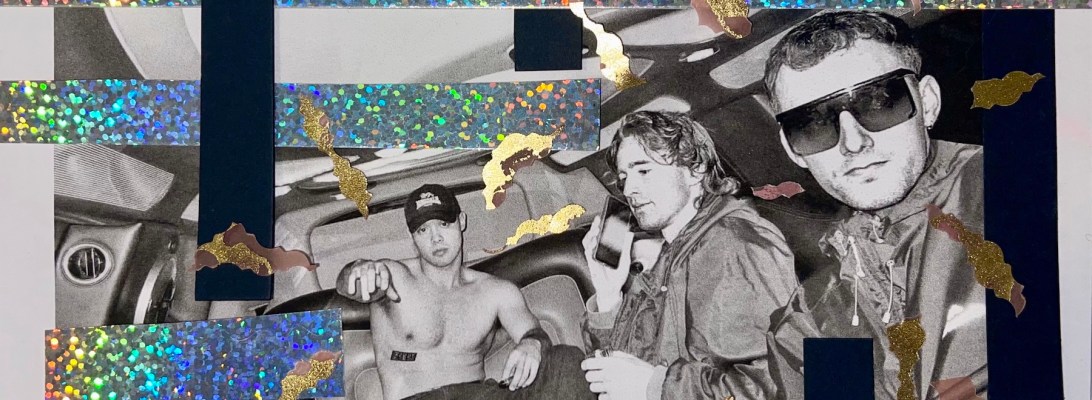
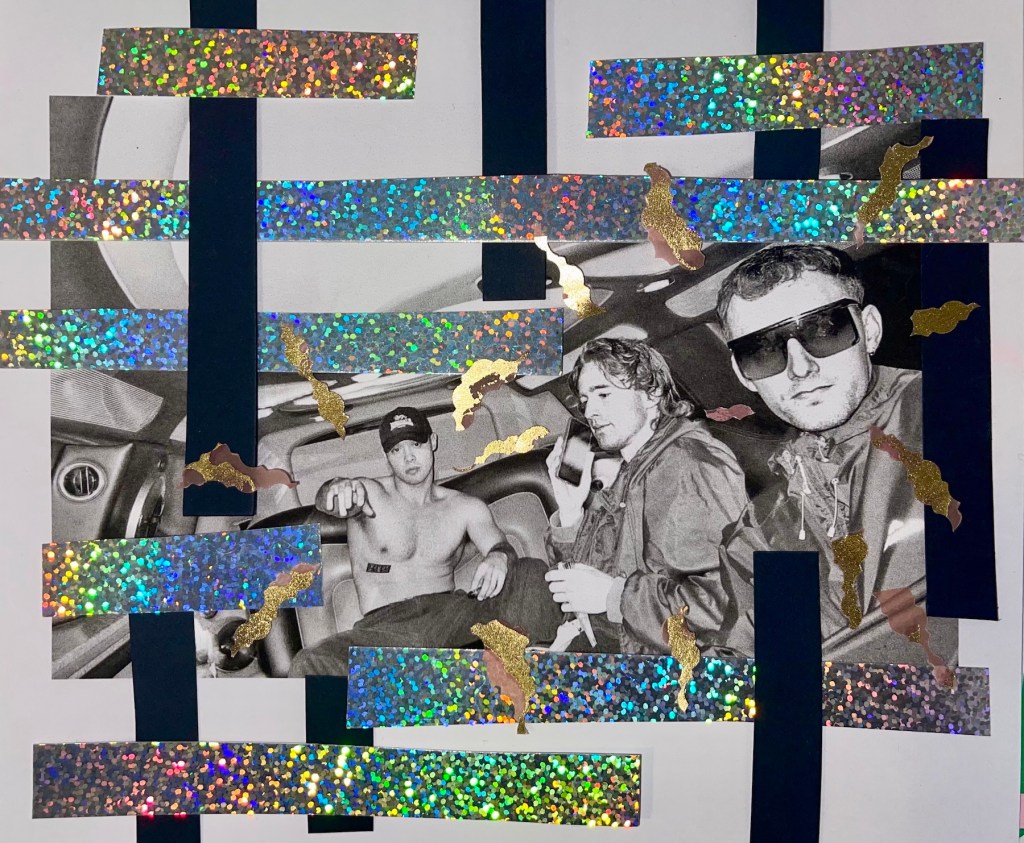

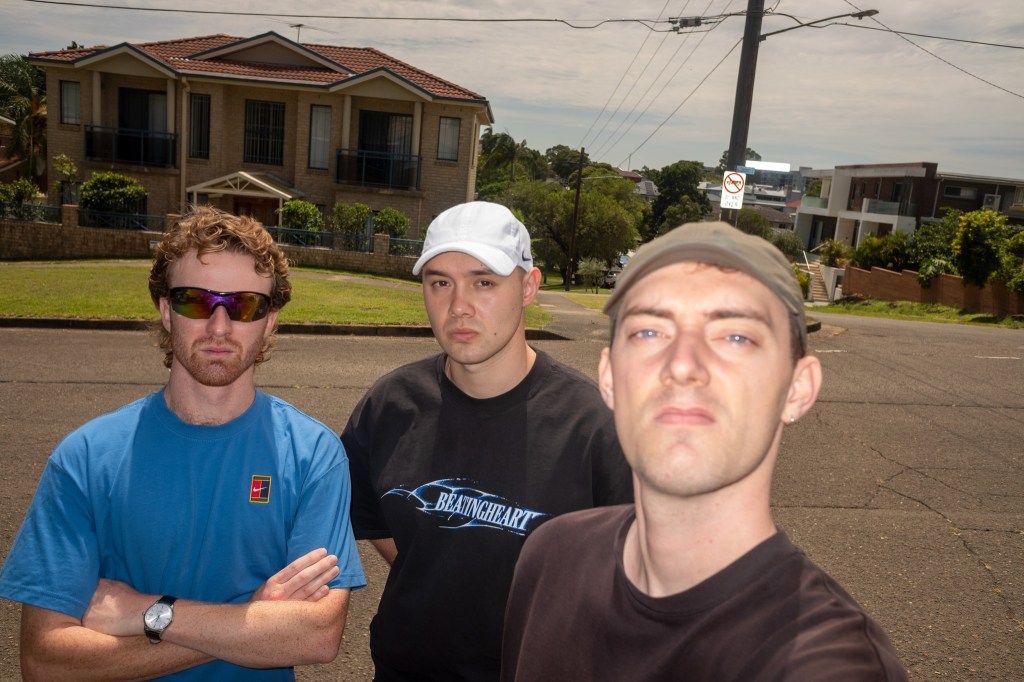
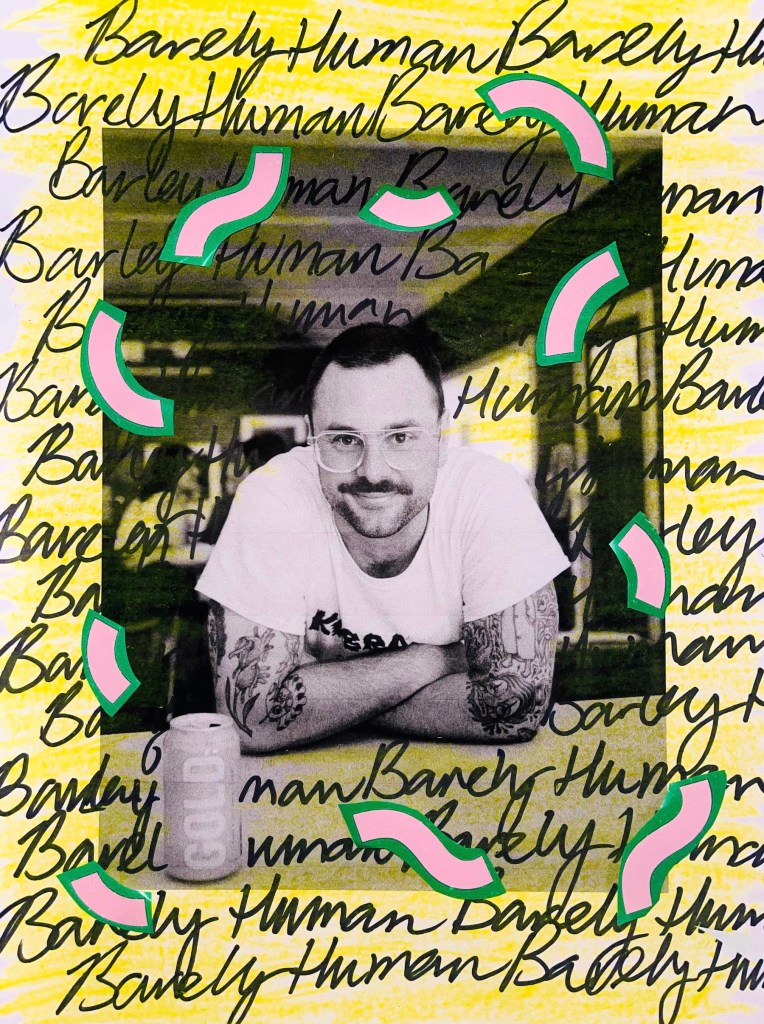
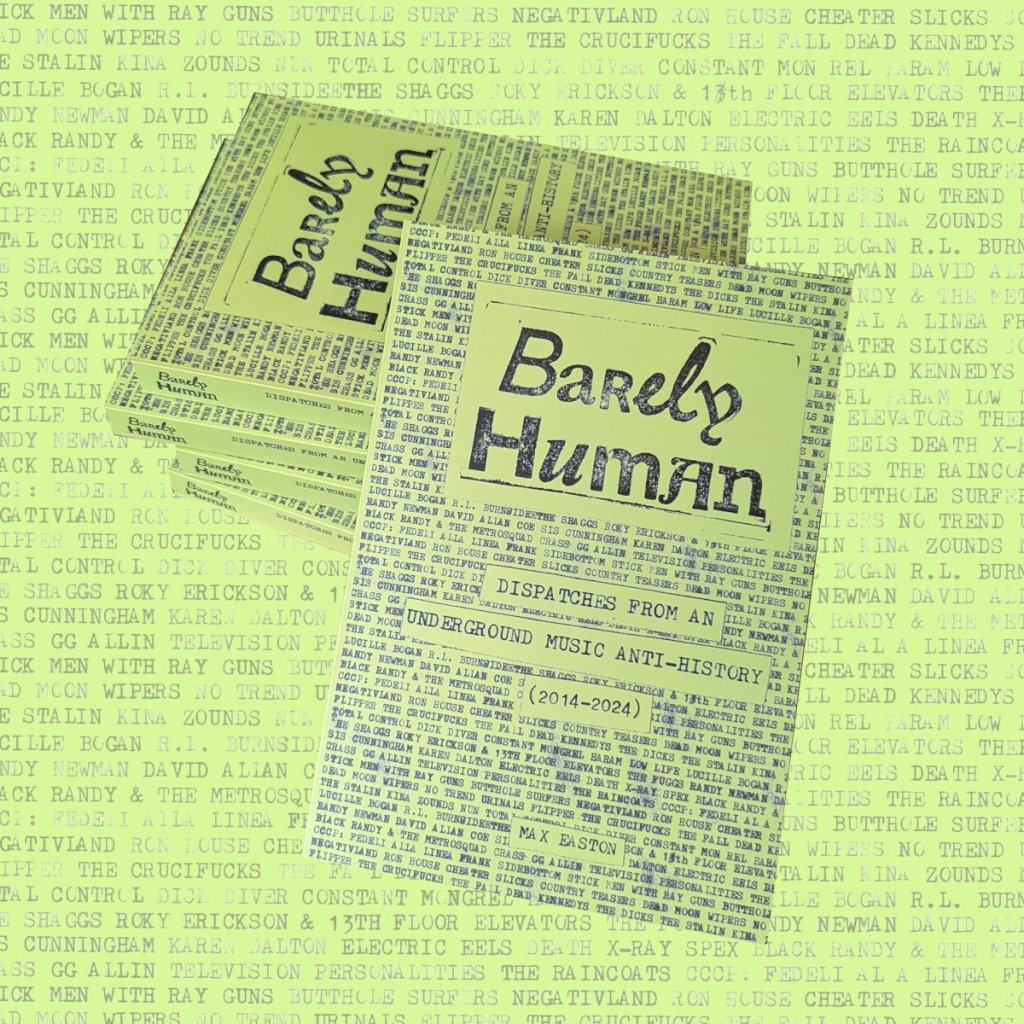

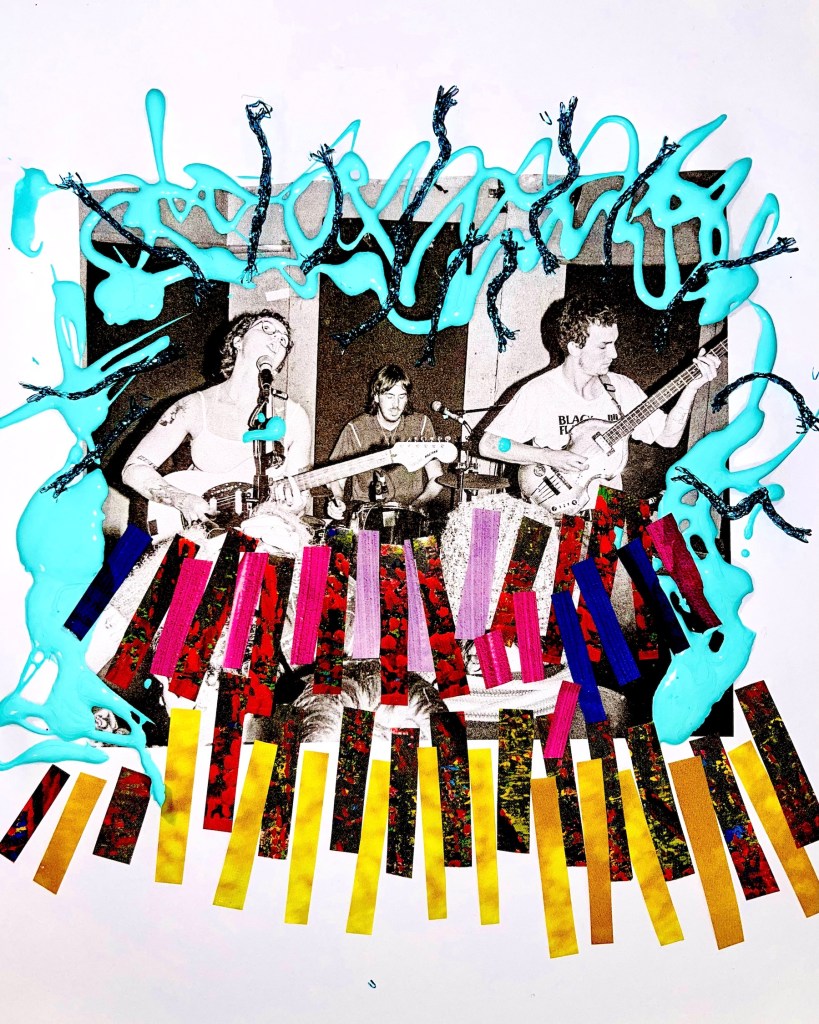

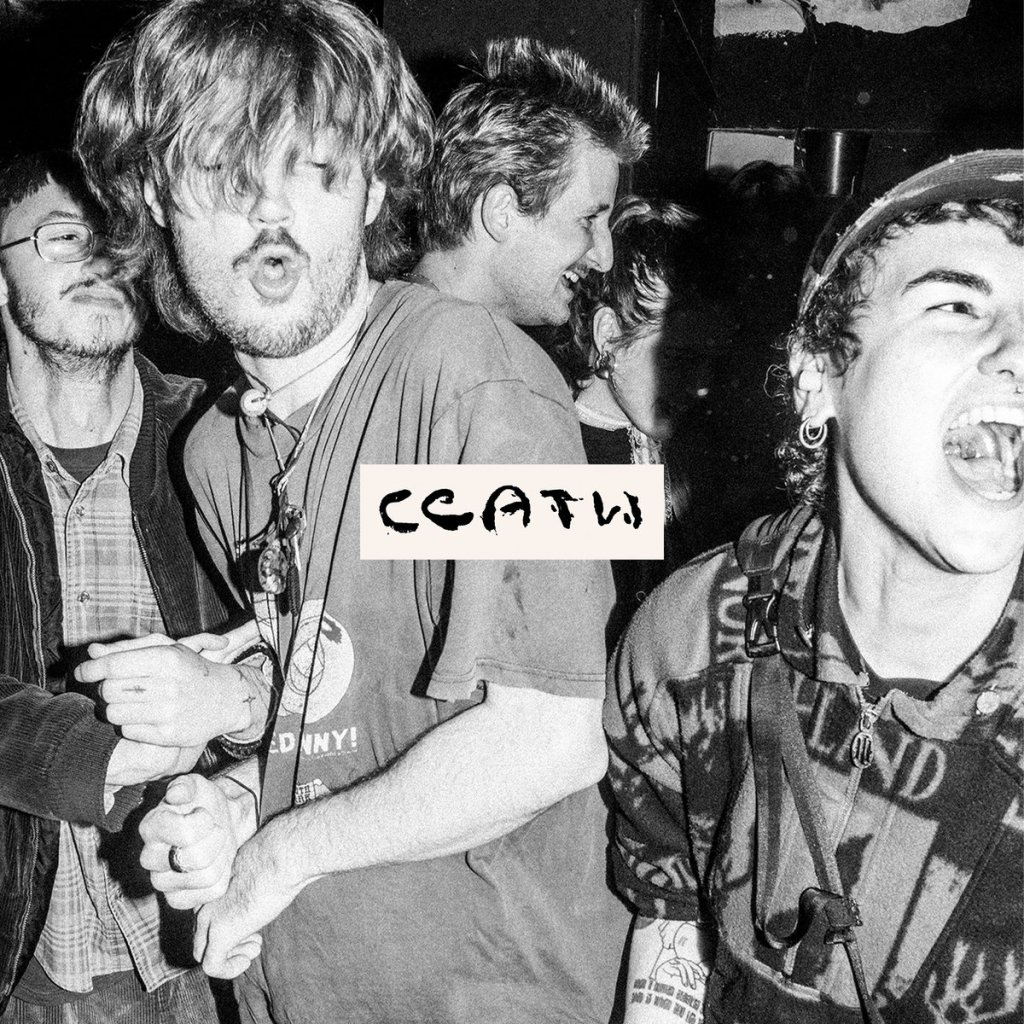
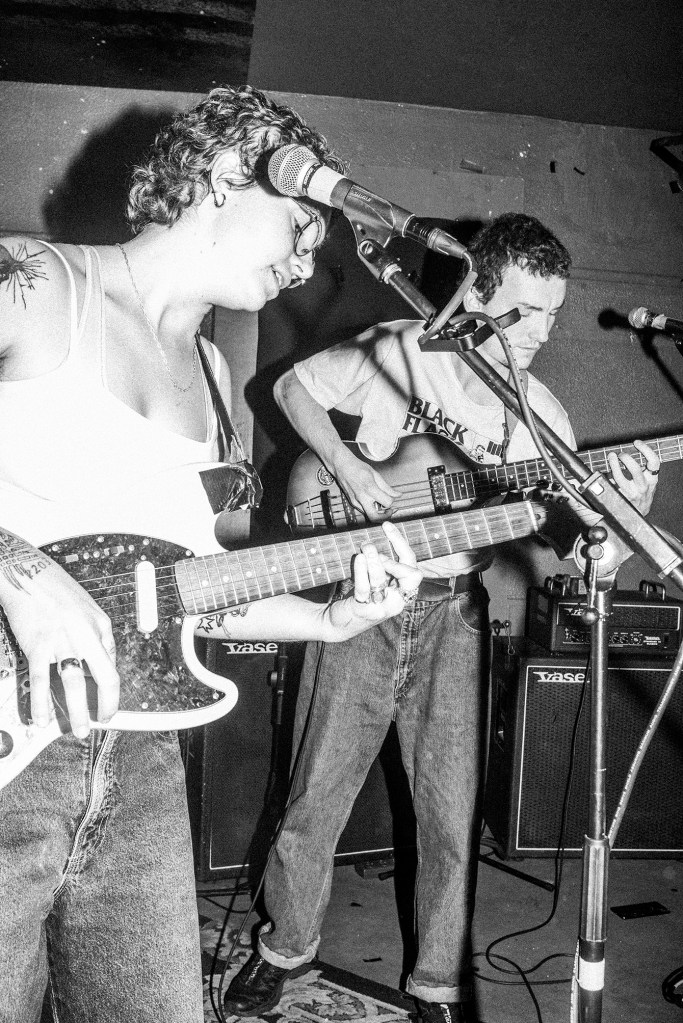
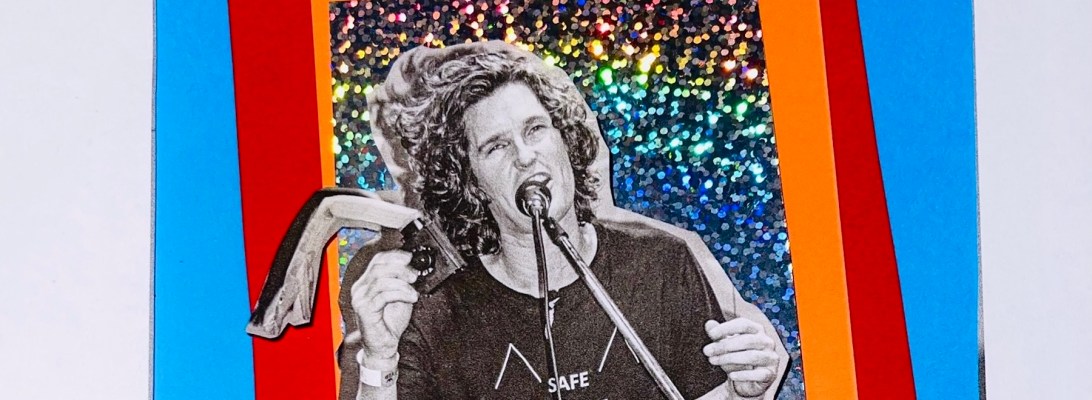
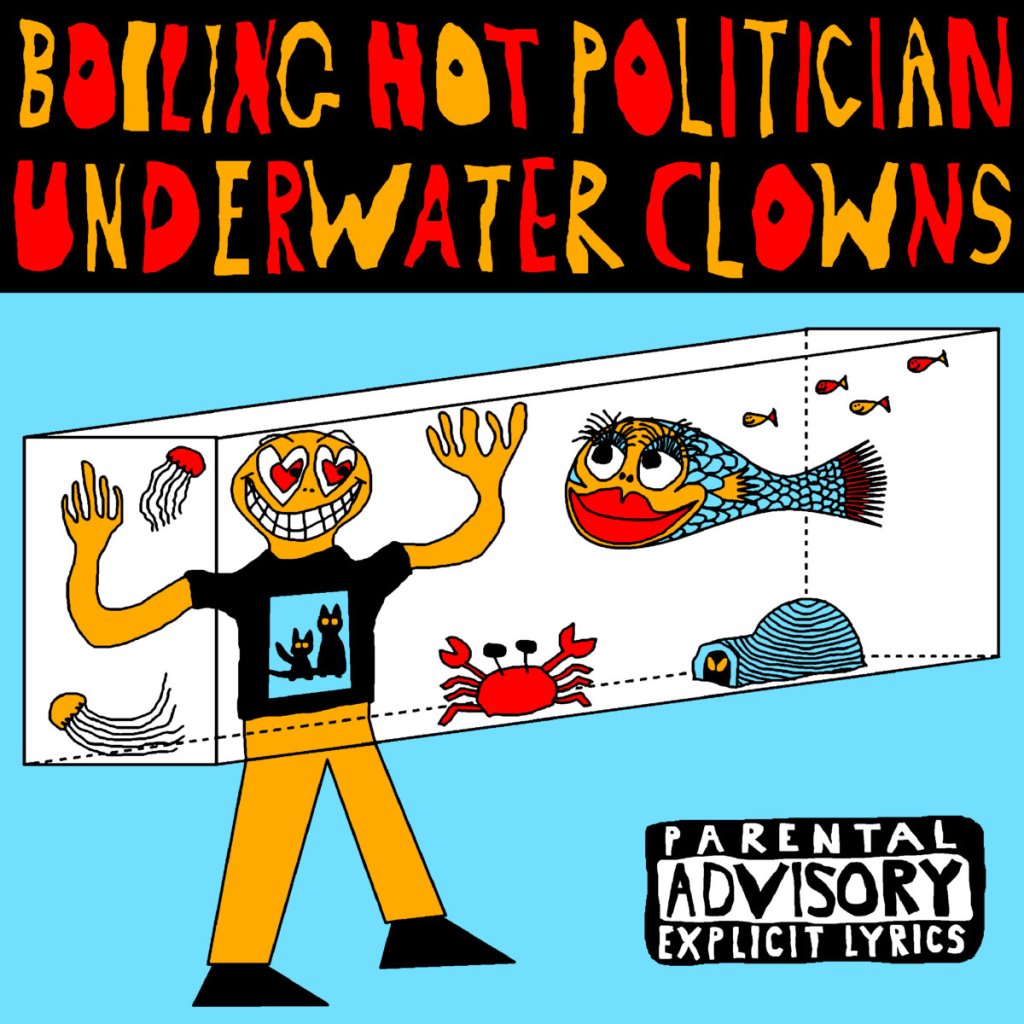
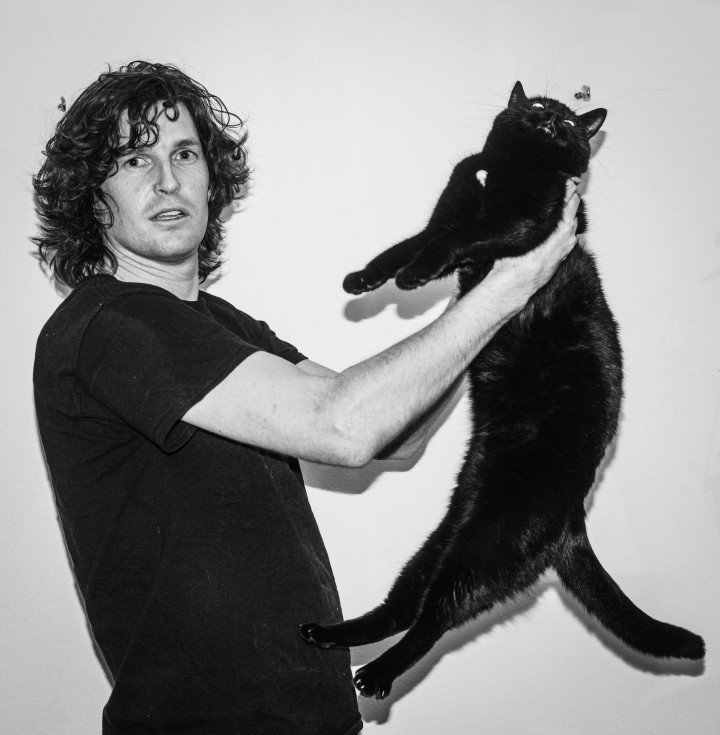

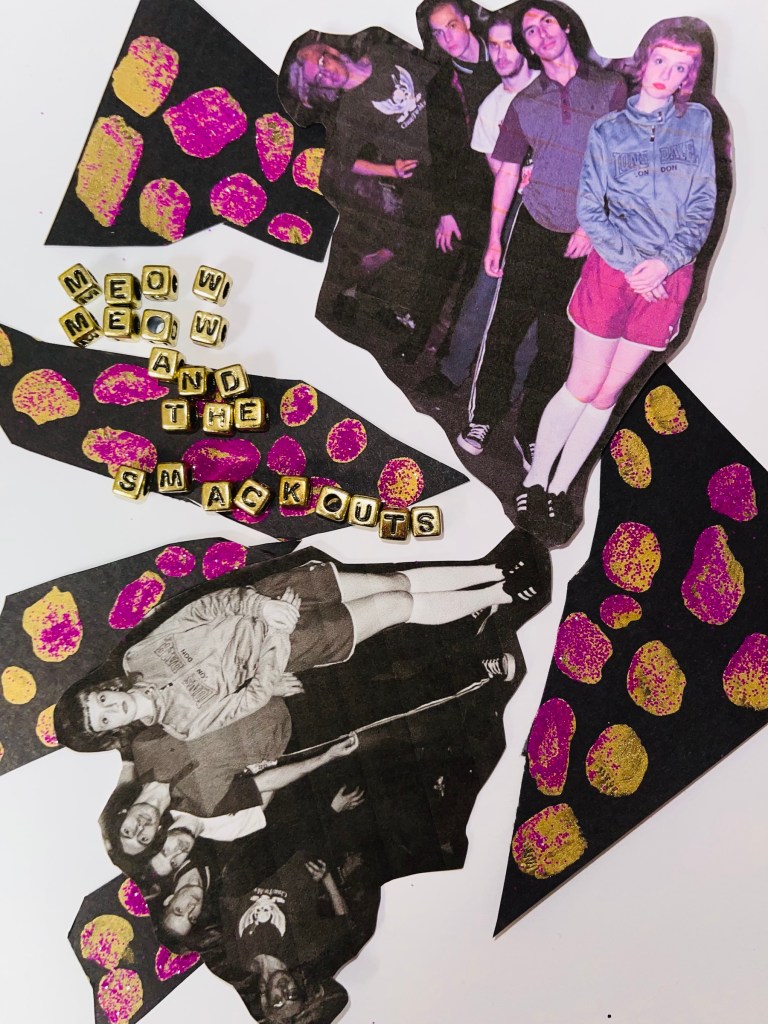

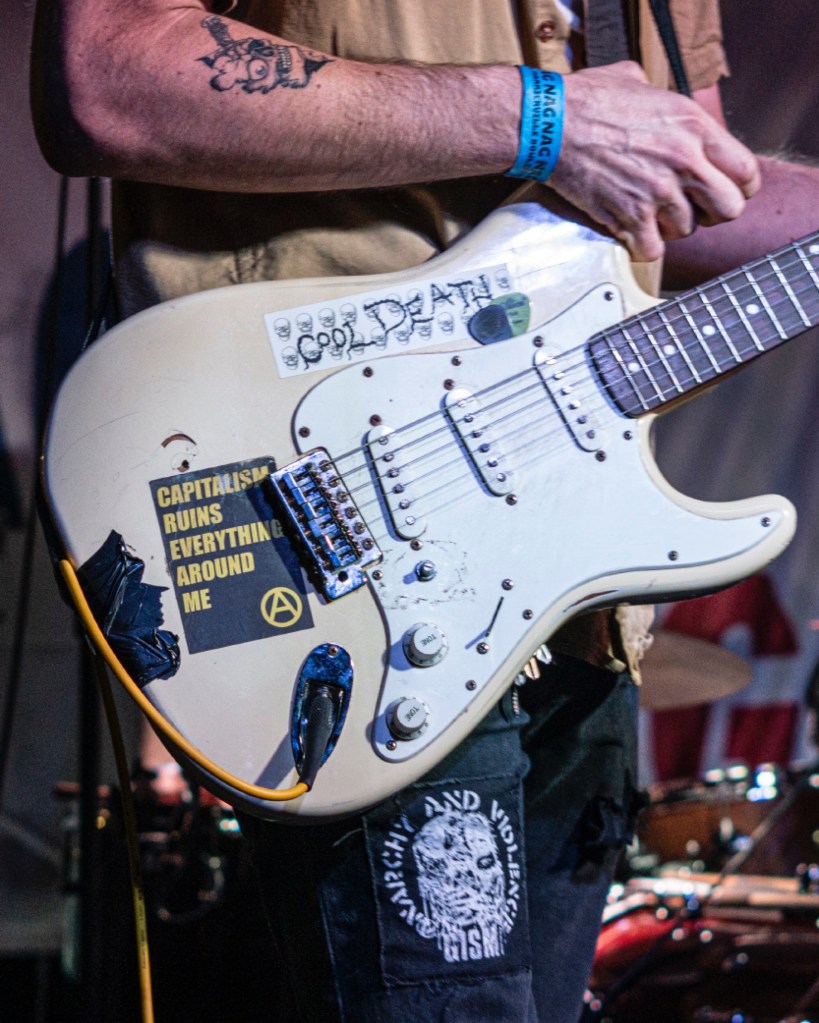
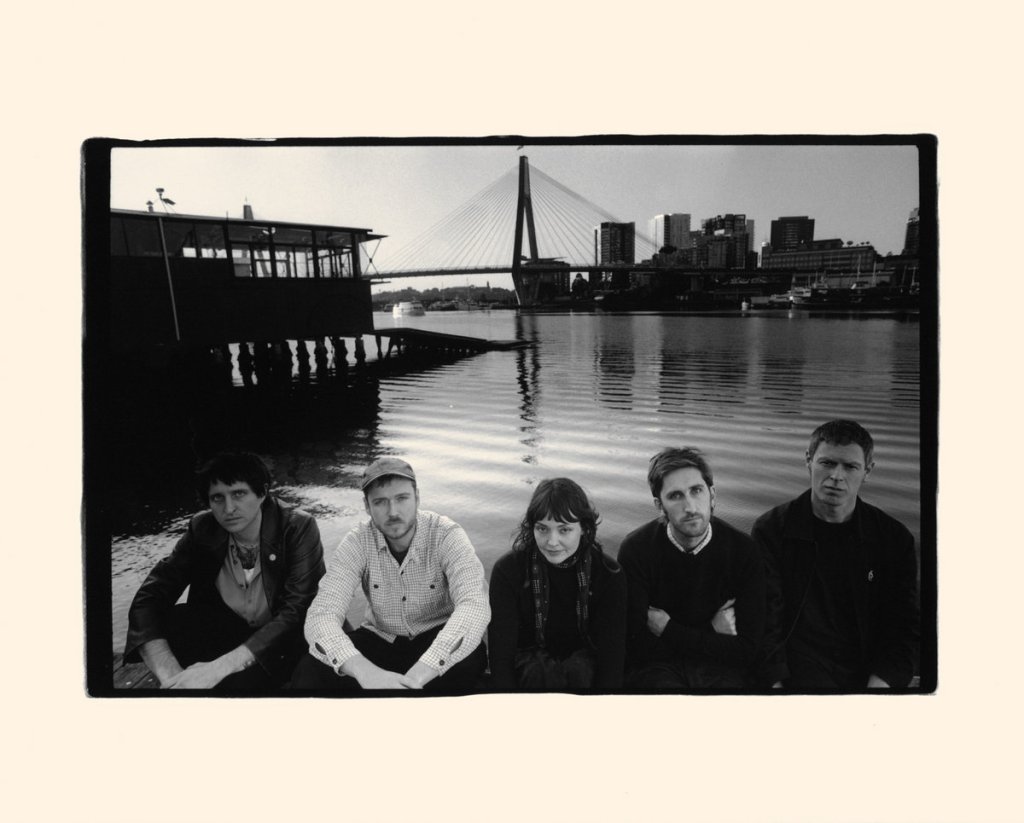
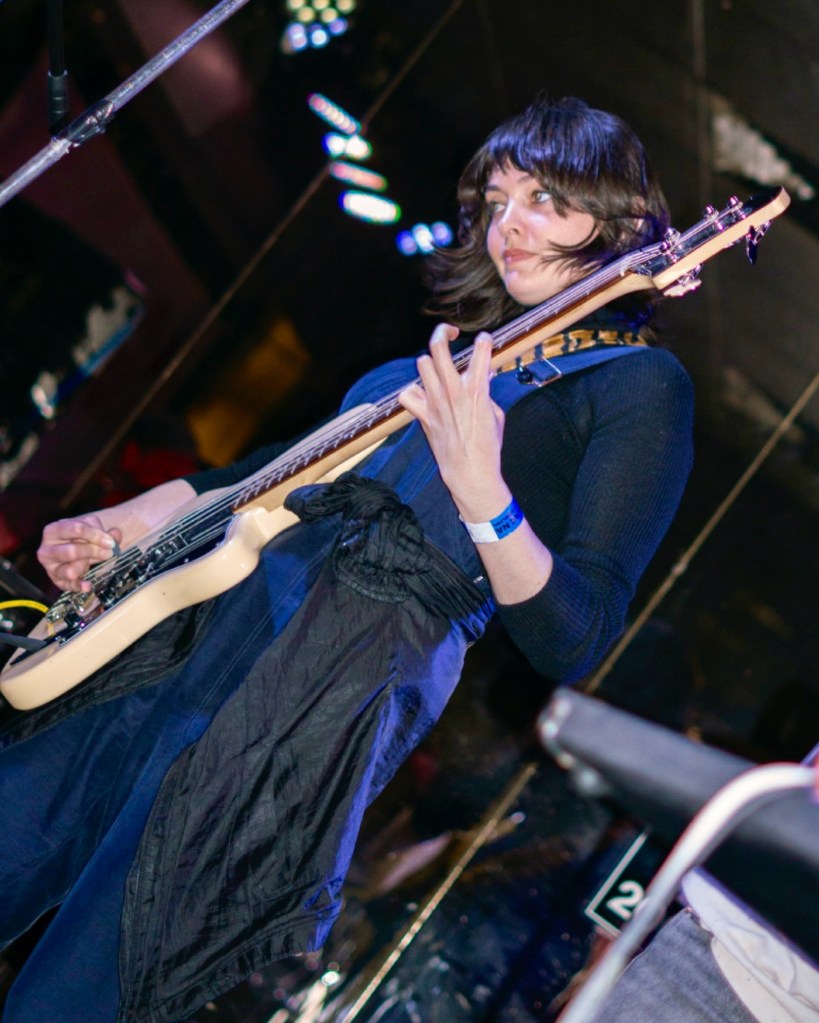
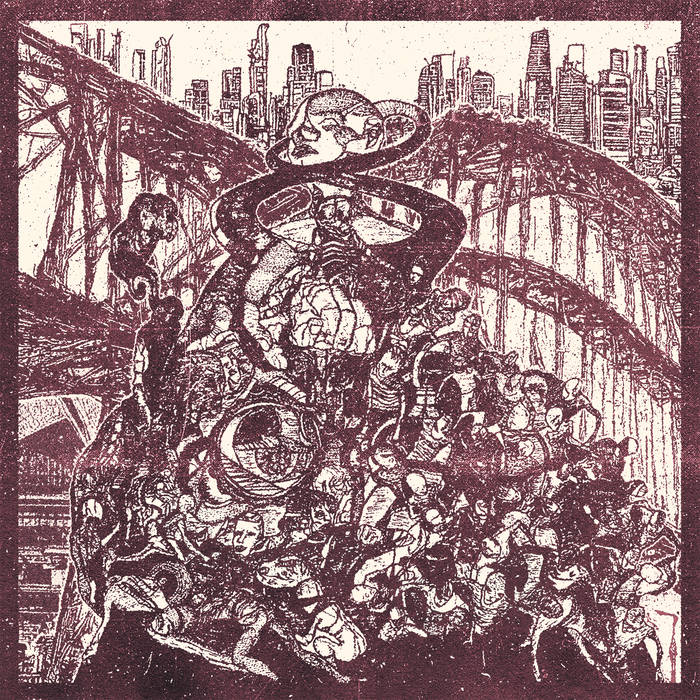
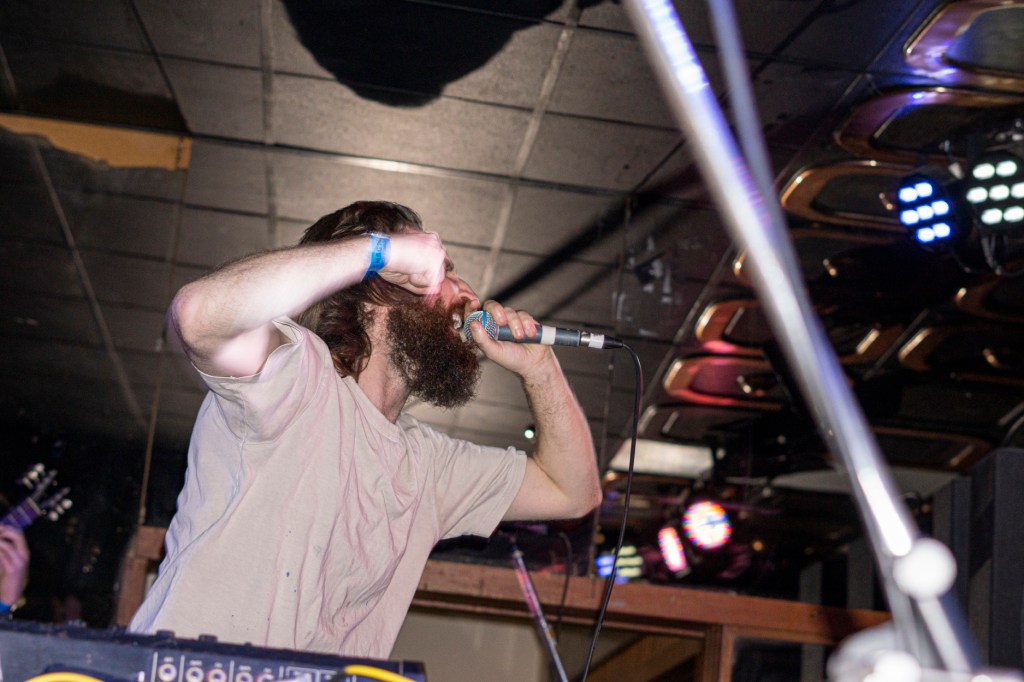
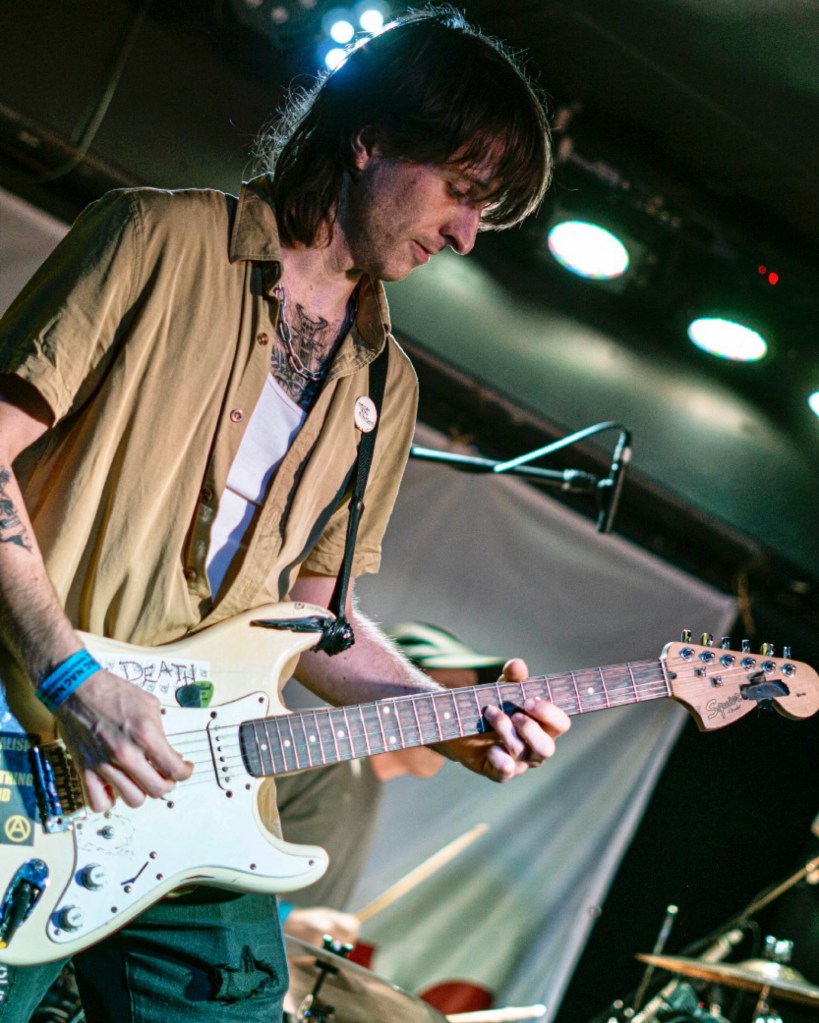

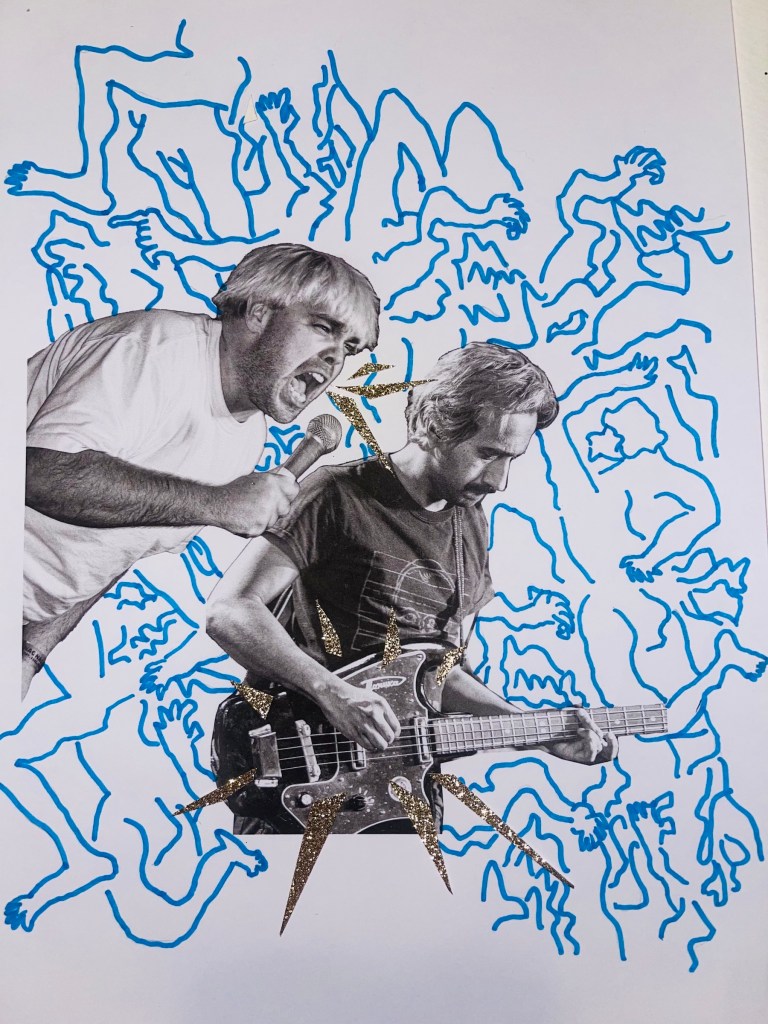
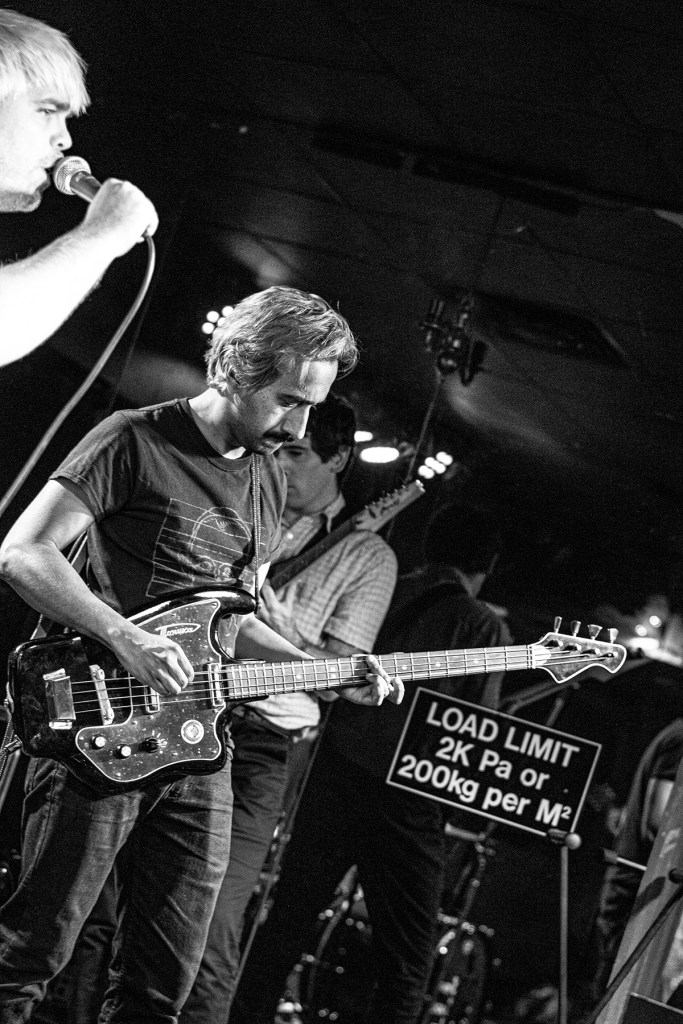
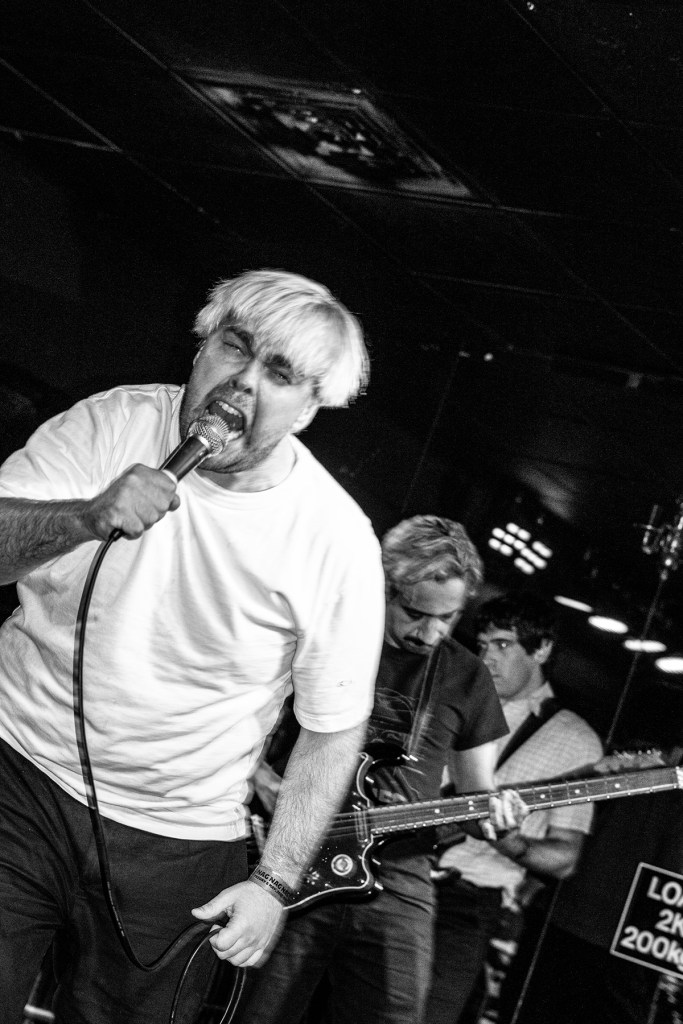
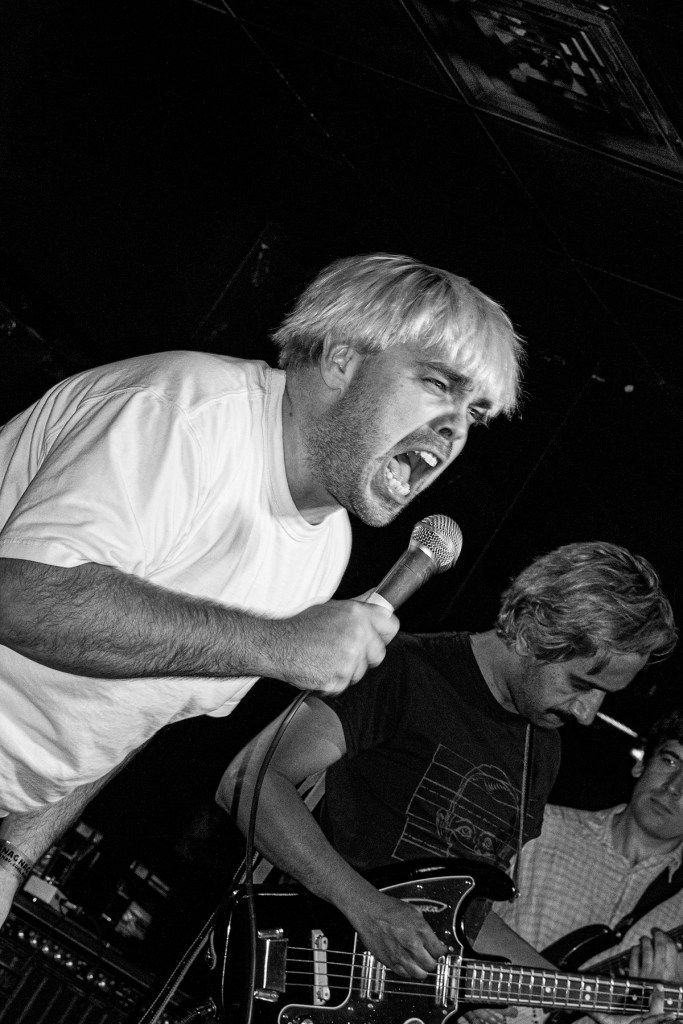
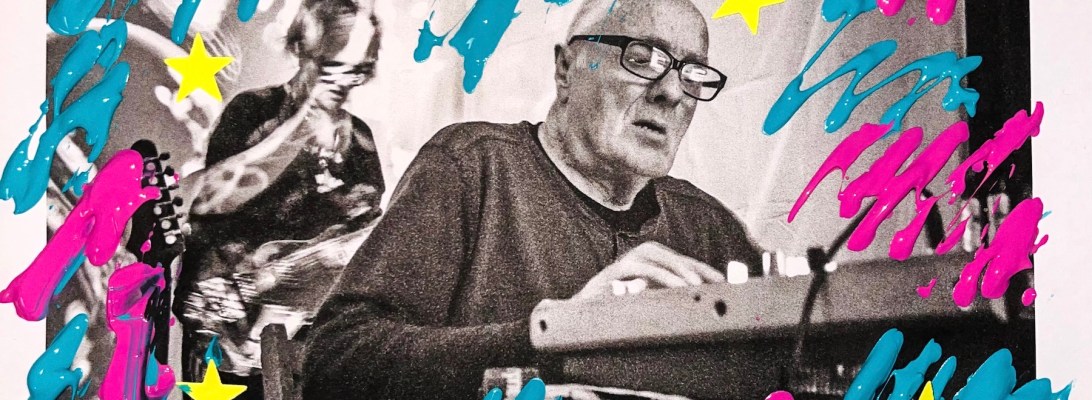


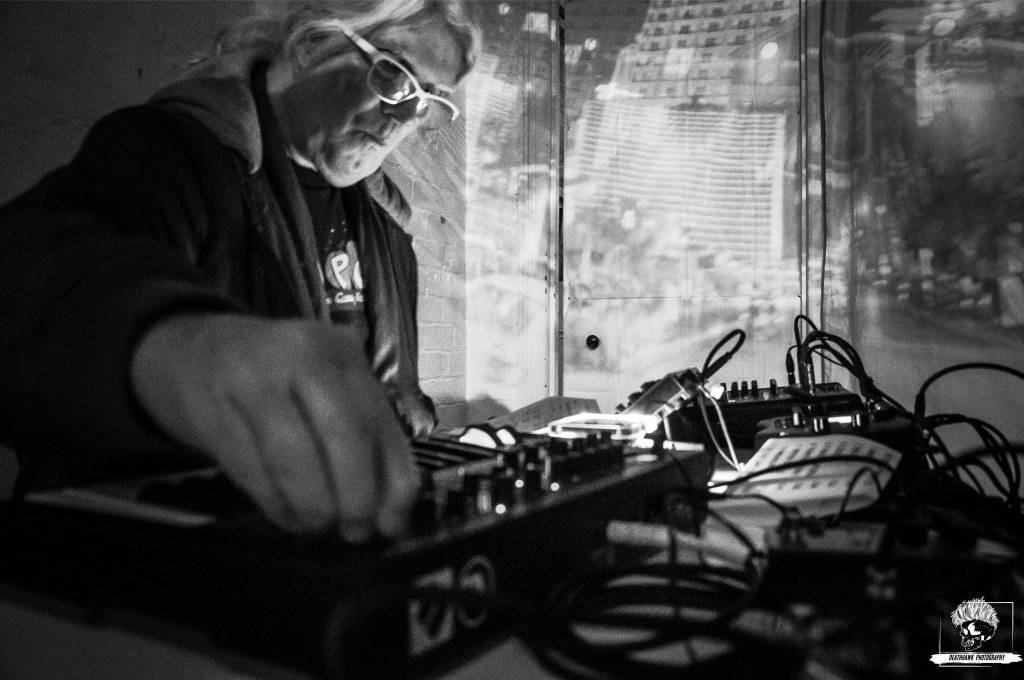
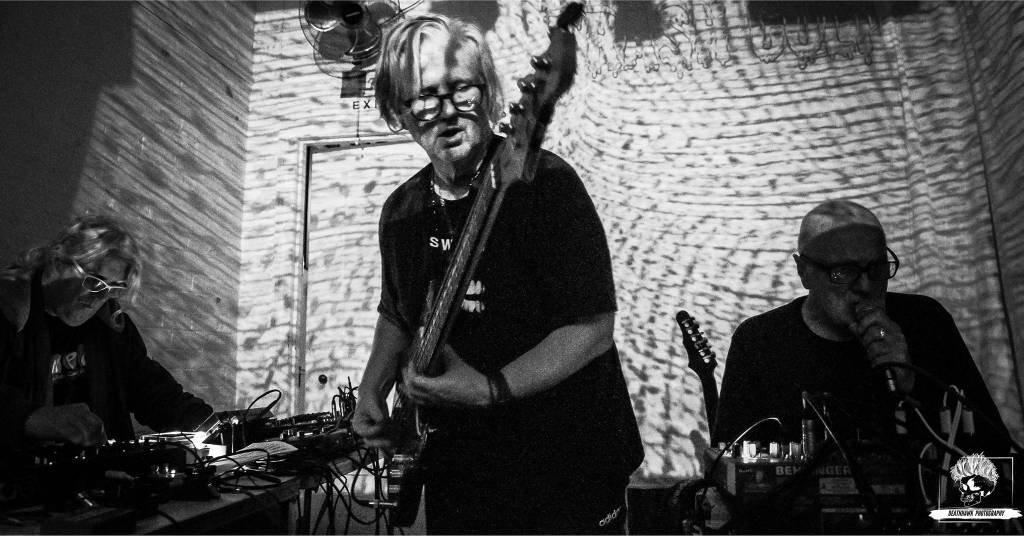
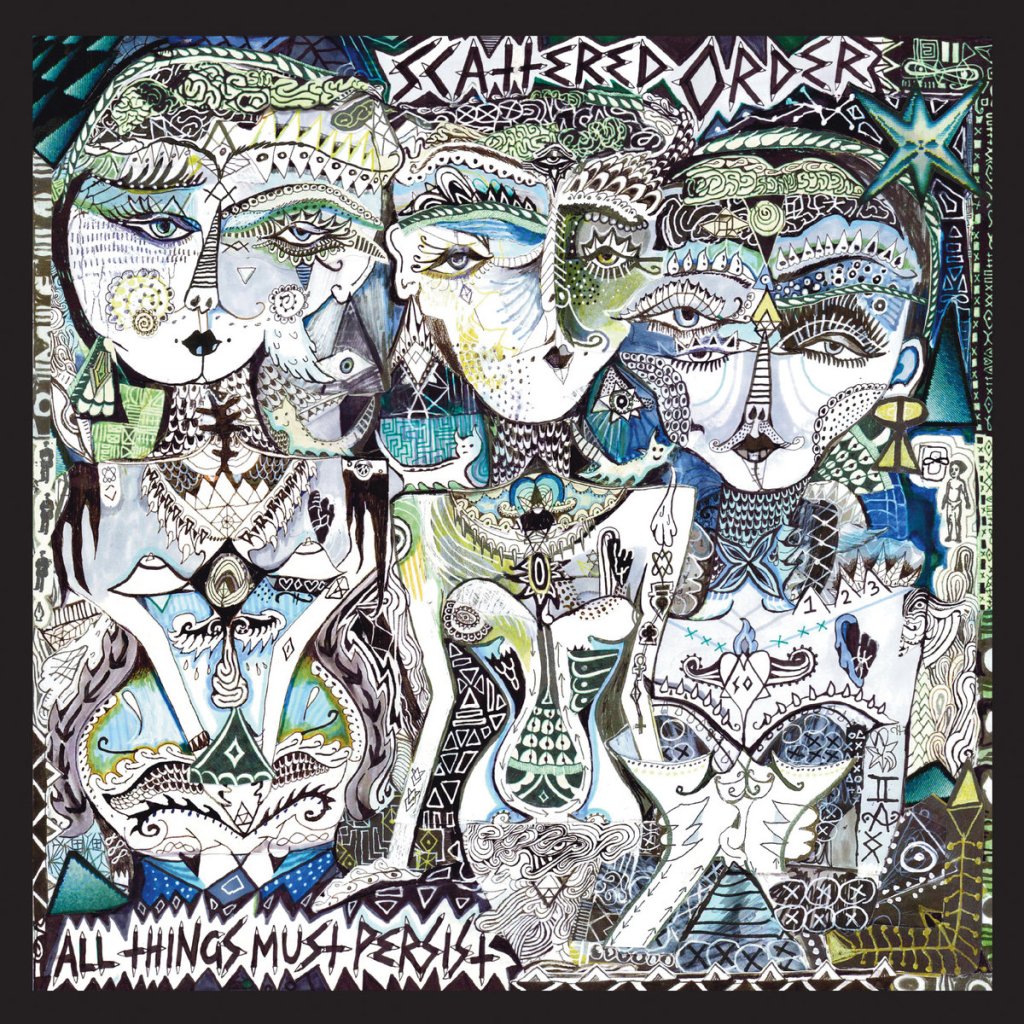
 Gimmie Gimmie Gimmie Zine