Original photo: Jhonny Russell / handmade collage by B
Following the release of their debut LP Judgement Day in November 2023, Melbourne/Naarm five-piece The Judges have kept the momentum rolling with their Guns 7”—a two-track release that captures the band’s sharp rock‘n’roll. Gimmie caught up with frontman Sam Hill to talk about skate vids, cooking, the crazy world we live in, and of new music on the horizon.
Who or what made you fall in love with music?
SAM: Skate video soundtracks, I guess. That’s where I first heard The Stooges and Bowie and the Velvets and all that. And then “punk rock” – probably largely because of the fashion and the incredibly naive attitude, which is quite appealing when you’re young. But even before that I would tape songs off the radio and stuff, so I guess there was always music around!
Photo: Jhonny Russell
Are you working on new songs or ideas that you’re excited about?
SAM: Yeah! Always working on stuff to some degree. Tinkering. With The Judges, with other groups, solo. The second Judges LP has been recorded for a minute now, we just gotta tweak it and polish it up and everything.
Photo: Jhonny Russell
What’s something you care about deeply that might not necessarily show up in your songs?
SAM: Food. I don’t think any of the songs are about food? I like cooking and you gotta eat. Good meals are important. Especially eating them with friends. Celebrate all occasions. Oh and we gotta save our oceans.
Photo: Jhonny Russell
Which song do you like playing live the most and why?
SAM: I like playing them all. They usually all sound great, sometimes they don’t. Sometimes I forget the words and mumble. But it’s not really even about the music. It’s just fun to make noise. It’s a spectacle.
What’s your biggest non-musical obsession right now?
SAM: Aw man, I don’t know. I follow a lot of total psychos on Instagram that are pretty entertaining to keep up with. World War Three is pretty interesting so far. That and the convergence of “artificial intelligence” and religion and all the UFO bullshit. Things are getting weirder every day. Buckle up!
Original photo: Jhonny Russell / handmade collage by B
We first saw Melbourne/Naarm band The Blinds live a few years ago at Nag Nag Nag Fest. Since releasing their self-titled cassette on Alex Macfarlane’s Hobbies Galore in 2017, and 7-inch Endless Fascination in 2022, the band have been building towards their long-awaited debut LP. Gimmie caught up with them ahead of their appearance at JERKFEST this weekend, to talk formative music memories, favourite songs to play live and a few unexpected obsessions.
Who or what made you fall in love with music?
LACH: ‘Getting the band back together’, which was jumping around playing a toy tambo in the loungeroom listening to the Beatles and Stones etc., with my dad after he’d no doubt had a few beers. I was 34.
CAL: Due to my dad being a fan, I loved Cream and idolised Jack Bruce. Other than that, I had a pretty loose grasp on music until Blinds band friend and recorder Alex loaned me 3 CDs every day for the best part of a year and blew my little world right open at the tender age of 16.
RORY: My mum used to buy me the newest So Fresh CDs, and it was then I knew I wanted to play rock and roll.
FUJ: Some definitive memories include listening to solo career Ozzy Osbourne and Dio tapes that belonged to my stepdad and some RATM and TOOL* CDs that Blinds band friend and recorder Alex lent to me in Year 7.
*REDACTED
Original photo: Jhonny Russell / handmade collage by B
Are you working on new songs or ideas that you’re excited about?
LACH: Yes. It’s taken us a long time, but we are like the turtle from The Tortoise and the Hare.
CAL: We’re finally getting ready for the elusive and coveted debut LP, which we’re very excited about!
RORY: I think we’re the most productive we’ve ever been right now, in our own way and by our own definition of productive.
FUJ: Ya! In our 10th year we have started working on a record ;()
Original photo: Jhonny Russell / handmade collage by B
What’s something you care about deeply that might not necessarily show up in your songs?
LACH: Fam & friends and the power of song.
CAL: Dolphins and the number 8.
RORY: A perfectly made tabouli.
FUJ: We are yet to utilise a crumhorn.
Which song do you like playing live the most and why?
LACH: One from our tape ‘Passenger Seat’ because it’s burnt into my skull and good to ease nerves early in a set. Also ‘Hat’.
CAL: ‘Separation Street’ always feels good to play. It’s got a really fun bass line in the chorus that I often use for sound check because it kind of doubles as a nice little warm up.
RORY: I agree with Cal. ‘Separation Street’ has been a long time fave. Especially after introducing the intro on live performances.
FUJ: I like a newer one called ‘Hat’ mostly because it’s called ‘Hat’.
Original photo: Jhonny Russell / handmade collage by B
What’s your biggest non-musical obsession right now?
LACH: This congee I ate in Thailand recently.
CAL: Nasiah Wanganeen-Milera.
RORY: Throwing back oysters at Queen Victoria Market.
FUJ: I’m pretty into the rice cooker that Rory convinced me to purchase.
For Seiji of Guitar Wolf, rock’n’roll isn’t just music—it’s a way of life powered by pure “jet” energy. Since the late ’80s the iconic Japanese band has blasted audiences with their raw sound and wild mythology of motorcycles, leather jackets, wolves and cosmic-inspired rock’n’roll. We caught up with Seiji to talk haunted houses, night skies, beer, and movies.
You were born in Nagasaki. Do you have any memories of growing up there?
SEIJI: Memories? I started the engine of my memory, but my gas tank was filled up in Shimane. Nagasaki is where I was born, but it was the winds of Shimane that forged my soul. That’s where my jet-setting life began.
Previously, you’ve mentioned that if you weren’t a musician, you wanted to be a “haunted house builder”. Why are you drawn to haunted houses?
S: They’re full of surprises that make people say, “Wow!” They’re the best! The thrill of surprising people is the same as rock’n’roll. The basis of entertainment is getting your heart pumping.
Photo: Jhonny Russell
Why is music important to you?
S: Everyone’s trying to achieve the best life possible, right? Everyone wants to present themselves in the coolest light. For me, rock’n’roll is the path that makes me shine the brightest; the path that makes me look the coolest. That’s all there is to it!
When did you decide that rock’n’roll would be your life?
S: It wasn’t a matter of logic, it was the moment my soul screamed, “This is it!” When I found the place where I felt the coolest, my path was set.
How has music supported you through difficult times?
S: Difficulties? Not in my life! There are many people in the world who have it much tougher. My worries are a blessing. I’m sorry, but the word “difficult” is too good for me.
Photo: Jhonny Russell
What have you learned about yourself through years of touring?
S: I can drink a lot of beer! Hahaha! And also… I love cute girls, after all. Isn’t that a universal truth?
Guitar Wolf has a unique world and imagination; where did this creative spirit start for you?
S: It’s the night sky. I love looking up at it and letting all kinds of images flow. Also, the thrill of riding a motorcycle, and the bittersweet memories of my youth. All of those things fuel my imagination.
What themes or emotions were most important while writing your new album More Jet!?
S: Humans are going to die soon anyway. So I just use music that I think is cool and add my own lyrics. There is no fear whatsoever. That is the jet energy of this time.
How do you feel you’ve grown as a songwriter over the years?
S: I think I have acquired the best guitar techniques. Even if I cover a famous song, I’m so bad I can’t hear the song. This is my “ultimate original”!
Photo: Jhonny Russell
We enjoyed Wild Zero. What films do you like most?
S: Back to the Future, Burn Dragon, Grease!—all of them are the best!
Is there anything that people would be surprised about about you?
S: I have wolves in my ancestry! Everyone in Australia, look up at the night sky and wait. Jet! rock’n’roll!
Check out the new album More Jet! Out now via Sorcerer Records (AUS) & Goner (US).
Ben Corbett, the frontman of Meanjin/Brisbane band Gentle Ben and His Shimmering Hands, knows a thing or two about following your passion, loss, mental health, and persevering. In our candid chat, he offers an intimate glimpse into the highs and lows of a career spanning over 30 years.
He shares with Gimmie the journey behind Shimmering Hands’ long-awaited album BRUT, their first release in a decade. A triumphant return, the album blends sass, wit, and satire as it weaves through themes of fractured hearts, minds, and bodies within a capitalist nightmare, offers critical commentary on colonialism, rock ‘n’ roll eulogies, and shines a spotlight on male violence, control, and toxic dynamics in relationships, particularly towards women. Yet, BRUT hasn’t received the attention it deserves. It was one of our top album of 2024 to come out of Meanjin. Tragically, a week after its release, Corbett and his friends experienced the heartbreaking loss of close friend, bandmate in Six Ft Hick, and local punk icon Fred Noonan, which we discuss.
The frontman also reflects on the importance of supporting younger musicians, the raw physicality of his performances, and what kept him away from making music for so long. With authenticity and vulnerability, Ben offers a heartfelt look at both Gentle Ben and His Shimmering Hands—and at himself.
I’m excited to be talking with you again! I’m sure you don’t remember but I first interviewed you for my first punk zine back in the 90s before a Six Ft Hick show at Crash n Burn.
BEN CORBETT: I bet I said some really intelligent shit back then.
[Laughter]
I have no memory of that whatsoever. I’m sorry. And it’s probably for the best because I would have had some real hot takes in the 90s! It’s nice we finally get to connect again.
Totally. How have you been?
BC: Ooh, jeez, fine. The world is pretty horrible at the moment. It’s been a strange year. There’s been a couple of deaths of people close to me, which has made me value life a bit more. Which is good, I suppose.
And then there’s obviously the horror of what’s happening in Palestine that’s weighing on me every single day.
Apart from that, life is good. I’m blessed. I’m very fortunate. I’ve got a beautiful family, and a house to live in— all that good stuff. I get to sometimes go and make music, which is great, because there were a few years where that didn’t really happen very much. And now it’s finally happening again. I feel really privileged to be in a position to not only be able to make music, but when we release that music, people actually want to buy the records, listen to the records, and come to the shows.
Getting to do interviews like this. It’s all a bit of a balm for my soul. After however many years—30, whatever years of playing music—I can still rustle up some interest. It’s really lovely. Thank you.
Well, it’s lovey that you’re still making great art. Thank YOU for that. I’ve been following all the stuff that you’ve done for that long, and I gotta say that your latest record is one of the best things you’ve done yet.
BC: I think so. That’s lovely to hear. This is a record that’s the sound of a bunch of people learning to get out of their own way. We’ve, in the past, really struggled to get things down. It was always dealing with each other’s egos, dealing with our own egos, and just not really being able to listen to each other’s ideas.
What has changed, in recent years, is that we’re all on the same page creatively. And a lot of that has to do with just setting aside—not differences, but just setting aside our preconceived notions of what we want to achieve—and actually weighing up ideas on their own merit. Which has been a really cool change to the creative process.
Even though it’s my name—or my stage name—at the front of the band, it’s really a group effort in everything we do.
I know Dan Baebler (bassist), has been part of your life for a really long time. You guys went to high school together?
BC: Yeah, we’ve been really close friends since we were like 14. We used to go skateboarding together and hang out all the time. He’s been a constant. We tried to form bands when we were about 17. That didn’t really happen. And then Six Ft Hick coalesced into some sort of being when we were 18. We’ve obviously done Six Ft Hick for a long time. But then Dan jumped in on this new project, and it’s kept on rolling with him, which has been great.
Because he’s an incredible creative spark. He has this wonderful sort of cynicism that drives a lot of what he does, which is really important to have. What we create is as much about what we’re not into as it is about what we are into. A lot of that influence, those negative influences, like, all we don’t want to sound like, or we don’t want to roll out that cliché. So it’s really cool to have someone like that to bounce ideas off. He’s creative in all kinds of ways. He’s a musician. He’s an incredible videographer. He made the main film clip for the album song, ‘Spices’.
He travels around Australia, filming in Indigenous communities and doing all this great work. I hadn’t really seen a lot of his work or how he does his work. Then we turned up to film this clip at this crazy reservoir that looks like a part of an ancient ziggurat, with these giant concrete steps. He pulls out a drone and starts flying it. I was like, ‘How did you learn to fly and film with a drone?’ He’s like, ‘Well, this is what I do for a job.’ I’m like, ‘This is insane!’
It’s cool to see your friends do all these interesting things because I have a very limited skill set. I have a very particular set of skills, and they’re not very useful. I’m kind of like a really crappy Liam Neeson [laughs].
Of course, Tony is not just a great guitar player, but an incredible graphic designer. He has an Instagram page and a website called Guitar Nerd. He really is just a wealth of knowledge about guitars. He’s so enthusiastic about guitars, about music, and about the history of things. That energy is just incredible to be around.
Jhindu is a monster behind the drums, but then just the loveliest, most incredibly calm and level person to be around. He brings his own beautiful energy to the band.
Nothing would work the way it does without what everyone brings, which is a nice thing to recognise and acknowledge. Part of recognising and acknowledging is learning how best to work with all of those elements.
That’s part of what you’re hearing. Those elements of our personalities are given, not free rein, but the right amount of freedom. Because we’re pretty good at dumping each other down when it’s necessary. That includes me being stomped down because that’s necessary sometimes as well.
Well, that’s definitely working, the album is really fucking cool! You grew up on a chicken farm in Woombye about an hour and a half from Brisbane?
BC: It wasn’t a working farm for very long after I was born, so I have really vague memories of there being chickens. We kept the farm in the family, and it’s still there. I go up there pretty regularly to hang out with Mum and do a bit of work.
Lately, we’ve been collecting tons and tons of scrap metal from around the farm. When my dad was alive, he wouldn’t let you throw anything away, literally. There were sheds and sheds full of scrap metal, rough pieces of stuff, old plows, and machinery. I’ve been doing a lot of that with my brother Geoff as well.
At the time, I didn’t really appreciate how good I had it. I wanted excitement and thought I’d be better off as a city kid. I thought that was where it was at. Now, I don’t think city kids have it any better than country kids—except maybe they have slightly lower death and injury rates!
I still go up there pretty regularly, and it’s beautiful. The highway is encroaching on it fairly rapidly, unfortunately, but one side of the farm is still great.
Around the time you grew up there, I think the town had only a few hundred people?
BC: Woombye was a pretty small town, and we weren’t actually in the town—we were about 5 km south of it, a little bit isolated in that sense. It wasn’t like we were out in the sticks or on a cattle property in Longreach. It only took us about 10 minutes to drive to school, so it wasn’t a big deal.
But for me, as a young person, I wanted to be elsewhere because the highway ran past. I couldn’t wait to get out and move to Brisbane. That was my big goal: to move to Brisbane and make music or do whatever it was I wanted to do. That was freedom. When I became old enough, my brother Geoff, who’s seven years older than me, was living in Brisbane. I would catch the train down, go see bands, and sneak into pubs. No one would check IDs in those days, and I looked older. I had this stupid goatee that was awful, but it got me into pubs and stuff. I’d go watch bands, and that was quite formative.
As soon as I could, I moved down to Brisbane with Jeff and started trying to make music with Dan. We had a few abortive attempts at starting bands, and then Six Ft Hick kind of happened.
I understand that your mum used to make you do eisteddfods and things. Was that was your first introduction performing?
BC: Yeah, she got me onto the stage. She was a speech and drama teacher. A schoolteacher originally, and then after she got married, apparently, you couldn’t be a married schoolteacher in Australia in the 60s. Pretty insane, right?
So, she started doing private elocution lessons, which is pretty funny. I can speak cultivated Australian English when I want to, and my mum, well, everyone says she speaks like the Queen [laughs].
She got me doing eisteddfod things—poetry readings, mime, all that kind of stuff. I did it when I was quite young, but then I lost interest as I got into high school.
Did you enjoy performing?
BC: I did enjoy parts of it, but the nerves would get to me. I really liked being praised and being told that I’d done a good job. If I won a medal or something, I was really stoked. But if I didn’t, I’d be devastated, you know?
I guess I’m still really easily discouraged now. Well, I can’t be that easily discouraged because I’m still doing bloody stupid bands—and I’m nearly 50! I’m thin-skinned but also bloody-minded.
How did you first discover music?
BC: Through my brother’s influence, I started getting into music during my teenage years. He was at that age where he was really exploring different sounds. He’d play me records by The Cure or Dead Kennedys. There was a limited amount of alternative music available on the Sunshine Coast back then unless you had a way to access it, so I’d just listen to whatever he brought home.
When he moved to uni and went to art school, he started bringing home more records that influenced him, including country music. That’s where my love for outlaw country—Johnny Cash, Hank Williams, and the like—began. It was an uneasy appreciation at first but grew into a genuine love, alongside punk rock like Black Flag.
In high school, I got into skateboarding, which introduced me to a mix of punk rock and metal through friends. Some of it was great; some of it, not so much. I made a few questionable choices in music, but some stuck with me over the years.
I started hanging out with musicians, like Dan and a few other friends, trying to form bands that never quite got off the ground. I always felt like I should have learned an instrument, but I was lazy, so I just sang. That eventually morphed into what I do now.
Did you look up to Geoff?
BC: Absolutely. He was totally my hero. I really wanted to be in a band too. I got up on stage with him for a couple of things he did in one of his bands. Then, we did the play. He was very kind to me, because he was really encouraging of everything I did. He probably didn’t have to include me in any of that stuff, but he did. And I think that’s what set me on this path. So, we did Six Ft Hick for a few years, and then I wanted to try something different. That’s when I formed Sensitive Side, and that kind of had its own life, which was really cool.
What did the earlier attempts at bands with Dan sound like?
BC: Terrible. Like, really, really fucking bad. It was some sort of—I don’t even know what to call it—some kind of ’90s math rock bullshit. Just terrible. Really naïve, but not in a good way. I live in fear that someone’s going to unearth a tape of it one day. Early Hick is bad enough, but there’s some truly awful shit from back then. Sorry.
So, your brother was already living in Brisbane, and then you moved down there. When you first arrived, you were studying for a while—what were you studying?
BC: I studied Humanities because I had no idea what I wanted to do. I just thought, ‘Oh, I guess I’ll do that.’ I really didn’t know what I was in for and was quite a poor student. I ended up getting a job at the uni as a research assistant, but I dropped out at the same time. So I was working at the same uni where I was failing.
After that, I started working in hospitality, as a lot of people do in their first job after leaving home. I washed dishes for a long time, made coffee, and waited tables for years. That kept me going through the early years of Six Ft Hick when we were touring a lot. It was really handy because I could take time off whenever I needed.
We would go on tour down to Melbourne, Sydney, or wherever, usually by road, every few weeks for a while. It was ridiculous. We’d drive straight for 20 or 22 hours, play three shows, and drive home again. We did that for years because we thought that’s what we were supposed to do. It made us very tight as a band and road-hardened.
Six Ft Hick was always about the live show. We never really captured what we did on record, and that’s fine. It was always more about the moments we shared with an audience.
Didn’t Six Ft Hick start from a play that you wrote as a teen?
BC: The play was called Country Style Livers, and it was a play on words referencing the magazine Country Style Living, which was a fancy homes and gardens thing. But it was born out of this idea that I wanted to write a play about the clichés of country music, country music tropes.
The main character is a wheelchair-bound ex-truck driver addicted to heroin. His younger sister is a sex worker who’s being pimped out, in this town that’s devastated because the main character had a truck crash that wiped out a school bus with all the town’s children on it. It’s this ridiculous, over-the-top idea of the country music tragedy.
It was meant to be funny, but it also had some intense elements. It was a silly idea that I wrote when I was 18 or 19. But a lot of the ideas in it were really quite strong.
We had a house band in that play, and that house band was what became Six Ft Hick. Craig was on drums, Karim (who we’ve lost contact with) was on guitar, and Dan played bass in those days. Geoff and I kind of sang these songs, we were almost like narrators in between the scenes of the play.
We put it on at Metro Arts in the city and had a cool little run.
That’s pretty ambitious to write an entire play at that age.
BC: I didn’t know any better at that stage. You know, I had that sort of confidence of youth, the kind where you think, I’ll just do this. I’ll just go ahead and do this, and we’ll put it on. And somehow, it just happened.
That was probably a lesson I should have learned and carried forward—to be a bit more ambitious with the rest of my life.
Did like your love for the written word and words in general come from your mum?
BC: Yeah, I was a really big reader as a child. Now I have a daughter who’s an even bigger reader, which just makes my heart sing. She can carry on a conversation with any adult, and it’s wonderful to see. We always had books around when I was growing up. More than music, really—we weren’t much of a musical family in my early years—but books were everywhere.
There was definitely a reverence for the written word, and probably the spoken word as well, because of my mum’s influence. I still feel there’s so much power in how language can be used. I try to tap into that with lyrics—not just the lyrics themselves, but how they’re delivered. I don’t really think of myself as much of a singer. A better word might be performer, because I’m always trying to project something when I’m singing, whether on stage or recording.
There’s something unique about singing—it lets you play not only with the meaning of the words but also with melody, with texture. You can shape phrases in ways that go beyond language. I find that process fascinating. Sometimes writing a song feels like solving a puzzle; other times it’s an outpouring of something difficult to express. But if you can find the right combination of tone, words, and texture, it all comes together.
It’s like a galaxy of options opens up to you. It’s thrilling, really—though, ironically, sometimes I’m completely lost for words trying to describe it. The delicious irony of that, right? [laughs].
I’ve noticed that certain themes seem to come up a lot in your work: death, true crime, politics—and a touch of self-loathing in the mix as well. It’s an interesting combination.
BC: Yeah, look, guilty as charged. These are all things that I just have a fascination for, or some experience of. And, you know, I’d rather—with something like, the self-loathing—that I’d be able to work that out in a song. It’s better to do it that way than just to live it constantly, if you can.
I really love the song ‘Gold Leaf’ off of BRUT.
BC: It’s basically a bit of a nod to, I guess, when I wrote that play. I had the confidence of youth back then, and I’ve lost a lot of that aspect of myself as I’ve gotten older. I’m not really sure why. I’m a pretty harsh critic of myself. As I mentioned earlier, I’m quite thin-skinned, so it’s really easy for me to fall into the mindset that nothing I do is good enough. That kept me away from making music for quite a while. In fact, I had years where I couldn’t write a song.
Was there a catalyst?
BC: I don’t know, life just kind of got… I don’t even know. I really don’t. It possibly coincided with me drinking a lot— to the point where it became quite ridiculous. I was drunk every day for two years, and that’s not an exaggeration; it was literally like that. I’ve quit drinking now— I’ve been sober for a few years. And, look, I miss it. I really do miss drinking. There are so many things about it that I loved, obviously. But I also think it was wreaking havoc on my mental health. And as I quit drinking and started to regain some sort of clarity, that’s probably what began to help me write music again. Maybe I just had more room in my mind for concepts, rather than just anxiety and misery.
Thank you for sharing that. I stopped drinking and doing all that kind of stuff years ago too, because I reached the point where there’s so much I want to do, and if I’m hungover or whatever, I can’t do all these things I really want to accomplish.
BC: Yeah, yeah, definitely. Also, I’ve got a kid, and I realised that I was a much better parent when I was sober. It’s not like I was some sort of monster when I was drinking, but I think almost that was part of the problem. I was a very good drunk, you know? I was very functional. I was also used to being in bands all the time. I could get up, hungover, and still do things, but I wasn’t very present. I wasn’t as present as I should have been.
So, I’m definitely a much better parent, probably a better husband, you know, as a non-drinker. And I’ve never said, ‘I’ll never drink again.’ Basically, I’m just feeling it out. I kind of expected that I might take a year off or a couple of years, and then, if I feel like I’ve got a handle on it, I’d get back to it.
But honestly, the idea, at the moment, at this point in my life, doesn’t really appeal to me. It’s not that it doesn’t appeal to me, it’s that it kind of scares me a bit. So, I’m like, ‘Yeah, I don’t think I’m gonna take that up again.’ You know, I’m not an angel; I’ll do other things occasionally, but yeah, drinking—it’s proven its worth to me, and I have to be very careful about it. I know that.
It’s great that you felt inspired and your creativity came back and you were able to write this new album!
BC: The album has been a long process. Everyone in the band works full-time jobs and has children and other commitments that are arguably much more important than just playing music. Writing the songs, getting in to record, and even the time between recording and releasing the album—it all took about a year. We just didn’t have the time or money to put everything together.
It was difficult to make the money because it was hard to get everyone together to play shows, especially since some band members were traveling for work a lot. These were the things we had to navigate. Iit’s been a really long process to get to the release of BRUT.
Finally, we were able to tour the album—go to France, and go back to Melbourne. And, it had been five years since Sydney. It was amazing to finally have the time, and the money in the bank to do it. We played enough shows to afford to buy flights and do these things.
We did really well to get over to France, too. We were supposed to go last year, but we just couldn’t afford it, so we postponed. We said, ‘Alright, we’ve got to make this happen. We’re going to commit.’ And we did.
I really owe a lot of people over there some good shows, especially our French record label and some of the people who have been loyal fans of both Six Ft Hick and the general band over the years. They’ve done wonderful things for us. We really owed it to them to go over and do what we do.
I’m so happy for you guys that you could do it. I noticed that when BRUT came out, about a week later, Fred passed away. I can just imagine how difficult and devastating that must have been. How did you kind of balance everything? I mean, this was the first album the project had put out in 10 years, and then something so devastating as losing a loved one happened. I can imagine you must have been feeling so much, such opposite feelings happening all at once. It must have been so hectic for you.
BC: This year has been one of those times, and I’ve spent a lot of it just kind of functioning in this weird state of, ‘Yeah, look, grieving’s fine, but I’ve got work to do.’ I think that happens to a lot of people when you reach a certain age, and people start dying. If you’re lucky, that age is older, but you’re also at that age where you have a lot of responsibilities. So you kind of just have to keep on going if you can, and that’s kind of what everyone did. It was a really shit time.
Mainly, I think one of the worst things about it was Fred told us that he’d been given a terminal diagnosis. He said, ‘Look, what I want to do is play shows,’ and we were like, ‘Yep, that’s great, let’s get together.’ We had a band practice just a few days after he’d told us, and we played through the Six Ft Hick set. Fred was great—he was obviously in a bit of pain and a bit tired, but he just played like it was muscle memory. He played beautifully, and we thought, ‘Wow, this is cool. We can just get together and do this.’ So we said, ‘Okay, cool, we’ll book some shows.’
Then he said, ‘Okay, I’m just going to go down to Tasmania for a week, just have some time to get my head together, and then we’ll get back and book some shows.’ He went down to Tasmania, but then got COVID—probably on the flight back. From then, until he passed away, he was just in and out of the hospital. We never got to play together again, and that was a really hard thing. I know it was awful for Fred because he felt like he’d been cheated out of the things he wanted to do with his last days on Earth. We all felt that way—that we’d been cheated out of this time with him that we wanted to spend.
It was a really strange time. We all went and visited him in hospital the day before he passed away. It was pretty fucking awful and intense. I think I’m still processing it. It was devastating for everyone in Six Ft Hick because, you know, we were in that band for over 30 years. We did a lot of stuff, a lot of touring, a lot of time together in vans and planes, sleeping on floors, doing all that stuff. It never seemed like he would go. It didn’t make sense to any of us.
Dan said that Fred just seemed like he was set in stone. Always the same person, no matter who he was speaking to. You always got the same Fred—completely devoid of pretence or anything. And, yeah, I still feel like I’m going to run into him at the shops. We used to run into each other at our local shops because he lived not far from me.
It’s strange. But we all decided—everyone in Six Ft Hick—well, that’s it. We’re never going to play those songs again. There’s no Six Ft Hick without Fred. There’s no tribute shows, nothing like that. It’s just over.
That’s a lot to process. I’m sorry. I remember when I’d see Fred at shows, especially when I was a teen and he was always lovely to me. Always had time for me. In fact, you guys were always lovely to me whenever I’d see you at a show or at the cafe. I always remembered that kindness because being younger, a lot of the older punks weren’t so nice to me. But you guys were. That meant a lot to me.
BC: There’s a real, really weird sort of conservatism that runs through a lot of the older musicians, particularly the men, obviously. They can be really, really dismissive of young people, particularly young women, unless they’ve got some ulterior motive. It’s really gross. I find that kind of attitude lame, for want of a better word. It’s so boring. It’s boorish. You don’t have to love what every musician in the world does, but I think about myself at age 18, 19, and throughout my 20s, and what I would give for just a bit of encouragement from people who were older than me, who’d been doing it for a while. Just a simple ‘Oh, cool,’ would have meant the world.There’s nothing to be gained by ragging on youth.
One of the things I’ve really enjoyed, having worked in hospitality for most of my working life, is that you often work with a lot of younger people. The energy they bring is amazing. The other thing I think is really important—maybe it’s the internet, I don’t know—but I know so many young people now who are so fucking switched on. They have a lot more knowledge, and so much more ability to navigate complex ideas and situations.
I think about myself and how absolutely clueless I was in so many areas, and then I see people who are just light years ahead. It’s taken me years to reach this point where I think, ‘Yeah, okay, I’ve got some progressive thoughts and ideas, maybe.’ But I still know there’s work to do on myself. I feel like so many young people start at a better point than I was able to. And I think that’s wonderful.
So that gives me some hope—that someone might fix the world that, you know, our forebears have fucked up so completely.
Yeah. Doing Gimmie we’re constantly around and inspired by younger creatives. Do you find, now that you’re getting older (I think you said you’re almost 50), with all the physicality you’ve put into your shows over the years, are you starting to feel the effects of being so physical in your performances?
BC: Not weirdly, but probably because I haven’t really played Six Ft Hick shows in many years. Some of the injuries I got from that band were fairly substantial, with a few hospital visits and ongoing issues that messed me up a bit. But I really like being a physical person and performer. So far, I don’t really feel like I’m falling apart—yeah, I have aches and pains, but that’s just normal. I had those in my twenties.
When I used to wash dishes for a living, I was a mess. My back felt like I’d been hit with a cricket bat all night. So, one of the things I’m pretty lucky about is that I still get around fine. The only real issue is that my hearing is shot, and my eyesight’s starting to go. But I can still run around like an idiot, and that’s pretty cool [laughs]. I’ll probably face some awful mid- to late-life process when that starts to desert me, but so far, I’m doing all right.
I had a herniated disc in my neck ten years ago, and that was pretty scary. I was about a week away from getting spinal surgery to fix it because one of my arms was going completely numb. Then it started to feel better, so I went back to the doctor, and they said, ‘If it’s starting to feel better, let’s hold off on the surgery.’ Thankfully, I’m fine now—I can still do all this stupid shit. I just have to be careful about how I sit. If I sit with my neck in a weird position, my fingers start to tingle. So, I need to sort out my posture.
I’ve really realised that your body is very much a ‘use it or lose it’ thing. If I stop doing things, that’s when I notice all the aches and pains. But if I keep on moving, then things seem to sort themselves out.
I’m just really happy for people to fucking hear the music, that people still care. If they like it, great. And probably the greatest compliment you can pay me or anyone else in the band is when people say, ‘I listened to your record.’ Not ‘I listened to it,’ but ‘I listened to your record. I listened to it over and over. I listened to it more than once.’ That is a huge, huge thing to me because I know the records I’ve done that with and how much I revered those pieces of art. That’s cool, that’s what it’s about. And people actually bothering to fucking leave their homes and come to shows! That’s fucking cool. That is really cool. That means the world.
I remember when I first went and saw a Six Ft Hick and got into you guys, all my friends hated you guys so hard. They really did! But I didn’t care, I loved that your were really original. I had nothing see anything like you guys before and after seeing shows for 30 years I still don’t think I’ve seen anything else like you guys.
BC: That’s cool. That makes me happy! Like your friends, I hated us then too [laughs]. I think we got better, but it took a while. We got a lot better.
What changed? When did you feel you found your feet?
BC: We had these opposing forces in the band—trying to do something that had cool time signatures, changes, and all that, while we also had Fred, who was very straight down the line, punk rock. We played this show in Byron Bay and in between songs, some pissed guy yelled, ‘Play some straight beats, you faggots.’ Somehow, the comedy of that moment struck home, and I think we just realised that we didn’t have to be technical. Technicality wasn’t what was going to push the band into new heights; it was the intensity of how we played. That’s when we started to change the way we wrote songs. It got both dumber and smarter, and that’s when we really started to find our feet. We just played so many shows, and every time we played, it was like we tried to outdo ourselves. That became how we rolled.
Original Photo: Jhonny Russell. Handmade mixed-media collage by B.
Meanjin/Brisbane punk band Shock Value’s live shows are fun, primal fury & unhinged moments. After we saw them the first time, we knew we’d seen something special.
Gimmie sat down with Shock Value’s 19-year-old frontman George, while he was recovering from surgery. He’s renowned for his wild stage antics that resemble a character from the Conjuring franchise, as he contorts, howls, and grunts, while his bandmates keep the jams solid. He shared a lot with us: his up bringing in Mt Isa, being mob, the lessons learned from fighting, the attitude that drives Shock Value’s music, his experience at a Hillsong camp, having an Eminem haircut, being punched in a Domino’s, organising all-ages DIY punk shows at an old substation, online bullying, and more.
It’s been a full-on week for you. You’ve had tonsillitis, undergone surgery, gone through a breakup—and one of your heroes, Dennis from the MC5, passed away.
GEORGE: Yeah. I held a heavy service for him at my house. I’ve been playing the MC5 all day. I stepped outside and walked down a couple of houses—you could hear it [laughs]. They got their play today! Like that quote, ‘When I listen to Led Zeppelin, my neighbours listen to Led Zeppelin!’
[Laughter] Nice. Have you always lived in Meanjin/Brisbane?
G: Oh no, I’m from Mount Isa.
When did you move to Brisbane?
G: When I was seven or eight.
Do you remember much from growing up in Mount Isa?
G: A little bit. It’s a tough place, but it’s pretty nice.
Tough in what way?
G: A lot of fights and stuff like that. You learn how to defend yourself. When I moved to the city, it was much different, kids wouldn’t be fighting at all.
One time in Mount Isa, I was in this sand pit, in Year 2, and this kid was punching me in the head, he had me on my back and then suddenly he ran away. I thought it was because he just had enough, but there was actually a red belly black snake slithering up next to him—that was wild. But I’m glad I grew up in the country.
How else was coming to the city different for you?
G: It was cold. Even in Brisbane, it was so cold, to me. I also felt like people were a bit more judge-y down here. In Mount Isa everyone was poor, man, so no one really cared about what shoes you wore or what toys you had. Everyone was just going through it. But, when I came to Brisbane I got like made fun of ‘cause I didn’t have Nike’s or the cool shoes or whatever.
How did you first discover music?
G: My mum always played music in the car, like Carole King, Powder Finger, stuff like that. On my sister’s 16th birthday she got a record player and my dad got a couple records for her, one from The Strokes.
I don’t think you hear it as a kid and go, ‘Oh, this is music.’ But the more I listened to it, the more I was captivated by what you could do with production. It’s an art form. They put so much wacky stuff in that album, and that’s why I love it so much. Then, I really got into The Beatles.
In Year 5, I got a SoundCloud account. I’d go on SoundCloud in the computer lab at school because my mom is a principal. She got a good job, which is why we moved here to Brisbane. I didn’t know it at the time, but I was listening to weird versions of songs on SoundCloud. I was really into David Bowie, Green Day, Talking Heads, and—oh, I can’t remember his name—he’s a rapper [Ludacris], and he raps something like ‘Move, bitch, knock out your lights.’ I was really into that. A bit of Dead Kennedys too, because my dad’s a massive fan. I’d find these remixes and bring them to my parents, saying, ‘Oh, I found this cool song by Talking Heads,’ and they’d listen and say, ‘Oh, we haven’t heard that version before.’ It was some weird remix [laughs].
By Year 7, I had a phone, and that let me go on Spotify. After then, it was over—I couldn’t stop.
Sorry if I sound a bit foggy—I’m on oxycodone at the moment.
No probs. Hope you have a speedy recovery from your surgery.
G: Thanks. Also, my dad was so big into punk—he was always trying to push it onto me. But I’ve always been really into gangsta rap. My dad gave me this massive CD case, and in it was all the Public Enemy, N.W.A., Ice Cube, and Tupac stuff. That’s what got me into band music, because I was really nervous about singing. When I’d practice, I would rap Tupac, which is kind of cringe now, but at least it got me singing. It’s still a main influence of mine.
That’s awesome! We love hip-hop too, we both grew up on it, as well as punk and all kinds of music. I’ve been binging on Tyler the Creator’s Igor album.
G: Cool! He has a lot of beautiful stuff. I really love his first album, it was more shocking. I love stuff that can be shocking.
I’ve been getting into a lot of depression-esque classical. I was just listening to the classic radio channel in the hospital. I thought, oh, why not just listen to music while I’m here? I can’t stand TV ‘cause it has ads. Even on my phone, I switch off the sound and colour when ads come up. So, they can’t even get me with the pretty colours [laughs]. I wish classical songs had better names, though. I’ve been listening to a lot of Charlie Chaplin and classical instrumental stuff. I listen to music every day, it’s a journey. I’ve got a big wall, a sort of shrine dedicated to the Germs in my room.
I know one of your other heroes was Blues musician, Lightnin’ Hopkins.
G: Yeah, big time! I got onto him through Parquet Courts, that’s one of the first probably rock bands I was really, really into because my sister got their stuff on vinyl. They were doing a record plunge and were talking about Lightnin’ Hopkins. I already liked a lot of Texas music, so I thought I might like his—it blew me away. Not only his guitar playing is a really big influence on me, but the way he makes stories too. I like a lot of Blues music, but Lightnin’ has the most character, which is all that you really need.
All the music, like we were talking about—the MC5, Germs, and also The Stooges—seem to have big characters that you’re really drawn to.
G: Yeah. I’ve always been into dressing up and creating characters. I was thinking back to a novel I just made. I used to make comic books when I was little and make up my own superheroes. One was called The Iron Butterfly—it was purple and yellow, which, looking back, I think is a dastardly arrangement of colours for a superhero.
It works for the Los Angeles Lakers! That’s cool you create across different mediums. How did you start playing music yourself?
G: I wanted to play the guitar so bad when I was in primary school, but at school when you get to choose an instrument, they try it out on you and then they like pick one for you. I tried guitar and they were like, ‘No, it’s too big for you.’ It annoyed me so much, and now kids can go on mini guitars. They could have given me one of those but they gave me a 12-string acoustic guitar, which is obviously gonna be too big for a nine-year-old, so they gave a clarinet. But then I got demoted to percussion, not drums, but random miscellaneous percussion—‘cause you can’t fuck that up much [laughs].
Photo: Jhonny Russell.
Ha!
G: I think that was good for me.
You like to paint too, right?
G: Yeah, I’ve been really enjoying painting again, because I just got a full -time job so I haven’t been able to paint as regularly. It’s so relaxing but I’m doing this dot painting right now it is pretty arduous. I was known as an artist at school but I wanted to do music—that’s so much cooler. I said to my parents, ‘I’m not going to make art for two years. I’m going to see what this music thing does.’ So I did that and I thought I’d probably never go back to art but then I came back to it this year. It’s so much fun. I forgot how much fun it is!
Did you get into painting through school or was it an interest you found outside of school?
G: I used to work at Kmart in Chermside, and they had these art supplies. I’ve always done art at school and elsewhere, but not on canvas. I always thought canvas painting was a bit superior, because it’s different to drawing. While working at Kmart, restocking the shelves, I’d always see stuff and want to buy it. One day, I got a bunch of art supplies and set up my own studio in my room.
I like mob paintings; I like to do that style, and tie it in with optical illusion stuff. My grandma’s from Dharug, but there’s no connection to Country because she was stolen from her family.
I didn’t know you were mob too!
G: Yep. But I don’t know much of where we’re from, it’s hard to connect, because my grandma was moved from Parramatta to Perth. And they made her be like a white person.
I’m sorry. Same happened in my family. Disconnection from Country and kin is real. It’s a hard thing.
G: Yeah. It’s hard to connect. In Mount Isa, most of my friends were Indigenous too, but when I moved to Brisbane kids would ask me, ‘What percentage are you?’
If you’re Indigenous, you’re Indigenous; there’s no different levels of Aboriginally as some people think; and it’s definitely not defined by your skin tone or appearance.
G: It’s the way you walk the earth and taking care of your surroundings.
It’s—who you are. Its community, the Ancestors too; in lore, everything is connected.
G: Yeah. At one stage I wanted to be a lawyer. I was top of my class at my old school, but I got kicked out and moved to a different one. The teacher was so mean, she wouldn’t even let me go to the toilet when I needed to. I would always eat cereal at the beginning of the day, and I’m lactose intolerant, her class was at the start of the day, so I would always need to go to the toilet. I dropped that class, and joined Music in Practice class, which is not actual music theory.
Me and the drummer wrote a version of Green Day’s ‘American Idiot ‘ but it was school-based, we called it ‘Kedron Idiot’. We had so much fun doing it, we thought, ‘Making songs is so much fun!’ And we’ve been recruiting band members ever since.
We were kind of a rap punk thing to start off with because I was so into Eminem at the time. I actually had an Eminem haircut. [Laughs]. It was very, ah, very… something.
[Laughter]. It’s okay, dude. I actually knew a lot of guys that had that hair cut ‘cause they loved Eminem. It was a whole thing.
So you mentioned that you got kicked out of your first school; how come?
G: For fighting mainly. The first school I went to from seven to nine, I got bullied heaps. They actually called me, Shmuel, the boy from that movie The Boy in the Striped Pajamas because I had a buzz cut and big ears. It was quite cruel.
I’m so sorry that happened to you. Kids can totally be cruel. I copped a lot at school too, so I know it can really hurt.
G: Yeah. People would kick me in the back at school and then somehow I’d be the one in trouble and I’d have to apologise to them for making a big scene. I was under the tuck shop block one time, I didn’t have a hat on but I was undercover, and the teacher came up to me and was pressing me a little bit, and I wasn’t having a good day and I came up in his face and pushed him. I got expelled for that. He said he could have charged me with assault but I was only like 11! He was a 40-year-old man. So I went to another school.
Another time, someone was picking on me and I brewed on it, sometimes I don’t really act in the moment, I plan on things. This kid beat me up one day, and then the next day I came in with a bike wrench and hit him over the head. He almost died—that was a wake-up call. At the time I was very violent. I was taking boxing lessons. My stepdad was a steroid junkie, so it was a very angry household.
I just never liked school. I’m so happy I’m out of it.
Same! I used to get into fights too. My dad and my brother taught me how to fight and defend myself against bullies. I was always getting in trouble. One day a “friend” called me the n-word and kicked me, bruising my leg bad, because she was losing the game we were playing. And then I ended up in front of the class with her being made an example of, and the teacher produced a photo from his Africa holiday, of a black hand shaking his white hand, and I had to shake the girls hand and we had to apologise to each other.
G: Was this in the 90s or something?
It would have been 1989, I think. It’s interesting how being bullied can shape you.
G: Yeah.
Did it inspire you to gravitate towards art and music, to help express or process stuff?
G: I think it has pushed me that way. When I was in Year 12, I really got into punk. I found out about Henry Rollins and Ian MacKaye. I shaved my head and every day I would listen to SSD, Teen Idles, and Minor Threat. I’d walk around with this angry look on my face. I was so angry. Once I heard about anti-cool music, I just frothed it.
What helped you to become less angry?
G: I’m actually reading a Hindu book at the moment, so things are very peaceful. I’m not violent. It’s a book by Srila Prabhupada; a kind of 10 Commandments on how to live your life. I’m yet to read the Bhagavad-Gītā; I got a copy for $20.
There’s something really nice about painting, but it can be a worst enemy at times too.
In what ways?
G: Sometimes I go too hard on a painting and stay up for days and days.Then I get super paranoid about things. I think sometimes the urge to create can overrun your psyche.It can be the thing that saves you or the thing that ruins you. Look at [Vincent] Van Gogh [laughs].
Where do you feel you’re at lately creative-wise?
G: I’m just having fun because it’s not becoming my job. I think that’s when it really affects you. Whenever you’re going through something really bad, creativity helps you through it. But whenever I’m doing good, I’m like, ‘Oh, I should be creating more.’ But what I’m creating then isn’t very good.
You mention in correspondence that you had some news; what is it?
G: We just got picked up by a Wild Wax and we get to go tour Europe in 2025!
That’s exciting! We’re so stoked for you!
G: We’re so excited too! When we got off last weekend’s tour, I felt like going back on the road again straightaway—it’s an addictive thing.
Photo: Jhonny Russell.
Have you traveled much?
G: No, not at all. We’re very, very inexperienced. We haven’t even been to Naarm/Melbourne.
That’s okay, I’m sure you’ll get there. Not everyone can get to places, especially with how expensive things are right now. You’re going to Europe in a while, and that’s rad!
G: Yeah! We’ll be in Germany, France, and Finland, are the main ones. We’re not going to UK, though, so no Bovril sandwiches [laughs]. I’ve been using that joke a lot! I’m a big prankster, down to the soul.
One of my earliest memories pranking was, my dad, he was a fly in fly out worker. I used to scare him from behind the car. I’d sneak out and hide behind the bushes and then when he turned off his car, I’d go under the car and then scare him as he got out.
I just love pranks and shocking people. It makes sense as to why I would pick this genre of music to play.
Is that why you called your band, Shock Value?
G: Exactly. We were going to be called The Shakes because I have nerve damage and I shake a lot, but I didn’t think it was a very good name at all. I got nerve damage because I fell from the top of a spider web [climbing net] at the play park. I’ve always been shaky since.
Oh-no. I’m sorry that happened. How did everyone in the band meet?
G: George [SV’s former drummer] and Christina are from the music class I joined. We didn’t really play together for a long time until Isaac introduced himself to me; he plays guitar now. It was at one of the all-ages substation shows, and I had that awful Eminem haircut, he could spot me easily [laughs]. I really wanted to be his friend because he was so cool. I went over to his house to ask to borrow an amp, but I wasn’t actually going to use—I just wanted to hang out with him. I’m sure there were other ways I could have asked, but it seemed like the only logical way to me at the time. We went to hang out in his shed, and as soon as I walked in, I saw all his stuff everywhere and thought, ‘Wow, this guy’s into everything that I’m into—the same art, the same bands, the same movies, the same books. I’d just finished reading Junky by William Burroughs, and he had it pinned to his wall!
Photo: Jhonny Russell.
Can you tell us something about each person in Shock Value?
G: We’re sort of like a hive mind at this point, a well-oiled machine. We know what ticks each other off and what doesn’t. I don’t think we’ve ever really had a big fight. It’s like Christmas day, you act how you need to act for the presents to be given to you.
We’re all big readers. Me and Christina like horror books. She’s a big knitter and likes to crochet.
How did you start doing the Project Punk all-ages gig stuff?
G: No one would book us, so I had to. My friend Kaleb was putting on gigs. I had no idea what to do, and it’s not like it was my idea or anything — people have been putting on gigs forever. What makes it even more unoriginal is that I stole his whole website and copied and pasted it to mine, but just changed the name. I told him this, and he was fine with it — even down to the ticket link and all the stuff on the tickets. That made it so easy. But, obviously, I did my shows differently to him; I just copied all the hard administration work [laughs].
Kaleb does Casualty Records too, right?
G: Yeah. I think he’s gone into 18+ gigs now, which I don’t know how it’ll go with all these venues shutting down.
We used to ask him for shows so much but we were a bad band, there was no hiding it [laughs]. We knew we had to play gigs to get better—we’ll bite the ball.
One of the first Shock Value shows was at the the LBNP Centre?
G: Yeah, where I’m doing my art gallery. It’s a great place. There’s actually a documentary on it.
Rest In Peace?
G: Yeah. I was watching that the other night. I didn’t watch it all, it’s hard to watch.
I thought you made made some good points featured in it. You said something like, ‘at shows you can have fun but don’t ruin other people’s fun.’
G: It’s something I took out of the Bible. I’m not religious whatsoever. I just really like reading.
I don’t like the whole hardcore thing. I’ve never really been into, like, doing that circle thing, and tackling other people. I think a mosh is way better—it’s more passionate. I went to see DRI and there were so many Nazis there. They were all doing that hardcore thing, flexing their guns and sieg heiling. They were pretending to punch people, it was so lame. Stop like pretending that you’re so tough, just go away. It’s old men trying to relive the old days.
Nazis can fuck off! Some for the most interesting music and art out there right now is being made by people of colour. Another point you made in the documentary was if people were thinking of starting a band that they should just do it. And I love how you said, ‘I want you to succeed.
G: There’s not enough rock n roll bands these days. Rock n roll is so easy compared to other stuff. There’s too many shoegaze bands in Brisbane, it’s so, so sad.
I liked how you’re supportive of others. I think sometimes when you’re in a band and it starts to get successful or seemingly successful to other people, some people get kind of jealous and they try and tear you down rather than uplift each other.
G: There’s always going to be that. It’s a long way to the top, if you want to rock and roll [laughs]. It’s such a good song. So true to.
I saw with the Project Punk stuff that you were coping a lot of hate recently.
G: Yeah. It’s just 14 year olds. It’s annoying. I don’t really want to be doing too many more gigs if it’s like that, threatening me. It’s just a headache. People were threatening to do stuff, and I don’t want to get the police involved. Especially Brisbane police, they find a way to mess everything up and scare as many people as possible.
Hopefully they’ll grow up and realise how lame they’re being. I’m sure they’ll get bored of harassing you soon enough. We first met you at a Project Punk show at the sub station, last year, on your 18th birthday. It was really cool to see that so many people showed up to the gig.
G: Yeah… it was the Unknowns show. I’d been wanting to book them for so long. It sucked that the fucking mics weren’t working. I bought a Piss Shivers LP off you that night. That’s basically all I remember.
I’ve stopped getting so drunk now. I had a bad period recently where I’d been drinking red wine every day, from dusk to dawn. Some bad stuff happened, and it was a wake-up call. I’m trying to control myself a bit more on stage because I think alcohol makes you lazier and a worse performer. It’s hard trying to be total chaos and then trying to control it as well. There’s a thin line you have to walk.
It’s interesting because I’ve been watching drugs come back into the scene and heavy drinking, and in turn shit behaviour. I’m not against drugs and alcohol, people can do what they want, but it’s been breaking my heart to see friends go down bad paths. People in bands I know, have OD’d recently but luckily they survived. I saw a friend from a band recently, and when he turned up to the venue he was his normal lovely self and then after some drinks and whatever he turned into a total jerk, wondering around like a zombie, smashing glasses and trying to fight the band that was playing. People have problems in their life and rather than facing them and doing something about it they numb themselves, zone out, and self-destruct. I don’t want to lose any more friends to that stuff.
G: Yeah. I had an altercation with my friend the other night because when he gets drunk, he gets really drunk and he speaks his mind when he’s suffering. He was getting up me because, I have another band and like some people in the band, they’re not very agreeable to him. He was getting angry at me because he thought that I like didn’t like him because these people didn’t like him and he punched me in the middle of a Domino’s when we were getting pizza. I was like, ‘Fuck. Dude!’ I didn’t do anything back. I was just like, ‘Don’t punch me! What the fuck? I’m your friend.’ I’m never one to retaliate because I’ve learned that lesson. But fuck, it was hard not to. I was so embarrassed because the Domino’s lady laughed at me. I had to go sit outside because I couldn’t do anything because it would make him more mad. I just had to sit there. I hate how alcohol affects some people. It’s 20/20 vision, I guess. It pisses me off, you can advertise it in gyms and hospitals, but marijuana is so illegal. I guess, it’s becoming less illegal but you still gotta jump through hoops to get it. It’s a plant!
Photo: Jhonny Russell.
Shock Value’s debut album, was released on Christmas Eve.
G: We just wanted to have an album in 2023 and then another one in 2024. We’re going to release our next one mid-year. It’ll be more blues-oriented and it has a small storyline. We have three songs—‘Angry Joe,’ ‘Iron Joe,’ and ‘Tibetan Joe.’ I feel way more proud of it because it’s so us. The first one is like Saints’ style punk rock, but this is more Little Richard meets the Germs. I’ve been working on more melodies too, like the Beatles and Carole King stuff. We’ve got a second vocalist, which really complexifies the choruses. Having a couple of voices makes it more interesting.
I love bluesy punk. That’s a big reason I loved Pale Horsey so much. I’m still sad they broke up.
G: Cordell from Horsey is recording a cracker of an album right now on a cassette 4-track in his basement. When I first saw Pale Horsey, that was a big, big change for me. It was seeing something different in real life rather than seeing something on a Youtube video. Cordell taught me that you can do whatever and no one really gives a shit.
That’s exciting news! I’ve been waiting to see what he does next. Have you recorded the new album yet?
G: No. But we’ve got the Nepo baby set up, though. So my uncle—I just found out after we recorded the first album that he has a studio; he has two supercars parked in there. He’s mega-rich. My family isn’t rich, but he is. He’s got the Channel 10 News mixing desk from the ’70s. It sounds so good; like any rock album recorded before 1990. We’re going to have the drums isolated on this one, so there’ll be more bass and cleaner drums. I’m honestly just waiting for my hair to grow a little bit longer to release the album [laughs].
You should go back to the Eminem style. That’d be funny.
G: And pigs fly. I’m never cutting my hair again!
Where do you write most of your songs?
G: I always write the words, and about 30–40% of the time, I make a guitar riff for it. Most of the previous album consists of songs that I wrote on guitar or bass and then made words for. I used to write them at school, on the bus, and sometimes at home after a concert or something. I find it helps with making guitar riffs and lyrics. I used to really be into taking stories from books and making them my own to write a song. But now, I don’t know; it’s organic. I feel a rhythm or hear a rhythm, and I sing it until I can make some words. Then I make another set of words, and I maybe think about what the song is going to be about and then get the chorus down. It all starts from very ‘50s and ‘40s stuff. But it’s hard. I find that if I’m in new places, I write the best songs. I always like going on walks, that helps.
Is there any songs from your first LP that remember writing while walking or being out and about?
G: The only one I’m distinctly thinking of is I was in class. And wrote ‘White Bliss’. I was at uni in Media Training class. it was for my Music & Songwriting diploma. I don’t really hold a lot of attachment to songs anymore. Like Ed Sheeran says, ‘Once I write a song, I sort of don’t like it anymore.’
‘White Bliss’ sounds very bad, I know, but it’s not. It’s about this girl I was into who had long white hair and watching her dance. But I was too afraid to talk to her, and then I just went home. I got a song from it, though. I developed a story—what lust does to a man. I just finished watching the movie The Witch, and I tied that in. It’s about this pretty girl with long white hair who attracts this man out to the forest, and for lust, he’ll do anything. Eventually, she leads him into her cave and reveals herself to be this old, demon-like woman. So basically, it’s about how far a man’s mind can be taken by lust. But a lot of people think it’s about white people, and I’m like, ‘Shit, man.’ But the first lyric is like, ‘long white hair.’ We copped a lot of hate for it, people thought, ‘These guys are Nazis’ [laughs]. White supremacists are dumb, because everyone comes from Africa.
Photo: Jhonny Russell.
There’s a lot of reasons why white supremacists are dumb!
G: One formative thing in live music for me: I always wanted to go to a strict Christian camp, like a summer camp, because I thought I would meet cool, rebellious teens there. But I went to Hillsong. No parental guidance; I just went there myself. I went on this camp, and it was so lame. I thought I would be scared straight, but it was more free love—free love unless you were in another religion [laughs]. It was a kids’ festival sort of thing.
They had this really interesting thing like King of the Hill, but you had to put detergent on your body. There was water and tarps everywhere, and you were genuinely beating kids up. It was on a pile of couches, and you would fall down pretty far. I don’t know who signed off for that, but they could have gotten hurt pretty badly [laughs].
It was good, but I already knew what music I liked and what music I hated because they would play Pop music—really bad Hillsong stuff. I didn’t mind it, but the music? I thought it was going to be gospel, which I like, but no, not at all.
We have some piano on the new music but he can’t do tours yet, because old mate’s only 17 and his mum won’t let him. But she will let him go to Europe when we go.
You mentioned early that in social situations your sometimes feel awkward, and I know that you’ve said early on, you felt nervous singing; do you get that now?
G: I don’t really get nervous. It’s something that I really want to do. I never really get to express myself in a normal day. All I want to do is scream and roll around on the floor, but society has forced me to have a job and wear clothes.
You make music and paint, is there any other kind of mediums or that that you’d be interested in trying?
G: i’ve been trying pottery. I’ve just found a clay deposit under my house. I was just digging one day and found 100% clay, pure stuff. I’ve been processing that, it’s very arduous and a lot of labour but it’s fun. I like work with my hands. No one can tell me what to do—I’m the master of my own trade [laughs].
I guess, working with your hands to create, is something where you get to have some kind of control in your life.
Original photo: Maclay Heriot / handmade collage by B.
The raw rock ‘n’ roll energy of The Unknowns and the infectious power pop of The Prize are exceptionally well-matched on their new release—a 7-inch featuring two tracks from each band: The Prize’s ‘Hotel 44’ and ‘One Day at a Time’, alongside The Unknowns’ ‘Heart in Two’ and ‘One Night Only’. Drawing inspiration from the rollercoaster of touring life and the complexities of relationships, this collection captures both the struggles and euphoria experienced along the way.
Gimmie sat down with Unknowns’ guitarist-vocalist Josh Hardy and Prize’s drummer-vocalist Nadine Muller, who were indulging in some day drinking, to discuss their recent activities and upcoming plans for the near future.
NADINE: We’re getting drunk now, at 12:32 on a Wednesday! Josh just moved to Melbourne.
JOSH: Me and my girlfriend moved down about three weeks ago. It’s been really good so far. I spent so much time here so it’s pretty fitting I moved.
NADINE: I’ve been hanging out with this guy a lot. We’ve been rehearsing a bit now with the tour starting next week. Josh and I have had a couple of jams too.
JOSH: We’ve been rockin’!
[Laughter]
Photo: Maclay Heriot
How much prep goes into tour?
JOSH: Not much [laughs].
NADINE: We’ve got someone filling in on bass for this tour so we’ve been rehearsing a bit more to teach them the parts. We’ve been doing two or three days a week, we usually just do one. It’s always fun.
JOSH: We’ll probably rehearse the day before it starts. It should be alright, I think.
Is there anything that you worry about going on tour?
JOSH: I guess lining your ducks up, making sure you remember all the songs, and how they go.
NADINE: I feel excited about this one after just getting back from Europe because it’s a lot less stressful. Travel time between shows isn’t an eight or ten hour drive in the van. It’s gonna be pretty easy in comparison to what we both just did a couple months ago.
What’s some of the coolest things you saw while on tour in Europe?
JOSH: This time I made an effort to wake up earlier and go check out cities we were in. It’s pretty easy to go places and not check out much. You just see venues and service stations
NADINE: That’s all I saw.
JOSH: This time in Paris, it was the first time doing touristy stuff, which was nice. I didn’t see the Eiffel Tower, but I saw what’s that big archway thing, Arc de Triomphe.
NADINE: Did you get any trinkets?
JOSH: I didn’t.
Did you Nadine?
NADINE: Our guitarist, Ausi, was collecting lighters everywhere we went. He ended up with 25 lighters. Our (he and I) flight got cancelled on the way home. We got stuck in Phuket for 24 hours. When we were boarding the next day, my name got called over the speaker, they said, ‘They’ve pulled your suitcase aside. There’s some stuff in it, we need to go through it.’ I was like, ‘Okay.’ It was really stressful. I got driven in a little van down to a security room under the plane. I was like, ‘Oh my god, what did I leave in the suitcase?’ They took me to this room and pulled out this suitcase and it was Ausi’s. I was like, ‘Well, that’s not even mine.’ They’d put my name on his suitcase.’ You’re only allowed to take one lighter on a flight. They kept putting it through the screening machine and kept pulling out lighters and there ended up this like table full. I got back on the plane and he’s like, ‘What happened?’ I was like, ‘You’re the fucking lighter collector. You almost got me stuck in Phuket!’
So, he lost all the lighters?
NADINE: He got to keep one—a Paris one.
How did you first hear about each other’s bands?
JOSH: I listened to Mr. Teenage, Nadine’s old band with Carey, Joe, and Nic—they released this 7 inch I really liked. I thought it was fucking cool. Then Nadine started The Prize so obviously I listened to that as well too.
We started talking via Instagram two years ago and realised we had very similar tastes, and that our bands needed to play shows together.
NADINE: You guys were friends with my dad from The Chats touring with the Cosmic Psychos. And then The Prize’s first tour was with The Chats.
JOSH: For the Get Fucked album.
NADINE: It was a lot of fun!
JOSH: We’ve been talking about doing a split release for ages. We discussed it a year ago, then life sort of happened. But we finally got around to putting it together. It’s good that it’s finally happened and it’s coming out. It’s a classic old school kind of split: two songs each band a side. Ben [Portnoy] from C.O.F.F.I.N did the artwork, which I’m stoked about. No A and B-sides.
NADINE: Two A-sides! We just got back from tour [in Europe] and we hadn’t written the songs for it yet. We had 10 days to get it written, recorded, mixed and mastered. It was a good test for us, because usually we can sit on a song for ages and chip away at it and overthink it. This time there was no choice. Just—get it done! Both songs were about being on tour.
JOSH: Those songs that I wrote, probably about a year and a bit ago, it was the same sort of thing; I wrote them coming straight off a five-week tour of the States. They’re about being away for loved ones for so long. We recorded it in February last year.
We’ll have the records, hopefully, the day that the tour starts on the Sunshine Coast. It’s creeping up.
Photo: Maclay Heriot
What are you been listening to lately?
JOSH: I’ve been listening to a lot of like Nervous Eaters. I also got this record from this band called The Klitz, like Blitz, but the Klitz—a Memphis no wave-y garage band with an all-female lineup and it’s produced by Alex Chilton [The Box Tops & Big Star], which is pretty cool. Been listening to that a bit.
Being in Melbourne now, I’ve been buying heaps of records from Rowdy’s and Strange World. Strange World are really sick, because the prices are reasonable and he’s doing bistro for Crypt Records and all these cool labels. They’ve got heaps of cool stuff in there at the moment.
NADINE: For a couple of months now, I’ve been listening to the first Blondie record. I just keep putting that on.
Roky Erickson too. Josh and I did a Rocky Erickson cover the other day, ‘Nothing in Return’. As a two-piece band.
JOSH: I had a friend that saw him 10 years ago and apparently Roky had this guy side stage that would run out after every song and have to tell him what chord the next song starts on. Roky would have no recollection until this guy would like tell him.
NADINE: I saw him play Meredith festival 10 years ago. I was side of stage. I watched some footage from it and you can see me dancing, it’s amazing! [laughs].
What else are your bands put to for 2024?
JOSH: The Unknowns are going to Europe in October, which will be exciting! And we’re writing new songs. I’ve pretty much written three quarters of a new record. Mostly, we’ll play shows in Australia and save as much money as we can to record it this year, so it comes out next year. We’ll see how we go—that’s my goal.
NADINE: We started recording an album a couple of months ago and we’re just finishing it off now. So hopefully it’ll be out mid-year.
JOSH: What have you been up to?
I recently interviewed Lydia Lunch, which was amazing. She’s known for being confrontational but she was incredibly nice and lovely to me.
NADINE: Mr Teenage supported her once at The Corner. I was really intimidated to meet her afterwards. She was pretty staunch, but she was nice to me. I feel like a lot of females from that era have a reputation of being staunch. They had to be. You watch interviews from like the 70s or 80s or even early-90s and the way that a lot of interviewers spoke to them was kind of, I don’t know…
JOSH: Condescending?
NADINE: Yeah, fully! I’ve seen interviews with Debbie Harry and the interviewer talks about her putting on weight. It’s like these women had to go with the ‘fuck you’ attitude because that’s what they received. They had to be prepared for whatever someone’s gonna throw at them. I feel really lucky being a female in music now, that all those women did the hard yards, and now I can walk into something and be like, ‘No one’s gonna fuck with me.’
But when I was a teenager, I was playing in my first band, an all-girl band—this memory really stuck with me—I did a radio interview and we were off-air for a minute and the guy was like, ’Is there anything that you don’t want to talk about?’ I was like, ‘Well, you know, my dad’s in the Cosmic Psychos and I don’t want to talk about that.’ I was 17, and I was always really paranoid and self-conscious about people being like, ‘You’re riding your dad’s coattails.’ I don’t care anymore, though, because I’m thankful for him exposing me to music and playing drums.
As soon as we went back on air the guy goes, ‘So, your dad’s in the Cosmic Psychos!’
Artwork: Ben Portnoy
No! That’s terrible he did that to you, I’m sorry.
NADINE: Then that guy came to our show that night and after we played, he came and apologised. He’s like, ‘Oh, I’m sorry, I just thought you guys were going to be shit. You’re actually good! Sorry I put you in that position.’ That’s something on a very small scale of what I imagine a lot of women in music have had to deal with.
JOSH: Punk was so male-dominated. I’ve got a book that was released by this American lady and it’s about all female punk bands from the late-70s to the early-80s in America. Nikki Corvette did the introduction and that’s what she was saying, that you had to be fucking staunch to do stuff because it was so male-dominated. She said you’d get kicked off line ups or put down the bottom of bills just because you’re female— it was so fucked.
On Gimmie, since day one, we’ve never pointed out someone is a female musician—everyone is a musician.
NADINE: And that’s amazing. That’s a great approach. It should always be like that.
It’s so fun playing music, and we’re so lucky we get to do what we do. I stopped playing music for years and then when I started again, I felt like I found myself again. Music is the best. It forms so many connections: with the audience, with other bands, with your band—that’s healing.
JOSH: Sometimes you have one shot, so I figure you may as well—go for it! I’d rather do it and things go wrong, and learn from that, than talking about how you could have done something.
THE UNKNOWNS ‘Heart in Two’
THE PRIZE ‘ One Day At A Time’
The Prize/The Unknowns split 7-inch out on Bargain Bin – GET it at the BARGAIN BIN 2024 TOUR or via Bargain Bin Records. Follow @the_unknowns_ and @theprize___. Catch them on The Chats’ – Bargain Bin Tour kicking off this week.
R.M.F.C.’s Buz Clatworthy seemingly writes songs with natural born ease—uncomplicated and catchy. But R.M.F.C.’s debut full-length album Club Hits came together over four years through self-doubt, rethinking, pushing through and determination to keep improving. It’s been worth the wait, the record gains energy and charm from both punchy songs and subtly, each song moves R.M.F.C. forward, holding something memorable. Club Hits is a well made rock record. Club Hits is one of the essential albums of the year.
Today we’re premiering track ‘The Trap’! We also caught up with Buz to find out about it and making the album.
What’s life been like lately for you? What have you been spending a lot of your time doing? Is there anything that you’ve been really getting into?
BUZ: I haven’t been up to much exciting business lately. Haven’t played any shows for a while since members of all the bands I’m in have been away on tour in Europe with Gee Tee or Research Reactor Corp. I’ve been recording a little bit for other projects or just for fun. I’ve been really getting into Dragon’s 1983 hit “Rain” which peaked at number 2 and stayed in the Kent Music Report singles chart for 26 weeks and also reached number 88 on the United States Billboard Hot 100 charts in mid-1984.
We’re premiering song ‘The Trap’ off of your up coming album, Club Hits; what do you love most about the song?
BUZ: I like the guitar melody/solo bits.
Album art: painting by Oscar Sulich
What’s ‘The Trap’ about?
BUZ: I can’t really remember exactly what I was going on about when I wrote it now. I think it was one of the songs where I just collaged words together that sounded right more so than trying to have a considerable level of meaning behind the lyrics, it’s open ended.
I know that you took your time making the new album; how’s it feel that it’s finally finished? How did you know that it was finally finished? What was the biggest challenge you faced working on it?
BUZ: It feels really good to have it done. A lot of the time it took to make the record was circumstantial rather than making a conscious choice to take my time on it, but that gave me a chance to rethink and improve on what I otherwise wouldn’t have. In saying that, there were also a lot of times even in the late stages where I had finished writing & demoing everything and just needed to get the final recordings done but I procrastinated cause I was scared of it not turning out right. The biggest challenge was definitely writing the lyrics and recording vocals, some of the songs took me days of redoing vocal takes cause there’d be one little part where I’d make a minor & probably unnoticeable mistake like pronounce a word weirdly or sound too dramatic in my vocal delivery or something. I find doing vocals really hard cause I have to use my own voice rather than hiding behind the voice of an instrument.
Musically, do you feel any pressure to conform to what people may expect from you?
BUZ: I initially felt a little bit weird about how people would respond to the new songs cause they’re quite different to what I released when I was 17 & 18 which makes up the bulk of what people listen to of R.M.F.C having not released a whole lot since, but once the new songs started getting positive feedback at shows I felt better about that. I never necessarily felt any pressure anyway, I think the new songs are better and less derivative.
Photo: Jhonny Russell.
Your first release Hive Vol. 1 came out in 2018. Do you feel you’ve made any mistakes or had any regrets along your musical journey within these past five years? Do you try to not give them much energy or use them as fuel for your next creation?
BUZ: I try not to give them much energy anymore but I definitely have regrets with some of the creative decisions I made on the first few releases and avoid revisiting them. I also agreed to play a fair few questionable shows in the early days but I guess that’s all part of learning the ropes and figuring your shit out, especially at that age. I guess it’s also pretty normal to cringe at things you did when you were younger. 27 year old me looking back on 22 year old me and cringing at this album is not outside the realm of possibility.
What can we expect from Club Hits, thematically? Did you draw from any specific inspirations when making the record?
BUZ: There weren’t really any specific inspirations that I drew from, I wanted to just write my own record and try to just sound like R.M.F.C.
I asked Daniel Stewart [Total Control, SJN, UV Race, Distort zine etc. etc. etc.] to do a write up on the record in which he made a connection to Wire. I didn’t necessarily draw any direct inspiration from them but my obsession with Wire definitely peaked while I was making this record and I really like how they kinda defied the parameters of genre which is something I made an attempt to do with Club Hits
How did you land on the album title, Club Hits?
BUZ: It came to me in a dream where Keith Urban was being mean to me so I hit him really hard in the head with a club.
Last question, which song from the record means the most to you (and why)?
BUZ: Maybe ‘Harmless Activity’ or ‘Rock Tune’ because they feel more reflective of myself and my emotions as opposed to most of the R.M.F.C catalogue which is intentionally disconnected from that, I’ve always found it hard to make songs like that without hating them. Wistful pop songs are my favourite kind of songs and that’s how I’d describe ‘Harmless Activity’. I also really like drones and repetition in music and both of those songs reflect that.
Original photo: Jhonny Russell. Handmade collage by B.
Josh Hardy is a genuine, down-to-earth guy, who is a fanatic music lover. We’re sitting at a burger joint in Meanjin/Brisbane as the excitable member of punk bands, The Unknowns and The Chats, sips on a strawberry milkshake. He’s wearing a shirt repping power pop band The Prize, has a Nikki and the Corvettes pin on his jacket, and is showing us the records he just bought, including the Hard-Ons’ Yummy. Hardy lives and breathes music. His own, is deeply influenced by punk and rock n roll bands of the past.
Growing up on the Sunshine Coast, Hardy was introduced to bands such as The Celibate Rifles and The Hitmen, via his mum’s music collection. In high school he fell in love with Ramones, The Saints and The Scientists, learned to play guitar from a substitute teacher, and went on to form The Unknowns. Later he became friends with a fellow music nerd, Eamon Sandwith, and joined his “shed rock” band The Chats, who have become one of the biggest modern-day punk bands in this country.
Chatting with Gimmie, Hardy is thoughtful and reflective as he opens up about his experiences, both positive and challenging, with a good dose of humour. He’s not afraid to address deeper topics including the night he almost died. Hardy also shares his thoughts on the music industry, meetings with celebs both good and bad, and of writing songs about vendettas against him. We also take a deep dive into The Unknowns’ East Coast Low album.
Strap in for an honest, vulnerable, and enlightening chat!
It was really lovely meeting your parents the other night at your show. Are they really supportive of your music? Do they come to many shows?
JOSH HARDY: They come to the local shows when we play up there [Sunshine Coast]. Or they came to some bigger Chats shows down here [Brisbane], and some bigger ones Unknowns have done down here. They’re quite supportive.
My mum was one of the key people in my life that got me into the music that I love, to be honest. The [Radio] Birdman-era stuff like The Hitmen, Celibate Rifles, Beast of Bourbon, and all the Hard-Ons stuff.
In my adolescent years, I had this massive CD collection with records like Yummy and j other greatest hits a compilation of Birdman or something. Mum really helped with that because before that I didn’t really have much and would just listen to radio music.
How old were you?
JH: I was about 13. I’m originally from the Northern Beaches, and we moved to Queensland. Before that, I wasn’t really into anything. Six months after we moved up, my grandparents followed, with the stuff that mum and dad left behind. There was a big box of CDs with Celibate Rifles, and everything. I never really listened to music until I started going through that box. There was a comp with all those 60s beat bands, Hermit and the Hermits and The Shags. I love all of that too.
From there, I went down this rabbit hole of the Ramones, The Saints, all those really formative bands, I just got obsessed with it. Mum’s always been really supportive because I feel like she always loved that music too. It’s’ pretty cool to have a mum like that.
It’s very cool. Especially because a lot of people, spend their whole life, fighting against following their parents.
JH: I’m lucky to get that from my parents. At the end of the day, it didn’t stop me being a little shit when I got a bit older [laughs].
[Laughter]. What was it like growing up on the Sunny Coat?
JH: There was nothing to do with music. Every now and again I remember there was a music festival that would pop up and radio bands would come and play. There’s no real local band scene. At that stage, it was probably more the time of the hardcore straight edge stuff. It was early to mid-2000s.
North Coast Hardcore!
JH: Yeah. At my age then, I had no idea about it. By the time I got to about 15 or 16, when I was really keen to go and see shows and start bands and stuff, that had fizzled out. I feel like it was kind of at a weird time where seriously, nothing going on up the coast and and then when I was in Grade 10, I started The Unknowns with my brother.
I did’t know you had a brother.
JH: Yeah. I made him play with me, sort of against his will, to be honest with you [laughs]. He had a drum kit my parents bought him. He’d be like, “This is boring!” And, I’d tell him, just keep playing! [Laughs].
At the time, I was loving anything Ramones-style. I’d go to school trying to look like the Ramones.
Amazing!
JH: I really liked the early Scientists, and The Saints stuff. I started the band wanting to be like that whole ’77 punk-thing. But then we’d do Kinks covers and stuff, and cover The Troggs. We’d do ‘Wild thing’ [laughs].
From there, we actually met this guy, he in charge of this lawn mower shop in Nambour. He had this hook up because his wife was this lovely old music teacher called Suzanne (she had a big afro, it was amazing – she’s a Singaporean lady) and she used to do shows in pubs. She’d do her little set and then have an open mic night.
We started doing that sort of stuff; like at The Royal Mail pub. Then he finally booked us for a proper show in the front bar at the pub at 6PM on a Friday, while lingerie girls were going around doing the meat raffle. We played 3 hours for like $300. We’d do a half-arsed version of ‘Roll Over Beethoven’ and a Kinks song and then just play all our half-baked originals that we had at the time.We thought it was the sickest ever! That’s where it all sort of started.
We started coming down to Brisbane heaps to do shows, then I just moved down when I was 19 or 20—rest is history.
My parents were always supportive. My dad would come along when we were underage to those pub shows and he’d sit there while we play or just go home and then come back to be a legal guardian. It’s pretty amazing because a lot of kids wouldn’t have that. It’s really fortunate in that sense, they’re supportive of it. I’m lucky that they’re in the age bracket where into that music. They got it and didn’t turn out being narcs![laughs].
Photo: Jhonny Russell
You started out playing guitar?
JH: Yeah, I started playing when I was ten. When I moved up to up here to QLD. There was this substitute teacher that started doing guitar lessons at lunchtimes. I always wanted to learn how to play guitar, so I go in there and he brought a guitar along for me to borrow. The Troggs ‘Wild Thing’ was one of the first things I learnt on the guitar. It’s just the two-finger power chord.
When I found the Ramones, I thought, this makes so much sense now. You could write half a million songs on three chords, as long as you got a tune in your head.
Do you always want to sing?
JH: Well, in the beginning with The Unknowns, we tried out this other guy and he was a bit older and a bit of a wanker [laughs]. We were like, nah. The first ever show that we did as a band was a high school talent show. I just started singing because I had to.
How’d the talent show go?
JH: We didn’t go that good that year, but the next year we actually did it again in Grade 11. That year we came second. I still reckon we would have came first, but my brother, who’s drumming in the band, actually got suspended from school that day for getting into a fight. I thought we ripped! [laughs].
Did you you got any other lessons for guitar?
JH: Yeah, I got lessons for probably about a year, to be honest. Because at the time I also was mad about surfing. I’ve always just been into what I’m into.
That’s like me. Did you have older people around you or just your mum? I was always the youngest hanging out, so I was a punk when I was around seven. I had older heroin addict friends that were like, check out Slayer, check out this or that.
JH:Ihad a lot of older friends. I never really used to hang out with kids from school. I always had a phobia of sleeping over other people’s houses.
Same!
JH: I always used to hang out with the older dudes down at the beach. It’d range from people in their early-20s to in their mid-60s. They were my best friends, you know, like a real entry point to things for me.
Yeah. For me it was skateboarding. All the skate and surf videos had punk music at the time.
JH: Yeah, exactly. That’s how I get to know The Saints, there was this video of Michael Peterson from the Gold Coast and the song playing was ‘(I’m) Stranded’. It was around that time I started doing guitar lessons. I was like, what the fuck? I learned The Saints were from Brisbane!
I started not showing up to guitar lessons because I was surfing. If I did show up, I’d have no shoes, no shirt and no guitar. Because it was at a music shop, I’d just use a guitar from there. I lost interest because when I first went in I was really bro-ing down with the teacher, but then it got to the point where (he was a real shredder) and he’d start trying to teach me Stevie Ray Vaughan. I’d rather go surf.
I always hang out with a lot of older people though never really kids my own age. Not until I became friend with friends Eamon. Maybe one other dude that I started The Unknowns with, but that was it.
I wouldn’t trade it for the world, though, because I feel like by the time I was 18, you start realising that the dudes that would hang out at the beach all day, there’s reasons why they’re at the beach all day, and there’s a reason why they’re always drunk and always probably not the most desirable characters.
Photo: Jhonny Russell
Examples of what not to end up like!
JH: Yeah, exactly. I’m glad I got that realisation when I was 18, because I feel like you see people that only hang out with people that are their age growing up, which isn’t a bad thing, but I feel like they’re always going to have more chance of not really getting that until something bad happens or later in life.
I grew up in Toowoomba around heroin addicts and that sort of shit. So you grow up learning what not to do. These drugs are all right, but don’t do heroin and stay away from the glass pipe!
JH: Yeah, totally.
We really love your album East Coast Low. It’s a lot of fun. The songs have a familiar feel to the listener with nods to past great bands.
JH: Thank you. It’s all sort of what goes around, comes around. I feel like my songwriting really draws off the whole 60s beat thing, without realising it. You go back and listen to a lot of those bands and it’s a lot of very similar chord progressions and stuff that’s recycled.
It’s stylistically, changed a little bit.
JH: Yeah, fully. Tom (our drummer) come up with the album title, East Coast Low. I was thinking metaphorically, it’s like growing up in a rural or semi-rural area and getting the blues because there’s nothing really around, there’s not much of a scene, all the kids that are on the block don’t get the shit that you listen to, and aren’t into the shit that. The surf might be great and there’s the blue skies, but at the end of the day, no one gets you.
With the Unknown songs, they’re really about feelings. I’m much better at writing songs about how I feel and a mood then being about going and doings something. They’re expressive songs.
Listening to your songs and watching you play live, there’s definitely a good vibe. It’s really uplifting.
JH: Awww, thank you!
When we posted video of an Unknowns show we went to recently, Billy from Anti Fade Records commented that you have the best guitar faces ever!
JH: [Laughs]. Sick! Yeah. I love Billy.
I feel like The Unknowns is celebrating that expelling of energy. I’m making it fun in the process instead of being too melancholy.
I’m always a big fan of songs that sounds really happy when you first listen to it, but it’s actually about something deeper and morbid or whatever.
Let’s chat about the songs on East Coast Low. Let’s start with ‘Shot down’.
JH: That song is about a person that I knew from the coast, that we no longer keep in contact with. There’s those people that you’d meet in life… ahhh…
Toxic cunts?!
JH: Yeah, toxic cunts! Exactly. You try your best, and at the end of the day, you keep walking away and you’re like, why did I even bother with you? You’re better off just leaving it alone. I went through a stage of reconnecting with them and it went really bad. I actually went for a holiday with my girlfriend on on Straddie, I was down about it. I was like, fuck, I shouldn’t be even thinking about this. I was overthinking. I’m a bit of a stewer. The weather was so beautiful, I thought, I just need to sit down and just write something. So I sat down and it came out.
Do you know if they heard it or know it’s about them?
JH: Yeah, I think there’s a few, but I feel like it’s still subtle enough and not too pointed [laughs].I didn’t want to start any dramas.
What about ‘Dianne’?
JH: It’s basically, you’d think it’d be about a person Dianne, but it’s actually about my first experience trying Dianne sauce.
[Laughter].
Two or three years ago, I tried it and I don’t know where it was my whole life. I couldn’t believe I’d be going to pubs and never tried it until then. It’s a very New South Wales thing, I’ve heard. I tried it in the town of Laurieton. It was amazing.
It’s a very 1990s thing. Maybe they’re just still hanging on to the 90s.
JH: [Laughs]. Exactly. Yeah. I fell in love with it. I was like, you saved my life! The line that says: Adventures of Betty – that came about because when I first left school there was this yuppie burger joint, Betty’s Burgers, in Noosa. I was actually a dishy there. And I was like, this song is going to be about sauces, but I’m going to try and make it sound like a love story. There’s Betty sauce.
[Laughter]
You should try the reverse next, like it’s actually about a girl but everyone thinks it’s about sauces!
JH: Fully!
What can you tell us about ‘Rid Of You’?
JH: It’s about having a bit of a disagreement with the one that you love, but comes back around. That’s a song that sounds really happy, like the riff and everything. And then it’s nastier, like, I need to get rid of you. It came about because me and my girlfriend broke up for a period of time. I wrote a poem idea around then. W were both still living together and stuff and at each other’s throats.
Awww. Tense!
JH: Yeah, tense. It’s about having a disagreement and being melodramatic [laughs].
Musically, the chorus sounds a little like…
JH: ‘(I’m) Flipped Out Over You’…
Yeah, by The Victims. Was that influence was subconscious?
JH: Yeah. That one was subconscious. I did it and I showed the boys, especially Eamon because we listen to a lot of old punk stuff, and he was like, it’s just like ‘(I’m) Flipped Out Over You!” I was like, I’ll just tell people I deliberately did it [laughs], but I didn’t really mean to.
We were at a record store in the Gold Coast and the dude behind the counter was like, “Have you heard the new Unknowns record? We love it!” He said there’s a song that sounds like… I cut him off and was like, The Victims. He was like, “Yeah, but I love how they just embrace it.”
JH: Yeah. The more I think about it, The Victims being a punk band for Perth, they deserve all the credit they can get. If we can incorporate a little tongue-in-cheek rip off in there, it’s an ode to them.
Photo: Jhonny Russell
Next song is ‘Crying’.
JH: I was feeling down.
Emo Josh?
JH: [Laughs] Yeah, emo Josh! You know when you feel down and you don’t know why. Everyone gets it. You’re feeling down, but you’re still tough! Sad for no reason. It pops up every now and again for me—I’m still doing it tough though. I’ll be crying but I’ll be like, fuck you!
[Laughter]
It’s interesting that the album track run is ‘Rid Of You’ and then ‘Crying’.
JH: Progression of moods [laughs].
Progression of mental states!
JH: [Laughs] Yeah, fully. Things might be going really good for you and everything, but sometimes you’re still sad.
I’ve had that. I’ve been diagnosed with severe depression and anxiety throughout my life, especially when things are seemingly going great.
JH: Yeah, for sure. Sometimes you just see something and you cry. Why is this happening to me?
How about ‘Beat Me’?
JH: That’s about another person from the coast who I no longer get on with. It’s actually the original guitarist from The Chats.
You should rename your album East Coast Beef.
JH: Fully, that’s amazing. He’s from Coolum too. When he got kicked out of The Chats and I joined, we all knew each other… I was never really that good of friends with him because for starters, I don’t think he really even knew what sort of band he was in. He was a bit of a douchebag. Basically I heard all this stuff when I joined and I wasn’t living on the coast still, I’d hear like, through the grapevine, that he said if he sees me at the pub he’s going to bash me. I go back to Coolum and no one ever said a fucking word to me. The song is about that person looking for a good old scrap in the street. Obviously, I’m not a huge fighter or anything. I envisioned a bit of a rumble and.
Not backing down usually scares off people that are all talk. Jocks at my school growing up would say that they’ll bash me when I get off the bus tomorrow. I’d go up to them and say, let’s roll! Let’s do this motherfucker! They’d always freak out.
JH: Yeah, that’s what it’s about.
You’re like too busy playing music and livin’ the dream to have scraps with losers anyway.
JH: Yeah, that’s the thing. There’s lines in the song: I’m on my own 10 to 1 / I’ll take you on, I wasn’t born to run.
Bring it!
JH: Yeah. It’s still just a fun one.
Less angst, more tongue in cheek?
JH: Fully. Like a 50s rumble knife fight, that you see in a movie like The Outsiders.
That’s exactly what I was thinking! I love that movie.
JH: I was just writing tongue-in-cheek about some dickhead that keeps saying he’s going to bash me.
Photo: Jhonny Russell
I’m not looking for trouble, but I’m ready for it.
JH: [Laughs] Yeah, exactly.
‘Thinking About You’? A love song?
JH: That is a love song, for sure. It’s about being on other sides of the world from each other and trying to sort things out. You might be going through a rough patch, but you know how hard it is trying to sort things out when there’s that much distance when you love someone.
You can’t just give them a hug.
JH: You might have a disagreement, but thinking about them, I guess, sometimes that’s the best you can do.
‘Know It All?’
JH: It’s about someone that thinks they just know it all. The chorus is: Don’t come on to me / I’ve got no points to make, you’ll see. It’s like, don’t even try and talk to me because I’m not even going to give you any sort of answer.
I’m not going to feed your bullshit?
JH: Yeah, I’m not going to feed it.
We’ve all met people like that! I’ve been at shows sometimes and dudes will come up to me and start talking to me like, oh, you like punk do you? Then they start mansplaining punk to me and treat me like I have no idea. I’m actually friends with all of their punk heroes but I never tell them and just let them go on and on. You can’t talk to people like that, they’re more inserted in flexing their punk knowledge and cred than actually having a two-way conversation. Most recently at a show a dude was trying to mansplain power violence to me!
[Laughter]
JH: Yeah. It’s really frustrating! I guess you’ll always get that. But that’s the interesting thing about when punk started it was so mixed and it was everyone, all genders.
Just all the weirdos getting together to express themselves.
JH: Exactly. All the outsiders all banding together to actually work with each other and create something, not trying to exclude each other and be too exclusive. The you can’t like that cos I like it culture, the you’re not like us culture, which I feel probably ruined it for a lot of people. It probably inspired a lot of bands to move away from the genre.
Yeah like that Dead Kennedys’ song that talks about “a closed-minded, self-centered social club” and how the bright people get driven out of our so-called scene and you’re just left with thugs. What’s ‘I Don’t Know’ about?
JH: That song just about getting blind drunk and not remembering what happened the night before. Waking up with the booze horrors, which has been a reoccurring theme in my life. Everyone gets that growing up.
Have you ever got really drunk and ended up somewhere weird?
JH: Oh, it actually happened here one time. I was in The Zoo and I was on a tear. I started drinking, it’s when Sailor Jerry’s brought out those bloody, apple flavoured rum. I drank too much and I basically ended up losing all memory. I got a bar stool and tossed it over the bar up in The Zoo. It was on a Wednesday and I got thrown out. I was just hanging out in the Valley, not even knowing what I was doing and basically I ended up in Winn Lane here. I was hanging out with these derelicts and I slipped and hit my head on the curb and was knocked out. I was bleeding very badly. I woke up to the ambulance lady. I was on a stretcher going to hospital. There was so much blood. I nearly died.
I couldn’t find my card. These people that I was hanging out that I thought were friends in my distorted state, had stolen my card, my money and everything. I had told them where I live. During all this they went to my house and tried to rob it. My housemate was there and she was fucking petrified. I didn’t know any of this until I got back home.
I got let out of the hospital 6AM. I had no phone, no card or anything, so I just walked to the Bowen Hills train station and got the train home with this bandage around my head. That was the worst I ever had. That’s basically what ‘I Don’t Know’ is about.
Did that kind of slow your roll for a bit?
JH: Yeah, that changed things for me. I thad to go have a chat with someone after that because I was like, this is too much, the drinking culture.
When I first just doing The Chats stuff I was stoked because I was earning a bit of money off that. Before that I was roofing, so I was heavily into the drinking culture anyway. In trade culture drinking is huge.
I over did it. Because I’m a bit of an anxious person, I was an anxious drinker. It just turned into this snowball, when that happened, we had to postpone a sold out Tivoli show for The Chats.
That would have been full on having to deal with repercussions from your actions that affected other people too.
JH: It was very bad. So that’s ‘I Don’t Know’ [laughs].
Wow. I’m never going to listen to your songs in the same way. In a good way though, there’s so much more depth then you’d initially think there is.
JH: It’s another song that sounds happy, but isn’t.
It’s so cool to learn more about you too. Every interview I read with you it annoys me that you always get asked such dumb questions. I finish reading them and think, I don’t know anything new about you, about what you’ve created, done, or where you’ve come from. Especially Chats interviews, ugh! The interviewers are the worst. It’s like they never treat you guys seriously.
JH: They’re always vague and just goofy.
Yeah. It’s kind of disrespectful because you guys have been playing music for ages and you’ve done lots of cool things. There’s lots to talk about.
JH: There’s a lot of people within the music industry that want to hear goofy shit. They’ll be like, everyone’s going to love this, it’s funny! I’m like, OK [laughs]. I’m enjoying this chat.
I’m glad. Do you ever feel external pressures?
JH: No, I was sort of bought into it. It’s the way I make my living now. It’s pressure. I just remember I’m lucky to be in an industry where if you can have a level head and you can learn how to navigate through it correctly, it’s one of the best because, it’s very flexible working hours. You can have beer while working. I only feel pressure, to be honest with you, if I’m too hungover or had too much, because then the anxiety starts kicking in. It’s like, fuck! I got to get steady on stage, I’m doing deep breaths. I just try and just be a good boy.
You have a good time after you’re done?
JH: Yeah, exactly. I feel like there’s only pressure bringing on to yourselves.
Tell us about song ‘Deleted’.
JH: That’s like another long distance one. It’s like, I’m deleted from your heart and I can’t get back by your side. It’s also about being in Brisbane, it’s a very small world. So if something was to happen and you’re away and someone does the dirty with someone else, it’s a very small world. It’s too close to home. If you’re not there for someone enough, you’re just going to drift apart inevitably.
That’s a common thing I’ve found with musicians over the years, it’s hard for them to have meaningful relationships. To have something that’s going to work, you have to share space and time with your partner. If you’re on tour all the time and you’re never home, how can you properly get to know someone? How can you truly be there for them?
JH: Yeah. You have to put in effort. It only takes ten minute phone call every day for it to be okay and still be present. Thinking of each other and doing everything you can, like calling each other.
I love that you write love songs. That’s a big reason I love Eddy Current Suppression Ring too. A lot of power pop is about love also.
JH: That’s the thing. I didn’t even know the actual genre term of power pop until, to be honest, a lot later because people started calling it that. It was a bit ditzy of me [laughs]. I just thought they were the best rock and roll bands. Look at the Beatles and the Kinks, all the British Invasion, they brought back the whole resurgence in rock n roll and got kids listening to that stuff again. A lot of those songs were love songs.
A lot of the Nuggets stuff too.
JH: I love Nuggets. I don’t have any Nuggets thought, but I’ve nearly got the whole discography of Pebbles.
Do you find you get much support for The Unknowns in Brisbane? I ask because for us, we get more support for Gimmie from Melbourne, Sydney and overseas than we do in our own town.
JH: It’s funny around here. It’s the same for The Unknowns. People are, I don’t know…
Too cool for school?
JH: Yeah!
To be fair, it is a smaller scene and it does happen to Australian bands in general. Often I’ve seen bands have to go overseas and make it, then people here follow after. It’s such a big thing in punk especially, people hating something because it’s popular. It’s the same mentality of only liking something because it’s popular. It’s the same stupidity, you’re not liking it because of your own taste; you’re basing it on what other people are doing.
[Laughter]
JH: It’s not very punk, if you ask me.
Exactly. If music you like happens to get popular and it’s still the same music, why wouldn’t you still like it?
JH: It’s so weird. There’s a few older punks, the old crusty crew, that are like, “Fuck The Unknowns. They’re not underground, they’re not in the trenches!”
[Laughter]
It’s like come on mate. I don’t want to go see your punk pop band that plays at King Lear’s every weekend. The venue is good though, it’s good for local bands. I love the Beardo, it’s the best!
The Bearded Lady has the best sound and best vibes!
JH: It’s my favourite! I’ve had so many good times there. One of the best things about it is that it’s not in the fucking Valley! You don’t get stuck there at midnight when you’re trying to get a ride home and it’s just clowns walking passed. West End is much more chill.
The last song on your record is ‘Supersonic Love’.
JF: That’s one of Nato’s songs. He’s the Unknowns bass player. It’s a love song. It’s a a bit of an instrumental freak out in that one. We hang on the one riff and there’s a bit of an expression session at the end. We thought it’d be cool to do live. We usually play it at the end, ‘cause we’ve been playing the album through. We have some audience participation in that one too.
We saw seen Billiam get up with you guys!
JH: Yeah. And we played The Old Bar and Allan Stacey from Street Sleeper was there having a rip. Then we saw Wayland from Flight to Dubai and he played with us. I love Nato songs. He doesn’t write that many songs, but when he comes to us to us with a song it’ll alway be a fun one.
What’s one of your favourite things you’ve ever seen live?
JH: Kim Salmon playing Tym’s Guitars a few years ago, he played heaps of songs off the first Scientists record. I was loving it. I was 19 and drove down from Coolum for the afternoon. It was so sick.
Also, the first time I saw Schizophonics, in Belgium, they played this small stage and it was absolutely insane. Pat Beers was pulling the splits and doing acrobatics.
Have you ever met someone who you’ve admired and they sucked?
JH: Yeah. Tex Perkins.
When I was a teenager, I stood beside him in a news agency in Sydney in Centre Point browsing music magazines. I didn’t say hello because he looked kind of mean.
JH: He came and did a book signing on the Sunshine Coast. I had a Salamander Jim record. I took that to get it signed. He’s like, “Where’d you get this?” I was watching him and he’s still trying to be Tex to all the old married mums.
[Laughter]
I snuck a joint with my friend, then went back and was observing him signing all these books and chatting up these mum’s and trying to cuckold…
Being super sleazy?
JH: Yeah. I was like, what is this dude? Someone was like, “oh, that’s just Tex!” That’s not cool. I do love Beasts of Bourbon and all his bands, but I’ve never been a massive fan of the Cruel Sea.
Anyone you met that was super cool?
JH: The dudes from The Spits! They so sick. Also, John Brannon.
I saw that he wished you Happy Birthday, that was lovely of him.
JH: He is so lovely! He’s just like a classic Detroit music nerd. You’d think he’d be like real tough but he’s a goofball, man. He loves music. We hit it off!
Also, Nikki Corvette is an absolute sweetheart. She just is amazing. We were just talking and she told us stories of how she dated Johnny Ramone for two or three years. And of all the times that in the early-70s that Iggy would try to get to sleep with her because she was also from Michigan, but she never did. She always played too hard to get, which I love. I pinched myself because I never thought I’d met her. She’s a big influence on The Unknowns.
What’s the rest of the year look like for you?
JH: Touring the UK and Europe. The Chats go overseas in October. We go to the States again, which will be fun, and then go straight to Europe. Lots of travelling. I love it. I’m so fortunate to be able to go around and play music and meet amazing people along the way!
I’m slowly starting to book Unknowns European tour for next year. We got an offer to do Funtastic Dracula in 2024 in Spain, which should be sick. It’s a big festival over there. They have bands play like The Mummies and those sort of bands. We’re looking at probably putting new music out for The Unknowns towards the end of the year.
Original photo: Jamie Wdziekonski – @sub_lation. Handmade collage by B.
Gimmie love power pop rock ‘n’ roll band, The Prize. We premiered their first EP, ‘Wrong Side Of Town,’ this time last year, and it sold out within the first day. Today, we’re thrilled to premiere their latest single, ‘First Sight,’ from their highly-anticipated second release, set to launch on August 18th through Anti Fade Records and Drunken Sailor.
The Prize has been making waves, gaining attention and acclaim not just locally but worldwide. As we approach August/September, The Prize eagerly awaits their first international tour, joining forces with King Gizzard and the Lizard Wizard and The Murlocs, while also headlining their own dates across Europe and the UK. With their magnetic live shows, fueled by a three-guitar onslaught and dynamic rhythm section, The Prize is undoubtedly a band to know.
Gimmie had the privilege of getting an early glimpse into the upcoming release’s songs. The Prize drummer-vocalist Nadine answered a couple of quick questions about the ‘First Sight/Say You’re Mine’.
Photo: Jamie Wdziekonski.
What inspired the new single ‘First Sight’?
NADINE: Aussie came up with the main riff and he, Joe and Carey workshopped the parts together. It had been kicking around for almost a year but we only managed to finish it the day we recorded.
I’d recently discovered a Blondie song that I’d never heard before called ‘Scenery’ which I think had some influence on my writing.
It’s a classic theme about being out and meeting someone or even just seeing them from across the room and feeling some sort of connection or attraction but in those moments things don’t always play out the way you hope.
Tell us about writing the B-side ‘Say You’re Mine’.
N: Our bass player Jack wrote the riff for ‘Say You’re Mine’ and Carey came up with the catchy bridge. I wish I could put a more interesting spin on it but it’s just another stupid love song!
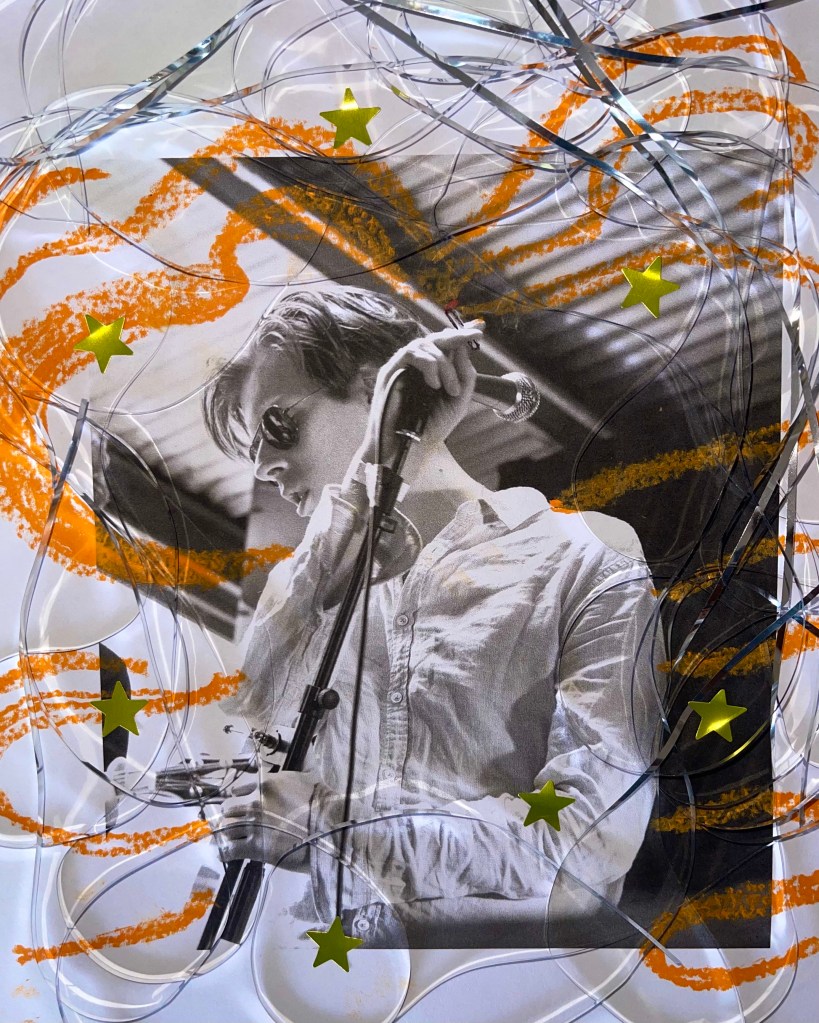
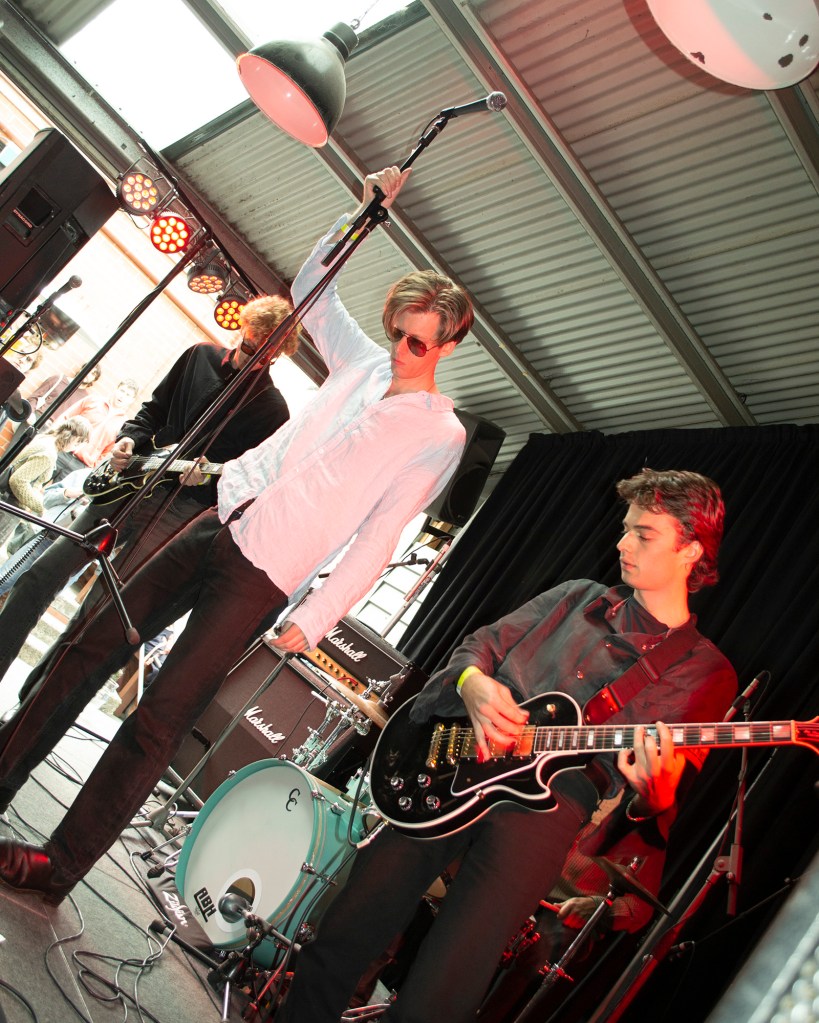
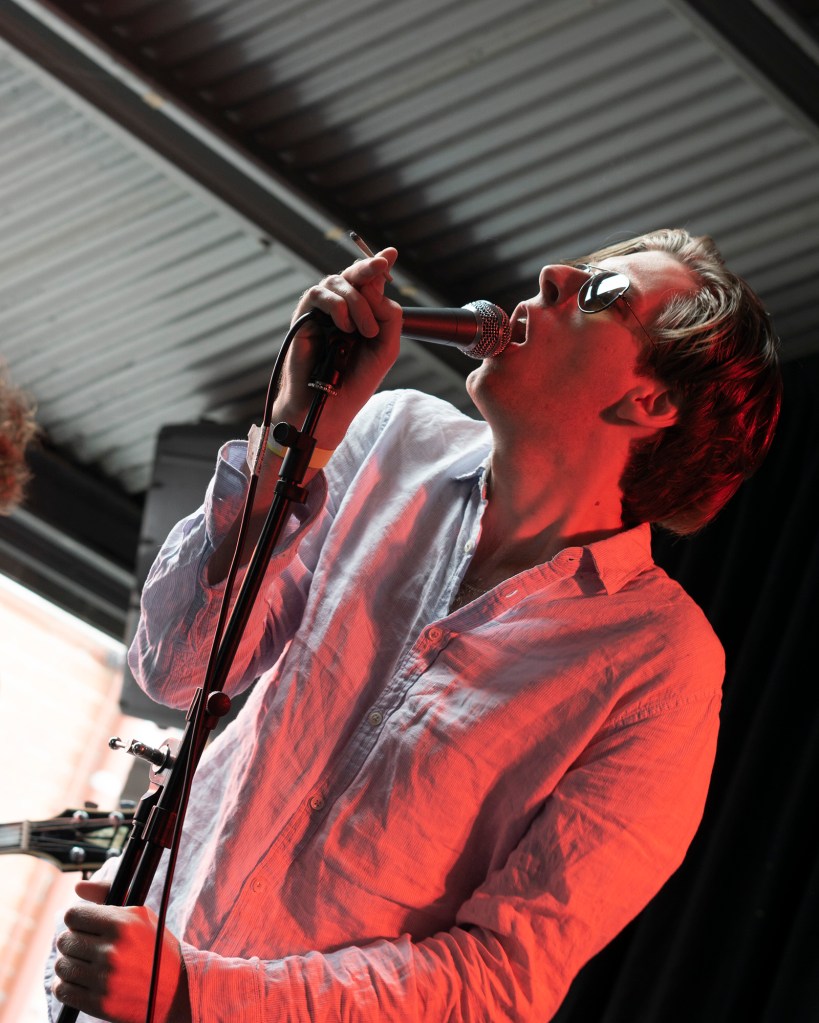
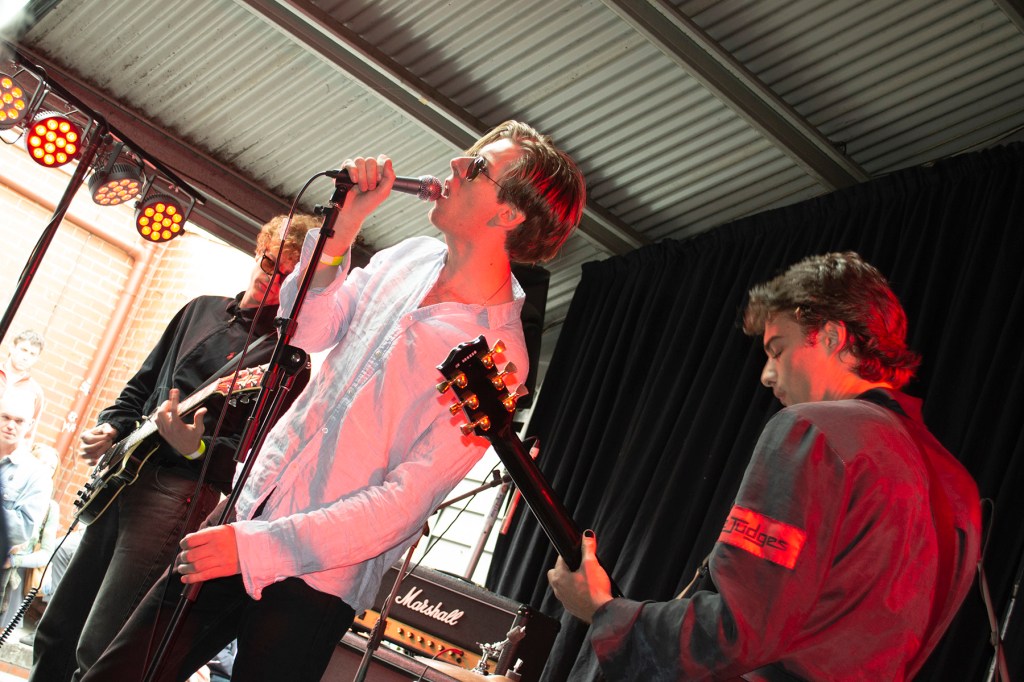
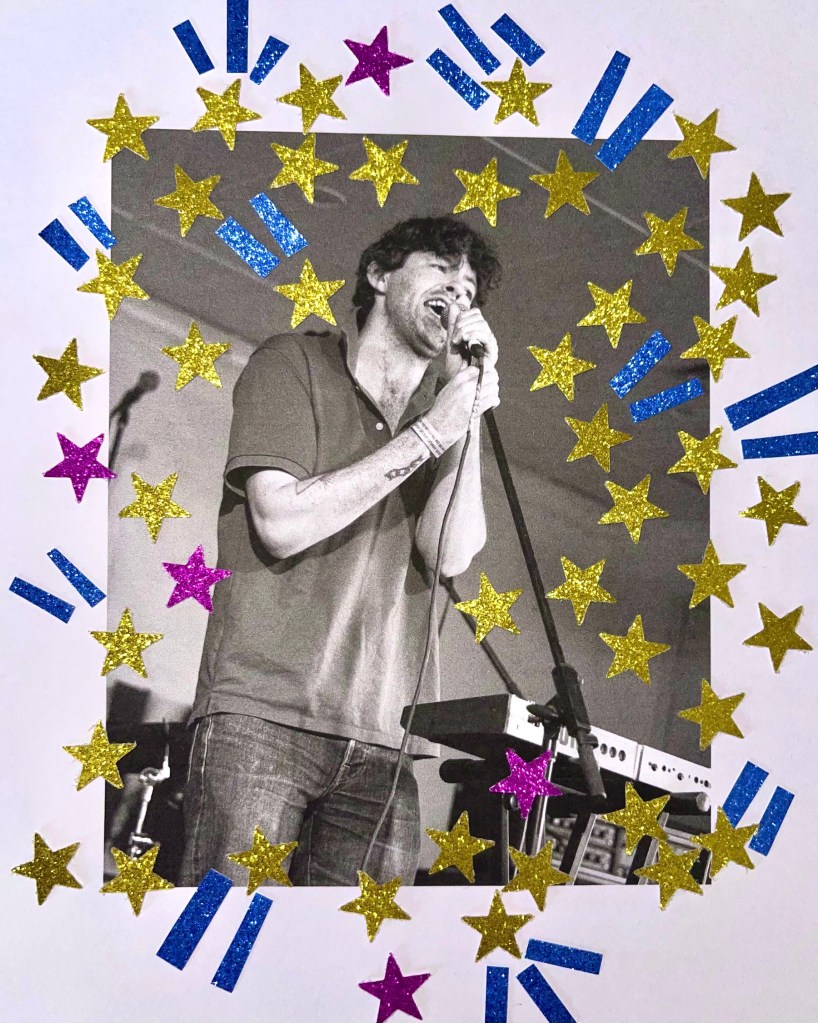
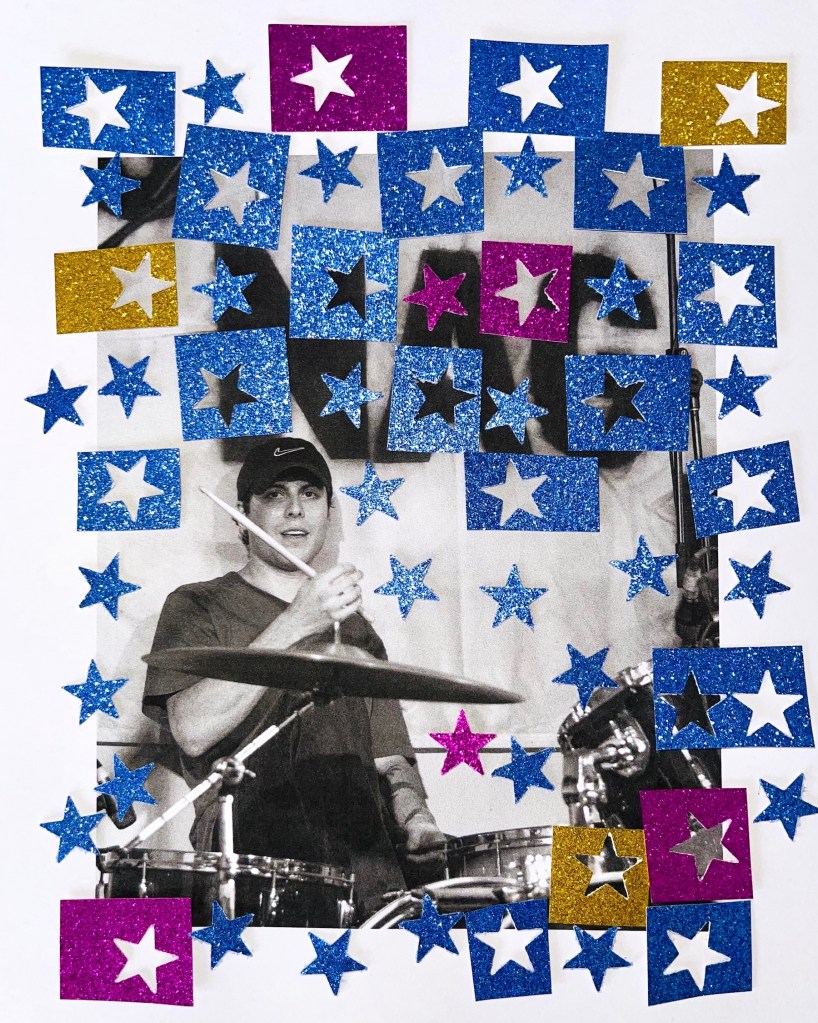
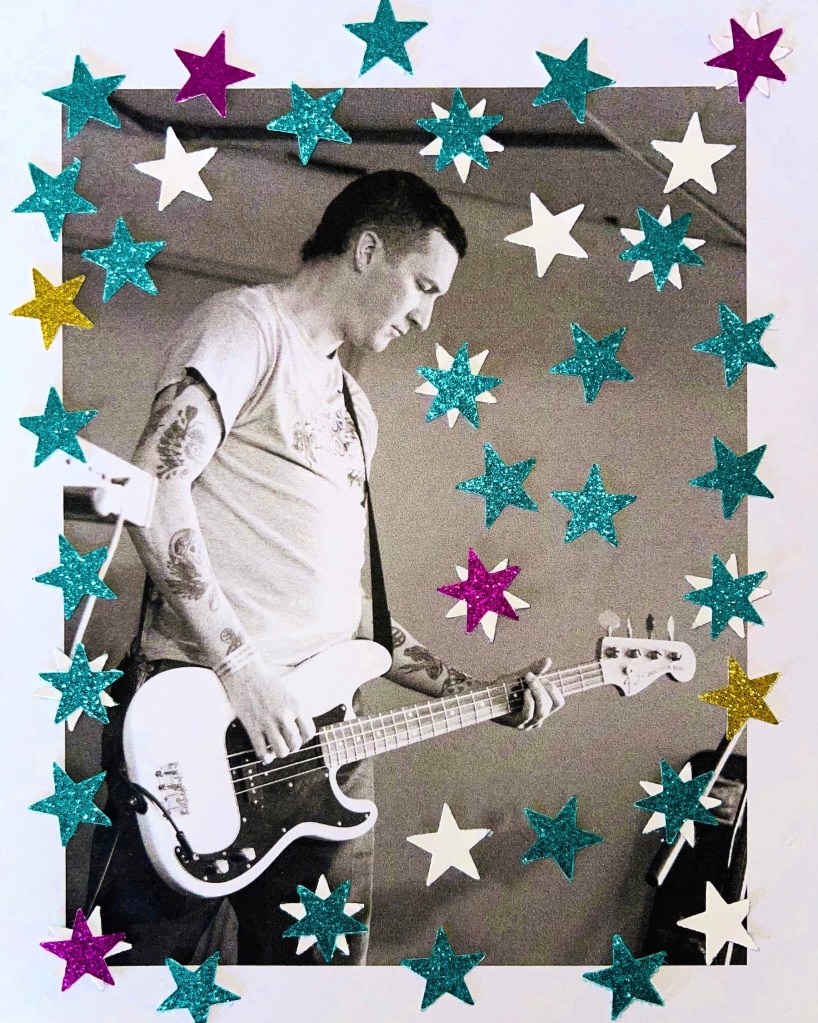
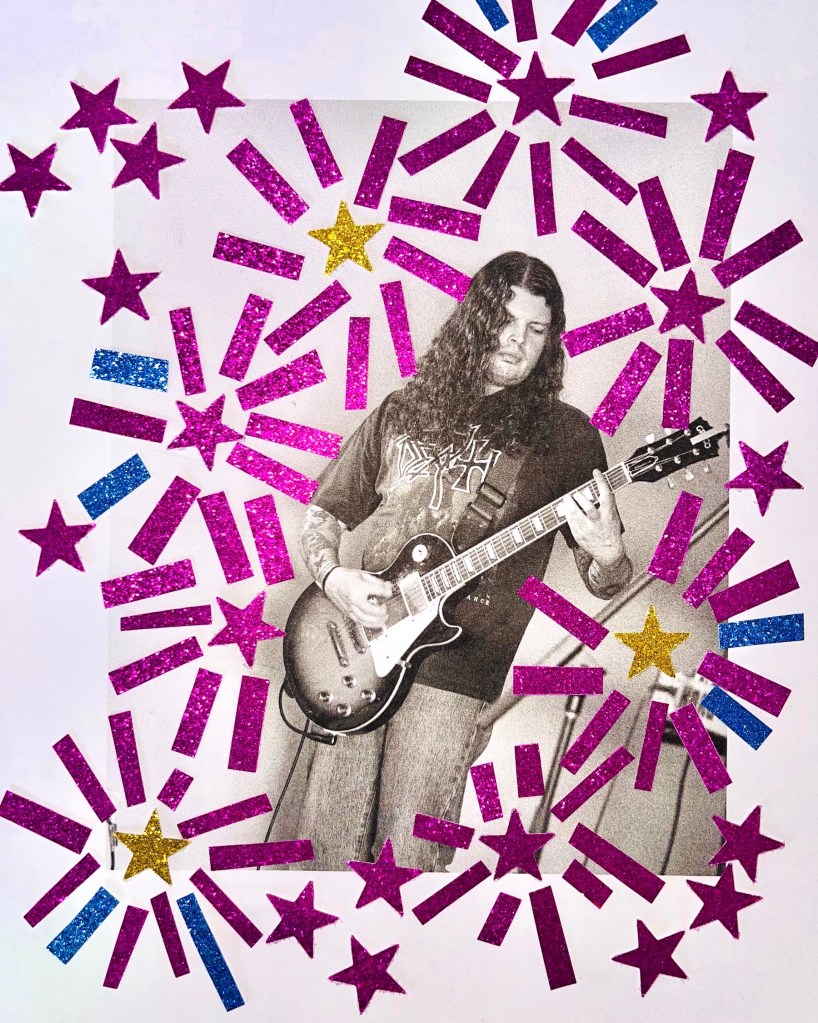
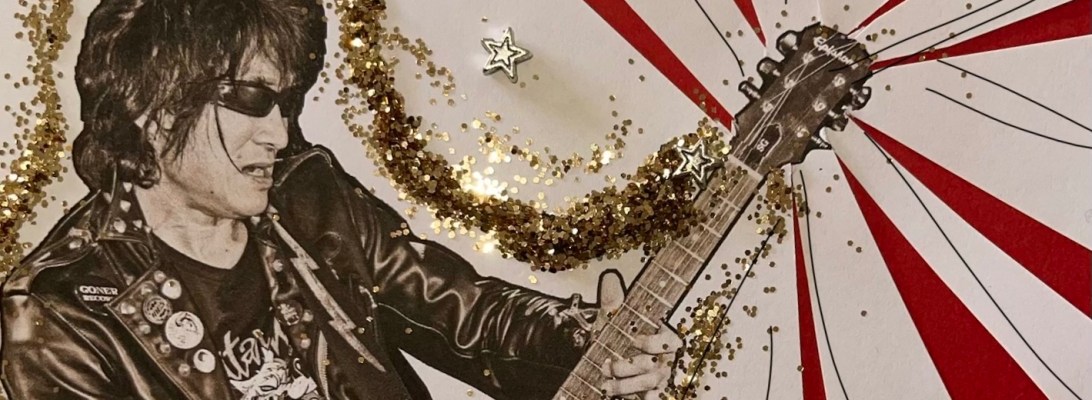
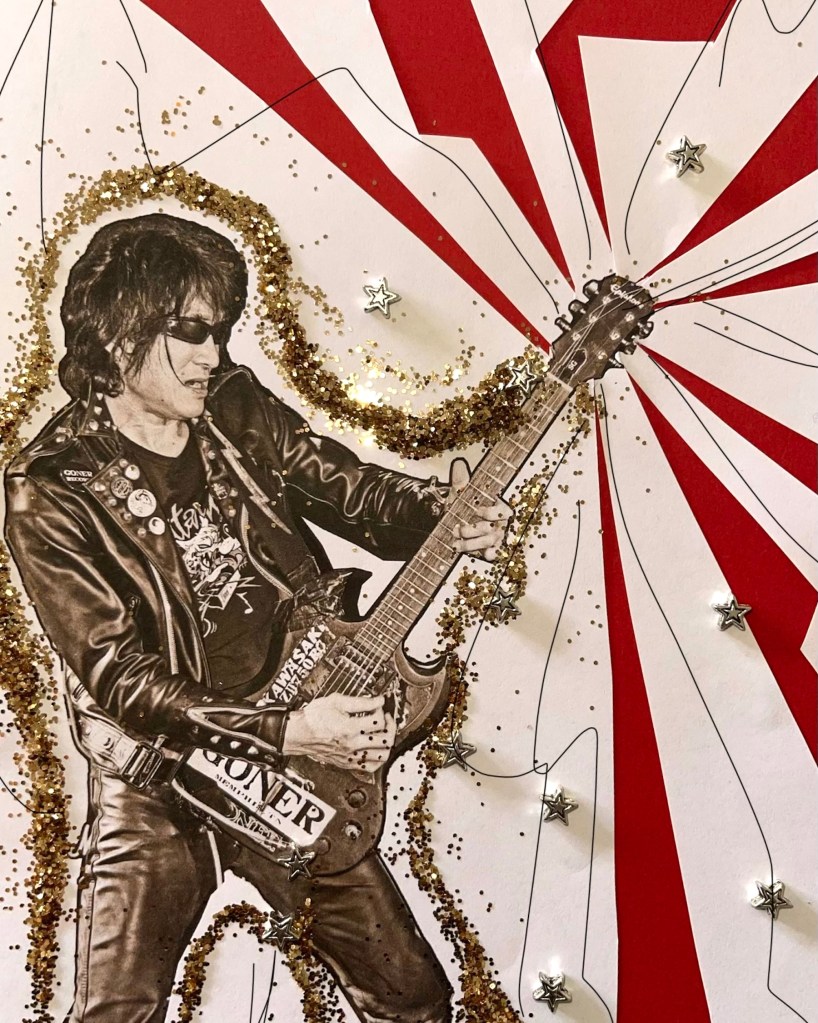
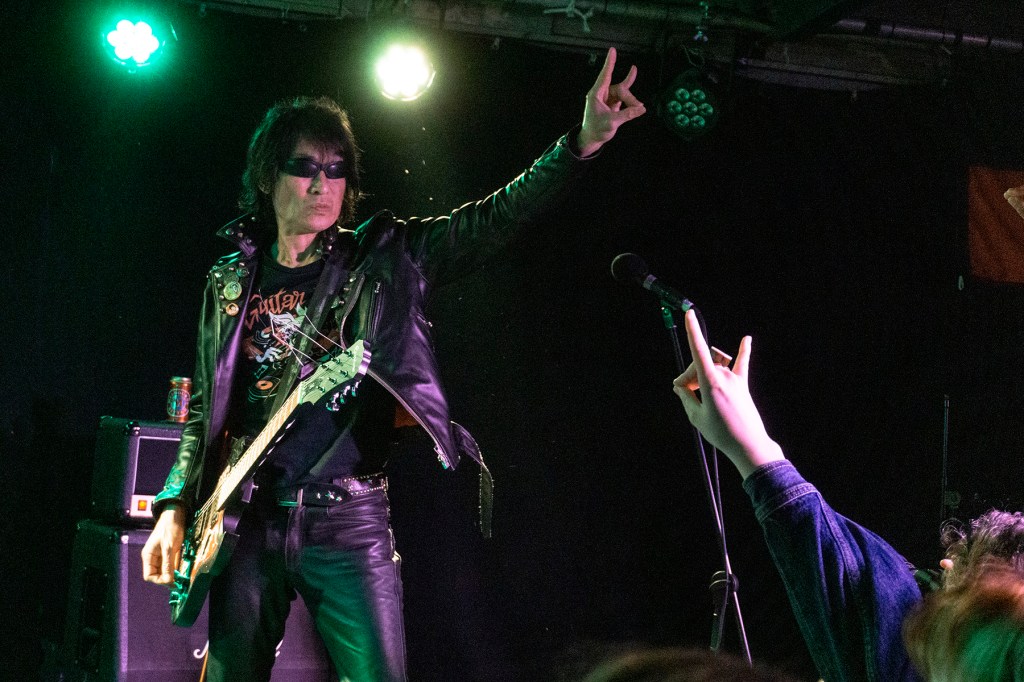
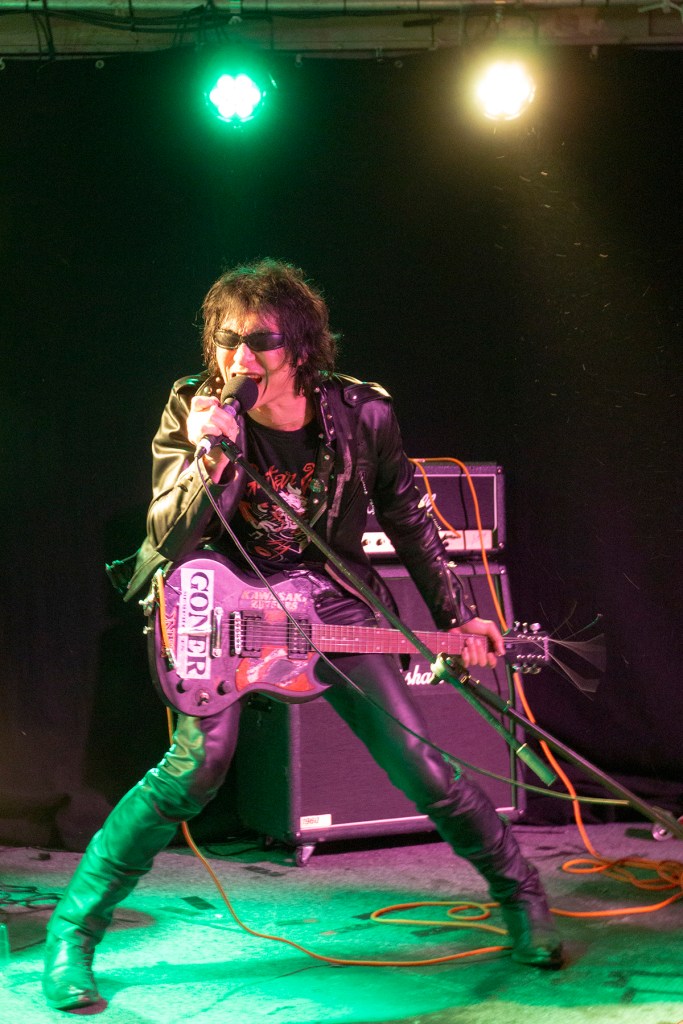
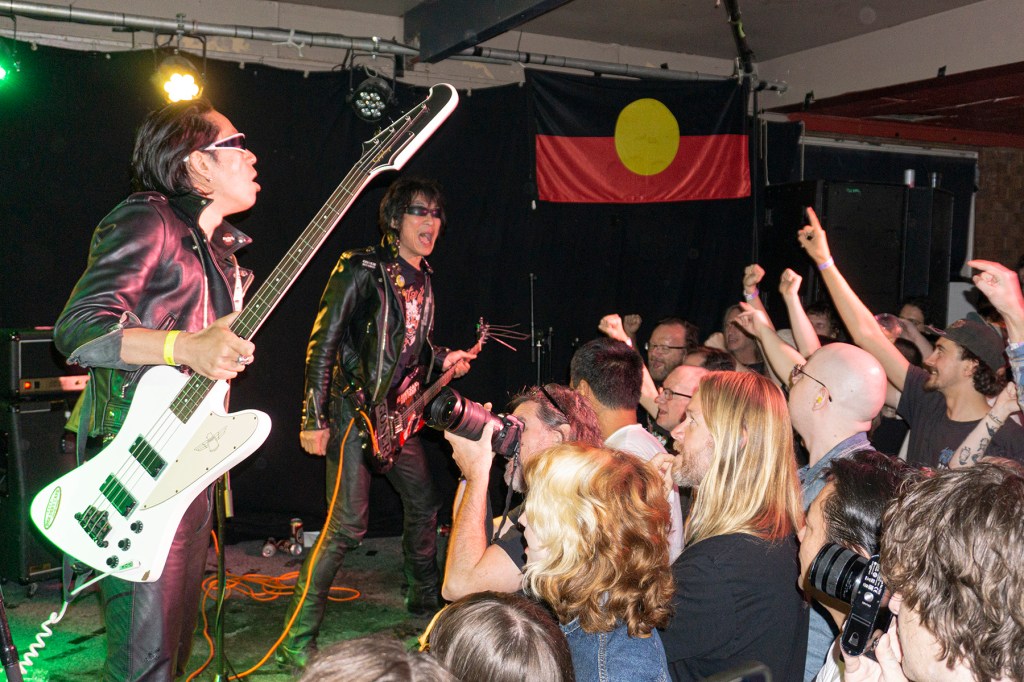
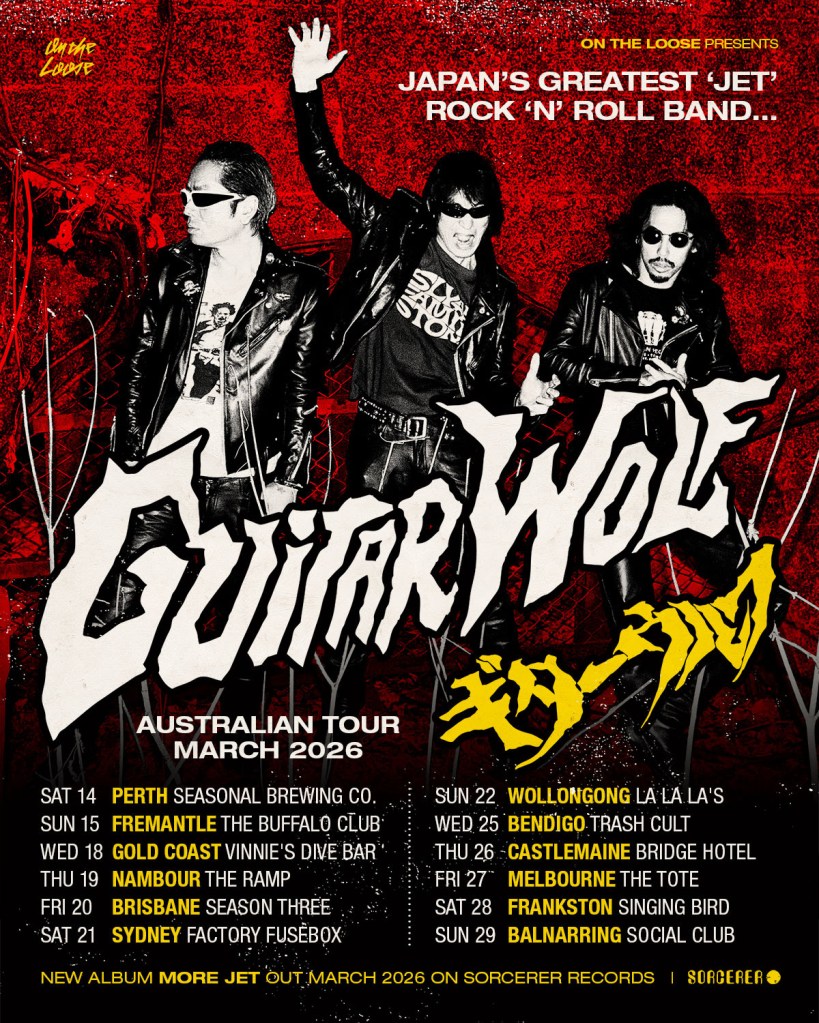


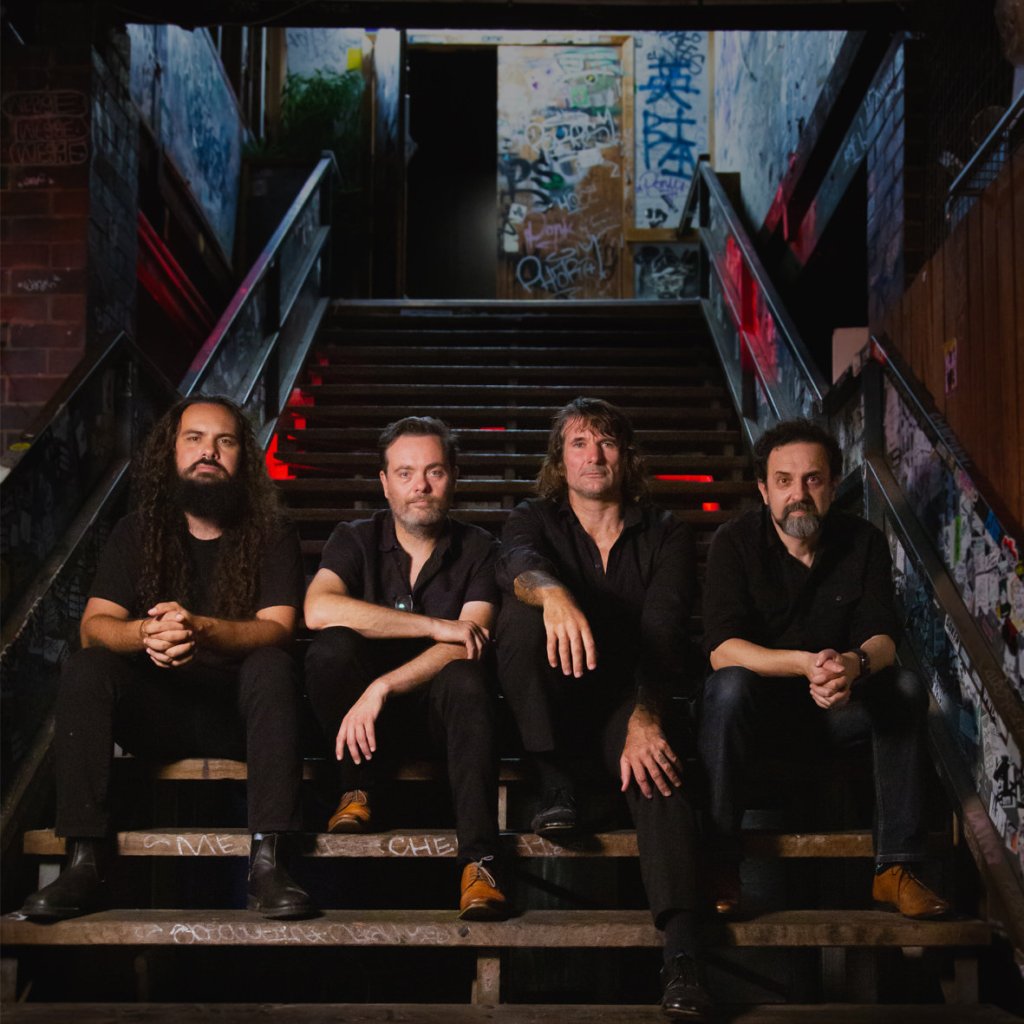
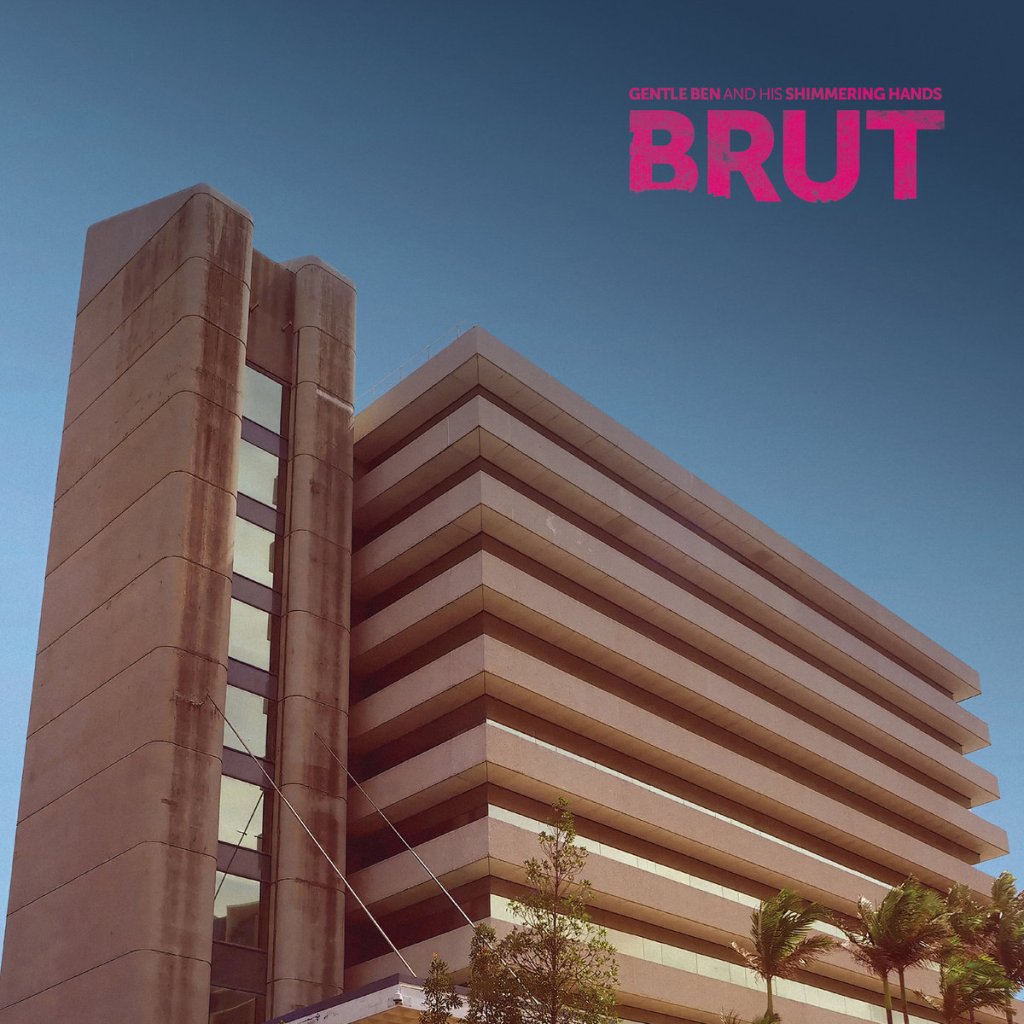
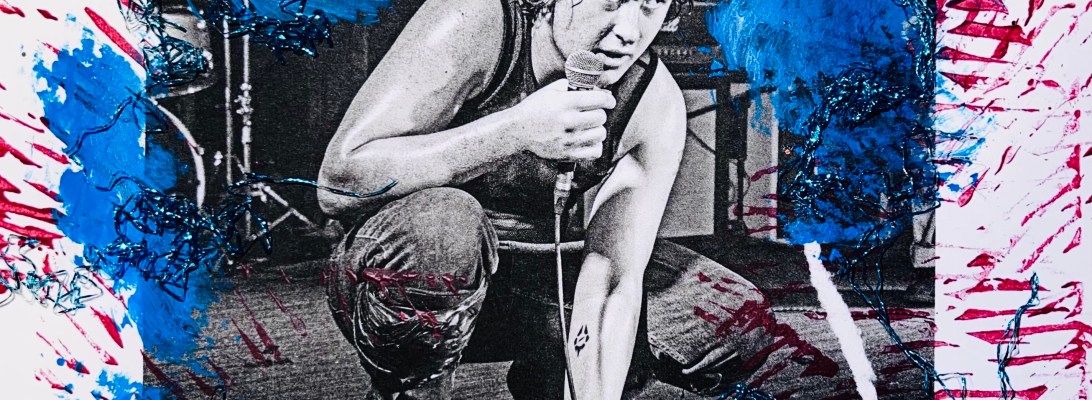

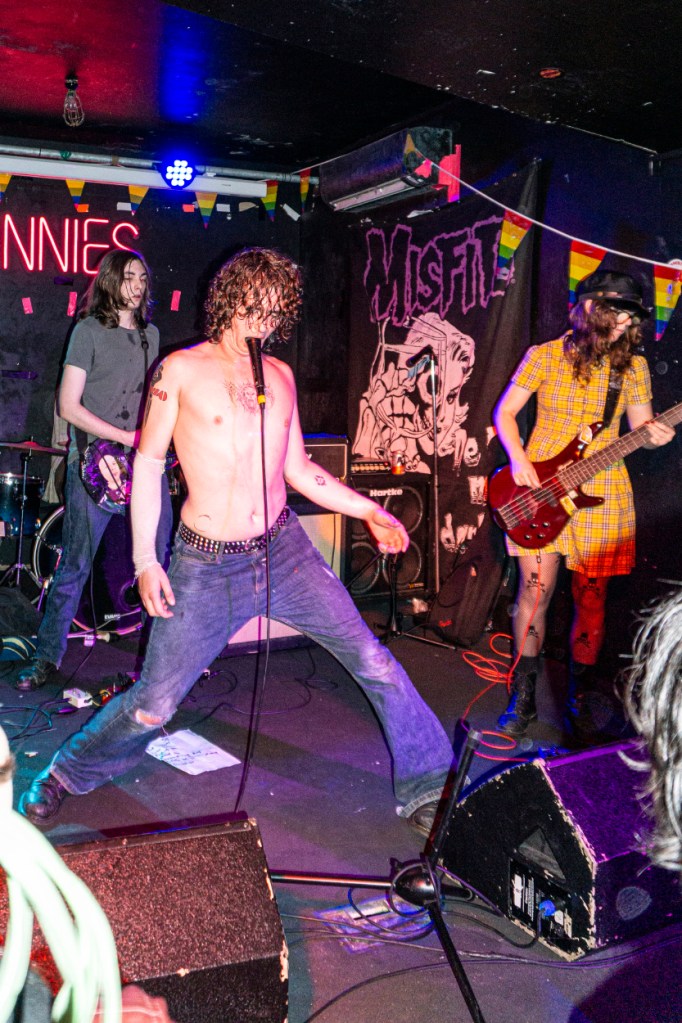
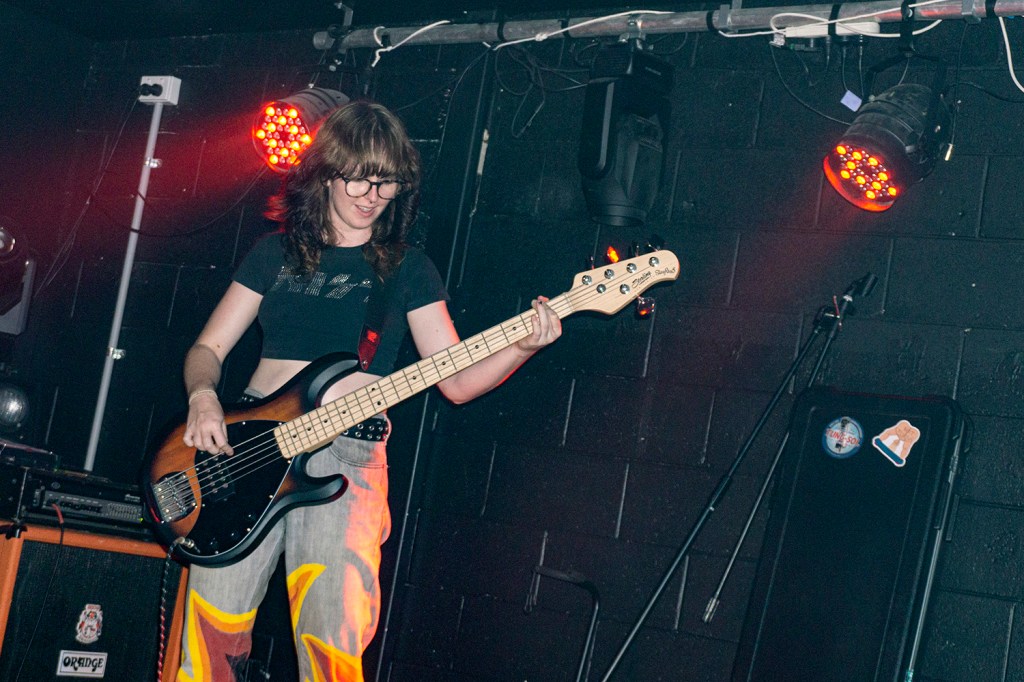
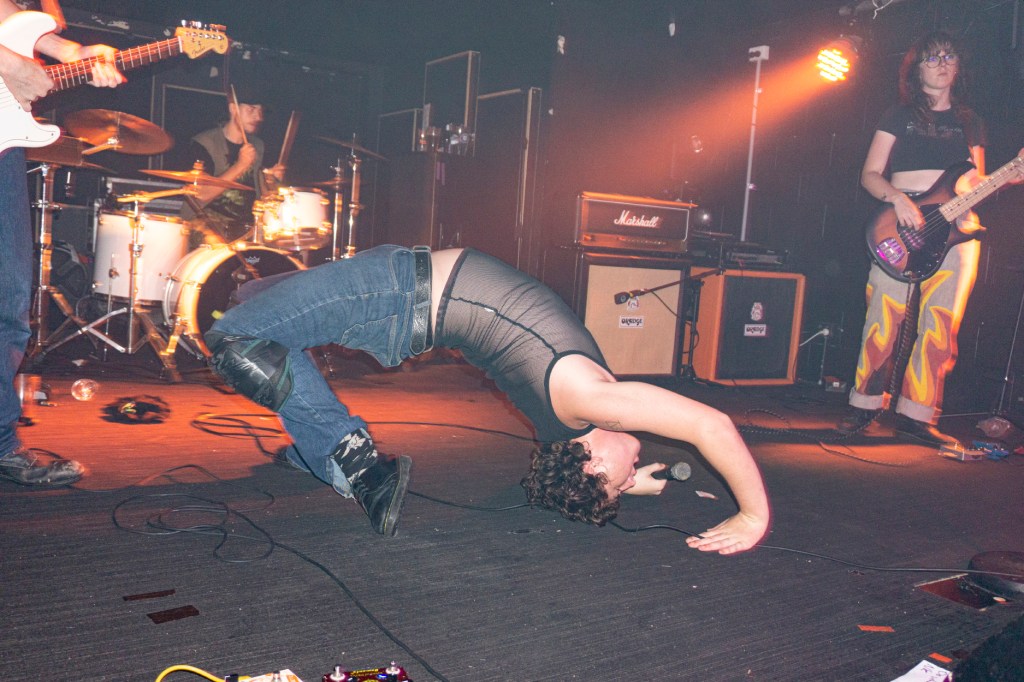
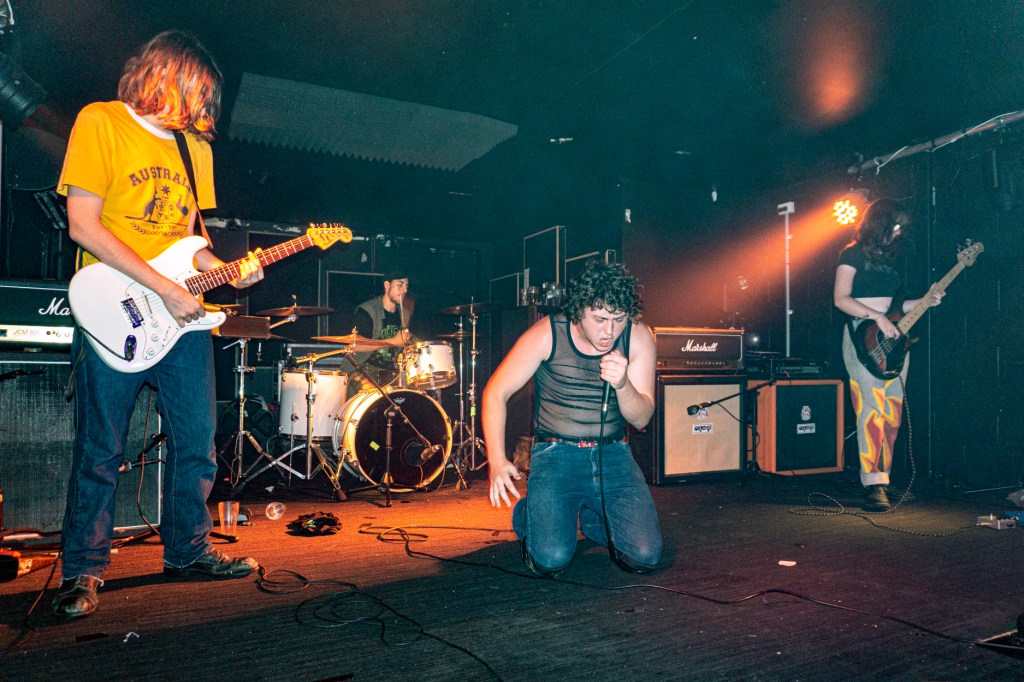
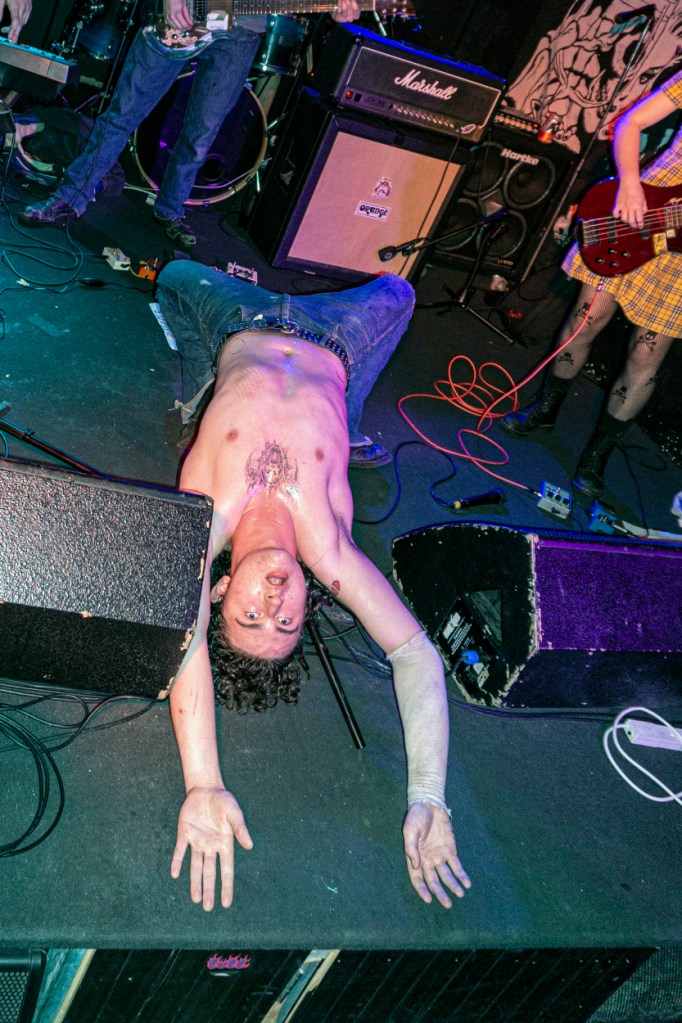
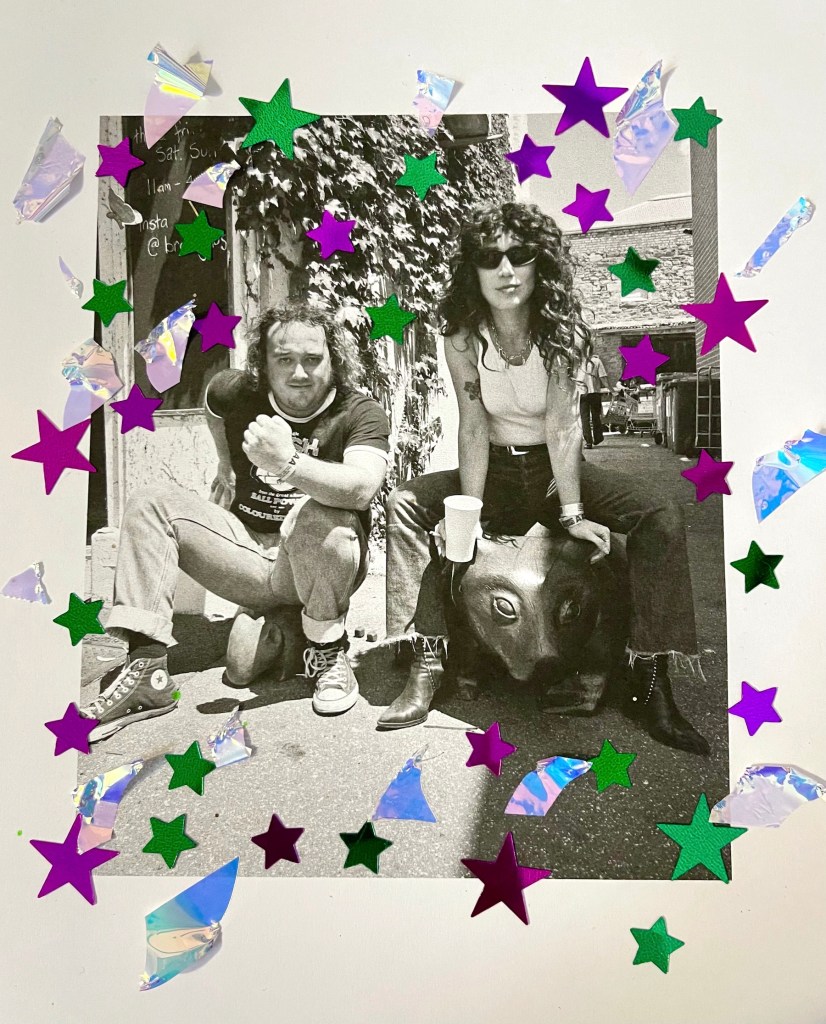


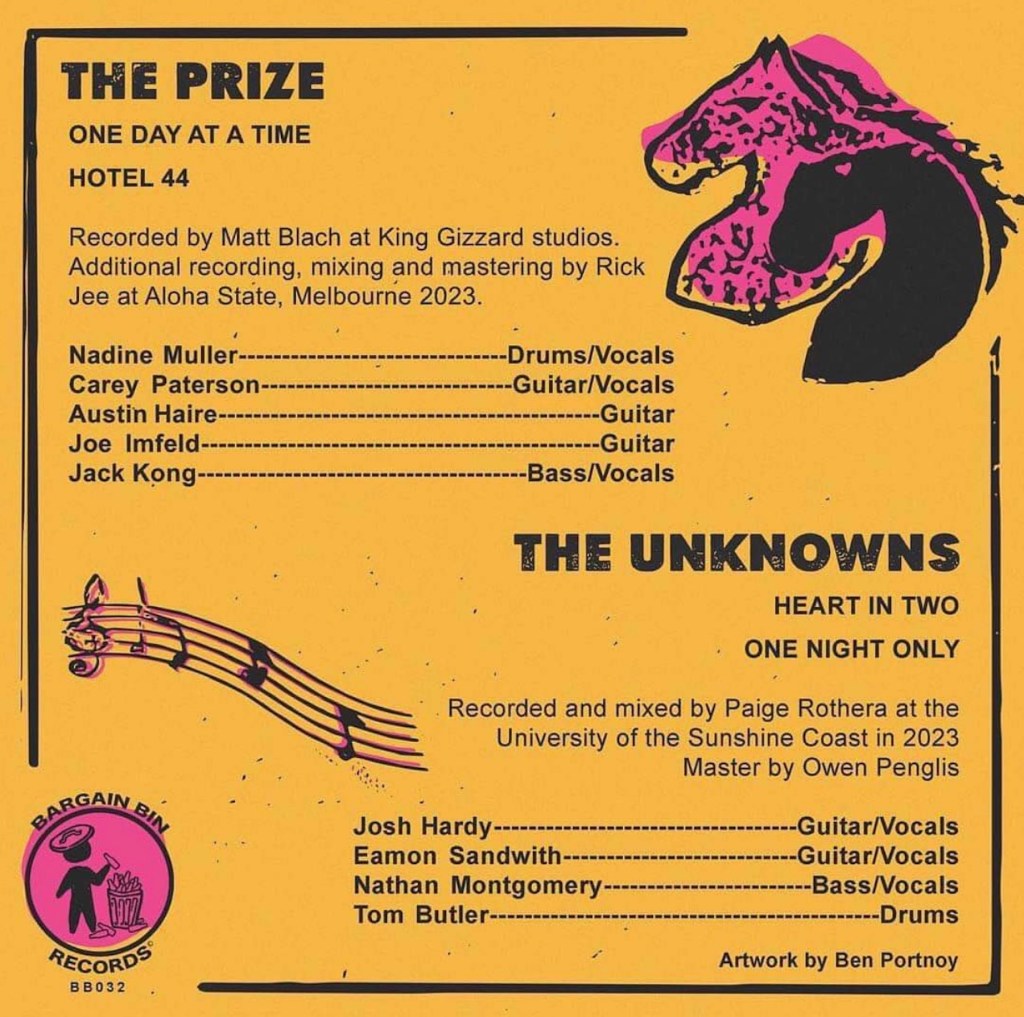
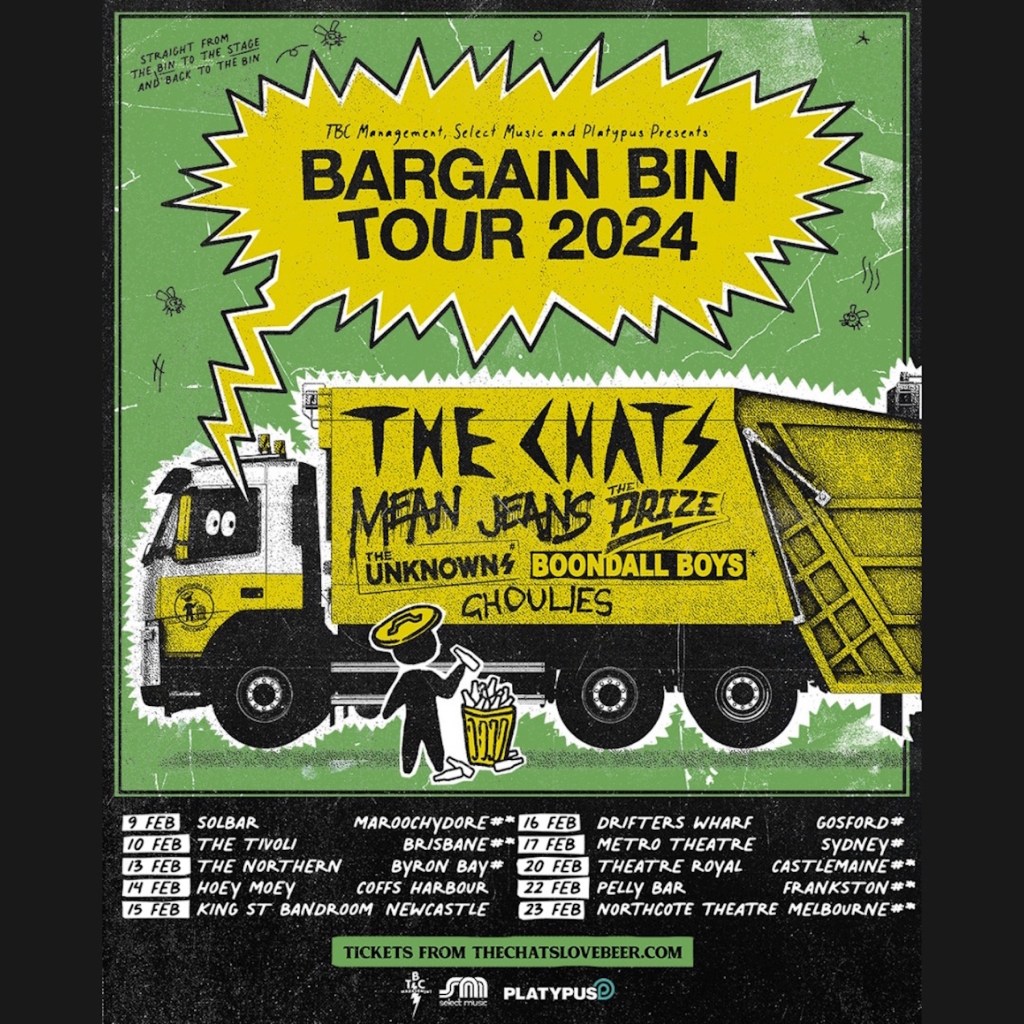

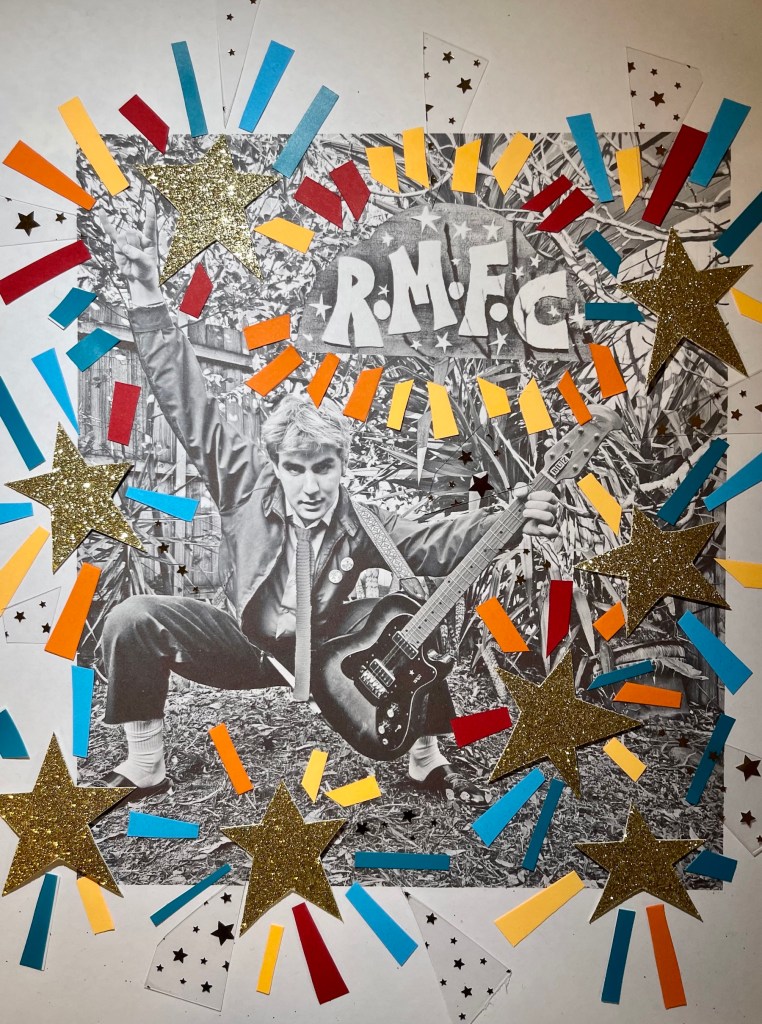
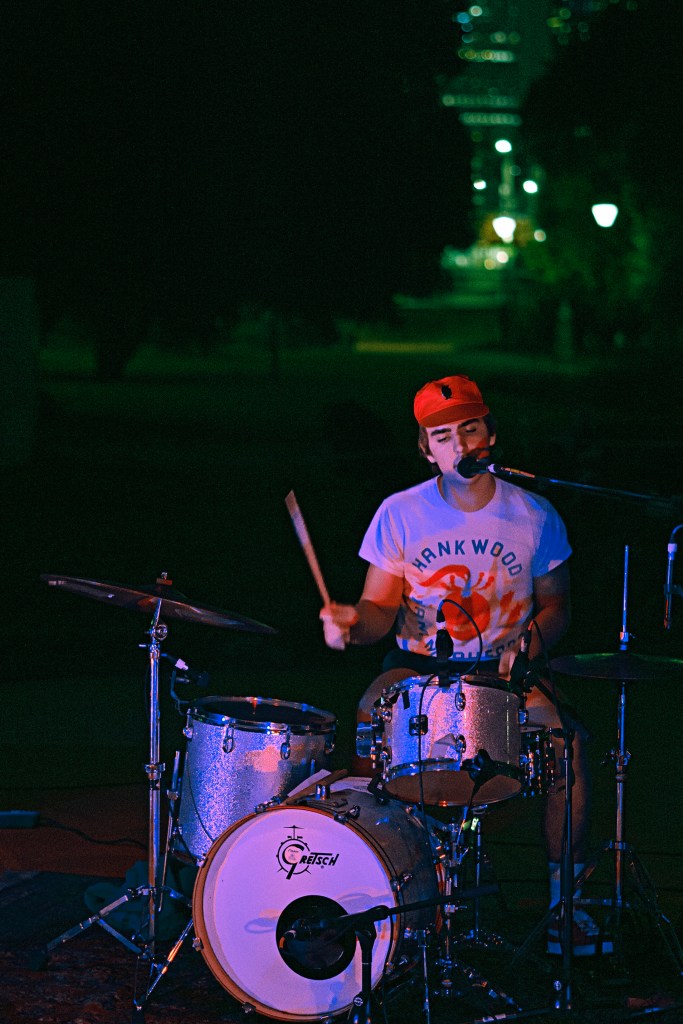
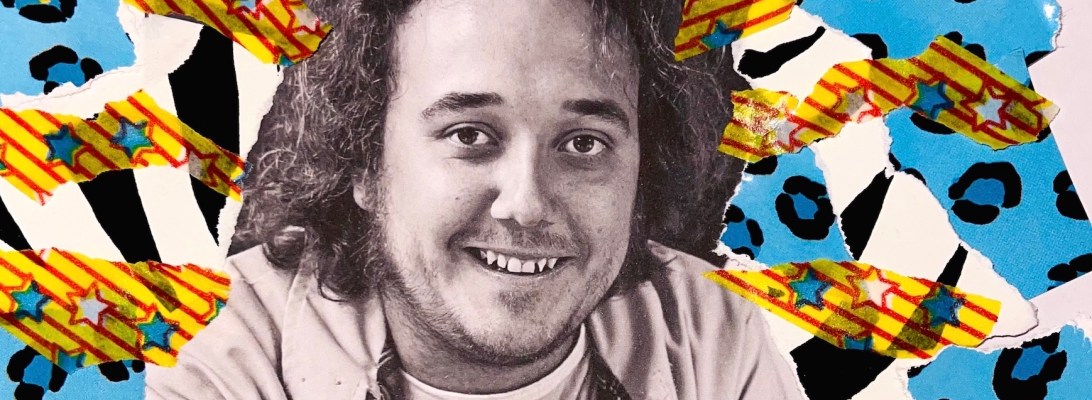


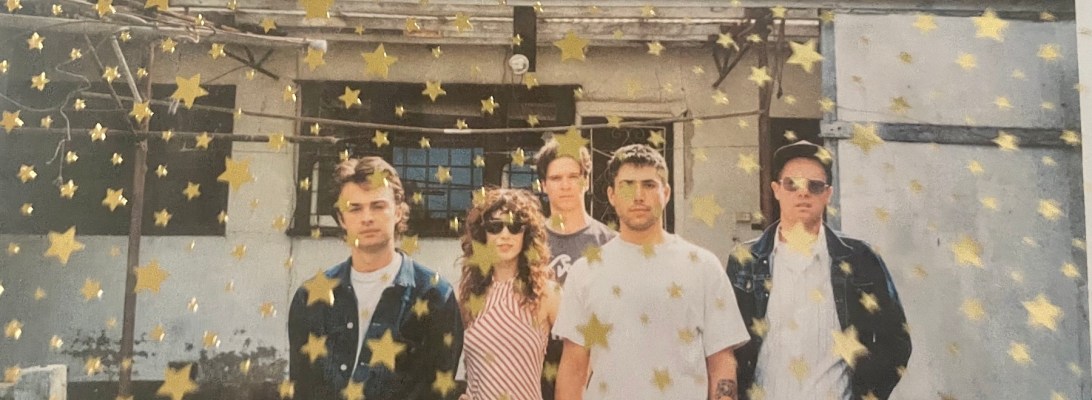
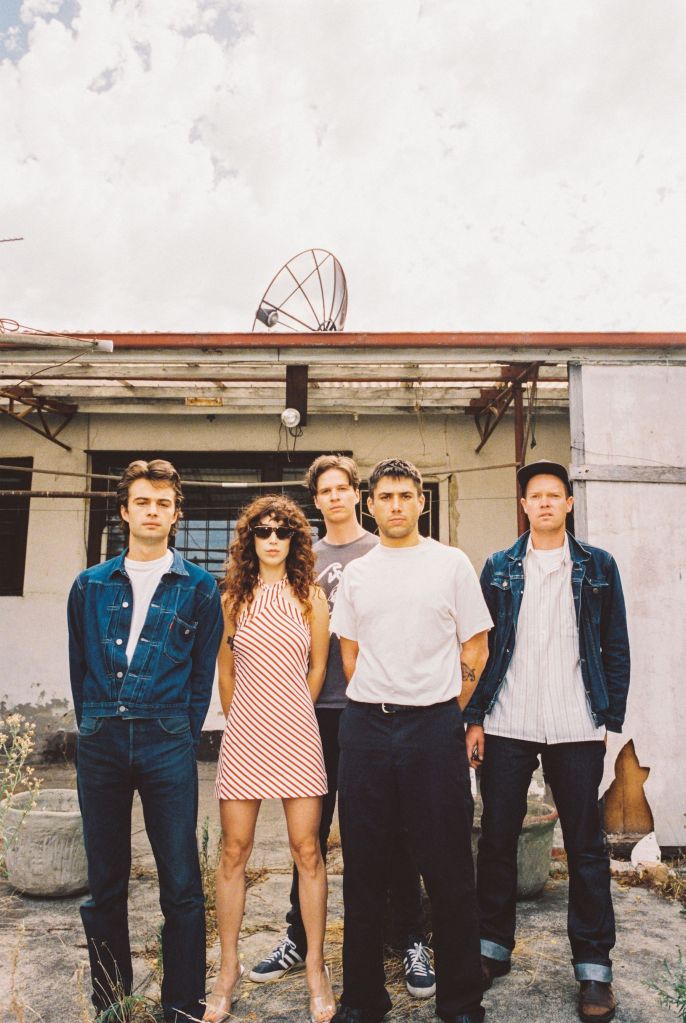
 Gimmie Gimmie Gimmie Zine