Ancient Artifax: unearthed punk-rock artifacts from the 1970s and 1980s – NYC, Washington, DC, and Midwest scenes

Handmade art by B.

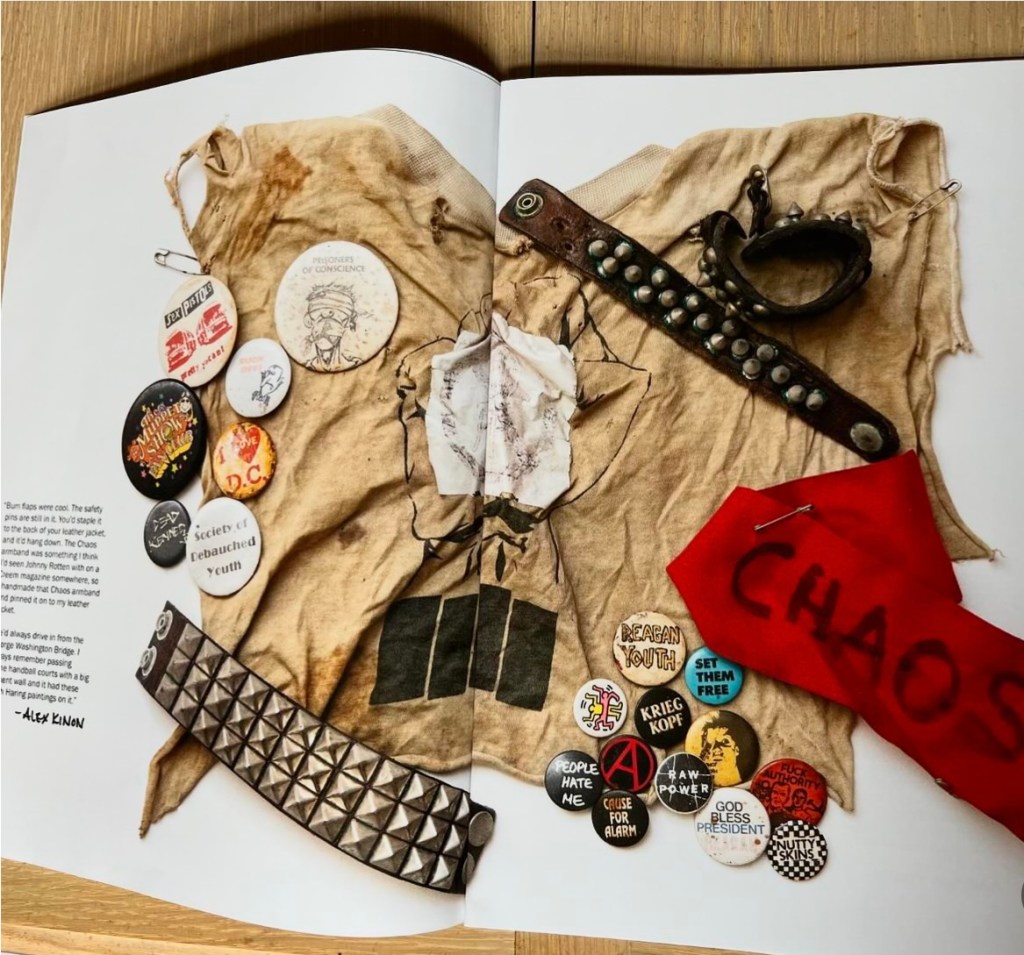
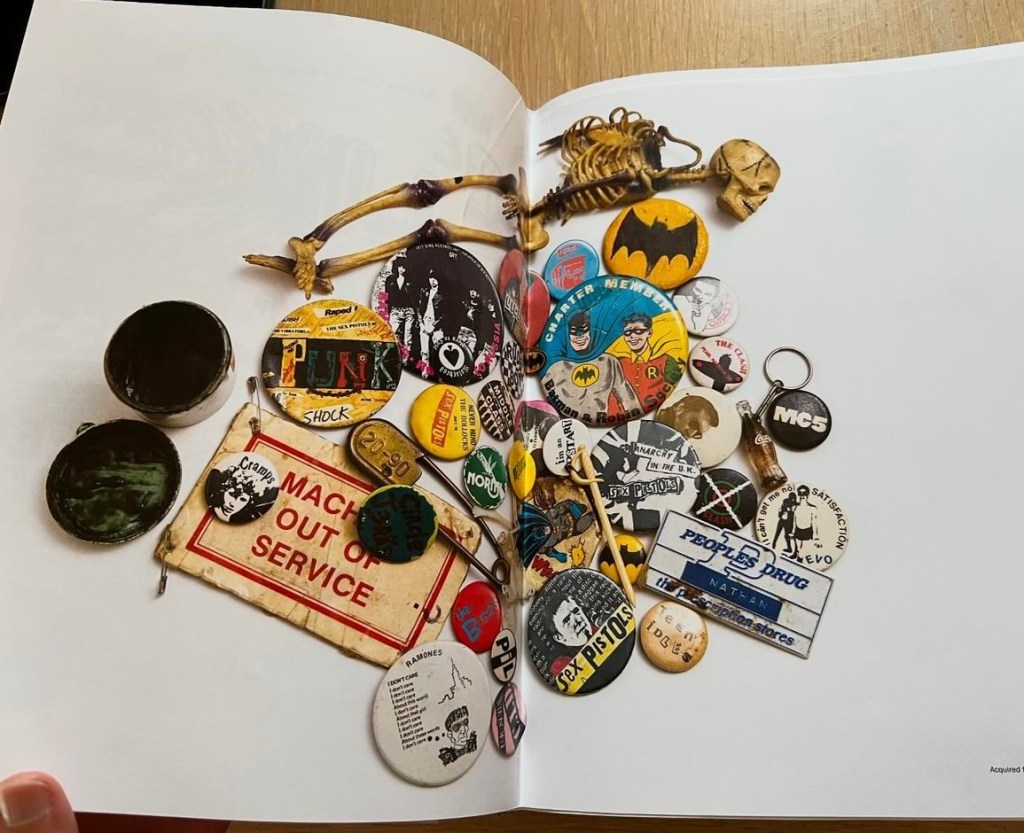
Gimmie was really, really excited to talk with our good friend, Brian Gorsegner, about his new book, Ancient Artifax. It’s one of the essential punk-related releases of 2024. A hefty tome at 242 full-colour pages, it showcases rare and sometimes one-off 1970s and 1980s artifacts from his personal punk collection, lovingly curated over many, many years. 

Commentary throughout, provided by those who have connections to the items and speak of their provenance, gives an insider’s snapshot of the New York City, Washington DC, and Midwest punk scenes. We learn all kinds of nerdy stories and trivia: why Roger Miret really joined Agnostic Front; who taught John Brannon from Negative Approach about creativity; which hardcore drummer has the neatest handwriting; which punk has kept every Christmas card they’ve ever received; what songs Ian MacKaye was putting on a mixtape for a friend in 1979; which 45 Brian offered Tesco Vee from Touch & Go $4,000 for on the spot to be left to him in Vee’s will; why Creem magazine blows; the contents of a letter to the Screamers from a punk-icon-to-be living in NYC in 1978; why Brian LOVES the Necros, and much, much more!

If you’re a true music nerd, especially a punk music nerd—you’ll love this chat. AND you should 100% buy, Ancient Artifax. It’s truly a cave of punk rock wonders on the page. Brian’s love for what he does is palpable and infectious.

How did the book get started? And, how have you been?

BRIAN: I shot what was supposed to be a TV show. We shot the pilot and then three more episodes. When I did the second one, I decided I didn’t want to play music anymore. While I was working on the show, I got brought in to work on that [Punk] museum project in Vegas. While that was happening, I started working on the book. Then the band [Night Birds] broke up. And the TV show went away, I stepped away from the museum too, and I finished the book. The book came out and sold out [if you missed out it now has a 2nd run – but don’t snooze].

Last night, I was like, ‘Oh, fuck. That’s it. Oh, no! What’s next?’ I don’t have my next thing figured out, planned or even even thought about like, I just have never gave myself time to think about it. I would get up in the morning and go in some direction. But yesterday, I was really like, ‘Oh, shit. What do I? What do I want to do now?’ I don’t think I’ll ever make another book. That really feels like a one and done project. 

What was the TV show? Was it about collecting? 

BRIAN: Yeah. I drove from New Jersey to Detroit, like 18 hours, it’s not close. I went out to see John [Brannon] from Negative Approach. He found all of his old boxes, his fanzines, and his flyers, and a ton of cool stuff, in his mom’s attic after she passed away. He called me and he’s like, ‘You know how you’re always asking if I have stuff and I’m always saying no?’ And I’m like, ‘Yeah!’ He’s like, ‘I just found a bunch of boxes.’ And I’m like, ‘Yeah?!’ I was like, what the fuck?!

He started sending me pictures. He’s like, ‘You got to come out here.’ I knew it was going to be interesting. I was doing the TV show with the new revamped Creem magazine. I mentioned it to them and they gave me a crew and we flew out there. It was a big thing. We had a seven person camera crew and we shot the pilot. It went fucking really well. Then I ended up doing three more episodes that were all very good. I was feeling really good about it all. And then… Creem fucking sucks! They totally dropped the ball, they never knew what to do with it. It might get picked up at some point by somebody else, but they own the rights to all the footage. 

Oh-no! I’m so sorry that’s happened to you.

BRIAN: Yeah. It just ended up being a headache. So, the book was kind of a secondary thing, so I could still get my favourite stories across. I could still show images of my favourite things from those collections—that’s exactly what it is. It helped me be like, ‘Alright, I can still do this!’ But there’s still so much cool footage that I think people would really get a kick out of. 

I hope it sees the light of day! I would LOVE to see it. I love all those collecting and picking shows like King Of Collectables, Antiques Roadshow

BRIAN: Yeah. When I started watching American Pickers, it was like, I don’t necessarily care about old motorcycles, but when you watch those episodes you’re like, these guys make me care about it because I like old stuff and I like a story! 

Yes! Same.

BRIAN: So when I started doing this, it was very much the same kind of thing except the stories are like, ‘We were living in an abandoned building in Detroit and they were shooting shotguns at us. Then we lived out of the van. Then Nirvana came over and they stole my sweater. Like, what the fuck? stories! They were like a more dangerous edgy punk rock kind of American Pickers, with just crazier people. It was really funny too, everything about it was just like… man, this is great! This is really fun. Obviously a way more niche audience, though.

I feel like they could do those shows about anything, if you can prove that it’s important. What’s important and what’s not, I think is very subjective, but we were kind of getting the point across that—without this there would be no Nirvana, no Foo Fighters and no Beastie Boys. We made a pretty good case as to the cultural importance of early punk rock and hardcore. I think we would have had a wide audience.

Agreed. Look at the Agnostic Front documentary or the Kathleen Hanna documentary success and appeal. People love stories, and tend to pay more attention to things once they have a documentary about them. It’s like it legitimises things more in people’s eyes.

BRIAN: Yeah, it’s a more easily digestible thing. Somebody’s more likely to sit down and watch an interesting 30-minute thing that’s on TV, which is they already have it sitting in front of them, versus having to make the effort to buy a book and read a book. You have to be interested in the subject matter to buy a book. But anyone could be sitting around watching TV. 

Hopefully the show comes back around at some point. But right now, I was hoping that the book did well and would generate a little bit of interest. It only came out this weekend. 

AND it’s already sold out! Congratulations. It doesn’t surprise me. It’s such a quality, cool book. You did such a great job! I’m so proud of you.

BRIAN: It surprised me! Everybody kept saying, ‘A book is a really hard sell!’ I was like, ‘I don’t know. It’s not a book about me, though, it’s a book about stuff that people are already interested in.’ I put it together in a way that I thought people would dig it and it would be digestible. I think people were ready for it. 

Yes. People always say ‘Print is dead’ but I can tell you as a zine and book creator for three decades, that’s not true. You know what I’m talking about, though, you love paper stuff too. Are there any books on punk that have made an impression on you? 

BRIAN: Banned in D C: Photos and Anecdotes from the DC Punk Underground [by Cynthia Connolly and Leslie Clauge] was a really big one. That got me really into the early early stuff. 

Brian Ray Turcotte’s first book, Fucked Up + Photocopied: Instant Art of the Punk Rock Movement, that was a huge one! That was the first time I was seeing so many flyers. It even just got me thinking about flyers as being a thing that is designed for advertisement, then they get torn off of walls when you’re a teenager and they get thrown away. They get destroyed. Thinking about them as being like an artefact 40 or 50 years later—that shit fucking blows my mind. It got me really into collecting the paper stuff even more than records. Records have always been designed to keep and collect, you keep them in nice shape. Even back as far as 45s, they’re a tangible thing, but not paper so much. 

American Hardcore: A Tribal History [by Steven Blush] was a cool one. That was the first time I read about so many bands in one place, that didn’t have as much coverage.

Better Never Than Late: Midwest Hardcore Flyers and Ephemera 1981-1984 is a flyer book that the people that did my book, did. I’ve flipped through this thing a fucking million times, I love it! 

Also, Why Be Something That You’re Not: Detroit Hardcore 1979-1985 is a book about Detroit hardcore that my friend Tony [Rettman] did. So many cool stories that got me enthralled with the fucking Midwest hardcore scene. 

One that got taken off the shelves very quickly, Scream With Me: The Enduring Legacy of the Misfits,everything in there is fucking eye candy, all crazy, crazy collector shit. 

And then, the Radio Silence: A Selected Visual History of American Hardcore Music was another book that friends – Nathan Nedorostek and Anthony Pappalardo – did that has a lot of cool artifacts.  

The thing that I thought was unique about my book is that it’s my personal collection that I have purchased from people. I think the transition of the property from one generation to the next is cool and interesting, in the way of preserving some of that stuff. 

Otherwise, it’s interesting how many people sit on the stuff for their life. Like, ‘I’m never gonna get rid of it!’ And then it’s like, well, how much of that stuff ends up in dumpsters when people come clean out someone’s place when they die, because people don’t know what it is, so it doesn’t end up where it belongs. That shit happens a lot. People don’t have a game plan with their stuff. I guess once you’re dead, you don’t really give a fuck anyway, but… I don’t know, a lot of stuff that should have been preserved has been destroyed over the years. That’s an interesting point to convey. 

Now you got me thinking! We don’t have a plan for our stuff.

BRIAN: Yeah. You got a lot of records there behind you. So what happens tomorrow if you guys go out skydiving and you fucking splat on the ground? 
I totally see your point. 

BRIAN: it’s funny, I’m sort of the same, I don’t have any of my stuff in a will. But I make notes with certain things. Like, if I get something from someone, I put a note in there and I say: ‘This is from Brian [Baker] from Minor Threat.’ Or ‘This is from that or this,’ just so the provenance can continue to live, to move on, if something happens to me. My wife can give something to a friend or sell something. I want to be able to track it back to its original place it came from. Or be like, ‘Hey, this is valuable!’ I point things out every now and again, incase something happens to me, just so she knows. If something happens to both of us, there’s not really any great plan, so I guess the idea is to just not die ever! [laughs].

[Laughter]. 

BRIAN: I was talking to Tesco Vee from Touch and Go Records at one point. He had a record that I really wanted. I offered him $4,000 right then and there to leave me the record in his will. At the time it was a $10,000 record. I’m like, ‘I’ll give you $4,000 now while you’re alive, and then if you die in the next 30 years, I get the record.’ I was kind of kidding, but also dead serious [laughs]. He told me, I was fucking mental! [laughs].

What was the record?

BRIAN:  The Fix – Vengeance, the second record that they put out on Touch and Go. 

I’m guessing his collection must be pretty amazing!

BRIAN: I don’t know. I’ve never seen it. I’m hoping to maybe bother him to let me come take a look at it when we go do our Detroit pop-up book release thing, because it’s not super far from where he is. But I would like to see his archives!

Same!

BRIAN: The first two records, the first two singles, that he put out in 1980, they’re each like $10,000+ records. Because they just did 100 of one of them and 200 of the other, and they sat on them forever. Nobody wanted them. Eventually they sold out and then eventually they came big collector items.

I used to love the Touch and Go fanzine. 

BRIAN: Yeah. That’s my favourite early fanzine too. 

To give people context for Ancient Artifax, it started as an Instagram profile, the first post was 21st of December 2016 and you posted a Big Boys 7”.

BRIAN: Wow! So almost eight years ago, huh? Doesn’t feel that long [laughs]. Yeah, I was working a really boring job that I fucking hated. So I sat on the internet more than I should. I started a separate account to just post punk shit. My daughter was little. So, at that point, I wanted to have a traditional Instagram account with pictures of food and my daughter, and then have my punk account for all my bullshit. Before having a kid, my family didn’t really follow me on social media. But once I was posting baby pictures, all my fucking aunts came out of the woodwork. And I was like, ah, maybe I should keep these things separate. That’s funny, I haven’t even really thought about that, but that’s exactly how and why it happened. 

It was a way to share your collection with others?  Did selling things come after that? 

BRIAN: I’ve always sold stuff a little bit. I’ve been buying collections for a really long time. I bought my first collection, when I was probably 19 or 20. I spent every single dollar I had, but I knew that if I bought the collection, I could keep the things I wanted, and could sell some of the other things, and make a bunch of my money back. So then in the end, I get a pretty good deal on the stuff that I kept. I’ve always had stuff to sell, and I was never a big eBay seller. 

At that time, I was working at a screen printing shop with everybody else that collected records. If I bought a collection, I would literally just come in there with boxes of records and at lunchtime everybody would flip through the boxes and I would sell a bunch. So when I started the account, I definitely had stuff that I wanted to sell. Before that, I had started posting things here and there on my personal Facebook. It was just a nice way to kind of like generate trades; I like trading a lot.

I really love how in the introduction for your book, you talk about how you started to realise that it’s not even just about the item you find or what it is, it’s the stories that go behind it that became really interesting and exciting for you. Do you remember when you first felt that? 

BRIAN: Going back, the first collection I bought was from this guy Jim, he had done a really early New Jersey fanzine. I thought it was cool that I was getting records from him that bands had sent in for review. They were rare records. It wasn’t like a Ramones radio station copy or something that was on a major label. It really made me think about these tiny bands that only put out 400 copies of a record, and they were popping this in the mail to this guy. I always liked the provenance of stuff and knowing where things came from.

When COVID started, I was at a work, so I put a lot more focus on trying to find stuff and hitting people up. That definitely generated a lot of the really neat stuff I have from people’s personal collections. Because I think the other thing about COVID is that so many people were doomsday buying and doomsday selling. There were people who were like, ‘You know what? As a matter of fact, I just cleaned out my closet for the first time in 45 years, and I found stuff.’ That’s what happened with John, it was a perfect storm timing-wise. 

That makes sense. We go to a lot of the car boot sales locally, and we figured that during COVID people would cleanup around the house and want to get rid of stuff when things opened up again. 

BRIAN: What’s a car boot sale? 

It’s kind of like a swap meet. They have a market, usually in a carpark somewhere, and people sell stuff basically out of the boot of their car.

BRIAN: Oh, that’s so fucking Australian! 

Yeah. Just this weekend we ended up getting a bunch of 7”s. I find other stuff too, like I just got a Winnie the Pooh stuffed toy from 1950s for $2!

BRIAN: Oh, that’s fucking awesome. I wish I was more well-versed in stuff that wasn’t just punk. When I go buy collections, or if I’m in somebody’s basement, there’s always stuff that I’m like, fuck, I wish I knew more about, like, postmodern furniture, or even jazz and other music, or comic books, or toys. I’m getting better with some stuff. 

We also went to a big secondhand book fair recently too and got a lot of old Mad magazines from the 70s. 

BRIAN: That’s cool! 

Yeah. We love all that kind of stuff. Old stuff in general, pop culture stuff, and old underground comics.

In your book, the very first image is of you spreading out Necros flyers on the floor. What’s that band mean to you? 

BRIAN: I always loved the Necros! There’s like a weird something I always liked about them. When I got into playing in bands, it was so we could go play with our favourite bands, and we would make flyers and we would do fanzines and we were just really enthusiastic about the whole thing. That was always the impression I got from the Necros, they were always a very hands on band. They were record collectors, they did fanzines. They were just fucking hardcore kids through and through. 

The book really shows that they were doing a Ramones fanzine that’s like the most archaic fucking thing you’ll ever see. They went to see the Ramones when they were 17, and came home, and were so excited that they had to participate somehow. It’s like starting a band almost seemed secondary to them from being fans of hardcore. 

A lot of bands start because somebody takes guitar lessons when they’re a little kid or whatever but you know the hardcore movement, a lot of it were like—the Ramones came to town, you saw the Ramones, and then you went home and said, ‘We don’t know how to play an instrument, but we want to emulate what we see going on.’ I was always able to relate more to that because I’m not a musician. I just wanted to be a part of my generation’s hardcore scene. Necros were the pioneers of that stuff, everything they were doing and their fucking records are just terrific. 

When I was just getting into some baseline punk shit, my friend Evan introduced me to the Necros, he had a CD with like a million songs on it. It was so fucking raw and so wild. I thought it was the coolest thing I ever heard. That was really it. 

Doing the book and buying collections from some of them and getting to know them all a little bit, they’re still the coolest people, who are still super enthusiastic about the whole thing. Extremely supportive of the book and what I do. At this point, I call some of them friends, which is pretty awesome. 

Yeah! That’s exactly how I feel about all the people I interviewed for my book, Conversations With Punx. I grew up really inspired by these people and now I call a lot of them friends too. If you told teenage me that would happen, it would have blown my mind. I noticed that the next image in your book is of John Brannon’s handwritten lyrics for the song, ‘Can’t Tell No One.’ Was there a reason why you started the book with that piece? 

BRIAN: Somewhere in the middle of when I was putting the book together, but I wasn’t even thinking about putting the lyrics there, I wrote the last little bit about listening to ‘Can’t Tell No One’ for the first time. Or at least my recollection of hearing it when I was a kid and being like, jesus christ, this is the fucking meanest, but like such a meaningful, powerful song! I was like, oh, what better way to start the book than to put his hand-penned lyrics right next to the thing that I’m referencing? It was very organic in that way. 

I didn’t know how to put a book together. So when I started doing it, I knew I wanted to do it with three separate regions, and I would pull the things from each that were really cool. The first thing I did was chronologically laid everything out for each region, and then conducted my first rounds of interviews based on that and based solely on specific things that I wanted some feedback on. Once I did the first round, I realised that there was a real cohesive story in there. It’s cohesive while being very disjointed, intentionally disjointed in the book, because it’ll start a story and it’ll kind of skip to something. And it might not even ever go back to a story that it started. But there is a flow to it all. 

Once I realised I could put that all together, I went back and did some secondary and third interviews to help tie some of the stories together or to even help give some idea of the cultural landscape of what was going on in this city at this time. Or what was going on in politics, or what were the drugs of choice, whatever I thought needed to help paint the picture. 

I can see that. I think everyone is going to get something cool and different from your book. One of my favourite stories from it, is when John Brannon was talking about how his mum kicked him out of home, and he went to live with Larissa from L7. He said that he’s really, really lazy – which I would have never thought because he’s done so much – and he said that she would wake him up every day and be like, ‘What are you gonna do today? Are you gonna write lyrics?’ And she’d say something like, ‘To be a creative, you have to create.’ 

BRIAN: Yeah. I absolutely love that same thing for the same reason! It’s cool. I think the Midwest section shows a little bit of a softer side to a more fucking meat and potatoes, raw, angry kind of hardcore scene. They were kids, they were teenagers, and 20-year-olds doing what kids do and learning how to do shit. The stuff about Larissa is super sweet. I like that part a lot, too. It made me think a lot. I don’t know what came first, whether it was the interview or the image of the notebooks, (probably the image of the notebooks} but then having that as a segue. That was fun. 

I would see those little segues where I’m like, oh, fuck yeah! When I would put something together, I’d be like, god damn it! That gets me excited! I don’t expect anybody to like this book as much as I like it, because it’s so cultivated to my very specific tastes. 

I conducted hours and hours of interviews, but there’s not a lot of text in the book overall. I pulled the bits that I thought should be in there. Which I guess is the closest thing that makes me to an actual author with the book, the fact that I kind of carved the way that the whole thing was going to go. 

Another part in the book I really loved was I think it was when Parris Mayhew was talking about writing the set lists for the Cro -Mags because he had the neatest writing. When you look at the setlist included in the book, you really notice that. Also, I loved the boot print and Adidas shoe print on it! That’s telling another story visually and there’s so many layers if you really look at each object featured and start to dig down, it speaks to the culture and the time. I really nerded out on that.

BRIAN: Yeah, yeah, same! Because I already have a Cro-Mags set list in there that’s more interesting because I think it is their first set list ever. So really, the only reason the other set list made it in there is because of the boot and the Adidas print. You can picture people running across the stage and stage diving. What is more, 80s, more ’85, ’86, ’87, then an Adidas print and a fucking boot print?
Totally!

BRIAN: That’s New York City shoe wear, through and through. I thought that was the coolest thing. When I got that set list, I was like, ‘Oh, man, that’s fucking rad.’ And, that’s one that I was like, I’ve been in a bind where I’m like, ‘Maybe I should sell something? Maybe I sell that Cro-Mags set list?’ And I’m like, ‘I can’t do it. I can’t do it because of that fucking Adidas print!’ [laughs]. 

The stuff in the book is my personal collection and not stuff I’m going to sell. That finalised that stuff. If it made to the book, I’m like, ‘No, no, no, this is my stuff! This is my collection.’ When that set list went in there, I had to make a firm decision—this is definitely staying. 

[Laughter]. Being a massive fanzine nerd, collecting zines, and having made zines most of my life, I was really, really stoked to see the inclusion of the Ramones magazine masters in your book.

BRIAN: Yeah. There’s like 10 copies of those. That’s another thing, like when I dig through somebody’s collection, I’ll find stuff that I didn’t know existed. I don’t think anybody knew that existed and nobody’s ever really seen it. This will be the first time that people put eyes on it. And it is just the most… it is a fan-zine! It’s exactly what it fucking is! I LOVE the Ramones. Here you go. It’s this goofy, immature, fucking perfect thing. 

I know you love the Ramones as much as I do. We’re both big Ramones fans, they’re my favourite band in the world. So seeing the zine, it kind of takes you to a place in a time and you can imagine what it would have been like, to be that age in 1980 1979, go see the Ramones and come home and be like, I need to do something creative. You just have to do something. And that’s the fucking thing he made. It’s so funny and so weird. That’s one of my favourite things in the whole book. It’s the kind of thing that somebody might look at and be like, ‘Yeah, whatever.’ But that’s the kind of shit that I’m like—no, this is fucking counter culture! Like, here it fucking is, this is incredible. 

Exactly. And someone was so moved by the Ramones that they just had to make something themselves. I immediately identified with it when I saw those pages—I got it! Because as a teen, I’d go see local bands, and I wanted to be a part of what was happening so much and I found zines and that made me realise I could write about the bands and music I loved. I could be a part of it! You can use what you have on hand to make it. You can make something. There’s no rules. My first zine featured a hand-drawn illustration of a punk on the cover flipping the bird and drinking a beer! [laughter]. It may seem silly and immature but at the time that’s how I was feeling.

BRIAN: How old were you when you did that? 

14-15!

BRIAN: And there’s the fucking thing! That’s kind of it. The thing to remember is, hardcore especially, maybe not so much the first run of punk in ’76 and ’77, but hardcore was a youth movement. A lot of it was a counter action to what the 25 year olds were doing. It was people telling them, ‘Ah, punk’s dead, move on, find something else to do.’ And everybody’s strung out on drugs. And these were kids were like, ‘We’re going to do it our way! The songs are going to be faster. We’re going to do it with other kids. We are going to put on shows and put out records and put out fanzines.’ I love so many current and new bands, but it’s a totally different thing. 

The first era of hardcore, it’s exactly that. I can relate to it because when I was 15, it was the same thing. The songs were sloppy and stupid and the fanzines were goofy looking. And, you know, we didn’t know what the fuck we were doing. It was an artistic output because something in life sucked and we were looking for something to feel a part of. It’s interesting that things didn’t change from 1980 to 1997. 

When I was 17, years later, when I was doing the same thing, it was just that instinct to do it the same way. And I didn’t know what Touch and Go magazine was when I made my first fanzine. You’re just learning and figuring it out on your own. 

Seeing original mock-ups of flyers, and also seeing the hand-screen printed items in the book, like Tesco Vee’s shirt and his wife’s shirt was so cool!

BRIAN: Yeah, that’s the same kind of thing. Again, we had no frame of reference. Somebody in my middle school or high school had just taken silk screening classes. So we were like, ‘Oh, we can put any image we want on here.’ Then they were like, ‘Oh, you could put it on a t-shirt or a poster.’ I was like, ‘We’re going to do our band.’ Of course we’re going to do our band. So we printed our own band shirts. And then we once we knew how to do it, we went home and we did it on our own. 

Hearing that’s exactly how Youth Brigade did it in 1980, and that’s how Cause for Alarm did it in 1983, it’s like, man, that’s so fucking cool. There was like never a point… I’m sure there are some cases and people would slap me on the wrist for getting this incorrectly, but it’s less likely that a lot of major label stuff ever had to do that. Like being DIY on that kind of a level, booking your own shows, booking your own tours, making your own shirts, making your own records, making your own flyers, doing all your own shit. That’s fucking punk ethos, that’s hardcore. I’ll always think that’s the coolest shit in the world because you’ve got to work hard for what you want. No major label is going to cut you a big check and you’re not going to get any tour support. You just got to fucking go out there and do it yourself—make it happen. You have to really want it to to do that. When I was a kid and I did all that same shit, I really did. It was the only thing I cared about. 

There’s so much that I’ve picked up from getting out there and doing things myself, from making zines, to booking shows, running a distro, printing shirts, making a book. Before I did them, I had no idea how to do it but, like we’re talking about, I figured it out. I never waited around for someone to do it for me or to allow me to do something or expected anyone to do it for me—I just did it.

Another story from the book I really love is, you were talking to Todd from Necros and he just casually said that the chain from his boot he pulled out of a box was like, ‘Oh, I wore this when I first stage dived and it happened to be Fear on Saturday Night Live.’

BRIAN: Yeah! That was the other thing, once I had the regions, I coincidentally purchased multiple archives from the same cities, I realised, man, there’s cultural significance to a lot of these stories. 

That was another thing with the book, you could show a Beastie Boys flyer that nobody’s ever seen, like an impossibly rare, wildly archaic Beastie Boys flyer! Or talk about Fear on Saturday Night Live in a different way then it had been before. That stuff is really, really interesting, because some of those bands and some of those people did go on to have quite a legacy, even some of them being household names. 

To be able to put something in there and show my mom the book and be like, ‘Okay, well, you know what Saturday Night Live is, right? You know who the Beastie Boys are, right?’ It was a nice way where I was like, some normal ass people might be able to kind of digest some of this stuff.

That’s right! Punk has had an influence and impact on the world beyond our little underground communities whether people like to admit it or not. I’ve actually sold more copies of my book to more “normal” people than I have punks.

BRIAN: Yeah, I guess the other thing with your book, like mine, is more of a niche thing. But normal people think punks are weirdos. So if they see that book, they’re like, ‘Oh, I want to know what these people are talking about, I want to know what’s going on.’ And then, the weirdos, they get their fill of like plenty of fucking weirdo stories. And you know, it delivers in that, in a very thoughtful, cool way that I bet changes a lot of people’s perceptions. 

Even explaining punk to my parents, when I was a kid, I was like, ‘This isn’t the evil thing that they make it out to be. It’s a really positive thing.’ You don’t even know the trouble that it’s keeping me out of. Just because my hair looks funny, or I come home smelling like smoke, or whatever they didn’t like about it… I learned so much in those years, about so much shit, that I’m still fucking doing it. I’m 40. The stuff that I was doing that was so impactful, my particular trip during that whole thing was just very fucking productive. We were always being very productive.

Same! I’ve been going and going since I begun without a break—always doing something. I get you. I really love the handwritten mixtape tracklist that Ian MacKaye made for Nathan Strejcek (Teen Idles). Seeing the songs he picked and he thought were the best at the time (1979) to share with his friend was so cool.

BRIAN: What a crazy time capsule, man. You’re like, ‘I wonder what they were listening to?’ Here’s exactly what they were listening to! I literally took that list and I went on YouTube, and put every one of those songs on a YouTube playlist. So when the book comes out, it’s like, here it is, check it out. Here’s Ian’s playlist. You can hear the influence that it had on those bands that it had on his bands.

Yes! I really adore the letter written by Kid Congo Powers to the Screamers in the book.

BRIAN: Yeah. That was pretty special. That thing is fucking insane. So Howie Pyro passed away last year, he was a New York guy, his collection ended up in Los Angeles, and I got a phone call. The book was done, totally done. I got a call to go out and look at his stuff. I bought a bunch of flyers and I came home and I was going through them. I looked at the back of a Blondie flyer, and there was that fucking letter. I read it and I was like, holy shit! The page before it in the book, I had the Johnny Blitz benefit button, the CBGB brochure, and Cynthia Ross from the ‘B’ Girls talking about things changing in the city and how he had gotten stabbed; it all fit. I don’t know how Howie ended up with the letter. Kid wasn’t in The Cramps yet, but he was writing to the Screamers telling them what’s going on New York. He talked about like The Cramps being his favourite band in town and then he joins the fucking Cramps. It’s like, holy shit! He’s tells them there’s gonna be a show this weekend with Blondie, The Cramps, Ramones and The Dead Boys. Jesus christ! Imagine all of that at one show in one venue—that’s so mind blowing that was all coming out of the same place. 

Yeah. And then Kid talking about being kicked out of the place they were living and how they’ve got a new place, it really paints a picture for us.

BRIAN: Absolutely. I thought that that was so crazy the fact that something like that existed, it just ended up in a pile of paper in a box. And then it ended up across the country 3000 miles away, and then to go out there to find it and not even realise that it was on the back of the flyer when I got it and I came home, literally, it was the week that we were sending in the final files, and to flip it over and read that and be like, what is this?! What the fuck are the odds? I had to put that in the book. Such a fucking trip. That might that might be my single favourite moment of doing the book. It felt really… I don’t know, I don’t believe in anything, really. I’m not a God guy. I’m not a karma guy or anything. But that felt right! It was just like, holy shit, I was fucking meant to find that to put it here. It felt really cool. 

I love those moments! Synchronicity. Something else I really thought was cool in the book, was a quote from Roger Miret saying that, ‘My girlfriend made me join Agnostic Front.’

BRIAN: I hope he’s not mad at me for putting that in!

[Laughs]. I’m sure he’s not. Roger is a sweetheart. It’s true! If it wasn’t for her we may not of had Agnostic Front as we know it, right?!

BRIAN: I know. Yeah, so crazy! He was a bass player, played in The Psychos doing what he was doing. And, for whatever reason, she pushed him in that direction. 

I’m sure there’s a lot of unknown stories like that in punk and hardcore, moments where women helped shape things more than people know. Like, the one we talked about with Larissa from L7 pushing John Brannon to create every day.

Another moment in your book I thought was neat is Alex [Kinon] from Cause For Alarm and Agnostic Front telling you about how he saves all his Christmas cards! And in the book you have envelopes from people’s correspondence. It made me feel not so crazy because I keep all the stuff that’s been sent to me over the years, I’ve got mailers with handwriting from Keith Morris, Tim Kerr, Jesse Michaels, Toby Morse, all kinds of people. I kept them all. To some they’re just pieces of paper and card but to me they’re important. I’m a big fan of handwritten things AND paper! Handwriting is so personal.

BRIAN: That’s it, right?! People hold on to stuff. Even back then people knew what was going on in punk rock and hardcore and that it was going to have an impact. They knew that it was special, it was really cool, unique, and different. Initially, when I started doing the book, I wanted to get more people talking about why they held on to stuff. Obviously, some of it is a coincidence. Like, ‘I forgot I had it,’ or  ’It was in this attic.’ But a lot of people intentionally kept it safe for all these years, which makes me feel really good that, I was the person who they were. 

What’s something that you’ve come across in your collecting that absolutely floored you?

BRIAN: I’ve got four Teen Idles buttons, and they made 100 of them. I remember when I did my first band before we ever made a piece of music, a shirt, anything, going to make buttons, because there was a place that made them. And, when I got those Teen Idles buttons, it was like, fuck! It really like took me back. I was like, ‘I can’t believe that this exists.’ 

The Dead Boys contract that’s in there for the record release show of Young, Loud and Snotty, showing how much they made and their very funny rider, with the flyer that says ‘free chips’ on it! 

Then there’s the absolutely bananas set lists for the first Rites of Spring show and for the second Minor Threat show.Those are both really cool. 

Is there is there anything that didn’t make it into the book?

BRIAN: There was a couple things that as we were putting it together, it just didn’t have a place. Because it was going to only be the three regions, I had to go back and I pulled out some really cool Poison Idea stuff, like the bracelet that Jerry’s wearing on the cover of Kings of Punk. There was a ton of stuff that didn’t make it.

Do you have any holy grail item you’re still chasing for your collection? 

BRIAN: I would love one of the Globe posters for the last Minor Threat show –  especially like a ‘Minor Treat’ poster; they only made a very small handful that were spelling errors that they put the word ‘treat’ instead of ‘threat’. I love those old Globe posters. 

Putting the book together, collecting for so long, and all these conversations you’ve had for it; is there anything surprising or new you’ve learned about punk or the people that create it? 

BRIAN: I guess when it gets to that really early stuff, not that I didn’t necessarily know it, but it really puts it in perspective just how much those bands and those people, like… there wasn’t punk before it. So the bands that had such a large influence on them, whether it was Aerosmith or Black Sabbath or Kiss, that’s what they all grew up on, and how much of an impact a lot of that stuff had. Even going into the early-80s, because again, it’s like, if you’re 16 in the 80s, you’re not necessarily buying a Dead Boys record when you’re 15, you know, maybe like you’re buying an Alice Cooper record. So it’s not that it only influenced early punk, it influenced early hardcore too.

The other thing I did think was surprising, is it seems like every-fucking-body that got into punk, even as early as ’79, everybody knew the Sex Pistols, which is interesting of how much of a household name they were. My impression is that they got coverage on the news, they were popping up. It seemed like everybody was like, ‘I read about the Sex Pistols.’ They were in the newspaper, and on the TV. But it’s funny because we think of punk as being underground. But some of the stuff was way above ground. It wasn’t a secret. It doesn’t seem like the Sex Pistols were a secret to anybody in 1979. You didn’t have to dig too far to find it. A lot of people cite the Sex Pistols as such a huge influence because it was out there. It was available for people to discover. That’s pretty interesting.  Who would have fucking thought that their antics and their bullshit would have such a lasting impression on so many people. 

Yeah! And the Ramones desperately wanted to be popular, they wanted to write a hit. I always think it’s funny how people want to gatekeep punk and keep it underground and are so precious about it like it can only be their and their friends’ secret little thing. 

BRIAN: Who would have thought that it would have got so much attention and something so small and trivial made such giant waves in our world. 

I still hear people hating on underground bands for crossing over into the mainstream. It’s like, yeah, go on, hate on someone for actually being able to make a living out of doing what they love. That kind of mentality to me is so silly.

BRIAN: True. Yeah, that’s another thing people say, ‘Well, punks not about making money.’ I’ll never have an argument with somebody about what punk is and what punk isn’t because I don’t give a shit. There’s not enough time in the day. But if you want to call the Ramones the pioneers, it was a fucking goal for them to make a million dollars. They wanted to get fucking paid. 

I do believe it was more part of the hardcore way of thinking. When you’re 16 and you’re doing it just because life sucks and you’re looking for somewhere to go and you don’t know where else to turn, making money on something was never in anybody’s vision of sight, that it could have ever been a possibility. So I believe the Ramones were like, ‘No’ and thought, ‘You get signed to a major, you do this, and then you hit the road, you put in the work, and you fucking make money like a rock band.’

But then hardcore was very, you’re doing it for the passion, you’re doing it because you love it and no you’re not chasing a shiny object because there’s no shiny object to chase. Playing in front of your 18 friends in the basement, that’s your biggest payoff.

That’s another thing: what’s not to love about people doing something for the most pure possible reasons and not because they think they’re gonna get something out of it?

GET a copy of Brian’s ANCIENT ARTIFAX book here. Follow @ancientartifax.

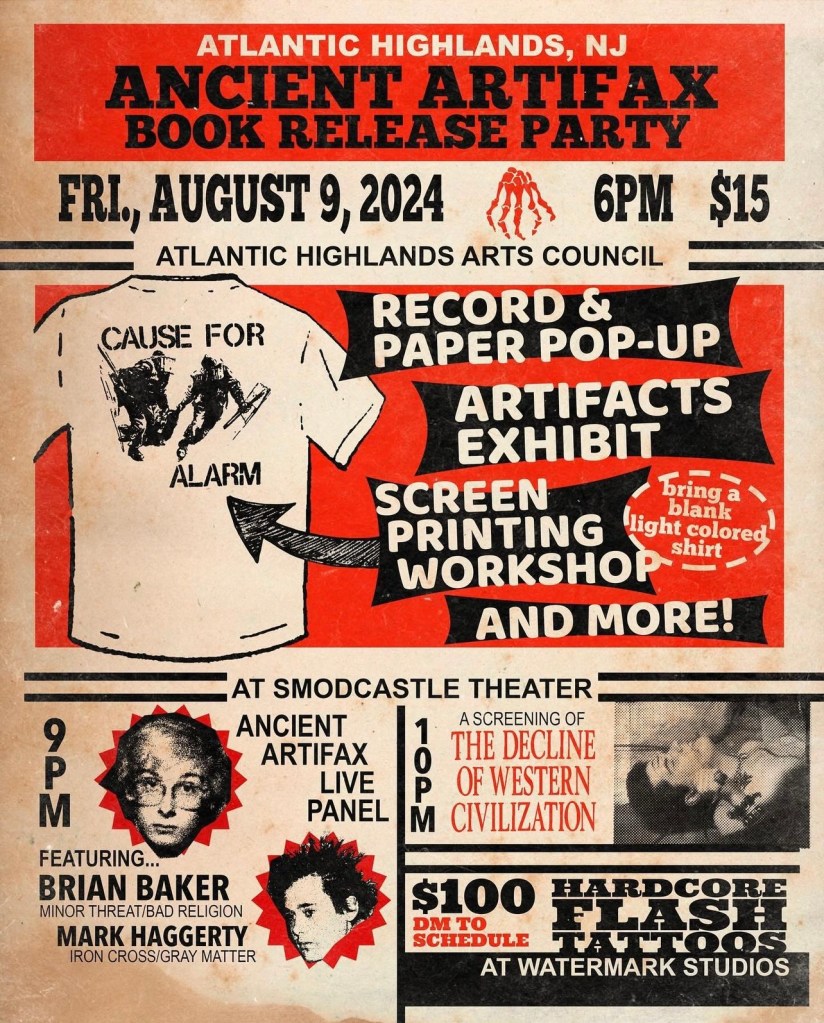
GET to the book release partyAncient Artifax pop-up shop this weekend if you’re in NJ (wish we could be there)! We ❤ you Brian!
Conversations with Punx book

Imagine having the opportunity to engage in profound conversations with the creators of punk and hardcore, spanning from its inception to the present day, diving into the most timeless and perplexing questions about life. These inquiries explore forging a path on your own terms, the art of creating something out of nothing, standing up for what you believe in, changing what you don’t like, the ethos of DIY, the power of community and purpose, and the highs and lows of life’s struggles and wins. Plus, the journey of transforming your life and the lives of those around you, while navigating this often tough world. There are moments of clarity, connection, insight, and profound beauty waiting to be discovered in the pages of Conversations with Punx, a book that formed in its own time over two decades.

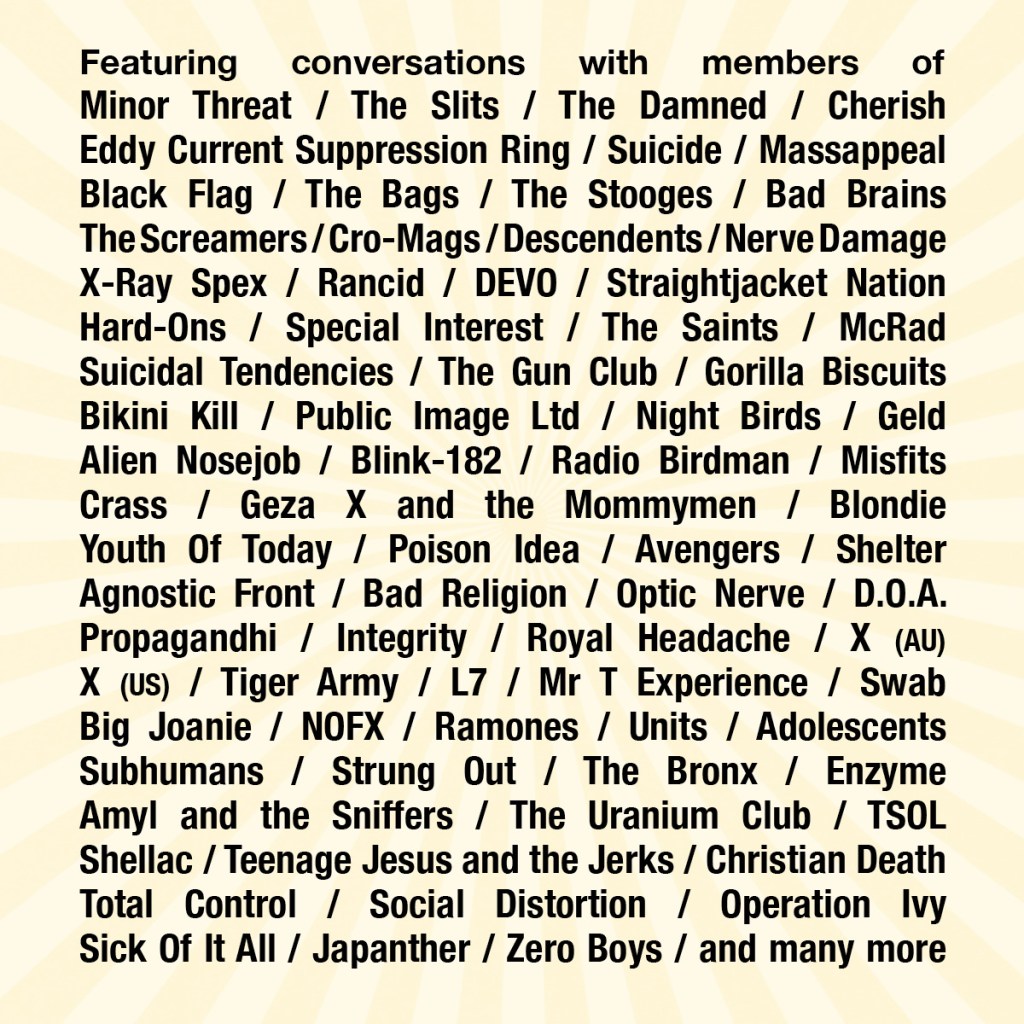
When I (Bianca, Gimmie’s co-creator) was 24 years old in 2004, I faced a confusing, difficult, and heartbreaking situation. Seeking answers and tools to process and cope with what was happening, I turned to interviewing, something I had been doing since I was 15 through making punk zines. I found answers through deeper conversations with individuals from bands that provided the soundtrack to my life: Black Flag, DEVO, Agnostic Front, Suicide, Bad Brains, Radio Birdman, Crass, Straitjacket Nation, X-Ray Spex, Gorilla Biscuits, Ramones, The Stooges, Zero Boys, The Bronx, Misfits, The Slits, The Bouncing Souls, Minor Threat, Suicidal Tendencies, At The Drive-In, Special Interest, Bad Religion, Sick Of It All, Adolescents, Operation Ivy, Eddy Current Suppression Ring, Poison Idea, Bikini Kill, Youth of Today, Hard-Ons, Avengers, Descendents, Big Joanie, Amyl and the Sniffers, and many more. From these 150+ conversations emerged surprising insights. Maybe the wisdom, resilience, and humanity at the heart of punk can spark something in your own life too and change how you see the world.

This isn’t just another book on punk and hardcore; it’s a book on life. It’s not a documentation of a certain place at a certain time, because punk is dynamic and ever-evolving. It’s not a thing of the past; it’s happening right now in cities and towns all over the world. What you know of punk is not its only story; what you know of life is not the only possibility. Punk is a big wide world with a lot to offer.

The book is limited edition. 450 pages.

Cover art by: Mike Giant

GET the book at: https://conversationswithpunx.bigcartel.com

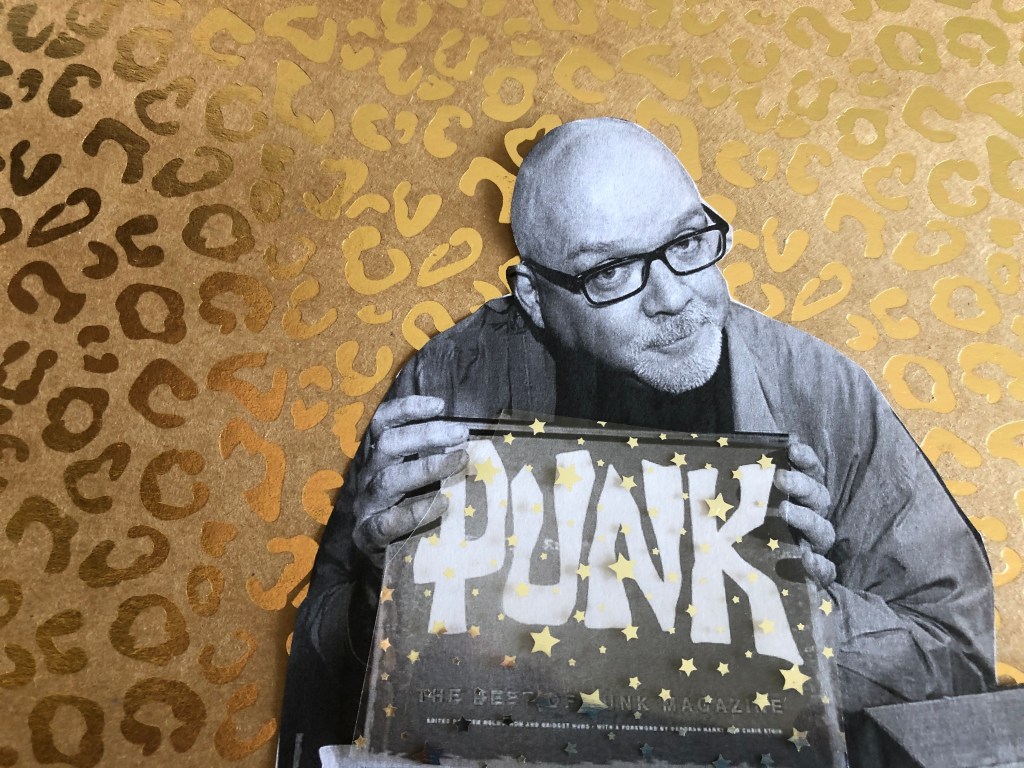
Artist, Publisher & Creator of Punk Magazine, John Holmstrom: “I always felt the goal of punk is to free up your mind…”

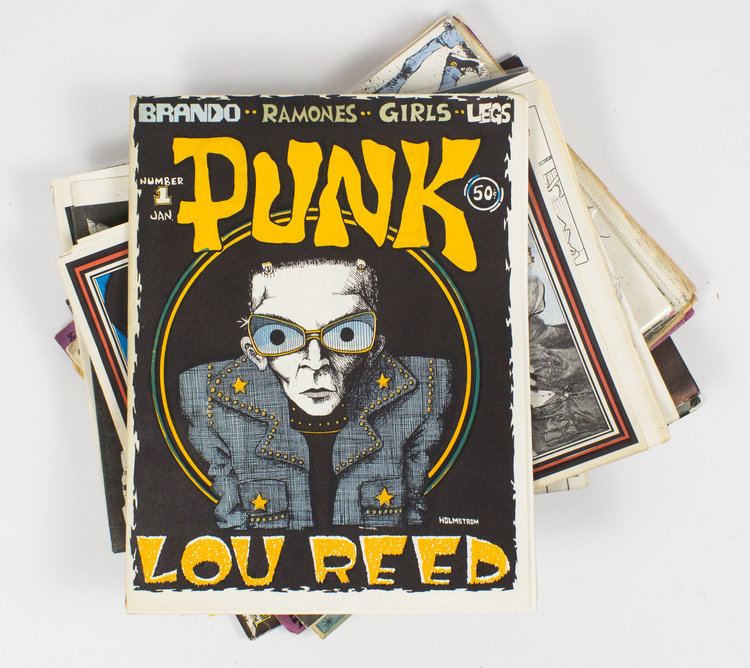
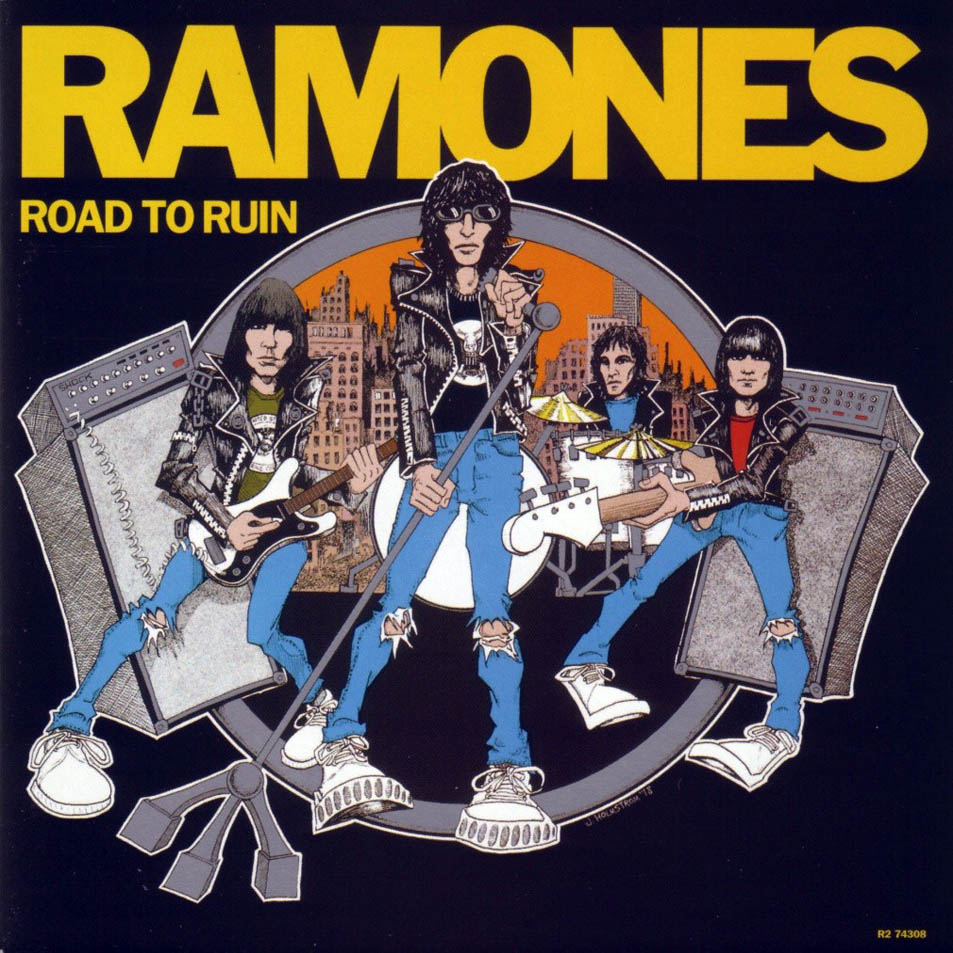
The first punk zine to exist – Punk Magazine – launched on the 1st of January 1976 featuring a cartoon cover of Lou Reed drawn by John Holmstrom, who also interviewed Lou for the début issue. Punk mag helped popularise the term “punk” as well as the CBGBs scene. Their first issue had an interview with the Ramones before they even had a release; an outtake from the photo shoot accompanying the interview was used as the image for their first record cover. Holmstrom would later illustrate the Ramones’ Rocket to Russia and Road to Ruin albums. Punk was also pioneering in giving space to female writers, artists and photographers, at a time when publishing was very male-dominated. It would go on to inspire countless other punk zines that came later including UK zine, Sniffin’ Glue.

Holmstrom would also go on to work on zines Comical Funnies and STOP! and later edit and become the publisher of marijuana counterculture magazine, High Times, throughout the ‘90s. 2020 sees Holmstrom at the helm of yet another magazine called, Stoned Age, which “intends to bring back the fun of 20th century marijuana culture, when it was the choice of hipsters, beatniks, jazz musicians, hippies, and other misfits.”

We talk to John about all this and more: the C.I.A. sabotaging Punk, life as an artist, being arrested for smoking weed, creating a social movement, freedom of speech, interviewing Lou Reed, Ramones…

Why do you love to draw?

JOHN HOLMSTROM: Well, I don’t really love to draw [laughs].

Really?

JH: It’s work. I loved to draw as a kid, but once it’s your job it’s… sometimes it’s fun. There can be very fun moments, but most of it is pain! It can look horrible but you have to keep working on it to make it look good. The best moment in life is when you finish a piece and it looks good. I remember times, like when I finished the cover of Punk #1, or a record cover or something; there’s just no feeling like it, it’s better than sex [laughs]. The pain and suffering and trauma you go through – at least I go through because I am such a perfectionist – is gruelling. You’re just sitting there saying, ‘what can I do to make this look better? It looks terrible. Why am I even trying?’ At times I’ve abandoned drawings because it’s just not living up to my standards.

Punk Magazine Issue #1

Before I went to art school it was more fun, I’d just doddle in my notebook to distract myself from high school teachers. I got in trouble once for drawing a caricature of them, he saw it and I was forever in trouble ever after with the authorities. It was hard work going to school and trying to learn how to become a professional and try to learn to actually get paid for what I do—which is really tough. The rates artists get paid are pretty much identical or even less than what we made in the ‘70s. It was a golden age, the 20th century, for publishing. It all disappeared. People don’t pay you very much for your work on the web. I don’t know how these kids do it? I guess they know how to work social media. It’s always been tough to get paid for illustration, I always made more money from writing; that’s how I fell into writing and becoming an editor. When I couldn’t get someone to publish something that I did that I liked, I’d publish it myself, that’s where I learnt the business side of publishing. That came in handy when I was the publisher of High Times magazine in the 1990s. One of the frustrations of doing art, when I take on a commercial job, the client always makes some demands and you don’t always enjoy what they want, as opposed to when you do something for yourself; people don’t really want to pay for that ‘cause it’s not what they’re looking for.

I understand what you’re talking about, my husband is an artist and he struggles with the exact same thing, as well as chasing up payment from clients; clients can have such unrealistic demands or want you to do something you just know in your heart, as an artist, it’s just not going to look great.

JH: Yes! Exactly! They’ll want something like two inches by two inches and they want it to be a crowd scene with a million people and everything has to look prominent—it’s impossible! If you can actually do it, then it’s your fault it doesn’t look great, you can’t give them what they want. Art Directors recently of a national magazine, would be tasked with a publisher’s idea of a good cover and they thought it was a terrible idea but they would do it because it’s their job, then when it doesn’t sell they get the blame for a bad idea. There’s always the idea and the execution of the idea.

Being a publisher for yourself and for High Times magazine, which also ended up being for yourself; what are the things that you think make a good publication?

JH:  Well, that depends on what your goal is. I’m actually enjoying the response to my latest publication, Stoned Age. It’s kind of like my revenge on, High Times! At High Times we were always told you have to put this much information about this and you gotta do that; even though it was a really creative place to work, there were still restrictions. So I’m putting out the kind of magazine I would have liked to put out back in the ‘80s and ‘90s. It’s getting a fantastic response. I’m working with a great Art Director, Kevin Heine, who worked at Screw for many years, and a very understanding publisher, Harry Crossfield. It’s the art of collaboration to put out a good publication. It’s like being in a band as opposed to being a solo musician or a stand-up comic. If you put out a personal zine and do everything yourself, you have a limited audience, at least if you’re a control freak like so many of us are, you get to say what you want. If you’re going to put out a publication that is going to reach a lot of people, put it out frequently and attract advertisers and the rest of it, you gotta work with good people—that’s the first thing you need to put out a good publication.

Your team needs to understand your goal and the objective, for lack of a better term “the mission statement” that branding people and corporate types like to bring up, which I think is kind of stupid. It’s all about the idea and the execution of the idea. Whenever if comes to anything, whether you’re in a band or you’re an artist or a cook, right? The thing about magazines that we often talk about is… if you’re going to bring out canned beans, you want to pretty much bring out the same thing, you want consistency, you always want the beans to taste good… but when you bring out a magazine you have to bring out something that looks different every week or month, but then stays the same—that’s tricky. It has to be recognisable. You can’t put out the same thing and information every month but you still have to appeal to the reader.

One of the things I really love about Punk was that you did interviews but the format you presented them in was in a comic book style, I feel like it really gave interviews a new life and was different from how I’m used to reading them.

JH: That was an idea that I got from Harvey Kurtzman. He interviewed two of the greatest actors of the 20th century for Esquire magazine in the ‘60s – Marlon Brando and James Cagney – he did it in an illustrative cartoony interview style. That impressed me a great deal. I’ve always enjoyed integrating photographs into comic books. Jack Kirby did it a few times back in the old days of Marvel, he would run a photograph in the background and put a cartoon character on top of it, it really struck me. Getting the best of both worlds, integrating comics with photographs and text is fun!

I watched a documentary a little while back that featured you in it and you mentioned that you were known as a “Bigfoot” artist, that you draw characters with big feet and grotesque features; where did this style develop from?

JH: That’s the official name from the kind of cartooning style, it’s called “Grotesque” or “Bigfoot” by people in the business. That’s where you exaggerate features, you’re not trying to capture real life, you’re trying to stretch reality into a more exaggerated style. The cartoonist, the funny guys that I liked were, Don Martin and Jack Davis; they had very original crazy styles that were never to appeal to a lot of people. I like weird stuff, the weirder the better. There’s also Basil Overton, he does the most grotesque of all-time; when I was in 8th Grade he did a series of bubblegum stickers, ugly stickers as I remember, they were very popular with kids back then. You know how at a certain stage you love monsters and stuff? R. Crumb, Robert Crumb, was a big influence on me.

What’s been one of your proudest moments as an artist?

JH: That first issue of Punk. I knew the moment that I sat down with Lou [Reed] and asked him about comic books, he named the artists, he named Wally Wood and Bill Elder and EC Comics—I was so impressed… I always thought there was a thread that joined music and art and I’ve seen this happen a lot, a lot of musicians are visual artists or appreciate visual art and vice versa… I’ve always thought that comics and rock n roll music, popular music, often express the same popular idioms. Like in the ‘50s when you had rock n roll music starting off, you also had EC Comic books. Both Elvis and EC Comic books were supposedly promoting juvenile delinquency. In the ‘60s you had acid rock and the psychedelic bands you also had underground comic books, which were influenced by LSD, marijuana and open attitudes towards sex. When we brought out Punk I feel we were continuing that tradition; punk rock was happening and the magazine was creating the visual imagery. It helped propel the punk thing into a movement. I always say that Punk magazine is when the punk movement really began because when it was just music and it didn’t have that visual element it wasn’t a full blown social movement the way it became. Not many cartoonist can say that they helped create a social movement like that, so that’s a pretty proud moment!

I have a copy of that first edition of Punk #1 that my husband bought me for my birthday. I remember when I first slid it out of the plastic packaging it was in, I just stared at it, at your art on the cover, for the longest time. I couldn’t believe I was actually holding it in my hands, I even got a little teary. As I started to unfold it and take in each section it was a really special moment. Still to this day I haven’t seen anything like it, it’s really unique and special.

JH: Thank you. I don’t think in that first issue there is any typeset whatsoever, every single advertisement, every whatever is hand-lettered. As you can imagine, I’m not too fond of the digital age. People are always telling me that I should turn my hand lettering into a font, but what’s fun about hand lettering is that each letter can look different; if it was a font every letter would look the same and it wouldn’t be hand lettering. I like analogue technology and I think digital strips away creativity and a lot of imagination.

With Punk magazine, from what I understand is that, you were trying to get people to rebel. When you did High Times magazine also, that had a rebellious spirit also; have you always had that in you?

JH: Oh yeah! I got into a lot of trouble when I was a teenager. I was growing up during the Vietnam War, when I was around fifteen/sixteen, it dawned on me that when I turned eighteen I would be drafted and sent over to the jungles to kill people. That’s a real wake up call, to be that young and face that kind of reality. Some of the other kids that had come back from there would say, “Whatever you do, don’t get drafted and go to Vietnam! It is the most horrible experience that you could ever imagine.” It was hell. I saw it with my father too, he was a veteran of World War II. He was captured in his first mission and spent the entirety of America’s entry into World War II behind barbed wire. He was an illustrator and he did a book when he came back from the war and published his sketches. He even worked on The Great Escape, he was a Forger; if you’ve ever seen the movie The Great Escape, they have a character that represents the Forgers. I grew up around art, it didn’t seem like a big deal for someone to sit there at a drawing board and make a living doing it. Sorry I got a little off track; what was the question?

Have you always had a rebellious spirit? It seems to be a commonality running through all you do. Also, you seem to be in places at exciting times with a current of change, you seem to act as a conduit that helps bring things to a greater audience.

JH: At school I was an A student before high school. I always did really well in academics, but by the time I got to high school, they were teaching a bunch of bullshit that was irrelevant to my life. I saw these smart kids, these academics just swallowing it all and to me it was like—wake up! A lot of people were provocative back then, I always related to provocative art, stuff that would be shocking and make you think, that gives you a different perspective on things; that is the most important things people can do. I’m not a bomb thrower, I’m not a revolutionary, I think politics is a bad thing for artists to get too involved in, especially now with all the crap you see in The ‘States about Trump. Who cares who the President is?! Politicians are all horrible people, it not like Trump has a trademark on being a horrible person. All politicians suck! We had a funny comic in Punk that Bruce Carlton did where we turned sacred cows into hamburger, I always liked that. Whenever people have this belief system that, this politician is such a good person they’re going to save us or whatever, or they idolise a musician, I’m against it! I’m a “Groucho Marxist-John Lennonist”. I was always influenced by a lot of things Groucho said, he had a great philosophy – “I wouldn’t join any club that would accept someone like me as a member” whatever it is “I’m against it”. It was great stuff. I was very influenced by The Marx Brothers in high school. Comedy is something that should be provocative. It’s having a hard time right now, there’s just a political correct philosophy and people who are expressing unpopular ideas are being attacked and even censored and banned. It’s horrific to me! I believe in the Enlightenment, one of my heroes was Voltaire. One of the famous stories about Voltaire is that he had two houses, on either side of the border of two countries and whenever he got one government pissed off at him and they wanted to throw him in jail, he’d just go to the other house across the border. Then when that government came at him he’d go back to the other house, he just kept avoiding the authorities. He had so many wonderful writings and philosophy.

People should be able to say what they want. They also have be aware that what they say could have repercussions but, they should still be able to have a voice. It’s ok for people to have different opinions.

JH: It gets beyond that because the philosophy of free speech in my mind is that free speech is not there to defend popular rights, it’s there to defend unpopular speech, even hate speech. I got into a big argument with a friend of mine, Rufus Dayglo, we were together at a comic book festival, he wants to ban hate speech. I just couldn’t understand this. Hate speech is horrible, it would be good if people would not use hate speech but, on the other hand, if you squelch it then how are people going to understand what hate speech is and why it’s horrible and how stupid the people are who use it. It’s like, you gotta trust people to be adults about things and make up their own minds. A lot of the attitudes that people had a hundred years ago were really horrible, the racism and the intolerance they had… that gets back to it; what is tolerance? What do you tolerate? What is intolerable? Hitler was intolerable, that’s why the world went to war to get rid of that guy. But if you don’t publish, Mein Kampf, you might not understand how evil works and how people get fooled into accepting horrible ideas.

John Holmstrom 1977

I read that you’re working on your autobiography?

JH: I’m working on my book proposal, my agent is interested.  Stoned Age has really started taking off though and I haven’t had time to work on it recently. It’s something that I would like to do, I’ve had an interesting life. I think people don’t really know the extent of some of the stuff that I’ve been through, like people hear I grew up in Connecticut and they assume that I grew up having a sheltered life and probably didn’t go through much, but the opposite was true. My parents had almost no discipline, I could do whatever I wanted to. I was hitchhiking all over the country when I was sixteen years old. I saw quite a bit, I went to rock festivals. Here in New York it was a rough time, it was not a safe place to live, some crazy things happened. I was homeless for a while…

That was just before you started Punk, right?

JH: Yes. It was pretty crazy, I went from sleeping on a friend’s floor to being on top of the New York City rock scene in a matter of months. Then I ended up almost homeless again a few years later [laughs].

I read that there were issues of Punk that were ready for printing but they didn’t make it; weren’t they lost at the printers?

JH: Yes, there were lost issues, it was so heartbreaking. Our ninth issue was going to put us over the top! I actually think that the C.I.A. infiltrated Punk magazine and put us out of business. I don’t talk to Legs McNeil anymore, I’m just over dealing with difficult people at this advanced age… one of the last times I saw him, he told me that he was roommates with this guy that was working with us and that he came across this briefcase and there was all of this classified government information in there, I think he was working with the C.I.A. I didn’t say it at the time but I thought about it and I was like, why didn’t you tell me back then? I did a stupid thing, we decided to fire the publisher, he just burnt through this huge investment that we got, he just threw it all away ‘cause he was pissed off at me and wanted to get back at me. He figured he’d put us out of business. Then this other guy who worked with him was running things… it’s right after I went to Australia, I fired the publisher, I had to leave for Australia, my mother took me and my sister down there. The trip was so important to her, her own mother had died the day before we were going to leave, and she skipped the funeral to go to Australia. It was the biggest thing in her whole life. When I came back, I’m returning to the office and I see a dead rat in front of the office on the sidewalk, I go inside and Legs just said he killed the rat that was going out of the back… we always had mice and roaches but all of a sudden we had rats, it became unlivable there. I was told that Punk went out of business, all this terrible stuff had happened while I was gone. I think it was sabotaged. We did manage to bring out another issue. It’s such an incredible story I hope I get to tell it all—this is what it’s like to work in the underground.

The F.B.I. and our intelligence agencies were so determined to supress rock n roll then, in the underground, and in the ‘60s, that they would hire prostitutes to have sex with the underground newspaper editors and give them a venereal disease… a lot of crazy stuff happened! There’s a program called, Cointelpro, look it up… one of the people who helped us out the most was Tom Forcade – he was the publisher and founder of High Times and was also at the top of the list of underground newspaper people that the government wanted to stop; he actually ran the underground press syndicate, which consisted of over 200 newspapers and magazines covering everything from Native American rights, gay rights, you name it. Punk was among his favourites, I think that’s why we got in trouble with the powers that be, it’s why I think there’s credibility to the theory… I mean we probably would have went out of business on our own, ‘cause we were stupid inexperienced kids but… you know, they couldn’t risk us being successful.

Out of everything you have been through and all the successes that you’ve had; how do you define success for yourself now?

JH: That’s a good question. I feel like I’ve been successful because my work has been… lately it’s just exploding! My work is on permanent display at the Rock n Roll Hall of Fame, my archives went to the Beinecke Rare Book and Manuscript Library, Yale University in Connecticut near where I grew up… but, I don’t really have a lot of money, I really struggle financially, that’s how it is when you’re an artist. Nobody wants to buy your stuff until you’re dead! Then the prices go through the roof, we’re always more valuable dead than when we’re alive. I can’t, for myself, consider financial success as any kind of marker. I’d like to be financially successful and I try but, life is what it is. You have to accept what you can’t change and change what you cannot accept, and all those clichés.

I find it really inspiring that no matter what you’ve been faced with, you keep going. Following all the things you do, I’ve noticed that you always seem so positive. Even in an interview I’ve watched where someone poses a question to you where it’s obvious they’re looking for a negative answer or just want gossip, you turn it around into something positive.

JH: Thank you! I get accused of being negative all the time [laughs]. People have said I brood, I’m Scandinavian, we tend to be a little on looking at the dark side of things. I try to stay positive. If I succumb to hopelessness and despair, I’ll end up homeless again. I work to live. I need to keep making money, I need to keep doing things. It’s always nice to be recognised, one thing about being an artist, you don’t hear the applause… when you’re a musician or a comedian or actor you go on stage and people applaud and you get all this recognition for what you do… when you’re an artist you’re sitting all by yourself, Harvey Kurtzman called it “the loneliest job in the world” ‘cause you’re all by yourself doing a drawing for hours and hours, days and days, sometimes even weeks; I barely talk to anybody. You have to believe in yourself, believe in what you’re doing and really I think the ultimate goal is to do something that everybody likes. A lot of people don’t like comics or cartoons, it’s a difficult thing, and people that usually like them are cartoonist themselves. There’s not a vast audience of people that spend money on comic books and cartoons, comic books are going out of business left and right. I heard that Marvel is no longer going to print comic books!

What?!

JH: Yeah, apparently they did market research and most of the people that see the movies aren’t even aware that these characters first appeared in comic books. Even the best titles only sell about 30,000 copies. Our local comic book shop, St Marks Comics, just closed; a lot of unhappy people about that. They’re going to sublicense their titles and have other publishers take the risks. It’s so difficult now to print anything, energy cost and shipping costs so much. 10 years ago I could ship things overseas, I have an eBay page and I can’t sell anything to Europe or Australia or even Canada because it costs a minimum of $35 for one magazine. Selling a something for $5 and then charging that much for shipping, it’s an impossible economy.

I totally can relate to that, having done zines for 25 years and shipping all over the world, the shipping is crazy. I have a book coming out next year and I’m really terrified of how much postage will be to post it to people.

JH: Well, hopefully that’s where things like print-on-demand will help. There’s a book store here in New York called, Shakespeare & Company, if they don’t have the book in stock, they’re going to have the technology to print it in the store and sell it for around what the book price is.

Wow!

JH: Technology is pretty amazing. Bringing out Stoned Age, we couldn’t have afforded to stay in business if this was twenty year ago, back in the day when you had to take pages and shoo them on film and put the film on plates and use the plates to run off the paper. I remember hearing in the ‘90s they were already developing disk to paper, which blew my mind… that’s what a PDF is and how they all are producing these publications. Instead of the old technology, paying for the plates and film and set up, with the PDF you’re just running off a photocopy, you’re just paying for paper and ink. Very cheap to print newsprint, but what’s costing us an arm and leg is shipping it. The West Coast is where our biggest demand is, but we’re afraid of what the shipping bill will be. I recently sent some to my friend Lindsay [Hutton] who does Next Big Thing in Scotland, he’s a great guy; one of the early 1970’s fanzines inspired by Punk. It was pretty interesting that within months of our first issue there were similar fanzines coming out all over the world.

I remember seeing the cover of the first issue of Punk in a book in my local library, as a teenager I’d never seen anything like it. The work you’ve done is influential, you started punk zines, something which I have spent my life doing. People found out about punk because of you guys.

JH: Thank you. One of my favourite stories is that, when I visited Sydney in May or June ’77, I’m with my mom and sister walking down the street and I saw Rock Australia magazine on a newsstands… I picked up a copy and I opened it up and there was this huge image of Punk #1 inside! I was like, “Mom! Look at this!” They were like, huh?! I can’t remember who the editor was, but he was really nice to me and looked after me wonderfully. He took me to the local club and introduced me to The Saints and Radio Birdman. The Saints were doing their big farewell gig a couple of years later and I couldn’t attend because we were on a tour, I missed that. I went to White Light Records, are they still a thing?

No.

JH: Aww that’s sad. They were a great, great record store. The owner gave me a copy of The Sonics LP. Everybody treated me so wonderfully. One of The Saints was so down on New York, he preferred the London scene [laughs], he gave me a hard time, bunch of punks!

I’ll send you a mixtape of Australian bands that are around now. Australia really has one of the best music scenes in the world, so many incredible bands that the rest of the world doesn’t even know about yet.

JH: I’m glad to hear that! I try to bring this up when people asked about punk starting in New York or London, well The Saints had single of the year in 1976, “(I’m) Stranded” was a huge punk single. How do you explain that? Punk was a worldwide thing, everyone was influenced by the same bands – Alice Cooper, The Stooges, MC5 etc. etc. It didn’t’ start anywhere, it started everywhere. Australia… even when I was working at High Times, we’d hear about Nimbin, a famous hippie commune place and hearing about how wonderful it was down there… it’s an interesting part of the world. Australia is a very interesting island continent.

People have always told me with my writing, making zines and stuff that if I really wanted to make it I’d have to go to New York, Los Angeles or London, but I always thought that well, if everyone goes to those places, who’ll be left here to make stuff?

JH: I would enjoy if I could have to stay in Sydney. There was an interesting fashion thing going on, women wearing this really interesting style of makeup… I remember seeing all of these buildings going up in Sydney and it really looked like a place that was going to take off and really become cosmopolitan; it was really like New York in a lot of ways… big city, interesting neighbourhoods, an underground scene—you don’t see that everywhere.

Doing the magazine Stoned Age and being the editor/publisher of High Times; do you smoke marijuana yourself?

JH: Right now I’m not a big user. The thing about my marijuana use is that I smoked a lot of pot as a teenager, I really got into it. I started when I was fifteen, in a few months when I turned sixteen and got my Driver’s License I was arrested with some other kids. Being sixteen, one other was my age and the other’s younger, so their names weren’t even in the newspaper—it was the most traumatic event of my life.

Wow!

JH: Yeah. It ruined my life. I smoke pot now and then through the rest of my life. At some point I’m like, I don’t’ want to smoke it until it’s legal and safe. It’s still not legal here, I want to go into a store and buy it. I don’t’ always enjoy it, it’s not something that I like to do socially, it makes me feel self-conscious and it screws with your sense of time. I enjoy it mostly when I’m cleaning my apartment; I get stoned and always end up cleaning my apartment. It has its use. I’m an insomniac and I’ve heard that there is certain strains of marijuana that can help with that. They keep saying that they’re going to make it legal in New Jersey but there’s an incredible push back against it, all the media is focusing on is the negatives and how dangerous it is. I’m a good example of how dangerous it is to make it illegal, when I was arrested I was almost put in prison, some of my friends from high school were sent to prison and they were raped. Now it’s like, what’s worse? Smoking pot and getting paranoid or getting thrown in jail and getting gang raped and getting AIDS and dying. It’s insane. The prohibitionists, the people that want to keep it illegal are out of their minds! Not to mention, the intrusions into privacy rights that the drug wars have created.

When I started working at High Times, we got a report that the Attorney General, Ed Messe, was planning to put us all in prison for the crime of publishing the magazine. The government tried several times to put High Times out of business. Now years later, politicians are praising marijuana because it’s going to save their economy!

Now that’s two publications you’ve created that the government has wanted to stop!

JH: Yeah, well I tell people, I hate the Two Part System because the democrats put me out of business and The Republicans –Jimmy Carter was president when Punk was put out of business – tried to put me in jail and put me out of business. I hate politicians! I hate all of them!

I saw an original artwork of Punk #1 come up for sale and I think it went for $19,000?

JH: The original artwork, yes. For what I understand, I gave it to Harvey Kurtzman when the issue first came out, I felt I owed him everything… he kept it, this guy Denis Kitchen that was running his estate decided to sell some of Harvey’s art collection, Harvey’s widow, Adele, needed some money and they’d determined that it was the most valuable piece in Harvey’s collection, which is amazing really! He would have had so much great art work for so many different people, I was surprised, I figured R. Crumb would be worth more. They put it up for auction and it sold for $16,000. I read in the New York Times that Rubén Blades, the Latino musician, had acquired it. I looked into it more, apparently he worked with Lou Reed and he bought it because he was a fan of Lou’s. They even did a recording with Dion from Dion & The Belmonts and I think David Johansen was involved. Rubén sounds like a cool guy! I emailed him through his website and I offered to authenticate the art. I have seen bootlegs of my artwork. Someone brought up a “Road To Ruin” artwork and we couldn’t work out where it came from, it looked a lot like mine but it had a different title on it. I think someone traced it and used it as a bootleg.

Do you have a favourite issue of Punk mag?

JH: Mutant Monster Beach Party! That was #15. That was my masterpiece I think. It was so much fun. It pretty much put us out of business, it sold terribly. Now it seems people have come to appreciate it. The entire issue for the most part was a photo comic starring Joey Ramone and Debbie Harry. We had guest stars Any Warhol, Edith Massey and Peter Wolf – who was very famous as the singer of the J. Geils Band, he’s married to Faye Dunaway, one of the most famous movie actresses at the time – he called us up because he wanted to appear in a photo comic, we had the perfect role for him. Andy was very cooperative, very approachable, his factory was just on Union Square, downtown in the neighbourhood. It was so much fun. We scribbled cartoons and graffiti-ed all over them and drew a monster in. That was the best!

At the time did it feel like a real pinch yourself moment?

JH: All the time. I was hyperaware at the time that we were doing something important. I saw some article recently that said something like, “no one would have ever believed in the ‘70s that some day the Ramones’ music would be played in a football stadium.” That was the first thing that I thought when I saw them. I was like ‘Blitzkrieg Bop’ would be perfect to play in a stadium [laughs]. I’m not shocked at all that their music is played at sports events, I was amazed that it didn’t take off right away and they’d be like The Beatles! They were so great. Their music was amazing. This is why I think that something was afoot! It took twenty years for people to catch on… its very strange.

We have a huge Ramones vinyl collection, they’re one of our favourite bands. There was a band we saw just the other night at our local called, The Arturo’s…

JH: [Laughs] I think I’ve heard of them.

It’s amazing that these things that you caught onto early, and helped give visibility – the Ramones were in your first issue – is still having an impact and people in my city all the way over here are influenced it.

JH: I saw someone at The Continental years ago, I forget what the show was but, there was a guy there that had the Road To Ruin art tattooed on his back. Seeing tattoos of my artwork is always the most amazing thing. Someone had a large pinhead with the “Rocket To Russia” on his arm. I’ve see so many tattoos, it’s really great. I remember years ago they had a festival in Australia where bands were playing Ramones…

The Ramone-a-thon!

JH: Does it still go on?

No. It ran from 2000 to 2007 in my hometown Brisbane and raised money for charity.

JH: I thought it was one of the best things ever.

With the Road To Ruin artwork, I understand that you redid/reworked an idea of art that someone else had done, but then you finally got to design something yourself from scratch with the Murphy’s Law record, right?

JH: Yeah. I thought that doing Road To Ruin would lead to doing more record covers but for some reason it didn’t sell that well and I think I took some of the blame for that, even though I was just following orders. I was working at High Times and Jimmy [Gestapo] the singer and some other band members came around and they wanted to me to do a drawing. I did a bunch of sketches, I still have one of the rejects around here somewhere. It was terrible because I did a record cover and they shrunk it down to a CD size, it lost all its impact; I think it would have looked great 12×12! It kind of disappeared, I did have a crowd scene around it. It didn’t look terrible but, it looked better as a poster. They were great to work with, really great guys, put on a great show. The hardcore scene…I wasn’t immersed in it, I was too busy working and trying to make a living. It’s an interesting phenomenon here in New York City. Was there an Australian hardcore scene?

Yes, very much so. There’s still one. A lot smaller of course and a lot of bands were influenced by New York hardcore bands, West Coast hardcore punk bands or Japanese hardcore. I grew up listening to NYHC and L.A. ‘80s hardcore punk, Washington D.C stuff too.

JH: I never liked the L.A. stuff too much, like a lot of New York bands I’m not so crazy about. It sounds better now than it did then, it’s crazy… I like the Ramones but I didn’t like hardcore… like what happens with the Ramones, it takes twenty years to get accustomed to it and then you like it [laughs].

Do you still listen to music a lot?

JH: Oh yeah! I don’t listen to a lot of new music. Right now I’m listening to a lot of Velvet Underground, it’s one of my favourite bands of all-time. I got into them very heavily when I was going to school here in New York. That’s like, when I got to Lou [Reed] it was like, wow! The man! I’m such a big fan of all of his stuff. Jimi Hendrix, I like. What else? All kinds of weird stuff. I like the Phil Spector stuff from the ‘60s. I’ll play it on YouTube and then I’ll get all these random songs pop up, I end up listening to all kinds of stuff, the way you would if you listened to the radio.

One interesting thing is punk rock from behind the “Iron Curtain”. They really censored punk rock. Some guy wrote a book claiming that punk rock brought down the Berlin Wall!

Punk really has had an effect on so many things, it’s incredible. You were there when it was forming. It just blows my mind.

JH: It blows my mind too! I was lucky, but then I’m so unlucky in everything else, like making money. There’s punk rock millionaires, people that have made a lot of money from punk… I’m like, oh, I missed that bus, along with a lot of other people in punk. Money isn’t everything though.

No, it’s not. I’ve been doing what I do for 25 years, interviewing, making zines, bringing visibility to bands and art that I love, sharing that with people, I work part-time in a library to pay bills. I get to do what I love just because I love it, there’s no compromise.

JH: Oh yeah, I look back at my life – I’m old and probably not going to be around much longer – but I think about my life and think, wow! I got to go on the Sex Pistols U.S. tour! I got to talk to Lou Reed and hang out with him so many times, he loved our first issue. I became friends with the Ramones and would go to their shows all the time… so many interesting experiences—you can’t trade that for anything! You have people now, like rich people, that buy “coolness” and spend all this money on old rock n roll clothing… you can’t buy cool! Sorry.

Totally! Is there anything else you’d like to tell me?

JH: Let me think… we’ve gone through a lot. You’ve done a really great interview, it’s been so nice talking with you. I’m always honoured that anyone would care enough about my work to talk to me about it. It’s always an extreme honour and privilege. I hope you encourage people to check out my work because I’ve done some interesting things.

Absolutely! I really wanted to talk to you and share what you do with others, I think you are extremely underrated! Talking to you has been a dream come true, you were the pioneer of what I do. Your resilience and your positivity is inspiring.

JH: If you read what I have to say I think people could see things as negative, especially people who want to suppress hate speech, freedom of expression, marijuana – how could you encourage people to take marijuana you must be out of your mind, you belong in jail… that kind of attitude. I guess those people would see me as negative. I’m a baaaaad influence! [laughs].

I’m really looking forward to “The Art of the Interview” event I’m doing this Thursday. Steve Blush is interviewing me, like you, he’s interviewed a lot of people. He interviewed Robert Plant for High Times. We dug up an old photograph of Robert Plant where he had apparently been arrested for marijuana. There were all these hippies around with signs that said ‘Free Robert Plant’ and ‘Legalise Pot!’, Steve showed the photo to Robert Plant and he got pissed off and walked out of the interview.

Wow!

JH: Interviewing people is interesting, right?

Totally!

JH: ‘Cause once in a while you get the unexpected ‘cause it’s real life and we’re really talking to each other.

Yes!

JH: We’re not inventing it.

It’s one of my favourite things in the whole world. When I was fifteen and in high school, my mother would drop me off at the front school gate, I’d walk out the back gate and go to the train station, catch one to the city and find bands I loved that was touring and interviewed them.

JH: Where would the interview appear?

In my punk zine.

JH: That’s really cool!

All the bands I loved wouldn’t be covered in the magazines I’d buy at the newsagent and I loved them so much and wanted to let everyone know, that’s why I started my own publication.

JH: Have you ever reprinted them or made a book out of them?

No. But I am making a book that will be out this year. I’ve been working on it for 15 years. It’s on punk and spirituality. Not religion, but spirituality and creativity and navigating life on your own terms, doing things yourself, D.I.Y. I’ve spoken to over 100 people in the punk community about living a creative life. I hope it inspires people to create in their own life.

JH: When I worked at High Times, the editor got into “Cannabis Spirituality”. He even did a book called that, interviewing people about marijuana… because a lot of people feel spiritual on marijuana. Spirituality is kind of a difficult word, people get weird when it comes to their belief or disbelief in God. I was Atheist for a long time, I believe in everything now. The world is a lot stranger than people can comprehend. I think what you’re doing is a great idea, I’d really love to read your book. It would be great to see what other people have to say about it. I always felt the goal of punk is to free up your mind and that brings along the soul and the spirit and everything else along with it. I hear from people sometimes and they say, “Punk saved my life! Thank you so much!” There are some heavy things around punk. I applaud you. I applaud you.

Check out: johnholmstrom.com & Stoned Age.