Sweeping Promises may just be the coolest band we’ve found so far all year! If you follow us at @gimmiegimmiegimmiezine you’ll know how much we love their debut album Hunger For A Way Out—we’ve already declared it our favourite release of 2020! Their music is raw, simple, yet spirited and absolutely thrilling. From the bouncy and urgent title track opener with its angular guitars to moody, slower tempo closer “Trust” this record is from go to whoa solid! The vocals alone are so right on that they made our editor cry. Gimmie interviewed Sweeping Promises’ bassist-vocalist Lira Mondal.
How did you and Caufield first meet? Can you tell us about your creative partnership please?
LIRA MONDAL: I met Caufield when we were both undergrads. I was in the basement practice room of the music building playing with some other music majors when I noticed this very tall lanky blond guy peeking in through the tiny window in the door. His first words to me were, “Are you in a band? Can I play in your band?” Soon after that we were writing together exclusively, and have been for over a decade now.
Our creative partnership is rooted in total trust in and respect for one another, something that only comes with having worked together for years. For instance, I used to be very guarded about writing lyrics and would absolutely destroy myself laboring over them for fear that they weren’t good enough to show anyone. But when you’re working with just one other person, there’s no room to be coy or shy. Not if you want to get anything done.
We’ve cobbled together a pretty efficient songwriting method where I’ll play something on bass and he’ll drum along, and then I’ll work out a melody to put on top, and once we’re satisfied, we’ll track it and he’ll put guitar on it while I work on words. We both offer up suggestions to one another – change the riff up here, draw out a vocal part or change some words there. It’s intensely collaborative. Not only is Caufield a hyper-talented multi-instrumentalist, but also a consummate engineer and producer. He’s mixed and mastered everything we’ve worked on, as well as a bunch of other projects. I’m extremely lucky and grateful to have him as a collaborator!
When and how did you first discover music?
LM: It was all around me, constantly. My parents immigrated to the United States from Bangladesh in the late 70s/early 80s, so I heard Lata Mangeshkar mixed in with lots of ABBA and Madonna. I listened to a lot of radio, and as an older Millennial I was one of those kids who would vigilantly post up by my boombox which was always loaded with a blank cassette tape, my finger quivering above the “record” button and ready to strike should the deejay demigods mercifully heed my song requests.
As a solitary kid who was glued to my computer, I spent countless hours trawling through Launch.com, a pre-Pandora/pre-YouTube Internet radio and music video site. Later in high school, I discovered music magazines like Tokion and Under the Radar, which really expanded my horizons. Music magazines were a big source of education and inspiration for me, and I cherished the ones that occasionally came with compilation CDs.
Speaking of compilations, another absolutely vital part of my musical upbringing came in the form of a highly influential mix CD my older brother and sister-in-law made for me when I was 12. It featured a bunch of Mazzy Star and Portishead and Björk, and it changed my life, most notably by curbing my (troubling) Red Hot Chili Peppers habit.
How did Sweeping Promises come into being?
LM: We were jamming one night in this abandoned science lab-turned-art/gallery space that Caufield miraculously had access to through his grad department; it was sometime in late 2019, and we ended up writing “Hunger For a Way Out” in about 20 minutes. It wasn’t like anything we’d written up to that point. Since it didn’t fit into any of our existing projects, we decided on the spot to create a project around that song, because we couldn’t just leave it. The next night we were in the space, we wrote “Blue” and “Out Again”, and then we just kept on writing.
I know that you also have the bands Mini Dresses, Splitting Image and Dee-Parts; what did you want to do differently in Sweeping Promises?
LM: We wanted to capture the exhilaration of writing songs in the moment, of irrepressible energy and things just barely holding together. A lot of our other projects featured very in-depth production efforts; we wanted Sweeping Promises to work fast n’ loose.
The band is from Boston, Massachusetts; what can you tell us about living there?
LM: It’s a compact city, but it’s awfully charming. We miss it already, and the neighboring cities of Somerville and Cambridge where we also lived and worked. I personally happen to love the cold, so the snow and single-digit winters suited me just fine.
As for music, it’s very expensive and increasingly becoming hostile to anyone who isn’t in the tech or finance sectors. That said, there is a passionate population of incredible musicians, artists, organizers and promoters, studio engineers, activists, and scene folks who are trying their best to unify the fractured musical landscape of the city, and we are beyond grateful to call a bunch of those people our friends. There’s formidable talent and creativity in Boston and the surrounding areas, and it’s a shame that no one seems to care or notice beyond the music community itself; with venues shuttering left and right to make way for more and more condos that no one can afford to live in (even pre-COVID), it remains to be seen what the musical landscape’s going to look like there. I have hope, but it’s looking pretty grim now.
Your debut record Hunger For A Way Out was recorded using a “single mic technique”; can you tell us a little about this technique and what made you decide to record this way? You record at home don’t you?
LM: With this project we wanted to capture the action of the space we were in, this cavernous concrete subterranean lab. Because it was so naturally reverberant, we didn’t want to have to sort through the sludgy frequency layering that would’ve occurred if we’d mic’d everything individually. And we were riding high on the spontaneity of the songwriting process and wanted to capture that. So we put our one Shure KSM32 in the middle of the space facing the drums, and then I plugged in my bass amp and had it also facing the mic, and we recorded the basic tracks that way.
There are overdubs, of course! There’s no way we could have done the whole thing live just the two of us. But most of those overdubs are all with that same Shure mic, usually keeping it in the exact same position after tracking the drums and bass. It’s on the guitar amp, it’s on my vocals (with the monitor on, so there’s quite a bit of bleed to make them crunchy and ultra-saturated).
Lyrically what kinds of things were influencing your songwriting for this record? I understand that you usually write from an immediate source of inspiration like books and movies. Was it that way this time? Or did you feel you had something to say yourself?
LM: These songs emerged out of feelings of frustration, dissatisfaction, alienation – an acknowledgment that life in late capitalism is harmful and destructive, and a summoning of strength to be defiant in the face of it. Whereas in earlier projects I would tap into some external source like a book or a film for a perspective to write from, these songs are very much my impressions and feelings at the time of writing. I was pulling from everything: my experience in the restaurant industry, the need to “hustle-ify” your creativity, self-care culture.
What do you personally get outta making songs?
LM: I love performing, which for me is the culmination of making music. Songwriting gets me there. One of the hardest parts about quarantine, which I know so many other musicians can relate to, is not being able to perform live and feel the thrill of getting up on a stage and engaging with other people in that immediate and visceral way.
I also love going back to songs we wrote or projects we did years ago, and hearing how much our sensibilities have changed. It’s like a time capsule: I’m immediately transported back in time, and I remember what the recording session was like, where I was at in my life, the mood I was trying to conjure. I cherish that aspect of songwriting – that diaristic, transportive quality.
Hunger For A Way Out’s artwork is by D.H. Strother; can you tell us a little about the symbolism?
LM: David was in complete control of the art for the album, actually! We sent him the record and told him he had free reign, and he came up with these utterly dazzling visuals. They remind me of the experimental visual music films of Mary Ellen Bute and John Whitney with their bold colors and hypnotic, kinetic lines.
I know that you’re very inspired by Ari-Up from The Slits; how did you first come to her music? Why is she an inspiration?
LM: I think it was sometime in high school; I heard “Typical Girls” and “Instant Hit” and fell in love with her vocal delivery, dripping with attitude and playfulness and killer wit. I love how free her singing was, like she was making it all up on the spot, but it’s still very focused and rhythmic and sharp. She, along with Poly Styrene, Exene Cervenka, Vanessa Briscoe Hay, and Cindy Wilson, possessed a kind of no-holds-barred expressivity and confidence that really resonated with me, and still does.
When did you first start singing? How did you feel when you first started doing it? How do you feel now?
LM: Honestly, I don’t remember! I’ve been singing pretty much all my life. I started singing in choirs when I was in grade school, and it definitely became a defining part of my nerdy persona. I loved it. I loved being part of a large group of people, weaving our individual voices together to create a rich, dynamic tapestry of harmony and unity. It’s a precious connection.
In college I studied music with a concentration in vocal performance. I remember bristling at the techniques my instructor employed, feeling extremely self-conscious about the goofy warm-ups and physical exercises meant to strengthen my breath control or develop my whistle register. After I graduated, I enthusiastically unlearned everything I was taught in an effort to bring more instinct and intuitiveness into my singing. Now that I’ve been away from classical repertoire for almost a decade, I’ve noticed a growing urge in me to sing that way again. Funny how that works.
What have you been listening to lately?
LM: Caufield showed me the new Kate NV record the other day. She’s amazing! We admire her other project Glintshake. Earlier in quarantine I came across The Techniques and fell head-over-heels for their song “Travelling Man”. I’m also a huge fan of Erika Elizabeth’s show on MRR called Futures and Pasts, which is a veritable treasure trove of obscure and insanely catchy post-punk from all over the world. Highly recommended listening! Her band Collate also rules.
Outside of doing music, I’ve read that you’re a pastry chef! What interested you about pursuing that line of work? What’s one of your favourite things to make?
LM: It began purely as a hobby/distraction from applying to graduate programs in musicology. Once I realized I was more interested in looking at recipe blogs than theories of music and meaning in Romantic art song, I figured I might as well pursue a career in baking and pastry. It’s one of the most fulfilling and pleasurable ways I can think of spending time. Every small act – measuring ingredients, mixing a batter, kneading dough – is a ritual, imbued with the tantalizing possibility that something sweet lies just within your grasp. It’s tactile and meditative, alchemical. I particularly took to chocolate and spent a glorious year as a chocolatier at a small women-owned chocolate and confectionery shop; now that we’ve moved, I’m learning how to make chocolate from bean to bar, with the goal of starting a modest savory chocolate project. Let me just say, the aroma of cocoa beans roasting in the oven is otherworldly.
How has all the uncertainty in the world due to the pandemic been affecting you?
LM: For the most part I’m able to keep my worries and anxieties at bay, but it’s hard. It’s hard to live in a country where there is no leadership, where our “president” wilfully denies the existence and severity of the pandemic and loses no sleep at night as the death toll climbs above 180,000. It’s hard to see our news cycle portray protesters of racial injustice as “violent mobs” when cops get away with shooting Black people in the back and teenagers can buy automatic assault weapons and shoot activists with impunity. It’s hard to live in a world where millions upon millions of people are living in uncertainty because they’ve lost their livelihoods to the pandemic and are desperate to make sense of a senseless situation. Making music and connecting to other people through music…that helps.
What cheers you up when you’re feeling down?
LM: Writing and recording new music with Caufield. Sharing something I cooked or baked with the people I love. An ice-cold seltzer on a hot day. Watching my sourdough starter grow. Dreaming of a future where shows and traveling and hugs are a thing again.
This year Chapter Music released The Job which is a collection of lost recordings from between 1979-83 of Melbourne post-punk-disco-funk band, Use No Hooks. We spoke to UNH bandleader Mick Earls to get an insight into the band and that era of the Melbourne music scene. They were part of the experimental Little Band Scene. UNH were pioneers and rule breakers, it’s no surprise their music has stood the test of time to finally become revered today.
We’re really big fans of your band Use No Hooks! The album – The Job – of previously unreleased recordings that Chapter Music released this year is really ace!
MICK EARLS: Thank you. Can I ask you what it is that you like about it?
Of course! There’s so much. I really love punk rock but then I really love people that take it further, like what Use No Hooks do. It’s almost like your music has no rules and that there is a real freedom on the record. If you think back to the time period that you made it in and what else was going on, you realise that what you were doing was very different back then as well as even now. The lyrical content is still relevant now too.
ME: Well, thanks a lot! You’ve made a couple of really perceptive observations there about the freedom of it. You mentioned punk and you mentioned taking it a bit further, doing the best I can to think back to what we were thinking then, if you play that record to a lot of people who have a certain idea of what punk was they would think there is no connection because it doesn’t sound like the [Sex] Pistols. What we thought punk did was clear the ground for pop music to start again from scratch, it wasn’t just a new musical style, category or genre; it made it possible for literally anyone again to start playing music without any preconceptions of what they ought to be capable of or what was expected of them.
Fairly soon punk started to think of itself as a particular image and style, which is perhaps modelled on the British bands or American bands like the Ramones, or even going back into the Velvets a bit, these were models for new artists to aspire to, once it started to think of itself in that way it started to lose contact with that enabling idea—that music can start again from scratch. What became post-punk took up that idea and recovered that enabling idea, without feeling obligated to sound like punk. It was quite the contrary to go right away from it while still honouring the aesthetic. That aesthetic was put to work in many ways on many fronts during that period of ’78 to roughly ’84 in inner Melbourne and Sydney too.
In Melbourne it was still really quite a small scene and there wouldn’t have been more than a couple of hundred people who were aware of this and attending gigs and playing in the bands. It was very vibrant! There was certainly a freedom about it. Audiences had had their ears blasted off and they were kind of ready for something that might extend their sensibilities beyond what punk had done, and beyond what punk had wiped away to some extent. There was almost a clear horizon, where people were prepared to accept anything. We were one of those bands together with the Primitive Calculators, with that idea of starting from scratch without preconceptions and musical training. It’s not really a new idea though. If you for instance listen to the early Johnny Cash records in the ‘50s, he and his co-musicians could barely play their instruments but they did it in a way that was unprecedented, very distinctive and completely compelling; they did what they could with what they had without any vision of where it might lead them in the end. That’s the kind of things we were doing with the ‘Calculators.
It must have been an exciting time!
Photo courtesy of Chapter Music.
ME: Yes, there was a real sense that anything is possible. Myself and Arne Hanna got Use No Hooks going with drummer Steve Bourke. We all had sufficient musical experience and knowledge, we weren’t punks or starting off having played for five minutes. We knew quite a bit more than three chords and a beat. We were able to draw on that idea of starting again and to do it in a way anything was possible. We could pull in a really eclectic mix of elements coming from different music like surf, soul, electronic drone music, American minimalism and jazz, which had been taboo during the punk period. There was also disco and eventually the funk and rap that ended up on this LP.
The three of us got going with very minimal approaches to things. We would do things like bring in tape recorders with pre-recorded sound on them like, the TV and news broadcasts, which we would operate through reel-to-reel tape recorders—we were sampling it effectively. Our first band was called Sample Only, that’s what we were doing before we even knew we were doing it [laughs]. This was the kind of experimental process we took but then we started adding more players and changing players. We pretty much devised new material for every gig; a lot of it worked, a lot of it didn’t. There were long-form compositions with blending different elements usually over some kind of pumping beat in parts, then it would drift away into other things. Every now and again we would craft some songs. We had a singer and that singer might disappear [laughs] and if somebody else came along and offered themselves we would usually bring them in in some way or another; that’s what I meant by anything is possible.
You can hear some of that material on the digital downloads that came with this LP, some of the early material. Not so much the audio-collage drone music stuff though, the audio quality isn’t good enough to be included. We had to patch the stuff up quite a lot.
It wasn’t until the final phase of the band, which is the phase that produced the material on this album, that we had anything like a regular set-list and even probably formed songs. It was still experimental, in the sense that I had never written rap lyrics before; I just came up with a whole heap of almost clichés, familiar expressions you’d hear around worksites and hearing people in the media talk about work or politics and so on, that’s where I drew all that from. I thought of rap as a sort of rhyming machine.
At the time we had been playing these long soul, funk, disco grooves with a four-piece. After our singer Cathy Hopkins left, and our saxophone player at the time Michael Charles left, we just decided to bunker down and try to play long grooves that were danceable. We all loved American funk. We acquired a fabulous bass player called Andre Schuster who could play in that style, like the band Chic for instance. Steve the drummer left and Arne switched to drums because we wanted a more basic drumming style with steady beats and good solid tempos, which he could do without having prior experience as a drummer. Here we were on the punk idea—just do the best you can with what you’ve got!
Hearing that material now for me, after all these years, that’s what I notice the most, the drumming on that record. I notice it more than the vocals or guitar and even the bass playing, it’s just done so right. We ended up playing that material without any idea of where it would go but it started to acquire a bit of a following and we started to play outside of the smaller venues and inner city pubs where we had played previously.
The excitement was there! It was also right outside the music industry. There was no sense that we should build up a following and make ourselves famous and get on Countdown. We had no idea what we were doing but, it seemed to work and here we are! [laughs].
What first inspired you to pick up a guitar?
ME: This was when I was a kid when I was really young, I’m a bit older than most of the others involved in this, I heard guitar music in the 1950s. In those days there was a lot of instrumental music on the radio in the Pop Charts. Duane Eddy was an American guitarist and theme from Peter Gunn was his big hit and then there was an Australian guitarist called Rob E. G. and then there was The Shadows and the surf bands and groups and the rock n roll guitars like the Elvis Presley records. I had an older cousin that looked like a rocker and had an electric guitar… and then along came The Beatles and so on, which almost became obligatory if you were interested in music to start playing guitar. You could get guitars relatively cheaply and bang away without really needing any sort of tuition. There were books, I basically just learnt out of books and just strumming away in my teenage bedroom [laughs].
I read that in the mid-1970s you were exposed to non-narrative experimental films at the Melbourne Filmmakers Co-op in Carlton; did that influence your creativity?
ME: Yeah, oh yeah! I did! It’s a bit of a personal idiosyncrasy in a way, I was exploring anything that was outside the cultural mainstream at the time, there was a lot going on. In Melbourne there was the Carlton Filmmakers Co-operative and they use to screen a lot of that stuff but there was also a place in Flemington called The New Music Centre, which was a government funded facility in an old church. It was mainly run by electronic and experimental composers coming from the classical music tradition and sound poets and people like that there.
Around the same time I also attended something that was a festival of tape music, music that was composed purely for recording. That was in a run-down factory space, behind the Filmmakers Co-op. I was also interested in writing, I was interested in contemporary literature and poetry. I was open to almost anything! These ideas got into how we compose music. You wouldn’t necessarily start off with an idea of beginning, middle and end, and a progression to get from a verse to a chorus to a pre-chorus; we didn’t bother with those ideas so much.
The non-narrative film style that really caught my attention was the minimalist style using repeating images. There was an Australia filmmaker called Paul Winkler whose films I saw quite a lot of. He would have maybe an image of a brick wall with almost a jackhammer kind of sound going, filmed through a handheld camera that would be shaking back and forwards in time with the jackhammer sound—that synchronised sound and music. You couldn’t take a real lot of it but, it had a very powerful affect. This is what I first thought of when I saw The Primitive Calculators play. It was very much small repeating cels of music played with a lot of distortion and a relentless drive coming from the drum machine.
Experiences of seeing those early films gave me a bit of a sensibility that enabled me to appreciate some of the things I was hearing the punk bands do, even though I was never going to be a punk player myself. I was very appreciative of it though and that’s what went in to Use No Hooks a bit. We used noise occasionally but also the aesthetic of minimalist repetition was something that underlaid most things we did from the earliest to the funk period. We realised that the idea of minimalist repetition could be taken and just applied to different music material, soul beats (which we did in the earlier stages), then disco beats (which we used much later). We’d make up rhythmic parts that would interact and repeat in a way that might be sustainable indefinitely. These were the ideas that went into what we were doing.
Improvisation and experimentation are very important parts of Use No Hooks’ way of doing things; why was this important to you?
ME: Part of this was political, politically inspired, because this was a period it almost seems impossible to imagine now but, very large numbers of people, young people especially, thought that there was some prospect of a major revolution in the Western world. Not in the sense of the Soviet Revolution but something where people could take charge of their own lives to some extent and build some kind of new society that couldn’t be programmed, I suppose. These ideas were very prevalent at the time and very influential and very powerful. People in the Arts in general were pretty much seized by them. The experimentation in a way you could see, was sort of an attempt at modelling how a new world could be constructed. A new society could be constructed from first principles which is what people across the Arts were doing. I’d say that perhaps might help give some understanding of why we felt driven to do this rather than to follow the accepted path of working out of a particular style, or format an image you wanted to follow and getting a manager and trying to promote it through the industry; it’s not what we were remotely interested in doing. The Primitive Calculators too! There were a lot of people in the punk scene that were interested in those ideas! An element of despair had kind of come in by that stage though, it’s not going to happen so we’re angry just the same.
Is there a Use No Hooks song that has a real significance to you?
ME: Not really. There are some I like more than others for the groove really. The ones that have significance for me personally are more of the earlier material, some stuff that didn’t make it on to the record or download. Lyrically, see none of it really has personal significance because all of the material, the rap-based stuff, is all impersonal; they’re all bits of language expression that have come from elsewhere, that have come out of common usage. That was the idea at the time, I wasn’t going to try to write about personal experience or values or so on, that comes through to certain extent in the irony that infuse all of those lyrics.
The track I’m most pleased with lyrically is “In The Clear”. There’s an emotional tenor in those lyrics that I like. There’s a humour. The humour that’s in it all seems to work pretty well. In terms of the groove, the music, “The Hook” is the one I like best. That nice bassline of Andre Schuster! The bluesy, slightly dirty harmonic element in it!
I understand that in 1984 Use No Hooks took a bit of a break because you were going to write new material; what kind of stuff were you writing then?
ME: Yep. Arne and I had decided that we wanted to get into Afrobeat, the music of Fela Kuti was something that we both were taken by. I first heard of a Fela Kuti record in 1971 and gathered quite a few recordings over the next ten years or so, and they influenced us a real lot. We didn’t really have the technical capabilities to compose that sort of music. We wanted to get into it partly because the stuff that we were doing on the record wasn’t working so well in live performance for various reasons. We thought if we got into more Afrobeat stuff… music on the record was pretty much put together in layers and sometimes that wouldn’t work live, if the tempo wasn’t right the song wouldn’t work, this was a problem we were having… because we didn’t pay attention to foldback and couldn’t hear ourselves on stage. We thought if we could compose music that had more interlocking parts where all the various rhythmic components leaned against each other or sat in each other’s space a lot more it would work better. Then we discover we didn’t have the technical expertise to do that. Then I had to get a job.
I had a very high-powered job and others went off to do other things. It just sort of died and never got back together. Although Arne Hanna went to Sydney and did a music degree and computer technology degree. He got into Afrobeat music big time and had a couple of bands of his own playing that music. He also then became a mainstay of the Sydney jazz scene as a guitarist doing session work for people, and also as a producer.
Finally after Arne and I got back together in 2016, I hadn’t played music really since 1984, he’d acquired the necessary expertise to compose in that style… we’ve since done a bit of work using those ideas, plus more sophisticated musical ideas that come out of Latin music and funk. That’s what become of that particular band.
Will you be putting out any of the newer stuff?
ME: We’re working in it! We did a few gigs as a duo, using computerised backing tracks, pretty much all new material. Some of the old things we re-worked pretty quickly to get them ready for gigs. They sound quite different, you wouldn’t think it was the same people. I’ve been doing the vocals and I don’t sound like Stuart Grant [also frontman for Primitive Calculators] who’s on the record, I’d never done them before! The experimental approach continues! [laughs].
There are recordings of one of the gigs that could partly be released in time. We are thinking about getting around to posting up some of these tracks plus some of the early material. We have other things in our lives and getting around to doing that stuff takes time. We hope to be able to. Arne and I are working on some tracks we’ve recorded sections for. There’s a fair bit in the works!
What was it like for you to do vocals for the first time?
ME: Look, I found it strangely relaxing if you would believe. I never enjoyed performing, I was always too nervous and too introverted. To come back now, virtually as an old man, and start doing vocals, particularly with writing new material, I found it really helped in light of performance. It was completely unexpected. Vocalising those raps, I’m not a singer and I don’t sing anything in tune [laughs] but to recite rap lyrics I found it relaxing in the sense that you have so many syllables say to fit a bar or two bars, and it’s a bit like rhythmic improvisation, you can put those syllables where you like but you have to get them out. You’re concentrating on the next word like; where am I going to break this or put it? You do it and then it’s gone and you’re on to the next and then the next. You’re fully concentrating on what’s coming in much the way that would a guitar solo or something. You’re less concerned with; how am I feeling? Am I nervous? Can I do this? What are they thinking out there? How is this sounding? All of these things that go through live musicians heads and that can really get in the way of enjoying the experience of playing. That was a most unexpected discovery, quite weird in a way because I thought, there’s a lot of gall involved with me pretending to do this! Somebody my age getting up on stage and out comes these words! It seems preposterous. Someone had to do it though. Arne can actually sing and sing well but he didn’t want to do it in this case. He was too preoccupied with managing the computing side of things. He played guitar on some of these gigs. He would interject with singing when he had to, when I was reciting these lines. It was good to get a response out of him when performing. It was an unexpected, enjoyable discovery.
That’s so wonderful to hear.
ME: The other thing that some people who have heard these recordings of live gigs said was “Your age has helped give you a slight huskiness in your voice and it suits the lyric and material”. The strange paradox of it all is a lot of people work and work at the craft of singing and vocalising and all I did was get old! [laughs].
You mentioned that you stopped playing music in 1984 and you didn’t start up again until 2016; during that time did you miss it?
ME: No. I didn’t. It ended badly for me really. I wasn’t really happy with how things were going and where it might go. There were a lot of personal issues that came up, which just led me to think that I didn’t want to be part of it anymore. I was working full-time. I went and worked on Smash Hits magazine, which had just started up here. It had been going in England for a couple of decades and then I was part of a team that got an Australian edition started in 1984. I was running production on that. It was a huge, very stressful thing and didn’t leave time for much else. Then my guitar got stolen and that finished things off.
I never stopped listening to music. I got right into classical music, which I never done so much before. I found it such a rewarding thing to do, particularly 20th Century composition, then went backwards from there. I’d always listened outside of the box; for me that was out of the box at that stage. Then I expanded my collection of Afrobeat music and got into Washington Funk of the mid-‘80s, the Go Go scene like Chuck Brown & the Soul Searchers and Trouble Funk, those influences stayed with Arne and I and found their way in to the newer material. I didn’t miss music.
Then I had a problem with my hand. Because I’d never been trained to play guitar properly, I never really had the right posture and I almost ended up with my fret board hand pretty much crippled! Dupuytren’s contracture, it’s a condition that involves a calcification of the tendons. The hand curls up. I had to have an operation on it to have it straightened, which meant that I’m left with hand that doesn’t have the strength it did originally. I thought I’d never play guitar again but when Arne and I started up, I had to play again. I can’t finger the fret board with same dexterity that I could before. I’m limited to mainly rhythm playing. There’s certainly nothing wrong with my right arm, I can still play rhythms reasonably well. I can’t do that much with the left-hand, I had to invent a new approach. I hit certain combinations of strings and move the hand around minimally between complex chords and play parts of them. I’ve got around it in that way and it’s still enjoyable but it’s prevented me from ever becoming a proper guitarist again like I was. That was a sad consequence of the early years, we did a lot of playing. Quite often I’d play for hours on end and be in pain but I thought it was part of it but I ended up stuffing my hand up!
I’m sure now playing guitar in your own way because of your hand, you can play stuff in a way that other people can’t. I believe that if you play guitar, you’re guitarist.
ME: [Laughs] Yes, point taken. I suppose I’m comparing myself to myself and how I was. As a guitarist I was the only guitarist and in some ways, not so much on that record but the early stuff, the guitar is quite prominent and I’m playing with a delicacy and speed that I couldn’t replicate now.
It’s a new guitar playing you!
ME: I guess I have made some advances! I’ve always been an experimenter, and I guess I can play in a way that’s appropriate for what we’re playing now.
I’m excited for new stuff!
ME: Thanks so much!
Why is music important to you?
ME: I’ve read a lot and thought a lot about music aesthetics, I’ve read a lot of philosophers’ writings on music which I could dip into but, that doesn’t get to what attracted me to it in the first place and before I had any theoretical perspective on it. What’s kept me listening to music constantly is its capacity to put you in a certain mood and ability to enable you to constantly modify those moods to what your desires might be or your needs might be in some cases. People that listen to a lot of music, particularly different sorts of music, know that if you’re in a really rotten mood there’s music you can put on that will most likely get you out of it. Alternatively if you’re feeling a bit flippant and light-hearted, frivolous, and you want to hear something more substantial, you know where to go to get that. This is something I learnt at a young age, that there’s a whole universe or feeling that can be generated through music. If you hear enough of it often enough you carry it with you internally without need to actually be hearing it through device, that’s been the experience of my life. There’s often some music that will come up in my head that suits the occasion I’m in, or even provides some sort of commentary on it. It can do that in a way that visual and verbal media can’t. It does it at such a basic level even babies seem to have an instinctive understanding of this; music makes me happy, if you take it away I feel unhappy and I want to hear more. Once you realise it’s actually possible for you to play some of this yourself, you’re on a bit of a road that you know other people are going to hear it and then you have a bit of a capacity to put them in certain moods.
Then there’s a technical element of music, because it happens in time you can put sounds together in a certain order and see where it leads to construct patterns and structures and things and combine elements—it’s a very, very intriguing, engaging process. You can never be sure of the outcome because it’s happening in time and there’s a compulsion to keep doing it. If you can do it well enough and you’re aware of your limitations and work within what you’re capable it can be really satisfying.
Anything else you’d like to share with us?
ME: I think I’ve said enough but, I am fascinated and amazed with the interest that’s been shown for our music now. We never paid much attention to recording and putting out records then, these recordings on the record were done at a practice session in a single take. There was also a fellow Alan Bamford, who is not long deceased, he came to all of our gigs and recorded them all. We weren’t so interested and didn’t want to hear them but Alan had the foresight to realise that in years to come someone might be interested in this stuff. It’s intriguing to think why people of your generation is interested in this music.
Maybe part of is that… if you look at a lot of music now, everyone records themselves at home, very lo-fi and maybe in one take, and they make the most of what they have, they aren’t trained musicians, and it’s the rawness that they can relate to.
ME: The idea that it’s being pulled together in a way.
And it comes back to the no rules and doing things how you wanted without caring for commercial success. Lots of musicians Gimmie talks to don’t care about being popular of famous, they just love making music with their friends and making art for art’s sake. AND I’m sure people like it because it’s just a really, really cool record—that infinite groove! It makes me so happy and it makes me want to dance, it simply moves me!
ME: That’s a really pleasing thing to hear. If something makes you happy, that’s the highest praise really.
Your record also gets one thinking about the endless possibilities in music.
ME: That’s even more gratifying to hear. I think the female voices in there has some appeal too, they’re not trained, you’re not listening to The Pointer Sisters or anything [laughs]. Hearing them gets you thinking that, I could do that! That could be me!
Melbourne-based musician Kim Salmon has been creating art and music his whole life, over six decades. He tells engaging stories with both his visual art and musical endeavours. His work is passionate, adventurous, compelling, thought sparking and journey making. Each time he creates something, he starts from scratch and has an aversion to the formulaic. Gimmie had a thoughtful chat with Kim about his work, creativity, the new Surrealists’ double LP Rantings From The Book Of Swamp and of a new Scientists record that’s done!
How was your morning walk?
KIM SALMON: [Laughs] I’m still on my walk! I can walk and talk.
Have you always been a walker?
KS: No, I used to swim because I’ve got a dodgy back and years ago a doctor told me that it was the best thing to do, but you can’t really swim in these days so I try and stay in shape by walking—I’m trying to stay alive basically.
Besides the fitness aspect of it, do you get anything else out of it?
KS: Yeah. They’ve restricted it now, down here [in Melbourne], you can go a radius of five kilometres from your house. There’s plenty of stuff to see, I’m getting to know a lot of it. I did this crazy thing at the start of all this lockdown stuff, somebody gave me these postcards that were blank, the idea was to do little paintings on them. I thought, yeah, I’m never going to do that! Suddenly, I have all the time in the world and I started sending people little paintings in watercolour of these things that are around Northcote; things like little garden cherubs and strange looking topiary and bizarre things that you don’t usually notice when you’re walking around. When you do it every day, you see lurid detail.
Art by Kim Salmon
Nice! I love being out in nature. I walk around my neighbourhood a lot.
KS: It’s nice to do that. We’re near Merri Creek and Darebin Creek, those are nice walks to go on very close to nature, you wouldn’t think you were anywhere near a city.
What do you love about painting?
KS: I’ve always done it. Music was kind of like a highjack for me [laughs]. I’ve always loved painting. I was studying it but then I dropped out of art school and became a musician, which is the biggest cliché out; isn’t it? [laughs].
It’s all creativity! I’ve seen some of your paintings and really love them. There’s this one that’s a bedroom scene.
KS: I did that one when I was about sixteen.
Do you remember painting it?
KS: Oh, yeah. There’s a piano in it.
What’s the significance of the piano?
KS: It was in my room, that was my bedroom, that was basically it. There’s a pair of clogs in the middle of the floor because it was the ‘70s and people were wearing platform shoes, often clogs, that was a thing!
Did you learn to play piano before you learnt to play guitar?
KS: No, I persuaded my mum to buy the piano because she had learnt piano as a child and I wanted to maybe take it up, I thought I might learn some piano. I could already play the guitar. I figured out a few chords and had a muck around on it but I never really developed any real techniques for playing the piano.
Art by Kim Salmon
When you dropped out of art school that would have been around ’76? That was around the time you got into music more and you had the punk band the Cheap Nasties, right?
KS: That’s exactly right [laughs].
What attracted you to proto-punk and punk music?
KS: I was looking for my own thing, if you know what I mean? I had just met Dave Faulkner and some of his friends. I was hanging out with them and each of those blokes seemed to have a thing they were into. Dave was into Bob Dylan and Randy Newman, lyrically driven stuff; a lot of America stuff like Cosby, Stills, Nash & Young, that kind of thing. I didn’t really have a thing, my taste was really eclectic, I liked a lot of stuff, like King Crimson and a bit of prog and a bit of folk, there wasn’t really any kind of theme to it. I used to devour those trade weeklies like New Musical Express and Melody Maker. One day I saw an article about CBGB and the scene there attracted me, it was the way that the writer described everything, a netherworld full of people wearing leather jackets. It all sounded so different to everything where I was in Perth.
I read that from that article you went to track down some punk records and you came across The Modern Lovers?
KS: Yeah. I went on a quest to find what punk was! [laughs]. It was a word that was bandied about in the articles but we couldn’t work out what it was. The Stooges were mentioned, the Velvet Underground and the New York Dolls, I went looking for them all. I’d never heard of The Modern Lovers but I found them. It didn’t matter if they were punk or not as far as I was concerned, I loved it, so that was going to be punk to me!
Is there anything from the punk music community that you were involved with early on that was valuable that you learnt from it?
KS: A lot of friends I’m still friends with. That’s probably it you know, the people that I became friends with and still keep in touch with. [Laughs] It’s as simple as that really. We’ve all moved on along our travels, musically or in our career.
Why do you like making things?
KS: Good question! Why do people do that? [laughs]. So they can stay around after they’ve gone. It’s a way of communicating, it’s a way of being present in the world. For me I couldn’t explain it at all, I paint and draw because it gives me pleasure and I want to do it, it’s the same with music. Music is just another form of painting to me; I’m painting when I’m making music, if that makes any sense?
It does. What do you value as an artist?
KS: Some kind of originality if that’s even possible. I think everyone is unique and everyone is universal at the same time; it’s a strange thing that we can express some universal ideas through your own uniqueness.
It seems like throughout your career you haven’t ever really been motivated by money, it’s more about the process and making things.
KS: Oh yes, unfortunately for me and those around me [laughs]. Money doesn’t really drive me, money is a means to an end… it’s numbers, I don’t have anything against maths [laughs], it’s not really what drives me. Even in school, I was good at maths as far as the abstractness of it went but when it came down to arithmetic, I was hopeless [laughs]. I was good at geometry and trigonometry, I was OK with them things but… look, I think I lost ten grand in a bank I worked in one day! I’m not good at numbers.
Previously you’ve said that when you want to create something you need focus; what kinds of things do you do to help focus?
KS: It’s different for every particular endeavour. I’m one of those people that sometimes needs to set something up or I will sit around not doing anything forever [laughs]… out of inertia and fear, I suppose. Once I get going the inertia is there and I guess I keep going… it’s a big one for me. Like this pandemic, I think I’m OK, it’s kind of forced me to do something. I try. I stare at a blank piece of paper. I go down to the art shop and buy myself some nice inks and watercolours and then I come home and stare at the paper for weeks on end and finally I do something. Once it’s started I just go where the paints flows [laughs].
What kinds of things have you been painting lately?
KS: The last thing I painted was… I don’t know what you’d call it? It could be molecular size or nebula size. It’s these organic forms that I made up. I got this stuff that’s like masking tape but it’s like glue, you squirt it on the paper, it’s nice and blue and pretty and you can see where it is. You can do a painting with it and then paint over that and then you rub it all off and it leaves a white area. I did this thing that’s kind of inspired by a book of art forms in nature, done by one of those 19th Century scientist, philosopher-types who believed… it’s a book of drawings and diagrams of one-cell creatures like jellyfish and bats, birds and fungus. His point was that there are all these beautiful, symmetrical forms in nature and there was art at work.
It was my girlfriend Maxine who looked at one of my paintings with the masking thing and she came upon this book and ordered it for me. One day it showed up in the mail from New Zealand, she had to tell me it was for me [laughs]. I looked at this book and it inspired me. I put all this glue stuff over the canvas, it’s pretty big, maybe a metre across. I used a vivid ink. I just let it run and mix and carry on and paint forms around the masking material. I was really happy with what it ended up as, I couldn’t tell you what it was though [laughs]. I could see some strange monstrous forms, but I think they’re kind of beautiful. You can’t tell if it’s in deep space or at a microscopic level. It could be anything really!
Art by Kim Salmon
I can’t wait to see it. I hope you have another art exhibition.
KS: One day! If we come out of lockdown. I’m sure there’s going to be a lot of Covid art out there! [laughs].
That’s OK though! When you talk about making art, I feel like it brings you so much joy!
KS: Oh absolutely! It really takes you somewhere. You really have a conversation with the paint and the paper and the canvas and the ink. It sounds a bit mad but I definitely finds it leads me somewhere—it’s quite an enchanted place.
You mentioned the book you got recently and that the guy that made it was into philosophy; do you get into much philosophy or anything like that?
KS: I try to, but I haven’t really made a big study of that. There’s so many things that I might do. There’s a lot of people around that time, when religion was being challenged by science. There were some shaman and crazy people and frauds and con-artists out there like Gurdjieff and Madame Blavatsky and Rudolph Steiner… I guess Steiner wasn’t really a con-artist, but what I mean is there were a lot of ideas out there being explored. It was an interesting time.
Are you a spiritual person at all?
KS: Not in any formal religious kind of way, no. I suppose everyone says they’re spiritual. I don’t know that my way of being that would seem particularly spiritual to someone else. I have my music and art and I guess that’s my spirituality really. I’m probably more scientific if anything about those things.
Why did you feel it was time to make a new Surrealists’ album?
KS: It has a funny story. The Surrealists have been playing forever, particularly this line-up, we always enjoyed playing, never rehearse, just play a gig every now and then. I thought the band deserved more than a few hundred bucks from just playing a gig, you can only do some many shows, we got a show before lockdown and I got this bright idea that we would do a show that was completely improvised and we’d record it, that would be the draw card for the show. It was Phil [Collings] the drummer’s idea actually to do a completely live album. I thought if you’re a band recording you need to have songs and stuff; how do you do that like that? Over the years I’d write lyrical things into my books that I’d read the lyrics out of but I hadn’t used them yet so I thought I’d use them, that’s what they were for this album.
We had the gig booked and lockdown occurred. We had to postpone it. A film producer that had done the Scientists… actually Scientists actually have an album in the can would you believe!
That’s great news!
KS: It’s on a US label, so who knows when that will come out. We did a film clip for the new album and he approached me about taking this idea that I had into a recording studio and it being streamed. We wanted it set up with lots of cameras in a proper studio, we eventually got that happening. We called it Rantings From The Book Of Swamp, basically because that’s what it is; it’s me singing things out of my books to have lyrical content to the things we were making up.
How did you feel in the moment when you were making it?
KS: Terrified!
Really?!
KS: Yeah, because when you do something like that… we all had ideas but didn’t consult with each other, we thought we’d just be able to flesh them out. Nothing went the way at the time that I thought it would go. Everything felt like it went wrong! It was about an hour’s worth of “oh no” and trying to fix it up. Stu [Thomas] felt the same. Phil was just eating it up, you could tell he was having the best time of his life [laughs].
It was done over two sessions, I couldn’t be convinced that it was any good. I thought, nah, that’s it, I’ve blown it! They said “no, no, it’s good!” I didn’t believe them. I ended up looking at it and thinking, nah, OK, that’s good. You can see Stu and I really concentrating and trying to make it work, and that’s what made it good, we thought about it every second of the way. It was the most switched on I’ve ever been.
I remember hearing you mention a little ways back that it’s been a long journey and process for you to get comfortable with lots of things, being on stage, stuff like that; was there something that changed that made you feel more comfortable?
KS: I couldn’t tell you the answer to that. At some point now I couldn’t imagine being uncomfortable but I was. I’ve heard recordings of those times and I’m still the same person… that’s probably what was good about this last recording, it probably brought me back out of my comfort zone into somewhere strange, I think that’s what happens… things that aren’t in your comfort zone, as long as you can move out of them and explore them, eventually you’ll become comfortable with them. I think that’s the process. In a way this particular album is good because it’s a reminder of not being comfortable, of being lost [laughs]. I think there’s actually something good about being lost and not knowing what you’re doing.
It’s so cool that with all of your projects and records that the new one is a reaction to the previous one and you always evolve to do something different.
KS: Yeah, I think you have to do it. I remember Tex Perkins used to say the same thing too. He’d say that things do tend to be a reaction to what I’ve done before. I’m not alone in that. It’s probably a little bit more extreme in my case for some reason [laughs]. I’m a bit more of a random nut job! [laughs].
You mentioned that making the new record was terrifying but; what made it fun for you?
KS: That same thing! I look back and think it was terrifying but, in a good way. I can hear myself there and everyone that was watching it online can see me, I was making a joke out of it and trying to spin a yarn out of it [laughs], weaving a narrative.
Do you think you use your humour to deflect from the fact you are terrified?
KS: I think that’s a common trait in comedians and artists, people on a stage. I don’t think that’s unique.
A lot of your lyrics tend to be from a darker more primal place; why do you think that is?
KS: I just think that’s part of the artistic process really, in the creative process you do have to look inside of yourself and express things that are at the heart of you, which by their nature is primal. Things become a lot more elemental when you do that. Having said that, you can still do things that are the opposite of that, I don’t know that all of my stuff is like that. I’m sure I do things that are light-hearted and witty and pharisaical [laughs].
Talking to you, you seem like such an easy going person.
KS: Yeah, I am.
What’s the most personal song that you feel you’ve ever written?
KS: In a way a lot of songs are about things that are outside of myself. I often put myself in other people’s point of view… that can still make songs personal. I like all my songs for different reasons. Maybe there’s not one that’s more personal than another. In a way I probably write for other people in a strange way, even though I am expressing and doing things for myself… what I mean is that other people can look at something and project their own meaning onto it, I’m OK with that. The thing about writing songs or poetry and a lot of art as well, it’s full of ambiguity and symbolism, symbols mean different things to different people… in a way the loudness and ambiguity of words, simple words as in a song as opposed to dense literature, is the strength of it—that’s what makes it powerful and universal.
I know songs must come to you in all kinds of ways but, is there a way that they come more often?
KS: When we did this particular project, there were a couple of songs on the album that were things like walking around the neighbourhood. There’s a song “Did You Pick It Up In The Playground?” it is about; where did you get that language from? It’s about behaviour like; is that you? It also had a meaning to do with picking up Covid. I found that it was just a line that came to me, it came with a tune already. I had to try and sing it. I knew what the chords were that I was playing under the singing. The band could be on the same page as me, or not, and take it somewhere really strange. As it happened the melody and song that I had in my head was indestructible enough it was added to by what Phil and Stu did.
When choosing the words for the songs you were making in real time; did you turn to a random page in your notebooks?
KS: No, I had ones that I thought would be good. I looked at them and pored over them and had a few in mind. For instance I already had a bit of a tune for “Did You Pick It Up In The Playground?” and “Burn Down The Plantation” I had a form in my head of what it would be like; to me it was like The Rolling Stones around the 1970s, Sticky Fingers era. Whether it came out like that is another thing! [laughs]. I had lyrics that I’d written around January and doing something that was kind of Blues-based took me back to days of slavery and the Civil War. I wrote a few lines and thought “Burn Down The Plantation” was a cool line and it went with that kind of music. I was wonder if I should take it into the recording given that there is all of this Black Lives Matter protest going on. I was scared of it really, I thought, oh god, we’re just three white guys; what right do we have to go singing about plantations burning down? I thought, I’m not going to censor myself, we’ll do it.
I had a few other things that were on my mind. For the recording I put little post-it notes on the ones that I thought I’d use. I also knew that if I went scrambling and scurrying for pages I’d be very lost and it would be a waste of time. I picked ones I thought I’d be more at ease with.
With the notebooks you drew from, you mentioned that you’ve been collecting thoughts in them for a while?
KS: Yeah. Those books I have, even then there’s a story. I had set-lists and I put them in there and I have lyrics and I put them in there. I write in them in such a random way. One starts at the back of the notebook and then it starts upside down from the other way. Sometimes there’s drawings. It’s really random things, random expressions of thoughts that I have. Often set-lists though – set-lists to me don’t mean a set out list of a repertoire – I have lists of songs from my bands and I call them out to the other members.
Have you always kept notebooks like this?
KS: Yeah, but it’s kind of become more obsessive as I’ve gotten older. I have one from The Scientists’ days. It was halfway through The Scientists that I thought I should be a proper singer and have notebooks, like a proper artist [laughs]. Now I’m glad I did because then you find out about Jim Morrison or Kurt Cobain and they’ve always got these books full of art and crazy things. I feel accomplished, that’s a good club to be in! [laughs].
Art by Kim Salmon
You mentioned there’s a new Scientists’ record?
KS: Yeah! We recorded it, because there was a bit of a renaissance with the band, we did a tour of Europe, two tours of the USA and two of Australia a few years back. It was all on the back of that Chicago archival label Numero releasing our back catalogue and a box-set. We did a few singles and me and the guitar player [Tony Thewlis] would send each other things, I would send him drum beats of all things [laughs]. I’d get Leanne and Boris down from Sydney and I’d show them what I had and they’d knock ‘em into shape. Tony came over here to be part of The Scientists’ getting inducted into the WAM Hall of Fame. We spent that time in Perth in a studio and knocked that album together. We’d been working on it for a long time. I got Tony to build me some riffs. I’d think up crazy drum patterns and send them to him and then he’d build riffs on that, I’d do melodies and words on top of that. I’d send that to Boris [Sujdovic] and Leanne [Cowie] and they’d be the final process.
We don’t’ know when it will come out though, it’s all ready, it’s got the cover art and we did a film clip for it. It’s very strange because the thing that The Surrealists have just done is probably a lot closer to where The Scientists were in 1983 and the new Scientists’ album has travelled somewhere different. I don’t know how people are going to take it. I’ve tried really hard to have enough elements that people accept it’s The Scientists but, we’ve taken it somewhere else. I’ve listened back to the lyrics of it and it’s not in the same place as Blood Red River.
That’s really exciting to me! Bands evolving and going somewhere new is super exciting to me. I grew up in the punk world and it was always about individuality and pushing things… your new record sounds like it’s those things to me.
KS: Yeah, we’ve done that! It’s a bit more crafted. I think that’s why The Surrealists thing got more closer, it’s more visceral… this Scientists thing has some visceral elements, it’s heavy, it’s got the brutality in sound but, it’s crafted as well because of the way we made it. It wasn’t a spontaneous process. It was put together because we thought we should do it and wanted to do it, that’s a different process to when a band is young and say “Oh yeah, let’s just do this” which is how we used to do it [laughs]. That’s kind of what The Surrealists just did! [laughs].
You said that your lyrics for Scientists now were in a different place; where are they?
KS: I was listening to it thinking, god it’s taken me to get this long to get where Dave Graney was in The Moodists [laughs]. That’s what it makes me think of. He had these songs that had bizarre stories to them; I was listening to it yesterday thinking it sounds like Graney. There is a song that references him called “The Science Of Swarve” and I talk about him and Lux Interior and Nick Cave and I kind of say that their threads, meaning their lyrical threads, their threads, their clothes being in tatters and no narrative could ever save [laughs]. That was fun putting that in there. It was all about being swarve, it’s a bit of a boast. I think it’s a storytelling yarn that Graney would have done in those days.
I’m looking forward to hearing it! You do a lot of stuff; where does your hard work ethic come from?
KS: That’s what everyone says. I sit around looking at blank paper and canvases. I sit around doing nothing and wasting my time—that’s what creativity is. Until you can’t stand it anymore and you have to do something and once you get started you can’t stop!
I know you teach people to play guitar; have you learnt anything from teaching?
KS: Yeah, absolutely. I had to get across a lot of theory that I didn’t have, things like modes for scales and various harmonic ideas that I knew about… I used to use them without knowing what I was doing. Now I know what I’m doing and it takes a bit of the mystery out of it. I’ve got a lot out of teaching. I know how songs are put together now, which I wouldn’t have had a clue before! [laughs]. I use to break the rules without knowing what rules I was breaking.
That’s funny to hear you’ve learnt how to put together a song after all this time doing it. Have you ever had a really life changing experience?
KS: Gosh! When I read an article about CBGB it was pretty life changing—it sent me on the journey.
The first one I can remember, I must have been about three and my mum always told me that I didn’t speak until I was three and then I spoke in complete sentences, she’d know what I wanted but I didn’t talk. I remember her one day showing me a watercolour set and explaining to me what it was. I didn’t know what it was, I didn’t have a clue. She got the water and a brush and she started using red and she did a little loop thing. I got the brush and started filling up the page with these little strange loops of red. I didn’t know that it was for me, I just thought she was showing this thing. I thought, wow, you can say stuff with this, this is fantastic! That definitely was a thing for me! I can still see it so vividly. That’s probably where art came from for me. That was life changing really early.
It’s so cool that you’re painting now, it’s like things have come full circle for you.
KS: Yeah, I love watercolour, there’s just something about it. You get to leave some of the paper blank, you can leave some bits alone and not disturb it, and some of it you use—it all becomes one big story.
Art by Kim Salmon
And coming across all the punk rock stuff in publications was life changing too?
KS: Yeah, yeah. I guess I was looking for a place to be in my music, for a starting point, I wanted something to bring in a focus and that became it. I think it was probably the same for a lot of people.
Is painting and making songs similar in any way to you?
KS: Yes and no. I’d go so far as to say that even every song is different to make. I try to look at everything from not having a formula, I don’t like formula as much, which is a bit funny for a guy in a band called The Scientists [laughs]. I like to think I’m starting from scratch every time that I do something and not knowing what you’re doing is part of it. Learning about music sort of takes away from that so; what do I do? What I just did with The Surrealists was a way of getting back to that thing… it’s that aspect, the mystery, that you don’t know where the hell you are and you’re lost, that makes the start of creating something, not knowing where it’s going to go or where it’s going to be. You might have an idea of what you’re going to do, but you don’t know what it’s going to be in the end. That mystery and not knowing is the thing that is the unifying factor.
Being open to all of the possibilities! A freedom in that?
KS: Yeah, I think so. Like when we were talking about philosophy before, being open to ideas and not fixed and to appreciate what life has to offer. To make the best of it and not just think, this is it, this is what I’m going to do!
I’ve heard you say before that looking after yourself and simply enjoying the day are important things to you; what does an enjoyable day look like to you?
KS: [Laughs] It’s a strange combination of routine and getting lost in something, that’s a good day for me. Going for my walk and seeing something new in it and going a different way every time, to just make something different about it. With all the border restrictions and other restrictions and parameters of late, I guess it has to be that.
I guess you need to use your imagination in doing things more and doing things differently, adapting; how can I get the most out of what I have and what’s happening now?
KS: Yes, you’re right.
Last question; what makes you really, really happy?
KS: [Laughs]. I think just my life now, there’s things about it that I’d hate it to be taken away from me. I have my partner Maxine and we have a really good thing going, it’s been a few years now. I have my kids that I have a really good relationship with. I’ll be talking to my son after this and giving him a bass guitar lesson; he’s really starting to find his way, he’s twenty. All those things make me happy. Making stuff, all of it! [laughs].
Agency’s new post-punk, post-hardcore, noise rock record is both vulnerable and staunch, there’s chaos yet a cohesive groove that drives the album along. Pretty guitars and melancholy melodies seep into the psyche, leaving it imprinted on your mind for days. We interviewed Sia and Tom from Agency to talk about their latest, Wild Possession. The album’s cover designer Adam J Bragg also gives us an insight into the art.
How’s your day been and what have you been up to?
SIA AHMAD (guitars-vocals-etc):Busy looking after my two young kids during the holidays at the moment while working from home, it’s been a juggling act I was never prepared for so learning on the job as they say.
LUKE ROBERT (bass-vocals): It’s school holidays here in the A.C.T, I’m fortunate to be able to work remotely, so I’m balancing work with building couch forts – this morning the fort morphed into a submarine and we were attacked by a colossal squid.
We love Agency’s style of noise rock; what are some things that have helped shape your sound?
SA: Lucky for me, I got to see Hew and Luke play in their previous bands (A Drone Coda and Hoodlum Shouts respectively) a lot, even work with them when I was doing the hellosQuare label so I always respected them and loved their musicality.
I didn’t really ever play in a ‘rock’ band until Agency so the bond was really over ‘90s indie and math rock beforehand and then showed each other our other interests that lead us to fill the gaps in each other’s styles to end up where we have. I see us as a venn diagram of influence and aesthetics that make up our mess of sound.
LR: I’d say from the start we tried to not to smother the personality of each member’s playing. We had an inkling that our individual styles of playing would complement each other – it’s turned out to be the case. Songs develop fairly quickly as a result.
Agency have come back from a few years of inactivity; what was everyone doing in this period?
SA: We all seemed to be busy with our own personal stuff over the last few years – be it familial, work etc. In my case, I was juggling family time with the whole “quiver” journey for a long while. This also coincided with my last couple of years in the band Tangents, which was also full on with releases and touring.
LR:It was clear as soon as we heard her demos that Sia’s solo record was going to be special and a journey in personal growth. Both Hew and I wanted to respect that and give Sia room to explore her solo record and see where it took her. There was that and the Spinal Tap drummer situation.
The EP Wild Possession was recorded three years ago; why did it take so long to come out?
SA: Time kinda just flew by and with us maybe prioritising other things in our lives, we parked it on ice but always in the back of our minds until the time was right.
LR:It doesn’t feel like three years to be honest. The recordings sounded great to us and I don’t think we ever thought that we wouldn’t release them. Initially we thought we might record another session and then have a full length but time got away from us and it made sense to release the songs as a document of where the band was at, at that time.
What brought you all back together to release the record? Why is now the time to release it?
SA: We parted ways with our first drummer at the end of 2016 and then we worked with Hayden Fritzlaff from Moaning Lisa for 2017 – including recording Wild Possession – but then he moved on so we didn’t even have a drummer, let alone think about doing something else.
As Luke says, we didn’t stop thinking about the recordings so as we slowly got back moving on the shows front (with New Age Group’s Peter Krbavac on the drum stool), we started thinking that we should wrap it up with Jonathan Boulet and do something with them.
We’re all generally active with our politics and want for social justice so the real impetus to finalise a release ended up being that we could use these recordings as a fundraising exercise and talk about the causes we believe in.
LR:Like most, every band I’ve played in has been a collective, bigger than the sum of its parts type deal. An extension of that notion is using the platform no matter how big or small the scale to contribute to causes the collective believe in. I don’t take for granted being able to contribute in this way – a privilege awarded to musicians who, in our world anyway, aren’t looking to benefit or to pursue monetary rewards.
Do you have a different relationship to the songs now than when you wrote and recorded them years ago?
SA: I had to relearn so much when we played our first show in years in 2019, it’s pretty embarrassing to write a song and then forget about it so easily but I think it’s great that the songs still have the energy and power for us as when we were first played them out. It’s a shame that lyrically, so much of the things sung resonate a little too clearly with the current climate.
LR:Before recording we’d just finished a run of shows and were probably the tightest we ever have been. Listening to the songs now reminds me of a time when the band was clicking – that we could get the band to a level we were all stoked on feels like an accomplishment.
What’s the significance of the EP’s title Wild Possession?
LR: I liked the turn of phrase, the metaphor. Life is a number of wild possessions. It’s up to you to negotiate each possession however you see fit. There’s no right or wrong way but most people do so within a construct set of or sets of societal values. I like to find the humour, happy accidents, the absurdities in those constructs. By zeroing in on these things in each wild possession of life is a way of turning a potential cynical outlook on life into a positive one.
We love the EP cover by Canberra artist Adam J Bragg! I know Sia and Adam have collaborated on various projects for over a decade or more. Where was the EP cover photo taken? What emotion do you feel it conveys?
ADAM J BRAGG (artwork/design): The photo was taken sometime in 2012 on my parents old 35mm ricoh camera. My partner and I went out to visit a winery, Brindabella Hills, North West of Canberra. It’s directly west of Hall so the photo was taken around there.
It was taken out the car window. I have a bunch of photos of the landscape. I don’t think there was any thought put into it. I remember always loading up 400 iso film and taking photos on sunny days to get that blown out look.
When it came time to do the Wild Possession cover I really wanted to do something different, I haven’t painted in a while and nothing felt interesting. I was playing with some old paintings and it just wasn’t clicking.
A band called Regional Justice Center just put out a 7″ with a cover that was a homage to a No Comment cover and I thought it was a cool nod, especially for a smaller release.
I was listening to a ton of Lungfish at the time and knew that they are a big influence for Luke, so pitched him the idea of doing a homage to Walking Songs for Talking with an Aussie looking vibe. He texted back and said he actually kept having a dream that Agency was playing Friend to Friend in Endtime, a song from Walking Songs for Talking.
That was it, we couldn’t not do it after that point. Like, he independently had a dream about a song off an album, that I decided to rip… how does that even happen?
SA: Adam’s actually known Luke for longer than I’ve known both of them, Adam and I met when he cold called me to do some design work for hellosQuare and we hit it off to start the partnership. I 100% trust him when it comes to visual aesthetic and he nails it every time!
We placed that trust in Adam to listen and respond with the cover and while we certainly didn’t think of ‘rural punk’ when we thought of the music, I couldn’t stop thinking how much sense that phrase made to me when he showed us the cover.
I think people don’t want to acknowledge us here in Ngunnawal Country as both city or regional folk, we’re the outsiders in between and the hazy blur of the image suits that thinking too, musical outsiders.
The EP was recorded by Jonathan Boulet; tell us about working with him? What did you learn?
SA: We met Boulet when Party Dozen did an early show with Agency in 2015 or 2016 and we got along really well. I loved the music he had made and that he had both a good hi-fi aesthetic when it came to recording along with a compatible DIY ethic too. He understood what we were about, was a great listener and very giving during the process (I mean, REALLY GIVING since we were dragging our heels to finish things off!) so just working through recording without having to monitor anything and concentrate on playing was great. We did everything mostly live but he got us so tight during the recording session, more so than we’d even been I think.
What’s each of your favourite track on the record; what’s it about? What do you appreciate about it?
SA: Buffaloes could be the most ambitious thing we’ve done. Luke’s initial words, my response and then getting Hew to do the lead vocal threw ego straight into the bin and then the music came together in parts but really quickly too. We joke about Creative Adult just wanting to sound like Oasis but I think the second half of Buffaloes is us channelling our garage-y psych-pop secrets too. Personally, I had a sore throat for the recording session so I sung on the end section of Buffaloes and went super low comfortable (imagine in between Barry White and Ian Curtis). The others and Jono thought it was great but I’d say it probably took me the best part of the last three years to be comfortable without and use it to completely strip out those perceptions of the gendered voice within myself too – another journey among the others.
What was the thought behind getting Tom Lyngcoln from Harmony and The Nation Blue to deliver a monologue on track “Sensitive”?
SA:If I recall right, I had a grand idea of doing a pair of tracks that complement one another so Sensitive was supposed to be the twin of Senseless but in reality, I manipulated the music out of a Hew outtake from a longer jammed out version of Senseless and then sat on a longer version for a while. I wrote the monologue separately but it seemed to make sense over Sensitive. I wanted my voice out of the mix. Not sure why but it just seemed like he’d be able to convey the resignation well.
LR:Tom’s been a big supporter of us in our previous bands. We played a show w/ Pale Heads and on the drive back to Canberra we talked about having Tom on something. He’s a terrific guitar player so of course we asked him to do a vocal!
Sidenote: Hew and I saw TNB play Tuggeranong Skate Park in the rain in front of us and three others – I think it was for Protest Songs. The kind of magic moments that can only happen in the nation’s capital.
Have you been writing anything new? What kinds of themes are coming to the forefront lyrically?
SA: There were a whole heap of things from before the Wild Possession recording session that was so close to done but not quite finished so I think even revisiting those with current moods will be nice, when we get there. The one luxury of Agency for me is that Luke tends to roll things out that I can respond to in some kind of fashion too.
LR:I think I’m sitting on enough songs for another release. I was inspired by Sia and her solo record and the candid interviews surrounding the record’s release. I’ve written some more direct lyrics as a result.
Agency have toured Malaysia; can you tell us a bit about that? What were the best and worst parts?
SA: I always had a special connection with that part of the world and touring so it was nice to be able to do this with Agency and meet good people at each show. There’s a nostalgia for the energy and vibes at the shows, which don’t seem to be the same for us here a lot of the time. A lot of memories from that whole trip:
We played Sonic Masala Fest and a Tyms Guitars in-store in Brissy the weekend before flying to Malaysia; Owen from Terra Pines drove us straight from Tyms (after a Bens Burgers lunch) to Gold Coast Airport.
Fitting in a one day recording session in Kuala Lumpur before our first show and eating like demons at the hawker stall around the corner.
Our tour van driver Adam and his bud Chap taking us all over the country including a late night round trip to Malacca and being stuck in an epic 2 hour traffic jam on the outskirts of KL! (Also probably the ultimate low of the whole trip).
Getting my Scottish free jazz sax friend Raymond McDonald to join us at the KL show for a noise blast improv during Stillness track On The Loop and seeing our Killeur Calculateur buds at the show.
Lovely hospitality from the Dunce crew in Singapore including the best dim sum you can imagine.
LR: So many incredible meals w/ kind accommodating people who went out of their way to show us and accept us in their community. Discovering Malay and SG bands. Watching Malaysia compete for a Commonwealth medal in badminton was a highlight. The restaurant was jammed packed and teeming w/ anticipation and excitement. Playing in a shopping mall and then walking through downtown SG to catch an outdoor set by OG Singapore hardcore legends was another.
What have you been listening to lately?
SA: I’ve bought a lot during iso – records by William Onyeabor, Party Dozen, HTRK, Stereolab reissues. Also really excited for the June of 44 album!
LR:Ancient Channels, The Meanies, The Dammed, Sonic Youth bootlegs, Screamfeeder.
Agency are from Weston Creek, ACT; what’s it like where you live?
SA: It’s the edge of suburbia before heading into National Park, quite lush in some respects but also just very suburban. It’s nice not to be so close to CBR inner-city hipster colonies though.
How did you first get into music?
SA: New Kids On The Block and Kylie on Video Hits baby! I found my own way much, much way later on into what you can unpick now.
LR:I found my Dad’s cassette draw with dubbed versions of Kiss Alive, Blue Oyster Cult, and ZZ Top. I was a silverchair/Nirvana kid.
Can you share with us some of your personal favourite albums, bands or songs of all-time?
SA: So hard…say without early Something For Kate, I would never have even thought about Fugazi and Slint so there’s a thought! Unwound, Alice Coltrane, Deftones, Low, The Slits…all faves for sure but so much harder to pinpoint something.
LR:All time CBR bands Henry’s Anger, Old Ace, Hard Luck, Falling Joys, Koolism, Looking Glass, Voss, Babyshakers, Cough Cough.
What’s something that’s really important to Agency?
SA: We started off as a dad’s band and I think that oddly enough, that element of friends hanging out to just hang is probably more at the core of our existence as a band now than it was in the first place? Even if we’re not in the same room, we’re still texting or sliding Insta DMs with all kinds of nerdy discussion points that align with the heart of the band.
LR:Boring drummers with constant stories of ‘90s musical ephemera.
What’s next for you all? Anything you’re working on you’d like to tell us about?
SA: There’s some interesting things on the boil outside of Agency that are interesting but really, life is very slow for me at the moment. I’ve made a whole lot of new solo music between bushfire season and current iso-era so that’ll show up at some stage but also keen to see what Agency might turn out in the future too.
LR:We’re due a band and extended families catch up. It’d be nice to come out of the hibernation of bushfires/Covid/Canberra winter with a new batch of Agency songs.
Original photo: Guy Tyzack. Handmade collage by B.
We’re big fans of Darcy Berry’s creative work, post-punk band Moth and rockers Gonzo, as well as his graphic design work from various bands. Moth have recently put out EP Machine Nation a slice of “discordant robot rock”. We spoke with Darcy to hear more about the EP, his art and a new Gonzo record in the works.
Hi Darcy! What have you been up to today?
DARCY BERRY: Not much, it’s my day off. I was working on a little demo this morning but now I’m just sitting in the sun.
Nice! I wanted to start by asking you; what do you personally get from making stuff?
DB: It’s just not being bored and having something to do really. I get really happy from being productive and not just sitting on my arse doing nothing.
Same! I know that you’ve grown up with a real passion for rock n roll; where did this start?
DB: When I was younger, my brother that was eight years older than me, showed me a lot of music. I was into Rage Against the Machine when I was ten years old, which I think is pretty funny. My parents love Aussie rock n roll as well. My dad’s a big AC/DC fan and loves Rolling Stones and the Beatles. I just got introduced to it, I guess.
When you fourteen I understand that’s when you really started getting into music?
DB: Yeah. I’d met Jack Kong, who I play in the band Gonzo with. We realised we lived a few doors down from each other and he played guitar and I played drums. I’d never really played music with anyone before, it just went from there. Playing with him, we’d show each other different things; he showed me a lot of ‘60s music and I showed him a lot of punk, we met in the middle. I became really obsessed with music from there.
All photos courtesy of Darcy Berry.
Was drums the first instrument you played?
DB: Yeah, it’s the only instrument that I’ve actually learnt to play and taken lessons for, everything else I’ve taught myself. I started playing drums when I was ten years old.
You moved to the city, the Melbourne/Geelong area; where were you before that?
DB: Ocean Grove, its right down the coast near Geelong and Torquay. I was a surf rat growing up.
How did you find new music?
DB: There was a cool little scene going on in Geelong with The Frowning Clouds and Living Eyes. I started getting into Melbourne bands, I didn’t even know there was a Melbourne scene! I got into Total Control and thought they were an American band [laughs]. I was at a party and some dude told me “they’re from Melbourne”. I thought, I’ve gotta get to Melbourne and check more of these bands out!
Did you also move to Melbourne for school too? I know you’ve studied art.
DB: Yeah, yeah. Uni was up in Melbourne but I was still living down the coast at that point. I stayed at my friend’s house and then I moved up myself and realised you could go to a good gig any night of the week. It was an overload of music, which was great!
Why did you choose to study graphic design?
DB: It was one of the only things that I was good at, at school. I dabbled in that and art and at uni I could do a sub-major as well, my sub-major was art. I wanted to blend art with graphic design. I became more passionate about it.
Do you have any art influences you could share with us?
DB: I really like the whole Dada movement. I really, really respect lots of different painters but, I’m not very good at painting or drawing. I really just appreciate good art.
A lot of your art and design work is digital?
DB: Yeah. It’s mainly digital. I always try to do other stuff like drawing and collage, photography but it always ends up coming back to the computer and just messing things up digitally.
Is there something that you find challenging in regards to making your art?
DB: Trying to just do it more and more. Sometimes I can get real lazy with it and not be in the mood, that’s why it’s good when I get hit up to do a poster or an album cover for someone—it makes me do it and makes me not be lazy!
It’s funny how with things that we love we can sometimes get lazy with it and procrastinate.
DB: Yeah, definitely. Even with writing songs, if I’m not in the mood, I don’t want to be anywhere near a guitar or anything. I have to really be in the mood, I have to really want to do it to make something.
Is there a piece of art you’ve made that has a real significance to you or that’s special to you?
DB: The album cover I did for Vintage Crop’s album New Age. Everyone really seemed to like it, I got praised for it, which was really weird. I thought it was a bit of a fluke! Since doing that it gave me more confidence.
Do you remember making it?
DB: Yeah. I remember I did an initial idea and it really sucked so I just started all again. I feel like when I do something good, that it just happens really quickly. I’m like, ah, cool, it’s done! I try not to spend too much time on one thing because then I start getting in my own ear like, oh, that’s shit, you shouldn’t have done that! I like to just do it and get it out of the way.
Yeah, I get that. I do that with the interview art for Gimmie. I come from a punk background and I love punk art, flyers etc. and if you look into the history of that, a lot of stuff is photocopied and taken from elsewhere and reused and they’re typically done quickly using the resources you have on hand. I like the spontaneity, get it done, resourcefulness.
DB: Yeah. That’s it. I like using my computer because I don’t have to buy another one and it doesn’t really cost me anything to use it.
Are you working on any art pieces at the moment?
DB: Not really. I’ve set up a little screen printing studio in my shed. I’m going to get some t-shirts done. That’s been good because it’s more hands on, trial and error, and messy, which is fun!
You have your band Moth, and play in Gonzo and U-Bahn, as well as make art for bands, you do a zine…
DB: I was working on a new zine but I’ve just kicked it to the curve, I will do another one eventually though.
I feel like you’re really immersed in the creative community but, it wasn’t always the case for you and a few years back you were really struggling with things and felt isolated and didn’t want to be part of a scene; what was happening?
DB: Yeah, just some personal things happened. I was in a place where I didn’t really want to talk to anyone and I didn’t really have any friends around, they were all travelling and I broke up with my girlfriend at the time… I was like, OK, I’m just going to lock myself in my house. A lot of art works and songs came from that period though, it’s classic, cliché… I think Kurt Cobain said it: thanks for the tragedy I need it for my art. It does make sense I guess. Your influences don’t have to be sad though or bad things that have happened to you, these days I try to be influenced by different things.
Do you find it harder to write from a happier place?
DB: Yeah, definitely [laughs]. I’ve always wanted to write a really nice, beautiful, happy song. I guess it’s really hard for me though.
What was it that brought you back from that darker period and got you back into doing stuff again?
DB: When I joined U-Bahn. I knew one of the dudes in the band but didn’t even really know him that well. I met Zoe and Lachlan in it and they were great. We started playing a lot of gigs and people really started liking the band. That really threw me back into everything. I think playing in a new band is exciting and fresh. That was the same thing with starting Moth, it was good not to be a drummer for a change.
I heard that U-Bahn had a new record recorded?
DB: Yeah, I’m not in the band anymore. I know they were recording with the same guy that Gonzo recorded our new album with. I don’t know what they’ve done with it or if it’s coming out or not.
You started doing Moth as a solo thing and now you’ve expanded into a full band… I noticed on your bandcamp you had the Russian word “мотылек” which means motility…
DB: Yeah. Veeka [Nazarova] who plays synths in the band, she also sings one of the songs on the 7” [Machine Nation] in Russian.
The song “Jealousy”?
DB: Yeah. That all came from a lot of the lyrics I was writing was just gibberish and didn’t make sense, I was like; what if Veeka sang in Russian? Then it’s going to sound like gibberish to people but there will actually be meaning behind it. She’s writing some more Russian lyrics for new songs too. The whole point of the band was to do something completely different, new and weird. I feel like no one really sings in Russian in Melbourne, so we just rolled with that.
Did you get the title of your new EP Machine Nation from the Richard Evans book of the same name?
DB: No, I haven’t even heard of him.
He writes sci-fi and his book Machine Nation is about developing biological robots, it’s got a real modernised society/sci-fi theme and I thought because your release has a modernised society kinda theme through it, it may have been influenced by it.
DB: I’m going to check it out, it sounds cool! The title actually came from the word “machination”. I’ve forgotten what it means, but I think it’s doing things or making things with an evil push behind it [laughs]. I read it in a book once and thought it sounded like “machine nation”. A lot of the songs I was writing revolve around the modern world, the digital aspect of everything and of humans becoming machines.
I understand you’re inspired by writers’ like Henry Miller and JG Ballard?
DB: Yeah. I really like Henry Miller, I like how the way that he speaks about himself is quite honest. You read his books and it’s just him telling you the story. JG Ballard’s books has a lot of weird subjects. Reading stuff like that makes me want to write stuff that’s honest but weird as well—it’s about embracing your inner weirdo! [laughs].
Recording-wise I know you like learning different techniques and that changes the style of the way you write, with your new EP; what techniques did you use?
DB: With this one I recorded it with my friend Matt Blach who plays in The Murlocs and Beans. He’s trying to get into the whole recording world and I was talking to him about it. He wanted a guinea pig, someone to play music so he could fiddle with the controls and work all that out. I’m comfortable with him and thought it would be much easier to do it with someone other than myself. It turned out way better than I thought it could. I bought him a slab of beer for it [laughs].
Is there a song on the EP you’re especially loving right now?
DB: Maybe the last one “Indulgent Indeed” because it was the newest out of all of them; some of the songs I wrote two years ago. I wasn’t getting sick of them but, I guess it was more exciting for me to have a newer one. It was also maybe going in more of a refined direction from the other songs.
What’s it about?
DB: [Laughs] Ahhh… it’s about people. Maybe specific people that have wronged me. It’s about back stabbing and wanting to be successful and doing anything to be successful and just leaving your friends behind.
What does success mean to you?
DB: Being content and happy with what you’re doing. It doesn’t matter if you’re praised for it or not. The whole Moth thing wasn’t meant to be enjoyed by others, my indulgence was just playing it, not putting it out or being praised for it. I just wanted to enjoy it. I feel like success is just enjoying what you do and doing it for yourself.
Just making art for art’s sake!
DB: Yeah, that’s it!
I feel like you seem to be in a really happy place with all the stuff you’re doing now.
DB: I’m pretty satisfied, I couldn’t really ask for much more.
What’s happening with Gonzo right now?
DB: We’ve finished recording the new album, it’s been done for ages, we just haven’t mixed it yet. We have plans for doing a little instrumental thing, we’re also going back to garage roots and just doing a real classic garage rock album. We’ve been starting to write new songs for it.
Is there anything else you’d like to tell me or that you’re working on?
DB: I’ve just really been trying to keep my sanity during this crazy time.
What’s helping with that?
DB: Getting drunk and doing karaoke with house mates is good! [laughs]. Dancing. I’ve gone back to work this week which has been nice, ‘cause I was getting really cooped up. I’m a graphic designer for a fashion brand, I make t-shirts and it pays the bills.
The fashion world is just a whole other world unto itself!
DB: Yeah, I never had any interest in that world but then I got offered this job and thought, I should take it, even just for an experience thing. It’s been great to learn how that whole world woks. It’s pretty crazy!
The Native Cats make beautiful, poetic music. We’ve been fans of their sonic art and have been watching them evolve for almost a decade now. When corresponding with the Cats’ Chloe Alison Escott (vocals-electronics) about having a chat, we were encouraged to go as deep and challenging, and unrelated to music with questions as we like. Both Chloe and Julian Teakle’s (bass) answers gave as a little more insight into the people behind the music.
Tell us a little bit about how you spend your days of late.
JULIAN: I work in a large public library, so that has been pretty busy recently, with changing restrictions on access. Slightly returning to normal now, but we know what to expect if something akin to these times happens again/continues. Pretty quiet home life, running the label [Rough Skies Records] I operate with Claire from Slag Queens. Having bursts of song ideas for the Cats, and other unfinished non-Cats outlets. Really missing playing gigs, was looking forward to touring on the last 7’.
CHLOE: This seems like the best place to start from: these past few months of Covid isolation have been utterly devastating for my mental health, as has been the case for so many others. I’m very fortunate in a lot of ways, with a steady place to live in a city that the virus has seemingly barely reached, with a job as a transcription typist that has simply carried on uninterrupted. But my friends and my life as an artist and a performer bring out the best in me, and being cut off from all that felt like being cut off from everything I actually like about myself. And you’ve sent me a wonderful list of deep and challenging questions, and I’d love to dive headlong into each one, but I’ve had very little to do with my spare time for three months except roll depressive, solipsistic thoughts around and around in my mind. So I might dodge some of these as part of my current project of getting back out of my head and into the world. I mean no disrespect! You’ve caught me at a difficult time!
Are you an optimist or a pessimist? What’s shaped this view?
JULIAN: Both I guess? On the same issues/subjects sometimes, it’s really affected by my mood at the time.
CHLOE: I’ve always been an optimist, on every scale from the personal to the global. The work is in staying focused and informed and never being complacent or naive in my optimism. No reassuring inevitabilities, no necessarily linear progress, no “all the racist boomers will die out and elections will start going our way”, no faith in electoral politics to save us at all, honestly. As I write this, we’re about two weeks into worldwide protests against police brutality and systemic racism, two weeks of sustained direct civilian action that has dramatically shifted public opinion not only on police brutality but on the very notion of policing itself, and has already achieved so much more than years and years of incrementalism from politicians and business leaders ever could. I can’t claim that I expected this to happen! But my optimism has always been in believing that it could.
Can you please share with us a life changing moment that has helped shaped who you are today?
JULIAN: Deciding to return to study and Tasmania when I was 28. I’d been living in Melbourne for three years. I was pretty over aspects of my job and living in a bigger city. My last 16 months there was marked by the death of my grandfather, having (not properly diagnosed) glandular fever and my band breaking up just when we staring to get somewhere after some rough times. It was pretty shit.
Coming back to Tasmania was a reset of my life, I’d could use what I learnt in Melbourne, and I felt like I really progressed in a musical sense. I had a better idea of what I wanted, and what I didn’t. I learnt to love writing and playing music again, with Matt & Lisa in the Bad Luck Charms, then Chloe with the Cats.
Who has had the most prominent influence on your life? How so?
JULIAN: I’d say my oldest friend Alex Lum, we met at high school, lived in the same suburb and we both dug sci-fi, comedy and music. He is a year older so he was going to gigs just before I started, so he’d give me heads up on the cool local bands to check out when I started going to gigs. In fact his whole family were super welcoming, we had kinda different backgrounds, his folks were University educated so it was good be exposed to varied cool shit in Claremont Tasmania in the 1980s. Alex and I shared a lot of stuff, worked on projects together and had some crazy fun social times. I wish we’d formed a band in retrospect
Is there a piece of art or music that you’ve had a profound experience with? Can you tell us a bit about it please?
JULIAN: I had a day at work where I was doing some repetitive processing work, I had a Discman to listen to stuff while I did this and there was a good CD store next to my work called Tracks. They had a cheapo copy of Funhouse by the Stooges, and although I’d experienced it in the past, listening to it that day turned me inside out, I listened to it about six times in a row while working. It’s a staggering piece of work, I feel flattened (in a good way) by its subtleties and depth. It’s not trying to be raw, it just is.
Another thing that really touched me was the movie ‘Good Vibrations’, it’s set during the Troubles in Northern Ireland in the 1970s and follows the journey of Terri Hooley, who ran record stores and labels. Most music bio-pics are awful, usually glamourising shitty situations, never getting to any reality or wonder of being involved in music. There’s a reason why ‘This Is Spinal Tap, as ridiculous as it is in parts is the still one of truest of music films. Anyway, there’s a scene where Terri sees the Undertones for the first time. For me the scene, and the reactions of Richard Dormer who plays Terri conveys the pure joy of discovering music and letting it course through you. It was quite emotional for me seeing this cos I know this experience and it’s the best.
CHLOE: My first girlfriend, when I was 20, was an American on a study abroad program. We fell desperately in love, and we were together for three months before she had to go back to the US. A while later she told me she’d started seeing someone new, and, look, by 20-year-old having her first experience of romantic jealousy standards, I handled it well, but it still utterly consumed me, just a flood of overwhelming emotions with nowhere conclusive or productive to go. Then one night I was listening to Night of the Wolverine, by Dave Graney ‘n’ the Coral Snakes – new to me at the time, but it’s my favourite album of theirs now – and a song I’d never paid much attention to before suddenly appeared to me with startling clarity: the closing track, “Out There (In the Night of Time)”. In four verses the singer reflects on good times with an old lover, sees them happy in a new relationship, has a simple, beautiful, physically impossible dream about them, and ponders broader questions of imagination and possibility, and there’s a tremendous sense of peace to the entire thing. I was so young and lost and distressed in that moment, and that song gave me a way to feel. It wouldn’t have necessarily worked the same way for anyone else in that situation, but I was receptive to it, so it worked for me. Art affects and changes us all in subtle and imperceptible ways, over and over and over again, but that song at that time gave me a response I simply didn’t previously possess, and I’ve carried that full awareness of the power of a song or a film or a story ever since.
What are the things that you value most in regards to your creativity?
JULIAN: The satisfaction of a healthy and creative work ethic paying off in expected and unexpected ways. It doesn’t always work out that way, but you can attempt a red hot go I guess?
CHLOE: It saves my life, over and over and over.
What’s the best idea you feel you’ve ever had?
JULIAN: Forming a band with Chloe. It’s paid off in so many fun, challenging and satisfying ways. First time I saw Chloe play I knew she had considerable talent. I brought my experience of doing music for about 15 years, and I can be a pushy bastard, for all the good reasons, natch. It’s been weird and tough sometimes, but which band isn’t. It’s been a real privilege to be part of, and step back and witness, our progression.
CHLOE: Gender transition. The idea of myself as a woman. Nothing else comes close.
The Native Cats released Two Creation Myths earlier this year; what’s its significance to you?
JULIAN: I’ve been very happy to release the last two Cats record on mine and Claire’s label, very satisfying to have this control and see hard work pay off. I love the idea of stand-alone singles, entities unto themselves. Inspired by a lot of my favourite artists, maybe not with the times? But fuck it, this is one of the joys of DIY and independent music.
CHLOE: Two Creation Myths in particular stands out to me as a wonderful sequence of one-on-one collaborations I was fortunate enough to take part in: developing the instrumentals with Julian, which I then went away and wrote lyrics for on my own; recording with Ben Simms and being present for the entire mixing process, coming up with ideas on the spot and explaining them as best I could and watching him click and drag and bring each one exquisitely to life; devising and starring in music videos for each track, one in Melbourne with Julia Suddenly and one locally with Izzy Almaz, which is honestly fast becoming one of my favourite creative outlets on earth; and giving Molly Dyson just enough guidance and direction on the artwork for her to deliver something vivid and stunning once again. Those collaborative processes – leading and being led, being surprised and being inspired to even surprise myself – are at the very centre of what brings me joy about living as an artist.
How do you keep yourself inspired?
JULIAN: Watching and learning from friends and peers. Maybe a little envy of someone who’s written a corker tune, can be nice to get that little push. Have many friends who work in other art fields, great to have yarns about where our processes intersect and sharing ideas. The Hobart visual art scene is fkn amazing and inspiring. Funny when I find have more in common with visual artists than other people doing music.
CHLOE: When I need inspiration and I can’t find it, and I’ve made sure I don’t just need something to eat or to catch up on some sleep, I usually find that the problem is dissociation. Losing touch with myself as a unique person with moves and responses nobody else in the same situation would make, or at least not in precisely the same way. Once I’ve found myself in the crowd, once I’m fully aware of being Chloe Alison Escott and not, say, just any old anonymous interchangeable post-punk vocalist – which isn’t to say such a thing even exists! Every artist has their own idiosyncrasies, whether they consciously foreground them or not – that’s when the inspiration starts to flow again.
What is both a positive and negative experience you’ve had related to your band?
JULIAN: Playing the Meredith Music Festival in 2018 was one of the best playing experiences of my life. Normally I dislike festivals and camping, but we had a good crew of friends with us, and Meredith has a good rep for not attracting punishing dickheads. We were treated really well and played one of the best sets of our career. We also really bought our in-between song banter game.
Getting ripped off by promoters has been super rare for us fortunately, but the one time we did was for a gig we wouldn’t normally play, but we’re always up for new experiences. We (meaning I) provided backline for the headline act, which I had to transport via cab. It wasn’t the headliner’s fault, but I think bands should be a bit more aware of what’s going on around them. Anyway, it was a slog of a gig to an unfriendly audience, and then we didn’t get paid. I had to warn a few local acts about working with that promoter again. I was pretty angry.
CHLOE: I’m yet to have any negative experiences in this band that haven’t led to something positive somewhere down the line. Though perhaps that’s just my outlook on life – mistakes to learn from, opportunities for empathy, being knocked off one path and onto an arguably better one, that’s some of the best stuff life is made of. We had someone we’d known for a long time working very closely with us who reacted very badly to my gender transition. He privately messaged me about it, we wrote back and forth a couple of times. At first I thought his questions were from a sincere place and he was trying to understand, but, no, he’d made up his mind that I was misguided and thoughtless and selfish, and his questions were all rhetorical, intended to hurt me. I phoned Julian and told him that I couldn’t work with this person anymore, nervous about how he’d feel or how he might react – I’d only been an out trans woman for a couple of weeks and I already felt like a stereotype, making trouble, complaining, getting offended – but he didn’t hesitate for a second in taking my side and deciding we wouldn’t be working with this person any further. So that negative experience led to Julian showing his dedication as a friend and an ally, our bond grew stronger, and, as a bonus, our records also got a lot better from the lack of this person’s influence. But that’s an extreme example. Sometimes the negative is that someone says they don’t like the drum sound on one record and the positive is I make sure it’s better on the next one.
What are some things that bring you great joy?
JULIAN: My family, especially seeing my nieces and nephew growing up. My friends. Being able to still do interesting things with music after 26 years.
JULIAN: Greater social mobility. Free education and health. Greater access to the arts for everyone, that doesn’t talk or punch down.
Do you have a philosophy you live your life by?
JULIAN: Live, and let live. It doesn’t always work out like that, but I guess it’s a good start.
Are you a spiritual person?
JULIAN: I don’t know. Music, art and experiences feel profound sometimes, but not always. I understand how spirituality and faith can be a balm for some people. I like to be grounded in something real, but I get the appeal of some intangible something or other. I hate hippies and religious nuts and I detest the idea of someone’s increased “spirituality” being used as some psychic superiority.
CHLOE: If you watch A Serious Man and Uncut Gems back to back you should get a pretty clear picture of where I’m at spiritually right now.
What keeps you going?
JULIAN: Family, friends, music, food, good times.
CHLOE: What keeps me going even in my lowest moods is that I would like to see and take part in as much of this story as I can.
Original image courtesy of Red Mass. Handmade collage by B.
At the heart of Canadian punk band Red Mass is Roy Vucino and Hannah Lewis, though since its inception the band has welcomed over 100 artists and musicians into its unconventional fold forming an ever evolving creative collective. Red Mass’ creation process is inspired by automatic creation techniques and Chaos Magic, openness to pure potentiality and limitless possibility—a desire to create art for art’s sake. Their latest album A Hopeless Noise is an ambitious concept album crafted as a loose modern day retelling of the literature classic Don Quixote but with a female lead, in character Diamond Girl. The LP features Mike Watt, King Khan, Mac DeMarco, Rick Froberg, members of Black Lips, God Speed You! Black Emperor and more. Gimmie spoke to Roy and Hannah to find out more after they had to cut the album’s European tour short due to the recent pandemic.
Why is music important for you?
ROY VUCINO: For years I had a darker time, it helped me get my life in order. I dropped a lot of bad habits and I really concentrated on music, not only as an escape but basically as a way to channel all of my energy and creativity into something that was more positive.
HANNAH LEWIS: I moved a lot when I was a kid. My dad’s a professor, he’s actually a theologian, and we ended up moving all over the world when I was younger. I really, really, really had an affinity for music at a young age, I really explored that, especially because a lot of the places that we ended up moving were pretty remote. We lived in Cape Breton which is a small island off Nova Scotia and Iqaluit which is in the Artic, I was there for my high school; in these places I was able to explore my mind and I think music really helped me do that and was a way for me to express that exploration.
When did you each start making your own music?
HL: I started quite young. When I was very, very young I used to just walk around and sing for hours, whatever came into my head, in the countryside or in the tundra. When I consciously started writing music I was probably thirteen or fourteen.
RV: I started music really young too. I used to play in restaurants and stuff like that. I did classical training. I started writing when I hit mid-teens. The first band I did was more of a dancehall reggae band, after that I started playing in punk bands, initially more garage-based, the rawness of it appealed to me. Skill-wise with the punk stuff it was so easy to record, I could do it with my friends in our basement on a 4-track, that was a big part of the appeal. That’s when I started recording and writing my own music.
Together you’re a really amazing creative team; how did you first meet?
HL: Though friends of friends. I’d moved down to Montreal for school to go to university. I went to see a couple of Roy’s bands before I met him. I started my own punk band and we ended up dating… we were doing Red Mass…
RV: We’re married now. I went to the Arctic to see if I could live there and open a little studio there, it was way too much The Shining for me, too isolated, so she came to Montreal and stayed here. At the beginning we weren’t doing music together, we had our bands; I had Pypy and CPC Gangbang which are more psych bands, and she had Hiroshima Shadows. I played for her band first, filling in on bass and when that broke up she pretty much came into Red Mass.
Photo by Marie-Claude Guay.
What’s something important you’ve both learnt from punk?
RV: When I was younger I’d think of it as more rock n roll based punk that had more of a party vibe that would tie into bands that had more of a nihilistic outlook like the ‘70s L.A. punk. When I got older my taste started varying, I’ve always liked all sorts of music, I really found post-punk opened up that door for me and I started exploring all the genres in that subgenre, that was really what got me! In essence the idea of punk comes from art movements like Dada, which was more of a rebellious and innovative form of creation—that’s what drew me to punk, the innovative side. I still love the wild rock n roll bands though!
I grew up in the suburbs and I listened to a lot of experimental music because of a radio show called Brave New Waves with Patti Schmidt. She would play garage to avant-garde music, you would hear from Derek Bailey to Thee Headcoats, which really blew my mind! When I got into punk, the bands that I really appreciated would be the ones that I considered were trying to innovate in the genre.
HL: For me, punk really opened up the world of music and connections with so many different people. When I started getting into the punk scene, especially in Montreal when I moved down here, it was so varied. You’d go to a show and there would be a noise band, a country-flavoured punk outfit and so many genres crossing and communicating with each other through shows and art. It was really incredible. It taught me not to limit art to any one thing and to accept anything to be art if it’s presented so by whoever is presenting it and to not just go with the concept in mind of what that’s supposed to be.
RV: Montreal was also a really fun city for punk, because there were different scenes. Bands from here achieved a certain amount of international recognition like, Godspeed You! Black Emperor; they’re all punks, they started to work with Constellation Record, and you have this whole avant-garde scene based on Americana, bands that were really influenced by that, the cinematic sound. Then you had bands like The Sainte Catherines, buddies of ours that signed to Fat Wreck Chords, so there was that skate-punk scene. We were playing more garage-punk. All these different bands co-existed and that was really great. Then there’s bands like AIDS Wolf and the noise scene. It was fun because we all had the same sentiment but we didn’t get bored because things were so varied. Someone would be on a bill doing power-electronic and someone from the country scene doing something…
HL: There would be no rules!
That’s the punk I like the best too, real varied stuff. I think genres are pretty flaky and now everything’s so blurred anyway, if you’re just playing and stuck in one style it’s so boring, to me at least. In the beginnings of punk everyone sounded different.
HL: Exactly!
I’ve read that Red Mass incorporate automatic creation techniques into your creative process. Is that like automatic writing?
RV: Yes. It’s based on a lot of ideas put forward by Grant Morrison the comic book writer as well as Austin Osman Spare; he was the first occultist, spiritualist, to bring forth notions of automatic writing and letting your intuition and subconsciousness take over, which also the Surrealists did. We use a lot of sigils and elements of Chaos Magic in our art and in our music but also in our lives, we tie it all in together. A lot of our [album] covers have sigils. We really make music and art for art’s sake. We’ve done a lot of improvisational releases and shows. I find it interesting and important to be able to communicate with people through improvisation, it’s something we try to bring into a project.
How did you first come to Austin Osman Spare’s work?
RV: I’ve read quite a few books on Chaos Magic, I’ve read Phil Hines and Grant Morrison, and some of the more recent authors, so through there I would have discovered Spare. I used to read a lot of [Aleister] Crowley, then I gravitated more to the Chaos magicians, and Austin Osman Spare is one of the originators of these techniques.
Chaos Magic is often misunderstood, from my perspective I feel it’s more of a DIY approach to spirituality and focusing on channelling your own thoughts and energies; what do you think?
RV: It’s exactly that. What you just said is exactly what it is. It’s a DIY approach to spirituality and you create your own belief system around your own iconography and your own symbolism.
I think that’s pretty cool. In a lot of religious texts, for example the Bible, it says that the kingdom of heaven is within you and everything you need is within yourself, it’s all just about tapping into that—living in your truth and trusting yourself.
RV: Yes. There’s elements of all religions and beliefs that tie into that. A lot of these beliefs systems have similar plots, if you want to call them that. Everything with Chaos Magic basically makes it so you don’t have to abide by a specific type of ritual and belief and you can morph it to your own needs.
What are some of your rituals you use to tap into your creativity?
RV: I really like sigil magic so I use a lot of that in the music. I use rituals in the bands, we’ve done performances with rituals, we use them more in our day-to-day life though. It comes and goes, they’ll be points in my life where I really delve into it but then there’s times I’ll have other creative outlets. It basically runs side by side with my artistic development.
Photo by Alex Pallion.
What does spirituality mean to you?
HL: I really connect to nature heavily. With my father being a Theologian, I grew up with him teaching at university, it really knocked down thinking of spirituality as any kind of institution of any sort that’s for sure. Spirituality is connecting with yourself and surroundings and other humans and really finding joy and peace with who you are and what you’re putting out into the world and how you’re affecting it or not, or finding whatever you are looking for in the world.
RV: Spirituality is something that’s a way to tap into the oneness of life and the greater force at work. I used to dabble more in elements of dark arts, occultism but with time I definitely prefer a more positive kind of energy, Chaos Magic gave me that. My spirituality is really open. I think every religion has its truth in it, spirituality is more expressed to oneself how we can cope and situate ourselves in that, that sometimes overwhelming sense of confusion which we may have in front of that, the interconnectedness of everything. Spirituality is a way to give oneself answers or to explain to oneself things that aren’t clearly explainable, maybe more on a metaphysical level.
Previously you’ve mentioned that playing music is a way that you can connect with people and that it’s part of the reason why you do…
RV: Totally! We’ve never approached the band as a regular recording project, we’re talking about being free in our creativity and we’ve always wanted to push our own boundaries and innovate. We decided to approach it differently than you would an art project, we choose not to have a fixed line-up, not to have a fixed genre, to throw it all out the window. What we consider was something fresh for us, was to innovate in the format of the creativity and the bands structure. Instead of innovating with a certain type of music signature or instrumentation, we thought the way for us to move forward was to throw all that out and have a very open project that in itself was…
HL: The only restrictions we had were making music that was it. Every song we were doing was approached as its own thing. We were working on a project but we weren’t restricting ourselves to sound, we really wanted to make it as open and fluid as possible by principal and see where it went.
Your latest album A Hopeless Noise is in a way a modern day retelling of the story of Don Quixote, right?
RV: Yeah, it started like that.
What sparked the idea for it? Were you reading Don Quixote at the time?
RV: Literally I was reading Don Quixote. It is an amazing novel. I wanted to touch on the idea of illusions of grandeur. We had been writing songs around a Diamond Girl character who falls from grace and we thought it will tie in. We were also into Bret Easton Ellis’ work at the time so we added these elements of decadent glamour. We threw it all in a pot and it basically gave the flavour of A Hopeless Noise.
Where did the character Diamond Girl come from?
RV: It’s so old I honestly don’t remember…
HL: [Laughs].
RV: It’s actually one of the first tracks that we recorded. One of our friends Sebastien Perry used us as his final project for school and we needed a song. I had the song ‘Diamond Girl’ that I had written around ten years ago and we just sat on it, the idea not the character [laughs]. We decided to revisit the character and had been writing a few songs like ‘Sharp’ that’s on the record and ‘Howl’. One thing that I thought was interesting is that Bret Easton Ellis had a crew of writers with him when he really exploded, all of the stories and the plots were in the same universe, different writers would be writing around the same fictional school. I always thought that was pretty neat. Their art lived and went on these adventures and pop up in somebody else’s art. It blew me away!
HL: The fictional world is from many people’s world not just one mind.
I read it took five years to make the album, but from what you’re telling me it’s been an idea and in parts for much longer.
HL: It took us a while because we were writing songs and we thought, we should do the guitar like this… eventually we thought if we want to have a bass line sound like Mike Watt or something… Roy was like, ‘I’m going to write Mike Watt and see if he’ll do it’. Mike Watt wrote us back and sent us a bass line the very next day. We thought; why don’t we approach things like that? If we think of people who would fit the part of the song best, let’s ask them! The only thing was that it took a while to get some tracks back from people.
RV: I’d say it took maybe ten years if anything. We didn’t want to rush it. It was a weird one. We’ve had a slew of labels interested at different times and some of them dropped the album because it was taking too long, some of them ended up not understanding it, but we never gave up on it! This record is also something that we have been working on in our relationship, basically we started seeing each other and then we started writing on this. It’s really mirrored our lives because we’ve been working on it so long. We ended up having to go back and work on some of the earlier tracks because we weren’t as happy with some of them as we were with the later tracks, it was a little bit of an endless circle for a while, but after a while it came together. Initially it was meant to be a double album. We ended up going back and taking out songs that had spread a little far from the theme of the record and the concept and story behind it. Once we cut down everything that was superfluous we got what we think is something solid and that we’re proud of.
HL: One of us always had a problem with it and then at one point we were both like—this is it! We left it on the table and didn’t touch it after a certain point. It’s pretty crazy that it’s out! It came out when we were in Austria recently. We were going into the studio from 9 to 1AM every night for years… any idea we had we tried. It taught us so much in the studio and so much about creativity and how we work together and separately.
RV: We really indulged. It’s really important to indulge sometimes, I often see it mentioned and it’s seen as a negative thing but I think it’s fun to be able to enjoy yourself working on something. We gave ourselves zero deadlines. I took a few months to back away from it and get a little bit of perspective and when we came back for a few months, we listened to the whole thing and knew that is was done.
HL: We were also working on other projects at the time. It was interesting how it affected how we both worked with other people and how we were expanding our skill sets.
What was something that sticks out from all the things that you learnt during this process?
RV: To work with people. Often we’d push musicians we worked with out of their comfort zones and have them do different things from what they were used to. It worked sometimes but sometimes it backfired.
HL: Because we were spending so much time in the studio we were also able to push ourselves out of our comfort zone pretty heavily. We made a concerted effort to see how far we could go with things. It was interesting to see and work with another person when they were out of their comfort zone and make them feel comfortable with you and navigate that and trust in yourself and whoever is in the room with you. Eventually we were able to access that with people we worked with because we worked with so many and had been doing it for ourselves too. It’s super fun!
RV: Most things worked well but sometimes things flop, but that’s ok because it’s part of the process. We have a follow up record coming where we’re exploring a new idea it’s, 111 Songs, which is an angel number, a magic number… songs are divided into eleven chapters, each chapter representing a type of personality. As the Diamond Gilr’s psychological state deteriorates because of her multiple personalities, we explored the idea – which is something that comic book writer Grant Morrison put forward – that we should live with a multiple personality complex. If the Diamond Girl would let all her multiple personalities co-exist, sometimes you can avoid a psychosis like that; you can also apply that on a societal level. We used some of the songs that didn’t work for the specific record of A Hopeless Noise and attached them to certain personality traits of the character. The idea is, if you let the personalities co-exist in you, you find a certain harmony.
So you’re still working on 111 Songs?
HL: Yeah, we’ve been doing it since just after we finished A Hopeless Noise. We were living in such a great apartment where we had such a great setup and were recording every single day for two years. Roy came up with the concept pretty early into working on that.
RV: We’re 90% done.
Nice! I can’t wait to hear it. It sounds really interesting and exciting!
HL: It’s certainly weird hearing my twenty-year-old voice [laughs].
RV: Yeah, some of the material is so old. We really hear ourselves’ age on some of it.
Are you working on anything else?
HL: We’re working on another project…
RV: It’s called Birds Of Paradise. It’s a little classic rock and there’s some country material. We’re working on a kid’s book. I’m writing a short novel. I’m also working with Pypy, which I do with musicians from Duchess Says. I do FUBAR… I have a band called Nightseeker, which is basically the Canadian Spinal Tap, we actually did a TV show for Vice; we play exaggerated metal versions of ourselves [laughs].
HL: FUBAR is like a mockumentary.
RV: It’s a mockumentary that turned fantasy into reality though, we go out and we play real shows. Hannah’s worked on a few documentaries too.
What’s the best thing about working with each other?
HL: We definitely have worked on working with each other [laughs], it was kind of difficult at different periods of our relationship because we’re living together too. We’ve found a really good groove with one another and we’ve been able to sit down and produce a lot together. It’s nice to have someone around that every single day you can put your heads together and get stuff done. You’re constantly really in a good work vibe and productive.
RV: For me travelling together is number one. We’ve been all across the US and Europe. That’s a big plus being a married couple and playing music and making art together.
HL: Yeah, you don’t get lonely on the road.
RV: I’d like to think we really get along, I think that’s the magic, I really love it! We definitely have similar tastes, I remember one of the first times we met. I went to her house, she was way younger than me….
HL: I’m still way younger! [laughs].
RV: [Laughs] Well not way younger but younger, she was ten years younger than me, she was in her early twenties and me in my thirties already. I came in and she was listening to Captain Beefheart and that blew my mind! I was like, oh my god! Oh my god! Who is this person?!
HL: [Laughs].
RV: She came to see me to do a little weird bluse-y set at some random place…
HL: It was a place called The Cop Shop.
RV: Yeah. After that I went to her house and she was watching Planet Earth and listening to Captain Beefheart I was like, oh my god! I need to marry this person… and we did! Our tastes are very alike in certain ways, I listen to cornier pop stuff though. I think I’m a bit more…. [*pauses to think*]
HL: Ohhhh, careful now [laughs].
RV: …I have more of a tolerance for stuff that might be a bit cornier. We listen to all kinds of stuff, we find a similar ground in the music that we like.
HL: It’s really great to be able to introduce each other to different art constantly! It would be really difficult to live with someone that you couldn’t do that with.
RV: We both know the other and we listen to anything. We both gravitated towards punk because…
HL: The ethics!
RV: Yeah, the ethics and the creative process behind it, that’s what led us to do this band. Punk’s been done for forty years now, we thought; how do we do something different? We just decided to do what we want, when we want and just indulge and have fun—only for the love of art and music. For me it’s totally been a life saver!
HL: It’s cool to be in a place where people come and contribute what they want to contribute and not feel intimated…
RV: Or obliged…
HL: There’s never an intent or expectation of anyone during it. We keep ourselves open to keep it going.
Is there anything you guys are doing in isolation to keep on top of your wellbeing?
RV: I learnt how to cook!
HL: [Laughs] He was terrible at cooking.
RV: I’ve become a just above average cook, before this you could consider me as someone that would make everything into dog food [laughs]. I had no patience and no love for it, I didn’t understand… like food was very functional for me. I’d eat standing up in my kitchen just shoving in whatever, now I cook!
HL: I used to work in kitchens. When I was really young I really wanted to be a chef. It used to be appalling watching him in the kitchen, up until very recently [laughs].
RV: We share the chores so I was always cooking and she would just be very polite and eat it. Now it’s good! I can sit down and actually enjoy a meal, so that’s been one of the big changes for me. I’ve been working a bit on my novel. We’re going to do some videos. We’re working on our country record…
HL: Yeah, we’re really starting to look at doing a country record so it’s fun looking through all the old country music and trying to figure out how that side of things work in music. I’ve been looking at different vocal styles, stuff like that. I started exercising, so that’s… interesting! [laughs]. I’m very out of shape!
RV: For the first whole month of this virus pandemic, she was also not here, she was in another province, Ontario, about an hour and a half away from here. So I spent that first month of this thing alone… I really feel for people that are alone because you kind of get loopy a little bit. I was starting to go dark and get depressed but she came… playing music also helps, you can only watch so much and read so much. We have all our guitars and amplifiers here so we have a good little setup and make music, which has been a bit of a life saver for me.
That’s the same with my husband and I, we both make art and do music, we’ve been together over eleven years. It’s nice to create together and just be around each other and like you were mentioning before, you can show each other new art and music. I think that’s really inspiring and special.
RV: That’s awesome! Yes, when it works! [laughs]. I’ve seen bands with couples and I’m like mmmmhmmm, I don’t wanna be in that band!
Last question; have you ever had a really life changing moment?
RV: I had to really flip my life around, I had two heart attacks, I was doing a lot of hard drugs when I was younger. I had to have an epiphany. The first version of my epiphany was me becoming a “Born Again” for like a minute, that faded and I found myself more in Chaos Magic, that spirituality. I definitely had a moment where I had to make a rift with my previous life and start from scratch. It really coincided with the beginning of this project. Before that I was playing in more nihilistic punk bands, whereas Red Mass has a very positive outlook—it’s very much about the love and creativity. What about you Hannah?
HL: My dad was drinking a lot and I had to go pick him up at one point and he was really ill, that was a real game changer for me, in the way that I attack life… kind of breaking away from feeling responsible for things that I am not in control of and accepting that—that has been a completely freeing experience for me. To know that I am able to love and care but also not be in control of something. That was a year or two ago, but that was a really big game changer for me.
I love hearing stories of growth and how people deal with experiences in their life and come out the other side. Life can be so rough sometimes and challenging. Sharing experiences can help others who might be reading or hearing it realise that they’re not as alone as they may have thought.
RV: It really allows you to get more perspective and have more empathy. For me, that’s a little bit of why I’ve liked to work in the manner that we have because it allows us to meet people on their terms. To try to relate to someone on a different level and to try to understand their passion and what makes them tick, is really cool. We’re all more similar than we think, we just have little variations. The communicative aspect of collaborating and working with people and the learning is really a driving force for us.
HL: It’s interesting to see how you can musically get along with someone that’s coming from a completely different thought, but then you can play with someone who has practically the same taste and it just doesn’t gel.
RV: It’s the alchemy of art! Sometimes it’s still fun when it doesn’t work, because it is just for fun. If you’re not putting an expectation or an end goal on it, it’s the experience of creating the art itself, the process, that’s enough to be fulfilling.
Photo courtesy of Loose Fit. Handmade collage by B.
We love Loose Fit’s rhythm-heavy groove-driven post-punk no-wave sound. Their self-titled debut EP was released as a limited cassette run in 2018, but was recently put out on 12” vinyl by UK label FatCat Records. We spoke to them about the release, their beginnings and more.
How has your day been? What did you get you get up?
MAX: I’m currently ‘working’ from home. I’m waiting for the phone to ring so I can help someone with their issues using Zoom, as I am apparently an expert since two months ago.
Outside of music what do you do?
KAYLENE: I run a little knitwear label called WAH-WAH Australia and work as a design consultant.
MAX: Just the boring normal stuff. I work a normal job, enjoy socialising on the weekends etc. I’ve been enjoying cooking a lot more recently.
ANNA: I make art, illustration, painting and other. I also freelance as a social-systems designer and right now I’m doing work as a Speculative Futurist, which is basically a dream come true where I get to make sci-fi artefacts and tell people they have been sent back to us from the future.
RICHARD: I’m a video editor.
Photo by Zafiro.
What’s an album that you’ve listened to more than any other? As a music fan what do you appreciate most about it?
KAYLENE: Naughty Boys – YMO. It’s the perfect pop album. It manages to do that thing where it makes you happy and nostalgic at the same time, and such cool synth sounds!
MAX: Too hard to be completely definitive, but one I’ve been obsessed with in recent years and keep returning to is Arthur Russell – Calling Out Of Context. It’s mentioned briefly in the AR doco how he loved riding the ferry and being on the water, and that feeling often filtered into his music somehow. I love that feeling in these songs, how they just kinda meander and float by with this kinda pleasant wistfulness. They’re also still super catchy somehow! He’s a master.
ANNA: Animal Collective archive I have been revisiting for years. When I feel boxed in, I listen to them and I feel myself again.
What was your first introduction to D.I.Y. world?
KAYLENE: I grew up playing trumpet in brass bands and orchestras, which was not in line with what I was listening to, or wanted to play, but it was a great musical training. When I was in year 11, I saw an advertisement on the Wollongong Music Scene online forum looking for a trumpeter to play some mariachi style trumpet on a rock album. After my debut in the rock and roll world, I joined a local band of misfits called The Nice Folk.
MAX: I had a couple of bands during and just after high school, so I guess we were ‘doing it ourselves’ back then? Not because we were super aware of DIY as an ethos or a musical subculture, we were just entertaining ourselves.
ANNA: Tangentially to music….My D.I.Y sensibilities came through my love of fashion and making things. When I was 10 I started designing and making my own outfits and accessories. In high school my friends and I had heaps of little fashion businesses and sold things at music festivals and all ages gigs and markets. We even made swing tags and brand labels.
Pic courtesy of Loose Fit.
I understand that Kaylene and Anna first met at fashion school and bonded over a mutual love of experimental music; what were some of these bands/artists? What was your first impression of each other?
KAYLENE: Fashion school was so all consuming that we didn’t really get a chance to bond over shared musical interests until after we graduated. That was almost a decade ago now, but I remember Anna introduced me to some cool artists like Anna Meredith and Blues Control. We went to a Holy Balm gig together and that really got us talking about synthesisers, and what music we could potentially make with the electronic music gear my brother had given me.
First impressions of Anna? Charismatic, good dancer and intensely creative.
ANNA: I knew Kaylene had an entire room in her house dedicated to records, and at fashion school she also had a vintage designer handbag and a pair of Ann Demeulemeester lace up boots. So I knew she was FRESHHHHH. She is such a clever designer. I had crippling social anxiety during fashion school, it was hard to make friends properly. During fashion school I used to go to gigs by myself at Black Wire and this artist run experimental spot in Chippendale called Serial Space and a grimy stinkhole under an escalator in Chinatown called The Square. I saw the most inspiring stuff at those places, especially Serial Space.
What inspired you to start Loose Fit?
KAYLENE: Until forming Loose Fit, I’d always found myself playing in other people’s bands as the trumpeter. It was satisfying in the sense that playing music with others is always (usually) a fun experience, but it wasn’t necessarily the music I felt I wanted to be making.
ANNA: I felt angry.
Can you describe Loose Fit in a sentence please?
RICHARD: No instrument more important than any other instrument.
ANNA: I still feel pretty angry.
Loose Fit started out with Kaylene and Anna doing lo-fi bedroom recordings; did you have an initial idea of what you wanted to sound like? How did you get started?
KAYLENE: Loose Fit is actually the coming together of two half formed musical projects. Anna and I knew we wanted to make music together, but we only really got as far as learning how to program beats on Ableton, and how to integrate analogue synths and old drum machines and record on a somewhat archaic 8-track mixer that we couldn’t export the audio from. Not long after, Max and I started throwing around the idea of making some music together. Our first attempts involved synthesisers and experimental trumpet, before I jumped on the drums and decided that’s where I’d like to sit. So I guess we started out thinking we were going to be more experimental than where we ended up.
ANNA: I used to joke with my friends that I was going to quit my job, go art school and join a rock band. And then eventually all those things happened. And lucky, because otherwise I’d still be recording videos of myself lip-syncing to Brian Ferry and posting them on the internet.
How’d Richard and Max get involved in the band? How did you meet?
RICHARD: Max was (and is) Kaylene’s boyfriend, I was a friend of Kaylene’s. The first time we were all in a room together was our first rehearsal.
Your self-titled EP was released in 2018 and in April this year UK label Fat Cat Records put it out again; have you been working on anything new? What can you tell us about it so far?
RICHARD: We’re working towards an album and recorded a bunch of tracks but it all got put on hold (like everything else) back in March. We just started rehearsing again and have been working on new stuff so we might try and get back into the studio soon.
ANNA: New songs, many new songs. I really like the new songs. So fun! I really miss playing them at gigs.
How do you write? Is it collaboratively? What’s your process?
RICHARD: A lot of our songs come from stuff that just happened in rehearsal and we liked it. We’ll often just start playing until we hit on something that feels cool. We try and come up with interesting places to take it, and then edit pretty hard to turn the bits into a tight song. Sometimes someone will come in with a bit – like Max came up with Pull The Lever’s main bassline. But nobody brings a completed song and plays it on an acoustic or anything gross like that.
ANNA: Yeah and we tried to do long distance Covid songwriting over email but it sucks.
Can you share with us one of your favourite moments from writing and/or recording your s/t LP back in 2018? I read that you recorded it in one weekend.
MAX: I can’t really think of a particular moment, but the whole process was a real delight. I’m sure everyone who’s been in a band can relate to that intense burst of energy and excitement when you first get together, write your first few songs, play your first handful of shows and make your first recording. It was a blast. Also, Anna had never played in a band before and Kaylene had never played drums. We approached the EP more or less just as a document of what we had achieved in that first 6-8 months.
ANNA: Playing our first shows!!!!!!!! I was so nervous we’d play to an empty room, but all my friends caught the train up from Thirroul to Petersham Bowling Club to see us play! What a buzzzzzzzzz though. Every time someone invites us to play a show I’m still flattered.
RICHARD: We did the EP with Jono Boulet, it was a pretty fast and furious session in his little studio in Marrickville. There wasn’t much overthinking, they were all songs we knew pretty well and we just smashed through them.
The album art features details of “Lost In Highway” a painting by Botond Keresztesi; how did you first find their work? What attracted you to using it for your cover?
ANNA: I discovered Botond through Nick Santoro I think. They have a similar language in their art. It’s one of those things. You see an image it is just obvious that it is perfect for the sound of the music and the mood. I can’t explain it. But I do love the post-internet hyper-real style of Botond’s art, and the sort of awkward non-spaces of the scenes he paints. Objects floating and existing, somewhere kinda vacant and artificial, in no particular time or place.
In regards to song writing, what is one of your biggest challenges?
MAX: Sometimes it’s just hard! Sometimes we’ll stumble upon something and end up with a song an hour later, but other times ideas are just less forthcoming.
RICHARD: Everyone in the band listens to a pretty wide variety of stuff. I think we’re all interested in exploring lots of different territory stylistically. Maybe the challenge is doing that while making sure we retain the band’s own style and personality.
ANNA: Being able to retain the same off-the-cuff natural energy of jamming and chaotic improvised lyricism in the final refined song.
A couple of months ago you released a film clip for song ‘Black Water’; can you please tell us a bit about the day of shooting it?
MAX: It was a really fun day! Two of my friends from work helped us out behind the camera. Solomon directed/shot it and Gabe helped out ‘on set’ and shot some great photos. One of the dancers, Cait, is an old school friend of mine that I called upon when we needed a couple of ballroom guns. So it was just a whole lot of fun. I think it turned out really great too. We’d sort of had the basic idea rattling around for a while but when we pitched it to Solomon he really brought the final thing together and made it look super schmick. Total pro.
ANNA: It was pouring with rain and the roof of this heritage listed hall we rented was leaking. Gabe had to mop the floor between every take so the dancers wouldn’t slip. Kaylene and I spent most of the day applying makeup and fake nails. Richard brought one of his attractive vintage speaker systems for set dressing. All our costumes were from charity shops and we were aiming for daggy-glam but we kind of ended up looking like a rip off Gucci campaign.
What’s next for Loose Fit?
MAX: Hopefully we can finish the album soon! Just focusing on the little victories for the moment I guess.
ANNA: Bringing heaps of hand sanitiser to band practice.
Original photo by Tom Mannion. Handmade collage by B.
Dianas dropped a beautiful, dreamy sophomore album Baby Baby last month, it twists and turns through tracks as polyrhythms unfold, and their melodic interplay and charming vocal harmonies build around them. It’s dream pop, but it’s no nap, it’s a wild and energetic lucid dream. We caught up with them to explore their Perth-based beginnings, their move to Melbourne and the crafting of their new LP.
How did it all begin? How did Dianas get together?
CAITY: Nat moved into my house something like nine years ago and soon after broke up with her partner so we started hanging out a lot. Nat had been playing acoustic guitar for a while and writing songs, and I had stolen my brother’s electric guitar with the intention of learning to play but hadn’t got very far. We kind of just started playing together and tentatively writing songs whilst drinking a lot of cheap wine and generally annoying our neighbours. It’s kind of funny because I remember that as a really good time and Nat remembers it as one of the worst of her life, but either way that cocktail of boredom and heartbreak was essential to get us started because we’d probably have been too shy and awkward otherwise.
NAT: That story pretty much sums it up! It was definitely one of the worst times of my life but also the best, and the absolute best thing in my life has come out of it so it all balances out. Some of my fondest memories are learning how to play Best Coast, The XX and other extremely indie covers on bass and guitar together and just thinking it was the coolest. Also Caitlin taught me how to play bass!
What’s the story behind the name?
CAITY: We don’t have a good story behind the name. I’d love to say it came from the goddess Diana, of hunting and the moon, but actually it came from an op shopped Princess Diana portrait that had been tastelessly defaced for a party and was lying around our lounge room.
NAT: We were literally sitting in our lounge room naming stuff we could see so it was either Dianas or Sofabed. Fun fact we were originally called Undead Dianas but thankfully dropped the Undead before our first show.
What kind of musician would you say you are?
CAITY: A lazy one. I never had enough motivation to learn to play anything properly – despite the fact my mum is a music teacher who tried repeatedly to teach me piano – until Nat and I started playing together and writing songs. So maybe I can say a collaborative or a creative one – I’m never going to be a great guitarist but I love the process of turning ideas into songs especially when the input of other people makes it into something bigger than the sum of its parts.
NAT: That’s a hard one! I’m all over the shop. I really enjoy trying to fit in with other people and what or how they’re playing, move with them while still trying to fit in whatever it is that I want to do or hear. I think similarly to Caity I’m not really the kind of musician who gets great joy out of being totally technically proficient, but can take pleasure in playing with others and for others, trying to make something out of nothing.
Dianas are originally from Perth; what prompted the move to Melbourne? Nat wanted to pursue sound engineering, right? Was it a hard/big decision to move the band there?
NAT: I was always staunchly against the idea of moving to Melbourne, cos it just seems like the ‘classic’ Perth thing to do, but I also really wanted to get into sound engineering, and Melbourne was the best place for it. I didn’t really admit to anyone at home for ages that I’d moved out of embarrassment for totally flipping, and I planned to only come for 5 months but still here 5 years later! Caity and I initially did a long distance thing, flying between cities to play shows, but eventually she missed me too much and followed me over here
CAITY: I was staunchly for leaving Perth at some point so yes, I followed Nat here. I guess I figured I’d have at least one friend and something to do even if I couldn’t get a job!
What do you think of Melbourne now you’ve been there for a little? How is it different to Perth?
CAITY: It’s colder – I do miss the sun and the beach. But there’s a bit more going on culturally (sorry Perth) and in terms of the music scene there’s a lot more venues to play at and local festivals and things going on.
NAT: Quite a few winters in and I’m still not used to how goddam cold and dark it is. But I’ve also really loved getting involved in the music scene here, although there’s some similarities, it’s pretty different to Perth I think, obviously way more bands and venues, but there’s also this collective feeling of experimental space. Also being able to explore up the coast and make new friends all over this side has been amazing.
Photo by Tom Mannion.
You recently released your sophomore album Baby Baby into the world; what do you love most about the record?
NAT: I just love how ‘us’ it sounds. We’ve put so much of ourselves into every aspect of it, from obviously the writing and playing together, but then the whole recording and mixing process to all the design and videos and releases. I’m not sure how I’ll feel in the future but I’m just honestly really proud of this thing that we made.
Can you tell us a bit about the writing of it; what was inspiring it lyrically? Do you feel there’s an overarching theme? I picked up on love, relationships, self-love and a mood of sadness.
CAITY: I think those are themes that are always present in our music and how they show up just shifts and changes depending on where we’re at personally at the time. The lyrics are usually pretty simple and direct but hopefully capture a specific mood or feeling that other people can relate to. The inspiration is mostly just our own little lives; trying to navigate our way through life and love and defining ourselves as people, the sadness and hope in growing up.
One of my favourite tracks on the LP is closer ‘Learning/Unlearning’; what sparked this song?
CAITY: ‘Learning/Unlearning’ was just me trying to tell myself not to have regrets about the past – a self-help song! I think a lot of women especially can look back and see that the way they thought about themselves and allowed themselves to be treated was ill advised and damaging, and it’s hard sometimes not to see that as wasted time. There’s a lot of bad ideas we internalise that take a lifetime to unlearn, so it’s really about going easy on yourself and allowing for the fact that you have to go through things to learn from them.
I also really love the piano, drums and bass combo in song ‘Jewels’; how did that song get started?
CAITY: ‘Jewels’ started with just the piano and vocals, which Nat and Anetta then added their parts to. We had a song on our last album that was just piano, bass and drums that we really liked so I suppose we were going for something similarly simple, but then we ended up adding lots of different vocal layers to the second part in the recording and it became a bit of a different beast. We really like this song though, possibly because it’s the newest and we’re not sick of it yet. We actually only had a chance to play it live once before all our shows got cancelled!
You recorded the record at Phaedra Studios, Nat recorded it; why did you decided to self-record? Can you tell us about the sessions? What were the best and most frustrating bits?
NAT: It sort of started off from a place of necessity, I’d dipped my toes into half recording us on our last EP, as the result of another tumultuous breakup leaving us without our usual recording engineer halfway through the recording process. I was a bit hesitant at first that I’d be able to do it but Caitlin said I should and I just do what she says. (Caity’s edit: not true)
Having the space in the sessions just by ourselves was really amazing. There was no pressure to try and fit in with anyone else’s views or notions, we could just be ourselves and get down and do it. In the past we’ve maybe struggled with communicating what we want or how we feel, but I think that we’ve learnt and grown a lot over the years and there were only minimal tears this time – a record! I think the hardest part was just trying to keep up the confidence and objectivity that what we’d done sounded good, I guess the flip side to doing it ourselves is we then only had ourselves to look to. I just had a really fun time mixing it too, I learnt a lot and had a lot of space to experiment. I think there was only one thing in the end that we had to compromise on (too many delays in a chorus vs not enough!), and I’m real happy and content with how the album sounds as a whole.
Dianas harmonies are really cool; how do you approach making them?
CAITY: Usually one of us just starts singing and the other one joins in when they feel like it. We’ll keep going over things until we find something we like, but it’s not really planned out. At this point it’s just kind of assumed that we’ll both sing in one way or another on a song, rather than have a single vocalist. At least I’ll usually make Nat sing along with me because my voice is kind of weak on its own!
How did you first find your voice? Is confidence something that’s come to you over time? Do you really have to work on it? Are you still working on it?
CAITY: I don’t know if I would ever have got up onto a stage if Nat hadn’t encouraged (forced) me to – or even maybe sung at all. I tried to make her be the front person and just sing the songs I wrote herself but she refused, which I’m now thankful for because I really enjoy it. We’ve definitely become a lot more confident on stage than we used to be, which has just come from time and practice, but we are shy people by nature and can tend to be a bit too self-effacing at times. I think we’ve learned to own our voices a bit more and have hopefully stopped with the “what I don’t even know how to play a guitar hahahah” interview style/stage presence. But it is something we are constantly working on yes.
Baby Baby’s cover art is by artist Tamara Marrington; how did you come to her work?
NAT: We’ve known Tammy for a while (I guess since Perth days!) she’s one of those artists who just elicits a complete emotional response from me, I don’t think there’s been an exhibition of hers I’ve been to where I haven’t had tears streaming down my face. She was very patient working with us and our often indecisive natures, and we’re just so happy with how the record looks
You’ve made videos for the tracks off your LP (people can watch them all over at Baby TV) ‘Weather Girl’ is a favourite; what was the thought behind that one? I really love the fullness and chaotic-ness of this track!
CAITY: I just wanted to make a video about witches, but the kind of less cool TV witches of my childhood from shows like Charmed or Sabrina. The track was always pretty chaotic and only got more so when we recorded it so it seemed like a good fit for a narrative music video involving love potions and a stabbing (sorry spoilers).
As well as doing Dianas Nat does Blossom Rot Records; what’s one of the coolest and hardest things about doing your own label?
NAT: It’s been really cool to just do things on our own terms, in our own way, and on our own time – not having to stick to anyone else’s schedule or run anything by anyone. I think the hardest thing has just sorta been having to write about my own band and trying not to sound too wanky. Definitely looking forward to working on some other releases! It’s also great working with Sophie, I feel like we balance each other out perfectly, she’s the boot to my scoot.
What’s next for Dianas?
NAT: I’m not sure about the others but it’s actually been a bit of a relief for me to be able to slow down, and not get too wrapped up in the constant next step motion. Having said that it will be really really nice when we’re able to play again, we’d love to reschedule the tour we had booked at some point but I’m not in a massive rush to do so until its super safe and would be enjoyable. I think for now I’d love to get back to our roots and sit at home together with some cheap wine and write some more songs 🙂
CAITY: Personally I have not found this time to be a relief at all, and I’m definitely looking forward to that tour. Looks like we’ll be waiting out the winter though so revisiting our roots sounds good – I think I’ll splurge on some nicer wine this time around though.

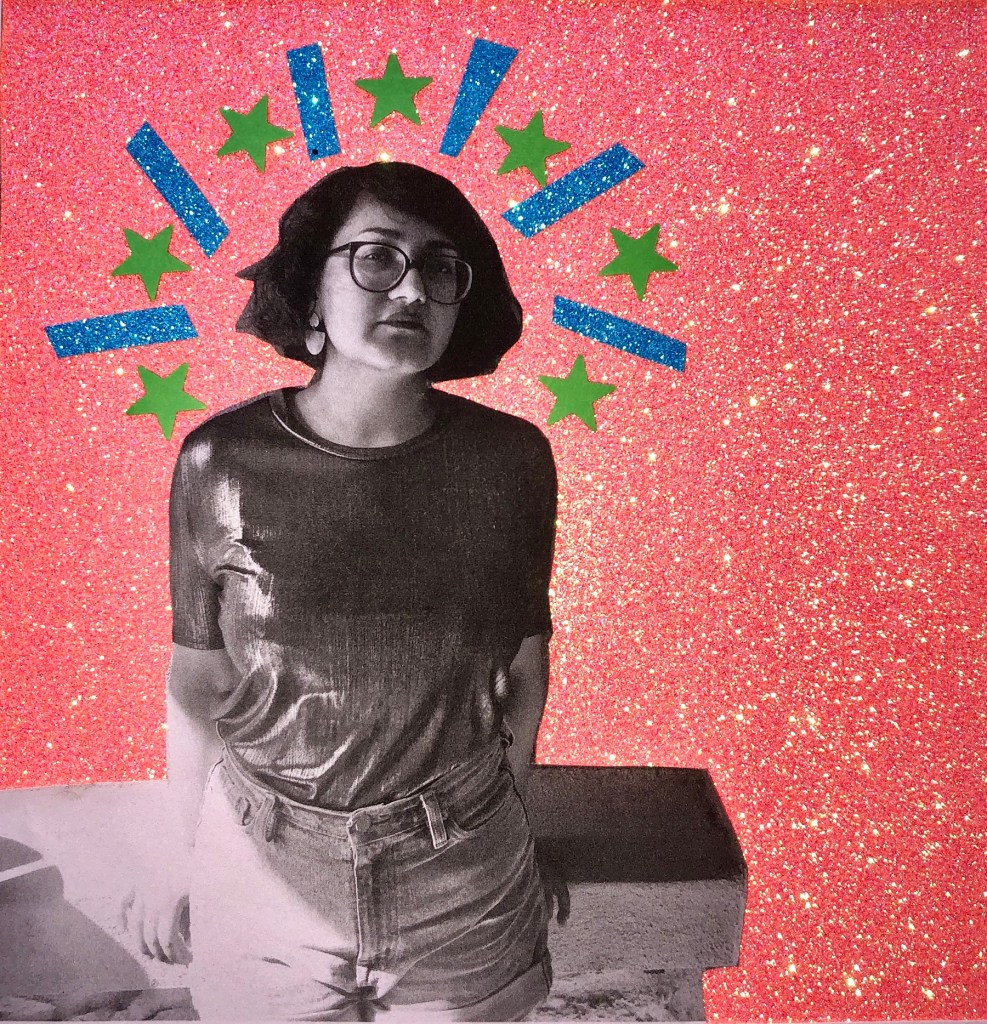
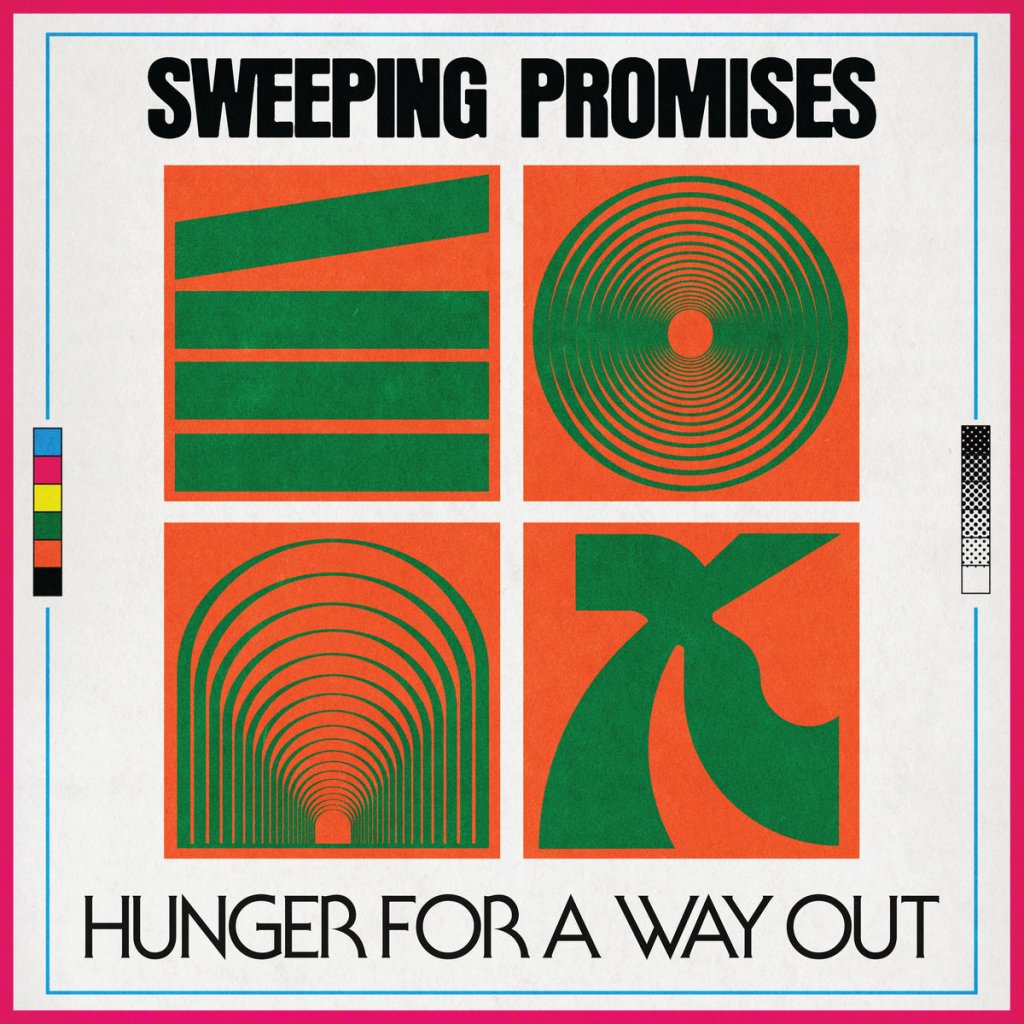

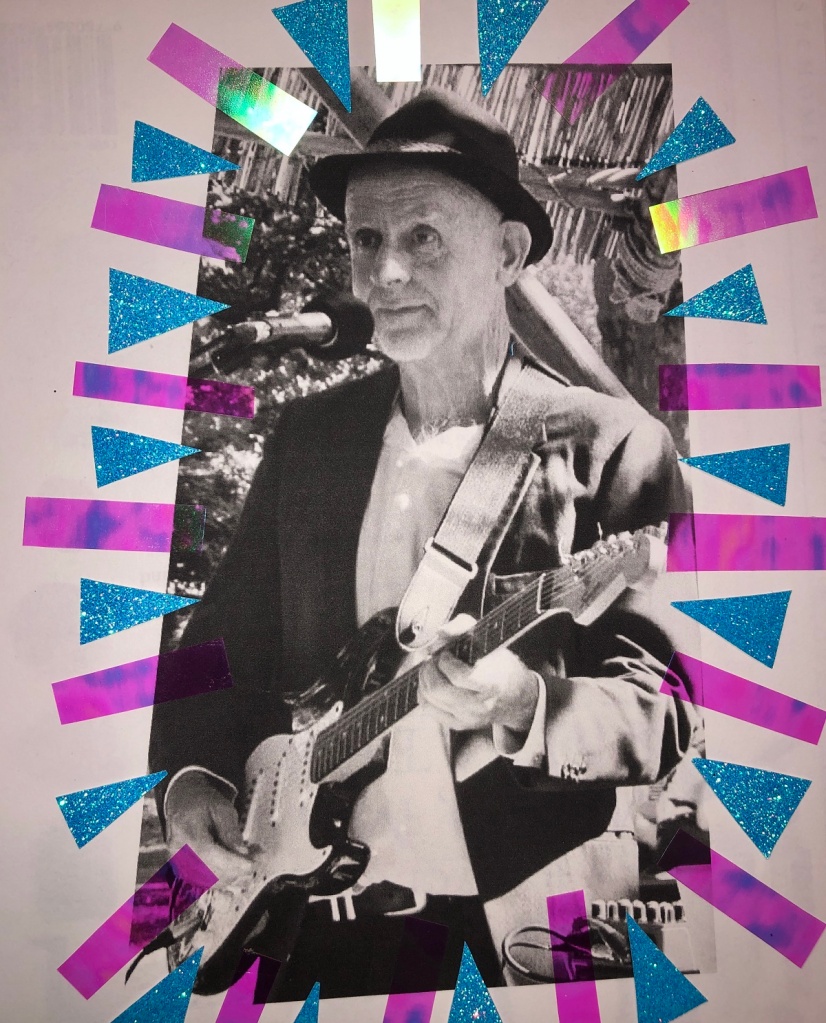


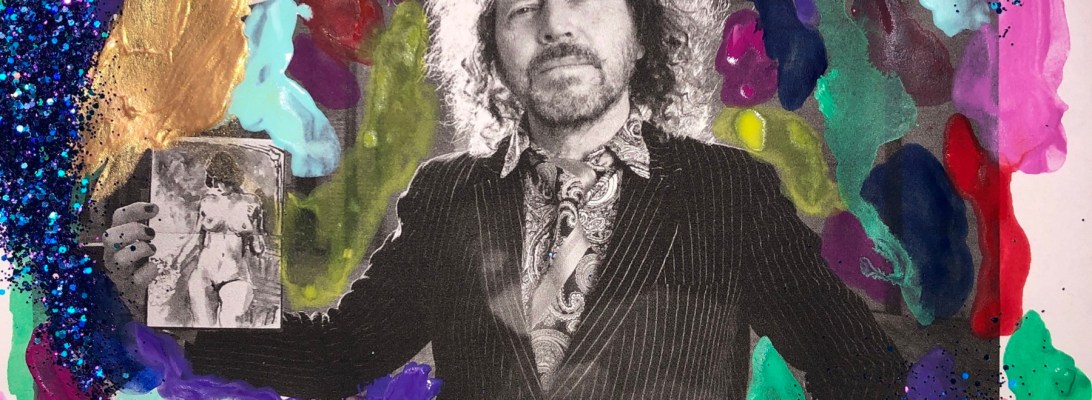

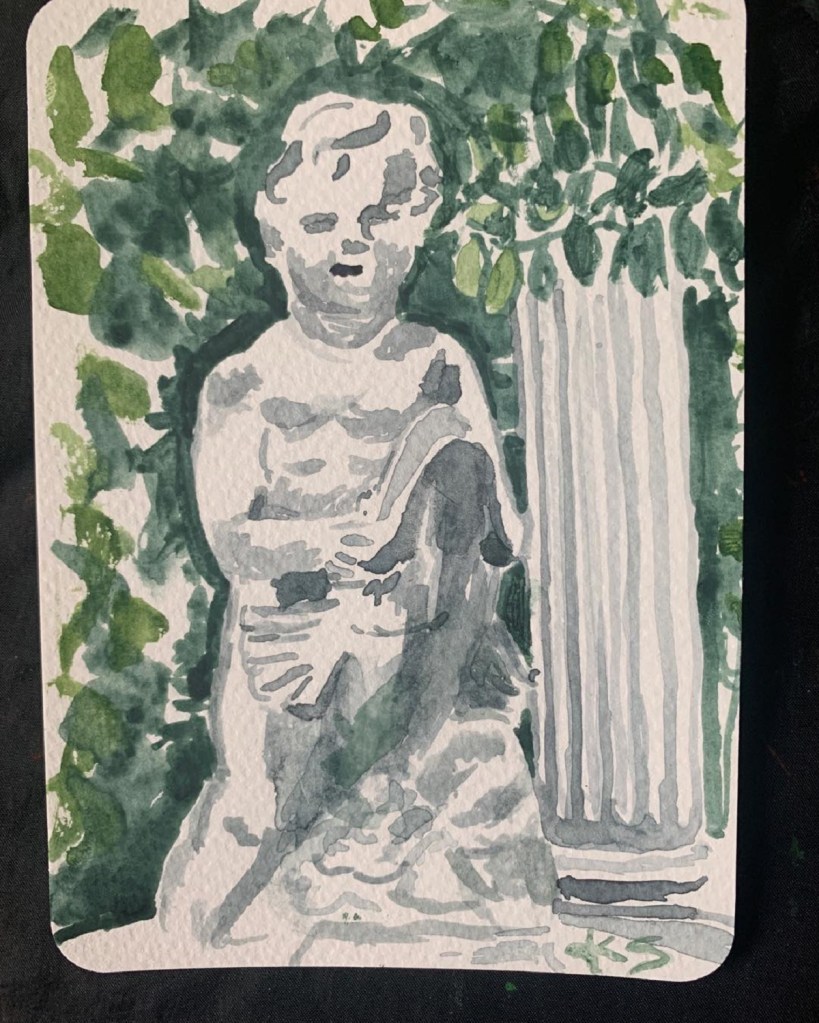
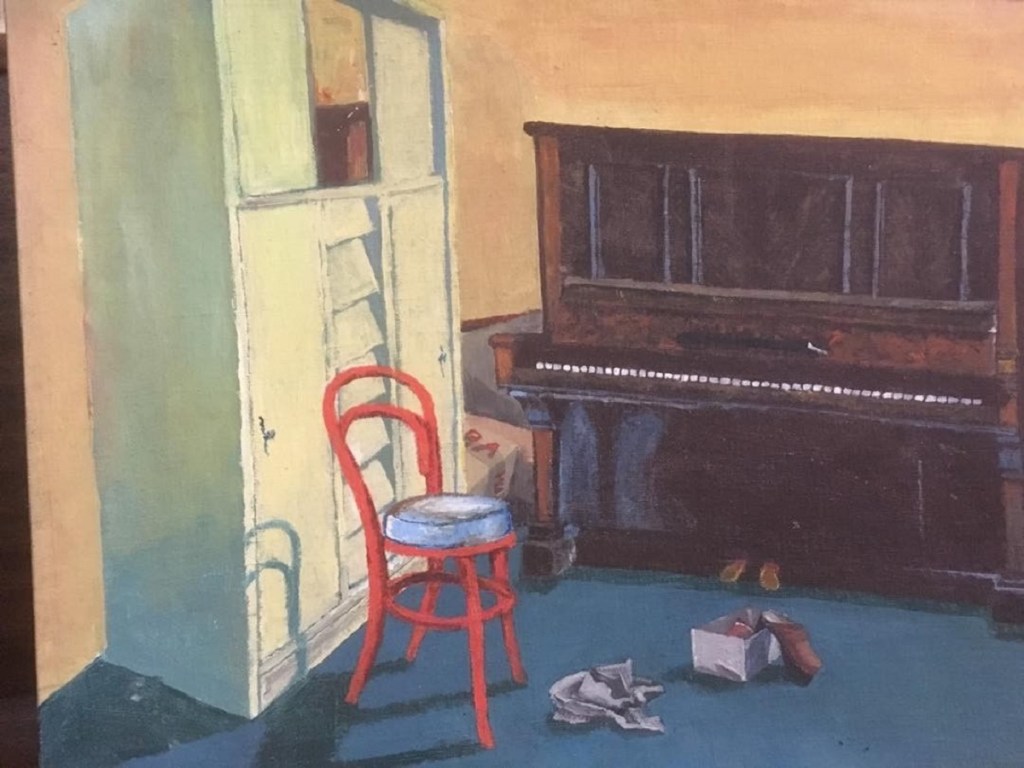
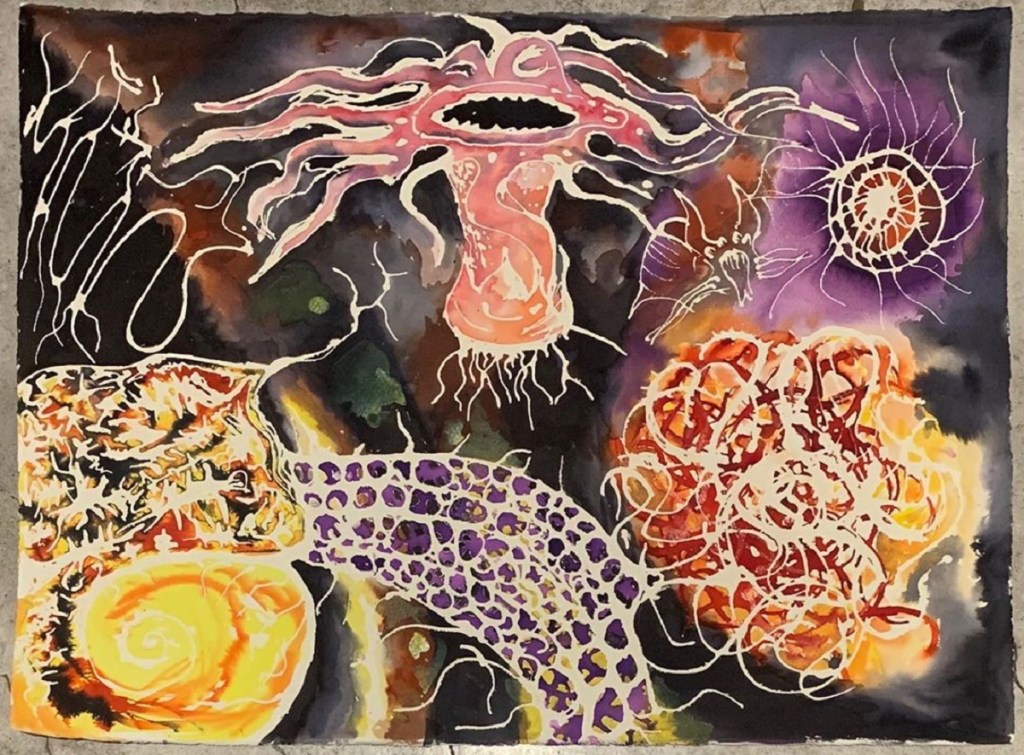
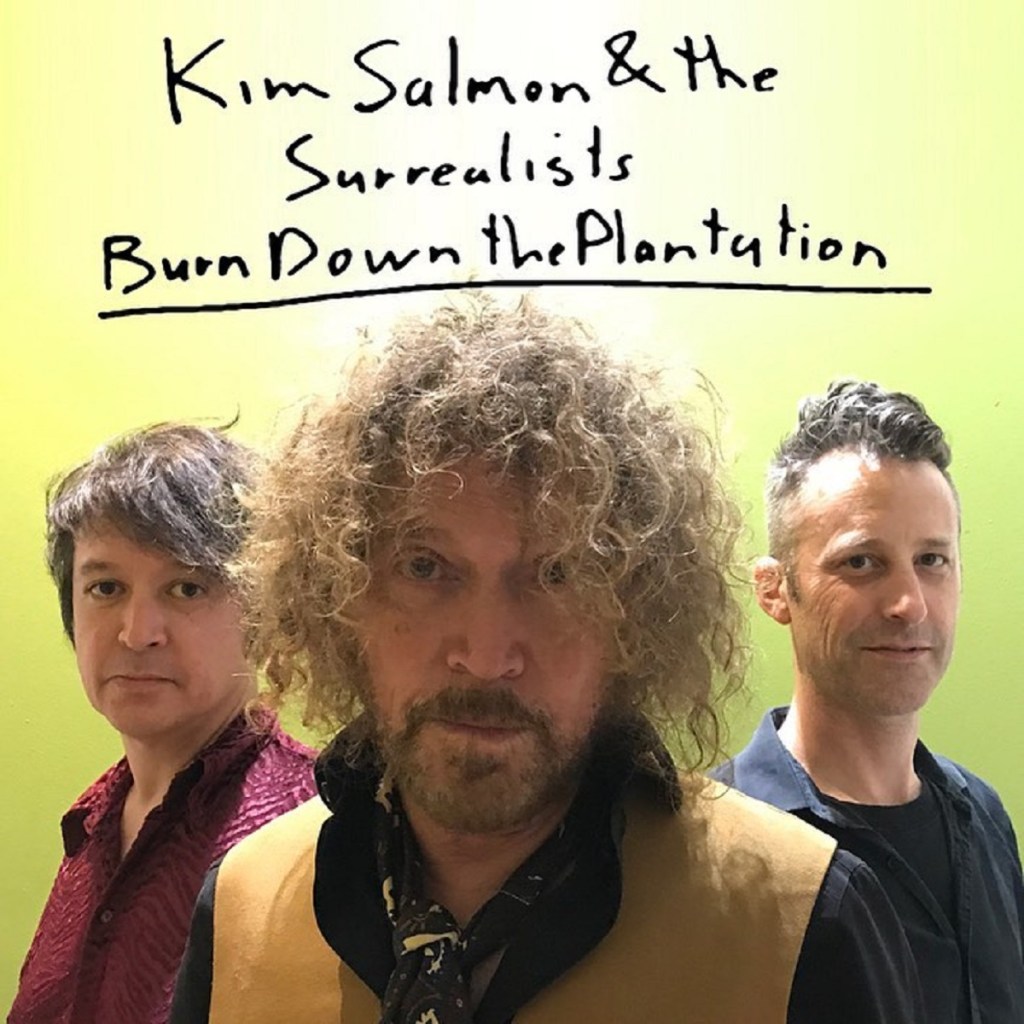
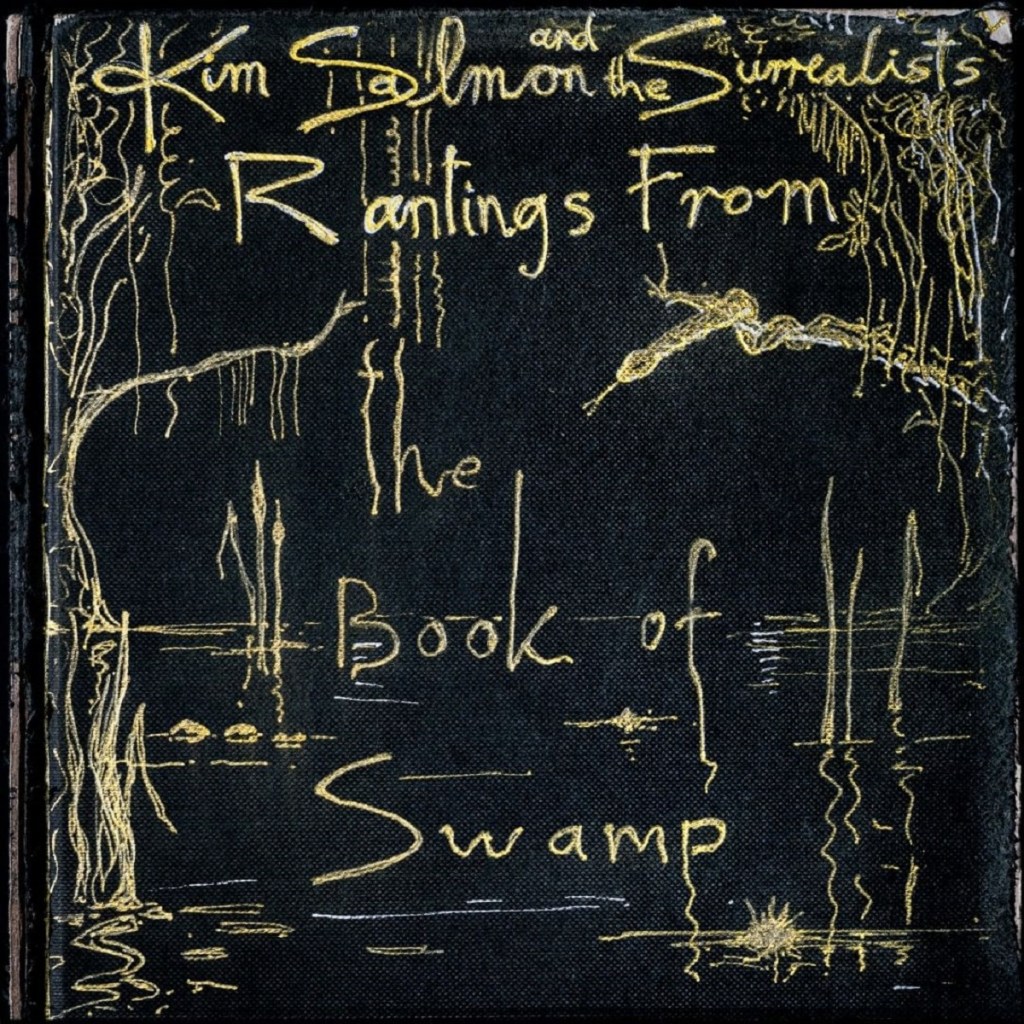
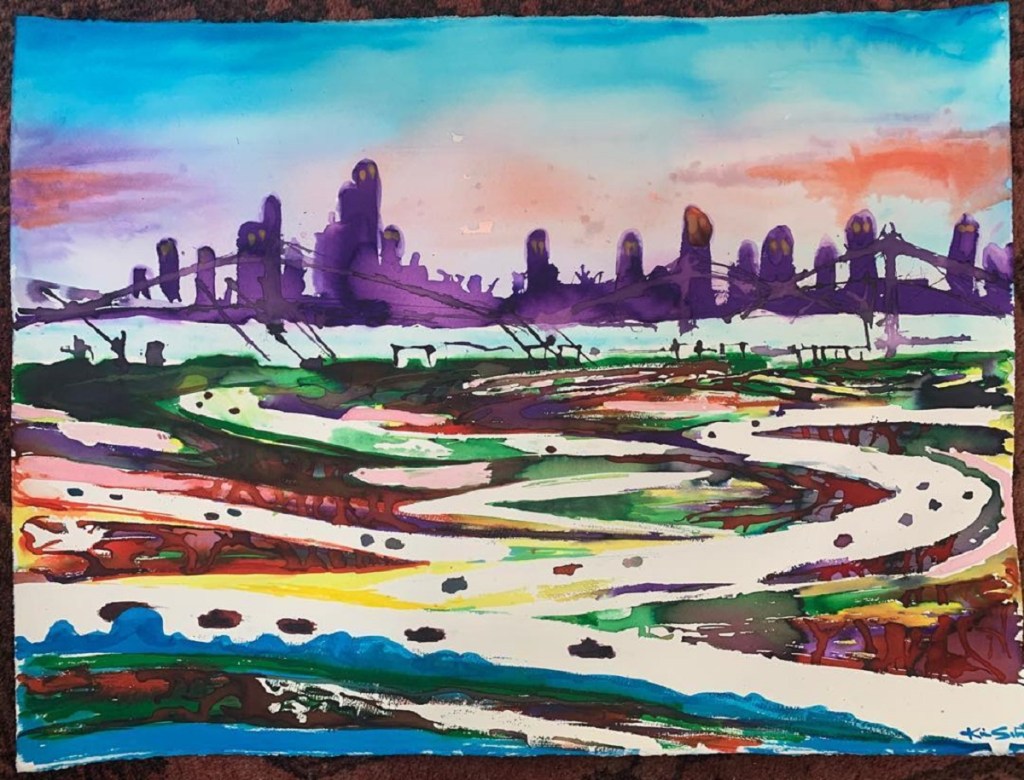


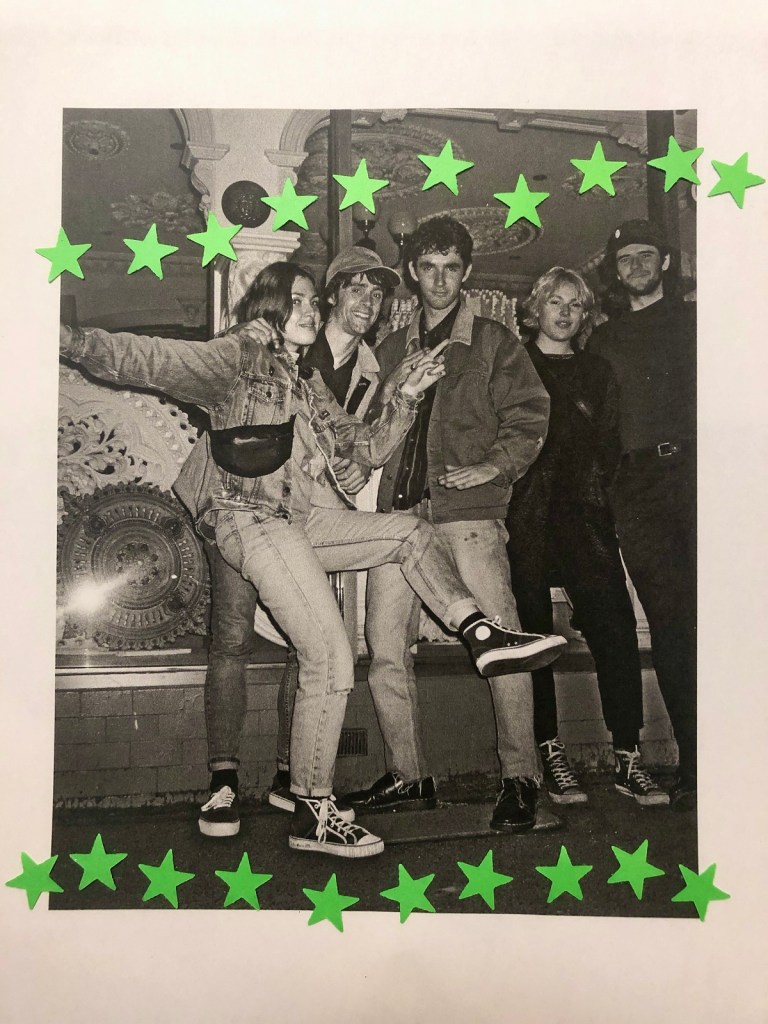
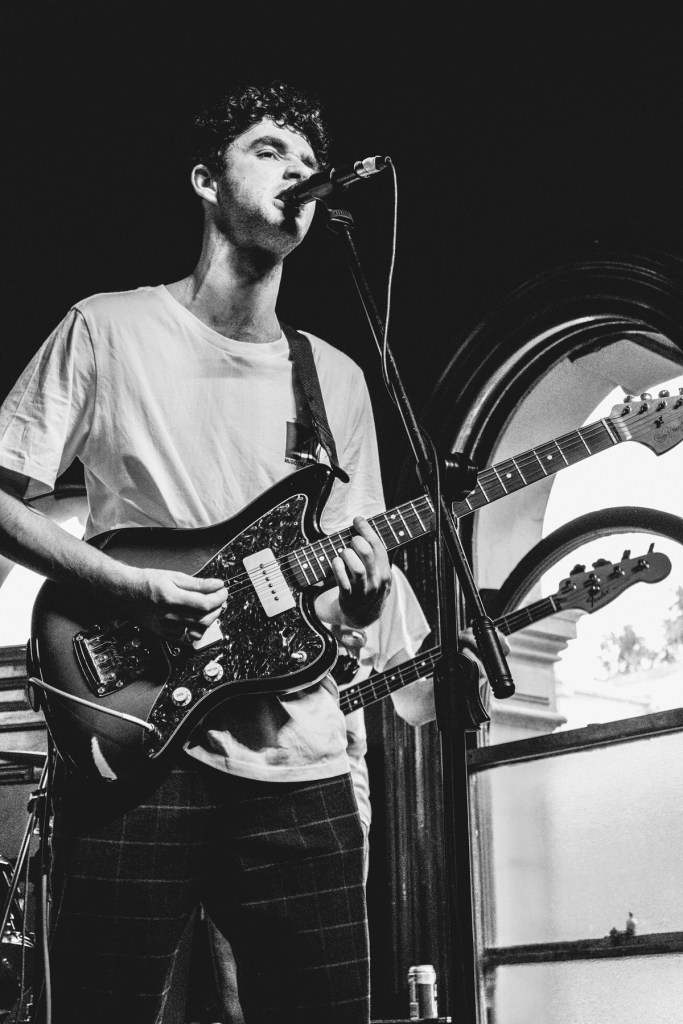
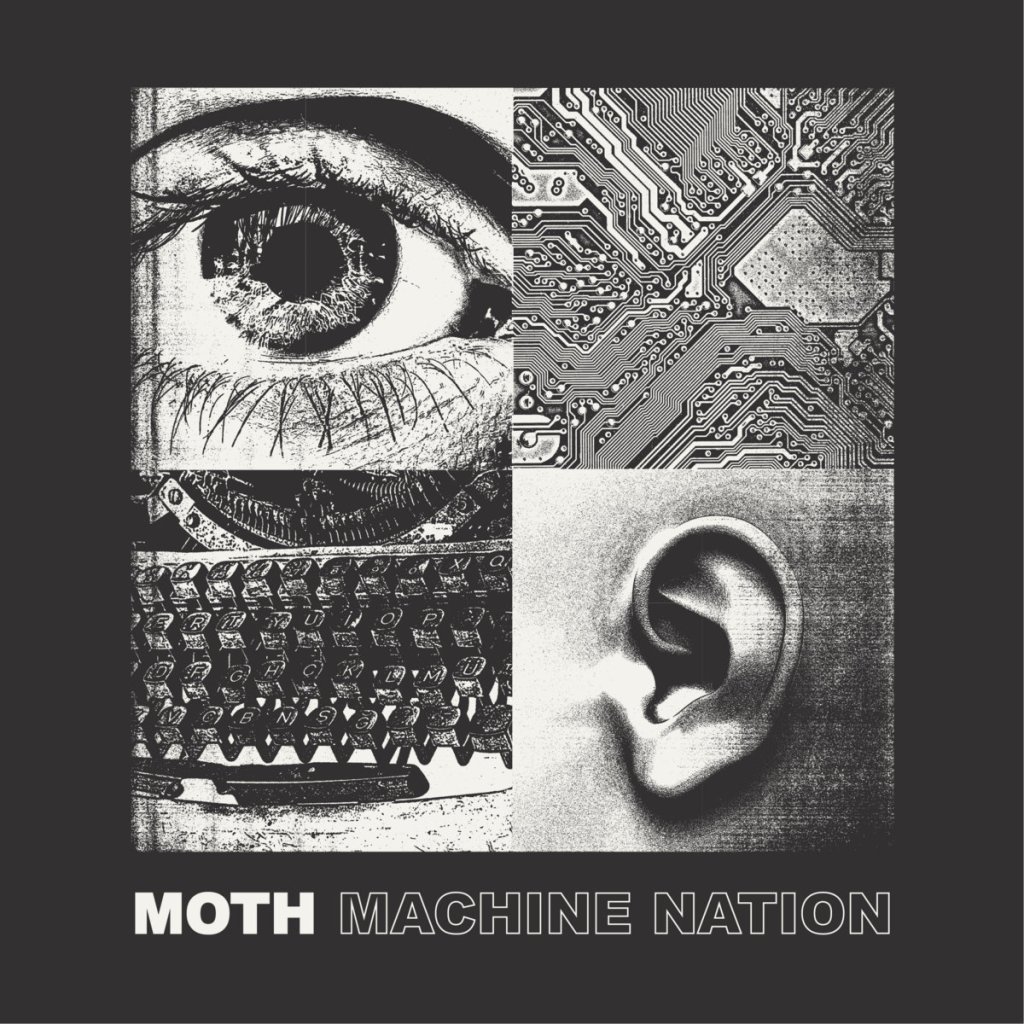
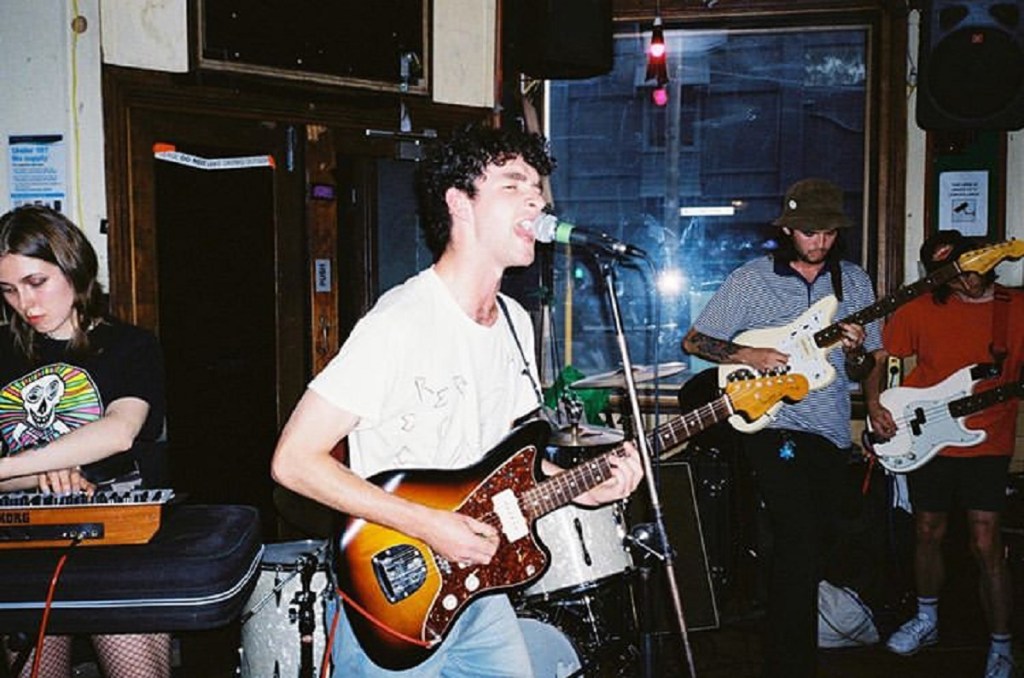

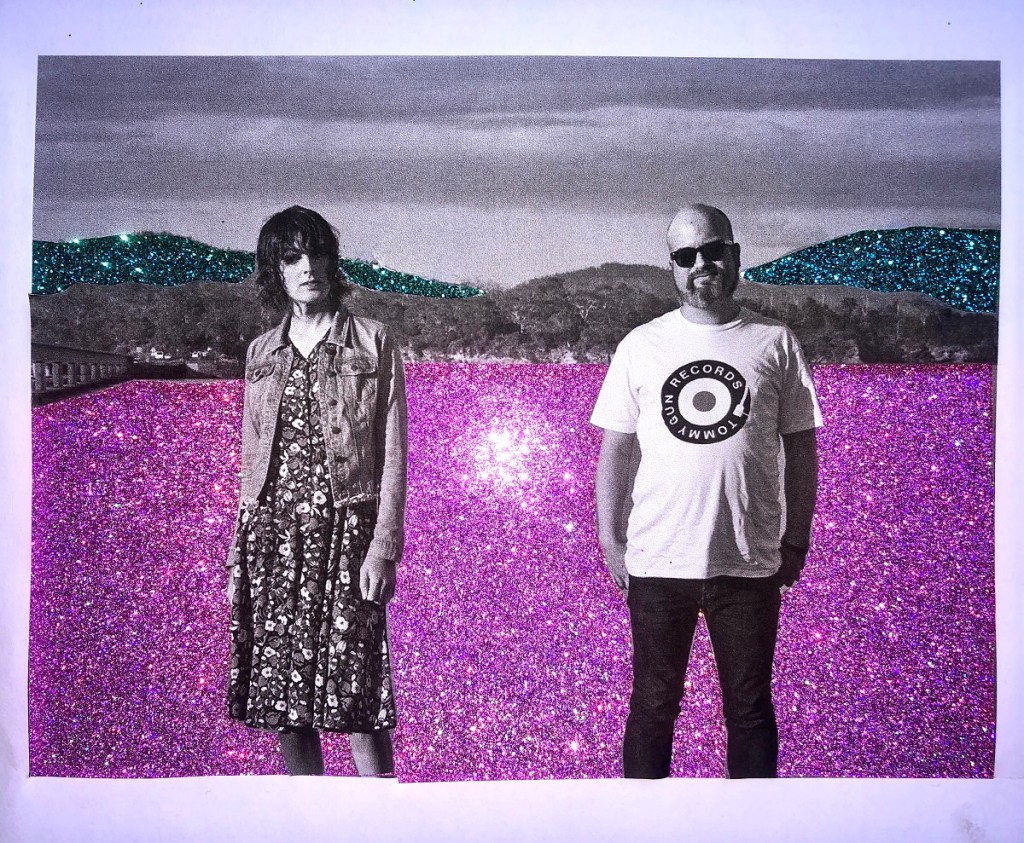
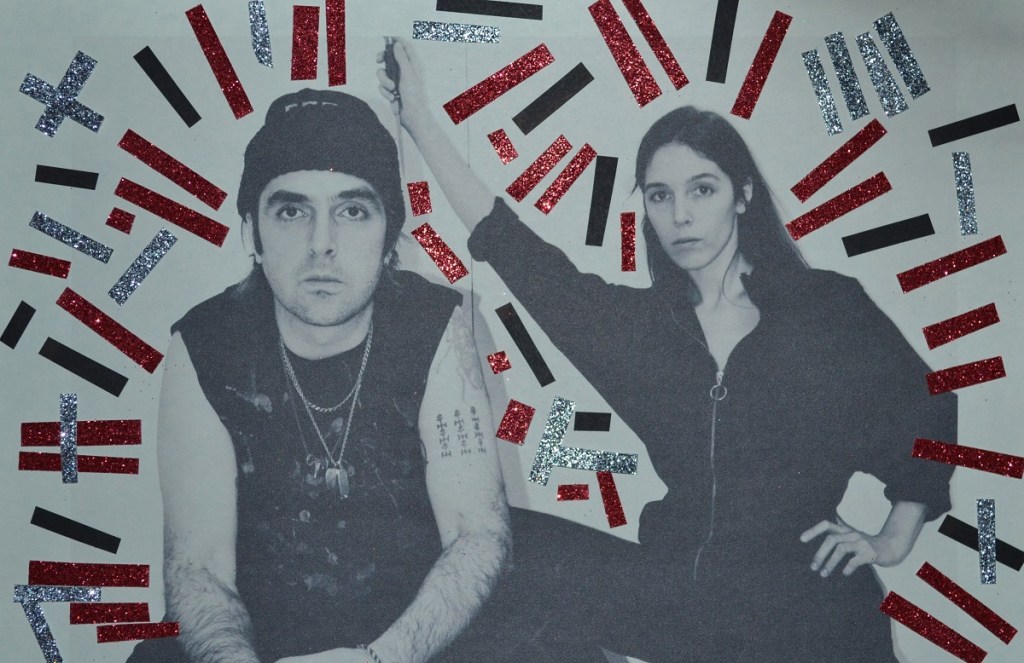
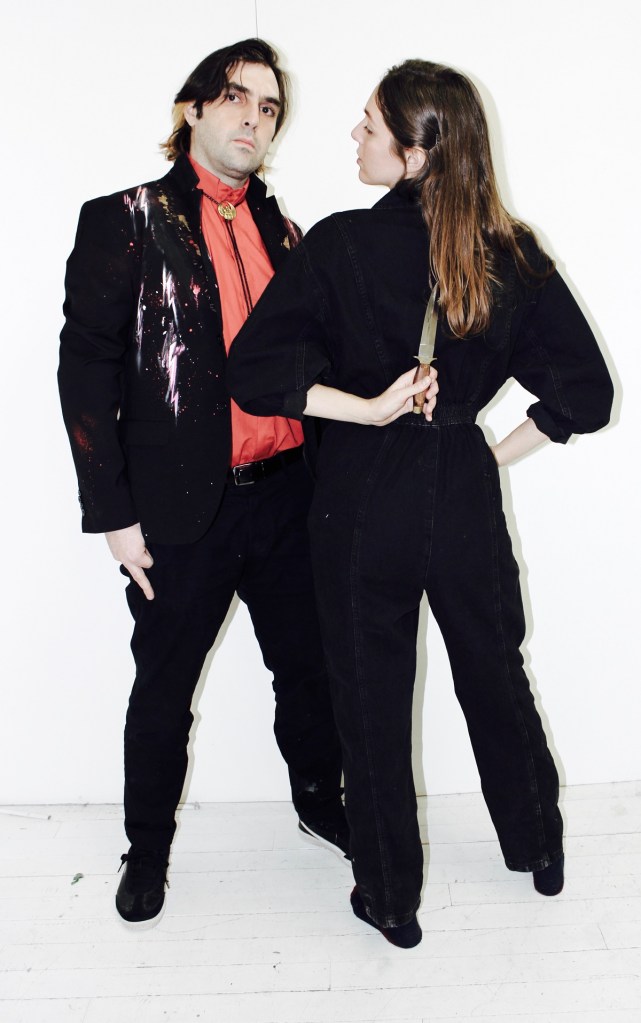

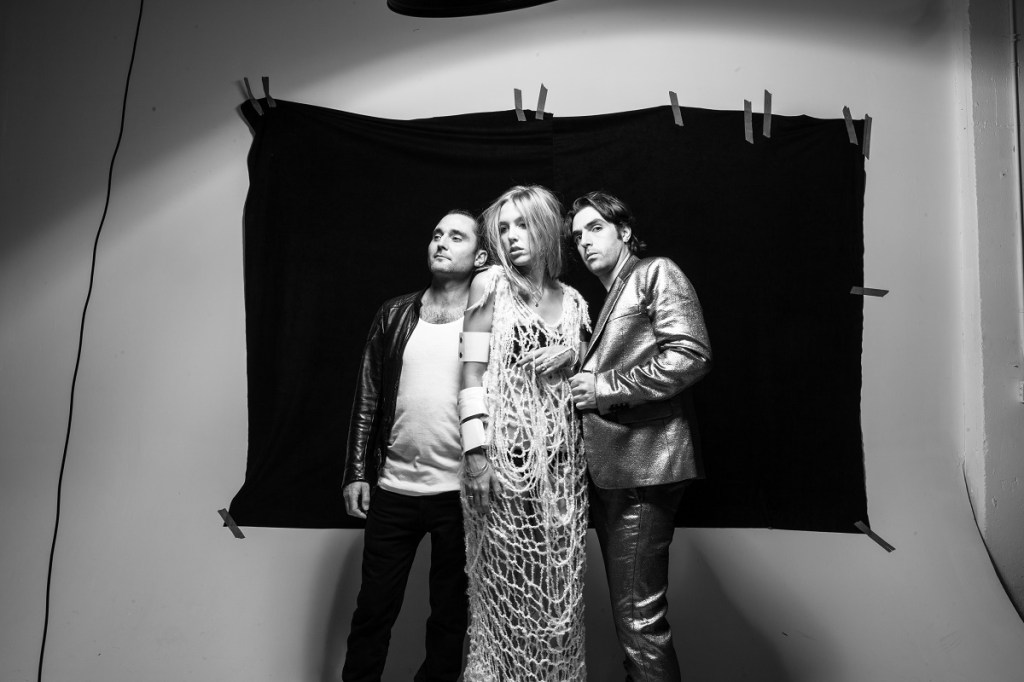
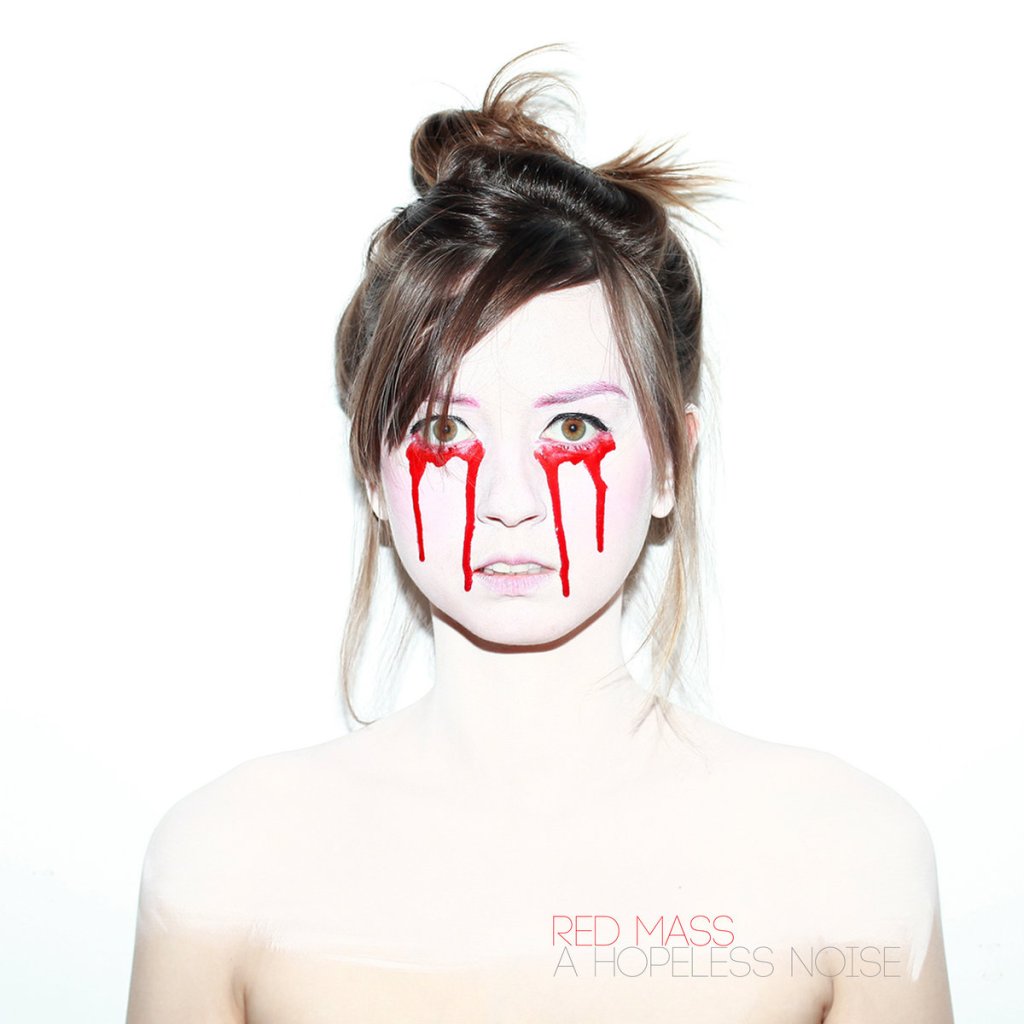


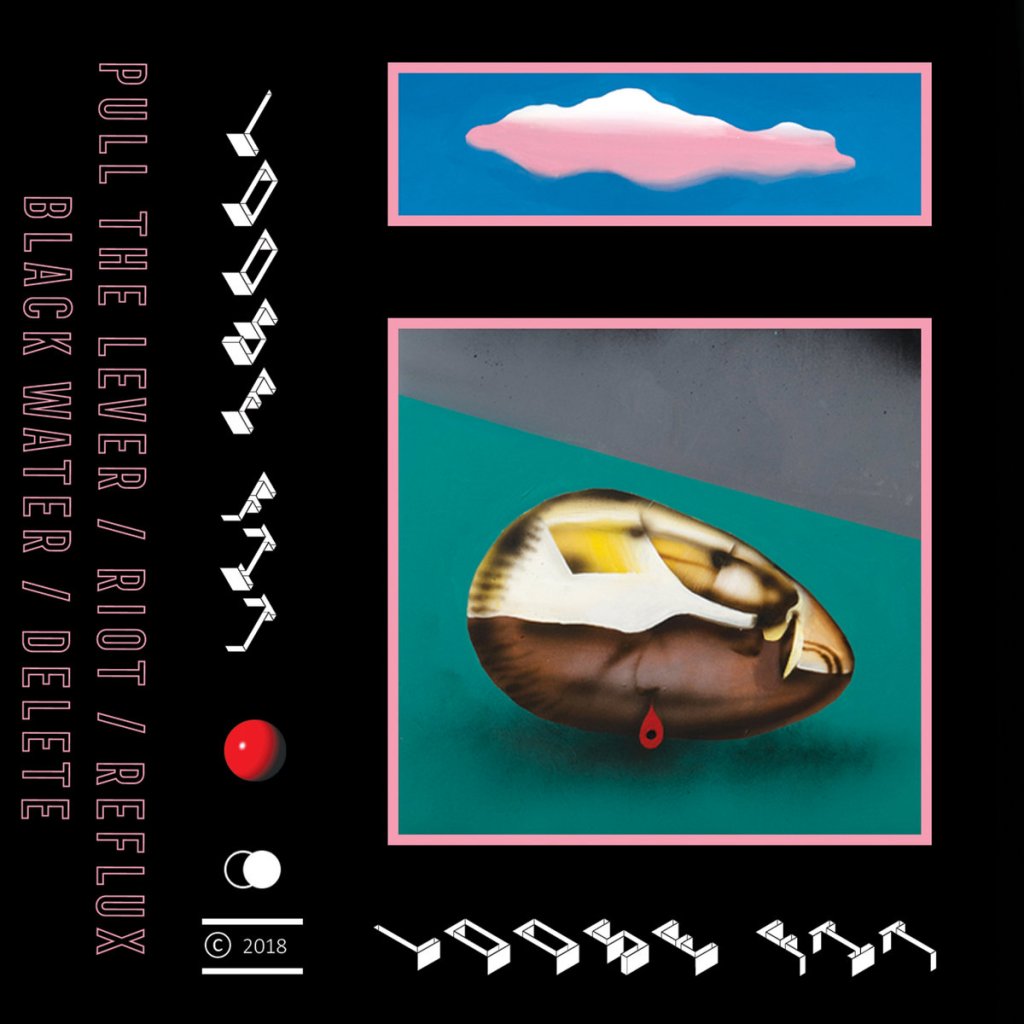

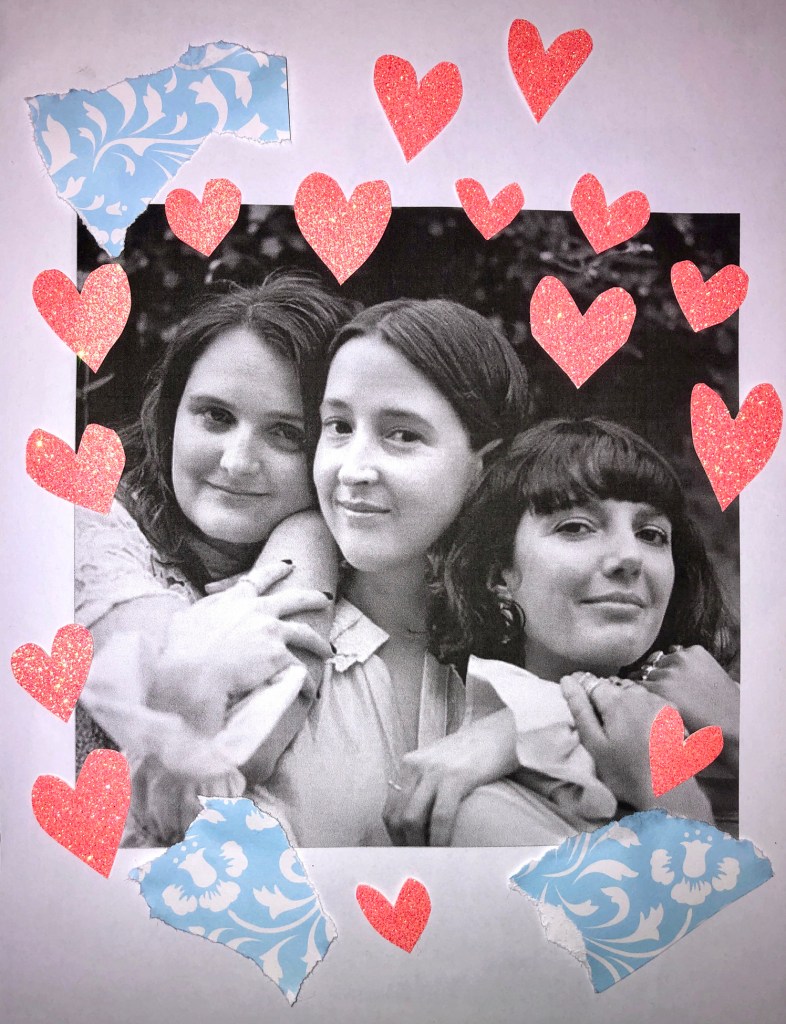
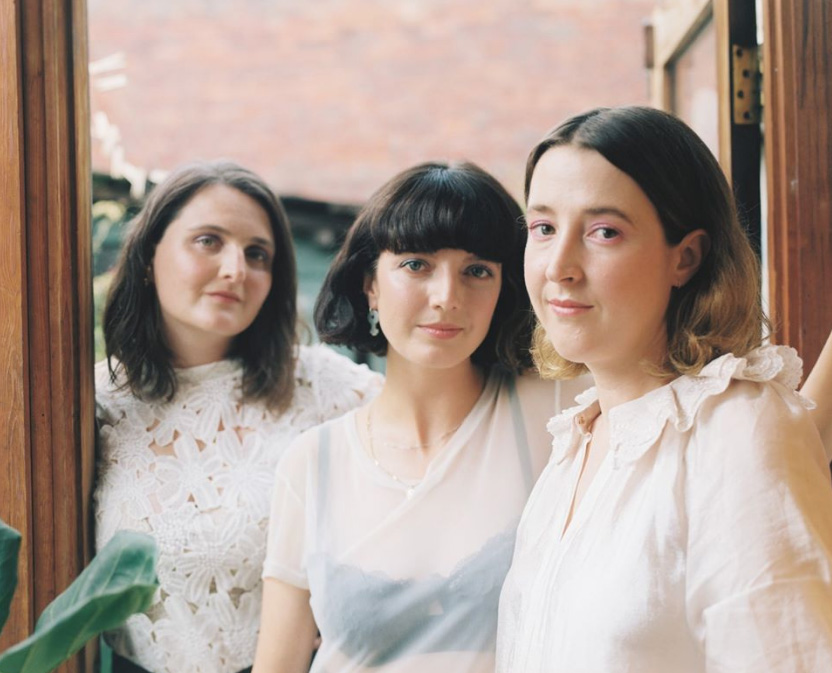
 Gimmie Gimmie Gimmie Zine