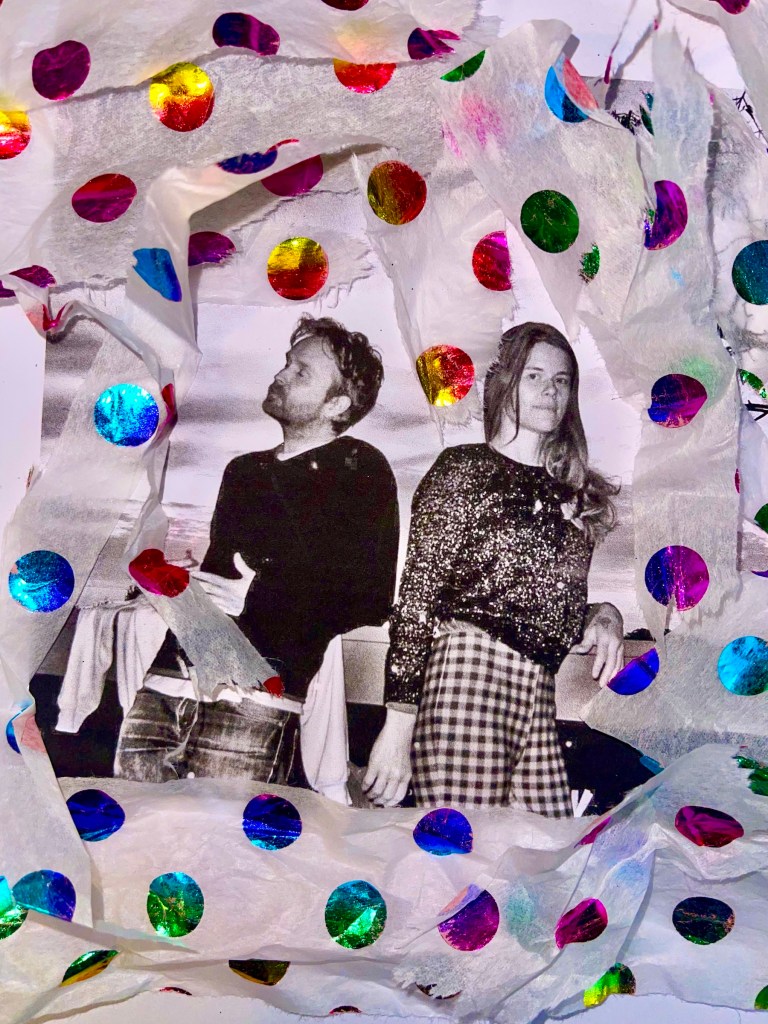
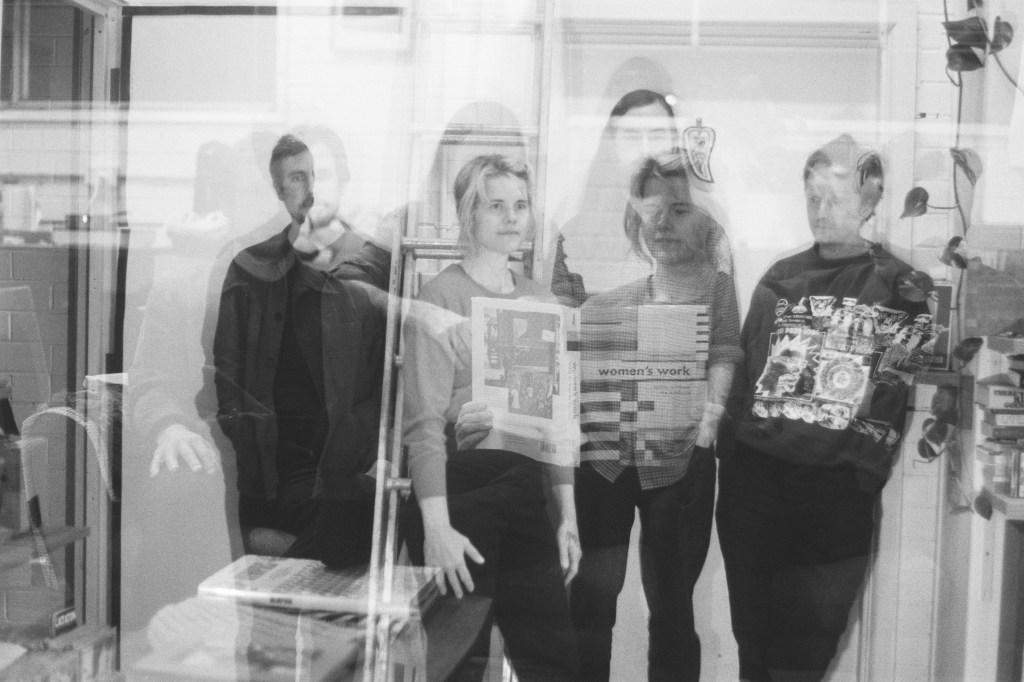
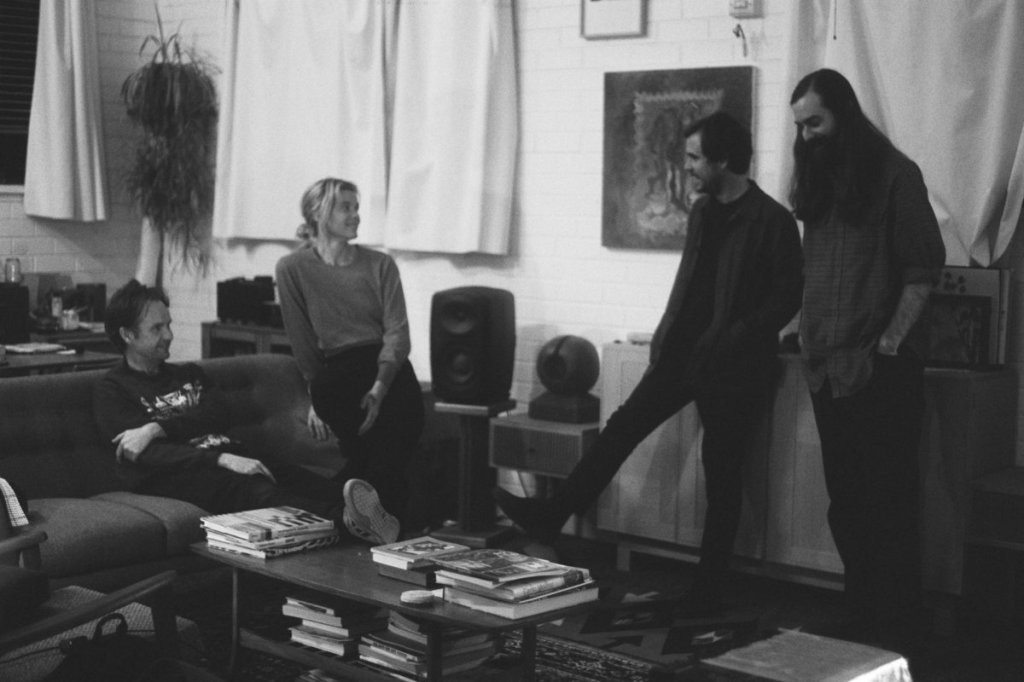
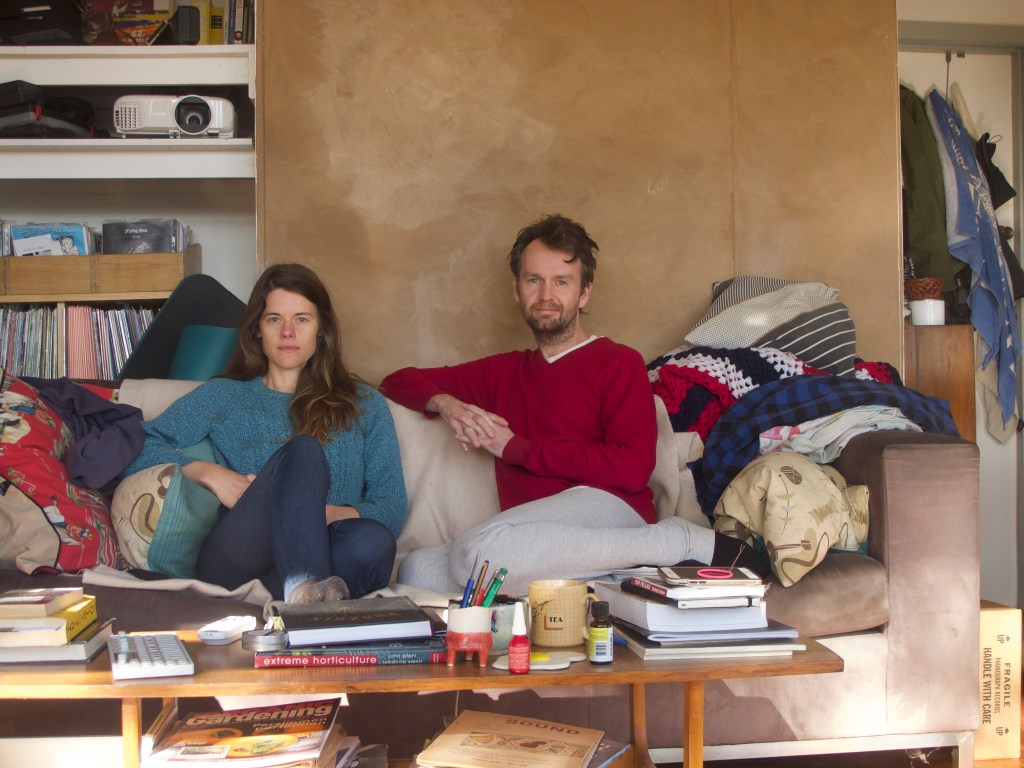
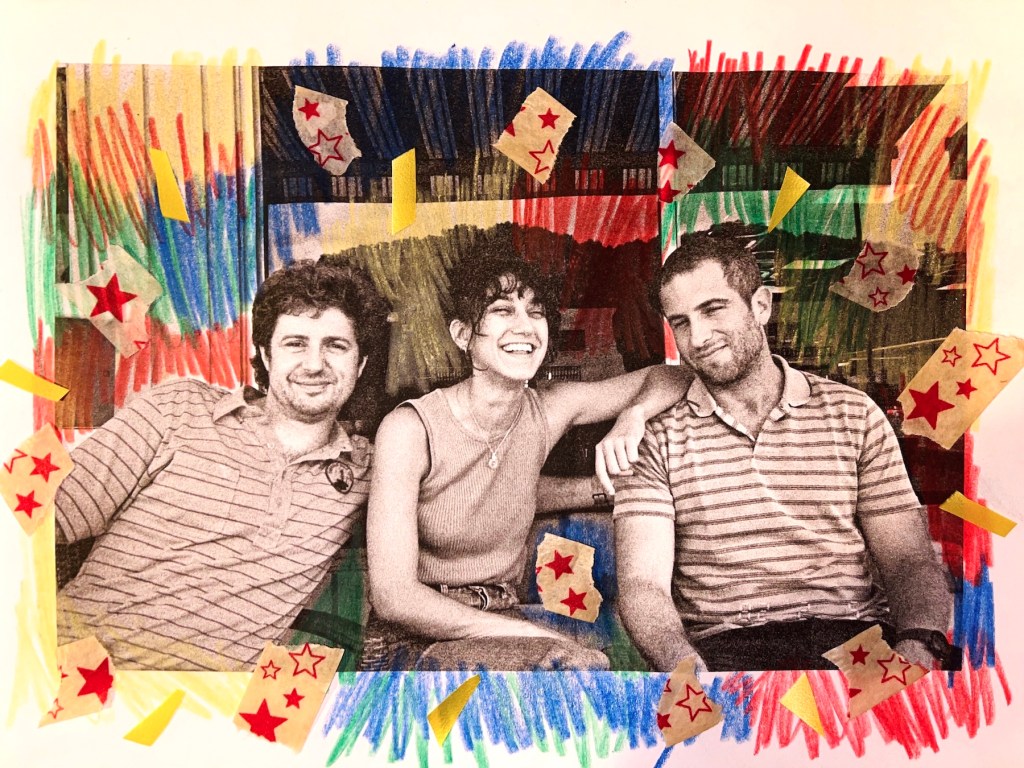
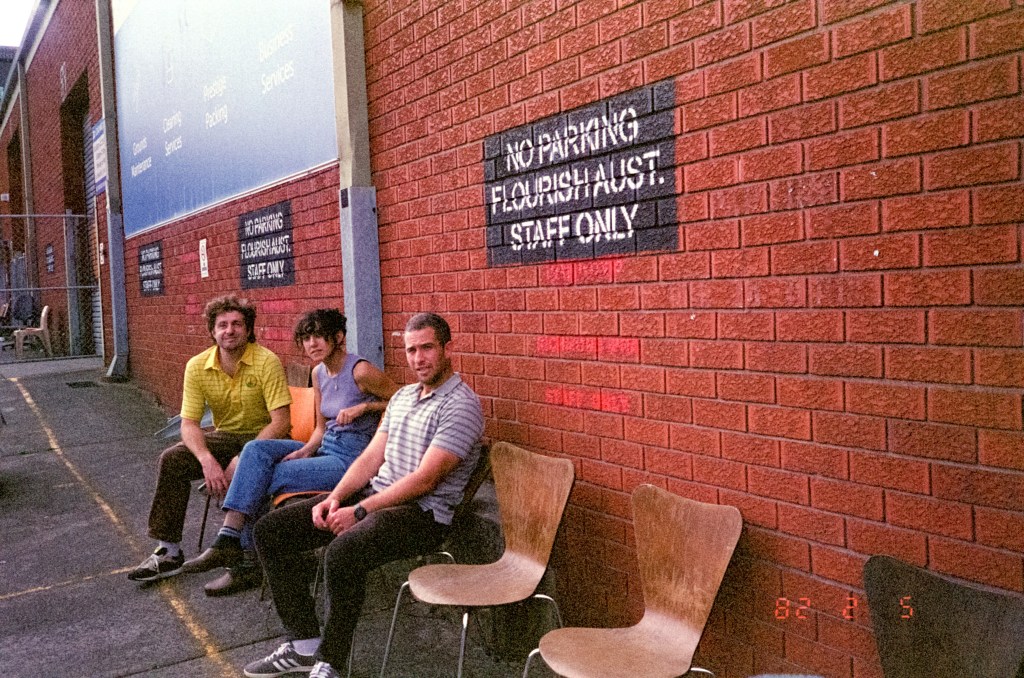
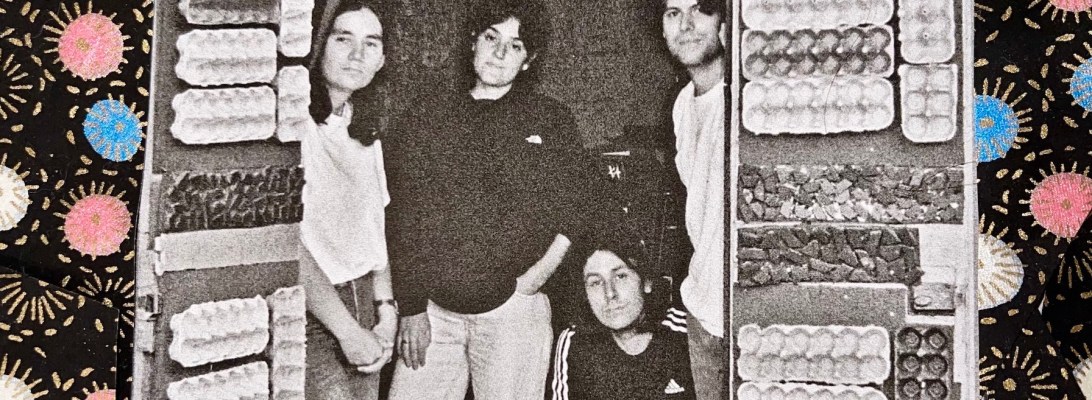
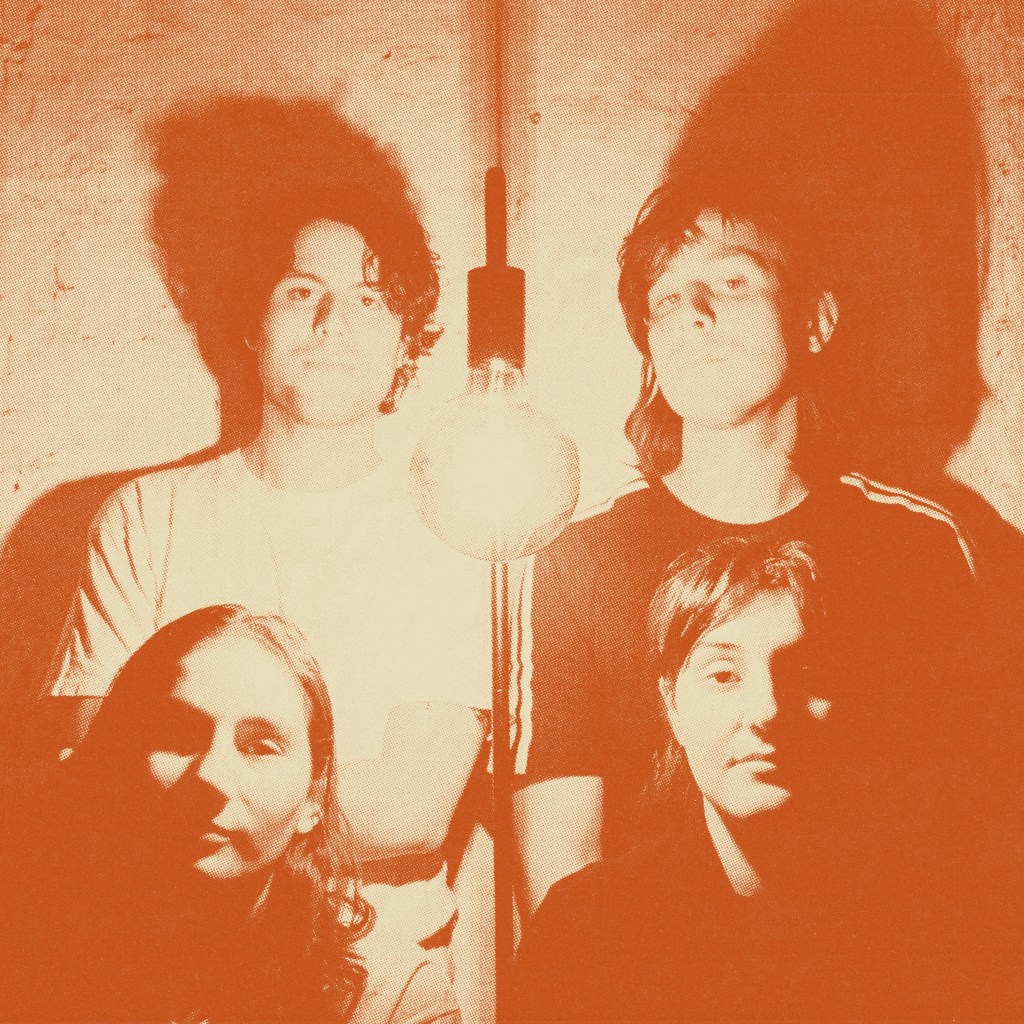
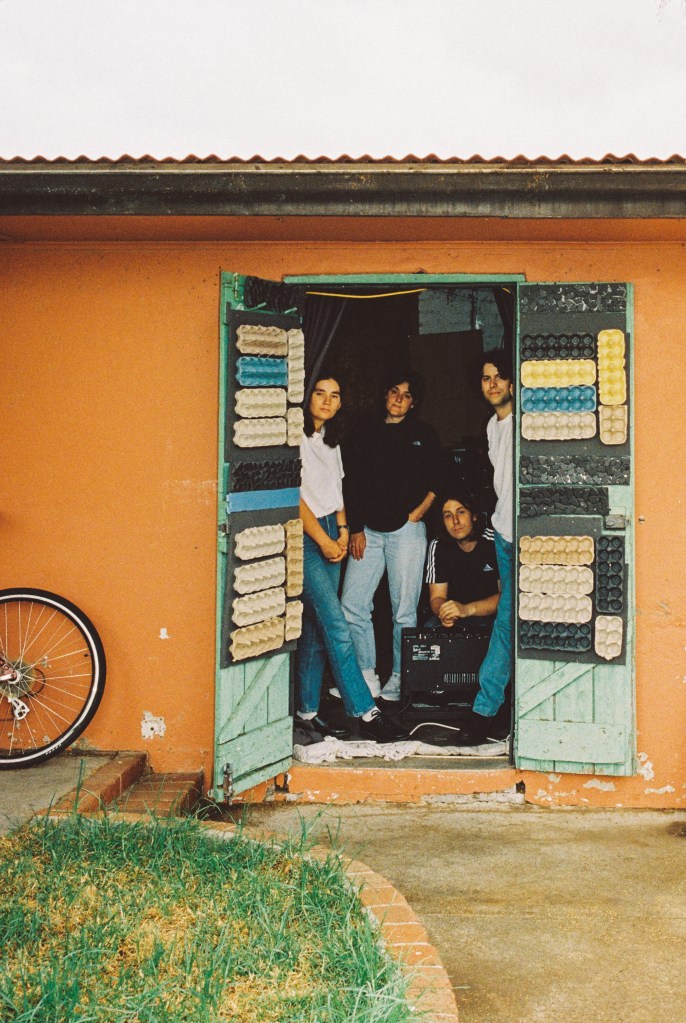
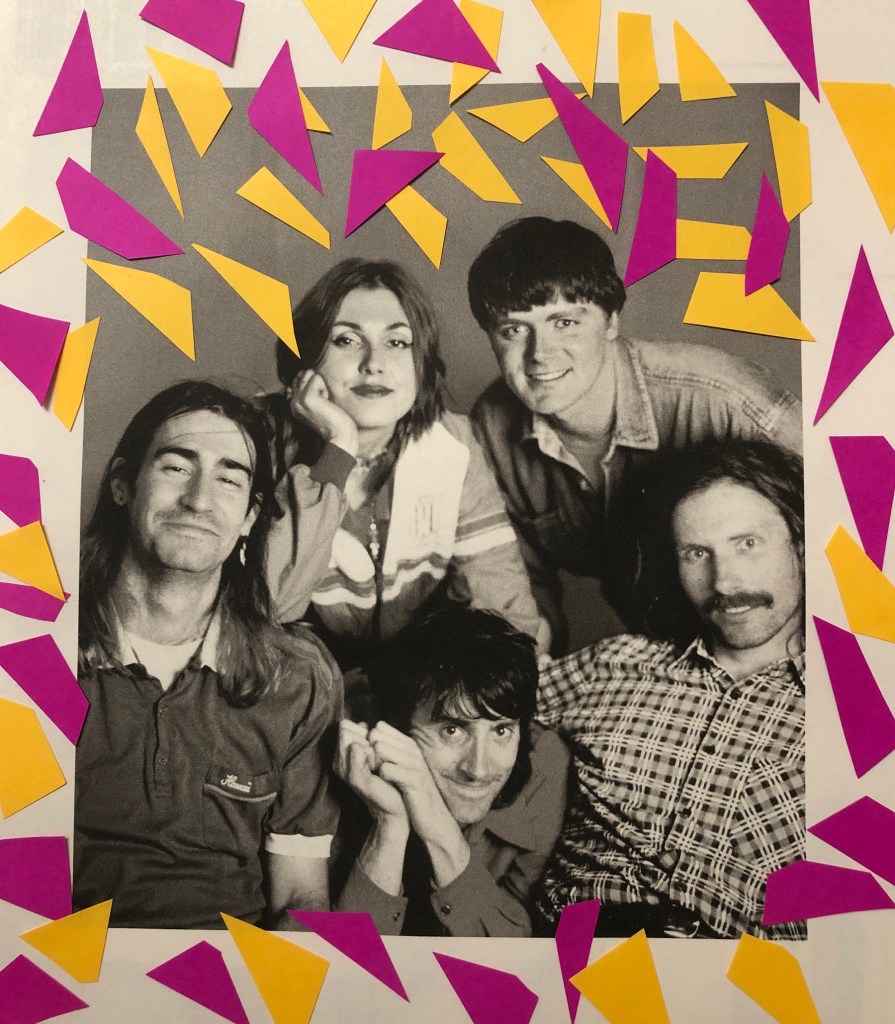
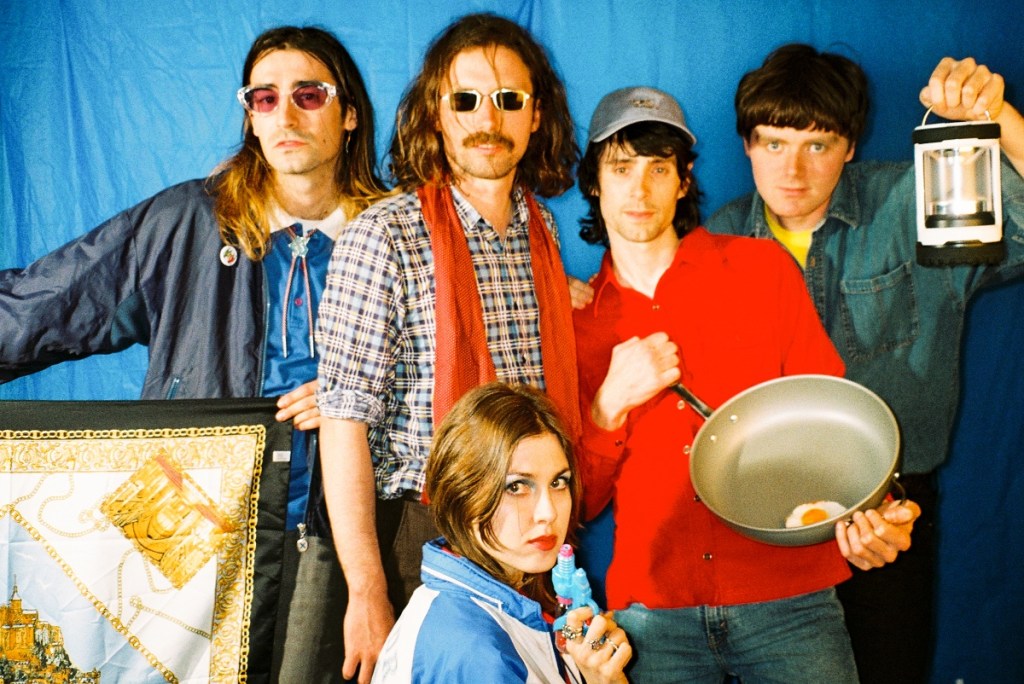
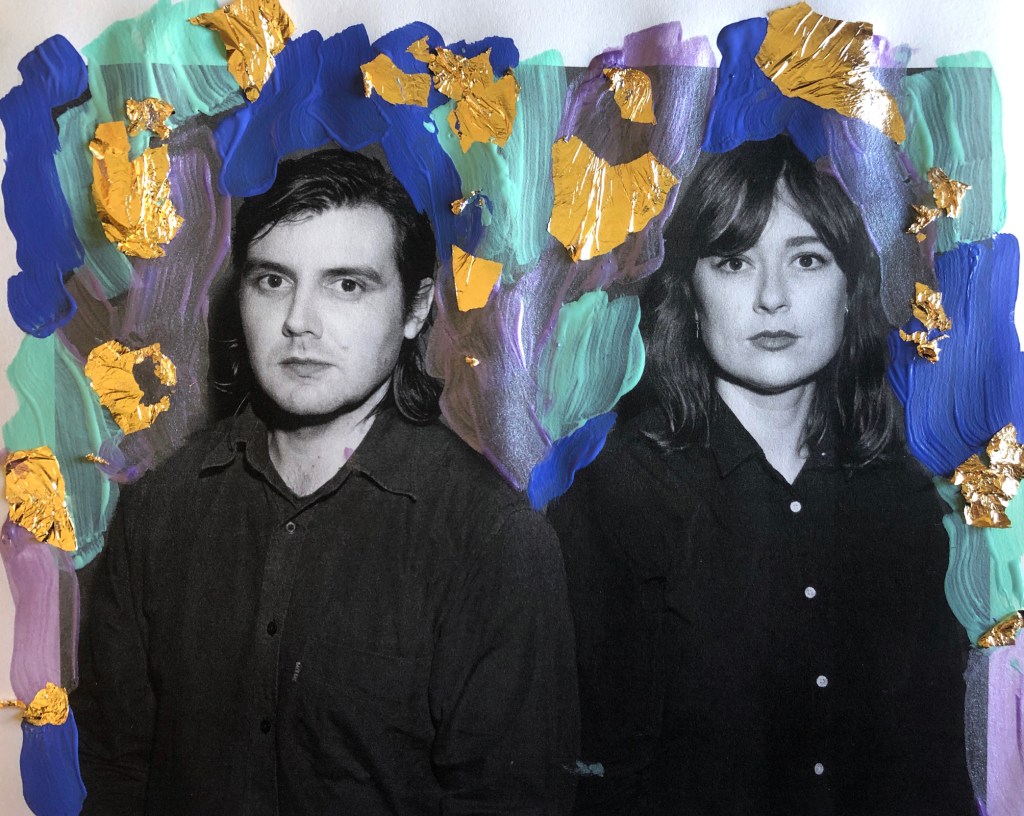
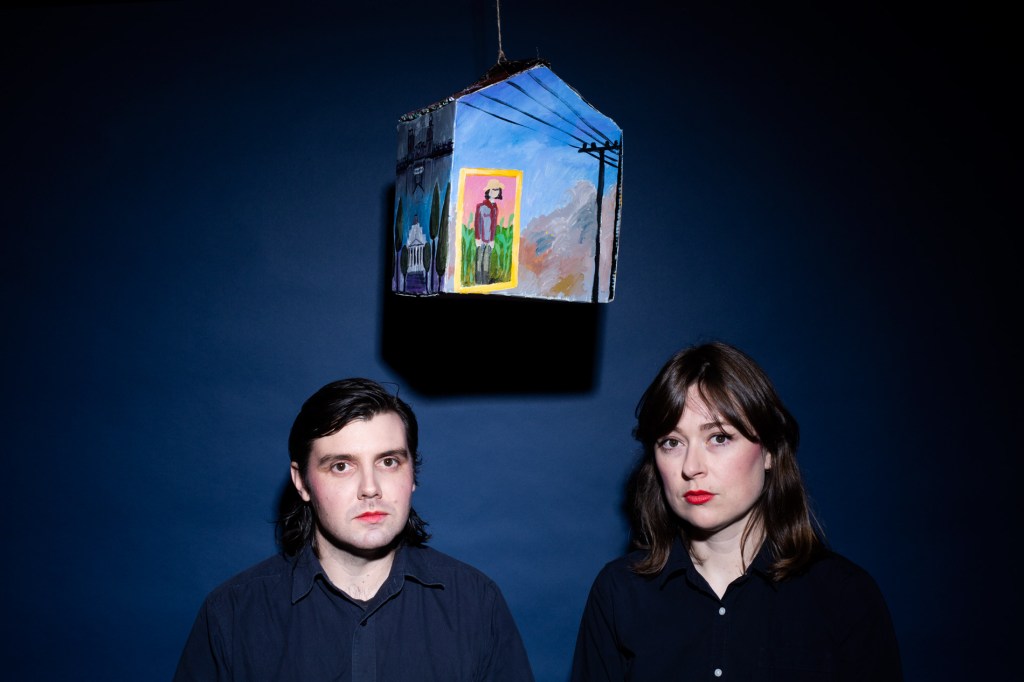
With their third album Look Familiar, The Green Child has grown into a fully realised band. Originally the recording project of Raven Mahon (Grass Widow, Rocky) and Mikey Young (Eddy Current Suppression Ring, Total Control), the group now includes Shaun Gionis (Boomgates) on drums and Alex Macfarlane (Hobbies Galore, Faceless Burial) on guitar and synths. Writing and demoing the album together in Naarm/Melbourne, the quartet found new energy in playing as a unit, shaping a more dynamic, expansive sound while staying true to their refined psychedelic pop.
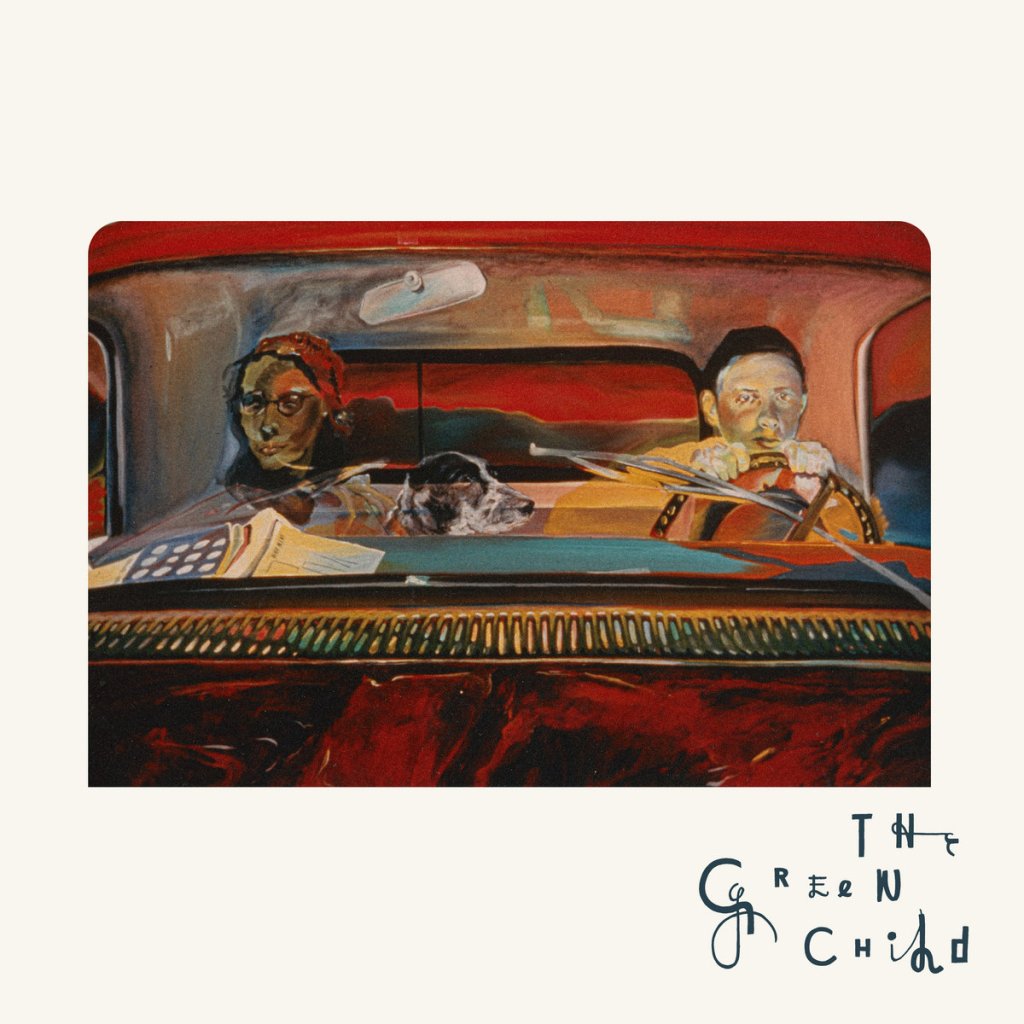
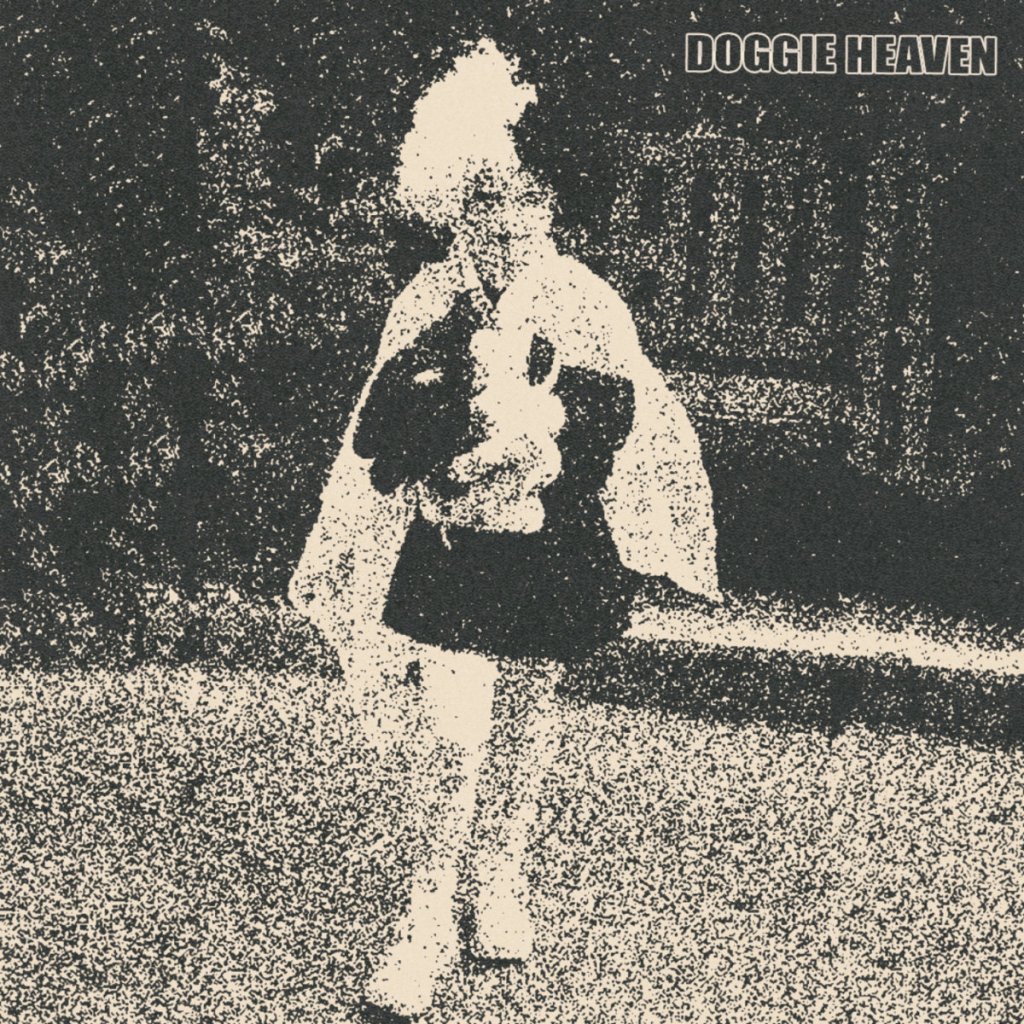
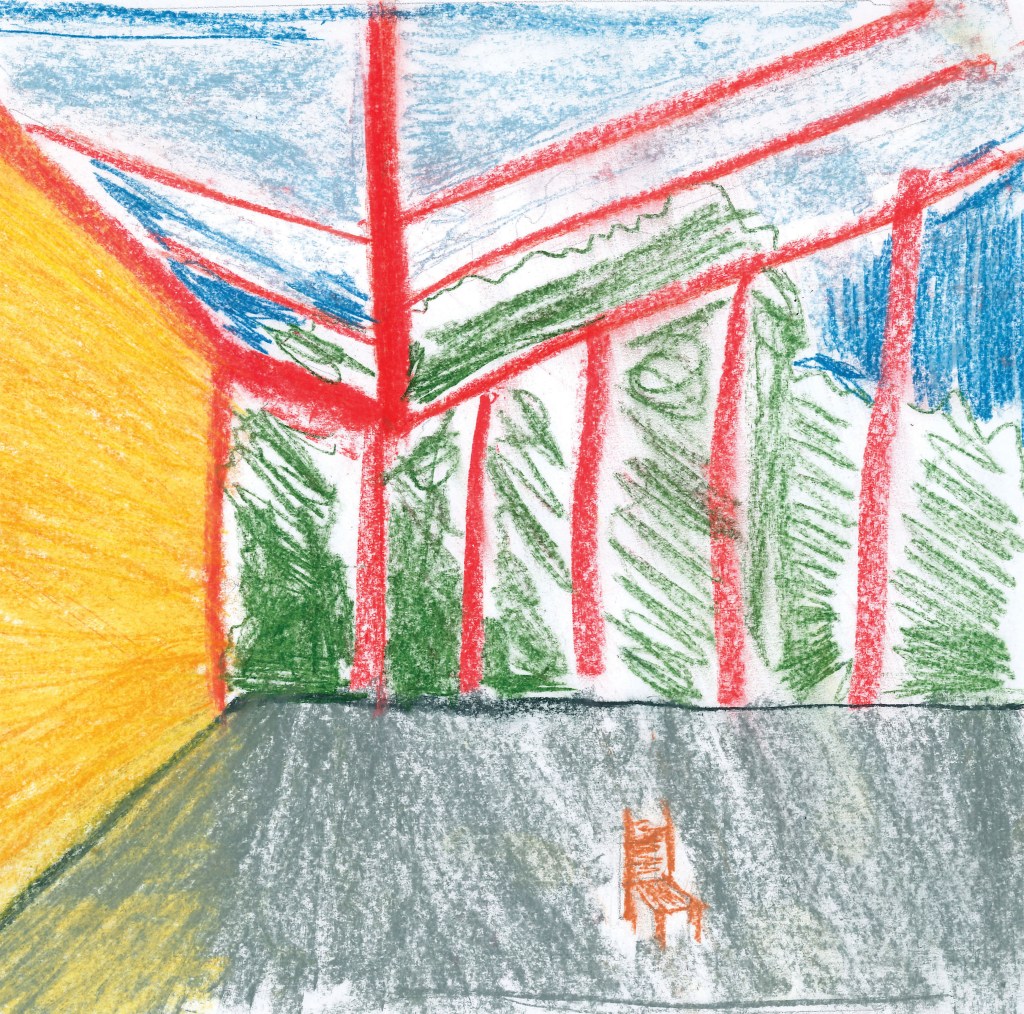
Look Familiar is an album alive with shifting textures and unexpected turns, its lustrous sound blending propulsive rhythms with hazy, cinematic layers to create a sense of movement through both time and memory. With shimmering synths, reverberant guitars, and Raven Mahon’s ethereal vocals threading through each track, The Green Child has crafted a work that feels both intimate and transcendent. Lyrically, it is rich with shifting realities and personal histories, with Raven incorporating vignettes of family memories alongside reflections on world events. The album’s artwork, painted by her mother in the early ’90s, further ties into this theme of past and present converging.
Gimmie recently spoke with Raven and Mikey about the stories behind Look Familiar.
We’re really excited about your album—it was one of our favourite albums of last year (2024). We love music that is unique, does its own thing, and incorporates lots of different elements, or when an artist takes influences and puts a new twist on them.
RAVEN: Yeah, I feel the same. You always have your influences—whether you’re conscious of them or not—they make their way into the songwriting. It’s always kind of there. But then, being able to add something… or maybe just the process of writing in the moment, responding to whatever you’re feeling at the time, that shapes the song. It might have some references or a particular style, but it just becomes its own thing anyway.
It’s cool to see bands that have something particular to say. And then that just becomes a vehicle for it—like a familiar genre or something. Because you can tell they’re in it, that they’ve put themselves into it. That’s always going to be unique.
A word thought that came to mind when listening to your album was ‘dreamlike” and there’s a warmth too. There’s such like a brightness to it. Listening to it is almost like getting a hug from a friend you haven’t seen in ages. Your album generates beautiful feelings for the listener. It has a familiarity to it.
RAVEN: Thank you.
MIKEY: Yeah. I wonder if making music with more people, rather than just ourselves, makes it sound more inviting or warm. I feel like the first record doesn’t sound very warm at all—I could be wrong. It just sounds kind of cold to me. But having more people around probably lifts it up a little.
When you made the first Green Child album, you were both living in two different places, right? Do you think the distance might have made it feel that way?
MIKEY: Possibly. Although, weirdly, it hasn’t really changed how we write music. The first thing we ever did, we were in the same room, which ended up being a track on the first album. But I do find that, initially, it was a bit cold. I feel like the first record doesn’t sound very warm at all. I could be wrong— it just sounds cold to me. I found that I worked better if I was alone, trying to figure out ideas. I get kind of claustrophobic if people are around when I’m trying to figure out stuff, so that distance was helpful.
With the second one, when we lived together— weirdly, it was kind of the same. I’d be like, ‘You go in the other room. I’m just going to do this.’ And there wasn’t much interaction about ideas. It wasn’t really until this one, Raven wrote a lot more of the music as well. We left things really open for Shauny and Alex to be involved in. That kind of collaboration—that lack of distance has helped make it more uplifting, maybe.
RAVEN: I feel like the sentiment has always been there, even early on, without explicitly talking about constructing the songs together or what the parts would be like. There’s still something in the melodies or the instrumental ideas you would send—they’d be kind of open, maybe not structured yet, but just melodies and beats, the makings of a song. It’s funny that we work this way, but I feel like I do better by listening first and coming up with vocal melodies and then letting the lyrics follow. I like doing that on my own, but I’m sure they were still informed by the feeling of the songs and the ideas you were sending. There’s still some kind of subconscious communication about it in It’s like evolution.
MIKEY: Yeah.
RAVEN:I feel like there’s not really a conscious decision to make a particular kind of song or a particular kind of sound. It just ends up being what it is.
What we end up making together sounds softer, has a warmth to it, but the subject matter isn’t always warm. There’s a contradiction in there somewhere.
I noticed that. For example, ‘Wow Factor’ is talking about double standards of the international justice system, but then also caring for and protecting those that are close to you.
RAVEN: Yeah, it was specifically about Gaza and Palestine, and feeling horrified by it. And also thinking about what we’re able to do to prevent it—or to react to it, or to hold the government that is supposed to represent us, accountable for their participation in it—it’s really frustrating. It’s hard to be on the outside, just watching it happen.
Watching the systems at play—the way the veil falls away, revealing how governments handle international relations—has been striking. It’s been a stark reminder of how power is held and exercised, and how little power it can feel like the public has to do something about it.
That was part of it, as you mentioned, the other side—caring for the community in whatever ways we can, looking out for each other, and the exercise of self-protection. There’s a lot of feelings and reactions that end up coming out in the lyrics. They’re not always literal or narrative, but they contain those feelings—the impulse to react, to say something, to do something, to feel something and express it. Because, It’s been a pretty horrible thing to witness.
I’ve been writing to register to vote—I’m still an American citizen. I was writing to representatives in California and writing to Biden, this kind of regular correspondence, and feeling like the messages are increasingly desperate. You feel like you’re just saying that into the ether, that it’s not landing anywhere, but it feels like one possibility for a way you can kind of exercise your power as a constituent. In the end, you do feel pretty helpless when it feels like there’s a lot that’s out of your hands.
When the world feels overwhelming and life gets really hard, is there anything that helps you get through those moments?
MIKEY: It’s probably not the right attitude, but I personally probably just get smaller and concentrate on work, making music, and the people I know. Otherwise, some things seem too crushing, and I can’t read the news anymore. I’ve been in a bit of that state lately.
RAVEN: It’s been a strange year and a half. I’ve just joined Instagram, which is something I was feeling pretty conflicted about—or more just uninterested in. And then, at a certain point, I felt like, for my work, maybe I should try it. I had a vague curiosity about what it would actually feel like to join, to have an account and to participate.
And so I did set up an account, and I posted a few work-related things. Then October 7 happened, and it wasn’t long after I’d set it up, I realised how incredibly useful it is for sharing things you wouldn’t see in other places.
Since that point, I’ve continued to feel really conflicted about using it, especially now that Mark Zuckerberg has taken away fact-checking—which things can only get worse.
Yeah, it’s pretty wild.
RAVEN: It is really wild—and really dangerous. But I still find that it’s really useful for learning about what other people are doing or just hearing from others around all the issues that I care about or want to stay informed about.
Even though there’s a danger in being confronted with so much in such a concentrated format, I also recognise how a community can exist there. You can feel not as alone in the frustrations, the sadness, or whatever it is that these world events and the state of the world make you feel. There’s something comforting about seeing the activity of people who are also reacting to it.
So, I don’t really want my answer to be that I go on Instagram when I feel down—but it does create some kind of balance, or ballast, to it. Music really helps too—just playing music. I was feeling down today, and we ran through some songs because we have a show coming up. And it was making me feel nice to play.
Listening to music changes your channel a bit. Playing, because it’s such a physical act, you have to focus on it. That physical engagement is part of what can be comforting.
Your album is called Look Familiar. That’s the name of one of the songs on the album, too. Why did you choose that for an album title? Does it tie to a theme?
RAVEN: There was no theme to the album that we set out to follow, but when we were coming up with song titles—because we’re not very good at that—we’d just be naming them at the last minute, and sometimes they’re not really connected to the songs at all. But I was looking at some subject lines from emails that my mom had sent me.
We’re really close. I communicate with her a lot. She lives by herself out in the desert in New Mexico. She’s maybe from a generation that uses technology in her own way, so often she’ll put the entire body of a message in the subject, and there just won’t be anything in the email itself. Some of her subjects were really funny or just funny imagery.
Even though “look familiar” is not necessarily an interesting couple of words together, that was on the list of things, so we went from there. Then we ended up using one of her paintings for the album art. Everything converged and made sense—not because we had intended to make that happen, but it just sort of did in the end.
One of the people in the painting is my dad. She went back to school and studied art when they divorced when I was young. This was a painting that she did post-divorce. It was kind of loaded. It’s a way, I think, for me to bring the past and other people—family members in other places—into something that I’m doing now because I live so far away from them.
That’s really beautiful. Another song, ‘The Lawn’ has a connection to one of your family members as well.
RAVEN: Yeah, that’s my paternal grandmother.
She lived in a commune?
RAVEN: A desert community out on the east side of the San Gabriel Mountains in LA, in Southern California. In the ’50s, they started selling parcels of land, thinking—imagining—it was going to be like Palm Springs or something, but it never really came to fruition.
She lived in this small community that’s half-built and right on the edge of things. That land, 40 years before she moved there, was a socialist commune, and there are still remnants of it. There’s a kiln—this stone structure on the dirt road that her house was on—and a couple of other things dotted around.
The commune didn’t survive. The other parts of the community didn’t want the socialists taking hold there, so they did some pretty nasty things, like turning off their water—kind of sabotaging their water rights—so that their orchards wouldn’t flourish and that sort of thing.
I spent a lot of time there when I was a kid and would go down to visit her in my 20s. So, a lot of that environment is lodged pretty deep in my subconscious.
Obviously, you moved to Australia because you found love. You met at a gig you played together, right?
RAVEN: Yeah!
MIKEY: It was the last Grass Widow show, and Total Control played the show in Oakland in 2013. We had a mutual friend who was playing in Total Control at the time, David West, who does Rat Columns. He was living in San Francisco at the time, and he kind of set that up in a weird way.
That’s so lovely. Mikey, you’ve talked about the record, and said it felt like a step forward for you and it felt real fresh and new. What kind of things did you guys try on the record that made it fresh for you?
MIKEY: It maintained a freshness for me because I backed away and let other people in a little more.
Did that feel hard for you?
MIKEY: No, not at all. Any record I’m involved in, by the time I get to the end of it, I’m pretty conflicted about the damn thing anyway, and it’s hard for me to enjoy. It takes time for me to come out the other side feeling joyous about it.
Usually, it takes some nice words from people like yourself to realise it’s okay. I think leaving even more space helps. If you’ve got people like Alex to make music with—he’s so talented and thinks so hard about what he’s going to do in a given space—you want to allow him as much room as he needs. That definitely influenced how I went about making the tunes. Getting to the end and hearing what he and Shauny decided to do on the songs makes it much easier for me to enjoy. If it were just me and Raven, my lulls would be even worse.
When you’ve got other people bringing their own ideas, you can listen back and go, ‘Ah, that’s so sick.’ So no, I don’t think it was hard. There were probably moments where it was hard to step back because I’ve been a bit of a control freak in a lot of my bands, maybe out of necessity. But once I got over it, I think it’s better, and it’ll be better in the long run.
For a good while, we even thought about not calling it a Green Child record because it didn’t feel like a continuation of the other two records, but I’m glad we didn’t change the name in the end. It seems to fit.
RAVEN: Yeah, maybe they’re not as different as we think they are. But it’s just getting used to hearing other people, other people’s ideas too, like in the evolution of it.
I like the idea of a name also being able to contain different versions and different things, different records with different configurations.
MIKEY: Yeah, like, even Total Control records, for instance. A lot of those records didn’t have the same lineup of people, or, the songwriters changed over time. I like a band being able to be a bit malleable.
There’s been a Total Control record in the works for a little while now, hasn’t there?
MIKEY: There’s a kind-of-finished Total Control record sitting in limbo. I’m not sure—it got put on hold. By the time we finished it, people had moved interstate, and we weren’t really an active band anymore. So the personal motivation to get it over the line has dropped off. Maybe it’ll just disappear. Who knows?
Was it fun making it?
MIKEY: Yeah, that’s the weird thing. I realised when I finished it that I cared more about that than releasing it. It was interesting. I realised that with a lot of music—it made me think about a lot of the music I make—and how it’s often not about releasing it or turning it into a product. Sometimes, it’s just about taking all these three-quarter-finished things on my computer and turning them into something I’m done with. And, it allows my mind to start other things. It was fun making it. It was fun to finish it, and maybe that’s all I needed from it. Not everything has to come out.
Totally. I do a lot of writing that never ends up coming out but doing it helped me with whatever was happening in my life or it documents how I was thinking or feeling. Also, though, with the interviews/conversations that I do for Gimmie, I find it’s about the connection with others.
MIKEY: Yeah, totally. Nearly all my friends seem to be the people I’m in bands with. Most of my social engagements throughout the week are with them. The joy of just coming up with something—even if that record never came out—was worth it, I think. Just doing it for so long made it worthwhile.
One of the highlights for me on the album is the song ‘Feet Are Rebels’. I love the guitar line of that song. It just soars and keeps climbing and climbing.
MIKEY: That would be Alex. He did write to us afterward and was like, ‘That was the first thing I came up with, and I’m kind of embarrassed by it.’ He thought it was just a bit over the top—just ridiculous—for that song. I was like, ‘Man, that’s staying.’ But I guess that one almost didn’t make the album because it’s not one of Raven’s favs.
Really?
RAVEN: It went through a few evolutions. Like Mikey was saying, when you’re so involved in the mixing and recording, you kind of lose perspective. I was like, ‘What is this song? I don’t know.’ Then Alex came in and was like, ‘Sounds like The Cars,’ or at least he heard The Cars in it. So I’m glad he ran with that—I feel like that made sense to me.
But, I could never quite shake the feeling of questioning whether it was any good, you know? Like, was it worth being on the record or worth playing? I mean, I could be convinced, but it’s just one that I lost perspective on.
I understand that half the ideas were from you, Raven, and the other half from Mikey. What were some of your personal influences while making it? It was made over four years, right?
MIKEY: God, I don’t know how… Yeah, I guess some of the initial ideas are probably four years old—who knows? We probably only put a conscious effort into making a record over the last year or so.
RAVEN: The ideas are probably drifting around for a while.
MIKEY: I have no idea about influences anymore. There are certain songs that feel like obvious rip-offs to me—like, there’s a very specific idea where I wanted to rip-off. I don’t know if you picked up on any of that.
There’s a demo version that doesn’t sound like this, but as soon as we started jamming ‘Easy Window’ it basically turned into Tusk by Fleetwood Mac straight away. I was like, ‘Let’s just roll with that—lean hard in that direction and be shameless about it.’ Because, you know, sometimes you do try to rip something off. But because we’re our idiot selves, it’s not gonna come out sounding like the intended object.
RAVEN: Someone called it though. Was it Rory?
MIKEY: Yeah. A few people have called that one out.
RAVEN: It’s the drums. As far as direct influences, I feel like it’s all kind of swirling around—whatever comes out, and then having other people with their own ‘soup’ of inspiration ends up being something completely different anyway. Everyone’s got their own reference points.
I do feel like this record sounds particularly different because of everything Alex brings to it. He has these certain notes or combinations of notes that he uses, that give it this kind of medieval frog bent [laughs]. I love that he just goes for it too.It feels really free.
He doesn’t make it sound indulgent. It’s just like, this is what needs to happen in this particular place. When you open up a songwriting process to other people, they come back with ideas you wouldn’t have thought of. Everything Alex has done is not something I would have thought of, but that’s the nice thing about collaborating.
MIKEY: Yeah.What I was trying to say before is that the influences are more secondary. Like, you start a song without an influence, and then you realise there’s something in it—like The Cars or something. Then, I start to go down that path.
Like, the ballad—which I can’t remember the name of—did not start out sounding like a Serge Gainsbourg song. But as soon as it started, I was like, ‘Ah, I said to Shawny, just play drums like that Serge Gainsbourg track.’
It’s not like I wake up and think, ‘I’m going to write a song that sounds like Serge Gainsbourg,’ but it’s more like, ‘Oh, I accidentally started something that sounds like it could or should go in that direction.’
Although that’s not true. There’s one, ‘The Lawn.’You know, New Musik? ‘The Lawn’ was made totally trying to write a New Musik-type song.
Do each of you have a particular song on the album that you’re really happy with?
RAVEN: I really like that ‘The Lawn’ New Musik-type song. I feel like it’s challenging to play, but when we get it right, I really think I like that one a lot. But then the other one, called ‘Private Laugh,’ is sort of like that idea initially came to us a few years ago, it had just been drifting around and then came together right at the end of the process of getting all of the album songs together.
It came up pretty quickly, and I didn’t really think too much of it. It just felt like a good addition to the album, and maybe it sounded different from the other songs. But now that we’ve been playing it and practicing to play it live on a show, that’s becoming my favourite song to play. It feels like like the recorded version. Although, I don’t know, I don’t go back and listen to any of them. There are the songs that you’re writing, and then there are the songs that you’re recording and mixing, and then they’re out. This is the first time we’ve ever played any of these songs live, and I’m pretty nervous about it, actually.
We’re excited to see it live! We’ll be at Jerkfest this year.
MIKEY: Cool.
Jerkfest is always a highlight of our year! We get to see so many cool bands and people that we love. We also feel so inspired by it and everyone. I chatted with Alex a few weeks back and he was telling me that you guys have been practicing. How’s it all going?
MIKEY: It’s going good. Alex is good to have in it because he’s not a ‘half-baked, it should be right on the night’ kind of person. He’s more like, ‘We must practice this until there’s no chance of anything falling apart.’ We probably need a bit of that kind of whipping into gear. We’re getting there.
We’ve got two practices a week for the next three weeks, so I think we’re looking good. It’s been funny, I look forward to playing, but I also look forward to getting these over with so we can write new tunes again [laughs].
What’s something that’s made you a better songwriter over the years?
MIKEY: I would never call myself a songwriter because I can’t write lyrics. I can write riffs and stuff. Sometimes I can get my ideas from A to B a little better on a production level. Like, I used to have an idea, and then what I wanted to sound like at the end—I couldn’t get to because I didn’t have the skill to get to that point. Maybe that’s just gotten a little easier.
RAVEN: I feel like if I am any better at it now than I was like 10 years ago, it’s just because of watching you [Mikey] mix things and write things for other projects, and even just the way that you’ve approached these songs. There’s maybe something structural… I don’t know what it is exactly, but I do feel like I’ve learned a lot. Some of it is probably technical—understanding the program and what the possibilities are, which I still feel like I only understand a tiny smidgen of what’s possible.
But being able to navigate it a little bit easier helps fully form a song, or at least I have more elements than like, ‘I’ve got this idea in my head.’ Because I feel like, as soon as I have an idea, it’s just gone. So if I can’t get it down in some form, then that’s it.
MIKEY: My problem is I’ve ran out of good riffs.
RAVEN: The riffs run dry.
MIKEY: It gets harder and harder.
Because you do mix and master other people’s music so extensively, Mikey, and there’s a lot of technical side to how you work, and then obviously making music yourself would be more emotional and intuitive—do you have to switch that technical side off when you’re playing?
MIKEY: Yeah, that’s easy. The feeling of working on people’s music during the day most of the time does not feel creative at all. It’s a totally different mindset, and it doesn’t interfere with my feelings about making music or my desire to make music.
Usually, the first part of when I’m making music is not very technological at all. It’s scrapping together an idea as quickly as I can. I still think I’m a pretty scrappy musician. I don’t think much has changed over time. Usually, it’s just finding new instruments or programs to kind of feel inspired about.
For me, there’s usually a point where I’m finding something new—be it a new instrument that I can’t play very well or a new program. There’s a point where I get good enough to make something, but I’m still ridiculously naive at that thing. And there’s a window there where most of my favourite ideas come from because you can do these simple things. Now, there are certain riffs I wouldn’t write on a guitar that I would have when I was 15, because I’m like, ‘You can’t write that.’ But if you’ve got something new that you don’t quite know what you’re doing, you can go back to that mindset and be a teenager again. For me, it’s usually finding that window where something’s still raw and fun and stupid.
I love that!
MIKEY: It’s a fun mindset to be in. On the other hand, I really respect people when they craft and can write a perfect pop song. Alex is a good example of someone that to my eyes, he really tries to do something properly all the time.
I love both ways.
MIKEY: Yeah, that’s a good thing to be open.
What’s something that you’ve been really invested in lately?
MIKEY: Because I’m working on modern music a lot, a lot of my spare time is looking up music for the compilations that I’ve done on the side. Often the thrill of the chase and finding things with that whole process is pretty inspiring to me.
There’s not really much in my life that’s outside of music. We watch a lot of films.
Anything you’ve found lately that you’ve really loved?
MIKEY: There’s been a bunch of stuff, and that’s going to be on another comp that should be out next year. I find stuff I like all the time. When it’s late at night and you stumble across something that is just mind-altering, it’s like, ‘Oh my god, this is like my favourite song ever for now.’ I don’t find that as easily as I get older, so when it does happen and it’s that strong, it’s cool! It feels the same as it did when I was 10 years old.
Can you remember the first song you were obsessed with when you were young?
MIKEY: From two, I was mega into Rod Stewart and KISS. In 1979, it was ‘I Was Made For Loving You’ and a few songs off the Dynasty album. There was also a Rod Stewart album that I had the poster for on the wall. At two or three years old, they’re the only two cassettes I had. I was probably just obsessed about every detail, as much as you can be when you’re three years old and just trying to understand what music is.
What about you Raven?
RAVEN: I was thinking about my dad’s record collection and INXS, and about the albums that first made it over into America and were big. It would be something that I would have heard in there, probably the Beatles’ White Album or something. But something that got me personally…
I feel like there’s a moment when you— not when you feel like you could make that music, but that you realise that it makes you feel something really strong. Whether you make music or you’re just listening to music and a fan of it, there’s a particular moment where it affects your whole world or transforms your whole perspective.
I don’t know what that first moment was of feeling like I could make music. It probably came way later, actually. Well, I was in band, I played saxophone when I was seven, and I feel like that was my first experience. But it wasn’t really like what I listened to and then what I played. It was like what we played in the school band versus, you know, the things that I listened to—my Mariah Carey tape that just made me feel really good.
Slowly those things start to come together and, you know, you realise you can play and it gives you a similar feeling to listening to things that you love.
MIKEY: I definitely didn’t hear KISS or Rod Stewart and think I can do this. The idea of being inspired directly to make music, I’m sure that can’t wait later on. I have no idea how.
RAVEN: I do remember being in a school band at around 11, playing some kind of John Williams soundtrack, like Jurassic Park or something, which I think we did play, and feeling genuinely moved by it, and feeling part of something. I feel like some people talk about their early days, like singing in church or playing an instrument in a church band, and how it was their first experience of playing something and feeling like part of a whole. Playing Jurassic Park in sixth grade was probably that moment for me [laughs].
That’s cool. It’s funny that you mentioned the Jurassic Park theme, when Jhonny would play solo shows he’d start of his set with that and I’d be standing out in the crowd and I’d watch everyone around me hear it and get so stoked on it. It’s a pretty magical piece of music.
RAVEN: That’s so great.
I love seeing music move people and being in a space where you can share that. During the pandemic, it was the first time I hadn’t been to gigs for a prolonged period since I started going to them as a teen. When I started going back to shows, I realised how much I missed it, and that there’s nothing that gives me the same feeling.
MIKEY: Totally.
RAVEN: Yeah, I feel really lucky to have experienced what I have. Whatever happens in the future, just to have had the experience of playing and touring— that really particular thing. Whether you’re in the audience or playing music on stage, there’s nothing else like it, really.
MIKEY: Especially small shows. It’s the visceral thrill of being face to face with someone, whether you’re playing or watching. It’s something I don’t think I’ve experienced in any other fashion.
I’m forever fascinated by the mysteries of creating and music and connecting and sharing.
RAVEN: I think about how much work it takes. We’ve done a tiny bit of work with our music for film and a little for TV, and it’s given me some insight into how people make a film—how organised you have to be, how many layers there are, how many people need to be involved, and how long the whole process is. There’s this will, this intention to create something, and an idea of what that is, what someone wants to communicate, or what a group of people want to communicate.
And I feel like, on a smaller scale with music, all of that is channeled into this media.All this work has gone into it— the ideas, the intentions, the imagery, the lyricism… everything. As derivative as some music is, or fits into defined genres, there’s still a lot that goes into it, especially in bands we listen to. I’m not saying that pop music doesn’t have something behind it, but I also feel there’s something special about the intention behind the music created in the spaces we’re in. Small shows, small runs of records—it’s ambition is to be made, to create, and to express something. And that’s what you end up hearing, or seeing, or feeling when you listen to it.
Last question: In the past year (2024), what’s something that’s brought you a lot of joy?
MIKEY: Hmmm, joy?
RAVEN: It’s been a hard year, honestly. But I feel really fortunate to be able to make music. In my other life, my job is making furniture. I share a workshop with a handful of people, and we’ve got this collective thing that’s grown. It feels like I’m really fortunate to have both the band space and this work space. I mean, it’s work; people hire me and make furniture. But there’s a lot of creativity, ideas, and information and experience shared amongst the people I work around. I wouldn’t have called it “joy” but it is something that really makes me happy, and I’m really grateful for it. I’ve spent so much energy on that and into the music and I feel like both of those things feel affirming and are positive places to be channeling energy at the moment. So, I think that would be it for me—just feeling happy about those opportunities.
MIKEY: It always comes back to music, and making music with people. There’s lots of ups and downs with, so the word “joy” is probably, maybe it’s not as straightforward as that. But I was thinking learning a new instrument over the last year has brought me a lot of frustration, but a lot of joy.
That’s the instrument I can see there beside you?
MIKEY: Yeah, the double bass. It’s going to take me about 10 frickin’ years to get anywhere with it [laughs]. Also, I’ve been jamming a lot. Since we moved back to the city from the coast, over the last year, Eddy Current started jamming every week again—just because. Once we started working on the album and the idea of playing live, Green Child started jamming every week too.
We also started jamming with Shaun, our drummer, who’s one of our best friends. We used to live with him down the coast, but once we moved away, there was a period where we didn’t see each other as much. But making these regular times for jamming was key. It’s not just like, ‘This is when we’re gonna practice,’ it’s also the time I get to hang out with my friends and family.
I’ve got another band, Kissland, with my buddy Max, and just having these moments—because if I don’t have bands, sometimes months can go by without seeing some of my best friends—but being in a band forces that opportunity to hang out and make stuff every week. It definitely has its frustrating times, but overall, it’s bringing a lot of joy.
Is there a new Eddy Current record in the works?
MIKEY: Not really. We decided to start jamming about a year ago, or maybe even a year and because we jam in here, we record every week, and we’ve written a heap of songs. But it’s almost just this insular thing that we do for ourselves, and we don’t really talk about putting out an album or anything. It’s just sitting on all these stupid recordings.
I think that’s what has made it so much fun: because we don’t really talk about the outside world so much. For now, we’re just happy being that.
I love that you said that ‘we just jam because’!
MIKEY: it’s just a good time for everyone. People’s jobs have changed, or their kids have gotten old enough where they’ve got spare time. So, it’s just a good time for everyone.
I don’t have Total Control playing anymore. We’ve got this space that we can jam and leave stuff set up. It’s just a good feeling for all of us to do it every week.
What both of you and Raven are doing, you’re creating things and you’re connecting with people that you love. And that’s the base human things that you need to. For me, I know that’s what I need to have a happy life. Lots of shit could be happening in my life, but if I have the ability to have those two things on a pretty regular basis, I feel like I’m like the richest person in the whole world.
RAVEN: Yeah!
MIKEY: Yeah, totally.
RAVEN: Well put.
MIKEY: I do find music baking also really frustrating sometimes. Not just with other people, but by myself. I can have extreme lows when I feel like I’m just making crap. I don’t really think about how music makes me happy. It’s more like, it just doesn’t even seem like a choice. It’s what I do and have always done without even thinking about why I’m doing it.
You’re compelled. It’s like breathing, basically, and if you don’t do it, you’ll die.
MIKEY: Totally. It’s not like you wake up one morning and go, ‘Damn, I love breathing!’ [laughs]. That’s it—you just do it.
LISTEN/BUY Look Familiar via Hobbies Galore (AUS) and Upset The Rhythm (UK).









 Gimmie Gimmie Gimmie Zine