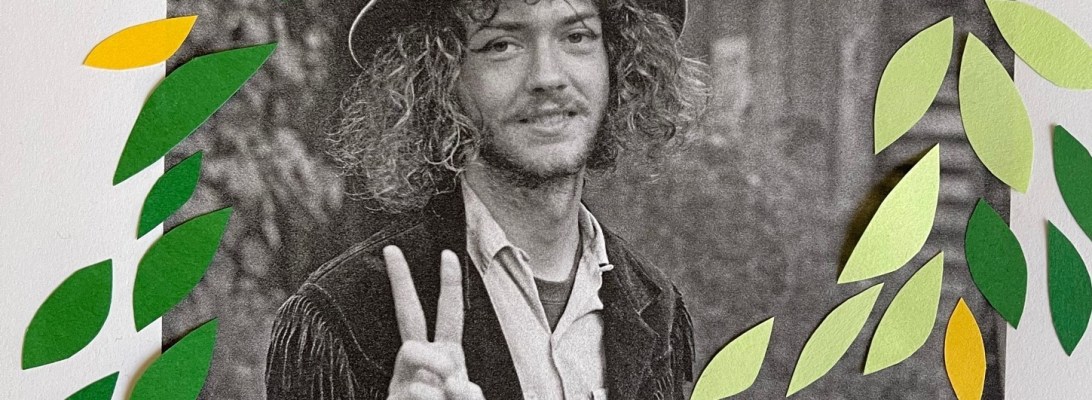
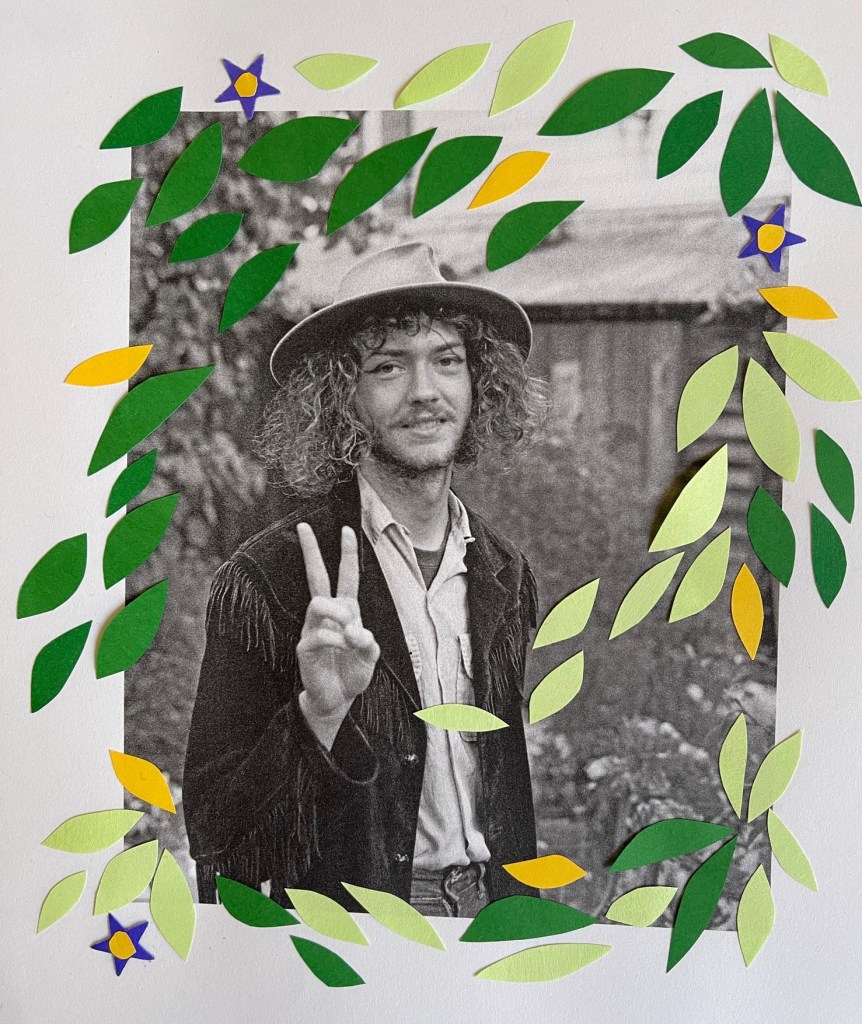
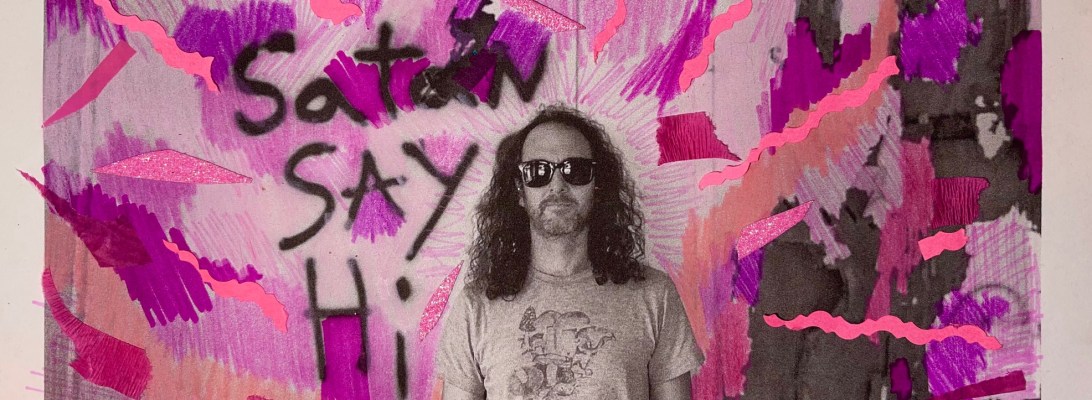
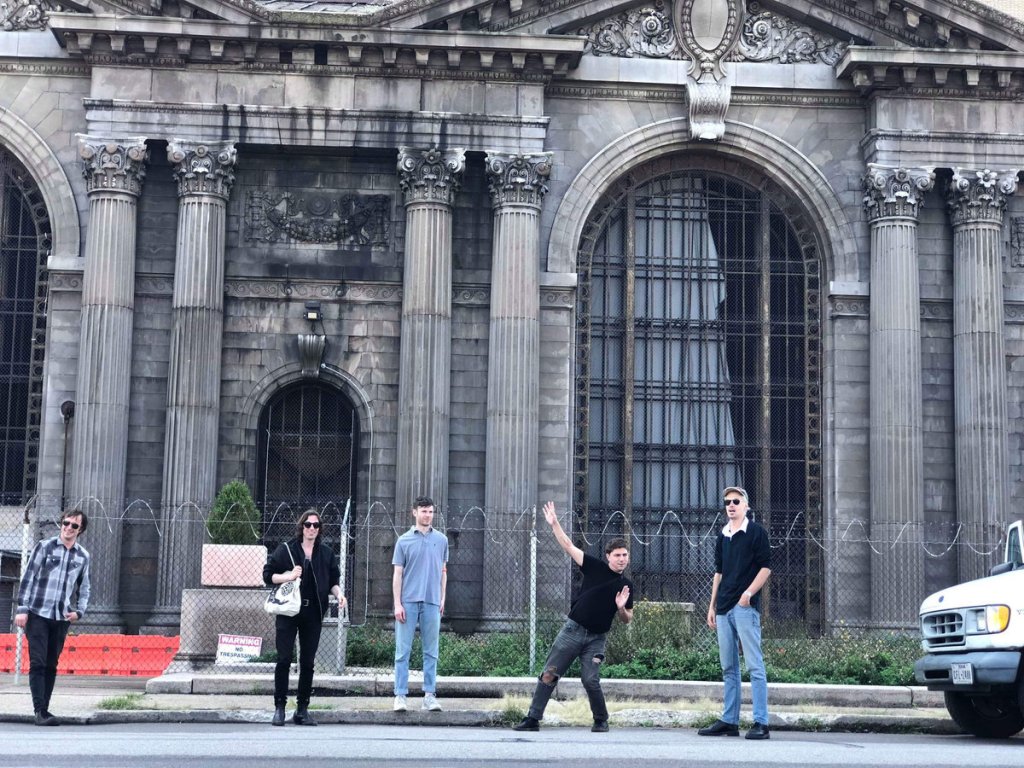
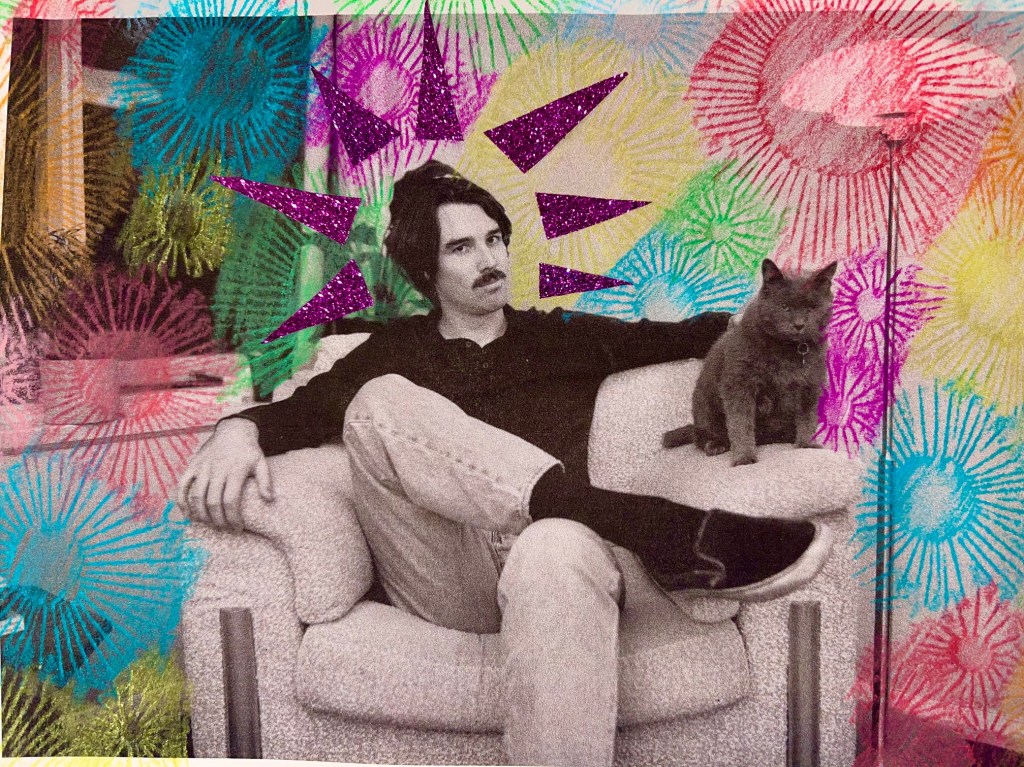
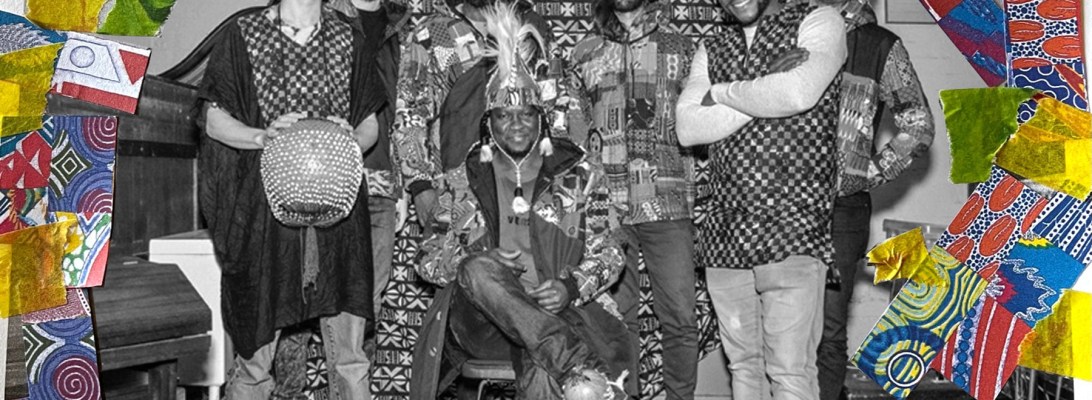
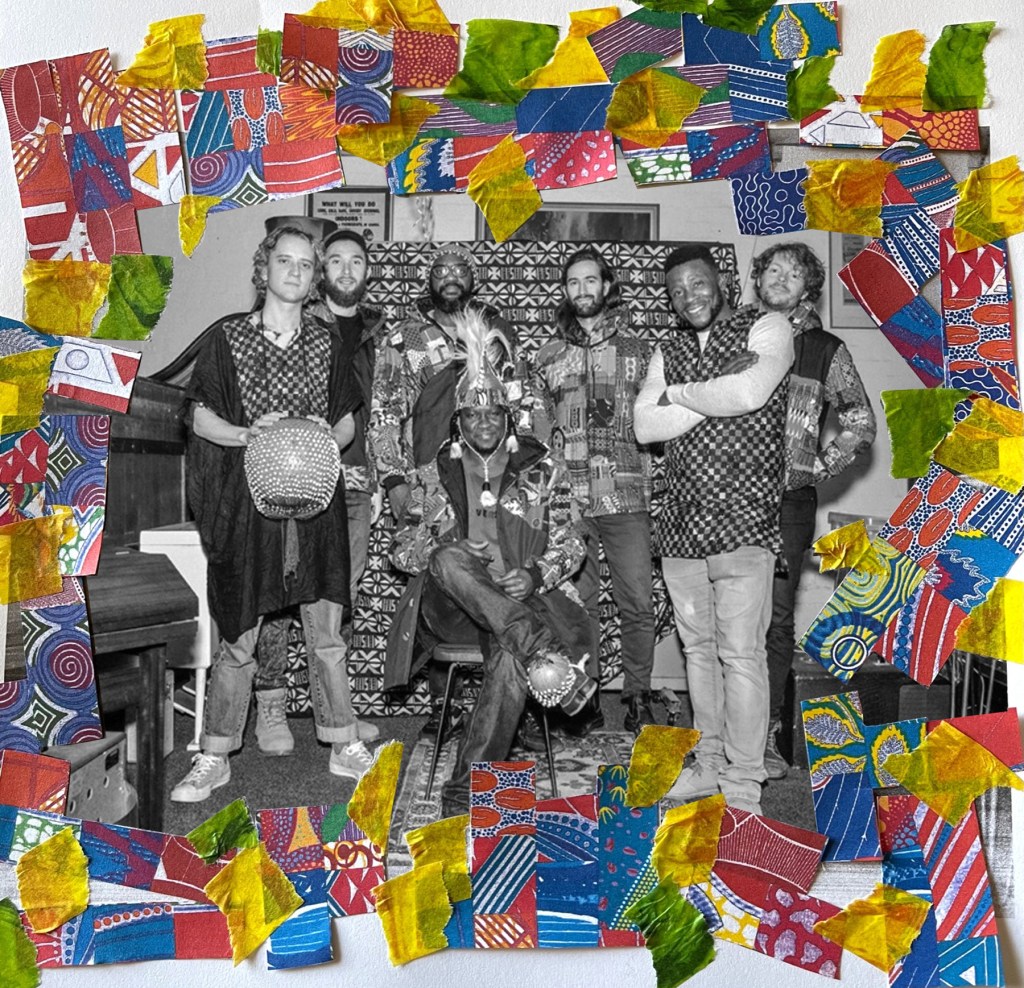
Original Photo: Liam Brownlie. Handmade collage by B.
Naarm/Melbourne-based musician Winter McQuinn gifts us a shimmering psychedelic pop album, A Rabble of Bees. Themes of environmentalism, friendship, connection and change thread throughout the highly enjoyable jaunt. Gimmie got in touch to find out more about the record and learn more about project, Green Your Noise, co-created with Acacia Coates (Pinch Points) as an initiative for musicians and creative industry workers to get a better idea of how to make events and tours more sustainable.
Hi Winter! How are you? What did you get up to today?
WINTER MCQUINN: I’m doing okay! Drove back from Wadawurrung Country / so-called Fairhaven today on the Great Ocean Road, it’s so dreamy down there. Currently in the midst of either cancelling the rest of the album tour or continuing it! Geez.
What inspired your new album’s title A Rabble Of Bees?
WM: The album had a couple of name options. A Rabble of Bees was actually an idea given to me by the album covers visual artist Zac Terry when we we’re talking about what a group of Bees were called. A Rabble! I think the album was always going to be called something related to Bees; due to the environmental theme running throughout the songs as well as the idea that these songs all used to be B-sides and really rough demos before they got cleaned up.
This collection of songs was written during lockdown; how did writing help you during this time?
WM: Writing was something that I could do to escape from the world around me and make something that was purely creative and not driven by any other forces. I think that I’m always influenced by the world around me though and this poured into my songwriting around this album’s conception. The privilege to be able to spend a lot of time writing and demoing heaps of ideas is something I’m very grateful for and think it’s important to use that privilege to write about things that matter and are meaningful to you.
What sparked the writing of ‘George Harrison’s Crystal Ball’?
WM: I was inspired after a conversation with my mum about our Prime Minister (gross) and her hope for his kids to grow up to be contemporary artists and to reject the church because that would really hurt him the most. It’s really just a foretelling of what future he’s condemning his own kids (and everyone’s kids) to. The name is centred around looking into the future and the guitar line after the first verse kinda gave me George Harrison vibes.
What’s your favourite lyric you’ve written for this record? Where did it come from?
WM: Hmm probably the line between me and Acacia “you make avocados green, yes you do, bananas yellow and still you” I had the most fun with that haha. I think I really wanted to keep it fun and light with the lyrics on Friendship Pheromone and this was the perfect encapsulation of that feeling in a few words.
What was the best part about recording this record yourself in home studios in Brunswick and Northcote?
WM: I guess the freedom both financially and creatively is the best part about home studios in general. Most of the album was done in the Northcote spot which is where I wrote it all. To have written and recorded my first solo album in my childhood home feels pretty special so I think that might be the best part.
Can you tell us a little bit about the recording process? It was produced by Sunfruits’ drummer Gene Argiro and recorded with two SM57 microphones, right?
WM: The recording process was a pretty messy one in all honesty, there was never any intention with this group of songs to make them into an album but I’m so glad they are now! I usually send most demos that I’m working on to Gene to see what he thinks and suss if they’re worthy or not to make the Sunfruits bag of magic. These songs we’re all tracks that maybe didn’t quite fit the Sunfruits vibe but still we’re worthy of something.
I think I actually just decided I wanted to clean up the songs a bit more and asked Gene if he’d wanna mix them. He is such a talented producer, mixing engineer and songwriter and makes everyone he works with a better songwriter so It was a blessing to have him mix these songs. All the recording was done with two SM57s that I have (Drums included!) and I think sometimes that’s all you need.
Some of the songs are centred around friendships; did you find your friendships changed in any way during or even after time spent in isolation due to the lockdown?
WM: Yeah, I think that friendships in my life changed profoundly during lockdown. When you’re involved in a music community, I think you are “friends” with so many people as you share a common interest and share common meeting places e.g., venues, record stores, festivals, studios etc and that helps you connect with a vast range of people. Lockdown changed and stopped these connections from happening as regularly so I felt quite isolated and had a longing for that feeling again.
We really love the song ‘Friendship Pheromone’; what was the writing process for this track?Acacia Coates does vocals on ‘Friendship Pheromone’ and ‘Tangerine La’; what do you love most about her voice?
WM: Thanks so much! “Friendship” was written during a particularly hard part of lockdown where I was really missing a lot of the people in my life. It’s just a reminder to love your friends and spend time with them and listen to them. Acacia is my favourite collaborator and we really have a great synergy when it comes to songwriting and general life! She has such a good ear for melodies and writing catchy but interesting lines and lyrics. I love her voice and just asked if she wanted to sing on both of those tracks.
Nature is a recurring theme on the LP; what compels you to write about the environment?
WM: I think nature and the environment is on my mind most days, it’s all around us and is us, we are it, it is us but I think we’ve lost touch with that. I think it informs anything I do and it has such an effect on my moods and life in general so it was kind of inevitable that it intertwined with all the songs on the album.
Acacia and yourself started Green Your Noise after questioning what else you could do, as musicians and individuals, to combat climate change, for those who might not know about it; can you give us an overview? What’s something important you’ve learnt from this initiative?
WM: Yep! So, we co-founded Green Your Noise together as a way to help musicians and creative industry workers get a better idea of how to make their own events and tours more sustainable. In short, Green Your Noise is an online carbon calculator specifically tailored to musicians and creative industry workers who want to figure out the emissions created from their events, how to mitigate them and how to make their events more sustainable in the future.
I think the one of the most important things we’ve learnt by doing this project is how eager everyone in the creative sector is to be able to work out their impact and how to mitigate it. It was also really interesting to really get into the nuts and bolts of carbon calculating and accounting and just how broken our systems are in terms of power, waste management and transport.
What’s something that’s been interesting to you lately that you’d like to share with us?
WM: I’ve recently been researching the history of environmental activism within music and songwriting and just seeing how widespread and how far back the two go together is really interesting and quite inspiring. To see it in the mainstream as well with Billie Eilish etc is really great, a personal favourite from these research sessions has been a song “I Pity The Country” by Willie Dunn, really powerful folk music from the 60s/70s that’s still so poignant today.
Are there any other projects you’ve been working on?
WM: Yeah a few! I’ve been working on a concept album quietly in the background which is examining environmental activism within music which will be paired with a visual accompaniment. I’ve also been preparing with Sunfruits to record our debut album at a house down on Great Ocean Road which I’m super excited about!
What was the last thing that made you really, really happy?
WM: I think getting to play the solo album live with a group of musicians and people I really admire made me really happy. To be able to travel and play songs you’ve written is a huge privilege and I’m very grateful to be able to do that.
Original photo: Sarah Gilsenan. Handmade mixed-media collage by B.
Michael Beach’s fourth studio album Dream Violence carries a touch of the sublime throughout, with moments of naked expressionism and dramatic arcs he explores the duality of the human condition and the struggle of finding and maintaining hope in times that are not so hopeful. A beautiful album from an interesting artist. Gimmie recently got a little insight from Beach.
You first started playing music while at the University of Southern California, but didn’t fully dive into it until you spent your first year here in Melbourne. Previously you’ve mentioned that “my first meaningful connections with other musicians came from my initial year in Australia”; how were the relationships different here than what you’d already experienced in California?
MICHAEL BEACH: I guess it’s just timing. I met amazing people in Southern California, but when I met my first bandmates and friends in Melbourne, it was life changing. Those early friendships were the ones that gave me the confidence to pursue music.
In March you released your fourth album, Dream Violence. The title comes from a song on the release; where did the title-track’s name come from?
MB: I like the dichotomy of the two words. Dreams aren’t often associated with violence, but can quite often be. Violence seems to be just behind the veil of society and certainly seemed to be seething when I was writing this record.
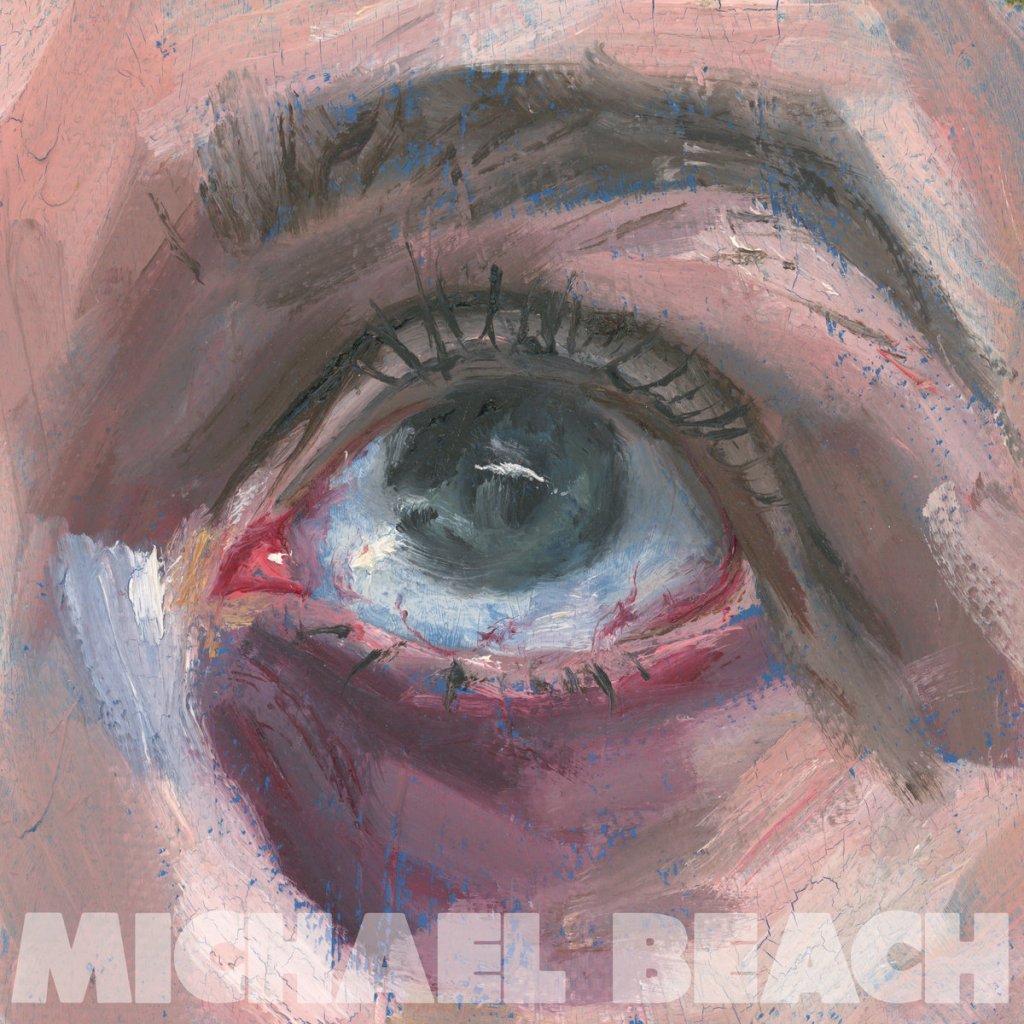
Album art by Charlotte Ivey.
Dream Violence was recorded with multiple line-ups in multiple locations in Australia and the US; how do you feel the energy of the varying line-ups and locations helped shape the LP?
MB: Everybody brings something different to the table, and I like bringing people together and seeing what happens. The record has a lot of different moods that reflect all of those different people and places.
What’s one of your fondest memories from recording?
MB: Etep, Matt and Innez (of Thigh Master fame) and I recorded a few of the tracks from the record at my place. It was one of those really relaxed sessions where all the mistakes sounded right—there were a lot of happy accidents—it was a really fun way to record.
I understand that you have a pretty laborious process of writing, editing, and arranging your music; can you tell us about your artistic process please?
MB: Yeah—I take my time, and probably over scrutinize things. Not always the most enjoyable process, but I’m working on that. I don’t really have any one process, but I do try to play at the same times every day, so I have a routine built around that.
What’s a really special moment for you on the album?
MB; I love that got to improvise the title track with Chris Smith. It was a first take. I’m a big fan of his records, so to have him play on mine is really special. But really that’s the same with all the folks on the record as well.
One of the overarching themes on the record is of the struggle to maintain hope during challenging times; what are some things that has helped you with your personal experience of this?
MB: Off the top of my head—friends, music, art, books, nature, seeing a psychologist, exercise, and my partner’s eternally optimistic outlook on life.
We really love the album cover art painting by Charlotte Ivey; can you tell us the story behind the cover please?
I’m glad you love it, I do as well. Charlotte did a bunch of eye studies of friends’ eyes. That’s her eye, and I love the intensity and hyperrealism of it.
During the lockdown as well as continuing your day job you worked on the completion of your studio; tell us a little bit about your studio? What were some important considerations in regards to creating a conducive space for your work?
MB: It’s an 8-track analogue tape setup with a nice mixing desk, outboard gear, and a bunch of synths and amps, and my piano in my living room/live room. I’ve got digital recording gear if I need more than 8 tracks, but I like working within those limitations when I can. I like having good light in my studio, and I have a favourite kind of tea that I keep stocked. As long as all the equipment is working and not getting in my way, I’m happy.
I know you also had the opportunity to read a lot more during lockdown; what were a couple of the reads that had you engaged and what did you appreciate most about them?
MB: I recently read Shots by Don Walker—that dude can write! Such gorgeous prose and a very visually immersive book. Utopia for Realists by Rutger Bregman was pretty great as well—it was inspiring to read a hopeful book amidst a lot of rough news last year.
Who is an artist that makes you think outside of yourself or your surroundings? What particular work of theirs first had you feeling this way?
MB: I’m listening to Fennesz while I’m writing this. His music is totally transportive and dreamlike. I love it. My bandmate Etep played me his record Endless Summer on a long highway drive in America, and I’ve been a massive fan ever since.
Why is music important to you?
MB: Most of the good things in my life have happened because of music. It was and still is transformative for me.It brings me together with my closest friends.
One of Gimmie’s favourite bands Naarm/Melbourne-based EXEK have a new single and clip out today—‘Several Souvenirs’ from upcoming LP Good Thing They Ripped Up The Carpet out soon on Lulu’s Sonic Disc Club. Gimmie had a quick chat with vocalist-guitarist, Albert Wolski.
What’s life been like lately for you, Albert?
ALBERT WOLSKI: Pretty normal. I work full-time with Billy [Gardner] and Jake [Robertson] from Ausmuteants. We worked all throughout Covid, it was business as usual; actually, work was as turbo as it could possibly get, a bit too turbo. It was fine though. We had to work when a lot of people were able to have time off and could do their creative stuff, and just read, chill and hang.
We’re really excited EXEK has a new album coming out! I’ve been listening to it a lot since Lulu’s Sonic Disc Club sent it through to us. It’s so awesome!
AW: Thank you! Rad!
Last we interviewed you (March 2020), EXEK had just released Some Beautiful Species Left. You mentioned “We’re currently working on the next album. I wrote all these lyrics for it ages ago, most of them were written whilst I was on holiday in Europe in 2017.” Is Good Thing They Ripped Up The Carpet that album you were talking about then?
AW: That is actually the next album, that was done before this new one. It’s all kind of confusing and everything overlaps, there’s a bit of a tapestry now. Things aren’t too linear half the time. Good Thing They Ripped Up The Carpet comes out the 4th of June. We’re working on stuff for next year as well, just trying to stay busy.
Lots of EXEK in our future, lucky us! I noticed a few songs on Good Thing… have been on other releases, split 7-inches and compilations overseas; the first six tracks are newer ones?
AW: Yeah. It’s split between the A-side and the B-side. The A-side is new and the B-side is older stuff. One of the songs feels like it’s new because it hasn’t come out yet, there’s been a delay in a compilation it’s on, that a French label SDZ is putting out, they put out Some Beautiful Species Left. They were celebrating their 20th year anniversary last year, but it all got delayed. It’s the song ‘Four Stomachs’.
The title of the album Good Thing They Ripped Up The Carpet is a lyric from the first song ‘Palazzo Di Propaganda Fide’. Being the nerd I am, I was looking up what the song title was in reference to and found a palace located in Rome has that name.
AW: Yeah. It’s known for its architecture [designed by Gian Lorenzo Bernini, then Francesco Borromini]. I wanted to loosely connect that building and almost pretend that the cover of Biased Advice, which just got reissued [on Castle Face] … I wanted to refer back to that record. There’s a lyric that goes: someone turned the lights on, and it looks like the sweatshop from the first album. Now it’s full colour, so it’s almost like someone did turn the lights on and its loosely painting a narrative that the sweatshop is in that building, but obviously it isn’t. It’s all very nonsensical really.
I love how in EXEK albums there’s always so many layers, from the music to lyrics and to art and videos. It’s cool how things connect over releases.
AW: Yeah, I definitely like to make a little universe and for that universe to exist and try and make sense out of it; it is its own universe so it doesn’t have to make sense in comparison to this universe. [Laughs].
The song we’re premiering along with its video is ‘Several Souvenirs’.
AW: I guess that one is related to Covid, just after the lockdown in Melbourne, everyone was really stinging to go out and be social again; maybe not everyone, but at least I did and my friends. We really felt like connecting with people and having some fun. I was writing that song when I was going out and partying a lot, a lot! Definitely during Covid there was none of that, I gave up alcohol for three or four months during the first lockdown. After the second one I just felt like partying again. ‘Several Souvenirs’ is kind of the EXEK party song, it’s definitely not a party song but it does have the romanticism of creating the perfect evening and the perfect memory of the perfect evening. It’s a little bit new wave-y, a little bit romantic, and probably the most poppy that we get.
I got that romanticising feeling from the film clip. It creates that mood, with the shots, lighting and even the ballerina character. Where was it shot?
AW: Yeah. It was shot at a pub [Stingrays Upstairs at the Bodriggy Brewery], not our next show but the one after we’ll be playing there with Body Maintenance. The place is named after a friend of mine. The narrative is that Carol is about to start her shift at the bar, a song comes on and she just goes into her fantasy world and it gets more and more extravagant. The dresses get crazier, the lighting gets crazier, there’s wind and smoke. Then she snaps out of it. We managed to get the place for free to do the clip, on the one condition that we play there. I was like, “Of course, it’ll be fun.”
It seems like a really amazing venue.
AW: I don’t think anyone has played there yet. It should be interesting because there is a mezzanine level, which is six or seven steps high – we’re going to playing at that height – which is really, really high. My ideal stage is one to two steps. It’s a brand-new place that opened right after Covid, not many people know about it.
Where did you find the ballerina for your clip?
AW: She’s a friend of a friend; a friend of my wife and I – Kasey – she runs this fashion label and store. Carol (the ballerina) loves Kasey’s fashion. She’s a professional dancer and model, we thought she’d be great for the clip so we asked her if she’d be keen. She was. Then it was all happening.
Were you there on set when it was being filmed?
AW: Yeah, yeah, yeah. There was a big crew of us all behind the scenes, letting her hog the spotlight really [laughs].
Who shot the clip?
AW: Robyn my wife and her close friend Hannah. They’re both photographers. Hannah is also a videographer. Also, Alex McLaren who you just interview was there too; he was helping us out behind the scenes with some tech stuff and we were fortunate enough to borrow his equipment. It turned out good.
One of the tracks on the LP’s B-side is the theme from Judge Judy (that originally appeared on your split 7-inch with Spray Paint); how did you come to choosing to cover that?
AW: I really love that bassline. You know when you were back in the day and you’d stay home from school and Judge Judy would come on? I thought, damn, I love that bassline. I thought it would be good to cover because EXEK basslines are kind of like that, it would kind of lend itself to what we do. We just fleshed it out and it was really easy to do, really fun to record.
Anything else to tell us about the album?
AW: The songs on the B-side of the album have been retweaked. I just can’t help myself. The mixing process never ends with us. I always thought that when I got a chance, I’d retweak a few things. Even the last track [‘Too Step A Hill To Climb’] I redid the whole vocals for that. I wasn’t too keen on the originals. All the songs on that side have been modified to freshen them up.
On a side note, I know you love watching films, and I’m always up for great film recommendations; what have you been watching lately?
AW: I’ve been watching all these silly blockbusters lately. I feel like watching the world blow up, I think I see it as cathartic when things aren’t really going too well outside, that visual chaos. It’s really chaos right now in the world. One film that I saw a couple of years ago that I’m keen to rewatch is Under The Silverlake, which I think slipped by a lot of people.
I love that movie.
AW: Yeah, I think I might watch it again tonight. It’s so good.
Did you find that the lockdown affected your creativity?
AW: To an extent, I didn’t want to write about what was going on, so that made it a little bit harder. I didn’t want to write about Covid, even though I like to write about hard science stuff and which I do anyway. My writing process is really hard to shift gears away from hard science, pathogens and diseases and science-fiction dystopias [laughs].
Original photo: Hannah Nikkelson. Handmade mixed-media by B.
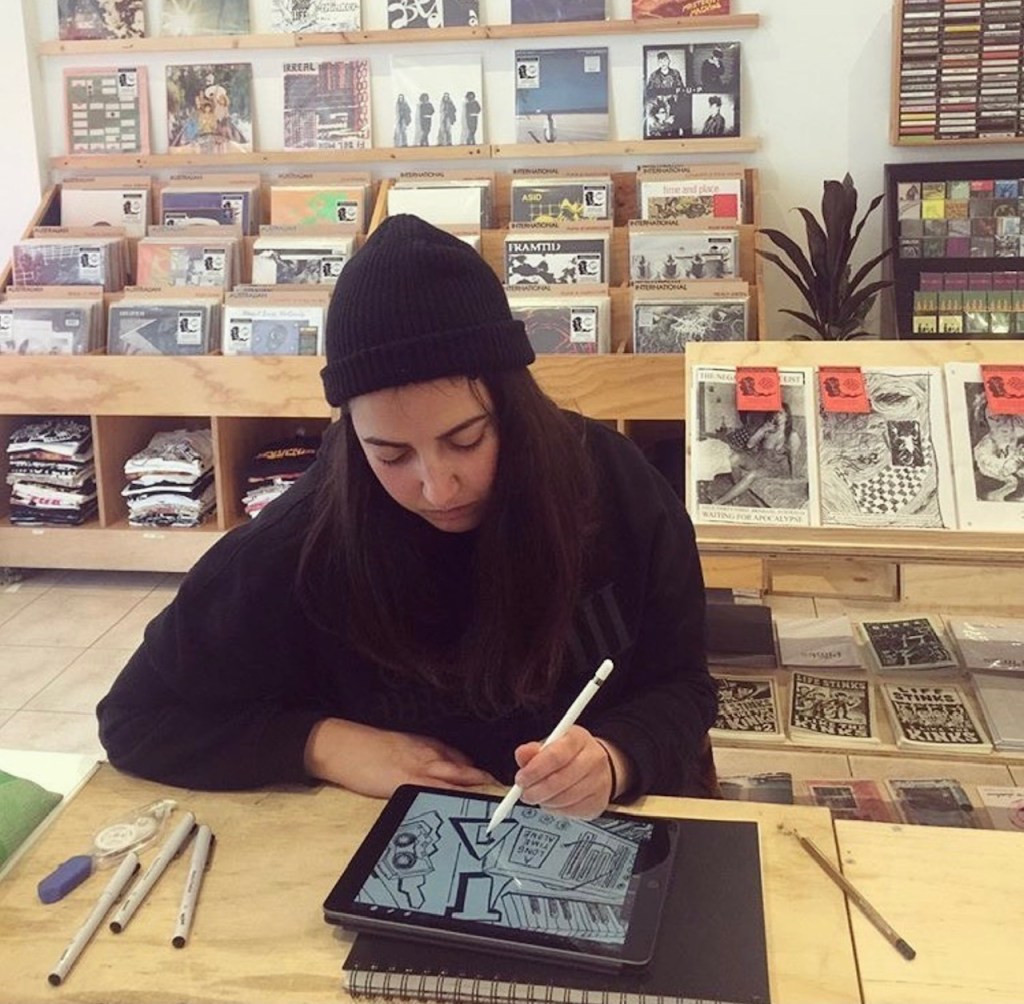
Naarm/Melbourne-based videographer-animator-photographer Alex McLaren is the man behind some of the coolest music videos that have come out of Australia in the past few years. He’s made videos for King Gizzard & The Lizard Wizard, ORB, Parsnip, School Damage, Bananagun, Sunfruits, Pipe-Eye, The Murlocs and more. His clips are vibrant, dynamic and psychedelic. We chatted with Alex about his creations, of making skate vids with his friends growing up in a country town and it’s influence on his work, the music video medium, claymation, collage, making a living as a creative, new projects in the works and more.
How’s your day been?
ALEX MCLAREN: I had to go to my mate’s house and feed their cat, that’s pretty much all I’ve been up to this morning.
Nice! Sounds like it’s been a cruisy one then.
AM: Yeah. How about you?
I’ve been easing into the morning. Yesterday my husband Jhonny and I went and picked up a box of 45’s (records) for $10, so that’s always a little exciting. We’ve been going through them this morning. We’re big record nerds.
AM: Cool. Sweet. Any good stuff in there?
There was a Hawkwind ‘Silver Machine’ picture disc and some AC/DC in there, and some funk and soul. The guy we got it off was interesting; he had all of this Elvis memorabilia, including Elvis’ dad’s electricity bill. We love all kinds of music and have music to suit every mood in our collection. We’ve both collected records since we were teens.
AM: Nice. It’s good to have a good mix!
I’m stoked to be talking with you. We love your work so much!
AM: That’s so sweet.
The film clips you make are really cool. We find that whenever an awesome clip comes up from a local band, you’re usually behind it.
AM: [Laughs] That’s cool. Thank you!
Have you always been a creative person?
AM: I suppose. The main way that I got into it was from being into skateboarding growing up. Watching skate videos; they have little animations and stuff, they’re almost arthouse in a sense. That stuff really triggered where I’m at now. Dad would have the family camcorder; I’d end up stealing it to film my friends skateboarding. Through that I got into editing the footage and tinkering around with it.
Do you have any favourite skate videos?
AM: Yeah, for sure. There are so many! Alien Workshop videos, they were kind of wild in the sense that they had a ton of animation, strange little stop motion things. That all influenced me to some degree, even subconsciously at the beginning. I definitely look back at that stuff occasionally and can see how it affected where I am now. Also, with skate videos how quickly they’re edited, all chopped up and short, flashing by really quickly; I think that informed some of how I edit videos. With the King Gizzard [& The Lizard Wizard] one, I’ll have a bunch of visual styles and things changing rapidly, that’s all part of it. Videos from Girl Skateboards company, had little skits and animations. I think Spike Jonze did a bunch of that stuff.
I made a bunch of skate videos with friends and a couple of people who make music, like Nick Van Bakel from The Frowning Clouds and Bananagun, we grew up together in Warrnambool; it’s funny how a lot of people that skated then make music, art and video stuff now. It’s cool to work with Nick occasionally making videos, it’s fun to think that it all stemmed from skating together back in the day. Music interests were pretty eclectic… it’s almost like having a big brother in a sense, opening up a world in terms of music and visual stuff, arthouse 16mm and 8mm animation. I feel like all of that stuff was the initial seed of inspiration and opening the doors to new sounds and visuals.
My brother and I had a skate shop in the mid to late-90s, he’s had skate shops since the 80s, we used to watch all the skate vids, so I can relate. My love of punk and hip-hop in part comes from those vids. What was it like growing up in Warrnambool? You mentioned listening to eclectic stuff; what kind of bands were you listening to?
AM: I guess eclectic, in hindsight it probably wasn’t. But at the time in a country town, skate vids were good exposure to punk, hip-hop and more obscure stuff than what you may get otherwise, playing footy or cricket. Living in a country town anything outside the norm is eye-opening and exciting.
Did you grow up watching the music video show Rage?
AM: For sure. That was a big part of it as well, having Rage, Video Hits, Channel V and all that stuff on Austar (if you can remember that? [laughs]). That stuff was always on in the mornings. There’d be clips where I wouldn’t necessarily grasp into the song and think, yeah, I might not like this artist, but I would be engaged in the video. Spike Jonze doing that Daft Punk clip ‘Da Funk’ with the dog walking around, things like that, that visually stick out.
I really liked Michael Jackson when I was really little. I remember hiring Michael Jackson VHS from the video store.
Same! I still have a bunch of MJ VHS tapes. I joined his fan club too.
AM: That’s so good [laughs]. I used to do drawings of him too, it’d be so funny.
Me too!
AM: Oh wow! I remember this real crap one that I had that I even framed, it’d be so funny to see what it looks like now looking back.
Back then he was one of the greatest artists in the mainstream that the world had ever seen. His artistry will always hold out, despite everything else that’s happened. He was always pushing things forward art-wise. His film clip premieres would be a big deal, remember here in Australia Molly Meldrum would premiere them in a primetime slot. His 13-minute film clip ‘Thriller’ really changed the film clip game.
AM: Yeah, definitely. ‘Thriller’ is pretty wild. Back then and still to some degree now, people had huge budgets for film clips. It was such a new thing as well, there was such a burst of creativity in the medium. So much money was getting pumped into it and people were coming up with some really cool stuff. It’s pretty easy to go back to that stuff and reference it and think about it.
I read an interview with music video director Hype Williams (who did Tupac’s ‘California Love’ and videos with Nas, A Tribe Called Quest, Jay-Z, Outkast, Missy Elliott and more), he was talking about his career and said that in one year of his career he made forty-four videos and how it was such a golden time with big budgets in the hip-hop world.
AM: Yeah, that stuff was definitely playing a lot around the time I had Channel V and that stuff. In my early teens that stuff would be on all the time!
The other night I saw Outkast’s ‘B.O.B. (Bombs Over Baghdad)’ it’s so wild, visually; everything about it is nuts. It’s crazy cool looking back at it.
Yeah. The director had the edit shipped to India for individual painting of each frame, which gave it that psychedelic look.
AM: It’s just amazing!
How do you see music videos? What is their function in your eyes?
AM: The obvious thing is that they’re a promotional tool. It’s a weird time for music videos because there seems to be that bands have less and less budget but it’s still a promotional tool. If you can make it interesting enough, it’s another way into the artist you can grasp on to. Initially the music video may draw you in more than the song but you keep watching it and you might end up liking the artist more. It’s definitely happened for me. It’s a good accompaniment for the song.
It’s a similar thing with artwork, vinyl, albums—I really like having a visual. If you like the music, it’s nice to be a part of it and create a visual for how you interpret that music itself.
How do you first approach a song when you’re going to make a video for it?
AM: Usually artists will send me the song or a few songs and ask, what do you think? Which do you like? Most of the time they let me do whatever, which is a nice freedom to have. I don’t mind a little bit of direction as well. Usually they’ll send me the song, I’ll listen to it a bunch and whatever it evokes emotionally or visually, I’ll pretty much run with that initial thought. Certain sounds and instruments will remind me of other music or clips from the past and I’ll loosely get a vibe or style from that and go from there. I like when songs have different musical elements and changes, the verse and the chorus are really different or at the end of the song the song will just change completely. It gives you a nice chance to have a completely different visual go along with it. Half the time I end up doing practical stop motion things. Every time I finish a video, I’m like, I really have to not do that again because it’s so time consuming, it is fun though! I always think the next time I should do something I can finish real quick, like live action. I can do that in two weeks and not have to go through the roller coaster ride of being really excited and then thinking, what have I got myself into? Getting excited again. Then getting worried. It’s up and down until it’s done, then I can’t believe I actually finished that!
I noticed in a lot of your work you have the stop motion animation-style and then you also have a collage-style in there too. Where does the collage aspect come from?
AM: I reckon it must be something of growing up and the children’s television that had that style back in the day, and early music videos. I don’t’ feel like I’m technically that savvy when it comes to computers; doing the stop motion seems like a really obvious choice to me, you have something sitting there, you take a photo and then move it and keep doing that until it’s animated and alive. I thought, I can do that. It may seem like a long painful process but it’s doable. It’s an easy process that makes sense in my head. It’s probably a reaction to not feeling technically savvy with software. I use it a lot and I’m probably more adept at using it and animation techniques and computers now then when I started doing stop motion. I think there’s a lot of charm in it though and that’s why I keep going back to it. I like when things aren’t quite perfect, that’s where all the charm lies; things being off, things being handmade, things being human-made, errors, jumps and flickers—that’s where all the magic lies. I always make it feel like I’m doing something new and different, even if it might seem minor in the end product; little steps forward so I feel like I’m evolving. I need to keep things interesting for myself.
Did you have any formal training or education in visual arts or film?
AM: I went to RMIT and did a two-year course of film and television, that was in 2009 when I first moved to Melbourne. Before that, in high school I did stop motion for my Year 12 project, it was all claymation stuff. I would have learnt stuff at RMIT, perhaps more how to use [Adobe] After Effects and programs like that. At the same time, I think what I initially learnt was through trial and error and skate videos. I would have made four or five skate videos with my friends, filming and editing it. And using my dad’s 8mm camera and learning to use that as well. A lot of learning has been through just trying to make stuff. It’s hard to say though, because when I went to RMIT I had just moved to Melbourne, and I was like, oh I live in Melbourne now and I’m out of my parents’ house so I can do whatever I want! I don’t have to go to school if I don’t want to. I definitely learnt stuff at RMIT but most stuff I’ve learnt on my own.
A few years ago, I went back to study. I did a three-year Bachelor of Photography at Photography Studies College in Melbourne. I work in video production (corporate videos and market reports) that pays the bills and video clips I just do in my own time. Working in corporate video production got a bit dry and boring, my partner at the time went and studied photography; I saw what she was doing and heard about the teachers. It made me really want to go back and study photography. Even more so just for myself, not as a move to start a business in photography or anything like that. I thought it would be great to go back and learn as a mature student; I was twenty-seven at the time. It got me thinking of the history of photography, images and what they mean and represent, the eras they’re from, what they’re saying politically, as a response to what was happening in that time. That stuff made me think differently about visuals. Beforehand it was more about what looks cool and interesting and compliments the sound. It gave me more of an appreciation of the thought process behind what images I’m using and how they might communicate ideas.
I’ve always been a more learning through doing person as well. I think doing things that way helps you to develop your own style. Often when people go study, they lose that creative spark or that uniqueness in their work, it gets learned out of them and people start making stuff that’s all the same. Coming from punk and skateboarding, that world is very DIY. With all the art for Gimmie, that’s all handmade inspired by my background in making zines and love of punk art. If you look closely at some of the art you can see the corner of my art desk in the image or some imperfection. I like that you can see it’s physical as opposed to digital, it’s handmade.
AM: It’s great how you can see the edge of the frame in your art. There’s an energy to it, an immediacy you can see in the work, which is something that I respond to. That immediacy is something that I try to create in my own work.
I think that’s partly why I resonate with your work; I can totally feel that in your work. I think if you spend too long on something it can feel tortured and it becomes overworked. Not always, but often. The life gets sucked out of it.
AM: Yeah, for sure. That initial energy and spark is what attracts me to things. In doing something like stop motion, it’s such a long process, initially I’ll be excited about it but after a few days and you have a couple of seconds worth of video, that energy is so hard to sustain for months or weeks to finish the video. That’s the only struggle when applying that to something as tedious as stop motion, keeping that initial spark and energy.
I can definitely see that. Have you seen the stop motion work of Bruce Bickford who did a lot of the Frank Zappa videos?
AM: Yeah, yeah. He’s the best! His stuff is amazing.
Your clips reminded me of his work.
AM: I’ve done some work with Sean McAnulty, my friend who is also from Warrnambool, we discovered Bickford eight or nine years ago. That first ORB video that we did that was all Claymation, it’s very Bickford inspired. I love the outsider weirdo people that are just doing their own thing. Bickford seemed to be working constantly doing his own stuff, if it wasn’t for Frank Zappa exposing him to heaps more people, he probably would have still just been doing his own weirdo stuff in his garage. People like him are so amazing and influential.
That’s my favourite kind of people, the true originals that create art for art’s sake, because they have to, it’s like breathing for them.
AM: It’s important that if you get an idea that you should just go with it and not think too much about it.
Is there anything that you do to stretch the resources that you have to make something look better than what’s available to you?
AM: Everything I do is on a budget, a pretty shoe stringy budget. I think that’s why I like the collage style, it’s so easy to get magazines or go to op shops and get old books and use images from those—it’s cheap, visually effective and interesting. It can be fun to do more animation with my hand drawn cartoons, but I feel like it’s not necessarily my strong point. Using found images is a way around that to create something visually strong and easy. There was a weird magazine that I found in an op shop, a World’s Fair magazine from the early-90s, it had what they thought at the time futuristic-looking things; a lot of that stuff made it into the Gizzard clip. That mag cost me 80 cents and I turned it into this whole other thing.
There’s a real art in doing that. College art has become quite popular, I find a lot of collage artists cut things out and slap them together. The artists I enjoy make something new, make a statement, have a lot of thought behind what they’re doing, there’s layers of meaning.
AM: Yeah. It’s fun to take that stuff and mix it with footage of the bands. You can completely create a new world or fantasy worlds, which I think is really interesting just the juxtaposition between images, maybe something from the 50s against future technologies or really banal stuff. I like working like that. You move the images around and as you see things beside other things, you’ll see new things or a connection between things that you wouldn’t have ever thought of otherwise; that can form other ideas in the video. It’s a fun, open way of working; it keeps it loose and interesting.
Are you inspired by the Dada artists?
AM: I haven’t really delved into the Dada movement much; I have been meaning to. I went and saw an exhibition at NVG [National Gallery of Victoria] a few years ago and there was a small section of the Dada movement and I was really interested in the stuff they were creating, it resonated with me. I feel like I’ll definitely get a lot of inspiration from it.
What’s a video you really enjoyed working on or that was challenging for you?
AM: I feel like they’re all challenging in different ways. Every time I finish filming a video, I feel like I don’t have anything else to give, in terms of that being everything I was interested in at the time and I can’t even imagine what I would do for another video. Getting excited about something will be all the spark I need to get started on the next thing though.
I really loved the Parsnip ‘Rip It Off’ clip you made.
AM: Oh yeah? Cool.
It’s pretty magical!
AM: That was fun! It was the quickest video I’ve made in terms of turn around. We shot in a day pretty much. I went to Geelong and they had some spots, we went first thing in the morning. It was so nice to shoot live action with natural light. When I finished doing it I thought, I need to do more videos like that. It’s almost like making skate videos back in the day where you can film some tricks and it’s ready to go as soon as you edit it.
The U-Bahn ‘Beta Boyz’ film clip is really fun too.
AM: Yeah. I kind of forget all the clips I do [laughs], especially with the last year being so weird with lockdown. I really like the last ORB video; ‘I Want What I Want’ was fun to make.
How amazing is that song?!
AM: Yeah. They wanted me to do a different song before that one, then they released the song and I feel like it’s not as fun to do a clip for a song that’s already released. It’s more exciting for me if people see the song with the video; it gives it more punch. Everything is usually fun and stressful at the same time.
The new Gizzard clip [O.N.E.], being locked down at the time, it felt stressful but I’m pretty happy with how it turned out. It’s got a big audience, so it’s nice that people get to see stuff.
What did you stress over?
AM: If it’s going to look good! [Laughs]. Is it going to work? Will the band think it’s good? There’s always that concern that they might think it just sucks! Because the process is working in slow motion, your brain has so much time to think, oh, this is good or this is so shit; how am I going to make this work? It’s a blessing working at such a slow process in terms of stop motion that if something doesn’t feel like it’s going right it might be a 24th of a second and then by the end of that second, you’ve corrected something that you didn’t really like and no one will ever notice; that’s a nice thing about stop motion, you can change something that isn’t going the way you like it.
How long did the new Gizzard clip take you?
AM: [Laughs]. A few months during lockdown, I definitely spent full days working on it.
Do you move on from things quickly that aren’t working out in the creative process?
AM: I usually get hung up on it. Most of the time because I spent so much time on it, I find a way to rescue it or still use it but recycle it and use it in a different way; I’ll cover it up a bit or use it with something else, layering it. Nothing kind of ever gets disregarded. Pretty much every mistake has made it in. I mask or change it, make it sit a different way or in a different part of the clip. If it was terrible though, I’d just face it and bin it.
What are you working on at the moment?
AM: I’m finishing up a Murlocs video in the next couple of days. It’s live action-based with a tiny bit of animation. Maybe a Pipe-Eye video. I’ve just started talking to him [Cook Craig] about it. I really like his stuff, it’s strange and interesting and lends itself to interesting visuals. He sent me the album the other week. He was like, “Any ideas?” There’s one song I really love and I sent him back a few ideas and he said he was thinking along the same lines too. Working with people like that and being on the same page makes it super exciting! I have to see what happens schedule-wise. After last year I wanted to hang out with people more and be more social again now that we can… but then you get ideas and you’re like, I really want to do this! Then you start doing stuff and you can’t go see anyone, you get obsessed with making it as good as you can. You want to get it to a standard where you can put it out into the world and not be embarrassed by it.
Last year was definitely a time to revaluate and think about how you can use that time. If anything, it gave me more time just to do what I was doing anyway, but not having to go to the office and do my more commercial stuff. Working in that commercial side of things, I think my video clip work is a reaction to that side of things; I want to get as far away from that world as I can. It’s nice after doing something boring and corporate at work to come home and do something that’s totally opposite; to take the banality of that work and add humour into my own work, to process and channel it and make it interesting. Does that make sense?
Yeah, for sure. My whole life I’ve pretty much had a day job and then done all the creative stuff for love in my own time. There are times when I have done creative stuff, like writing, as a job and I ended up hating it, it wasn’t fun anymore.
AM: It’s a funny thing trying to find the balance between worlds. It can keep you on your toes. Having that job that’s a drag can push you to pursue what you want in your own time and be more creative.
I always find myself at my day job thinking about what I’m going to make when I get home. At work my brain goes on autopilot sometimes and my creative mind is constantly going. When I get home, I’ll work late into the night or get up super early before work and do stuff because I’m so excited.
AM: Oh yeah! Totally. The only thing is hoping that your body doesn’t get too weary in the day that it can keep up with your brain’s excitement.
I get that!
AM: Yeah, it’s hard. Sometimes when I get home it’s like, I’m just going to chill out for five minutes and when I do that my body is like, this is good and you just take it easy. You have to keep chugging along and making it work.
Is there anyone you’d like to make a clip with?
AM: Yeah! It’d be cool to work with Cate Le Bon, Total Control, or Weyes Blood. I was excited to work with my friend Sean on a White Fence clip a couple of years ago, because White Fence, and Tim Presley as an artist, is a favourite. I’d love to keep branching out into different scenes and different genres. As long as it keeps feeling new and gives me a chance to try out different styles. It’s cool to work with new people.
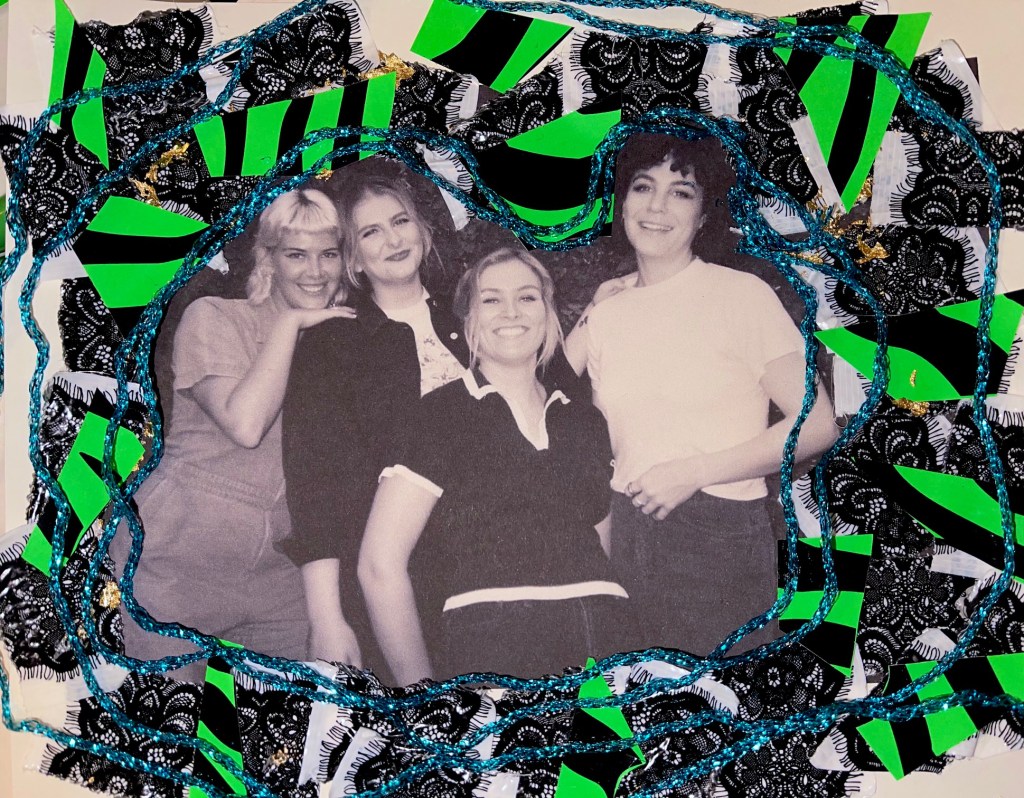
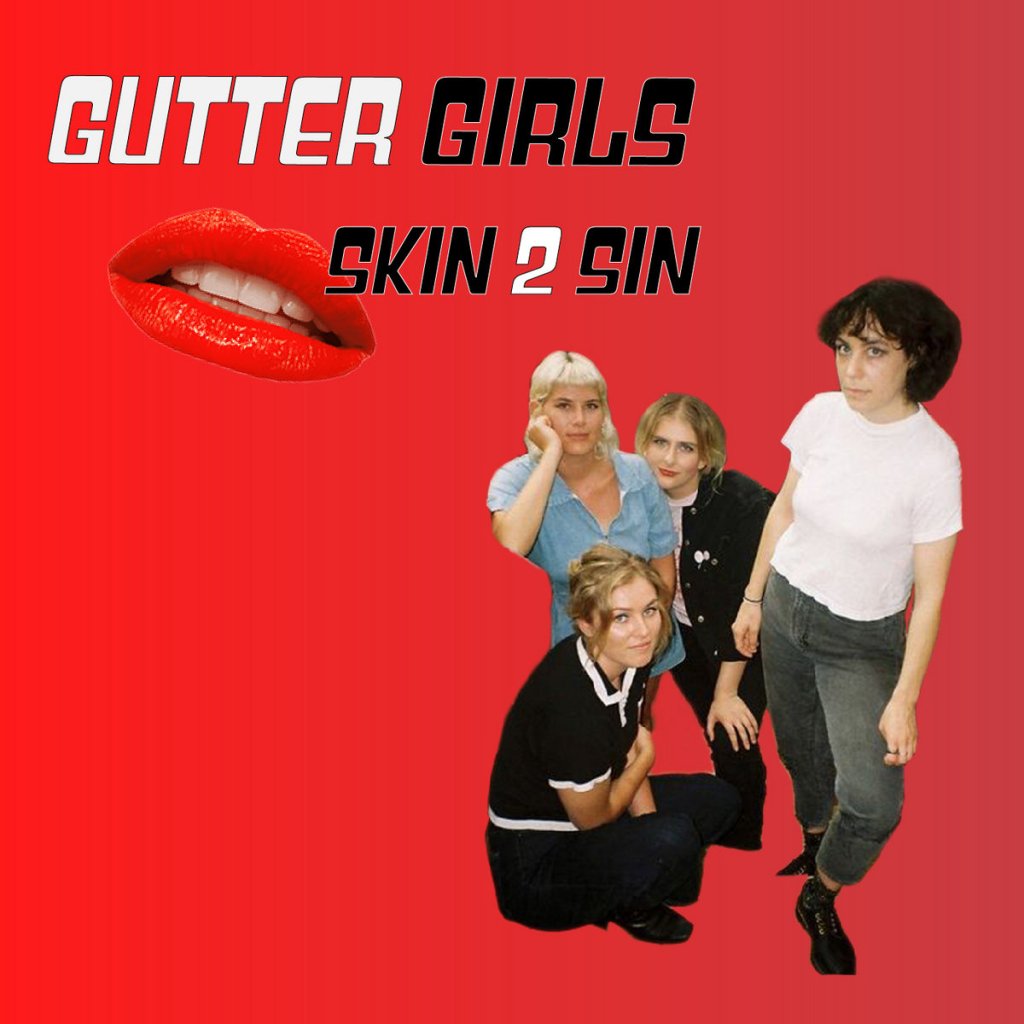
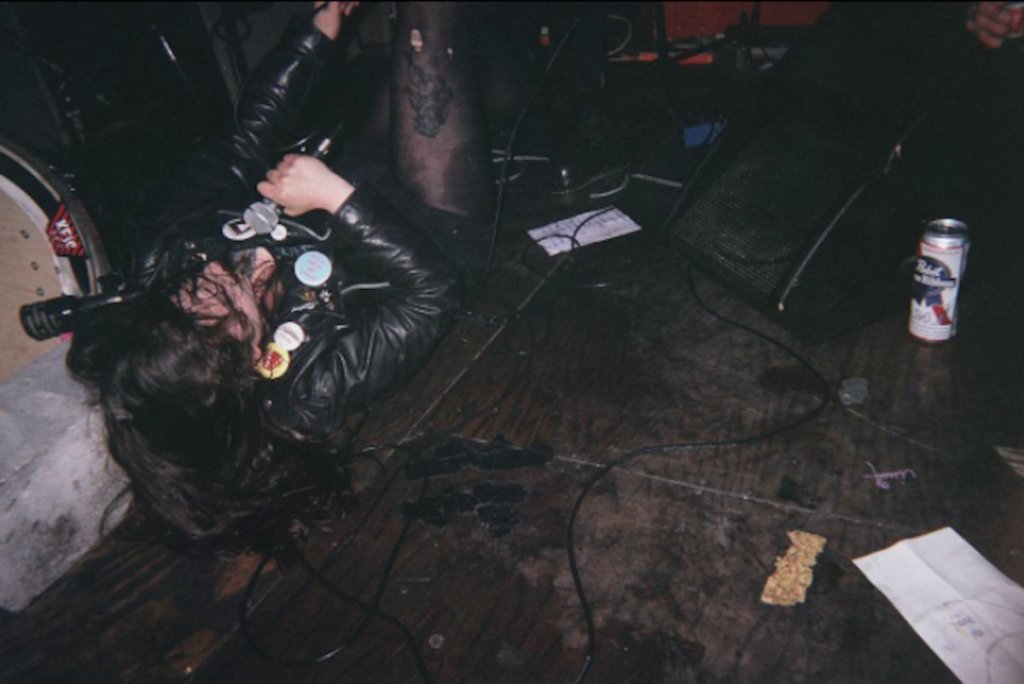
Naarm/Melbourne-based femme 4-piece Gutter Girls began in a sharehouse. They had no musical background but saw many of their friends playing in local bands and decided to start a band and join the fun! Gimmie interviewed guitarist-vocalist Iso about their most recent single ‘Skin 2 Sin’ which was mixed and mastered by Iso’s housemate Michael Ellis from Kosmetika.
What’s an average day look like for you right now?
ISO: The Gutter Girls are all still working from home, listening to our friends and idols host or play on community radio and daydreaming about what’s for dinner.
Tell us a bit about yourself. Do you have any hobbies?
I: We collectively love to watch trash TV, spend more time at band practise eating than rocking and finding fun places to swim!
How did you first get into punk rock?
I: Thanks to my oldies for playing the gold hits like Skyhooks, Susie Q, AC/DC and Divinyls. Then sprinkle a little teenage angst into the mix with some Green Day, No Doubt and Nirvana and a big thanks to The O.C. soundtracks from 2003-2007-ish—best punk rock era ever.
What was the first local show you went to?
I: I can’t remember the first one ever, but an early iconic show was when Crepes played at the Tote and covered Mental As Anything’s ‘Nips are Getting Bigger’. Afterwards my now-great-friend-but-then-acquaintance and I played pool with strangers, who were annihilating us until we made the return of the century and came out on top. It was all very worth getting locked out of my house in my pyjamas at 3PM the next day for leaving my hangover nest to get Maccas.
Who or what first inspired you to make your own music?
I: Lots of our friends were playing and we wanted to join the fun! We’d go to local shows regularly and always wanted to be in a band but didn’t think we could without any knowledge of how to play instruments. Seeing more and more female identifying people front bands really inspired us and gave us the confidence to give it a go ourselves. Turns out YouTube and practising helps a lot!!
What inspired Gutter Girls to get together?
I: We were all on the same page of being excited and motivated to start a band and learn how to play from scratch all together. We didn’t know each other well in the beginning, but we were attending all the same shows and shared the same love for music which made it pretty easy to get things moving. Our first few practices were spent learning Joan Jett covers and it wasn’t much longer before we had our first gig locked in.
Last year Gutter Girls released songs ‘The Bullet’ and ‘Skin 2 Sin’ and the previous year before an EP and back in 2018 your demo; will we be seeing a full-length this year? What’s been influencing your songwriting lately?
I: We are easing back into Gutter Girls post-lockdown quite slowly, with all members in other local Melbourne bands now as well (such as Carpet Burn, Dragnet, Blonde Revolver). We definitely plan to write and release throughout the year but haven’t decided what the final product will look like at this stage. After being apart for so much of 2020 we’re mostly excited for the writing and developing process which we always have a lot of fun with.
What’s one of your all-time favourite songs written by someone else?
I: ‘Live it Up’ by Mental as Anything—cos life is a dancefloor and we should live it up.
A lot of time was spent in lockdown last year; what’s something you’ve discover about the neighbourhood where you live since you’ve been back out and about in the world?
I: I’m very lucky to be living in walking distance to lots of Melbourne’s beautiful parks, a few favourites being Murchison Square in Carlton and Methven Park in Brunswick East. I hadn’t spent much time in either parks prior to lockdown so it was nice having the opportunity to discover those local gems.
You played your first show of the year in January with Eggy; do you have any pre or after show rituals?
I: Nervously drink vodka sodas before we play and then happily drink vodka sodas after we play. The rush after playing is always worth it though, and it’s a nice reminder you’re alive when you’re a bit nervy before something.
How do you feel when performing?
I: I don’t think I could tell you honestly because all that is going through my head is ONE, TWO, THREE, FOUR or trying to remember silly lyrics from a few years ago. It’s a lot of fun though, especially glancing around to a familiar face in the crowd or one of the Gutter Girls’ giving off a big grin.
What are you most looking forward to this year both band-related and personally?
I: Making up for a lot of lost-to-2020 time with the Gutter Girls and friends whether that’s making new music, dancing to other people’s or watching Coyote Ugly on repeat.
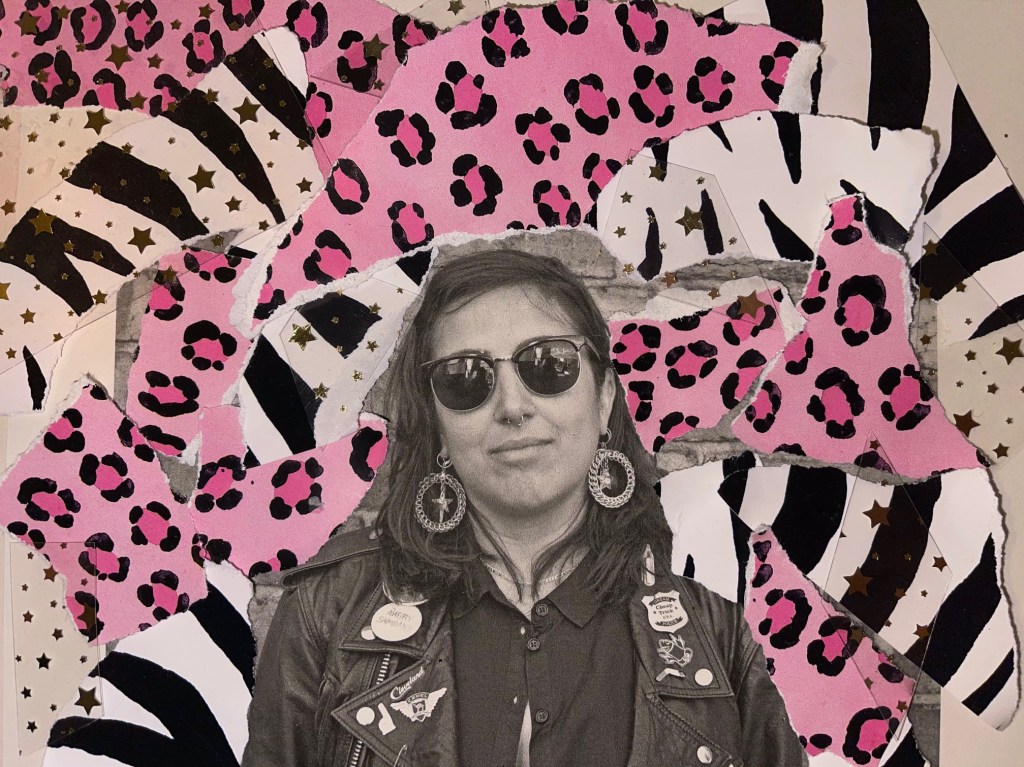
Photo courtesy of Christina Pap. Handmade collage art by B.
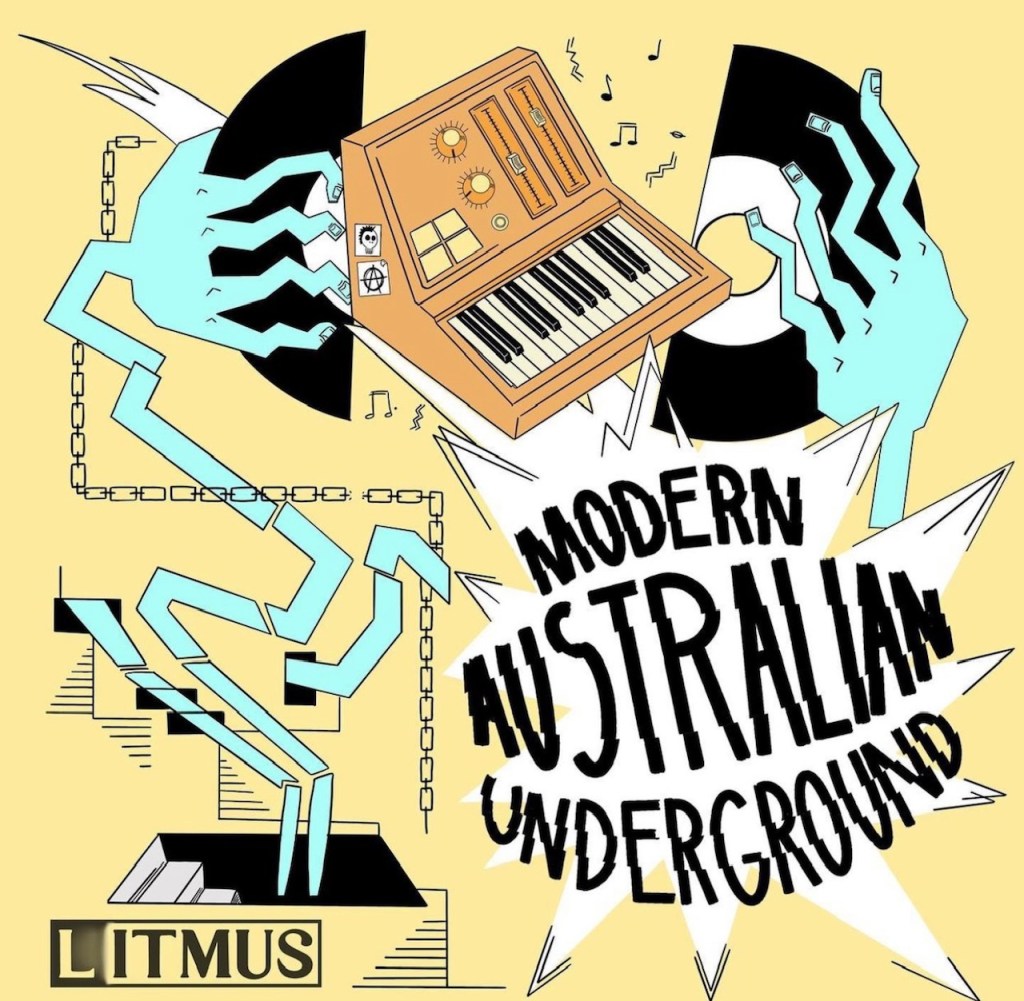
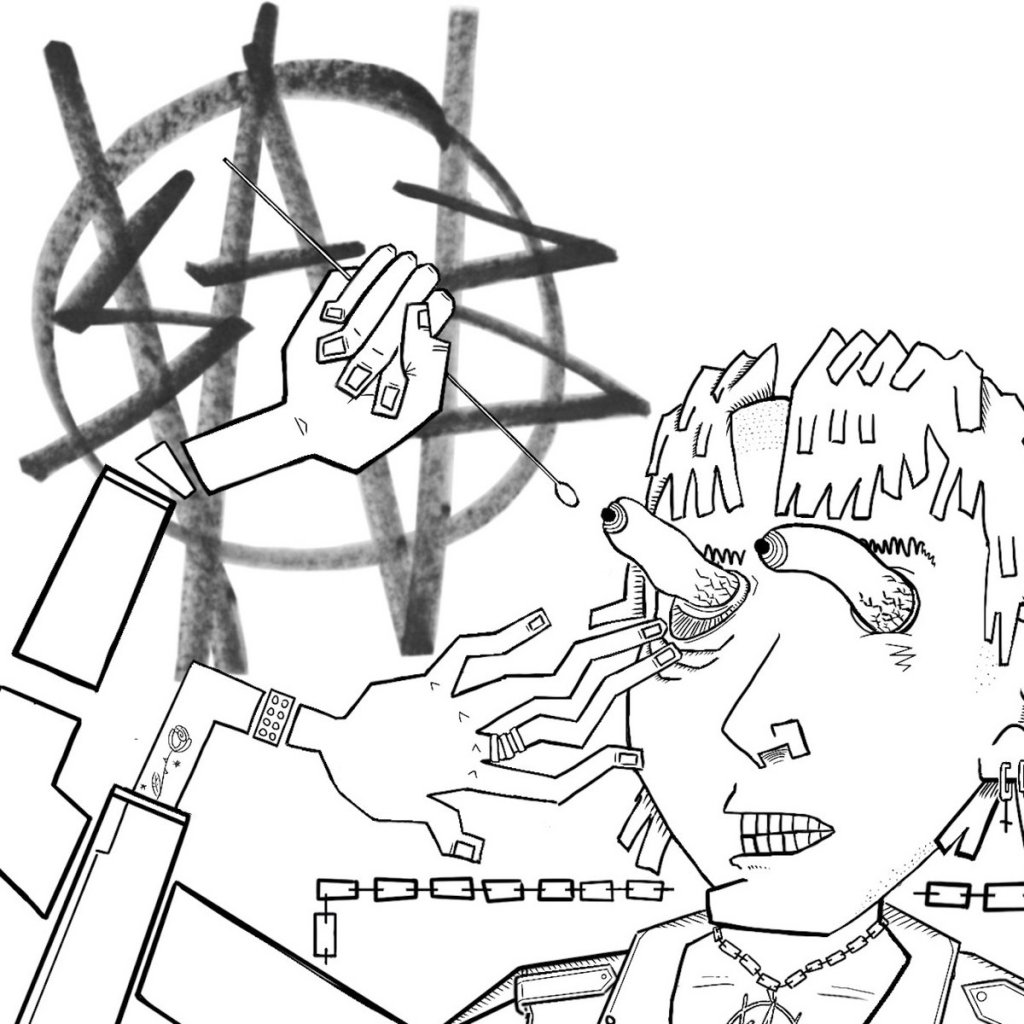
Christina Pap does A LOT! She’s currently the vocalist for Melbourne/Naarm punk band Swab (previously having fronted Vanilla Poppers), hosts the Modern Australian Underground podcast and co-hosts 3RRR’s Teenage Hate radio show, is an artist, creates punk zine Stitches In My Head, runs label Blow Blood Records (recently compiling and releasing 2 great volumes of quarantine recordings by a vast array of the AUS punk scene), and works at our favourite Melbourne record shop Lulu’s. Christina is an underground Australian music community treasure that works, and continues to work, hard to do all she does, it definitely hasn’t come without challenges and some very hard moments along the way. Gimmie sat down to chat with her frankly and candidly about her journey.
Hi Christina! How are you?
CHRISTINA PAP: I’m doing alright.
That doesn’t sound very convincing!
CP: [Laughs] Yeah. It’s been a bit of a stressful week but I’m trying to be ok, you know how it is.
I do. Aww, I hope your week gets better. You grew up in Melbourne, right?
CP: Yeah, I did. I was born in Brunswick and I grew up in Coburg. I feel like I’m one of the few people out of all of my friends who actually grew up in Melbourne, a lot of my friends moved here from other places.
And, you come from a big Greek family?
CP: [Laughs] Yeah, yeah, I do. Greek-Italian.
How were things growing up for you? Often Greek and Italian families can be pretty conservative and you’re into more alternative things and ways of living.
CP: Yeah, totally. I feel like it’s something recently that I’ve only started to be ok with, because most of my life I’ve been really fighting the fact that coming out of a Greek-Italian family I was a woman and didn’t really matter. Going into the punk scene I thought I had a little reprieve from that but then it was just the same situation, ya know. I broke away from my family, all my cousins were getting married and had kids and that wasn’t something that I really wanted. I didn’t really know any other way though because I grew up in a big Greek-Italian family and that’s the expectation.
How did you discover music?
CP: I’d always listen to the radio shit but I didn’t really know about punk, this was when I was ten. When I was fourteen, I decided that I wanted to do something that raised money for charity but I didn’t really know how to do that. Someone pointed me in the direction of council in Victoria, they have these FReeZA events; groups for young people between fifteen and twenty-five and they organise shows. I went and talked to the council and they let me join their young person committee and I put on a show and raised money for charity. I stuck around afterwards and kids there were into emo and ska and shit, street punk. It snowballed. I’d find out about street punk shows that were all ages. In my teens it was mostly emo and street punk [laughs], when I turned eighteen, I found punk music that wasn’t that.
So, you started going to local shows; would you go by yourself or with friends?
CP: I kind of met people there. I was the only punk in my high school though. I would go to school with a mohawk and people would think I was so weird. I slowly made friends; I know it sounds stupid but I felt like I didn’t fit in because I was culturally different from everyone. A lot of that, from what I’ve started to understand about myself, is that it was probably just in my head [laughs]. It took me a long, long time to make friends and feel like I fit in, and I’ve only really felt that in the last couple of years, I guess.
I can relate, especially being a person of colour and going to punk shows and being the only POC in the room at shows. Like you, at school I was the only punk girl as well. I’d always get, “Oh, you’re that weird, dark, punk girl.”
CP: Yeah, totally!
And you’d start going to shows and no one else looks like you. When I started going to punk shows there wasn’t that many girls at shows either, being a woman of colour here in Australia at shows you’re a minority within the minority of the punk world.
CP: That’s true. The thing I’ve also had to learn over the years – and it’s been a good thing for me to learn – is that being Italian-Greek isn’t necessarily being a person of colour. Because I was brought up so different there were these things that made it different for me, but just for me to be brought up culturally different, I can’t claim I’m a person of colour. I don’t want you to feel like I claim that in any way.
I didn’t think that at all. Can you remember when you first came across zines?
CP: I used to read Maximum Rock N Roll when I was young, that was the first big punk zine. There were other ones like Distort around. I never really thought about doing one until my first boyfriend, who ended up being the singer for The Zingers – we started dating when I was nineteen – decided that he wanted to do a punk zine. I remember thinking if he was going to do one, he’s in the same boat as me – he didn’t play an instrument and wasn’t involved in the scene at all – but he was a guy and all of our friends were guys and I felt like he had an extra leg up because he was a guy. He did one or two issues and then I ended up doing it for six or seven years after I started it. When I started it, it was called When We’re Young We’re Invincible. It was pretty terrible [laughs], but I think I got better as time went on.
My first zines were terrible too! You have to start somewhere though. No one really shows you how to make a zine and it’s all learning, experimenting, trial and error. You just get that overwhelming feeling of wanting to contribute beyond just going to shows. When you know better you do better. I’ve read a lot of your interviews on your blog and in your zines and you can really see the progression of them, leading up to the great chats you do on your new podcast, Modern Australian Underground.
CP: Thank you.
I rarely find interviews that I think are exceptional but the one you did with Yeap & Heikal on immigrant punx and racism in Australia was really amazing.
CP: I really appreciate that because I definitely am trying and I want to make them interesting, there’s always this part of me though, with whatever I do, is this nerve-wracking thing to put something into the public eye because I always just think it’s shit and not good enough. I put something out and I can’t appreciate the effort that I put into it because I’m too busy worrying about someone telling me how terrible it is! The one with Yeap and Heikal was a really nice conversation, I’m really happy it happened.
I thought it was important to tell you I found it rad because I think often people don’t tell people enough when they make or do something that rules! People are quick to point out when you fuck up or they like to tear others down or be apathetic and I think sometimes in the punk community it’s seen as cool not to give a shit or to try—I think that’s bullshit. Trying and doing your best is the coolest to me, like the Minor Threat song: Well at least I’m fucking trying / What the fuck have you done?
CP: Yeah, for sure. I really appreciate the positive feedback I’ve gotten for the podcast but I’ve also lived in a time when… like punk six years ago in Australia was a lot different, people were a lot more critical and ready to cut you down over absolutely nothing. It’s nice to have a lot of people in the community to be down and support each other, they’ll be really positive and give each other advice. Whereas not that long ago I felt like it was really different.
What do you think has changed?
CP: I don’t know because I gave up on Melbourne and left the country for two and a half years. I grew up in Melbourne so it’s not like I grew up in Adelaide and moved to Melbourne and it wasn’t my home city, I’ve always been in punk in Melbourne. I left for a lot of reasons, part of it was I went through some really shitty emotional and physical abuse shit with a guy that I was dating that was in the scene. I remember being at a show and he was coming after me, yelling at me and saying he wanted to punch me and shit. I remember going up to one of his friends and just begging for help at a show and everyone turned their back on me. I was literally at a show, I never ask for anything, I never ask for help and I always contribute and here I was asking for help and I feel like everyone turned their back on me. Talking to Yeap, I could see that around the same time he had his own similar experience of the scene. I had been overseas and I had friends that were really supportive and I thought; why would I contribute to a scene here when I’m literally at my worst point and really need help and they don’t want to help me and deal with it? Why do I want to contribute to a scene when a white guy is being racist to someone of colour? Or there’s a guy threatening to punch his girlfriend at a show? I was like, bye everyone, have a good time! It’s funny because everyone thinks Cleveland [Ohio] is a fucked-up place, but Cleveland was the place I went because I felt like I had more family there then what I was feeling in Melbourne at the time.
I’m sorry that happened to you. I’ve had similar things happen to me in the scene. I’ve dated guys and when the relationship ended – because I experienced emotional, mental and in some cases physical abuse – I felt everyone turned their back on me too. Rumours start and you get made out to be the bad one even though it was the other person abusing you and all your “friends” desert you in favour of scene dude and you’re left feeling isolated, alone, confused, disillusioned and really let down.
CP: Totally!
You think these people are your friends and family and that you’re a community.
CP: Yeah, and especially it always happens to the chick when they’re breaking up with a guy and looking after themselves cos this guy is dragging you down and being really shit to you. When you do something for yourself everyone’s like, “Oh, she is shit, she gave up!” I was literally fighting so hard and I felt like I finally decided to look out for myself for one second and everybody hates me for it.
It’s a really lonely place to be in, especially after you give so much to the community with all that you do and you find there’s no support and you feel ostracized. You feel like your community failed you. I stopped going to shows for a while and making zines, two things I love doing so much. I fell into a deep depression and had crippling anxiety. Eventually I found a way that I felt comfortable coming back, but mostly it’s just doing the work I love – zines, interviewing and going to shows – but being more guarded in my social world. I found a way to contribute and not have to deal with the rest of the shit.
CP: Yeah. It sucks that you went through that as well. It’s hard when you hit the point of; why am I still here doing this stuff? It’s supposed to be a place where everyone supports each other but you just have the worst experiences. It’s cool you found a way to come back, I really love your art and interviews, they’re really cool. You’re doing great!
Thank you! I’m thankful we’re both still here, both still contributing and doing even cooler things than we ever have before. I was talking to one of my friends recently and he was saying how you come to the punk scene because you want a refuge within the world at large and you think you’ve found a place to belong that’s different, that it’s a little utopia in a way, but the reality I experienced was that it’s not really, it’s just a microcosm of the macrocosm. I’ve met a lot of great, great people in punk but there’s also a lot of shit terrible people.
CP: Yeah, definitely. That’s why nothing is black and white. There’s a lot of good things in PC culture, but there’s also a lot of dangerous things in PC culture, things are complicated. You have this definition of punk being family, being everything is ok but, if you look at the normal family, there’s always crazy shit going on anyway [laughs]. The best thing is growing up and you get better perspective on life and break out of these ideals that we’re conditioned with and you realise the world doesn’t work that way and you wonder what went wrong.
I notice that your zine is really music-centric and you don’t write personal stuff in there much; was it a conscious decision? Why did you decide to do that?
CP: I feel selfish talking about myself really. For me, I feel like it’s selfish putting myself on a platform and thinking people want to hear about me and what I have going on. If I talk about music, I can talk about a thing that doesn’t have to involve me but I can write about it and create something from me.
I can understand and respect that, it’s funny though, because my two favourite things that you’ve written are very personal pieces that I found on your blog.
CP: Which ones?
One was where you writing about the end of your band Vanilla Poppers’ tour in 2016. I really liked the piece because I felt it gave a real insight into you. I mean, I see and listen to your bands, enjoy the label and zines that you do and know you in a way as much as you can from that, but to see behind that I thought was really cool. There was a passage you wrote about being between cities in the middle of nowhere and you pulled the van over and all piled out of it and were standing on the side of the road and looked up at the stars, and how it reminded you of being in your grandparents’ backyard as a kid. I got teary reading that, it was really beautiful.
CP: Awww. Yeah.
I haven’t gotten to see you play live yet but I’ve seen videos of you perform and your sets seem so intense and then to read about that moment on tour, you see a totally different side.
CP: Yeah, for sure. That tour was really special to me, I wrote about it because I never wanted to forget it. I feel like I’ll never do something like that again, even if I did, it wouldn’t be that same experience. It really meant a lot to me, all the little things. It’s nice to remember and appreciate nice little things because so much of our lives is spent clinging on to these bad things that have shaped us, these bad experiences and trauma. When I was looking at those stars, I remembered being home when I hadn’t been home in two years, that moment meant so much. I’m glad you liked it.
You could feel it and it was genuine and honest, I think that’s why I connected with it so strongly. The other thing I read that really struck me was you taking about getting the nickname “Stress Head”.
CP: [Laughs].
And there was a moment you were sitting in the back of the tour van while it was driving along the highway and you cracked and were rocking back and forth crying. When I read that I just wanted to give you a hug.
CP: Awww, thanks. That shit is real, it’s not something that I often talk about, my whole life dealing with mental shit. That’s like when you first called and asked how my day was and I said “alright” when I’ve really been having a shit day. It’s hard to write about that stuff because it is really emotional, emotions are hard to deal with and you spend so much time trying to push them aside to try and get by in every day life. It felt good to write that piece and be able to just get it out. There’s a lot of times, even writing vocals for Swab, I have such a hard time because I don’t know how to open up and it hurts too much to open up.
I think that’s why we make music and songs and art sometimes because we want to communicate and say things but sometimes it’s hard to talk about it and it’s easier to just put it into a song or what we’re making.
CP: Definitely. The thing about joining Vanilla Poppers, I went to North America for two and a half years, I had a great time, but the whole time I was going through really bad mental health. Vanilla Poppers was a way for me to have an alter ego where I could write and sing about these things… usually when I lose my mind, I feel powerless and I don’t know what to do and I feel weak, but doing Vanilla Poppers I could lose my mind and be strong about it and yell about it and tell people “fuck you!” It was nice to have an outlet where I felt I had some kind of power.
Doing a band is the most nerve-racking fucking thing in the whole world. Whenever I have a show coming up, I’m always like; why am I doing this again? It’s so stressful to stand in front of people and perform and know people are looking at you. All I can think about is that I don’t feel good enough to be on stage because I’m not a hot chick.
Firstly, you are hot! Secondly, hot is subjective and the way you look shouldn’t influence people to love what you create. I’ve known guys I’ve mentioned different women performers to and the first thing say they is, “She’s hot.” It’s like, why does what a female performer look like matter?
CP: I know. It’s all conditioning. I think for me it also comes from me being a wog chick and not a hot white chick or some shit! I’m white but not an Australian white chick. That’s all my own conditioning and it’s something that I try to work through.
There’s been times when I’ve felt the same way though too.
CP: Really? Are you in a band?
I’m working on a band with my husband now, Know Future. I’ve been in a few bands in the past but nothing too serious. I used to find it hard to find people to play with, I’ve had similar experiences to you where because I’m female people are reluctant to start a band with you, you’re not taken seriously.
CP: Totally!
Part of why I made a zine was it forced me to talk to people and be more social, I’ve always been more of a quiet, loner type person.
CP: Yeah, it’s an excuse to talk to people. If I’m at a show when I was younger, I felt like I didn’t really have a reason to go up and talk to anybody, no one is going to want to talk to me, but if I have the excuse of doing a zine and interviewing them, then I have an excuse to talk to people. How long have you been married for?
We’ve been together for twelve years this year, married since 2013.
CP: That’s cool. I’m married as well. He’s great but I haven’t actually seen him in over a year because he lives in Cleveland. It was going to be a situation where I worked on a visa and went over there and he would come here and visit, but because of Covid I don’t know when I’m going to be able to see him again! We speak everyday though.
That sounds so brutal! Having to be apart.
CP: Yeah, I was really upset about it for months at the start of Covid, it was hard to deal with. We have a good relationship. I’ve just come to accept that we’re both living our lives separately and, in the future, we’ll be able to come together. I’m glad that you’re married and happy.
It’s the best when you find the coolest person that you just want to be around all the time. When we met, I was ready to move to America, I was ready to go, I’d had enough of the scene here; I can relate to you in so many ways. I went to a show my bandmate was playing with his other band and my husband-to-be’s band was supporting. I had a really challenging day looking after my mother with advanced Alzheimer’s and seeing Jhonny’s band play brought me so much joy and a respite from some hard stuff that was happening in my life. After the show he talked to me and I told him all about my shitty day and he sat and listened. I had to go home early and a few days later he contacted me to see how I was going and we started trading mixtapes and art through the mail. I realised I simply couldn’t go to America anymore because I had found this amazing person to love and that loved me equally.
CP: Oh my god! Amazing. That’s a love story!
Moving back to music; is there any particular performers that inspire you?
CP: I’ll listen to a record and feel like it’s awesome, then if I see a band live and I feel like they’re going through the motions and there’s nothing actually behind it… when I do my band, I just try to do the best that I can. I hate watching a band where the singer will just stand there or lean on the side of the stage and sing, like; what is this?! I’m here to watch a shredding band and you’re being so blasé. Really play a show or don’t do it! A show that I really like is when you can tell that they’re really fighting for themselves or what they’re talking about. It doesn’t even have to be a punk show, you just have to feel that it’s genuine, I find that inspiring. I remember seeing this hardcore band in Toronto and they were crazy, so great and at the end of the set they hugged each other!
Amazing!
CP: It’s the little things: being genuine and fighting for something. It’s not like they’re out at a protest fighting for rights but it’s their own personal struggle and you sense that, that’s what inspires me at a show. I love watching a band and you feel like they have something to lose and they’re fighting for it.
You moved back to Australia in 2017?
CP: In October, 2017.
How have things changed for you? You mentioned that when you left you didn’t feel accepted or supported here.
CP: While I was gone, I could see that things had started to change. More chicks in bands. Different styles of music had come into punk. When I left, I felt like there was just this guy hardcore scene. From overseas I could see different bands popping up and different people have a voice. The fact that I went away and did a band and came back, people were more interested in what I was doing. At first, I felt it sucked because I’d been around all this time already doing stuff and people didn’t care and now because I left the country and started a band – which I couldn’t do here, I literally had to move to Cleveland – worked hard and did all these tours, now I’ve been acknowledged. There are chicks in the scene and even though they’re not in bands they still go to shows, buy merch and support bands, without them you don’t have a crowd; why are they less important?
I grew up a bit as well. It’s hard because I feel like a lot of my memory from my past is very… I don’t know what happened because it’s been scarred by depression. People will tell me stories about myself and I don’t remember. A lot of my past has been coloured by my own depression and anxiety and traumatic experiences that I didn’t know how to work through as a younger person. When I think back sometimes, I don’t know if I was feeling that bad or if I was feeling and that was the world that I was projecting. Everyone makes mistakes. I think with the punk community most people have addiction or mental problems or they’re battling something and people there can have a little more patience because there is understanding. There are a lot of good people in the scene now. There’re still problems but you deal with them as it comes and hopefully you grow and know better and can deal with them better than you could in the past.
As I’ve mentioned before I’ve had severe depression and had mental health challenges too; what are some things that you do that helps you with your mental health?
CP: I avoided going on meds for a long time but I hit a point about two years ago where I could not cope anymore. I went on anti-depressants and started seeing a therapist, I’ve been doing that for two years. It has changed my life and I do feel a lot better. My level of anxiety is nothing where it used to be. I can talk to people; even just taking a phone call is something I hate; I hate talking on the phone. Your number came up and I was like, just answer it, it’s fine! Before the meds it was definitely a terrible time and I thought I could get through it myself but there was a point where if I don’t deal with this now, I’m going to ruin my relationship and fucking kill myself in some way. My therapist is awesome though. I drink every day, which is a terrible thing. I try to eat as well as I can and go for walks. Through therapy, I try to see my triggers and if I see myself having a panic attack, I work through it. I still have my moments even now.
I have PMDD [Premenstrual dysphoric disorder], it’s basically a worse version of PMS [premenstrual syndrome]. I feel like I’m losing my mind for ten days and then I have my period and I’m ok. I take multi-vitamins. It feels like a full-time job dealing with my mental health on top of working and my hobbies, that can be stressful when I need time to work out my mental health. Even though things have gotten better in society around having space to deal with your mental health, I still find it hard to get that time. That’s my old school mentality creeping in though, my conditioning. I’m glad I’ve taken the steps I have, but I still feel I have a way to go.
Thank you for talking to me about this. I have a health condition – hyperthyroidism – that effects my moods and mental health especially before my period too. I just become so unreasonable and irrational, my brain gets foggy and it’s hard to cope.
CP: Yeah, you feel like you’re going crazy. Afterwards you’re like, “Oh shit!” because you didn’t mean to be a bitch but at the time what you’re experiencing feels so real and you feel people are fucking with you, all these different feelings. When you come out the other side you feel like, “Oh fuck! Now I have to go back and apologise to everybody” [laughs]. It’s so hectic.
Totally! I know you said this week has been stressful but what’s been some good things that have happened?
CP: I’ve been doing the podcast. It was actually Dan [Stewart; Total Control/Straightjacket Nation], that asked me if I wanted to do it. I said, yes, I may as well give it a shot; I don’t know fucking shit about podcasts though. I have been doing the radio show at 3RRR [Teenage Hate] for a few years so I know how to talk in front of a mic and write up a script. He asked me a few months before we did it if I’d been writing for it but I kept putting it off because I was fucking depressed. Finally, I went in and pulled it together! I like talking to people. It’s nice getting to know people’s stories because everyone has some shit in their life and has done something interesting. It’s nice to share my friends’ stories or some weird music that I like. There’s so many people out there doing cool stuff that I think other people should know about!
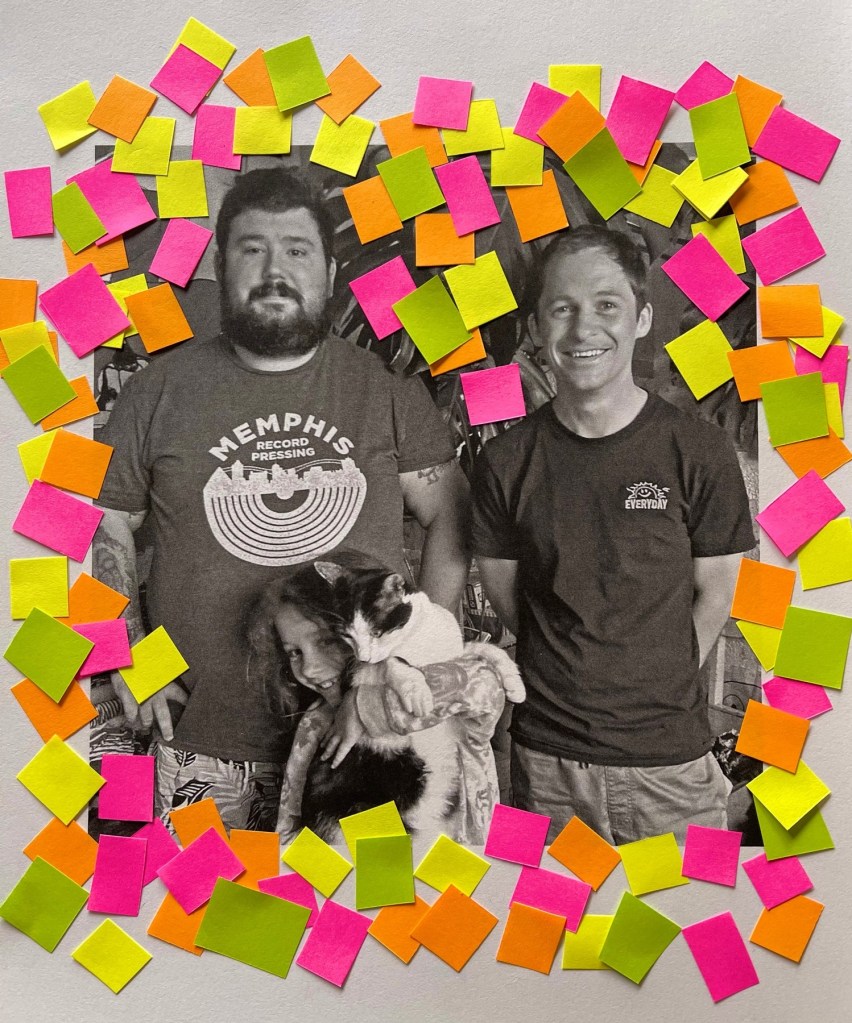
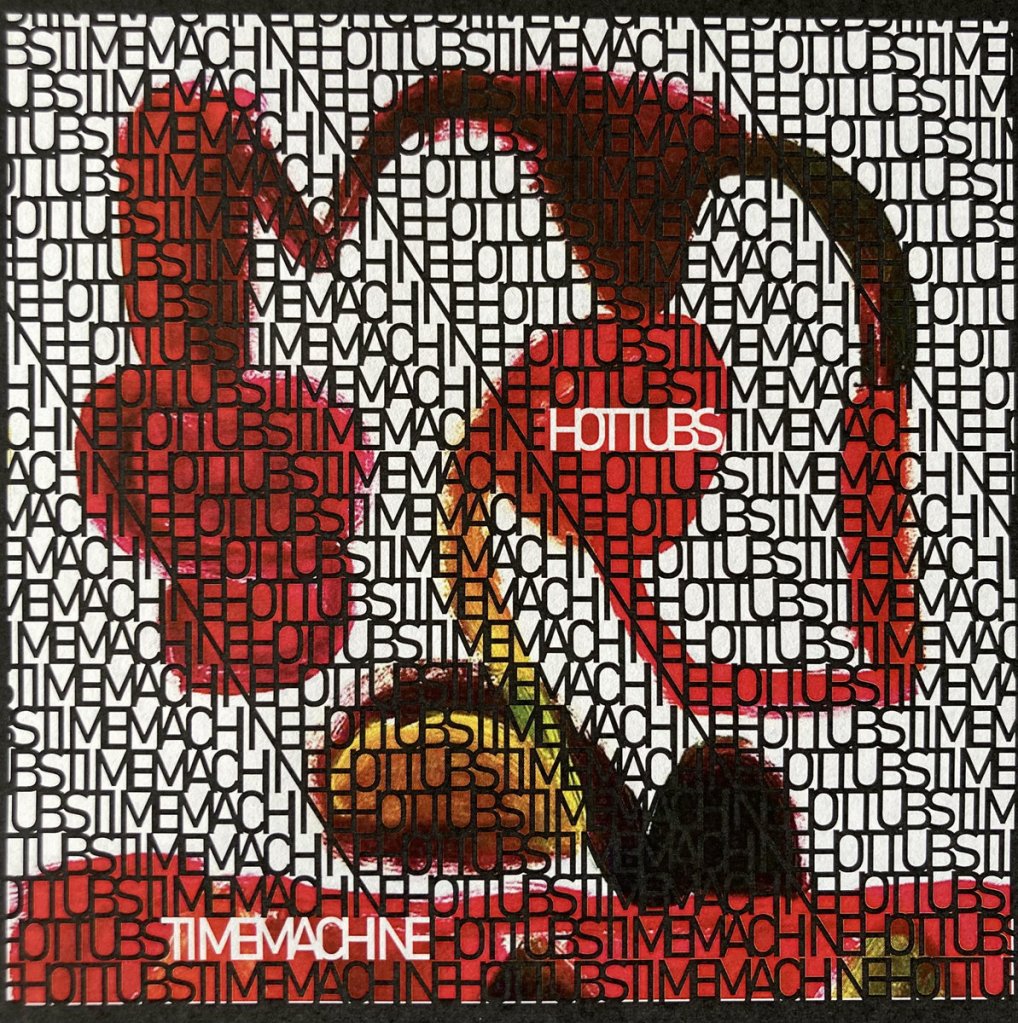
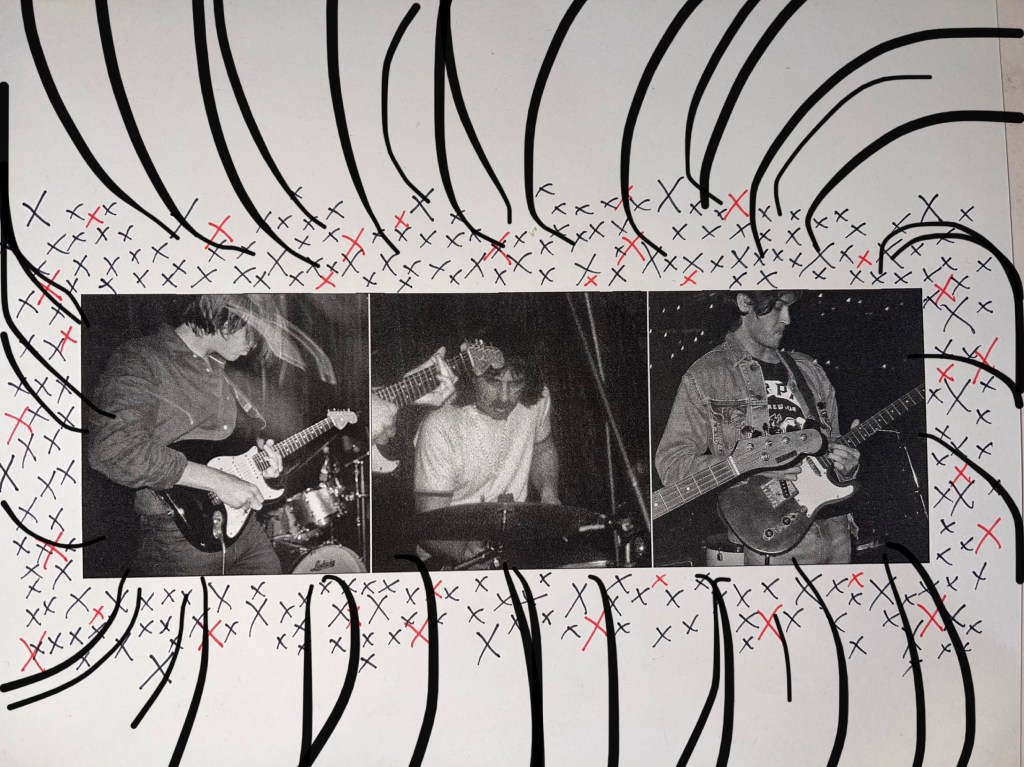
Marcus Rechsteiner (The UV Race, Luxury) and Daniel Twomey (Deaf Wish, Lower Plenty) have gotten together and made an album under the name, Hot Tubs Time Machine. It’s a delightful bare-bones jaunt of minimal bass, 808 beats, layers of synth, bright guitar and percussion, soundtrack-ing Marcus’ engaging, humorous and very relatable stories taken from his daily, that give us an insight into his world. We interviewed Daniel to get a look into the making of Hot Tubs…
Hot Tubs… is yourself and Marcus from The UV Race; how did you both first meet? What were your initial impressions?
DANIEL: I first saw The UV Race at the Tote for Deaf Wish’s 7-inch launch in 2008. I thought Marcus was a loose unit. He won me over when he sang about M*A*S*H. We were always on the periphery of each other’s lives but I didn’t really get to know him very well.
What sparked the idea for you guys to start working together on this project?
DANIEL: A couple of years ago Marcus and his mate Brent were looking for a drummer and asked Mitch Marks to join them the same week that I suggested to Mitch that we might start something with me on guitar. So instead of getting a drummer, they got me tagging along. I suggested I play bass cos there was nothing else left. Mitch didn’t stick around but I did. It was a really fruitful and joyous six months of making music with Brent and Marcus in a group called Luxury with Steph Hughes joining us on drums. When the first lockdown happened last year Brent (who is from the States) was on a visa run to New Zealand so got stuck there. Not the worst place in the world to ride out the pandemic but Marcus and I were gutted. We miss him a lot.
So, late last year, Blonde Revolver asked us to play a show with them and Marcus suggested we do it as a duo. “But we can’t play any Luxury songs” he said. “We’ll write all new stuff”. So that was the brief. “Daniel, write a set of songs in two weeks and I’ll sing on them.” And that is an accurate description of the process. I write a bass line, put together the beats on an 808. Add layers of keyboard or guitar or percussion. Marcus waltzes in and tells a story over the top and I laugh ‘til my face is sore.
What inspired the name?
DANIEL: Marcus called me Tubs. He called me Tubs for about a year. One day I called him and he answers “Hot Tubs Time Machine.” Three weeks later we need a band name. Two months later it’s on an album cover. It’s a funny old world.
What was the first song you wrote for Hot Tubs? What’s the story behind it?
DANIEL: ‘Pants Off O’Clock’ came first. Marcus had been talking to a friend about that moment that the door shuts and you can leave the shackles of pants behind. They had been reflecting on the extended hours Pants Off O’Clock was experiencing due to lockdown. Pants Off O’Clock around the clock.
What kinds of other things inspire this collection of tunes? We love that each song tells a very relatable story, like ‘Southern Hemisphere Christmas’ and ‘No Thanks, Google Maps’.
How were the vocals recorded? They’re so honest and have such a purity and charm in delivery.
DANIEL: Marcus has spoken to me about how anxious he gets about recording vocals so I knew that I had to create the right environment for him. Recording everything as I went meant that the only thing missing fourteen days after I started working on the songs were the vocals so, I was so keen to get some in the can. I recorded the first lot of vocals on the sly. When I was setting everything up at rehearsal, I ran the microphone through the laptop without telling Marcus. A good chunk of the vocals are from that session. Marcus singing away with no idea the red light was on, sometimes it was the first time he had tried singing on a tune. On those takes you can even hear the rest of the music reverberating around the music room we were jamming in because I couldn’t really put headphones on him without him catching in. So then at the end of all the songs I broke the news to him. “Congratulations Marcus, the vocals are recorded!”
Of course, some needed re-recording so when Marcus arrived a couple of hours early for our annual steak night – long story – I casually suggested he have another crack at the vocals. I purposely set myself up facing away from Marcus – so that he didn’t have the pressure of someone watching him, but set him up behind me – so he could see me laughing at all of the words. Apparently, that is how Stanley Kubrick directed Peter Sellers in Dr. Strangelove. He got the camera rolling, made sure Sellers could see the effect he was having on him and proceeded to roll around on the floor laughing. So that’s what I did.
Where or how do you think your best song writing ideas come to you?
DANIEL: Marcus says they are usually from conversation. He’ll be talking to someone or himself and thinks “that would be a good idea for a song”.
What do you personally get from creating stuff?
DANIEL: The second lockdown last year was hard. Everyone you speak to experienced it so differently but myself, I really struggled and I know that for Marcus it was even harder. When he asked me if I thought it was possible to pull a set together, I knew how good it was going to be for his mental health. There was no way I was going to say no. I did it for my brain too. I love a project, one with a deadline is even better. Stretching out of my comfort zone and playing a synth for many of the parts was such a satisfying puzzle to enter into. Knowing I only had seven days left and five songs to go was thrilling. Four days left and three songs to go. Two days left and one song to go. The finish line. For me personally, creating this particular stuff was a very enjoyable, liberating process that resulted in a really great gift for a good friend. Watching Marcus sing on the songs and get a kick out performing them a week later was so rewarding. His enthusiasm is painted in bright colours on his sleeves.
Cover Art by Evelyn Nora Hanley
What was one of the most fun moments you had while making the Hot Tubs… album?
DANIEL: I had a silent partner helping me on all of the music. Over the two weeks that I was writing the material, my twin brother was in quarantine. First in a hospital in Bangkok, then in a little place in Vientiane, Laos. He had some recording equipment and instruments with him so he could work on music while he waited the days away so I started hitting him up regularly for ‘bits’ for songs. We spoke every day, multiple times these calls were some of the highlights of the whole process. His whole world was a hospital room for a patch and So the two of us just fell into these songs together. We locked into the twin zone. He served up some very funny shit that didn’t make the record – and some that did. I am still recovering from his bass solo for Hot Tubs Time Machine Theme. Left on the cutting room floor because the world just wasn’t ready.
What’s next for you guys? Will you be playing live shows?
DANIEL: Yes! Sunday the 28th of February we are playing our album launch. A roving, pop-up, public transport powered, guest spot extravaganza. Over the day we will play three busking sets at different locations. Each with a different guest joining us for our set:
Bourke St Mall 1pm with my daughter Hetty.
Edinburgh Gardens 3pm with Pam, the music teacher at the school I work at.
Under the High St Bridge, Merri Ck 4:30pm with Sleeper & Snake.
At 6:30pm they will all join us on stage at Avalon Bar.
Please check out: HOT TUBS TIME MACHINE on bandcamp. All profits from album sales go to Djirra in Abbotsford. “Djirra is a place where culture is shared and celebrated, and where practical support is available to all Aboriginal women and particularly to Aboriginal people who are currently experiencing family violence or have in the past.”
Photos: courtesy of Super-X; handmade mixed-media by B.
Super-X’s debut self-titled album is full of aliveness, possibilities and risk. The Naarm/Melbourne trio walk the tightrope of balance of control and dissonance that’s beautiful and ugly at the same time. Gimmie interviewed co-vocalist-guitarist, George Ottaway.
Hi George! How are you? What did you get up to today?
GEORGE OTTAWAY: Hey Bianca! I’m pretty good, it’s the weekend, so I’m taking it pretty easy so far. My girlfriend is from Madrid so tonight we are heading to what’s meant to be one of Melbourne’s best Tapas bars. Will report more on this later!
What’s an album in your music collection that’s important for you?
GO: For me, it’s got to be Aphex Twin’s Selected Ambient Works 85-92. It’s a really beautiful album and I find myself coming back to it again and again since first discovering it in my mid-teens. It evokes a lot of memories for me, including a really memorable solo trip I did to Iceland for All Tomorrows Parties Festival back in 2015, when I listened to it a lot. I also think it’s probably the most coherent and consistent Aphex Twin release, and maybe the only one where he isn’t intentionally trying to fuck with his audience!
How did you first get into music? Did you and your brother (Super-X’s co-vocalist-guitarist) Harrison get into music together?
GO: Growing up, music had a very important presence in our house. Our parents are both music fans and liked to fill every possible moment of silence with community radio or a CD from their collection. I remember hearing a lot of the Rolling Stones, Nirvana and Nick Cave. Our dad in particular made it his personal mission to impart his musical taste on us; by the time we hit primary school he was pumping The Stooges’ Raw Power on cassette in the car as he drove us to school! When we were teenagers, we both picked up guitar and formed garage bands with our friends. It was a pretty interesting, exciting time to be making music, websites like Myspace and programs like Garage Band were suddenly making it really easy and accessible for young kids like us to record songs and get them heard by a wider audience. This was also around the time we discovered the Melbourne underground scene! We got into bands like Kiosk, Bird Blobs, Sea Scouts, Circle Pit, Witch Hats, ECSR, Zond, the Nihilistic Orbs label and started going to a lot of shows.
When did you first know that you wanted to play music yourself?
GO: I think around the age of 13. I was pretty obsessed with music and just knew it was something I had to do. In primary school I had a pop-punk band that played to the other students in the school hall, which was pretty cute and my first taste at playing music.
What inspired you to start Super-X?
GO: I’d watched Harrison – he’s a bit older than me – play shows in different bands over the years and I was itching to get into it myself! We were both living together at home at the time and both of us playing guitar just made it easy. We were intrigued by each other’s styles – I’d say Harrison is more technically astute, while my own style is a bit more naive and abrasive. We both wanted to play in a band that was a bit grimier and more ferocious than what we had previously done, so we outlined a bunch of key influences that we both enjoyed and started jamming regularly. After a while Harrison wrote the guitar line for ‘Weapon-X’, which is where we found our sound. A little after that we recorded our first demo, with me playing drums – it’s still up on our Soundcloud!
Can you tell us a little bit about the writing process for your debut self-titled album? Do you write collaboratively?
GO: A lot of the time we just bring in a riff or even a drum idea to practice and see where it takes us. Super-X rehearsals are always really fun: we spend a lot of time just jamming and improvising together. Harrison, Kaelan [Emond ] and I have been playing together now for a while so we all know how to interact with each other, when to rise and when to tone everything down. After we have the instrumentation down then we usually work on our lyrics – often it just begins with a murmur and becomes more fully formed as the song grows.
The album was recorded over six months between August 2019 and February 2020 at Invention Studios in Footscray working with Ryan Fallis and Mathias Dowle. Ryan & Mathias are fantastic to work with – they are incredibly patient, contribute great ideas and have one of the most incredible guitar pedal collections I have ever seen, including a number of pedals from the former U.S.S.R that they let us use! They are also lovely dudes, highly recommended!
Was it intentional to take your time recording or was it a necessity because of other commitments?
GO: In 2019 we had actually hit a bit of a slump with the band. We were all beginning to lose a bit of interest and all had a lack of direction with what we wanted to do and had all considered breaking the band up. We had tried recording a year prior but were pretty disappointed with the results. With work and other musical commitments (Kaelen plays drums in Obscura Hail, and I play rhythm guitar in Future Suck) we were also struggling to find the time to devote to Super-X. It was at this stage we decided to take a gamble and head back into the studio with Ryan Fallis & Mathias Dowle at Invention Studios. We were pretty unprepared in a number of ways, a lot of songs were only 80% complete, but I think taking this risk definitely added a bit of vulnerability and excitement to the sessions. We weren’t really sure what was going to come out of it and we just dived in head first. The album was recorded as live as possible with very minimal overdubs. We’d been thinking about the structure of the album for a while: we wanted a strong narrative and a focus on ambient and sound pieces throughout. Figuring out the exact track listing and order of the album was really exciting – we experimented with it as the tracks started to take shape – and ultimately pretty satisfying.
What influenced your choice to go with a real bare-bones vocal?
GO: Harrison and I aren’t natural singers, and the focus of Super-X has always really been on instrumentation, with lyrics and vocals taking a bit of a backseat a lot of the time. I think a lot of our inspiration vocally came from a the early Iceage LP’s. We wanted a delayed sound on the vocals and to have them gritty and pretty low in the mix. I think lyrically we just wanted them to be direct and to the point as possible so they could pierce through all the distortion and effects.
The album came out right in the middle of lockdown because of the global pandemic; how did you feel about not being able to play shows for its release? Any plans to play shows soon?
GO: I was actually quite thrilled with the album coming out in 2020. It’s such an iconic year for all the wrong reasons, but with no shows on and everyone having a lot of solitude I think it enabled us to carve out our own space and get the interest of Spoilsports records and Polaks, who did a joint release for the album. I think a lot of people took the time to actually give it a spin who might not have given it the time of day in other circumstances. Friends and fans have always described our music and live shows as a bit dystopian so I think having it released in 2020 is sort of fitting funnily enough?
We’ve actually got two shows coming up! Thursday March 4th at the retreat with Crash Material and our official LP launch on Saturday March 27th at Old Bar. We will be revealing the full line-up a little further down the track for that one.
What’s the most fun you’ve ever had playing a show? Where was it? What made it a blast?
GO: I lived in a massive pretty run-down house with an enormous backyard in Caulfield from 2015-2020. A lot of the LP was written in that house and is based on that particular chapter of my life. We had a bunch of parties with my housemates and would get bands to play in the lounge room which would always go off. There’s something about seeing live bands outside of the normal constraints of a venue which gets people really fired up. We had over 100 people at one of the parties and set up smoke machines and strobes, we had a fire lit outside and a TV at the end of a dark corridor looping Clint Eastwood’s The Good, The Bad and The Ugly on high volume. Super-X played with Tony Dork (who just released a brilliant LP on Legless last year!) and it went off! Both bands played well and I’ve got some pretty memorable photos from the night. After bands we had a bunch of techno sets going well and truly into the early hours. Someone put the smoke machine on full blast and the dance floor turned into a thick, smoky nightmare scene for an hour or so with people panicking and spilling out into the backyard. My neighbours wouldn’t look me in the eyes for months after! I went to a music festival a year later and a guy I swear I had never seen before in my life came up to me and was preaching to me about how it was one of the best parties he had ever been to haha. It was loose.
Travel has been off the cards for most people for a while now because of the pandemic but if you could travel anywhere in the world, where would you go?
GO: I had plans to go to Brazil for a 6-8 weeks on my own but COVID of course fucked everything up. I’ve always loved hot weather, good food and to be as far away from anyone who’s first language is English as possible when travelling. In 2018 I travelled through the Balkans and wound up getting a bus from Athens to Gjirokaster in Albania. Its where the dictator Hoxce was born and has a pretty fascinating history. There’s loads of old Nazi war loot that the Albanian army kept after they defeated the axis in the castle, including old tanks and captured flags, weapons and a documentation on how they defeated the retreating axis armies, which is pretty interesting. Albania was definitely a highlight of recent years, beautiful country and off the beaten track.
You did the artwork and design for the album; did you study art? How did you decide on the imagery? What made you go with a stark black & white palette?
GO: Yeah, I did! I did a fine arts course at RMIT specialising in drawing, so I was glad to put it to use for creating the imagery for the album. I’ve always been a firm believer in that the imagery and aesthetics of bands are just as important as the music. It’s got to be strong, bold and to the point. I honestly think if the Germs and Black Flag didn’t have their great aesthetics (the four bars symbol and Germ’s circle one logo) they wouldn’t be anywhere near as popular as they are today. People want to feel cool when they wear your band t-shirt or buy your record so the aesthetics have got to hold up.
Locally HTRK have incredible design for every release they do, I’m a massive fan of them. Nigel Yang is one of my favourite guitarists.
With Super-X I wanted something equally as bold so I decided on an industrial looking electrical plug image. Super-X is pretty mechanical and wild sounding at times so I think it suits what we do. I think for a debut LP classic black and white can never go wrong. I also drew a lot of inspiration from Peter Saville’s design and techno/ambient LP’s from the ‘90s like Underworlds Dubnobasswithmyheadman and Autechre LP’s. A lot of musical groups the less you see of the artists themselves sometimes the better, it creates more mystique and intrigue.
I never want Super-X LP’s to be about my Harrison, Kaelan or myself, or the way we look or whatever or to have us pictured on the front or back cover. I want the experience of listening to a Super-X LP to be like putting on a film with narrative of beginning, middle and end. With a strong emphasis on visual bold aesthetics to suit. The less focus on us as individuals the better. I’m a firm believer in that.
Have you been working on anything new?
GO: We have! We’ve got a bunch of tracks we’ve started to develop and have been working on some ideas in terms of sound and aesthetics for the next piece. It’s going to sound a little bit different.
Who are some bands you love that we should know about?
GO: I think locally Romero – shit hot band that a bunch of our buds play in. I used to play drums in the guitarist Ferg’s post-punk band Eyesores years ago when I was cutting my teeth playing my first ever shows. These guys are working on an LP that I am very much looking forward to, it’s really fun rocking power-pop. I really dug the new TOL album, Justin Fuller has influenced me a lot, he’s an amazing guitarist and always creates a very intense atmosphere. It’s like gothic tinged hardcore? I’m really enjoying Snowy Band, beautiful gentle pop and the production is excellent.
What’s something that’s been interesting you lately that you want to share with others?
GO: I recently discovered Japanese cyberpunk metamorphoses films from the early ‘90s. 964 Pinnochio (check out the trailer on YouTube for an idea) is fucking wild, I guess you could describe them as industrialist-fetish films? and the soundtracks is an absolutely incredible mix of techno and ambient selections I’ve never heard. The director Shozin Fukui also directed Rubber’s Lover which is just as twisted as 964 Pinnochio. There’s also Tetsuo The Iron Man which is more well known by Shinya Tsukamoto. These films are very confronting! Don’t say I didn’t warn you!
Original band photo by: Nick MkK. Textile Work by Anne Harkin. Handmade collage by B.
Ausecuma Beats are a Naarm/Melbourne-based ensemble that have come together from all parts of the globe – Gambia, Guinea, Mali, India, Senegal and Cuba – to explore the idea of transplanting cultural heritage into a contemporary city through the universal language of music and community. Ausecuma Beats is a melting pot of their rich experiences, languages, craft, heritage and cultures. Their mission is to learn from one another and uplift people with their art. Gimmie caught up with bandleader and master djembe player, Boubacar Gaye to find out more about debut self-titled album, out now on Music in Exile (home of another Gimmie fav Gordon Koang).
Hi Bouba! I understand that you are from Senegal in West Africa; what was it like growing up there?
BOUBACAR GAYE: Senegal is a rich country in the west of Africa and there is a strong French and Arabic influence. I was born in Senegal and grew up there as well, so I had the chance to learn Arabic music and culture and also a chance to speak French too. It is a rich culture because there are so many different tribes there. Each region has their own instrument and I had the chance to learn different instruments of each tribe.
What is one of your favourite things about Senegalese culture?
BG: Food! My favourite is a fish and rice dish.
I know that both your father and uncle influenced you with the music they listened to; what would you listen to together?
BG: My uncle liked jazz music like Miles Davis and my father liked old music called tango, so I listened to those styles. I get the jazz and afro flavour from what they used to listen to. My uncle used to go to parties and he would wear a suit, he would dress well, and I would watch how he would dress. You have to dress up good to go to the nightclub and listen to good music! His influence on me was in clothes as well as music!
What instrument do you like to play the most? What do you love about it?
BG: I like to play a bass drum called a Dum Dum. I’m a djembe player professionally though, but I like both high and low pitch so I can’t just pick one! They both have energy!
Why is music important to you?
BG: Music is everything. It educates me, it gave me the opportunity to leave Africa and to experience different cultures and different worlds. I think if I was not a musician, I don’t know what I would be. My family says that I was born for music and I believe so. Good music takes me out of the street and makes me not take the wrong way in life. When I was young, not everyone takes the right track. Thanks to music, I have found my path. Music is my life.
Photo by: Nick MkK
How did you first feel when you came to Australia? Why did you decide to come to Australia?
BG: I was in Japan for 8 years living there. I came to Melbourne for 10 days visiting a friend who said that Melbourne was a beautiful city and I should come. Japan was already far from home but Australia is also very far! I came to Australia for music and because of curiosity. My friend introduced me to an African drumming company; the boss was very welcoming to me and he introduced a big community to me. There is a strong drumming community here which made me feel that this is a place I can adopt. I was scared to make the move to come here, I already moved to Japan! My visiting holiday was fun but thinking about living here was not easy. There was stress! Was I making the right choice and decision to do this? There is always something I trust – don’t worry, you have the music! The music will lead you to make your own community! Go for it and don’t look behind. Let it go and move forward. Making a move can be a big decision, but be patient and have your goals. It will not be easy but as long as you keep working on it it will be ok.
I visited and did the tour things, I like the design of Melbourne, you can see the sky. It’s great! In Japan it is very hard to see the blue sky because there are so many buildings. In the winter it feels like there is no day time because there isn’t too much light, so much shadow from the buildings.
Throughout your debut self-titled album there flows messages of love and respect; what inspired this?
BG: I think respect is an important thing for us as Ausecuma Beats members because we are all different – sometimes language is difficult as the tone can be interpreted in the wrong way for members of the group who are not fluent in English. We need to be careful – the respect needs to be there. We always need to respect each other even if we have different ways of speaking English. We don’t always agree on everything, but we all have to share music and music is love.
Your latest single ‘Cherie’ speaks about the importance of equality in relationships, especially in marriage; what inspired you to write about that?
BG: Cherie is a French word – you can use ‘cherie’ to make the relationship very nice, “oh my cherie, oh my love, my darling.” This word, ‘cherie’ is for caring and loving someone who is your daughter, wife, or husband.
The track is based on a traditional song which is a true story from an older storyteller. The storyteller donated his music to the world and many musicians reinterpret his songs. He was singing about his wife; “you carry my children, you make me proud as a man, I don’t know how I can thank you, if i go first i will wait for you, if you go first wait for me, my cherie we are together for everything.” This story is quite old, not from my Mum’s generation but from my Grandma’s generation!
Each track on the album displays the different talents of each musician; what do you feel are your talents?
BG: The groove! I always make sure we are tight. My role is always to control the volume when we are recording or performing. We all have a role and we have to give the same energy, but there needs to be space to solo. There are so many members, we also need to control all of the instruments and make space. I think in Ausecuma Beats, there is no leader in our music because all instruments have space and are equal. My role is to make sure that there is an equal role in the music.
Why is improvisation an important part of Ausecuma Beats’ creativity? Can you tell us a bit about your song-writing process?
BG: We want to do something beautiful and unique and to do that you have to let there be space for that, space for creativity and composing music. When you’re improvising, sometimes it can be good, but sometimes it can be good and then crash! When we’re improvising, we’re cooking and everyone brings their own ingredients!
Auseucma Beats music always starts from the engine – the percussion. After this, we compose the melody, sometimes with the belafon, kora, or sometimes from the percussion. The voice always comes on after we have built the road; when the road is smooth the voice comes in.
What is something important you’ve learnt from your journey as a creative person that you’d like to share with us?
BG: What I have learnt is that it is beautiful to build a community. You feel you’re all on the same page, it’s great! The best things I’ve achieved in my musical career is to build community. Not only with Auseucma Beats but also drumming. We’re sharing the same passion. If you listen and you want to come and dance, you’re part of our community!
Ausecuma Beats’ debut LP out now through Music In Exile.