CONVERSATIONS WITH PUNX – Bob Vylan: ‘Recognising the power that you hold as an individual, and what we can do with that power as a collective.’

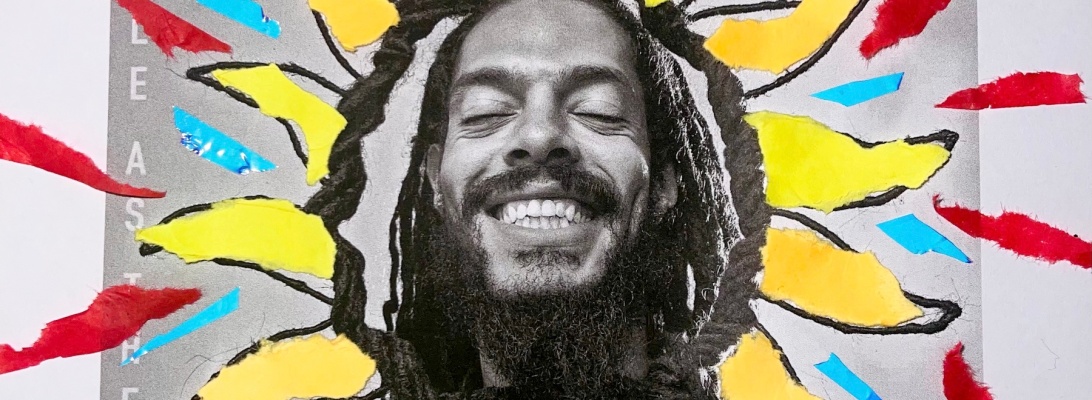
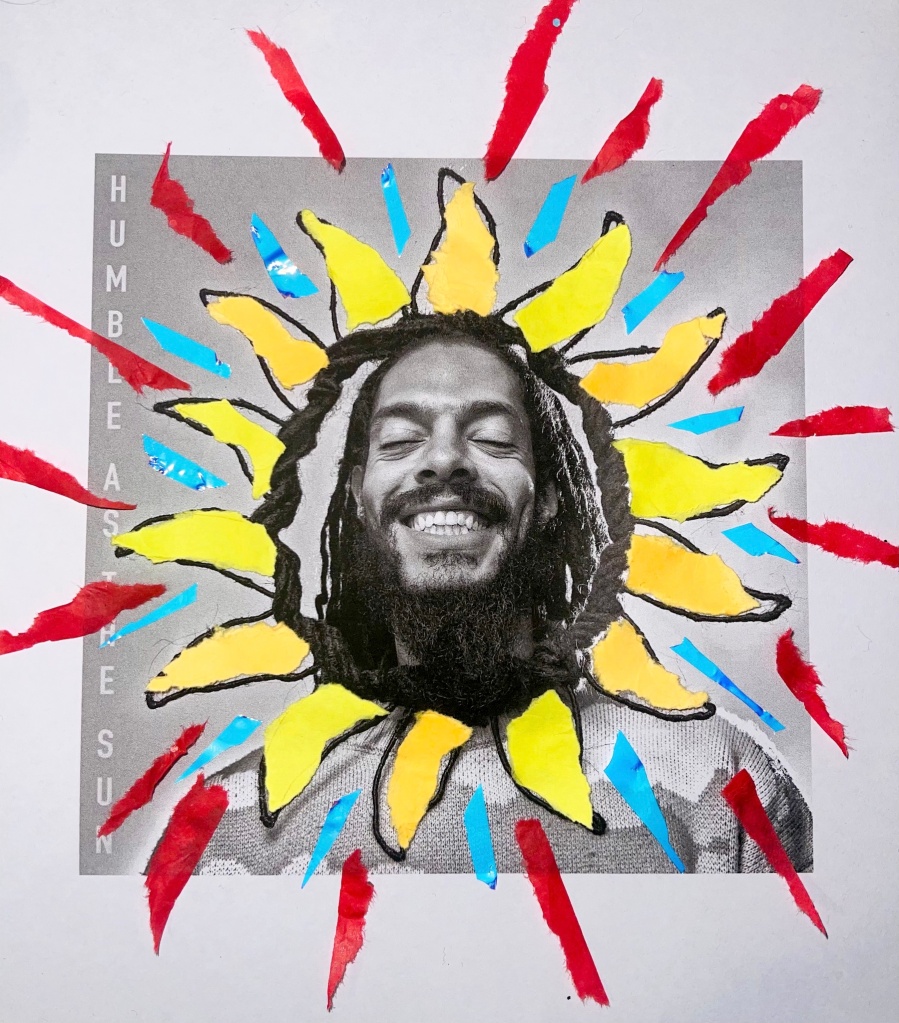
Handmade collage by B.

UK grime-punks Bob Vylan stand tall, casting a bold and unyielding light upon the world with their new album, Humble As The Sun. They’re one of punk’s most vital voices right now— with their rallying cry for empowerment, championing a sense of revolutionary self-love, and their ever-present foundation of nurturing and growing community. They inspire us to dream big, persevere through hardship, and channel our anger for positive change. The sentiment that we have to heal, be strong in ourselves first and then we can be strong together permeates the album. It also dissects toxic masculinity, discusses colonisation, police brutality, racism, wealth inequality, and exploitation in the music industry—as always, they say what needs to be said.

Gimmie caught up with Bobby Vylan, the band’s vocalist, guitarist, and producer, for a fascinating insight into the album and their creative process. The conversation delves deep into topics like spirituality and life-changing moments. Additionally, we learn about Bobby’s early beat-making experiences on Playstation’s Music 2000, his love for Shakespeare, their commitment to the DIY ethos, and his experience walking in this year’s London’s Fashion Week.

BOBBY VYLAN: Music is a creative outlet. I really don’t know what I would do without it, to be honest. It’s been a constant throughout my life as a way to express myself. A way for me to communicate how I feel about certain things. It’s important to me because it keeps me sane, to a certain degree; it keeps me here.

You’ve been making music for a long time, even before Bob Vylan, you were making music through Music 2000 on PlayStation. 

BV: Yeah. Exactly. I’ve been making music for a long time, in various different forms, various different degrees of seriousness, by which I took it. I was introduced to software, games, and stuff that allowed me to make music, get into creating beats and backing tracks, and then I got into writing lyrics. I started recording and getting into mixing, exploring the more technical aspects of creating music. It’s been an ongoing journey; it’s still ongoing in terms of learning the guitar, being able to play that more proficiently; and even my mixing ability, to be able to mix tracks and get them to a point where they’re ready for the public to hear.

I know that you completely love to explore things and lose yourself in them. What have you been losing yourself in lately? 

BV: To be honest, I’ve been losing myself in life a lot lately because there’s been so much going on. Things have presented themselves; they’ve come up, and I’ve thrown myself into it, which is good, but also tricky because I have to find time for myself. With this album coming out there’s so much to do on the business side of things. We have tours, festivals, TV appearances, and all kinds of things that have come up as the band gets bigger. On top of that, there’s been normal personal life change as well, which is quite beautiful, especially as it happens as the seasons change. 

Because I’ve been throwing myself into life, I haven’t been making a ton of music; I’ve been experiencing life. It’s important because it gives me something to write about later on. You can fall into a dangerous trap of not living life as an artist. You need to live life in order to have something to write about; I write about personal experience so much.

Yeah, it’s helpful for artists to realise that it’s all part of the process. 

BV: Exactly. 

Your new album, Humble as the Sun, still feels political like your previous work, but to me, it also feels like a spiritual album in a way.

BV: For sure. It’s political purely because my existence as a Black man is somewhat politicised in the country that I reside in and in so many countries that we travel to. Naturally, it’s because of that. Again, I’m writing about personal experience, so it’s bound to have a political aspect to it.

With this album, we definitely wanted it to feel more uplifting and empowering. A spirituality aspect is needed for that: to believe in yourself, to feel as though you hold some sense of power; recognising the power that you hold as an individual, and what we can do with that power as a collective. It’s definitely a lot more spiritual than the other albums, for sure.

This is because of the space that I was in when creating the album, both physically in terms of the studio space that I was afforded to use and mentally. I had worked so long and hard to get to a position where I could make music, and this could be my life. So it would have felt disingenuous to to only talk about hardship and not talk about overcoming that hardship. There is a lot of hardship that I overcame in order to be able to do what I’m doing and I want to address that. 

I get that, especially as a Blak Indigenous woman myself. When we make art, people often expect us to create from our trauma. Sometimes, obviously, that’s important for us to do for ourselves and our community. But I think it’s revolutionary and healing in another way to write about our joy as well.

BV: Absolutely! I completely agree. 

I understand that Humble As The Sun got started and inspired by meditation. What drew you to it? 

BV: The studio space—it was in the back of a residence. You had the main house that some people lived in, completely unconnected to the studio space, and then there’s a garden in the back. I’d find myself in that garden, meditating, watching nature, and enjoying the sun, seeing how the seasons would change in that space. The cat prowling around, looking for a mouse to eat, or the bird that would come and take some of my lunch and fly off back to its nest—it was quite eye-opening for me because I was very much lost in the city, in all of the hustle and bustle of it. Also, the hustle and bustle of being a touring musician, going to festivals every weekend and doing tours for two, three, four weeks at a time. That studio space really offered me a place to slow down.

Sometimes, I would go there and not even necessarily work on music or anything. I would just go there and sit and listen to music on the speakers that they had there, or I would watch videos on YouTube or a TV show. Other times, I would sit in the garden and peacefully take in everything that was happening around me in a very meditative state—no phone, no computer, just sitting and being and watching and trying to clear my mind as much as possible, not think about work, not think about personal life, not think about the traveling that I’ve got to go and do, the business side of things. I’d just try to clear my mind and be present in the moment. That heavily influenced the message in the album for sure.

I love how at the end of song ‘Hunger Games’ you talk about being present. The lyrics really resonated: Here, now / You are stronger than you think you are / You are love / You are not alone / You are going through hell, but keep going / Be proud, be open / Be loud, be hopeful / Be healthy, be happy / Be kind to yourself / Be decisive / Here, now / Do not live every day as if it is your last / Live every day as if it is your first / Full of wonder and excitement / As you wonder along, excited / Marvelling at the possibilities of all that stands before you / Here, now. That feels like the essence of being present; what does being in the present mean to you? 

BV: It’s a tricky thing because I find myself wandering with my thoughts, and I found that to be very helpful. I am not Eckhart Tolle, where it’s like, I’m here constantly, I’m present constantly, always in the now. That type of attitude would serve me if I wanted to be like a Yogi or some sort of guru, but it doesn’t serve me for the life that I live.

It’s finding a balance of being here in the now but also allowing my thoughts to wander because they allow me to play out different scenarios and see which is the better decision to make and which choice I should be making. If I do this, I’m not constantly present in the moment, but I find myself realising when I’m wandering into toxic thoughts, and I can be like, just take a minute, take a beat and be present right now and try not to worry about what may or may not come. Accept what is, and that doesn’t necessarily mean don’t look to change anything.

It’s not accepting it in a very passive way, but it’s accepting it in a way of doing what is within your power to do, in terms of the change that you can have in your own life and other people’s lives in the world in general.

Yeah, that’s a really important point. I did an interview with Dick Lucas from the Subhumans for my book and he was saying that, ‘If everything is taken away from you and you’re beaten black and blue, even if you’re at the point of death, you can still think for yourself. That is the bottom line, you have to keep your thoughts intact no matter what happens, from thoughts come everything else, words, expressions, ideas, creation—life itself.’ 

BV: Yeah, yeah, absolutely. It’s something I try to remember as well as much as possible. It can be hard though. Life’s really difficult. 

It is. I’m so glad your new album is uplifting, in a way, countering and balancing all the crappy stuff out in the world.

BV: Yeah. You know, the record is made for myself. I need this music. I didn’t make it because I’m like, ‘Oh, the world needs this music.’ No. I need this music! I need this album. I’ve been enjoying the album for ages. I’ve been listening to it over and over again. Actually, now that it’s out, I’ve probably listened to it far less because I listened to it on repeat every day for months and months. I picked it apart and asked myself, ‘Do I want to say this? No, I want to say that.’ Then when I got to a point where I’m like, ‘Oh, this is done, it’s perfect,’ so it’s finished. And I listened to it and I enjoyed it; I was no longer critiquing it. Like, is it mixed right? Now it’s out there. I’m listening to it far less because I’m like, everybody else has it now so it’s not mine anymore.

I really love the song ‘Dream Big’! It’s very inspiring and puts a smile on my face every listen. By the time the song’s finished, you feel like you can go out and do anything. Where do you think your self-belief comes from? 

BV: It comes from a lot of different things in and around my environment. Some of it is definitely down to where I was growing up. But some of it, is nature. It’s just something that I have. My father tells me stories of when I was a child and I was very headstrong. I wasn’t necessarily rebellious without a cause. I just knew what I wanted to do and I knew what I didn’t want to do. That all plays into my self-belief.

I grew up in council housing. It wasn’t a terrible area by a long mile; there were areas in this country that are far worse. We didn’t have tons of money, but we didn’t go without. I definitely knew that if there are things that I wanted, I had to figure out a way to get them myself. My mum always did an amazing job at making sure that me and my siblings knew that.

Though we didn’t have everything that we wanted or needed necessarily, we always were exposed to other ways of living, certain things that other people in our environment weren’t necessarily exposed to. My mum really wanted to make sure that we didn’t fall into the trap of just accepting our place in society is here. I thank her a lot for that. That definitely helped in terms of my self-belief.

It’s funny, because when I would express certain things to her, she would be like, ‘I don’t think you can do that. I don’t know about that.’ But that’s her fear for her son, if he’s gonna commit himself to a life of artistry, he’s gonna be poor forever. That’s not fun because she was working so hard to get by and keep us afloat. She probably thought, ‘I don’t want that for him’.

My self-belief comes from a feeling that I don’t want what is given to me. I know what I want. I know what I want to do in this world. Jim Carey said: you can fail at what you don’t want, so you might as well take a chance on doing what you love. If you can fail doing the thing that you don’t want to do, that you have no interest in doing, but you’re doing it because you’re fearful of doing the thing that you do want to do or people have pushed you into this direction, I would rather fail at the thing that I want to do. I’ll give it a go because otherwise, god forbid, I’m one of these people that are like, I could have done this.

Yeah. I think as human beings, the things that are most important, obviously after having the basics to live, is love and connection. That’s the foundation of everything. 

BV: Yeah, absolutely. And, it can be hard to focus on that. Sometimes when you’re focusing on so many other things in the world, like trying to survive, trying to keep a roof over your head and everything else, it can be hard to maintain connections with friends or family. It’s important to try and make that time for people. 

It’s something that I’m getting slowly better at.Taking a little time away, focusing on myself and my loved ones around me. The things that you value the most as a creative is the time that i have to create. I also value the time that I have to experience things like what we were talking about earlier, living. I value having conversations with friends, family and people in my community. Learning things. I value being able to have the time to think and feel. I value being able to put into words, all of the things that I’ve been experiencing. 

Do you remember the first time you realised that your words had power? 

BV: I don’t think it was a conscious realisation, but it definitely would have been when I was a child and I said something and I saw how it got me in trouble. Like, I saw what I said upset somebody. The realisation of, I know how to get under this person’s skin. I’ve got siblings, so that offers a perfect training ground, right? [laughs]. To figure that out, how powerful your words can be, that clicked probably when me and my siblings were arguing about something.

So you’ve always kind of been a bit cheeky?

BV: [Laughs] That’s usually the word that people would use to describe me. I always acted in good faith. I was very, very rarely acting out of malice and trying to actually hurt somebody who didn’t deserve it or upset somebody who hadn’t upset me, you know. I wasn’t a bully or anything like that.

Again, I knew what I wanted to do in this world. When people would present obstacles, whether that was a teacher in the school or a friend telling me that you can’t do this thing or do that thing, I would be sure to let people know that ‘No, I’m capable! You might not be able to do it because you don’t have that belief, but I could do it.’

I’ve always been this way too. I had an English teacher that told me I would never, ever, ever be a writer. Yet that’s been my career for the last 30 years since I was a 15 years old!

BV: Yeah, exactly. That’s it. People tell you those sorts of things for various reasons. Sometimes so they can upset you. That’s all their aim is, to upset you and discourage you. Other times, it’s to protect you, or they think they’re protecting you from a life of hardship or pain or upset. Then other times it’s just because they don’t believe in themselves, or it didn’t work out for them; they feel it won’t work out for you too. 

I always had this opinion of, I’m watching people on TV doing the thing that I want to do. So it worked out for them. That is somebody flesh and bone and blood doing it. If they can do it, then I can do it. Why would I concentrate on the people it didn’t work out for? I’m not watching them on TV. There’s absolutely no reason why I could’t.

That’s what you’re talking about on the album closer, ‘I’m Still Here’? 

BV: For sure. That song is the biggest testament to resilience on that album. It’s talking about how I grew up, where I grew up, what I was doing, and all of those things that I’ve gone through, and of my friend that is currently locked up. All of these things I’ve seen that I narrowly escaped, and those that I didn’t escape.

Of course, there is an element of being calculated, streetwise, and smart, avoiding certain things. But it’s also by luck, by chance, by the grace of God. Even when I was going through all of those things, I always had that in my mind of like, what I’m doing right now, how I’m living right now is not necessarily my forever. It doesn’t have to be my forever. This is not as good as it gets for me.

For a lot of people that I grew up with, they had it in their mind that, this is as good as it gets. This is as good as it gets for us. If we could be career criminals and not get caught or only do a handful of years in prison, life will be good. That wasn’t my thinking. That wasn’t my lot in life—I always thought there’s more for me. I don’t know where it is or what form it takes, but there’s more out there and I need to find it.

Have a moment with Bob Vylan where you felt like things really have changed and that they won’t be the same in your life anymore? 

BV: Absolutely. There’s certain things that they happen and it’s like, this is a turning point. For example, when We Live Here, the first album and single from that album started taking off, it was during lockdown. I didn’t realise at the time, I suppose, to what degree it would change things, but I knew something was changing. We’d put music out before and no one had really listened to it. And then I saw the audience find us. I was watching the YouTube views go up in real time. I was like, wow, we’d never gotten 10,000 people watch a video before. Then it’s like 15,000, then 20,000, then 30,000, and on. I saw at the top of a Reddit thread: listen to this! Then seeing it getting shared on like Facebook, and people with blue ticks following me and saying, Hey man, I heard this song it’s so cool!’ They were from other bands that I’m a fan of or they were actors or whatever. I thought, ‘This is cool.’ It was that moment where I could feel something’s changing, you know, but then there’s other moments that are not so, I suppose, they’re not so.

Sometimes those moments are not so joyous, though. You might go on tour, and you’re away for home long time, long periods of time and you come back and things have changed at home, maybe with friends or with family. I’ve got a daughter and I come home and she’s grown. I’m away for three to four weeks, in that time, she’s learned something new. She’s doing something new. She’s got this new thing that she’s saying. And I’m having to play catch up to her. Like, ‘Oh, what’s that? Where did you hear that? Where did you learn that?’ Even just seeing her, it’s like, ‘Did you grow?’ You realise things won’t be the same as they were when I was sat here and I was watching her do this stuff in real time. So some of those moments of change are joyous, and others are harder to come to terms with. You have got to be accepting of both.

Totally. I saw you walked in a show at London Fashion Week at the start of the year. That must have been pretty surreal, especially growing up in the world where you’ve come from.

BV: Yeah! It was for a brand I was familiar with, Saul Nash, I’d seen their clothes in the store and I really like them. Saul’s clothes are great, he’s got a great eye and he’s very innovative in terms of how he approaches sportswear. To get asked to do that was great, it was a lot of fun and an experience that I hadn’t had before. So, again, getting those opportunities is really cool. I met a friend there, we’ve worked in the future together. The person that was overseeing all of the hair on the Saul Nash show, then worked on my hair in the ‘Reign’ video. I love meeting people and forming connections and friendships. It’s really beautiful when you get those opportunities.

But it’s important not to get lost in those sorts of things, though, because they’re fun, but it’s not real life. I feel lucky, I feel very fortunate, that I’ve got people, the majority of my friends and my family are not in the industry at all in any sense, they work 9 to 5s. I get enjoy the opportunities when I’m in it, then I come out of it, and I get to just be how I am at home.

You mentioned the ‘Reign’ video, which I love. What was the inspiration for the visual elements in it? 

BV: There was a lot of things that me and Taz [Tron Delix ], the director, went back and forth about, we had a couple of meetings and talked about what we wanted to get across with it. 

For me, the African Moors that conquered Spain (and they were present in Malta – I’m part Maltese), so I wanted to present this visual representation of regalness and royalty that wasn’t stiff and stuffy like the English monarchy, but is more like the African monarchies. The Moors are extremely extreme. The most popular representation of a Moor in popular culture is Othello. Othello is a Moor—I love Othello. It’s probably my favourite Shakespeare play, though it is the saddest one. I took my dad to watch it not too long ago. Othello in that play is presented as someone extremely strong. He’s a leader, but then he has the potential to be corrupted, to be swindled. He’s a human after all. And so for that video, we wanted to create this idea of royalty but have it rooted in today. We also wanted it to feel relevant to what Bob Vylan is doing. 

You also have Jamaican heritage too? Does the culture influence your creative choices? 

BV: For sure. It influences the music a lot. ‘Ring the Alarm’ for example, on the album, is very, very much inspired by Jamaican culture and reggae and dancehall music. Even some of the drums are played on the album. They’re jungle drum breaks, the way that they’re played coming from this mix of Jamaican people bringing reggae music over to the UK and then mixing it with electronic music that was happening here in the UK; those fast drum breaks with reggae samples thrown in there. It definitely influences a lot of the music in terms of the sonics and the production.

Visually, I suppose, maybe I’m even less conscious of how that culture is pulled on. Except for ‘Wicked & Bad’ for example, where we shot the video in Jamaica. I really wanted to do that. The way that I wear things, the things that I decide to wear, my personal style that’s obviously influenced.

I grew up around a fairly big mixed Jamaican and white community. We pulled a lot of things from our parents, and then mixed them with things that were happening now in the UK and in England. Meshed the two things together to find our own or create our own identity.

How did it feel for you to go back to Jamaica, back to where your family are from? 

BV: It was great. It’s a beautiful place. It’s troubled, though, because of a lot of corruption that happens over there. It’s a shame that such a beautiful island has got such a violent past because of its colonial history—the British occupation of the land. There is a lot of sadness in seeing that because you realise what that place could be. It’s unfortunate that at the moment, at least, it’s not able to be that, but hopefully at some point, it’s able to be; it’s able to live up to its full potential. That it’s able to remove its connection to the British and become its own country.

We speak about independence and it is independent to a certain degree, but there’s still a heavy, heavy hand from the British in that country. I would like to see that removed completely and to see the country be everything that it can be. We see culturally what it exports; that is absolutely incredible. One of the biggest musical stars ever has come from this tiny island—Bob Marley is arguably one of the biggest musicians ever in history. Reggae music and the popularisation of weed, and Rasta culture, and the Rasta religion, it’s all from this tiny island. So what it’s done artistically and culturally for the world is absolutely incredible. But what it receives in return pales in comparison.

Yeah. There’s even that connection to punk rock with Bob’s ‘Punky Reggae Party’ and how Don Letts would play the reggae at The Roxy (the UK’s first live punk rock venue), and then you’d get bands like The Clash who were heavily influenced by reggae. 

BV: It’s influenced the world over.  Look at the origins of rap music. It all comes from DJing and MC culture, like the toasting culture of Jamaica. As I said earlier, you get jungle music, it comes from reggae culture. It’s been extremely influential culturally and artistically from really the beginning of time. 

Absolutely. One of the reasons I love Bob Vylan so much is that you mesh together so many different things to created this whole new thing. You’ve built on what’s come before and you’ve taken it in a new direction.

BV: That’s important to us, to not, not tread old ground. To constantly look for ways by which we can push things, and push them in new directions. We don’t want anything to sound like the punk of the 80s, that’s not what we’re trying to do. We want something new, something fresh. 

Last question, what’s something that’s made you really, really happy lately? 

BV: The sun and the sea. A couple of days ago, it was really nice weather here, and I sat by the sea, listened to the waves, and just relaxed after a busy week of playing shows and promo for the new album.

I got home and went and sat by the sea. I saw that people were enjoying themselves in the sun, and kids are running about and splashing in the water. There was something where I was like, yeah, it just feels complete in terms of, I’ve had such a busy week promoting this album, and I’ve gone through a roller coaster of emotions because I’d been sick just before we put the album out.

The day before the album came out, I’d been violently ill, I was throwing up. Then Friday we played shows and I was still ill, then I slowly got better. We’d put this album out and we’d been running around the country trying to play shows and do signings. Sitting at the beach, I kind of just took a moment and acknowledged everything that I’d done that week, and looked to start the new week fresh and at peace.

Follow @bobbyvylan & check out their music: https://bobvylan.bandcamp.com 
UK post-punks Squid: “Music is one of the fundaments of life for all of us”

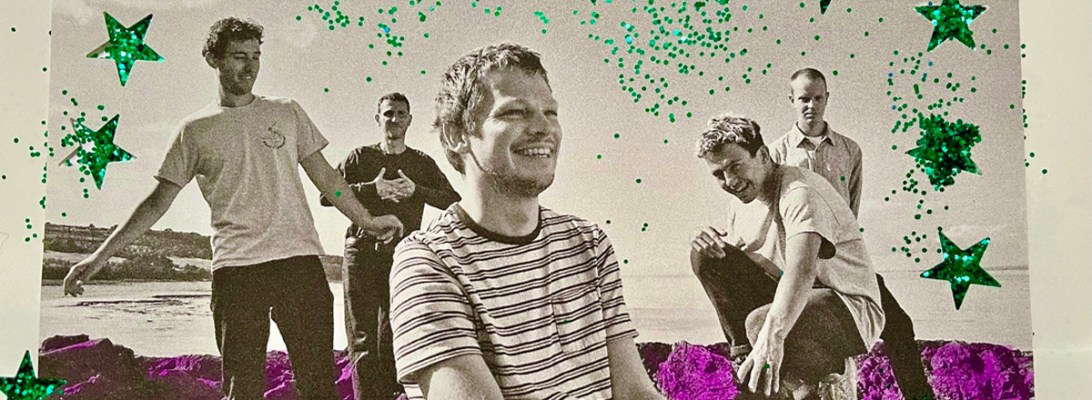
Original photo by Holly Whitaker. Handmade mixed-media by B.

Gimmie recently spoke with Anton Pearson and Louis Borlase, both guitarists and vocalists for UK post-punk band Squid. We’ve been following them since we first heard their debut EP in 2019 on producer Dan Carey’s label, Speedy Wunderground. Today they release their debut LP Bright Green Field, an imaginative original work of twists and turns stacked with art-punk grooves, noise rock vitriol, jazz leanings and experimentation. Playful with an emotional depth, a real triumph.

ANTON PEARSON: We have a day of writing in our new studio today.

Is that for the next album?

LOUIS BORLASE: Maybe. We tried to move in yesterday and their handyman was with a drill and every time we were like, “Can we come in now?” He said, “It’s going to be twenty minutes.” He kept doing that all day to the point of, we had to go home. We had a little jam there last night.

Squid have previously mentioned that with your new record Bright Green Field you could have gone down the path of writing something that’s digestible and easy to listen to but you decided to make a “really fucking weird”: album; what sparked the choice to go that route?

LB: It wasn’t as really explicit as that, to be honest. We made a decision that was unanimous, yet relatively subconscious, decision to just continue writing songs in the vein of what we were currently enjoying, which at the time they happened to be quite texturally heavy pieces of music. That was a thread that continued across the writing process. We were enjoying writing really groove-based stuff as well and stuff that was very rhythmic. We didn’t really get to the point where we actively said, we’re not going to try and write a pop song or a funk tune here, it was just that it was very much a feeding in of how we were all feeling at the time. It’s just how it turned out.

Thinking back to that time, how were you feeling?

LB: With us the other thing is that the songs on the album are kind of coming from different times, maybe that is a point in itself because there are tracks that are older, and tracks that are brand new, tracks that we’ve never played before and tracks that have always been a staple of our live set. We’ve been feeling very different at different times over quite a long duration. There’s a real trajectory of different energies and moods, which I consider to be natural. There’s five of us and there’s songs from over the course of two or three years.

Did you find that the lockdown [due to the pandemic] effected your creativity?

AP: Yeah, absolutely. It was the first time that we hadn’t spent every day together for years. We had a few months completely separate in different parts of the country. It absolutely affected how we went about things. We had to do a lot of sharing stuff online and having conversations in the online sphere instead of in person. We managed to have four weeks together until we started doing our album… it was an interesting and different process to what we’ve had.

Your new record was recorded in an old barn?

AP: Yeah. There’s a small town nearby Bristol where a couple of us are now and where Ollie [Judge – vocals-drums] grew up. It’s a very small market town community and his family are friends with the family that run the pub there. They have a venue that was closed down due to the pandemic, so it was a bit of a sitting duck waiting for someone to come along and use to creatively during lockdown. We got to the point where we were legally allowed to see each other again and as soon as we could we started going there every day and doing long days.

At first it was a bit weird because we hadn’t seen each other for a long time, the music I feel that came out of the first few sessions was this explosion and release of what we’d all been sitting on. The Old Road Tavern and barn in Chippenham deserves a very big shout out.

What’s one of your fondest memories from recording?

AP: That’s where we did the last bit of writing… [Anton’s Zoom connection breaks up]

LB: What Anton was saying is that we were writing in the band and then that led us right up to the point of where we were able to go to London to record with our friend Dan [Carey; Speedy Wunderground] who we had worked with before. We had a three and a half week recording process where we hired out a flat, on the other side of the park next to his house. We would walk to his every day, eat with him and it was a very familial experience because he lives above the studio where he does the majority of his recordings. It was just Dan and his little dog Feta and some of his family were there for a bit of the time as well. For the main part we were just there with him and due to it being a very intense time for all the issues that surrounded Coronavirus, we really had to become a bubble, a family. We all had to be quite explicit with what our values were, make sure we were keeping each other safe and healthy at all times. There was a lot of communication which I think was quite conducive to us making, in our opinion, quite focused album.

What kind of experimentation did you try on this record?

LB: One element of it that’s really nice to talk about is an idea that Arthur [Leadbetter – keys-strings-percussion] had. In light of us not being able to see our friends and family for a long time, he put together this series of questions to ask friends and family members about how they’re feeing and what they’ve been up to, just vague stuff, but allowing them to send back these voice notes in their own words. We compiled them – it was about 30 people – into these recordings and at times you can make out a certain friend saying what they’ve been up to and at times it’s almost his nonsensical human chattering; that became a really nice thread that gives this illusion of citizens talking in the city.

There’s also field recordings that we did because we spent a lot of time alone, as you can imagine. We hadn’t seen many people so we went around making iPhone recordings. Anton had a family of bees living in his wall back at home, he recorded those making this nice kind of tooting, humming noise. I recorded these bells that I hear from across the park in my flat. These recordings pepper the album with experiences that we’ve been having on a very individual level, considering the music was very collective. It’s a nice touch.

That’s really cool. What’s one of your favourite moments on the record?

LB: One of my favourite moments, there’s a track called ‘The Flyover’ which was originally written to be an introduction to the song ‘Documentary Filmmaker’ it features those voices that I was just talking about and it also focuses on brass instrumentation. I think it’s a real reflective breather, it’s quite a transitional moment in the album, just before the song that starts after it [‘Peel St’] which is a bit more sinister, a bit more menacing.

I really love that piece too. I was going to ask you about it. The album can get quite chaotic-sounding at times with lots of crescendos which almost make you hold your breath as it builds and then ‘The Flyover’ gives you a moment to breath. The brass gives it a really warm feeling too.

LB: It is quite ceremonial. Upon listening back to the album a few times, I think we all get surprised about the detail within the album that we weren’t all aware of at the time. It’s only merited on with repeat listening, one of those is this weird coincidental feeling of ceremonious events that you can hear, like these bells ringing and chattering of people—it feels quite alive. That’s only something we’ve noticed recently; I wonder what else we’ll notice.

I think what you listen to the album on makes a difference to what you can hear and pick up too. It sounds different when I’m listening to it on my laptop speakers, on my home stereo, on my car stereo; on my phone through headphones, which kind of allows you to be enveloped in that world you’ve created.

LB: You kind of become a little bit of character, don’t you? Walking along with your headphones you can feel like a character in a film.

Photo: Holly Whitaker.

What have you been listening to lately?

LB to AP: Are you here Anton? Are you back in the room?

AP: I’m here.

LB to AP: You sound a bit like a robot talking underwater.

AP: [Laughs]. Maybe that’s what we listen to.

LB: Yeah, we listen to robots talking under water. We’ve all been listening to quite a lot of different stuff. The only time we really listen to music together and talk about it is when we’re seeing people play live or we’re driving along in the van. We haven’t been driving along in the van lately because there’s no gigs. I’ve been listening to a lot of Suzanne Ciani, who is one of my favourite improvisers. She plays on her special synthesizer, a very archaic synthesizer called the Buchla, which is very modular, lots of wires. The album I bought recently is called A Sonic Womb. It’s a live recording from shows she’s done in Spain. It’s a dialogue, she’s having conversations with herself. It’s very free and very focused on rhythm, which is something very important to us as a band. Not a whole lot of music together really because when we see each other we’re working on our own stuff.

You mention earlier you had a jam last night; what was it sounding like?

LB: It was sounding a little bit clunky because we haven’t worked out where to put everything in the room yet. It was nice to do that. It was sounding very loose, there were rapidly changing time signatures and lots of fuzzy guitars and synths. It was very much not like Squid because the whole five of us weren’t there. Today will be the day that we get a bit more Squid in.

Last question, why is music important to you?

LB: Music is one of the fundaments of life for all of us. We’ve always been exposed to it, when we were younger, growing up in very different musical backgrounds. We have things we agree on and things we disagree on and it becomes very much about conversation and points of view. The fact that we all came and formed this band at this uniformed point in our lives but when we were all thinking different things of what it means to play music is pretty important. For us as a band, Squid is a means of where we can have a collective identity through sound and come together.

What’s something you disagree on?

LB: [Laughs]. We disagree on what should feature in a recording, which I think is a good thing because we get carried away with putting the recording down and we tend to track everything live… on the album everything was recorded in live takes and usually we try to get the earliest take as possible, first, second or third take. When it comes to having those live tracks laid down, we go through a meticulous series of overdubs to add instrumentation and then we approach electronic elements. Sometimes there’s things that one of us had played and feel it’s in the perfect position but sometimes we don’t always agree that it should be there. Nine times out of ten we’ll forget about those parts but sometimes they stay and it turns into a nice disagreement because if it didn’t end up on the recording it’s able to be brought back in the live performance.

What’s something you do agree on?

LB: We do agree on what is the most conducive way of writing, which is letting ideas have the space and that there’s never a magic formula for an idea. It’s very embryonic to become something that is very fine-tuned within the space of a day or two.

Anything else you want to tell me about Bright Green Fields?

AP: [The line is still crackly] From robot [laughs]… we had a lot of fun making it. It’s the most important project of our lives. Obviously though, because I’m a robot, I’ll live forever.

Please check out: SQUID; on bandcamp; on Instagram. Bright Green Fields is out today on Warp Records.

London Sistah Punks Big Joanie’s Stephanie Phillips: “I really love The Ronettes, it was quite a big inspiration for the band when we first started”

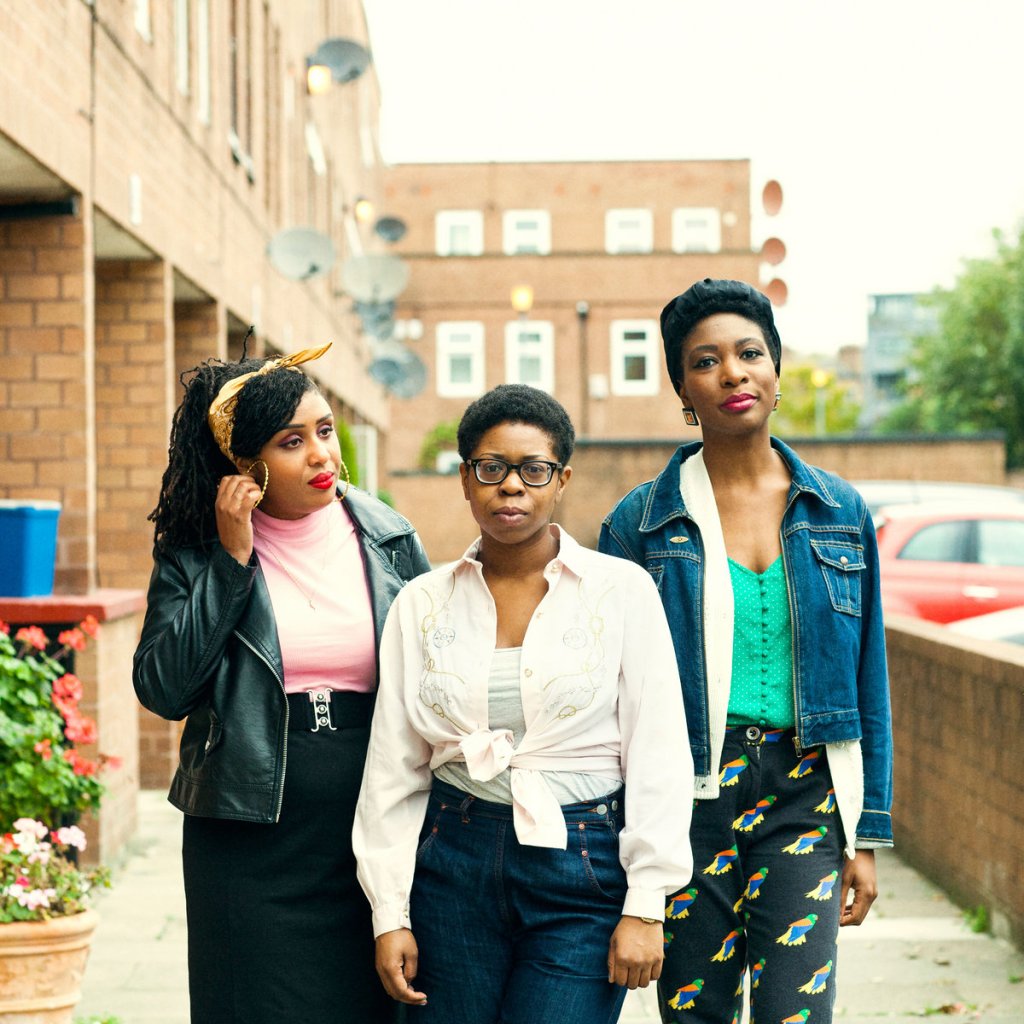
Original photo: Liz Rose Ridley. Handmade Collage by B.

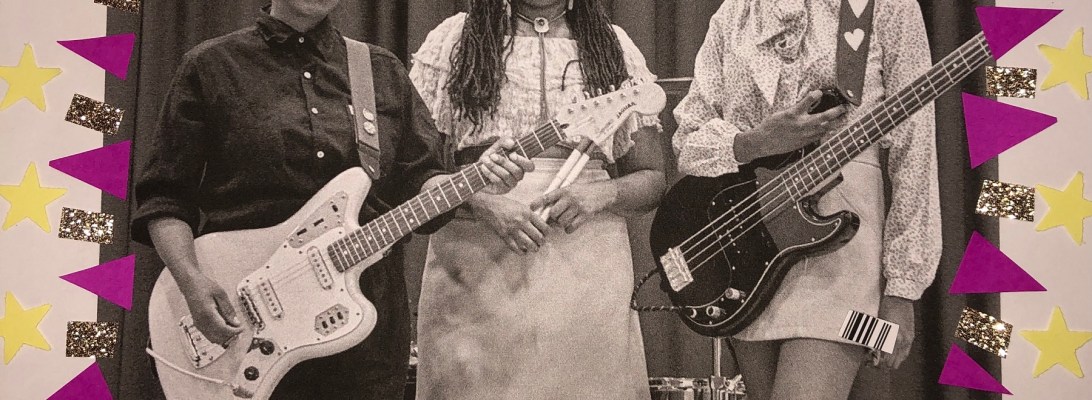
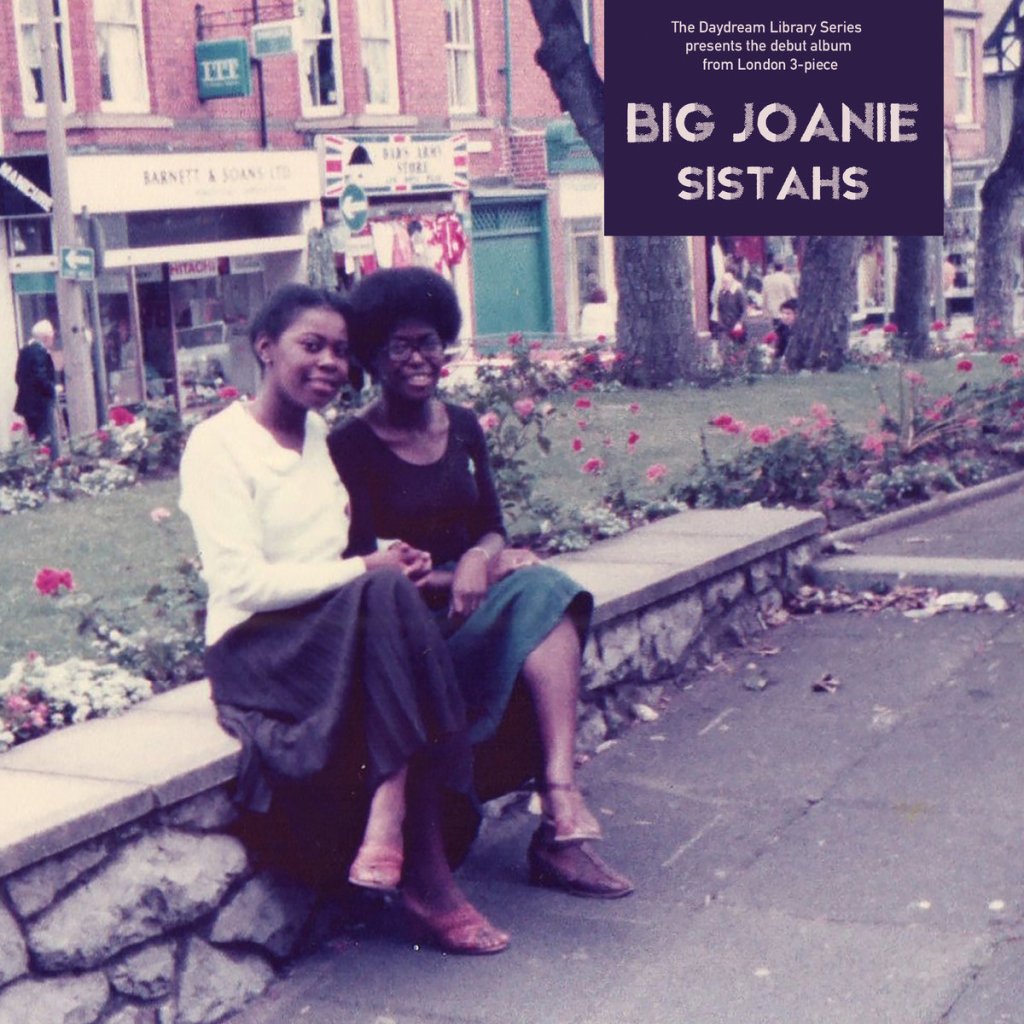
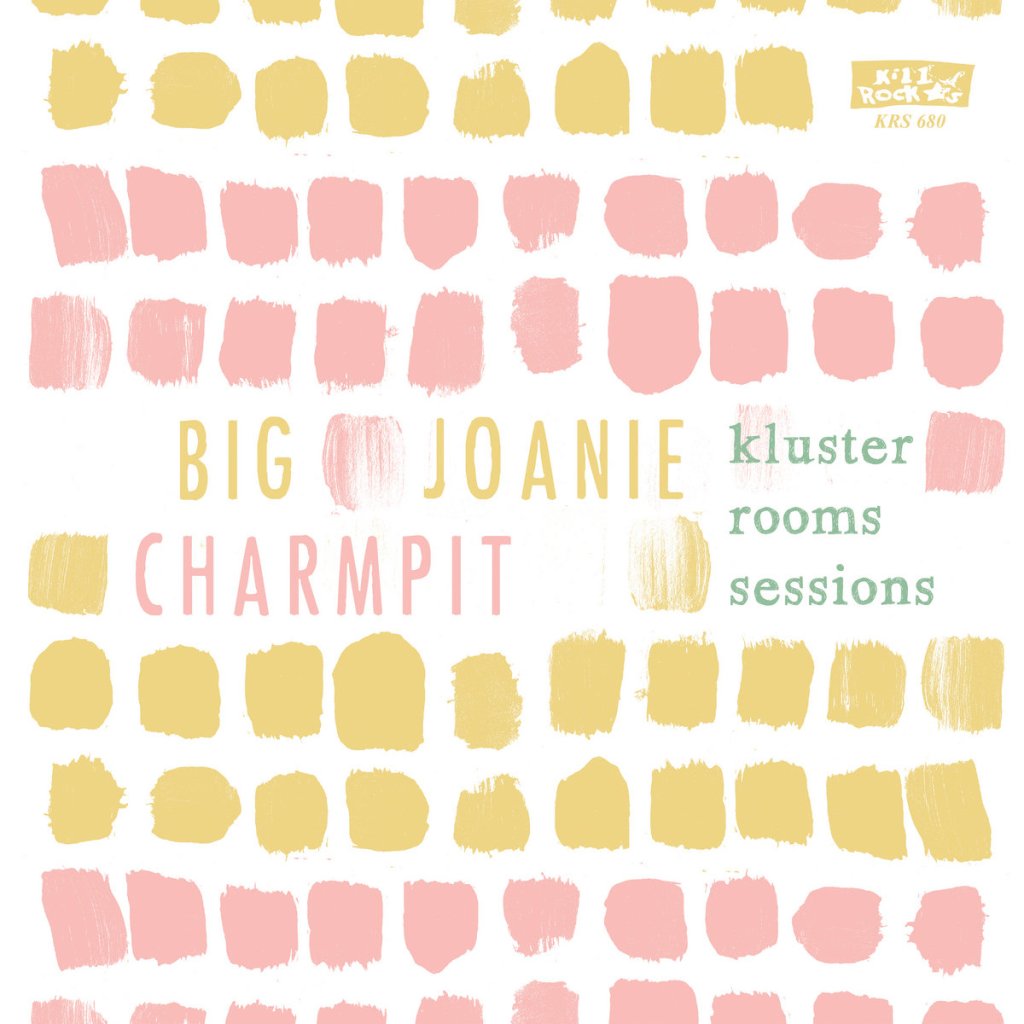
Big Joanie are a Black Feminist Sistah Punk band from London and one of the newest addition to the Kill Rock Stars label. To celebrate their signing they’re releasing a split 7-inch with on KRS with Charmpit and are working on a new album for release in 2021, following up their acclaimed 2018 record Sistahs. Gimmie’s editor interviewed guitarist-vocalist Stephanie Phillips for her book, Conversations with Punx – featuring in-depth interviews with individuals from bands Ramones, DEVO, X-Ray Spex, Blondie, The Distillers, The Bags, Bikini Kill, The Slits, Black Flag, Bad Brains, Fugazi, Crass, The Slits, Subhumans, Le Butcherettes, The Avengers, Night Birds, X, and more. Coming soon! Follow @gimmiegimmiegimmiezine for updates – we wanted to share some of the interview early here with you.

STEPHANIE PHILLIPS: I remember when I first found Poly Styrne, it was a really opening moment it was so weird to find out there was this Black girl doing all of this stuff in London in the ‘70s. Finding her when I was a teenager was really important for me.

Same! I had that same feeling all the way over here in Australia. You listen to the lyrics that she writes, she’s such an amazing writer and creative person.

SP: Yeah, yeah. I’ve spoken to her daughter [Celeste Bell] at Decolonise Fest. I really enjoy her work, it’s miles ahead of everyone else at that time.

Why is music important to you?

SP: It was always my first mode of expression, it always allowed me to connect emotionally with the world in a way that I couldn’t really get through other outlets. Music allowed me to envision an idea of myself that was based on the people that I really loved. I really loved Yeah Yeah Yeahs so I could imagine myself as Karen O, imagine myself having that kind of confidence. I loved The Distillers and wanted to be Brody Dalle. It was like living my dreams through these different frontwoman.

I think we all have wanted to be Brody Dalle!

SP: Yeah!

Did you grow up in a musical household? Did you always have music around?

SP: No, not really – my dad sometimes had some reggae CDs – it wasn’t really that musical. The only thing is that my brother could sometimes play the keyboard or play trumpet at school but he didn’t really pick those up. It’s really just the kind of thing that I was interested in and wanted to pursue on my own really, it was my own hobby. I would go through music magazines and look at new bands, find new CDs. Eventually I asked my mum to buy me a guitar for my sixteenth birthday and I started learning and playing Riot Grrrl songs on the guitar, that’s how I started.

When you found Riot Grrrl did that open up new stuff for you as well?

SP: Yeah, definitely because I guess that was my first introduction to feminism; that was my first introduction to using music as politics and enacting politics through your art. It was really important to have those kind of role models at that time because even though I was quite a shy teenager it was nice to have some place where I could find that outlet for expression and anger, everything like that. It reminded me that even though the world was a bit weird… growing up there was someone that thought like me somewhere in the world and there were other people that listened to the bands like me, it wasn’t that unusual at all.

What inspired you to start Big Joanie?

SP: When I started Big Joanie I was already in a feminist punk band. I was in the London punk scene but it felt very, very white at that time. There wasn’t really any conversation about race or racism or white privilege or anything around that. I was sick of being in punk spaces and having community there and then going to my Black Feminist meetings, different anti-racist meetings and having a community there but never having them meet up, never having them link up. A lot of what I’ve done over the years is working through finding community and creating community. I knew that there was no way that I was the only Black girl that liked punk, I thought there must be someone else. It was something that I wanted to do, to have a band that was of Black punks. I didn’t really envision how long it would last but I just wanted it to happen at some point.

When I saw an advert for “First Timers” on Facebook, which was a gig where everyone plays their first gig as a band and everyone has to be playing something different to what they’d usually play or playing a new instrument, it’s a great opportunity to start a new band. I put a shout out on social media and found our drummer Chardine [Taylor-Stone] and our original bassist Kiera [Coward-Deyell]. We got playing and we played First Timers and at that gig we got a second gig and we just keep going, that was in 2013, it was a long time ago.

First Timers sounds like a really cool thing. When you’re playing there, everyone is on the same level, like you said, everyone is starting a new band or playing a new instrument. It sounds like a really encouraging kind of space and concept.

SP: Yeah, that’s definitely the idea. They’re still doing them now. The idea is that the crowd is as welcoming for you as you would need them to be on your first gig. It’s trying to get more marginalized people to start bands and get involved in DIY culture. For our gig it was really welcoming and inclusive. People were ready to hear whatever you created because they knew you only just started a few months ago, it was meant to be quite haphazard and rickety, that was the whole point, you don’t really know what you’re going to hear. I still go to First Timers gigs when I can now, it’s always a really fun event and really heart-warming.

I wish we had one of those here.

SP: It’s one of those DIY punk things that someone starts it and then maybe someone will start its somewhere else, there’s no copyright on it.

Last week you were really busy; I’m assuming it was with Decolonise Fest that you do?

SP: Yeah, yeah. We’re part of the Decolonise Fest Collective. We had an online version of our annual festival last week, it was quite a new thing for us. We were busy trying to organise everything, get it all ready, because it was running for a whole week. It went really well and we really enjoyed working in this new format. It’s kind of weird to have a festival online, I guess that’s where we are today.

I imagine it would allow more people to participate in it as well?

SP: Yeah. It was more a global audience. People often have said they can’t always get to London or they’re in a different country but have heard about us but they’ve never been able to get to the UK. Having it online has shown a lot more people that Decolonise Fest exists and shown them what we’re doing.

For people that might not know what Decolonise Fest is; how would you describe it to them?

SP: Decolonise Fest is an annual festival based in London, England and it’s created by and for punks of colour. It’s a festival that’s created to recognise the history of punks of colour, recognise the input that we have made into the genre and to celebrate the punk bands that are around now so we can hopefully inspire more people to create punk bands of tomorrow.

That’s such a great idea. It makes me want to go out and do those kinds of things here in Australia, it would be amazing to have more of that kind of community here. So many times I’d go to a punk show and I’d be the only person of colour there and people would say things like, “It’s so good to have a Black punk or a Brown punk here” meaning me and I’d just be like, what?!

SP: That’s a weird thing to say. The good thing about Decolonise Fest is that we can create a community for punks of colour so you can talk about those weird interactions and create your own space. We want to create the idea that people can set up their own Decolonise Fest, hopefully take our idea and make it their own. Hopefully there could be a Decolonise Fest in Australia and different countries around the world.

I know there must have been many great ideas talked about and experiences shared at this year’s fest; was there anything that stuck with you or something important you learnt from the week?

SP: That people are really open to finding ways to connect and create community. I was worried that having things online would feel too impersonal but it felt like people really wanted to find different ways to chat and connect, and talk in the chat boxes when we stream video on Twitch, be able to start conversations in that way. It’s reaffirmed that what we are doing could create a support network and community for different people.

I wanted to talk about Big Joanie’s songs, your songs; I’ve noticed lyrically a lot of them seemed to talk about love, relationships and the human experience.

SP: Yeah, yeah, I guess so [laughs].

When you write; what’s your process?

SP: It depends, it’s everything in every way. You can start with a guitar riff and then try to find a melody for it and try to mouth words and see what fits. Sometimes I keep lyrics in my phone and sometimes I write them before I write the melody or have the guitar line. It happens in every way possible.

What is writing songs for you?

SP: It’s about the process of writing. I really enjoying not knowing what’s going to happening and surprising yourself—that’s one of the most important things. I don’t set out to write about a particular theme or an idea, you play and see what comes to your mind and circle around the idea and keep going deeper and deeper—you create a stream of consciousness piece of art in a song format.

Do you have any other creative outlets?

SP: No, not really [laughs].

I really love your song ‘How Could You Love Me’ it has a very Ronettes-feeling to it.

SP: Yeah, I was feeling very Ronettes-y.

I love your Ronettes poster on the wall that I can see. It’s the best. They’re the best!

SP: Yeah. I really love The Ronettes, it was quite a big inspiration for the band when we first started, of just really loving those Girl Group harmonies and that feeling and sensation that comes from that era. I guess it’s really hard to recreate because it’s the sensation of people being young and not having any cares really. It so invigorating and interesting, I always want to listen to it and hear what’s going on.

Same! I really love Sister Rosetta Tharpe too! I think people forget or might not even know that she was a pioneer and started playing electric guitar and rock n roll before rock n roll.

SP: Yeah, yeah, exactly! She’s such an interesting guitarist, she kicked that all off. People don’t always know the real history of rock and what was actually involved and going on, they think Elvis [Presley] just did something and the Beatles did something and that’s it.

[Laughter] Yeah! That’s why it’s important to have conversations about these people and to look into history. As well as making music you also do music journalism and interview people.

SP: Yeah. I’m a trained journalist, I started off in journalism first, I’ve been working as a journalist for over a decade.

What attracted you to journalism? Was it telling stories?

SP: I guess, yeah. Telling stories and having the ability to create a narrative is very important and interesting to me. Being able to communicate is really interesting, that’s why I centred a lot of things around writing in that way. I wanted to write music journalism because I was interested in music. I wanted to be involved in it in every way, that’s why I’ve done everything [laughs].

I know that feeling. I first had the feeling when I was a teenager and there were so many great bands in my area and all the music papers and magazines weren’t covering them and I got a zine from a friend and had the realisation I can do this! I went straight to my bedroom, started listening to music and started to write my own zine. From there it keep going and I haven’t stopped.

SP: That’s amazing! I haven’t made my own zine yet but I love the idea of zine culture, creating your own platform, surpassing the usual kind of press and publishing industry, it’s really interesting.

The way that the music magazine/publishing industry works, I hate it! I don’t really care for the music industry either. I like existing on the outside of that. I find things to be the most exciting not in there but on the fringes where people can totally just express themselves without censorship or compromise—creating your own community is far more exciting to me.

SP: Yeah, definitely. That’s where things start. There’s so much going on… I think about the scenes that I’ve been involved in in the UK, they’re hardly ever reported about but there’s just so much interesting music being created here, there’s so much interning music being created in what feels like predominately female and queer punk scene as well. If you looked at the average music press or what is being reported as the “band of the moment” you would think its all CIS straight white guys. That isn’t whose making the most forward-thinking music today… it’s not white men [laughs].

I’d love to read a zine made by you and hear all about what’s happening where you are.

SP: It’s a really interesting music industry here and there’s a lot going on. There’s so many different scenes even though it’s a small island, there’s so many different scenes in London; there’s multiple punk scenes that never actually intercept and never really know about each other. It’s hard to cover it all I feel.

What’s Sistah Punk mean to you?

SP: It was a phrase that we came up with to describe ourselves with for our first gig. They asked us what we wanted to describe ourselves as and we said, Black Feminist Sistah Punk, just because it’s a very literal description; we’re Black punk woman, we’re into punk. It can also be something that people can use to find other Black woman that are into punk and other Black Feminist punks. There weren’t too many women in punk bands in London at that time, we felt like we needed to specifically say that we are Black Feminists because it was important to us and we thought it would be to other people.

It’s still something important to you all these years later?

SP: Yeah. It’s still literal because we’re still Black woman and Black Feminists. It’s still important to declare who you are and who your identity in a world where being a Black woman and being a black Feminist and having an opinion is still not the done thing [laughs]. It’s still important, it’s still punk to be Black and female and opinionated!

Whenever I read interviews with Big Joanie you always get asked about feminism and race; do you ever get tired of speaking about these subjects?

SP: It all depends on the context of the interview. It could be from the context of someone not knowing about feminism and race and just wanting to ask the generic; what’s it like to be a woman in music? What’s it like to be a Black woman in music? That’s not really very interesting because the question is aimed at a white male audience in its nature; it’s trying to open up what’s it like to be a Black woman for people that aren’t Black woman. Is it’s discussing the inherent nature as who we are as individuals and why it’s important for us to talk about ourselves in the way that we talk about ourselves then I don’t mind. It’s about us taking the reins of the conversation and taking control, explicitly stating, what we do and why we do it.

You have a new release out ‘Cranes In the Sky’ a Solange song that’s on Third Man Records and I know as a young person you really loved The White Stripes; how did it feel for you to put out something on Jack White’s label?

SP: I really loved The White Stripes when I was younger, I guess everyone did! I can’t remember what the first record I had was, maybe it was Elephant. The last two years of Big Joanie has been a lot of strange happenings every day, bumping into people that you just read about in magazines and having to be normal people around them because you have to do a job [laughs]. We just bumped into Thurston [Moore] and Eva [Prinz], it was like, oh that’s Thurston from Sonic Youth [laughs] he looks like Thurston, in real life! …which is very strange, I can’t remember the first time I heard Sonic Youth because they were an omnipresent force around all the bands that I liked and listened to, people wrote songs about him. It was weird to imagine that he was a real person.

With Third Man it’s a strange connection between what raised you and what brought you up into the musician that you are today and circling back and meeting those heroes. It’s a really strange experience but we’re really happy that Third Man are interested in putting us out, that they liked the single!

It sounds so amazing! Why did you decide to do the Solange song?

SP: I don’t know if we ever discussed why we’d do it, we all automatically decided to do it one day [laughs]. It was a song that we we’re all listening to and that we loved, everyone we knew was listening to it and connected so deeply to it as an album, because it spoke specifically to the female experience. We thought it would be a fun song for us to cover. It took us a while to figure out what was going on in the song, it’s a weird jazzy song and we don’t do jazz we’re punks [laughs]. When we figured it out I think it became one of our best live songs and people always love it. It’s nice when people recognise it when it gets to the chorus.

Have you been writing new things while at home because of the pandemic and lockdowns?

SP: Yeah. As with most freelancers I didn’t get any furlough, there was a furlough scheme for people who lost their jobs in the UK, I’ve been working all since. I’ve been working on a book on Solange Knowles, I’ve finished that now and it will be out next year. I’ve been writing lots for different places, different music magazines, content writing, those kinds of things.

What’s something that’s really important to you?

SP: My morals [laughs] and sense of self. As you move into different arenas in life I think you can get tested maybe, there are some things that can through you for a loop. I guess it’s one thing that I’d never want to give up on is my idea of right and wrong and doing things for the best. That’s not always a good way to go into industries like the music industry because there’s going to be a lot of being tested and people trying to brand you and make money off of you; staying strong on that is what I would want to do and what I believe in.

That’s why I’ve stayed on the outside of things and why I’m putting my book out myself. So many times people try to change what it is or they’re only interested in the “big name” people or this or this… I’ve interviewed so many bands and it’s been the first interview they’ve ever done, sometimes that can be the most interesting interview and can have the most interesting ideas.

SP: Yeah, that’s true! You can get a lot from people that are just staring out and need that help or need that conversation with someone like you. That’s the thing, people always go up to people once they reach a certain level and they just forget about everyone underneath. The people coming up are the ones that need more help really.

Please check out: BIG JOANIE. BJ on Facebook. BJ on Instagram. Decolonise Fest. Big Joanie on Kill Rock Stars. Big Joanie at Third Man Records. Check out Stephanie’s writing work.

London Post-Punks Girls In Synthesis: “Elation, anxiety, energy, a closeness…”

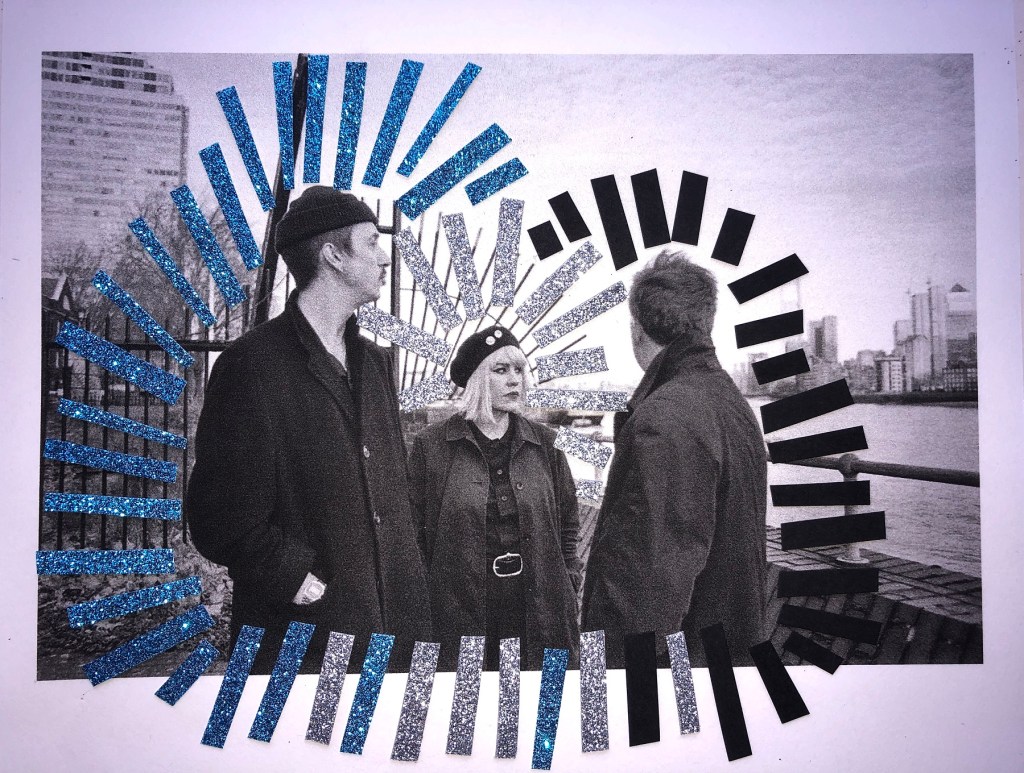
Original photo: Bea Dewhurst. Handmade collage by B.

A perfect soundtrack for our time of upheaval, Girls In Synthesis, present a fresh approach to noise-punk, going well beyond, with their long-anticipated debut album Now Here’s An Echo From Your Future. Emotionally intense, urgent, relentlessly questioning, thoughtful, self-aware and highly conscious observers of the world around them, GIS put everything they’ve got into this quintessential album of 2020! Gimmie caught up with bassist-vocalist, John Linger.

Why is it important to you to make music?

JOHN LINGER: Partly because it is an outlet that enables us to direct our aggression and focus into our music and lyrics. Maybe it’s just our chosen form of self-expression…? On the surface of it, it isn’t important that we create music at all. For most, music is purely a form of entertainment, but when you connect with an audience who feel they identify with what you’re putting across, it validates your reasons for projecting your emotions and feelings through music.

How did you first discover music?

JL: My dad was very much into music, so I had that around me growing up. He’s not a musician, but he loves music, and took me to see lots of groups during the early-mid 1990s, despite only being about 12/13 years old. They were really important events for me, I remember them like they happened yesterday. The buzz of waiting for a gig to start was incredible.

Nirvana were probably the first band of my generation to speak to me in the early 1990s, then Blur, then a huge amount of obscure 1960s music and 1970s post-punk. It’s led on from there, really. I’ve never stopped discovering music. I think that’s the same for the three of us, it’s a never ending journey.

When you formed Girls In Synthesis I read that the band wanted the music to “be intense because life is intense” and that The Fall were a foundation in the formation of GIS – the attitude and work ethic more so than the sound; can you tell us a little bit more about these ideas?

JL: The Fall made it clear that a strong work ethic was important, and that dedication to the cause is paramount. The days of sitting around waiting for a record deal to drop through the letterbox are well over, and you can’t wait for other people to start the wheels in motion for you. We work fucking hard, if you can’t do that for yourself and think pissing about in rehearsal rooms and playing a show every 6 months is acceptable, then try another outlet.

The Fall were, alongside Swell Maps, Crass, disco, dub etc, a foundational pillar that spurred us on, but I don’t think we really sound like any of those groups. They’ve all been chewed up and spat out as part of the sound and identity that is GIS. That’s the key to having influences, you have to draw out what you like and absorb it into the fabric of your life. Otherwise, you’re just copying someone.

I know that you had a very strong vision for how you wanted GIS to be, an aspect of that was knowing you wanted a female drummer, which you found in Nicole Pinto; why did you specifically want a female drummer?

JL: I’m not sure, really. We didn’t question it, it was just something that felt right. It’s important to use your instinct and we do a lot, it’s rarely wrong. We also wanted to have a different input and to offset some of the masculine edge to the sort of music we play. All in all, I guess it wasn’t really as important as it seemed, as Nicole was the right drummer for us, the first that we tried out, so it fell in our laps.

We love your new album! What is the story behind the title, Now Here’s An Echo From Your Future? It’s a line from your song “They’re Not Listening”, right?

JL: It is, yeah. I think the phrase has a context in the song, which is about the government’s disregard for the general public and also the inability to learn from previous mistakes. In a wider term, and as a title for the album, I guess it could apply to our music which is informed by the past, but sounds nothing like anyone else, really. It’s also about our tendency to repeat the same mistakes in our lives, as people. Aside from that, it just scans amazingly.

How do you feel the album cover represents the title? Where was the photo taken?

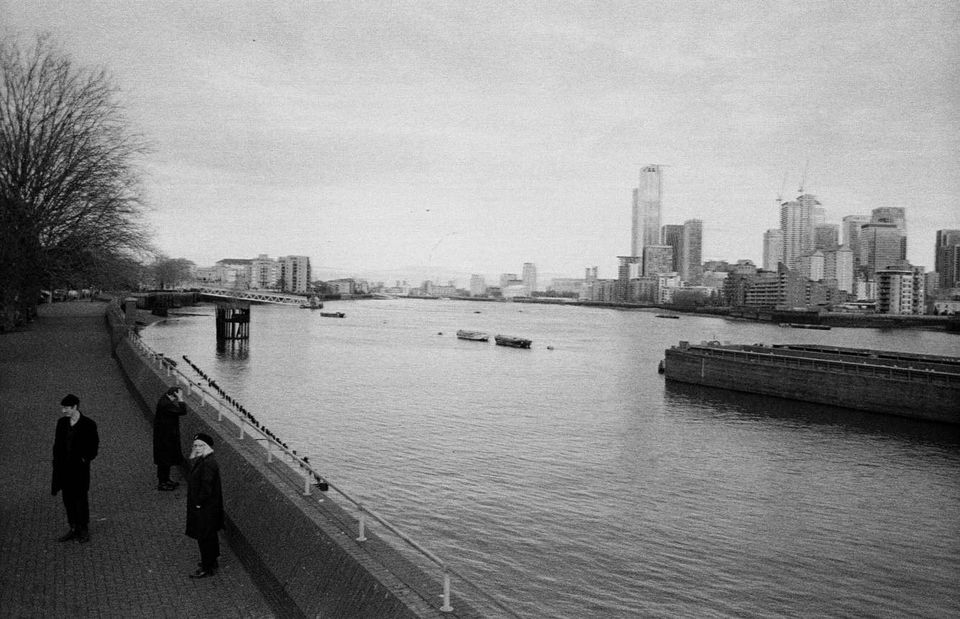
JL: The photo was taken just after New Year in January by our photographer Bea Dewhurst. Jim [Cubitt] works on most of the photographic ideas with her, and we knew we wanted a wide shot that we could wrap around the front and back of the LP cover.

It pans across the whole of the Thames at Surrey Quays, so you see the both the North and South bank of London. The fact that its London doesn’t have any great significance, we just knew we wanted an external shot that was visually arresting, and not reliant on a bloody band photo or some abstract pattern.

Photo: Bea Dewhurst.

I think it links in with the title really well, but that was quite circumstantial. On the right of the shot, you’ve got ‘the future’, with the new office buildings and skyscrapers. On the left, you’ve got the older, 1970s/1980s housing and flats. So the bulldozers haven’t quite got to those yet. Most of central London is being decimated of any history and culture, and becoming another faceless city of glass and shops.

Overall, again, the photo is just amazing. There’s that to consider, too.

You wrote the songs for the album over the course of about three to four months; what was happening in your life or what were you observing happening in the world that inspired your writing? I feel like this album feels more introspective than your EPs.

JL: Yeah, I think it is more introspective. I think when you form a band, you’re full of the wrongs and rights of the world, and that energy that you’re an amorphous machine that can tackle anything head on. But when everything ramps up, and you’re playing live more, there’s more people coming to shows, there’s more expectation…. well, I think that can cause some internalisation.

I wouldn’t say our lives changed hugely over that period, not more than anyone else in the world, but I guess it’s us taking the task to hand a bit more seriously, maybe? Realising that the scope has to widen a little to stay fresh and appropriate. Having said that, there are still some songs that are tackling politics and external issues, so I’d say there’s a nice balance.

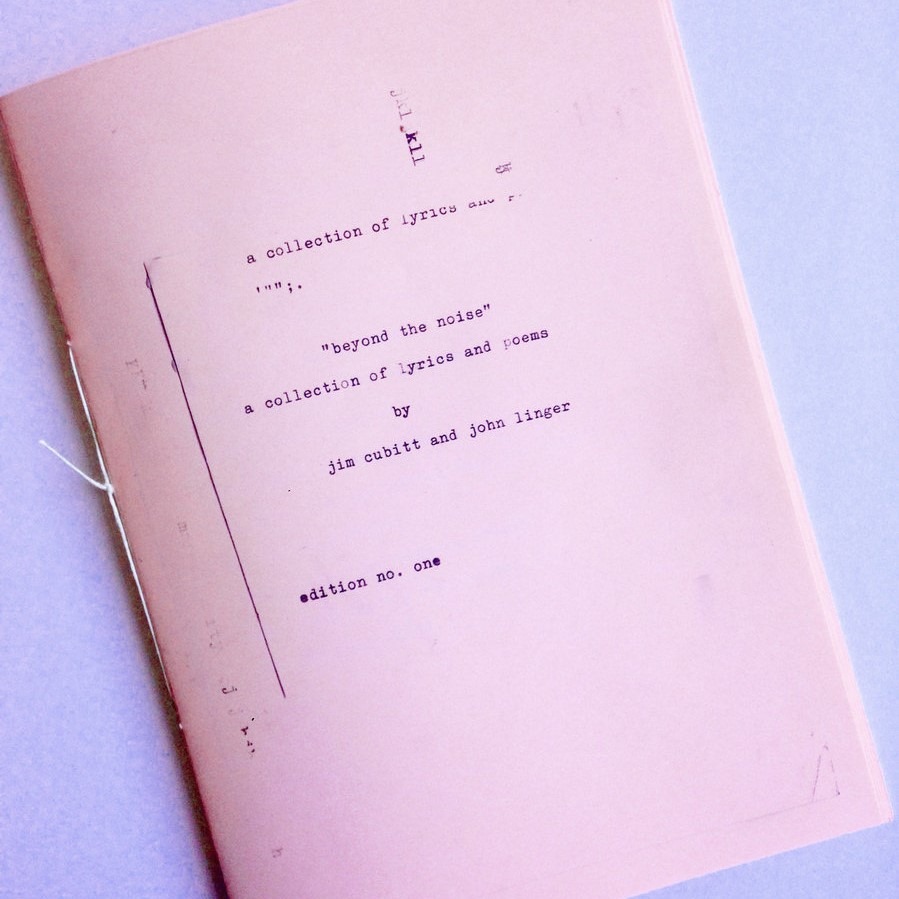
You released zines of your collected lyrics and poems called Beyond The Noise; how did this come into being? Why was it important for you to get your lyrics down on paper? Do you feel they sometimes get lost in the noise of the music?

JL: I think sometimes, yes. Also, I’ve got quite a slurred, Thames estury-esque accent at times, so maybe it’s tricky for people to latch on to? I think my diction is clear as a bell, though! Haha. I think the meld of mine and Jim’s voices work so well, so we tend to double up on choruses and parts where we want to hammer the point home. I quite like the lyrics being a bit hard to work out, though. It gets people’s brains working. Everything shouldn’t just be on a plate, you need to put some effort in to stick with it.

We started creating the books early on, though, as we just felt that the aesthetic of them is another part of the puzzle, and it also enabled us to maybe put lyrics and prose out there that didn’t make it into songs. People really seemed to enjoy them, in fact we’ve printed a compendium of them, including the full lyrics of the album, and they look amazing.

Who are the lyricists that you admire? What is it about their words, approach or technique that resonates?

JL: I think Mark E Smith is essentially an unparalleled lyricist, there’s a lot of absurdism and word play in the best of his lyrics, but also lightning-bolt clear realism at times. Lots of room for interpretation, I think, too. I really enjoy the sheer amount of words fit into Crass songs, if not always what they’re saying. Ian Dury’s humour, and again, word play…

On the whole, though, I can’t enjoy lyrics without enjoying the music, too. Probably why I can’t stand Dylan. They go hand in hand for me. I mean, the following is as fucking poetic and important as any cerebral, intellectual nonsense, and set to the music it’s hair-on-the-back-of-the-neck stuff:

When you feel lost and about to give up / ‘Cause your best just ain’t good enough / And you feel the world has grown cold / And you’re drifting out all on your own / And you need a hand to hold: Darling, reach out

The Four Tops – “Reach Out (I’ll Be There)”

Could you talk a little of your own writing process?

JL: For me, I write at home and I complete demos up to about 80% of being finished, then we add our own elements in the rehearsal room. Ideas might stem from lyrics, or I’ll sit down and try to write music in some form or another. Jim works similarly, although more often he sparks off really exciting ideas which we then complete as a duo.

We don’t write very consistently, but I would say we write 25-30 songs a year, that then gets whittled down for releases. Sometimes the tunes that didn’t make it will be used for something, often not, though. We’re not precious, if something doesn’t work, we discard it. We’re not a ‘jamming’ band, we don’t wait for months and months for something to develop. If it’s not happening in the first 10-15 minutes, we get rid.

There’s a few surprises on your new album; which is your favourite? What influenced it?

JL: I love “Human Frailty” the most. It’s a really, really fucking strange song. And not even just by our standards. I mean by anyone at the moment. The horns on that are incredible, as are the strings (props to funkcutter and Stanley Bad, for those). I also really like “Tirades of Hate and Fear”, that’s a really menacing tune. It’s an amazing album closer, too.

I think broadening the scope of the album, but also making it concise and direct, was at the forefront of our minds when choosing material and getting the arrangements together. We wanted to push the envelope for ourselves a little, and also give some signposts of where we could go in future. We really achieved that, in my opinion. The horns and strings, plus the dub at the end of “Set Up To Fail” have been something nearly everyone who’s listened to the album has mentioned.

The album was recorded over four to five days; do you find it hard to capture the intensity you play the songs live in on recording? How do you capture that spirit? I know you record yourself.

JL: It is difficult. Your immediate thought would be to record live, warts and all, and thrash the living hell out of the songs. But that would kill them stone dead. Although the music is intense and quite confrontational, there’s actually a lot of subtle, but key, things going on UNDER the music. It’s getting that balance right of an aggressive performance but also leaving space for other things underneath.

We do record ourselves, up until now that’s been for time, financial and control reasons, but something will have to change soon. It’s getting too stressful now that the pressure is slightly higher, so it might mean we’ll have to add another outsider to our tiny, creative bubble… perish the thought!

You’ve described your live shows as “unique” and said that doing things the way you do – not playing on a stage and being set-up so you face each other rather than the audience – has “laid some important groundwork”; in what way? What interested you in playing this way?

JL: Really, it was to connect to an audience. We wanted to take the show to them, not drag their attention to us. There’s a good portion of old-fashioned performance and drama to it, too, but on the whole it breaks the barriers down a little and enables the audience to be part of the show. It literally has the opposite effect of the audience you’d think it would. They don’t feel uncomfortable, they loosen up and then THEY want to perform. It’s amazing, really.

What feeling do you get from playing in the crowd?

JL: Elation, anxiety, energy, a closeness I’ve never felt playing music live before… you get every feeling under the sun. There’s always a chance someone will take umbridge and thump you, but they haven’t. I think people know we’re not invading their space, we’re sharing ours with them.

Please check out GIRLS IN SYNTHESIS; GIS on Facebook; GIS on Instagram. Now Here’s An Echo From Your Future out now.