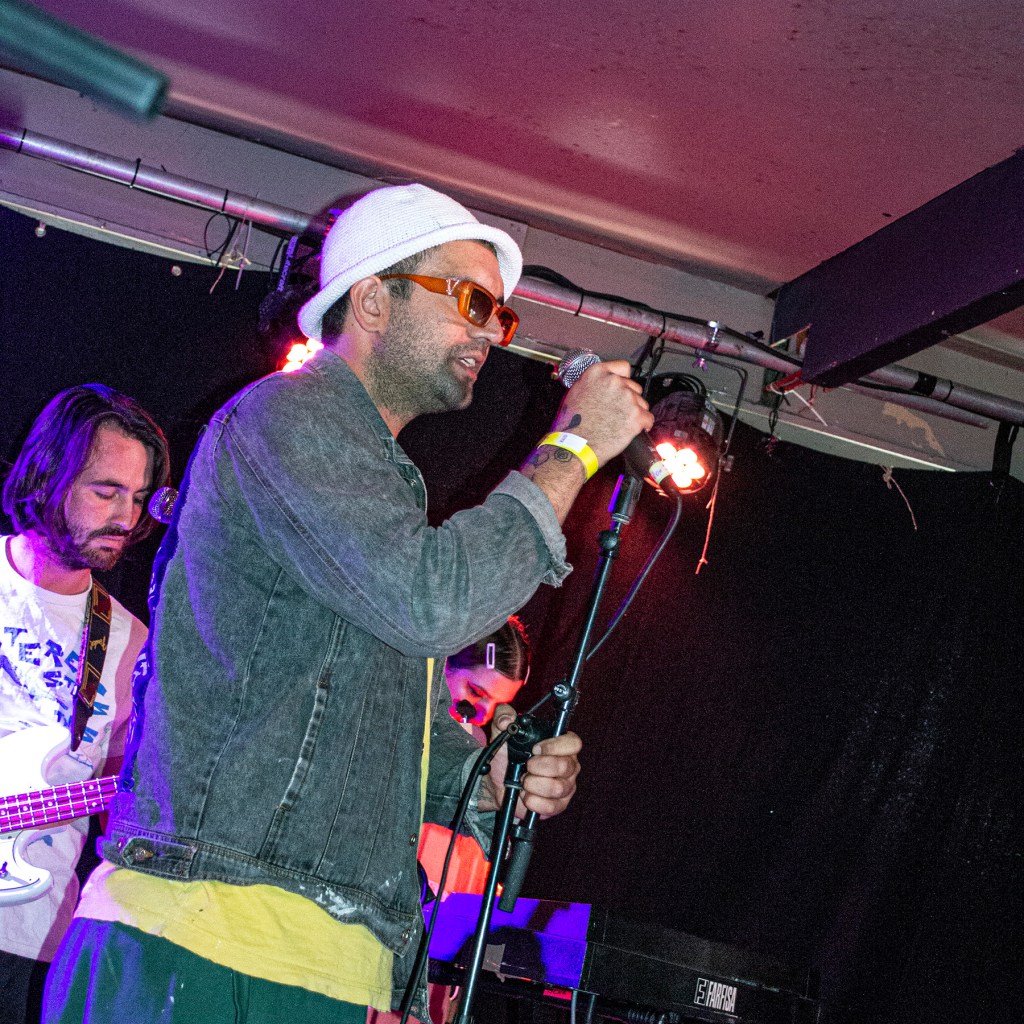
Billiam: ‘Figuring out how to do stupid punk music in a way where I’m not completely destroying myself’

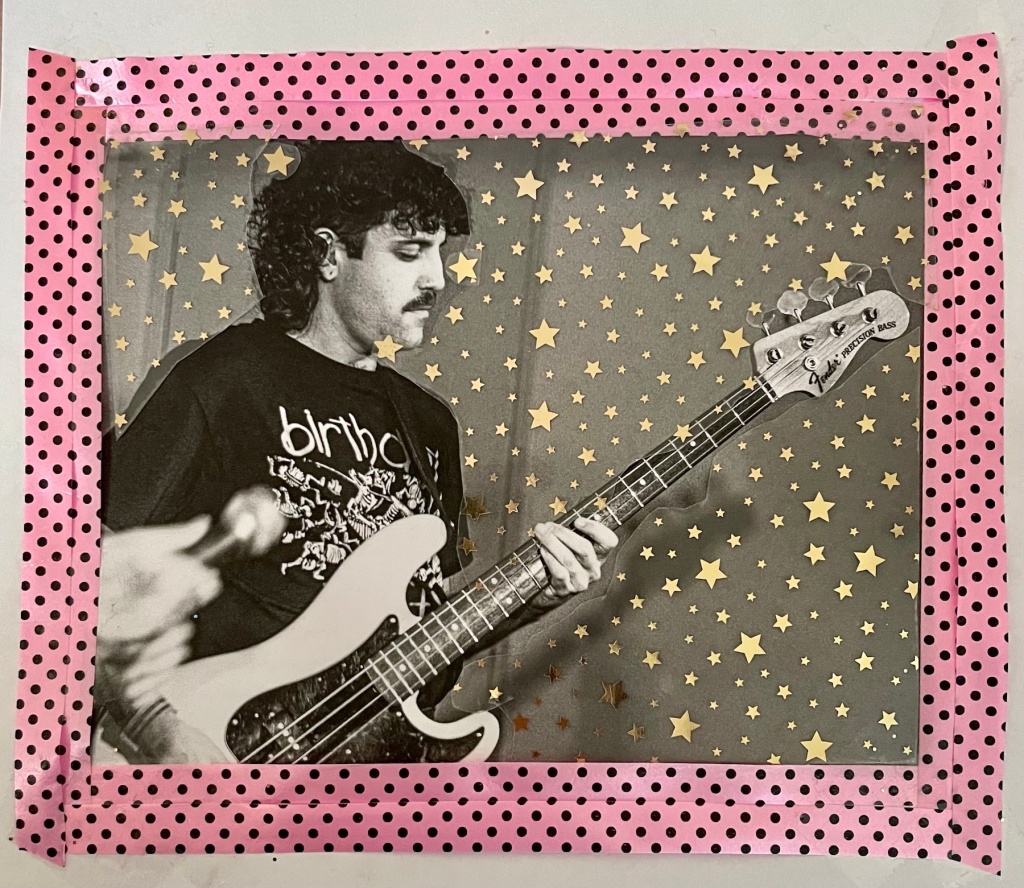
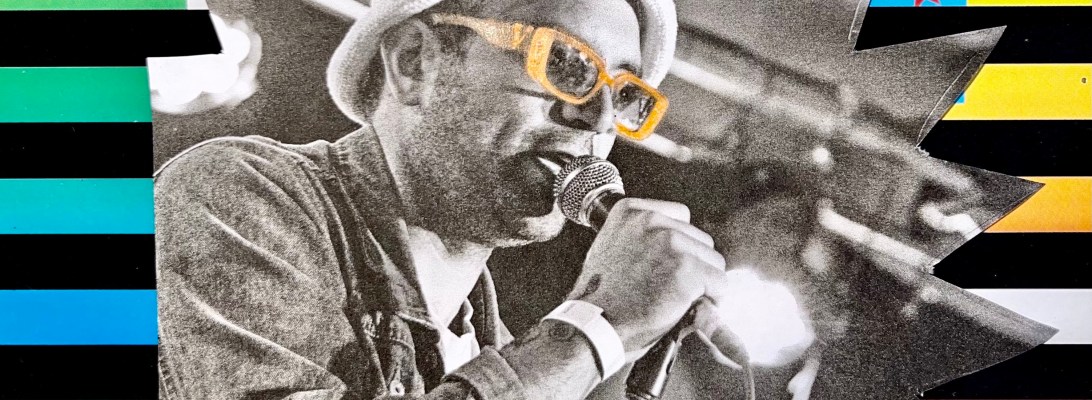
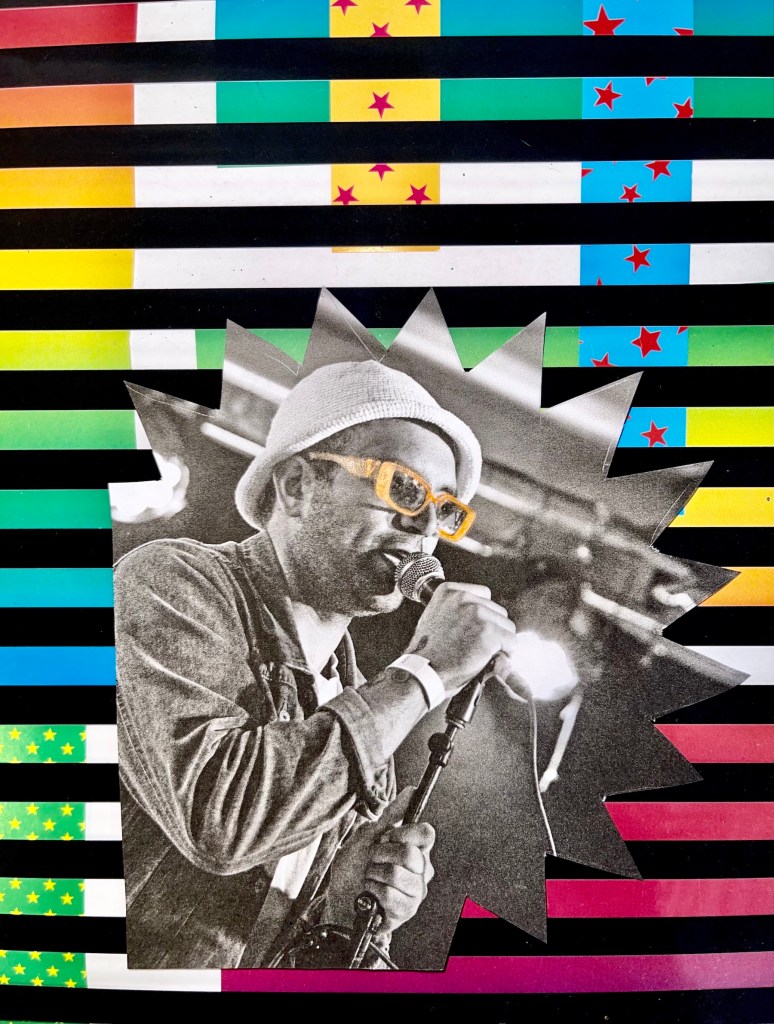
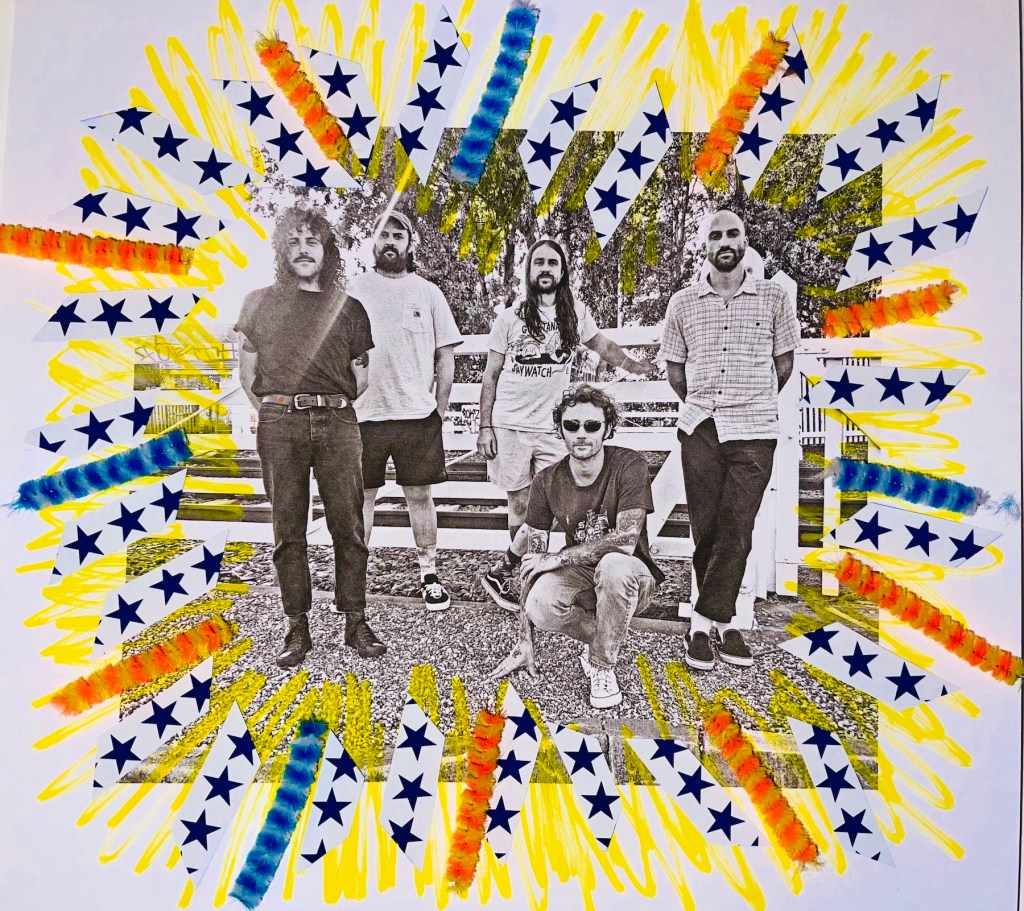
Original photo: Ada Duffy. Handmade mixed-media collage by B.

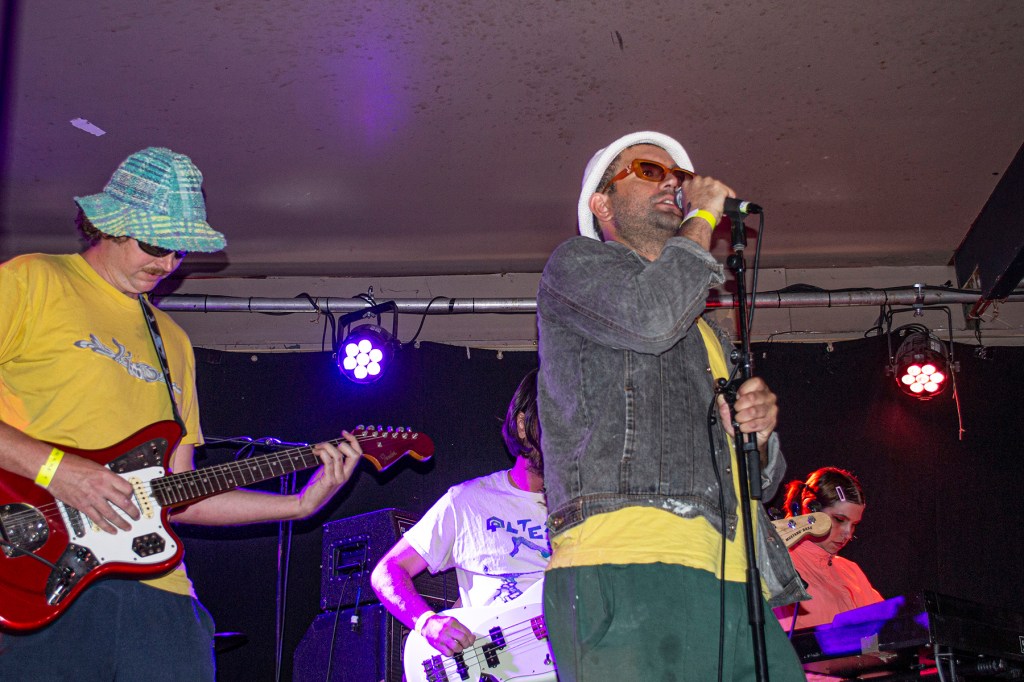
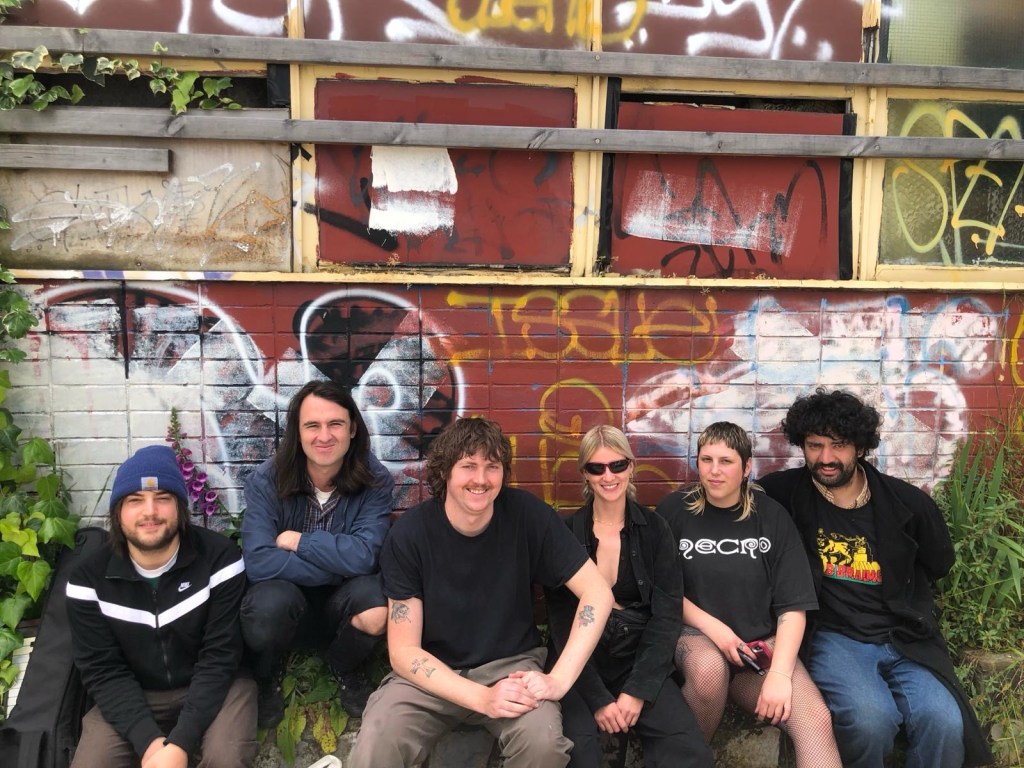
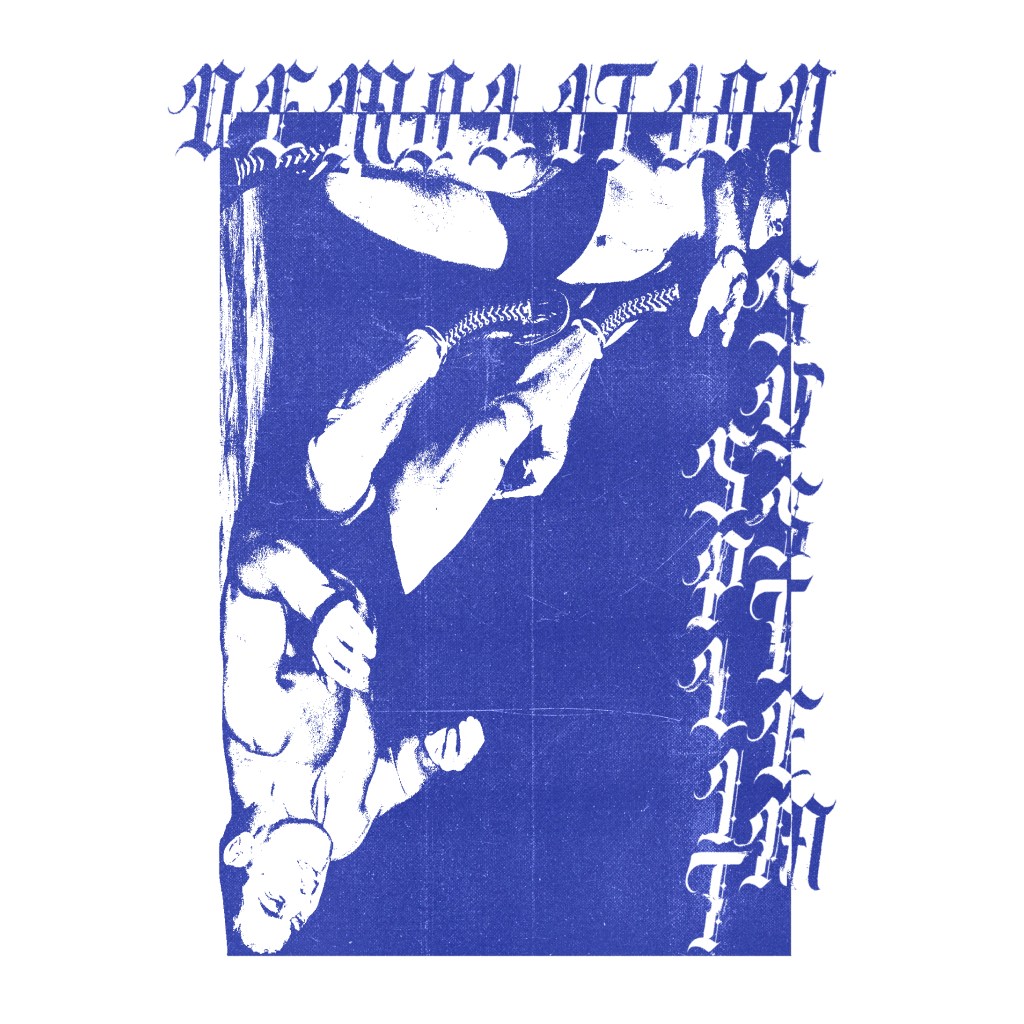
Gimmie caught up with Naarm/Melbourne-based musician Billiam just days before he set off on his first international tour across Europe to support his sophomore album, Animation Cel. The album showcases Billiam’s signature blend of ‘Autism-core’—a term he uses to describe the deeply personal, anxiety-fuelled punk—paired with irresistibly catchy hooks. Animation Cel is his strongest work yet and secured him a home on one of Australia’s best independent labels, Legless Records (Stiff Richards, Split System, Cutters, Phil & the Tiles & more). 

His music explores important issues like mental health and identity, while also embracing more playful subjects such as video games, defunct theme park Sega World, and even a tribute to enigmatic artist Shawn Kerri (known for her work with CARtoons Magazine and iconic images for the Germs and Circle Jerks). In our chat, Billiam shares how music helped him find a supportive community, identity, and discusses his creative process, and plans for his next album. Plus he reveals bands his been loving lately, that you just might too. As long-time Billiam supporters, we totally back him.

BILLIAM: Things have been absolutely hectic all year—lots of personal stuff, music stuff, gigging, and running around. It’s been fantastic. I’m very excited, and very happy the record’s out, very happy people have enjoyed it. I get to go over to Europe with the band. Everything is exciting.

That’s so great to hear! We’re so happy or you!

B: A few aspects have been challenging but like overall, hopefully it’ll be worth it when we’re over in Europe.

What’s been challenging? 

B: Last year was fairly hectic, mental health-wise, so I was just learning to deal with my head and translate what’s going on in my head into the real world, which sounds really wanky. But it was also about figuring out how to do stupid punk music in a way where I’m not completely destroying myself and can still look after myself. 

Managing Split Bills has been getting so hectic, making sure that everyone in the band is treated well and we’re not getting ripped off and that we’re able to make this massive Europe tour work and not come back in tattered rags and stuff like that. It’s really sad that you have to look out for people ripping you off, but it happens. I’m trying to avoid it as much as I can. 

Your upcoming European tour is the first time you’ve toured overseas?

B: Yeah, first time playing overseas, first time going over by myself as well! 

Other than playing shows; what are you most looking forward to?

B: I’m really looking forward to being in Glasgow. I’ve got a few days after the tour. I’m absolutely stoked to go to Glasgow. I’ve wanted to go for five years now. I LOVE Glasgow. 

I’m really excited to look at how different areas of Europe and the UK function when it comes to booking shows and the infrastructure around it. I’m really excited to jbe able to drive 3-5 hours and end up in a different city, with a different scene and different people. Obviously, Australia isn’t really designed for that, everything’s so spread apart.

Why do you love Glasgow so much? 

B: A lot of my favourite bands of all-time have come from Glasgow, like Yummy Fur, Bis, Lung Leg, stuff like that. Bands that have been incredibly instrumental to me, especially in the past few years. That gave me a new outlook on recording and writing stuff.

Your new album, Animation Cel is out! It’s one of our favourite things that you’ve ever done. 

B: Oh, that’s very kind of you. I’m really stoked you like it. 

It got started pretty quickly after Corner Tactics. The live band started, and it gave me a different outlook on what songs work well for Billiam. I’d been thinking about which songs work best live and how people react to that. At that time, I felt more confident with the little Tascam digital recorder I was using, so I was more willing to try different things. Halfway through recording, I found out Wild Wax wanted to book the European tour for us, so I had to get into gear to make sure all the labels had the final album ready. So they could like plan it and have the records ready for when we got over there. It was a pretty hectic production schedule, but a really fun one. 

It was a really fun record to make—a fun snapshot of my life, where I was mentally. I sometimes view albums like TV show seasons, and this one feels like the fun, happy-go-lucky second season where we’ve got a bigger budget. The next one I’m working on is more the fucking dark, groovy reboot or something like that. It’s a bit more sad and stupid [laughs].

I love that analogy! For Corner Tactics I know you wrote around 130 songs…

B: Yeah. Corner Tactics, I did write around 130. For Animation Cel it was around 70. I haven’t actually counted. The rate of success was a lot higher with this one. 

Having so many songs to chose from, how do you decide which of the songs make the cut? 

B: Gut feeling. I tend to rely a lot on other people too. I’ll send songs to the band and friends and if they have a really strong reaction to it, I generally feel a lot more confident putting it on the record. Sometimes, I’m not the best judge of what is best like in terms of my music. I like a record that flows really well, so if I can’t find a way for a song to flow in the record, I’m just happy to leave it, rework it or put it out on like a compilation. 

What was one of the first songs that you sent to people that got a really strong reaction? 

B: People really were keen on ‘Maid Dress’. I wasn’t as confident putting that on the record cause it’s a slower song. I didn’t know how people would react to it. But they really liked it.

Also, people were keen on the title track ‘Animation Cel’. Ada had been begging me to use ‘Sega World’ for three years ‘cause it was an old Disco Junk song. There was a point where Ada was going to join Disco Junk, and the whole conceit of her joining was that we’d start playing ‘Sega World’ live. I finally recorded a version I was happy with. She’s pretty happy that it’s in the set and that it’s on the record. 

Is there a track on the album that you’re really, really happy with?

B: I was super happy with like the final track ‘Shawn Kerri’s Grave’. Also, some of the faster songs like ‘Carrot in Your Hand’ and ‘Bash My Head Against A Myki Pole’ and ‘My Metronome’. I like those songs production-wise. I was really happy with how they sounded. I was just happy that this record sounded a bit better than the last one. It’s kind of like that evolution a little bit. 

You recorded everything yourself again?

B: Yeah. But it’s the first time people have played on one of my albums. I recorded in the front room. 

Over time or sessions close together? Previously, it’s been a quick process, like a few days.

B: Over time. I would come home from work, record a song quickly, get the drums down, and then work on it until I went to bed or had dinner. At the end, I compiled them. It wasn’t like I did demos and then recorded them all at once. The album is basically the demos, pretty much.

One take? 

B: Generally the first take I got that I thought was good. Especially with drums. I’m not a good drummer. Once I get a take that’s usable—I’m done, done, done. Throw it in the pile! [laughs]. I definitely think there’s an advantage doing everything myself. 

The next Billiam record, I’m recording at the moment, is a bit more professional. I did the drums and bass with Eric who does Checkpoint and Hobsons Bay Coast Guard. 

The next album is a concept album, right?

B: I’d call it like a very shit concept album in that the concept’s not really entirely developed [laughs]. It’s based around a lot of the stuff that happened mental health-wise. It was a challenging year in a lot of aspects. The record’s, me, processing… [pauses] …maybe that’s the wrong word. I’m writing about it, looking at it. It was all I could think about for the year, and I only really was coming out of it March of last year. 

I’m sorry you were struggling so much. I feel you. Mental health is something that I struggle with, that’s part of why we haven’t been doing as much Gimmie stuff for a little. It can be hard to do stuff when it’s just hard to get through the day. Things are getting better, though.

B: Yeah, it’s awful that shit happens to you as well. It’s just shit trying to swim through everything. Sometimes it feels like you’re like trying to run in syrup and you can kind of get close, but you can never get to like full speed. There’s this weird guilt thing too. I feel like it’s self-indulgent to talk about my own mental health, but it’s been really good to write about it. I’m pretty proud of the songs. Hopefully people dig them and think they’re cool. 

So Animation Cel is a lighter and funner and the next record you’re working on is the opposite… 

B: I like doing a different thing each record. The next one is veering into The Cure and a lot of more dreary subjects. After, the next record is going to be very stupid. I’ve already got a list of songs that might go on it—all of them are very silly. I’m just going to flip-flop until I find a nice happy middle ground. 

You’ve been having a prolific output. We’re so proud of you! It’s been the coolest watching you grow. 

B: Thank you. Tell Jhonny I said, hello and that I love him.

Will do! What was inspiring you when making Animation Cel?

The Split Bills starting up. Since Disco Junk had ended, I hadn’t really had a band. I was doing solo shows with a backing track. I got to do a lot of great stuff because of it, but it wasn’t the same energy as a band. T second Split Bills started up, everything was so turbo so quickly. Obviously that takes a toll on you and can be stressful, but it was cool. 

Right out of the gate, we were playing shows and people were really responding to them, having a really good time. People were excited, people wanted to hear my music; I don’t say that in an egotistical way. But I could really stretch out and try different things and see how they worked.

Wanting people to hear your music and being happy people are responding positively to it isn’t egotistical. You should be stoked about that! It’s totally okay to celebrate that.

B: I guess. 

You’re always so humble. 

B: I don’t try to be I’m just in my head—that’s how I am. I think it’s a very common thing for people on the Autism spectrum to be unable to process how people perceive them a little bit. 

Being on the spectrum inspired quite a few songs that were on the album, right?

B: Yeah. ‘My Metronome’ was based on a conversation with Ada. We were talking about music and how sometimes Ada can’t listen to it because she’s worried the song’s going to go out of sync with itself, and that really upsets her. She couldn’t explain why the idea of a song going out of sync was so upsetting, but it stressed her out to that degree. Ada isn’t on the spectrum, but I related to that struggle—something you can’t fully describe, but it upsets you so much. I thought that was a really good idea for a song. A lot of my stuff has to do with living on the spectrum and that kind of thought process.

I don’t realise how much it impacts how I think about the world and how I write until I talk with other people or they talk to me about things. I’ve had people come up to me and say, ‘Hey, I really like how you title songs. I think that’s really unique and different.’ And I’m just like, ‘Oh, thank you,’ but—it’s not a conscious decision. It’s just something I did because I thought it was interesting; it’s how it sounds to me.

Two songs that are my favourites on the album is ‘Hydraulic Press’ and ‘Protect The Emerald’. 

B: They’re fun ones! 

And ‘Kerri Shawn’s Grave’. That’s your longest song on the album. 

I think it might be the longest song I’ve ever written. It has an actual drum kit on it. I was very proud of how that one came out, because it was cool to see I could do a slower, washier song, that wouldn’t turn out horrifically bad.

It’s about the cartoonist (who was one of the few female contributors to CARtoons Magazine, and produced iconic images used by the Germs and the Circle Jerks)?

B: Yeah, absolutely. I went down a rabbit hole on her and her art. The fact that we don’t know where she went—we don’t know if she’s dead or alive or if she had an accident and has been incapacitated because of it—there’s all this mystery surrounding this influential and important cartoonist.

I had heard she had a fall, which resulted in had chronic cognitive problems, and now lives with her mother.

B: Yeah, I read that too. I’ve also read people say, ‘I met up with her in the 2000s and she was completely fine.’ Then there’s people who are convinced that like she died basically as soon as she stopped publishing things. There’s no concrete answer. Sometimes that can really freak me out if there’s no concrete answer to a person’s existence, especially someone who’s like created something so sick. Especially when you go down the rabbit holes of punk, there are so many bands with songs I love from records I love, where there’s genuinely no information on the internet about them. It adds this kind of question to their music, like: what happened to them? I’d love to connect with them about their music, but can’t.

Yeah, totally. There’s quite a few women in punk that I really love, from older eras, and’ve tried to track them down to chat with them and many aren’t interested in talking to anyone, or have a whole different life, or can’t even be found.

 B: Hmm. that’s interesting. I’m so used to having grown up on the internet where everything is accessible. And if you had a question, you could just have it answered. And the absence of that can sometimes really wig me out, especially if it’s something that I’ve connected to so greatly. I think that’s the same for a lot of people my age, getting wigged out by how confusing living and not being able to know things easily. 

‘Manitee Show’ is a great song too. It has the sample with the woman’s voice at the beginning.

B: That’s Jane Fonda. She did for Good Morning America, because she was talking about how she didn’t end up going to the Oscars because it was on too late and she wanted to go to bed. I found that line, ‘I’m challenging musicians…’ made me laugh so hard. I wrote the song entirely just to use that example! [laughs]. There’s no other reason. That song only exists because I wanted to use that sample and it made me laugh every time I played it. 

Amazing. It made me laugh. I really like this variety on this album. 

B: Yeah, I think that’s something I like as well. It was really nice to try out different songs and experiment with different things. It’s definitely informed the future of Billiam because some artists, like Alien Nose Job, can have one concept and stick to it for an entire record, and that sticks. A part of me wishes I could do that, but I know I’m way too scatterbrained. I want to put every idea on there, and I like the idea of it almost feeling like a playlist—a very cohesive playlist—instead of a concrete record where every song is meant to sound exactly like one thing.

It’s cool that Legless Records put it out. Legless are one of the best labels in Australia right now. They’re a label we trust to bring the heat, everything has been gold.

B: Not only is everything that they’re putting out gold, but I have the most respect I can have for a person in the world for Mawson, because of how he runs Legless, Split System, Stiff Richards, and all his bands. There’s no ego behind it. He’s doing it entirely for the love of music and wanting to spread it.

When Animation Cel was coming out, he was having a kid, and I felt so fucking bad because I was like, this person is having a child—a physical being that’s going to be running around the house—and he’s packing up pre-orders for my fucking record. I was just like, oh my fucking God, I hope he’s somehow able to make this work and it’s not too much for him to do. He was so kind about it.

Mawson is definitely one of the nicest people we know in the Australian music scene. He’s a real one. It’s cool how’s he’s built Legless up and a community around it of bands and networks—like a big family. 

B: He’s lovely and cares so much about everything he does to a degree that’s sometimes scary [laughs]. Like we were talking about earlier, there’s like so many people who are out to scam people and use them. Mawson is just so obviously not that. It’s sick to see the label doing so well. I’m very honoured to be a part of that history. I feel like it’s going to go down as like one of the great independent labels. He’s got an incredible catalog. This year so far there’s Autobahns, a new Stiff Richard song, and the fucking Cutters record! Yeah. It’s so good—it’s fucked! AND the Split System album! It’s amazing what he’s done and how he’s put it together with no moral compromise—it’s all based on community. Even when he puts on shows, he treats the bands so well, and that whole crew, everyone’s so lovely and so supportive. I have as much love as I physically can for a human being towards Maswson and Legless. 

Totally. We love Mawson too. Since we first spoke to you all those years ago, your music has been getting a lot of attention. Like, you were featured on Bandcamp for the Best Punk Albums of August. 

B: That was so cool. That was very surprising. I didn’t even know what to do for a second! [laughs]. I was just like, holy shit! Damn!

And you were featured in the a Spin magazine article.

B: Yeah, that was a very funny article to be a part of. It’s been cool and very nice, the words people have said about the record. It’s lovely to hear that people care. I can’t ever really have a great grasp on what I make; I make things and hate them half the time. Whenever people have a response to it, I’m grateful that they’ve given me the time and put the effort behind it to listen to it. There’s so much INCREDIBLE music coming out right now, I’m so stoked people consider me to be a part of that. 

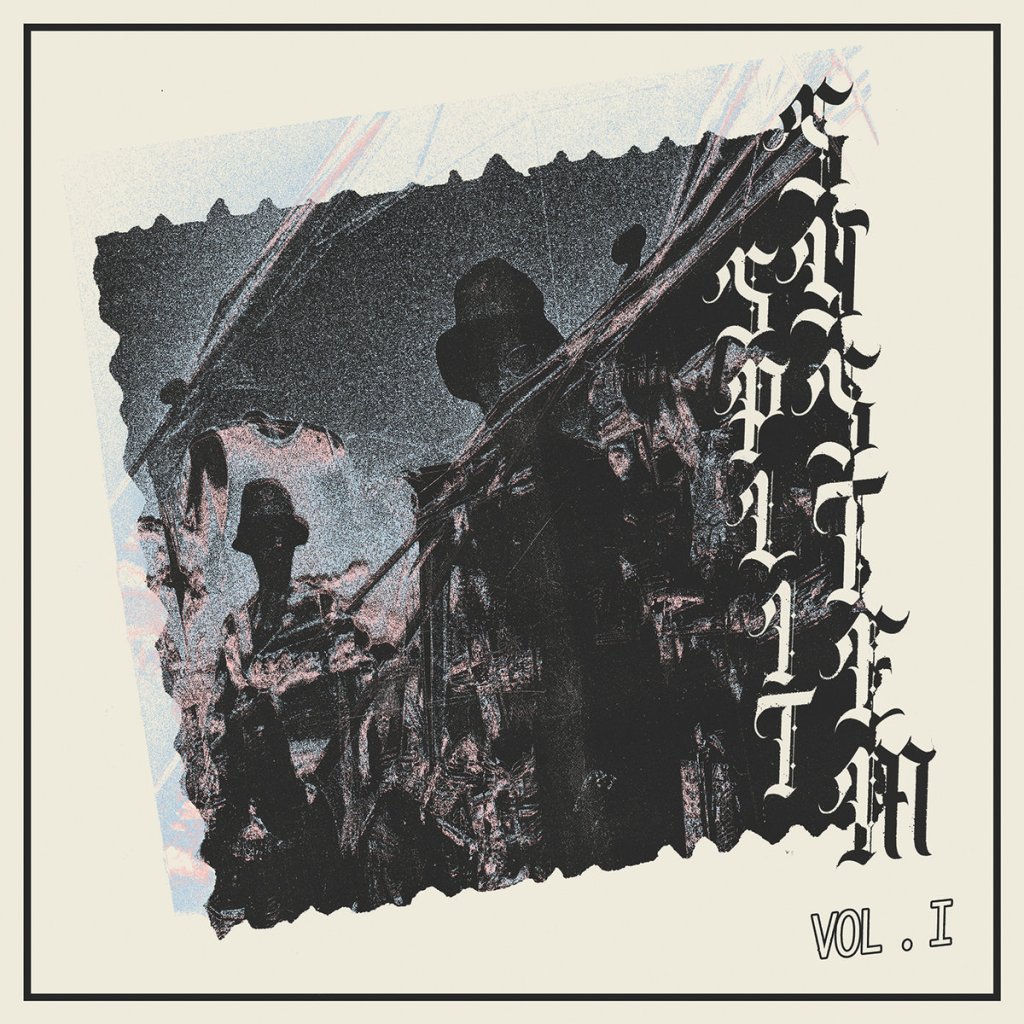
We love the artwork for the new album!

B: Sam [McKenzie] is a genius. He knocked it 5 miles out the park, to the next stadium and then knocked it out of that one. It was the perfect album cover. I’m so happy with how it turned out. So incredible. It elevated everything, like 10 levels. 
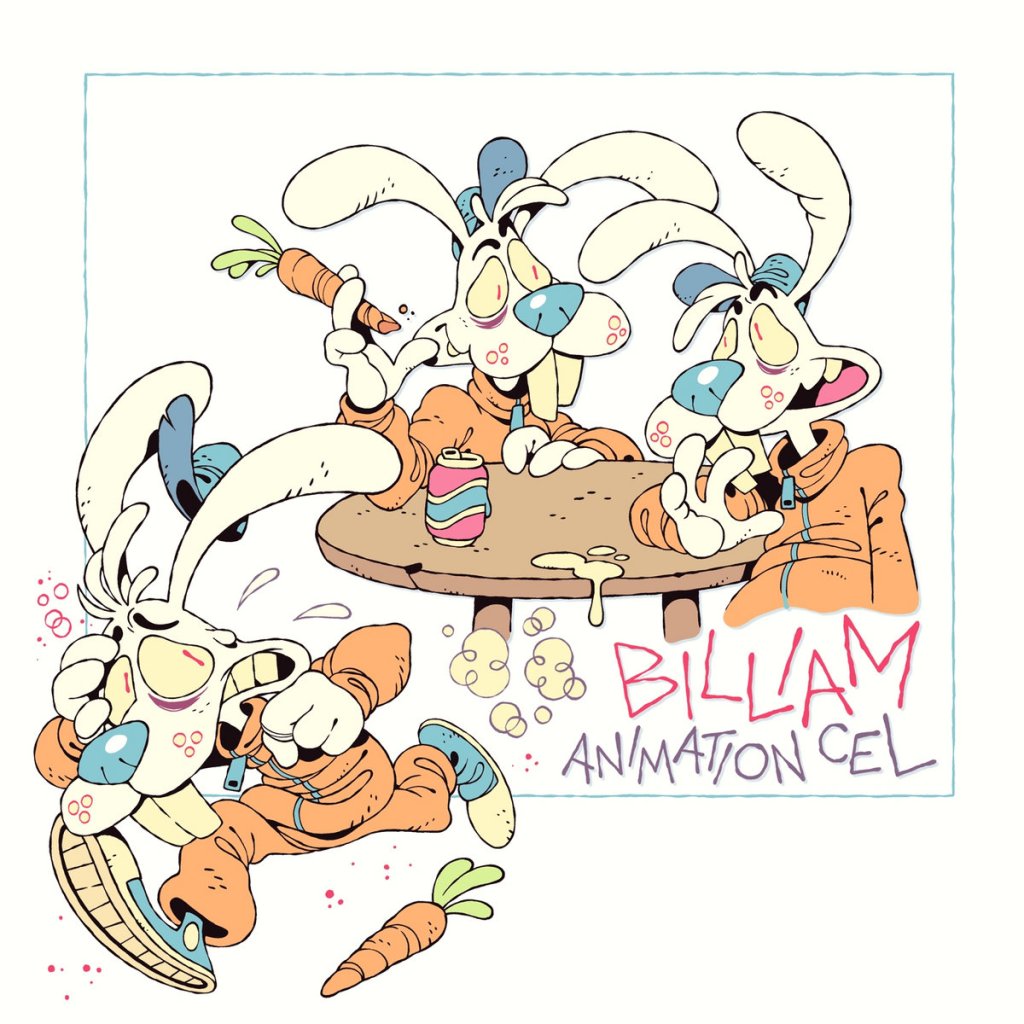
Album arty by Sam McKenzie

What have you been listening to lately? 

B: This is a bit embarrassing to admit, but The Dare. I love that new album, What’s Wrong With New York? It’s super silly dance punk; very much like a throwback to LCD Sound System. I love the new Rixe 7”. The new records from Party Dozen and Shove—love those bands.

So, you leave from Europe on Wednesday…

B:  I’ve never been to an international airport alone, so I’m a bit nervous about that, but I’m really excited to go. I think the excitement is making up for the fear at the moment [laughs]. I’m very excited to look for weird records, see weird bands, and meet cool people.

Out of all the things you’ve achieved so far, what’s something that you’re most proud of? 

B: The collaborative stuff I’ve done. I’m really proud ‘cause I feel like I’ve spent so much time in my room, writing with myself and I convinced myself I wouldn’t be able to collaborate. Those records I’ve made has shown I can. I’m proud that people connect with the music too—that’s like the main thing.

Why do you think you make music? 

B: I’m not good at anything else. When I was a kid, I don’t think I particularly excelled at anything. I just watched YouTube, played video games, and didn’t really have a social life. When I turned 13, I started finding more mainstream punk music. Then I heard Modern Living by The Living Eyes, and I found this community where people wanted to talk to me, were supportive, and were excited to connect. When I found that community, I thought, okay, I’m going to do music. I’m going to make music. I’m going to play it live. I didn’t know how, but I was determined to do it. And now I’ve done enough that people think I’m worthy of going to another country to do it! That’s really cool.

Follow: @billiamofbilliam. GET Animation Cel(Legless Records).
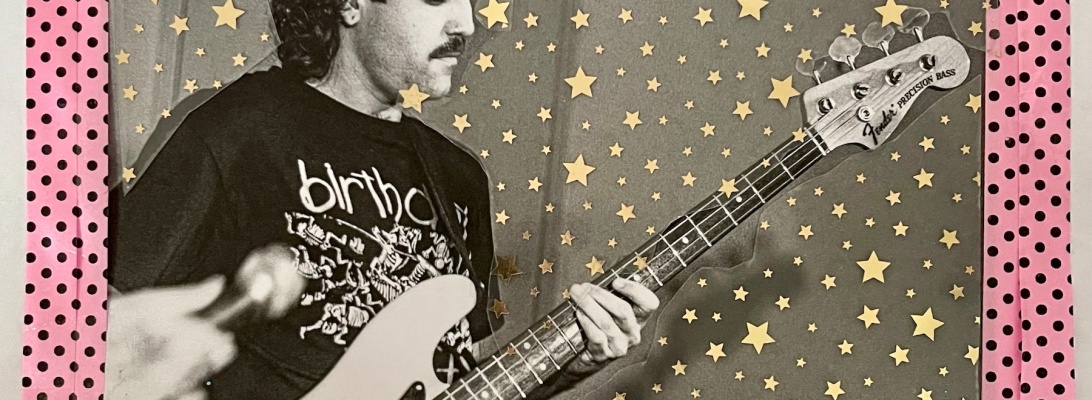
Artist and Split System bassist, Deon Slaviero: ‘Looking for new ways to approach creating… keeps the process fresh and interesting.’

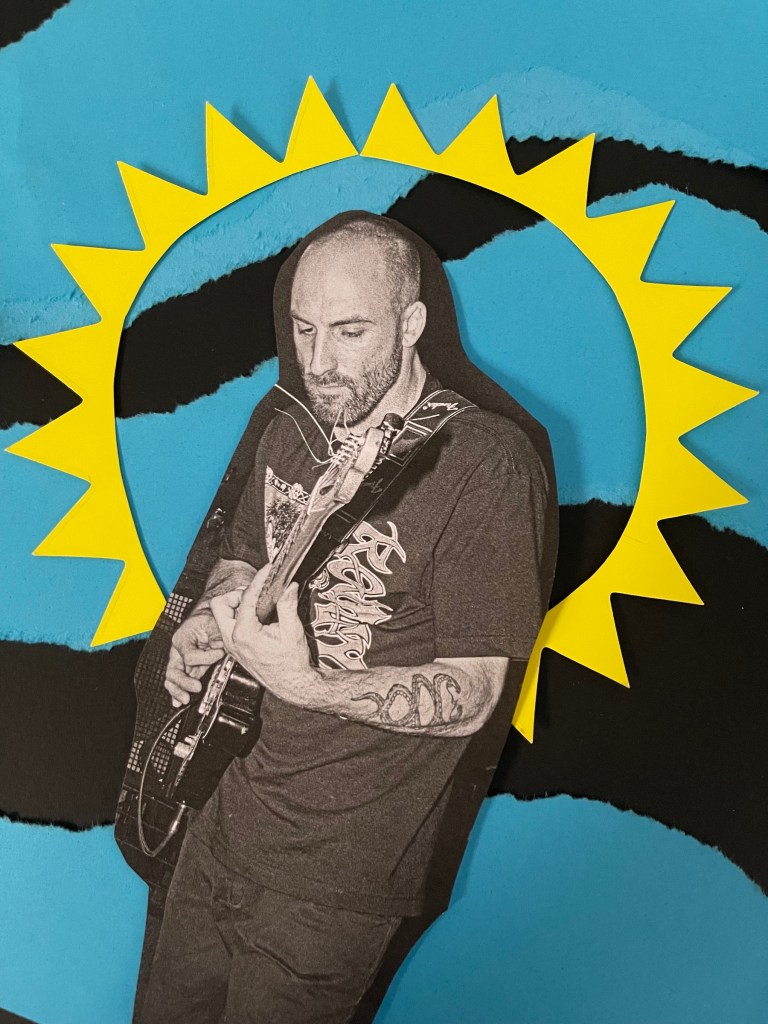
Original photo: Jhonny Russell / handmade collage by B.

Split System bassist, Deon Slaviero’s creative journey began in childhood, inspired by his brother’s guitar sessions. He started playing music himself in high school, forming bands and collaborating with friends. His love for art grew alongside his passion for music, influenced by the dark, bold imagery of heavy metal album covers and the chaotic style of street artists. Additionally, the warped, monstrous characters from cartoons fuelled his creative vision. These diverse influences continue to shape Deon’s distinctive artistic style. He creates artwork for releases, shirts & posters, for bands including EXEK, Screensaver, Autobahns, C.O.F.F.I.N, Stiff Richards, Grade 2, Unknowns, Cong, Ghoulies, Lothario, Private Function, Civic, and more—basically, everyone! 

Gimmie caught up with Deon to explore his art, creative process, influences, challenges, and future plans—it’s exciting, and we can’t wait for it to manifest.

Also, we got him to choose songs he’s been listening to on repeat for our CRAFTY CUTS selections. He chose a track from a local band who he recently saw live that were fire! A track that’s his go-to when creating. There’s also his go-to track for creating, a gem from a 1978/79 Brisbane/Meanjin punk band, and a favourite from a local band whose entire discography he loves. Additionally, he selected a track from a band blending Lou Reed, Iggy Pop, and T-Rex, a standout German punk band, and favourites from Sydney/Gadigal and Melbourne/Naarm bands.

Why is it important to you to make art?

DEON SLAVIERO: Making art is somewhat meditative for me, once I get into a flow with an idea I’m completely absorbed by it – it’s a nice space to be in. It’s also a really good activity to shut off from a hectic schedule and hang out with the creative part of my brain for a bit. 

How did you first become interested in music and art? What kinds of things did you find yourself drawn to?

DS: As a kid I remember my brother playing guitar at home and bashing around with his mates in our shed. I always thought it looked like heaps of fun and wanted to be involved. I started noodling on the guitars he had lying about and just fluffed around till something eventually sounded okay. In high school (around Year 8) I started hanging with some crew who were into similar music to me and jamming with them. I’ve stuck to that approach which has given me the opportunity to collaborate with some really inspiring musicians and make some great friends over the years.

My interest in art kind of coincided with my interest in music, in my early teens I was introduced to a bunch of bands on the heavier side (Diamond Head, Mortal Sin, Venom, Dead Kennedys, Slayer, Metallica, Misfits, Motorhead, Iron Maiden) which all had bold and iconic album covers usually including some kind of mortal decay paired with bold illustrated logos. Discovering these bands and the associated imagery really resonated with me and sparked my interest in horror/darker leaning imagery.

Did you have a favourite artist growing up? What do you appreciate about them?

DS: As a kid I was always drawn to animation, in particular Aaahh!!! Real Monsters which featured all these bent monster characters usually with multiple limbs and warped faces – Gromble and Ickis are my favourites. ARM is great for inspiration when illustrating. 

As I got into my teens I was drawn to street art. One artist that stood out to me was Neck Face, I love all his line work, bold colours and how chaotic his ghoul characters look. I also draw heaps of inspo from his work.

When and how did you first begin making art?

DS: I remember loving drawing as a kid. Mum always encouraged creativity in the household, I remember her teaching me how to draw Disney characters and always having art supplies around to tinker with. Towards the back end of high school I found a deeper interest in art and started to develop more of a style. 

As for what I’m making now, that kind of came out of just making art for myself and mates musical projects and it’s snowballed from there.

You studied at RMIT; was formal study helpful to your art practice in anyway?

DS: After studying at RMIT I actually stopped practicing art for a while, I think the structure of study stifled my creativity/drive and I shifted my creative energy to making music. Now that I’m back to practicing art on a daily basis I definitely draw a lot from what I learned about spacial awareness and composition and weaving in and out of those ‘guidelines’ to try and create something visually interesting. 

Can you tell us a little about your art workspace?

DS: Currently I’m set up in my spare room at home which doubles as my music studio. Amongst guitars, amps and keyboards are a few old scanner/printers and a bookshelf filled with my collection of reference books. The dream is to set up a shared creative space with a music studio and have the room to do some more large scale works and printing.

We admire your unique art style, particularly your striking posters, flyers, and album artwork. Your distinctive aesthetic is easily recognisable. Could you share some of the key inspirations behind it?

DS: Thank you so much! I’m stoked you’re liking it.

I’m really interested in creating movement/flow through the interplay of layering shapes and creating a storyline through that. I generally find shape inspiration through everyday objects around me, observing my surroundings whilst going for a walk or ride. I think the inner city marriage of organic and man made structures creates a unique landscape through the interplay of dissonant and complementary shapes. 

I am also an avid collector of old printed material, specifically fan zines, travel guides, coupons, instructional material and classified sections. Distorted and aged print just looks so gritty and has heaps of depth, I love it. Old booklets and brochures can sometimes have some real quirky taglines which can also spark up an idea for me.

Has your style changed over time?

DS: I’m constantly trying to evolve my style and explore new ideas. Looking for new ways to approach creating and coming up with a concept keeps the process fresh and interesting.

I used to be caught up in making more concise and cleaner works, letting go of that has allowed me to be more free within what I’m making and just trust the process rather than being too calculated from outset. Sometimes the little mistakes can make a piece stand out and lead to more ideas.

What mediums and techniques do you enjoy working with most? Are there any downsides to the mediums you choose? 

DS: Collage, cut ups and mixed media are the techniques I enjoy working with most, I love my scanners and photocopiers. Collaging, scanning and digital processing can be laborious but I do think the end result is worth the yakka.

Are there particular motifs that you’ll never get tired of using in your work? Do they have a special significance to you?

DS: I always try to base my work around a central character that ties into the subject of the work. Depending on the imagery I use, whether it be photographs or illustrations, these elements can really set the tone for the work, create a narrative and dictate how I choose to lay out the composition.

I really enjoy artwork that looks striking on first glance and at closer inspection more elements pop out and send your eyes on a journey around the page – that’s what I’m ultimately trying to achieve through my work. 

What do you find most challenging about making art?

DS: Self-doubt in my output is definitely something I struggle with. I‘m super critical of my work which can be stifling at times, especially longer lasting work like record covers and merch. Posters are good in the sense that they only exist for a small period of time. I like how they are somewhat disposable so it takes the pressure off allowing me to be more experimental.

Can you tell us about the best and worst bits of doing commissions making art for someone else?

DS: I really enjoy collaborating with the clients I work with, workshopping visual ideas and concepts really helps the process and gets the best results. Bringing someone’s idea/vision to life and seeing their reaction is so rewarding.

The worst part would be trying to balance my commission work with other parts of my life, there are a lot of moving parts at the moment so it can be tricky to balance at times. I wouldn’t change anything though, it keeps me on my toes and I love what I do.

What’s one of the pieces that you’ve had the most fun making? What did you enjoy about the process?

DS: Probably the ‘Whip Around Melb’ poster for Split System – I had heaps of fun creating the Speed Demon character and the piece has a good balance of hand drawn, scanned collage and digital elements. The band ended up using this imagery for some T-Shirts and as a backdrop for our Golden Plains set which was animated, it was so cool to see the little devil dude bouncing around on the big screen.

What’s some of the best advice you’ve ever gotten in relation to making art, and who gave it to you?

DS: Advice from my high school art teacher which has stuck is: Try to create something new everyday, you never know what might come out’. I think it’s a great habit to be in and has helped me develop some ideas I’m really proud of.  

What’s next on your ‘to-make’ list?

DS: Ahhh, there are so many things to do!!

Planning to screen print a few of my own t-shirt designs which I have been meaning to do for a while. I’ve just got a few screens made so I’ll be printing some tees soon!  

I’ve been working on putting a zine together which will be purely illustrations and little comics mostly drawn whilst sitting in the van during my two month stint touring Europe with Split System and Bad Dreems last year. I’m keen to showcase some of my art that is 100% hand drawn and not digitally manipulated. 

Split System is taking some time off gigs over the next couple months to work on some new music which I’m really excited about. It’s always great creating some noise with my Splitties brothers and I’m really looking forward to what we cook up next. 

What do you like to get up to when not making art?

DS: When I’m not making art I’m usually playing bass with Split System and Bad Dreems. Other than that hanging out with my partner doing some wholesome outdoor exploring.

I also really enjoy music research and finding some gems from the past. Recently I’ve been deep diving into the NTS radio archive finding some focus shows. Here are a couple playlists I’ve been enjoying: ‘POST PUNK BRITAIN: IN FOCUS – THROBBING GRISTLE’ and ‘OUTSIDER OLDIES – HOZAC ARCHIVAL SPECIAL’. 

Anything else you’d like to share with Gimmie readers? 

DS: DM for commissions! 

Plus, Deon’s CRAFTY CUTS selections:

Future Suck: ‘Hell For Leather’

Buddies from Melbourne. This track hits so hard and Rhys’ guitar solo in this rips. Their set at the Legless/Rack Off – Total Tote Takeover gig recently was on fire.

The Cleaners From Venus: ‘Living On Nerve Ends’

The Cleaners are a newish discovery for me. Martin Newell’s output of jangly lo-fi pop tunes with clever one liners is in great abundance. Cleaners are always my go to when I’m doing some artwork.

Exek – ‘The Lifeboats’

I love all of Exek’s output, so it’s hard to pick one song. The Lifeboats is one I’ve had on rotation a lot lately, hits some NEU! and Brian Eno (another green world era) areas which I really dig. 

Fun Things – ‘Savage’

Brisbane band from 78/79, this one is an Aussie punk rock nugget. 

Buzzcocks – ‘Breakdown’

From their Spiral Scratch release with Howard Devoto on vox. I love how raw and bratty these songs sound.  

Listen HERE.

Lafff Box – ‘Talking’

Nothin’ like some fast German punk. Lafff Box rule and their whole S/T is great – quirky, catchy and hardcore, all the good stuff.

Peace de Resistance – ‘Heard Your Voice’ 

This track is my favourite from PDR’s Bits and Pieces LP. The record is like a mix of all the bits I love about Lou Reed – Rock N Roll Animal, Iggy Pop – The Idiot and T̤.̤R̤ex ̤- ̤̤Electric W̤a̤r̤r̤i̤o̤r̤̤. PDR has a knack for making songs that sound so familiar and nostalgic but fresh at the same time. I’m also a big fan of their other projects, Institute and Glue.  

The Velvet Underground – ‘White Light/White Heat’

Post Warhol VU. This track is so gritty and groovy, I really love the constant piano and claps throughout the track. Feels like they were trying to get back to basics on this release and keep things gritty/stripped back compared to the debut which was a lot warmer sounding.

Listen HERE.

The Judges – ‘The House Always Wins’

Relatively new Melbourne band with some shredders on the tools, this track streams along nicely from start to finish. 

Gee Tee – ‘Pigs In The Pit’

I was a little late to party with Sydney punx Gee Tee but after catching them at Binic Festival last year I was a convert. I love that their songs aren’t too serious but seriously rock. The Pigs In The Pit chorus line is a real earworm too.

Check out Deon’s work @deonslaviero + find and listen to his band Split System out via Legless Records.

Phil and the Tiles’ Reef Williams: ‘I just want people to create something beautiful in their life.’

Original photo: Jhonny Russell / handmade collage by B

Phil and the Tiles are masters of the happy-sad song, the bounce of the music often belying the sentiment underneath. Like lightning in a bottle they’ve captured the human spirit feeling many emotions all at once in song. The writing on their debut fill-length Double Happiness is sophisticated, each member adding their stamp to make their unique, fresh sound. They’re not trying to be anything but themselves; a collective of outstanding individuals. Candid moments give a playfulness and brings levity on this destined for classic Australian punk album status. Lewis Hodgson from CIVIC said the band is, ‘For fans of the true shit, Germs, Sardine V, UV Race, Institute, Zounds, Crass and of course The Snakes.’ Don’t sleep on this album. Double Happiness brings us untold happiness.

Gimmie chatted with vocalist Reef Williams while on holiday in Vietnam. He explored the album with us: dedicated to dear friend Benaiah Fiu (from Sex Drive and Strange Motel) who recently passed. Reef also shared stories about growing up with hippie parents on the festival circuit, his time in the Byron Bay punk hardcore community as a teen, his first time singing live at a guerrilla gig in a drain with hundreds of punks, of living in a tent in a Berlin park alone for months during winter, and a job that inspired song lyrics referencing being splashed with human waste.

REEF: I’m in the hotel kicking back. I’m in Vietnam with my partner Erin, and Reilly [Gaynor], who plays guitar in Phil and the Tiles. Our drummer, Andre [Piciocchi], is here as well. We saw really cheap flights a few months ago, so we decided to come over. 

We went to a water park yesterday, and have been doing all the tacky stuff, it’s fun! I’ve been here before and done like all the hikes and stuff. We’re just going to go to more water parks throughout the next couple of days. We’ve been to a few museums too.

You were at Vietnam’s #1 waterpark yesterday?

REEF: Yeah! It’s the biggest one. It’s kind of like Wet N Wild—it’s the ultimate amount of fun! We’re going to cruise out to these raves in the bush; it’s quite far inland. Things are really cheap here, the food is great, and everybody’s friendly.

Do you get to travel much? 

REEF: I try to get away every six months, if I can swing it with work. I save up money, then travel, and when I get home I’m always starting from zero again. I’m getting to a point, though, where I’ll probably start chilling more and try to actually save money for later.

What do you usually do for work? 

REEF: During the festival season, me and Reilly build compost toilets, at the big doofs and festivals. Like, Strawberry Fields. It’s four months of work over the summer festival season, and then in winter I’m doing gardening and landscaping.

You work outdoors a lot.

REEF: Yeah, I love it, It’s hard work, but it’s nice to be able to kick it outside. 

How did you first discover music? 

REEF: My parents, basically. I grew up like going to festivals with them because they had a market stall. They are kind of hippies. My dad is into stuff like The Clash and Bad Brains. That trickled down to me. Growing up going to festivals, I’d see a lot of live music, so naturally it happens to become my thing. I got to see bands like Violent Femmes.

That’s rad your parents have such great taste in music and you didn’t feel you really needed to rebel against it, as a lot of people do.

REEF: I was lucky. Obviously, when I was a teenager I’d have phases of rebellion. I’d just be a little ratbag. There was always music playing around the house.

What kind of things would you listen to, to rebel? 

REEF: Aussie hip-hop! [laughs]. Like older 90s stuff is great. My parents couldn’t stand it. Anything popular, they would hate.

Is there any particular artist you’d listen to? 

REEF: There was this rapper that has a really sharp, piercing voice, and it sounds really angry. I didn’t just listen to it to rebel, I liked it. My sisters hated it too.

I like drum and bass. My parents are more into old reggae and country, or rock ’n’ roll; I’d put my earphones.

Going to the festivals with my parents, I knew I always wanted to go to shows. When I was of age, I started going to my own shows. The first ones I went to were hardcore and punk shows around Byron Bay and the Northern Rivers area. 

I didn’t know you lived up this way!

REEF: Yeah. I’m from New Zealand originally, I came over here when I was five. I went to primary school in Sydney. Then we moved to Byron and I went to high school there. At the time there were a lot of all ages hardcore shows and shed shows happening. All that really got me into punk. There was a band, Shackles, that had a shed in an industrial estate, around the corner from my parents place. They were a bit older, but they were always encouraging all the young kids to come and have. Everyone really looked after each other. It was a good scene for it for a long time. And then it dropped off, and I moved to Melbourne as soon as I turned 18. 

What attracted you to living in Melbourne? 

REEF: Do you remember Maggot fest? 

Photo: Jhonny Russell

Yeah!

REEF: I flew down to Melbourne for it, maybe the 2015 one? I was only 17, I thought, ‘If I go, I’ll get in!’ [laughs]. I stayed with my friend, who was from Byron and had lived there for a year already. It was such a breath of fresh air. I knew that I was 100% coming back. Byron’s view and stuff is beautiful, but it’s as soon as I saw those bands in Melbourne, I knew living in Byron I would never get to see stuff like that live because they’d never tour. I was like—this is the place! I turned 18 the next month and moved; I got a Centrelink payment and moved down and lived in a spare room at my friends’ for a bit. I’ve been here eight years now. 

I call Melbourne home. I wouldn’t say I didn’t fit in in Byron, but you know how Byron is, the people are different, it’s a small town. But I just knew I was born to go to punk shows and be in the city. As soon as I got there, I met a bunch of great people.

How did you get into making music yourself? 

REEF: This band is my first band. I’ve always wanted to do a band. I’m rubbish at playing instruments. I randomly met our guitarist when he was on Schoolies in Byron. He was a few years older than me; I was 16, he was 18. Then, at 2016 Golden Plains, I was watching Eddy Current Suppression Ring play, I looked over and the guy I met a Schoolies was there! I walked over to him. But we didn’t really hang out for a few years and I kept running into him.  We’d be like, ‘Let’s do a band!’ Eventually we started jamming at a friends house in the shed at Moorabbin. We were having so much fun, then things got put on hold because of COVID.

One of the original members, had to go over to America to work. They were away for a year. So Charlotte [Zarb from The Snakes] filled in. And when she came back from America, she got to play second guitar. That’s how we got to six people in the band. Hattie [Gleeson]’s left again, recently, because she’s studying Environmental Science, doing a PhD. She’s like, ‘I’m really sorry. I don’t have the time. I really want to.’ I was like, ‘Dude, don’t be sorry. You’re going to be a scientist! There’ll always be a spot for you in this band regardless of anything. Go do your thing!’ Now we’ve got Freya, on guitar now.

Your new album Double Happiness is about to come out—congratulations! It’s our favourite album we’ve heard so far this year.

REEF: Thank you so much, it means a lot. There’s six people in the band who all have different opinions and ideas, and we put it all into the music somehow, and it works. The genius behind it all is definitely Reilly. There’s no bossiness. Everyone puts in their own weird mixture.

Photo: courtesy of Legless

And that’s why it sounds different to anything else. We LOVE it!

REEF: I’m really happy. I never thought I’d be able to hold my own record.  When I was 16, 18, 19, I never though it possible and it wasn’t even in my mind. Then you get it, and people actually care about the art we’re all making it’s such a great feeling. It’s a long process to get all done. It’s such a special feeling. I still can’t believe we did it! 

I was always a bitch, like so shy, and I never thought I’d be seen in a band but then these guys really brought me on my shell. It was just laughing and jamming. Being a singer has helped me with so much. That positive reinforcement from people around me has been nice. 

I’ve always been pretty extroverted and but quite shy at the same time. I wouldn’t say I’ve never really struggled really bad with anxiety and stuff, but singing and the band has helped me. It’s hard to put it into words. It helped me in not really caring about what other people think about me. I’m not trying to impress anyone. In your teens and 20s, you’re always trying to impress people.

When you stop caring about what other people think, you’ve got nothing to lose and that gives you more freedom. 

REEF: Yeah, without double guessing yourself. All that stuff is the biggest thing that holds everybody back. They get scared. I know people that do so much great shit but they’re just like, ‘Nah, it’s not good. I don’t want to put it out there to show people.’ I always try to back my friends and encourage them because I’ve felt like that before. I’m so much happier now.

I was so inspired by the bands I’d watch as a teen, I hope we can inspire other people to get into and keep the cycle going. If one person starts playing guitar, that’s something. I just want people to create something beautiful in their life. Music is a really beautiful thing.

You inspire us! We’ve obsessed with Double Happiness. ‘Death Ship’ has become a bit of an anthem around Gimmie HQ. 

REEF: It’s got that happy-sad feeling to it. It’s my favourite song on the whole album. He just did it all, at home by himself. When he sent through, I was like, ‘Oh, that’s gonna be great!’ You can interpret the lyrics in many different ways. A lot of it is about being lonely, and COVID and overcoming that. When I read it I thought it could be about love. It’s a special song. It’s a wave of emotion.

That’s a great way to describe it. Phil and the Tiles do that happy-sad dynamic simultaneously, so well!

REEF: It’s a good thing to aim for. You want it to touch you. That song reminds me of riding a bike at night with my earphones in. Like riding home from work or to someone’s house, or it’s late at night and there’s no one around, there’s just you, and the street lights—and you’re taking in the world.

That’s such a lovely vision. I interpreted the song as existential. That line: Ask yourself, what’s the point of all of this? Pondering life.

REEF: Yeah, in Melbourne when the lockdown was happening, when the song was written, it’s like, ‘What’s the point? When is this going to end?’ And then it’s lifted and bring it back. And then I think that’s what was going through [Matt] Powelly’s mind when he wrote the lyrics. This may sound tough, but it’s about being complacent with death; it’s like, ‘It’s not going to end, I don’t even care.’ It’s not a suicide song, though. It’s about accepting that this is how it is now.

The song ‘Not Today’ (the one before it on the tracklist) pairs really nicely with ‘Death Ship’.

REEF: That was actually the second song we ever wrote. We didn’t put it on the 7-inch. We re-recorded it. I proudly wrote the riff for that one, and everyone came together to add their bits.The lyrics of that song was written after I came back from living in Berlin. I just ran around hitching with my backpack, sleeping bag, and a lightweight camping tent. I ended up staying in a park for seven months. I was standing on my own feet, living in a tent throughout the winter; it was so cold. It was real sad; I was away from my partner. I had mates who would let me shower at their place, but I didn’t want to burden them. I had a gas cooker, so it wasn’t too bad. But I was so lonely. I kind of got stuck there. I was a step above being homeless. It was by choice, though. I overstayed my visa. They didn’t even look closely at my passport when I left, they were happy I was going [laughs]. Who cares if you get a three year ban or whatever. I had so many crazy experiences. I went to crust-punk squats. If they see the situation you’re in, they try to help.

When I got back to Australia, it was summer. I went from being cold and a crazy bit of depression to, ‘I’m back,’ like everything seemed so beautiful to me. The line about the veggie patch—I could walk into the backyard and grab something and make some food. Being able to wake up beside my partner was perfect, I had been at such a low point while away, beside them it felt like life was great again.

It sounds like you had a real period of growth.

REEF: I did. It was nice to come home. 

While I was in Berlin, I had a solar power battery charger. I’d use free Wi-Fi to download podcasts, and a movie, then go back to my tent, make dinner. I’d cruise around on my bike a lot. I’d ride 50-80kms out of the city to go to this lake. It was a great experience but then it got really sad, and then it was cold; I missed being in warm Australia. 

I wrote ‘Not Today’ the second day I got back. I wrote down notes, then  came up with the riff, then we all worked on the song. I jumbled the words, and it was more of a poem kind of thing.

On that first day home, it was nice knowing I could live normally in a house, I could make money properly, I had all my friends around, and it was warm. The line in the song: I don’t want to sit by myself today; it was referring to the weeks before. I was feeling sorry for myself, and wanted to get outside and get amongst it.

Photo: Jhonny Russell

Just enjoy the day?

REEF: Yeah!

The album is called Double Happiness, which we love!

REEF: Me, Reilly, and Charlotte were in Sydney sitting around thinking, what would be a good name for the album? That same day someone picked up something from the ground that said Double Happiness. It was an empty pack of cigs, those cheap Chinese important ones. We took it as a sign to call it that [laughs]. It was going to be called And The Plot Thickens, but we thought Double Happiness sounds cooler.

By the way, I just want to say thank you for the amount of effort you guys put into Gimmie. It’s so good, it’s true passion. In my opinion, the best covering this weird little scene of ours.

Awww. Thank you! That means so much. We just cover all the stuff we love.

It’s all so great! The videos you guys put together too.

We love doing the live videos. It’s important to us to document bands in that way. Jhonny grew up in the country and when he was younger, he didn’t have access to shows. Also, with chronic health challenges we can’t always get to shows. So when we come across a live vid of a band we love, or discover a new band through someone’s vid, it means a lot. We also ship a lot of Gimmie print zines to regional places, and often people contact us and say that it helps them feel connected to a scene or they discover new bands from it. That’s what it’s all about, sharing cool stuff. I don’t know if a lot of people stop to think that not everyone has access to everything always. The cost of living also prices people out of being able to afford to go to a gig or buy a new record too.

REEF: Yeah. That’s awesome Gimmie goes to regional places. That in itself will inspire kids to do something, like I was talking about before. If one person picks up a guitar or starts playing music with their friends, that’s cool. I was lucky enough to have shows around, but it sounds quite sad and lonely not having access to that, especially when you want to be a part of it. 

My dad grew up in the country, in New Zealand. He would get a tape and magazine once a month in the mail. It could change the whole way he would think! He lived in a really bleak place in New Zealand. Getting that mail was a little bit of hope, in his eyes. That’s what you guys do and it’s beautiful.

Do you know Short Sharp Shock? That guy does a bit of filming. 

Yeah, we know his stuff. It’s great.

REEF: He’s really lovely. He’s another person that just documents and puts a lot of effort in.

We found Phil and the Tiles through Short Sharp Shock! We saw the video of the drains show you played!

REEF: That was the final end to all the lockdowns, so everyone was really keen to have fun. It was like my first time ever performing. There was so many people there. Everyone was so happy and in such a good mood. It was quite nice, how positive that show was. That show marked that lockdowns were finally over and that we can get back in the groove of things.

We really love the art on your new album!

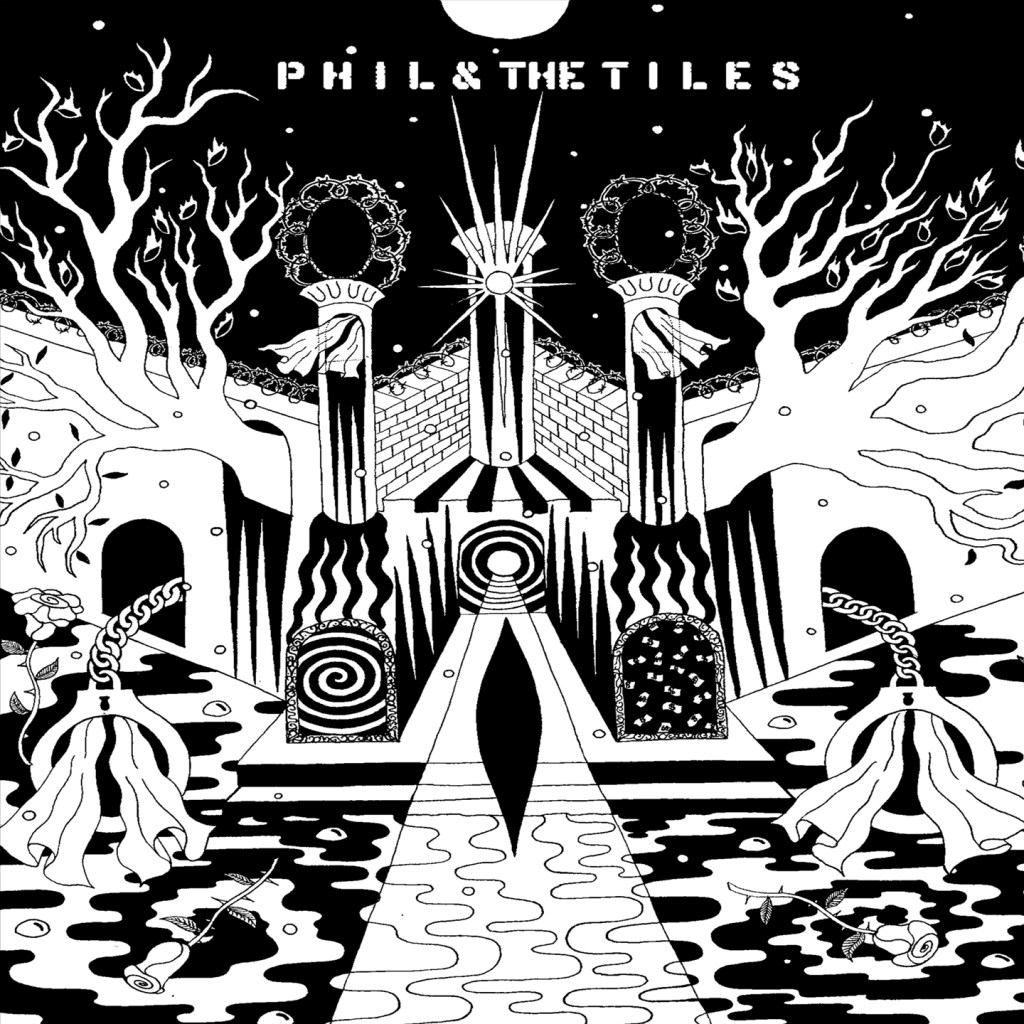
REEF: It really captures the sound of the music. It’s real trippy. This guy, Noam Renn did it. He’s a tattooist.  I’ve been looking at his Instagram for years. I love his paintings and knew he was the guy to do it. I went to get tattooed at his shop, and then he was like, Yes, I’ll do it.’ He nailed it! He did three different ones; he put a heap of time and effort into it. The one we chose that first that best is very trippy, like a DMT trip but with no colours, if that makes sense?

Album cover art: Noam Renn

Totally!

REEF: There’s pathways, weird stuff, and it looks leek a portal. It’s my favourite artwork I have, I’ve got it framed in my house.

Cool! I saw when he posted it on his Insta with the caption: snow falls into military temples.

REEF: He’s very smart and poetic. When I met him he told me about how everything he does is just for the art and the love. You can tell he is very genuine, he’s really lovely to have a conversation with. When he does, he’s actually listening to what you’re saying.

Do you have shows or a tour planned for the album release?

REEF: We have our launch on the 15th of March at the Tote. The next day we’re playing with Drunk Mums and a bunch of other bands down the coast. I think this is the year we’re going to try get on the same page, I want to play to as many different people as we can. Everyone’s got jobs so it’s hard for the six of us to figure out a time we can do it. Everyone is frothing for it. We’ll make it work. I’m excited to get out there and for people to see us. I’m so excited about the record.

You should be—every song is a banger!

REEF: Thank you! It’s a roller coaster, it goes up and down, up and down. There’s harder songs and softer ones. There’s a song that sounds kind of Tom Tom Club, really dance-y.

‘Ode to Phil’ is a fun song.

REEF: Phil was Lewis’ cat. I lived with Lewis [Hodgson, guitarist for CIVIC] all through lockdown. I loved that cat; he died. 

Awww no! 

REEF: The band is  named after him. Lewis, my partner, and I were sitting there on a hot summer day and Phil was laying on the kitchen tiles to cool off. My partner was like, ‘Phil and the tiles – that’s a good band name. It went in the WhatsApp group chat, and then just stuck. He was a good cat. One of those cats that hung out the whole time. He had his own seat when you were drinking and stuff.

The song ‘The Watcher’ is a great one too.

REEF: I really like that song too. The lyrics are quite funny, I mixed two things. Part of it is from when we build the compost toilets at all the raves, after it’s over, we literally have big buckets, like, big wheelie bins of human shit. When you’re moving the compost bins you sometimes get splashed with it; we’ll look at each other and go, ‘For fuck’s sake!’ With the lyrics, I’m not talking about some weird fetish [laughs].

The other part is a couple of our Gold Coast friends Benaiah [Benzy] and Bor worked with this guy at this hat factory, who kept talking about writing a book about voyeurism. He’s cooked, man. The way they’d describe it was so funny. When I was writing that song, I remember that story. There’s always a weird thing happening in our lives, I’m constantly writing down funny lines and then will use them if it makes sense for the song.

Charlotte wrote the riff in that song. It was an old Snakes song she wrote years ago but they didn’t do anything with it. Charlotte always whips out cool stuff. I love that we all work together to make our songs, all six people’s input makes it what it is.

Anything else you’d like to share?

REEF: I miss Benzy so much. I’m currently in the works of putting on a fundraiser show for the end of April, to send money to his mum and family. This Phil and the Tiles record is dedicated to him. He was a real beautiful dude. How could anyone know what was going to happen. It’s tragic. There were so many people at the funeral. I was in a bit of a state. It was a beautiful funeral, a mixture of crying, and laughing about Benzy stories that were shared. He lived a fucking beautiful life and touched a lot of people. Rest in peace tonight, man. Literally the last text I ever got from him was: fuck off ‘Death Ship’ man, so good! He was always so positive about anything I did and he really pushed me with this band, and he never put me or anything down. He’d do that with a lot of people, he brings them up.

Phil and the Tiles Double Happiness out tomorrow on one of our favourite labels Legless – GET the album HERE

Follow @philandthetiles and @leglessrecords

Read our previous interview with Phil and the Tiles and our chat with Legless Records founder Mawson.

Legless Records, Stiff Richards and Split System’s Arron Mawson: “Getting bunkered down with negativity and anger can stop you from actually achieving things”

Original photo Ben Hudson@distorted.youth. Handmade collage by B.

Meet Arron Mawson, a powerhouse behind some of Australia’s most dynamic bands – Stiff Richards, Doe St, Split System, and Polute. But his journey transcends the realm of music; it’s a story of authenticity, passion, and a pursuit of doing things for the right reasons.

For Mawson, making music is a visceral calling he shares with his friends. It’s about connecting through art, driven by an unwavering compulsion that pushes him to create from the heart. 

Disenchanted with the traditional music industry, Arron took matters into his own hands, birthing Legless Records – a testament to DIY spirit.

In the whirlwind of the modern underground music community, where countless people, music, events, and distractions clamour for attention, Arron Mawson stands out as a beacon of authenticity and passion. It’s not just the fast-paced punk rock ‘n’ roll anthems or the inspiring DIY achievements that set him apart; it’s the very essence of his character. 

Gimmie recently had the privilege of sitting down with Mawson before Split System embarked on their first European tour. In this candid conversation, we explore his bands, creative process, the art of songwriting, his inspirations, and the upcoming label releases. But beyond the music, we venture into the depths of his experiences – trekking in Nepal, confronting mortality, challenging the “too cool” attitudes, and embracing the art of “getting on with it.” Prepare to be inspired and enlightened by someone who embodies dedication, goodness, and the true spirit of the underground.

How’s life been lately?

ARRON MAWSON: Good. Moving house before we go to Europe, me and my partner moved into her mum’s place. That’s been nice. It’s been a really busy year, to be honest. It was sort of like a treadmill, I guess. It felt like it was nonstop, and then it’s finally settled down now right before going away.

I feel like after COVID, there was that massive rush. Everybody was saying “yes” to everything. And it kind of got to mid this year, like maybe a month ago, and I was like, ‘Oh, jeez, I really need to slow down.’ It’s been the craziest twelve months. 

There’s so many good things that have been happening for you. 

AM: Yeah, I’m kind of ready to go camping or something, though. 

I feel like that as well. I work two jobs, freelance, and do all the Gimme stuff on top of that. It’s all fun stuff, but I just don’t have enough hours in the day to do all the things I want to do or that people want me to do. I always feel like I’m letting someone down.

AM: Yeah, exactly. You feel bad because you want to help your friends and you want to help everyone, but just you don’t have that capacity because it takes a lot. It’s been so nice seeing everybody back out after the couple of years that we had. There’s been so many good releases, so much positive energy. I feel like people are a lot more patient now and appreciative. It’s been a really fun year, but I think I can sort of feel it petering out, where it’s like everyone’s sort of chilling out now a little bit. 

Definitely. I’ve noticed that as well. Everyone was so excited to get back into it and then we threw ourselves in so much that, like you were saying, you burn out and just want to go camping. I noticed on your Instagram there’s lots of music stuff, but then there’s also lots of nature stuff. 

AM: Yeah, well, I guess that’s sort of my other hobby. I love hiking and I love being in nature. I live in Rye, which is about an hour and a half southeast of Melbourne on the coast. So I’ve always been drawn to the country and the coast. When I’m not doing music stuff or working, I’m usually doing something in nature. 

I noticed that you trekked in Nepal!

AM:Yeah, I did that a couple of times

What drew you to going to Nepal? 

AM: Don’t really know. I’ve always had a fascination with mountains. When I was younger, I really loved snowboarding. It was less of the sport that actually drew me in. It was more the being in the mountains thing.

Why the mountains? 

AM:I don’t know. A form of solitude. It’s cool. Doing a trek in Nepal, I wanted to be on my feet for over a month, and just be me and backpack. That was a place that I could do it. 

I don’t know anyone who’s gone off trekking in Nepal for a month; what was the experience like?

AM: It was cool. When I started, I came straight off, I can’t remember what gig it was, but I think we had played a festival in Melbourne on the Saturday night and I left on the Monday, and I was trekking on the Tuesday. You basically basically start at sea level. The first few days it’s really hot and quite dusty and dirty. I was like, ‘Oh, jeez, what have I got myself into?’ But after five or six days I really got into it; I trekked for about five weeks. After a week, it was incredible realising your body’s made for that stuff. You get over the tired part of it and this primal thing kicks in and by the second week, you’re just like a walking beast [laughs]. It’s like, I can walk forever. It’s a pretty cool experience getting in touch with that side of your body a little bit more and switching off, not being on your phone and just being you and your feet.

I assume you’d have a lot of time to think while you trek? 

AM: Yeah, it was really funny. I actually wrote more songs. I was humming songs, with the rhythm of my breath. I had walking poles and I ended up getting into a rhythm and writing songs in my head to the beat of my breath.

Wow. I love that.

AM: I’d hum these weird songs into my phone in my voice recorder on my phone. I got back and I had a ton of songs to go through. You get into that different creative headspace, but I didn’t really have an instrument or anything with me, so it was bizarre for me. 

I find I get my best ideas when I go for a walk or I’m driving in the car or I’m just doing something else not creative. It’s like you kind of go on automatic pilot. It frees up your brain space to be able to let those good ideas come in.

AM: We’ve got so much noise around us. Walking undistracted with our own thoughts, a lot of people aren’t used to doing that, they don’t get the chance to do it. I think it’s a really important thing for us to do. You can go on hikes and just be alone with your thoughts, which can be quite intimidating sometimes, and then quite liberating as well. Because you’re just out there. You’ve got nothing to hide behind.

Totally. I found that you can never just run away from problems in your life, you can never outrun yourself. Wherever you go, you’ve still got you to deal with. Your problems go with you, until you sort them out.

AM: Totally. 

Previously, someone asked you about your philosophy behind all the stuff you do and you said that you just get on with it. 

AM: Yeah. I’ve got a pretty full on personality. I’ve met some challenges in my life. Doing this music stuff, especially at the start of COVID, that it really kicked into gear with my label, Legless Records. I used to have a lot of anger and frustration with the world. Sometimes approaching challenges and things with that, you don’t get anywhere. Sometimes you just got to pick yourself up and move forward. I guess the get-on-with-it-thing is, I don’t know how to put that to words, but you’re finding something positive to do. Sometimes getting bunkered down with negativity and anger can stop you from actually achieving things, results. 

Yeah, totally. I think that you kind of realise that more as you get older. When I was younger, I was that punk rock kid with the spiky hair and the mohawk, and I was so angry at the world. But a friend told me that you can’t really fight fire with fire. Getting angry at someone when they’re angry is not going to achieve much. 

AM: I guess that’s the thing. We have a right to have anger, but it’s your choice how you channel that. I used to get frustrated with the music industry, people around me, there’s so many things. I made that decision to make the positive change that I’m looking for rather than complaining about other people not doing it.

Absolutely. I’ve been doing my own thing for a long time, so I very much get that. That’s kind of why we started Gimmie, There were so many bands that we love all over Australia and no one was covering them. 

AM: It’s nice when people do things for the right reasons. It’s out of passion. It’s not for profit or self-glorification or anything like that. It’s just because you’re genuinely interested in it. And I think it shows. Things immediately get grabbed by people because they actually respond well to that—the honesty, the passion. 

People hit us up, wanting to give us hundreds of dollars to be on/in Gimmie and we’re just like, no, that’s not us. What were the particular aspects of the music industry that were annoying you? 

AM: Well, I guess it can be an element of your own perception of what people are like and the reality. But it felt like a lot of the music scene was really too cool, hard to break, it was hard to get through to radio or record stores would be kind of dismissive. After that experience, I wanted to create an umbrella, sort of make this bubble, that me and my friends can sit under and use each other’s momentum to help each other skip that exclusivity. It does feel like that when you’re at the bottom and it feels like no one cares. And then if we work together, with the momentum of each band, we can give a bit of a spotlight to the next band that comes up. With a lot of people being too cool, I guess, I just wanted to drop that and just let people be a bit daggy and just play music for the sake of playing music. I don’t really know how to put words to it, to be honest. It just felt like unless you knew the right person… if you want to try to get on a festival and you want to try to get on a gig, it’s like, who are you? I was like, well, I’ll just do it myself. Does that make sense? 

Yeah, totally. I’ve had that feeling before, that’s why you make your own things!

AM: Yeah. I feel better for it. I don’t really want to throw anyone under the bus, of course. It was actually good that happened, because it stimulated me to do something that I’m now really proud of. With that kind of pushback, it inspired me to do something. Now I’ve got all these incredible people around me. I wouldn’t take it back. 

Totally! You’ve been releasing so much amazing stuff on Legless.

AM: Thank you. 

I’m really excited that I finally get to talk to you about it all at length. Our favourite people are people that work hard and they just make stuff because they love making it. You’ve told me previously that your dad played in bands and you’ve been surrounded by music your whole life. What kind of bands did he play in?

AM: Dad grew up in Cornwall, in England. He was playing rockabilly, rock and roll bands for most of my life. He was a frontman-guitarist and he sort of switched between a few different bands. And then I lost him, when I was about 21. I had music around me most of my life but I think after losing him, I definitely got more drive having a loss like that at that age. It kicked me into gear. I’d always played music, but where I grew up in Frankston, there was not really many people that I aligned with. It’s a lot of fights, a lot of shit music, shitty clubs and as soon as I got my license, I moved to the beach. Half my mates either moved to the city or to the beach. 

That’s where I started jamming with people more, sort of between that 18 to 21-year-old time in my life. Music has always been there, but it wasn’t until then, I sort of started surrounding myself with a few mates, who introduced me to Eddy Current Suppression Ring and stuff like that. For most of my life it was just rockabilly and rock and roll. I listen to Brian Setzer, stuff like that. 

A lot of my buddies went to all ages hardcore gigs, but back then, I looked at it as very blokey and people punching each other in the head. I didn’t really find anywhere that I enjoyed until older age, and liking Eddy Current. That put me on to other things like Thee Oh Sees. I was like, what is this world? I haven’t ever experienced it. 

I’m so sorry that you lost your dad so young. I’ve lost both my parents as well, so I very much understand what it’s like. Especially when you lose your parent/s when you’re younger. Friends don’t necessarily get it because they still have their parents. It’s just such a massive thing

AM: Yeah. It’s a bizarre thing, death. I feel like our modern society is really not prepared for it. The loss wasn’t actually the hardest thing. It’s like that’s the only guaranteed thing in this life, is that we’re all going to die. It’s just the inability to process it. We don’t have the sort of community… the word that I’m looking for, like, rituals and stuff to process death properly; I feel like it’s something that we’re missing these days. That was probably the hardest thing, but it’s something that I’m really okay with because I started realising how much people are unprepared for death. It’s really weird. Yeah. Sorry, I’m thinking and talking at the same time. 

No, that’s fine. I totally get you. Thank you for sharing that with me. Changing the subject then, I know you play guitar and bass. Which one was first?

AM: Probably guitar. I never really ever played bass. Bass just came with guitar. Guitars were always in the house. I think dad taught me, ‘Johnny B. Goode’ and ‘Smoke on the Water’ when I was real young, and then it was just like through listening to songs. I never really had lessons. Me and my sister would usually just be sitting around, and occasionally jam with dad.

Your sister plays in a band? 

AM: She plays in The Miffs. They’re killing it at the moment. They’ve been playing around Melbourne and Australia. I’m really stoked for them!

That must be cool to see your sister ruling it. Is it your little sister or big sister?

AM: Little sister, three years younger. It’s great. The fact that we grew up with dad playing music and now we’re both playing in bands and stuff, it’s really nice. After dad passed away, it was probably about six, seven years there where we were kind of pretty separated, and it’s really heartwarming to be close again. 

Lovely. You mentioned, Eddy Current Suppression Ring was such a big band for you.. 

AM: Where I was getting a bit stuck before, is rock and roll and that environment, it’s very blokey and it just felt really “too cool”. Eddy Current had this daggy, raw energy where everybody felt honest. I wasn’t this big, masculine guy. Eddy Current was such an unorthodox approach to music that I hadn’t heard before. I know there’s so much of that in history, but it was the first thing that I put on and it just blew me away. It was just like, what is going on here? The awesomeness of what Mikey does! This is the first thing that really grabbed me and started an introducing me to bands like UV Race and the Thee Oh Sees, and the plethora of other bands that came from there.

How great are all those bands you just mentioned? I love them all too, especially UV Race. I super love Mikey’s band Total Control too.

AM: Yeah. Eddy Current especially for me. I grew up in Frankston and they’re all Frankston boys as well. So it was like, ‘Oh, there’s someone from here that is actually doing something interesting!’ Growing up it was a lot of fighting and just people that weren’t aligned with anything. I wanted to build bike jumps and cubbies, just hang out, go skateboarding and stuff. But everyone else just wanted to fight. It was just odd. 

Yeah. I’ve talked to Jim from Civic about growing up in Frankston a bit. 

AM: It’s like this love/hate thing. Split System are playing at Singing Bird tomorrow night. Got our going away fundraiser thing. What Stu’s done there, all ages gigs, he’s got the studios and jam rooms, kind of made this institution for Frankston. It’s nice seeing the next generation of kids, actually having something to do. I don’t hear much of all ages gigs at all anymore. It’s all licensed venues that are based around selling booze. That’s how they profit. What’s for the kids?

Totally. Growing up in the 90s in Brisbane, I used to go to all ages shows most weekends. In my Senior year of high school I went to over 100 shows. It made such a difference in my life. I do all the things I do today because I went to those shows early on, and there was a lot of younger bands, even my age (15-16) at the time, that played, and I was like, wow, I could do that!

AM: Yeah. I was talking to the C.O.F.F.I.N fellas because they played in Frankston just before tour before they went off to the UK. That’s where they started, they all met when they were like 14. One of my favourite live bands now, wouldn’t have existed without that environment for them. 

Stiff Richards. Photo: Jack Golding.

What was your first band that you had? 

AM: Stiff Richards was the first band that actually did anything. I had like a couple of jam bands with mates. I had a band called Green Waste, which was my buddy, he had a property maintenance company and we all worked mowing lawns for him. Then we’d rock up at his joint, he had a jam room at the bottom of his house. There was a big pile of green waste out the front, every night when we finished. We did a couple of gigs, and that actually kind of led into us making Stiff Richards. Me and Tim, the other guitarist, were in Green Waste. That was pretty funny. That was probably ten random mates that switched in and out on different instruments. Probably seven guitarists trying to bash the drums [laughs].

The next band for you was Split System?

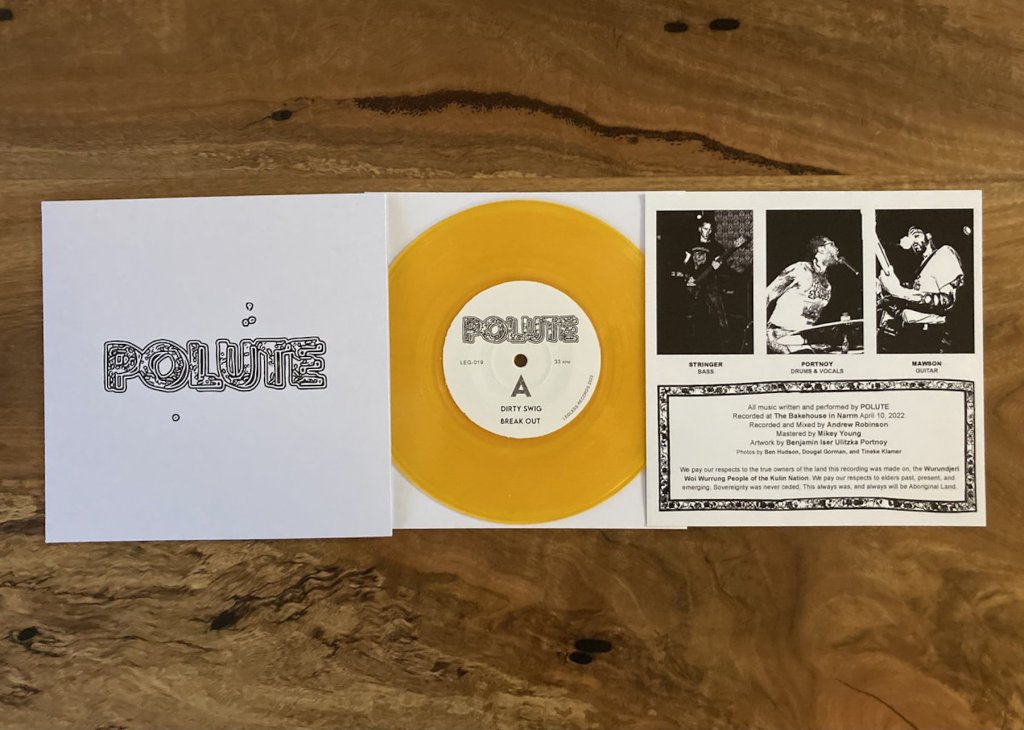
AM: Probably Doe St. Doe St and Split System were roughly a similar time. Polute, a little fun recording project with me, Benny and Stringer, came after that. 

Is there much difference for you between the different bands? Do you get different things from being in each of them?

AM: Well, Stiffs, they’ll always be my brothers. We’ve had this journey from playing in sheds to being able to go over to Europe, and just everything that we’ve experienced musically together, is like such a family. I’ll hold that close to my heart forever. It’s a really special friendship. Wolfie, our singer, his sister has kids with Gazzo, the guitarist. 

Split System, definitely feels like there’s a member from a bunch of different bands, and that seems to be really productive. They’ve become best friends as well. It feels really good writing-wise. That’s one of my main focuses at the moment, just because it feels really creatively stimulating and everyone’s getting along really well and having a great time. 

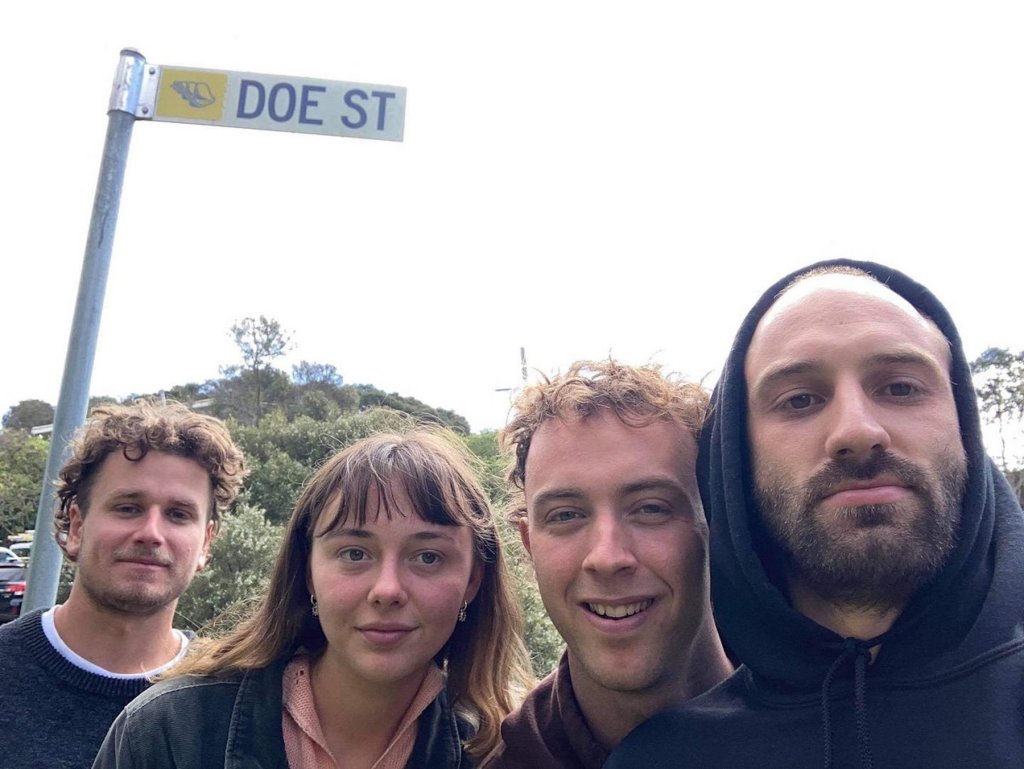
Doe St, are all friends from the Peninsula that just sort of organically came together. My old house was on Doe St. Everyone was living on the same street or in the same neighbourhood. We wrote all the songs and recorded it there, just friends hanging out.

Doe St, pic courtesy of Legless.

It’s funny, I’m literally thinking out loud right now. There’s not much thought been put into any of them. It’s just things have aligned at the right time and feels good.

Sometimes it’s that simple. Sometimes when you’ve got too much intention with something, you set yourself up to be disappointed. 

AM: Totally. 

So, Split System is going to Europe?

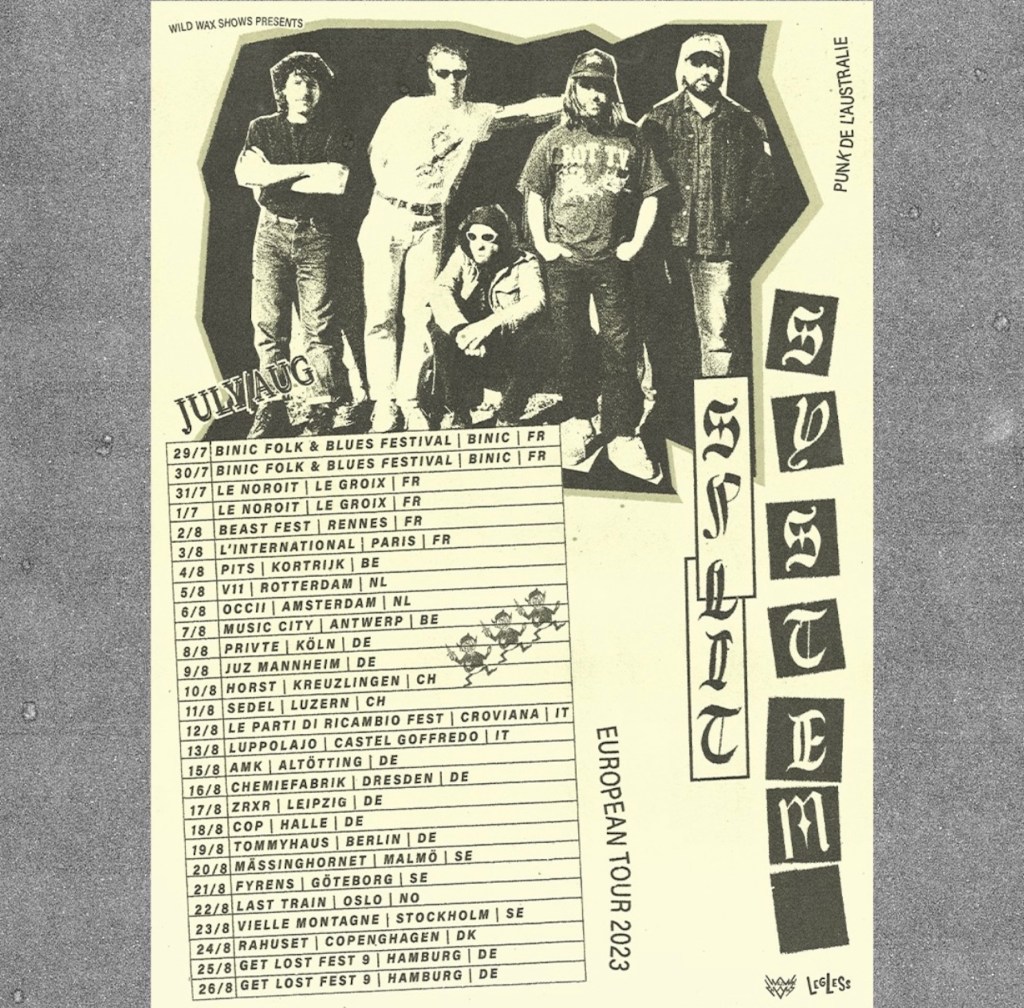
AM: Yes. Going over for Shock Fest. We’ve got one show at the start of July and then I got a holiday with my partner for a few weeks, and then Split System start with Binick Folk And Blues Festival, which is the 29th of July, I think. Then we’ve got a bit over four weeks. I don’t think we have a day off either. I think we’ve got one night off in a month! 

Wow. Do you like touring?

AM: Well, I’ve only done it once with Stiff Richards. And that was last year. It was one of the best experiences I’ve ever had. I’m definitely keen to go back.

What were some of the best things from that tour that you enjoyed? 

AM: Honestly, the people, the hospitality in Europe. We had no expectations. We thought we’d be playing for ten people some nights and we ended up selling out almost every show; I don’t mean that in a bragging way. It was just mind blowing that people actually came out, in another country. We haven’t even toured in Australia. We’ve been out of Melbourne once, we went to Sydney, played with Celibate Rifles once and Meanies once. To go over there and have such a good response and such friendly people, it was unreal. 

Yeah. Many bands I know that have toured Europe say the same thing and talk about how they have cool squats and places to stay in. 

AM: Yeah. You rock up, they’ll have bread and cheese and stuff for you. There’ll always be someone to meet you. A lot of people touring are cramming as much in as possible because it’s quite expensive to be there. You’ll get in, then you set up, and they’ll cook you dinner and sit you down with the other bands and the staff. Sharing a meal with a bunch of people is the best way to break the ice. By the time the gig starts, you’re friends with 30 people. It’s really beautiful. 

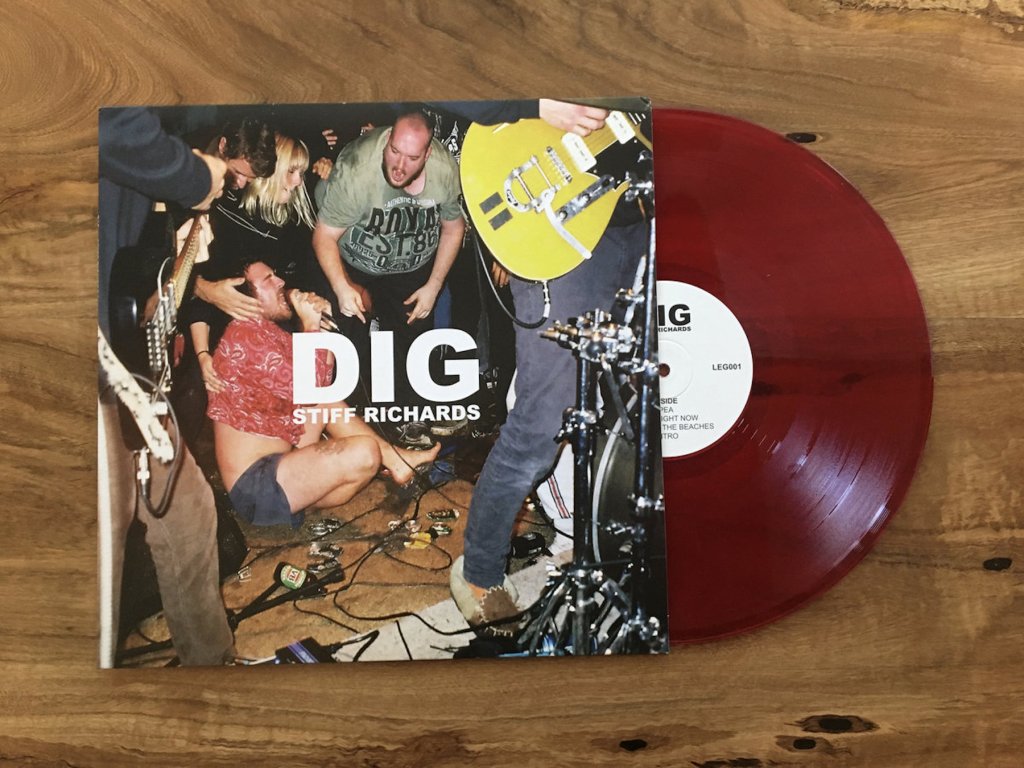
Stiff Richards Dig LP, pic courtesy of Legless.

Nice! So, you started Legless to put out Stiff Richards’ Records? 

AM: Yeah, basically. I guess that comes back to some of those frustrations. It was hard figuring out how to navigate the music industry. I was like, I reckon I could just do this myself. Well, with the help of my friends as well, I feel like we can do this together. Then as mates were asking me how we approached it, I was like, ‘Do you want me to just help you out with it?’

Is there anything that you wish someone would have told you when you started the label? 

AM: Well, kind of as I said, those challenges, even though they can be frustrations in the start, they end up being the things that make you stronger. Keep pushing through. Do things for the right reasons. Don’t expect to make money. Do things that make you feel happy and then you’re never going to get bummed out. Do things how you want to. There can be a lot of pressure to get bookers and management and stuff like that. That can work for some people, but if you’re willing to work hard, you can make it work really well for yourself. Positive encouragement for bands and people that want to do stuff. It’s like back yourself and have a crack. 

Definitely felt defeated sometimes, it’s hard navigating that world sometimes when you’re outside. If you don’t have any super cool friends or people in the know, you’re just in this big open world. People need to stick on their path and stay true to their art.

Totally! You’re speaking our language. Putting out records with your bands, do you feel like there’s any mistakes that you’ve made along the way that you’ve learned a lot from?

AM: Not really. All mistakes can become lessons if you are aware of them and you utilise them. I can definitely be quite opinionated and get grumpy about things. And that’s where as I get further into things, I know that I shouldn’t have given those things as much fuel as I did, but I wouldn’t have learnt that without going through it. I don’t really regret it. You know what I mean? 

Yeah. This is like anything in life, you get frustrated and then you learn to deal with something and you channel it into something else. 

AM: Totally. Yeah. I don’t really regret anything. I’m pretty happy. 

You seem it! Did any of the songs that you mentioned that you’d wrote when trekking in Nepal end up on any albums that you’ve put out? 

AM: They definitely would have. I can’t remember. I’ve got the most obscene voice memos folder saved on my computer and it’s like pretty funny. Sometimes when I’m drunk with mates, you go back through all your voice recordings and find early takes of songs that you’ve done. That’s like, basically how most of our bands do stuff, record things on the iPhone and then you get a better take of it and it just disappears into the ether. I reckon there’d be some funny recordings of me in Nepal somewhere, like humming a couple of Stiff Richard songs.

Polute self-titled debut release, pic courtesy of Legless.

Do you have a song that you’ve been a part of that you’re really proud of? 

AM: It’s weird, I don’t really approach music with heaps of intention. A lot of the time it’s me, grabbing a guitar and mashing chords until stuff starts feeling good. Sometimes it’ll be utter crap for three minutes and then something will feel right. I feel the beauty of a song is when everybody else contributes to it and then it becomes what it does. So I’m equally as proud of everything. Fluff it out with the rest of the team! 

What else is in the works for Legless at the moment? 

AM: We just finished recording the second Split System album. Can’t wait. I’m pretty stoked on that. That was a really fun process. The first seven inch and album were written, I think we’d only really played with each other properly like five times up until that first Vol. 1. 

Wow. It’s a great record.

AM: To have like a year under the belt and a lot of it was done over the phone, sending snippets. We had a couple of jams and recorded Vol. 1 and then with this one, playing with each other for a year and actually having a few jams leading up to it, it was fun. 

We’ve got the Stepmother album coming out later in the year as well. There’s a few other things in the pipe works, but I’m still not sure, I don’t want to jump the gun on a few things. Stepmother and Split System you can expect later in the year, most likely.

Split System Vol. 1, pic courtesy of Legless.

Cool! Looking forward to them. What can you tell me about Stepmother? 

AM: It’s like a completely bonkers horror movie rock and roll album. It’s pretty crazy. Graham’s done an exceptional job. It’s going to be a split release with Tee Pee Records in the US. That’ll be out later in the year. 

Who’s one of the most raddest people that you’ve met through what you do? 

AM: Honestly, it’s really funny. I feel like the thing I feel most privileged about is that my favourite bands are the people that I’m actually putting out at the moment. So, between C.O.F.F.I.N, Smooch, you can go through the catalog; they’ve all become really good friends. So equally, everybody. The Rack Off Records girls from Blonde Revolver and all that crew. It’s a really good little community at the moment and everyone’s having a good time. 

Before doing any of this, Mikey Young was definitely one of those people I looked up to and he definitely influenced me. When we were in the early days of Stiff Richards, he was a really good mentor without intentionally doing it, just being a good person and making me realise that all the people you’re going to meet in the music industry aren’t just wankers. I’d go around and mix at his house. He’d just be in his boxer shorts and have coffee with you, super casual. I was thinking, ‘Oh, this dude is my hero. And he’s just the most normal guy ever!’ He’d load me up with five records and send me off on my way. 

With Gimmie, when we started, we knew no-one. We’ve met so many lovely people in the Australian underground music community. There’s moments when it feels like everyone is really supportive of each other.

AM: Yeah, I think that age of bolstering yourself up, and those “glory” years of, like, oh, look at me, it’s gone. There’s actually strength in supporting each other, and the competitiveness is starting to die out a little bit, and everyone’s kind of bringing each other along with them. So it’s nice. 

Yeah. That’s why I really love Nag Nag Nag fest that Greg and Steph from Display Homes put on every year. It just has such a great environment and vibe. Everyone’s just really nice. It was such a nice day this year. Every single band was great. We were there from the very beginning till the end and watched every band, everyone totally ruled!

AM: Oh, totally. And everyone had a happy day. You get a lot of drunk people in a room, and it’s like there’s always one idiot that ruins it for it. But it didn’t seem to be any negative energy there for the whole day, so it was good. It just seemed like a happy family. 

Before, you mentioned sometimes you feel defeated by things. How do you flip that for yourself? 

AM: I don’t know. I’ve had a lot of things happen in my life that I won’t bore you with, but I just found with a lot of those challenges, even with losing my dad and stuff like that, through processing my own anger, I realised that you don’t get results from letting that negativity have a flame. Move on to something positive and time will heal everything. Life will throw you punches, but it’s a complicated world and it’s never going to be perfect. And if you feel like a victim all the time or let things get you down, you’re never going to get back up. You’ve really got to just keep trucking and do the things that you know is right and elevate yourself instead of complaining about what else is going on. You know what I mean? 

Yeah, absolutely. Surrounding yourself with positive things and positive people, really makes a difference too.

AM: Yeah. Everyone has a right to be down and stuff, but unfortunately I feel like unless you can get back into some kind of momentum, it’s easy to get stuck. So I keep busy and do the things that make me feel good. And it’s worked. Like doing the Legless-thing. I run a property maintenance business as well. I do window cleaning. I’ve been really busy, but when I slow down, I realise that I like being occupied. And if I’m not doing stuff, then I’d rather be in nature. I like exerting energy by walking or doing something else. When I get stagnant, I want to go do something. 

We go to the beach if we’re having a rough day. Going for a swim or a walk can change your day. 

AM: Yeah. The ocean heals a lot of stuff hiking. I do diving, and I go free diving with my partner a bit. I’ve always been drawn to the mountains too.

As we mentioned you’re about to go on tour, what’s the rest of the year hold for you? 

AM: That’s going to absorb a bit of time [laughs]. As I said at the beginning of our chat, I’ve just moved house. I’m not back until mid-September, so by the time I get back, and get back into work, I’ve got the Legless releases teed up and then Christmas gets really busy for work for me. Usually once Christmas is over, we get back in a creative mode again once all the craziness of the holidays is over. Then probably start recording stuff again. I’m hoping that Stiff Richards might have some new music sometime next year, we have the intention of trying to record over January, we’ll see. 

Will the Split System record come out before the end of the year?

AM: That’s the aim at the moment we’re talking with discussing label options. I’ll definitely be putting it out, but we’re just contemplating a few things at the moment. Before Christmas, otherwise early next year. Probably do a big run of shows for that. See a bit more of Australia. 

It was so cool to see Split System at Nag Nag Nag this year! We loved your set!

AM: It was a pretty loose set. We got a bit excited early and were super drunk by the time we played, but it was such a good energy there. We were a little bit worried after, like, oh, jeez, that was pretty rough. Everyone was having such a good time, it didn’t matter.

Check out all the awesome things Mawson does and is a part of: 

Legless Records: leglessrecords.bandcamp.com 

Stiff Richards: facebook.com/stiffrichardsband/ & instagram.com/stiffrichardsband/ 

Split System: splitsystem.bandcamp.com & instagram.com/splitsystem666/ 

Doe St: doest.bandcamp.com/ & instagram.com/doestband/ 

Polute: polute.bandcamp.com/ 

Naarm Punks Split System’s ‘Demolition’: “Anxiety…Hope For Change And Clarity”

Original photo by courtesy of Legless Records. Handmade mixed-media collage by B.

Split System, featuring members of Jackson Reid Briggs & The Heaters, Stiff Richards, Doe St, Speed Week, The Black Heart Death Cult & No Zu, annihilate with ‘Demolition’ the first single from their forthcoming debut album. It harks back to raw, unbridled 70s Australian punk rock n roll and ploughs straight-ahead with melody and passion. Split System tell Gimme about their individual musical journeys, albums that shaped them, new music they’re loving, the new single and their album slated for an October release on Legless Records.

What kind of music were you obsessed with when you first discovered music?

JACKSON (vocals): I started by listening to my dad’s David Bowie and Beatles CDs etc. and making tape compilations using everything he had.

MAWSON (guitar): My dad played in bands my whole life, which surrounded me with rock n roll from an early age, but I think discovering Eddy Current Suppression Ring was a turning point for me. Growing up in Frankston and realising there was so much more outside of the bubble that I was immersed in—ECSR was the gateway drug.

RYAN (guitar): Nu nu-metal and pop-punk were my first loves. When I was 15 or so, I started getting into the classics like the Ramones, the Stooges and The Go-Betweens.

DEON (bass): The first album I owned was Silverchair’s Neon Ballroom on cassette, which I picked up from the local 7/11. From there I moved on to some metal and punk classics – Iron Maiden, Metallica, Misfits – that really got me into playing fast-paced, heavier music. 

MITCH (drums): My old man was into music, so naturally I became obsessed with our record player (which I’m still running). I raided his vinyl collection and the bands that stood out for me as a 6-year-old were Pink Floyd and Dire Straits. From that day Floyd has been the one obsession that hasn’t left, but Dire Straits have snuck back in in the last couple years, I think it brings me a nice level of comfort.

Can you tell us a little bit about an album that was/is a really big deal for you and why it made an impression on you?

JACKSON: When I was in year 10 my friend Ryan gave me Television’s Marquee Moon and Modern Lovers s/t and said let’s make a band and that really was a big turning point in my life musically.

MAWSON: ECSR – So Many Things, it blew my mind in my younger years and to this day remains one of my biggest influences.

RYAN: Pink Flag by Wire is a thumper. I like the way they sabotage the songs by ending a chorus where you’d usually repeat or repeating something else ad nauseam. Honourable mention to Fever by Kylie Minogue.

DEON: I’d have to say The Velvet Underground – Loaded. ‘Sweet Jane’ is the stand out track for me. Lyrically and musically this album hits the mark front to back.

MITCH: Jimi Hendrix – Band of Gypsys. How could you not love Buddy Miles and Billy Cox with Hendrix! Best grooves ever!!!

What’s a song, band or album that you’re loving right now? What do you appreciate about it/them?

JACKSON:  I just heard the s/t album by KPAX (krah) a band from Belgrade, Serbia. It was recently released on Doomtown Records. It’s raw and makes you feel that heat on the street of a big hectic city.

MAWSON: Future Suck & Cutters; what’s not to love about em’.

RYAN: The new Future Suck single ‘Hell for Leather’ goes hard – good people making good music. I’m digging a band from Hobart called Rabbit – catchy power-pop, can’t beat it.

DEON: Exek and their recent release Advertise Here. Experimental post-punk dub of the highest quality. Probably one of the most important bands.

MITCH: Clamm. Really digging their energy, I saw them live at NinchFest this year and they totally owned the stage

How did you end up on a musical/creative path? I know all members of Split System play/played in other bands: Jackson Reid Briggs & The Heaters, Stiff Richards, Doe St, Speed Week, The Black Heart Death Cult & No Zu.

JACKSON: I started properly playing in bands in probably grade 11/12 with some mates from high school. From that point on, I didn’t care much about anything else and spent my least favourite classes sitting in a storage room at school playing guitar. In grade 12, I got a job collecting glasses at a bar in Fortitude Valley and saw a lot of great Brisbane bands playing there. A few days before I turned 18, I quit and started spending most nights drinking and watching bands there.

MAWSON: Playing music was always my escape from some of the harsher things going on around me. Jamming heaps with friends just eventually lead to the right combination of people at the right time.

RYAN: I started playing in bands when I was in high school living in Launceston. I was playing in a couple of scrappy punk bands, who had to share bills with metalcore bands to get a gig. We eventually got some gigs in Hobart and connected with some great bands more aligned with us. After moving from Tassie to Melbourne, I didn’t start playing in bands again for almost a decade.

DEON: As a kid I remember my older brother always playing guitar, so I guess that kind of rubbed off on me, we had a few old guitars laying about the house, which I’d noodle on. As a teenager I went on to play in various garages/sheds with mates bashing around and making noise.

MITCH: I started learning the drums as an 11 year old and by 14 my cousins mates were after a drummer, i had a quick try out and made the cut. Our name was THC lol. We managed to a get a gig at Broadford Festival which was ran by the Hells Angles, as a 16 year old i thought was pretty rad. Someone was shot there, yikes!

You only had one jam together before lockdowns happened. What initially brought Split System together?

MAWSON: Well, initially it was Jackson’s idea to get a couple of us together to try and fill some space while we yo-yoed in and out of lockdowns. The first jam Jackson jumped on drums and Ryan, Deon and myself just mashed out a bunch tracks we had in the back pocket. Everyone gelled pretty well so we got Mitch to come jump on the kit and the 7” got written then and there.

RYAN: I think another bloke was lined up to drum, but didn’t show up to the first jam. Thankfully we’ve got the salami making, hog smokin’, bongo playing, shagadelic bad boy that is Mitch McGregor.

Single art by Deon Slaviero.

Gimmie are premiering Split System’s new single ’Demolition’ from your forthcoming debut album that will be released in late 2022; what’s it about? What was the process when writing it?

JACKSON: Ryan sent a few early versions of the chords through and at the time I was working securing a building that was about to have its neighbouring building demolished. So, naturally the lyrics began to take shape while I was up on the side of the building doing all sorts of shit and thinking about the building beside it getting knocked down. Around the same time my partner had just given birth to our daughter and it all sort of just fell into place lyrically through those two situations.

Split System released a self-titled 7” earlier this year on Legless that was recorded remotely with everyone recording their parts at home and sending them to each other via email; how is your debut album different from the EP? Was it recorded with everyone in the same room?

MAWSON: That first 7” probably reflects the lack of time spent writing in the simplicity of the tracks, but we felt like it had good energy and it was a great excuse to make something out of the down time. The LP is definitely a more complete package, even though we still had limited time to get everything finished we’re pretty happy with the direction its taken.

RYAN: I dig the rawness of the 7”, however the LP is a lot more hi-fi.

What kind of headspace were you in recording the new album?

MAWSON: We recorded live at Rolling Stock Studios with Andy Robinson over a weekend. Working with him just felt like any old jam, a few takes of each song… was super chill and easy.

MITCH: When you have Andy ‘Rowdy Robo’ Robinson at the helm ya know its gonna be a ripper of a sesh, plus he’s easy on the eyes too!

What themes does the new album explore?

JACKSON: Half of the lyrics were written when I was sober and half when I’d started drinking again. There’s probably a bit of that is in there. I stopped drinking when my partner became pregnant with my daughter, so I could clear my head a bit and prepare myself for another kid. I’d say there’s a lot of subconscious anxiety littered throughout the album as well as a bit of hope for change and clarity. I usually just listen to the instrumental versions of the songs until a line or something pops into my head and then go from there.

Do you prefer writing, recording or playing live most? Why do you enjoy it best?

RYAN: I love all elements of playing music, but you can’t beat mucking around and having a jam.

MITCH: The rush playing a live show to a whole bunch of folks! I love it.

What do you do when not playing music?

JACKSON: Labour for a construction company, play with my kids, and try to keep healthy so I can keep up with them.

MAWSON: I clean windows.

RYAN: I do social work for a crust. Apart from that, bugger all.

DEON: Watch other people play music and graphic design.

MITCH: I love cooking in my spare time, when I’m not doing that I’m listening to music while knocking cabinets and furniture up.

What does the rest of the year look like for you?

MAWSON: Stiff Richards and Jackson Reid Briggs both have Europe tours over July followed by some well needed holidays for everyone. After some time off we will be coming into September/October ready to go. The LP will be coming out some time in October with a stack of gigs to follow.

MITCH: I really can’t wait for the LP to come out and play some shows, the record is something I’m really proud of. The gang that is Split System are a bunch of legends and I’m stoked to be playing with them, bring on the tours!!

What’s making you happy right now?

JACKSON: Family and having some drinks!

RYAN: The Carlton Football Club not being complete shite.

MAWSON: Not working!

DEON:A long black with a dash of milk.

MITCH: Watching the salami I made cure. Yum!

Split System bandcamp. Legless Records bandcamp. Follow @splitsystem666 & @leglessrecords.