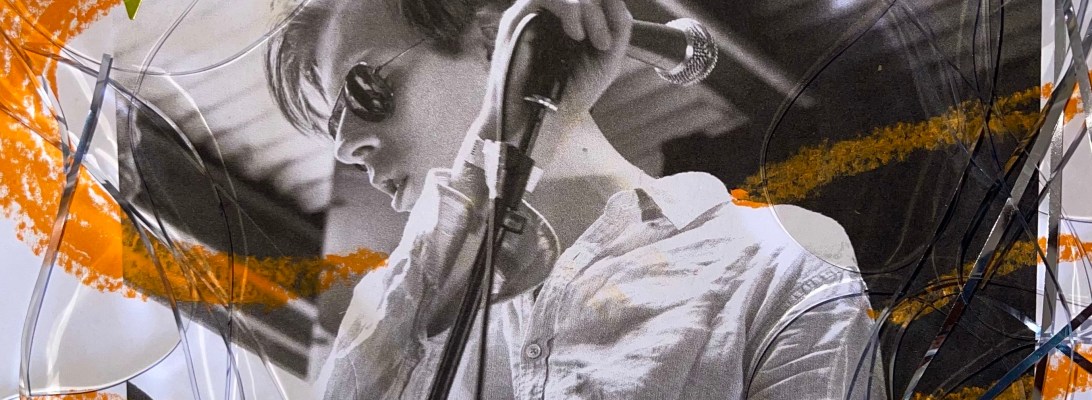
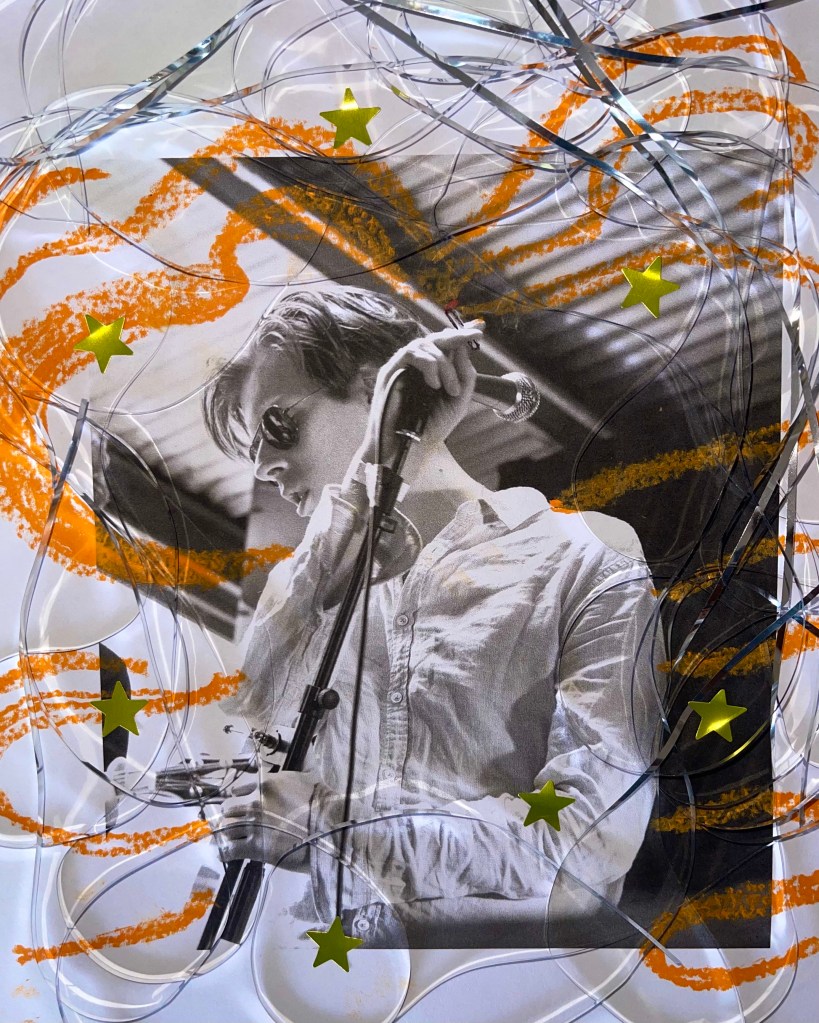
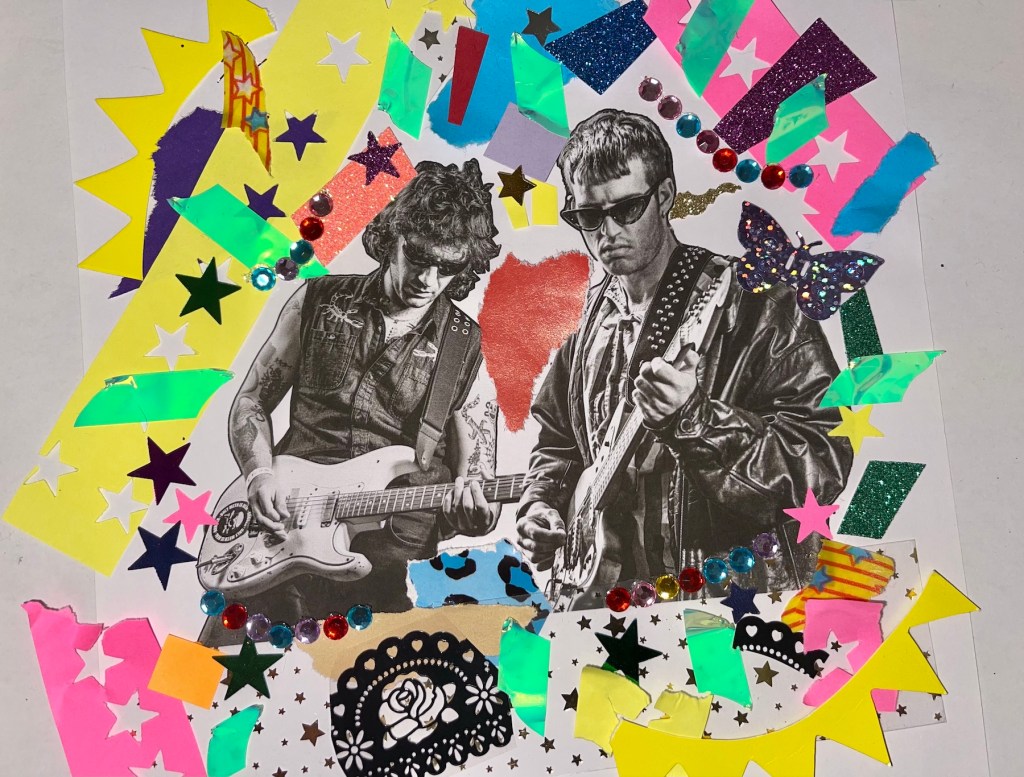
Original photo: Jhonny Russell / handmade collage by B
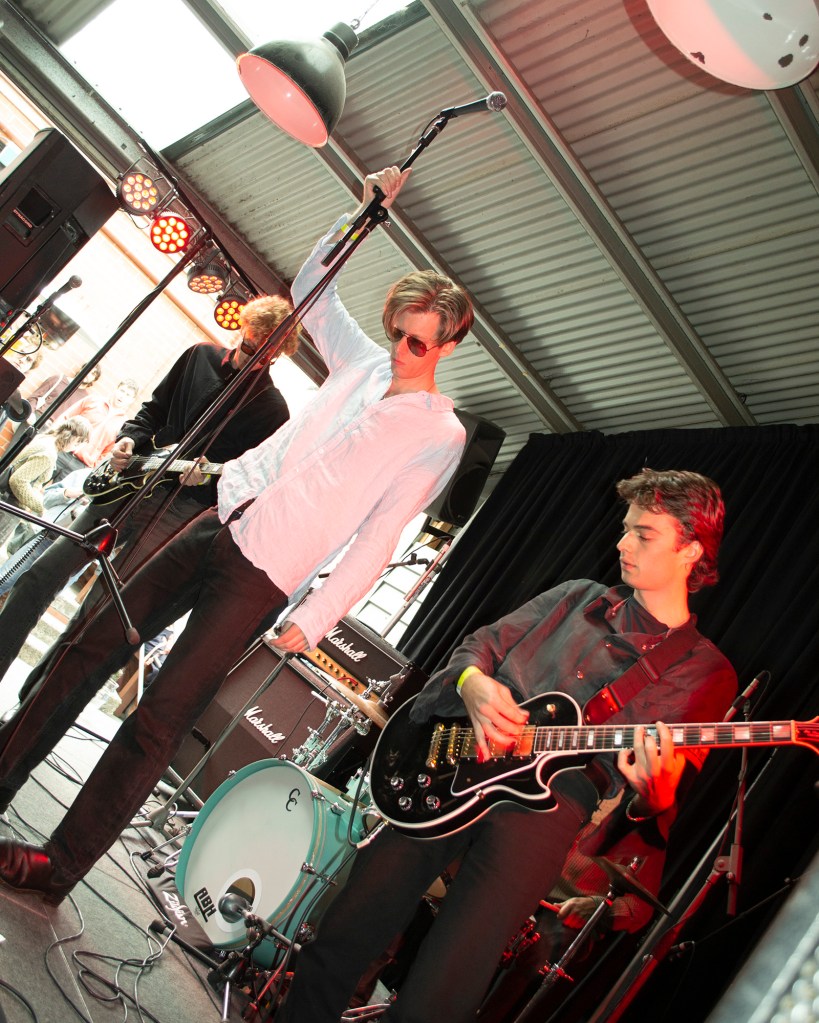
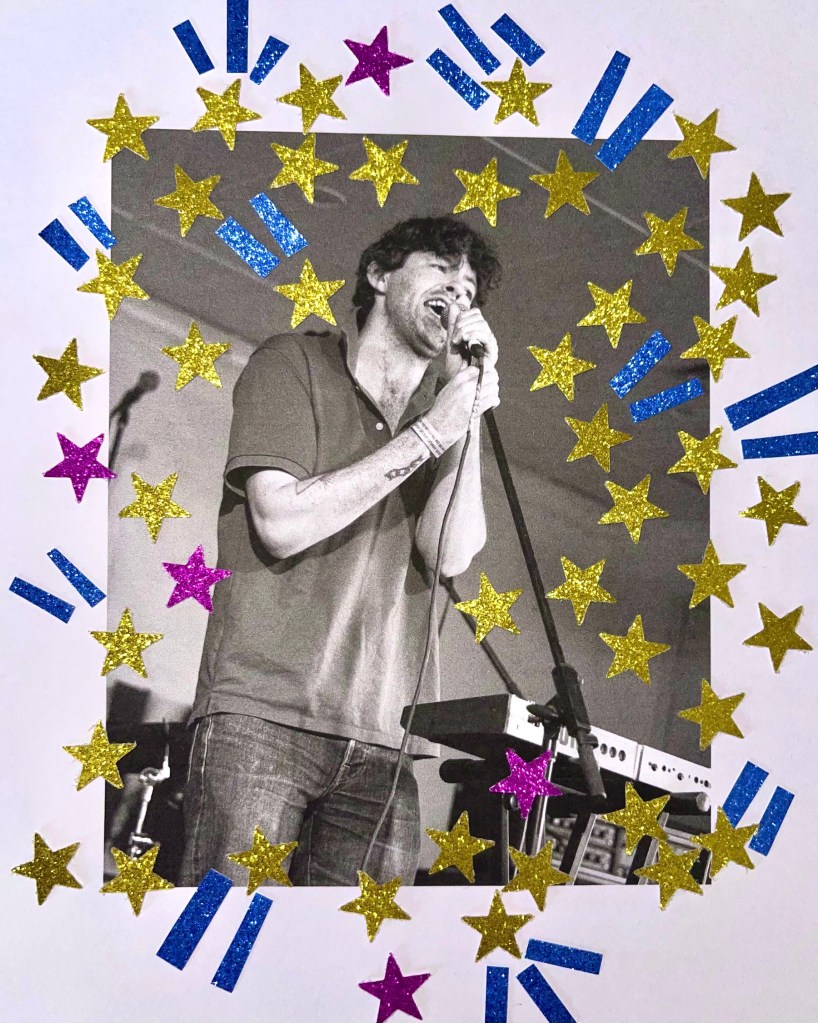
Following the release of their debut LP Judgement Day in November 2023, Melbourne/Naarm five-piece The Judges have kept the momentum rolling with their Guns 7”—a two-track release that captures the band’s sharp rock‘n’roll. Gimmie caught up with frontman Sam Hill to talk about skate vids, cooking, the crazy world we live in, and of new music on the horizon.
Who or what made you fall in love with music?
SAM: Skate video soundtracks, I guess. That’s where I first heard The Stooges and Bowie and the Velvets and all that. And then “punk rock” – probably largely because of the fashion and the incredibly naive attitude, which is quite appealing when you’re young. But even before that I would tape songs off the radio and stuff, so I guess there was always music around!
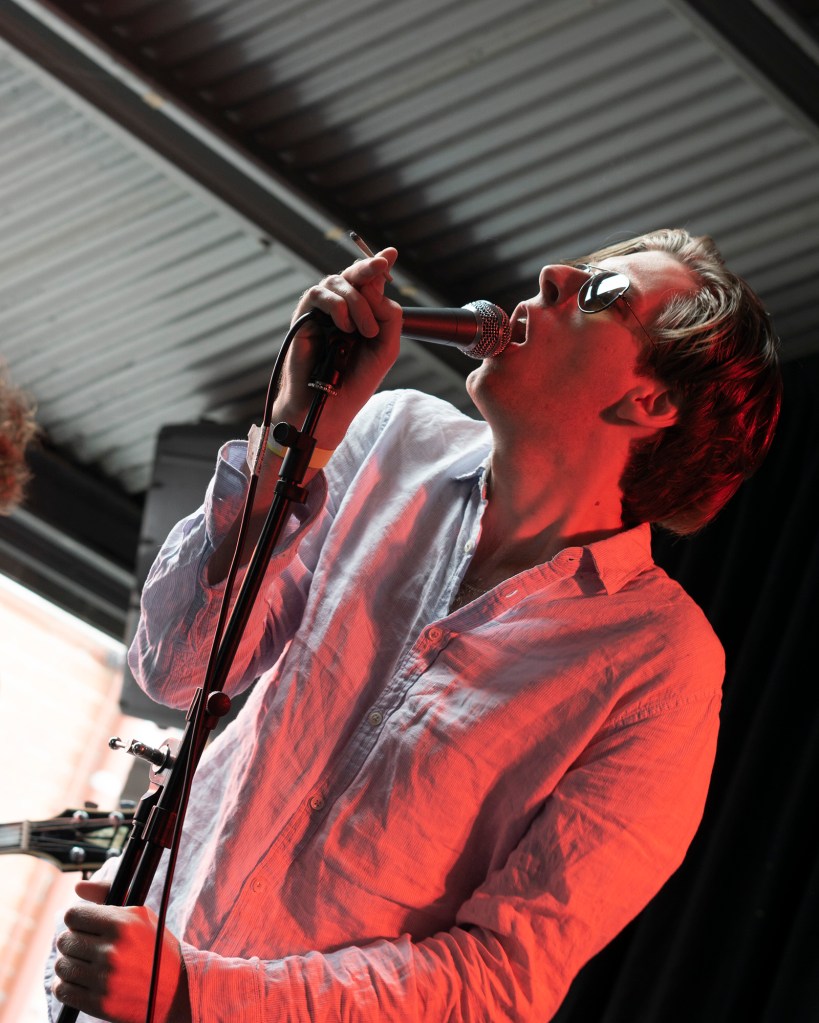
Photo: Jhonny Russell
Are you working on new songs or ideas that you’re excited about?
SAM: Yeah! Always working on stuff to some degree. Tinkering. With The Judges, with other groups, solo. The second Judges LP has been recorded for a minute now, we just gotta tweak it and polish it up and everything.
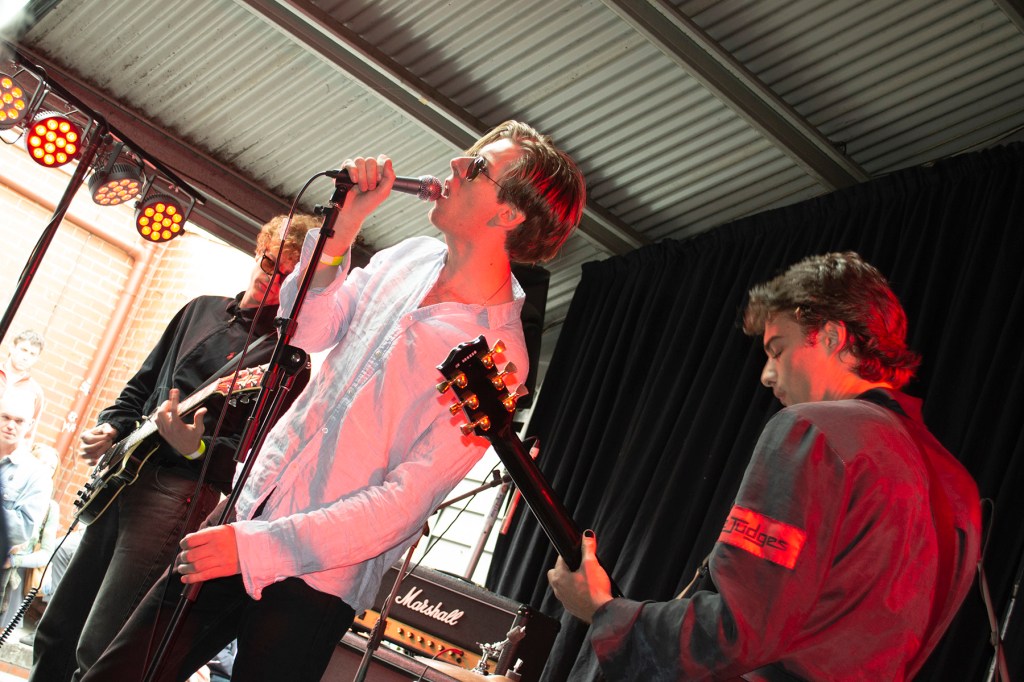
Photo: Jhonny Russell
What’s something you care about deeply that might not necessarily show up in your songs?
SAM: Food. I don’t think any of the songs are about food? I like cooking and you gotta eat. Good meals are important. Especially eating them with friends. Celebrate all occasions. Oh and we gotta save our oceans.
Photo: Jhonny Russell
Which song do you like playing live the most and why?
SAM: I like playing them all. They usually all sound great, sometimes they don’t. Sometimes I forget the words and mumble. But it’s not really even about the music. It’s just fun to make noise. It’s a spectacle.
What’s your biggest non-musical obsession right now?
SAM: Aw man, I don’t know. I follow a lot of total psychos on Instagram that are pretty entertaining to keep up with. World War Three is pretty interesting so far. That and the convergence of “artificial intelligence” and religion and all the UFO bullshit. Things are getting weirder every day. Buckle up!
Original photo: Larisa Papamanos / handmade collage by B
Melbourne/Naarm outfit Krakatau are playing this year’s JERKFEST. They have spent the past decade carving out a distinct space where jazz fusion, progressive rock and left-field experimentation collide. Formed by James Tom and Dylan Lieberman, the band’s sound has evolved from psychedelic roots into long-form, exploratory compositions that feel both deeply referential and unmistakably modern. With a new LP Terra Ignota on the horizon, Gimmie caught up with Tom to talk, instrumental storytelling, film obsessions and the challenge of making sense of an always-on world.
Who or what made you fall in love with music?
JAMES: The first song I fell in love with at a young age was ‘Hit the Road Jack’ by Ray Charles. I can’t recall why exactly, my guess is the immediacy of good songwriting!
Are you working on new songs or ideas that you’re excited about?
JAMES: We have a forthcoming full length LP Terra Ignota coming out in May 2026 (which captures the long period between releases) and a few tunes that are in different stages of completion we have not yet recorded.
What’s something you care about deeply that might not necessarily show up in your songs?
JAMES: I don’t necessarily think any of what we care about as social issues really show up in direct ways in our music. These can be harder themes to express directly with instrumental music, but I would say the main thing I have been thinking about the past few years is the fractured experience of being connected to a mass of decentralised information and how I do not think humans are meant to be connected in this way at all times.
Which song do you like playing live the most and why?
JAMES: We are playing some fun material written by artists we look up to and interchange this material between our own compositions. For example ‘Madagascar’ written by Richie Beirach (RIP 26.01.2026) for the John Abercrombie Quartet and their 1980 LP originally released on ECM Records has been a lot of fun.
What’s your biggest non-musical obsession right now?
JAMES: I mean my second most consuming hobby has always been watching films. Some note worthy watches the last three months include: The Ice Storm (1997), The Long Good Friday (1980), Let It Ride (1989), The 4th Man (1983), Spetters (1980), Short Eyes (1977), Dreams (1990) & Shoot the Moon (1982).
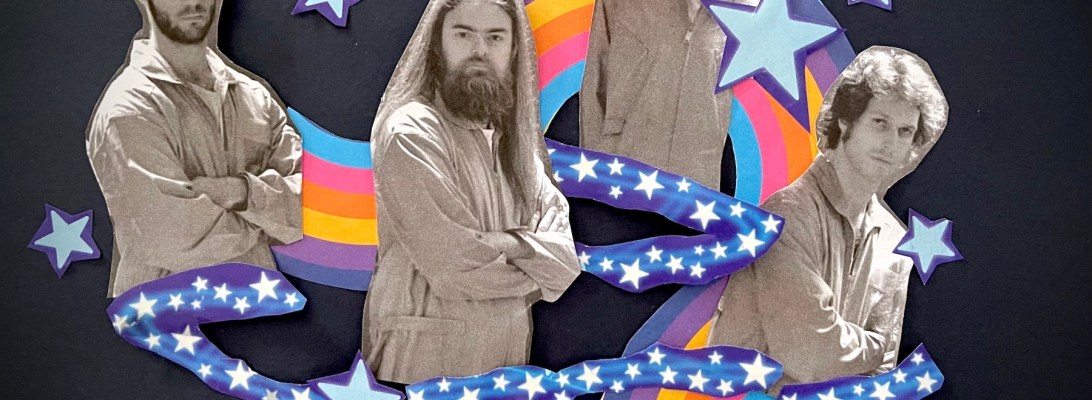
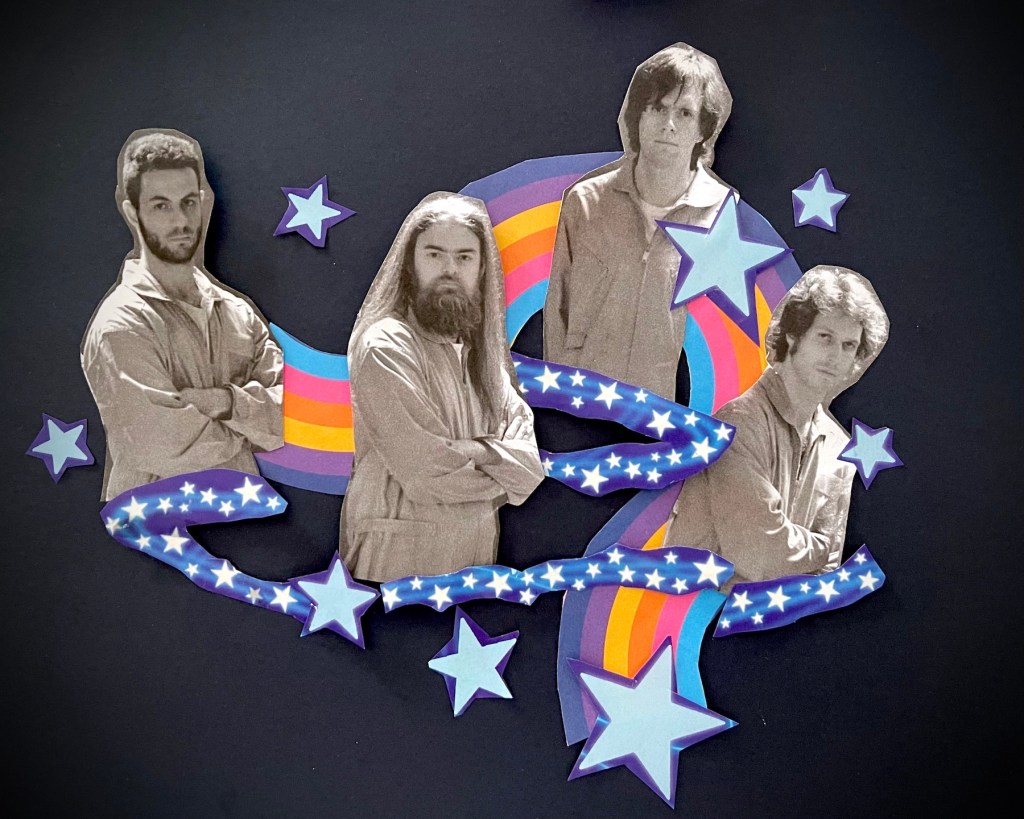
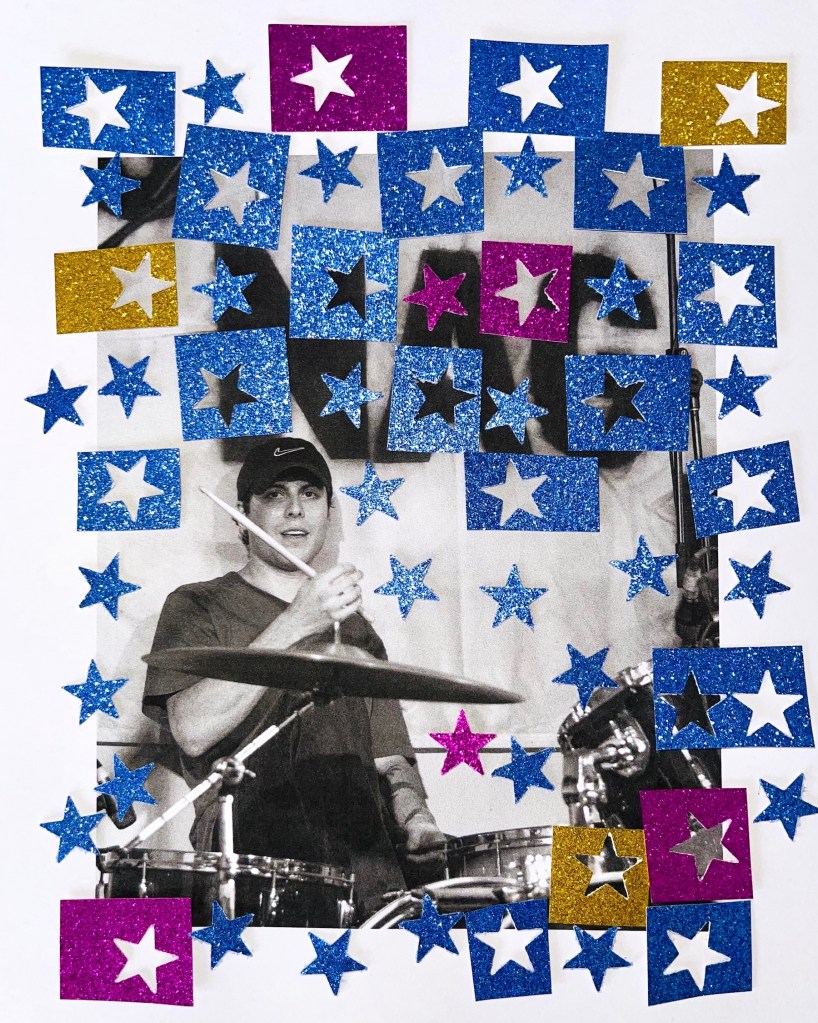
Original photo: Jhonny Russell / handmade collage by B
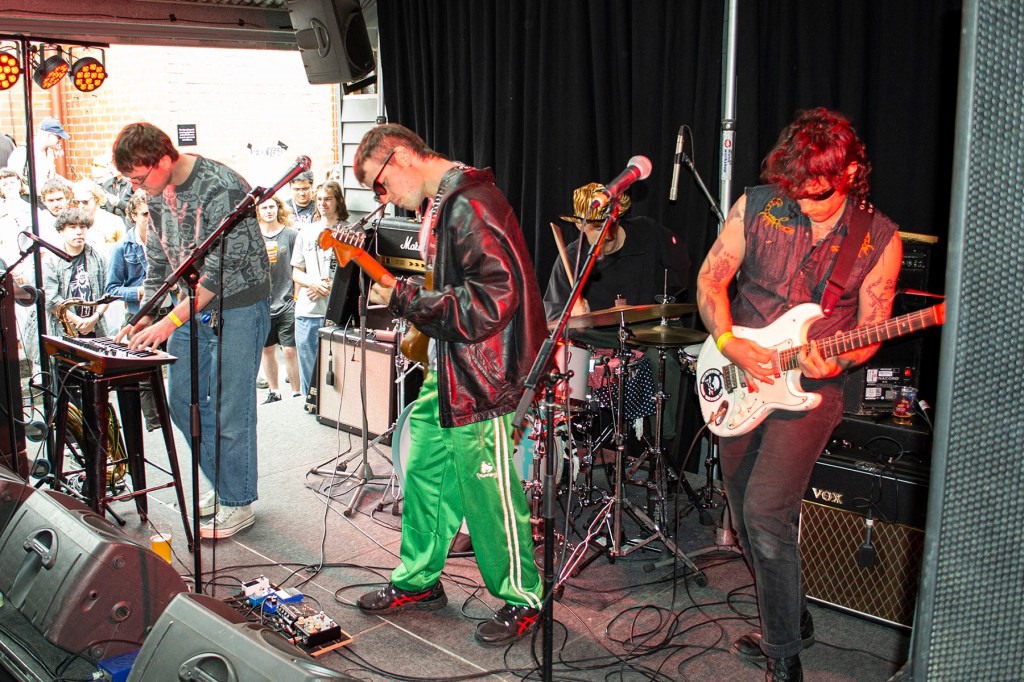
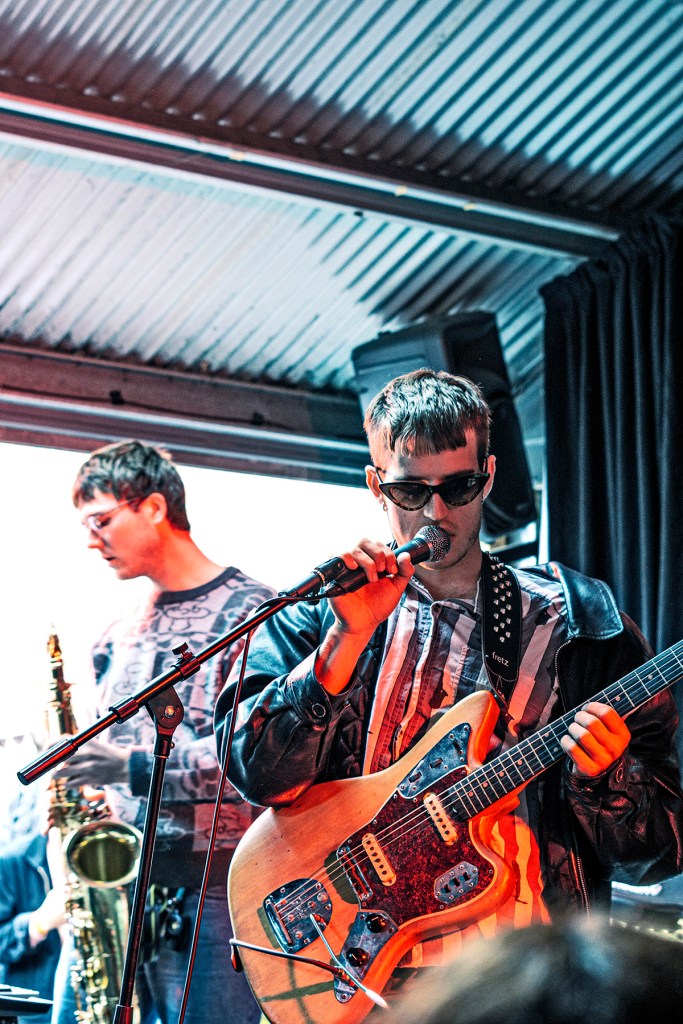
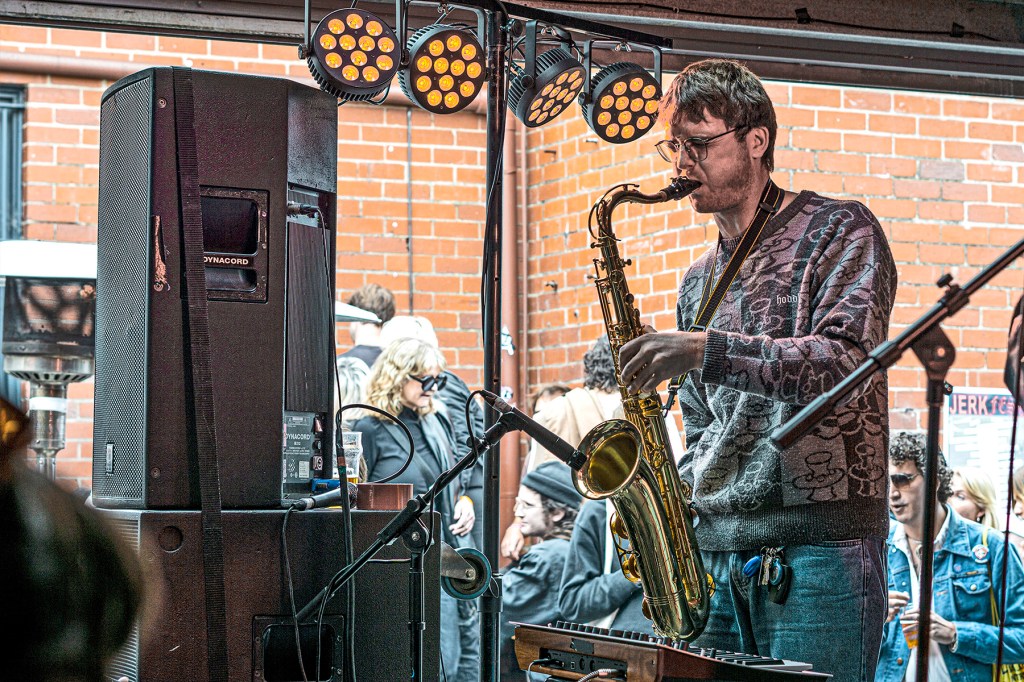
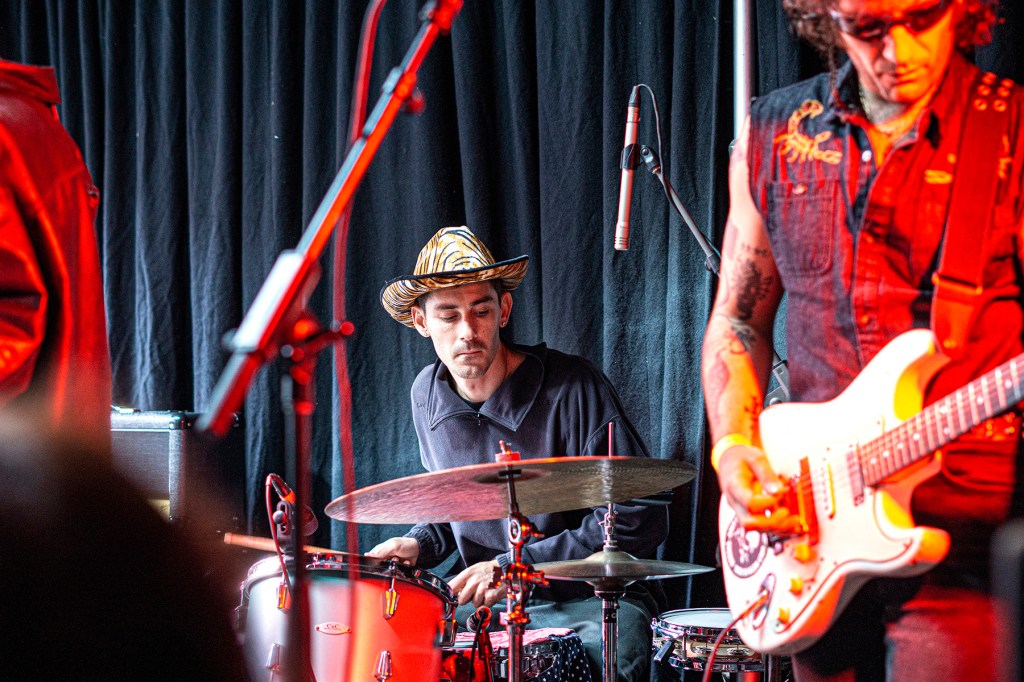
We first saw Melbourne/Naarm band The Blinds live a few years ago at Nag Nag Nag Fest. Since releasing their self-titled cassette on Alex Macfarlane’s Hobbies Galore in 2017, and 7-inch Endless Fascination in 2022, the band have been building towards their long-awaited debut LP. Gimmie caught up with them ahead of their appearance at JERKFEST this weekend, to talk formative music memories, favourite songs to play live and a few unexpected obsessions.
Who or what made you fall in love with music?
LACH: ‘Getting the band back together’, which was jumping around playing a toy tambo in the loungeroom listening to the Beatles and Stones etc., with my dad after he’d no doubt had a few beers. I was 34.
CAL: Due to my dad being a fan, I loved Cream and idolised Jack Bruce. Other than that, I had a pretty loose grasp on music until Blinds band friend and recorder Alex loaned me 3 CDs every day for the best part of a year and blew my little world right open at the tender age of 16.
RORY: My mum used to buy me the newest So Fresh CDs, and it was then I knew I wanted to play rock and roll.
FUJ: Some definitive memories include listening to solo career Ozzy Osbourne and Dio tapes that belonged to my stepdad and some RATM and TOOL* CDs that Blinds band friend and recorder Alex lent to me in Year 7.
*REDACTED
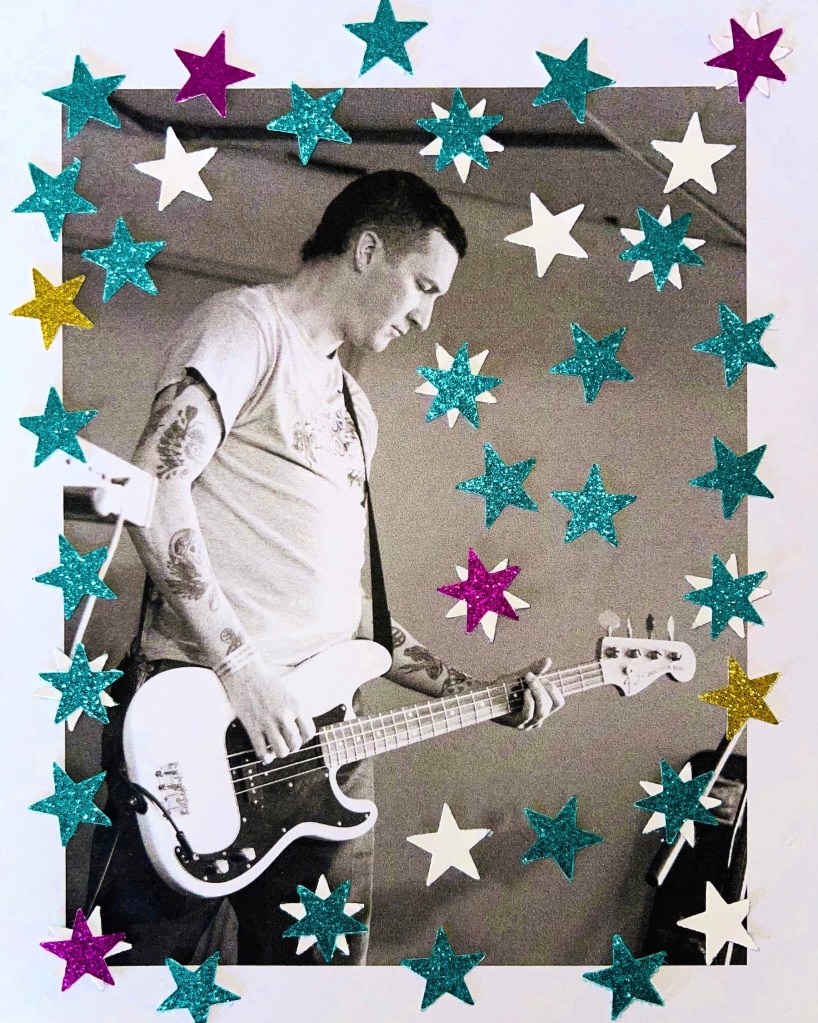
Original photo: Jhonny Russell / handmade collage by B
Are you working on new songs or ideas that you’re excited about?
LACH: Yes. It’s taken us a long time, but we are like the turtle from The Tortoise and the Hare.
CAL: We’re finally getting ready for the elusive and coveted debut LP, which we’re very excited about!
RORY: I think we’re the most productive we’ve ever been right now, in our own way and by our own definition of productive.
FUJ: Ya! In our 10th year we have started working on a record ;()
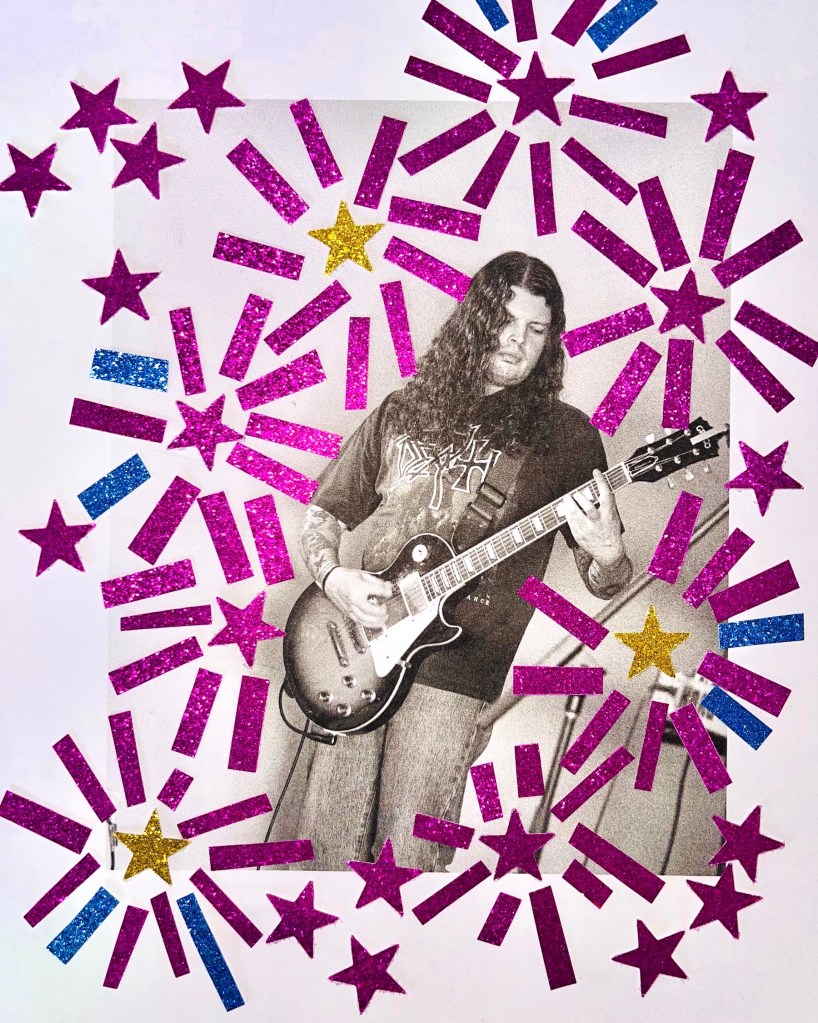
Original photo: Jhonny Russell / handmade collage by B
What’s something you care about deeply that might not necessarily show up in your songs?
LACH: Fam & friends and the power of song.
CAL: Dolphins and the number 8.
RORY: A perfectly made tabouli.
FUJ: We are yet to utilise a crumhorn.
Which song do you like playing live the most and why?
LACH: One from our tape ‘Passenger Seat’ because it’s burnt into my skull and good to ease nerves early in a set. Also ‘Hat’.
CAL: ‘Separation Street’ always feels good to play. It’s got a really fun bass line in the chorus that I often use for sound check because it kind of doubles as a nice little warm up.
RORY: I agree with Cal. ‘Separation Street’ has been a long time fave. Especially after introducing the intro on live performances.
FUJ: I like a newer one called ‘Hat’ mostly because it’s called ‘Hat’.
Original photo: Jhonny Russell / handmade collage by B
What’s your biggest non-musical obsession right now?
LACH: This congee I ate in Thailand recently.
CAL: Nasiah Wanganeen-Milera.
RORY: Throwing back oysters at Queen Victoria Market.
FUJ: I’m pretty into the rice cooker that Rory convinced me to purchase.
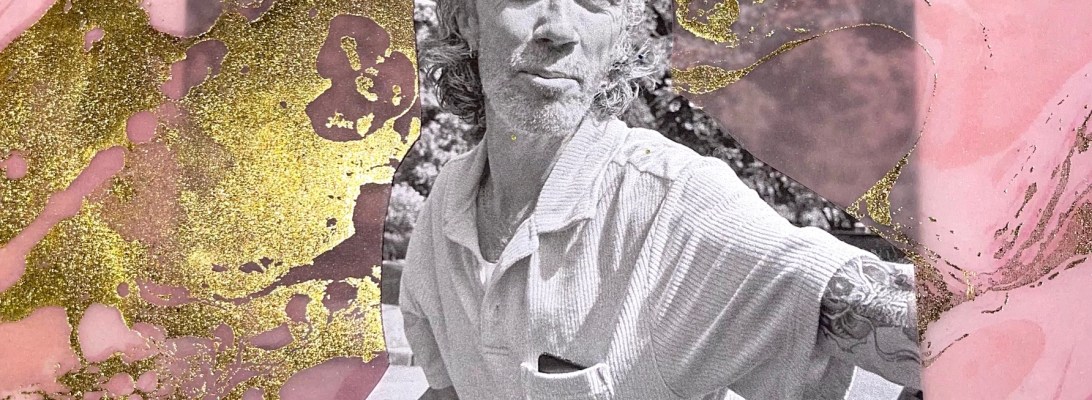
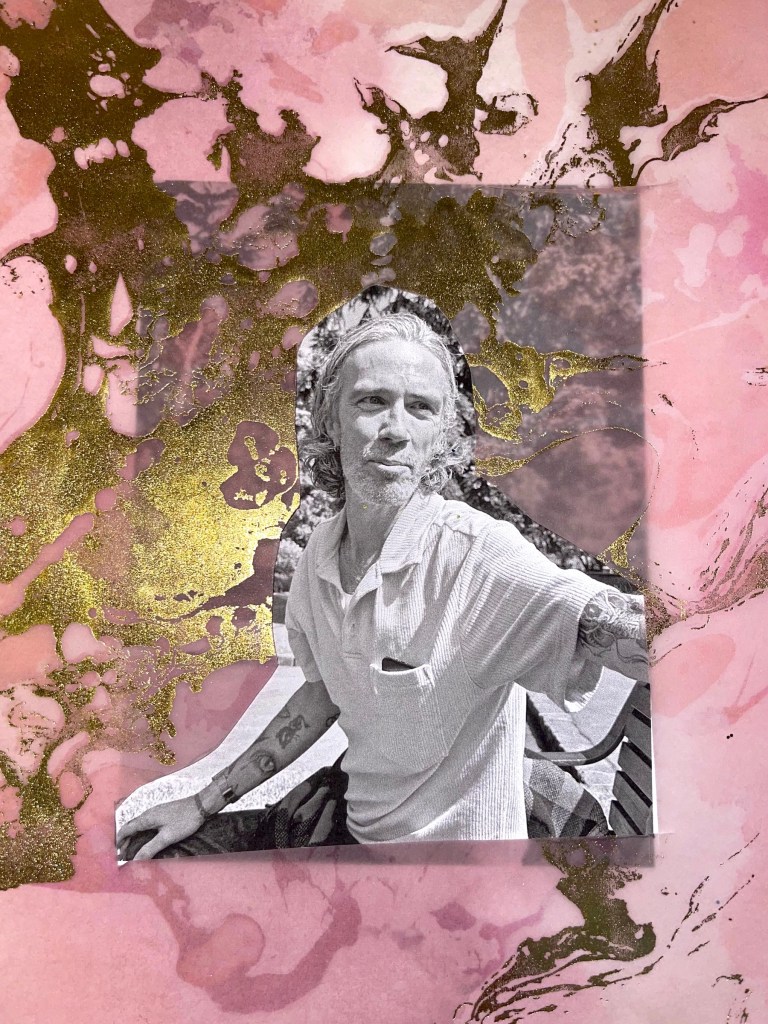
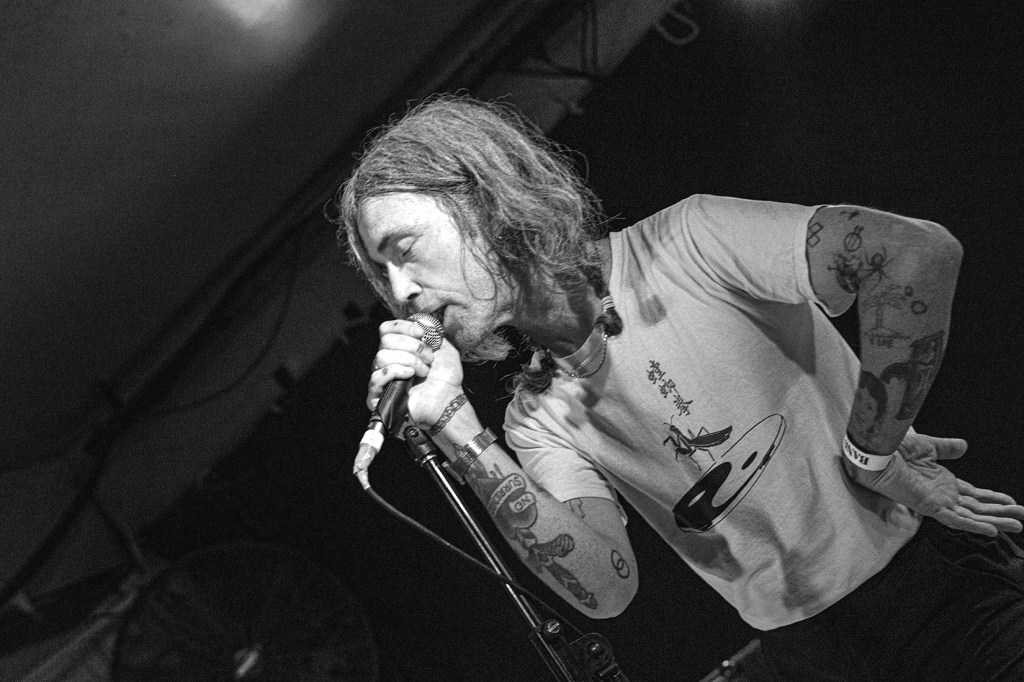
To us here at Gimmie HQ, Jarrod Quarrell, creator of Lost Animal, is one of the most underrated songwriters in Australia and one of our all-time favourites. He creates poetic expressions. His work is very interesting in a highly original way and richly emotional. The songs reveal themselves more over many listens and always feel fresh. His powerful, beautiful, transformative, and unforgettable songs possess the vast depth of the human spirit. Last time we were in Naarm/Melbourne, we met Jarrod in Fitzroy Gardens, a historic park lined with elms and autumn leaves, to chat about life, feeling good, and the music he’s working on in his own time.
It meant a lot to have this chat—enjoy!
Thanks so much for meeting us today! We’ve been having such a nice time in Naarm/Melbourne. It’s always such a pleasure to come down here for Jerksfest out in Djilang/Geelong, Billy does such a wonderful job. It’s nice to explore the city too. We went to a shop that sold all these old movie day bills. We got this awesome Breakin’ one!
LOST ANIMAL: Breakin’ was one of my favourite movies as a kid. I was in a breakdance gang in Papua New Guinea called, The Rap City Connection.
That’s awesome. Do you reckon you could still do it.
LA: I’m sure I could do a dolphin dive or something. Might hurt myself, though [laughs].
I’ve always loved breakdancing too, but I was so bad at it!
LA: Well, yeah, I was the worst in the game. They were all legit dudes in Papua New Guinea. They had afros, were good dancers, and did helicopters and headspins. I couldn’t do all that.
How’s life been lately? It seems like you’re in a really good place.
LA: Life’s really good. I’m making a new record, so that’s probably got a lot to do with it. Always happy when I’m making tunes. I’m very well. Thanks for asking.
I remember you saying once that, ‘Music on records I make, are a fuck you to the bad things in my life.’
LA: Yeah, I guess. The new music feels like I’ve transcended all that shit and I’ve finally got to a good place, where I can just be good and make tunes.
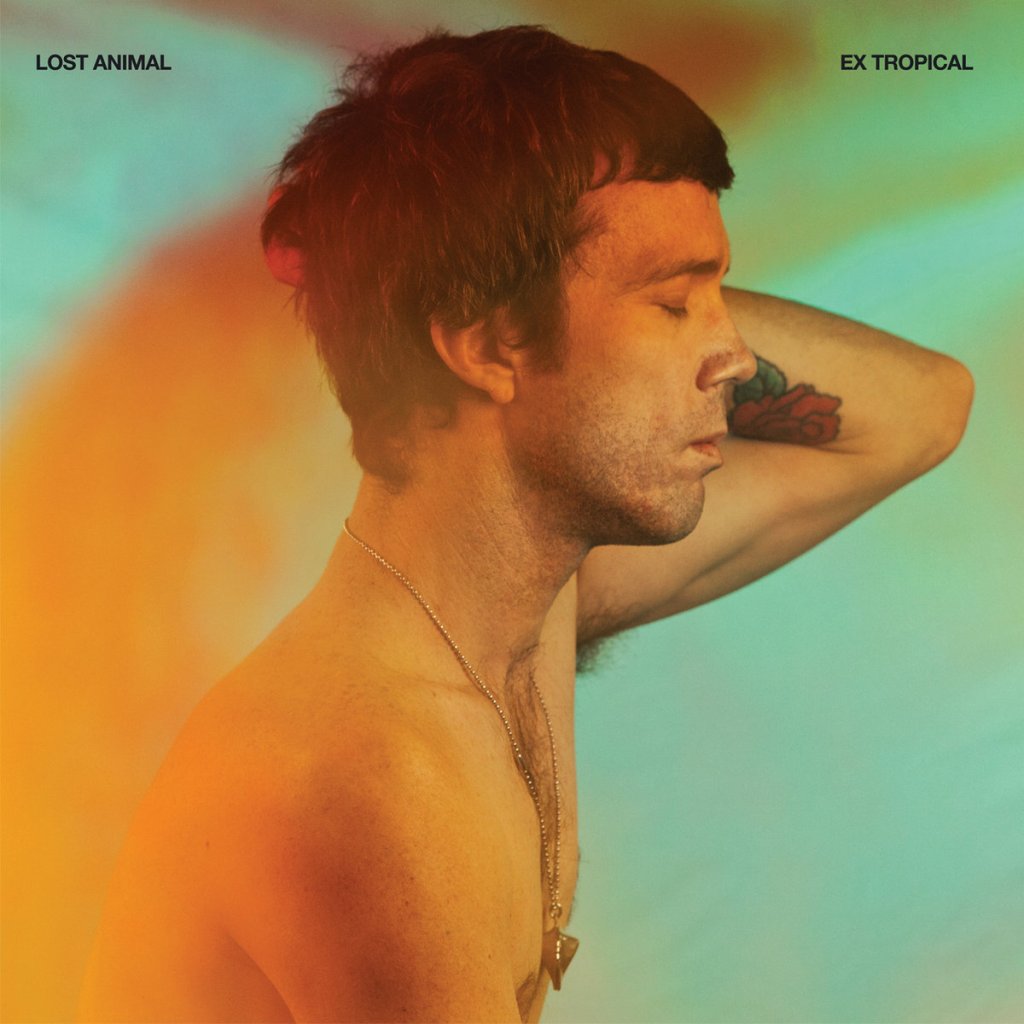
I was talking about it to a friend recently. Those were dark times for me—those two records, Ex Tropical (2011) and You Yang (2016), were hard to make. It was my spirit trying to get out, trying to shine through when I wasn’t well, trying to overcome all the shit that gets you down.
The music you created before Lost Animal was darker as well?
LA: The lyrics are a bit dark. I always wanted Lost Animal music to not be dark; I wanted that to be up.
When I listen to a lot of your songs, even though they are dark lyrically, the music is uplifting.
LA: Yeah. You can dance to it. Lyrically, it’s hard to write songs about feeling well, I’ve found, without sounding like an idiot [laughs]. I’m rewriting lyrics a lot on this record. Like, I write them and think, yeah, that’s it. Then I’ll go to record and think, is it because it’s cheesy? Or not because it’s cheesy—just because I want to nail it. I really want to get it right. I’m more engaged. I am happy making the effort, happy just doing it.
What are the things that have helped you be more engaged?
LA: Therapy. Psychedelics. Music.
Jerk Fest last year was probably the impetus for it all. When Billy asked me to play, my instinct was to say ‘yes,’ but I kind of didn’t want to do it. Even up until the day, I didn’t want to go. But then I had a great time and really enjoyed playing. It dawned on me how lucky I was to be able to do it, and how fortunate I was to be asked to play good shows like that, six years after putting out my last record. It hit me. Then, around that time, I started feeling better. I found a good therapist after searching for one and going through a few bad ones. That gradually led to writing the right tunes.
I started a side project with a friend, Stuart from Primitive Calculators. That really helped with the playing. I was always just a songwriter—I wrote, and I was a front guy. So it was really good to just play. All those things combined put me in a better place.
Photo: Jhonny Russell
Jerk Fest is a pretty special event. It’s such a great opportunity to see so many bands play, and catch-up with people.
LA: Yeah, that was part of it—nice people saying nice things.
We were so stoked to see you play! You mentioned being asked to play shows six years after you put out your last record, those albums are timeless. You could listen to them today, and they still sound so fresh. I don’t know anything else that sounds like that.
LA: That’s cool. I’ll take that [laughs].
We love that there’s so many different elements from all over the place. I know you’ve got a punk rock background and like you were saying there’s a love of hip-hop, and then there’s rock and electronic elements.
LA: That’s where the new record is. It’s kind of along those lines but maybe a little less electronic. Lost Animal, to me, has been beats and piano chords, songs built like that. Now it’s just become a bit more jamming in one key and building songs around grooves and little riffs rather than me writing songs. Then they turn into songs. It could go any number of ways. I was trying to make it go that keyboard chord way, and it really wasn’t working.
We had two songs we were working on that I thought were shit. Then I wrote one that was good, and four months later we had the whole record. You Yang was mostly written in the studio. I had a handful of songs I’d written. So for this record, I was like, I’m never going to do that again. Because it’s expensive, taxing, and stressful, but I really like doing it—almost writing songs to tape.
Before, I’d always done demos to write. With this new record, I got to a point where I’d written a song and recorded it, and then we had nothing else to do, so we wrote two songs in a day, Dan Luscombe and I, who I’m making the record with. It’s been written in the room together. I’m usually the impetus, and he’s the finesse guy, making me redo things or asking, ‘How about you try it this way?’
Are you ever surprised at how he finesses things?
LA: I’m surprised at everything. I try to say ‘yes’ to everything he suggests and just try it. If I don’t like it, I’ll tell him later. But I don’t think it’s come to that. I’m less controlling now. There’s co-writes with him; I’ve never done that before. Maybe once with Shags [Chamberlain].
So you’ve been more controlling?
LA: Yeah, way more. Now, I feel like the less I try to control things, the better things are. And if you’ve got a talented person in the room that wants to do something cool, you should probably shut your mouth and let them do it.
He’s the man. He finessed the fuck out of Amyl and the Sniffers for their latest album.
LA: Was it a big change?
Yeah. He really brought their sound together. Comfort To Me is miles ahead of their other releases. Sonically it sounds really big. It’s so cool seeing them progress as songwriters too.
LA: Dan’s got really good taste. He can play anything. He’s got that classic songwriting sensibility, but is open to stuff. He’s played with everybody.
I remember a post you made on Instagram a while back and at the time you mentioned you were exploring Middle Eastern scales.
LA: Yeah, because I never learnt how to play.
You’re self-taught?
LA: Yeah. When I started this thing with Stuart, because it’s a guitar duo, I thought, ‘I better brush up on my guitar playing.’ I loosely learned different scales from around the world, but mostly I stuck to the blues minor pentatonic. Most of the new record is in the blues minor pentatonic, which is the first thing everybody learns.
I’ve kind of grown up on some basics, and that was enough because I’ve been playing for so long. My playing feels pretty good. Even if you’re not trying to learn, if you play music for 30 years, you’re going to learn.
How many songs do you have?
LA: Right now, we have 10. So we’ve got an album on tape. They’re not all finished, but they’re all pretty much structured up and I’m writing the lyrics.
Do you usually write lyrics afterwards?
LA: Yeah. If I demo something, often there’ll be a phonetic vocal line, so sounds or sometimes, whole lines will jump out. But I often don’t finish writing the lyrics until all the songs are done and it’s time to put the vocal on. Sometimes a whole vocal will just fall out with the song. But generally I’ll wait till the end because it can change. And there’s always a better fucking line.
Is there any lines that you’ve written at the moment that you really love?
LA: Yeah. Some say that life’s a game, it’s just a setting. Some but life’s a bowl of berries, so come get some. I wrote a really trad soul ballad, ‘The Sun Cleared the Rain’ which I’m really proud of.
Was there anything in particular that inspired that one?
LA: I was just writing a song. I was sitting playing keyboard. It was one of those things where I’ll mumble it a line, and it just all fell out of my mouth. I was listening back to it. Sometimes that happens, but it’s really rare. It kind of feels like channelling. You’re not really thinking about it too much. Trying not to think about it. I try to not direct it and not control it. I try to let it come and to recognise what it is and let it become that.
You’re really great at writing narratives.
Narratives? Really? I don’t feel like I write that, really. I feel like I’m a surrealist. It’s just feelings. But sometimes they do turn into stories. ‘Lose The Baby’ is a little bit like that, I guess. But ‘The Sun Cleared the Rain’—that’s kind of just telling. That’s a narrative. There you go. It’s about when you need something and something comes along into your life, but it’s not necessarily great for you. It’s quite relatable for everyone, I think. Very universal.
What else are you writing?
LA: There’s a song called ‘On A Bird Now,’ which is about transcendence—about turning into a bird. I wrote it when I got back from Indonesia. I was trying to write proper haikus: five, seven, five syllables, which is fun. And that led to that song. We just pressed record. It was a weird way to record a song. That’s fine. It’s just about being in the now, transcendent. Maybe a bit psychedelic. Maybe a bit witchy.
I noticed in a story on Instagram you posted a photo of a book on the occult.
LA: I am reading those books, yeah. I’m just a curious guy. I like to read. It’s too early for me to talk about that stuff. I’m learning. But it’s definitely not what people think it is. It’s an occult universe, for sure. There’s more out there that people don’t get.
Totally. So many unseen things!
LA: Yeah. I guess that’s what the record is about.
You mentioned Indonesia, I know travelling there recently inspired you. You said you cured your insomnia while there.
LA: I don’t know what it was. Maybe the weather; it was the wet season, balmy, raining. Maybe it was because we were busy doing a lot, and I wasn’t concerned about shit. I was with my godson and my best friend, so I was chill. I was fucking glad though, man, because when we left, I was literally sleeping two hours a night. It’s fucking horrible. At home you’ve got your routine, your comforts when you wake up in the middle of the night, you don’t have that shit when you’re away. So that was a challenge. Gradually, like a week into the trip, I started sleeping better. By the end of it, I was sleeping 8 hours a night.
How did that feel?
LA: It felt amazing. I cried with happiness, a few times, on that trip because I was just so relieved to be out of the country and to be sleeping. I used to live in New Guinea, and the smells are the same, the weather felt the same, it brought a lot of things back. It was very emotional. Also lots of fun.
Was there anything in Indonesia that you saw that was really cool?
LA: I saw the fucking devotion. Because there’s Hinduism, there’s Buddhism, there’s Christianity, there’s Islam. Hinduism especially seems really just present. They put out offerings every day. Light a candle. They’re more present. It’s so chaotic. But the chaos kind of works. I thrive in chaotic places.
I felt I got mega-stressed when I got off the plane back here. It was a culture shock. It was just like, oh, fuck, this again. Back to all that shit. I was cool, though. Went back in the studio, wrote two songs, wrote two songs a week after that.
You asked me what I liked about Indonesia? Probably the sense of connection. It just seems so fucking ancient, too.
Is there any other places you feel really connected to?
LA: I feel kind of connected to Castlemaine, because I was born there, and conceived there. But no, not really.
You mentioned that a lot of your album and just in general, your life lately, has been about being present. When did you first start noticing that?
LA: Therapy. She helps sort me out.
A good therapist makes all the difference. I’ve been through some terrible ones.
LA: Yeah, well, the first ones I went to were. She spoke to me for half an hour and then prescribed me something which made me feel awful.
This lady I’m seeing now is a psychologist, so it’s just talk therapy. A little bit reiki as well. So feels me out. Sometimes if we get stuck, she does tarot. In a nutshell she was like, ‘You’re awesome. Just be awesome.’ And I was like, ,What? I’m so fucked up. What are you talking about?’ It took me months to get on that.
I guess the therapist could see beyond all the stuff you’re hung up on to see that real you, which IS awesome!
LA: As soon as I walked in the door, she could see what I was, and what I’d forgotten, or it was a flickering flame, and she put that in me back there.
That’s so great! Do you have any thoughts on what your album you’re working on might be called?
LA: Yeah. A Dragon Ascending Toward Heaven.
Where inspired that?
LA: A friend did my my birth chart when I was 21, and he was like, ‘That’s what you are. You’re a dragon ascending toward heaven.’ I was like, ‘Okay!’ [laughs].
I was going to call it I’m a Bird Now. But we were recording the song and Dan’s like, ‘There’s an album called, I’m a Bird Now.’ Luckily, I’d already thought of the other title, and decided to call it that.
I think that one’s seems really fitting. That’s exciting! I’ve got goosebumps as soon as I heard it.
LA: [Laughs]. It suits it.
Have you thought about cover art yet? I know you paint, have you thought of painting it yourself?
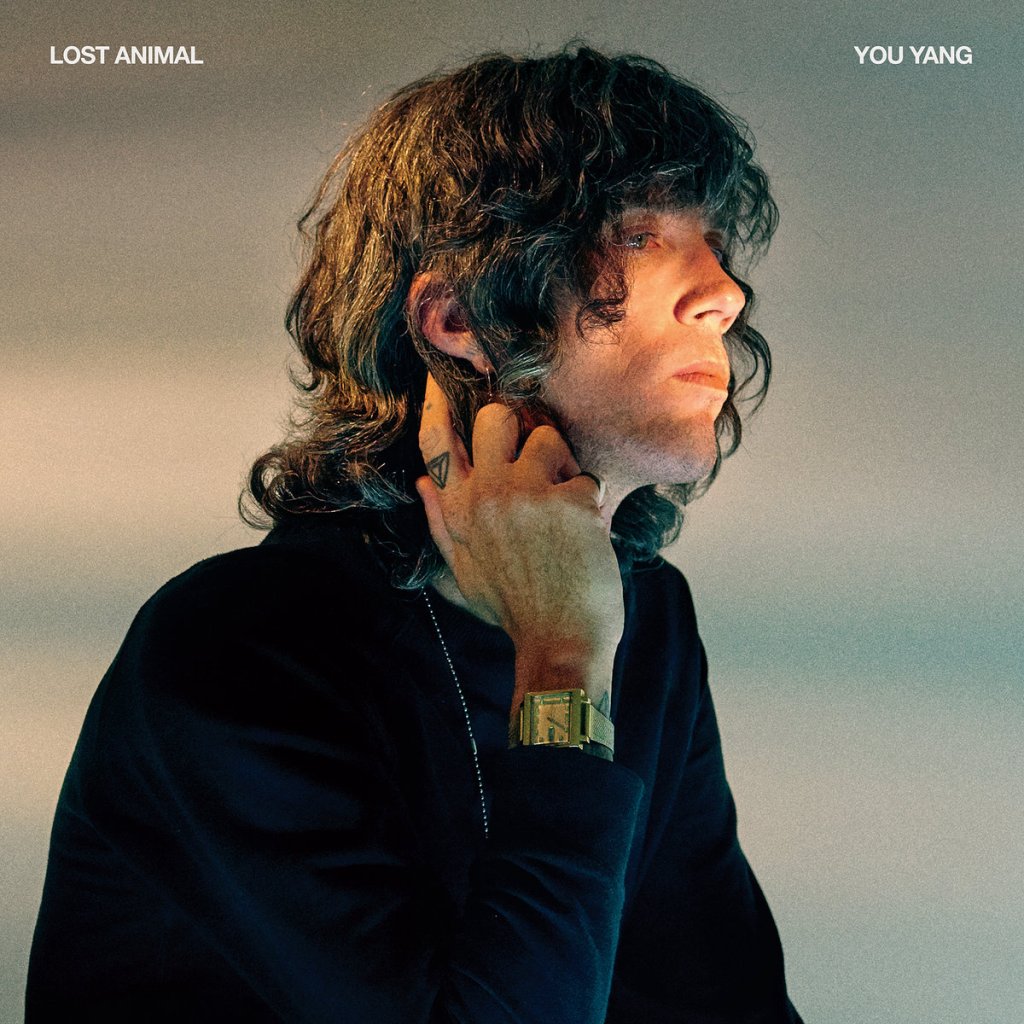
LA: I won’t paint it. I haven’t been painting much. I tend to do other things like that if I’m not writing to try and have an outlet. I’m not sure what it will be yet. The last albums have been a side profile shot, maybe it could be a side profile shot of an animal or a bird. I did some photos with a friend, and one was double exposed, that looks really good.
Have you tried anything different on this album?
LA: I’m playing a lot more guitar. I’ve be singing a bit more rather than just sort of the talk singing I do.
Is singing something you’ve always done since you were little?
LA: Yeah, I always wanted to be a singer. Always wanted to be a front man.
Who was the first performer to inspire you?
LA: Michael Jackson. No one’s done it like Michael Jackson has done it. Maybe Prince too.
The first people that made me think I want to do that more, was maybe Bob Dylan, and songwriters like that. Dylan is a big fav. If I could write songs like he’s writing when he’s fucking 85 or whatever he is, that’d be cool. I just don’t want to sound like that, though. I don’t want to sound like anything else.
That’s the best thing anyone can do—not be a replica of something that already exists. That’s the highest achievement you can get.
LA: I think so. People ask me, ‘What kind of music do you make?’ I just say—good. I refuse to describe it. I can’t describe it. That’s all a little bit stupid.
Most reviews these days should just be called ‘comparisons’ because that’s all they do. But they’re really bad with the comparisons. I find that a lot of people who write about music don’t have many reference points; they have a real limited knowledge and just compare it to something popular, even though it doesn’t sound anything like it.
LA: Oh, man. You shouldn’t seen some of the comparisons we got in America. One said we were a cross between Pearl Jam and Gorillaz. I mean, yeah, there’s a little bit of dubby stuff and melodicas and stuff. It’s like, ‘Okay, your record collection is big Billboard Top 20 stuff, right.’ I used to get really annoyed at all that. I’ve just let it all go.
I used to go see a psychic, and I’ll always remember a piece of advice she gave me: what other people say about you is none of your business.
LA: Very true. Yeah. My therapist really helped me with that.
You don’t want to take on that energy they’re putting out there. It really has no effect on you unless you let it.
LA: Yeah, totally.
Or people will say something to you and they haven’t even really thought about it much, but then you take it to heart and it’s a big deal for you and upsets you, but it doesn’t do a thing bad from them.
LA: Yeah. And perception is a funny thing too. A lot of times someone has been a bit standoffish and I thought, they haven’t liked me. But it’s come to pass that they’re just a bit shy and actually admire me. Sometimes your perception is off of what people think.
Some people definitely mean it, though [laughter]. I always take people on a case by case basis because sometimes you can hear things about people, but then whatever your interaction is with them could be different.
LA: Yeah, it’s a good way to be.
In front of us is, over there, is a fairy tree apparently and it was created as a place that is sacred and safe and it’s a place for kids to imagine and dream. I was wondering, do you have a place like that?
LA: Yeah.
Where’s your fairy tree?
LA: In my mind, my consciousness is my fairy tree.
Do you meditate?
LA: Yeah, I meditate. I’m reading a book on Astral travel, which is basically a form of meditation.
I’ve meditated on and off for about 20 years. I find it really useful, especially for my mental health.
LA: I did a short course on Transcendental Meditation. They gave me a mantra.
I’ve always wanted to try that.
LA: Just make up your own.
Really?
LA: It’s like, we know what to do. Just make up your own mantra, really. That’s all it is. I changed mine because I didn’t like it. It didn’t feel right. I was like, well, fuck that, I’m just going to change it.
And then it felt right?
LA: Perfect. Yeah.
That’s very punk rock! [laughter]
LA: [Laughs] Well, meditation is pretty punk rock, I guess.
Photo: Jhonny Russell
Has it helped with being present?
LA: Yeah. Or maybe not. No, it definitely does. I’ve been thinking about meditation. People think you’ve got to quiet the mind. That’s not it. It’s like getting away from your mind—like, consciousness is here, it’s not in there. It has to be nothing. I feel like that’s what I’ve seen. Consciousness feels like that. And I feel like I’ve got consciousness on multiple levels. My instinct feels like it’s here. My intuition is in my solar plexus. Sometimes I can feel things going on behind me, in my back. I’m just starting to become aware of things that maybe I had little inclinations towards and maybe ignored. I’ve looked at these things in the past but never stuck to them, never really put them into practice in any kind of way. I’m becoming a bit more disciplined about it, being more disciplined about my mental health and doing what it takes to protect it. If I’m tired, I rest. If I’m stressed, I don’t go to those places that stress me out. Hard-earned lessons. Same mistakes made over and over again.
A lot of stuff in Buddhism and different spiritual texts, say that you’re just going to keep learning a lesson over and over and over until you get it.
LA: Yeah, that makes a lot of sense to me.
And then if you get it—you level up.
LA: Yeah, I think so.
It’s so good to see you healthy and it’s such a good place and making music. Like, you mentioned to us before that you were thinking, you have this opportunity, you’re still here to make music, you can do this!
LA: Yeah. I realise that’s a great thing about music. It’s not like we’re the people that are going to come up with the thing that’s going to save the planet, but it might be the people that write the song that inspires the person that saves the planet, and that’s enough. Just play your part and do it the best you can.
I love that when we make a song it can inspire and go places that we may never go, and affect people in ways we’ll never know.
LA: Yeah. I get people write to me all the time, from Europe and America. Or they’ve heard, Tropical Fuck Storm do my song [‘Lose the Baby’] and they reach out to me. So, yeah, it’s beautiful.
How did you feel when they did your song? How did it come about?
LA:They told me they were playing it. Dan was still in The Drones; they’d done a side project thing and played the song a few times, so I knew that. Then Gareth wrote to me and said, ‘Look, we’ve been playing the song, and we want to put it on a 7”.’ I played it with him a couple of times. It was cool.
I was in a band called St. Helens. Towards the end of St. Helens, I’d started Lost Animal and had written ‘Say No To Thugs,’ ‘Lose The Baby,’ and a bunch of the songs on Ex Tropical. I thought, oh, maybe I should give them to St. Helens. So I tried them in St. Helens. The St. Helens version of ‘Lose The Baby’ isn’t too far off from the TFS version. It’s a long version. To me, the TFS version just sounded like the St. Helens version, but they wouldn’t have heard that. Gareth is a great songwriter, and he wanted to do my song—that’s cool.
Both you and Gareth are my all-time favourite Australian songwriters.
LA: Oh, really?
Yeah, for real!
LA: I’m playing on a song of Gareth’s next week. He’s reissuing his solo album, he’s re-recording a song.
Awesome! I know you grew up in the bush, like country Victoria, and Papua New Guinea, and you lived in Geelong.
LA: Yeah. Castlemaine too. Some other places, and then I moved to Melbourne when I was 21.
Why Naarm/Melbourne?
LA: When I was a teenager, Geelong was awesome. Heaps of fucking great bands three to four nights a week.
What bands did you see?
LA: Bored!, Magic Dirt. There was Warped and She Freak, they were Geelong bands. There’d be bands that tour, like, Meanies, and Hard-ons. And then international bands. Especially back in the 90s, like Shellac and Fugazi. They’re probably the best live band I’ve ever seen, as far as energy goes.
We love those bands. I saw Fugazi when I was younger and they were incredible. When you play, is there a kind of, like, energy that you try to bring? When we saw you play at Jerk Fest, you brought a really cool vibe to the room.
LA: I just try to be open. I try to give as much of myself as I can and not hold back.
When you first started doing Lost Animal, that was the first time you were playing with a backing track, and I understand that was challenging in the beginning?
LA: Yeah. I used to shake.
Really? Wow.
LA: Yeah. But that’s what I wanted to do, so I just made myself do it.
It’s good to put yourself in situations that scare you sometimes, I feel like we really grow in moments like that. What are the things that are making you happy right now?
LA: I’m happy knowing I don’t feel like it’s a struggle anymore. I feel like I could sit down and write a song anytime I want to. I just hope I keep feeling like that. It feels like after this record, the next one will be ready in a year and a half. I’d be very surprised if there weren’t four records in the next five years. That’s how I feel. We’ll see.
I hope your creativity keeps flowing. We’re so here for as many Lost Animal records as you’ve got!
Original photo by Jhonny Russell / handmade collage by B
Cloud Ice 9 were one of the most interesting bands we saw at Jerkfest last year. Their hard-to-define music is punctuated with unexpected moments. Delightfully wonky, unfolding like a constantly shifting kaleidoscope, each note rearranging itself into new, mesmerising patterns creating a brand-new galaxy for listeners. Their output is immersive and explores the relationship between sight and sound with limited information about them out in the world, beyond their music and videos—until now. We chatted at length with vocalist-guitarist Jordan, and guitarist Reis. They have a great approach to creativity and life, we think anyone could get something cool out of this read.
REIS: I’m nursing some heartache.
Awww, I’m sorry to hear that.
JORDAN: Things have been up and down. In Melbourne, at least, we’ve been out of lockdown for a year and a bit now. So that initial exciting time of being free and enjoying each other’s company out in the big bad world has sort of simmered down a little bit. It’s gotten a bit more about recalibrating and figuring out one’s general approach to life and your trajectory [laughs]. There’s been lots of changing and fluctuating, mostly for the positive. A lot of people are stressed—money-wise, job-wise, and life-wide. It’s all a little bit turbulent at the moment.
REIS: Definitely. I’d say that there isn’t a single person that I’m dear friends with that is financially secure at the moment. But maybe that’s a reflection on the kind of people we hang out with [laughs]. The general sense of optimism post-COVID has just been crushed by this impending recession and the rise in the cost of living—the whole shebang. As people doing the kind of things we do, a little bit out on the fringes, those waves are definitely felt a lot harder.
JORDAN: But by that same token, I feel like it’s times like these when it feels like the best things kind of come to the surface and to combat that. Winter is coming, I feel like it’s the best time for people to actually generate interesting, positive things to kind of cope and help them manage.
REIS: Easy for you to say, mate. You’re fucking off to Europe! It’s going to be so hard for you.
[Laughter]
JORDAN: I’ve done my time. I wanted to do some writing and some soul-searching. I’m going to Poland, where my family’s from, and I’ve never really been before. Mostly just to explore and take a break. Spend some time being very present and focusing on where am I going to sleep, what am I going to eat, how much money does this mean in my pocket. Be a lot more day-to-day for a couple of months.
Are you both from Naarm/Melbourne?
REIS: The short answer is, yeah, We both grew up in Melbourne for the most part.
JORDAN: I was born in Sydney and moved here when I was four.
REIS: I was born in Turkey and my family came over when I was young. and have gone back and forth a couple of times. For the most part, Melbourne has been home.
How did you get into music?
JORDAN: Pretty differently, I guess. Different ages, different times. I’m turning 29 in a month.
REIS: I’m 28.
JORDAN: We went to high school together and lived together for a while afterwards. I got into music pretty young and was learning different instruments. I went to art school and got spat out and felt pretty dejected by it all. It was then that I moved in with Reis, when we were around 23. That’s when we really started making music.
REIS: I was definitely a big fan of music. I picked up a guitar when I was 21. I had a very different musical upbringing to Jordan. Only from punk and hardcore, that level of accessibility, got me to think about it in any sort of serious way. Then I just played in a band and just went from there. It definitely took over my life in a way that I really didn’t expect [laughs].
JORDAN: That punk accessibility thing, and what Reis had going, was really inspiring for me. Because, like I said, I was feeling dejected and confused about going to art school and getting chewed up and spat out.
Reis would be in the shed, making music on Audacity with iPod earphones and just really winging it—DIY-ing it. That inspired me to get back into doing things in a way that feels very organic. It felt free from any things you might think you need: the right gear or a sound engineer or this and that. Which can all get quite paralysing because it’s not really always feasible.
REIS: Earlier than that, Jordan literally showed me how to hold a guitar and play chords. I learned so much from being around this guy. What I do would be very different if it wasn’t for him.
JORDAN: Our first project was called, Dingo and Rocco. That was born out of Reis letting me stay at his mum’s house when we were younger. We started playing acoustic guitars together and started writing weird, chaotic love ballads.
[Laughter]
REIS: We’d be busking out the front of the IGA.
JORDAN: We’d get $20, say, ‘That’s a hard day’s work,’ then go across the road to the pub and get a pint.
When we were living together in our own place, it became more experimental and bigger. We had a big barn full of Hammond organs and a lot of weird junk we found at tips shops.
REIS: We had a pirate radio station [laughs].
JORDAN: We were experimenting, and Cloud Ice 9 started to form, around 2018 or 2019. It was a fair bit before any thing tangible really came together.
Photo: Jhonny Russell
When you first started hanging out, what were the things you’d bond over?
REIS: Knowing each other in the high school days, I guess, just puberty blues.
JORDAN: We liked weird things. When we lived together, we had this huge, sprawling property in Brunswick West with all these sheds; we had heaps of room. Reis had a van and we’d go pick up a lot of weird gear. We had a huge VHS collection too; we were really obsessed with watching old weird tapes.
The experiment and play surrounded with all these different toys, like broken organs and old pump action pianos, and even balloons in microphones of heaps of delay. We just love to play. We bonded through that musically.
REIS: It felt very insular. It felt like a very small world that we just kind of carved out and spent a lot of raw hours nutting out the details.
JORADN: I liked that it felt like we obviously didn’t have big musical inspirations; what we were doing was far removed from that. Just play and experimentation—that felt like a nice organic process. It inevitably started to take a form. Saying that, we are both very obsessed with Alan Vega and Suicide, and some of those old heads.
REIS: I was watching this interview with Vega where he was talking about some of his sculptures that he’s made, and he has the approach of just making something to make something. I wonder about those kinds of people that are completely unaffected by what’s going on around them—to have such a strong sense of what you’re doing is right. That doesn’t just come with music; it comes with fucking everything. Knowing people that even a salad they’re making is art—it’s a bit much for me, but I like having those people around.
JORDAN: They’re more into the entity and context of the art than the art itself a lot of the time. We both grew up on Brian Jonestown Massacre. I really felt like that was more about that ‘schiz’ dynamic that Anton had orbiting around him. It was more about the life and the headspace and the dysfunctionality of it all—that was more fascinating. The strange creative humans navigating a contemporary civilisation and what comes out of that. There’s a lot of Brian Jonestown Massacre music I could take or leave, but I feel the whole context really adds to it. The same is true for a lot of artists that do inspire us.
When you started Cloud Ice 9, was there anything at all that you had in mind for the project?
JORDAN: It took a long time. It was me, Reis, and Jim in that shed in Brunswick West. It was more about getting stoned and making music that almost wasn’t music. Literally feeling it out and then trying to make sense out of complete nonsense. It slowly formed into actual songs. The songwriting was mostly inspired from books and film. Musically, that stuff was quite intuitive.
Conceptually, I was obviously reading a lot of Kurt Vonnegut at the time and weird sci-fi stuff. I wanted to write music from the perspective of aliens that had come to Earth, and sort of celebrating the apocalypse. Natural musical influences from Suicide and outside of rock came to the surface too. Essendon Airport.
REIS: Definitely all of that. I felt like when we were starting it, we didn’t really have much of a vision of what it was going to be. For me, it felt like it was a really strong anecdote of a lot of the music that was around that we didn’t identify with—kind of how formulaic a lot of it was. It’s funny because I feel like a lot of people have said to me, ‘Cloud Ice 9 is so weird!’ But I think it’s fairly tame.
JORDAN: I always really liked bands that didn’t really sound like anything else. I grew up on the Gorillaz. Demon Days was the first CD I ever owned. Maybe I can break it down a bit more now, but at the time, it sounded like nothing I’d ever heard. It crosses so many genres and has that world-immersive thing that you do feel like it’s its own entity. I don’t know if Cloud Ice 9 is there yet, but I would love it to create its own world and sort of be able to touch on certain things but retain a certain element of its own thing.
REIS: Ben Wallers and the Country Teasers is a definite influence of that—being reminiscent of something you’ve heard before but completely different.
REIS: Something gone wrong.
[Laughter]
People keep asking us what bands we loved most at Jerkfest this year and the ones that resonated most were you guys, Red Hell, and Essendon Airport. Then people ask, ‘What do they sound like?’ That’s hard to answer because you all have created your own thing. I believe that you have succeeded in creating your own world.
JORDAN: That’s sick. So nice to hear. We’re about to put out this album of live takes of improvisations that we’ve been recording and archiving over the years. We’ve got hours and hours and hours of nonsensical jams, essentially. No tangible vocals really. We’re casting a wide net. We’ve been playing for a while, and it only feels like in the last year or so, it’s starting to get a bit of traction.
I’ve been describing it as country sci-fi to people/jazz gone wrong. I like that you can’t really describe it. There’s a lot of bands that sound like a lot of bands around where we’re playing. It’s nice to be a bit different, but I guess we also don’t want to become the ‘weird’ band [laughs]. We want to also write good music!
REIS: I don’t think it ever has mattered what we want, it’s just what we do.
Photo: Jhonny Russell
Jhonny, who I do Gimmie with, mentioned that Cloud ice 9 sounds wonky.
REIS: Yeah!
[Both nod in a agreement]
JORDAN: I like it when music is kind of a walking pace. I like when the beat is like, dun, dun, dun, dun. It kind of gives it that off kilter thing.
REIS: Recently, we have a real point of contention in the band, as to how slow to play one of the songs.
Your album Circus St, is your second album. Where did the title come from?
JORDAN: It was just an idea I had that, basically, life, at the moment felt like that. Coming out of COVID. Cloud Ice 9, in general, is about enjoying a sense of liberation in the fact that the world is kind of ending. Circus St was an embellishment on that—life is a bit of a circus. When you walk out onto the street, it can sometimes feel like that, just the bizarreness and ridiculousness of it all.
It reminds me off, Reis and I, did this interview with this person called Barbara, who’s a puppeteer, and they’re a bit of like an icon around Melbourne. They’d dress up in a wedding dress, this bearded, ragged old man. We actually got them to perform with us a little before Circus St came out. They would busk. That really coined the idea of Circus St to me, because they were this strange clown on the sidelines of the streets of inner-city Melbourne, reminding you of how bizarre and crazy everything is. The acknowledgment of what Barbara was doing was more genuine than a lot of people that are going into Myer and trying on perfumes, or people in suits late for things. It was that acknowledgment of, it’s all a kind of a strange, mad construction. Circus St came out of thebizarreness of our modern little world that we’ve created.
Me and Jordan also do a little label, which all the Cloud Ice 9 stuff comes out on—Happy Tapes.
JORDAN: We’ve kind of slowly been tracking down curious individuals that interest us. Spend a day with them and document them, chatting, and making little things out of it.
I spent hours talking to Barbara on the phone after that. Barbara is coming from a similar place. When we went over to do the doco, Barbara was like, ‘Oh, so are you two with the SBS or the ABC?’ We’re like ‘No, we’re kind of like you. We’re weird dudes.’ We bonded over that.
[Laughter]
JORDAN: They are a very difficult person to track down.
REIS: The latest I heard was that they were sleeping in their car, and their housemate had just gone to jail.
JORDAN: They have a pretty unstable world…
REIS: But, hey, who doesn’t?
Photo: Jhonny Russell
Why’d you call it Happy Tapes?
REIS: It’s just kind of neutral name…
[Laughter]
There’s a lot of ideas in this label. We didn’t want it to be pigeonholed by slapping some sort of like a death metal name on it, or something like…
JORDAN: Spiky Tapes!
REIS: We wanted something that’s open and accessible, like the things we like.
JORDAN: Not always accessible.
REIS: But fairly accessible.
JORDAN: Very eclectic. We do a lot of different stuff, maybe to our detriment sometimes. Stuff that we’re interested in.
What’s something that’s been making you happy lately?
REIS: Music. Me and Jordan did a trip to Vietnam and got some pretty wild cassettes and VHS that we bartered tooth and nail for. We’ve been watching those, listening to a lot of the music that we got from there, and trying to learn how to play it.
JORDAN: Olive bread, and Magic The Gathering, mostly. I’ve been really getting into shakshuka at the moment, I’ve been honing my recipe. Honestly, though, just being with friends and talking has been bringing me the best feelings as of late.
Same. What made you want to seek out interesting people, get to know them and document them?
REIS: I’m doing another video now on this 60 year old Congolese guy, Leona Kakima, who’s been a bit of a local around Footscray. He’s like the Alan Vega of the Congo. This dude is amazing. He’s an absolute superstar that produces all his own music and performs solo to a backing track in little African restaurants and clubs around Footscray.
I really love documenting people that are not getting the recognition that they deserve, or those larger-than-life characters—diamonds in the rough, real assets to culture from my perspective. These are people that never got their little piece of pie cut out for them. The thing that I’d love to see, a commonality between all these people, is that they keep going and keep doing what they do, regardless of what anybody says and regardless of any acclaim anybody gives them or pats on the back. For people who have been doing any sort of creative pursuit for a while, that’s one of the most inspiring things you can digest.
JORDAN: They’re outsiders that don’t really fit the mould and can’t really be commodified in a lot of ways because they don’t fit into our idea of what’s marketable in modern society. That doesn’t matter.
Barbara, for instance, who’s living this chaotic life, It’s a really hard thing to do, but when they perform, it is unwavering. They couldn’t do anything else. There’s something very empowering about that. It’s very inspiring for people like us that also refuse to play ball a lot of the time…
REIS: For better or worse.
JORDAN: There’s a lot of us out there that don’t want to conform, and capitalism, and the way that the world works at the moment, doesn’t make sense for us. You can either morph yourself into a mould that fits the shape of society, or you can go down your weird little dark, off-the-beaten-track trail in the woods and see what you find.
Artwork by Alexandra Obarzanek
That’s where things are most exciting to me! We love the cover artwork for Circus St, your grandma painted it Jordan?
JORDAN: Yeah. I inherited a couple of her paintings. My grandparents house was full of them; I grew up with them. She was an artist her whole life. The painting is from the 80s. It’s called ‘The Feast’. It’s huge, it’s in my bedroom, actually, and it’s intense. It takes up a whole wall; it’s a little weird to witness constantly.
She was a pretty interesting lady. She’s my Polish side. Her, my grandpa, my dad, and uncle lived on a kibbutz in Israel for quite a long time before moving to Melbourne. She was constantly making art, but she never really exhibited or tried to. It’s like Barbara and these people that don’t have that mindset of, how can this fit into something tangible? It just poured out of her. She was actually a very anxious and depressed person, so it never really came to the surface. It always really resonated with me, and I always wanted to find a way to give it new life and celebrate it. It seemed to really fit in with what we were doing. There’s more to come.
REIS: If we can scrape some more money together to keep putting out records, then you’ll see a lot more of her paintings, that’s for sure.
Wonderful! I can’t wait. I find that a lot of artists and musicians can be anxious and depressed people. We make art to help us process everything that’s happening in the world and our world. Also, we create beautiful things to try and connect with something other than our immediate pain, something better.
JORDAN: Yeah, it’s ironic in a way, because if she was able to share that work when she was alive, it would have given her a lot of happiness. But she couldn’t. If she was able to be in a mental position to share it and allow it to resonate with others, then I think it would have helped her. It’s just the way it is sometimes. Maybe that art wouldn’t exist without that sort of headspace in the first place.
REIS: I agree with that sentiment so much. We’re so caught up, we’ve lived our whole lives just in this small skull and experienced the world through these eyes. And there’s very few things that allow you to connect with people beyond anything that you could describe or touch. The function of art, at its purest form, is to make you not feel so alone.
Totally. And your music can go places that you might not get to. How did the Circus St album get started?
REIS: We made one in a lockdown. Jordan’s kind the real pants wearer…
JORDAN: I do wear pants.
[Laughter]
REIS: We come up with a lot of the ideas and the songs together, but when push comes to shove, Jordan really does produce most of the records. I’ll spit out some demos and stuff every now and then, and we’ll work on stuff together. But there’s a couple of couple of songs on there that has got no one else besides Jordan. The reason that the record sounds the way it does is because of his ability. It’s a beautiful thing. We’ve talked a lot about the live thing being a very different kind of rendition of those songs, not trying to replicate the way that it sounds.
JORDAN: We do play a lot together, at home and stuff and we record pretty much everything. What the end product is, is a lot of, me meticulously going through these recordings, taking sections, twisting them and re-recording them. So it all does come from a pretty organic place. Then there’s this arduous production side that I’m pretty obsessive about. Every day I’m unravelling that stuff.
Circus St came from off the back of 8BALL. When 8BALL came out, we didn’t have a fully formed band. We hadn’t played live before. That only started happening even after 8BALL came out, and very infrequently because of sporadic lockdowns. The idea of the live band was a lot less fleshed out and came secondary. Now it feels like the opposite, where the live band is becoming the focal point and the recorded stuff is coming off the back of that.
Circus St was sort of somewhere in between. We were recording, we spent some time at RMIT Studios, scamming some free session time with students. That brought to life a lot more of the band element in the recorded stuff. They are strange renditions of live jams and things. I feel those two worlds are coming closer together now, with this improv album we have. We’ve also got the workings of, not a straightforward album, but songs with vocals. We’ve only had a fully-formed band for two years. So that’s starting to make more sense and inform recorded stuff a lot more in the future.
What inspired the more spoken word vocal?
JORDAN: Aesthetically, it feels more punchy and I like the feeling; they’re more like slogans and announcements than lyrics. I appreciate that. And maybe I’ve just got into the habit of it and forgot how to sing properly [laughs].
REIS: He’s saving his Alicia Keys moments for the record. It’s coming.
Nice! I love Alicia Keys.
REIS: Me too!
[Laughter]
JORDAN: The singing is coming back. Maybe I’m a bit traumatised from my alt-rock Radiohead days.
Photo: Jhonny Russell
You were doing the band, Dull Joys?
JORDAN: Yeah, that was my ‘how to play in a band’ instruction manual through my early 20s. Technically, it was engaging, but stylistically, it was not exactly what I was interested in. But it was very informative. The whole ‘singing your little heart out’ got a bit squashed by all that. It was like, ‘I’m just going to talk now. Keep to casual.’
REIS: I remember listening to ‘Casual Assembly’ by EXEK with you and you really liking that a lot.
JORDAN: Yeah, definitely inspired by a lot of post-punk and new wave. My biggest inspiration for making music was soundtrack music for film. There’s always talking with with music in the background. I really appreciate the atmosphere of the casualness of conversation with a lot more evocative things happening behind it.
We love the video you made for ‘Horny Snail Pyramid’. It’s very Dungeons and Dragons.
JORDAN: Yeah. Me and my girlfriend at the time were very obsessed with old mediaeval films: the dress ups and fantasy element.
REIS: The Soviet Lord of the Rings as well.
JORDAN: Have you seen that?
REIS: Oh, my lord!
JORDAN: You should YouTube it. It’s incredibly terrible. The green screens! Golem is this fucked up alien, gremlin creature in the caves. It’s incredible. Masterfully terrible. Reis had also been honing in on his VHS camcorder craft. So it all just made sense. We were originally wanted to go to a castle but it just ended up as a few green sheets in Reis’ garage. It came out all the better for it.
Doing things yourself you can be uncompromising. You don’t have to diminish or change what you’re doing. You present it how you want to. It doesn’t matter about views, at the end of the day, you have the people that will get it and you appreciate that more. We definitely want to do more film work.
REIS: We’ve got a couple of schemes for the next one. We’re about to release a more instrumental album. It’s us in various sheds and garage around the place just wining it.
JORDAN: It’s an experimental album called Hocus Pocus. We were thinking about doing something more sci-fi for that. It will all come to the surface soon enough.
On your Bandcamp, there was this really great comment that someone left about Circus St, it said: this album fills me with energy of daring and endless possibilities. I feel so alive listening to it.
JORDAN: Yeah, that’s my mum! She’s a very special woman and very supportive.
[Laughter]
Have your parents been to any of you shows?
REIS: No, mine haven’t. But shout outs to all the mums. We dedicate all the Cloud Ice 9 records to our mums and the women who raised us.
JORDAN: Yeah. I reckon my mum comes to about 80% of our shows. She’s very supportive. I love her lots— shout out to my mum. She’s like us in a lot of ways. She appreciates the stranger and more off kilter things. She’s a huge, huge inspo!
REIS: The first Cloud Ice 9 video clip was cut up of a short film that Jordan’s mum made. She used to make short films in the 80s. She gave us a whole bunch of her movies she made on VHS movies.
JORDAN: She used to do Super8 stuff and was part of the Sydney creative scene in the 80s. Similarly, with Grandma’s paintings, I used to work with Mum’s footage and make music to it. It just feels like a nice way to [puts on a Don Vito Godfather voice]—keep it in the family!
[Laughter]
REIS: We love to reappropriate lost media.
That’s awesome. Do each of you have a favourite song from Circus St?
REIS: The last song of the record, ‘Lion Tamer’. I don’t want to pat ourselves on the back too hard but we had this idea for this AI-generated voice and Jordan had written a pretty great little story that flows throughout the record. I like that ambient drone juxtaposed with the AI stuff. That one gets me.
JORDAN: I’ve got such a soft spot for ‘Horny Snail Pyramid’. I feel like that really encapsulates a lot of what we’re trying to do. The song almost doesn’t make sense. It feels like it’s teetering on the edge of falling apart the whole time. We wrote that riff together years and years ago go. We had no idea what to do with it. I slowly formed these words for it and almost wrapped over the top of the guitar line. I was begging these guys to give it a go, showed them with the vocals and they were like, ‘Yeah! Let’s do it.’ It took ages to figure out how the hell that song works.
Photo: Jhonny Russell
Is there anything you guys hope people get listening to Circus St?
JORDAN: I hope the general theme of Circus St and ideas behind it come through. I’m proud of what that album talks about and how it relates to modern society. I don’t know if it’s a car album or background album. There’s a lot of weird AI voices. I do hope people can enjoy it in a pretty relaxed setting in a low key way.
REIS: I hope that after a long day at work, someone who wants to disconnect a little bit can put that record on and get taken to our world.
JORDAN: Like with Barbara, the puppeteer, I hope that it makes you feel like that a little bit; that everything’s a bit wonky and bizarre. That you take a moment to be like, ‘Oh, I am a human being in a modern society; that’s actually not that straightforward.’ It’s actually quite a strange thing as an animal.
[Laughter]
I get it. A lot of things in our society aren’t really geared towards nurturing humans. We’re bombarded with so much every day.
JORDAN: Yeah. There’s a lot of manipulation. There’s a lot of chemicals that need gratifying and become strange obsessions.
REIS: The bottomline is that—life offers you a lot of disconnect. It’s not for the benefit of you but it’s an extraction of your attention. It takes from you but doesn’t give a whole lot back. The power of art and music is that it does have that symbiotic relationship where it can give you something back and it can affect your mood, and you.
JORDAN: The art that makes your brain change is inspiring. You can feel new synaptic waves firing in different directions. It’s what it’s all about.
REIS: 100%. I’ve been listening to Public Enemy so loud over the last week that my neighbour, who I haven’t actually spoken to ever, came over and told me to keep it down.
[Laughter]
Nice! Anything else you’d like to share with me?
REIS: We’re always tinkering. We’re open books. Let the public see it all.
JORDAN: Give the public what they want.
REIS: I don’t know if they want it.
[Laughter]
JORDAN: Give the public what they’re going to get!



 Gimmie Gimmie Gimmie Zine