Dragnet’s Accession: “Everything we’ve got is on the album, nothing left up our sleeves.”

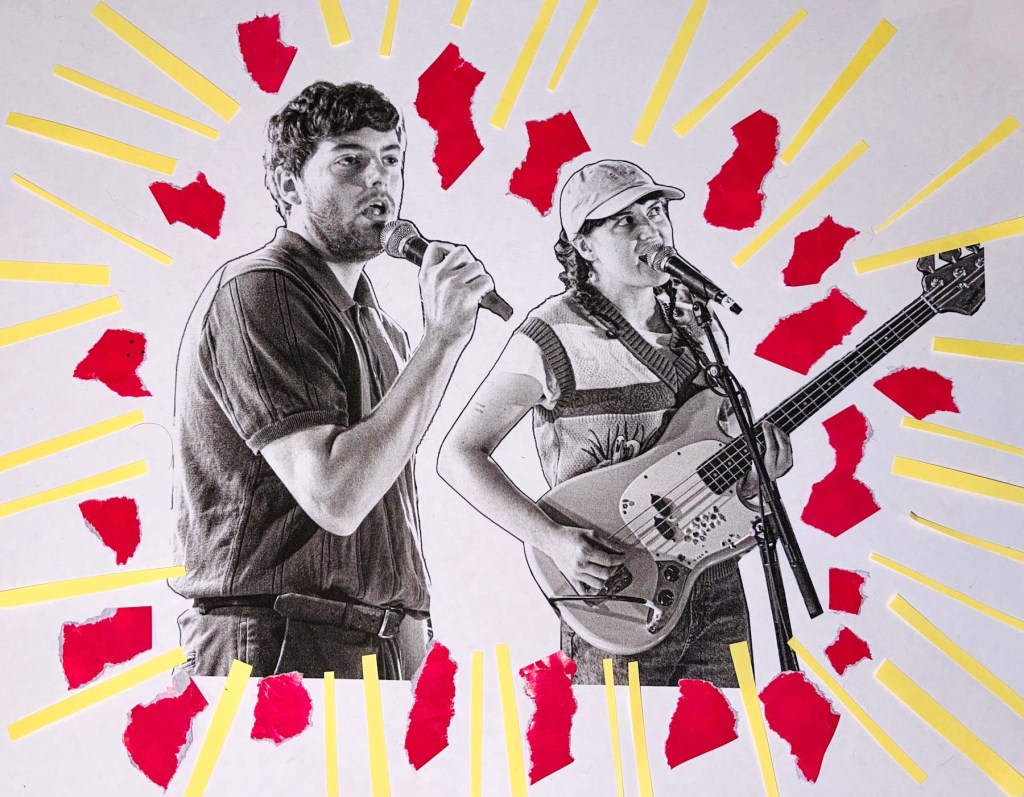
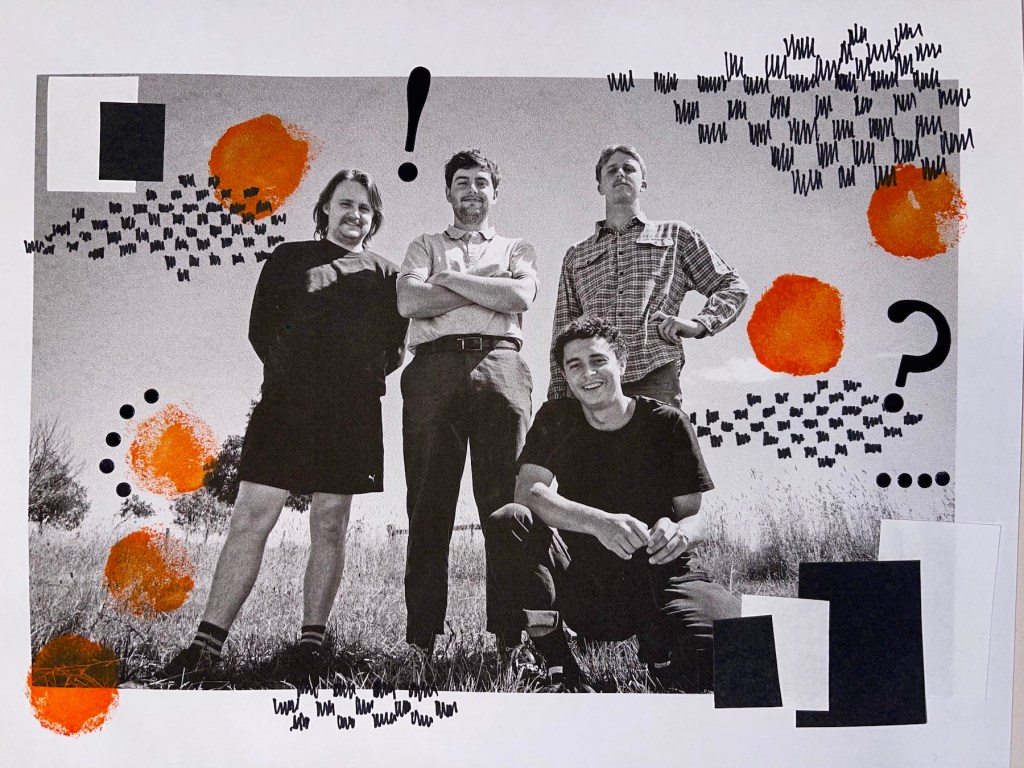
Original Photo by Jhonny / Handmade collage by B.

Dragnet’s new album The Accession has humour, technique and style, rolling out songs about Tony Hawk’s Pro Skater, horse tranquilliser, arrogance, and feelings. Lyrical one-liners pull punches with impeccable timing; the songwriting their sharpest to date. Gimmie spoke to vocalist Jack Cherry and bassist-vocalist Meaghan Weiley about their record.

What’s life been like lately?

MEAGHAN WEILEY: it hasn’t been too bad. I started a new job at the ASU which has been super fun. I feel like everything is so busy at the moment, so I’m trying not to be busy [laughs].

JACK CHERRY: I feel like I’m at the stage now where both Dragnet and Vintage Crop are both ramping up to do stuff this year. I feel like I’m in the eye of the tornado at the moment, where I feel like I’m not busy, but I know in three weeks time I’m going to be so busy. It’s exciting though, I guess that’s kind of why you do it. I can’t complain too much.

We know a little about your background from our previous chats, Jack; Meaghan how did you come to be in Dragnet?

MW: I met Jack through going to Vintage Crop shows. Vintage Crop were the first band I found through listening to all the stuff on Anti Fade. I found them through going to see shows at The Tote… actually I think the first show was at The Old Bar. I thought the show was so sick. That’s how we connected and met. 

A couple of years later, Jack said, ‘I’m doing this new project do you want to play bass in it?’ I was like, ‘Cool. I don’t play bass but I’ll do it’ [laughs]. It sounded super exciting, it’s always exciting to play music with new people or people you never really get to hang out with heaps. 

Had you played music before?

MW: I had. I did music in school. For my HSC I played piano but I hadn’t really picked up a guitar or any of that kind of stuff. I had done a band called, House Deposit, which was the only time I had picked up a guitar. We put out an album, but it wasn’t very frequent.

Jack, you’ve previously told me that making your last Dragnet album All Rise For Dragnet was about immediacy and not having to go through the kind  of creative process you do with Vintage Crop; has the way you make songs changed since then? I feel like everyone contributes on new album, The Accession.

JC: Yeah, it couldn’t be more different from what I said back then. We recorded this album in November 2021 and it’s coming out now. It’s been the slowest process I’ve had with any album. I really have to eat those words because it’s not immediate. It’s probably better this way though, to be honest, because we had time to work on it and think about it. If we did it the way we did the last one then it probably would have been the same as the last one. This one feels like it’s growth. Everyone contributes. Maybe this album is more about me letting go of a lot of that control-freak-ness. But, I haven’t let go at all; the idea is nice [laughs].

I don’t think it was on purpose for it to sound different. It was recorded to tape this time and we did it all with less of a rush, even though it was done in a full day. 

It was recorded live, right? You mention that on the first song.

JC [Laughs] Yeah. It was recoded live and we didn’t use any tricks. What you hear is just us, what you’d hear at a show, but it’s on your stereo instead. 

It reminds me of hip-hop albums I love to listen to, it has a braggadocios-ness.

JC: I’m so glad you said that because that’s it, 100% it is. That’s perfect. 

We really love the song ‘Lighten the Load’ that you sing on Meaghan!

MW: I actually didn’t write that song. As fas as I know it’s an old Vintage Crop song that didn’t work for Vintage Crop. Jack was like, ‘I have this song, you should sing on it.’ It’s cool because our voices work really well together. That one was fun, I got to yell into a microphone for one take. I really enjoyed doing that. One take and it was good enough. 

I love the opening lyric: I want talk about my feelings. 

MW: It’s funny because… maybe Jack chose that song for me because a lot of the stuff that I had written prior for House Deposit is quite honest and talking about feeling.

JC: Just to go back a little bit, that song was never a Vintage Crop song. It was always a Dragnet song.

MW: You pranked me?!

JC: Did I tell you it was a Crop song? Because it never was.

MW: Maybe Luke or Tyler told me, they knew that song.

JC: I did a big batch of demos before we started  writing that album and I had shown the guys all of the songs but they were never meant for them. I wrote the lyrics thinking of me but then it felt like something Meaghan would sing anyway. I thought it was a good chance to share the song and to literally “lighten the load”. It seemed perfect. 

Let’s talk about the song on the new record. Let’s start with ‘M-99’.

JC: I wrote that one in a night, it just happened at the computer. I was like, ‘This is exactly the song and how it will go. It just rips as a band. I don’t know how it happens that way sometimes but it was one of those rare easy songs that came together. Lyrically, it’s about a TV show, Dexter. He uses M-99 horse tranquilliser to subdue his victims, and that’s literally the whole song.

MW: The first time  we did it at practice we were like, ‘Whoa, this is sick!’ We were loving it. It’s so fun to play, its really awesome. 

When we saw Dragnet at Jerkfest last year it was one of our favourite sets of the day. 

JC: Thank you. Awesome! That’s so great to hear. 

MW: That’s so cool.

JC: Playing early in the day felt fun in that there’s no expectations, we can just go out there and try and have some fun and it didn’t matter if people didn’t enjoy it or we played sloppy. I find that with performing there’s a line where you want to be exciting and unpredictable but you also want to play well, I’m exploring that a lot more now. 

Being just the frontman I din’t have to worry about technical proficiency. I’m still learning the best way to let loose but also still maintain that image of the band. I’m not the sort of frontman that is going to crawl on my knees or do backflips. I’m trying to find the right storage moves. Jerkfest was great for that because we had an audience but it was low expectations.
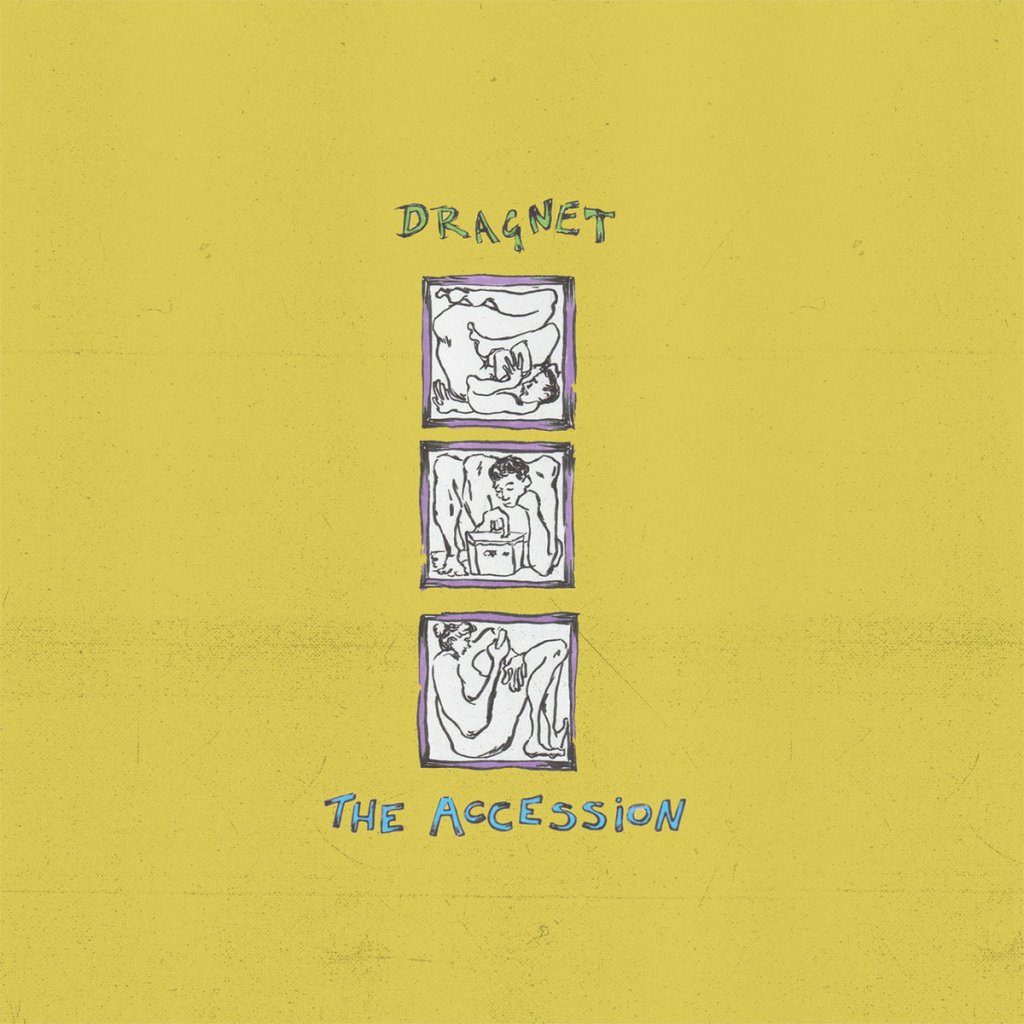
Artwork by Rowena Lloyd 

What about the song ‘Strike’? There’s a video clip for it. 

JC: We put it together at a practice in Geelong years ago. 

MW: Dragnet has gone through a million different practice spaces for some reason. I think we were in an industrial warehouse in Werribee. Some dude had built a studio there. I remember Jack had the bass line for it and we just played it over and over again. Everyone figured out the right stuff for it. 

JC: It had to of been the end of 2019, a long time ago.

MW: Really early Dragnet. 

JC: I have a voice recording of it on my phone. I reckon we revisited it two years later. Everyone reconstructed their parts from a poorly recorded phone recording. I remember Dane playing around trying to find this riff because he had forgotten it. 

What do you remember from making the video for it?

JC: The whole thing was orchestra by Sam and James. Sam runs Spoilsport Records, he lives with James, who does a lot of our art stuff. Sam had told us he wanted to do a clip of the song and that he and James were going to step out into the video world and make stuff. They said, ‘Let’s do a green screen video.’ They found the other footage. We turned up on the day and played the song twice to a backing track and the rest was all them. We didn’t get a draft of it until two days before it came out and then it was out in the world. Our side of it was really easy, I codlin’t imagine there side was. 

MW: I remember that it was really, really hot that day. It was in a converted office space that used to maybe be a dance studio, the walls were lined with mirrors. We also went to the pub afterwards and there was a party at the pub.

What can you tell us about song ‘Birdman’?

MW: That’s a Dane specialty.

JC: [Laughs]. That’s Dane start to finish – he wrote the music and words. We all just try and do it justice. 

MW: It’s about Tony Hawk’s Pro Skater. Dane likes to write a lot of songs about gaming. That game is so fun.

JC: Yeah, he insisted that we have those audio grabs for the Tony Hawk game in the song.  That breakdown bit, he had already made a 30 second clip with noises from the game that he said we had to use. I respect the vision, it’s great. 

MW: I hope we don’t get sued [laughs].

That could be good press for you, with a headline like: Tony Hawk sues Naarm band Dragnet.

MW & JC: [Laughter]. 

The ‘Interlude’ track is fun!

JC: [Laughs] Yeah. That grew out of, when we first started I was really into it… I had a prerecorded intro which is the first song on the first album ‘All Rise For Dragnet’ and we’d play it over the speakers while we’re on stage going about our business, but there’s a backing track on. It’s like part of the show but it’s not really. It’s almost like a kind of performance art. We used to have an interlude intermission in the live show. We’d press a button on the sample pad and play a 30 second break and we’d all stand around and tune our guitars while the song played. It kind of confused everyone, which I love. I thought it would be even funnier to do an interlude on the album, purely for my own enjoyment. I think the band think it’s funny too…

MW: Yeah I think it’s funny.

JC: The motto of the band is: funny but not a joke. That’s something that we walk the line of really well. That track is funny but it also serves a purpose of being the end of the A-side and and preps you to come into the B-side. I think that’s our brand. 

MW: Sometimes I don’t know if it’s a joke or not as well [laughs]. We get so carried away sometimes. People think we’re a funny joke band, and I’m like, ‘Is it?’ 

JC: That’s the thing, I remember seeing Sam the mixes of the record to see if he wanted to release it. He wrote back: this is so funny. I had to clarify that it’s not meant to be a joke. There’s funny parts but the whole thing is serious. 

MW: I think it’s important not to take that stuff seriously. It’s so easy to get caught up in it all—even just in life as well. 

Side-B kicks off with ‘Purple Agitator’…

JC: That’s the other one on the album that was made in 2019. It just came out. It still feels like a bit of a weird song for us. When we play it, I’m not quite sure if it suits the band or not. It’s probably one of the most different songs I’ve written. It doesn’t sound like something I’d write. I’m excited for the album to be out, people might enjoy hearings omitting different from us. The three Dragnet singles have all been angular and punky. ‘Purple Agitator’ is more subdued. 

It’s one of my favourites on the album. I think it does fit. When I listen to Dragnet I expect the unexpected, so in that spirit it fits.

JC: I guess that’s fair. 

Next up is ‘Maths Test’.

JC: That’s Dane as well, he wrote the music and pretty much the lyrics; I jumbled a few tings when we recorded. That one is not about a video game. It’s self-explanatory lyrically. I don’t know if he was exploring anything too metaphorical with that one. It’s just like, no one likes maths. 

MW: [Laughs]. We always struggled learning that one. I love the way Dane writes a song because they’re a little bit complicated. It’s always a fun challenge learning his songs. 

JC: Dane’s riffs are a nice compliment to the rest of the songs because his influences are a little bit different. We recorded with Billy from Anti Fade, when we did that one as we were recording he asked, ‘Is that one of Dane’s?’He knew just by the riff. That’s a good thing. 

‘Sabor Attacks’?

JC: That’s Dane again.

MW: It’s so fun to play, it’s so fast.

JC: He demoed a whole album with songs about the Nintendo 64 game Tarzan. He had 12 songs that were all title after levels in the game. Sabor Attacks is one of the levels. He had the music but nit the lyrics, so I did a deep dive and found a bunch of terms and words for the game. It’s a real time strategy game, it’s in the same format as a scrolling screen. It’s like describing the game, the mechanics of the game, but not what the game is about, which was an artistic choice. 

MW: It’s really cool. I used to play that game, and actually still have it on PlayStation. When I heard the lyrics Jack write it really describes the way you feel when you play that level. It’s so frustrating and annoying, and because the song is fast and agitated in a sense, it really compliments it.   

How about ‘Faces Around’?

JC: It was one of the earlier ones that I had for the album. I can’t remember the lyrics right now, but I know the “faces around” bit was in my head one day when I was at work and I thought it’d be a good name for a song. It was after my grandmother died and I just kept thinking I was seeing her. It was interesting. She lived in Tasmania and I never saw her very much to begin with. I don’t know why I think I’d see her face. The song isn’t about my grandma though, just that idea. We did the funny thing where the guitars go back and forth and Dragn-ified it. It was probably the most challenging bass riff I’ve written. 

MW: It’s a lot of down strokes for me. I remember always thinking when we play it, how am I going to do this for 3 minutes [laughs]. I don’t know how to play bass! We got it in the end! Jack, you actually sing one of my favourite Dragnet lyrics on that song: I don’t talk about the internet / I don’t have it at my house. Every time I hear it I try not to laugh because I think it’s so funny. 

JC: [Laughs]. My favourite is on the HMAS Wanker in the middle of the…

MW: [Laughs]. That’s so good!

JC: The lyrics are all from different things. I think not’s good having songs that don’t have to be stories, it can just be words. That probably fits with our don’t take yourself to seriously thing. If something sounds good, it sounds good and you don’t have to worry about it too much. 

The last track on the album, when I first heard it, it was labeled ‘New Idea’ but now it’s called ‘Swell Head’…

JC: Originally I wanted to call the album Swell Head. When that feel by the wayside I took it and used it for the song. I was listening to an episode of Hamish and Andy from 2008 or 2009 and they were interviewing Robbie Williams. Robbie said that when he was in high school everyone used to call him “Swell Head” as he was really arrogant. I liked that name for someone that’s arrogant. At the time I felt like I was a Swell Head for a little while. I felt like I was taking Vintage Crop more seriously and that I was being perceived a little arrogant or too self-assured or something and that album name felt like a good way to acknowledge that and make fun of it. It was a great way to poke fun at myself. 75% of my material comes from…

MW: Hamish and Andy! [laughs].

JC: [Laughs]. From quotes from people, movie lines or stuff out of books. Things that make me laugh. Things that are interesting. It’s like it flips and switch and I have all the lines that go with it; I can write a song in half an hour because something just hits in the right spot.  

Why were you feeling like a Swell Head at the time you wrote it?

JC: I was at a point where Vintage Crop had just done our first European tour, we were also about to put out a new album. I was wrapped up in the band and taking it seriously. It felt like I might be coming off that way. An inflated sense of self for a while. I was very conscious that, that kind of thing is very visible to people. I wanted to say, I know, I get it, but I can’t help it.’

Tell us about recording with Billy Gardner.

MW: It was really cool. It’s always fun recording with someone you never have before, you get to see how they do everything. His approach was great because I feel Dragnet, for example, will start writing a new song and we’ll be like, how does everyone feel about that? We’d ask Billy and he’d be like, ‘Yeah.’ It was really easy.

JC: I’ve done a few things with Bill before. This one felt like home for me. Billy’s way is very hands off, he presses record and lets you do your thing, and then he gets out a book and reads while you’re playing. It’s nice because you feel like you’re not under the microscope. Because Billy is a friend, no one feels nervous or embarrassed. It’s cruisy. There’s not a whole lot of judgement, which is nice.

You mentioned the album was almost called Swell Head but it ended up titled The Accession; where’d that come from?

JC: When you sit with a name too long it can get stale, same with any idea. We were kind of directionless for a long time, we talked about names and artwork for ages. It took a long time for stuff to fall into place. When it did, the original name no longer fit. We found the right name. 

I think I messaged you at midnight one night, Meaghan, to say The Accession would be the album name. 

MW: I remember getting the text and being like—that’s it! It ties in well with All Rise For Dragnet

Rowena Lloyd did the album art?

JC: Her doing the artwork really lit a fire under everything, she couldn’t finish the art until we had the name. I kept putting it off. 

Anything else to share with us about the album?

MW: If you play the first album back to back with the send one the last song ‘Dragnet I’ goes into ‘Dragnet II’.

JC: Strangely, that was the most important thing coming into the process—the second need to start where the last one ended. That was the only rule we had. We left it open enough that we can continue it on the third one, if we want. We don’t have to though. We’d play ‘Dragnet I’ at the end of our live shows, cut it and walk offstage. It felt nice to resolve that, even just for ourselves. Everything we’ve got is on the album, nothing left up our sleeves. 

Dragnet’s The Accession is out now via Spoilsport Records or in Europe through Polaks Records. Follow @allrisefordragnet and @spoilsportrecords and @polaksrecords.
Vintage Crop’s new song and clip ‘double slants’: “‘The keys to the universe’ is the funniest thing to say at the start of a song!”

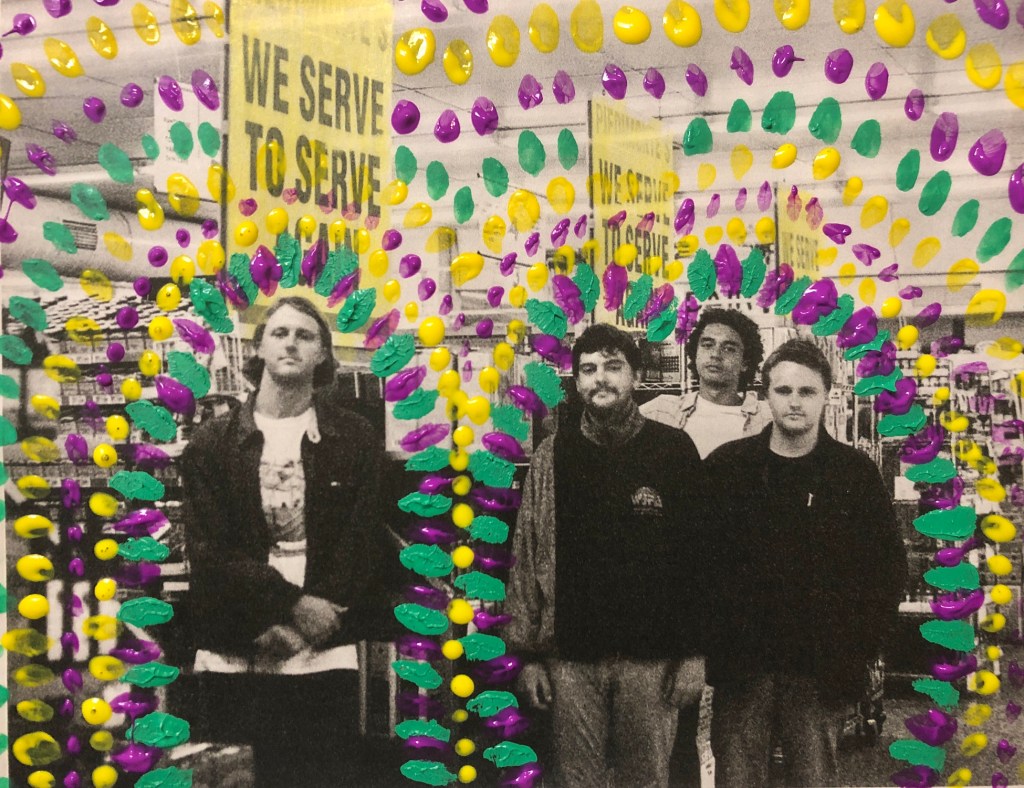
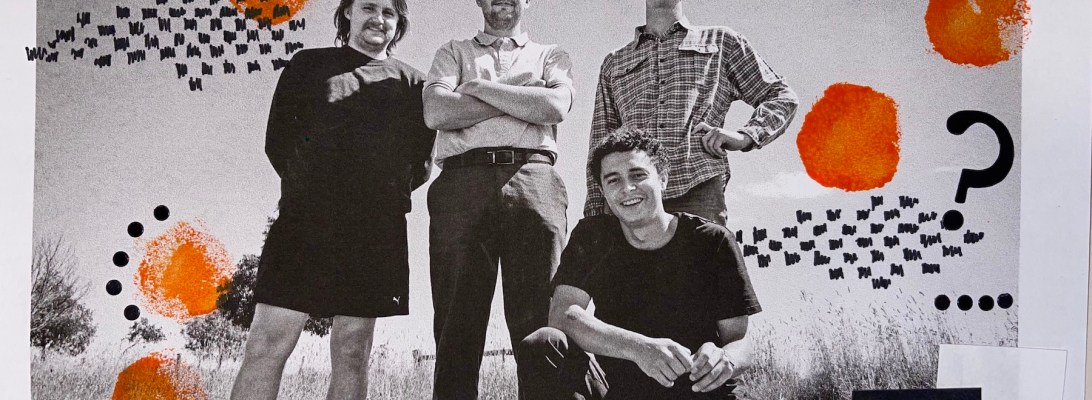
Original photo by Leland Buckle. Handmade mixed-media collage by B.

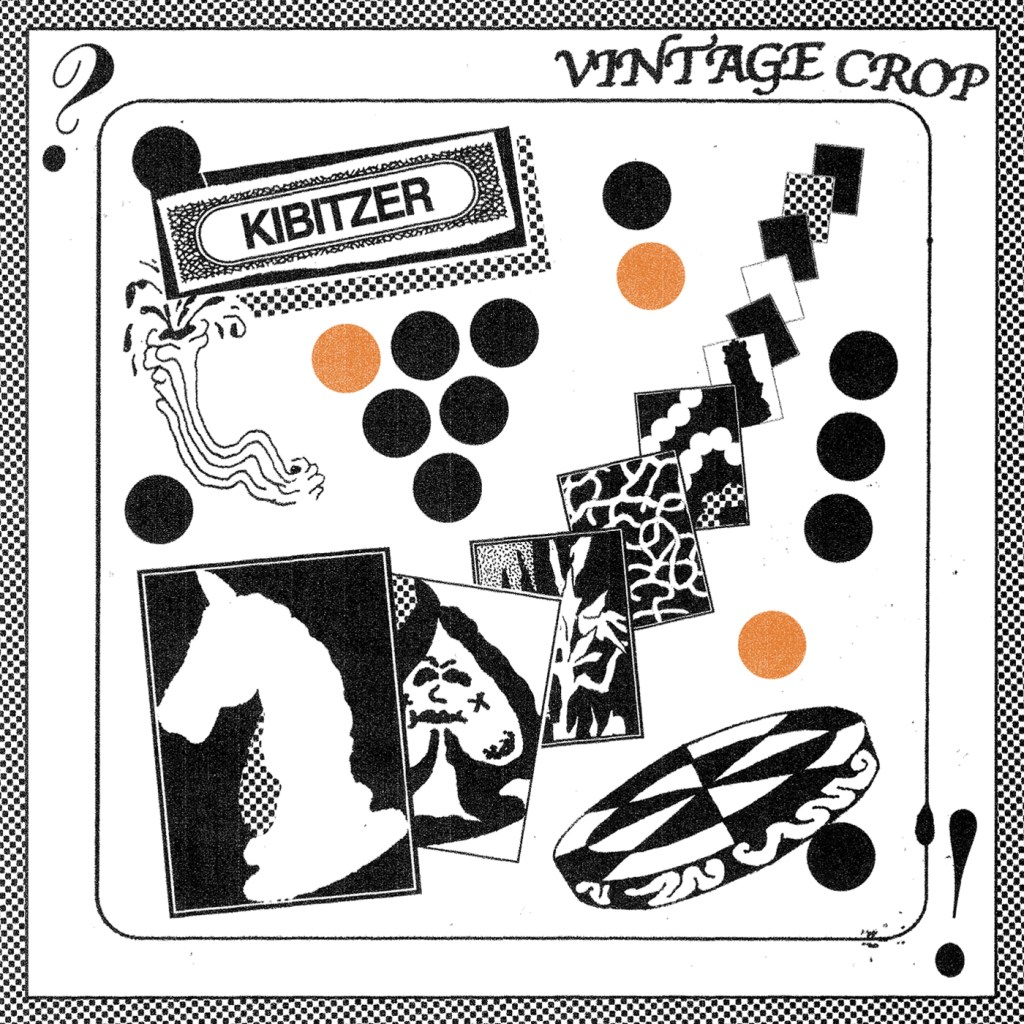
It’s exciting times, Geelong’s Vintage Crop have a new record on the horizon—Kibitzer—and Gimmie are here to share the first single and clip with you! Their fourth album of snappy punk has themes of resilience, identity and acceptance, while musically a welcomed extra dose of melody, and the introduction of horns on a couple of the tracks. Gimmie spoke to vocalist Jack Cherry. 

JACK CHERRY: We’re really happy with how the new record sounds. The songwriting feels like something to be excited about.

The album Is called Kibitzer! That’s a Yiddish word, right? It’s a term for a spectator, usually one who offers advice or commentary, which is kind of what you guys do with your songs.

JC: Yeah. Last year I got into playing chess and that’s a term used in chess. I thought it was too good of a word not to use for something else. It’s a cool looking word, has a great meaning and I felt like it connected with what I do lyrically. It seemed to fit.

What got you into playing chess?

JC: I went to a friend’s place and he asked me for a game. I haven’t played since I was ten or eleven playing with dad. It was horrible playing with dad because he would not let anyone else win. I threw it away and never wanted to play chess because it is so hard. When I played against my friend, about two years ago, I was like ‘This is a really interesting game.’ I got carried away with all the different strategies and techniques, it was really engaging. I don’t play as much any more, it was really just a hot minute where I really got into chess, and some of the ideas really stuck around.

That would explain the album art work as well.

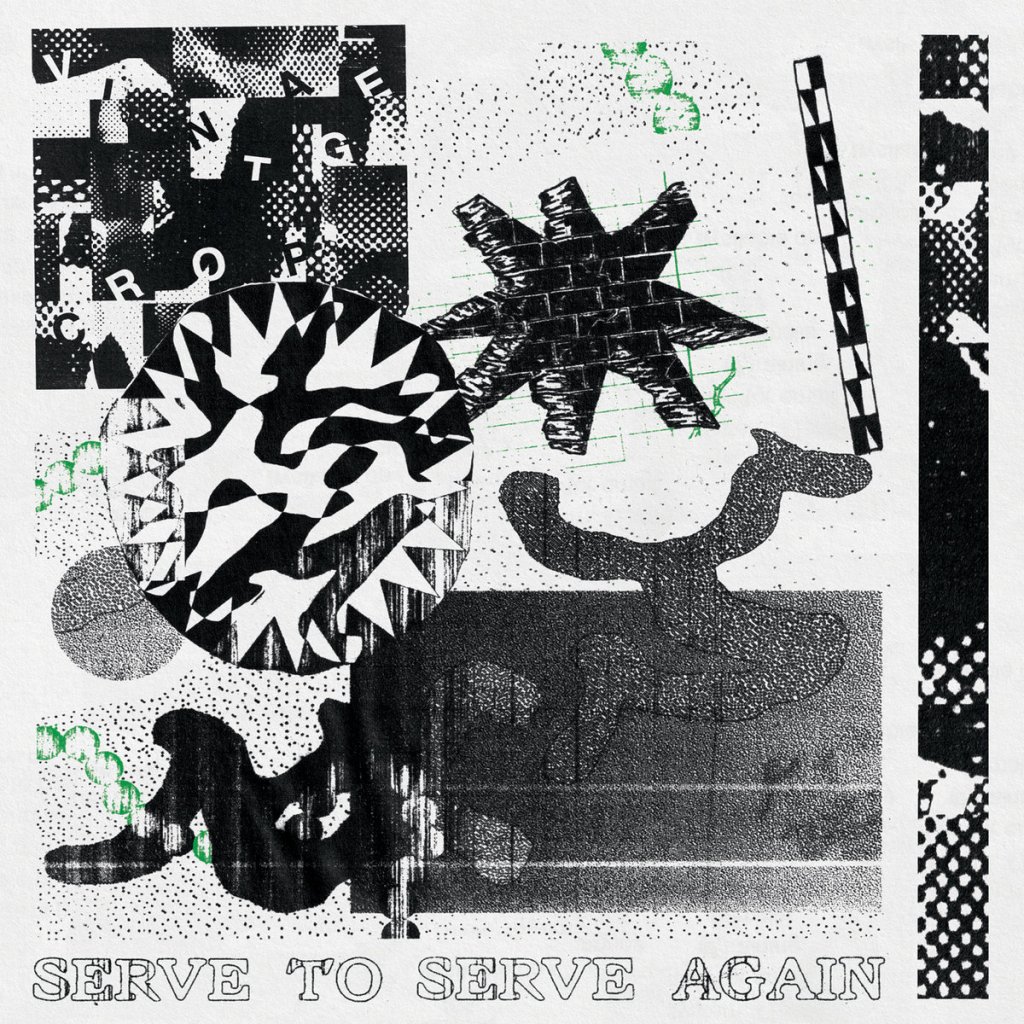
JC: Yes! We had a different idea for the album art that was literally a chess board but we thought it was a bit obvious and it didn’t click with what we were doing, so we didn’t use it. There’s definitely visual themes of chess as well. We had Robin Roche do the art again, they did Serve to Serve Again for us. We always love his work. He makes things look simple but there’s so much detail in them, that’s how we feel about the songs as well; simple sounding songs but there’s a lot in there when you listen to it. We think his artwork matches the songs.

Album art by Robin Roche.

How long were you writing this collection of songs for?

JC: As with anything we do, it starts pretty much right after the last one finishes. The first couple of ideas happened towards the end of 2020, we had two or three solid songs that we were happy with. Then it took all of 2021 to write another seven that we were happy with. So, there was the initial push. We didn’t really record the album until November 2021. Two of the songs were finished just the week before. 

Do you find your songs change very much during the process?

JC: To be honest, I think they change after even longer. We have songs from the first two records that we still play live and we find those songs have morphed a lot since we first recorded them but a lot of the newer stuff feels a bit more finished. We took that lesson from the first two albums of, well, we’ll make sure that we really investigate these songs and make sure we have all the parts that we want to play. I feel like with New Age in particular we went in and recorded it straight away without developing the songs to their fullest extent. We’re able to now write a song and finish it, really finish it earlier.

The new album sounds a lot more melodic to me.

JC: Yeah, that was conscious as well. Tyler our drummer had said to me, maybe eight months before we were set to start really writing the album, ‘This time let’s get a producer in and get someone to really push us to do different things.’ I was so deeply offended… in a nice way, that he would suggest that. Out of spite I started to write melodies and tried to actually sing a bit to prove that I could do it and we don’t need a producer [laughs]. It’s a good push for us. Three albums of doing the same thing, it’s nice to have the fourth one where we branch out a bit. Same with the trumpet on a few of the tracks, we really wanted to play with some new tools. 

I noticed that on Kibitzer you almost sing! 

JC: [Laughs] Yeah, it’s scary to fully let go but it’s nice to have a go. I’d rather it be a flop and those sort of songs not hit as well but have tried it, then do the same thing and get the same result.

They totally did hit though! Your singing and the trumpet were things that got my attention.

JC: Thank you, that’s the reaction we’re looking for. Glad it worked! I think it keeps it fun for everyone, not just us. 

You mentioned having a producer for this record; it was Jasper Jolley?

JC: Yeah, Jasper recorded it. Jasper is in Bones And Jones. He is a friend of ours, he grew up in Geelong as well, we’ve been friends for ten years or so. We’ve always been in similar circles but because Bones And Jones’ music is a little different to ours we thought recording with Jasper might make us sound like them, which isn’t a bad thing, it’s just we have our own sound and we don’t want to mess with it too much. Recording with him was a treat though, everything sounds amazing, he was so patient. I think we want to work with him again because it was so good. He didn’t really produce, he didn’t offer a whole lot of advice but he was a good set of ears and a good set of hands. 

Everything was recorded in one session?

JC: Yeah, we set up and started recording at 11am and was finished doing vocals by 7:30pm. It was eight and a half to nine hours in total and we had everything done. 

Was that out of necessity? Was it because you wanted it to capture a spontaneity? Or the vibe you have live? Sometimes I see bands I love live and they’re amazing but then I hear the same songs recorded and it disappoints me because it feels pretty lifeless.

JC: Because they’ve spent seven hours choosing a guitar sound [laughs]. I think for us, it’s not to capture anything in particular, but we like to record together. None of us have the patience to do it over more than one day [laughs]. We have the songs ready, we just want to go in, get them done and get the ball rolling cos there’s not much we can do after the initial recording, we do it all at once and then there’s only vocals and keyboard left. We don’t want to muck around adding too much to it because anything else we add we probably can’t play live and tonally it’s a very simple sound, it’s not like we have to find the right tone or tune the snare a certain way; it’s just going to sound like us because it’s us playing it. 

Lyrically, themes on the album have to do with resilience, acceptance, accepting your own limitations; were these things written from things you were experiencing in your own life? Often your songs are commentary and observations of other people’s experiences.

JC: Yeah, I find that with themes for albums, I develop them after I’m finished. I don’t try and dissect anything I’ve written a whole lot. Now it’s all finished I can look back and really figure out what I was trying to say. I think that looking inwards is more so a reflection of all of us settling in to full-time work and branching out, Tyler just bought house, my partner and I live together and we’re looking at buying somewhere as well—it’s a get-on-with-it attitude. 

Everyone else is in the same boat and it’s just how you react to things, if you can try your best to be positive and just keep on going, because that’s really all you can do. A lot of times you don’t have too much control over life, the best way is to roll with it. That’s a lot of what I’ve been thinking about at the moment. 

Maybe I will be in this job for fifteen or twenty years, or if I leave this job I’ll be in another job for fifteen or twenty years, thirty years or fifty. While it’s crushing to think that I’ll never be a rock star playing stadiums around the world, at least I have a job, somewhere to be and something to do, that’s all I can do.

I work another job as well as doing all the Gimmie stuff as well. My job pays my bills and then doing Gimmie we never have to compromise, we can keep it advertisement free and do whatever we want with it. It’s a wonderful thing not having to compromise on your art.

JC: For sure. With the band we’re paying for pretty much everything and we’re in control of everything, it’s our outlet. That’s the way that we can express those feelings, through the band. It makes it worthwhile in the end. Working 40 hours a week doing something you don’t really want to do, but the rest of your time you do get to spend doing what you want to do and you can afford to do it and it’s comfortable. It’s great. 

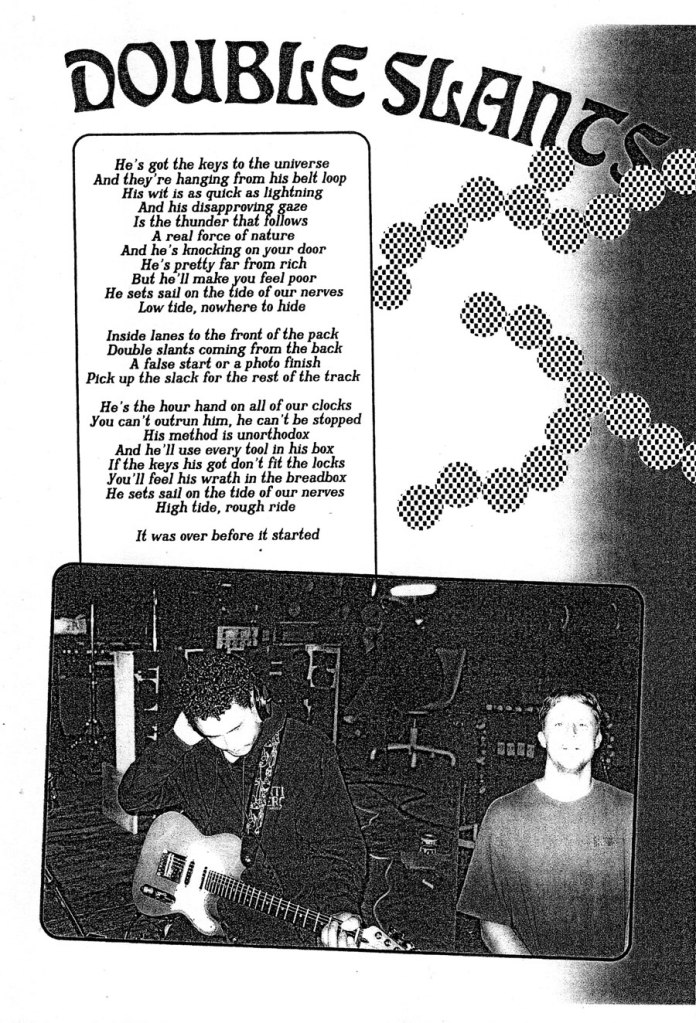
We’re premiering the song and clip for ‘Double Slants’! I love the first line of the song especially: He’s got the keys to the universe / and they’re hanging from his belt loop. It’s such strong imagery.

JC: I thought it was a really good fusing of reality and fantasy. “The keys to the universe” is the funniest thing to say at the start of a song! If you take those abstract thoughts and ground them in reality somehow it makes it hit a bit more. 

The whole song isn’t about anyone in particular, it’s an adversarial song. It’s nice to be able to poke fun at someone that everyone can relate to, everyone’s got that sort of person in their life. That’s all I can really give you; it just happens.

As Vintage Crop songs are often about everyday kinds of things, having that fantasy element in there was another unexpected surprise. Being surprised by music and art is one of my favourite things.

JC: That’s true. The belt loop part was a play on… that seems to be the trend, that for some reason people hang their keys on their belt loop, which is a little dig; to me, I just don’t get it. 

Being sardonic in lyrics is also another Vintage Crop signature. 

JC: Yeah! [laughs]. 

We love the clip for ‘Double Slants’! In it you get kidnapped; what do you remember from shooting it?

JC: We filmed most of it on the road out the front of the house I grew up in – which was totally coincidental! We just needed somewhere with a quiet road and no house, it just happened to fit the bill. It was actually a pretty painful day for me in the end; I was manhandled, thrown around and rolled down a few hills. But Leland [Buckle] did such a great job with it that it was worth it! 

We’d previously worked with him on the clip for ‘The North’, so we were naturally pretty keen to work with him again. We really like a lot of his reference points for filming and editing, he’s got great taste and a bit of an unusual eye which is something that you just can’t put a price on. We spoke briefly about a rough concept for the video and then by the end of the day he had taken the ball and run with it. We trust him with the vision and pretty much everything you see in the video is straight from his brain.

What’s your favourite moment from the clip?

My favourite moment of the clip is probably the woman in the front seat of the car smiling back at the camera in the front seat. A brilliant piece of irony and it just makes me laugh every time. 

Vintage Crop’s new album, “KIBITZER” is out June 24th through Anti Fade Records (AUS) – pre-order HERE – and Upset! The Rhythm (UK).

Geelong Punk band Vintage Crop’s Jack Cherry: “The first big thing for me was listening to Eddy Current Suppression Ring…”

Original photo by Chelsea King. Mixed-media art by B.

Vintage Crop are set to release a cracker of an album! Serve To Serve Again captures sardonic, disenchanted, unromantic story telling from the grind of the day and observations of the world in a bold 12-song package. Gimmie spoke to vocalist-guitarist Jack Cherry.

JACK CHERRY: I’ve had a nice day so far, I’m on holidays from work and I’m just taking it easy.

What do you do for work?

JC: I clean swimming pools, clean and maintain I should clarify, little bit and bobs. It’s a funny kind of job.

It would be nice to be outside a lot for work.

JC: All day, which is great in summer and not so much in the winter [laughs].

When did you first become interested in music?

JC: I’ve always had an interest, I think most people probably do, it’s a part of everyone’s life when they’re kids. I don’t think it was until I was twelve or thirteen, my brother asked me what I wanted for Christmas one year, and he steered me in the direction of a drum kit. I was like, yeah, I’d love to play drums! I wasn’t very good at it for a while. I wasn’t into anything outrageous, maybe just The White Stripes or the Foo Fighters, that was probably the first kind of inkling.

What did your parents think about you playing drums?

JC: We lived on a farm and the drums were set up in a different shed from the house so it wasn’t really an issue for them, which was nice.

What was it like growing up on farm?

JC: It was cool. We were there since I was a baby and I didn’t leave there until I was twenty. For the first twenty years I could make as much noise as I wanted! We’d always practice at my place, it was easy.

Photo: Chelsea King.

What made you move to the city?

JC: I’m still in Geelong, just not on a farm anymore. I’m ten minutes down the road on the other side of town now. I’m in a block of units at the moment so I can’t make much noise here. Geelong is pretty laid back, as long as you’re in a house, I don’t think people make too much of a fuss. We practice at our drummer’s house now and do a couple of hours a night and no one seems to have a problem with it.

How do you go about approaching your song writing?

JC: I wonder if it’s normal or not? I just play around with the guitar for half an hour or something until something half descent comes from it. I’ll play that riff or chords for two or three days until some idea for words come along and then I take it to the band. I don’t write much down. I just play around until something cool happens and take it to the band and they do the structuring and adding their own parts. I find it hard to write for everyone, it’s hard to not only come up with the parts but it feels like a dick move to come to the band and be like; you’re playing this on bass; you’re playing that on guitar; you play this drum bit on the drums. I feel like everyone is happy if they write their own parts.

When did you start playing guitar?

JC: When I was about sixteen. I had three to four years solid of playing drums and then it got to the point where I can’t really play a full song on the drums. I can’t invite people to come listen to a song and just whack the drums for two and a half minutes. It’s more interesting learning how to play the song on the guitar.

You mentioned that you don’t really write stuff down when you’re making songs; do you ever forget something really cool?

JC: Surprisingly I remember most things. I might forget the phrasing of something or the song itself; like I’ll know what I’m meant to play but can’t remember how to play it. It’s so infuriating to have the base of it but to not remember the intricacies of how I used to play it, that sometimes weighs on me. If it’s really important I will record it but I try not to, I try to keep it free like that because maybe someone in the band might have an idea for it and they’ll change it again and make it even better. I try not to lock it in too strictly otherwise you could stop it from turning into something even better!

Do you feel the new album Serve To Serve Again has an overarching theme?

JC: I tend to look back on things and retrospectively apply things and go, oh, that’s what I was looking at with this. I’d have to have a real think about it to give you something. I know that there’s something there but I don’t consciously write to a theme. There’s probably a theme there but I haven’t really nailed it yet.

I find that a lot of Vintage Crop songs have a social commentary, observations of life in general, themes of entitlement, privilege.

JC: Yeah, that’s something that subconsciously finds its way in. I try not to be too loaded in my lyrics but sometimes things just come out that way and stay that way, and it just works. A lot of the time I’m not consciously attacking anything or poking fun at things, it just comes through. I figure that’s obviously what I must feel about things or what I must have intended to say or feel because, again I feel if it’s too edited it loses the flow. I keep it as it is and that’s probably a better depiction of how I’m feeling and thinking.

How long have you been working on the record for?

JC: We did the Company Man 7” in January of last year, that was recorded six months prior but we’d been working on that for six months. It was originally going to be a full album, we originally had a few ideas that we took off of it and we moulded those into new songs that we sat with for a year. We had three songs a year ago and we went on tour to Europe in April and came back and said, let’s take a break and we’ll come back with some ideas. We probably didn’t get flying until September when we really knuckled down and said, we’ve got half an album let’s finish it. We took our time with it. We got it through ‘til February and that’s when we recorded. Give or take it was about a year from start to finish.

Where did you record it?

JC: We recorded it Frankston in Singing Bird Studios with Mikey Young. We were just happy for him to record it so we thought we would accommodate him and go down to Frankston, it’s about two and a half hours from where we are. We thought if he’s agreed to do it, we’ll do it on his terms [laughs]. We thought he’s the best man to ask for, he’s done everything that is in our scene, he’s the man for the job.

We really love the song “Jack’s Casino” on the LP.

JC: That one is the last one we wrote for the album. I came in with the idea three weeks before we recorded the album. Because it’s pretty fast and it doesn’t take much, you learn the things and play them really fast. I think it’s one of everybody’s favourites because it feels so fresh. It’s maybe indicative of where we’re going after this album. It seems like there’s always a couple of songs an album that will sound like maybe what the next one will be.

What‘s the second one?

JC: “Serve To Serve Again” the title track. It incorporates synths into our sound, it’s a lot better than the other stuff we’ve done, I think it takes a lead. We’re all happy with it. It’s exciting to change and get a new instrument in there to sound new and fresh.

The whole record is so solid. The three songs I love the most – “Jack’s Casino”, “Streetview” and “Serve To Serve Again” all appear in the middle of the record.

JC: Track listing was something we did think a lot about. It’s interesting that the three in the middle were the ones that are your favourite, because we thought the middle songs would be a really strong core for the album. The first three or four songs are the more single worthy songs and then the second half of the album has “Gridlock” which is the lead single, we thought we’d put the lead single on the B-side just to even things out. It’s interesting that you’d pick out the strong core as your favourites, it means we did a good job I guess.

So often we love the songs that aren’t the singles. What can you tell me about “Serve To Serve Again”?

JC: We wanted something more… my vocal patterns tend to be say three or four words then break. Say three or four words then break, we wanted it to have a bit more flow in the words. I took a bit more care to ditch the style I usually work with and be a bit more consistent with the vocals, to fire the vocals off a bit faster and really think about the words themselves and fit them all to a theme and keep it strong. The song itself may be a bit repetitive but if the lyrics are firing over the top… it gives us a bit more to work with.

Do you have any vocal inspirations?

JC: I’m very conscious of trying to do too much with my voice. When we first started I had kind of an American accent thing going on. It just sounded weird to me to use my normal voice. I think the first big thing for me was listening to Eddy Current Suppression Ring where it’s his voice amplified, that’s pretty much what I’m doing with mine, not trying to sound like anyone else, just trying to make sure I’m capturing my own voice properly. My favourite vocalist are the ones that amplify their own voice like Sleaford Mods, The Fall. I think that’s where we’re at with the vocal stylings.

When did you start feeling more comfortable with your own voice?

JC: Just after TV Organs came out. With the band, I was doing it on my own for the first couple of years, 2013-2015 was just me doing bedroom recordings and putting it on Soundcloud. They’re definitely not available anywhere, they’re definitely all gone! [laughs]. That was me, and I was struggling with the vocal thing, the songs weren’t great. After we did TV Organs and people were interested and came to shows it was like, oh… the voice isn’t too much different from what I was doing but I figured if people like the music I’d be more comfortable with my voice. Someone told me once that people will forgive a slightly out of tune voice if the music is good. If people are interested in the songs than making my voice sound more like myself would only be a good thing.

I’m always drawn to unique voices rather than perfect ones that all sound the same, I like character.

JC: The more you try to make it perfect it loses quality, it loses feeling.

Is there a song you’re proud of writing?

JC: I like them all, I think they’re all good. Maybe “The Ladder” on the new album, I think it came out well because there’s lots of different parts, it sounds tough but it’s interesting. The chord we use in the song, I don’t even know what its’ called, it’s like a minor diminished chord, it’s a really unusual chord but we use it and it almost sounds normal. That might be the song I’m most proud of.

I really love all the Dragnet stuff you do too! What inspired you to start that?

JC: It was last year at some point. Because of the ways we write things in Vintage Crop, it’s collaborative. With the ‘Crop stuff everything is recorded and mixed and mastered and sent off, maybe over a six month period. With Dragnet I wanted something that was just done on the spot. I was recording demos on my own, I play all the instruments and I’d finish it and that was the end of the song. Once I had a bunch of songs I’d just release it. We did. I put out a cassette and it was six songs and I got friends to play the show and gave the tapes away for free. It was fun and we thought, maybe we should do it properly.

Polaks Records in Europe wanted to do a vinyl release of it. I don’t like to do things slowly so I had a couple of other songs that I didn’t put on cassette that I thought I’d include on the vinyl release. He’s got it pressed already. I think Dragnet for me is immediacy. Getting it done straight away as opposed to the process we go through with Vintage Crop.

There’s a song called “Networking” on the record; what’s it about?

JC: That one is… a comment about people in music scenes in general. Everyone is very self-aware, there’s a lot of judging of other people but also judging of yourself. A lot of times you can feel like people are saying things about you or feeling certain things about you but they’re really not at all. I think maybe it’s a depiction of insecurities around people who are essentially just copies of yourself. Someone in a music scene, a lot of the bands that sound the same is because they have the same influences and they do the same thing; everyone’s kind of the same and it can get really competitive. You feel like you have to outshine these people or you feel like these people don’t like you or you don’t like them… it can be pretty… phwoar… ugly! The lyrics work for that. I don’t know if it comes across but that was the feeling behind it. I don’t think that deeply about the lyrics but there is definitely feeling behind it. It’s a good way of summing up how I’m feeling.

That song then rolls into next track “Music Business”.

JC: Yes. That one is a bit of fun. I did a music business course a few years ago as a one year thing. I didn’t want to go to uni and didn’t have much of a job so I thought I should do that because it was better than doing nothing. The music business course was very pretentious. It wasn’t aimed at me. It really made me see what my ambitions were and it was not to be someone in the music industry. When I say “music industry” I mean more the mainstream in Australia. That song is silly and makes me laugh when I think about it all.

Very with you there. I went to do a music industry course and I started off going to a shorter-course of it to see if I liked it and the lady that was doing it was the absolute worst! I ended up getting an internship at a major label on my own merits and I later found out it was usually her full-time students that got those places… anyway, it came up in class that I’d gotten the placement and she started treating me horribly and said in front of the whole class “You’re just getting people’s coffee!” and some other things that were trying to demean me. I never went back to that class again and thought, if this is the industry I don’t want to be a part of it.

JC: Aww that’s terrible. When I was doing the course it was around 2016 and I started getting into the local scene. Anti Fade Records was from Geelong where I was from as well and all of the things I was learning at the course, I looked at what Billy from Anti Fade was doing and was like, he’s not doing any of that stuff I’m learning?! I learnt the class was more geared to people that care about stuff like Triple J or artist management. I don’t need that stuff. I’m just better off talking to Billy about stuff and doing things like he does.

By the end of the course I had properly got Vintage Crop going, we were playing a couple of shows and starting the recording process. I started my own little record label. I thought, all of this stuff is in spite of the course! I wanted to do it my own way and not how I was taught.

What does success mean to you then?

JC: Having fun! To be completely basic about it, it’s just enjoying it. Sometimes I have trouble when people want to make a career out of it, it’s traditionally not a career, it’s a hobby. I have a full-time job and music is the fun thing I get to do every weekend and sometimes after work, that for me is a success. Doing it for fun and not hurting anyone, I think the rest of the band feel the same way. You have to keep yourself in check with it sometimes, especially now with an album coming out and you have to practice, do press, to make sure everything looks good and sounds good… it’s like, yeah, but don’t get carried away. At the end of the day we’re happy with the songs, artwork and that Upset the Rhythm and Anti Fade are putting it out—that’s the success! We’ve already kicked the goal. Now we’re just enjoying it all.

What was your European tour like?

JC: It was amazing! We were there for four and a half weeks, we did 29 shows in 32 days, it was ridiculous. To meet people and hear new bands and see new things was incredible. We made so many connections with people. The only downside was that I got really sick, in the second last week I came down with glandular fever. We soldiered trough, we wouldn’t change anything. It was my first time overseas and I was really put out by it all, at least I was with friends. If I was on my own it probably would have been a different story.

Outside of music of music, what’s important to you?

JC: Family and friends. I’m really invested in the Black Lives Matter movement. I’ve been doing my part where I can. I don’t like to promote things by social media but, I do like to do things like donate money where I can and help people if I can. I go to rallies.

As a POC I find it’s more helpful for people to do things offline and just in their everyday life, like if you see/hear racism happening, call it out! If you see someone that looks uncomfortable, go stand beside them and say “hi” and make them feel comfortable. Having conversations with people and helping educating people and your self helps too.

JC: The more you post, the more you can perpetuate arguments. I think the actions you mentioned are more valuable than sharing something on Facebook.

Please check out: VINTAGE CROP; on Facebook; on Instagram. Serve To Serve Again is out on Anti Fade Records and Upset The Rhythm (UK) August 8.