Rapper sidney phillips: ‘It’s important to be yourself, always.’

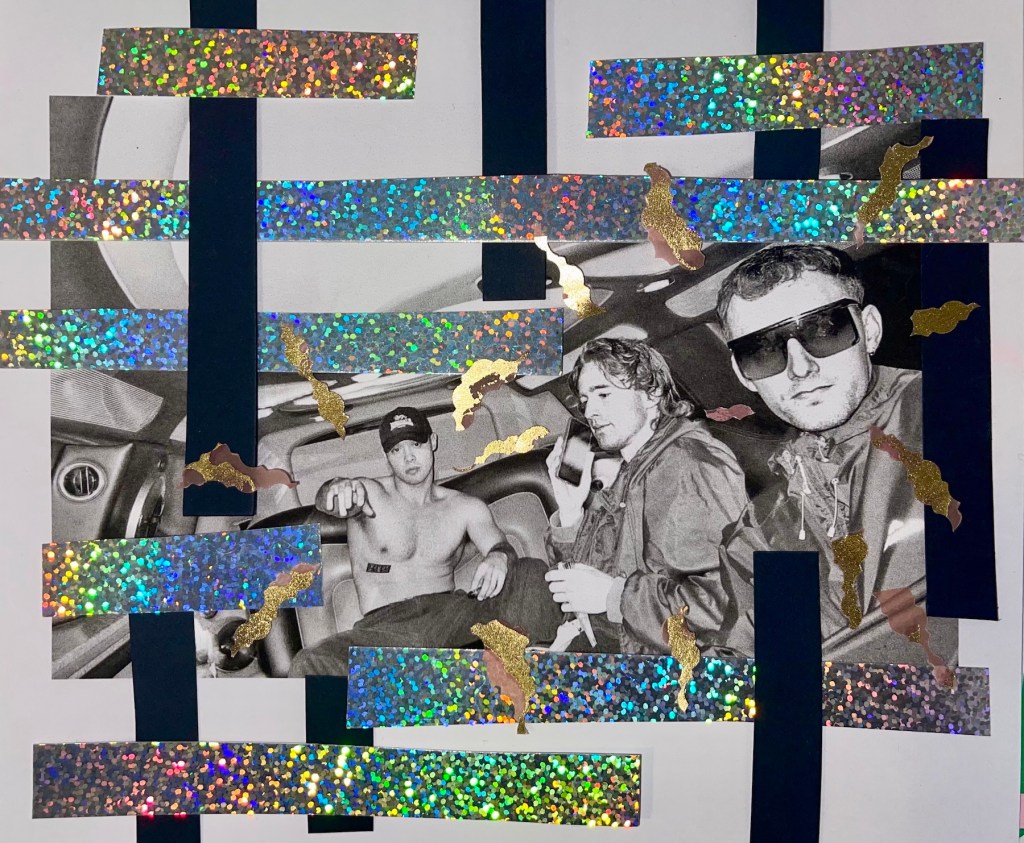
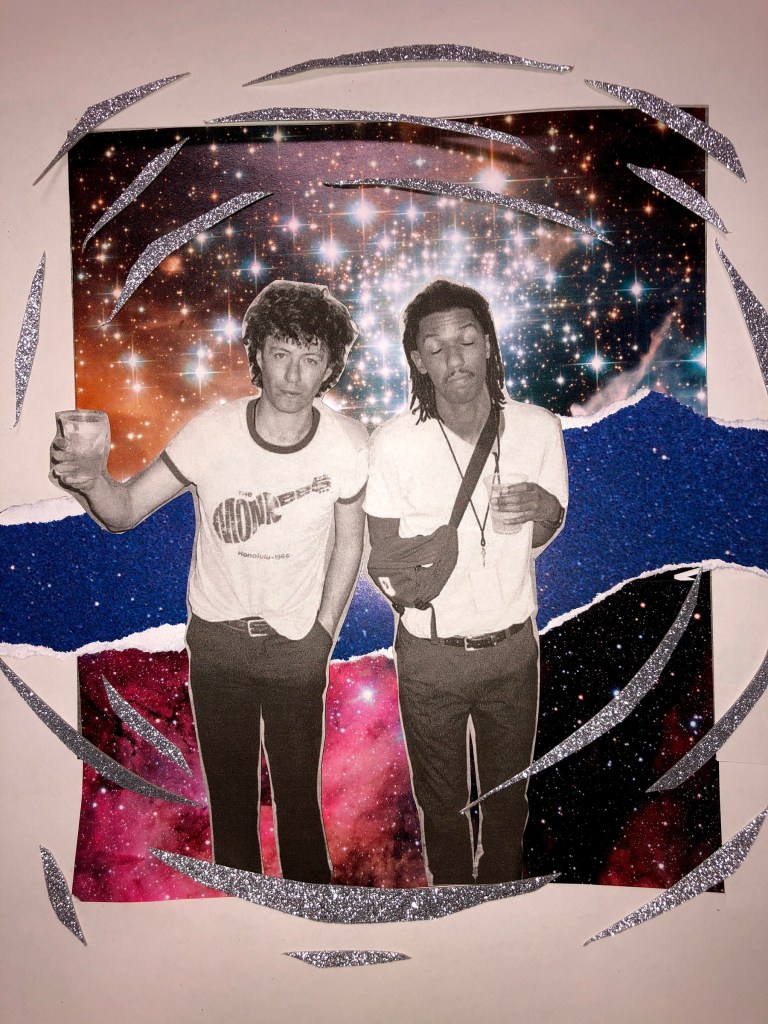
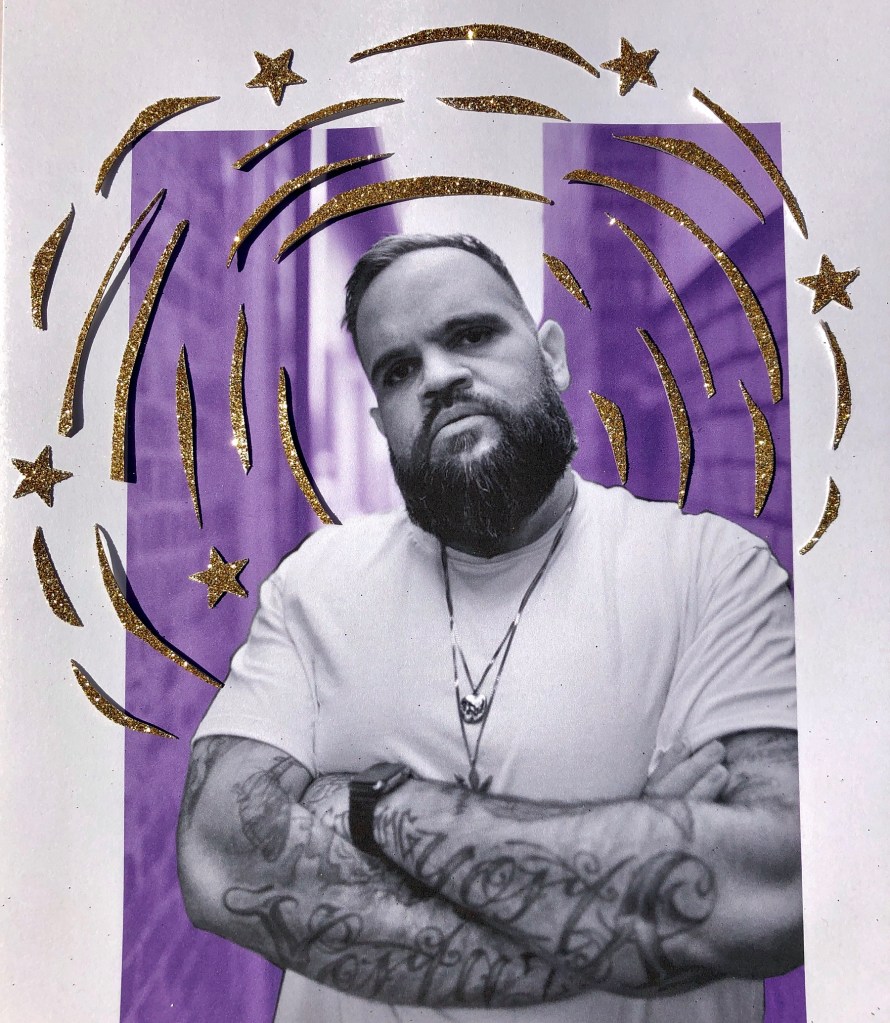
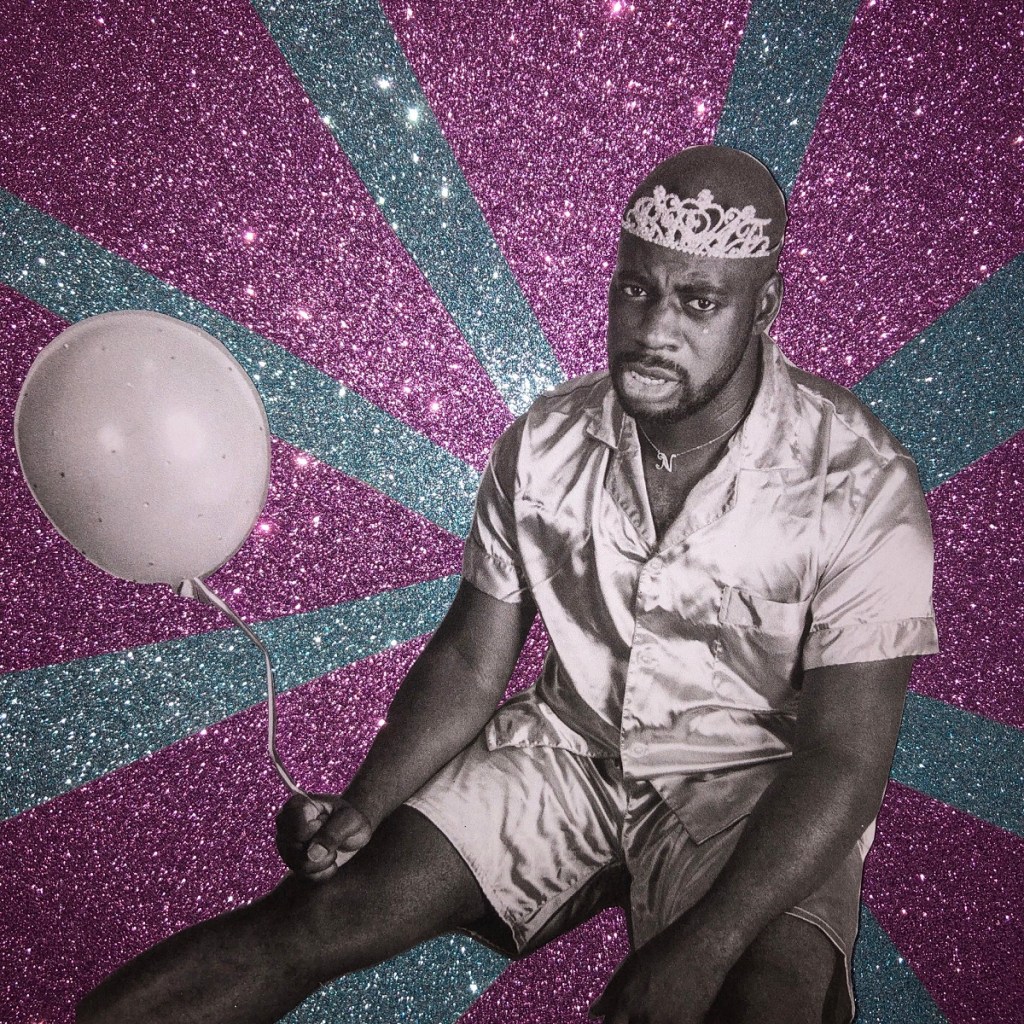
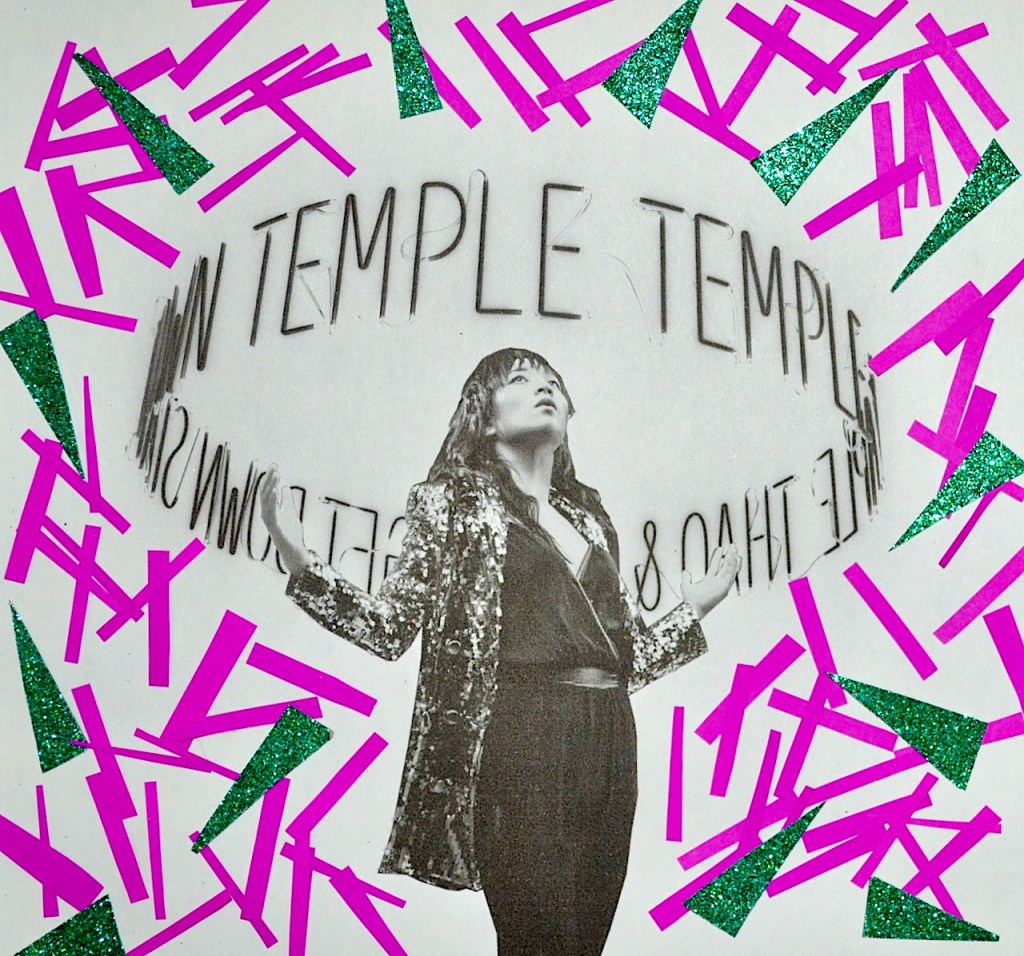
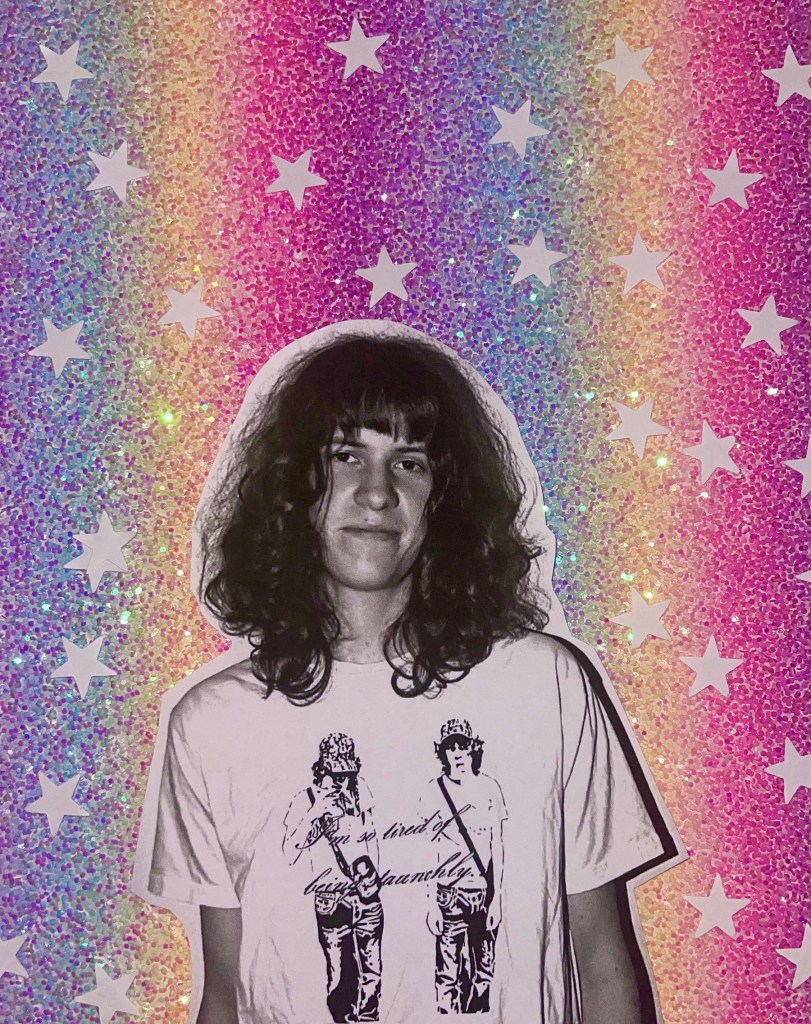
Handmade collage by B.

Trans adlay, Sidney Phillips, “the unofficial Queen of Australian Underground Rap” is incredibly likeable, hilarious and very, very real. Along with rap collective stealthyn00b, she’s part of the new vanguard in hip-hop. On Penance, her 2024 album, the Brisbane-based rapper sharpens both her sound and her sense of self. The beats hit harder, the writing feels more settled, and the themes come straight from her lived experience.

Across the record, Phillips reflects on identity, addiction, responsibility, and growing up on the internet. She’s candid about the consequences of drug use, the strange pressure that comes with having an audience, and the balance between honesty and influence. ‘You can do what you want,’ she says, ‘but there are always real-world consequences.’

In this interview, Sidney traces her path from early experiments with guitar and laptop beats to finding her voice in rap, talks about faith and community, and explains why staying true to herself—without glamorising or hiding the hard parts—has become central to her work.

Penance isn’t framed as redemption or reinvention. It captures change as it’s happening, with all its messiness intact.

This in-depth chat with Sidney took place just after Valentine’s Day last year. Since then, she has released album, Northside Dream.

Why is music important to you?

SIDNEY PHILLIPS: It’s my favourite thing in the whole world. I love art in general. My favourite thing to do is consuming art and making art. Music as a medium is the one that really speaks to me the most.

I love TV, and I love movies. I can watch one of my favourite movies, but I won’t want to watch it again for like a year, right? But with music, I’ll listen to my favourite artist every single day and I’ll never get sick of it. 

Music is my way to relax, my way to have some fun, my way to express myself. Music’s given me so many great things in my life. All my closest mates I’ve probably met through music, and doing music stuff. It’s everything.

I totally get that. It’s the same for me too! I’m the kind of person who listens to a song and I’ll hear a part I like and I rewind straight away and I’ll listen to that part 10 times or something before I let the song progress. I just get so caught up on a sound, a melody, a lyric or something.

SP: Yeah, totally! It just sticks with me and sticks in my head. 

Or sometimes I’ll be listening to a playlist and I’m loving the song I’m listening to but then I’m so excited to see what’s next on the playlist so I’ll skip through to the next song because I’m excited by the possibility of what’s next.

SP: Yeah, it’s always exciting. Love it. Seriously. 

Your lyrics for song ‘2 Fucked Up’ mention that you were born in Carseldine not Morayfield; what were things like growing up for you? 

SP: It was pretty chill. At least, Carseldine days. I was probably there until 2010, until I was seven. Memories of just chilling in the house and chilling with the neighbours—the neighbours’ kids—going to the shops with Mum and Dad. It’s all pretty good.

Both my parents are really switched-on individuals. Their childhood was probably a little bit different from mine, so they were thinking about, we’ll try and give the best go for our kids, sort of thing. So we had a really nice house, really nice area.

I went to a pretty nice school in the area. Things just got a bit expensive, so we had to move. But growing up was chill.

I think about it sometimes and how I got into the things that I got into. ’Cause it’s not like I had a super rough upbringing or anything, I’ll be dead set. But I still ended up getting into drugs and stuff.

The “I was born in Carseldine, I wasn’t born in Morayfield” line is funny to me. I was keen to put that in the song; it just came to my head, though, because I was thinking specifically about that. Are you guys from Brisbane or Sydney?

We’re actually based on the Gold Coast. But I grew up in Brisbane on the Southside. It always seemed like everyone on the Northside were weird and different to us Southsiders. It felt like a whole other world over where you are.

SP: [Laughs] Yeah, that’s that’s what Northside is thinking about the Southside too!

Carseldine it’s out of the city, probably about 20 minutes. But it’s still in a city and it’s not a not a super dero area. But ended up moving on to the more dero area of Morayfield. Not to hate on Morayfield, I love it here. I thought it’d be fun to just drop an honesty bomb. Like I wasn’t born here guys. I was born in Carseldine, which is a bit of a nicer suburb.

That’s one of the things I really love about your raps, you’re really honest.

SP: That’s what you gotta do. That’s what I love in my rap music, so I think it’s really important for me to try and cram as much personality and as much information about my life as I can. Give the listeners something to grab onto and be like, ‘Oh, that’s a bit interesting.’ 

Also, people can really relate to stuff. The amount of times I hear a song lyric and I’m like, ‘oh my God, that’s what I went through. That’s exactly how I feel.’

SP: Mmm-hmm totally. It’s good to hear you say that. That’s what I’m trying to do.

Photo: Jhonny Russell

Before you got into music—’cause you weren’t really into music that much as a kid—you were more into video games. Then, around Grade 5, you got into Daft Punk and Skrillex—like, maybe when you were 10 or 11. And from there, it was Fall Out Boy and My Chemical Romance.

SP: Yeah [laughs]. Wow. I’ve never had anyone lay this all back to me! Makes me feel shy.

I think it’s always fascinating to know someone’s music journey. Then 13 to 15, you were getting into Bjork, Joy Division, Weezer, Radiohead, Godspeed You Black Emperor, which is pretty cool stuff for someone that age to be into. I know you have a really big love of the Beatles.

SP: Oh come on, we love the Beatles! LOVE the Beatles. 

Totally! When did you start playing guitar? Was it before you started making beats? 

SP: It was before. That’s a great question. Yeah, yeah, yeah—it was a guitar fest. Well, this is a bit embarrassing. Before the guitar, it was fucking ukulele. Because I always had one around the house since I was a kid. It’s like the kid guitar, right? I just picked it up. I wanted to start playing something, I guess.

I read a funny story on the internet about a guy learning a Metallica song on ukulele, and then there was a YouTube tutorial on how to play ‘Master of Puppets’ on ukulele. So I tried to learn that. And that was cool, because I was like, oh, this is fun—I’m playing an instrument and it sounds like something.

Then I started learning chords. And once you know ukulele—once you know one string instrument—you can go to another one pretty easily. I got ukulele lessons when I was in Grade 6.

That was my first musical expression. I’d learned some of my favourite songs on ukulele, and then from that, I started playing guitar—my mum’s guitar. It was a bit big for me at the time; I was twelve. So I’d be stretching out, trying to play it. I never got guitar lessons. It would be learning Nirvana riffs and shit like that. Totally dope.

I’ve always loved guitar music, but I’ve only ever had an acoustic guitar, so I wasn’t learning any Fall Out Boy songs or anything on it. It was more—shit, what did I even play back then? I got into Neutral Milk Hotel and play a lot of their stuff on guitar, ’cause it’s easy to play. But yeah—it was ukulele, guitar, and then making beats on the laptop.

When you started playing guitar, did you ever think, I want to have a band? 

SP: Yeah, especially when I was really into Fall Out Boy, Panic! at the Disco, and all of that. Since I was a kid, if I’m interested in something, I’ll be like, oh, I’d love to do this as a job.

As a kid, I thought, I’d love to do something in video games as a job. But like—definitely not these days.

When I was like, oh, I’d love to be in a pop-punk band, I’d think, this would be the name, and I’d be the rhythm guitarist, or I’d be the lead singer. Stuff like that.

I never really tried to put it into action. I didn’t really know anybody who played instruments—or anyone who was really into the same sort of music at the time.

And even when I did think, oh, I’d love to be in a band, never in a million years would I have thought I’d end up doing something like stealthyn00b, and what we’re doing now!

You mentioned that you went from guitar to making laptop music and when you first started doing that, you were making instrumentals. What was it that got you into doing that style of music? 

SP: Before it was the rap beat, I was trying to make vaporwave—which was the first thing I ever tried to make. I found vaporwave on the internet, and I was like, there’s something about it gripped me. I was like, this is so cool, so interesting. I loved the world-building in it.

For people who don’t know vaporwave, how would you describe it? 

It’s an internet genre. It came out around the early 2010s. The basic idea is that its mostly samples—mostly ’80s—and it’s slowed down, chopped up, and screwed up. If you know about chopped and screwed music, like DJ Screw and that—it’s kind of similar to it.

It’s a lot about consumerist culture and ’80s nostalgia. I thought it was really cool because it’s a total sort of world—almost a digital world that you’re going into. And I love that in music, when there’s world-building.

I was trying to do that when I was eleven, and I was like, this has gotta be pretty easy—it’s just slowing down shit [laughs]. So I was doing that in Audacity, and I’d upload stuff to Bandcamp.

None of it was great—but it was something. I liked being able to make track titles and the album cover, make a project, and be like, oh, this is my EP.

With the beats, though—I decided to get into Kanye [West] and stuff like that. Kendrick [Lamar]. That was kind of my introduction to rap music, I guess.

They’re some of my fav rappers. I don’t like the stuff Kanye does to shock people and the massive ego etc. but especially his earlier albums I love. He’s good at telling stories and making beats. I LOVE Kendrick! The new album slaps.

SP: I still haven’t checked it out. I’ve been slow on Kendrick these days. 

There’s a track on it ‘Man at the Garden’ that I’m obsessed with. And ‘Wacced Out Murals’ and ‘Squabble Up’. I love how he’s always so direct and honest in his rhymes. 

SP: Yeah, I like that about Kendrick—he’s not gonna mince his words, and he does the whole rap game, I’m trying to be the best sort of thing. I fuck with that hard. I was late to his Mr. Morale & the Big Steppers album too.

Yeah, I didn’t get into that one so much either. I have all his other records but not that one.

SP: Yeah, that was the first one where I was like, I don’t know, Kendrick, I don’t know. Like, I usually love you, man, but I don’t know about this one. 

Kanye and Kendrick were the first rappers I really LOVED loved. Before that, it was Eminem, N.W.A.—that was my first actual introduction to rap music.

I watched this guy on YouTube who’d make FL Studio tutorials, but they were also funny. He did: how to make vaporwave, how to make chillwave, how to make trap beats, and he did a how to make J Dilla / Nujabes-type beats. I watched that video and was like, oh, this sounds so good—the piano with the breakbeats, with the rain sound effect.

I was like, that’s it. I just realised how easy those sorts of beats were to make. At the time, I was just really keen on making something—being able to release something that was good—and being like, this is my music.

So I made a bunch of those beats, chucked them up on SoundCloud, chucked them up on Bandcamp—and that was my thing. My rap beat era [laughs].

Speaking of piano, I creeped on your SoundCloud and went back to the very first song that you uploaded. It was posted eight years ago and called ‘Last Night Changed It All’ and its got piano. 

SP: [Laughs] That was the first rap beat I ever made!

Why did you call it ‘Last Night Changed It All’? Did something big happen? 

SP: That was the name of the break—the sample. It’s from this 50s or 60s song called ‘Last Night Changed It All’. And that was what the breakbeat was called when I downloaded it. I was like, that’s pretty emo—I might just call the beat that. I thought that was cool. I still like that song I did. It’s got a pretty piano segment. 

Did you rap on anything else before you created your own beats?

SP: In Year 7, I’d go over to my friend’s house and we’d get Audacity up and I’d chuck on some beats and we’d freestyle, not serious though. I was into rap but he wasn’t but we thought it was just fun to do. And it was! I still like making joke songs. I like rapping some silly stuff [laughs]. 

The first serious rap verse I ever did was in this internet collective when I was 13. A bunch of cunts I met on SoundCloud. We were a rap group called Immortal Diamonds [laughs]. It wasn’t me that chose the name, but I was one of the producers. I’d send beats but then I also hopped on a couple tracks for that tape. It’s still up on Bandcamp.

The first Sidney Phillips song I made was when I was 15. It’s on the first Sidney Phillips tape—it’s called ‘I’m Going Back to Sleep’. I made the beat, I rapped on it, and put it on SoundCloud.

When it came time to release the first Sidney Phillips album, I was like, I don’t like this vocal take anymore, so I re-recorded it. But that’s still on Bandcamp—and that’s the first Sidney Phillips song.

It sounds so different to what I make these days. It’s still fun to go back and hear the evolution. But yeah, it’s not really fun listening, though [laughs]. I don’t think it’s that good. Like, I was 15 making that.

Let’s chat about your evolution and releases.

SP: At the end of 2021—in September or October—I released the first Sidney Phillips tape. That was fun. It was all my beats and all my raps. I think there’s one feature on it.

It took me so long to finish—it’s only ten songs, and there are raps on eight of them. It’s stupid how long it took me to finish that album—like two years or something. And it wasn’t even that dope, either [laughs]. That’s the rough thing.

I was like, I want to make another album, but I don’t want it to just be the exact same. When I’m making a new tape, I’m always trying to think, what’s going to be different about this one compared to the last one? So it’s not just a rehash.

I decided, I’ll get other people’s beats on it. I made the first song, ‘Who’s Sidney?’ – I made the beat and then people started sending me beats. I was like, lad, I can make an album so much quicker if it’s just raps.

I can write the rap quick—it’s the beat that’s hard to make. You’ve got to find the right sample, find the right drums, it’s a little fucking annoying. I do like making beats, but that’s not the super fun part for me. The fun part’s writing.

I was in Year 12 writing that album, it was interesting. I went through some life changes. At the start of the year, I’d been dating this one girl for about three years; I also had my mates at school. Then, at the start of Year 12, me and my girlfriend broke up, and then my mates—“the leader” of my mates—decided I wasn’t cool anymore. So the rest of my mates didn’t want to be cool with me, besides maybe one or two of them.

Suddenly, I was pretty alone. I started going online a lot more because of that, and that led me to becoming close friends with twinlite and Love Lockdown. That ended up starting Stealthy Noobs. That’s a good ending to the story.

Dart’s got the original stealthyn00b members. It’s funny, because the three features that are on Dart were all members of stealthyn00b who aren’t in the group anymore. 

I took it down off Spotify because, well, I’m not cool with everybody that worked on the album anymore. And also, there are a few songs that are a bit like… eh.

I even get that with Northside, the album that came out after Dart—six months later. There are still some lines where I’m like, oh, that’s really cringe, why did I say that? I wish I didn’t say that.

In what way are they cringe?

SP: I could have wrote it in a better way, in a cleverer way. I listened to ‘Doom’ off Northside, right? It’s like: I won’t go out like Doom / Sidney dies, unloved in their own room. That’s a bit cringe.
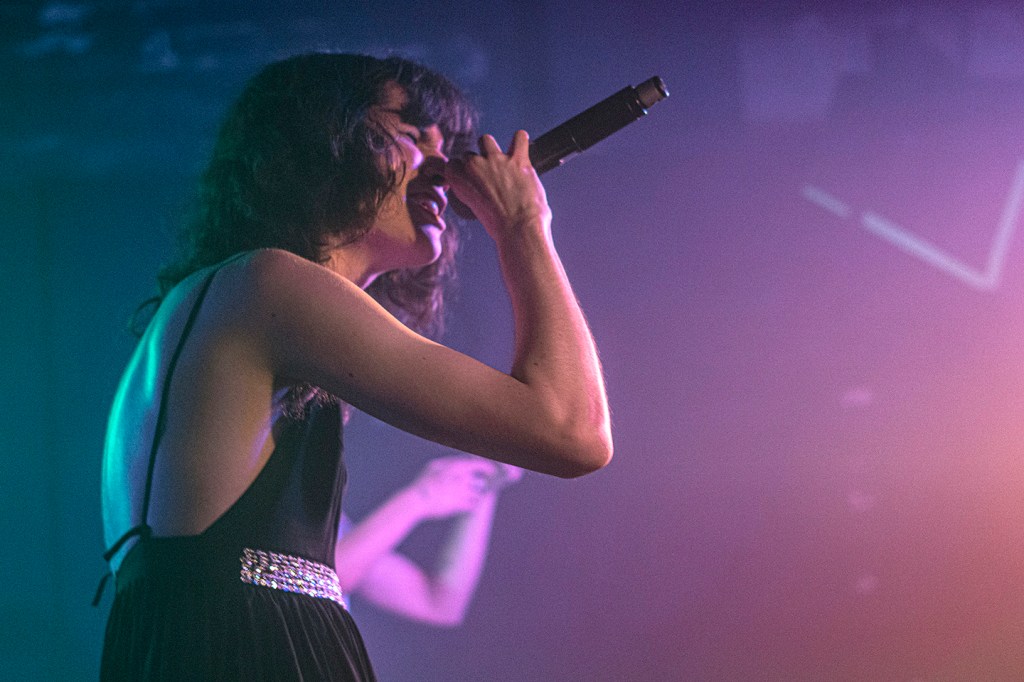
Photo: Jhonny Russell

Was that how you were feeling that at the time? 

SP: That was my raw emotion. I was trying to write what I thought a cool rap song should sound like, instead of just writing properly from the heart. There are some word choices I chucked in there because I thought they sounded cool at the time—not because it was really what I wanted to say.

What was the first song that you felt like you wrote from your heart? 

SP: From the first album, I was writing from the heart. But some of it’s cringe because it’s like I’m reading a sixteen-year-old’s diary poetry, right? It’s a bit like, oh… this is pretty how-you’re-expressing-yourself [laughs].

Everyone starts somewhere. It’s so cool that you found an outlet to express yourself at that age. A lot of people go through their whole life and never find that. I love that you’re just really honest. ‘Cause a lot of people are posers. I remember reading an interview once with rapper 360 and he said the first album he ever got was Wu Tang, and I feel ilke he said it for cool posts and cred.

SP:  Yeah, come on, man, you can you can be dead set! [laughs]. You can tell us that it was some cringe shit. It’s was probably the Spice Girls album lad! Yeah, nah, yeah, fucking 360 man. He’s a funny guy.

With the first album, I wasn’t really thinking about who was going to listen to it. So I was really writing it for myself. There’s some really like, are you okay, Sidney songs on the first album [laughs]. 

There’s songs like that on all your albums!

SP: Yeah, I guess so. Now I’m like, yeah, that was great that I wrote that. But maybe in five years, I’ll be like, oh, it was so cringe when I was 21! [laughs]. I was so emo. I was like, ugh. That’s my music, we like getting a bit emotional and a bit over emotional sometimes. 

I really love the album title, To Live and Die on the Northside.

SP: Thank you. I was so proud of it. I was sitting around for ages, trying to think of a name. And then I was like, To Live and Die on the North Side. That’s it.

The same thing happened with Penance. Sometimes the album name comes straight away, and sometimes it’s like, fuck—what am I gonna call this album?

It reminded me of one of my friend’s bands, a punk band from New Jersey, Nightbirds. They had an album called Born to Die in Suburbia.

I know when I was a teen and living on Brisbane’s Southside in the suburbs it felt like that was hat life was like, like, it’s so boring here and I’m just gonna die here. It was a bleak feeling.

SP: Yeah. It does get pretty boring in suburbia. That’s a nice thing about being an adult. I can leave when I want to. Like, let’s go! I can stay up! But it’s cool to keep a kid vibe too. I’m gonna be like a kid forever. I’ll always be excited about stuff like that.

Another great album title of yours is, I’m so Tired of Being Staunchly.

SP: Thank you. So, I’m still in high school, and I’ve got all my friend issues. It’s about being lonely, a lot—a bit of, like, fuck everybody! [laughs].

And then Northside is a bit more of the same. For a bit of background context, I met another girl. We started dating, and then while I start writing staunchly—me and that girl break up, and then…

I’m getting a bit of a pattern here…

SP: [Laughs] Yeah, it’s always breakup albums. High emotions, really. When your emotions are high, you can write really well.

What else was going on? 

SP: There were dramas with the group. We had to kick a member out and that was really tough, because we still really loved them. But, they couldn’t be in the group anymore. 

Back to 2022, I met this guy from Sydney through Instagram who works in the music business and he was helping me out—trying to sort the group out and trying to get our shit out there. There was me and the guy we kicked out—we were gonna do an EP together. And my manager guy was really keen on pushing it to everybody. It felt like we were going up, and then… it was really fucking frustrating… it was a defeated time in the history of Stealthy. I felt pretty down.

Was that when you started getting into benzos? Because you were feeling depressed. Maybe you were trying to numb yourself to cope? I know eventually you got to a point where the benzos weren’t helping anymore.

SP: Yeah, that’s it. It’s just bad. They make it all worse. Like I said, I had so much friend drama and girl drama and fucking shit for two years straight. It seemed that it just kept happening over and over and over again. Like, I’d make some mates—

Oh my fucking family group chat is buzzing. Oh, shut up. Sorry. I’ll try and figure out how to turn that off. Oh my gosh.

It’s nice you have a family group chat! That’s really sweet.

SP: [Laughs] …But anyways, I’d make some great mates and then something happens and we can’t be friends anymore. It felt like a lot of people were just fucking me off. I felt discarded by a lot of people.

Before I got into benzos, I’d already had some friends who did Xanax. And growing up, you hear about Xanax—you’re like, oh, Lil Peep died from Xanax, you know, and so-and-so died from Xanax. I’m like, wow, Xanax is a bad drug.

But I’d go to my mate’s place, and he’s just on Xanax. And he’s rapping like crazy. He’s so sociable. And I’m like, well, why is this guy on Xanax and functioning great? I’m like, Xanax can’t be that bad.

My girlfriend at the time was like, ‘You’re not doing pills!’ I was like, okay, I won’t do pills. But then we broke up, and I was like, man, fuck everything—I’m gonna do some pills, bro. I don’t care anymore. That’s kind of where it got to.

Writing Staunchly—it was a sad time, but it was also an empowering time too. Because when stuff goes bad, bouncing back can be a really powerful feeling.

I started being really close friends with my mate Skratcha from stealthyn00b. And he put me onto so much cool Chicago music, drill, and Aussie rap as well. We’d hang out, do drugs, listen to Aussie rap, and be like, bro, fucking Australian music is so good! [laughs]. Like, it is the best.

Xanax made me feel tough. It made me feel cool at the time. But then getting off the Xanax—it was hard, obviously.
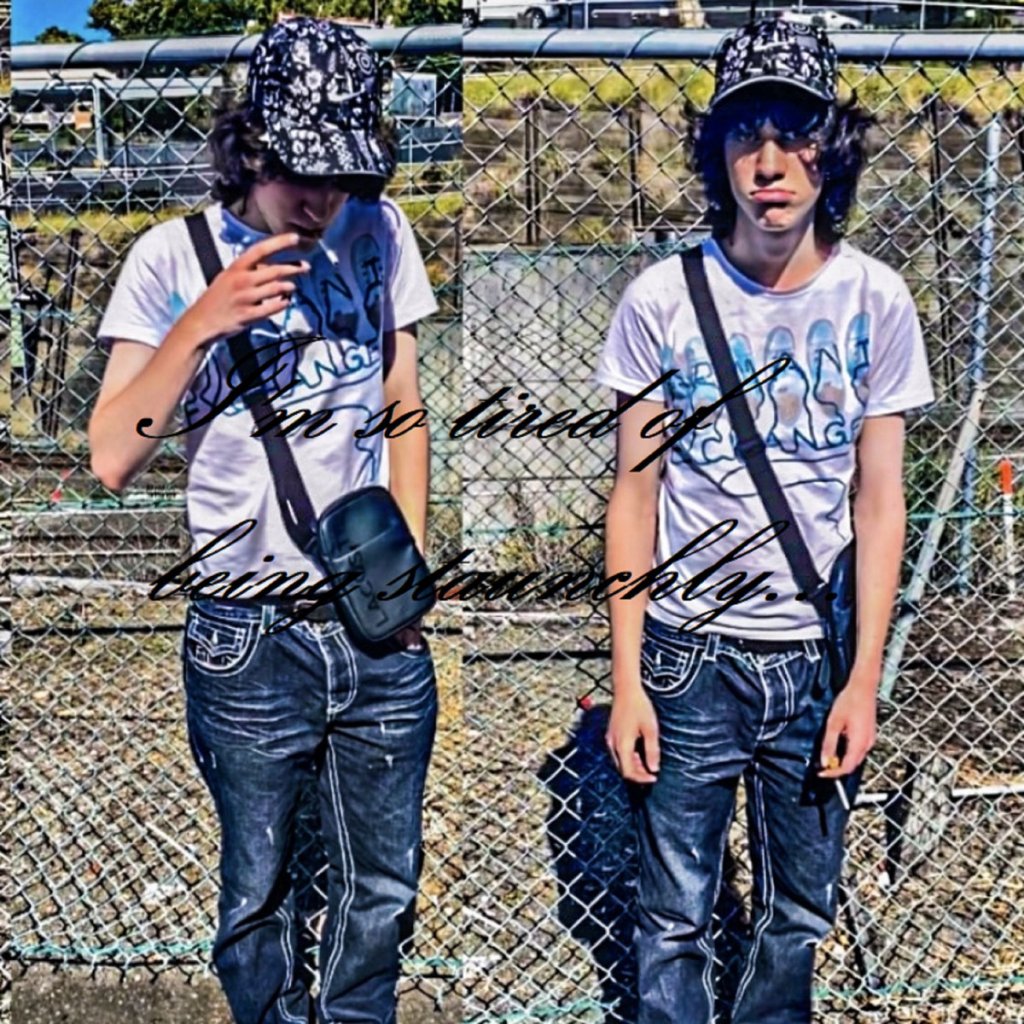
Staunchly, is one of your releases that has the most attitude. It was like you were trying to tell the world that you’re tough. It’s like you had something to prove.

SP: Yeah. It’s the first album where I was talking about gender stuff too, and where I’m speeding up, and singing. It’s funny because on the other albums, I’m trying to sound tough too but the thing is, I’m not that tough really [laughs].

If you’re listening to rap music because you want to hear a tough guy, Sidney Phillips isn’t the person to listen to, man, right? You’re better off listening to Flowz or Kerser.

Why was it important to you to rap about gender? 

SP: It was really important! I was always too scared to. Then one of our friends told us they were trans as well. And she’d rap about being non-binary and shit and keep it staunch. Old mate was so, adlay—like, low-key, just like me—and so gay at the same time. And I was like, I’m never rapping about gender stuff, ’cause that’s cringe. Like, when you’re listening to rap music, you don’t want to hear about gender stuff.

But then I hear that, and I’m like, what the fuck—this is so cool. Because you’re getting to know who they are as a person and what they believe in. And, that’s cool.

I was like, I fuck with this so hard. It doesn’t have to be one or the other. You can infuse your rap with who you are, even if it’s a bit scary, even if you think it’s a bit embarrassing.

Sometimes being trans—especially someone that looks like me—can feel embarrassing, you know? But you’ve got to be honest. You’ve got to be honest with the world. I am trans. So there’s no point, being embarrassed about it. Might as well rap about it, you know?

And it gives trans people listening something to connect to. And that was what it was like for me, hearing my friend rap about being trans. I was like, this is so empowering. This makes me feel cool for being trans, but also loving my gangster shit.

’Cause it’s pretty niche. I don’t know a lot of people like me—but there are people like me. I’ve gotten DMs from fans being like: I love my adlay shit, but I feel embarrassed to tell my friends I’m non-binary, or whatever.

I want to help people be themselves and not feel embarrassed.

I love that! In my experience, the hip-hop space I grew up in was very a homophobic and misogynist world. Do you feel things are changing? 

SP: Totally. I think so. A social change. 

The music we make—the music people make in general—is getting more and more progressive. There’ll always be some misogynistic rap, and there’ll always be homophobic rappers. But I think socially, as we get less and less okay with those bad things, it slowly—but not surely—goes away.

Twenty years ago, there wouldn’t have been a Sidney Phillips. There wouldn’t have been a trans rapper rapping about doing adlay shit.

The fact that stealthyn00b exists, the fact that there are trans rappers out—it just shows progress. It shows where we’re moving forward as a society: being more and more okay with things that aren’t traditional.

Like, fifty years ago, shit was so much different. So in fifty years from now, I hope everything will be a lot more accepting and progressive.

Your latest album is, Penance, obviously the word penance has religious connotations: repenting for your sins. The album’s themes revolve around addition and coming out the other side. You’ve been to rehab a couple of times; can we talk about that?

SP: Yeah. It was like an outpatient detox thing, so it wasn’t technically rehab—it was a detox thing.

Just before Staunchly came out, I went to detox for the first time ’cause I wanted to quit Xanax and all that, but I was having trouble quitting on my own. I’d be off it, and then I’d relapse. 

Detox was helpful for me—talking to the drug counsellors. I had so many one-hour sessions, chatting it out with the counsellor, about everything to do with my drug use. Having those ideas drilled into my head was probably really important.

Drugs really change the way your brain is wired. Your thought processes aren’t working properly, and they’re making you do stupid things [laughs]. I needed that to be sorted out.

After detox, I was back into making music. I still had a bit of trouble quitting after that—there were a few relapses here and there—but they get fewer and further between, as time goes on.

Where you still feeling lonely at that time?

SP: Sometimes I was by myself and sometimes with friends. One of the things that I needed to change for me was, hanging out with people when I know that they have pills. I know me and I know if I’m with someone and they have pills, I’m going to want to do it, as much as I know that doing it is bad. So if I knew my friends had pills, I knew not to hang out. It was rough, but I had to do what I had to do. I was sad because some of those people were really good mates.

On the album, in song ‘2 Fucked Up’ you talk about all that.

SP: Fuckin’ oath!

There’s a line in the song where you say: There’s nobody’s helping me. 

SP: Yeah. [Raps] I feel like nobody’s helping me, please somebody help me / I been taking all my meds but ain’t nothing helping.

A bit of context about ‘2 Fucked Up’… I went to detox the second time, right? About a year after the first time because I wasn’t taking pills anymore, but I was just, broke but still buying weed every week, still smoking every day, and drinking every night. I was spending any money I had on substances—which isn’t good.So I needed to go to detox again to get off everything, at least for a while, so I could get my money back, right? 

I probably took a good six weeks off weed and drinking. And wrote ‘2 Fucked Up’ during that period. I wrote ‘Get Rich…’ during that period too. 

I got my money sorted out now, so I drink and smoke sometimes. But I’m not in debt to anybody and I’m not a broke cunt anymore [laughs]. I know that I can smoke weed and still go to work and still like live a normal life. I stay away from the pills these days though—it’s bad news.

I’m stoked for you. A lot of people don’t really see prescription drugs as drugs, or being that harmful but they’re a lot worse than weed or mushrooms, you know, natural shit.

SP: Yeah, the doctor can prescribe people a benzo for anything. It’s not as big of a problem here as it is in America. In America, you tell the doctor you have anxiety and you get a prescription for Xanax twice a day. It’s so fucked up. I could talk about benzos all day. I have so many thoughts on them. I did have my fun on them but I wouldn’t recommend it to anybody. 

On song ‘Get Rich or Die Tryin’ there’s a line you spit about not wanting to encourage your fans to do pills. When did you first realise that your words can have power to other people?

SP: It was the weirdest, weirdest thing. I’d been making music for a long time at that point, and I’d never really had an audience until Staunchly.

Around the time Haunted Mound had come to Australia, they were on Twitter being like, bring us Rikodeine to the shows. And I thought that was kind of rough, right? Because a lot of their fans are teenagers—all-ages kids. So a lot of these fifteen-year-olds are probably looking up “what is Rikodeine?” for the first time.

I rap about Rikodeine—or at least my older stuff did. Not really anymore. I don’t rap about it anymore because I don’t do it anymore. And in the stealthyn00b Discord, there was this kid… he’d bought the same Nautica jacket I had. He got his haircut the same way. And then he posted, like, I just bought some Riko—there was a photo of the bottle of Rikodeine he bought from the pharmacy.

He was, sixteen!

I was like, bro… I was like, that’s not cool. You shouldn’t have got that.

And he would’ve only really known about it through either Haunted Mound or me. And I felt so guilty in that moment. I was like, oh, this is fucked up. I was just like, bro, don’t do that shit. Chuck it out. And he was like, I just took one sip. I already feel something.

And I was like, bro—don’t do that shit. Chuck that shit out, man! You’re stressing me out.

When I started rapping about Xanax, doing a song called ‘5 A4’s in My Nikes’, I put that out, and then I put on my stories: just letting you know, we don’t support drugs, and we don’t want anybody taking pills. And someone replied to me: yeah, it’s all good to say you don’t support it but you’re still supporting it if you’re rapping about it. You’ve gotta stop talking about it. And I was like… man. Maybe I should stop talking about it. Maybe I do have a duty to my fans to not be promoting these negative ways of living. On the other hand, I shouldn’t be censoring myself. I’m an artist. I should be able to write about what I want to write about. You can do what you want but there are always real-world consequences.

First track on Penance ‘Lead Horse to Water’ is about seeing your friends in the midst of addiction and you want to help them but you can’t really help people that don’t want to be helped.

SP: Yeah, it’s real. I wanted to change what I’m rapping about, but it kind of just happened naturally, as my opinions on things changed and as I lived a bit of life, and I saw the effects of what living that sort of way does to people.

Instead of rapping about, pouring Riko in my lemonade on the train, I’m talking about trying to help out my homie but he won’t fucking listen. It’s rough because that’s real.

There are two sides to the coin. Drug use is really fun [laughs] when you’re doing it but it’s really painful as well, for the person and for the people around them.

I find drugs really interesting. I consume a lot of media related to drugs, It’s sort of poetic and heartbreaking and shit. I don’t want to just show the fun part. 

You don’t want to glamorise it? 

SP: Yeah, I’m just dead set in that, This is the life that my friends live, and that I live to an extent, but I’m not gonna sugarcoat it and say that it’s all mad fun.

As someone who’s been through addiction and seen friends struggle with it too, is there anything you think someone going through it now could do to help themselves? Or something you wish someone had done to help you?

SP: The advice I’d give to someone that’s in that situation, trying to help a friend out, is you want to try and be patient. You’ve got to be as patient as you can be. Because, drugs just fuck with a person’s brain. Most drug users want to quit, right? Most bad drug users want to quit, but they feel like they can’t. 

You can talk to someone and they’ll be like, yeah, I’m so keen on quitting. I’m fucking sick of it all. And they can pinpoint exactly why the drug is so bad for their life and be like, yeah, fuck it, I’m not doing that shit anymore. And then, like, two days later, you see them and they’re back on it. It can get so frustrating. So that’s why it’s important to have a lot of patience and to try and put yourself in their shoes as much as you can.

That’s the most difficult thing for someone that’s never used. Someone that hasn’t been there can be like, it’s so stupid. Don’t they see how destructive they’re being? Don’t they see how they’re fucking up everything? They do see it. Of course they see it. But the drugs have such a fucking grip on them. They feel like they can’t let go. Like they can’t get out of it. It’s too scary, it’s too hard.

Patience and kindness is the best thing you can do when someone is in a bad place and hurting. Try not to give up, too. It can get really frustrating but don’t give up!

When I was doing Xannies, I probably had someone give me the Xannie talk, like, ten times before it really sunk in. Remind your friends that what they’re doing is fucking stupid! [laughs].

The other part of it too is, that people forget when you take pills, your body becomes addicted to it. And when you’re ready to stop, you physically can’t, because your body craves it. And you’ll do anything that will take that pain away, that detox, and that really uneasy, gross feeling you get when you finally want to stop.

SP: Yeah, yeah. Exactly. Because that’s the easier thing to do. And that’s why it’s called an addiction. You can be ready to quit, but your body isn’t ready.

I remember it was the worst. I thought having another Xanax would cure me. I’ve never been dope sick or anything but that’s probably the closest thing I could compare it to. 

I could be with my friends. I could have weed. I could have alcohol. I could have my girlfriend. But I could still just be wanting to kill myself, you know. Just being like, fuck, more than anything I just want to go out and get Xannies. That’s so ill, right? It’s such a mentally ill way of thinking but that’s just what the drugs do to you.
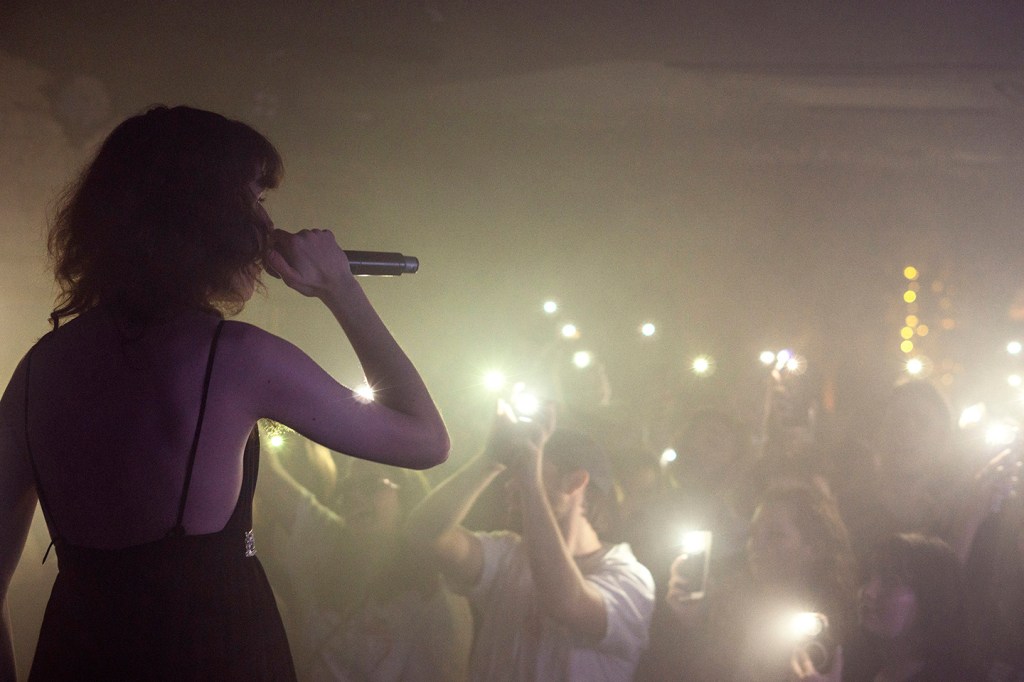
Photo: Jhonny Russell

You have a song called ‘Cuts On My Wrists’; how close to home is that song:?

SP: Yeah, a little. Self-harm was never the thing that I dealt with when I was a younger teenager. It happened around the benzo-years, I started getting into that. I was in a dark space and feeling like I needed control. 

Sometimes, I guess, it’s a way to feel, though, too, because you’re so numbed out from all the benzos. Like, I just want to feel something again. It’s like, can I still even feel something?

SP: It’s kind of TMI but I did it on the benzos because they make you so impulsive. I have a song ‘I Want To Hurt Myself’…I’d be at my mate Skratcha’s place and I’d want to hurt myself. We’d be chilling in the kitchen and just cut myself. Why? I don’t know, I wanted to. It’s pretty random. That’s not something I struggle with anymore. 

Thank fuck! I’m proud of you.

SP: Thank you. 

You’ve done a lot in a short period of time. In my opinion it’s the best thing you’ve ever done. 

SP: Oh, that means a lot! I reckon it is probably the best thing I’ve done.

The production’s gotten real pretty. 

SP: Thank you! Making it, I was so worried. Like, oh, I hope people like this as much as the last one. I hope people like this more than the last one. Because the last one was so obviously my best work at that point. It was easy to make an album better than Dart. It’s easy to make an album better than Northside. But it’s not easy to make an album better than Staunchly for me, at this point.

I love the variation and the different emotions. And the way your flow has evolved.

SP: I like to think so. Thank you.

Your laptop died while making Penance, right? You were like 70% finished when it happened?

SP: Yeah. More then half of it was from 2023. My laptop died around Christmas and I didn’t have the money to buy a new one because I was so broke. I didn’t get a new laptop until I went to detox again, four months later.

Did you remake the songs you lost?

SP: No, I’d saved the files. We got all the files off my laptop. The laptop itself died, the CPU completely fucked it, but we managed to recover everything, so I didn’t have to remake the album, thank goodness.

I actually made this album on two laptops. One was the laptop I made Staunchly on, and that one’s dead now. I couldn’t get into the project files on it, though.I had the finished songs, but I couldn’t go back and edit them.

When I was working on ‘Make It Back’ – the original version was from mid-2023, but I needed to extend it so I could get Ricky’s verse on it. That meant finding the beat again and re-recording the whole song. That’s one track that’s re-recorded.

When my laptop was broken, I was making songs on my phone using BandLab. There were also one or two BandLab songs that I later recorded on the laptop as well. So there were a couple of re-records, but they didn’t end up on the album. I think they’ll go on the deluxe edition.

Is there a song on the album that you’re really proud of? 

SP: I’m really proud of all of them [laughs]. I’m really proud of ‘2 Fucked Up’ because it’s so catchy and emo and ridiculous and funny. It’s all my favourite parts of my music in one song.

‘All My Friends Are Leaving Brisbane’  is another song I’m really proud of, that stuff had been on my mind. It’s good to be able to sum up my feelings in a song. 

Do you feel kind of lonely or isolated sometimes because a lot of your crew left for Melbourne or Sydney and you’re still here? 

SP: Yeah, yeah. I had two close friends move from Brisbane to Melbourne and one of my other friends that lived in Adelaide moved to Melbourne too. They were all kicking back. And suddenly, people don’t have as much time to like talk on the phone and shit like that,’cause they’re living their fun life and I’m living the boring life here in Brisbane.

I like your line where you’re talking about your friends being in Sydney, but you hope they don’t forget Sidney. That’s kind of a real Kanye like line.

SP: Yeah, I love putting your own name in the lyrics. I’ve always loved that. I feel like it’s a specifically rap thing, talking about yourself. In other genres, they’re not really doing that. They might be singing about themselves but it’s usually in a more poetic way. I love how raw rap is, just being dead set. Saying what you really feel. 

Do you know how many times you say the word cunt on your new album? 

SP: Oh-no, did you count? 

Sure did!

SP: [Laughs]. 

88 times. 

SP: What!? 88 times? I’m going to do 100 next time!

[Laughter] On ‘2 fucked Up’ you say it 15 times. 

SP: [Laughs] Of course! There’s a few clean songs on Penance, which were an accident. I noticed when I was going through a looking at what songs were explicit and which songs weren’t. 

Yeah, there’s seven songs that you don’t swear in. 

SP: [Laughs]  That’s gag. It’s crazy. Ridiculous. It’s awesome. There’ll be 100 c-words on the deluxe. 

[Laughter] You grew up Christian; is the album title Penance inspired by that? Also, you eventually did your own exploration of Christianity and decided you kind of didn’t believe in God for a few years, when you’re around 13. And eventually you went back on the path.

SP: Yeah. I thought about it all for a while, like, oh nah, this shit doesn’t sound right. I did my own research into it. I get such a strong feeling in like my heart when I hear gospel music. It makes me cry sometimes, l feel overwhelmed with emotion. The religious stuff is pretty real for me these days.

You thanked God in your album liner notes.

SP: All praise be. I’ve done a physical release for every album I’ve made, and every one has a note thanking God. I always thank my friends, my family, and God, you got to, he’s number one, he’s making it happen [laughs]. I always thank God. On ‘Act Famous’  it says: [raps] Coming up quick but it wasn’t up to me / All the thanks is to my God that’s right above of me. 

I’m not really interested in making gospel music but I’ll chuck a lyric or two about God in there, just because that’s me.

I remember when I first heard Kanye West’s song ‘Jesus Walks’ and thinking that’s a really powerful song. It moves you, whether you believe in God or not.

SP: Mmm-hmm, yeah. For me, that’s why it’s so amazing.  It’s like, wow! That’s heavy. [Raps] God, show me the way because the Devil’s tryna break me down… I wanna talk to God but I’m afraid ’cause we ain’t spoke in so long. Ohhhhhhhh! That’s hard. That gives me goosebumps.

I got into Kanye when I wasn’t really Christian anymore and then I heard ‘Jesus Walks’.  Fuck, those lyrics really hit: I’m just tryna say the way school need teachers / The way Kathie Lee needed Regis, that’s the way I need Jesus. Ahhhhh! I LOVE that!

What are the things that are important to you about creativity? 

SP: It’s important to be yourself, always, to be unique. Everybody’s art exists because of everybody else’s art, right? You can’t ignore your influences but you don’t want to lean too hard into your influences either, because then it’s just not cool, right? The thing with clone artists, there’s lots of clones of each other, right? With rap especially but it’s like, why would you want to listen to a clone? 

I’ve noticed there’s a bunch of artists out their now that try to emulate and bite your style.

SP: [Laughs] There is bro! [laughs]. It’s fucked up, it’s very weird. The first time I heard someone sounding like me, I was like, fuck off cunt! This is not right. Why would you want to listen to the clone when you can listen to the original? Why would you want to get the Aldi-brand when you could get the real Coke.

It’s not only the hip-hip scene, it happens in the punk scene too, one day everyone started sounding like Blink-182 or Bad Religion or Ramones or whatever. I never understood artists that straight rip off someone else’s sound. Push things forward, put your own spin on it. I can hear some of your influences in earlier stuff but I think you’ve found your own thing now.

SP: Yeah. That’s what you need to do when you’re making art, you need to take your influences, put your own spin on it. If I’m out at a show and I hear a band that sounds like Blink-182. That’s pretty disappointing. But its different when you hear a band sounds a little like Blink-182 but they’re doing their own thing. I fuck with that. You have to do it your way.

Did you see that guy on Instagram reels the other day? This guy blowing up doing a Sidney Phillips type thing and everybody was flaming him in the comments [laughs]. It’s so funny, man. 

[Laughter]. One of your clips ‘Effy’ has around 20,000 views, which is really cool. And on Spotify, it had 128K+ streams. 

SP: Yeah, it’s so good! 

Totally! Gimmie has a YouTube where we’ve posted 100s of live vids we shoot. Recently one got 2.2 million views [it’s now at 3.6 million!] of a local band, Guppy. It’s funny how we had that vid go viral and we get crazy numbers in views on our interviews, yet all the other media and publicity people in Australia don’t think our little publication matters.

SP: Wow! I haven’t had a I haven’t had a video go crazy like that.

Why do you think people latched onto ‘Effy’? 

SP: I post a TikTok of a snippet of every video that I do. The TikTok gfor ‘Effy’ got some decent views, like 14,000. Suddenly, we got a bunch of comments. That was the first big one. It all kind of happened from there, when it did well I started getting booked for shows. I’m pretty happy with where I am now. But I’d love to not have to do my day job anymore. 

Where do you work?

SP: Woolies [laughs]. In the deli, mostly. Its’ not terrible. I like the actual job. It’s annoying being understaffed, though.

I saw footage of a recent show you played in Melbourne and it looked crazy! So much fun! It was a packed house and everyone was just losing it. It must be a bit of a head fuck to go from from playing awesome shows then going back to Woolworths?

SP: A little bit. Definitely, after doing the show. The recent ones in Sydney and this one in Melbourne, blew everything else out of the water. I’d never done a show with more than 150 people. The Sydney show was 300+. The Melbourne show was even more; packed with everyone singing along.

It looked like you were having the time of your life! Your vibe, the crowds vibe, it was pretty special. Watching that, you get the feeling that you won’t be playing in small rooms for much longer.

SP: Sometimes I’ll tell my coworkers about stuff. They’ve known me for three years now, and they know I’ve been doing music the whole time. It’s nice to be able to be like, oh, guess how much I made off this show, or guess how many people came to this one.

But yeah, for the most recent one, I had to be like, bro, I’ll show you my bank account, right? I promise I’m not lying. And they’re like, no, no, I believe you, I believe you [laughs]. It doesn’t sound real sometimes, though.

But IT IS real. You’re living it! And people are really responding positively to your latest album. I am so excited to see what you do next, Sidney! I’ve secretly been hoping you’ll incorporate more of the emo and post-punk influences. 

SP: Yeah, come on, come on—we’ll get all Joy Division-y with it. 

Follow @sidneyphillipz + @stealthyn00b & check out sidneyphillips.bandcamp.com 
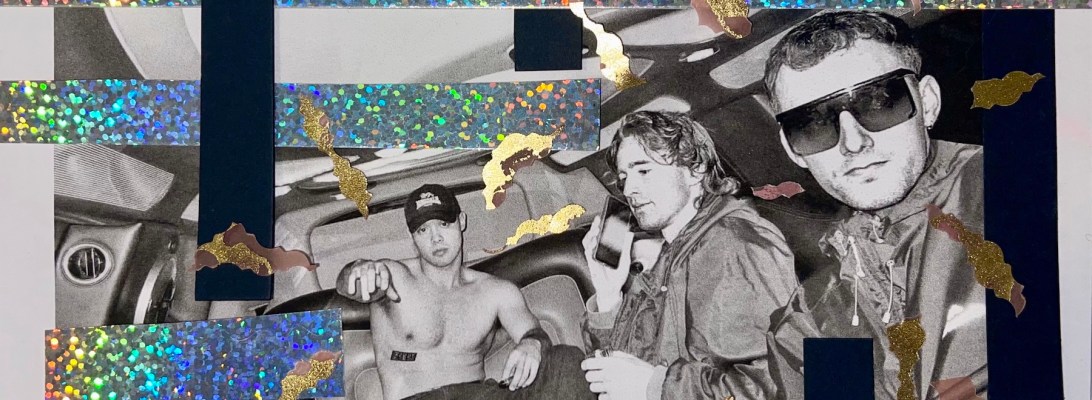
Shady Nasty: ‘Making music keeps you sane.’

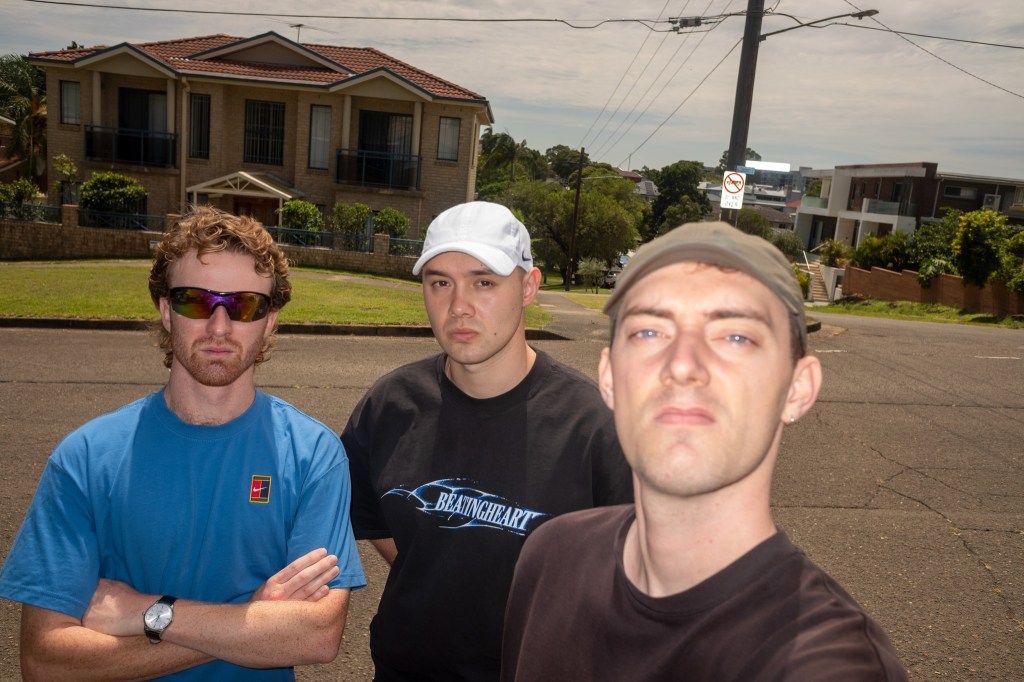
Original photo: @kataomoi__ / handmade collage by B

Gimmie have been bumpin’ Shady Nasty’s debut album non-stop while cruisin’ through the Gold Coast suburbs ever since we got our hands on it! But TREK isn’t just a collection of bangers or only one of the coolest albums of 2025 so far—it’s a reflection on personal growth, hard work, and the pursuit of one’s dreams, deeply rooted in their beloved city, Sydney. 

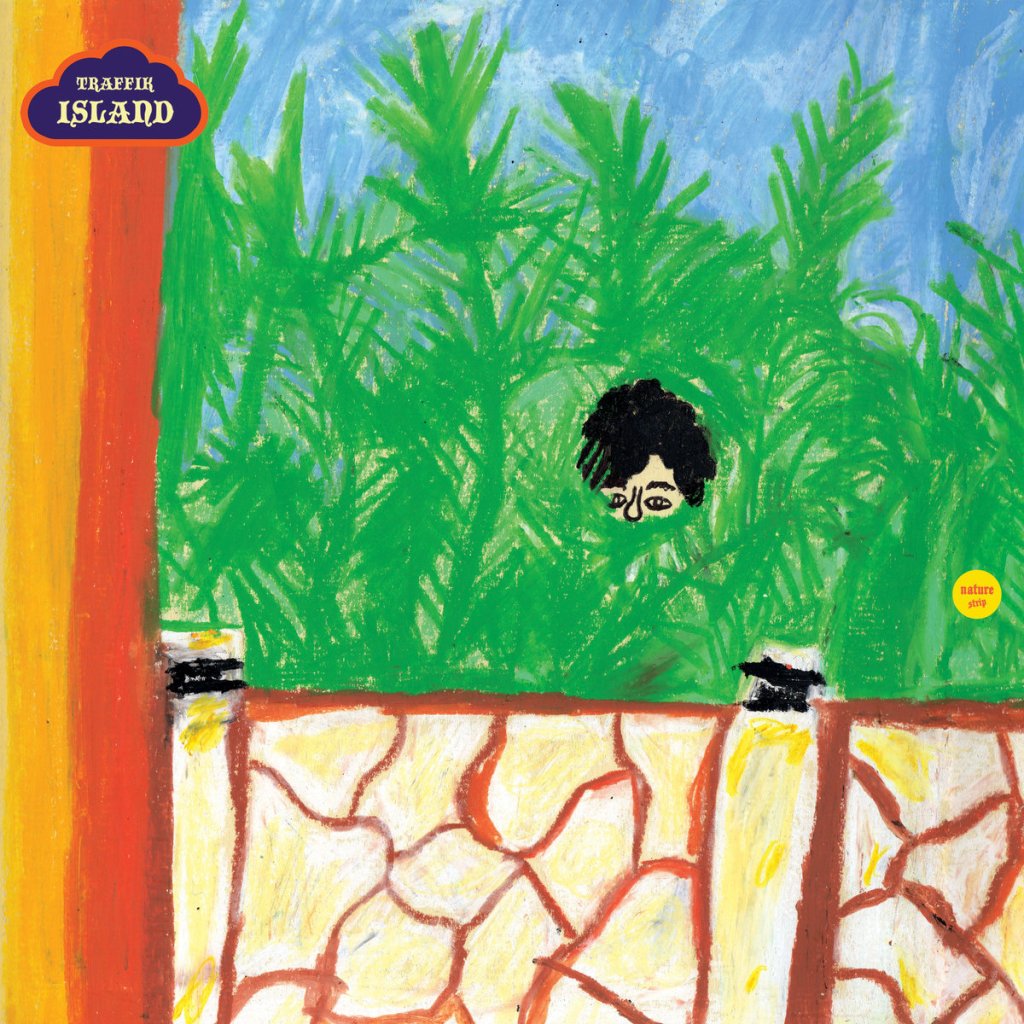
For Kevin Stathis (vocals, guitar), the post-punk-meets-hip-hop album with electronic elements draws on band’s day-to-day life. ‘My dad has done solo excavation his whole life, like proper blood, sweat, and tears stuff,’ he shares. ‘About nine years ago, he was like, ‘Fuck it, I’m going to treat myself,’ and bought a Lexus,’ which to his dad wasn’t just a car (it appears on TREK’s cover)—it was a symbol of everything he’d achieved, coming to Australia as an immigrant with only $200 in his pocket.

For the band, TREK is the pursuit of their own dreams while sometimes feeling lost in the rush of life and disconnection, which we can all relate to. The tracks on TREK bubble with the energy of their suburban neighbourhoods and the everyday hustle of its people. In this in-depth conversation, Kevin, Haydn Green (bass), and Luca Watson (drums) open up to Gimmie about the making of TREK, working with The Presets’ Kim Moyes, their roots, and the balancing act of staying true to who they are while embracing change.

KEVIN: I’ve been working a lot. I’m a technician. I’m currently building speed cameras! 

Wow. That’s funny. 

KEVIN: Yeah. It’s very ironic considering my interests [laughs]. I only just started it so we’ll see how long it goes for. Hopefully I don’t get kicked out when people discover my true identity. 

[Laughter]

HAYDN: I’m a tennis coach. We were down there this morning, actually, taking photographs at the tennis courts. It’s an interesting job, I suppose— a little bit left field.

LUCA: I work for the University of Sydney in an air-conditioned office. I’m very email-based, from nine to five.

Why is music important to each of you? 

HAYDN: It’s one of those things, because we all played together in school. I suppose we had a little bit of a knack for it. If you’re told that at some point, you’re probably going to think, ‘Well, maybe I’m all right at this,’ and you follow it a little bit. 

LUCA: Like, ‘Yeah, I’m gifted.’ [laughs].

HAYDN: That’s right. It’s good for your brain too. 

LUCA: That’s not the fucking reason we do it though. 

HAYDN: For me, I would be playing music, even if I wasn’t doing the band. I think it could be a meditation of sorts. 

LUCA: Making music keeps you sane. We all do a lot of things that other people have to do in their lives, and it’s just this one thing where we can come together and do something that has no sort of pre-set expectation. We can do whatever we want.

KEVIN: It’s freedom to an extent.

Freedom—different forms of it—seems to be a big theme on your new album, TREK.

KEVIN: Yeah, it’s a good way to put it. 

LUCA: Most definitely. And, ironically, I am situated at—” [turns camera to show that he’s in a car park outside of Freedom Furniture].

[everyone laughs]

TREK is an interesting title for your debut album. How did you guys get to that? 

HAYDN: After absolutely spamming the group chat with options…

KEVIN: There was some bad ideas in there. 

HAYDN: It was just throwing words at the group chat. Does this word sound good?

KEVIN: One day, Luca was just like, ‘TREK,’ and we’re like, ‘Oh—’

LUCA: I was on the toilet at work. How good is that? Thinking about it, because we’d been talking about it so much. Trek is one of those words we use almost every day to describe things in our life. For example, you’re talking to your parents growing up, and they’re like, ‘Oh, you’ve got to go do X, Y, and Z.’ You might be like, ‘Uggh, trek.’ I told my parents about it, and the fact that they didn’t get it—that’s not a word from their generation. It’s very much ours, from our era in Sydney. 

HAYDN: You wouldn’t say, ‘That sounds extremely arduous.’

Did you all grow up in Sydney? 

HAYDN: Yep. We all went to the same school.

I think I read you were jazz musicians or is that a stretch?

LUCA:  The press release really gives us a little bit too much credit there. We all played jazz together. 

Did you have any other bands before this one? 

KEVIN: Nothing serious. This band, we’ve stuck together. I only do it cuz I like hanging out with these two.

When you first started the band, what kind of music were each of you listening to?

KEVIN: Sticky Fingers.. it’s been a long time since then. 

LUCA: It was such a wide range.

KEVIN: I remember you always were like, ‘Oh, you’ve got to listen to Ice Age. Ice Age is the best.’ I remember listening to it and being like, ‘This shit is trash.’ Now I’m like, ‘Yeah, it’s pretty good.’ I just didn’t understand. Because, me personally, I’ve played piano since I was a kid, so I guess I’m classically trained. It was just painful listening to this music where the guy couldn’t sing in tune, but now I get it.

LUCA: We had to convince Kevin. We had to get in the backend and change some of the plugins and the wires [laughs].

KEVIN: They had to rewire my brain.

I really love the album cover; whose car is that? 

KEVIN: My dad has done solo excavation his whole life, like proper blood, sweat, and tears stuff. About nine years ago, he was like, ‘Fuck it, I’m going to treat myself.’ And he bought that Lexus. He didn’t really drive it much, but it was kind of like a symbol of this guy who flew from Greece when he was 22 with like 200 bucks in his pocket—he literally came from nothing. And for him, having that kind of material possession was much more than just a material possession. It represents a lot of people in Sydney who are struggling, but they’re trying to achieve this dream. There’s a lot of mountains that one has to climb just generally. 

We’re all trying to chase this dream, too. It’s obviously a bit of a different dream from what my dad wanted to achieve, but it’s still, as the son of migrant parents, where I wouldn’t say I had a hard upbringing. They worked hard. They were able to provide. So, my dream is a bit different.

HAYDN: We were taking some press photos in my area the other day, and that photograph very much reminds me of it. Kevin’s in Campsie, I’m in Bexley, and that’s where we grew up. The image just looks like a photograph of suburbia around our parts—like the houses of that style. It’s very Aussie in a way. It has a temperature to that photo as well. It’s a real warm picture, and it reminds you of walking down the streets.

LUCA: The image represents the hard graft of everyday life. If a car is something you care about and it’s precious to you, it’s about putting in the work to keep it from falling to pieces. There’s a level of upkeep in that photo—like investing in the things you love.

The band’s name is borrowed from a drifting team, isn’t it?

KEVIN: Yeah, look, I regret the band name, but I was 18. 

LUCA: [Laughter].

Where did your love of modded cars come from? 

KEVIN: I was procrastinating during my HSC exams. I was bored and discovered drifting, and it’s been an obsession of mine ever since. It’s such a unique niche. To most people, it looks like the most boneheaded shit, but every car is so creative. They’re such an expression of their owner, and that’s what I like about it. They really stand out from the norm, and I gravitated toward that—because I don’t want to be like everyone else.

In the Shady Nasty song ‘Get Buff’ your mum’s voice can be heard talking about you getting a car.

KEVIN: I was going to buy a certain car, which I absolutely knew she would disapprove of, and I recorded her reaction. 

I feel like there’s a lot going on in both your music and the visual accompaniments to it. There’s a lot of meaning and thought behind it. Many of the songs seem to be a balance of the duality of life’s chaos and the search to find meaning in it. 

KEVIN: Nah, you’re giving us too much credit. 

HAYDN: It’s all bone-headed fun [laughs].

LUCA: We do put a lot of time and effort into it. It’s very considered—it’s not just like, ‘We wrote this mad song about our mad car, and our epic mates did a burnout. Hectic!

KEVIN: Nah, it is what we’re about [laughs].

LUCA: A lot of our work is about Sydney—what’s in our own backyard and how we process our day-to-day experiences, especially as people living in the 21st century with an iPhone. When you take all that in and try to make a music video, it comes from the small things we observe or overlook in daily life. We try to code them honestly through our own Harbour City experience, whether that’s using the words our friends use or simply acknowledging the environment around us—like right now, I’m sitting in a car park in front of Spotlight, Freedom, The Good Guys. The typefaces, the colours, the cars in front of me—this is what life actually looks like for a lot of people.

Music videos can sometimes feel detached from reality. Not to say ours don’t have VFX and layers, but they are born from a collective reality for people who live here. 

KEVIN: Inherently, we’ve always wanted to be as genuine and authentic as possible. I get the shits when I hear songs that clearly aren’t about real experiences the artist has done. So we put a lot of effort into that authenticity. Our lives aren’t that exciting most of the time, so we dig deep into certain moments to pull meaning from them. Maybe that’s why the lyrics and visuals turn out the way they do.

HAYDN: A lot of people write lyrics that lean into fantasy—big upping themselves. For us, though, it’s different. Take our track ‘Ibiza’ for example. It’s about living vicariously through other people’s lives, which is exciting in its own way. None of us have been to Ibiza, and that club scene isn’t our lifestyle, but it’s fascinating because so many regular people love that idea. 

LUCA: You see them at the gym, at Westfield—there’s this shared space.

KEVIN: That said, TREK as an album is much less about vicarious living. It’s all pretty grounded in our own lives.

I’ve been really obsessed with the song ‘Caredbrah’ since you dropped it in November last year. It felt like he song of the summer. The vibe and hook rules. Is the song a reflection on ambition and what it costs to make it?

KEVIN: Maybe, in a way, yeah. It’s inspired by the relationship between me and one of my closest mates. We live completely different lifestyles, yet whenever I see him, it’s just like, yo, let’s go. I find that really special, and I’m very fortunate to be mates with this guy—that’s kind of what Caredbrah’ is about.

The ambition part—yeah, I feel like I’m being extremely ambitious trying to play in a three-piece live band in 2025. And he is extremely supportive of it, despite knowing that heaps of people out there will never be able to make a living off doing that kind of stuff. But why not give it a red-hot crack?

I reckon you guys can do it! 

LUCA: That would be very cool if we could do that. If you could organise that for us, that would be great. 

[Laughter]

Do you have a favourite song from TREK

HAYDN: I like ‘A86’ the most. I like the idea of it. A lot of sampled music—particularly in hip hop—takes an older track, like a Motown song, and lifts a full bar from it.

KEVIN: Tell them how you did it!

HAYDN: I took four bars from our rehearsal and turned it into a sample. Then we took it to the studio and layered other elements over it. I started wondering—has anyone ever sampled themselves? It just seemed like an odd concept to me.

Kevin’s chant vocal on it—I really like it. It’s a great representation of what we can do. It’s traditional instruments, but with an electronic or hip-hop element that might surprise people. That combination is what makes it stand out.

That’s cool. I know that Randy the vocalist for 80s-90s Sydney hardcore punk band Massappeal took samples from the bands practices and used the ringing out parts of songs to make an electronic project called Wolf Shield.

HAYDN: Man, somebody’s onto it before me. I’m just stealing his ideas! [laughs].

What about you, Luca and Kevin? Which song do you really love on the record? 

KEVIN: My top two are probably ‘SCREWDRIVA’ and ‘I Don’t Want To Lose’ (‘I.D.W.T.L’)

‘SCREWDRIVA’ because I remember listening to the first mix Kim [Moyes] sent us in the car—it banged so hard. I played it over and over, like six times, on the way to work.

Then ‘I.D.W.T.L’—the demo was so different from what it sounds like now. It really became its own thing. I can’t say I enjoyed the process because it took forever—it was painful trying to work things out. But the end result is completely different from the original, and I think it’s beautiful what it became.

What was it originally? 

KEVIN: There were live drums and heavy guitars—it pumped a lot more. But the version of it now is probably the most laid-back song on the album. It was cool to see what it could become.

Lyrically, it’s again, about having ambition and knowing that it’s a a difficult road to traverse but just doing it anyway.

I feel like that one seems a little more introspective. 

KEVIN: Yeah, I think so. I don’t know what I was thinking when I wrote it. 

LUCA: Your mum and your dad yelling at you.

KEVIN: Yeah, they roast me a lot for not having a stable career, but what are they going to do about it? 

[Laughter]

What’s ‘SCREWDRIVA’ about? 

KEVIN: The long stretches of driving when we play interstate shows. You just want to get there. So, you drive well above the speed limit and you have lots of energy drinks. And it’s about the tunnel vision that you get as you’re just barreling down the highway. You stop caring about getting done by speed cameras or crashing into kangaroos. That’s what it’s inspired by.

I still can’t believe you you’re building speed cameras!

KEVIN: Yeah, me too. I’m on my second week of the job. 

I found a mention online that said you were a stunt driver?

KEVIN: I did some burnouts for a short film. I’ve done stunt driving a couple of times, but it’s not actual stunts, it’s just moving a car into the frame stuff. It’s good fun. 

Luca, what song’s your favourite on TREK?

LUCA: ‘SCREWDRIVA’ or I actually really liked the song ‘Hesitance’, even though I hated it for so long.

KEVIN: That song wasn’t even going to be on the album

Really? That’s actually one of my favourites on the album. With each listen it grew and grew on me even more.

LUCA: That’s how I feel about it. It  leaves me wanting more, every time we did it. We couldn’t get it over the line. And even when we’d finished it, I still had this feeling of unease about it. I’d almost say I like the fact that it doesn’t perfectly scratch that itch for me. I like that it feels like there’s something slightly off, like it never quite makes it over the line. I don’t know why, but I just like that feeling in that particular song. It’s a grower [laughs].

KEVIN: We reworked that song multiple times in the studio with Kim. We tried so many different things. Even like the first mix, after we finished all the studio sessions. Luca you still hated it. I

HAYDN: It sounded flat. It didn’t have any aggression; it didn’t have the bite it probably needed. It was only able to get enough bite by mixing it differently—especially by that point, because we’d spent so much time on it. Turns out, that’s actually all it needed—some compression and mixing. That’s all it fucking needed.

What was it like working with Kim? How did he help shape the album? 

LUCA: Kim is a beast. Kim is fucking awesome—and a very intense guy. Much like us, he has strong reactions to things, and he will fight you tooth and nail to realise what he thinks is best for the song. So he makes you fight for what you want, which was honestly a really cool experience for me.

I liked that he was quite full-on and that you basically had to wrangle him if you wanted to get what you wanted. He really questions your resolve and challenges you on why you think something’s good. I love Kim—he’s a total eccentric. He’s a wonderfully talented and smart guy who can be quite difficult at times, but I have a lot of respect for him.

Kevin and Haydn, how do you feel about him? 

KEVIN: Luca put it perfectly. Although, Kim basically did whatever I wanted him to do, he fought with Luca and Haydn a lot more. 

HAYDN: Yeah, look, there were some fights. But he also brought something valuable to the process—he probably highlighted a mistake we often make. There’s a commercial element that’s lacking. That’s not to say things are worse if they have it, but it’s probably something we hadn’t considered exploring as much as he pushed us to. As for the album as a whole, that was definitely an aspect worth looking at.

He would say things like, ‘Yeah, that’s great—if you just don’t want to make any fucking money and fade into obscurity.’ [Laughs] It’s like, ‘Yeah, yeah… but I like it that way.’ And he’s like, ‘Yeah? Why? Why do you like it that way?’ And then I think, ‘Well… okay, maybe I’m not that attached to it.’

[Laughter]

When you first started the band, did you have an strong idea of what you wanted to sound like?

KEVIN: I probably want it to sound like Sticky Fingers, but then like my tastes have changed, they change monthly. So you just go with it and it’s what it is now, at least for me.

HAYDN: Yeah, I think so. It all changes, even when you’re playing or writing. But I think you can surprise yourself with how far your tastes reach. You might write something and think, ‘Oh, I don’t even know if I’d listened to that before,’ but then it grows on you—and it might inform your later writing as well. It’s all part of the full package of what we set out to do, and it just works.

We kept saying to each other, ‘We’ve got to write a banger. We have to write a banger! We have to write something that’s loud and hits.’ But when you try to put things in a box like that, it often doesn’t get you the result you want anyway. So it’s a pretty organic process in the end.

What’s the most fun you had while making the album?

KEVIN: We’ve been trying to write an album for five or six years. So every rehearsal, if we didn’t come up with something I thought was good, I—well, I think the boys can attest to this—I would just go silent and get really down. Literally, every week. So every rehearsal was a rollercoaster.

My favourite moments were when, for example, we came up with the main riff for ‘SCREWDRIVA’ and thought, ‘Fucking finally!’ It was just pure relief. It wasn’t even joy—it was just the relief of finally getting something, you know?

HAYDN: Yeah, that was memorable. I can still picture that moment when we started to play it. And we all just went, ‘Five!’ I mean, that was the quickest and easiest thing. But is it though, if it costs you months of work to stumble on something?

KEVIN: Bro, like years of work, stumbling!

HAYDN: Well, yeah. And then you come across it and think, ‘That was so easy and quick.’ But that one session, though—it just happened to come together in half an hour. But, you know, it’s years of work leading up to that. And when something like that happens, it’s a huge relief.

Has there been any moments where you thought you just might quit and not do the band? 

HAYDN: Yeah. 

KEVIN: Yeah, I think about that every second day. 

[Laughter]

HAYDN: We had a big chat after we came back from Europe. It wasn’t a particularly good tour, all things said and done. It was fun in a lot of ways, but I think we all came back from that thinking, ‘This is impossible.’ We have to get this done; we have to do an album. I think it was a moment where we had to talk ourselves into it, because you realise you can’t stay at this level forever. It’s just not feasible.

KEVIN: The fact that we all have other interests—like, I love cars, Haydn loves tennis, and Luca loves RuneScape—all these things pull you away from music. In a way, having those breaks is really good. Because if I tried to write music every day, I’d be like, ‘Nah, fuck that,’ I’d be out of here, you know? So, I think, yeah, the fact that it took so long was necessary too.

Was there any big challenge making TREK

LUCA: We all know when it works. 

KEVIN: Yeah! 

LUCA: We all collectively have this intuitive, like, fuck yes moment when it clicks. But we don’t often know, like, what we’re searching for or, like, how to get it there. It’s just grinding it out. And the grind can be brutal—weeks upon weeks. We go to the studio twice a week for over a year, four or five hours each session.

We have tons of music that, maybe to other people, yeah, might have some decent bits in it. But for us, it’s just not hitting that particular nail on the head. And when it does, it’s like—fucking holy shit. Thank Christ.

HAYDN: There’s also the amount of times we’ve said, That’s a great song—for another band. We’ve written something, even fleshed it out, and it takes listening back to it, maybe playing it the week after, to realise—yeah, the parts are good, but it’s not really us. It doesn’t suit the character.

And again, I’d probably listen to something like this, but does it fit the mould? No, probably not.

KEVIN: Like Luca said, we all know when something is right. So it’s basically just about keeping at it until something clicks. I wouldn’t recommend trying to write music this way, though—it’s pretty heavy.

LUCA: We strongly discourage anyone from making music. 

[Laughter]

How have each of you evolved since you started the band?

KEVIN: I don’t play guitar anymore.

LUCA: For you Kev, if I could make a comment on your evolution, you’ve embraced the things that make you, you a lot more. So for instance, you had a lot of like shame and embarrassment attached to your obsessions. 

KEVIN: Yeah, that’s ‘cause my parents were probably roasting me every day. So I held onto that, and I felt shame for being obsessed with cars for a long time. But now, I’m pretty open about it—I really like it. But yeah, that’s definitely changed.

There’s so many references to cars throughout your songs. 

KEVIN: Yeah, sorry about that [laughs].

I saw a mention of you guys being into Avicii and David Guetta? I happy your honest about your influences.

LUCA: The creative world—particularly music—so much of it is stylised. Not to say our work isn’t, but at the end of the day, when we’re not on stage or whatever, we’re scrolling reels at home, you know? We’re going on RuneScape like everyone else, looking at all this stuff, doing shit that we like.

I’m not really sure what I’m trying to say…

HAYDN: Well, it’s not embarrassing to admit that, because, you know, everyone else is scrolling reels at home. There’s no sense that we’re above that.

LUCA:  That’s the point that I’m making. 

HAYDN: Yeah. This extra highfalutin thing—it’s like, no, it’s the same. We’re all digesting the same meal of TikTok.

KEVIN: We’re professional doom-scrollers.

What have you been listening to lately? 

HAYDN: The Fontaines D.C. album was one of my most-played last year—both the artist and the song. And that album is fantastic. It’s just got depth to it. There are parallels to our music in there, and I think that’s part of it. It’s a bit of inspiration.

LUCA: That came out when we were recording, in the middle of recording, actually, and it very much affected the drum sound, on ‘SCREWDRIVA’. 

HAYDN: And ‘Hesitance’ . 

LUCA: I haven’t listened to anything but Top 40 that I’ve really loved in a bit. In my car, I’m either listening to Nova or I’m listening to Smooth FM. 

[Laughter]

LUCA: Whatever they’re playing, I’m into it. I like the Troye Sivan song. [Sings] ‘I feel the rush.’

KEVIN: Holy crap! Bro, you’re out of the band!

[Laughter]

How did you come to play your respective instruments? And why don’t you play guitar anymore Kev?

KEVIN: I just don’t play it at home. I would rather do anything, but play guitar by myself. So I literally, and I know this might sound weird, but like I only crack it out when I’m in rehearsal. I probably should play it more at home. But yeah, I’m too busy. 

Do you think that not playing so much adds to your playing style? Does it lend itself to keeping a freshness for you?

KEVIN: That would be a great justification for my laziness. Maybe, maybe. 

HAYDN: For me, I didn’t play bass until we started the band. I wasn’t very good at it.

KEVIN: Haydn was a guitarist.

HAYDN: Now, I’m okay. I don’t know if I loved it at first, but now I do. I think it sort of became like a new toy, you know? I still don’t, really sit down at home much to play bass. But it’s something where I’m like, how do I make this thing sound… you know, like a guitar?

I played piano before I picked up bass, and that influenced me. I was better at guitar, but I never got piano lessons. With bass, it was the same—I never really had lessons. So I sort of treat them similarly. In my head, I’m like, well, the bass doesn’t have to just be low notes. It definitely should be sometimes, but I like playing chords on it, mucking around with harmonics, that sort of thing. And it ends up sounding like… well, you just don’t usually think of bass that way.

I certainly didn’t think of it as an instrument with that much depth until I started playing. And then that made me want to seek it out more.

KEVIN: Most of the time, Haydn is the one who comes up with the main riffs—he’s usually the main meat and potatoes guy in the band. Luca and I just sprinkle stuff on top.

That didn’t used to be like that. It used to be, you’d think of the guitar as a traditional riff instrument. So it was on me—until Haydn came out of his box and started playing high notes, chords, and harmonics. And I was like, Damn, he’s way better at that than I am. I’ll let him do that.

Is there anything else you’d like to tell me?

LUCA: I’m an artistic genius [laughs].

KEVIN: All the videos are spearheaded and done by Luca. We do get help from our good friend Harry [Walsh], who’s in Behind You—he co-directs a few of the videos. But the most recent video was just Luca being like, ‘Oh, Kevin, I need you to come here at this time.’ Then I’d rock up, and he’d be completely hungover.

We’d film some stuff. I don’t know if you’ve seen the SCREWDRIVA’ video?

Yeah, it’s awesome!

KEVIN:  All the crazy 3D stuff?… Luca bought five GoPros off Amazon, and Haydn built a rig in his backyard to put them on. We went to a bunch of different servos, and Luca would be like, ‘Okay, Kevin, go walk into the servo.’ I hated it so much. But the shots came out pretty cool.

Luca, you come from a creative household growing up, right? Your dad is a photographer?

LUCA: Yeah, my dad’s an artist, and so is my mum. I think being around them from a very young age exposed me to pretty out-there stuff. Some of my parents’ favourite artists were often people who made things that hadn’t really been made before. I remember growing up listening to The Fall with Mark E. Smith, or watching Harmony Korine’s films.

That’s what influenced me. My dad, for his PhD, swam the Parramatta River as a performance piece. There’s a screenshot of it hanging in our house, and that’s stuck with me for a long time. It’s a big part of my aesthetic.

Rad! Last question; what’s something really awesome that’s happened to you in the last week? 

KEVIN: I bought a new bicycle today because me and my girlfriend have gotten really into cycling, as lame as that might sound. 

That’s not lame. That’s rules!

KEVIN: I love toys, you know, so got the drift car, got the mountain bike. That makes me happy. 

If you had a skateboard too, you’d have it all.

KEVIN: I’m too old for that. I’ll shatter my femur multiple times!

[Laughter]

HAYDN: I got nothing. Nothing awesome has happened to me this last week. 

LUCA: It’s all doom and gloom. I reckon the most awesome thing that’s happened has been honestly showing up at work. No one I work with—God bless them, I love all these people so much—really knows what my life is like outside of work. I love the feeling of walking into work and no one gives a fuck about what I’ve been doing. It’s so funny. All your friends and family are like, ‘Oh, great video, great song,’ but I walk into work and everyone’s just like, ‘Have you seen the email? Have you done it?’

[Laughter]

HAYDN: It may be a cop-out sort of response, but I had a similar realisation when I was doing a lesson. I was like, You know, it’s very different. I’m a different guy when I’m a tennis coach. I realised that this week as well, especially because we haven’t been working very much. I’ve been doing it all, you know, six days a week, and then suddenly, I’m not during this break, and we’re focusing on music. I go, Man, I turn into Coach Haydn. My voice changes, everything’s different. And I think it takes time away from work to realise that sometimes.

KEVIN: Haydn’s a weapon on Minecraft, by the way. 

HAYDN: Yeah, I’m pretty good at Minecraft,.

KEVIN: If he’s not doom-scrolling or playing tennis, he’s building crazy shit on Minecraft.

HAYDN: That’s absolutely true. I’m pretty good at woodworking too.  

LUCA: I’m amazing at the online MMORPG RuneScape. Thank you for asking good questions.

KEVIN: Yeah. Thanks for the lovely chat!

Find SHADY NASTY online HERE. Follow @shady_nasty. Listen/Buy TREK on bandcamp.

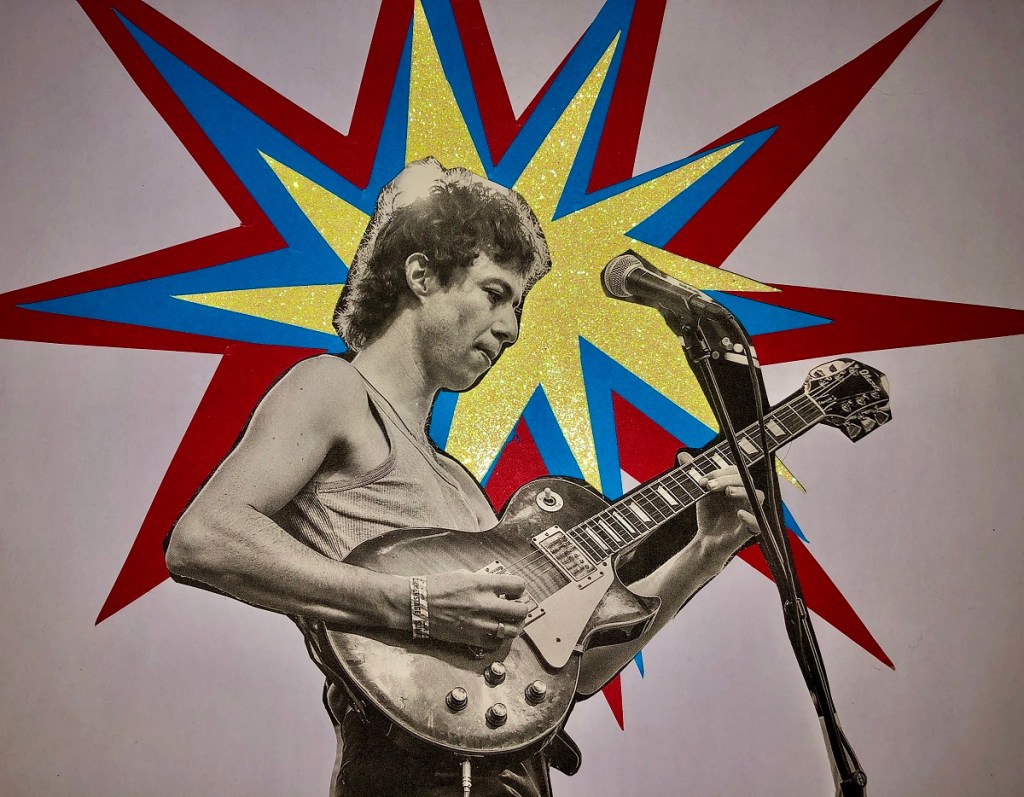
CONVERSATIONS WITH PUNX – Bob Vylan: ‘Recognising the power that you hold as an individual, and what we can do with that power as a collective.’

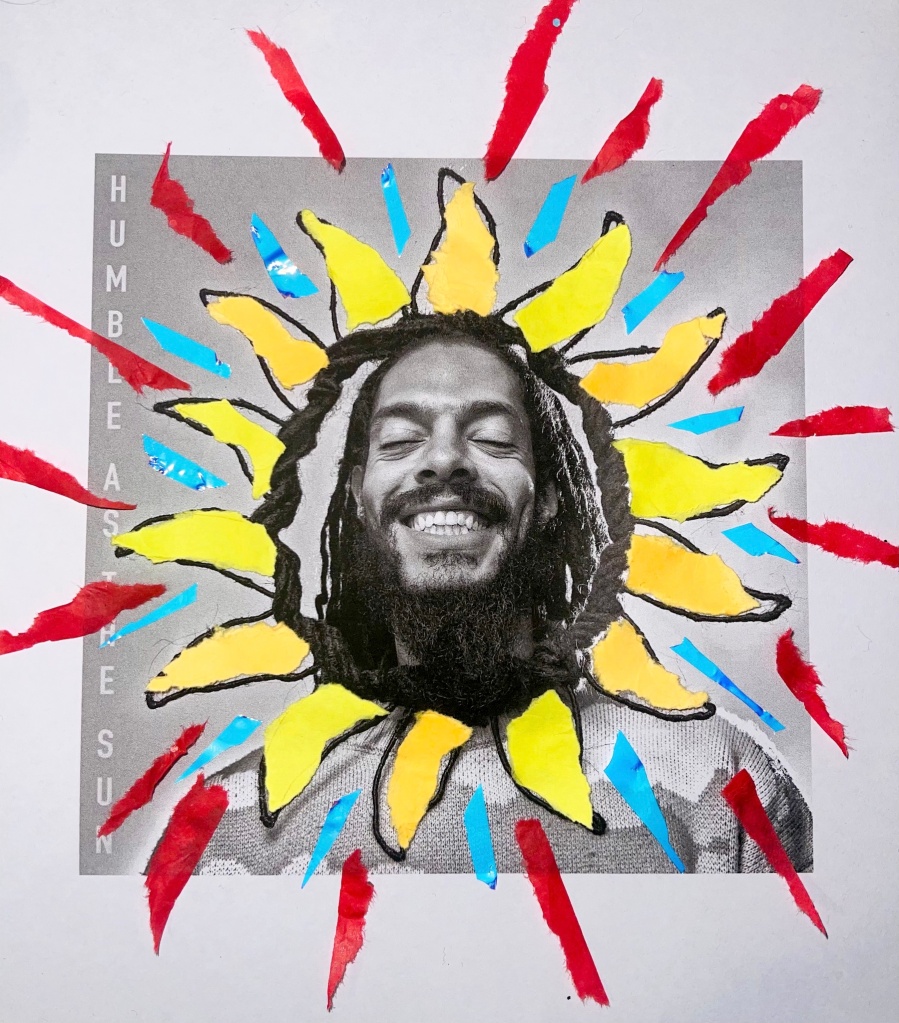
Handmade collage by B.

UK grime-punks Bob Vylan stand tall, casting a bold and unyielding light upon the world with their new album, Humble As The Sun. They’re one of punk’s most vital voices right now— with their rallying cry for empowerment, championing a sense of revolutionary self-love, and their ever-present foundation of nurturing and growing community. They inspire us to dream big, persevere through hardship, and channel our anger for positive change. The sentiment that we have to heal, be strong in ourselves first and then we can be strong together permeates the album. It also dissects toxic masculinity, discusses colonisation, police brutality, racism, wealth inequality, and exploitation in the music industry—as always, they say what needs to be said.

Gimmie caught up with Bobby Vylan, the band’s vocalist, guitarist, and producer, for a fascinating insight into the album and their creative process. The conversation delves deep into topics like spirituality and life-changing moments. Additionally, we learn about Bobby’s early beat-making experiences on Playstation’s Music 2000, his love for Shakespeare, their commitment to the DIY ethos, and his experience walking in this year’s London’s Fashion Week.

BOBBY VYLAN: Music is a creative outlet. I really don’t know what I would do without it, to be honest. It’s been a constant throughout my life as a way to express myself. A way for me to communicate how I feel about certain things. It’s important to me because it keeps me sane, to a certain degree; it keeps me here.

You’ve been making music for a long time, even before Bob Vylan, you were making music through Music 2000 on PlayStation. 

BV: Yeah. Exactly. I’ve been making music for a long time, in various different forms, various different degrees of seriousness, by which I took it. I was introduced to software, games, and stuff that allowed me to make music, get into creating beats and backing tracks, and then I got into writing lyrics. I started recording and getting into mixing, exploring the more technical aspects of creating music. It’s been an ongoing journey; it’s still ongoing in terms of learning the guitar, being able to play that more proficiently; and even my mixing ability, to be able to mix tracks and get them to a point where they’re ready for the public to hear.

I know that you completely love to explore things and lose yourself in them. What have you been losing yourself in lately? 

BV: To be honest, I’ve been losing myself in life a lot lately because there’s been so much going on. Things have presented themselves; they’ve come up, and I’ve thrown myself into it, which is good, but also tricky because I have to find time for myself. With this album coming out there’s so much to do on the business side of things. We have tours, festivals, TV appearances, and all kinds of things that have come up as the band gets bigger. On top of that, there’s been normal personal life change as well, which is quite beautiful, especially as it happens as the seasons change. 

Because I’ve been throwing myself into life, I haven’t been making a ton of music; I’ve been experiencing life. It’s important because it gives me something to write about later on. You can fall into a dangerous trap of not living life as an artist. You need to live life in order to have something to write about; I write about personal experience so much.

Yeah, it’s helpful for artists to realise that it’s all part of the process. 

BV: Exactly. 

Your new album, Humble as the Sun, still feels political like your previous work, but to me, it also feels like a spiritual album in a way.

BV: For sure. It’s political purely because my existence as a Black man is somewhat politicised in the country that I reside in and in so many countries that we travel to. Naturally, it’s because of that. Again, I’m writing about personal experience, so it’s bound to have a political aspect to it.

With this album, we definitely wanted it to feel more uplifting and empowering. A spirituality aspect is needed for that: to believe in yourself, to feel as though you hold some sense of power; recognising the power that you hold as an individual, and what we can do with that power as a collective. It’s definitely a lot more spiritual than the other albums, for sure.

This is because of the space that I was in when creating the album, both physically in terms of the studio space that I was afforded to use and mentally. I had worked so long and hard to get to a position where I could make music, and this could be my life. So it would have felt disingenuous to to only talk about hardship and not talk about overcoming that hardship. There is a lot of hardship that I overcame in order to be able to do what I’m doing and I want to address that. 

I get that, especially as a Blak Indigenous woman myself. When we make art, people often expect us to create from our trauma. Sometimes, obviously, that’s important for us to do for ourselves and our community. But I think it’s revolutionary and healing in another way to write about our joy as well.

BV: Absolutely! I completely agree. 

I understand that Humble As The Sun got started and inspired by meditation. What drew you to it? 

BV: The studio space—it was in the back of a residence. You had the main house that some people lived in, completely unconnected to the studio space, and then there’s a garden in the back. I’d find myself in that garden, meditating, watching nature, and enjoying the sun, seeing how the seasons would change in that space. The cat prowling around, looking for a mouse to eat, or the bird that would come and take some of my lunch and fly off back to its nest—it was quite eye-opening for me because I was very much lost in the city, in all of the hustle and bustle of it. Also, the hustle and bustle of being a touring musician, going to festivals every weekend and doing tours for two, three, four weeks at a time. That studio space really offered me a place to slow down.

Sometimes, I would go there and not even necessarily work on music or anything. I would just go there and sit and listen to music on the speakers that they had there, or I would watch videos on YouTube or a TV show. Other times, I would sit in the garden and peacefully take in everything that was happening around me in a very meditative state—no phone, no computer, just sitting and being and watching and trying to clear my mind as much as possible, not think about work, not think about personal life, not think about the traveling that I’ve got to go and do, the business side of things. I’d just try to clear my mind and be present in the moment. That heavily influenced the message in the album for sure.

I love how at the end of song ‘Hunger Games’ you talk about being present. The lyrics really resonated: Here, now / You are stronger than you think you are / You are love / You are not alone / You are going through hell, but keep going / Be proud, be open / Be loud, be hopeful / Be healthy, be happy / Be kind to yourself / Be decisive / Here, now / Do not live every day as if it is your last / Live every day as if it is your first / Full of wonder and excitement / As you wonder along, excited / Marvelling at the possibilities of all that stands before you / Here, now. That feels like the essence of being present; what does being in the present mean to you? 

BV: It’s a tricky thing because I find myself wandering with my thoughts, and I found that to be very helpful. I am not Eckhart Tolle, where it’s like, I’m here constantly, I’m present constantly, always in the now. That type of attitude would serve me if I wanted to be like a Yogi or some sort of guru, but it doesn’t serve me for the life that I live.

It’s finding a balance of being here in the now but also allowing my thoughts to wander because they allow me to play out different scenarios and see which is the better decision to make and which choice I should be making. If I do this, I’m not constantly present in the moment, but I find myself realising when I’m wandering into toxic thoughts, and I can be like, just take a minute, take a beat and be present right now and try not to worry about what may or may not come. Accept what is, and that doesn’t necessarily mean don’t look to change anything.

It’s not accepting it in a very passive way, but it’s accepting it in a way of doing what is within your power to do, in terms of the change that you can have in your own life and other people’s lives in the world in general.

Yeah, that’s a really important point. I did an interview with Dick Lucas from the Subhumans for my book and he was saying that, ‘If everything is taken away from you and you’re beaten black and blue, even if you’re at the point of death, you can still think for yourself. That is the bottom line, you have to keep your thoughts intact no matter what happens, from thoughts come everything else, words, expressions, ideas, creation—life itself.’ 

BV: Yeah, yeah, absolutely. It’s something I try to remember as well as much as possible. It can be hard though. Life’s really difficult. 

It is. I’m so glad your new album is uplifting, in a way, countering and balancing all the crappy stuff out in the world.

BV: Yeah. You know, the record is made for myself. I need this music. I didn’t make it because I’m like, ‘Oh, the world needs this music.’ No. I need this music! I need this album. I’ve been enjoying the album for ages. I’ve been listening to it over and over again. Actually, now that it’s out, I’ve probably listened to it far less because I listened to it on repeat every day for months and months. I picked it apart and asked myself, ‘Do I want to say this? No, I want to say that.’ Then when I got to a point where I’m like, ‘Oh, this is done, it’s perfect,’ so it’s finished. And I listened to it and I enjoyed it; I was no longer critiquing it. Like, is it mixed right? Now it’s out there. I’m listening to it far less because I’m like, everybody else has it now so it’s not mine anymore.

I really love the song ‘Dream Big’! It’s very inspiring and puts a smile on my face every listen. By the time the song’s finished, you feel like you can go out and do anything. Where do you think your self-belief comes from? 

BV: It comes from a lot of different things in and around my environment. Some of it is definitely down to where I was growing up. But some of it, is nature. It’s just something that I have. My father tells me stories of when I was a child and I was very headstrong. I wasn’t necessarily rebellious without a cause. I just knew what I wanted to do and I knew what I didn’t want to do. That all plays into my self-belief.

I grew up in council housing. It wasn’t a terrible area by a long mile; there were areas in this country that are far worse. We didn’t have tons of money, but we didn’t go without. I definitely knew that if there are things that I wanted, I had to figure out a way to get them myself. My mum always did an amazing job at making sure that me and my siblings knew that.

Though we didn’t have everything that we wanted or needed necessarily, we always were exposed to other ways of living, certain things that other people in our environment weren’t necessarily exposed to. My mum really wanted to make sure that we didn’t fall into the trap of just accepting our place in society is here. I thank her a lot for that. That definitely helped in terms of my self-belief.

It’s funny, because when I would express certain things to her, she would be like, ‘I don’t think you can do that. I don’t know about that.’ But that’s her fear for her son, if he’s gonna commit himself to a life of artistry, he’s gonna be poor forever. That’s not fun because she was working so hard to get by and keep us afloat. She probably thought, ‘I don’t want that for him’.

My self-belief comes from a feeling that I don’t want what is given to me. I know what I want. I know what I want to do in this world. Jim Carey said: you can fail at what you don’t want, so you might as well take a chance on doing what you love. If you can fail doing the thing that you don’t want to do, that you have no interest in doing, but you’re doing it because you’re fearful of doing the thing that you do want to do or people have pushed you into this direction, I would rather fail at the thing that I want to do. I’ll give it a go because otherwise, god forbid, I’m one of these people that are like, I could have done this.

Yeah. I think as human beings, the things that are most important, obviously after having the basics to live, is love and connection. That’s the foundation of everything. 

BV: Yeah, absolutely. And, it can be hard to focus on that. Sometimes when you’re focusing on so many other things in the world, like trying to survive, trying to keep a roof over your head and everything else, it can be hard to maintain connections with friends or family. It’s important to try and make that time for people. 

It’s something that I’m getting slowly better at.Taking a little time away, focusing on myself and my loved ones around me. The things that you value the most as a creative is the time that i have to create. I also value the time that I have to experience things like what we were talking about earlier, living. I value having conversations with friends, family and people in my community. Learning things. I value being able to have the time to think and feel. I value being able to put into words, all of the things that I’ve been experiencing. 

Do you remember the first time you realised that your words had power? 

BV: I don’t think it was a conscious realisation, but it definitely would have been when I was a child and I said something and I saw how it got me in trouble. Like, I saw what I said upset somebody. The realisation of, I know how to get under this person’s skin. I’ve got siblings, so that offers a perfect training ground, right? [laughs]. To figure that out, how powerful your words can be, that clicked probably when me and my siblings were arguing about something.

So you’ve always kind of been a bit cheeky?

BV: [Laughs] That’s usually the word that people would use to describe me. I always acted in good faith. I was very, very rarely acting out of malice and trying to actually hurt somebody who didn’t deserve it or upset somebody who hadn’t upset me, you know. I wasn’t a bully or anything like that.

Again, I knew what I wanted to do in this world. When people would present obstacles, whether that was a teacher in the school or a friend telling me that you can’t do this thing or do that thing, I would be sure to let people know that ‘No, I’m capable! You might not be able to do it because you don’t have that belief, but I could do it.’

I’ve always been this way too. I had an English teacher that told me I would never, ever, ever be a writer. Yet that’s been my career for the last 30 years since I was a 15 years old!

BV: Yeah, exactly. That’s it. People tell you those sorts of things for various reasons. Sometimes so they can upset you. That’s all their aim is, to upset you and discourage you. Other times, it’s to protect you, or they think they’re protecting you from a life of hardship or pain or upset. Then other times it’s just because they don’t believe in themselves, or it didn’t work out for them; they feel it won’t work out for you too. 

I always had this opinion of, I’m watching people on TV doing the thing that I want to do. So it worked out for them. That is somebody flesh and bone and blood doing it. If they can do it, then I can do it. Why would I concentrate on the people it didn’t work out for? I’m not watching them on TV. There’s absolutely no reason why I could’t.

That’s what you’re talking about on the album closer, ‘I’m Still Here’? 

BV: For sure. That song is the biggest testament to resilience on that album. It’s talking about how I grew up, where I grew up, what I was doing, and all of those things that I’ve gone through, and of my friend that is currently locked up. All of these things I’ve seen that I narrowly escaped, and those that I didn’t escape.

Of course, there is an element of being calculated, streetwise, and smart, avoiding certain things. But it’s also by luck, by chance, by the grace of God. Even when I was going through all of those things, I always had that in my mind of like, what I’m doing right now, how I’m living right now is not necessarily my forever. It doesn’t have to be my forever. This is not as good as it gets for me.

For a lot of people that I grew up with, they had it in their mind that, this is as good as it gets. This is as good as it gets for us. If we could be career criminals and not get caught or only do a handful of years in prison, life will be good. That wasn’t my thinking. That wasn’t my lot in life—I always thought there’s more for me. I don’t know where it is or what form it takes, but there’s more out there and I need to find it.

Have a moment with Bob Vylan where you felt like things really have changed and that they won’t be the same in your life anymore? 

BV: Absolutely. There’s certain things that they happen and it’s like, this is a turning point. For example, when We Live Here, the first album and single from that album started taking off, it was during lockdown. I didn’t realise at the time, I suppose, to what degree it would change things, but I knew something was changing. We’d put music out before and no one had really listened to it. And then I saw the audience find us. I was watching the YouTube views go up in real time. I was like, wow, we’d never gotten 10,000 people watch a video before. Then it’s like 15,000, then 20,000, then 30,000, and on. I saw at the top of a Reddit thread: listen to this! Then seeing it getting shared on like Facebook, and people with blue ticks following me and saying, Hey man, I heard this song it’s so cool!’ They were from other bands that I’m a fan of or they were actors or whatever. I thought, ‘This is cool.’ It was that moment where I could feel something’s changing, you know, but then there’s other moments that are not so, I suppose, they’re not so.

Sometimes those moments are not so joyous, though. You might go on tour, and you’re away for home long time, long periods of time and you come back and things have changed at home, maybe with friends or with family. I’ve got a daughter and I come home and she’s grown. I’m away for three to four weeks, in that time, she’s learned something new. She’s doing something new. She’s got this new thing that she’s saying. And I’m having to play catch up to her. Like, ‘Oh, what’s that? Where did you hear that? Where did you learn that?’ Even just seeing her, it’s like, ‘Did you grow?’ You realise things won’t be the same as they were when I was sat here and I was watching her do this stuff in real time. So some of those moments of change are joyous, and others are harder to come to terms with. You have got to be accepting of both.

Totally. I saw you walked in a show at London Fashion Week at the start of the year. That must have been pretty surreal, especially growing up in the world where you’ve come from.

BV: Yeah! It was for a brand I was familiar with, Saul Nash, I’d seen their clothes in the store and I really like them. Saul’s clothes are great, he’s got a great eye and he’s very innovative in terms of how he approaches sportswear. To get asked to do that was great, it was a lot of fun and an experience that I hadn’t had before. So, again, getting those opportunities is really cool. I met a friend there, we’ve worked in the future together. The person that was overseeing all of the hair on the Saul Nash show, then worked on my hair in the ‘Reign’ video. I love meeting people and forming connections and friendships. It’s really beautiful when you get those opportunities.

But it’s important not to get lost in those sorts of things, though, because they’re fun, but it’s not real life. I feel lucky, I feel very fortunate, that I’ve got people, the majority of my friends and my family are not in the industry at all in any sense, they work 9 to 5s. I get enjoy the opportunities when I’m in it, then I come out of it, and I get to just be how I am at home.

You mentioned the ‘Reign’ video, which I love. What was the inspiration for the visual elements in it? 

BV: There was a lot of things that me and Taz [Tron Delix ], the director, went back and forth about, we had a couple of meetings and talked about what we wanted to get across with it. 

For me, the African Moors that conquered Spain (and they were present in Malta – I’m part Maltese), so I wanted to present this visual representation of regalness and royalty that wasn’t stiff and stuffy like the English monarchy, but is more like the African monarchies. The Moors are extremely extreme. The most popular representation of a Moor in popular culture is Othello. Othello is a Moor—I love Othello. It’s probably my favourite Shakespeare play, though it is the saddest one. I took my dad to watch it not too long ago. Othello in that play is presented as someone extremely strong. He’s a leader, but then he has the potential to be corrupted, to be swindled. He’s a human after all. And so for that video, we wanted to create this idea of royalty but have it rooted in today. We also wanted it to feel relevant to what Bob Vylan is doing. 

You also have Jamaican heritage too? Does the culture influence your creative choices? 

BV: For sure. It influences the music a lot. ‘Ring the Alarm’ for example, on the album, is very, very much inspired by Jamaican culture and reggae and dancehall music. Even some of the drums are played on the album. They’re jungle drum breaks, the way that they’re played coming from this mix of Jamaican people bringing reggae music over to the UK and then mixing it with electronic music that was happening here in the UK; those fast drum breaks with reggae samples thrown in there. It definitely influences a lot of the music in terms of the sonics and the production.

Visually, I suppose, maybe I’m even less conscious of how that culture is pulled on. Except for ‘Wicked & Bad’ for example, where we shot the video in Jamaica. I really wanted to do that. The way that I wear things, the things that I decide to wear, my personal style that’s obviously influenced.

I grew up around a fairly big mixed Jamaican and white community. We pulled a lot of things from our parents, and then mixed them with things that were happening now in the UK and in England. Meshed the two things together to find our own or create our own identity.

How did it feel for you to go back to Jamaica, back to where your family are from? 

BV: It was great. It’s a beautiful place. It’s troubled, though, because of a lot of corruption that happens over there. It’s a shame that such a beautiful island has got such a violent past because of its colonial history—the British occupation of the land. There is a lot of sadness in seeing that because you realise what that place could be. It’s unfortunate that at the moment, at least, it’s not able to be that, but hopefully at some point, it’s able to be; it’s able to live up to its full potential. That it’s able to remove its connection to the British and become its own country.

We speak about independence and it is independent to a certain degree, but there’s still a heavy, heavy hand from the British in that country. I would like to see that removed completely and to see the country be everything that it can be. We see culturally what it exports; that is absolutely incredible. One of the biggest musical stars ever has come from this tiny island—Bob Marley is arguably one of the biggest musicians ever in history. Reggae music and the popularisation of weed, and Rasta culture, and the Rasta religion, it’s all from this tiny island. So what it’s done artistically and culturally for the world is absolutely incredible. But what it receives in return pales in comparison.

Yeah. There’s even that connection to punk rock with Bob’s ‘Punky Reggae Party’ and how Don Letts would play the reggae at The Roxy (the UK’s first live punk rock venue), and then you’d get bands like The Clash who were heavily influenced by reggae. 

BV: It’s influenced the world over.  Look at the origins of rap music. It all comes from DJing and MC culture, like the toasting culture of Jamaica. As I said earlier, you get jungle music, it comes from reggae culture. It’s been extremely influential culturally and artistically from really the beginning of time. 

Absolutely. One of the reasons I love Bob Vylan so much is that you mesh together so many different things to created this whole new thing. You’ve built on what’s come before and you’ve taken it in a new direction.

BV: That’s important to us, to not, not tread old ground. To constantly look for ways by which we can push things, and push them in new directions. We don’t want anything to sound like the punk of the 80s, that’s not what we’re trying to do. We want something new, something fresh. 

Last question, what’s something that’s made you really, really happy lately? 

BV: The sun and the sea. A couple of days ago, it was really nice weather here, and I sat by the sea, listened to the waves, and just relaxed after a busy week of playing shows and promo for the new album.

I got home and went and sat by the sea. I saw that people were enjoying themselves in the sun, and kids are running about and splashing in the water. There was something where I was like, yeah, it just feels complete in terms of, I’ve had such a busy week promoting this album, and I’ve gone through a roller coaster of emotions because I’d been sick just before we put the album out.

The day before the album came out, I’d been violently ill, I was throwing up. Then Friday we played shows and I was still ill, then I slowly got better. We’d put this album out and we’d been running around the country trying to play shows and do signings. Sitting at the beach, I kind of just took a moment and acknowledged everything that I’d done that week, and looked to start the new week fresh and at peace.

Follow @bobbyvylan & check out their music: https://bobvylan.bandcamp.com 

Atlanta X Melbourne Hip-Hop Collaborators Suggs: “Artistry in the world is on the brink of coming back to a place of rediscovering what it means to be punk”

Original photo: Jamie Wdziekonski. Handmade collage by B.

Suggs is a hip-hop project from Melbourne musician Zak Olsen (Traffik Island/ORB/ Hierophants/The Frowning Clouds) and Atlanta multi-instrumentalist and rapper Sheldon Suggs. Their first release We Suggs was conceived from collaborating over the internet to create a thrilling alternative, psychedelic hip-hop that’s a real triumph. With lush sounds, a refreshing adventurous musical approach and an exciting original voice gliding the beats, Suggs hasn’t left the Gimmie HQ stereo since it dropped in September.

How are you going?

SHELDON SUGGS: Pretty well. It’s 8 o’clock here so I’m just chilling out [laughs]. Today I took it easy. It’s raining here and the seasons here in Atlanta are changing… just trying to keep sane with my dog and my cat and working on some other stuff here that me and Zak are working on.

What’s it like where you live? Did you grow up in Atlanta?

SS: It’s the South… I grew up between a couple of different places. I was born in California, went to high school in the Chicago area, my mom lives in Atlanta. Though I’ve always moved around a lot, Atlanta has always been a home base. It’s nice, I love Atlanta! It’s a US metropolitan city, probably one of the bigger ones these days. One of the coolest parts about it, for better or for worse, is that you get a good pulse on how people are feeling that are out in the street, dealing with each other and doing things, you kind of get more of a personable, accurate representation of how people are feeling.

How did you first discover music?

SS: Hmmm… I want to think about it and give you my absolute first trigger for music. I can’t necessarily give you the first one but I can get close. The first CD that I ever bought was NSYNC’s No Strings Attached [laughs], I was so happy about it! I knew all the songs, I used to perform for my parents, it was the funniest thing. Besides from that, I was in a band in school, I played a number of different instruments, I still do. As far as rap’s concerned, the first rap CD that I bought was probably either Common’s Be album or Kanye’s College Dropout—both were very, very important for me. They gave me a lot of inspiration! I’ll never forget when Kanye West dropped his single ‘Jesus Walks’ and when I heard it I freaked out!. I think I was in 7th Grade. I heard it on the radio with my mom in the car and I was like; stop the car! What song is this?! I demanded to know what song it was because I thought it was so crazy and so different, someone was on the radio talking about a topic like Jesus! [laughs]. All the knowledge I had of Jesus at that point was my parents taking me to church. To hear this rapper rapping about Jesus in a way that wasn’t corny, it was crazy!

It’s a powerful song. I love that era of Kanye. All the stuff he was dropping was really cool and different. When Kanye came out he was so different to everything else that was happening.

SS: That was totally a different time, for everybody.

So were they the albums that inspired you to start rapping yourself?

SS: Yeah. I heard ‘Jesus Walks’ and then I heard Common. I love that Be album so much because it elaborates on the kind of aesthetic and feeling Kanye had on ‘Jesus Walks’—nice, good, soul food! It’s nothing special or flashy but when you eat a good home-cooked meal, as long as it sits in your stomach well, it tastes familiar and gives you that feeling of satisfaction, that’s what that did for me at that time.

My older cousins were big into Jay-Z, I was pretty into Jay-Z too at the time, ‘cause that’s who was the biggest star. When Kanye started coming around and you started hearing about his solo stuff and how he’s produced this, that, and the other… it’s crazy looking back on it because that was my champion, so to speak. My older cousins are super cool and I was trying to be like them, trying to catch up and then Kanye comes along and now I have something that I can grab onto and call my own.

As an artist, what are the things that you value?

SS: It’s kind of corny but the authenticity is really big for me. It’s not so much just authenticity, it’s something that’s kind of hard to explain because it’s an art in and of itself to express yourself, clearly, it’s an understatement. In creating, if anybody is creating, if you’re working, most of the time you know what you’re supposed to do and usually the problem, if you have one, is how to do it. Most of the time I feel that you know what to do and know how to go about doing it and that’s the skill that I believe you have to develop as an artist. What I hold near and dear is staying in the proverbial moment, not being afraid and pushing the button when it needs to get pushed and maybe letting go of it when it needs to be let go of is super important. What I value most, as far as artistry, is to know when to go and know when to stop.

When you write lyrics is it from a personal place or more observational of what’s going on around you?

SS: Definitely both for sure. I feel like my artistry has changed a lot over the years. I had actually stopped rapping completely when me and Zak linked up.

How did you meet?

SS: It was a lot of space talk on the internet! Some people like to call me humble, I totally respect that, I just think I know when to be aggressive and know when to hang back… I saw Zak posting things about hip-hop, he posted something to do with J Dilla and I was like, OK, J Dilla! I messaged him because I’m a huge fan of pretty much anything to come out of Australia to be honest—ORB, Traffik Island, anything to do with Zak, I love! We started going back and forth. I wasn’t rapping at the time but when I started picking it back up, I noticed how different it was. It’s been quite a trip witnessing it because I came from a place that I was previously into it, it was more from a place of anger, if I’ve got to be honest! It is what it is …comparison to now is that it’s coming from a place of understanding, a place of purpose and duty.  

What was it that started you rapping again?

SS: We were chatting, I mentioned that I could rap and he sent a beat, we played around with it. The ‘Silence!’ on the album was the first song we ever did. It was funny, we linked up on [King] Gizzard’s [and the Lizard Wizard] tour when it came to Atlanta. There were a couple of people coming up to me and asking me how I know Zak and I said we met online and did a couple tunes here and there, they had heard one of our songs and they were digging it. Once we made that song we never stopped.

That’s one of my favourites on the album. Sending songs back and forth to each other over the internet, you made it over a three month period, right?

SS: Yeah. When we decided, OK let’s put a project together, I’d say it took course over a three month period.

Do you have any favourites on the record? I’m sure you love all of them or you wouldn’t have put them out, obviously.

SS: I’m not that egotistical… most artists are egotistical [laughs]. If I had to say a favourite it would have to be ‘Thank Christ’. I’m not super religious or nothin’. The reason it’s my favourite is because how I’m not super religious but it’s still there kinda what it means to me… its got a special place for me. I wanted to put that song there, it’s kind of clickbait in a way. I know people would see Christ and be like; yo, what’s he talking about with Christ? The song is maybe a wake up, a flash in a moment where you’d expect to talk about the idea of a saviour, the idea that a saviour came to save you… it’s not about believing in it… I think a lot of times self-improvement, sometimes people catch themselves up on it because they think they have to change… what I have gathered from Christ… I grew up getting dragged to church Sunday morning and I wanted to go out and play basketball or do whatever I wanted to do, church isn’t my cup of tea but, what I gathered from those trips is, you don’t have to change yourself to improve yourself, in fact, when you’re improving yourself you’re probably setting the parts of yourself that you don’t want to have anyway if you could choose to. It’s abstract how I put it but that’s why that song is important to me, to refresh people’s minds and put it to them that, hey, it’s not this condemning thing; at the same time it’s poking fun and pointing a finger so to speak at people that claim to be good and do bad. There’s a line in there: I thought this century’s meme was to uplift women. That right there demonstrates to me the purpose of the song is, if we claim to be on the same page about ‘xyz’; why is it not really so?

What about the song ‘Pearls’?

SS: [Laughs] It’s funny that you said that because if ‘Thank Christ’ is my serious favourite, ‘Pearls’ is my wholesome favourite ‘cause…. Zak sent that beat to me late at night, I heard it and instantly wrote the song. I love when that happens because you know it’s going to be a good one. What’s so sick about it is, that’s the song that most people generally speaking would put as their single, we had an idea of what we wanted this album to be taken as and it shows that we can also… the album is largely heavy and heady but ‘Peals’ is like, FYI, hey, we can make a Wiz Khalifa pop single too! [laughs].

I love pop! I can hear the pope elements for sure.

SS: It’s pretty cool having it on there. More often than not I attack the song when I hear the beat, that’s what will start writing lyrics for me. If I hear the track sometimes I automatically know how I want to approach it, like ‘Pearls’ it had this airy, cool, not so serious but awesome vibe. It was a sight for sore eyes because writing had been so intense. I was going so tough on a lot of stuff and being relentless that ‘Pearls’ is a refresher in a more poppy way. I like pop too. It gets spat upon, especially now days ‘cause anything poplar gets spat upon. The proof is in the pudding though.

Do you have reoccurring themes you write about?

SS: People closest to me, I’d imagine that on that list that numbers one through five would say, kind of a social philosopher type of situation. I’m very hard on myself, unfortunately; it tends to make it that I’m hard on everybody else around me, it’s something I’m constantly keeping in check. Lately when it comes to what we’re doing with Suggs and in the future, it would be this route of just taking a look at myself and the world and seeing what’s going on, that’s where I get a large portion of the topics I talk about. There’s such a huge space right now for artists to express themselves in a time where expression is being manicured. I think we’re on the front period. Artistry in the world is on the brink of coming back to a place of rediscovering what it means to be punk. Punk to me demonstrates… if there’s one genre I had to pick that is the most honest… metal and punk is white people’s rap [laughs]. The reason I say that is that it’s true, it’s visceral, it’s hard and it’s hardcore. Hip-hop and punk have very similar trajectories as far as where they were and where they are now. It’s high time for us to get back to where we were.

Both are about community and DIY.

SS: Definitely. It’s so true. It’s the raw energy and frustration being expressed in real time—that’s awesome! We need more of it.

Did you learn anything about yourself writing the We Suggs record?

SS: I rediscovered the sense of purpose and how it is intrinsically connected to creation and intuition. We all try to force stuff at times and make something happen because we think it should happen and it’s what we want to happen but, what I’ve rediscovered through this process is the things that truly effected my trajectory were things that were beyond my control; what was under my control was my choice and my action and whether or not I acted in the moment or let it pass.

You mentioned before that you’re not religious; are you spiritual?

SS: I don’t want to prescribe to being religious or spiritual. The reason is because both have connotations that are not true. Alluding to it in ‘Thank Christ’ is religion has got a bad rap as has spirituality. I’m a child of God and I’m not afraid to say it, I’m proud in fact but, that also has connotations as well… to explain that would be to explain that in my personal view, the most practical way of explaining God is logic, love logic, I’ll put it like that. That being said I operate in a way that that is void of myself; what would be the best decision? What would be the best way to react by virtue as opposed to how I feel? I’m not a religious or spiritual person—I’m myself and a child of God.

Are there any books you’ve read that have meant a lot to you?

SS: I will say this, because I’m not afraid… It’s so crazy that I even have to feel I have to be careful when it comes to these topics of God and truth, it’s crazy because I know how people are going to react… that’s why I had that whole spiel about connotations of religion and spirituality, you’ll get damned either way. What I’m trying to get forth here is the book A Course in Miracles [by Helen Schucman], once I read that, it put me on the path of a very, very, very preliminary path of understanding that it’s not my fault but, now that I know that it is on me so to speak, how I express myself and deal with internal trauma, all that stuff, A Course in Miracles was invaluable. It can lull you into an idea that thinking everything is a flower [laughs] but everything is not a flower! As a whole though it’s done wonders for me dealing with how to navigate blame and what to do after the pain.

Anything else you’d like to share with us?

SS: Zak and I have a new EP coming out. It’s going to be called Who Hurt You? We’re approaching the end of it. We’re excited about it! We’re seizing the opportunity of seeing what’s out there in the world and responding to it.

Please check out: SUGGS on bandcamp; on Instagram.

Briggs: “There’s always challenges but once you learn and fail and fall down, you realise that failure is not the end and you get back up”

Original Photo: Tristan Edouard. Handmade collage by B.

Proud Yorta-Yorta man and creator Briggs does many, many things, he’s a comedy writer, best-selling children’s book author, actor and rapper. Latest project EP Always Was sees Briggs back in his wheelhouse and home, making music. He’s stepped out of the safety net of simply writing rhyme though, and taken a leap forward bringing us six joints, each unique, each representing different aspects of his personality, each speaking to the possibilities of where he’s on his way to with upcoming full-length Briggs For PM. Gimmie caught up with Briggs for a dose of inspiration and an insight into his process and passion.

You’re a writer in many capacities – lyrics, scripts, a book – when did your love of words and writing first develop?

BRIGGS: The first thing was the love of entertainment, that’s where it all started for me because I was such a consumer of TV, comedy and music. I didn’t really put it all together until much later and realised that people have to actually write these jokes [laughs].

What is it that you love about the process of creating?

B: It’s a hard thing to wrap up succinctly. I’ve always just liked making things, ever since I was a kid, making stuff was always where I was happiest. Even later on in life, over the lockdown period, I was just making food with my mates. I just like creating and making stuff in general. Like with this EP, I made it and now I’m off making something else.

It’s a pretty cool feeling getting lost in the moment when you’re creating.

B: Yeah, it is.

When did you find the calling for hip-hop?

B: Hip-hop was always the music I had the most affinity for, it was something I was drawn to since I was a kid. It was just the coolest thing there was! [laughs]. It was the simple for me. As a young man I was drawn to the absurdity and audaciousness. Everything I was drawn to was audacious and the absurd. I loved professional wrestling, heavy metal and rap music and action movies; they were the things I enjoyed most. Everything was always over the top! I think Gangster Rap really gave me that fix.

You used to have a punk band in high school before you started rapping, right?

B: Yeah, I had a punk band in the sense that I was a kid that tried to play guitar [laughs]. I think that’s every kid from the country’s right of passage at some point, playing guitar. It really was, I just wanted to be involved in music somehow, whether it was going to be radio, behind the decks, or creating—I just wanted to be involved. There wasn’t a lot of opportunities to make rap music in Shepparton where I grew up for a long time, until I was like, nah, I can do this! I’ll do this! [laughs].

You created your own opportunity!

B: Yeah! You had to.

I’ve heard that setting goals and goal accomplishment is a really big thing for you; when did you first realise the power of setting goals and following through in your life?

B: It was probably around the time of my first EP, the Homemade Bombs EP. I realised that I was essentially starting my own business, I was like, OK, I’m going to get 1,000 CDs made and I’m going to sell 1,000; I’m going to do a video clip; I’m going to do all of these things. They were all really simple things. I started ticking off each one. I wanted to tour nationally, I wanted to sell 1,000 of my CDs, and I wanted to do a video clip. Eventually I did all of those things over the course of a year of having that EP put by myself. There were boxes of CDs and I was with my mates, when we were just able to have fun and could weather the storm and sleep on the floors and do all the hard things, I’m too soft now! [laughs].

I know the feeling of staring out and doing things for yourself, I came from both the punk and hip-hop communities. It’s all very do-it-yourself.

B: They’re very similar, super similar. The difference between punk rock, hardcore and hip-hop is just the jackets! [laughs]. Everyone had buzz cuts but just different jackets on. It’s still the same, at the core of all of the good stuff, the communities of punk rock, hip hop, hardcore, metal, they’re all parallel. I was lucky because I enjoyed all of the music, I was a big fan of all of it. They’re more in tune than they’re not, I don’t think a lot of people realise that.

Geometric patterns designed by Reko Rennie.

Same! I wanted to ask you about your philosophy of: good work is hard work; what do you mean by that?

B: It’s a mantra that I kind of spit to myself when things are tough or things are harder than normal. When you go to take the high road on some things, the high road is always the hardest road to take. Good work is hard work reminds me that you’re doing the right thing, that it’s tough now but it pays off. It works in a lot of different facets in my life, be it in the gym doing work and exercising, trying to be healthy—going the extra mile for yourself so it doesn’t suck so hard tomorrow! [laughs].

Previously you’ve mentioned self-esteem and how that’s a big issue you like to address; why is that important to you?

B: I think maybe because I don’t really remember feeling super confident as a kid. I was very performative – I was the class clown – but I was never very confident. There’s a difference there that people need to identify. You might have teachers identify how to better interact with their students; really anyone that interacts with a young person. Performative acts, being loud and boisterous, doesn’t always equal confidence, they might need a hand here or there or something. Self-esteem and tying it back to the Indigenous community because that’s where I grew up, it was extra hard to be yourself in what it felt like, a world that didn’t understand you or want you in it. Ya’know what I mean?

Yes, I really do. As an Indigenous kid, a Bla(c)k kid, growing up I didn’t think there was much different about me until I went to school and other kids, white kids, pointed out I was different. I’d get called all kinds of names.

B: It’s like, everything’s good until it’s not, right?! [laughs]. You don’t realise you’re different until people start telling you you’re different. It’s quantum physics, you change the outcome by measuring it [laughs].

What’s helped you with your confidence?

B: it’s a weird analogy but, I just got a puppy the other day. She’s great, she’s fantastic and she plays really well with me and anyone that comes around, but she was a little bit fearful in the beginning with other people and other dogs. I got her a treat ball, you keep her food in and she pushes it around and gets food out of it. When I first got it she was terrified of it, she stood there and barked at it and didn’t want to go near it. I rolled it near her, she didn’t know there were treats inside, until she did and then she went to work! She now breaks this thing open, even when it’s not meant to be broken open. When she figured out she was a problem solver, it changed her personality. She was suddenly interacting with other dogs much more openly. I feel like that was part of the thing for me, once I figured out that I could get over it and own a stage or speak my mind somewhere on stage and have a microphone and talk about my point of view, it was much easy to interact with people on a daily basis. Do you get what I mean?

Yes, I do. What’s your puppy’s name?

B: Carmella!

That’s a lovely name. I do get what you mean though, I started making my own zines, independent publications when I was 15, and once you start doing that and using your voice and you know that you can, you just keep going! I did a zine workshop once and a young boy said he didn’t know what to write and I told him he could write anything he wanted to. He replied “What I have to say doesn’t matter” and I told him it did matter; he said no one had ever told him that before and then he started writing.

B: Yeah! Once you get over that first hump, that first moment and you break the ice on it… there’s always challenges but once you learn and fail and fall down, you realise that failure is not the end and you get back up.

Your new EP is called Always Was and the image on the cover is a photo of the tattoo on your hand that says “Always Was” and I know the slogan “Always was, always will be Aboriginal land”; what does the EP title mean to you?

B: I didn’t want to call it Always Was, Always Will Be because it was only an EP [laughs]. I wanted people to understand that this wasn’t the whole story. “Always was, always will be” the slogan itself to me, was one of the very first things that I remember as a kid with protests and being present as Aboriginal People. Bringing it back to my music felt right. I didn’t want to do the whole thing because I wasn’t done yet! I thought it was a good title because it says there’s more to come because it’s only half the slogan. “Always was, always will be” is about longevity. It’s not just a thing to ring off—it is about longevity, it is about strength.

Absolutely! I feel like also with you putting out new music is that you’re back to the fundamentals of Briggs, the core of what you do.

B: Yeah, ‘cause I do a lot of different things. It’s good to be back in the house that I built, making tunes with my friends and doing the stuff that I love.

What’s your favourite lyric you’ve written on the EP?

B: [Pauses and thinks] There’s a few: nervous people make me nervous [laughs]. I like stuff like that.

Do you have a process for writing?

B: I just write to the beat that I get, especially lately, I’m trying to write more songs than just write raps. It’s mostly just write off the beat.

I’ve heard you mention that each song on the EP represents a different aspect of your personality…

B: Yeah! I should have done seven and you could have had them all! [laughs].

What’s the aspect we don’t have?

B: I don’t know, maybe gluttony isn’t on there [laughs]. You got wrath, that’s “Go To War”.

What about the song “Good Morning”?

B: That one might be pride [laughs].

I really love the lyrics of that one: When the sunshine says good morning / Good morning, I say what’s up.

B: That song is about not going to sleep. It’s like “good morning” because I haven’t been to bed. Everything I do is very tongue-in-cheek, more often than not.

I got something totally different from that song. I was thinking it’s more a positive, I’m waking up what can I do today.

B: Well that’s the beauty of music, people can interpret it any way they need it. Whatever that song means to you or whatever you take away from it it’s great! I read this thing about art: once it’s out there, it’s yours!

Yeah, it takes on a life of its own and it keeps evolving beyond the people who created it.

B: Yeah, for sure!

Recently, you were talking about the combination of singing and rapping on your joints and you said something of how it’s light and dark, yin and yang, it’s the balance and that you feel the universe is built on balance; how do you keep the balance in your life?

B: As much possible! That’s all I got [laughs]. That’s all I know.

Do you take time out to reset or do anything like meditation?

B: The closest thing I get to meditation is going to the gym. Anytime I put my phone down and I’m not working, that’s the closet thing I’ve got to meditation. I used to go to the theatre a lot and see movies. I’m terrible with that.

Last question,  you’ve supported Ice Cube on his Australian tour, I know hearing his song “Today Was A Good Day” as a youth was a big deal for you; did you learn anything from spending time with him?

B: I’ve learnt things from spending time with all of my heroes. You watch how they work and it’s all about focusing on caring about the art and longevity, whether it’s with Ice Cube or Ice-T, RZA or Matt  Groening.

Please check out BRIGGS. Briggs on Facebook. Briggs on Instagram. Always Was EP out via Island Records/Bad Apples Music.

Obnox’s Lamont Thomas: “The whole damn world is protesting right now! The whole world is tired of this shit!”

Handmade collage by B.

Cleveland musician Lamont Thomas creates an exciting clash of punk, hip-hop and everything in between, with his ultimately genre-defying experimental musical project, Obnox. Lamont’s been prolific in the underground for decades – Bassholes, Puffy Areolas, This Moment In Black History + more – latest release Savage Raygun, shows he’s still got vision, passion and message, all while making jams for listeners to make memories to. There’s a lot of powerful stuff on this double album. Gimmie chatted with Lamont about the new record, the recent BLM protests worldwide, of racism, Black Excellence and more as he picked up some Thai food and his car from the mechanic.

The new album you’ve recently released Savage Raygun is really, really cool.

LAMONT THOMAS: I really appreciate that, thank you.

Why is music important to you?

LT: [Laughs] That’s a really good question! The rhythm, the rhythm is the rhythm of life. I love to play and the energy, art, creativity, you can tell a story; just dancing, moving, and communicating, it’s all a part of it.

How did you first discover music?

LT: Church, my family’s record collection, these types of things. The neighbourhood and hanging out, hanging out with my cousins. It was always around. My folks had good records, my church kinda rocked.

Is there any records that you remember from your parent’s collection that have really stayed with you?

LT: Yeah, lots of them. Prince, Al Green, Bar-kays. Gospel stuff like The Hawkins Family.

What was the first music that you discovered that was your own, independent of your family?

LT: I got into hip-hop right when it was going down. I loved soul music—Black music. It really soaks into your ribcage.

How did you get into punk rock?

LT: Skateboarding and hanging with my buddies in high school. Watching skate videos you would hear a lot of independent punk that was used for the soundtracks. A couple of guys that I went to high school with would make me mix tapes, they kinda got a kick outta the fact that a Black guy was listening to rock n roll.

There’s a lot of parallels between punk rock and hip-hop; basement shows, flyer culture, vinyl releases.

LT: Yeah for sure. When I was young the idea was to not sell out, whereas now selling out is the goal [laughs]. Monetizing your image on the internet, all the crap you gotta do now. I came around at the right time, a different time. I can still be out here doing stuff and not be some internet phenomenon. People just focus on the music when it comes to me. I do have fun with online, keeping up with people and connecting with people feeling the music, we can talk instantly. But, waking up every day feeling like someone has to give a shit about me today, so I’ gonna take selfies and post tracks… ya’know what I mean? That’s most people’s get down and how they do things, whereas I’ trying to write a song, a riff, play some drums, listening to music, I’m just trying not to rip people off with things.

I feel you. It’s so weird to me what’s popular or what a lot of people pay attention to. I’d rather do good work, work on my craft than put selfies out there. I want the attention for my work not for what I look like etc.

LT: The internet is a great way for discovery of new music and art, but people get tired of the other. Even stuff I used to look at or follow on the internet, I don’t even care so much anymore, even though those people are still out there. Maybe it’s just me, but people tend to fall off after a short period of time, two or three years of that kind of popularity, then you better have something really crackin’ or people will forget about you.

People forgot about me before this record [laughs]. I thought I was over! I hadn’t toured in a couple of years, I hadn’t put anything out. Last year I thought; maybe people are just over me? There’s been such an incredible response for the new record! Shout out to Flash Gordon over at ever/never Records for keeping me in the conversation and for still believing in the music.

Who or what has really helped shape your ideas on creativity?

LT: I started out as a teenager skating and catching mix tapes and then you get to reading fanzines and you become aware of the network, the underground… most things that are underground – things that most people would call failure – those are the artists that I tend to gravitate towards. There are certain records where you just can’t believe that it wasn’t a big hit and more people heard it or were into it. I sympathize and empathize with those kinds of stories… or even records that become huge over time that nobody gave a shit about like Funkadelic, nobody gave a shit and now everyone gives a shit. Funkadelic you know are still pretty underground [laughs]. I think they are the greatest American psychedelic rock band to ever set foot out. It wasn’t like that stuff was flying off the shelves.

That was the same with a band like Black Flag. I’ve spoken with Keith Morris and Henry Rollins and they both say that when they were first around people never cared so much, even hated them, now you see so many Black Flag tattoos etc. out there and they’re really loved.

LT: They had to create the network and that influenced that whole scene basically as far as how and where you can tour… someone’s got a basement space or you’re in some weird strip mall and the locals are about to tear your head off.

As a creative person what are the things that matter to you most?

LT: You go from there to college, where I hung out with a lot of radio station guys, that leads to a lot of local shows. I had a little band in high school. I got used to playing then. In college I would see guys that were early influences, they had their little bands and t-shirts and they were good bands and dudes, which I’m still really good friends with a lot of them.

Eventually, I moved to Columbus and that’s when I started playing with Don Holland and The Bassholes when I was twenty-one. Then I meet Jim Sheppard and Ron House, all the guys, and there’s tons of great bands in town at the time like New Bomb Turks. It was a great scene and I really lucked out. There were a handful or indie labels and they were all doing 7-inches. We were real lucky.

The thing that matters creatively to me is not ripping people off. It’s just what I’ve been doing since I was a kid. I’ve worked a little bit of everywhere, I’ve worked for record stores, I’ve worked for the phone company, I’ve worked for General Motors, I used to build pedals for EarthQuaker Devices… I’ve always got a little hustle but music… let’s just put it this way, I could never go do that 9 to 5 thing very long. I’ve always had great jobs and there’s probably times when I should have quit playing music and focused on a career. I enjoy music that’s just it. I don’t have any money but I don’t feel poor.

I feel the same way. I work part-time in a library which pays the bills and then interviews, writing, music is what I do the rest of the time. Not having to pay the bills with my passions allows me to never have to compromise in what I do creatively. Any time I’ve tried to make a career out of those things I’ve always ended up having to compromise. I mean since I was a kid I wanted to write for Rolling Stone and I finally got there and was writing for them and then the editor told me to make my interviews less deep! I’m happy where I am now doing Gimmie, doing something that’s my own.

LT: Yeah, we need that perspective. I appreciate you. I’m trying to keep my music raw, that’s the basis of my art per say. Everyone these days has a laptop and can make beats or makes a video, but they’re just a motherfucker with a laptop and a video, you’ll be done in three years. To me an artist is someone that is in it, it’s just what they do, they don’t think so hard about artistry per say, they just in it and try to be creative and get that release. It makes them feel good, when it comes to music as far as I’m concerned, if it feels good it probably sounds damn good.

One thing that I’ve always loved with your music is that it’s always surprising me, you fuse so many genres into your music and when I’m listening to it I don’t know where it’s going to go and I keep listening to find out and hear it unfold. It’s never predictable.

LT: Thank you, I appreciate that. People listen to everything, Spotify shuffles and playlists, people listen to three or four different styles of music in a day, four different types of records—I do! I don’t want to do my beat-funk stuff here and then my noise stuff there or write some pop tunes over there. I’m like, fuck it, let’s put it all together and make the best sequence that we can. Find the best art and pack it up for someone to enjoy for a lifetime.

When you started making Savage Raygun did you have a vision for it?

LT: Yeah, I did. I had a bunch of ideas and I wanted to make something over four sides, I wanted to do a double album just in case I was over! Eventually, I tried to record some stuff digitally like what the modern dudes are doing but it didn’t work, I lost some files. I had beats from friends. I had to double back on all of the stuff that I had lost and staring pieces together stuff. My buddies would come by the studio a couple of days. I just kept going until I got a flow.

How do you know you’ve got the right sequence? Intuition? A feeling?

LT: You listen to it. Certain things don’t sound good back to back. Certain things should be left off of a record or redone. I don’t think about a lot of stuff that most dudes do, I just open myself up to creativity. Lyrically, I try to turn good phrases to see what makes it interesting. I’m recording in my friend’s living room for the most part. Here and there you might be running with Steve Albini or Jim Diamond, someone like that but, you go into those situations a little more well-rehearsed and thought out so you don’t blow a bunch of money in the studio. Those dudes aren’t cheap.

90% of my stuff was recorded in my buddy’s house. It gives you time to try things. When we first started a band, he and I used to record from three o’clock in the afternoon until one in the morning, just trying stuff. Things were coming out a lot more frequently and faster then, that wasn’t the point though—just doing what felt good was the point, just making stuff. I do what comes natural. I like to get stuff out faster so I can do more. I just want to do more, I love it. I’m not trying to impress people.

Do you ever impress yourself with what you create?

LT: I like it. It’s right up there with what’s out there. I can’t say I wish it was more popular, I don’t know what that’s like. When you start talking about popular acts, they have a lot more money and stuff to deal with… there’s different types of stuff to consider, I don’t have to worry about that.

I’ve interviewed many bands over their lifetime and if I’m being honest I’ve found that often with success and popularity their music becomes really boring.

LT: [Laughs] Maybe!

Artists on the fringes of things always seem to be more interesting and exciting. They’re not worrying about being liked, getting on the radio, fulfilling whatever obligations and expectations comes with being popular. Not having those things, you just have the freedom to create and you’re not believing your own hype.

LT: There’s no record business like there used to be now, like the old Tin Pan Alley model, with record advances and accounting and stuff like that. Depending on who I’m working with, I have to consider publishing and certain stuff, that’s me sitting around on a Saturday keeping track of things, keeping right with everybody. I’m not employed by anybody though, and neither is anyone else; these cats run through the music business like there’s still this industry standard that they have to live up to, this checklist of things they have to do before they become famous, it’s a giant myth. People spend so much time focusing on that shit that they never do realise their full potential, ya dig?

Totally! Why did you decide to kick your record off with the track “Super Dope”?

LT: That was just a jam session. We were jamming in Texas, I had a little 8-track machine running and I brought those songs from there and finished them up here. “Catbird” comes from that session and “She (Was about That Life)” does too. Just hanging out and having a good time.

How about “Supernatural”?

LT: There’s a lot of girls that are into witchcraft and astrology and energy and chakras and all that shit [laughs]. It’s like, everybody can’t be a witch! Everybody’s not intuitive. Everybody is not wired like that… c’mon, some of y’all are just trending out! [laughs]. It’s cool though… some people collect comic books, some people collect albums and some people collect personalities; ya know what I mean? Every now and again I’ll run into a girl that’s super witchy and I’m like, OK, I get it I understand, it’s wild out here ya know… collectively witching! [laughs]; watching the stars and the moon and you get your power… I understand but, I gotta write a song about it [laughs].

Are you a spiritual person?

LT: If you’re talking about Christianity and that kind of thing, no, not really. I think Jesus was my uncle! [laughs]. Spirituality for me, relates to being a Black man, I’m the original man, directly connected to God. Everything we’ve been through and everything we’re capable of, all of the innovations: traffic lights, heart surgery… I haven’t had a cold in twenty years, these types of things, these are divine qualities and I think a lot of brothers have them. I think there’s a lot of people working hard to make sure that these qualities don’t manifest, God-like qualities within every Black man—that’s my religion. I just got a copy of the Quran from my job the other day, I’m gonna start reading that to try to understand other ideas.

I’m having my own spiritual journey. Spending more time alone meditating, listening to jazz, trying to channel what made my people great from the beginning.

What kind of meditation do you do?

LT: It’s not any organized practice or anything, not like yoga or chanting, it’s more like prayer, just being silent and taking the time to not have to worry about what might be outside my door—really using the silence. It’s loud within itself though. That’s when I can think about other things that don’t worry me like; how do I want to carry myself? How do I want to atone for my walk in life and my path? How am I going to move forward in the future? How am I going to make the music better? To just stay up! Especially when someone tries to tear you down. They’re the things I think of in my own meditative state. I’m not some spiritual guru or expert on anything, I think a lot of people that say they are, are hustlers!

Black Excellence is my religion. When I need guidance I talk to my elders. I read someone like James Baldwin. I just curl up and read one of his books—it’s so strong. That feeds my soul as much as anything like God or whatever. Baldwin was a god. We get to enjoy this stuff and they figure out ways to sell it but, if you really look at the people behind it and take all of the production and administrative shit away, you’re dealing with some divine people with extraordinary talent. What happens when it’s untainted and it’s in its rawest form and you ain’t got to answer to nobody? If your life is improving on top of that and you’re helping others… I work at a church, I try to live in a way that my music will reflect the real person that I am, it ain’t always pretty but, shit, you put it all together, and it’s really powerful!

Your music is very honest. Life isn’t always pretty.

LT: Yeah, I’ve been through a lot in the last year or two. I’ve finally reckoned with everything. In your late forties you hope you’ll have your shit together, I feel like I’m starting to get things back together.

That’s great news!

LT: [Laughs].

Have you had a really life changing moment?

LT: Yeah. I was with my ex for twenty-five years! It takes time to really bounce back from something like that.

Is that what you were talking about when you mentioned you’ve been going through a lot the last couple of years?

LT: Yeah. She’s wonderful and we’re still cool, our daughter is great, that’s all I can ask for. Knowing that and still being able to make an indie record every now and again, I’m fine.

I’ve noticed through speaking with you and through your music, it really does seem like you want to touch people and inspire them. In interviews I notice you’re always encouraging young people, especially young Black people to explore and learn about punk rock and DIY; why is that important to you?

LT: That’s what music is—its communication! If you’re just sitting around only concerned with yourself and not with who the music is reaching… it’s to be shared. The record buying public isn’t just there to pat you on the back, its give and take. You want people to be able to smoke they joints and wiggle they feet and have fun—you want it to be the soundtrack for they life! I hope their life is turning out better because of the music, or I hope my music is what they making their memories to.

Is there a track on Savage Raygun that’s really special to you?

LT: “Return Fire” is an idea that you have a lot of gang members, a lot of shooters in America right now, everybody’s got a pistol and the Black community, brothers don’t hesitate to squeeze the trigger on another brother but, when the cops come down and terrorize the neighbourhood they have no fire power for these cops. The Black Panthers have already showed us that you can protect yourself from the police. Maybe it comes down to illegal weapons, or my stuff isn’t registered, I don’t go to the range or nothin’… if I got a pistol and someone’s choking a man for eight minutes, I’m not reaching for my phone, I’m going to pop his ass right in the shoulder! Just to get him off. “Return Fire” is an imaginary angle on that. You keep this shit up, you keep fucking with our people, we’re going to police you when you come around in our community. Nobody is asking how the Black community got this way? Now it’s all coming out.

You talk about looters, I talk about the Boston Tea Party. You talk about civil rights, and I talk about bringing many nations of people over here to build your country for free and then treating them like shit for centuries after that. That shit is not fair. “Return Fire” that’s basically what that is, the whole damn world is protesting right now! The whole world is tired of this shit! This is what Foundational Black Americans have been dealing with. People are socialised to not care about another Black man. Whether they’re an African guy in Paris or Barbados they’re not feeling me just because I’m an American Black man—it’s insane. They really did a number on our people, it’s global. Everybody knows who “they” are.

People rock with the money. I’m rockin’ with global unity! Everybody all over the damn world has some sort of colour and pigment. Everybody around the world has had they ass kicked to a certain extent. You can’t be out here invading small nations and calling them terrorists and enemies; what the hell can they really do to us? Blow they whole shit up with one missile and all of a sudden you want me to live in fear because somebody that you’re trying to take advantage of, like you took advantage of my people… I can’t rock with this shit! “Return Fire” is about that shit and “Avalanche Grave” is another one. Take your lawyer to the gun range and both of y’all get ready for this shit. What’s the shit? Civil war? I don’t know. Protest? Uprising? I don’t know.

I wanted to ask you about the song “Music Saves”.

LT: [Laughs] Yeah, that’s just like, one of those road songs. It’s a little pop that describes showing up at a venue and ultimately having a great show. There’s a store down the street from a club we play all the time called, Music Saves. The song is a little homage to the girl that used to run that spot. She’s wonderful. She was having a little trouble even before Covid and we wanted to put it out there so she knows we think it’s special.

You’ve been involved in the music community for decades and I know that you’ve never really cared for the industry side of things and you once said that, when you stopped giving a shit about any of that stuff, that’s when things got really fun for you.

LT: That’s right! That’s when the fun happens! The people around me really look after me, when you realise that you’re being treated better than some guy signed to some company, that is redemptive, it’s like, man… I’m doing better than someone that has to be on the internet all day. I can do what I like and I’m having fun with my friends but that guy might have to go rehearse with band members he doesn’t even like! [laughs]. The machine is rolling and they’re popular, its happening! I don’t give a fuck about that shit.

I know you have a beautiful little daughter named Mia; what’s fatherhood mean to you?

LT: She changed everything. She’s wonderful. She’s smart and healthy and happy. I’m just trying to live my life in a way that nothing messes that up. She’s on her way to great things. She’s something to live for! You don’t behave as recklessly as a young man, coming of age and understanding more about women, what they need from us. I falter here and there but I’m trying to get it together so she has everything she needs.

You’ve said that she inspires you when she’s around; how so?

LT: She’s smart and she’s into great music, just like every woman I ever loved! I’m proud of her. I try to match wits with her, she’s incredible. I have to stay up there! [laughs]. It’s a good gauge. She plays a little clarinet and she’s’ in the band now! [laughs].

At this point in your life; what are the things that matter the most to you?

LT: With everything that is going on right now, I hope that people aren’t just trending trying to seem socially conscious, I hope they are really trying to make changes. I hope this isn’t just another one of those things that in a few months people are just onto something else and talking about something else. I hope the election doesn’t supersede this movement and everyone gets… do you know what I mean?

I do.

LT: I wanna see equality. I’d love to see a new trend in music that ain’t even rock n roll. I deal with a lot of different people, white and Black—I’m just hoping for some understanding. I can dig where everyone is coming from. Let’s just level the playing field. Not just all this same political yip yap. I hope somebody does something for the Foundational Black community. I hope that people understand that women’s bodies are their own, ease off of the legislation and control and shit. I hope money and the economy and the Black man’s ability to take care of his family becomes easier. We’ve got 2.6% of the nation’s wealth, in the meantime 15% of white families have a million or more—that’s fucked up! Especially considering we built the nation. Real change! Not “oh, I was at the protest the other day! Did you see my photos?” Get your ass out of there! Put a mask on! You trying to look cute at the protest and take a photo! Get your ass out! We don’t need that. People always say they call out racism but we know that’s not true!

I’ve experienced so much racism in my life and there’s been so many times when I’m the only Black person in the room and no one stuck up for me when shit was going down. I really hope that we see real change and that things change in the everyday for us POC.

LT: People can grow. People need to keep things up. Hopefully we change the music game again too and things can get interesting again! We built it! This is my uncle’s shit! This is my family’s shit! Give me my shit back! [laughs].

Please check out OBNOX’s Savage Raygun via ever/never Records; OBNOX on Facebook; on Instagram; on Soundcloud.

Chicago Musician NNAMDÏ: “Everyone should use their skills in order to help people”

Original photo by Jess Myers. Handmade collage by B.

Chicago musician NNAMDÏ dropped two powerful releases in the last few months. The latest being EP Black Plight – which raised over $10,000 for not-for-profit organizations eatchicago.org and assatasdaughters.org. And the other being LP, BRAT (released in April), an exploration of needs and wants as a human being and of reaffirming life purpose that brings you joy while helping others. Both are timely releases, both just might have you taking a look at your own place in the world and remind you to ask; how I can help those in a place with less privilege? Good art engages and entertains; great art changes you—NNAMDÏ’s genre-bending, breaking and blurring songs – fusing math-rock, hip hop, pop, R&B and more – definitely did this for us.

How are you?

NNAMDÏ: I’m doing OK, Bianca. I just got home, I was at this food drive and we were giving out meals and food to people.

That’s wonderful, I love how there has been so many positive things happening in the community of late, it’s been a rough, crazy time.

NNAMDÏ: It is a crazy time. It’s really been putting into perspective the things that are important. During all this community building, donating groceries is important, especially now, so many people are suffering and can’t go to work or haven’t gone to work for a long time, it’s intense. It got me thinking, there’s always people going through it, this community building energy needs to continue even after all of this. I’m really trying to check myself so I keep the momentum going after things start to look up in the future.

You’ve mentioned that lately you’ve been learning a lot and seeing a lot of community building and positivity amidst all the turmoil that’s been happening right now; what are some of the things that you’ve been learning?

NNAMDÏ: I feel like I’ve always been for the reform of law enforcement… when you grow up in it, I think a lot of people have ingrained in their brain that it just is the way it is, which is not a great way to live. I’m learning from people that have always been pro community based programs and teaching. Especially in Chicago, there’s a lot of conflicting views where the money goes towards police departments, almost half of the city’s budget is spent towards police. There was couple of years ago where they were planning on building a $90 million cop academy and everyone that I met were against it. There’s been a lot of people in Chicago that are police and law enforcement abolitionist so I’m just learning from that; it’s always been a part of my mindset but I was never actively involved. I’m trying to learn from people that have been doing it for a long time.

Last week you released the ‘Black Plight’ EP with sales raising $10,297.78 with proceeds split between eatChicago and Assata’s Daughters and 2K of the total going directly to people in the community that are in immediate need of food and housing assistance; why was it important for you to make this EP now?

NNAMDÏ: There’s a lot of anxiety going on in my mind and it was forming into physical stomach aches, everything has been piling on for a lot of people this year and like most people, I just didn’t know how to handle it. I feel like it just needed to be done, I forced myself to finish it the week that all the shit went down. I’d gone to one protest but I get a lot of anxiety in those situations. I felt this was my best opportunity to use the skills that I have to help anyone. It felt really important so I pushed myself, I went pretty deep down the rabbit hole trying to finish this; it was going to be five songs but I realised that wasn’t going to happen. I did what I could and made sure it got my point across. I think everyone should use their skills in order to help people, music is one skill that I have.

I can relate with getting anxiety when going to protests. I used to go to them all the time but it started to get so overwhelming for me to the point of panic attacks.

NNAMDÏ: It’s wild to me that so many people can just chill in that situation, there’s so many different sounds, especially in something like this protesting violence; there’s horns and people on megaphones and people honking and chanting. It’s very intense. At any moment I’d look around and be like; is this person yelling a chant or are they yelling at some other person? Or is this person honking because they’re in agreement with what’s going on or are they honking ‘cause they’re mad at something? Also, just being engulfed in a huge crowd of people is never something I’ve really been into.

Same! Was there any significance in having the first song ‘My Life’ on the EP kick off with a drumroll?

NNAMDÏ: No. Musically it just happened how it happened honestly. It all just came together. I didn’t really put that much thought into how the music was being placed or where things were going, I just did exactly what felt right to me and felt like it needed to sound like. It’s very much a projection of emotions felt at that point in time.

Last week was also your 30th birthday, Happy Birthday! What did turning 30 mean to you? Did you get reflective?

NNAMDÏ: Aww thank you! I feel like I was too distracted with everything going on in the world to care. A lot of people think of 30 as this crazy benchmark but it never really felt that way to me. It never really felt old to me. People are like, oh thirty is over the hill; but it’s never really felt that way to me at all. It’s such a crazy thing for people to think. I feel like the situation that a lot of people are in made me realise that I have it really good, I live in a comfortable house and can afford groceries. There was no room for any sort of conflict or crisis because I feel I’ve lived a very privileged life compared to a lot of people that are doing a lot worse off than I am right now. It feels the same being 30 [laughs].

I had a “milestone” birthday last year and I didn’t feel any different either, I’ve been doing all I do, things like doing interviews and making zines for over 25 years since I was fifteen and now I just feel like I do everything better than I ever have and I have a better perspective on the world and things; you can totally rule things at any age.

NNAMDÏ: Yeah, you’re kind of settled into most of the things that you’re into, there’s always room for surprises and improvement but, I feel like most people should be comfortable with themselves by this point, hopefully. Luckily I think I’ve reached that point a few years back.

Speaking of surprises, that’s something I love about your music – I love listening on headphones so I can hear everything that’s going on – there’s always so many surprises in your songs and I never know where it’s gonna go! It’s exciting.

NNAMDÏ: Thank you.

What is the importance of music and art in your life?

NNAMDÏ: It’s the most important thing, it’s pretty much all that I think about [laughs]. It’s so interesting just getting into people’s brain and witnessing the world through other people’s eyes and you can present things in whatever way you want—it’s a maximum expansion of people’s imagination and emotions. It teaches people in a way that is very different from what we learn in school and through teachers. It teaches people a different emotional connection and appreciation for humanity. It’s engulfed in everything that I think about [laughs]. It’s pretty much everything to me.

Totally! I know the feeling. Did you have a moment when you realised music is what you were meant to be doing with your life?

NNAMDÏ: Yeah, I still think I’m having that moment [laughs]. I feel anything involving entertainment, I wanted to be a comedian or actor when I was little – I still do – music has been the medium that has allowed me to express myself in the broadest form. I get real silly with it a lot, I can get real serious with it, I can also make happy fun songs. It’s allowed me to most comfortably express myself and a range that I wasn’t able to do through any other medium. It’s definitely something that I’m going to do until I can’t do it anymore.

Yay! That makes me so happy. You’ve mentioned that putting out your latest album BRAT was very therapeutic for you; how so?

NNAMDÏ: A lot of it has to do with the way I was thinking as I was going through the recording process and learning what’s really important to me. If I had to stop everything, if I couldn’t do music anymore; what’s important to me? Interestingly enough, I feel a lot of musicians are feeling that because of the [Corona]virus and not being able to tour, they have to really focus on; what will I do if I’m not working? What is the thing that actually brings me joy outside of what I have to do all of the time? It’s a lot about that. Also, realising that making art is not a selfish pursuit, even though it can feel like it when you have bigger problems in the world, it doesn’t feel like as an immediate solution. I feel like I’m constantly reminded of how important it is. It always shows itself in a different way like—no, this is important! Even after I put on the EP I’m like, OK, art is important! I don’t really need a reminder anymore but I feel any empathic artist goes through that, where they’re like; am I doing enough? Is this just gassing myself up? Does this mean anything to anyone else or am I just doing it because I want to do it? Both are important, you should do things that you want to do and do things for other people. That was a lot of what I was thinking while making this album and it helped me realise what else is important in my life. Things like making time for people that make time for me was a big thing on that record and doing whatever was in my ability to reach people.

BRAT has such a cool flow to it; how did you go about arranging the run order? Did it take you a while?

NNAMDÏ: It didn’t really take a while. The order just falls into place once there’s chunks of songs written. It wasn’t really a task it was more fun, like a Sudoku puzzle [laughs]. I feel like that’s such an important part of records, the flow of it, you can have all great songs and you can put it in a different order to have a different effect. It’s very important.

I love how with your album if you listen closely you realise that each songs is connected to the next whether in theme or sounds etc. It takes you through all these emotions and unfolds, it’s kind of like a movie in a way.

NNAMDÏ: Yeah, thank you.

In regards to BRAT I’ve read that you were stubborn in some of your decisions regarding it; what were they?

NNAMDÏ: I think I’m just stubborn in general when I’m working on my own music, that’s part of the reason I make solo music. I was in a bunch of bands for so long, and I always need an outlet to be solely in control of everything. This was the first record that I mixed with someone else, I mixed it with my bandmate – I play in this band Monobody – he has a studio, it’s where we recorded everything. I think there was a couple of moments where he wanted me to re-record a couple of things and sometimes I was like, no, we’re just going to keep it like that. Other times I was like, he’s absolutely right! I could do this better. I wasn’t stubborn the whole time [laughs] but I think it’s important to be stubborn with your art sometimes. I feel like a lot of people start a project with a specific intention in mind and then the more people they add to the mix the less their original intention shines through. I never want that to happen!

I wanted to ask you about the song ‘Really Don’t’, at the time of writing that you’ve said that you weren’t feeling that great; what was getting you down?

NNAMDÏ: [Laughs] Everything about life. Shit is hard and sad and things are fucked up a whole lot. Sometimes things feel out of your control. It was one of those times that I was in a dark place and I was letting my thoughts get the best of me.

Following that track there’s the song ‘It’s OK’ and its theme is that, it’s OK not to feel OK. That’s something I feel is important to talk about, ‘cause often people feel that they have to be happy all the time. When you are feeling down; what are the things that help you?

NNAMDÏ: Music a lot! Lately though it’s been less music and more funny shows, I watch a lot of Netflix shows, that’s been what cheers me up lately. I’m really into comedy. The beautiful thihng about comedy is that a lot of it comes from pain [laughs]. I feel that’s a good way to escape if you’re feeling down, because you can see the humour in your situation even if it’s not a humorous situation.

Where did the name of your album BRAT come from?

NNAMDÏ: It came from my brain! [laughs]. It wasn’t the original name, it wasn’t the first name that I thought of. As the songs progressed I realised that more and more songs were talking about my wants and my needs as a human… that’s where the humour comes in, I was like, all these songs are about me, me, me! I’m gonna call it BRAT [laughs].

What was the idea behind the cover image?

NNAMDÏ: That was another thing that came pretty quickly, it was the first image that came into my head when I thought of the name BRAT, me wearing a tiara on a blue background. That stuck with me through the recording of the whole album. Sometimes I’ll have an idea and it will evolve over time, it’ll be like, maybe the first idea wasn’t great but I think it’s really cool when an idea stays with you the whole time, then it’s like this is what it definitely needs to be!

One of my favourite tracks on the album is ‘Semantics’. I love how that song really builds. There’s a line in the song: fuck the world in every language…

NNAMDÏ: Yeah [laughs]. That song is like a giant puzzle. I tried to make a bunch of lines that could be perceived in different ways like, I remember I did the full line where it could mean something completely different, every syllable. It will be interesting to explain one day, maybe someone will go and digest it and be nerdy and figure out some of those lines.

You’ve set me a challenge now!

NNAMDÏ: [Laughs] Oh yeah!

Do you have a favourite track right now?

NNAMDÏ: Honestly, I like them all. I feel like they all stand on their own. The only song that isn’t meant to be a song by itself is ‘Really Don’t’. ‘Really Don’t’ without ‘It’s OK’ is complete insanity. It’s so depressing beyond the point of redemption which is not something I want to put out in the world but, the two of them together is a good combination.

Do you write songs or do something creative every day?

NNAMDÏ: Yeah, more or less. I would say I do two days of being creative and then one lazy day [laughs].

Do you find when you’re trying to have a lazy day that your brain is still thinking of creative things?

NNAMDÏ: Oh, yeah. My thoughts don’t stop. I’m still always taking notes and will write little things down, so it never really stops. I guess sometimes it’s just me trying to actively do a song.

I wanted to end by asking you a question that you asked people online not too long ago; comment one thing you’re grateful for?

NNAMDÏ: I’m really grateful for health, being healthy is a big blessings. I’m grateful for people. I feel like there’s so many beautiful people that have beautiful minds. I feel like we can do anything if we really try and that’s pretty amazing!

Please check out: NNAMDÏ bandcamp to get Black Plight EP and BRAT LP via Sooper Records. NNAMDÏ on Facebook. NNAMDÏ on Instagram.

Thao and the Get Down Stay Down: “Temple was the creation of a space in where I can exist as my whole self”

Handmade mixed-media collage by B.

Thao Nguyen is an Oakland-based musician that is about to drop the most honest, beautiful and self-healing record of her life. Temple finds Thao comfortable in her own skin and sees her finding the courage to finally publicly come out as her whole self, confronting the shame, grief, division and silence she has felt in her life, making for a collection of powerful songs. The album is in essence pop but goes beyond that with elements of hip-hop, funk, folk, with punk roots. Temple is a celebration of living life on your own terms!

THAO NGUYEN: I’ve been screen printing in our garage. I took a screen printing class because I had this idea to offer a tea towel as part of our merch bundle – this was pre-pandemic – I would screen print a tea towel for them. It’s reclaiming my name because kids used to call me “Towel” when I was younger and it was really traumatic. I’ve been screen printing all day.

Nice! It’s cool that people will get to have a handmade little piece of you in their kitchen.

TN: Thank you so much for saying that! I hope they turn out OK. I hope it’s just enough that I’m doing it myself. It’s harder than I thought it would be [laughs].

My husband and I do screen printing in our garage, hand-making things is so much more personal and special.

TN: Totally! It’s been so fun. Do you have trouble with the ink drying up sooner than you think it will and then it gets hard to have a clean print?

Yes! Parts of the screen can get clogged a little, we still haven’t worked out how to combat that, we just try to do the prints as quickly as possible.

TN: [Laughs] Yes! I gotta move faster. It’s getting hotter here, that thickens the ink up too.

I noticed that during the song writing period for your new LP Temple you spent a lot of time in the kitchen baking sourdough bread.

TN: [Laughs] I did. Song writing can be so painful and take you to such dark places, also there can be very little return on a lot of effort. It was so nice to do something tactile and to see your work result in something, besides a song that you don’t know whether it’s good.

With bread I think it’s a food that can be really comforting too.

TN: Oh yeah! It’s been remarkable. Luckily I had already stockpiled a lot of flour from the song writing time, rolling into the pandemic we do have enough flour to keep baking.

What does your new album Temple mean to you?

TN: Temple was the creation of a space in where I can exist as my whole self. It’s the culmination of a whole life that I’ve lived in a very divided way. It has a lot to do with claiming my own life and still belonging to my family, and trying to find out how to still belong to my family and culture while being publicly out. I got married in the process! It was a real culmination of life and a celebration of that.

Congratulations on getting married! I can definitely feel that celebratory vibe on the album. There also seems to be a real feeling of freedom on it.

TN: Yeah, there is. It was like a bloodletting! [laughs]. There are moments of heaviness but also lightness and shedding a lot of the past and ghosts.

On your last album A Man Alive you were talking about your father, and on this record the first song, the title track, is celebrating your mother.

TN: Yeah. They have had drastically different influences on my life. My mom has always been so steady and consistent but, she has her own complex life. I wanted the chance to honour that and make her refugee story to be beyond that, to give her a fuller humanity.

Was it scary to put all of these thoughts and feelings out there?

TN: Oh, terrifying! Absolutely! It took years to make this record, it took probably a year and a half just to get the gumption to write the songs that I knew I had to write. Now it feels almost surreal like it was someone else’s turmoil and toil. It took a lot! I said that I didn’t know if I would make another record because it was such a herculean task to me to confront all these things.

I think sometimes listeners don’t quite get how intense it is for some artists to tap into their pain to write a song. Writing things from an honest place you have to confront yourself and what’s happening in your life, it can be scary.

TN: Yeah. It’s the artists own decision to do that, it was mine. There wasn’t another option for me. It’s the type of work I am drawn to. You hope that people will spend some time with it but it connects how it connects and it finds who it needs to find.

Have you always been creative?

TN: I think so. Growing up I didn’t have a lot of resources. When I started playing guitar that’s when I felt I could tap into creativity, I was about twelve. Before then I watched lot of television [laughs].

I know that some of your favourite writers inspire your lyrics, this time around it was James Baldwin, Octavia Butler and Yiyun Li; what was it about each?

TN: James Baldwin, his language and his eloquence and succinct manner is so remarkable. He’s such an incredible, incisive writer, whenever I reference him it’s the present tense, he is such a presence for so many people. The way he wrote about injustice and abuse of power and systemic inequality, the way he wrote about race, about being queer—it was all inspiring. A real source of courage for me.

Octavia Butler, the way she imagines and created these dystopic realties; this near future dystopia that we have actually been living in now. That was before all of this was happening though, there was already so much to work with as far as the corruption in the world and destruction of the environment and society. She’s a luminary, a prophet.

Yiyun Li, the way she has an incredibly powerful, very potent style of writing that isn’t dramatic at all but it’s devastating to me. The way she writes about families and familial relationships. She writes about Chinese families. I found a lot of similarities and commonalities that resonated with me and my Vietnamese family.

I’ve always liked how in Octavia’s stories she always has fascinating, strong female characters.

TN: Yes. ‘Phenom’ the song that draws the most from Octavia, the narrator of that is the voice that I imagine as one of her strong characters that leads the army of the scorched Earth to come back and bring to bear.

Have there been any books that have had a profound impact on you?

TN: So many, yeah. I love panoramic, cross-generational, sweeping narratives. The first one that I read like that was The Grapes Of Wrath or East Of Eden. More recently, Grace Paley, all of her short stories. I discovered her in college through my roommate; she influenced my song writing a great deal when I was starting to song write more seriously. Her economy with words is something that I have always admired. She’s a general influence.

For the last record, Marilynne Robinson’s Gilead, oh man there’s one passage in it where the son is getting on the bus and leaving… that influenced the creation of A Man Alive. There were a few sentences within that that just broke me. From there I could access the emotions that I needed to write the record.

Sonically when you started out writing this record, did you have a vision for it?

TN: Not so much. I knew that I would produce it, and produce it with my bandmate Adam [Thompson]. Whatever happened sonically it would be represented in a more truthful was, a more accurate way than any other, because we were doing it. I wanted to be creating more beats. I knew that there would be a strong rhythm and prominent groove and beats. I wanted a lusher soundscape.

I really love the song ‘Marrow’ on the LP; can you tell us a little about it?

TN: ‘Marrow’ I wrote leading up to marrying my partner. The songs aren’t necessarily chronological but they do follow things that lined up with what was happening in my life at the time. ‘Marrow’ is about saying: here I am, you know all these things about me and you accept me still [*gets teary*].

There’s a couple of songs on the album that make me cry every time, one is ‘Marrow’ and the other is ‘I’ve Got Something’. I like ‘Marauders’ too because it’s the most sincere, whole-hearted love song I’ve ever written.

Were those songs hard for you to write?

TN: They were! Especially ‘I’ve Got Something’ it deals with basically getting to a place where I had to be willing to no longer be a part of my family in order to have my own. There are a lot of scenarios that can end up in estrangement, fortunately that wasn’t mine. It’s really hard! How do you belong to where you come from? How do you belong to yourself? And, what are you willing to risk? How much can you deny of your own life?

Last question; what are some things that make you really, really happy?

TN: I love that question! I really love cooking. I love baking bread. I’ve been really into growing vegetables, I know that probably sounds really, really cliché at this point. The only solace I’ve been able to find is really getting into growing our own food. I spend most of my day trying to figure out how to keep the seedlings alive [laughs] and trying to figure out how to make compost. Just this morning the mint had this rust kind of fungus thing, I have to figure that out. It’s a whole other world of being in tune with the food we grow and eat. It’s so awesome! It’s something that I always wanted to do but I’ve always been so busy with tour. Even if I tried I wouldn’t be fully focused on it and I’d come back from tour and it would be dead.

Please check out: THAO & THE GET DOWN STAY DOWN. Get album Temple on Ribbon Music. Thao on Instagram.

Traffik Island, ORB and Hierophants’ Zak Olsen: “If it’s not memorable, it’s just not going to have a connection with anyone”

Handmade mixed-media collage by B.

Melbourne-based musician Zak Olsen is one of those musical wizards. He has a natural talent for songwriting, doesn’t tie himself to one genre, and somehow magically has a knack for them all. He works his magic in heavy psych power-trio ORB, with new wavers Hierophants and as Traffik Island, a project that jumps style from one album to the next. He’s one of our favourite songwriters. We spoke with him last week to get an insight into his world.

ZAK OLSEN: I’m just at the studio right now, saying studio is a bit of a stretch but, I have a room that’s not my house that has some of my music gear in it [laughs]. It’s really close to my house so I just come here most days. I spend all day and all night in here usually.

Where did you grow up?

ZO: I grew up in New Zealand, I grew up in a few places because we moved every year. I mainly grew up on farms in New Zealand and moved to Australia in the year 2000.

What were you like growing up?

ZO: Most of my youth I grew up on a farm, which was really good. My parents had that school of parenting where they just let you go and make your own mistakes. We had lots of space which was good, my dad would say “Just go and do whatever you want just be back before its dark”. I spent heaps of time outside by myself when I was younger. My dad also played in a few heavy metal bands so he would always have huge parties and there’d be all these metalheads around. That was the first music that I got into when I was really young, like five years old. Its’ pretty appealing to a five year old. My dad would have all these heavy metal VHS tapes, I particularly remember the Megadeath one! I loved it so much.

How did you discover music for yourself?

ZO: I’ve always had an interest in it because my dad did. In high school I heard the Sex Pistols and had one of those light bulb moments! Megadeth also did a Sex Pistols’ cover. I remember watching SBS one night and the Sex Pistols being on there and they played ‘Anarchy In The UK’ and I remember the Megadeth song of it from back when I was a kid and it sort of all came back around again. I got into it from there, I decided that I wanted to play guitar and that was that.

Why is music important to you?

ZO: Just the actual act of making it, is the most fun I could ever have. Once it’s made it’s never quite as good, I still love playing live and all that stuff but for me personally the most fun that I can have in music is writing things—making noises! [laughs].

Is there a particular album or albums that’s helped shape your ideas on music?

ZO: Yes. Besides the obvious stuff like ‘60s pop – I got really into that in high school – just the simple things that are catchy that still have an effect that aren’t intimidating; stuff that involves everyone, simple music like The Beatles and The Kinks. That stuff is always with me. I remember the first time I heard R. Stevie Moore, that was a big influence because he didn’t stick to any genre. I know a lot of people claim they don’t stick to one genre but he really, really pushed that, he really went for it. I remember seeing an interview with him and he said that you can just make any noise, it’s still a song, not every song has to be your magnum opus. That allowed me to open up and make any noise.

I really like with him too that people go “you’re the king of lo-fi!” and he tells them something like “It doesn’t matter if it’s lo-fi or hi-fi or whatever-fi, I’m DIY-fi”.

ZO: Yeah, exactly! I’m definitely not going for a lo-fi thing, it’s just out of necessity. If I could make big grand exotica Martin Denny kind of albums I would. I don’t have that kind of money or resources though [laughs].

How did you first start making music yourself? You were in The Frowning Clouds; were you making stuff before that?

ZO: Nah, no. I was barely playing guitar before that, we just decided to start a band. I couldn’t really play at the time, we learnt as we went. I was a really slow learner with music but we all just kept going and here we are [laughs]. I’m still a slow learner!

When you make music then, is it mostly through feeling and intuition for you?

ZO: Absolutely. I don’t read music or know any of that kind of stuff. It’s 100% intuition for me.

The first Traffik Island LP Nature Strip that you put out – I know there was a split tape before that too – sounded kind of Beatles-y and Kinks-y and a little Bonzo Dog Band-ish and Syd Barrett-esque now with your new release Sweat Kollecta’s Peanut Butter Traffik Jam it’s kind of like a DJ Shadow beat tape, they’re such different sounds…

ZO: It goes back to the doing different things like R. Stevie Moore doing whatever you want. I wanted to do that to the max! I just wanted to make something as different from the first one. I was worried about it once it was made and I thought, oh shit, people that liked the first one probably aren’t going to like the new one. Nature Strip is the album that I always wanted to make ever since I was really young, being an obvious Syd Barrett fan, I just wanted to make an album on an acoustic guitar—that was the mission statement.

For the next one I wanted to do the total opposite and make it more computer-based and not write anything before; every one of those songs are made up just as I’m making it, it wasn’t prewritten.

So when you play them live you’ll have to teach yourself how to play them again?

ZO: Well, yeah. The band haven’t learnt any of those live yet, whether I’ll play them in front of an audience is yet to be seen [laughs].

I really hope you do!

ZO: There’s so many ways to do it that I’m just not sure yet. Hopefully one day… if venues open up again!

I really liked the Button Pusher live stream you did the other night!

ZO: Yeah, that was a test of maybe how we can do it live.

Dude, that test went really well, we super impressed. Just how you walked into the room rolled the tape machine and then started playing was so cool! The lighting and mood really added to it all too.

ZO: That’s good! That’s something I’m working on with a couple of other people at the studio too, we’ve started a YouTube channel live stream for performances and sorts of things. We have a few more coming up soon.

On your first release the split tape Sleepy Head/Traffic Island I noticed there’s Hierophants and Sweat Kollecta’s songs on that from back in 2012.

ZO: Yeah, my friend Danny who ran that label Moontown was doing a split with Nick, another Frowning Clouds member, he was doing the A-side. Danny called me asked me if I had any demos laying around to fill up the B-side of the tape. I said, yes, but I didn’t have any at the time. Lucky it was around the time I heard R. Stevie Moore so I had a real jolt of inspiration and just went out the back for two weeks and did all those songs for the tape. Some of them ended up going into Frowning Clouds or Hierophants after the fact.

I really love Hierophants! Spitting Out Moonlight was one of our favourite LPs of last year! We’re big fans of your other releases last year too, it’s so cool when you can find an artist that makes such different things but they’re all incredible. That’s not an easy thing to pull off.

ZO: That’s nice to hear. Thank you. It all has to do with collaboration with people and letting things just happen the way they do between people. You’re not really pushing an aesthetic or an agenda when you’re collaborating, that’s hopefully when more interesting things come out. I think Hierophants lean into that, we purposely do things that maybe sound ugly or we think we shouldn’t do. That’s the most collaborative band, especially in the sense that no idea gets rejected, we do everything. It’s really warts and all, sometimes good, sometimes bad [laughs].

I wanted to ask you about the Hierophants song ‘Everything In Order’; what inspired that one?

ZO: That was nearly going to be a Traffik Island song. That was inspired by, I broke my arm quite badly and had surgery. I spent a couple of weeks doing demos one-handed, that song was one of the one-handed songs [laughs]. Jake [Robertson] heard it and asked if Hierophants could do it. I was trying to do a show tune-y kind of thing [laughs]. Someone told me that the hook is the same from a song from a Disney movie [laughs]. I was trying to do something Robyn Hitchcock-y, when he does these ridiculous sounding show tunes.

I love the lyrics in it: you don’t need friendship anyway / you don’t need family anyway.

ZO: [Laughs] Don’t quote me on that one, it’s a character who is wrong, because you do need family and friends.

What about the song ‘Limousine’?

ZO: It’s about the obvious, but the funny thing about it is that I think I subconsciously took that from watching a Paul Simon interview. He was on the Dick Cavett Show from back in the ‘70s and he was talking about writing a song about someone that’s trapped by fame and they’re riding around in their limousine. Subconsciously years down the track I just wrote that! I re-watched that interview recently and realised I took it [laughs]. The song is original, I promise! The seed of the song maybe I took from Paul Simon.

Do you have a favourite track on the new Traffik Island Sweat Kollecta’s LP?

ZO: I like ‘Rubber Stamps’ it’s the least beats/DJ Shadow-y one. It’s a short instrumental, sort of exotica, ‘60s kind of sounding, crappy Beach Boys instrumental one. It came out the easiest.

I notice though different lyrics or song titles there’s a humour and lightness to your music.

ZO: Humour is always good, it takes the edge off. Frank Zappa had a humorous side or Devo did too, they had a real sense of humour and both had been big influences on me. It’s not too conscious for me. It is a bit easier if you put a sense of humour on things, it’s easier to put it out into the world because… I’m kind of lost for words…

Because it’s too personal? And you’re not overtly putting yourself out there?

ZO: Yeah. I think if people put irony in their music it protects them from criticism. People don’t criticise things, they just say that I’m being ironic. That’s not why I’m trying to be funny in the songs though, I guess it just makes it more enjoyable. I don’t think anyone wants to be yelled at [laughs].

I wanted to ask you about one of my favourite ORB songs, ‘Space Between The Planets’…

ZO: Oh nice! That’s mainly Daff’s song, it took us ages to do that one, we got a bit lost in the riffage [laughs]. It turned out well in the end. There’s no secret with the ORB songs, everyone brings riffs and we smash ‘em together and hope they turn out good—it’s that boneheaded! [laughs].

It’s fun to have that too.

ZO: Yeah, the goal was just to have a fun band and just turn it up! We wanted to make it fun live and be nice and loud, because a lot of our stuff was never like that.

Do you write every day?

ZO: Yeah, in some sense. I haven’t done any acoustic guitar writing in ages. I come to the studio every day I can. I make noises in some sense but I’m not like Randy Newman on the piano every day, as much as I wish I was!

Do you have a particular way you go about writing songs?

ZO: At the moment, because I’m working on remixes and I’m trying to do a hip-hop thing with a friend from America, all the stuff is very beat-based. I’ll start that by just finding cool drum loops. It’s totally different from writing song songs on the guitar, proper songs I guess, is that I usually try to hum a melody first in the shower or something, the catchiest bit, the bit everyone usually remembers about the song. If I can come up with a line or a chorus without any instruments first and then I’ll go to the guitar or the piano and work out what the chords are and go from there. That usually works.

Where did your interest in hip-hop come from?

ZO: It’s always been a faint interest. I grew up skateboarding so there’s lots of great songs in skateboarding videos…

Like A Tribe Called Quest!

ZO: Yeah, heaps of that and even stuff like DJ Shadow. A lot of new release hip-hop came out last year that I really liked.

What kind of stuff?

ZO: Quelle Chris had this album called Guns. There’s another guy I like too called Billy Woods he did an album called Hiding Places. They don’t give into the tropes of hip-hop and the beats are a lot weirder, psychedelic is the only way that I could describe it. There’s FX on the vocals and lots of echo. It’s not focusing on the tropes of gangsta stuff, they’re not rapping about cash or cars, it’s more introverted and weird. It kicked off my interest in it more. Obviously things like Madlib and MF Doom; I was late to the MF Doom thing but when I got into it, it was all I listened to for a year.

I love his Danger Doom project and the song ‘Benzie Box’ is an all-time favourite.

ZO: Hell yeah!

My brother and I owned a skateboard shop in the late ‘90s, he had one in the ‘80s too, and I loved all the skate vids with the hip-hop and punk soundtracks.

ZO: That’s cool. It’s such a good way to get into stuff. I’m very thankful for all those movies they really got me into stuff that I still listen to now.

Do you have a song of yours that stands out as one of the quickest ones to write?

ZO: ‘Looking Up’ it’s a song on Nature Strip. I never write songs in one sitting but that one was written in an hour, the whole thing; that’s never ever happened to me before. I said, ok, I’m going to sit down and write a song and then that came out really quickly.

What do you find challenging about songwriting?

ZO: Trying to be too tricky! It’s really a problem that you can get lost in that. I’ve been trying to make songs for around ten years now and you think that progressing with songwriting, you should have more complex melodies and complex chords, but it’s not necessarily the case. You have to try to remind yourself of that all of the time. There’s been times where I try to make the craziest song that I can and have weird chords and a fancy melody but it just turns out shit! If it’s not memorable, it’s just not going to have a connection with anyone. Instinct and when it comes out naturally and quickly, that usually resonates with people more and is more memorable.

When you’re working on things and they’re not working do you try and push through that or do you give up and move on to something else?

ZO: Usually I move on to something else. Sometimes I do just sit there banging my head against the wall for aaaaaages! That never works usually.

Is there anything you do in those times like go for a walk or something?

ZO: I should! [laughs]. But, nah. I really fucking just try to get something out of it. The only other thing that does work is before I go to sleep, when I’m lying in bed; that’s usually the best time for it. You’ll be thinking about your songs and that’s usually when things happen.

Do you think it’s because you’re more relaxed?

ZO: It must be, it has to be.

Do you do anything else creative outside of music?

ZO: Not really. I do some painting every now and then. My dad is a really good drawer and tattoo artist, so I kind of did that before I was doing music. I used to make poems all the time as a kid and that turned into songs. Making music is my main creative outlet, unless you count cooking! I try and cook more frequently now. My girlfriend is a really good cook.

What’s one of your favourite things to cook?

ZO: Lately I’ve just been going for all the different kinds of roasts and trying to master each one [laughs]. Cooking is just really good in general though, especially if you put aside the whole night and take your time. I love doing that!

I love cooking too, I find it really relaxing.

ZO: Yeah, totally.

You mentioned before that you’re working a hip-hop project; are you working on anything else?

ZO: I’m just trying to collaborate as much as I can this year. Because of the situation in the world right now, a lot of my friends that make music are staying inside right now and we’re all just sending music between each other right now and making things together. I was starting another Traffik Island one but I just ended up sending all of those ideas to friends to put stuff over the top. I’m working on things right now but I don’t know exactly what it is right now. I definitely just want to get into doing more collaborative stuff.

Why do you like working collaboratively so much?

ZO: Them bringing something to it that I could never possibly conceive. Just them adding something to it, some of my friends can come up with melodies that I would never imagine! Some people are just better at certain things.

What’s a song you’ve collaborated on that you were totally surprised where someone took it?

ZO: The first song on Peanut Butter… [Bits and Peace (Bullant Remix)] it was remixed by my friend Joe [Walker]. That one is basically the only song on the record made up of samples. I played some of my favourite records into my computer and gave him all the bits, they weren’t in time or anything like that and I told him to make a song out of all those noises—he sent me that! Impressed.

The film clip for your song ‘Ulla Dulla’ is pretty fun.

ZO: My friend John [Angus Stewart] made that, I know everyone says their friend is talented but, he IS insanely talented. He did some other clips, some King Gizzard [And The Lizard Wizard] ones. He asked me if he could make a clip for me. I said, sure. We wanted to try to really go above and beyond and to really try and push through the boundary. We did the clip and it was so tiring, we started at midday and I got home at one in the morning. We were driving all around the city, I think only two or three locations made it into the final clip but there was six. I had to do that dance to that song hundreds of times, I reckon [laughs]. Then it sat around for a couple of months because the album got pushed and of course in that time I started freaking out about it and got real paranoid. I was just so scared of being so open and vulnerable like that. I saw him at a party a few weeks before it came out and went up to him and told him that I don’t think I could go through with the video. He was not having a bar of it. He was like, “Don’t give me that stoner bullshit! It’s coming out.” [laughs].

What was it about it that made you freak out?

ZO: It was just so much of me! I didn’t want it to be The Zak Olsen Show… that kind of shot started getting to me. In the end I’m glad it came out. It definitely elevates the song a bit more. I’m really glad.

You did a lot of touring with ORB last year, right?

ZO: We did an Australian tour with Thee Oh Sees, then we went to America and Europe, so lots of moving around.

How do you find travelling so much?

ZO: Personally, I love it. There’s this weird thing about touring this feeling that… where people can feel like bands are running from responsibility… we were touring with King Gizzard and those guys work, it’s like seven James Browns! …it’s not the case with them, they work way harder than any other band I’ve ever met! If you’re into the second month of touring and you haven’t really made much and there’s not much time to make songs you can kind of get in a weird limbo mode where you think; what am I doing every day? I’m just playing the same songs!

It’s sort of like the movie Groundhog Day?

ZO: Yeah. But it’s still better than any other job you could have. You have to be careful of getting into the bad habits of drinking every day and eating shit food all the time.

Where do you get your hard work ethic from?

ZO: Probably my dad, he’s a little bit of a hard arse [laughs]. I can’t stand the feeling of not thinking I’m doing enough or giving enough. Having said that though, I do love staying in bed all day on Sunday! For me the guilt of not doing enough is way worse than just getting up and doing it.

Please check out: Traffik Island. ORB. Hierophants. @traffik_islanda on Instagram. Button Pusher.