Rapid Dye: Keeping Sydney Ugly

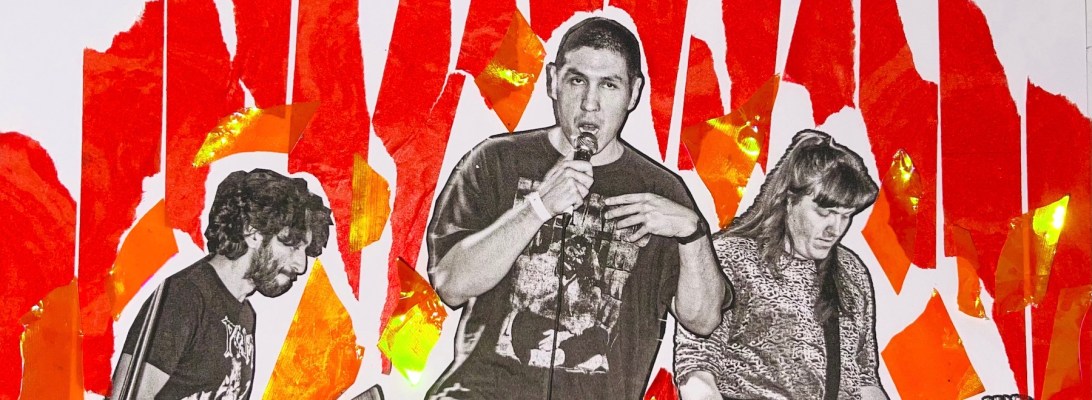
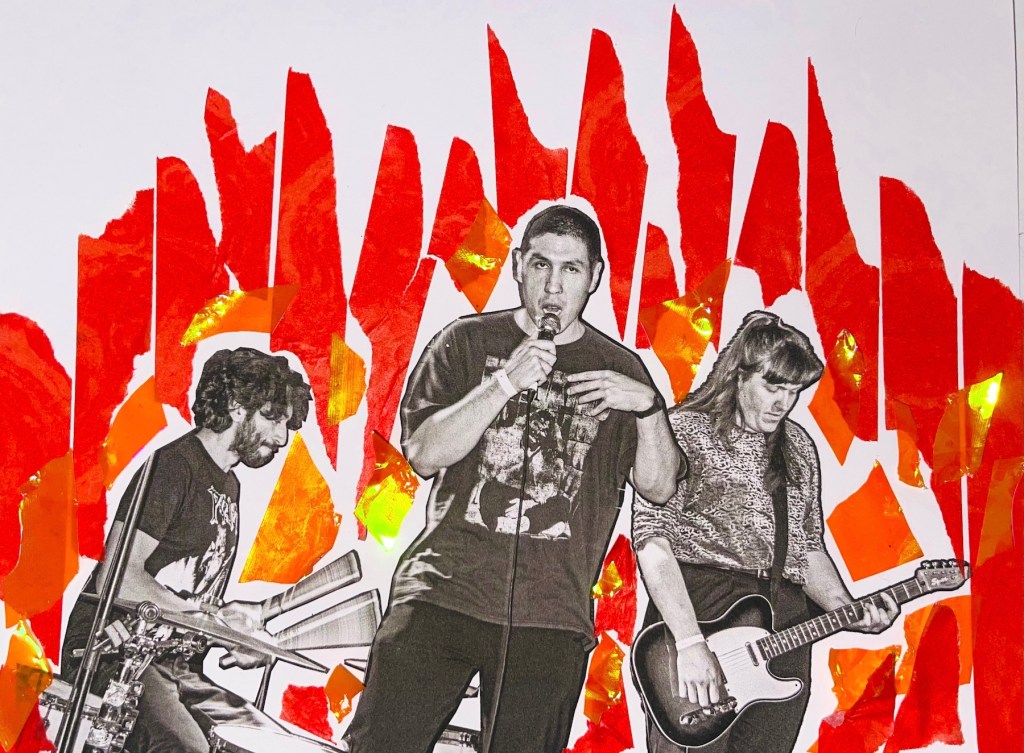
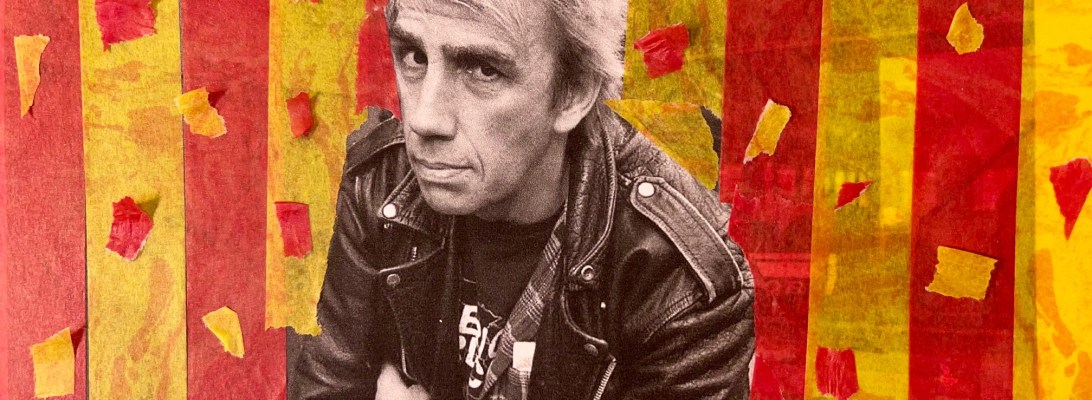
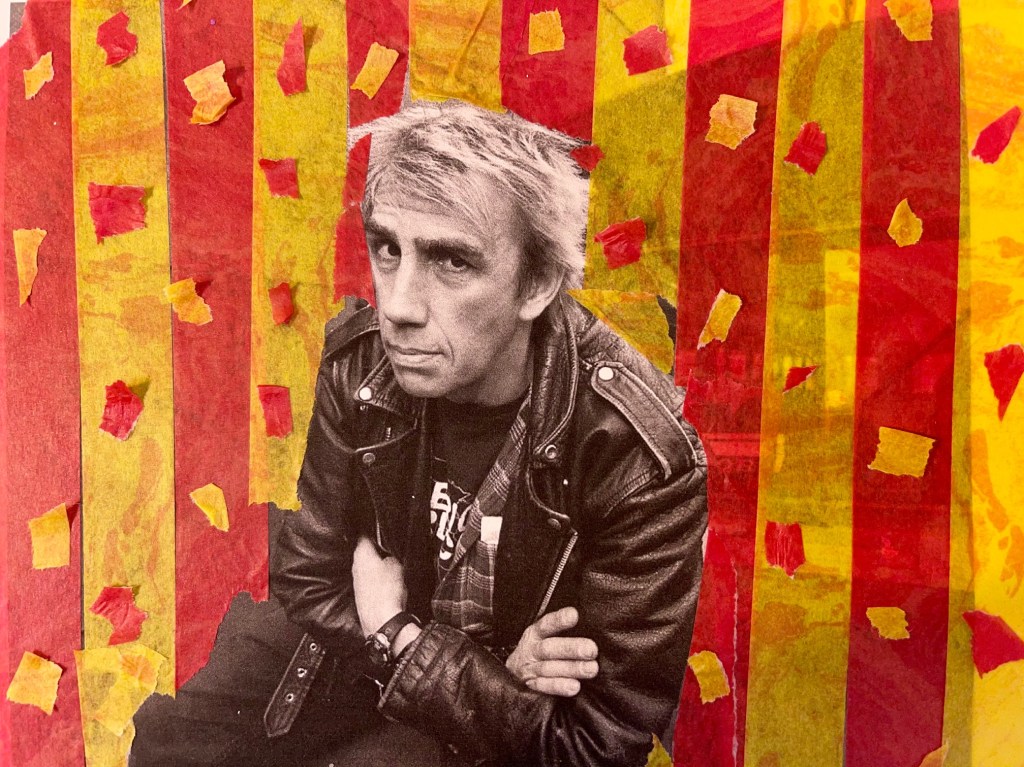
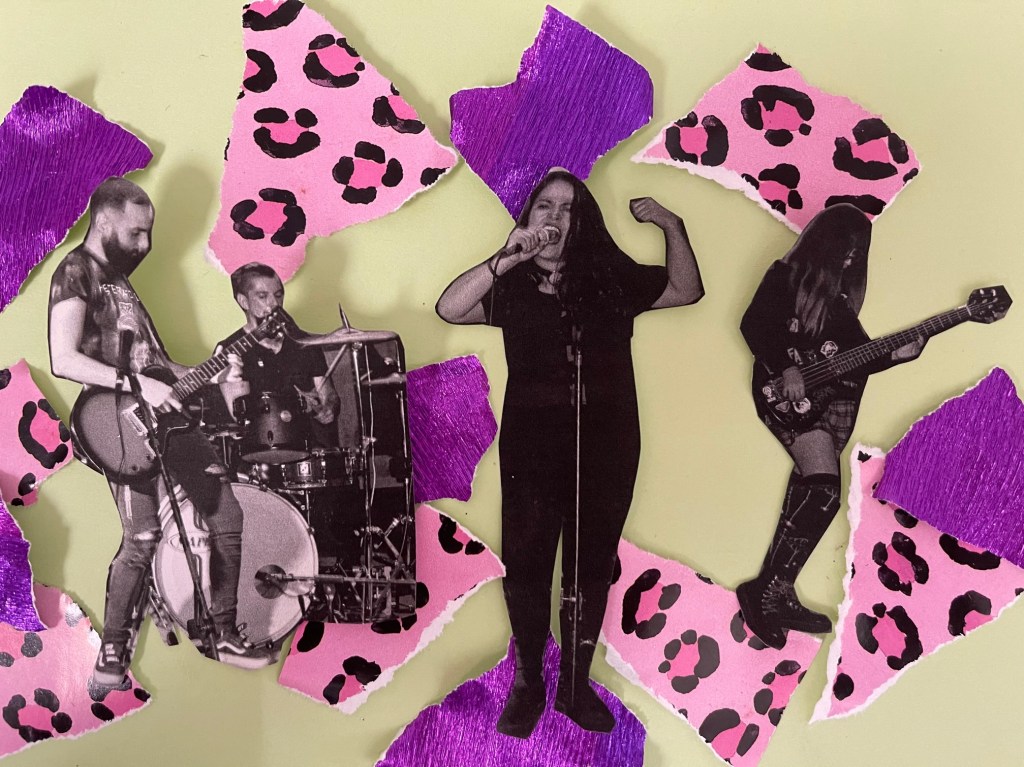
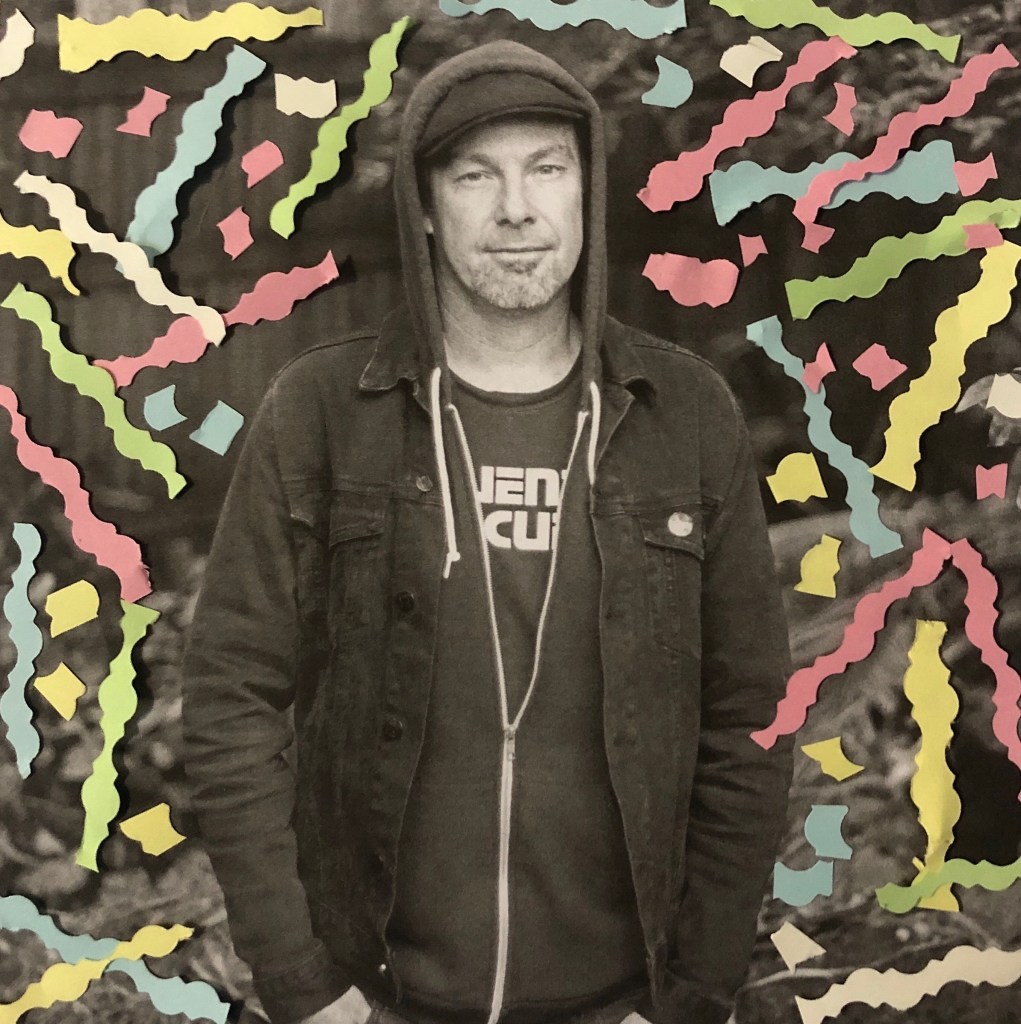
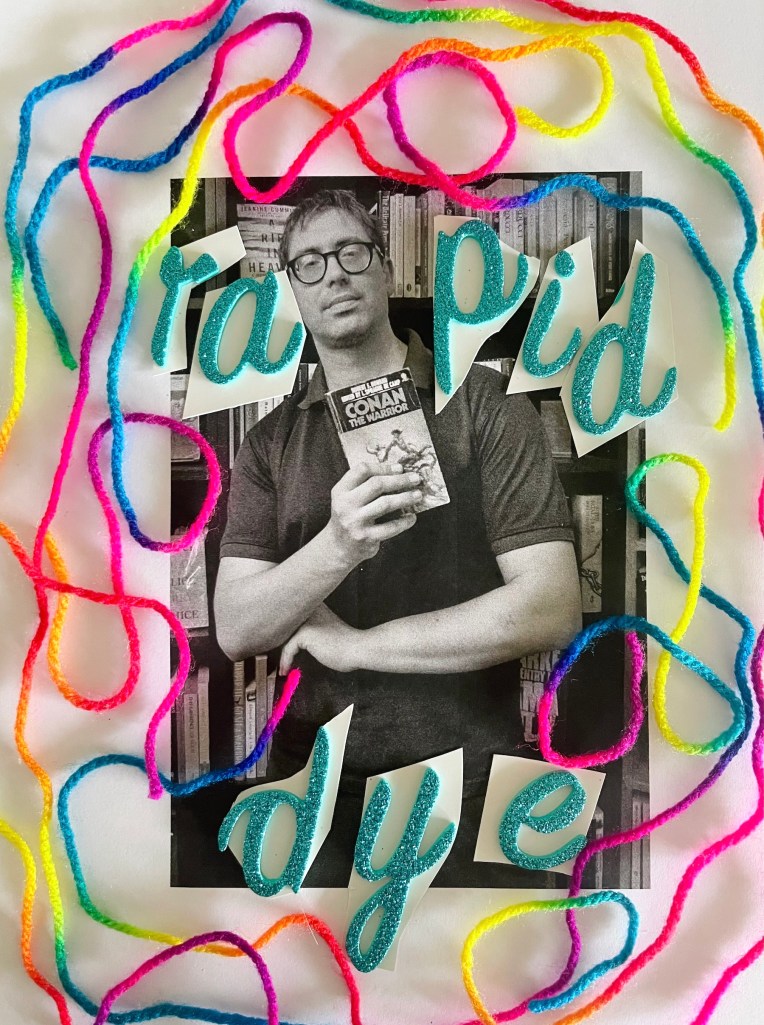
Original photo: Christian / collage by B

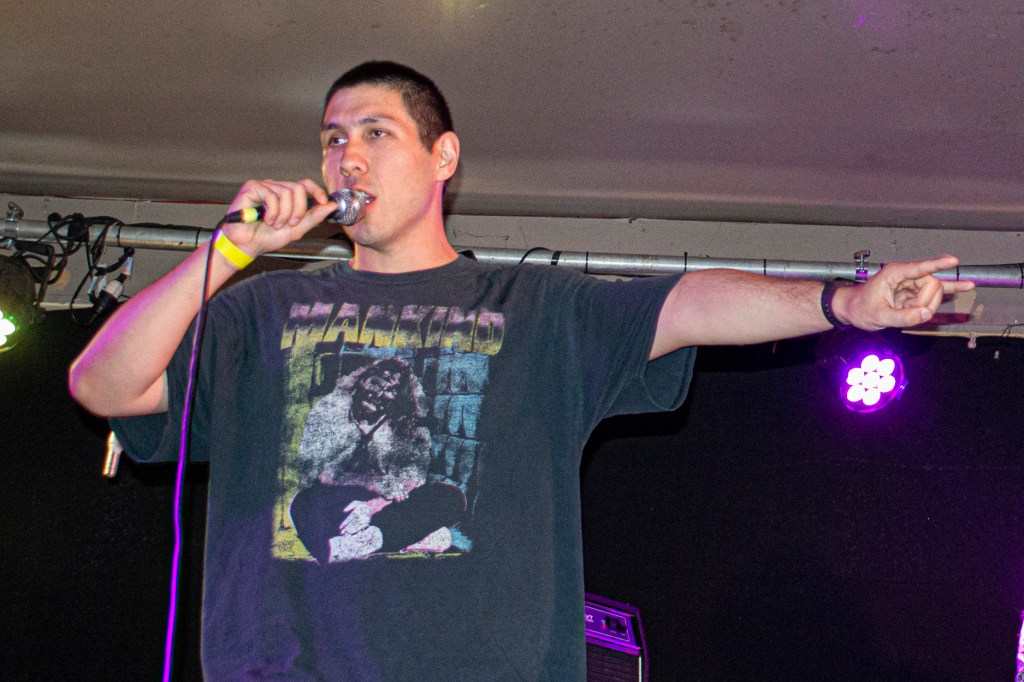
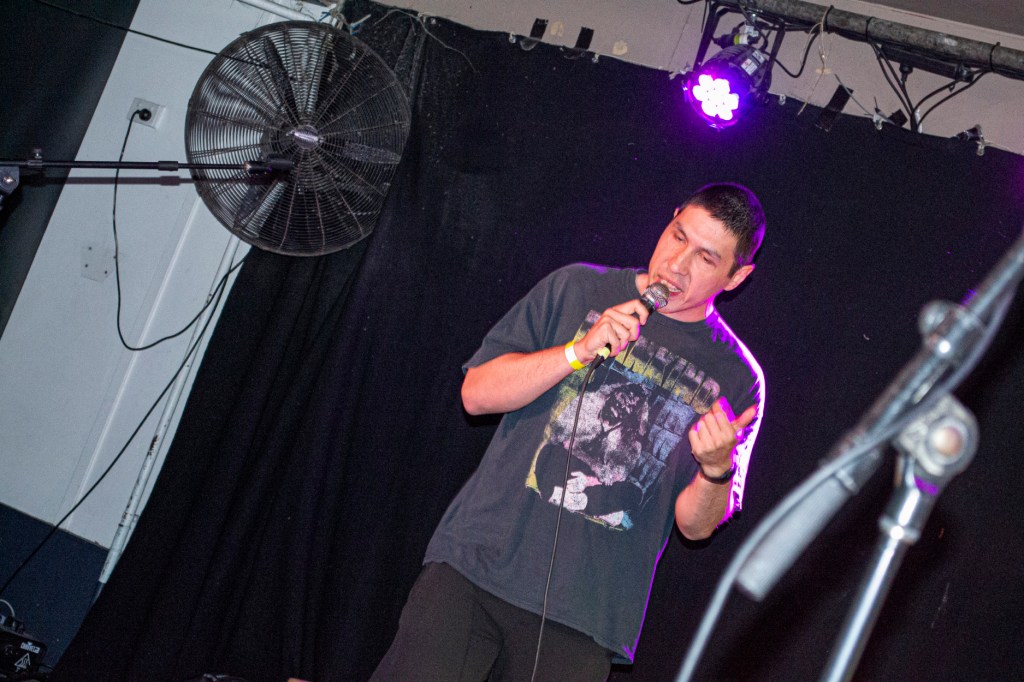
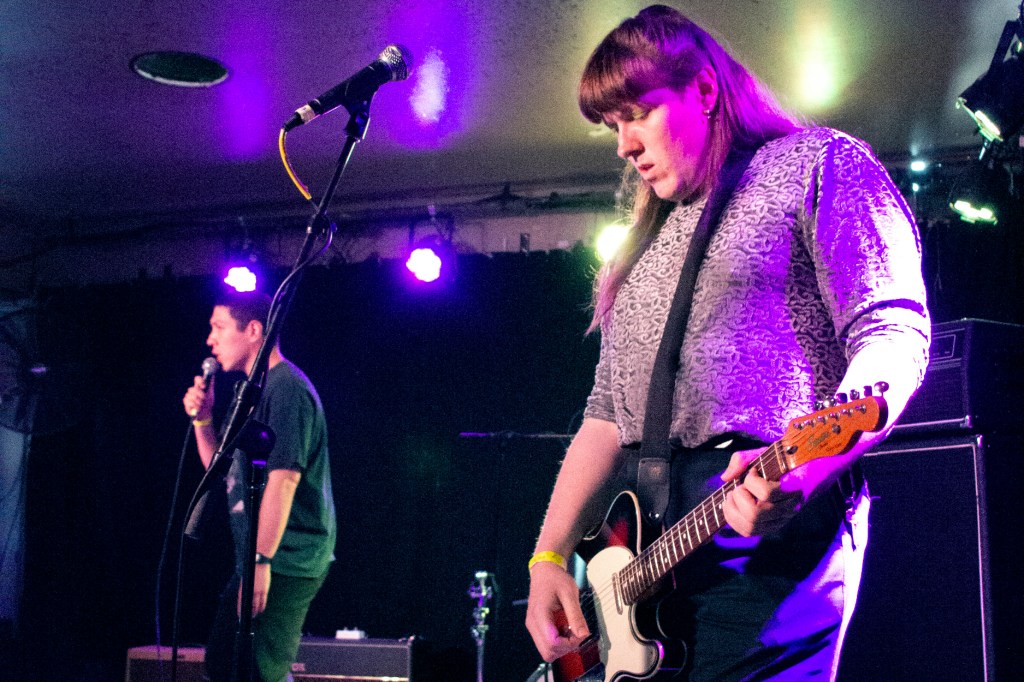
Sydney band, Rapid Dye, gifted the world THE Australian hardcore record of the year way back on Valentine’s Day. It’s a record built for the floor, for the crowd, for the pure energy of classic hardcore done right. It hits hard and lingers long. They’re one of the savagest hardcore bands around. IYKYK.

Gimmie caught up with Josh Ward, Rapid Dye’s vocalist, to talk about the record, his journey to making music and a record label, Sexy Romance. We also talk about the most hectic things that have ever happened to him that might just make your jaw drop.

What was the first kind of music that really hit you? 

JOSH WARD: Around 14 or 15, I started listening to Metallica for the first time. That was such an eye-opener, because when I was young I used to listen to Silverchair and System of a Down, and I started really, really liking that stuff. Then I got turned onto metal and became an absolute metalhead, listening to the top bands. I remember reading magazines saying: you have to listen to the Big Four — Metallica, Megadeth, Anthrax, Slayer. From there, it just snowballed. I was like, alright, this is what I want to chase — that heavy sound.

I’m glad you’re honest about what you first got into, because some people I talk to tend to namecheck bands they think will make ‘em sound cool, not who they were genuinely into. Like, they don’t wanna sound like a dag.

JW: [Laughs]. I grew up in Logan, Queensland, and the closest I could go anywhere was about a 20-minute walk. Buses only ran every two hours to the main town. So pretty much, I had to learn from whatever I found at the libraries in Beenleigh, just whatever CDs they had. The libraries had racks of CDs. I’d be like, ‘Oh, Metallica — that’s cool, I’ll put that aside. Oh, Rage Against the Machine — that looks kind of punk.’ I remember there was D.R.I., a real thrashy album and I used to think, ‘Oh, this is kind of cool.’But back then I wasn’t really that into it; I just had an awareness that a more funky kind of sound existed.

I got into D.R.I. early because my older brother picked up their Crossover record when it came out in ’87. He also got me into Dead Kennedys and Suicidal Tendencies. Was there a moment for you when you really realised punk and hardcore were your thing?

JW: Yeah, I was 15. I remember it so clearly because I really liked this girl — she told me she was playing in a band called Not Negotiable, kind of an emo band. She was in it with her boyfriend. I liked it because she went to the same school, and she said, “Oh, you should come to the show.”

So I went to the show at Eagleby Community Hall. There were a couple of other bands, one was this big hardcore band called Time Has Come. I started listening and thought, ‘Wow, this is incredible — I’ve never heard anything like this before.’

It was the first time I’d seen people moshing. I think this was around 2005, so everyone was wearing camo pants and big straight-edge shirts [laughs]. And I just thought, straight away, ‘I can’t believe this — this is incredible.’

Cool! I remember going to the army surplus store in the city and getting camo pants and cutting them into long shorts.

[Laughter]

JW: Yeah. As soon as that show finished, I’d forgotten I’d even gone because I liked her — I’d just enjoyed the show so much. I really wanted to support her and I talked to her, but more than anything I couldn’t believe there was this whole scene. No one from my school went but I knew some of the older kids from other schools, and gradually I started talking to them. 

Before Rapid Dye, were you involved in any other bands or projects? 

JW: I moved down to Sydney in 2012. Before that, I was trying to start hardcore bands, but nothing ever really eventuated — not even a first show. I used to practise, pretty much driven by this feeling that I really wanted to join a band, but I never had the opportunity to jump in because no one was ever sick.

Then I started this Quadrophenia-worship band called, Little Mind. I used to dress all mod for it. That was when I was pretending I didn’t really like hardcore — you know, that angsty 19–20-year-old phase where you’re like, ‘Oh, I’m over hardcore now, I’ll try to be a bit more hipster, a bit more in that scene.’ I did that for a little while and really enjoyed it, but deep down I still wanted to do a hardcore band. I just couldn’t get enough momentum to make it happen in Brisbane or on the Gold Coast. So I decided it was time to move.

I tried moving to Melbourne in 2012, but I only lasted about a month — I didn’t like it at all. I was going to a few shows, trying to meet new people, but it couldn’t click. I don’t know if it was them or me, but it didn’t work. Then, on a whim, I decided to try Sydney. I didn’t want to go back to the Gold Coast, and a lot of my family was in Sydney, so I thought, ‘Let’s just see how it goes.’

On the very first night, I met one of my best mates now, Drew Bennett from Oily Boys, at a pub. We were sitting at separate tables and started talking — I think because I was wearing a hardcore shirt. From there, I knew I wanted to stay in Sydney. Twelve months in, and I was still here.
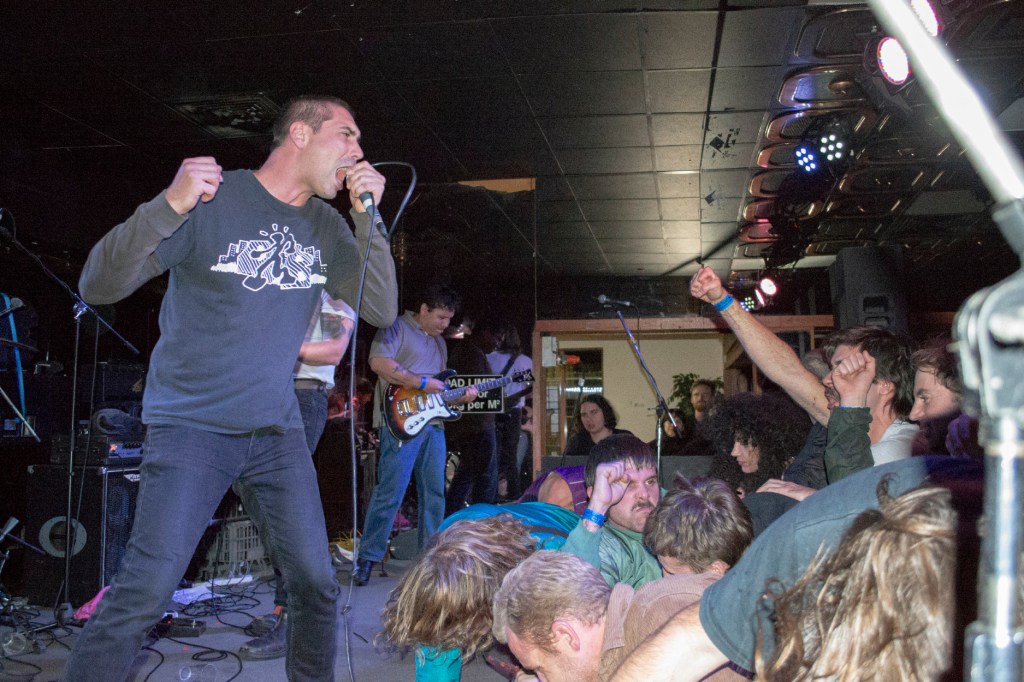
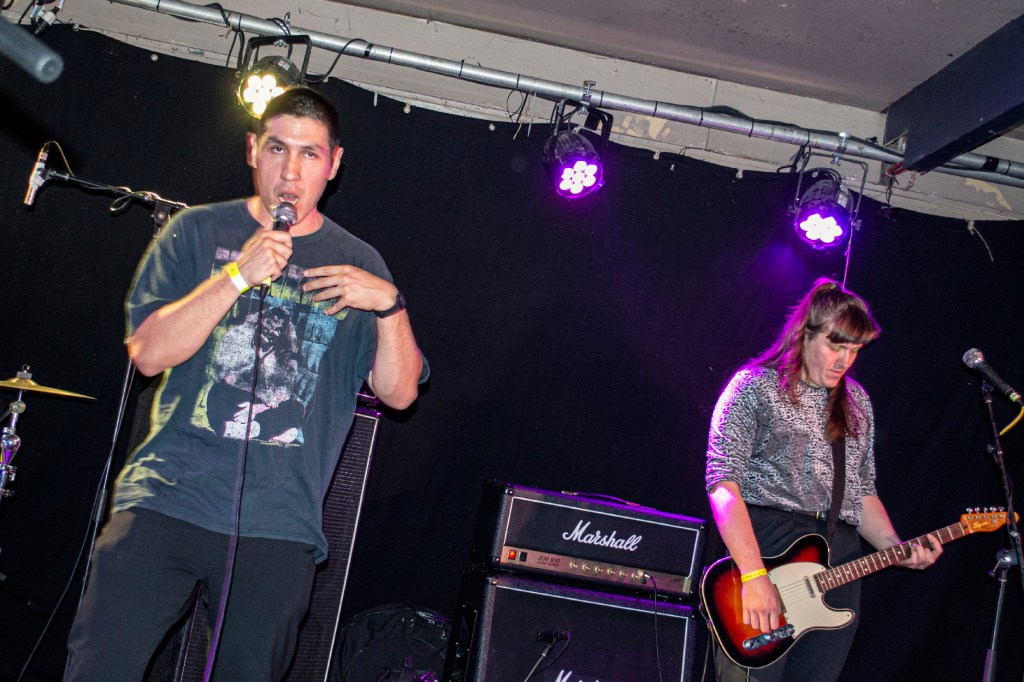
Photo: Jhonny Russell

Nice! How good is Oily Boys’ album, Cro Memory Grin?

JW: Incredible! Hardcore doesn’t have to be done in a certain way — it can be done differently but still stay within that realm of hardcore. I consider them a hardcore band, but I can talk to people and some would tell me, ‘Oh, they’re more punky or almost more experimental than anything.’ To me, they’re, at their core, pure hardcore.

Totally! I really love Drew’s latest band too, Chrome Cell Torture. Being on the Gold Coast we’ve gotten to see them play a bunch. Every single time has been awesome.

JW: I’m really happy for him that he made the move up there, because he’s now really focused on what he wants to do. He sends me messages all the time with lyrics he’s written, all the new songs, and he’s like, Recording the album!’ I’m really looking forward to seeing how it all goes for him.

Same! Did you always sort of want to be a front person? 

JW: I think I did want to be a frontman. Especially when I was living in Queensland. I didn’t feel like I was cool enough a lot of the time though. I picked up the bass so I could try and squeeze my way in somewhere. But that was small thinking — I thought I didn’t have the tools to do it.

That changed a lot when I moved to Sydney, because I think at that point my brain was switching to, ‘Let’s try and make something. I want to be a part of this scene as much as I can.’ That’s when I started the label Sexy Romance in 2013. I was like, ‘Well, I’ve got this job at an architecture firm — I really shouldn’t be here.’ But I managed to squeeze my resume through, and they were happy to pay me. I thought, ‘Alright, let’s use this extra cash to put out records.’

At that time, a lot of hardcore felt a bit stale. None of it really hit that edge — it was a bit lowbrow, but also didn’t feel genuine enough. So I decided, ‘Alright, I’m going to stick with this label, see how much I can do, hopefully connect with some people, and then start a band.’ I figured if anyone wanted to start a band here, I could put out the record. That’s how my brain was processing how I could get into a band.

That’s a lot of work to be in a band!

JW: Yeah, I was just thinking… anything that would help me be able to try. Deep down, this was my way to prove to myself that I’m really into this. That I really want to be somebody. Or… I feel like I’m giving back to the scene that gave me so much — that actually gave me an identity; who I really wanted to be.

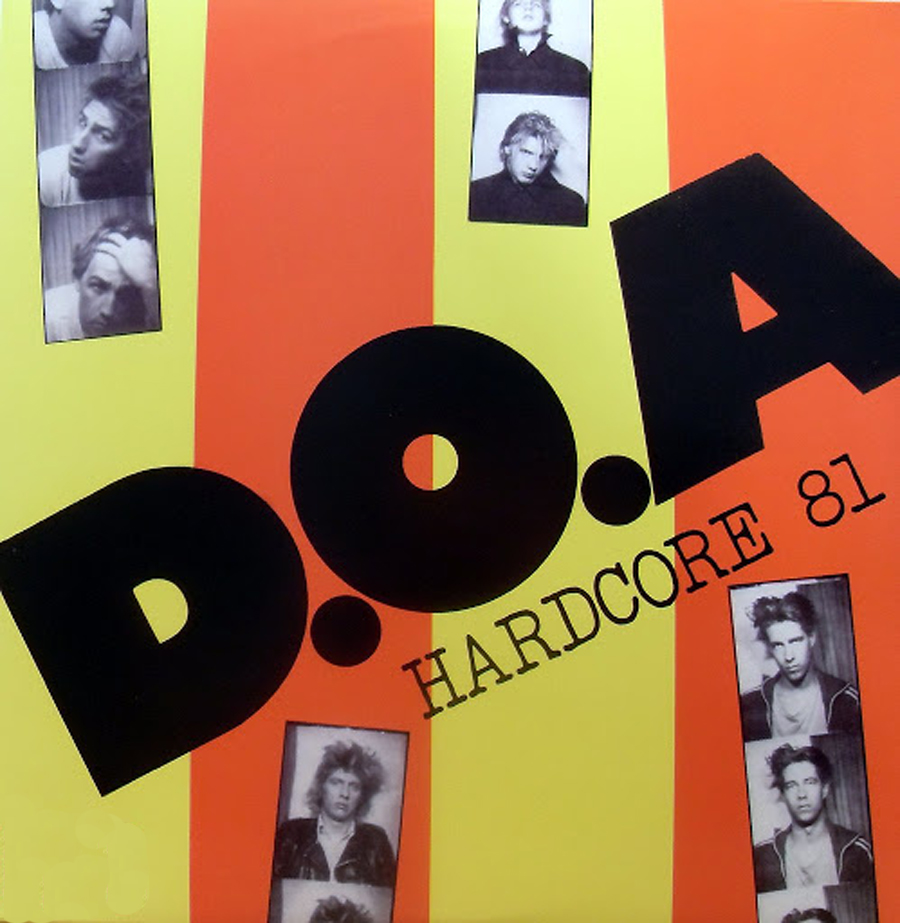
I get that. When I first started getting into punk and hardcore, I was like, how can I be a part of this? No one would start a band with me — because I’m a girl. Back then things were really bro-y. So I started doing zines, which I’ve been doing now for almost 30 years.

JW: I spent some time this past week reading your interviews, and I haven’t gotten this much out of a zine in a long time. A lot of the zines I usually read feel like the people being interviewed are used as a stepping stone for the writer to move on to bigger things. That’s fine, but it often feels very surface-level. Reading Gimmie, though, I felt the opposite. The one with Coco was absolutely incredible. I also read the one with Julian from Negative Gears, and the way he talked about Canberra, going down to Melbourne, and being in Sydney really struck me. I’ve known Julian for a little while, but I’d never spoken with him about any of that. It was something I only found out through reading the zine — something no other zine I’ve read has given me.

That makes me so happy to hear that. I often get people telling me that they read a chat on Gimmie with a friend and they find out things they never knew about them. Having people open up to you is a really special thing and it’s something that I really cherish. I’m very lucky that people trust me with their stories. Gimmie will always be about stories, sharing interesting and cool ideas and experiences, and music and art with people. I never want to be a promotional platform. That’s not us. Other publications can do that.

JW: Reading yours is refreshing. I get to read, watch and hear so many different things. When you asked me to chat, I was absolutely stoked.

I have a wishlist of people that I want to interview, and you’ve been on the wish list for a while. Since we saw you play at Nag Nag Nag. I wanted to chat to about the new record because it’s such a great one and I wanted more people to know about it. It’s one of my fav hardcore punk albums to come out this year. You guys get a lot of love and respect from the underground. I saw Dx [from Straightjacket Nation/Distort zine] say that “Rapid Dye are the best hardcore band on the planet”! And Coco from Romansy said this record is a “future classic”. How’s it feel to get props like that?

JW: Sometimes I feel a bit like an impostor. Then I wonder if it’s warranted. I talk about this a lot with Ryan, our drummer. He’s always reminding me, because sometimes I do feel off. Back in 2022, I wasn’t feeling too keen on the band. 

I thought, well, we had a good run up to 2019, then Covid happened. I felt like maybe I wasn’t the same person anymore. A lot had changed — the world had changed — and I wondered if my music still fit in a post-Covid era. Ryan kept telling me, ‘Your stuff’s incredible, it still blows me away. We’re making it classy. I’ve already done the drums, you’ll do the vocals. The songs are written.’ So I thought, all right, yeah. I just needed that reassurance to really feel like, okay, this is something I still want to do.

Since then, he’s helped me so much. I was feeling pretty depressed — like everyone was during Covid, being stuck inside. I’d always been active, going to shows a lot. But he brought me straight back into it. That was a big turning point.

Yay, for Ryan! That’s awesome he’s been able to help you so much. Your album was recorded in 2021, I think?

JW: Yeah.

I know that over time it kind of changed and evolved; in what way? Did any of how you’ve been telling me you were feeling go into the songs?

JW: A lot of them were written in 2019, when we were playing almost every week or every second week. That’s when we had our tour with Glue, and we had quite a lot of momentum. We were really—let’s push this. Then it slowed down. 

Finally, in 2021, we were able to get back together again. I was able to hear what the band had put down, but I felt like I was struggling to come up with the lyrics, because maybe what I was talking about back then didn’t relate too much to how I’m feeling now.

I’d go through my old books, looking at all my old lyric sheets, and think, I was saying this, but I don’t feel that too much anymore, because I’ve had a bit of reflection on the life I had before the Covid lockdowns. But I’d still read them and go, that’s how I was feeling at that time. It’s not that I feel like an impostor, talking about problems I don’t have. I’d put them down and maybe reword them to feel more like a reflection of myself, something to really bounce off. So it was a little bit of rewriting, and after that there wasn’t much change.

The first song released from it was ’What Makes You Feel Safe?’ That’s kind of a loaded question you’re asking.

JW: Yes, it is. I’ve had lyrics for this song for quite a while. Around 2016, I lived in a house where there’s a lot of hectic people. And I didn’t really know who was my friend within that house. There was also police coming over all the time. We always had people in our lounge room, like, I’d be going to work at 5am and there’d be people up all night smoking drugs. And I’d never met them before. And then not having a feeling of safety in my home. 

That’s hard. 

JW: Yeah. But the thing is, I was also using drugs at the same time. So I wasn’t completely innocent in that, but I just had that feeling.

Before I used to go to sleep, I’d lock my door and rope it just in case someone tried to break through. I’d think, what’s going to make me feel safe? Like in the lyrics: Is it having a gun in my hand? What’s going to make me feel safe? Having my friends around? I thought I had my friends around, but when you’re in those situations — especially when it comes to housemates smoking meth — you don’t know how quickly they can turn on you. 

At that point my world felt like it was coming down because I had a really bad pokie-machine addiction. I didn’t have money, so I’d smash it in the pokies thinking, this might get me through. I’d win a thousand dollars and thought, I’m sweet, I’m sorted for two weeks. 

But I didn’t really feel super safe in the situation I was in. I used to think I’d feel so much better and more relaxed if my friends stayed next door or if I had a weapon to protect me from being hurt. It came more from being scared than anything else. I was being in my head. The song is how I wanted to express it.
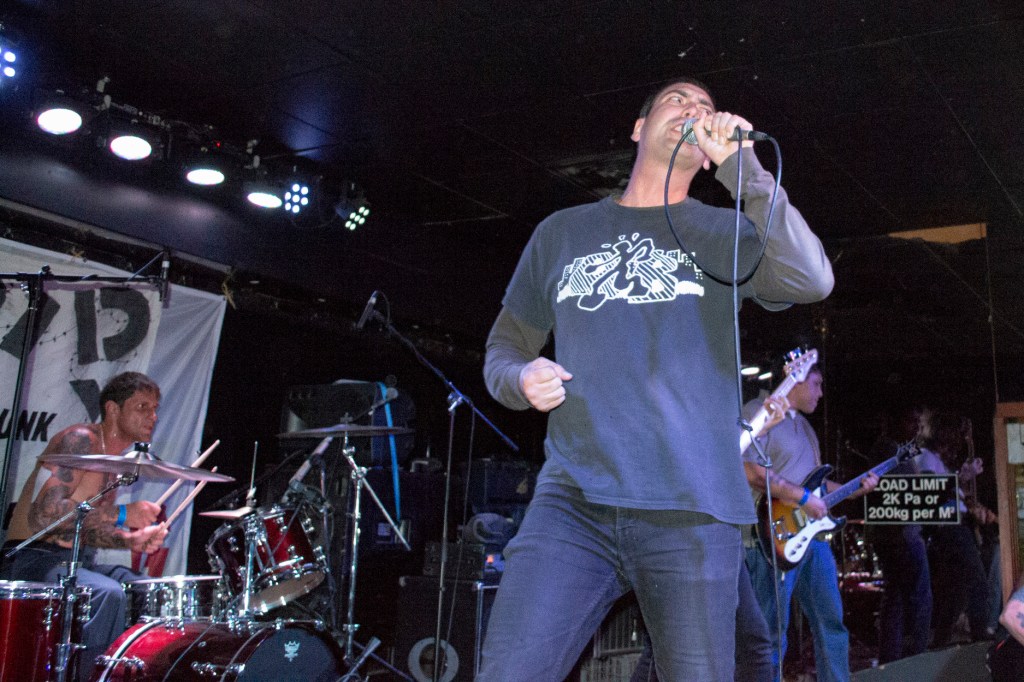
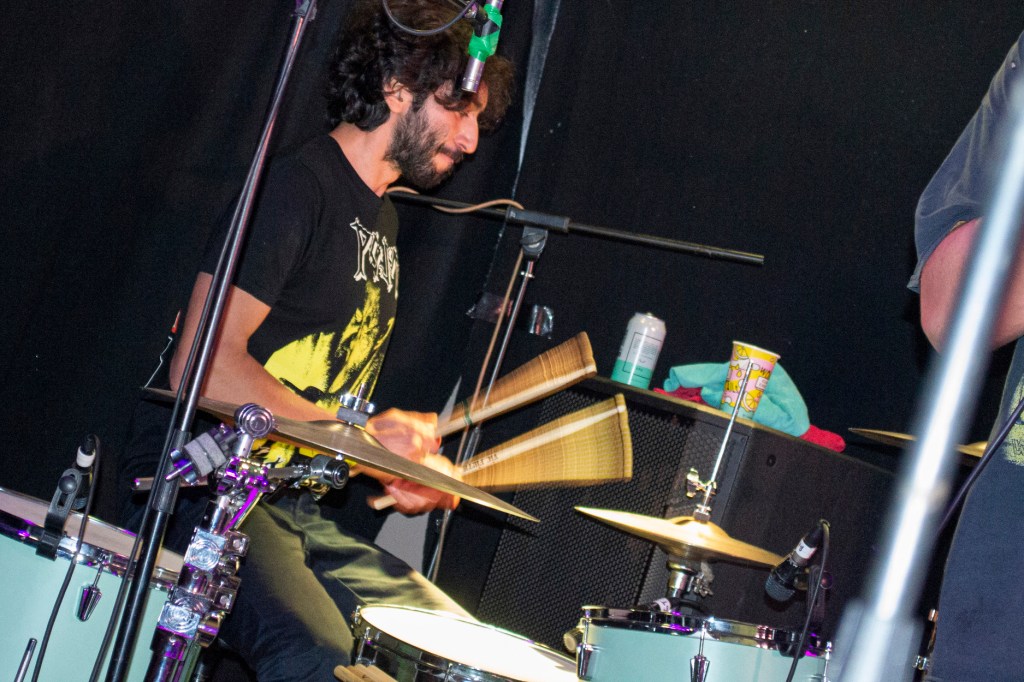
Photo: Jhonny Russell

I had a similar conversation with Amy from Amyl and the Sniffers. Their album, was called, Comfort to Me. And we talked about, what gives comfort? I think about that stuff a lot. Growing up, my parents were pretty paranoid about the world and people. So I think it’s made extra sensitive to things or maybe hyper-aware. 

JW: I know, I put myself in those type of situations. I did smoke meth for a bit, it wasn’t a full on addiction, but I did it, and smoked a lot of weed. I wanted to be around those type of people because a lot of them were painters, very artistic-types. But also, they can fly off the hand and be a completely different person.

I think that’s also true of hardcore — I’ve always wanted to chase, I guess, the more extreme sides of the human condition. I get really attracted to someone who’s been crushing trains, and I think, oh — this guy’s on the other side of the law, in a world that doesn’t exist within my work or even among friends. I almost felt like I was part of this dark side and I wanted to belong to it and have my own. Even then inside I felt very — a scared person, maybe trying to find comfort in thinking that if I find the most extreme thing, then anything else that happens to me won’t hurt as much.

When you did the interview with Tim from Teenage Hate, you mentioned that Sydney hardcore was naughty hardcore. 

JW: [Laughs] Yeah, that’s what I felt. That’s a side that really attracted me. I remember going to Melbourne shows — youth crew shows — and hanging out. A lot of people were straight edge. I’ve never been straight edge in my life, but I always wanted to hang out with people with that mindset, to learn something different. But I’d also end up hanging out at 1 a.m. in a subway, I’d be like, hmmm, this is a bit boring. Then I’d come down to Sydney and it’s 2 a.m., and me and my friend would be in the middle of the train tracks, and my heart would be racing. I felt way better — like, I’m doing something crazy. I’m doing something I want to do.

The first Rapid Dye release is called, Keep Sydney Ugly. Where did that phrase come from? Is it kind of meant like the ‘Keep Austin weird’ or ‘Keep Portland weird’ slogans? 

JW: Yeah. Sort of. I was actually thinking about this today. That was when the Sydney lockout laws happened. Tyson Koh, ran in the elections to be voted into the council as ‘Keep Sydney Open.’

We all thought he was a bit of a joke, because it seemed like he was only doing it to further himself, or the people he was interested in. I thought, well, Sydney’s still open — especially within my group of people — because we were still doing whatever we wanted at god knows what hours in the morning. So I thought, let’s have a little play on words: ‘Keep Sydney Ugly’ — keep Sydney half-vandalized, or just… something that makes the city feel alive, even though all the clubbing was closed. I felt like it opened up stuff for us instead of drinking in bars — we’d just be in our houses or on the streets.

I thought, keeping Sydney ugly — that’s how I want it. I want it to stay a little grimy, a bit ugly.
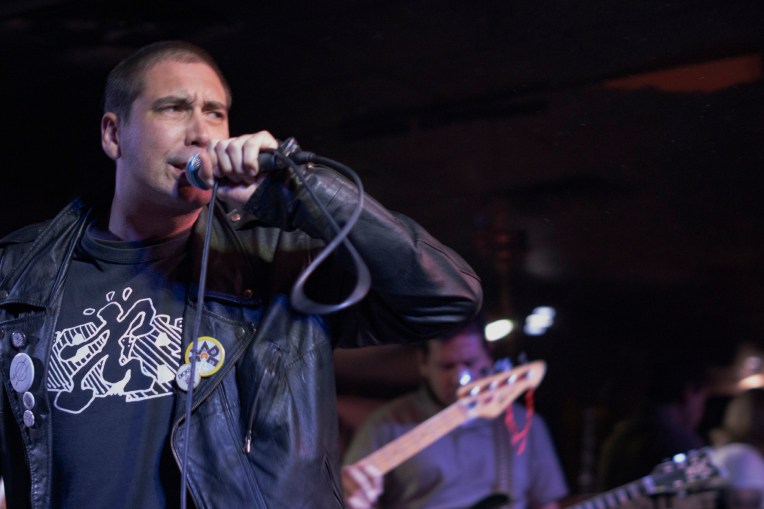
Photo: Jhonny Russell

That vibe is so different from where you grew up in the Gold Coast and Logan areas.

JW: Yeah, it’s a lot different. I grew up in Bahrs Scrub, just outside Beenleigh, on acreage. The guys I was friends with were from bushy parts — at least the ones I just felt connected to. I have one friend from that area I speak to sometimes, but otherwise, when I go back, I see people from school and they’ll be like, ‘Oh, you still into that rah-rah music?’ I just never really got along with a lot of people there.

That’s why, when I eventually moved, I felt like I was with people who understood me more. I didn’t have to hide that I was into music or art. Even with my own family, I don’t really fit in — they’re footy fanatics. They just want to watch football or talk about their new car. I’m not really a part of that. When I go home, I don’t feel too comfortable. Since moving in 2012, I’ve been home a few times, but the longest I’ve stayed is about three days. I just don’t feel comfortable in those areas.

Here, I feel at home. I’ve got all my friends, and Sydney feels like my home more than anything.

Was there anything that you’ve kind of found challenging about moving to Sydney? 

JW: I pretty much moved with a bunch of records and some clothes, and I was sleeping in my car for about a month. I wasn’t really working. I was still in contact with people I was trying to get away from, because when I was living back in Queensland, I was in this house in Beenleigh where pretty much everyone was using drugs all the time. I was, too, and I saw it as a way to escape.

When I moved to Sydney, a lot of those friends tried to get me to come back with them. They thought, ‘Oh, Josh is just doing a tour to get away for a bit.’ But I was really strict that I didn’t want to be around those types of people. They found out where I was staying about two weeks after I moved, and I didn’t have the willpower — I got trapped in a van with them as they started driving back to Brisbane. They said, ‘Oh, you can come back,’ and I was like, I need to grab something out of my car. So I convinced them to drive me back to my car and basically boosted all the way before they could catch me. I got out, parked my car in Enmore. I was like, I don’t want to deal with these people anymore. I really just went blank. That same day, I thought, this is my time — I’ve got to get away.

I went and applied for a job at Repressed Record in Newtown. Flat-out denied. [Laughs]. That’s fine. But about a week later, Nick from Repressed posted — maybe on Facebook — that they had a room available at their house. I thought straight away, I love Nick’s stuff. I love Royal Headache. I love RIP Society. This is what I want to be part of. I moved in straight away, which felt like a godsend — divine intervention. I thought, I’ve been given an opportunity with someone whose music I love and enjoy, and a chance to insert myself into this scene. I had to take the opportunity. From there, it pretty much worked out.

Did you learn stuff from Nick that you used used when you started your own label, Sexy Romance?

JW: Yeah. I’d talk to him about, how many should I get? Or, should I do this? He’d flat out tell me sometimes, ‘Don’t do that. Keep it a small record. Don’t overspend amounts and don’t go to other companies to promote your stuff. Just do it all yourself.’ Even just watching how he did Royal Headache, and Native Cats. He had a, do-it-yourself, if you build it, they will come thing. So, that’s what I did. But I wanted to make it a little bit sleazy. When Sexy Romance got made, I had no idea what I wanted to call the label. I knew I didn’t want to call it what every other hardcore label is called, like, Angry Hammer Smasher Records or something like that [laughs].

Drew found a book at this pub that we used to go and on the top of the book, it says: Sexy Romance. He’s like, ‘This is perfect. Call it something that’s kind of gross, and you can’t tell it’s a hardcore label, you can’t tell what type of label it is. It almost sounds like a pornographic movie thing.’  I was like, OK, let’s just do it. Let’s see how it goes. And the name really stuck. I’m glad I zagged instead of zigged.

It’s funny that your label is Sexy Romance and the Rapid Dye record is coming out on Valentine’s Day. Someone could think that you’re actually a secret romantic!

JW: I like to think that I am. I’ve never really been told that before, but yeah, I think it probably does sync up pretty well [laughs].

Maybe its subconscious and it just comes out and you don’t even know it?

JW: It’s true! [laughs].

The song after ‘What Makes You Feel Safe’ on the album is ‘Wheel of Fortune’. Is that song about fate? Or cycles? 

JW: The fortune is, I was in this cycle — maybe 2016, 2017. I was working this job with Drew from Oily Boys. We used to etch metal blocks for old printing presses. It was one of the last one or two places in Australia still doing that.

Pretty much half the job was me working on the computer. I’d give it to Drew, and then he’d finish at like twelve or one. Straight afterwards, I’d be left on my own. It wasn’t a good-paying job, and I think I used to feel kind of alone. Drew would already have gone home, and I’d be like, Okay… I’ll just go home by myself. But instead, I’d go to the pub.

That’s when I started getting really into playing the pokies. My parents do that a lot, and when I was younger it was always around it — them betting on things, talking about how much they’d won. Around that time my brother had just won fifty grand, and then I found out my parents had won about twenty. I thought, Oh, that’s the way I can get out of this slump I’m in.

At the time I was constantly overdrawing my bank account to pay for weed and drinks. I convinced myself I could fix it all if I just kept playing pokies. But it got to the point where I’d get paid and my whole paycheck would disappear — already gone, lost.

I got used to living right on the edge: not knowing if I’d be eating that week, or drinking bottles of Moët and spreading it around with my friends. Money was such a huge thing — it still is, for everyone. It pretty much runs our lives. And yet I was so happy to throw it away for the chance I might win. Deep down, I knew all I was doing was feeding the hotel owners, giving money to the people I least wanted to give it to.

Looking back, I think about what I could have done with all that money. I could have donated it to charity, or invested in making more records. But at that time, I was very depressed. I kept telling myself, If I just win big once, I’ll be fine. I can get out of this mess!

And sometimes I did win — a couple of grand. I’d pay off my debts, feel like I was fine, then throw it all back in again. It was such a dangerous cycle.

I have Drew to thank for breaking me out of it. And my mum too — she helped, up to a point. But really it was Drew who slapped me out of it, who got me thinking about what I actually wanted to do with my life. He helped me start working towards a life I didn’t want to escape from.

What did you work out that you wanted to do with your life? 

JW: I think, because I’ve worked so many jobs, that I didn’t really know what I wanted to do. All I really wanted was that, when I finished work, I could just listen to the hardcore, hang out with friends. It’s only in the last couple of years that I’ve realised what I really wanted to do—I’m on my way to becoming a mechanic.

I work for Sydney Buses now and am slowly getting into skills-based learning. It’s been a happy journey. It’s actually a job that I really enjoy. 

That’s awesome. I grew up around a lot of car stuff. My dad had car yards and he was a race car driver. My brother races cars too. So there was always cool cars around. My bro had one of those panel vans with the airbrushed sides; he had the Grim Reaper. 

JW: Oh sick, that’s awesome! Danny from Demolition, he’s got one of those.

Cool. You play bass for Demolition, right? 

JW: I do, yeah. 

Let’s talk about song ‘K.O.P.M.O.H’ on the record.

JW: It stands for ‘Kings of Punk, Masters of Hardcore.’ This is something Drew would say about Rapid Dye. I decided to write a song about it. One, because it sounds kind of cool—I’m like, okay, Kings of Punk, Masters of Hardcore, that’s a cool thing. But sometimes I just thought, oh, it’s just Drew taking the piss.

So, I don’t know if you’ve seen the lyrics. It’s pretty much me talking about it more like an ego boost. But then I have to think Is it an insult? Or is it kind of being an insult? Is he like teasing me, that type of thing? It was more just my own self-doubt going on. Am I happy in saying that I’m this type of person? It’s just funny. I just thought it had a cool ring to it.

It’s already on our Best Hardcore Record of the Year list!

JW: Aww thank you so much!

Who else has put out a better one?

JW: Thanks! I’m always hoping the Oily boys will get back together. I really wanted them to play the release show. I was messaging Drew. Drew was keen but pretty much talking to everyone else, they were like, ‘Give up! It’s not going to happen.’ [laughs].

The next song on the record is ‘Cream’. It’s one of the newer ones you’ve wrote? 

JW: Yes, it is. ‘Cream,’ is also a lot about money—but more than that, deep down, I think it’s maybe about my brothers. I have this weird relationship with them. They’ve lived pretty intense lives, like me—they’ve done wrong things, made mistakes—but they’ve managed to get their lives, or what they consider their lives together. They see me still living in Sydney, not settled like they are. They’re just doing stuff, and I’ve got both sides of it.

One of my brothers is a chronic gambler who goes nuts, but still somehow manages to pull it all together. I feel like they see me as a step below them, and even though I know they don’t think that consciously, sometimes it feels that way. My brother is always telling me, ‘Do a trade in this, don’t do a trade in that, do it this way,’ and I manage to figure it out. 

It’s me trying to reflect back to my brothers: I’ve done the same stuff as you; I just haven’t locked in as much as you have. The song is maybe more about jealousy—both theirs and mine—or just how I feel in comparison. Maybe I’m more jealous than anything, honestly. It’s like, they’ve done the same mistakes I’ve done, but I feel like they’re in a better situation than I am, or at least the one I’ve put myself in compared to what they did.

But you have put yourself in a better position than you were in previously. You’ve got your trade and you like your job, and you’re putting out your band’s record. All these are great things. I feel like you’re too harsh on yourself, dude.

JW: I do go really harsh on myself, and I don’t want to—but I do compare myself to people that I really care about. I do acknowledge that I really want my brothers to see me as equal, not as someone who’s still kind of trying to work out what he’s doing.

It was a really good time at my brother’s engagement party. He had one of his friends come up to me and say, ‘I’ve seen you play in a hardcore band—I saw you play in Brisbane.’ And my brother was like, ‘Oh, Josh’s band? You’ve seen Josh’s band?’ My brother just didn’t believe it—I’ve had my brothers maybe come to one show the entire time I’ve done music.

It felt like a bit of confirmation, you know? Like, okay, if my brother thought this was kind of cool, I’m glad—it’s somewhat like starting to get rid of that doubt instead of being very strict with myself. Yeah, I think a lot of this is inside my head, but I just tried to put it down into song. I tried to lay it out and make sense to other people.

Writing stuff down in a song and getting it out live; does it help you make sense of stuff too?

JW: Yeah, I do think that, especially when I start doing a lot of the songs, I start thinking about everything that I’ve written. I told my parents about it, and they were just like, ‘Oh, yeah.’ But then I sent them a photo of the record, and they were like, ‘Oh, is that on real vinyl? Is that a real record?’ It was amazing.

They know nothing really about music, but because it was something on physical media—they’ve seen photos of me playing, they’ve been to shows—having something on a record kind of feels like I’ve accomplished something. It’s something I want to do, and it actually made them quite happy.

So, it feels good—having put something solid down, something almost like a marker. I’ve proved to them that this is really something I care about. I remember when I was younger, my mum absolutely hated driving me to hardcore shows. She would just watch the people at the front and be like, ‘I don’t know about them. Are you going to be around rough people? Or are you trying to piss us off by being a bit of a punk?’ And it’s like, no, no—it’s just something that I’m really, really interested in. It’s good.

That’s nice your parents saw your record as kind of a legit thing you’ve done! My mum was always super supportive of me wanting to write about music. When I was in high school, I had international bands calling the house for interviews for my zine and my mum would answer the phone and talk to Mike from Suicidal or Henry Rollins before I got on the line. She once told an old boyfriend that was putting down some bands I love that ‘Music is forever and that it’ll be here long after he’s gone! [Laughter]. She was right!

Or one time, we were in Sydney driving around and saw a pole poster for Frenzal Rhomb taped up. My dad pulled over the car, and my mum jumped out with her Swiss Army knife and cut the poster down for me because she knew I loved them at the time.

She also once got me door-listed for a Napalm Death show because she and my dad were sitting next to them having breakfast in a café. She recognised them—because she knew them from me liking them—and got their autograph for me.

JW: [Laughs] That’s awesome! I remember when I was getting into hardcore, I had to sneak records home because my mum absolutely hated heavy stuff. I remember being grounded for two weeks because I had a picture of Iggy Pop on my MySpace page, and she was like, ‘I don’t want you looking at that drug addict.’ [laughs]

It’s really interesting—even though I had those restrictions, I think it just pushed me to want it more.

I get that. ‘On The Take’ is next up on the album. It brings to mind corruption.

JW: It’s a bit of a slang word for… well, it’s kind of hard to explain. It’s about degenerate gamblers when they gamble—especially when it comes to something like blackjack. If the dealer changes at a certain time and you lose ten in a row, it’s considered, in gambler terms, that the house is ‘on the take.’ It’s like the prime time when they’re going to be taking the money.

So, you either learn to back off or you double down, because usually, when the take comes off, that’s when they get five times or even fifty times your cash back. It’s a learning process. When I started doing that type of song, I was like, oh, this is going into a bit of a degenerate gambler brain, and I’m trying to put that down on paper.

In Australia, in general, per capita, we’re some of the biggest gamblers in the world. I’m really for stopping betting ads or limiting them, just to protect people more. Like my brother—he’s got kids, and I’ve heard stories of his five- and six-year-olds, telling him, ’Oh, you should bet on this,’ just because they watched the ads. They just see the advertising and think the purpose of watching a game is to earn money from it.

So, I think a big thing about this album is the gambling culture, especially within Australia. It’s something I’m not really a part of now, but I feel like a lot of people do have this problem. I wanted to get something out of it. I wanted to break this cycle. I want to start creating more. That’s pretty much why I made it.

I’m surprised at how many younger people I know that gamble, especially on the pokies.

JW: Yeah. There’s like an underground mafia, and a lot of it is money laundering. You see a lot of it where I was living in Earlwood, which was part of Bankstown-Canterbury council, I think that’s the deepest, or maybe the biggest, per capita for gamblers.

A lot of it—you’d see the people going to these pubs. Many of them are hectic: they’ve got big Gucci bags, huge roided-up guys, and they’re just putting thousands of dollars in there. But everyone knows why they’re there—it’s just laundering cash.

It’s almost just seen as a place to be, to be around these hectic types. That’s why I think the imagery goes well, especially in the Sydney central code. It felt like a very Sydney theme when it came to doing the album—that’s something I used to struggle with.

I feel like there might be people I know now who are struggling with it, and can relate to it, just because Sydney is a really expensive city. Everyone’s trying to jump over each other to get ahead and looking for easy money. I feel like that’s just the way some people think.
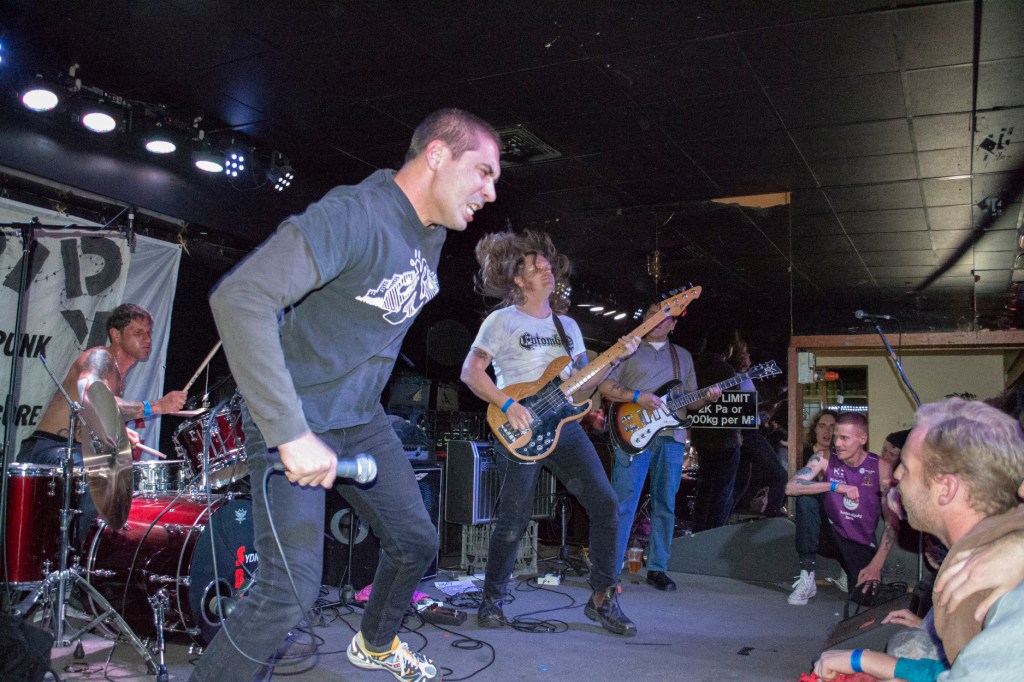
Photo: Jhonny Russell

Yeah, I guess people just feel desperate. Before I was born, my dad was a professional punter, that’s what he did for a job to support our family.

JW: Yeah.And it’s a big thing. My pop dude passed away in 2003. He used to work at Sydney Uni, but he would go punting quite a lot. My mum used to tell me stories about how he bought a brand-new car because he won one thing, and then paid off the rest of his house. They used to get renovations done, too. 

Back then, it used to be, half the money you’d earn from your job, and then the rest would come from watching the races in his little chair at the back in his little Punchbowl house. So it’s just been a bit of a culture I grew up around as well.

Yeah, man. I remember watching my mum buy Gold Lotto tickets every week. People don’t really see that as gambling, but it is. She’d be sure that this week would be her week, and finally she could do this or that with her life. But she never really won big, and it’s like she put her life on hold—the mentality of, one day when I have money, I’ll live my dreams, not realising she could still do a lot of the stuff she wanted without lots of money.

JW: Well, that’s it. I think it does feel like you’re just stagnant in one place. The mentality is: as soon as I win, I’m free to do whatever I want. Instead of gradually working toward where I want to be.

Since 2016, I’ve started the band, and now I’m releasing an album. I’ve made everything I wanted to do, instead of just waiting and wasting my money, trying to achieve something I wouldn’t have been able to if I hadn’t focused in the right space.

I’ve got friends from all different walks of life, and some people are really well off, but they’re not happy. They thought that when they finally reached wherever they wanted to get and got money, they’d be really happy. But often they get there, and it’s like they worry and stress more. Having money kind of amplifies all the problems they already had. Same goes for people I know in crazy-famous bands; a lot of them aren’t as happy or together as you think. You couldn’t pay me to be famous.

JW: It’s true. I haven’t had that situation yet [laughs], but I feel like it would be one of those things. I talked to my brother—he’s a FIFO worker, he works in the mines. Sometimes he explains it as the golden handcuffs: ‘Oh, I’m working so much, and yeah, I’ve got all this, but I’ve got no one to hang out with when I’ve got two weeks off, because everyone at home in Queensland is at work.’ He has to fly so far away from family. 

Sometimes, when he would come to Sydney, he’d stay at mine. He’d be like, ‘Oh, we’re gonna go to the pub now, we’re gonna go do this.’ There was one time I used to live near a place in Chippendale, and they had this hot chilli challenge. He loves eating chilli—he can eat the hottest things ever. He said, ‘I’m gonna do it because you can get your Polaroid taken and they put it on the wall forever.’

He was excited because places in Queensland don’t have these things. He’s like, ’If you go to this pub all the time, you can just see me up there.’ So he ended up doing the chilli pizza challenge and got his photo on the wall. He said, ‘Oh, this is the stuff I’ve been missing. I can’t do this if I’m just working all the time and trying to pay things off.’ It puts things in perspective for him because he can’t believe some of the life I live. 

When I was younger, I could go down to Melbourne for a week and not have to pay for accommodation because I could stay with friends. He’d be like, ‘Oh, you’ve got friends down there you can stay with?’ For him to go down, he’d have to plan time off work and stay in a hotel with people he didn’t know.

It’s interesting we often can think ‘the grass is greener’ for someone else. You both have freedoms but in different ways. He may have more cash but you have friends all over, do something you really love and have solid support networks.

JW: Yeah, that’s true. It’s good to have perspective.

The next track on your record is ‘Bite’ which sounds extra aggressive.

JW: Yeah, it is a bit [laughs]. I write that when I was really angsty. 

On the Gold Coast, I always felt like I never got a solid run of doing bands. And there were some people that I saw getting—not exactly acknowledgement, but I felt like, oh, they’re getting to do what I wanted to do. The song was meant to be on the 7-inch that we released in 2017 or 2018.

I used to get kind of jealous. I’m like, oh, I can do that too!  And I’ve got some lyrics in that are just like, I took him, and I stole your sound, as if I poached the people you wanted for your band and I took the sound that you wanted to do. Because, I can do it better.

That’s very braggadocios of you! Kind of like a hip-hop track in a way.

JW: That’s exactly it!

Does the next song on the album ‘Again’ also tie into the gambling theme?

JW: Yeah, pretty much. The cycle of it—the “I’m back up again” life cycle. That was my whole life through 2016. 

I heard you talk on Tim’s radio show, Teenage Hate, about the song ‘Penance’. He thought it might be about some kind of religious theme. But you were like, ‘No, it’s actually about the video game, Final Fantasy. 

JW: Yeah. Around 2018 or 2019, I was playing a lot of video games. I used to still play JRPGs—Final Fantasy in particular. In Final Fantasy X, there’s the big boss, named Penance. He comes with two arms and a huge chest, and you have to defeat the arms first before you can defeat the chest.

It’s kind of like… you can’t win right away. There’s a stipulation that you can’t win until your health is at 1 HP. Then you’re able to attack them. I thought it was fascinating—the way you’ve got to beat them is that you’ve got to get hit the perfect amount. If you don’t get hit enough, or if they hit you too hard, you just die. But if you hit that perfect amount, you’ve paid for your sins—you’ve just got a little bit of life left. Then you can go kill your God or whatever.

It was really funny, a hokey song, and I was like, ‘Oh, this makes it sound way more biblical than I really wanted it to be.’ A lot of people do ask me, ‘Is this something from a verse from the Bible?’ But it was more just a fun song to throw in there, in the breakdown, I love hearing people chant: ‘You’ve got to pay Penance.’ But all I’m doing is just yelling about the boss of Final Fantasy X. 

That’s funny! It’s cool you through a fun one into the mix when all the rest are heavier themes. Lightness can hardcore punk is rad.

JW: That’s what I thought too. It was fun to write. The song goes really well live. We’ve had it since the Tour Tape. I was doing songs that were a little bit sillier. 

On our 7-inch, there’s a few more silly songs. I’ve got really dumb ones, like ‘I Want to Be a Cowboy’ [laughs]. 

Thinking of it now, I guess that was during my rock-n-roll stage. The scene was really big in Melbourne, and everyone was really into AC/DC. I was like, I really want to have a rock-n-roll song, to be part of that whole crew.

What was the first Rapid Dye song you wrote? 

JW: ‘Dark River’.

That’s what I thought! It was on the first demo and then the 7-inch, and it seems to always be in your live set. I figured it must have been a special one.

JW: Yeah, a lot of people really like that one. Sometimes I feel like it’s so slow, but when we play it, we go, and it really get into it. There’s a funny clip on YouTube of Garry just missing the counting, and you can see Owen, shaking his head at Garry. And I’m just repeating the first two verses over and over until Garry’s like, ‘Oh shit, I’m meant to be playing here.’ [laughs].

That song is more of what we were talking about before: chasing the darker sides of hardcore and life in general. That spoke to me a lot more, like—I’m stuck, but I don’t want to get out of this dark, murky river. I’m pretending that I don’t like the descent when I really do. I like that work, going into chaos.

Do you find it hard to write lyrics? 

JW: I do sometimes. Usually, how I write them is how I want them to sound on the record; really impactful. What’s important when it comes to hardcore, in general, is having a really punchy vocal sound. Then the lyrics can fit within that—within the sounds that I’m making.

I’ll listen through a song, play it again, and then I’ll record on my phone—just me grunting or yelling gibberish—to try and fit how I want it to sound. Then I’ll make up the words that fit. That’s how I’ve gotten the songs to where I’m really happy with them, instead of trying to squeeze words into the song. You probably read the lyrics and some of it doesn’t sound too coherent. 

I was even talking to Coco, and he was looking through the songs and said, ‘I’m going to change a little bit here,’ so it sounds a more coherent.

Didn’t it take you a while to get the vocals to a place you were stoked on for the new record?

JW: Yeah. I had a whole book with lyrics. Recently, with my partner we moved and packed everything up, and I haven’t been able to find that book, which had everything written down.

I was on the phone with Coco, listening to the song, writing things down, trying to remember parts. I’d look through my phone and be like, ‘Okay, I wrote this for this, but that was the previous draft.’

I started from scratch again, but it was a good thing, because I found out that I could work off what I was actually saying in the recorded bits. In other releases, sometimes it doesn’t sound like the lyrics I’ve written down. I’ve obviously written them, but when I record, I leave what I feel fits in that area.

I had Drew saying, ‘That’s not what you’re saying. This is completely different.’ And I’d be like, ‘Yeah, I know—I wrote it before, then did the song, and completely forgot about it.’

One thing he loves to bring up, though, is on the 7-inch, I didn’t do a spell check, and it says a Destory instead of Destroy. Every five minutes, he sends me a text like: Destory. Destory. Is there another Destory in this album? [laughs].
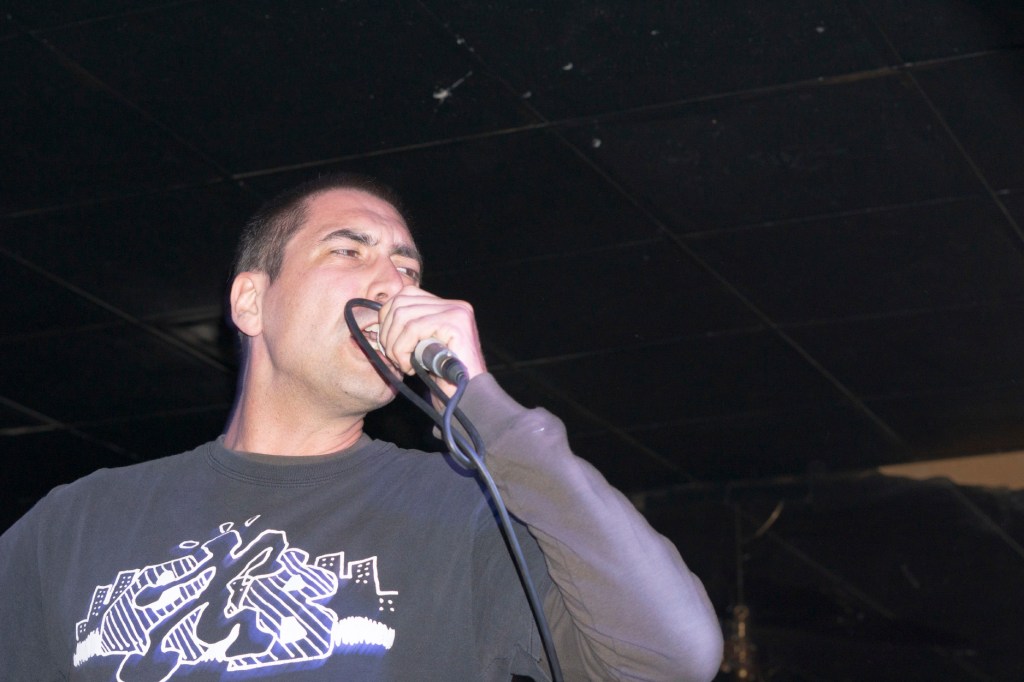
Photo: Jhonny Russell

Aww. I’m sorry he ribs you so hard. I work as a book editor for a day job, and no matter how hard you try and how much you look at something, sometimes you can miss stuff. 

JW: Yeah, that’s  so true. But “destory” is also kind of cool [laughs]. It’s like, what is the story? 

Maybe you can write it off as artistic license! Rappers alter words or how they phrase things to fit stuff better.

JW: [Laughs]. Yeah. Its art!

I love how at the beginning of the song ‘Cream’ you left in the talking—‘Are you recording?’—at the start.

JW: That was accidentally left in [laughs]. There’s another bit in one of the songs, maybe ’On The Take’ where you hear Ryan go, ‘Fuck Felipe!’ and then he starts playing it again. I’m like, ‘That’s cool. Let’s just leave that in.’ The only problem with that now is, because I’ve listened to that version so many times, when we’re playing at jams, I wait for the cue to hear Ryan go, ‘Fuck Felipe’ and play a part again. And I get really tripped up on it and I don’t know when to jump in. It’s funny!

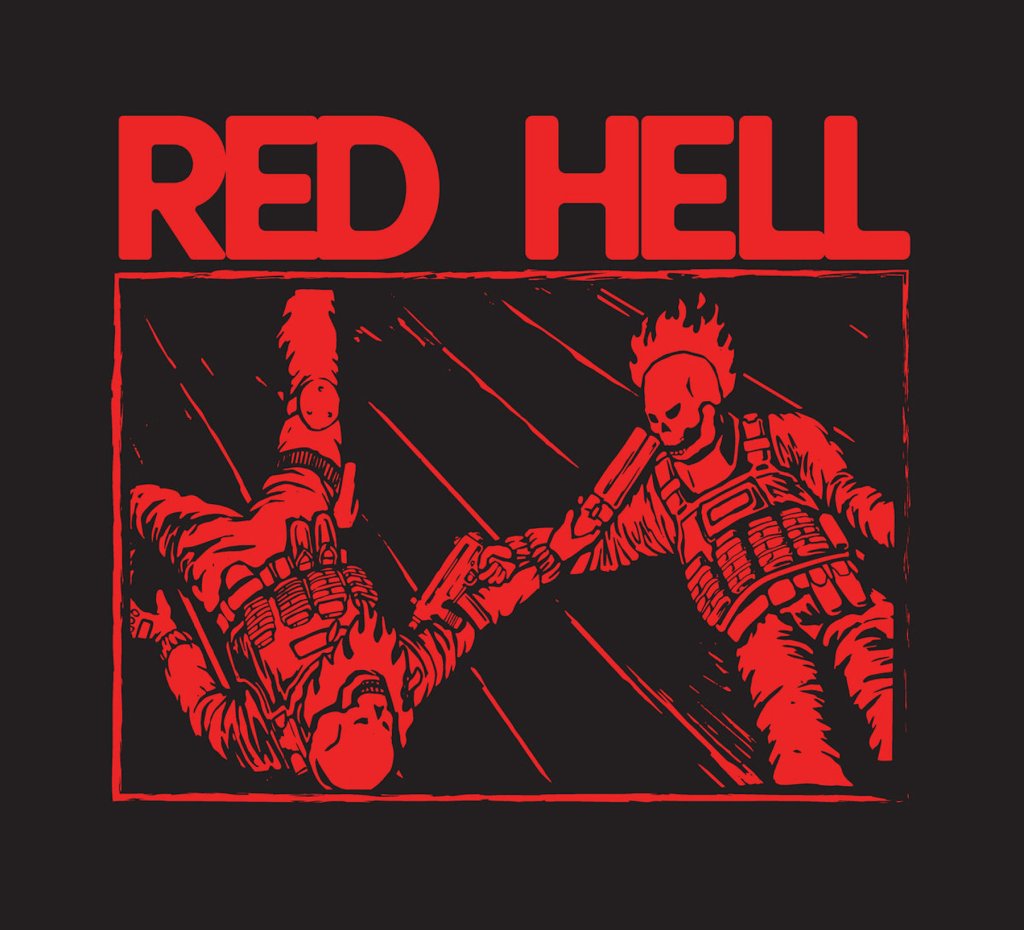
It is! You guys recently printed up some “Pick your Queen” shirts in homage to Poison Idea’s Pick Your King album.

JW: Yes. I love that Poison idea album! 

Me too!

JW: I was thinking; what would be the Australian version of that? And I thought of Sophie Monk [laughs] but I just didn’t know what to put on the shirt. But I wanted to explore more classics to pay more homage to Poison idea. And I’m like, okay, let’s go with Dolly Parton, because she is like absolutely loved by everybody. And then there’s Mother Teresa, which is a saint, but also because of the dichotomy of some people don’t like her, some people do. I thought, that’s such a good plan. And I ran it by everyone and they said, ‘Cool. Just run it!’ 

That’s rad. I did an interview with Jerry A from Poison Idea once, and the internet connection started dropping out—the video call kept freezing. I yelled for my husband, Jhonny, to come help me fix things because he’s really good with technical stuff. I was panicking.

It gets so frustrating when you’re trying to have a chat and it does that, and you lose the flow of the conversation. When we got it working again, he told me that he hoped everything was alright because he’d seen and heard all my freaking out! It wasn’t frozen on his end like it was on mine. I felt so embarrassed [laughter]. He’s the coolest, though, and was so nice to me.

JW: [Laughs]. I felt that before too. It was when I was just 17. I was so excited to see Madball—it was the day before my birthday, and it was an 18+ club, and the club wouldn’t let me in. I remember just standing there, really upset; all my friends had already gone in.

Then I saw Freddie Madball hanging out the front, and I was in such awe and was like, ‘Oh, I LOVE Madball!’ He was like, ‘Come see the show.’ I said, ‘I can’t—my birthday’s tomorrow.’ And he was like, ‘Fuck that shit, come here,’ and just dragged me in through security. He didn’t give a shit about security and pretty much threw me in the middle of the crowd, saying, ‘Stay here so you don’t get hurt.’ It was the coolest shit ever. I must have looked like such a weirdo panicking about trying to get into a show [laughs]. 

I snuck into so many shows underage. I’d see the all ages one in the afternoon and then sneak into the 18+ at night. Being so obsessed with music getting to see my fav bands twice in one day was so amazing!

JW: I saw Against play and that was one of the more pivotal hardcore bands I’ve seen and gone, ‘Oh my God, there is so many 18+ year olds with no shirts on beating the shit out of each other. What the hell have I just like got myself into?!’

I used to see Against play all the time. I met Greg Against before he started playing in bands, like back in the 90s. I went to high school with his brother and Greg was a couple of years above us. He’d also come into me and my brother’s skateboard shop after we left school. People used to tell me about how hard and tough he was but I always saw him as the NOFX and Bad Religion loving dude from the skatepark.

JW: [Laughs]. That’s so funny. I have the Against eagle tattooed on my back. I got it with Kevin Rudd’s money so I was about 17. And I remember I thought it was the hardest, like in school I was like, ‘I’ve got a tattoo and you guys don’t.’ I got one because I was so down for hardcore. I thought I was cool [laughs].

All that North Coast Hardcore stuff had a big impact on people, it’s still felt now. So many people went out and started bands because of that scene.

JW: Big time. Danny from Demolition is good friends with Greg now and he sent a photo and he’s like, ‘I need to go hang out with Josh because I just want to go see his tattoo.’ It made me smile, it made me kind of starstruck [laughs].

On the subject of tattoos, I saw that you have a tawny frogmouth tattoo. 

JW: Yes, I do. 

What’s its significance? 

JW: It’s one of my mum’s favourite birds, and she hates tattoos. It was like a weird love letter to my mum but also getting something she hates. Danny did a really good job on it. It’s one of my most favourite tattoos.
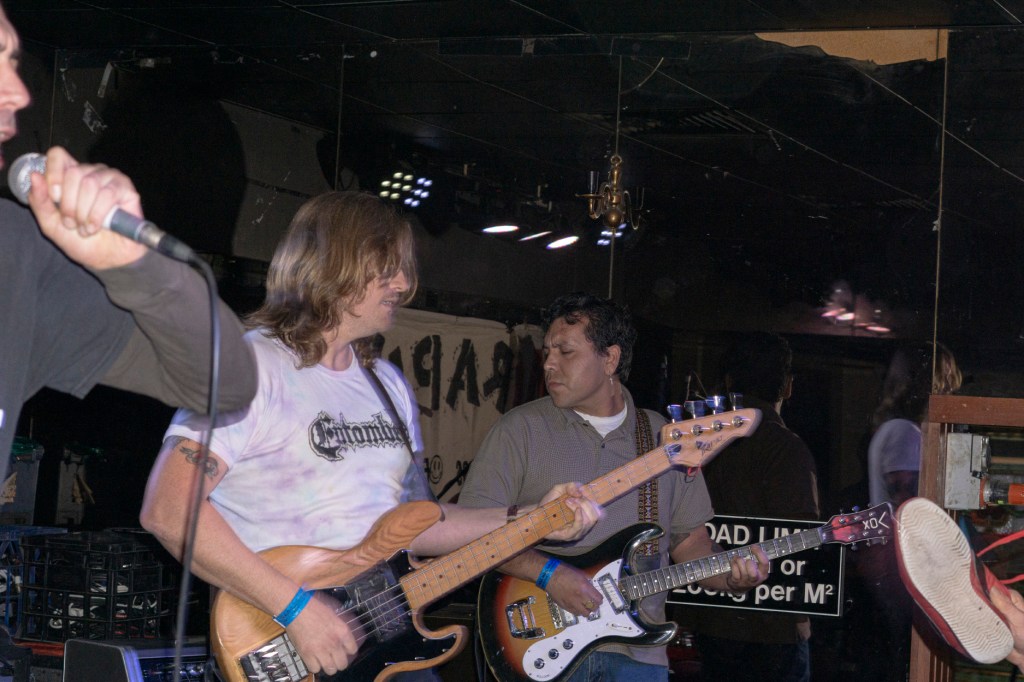
Photo: Jhonny Russell

That’s so lovely!

JW: It is. 

The one song we didn’t talk about that’s on the album is ‘After Formal Party’; is it based on a real event?

JW: Yes. So, 2007 was our after formal party. And it was just like a normal year 12 party, 17-year-olds were drinking and whatever. Then a situation happened where we got gate crashed by 20 to 25 people. Pretty much everyone got beat up and injured. Because it was in the middle of the bush, it took quite a while to get police out there. When police arrived, it was only two of them and one police car and they got set upon. One of the officers got his skull smashed in. And the other one, I had to hide behind a shed with his pistol drawn. He didn’t know what to do because he had a bunch of 16 to 18-year-olds trying to kill the police officer. It was a really, really hectic time. It made the news. I think the sergeant ended up having brain damage from the bottling. It was something that was quite traumatic. 

Me being 16 at the time, it was really silly when I think about it. I got suspended from school for it… We got interviewed by Channel 7 out the front of the place and were asked what happened. I was still drunk, and I said to my friend, who was driving out in his pink Excel, ‘I’m going to try and drop as many Iron Maiden songs in this interview as I can.’

It was like, ‘I didn’t know what was happening—I had Fear of the Dark.’ My friend would have his fingers up in the background, counting the song titles I dropped.

[Laughter]

We thought it was the funniest thing ever—until Mum saw it. Then it was over, because as soon as I went back to school, I had to go to the principal’s office. I’d brought the school into ill repute or whatever, and I got a three-day suspension for it.

It was a funny situation and also not funny. At the party, stuff got stolen—it was hectic. They ended up finding the guy who hit the police officer with a bottle; he was sent to jail.

Wow!

JW: It ended up being a big thing… having to see all your classmates that you’re meant to be celebrating with, a lot of them sustaining quite heavy injuries—bleeding out, everyone completely beat up. It was quite a situation.
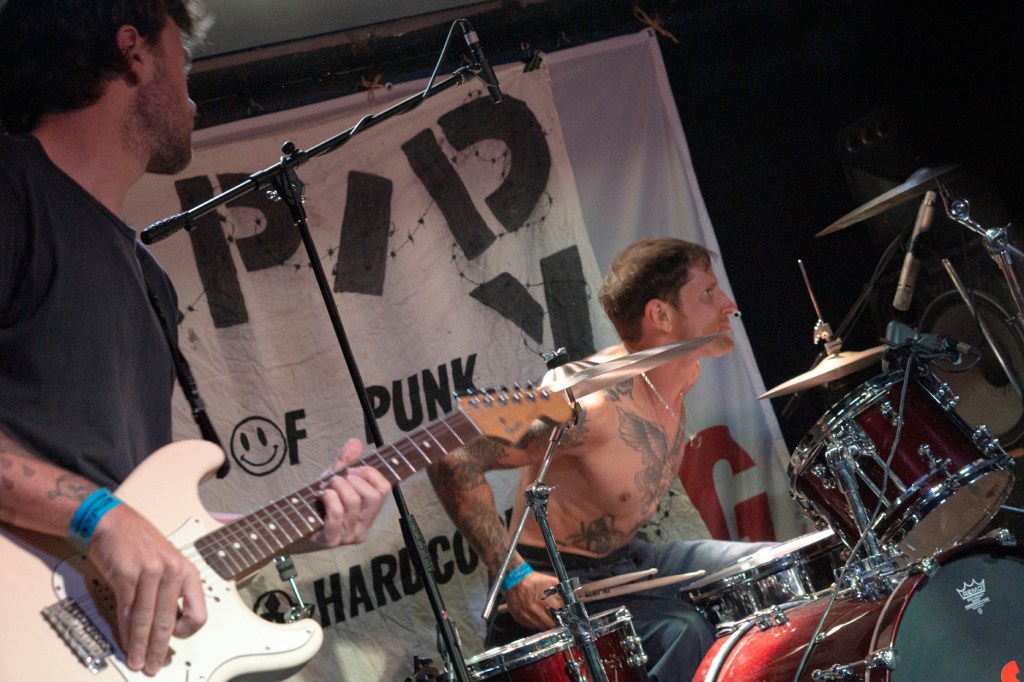
Photo: Jhonny Russell

Is that the most hectic situations you’ve been in? 

JW: One of the most hectic is when I was 17, I had a car accident where I’ve accidentally hit a kid with my car. He was playing chicken with the cars at the lights… he missed one. He went straight into my car and actually went through the windshield. His body got flipped up onto the roof, and his skin was stuck to the glass. When I braked, he got flung off the car. I was doused in blood. I didn’t know if it was mine, there were cuts all over me. I saw the poor kid and he wasn’t moving. I didn’t know what to do because I was in so much shock. 

Then the ambulance came and looked after him. He broke both his femurs and had his skin ripped off his face. It was like showing his skull!  What made it even worse was when my mum arrived at the scene, she just screamed and said, ‘You’ve just killed someone. What the hell have you done?’ Everyone that saw the incident was like, ‘No, no, no. He’s an okay, he’s all right. But that caused the police to escort me to the hospital and I figured I’d take all the tests and to go to the station. I thought they’d think I did it on purpose. The way my mum screamed made them think my character was suss. But I was like, ‘No, this was an accident and its horrible.’

That is so full on! I’m so sorry that happened to you.

JW: Yeah, it was weird because I remember going back to the hospital and still being covered in blood and I was wearing a Lionheartxxx straight edge shirt. The coppers came up to me and were like, ‘I don’t even know why we have to test you? You’re wearing a straight edge shirt.’ He knew what it was.

I was so very happy that the kid was alive. I’ve attempted to get in contact, but I have not been able to find any leads to be able to contact him to see how he’s going. 

A lot of creatives I talk to, tell me they learn a lot about themselves trough the art they make. Is there something you’ve learnt about yourself making stuff?

JW: Believing in myself—that I do have the tools and that I feel skilled enough to excel at what I really want to do—doing a good hardcore band that I felt could stand up to a lot of the great hardcore bands I really enjoyed. I’m still learning in the process and trying to do better, to be where I want to be.

Doing hardcore, especially being in a band, gave me one of the most important things: finding my identity, which I feel a lot of people struggle with. I feel very lucky to have been given the opportunity and to have been able to work out who I actually am and who I want to be. It’s one of the best things I’ve learned from being creative and making music.

That’s so cool! I’m stoked for you. What’s one of the most important things to you? 

JW: Having a solid family unit—I’ve got my partner, and just having a safe home that I can be around—has put me in a position where I feel the safest and most like myself. I feel like I’ve achieved what I wanted to achieve in my life. There could be other things I do as I get older, but where I’m at now, I’m quite happy. It’s where my life has gone, and I’m really ready to see the future as well, and what I can do.

Hearing that makes me so happy dude. Let me tell ya, your record is one of the best hardcore albums I’ve heard from Australia in a long, long time. It could be one of the best ever. I’ve been away from the immediate community for a little because I got so over it, and for me your album has made me believe in hardcore again. I want a hardcore bands that are fun and less serious. 

JW: That’s what I felt was missing from hardcore at the time. Like you said, it got really serious—almost like a job. Very uniform. You had to dress a certain way to be considered a certain type of band.

I smile a lot on stage because it’s one of my most favourite things to do ever: play a show. I get a lot of people telling me, like, ‘For someone that seems like they have such a crazy, hectic band, you’re just smiling the whole time.’ And I’m like… because for me, it’s one of the most enjoyable things I can do. My smiling, gets people to relax a lot more as well—they feel like they can be themselves because I’m trying to embody that on stage myself. 

I definitely felt that when I’ve seen you play. And I definitely appreciated that. 

JW: Oh, thank you so much, it’s really nice to hear.

Also, let’s talk about the album cover. That disco ball! 
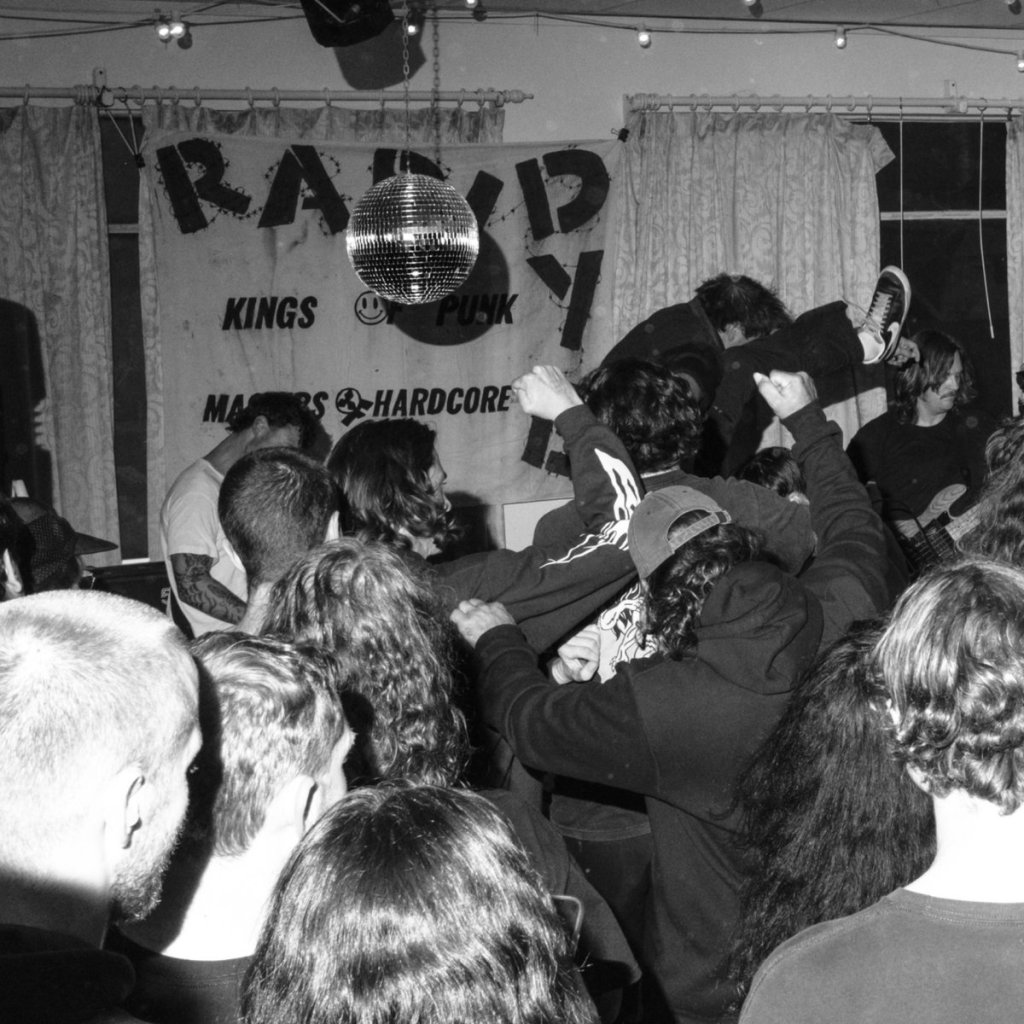
Photo: Oisin

JW: I love the disco ball too. As soon as we saw that photo, we were like, that has to be the cover. Especially Garry—but Ryan, Felipe, and Owen too. When we used to hang out together, all we’d listen to was disco. We wouldn’t even drink alcohol; we’d just listen to disco [laughs].

We love it. Garry’s already got a disco set planned out for the listening party we’ve got on Friday. Disco is such a happy vibe. It gets everyone in the mood to dance. It’s not too serious; it just really taps into our playful natures as friends.

We used to go down to Melbourne and they’d be playing, like, The Victims or something, and then you’d see Garry take over the aux and start playing straight-up disco. And people would be like, ‘What the hell is that? And we’re like, ‘We’re here to party! We want to have fun. This is our fun time—we can listen to punk at the show.’

Amazing! We love disco too. We’ve got a playlist of songs people might think are cheesy, but we love them. If we’re coming home late from a show, we’ll throw it on and sing along to stay awake while driving.

JW: [Laughs] that’s cool! I didn’t grow up in that era, but I remember thinking all the time, like, man, I would’ve had so much fun if that was around. Like, I probably wouldn’t have been into punk, but I reckon I fully would’ve been just as happy doing disco.

I hope you make a disco record one day! Totally here for it. Is there anything, right now, that’s super inspiring you? Or anything that you’re super getting into or just really enjoying? 

JW: I go through different addictions — I get into different things all the time. I’ve always been addicted to playing card games. That includes poker, but lately I’ve been playing Magic: The Gathering. I’ve also been playing One Piece and doing tournaments. I get really, really involved in that kind of stuff.

I’m at the point now where — I don’t know if you want to see it — but this is my desk [moves camera around the room]: I’ve got trading cards everywhere, making decks, building things. It’s kind of like my version of problem-solving and getting to talk with friends. I’ve met so many new people through it as well.

It’s a bit bad, because when we were doing the Rapid Dye LP, the band were like, ‘Oh, do you want to jam on a track?’ and I’m like, ‘No, I can’t, I’ve got a tournament, I’ve gotta go, dude.’ There’s a part of me that’s like, Josh, you need to focus on music instead.[Laughs].

I’m still finding the right balance between the two. But honestly, playing card games makes me happy — it’s more about being with people, interacting, and doing something social.

Nice! Anything else to share with us?

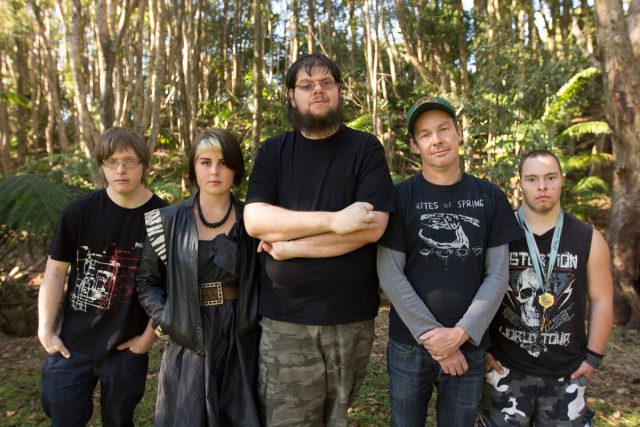
JW: Well — when we first started, I wasn’t even friends with Felipe or Owen. Horrible way to first meet Felipe, by the way. Ryan was telling me, ‘I’ve got my friend Felipe who wants to join Rapid Dye.’ I was like, ‘Okay, cool, let’s just hang out, see how it goes.’ So he came over, and I said, ‘Oh, do you want to have a pinger?’ So we had a pinger each, and we’re just listening to hardcore.

Then our friend Jack came over. He was standing at the door and goes, ‘Oh, my dealer gave me this — he gave me all this DMT.’ Now, I had never met Felipe in my entire life. I didn’t know if he was straight edge. I didn’t know what kind of person he was. I don’t know if he was trying to keep up with me, or maybe I was trying to keep up with him — I had no idea. We were just like, sure, why not?

Looking back, I’m like, did he think I was testing him? Like, ‘Let’s see if this guy’s legit or not?’ I didn’t even think about it at the time. Two hours later, we’re both lying on our backs, on the bed, after smoking DMT and having some weird out-of-body experience, going, ‘This is so weird.’ [laughs]. And that’s how we met. We became really good mates, and it’s just been absolutely incredible.
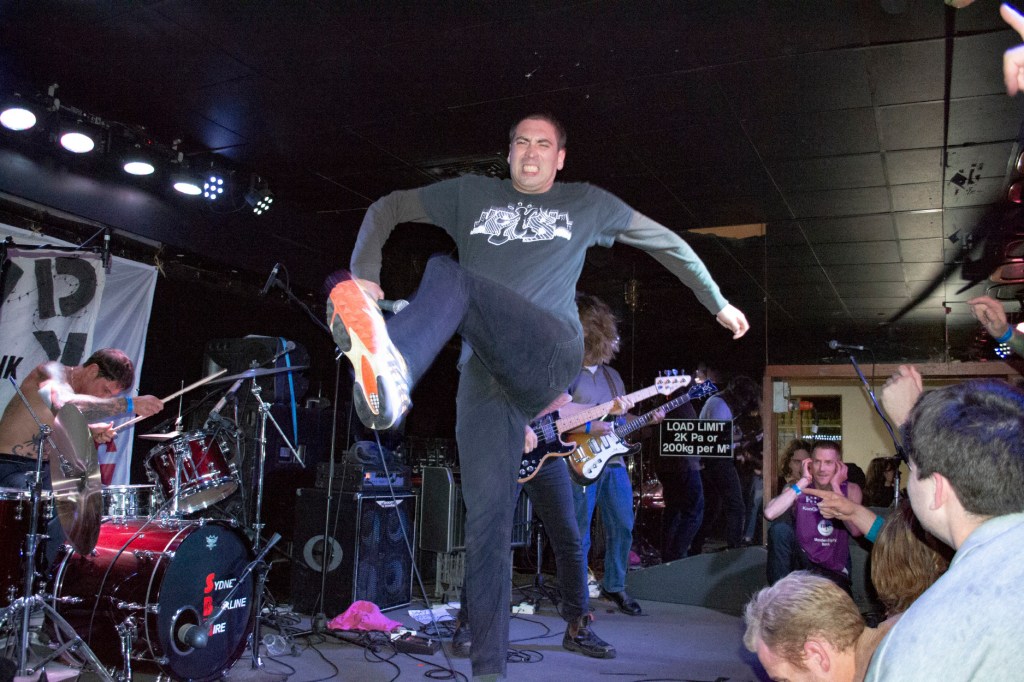
Photo: Jhonny Russell

The funniest story, though, with Felipe was when we were playing the Glue Tour in Melbourne. He was like, ‘Oh, I’ve got to go to a talk with Lauren.’ It was due, I think, a few days before the tour finished. He said, ‘I don’t really know what to do,’ and I was just being soft and said, ‘Well, you should probably listen to your girlfriend.’ He whacked me and goes, ‘No! I want to keep playing the shows — you’re meant to convince me to keep playing!’ I was like, ‘Oh, sorry, that wasn’t really good for your relationship.’

But the one who really started it all was Ryan. Ryan was the guy who actually hit me up to do a band. He said, ‘Josh, I want to do a band with you so, so bad. I just know whatever you’re going to end up doing, I want to be in it.’

He told me, ‘I made this band for you — for you to be able to do what you want and be who you want in it.’ And I think that’s one of the most appreciated things anyone’s ever done for me. It really set me up to want to succeed. He could just see something in me, and he pushed me so hard to be into it. That’s one of the biggest things that’s ever happened to me, and I’m really happy about it.

We’re all here to support each other. One of the best things Drew ever said to me when I used to feel down and go, ‘Oh, no one gets me.’ And he said, ‘The reason we’re all friends is because we all like the same fucking shit music, and we like the same art, and we like the same stuff. That’s why we’re all together — because we’re meant to be. We have this bond. I really hope everyone finds their people — and just gets to be happy.

Check out Rapid Dye’s self-titled LP out via Cool Death Records & 11PM Records HERE. Follow: @sexyromance.sydney
Conversations with Punx – romansy’s Alessandro Coco: ‘We are full of potentiality’

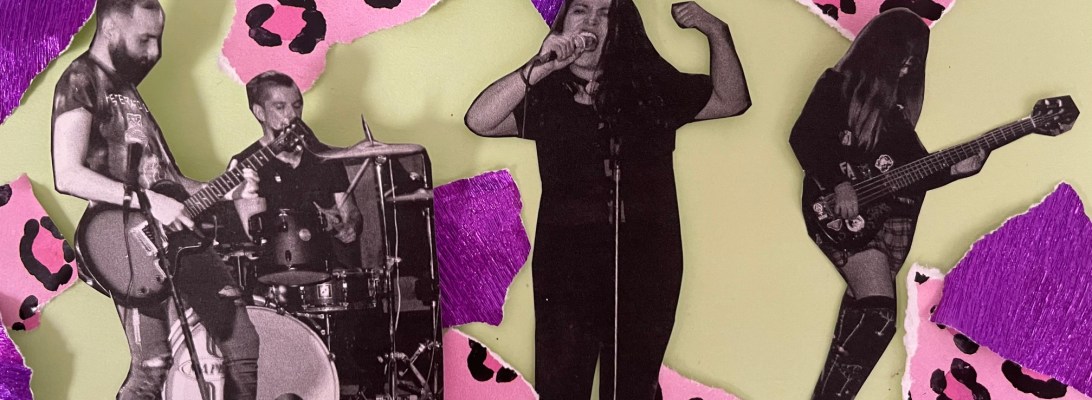
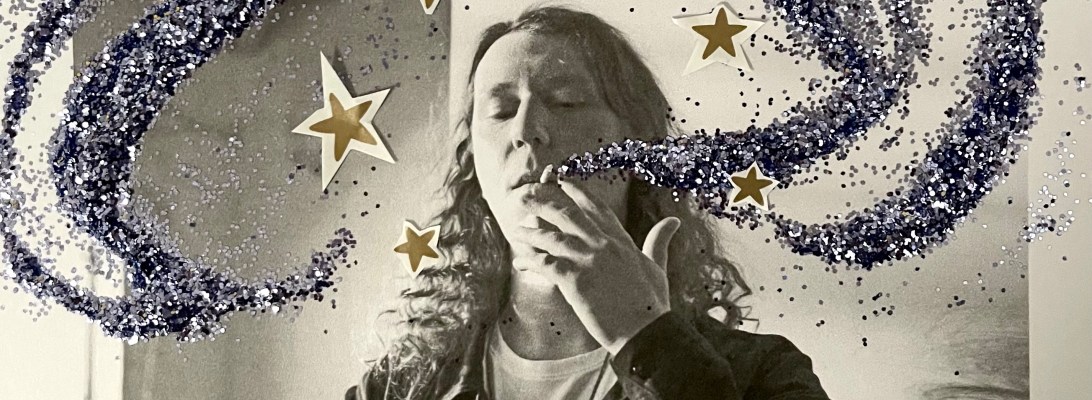
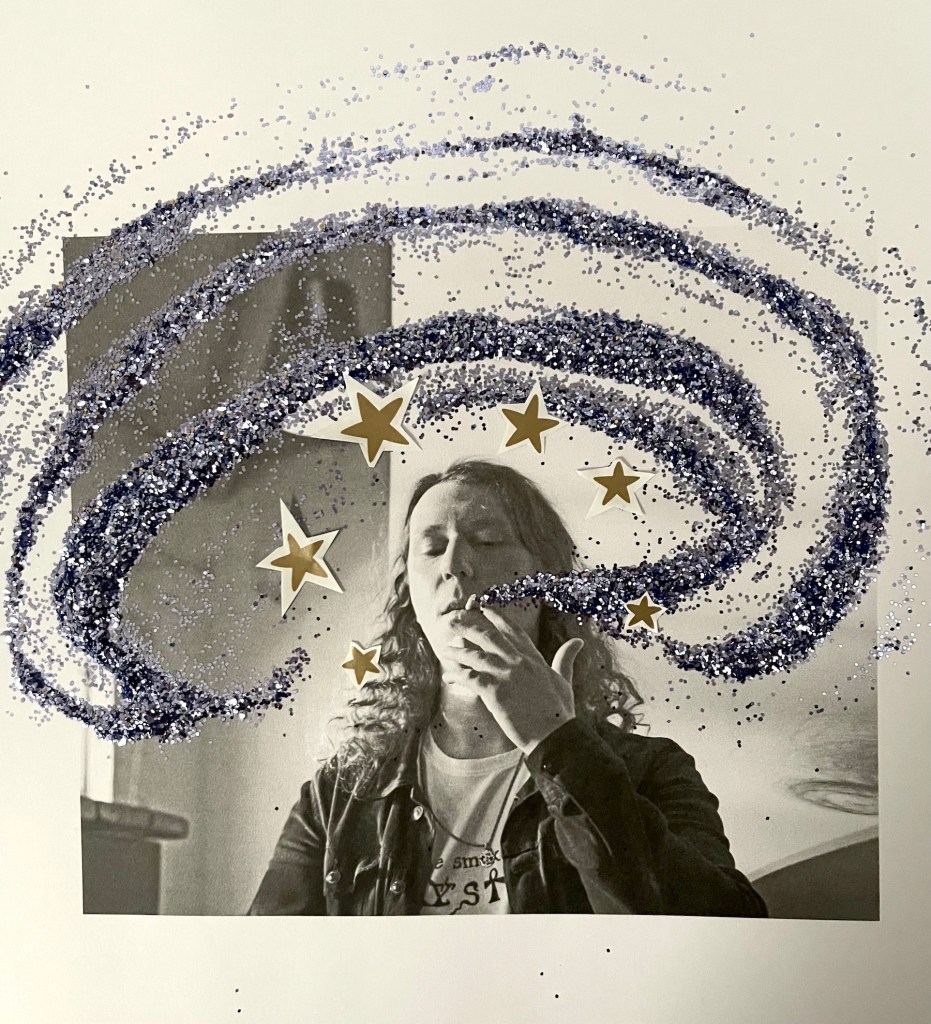
Original photo: courtesy of Coco / Handmade collage by B.

When you walk into Lulu’s, Naarm’s (Melbourne) beloved underground record shop, one of the friendly faces behind the counter is co-founder Alessandro Coco. Along with friends, he helped establish label Cool Death Records too, that’s gifted the world record collection essentials from bands like Low Life, Tyrannamen, Oily Boys, and Orion. A stalwart of Australia’s hardcore punk community, Coco has played in bands Leather Lickers and Erupt, among others. These days, he fronts Romansy, a band channeling the hectic, spirited energy of Zouo, The Clay, Necromantia, Septic Death, and GISM.

A few years back, I (Bianca) was chatting with Al Montfort (Straightjacket Nation, Sleeper & Snake, UV Race, Terry…) about my punk and hardcore book, Conversations with Punx: A Spiritual Dialogue. Al suggested I reach out to Coco for a conversation—so I did.

What followed was an hours-long discussion that covered self-enlightenment, spirituality, creativity, the DIY ethos, and Coco’s introduction to it all. We talked about the importance of really supporting one another both creatively and personally, navigating struggle and insecurity, and embracing who you are and your own worth. We yarn about the scene and its dynamics, as well as idolisation. Coco also spoke about messing up, owning it, and growing from those experiences.

The initial manuscript for my book was over a quarter of a million words. To bring it to a publishable length, I had to cut it in half, which meant not every full conversation made it in. A few days ago, Lulu’s announced they would be closing their High Street shop. Lulu’s has spent nine and a half years of hard work, creating a hub that felt like a second home for many of us in search of great underground music, connection, and community. Reflecting on Lulu’s reminded me of the chat with Coco—and the timeless insights we shared. Which Gimmie now shares with you.

Al informed me that you’re always talking about philosophical, deeper, spiritual kinds of stuff. So I thought I’d reach out for this chat for my book.

COCO: Yeah, I definitely am. I’m surprised that more people don’t talk about it, but I get it. Everyone has those thoughts and ideas, but they tend to keep it personal. Sometimes it’s something people think, or feel but don’t really focus on. They might not dedicate hours in the day, week, month, or year to hone in on it. It’s just there, part of who they are, which is cool as well. Star signs are back in a big way, which is kind of cute, but that’s where it usually stops with a lot of people [laughs].

It’s obviously something that you focus on? 

COCO: For sure. I do my own thing with it. I don’t attend regular church meetings or group gatherings. It’s something I focus on in my own time, putting energy into it. You can find powerful, positive, and profound results from doing that. It suits me.

Once you’re aware of that kind of power and presence, you can’t ignore it. It’s right in front of you, you just have to meet it halfway.

When did you first became aware of it? 

COCO: I couldn’t pinpoint it exactly. I grew up attending Catholic schools, and that was fine, but it always felt strange to me. You’re presenting something profound and serious—something meant for adults—to children who can’t fully grasp it. Kids aren’t taught philosophy in primary school, and rarely in high school, yet religion is essentially a philosophy. It’s no surprise they don’t understand it.

When you grow up with that, you either follow along and risk developing a warped perspective, misunderstanding it, and running in the wrong direction with it, or you reject it altogether. That rejection is understandable but often comes with throwing out the good with the bad. There are powerful, useful aspects to it, but they can get overshadowed by the parts that seem cruel, wicked, or nonsensical. This can lead people to turn their backs on it.

As for me, I don’t know exactly how I came back to it. I’ve always been fairly optimistic and positive when I can be. Maybe it started with playing music and spending time with friends. A lot of us got into heavy metal around the same time, and that genre is steeped in spiritual symbolism. You start noticing it, paying attention, and digging deeper into what those symbols mean.

Symbols are fascinating. They condense grand ideas into something small and simple, like a logo anyone could draw. Exploring those symbols led me to rediscover some ideas and reconnect with them. As an adult, with more maturity and life experience, you can approach those concepts differently. You start deciding what they mean for yourself. Once you’re on that path, it’s easy to keep going and noticing it everywhere.

Absolutely. What is spirituality to you?

COCO:  At its core, I would say it’s our way of experiencing our environment and identifying ourselves within it. What does that mean? Well, it’s philosophy. That might be an oversimplification, but I think it holds true.

For example, I might have a buddy who doesn’t consider himself spiritual. Yet, if he goes hiking or visits the beach, he tells me how connected and wonderful he feels. He mentions how the everyday things that seem so important drift away, leaving him with a new sense of connectedness and a different way of experiencing and being part of his environment.

To me, that is spirituality. He might not identify as a spiritual person, but that experience—feeling in tune with the world—is exactly what spirituality is about.

Totally. I get that from nature, I get that from listening to music, or creating something too.

COCO: It’s a weird kind of connectedness. It’s about relating to and experiencing life, but not in a social or political way, or in all the other ways we tend to focus on. It’s just you and the world—whatever that is. That’s often what it comes down to. It leads to other things, sure, but at its core, it’s just you in that moment.

Take music, for example. Black Sabbath is my favourite band. There are certain moments—like after a few beers, when the ‘Wheels of Confusion’ riff in the middle hits—that completely takes me away. That connection, that rush of vital energy and passion, what it does to your body and mind—it’s ecstatic. It’s an experience that feels almost otherworldly.

And that happens with all kinds of music. It’s that feeling, that sense of being taken out of yourself and into something bigger. Is that spiritual? I don’t know. Some people might not call it that. Maybe if you’re just bopping along to a pop tune, it doesn’t feel the same. But everyone has their own way of looking at these things.

For me, it’s huge. It’s a big part of how I see spirituality—not putting it all into neat little boxes, but recognising it in moments like these. It’s also about being present in mind and body, living fully in the moment. That idea comes up a lot in Eastern philosophy and spirituality: being present, not caught in thoughts, just experiencing and being.

You can get that from listening to music, from live performances, even from watching sports. Everything else drifts away, and it’s just you and the experience—the present moment. Nothing else exists in your head or your being at that time. It’s pure, and it’s wonderful.

Absolutely. Are there any other practices or rituals you have? 

COCO: I don’t meditate in the traditional sense—not the sitting down with eyes closed, yoga-style meditation. Instead, I try to get in touch with things in my own way. I’ll light incense, light candles, or pull out the tarot deck. Sometimes I pray, just to connect with what feels like it’s always there, everywhere, all the time. It’s about getting in tune with it.

Whether it’s positive thinking, willing something into existence, or something else entirely, it’s a complicated idea to explain. I don’t follow a strict practice, but I definitely have my own ways of engaging with the universe—and sometimes even the unseen universe.

Have you looked into any specific philosophies? 

COCO: I mostly find myself drawn to Western esoteric traditions, whether that’s Kabbalah, Christian mysticism, or other forms of Western magic. Many of these traditions also look to the East for inspiration. While I don’t spend as much time exploring Eastern ideas or philosophies, I do visit them occasionally. I think there’s truth in all of it, and something valuable in every tradition for everyone.

I can’t say any one path is greater or better than another—it depends on how you approach and understand it. For me, Kabbalah feels especially useful and powerful. I probably came to Kabbalah through reading [Aleister] Crowley. It resonates with the way my mind works and how I think about things. Similarly, Christian mysticism makes sense to me, likely because of my Catholic school upbringing. I’m already familiar with the imagery, symbols, language, and framework, so it feels accessible.

That familiarity allows me to focus on those traditions without the overwhelming task of learning something entirely new—like the canon of all Hindu gods, for example. That said, I do enjoy exploring other traditions when the opportunity arises. You can use whatever word you want for it, like, religion, philosophy, magic, spirituality, they all lead to the same place. Obviously, there’s different ways of practicing it or experiencing it, but hey’re all part of the same tree. 

Do you think your interest in these things stems from trying to understand life or yourself better?

COCO: Yeah—it’s about seeking truth. It’s about seeking experience, seeking understanding. Sometimes, it’s about finding another way—a useful way—of looking at the world, another lens that can open your mind.

I used to smoke a lot of pot. I don’t anymore, but at that time, I think anyone who first forms a relationship with that—or with psychedelics—definitely experiences a kind of opening of the mind. It starts you looking at things differently and even experiencing things outside the box. Once that door opens, things can just keep opening.

It’s not like psychedelics are the only gateway to that kind of exploration, but I think, for a lot of people, they are one of them.

Where did you grow up? 

COCO: When I was a kid, I lived in the western suburbs of Melbourne. During high school, I moved out to the country in Victoria and stayed there for 10 years. A few years ago, I moved back to Melbourne because everything I do and participate in is based here. There’s not much of that up in Ballarat, where I lived, so had to come back to Melbourne to be part of things the way I wanted to.

How did you first get into music?

COCO: When I was younger, I got into The Offspring, Nirvana—cool stuff like that. Some buddies in high school were into similar punky music, and I ended up getting a Punk-O-Rama compilation. Not long after, I got into the whole Australian metalcore scene, which quickly led me to Australian hardcore and melodic hardcore—the stuff that was happening about 15 or 20 years ago. From there, I dove into more classic punk and eventually got into the underground scene.

Both my parents are big fans of music, but they didn’t listen to punk or anything like that. Over time, though, I’ve come around to their tastes. My dad schooled me on a lot of classic and important blues, and my mum actually got into punk after I did. She loves it now, along with hip hop—she just vibes with that kind of stuff.

So, yeah, there was music in the house, but I didn’t really find my own music until punk came along. Something about it just made sense—the attitude, the volume, the aggression, the appearance. It’s the kind of thing that captures a young mind full of energy but unsure where to direct it. There’s also that rebellion, which is so easy to identify with, especially if you’ve never really had a way to express it before. You see it, and you think, Oh, yeah. That’s it.

What was your first introduction to DIY? 

COCO: When I was getting into metalcore—it called itself hardcore at the time—I started to realise that these bands were actually touring and playing at venues I could go to. For all the flaws in that scene, they did a lot of all-ages shows, which was great for younger people to access. That made it feel like something real and achievable.

It wasn’t happening in my own backyard, not where I was from, but it was close enough to get to. Tickets were like 15, 20, maybe 30 bucks, and you could actually go and experience it. At first, I thought of it as a concert, but then I realised it wasn’t this big, untouchable event—it was just a gig. And at those gigs, everyone had their band T-shirts, their merch, and it all felt alive. You’d see one gig, and then there’d be another, and you’d just go further down the rabbit hole.

I started to see that this scene was happening in the present—it existed right here and now. In Melbourne, we were lucky because there was so much going on. One thing led to another, and you’d discover these whole communities of people doing it themselves.

Missing Link Records in Melbourne was super important for me. They were really supportive of younger people like me. I’d go in, buy a CD, ask questions, and they’d help order stuff in or give recommendations. Even at the gigs, there’d be distro tables with records and CDs for sale. You’d chat with someone there, and they’d put you onto new bands or scenes.

I remember this one guy who ran a label. Looking back, it wasn’t the coolest label, but at the time, he was so enthusiastic. I laughed when he handed me something and said, ‘Dude, you’ll love this.’ I was grabbing Jaws’ new thing on Common Bond Records, and he’s like, ‘Oh man, if you like that, check out Government Warning.’

I bought the CD No Moderation, and that just flipped everything for me. I was like, man, this is unreal. And yeah, it’s just about having your eyes opened to the fact that it’s all around you—you just have to notice it, or be introduced to it, and then experience it and break into it yourself.

The local scene came from local shows. The DIY thing? You just kind of follow the rabbit hole, chat to different people, explore different things, and then you realise it’s all there.

And now you get to do that—recommend new stuff to people who come into Lulu’s! I read in Billiam from Disco Junk’s zine Magnetic Visions that he mentioned how, when he went into your store, Lulu’s, it was the first place where he actually felt like he kind of belonged. He said he didn’t feel like he was inconveniencing anyone, and he could actually have a chat with people. I could relate to that. Growing up, many people behind the counter at my local record stores were really pretentious and condescending but then there were a couple of cool dudes that would take the time to talk to me and suggest stuff, and that made all the difference. It’s like, not everyone can know everything.

COCO: Yeah. That’s my favourite part of Lulu’s: being able to chat with people, connect with them on a personal or musical level, share things we think are cool, and point people in a direction—like, ‘Oh, you like this? Maybe you’ll like this. Check this out! Have you heard of this?’ Then encourage them to do what they’re doing. 

Billy was young doing his own music, and I was like, whatever you do, buddy, bring in your tape, bring in whatever you make, to encourage and support that. I was lucky enough, when I was younger, to have people be really friendly and supportive of me. I always thought it was important to pay that back. I was shown kindness and support, and I thought, ‘Yeah, I absolutely want to do that for anyone else I get the opportunity to help down the line.’ Thankfully, I’ve been lucky enough to be in a position where I can do that. DIY is a hell of a thing.You get to learn a lot of lessons your own way. 

If you want to do a band—do it! Nothing’s gonna stop you, no one’s gonna stop you. Make your tape; the first tapes we did we dubbed by hand. I spray-painted the covers. You just have to give it a shot. Put your effort into it: use your brain, your heart, your passion— it can pay off for you. 

Early on, that was super valuable to learn; it’s influenced the way the following years of my life have gone. If I wanna do something, chances are I can do it. I’ll always encourage others to be themselves and do their thing. It’s easy not to do something. When you do, though, the satisfaction, the joy of people digging it too, appreciating it, and caring about it, is huge!

Encouraging people to be themselves is something that’s really important. More people need to know that it’s okay to be yourself—to ask: What do you like? What don’t you like? What would you enjoy without the influence of others?—and to know that they are enough already. A lot of people seem to think they need fixing but if you look around at the world, what we get bombarded with, messages we’re sent, and systems that are in place, it’s no wonder you feel how you do.

I know from talking to a lot of creatives over the years (and through my own experiences) that many of us tend to be really insecure. We compare themselves to others, which fuels feelings of self-doubt, not being good enough, low self-worth, fears of not having what someone else has, and can lead to anxiety. Over time, that can start to really get you down.

COCO: Totally. A lot of people would be lying if they said they didn’t compare themselves to others. And we do—we look to friends, family, community, media. We idolise certain people from the past or present, or whatever it is. That’s all well and good; it can also lead you on a good path. A lot of those influences can be good and healthy. I don’t think there’s anything wrong with that.

But at the end of the day, the lesson to be learned is to be yourself, be proud of that, and do your thing. Do it to the best of your ability—do things your way. It can work, and it can be really satisfying. It’s so nice to break free of expectations you don’t believe in or value. Then you can just go on and do your own thing.

Even with all the spiritual stuff—whatever it is—it doesn’t mean you have to be a goody two-shoes, or a badass, or anything else. Break down all the bullshit that doesn’t matter to you. Use your head, listen to your heart, and let them guide you. Find your own way in the world. Being yourself, doing your thing, and keeping it real—that’s the only way to go.

We’ve all experienced the opposite of that, you know? I think probably everyone who’s made it through their teens knows what it’s like to not be like everyone else—not be as good at something, not be as good-looking, not have the cool clothes, or whatever it is you’re valuing. Not be good at sports, or whatever—blah, blah, blah.

Even me—I’m not the best musician, I know. I’m not the best artist, or whatever. But I know what I like, and I know how to do what I like. Doing that has provided me with so much satisfaction. And it’s been great too, because certain things I’ve gone on to do have had a positive flow-on effect. If I hadn’t done them, maybe someone else wouldn’t have heard something or experienced something at all.

That snowball effect, that ripple effect—it’s insane how the things anyone does can touch another person for the better. That’s why you have to be yourself, because if you don’t do it, no one else will. The world would be a fucking dull, miserable place without people going out and being themselves, almost no matter what the cost.

It’s given us some of the best things we’ll ever know—some of the best art, ideas, thoughts, and all those things we care about. All the cool stuff.

What was your first band? 

COCO: An awful band in high school that I played bass in for a bit [laughs].

When I first started doing my own thing—writing music, doing it with my friends, and making it the way we wanted—it really felt like mine. That was, Kicked In, which we started in Ballarat with Tom, who does Cool Death with me and Lulu’s as well.

That band was around for a little while, but then our guitarist and singer decided they wanted to do other things and didn’t want to continue with it. We made a few cool tapes, though. When we got a new guitarist and singer, we decided to change the name, and that’s what became Gutter Gods.

Gutter Gods ended a few years ago—toward the end of summer 2015–16. We split up, which was a bummer at the time. But you know, it led us all into other things. The work we did with that band really opened up the world for us. It gave us confidence, and we got our kicks with it.

You make friends, you make connections, you build confidence. It made us all really comfortable with starting other bands and putting that same passion from Gutter Gods into new projects.

What do you get from playing music? 

COCO: One of my favourite things—it might sound cheesy—is just jamming. A good jam with your friends is like nothing else. Whether you’re making something up on the spot and it all just flows out of you, or someone’s written a song and you come together to play it for the first couple of times, it’s really like nothing else. I don’t know why or what it is, but it’s the joy of creation—seeing and feeling something while you’re hearing it being made real.

It starts coming out of the amps, the drums kick in, vocals hit the mic, and it all has this vital energy. You’re like, Wow, that started off as nothing. It’s basically making something out of nothing, and when that happens, it’s huge.

Playing shows, though, I have a weird relationship with. Sometimes I don’t love it; other times, it’s brilliant. It’s funny how often you think a set was awful or you played badly, and then people come up to you later saying it was excellent and they loved it. Other times, you think you’ve absolutely killed it, only to find out they couldn’t hear the guitar the whole time. It’s like, I thought we smashed it, but everyone thought it died because of the sound or the crowd, or whatever.

It’s really hard to put my finger on what I love about playing or making music. It’s like I have an impulse to do it—it just has to be done.

I was watching this documentary on the blues recently, and there was this line someone said that really resonated with me. I can’t recall it off the top of my head now, but I sent it to a friend, and they said, Yeah, that’s exactly how I feel too. It was something about the blues being not for anyone else—not for anything—it’s just you. It’s like yelling into the universe: Here I am. Here’s this feeling, this atmosphere, this whatever. It’s just a way of creating something that’s in some way a part of you. And then it becomes this sound, this artwork, this song—this thing that is its own entity.

Have you read The Plague by Camus’? There’s that guy in the apartment trying to write the perfect book. He’s obsessing over writing the perfect book. Throughout the whole story, he’s sort of like a Kramer—just crashing in, chatting, getting in the way, and showing this one line he’s been working on. He keeps trying to perfect that single line and never gets past it.

It’s funny to think about because it’s kind of sweet. When you’re making a song or whatever it is, it’s not like your last will and testament. You can’t sum up everything you are, think, feel, or believe in one song, one lyric, one riff, or one painting. So, when you’re creating, all these things are just little parts of you that get to have a life of their own.

With music especially, it’s often a collaborative thing. Every member of the band gets to put a piece of themselves into that song or sound, and it happens over and over again. It’s interesting when it comes to expressing yourself, though. That’s such a big part of it, but you can be expressing so many different parts of yourself.

Take punk, for example—super aggressive, super in-your-face. But that doesn’t mean you don’t have another outlet where you express something completely different. It’s all part of expression.

Even then, like, you know how when you listen to a great song, you feel that connection? Sometimes you find that with your own work, too, and it’s really satisfying—hearing or performing your own song. It’s a way of speaking, particularly with instruments, without using words. You create this thing—an atmosphere, an energy—that becomes intangible but still real for you and for anyone who comes into contact with it.

Sometimes, even when you look back at stuff you’ve created, the meaning of it can change from when you made it—or even when you play it live. It can keep evolving long after the initial spark of it coming into being.

COCO: I totally agree. Even bands might have a slow version of a song they play live, or some track you like live. Like, oh, what? They did an acoustic version of this concert in 1976, and you check it out—it’s like, whoa, that just carries a totally different feeling, or a more powerful version of the original feeling. The song you write, the words you write—particularly with words—you can look back at things later, and you’re right, that meaning, can evolve.

That’s the other part that is on a spiritual tip. Sometimes when we’re creating things, it feels like it’s not necessarily yours. You really are just channeling something else, and you’re there as a conduit for that. In doing so, you often put your own thing on it because it’s coming out of you, but it’s expressing some idea. Whether that idea is always going to be universal—whether it’s archetypal or whatever—it doesn’t really matter. Whether it’s coming from you or somewhere else, it’s as real as anything else is.

Yeah. When I interviewed Randy from Massappeal for the book, he was telling me that when they had practices, some of those were even better than his favourite live shows they played. He shared with me the moment during a practice where he had a massive spiritual epiphany!

COCO: 100%, I stand by it that, like, the best music I’ve ever played has been in the practice room. Some of those experiences we’ve had in the practice room—where the vibes are right, the atmosphere is there, and everything just happens—whether it’s, you know, a bit floppy or whether it’s tight or whatever. Yeah, easily the best music, the best sound I’ve ever made, has been in this practice room, and I don’t know what that is. I don’t know if it’s just, you know, being able to cultivate that vibe with yourself and the people you’re playing with, or if it’s just like, you know, a probability thing. It’s like, well, you probably practice more than you play live, so the odds are you’ll do the best version of a song, you know, one in a hundred times, and that happens to be in the practice room. I totally, totally vibe with what Randy said.

It’s a pretty special thing, too, that you only share with these people who are in that same frame. A good jam is better than good sex. At the height of it, it’s easily one of the best things I’ve ever experienced—having a good run through a song or a set, or making something up on the spot, just creating without words. That’s another reason why I’d encourage anyone who ever thinks about picking up an instrument, playing music, or starting a band—whatever it is—I’m always like, do it. You have no idea how good it can be until you do it. Anyone who ever mentions it, I encourage them right to the ends of the earth.

Same! At Gimmie we’re definitely cheerleaders for humans creating art!

COCO: I totally get that feeling—you can only describe it so much, but there’s a whole other layer to the experience that you can’t pass on. It’s like, you really have to be in it, feel it, and discover it for yourself. That’s what makes it so special, and it’s hard to convey unless someone’s really there.

It’s amazing how much music can shape people’s experiences, emotions, and connections. It’s its own language that transcends words, and I love helping others explore and articulate their musical thoughts. 

Do you play in a band?

I had bands when I was younger, I’ve made music just for myself my whole life. Jhonny and I have a little project we’re working on just because we love making stuff together, it’s fun. Jhonny has taught me so much about creativity, and helped me overcome self-doubt and to learn to trust myself, and to play and explore. He has some of the coolest and most beautiful ideas about creativity. I feel so lucky to spend every day with him. I wish more people knew just how brilliant he is.

COCO: That’s cool! Yeah, I totally get what you’re saying. Certain songs I write, when I pick up my guitar, a lot of the time, I’ve got songs from years ago. I don’t know if I’m ever going to use them or whatever, but they’re there, and I enjoyed writing them. Just being there with your guitar or your amp or whatever it is—or sitting on the drum kit and playing the fucking D-beat for as long as you can!

I remember having this taxi driver once. I told him I was a drummer, and he’s like, ‘Oh man, that’s really cool. There’s just something so human and so real about drumming.’ I reckon at the end of the world, there’s this guy sitting on a mountain playing 4/4. I’m like, ‘Dude, I totally believe that.’ It’s like the strangest, silliest, most poetic thing. Once he said it, I’m like, ‘That’s it, man.’ [laughs].

There’s just something about music. It’s profound because it doesn’t make sense to other animals. It barely makes sense to us. The reason we have our own connections with it, a lot of it, is in us and inherited—whether it’s culturally or biologically. It can easily get mystical, and it’s really hard to understand why it makes us feel the way it does, but you know it does. That’s why you pursue it, I guess. Sometimes you just have to fucking say, ‘See you later’ to that logic and rationale and whatever, and try to understand things or break things apart. That reductionist thing—it’s like, fuck, it’s real. Go for it. I’m going to be in that realness, because it makes me feel better than almost anything.

Absolutely!

COCO: I’ve had a few epiphany moments. Some have been without so much thought or words. It’s this experience, like I said, with encouraging people to play music or do whatever. It’s often said of any spiritual pursuit—more enlightenment in the East—I can’t give that to you. Like, even if I had enlightenment or I had the meaning of life or I had this understanding, if you ask me the question, the answer I give you isn’t then going to convey that knowledge or that same understanding to you. You have to just experience it for yourself.

With life-changing moments, that’s a really similar thing in that it might be impossible to convey. But some of how it happens is often this sense of a sort of ecstasy and interconnectedness and maybe synchronicity. I mean, the good life-changing moments, not the absolutely awful ones that shatter your world. But again, they’re actually quite fucking similar. They just feel a lot worse, I guess.

But it feels like everything has conspired to meet in this moment, and it just happens, and it takes you away from everything else. You feel it in your body, in your mind. The beautiful ones, they often follow a lot of similar patterns. Often things happen on a whim, maybe slightly unplanned. They’re always unexpected. There’s not necessarily ingredients or a mathematical formula that you can put in and the result is a big life-changing moment. These things happen, and one leads to another, and all of a sudden, you find yourself in this state of sort of awe. You feel fulfilled and completed in that moment, and perfect. It’s like you couldn’t be any better. You couldn’t be any more perfect. Things are exactly as they’re meant to be, and it’s that weird, sublime feeling that culminates.

I know exactly what you’re talking about, I’ve been getting that feeling every step of the way making this book, Conversations with Punx, that we’re chatting for. Most of its journey has been synchronistic, and one path leads to the next. It’s all been intuitive. Each conversation I’ve had for it, I’ve walked away with something that’s helped my own life be better.

COCO: That’s one of the rewards for following your own path and going on your journey and doing that thing that is you—being real to you and being nothing but yourself. You totally get that. It’s you and the universe interacting. It’s hard to explain. It’s like, right now, if I look out my window and I saw a fucking dove fly past carrying a rose in its beak, I’d be like, ‘Wow, that was…’ and I tried to explain it, and it’s like, well, what? It was just a bird, you know? But it was more to me. It’s really hard to convey those things to someone else. But when you experience it, it’s like, you realise this couldn’t have happened unless I took that step that I took and the one I decided to take before that. If you take that step, something else happens and meets you. That journey—is the dance of life that people talk about. It’s good to be an active participant in that. 

You have to put a trust in yourself and back yourself. I had to do that with this book. Especially in the beginning, I’d tell my friends what I was working on and a lot of them would be like, ‘Punk and spirituality? Religion! Fuck that.’ They totally did not get it. 

COCO: Yeah, there can be all these outside things when we do stuff that will try to discourage you or not get what you’re doing. You’re definitely not alone in that. But then you keep going, you do you, and you meet people who do get it. It helps give you this affirmation or indication that what you’re doing is what you are meant to be doing. That’s a wonderful feeling.

Yeah, absolutely. If I didn’t keep going, we wouldn’t have had this conversation, I wouldn’t have got to have such an epic chat with Dan Stewart (Straightjacket Nation/UV Race/Total Control) last week, and I wouldn’t have had a the beautiful chat I had with HR (Bad Brains) a few weeks ago. Or anyone else in the book. I still can’t believe I get to make this book! It’s wild.

COCO: I’m dying to read them! 

I can’t wait to share them with everyone. HR was really lovely. Talking to him can be a bit of a roller coaster. I’ve spoken to him a few times over the years. It went a lot better than my chat with Dr Know from Bad Brains, who was condescending and difficult and he kept calling me ‘baby girl.’

COCO: It’s a weird one when you realise that with some people, their creation and who they are, they’re different things. That’s what they say about meeting your heroes sometimes. Maybe people need to not expect the wrong things of people. They are just people. They might be dicks but they might have made something that I may find inspiring and powerful. But if I had a beer with them I might not get along with them but that’s okay too. 

Of course, I don’t always agree with what people do but I like their art. I don’t vibe with people being condescending, though. To me, being called ‘baby girl’ is demeaning, I’m not a fucking child. That brings up the conversation of separating artists from their art. Why sometimes we can do that and sometimes we can’t. 

COCO: Some people, unfortunately, are just a bit horrible to women or outsiders or whatever they might perceive that to be, and that’s a shame that, I guess, we live with. People are fucking complicated. 

I’m glad that HR was cool. Bad Brains, to me, they’re the greatest hardcore punk band of all time. I still, after all the years I’ve listened to stuff and gotten into the best, most obscure bands—whenever that conversation comes up, like the top five bands—it’s easily Bad Brains. They give me everything I want from this music. There’s something really otherworldly and powerful about what their music did.

They’ve had every type of punk and hardcore in their songs. Their performance was amazing. The way it can make you feel—they had you in the palm of their hands. They often said they were channeling stuff. For HR to be able to do those fucking backflips at the end of a song and land on this feet on he last beat—what the fuck, man? That’s crazy. The dude’s not a gymnast. He’s not an athlete. He’s not going to the Olympics. It was this other energy going on, tapping into it and being a part of it.

And that’s why they’re so enduring. We even talked about some of the controversies, like the song ‘Don’t Blow Bubbles’ being anti-gay. He said that at the time it was him following his religion; Rastafarians are known to be homophobic. He said that he feels very differently about it now and would never want to do or say something that harms someone. I think that’s a good example of someone growing and evolving. Often in the world, people don’t give others that room to learn and change and grow, they cancel them rather than have constructive conversations. Like, rather than hate on Bad Brains for it, I asked them about it.

COCO: Totally. We’ve all said and done bad things in the past, and unfortunately, a lot of us will say and do bad things in the future. But when you can come around, realise those things were mistakes, and understand on a deeper level why they were hurtful, it’s part of growing, being yourself, and experiencing the world around you.

Bad Brains were from America—a weird place. D.C., New York, and whatever were weird places at the time. A lot of stuff, like homophobia, was unfortunately really normalise. These strange societal norms can culminate in bad behaviour that maybe wouldn’t happen now, with the benefit of hindsight, growth, and progression. Through conversations and new perspectives, we kind of go, ‘Oh yeah, I don’t say that word anymore. I don’t treat people different from me that way anymore because I realise it’s fucked up.’

That’s really important, especially with all the cancel culture nowadays. Education and thoughtful conversations with people can change lives, open them up to new perspectives, and hopefully, ultimately help make things better for everyone.

COCO: It all comes down to whatever your thoughts and beliefs are. The things that dictate your actions have to come down to effectiveness. If you’re going to shun someone for a certain thing—a word, an action, or whatever—maybe that’s the best way to go about it. But I think, in a lot of cases, it’s not actually the most effective way of dealing with the issue or the person.

Sometimes you need to be more patient with them. I also understand that some people have run out of patience. For example, someone might say, ‘How many men do I have to explain misogyny to? I’m sick of it.’ And that’s fair. In those cases, you might hope there’s someone else who can have that patience and show the person another path. We all draw our own lines in our own places.

That said, there are certain scenarios where I might feel justified in fighting someone or being physical with them. Admittedly, those would be pretty extreme situations—hypotheticals, really. I don’t think it’s the first way to solve problems. But sometimes, it can feel like the quickest and easiest way to get through to someone. For example, if the only way you think they’ll understand is if you hit them, well, not everyone will agree with that approach. It’s a weird one, you know?

People have so many sides to their personalities. It’s not always about being the nicest or the most morally upright. If you look at archetypes throughout human history, war is one of them. Whether it’s a war of thoughts, words, or actions, battles happen everywhere, and we participate in them. Confrontation can take different forms, and that’s okay too. You don’t have to be a pacifist.

Pacifism can sometimes lead to situations where people don’t speak up. I’m not saying violence is the answer, but we’ve all been in situations where someone says something bigoted, and we bite our tongues or walk away. Later, we feel terrible for not saying anything. You end up thinking, ‘I wish I said something’ or, ‘Why didn’t I stand up for what I believe?’

If you’re in a position to do so, you might ask yourself: did I let them know I don’t agree? Did you say, ‘Hey, that’s not cool’? I get that some people might not feel safe speaking up because it could jeopardise their job, physical safety, or social wellbeing. But sometimes, that fire—that fiery nature—exists for a reason.

If you hear something and feel the need to stand up, then stand up. Use your words first. But if people react badly, it’s a different story. I’m lucky enough to be healthy, male, and confident in my body. I’m not afraid of someone trying to punch or fight me. But I know plenty of people who don’t feel that way, and I understand why they might avoid confrontation.

Still, I think it’s important for everyone to find a way to feel powerful and confident in themselves—so they can say and do what they need to without fear. Everyone deserves to be able to stand their ground when and where it matters.

What’s some things that you believe in? What do you value?

COCO: That’s a big question. Like we’ve touched on, I value being yourself. I value respecting other people and their right and ability to be themselves, without harming others. 

I personally believe in connection. To ourselves, our heads and hearts and spirit and imagination, to each other, to the world around us and inside us, seen and unseen. 

I feel that we are full of potentiality, but I recognise just how much we can be stifled at seemingly any turn. Life will be a struggle for everyone and everything at some point, and every living thing finds its own way of facing this struggle. It perhaps is fitting to include something which I wrote on the anniversary of the death of a musician near and dear to my heart. 

In recent times a lot of us are coming face to face with ourselves; with our bodily health, our mental health, our wellbeing and what that truly means. We are confronting our own framework for caring for ourselves and each other; our existence, our mortality and what that means. I am reminded that each and every one of us have something wonderful to offer and many truly rich things to experience. I am reminded, and would like to remind you, that by pursuing our ambitions we can also reach and impact others in a way which is meaningful, mighty, magical and immortal.

We have to look out for each other and take care of each other and support each other. 

The societies and cultures we find ourselves in say that they value people becoming and being their best selves but instead their collective actions show us, and what we perhaps sadly see more commonly, this ruling class sanctioned sort of life which values a certain order and commodity structure which really does not have everybody’s best interest at its heart. I imagine it’s been this way for a long time. I think this is where we find people gravitating towards an underground culture or a community which people can be a part of where in its best or ideal instances will dictate its own values and nurture people in its own way. Whether or not it’s perfect, at the very least it’s an alternative, and it’s often the lesser of many evils for a lot of us; a step in our own direction. 

I have respect for the natural world—all the critters and creatures out there in the land, sea, and air, and the plants. We just get in touch with who we are and what’s real in the world—that’s really important. Stay up all night, watch the sun go down, and then watch it rise again. There are all these things that help us find our own values through our experiences. We have to work these things out for ourselves.

Like any of us, it’s the things that lead to joy and fulfilment. I’m not talking about cheap joy or fake things. There’s a lot of weak, weak pleasures out there—stuff that’s just not worthwhile. Again, we will draw our own lines there. I’m talking about a healthy way of leading to satisfaction and joy, and bringing love.

A lot of the time, we circle back to when we were angry about something, or when we feel the need to fight, shout, or rebel over something. That often comes from a place of love too. If you hate something, it’s because you love something, whatever that is. It’s just about working out why that is and understanding it. And guiding yourself from there. Sometimes you might get angry over something, and it might be like, ‘Oh man, that’s because I love my comfort, and now something’s going to happen and inconvenience me.’ And now I’m really angry. It’s like, well, shit, man, that’s not really worthwhile, is it?

Anything else you’d like to share?

COCO: We all should be valued, but those weird lines about where you are, what you do, and whether that’s considered valuable or not in scenes really bum me out sometimes. Some people that are known and popular get treated better than others, especially in underground music. It bothers me that some people get a pass, and all this adoration—or whatever the fuck it is that people suck up to—while someone else, who’s a genuinely nice person doing cool stuff, doesn’t get noticed or respected the same way. They don’t get treated equally, and that really does bother me.

That bothers me too. It’s weird that even in underground music communities there’s a hierarchy and it’s about popularity. And I’ve never bought into liking something because everyone else does, often it’s not the most popular things that are the raddest. Doing Gimmie we know so many talented people that consistently put out great, great work but it largely goes under appreciated. If you were to look at mainstream music publications or even indie blogs etc. in this country as a guide of what is happening in Australian music, you’d think it was fucking lame. But we know there’s a whole underground making Australia one of THE best places in the world for music right now.

COCO: Totally! The world is a richer place because of people like you guys doing your thing and sharing stories with ideas where artists are equal, and through your words promoting meaningful, worthwhile things to the world. We’re all better off because of that. Gimmie adds so much value to our community and the world. I totally believe in that.

LISTEN/BUY Romansy here. FIND/EXPLORE Lulu’s here and Cool Death Records here.

Fun facts: Around the time of our chat, Coco was listening to MMA and philosophy podcasts, a lot of obscure black and death metal (including the latest StarGazer (SA) LP, Psychic Secretions), some country blues, and Pop Smoke and Stormzy. At the gym, he was rolling with the (then-new) EXEK and Low Life records and thought the new Romero LP was “smashing.” He’d recently picked up the Sick Things 7”, which he enthused was “a total ripper.”

RED HELL is: ‘Humorously, terrifying!’

Original Photos: Jhonny Russell / handmade collage by B

People have been talking about Red Hell, calling them ‘the hardest band in Naarm’ and ‘innovative and wild,’ since the release of their debut album last year. It started out as a project from Shaun Connor from Ausmuteants, forged in Fruity Loops and from his love of electronic music and hardcore punk. It has since morphed into a fierce live band with drummer Alejandro Alcazar and guitarist D taking the material to the next level. The self-titled debut is dark and subversive, fused with a special brand of humor while taking a jab at the atrocities in the world, steeped in internet culture, conspiracies, and nods to anime. There’s more than what’s happening on the surface to draw you in.

Gimmie chatted with Shaun and Alejandro about the album, their Canberra origins and the scene there, as well as asking about what they’re listening to. Excitingly, there’s also a Red Hell album number two in the works!

ALEJANDRO: I haven’t done much today. I went to the gym and then I made dinner. That’s about it. I listened to music, nothing I can remember right now. I don’t usually have days off, so it’s quite nice. I’m a chef.

SHAUN: I’ve sat around at home all day, this is my second last day in my job. Because I just did the bare minimum, I’ve just been absolutely taking the piss at work because I move into another role next week. I made some pasta for dinner. 

Red Hell played a show on the weekend?

SHAUN: Yeah, it was really good. New hardcore band, Belt—solid hardcore. Two bands on a lineup, that’s the ideal. I don’t really want to watch more than two, and I get to be home before 9:00 PM.

What was the idea for Red Hell in the beginning? 

SHAUN: I was doing a lot of demos for Ausmuteants on Fruity Loops and was going in a certain direction. I’ve always just written with Fruity Loops. All these demos had this electronic edge to them. I ran in that direction. Active Shooter was another name idea for the band [laughs]. 

I just had this idea for a digital punk band, a digital hardcore band that sounded like some of the Ausmuteants demos that made it out on some really obscure compilation that got put out on a tape label. If you look hard you can find it online. I’d always write these demos in Fruity Loops and then we’d learn them as a band—Red Hell is an extension of that direction. Then I ask Alejandro and D to join. 

Photo: Jhonny Russell

How did you first meet?

SHAUN: When we were teenagers. 

ALEJANDRO: I definitely remember the first conversation we had back in Canberra interchange. You were coming from the bus stop. I was going towards the bus stop and you stopped me. I was wearing a Sonic Youth Washing Machine shirt. You asked me ‘What’s a good Sonic Youth alum to get into?’ I said, ‘All of it!’ Then we played a gig together at a youth centre. I was in an indie pop band and you were in an indie pop band. 

SHAUN: Yeah, that was my Year 10 band, that I did with friends from school. It was called, Go Go Attack Squad. But then before that, I was making tracks in Fruity Loops and putting out CDs that I’d just print myself. It. You can still find those tracks around if you look really hard. But I’m not going to give anybody any hot tips because they’re horrible! 

Okay, I’m going to go look really hard now. 

SHAUN: [Laughs] It’s stuff I was doing since I was a kid. I’d just make tracks in Fruity Loops and then just put 15 of them on a CD and try and sell them to friends. I’d print out a little cover. It was total compulsion shit before I did any kind of rock bands. I only really got into guitar music when I was 14, and everything before then was just all electronic. 

That’s cool, you usually come across people that have gone the other way, guitar music to electronic. 

SHAUN: Yeah. I was like obsessed with Warp Records. That was my bread and butter listening from 12 to 14, before getting into Ramones in Year 10.

What about you Alejandro?

ALEJANDRO: I started off playing guitar and then did a bunch of stuff with friends. I had a friend from primary school, we used to busk at the local shops together. Then in high school I started a band with some friends. I started playing drums because a friend needed a drummer and they asked me to do it. I don’t think I’d ever played drums before, but I did for a very long time. I stopped playing guitar and have been focusing on drums now, so it’s kind of weird. 

SHAUN: Was that, Are The Brave All Dead? 

ALEJANDRO: Yeah. That’s the first band I started.

When did you have these indie bands?

ALEJANDRO: Maybe when we were in Year 8, like 2001.

SHAUN: That band was sick!

How you come up with the name Red Hell? There were other names?

SHAUN: Yeah. I kept thinking about the concept. This will sound really silly, but there’s like an unreleased Ausmuteants song that’s about being part of a terrorist group that paints things red. I dreamed that and then wrote the song.  It works with all the other themes I had in mind.

All the themes are general interests. I’m not going to commit to this mass murder bit 24/7, but you can generally find things that I’m thinking about, or how I feel about things. Not in a direct way.

All of the tips to South Asian religion is stuff I’m actually interested.

Let’s talk about the album.

SHAUN: ’666’—Satan’s cool. Selling drugs is cool. Just a cool vibe. Sell a drug that makes you kill people. That’s freaking sick.

[Laughter]

SHAUN: I don’t know if you have anything else to say Alejandro? [Laughs].

ALEJANDRO: Umm… Shaun wrote all the music and then me and D listened to it. They’re all terrifying songs to hear, for a bunch of reasons, topic-wise. Then actually listening to the music and trying to figure out what Shaun wants me to do with a live drum kit over the electronic elements. Every song I heard was—daunting. Humorously, terrifying!

SHAUN: Alejandro has the hardest job in music. It’s brutal. 

Photo: Jhonny Russell

There’s a lyric in the song that mentions a ‘Savage Gardener’ that I really like.

ALEJANDRO: [Laughs]. That’s a good one.

SHAUN: ’Drones’ some of the lyrics are just straight up… like, I read Theory of the Drone, which was a book of political theory about drone warfare. I was thinking about it a lot. It’s a pretty scary piece of technology, it changes the texture of warfare. Especially reading articles about drone pilots, you’d think that they’d carry some kind of extreme vicarious trauma, but I mean, not really. It’s like the same kind of fatigue you get from doing shift work. It’s so wild that this job that is basically just sitting in a chair and interfacing with the computer, it’s a pretty sort of drab shit to work office job. But what it produces is murder. That’s wild to me. Very compelling imagery. 

Yeah. I was watching a documentary once and they were talking to soldiers, like guys that drove tanks in warfare, and a lot of them were saying it almost like they’re in a video game. It blew my mind that killing people was akin to a game for them. 

SHAUN: War is probably pretty fun, hey! [laughs]. I don’t remember the article exactly, but there’s one that’s about how war is the best game and the actual experience of it is pretty sick when you’re in it, because everything’s so heightened. You’re sexually heightened, sensually heightened. Just something else I thought about a bit. 

‘Enemy’ is adversarial stuff. Pretty thrilling to write lyrics about murdering people [laughs]. There’s some pretty hectic lines in that. Trafficking children. Come on, now. I’m a normal guy. You know, I’m not out there trafficking children. But when [Jeffrey] Epstein was at the forefront of the news, I was thinking about that a lot. 

Thinking about how this is something that’s in everybody’s face right now. It’s fairly undeniable that this is how kinds of power consolidates itself, by sexual abuse and human trafficking. It’s done to solidify ties in the same way that businessman go to the strip club together. But it’s a really extreme version of it. I could only really conceive of it as something demonic, some deep-seated demonic influence in the halls of power. 

How did you choose the track order?

SHAUN: I feel a bit embarrassed to say this, but they’re in alphabetical order [laughs].

I don’t know if I’ve seen that before.

SHAUN: Why not? Maybe I’ll do it again on Red Hell 2. Take them or leave them [laughs].

We really love the next track on the album ‘Kali’.

SHAUN:  This is dipping my toes into some fairly edgy online Ideologies. It’s an obsession. It’s an old Hindu concept, but currently it’s an obsession of Alt-right circles. This notion that the age we’re living in now is kind of like a degenerate age. Again, compelling imagery. If you compare descriptions of the age of Kali Yuga to other ages, it sounds pretty bad in comparison. You got a cool God, carrying mad weapons.

Representing age of darkness and violence, misery, and The Age Of Quarrel.

SHAUN: Cro-Mags! 

Yeah, it made me think of them. 

SHAUN: There’s all kinds of little hardcore references dotted in there. It’s the music that I love.

I know you don’t usually write personal songs…

SHAUN: Not really, nah. It’s got to be a bit or a concept. ‘Martyr’ is just deep inside the mind of a spree killer. A lot of references to contemporary Internet subcultures, some anime that I like. 

The music for that, I figured out how to do slide 808 on Fruity Loops, so I really wanted to put those in a track. That was probably the major production discovery, actually. The slide note in Fruity Loops. Put the slide note on an 808—fucking awesome. [Laughs]. Every track has a slide 808. Nice—shout out to drill music!

How did you record it? 

SHAUN: The CD is all just tracks I made in Fruity Loops. Hell yeah!

I met up with Jake [Roberston] at the old Ausmuteants practise space and then did all the vocals. Mixed it myself.

The next record, Red Hill 2, that’ll have drums and guitar. I’m confident it will be better than this one. I’m confident that the next one will rip. I wrote most of the first one during the pandemic in my little bedroom.  With drums and guitar, it’s more of realised sound, getting that on record will be good. I’ll happier with the new one. Not that I’m unhappy with the first one. 

I don’t know if you can tell, that the general sort of rigmarole of doing bands and putting stuff out… I’ve been sitting on these tracks for ages. I don’t want to bother too much with promotion, running an instagram. I’m pretty lazy in that way. 

You don’t have to promote things. You can just do it because you love it.

SHAUN: Yeah, yeah, yeah. Like just making a demo for group chat, that’s just to send to friends, is still the most fun thing. 

How’d it go when you transferred it from you making stuff of Fruity Loops to a live setting, with live band?

ALEJANDRO: IIt was long and arduous. It’s difficult, but we got there. Trying to figure out what to do underneath a song that’s already finished with a lot going on, this is from a drum perspective. I remember a few of the early practices, trying to figure out the song structure and what to do.

First off, I started playing a lot of stuff, trying to keep up with it. Then it made more sense to do less but keep myself interested in it rather than just playing exactly what the drum or the drum tracks are playing. The songs are definitely something different, a different form, live. We got to where we wanted to be.

SHAUN: D is such a shredder live, lots of cool riffs.

ALEJANDRO: A lot of Drop D.

SHAUN: Stomping on that DS-1! The songs are way better live.

Photo: Jhonny Russell

When do you think we’ll see Red Hell 2?

SHAUN: Middle of next year [2024]. CD only, Red Hell is an anti-vinyl band. I still keep a crate or two, but it’s really expensive. It takes ages to press. The whole fixation on vinyl, it’s a real rock dog thing. There’s entire genres of music that don’t put out vinyl; like no contemporary rap music has come out on vinyl for ages.

I was reading an old rap blog, and this guy was like, ‘You can’t really DJ rap music on vinyl anymore unless you play old stuff.’ I’ve always listened to MP3s. There was a period where I got into vinyl because it’s what hardcore records came out on. You still buy wax, right, Alejandro?

ALEJANDRO: Yeah, but they are expensive. They take up a lot of space. I hate getting up and flipping over the side, but I do like them a lot. CDs are cool. I like CDs. I have a lot of CDs. But yeah, it’s just so much easier to get a CD done over pressing vinyl.

Would you press your music on vinyl if someone else did it for you and took away the stress of manufacturing etc?

SHAUN: Yeah, maybe if it was intended for dance floor use or something like that. Like on a weird breakbeat label [laughs]. 


A CD feels cheap and disposable, and easy to pass around. There’s something about that I like. For ages, I was sending people the tracks in a mega upload link, and that was how you could listen to the album. You had to download MP3s. There’s something cool about how fast digital music gets shared. I’d rather lean into that than this big long form format that isn’t meant to be chopped up or passed around or pirated.

I’m the happiest when I see music that I’ve made being passed around on Soulseek. I’m still a major Soulseek user. I don’t know if you have these kinds of feelings Alejandro? 

ALEJANDRO: Nah [laughs].

SHAUN: I just listen to music from Soulseek. Sorry to all my friends whose music I’ve stolen. People think that piracy is something that ended because most people moved to streaming services. But it’s better than ever. Everybody’s internet is really fast now and storage is cheaper than ever.

We thought about doing a USB, but it’d come in like a Ziploc bag, like how you buy drugs or contraband. That’d be something cool to get in the mail [laughs]. But I quite like CDs.

Can you tell us about song ‘Messed with the Best’?

SHAUN: It’a Hackers reference. Look, it’s more threats of violence. Just a very dependable formula to keep on writing rhyming couplets about murdering people. It’s just so easy, so fun. 

[Laughter]

How about ‘Oppenheimer’ – the father of the atomic bomb?

SHAUN: Hell yeah! [laughs]. That was maybe the first one I wrote chronologically and I was like, ‘Okay, yup, this is the formula.’ I can just keep doing this. No need for a chorus. I’ll write a long verse that’s it. This is the tempo. This is what the drums do. Write a B section, then the verse continues. Maybe there’s a quiet bit. Alright, cool, this is the formula I’ll keep running into the ground. Red Hell 2 is similar but it’s got drums and guitars—executed on a bigger scale.

Are the songs more collaborative now or are you still writing everything Shaun? 

SHAUN: Oh, I don’t know. Maybe they should be more collaborative. 

ALEJANDRO: [Laughs].

SHAUN: Shit! We’ve maybe five songs deep. I’ll write a demo and then everybody will learn it. D wrote some lyrics. They haven’t used them yet, they were pretty good! I’ll have to go find them deep in the group chat. 

What were they about? 

SHAUN: Havana Syndrome [laughs].

Photo: Jhonny Russell

How about ‘Redline’?

SHAUN: This is where it would have been good if I put the songs in sequence. ‘666’ is about selling the drugs that make you kill people. Then this one is about taking the drug that makes you kill people and then killing people. Really its from a scene in the anime called [Serial Experiments] Lain, where this dude eats a microchip that is drug-like and then kills someone. It’s a nightclub shooting scene related to drugs. That’s where I bit all the imagery from. 

Next song ‘Remote Viewing’ is about the process of remote viewing. The CIA were looking into it. Its this psychic technique, where you try to view other places. There’s a lot of stuff about how to do this online. 

The final track is ‘Torture’.

SHAUN: It’s about waterboarding some dudes, it’s pretty hectic. Our friend Emma, who is also ex-Canberra. That was one of the tracks that tipped it over for her. She was like, ‘Oh, I don’t know if I want to play in this band.’ I was like, ‘Well, I don’t want to rewrite every song.’ Shout out to Emma, we’re cool and everything. It’s a cool punk tempo, fancy drum beat. Cool outro. 

ALEJANDRO: It goes really well live. It goes hard. 

I love all your banter between songs live. 

SHAUN: I love having a yarn. That’s what the people want to see. They want to see someone talking shit. 

[Laughter].

We enjoyed when we saw you at Jerkfest and you were doing push ups and flipping the bird at the same time during the set.

SHAUN: Listen, when you read this, Tino, I’m still fucking coming for you. Fucking bashed bro.

[Laughter]

Who did the Red Hell cover art?

SHAUN: It’s my friend Rel Pham, an internet friend. We met on a Discord server. A very talented illustrator. He has an installation at the NGV—a glowing room of computer fans. I did the audio for it. It was a pretty weird experience to be booting up Fruity Loops in this weird back room at the NGV to do audio for this massive installation. I’m on the computer I’m using now, it’s an office computer from 2008, very underpowered computer that can just run Fruity Loops.

Album art: Rel Pham

What have you both been listening to lately?

ALEJANDRO: A lot of metal and jazz. I watched a Fat Boy Slim set from four or five years ago at Revs. I watched it twice. The first time I enjoyed it, and then the second time I watched it again to watch the people’s reaction to it. A lot of hugging. It was pretty good to watch!

SHAUN: I got a super Eurobeat compilation. Its Initial D – Best of Super Eurobeat 5. I been rinsing that on my bike, riding around town, pumping the Eurobeat, it’s a good time [laughs]. 

What’s one of the best bands or artists you you’ve ever seen live?

ALEJANDRO: The first time I saw Lightning Bolt was really great. I was with a really good friend of mine and we were obsessed with them. We went and saw them in two different cities, but three times.

SHAUN: The first hardcore show I travelled for was Limp wrist in 2000. That was sick. One that I think is relevant for Red Hell, was seeing Sir Spyro play Laundry bar, he’s a legendary grime DJ. There was Spyro and three emcees. There were, ten dudes there, five of them were in track suits and they somehow knew all the lyrics. It was the hardest thing I’d ever seen. More recently in Melbourne, I’ve been enjoying Donk World and Dance Party Records, those two nights are really fun. 

Will you make it up to Queensland?

SHAUN: Yeah, why not? Canberra later in the year too. It’s like a victory lap,  the triumphant return to Canberra.

ALEJANDRO: We are all ex-Canberra. We’re all from the same suburb in Canberra, which is really funny to think about.

What was it like growing up in Canberra? Was there much of a music scene there? 

ALEJANDRO: Yeah.

SHAUN: There was one scene of people who went to shows. Then hardcore people, and some interplay between. That’s what was cool about it.

ALEJANDRO: It’s the same crowd of people. Canberra was diverse. 

SHAUN: Dream Damage [Records] years were sick when they were popping off. The Fighting League was mad, Alejandro’s old band was sick but not really appreciated outside of Canberra. Canberra had a really interesting little scene

ALEJANDRO: I guess coming from a small town mentality, you just don’t care what people think of you or you want to do stuff with your friends that’s fun and interesting. I’ve noticed that people from Canberra have a certain type of humour, which doesn’t really fall well on other people’s ears. That comes out musically, somewhat. 

SHAUN: Yeah, I think to, say you grow up in Melbourne, you could just go and watch Melbourne guitar band every weekend for all of your formative years, and then you could then just start a guitar band and then you’re in the Melbourne guitar band lineage. The depths of your musical references is like the last six years of Melbourne guitar music. It’s not like the worst thing. It’s something to be celebrated. I like anything that’s unique and hyper-local. 

But if you start bands in small towns, the influences you draw from are probably going to be kind of random, because there’s no dominant scene or vibe, really. Because Canberra was so small, I don’t think there were two bands that sounded similar at any point when we were growing up there.

ALEJANDRO: True. It’s also so small, that competitive nature makes it that everyone doesn’t sound the same.

SHAUN: It’d be seen as totally silly if you sounded like anyone else. That would be so funny.

Photo: Jhonny Russell

What drew you to Melbourne?

ALEJANDRO: I’ve never liked Sydney. I like going there, but I could never live there. I don’t like the way it works. It’s good to visit. I have a lot of friends there. Good on them for living there. I’m not a big fan of Sydney. After a while, Canberra gets pretty small, and your friends start growing up and getting married, having kids, and get boring—I don’t want to be a part of that. I don’t mean boring in a bd way. I hope they don’t ever hear me say that. I got out twice. I left when I was too young, and then I went back, and then I moved back again. This time I was more aware of how to live [laughs].

SHUAN: I moved for a romance that didn’t really work out. I probably wanted to stay in Canberra forever. 

[Laughter]

Anything else to share with us? 

ALEJANDRO: Stay hydrated. 

SHAUN: To everyone who’s reading this go to buyredhill.com—buy some Red Hell products. Sign up to the Red Hell mailing list if you want to hear and learn more about the Red Hell lifestyle.

And—fuck Dragnet, and anybody who loves them. 

We heard there’s a beef with Dragnet. 

SHAUN: Fuck them! They were on the radio talking shit about me today. It’s shocking, they were lying. Last time I saw Jack Cherry [vocalist for Dragnet], there were kids around, and I didn’t want to bash him in front of kids. They’re not really a band to be trusted. I’m a bit ashamed about all my Geelong connections from the past, just because of what’s been conspiring.

Find RED HELL at buyredhell.com and listen HERE on their Bandcamp.

Joe Keithley of D.O.A.: “Being in a band is a really good chance to say what you think about the world…”

Handmade mixed-media art by B.

On this day in 1981, Canadian punk band D.O.A. released their Hardcore ’81 album. Punk heavyweights Ian MacKaye, Henry Rollins, Jello Biafra and Kevin Seconds have all spoken of the impact and importance of this record. It’s been said that the title is the first time the term “hardcore” was used to describe this style of punk outside of a music publication. A couple of years ago their sophomore full-length won The Polaris Music Prize, awarded annually to one of the all-time best Canadian albums based on artistic merit. Hardcore ’81 still holds up today, as a record that is still wild (or as Joe puts it, “rips your face off”), full of conviction and energy. D.O.A. were also one of the first punk bands to tour (North America) independently, setting the blueprint for all the bands that have come after them. Yesterday, Gimmie spoke to vocalist-guitarist Joe Keithley.

On the 22nd of April D.O.A.’s album Hardcore ’81 celebrates its 40th Anniversary; what comes to mind when you think of that record?

JOE KEITHLEY: Lots of things. It’s a unique thing that we came up with, that title, and threw it on an album. It was a collective thing; we had heard the term “hardcore” a few times. There is some argument with who came up with the term but that doesn’t really matter, I think it’s a worldwide movement that came out of a few bands, including D.O.A.

We’re reissuing it on my label Sudden Death Records in August. It will be a special 40th Anniversary edition—it’s a fucking classic record! [laughs]. I don’t look at old D.O.A. records very often, but I put that one on when we were doing the remastering. We added three bonus tracks. I was like, wow! It just rips your face off, so that’s a good thing, right?

Totally! It is definitely a classic. An important punk record. Around the time you initially released the album you would have been around 25-years-old, I think? What was happening in your life or around you at that time that inspired the writing of the songs on Hardcore ’81?

JK: Yeah, that’s about right. Before that we’d spent a lot of time as a band touring. Since I was a teenager, I’ve always been an activist for different causes, we took that on as much as we could doing benefits shows and doing records for good causes all around the world. We’d been around North America [on tour] a bunch and we’d been going to Southern California probably five or six times a year; that became our home away from home. What happened was, I was probably in the van driving up and down the Interstate 5 highway back and forth between Los Angeles and Vancouver playing shows.

The only thing that I did at home was that I was a cab driver. They didn’t really care about me and I didn’t really care about the cab company. When I showed up, I would drive the car and when I didn’t, some other guy would, probably another musician or a waiter [laughs].

Did you find driving cabs interesting with all the different kinds of people that you meet?

JK: [Laughs]. That’s one way of putting it! I drove for a long time, for three or four different companies, on and off, for about six years. I’d go to the job every time I’d arrive back from tour and be broke. I’d just call them up and start driving again. You’d meet some interesting people; you’d meet some you didn’t like and be glad you never got to see them again. I thought it was pretty interesting, the one thing I really noticed was that, people with not a lot of money, they were the most generous tippers and people with a lot of money, were really cheap. Go figure, right?

Right. That’s usually been the case in my experience too. On the cover of Hardcore ’81 there’s photobooth picture strips of each member; where did you get those done?

JK: Yeah, it’s one of those machines that you go into a booth and they’d take passport sized photos, you get a strip of three or four. Our manager had the idea. The booth was probably in Vancouver, maybe at the Greyhound [bus] Station. We went down there and thought it would be pretty funny. They look great on the cover.

Why did you decided to cover the Led Zeppelin song ‘Communication Breakdown’ on that record?

JK: I can’t remember what the impetus for that was. I remember that there was this guy in my neighbourhood when I was growing up, and if a new song came on the radio… (we lived on a mountainside-type-thing, it was quite steep) he would take his old records, of the songs that weren’t in fashion anymore, and he’d roll them down the hill! When I got into my first punk rock band, which was called The Skulls, we were from Vancouver, I found a hill (this was about ‘78’) and I took all my Led Zeppelin records I had loved in high school and I rolled them down the hill. They got run over by cars and got smashed to bits! [laughs].

For some reason someone in the band suggested we do that song. Nobody could sing it though. Chuck [Biscuits] tried to sing it, Randy [Rampage] tried to sing it, but they were both too high. I said, “I’ll do it!” We put this underwater effect on it, it makes you sound like you’re underwater singing. We were like, “Huh! That kind of works.” The original take actually went on for about another minute, it was longer; at the very end you could hear the sound of a 2-inch tape going off. The ending was kind of perfect.

Why is music important to you?

JK: Music has always been a big thing for me. For one thing, it’s a lot of fun! That’s why you get up on stage, you want to thrill people and excite them and get ‘em worked up. I think that’s the goal of a band. With a punk band, or metal band, or rock band, heavier stuff, you want to see people going crazy, so you have to do something to make ‘em go crazy.

Being in a band is a really good chance to say what you think about the world. I was heavily politicized when I was a kid, with the Vietnam War going on and environmental degradation and the Arms Race between America and the Soviet Union. I joined Greenpeace when I was seventeen. I got into a band, D.O.A. started to take off and I thought I had a perfect soapbox to get up on and say what I thought about the world. That’s why I did my songs.

Before you started D.O.A. you wanted to be a civil rights lawyer; obviously you’ve always cared about people and what’s going on in the world?

JK: Yeah! My goal through Junior High was to be a professional hockey player for the Boston Bruin, to play ice hockey [laughs]. That didn’t work out, I was ok, but not that kind of quality. Then I got into the legal thing. I was involved in protest stuff.

This guy, William Kunstler, the lawyer for the Chicago Seven – there were big riots at the 1968 Democratic National Convention – he defended them, which I found quite interesting. I thought, I want to be like William Kunstler! He defended Abbie Hoffman [a political and social activist who co-founded the Youth International Party (“Yippies”) and a leading proponent of the Flower Power movement] and all the rest of the people that were on trial. I guess it was strange for a kid in high school to have the resolve to be a lawyer [laughs]; a civil rights lawyer, not a lawyer, lawyer!

Yes! There’s definitely a difference [laughter]. Was there a moment you can remember that you realised that music could have a big impact on people?

JK: Oh yeah, absolutely! When I was a kid in high school and even much earlier. You could see people like Jimi Hendrix and Country Joe McDonald, influenced what was going on in the world. Think about the Vietnam War for example, it was a big, big thing when I was a kid, and musicians would stand up against it. It was an interesting transition, at first, they were called “Commie pinko fags” and all that stuff for not supporting the American war machine. Eventually, people in the mid-west, farmers, saw it was an immoral war as well—not that any war is moral. This one was particularly horrible. All of a sudden, people that played music that was saying stuff against it, weren’t so far out there and wrong, and you had the regular work people saying “yes” too. They might not have been buying Jimi Hendrix records, but he was influencing people that were involved. Rather than saying that Richard Nixon stopped the Vietnam War—it was the people that did.

What do you feel is one of your most powerful songs?

JK: There’s a few. ‘World War 3’ and ‘The Prisoner’ [from Something Better Change] is a really strong song. I think the song that a lot of people identify D.O.A. with is ‘The Enemy’ which is on the first record and on the Positively D.O.A. 7-inch EP [with the lyric]: “Ya gotta know who your enemy is”. It’s synonymous with D.O.A. and D.O.A. fans. The line in the chorus, pretty much says it all.

Your band is known for being trailblazers of independent touring, especially in North America, laying the blueprint for bands that came after you. Previously you’ve mentioned that part of why you started touring is because the band were adventurous; have you always had the sense of adventure?

JK: I was a pretty introverted child, I wasn’t really outgoing or anything like that, which may be hard to believe [laughs], it’s very true though. It was one of those things that just started happening, I went to university to be a lawyer. I was there for about four months and then I was in a punk rock band, we got a little bit popular, not long after that we started D.O.A. and that took off right away, within a few months things were moving pretty quick—right guys at the right time in the right place.

Because Vancouver was a real backwater (not these days though, Vancouver is a big town with over three million people). The music industry was in London, New York, Los Angeles and Toronto, for us anyway. Obviously, you’d link Melbourne and Sydney to that too from where you are. Those were the centres of attention and where all the bands were getting signed and that they would gravitate towards. We didn’t, we thought we’ll just strike out on our own. D.O.A. was a lot more unique because we weren’t trying to play to get signed to a label, therefore our style wasn’t co-opted from someone from a record label going, “Oh, you should really put more of this in there!” The pressures that bands start to get when they begin to get popular. We blazed our own way!

We bought a van and toured up and down everywhere. In 1979, we went all the way down to California, to Texas, up to Chicago, New York and eastern Canada and all the way back; it was a North American tour. We had a lot of days off because we didn’t know what the fuck we were doing! We’d sit around at people’s houses and eat them out of house and home [laughs], ‘til they got sick of us and then we’d try and find another show. That’s all we could do. We were getting a lot of attention.

A big break [in 1981] was that we saw an ad in one of the big English music papers like Melody Maker or New Music Express (they were pretty influential, people in North America would read them too), it said that D.O.A. were opening up for the Dead Kennedys at the Lyceum in London! It was a big, big hall, 3,000 people-type-thing. We looked at the ad and were like, “We are? Nobody told us about that!” We phoned up the promoter and they said, “Sure, you guys can play, but I won’t pay you anything. You have to get over here.” We all saved up about $700 to pay for the air flights and we found some friends to crash with, on their floor. We went to London and played this big show. It worked out because the record company [Jello Biafra’s Alternative Tentacles Records] released Positively D.O.A. and it became Single Of The Week [in British press]. It sold a lot! We were like, wow! Ok! That whetted our appetite to do more. Eventually in ’84 we came back and did a two-month tour of Europe and the UK.

Before you mentioned that when you were younger you were introverted and now obviously, you’re not; did being in a punk band give you confidence?

JK: It certainly makes you stand out from the crowd. When I got into it, people were afraid of punk rock, they thought it was the strangest type of music that had come out and people were shocked by what they saw; some people were interested in it though, and loved it like me. We were way in the minority.

Being in a band, the first few times you go up there, you might want to get off stage and puke because you were so nervous. Because you have your fellow bandmates there with you, your confidence grows off of each other. You get the courage to get up there and do what you do. If you’re good at it, it will grow.

Another thing that I’ve always loved about D.O.A. is that you always keep moving forward and create new things. You once said, “We still sound like a punk rock band, but we’ve tried to progress with the times.  We try to expand what we can do lyrically.  We sing about what’s going on now.  We don’t hearken back to the glory days of punk.” A lot of people talk about punk like it was a special time that existed in a particular time period. It’s still happening today and still thriving. Punk is an energy, that keeps moving and evolving.

JK: Yeah, I would agree. There’s lots of younger bands around with great ideas and lots of energy. They’re being rebellious, and that’s what it was about it the first place. An older band has to find new ways to keep progressing, to find new ways to express themselves, that’s really important. If you don’t come up with anything new, that’s fine, if you just put out two albums and you go on tour 30 years later and play those songs to fans it’s because it’s kind of a trip down nostalgia lane. With D.O.A. there is a sense of nostalgia because we were one of the early pioneers of the whole thing but you have to keep moving forward, otherwise you become a nostalgia act, which is deadly if you ask me; that’s not where you want to be as an artist, you want to keep writing new songs.

Is there a particular way that songs come to you more often when you’re writing?

JK: If I sat down for a couple of days with my guitar I could come up with hundreds of riffs, they could be good or bad or I could be repeating myself (which happens when you’ve written so many songs for as long as I have). The big thing for me is the lyrics; if you get the lyric, that’s the key. When I have the lyric, I can try to write the music to back its sentiment. If it’s a dark lyric, you want something dark sounding. If it’s a happy lyric, then maybe you play D, G and C. If it’s something evil, dark, maybe you play a B-flat and E-flat [laughs]. Some cues are happy and some cues are mean and tough. To come up with a good lyric is a hard thing to do.

Please check out: suddendeath.com & D.O.A. on Facebook. There’s also a documentary about Joe and D.O.A. in the works called Something Better Change more info here.

Punk from Mexico! Huraña: “We talk mostly about being a girl, a punk girl, a tough girl, a sad girl sometimes but always fighting against the people who want to hurt us.”

Original photo: courtesy of Huraña. Handmade collage by B.

When Gimmie’s editor came across Huraña from Mexico this year she was super excited, falling in love with their lo-fi scrappy, punchy punk with hints of ‘80s hardcore, layered guitar and reverbed drench delay-laden vocals sung in Spanish. Gimmie interviewed bassist Daniela to learn more about where they live, their community and release Brujas, Cholas E Inventadas.

Can you tell us a little bit about yourself?

DANIELA: I play the bass in Huraña. I love cats, big black clothes, tattoos and hair dye. I’ve been playing with Huraña since the beginning, which was like two years ago. I love music, I love playing music with friends, going to concerts and everything that has to do with music. I’ve played the bass for like seven years now and I would say that what I enjoy the most is making a lot, a lot of noise.

Huraña are from Chiapas, Mexico; what’s it like where you live?

D: We live in a small city called Tuxtla Gutiérrez, which is the capital of Chiapas. You can find all kinds of people. The weather is mostly hot, we actually have a song called “Odio el calor” which means “I hate hot weather” because we do hate it a lot. I personally like the city, but sadly there is a lot of insecurity everywhere, police brutality, murders and assaults all the time, that has turned Tuxtla into a dangerous city, but still, not as dangerous as other cities in Chiapas.

How did you first discover punk?

D: I always liked rock and metal music, so that lead me to punk. I got into it when I was invited to a punk band, I was insecure at first because I thought I wouldn’t be as good as they expected, but it came out naturally and it was a lot of fun playing, because before that I only had been in metal bands, cover bands and experimental rock.

How did Huraña get together?

D: We all come from different bands that no longer exist, and we all have played together at some point. We used to have two vocalists but one of them just wasn’t into it, so she left, also we recently got a new drummer, so we are in the process of getting all together again, but it has been very fun and exciting to create new stuff, and also we all enjoy extreme and noisy music so that definitely helps when it comes to understanding each other when we play.

Where did your band name came from?

D: Huraña comes from “huraño” which is a term used mostly when a cat is shy or grumpy or doesn’t like being with people, being petted or any contact at all, it’s also used in people or dogs, but cats are like that almost all the time. We are all cat lovers so we kept the name as a way to express our lyrics, our type of music and our love for cats.

What is the punk scene like where you are? What are some bands we should know about?

D: There aren’t many punk bands here, maybe like three including us, so there is not much to say about that. My favourite local punk band is Cabronas, their songs, lyrics and the attitude of the lead singer are great and contagious, they have just released their material on Bandcamp so you should definitely check them out. I also really like Zoque Caníbal which is more a ska punk band, but the drummer is awesome and a lot of the guitar riffs are very punk-ish.

This year you released 7-inch EP Brujas, Cholas E Inventadas on Iron Lung Records; what was inspiring you when writing songs for it?

D: Our lyrics talk about what we do, what we think, what we stand for. We talk about feminism, women empowerment, harassment in the streets, fake friends and allies, our generation and similar stuff. Sometimes we do funny themes like “Odio el calor” saying how much we hate hot weather and sweat. The lyrics are written by Chax, the guitarist, and Tania, the lead singer. In “Brujas, Cholas E Inventadas” we talk mostly about being a girl, a punk girl, a tough girl, a sad girl sometimes but always fighting against the people who want to hurt us, the fake friends and the danger that’s out there in the streets for us.

Can you tell us about recording it?

D: The recording was very fast, we did it all in a few hours, except for the collaboration with the saxophone which had to be done the next day, but we got it all together pretty quickly. A friend of ours came from CDMX to record us, so it was all chill, fun and natural. I enjoyed a lot.

We really love the reverb on your vocals and the delay on the guitar; what influenced your sound?

D: We have different influences and we take inspiration from what we listen to and what we like. I guess we have always looked for a deep, dark sound, something that is not like the other punk bands in our city. We wanted to sound like a hardcore band but also like a goth, post punk band. I personally take my inspiration from goth bands, post punk, death rock, and similars.

Why did you choose to cover a Vulpes song “Me Gusta Ser Una Zorra”?

D: Tania, the lead singer, and I studied together in college, and back in those days we used to love that song and sing it all the time because we felt so related to it. We wanted to form a punk band and play that song, so when we finally got the chance of playing together, we suggested the cover to the band and they agreed. Also is an awesome classic punk tune that we all enjoy, and the only cover we have done.

What’s something that’s important to Huraña ?

D: I think that the most important thing for us as a band is staying true to ourselves. We can’t sing about one thing and do the opposite in our daily lives. Also having each other’s back, and always enjoy what we do. We think that punk should be supportive to us and our community, that it should be honest and straightforward, so that’s what we try to stick to at all times.

Is there anything else that you’d like to tell us or share with us?

D: I could just say that I’m very happy that our music is being played in places that are so far from us, and that we received so many different comments and critiques from different sources. We are very grateful to Iron Lung Records for helping us reach a great audience that are enjoying what we do. We will keep working on new songs and doing what we like to do. Thanks a lot for this interview and for taking the time to listen to our music.

Please check out: Huraña on Instagram. Brujas, Cholas E Inventadas out on Iron Lung and if you’re in Australia get it at Lulu’s in Melbourne.

Massappeal, Wolf Shield & Tralala Blip’s Randy Reimann: “Our practices were just as intense as our performances, we didn’t know half measures.”

Randy Reimann was co-founder and frontman of one of Australia’s most important pioneering ‘80s hardcore thrash punk bands, Massappeal. Their 1986 debut, Nobody Likes A Thinker, is an all-time classic. The band was known for their intense live shows. Today you can find Randy still making music both as a solo electronic project, Wolf Shield – using cassette tapes of Massappeal rehearsals as the starting point for songs – and experimental post-electro pop band, Tralala Blip – started from Randy giving electronic music workshops for people with intellectual and physical disabilities. I spoke to Randy for a couple of hours, this is an extract for a much more in-depth interview where we talk about UFO experiences, spirituality, epiphanies, creativity, of being an outsider amongst the outsiders and more, that will appear in our ed’s forthcoming book.

Why is music important to you?

RANDY REIMANN: You think that I would know the answer to that by now. It’s just such a natural part of my life that I don’t think about it. It has come up a little bit, I have these little gatherings, of my male friends in particular, we have a topic and we chat about it. It’s a topic that has come up that has made me look at my obsession with making music. I think, is it something for my mental health? What would I be like if I didn’t make music? It’s rarely that I go a few days without creating something, playing with sounds. Sometimes I see it as an escapism, as my happy place. It’s something that helps me get completely out of my head, it’s totally non-mental, I just lose myself in the sounds, before I know it three hours has gone by and I was happy. I was in a zone that was comfortable. Sometimes I’ve used it to escape unpleasant things, there’d be a drama in my life and if I go in and do music I just forget about it, I forget about everything, I stop thinking. I think the stop thinking thing is important to me, it’s like meditation. It’s just going to play, I’m fully there in the moment. I just have to.

I’m such a fan too. I’ve said that a lot over the years. I love exploring new stuff and hearing what people are doing. I love going back over stuff that I’ve missed in the past too, I was so immersed in the hardcore scene for so many years and there were other things going on that I totally ignored because I was so into hardcore. There’s always big square packages coming to my house every week [laughs].

Tralala Blip.

Yeah, same at our place too! We’ve become friends with our mailman…

RR: Me too! [laughs]. Here where I live is a small community, I’ll often see him driving down the road, we wave, hi! We know each other by name. He knows when he delivers something to me that it’s either vinyl or boxes full of modular stuff.

It’s the best finding songs that are new for you.

RR: Oh yeah. I love that, it’s just endless. I think that’s one thing I found out through my friends, is that I am still so enthusiastic about music! I’m still excited by it. I love it so much. I feel lucky that I feel that way. I see a lot of people that are not excited by anything, they go through life and it doesn’t seem like there’s much pleasure at all, and if they find it, it’s like they had to work really hard to find it. I’ll just put on music and it makes me feel so happy, for that I feel so lucky!

How did you first discover punk music?

RR: In high school, I was really into DEVO, Kraftwerk and kooky things that I came across; this was in the Western suburbs [of Sydney] in the late ‘70s/early ‘80s. I had no friends that were into that kind of stuff at that point in time, I was just going to the local record shop and picking up things that looked interesting because of the cover. There wasn’t even many magazines back then, just this one punk magazine. I remember being at school and there was this kid and he had a backpack on and he had on it “Dead Kennedys”. I was like, what’s this? I can’t remember how I worked out it was a band, maybe I saw it at the record shop after that. I dropped out of high school in Year 11 but he went onto 12, we became friends at the end of school. There were three or four other guys that were into that stuff so I became friends with them and then discovered a lot of stuff through them. There was this one punk magazine that you could buy over the counter in this record shop in Fairfield where I grew up. A bit later I’d buy Maximum Rock N Roll and go into the city. Before I discovered all that though, it was definitely via seeing Dead Kennedys on that guy’s backpack.

Previously you’re mentioned that you view punk rock as more than just a genre of music; how so? What has it bought to your life?

RR: It’s more that back when I initially got into it, even before doing Massappeal and then leading into doing Massappeal, it’s so much just a part of my life; I didn’t have these compartmentalise things that I did. Hardcore just seeped into every part of… it was always there. I didn’t want to say that it informed me in deep ways, it sort of did… it was probably because soon after when I did Massappeal it became such a physical thing, I would get completely lost in it. I really felt like it was just absorbed into this “meat suit” that I had. I feel like it’s still there in some way, it’s still in me in some way… it’s not so much as any political thing that people may associate punk with, or anti this or rebellious… maybe it’s a bit of all those things.

When I was at work before I came here, I ran across this person – a new friendship, an older guy – he sort of knows I have this punk history and he’s like, “Do you consider yourself punk.” Aaah yeah… I relate to it. It was the next generation that punk spoke to me, I never really got into the Sex Pistols. I was a little bit too young for that, it was the generation of stuff that came after that; in England it was the post-punk stuff and in the U.S. it was hardcore. I bought the Sex Pistols record and some other stuff but it was just, no! It was like rock to me in a way and it bored me…

Massappeal gig poster.

I think the Wolf Shield project you’re doing now is really interesting. It’s cool how you’ve taken pieces of Massappeal demo and rehearsal tapes and used that to create something new; were did that idea come from?

RR: That came about because people on social media were asking me about Massappeal like, “Why don’t Massappeal get back together” or “Can I get this release?” and “Don’t you like Massappeal anymore?” I was thinking about it, because when someone asks me a question I wouldn’t just brush it off, I’d give them reasons and I thought that thing of writing got me thinking… I hadn’t done anything solo, I’ve always been working with other people and I wanted to do something just for me. After all these conversations I was having with people, it [Massappeal] still lives in me, it’s just how can I express it now? Believe me, I love that period of my life. If I just stop and think about us jamming, I can feel it in my body—so I love it. I can’t explain it but, I have no desire to go back there and do that. I doesn’t seem right. Just no. I just came up with the idea that I’m going to express what I feel now, I still had those tapes… our practices were just as intense as our performances, we didn’t know half measures. We’d turn everything up and just go crazy. I have some practices sessions that are just as memorable as some really good gigs. A favourite part of mine when we’d jam was when there would be feedback, a whole small room just full of feedback and I could feel it, that stayed with me. It gave me the idea to make drones out of Massappeal tapes, that’s how that creative process started. Going through my journals from then for lyrics too. I’m not using Massappeal tapes for the new stuff I’m making. It was good for me to do.

Please check out: Massappeal. Tralala Blip. Wolf Shield.