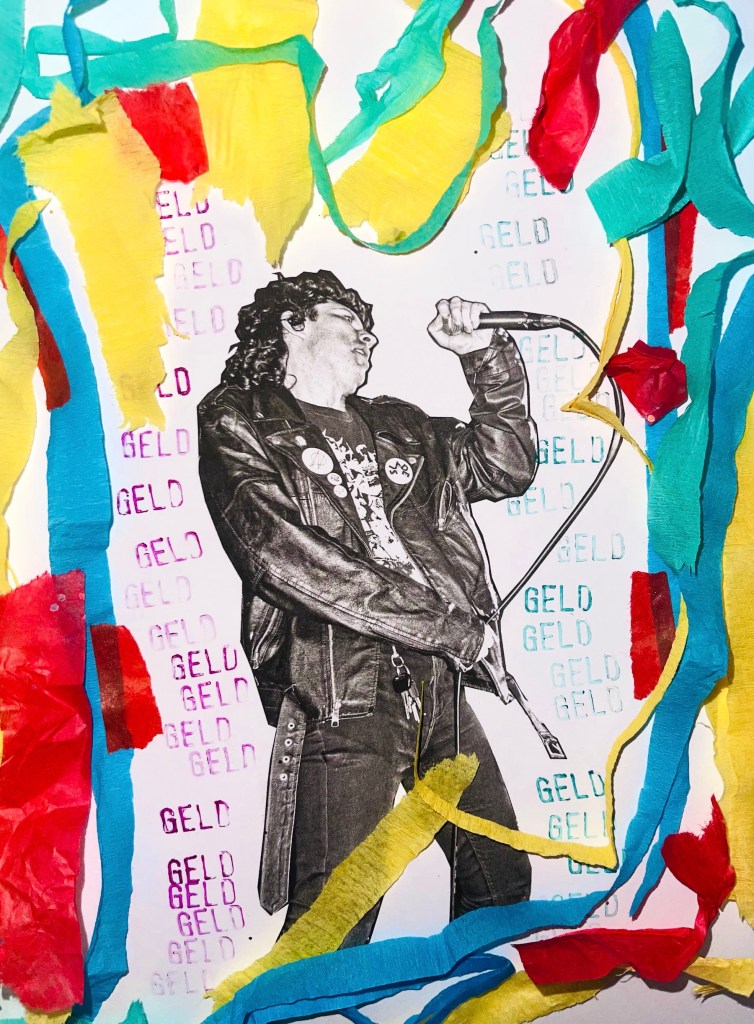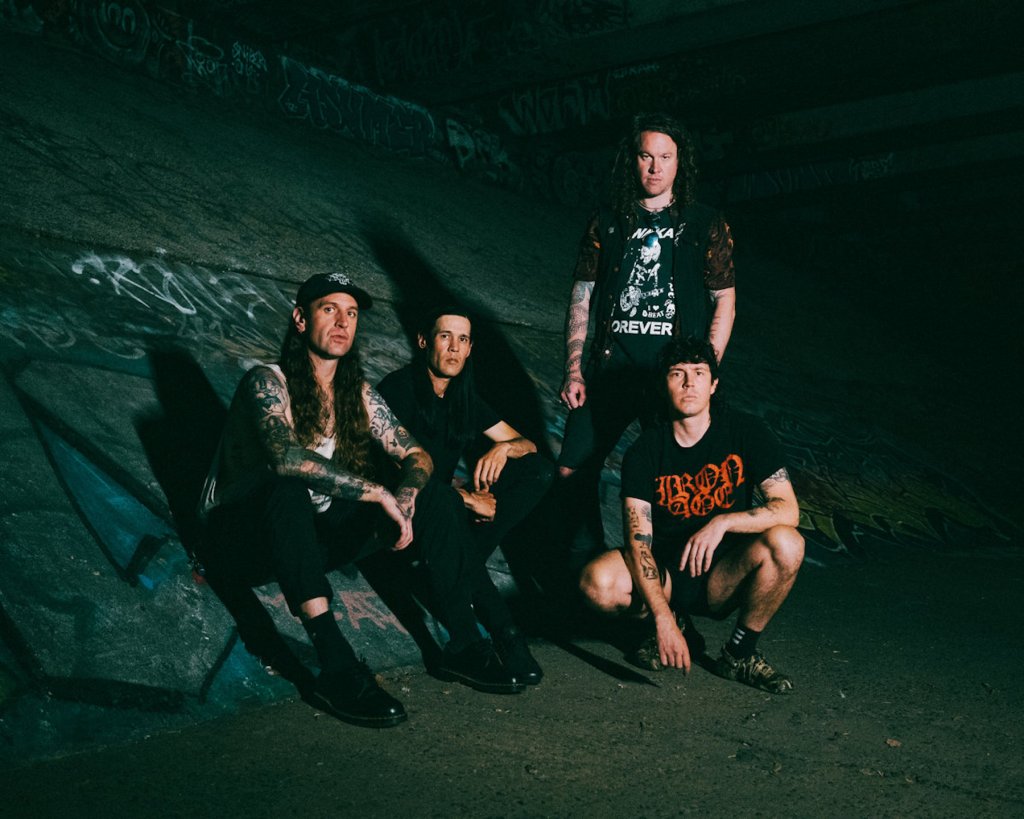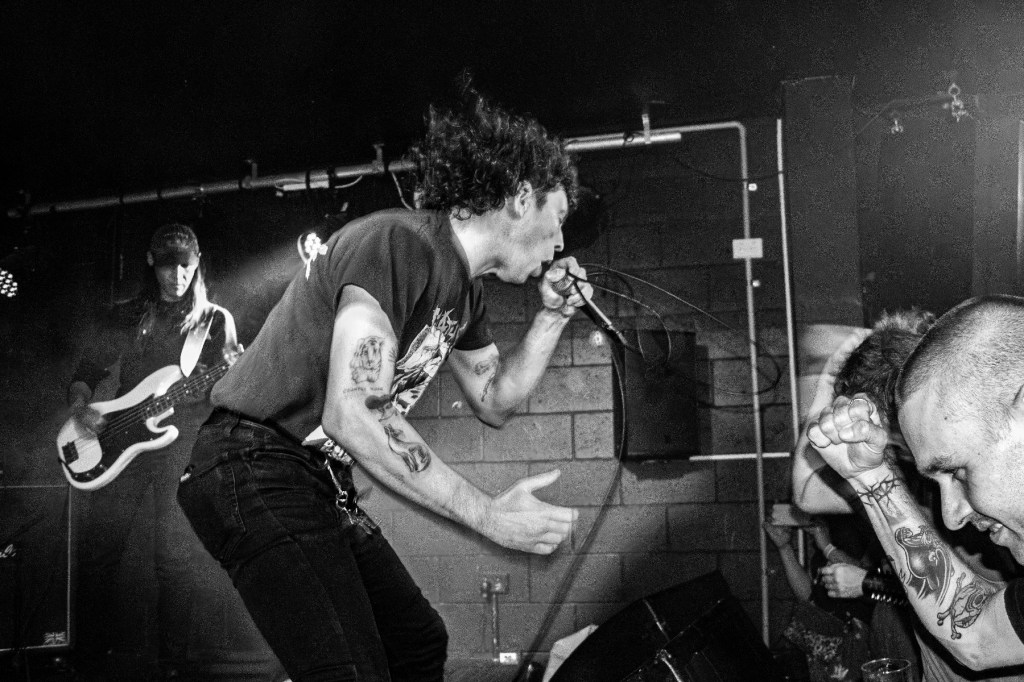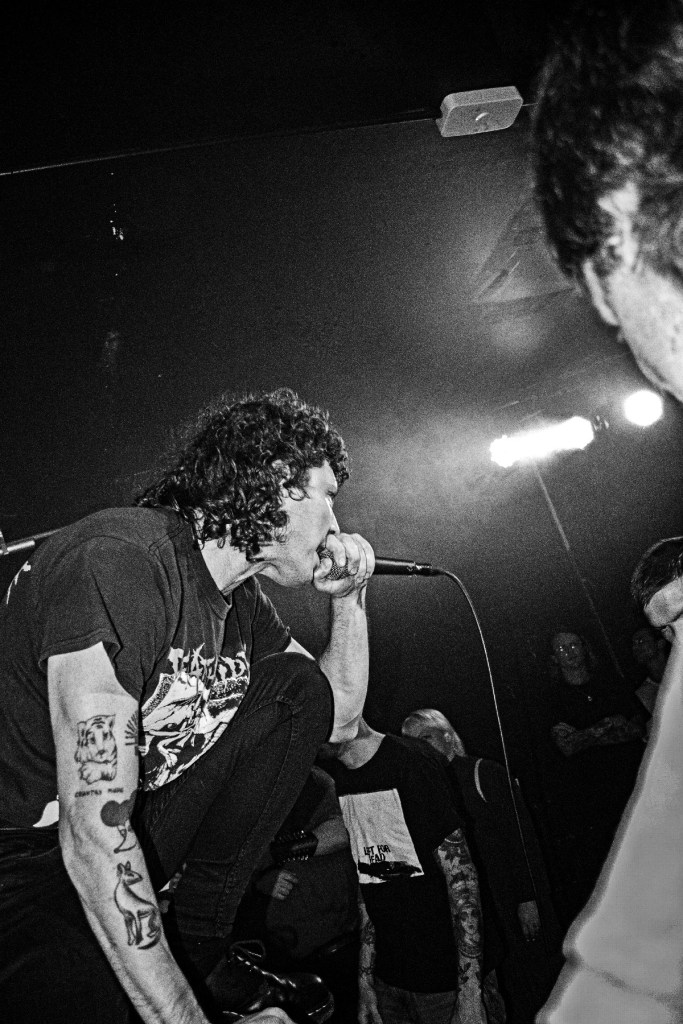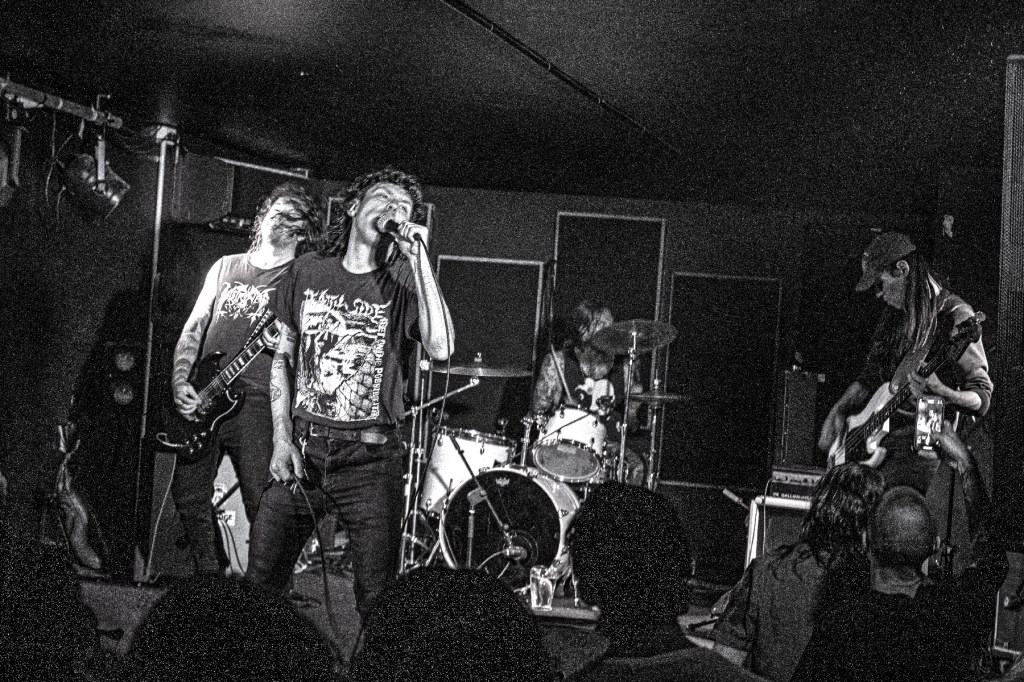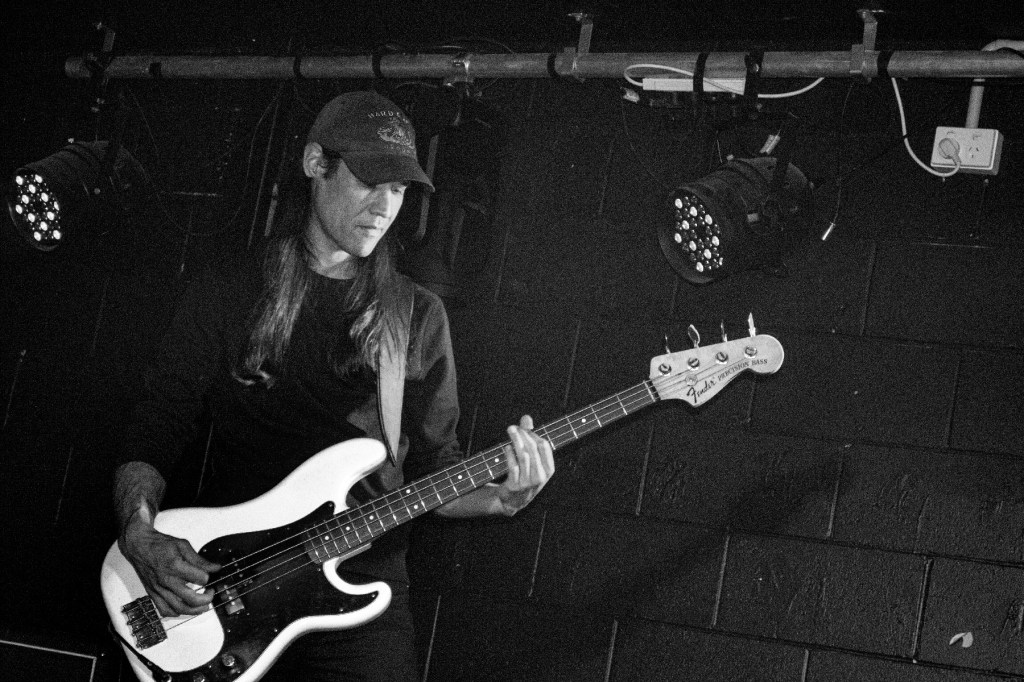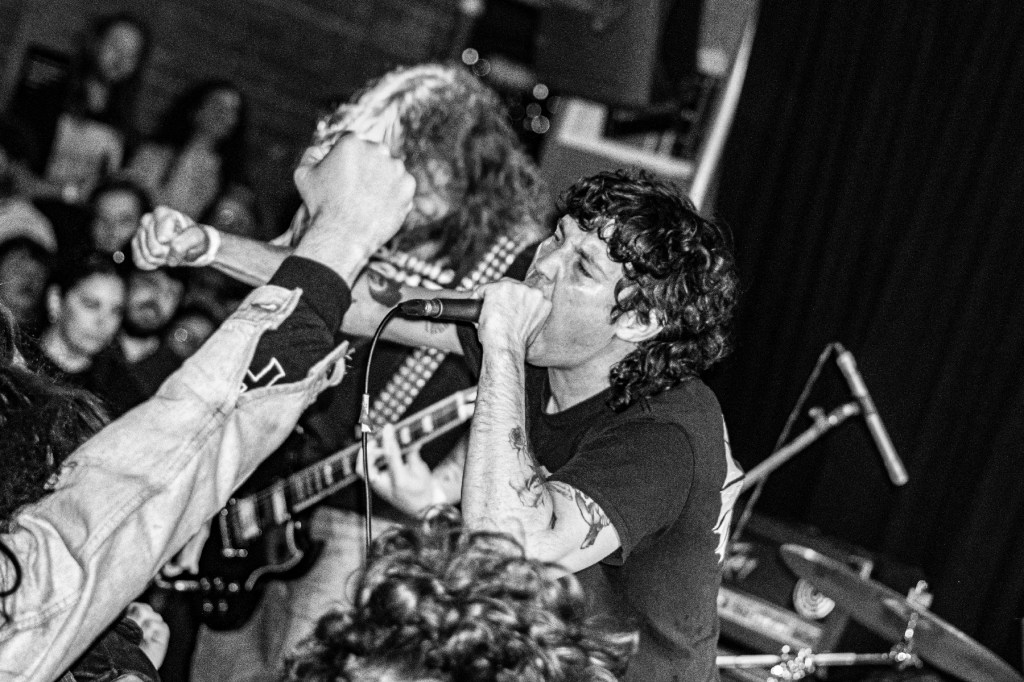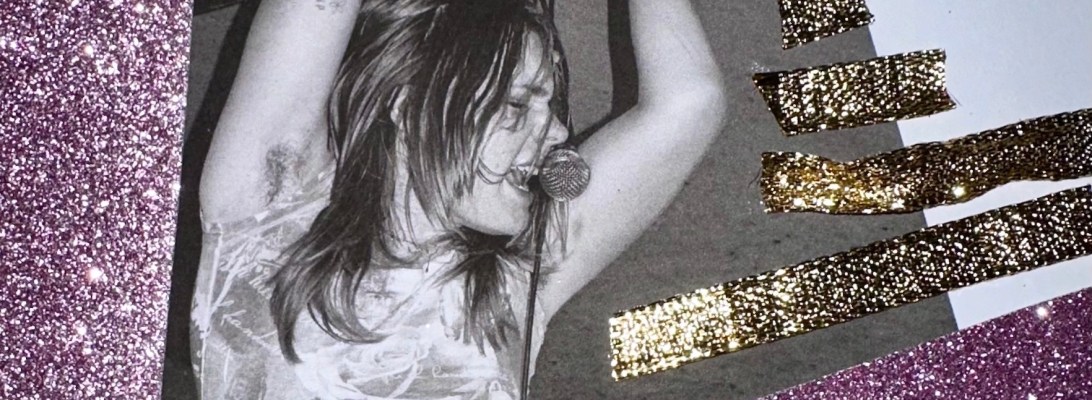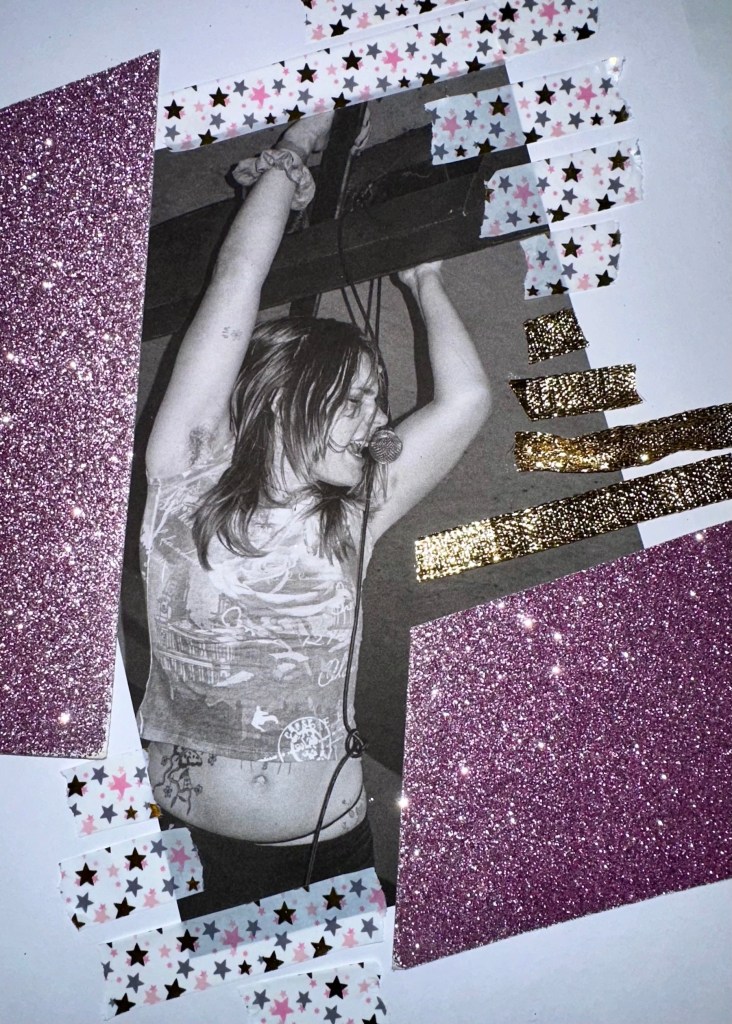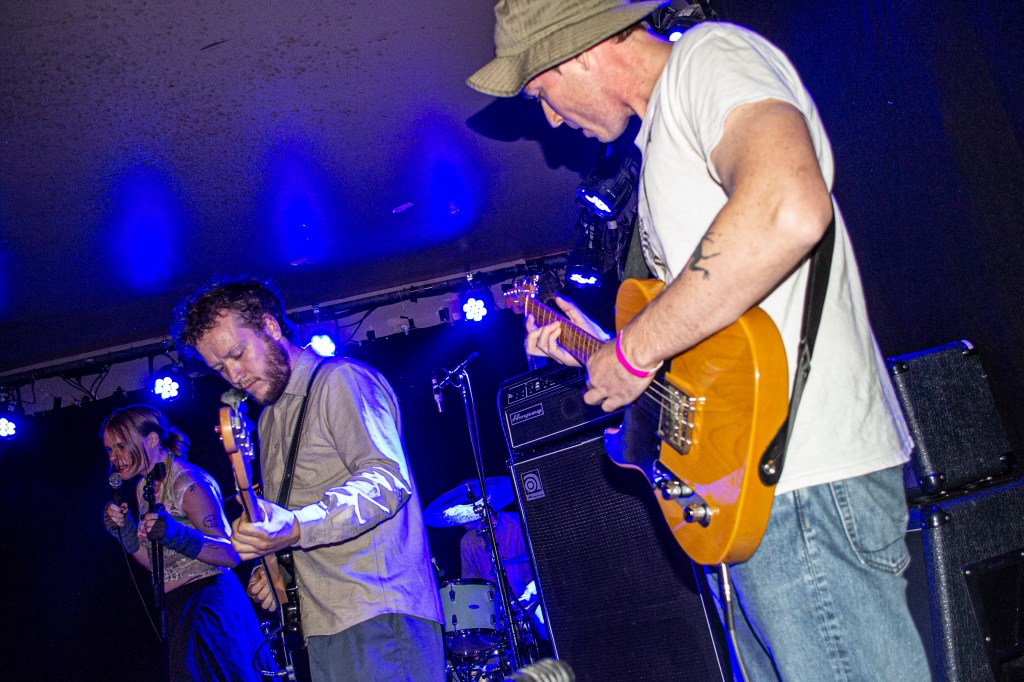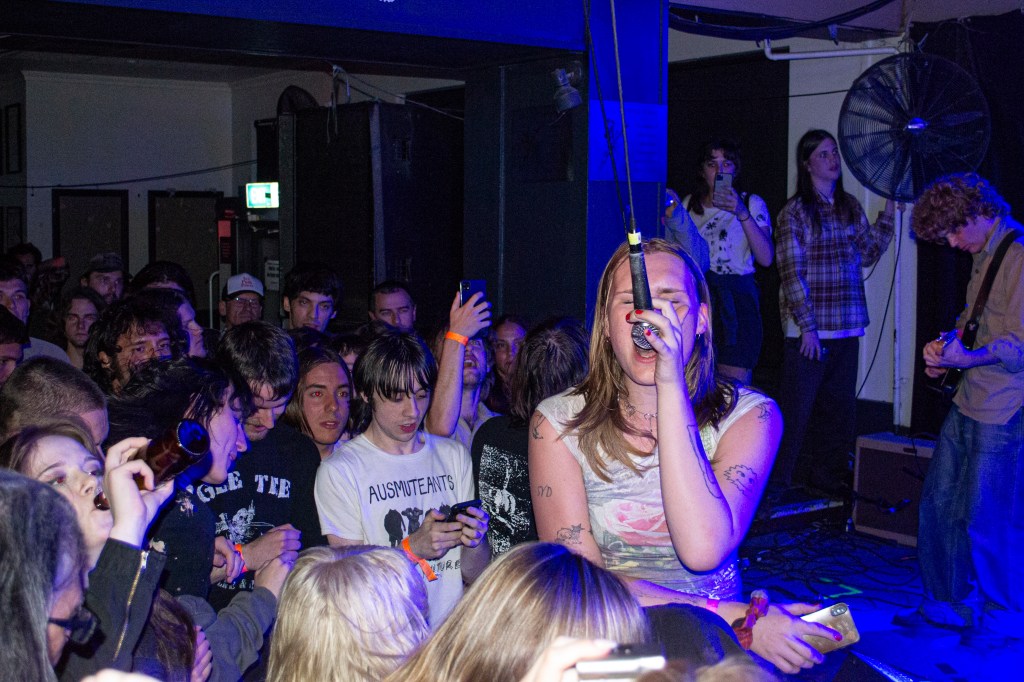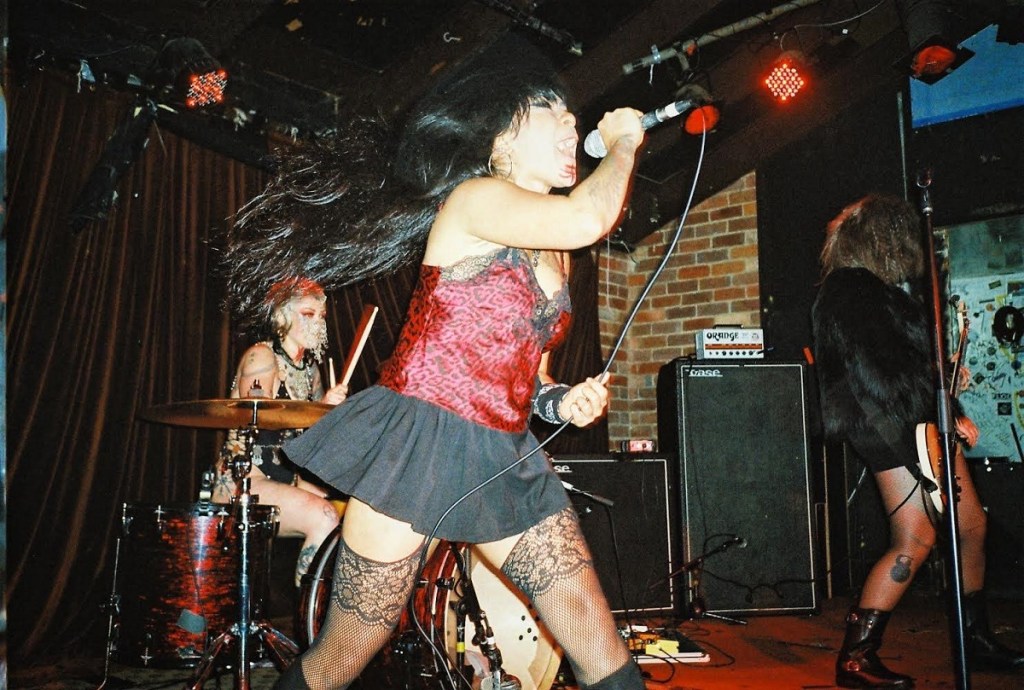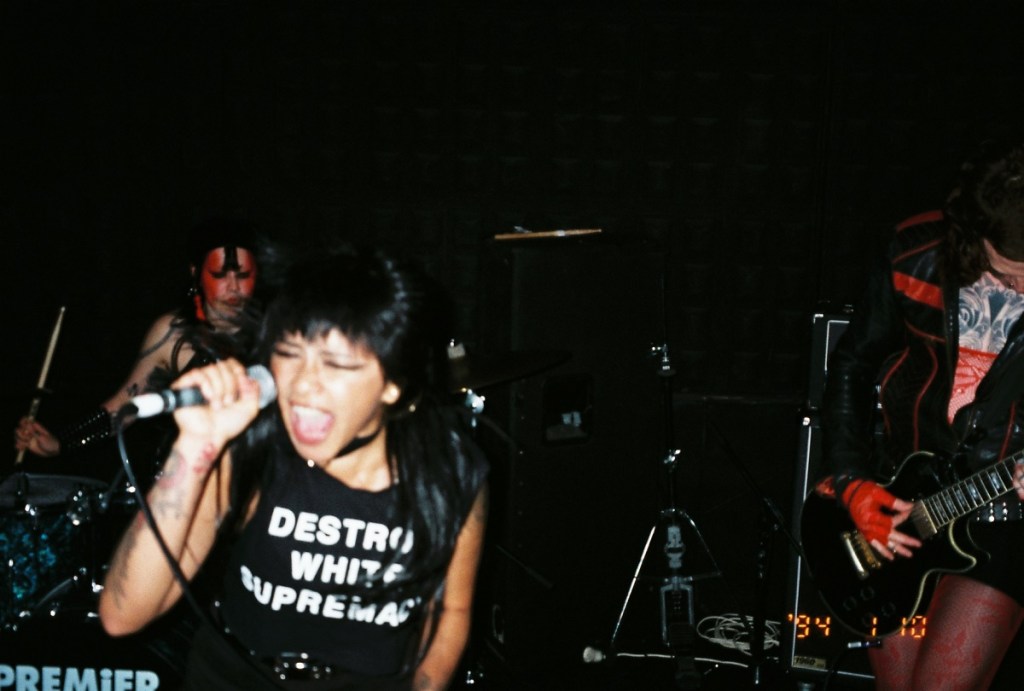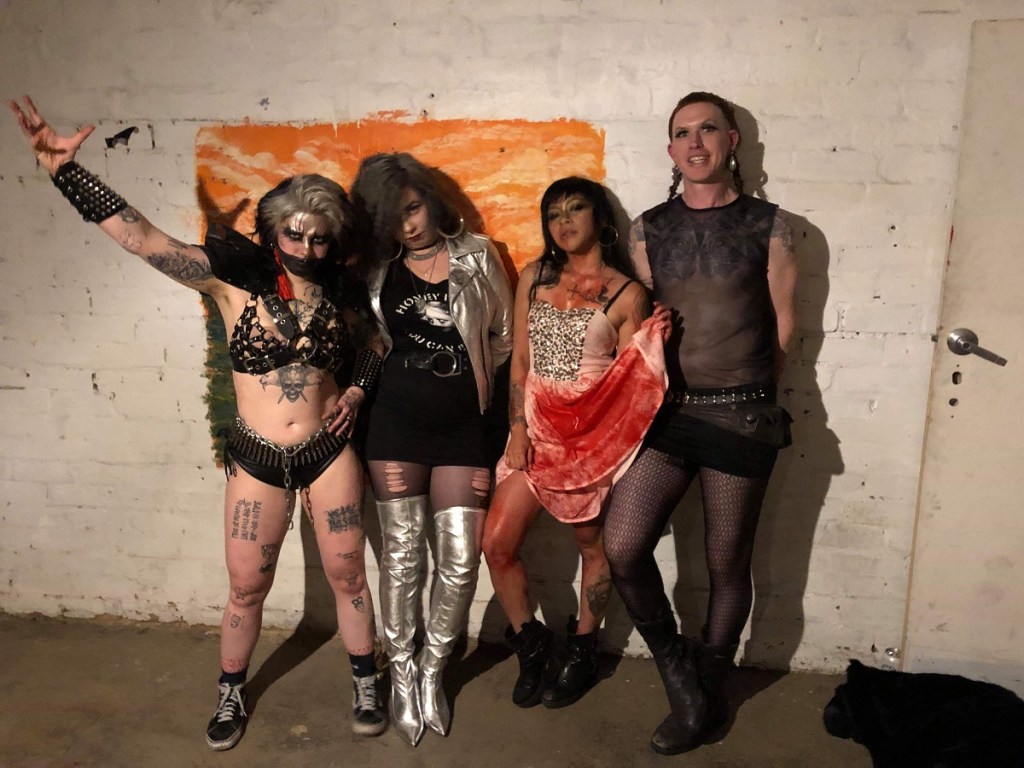
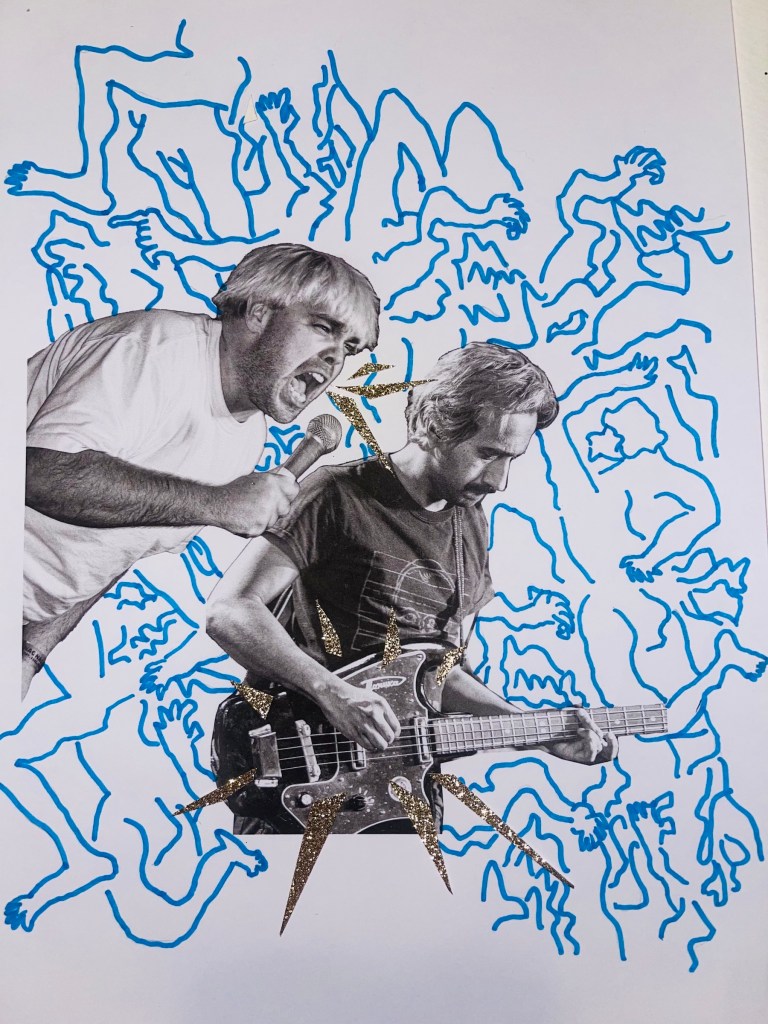
OSBO: ‘There hadn’t been anything to inspire hope or a positive outlook. When stuff like that happens, really good hardcore music gets made.

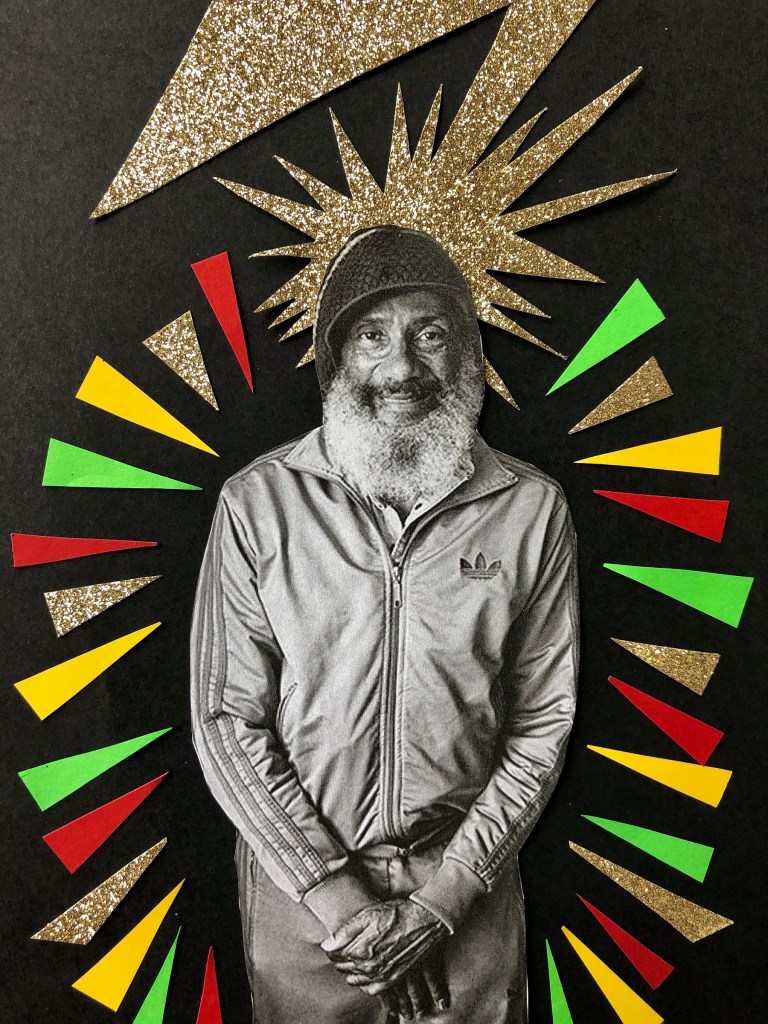
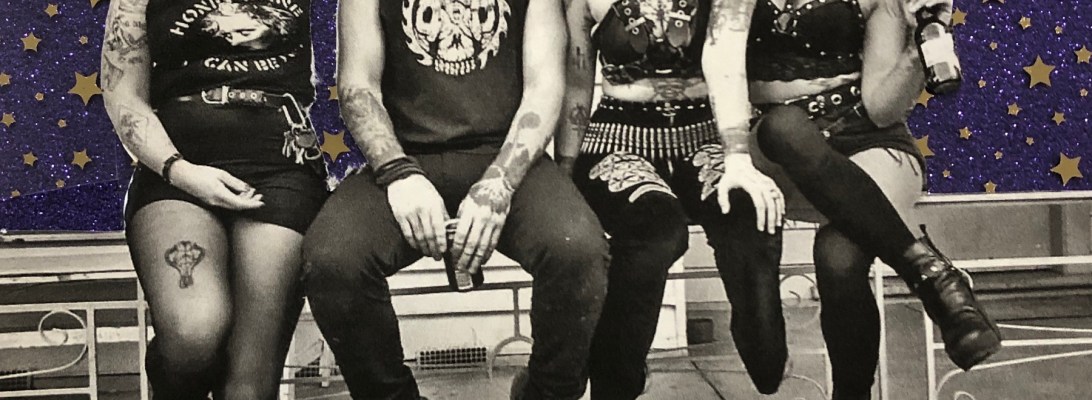
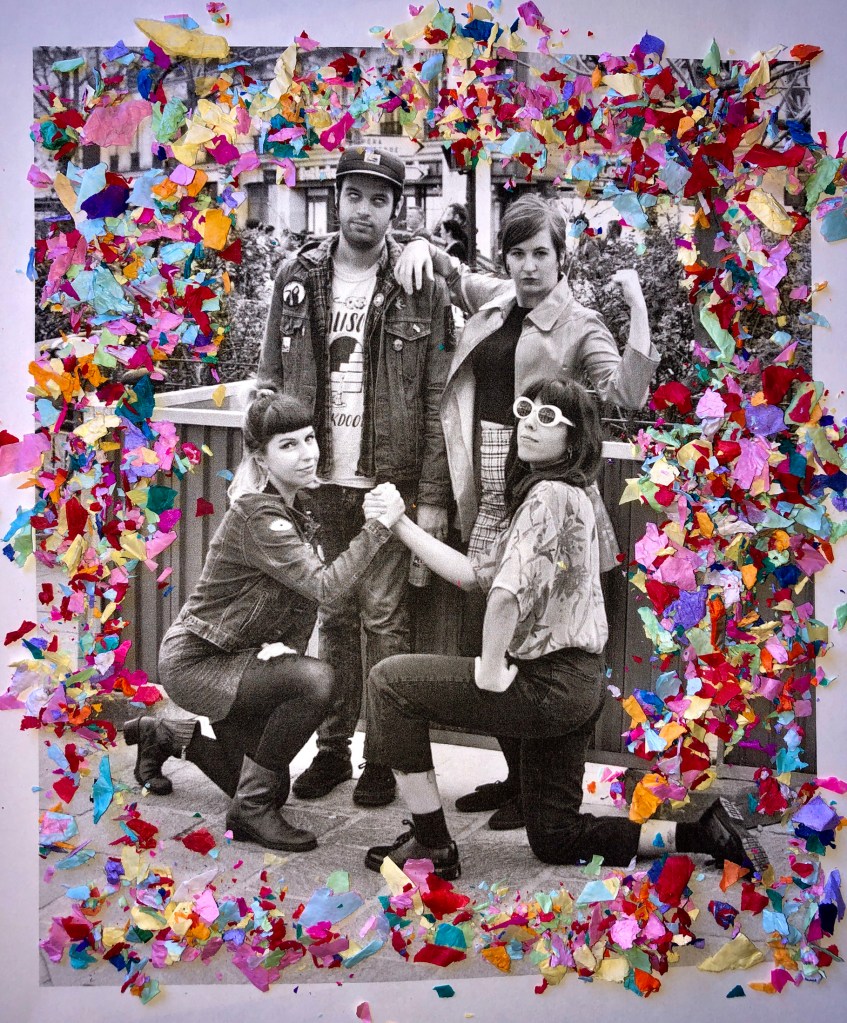
Original photos: Jhonny Russell / Handmade collage by B – inspired by Sukit

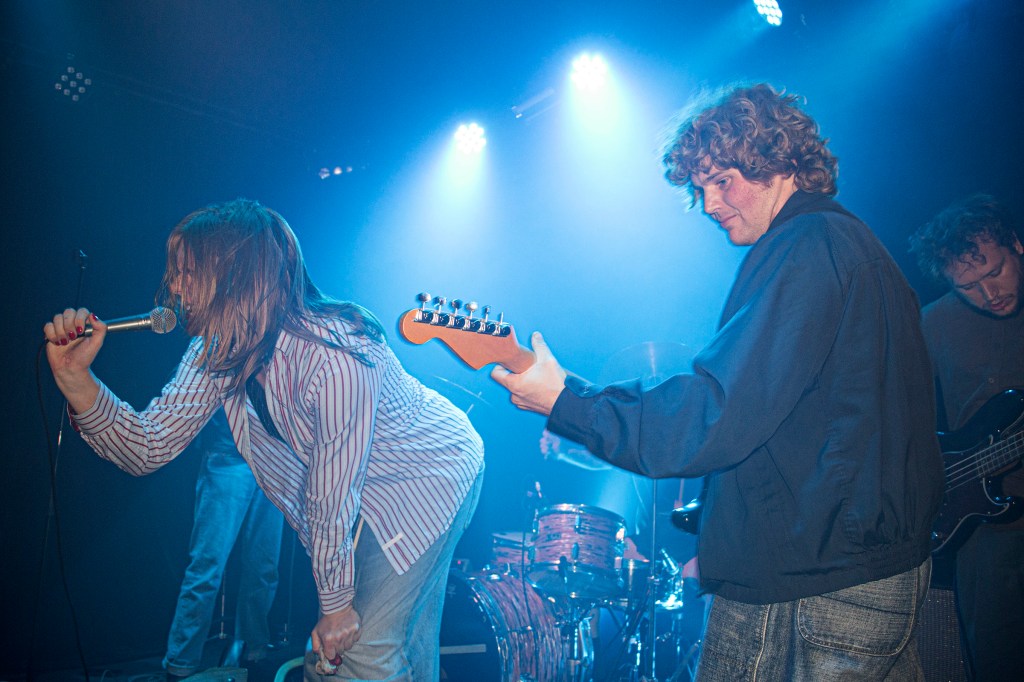
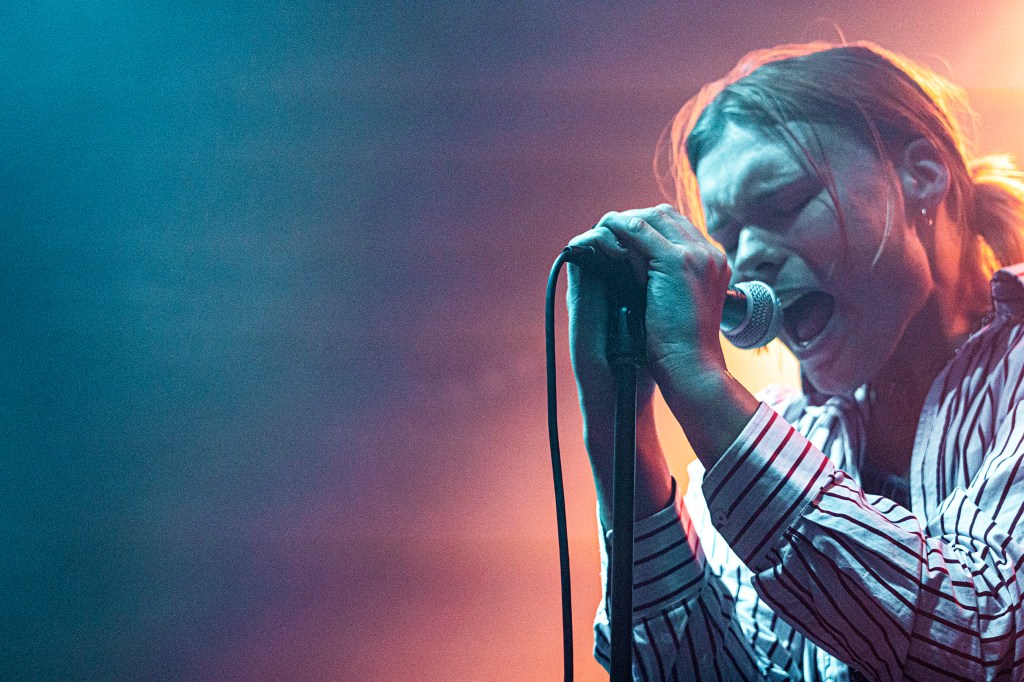
OSBO stands as a distinctive force in Sydney’s 2024 underground music community. Their new EP (out on Blow Blood Records) offers a raw, visceral experience that exemplifies modern hardcore punk. Its production strikes a fine balance—fiercely energetic and gritty, yet clear enough to highlight the potency of the songs. It’s a taut 10-minute wire, poised on the edge of snapping. With its powerful bass lines, frenetic guitar riffs, and intense vocals, OSBO brings their own unique edge. With plenty of fast, adrenaline-pumping tracks that capture the essence of hardcore’s loud and relentless drive, you’ll find a soundtrack for both your frustration with the world and moments of healing release. One of the best Australian hardcore punk EPs of the year!

Gimmie was excited to speak with OSBO’s vocalist, Tim, and bassist, Ravi.

RAVI: Tim said he’s running late. He said start without him. 

OK, cool. No problems. It’s so great to finally be speaking with you. I can’t find any other OSBO interviews anywhere. 

RAVI: We’re pretty low-key [laughs].

We love you guys so much. The first time we got to see you play live was at Nag Nag Nag, and you guys blew us away! You play the kind of punk we love!

RAVI: Thank you. Greg and Steph, who put on Nag… are the best and it’s always a lot of fun. We’ve played that a few times now. 

Greg and Steph are totally the best! Two of the nicest people in the community. So, what’s life been like for you lately?

RAVI: To be honest, it’s just been work. I hate saying this, but it’s true—work occupies a huge amount of time. Music-wise, OSBO previously had a free practice space, and the downside of a free practice space was that we were quite lazy. Sometimes we wouldn’t even get together for a few months, or we wouldn’t see each other at all. Now we’re paying for practice, and because we’re paying, we don’t want to skip it, so we actually get together every week now [laughs]. In the last three months, we’ve been more productive than we were in the past year and a half, which is good!

That’s great to hear. We kind of just figured OSBO was a pretty casual band.

RAVI: [Laughs] Yeah, well, we’re all well and truly in our 30s, and work a lot. Everyone’s quite understanding of each other when we can’t play or can’t practice. It’s all very low pressure. 

What do you do for a job? 

RAVI: I’m an Assistant Principal at a high school for students with mental health concerns. 

Wow, that must be such rewarding, and challenging, work. 

RAVI: Yeah. I have been doing it for a while. It’s quite a small school, only 56 students. But it is rewarding, you get to see kids grow and progress over a period of time, it can also be quite intense; there can be a lot of self-harm or suicidal ideation. We’ve unfortunately lost a couple of students, which is always hard. Overall, though, the school is hugely positive. Some of the kids are just going through a rough teenage patch, but then they wind up doing really well.

What made you pick that kind of work? 

RAVI: I stumbled into it, actually. I was teaching at a regular high school, and got fed up by it and quit. At the time, I was working at Repressed Records in Sydney.This guy was working at another record store in town, and I got chatting with him and it turns out, he worked at a mental health high school, and he hooked me up with work. I like it being small, we don’t churn through kids. I sometimes hear about kids that have finished school a few years ago, and they’re either finishing degrees or working, and doing well. So it’s nice to hear that. 

That’s so awesome! I saw on your Instagram that you have a therapy dog!

RAVI: I do—Scout. 

[Ravi talks to Scout, ‘Come here. Come here Scout. Say hello!’]

Oh my goodness! She is sooooo beautiful! 

RAVI: Scout comes to school with me. I got her from Guide Dogs Australia. She’s pretty awesome. I live in an apartment, so I never really wanted to have a dog because I would feel bad leaving them at home all day. It’s great being able to take her to work every day. I’m pretty appreciative of that. 

Dogs are the best! I mostly work from home and our pup Gia is always by my side keeping my company.

RAVI: Definitely. They’re good company. 
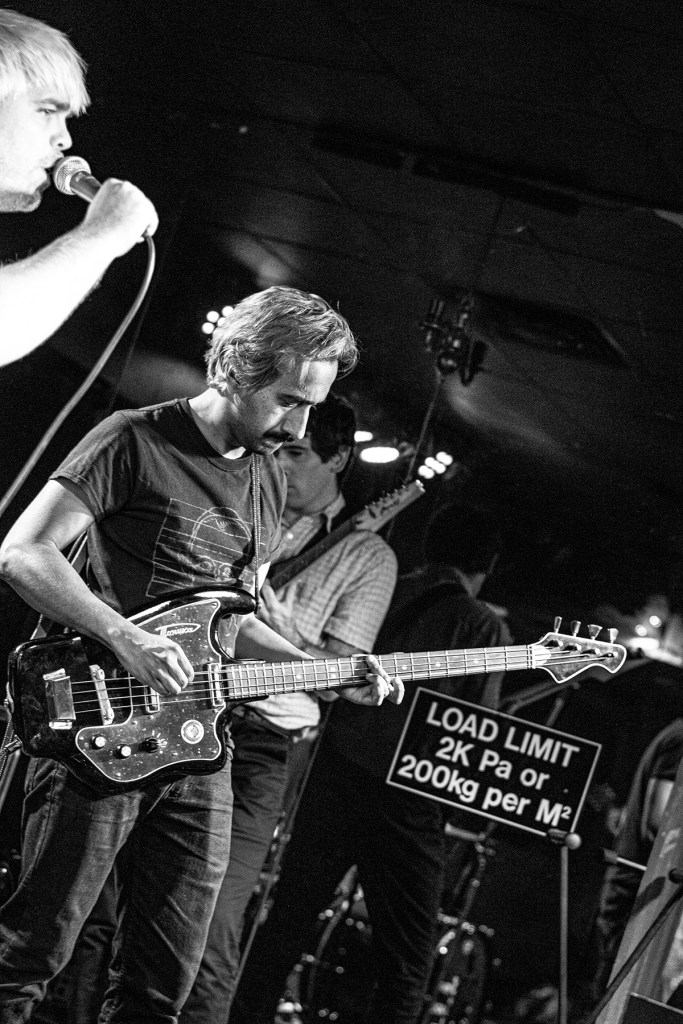
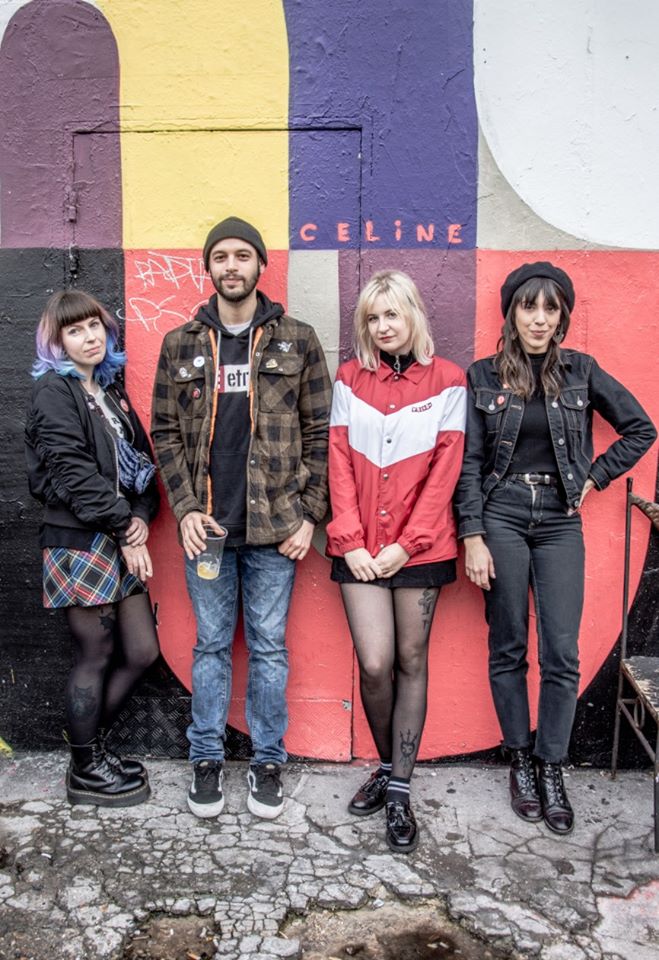
Photo: Jhonny Russell

Have you always lived in Sydney? 

RAVI: I grew up in Western Sydney, and then lived overseas for a few years but not long. I’ve lived in Sydney pretty much my entire life. I feel like this is it—an ‘I’ll be here’ sort of deal. I like it. There’s a lot of things not to like about Sydney, but then there’s enough good things to keep me here as well. My sister’s recently moved back to Sydney with my niece and nephew and I spend a lot of time with them, which is really nice. 

When I visit, Sydney it always seems so fast paced to me. It’s definitely got a different vibe from what I’m used to, having lived in Queensland most of my life. It’s pretty laid-back up here, especially on the Gold Coast where we are—no one seems to be in a real hurry.

RAVI: There’s parts of Sydney that are really hostile. The rent being so expensive makes it hostile; everyone has to work. It’s not an easy place to just live, which sucks. You hear stories from people about back in the ‘90s where you could just get the dole, play in a band, and hang out. It’s not like that anymore, everyone has to work quite hard to just survive. We have a good group of friends that are close, I’ve known a lot of them for a long time. Like, Greg and Steph I’ve known them for a dozen years. It’s nice to have a community.


One thing that I really love about going to shows in Sydney is that it’s much more multicultural. As a Brown person, it’s really nice to to not be the only BIPOC person in the room. 

RAVI: That was a shift a few years ago. Growing up, going to punk and hardcore gigs, it was pretty white. Being Indian, I noticed that where I grew up in Western Sydney was also quite white. It was definitely noticeable, but over the last dozen years or so, it’s definitely shifted, and it is really cool and nice to see. So, I get that.

My experience growing up in the punk and hardcore scene was similar to you, everything was very white. Being a Brown female at shows too, I really felt like an outsider in a subculture of mostly white male outsiders.

RAVI: Yeah. And that aspect was alienating. 

Yes!

RAVI: Having the whole traditional Indian parents, they were never like, ‘Go out and learn an instrument,’ or anything like that. So the whole idea of it all was just foreign to me. There was no access point So even though I was going to punk gigs and stuff from a very young age, it always felt like something other people do. It never really felt accessible in that sense. 

How did you get into music? 

RAVI: It was through a guy who sat next to me in roll call back in high school. He was into a lot of the skate punk stuff, like Epitaph and Fat Wreck Chords. The one local band that everyone seemed to be into was Toe To Toe because they’d play everywhere. If you talk to people my age, I’m in my late 30s, Toe to Toe was often the first band a lot of us saw, ‘cause they’d play the suburbs. Toe To Toe was a gateway band. From there, I’d go to the city and various youth centres to see shows quite regularly. 

Penrith was actually where I grew up, so for a while in the early 2000s, it was a hot spot. There was a lot of gigs out there. American Nightmare came and played. In the summer a lot of touring bands (Epitaph stuff) would play.

Yeah. I remember all of that. I’d go see anything. I was just so keen to see bands, and those were the ones I had access to too. I may not even like everything but it was a chance to get out there and be a part of something exciting. 

RAVI: I lapped it all up too, I couldn’t differentiate between good or bad stuff for the first couple of years, it was just all excellent [laughs]. After catching a lot of pop-punk stuff, I then that moved into a lot of hardcore stuff. After the mid-2000s, I got into to a bit more garage rock. I guess, I burnt out on hardcore punk. But then came Eddy Current Suppression Ring and I was like, oh god, this is really fresh! This is really cool! And, that kick things off again.

It seems we had a pretty similar music trajectory. I got burnt out on hardcore too, not the music but more the scene…

RAVI: It was too bro-heavy, yeah?

Exactly!  

RAVI: I got that sense. But then, in Sydney, there was a secondary punk scene, where there were punk and hardcore bands that would play with Eddy Current or Circle Pit or whoever, so there was that clash of things. I started working at a record store when I was probably 15, and then started working at Repressed when I was 17. Chris, who owned the shop, was always turning me on to stuff, and not just punk-related stuff. He’d be like, ‘Oh, you should listen to Guided by Voices or Modern Lovers.’

That’s awesome. I used to have the dudes that worked at Rocking Horse Records in Meanjin/Brisbane turning me on to different stuff. It’s funny you mentioned Toe To Toe before, Scott Mac, was the second person I ever interviewed!

RAVI: Cool. I often think of them. I had this conversation with Mikey from Robber, and we were all like, ‘Toe To Toe were like the Australian Black Flag of the 90s,’ in a way—just in the sense that they went everywhere. Like, you’d see flyers of them playing places like Townsville or wherever. Even talking to my friend Nick, who owns Repressed now, he said that he saw them in Cairns when he was a kid. I think that was hugely important, they played in places that other bands didn’t. 
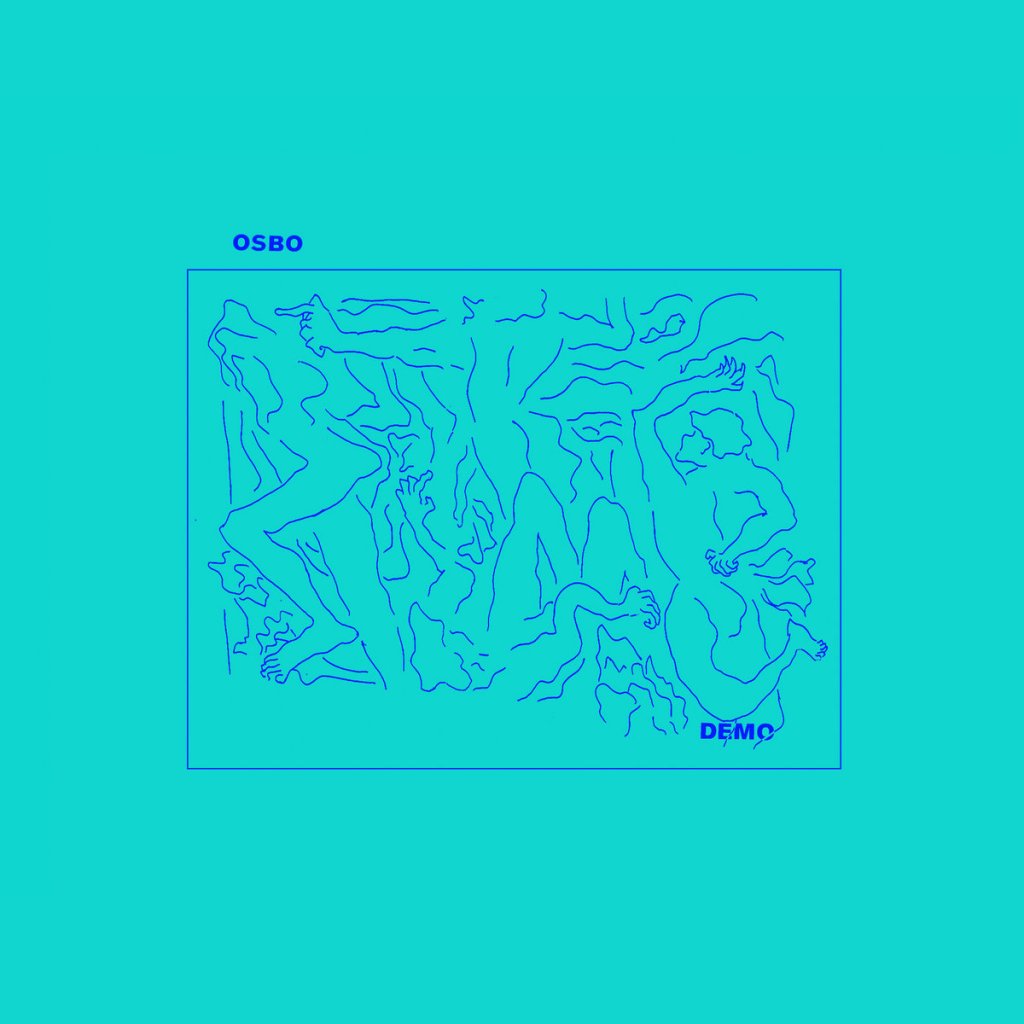
Art by Sukit

Yeah. I know you collect records. What are some albums that have been really big for you? 

RAVI: Formatively, The ReplacementsLet It Be hit a spot so much so that, not that I listen to it frequently now, but I’d still call it one of my favourite albums. It was huge for me; I listened to it constantly. The first wave, as a kid, would have been bands like Good Riddance or Sick Of It All. Even now, I’m constantly buying records—lots of Australian stuff. Particularly right after Eddy Current, it felt like there were so many good Australian bands happening, so I’d be catching all of that stuff.

Totally, Eddy Current is such an important band! What’s one of the last records you bought? 

RAVI: I bought The Dicks [Kill From The Heart] reissue on Superior Viaduct. I was happy to get it. I also grabbed a couple of things from Sealed Records. I don’t know if you’re familiar with Sealed Records? But Paco who does La Vida Records, he runs a label called Sealed and they do a lot of archival stuff. I got a release by this band Twelve Cubic Feet, never heard of them but I trust the stuff that he’s putting out. It’s good!

What inspired you to start making music yourself? 

RAVI: Social stuff, I very much like spending time with my friends. It’s an extension of that. Pretty similar to playing in a team sport or any sort of group activity. Spending time with the same people regularly. I never felt like it was something I could do. But some friends of mine actually said, ‘No, let’s let’s do this,’ and following through, them pushing me to do it. 

Was OSBO your first band? I know you play in The Baby as well.

RAVI: Yeah. The Baby. And then, OSBO has a similar sort of cast of characters. So yeah, Lucy from OSBO played in The Baby as well. She’d never played in a band either and just started playing in Photogenic. Max the drummer had never played drums before. Ben the keyboard player had never played keyboards. So, The Baby was everyone just giving it a go.

I love that! I find bands like that seem to create really interesting music to me. I feel like there’s more experimentation, and the naivety, give you a better chance at developing something more unique. We love The Baby when we saw you play Nag. 

RAVI: Thank you. It’s very unorthodox. I remember our first practice, Max had to look at YouTube, how to set up a drum kit, he had no idea. Our band is just built around friendship.

Did you ever think you’d be a singer? 

RAVI: No, no, no. Other people suggested it. I’m glad they did. It was a similar thing with Tim from OSBO. He’s been a good friend, and he’d come around, and we’d play chess and hang out. Then he mentioned he was starting OSBO, and was like, ‘You want to play?’ I was like, ‘Yep.’ And OSBO started. It took a while to get off the ground because everyone has other things going on.

Had you played bass before then? 

RAVI: No, I hadn’t. Joe, our guitarist just taught me from scratch. There were times when I thought, I’m never going to get it! I should quit. But they were like, ‘No, no, you got to do it. We want you in this band.’  They really pushed me, which was awesome!

It’s so good to have that encouragement, support and camaraderie, hearing about that makes me love you guys even more.

RAVI: Yeah, exactly, and I’m really glad they did that. As I said, it’s primarily built around the social aspect, so everything else is secondary. We found our friends in Sydney were always so supportive, but not even just in Sydney, all our friends everywhere are really supportive. From the get-go, people were coming to shows. 

Where’d the band name come from?

RAVI: That was Tim. He had that band name for a while, and he had planned on starting a band called that, and various members had come and gone and it just never sort of happened. So it’s very much, in that sense, Tim’s band, I guess you could say. 

What’s something you could tell me about each member of the band? 

RAVI: Jacob, our drummer, he’s going to be having a new baby very soon. So that’s, parenthood and hardcore coming together—he’s very excited. 

Joe, our guitarist, was working an insane job where he was working 18 hours, and he’d even sleep over at work. But he quit and now is feeling a bit more of that life balance. He’s doing really good.

Lucy, our guitarist, she’s awesome. She’s a primary school Librarian and very good with young kids. 

Tim, our vocalist, is probably the focus point of the band. He has a good presence. He’s like an MMA guy, so he’s quite fit and energetic on stage. He’s been doing that for a few years. I think it was something that was really good for him. 
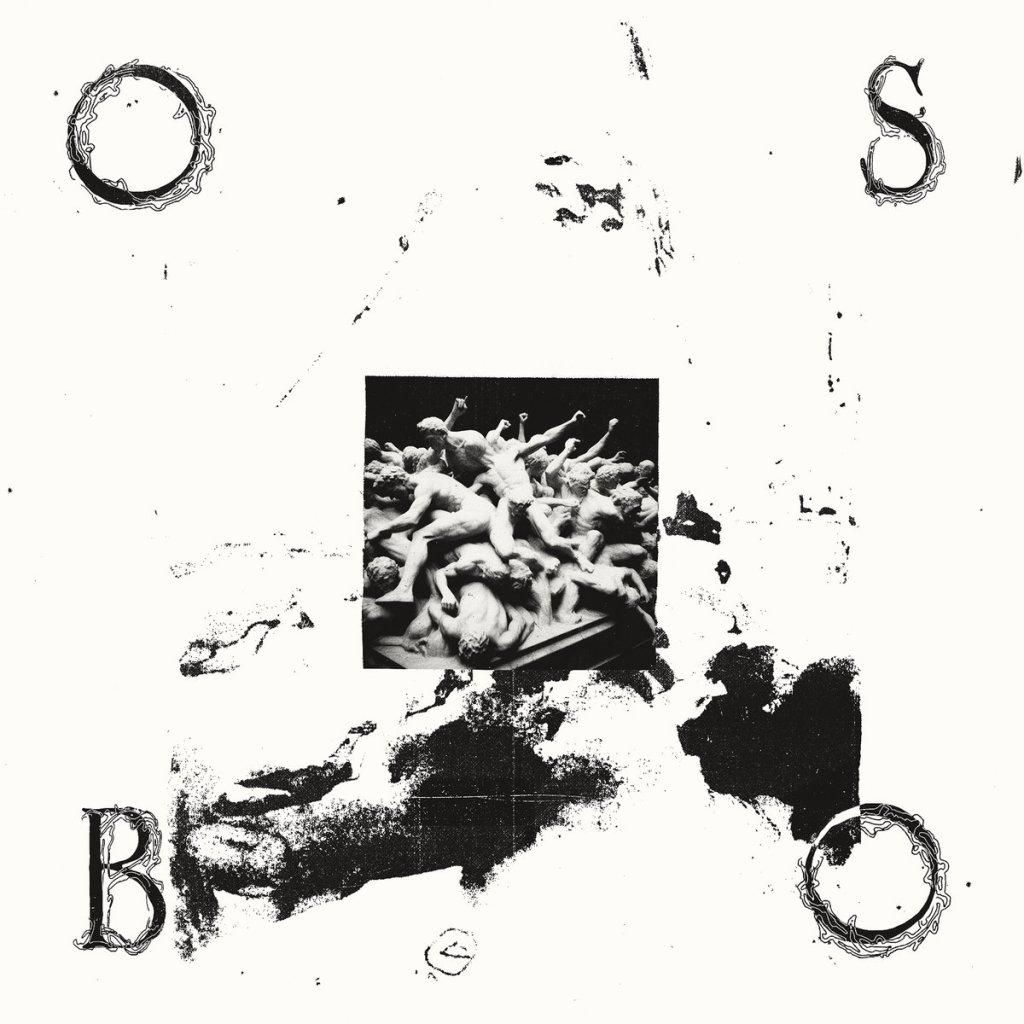
Art by Sukit

OSBO put out their EP on April 1. It’s really amazing! The art work is similar to the photo on the demo, the pile of bodies.

RAVI: Joe, our guitarist, does all of our artwork. He’s a graphic designer by trade. You’ll spot his artwork on Sydney bands’ records. It’s nice having someone you trust to do the art. I’ve never asked him where the image comes from, but to me, it almost looks like there’s a horse’s head in there, and it reminds me of The Godfather—the horse’s head in the bed. It’s sort of abstract. Maybe I’m just imagining that [laughs].

I’m gonna have to take another look at it now! How long did the EP take to record? 

RAVI: We did it over two days, at a random house. The contact came from our drummer at the time, Coil. It was this house in the suburbs that was clearly a rich person’s house in the ‘70s, but was now overgrown. The pool had been filled in and there were trees growing out of everywhere. We recorded in this old pool house. It was run down as all hell. 

[Tim joins the chat]

TIM: Sorry, I’m late. I was riding my bike in the Blue Mountains with a bunch of friends.

That would have been really lovely. It’s really pretty up there. I think I saw you post online earlier that you did something 40+ kilometres!

TIM: Yeah, I didn’t even record all of it, so it was more than that.

That’s a lot! Wow. Is that something you do often? 

TIM: I’d like to do it more often. Occasionally we go out and do long rides or overnight rides. 

You also do Jiu-jitsu? 

TIM: Yeah, that’s one of my other things that I do. 

RAVI: I mentioned that earlier too. 

TIM: It’s fun—it gets you out of your head. 

It’s so important to have stuff like that. Do you have any fond memories from recording the EP? 

RAVI: The guy who recorded it Ben [Cunningham] had nice gear, a nice drum kit, so that was nice. Next time we might record with friends in Melbourne. 

TIM: I was stoked that we got to do it in Macquarie Fields, and it being so close to where I grew up. Also, having that connection into somebody like Ben who’s younger, and who is doing something new, rather than it all just being like, if we’d gone and recorded with David Ackerman, it would have felt a bit different, you know, like recording in Marrickville or whatever.

The whole experience to me was so different to the other recording experiences I’ve had. It felt more like of the band as well, and it was cool to like have Coil there as his last thing to do with us as well. 

Other times I’ve recorded were either even more DIY or like more professional. And this was sort of somewhere in this weird kind of space in the middle, whilst being in the back of somebody’s house in the suburbs, 40 minutes from the city. It’s kind of this strange space that felt very DIY, but also very earnestly trying to do a great job of that. 

RAVI: Ben did a great job. If anyone is keen to record—hit Ben up!

It’s a pretty intense collection of songs; was there anything you did to get that vibe? 

TIM: [Laughs]. It’s kind of weird. It was a very chill day. We were sitting around. There was little bit of back and forth with the tracking. I did every song but one, in one take. 

RAVI: We were a bit concerned that Tim was going to blow out his voice, because he gives it 100%. 

TIM: [Laughs].

RAVI: We were hoping that didn’t happen.

TIM: Because I wanted to do it in one take, I went particularly hard at each song. We did just spend a lot of time just like chillin’ though.

RAVI: It was pretty low-key. There was a lot of sitting around in the overgrown backyard, with a tree growing through a bench, and a bicycle stuck up in another tree. There was this other shed that we went into and it was full of old movie posters…

TIM: And, dentist stuff.

RAVI: Yeah, and stuff from junior football teams from the 1970s. It was a weird vibe.
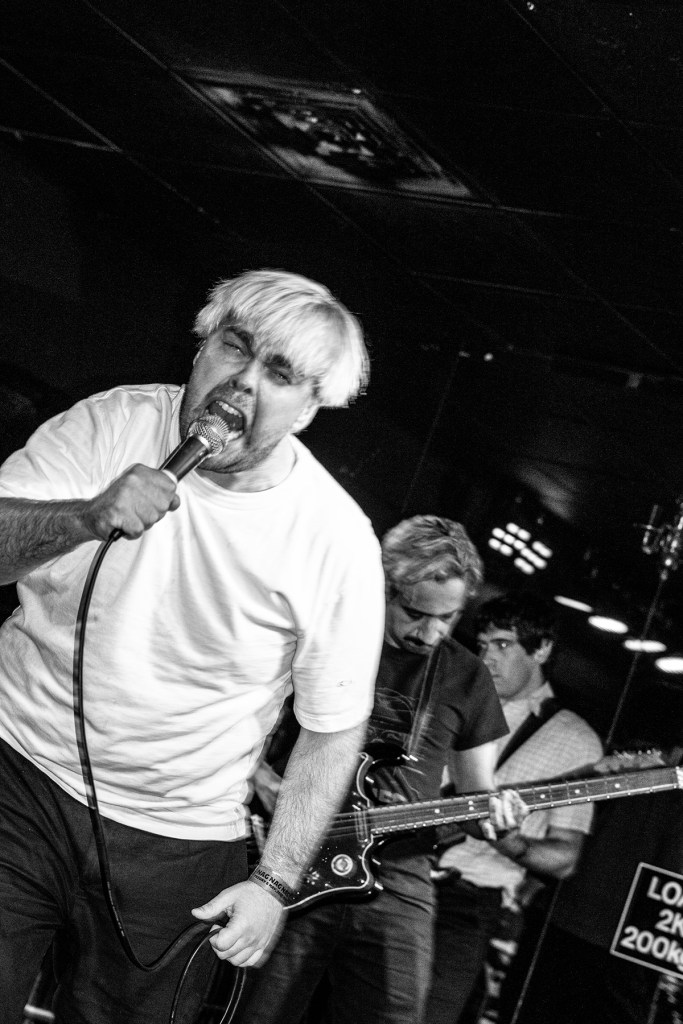
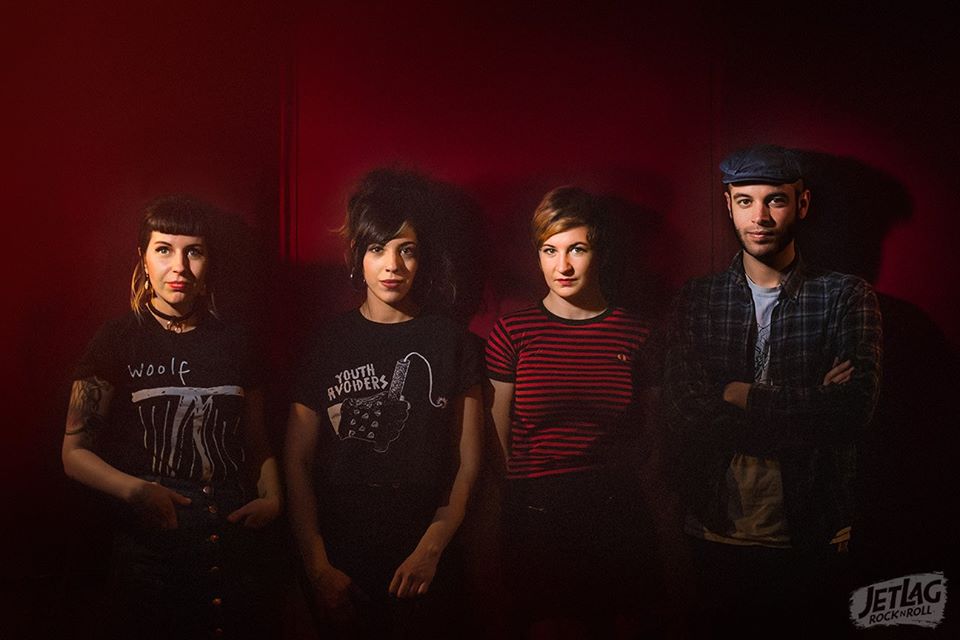
Photo: Jhonny Russell

We’re glad you were able to capture the ferocity of your live show on record. Often I find, a lot of bands miss that mark.

TIM: The imperative of the band is that we’re all pretty much on the exact same page about what we’re trying to do with the band and what our references are. Because of that, we go into that kind of situation knowing that’s what we want to capture about the band.

RAVI: We were conscious that we didn’t want it to sound too glossy.

TIM: I think it would be hard for me to sing these songs and not like blast on them. It needs to be full on, otherwise it’s not the thing that we’re trying to do. 

A lot of the songs on the EP are from the demo…

TIM: Having practiced them a lot more, makes a big difference [laughs].

RAVI: The demo was done with a Zoom mic at practice sort of deal. We recorded it and sent it out. 

TIM: Yeah, we probably should have done a better job with that.

RAVI: [Laughs]. But I feel like it captured what a demo was meant to be.

TIM: We re-recorded because the demo was so scratchy. We’re now in a spot where we’re practicing a lot more, writing a lot more. We’re working more consistently. COVID lockdowns, that kind of happened right in the middle of when we were starting to do stuff. Now we’re aware that we need to be tighter to be that sound as well. We need to be able to know the songs inside out before we can go into a recording situation and produce that kind of intensity. 

RAVI: Hopefully we’ll be able to record again before the end of the year or if not early next year. 

Yes! That’s great news. Do you have many new songs?

RAVI: A couple of new songs but then a bunch of part songs.

TIM: Since the EP, we probably got like another three or four. 

With the songs that were on the original demo that you’ve re-recorded, were they written back around like 2020? Was there anything that was happening in your lives that was influencing those songs? 

TIM: It wasn’t a particularly nice time [laughs]. I remember talking to Joe even before we started the band; I just felt like, politically, people were just very angry. There was a lot of stuff that had completely failed, and there hadn’t been anything to inspire hope or a positive outlook. When stuff like that happens, really good hardcore music gets made—which makes it sound a little cynical.

RAVI: It was a weird time, definitely.

TIM: Not for me personally, but I think it was an angry environment, and I just wanted something to put that in, and so I put it into this. 

What about the newest song, ‘Say It To My Face’? 

TIM: Same deal. A lot of the songs are about work, which is a very stressful and unpleasant environment. I have a professional job. I work in an office. There’s a lot of politics and that kind of thing. So a lot of the songs are just about me wishing I didn’t have to deal with those people.

I feel that, in my work experience, I know I’m not really built for an office.

RAVI: The song ‘Time’ probably captures that. Like, people who abuse your time in the work setting, they’re almost like vultures. 

TIM: Yeah. A lot of the songs are about feeling like you have to deal with things against your will. Like, I don’t want to go into those scenarios. I don’t choose those scenarios; I would prefer to not have to ever do any of that stuff. And then people make it worse, like ‘Say It To My Face’ is basically about people talking about you or your work, but not having the guts to tell you, and how frustrating that is to deal with—which is a general situation at work. But there were also some specifics I was dealing with at the time that I was extremely, really, really not enjoying.

I’m so sorry to hear that. That sucks. 

TIM: I wrote a nice song about it. 

What are the things that you do to counterbalance this shitty things, like, stuff that makes you happy? 

TIM: Write nasty songs about it. 

[All laugh]

TIM: Like we were talking about, I have Jiu-jitsu and cycling, and they’re really good outlets for dealing with mental health issues or dealing with just not being able to get out of your head. 

RAVI: I spend time with my niece and nephew—that forces me to be present and put everything else to the side because. Like, you can’t be zoned out thinking about work or anything like that. 
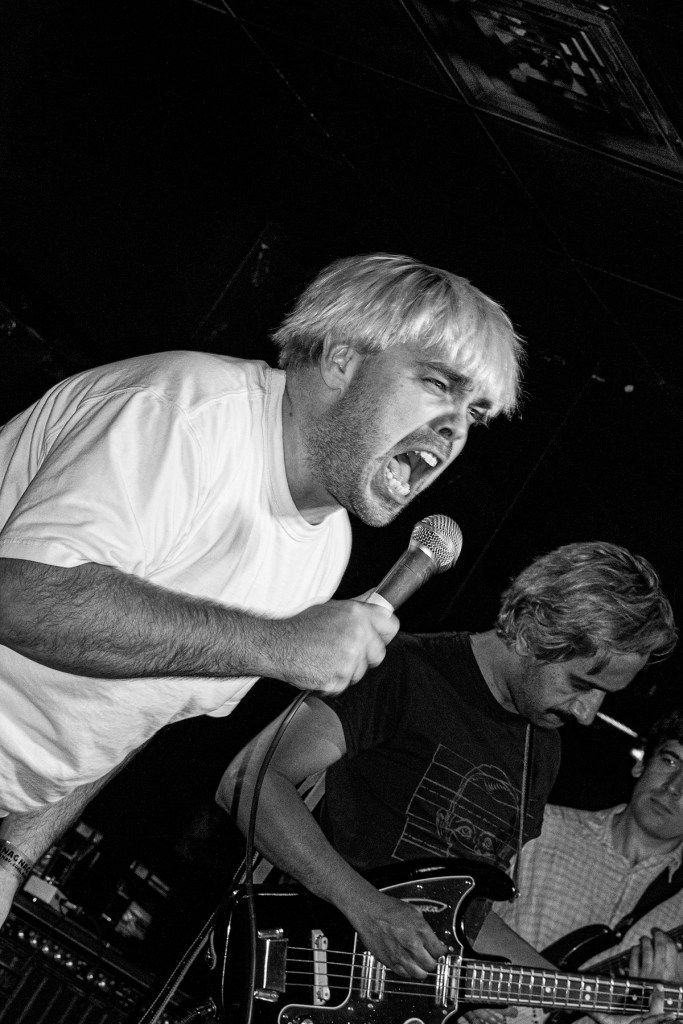
Photo: Jhonny Russell

What else do you do outside of music? 

RAVI: I go to see a lot of gigs; a lot of our friends play in bands. Some friends of ours have recently set up a bit of a record store in Sydney, so I’ve been helping them out with getting stock. Shout out to Prop Records in Ashfield. Aside from that, I babysit my niece and nephew at least once a week. Today, I went to visit my mum—just the usual family stuff.

TIM: Really just Jiu-jitsu and cycling, and work a lot. I’ve got a pretty big yard, so I have to garden a bit. That’s about it. I try and keep it simple. Sometimes I can let hobbies spiral [laughs].

RAVI: For a while, Tim and I were playing online chess against each other constantly, all day.

[Both laugh]

TIM: I like letting new hobbies in because I love to dig through information. I have to edit down and be tight. I also played Dungeons & Dragons, with some friends. 

Find OSBO’s EP HERE on Blow Blood Records. Find the demo at OSBO’s bandcamp.
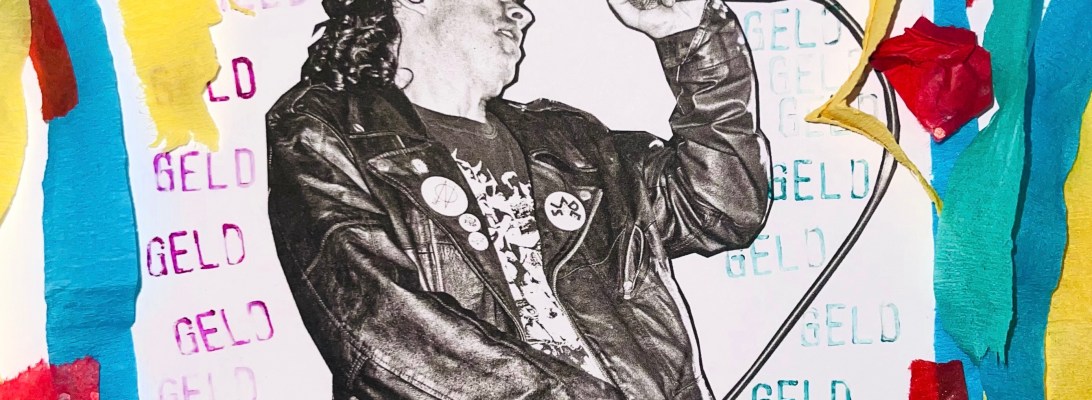
Al Smith from Geld: ‘It’s quite confronting to feel so much emotion surging through you.’

Original photo: Jhonny Russell / handmade collage by B

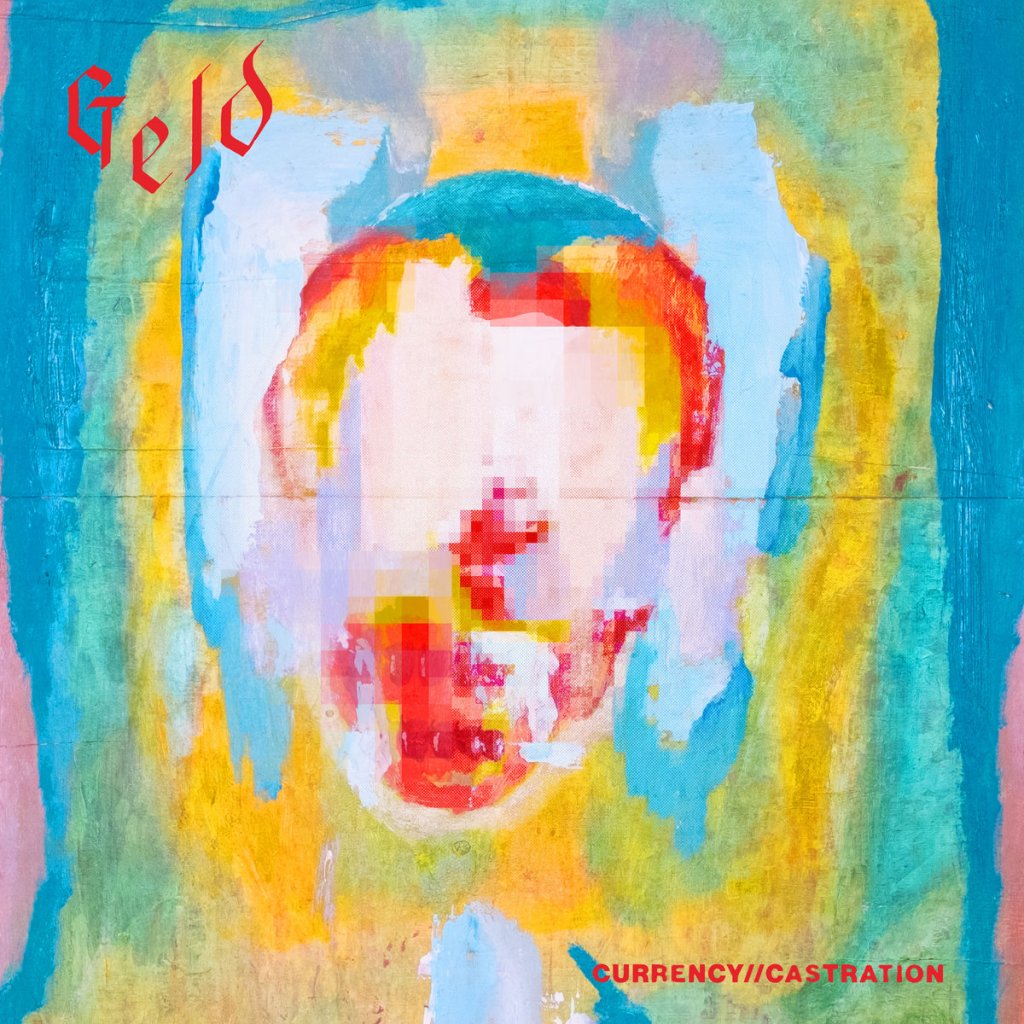
On album Currency // Castration Naarm/Melbourne hardcore band, Geld, have found a perfect balance of ferocity and ecstasy. Capturing the raw intensity of anxiety and the transformative power of release, they’ve dialled it up, coalescing all they’ve done before into making a brilliant record, their best yet. The album never drags, and it’s not the heavy moments that hit hardest, it’s the points of difference that have helped Geld carve out their own identity and enables them to stand apart from the heavy pack.

Geld’s guttural vocalist, Al Smith, sat down with Gimmie for an hours-long chat. He discussed the band, their album, hardcore, and the isolation the band has felt. Al also tells of wild shows, having a boner for community, and of a tour where he could have died. Additionally, we discuss Turnstile, soapboxes, and mental health. He also speaks about a Naarm/Melbourne band deserving of wider recognition, and his involvement in other bands with new releases in the works: The Neuros and The Vacant Lot.

In a couple of years, I’ll have been chatting with punk and hardcore bands for 30 years. I’ve been doing it since I was teen.

AL SMITH: Wow. There’s so much stuff in the scene aside from being in bands, those auxiliary roles of photographers and writers that are important. It seems like there’s no one actually doing any writing much at the moment. What you’re doing is pure music journalism.

Thank you. I just write about something I love and share that with people. 

AS: When I was young, I came from the suburbs and didn’t know anyone in music. The way that I would consume music and find out about stuff was through community radio. I had my Maximum Rocknroll subscription and I’d go down to Missing Link and get all the fucking zines and pore through it all. That’s not really a thing that happens anymore.

We started Gimme online during the pandemic and started doing the print issue too. In the first year I interviewed over 150 bands. We mail the print zine out ourselves, and it was really cool to see where it goes, a lot of regional places, which is awesome! We’d get nice messages from people that got it, saying that it really helped them feel connected to music and the scene, especially during lockdowns.

AS: That’s incredible. When we got interviewed to do our bio. Everyone at Relapse was like, ‘Look, if there’s going to be one thing, aside from the record itself, that you actually think about and want to get right, it’s the bio.’ Because every single publication is just going to rinse and repeat that.

I was vanity searching, seeing what people have been saying about the record. If someone does 200 words aside from them just posting the bio, that’s a lot of effort, it seems. It’s wild that that’s the landscape of music journalism.

On a grassroots level, it seems like people are just kicking these bios down the road. I was reading Gimmie, and it’s obvious you guys really care about music. It’s a dying art form to do actual hard music writing. What you’re doing is cool. We were really happy that you asked us to have a chat. 

I’ve been wanting to talk to you for ages! I only knew you through your live shows and music, and you seemed pretty scary, so I was reluctant to ask. Talking to you now, obviously you’re not scary.

AS: [Laughs]. It’s all pretend!

Just before we started chatting, I was really nervous, despite doing this for so long I still get nervous before talking to anyone. To be honest, I feel kind of awkward anyway in social situations. 

AS: I’m the same. With a one-on-one, I’m like aces. But if you get a group of four people, I’m shocking. But also, I could imagine it being a little confronting because you don’t know what this person’s gonna be like as conversationalist. Maybe you’ll be like, so how was making the record? And they’re like, ‘Oh, yeah, it’s fine.’ That’s it [laughs].

There’s lots of things I want to talk to you about, because I LOVE Geld, and other bands you’ve been part of as well. Why is music important to you? 

AS: I was a bit of a loner when I was younger, and getting into music in early high school was a thing that I actually cared about. The only reason I wanted to start playing in bands is, I wanted to contribute to the cause. All these people that I love from afar are doing all these fantastic things. And it feels disingenuous to get so much out of something without throwing your hat in the ring. Like you with writing, or again, photographers, or people that love to book shows and stuff. It’s contributing to something. A huge part of it was, on a personal level, my own sense of agency.

Playing in Geld has been something where it’s like, we’ve all been in heaps of bands and we’re all a little bit older and we just wanted to do a band that was the synthesis of everything we like about being in a band. That includes friendship, the social dynamic to how its collected in an artistic standpoint. It’s weird to think about it because I’ve been playing music for, shit, maybe almost going on 20 years now! It’s now just, like, fucking wallpaper—one big thing. 

When the pandemic happened and we didn’t have shows, that routine that we’re all so used to wasn’t there. For a while, it was refreshing because it can be exhausting going to shows and doing the whole thing.

When that period of lockdown was over and we could somewhat safely start going to shows again, I had this real come-to-Jesus moment where I was like, holy shit! I totally took for granted how much this enriches me as a person and how it’s like, magic. My mental health started to get so much better. I started going to shows and started playing shows again.

There’s that old adage: someone’s like, ‘Oh, I’ve got to go play this show,’ or ‘I’m going to The Tote again,’ or something like that. When it all came back, there was this refreshed air of positivity. I think a lot of people had the same experience as me. It was like, oh, this is actually a really important community that does offer lots to people.

It’s sort of always been the only thing that’s really made sense to me. It’s like an extra limb. It’s just sort of there.

I totally get you because I feel the same. We wouldn’t have stuck with this so long if it wasn’t important to us. Music gives us so much. You find friends through music. It’s gives you community. It helps you discover and express yourself. I found my husband through music. All the things that I do, it’s pretty much because of music. It can give a sense of purpose. 

When I first got into the punk and hardcore in my teens, I became really obsessed with it. For a while, it became so much part of my identity. As I experienced more and grew as a person, I learned that there’s a much bigger world out there.

AS: Yeah. I’m always a little tentative to drink the Kool Aid too hard. Because the last thing you want to be is a really fucking boring person that is just like, ‘My personality is hardcore,’ that sounds kind of gross.

Totally! 

AS: You can draw a direct line from punk and hardcore—by extension, music in general—to basically everything in my life. Like you, I met my partner through music. My entire friendship circle is sort of geared around this thing, and, again, something like the pandemic made you take a step back and realise, oh, okay, it is a pretty seismic change to take away something that you’re constantly doing; you just take it for granted.

At one point in my life, I enlisted into this thing because I cared about it from a personal level. It started to permeate into other parts of my life, like my social circle. I’m super lucky that I was around a scene that was a real diverse scene. A lot of people aren’t as lucky as us to be in a community that has different folks from different genders and backgrounds. I’m so lucky that I had heaps of women in my life—strong women—that were able to help shape a lot of my core values, that have sort of unconsciously come into me. I’m pretty happy with where I stand with my values right now.

Honestly, if you do the Sliding Doors-thing, and I went off and did something else, maybe I wasn’t going to have those values, and maybe I wouldn’t have this kind of mindset that I hold pretty dear. Along with having mates to get pissed with and being able to see sick bands, there’s also a certain moral compass that gets defined within people in a small community that is so diverse.

What are the things you value? 

AS: I’ve got a real massive boner for community. Ultimately, at the end of the day, those are the things that are important: having a connection to people and being able to create and do things in this very holistic context. We all take it for granted from time to time, but it’s something that’s so enriching for so many reasons. I guess I’m the biggest lefto soy boy cuck there is! [laughs].

To be honest with you, it’s somewhat uncomfortable to talk about your values because I don’t want to be like, ‘Of course, I’m like a far-left leaning person that is very heavily centred around community.’

I know what you mean. I asked about your values because you mentioned you’re happy with them and I was curious to know more. I got many of my values sparked from being part of our community, even just through listening to punk bands, reading liner notes, and interviews with bands, I learned so much. For example, it made me take an interest in politics and influenced my dietary and lifestyle choices.

AS: Those kind of things can spawn from a superficial standpoint, like, ‘That cool person is doing that thing.’ But then after a while, you can look back at it and think about it, and it’s like, ‘Oh, no, this is actually something that’s pretty cool.’

I’m endlessly grateful that I fell arse-backwards into a community that was able to help me shape my ideas in a pro-human context. Because if I was to be ingrained in a corporate community or something like that, I don’t know if I would still have these same values. That’s kind of scary.

People scare me most days. 

AS: Oh, that’s because everyone’s awful by and large. 

[Laughter]

Don’t even get me started. That’s part of why I do stuff like interviewing people one-on-one or doing behind-the-scenes stuff. I don’t want to be out the front or the face of anything. I’m not interested in attention. I just want to put good work out into the world to counter all the negative I see and experience.

AS: Yeah, I know what you mean. Having a one-on-one conversation, there’s a lot more meat on that bone.We’ve done a bunch of interviews with us as a band, and you kind of fall back into canned answers. Questions are the same, and so you’re just saying the same thing, and it feels like you’re just reeling off a script a little bit. Not that it’s not true, but there’s only so much you can talk about when someone’s like, ‘So you’re a psychedelic hardcore band…’ That was coined one day, and we feel really uncomfortable about it.

I get that; I find labels pretty flaky in general. Geld have a new album called Currency // Castration. One of the first things I noticed, is the title is two meanings for geld. 

AS: Correct. We wanted that title because it’s quite good from a visual standpoint; it looks pretty stark. Playing in Germany, basically the healthiest scene in Europe (it might have changed since we were last there, but it was so when we played seven or eight shows there), without fail, there would be some lovely but also equal parts punishing German person come up to me and be like, ‘Did you know that Geld means money in German?’ We were like, yes, we have access to the internet. That’s actually why we named it that. I would be like, ‘Do you know it actually means castration in English?’ And they would be like, ‘Oh, I don’t know.’ That’s been a running gag in Geld for a minute now.

To be a bit more serious about it, this record was also the most collaborative record that we have done thus far in terms of how many members are actually contributing songs. We also did think it was a pretty concise synthesis of what we thought the band was like, a good representation. For an all-encompassing record, it suits to have an all-encompassing name. 

I don’t know if we’ll make another record that we feel is so encapsulating of what we want Geld to be, or what we think Geld is supposed to be at this particular time.

Photo: Jhonny Russell

Album opener ‘Currency’ and closer ‘Castration’ are instrumentals. ‘Across A Broad Plain’ in the middle is too. 

AS: A lot of the time when we’re writing these records, what we’ll usually do is write anywhere between 15 and 20 songs. There will be no preconceived notions of what the record is supposed to be or what it’s going to sound like, or there’s no kind of conceptual identity to it. We’ll just keep writing and writing and writing and writing and writing and then after, if we feel like we’ve got enough of a base to work with, we’ll start trying to put things together and see, okay, do we have a record in this? That’s when the songs go onto the canvas and we just look at it and we’re like, okay, does it need anything more

Most of the time, we are like, okay, it probably needs some kind of interlude. It needs some sort of intro, it needs other things. So I guess for a lack of a better word, the ‘Currency’ and ‘Castration’ situation are an aesthetic thing, placeholder titles for interludes that we think are important to make the record feel complete and concise.

I noticed that song ‘Hanging From A Rope’ has the lyric: Across a broad plain in the new age. That song appears before ‘Across A Broad Plain’; are they connected in any way?

AS: Not necessarily. I just thought that it was a good line. ‘Hanging From A Rope’ is definitely the most effort I’ve ever put into lyrics of any song at all—I tried a little harder. Not that I don’t try with lyrics otherwise. If you’re singing about what you know… [pauses]. I’ve always felt really uncomfortable… [pauses again] what’s the best way to put this? I don’t want to dump on anyone. But I feel comfortable standing up on a stage and screaming about something that I can then look back at and be like, ‘Yeah, this is something I believe in and this is something that I can speak truth to power to.’ 

As a cis white middle-class man [laughs], there is a lot of shit going on in the world that is really fucked up, but I am also someone that is directly benefiting from it because of who I am and my background. So, it feels disingenuous to talk about like… what are the things that actually are going on with me. Most of it is inward and it’s my own mental health. My anxiety and things that are going on inward feel much more comfortable to me. Getting up on a stage and screaming about it, rather than talking about current events. I also feel uncomfortable with people time stamping songs.

‘Hanging From A Rope’ was from a lyrical standpoint is all pretty introspective, like most of the record. That’s always been a running theme in Geld. It’s not like we are nihilistic or apathetic to the things going on around us. But, if everything has been focused inwards, all of the anger comes from our limitations and the things that we struggle with personally, rather than us projecting out what is wrong with the world. Because as a bunch of dudes, I don’t feel comfortable with that. I feel much more comfortable talking about everything that’s wrong with me rather than everything that’s wrong with the world. I understand how some people would see that as difficult.

Everyone has problems. Everyone’s problems matter to them, and sometimes someone is going through something that doesn’t seem big to you but it’s massive to them.

AS: For sure. You never want to get into a fucking dick measuring contest with someone else’s problems because there’s no baseline, there’s no manual for grief and pain. If someone feels something, they feel it, period. That’s it. 

It’s cathartic for me in my own mental health, writing about that stuff. 

By you being open and sharing those kinds of things, it can help others that resonate with it. How many times have you listened to lyrics and thought, ‘Oh my god, this person gets me!’?

AS: Totally. Also from another angle, Geld has never set out to be a band that sounded different. We’ve all done genre bands before. We’ve all been in D-Beat bands and did a whole bunch of different kinds of music. Those bands are great, some of my favourite bands in the world are like hard, dyed in wool genre bands. But we wanted to do something where there is literally nothing that is not on the table. The only prerequisite is—to do something good. We all have this trust in each other to be objective about what is good, and what is bad, and have a really good bullshit filter. You can do whatever you want in the band.

In the beginning at least, that ended up isolating us a little bit because we were too much of a hardcore band for the punks and too much of a punk band for the hardcore bands. We felt pretty alienated. Maybe unconsciously, that permeated into the way that I’d write lyrics, because I would feel that. If the band is focused inwards, it makes sense for the lyrical content to toe the line with that.

There’s themes of alienation, isolation and anxiety on the record. A lot of songs are about your own mortality and time ticking away. 

AS: Yeah. Bemoaning the concept of time being created. It’s a day of me just being stressed as fuck and thinking, ‘Who the fuck started this?’ Someone did it. I want to find that motherfucker and I want to beat them up because they’re the worst. Someone just went, ‘Aaannd, go!’ and that’s how our lives work now. 

Yeah. Then you’ve got calendars and everything else that measures our existence, and keeps us on a schedule. 

AS: [Laughs] Another thing, from an aesthetic point of view, when I deal with anxiety in an episodic standpoint, re: panic attacks, obviously they’re bad experiences, but the other side of the coin is that that’s one of the times in my life where I feel the most powerful. Because just in terms of pure energy that is being put out, it’s quite confronting to feel so much emotion surging through you. In the most uncomfortable way, it’s also cathartic. 

I’ve always related the idea of all the hardcore bands and punk bands I like, when you can see sound, the aesthetic correlation; punk and hardcore sounds anxious. Everything is a tight spring that’s about to break. I’ve always loved it so much, it’s like techno. It’s about attack and release. That’s why people can mosh to it and people can dance at club nights. I see a like direct correlation between anxiety, pent up and then releasing.  

Photo: Jhonny Russell

Yeah. I know that feeling.

AS: Isn’t that the best feeling in the world? Where you are seeing a band that is killing it and then all of a sudden, out of nowhere, you realise that your whole body is tensed. It’s just like, ‘Oh, I haven’t breathed in a while.’ [Laughs].

Totally! That was me at your show on the Gold Coast when you played Vinnie’s Dive.

AS: That was such a weird show [laughs].

It was the wildest show I’ve ever seen there. One of my all-time favourite live moments ever, is when you were talking to the crowd and told them, ‘Do better!’ Just after that, I saw a table thrown right into the middle of the pit. After your set, I saw at least five people bleeding. 

AS: Sorry. Now we play on a lot of different lineups, a lot of them being HxC lineups, and they don’t really know what to do with fast music because we’re not a two-step band.

For the longest time, again, being a generally uncomfortable person, I wouldn’t say anything to the crowd. Because it’s staunch and it’s stoic and it has this nihilistic standpoint… I’m like, I’m not even going to speak to you. I’m just going to yell and yada, yada, yada.

And then after a while, Cormy [Geld’s guitarist] said to me, ‘Hey, you should actually say stuff and engage because it’s a good thing—you should do it.’ I was like, ‘That’s so stupid, I hate that!’ Eventually, it started to happen, and I started to actually engage and verbalise.

I always thought that the things some people said on stage was sort of time-wasting, placeholder things like, ‘Oh, yeah, thanks for coming out,’ stuff like that. When you see those hardcore bands, the singer going off on some fucking diatribe, I’m just like, ‘That’s so uncomfortable. I feel so weird about that.’

But it’s true, though, people actually engage with the words that you’re saying. People aren’t necessarily present of their own place at a venue and someone’s like, ‘Can you actually do something?’ They’re like, ‘Oh, okay, what? Sure!’ Again, it’s all pretend.

I was standing at the front at your show, and when that table got thrown, I was like, ‘Nah, I’m out.’ I’m going to go stand at the back now because I didn’t want to get hurt.

AS: I seem to remember me standing on that table and immediately regretting it because it was not stable. 

So we were talking about you telling the audience to do better…

AS: Oh, yeah. Geld, we’re really big pro wrestling fans. It’s not a character, but… it would be disingenuous, especially for hardcore front people, to be like, ‘Oh, yeah, that is totally how I am all of the time.’ Like, no, it’s not. Even if it is honest with yourself, it’s like this cartoony amplified version.

For me, it’s quite liberating to admit that it’s just a fucking… I’m just being antagonistic because… I don’t care if people move. It’s not going to keep me up at night [laughs]. But it’s fun playing to it. I get a giddy little thrill of just poking the bear and seeing if it’ll incite some kind of reaction. And it did at that show—win!

After seeing that show, we thought the Jerkfest set you were going to play, would be similar so we sat up on a table to avoid the craziness. But it didn’t end up being as wild.

AS: I’ve gotten to this unhealthy way of gauging the quality of shows by how much chaos happens. That is a bad road to go down. Especially because there’s a lot of variables that go into people going crazy and you would just be like, ‘Oh, not many people moved, so I guess we suck!’ Being a hardcore band that doesn’t make people move, you think it’s a bad show. But that’s not necessarily it at all. 

Do you have a show that you’ve played that was really memorable?

AS: Yeah, when we played in Boston in 2018, it was off the back of us doing Perfect Texture, the first record. People had moved at our shows before and we had some pretty crazy stuff happen, but it was the first insane show and probably because someone happened to film it. It’s on YouTube. I remember watching that back and it was like, oh, yeah, all of these wasted years seems like… it was really validating. 

it was during the summer in Boston and it was just like it would have been at, conservatively, north of 35, pushing 40 degrees on stage. Soon after that show, I ended up getting pneumonia. We still had four or five dates on the tour. I’m about to say something that’s going to be a real big flex, but if I hadn’t known it was pneumonia, 100% would have cancelled shows. But I just thought I had the flu or a bug. 

Every single night was hell. I was in the van shivering, freezing and sweating and just before we’re about to play, someone from the band would knock on the van window and I’d be, all right, let’s go do it! Peel myself out of the van and go and do it. I immediately get back into the van after, and be freezing. It was terrible. 

The last show was in New York and I had a couple of days with my partner. Luckily, I got travel health insurance and I went to the doctor. I was honest and told him what was actually going on. He was like, ‘You fucking idiot! You very easily could have died! Pneumonia is straight up, like water in the lungs. You had water in your lungs and you were screaming!’ [Laughs]. In a toxic masc[ulinity], part of my brain, I like, ‘Oh cool.’ But then I felt so embarrassed, like, all humans are supposed to not kill themselves. I felt like I did really badly at that. It was embarrassing. 

That’s so full on! Is there anything you do to look after your voice? Have you taught yourself ways to scream where it doesn’t harm you? 

AS:  Yeah, I think the latter. I try not to be an idiot about it because I have lost my voice on tour at times. Speaking of embarrassing moments, that is terrible. 

Do you feel like you let people down when that happens? 

AS: 100%. We played a show in Leipzig, and I had lost my voice. There was 250+ people at the show, and I was standing up in front of people being, ‘Sorry!’ It’s like, oh, god, no. I try and not overdo it. There’s ways to fake it without actually yelling. I’ve found a spot, because I haven’t lost my voice in a really long time.

You mentioned that playing the show in Boston, you felt really validated; did you feel validated signing to Relapse?

AS: Super. It’s so very validating! The nerdy suburban kid in me just feeling like I was listening to all of those Relapse bands when I was a teenager. All of us feel really over the moon with it.  

Because of the pandemic, by virtue of time, we ended up, this is the longest we’ve ever worked on a record. We  were working on the record for two years. It’s super validating, and it feels super rewarding to know that, the scope that Relapse has in terms of distribution and, how much effort goes into what they do; they’ve all been so fantastic. It feels good that something you’ve worked on for so long is getting the platform that is rewarding after that whole process. 

You guys have been doing it for sometime! In the next couple of weeks, it’s the anniversary of your first demo.

AS: Obviously you know more than I do [laughs]. It’s been a while. 

Your first demo came out in 2016.

AS: Oh, my god. Fuck. Yeah. So we’ll be skirting around 10 years soon. 

The discography that we’ve had, we are hyper-aware that it’s atypical for hardcore bands to exist for this long, and getting to a third record is not the most common thing for hardcore bands. We’ve spoken about it a bunch of times; we definitely do attribute that to the initial mission statement of Geld being a band that we all want to be in and that we all are concerned about each other. We’re concerned about how we all feel about it. We’re concerned about being able to be as artistically and socially free as possible.

It’s meant that whenever we finish a record, we don’t have time off. We’ll finish the record, and then it’s rehearsal the next week, and we’ll just start writing the next record. The initial mission statement of ‘nothing is off the table’ means that it’s always enriching to write stuff. It’s not like, ‘Well, I guess we’ll just cut out this riff again.’ It’s, ‘No, let’s mess around and see what happens.’ That’s exciting.

We rehearse at Cormy’s house and have a bungalow that has been really poorly soundproofed. Cormy just had his third kid. There is another side, quite a familial side to it, because we usually roll up to practice, we spend time with Cormy’s wife and the kids. We hang out for a while, play with them. And then eventually we’ll just go and rehearse. We’ll rehearse for like a tight 2 hours and then bail. So we’re not at a rehearsal room on a Tuesday night being either hungover or just mentally bereft from the week ahead, being in a rehearsal room for like 6 hours. That’s so draining and unsustainable. We’ve put a lot of work into the personal sustainability of the band. That attributes to being a band for almost 10 years.

In that 10 years, we haven’t had a break. There’s been forced breaks of someone might go on holiday or something like that, but usually it’s, Thursday, every week we go to practise and do the thing. No one’s really over it. We’re just going to keep the thing rolling. 

Photo: Jhonny Russell

You have something to look forward to every week? 

AS: Yeah. I get to hang out with everyone. I get to see Cormy’s family. Cormy and I are the only people that drink at practise. That’s one of my socialising nights. I’m sort of belabouring the point right now, but we’ve designed the band around us being happy and being enriched, so we want to actually do it. We want to make it the best thing it possibly can be. We are in love with this routine and this process that we’re in. 

Nice! One of the songs on the album is called ‘Success’; what does that looks like to you?

AS:  To be able to do this, you could argue that signing to Relapse is one of those things that would suggest that we have grander ideas of what we want to accomplish. But I think it’s more so that we just want to be a success making records that we’re proud of; that’s the most important thing. And going on tour and all of the other stuff that we got going on, that’s all just icing on the cake.

Success is feeling like we have done our best. When we eventually stop Geld, we’ll be able to look back on it and be like, ‘Yeah.’ We’ve been really lucky to get opportunities like Relapse. Being able to look back on that stuff and be like, these are opportunities that we seized rather than chased.

Someone made a gag the other day, ‘If we wanted to be successful, why the fuck would we start a hardcore band?’ [laughs]. A successful hardcore band is the biggest oxymoron of all time. There’s the gag of being ‘hardcore famous,’ where it’s, ‘Oh, you sold a thousand records.’ We’d start a fucking hyper-pop band if we wanted to actually be successful.

You’ve got bands like Turnstile, who I love. They’re a hardcore band. 

AS: Yeah. Turnstile is incredible! But they’re also incredible because they obviously did whatever the fuck they wanted  to. They’re a really good example of a band that emotionally puts work into connecting with people. It makes old-head hardcore dudes really mad. 

I love that. I love how Turnstile pushed hardcore to make something new. Glow On was one of my favourite albums the year it came out. To me it’s got all the cool bits I love from hardcore, but without all the gross bits of hardcore like toxic masculinity.

AS: Of course. Hardcore is inherently gross. [Laughs].

It seems disingenuous for someone to dump on Turnstile when it seems so (I’m starting to reuse words here but whatever) disingenuous, that hardcore as a style of music is this synthesis of emotion, and Turnstile have been so fantastic at that—they’ve opted for a different emotion. That emotion is still super synthesised and really full on. 

Cormy went to see Turnstile when they played here, and he was like, ‘Oh, my god!’ and was in awe of the reaction that they incite. It’s still aggressive. You still see motherfuckers headwalking and aggressive stage diving, but there is an air of positivity to it. You’d be the biggest idiot in the world if you didn’t see that, and be like, ‘Yeah, okay, that’s pretty cool!’

The guy who mastered your record, Arthur Rizk, played guitar on a Turnstile record. 

AS: See, this is some fucking Nardwuar bullshit, you know that! [laughs]. Did Arthur actually play on a Turnstile record? 

Yeah, he played additional guitar on the Time and Space record. 

AS: Really? I don’t believe you. 

The info is out there, have a look. It’s there.

AS: I believe you. 

I love the positivity that Turnstile have. Even though hardcore is an aggressive kind of music, I’ve gotten positive things from it. It’s been a positive force in my life. 

AS: Exactly. That’s like, again, going back to that’s the way that I felt connected to people. And obviously Geld isn’t a positive band, but I would like to think that there is some level of positivity in the amount of emotion that anyone puts into anything. 

The artwork for your album has a pretty positive and happy feel to it. Like, the colour choice. 

AS: `I think we were talking about earlier, about us not wanting to subvert hardcore, but just do whatever our take on it is. If that happens to be something that is currently going on or what is a standard thing, we’d be like, ‘Okay, that’s fine,’ but at the same time, we never want to be that. One of my big pet peeves is people doing a style of music and trying to intellectualise it because it’s just, you know, ‘I’m playing hardcore, but I’m actually a smart person too.’ So I’m gonna do this in an interesting way, and it just ends up being super contrived and, like, really unnecessary.

The only time I think that we have wanted to subvert stuff is through, the artwork on records. 

Album cover painting by Thomas Rowley

Yeah, I’ve noticed that with all the Geld artwork. I really enjoy what you’re doing with it.

AS: The main thing is that for Perfect Texture (and for all three records, actually), Thom the drummer for Geld, he painted the new record cover and he painted the Perfect Texture artwork. In fact, the Perfect Texture artwork is right there [motions to the wall].

You have it! That’s awesome you have the original.

AS: It’s not the original. You know Tom Lyngcoln? 

Yeah, I know Tom. 

AS: That bastard owns it [laughs]. Thom painted that, and then shortly after Tom Lyngcoln bought it, and we were like, ‘Oh, shit!’ We really wanted to use that for the record cover! So we had to go to Tom’s house in St. Kilda, and take a photo of it.

I love the music Tom makes.

AS: Yeah. We’ve just got so many good bands right now. Swab is one of my favourite bands in Melbourne. They deserve to be gigantic!

We love them too! Christina [Pap] is in my punk book I’ve been working on for a couple of decades that will be out soon. It’s been important for me to include voices that don’t normally get a chance to be heard in punk rock and the history of punk projects. Women, people of colour, queer and non-binary people. Lots of people could learn a lot from the punk community

AS: 100%. There is a weird kind of utopian level of idealism that permeates through punk and that doesn’t always shake out. Obviously, no community is perfect and has issues within it, especially when it comes to diversity and especially when it comes to hardcore. But there have been some pretty incredible stories from ultra-diverse people. It’s not all just white dudes having a yell, shirtless.

[Talk continues about the punk book]

AS: I’m pretty overwhelmed by this conversation. The attitude that you bring to all this is so infectious. There is definitely a purity to the way that you’re speaking about your book and the things that you want to talk about within punk and hardcore. It’s pretty inspiring, to be honest. 

That’s the plan!  

AS: Do you actually have any downtime ever? 

Not really. But everything I do is fun. So usually it doesn’t feel like I’m working. My day job is working as a book editor with fellow Indigenous writers to tell our stories in our own ways. I just like making art and talking to people too. I like sharing things that I find exciting, like we do with Gimmie.

AS: Are you like me? Where unfortunately for my friends and my partner, I’m a bit of a Punisher when it comes to things I’m excited about? I have that feeling when I might be overseas or somewhere, and see something that moves me in a way, and I wish that I could transport a specific person that I’m thinking about to be there right next to me. So you can hold them and have them experience the thing that you’re experiencing. 

Totally! That gave me goosebumps. 

AS: Then it can transcend into something that’s a little bit more like punishing, where it’s like, ‘Have you heard this band?! You’re showing a band to someone and you’re listening to a song and you’re like, ‘This bit, ready?’ And then, ‘Isn’t this the greatest thing ever?’

Yeah, and then you rewind it, so they can hear it again!

AS: Oh, my god, yes! It’s like I have all of this stuff inside me right now, and it’s too much for me to bear on my own and I just want to give some of it to you [laughs].

All that stuff that you and Jhonny are doing, it’s obviously coming from a place of an emotional connection. That you guys are creating with the things that you consume and love and are wanting to actually permeate that emotion out into the world. That’s really cool!

Awww, thank you! That means a lot that you can see that. Well, I’m so excited about your new record. And it’s so cool that you’ve found a home on Relapse Records. I love when cool stuff happens for other people, especially when they work hard like you guys have. Like you were saying, the record is an amalgamation of all the things that you believe in that you have been working towards.

AS: Yeah. Bands always want to try and create the perfect package that will give someone all of the information that they possibly need to understand what you’re trying to do. I reckon we have done this on this record. But having said that, by the time the next record comes along, that could be completely different. We always threaten each other that the next record is going to be the ‘make it’ record, where I’m going to start singing-singing [laughs]. 

Yes! I’d buy that. 

AS: It’s kind of like, okay, we’ve done the record that we wanted. Now, let’s just be really silly about it. I don’t think we’ll ever do it, but you never know. 

It’s a really good feeling when you record, and it comes out exactly how you want it to be. Seldom does it ever happen. There’s a lot of accepting that maybe you didn’t get the best takes on something or maybe you didn’t spend enough time on mixing—you have to be happy with whatever it is. This album is the closest we’ve been to whatever the hell was in our heads.

Photo: Jhonny Russell

That’s cool! Is there anything at the moment that you’ve been super into or excited about? 

AS: I have started boxing and I am training for a fight now. The biggest thing that’s not music in my life right now, aside from my partner and all my loved ones, is, I am all the way into boxing.

My grandfather boxed, in an amateur sense. When I was young, he sat me down in front of the Lennox Lewis/Mike Tyson fight ,and I have followed boxing and MMA ever since. I’ve actually been training with one of my mates, Kristy Harris, she was a bronze medalist at the Commonwealth Games.

She’s great! She plays in a band called Eyeroll too.

AS: Yeah. That’s who’s been training me. I got to know her because she bought some Geld stuff and we got talking. She’s close buds with Emily from Straitjacket [Nation], who also boxes.

Boxing, like learning the steps, is like learning a guitar riff. It’s body mechanics. Learning those body mechanics was my way of being like, ‘Okay, I’m into this, so I don’t have to worry about the fitness thing because I want to do it. Totally. 

When you started playing music, you started playing guitar?

AS: I’ve been a guitar player mostly. I write a lot of the Geld songs. Well, everyone everyone writes a lot of the Geld songs now. The demo was mostly me. As the records have kept going its changed; I only have three songs on the new record.

What was your first band?

AS: Going back to high school, I was in a metal band called Trench Warfare. I played in a garage punk band called, Bad Aches. Then I played in a band called Gentlemen with Tom.

Recently, I’ve been playing bass in The Vacant Lot; it’s been great—obviously I’m a real massive nerd about Australian first wave punk. I can’t wait to record with them because it’ll be like the smallest part of me being involved in history of Australian punk. Obviously, Australia as a fucking massive colony fucking sucks. And having any kind of nation pride or civic pride is pretty fucking hard to do at times. But the one thing that I was speaking to Pip, my partner the other day, the one thing I actually am quite patriotic about is the particular brand of punk that Australia has created. It actually sounds like Australian, and it does sound like there is something unique to it. And that’s something that I’ve thought about quite a lot. There’s not much to be proud about about our country.

You did the band Rabid Dogs too?

AS: Yeah, I did that with Kate and Kirk. Yeah, I did rabid dogs with Kate [Curtis] and Kirk [Scotcher]. That was awesome. I was living with Lee [Parker] at the time, and we were listening to The Damned a lot, and we wanted to do a band like that. I don’t think it ended up sounding like The Damned. Then Kate moved to New York, and shortly after that, Kirk and I started The Neuros. 

That’s my favourite band you’ve done. The 7 inch is amazing! 

AS: We basically have an LP together now. 

I can’t wait! That news makes me super excited! Anything else you wanted to talk about? 

AS: Sometimes the most liberating thing is to say to someone, ‘Hey, I actually really care about this,’ and being excited about that, and excited about what you are, and what something actually means to you. There’s no shame in being excited about something. I’m excited about lots of things all day long. Who doesn’t want to wake up and be excited about something? Again, like when I was talking about getting out of the pandemic and people being excited to go to shows again, that people had previously taken for granted. Not realising what a fucking gift it is to be able to pay $15 and have an evening’s worth of entertainment that is literally world-class. It’s bananas!

I didn’t say it outright earlier, but a big thing for me about lyrical content and presence of being a singer in Geld, is understanding, like not wanting to make everything inward focusing when it comes to content. Because I am essentially, as an existential form, checking my privilege or trying to check my privilege. Because it’s difficult to complain from such a comfy seat that I have. I deal with my own problems, but at the same time, from a societal systemic angle, I got it pretty good. I’m privileged enough to not have to deal with experiences like that. And that’s terrible. 

Again, I never want Geld to come off like I am…[pauses and thinks] I don’t have a plight. There’s no plight in me. I’m lucky, and I don’t want to take that for granted when I’m expressing myself because there are people that I know, that deal with things from a societal standpoint that are much more serious. I never want to minimise that by being too loud about issues that I don’t really feel like I have the right to stand up on a soapbox and talk about. Does that make any sense?

It does. 

AS: People that know me or people that know Geld understand our politics, and I don’t want to use our platform for that. I have thought about doing a call to Country (Acknowledgement of Country) at the start of our sets and decided I don’t want to do it, because when I see a lot of white people doing it, speaking as a white person, I don’t want to claim any cachet from anyone else, from First Nations pain. Does that make sense? 

Photo: Jhonny Russell

Yeah, and I respect that. 

AS: Doing an Acknowledgement of Country in the community that we exist within, it’s not exactly an outrageous thing to do. But it’s just being conscious of the space I’m taking up and thinking about, why am I actually doing it to a whole bunch of people that already want a treaty? What is the subtext of me doing it?Am I doing it because I feel like I should? Or, am I doing it because I think that people will think higher of me for doing it? I know where my politics lie and it feels disingenuous, to me, personally.

I find it interesting that people talk about caring about mob and our struggles, and acknowledge they’re on our Country, but then how many of those people actually engage with us and actively support what we do or make. How many Indigenous people does the average person in hardcore know?

Yeah. For me, hardly any. I have a couple of friends that are mob, but what does that really mean? Nothing. Obviously I’m an ally, and I’m someone that cares about this stuff from a personal standpoint. But I never want my band to be a soapbox, or I never want my presence as a singer to be a soapbox for issues that ultimately have to do with me in terms of my responsibility, but also have absolutely nothing to do with me. Sometimes I can feel like it’s people taking up space. 

Speaking honestly about myself, if I’m making an Acknowledgement of Country, I don’t feel like I am doing enough in my personal life to warrant that, because a lot of the time when someone does that, what are you doing aside from that?

That’s what I always think—what are you doing outside of mouthing some words. I appreciate words but I appreciate action in the day to day more.

AS: People can always do more than what they’re doing. If other white folks want to do, do it. I don’t think it’s problematic or anything. I think it’s cool, but for me personally, I just feel a little uncomfortable about it. I apologise if this is too intense of conversation for a Sunday [laughs].

No, not at all.  I love these kinds of conversations, they’re important to have and I don’t see enough of them happening in the punk and hardcore.

AS: Totally. I really enjoyed chatting with you, seriously, though, it’s been actually really cool conversation. 

Follow @geldhc and check out geld.com.au 

Optic Nerve’s Gigi: ‘No one will ever make the world that you need other than yourself and your community.’

Original photo: Jhonny Russell / handmade collage by B.

Optic Nerve from Gadigal Country/Sydney aren’t just a band you listen to, they’re a band your feel. A band that defies the worn out tropes of hardcore punk, and expands its boundaries. Reimagining it, to gave us one of the standout albums of 2023, Angel Numbers. It flew under a lot of people’s radar; if you haven’t checked it out, we recommend you do. They’re a glow-up that uplifts the communities they speak to and care about. Vocalist Gigi is deeply sincere, and claims her power on the record, which is lyrically inspired by a French mystic, anti-trans violence, and exploring signs. We caught up with her, last year just as the album was being released, to talk about it. It was meant to be the cover feature interview for a print issue we had pretty much ready to put out last year – but life happened, and things were rough so we didn’t get it out. Finally, though, we get to share the chat with you.

GIGI: Our record [Angel Numbers] indexes a few moments of really intense transphobic violence. It felt pretty emotional to put out our new record, given the context of the last few weeks. Having it come out while there’s Nazis gathering in Melbourne and in Sydney. And Kimberly McRae [an author and trans sex worker], the man who killed her, didn’t get a murder charge. A bunch of friends have been feeling… [pauses]—it’s been a really bleak time for transsexuals. With everything happening, I sort of forget about the record. I didn’t even realise the single was coming out the other day. It was weird to return to some of the ideas or hopes that the record had in what is a really heavy few weeks.

I’m so sorry that it’s been such a challenging time. The craziness of the world seems to feel overwhelming a lot of the time. It’s been great to see the songs from the record live recently. We saw three Optic Nerve shows in three different states.

GIGI: It always feels like such a privilege to go to a city that you don’t really know and have people care about the music. The Optic shows often have a different energy. At punk shows, it’s mostly bro-y dudes. Often, when we play, those dudes move to the back, and all these younger, more interesting people move to the front. There’s space for that, which is really nice. I actually got really emotional playing Jerk Fest. At the front there was all of these really wonderful young, queer and trans people who were shouting out for songs that hadn’t come out yet. 

Photo: Jhonny Russell

I know that the Decline of the Western Civilization documentary had a really big impact on you.

GIGI: Definitely. When I was really young, I wanted to be like a lot of the bands, particularly The Bags. I drew a lot of inspiration from her [Alice Bag]. Being so defiantly, an outsider. Also, that music seems way more interesting to me than a lot of super self-serious punk music. I emailed Alice a few times after the first Concrete Lawn demo came out and had this really sweet correspondence. I sent her the band’s demo.

I feel like in a lot of the Optic songs, I always try and channel the Big Boys. They were a Texas hardcore band. They were all skateboarders and drag queens, and really flamboyant leather BDSM guys writing these cheesy love songs and having fun. That feels way more interesting to me than flexing.

Was there anything specific that you wanted to do from the outset with Optic Nerve?

GIGI: I’d always wanted to sing in a hardcore band. The first demo and all of the earlier songs are a lot more straightforward hardcore music. Moving forward, the record is quite a bit more spacey. I would say, not really hardcore at all. The intention is to continue on that trajectory of getting a little bit more studio with it.

Joel, Joe, and John, who was the original guitarist in Optic, they had all moved from Canberra at relatively the same time and all started writing songs together. Then, they just asked if I would sing. So, I came into it with a bunch of the songs already written and did lyrics over the top. It was nice to ease in because at that time, I was playing in three or four other really active bands. To have almost a ‘burner project’ where I could turn up to practice and, I don’t know, be on Twitter on my phone [laughs], and write lyrics. Then, we started to play shows. It’s become a really fab, more creative venture for us all together! 

Across the album there’s flute; that’s you, right?

GIGI: Yeah. I played flute as a kid. We were thinking about the flute as this sort of returning-to-childhood thing, which felt really nice. But we were also thinking about the record in parts, in the way you would frame a ballet or a really grand performance. We were thinking about setting up the listener—audience kind of engagement that our shows aim for. We were hoping to use the flute almost as this classical framing device that would bring people in and out of different moments on the record. Loosely there’s flute the beginning, middle and end. It almost provides an emotional structure to the music through flourishes. It was fun. I borrowed my boss’s flute and just winged it. I did it all in one or two takes.

That’s awesome. I love that! The album is playful, like your live show. It’s a cool lighter juxtapose to the heavy themes on the album.

GIGI: That’s it. When we were recording, we set this rule for ourselves that we couldn’t use any synths. We didn’t want to use any digital effects. So a lot of the record was recording a base of the song and then overdubbing things with really fucked up effects on it and then using heaps of tape delays and dubby effects to kind of give things this sort of synth-y ambient flutters throughout.

It’s nice to be playful. With the live shows, I play around and see if I can climb something on stage—like, climb on a speaker. Also, live, it’s worth protecting your energy. If you’re in a crowd full of people who don’t resonate with the kind of violence that the record talks to, it’s only going to be exhausting and exposing to talk about it really explicitly. Leaning into the playfulness of it and trusting that the people who will get it, will get it, was important. I’m glad that you picked up on the playfulness because I think it is.

Photo: Jhonny Russell

That’s one reason that I really love your band! It’s hardcore punk but without all the gross stuff—tough guy nonsense, perpetuating traditional gender norms, racism, homophobia etc.

GIGI: Yeah, we’re something else. 

Thank you for existing! I love people doing their own thing, standing up for what they believe in.

GIGI: For women and people of colour, anger is a really powerful tool. For boys, I don’t really know if it changes the world very much. There’s a lot of anger and a lot of hatred in the music, but I’m wary that the audiences who engage with it, that’s not necessarily a productive emotion for them to hold on to. Trying to make the shows feel a bit different to that is really important,

From your release Fast Car Waving Goodbye to the new record Angel Numbers, what do you think has been the biggest growth for you?

GIGI: The EP, we were just playing live. It was an assortment of songs; they are all really different from one another, in a nice way, but there’s not much cohesion. This record we wrote it to be a record, it was thought of as being singular, rather than writing music to play shows.

I’m proud of myself because now the music talks more directly to what I want it to be talking about and not just being vague, almost as a protection strategy. That’s how I feel listening to the older Optic stuff. 

The newer recording we spent a little more time on. We still mostly recorded it ourselves. It’s a more mature of a record.

It’s one of our favourite albums of 2023! The booklet/zine that comes with it is really interesting and cool. I love that we get more insight into inspiration and thought for the songs. The title Angel Numbers speaks to seeing signs. What influenced that? Did you see signs when writing the album?

GIGI: The title is half a joke and half not [laughs]. I was interested in these practices of divination or magic or whatever that really rely on a kind of politics of faith and really believing in yourself. At the same time, it also thinks that those things are a little bit bullshit. It tries to peddle the fact that no one will ever make the world that you need other than yourself and your community.

I was feeling that at the time the record was made. Maybe I felt a little abandoned, and like people were pinning too much stuff on almost leaving stuff to the stars. It felt like things that were needed in the world were too immediate to pin stuff on hope or fate or the stars. It was like, ‘Oh my god, get your head out of your arse’. But finding structures that can make the world meaningful or powerful to move through, felt really important as well.

A lot of the record is about context and bending the context of the world and social communities that you’re in, or social practices or things to make yourself and other people safe. One of the ways that can happen is creating a structure for yourself that creates meaning in your life. That’s very much what these magical, mystical practices I was looking into kind of do at their core when they’re really successful. They give you a set of structures that can really meaningfully harness your power and bring it to the fore. That’s what the record is talking to in the title.

Photo: Jhonny Russell

I picked up on the mysticism—that’s my jam.

GIGI: I was researching Silvia Federici (whom I left out of the citations on the lyric booklet for the album because she’s a massive TERF), this Italian Marxist feminist. She has this really fab book called Caliban and the Witch that talks about the beginning of capitalism coinciding with the mandate for gendered labour, necessarily creating a kind of subjugation of women. That coincided with women who were seen as independent, holders of deep spiritual knowledge, or community leaders being branded as witches.

She writes this really amazing historical overview of the beginnings of capitalism and the witch trials. Thinking about ‘witch’ as this kind of socially condemnable term rather than a cohesive set of magical practices. I found Marguerite Porete, the mystic and author, through that book. I got really obsessed with this idea of this woman totally on her own in the world, trying to make sense of God through her own desire or love or faith.

I got really captivated by this image of her getting burnt at the stake, and she’s just blissful and happy. Her almost giving over to the violence and persecution because it means not compromising yourself. That was a super meaningful image for me to understand. Like, you can never escape the violence or the risk or whatever of this world, particularly thinking about anti-trans violence. You just have to embrace risk and embrace joy in the face of that. It’s the most powerful thing you can do.


Has there been times in your life where you’ve experienced that kind of violence? 

GIGI: Yeah. The record speaks to this few-month period where I got jumped four times and was put in the hospital twice. It’s exhausting, so brutal. One thing that I’ve been trying to get into people’s minds, which also feels hard to justify when the record is about a French mystic and angel numbers and all these things, is that there are no metaphors in it, at all. A lot of it is explicitly about the stakes—life or death in a very literal sense.

I am so sorry that happened to you. I can’t even convey words of how much this upsets me to hear. 

GIGI: Yeah. It doesn’t feel valuable to list off traumas that anyone has gone through because it does just upset the people who get it, and then the people who don’t get it are just like, ‘Oh, that sucks.’ Instead, honing in on the ways that reverence and grief can exist together and hold each other up is really important to me.

The footnotes in the booklet are great.

GIGI: I thought they would be helpful for younger people to find out more about what I’m singing about. There was a period of time where I really lamented that a lot of the bands that I was getting into as a teenager had the same politics as me, but were really reserved about it. I was thinking that younger transsexual listeners could discover some of the things that are really foundational to my politics, that it would be nice to have a resource for people to go to if they needed to.

Our single ‘Trap Door’ is really powerful to me. It speaks to moments of violence and then moments of going out and having fun afterwards anyway. The other tracks speak a little bit more vaguely about liminal spaces or administrative violence or these kinds of facets that make up the record. ‘Trap Door’ is climatic, it talks about getting jumped. Making the music video was really healing. It was going back to something that has been really hurtful and really violent, and in a way making it beautiful and fun. If that makes sense?

I totally get what you’re saying. I spoke with filmmaker and musician Don Letts a while back. He told me about, how punk was seen as this negative, nihilistic thing, but really, it’s about empowerment and turning negatives into positives. Like what you’re talking about.

GIGI: Yeah. Punk is about empowerment and turning pain into something more joyful that you can share with others. It’s about a commitment to never having to compromise. It’s also very much about community and making a space to feel and process emotion. While songs or bands may not meaningfully change the world that much, they galvanise people to come together, creating a sense of collectivity that is powerful and special. It’s about processing, feeling, and working out what I feel about the world. Allowing that process of feeling emotion to become a chance for connection.

Photo: Jhonny Russell

Where are the places you find community now? 

GIGI: When I was first getting into punk and hardcore, it would have been at Black Wire Records. Tom [Scott] and Sarah [Baker], who ran that, are like my parents. I used to go there every day after school when I was a teen. It was this DIY record store that put on all-ages shows in Sydney. I saw so many of my favourite bands there, and it really gave me my sense of politics as well as my music taste. After that, Tom and Sarah were running another place called 96 Tears that I was helping out at, doing the bookings.

Sydney is a really interesting city because it doesn’t have much creative infrastructure, so there’s not really many clubs or venues that are safe. I feel really grateful for the continuous structure that practising with Optic has. I know personally, for me, a lot of raves in Sydney or the warehouse parties have really been super informative to that sense of community as well. 

But it’s always fleeting. The movements or people that this record is written towards, are never going to be the kind that have consistent, stable access to resources, like a venue or a building, or a place to come together. For me, community is always moving and that’s what makes it really exciting. That’s the real answer and also a poetry answer [laughs].

Poetry rules. In the booklet that comes with the record, it’s interesting to see the form of each of song on the page. 

GIGI: Yeah, it was my intention to have them read more like poems than lyrics.

When I read them on stage from my phone, because I’m actually so forgetful, I have line breaks every time I’m supposed to breathe. People think it’s a nerves thing or anxiety. I don’t really get particularly nervous when we play. If I was to write the lyrics out how they’re originally written, it would be annoyingly long to write. Some are one word per line. So it was nice to come back and rewrite them as poems. Poetry is a little more contemplative and lets people in more than just like a didactic lyric sheet. I was hoping that people could read it and come to terms with it however they wanted to.

When I wrote the lyrics for Angel Numbers it was pretty much while we were practising in a little studio in Marrickville. I would just sit there antisocially on my phone and write ideas down. With the last song ‘Leash’ on the record, I finished those lyrics two-minutes before we recorded [laughs]; I was really putting off finishing the lyrics. It was nice because the emotion of the record could be really confined to this space with my friends, where it felt safe. 

After recording, mastering, and the art was done, we sat on the record for 18 months. It felt like it came out at the right time though, it felt really serendipitous, given the political tensions of the last few weeks.

What else are you up to? 

GIGI: I’m playing solo a fuck tonne in the next few month. Optic are really hoping to go back to Europe. Joe needs knee surgery so we won’t be able to play for a bit because he’ll be healing. Hopefully we’ll be able to write and record more songs. I want to sing more and shout less. But I don’t really know how to do that—I’ll work it out.

With your solo stuff, what can you do that you don’t do with Optic? 

GIGI: I can make it in bed [laughs]. It’s the same emotions, but a different mode of address. They dovetail each other. Very inward and very much about my emotions: What does it mean to be angry? Or sad? Happy or horny? What does it mean to feel alive?

Angel Numbers available via Urge Records HERE. Gigi’s insta. GI music.

More Optic Nerve live videos – via the Gimmie YouTube.

Bad Brains’ HR On His Solo Album ‘Give Thanks’: “We put our heart and souls into it, we put our Mind Powers into it and it came to fruition”

Original photo: Jack Grisham. Handmade collage by B.

These days H.R. – known best as the frontman for Washington D.C. hardcore punk pioneers Bad Brains and the instigator and driving force of their Positive Mental Attitude (P.M.A.) philosophy – is really, really happy, living a life of love, overstanding, compassion and gentleness. His latest roots-reggae-rock album Give Thanks reflects a man very appreciate of life itself and has spent a lot of time “seeking within”. Gimmie caught up with H.R. to get an insight into the record.  

At the end of last year you released an album called Give Thanks; what are the things in your life that you’re thankful for?

HR: I’m thankful to be alive. I’m thankful to be able to have the strength to see the Lord and see the Lord’s work; I’m just so grateful and thankful for what he has done for us. I’ve been working on this new album very hard. I’ve been waiting for it to come together for ten years! I’m so thankful that it finally came out. We put our heart and souls into it, we put our ‘Mind Powers’ into it and it came to fruition.

You can really feel that on the record, as I said it’s very joyous, it’s very beautiful. The second track on the album is called “The Lord’s Prayer” and in the body of the song you actually say The Lord’s Prayer; where did the idea for you to do this come from?

HR: I got it from my mother. She used to sing it in church. She said, “One day when I pass away you can sing it to the world.” Last year she went to her transition and I just wanted something that would be in memory of her, and something that the whole world could grasp at the same time. I said, I’m going to do our Lord’s Prayer, I’m going to do it to some rock n roll music! [laughs]. That’s how it came to be.

Thank you for sharing that with me, hearing that made me teary. We spoke in 2008 when you released your album Hey Wella and you told me that when you first started singing you started singing in the church as a child; what feeling did it give you to praise the Lord through music?

HR: It gave me the fulfillment of what God is all about, what His works is all about and what we should do in His works; what destiny He has for each one of us in our own special way.

When you write songs and create things; how do they start for you?

HR: I would like to say that God’s love, Jah love, and happiness and the joy that it brings us, is the ability to put it down with pencil and paper. Sometimes it comes to you in the night, in a vision, sometimes it comes to you in a daze, or something that you’re trying to interpret that’s close to you. It’s all through God’s love, through Rastafari’s love!

Do you find sometimes when you write songs that you learn about yourself?

HR: Oh yes! Most definitely. Yeah Mon. [Sings] You love, you know you learn, about how you live. You learn about what you want to achieve in life. You learn about the love God has for you and other people, and how you can set an example for them to learn from.

Love is a big theme that comes through in your music; having your love, your wife Lori in your life must have helped you a lot?

HR: Yes, she’s been good to me. She’s been supportive. She’s a very big and special Queen. Without her I would feel separation and a big hole in my life. I wouldn’t be able to get what I want to get. She helps me to understand and to be able to have that heartfelt thoughtfulness—I need that so much in my life. It would be such a drag to know that she didn’t exist. Through God’s love and through God’s fulfillment of what He wants us to have, she is able to be able to interpret that.

At the start of your song “Steady Is Compassion” you repeat that line: steady is compassion; what does that mean to you?

HR: It means that we should have more compassion in our lives and be warm, and able to exist in a compassionate way to people, and be steady about that. We need to maintain the preparations for it and also a strong desire to hold on, we need to be steady in compassion, before hatred and violence. You have to hold on to what you’re trying to achieve and discuss the matter faithfully and rise above what it is we want to do. Hold on and give faith a chance and give yourself a chance to manifest compassion—to have compassion for your brethren and your sistren.

Another track off Give Thanks I really love is “Seeking From Within”, there’s a lyric that goes: seek from within, knowing from without; could you tell me about that?

HR: Yes, it’s about going inside your inner being and not letting things outside yourself bother you. To be able to know, what it is you want to do from within and look in your heart and let your heart guide you. To know that things outside of your heart don’t really matter so much. It’s what you do, and what you’re trying to do within that matters.

Please check out therealofficialhr.com + HR on Facebook; HR on Instagram. HR’s children’s book: I’ve Got the PMA. Give Thanks available via Hardline.

Naarm D-beat band Lái’s vocalist Alda: “It is very important for women living and growing in misogynistic cultures to take these shitty narratives back, to reclaim their own stories and destroy the toxic ones”

Handmade collage by B.

Naarm/Melbourne Swedish D-beat inspired band Lái (a Chinese Mandarin phrase meaning ‘to come/next’) play distorted, political hardcore punk with vocals ferociously and urgently delivered in both Bahasa Indonesian and English language. Their songs explore experiences with abortion, sex work, Southeast Asia and the diaspora, religion, queer rights and more, all given voice through vocalist Alda’s lyrics. Gimmie are looking forward to the release of Lái’s forthcoming LP Pontianak. We spoke to Alda about it and of her life growing up in Indonesia as well as her experience of immigrating here to Australia.

This interview will also appear in our editor’s soon to be released book, Conversations With Punx, along with in-depth chats with members from Crass, The Slits, Subhumans, X-Ray Spex, Black Flag and more from the worldwide punk community from its beginnings to today.

How did you first discover music?

ALDA: Before she went all extremely religious, my mom used to collect CDs like Queen, Backstreet Boys, Enya, Natalie Imbruglia, all time love songs, etc. That is the first time I discovered music, and English. Matter of fact those bands are how I start to learn English, from translating their lyrics as a 6-year-old having access to early internet in the net cafes, so I could sing-along at home and understand what it says.

You’re originally from Indonesia; can you please tell us a little bit about what it was like growing up there for you?

ALDA: Honesty it feels weird to be talking about myself right now, knowing that there’s so much more relevant matter…I can’t even fully put my mind to it, but I’ll give it a go.

I grew up in a Muslim household, and schooled in a Muslim-only school until I graduated Junior High school. After plenty of begging to my religious mom, she allowed me to have a public school experience at high school, with the condition that I have to wear a hijab, otherwise I’ll be kicked out of home. I hate being forced to look religious a lot. Even since I was at Muslim school, I always sneaked out with my trusted slutty closest friends to take it off, smoke and hook up somewhere. Turns out I strongly despise being forced to look religious in public school even more, because unlike my previous school, not everyone have to wear full hijab and I feel even more out of my element.

I went to Netherland for a scholarship for a year where I get to experience that double life again— but while free of my usual religious environment, so I get to think about what I wanted to do with my life without much peer coercion. When I’m back, I decided to take it off more and start being myself at school and in public. People suddenly called me a Satanist at school and made up surreal stories and rumours of my alleged “new behaviours” [laughs]. I pushed it more with talking about atheism and Indonesia’s communist background any time I got chances to, like in class presentations and stuff [laughs]. It was hilarious! I meant the things I said back then, but it was still funny to watch the impact.

Before that, I was one of the nerdy kids that got called to the front of school ceremony so I can give some short speech after winning some nerdy things like English debate competitions – I used to get into school competitions a lot because that was my excuse to get out of home. A lil’ bit of nerdy model student y’know [laughs]. But after I took off my hijab and stop giving a fuck about maintaining that “good image”, the teachers condemned me, most students tried to stay away from me like they can get infected with my godlessness, the school almost not letting me graduate because I didn’t graduate the religion class – it was mandatory to pass religion test for graduation – and I got kicked out of home. But it was probably one of the most important decisions I have made in my life so far, I’m so glad I stuck to that decision. I don’t wanna live this life any other way.

But yeah, I guess my feud with misogyny embedded in religions doesn’t really end there. As you might know, Indonesia is a religious country, so religion influences almost everything—starting from law making, social judgment, social punishment, etc etc.

All photos courtesy of Tessa Lost In Fog.

What was it like for you when you first moved to Australia?

ALDA: Life here is way easier than what I’ve ever experienced before. Here you can do things like dumpster diving, squatting etc. with way less risk, and there’s more ways to find out how to survive/make money. On the other hand, the rules of immigration to Australia is one of the hardest to go through, I believe, globally other than America. Especially if you come from a “third world country” like me (in quote marks because that outdated term is now a myth based on bullshit), and not come here loaded with trust-fund.

In the beginning, it was a bit hard because I was on student visa, paying it with working on the weekend (and occasionally after school when weekend & graveyard shifts is not enough). I couldn’t miss out on too many school days otherwise I will get kicked out from school (and therefore the country). I couldn’t pay the school fee late, otherwise, the same consequence. International students have to pay very high fee, and they try to make it near impossible for us to work (because they just want to take our money, not for us to make money from being in Australia; we’re just ‘cashcows’ with no rights and support back from this place, who will get dished out once we’re no longer bring the ca$h in).

I was in the cheapest school that I can find and that is still me having to pay $3,100 every 4 months. On top of my daily necessities and visa requirements. Anyway immigration rule is very classist, probably to avoid poor people from poor countries to move here. So yeah, I didn’t get to have much social life… but at least I still get to run away from fucked up shit that I would have to live with back at my hometown, so that was fine. It’s impossible to notice that the immigration rule is basically — if you are a person of color coming from a poor country, you have to go through so much more loop to stay here. My POC friends coming from America or Europe or even a rich Asian country like Singapore got their Visa waaay faster than I do, even when they have about the same amount of money in their bank account with me.

My white friends coming from those places? LOL …basically it seems like they barely have to prove anything, they get their Visa in no time, whether they have savings or not. It felt pretty shit to watch that. Treatment for white people in rich countries are like some “exclusive rich kids club” in my eyes, and maybe in the eye of “people like me”; like we had to prove so hard that we are worthy to enter the gate of this privilege. Getting our English tested every two years as if we can get worse at it while still living here—and being told that our English is not good enough, and got laughed at when it is not perfect; as if that proves that our intelligence is lower, despite that we can talk in over 5 different languages. Pfft.

In short, when I first come here I realized I’m now living in an awkward spot of getting more privileged than my friends/family back home; but definitely damn underprivileged economically here. My life quality gets better just because it was bad before, because my country is still ravaged by richer countries such as Australia, for our gold, land, farming produce, cheap labour, cheap productions of their fast fashion brands etc.; and once people like me managed to come here in a hope for a better life, we gotta give our fortunes (if we have any) and/or slaved away for many years here and give our “excess wealth”. So that maybe, maybe we can eventually move here and be less poor. So that one day we can awkwardly laugh with our peers at some party when they cringe how the countries that we are coming from are so poor, the food that we eat are so dirty etc. etc. so they can laugh at the poverty that their people enforced on us. Shit!

You didn’t come here to hear me bitch about your racist & classist immigration system LOL but here we are.

How did you first come to performance?

ALDA: In Australia? Lái is my first one. I was very lucky that Tessa, Nissa & Timmy needed a new vocalist. Before Australia I only performed a small handful of times with a band I made with my closest friends, but at those times (about a decade ago) we were wasted together more than we try to actually perform LOL so yeah I wouldn’t count that as much performance experience.

You sing in a blend of both Bahasa Indonesian and English; why is this important to you?

ALDA: Of course it’s important for me. I’m an Indonesian. I only moved here 5 years ago, I mostly grew up there. My body is in this land but all the experience I had while growing up has formed me, and is forever relevant to me. I chose to use both languages because if I only use English – other than the looming discomfort of using the global colonial language – my vocabulary will also be more limited; I don’t know how to express things in the same layers of meaning like I would in Indonesian. Not to say that I’m excellent at it but it’s a language where I know a bit more about the culture, literacy, the guttural and poetic expression. In the end, I decided to use both. I mainly use English for messages that I’d like to say more globally, and Indonesian words for things I mainly wanna express for Indonesian/Malay speaking listeners.

The way you sing is quite brutal (which I love); are you ever afraid that the message will get lost? Or is part of the way it’s delivered help reinforce what you’re saying?

ALDA: I guess the actual reason for me is because that’s the only way I know [laughs]. Or at least that’s how I feel I can respond to the kind of songs that we have…it ends up being some sort of noise/scream therapy, a way that I can channel how I feel when talking about the subjects that I’ve written in the lyrics. I realized this means most likely people won’t be able to understand what I’m talking about, so therefore sometimes I talk a little bit about the song, so the message wouldn’t get entirely lost. And if anyone would like to know more about it, they can just read the full lyrics online in our bandcamp or somth.

How did you first find your voice? Is confidence something you have developed over time (or are still developing)?

ALDA: My first band called Negasi (2009) but I sing in a different way back then…the first time I sing like this is with Assusila (in 2011); a crust punk band from Bandung, a few years later when I felt more angry and would like the chance for “scream therapy” in a band. I can’t afford a therapist, so playing with Lái has been helpful for my mental health actually. In real life I’m one of those opinionated socially reclusive introvert, so going on stage has been a fuckin’ challenge from day one for me. I don’t naturally feel comfortable under a spotlight. I’ve spent some portions of my life trying to hide from the spotlight too, and was raised under a culture that holds high values on playing the subtlety game, so taking that spotlight feels naturally counter-intuitive. To be on stage in a country where I don’t even know many people… If you’ve been to any of our shows, especially in the first year, woof especially the first show (!!), you’ll notice how awkward I am [laughs]. I mean, I’m still pretty awkward on stage these days, but I guess I’m developing a lil’ more self-confidence..?

When do you feel most powerful?

ALDA: I feel the most powerful when I manage to put all my mind noises aside, and just do things that felt natural for me. When I get lucky, it felt cathartic, and when I’m really lucky, it also felt spiritual.

What inspired Lái to start?

ALDA: I wasn’t there from the beginning, but what I know is… Timmy had a dream where they’re in a band with Tessa, Nissa and Annelise (the first vocalist) and it was awesome; so they asked these talented babes to join them in a band, and they’re all keen, so they started. I was excited when I heard that too—I mean they’re an awesome team! I’d definitely come to their show. But Annelise is a very busy person already, hence it’s hard to find time for practice, so eventually she quit…and then Tessa messaged me if I’m interested, and I’m like hell yeah! I got to scream my lungs out and make fun projects with these amazing peeps! Stage fright aside, I was very keen.

Later in the year once all the Coronavirus uncertainty has settled down Lái will be releasing LP Pontianak (it’s also the name of the first track from the album), from what I understand the Pontianak is a female vampiric ghost in Indonesian and Malay mythology/folklore; what was the significance to you of her appearance in your creation?

ALDA: I feel a lot of connection with Pontianak. When I grew up, one of the main scary folklore figure is Pontianak. Older people told me, if a women did an abortion/child birth and died—she will turn into Pontianak. She will haunt the neighborhood, trying to kidnap babies, because she has lost her baby, and that will be “the only thing that she wanted”. Other adults told me, Pontianak is also those women hangin’ outside past sunset, sometimes they hang around frangipani trees – the tree is associated with death, because in Java it is mostly planted in cemeteries for its nice fragrance – and they will try to lure men into their embrace. The men fallen prey to Pontianak will be killed after they hookup. Some adults also added that these men will be skinned alive, but I think they might confuse it with the myth of Gerwani (one of the propaganda spread in the military regime time, when they wanted to justify the massacre of communists but that’s another story!). Other adults also told me, “Pontianak (also called Kuntilanak in Indonesia) can be turned into an attractive women, very suitable to be married. But you will have to stake a nail on top of her head, and keep it there. As long as the nail remains there, she will turn into a beautiful, obedient women, and she will be a good wife.”

As I turn older, and survived some horribly dodgy illegal abortion practices in Indonesia, met other women who are going to do their abortion in those shady, overpriced, hidden abortion clinic;

I realized fully how fucked those stories are! Why does Pontianak become a demon after she failed giving birth? And, why the hell do they think having a baby would be the only thing she cares about? Hangin’ outside at night time, is that just a way to give shit to women that are still going out having a night life, and a way to scare people off them? Also WTF?? Lobotomizing her so she can become “a good, obedient wife”?? Fuck that! Fuck those stories! Her story needs to be retold. Reclaimed, by all other women who don’t think that these hateful stories does her justice. I draw Pontianak here and there before the album artworks too, just because, of course.

In 2015, Yee I-Lann from Malaysia also made a video art called “Imagining Pontianak” where she interviewed a bunch of girls covered with long black hair (as Pontianak usually is depicted), and I lived in  Kuala Lumpur at the time so one of them is me. The topic of our talk was about sex, abortion, and generally about being a women, the types of women that “Pontianak would be”. I thought her project was important and inspiring, as these topics needed to be brought up more often. We all have versions of ourselves, and therefore our own versions of Pontianak. But what she shouldn’t be anymore, is a feared folklore figure with a story told by misogynist men and women. I loved the fact that she made a cool art project out of our folklore (and I think you should check it out if you can), as I think it is very important for women living and growing in misogynistic cultures to take these shitty narratives back, to reclaim their own stories and destroy the toxic ones (or at least acknowledging how the toxic narratives affects people).

Art by Alda.

I really love the art work you did for the album too; how did you decide to draw her like that?

ALDA: Traditionally, Pontianak is depicted with long black hair… but I had a dream once where I got dragged down to a river, where the water was bottomless, and a particular Pontianak slowly swimming towards me, with all her white hair flowing gently around her face contrasting with the dark waters, and I get to watch in vivid details on how her entire looks were. Her dried up eyeballs, hollowed eye sockets, and enticing stare. Pontianak that I drew is based on her just because it feels more personal to me, although I did draw her in a way more comical version…hmm I don’t think my drawing style can do her justice to be honest, but I’m pretty happy with it.

Feminism and queer rights in South East Asia are themes that you explore in your lyrics; what has helped shape the importance of these themes to you?

ALDA: My main issue with everything surrounding my life in Indonesia since my forced-religious childhood until the demystifying moments of rape culture and sexism in the punk scene that I grew up in, can be concluded to mainly about the misogyny and rampant queerphobia. Although I’m trying to not make it define me in my current life, a bunch of traumas related to the subject have undoubtedly shaped me.

What’s your favourite moment on the record?

ALDA: Screaming (and punishing the ears of my lovely bandmates while they were having lunch LOL) without the music even playing loud at the recording, it felt funny.. There was also an attempt of recording group cackles with our mates that was hilarious and fun to do, even though we end up not using it [laughs].

Religion is another theme explored in your songs; are you a spiritual person at all?

ALDA: I’m somewhat spiritual, but definitely not religious… I think my resentment comes from being forced to practice religion that I don’t believe in, definitely put me off from being one.

Lastly, can you please share with us a really life changing moment you’ve had?

ALDA: I guess that moment in high school that I mentioned before was the main life changing thing. When I decided that being liked for what I’m not is not a good enough motivation to survive….you know, if I’m gonna try to stay alive, I might as well just do me, might actually try to make it worth the survival efforts. Even when it looks mundane, so what, right? Otherwise, what is really the point…? Self-discovery/exploration has been my constant reliable source of joy & sense of meaning. I think 2020 only makes this belief grow stronger for me [laughs].

Please check out: Lái bandcamp; on Facebook; on Instagram; demo available via Lost In Fog Distro; Pontianak will be out Spring 2020 on German label Ruin Nation Records.

French Punks Mary Bell: “Paris is a tough city to live in: the population density is very high, gentrification is everywhere, the cost of living is skyrocketing”

Original photo by Josephine Fournis. Handmade collage by B.

French band Mary Bell’s music is a combination of classic punk rock, American hardcore, grunge and Riot Grrrl. We spoke to them about what Paris is really like, got some insight into each member’s history of musical discovery, what they do outside of music, how they pulled through a controversy surrounding the band’s name and of new music in the works.

Mary Bell are from Paris; can you tell us a little bit about where you live?

VICTORIA: I’ll start with the positive things: Paris is very beautiful, it’s thriving in culture, you can go to a different gig every night, things to do and to see are really endless. It’s what keeping me here: as a hyperactive person, I constantly need new things to do and things to see, and Paris is the only city in France that has lived up to those needs. Still, Paris is quite small compared to other European capitals, so I think the DIY punk scene is quite small as well. That means that you easily get to know the other bands and that the different music scenes tend to mix with one another, which is a good thing, to my mind. Otherwise, Paris is a tough city to live in: the population density is very high, gentrification is everywhere, the cost of living is skyrocketing… A lot of people, especially young workers or students can’t afford to live in Paris anymore.

TRISTAN: Yes, gentrified, expensive, violent for a lot of people, especially if you have not a lot of money. What you notice the first when you come here is that there is a lot of impolite, not friendly, stressed and aggressive people, because the “everyday life” in this city makes you become this way. Everybody is always running and there’s no room for everyone in the transportations, and if you want to come home after a long day of work you have to walk on other people to do so… It does still shock me after living here for more than 10 years. But I guess it is normal for one of the most crowded place in the world (people per square mile: 55,138…). And it does rain a lot and the sky is almost always grey. Everything here is grey, the sky, the buildings, the pavements, and it makes you become grey too. I guess this is one of the most greyish city in the world too. The good side is that it is not that hard to find a job here compared to somewhere else in France, and there are a lot of shows and exhibitions happening. But forget about the romantic bullshit.

ALICE: I live in the countryside, two hour drive from Paris, in the “Center” region of France. It is beautiful, this is the “King’s region”, there is a lot of castles from the Renaissance area and a lot of forest… But it’s REALLY CALM. I go to Paris when I want to see shows and friends!

What kind of music and bands were you listening to growing up?

VICTORIA: Growing up, I was listening to lots and lots of music, different styles, different eras, and most of it I’m still listening to now. I had the chance to grow up in a musician family: I listened to classical and baroque music (Bach, Marin Marais…), pop, new wave, rock, hard rock… And then, at the beginning of the 90s, grunge exploded and it totally blew my mind. I listened to bands such as Nirvana, Hole, Babes in Toyland, Melvins, Soundgarden on repeat. Those bands still stick with me nowadays. At the same time, I was really into hip hop and French rap. One of my favorite bands at the time was the French band NTM (it stands for “Nique ta mère” which you can translate to “Fuck your mom”, haha). I discovered punk and hardcore music a couple of years later while hanging with some skateboarders at a party. Again, it totally blew my mind. I was already what you can call a music digger, as music has always been the most important thing in my life, and so, started digging into punk and hardcore.

ALICE: I went to music school, I listened and studied classical music, specifically Baroque. At home my parents were listening to Led Zeppelin a lot, The Doors, The Beatles, Pink Floyd, we danced on Madness… Then I took my big sister’s CDs, I mainly remember screaming to Hole and Nirvana, but also dancing on Madonna and Ricky Martin… At 11, I discovered internet and Sum41, Marylin Manson, Avril Lavigne… Hahaha. I was living in the suburbs, at fifteen I went to school in Paris and discovered the Punk scene.

TRISTAN: I feel like I’m still growing up, so I don’t know what you mean exactly in term of period. So, when I grew up the most (in height) I think it might be when I was five to eight or something, the bands I listened the most were AC/DC, The Cure, Helloween, Sex Pistols, Bad Manners, Deep Purple… Just stealing my parents’ old tapes and records in the attic. A lot of “bed jumping” happened for me as a kid on these things.

GAÏLLA: I grew up listening to what my parents were listening to. Artists like Jimi Hendrix, Led Zeppelin, Jefferson Airplane, Grateful Dead, Zappa, and a lot of blues and jazz too. And I feel like it really impacted me. But during my adolescence, like a lot of teenagers, I wanted to listen – to try – every kind of music. I listened to rock in general, metal/ heavy, punk, grunge but also Hip-hop/ R’n b etc.

Photo : Céline Non.

How did you start playing music?

VICTORIA: I started playing the piano at an early age, and then the viola da gamba, but stopped everything when I became a teenager: the academic way of learning music was becoming a real pain in the ass for me. At that time and since then, most of my friends were musicians, and were playing in bands. And all of them were guys. I could have picked up a guitar, but somehow, being a girl, and having internalized a lot of fucking sexist ideas, I didn’t feel legitimate to do so and even thought, at some point, that it just wasn’t for me. What a bunch of bullshit!! But I guess those crazy ideas kind of stick with you growing up, even when you start to realize that it’s not true and such. While getting deeper into Feminism and meeting more and more female musicians, a lot of them reclaiming from the legacy of riot grrrls, I realized that I could grab an instrument as well and start a band. By the time I realized that, I was 30!! Yes, I guess you can say that it took me some time to get accustomed to the idea… The cool thing about all this is that as soon as I started playing the guitar, I knew exactly what I wanted to play, what I wanted to sound like, and what it was gonna be for me.

ALICE: My big sister was singing in a professional choir, my parents did the same for me and my little brother. I started by learning the piano at 6, then at 10 I went to “half-time teaching music school”, school in the morning and music studies in the afternoon, every day from the age of 10 to 18. Then, at 16, I started screaming. I have to say it was not really good for my lyrical voice, which I gave up on at 18.

TRISTAN: My mom offered me a guitar when I was in primary school. I was too scared and shy to ask to or begin something like this by myself, but was always listening music, so she just bought me the piece of wood and gave it to me. I never stopped playing since…    

GAÏLLA: I tried playing bass when I was +/- 15 because my dad was a prog rock and jazz bassist, but I wasn’t very studious. I liked it but it wasn’t really my thing. And at this time, drums looked out of reach for me, so I put this idea aside. But when I turn 26, it feels like an urge to play music again, especially drums, it feels like it was “now or never”. So I took a few drum lessons, and a few days later, I met Victoria and we started Mary Bell.

How did the Mary Bell get together?

VICTORIA: We started playing with Gaïlla while both learning how to play our instruments. After three or four rehearsals, we decided we wanted to have a band, and started looking for musicians.

ALICE: I saw an announcement Victoria posted on Facebook, “looking for a singer”, I was shy to but I answered because I really wanted to sing in a band and I liked the bands she mentioned as references. I passed an audition, we played “Rebel Girl” from Bikini Kill (which is too high for my voice by the way), and a composition she and Gaïlla made. I also played the bass but it was so, so hard for me to play and sing and the same time!

TRISTAN: Playing guitar, they were searching for a girl to complete the band, I’ve insisted a lot and it finally worked out as a boy and as a bass player. I was like, “let me join you, I can play some really dirty bass, and I can record the band too”, and blablabla… I don’t even know why I wanted that much to be in that band in the first place. I was homeless at the time and searching for an additional band to have fun after a long day of work before sleeping who knows where. But I don’t regret my insistence in joining it at all, for what it gave us in terms of records, tours, and funny times. (Haha…)

Photo: JetLag RocknRoll.

Can you tell me something interesting about everyone in the band?

VICTORIA: Gaïlla is a huge fan of Mariah Carey, Tristan is a highly trained virtual plane pilot and Alice bakes amazing carrot cakes.

ALICE: Ok, this is very interesting: Victoria’s zodiac sign is Scorpio, Tristan had a chicken pet when he was little, Gaïlla has her driving license but don’t let her drive!! Hahaha

TRISTAN: Vicky can tell what your future is with tarot, Alice knows a lot of weird medieval music stuff, and Gaïlla can sleep up to 23 hours a day when we tour!

GAÏLLA: We all love listening to horror/crimes podcasts while on tour but, I don’t really remember because I was sleeping.

Your band is named after a British serial killer from the ‘60s; how did you find out about her?

VICTORIA: I first heard of Mary Bell while reading Crackpot from John Waters, where he cites the Mary Bell case as one of his obsessions. Somehow, Mary Bell being a child at the moment she committed her crimes, it really interested him and I totally can understand why. There really is something striking in the Mary Bell case, her being a child, her murdering two children, her trying to manipulate people in thinking that another girl committed the crime… She was just 11. Children are believed to be innocent at that age. Anyway, I think we all thought it matched well with the idea of our band. 

Mary Bell was forced to cancel a concert in the UK in February last year following outrage from the families of Bell’s victims and other locals; how did this situation impact the band?

VICTORIA: It all started when a lousy so-called journalist wrote a piece about us claiming we were making lots of money from the name ”Mary Bell” + getting fame out of it (uh hello, we’re a DIY punk band, we’re not making any money…) The worst is that she reached out to the families of the victims to have their say about it (I guess otherwise, they would have never heard of us…). They went to their local MP to send a lot of letters to cancel all our shows in the UK… We had no choice but to let go, and take the shitstorm, the insults and the death threats (which we used to receive daily on our Facebook and YouTube pages). What a time…

ALICE: Victoria worked a lot for this tour, I was really sad but really angry for her because of all this work and efforts being ruined because of this sensationalist press. (Who’s really making money out of people sadness?) We still had a great time with our few concerts, meeting amazing people and having very interesting talks about England and safe spaces.

TRISTAN: Oh yeah, and I get beaten in the middle of the night coming home from one of these shows, by a bunch of crazy guys with knives and no t-shirt in the middle of winter. UK is a very nice place currently, it is really a giant safe space, safe from common sense. I hope it will get quickly better for them and our friends and family there in the future, but it does currently look bad, with clowns at the head, and a lot of racist and violent people. The shows we did were good but when talking to locals, I can see that the country was a mess in the middle of the Brexit thing and it was not an easy time for them at all. So yes, it was a little bit weird sometimes during the tour.   

At the end of 2018 you released EP HISTRION on it there’s a song called ‘I Used To Be Kind To People In Crowds, But That Gave Me Murderous Tendencies’; what sparked the idea to write this song?

ALICE: Within a week, a friend of mine lost her daughter and another one had a stroke. It was so sudden and unfair, my friends and I suffered a lot. I’ve always been the “nice person” holding the door, smiling to people, saying hello to my neighbours, never complains… But the day after the funeral, one of my neighbours screamed at me because of my car. First, it was a nonsense, secondly, the fact she was so concerned about this tiny little shitty thing made me furious, I screamed at her, she didn’t say anything, she thought of me as a little smiling girl and was visibly shocked. I pictured my friend losing her child and people complaining to her about everyday problems, it made me furious… And “gave me murderous tendencies”.

GAÏLLA: It’s a really powerful song, and very intense – overwhelming sometimes – to play. I think Alice put the right words on a feeling mixed with hate, frustration, helplessness that we all felt once in our lives.

Your drummer Gaïlla has done the artwork for all your releases before the latest one which is by artist Stellar Leuna; what made you choose her for the art?

GAÏLLA: I studied graphic design so I started working on MB visual art pretty naturally. We love esoteric-witchy-weird stuff so it fitted well. But we also are big fans of Stellar Leuna’s work, she’s really talented. Her art perfectly reflects our music too: It’s dark and goes straight to the point. So we asked her and sent her our music. She loved it and got inspired by it and… ta-da! She did an amazing job, we were thrilled.

Have you been working on any new music? What can you tell me about it?

VICTORIA: We’ve been working on new material since the release of HISTRION, and we currently have 12 new songs we were supposed to record in April, and release on vinyl later this year… Unfortunately, due to the COVID-19 pandemic, all our recording projects are on hold. We’ll see how it goes…

ALICE: New things: donuts, trains, cats.

VICTORIA: Yes, the themes tackled in our new songs are very eclectic!!

What’s your favourite things you’ve been listening to lately? We love finding new music!

VICTORIA: I’ve been listening to lots and lots of music since the beginning of the quarantine… I think you can all find them easily on Bandcamp. Bands like Slush, Gaffer, Cold Meat, Nightmen, Thick, Lizzo, Malaïse, Mr Wrong… Also, please check out my friends Bitpart and Litige who both released records this year on Destructure Records.

ALICE: I mostly listen to podcasts because I need to hear people speaking during this confinement! I really have phases… Today it’s raining so I’m listening to Douche Froide, Traitre, Litige… Yesterday I spent the day listening to rock steady (guess the weather), but sometimes I really can’t bear it. (Apart from Phyllis Dillon I’ll always love).

TRISTAN: a lot of Australian bands actually, I guess you already know them all (Civic, Eastlink, UV Race, Destiny 3000, Cuntz, Venom P Stinger, Gee Tee, the Stroppies…) Aside from that : Destruction Unit, Slippertails, Sun Araw, Pussy Galore, KARP, Part Chimp, Marbled Eye, Lungfish, Red Aunts, Poino, Liquids,… Not new stuff, but these are a lot in my ear currently and I am not in a ‘music searching’ period. 

GAÏLLA: Like Alice, I mostly listen to podcasts lately. And during the confinement I listen to really chill stuff as Julia Jacklin, Angel Olsen, Beat Happening, Hope Tala, Cate Le Bon, Part Time, Charlie Megira, Deerhunter, Homeshake, Los Bitchos, No Name and some jazz/ classic rhythm and blues and some 70’s folk music.

Outside of making music what do you do?

ALICE: I’m a music teacher, I don’t do anything outside of music. Haha. Just kidding, I live for food, we cook a lot with my boyfriend and love to have home-made fancy dinner with a lot of red wine. We’re doing gardening too, crafts activities (I made my own garden furniture and I’m really proud of it! Haha).  I’m still studying musicology, I love to learn and research new things, I read and cuddle with my cat Mystic.

VICTORIA: I’m currently the International Digital Communication manager for a NGO. That sounds really pompous, but really, my job is great!! Also, with a friend, I’m running women and non-binary people empowerment workshops through music, it’s called “Salut les zikettes!” which I guess you can translate to “hello, musicians!”.

TRISTAN: I work as an IT engineer five days a week, aside from that I drink a lot of beers, like to read technical stuff before the beers, and more “artistic” stuff after, with my cats not far from me. I cook a lot too, and like to eat really tasty food. 

GAÏLLA: I’m a graphic designer but I started to study jewellery recently and I hope to do that full time at some point.

Please check out: MARY BELL. MB on Facebook. MB on Instagram.