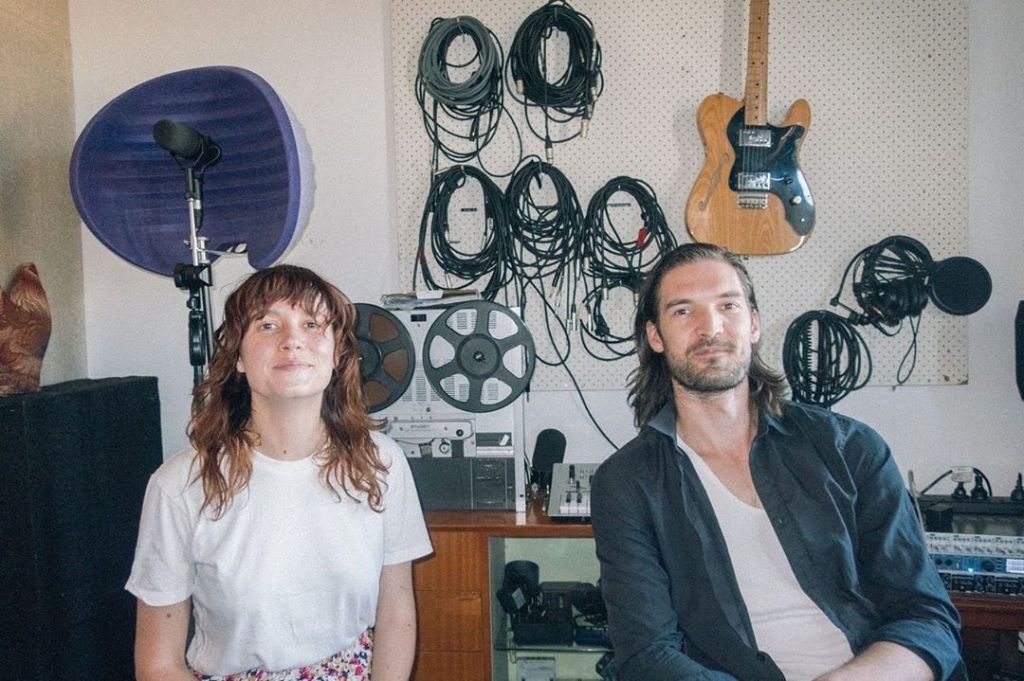
Scattered Order & M Squared’s Mitch Jones: If there’s emotion and heart in it—it’ll shine through!

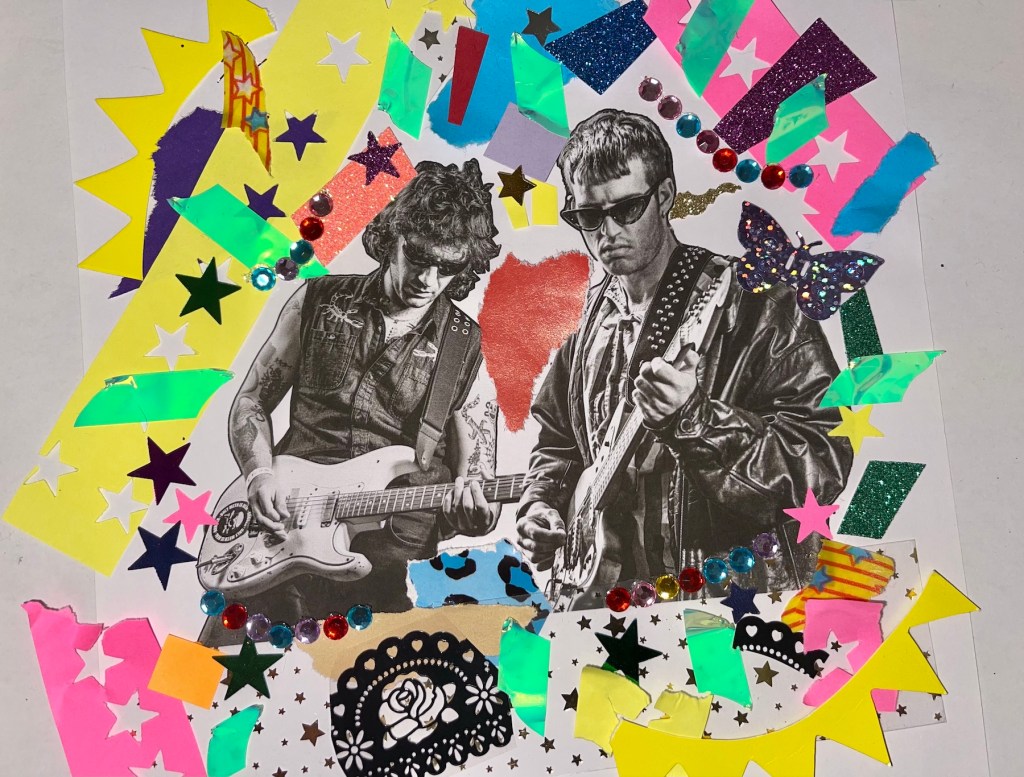
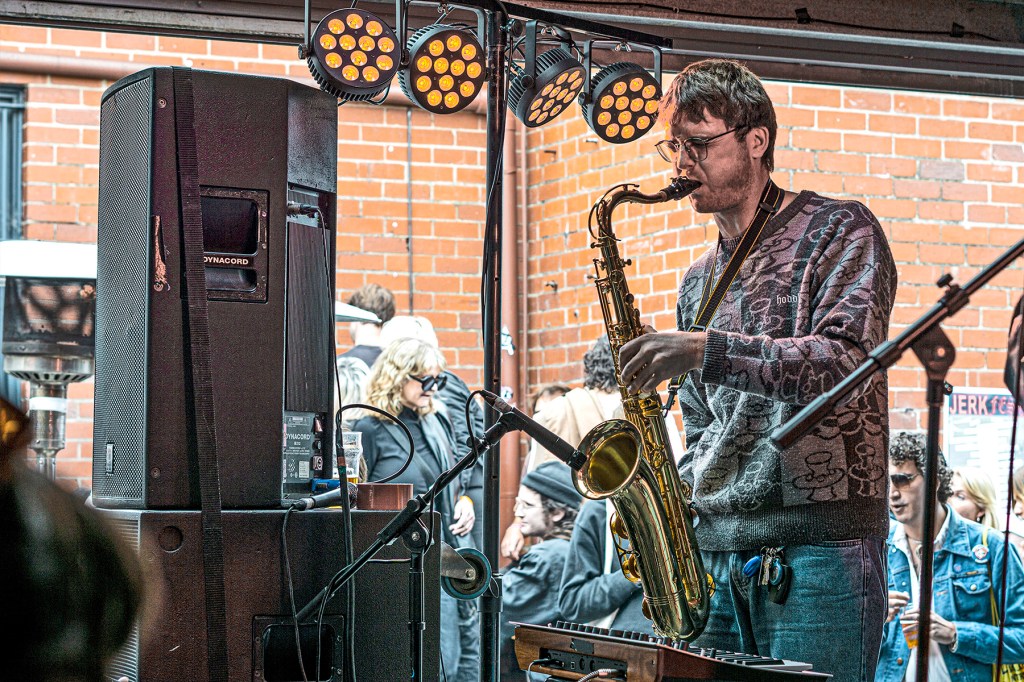
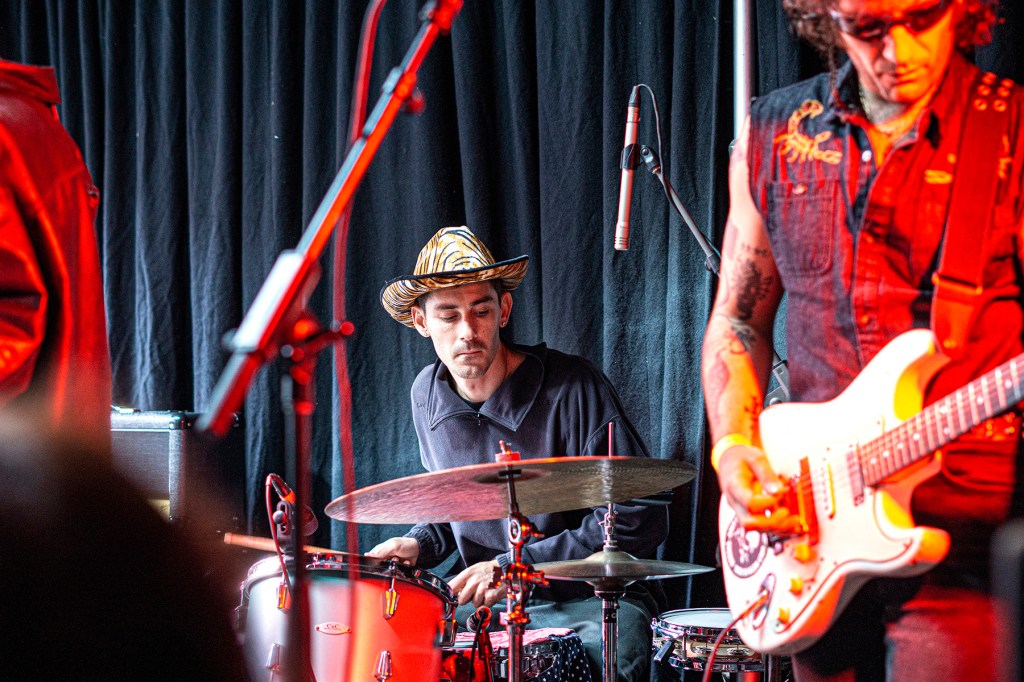
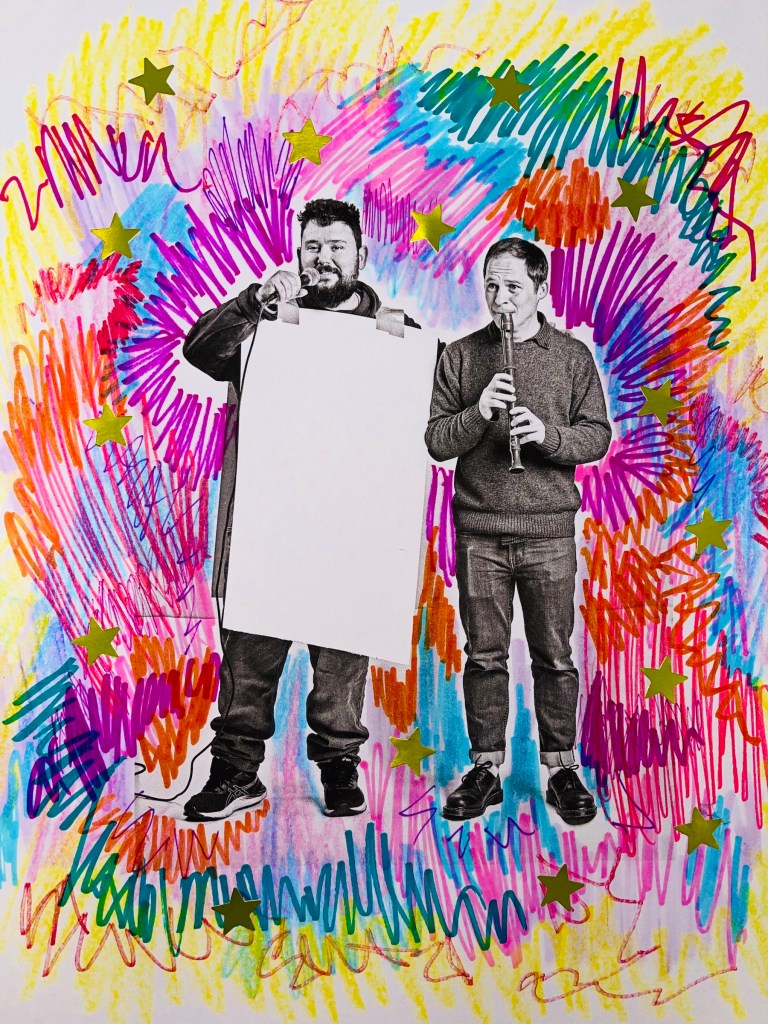
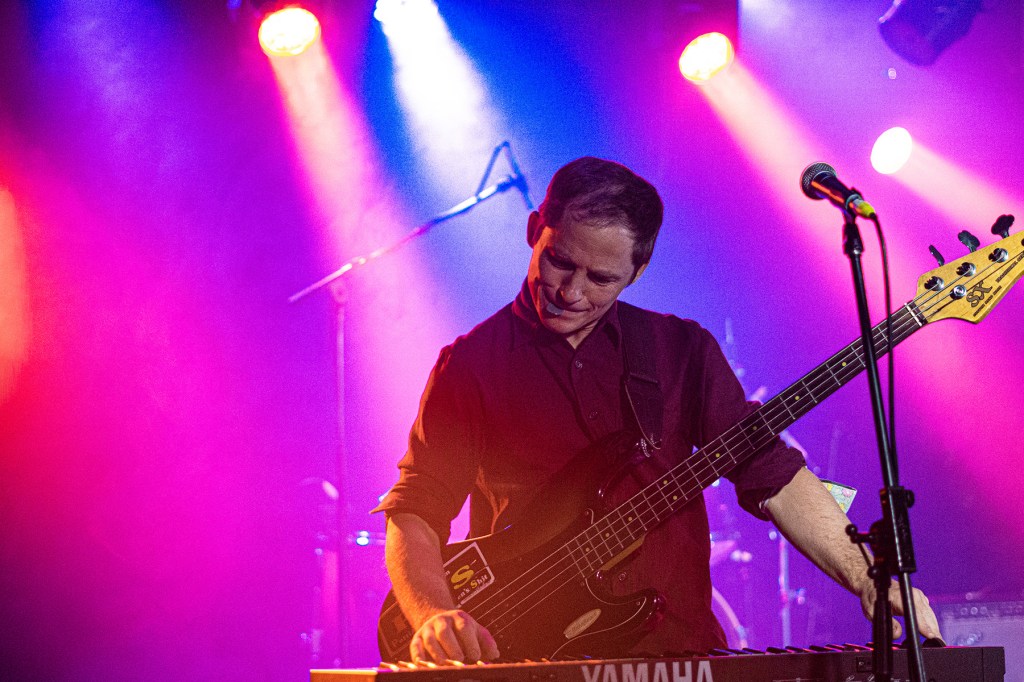
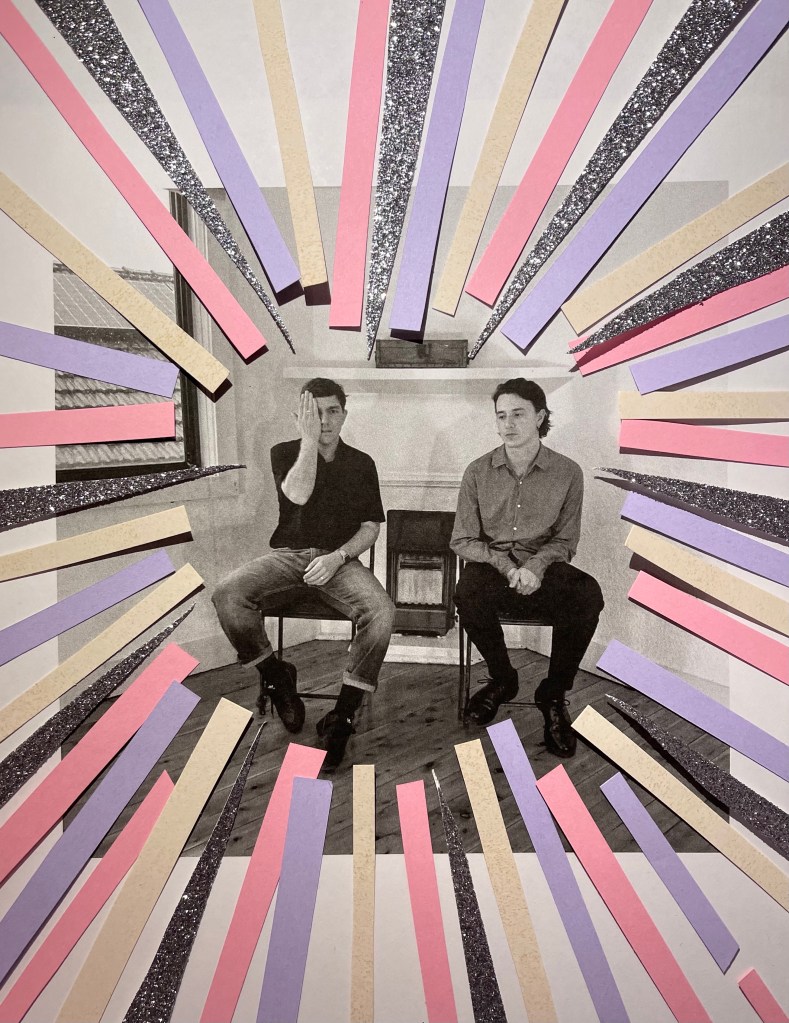
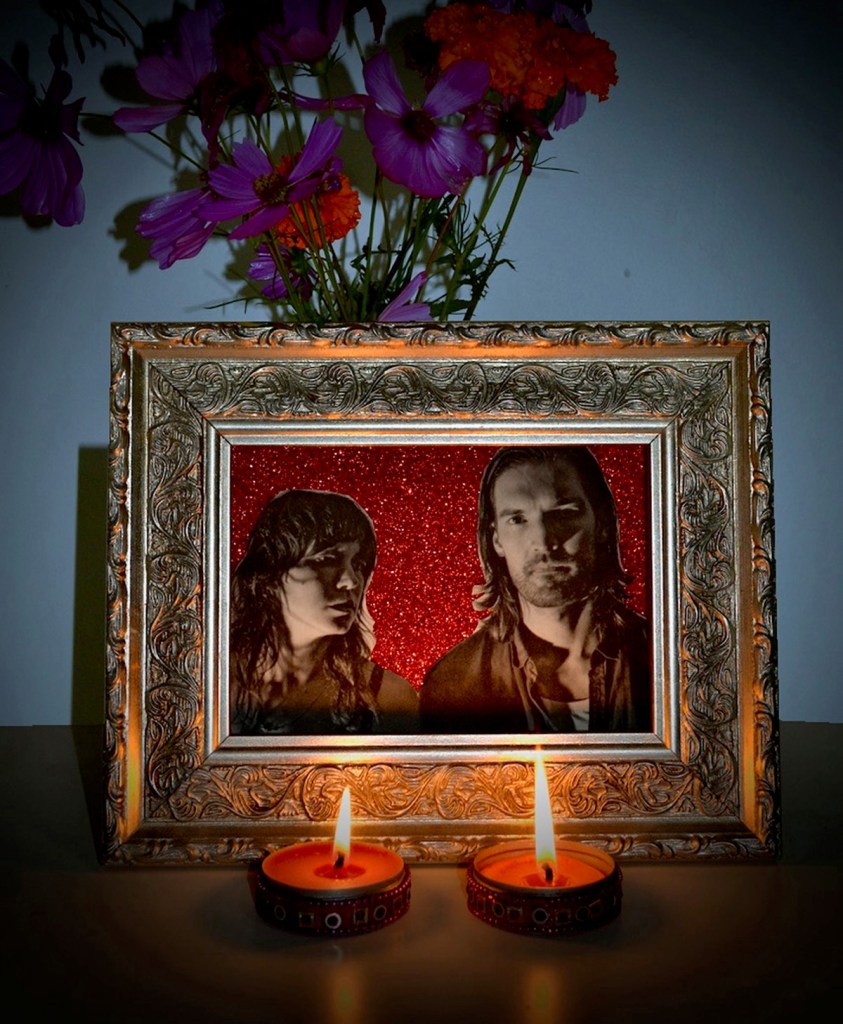
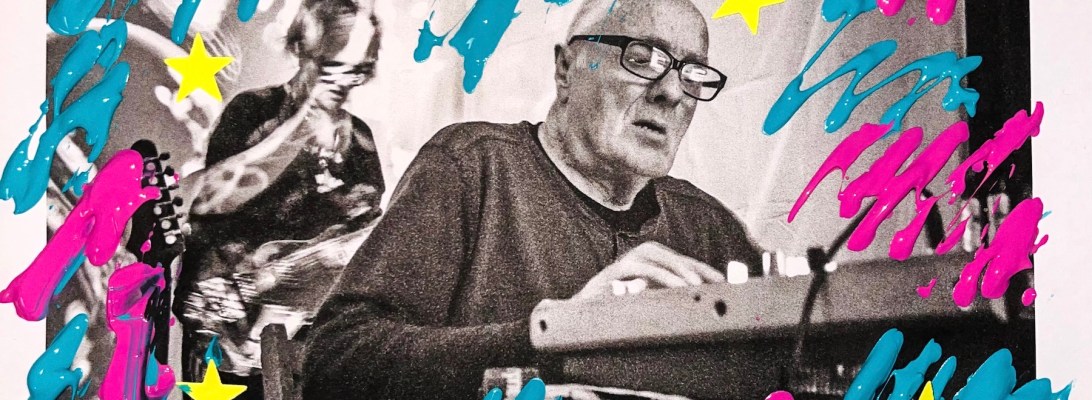
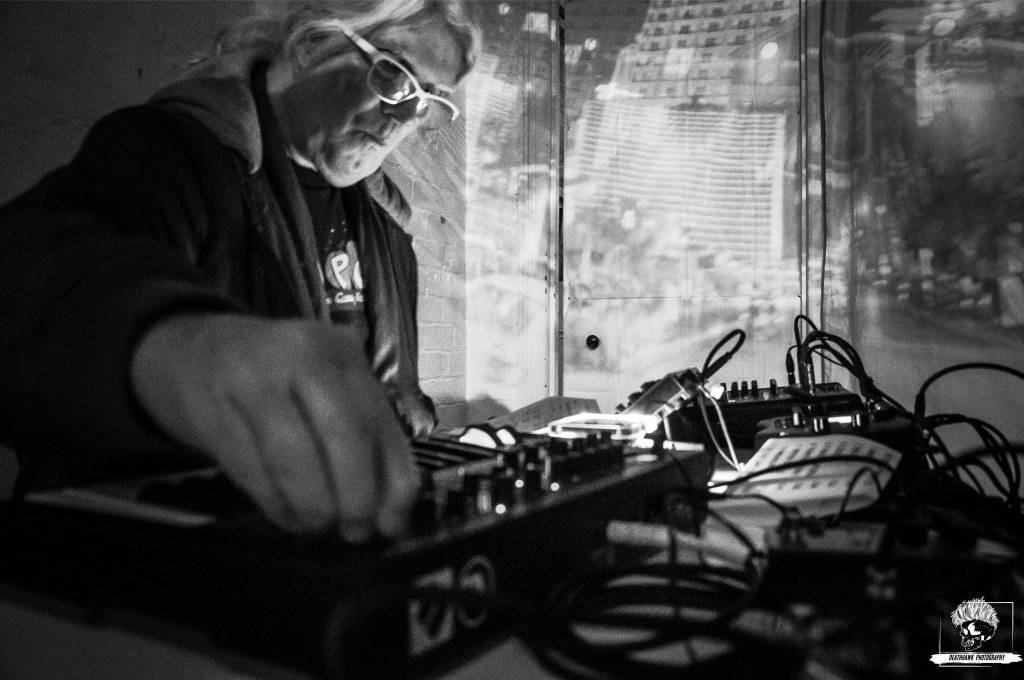
Original photo: Deathhawk Photography. Handmade mixed-media collage by B.

Scattered Order emerged from Sydney’s vibrant post-punk scene in 1979, founded by musician Michael Tee and sound engineer Mitch Jones. Their inception, born from a Boxing Day brainstorming session, epitomised a DIY ethos, as they pooled instruments and gear in a small Surry Hills house, igniting a musical spark that would define their legacy. Initially part of The Barons collective, Scattered Order soon charted their own path, founding the M Squared label to explore experimental soundscapes.

With a rotating lineup and an appetite for sonic exploration, they blurred genre boundaries, leaving an interesting and unique mark on the underground music landscape. Their music, characterised by a blend of found sounds, unconventional songwriting, and experimentation, challenged conventions and inspired subsequent generations of musicians.

Their live performances, often supporting international acts like New Order and The Residents, showcased their eclectic sound and infectious energy, further cementing their status as one of the pioneers of the Australian post-punk scene. Despite facing challenges and changes over the years, and a resurgence of interest in their music in the late 1990s and early 2000s, Scattered Order remain committed to their artistic vision.

The reunion of founding members Mitch Jones and Michael Tee sparked a new chapter for the band, leading to the formation of Scattered Order Mk1. Their live performances, ripe with forward-thinking experimentation, have garnered renewed appreciation from audiences.

As Scattered Order continues to embrace new technologies and collaborations, their dedication to pushing musical boundaries remains steadfast. With a renewed sense of affirmation and optimism for the future, the band continues to create a soundscape that embodies the essence of artistic freedom.

This is why Gimmie love them! We were excited to chat to Mitch Jones recently about new double album All Things Must Persist, their process, creativity, M Squared, and more. A conversation filled with insights, and all the fascinating secrets behind the music.

MITCH JONES: Music is an emotional release for me. I’ve always liked listening to it, and I found out that I really like creating it. I like manipulating sounds, placing different things with each other—I enjoy the thrill. I was never really a trained musician. I started this journey as a sound engineer, and I’ve taken that into creating my own music. I use whatever’s to hand. Over the years, technology’s changed and I pick and choose what I want to use. 

It’s good fun and it’s always exciting to make something new and then move on. You learn a little bit along the way – what you don’t like and what you do like – and you just keep doing. 

After school, I went to art school, but I never really carried that on. I found music and that suited me better than art. 

Did you find anything helpful about going to art school? 

MJ: I met my wife, Drusilla!

Ah, so it was totally worth it!

MJ: Totally! I met some friends there that I’m still friends with. A friend at art school actually started a band and that’s how I started as a sound engineer with their band, so that all helped. It was an exciting time to live. You’re at that age where everything’s exciting and new. I can’t imagine going and doing economics for a degree or something like that. 

Same. I couldn’t do anything like that either. How did you first discover music? 

MJ: As a child, I constantly listened to the radio, through a little transistor my parents would be listening to commercial radio. And then I discovered, my parents had a stereo. Then I discovered you could go to the local record shop and actually buy records. I started buying things that I liked, I started collecting records and songs I liked. On TV you had (I’m showing my age here [laughs]) like GTK on the ABC. As I got a bit older, in Sydney a lot of radio stations had put on free concerts in parks. So I started to go there and I enjoy live music. 

What were the bands that you found yourself gravitating towards? 

MJ: I always sort of gravitated towards something weird, slightly left field, not the most popular band at the time. I found that more interesting. Maybe I always went for the more underdog status bands. When I was growing up, it was all Skyhooks or Sherbet. Where I’d rather be listening to Band of Light or La De Da’s. I avoided the top 40.

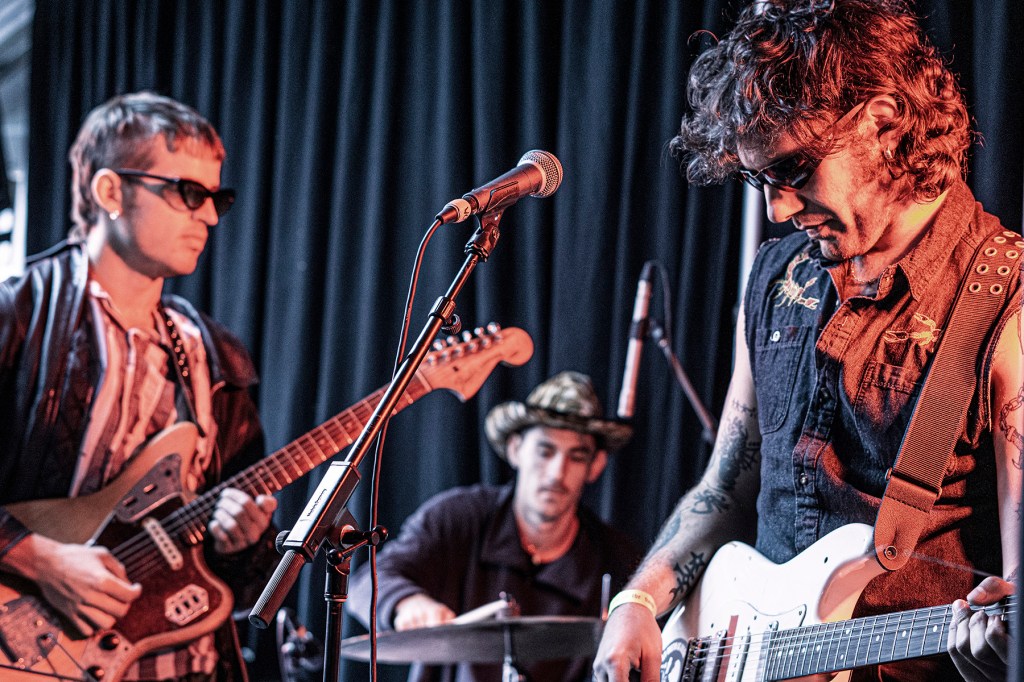
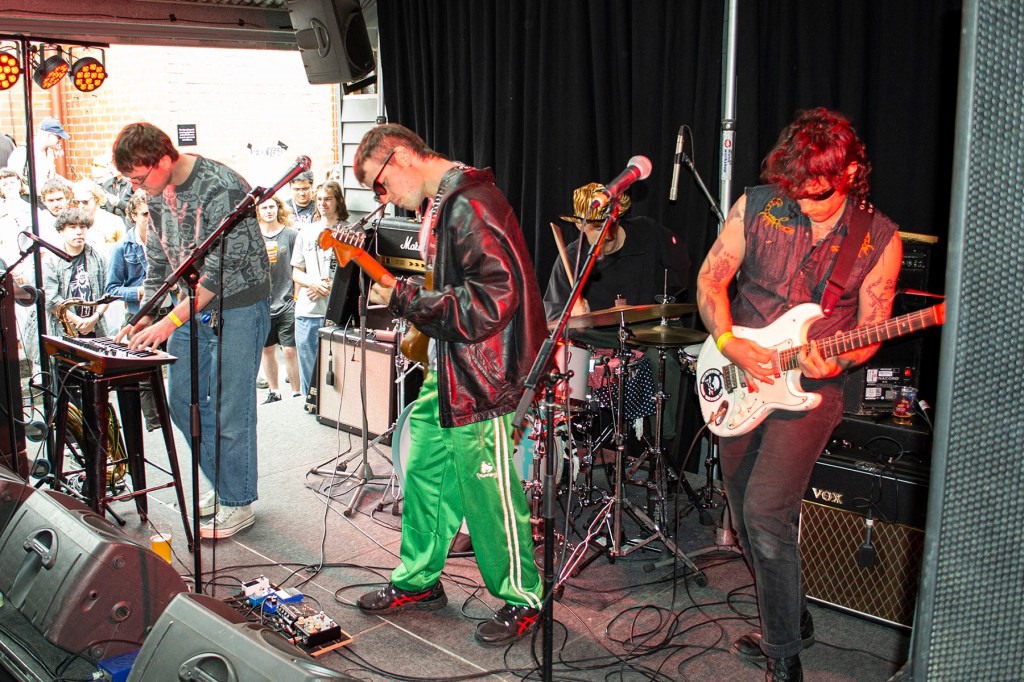
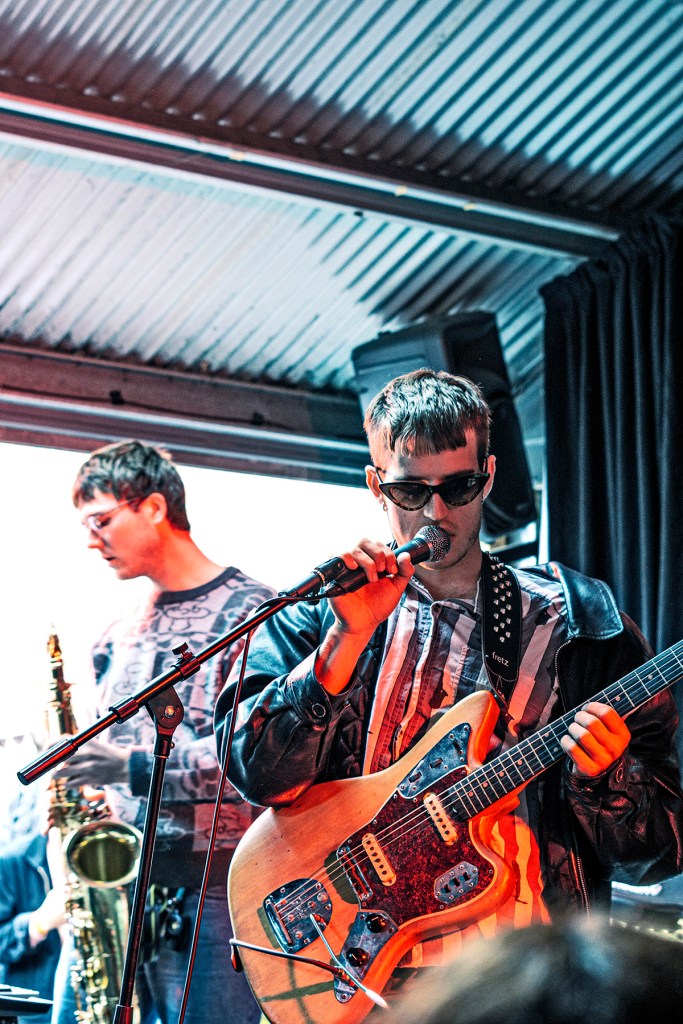
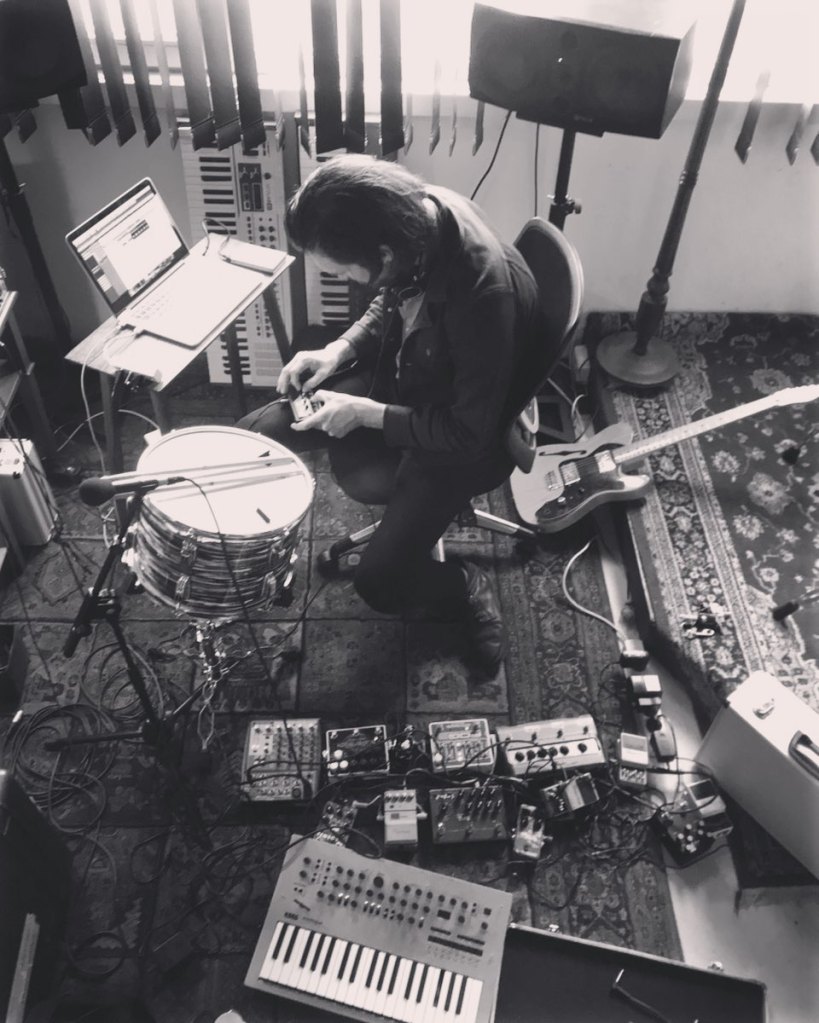
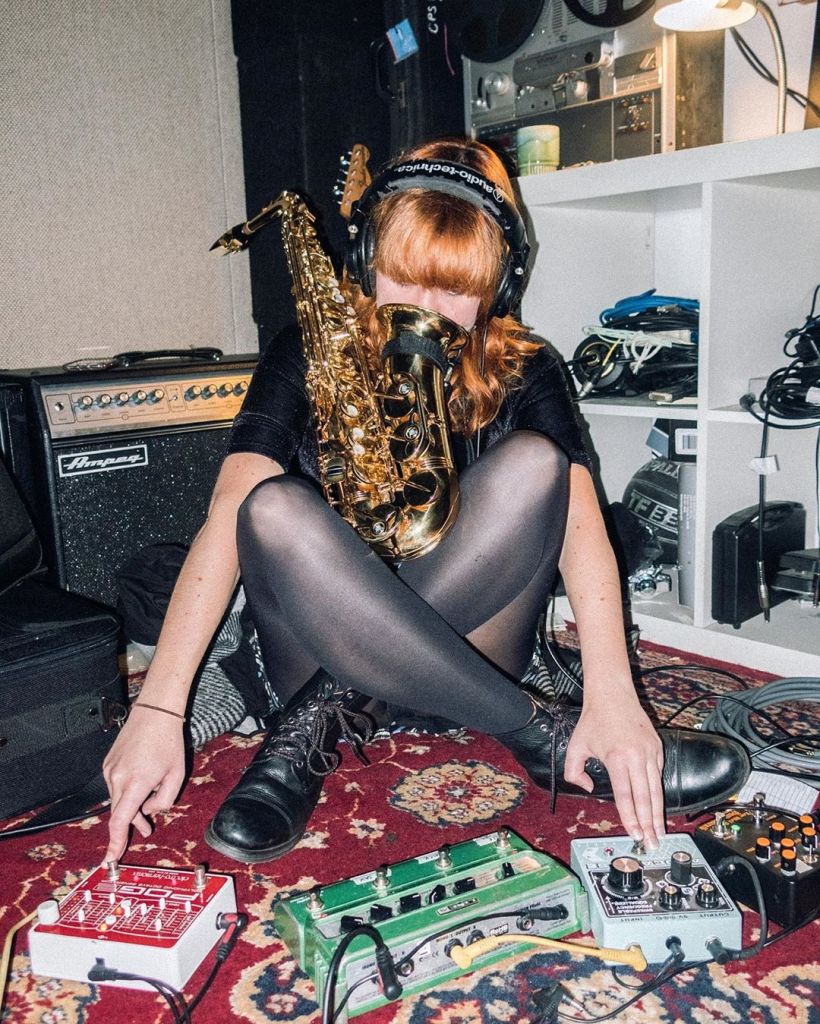
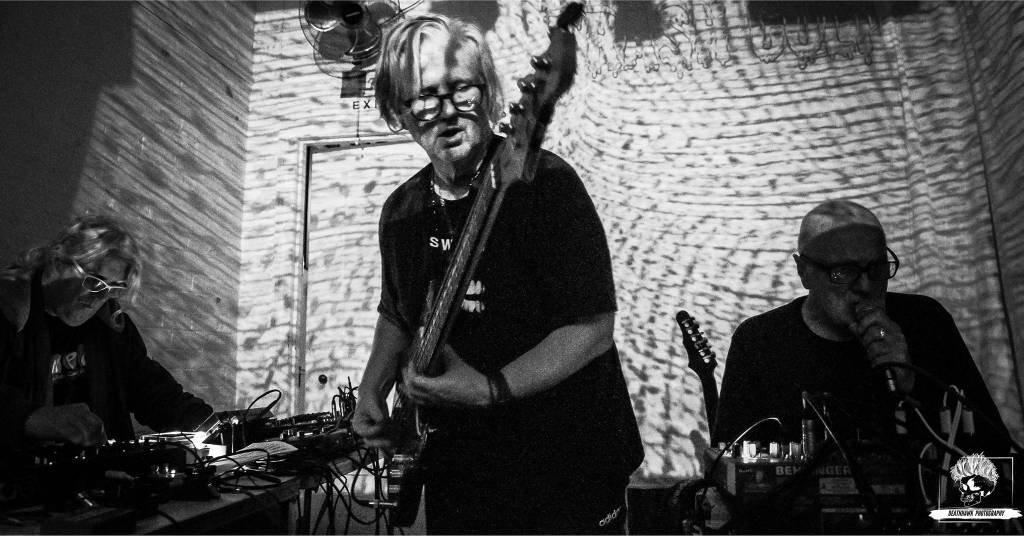
All photos courtesy of Scattered Order: Deathhawk Photography.

Who were the bands you’d go see live?

MJ: I was lucky because when I was in art school because punk bands started appearing. I saw amazing bands like X, Wasted Daze and Johnny Dole and The Scabs—all this in your face in small rooms, it was loud and exciting. I thought, ‘Oh, this is fantastic!’ It was immediate and exhilarating. I got carried away with it all. 

Did you grow up in Sydney? 

MJ: Yeah, I grew up in Sydney and went to Sydney College of the Arts, which had just started, they were in Balmain. I was doing a graphics course and hanging around the inner city so I got to see a lot of small bands in small pubs.

What drew you to going to art school? 

MJ: At school, that was the only decent thing I was any good at, really. I actually went to university for a year and tried to do a science degree. I was useless. They kicked me out after a year. Then I found Sydney College of the Arts. I thought I’d enrol there and that worked out really well. 

You mentioned before, that you got into sound engineering through one of your friends’ bands; who were they?

MJ: The band ended up being The Numbers, which ended up quite a big power pop new wave band. I started learning there, on the job. In those days, it was all carrying PAs around and being a roadie, but I learned sound engineering; about microphones and mixing desks. Through half of 1978 and all of 1979. That was a great education. I ended up being a sound engineer for various bands for the next 15 years. 

It was good, but I decided that I could do this too. I wanted to make my own music and find like-minded people to collaborate with. 

I understand that sound engineering influenced how you made your own music; how?

MJ: I approach things by finding the sound, it doesn’t matter how it’s generated. Then I manipulate it through electronics or equalisation or effects to make that sound suitable for what I want to use it for. Then I cut things up and looped them. I rely more on my sound engineering skills rather than my musical skills. I could play rudimentary keyboards and bass. I was listening to how it would sound at the end. You’re always layering sounds and getting a good mix. Even something delicate or something powerful. That was the way we did things, rather than having a group of musicians and practicing a song. It all starts with a sound and I build on that. 

What is one of your favourite parts of that process? 

MJ: Finding something completely out of the box, something that would go with the original sound. You have an original sound, you really like it and you think the next step is to find something that either jars against it or fits really well. That next step is what I find the most enjoyable because it could take the piece in a completely different direction. From there you have a fairly good idea where the end point could be and work towards it. It’s a surprise! When you put that second thing in and it goes somewhere you never expected it would. 

You try and remain open while creating?

MJ: Yeah, always. I don’t have a pre-plan or a pre-idea in my head. With the band now, there’s three of us involved, and we all have input and none of us are sure where it will end up. We put things together, take a lot of things out, and try different ways of approaching it and the song ends up sounding like it does. Not by accident but by following the feel of it.

It’s almost like an audio collage?

MJ: That’s a good way to describe it. You’re putting things together, you put something down, you think that suits, or maybe that suits if I take something from the original out. It’s not just keep on adding, you have to subtract at the same time. You know, it might be other things that have come in, three or four steps beforehand. You might have to subtract that. You let it organically turn out the way it does. 

How do you know when a song’s finished? 

MJ: The way I know is I keep playing it, then I’ll go away for a few days and just not listen to it, then come back and listen to it with new ears. If it’s working, you think, right, that’s it. You need to give it time—keep coming back and thinking, is it still good? If it is, it’ll be released. Or if it isn’t, something might need to be done to it or some might be completely scrapped. We’ve got a bit of a scrap behind us in the history of this band [laughs]. 

I read somewhere that pulling apart your mum’s Telefunken radio with a soldering iron influenced your approach to music? 

MJ: She had this lovely valve radio. It had a little speaker in it, it had this button on it with pickup, which meant you could plug in an instrument. You could use it as an amplifier. Being a stupid teenager, I had this big speaker, but I couldn’t connect the big speaker to the amplifier. So I thought it needs a wire from the radio to the speaker. Instead of just running the wire out of the bag, I thought, I’ll put a socket on the side of it, but I didn’t have a drill. So stupidly, I got a soldering iron and just burned through the plastic to make a hole completely wrecked the look of the thing. Mum never forgave me. But the speaker worked, which I thought was great.

In the beginnings of Scattered Order you were, in your words, ‘railroaded’ into being the vocalist of the band. How did you feel about doing it then and how do you feel about still doing it?

MJ: Doing it then, I wasn’t that comfortable with it. But the thing is, right at the beginning the lyrics were a little bit secondary, but then they became more important. Then, I was conveying the lyrics, no real emotion. I was speaking them off.  That was fine and that worked. Then, when we got back with the three of us about 15 years ago now, we were just doing instrumentals. I just refused to do vocals. The other two were saying, ‘You should do vocals.’ And finally, I relented, but I really started to enjoy that. There’s less words in our songs now. So I’m not just reading off, like it sounded like I used to, read off a shopping list or something. Now I can put more emotion into them. I’m writing the lyrics now. It’s good. I wish I’d taken that approach much earlier, but you can’t change the past. 

Do you think that in the beginning you didn’t want to do vocals because you were self-conscious? 

MJ: Oh yeah! I’m still self-conscious about crying. At the beginning the other people in the band were all fairly competent musicians and were all doing other things. To justify my position, I thought, well, I’ll have to do the vocals. Come up to me these days and say, ‘Oh, I really liked it!’ But I could never remember the words and would have lyric sheets everywhere. We wanted vocals. There was no other vote. We didn’t want to go out and find a rock singer. I was chosen and I was it. 

You mentioned that later on lyrics became more important to you, and that because you were writing them…

MJ: In the beginning, Dru, my partner, was writing a lot of lyrics, and I was writing some lyrics. But even the one song I wrote, I just wanted to just say it, and that was it. I was more concentrated on the actual band sound. Now, I think the vocals are more integral to the band sound. Especially on the new album, they’re more integral to the song. There’s less musical things happening to hide the vocals, where in the earlier stuff, the vocals were buried under a wall of noise. 

I really love the vocals on the new album, especially in the song ‘Need to Increase Speed’. I love how at the end off the song you say ‘I. See. God.’ – it really caught my attention. I was listening in headphones and that really stood out.

MJ: That’s interring that you say that. The whole album was made in headphones, so listening in headphones is great! ‘I See God’ is a name of a track from Pretty Boffins from the 90s. The track was all about travel, travelling long distances, and crossing galaxies. It was a bit like 2001 A Space Odyssey.

It has a real cinematic quality to it. 

MJ: Yeah, and especially with that lovely brass line near the end, which really lifted it. It could have been a song that could have kept on going into affinity. 

Are you a spiritual person at all? 

MJ: Not really. I was brought up Presbyterian. I do believe there is a God or a higher being. I’ve got the call of God. I’m not very spiritual. I just believe that people should treat people like they want to be treated. People should get along. Life’s too short to argue and get angry. Walk outside and look at nature. 

Yeah, that’s one of my favourite things to do. No matter how much of a bad day I’m having, I can walk out my front door, look at the trees across the road in the park, and I feel better. It’s like it gives me a moment for a breath, a pause, a reset.

MJ: Yeah. My partner, Drusilla, and I, we live up in the Blue Mountains in Sydney. 

Oh, beautiful!

MJ: We’ve got all this bushland. We can look out our back door and over this valley and it’s peaceful. It’s fantastic—all the bird life and the change of the seasons, it’s beautiful. The mountain air is really crisp. I go out there and I think, ‘I’m glad to be alive.’

I noticed there’s song titles and references from previous songs on older albums in the lyrics of the new album. In the song ‘The Silent Dark’ you say: The ‘prat culture’ of youth is now faded. 

MJ: Well, that’s how I feel some days. Prat Culture was our first album. We’ were obnoxious young people, and ‘prat culture’ suited us then. But we’ve mellowed a bit. It’s good, it’s not a bad thing. It’s life—you just move on. Priorities change. You just go with it. 

For readers that might not be familiar with what prat culture is; what does it mean?

MJ: We took it from Linton Kwesi Johnson’s album, Bass Culture. We really liked that album. So we thought, ‘Right, what are we?’ We were at Prats: a bit obnoxious, a bit against the grain. I don’t think we’re obnoxious anymore [laughs].

I really love all your album titles, they’re always so interesting. I really love A Suitcase Full of Snow Globes

MJ: Dru might have come up with that. I keep a sheet of paper and write down interesting phrases from TV or talking or reading. When we need a song or album title we have something. A Suitcase Full of Snow Globes was a double album, over 20 tracks, and they’re all little sparkly gems to us.

What’s the story behind the new album’s title, All Things Must Persist?

MJ: That’s even sillier [laughs]. 

But it sounds so profound!

MJ: Well, it does, doesn’t it? I think Shane came said, ‘George Harrison had All Things Must Pass. How about All Things Must Persist?’ We all agreed, we all thought it was a bit of a laugh. But, you know, I’m just thinking about it now, and well, all things shouldn’t really persist; bad things shouldn’t persist. All good things should persist. It sort of suits the band, because we’re not going to go anywhere, we’re just going to keep creating music—this is what we do. We’re persisting. 

Have there ever been times in your life when you didn’t make music? 

MJ: There was a time when my partner and I, in the early 2000s, we went to live in the UK. Before we left, the band was virtually just down to the two of us and the bass player. We wanted to get out of Sydney. John Howard was in power and we thought, bugger that. So we went to live overseas. We thought we’d do some music overseas, but circumstances conspired against that. We were too busy working to survive, to do any. There was a few years like that and we finally came back to Australia. By that stage, there was a lot of interest from overseas labels, mainly European labels, to start re-releasing earlier material and we started putting that together. Doing that, I got back in touch with Michael Tee and Shane Fahey and we decided to try making some new music together. That was around 2008.

How did it feel for you during that period when you weren’t able to make music?

MJ: I was listening to a bit of music. I thought at the time that I could do it. I put music behind me, I’ll do something else. And I was just working crappy jobs, but I thought I was living in a new place, new surroundings, which was fantastic and all that. But I came to realise that I really needed music in my life. So, we came back and we did that. Drusilla started doing all her own solo stuff and I was doing my solo stuff. We started to get into using computers for recording and using Ableton. I found out, you don’t need need all this equipment to realise what you want to do. Technology definitely helped us to get back into it. 
I love when people are open to embracing technology or whatever is available to create. 

MJ: I always see it as like an opportunity to try something new. I’m still trying to get my head around my mobile phone [laughs]. We save time and the cost.

You’ve mentioned your partner a few times and it seems that she inspires you; what’s one of the best things you’ve learned from her about creativity? 

MJ: So much. To be patient. Little and tiny sounds are good sounds. Everything doesn’t have to be loud and brash. Try new things. Don’t just settle on tried and tested ways. I’m in this little room in the house and she’ll be in another room and we’ll both be writing music on computers. We put music out together as a band called Lint. She’s a great influence on me, the love of my life, to be honest. 

Awww that’s so lovely! I feel that way about my husband too. Who lucky are we? Do you feel like there’s any prevalent emotions or moods on the new record? 

MJ: I thought it was a bit too sad, but there is a glimmer of hope throughout the whole album. It acknowledges where we’ve been as a band, it acknowledges it’s been a long journey, but it’s not the end, and it’s not this, there’s a future to explore.

The song ‘We Should Go’ lyrically seems like a sadder song.

MJ: It’s more things aren’t going well here at the moment, we should get the hell out of here. It was a bit of a warning shot, you know, we should move on. Don’t stay in this place. 

What about ‘It Was A Saturday’?

MJ: That is sad. It’s all about bastard men instigating violence on women. And in a lot of cases, the only way this could be ended is, if the woman kills the man. The last line: At least she has won. Well, she hasn’t really won, she’s negated the violence but put herself in a different, terrible situation. You can’t turn on the nightly news without hearing about a woman being murdered by a partner, which is a national disgrace. It’s distressing. 

Absolutely! I noticed with the song ‘I See the Old Man’ – it has the ‘I Am Sandy Nelson’ reference. 

MJ: That’s an in joke from years ago. We did a song called ‘Free Sandy Nelson’. Sandy Nelson was a drummer, ‘Let There Be Drums’ was a big hit he had. When we did the song, it was the beginning of the internet, and we thought it’d be a great idea to make the contact for the band: Sandy Nelson. We made a mythical character called Sandy Nelson, gave him a PO Box and he hung around the band for 30 years [laughs]. That’s why he keeps appearing in songs.

Is there any other conceptual continuity that runs through the albums? 

MJ: We keep trying to make albums that sound different to the previous album. We all try and stretch what our contributions are, to try and push it into newer areas. It’s just a general evolution really. 

How did you feel like you stretched yourself on this album? 

MJ: I felt really good. At first I was worried, but the more I got into it, the better I felt. I felt comfortable having the vocals quiet up front. I didn’t feel embarrassed about my singing, I didn’t feel embarrassed about the lyrics. I ended up feeling actually quite pleased with myself, to be honest. 

I’m really excited to see it all live when you come up here to Queensland. 

MJ: We’re only playing two tracks from the new album live. ‘It Was A Saturday’ and ‘Need To Increase Speed’.

I can’t wait!

MJ: The other tracks are so quiet, we decided it doesn’t really fit into a loud set. We’re playing a number of tracks off the previous album Where Is The Windy Gun? And one off  of Everything Happened in the Beginning. A couple earlier ones too. We try and keep a loud set, because we like playing live loud!

Was there certain sound on the new album that you had fun exploring or creating? 

MJ: Quite a lot of the tracks started with minimal drones – like ‘I See The Old Man’ or ‘Dust Bisquits‘ – and pianos or meanderings from Michael, which is different to what we’ve normally done. We’ve normally started with a drum track and work from there.

What do you get from working with Michael and Shane? 

MJ: The joy of hearing what they’ve come up with, really. We all live in different parts of New South Wales. So for the last few albums we have worked remotely. So somebody would send an idea out, then you receive all these things back. All the time it’s a surprise to me what they come up with. It’s like, I’d never think of doing that. It’s amazing. They’ve have a natural ability to quickly come up with something that enhances things. It’s a real privilege to be in a band with them. 

Are you ever inspired by everyday sounds that you around you? 

MJ: Yeah. I’ve got a little digital recorder and I record things around the house or outside. I have a selection of those I could go back to, cut them up, and use them. I record bits of the TV; dialogue of old movies. I can’t just sit there with my guitar and play out a tune. I need something to start me off and it’s normally a household sound.

Do you have a favourite old movie? 

MJ: Get Carter is really good. It was on TV a few days ago. I watch the silly afternoon movies. And there was Hell Is The City with Stanley Baker, is a nice black and white thing from the early 60s, set in Manchester. I like British movies. I like noir movies. I drop off mid-70s, my interest wanes in movies. So, I really like anything from 1940 to 1975, if it’s noir. British movies too; I like kitchen sink dramas.

Do you watch much comedy? I noticed that there’s like a real sense of humour in your music.

MJ: I used to, but there’s not much good comedy around. At the moment I’m watching stupid bloody, you know, those real death things, like Buried in the Backyard

Forensic shows?

MJ: Yeah. But comedy, no. Some British comedic game shows are pretty good. I don’t subscribe to any streaming television stuff. Just free to air TV, if it’s not on there, I don’t watch it.

Is there a particular album by another artist that had a real impact on you? 

MJ: There’s heaps over the years. As a kid, Are You Experienced by Jimi Hendrix. Then, Pawn Hearts by Van der Graaf Generator, that’s the early 70s one. But then we got to the Duck Stab EP by The Residents. The first of the first three Cabaret Voltaire albums—a big influence on us at the beginning. That you can make music with minimal equipment and a small studio. You didn’t have to sound commercial, that was fantastic. Later on I got into a lot of Sound Creation Rebel and things like that. But lately, a lot of Australian bands, I really like No Man’s Land from Ballarat, a two-piece sort of bass drone-y sort of outfit. I really like the Paul Kidney experience. What else? Fables from Sydney. There’s so much good music about.

Totally. I think there’s always good music around you just have to find it. 

MJ: That’s the thing you have to find it, you can go down these rabbit holes looking, I go through Bandcamp and see different things. I try and support smaller artists, that I know that are doing interesting things. 

You’ve been doing that for a long time, all the way back to doing label M Squared!

MJ: Yes. There’s lots of smaller artists around the world doing interesting things. They’re all doing it for the love of it, they’re not going to make any money out of it. So you want to support people like that. 

Absolutely. That’s why we do what we do as well. 

MJ: The music industry has always been strange. It’s always been lots of middlemen, lots of people hustling about trying to make a buck. A lot of good artists get burned. 

Yeah. Growing up, I wanted to work in the music industry because I love music. I tried it for a little but when I started to see what goes on behind the scenes and just the way artists are treated and other behind the scenes workers, it was horrible. It put me off working in the music industry. We just do our own thing regardless of the industry; it’s more exciting on the fringes anyway.

MJ: That’s the only way to do it. It happens in all levels of it, like in venues, you can tell which ones are all management-driven. Makes you think, ‘Oh, what’s the point?’ These days, they’re all scrambling over such small amounts of money, there’s no big money around.
When you’ve been recording bands over the years, is there anyone that you’ve worked with that had really interesting approaches to what they were doing? 

MJ: The most interesting was when I was doing the two M Squared albums for The Makers of the Dead Travel Fast, which was Shane’s band. They were amazing. We had minimal recording equipment, they had huge ideas; together we managed to get these ideas recorded and sounding really good. They’d ended up on records that sounded fantastic. These days, I don’t know how we did that, to be honest. They’d be recording outside, using whatever comes to hand, but then juxtaposing them to a delicate piano piece or shouted vocals. The way they combined different sounds for each piece.

A lot of other stuff I recorded, there were some good things happening, but a lot of the things I ended up doing at M Squared was more around the standard guitar-based drums; a band situation. Which I found interesting at the time, but it didn’t stretch your imagination. 

Is there anything that you could tell me about M Squared that people might not know? 

MJ: We didn’t make any money. We left the studio owing six months back rent. For a while there, it fractured friendships between myself, Michael, and Patrick. They had left Scattered Order by the end of M Squared. Things are getting grim financially. We were all getting a bit tired of each other’s company and tired of the situation. 

I guess everything runs its course naturally, and it’s time to move on. 

MJ: Yeah, it’s time to move on. If we kept going we wouldn’t have lasted and it would have diluted what was happening. I look back on it, some of the releases on M Squared, I personally wouldn’t have put out. I’m sure if you asked Michael, or Patrick, rest in peace, they’d probably have a different list of things they probably wouldn’t put out. But you can’t change the past. It was great while it lasted. It had its high point. I met all these wonderful people. I’m still recording with two of them. It served a purpose in the Sydney underground at the time. 

What do you sort of consider to be the high point? 

MJ: The high point was when all three bands were playing: Systematics, Makers Of The Dead Travel Fast, Scattered Order. We all toured; we actually got to Brisbane. That would have been February 1982. That was the high point. Everybody was recording. Everybody had records out. By the end of 1982, things started to go down.

What was it like for you when you reconnect again? 

MJ: I was good. I’d seen Patrick over the intervening years, but I hadn’t seen Michael for over 20 years! Because of this re-release business for all the Scattered Order and M Squared material, we arranged to meet up again. I was a bit wary beforehand, going, ‘Oh, what’s going to happen?’But it worked out really well. And we’ve been firm friends ever since. We’re all a bit older and a bit more mature now. We know each other’s strengths and weaknesses. Probably back then, I was too demanding of everybody. Michael was probably thought I was too much of a control freak.

Do you think that was because you wanted to get stuff done and were just excited about things? 

MJ: Yeah, yeah, yeah. But I wanted to do that. I wanted to keep paying the bills as well. That helps. Michael and Pat wanted to do things, but were sort of, bugger the bills, it’ll all be all okay. 

I’ve read that both you and Michael came up with the name Scattered Order, you each came up with a word?

MJ: Yeah, yeah. I came up with ‘order’ and he came up with ‘scattered’.

That makes sense, you were talking about how you were a bit more controlling back then and he was a bit more loose with things. 

MJ: It does, it makes total sense.It has suited the band throughout our history because there’s always been a bit of a scattered approach but there’s some sort of order there holding it all together. It’s getting that balance right. Sometimes there’s been heaps of scattered and not much order too [laughs].

I’m the sort of person that I needs something to hold on to. I need it to be a little bit grounded, there has to be something constant throughout the song, a beat or whatever, something to hold it all together. 

An anchor? 

MJ: Yeah. Shane and Michael, they’re a lot more proficient on what they’re doing, and can take things further and wander around with no anchor point, eschpeially live. I can’t do that. I go, ‘What the hell is going on here? How can I contribute to this?’

You’re sort of self taught, right? How does that benefit you? 

MJ: I can construct things in either simple little patterns that I could do, or if the song was constructed I could add to it. On the early stuff, Prat Culture, I was playing guitar, but I was just adding one long note every so often. I knew I could do that. I knew that I could do that live too. I knew I could do that in the recording. I knew it added to the song itself, so that was an advantage to me. Since then, I’ve learnt a bit more, but not much more. I’ve still got a guitar with all the notes actually written on the fretboard. 

There’s nothing wrong with that.

MJ: I still play two or three note phrases. The whole idea is—whatever you do, however little or large, it’s meant to add to the whole sound of the track. 

Is there anything that you find really challenging about creating music? 

MJ: The most challenging thing is not repeating yourself.  Sometimes I wish my prowess on guitar, was a little bit better than it is. But I finally come to realise it’s got to a certain point and won’t get any better. So, that’s challenging, to work with what you had and try to get the best out of it. And at the same time, don’t just repeat the last song you wrote or the last album you helped create. 

That’s good advice. I know a lot of musicians can be real snobby about gear, which I think is lame. You can have the best equipment in the world, but if you don’t do anything interesting with it, I don’t really care. But each to there own.

MJ: You can write fantastic songs with hardly any equipment. If there’s emotion and heart in it—it’ll shine through!
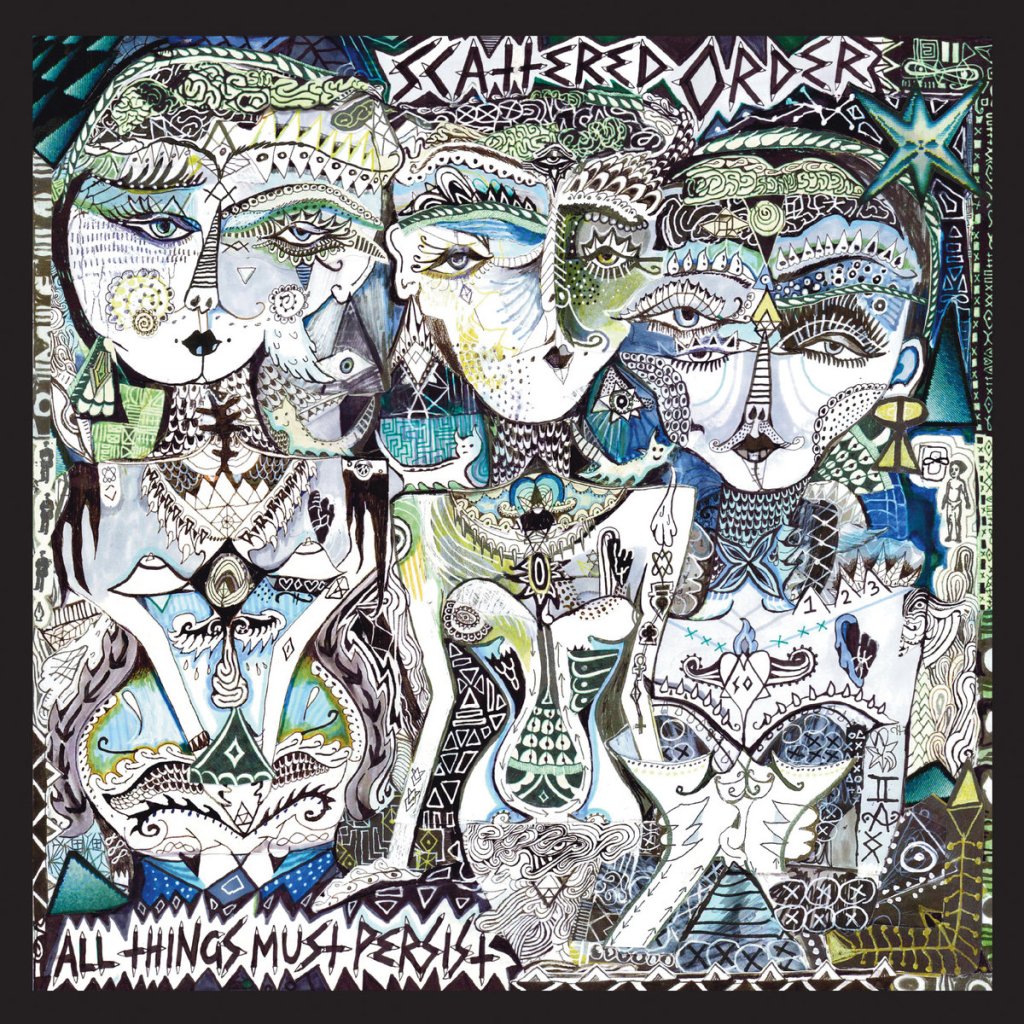
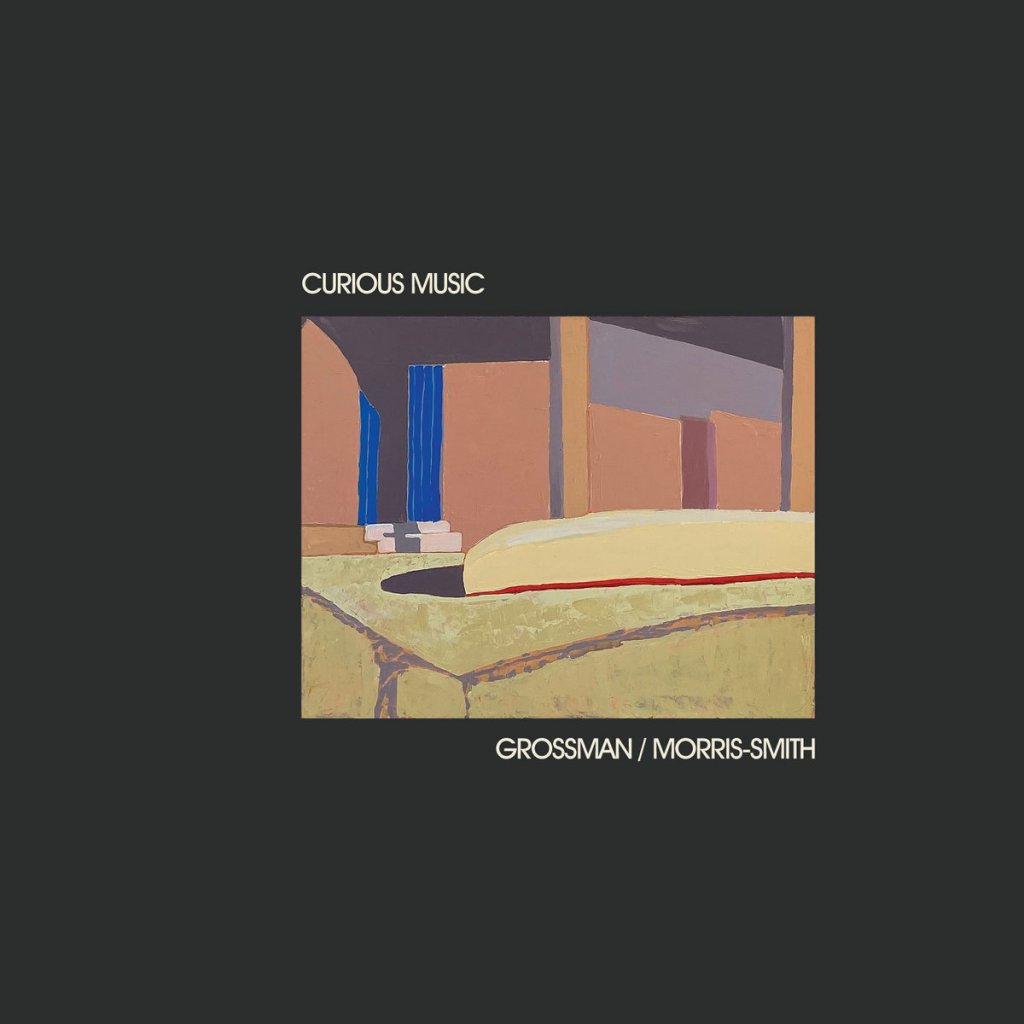
Cover art by Stella Severain 

Check out SO’s website: scatteredorder.com

Follow them: @scatteredorder and SO Facebook

Find their music on: SO Bandcamp

Cloud Ice 9: ‘The function of art, at its purest form, is to make you not feel so alone.’ 

Original photo by Jhonny Russell / handmade collage by B

Cloud Ice 9 were one of the most interesting bands we saw at Jerkfest last year. Their hard-to-define music is punctuated with unexpected moments. Delightfully wonky, unfolding like a constantly shifting kaleidoscope, each note rearranging itself into new, mesmerising patterns creating a brand-new galaxy for listeners. Their output is immersive and explores the relationship between sight and sound with limited information about them out in the world, beyond their music and videos—until now. We chatted at length with vocalist-guitarist Jordan, and guitarist Reis. They have a great approach to creativity and life, we think anyone could get something cool out of this read. 

REIS: I’m nursing some heartache.

Awww, I’m sorry to hear that.

JORDAN: Things have been up and down. In Melbourne, at least, we’ve been out of lockdown for a year and a bit now. So that initial exciting time of being free and enjoying each other’s company out in the big bad world has sort of simmered down a little bit. It’s gotten a bit more about recalibrating and figuring out one’s general approach to life and your trajectory [laughs]. There’s been lots of changing and fluctuating, mostly for the positive. A lot of people are stressed—money-wise, job-wise, and life-wide. It’s all a little bit turbulent at the moment.

REIS: Definitely. I’d say that there isn’t a single person that I’m dear friends with that is financially secure at the moment. But maybe that’s a reflection on the kind of people we hang out with [laughs]. The general sense of optimism post-COVID has just been crushed by this impending recession and the rise in the cost of living—the whole shebang. As people doing the kind of things we do, a little bit out on the fringes, those waves are definitely felt a lot harder. 

JORDAN: But by that same token, I feel like it’s times like these when it feels like the best things kind of come to the surface and to combat that. Winter is coming, I feel like it’s the best time for people to actually generate interesting, positive things to kind of cope and help them manage.

REIS: Easy for you to say, mate. You’re fucking off to Europe! It’s going to be so hard for you.

[Laughter]

JORDAN: I’ve done my time. I wanted to do some writing and some soul-searching. I’m going to Poland, where my family’s from, and I’ve never really been before. Mostly just to explore and take a break. Spend some time being very present and focusing on where am I going to sleep, what am I going to eat, how much money does this mean in my pocket. Be a lot more day-to-day for a couple of months.

Are you both from Naarm/Melbourne? 

REIS: The short answer is, yeah, We both grew up in Melbourne for the most part. 

JORDAN: I was born in Sydney and moved here when I was four.

REIS: I was born in Turkey and my family came over when I was young. and  have gone back and forth a couple of times. For the most part, Melbourne has been home.

How did you get into music? 

JORDAN: Pretty differently, I guess. Different ages, different times. I’m turning 29 in a month.

REIS: I’m 28.

JORDAN: We went to high school together and lived together for a while afterwards. I got into music pretty young and was learning different instruments. I went to art school and got spat out and felt pretty dejected by it all. It was then that I moved in with Reis, when we were around 23. That’s when we really started making music.

REIS: I was definitely a big fan of music. I picked up a guitar when I was 21. I had a very different musical upbringing to Jordan. Only from punk and hardcore, that level of accessibility, got me to think about it in any sort of serious way. Then I just played in a band and just went from there. It definitely took over my life in a way that I really didn’t expect [laughs]. 

JORDAN: That punk accessibility thing, and what Reis had going, was really inspiring for me. Because, like I said, I was feeling dejected and confused about going to art school and getting chewed up and spat out.

Reis would be in the shed, making music on Audacity with iPod earphones and just really winging it—DIY-ing it. That inspired me to get back into doing things in a way that feels very organic. It felt free from any things you might think you need: the right gear or a sound engineer or this and that. Which can all get quite paralysing because it’s not really always feasible.

REIS: Earlier than that, Jordan literally showed me how to hold a guitar and play chords. I learned so much from being around this guy. What I do would be very different if it wasn’t for him.

JORDAN: Our first project was called, Dingo and Rocco. That was born out of Reis letting me stay at his mum’s house when we were younger. We started playing acoustic guitars together and started writing weird, chaotic love ballads.

[Laughter]

REIS: We’d be busking out the front of the IGA. 

JORDAN: We’d get $20, say, ‘That’s a hard day’s work,’ then go across the road to the pub and get a pint. 

When we were living together in our own place, it became more experimental and bigger. We had a big barn full of Hammond organs and a lot of weird junk we found at tips shops.

REIS: We had a pirate radio station [laughs].

JORDAN: We were experimenting, and Cloud Ice 9 started to form, around 2018 or 2019. It was a fair bit before any thing tangible really came together.

Photo: Jhonny Russell


When you first started hanging out, what were the things you’d bond over? 

REIS: Knowing each other in the high school days, I guess, just puberty blues. 

JORDAN: We liked weird things. When we lived together, we had this huge, sprawling property in Brunswick West with all these sheds; we had heaps of room. Reis had a van and we’d go pick up a lot of weird gear. We had a huge VHS collection too; we were really obsessed with watching old weird tapes.

The experiment and play surrounded with all these different toys, like broken organs and old pump action pianos, and even balloons in microphones of heaps of delay. We just love to play. We bonded through that musically. 

REIS: It felt very insular. It felt like a very small world that we just kind of carved out and spent a lot of raw hours nutting out the details.

JORADN: I liked that it felt like we obviously didn’t have big musical inspirations; what we were doing was far removed from that. Just play and experimentation—that felt like a nice organic process. It inevitably started to take a form. Saying that, we are both very obsessed with Alan Vega and Suicide, and some of those old heads.

REIS: I was watching this interview with Vega where he was talking about some of his sculptures that he’s made, and he has the approach of just making something to make something. I wonder about those kinds of people that are completely unaffected by what’s going on around them—to have such a strong sense of what you’re doing is right. That doesn’t just come with music; it comes with fucking everything. Knowing people that even a salad they’re making is art—it’s a bit much for me, but I like having those people around.

JORDAN: They’re more into the entity and context of the art than the art itself a lot of the time. We both grew up on Brian Jonestown Massacre. I really felt like that was more about that ‘schiz’ dynamic that Anton had orbiting around him. It was more about the life and the headspace and the dysfunctionality of it all—that was more fascinating. The strange creative humans navigating a contemporary civilisation and what comes out of that. There’s a lot of Brian Jonestown Massacre music I could take or leave, but I feel the whole context really adds to it. The same is true for a lot of artists that do inspire us.

When you started Cloud Ice 9, was there anything at all that you had in mind for the project?

JORDAN: It took a long time. It was me, Reis, and Jim in that shed in Brunswick West. It was more about getting stoned and making music that almost wasn’t music. Literally feeling it out and then trying to make sense out of complete nonsense. It slowly formed into actual songs. The songwriting was mostly inspired from books and film. Musically, that stuff was quite intuitive. 

Conceptually, I was obviously reading a lot of Kurt Vonnegut at the time and weird sci-fi stuff. I wanted to write music from the perspective of aliens that had come to Earth, and sort of celebrating the apocalypse. Natural musical influences from Suicide and outside of rock came to the surface too. Essendon Airport.

REIS: Definitely all of that. I felt like when we were starting it, we didn’t really have much of a vision of what it was going to be. For me, it felt like it was a really strong anecdote of a lot of the music that was around that we didn’t identify with—kind of how formulaic a lot of it was. It’s funny because I feel like a lot of people have said to me, ‘Cloud Ice 9 is so weird!’ But I think it’s fairly tame.

JORDAN: I always really liked bands that didn’t really sound like anything else. I grew up on the Gorillaz. Demon Days was the first CD I ever owned. Maybe I can break it down a bit more now, but at the time, it sounded like nothing I’d ever heard. It crosses so many genres and has that world-immersive thing that you do feel like it’s its own entity. I don’t know if Cloud Ice 9 is there yet, but I would love it to create its own world and sort of be able to touch on certain things but retain a certain element of its own thing.

REIS: Ben Wallers and the Country Teasers is a definite influence of that—being reminiscent of something you’ve heard before but completely different.

REIS: Something gone wrong. 

[Laughter]

People keep asking us what bands we loved most at Jerkfest this year and the ones that resonated most were you guys, Red Hell, and Essendon Airport. Then people ask, ‘What do they sound like?’ That’s hard to answer because you all have created your own thing. I believe that you have succeeded in creating your own world.

JORDAN: That’s sick. So nice to hear. We’re about to put out this album of live takes of improvisations that we’ve been recording and archiving over the years. We’ve got hours and hours and hours of nonsensical jams, essentially. No tangible vocals really. We’re casting a wide net. We’ve been playing for a while, and it only feels like in the last year or so, it’s starting to get a bit of traction.

I’ve been describing it as country sci-fi to people/jazz gone wrong. I like that you can’t really describe it. There’s a lot of bands that sound like a lot of bands around where we’re playing. It’s nice to be a bit different, but I guess we also don’t want to become the ‘weird’ band [laughs]. We want to also write good music!

REIS: I don’t think it ever has mattered what we want, it’s just what we do. 

Photo: Jhonny Russell

Jhonny, who I do Gimmie with, mentioned that Cloud ice 9 sounds wonky. 

REIS: Yeah!

[Both nod in a agreement]

JORDAN: I like it when music is kind of a walking pace. I like when the beat is like, dun, dun, dun, dun. It kind of gives it that off kilter thing. 

REIS: Recently, we have a real point of contention in the band, as to how slow to play one of the songs.

Your album Circus St, is your second album. Where did the title come from?

JORDAN: It was just an idea I had that, basically, life, at the moment felt like that. Coming out of COVID. Cloud Ice 9, in general, is about enjoying a sense of liberation in the fact that the world is kind of ending. Circus St was an embellishment on that—life is a bit of a circus. When you walk out onto the street, it can sometimes feel like that, just the bizarreness and ridiculousness of it all. 

It reminds me off, Reis and I, did this interview with this person called Barbara, who’s a puppeteer, and they’re a bit of like an icon around Melbourne. They’d  dress up in a wedding dress, this bearded, ragged old man. We actually got them to perform with us a little before Circus St came out. They would busk. That really coined the idea of Circus St to me, because they were this strange clown on the sidelines of the streets of inner-city Melbourne, reminding you of how bizarre and crazy everything is. The acknowledgment of what Barbara was doing was more genuine than a lot of people that are going into Myer and trying on perfumes, or people in suits late for things. It was that acknowledgment of, it’s all a kind of a strange, mad construction. Circus St came out of thebizarreness of our modern little world that we’ve created. 

REIS: I made a documentary about Barbara.

Me and Jordan also do a little label, which all the Cloud Ice 9 stuff comes out on—Happy Tapes.

JORDAN: We’ve kind of slowly been tracking down curious individuals that interest us. Spend a day with them and document them, chatting, and making little things out of it. 

I spent hours talking to Barbara on the phone after that. Barbara is coming from a similar place. When we went over to do the doco, Barbara was like, ‘Oh, so are you two with the SBS or the ABC?’ We’re like ‘No, we’re kind of like you. We’re weird dudes.’ We bonded over that. 

[Laughter]

JORDAN: They are a very difficult person to track down. 

REIS: The latest I heard was that they were sleeping in their car, and their housemate had just gone to jail. 

JORDAN: They have a pretty unstable world…

REIS: But, hey, who doesn’t?

Photo: Jhonny Russell

Why’d you call it Happy Tapes? 

REIS: It’s just kind of neutral name…

[Laughter]

There’s a lot of ideas in this label. We didn’t want it to be pigeonholed by slapping some sort of like a death metal name on it, or something like…

JORDAN: Spiky Tapes!

REIS: We wanted something that’s open and accessible, like the things we like. 

JORDAN: Not always accessible.

REIS: But fairly accessible. 

JORDAN: Very eclectic. We do a lot of different stuff, maybe to our detriment sometimes. Stuff that we’re interested in. 

What’s something that’s been making you happy lately?

REIS: Music. Me and Jordan did a trip to Vietnam and got some pretty wild cassettes and VHS that we bartered tooth and nail for. We’ve been watching those, listening to a lot of the music that we got from there, and trying to learn how to play it.

JORDAN: Olive bread, and Magic The Gathering, mostly. I’ve been really getting into shakshuka at the moment, I’ve been honing my recipe. Honestly, though, just being with friends and talking has been bringing me the best feelings as of late.


Same. What made you want to seek out interesting people, get to know them and document them? 

REIS: I’m doing another video now on this 60 year old Congolese guy, Leona Kakima, who’s been a bit of a local around Footscray. He’s like the Alan Vega of the Congo. This dude is amazing. He’s an absolute superstar that produces all his own music and performs solo to a backing track in little African restaurants and clubs around Footscray.

I really love documenting people that are not getting the recognition that they deserve, or those larger-than-life characters—diamonds in the rough, real assets to culture from my perspective. These are people that never got their little piece of pie cut out for them. The thing that I’d love to see, a commonality between all these people, is that they keep going and keep doing what they do, regardless of what anybody says and regardless of any acclaim anybody gives them or pats on the back. For people who have been doing any sort of creative pursuit for a while, that’s one of the most inspiring things you can digest. 

JORDAN: They’re outsiders that don’t really fit the mould and can’t really be commodified in a lot of ways because they don’t fit into our idea of what’s marketable in modern society. That doesn’t matter.

Barbara, for instance, who’s living this chaotic life, It’s a really hard thing to do, but when they perform, it is unwavering. They couldn’t do anything else. There’s something very empowering about that. It’s very inspiring for people like us that also refuse to play ball a lot of the time…

REIS: For better or worse.

JORDAN: There’s a lot of us out there that don’t want to conform, and capitalism, and the way that the world works at the moment, doesn’t make sense for us. You can either morph yourself into a mould that fits the shape of society, or you can go down your weird little dark, off-the-beaten-track trail in the woods and see what you find.

Artwork by  Alexandra Obarzanek

That’s where things are most exciting to me! We love the cover artwork for Circus St, your grandma painted it Jordan? 

JORDAN: Yeah. I inherited a couple of her paintings. My grandparents house was full of them; I grew up with them. She was an artist her whole life. The painting is from the 80s. It’s called ‘The Feast’. It’s huge, it’s in my bedroom, actually, and it’s intense. It takes up a whole wall; it’s a little weird to witness constantly. 

She was a pretty interesting lady. She’s my Polish side. Her, my grandpa, my dad, and uncle lived on a kibbutz in Israel for quite a long time before moving to Melbourne. She was constantly making art, but she never really exhibited or tried to. It’s like Barbara and these people that don’t have that mindset of, how can this fit into something tangible? It just poured out of her. She was actually a very anxious and depressed person, so it never really came to the surface. It always really resonated with me, and I always wanted to find a way to give it new life and celebrate it. It seemed to really fit in with what we were doing. There’s more to come.

REIS: If we can scrape some more money together to keep putting out records, then you’ll see a lot more of her paintings, that’s for sure. 

Wonderful! I can’t wait. I find that a lot of artists and musicians can be anxious and depressed people. We make art to help us process everything that’s happening in the world and our world. Also, we create beautiful things to try and connect with something other than our immediate pain, something better. 

JORDAN: Yeah, it’s ironic in a way, because if she was able to share that work when she was alive, it would have given her a lot of happiness. But she couldn’t. If she was able to be in a mental position to share it and allow it to resonate with others, then I think it would have helped her. It’s just the way it is sometimes. Maybe that art wouldn’t exist without that sort of headspace in the first place.

REIS: I agree with that sentiment so much. We’re so caught up, we’ve lived our whole lives just in this small skull and experienced the world through these eyes. And there’s very few things that allow you to connect with people beyond anything that you could describe or touch. The function of art, at its purest form, is to make you not feel so alone. 

Totally. And your music can go places that you might not get to. How did the Circus St album get started?

REIS: We made one in a lockdown. Jordan’s kind the real pants wearer…

JORDAN: I do wear pants.

[Laughter]

REIS: We come up with a lot of the ideas and the songs together, but when push comes to shove, Jordan really does produce most of the records. I’ll spit out some demos and stuff every now and then, and we’ll work on stuff together. But there’s a couple of couple of songs on there that has got no one else besides Jordan. The reason that the record sounds the way it does is because of his ability. It’s a beautiful thing. We’ve talked a lot about the live thing being a very different kind of rendition of those songs, not trying to replicate the way that it sounds.

JORDAN: We do play a lot together, at home and stuff and we record pretty much everything. What the end product is, is a lot of, me meticulously going through these recordings, taking sections, twisting them and re-recording them. So it all does come from a pretty organic place. Then there’s this arduous production side that I’m pretty obsessive about. Every day I’m unravelling that stuff. 

Circus St came from off the back of 8BALL. When 8BALL came out, we didn’t have a fully formed band. We hadn’t played live before. That only started happening even after 8BALL came out, and very infrequently because of sporadic lockdowns. The idea of the live band was a lot less fleshed out and came secondary. Now it feels like the opposite, where the live band is becoming the focal point and the recorded stuff is coming off the back of that.

Circus St was sort of somewhere in between. We were recording, we spent some time at RMIT Studios, scamming some free session time with students. That brought to life a lot more of the band element in the recorded stuff. They are strange renditions of live jams and things. I feel those two worlds are coming closer together now, with this improv album we have. We’ve also got the workings of, not a straightforward album, but songs with vocals. We’ve only had a fully-formed band for two years. So that’s starting to make more sense and inform recorded stuff a lot more in the future.

What inspired the more spoken word vocal?

JORDAN: Aesthetically, it feels more punchy and I like the feeling; they’re more like slogans and announcements than lyrics. I appreciate that. And maybe I’ve just got into the habit of it and forgot how to sing properly [laughs]. 

REIS: He’s saving his Alicia Keys moments for the record. It’s coming.

Nice! I love Alicia Keys.

REIS: Me too!

[Laughter] 

JORDAN: The singing is coming back. Maybe I’m a bit traumatised from my alt-rock Radiohead days. 

Photo: Jhonny Russell

You were doing the band,  Dull Joys? 

JORDAN: Yeah, that was my ‘how to play in a band’ instruction manual through my early 20s. Technically, it was engaging, but stylistically, it was not exactly what I was interested in. But it was very informative. The whole ‘singing your little heart out’ got a bit squashed by all that. It was like, ‘I’m just going to talk now. Keep to casual.’

REIS: I remember listening to ‘Casual Assembly’ by EXEK with you and you really liking that a lot. 

JORDAN: Yeah, definitely inspired by a lot of post-punk and new wave. My biggest inspiration for making music was soundtrack music for film. There’s always talking with with music in the background. I really appreciate the atmosphere of the casualness of conversation with a lot more evocative things happening behind it.

We love the video you made for ‘Horny Snail Pyramid’.  It’s very Dungeons and Dragons. 

JORDAN: Yeah. Me and my girlfriend at the time were very obsessed with old mediaeval films: the dress ups and fantasy element.

REIS: The Soviet Lord of the Rings as well. 

JORDAN: Have you seen that? 

REIS: Oh, my lord! 

JORDAN: You should YouTube it. It’s incredibly terrible. The green screens! Golem is this fucked up alien, gremlin creature in the caves. It’s incredible. Masterfully terrible. Reis had also been honing in on his VHS camcorder craft. So it all just made sense. We were originally wanted to go to a castle but it just ended up as a few green sheets in Reis’ garage. It came out all the better for it.

Doing things yourself you can be uncompromising. You don’t have to diminish or change what you’re doing. You present it how you want to. It doesn’t matter about views, at the end of the day, you have the people that will get it and you appreciate that more. We definitely want to do more film work.

REIS: We’ve got a couple of schemes for the next one. We’re about to release a more instrumental album. It’s us in various sheds and garage around the place just wining it.

JORDAN: It’s an experimental album called Hocus Pocus. We were thinking about doing something more sci-fi for that. It will all come to the surface soon enough.

On your Bandcamp, there was this really great comment that someone left about Circus St, it said: this album fills me with energy of daring and endless possibilities. I feel so alive listening to it. 

JORDAN: Yeah, that’s my mum! She’s a very special woman and very supportive.

[Laughter]

Have your parents been to any of you shows?

REIS: No, mine haven’t. But shout outs to all the mums. We dedicate all the Cloud Ice 9 records to our mums and the women who raised us.

JORDAN: Yeah. I reckon my mum comes to about 80% of our shows. She’s very supportive. I love her lots— shout out to my mum. She’s like us in a lot of ways. She appreciates the stranger and more off kilter things. She’s a huge, huge inspo!

REIS: The first Cloud Ice 9 video clip was cut up of a short film that Jordan’s mum made. She used to make short films in the 80s. She gave us a whole bunch of her movies she made on VHS movies.

JORDAN: She used to do Super8 stuff and was part of the Sydney creative scene in the 80s. Similarly, with Grandma’s paintings, I used to work with Mum’s footage and make music to it. It just feels like a nice way to [puts on a Don Vito Godfather voice]—keep it in the family!

[Laughter]

REIS: We love to reappropriate lost media. 

That’s awesome. Do each of you have a favourite song from Circus St?

REIS: The last song of the record, ‘Lion Tamer’. I don’t want to pat ourselves on the back too hard but we had this idea for this AI-generated voice and Jordan had written a pretty great little story that flows throughout the record. I like that ambient drone juxtaposed with the AI stuff. That one gets me.

JORDAN: I’ve got such a soft spot for ‘Horny Snail Pyramid’. I feel like that really encapsulates a lot of what we’re trying to do. The song almost doesn’t make sense. It feels like it’s teetering on the edge of falling apart the whole time. We wrote that riff together years and years ago go. We had no idea what to do with it. I slowly formed these words for it and almost wrapped over the top of the guitar line. I was begging these guys to give it a go, showed them with the vocals and they were like, ‘Yeah! Let’s do it.’ It took ages to figure out how the hell that song works.

Photo: Jhonny Russell

Is there anything you guys hope people get listening to Circus St?

JORDAN: I hope the general theme of Circus St and ideas behind it come through. I’m proud of what that album talks about and how it relates to modern society. I don’t know if it’s a car album or background album. There’s a lot of weird AI voices. I do hope people can enjoy it in a pretty relaxed setting in a low key way.

REIS: I hope that after a long day at work, someone who wants to disconnect a little bit can put that record on and get taken to our world. 

JORDAN: Like with Barbara, the puppeteer, I hope that it makes you feel like that a little bit; that everything’s a bit wonky and bizarre. That you take a moment to be like, ‘Oh, I am a human being in a modern society; that’s actually not that straightforward.’ It’s actually quite a strange thing as an animal.

[Laughter]

I get it. A lot of things in our society aren’t really geared towards nurturing humans. We’re bombarded with so much every day.

JORDAN: Yeah. There’s a lot of manipulation. There’s a lot of chemicals that need gratifying and become strange obsessions. 

REIS: The bottomline is that—life offers you a lot of disconnect. It’s not for the benefit of you but it’s an extraction of your attention. It takes from you but doesn’t give a whole lot back. The power of art and music is that it does have that symbiotic relationship where it can give you something back and it can affect your mood, and you.

JORDAN: The art that makes your brain change is inspiring. You can feel new synaptic waves firing in different directions. It’s what it’s all about.

REIS: 100%. I’ve been listening to Public Enemy so loud over the last week that my neighbour, who I haven’t actually spoken to ever, came over and told me to keep it down. 

[Laughter]

Nice! Anything else you’d like to share with me? 

REIS: We’re always tinkering. We’re open books. Let the public see it all.

JORDAN: Give the public what they want. 

REIS: I don’t know if they want it.

[Laughter]

JORDAN: Give the public what they’re going to get!

[Laughter]

Check out the home of Cloud Ice 9 – HAPPY TAPES here. Follow @happytapes. They’re playing at Jerkfest again this year – don’t miss them – get tickets HERE.

Hot Tubs Time Machine’s new album Double Tubble

Original photo by Simon Fazio. Handmade mixed-media by B.

Hot Tubs are back with their sophomore album, Double Tubble! Duo Marcus Rechsteiner (UV Race) and Daniel ‘Tubs’ Twomey (Deaf Wish) bring the goods gifting us a brilliant collection of songs with a cool sonic architecture, courtesy of Tubs, that is creative and varied. Marcus’ lyrics are hilarious, thoughtful and deep at the same time, while his delivery unique— no one else could do it like he does. Gimmie chatted with Hot Tubs to explore one of the funnest records of the year.

DANIEL We just got these today! [holds up their new record Double Tubble]. Marcus just drew on the first one.

That’s awesome! It’s so cool Marcus is hand-drawing a unique picture on each album cover.

D: It’s a good idea at the moment, we’ll see how we feel after 300 of them [laughs]. People at shows will be able to pick which one they’d like. 

Where’d the title of the album Double Tubble come from?

D: It popped into my head. There was confusion about it. I said we should call it Double Tubble and Marcus said we should call our second album Double Tubble. I thought, ‘Great! This is the second album.’ But, Marcus considers this the first album because the other self-titled one wasn’t properly released.

MARCUS: There was a tape but not an LP.

D: Marcus got surprised when I was telling a group of people it was Double Tubble

M: I thought Double Tubble was going to be the actual second LP. It’s a good name! The first album was recorded in secret, as in, I was doing the vocals and he recorded it and it didn’t feel like the usual process. It got released and nobody really picked it up and then Al [Montford] did a tape and radio stations started picking it up. It was all during Covid. We never really launched it. Because it wasn’t going through the regular process, for me it wasn’t a release… but it is.

All the songs on the first album are really great, so it totally has to count for something!

D: Totally! 

I used to get called ‘Double Trouble’ all the time; I have a twin brother. It’s something that’s always been floating around in my head. People would say it when we walked into the room.

M: It made me think of that song that came out with the Power Rangers movie. [Starts singing ‘Trouble’ by Shampoo] Uh oh we’re in trouble. Something’s come along / And it’s burst our bubble / Yeah yeah. Uh oh we’re in trouble. It’s a hit!

That song was fun! I know that when you do vocals sometimes you get nervous. Was it like that for this recording?

M: He [Dan] held my hand this time [laughs]. Last time it was like, ‘Surprise! You’ve done it.’ This time we recorded vocals at the State Library of Victoria, which is cool cos they’ve got these booths with expensive equipment. You can record podcasts there or interview someone. Because Tubs is a member, we could go there and use it. You get it for free.

D: You get a two hour slot and you can’t book back-to-back ones.

M: You can go under someone else’s name. He could book two and then I could book two.

D: We did two sessions, but most of it was done in one. We just went in to see what would happen. I just sat and laughed the whole time while Marcus delivered vocals. A lot are the first take.

What’s one of your favourite lyrics of Marcus’ on this record?

D: I love the line: what is even zitar? It’s a line from A1 Bakery. 

It’s a controversial lyric from ‘Ned Kelly’ but he says: Protestant pigs. 

M: I thought that maybe I shouldn’t keep that.

D: We figured it was alright because he’s in character [laughs].

M: It’s almost like I’m doing a radio play, you know, like War Of The Worlds

D: It’s like a radio drama. I think we should do a whole album of it one day [laughs].

M: It’s very Monty Python [laughs]. 

Photo by Jhonny Russell.

What weird instruments did you use on this album?

M: A tiny guitar. It was donated to his school and it’s really abrasive [laughs] and obnoxious, but it’s really cool.

The music comes before lyrics?

D: Yep. I’ll cook them up at home and present them to Marcus. I love that because, you have know idea which direction it’s going. I hear what it’s gonna be about, like A1 Bakery, and I’ll think, ‘Oh, I worked a long time on this.’ He’ll start singing and I’ll be like, ‘Of course it’s about A1 Bakery.’

Do the lyrics just come to you Marcus or do write stuff down sometimes and keep it for when you might need it? I know on the first album a lot of the song ideas came from conversations you’d hear people have.

M: It’s still like that. He’ll bring me a song and I’ll say that I have an idea from a misheard conversation. 

D: Often Marcus will chew through the lyrics that he has written down a third of the way into the take and then it goes wherever it goes [laughs].

M: A lot of time it’s a topic. I’ll ask him if a particular topic is ok and he’ll go, Yep.’ Especially recording Double Tubble he prodded me a bit more like, ‘And then what happened?’ to help me get more out of it. 

A lot of it is stream of conciseness, my brain just goes and I see what he reacts to or when we’re playing live what people react to. Everyone is different. I could say one joke and I think it’s funny and then it falls flat and another time people will think it’s hilarious.

D: It’s amazing… we played two gigs this weekend past and played the same song, and you’re kind of bracing for people to react the same way, but then you get nothing [laughs].

M: Or something resonates with someone. You might just make a throw away line, like in our ‘Southern Christmas Hemisphere’ song there’s a line about Paddle Pops. I said that my favourite flavour is Rainbow, which is caramel. After we play a guy came up to us and was like, ‘I didn’t know Rainbow Paddle Pop was caramel flavour!’ 

D: We’re an educational band.

M: I was like, ‘That was two minutes ago, it must have really stuck with you!’ That’s what he took out if it.

D: There hasn’t really been anything I would say not to sing about topic.

M: He has told me not to do a song critiquing the art world, cos that’s too close to his heart.

D: [Laughs].

That’s a song I would love to hear!

D: It’s true, I did turn down that one. 

M: I just find it pretentious, but he studied art and understands it.

D: It’ll have to be a solo project.

M: Yeah, my dis project when I’m bitter about Hot Tubs.

D: [Laughs].

Let’s talk about the songs on the album. You mentioned the song ‘Ned Kelly’; where did that idea spark from?

D: We were playing in Beechworth [Ned Kelly spent time in Beechworth Prison]. Marcus said, ‘We better play a song called Ned Kelly.’ When I first made it, I didn’t think that we were going into the outback with bushrangers, it’s quite jarring really. It was quite a departure from what I thought it was going to be. 

M: A few times I’ve felt comfortable just freestyling on a song. We’re both open to just see how it goes. Our friend, Tim Stratton, runs a pub in Melbourne that we played at..

D: Some things stick, so we keep doing it. 

M: We were only going to do that Strat song called ‘All The Drinks’ once and then his friends came along to our next gig and told us to play the song, so we had to bring it out again. Sometimes we think songs will be a one-off, limited edition, that we’ll only do it once. I like that because every gig is different. 

The song ‘Ned Kelly’ has its own legs, we did it once in Beechworth and it just kept going.

We noticed that some of the songs you played at Nag Nag Nag that we’d never heard before are on this record, like ‘Gig Face’.

M: People resonate with that song. It’s one of those things that I think people haven’t used that term before. I hadn’t heard it before, I just came up with it. As soon as you say it people know what it is – Gig Face is someone that you always see at gigs. Everyone can have their own interpretation of what that means.

D: When we first started playing it, there’s this breakdown bit where Marcus will be like, ‘And now I want you to look at someone across the room, there might be a Gig Face in the room, why don’t you move towards them, this is an opportunity to say hi.’

M: You know how they do that thing at church, they want you to say hello to the person next to you.

D: You see some people turn their heads and be like, ‘Yes! This is my chance to say hello to that person.’ But then sometimes the other person will be like [turns head the other way] ‘You’re not a Gig Face to me.’ [laughs].

Another lyric we love is from ‘Kickin Goals’ and goes: I can’t run in real life but I can run in FIFIA.

M: I’ve been trying to run, I can jog. That’s why people like video games; you can’t go shooting people on the street but you can in Call Of Duty. Escapism, that’s what that song is about.

Tell us about ‘Street Fighter Man’; did you grow up playing Street Fighter?

M: That’s an experience that I had at a caravan park when I was six or seven. My dad didn’t like caravans so he didn’t come with us, but my uncle, his older brother had one at this park on the Mornington Peninsula. It was the start of school holidays so we we were there for a week. It was awesome, they had a video game arcade. I wanted to play Street Fighter and this other kid wanted to play Street Fighter, so we ended up fighting each other over it. It happened before I even realised it was happening. We pushed each other and other boys gathered around. It was weird.

D: That song is all of Marcus’ recollections about the Peninsula. We did it really late in the recording session. I was like, ‘Just sing about whatever’ and Marcus told me he’d just been down at the Peninsula, so he sang about it. We get people coming up to us wanting to talk about Street Fighter, we don’t really know that much about it [laughs]. 

M: I guess, you kind of would get that feeling about the Gold Coast, it’s beautiful but people ruin it, everyone ruins it. It’s the same with the Mornington Peninsula, everybody wants to enjoy it at the same time, so everybody ruins each others experience. Everyone is annoyed at everyone else but not themselves [laughs]. That’s what that song is about, you try to go down there to have a good time and you want to just be there by yourself, but everybody else is there and you get frustrated. 

I’m a disability support worker and I took someone down there and we were on a pier, there was this teenage boy on an electric scooter hooning up and down. People had young kids and babies and were like, ‘Slow down, slow down, it’s dangerous!’ Teenagers will be teenagers and be jerks, but the vehicles just change, right? Electric scooters weren’t electric about 20 years ago. They were both trying to enjoy the same spot but they had different ways of going about it and different priorities. Pretty much every tourist place is like that. 

What can you tell us about the song ‘Sizzler’?

[Both laugh]. 

M I went to Ballarat, which is an old gold mining town a bit outside of Melbourne near a place called Sovereign Hill. They have one of the only Pizza Hut all-you-can-eat restaurants in Victoria, if not Australia; there’s not many left. I went and it got me thinking about the 1990s, my parents never really took us to restaurants except for special occasions. Dad was a tight ass so we always ate at home; now I see kids and babies at cafes. Going to a restaurant used to be a real treat. Going to all-you-can eat at Pizza Hut, that was the highlight of my year sometimes.

D: We really bonded over it. Our family went to Sizzler, another all-you-can-eat place. They had one on Bell Street for a while, we went there so many times [laughs]. We’d stay for hours and ate as much as we could. 

M: A few years ago, my friend told me about this Smorgy’s place that had a volcano. Dan’s brother worked there. We bonded over this… I told him that I took a friend there that was really into architecture, Andrew from Constant Mongrel and Taco Leg. He’s an architect, he heard they put up this volcano. It was kind of closed down then, but I took him. [Looks at Dan] Your brother used to put the stuff in the volcano?

D: Yeah. You work your way up. You start as a dish pig and then you get to be the guy that puts the smoke in the smoke machine in the volcano. They’d go into the volcano and smoke ciggies on their break [laughs]. 

Photo by Jhonny Russell.

The next song on the album is ‘Property Game’.

D: I gave Marcus a song to sing on and he had just bought a unit. He was always going to sing about the unit. 

M: We played our first gig with Blonde Revolver and then we thought, ‘Should we keep going?’ We thought, ‘Yeah.’ And I bought a place in April last year. I was driving here when the real estate man called me and told me that I got the place.

D: It’s funny, the way a crowd receives that song is so dependent on…

M: Their age!

D: If you play it to an older crowd they are like, ‘Yes!’ There was a guy at a gig we played once and he had to be a real estate agent because no-one would have got into that song more [laughs].  We’ll play it to a younger crowd and they’re like [folds arms], ‘Why would we care?’

M: I feel like they judge me like, ‘Jerk! You bought a place, you’re part of the problem.’ [laughs]. 

The crowd reaction to you guys at Nag Nag Nag was great, people seemed really amazed.

M: Greg really looked after us at Nag Nag Nag.

Yeah, he’s super lovely. We’ll be at Nag Nag Nag next year and we’ll be at Jerkfest again in Melbourne too.

M: We might be in France when Jerkfest is on.

D: We’re going to France. We don’t know where we’re playing yet, but we know that we’re doing it.

M: It’s getting done! There’s only two of us and we don’t spend much band many, we don’t have rehearsals costs. We can hop in a car and just hang out.

It’ll be the first time Hot Tubs have played overseas?

D: Yeah.

M: UV Race toured America twice and Europe once. Deaf Wish did a fair amount of touring too. It’s going to be fun just hanging out for two weeks, eating cheese and croissants. 

So lovely! I’ve been seeing all the instagram stories that Exek have been posting on their European tour and it looks like such a nice time. I love the European way of eating.

D: It’s going to be great. The two of us love getting up early on tour and checking out places wherever we are. With just two of us it’ll be different from previous tours, you don’t have to wait for five people to have a shower.

M: Yeah, and there’s always someone that’s hungover and grumpy. 

D: That’ll just be me [laughs]. 

M: Sometimes. You know how I said we didn’t really launch our other album? Well, we did. We played four gigs. We busked on Bourke Street. I’ve always wanted to play Bourke Street, because I’ve seen the buskers there and I’ve thought, ‘I can do a better job then that.’ I was telling Tubs that we should try and make enough money for our breakfast. Europe is the best for town squares, we can just go there and try and busk for 20 mins.

D: Part of our setup is just going to be a simple busking setup.

M: I can sing with a megaphone. We can try and make 10 Euros for our breakfast and then go to the next city. 

When we did it in Bourke Street, these guys wanted to give us a couple of bucks, but we weren’t actually busking. When Tubs was talking to this guy about his setup, he said to the busker, ‘I don’t want to make any money.’ The busker was like, ‘You don’t want to make any money?! Why are you doing this for?’

D: It was like sacrilege amongst buskers [laughs]. 

M: [Laughs] Is there any other reason to busk?

What’s another interesting place Hot Tubs has played?

M: We played a school fete. It was awesome!

D: It was great!

M: Luxury, the band Hot Tubs came out of…

D: Luxury was with our friend Brett.

M: We had a song called ‘Box Maze’. It’s a thing they do at the fete where they get all of these boxes and make a maze. His [Dan’s] primary school is in a pretty well to do area, there’s lots of architect and engineer dads, and one day they engineered it too hard, kids got stuck. I wrote this song about it. He said, ‘We’re playing the school fete, we have to do ‘Box Maze’.

When we did that first gig with Blonde Revolver, they asked if Luxury could play but we couldn’t because Brett is such an influential, important part of that band we didn’t feel like we could do it without him [he went overseas]. Because we were doing the fete though, we had to do ‘Box Maze.’ One of the teachers, Terry, who is also a musician, joined in. The kids absolutely loved it, they’re like, ‘I know the box maze, I went in it!’

D: The parents were a crowd that got into ‘Property Game’ [laughs].

M: We also played a live talk show. They had a house band and I went on too early. Tubs was told off for me, like she didn’t tell me off. I realised afterwards that the house band was like [sings] ‘Hot Tubs Time Maaaaachine’ but a really funk version. I was just standing there and thinking, ok finish up. They went on for about a minute [sings] ‘Hot Tuuuubs! Hot Tubsssss Time Maaaaachine!’ Then Tubs got on stage and it was a whole awkward thing. 

Photo by Jhonny Russell.

D: That was a fun show!

M: It was cool because everyone was sitting down in silence. They were so well-behaved. There was no talking, usually there’s murmuring in crowds. You could hear a pin drop. There was this one woman with a really loud laugh, she was just like, ‘Blaaaaah haaha’ [laughs]. I was like, ‘Yeah! Someone’s loving it!’

D: A month ago we played a Spoilsport Records showcase at Thornbury Bowls Club. We were a late addition. Sam asked us to do the soundtrack for pass the parcel. That was another odd one.

M: It was 30 second snippets. He snuck in ‘Love is In The Air’. I’ve told him I don’t want to do that and he just put it at the end. There was a hundred people doing pass the parcel! It was massive. When we did it everyone simultaneously just went into the middle. The circle just went in and everyone was like ‘Love is in the air!’ I was like, ‘Ok, we’re doing it.’

D: It was beautiful. 

M: I’m warming up to it.

D: I’ve always got covers I want to do but it’s always hard to talk Marcus into them. He’s got his unique way of doing vocals.

M: I just find it hard to learn other people’s lyrics. I have a slight learning disorder, so I’m very verbally focused. A lot of people write lyrics differently to how I do. My brain just wants to go that way and their lyrics are usually the other direction. It’s a lot of work and I’m kind of lazy about it. We’ll have to learn a Serge Gainsbourg song for France. 

Let’s talk about your song ‘Lunch Envy’.

M: Another food song. It’s about my workmates judging what I eat for lunch.

D: So many people can relate to it. You’re sitting in the lunch room and people go…

M: ‘What have you got?’ and ‘Oh, you’re being good today’ – that’s my least favourite comment ever. It’s like you don’t see what I eat for breakfast or dinner. A chocolate bar for breakfast, you would judge me about that. The same people that say you’re being good, are the ones who’ll rock up at 8 o’clock with a Red Bull and ciggie (the Tradie’s breakfast of champions).

We love the video you did for ‘Street Fighter Man’. We were excited to see it on Rage.

D: Thanks. It’s been played a bunch of times. We have one for ‘A1 Bakery’ coming out by the time this interview comes out. It’s shaky, wobbly handicam -style.

M: But, very charming.

D: We’re doing one for ‘All The Drinks’ as well.

M: He wants to go all arty!

D: I played the ‘Street Fighter Man’ clip to the kids at the primary school. They were like, ‘How are you small?’

M: Tubs edited the clip and the one for ‘A1 Bakery’. It’s made on the cheap just using his time. 

D: The invoice is coming!

M: I’m waiting.

[Both laugh].

Hot Tubs Time Machine’s Double Tubble our now on Spoilsport Records available digitally, on vinyl and cassette (US via Trouble In Mind Records). Hot Tubs’ Bandcamp. Hot Tubs on Insta @hot_tubs_time_machine.

Jai K Morris-Smith: “The search of this music we’ve been making has helped me heal through this life changing experience”

Original photo by Zoe Grace Pawlowski. Handmade collage by B.

For over 15 years, Jai K Morris-Smith has played in bands in the Australian underground, including Atrocities, Circle Pit and SSRi. More recently you’ll find him in post-punk outfit Exek and as co-creator of experimental, ambient, new project Grossman / Morris-Smith (also featuring Michael Grossman of DEN). 

A week or so ago, Gimmie chatted in-depth to Jai for almost two and a half hours about his creative life. It’s the first time he’s been interviewed, so we had a lot to talk about! It was such an insightful, honest and emotional chat. Jai’s personal life story, which has been quite difficult, is as much connected to this story as the music itself. 

The Grossman / Morris-Smith debut release Curious Music was slated to be a solo project for Jai. Turning to what he knows best, music and creativity, after his dear sister Matika’s untimely passing. During this experience, he found himself unable to listen to punk or loud music, so he began to explore and experiment with ambient music, which has an early connection to childhood.

Michael (who owns a studio) and Jai would meet regularly for coffee to discuss recording Jai’s songs. When they got into the studio they discovered a rare kind of magic and decided to creatively collaborate on the album. Curious Music is a journey of the heart and of healing. Made entirely using only guitars, the album is intriguing and impressive. In a word it’s —transcendent. 

As the chat was so comprehensive, you’ll only find part of it below; mostly about his formative years with music and the Grossman / Morris-Smith project. They’ll also be more in our next print issue and the punk book our editor is working on, which sees Jai talking about the Sydney punk scene as well as a look into creating with Exek and frankly sharing his experience with addiction, death and of the power to change. It really is inspiring stuff.

We’re so happy for you that the Grossman / Morris-Smith release Curious Music is out in the world. We’ve been listening to it a lot, it’s incredibly beautiful. It’s pretty magical-sounding.

JAI K MORRIS-SMITH: Thank you. Michael and I used the word magical a lot while we were making it. We would have these moments where we would try to introduce certain ideas while we were composing it. A lot of those ideas wouldn’t actually work, so we’d construct a different way to go through a certain segment. Basically, in a way, one of the sides, when we’d try to introduce ideas that were preconceived, the track would reject those forced ideas. We were continually working with the track, it was strange. It was possibly the most fun that I have had in a studio recording music.

I love how the tracks unfold and reveal itself to you in realtime.

JKM-S: It felt like it was writing itself, so we kept having to follow it rather than getting stuck with the ideas that we had. A lot of them were great ideas, but it just became it’s own thing and we had to work with it.

It blew my mind, because when I initially listened to it, I didn’t realise that it was made by only using guitars.

JKM-S: Yeah, yeah.

When listening to music for the first time I try not to read anything about it. I like to experience the music itself without any stories or hype colouring how I perceive it, I like to hear it for myself. I was trying to work out the instrumentation you used on it, because there’s so many cool sounds. After listening, I went and read about it and found out it was made with just guitar. That’s amazing.

JKM-S: Thank you.

Initially you were taught guitar by your dad when you were really young, right?

JKM-S: I guess. I have a photo of me in South America in 1987. My dad had guitars and played, they were always around the house. I remember I’d pick them up and he’d try to show me things. I thought it was too hard [laughs]. I’ve always been into music because of my mum and dad.

Around the age of 16, my sister came home from school and was like, “We’ve been learning guitar at school.” She showed my dad this little thing that she had learnt. I was blown away. I grabbed the guitar… I think that’s my personality, not that I’m so much an outright competitive person, but when I saw my sister playing it, it really excited me. It showed me that if she could do it, I could do it. I didn’t put it down from that point. We’d play with my dad.

At that time, I’d been skateboarding for a lot of years. Music was a huge part of watching skate videos. When watching them, I would ask my dad, ‘What’s this music?’ He’d pull out a record or a CD. To be honest, I feel really lucky and blessed that both of my parents were really open-minded people and have pretty impressive taste in music. Between my sister coming home and showing us what she learnt and my dad and mum’s music collection, to this day, what I listen to is based on those early experiences. 

I’m similar. My mum and dad (who have both passed away) and my four older siblings all love music. Between them I was lucky to be exposed to all kinds of music from a very young age. My big brother was into skateboarding from the 80s and we owned a skateboard shop together in the 90s. We used to sit in the shop and watch all the videos, so I understand how much music goes hand in hand with skating. We’d always be listening to punk and hip-hop mostly. To me, my brother was the coolest person in the whole world and I wanted to do everything he did. What kind of music was your mum and dad listening to?

JKM-S: Wow. My earliest memories of music was a record by Vangelis called Soil Festivities.I must have been 3-years-old. I have this memory of my mum in our house in Bilambil Heights (when we lived there for a moment) nursing me to that record and telling me these weird Lord Of The Rings-esque stories while this ambient synth music played. 

Because they were into music, my parents would follow what’s coming out each year. My mum was very much into Vangelis, Mike Oldfield and Tubular Bells, stuff which was more fantasy. My mum is 70 this year, so she went through her whole hippie period and was following a lot of those bands; loves [Black] Sabbath, loves [David] Bowie (both of my parents loved him). It was more my dad that was into music that I’ve always been influenced by. 

One of the skating videos that I’d ask my dad, ‘What song is this?” He said, “That’s The Velvet Underground.” I first heard that at 15-years-old. I was really lucky to be able to stumble across that stuff so young. Bowie is one of my heroes, I always return to his music; it’s something I fell in love with as a kid. Bowie was passed to me through both of my parents. 

My dad loved King Crimson. He followed [Robert] Fripp & [Brian] Eno’s careers. Both of my parents’ taste were really broad. The last memories that I have of my dad buying music was around my age now, around 35 or 36. We’d go shopping every Saturday for groceries and he would always go into this one CD store. The last lot of music I remember him buying was all classical. He had gone through that point of all the stuff he’d been into and ended up listening to a lot of classical, which I also loved then and still love now. I’ve been listening to a lot of classical at the moment actually.

Good music is good music, regardless of genre.

JKM-S: Totally! 

When I was a teenager I got really obsessive about punk, it was all about punk for me. My whole identity was wrapped up in it from a teen through my 20s. I had big, spiked hair and mohawks, my hair was all the colours you can imagine.

JKM-S: Amazing! So did I! [laughs].

Nice. When you got into punk, were you living Sydney?

JKM-S: I’ve pretty much always lived in Sydney. I’ve always travelled a lot with skateboarding and music. I’ve spent a lot of time in Melbourne, even before Exek. I’ve always been based in Sydney, I love it. 

What was the scene you grew up in like?

JKM-S: Initially I stopped skateboarding and started heavily getting into music. Music became a more vital outlet for me in all ways. In my physical world, in my emotional world. I started to get more out of music than skateboarding.

I met Albert Wolski [Exek’s founding member / songwriter] when I was 15, around 1999 or 2000. We’d go skateboarding and have basically been best friends since that point. He was the first person that I actually shared music with and vice versa. We would trade CDs and show each other what we were listening to. 

I went to my very first shows with Albert. He would pay for tickets to one show and then I would get the tickets to the next show. The very first concert we went to together, we saw R.E.M.. At that time we were seeing bigger American acts. The next thing we saw was Radiohead do Hail to the Thief. Then we got to see Bowie on A Reality Tour. Those were huge moments for me because they were the first time that I’d gone to see live rock bands. That merged into us turning 18 and starting to go out into the city at night and starting to go see local shows. We saw HTRK when I was 19 at a really tiny bar called Spectrum. I saw a lot of live music from allover Australia there. I remember seeing Bird Blobs. 

From there, I found some people… I had a really close friend called Ben [Mundy]. We both knew each other had been playing guitar a lot, so we started meeting up and playing together. From going out to shows, I met all these really cool, interesting people that I found personally a lot better for me than the people that I was skating with. 

I used to be sponsored and was paid to skateboard. At that time, I found it quite difficult dealing with all the jocky-mentality of skateboarding and it being really serious. That’s what helped merge me into music and finding these friends. It was really important for me, because the people that I met through music were a lot more open-minded, more emotionally in tune with themselves, which is really what I needed. I was around 20 when I joined a band with Ben and that kick started this whole other world that I didn’t even know I was able to do that.

Was that the band Atrocities?

JKM-S: Yeah, Atrocities. I played my first show with them—it was insane. It was fucking nerve racking. I remember seeing a really early band of Dizzy from Low Life’s, The Skanks, I was blown away; it had other friends of mine in it too. Seeing my friends playing shows, it was like it was with my sister, I thought, ‘This is totally possible. I can do this.’ 

I played in Atrocities for a number of years. I met Jack [Mannix] and Angie [Bermuda] from Circle Pit and started playing with them. It was great being accepted by these people. There was a really prominent scene around Sydney, especially Oxford Street and Darlinghurst; there was lots of music and bands. It was a little like Melbourne, you could play shows anywhere most nights of the week, basically Wednesday to Sunday. 

I did my first lots of recordings with Atrocities and then Circle Pit. It was a really interesting time for all of us. A lot of people I know from that time are still making music and are still in relevant bands, they’ve been making music for over 15 years, which I think is amazing, as I’ve seen so many people drop out of music. 

That’s part of why we started Gimmie. Other than the actual music floating around, there isn’t much about a lot of musicians and bands that you can find out there because the music press in this country doesn’t really cover beyond a copy and paste of what PR companies and labels send to them. There’s so much cool stuff happening in Australia that gets totally ignored by mainstream (and the indies that try to ape them) press, radio etc. We’re lucky to have supportive community radio stations like 4ZZZ, 3RRR and FBi.

JKM-S: Yeah, there’s not much documentation of Australian music, especially post-2000. Maybe I was in a bit of a fantasy, but I’ve always admired everyone that I’ve played music with especially Jack and Angie. I remember seeing their first band Kiosk. I first saw them at Spectrum around the time that I saw HTRK. Those guys have been doing music in Sydney for years. I loved playing in Circle Pit. 

Angie said something to me a few years ago in relation to having a similar conversation like this of where we’d come from and how long we’ve been playing music for. She was very much of the opinion that we were all actually musicians. Coming from DIY bands, DIY places, rough and shitty recordings, I think a lot of people never really tended to say, “I’m a musician, this is what I do, I make music.” It was this punk attitude of, “I just play guitar in this band,” not actually acknowledging that once you’ve been playing a guitar in a band for over 15 years then, yeah, you actually are a musician—you live and breathe it. You wouldn’t be doing it if that’s not who you were. I gelled with Angie on that.

Can you tell us about your relationship to the guitar?

JKM-S: I get endless hours of enjoyment from playing guitar, also frustration [laughs]. I get everything from it. I more or less love noises and sounds. I’m quite an obsessive and compulsive person… back to that experience with my sister, when I fully picked up the guitar and started learning. It gave me a feeling that I have never had before or experienced in relation to sound. I became fascinated in that and making these weird sounds come out of this thing. I’ve never really lost that first experience of that. 

The first songs I ever learned were Stooges songs. I’d sit in my room and play along to Stooges records until my parents would come in and be like, “You have to stop playing guitar,” because I’d been playing for hours. I’m still doing that same thing now but obviously I’ve learnt the instrument to how I play it. I’ve never really lost interest in that. I play guitar almost every day in some capacity. I’ll have an idea that pops to mind. 

Through my 20s, like any one at that age, you have this really intense idea of what music is or what it should be like. In a way it was quite narrow. In my early 20s I was listening to a lot of The Birthday Party, Bird Blobs, The Scientists, a lot of Australian punk. I’ve always loved listening to the Velvets and The Stooges. I love intense, distorted guitar sounds. 

Moving out of that period into my later 20s and 30s I was able to become open-minded. I’ve been listening to different music over the last 10 years and been trying to work out, in my own way, how to approach the guitar in a new and different way to what I have done before. It’s always been about progression and expansion in this later period I’ve been playing guitar to the point where I kind of came to Curious Music

Because I’ve been listening to so much classical music, I’ve been trying to interpret that Baroque and classical sound within guitar. I’ve always been trying to find a different sound or way to expand on where my influences have come from. 

Album art by James Coe.

Curious Music was initially going to be a solo project?

JKM-S: Yeah, correct. My sister passed way at the very beginning of 2019. I’d just come back from touring America with Exek. She passed away really suddenly in a boat accident. For the first few months after she died, I stopped listening to music for a while. Obviously, when you’re going through grief or any really traumatic life experience and life changing experience, I found it really difficult to even leave my house, doing anything can be hard. 

When I started to listen to music again, I remember putting on punk records and it was too much! It was a really odd experience because I’d listened to punk music my whole life and it’s helped me through other tremendously difficult life experiences, but with this one it wasn’t gelling with my emotional world. I found myself listening to classical, jazz and predominately ambient music. I was doing a lot of guided meditations and thinking about that type of music and how it’a applied in meditation. I thought, ‘Man, I should just start listening to all Eno’s stuff’ and everything that was related into that ambient stuff that I listened to as a child with my parents. I started doing that. 

Three months after my sister passed, I eventually started approaching guitar again. I started approaching it in the way of the music that I had been listening to, really long drawn out guitars. I started to take a different interest, and aspect, in what I had been playing. I’d always thought that some ambient guitar music was a bit corny… I guess I was trying to start playing more in tune with how my body actually felt and how my mental space felt. 

You were truly expressing what you were feeling!

JKM-S: Correct. At that point, I went on tour to Europe with Exek then came back and continued playing guitar how I had been. I felt I wanted to start recording ambient music. I became really passionate about it. I started to believe in what I was creating at home. 

I approached Mickey [Grossman], he lived not far from me at the time. We’d been meeting up to get coffee and talk. We weren’t even really talking about music much in the beginning, then we got into that. Our friendship really built over that time. I asked him if he would record a solo record for me.

Just before Covid we went into the studio and started mucking around. I was really taken back by his openness, it really reflects who Michael is. We messed around with things and started recording and I sensed that I should do the project with Mickey. There was a musical connection, which I’ve experienced in different ways before, but with Michael it really took me back as we were having conversations without even really saying anything. The ideas and things we were sharing were really similar and really worked. I said, ‘Man, do you just want to do this together? As a collaboration. A duet.’ We weren’t really thinking of the end point, we were just bringing in ideas and experimenting. 

In the first week we started recording, Michael brought in a piece of paper with all of these ideas he had thought about in the shower, really strange ideas. One that is on the record; what would happen if you played every F note of the guitar at the same time? We went down the fretboard and recorded every single F. What they became was a sound like a gong, throughout Curious Music they come in, it’s a kind of motif. Many experiments from that piece of paper worked but many didn’t too. 

Cool. I can relate to how you mentioned before that after your sister passed away you weren’t able to listen to music. I felt the exact same thing when both my mother and father passed away a few years apart. As you, I love music to the point of obsession and it always gets me through everything. It’s been there for me in all the major and small events in my life. When they passed, I couldn’t bring myself to listen to music, it felt weird. Like you, I found it hard to leave this house too. I guess I just lost interest in things and I felt like nothing mattered, it’s like everything in comparison to their death felt trivial. It’s hard to describe to people that haven’t had a close loved one pass.

JKM-S: Totally, I agree. 

Years later, I still think of them every day and it still hurts. One day they’re there and then they’re not. Death is something that is not really talked about in our society. From your job you can get maybe two days bereavement leave and then you’re expected to go back to work and pretend everything is ok. You get no real support, yet you give so much of your life to work. Society is really big on “suck it up, move on”. I truly feel for you.

JKM-S: Thank you. It is 100% challenging. 

I am so glad that you were able to make this project and process what you’re going through and heal.

JKM-S: It’s a different experience for Michael, but what he ended up facilitating for me, was an outlet in a sense to transcend the experience that I had gone through, which had left me extremely isolated. He facilitated this outlet where I could approach this kind of music. Transcendence. The search of this music we’ve been making has helped me heal through this life changing experience. Had I not gone through the experience, I doubt that I would have ended up on the path I am now. It’s interesting that certain life events have the power to change the course of what you’re doing. 

Anything else to share with me?

JKM-S: Zoe and I just moved to King’s Cross, which has been amazing. We lived in the Marrickville area for the last 6 years; did both lockdowns and a whole lot of grieving at our apartment there. I kind of thought I was never going to leave that apartment. We did love it. It was the first place we moved into together. Our landlord had to extended the roof to make another story so we had to move. 

The day that Curious Music was announced by Astral Spirits and Research Records, that was the last day at that apartment. In a weird way for me, it was spiritually significant. Curious Music is announced and it’s the last day I spent in that house, that’s kind of what Curious Music is about—moving through and transcending the experiences we spoke about. It felt so odd. So synchronistic. Now I’m in King’s Cross, it’s a lot faster cos in Marickville, the last two years I lived there, I was a bit of a hermit. 

Yuta [Matsumura] from Orion really helped me; coming to get me and taking me to the beach just to get me out of the house. I had this routine where I’d wake up and if I wasn’t working I’d get a coffee, come back to the apartment and wouldn’t leave. 

Here in the Cross, my routine and pattern of life has completely changed. I’ve found it good for my mental health, which is strange because it’s not really a quiet place. Where I was living it was so quiet. Here it’s noisy, there’s lots of people; I’ve found an odd, fast energy here. I’ve found myself going out most days, even to nowhere in particular. I’ll sit at King’s Cross fountain watching people. It’s been really good. 

I’m curious as to how this experience is going to affected the next lot of music I do. You know, how environments shape some things?

Yeah, of course. 

JKM-S: Michael and I, while we were finishing Curious Music, doing the mix down of that record, we started working on other songs. We have finished another record, which isn’t a follow up to Curious Music

The next record has all instruments, we started experimenting with them. Like Curious Music it’s been fun in terms of experimentation. We’ve had a lot of friends or people we know who play odd instruments come in and record with us. I did a post on Facebook a few months back to ask if anyone knew a tuba player. Obviously, the post got bombarded with emojis and a vibe of what-is-this-guy-doing-asking-for-a-tuba-player? [laughs]. 

We were at the studio last week and there was a country music production that took the first room of the warehouse where Michael’s studio is. A guy came out of there with two massive cases. I was like, ‘Man, what is in these cases?’ He was like, “They’re tubas.” I was like, ‘Are you serious?!’ The guy’s name was actually Jai as well. So, on that day we recorded a couple of hours of tuba. It was an amazing experience, I’d never worked with someone who has played that. He went to the Conservatorium and studied classical tuba. We laughed most of the day. 

We got Yuta from Orion’s little brother to come play trumpet too. I’m so excited having so many friends play on it. The theory of it is that it’s going to be in an ambient world but there’s some bizarro pop songs to fit the link in-between this world. Toto from Fully Feudal contributed keyboard to one of the songs. Fully Feudal are playing at Nag Nag Nag, you’re going to love them.

Thanks so much for this chat. It’s been wonderful getting to know you and learn more about how you create and how you’ve navigated challenges in your life. 

JKM-S: You’ve made me feel so comfortable and this has been really nice. 

While Michael and I were recording there were some specific records we were listening to. I was listening to The Pavilion of Dreams by Harold Budd. It was one of the main things I started listening to after Matika died. I found it extremely soothing. I became obsessed with the harp instrument, that entire record has it. Just before her passing when Exek was in America, I got to see Anthony Braxton, he played at Cropped Out fest in Louisville. That night he only used clarinet and saxophone; he also had a harpist there. I’ll never forget that show. It was at dusk on a riverbank. [Andrew] Brocchi and Albert wanted to watch him. I didn’t know who he was but they informed me that he was a second generation Black jazz musician that existed in the formative era of jazz. I was blown away, especially by the harp performer. I started getting back into Alice Coltrane and Dorothy Ashby. I found the harp really magical.

So, as I said, after Matika passed I got into Pavilion of Dreams and I started trying to find chords on guitar that sounded like a harp. I was able to do that and took it to Mickey. Curious Music does revolve around one chord, an F shape chord at the bottom of the guitar neck, a sequence of notes we recorded as clean guitar with a small amount of reverb—it sounds like a harp. 

Michael’s biggest influence for the record was In A Silent Way by Miles Davis. In a weird way we were also trying to find out at the same time if there was a distinct correlation between spiritual-esque jazz music, ambient music and if those worlds could meet (or had already). We then just tried to make our own weird, ambient jazz music [laughs]. 

GET Grossman / Morris-Smith’s Curious Music via Research Records in Australia and Astral Spirits in the U.S..

Patrick Flegel: “When I did the first Cindy Lee cassette my life was a wreck… Taking responsibility for myself and caring about myself, that’s leaning in a different way for me, to realise that I am worthy”

Handmade collage by B.

Canadian artist Patrick Flegel creates heart-wrenching, hauntingly devastating music with project Cindy Lee. Sounding akin to classic 60s Girl Groups but recast for now, with atmospherics and dreamy melody, the sheer beauty of these somber and at times wild songs that push and pull in many directions make for compelling listening.

Why is music important to you?

PATRICK FLEGEL: It makes me feel good. I’ve loved music since I was a kid. It’s a really uplifting thing, yeah?

Yeah! Why is recording music one of your favourite things to do?

PF: It’s just so engaging! It’s a certain kind of headspace where you’re not thinking about anything else. I guess it’s kind of an escapist thing… [pauses; a siren is sounding in the background]… sorry there’s just this crazy storm here, a full on downpour, lightening striking the trees!

It sounds pretty full on where you are! When you go to record, do you have a song that’s fully formed or do you create as you’re recording?

PF: Writing and recording are kind of the same thing to me but I’ll be rehashing and thinking of stuff constantly, pretty obsessively. It’s a pretty time demanding thing. I play guitar all the time and that’s usually where things will start or I’ll come up with something. A lot of the stuff I have released, people would say they’re “demo recordings” but I am usually just happier with it and over it by the time that’s done so I’m not going to go into some studio and redo it… sorry, I’m kind of thrown by the storm and everything happening here, I’m squatting in the street [laughs]. I just go until I can’t anymore, it’s definitely a bingeing, obsessive kind of thing.

I read that you’re actually working on a new record already called Diamond Jubilee?

PF: Yeah, I am. That’s the tentative name for the record but I actually moved to North Carolina, temporarily anyways, that put a wrench in things. I’m going to be moving into a house to set up a temporary studio and I’ll start on that. I wanted to have it out this summer but obviously circumstances has put a wrench in a lot of things. I also came down here. I think I’ll finish it by Halloween.

Nice! That’s exciting news. I can’t wait to hear it. What prompted your move to North Carolina?

PF: My partner! We wanted to be together so I came down here.

Aww that’s lovely, I love love! It’s my favourite thing besides creativity and nature. It’s really important.

PF: Yeah, it’s kind of the bottom-line [laughs].

You’ve already put out two albums this year – What’s Tonight to Eternity and Cat o’ Nine Tails – and with the one you’re working on that will make a third; did you expect to put out that many albums this year?

PF: Yeah, that’s just what I want to do. When you’re working with a label, it can take a year before your record comes out, even though it’s done. There’s a way things are normally done and then the way that I would like to do things. I just have so many ideas all of the time and it’s all that I want to do—it’s what I’m driven to do. I want to make more music more often, it’s that simple I guess.

Do you feel that there’s a connection through all three albums? Do they tell a complete story together or are they separate things?

PF: I have no idea of what I’m going to move into but I wanted to move into the more positive, I don’t know if that will be in terms of sounds or the lyrics—it’s just where I’m at. I feel like everything that I have done so far is really doom and gloom and taboo and the dark corners of things. Now that’s not what I want to put out into the world, not even because of what’s happening [the global pandemic], I think things have always been bad [laughs]. It’s just where I’m at personally, where I’m at as a person… you were saying that love is more important, I want more of that kind of feeling, something that makes people feel good. The kind of music I have been listening to more, over the last four or five years, has been basically easy listening, light music [laughs], that’s kind of pacifying, background music. I have no idea what it is going to sound like or whether it’s going to be doom or gloom again, let’s get real [laughs]. What I have in my head is a pleasant-sounding record that’s comforting and isn’t just some kind of hell ride!

I think you’ll surprise yourself!

PF: Yeah! You always set out to do something but you never know. By the time it’s wrapped up, for better or for worse, you’re in awe of what actually happens. It might be a bad thing, or a good thing [laughs].

I know you’re still working on the new record but to me in a way it sounds kind of like a rebirth, like everything you’ve gone through on your last two albums, all the doom and gloom, the heaviness and darkness, it’s almost like you faced all these different things and now it’s like a triumph over those things and a much deserved celebration.

PF: Yeah, I would like that. Of course things will still be a hot mess and complicated but more personally I’m leaning in a different new direction than I have, my head isn’t in the place it was… that’s where the title comes from too… just the mentality of self-victimisation and self-indulgence, this inward, often selfish state of mind you can get in when you’ve got some mental health shit going on. I just don’t want to hear it anymore, over time I’ve just wanted more pleasant sounds. I’m not listening to this hell ride, anguish kind of music, I want music to make me feel good or have it really take me somewhere… just spiritual music in general where I would think of gospel music or choral music. Where it is terrifying and confronting some dark things but ultimately it’s… oh, I don’t know what I’m talking about.

Would you say that you’re a spiritual person?

PF: Oh, yeah, absolutely! It’s hard to talk about in short without sounding kind of woo-woo. For me it’s a more big picture perspective. If I think about universal consciousness, that’s where my head’s at. Part of it would be that I see things in the big picture, what I mean is, 300 years ago the clothes that people were wearing and the things they were saying and the big ideas they had, we look at it now… in the future people will look at us in the same way; I feel like there’s this perpetual oblivion that everyone’s in. In that context it seems like unnecessary human suffering, or it seems redundant. All this domination and exploitation, greed and whatever, it seems redundant to me in the big picture, whatever people are in competition for, in the bigger picture I don’t see the point in this competition that everyone’s got.

Do you set timelines for yourself making your Cindy Lee work?

PF: I just make the time to do, it takes a lot of time to do it. It sounds haphazard to a lot of people I think but it actually takes hundreds sometimes thousands of hours to make a record, from the conception of a part that turns into a song, to the actual mastered final version of twelve songs or whatever.

When you get lost in making music and time goes by and you’re not even noticing, is that in a way a meditation for you?

PF: It absolutely is! You don’t think about anything else and it’s a whole self-expression. It sounds ridiculous but it really is a transcendent state of mind; you’re not even there or something. It’s like any kind of physical activity like maybe chasing a ball or having sex or any visceral thing like that, I feel like music ties into that where you’re just fully engaged and you might just forget your own name [laughs].

I feel that way with interviewing. I just do it because I enjoy it and I like sharing music, art and stories with people. I’ve done it well over half my life. No one is paying me to do it.

PF: If you make that sacrifice for a while – I mean it’s a total crap shoot as well – if you actually do what you want and do it well, whatever that means, maybe the two will cross over at some point where you don’t have to do things you don’t want to. Or maybe you don’t want the money to intersect with what you’re doing ‘cause it takes the fun out of it. Thankfully there’s just enough people that like my stuff that I can keep my head above water and float. These days I feel you can do anything and people are pretty open-minded. You don’t even have to fit in. Someone will show something to me like Kendrick Lamar’s albums and I’ll be like, what the fuck? This is one of the most popular music in the world! This music is wild! It’s unique and jarring and strange.

I’ve often found with some of the artists I’ve interviewed over the years, when they get popular and get some money they change and it makes them more sad. They wanted those things for so long but when they got them they realised it wasn’t what they thought.

PF: Oh yeah, I experienced that in my own life on a very minor level. To play music and tour like I did when I was younger, we’d do an album cycle, I didn’t even really know what that was at the time… I didn’t enjoy it at all – I had some good times – but the lifestyle of playing 150 to 200 live shows in a year and not making anything new, doesn’t appeal to me at all [laughs].

When I found your Cindy Lee stuff I thought it was just so cool, I didn’t know anything about your past bands.

PF: I’m most excited about everything I’ve been doing lately, that’s pretty normal for a creative person I think. I feel alright about it. Speaking of doing things that you don’t’ necessarily want to do, if you want to sell units sometimes you have to do stuff… I got a publicist for the last record, but you watch the press and publicist (who’s a friend of mine) people stumbling around queer… branding you… the whole thing makes me squirm, the way people talk about… just branding myself as queer, which I do align with that in my values and beliefs and the way I see things as far as I understand that stuff, but it’s also a funny thing to be branded by that… does that make sense?

It does. How has Cindy Lee helped you grow?

PF: It was a personal thing with… being from Calgary, I noticed it when I lived in Vancouver, Montreal, these places that grew up with the values in their family were very liberal or more left-leaning and got fast tracked into a way of seeing things and certain values… there was absolutely no representation of where I’m at now in my life when I was growing up, like none! It was stunting. When I was twenty-five I had an epiphany, realisation or meltdown revolving around my identity, my sexuality and these kinds of things. I feel like that’s maybe something some people go through younger. It feels like something that should have happened to me as a teenager but didn’t. It was a kind of revelation about things… I kind of ended up turning on that as well, I could talk about that for a long time. You start wondering what’s really motivating you to counter your masculinity with this superficial aspects of femininity and then the aspects of your personality in your mind that are aligned with femininity and then over the years kind of realising that it’s just using the same framework… for me to counter masculinity with these sign posts of femininity, or particularly the way I dress… I ended up feeling that I don’t know how much that adds up… for example, I talk about the Devil a lot in my music and that’s the opposite of Jesus or God, but it’s a hilarious thing to use this ammunition to fight against something, and have it be from the same book. It’s a long, weird road the way that I look at myself and feel about myself and what that means. So that’s been lumped into this creative process and publicly being put out there, growing up in public.

I’m grateful for people that have paved the way so it’s permissible for me to cross-dress in public and not in my experience get any trouble for it. People are actually congratulatory about it and that makes me feel weird [laughs]. Sometimes people talk to you like you’re a hero for cross-dressing. That’s a funny aspect of it. I think my experiences with gender identity… that’s probably why the music has so many hardcore ups and downs, bi-polar [laughs].  

Talking to you now, you seems so happy.

PF: Oh yeah, I am. I had some pretty tumultuous periods, that are behind me; probably the last two or three years I got my feet on the ground. I had a pretty sloppy existence [laughs].

What helped get your feet on the ground?

PF: My relationship with alcohol definitely has been a huge thing, when I did the first Cindy Lee cassette [Tatlashea] my life was a wreck but when I did Act of Tenderness and Malenkost there was a period where I didn’t drink for three years, nothing. I’ll occasionally drink now, but it’s something I’m always considering; I would attribute it to that. Taking responsibility for myself and caring about myself, that’s leaning in a different way for me, to realise that I am worthy and not inferior, basic self-help things. When I stopped drinking it was amazing, that’s the most creative stretch that I’ve had to that point, when I went sober. That’s been a consistent thing since then. I live like I’m retired or something, I live very slow; I eat, shower, sleep and make music, just really basic things that appear to be easy for other people [laughs].

Do you have routine to your day?

PF: I just go with the flow. I have things set up so I don’t have a ton of obligations and I can do things at my own pace—I’m living very cautiously! [laughs].

I heard a [David] Bowie interview and he was saying like “art’s a car you can crash over and over and walk away from” which I appreciated. He talked about how chaotic his life was when he was younger and how he wanted to pour that insanity into his music… it may be obvious but I think that’s really the kind of person I would like to be, I’m taking care of myself and the people I care about and maintaining things in my life and then in my creative world I can just go straight to hell if I want to! [laughs].

Anything else you’d like to share with us?

PF: I guess I just wanted to mention a couple of things as a buffer to what I was saying about spirituality so it doesn’t sound dumb. When I was a teenager I took a lot of psychedelics and that ties into my overarching… I’ve seen it! I’ve seen what I think reality actually is—infinite and formless and beyond our description.  

Please check out CINDY LEE. Cindy Lee on bandcamp. Get vinyl edition of Cindy Lee via Superior Viaduct.

Pray For Party Dozen is on the way: “Party Dozen is a band that no one asked for, so I think it’s funny, the idea of praying for us”

Handmade mixed-media + still life collage by B.

Sydney’s Party Dozen is the dynamite combo of Jonathan Boulet and Kirsty Tickle. They’re one of the most interesting and exciting bands around with an experimental musical fusion of saxophone, drums and electronics to create a unique, fierce sound. They’re getting set to release their highly anticipated sophomore LP Pray For Party Dozen. We interviewed them, getting to know them a little better and hearing more about the awaited release, out May 22 on their own label Grupo Records. Get on your knees and start to pray, the second coming is almost upon us!

Party Dozen is a project loosely based around improvisation; what appealed to you about taking this approach?

JONO: I think all live forms of music conjure some kind of energy, sometimes it’s a familiar energy and sometimes it’s not. Audiences aren’t stupid and they can sense when you’re checked in to your performance. For us, keeping our performances unhinged and untethered not only keeps shows fun for us but I think it brings a sense of danger and if we want to project more energy we simply play harder and faster. And even though there’s a lot of songs we now generally play structurally the same, there’s always room for spontaneity and expression if we’re feeling it.

You’ve known each other for over a decade; how does that familiarity help when playing music and writing songs together?

JONO: Obviously knowing each other’s tendencies and even subtle physical cues can help immensely when it comes to performing as a unit. I guess at the same time we’re always developing as players and not being too familiar with someone’s playing style can lead to surprises and new paths. Sometimes I think we’re dead on the same page but it’ll turn out we are on opposite ends of the book! A welcome surprise as there are no mistakes when you’re “making it up”.

How did each of you first get into music?

JONO: It started for me when I was 10. I tended to be a little on the hyperactive side but instead of opting for drugs, my folks bought an old drum kit from a country town that used to belong to a Jazz guy that was in the war but never came back.

KIRSTY: My start in music was pretty run of the mill. Bullied my parents for piano lessons age 4, because I was the youngest and my siblings were all having them already. Music was the only thing that ever really held my interest for a long period of time.

All photos courtesy of @partydozen Instagram.

How did you first come to creating music yourself?

JONO: When I hit high school my parents got me a keyboard. It had this looping arranger function on it where I could layer up 5 or 6 instruments. I would get home from school and play it every day, recording loops that I liked on to floppy disks.

KIRSTY: I started writing songs when I was around 13, just keyboard and vocal kind of stuff. But I didn’t get into experimenting until I met Jonathan. He really pushed me to think about music differently and follow my own path with creating it.

I understand that Party Dozen started while you were overseas and that you started out playing the reverse – with Jono on saxophone and Kirsty on drums – of what the band formation is now; firstly what inspired you to be a two-piece with these instruments? Why did you first experiment by switching instruments?

KIRSTY: Yeah, we did one jam like that. I think Jono really wanted to play sax and I’ve always wanted to play drums. But it was dogshit, so we went back to the ones we’re good at. My memory is that we spoke about making a band in Berlin, but recorded our first song while living in London. We started taking it seriously when we moved back to Sydney. Coming back to Australia was this real lightbulb moment for both of us – we love living here, we love creating here and we love the community here.

Party Dozen’s music has quite an aggressive vibe and has an edge to it that can push the parameters of what makes people feel comfortable both as a listener and as a live experience; was that an intentional goal when crafting your sound?

KIRSTY: For sure. We always want to push the boundaries of how much sound two people can produce, and then extend on that. For me Party Dozen is also an experiment in how to utilise our instruments in more interesting ways, and appreciating that that sometimes isn’t going to be “nice” or “pretty”. There’s a real strength in that for me.

You’ve previously mentioned that with Party Dozen you wanted to “form a band that could help us grow as musicians”; in what ways do you feel you’ve grown since starting PD?

KIRSTY: When we started this band I couldn’t really use effects pedals. So I’ve really grown in that department. I also feel like we’ve both gotten so much better at playing our instruments in a live setting – still plenty of room for improvement though.

JONO: Yeah with the current format of this band, the better we get on our instruments the more options we have for exploration. This band has forced me to play harder better faster stronger.

Where did the title of your forthcoming sophomore LP, Pray For Party Dozen, come from?

KIRSTY: I think it sort of started as a bit of a joke…

JONO: Party Dozen is a band that no one asked for, so I think it’s funny, the idea of praying for us.

What inspired the new record?

KIRSTY: Film Noir, cults, 1960’s rock, conversations about dead friends.

How did you record it? Jono you record, mix and master Party Dozen’s songs, right?

JONO: We recorded it in our little 15sqm box in Marrickville, Sydney. Generally we’ll improvise to a loop a couple times and pick the best one. We run the sax through an amp with a DI and generally use 4-6 mics on the kit. We mix and master in house because we’re possessive and greedy.

I know when writing songs that you like to experiment and that you like to play a few different takes over loops to find what sounds best; how important are feeling and intuition in your process?

KIRSTY: The writing process is very improvisational, so I’d say feeling and intuition makes up about 90% of it. If it feels good, we’ll explore. If we like the vibe, it’ll normally make the record.

JONO: You can tell pretty quick if a song is coming together and whether it’s worth pursuing. Once we’ve made a loop, you can envision the song and if that sounds good in your mind, it’s likely to sound good in reality. There’s only ever been a couple of jams that got to the jam phase and didn’t make it.

Were there any risks you feel you took while making the album? Or any happy accidents from the process that made it on to the album?

KIRSTY: There’s a song with no loops! Which is the first time we’ve done that, and we didn’t go into the recording aiming for that either – so I guess that’s a happy accident!

JONO: Nothing too risky. We were more focused on expanding our sonic palate. More colours to play with in the Party Dozen world. There was definitely an intentional focus on aesthetic and vibe this time around.

What gear really helped shape the sound of, Pray For Party Dozen?

KIRSTY: On my set up, I got some new pedals. A wah, a new fuzz and a couple of new delays.

JONO: I run all my loops off of a Roland SP-404, I use one crash, tighten the fuck out of my snare and try to hit everything as hard and consistent as possible.

What was one of your favourite moments of recording the new record?

KIRSTY: The opening track “World Prayer” is probably the most challenging track to listen to on the record. It was also the most fun, rule-free, throwing-shit-at-a-wall noisey tracks I’ve ever recorded.

JONO: Some songs you know just don’t feel right while you’re playing them, so it takes a few goes to get it right. But there are some songs, eg. “The Great Ape”, that feel right every time you play it. When it feels right the first time, you get this rush of excitement or a hit of some highly addictive drug.

What keeps music exciting for you?

KIRSTY: I get excited to just keep making. And trying different things. It’s not hard to keep excited with a band like PD… we can do whatever we want next.

JONO: Touring is what keeps it exciting for me. When there’s heat in the room and you can feel people’s energy on stage, nothing beats that.

As artists what are the things that you value most?

KIRSTY: I value time. Time to tour, practise, make records, hangout with friends who give me tonnes of inspiration. The more time we have as Party Dozen, the better.

JONO: I value a sense of humour, originality, and people with a sense of vision.

Please check out: PARTY DOZEN. Pray For Party Dozen out May 22 on Grupo pre-order here. PD on Instagram. PD on Facebook.