Barely Human’s Max Easton: ‘Punk taught me to think more critically.’

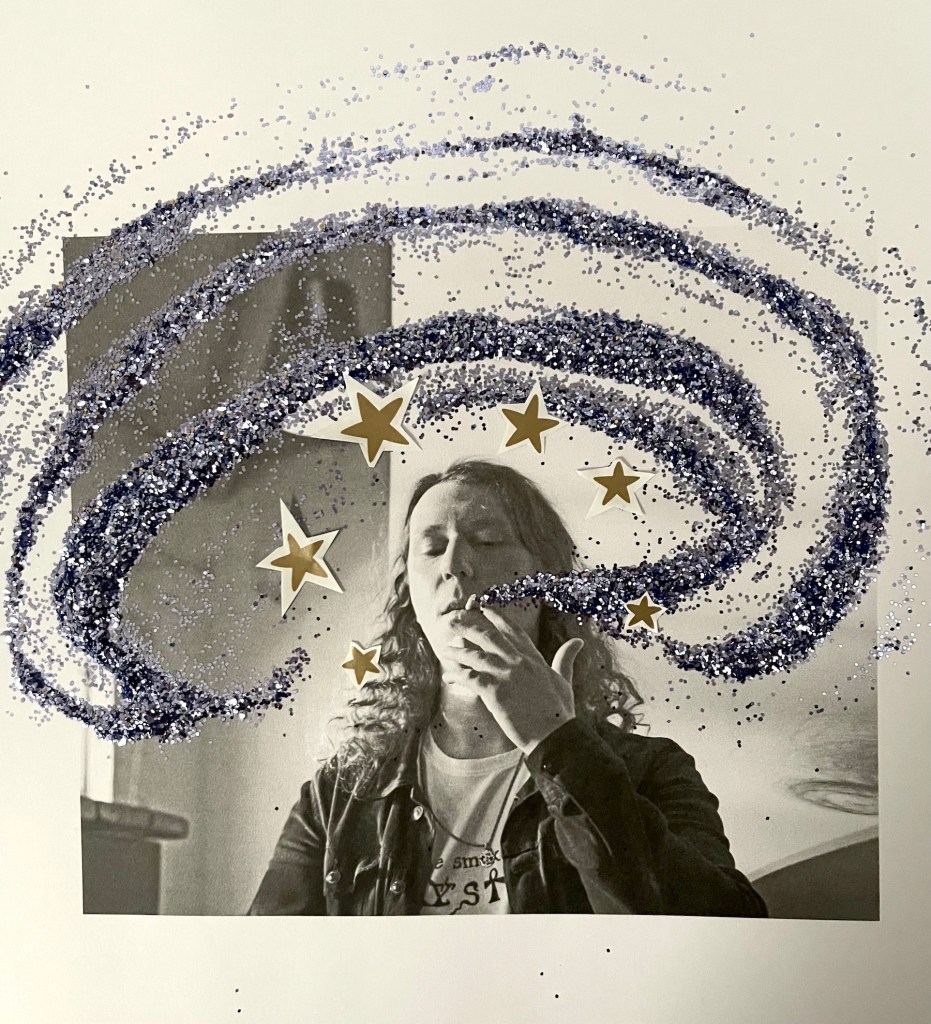
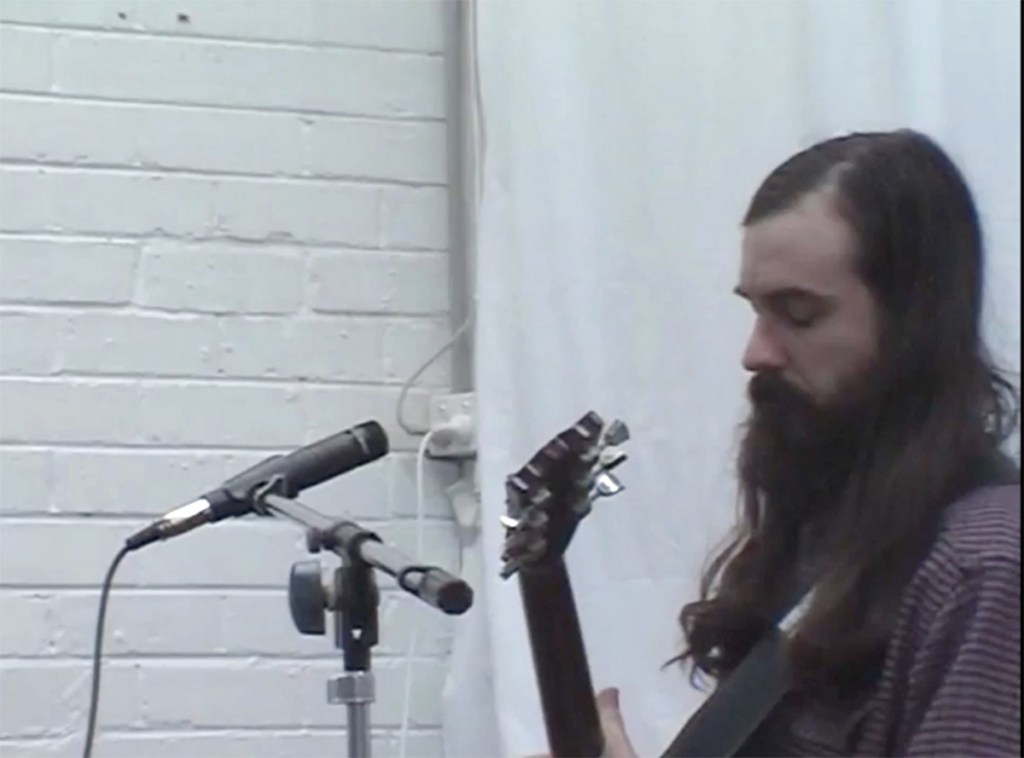
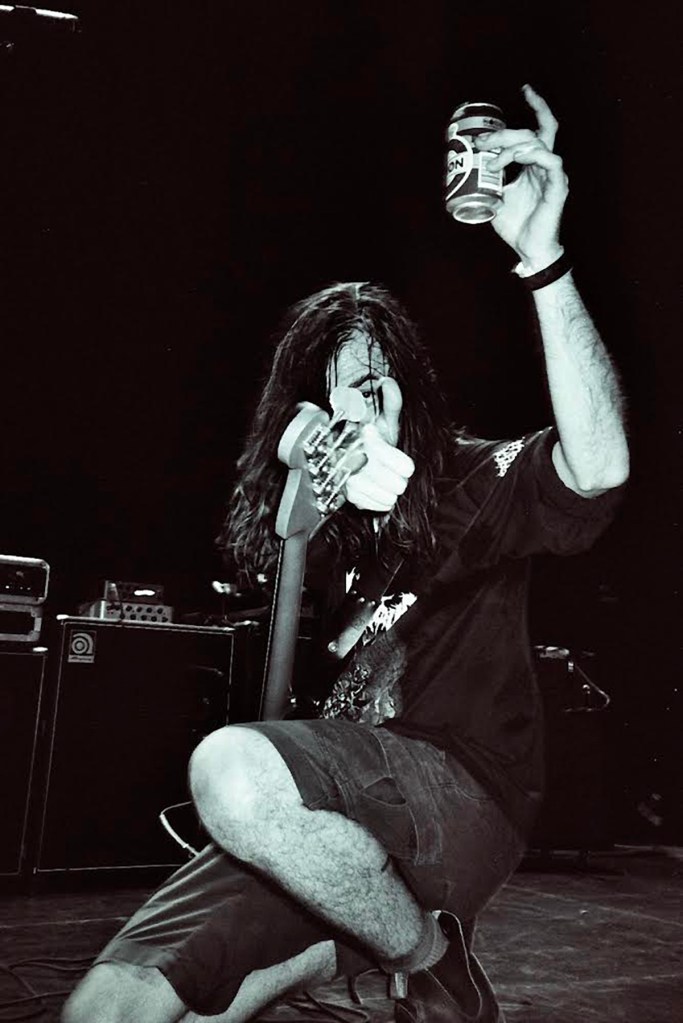
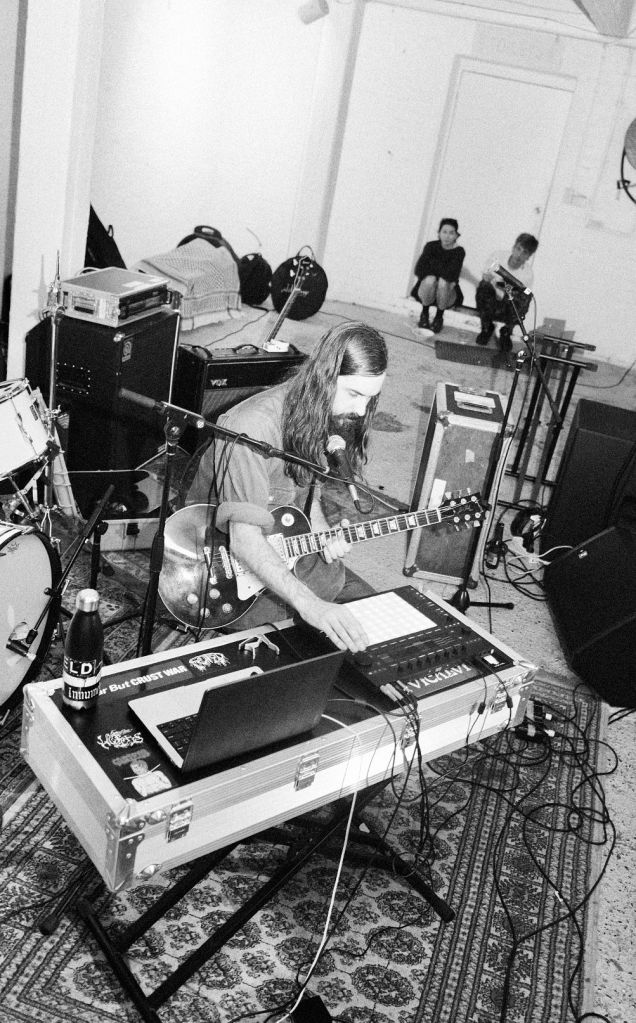
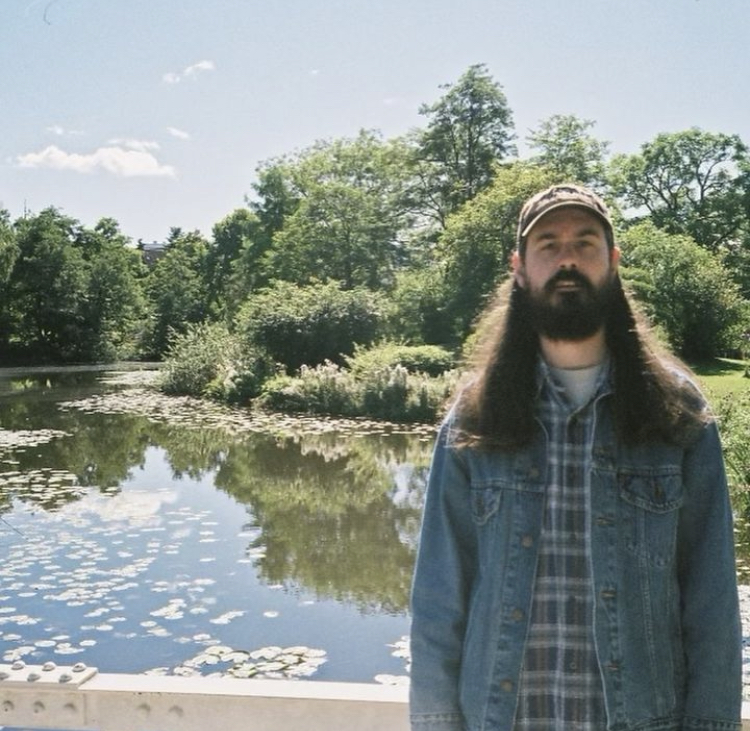
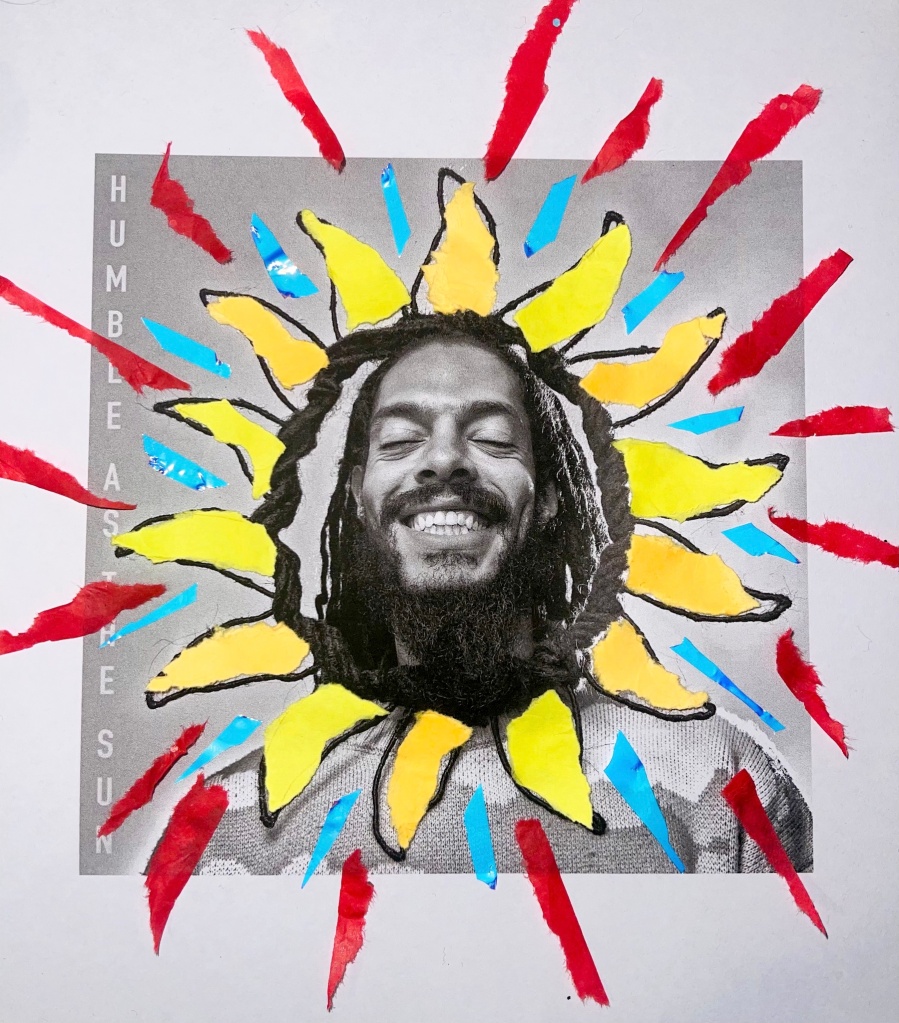
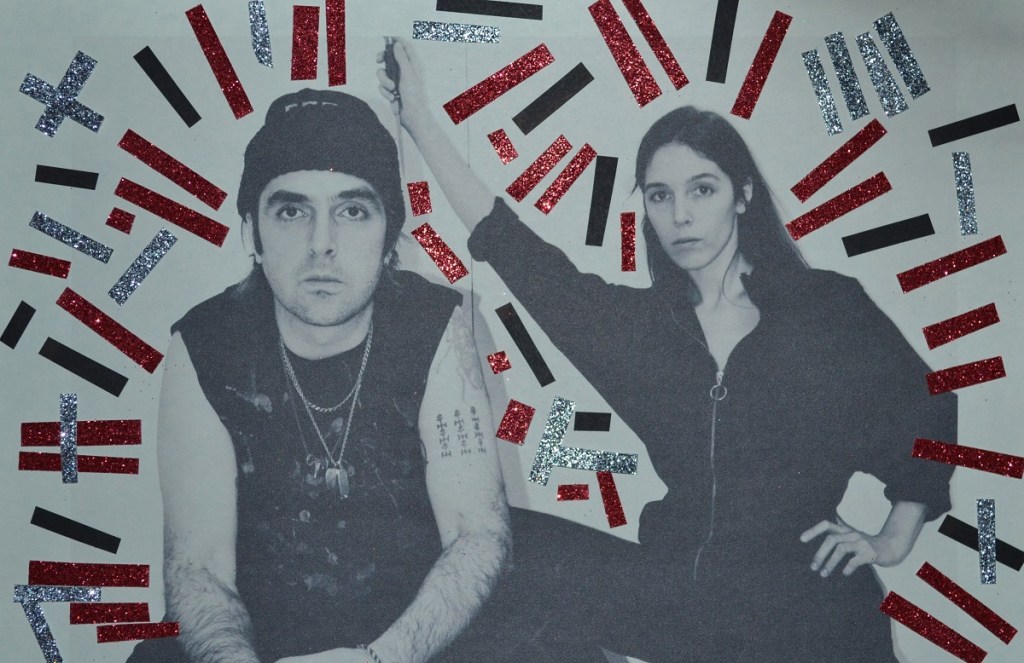
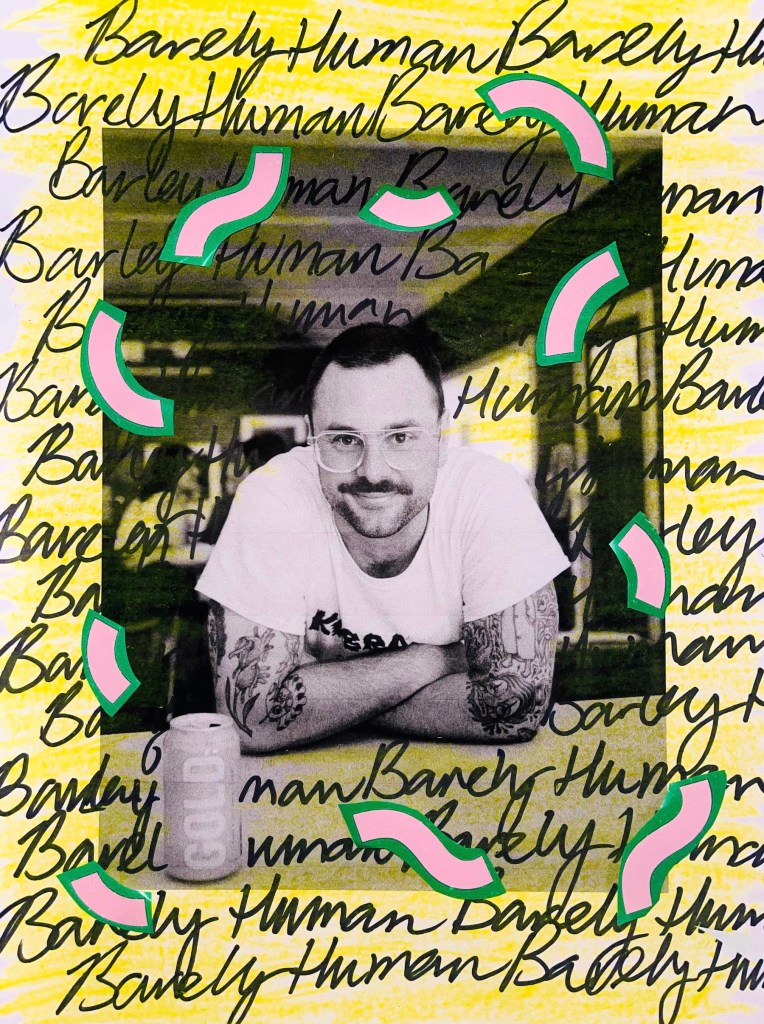
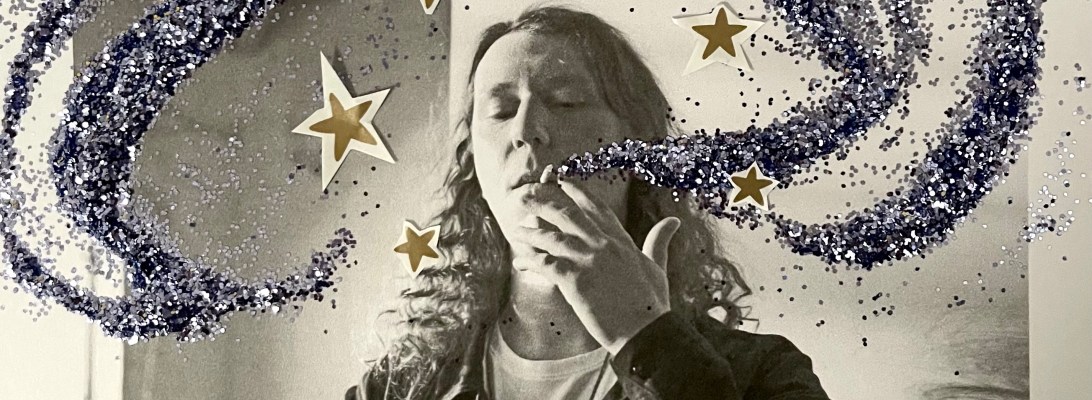
Original photo: Lauren Eiko / handmade collage by B.

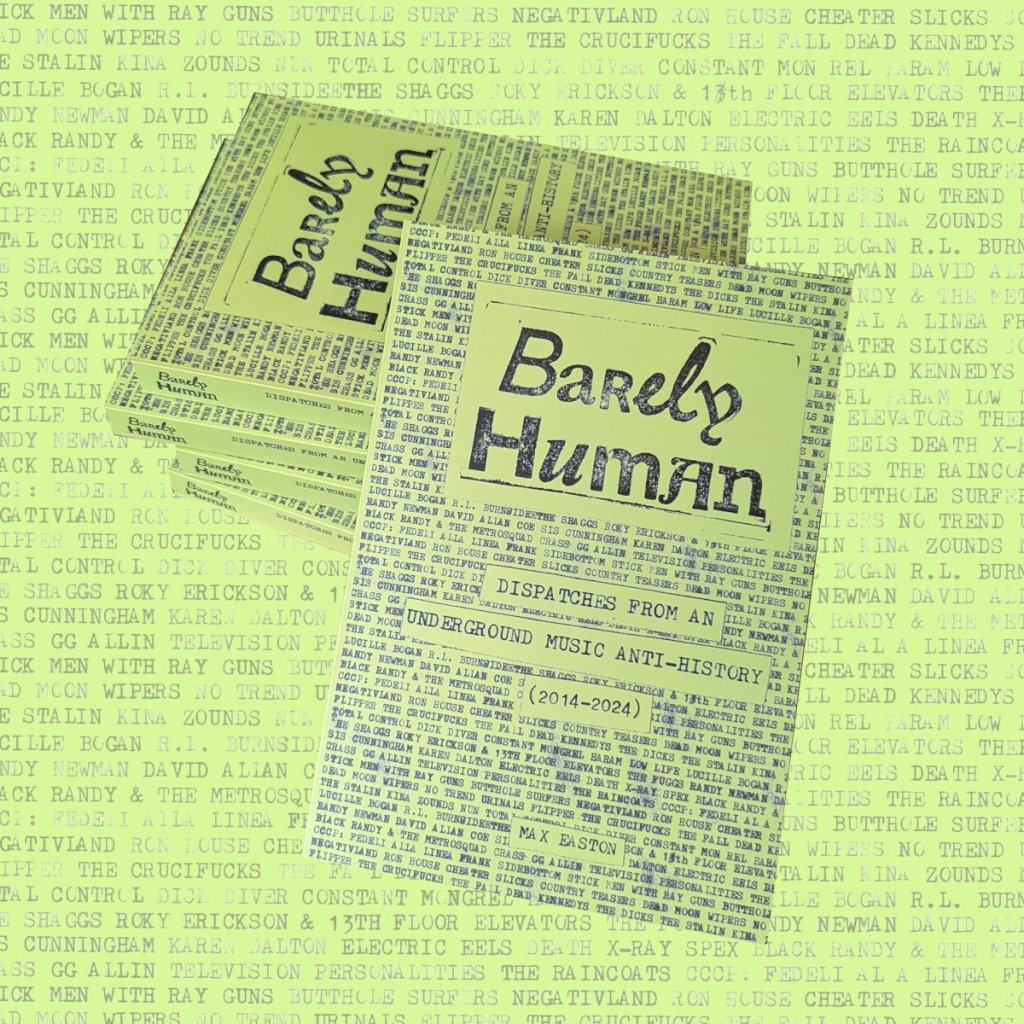
Max Easton is a writer from Gadigal Country/Sydney with a deep love for music and storytelling. He’s the mind behind BARELY HUMAN, a zine and podcast exploring underground music’s ties to counterculture and subculture. Now, ten years of that work has been collected in his self-published book, Barely Human: Dispatches From An Underground Music Anti-History (2014–2024), featuring print essays, podcast scripts, zines, polemics, and lost writing on Australian underground music and beyond. He’s also the author of two novels published by Giramondo—The Magpie Wing (2021), longlisted for the Miles Franklin Literary Award, and Paradise Estate (2023), longlisted for the Voss Literary Prize and Highly Commended for the Victorian Premier’s Literary Award.

With a new novel in the works for 2025–26, Gimmie caught up with Max to talk writing, DIY music, and the impact of bands like Low Life, Los Crudos, Wipers, Haram, and The Fugs. We also discussed the influence of zines like Negative Guest List and Distort, along with his own experiences playing in Romance, The Baby, Ex-Colleague, Double Date, and Next Enterprise.

GIMMIE: Honestly, I don’t really enjoy a lot of music writing that’s out there. Your work with Barley Human is one of the exceptions.

MAX EASTON: That’s so nice to hear.

Your work is thoughtful and explores the underground, but it also gets you thinking about your own life by the time you’re finished listening to a podcast or reading the zine or book.

ME: That’s cool. That’s a nice effect. 

How’s the year (2024) been for you?

ME: Good. I’m doing pretty good. I’ve been very lucky this year. It’s the first year since I was a teenager where I haven’t had to work a regular job. I got a grant to write a novel.

That’s great! This is for your third novel?

ME: Yeah, which is amazing because I’ve never had anything like that before. It’s been this really interesting, small-business-y type year where I’m trying to be very careful with my spending and accounts—just doing my best to make it last as long as I can. I’ve been able to write whenever I want, which has been great.

It’s also given me more time to focus on music. I’ve been working on archival projects and putting together a collection of music writing, something I’ve always wanted to do but never had the time for. I’ve even been starting bands and putting on shows again. Being free of full-time work for a year has been really, really good. I’m so lucky.

It’s like you really want to make the most of it!

ME: Exactly, because the money will run out in January or February. Then I’ll go back to work, which I’m honestly looking forward to as well. I’m going to be very grateful for this time.

Congratulations on being longlisted for the Miles Franklin Literary Award too. How’s that feel? 

ME: Super weird! Especially with the first novel I wrote, I didn’t really realise it at the time. I didn’t think anyone would actually finish reading it. Like, I never thought anyone would get to the end.

When I was drafting it, my process was very much like, oh, maybe I like this joke in the back; maybe I should put it in the front—that kind of thing. Because, in my mind, no one was going to get to the end anyway.

Why did you think no one will get to the end? 

ME: I just didn’t think there’d be any interest in it. I had never written fiction before and then suddenly locked into this book deal. It’s one of those weird things—I didn’t expect it to do much.

Even with the Miles Franklin longlisting, I didn’t know what that was. I’d never heard of the award before until my publisher was like, ‘Oh, we’ve got some really good news for you.’ So yeah, it’s been really weird to enter into the world of literature.

Especially because I was more familiar with being a blog writer or a zine writer—writing about bands I had connections with and that kind of thing. It felt strange to step out into the public and suddenly be seen as a fiction writer.

How’s the third book going? 

ME: Good. I’ve got a lot of words, but the quality is not really there yet. 

That can be fixed in editing. 

ME: It can. I’m really impatient. I want it to be done so I can start editing, but I need to be done first. You edit as well, right?

Yeah, I edit book manuscripts. I work in publishing as a freelance editor.

ME: That’s sick. So, you’ve dealt with a lot of frail writers.

That’s my specialty. I always tell writers that they have to push through and get words on the page, even if they’re not the greatest. Then you can finesse them. But if there’s nothing on the page, you have nothing to work with. Progress not perfection, that can come later. Being a writer too, I know how hard it can be to get ideas onto a page.

ME: Yeah, it’s a really interesting mental game—trying to write, think, and navigate all the different steps and phases. I’m trying to get better at not overthinking things, panicking, or stressing out, but you can only control so much in your brain.

I saw you mention that with this book, you wanted to have a more positive view on the ideas of independence and autonomy. 

ME: Yeah, because I think the second book was quite cynical. It was a satirical novel, kind of satirising everyone, including myself. It had this flat cynicism to it. The first one, on the other hand, had a kind of flat existentialism.

For the third book, I really wanted to do something different. I wanted to capture the joy of organising things and doing things with your friends—the joy of being in a band, the fun you have, and the creativity involved. Like, what happens when you decide to organise a show in a weird, unexpected space that hasn’t hosted a show before? I feel like the first two books were missing that fun side.

So with this third one, I’m aiming for more positivity and optimism, while still grounding it in reality. You know, not everything works out, and that’s okay. It’s about trying to strike that balance at the moment.
That sounds interesting. I can’t wait to read it. I’ve been thinking a lot about joy lately, especially because there’s a lot in the world not to be joyful about that we’re constantly encountering every single day without even leaving our own home. Stuff we see online, on TV, and in the media.

ME: Yeah, 100%. It’s like a very stressful dark time. There’s a lot of stressful dark information, which is very serious. And I think like we’ve got to engage with it and think about it in a serious way. But, like you said, you still have to appreciate the good things that are happening and try to rally around that instead of letting the bad stuff pull you down, which it’s just really easy to do. 

We were talking earlier about having shows in spaces that haven’t had shows before. I recently did an interview with Rhys who does Boiling Hot Politician. He mentioned how his album launch show at a pub got bumped last minute for a wedding and he ended up having it in a rotunda, guerrilla-style. The Sydney Harbour Bridge and Opera House were the backdrop. He told me how joyful it was, so much so he literally hugged every single person that came.

ME: Wow. That’s perfect. 

He knew of the spot because, during the Olympics, he had taken his big-screen TV there, plugged it into a power point, and watched the skateboarding with his friends.

ME: I love that. That’s real community to me. It’s about autonomy, which I’ve been thinking about heaps lately. There’s so much you have to do, so many people you have to ask permission from to get something going.

It’s often a missed opportunity. Like, we want to play a show this weekend, but we have to ask these 10 venues if they’ll let us. I miss the idea of truly doing it yourself.

A few outdoor shows with generator setups have been some of the best I’ve been to, even if they sounded awful. It’s fun. You’re doing it together, without asking anyone’s permission. It’s hard to find that kind of experience.

I felt that way watching the drain shows, especially after the lockdown in Naarm (Melbourne). Like the one Phil and the Tiles played—it looked wild and so cool.

ME: They’re awesome. 

It’s the best when people come together and think outside the box and achieve something cool.

ME: We played a show at a pub recently where no one really wanted to play this show at the venue, everyone I spoke to didn’t want to be there. We all talked about how anxious the place made us feel, how we don’t really get along with anyone who runs it, or it’s just a bit difficult.

Then it was like, well, why are we doing this? It’s because we don’t have as many choices as we’d like, but I’d love to just open a pub where we wouldn’t feel so bad.

I’ve always had a dream to open an all-ages space. Being a teen in the 90s, we had a lot of those spaces. It was so cool to have something fun to do, and to be able to go to a show where people didn’t need to (or couldn’t) drink.

Drinking is a massive part of the culture for a lot of people. I’ve done a lot of interviews with creatives lately, and I’ve noticed that people get to a certain age and get stuck in a bad cycle with that, and it really starts to affect their life. Often, there’s not a lot of support for that. It can really start to impact mental health too.

ME: It’s really hard to break those habits, especially if it becomes part of how you make music. Isn’t it the same?

It’s only been in the last few years with band practices where I’d always bring a six-pack, you know, because it makes things easier or whatever. It’s just the way it is. Then, over the last few years, I started asking, ‘Wait, why?’ Now I just bring a big soda water—it’s the same thing.

Once you’ve got the habit, it’s like you’re in your head thinking, ‘That’s how you do it.’ I’m still the same. When I start a show, I feel like I need two or three drinks before I play, but I don’t know why. It’s just what I’ve always done. It’s funny, these habits we develop over time, and then one day you stop and think, ‘Why do I do that?’

As I’m heading into my late 30s, part of that is becoming a bit more cynical and negative. This year, I’ve really wanted to make sure that if I get into a negative mode, I do something to counter it. Like, if I’m going to complain about a venue we have to play, then I have to put on a show at a venue everyone likes to make up for it. I really don’t want to become that kind of complaining, older person.

Like, old man yells at cloud! 

ME: Yeah, totally. It is easy to fall into. 

Do you think anything in particular is impacting you feeling more negative?

ME: I’m just finding it hard to find the conditions that helped me discover the idea of DIY and punk music. I didn’t really discover this kind of music or this world until my early 20s, because I grew up in Southwest Sydney. I was trying to be a rugby league player. That was all I cared about. I liked music, but the music I liked was just whatever was in Rolling Stone. I’d buy the magazine from the newsagent, and whatever they told me was good, I’d say, ‘Oh, yes, this is good.’ I just didn’t know.

Moving into the city and going to DIY spaces like Black Wire and warehouse spaces in Marrickville was when I realised I’d never really liked music before. I realised what I’d been looking for was there.

What were you looking for?

ME: A sense of community and a sense of connection. I did access that through message boards and fandom, but there was this huge distance. The bands in Rolling Stone would never be bands I’d play in. I never thought about playing music either.

The DIY spaces were different. Within a couple of months of going there, people asked if I played any instruments because they were starting a new band. I’d never thought of it before, but I said, ‘Yeah, sure, I play bass.’ I went and bought a bass and tried to learn it before the first practice.

It was really exciting. It changed the direction of my life.

I think about Sydney now, though, and the lack of all-ages DIY spaces. How would someone discover that now? It’s like going back to this idea of the band on stage, the punter off stage. The band is ‘king’, and you are watching them.

That’s sort of informed a little bit of negativity over the years, but like I said before, I really don’t want to get bogged down in that. I want to build something so people can discover this stuff on their own.
How did you feel when you first realised, I CAN play music or I CAN be a part of that?

ME: Just happy. It was that simple. It was happiness. When I moved to the city, I didn’t have many friends, and I didn’t really understand or believe in depression or anxiety at that time either. It was the late 2000s, early 2010s – it wasn’t really a conversation.

But playing music, having scheduled band practice every week, planning how to play a show, how to record – it really gave me a lot of meaning. Especially since I couldn’t play rugby league anymore. I missed that teamwork aspect, the purpose of going to something two days a week. Music gave me purpose again.

It also opened things up. Because I could play in a band, go to a show, organise a show, and then start talking about worldly political ideas I’d never been exposed to before. I was really just a centrist, working-class guy who voted Labor and thought that was it – that’s all he had to do.

Punk taught me to think more critically, to consider all the intersecting ideas in the world. It opened my world so much.

Same! What compels you to write underground music histories with your zine and podcast, Barley Human?

ME: Like you, I had written in the past. When I started writing for stress press, it was mostly to get free CDs and gig tickets. Then, discovering punk, I realised there was a purpose – telling people about the stuff you’re seeing rather than just mooching off the industry. It was about finding the connecting elements between all these small scenes in the cities.

Eventually, it turned into more international history stuff. Like I said, I discovered punk in my early 20s, and everyone else already knew the references to all these bands. I didn’t know who Crass were, for example, so I’d have to look them up, research them, and figure it out. I learned about anarcho-punk, then had to dig deeper into these worlds.

At the time, I was doing the work for myself. I thought if I could use that research as a primer for others interested in the scene, it could help people who don’t know all the main names. It would make the transition easier.

Even with some less positive bands, I think it’s important to understand why people are interested in figures like GG Allin – the positives and negatives. He’s a very present cultural figure. It was cool to wrap that into a story or explain why X-Ray Spex and Crass were so influential. Why were they cool? Why are these people interesting?

That’s cool you do primers. In my experience of punk culture, there’s often times people can be very pretentious and clique-y and condescending to people because they might not know whatever band. Not everyone can know everything. I’ve always hated that elitist attitude and the ‘I’m better than you’ vibe. It’s lame.

ME: As a community, it should be about saying, ‘Hey, have you checked this out?’ You should be able to explain things to people without judging the fact that they don’t know. It’s a real bummer too because everyone had to learn something at some point, right? A lot of it is a replaying of the treatment someone felt when they first started going to shows. It’s like, ‘Oh, everyone was snooty to me for not knowing all the bands, so now I’ve got to be snooty.’ But no, you’re supposed to help them in. You’ve done it, so give yourself credit for learning all this stuff, and use that to bring others through.

And that’s not even just for punk stuff, but everything in life. Life’s better for everyone when we help each other.

ME: 100%—you get it. 

Being a part of the Sydney scene is there anything that you might know of that’s unique or lesser known that outsiders might not easily discover or know about it? 

ME: It’s hard to say because I can’t really get a feel for what is well-known and what isn’t. I feel like a lot of bands do a pretty good job of making themselves known these days. But, I don’t really look at much social media to get a feel for which bands are really popular and which ones aren’t.

Is there a reason why you don’t really look at that much social media for that stuff? 

ME: I mean, I do look at it, but I don’t really get a feel for it, you know? My favourite band in Sydney right now is my friend’s band, Photogenic. They’re so good. I feel like a band like Photogenic deserves a little more recognition. They’re the best band in town. They taught themselves their instruments not that long ago—about six years ago. I feel like that’s a part of it too. I love their music, I love them as people, and I love the message it sends to others. It’s like… anyone can be the best band in town if you get together and try to make something happen.

I wanted to ask you about the band Low Life, because you did that episode, ‘I’m in Strife; I Like Low Life’, and I was reading on your blog, where you mentioned that Low Life are probably the band that for you, has most closely dealt with aspects of your upbringing and present. I was wondering, what kind of aspects were you talking about?

ME: A lot of it was that sort of Low Life mentality. Maybe they were the first band I got excited about in that 2012–2014 period. A lot of it was because they seemed really depressed, and the world around the music was quite violent. They dealt with stuff like childhood trauma, the resulting depression, what it’s like to be at the hands of violence, and also to feel anger and sadness. There was this mentality of coming together with people, not in a super positive way, but more about finding your way in the world, a world that doesn’t really want you there. It resonated with me, especially with the backdrop of crappy experiences. They really meant a lot to me when I first heard them and got excited about them.

Isn’t it interesting how a band can write about all those things you just mentioned that aren’t so positive but then listening to it felt like such a positive thing for you?

ME: Yeah, it wasn’t even an album track; it was a song called ‘No Ambition’ that they just put out on the internet. It was maybe one of the first songs of theirs I heard, and it really hit me. It was weird—it made me realise I was depressed. Like, this buzzword I’d seen everywhere was a real thing. Stuff like that is why I think I care so much about music. Sometimes, it just accesses a part of your brain that you didn’t even know needed accessing.

Do you feel like you were kind of going through depression at the time, partly because of the sporting injury, losing that whole community, and then moving to the city, not knowing many people—like, all those things?

ME: Yeah, that was all a big part of it. But it was also childhood stuff I’d never dealt with that I was dealing with at that time. Plus, I was really stressed with work and uni. So, it was like high levels of stress, anxiety, and depression hitting at the same time, without the language to understand what it was or how to deal with it.

I’ve dealt with severe anxiety and depression throughout my life too. I remember the first time I had a panic attack—I thought I was dying. I had no idea they were even a thing. Even when I think back to being a child, I used to get a lot of stomach aches and things. Knowing what I know now, I understand it was probably from all the stress I was going through.

ME: Yeah, when you’re experiencing those things for the first time, especially as a kid, it’s hard to know what they are. I would get anxious, and people would just tell me I was worked up. The first time I had a panic attack, I thought my childhood asthma had come back, so I went to the doctor and got a puffer. With depression, I thought it was just a being lazy thing.

But you learn and now you know better, which is great. You mentioned on your blog about going through multiple versions of the Low Life episode, and you mentioned you were sort of having a bit of an identity crisis. How did that sort of shape the final direction of the narrative? What did you learn from that process? 

ME: A lot of it was because they came on really strong, which was exciting. They were this unknown band that brought a lot of people together, and people got really excited about them at first. Over time, though, it was like the realisation that, even though their lyrics were often satirical, they made people uncomfortable. The crowds were violent, and some of my friends didn’t feel comfortable going to the shows. But by that point, I’d already gotten a Low Life tattoo. I thought it was just like getting a Black Flag tattoo—this was the best band in Sydney during our lifetime, and they were playing right then.

I was reading when you wrote about that, and you were talking about how, you’d seen a bunch of Black Flag tattoos and had a lot of band tattoos yourself. But then you were like, why don’t you have any local band tattoos? 

ME: We’re always so backwards-looking—always looking back to 50 years ago, and now it’s even more so. Before the Barely Human stuff, all I cared about was what was happening in the moment. But the last 10 years or so, it’s been more about trying to look back while still focusing on the present. I feel like there are lots of lessons for us to learn, but we act like they’ve already been learned, like it’s over. It’s that “end of history” feeling. There’s so much we can learn from the past and apply now in a new context.

You’ve called Barely Human an anti-history.

ME: When I was trying to outline which bands to profile, I asked myself, what’s the unifying theme? Part of it was that, if I wanted to talk about the birth of punk as a genre, I didn’t want to talk about The Clash or The Sex Pistols. I’d rather introduce it via X-Ray Spex. When I wanted to talk about blues music, I didn’t want to focus on Robert Johnson alone—I wanted to talk about people like R.L. Burnside and lost versions of the genre, the kind of stuff people usually skim over.

Same with post-punk: I thought the stories of bands like the Television Personalities and The Raincoats would be the best way to tell that story—not the typical narrative people think of when they think of post-punk as a genre. The anti-history part was to take the mainstream history, read it, and then ask, who’s being left out?

For example, when we talk about hardcore, we mention Black Flag, Dead Kennedys, Minor Threat, or some variation of that story. But Los Crudos, who came in the ’90s toward the end of that movement, represent one of the best versions of what hardcore became—a community-driven movement, an identity discussion, and the expression of personal struggle or the struggles of your background.

I wanted to pull out those hidden aspects that lie beneath the mainstream story. I’m not sure if it’s truly anti-history, but for me, it felt like I wanted to retell the accepted version of events.

I’m not sure if you experienced this when you were writing for street press, but there was a point when I wanted to make music writing my living. It shifted from writing about bands I was genuinely interested in to writing about whatever band the editor sent an email about. They’d say something like, ‘We’ve got this touring band, we can pay $100 for an interview, and it’ll be published across all these different magazines.’ And I started saying yes to that kind of stuff.

It was so depressing. There was this one band, I can’t even remember their name, but they were a huge touring power-pop band in the early to mid-2000s, and I thought their music was terrible. The things they said in interviews were like, ‘I just love changing the world with my music,’ and that kind of stuff. I just couldn’t handle it anymore.

I got paid $100, which, at the time, felt like a big win, but for what? For all that suffering? I never want to go back to that, writing about things I don’t actually want to write about.
I’ve totally been there. Almost every publication I’ve written for, except my own and when I wrote for Rookie, has been like that. I really hate the way the industry works, especially with PR companies. 

For example, I have a friend who runs a podcast, and he’s been getting really depressed and worn out from it. He told me that certain publicists have said, ‘If you want to interview this band, the one you really want to interview, you’re going to have to interview these four other bands on our roster first.’ So, he’s spending all his time doing interviews with bands he’s not interested in, just to get the one he actually wants, or they blacklist him.

ME: Wow!

Yep. It makes me so angry. I had an interview set up with a band through a publicist not too long ago, but then something terrible happened. A family member, he’s a teenager, was with his friends, and a horrific accident happened and his friend tragically died. Understandably, we went to be with our family, and I had to cancel the interview. I told the publicist, ‘I’m really sorry, I can’t do this, I need to be with my family right now.’ I offered to reschedule when I could, but she seemed annoyed with me. They even asked, ‘Can’t you at least post about the show on your social media?’ It just felt so cold and transactional and heartless.

ME: Oh my god! 

Yeah, true story. At the time, I had another interview lined up with a different publicist, but that publicist’s response was the opposite. He immediately asked if we were okay, if there was anything he could do, and assured me that he totally understood. We ended up rescheduling the chat for another time. He was like, ‘Don’t sweat it,’ which is the right response—the human response.

ME: Yeah. That’s unbelievable. And just the idea of blacklisting your friend for not doing all the interviews.

That happens more than you’d think. Back in the day, I was blacklisted by a promoter because I didn’t turn up to review one of their shows, even though I explained I was with my mum who was very sick in the hospital! I have so many terrible stories like this about publicists and the industry here in Australia, and my writer friends have told me heaps they’ve experienced too. 

ME: I want to blacklist whoever that is. I have a very quiet, small boycott list. I will never book a show for anyone with a manager, anyone who’s a publicist, or anyone who demands a guarantee from a DIY show. There are all these things, and I’ve got a little list. I’m never doing any work for them because, when I put on a show, I don’t take a cut or anything. So, it’s like, if I’m going to work for free, I’m going to do it for like-minded people who are here to have a good time and try to bring people into this world together so we can keep building it and go somewhere with it. But the idea of what you went through with your family member—heavy stuff, like the death of a teenage boy—it’s not like a broken fingernail. It’s repulsive behaviour.

It is! This is why Gimmie exists outside of the industry and we only work with with good people.

ME: 100%! Same here.

What have been some of the aspects that you found most fascinating about underground music that you’ve discussed with Barely Human

ME: Once I started making it a bigger project, where I was connecting different bands together, a lot of it was the connections that bands from completely different sounds, completely different cities, and worlds all kind of had similar to each other. Or the things that they’d be inspired by and the way that a movement or a kind of style developed. There’s so much in common between, say, The Fugs and Crass, which is like a hippie band and a punk band. Those ideas and notions I found really interesting, and something I hadn’t thought about until I started looking into them. Same with a lot of the proto-punk bands and the post-punk bands: they had this similar kind of response to what was going on around them and this antagonism. Or, like, Electric Eels were influenced by a poet like E.E. Cummings. It’s finding all these different connections as you read about a band, which you don’t get when you just play their music.

I really like the idea of bands coming together through time. It’s really almost a conspiracy-theory-type way of looking at the world—all this stuff kept happening through this process, and we kind of connected back to another time. 

One of the coolest bits was I did a Stick Men with Ray Guns podcast episode, a documentary-style thing, and then the guitarist from Stick Men with Ray Guns emailed me in the middle of the night, a year later, saying I’d made all these mistakes. 

Oh no! 

ME: I emailed him back. He’s like, ‘Let’s talk to each other about it.’ And we had this two-hour-long conversation. I posted him some stuff, and he posted me some stuff, and I got a channel to the guitarist from one of my favourite bands in this late ’70s, early ’80s era.

Stuff like that is really, really cool. And you find out that, so much of what motivated those musicians motivates my friends now. Or talking to him about how they just wanted to annoy their audience, and wanted to be so loud that it made them hurt. They wanted to feel violence. It’s kind of like, the second band I played in, Dry Finish, we had to play at this pub that I didn’t want to play at. And I was like, ‘Let’s do a noise set instead of our punk set.’ It was like almost like what he was saying to me was something I said 10 years ago to our friends. I love those sorts of things. 

Barely Human started as a zine series; how did you first find zines? 

ME: Through the punk scene, Negative Guest List and Distort were the first zines I ever saw. It was at a time when I was discovering punk too. It was like, okay, cool, I can read what these people have to say, what’s new that’s coming out. They’d also have these historical type things. Whatever obsession they had at that time would just end up in the zine. It would be books as well.

So much of Dan Stewart’s writing with Distort was philosophy. I’d never thought about philosophy before. That was my first exposure to the big historical thinkers. Same as Negative Guest List. It was movies. Sometimes, they’d just talk about a movie that had been really influential on me. Both of those zines were super influential.

Why did you decide to shift into a podcast? 

ME: When the zine started, it was with the long essays that I couldn’t get published anywhere. So it was like self-publishing these thoughts. The podcast wasn’t something I’d ever thought of.

But then this guy emailed me out of the blue and asked if I’d be interested in any audio work. They were kind of doing seed funding for new creatives, and if the podcast went well, they’d give you a deal with Spotify or something like that. So it was like, yeah, sure, I’ll do it.  

The podcast did, by my standards, really well. I think about 2,000 people listened to every episode, which is crazy. But to them, it was like nothing. Still, I got it going, and it got me thinking in that way. So I’ve continued back via the zines and mixtapes in the years after that, even when it didn’t get picked up or whatever. And now I want to try and see if I can DIY it and do more episodes, on cassette. 

What led to the decision to evolve Barely Human into a 300 page book? 

ME: It got to the point where I was starting to think about doing a new podcast season, trying to figure out how to do it. I was going through all my old notes. Even just searching through Gmail—it’s like, I don’t know where I wrote about this band, I can’t find where it was. So I just started putting everything together, archiving all my stuff.

And then, as things go, a lot of this writing is quite old now. It’s 10 years old or stuck somewhere. You can only listen to it on a podcast, so it’s stuck somewhere on the web. I thought it would be nice to bring it all together, just to wrap up that 10-year period for myself.

Then I thought that would make sense, especially when every now and then someone emails me, like, ‘Oh, I’ve always been looking for your Butthole Surfers zine.’ It’s like, so out of print. The podcast I hear is like half of what you wrote. That’ll happen once a year, so it’s not a huge demand. But I thought it would be good to have everything in one place, in case someone wants to find some of this stuff.

So it was kind of just this idea of wrapping everything together, putting it down, and then I could move on and think about the next thing. It’s nice to have as a document.
Was there a band or artist that is featured in your book that you found had an interesting or unexpected story? 

ME: Stick Men with Ray Guns’ story. I didn’t realise how dark their story was. I just thought they were a fun Texan hard punk band. That was a surprise, and to the point where I had to wonder whether I should finish writing about them too. I just started hearing about the singer and cases of domestic violence in his past. It’s like, I don’t think I should be talking about this band. But then it was kind of, well, should I not talk about it? Should I finish telling the story? It seemed important for me to finish that story.

Some of the other bands, were bands that were very present in the world. I didn’t really know much about bands like Dead Moon and Wipers. I wanted to write about them, kind of like at the start, just wondering, ‘Why are they on punk t-shirts everywhere? Why have I seen them on t-shirts everywhere, but I’ve never listened to them? What makes them so interesting?’ And I thought I wouldn’t find anything interesting. But they’re so cool. They’re like, they were two of my favourite bands after I started thinking about them, you know, and finding out the way that they made music and the way that they were so defiantly independent for so long.

I really loved reading about band Haram in your book. You mentioned on your blog that it was a tough section to write; why?

ME: Because I really wanted to write about them, it was more from the podcast, the way that that started. It started with these bands trying to provoke the FBI and the CIA, like The Fugs and their run-ins with the FBI and the CIA, and their run-ins with Crass. So, I kind of wanted to do this full-circle type thing, because their arm was tracked by an FBI anti-terrorism task force purely because they sang in Arabic, which is also something they played with in their imagery, you know, like just using Arabic script to write ‘Not a terrorist’ on a t-shirt. Then to find out that this FBI task force never translated this stuff and just the pure anti-Arabism, pure Islamophobia. The hard thing for me, writing that, which was once I was already in and doing it, it’s like, this isn’t really my story to tell. I felt like I was really writing about things I didn’t understand. No matter how I put it together, it felt like I was sensationalising the fucking horrible experiences that Nader had growing up and then as a punk musician being trailed by the FBI. I did the best job of it I could, but it was really important to me to tell that story of a punk band of today in New York getting tailed by the government, by the racist government.

Whenever we, you know, are all like a little bit like, ‘Man, it’s just so hard playing punk music in Sydney’ and like, ‘Oh, no, I have to play a venue around the corner that I don’t really like’ there’s a bigger context, like, people are being watched and isolated and surveilled. 

I liked that you told the story using a lot of archival and interview stuff, so it was being told in Nader’s own words.

What have you been listening to lately? 

ME: II was listening to The Spatulas this morning, they’re a really interesting DIY type folk adjacent type thing. Celeste from Zipper was in town, I’ve been listening to them a lot lately.

We LOVE Zipper! What have you been reading?

ME: I just finished the Tristan Clark’s Orstralia book, the 90s one. I loved it. It was really, really interesting, especially the Sydney stuff. f

I’m three quarters of the way through Alexis Wright’s Praiseworthy, on a fiction front. It’s wild. It is so good. It’s the trippiest, it’s hilarious. It’s really funny. 

I love Alexis’ work. She just writes with total freedom. What are you doing music-wise? 

ME: The last two bands broke up. I was playing in The Baby with Ravi from OSBO, and the band Romance. We got our last releases out and kind of broke up. We’ve started new bands now—a band with Greg and Steph from Display Homes called Ex-colleague. We played the other night. My partner Lauren, who used to play years and years ago, has taught herself drums for this other new band we’re in with my friends. We’re called Double Date. We’re both couples. Then, starting after Witness K slowed down a bit, Andrew and Lyn started jamming, and I’ve been jamming with them as well. We’re playing our first show soon—we’re called Next Enterprise. It’s been really fun to play again!

Check out: barelyhuman.info.
Conversations with Punx – romansy’s Alessandro Coco: ‘We are full of potentiality’

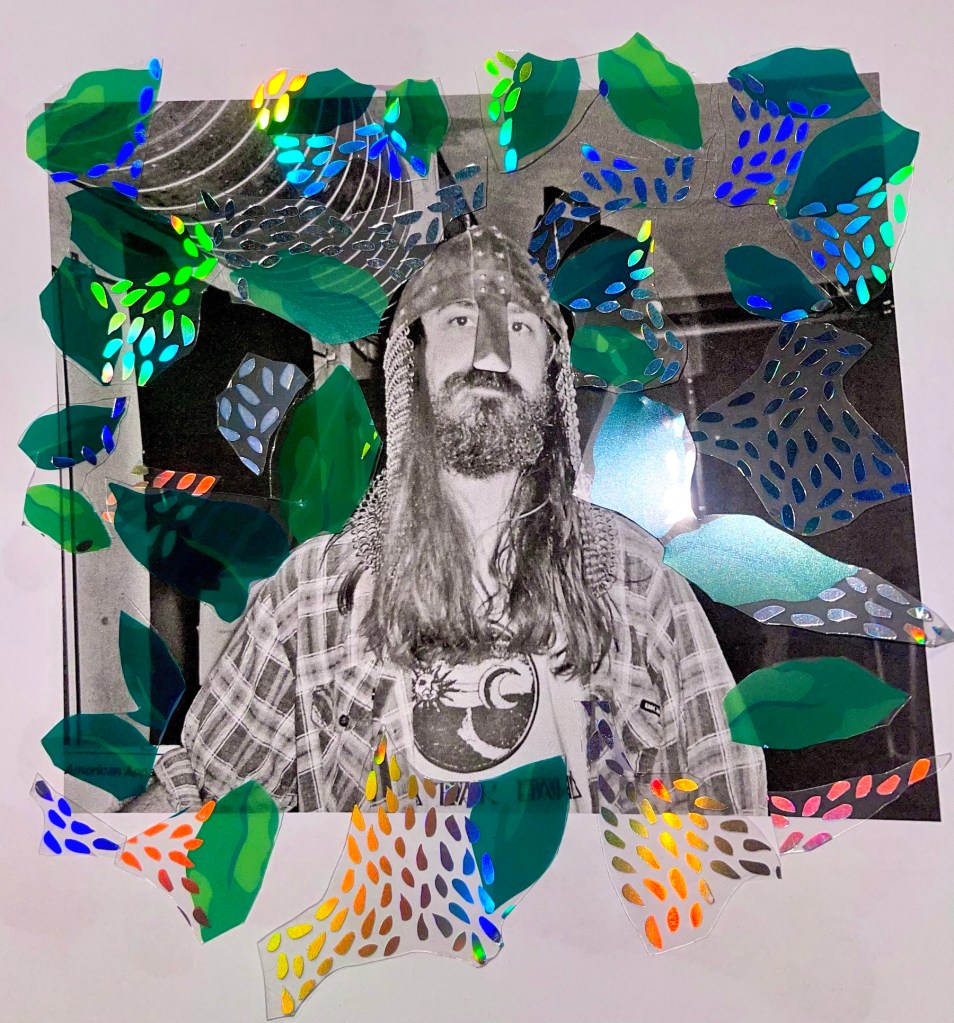
Original photo: courtesy of Coco / Handmade collage by B.

When you walk into Lulu’s, Naarm’s (Melbourne) beloved underground record shop, one of the friendly faces behind the counter is co-founder Alessandro Coco. Along with friends, he helped establish label Cool Death Records too, that’s gifted the world record collection essentials from bands like Low Life, Tyrannamen, Oily Boys, and Orion. A stalwart of Australia’s hardcore punk community, Coco has played in bands Leather Lickers and Erupt, among others. These days, he fronts Romansy, a band channeling the hectic, spirited energy of Zouo, The Clay, Necromantia, Septic Death, and GISM.

A few years back, I (Bianca) was chatting with Al Montfort (Straightjacket Nation, Sleeper & Snake, UV Race, Terry…) about my punk and hardcore book, Conversations with Punx: A Spiritual Dialogue. Al suggested I reach out to Coco for a conversation—so I did.

What followed was an hours-long discussion that covered self-enlightenment, spirituality, creativity, the DIY ethos, and Coco’s introduction to it all. We talked about the importance of really supporting one another both creatively and personally, navigating struggle and insecurity, and embracing who you are and your own worth. We yarn about the scene and its dynamics, as well as idolisation. Coco also spoke about messing up, owning it, and growing from those experiences.

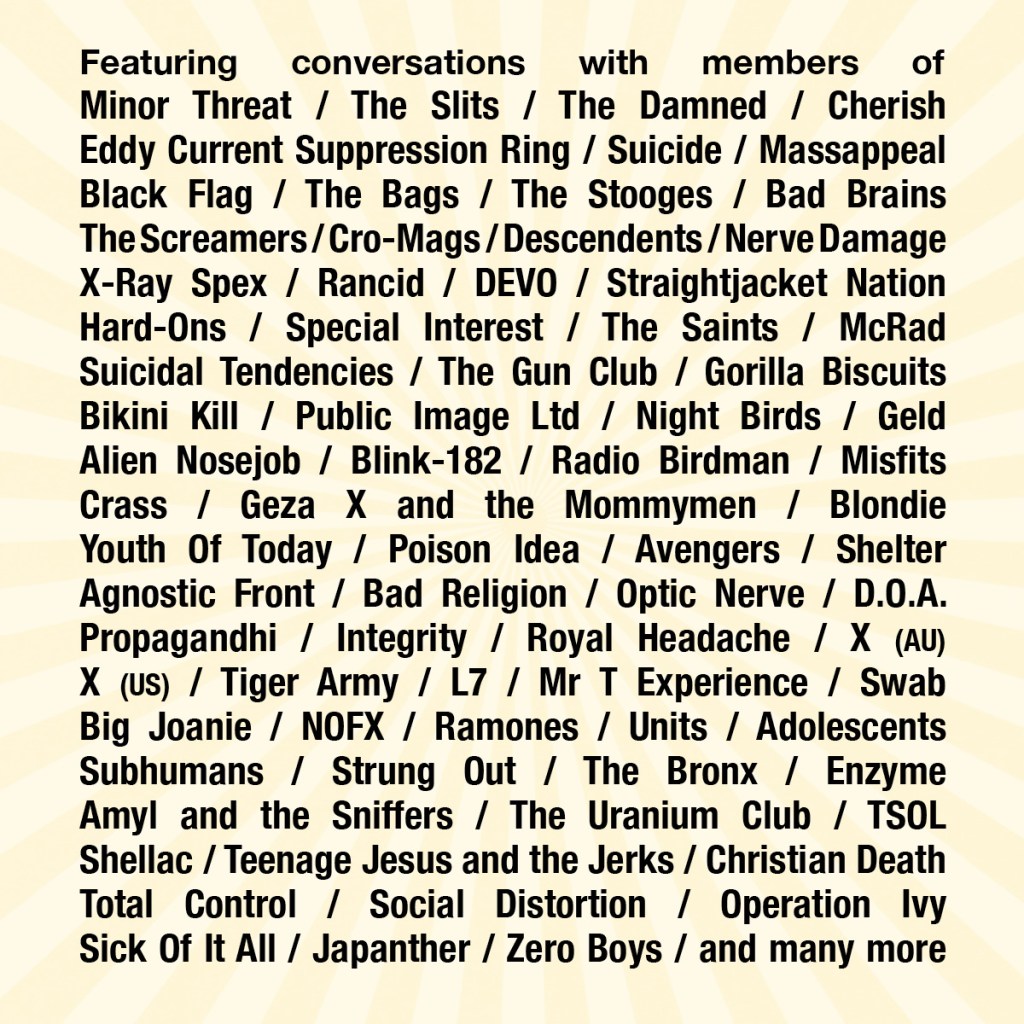
The initial manuscript for my book was over a quarter of a million words. To bring it to a publishable length, I had to cut it in half, which meant not every full conversation made it in. A few days ago, Lulu’s announced they would be closing their High Street shop. Lulu’s has spent nine and a half years of hard work, creating a hub that felt like a second home for many of us in search of great underground music, connection, and community. Reflecting on Lulu’s reminded me of the chat with Coco—and the timeless insights we shared. Which Gimmie now shares with you.

Al informed me that you’re always talking about philosophical, deeper, spiritual kinds of stuff. So I thought I’d reach out for this chat for my book.

COCO: Yeah, I definitely am. I’m surprised that more people don’t talk about it, but I get it. Everyone has those thoughts and ideas, but they tend to keep it personal. Sometimes it’s something people think, or feel but don’t really focus on. They might not dedicate hours in the day, week, month, or year to hone in on it. It’s just there, part of who they are, which is cool as well. Star signs are back in a big way, which is kind of cute, but that’s where it usually stops with a lot of people [laughs].

It’s obviously something that you focus on? 

COCO: For sure. I do my own thing with it. I don’t attend regular church meetings or group gatherings. It’s something I focus on in my own time, putting energy into it. You can find powerful, positive, and profound results from doing that. It suits me.

Once you’re aware of that kind of power and presence, you can’t ignore it. It’s right in front of you, you just have to meet it halfway.

When did you first became aware of it? 

COCO: I couldn’t pinpoint it exactly. I grew up attending Catholic schools, and that was fine, but it always felt strange to me. You’re presenting something profound and serious—something meant for adults—to children who can’t fully grasp it. Kids aren’t taught philosophy in primary school, and rarely in high school, yet religion is essentially a philosophy. It’s no surprise they don’t understand it.

When you grow up with that, you either follow along and risk developing a warped perspective, misunderstanding it, and running in the wrong direction with it, or you reject it altogether. That rejection is understandable but often comes with throwing out the good with the bad. There are powerful, useful aspects to it, but they can get overshadowed by the parts that seem cruel, wicked, or nonsensical. This can lead people to turn their backs on it.

As for me, I don’t know exactly how I came back to it. I’ve always been fairly optimistic and positive when I can be. Maybe it started with playing music and spending time with friends. A lot of us got into heavy metal around the same time, and that genre is steeped in spiritual symbolism. You start noticing it, paying attention, and digging deeper into what those symbols mean.

Symbols are fascinating. They condense grand ideas into something small and simple, like a logo anyone could draw. Exploring those symbols led me to rediscover some ideas and reconnect with them. As an adult, with more maturity and life experience, you can approach those concepts differently. You start deciding what they mean for yourself. Once you’re on that path, it’s easy to keep going and noticing it everywhere.

Absolutely. What is spirituality to you?

COCO:  At its core, I would say it’s our way of experiencing our environment and identifying ourselves within it. What does that mean? Well, it’s philosophy. That might be an oversimplification, but I think it holds true.

For example, I might have a buddy who doesn’t consider himself spiritual. Yet, if he goes hiking or visits the beach, he tells me how connected and wonderful he feels. He mentions how the everyday things that seem so important drift away, leaving him with a new sense of connectedness and a different way of experiencing and being part of his environment.

To me, that is spirituality. He might not identify as a spiritual person, but that experience—feeling in tune with the world—is exactly what spirituality is about.

Totally. I get that from nature, I get that from listening to music, or creating something too.

COCO: It’s a weird kind of connectedness. It’s about relating to and experiencing life, but not in a social or political way, or in all the other ways we tend to focus on. It’s just you and the world—whatever that is. That’s often what it comes down to. It leads to other things, sure, but at its core, it’s just you in that moment.

Take music, for example. Black Sabbath is my favourite band. There are certain moments—like after a few beers, when the ‘Wheels of Confusion’ riff in the middle hits—that completely takes me away. That connection, that rush of vital energy and passion, what it does to your body and mind—it’s ecstatic. It’s an experience that feels almost otherworldly.

And that happens with all kinds of music. It’s that feeling, that sense of being taken out of yourself and into something bigger. Is that spiritual? I don’t know. Some people might not call it that. Maybe if you’re just bopping along to a pop tune, it doesn’t feel the same. But everyone has their own way of looking at these things.

For me, it’s huge. It’s a big part of how I see spirituality—not putting it all into neat little boxes, but recognising it in moments like these. It’s also about being present in mind and body, living fully in the moment. That idea comes up a lot in Eastern philosophy and spirituality: being present, not caught in thoughts, just experiencing and being.

You can get that from listening to music, from live performances, even from watching sports. Everything else drifts away, and it’s just you and the experience—the present moment. Nothing else exists in your head or your being at that time. It’s pure, and it’s wonderful.

Absolutely. Are there any other practices or rituals you have? 

COCO: I don’t meditate in the traditional sense—not the sitting down with eyes closed, yoga-style meditation. Instead, I try to get in touch with things in my own way. I’ll light incense, light candles, or pull out the tarot deck. Sometimes I pray, just to connect with what feels like it’s always there, everywhere, all the time. It’s about getting in tune with it.

Whether it’s positive thinking, willing something into existence, or something else entirely, it’s a complicated idea to explain. I don’t follow a strict practice, but I definitely have my own ways of engaging with the universe—and sometimes even the unseen universe.

Have you looked into any specific philosophies? 

COCO: I mostly find myself drawn to Western esoteric traditions, whether that’s Kabbalah, Christian mysticism, or other forms of Western magic. Many of these traditions also look to the East for inspiration. While I don’t spend as much time exploring Eastern ideas or philosophies, I do visit them occasionally. I think there’s truth in all of it, and something valuable in every tradition for everyone.

I can’t say any one path is greater or better than another—it depends on how you approach and understand it. For me, Kabbalah feels especially useful and powerful. I probably came to Kabbalah through reading [Aleister] Crowley. It resonates with the way my mind works and how I think about things. Similarly, Christian mysticism makes sense to me, likely because of my Catholic school upbringing. I’m already familiar with the imagery, symbols, language, and framework, so it feels accessible.

That familiarity allows me to focus on those traditions without the overwhelming task of learning something entirely new—like the canon of all Hindu gods, for example. That said, I do enjoy exploring other traditions when the opportunity arises. You can use whatever word you want for it, like, religion, philosophy, magic, spirituality, they all lead to the same place. Obviously, there’s different ways of practicing it or experiencing it, but hey’re all part of the same tree. 

Do you think your interest in these things stems from trying to understand life or yourself better?

COCO: Yeah—it’s about seeking truth. It’s about seeking experience, seeking understanding. Sometimes, it’s about finding another way—a useful way—of looking at the world, another lens that can open your mind.

I used to smoke a lot of pot. I don’t anymore, but at that time, I think anyone who first forms a relationship with that—or with psychedelics—definitely experiences a kind of opening of the mind. It starts you looking at things differently and even experiencing things outside the box. Once that door opens, things can just keep opening.

It’s not like psychedelics are the only gateway to that kind of exploration, but I think, for a lot of people, they are one of them.

Where did you grow up? 

COCO: When I was a kid, I lived in the western suburbs of Melbourne. During high school, I moved out to the country in Victoria and stayed there for 10 years. A few years ago, I moved back to Melbourne because everything I do and participate in is based here. There’s not much of that up in Ballarat, where I lived, so had to come back to Melbourne to be part of things the way I wanted to.

How did you first get into music?

COCO: When I was younger, I got into The Offspring, Nirvana—cool stuff like that. Some buddies in high school were into similar punky music, and I ended up getting a Punk-O-Rama compilation. Not long after, I got into the whole Australian metalcore scene, which quickly led me to Australian hardcore and melodic hardcore—the stuff that was happening about 15 or 20 years ago. From there, I dove into more classic punk and eventually got into the underground scene.

Both my parents are big fans of music, but they didn’t listen to punk or anything like that. Over time, though, I’ve come around to their tastes. My dad schooled me on a lot of classic and important blues, and my mum actually got into punk after I did. She loves it now, along with hip hop—she just vibes with that kind of stuff.

So, yeah, there was music in the house, but I didn’t really find my own music until punk came along. Something about it just made sense—the attitude, the volume, the aggression, the appearance. It’s the kind of thing that captures a young mind full of energy but unsure where to direct it. There’s also that rebellion, which is so easy to identify with, especially if you’ve never really had a way to express it before. You see it, and you think, Oh, yeah. That’s it.

What was your first introduction to DIY? 

COCO: When I was getting into metalcore—it called itself hardcore at the time—I started to realise that these bands were actually touring and playing at venues I could go to. For all the flaws in that scene, they did a lot of all-ages shows, which was great for younger people to access. That made it feel like something real and achievable.

It wasn’t happening in my own backyard, not where I was from, but it was close enough to get to. Tickets were like 15, 20, maybe 30 bucks, and you could actually go and experience it. At first, I thought of it as a concert, but then I realised it wasn’t this big, untouchable event—it was just a gig. And at those gigs, everyone had their band T-shirts, their merch, and it all felt alive. You’d see one gig, and then there’d be another, and you’d just go further down the rabbit hole.

I started to see that this scene was happening in the present—it existed right here and now. In Melbourne, we were lucky because there was so much going on. One thing led to another, and you’d discover these whole communities of people doing it themselves.

Missing Link Records in Melbourne was super important for me. They were really supportive of younger people like me. I’d go in, buy a CD, ask questions, and they’d help order stuff in or give recommendations. Even at the gigs, there’d be distro tables with records and CDs for sale. You’d chat with someone there, and they’d put you onto new bands or scenes.

I remember this one guy who ran a label. Looking back, it wasn’t the coolest label, but at the time, he was so enthusiastic. I laughed when he handed me something and said, ‘Dude, you’ll love this.’ I was grabbing Jaws’ new thing on Common Bond Records, and he’s like, ‘Oh man, if you like that, check out Government Warning.’

I bought the CD No Moderation, and that just flipped everything for me. I was like, man, this is unreal. And yeah, it’s just about having your eyes opened to the fact that it’s all around you—you just have to notice it, or be introduced to it, and then experience it and break into it yourself.

The local scene came from local shows. The DIY thing? You just kind of follow the rabbit hole, chat to different people, explore different things, and then you realise it’s all there.

And now you get to do that—recommend new stuff to people who come into Lulu’s! I read in Billiam from Disco Junk’s zine Magnetic Visions that he mentioned how, when he went into your store, Lulu’s, it was the first place where he actually felt like he kind of belonged. He said he didn’t feel like he was inconveniencing anyone, and he could actually have a chat with people. I could relate to that. Growing up, many people behind the counter at my local record stores were really pretentious and condescending but then there were a couple of cool dudes that would take the time to talk to me and suggest stuff, and that made all the difference. It’s like, not everyone can know everything.

COCO: Yeah. That’s my favourite part of Lulu’s: being able to chat with people, connect with them on a personal or musical level, share things we think are cool, and point people in a direction—like, ‘Oh, you like this? Maybe you’ll like this. Check this out! Have you heard of this?’ Then encourage them to do what they’re doing. 

Billy was young doing his own music, and I was like, whatever you do, buddy, bring in your tape, bring in whatever you make, to encourage and support that. I was lucky enough, when I was younger, to have people be really friendly and supportive of me. I always thought it was important to pay that back. I was shown kindness and support, and I thought, ‘Yeah, I absolutely want to do that for anyone else I get the opportunity to help down the line.’ Thankfully, I’ve been lucky enough to be in a position where I can do that. DIY is a hell of a thing.You get to learn a lot of lessons your own way. 

If you want to do a band—do it! Nothing’s gonna stop you, no one’s gonna stop you. Make your tape; the first tapes we did we dubbed by hand. I spray-painted the covers. You just have to give it a shot. Put your effort into it: use your brain, your heart, your passion— it can pay off for you. 

Early on, that was super valuable to learn; it’s influenced the way the following years of my life have gone. If I wanna do something, chances are I can do it. I’ll always encourage others to be themselves and do their thing. It’s easy not to do something. When you do, though, the satisfaction, the joy of people digging it too, appreciating it, and caring about it, is huge!

Encouraging people to be themselves is something that’s really important. More people need to know that it’s okay to be yourself—to ask: What do you like? What don’t you like? What would you enjoy without the influence of others?—and to know that they are enough already. A lot of people seem to think they need fixing but if you look around at the world, what we get bombarded with, messages we’re sent, and systems that are in place, it’s no wonder you feel how you do.

I know from talking to a lot of creatives over the years (and through my own experiences) that many of us tend to be really insecure. We compare themselves to others, which fuels feelings of self-doubt, not being good enough, low self-worth, fears of not having what someone else has, and can lead to anxiety. Over time, that can start to really get you down.

COCO: Totally. A lot of people would be lying if they said they didn’t compare themselves to others. And we do—we look to friends, family, community, media. We idolise certain people from the past or present, or whatever it is. That’s all well and good; it can also lead you on a good path. A lot of those influences can be good and healthy. I don’t think there’s anything wrong with that.

But at the end of the day, the lesson to be learned is to be yourself, be proud of that, and do your thing. Do it to the best of your ability—do things your way. It can work, and it can be really satisfying. It’s so nice to break free of expectations you don’t believe in or value. Then you can just go on and do your own thing.

Even with all the spiritual stuff—whatever it is—it doesn’t mean you have to be a goody two-shoes, or a badass, or anything else. Break down all the bullshit that doesn’t matter to you. Use your head, listen to your heart, and let them guide you. Find your own way in the world. Being yourself, doing your thing, and keeping it real—that’s the only way to go.

We’ve all experienced the opposite of that, you know? I think probably everyone who’s made it through their teens knows what it’s like to not be like everyone else—not be as good at something, not be as good-looking, not have the cool clothes, or whatever it is you’re valuing. Not be good at sports, or whatever—blah, blah, blah.

Even me—I’m not the best musician, I know. I’m not the best artist, or whatever. But I know what I like, and I know how to do what I like. Doing that has provided me with so much satisfaction. And it’s been great too, because certain things I’ve gone on to do have had a positive flow-on effect. If I hadn’t done them, maybe someone else wouldn’t have heard something or experienced something at all.

That snowball effect, that ripple effect—it’s insane how the things anyone does can touch another person for the better. That’s why you have to be yourself, because if you don’t do it, no one else will. The world would be a fucking dull, miserable place without people going out and being themselves, almost no matter what the cost.

It’s given us some of the best things we’ll ever know—some of the best art, ideas, thoughts, and all those things we care about. All the cool stuff.

What was your first band? 

COCO: An awful band in high school that I played bass in for a bit [laughs].

When I first started doing my own thing—writing music, doing it with my friends, and making it the way we wanted—it really felt like mine. That was, Kicked In, which we started in Ballarat with Tom, who does Cool Death with me and Lulu’s as well.

That band was around for a little while, but then our guitarist and singer decided they wanted to do other things and didn’t want to continue with it. We made a few cool tapes, though. When we got a new guitarist and singer, we decided to change the name, and that’s what became Gutter Gods.

Gutter Gods ended a few years ago—toward the end of summer 2015–16. We split up, which was a bummer at the time. But you know, it led us all into other things. The work we did with that band really opened up the world for us. It gave us confidence, and we got our kicks with it.

You make friends, you make connections, you build confidence. It made us all really comfortable with starting other bands and putting that same passion from Gutter Gods into new projects.

What do you get from playing music? 

COCO: One of my favourite things—it might sound cheesy—is just jamming. A good jam with your friends is like nothing else. Whether you’re making something up on the spot and it all just flows out of you, or someone’s written a song and you come together to play it for the first couple of times, it’s really like nothing else. I don’t know why or what it is, but it’s the joy of creation—seeing and feeling something while you’re hearing it being made real.

It starts coming out of the amps, the drums kick in, vocals hit the mic, and it all has this vital energy. You’re like, Wow, that started off as nothing. It’s basically making something out of nothing, and when that happens, it’s huge.

Playing shows, though, I have a weird relationship with. Sometimes I don’t love it; other times, it’s brilliant. It’s funny how often you think a set was awful or you played badly, and then people come up to you later saying it was excellent and they loved it. Other times, you think you’ve absolutely killed it, only to find out they couldn’t hear the guitar the whole time. It’s like, I thought we smashed it, but everyone thought it died because of the sound or the crowd, or whatever.

It’s really hard to put my finger on what I love about playing or making music. It’s like I have an impulse to do it—it just has to be done.

I was watching this documentary on the blues recently, and there was this line someone said that really resonated with me. I can’t recall it off the top of my head now, but I sent it to a friend, and they said, Yeah, that’s exactly how I feel too. It was something about the blues being not for anyone else—not for anything—it’s just you. It’s like yelling into the universe: Here I am. Here’s this feeling, this atmosphere, this whatever. It’s just a way of creating something that’s in some way a part of you. And then it becomes this sound, this artwork, this song—this thing that is its own entity.

Have you read The Plague by Camus’? There’s that guy in the apartment trying to write the perfect book. He’s obsessing over writing the perfect book. Throughout the whole story, he’s sort of like a Kramer—just crashing in, chatting, getting in the way, and showing this one line he’s been working on. He keeps trying to perfect that single line and never gets past it.

It’s funny to think about because it’s kind of sweet. When you’re making a song or whatever it is, it’s not like your last will and testament. You can’t sum up everything you are, think, feel, or believe in one song, one lyric, one riff, or one painting. So, when you’re creating, all these things are just little parts of you that get to have a life of their own.

With music especially, it’s often a collaborative thing. Every member of the band gets to put a piece of themselves into that song or sound, and it happens over and over again. It’s interesting when it comes to expressing yourself, though. That’s such a big part of it, but you can be expressing so many different parts of yourself.

Take punk, for example—super aggressive, super in-your-face. But that doesn’t mean you don’t have another outlet where you express something completely different. It’s all part of expression.

Even then, like, you know how when you listen to a great song, you feel that connection? Sometimes you find that with your own work, too, and it’s really satisfying—hearing or performing your own song. It’s a way of speaking, particularly with instruments, without using words. You create this thing—an atmosphere, an energy—that becomes intangible but still real for you and for anyone who comes into contact with it.

Sometimes, even when you look back at stuff you’ve created, the meaning of it can change from when you made it—or even when you play it live. It can keep evolving long after the initial spark of it coming into being.

COCO: I totally agree. Even bands might have a slow version of a song they play live, or some track you like live. Like, oh, what? They did an acoustic version of this concert in 1976, and you check it out—it’s like, whoa, that just carries a totally different feeling, or a more powerful version of the original feeling. The song you write, the words you write—particularly with words—you can look back at things later, and you’re right, that meaning, can evolve.

That’s the other part that is on a spiritual tip. Sometimes when we’re creating things, it feels like it’s not necessarily yours. You really are just channeling something else, and you’re there as a conduit for that. In doing so, you often put your own thing on it because it’s coming out of you, but it’s expressing some idea. Whether that idea is always going to be universal—whether it’s archetypal or whatever—it doesn’t really matter. Whether it’s coming from you or somewhere else, it’s as real as anything else is.

Yeah. When I interviewed Randy from Massappeal for the book, he was telling me that when they had practices, some of those were even better than his favourite live shows they played. He shared with me the moment during a practice where he had a massive spiritual epiphany!

COCO: 100%, I stand by it that, like, the best music I’ve ever played has been in the practice room. Some of those experiences we’ve had in the practice room—where the vibes are right, the atmosphere is there, and everything just happens—whether it’s, you know, a bit floppy or whether it’s tight or whatever. Yeah, easily the best music, the best sound I’ve ever made, has been in this practice room, and I don’t know what that is. I don’t know if it’s just, you know, being able to cultivate that vibe with yourself and the people you’re playing with, or if it’s just like, you know, a probability thing. It’s like, well, you probably practice more than you play live, so the odds are you’ll do the best version of a song, you know, one in a hundred times, and that happens to be in the practice room. I totally, totally vibe with what Randy said.

It’s a pretty special thing, too, that you only share with these people who are in that same frame. A good jam is better than good sex. At the height of it, it’s easily one of the best things I’ve ever experienced—having a good run through a song or a set, or making something up on the spot, just creating without words. That’s another reason why I’d encourage anyone who ever thinks about picking up an instrument, playing music, or starting a band—whatever it is—I’m always like, do it. You have no idea how good it can be until you do it. Anyone who ever mentions it, I encourage them right to the ends of the earth.

Same! At Gimmie we’re definitely cheerleaders for humans creating art!

COCO: I totally get that feeling—you can only describe it so much, but there’s a whole other layer to the experience that you can’t pass on. It’s like, you really have to be in it, feel it, and discover it for yourself. That’s what makes it so special, and it’s hard to convey unless someone’s really there.

It’s amazing how much music can shape people’s experiences, emotions, and connections. It’s its own language that transcends words, and I love helping others explore and articulate their musical thoughts. 

Do you play in a band?

I had bands when I was younger, I’ve made music just for myself my whole life. Jhonny and I have a little project we’re working on just because we love making stuff together, it’s fun. Jhonny has taught me so much about creativity, and helped me overcome self-doubt and to learn to trust myself, and to play and explore. He has some of the coolest and most beautiful ideas about creativity. I feel so lucky to spend every day with him. I wish more people knew just how brilliant he is.

COCO: That’s cool! Yeah, I totally get what you’re saying. Certain songs I write, when I pick up my guitar, a lot of the time, I’ve got songs from years ago. I don’t know if I’m ever going to use them or whatever, but they’re there, and I enjoyed writing them. Just being there with your guitar or your amp or whatever it is—or sitting on the drum kit and playing the fucking D-beat for as long as you can!

I remember having this taxi driver once. I told him I was a drummer, and he’s like, ‘Oh man, that’s really cool. There’s just something so human and so real about drumming.’ I reckon at the end of the world, there’s this guy sitting on a mountain playing 4/4. I’m like, ‘Dude, I totally believe that.’ It’s like the strangest, silliest, most poetic thing. Once he said it, I’m like, ‘That’s it, man.’ [laughs].

There’s just something about music. It’s profound because it doesn’t make sense to other animals. It barely makes sense to us. The reason we have our own connections with it, a lot of it, is in us and inherited—whether it’s culturally or biologically. It can easily get mystical, and it’s really hard to understand why it makes us feel the way it does, but you know it does. That’s why you pursue it, I guess. Sometimes you just have to fucking say, ‘See you later’ to that logic and rationale and whatever, and try to understand things or break things apart. That reductionist thing—it’s like, fuck, it’s real. Go for it. I’m going to be in that realness, because it makes me feel better than almost anything.

Absolutely!

COCO: I’ve had a few epiphany moments. Some have been without so much thought or words. It’s this experience, like I said, with encouraging people to play music or do whatever. It’s often said of any spiritual pursuit—more enlightenment in the East—I can’t give that to you. Like, even if I had enlightenment or I had the meaning of life or I had this understanding, if you ask me the question, the answer I give you isn’t then going to convey that knowledge or that same understanding to you. You have to just experience it for yourself.

With life-changing moments, that’s a really similar thing in that it might be impossible to convey. But some of how it happens is often this sense of a sort of ecstasy and interconnectedness and maybe synchronicity. I mean, the good life-changing moments, not the absolutely awful ones that shatter your world. But again, they’re actually quite fucking similar. They just feel a lot worse, I guess.

But it feels like everything has conspired to meet in this moment, and it just happens, and it takes you away from everything else. You feel it in your body, in your mind. The beautiful ones, they often follow a lot of similar patterns. Often things happen on a whim, maybe slightly unplanned. They’re always unexpected. There’s not necessarily ingredients or a mathematical formula that you can put in and the result is a big life-changing moment. These things happen, and one leads to another, and all of a sudden, you find yourself in this state of sort of awe. You feel fulfilled and completed in that moment, and perfect. It’s like you couldn’t be any better. You couldn’t be any more perfect. Things are exactly as they’re meant to be, and it’s that weird, sublime feeling that culminates.

I know exactly what you’re talking about, I’ve been getting that feeling every step of the way making this book, Conversations with Punx, that we’re chatting for. Most of its journey has been synchronistic, and one path leads to the next. It’s all been intuitive. Each conversation I’ve had for it, I’ve walked away with something that’s helped my own life be better.

COCO: That’s one of the rewards for following your own path and going on your journey and doing that thing that is you—being real to you and being nothing but yourself. You totally get that. It’s you and the universe interacting. It’s hard to explain. It’s like, right now, if I look out my window and I saw a fucking dove fly past carrying a rose in its beak, I’d be like, ‘Wow, that was…’ and I tried to explain it, and it’s like, well, what? It was just a bird, you know? But it was more to me. It’s really hard to convey those things to someone else. But when you experience it, it’s like, you realise this couldn’t have happened unless I took that step that I took and the one I decided to take before that. If you take that step, something else happens and meets you. That journey—is the dance of life that people talk about. It’s good to be an active participant in that. 

You have to put a trust in yourself and back yourself. I had to do that with this book. Especially in the beginning, I’d tell my friends what I was working on and a lot of them would be like, ‘Punk and spirituality? Religion! Fuck that.’ They totally did not get it. 

COCO: Yeah, there can be all these outside things when we do stuff that will try to discourage you or not get what you’re doing. You’re definitely not alone in that. But then you keep going, you do you, and you meet people who do get it. It helps give you this affirmation or indication that what you’re doing is what you are meant to be doing. That’s a wonderful feeling.

Yeah, absolutely. If I didn’t keep going, we wouldn’t have had this conversation, I wouldn’t have got to have such an epic chat with Dan Stewart (Straightjacket Nation/UV Race/Total Control) last week, and I wouldn’t have had a the beautiful chat I had with HR (Bad Brains) a few weeks ago. Or anyone else in the book. I still can’t believe I get to make this book! It’s wild.

COCO: I’m dying to read them! 

I can’t wait to share them with everyone. HR was really lovely. Talking to him can be a bit of a roller coaster. I’ve spoken to him a few times over the years. It went a lot better than my chat with Dr Know from Bad Brains, who was condescending and difficult and he kept calling me ‘baby girl.’

COCO: It’s a weird one when you realise that with some people, their creation and who they are, they’re different things. That’s what they say about meeting your heroes sometimes. Maybe people need to not expect the wrong things of people. They are just people. They might be dicks but they might have made something that I may find inspiring and powerful. But if I had a beer with them I might not get along with them but that’s okay too. 

Of course, I don’t always agree with what people do but I like their art. I don’t vibe with people being condescending, though. To me, being called ‘baby girl’ is demeaning, I’m not a fucking child. That brings up the conversation of separating artists from their art. Why sometimes we can do that and sometimes we can’t. 

COCO: Some people, unfortunately, are just a bit horrible to women or outsiders or whatever they might perceive that to be, and that’s a shame that, I guess, we live with. People are fucking complicated. 

I’m glad that HR was cool. Bad Brains, to me, they’re the greatest hardcore punk band of all time. I still, after all the years I’ve listened to stuff and gotten into the best, most obscure bands—whenever that conversation comes up, like the top five bands—it’s easily Bad Brains. They give me everything I want from this music. There’s something really otherworldly and powerful about what their music did.

They’ve had every type of punk and hardcore in their songs. Their performance was amazing. The way it can make you feel—they had you in the palm of their hands. They often said they were channeling stuff. For HR to be able to do those fucking backflips at the end of a song and land on this feet on he last beat—what the fuck, man? That’s crazy. The dude’s not a gymnast. He’s not an athlete. He’s not going to the Olympics. It was this other energy going on, tapping into it and being a part of it.

And that’s why they’re so enduring. We even talked about some of the controversies, like the song ‘Don’t Blow Bubbles’ being anti-gay. He said that at the time it was him following his religion; Rastafarians are known to be homophobic. He said that he feels very differently about it now and would never want to do or say something that harms someone. I think that’s a good example of someone growing and evolving. Often in the world, people don’t give others that room to learn and change and grow, they cancel them rather than have constructive conversations. Like, rather than hate on Bad Brains for it, I asked them about it.

COCO: Totally. We’ve all said and done bad things in the past, and unfortunately, a lot of us will say and do bad things in the future. But when you can come around, realise those things were mistakes, and understand on a deeper level why they were hurtful, it’s part of growing, being yourself, and experiencing the world around you.

Bad Brains were from America—a weird place. D.C., New York, and whatever were weird places at the time. A lot of stuff, like homophobia, was unfortunately really normalise. These strange societal norms can culminate in bad behaviour that maybe wouldn’t happen now, with the benefit of hindsight, growth, and progression. Through conversations and new perspectives, we kind of go, ‘Oh yeah, I don’t say that word anymore. I don’t treat people different from me that way anymore because I realise it’s fucked up.’

That’s really important, especially with all the cancel culture nowadays. Education and thoughtful conversations with people can change lives, open them up to new perspectives, and hopefully, ultimately help make things better for everyone.

COCO: It all comes down to whatever your thoughts and beliefs are. The things that dictate your actions have to come down to effectiveness. If you’re going to shun someone for a certain thing—a word, an action, or whatever—maybe that’s the best way to go about it. But I think, in a lot of cases, it’s not actually the most effective way of dealing with the issue or the person.

Sometimes you need to be more patient with them. I also understand that some people have run out of patience. For example, someone might say, ‘How many men do I have to explain misogyny to? I’m sick of it.’ And that’s fair. In those cases, you might hope there’s someone else who can have that patience and show the person another path. We all draw our own lines in our own places.

That said, there are certain scenarios where I might feel justified in fighting someone or being physical with them. Admittedly, those would be pretty extreme situations—hypotheticals, really. I don’t think it’s the first way to solve problems. But sometimes, it can feel like the quickest and easiest way to get through to someone. For example, if the only way you think they’ll understand is if you hit them, well, not everyone will agree with that approach. It’s a weird one, you know?

People have so many sides to their personalities. It’s not always about being the nicest or the most morally upright. If you look at archetypes throughout human history, war is one of them. Whether it’s a war of thoughts, words, or actions, battles happen everywhere, and we participate in them. Confrontation can take different forms, and that’s okay too. You don’t have to be a pacifist.

Pacifism can sometimes lead to situations where people don’t speak up. I’m not saying violence is the answer, but we’ve all been in situations where someone says something bigoted, and we bite our tongues or walk away. Later, we feel terrible for not saying anything. You end up thinking, ‘I wish I said something’ or, ‘Why didn’t I stand up for what I believe?’

If you’re in a position to do so, you might ask yourself: did I let them know I don’t agree? Did you say, ‘Hey, that’s not cool’? I get that some people might not feel safe speaking up because it could jeopardise their job, physical safety, or social wellbeing. But sometimes, that fire—that fiery nature—exists for a reason.

If you hear something and feel the need to stand up, then stand up. Use your words first. But if people react badly, it’s a different story. I’m lucky enough to be healthy, male, and confident in my body. I’m not afraid of someone trying to punch or fight me. But I know plenty of people who don’t feel that way, and I understand why they might avoid confrontation.

Still, I think it’s important for everyone to find a way to feel powerful and confident in themselves—so they can say and do what they need to without fear. Everyone deserves to be able to stand their ground when and where it matters.

What’s some things that you believe in? What do you value?

COCO: That’s a big question. Like we’ve touched on, I value being yourself. I value respecting other people and their right and ability to be themselves, without harming others. 

I personally believe in connection. To ourselves, our heads and hearts and spirit and imagination, to each other, to the world around us and inside us, seen and unseen. 

I feel that we are full of potentiality, but I recognise just how much we can be stifled at seemingly any turn. Life will be a struggle for everyone and everything at some point, and every living thing finds its own way of facing this struggle. It perhaps is fitting to include something which I wrote on the anniversary of the death of a musician near and dear to my heart. 

In recent times a lot of us are coming face to face with ourselves; with our bodily health, our mental health, our wellbeing and what that truly means. We are confronting our own framework for caring for ourselves and each other; our existence, our mortality and what that means. I am reminded that each and every one of us have something wonderful to offer and many truly rich things to experience. I am reminded, and would like to remind you, that by pursuing our ambitions we can also reach and impact others in a way which is meaningful, mighty, magical and immortal.

We have to look out for each other and take care of each other and support each other. 

The societies and cultures we find ourselves in say that they value people becoming and being their best selves but instead their collective actions show us, and what we perhaps sadly see more commonly, this ruling class sanctioned sort of life which values a certain order and commodity structure which really does not have everybody’s best interest at its heart. I imagine it’s been this way for a long time. I think this is where we find people gravitating towards an underground culture or a community which people can be a part of where in its best or ideal instances will dictate its own values and nurture people in its own way. Whether or not it’s perfect, at the very least it’s an alternative, and it’s often the lesser of many evils for a lot of us; a step in our own direction. 

I have respect for the natural world—all the critters and creatures out there in the land, sea, and air, and the plants. We just get in touch with who we are and what’s real in the world—that’s really important. Stay up all night, watch the sun go down, and then watch it rise again. There are all these things that help us find our own values through our experiences. We have to work these things out for ourselves.

Like any of us, it’s the things that lead to joy and fulfilment. I’m not talking about cheap joy or fake things. There’s a lot of weak, weak pleasures out there—stuff that’s just not worthwhile. Again, we will draw our own lines there. I’m talking about a healthy way of leading to satisfaction and joy, and bringing love.

A lot of the time, we circle back to when we were angry about something, or when we feel the need to fight, shout, or rebel over something. That often comes from a place of love too. If you hate something, it’s because you love something, whatever that is. It’s just about working out why that is and understanding it. And guiding yourself from there. Sometimes you might get angry over something, and it might be like, ‘Oh man, that’s because I love my comfort, and now something’s going to happen and inconvenience me.’ And now I’m really angry. It’s like, well, shit, man, that’s not really worthwhile, is it?

Anything else you’d like to share?

COCO: We all should be valued, but those weird lines about where you are, what you do, and whether that’s considered valuable or not in scenes really bum me out sometimes. Some people that are known and popular get treated better than others, especially in underground music. It bothers me that some people get a pass, and all this adoration—or whatever the fuck it is that people suck up to—while someone else, who’s a genuinely nice person doing cool stuff, doesn’t get noticed or respected the same way. They don’t get treated equally, and that really does bother me.

That bothers me too. It’s weird that even in underground music communities there’s a hierarchy and it’s about popularity. And I’ve never bought into liking something because everyone else does, often it’s not the most popular things that are the raddest. Doing Gimmie we know so many talented people that consistently put out great, great work but it largely goes under appreciated. If you were to look at mainstream music publications or even indie blogs etc. in this country as a guide of what is happening in Australian music, you’d think it was fucking lame. But we know there’s a whole underground making Australia one of THE best places in the world for music right now.

COCO: Totally! The world is a richer place because of people like you guys doing your thing and sharing stories with ideas where artists are equal, and through your words promoting meaningful, worthwhile things to the world. We’re all better off because of that. Gimmie adds so much value to our community and the world. I totally believe in that.

LISTEN/BUY Romansy here. FIND/EXPLORE Lulu’s here and Cool Death Records here.

Fun facts: Around the time of our chat, Coco was listening to MMA and philosophy podcasts, a lot of obscure black and death metal (including the latest StarGazer (SA) LP, Psychic Secretions), some country blues, and Pop Smoke and Stormzy. At the gym, he was rolling with the (then-new) EXEK and Low Life records and thought the new Romero LP was “smashing.” He’d recently picked up the Sick Things 7”, which he enthused was “a total ripper.”

Alex Macfarlane: ‘You can’t really ever regret working within your means and not grasping at every opportunity for the big time. You can always be happy that you’ve done things yourself.’

Original photo: Füj / Handmade collage by B.

Alex Macfarlane is a passionate music enthusiast with a deep appreciation for creativity and individuality. He values authenticity and the unpolished nature of music, often prioritising natural expression over technical perfection. Alex is deeply connected to the music community, he plays in Faceless Burial, The Green Child, Francis Plange, and played in The Stevens, The Twerps, Tyrannmen, Pious Faults and more. His commitment to fostering creativity is evident in his role in starting a label, Hobbies Galore, to support artists he loves, like Mikey Young, The Stroppies, Blank Realm, and J McFarlane’s Reality Guest, as well as his own solo releases. Above all, Alex embraces the unexpected, finding beauty in unconventional music and performance.

Gimmie caught up with Alex for an in-depth conversation that spanned a couple of hours. In this epic chat, we dive into his musical life—from playing with his dad in a prog band as a teenager, to his one-man grind band in high school to now. We also touch on his lifelong friendships with local musicians who inspire him, his new album Meanderings, the Faceless album they’re working on, international bands he’s helping bring out, and his experience running the label. Plus, we discuss his writing process, the music and bands he’s been getting into recently, burnout, books that have had a big impact, and so much more!

ALEX MACFARLANE: Having been involved in various other labels—being on them—and being like, ‘Why does it all have to fit into the calendar? And why does this need to go here? Or why do we need to do that? Why do we need to have video clips and photos and that kind of stuff?’ It’s like, can’t we just do what we like?

Exactly. I think it’s weird that everyone often conforms to certain ways of releasing an album that’s set by particular systems that I don’t really care for. I was really happy that you released your latest album, your solo release Meanderings on a Monday. Because the standard is to release things on Fridays.

AM: Well, I don’t work Mondays. I usually get most orders on the first day, so I thought, anyone who ordered on that day would be in the post that afternoon.

I love when a label is prompt with mailing out orders. I’ve experienced many labels (unfortunately many indie ones) that take ages and have little care for getting your order out to you in a reasonable time once they have your money, which sucks. I find too, that when everything comes out on the Friday, there’s so much new stuff that sometimes things get lost and I don’t always see everything, and miss out on seeing/hearing some cool stuff. 

AM: I feel like I’m pretty tapped out on Fridays as well. By the time I get to the end of the week, I don’t feel very like absorbent for new things. 

Cover illustration by Travis MacDonald

I get that. What do you do for a job? 

AM: I work for a bunch of barristers in the city, where I was the mailman for seven years, delivering parcels to the courts and stuff like that. Eventually, they found out that I recorded music. So now they’ve got me, basically, going around fixing people’s fax machines, and they’ve got me recording a podcast for them. I do the sound for live webinars too. Anything that has an electronic element, I’m now doing. But it led to me getting calls from random barristers at all hours, being like, ‘I can’t get my Zoom to work,’ and that kind of stuff. But then, suddenly, it leaked into day-to-day life.

Do you like that work or did you prefer being in the mail room? 

AM: I got to walk around, and no one really knew what you were doing, which was good [laughs].

I noticed that you put out your first Hobbies Galore release on October the 4th, 2016. Today is October 1st, so in the next week it’s coming up to your labels eight year anniversary!

AM: There you go. I wouldn’t have known that. That was a while ago. I’m trying to remember where I was at that point. I was living in Footscray, and memories are a little hazy from that time. It definitely happened, there’s obviously a definitive date. 

What have you been up to lately? 

AM: Pretty busy. It’s always busy with music stuff. The last couple of weeks were really busy because I’ve been playing in the band, The Green Child. We’ve been trying to figure out how to turn it from a recording project into a live project. That’s been a lot of programming sounds and relearning songs that I maybe didn’t think I was ever gonna play live.

Then a similar thing coincided with Pious Faults, who I was playing with the other night. I recorded a bunch of keyboards for their new album. Then they were like, ‘Do you want to play this show with us?’ So I said sure, but that, again, was a bunch of stuff I wasn’t considering actually playing live. So I was relearning all of that.

I also had to relearn the Frances Plange set. All his songs are 20 minutes long with no repeating parts. On top of all that, the metal band, Faceless Burial, I’m playing in is recording this coming weekend. It’s this 18-minute song with a million notes in it.

And we’re also booking this festival in November, where we’re bringing out two international acts—friends of ours from Copenhagen and New York. We’re organising nine visas, internal flights, accommodation, venues, and all that kind of stuff.

Then I’ve got the sort of four-ish releases on the label at the moment, and they’re all getting posted out all the time, so there’s that to finish. That all happened in the last month.

Before that, I was doing a lot of solo shows, which I’ve now cut off so I can have some time to think about these other things. Prior to that, it was just a string of international tours with the metal band. We had two Euro tours, the second one just Scandinavia. Then we got back for a week, went to Southeast Asia, came back from that, did a national tour, and then went straight into all the solo shows, which led me up to this time.

Phew! You do more in a few months than a lot of people do all year. I admire that work ethic. Do you like being that busy? 

AM: I think so. I mean, yeah, I have always been playing in a lot of bands at once. As long as all of the bands are completely different, it’s fine. I’d have a harder time if I was playing the same instrument in every band, or if the projects sounded similar. I’d feel like it’s less necessary to be doing them all at once. The individual ones, keep me on track a bit, so that I don’t try and put some horrendous metal riff in a folk song or something like that [laughs]. I’ve got compartmentalised sections in which I can more effectively channel things.

I know there was one point where you were doing six bands at once. Have you ever got burnt out from doing so much? 

AM: Yeah, I’m pretty, pretty constantly burnt out. I don’t really sleep very much. There’s a genetic insomnia thing that’s hard to beat. I feel like I don’t really relax very often, or if I do, it’s reading or listening to records. There’s always some sort of activity; I’m always up and doing things. I’ve found ways to be able to do a lot of projects at home, I find it relaxing to be at home working on projects. I definitely find being out of the house to be the taxing aspect of it. Even though I really like seeing people, seeing other bands, and collaborating with people, I would sort of—if I was working on a solo release—I wouldn’t really find that to be a tiring experience. That would be what I do in the downtime from shows.

Like I mentioned earlier, you just released Meanderings, and I was looking back at your catalog, and noticed that you’ve released over 100 solo songs. Why do you like writing songs? 

AM: I really like it, but it’s always just been a compulsion. I’ve been playing in bands since I was like five. From early high school, I was regularly gigging in pub bands.

The writing was my reprieve from that. At that point, I was drumming in everything—I wasn’t playing any other instruments. I was teaching myself how to play guitar and record stuff as the break from that. I was doing pretty shitty at school, so I guess it was an escape from that as well.

It’s kind of been a way of diary keeping. The songs became less and less autobiographical because I realised that if I wrote stuff about what was entirely happening to me personally, I’d never want to hear or sing those songs again. So they became more a way of cataloging everything I was seeing, reading, watching, or listening to.

It would be very rare that I would ever listen to anything again that I’ve written or recorded. But if I look back at the song titles, I can occasionally remember what I was reading or thinking about, or trying to combine at the time.

I got into home recording pretty early. It’s just a fun and funny thing to do.

Having a foundation playing drums, does that influence the way that you think about songwriting at all? 

AM: It definitely makes me wish that I could afford to rent a house where I could play drums—like something that’s larger and doesn’t have neighbours all around it. I miss playing drums, it definitely gives me more natural timing. 

I was playing bongos in my dad’s band when I was a child. That was a decent foundation—well, purely only in skills that stem directly from playing bongos, not really a decent foundation in the accumulation of wealth or anything like that, something someone else might find to be important. But, the bongos is a good place to start. It definitely, definitely set me up.

Your album’s called Meanderings, and meandering is kind of wandering and not really having a direction, just taking it slow; was that the approach you took to writing this collection of songs?

AM: Yeah, I would say so. Generally, I don’t realise that I’ve got a release until I’ve got too much for a release, and so I’ll cut it down from a bunch of songs. It always seems like a random amalgamation of all kinds of different things that I was working on all at once. I see them all together and I think, ‘Oh, that could make a release.’ And then I seal that off as one point and then move on from there.

It’s certainly the approach to any solo thing that I’ve ever done. It has been relatively aimless. The binding factor becomes clear only once all of the elements are on the table.

I really loved the Lucky Dip release in 2021, where you made 15 tapes taking portions from over a hundred unreleased songs, making a unique tape for each person. Even the art was one of a kind for each.

AM: That was during lockdown, so I had some spare time. I had a lot of spare music, folders and folders of things that weren’t necessarily good enough on their own, but I didn’t want to throw them in the bin.

I had a bunch of cassettes from a defective pressing of the first Hot Topic release, who became J McFarlane’s Reality Guest. The first bunch of tapes had someone else’s music pressed on them, so I had spare 20-minute tapes. I made a playlist that lasted the amount of time that all of those tapes would take to run through. 

I played that playlist for a whole day, and into the night, and put tapes in as it was coming up to a random point that people would get on the release. All of the covers were folded photographs taken from either around the house or the last trip I’d taken before lockdown.

I don’t really like wasting stuff. I figured I may as well do something with the tapes, and didn’t want to waste the tracks, so it seemed like a good way to free both of them from my house and mind.

Do you have any idea how many songs you’ve written? There seems to be hundreds and hundreds, like, too many to count.

AM: I’m not sure. Some of the bands that I was playing in had really short songs. So we’d have a lot on an album. Prior to any of that, I did maybe 15 albums in high school under the name Major Macfarlane, which were burnt CDRs with hand-drawn covers. They were extremely disposable. Songs would be, my friend Gus playing slap bass and me destroying a mandolin over the top of it or something. And then I’d be like, that’s a release! [laughs]. Let’s put that out. 

Luckily, that was more before most people had internet and things really got digitised. That stuff doesn’t really exist on the internet, which I’m happy about. Because most of it would be pretty embarrassing, but it does exist. Some people have sent me photos, that  they’ve still got it, and it always kind of seems like a threat.

That’s so cool you were doing that so early. I remember when I was in school I’d make zines, and people didn’t seem to understand that you could actually make your own things, you didn’t have to wait to finish school or didn’t have to be a professional or make it perfect.

AM: That’s it. When I was starting to record music and had a CD burner, I felt like it was a really good way to show other people that you can make stuff as well. You could have them feature in your project, or record someone and seal off where they’re at, and then put it out. Even if it’s in really meagre quantities, you still have that record.

A lot of that maybe you wish wasn’t documented, but at the same time, it’s better than wondering, ‘I wonder what that was like.’ Yeah. It was—oh, it was horrible [laughs].

I look back on all my old zines and totally cringe, but you’ve got to start somewhere. I didn’t know what I was doing. I just wanted to share all this cool stuff, bands and music, that was happening around me.

AM: Totally. Yeah. Yeah. Yeah. That’s a similar motivation that was getting me to do things as well—being able to not be precious about things. When you have the pressure of a real label or a larger publisher or something, I can imagine it would be that pressure of thinking whatever you put out has to be a really concise, a boiling down of where you’re at, at the time— I feel that stunts your ability to move forward. If there’s a lot of pressure on something, and then maybe it gets let down with the way it’s received. If you do it in smaller quantities and a lot quicker, you don’t have as much time to think, ‘I should have changed that.’ Then you’re already thinking about how you can amend those errors on your next release, rather than thinking about how you should have done it on the one that’s already out.

There’s a lot to be said for like that spontaneity. I really like a lot of music when people record stuff and they’re recording the song as they’re making it. Sometimes if you record something over and over and over, it can lose the magic that first take had. 

AM: The majority of bands that I’ve been in, I’ve done at least some of the recording. Many bands that I’ve played in, that would be very demo quality to someone else, but if that does the trick, then there’s no point in trying to do like a slick version of it.

One band that I was playing in, The Stevens, we had really low standards for what was releasable. There was a larger international label that we looked up to a lot when we were getting into music. They called up because they were interested in putting out the record, and they were like, ‘We really love the demos. When’s the album going to be ready?’ And we’re like, ‘That’s the album. Sorry. It’s not gonna get any better than that.’ 

So, you might miss some opportunities, but I feel like it’s a fairly true way of doing things. I feel like you can’t really ever regret working within your means and not grasping at every opportunity for the big time. You can always be happy that you’ve done things yourself.

Totally! I don’t think you could pay me to be a part of the big time or industry. The music industry has never been kind to me.

AM: Those two words need to be separated as quickly as possible. 

Yep! [Laughter]. I’ve seen many bands I love get caught up in bad deals and situations chasing the wrong things, and I think what they ended up creating suffered for that. 

AM: Yeah, without a doubt. I feel like if it gets a hold of you at the wrong time, when you’re young for example, it creates a bunch of, in my opinion, incorrect reasons for making things. I guess there’s no incorrect reason, but there are less pure intentions.

I remember I was talking to Shogun from Royal Headache/Antenna, a little while ago, and he was talking about when their band blew up, and he told me that at the time, he was hating every second of it. 

AM: Yeah, that is often the case. 

I’ve been around a while now, I’ve seen it happen over and over again, and sometimes it destroys the want to make music, and that’s really sad. 

AM: I guess, it becomes more of a job and usually people don’t like their job. 

Do you feel like there’s a conceptual continuity with your solo music? 

AM: Maybe. It’s all pretty disparate. All the different things that I’ve been doing comes from the same pool of like influences, which is always expanding and changing. But it always has the same foundations. Like we were talking bout, the solo stuff, it’s really unplanned. I don’t really know the purpose of the song, even sometimes after it’s already been released. There’s that kind of continuity. I can always tell what I’ve been into on the day of making a song. It’s usually all made at home by me in a state that I can’t really remember that well. Then I have a song at the end. 

Most things usually start on the couch. I’ll sit on the couch with a guitar, and then I’ll go into the music room. It’s not really a studio, just a small room. I’ll come out of that, and it’ll sound really different from what I was anticipating. The continuity is unexpected experimentation and unclear aims. But that doesn’t really make for much audible continuity, aside from the fact that I try to have fun with language and try to put some note groupings together that don’t sound quite right to me at the time. The general rule is if I think it sounds like a song I’ve heard, then I won’t release it. I try to combine a lot of elements that maybe shouldn’t be combined, just so I can trick myself into thinking it’s worth releasing in some small portion.

What kind of things were you into while you were writing this collection of songs? 

AM: Looking over at my box of recently played records—I’m trying to think of any things that directly influenced it. I was liking this guy called Daniel Schell a lot, who played in a band called Cos and some other bands. I was listening to traditional folk stuff, but that’s been kind of a constant because my dad was into a lot of that. I was also listening to Véronique Chalot, and I started getting classical guitar lessons at one point, but quit them really quickly.

I was listening to a lot of Brazilian guitar music, so I was playing a lot more—very poorly—on a nylon string guitar. But then I was also listening to a lot of electronic music and metal, too. All of that swells in. 

As for direct influences, I’m not entirely sure on this group of songs. The second-to-last song was a progression from—I ripped up a lot of chords from a Donald Fagen solo song. Sometimes, when I get really stuck on a track, I’ll try to learn a song by someone who’s completely out of my realm of abilities. They’ll go back and forth between chords so much, whether it’s Donald Fagan or Egberto Gismonti or, Grant Green—someone who’s so unattainably talented. I’ll learn a few seconds of one of their songs and, within the first half-minute, there’ll be enough chord changes to sustain me for two songs.

I end up doing a similar thing with lyrics. I’ll have a bunch of things around me; I’m always taking a lot of notes. So I’ll have notes and then a reference book of poetry or the local paper, the Banyule Banner, or something like that. Whenever I have a gap in my notes, I’ll flip to one of those pages and get something out of it. It all blends together.

That was a long and confusing answer, but that’s the long, confusing process when I’m making tracks.

Photo by Ella Cattach

No, that’s not confusing. I followed.

AM: Okay, that’s good. I got confused by the answer [laughs]. The pulling together of really disparate things—musically, it can start with one or two notes, and then I play around with those until they’re harmonised. There was one track on this album called ‘Golden Braid’. I was enjoying a movie by an Australian filmmaker, Paul Cox. He made some nice, and some less nice, movies in the 80s and 90s.

There was a section in one of his movies without music that I took and stripped out the video. I soundtracked along with the audio. The scene involves a guy who works on old clocks, and he’s moving through his house, flicking the clocks and walking up and down the stairs. I added sounds to react to his footsteps and to the notes made by the clocks.

I often use methods like this when I don’t feel inspired to make music. I’ll watch a movie or read a book with the intention of borrowing from it. Even if I don’t have any specific ideas, I might take note of a particular scene—from, say, 33 to 38 minutes in a film—and come back to it later. Then I pick it apart or bookmark a page in a book, and those elements might end up combined into a song.

It’s not always about having original ideas but about reprocessing what you take in. What you ingest, media-wise, is important if you want to create. It’s similar to a diet—if you have a bad one, you won’t make anything good out of yourself. If you don’t read, watch, and listen to good things, you won’t be able to turn that into anything worthwhile either.

I remember talking to the band Adult from Detroit once, and they told me that when they made a particular album, they like set up an area in their basement and painted everything black so it was this big black space with nothing else there to stimulate them. They wanted to see what they could make with no distractions, which I found interesting.

AM: That sounds terrifying!

I’m always fascinated by the different things people will do to experiment with music, sound, and art. I enjoy when things are pushed further into some other place to what I’ve seen/heard/experienced before. I loved to be awed by things.

Something I’ve always loved about your work is the songs is the titles. They’re all very prog rock kinds of titles. 

AM: It’s what I was raised on. I spent a lot of time as a kid reading and listening to music. My dad was really enthusiastic about getting me into the music he liked—maybe “forceful” isn’t the right word, but he was definitely very passionate. So, I’d spend hours reading King Crimson liner notes, Jethro Tull inserts, and Genesis albums. It was all very fantastical.

My folks were hippies in a good way. They’d say things like, ‘If you don’t want to go to school, you can stay home and read this Ursula Le Guin book instead,’ and I’d think, ‘Great, I’ll just do that.’ They were ahead of their time when it came to the idea of a “mental health day.” I heard them use that phrase long before it became more mainstream. It was useful, and I think you can certainly get a child more enthusiastic about learning if they’re not forced into the rigid structure of the education system. People tend to forget that.

Words have always been really important to me. I’ve always found them funny, especially when they’re misused or when people take poetic license to invent words. Whether it’s Donovan, Flann O’Brien, or Monty Python, there’s a playful way to use language that keeps it entertaining for me.

I noticed that you tagged your new release on Bandcamp as “silly”. 

AM: Oh, yeah. That was a suggested tag. I probably would have said something a lot more mean about it if if it didn’t suggest that. I was glad they gave me something as silly as the word silly. 

Are there any books you’ve read over the years that had a big impact on you? 

AM: A lot. It’s a relatively typical answer, but [Italo] Calvino was important when I first read him, as was Flann O’Brien, who I mentioned before. I’ve read a lot of sci-fi, like Stanislaw Lem, and authors who wrote short stories. There’s also Leonora Carrington, who created these fantastical micro-worlds.

For me, there wasn’t much distinction between a song and a book. I didn’t get into movies until much later because, when I was younger, I couldn’t grasp how many people it took to make a movie. I’d get to the credits and think, ‘It takes so many people to make that—that’s ridiculous.’ If I saw an actor in another movie, it was confusing. I’d think, ‘Wait, he’s not that person?’

In contrast, if someone wrote and recorded their own music, it felt like there were so few steps between the creator and the listener. The same goes for a book—the separation between the writer and the reader seemed much smaller. There were fewer hands the work needed to pass through, at least as far as I understood those industries.

I feel like I have a very high threshold for whimsy. Growing up, I listened to a lot of folk rock. Whether it was Fairport Convention, Shirley Collins, Pentangle, or similar bands, there was always a mix. You’d have a few serious ballads that everyone gravitates towards, but then there’d be a really ridiculous track—something with everyone dancing around the maypole and full of whimsy.

Now, it seems like most modern folk, or even the dreaded term “neo-folk,” leans heavily into the mournful, dark elements. I suppose that’s more palatable, but it feels like whimsy has really gone out the window.

Photo by Sarah Pilbeam

Maybe that’s what sells better? I’m a big fan of whimsy too.

AM: I feel like consistency has become increasingly important. For people trying to sell records, everything needs to maintain the same vibe from start to finish. There’s a sense that listeners don’t want to disrupt the flow of their experience. This trend has only worsened with playlist culture, where people choose a single vibe and then listen to an endless list that matches it, without really exploring the artist’s broader work.

I’m not a fan of complacent listening. I don’t like algorithms, playlists, or anything that curates music based solely on a single mood. But people are free to enjoy what they like—I suppose I shouldn’t be harsh about it.

Is there a reason why you don’t listen back to your own stuff much? 

AM: There’s a lot of great music out there. I tend to spend any spare money I have on records. I really enjoy talking about them, visiting record stores, and chatting with whoever’s working there. I love learning about what they’re listening to and getting their recommendations. 

When I find a record I like, I research everyone who worked on it—the people in the studio, the musicians—and I try to connect all the dots. I’ve spent so much time doing that, so it’s rare that I listen to my own stuff. When I’m making music, I listen to it a lot because I’m focused on working out the sounds. But after the gruelling process of production, I don’t always want to hear it again. I remember what it sounds like, and when I’m playing shows, I’m performing those songs. Some are okay, some are bad, and I try to focus on making more that are just okay, avoiding any of the bad ones.

What records have you got lately or be recommended? 

AM: I’ve got a pile of records over there. Some of my favourites include a reissue by Enno Velthuys, which I really like. There’s also one of Alvin Curran’s reissues, the new Oren Ambarchi record, and a beautiful album called Small Boats by Steve Atkinson. I also picked up a record by Pari Zangeneh, a blind Persian singer who’s amazing. And there’s the reissue of Dorothy Carter’s Waillee Waillee, which is gorgeous, slow folk music.

I try not to get too deep into the reissue culture, but when something I haven’t heard before pops up and I can grab a copy at a reasonable price, I do. I really appreciate the people working to make these albums available again. Of course, there are mixed views about the environmental impact of vinyl production, but compared to other manufacturing processes, I guess it’s relatively more acceptable. Records have always been important to me, along with books. I know they’re made of paper and plastic, but I forgive myself for that.

Yeah, I’m the same. Our house is filled with records and books, more than anything else. I read this interesting article not too long ago about the environmental impacts of vinyl versus streaming. It said that vinyl is actually less harmful in some respects, and is considered more sustainable when compared to streaming in terms of long-term usage—one record can be played countless times, spreading out the initial environmental cost over time. Whereas streaming carries a high carbon footprint primarily due to the energy required to power data centres and network infrastructure and the components used to make your phone or computer to stream stuff. It was interesting to hear a different take, usually people automatically think vinyl is worse and don’t take into consideration what it actually takes to stream things.

AM: Yeah, I think you also become complacent with waste because you rely on devices like your phone. You need it to work all the time, so when it stops, you throw it out and get a new one. Meanwhile, with my turntable, I’ve repaired it several times. Most people wouldn’t bother repairing their phones; they just get a new one instead.

Additionally, for the new Green Child record we’re working on, we found a pressing plant that uses recycled cooking oil, making the process more environmentally friendly. The records are injection moulded, which avoids traditional pressing methods. We’re doing it as a split with Upset The Rhythm from the UK. I’m always trying to find better ways of doing things. 

That’s great! That’s like with Gimmie, we print on environmentally certified and recycled papers, which are from sustainable sources, and use vegetables based inks, and the printer recycles all waste products. But we definitely live in a society that’s all about convenience. 

AM: Yeah, it’s less important to have all the knowledge in your head because you can just look it up on your phone. That’s good and bad—mainly bad, maybe. I’m undecided about the merits of technology and its impact on creativity, as well as the general retention of knowledge. There are certainly some benefits, but I’d have to think harder about them because my apprehension tends to outweigh my appreciation.

We haven’t done a print issue in a little while, though. We know people can’t really afford stuff right now with the out of control cost of living. I see on Bandcamp, even other musicians I follow, that used to buy other artists records all the time have stopped doing that so much.

AM: Yeah, everyone’s feeling that. The cost of making things in general has risen, along with the cost of postage. It’s really tough—if I want to send a ten-dollar tape to America, it costs about 26 dollars. So, I charge slightly less, but anything I’m sending overseas, I’m losing money on. I like the idea of someone having it far away. There’s something really exciting about that. I guess I had a good deal with postage in the early days, so I feel like I’m still making up for that, and I can pass on the savings, a bit

Yeah. I put out a book this year and in I wrestled internally with having to charge people so much for postage, especially overseas. 

AM: People who appreciate physical media will always find ways to access it. Books, in particular, are often still quite affordable, especially when you consider the value they provide. For example, a single book can offer so much in terms of knowledge or entertainment. When I discovered online book stores, I realised I could get almost any book delivered to my house for about $8. That’s remarkable when you think about it—you’re getting someone’s life’s work brought straight to your doorstep for such a reasonable price.

Of course, newer books can be more expensive. When I’m in a bookstore, though, I don’t mind paying a bit more. It feels like it balances out, considering how inexpensive secondhand books or online deals can be. The same applies to records. You can often find a great album for around $10 at the right places. That’s essentially an encapsulation of someone’s creative vision, available for less than the price of a pint.

And what does a pint really give you? At best, a moment of enjoyment; at worst, a ruined next day—and it might even keep you from reading that book you just bought.

Yeah. I try and buy stuff from the actual artists at shows. 

AM: Yeah, absolutely. Bandcamp is still one of the better options online, but there aren’t many alternatives. I’m always brainstorming creative ways to avoid relying on platforms like that. Sometimes I think, Maybe I could find a different approach.

But anything that delivers directly to someone’s house feels a bit intrusive. There’s a need for some level of anonymity—you wouldn’t want me showing up at your house in the dead of night with a tape. That would be horrifying!

Maybe something like a community drop-off could work. For example, if I had 10 deliveries in Thornbury, I could say, Hey folks, they’re all in the neighbourhood library at the end of the street. Go for it! But then again, you can’t always trust people. They’d probably all get stolen anyway.

Unfortunately, that can be true.

AM: I’ve been thinking about ways to navigate these challenges. There’s definitely a shift happening with physical media. It’s becoming less of a middle ground—dominated either by massive producers or by extremely niche creators. For someone relatively obscure, like myself, using the same facilities as mass producers can be frustrating. If you’re pressing a record at the same place handling huge albums, your project is likely to get pushed to the back of the line.

That’s why I’m considering how to make my process less dependent on those channels. It might mean going back to hand-painting and stamping all the tapes, doing the covers myself, and dubbing the tapes manually. It’s more work, but it seems like the only way to keep costs down. In my mind, a cassette should never cost more than $10. The last batch I made was $11, just because that was close to the production cost. To balance things out, I tried to offset the Bandcamp cut and offer slightly discounted postage. As a posted package, that price seemed fair.

Still, I think I’ll need to get more creative to keep things affordable. People who buy tapes from completely independent artists deserve something extra. Whether it’s throwing in free items or adding a personal touch, it’s important to show appreciation. After all, buying a tape from an unknown artist isn’t a typical thing most people do. It’s not often someone wonders, I wonder what this person has been working on at home all year? Maybe I’ll buy their tape. It’s rare, and when it happens, it means a lot.

Totally. The’s why I hand-gift wrapped each book and included a handwritten note. I notice that all your tapes sell out. 

AM: That’s because I don’t make very many, which is good because I also don’t like going to the post office much [laughs]. So I condense it into three or four trips where I’ll take everything down.

I’m lucky to have friends here and overseas who run record stores and are willing to take the risk of stocking my tapes. That helps a lot. I feel like word of mouth plays a big role in these things. I find out about so much if a record store posts about something. If I like what they like and they post something I don’t know, I’ll check it out right away.

Whenever I take anything I’ve put out to a shop, even a simple picture of it can be a great way for people to find out about it. For like-minded people who enjoy discovering niche things, record stores are still a good place to explore. You can chat with whoever’s working, look at posters, or browse the recent releases rack. It’s like stepping into a different world—a world you wouldn’t encounter unless you visited that specific place.

I see this more often in Melbourne, especially when friends from overseas visit. Part of their trip usually involves visiting lots of record stores. I’ll introduce them to the shop owners, and soon they’re talking about what they’re buying, exchanging recommendations they wouldn’t have found anywhere else.

That kind of localised, face-to-face interaction is becoming rarer, but it still exists, and I appreciate that.

Same! You mentioned earlier that your dad was very insistent on you listening to his kind of music. What was the first kind of music that you listened to that was not his stuff? Did you ever rebel? 

AM: Yeah, a lot. I don’t think he fully gets any of the stuff I make. His music is very from the heart, whereas mine feels more from the head. He reminds me of that all the time. He’ll say things like, What is this? What could this song possibly mean? And I’m like, I don’t really want people to know what it means.

The other day, I recorded some demos for him. His songs are very direct, like, I know exactly what that song is about—that song is about being furious about the referendum result forever. And I agree with him, which was nice. But I like keeping things a little more obscured so that I feel safer, I suppose. He’s a pretty heart-on-the-sleeve kind of guy.

That said, a lot of what he’s into has influenced me, whether I like it or not. He’s always been into folk and prog, which is still a big part of what I listen to. But everything just got more extreme from there. My two older sisters introduced me to metal and industrial music, which definitely broadened my tastes.

My mum, on the other hand, got me into a ton of amazing stuff, especially early electronic music. So, growing up, I didn’t stray too far outside of that realm. Getting into really extreme metal was a bit outside my family’s wheelhouse, though. That happened thanks to one of my sister’s friends, who taped me some truly out-there albums when I was way too young for them. That was mind-blowing.

As for the more heady ends of electronic music, that came from a friend’s dad. He gave me a bunch of stuff that absolutely blew my mind—Kraftwerk, Laibach, and Autechre, for example—when I was still in early high school. That music was confusing in a good way. Even though it was retro by then, it felt completely fresh to me.

I think my family stopped exploring new music at a certain point. They were lucky enough to grow up in times when incredible stuff was happening. My mum, for instance, is American, and she lived in California in the seventies. She saw bands like The Who, Led Zeppelin, and Crosby, Stills, Nash & Young playing in her town. If you’ve experienced that, maybe it’s not going to be super impressive when your kid comes along and says, Hey Mum, here’s Primus.

I love Primus. I met Les Claypool when I was 16 and showed him where the local record shop in Brisbane was. Watching him flip through records and picking out things he was interested in was so interesting to me.

AM: That’s incredible. I suppose it was just the more extreme stuff that was slightly outside the family’s usual listening habits. But at the same time, my sisters were really into a certain level of extreme music—maybe not as much the rest of the family, though. Between all of us, we covered a pretty broad range of styles.

It’s like that in my family too. I have four older siblings and my mom and dad, and we all love music. Being the youngest, I absorbed everything.

AM: Yeah, my sisters are both more than ten years older than me, so there was this big gap where it felt like I got an early introduction to everything everyone liked. By that time, they already had their own personalities and tastes—it wasn’t like a bunch of kids growing up together. It was more like a kid surrounded by adults. We didn’t live together much, but we still hung out a lot.

Photo by Mochammad Rezy Diandra Putra

You had a one-man death metal band in high school, right?

AM: Yeah, yeah, yeah. I made a lot of different kinds of music in high school, and kind of still do. There’s always been a lot of wanting to do everything at once. So, there was a really bad one-man grind band, and then a more electronic grind band. Then, really silly solo stuff that was super slapstick, skit songs, where I would get any friend who was at my house to play a part. We’d record all of that.

I was lucky and unlucky in some ways that the place I spent most of my time, from late primary school to whenever I moved out, was with my dad. It was a one-bedroom apartment, and he wasn’t working at the time. So, I was working several jobs while trying to do school and play in these bands. My room was the living room of the house. There was band gear around all the time, and my sister’s friends would jam there, my bands would jam there, and there were a bunch of other musicians from the area who’d come around and play.

That meant there were constantly parties happening, which wasn’t always great. But it definitely solidified a lot of friendships, and you were allowed to experiment a lot with music—and other stuff. I was lucky in a way, though. The apartment was on top of a clock shop and between two banks, so the walls were really thick on either side. As long as we were done by 10 o’clock, we could make as much noise as we wanted. So, if I got home from school, and thought, I’m going to make a solo grind EP tonight, I could just do that. I could drum and shout really loudly without really disturbing anyone, though I’m sure I was disturbing a lot of people walking past on the street.

I’ve been told in recent years—when I mention the circumstances—that people would walk past and hear crazy music coming out of that house. We’d have parties where people would pull up in cars, get out of the car, and climb onto the roof. They’d crawl up onto the awning of the shop and climb through the front window just to see what band was playing. It was a bit of a mess, but we always had a “whoever wants to join” vibe. It was tough to find the entrance since it was off a little alleyway, but we met a lot of strange friends that way.

A lot of them were really good musicians in the area, and I still play music with some of them now. It solidified a lot of friendships, especially with the older crowd. I was still in the safety of the family home, but it was when everyone else was in their teenage prowling phase; they’d hear rock music and just think, Let’s go into that house.

Did you did you teach yourself to record? 

AM: Yeah, I can’t really remember how that started. I just had a microphone and a cassette deck and slowly built off that. The school I was at had a digital 8-track, so I borrowed that. I didn’t have a computer until quite a lot later when I bought one for myself. Then I started using that along with a tape recorder and things like that. It all built from there.

Also, any of my sister’s or my dad’s friends who had equipment they didn’t need would dump it at the house, knowing it would get used. I’d end up with guitar amps, pieces of a drum kit, recording gear, or a keyboard. There was a constant rotation of people and music gear coming through. It meant I was talking with a lot of different people all the time and using a lot of different gear. People brought in different influences, which made it interesting.

But, as I’ve said about a few things, it wasn’t very good for schooling. I had a lot of friends, though. It was a cool house.

You mentioned having a band with your dad and your solo stuff; what was your first band with your peers? 

AM: That was, oddly enough, probably still the core group of people I’m friends with now and have made a lot of music with. I’ve known my friend Gus since he was born, basically, since our parents were friends. He did The Stroppies, and we were in Tyrannamen, Twerps, and Stevens together. Before that, we were in a few other bands, including one called Teen Archer, which wasn’t very good, and another called Showcard. I was in Showcard from when I was about 13.

That was probably the first proper band I was in. For 13-year-olds, we weren’t the worst band in the world. We played a lot of cool supports, like Spiderbait, Frenzal Rhomb, Bodyjar, and The Datsuns, all while still in high school.

What did Showcard sound like?

AM: This could be the first time I’ve publicly talked about this band. It was very rock. The shows were fast and crazy. We loved The Datsuns, that New Zealand band. All of us moved from one school to another together at one point, and at assembly, they had heard that there was a new band at the school. So they asked us to play. We did a Radio Birdman song and a Stooges song.

We started off as a Metallica cover band. Our first show was at my sister’s birthday, and we played stuff from Metallica’s first three albums. After us, her friends played songs from And Justice for All and The Black Album. They were really good players. The guy in that band gave us our first proper drum kit and taught me how to play drums.

It was a bad stadium glam band, I guess. As a live band, it was okay, but there’s a recording that exists. I think my dad still has about 50 unsold copies of it, gathering dust under his bed next to his own album, which is doing the same thing. But, they’re probably both fun. I don’t think it’s on the internet, so that’s good [laughs].

You mentioned in our correspondence that Hobbies Galore have a couple of releases coming out. Tell us about them.

AM: Most of them are out or announced now. We had the J. McFarlane’s Reality Guest CD, which was sort of my idea—I thought, ‘CDs are going to come back.’ I think I’ve been proven wrong, as they’re not quite there yet. But in my mind, they’re back. I still really love CDs. They’re an important format for me. That’s how I got into most stuff, on CD. The CD is still in the car, and in the house too. 

Then, there’s my new Matt Harkin tape, and The Green Child LP, which is getting out there. I’ve never really done a proper release where there were singles, a lead-up, and video clips. But, Upset The Rhythm in the UK is driving this one. They’re really good, and they’re doing a lot of the hard work, which is nice. I’m along for the ride a little bit, which is cool. I’ll be handling the physical distro in Australia once the copies arrive. In the meantime, he’s planned everything out really well. I’m like, ‘Oh, that’s how you do it.’ That’s how you run a label.

After that, I’ll probably take a break for a while, because I’ll be doing a lot of shows with Faceless Burial at the start of next year. I’m also working on some new stuff with Francis, and that always takes a bit of mental energy because the songs are complicated. I’ll also start doing Green Child shows next year, which takes a lot of learning as well. So I feel like I won’t have much time to focus on making more releases.

I’ve never really put out anything by someone I haven’t met. I get a lot of emails from people, and a lot of it is really good. But if they’re not a friend of mine, I’m like, ‘Oh… you should start your own label.’ That’s usually my first piece of advice. Then I lie and say it’s fun [laughs]. There’s no huge queue of releases waiting to come out, but if anyone I’ve known for a long time wanted to release something tomorrow, I’d be like, ‘Sure.’ It doesn’t need to fit into any kind of schedule.

That’s kind of how poor I am at planning and running a real label. All of my releases for this year are coming out in the same month. But that’s fine—there are no rules. I feel like it saves people on shipping. A lot of people now can order two things at once and avoid paying shipping on two separate orders. I had a bunch of people who ordered the Matt Harkin tape, and I emailed them saying, ‘Hey, I’m releasing something next week. I know you usually buy everything from me, so I’ve just put it in with your order. Don’t order it when it comes out.’ That’s probably the kind of behaviour that will make sure you never break even on releases, but people appreciate it.

There’s a group of regulars who seem to buy everything before even listening to it. I can pretty much guarantee there’s a group of people who will get whatever I release, some of whom live overseas. It’s expensive to ship things overseas, so if you release everything at once, you can bundle them together and save on shipping costs. It’s hard to buy physical media from Australia. So it’s nice that people want to do it at all. 

You mentioned that Faceless Burial is going to record some new stuff. Is there anything you do to prepare for that? 

AM: Lots of practice. I practice before work, most days, leading up to a tour or a recording. At the moment, I’m practicing pretty much every night of the week with Faceless or Green Child, or I was doing practice for the Francis and Pious Faults stuff as well, just in my own time. When I was doing solo shows, I practiced a lot for those because I get really nervous.

For Faceless, it’s really on the edge of all of our abilities. None of us are technical players with any real theory knowledge. We don’t demo a lot of stuff—we still operate kind of like a pop or rock band in that sense, but it’s very much not like one. Pop bands will demo everything and send you exactly what to play. But with the metal band, we write in a room together, which seems counterintuitive because we’re just relying on our memory to remember all of these crazy time signature changes from the week before. The only thing we have to refer to is someone’s phone notes or a quick recording, and we’re always chasing our tails, trying to piece it together.

The first song on this album is 17 minutes long, with very few repeating parts. And if a part does repeat, there are a number of intricate changes that make it impossible to remember. Everything about the progressions is reversed when it happens again, that kind of stuff. It’s really fast the whole time, which is another thing. Max, the drummer, is like the best fast drummer in town, to the point where he really hates playing slow. So if we’re writing a long song, it can’t be a slow one—it has to be fast. He might perish at the end of this recording; it’s really pushing him.

It’s pushing all of us, which is good because I like to be challenged. But I also get really nervous about recording or playing, so it means I have to practice a lot at home.

Photo by Charlie Foster

Why do you get nervous? 

AM: Letting other people down is the main thing, especially if I’m working on someone else’s project. I’m not very good at remembering other people’s songs, and I’m not very good at improvising on other people’s stuff. I can do it on my own songs, but I just don’t feel confident doing it on someone else’s music. So, I have to try my hardest to commit everything to memory.

But there are a lot of conflicting things. For one, I’ve only recently figured out what the notes are on the guitar neck and the keyboard. Before that, it was all based on shapes and remembering those, but the shapes were getting really mixed up because I was storing different band stuff at the same time. So, I tried to get some basic theory knowledge. It’s quite hard when you’ve never worked with it before, but I’m realising that’s probably how people remember multiple things at once, because there’s a connection.

For example, if I’m playing an A in one band’s song, it feels like a completely different note in someone else’s project. In my head, it’s within a totally different context, and the shape it links to in the song is completely different. I guess I don’t have those safe tricks or routes worked out yet. But it’s something I’m working on. In the meantime, it just means I have to practice the individual songs a lot to remember them because I haven’t figured out a better way of remembering all of the stuff yet.

Do you have to be in a different headspace for each of the things that you do? 

AM: To some extent, with Faceless, there’s a huge performative aspect to it. You’re moving around constantly, that kind of thing. But I feel like it’s just really about what the music makes you do. It sounds cheesy, but it’s true. In a band like that, you’re sort of permitted to let the music take over, to let it do anything to you.

Whereas, if I’m playing in something like a sit-down folk duo with Francis, even if the music is telling me to jump around, I usually feel out of respect for the project that I should probably stay in my seat. I wouldn’t do a big circle motion or anything like that because it would detract from the person’s vision.

I did get kicked out of one band for behaving incorrectly, but it was pretty subtle. I think I just held my sticks in the wrong way or something, and they said, ‘You’re out.’ But yeah, you have to be in a fairly different headspace for each project. Still, I take a pretty similar approach to all of them.

What’s something that you’ve seen lately that’s felt really refreshing to you?

AM: People like Francis, and Mikey and Raven from Green Child are people I’m regularly impressed by. They’re always sending me stuff that I think is incredible. I was a huge fan of their work even before collaborating with them.

I feel like there’s a degree of effort that goes into metal bands’ shows, setting a bar that isn’t always matched in terms of effort in other genres I see more often. Local metal bands like Vile Apparition, who are my favourite local band of any genre, impress me every time. Every show is impeccable. They’re great writers, great players, and just good people.

There’s a base level of effort in metal shows that I really respect. I find it impressive that there’s no commercial desire, just an unusual compulsion within that world to keep pushing for no reason. Being technically impressive isn’t everything, but I do find that drive inspiring.

Sometimes, though, I can get a little disillusioned with seeing shows all the time. That said, I’m regularly impressed by certain metal bands, or really anything with that live-show energy. You can get totally taken away by it. Bands like local punk and hardcore groups—Syntax and others—always put on a show where you can tell they’re fully there for the duration.

Kissland, a new band I like, has Max from Faceless in it. But I don’t want to just name friends’ bands. I’m trying to think of what else I’ve seen recently that isn’t metal or hardcore. I finally saw Kraftwerk, and that was incredible. They’re a band you know will always put on a good show.

Otherwise, I’m blanking on other recent shows. I should make some notes to refer to, because there are a lot of great things I’ve seen recently that I’m forgetting. I feel like when you’re seeing so much all the time, it’s harder to remember what has really stood out, at least for me. A lot of the people I see are my friends, and the more I know about the individual, the more impressed I am with what they do.

Photo by Füj

I think that all the time. I’ll see people I know and, you know, we’ll just be chatting and then they’ll get up and do their thing. And it will just be like, who are you? This is amazing. I’m always impressed, and always inspired by all the people that I know. We’re lucky to know so many creative people.

AM: Yeah. If you’ve been doing something for a long time, you tend to gravitate towards the people you admire in many ways. It’s strange for me, even with someone like Max from Faceless. I looked up to him when I was growing up, seeing him play in hardcore and grind bands at underage shows. Then, years later, I end up working with him. Or Mikey—before we started playing together, I was really into all of his stuff. It’s funny to think, ‘Oh yeah, you’re that same guy whose t-shirts and releases I used to buy.’ Now, we’re making t-shirts and releases together, which is surreal. But I do feel lucky to be regularly impressed by a lot of my friends’ output and to be able to support that.

In terms of like creativity, what are the things that are important to you? 

AM: As cliché as it may sound, I’m always impressed by people who do a lot themselves in the DIY scene. There’s a split in my head, though, where I really appreciate people who have no technical training or regard for it. People who might just say, ‘I know these three people, let’s make a band together,’ even if one of them has never played guitar—that I love. Sometimes, it’s as exciting for me as seeing one of the best technical death metal bands in the world. For me, there’s no real separation between these things. If someone is following their natural instincts—what they enjoy making and hearing—that’s what matters. You can tell when people are genuinely following their desire to create. It sounds cheesy, but when people are truly passionate, it comes through in the music.

I also enjoy massive pop bands, though, and it all comes down to the sound for me. Whether the audio is technically good or bad doesn’t matter as much. I can strip away everything else and just say, ‘That song is great.’ In the end, it’s about the sound, and beyond that, the intention behind it.

Do you get a lot of enjoyment listening to music or do you find that you do kind of pull it apart? 

AM: It’s really equal, like, I feel I can just tell what’s happening a lot of the time. I don’t really sit there and analyse it; I never think, What is happening in this track, and how can I make something like it? It’s more about hearing everything at once. For me, a lot of it is about connecting the dots—understanding where something fits in the greater landscape of music. Like, how that band came from where they did, when they did, and who else they were involved with.

I definitely don’t technically analyse songs while I’m listening to them, but I can absorb those elements without fully deconstructing everything. I do listen to each instrument individually and how what it’s playing relates to every other instrument. Then, I think about how those parts fit into the album as a whole, how the album fits into that artist’s catalog, how that catalog connects to other artists on the label, how the label connects to other labels at the time, and so on. You can connect all the dots about where things were coming from and who was making them. But then, you still get those complete anomalies—and those are the most intriguing.

Absolutely. That’s when we found Guppy and ended up putting out their record. We started a label just to release it because we loved them so much. My husband Jhonny and I saw them play, and we both had that moment where we looked at each other and said, Are you seeing this? Are you hearing this? Then we ended up becoming friends with them.

AM: It’s hard to find, especially if you’re not actively seeking it out, but occasionally something pops up, and you’re like, That’s pretty wild.

I felt the same way when we finally got to see Pious Faults.

AM: Yeah. They’ve had a really unusual trajectory, where most people know them for that release, which had more of a cooked hardcore vibe. But over time, they’ve evolved into a completely different band. They’re about to release a really strange album, and they had me do a bunch of stuff on it.

We’ve heard it’s been in the works for a while. Is it the stuff you played at the Brisbane Institute of Art show the other night?

AM: Yeah, we pretty much played the most of the album. 

The sound in the room was incredible. 

AM: It was fun, and I got to catch up with a bunch of old Brisbane friends, Blank Realm, and Leighton, who put on the show, and some other folks. I always have a great time in Brisbane. I was seeing someone from there for a while, so I spent a lot of time up there. 

I’ve always felt like there’s a unique microcosm in Brisbane, where what’s internationally recognised as refreshing in Australia is the entire lack of ambition. And I mean that in a really positive way. Ambition within yourself is great, but ambition in terms of fitting into the world or proving something to others can sometimes be detrimental. Brisbane seems like an even more distilled version of that, with so many bands doing their own thing. They’re really happy to just play for their talented, interesting friends without any need to push for broader recognition, continually putting out impressive and bizarre stuff.

I know a bunch of people who went to this big festival in Japan earlier this year, which featured a lot of huge noise artists. Masonna played, and I think his set lasted just a couple of seconds—like, the main act people went there to see was just this burst of light and noise, and then that was it. People were talking about it. I was like, you’re never going to forget that.

Wow.

AM: Yeah. But it’s kind of rude as well, but it made for a great story. That might not have been a story otherwise.

Follow: @hobbies.galore + facebook.com/hobbiesgaloremelbourne/. Check out: hobbiesgalore.bandcamp.com

CONVERSATIONS WITH PUNX – Bob Vylan: ‘Recognising the power that you hold as an individual, and what we can do with that power as a collective.’

Handmade collage by B.

UK grime-punks Bob Vylan stand tall, casting a bold and unyielding light upon the world with their new album, Humble As The Sun. They’re one of punk’s most vital voices right now— with their rallying cry for empowerment, championing a sense of revolutionary self-love, and their ever-present foundation of nurturing and growing community. They inspire us to dream big, persevere through hardship, and channel our anger for positive change. The sentiment that we have to heal, be strong in ourselves first and then we can be strong together permeates the album. It also dissects toxic masculinity, discusses colonisation, police brutality, racism, wealth inequality, and exploitation in the music industry—as always, they say what needs to be said.

Gimmie caught up with Bobby Vylan, the band’s vocalist, guitarist, and producer, for a fascinating insight into the album and their creative process. The conversation delves deep into topics like spirituality and life-changing moments. Additionally, we learn about Bobby’s early beat-making experiences on Playstation’s Music 2000, his love for Shakespeare, their commitment to the DIY ethos, and his experience walking in this year’s London’s Fashion Week.

BOBBY VYLAN: Music is a creative outlet. I really don’t know what I would do without it, to be honest. It’s been a constant throughout my life as a way to express myself. A way for me to communicate how I feel about certain things. It’s important to me because it keeps me sane, to a certain degree; it keeps me here.

You’ve been making music for a long time, even before Bob Vylan, you were making music through Music 2000 on PlayStation. 

BV: Yeah. Exactly. I’ve been making music for a long time, in various different forms, various different degrees of seriousness, by which I took it. I was introduced to software, games, and stuff that allowed me to make music, get into creating beats and backing tracks, and then I got into writing lyrics. I started recording and getting into mixing, exploring the more technical aspects of creating music. It’s been an ongoing journey; it’s still ongoing in terms of learning the guitar, being able to play that more proficiently; and even my mixing ability, to be able to mix tracks and get them to a point where they’re ready for the public to hear.

I know that you completely love to explore things and lose yourself in them. What have you been losing yourself in lately? 

BV: To be honest, I’ve been losing myself in life a lot lately because there’s been so much going on. Things have presented themselves; they’ve come up, and I’ve thrown myself into it, which is good, but also tricky because I have to find time for myself. With this album coming out there’s so much to do on the business side of things. We have tours, festivals, TV appearances, and all kinds of things that have come up as the band gets bigger. On top of that, there’s been normal personal life change as well, which is quite beautiful, especially as it happens as the seasons change. 

Because I’ve been throwing myself into life, I haven’t been making a ton of music; I’ve been experiencing life. It’s important because it gives me something to write about later on. You can fall into a dangerous trap of not living life as an artist. You need to live life in order to have something to write about; I write about personal experience so much.

Yeah, it’s helpful for artists to realise that it’s all part of the process. 

BV: Exactly. 

Your new album, Humble as the Sun, still feels political like your previous work, but to me, it also feels like a spiritual album in a way.

BV: For sure. It’s political purely because my existence as a Black man is somewhat politicised in the country that I reside in and in so many countries that we travel to. Naturally, it’s because of that. Again, I’m writing about personal experience, so it’s bound to have a political aspect to it.

With this album, we definitely wanted it to feel more uplifting and empowering. A spirituality aspect is needed for that: to believe in yourself, to feel as though you hold some sense of power; recognising the power that you hold as an individual, and what we can do with that power as a collective. It’s definitely a lot more spiritual than the other albums, for sure.

This is because of the space that I was in when creating the album, both physically in terms of the studio space that I was afforded to use and mentally. I had worked so long and hard to get to a position where I could make music, and this could be my life. So it would have felt disingenuous to to only talk about hardship and not talk about overcoming that hardship. There is a lot of hardship that I overcame in order to be able to do what I’m doing and I want to address that. 

I get that, especially as a Blak Indigenous woman myself. When we make art, people often expect us to create from our trauma. Sometimes, obviously, that’s important for us to do for ourselves and our community. But I think it’s revolutionary and healing in another way to write about our joy as well.

BV: Absolutely! I completely agree. 

I understand that Humble As The Sun got started and inspired by meditation. What drew you to it? 

BV: The studio space—it was in the back of a residence. You had the main house that some people lived in, completely unconnected to the studio space, and then there’s a garden in the back. I’d find myself in that garden, meditating, watching nature, and enjoying the sun, seeing how the seasons would change in that space. The cat prowling around, looking for a mouse to eat, or the bird that would come and take some of my lunch and fly off back to its nest—it was quite eye-opening for me because I was very much lost in the city, in all of the hustle and bustle of it. Also, the hustle and bustle of being a touring musician, going to festivals every weekend and doing tours for two, three, four weeks at a time. That studio space really offered me a place to slow down.

Sometimes, I would go there and not even necessarily work on music or anything. I would just go there and sit and listen to music on the speakers that they had there, or I would watch videos on YouTube or a TV show. Other times, I would sit in the garden and peacefully take in everything that was happening around me in a very meditative state—no phone, no computer, just sitting and being and watching and trying to clear my mind as much as possible, not think about work, not think about personal life, not think about the traveling that I’ve got to go and do, the business side of things. I’d just try to clear my mind and be present in the moment. That heavily influenced the message in the album for sure.

I love how at the end of song ‘Hunger Games’ you talk about being present. The lyrics really resonated: Here, now / You are stronger than you think you are / You are love / You are not alone / You are going through hell, but keep going / Be proud, be open / Be loud, be hopeful / Be healthy, be happy / Be kind to yourself / Be decisive / Here, now / Do not live every day as if it is your last / Live every day as if it is your first / Full of wonder and excitement / As you wonder along, excited / Marvelling at the possibilities of all that stands before you / Here, now. That feels like the essence of being present; what does being in the present mean to you? 

BV: It’s a tricky thing because I find myself wandering with my thoughts, and I found that to be very helpful. I am not Eckhart Tolle, where it’s like, I’m here constantly, I’m present constantly, always in the now. That type of attitude would serve me if I wanted to be like a Yogi or some sort of guru, but it doesn’t serve me for the life that I live.

It’s finding a balance of being here in the now but also allowing my thoughts to wander because they allow me to play out different scenarios and see which is the better decision to make and which choice I should be making. If I do this, I’m not constantly present in the moment, but I find myself realising when I’m wandering into toxic thoughts, and I can be like, just take a minute, take a beat and be present right now and try not to worry about what may or may not come. Accept what is, and that doesn’t necessarily mean don’t look to change anything.

It’s not accepting it in a very passive way, but it’s accepting it in a way of doing what is within your power to do, in terms of the change that you can have in your own life and other people’s lives in the world in general.

Yeah, that’s a really important point. I did an interview with Dick Lucas from the Subhumans for my book and he was saying that, ‘If everything is taken away from you and you’re beaten black and blue, even if you’re at the point of death, you can still think for yourself. That is the bottom line, you have to keep your thoughts intact no matter what happens, from thoughts come everything else, words, expressions, ideas, creation—life itself.’ 

BV: Yeah, yeah, absolutely. It’s something I try to remember as well as much as possible. It can be hard though. Life’s really difficult. 

It is. I’m so glad your new album is uplifting, in a way, countering and balancing all the crappy stuff out in the world.

BV: Yeah. You know, the record is made for myself. I need this music. I didn’t make it because I’m like, ‘Oh, the world needs this music.’ No. I need this music! I need this album. I’ve been enjoying the album for ages. I’ve been listening to it over and over again. Actually, now that it’s out, I’ve probably listened to it far less because I listened to it on repeat every day for months and months. I picked it apart and asked myself, ‘Do I want to say this? No, I want to say that.’ Then when I got to a point where I’m like, ‘Oh, this is done, it’s perfect,’ so it’s finished. And I listened to it and I enjoyed it; I was no longer critiquing it. Like, is it mixed right? Now it’s out there. I’m listening to it far less because I’m like, everybody else has it now so it’s not mine anymore.

I really love the song ‘Dream Big’! It’s very inspiring and puts a smile on my face every listen. By the time the song’s finished, you feel like you can go out and do anything. Where do you think your self-belief comes from? 

BV: It comes from a lot of different things in and around my environment. Some of it is definitely down to where I was growing up. But some of it, is nature. It’s just something that I have. My father tells me stories of when I was a child and I was very headstrong. I wasn’t necessarily rebellious without a cause. I just knew what I wanted to do and I knew what I didn’t want to do. That all plays into my self-belief.

I grew up in council housing. It wasn’t a terrible area by a long mile; there were areas in this country that are far worse. We didn’t have tons of money, but we didn’t go without. I definitely knew that if there are things that I wanted, I had to figure out a way to get them myself. My mum always did an amazing job at making sure that me and my siblings knew that.

Though we didn’t have everything that we wanted or needed necessarily, we always were exposed to other ways of living, certain things that other people in our environment weren’t necessarily exposed to. My mum really wanted to make sure that we didn’t fall into the trap of just accepting our place in society is here. I thank her a lot for that. That definitely helped in terms of my self-belief.

It’s funny, because when I would express certain things to her, she would be like, ‘I don’t think you can do that. I don’t know about that.’ But that’s her fear for her son, if he’s gonna commit himself to a life of artistry, he’s gonna be poor forever. That’s not fun because she was working so hard to get by and keep us afloat. She probably thought, ‘I don’t want that for him’.

My self-belief comes from a feeling that I don’t want what is given to me. I know what I want. I know what I want to do in this world. Jim Carey said: you can fail at what you don’t want, so you might as well take a chance on doing what you love. If you can fail doing the thing that you don’t want to do, that you have no interest in doing, but you’re doing it because you’re fearful of doing the thing that you do want to do or people have pushed you into this direction, I would rather fail at the thing that I want to do. I’ll give it a go because otherwise, god forbid, I’m one of these people that are like, I could have done this.

Yeah. I think as human beings, the things that are most important, obviously after having the basics to live, is love and connection. That’s the foundation of everything. 

BV: Yeah, absolutely. And, it can be hard to focus on that. Sometimes when you’re focusing on so many other things in the world, like trying to survive, trying to keep a roof over your head and everything else, it can be hard to maintain connections with friends or family. It’s important to try and make that time for people. 

It’s something that I’m getting slowly better at.Taking a little time away, focusing on myself and my loved ones around me. The things that you value the most as a creative is the time that i have to create. I also value the time that I have to experience things like what we were talking about earlier, living. I value having conversations with friends, family and people in my community. Learning things. I value being able to have the time to think and feel. I value being able to put into words, all of the things that I’ve been experiencing. 

Do you remember the first time you realised that your words had power? 

BV: I don’t think it was a conscious realisation, but it definitely would have been when I was a child and I said something and I saw how it got me in trouble. Like, I saw what I said upset somebody. The realisation of, I know how to get under this person’s skin. I’ve got siblings, so that offers a perfect training ground, right? [laughs]. To figure that out, how powerful your words can be, that clicked probably when me and my siblings were arguing about something.

So you’ve always kind of been a bit cheeky?

BV: [Laughs] That’s usually the word that people would use to describe me. I always acted in good faith. I was very, very rarely acting out of malice and trying to actually hurt somebody who didn’t deserve it or upset somebody who hadn’t upset me, you know. I wasn’t a bully or anything like that.

Again, I knew what I wanted to do in this world. When people would present obstacles, whether that was a teacher in the school or a friend telling me that you can’t do this thing or do that thing, I would be sure to let people know that ‘No, I’m capable! You might not be able to do it because you don’t have that belief, but I could do it.’

I’ve always been this way too. I had an English teacher that told me I would never, ever, ever be a writer. Yet that’s been my career for the last 30 years since I was a 15 years old!

BV: Yeah, exactly. That’s it. People tell you those sorts of things for various reasons. Sometimes so they can upset you. That’s all their aim is, to upset you and discourage you. Other times, it’s to protect you, or they think they’re protecting you from a life of hardship or pain or upset. Then other times it’s just because they don’t believe in themselves, or it didn’t work out for them; they feel it won’t work out for you too. 

I always had this opinion of, I’m watching people on TV doing the thing that I want to do. So it worked out for them. That is somebody flesh and bone and blood doing it. If they can do it, then I can do it. Why would I concentrate on the people it didn’t work out for? I’m not watching them on TV. There’s absolutely no reason why I could’t.

That’s what you’re talking about on the album closer, ‘I’m Still Here’? 

BV: For sure. That song is the biggest testament to resilience on that album. It’s talking about how I grew up, where I grew up, what I was doing, and all of those things that I’ve gone through, and of my friend that is currently locked up. All of these things I’ve seen that I narrowly escaped, and those that I didn’t escape.

Of course, there is an element of being calculated, streetwise, and smart, avoiding certain things. But it’s also by luck, by chance, by the grace of God. Even when I was going through all of those things, I always had that in my mind of like, what I’m doing right now, how I’m living right now is not necessarily my forever. It doesn’t have to be my forever. This is not as good as it gets for me.

For a lot of people that I grew up with, they had it in their mind that, this is as good as it gets. This is as good as it gets for us. If we could be career criminals and not get caught or only do a handful of years in prison, life will be good. That wasn’t my thinking. That wasn’t my lot in life—I always thought there’s more for me. I don’t know where it is or what form it takes, but there’s more out there and I need to find it.

Have a moment with Bob Vylan where you felt like things really have changed and that they won’t be the same in your life anymore? 

BV: Absolutely. There’s certain things that they happen and it’s like, this is a turning point. For example, when We Live Here, the first album and single from that album started taking off, it was during lockdown. I didn’t realise at the time, I suppose, to what degree it would change things, but I knew something was changing. We’d put music out before and no one had really listened to it. And then I saw the audience find us. I was watching the YouTube views go up in real time. I was like, wow, we’d never gotten 10,000 people watch a video before. Then it’s like 15,000, then 20,000, then 30,000, and on. I saw at the top of a Reddit thread: listen to this! Then seeing it getting shared on like Facebook, and people with blue ticks following me and saying, Hey man, I heard this song it’s so cool!’ They were from other bands that I’m a fan of or they were actors or whatever. I thought, ‘This is cool.’ It was that moment where I could feel something’s changing, you know, but then there’s other moments that are not so, I suppose, they’re not so.

Sometimes those moments are not so joyous, though. You might go on tour, and you’re away for home long time, long periods of time and you come back and things have changed at home, maybe with friends or with family. I’ve got a daughter and I come home and she’s grown. I’m away for three to four weeks, in that time, she’s learned something new. She’s doing something new. She’s got this new thing that she’s saying. And I’m having to play catch up to her. Like, ‘Oh, what’s that? Where did you hear that? Where did you learn that?’ Even just seeing her, it’s like, ‘Did you grow?’ You realise things won’t be the same as they were when I was sat here and I was watching her do this stuff in real time. So some of those moments of change are joyous, and others are harder to come to terms with. You have got to be accepting of both.

Totally. I saw you walked in a show at London Fashion Week at the start of the year. That must have been pretty surreal, especially growing up in the world where you’ve come from.

BV: Yeah! It was for a brand I was familiar with, Saul Nash, I’d seen their clothes in the store and I really like them. Saul’s clothes are great, he’s got a great eye and he’s very innovative in terms of how he approaches sportswear. To get asked to do that was great, it was a lot of fun and an experience that I hadn’t had before. So, again, getting those opportunities is really cool. I met a friend there, we’ve worked in the future together. The person that was overseeing all of the hair on the Saul Nash show, then worked on my hair in the ‘Reign’ video. I love meeting people and forming connections and friendships. It’s really beautiful when you get those opportunities.

But it’s important not to get lost in those sorts of things, though, because they’re fun, but it’s not real life. I feel lucky, I feel very fortunate, that I’ve got people, the majority of my friends and my family are not in the industry at all in any sense, they work 9 to 5s. I get enjoy the opportunities when I’m in it, then I come out of it, and I get to just be how I am at home.

You mentioned the ‘Reign’ video, which I love. What was the inspiration for the visual elements in it? 

BV: There was a lot of things that me and Taz [Tron Delix ], the director, went back and forth about, we had a couple of meetings and talked about what we wanted to get across with it. 

For me, the African Moors that conquered Spain (and they were present in Malta – I’m part Maltese), so I wanted to present this visual representation of regalness and royalty that wasn’t stiff and stuffy like the English monarchy, but is more like the African monarchies. The Moors are extremely extreme. The most popular representation of a Moor in popular culture is Othello. Othello is a Moor—I love Othello. It’s probably my favourite Shakespeare play, though it is the saddest one. I took my dad to watch it not too long ago. Othello in that play is presented as someone extremely strong. He’s a leader, but then he has the potential to be corrupted, to be swindled. He’s a human after all. And so for that video, we wanted to create this idea of royalty but have it rooted in today. We also wanted it to feel relevant to what Bob Vylan is doing. 

You also have Jamaican heritage too? Does the culture influence your creative choices? 

BV: For sure. It influences the music a lot. ‘Ring the Alarm’ for example, on the album, is very, very much inspired by Jamaican culture and reggae and dancehall music. Even some of the drums are played on the album. They’re jungle drum breaks, the way that they’re played coming from this mix of Jamaican people bringing reggae music over to the UK and then mixing it with electronic music that was happening here in the UK; those fast drum breaks with reggae samples thrown in there. It definitely influences a lot of the music in terms of the sonics and the production.

Visually, I suppose, maybe I’m even less conscious of how that culture is pulled on. Except for ‘Wicked & Bad’ for example, where we shot the video in Jamaica. I really wanted to do that. The way that I wear things, the things that I decide to wear, my personal style that’s obviously influenced.

I grew up around a fairly big mixed Jamaican and white community. We pulled a lot of things from our parents, and then mixed them with things that were happening now in the UK and in England. Meshed the two things together to find our own or create our own identity.

How did it feel for you to go back to Jamaica, back to where your family are from? 

BV: It was great. It’s a beautiful place. It’s troubled, though, because of a lot of corruption that happens over there. It’s a shame that such a beautiful island has got such a violent past because of its colonial history—the British occupation of the land. There is a lot of sadness in seeing that because you realise what that place could be. It’s unfortunate that at the moment, at least, it’s not able to be that, but hopefully at some point, it’s able to be; it’s able to live up to its full potential. That it’s able to remove its connection to the British and become its own country.

We speak about independence and it is independent to a certain degree, but there’s still a heavy, heavy hand from the British in that country. I would like to see that removed completely and to see the country be everything that it can be. We see culturally what it exports; that is absolutely incredible. One of the biggest musical stars ever has come from this tiny island—Bob Marley is arguably one of the biggest musicians ever in history. Reggae music and the popularisation of weed, and Rasta culture, and the Rasta religion, it’s all from this tiny island. So what it’s done artistically and culturally for the world is absolutely incredible. But what it receives in return pales in comparison.

Yeah. There’s even that connection to punk rock with Bob’s ‘Punky Reggae Party’ and how Don Letts would play the reggae at The Roxy (the UK’s first live punk rock venue), and then you’d get bands like The Clash who were heavily influenced by reggae. 

BV: It’s influenced the world over.  Look at the origins of rap music. It all comes from DJing and MC culture, like the toasting culture of Jamaica. As I said earlier, you get jungle music, it comes from reggae culture. It’s been extremely influential culturally and artistically from really the beginning of time. 

Absolutely. One of the reasons I love Bob Vylan so much is that you mesh together so many different things to created this whole new thing. You’ve built on what’s come before and you’ve taken it in a new direction.

BV: That’s important to us, to not, not tread old ground. To constantly look for ways by which we can push things, and push them in new directions. We don’t want anything to sound like the punk of the 80s, that’s not what we’re trying to do. We want something new, something fresh. 

Last question, what’s something that’s made you really, really happy lately? 

BV: The sun and the sea. A couple of days ago, it was really nice weather here, and I sat by the sea, listened to the waves, and just relaxed after a busy week of playing shows and promo for the new album.

I got home and went and sat by the sea. I saw that people were enjoying themselves in the sun, and kids are running about and splashing in the water. There was something where I was like, yeah, it just feels complete in terms of, I’ve had such a busy week promoting this album, and I’ve gone through a roller coaster of emotions because I’d been sick just before we put the album out.

The day before the album came out, I’d been violently ill, I was throwing up. Then Friday we played shows and I was still ill, then I slowly got better. We’d put this album out and we’d been running around the country trying to play shows and do signings. Sitting at the beach, I kind of just took a moment and acknowledged everything that I’d done that week, and looked to start the new week fresh and at peace.

Follow @bobbyvylan & check out their music: https://bobvylan.bandcamp.com 

Conversations with Punx book

Imagine having the opportunity to engage in profound conversations with the creators of punk and hardcore, spanning from its inception to the present day, diving into the most timeless and perplexing questions about life. These inquiries explore forging a path on your own terms, the art of creating something out of nothing, standing up for what you believe in, changing what you don’t like, the ethos of DIY, the power of community and purpose, and the highs and lows of life’s struggles and wins. Plus, the journey of transforming your life and the lives of those around you, while navigating this often tough world. There are moments of clarity, connection, insight, and profound beauty waiting to be discovered in the pages of Conversations with Punx, a book that formed in its own time over two decades.

When I (Bianca, Gimmie’s co-creator) was 24 years old in 2004, I faced a confusing, difficult, and heartbreaking situation. Seeking answers and tools to process and cope with what was happening, I turned to interviewing, something I had been doing since I was 15 through making punk zines. I found answers through deeper conversations with individuals from bands that provided the soundtrack to my life: Black Flag, DEVO, Agnostic Front, Suicide, Bad Brains, Radio Birdman, Crass, Straitjacket Nation, X-Ray Spex, Gorilla Biscuits, Ramones, The Stooges, Zero Boys, The Bronx, Misfits, The Slits, The Bouncing Souls, Minor Threat, Suicidal Tendencies, At The Drive-In, Special Interest, Bad Religion, Sick Of It All, Adolescents, Operation Ivy, Eddy Current Suppression Ring, Poison Idea, Bikini Kill, Youth of Today, Hard-Ons, Avengers, Descendents, Big Joanie, Amyl and the Sniffers, and many more. From these 150+ conversations emerged surprising insights. Maybe the wisdom, resilience, and humanity at the heart of punk can spark something in your own life too and change how you see the world.

This isn’t just another book on punk and hardcore; it’s a book on life. It’s not a documentation of a certain place at a certain time, because punk is dynamic and ever-evolving. It’s not a thing of the past; it’s happening right now in cities and towns all over the world. What you know of punk is not its only story; what you know of life is not the only possibility. Punk is a big wide world with a lot to offer.

The book is limited edition. 450 pages.

Cover art by: Mike Giant

GET the book at: https://conversationswithpunx.bigcartel.com

Montreal Post-Punks Red Mass: “Red Mass has a very positive outlook—it’s very much about the love and creativity”

Original image courtesy of Red Mass. Handmade collage by B.

At the heart of Canadian punk band Red Mass is Roy Vucino and Hannah Lewis, though since its inception the band has welcomed over 100 artists and musicians into its unconventional fold forming an ever evolving creative collective. Red Mass’ creation process is inspired by automatic creation techniques and Chaos Magic, openness to pure potentiality and limitless possibility—a desire to create art for art’s sake. Their latest album A Hopeless Noise is an ambitious concept album crafted as a loose modern day retelling of the literature classic Don Quixote but with a female lead, in character Diamond Girl. The LP features Mike Watt, King Khan, Mac DeMarco, Rick Froberg, members of Black Lips, God Speed You! Black Emperor and more. Gimmie spoke to Roy and Hannah to find out more after they had to cut the album’s European tour short due to the recent pandemic.

Why is music important for you?

ROY VUCINO: For years I had a darker time, it helped me get my life in order. I dropped a lot of bad habits and I really concentrated on music, not only as an escape but basically as a way to channel all of my energy and creativity into something that was more positive.

HANNAH LEWIS: I moved a lot when I was a kid. My dad’s a professor, he’s actually a theologian, and we ended up moving all over the world when I was younger. I really, really, really had an affinity for music at a young age, I really explored that, especially because a lot of the places that we ended up moving were pretty remote. We lived in Cape Breton which is a small island off Nova Scotia and Iqaluit which is in the Artic, I was there for my high school; in these places I was able to explore my mind and I think music really helped me do that and was a way for me to express that exploration.

When did you each start making your own music?

HL: I started quite young. When I was very, very young I used to just walk around and sing for hours, whatever came into my head, in the countryside or in the tundra. When I consciously started writing music I was probably thirteen or fourteen.

RV: I started music really young too. I used to play in restaurants and stuff like that. I did classical training. I started writing when I hit mid-teens. The first band I did was more of a dancehall reggae band, after that I started playing in punk bands, initially more garage-based, the rawness of it appealed to me. Skill-wise with the punk stuff it was so easy to record, I could do it with my friends in our basement on a 4-track, that was a big part of the appeal. That’s when I started recording and writing my own music.

Together you’re a really amazing creative team; how did you first meet?

HL: Though friends of friends. I’d moved down to Montreal for school to go to university. I went to see a couple of Roy’s bands before I met him. I started my own punk band and we ended up dating… we were doing Red Mass…

RV: We’re married now. I went to the Arctic to see if I could live there and open a little studio there, it was way too much The Shining for me, too isolated, so she came to Montreal and stayed here. At the beginning we weren’t doing music together, we had our bands; I had Pypy and CPC Gangbang which are more psych bands, and she had Hiroshima Shadows. I played for her band first, filling in on bass and when that broke up she pretty much came into Red Mass.

Photo by Marie-Claude Guay.

What’s something important you’ve both learnt from punk?

RV: When I was younger I’d think of it as more rock n roll based punk that had more of a party vibe that would tie into bands that had more of a nihilistic outlook like the ‘70s L.A. punk. When I got older my taste started varying, I’ve always liked all sorts of music, I really found post-punk opened up that door for me and I started exploring all the genres in that subgenre, that was really what got me! In essence the idea of punk comes from art movements like Dada, which was more of a rebellious and innovative form of creation—that’s what drew me to punk, the innovative side. I still love the wild rock n roll bands though!

I grew up in the suburbs and I listened to a lot of experimental music because of a radio show called Brave New Waves with Patti Schmidt. She would play garage to avant-garde music, you would hear from Derek Bailey to Thee Headcoats, which really blew my mind! When I got into punk, the bands that I really appreciated would be the ones that I considered were trying to innovate in the genre.

HL: For me, punk really opened up the world of music and connections with so many different people. When I started getting into the punk scene, especially in Montreal when I moved down here, it was so varied. You’d go to a show and there would be a noise band, a country-flavoured punk outfit and so many genres crossing and communicating with each other through shows and art. It was really incredible. It taught me not to limit art to any one thing and to accept anything to be art if it’s presented so by whoever is presenting it and to not just go with the concept in mind of what that’s supposed to be.

RV: Montreal was also a really fun city for punk, because there were different scenes. Bands from here achieved a certain amount of international recognition like, Godspeed You! Black Emperor; they’re all punks, they started to work with Constellation Record, and you have this whole avant-garde scene based on Americana, bands that were really influenced by that, the cinematic sound. Then you had bands like The Sainte Catherines, buddies of ours that signed to Fat Wreck Chords, so there was that skate-punk scene. We were playing more garage-punk. All these different bands co-existed and that was really great. Then there’s bands like AIDS Wolf and the noise scene. It was fun because we all had the same sentiment but we didn’t get bored because things were so varied. Someone would be on a bill doing power-electronic and someone from the country scene doing something…

HL: There would be no rules!

That’s the punk I like the best too, real varied stuff. I think genres are pretty flaky and now everything’s so blurred anyway, if you’re just playing and stuck in one style it’s so boring, to me at least. In the beginnings of punk everyone sounded different.

HL: Exactly!

I’ve read that Red Mass incorporate automatic creation techniques into your creative process. Is that like automatic writing?

RV: Yes. It’s based on a lot of ideas put forward by Grant Morrison the comic book writer as well as Austin Osman Spare; he was the first occultist, spiritualist, to bring forth notions of automatic writing and letting your intuition and subconsciousness take over, which also the Surrealists did. We use a lot of sigils and elements of Chaos Magic in our art and in our music but also in our lives, we tie it all in together. A lot of our [album] covers have sigils. We really make music and art for art’s sake. We’ve done a lot of improvisational releases and shows. I find it interesting and important to be able to communicate with people through improvisation, it’s something we try to bring into a project.

How did you first come to Austin Osman Spare’s work?

RV: I’ve read quite a few books on Chaos Magic, I’ve read Phil Hines and Grant Morrison, and some of the more recent authors, so through there I would have discovered Spare. I used to read a lot of [Aleister] Crowley, then I gravitated more to the Chaos magicians, and Austin Osman Spare is one of the originators of these techniques.

Chaos Magic is often misunderstood, from my perspective I feel it’s more of a DIY approach to spirituality and focusing on channelling your own thoughts and energies; what do you think?

RV: It’s exactly that. What you just said is exactly what it is. It’s a DIY approach to spirituality and you create your own belief system around your own iconography and your own symbolism.

I think that’s pretty cool. In a lot of religious texts, for example the Bible, it says that the kingdom of heaven is within you and everything you need is within yourself, it’s all just about tapping into that—living in your truth and trusting yourself.

RV: Yes. There’s elements of all religions and beliefs that tie into that. A lot of these beliefs systems have similar plots, if you want to call them that. Everything with Chaos Magic basically makes it so you don’t have to abide by a specific type of ritual and belief and you can morph it to your own needs.

What are some of your rituals you use to tap into your creativity?

RV: I really like sigil magic so I use a lot of that in the music. I use rituals in the bands, we’ve done performances with rituals, we use them more in our day-to-day life though. It comes and goes, they’ll be points in my life where I really delve into it but then there’s times I’ll have other creative outlets. It basically runs side by side with my artistic development.

Photo by Alex Pallion.

What does spirituality mean to you?

HL: I really connect to nature heavily. With my father being a Theologian, I grew up with him teaching at university, it really knocked down thinking of spirituality as any kind of institution of any sort that’s for sure. Spirituality is connecting with yourself and surroundings and other humans and really finding joy and peace with who you are and what you’re putting out into the world and how you’re affecting it or not, or finding whatever you are looking for in the world.

RV: Spirituality is something that’s a way to tap into the oneness of life and the greater force at work. I used to dabble more in elements of dark arts, occultism but with time I definitely prefer a more positive kind of energy, Chaos Magic gave me that. My spirituality is really open. I think every religion has its truth in it, spirituality is more expressed to oneself how we can cope and situate ourselves in that, that sometimes overwhelming sense of confusion which we may have in front of that, the interconnectedness of everything. Spirituality is a way to give oneself answers or to explain to oneself things that aren’t clearly explainable, maybe more on a metaphysical level.

Previously you’ve mentioned that playing music is a way that you can connect with people and that it’s part of the reason why you do…

RV: Totally! We’ve never approached the band as a regular recording project, we’re talking about being free in our creativity and we’ve always wanted to push our own boundaries and innovate. We decided to approach it differently than you would an art project, we choose not to have a fixed line-up, not to have a fixed genre, to throw it all out the window. What we consider was something fresh for us, was to innovate in the format of the creativity and the bands structure. Instead of innovating with a certain type of music signature or instrumentation, we thought the way for us to move forward was to throw all that out and have a very open project that in itself was…

HL: The only restrictions we had were making music that was it. Every song we were doing was approached as its own thing. We were working on a project but we weren’t restricting ourselves to sound, we really wanted to make it as open and fluid as possible by principal and see where it went.

Your latest album A Hopeless Noise is in a way a modern day retelling of the story of Don Quixote, right?

RV: Yeah, it started like that.

What sparked the idea for it? Were you reading Don Quixote at the time?

RV: Literally I was reading Don Quixote. It is an amazing novel. I wanted to touch on the idea of illusions of grandeur. We had been writing songs around a Diamond Girl character who falls from grace and we thought it will tie in. We were also into Bret Easton Ellis’ work at the time so we added these elements of decadent glamour. We threw it all in a pot and it basically gave the flavour of A Hopeless Noise.

Where did the character Diamond Girl come from?

RV: It’s so old I honestly don’t remember…

HL: [Laughs].

RV: It’s actually one of the first tracks that we recorded. One of our friends Sebastien Perry used us as his final project for school and we needed a song. I had the song ‘Diamond Girl’ that I had written around ten years ago and we just sat on it, the idea not the character [laughs]. We decided to revisit the character and had been writing a few songs like ‘Sharp’ that’s on the record and ‘Howl’. One thing that I thought was interesting is that Bret Easton Ellis had a crew of writers with him when he really exploded, all of the stories and the plots were in the same universe, different writers would be writing around the same fictional school. I always thought that was pretty neat. Their art lived and went on these adventures and pop up in somebody else’s art. It blew me away!

HL: The fictional world is from many people’s world not just one mind.

I read it took five years to make the album, but from what you’re telling me it’s been an idea and in parts for much longer.

HL: It took us a while because we were writing songs and we thought, we should do the guitar like this… eventually we thought if we want to have a bass line sound like Mike Watt or something… Roy was like, ‘I’m going to write Mike Watt and see if he’ll do it’. Mike Watt wrote us back and sent us a bass line the very next day. We thought; why don’t we approach things like that? If we think of people who would fit the part of the song best, let’s ask them! The only thing was that it took a while to get some tracks back from people.

RV: I’d say it took maybe ten years if anything. We didn’t want to rush it. It was a weird one. We’ve had a slew of labels interested at different times and some of them dropped the album because it was taking too long, some of them ended up not understanding it, but we never gave up on it! This record is also something that we have been working on in our relationship, basically we started seeing each other and then we started writing on this. It’s really mirrored our lives because we’ve been working on it so long. We ended up having to go back and work on some of the earlier tracks because we weren’t as happy with some of them as we were with the later tracks, it was a little bit of an endless circle for a while, but after a while it came together. Initially it was meant to be a double album. We ended up going back and taking out songs that had spread a little far from the theme of the record and the concept and story behind it. Once we cut down everything that was superfluous we got what we think is something solid and that we’re proud of.

HL: One of us always had a problem with it and then at one point we were both like—this is it! We left it on the table and didn’t touch it after a certain point. It’s pretty crazy that it’s out! It came out when we were in Austria recently. We were going into the studio from 9 to 1AM every night for years… any idea we had we tried. It taught us so much in the studio and so much about creativity and how we work together and separately.

RV: We really indulged. It’s really important to indulge sometimes, I often see it mentioned and it’s seen as a negative thing but I think it’s fun to be able to enjoy yourself working on something. We gave ourselves zero deadlines. I took a few months to back away from it and get a little bit of perspective and when we came back for a few months, we listened to the whole thing and knew that is was done.

HL: We were also working on other projects at the time. It was interesting how it affected how we both worked with other people and how we were expanding our skill sets.

What was something that sticks out from all the things that you learnt during this process?

RV: To work with people. Often we’d push musicians we worked with out of their comfort zones and have them do different things from what they were used to. It worked sometimes but sometimes it backfired.

HL: Because we were spending so much time in the studio we were also able to push ourselves out of our comfort zone pretty heavily. We made a concerted effort to see how far we could go with things. It was interesting to see and work with another person when they were out of their comfort zone and make them feel comfortable with you and navigate that and trust in yourself and whoever is in the room with you. Eventually we were able to access that with people we worked with because we worked with so many and had been doing it for ourselves too. It’s super fun!

RV: Most things worked well but sometimes things flop, but that’s ok because it’s part of the process. We have a follow up record coming where we’re exploring a new idea it’s, 111 Songs, which is an angel number, a magic number… songs are divided into eleven chapters, each chapter representing a type of personality. As the Diamond Gilr’s psychological state deteriorates because of her multiple personalities, we explored the idea – which is something that comic book writer Grant Morrison put forward – that we should live with a multiple personality complex. If the Diamond Girl would let all her multiple personalities co-exist, sometimes you can avoid a psychosis like that; you can also apply that on a societal level. We used some of the songs that didn’t work for the specific record of A Hopeless Noise and attached them to certain personality traits of the character. The idea is, if you let the personalities co-exist in you, you find a certain harmony.

So you’re still working on 111 Songs?

HL: Yeah, we’ve been doing it since just after we finished A Hopeless Noise. We were living in such a great apartment where we had such a great setup and were recording every single day for two years. Roy came up with the concept pretty early into working on that.

RV: We’re 90% done.

Nice! I can’t wait to hear it. It sounds really interesting and exciting!

HL: It’s certainly weird hearing my twenty-year-old voice [laughs].

RV: Yeah, some of the material is so old. We really hear ourselves’ age on some of it.

Are you working on anything else?

HL: We’re working on another project…

RV: It’s called Birds Of Paradise. It’s a little classic rock and there’s some country material. We’re working on a kid’s book. I’m writing a short novel. I’m also working with Pypy, which I do with musicians from Duchess Says. I do FUBAR… I have a band called Nightseeker, which is basically the Canadian Spinal Tap, we actually did a TV show for Vice; we play exaggerated metal versions of ourselves [laughs].

HL: FUBAR is like a mockumentary.

RV: It’s a mockumentary that turned fantasy into reality though, we go out and we play real shows. Hannah’s worked on a few documentaries too.

What’s the best thing about working with each other?

HL: We definitely have worked on working with each other [laughs], it was kind of difficult at different periods of our relationship because we’re living together too. We’ve found a really good groove with one another and we’ve been able to sit down and produce a lot together. It’s nice to have someone around that every single day you can put your heads together and get stuff done. You’re constantly really in a good work vibe and productive.

RV: For me travelling together is number one. We’ve been all across the US and Europe. That’s a big plus being a married couple and playing music and making art together.

HL: Yeah, you don’t get lonely on the road.

RV: I’d like to think we really get along, I think that’s the magic, I really love it! We definitely have similar tastes, I remember one of the first times we met. I went to her house, she was way younger than me….

HL: I’m still way younger! [laughs].

RV: [Laughs] Well not way younger but younger, she was ten years younger than me, she was in her early twenties and me in my thirties already. I came in and she was listening to Captain Beefheart and that blew my mind! I was like, oh my god! Oh my god! Who is this person?!

HL: [Laughs].

RV: She came to see me to do a little weird bluse-y set at some random place…

HL: It was a place called The Cop Shop.

RV: Yeah. After that I went to her house and she was watching Planet Earth and listening to Captain Beefheart I was like, oh my god! I need to marry this person… and we did! Our tastes are very alike in certain ways, I listen to cornier pop stuff though. I think I’m a bit more…. [*pauses to think*]

HL: Ohhhh, careful now [laughs].

RV: …I have more of a tolerance for stuff that might be a bit cornier. We listen to all kinds of stuff, we find a similar ground in the music that we like.

HL: It’s really great to be able to introduce each other to different art constantly! It would be really difficult to live with someone that you couldn’t do that with.

RV: We both know the other and we listen to anything. We both gravitated towards punk because…

HL: The ethics!

RV: Yeah, the ethics and the creative process behind it, that’s what led us to do this band. Punk’s been done for forty years now, we thought; how do we do something different? We just decided to do what we want, when we want and just indulge and have fun—only for the love of art and music. For me it’s totally been a life saver!

HL: It’s cool to be in a place where people come and contribute what they want to contribute and not feel intimated…

RV: Or obliged…

HL: There’s never an intent or expectation of anyone during it. We keep ourselves open to keep it going.

Is there anything you guys are doing in isolation to keep on top of your wellbeing?

RV: I learnt how to cook!

HL: [Laughs] He was terrible at cooking.

RV: I’ve become a just above average cook, before this you could consider me as someone that would make everything into dog food [laughs]. I had no patience and no love for it, I didn’t understand… like food was very functional for me. I’d eat standing up in my kitchen just shoving in whatever, now I cook!

HL: I used to work in kitchens. When I was really young I really wanted to be a chef. It used to be appalling watching him in the kitchen, up until very recently [laughs].

RV: We share the chores so I was always cooking and she would just be very polite and eat it. Now it’s good! I can sit down and actually enjoy a meal, so that’s been one of the big changes for me. I’ve been working a bit on my novel. We’re going to do some videos. We’re working on our country record…

HL: Yeah, we’re really starting to look at doing a country record so it’s fun looking through all the old country music and trying to figure out how that side of things work in music. I’ve been looking at different vocal styles, stuff like that. I started exercising, so that’s… interesting! [laughs]. I’m very out of shape!

RV: For the first whole month of this virus pandemic, she was also not here, she was in another province, Ontario, about an hour and a half away from here. So I spent that first month of this thing alone… I really feel for people that are alone because you kind of get loopy a little bit. I was starting to go dark and get depressed but she came… playing music also helps, you can only watch so much and read so much. We have all our guitars and amplifiers here so we have a good little setup and make music, which has been a bit of a life saver for me.

That’s the same with my husband and I, we both make art and do music, we’ve been together over eleven years. It’s nice to create together and just be around each other and like you were mentioning before, you can show each other new art and music. I think that’s really inspiring and special.

RV: That’s awesome! Yes, when it works! [laughs]. I’ve seen bands with couples and I’m like mmmmhmmm, I don’t wanna be in that band!

Last question; have you ever had a really life changing moment?

RV: I had to really flip my life around, I had two heart attacks, I was doing a lot of hard drugs when I was younger. I had to have an epiphany. The first version of my epiphany was me becoming a “Born Again” for like a minute, that faded and I found myself more in Chaos Magic, that spirituality. I definitely had a moment where I had to make a rift with my previous life and start from scratch. It really coincided with the beginning of this project. Before that I was playing in more nihilistic punk bands, whereas Red Mass has a very positive outlook—it’s very much about the love and creativity. What about you Hannah?

HL: My dad was drinking a lot and I had to go pick him up at one point and he was really ill, that was a real game changer for me, in the way that I attack life… kind of breaking away from feeling responsible for things that I am not in control of and accepting that—that has been a completely freeing experience for me. To know that I am able to love and care but also not be in control of something. That was a year or two ago, but that was a really big game changer for me.

I love hearing stories of growth and how people deal with experiences in their life and come out the other side. Life can be so rough sometimes and challenging. Sharing experiences can help others who might be reading or hearing it realise that they’re not as alone as they may have thought.

RV: It really allows you to get more perspective and have more empathy. For me, that’s a little bit of why I’ve liked to work in the manner that we have because it allows us to meet people on their terms. To try to relate to someone on a different level and to try to understand their passion and what makes them tick, is really cool. We’re all more similar than we think, we just have little variations. The communicative aspect of collaborating and working with people and the learning is really a driving force for us.

HL: It’s interesting to see how you can musically get along with someone that’s coming from a completely different thought, but then you can play with someone who has practically the same taste and it just doesn’t gel.

RV: It’s the alchemy of art! Sometimes it’s still fun when it doesn’t work, because it is just for fun. If you’re not putting an expectation or an end goal on it, it’s the experience of creating the art itself, the process, that’s enough to be fulfilling.

Please check out: RED MASS. Red Mass on Facebook. Red Mass on Instagram. A Hopeless Noise out on Mothland.