V: Living Their Best Life!

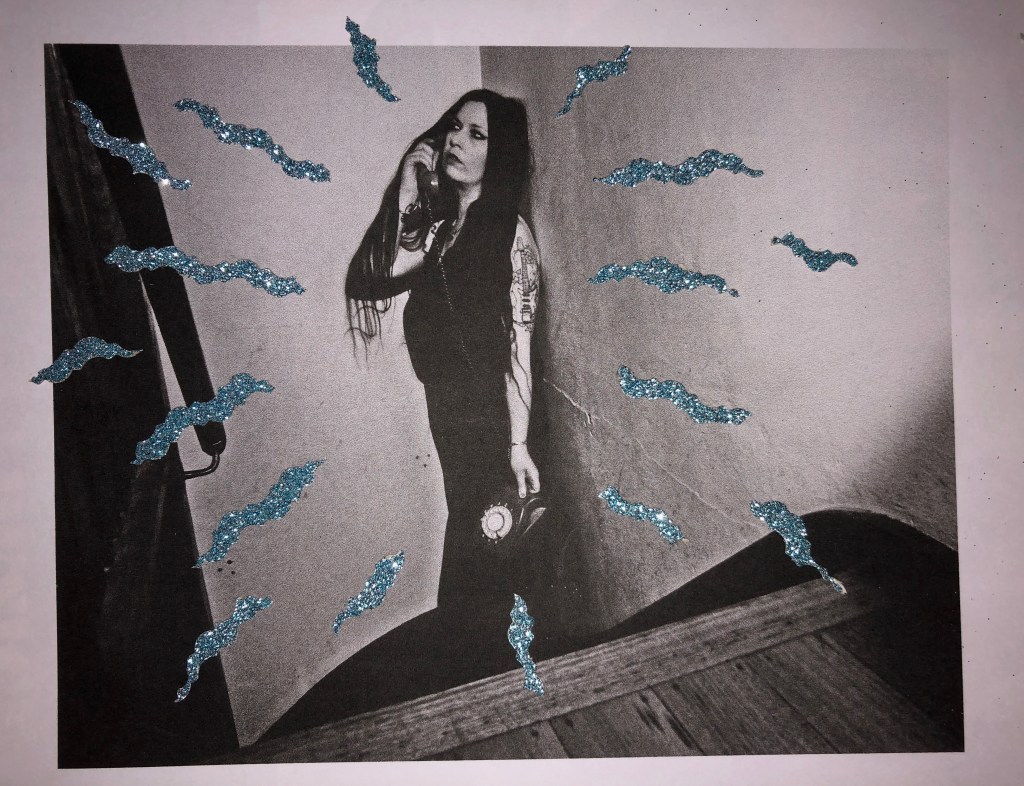
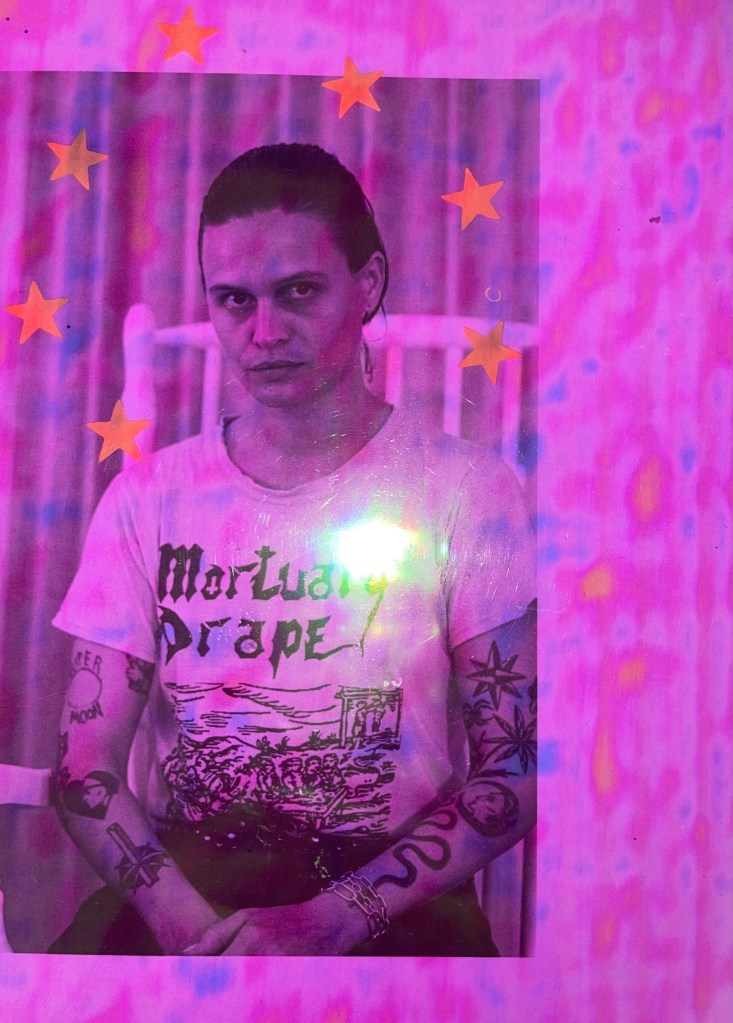
Original photo: Jhonny Russell. Handmade collage by B.

Step into the intricate universe of Naarm/Melbourne-based musican, V, an artist whose life story is as interesting and multifaceted as their sound. 

V’s journey into music was sparked when a Slits’ concert shattered their perceptions, unveiling the boundless potential of women in music. The transformative power of music and its ability to break down barriers becomes evident as V tells us their story. They vividly describe the turning points, the chance encounters, and the intense passion that fuelled their creative evolution. V taught themselves to record through experimentation with bass and GarageBand, to craft their own unique sound. 

V’s musical trajectory was further shaped by collaborations and experiences abroad. Their involvement in various bands, from grindcore to dark wave and experimental projects, exposed them to diverse influences and refined their approach to music. Our conversation delves into their experiences living in Germany for a decade, the challenges they faced, and the lessons learned along the way. V spent time living in Berlin’s Tacheles artist squat.

The interview also explores V’s struggle for legitimacy in an industry that can often be shallow and unyielding. From their insights on the music scene, being dropped from their label, a story of kindness of a well-known fellow musician when V couldn’t afford to eat, and the unending pursuit of self-improvement, V’s authenticity shines through. 

Their third album, Faithless, emerges as a focal point of the discussion. The creative process, the painstaking efforts to capture the right tones and emotions, making the album four times and deleting it, and the significance of collaboration with a choir all come to light. The album’s meaning and themes run deep, loss, yearning, psychic devastation and the failures of mental healthcare in contemporary Australia. 

V’s candidness about their emotional struggles, personal losses, and the complexities of finding a sense of belonging adds a raw and intimate layer to the chat. Their passion for their art resonates powerfully throughout. We also touch on latest album, Best Life, a visual album, and a collaborative work between eight directors in Australia and the EU. 

Ultimately, this conversation provides a window into the heart and mind of an artist who is unafraid to tackle the challenges of living, confronts personal demons, and channels those experiences into their art.

We chatted earlier this year in-person, while V was in Meanjin/Brisbane to headline the VALE VIVI: A punk eulogy to Vivienne Westwood tribute event at The Tivoli theatre. Their dear friend had passed away a few days earlier, and the chat was very emotional. Tears were shed.

I’m so happy to be talking with you finally. We love what you do, V. You’re incredibly underrated. How did you find music? Has it always been a big part of your life?

V: No, actually, it hasn’t been a part of my life forever. I was introduced to this intense love for music through my sister when I was maybe 16 or 17. Of course I liked music before then. Like, I love the Spice Girls and the Backstreet Boys, but I don’t think my music tastes really extended beyond that then. But I remember my turning point.

My life changed when she was 16. My sister bought me a ticket to The Slits at The Zoo and I’d never heard of them before. It was the best. That show was a turning point because, I just never considered the possibility of women in rock on stage. I remember Ari Up was like, “Girls get up on the stage.” And I got up on the stage. I got my first taste of being on the stage in a rock and roll sense at that show. It maybe took a year or two after that, I’d just play around quietly by myself with one of those organs that every single Brisbane sharehouse used to have. 

When I really started making music was when I got an Apple laptop, when I was 21. It came with Garage Band and I just started pumping music out. I started writing music like crazy. 

In my mind, I didn’t really know I was making music in my own way. I released ten albums. I burned them on CDs. I had a little separate CD burner, and I literally had ten V albums. 

I read about that. Someone that used to be in a band with, I think, David Hantelius? 

V: Yeah. 

And they mentioned that when they first met you, they sat down with you to hear your music and they thought, oh, I’m just going to hear a demo. And then it was ten albums! 

V: Keeping in mind that they were all demos, they were not developed with the structure or anything. I feel like I must have been in a year long manic phase when I first started making that music. Sometimes I get so into it that I’d go for two days. I wouldn’t go to sleep, and I’d just keep doing it. I haven’t done stuff like that in over ten years. I guess I’ve mellowed out in my age. But, yeah, that’s how it kind of started for me, slowly, and also privately. The writing part has always been very private. I never performed till a bit later. 

Why was that? Were you scared to put yourself out there? 

V: At the time, I was much more invested in being a visual artist. So that was the practise that I showed to the world. Drawing and painting, scenes and comics and stuff.

The turning point to where I kind of started to resemble what I do now, was back in the MySpace days. I was living in Germany at the time and this guy, Obi Blanche, a Finnish producer, contacted me on MySpace. He asked if I wanted to form some Kills-type band together with him. And I spent about a year in his flat,  sitting behind his shoulder, watching him on Ableton, putting these demos to life. That’s where I learned about, not technique, but when you have discipline. He had a lot of discipline for music, and I continue that discipline today. 

I’m very disciplined now about my approach to music, and I think it’s very informed by Obi. Later on. we had this band called VO – so V and Obi. That was the first official music I ever recorded. 

Shortly after that, I joined this grindcore band, Batalj. That’s where I really cut my teeth live. I wouldn’t be making the music I am today if it wasn’t for Batalj. It was with two Swedish guys. David was the one who we mentioned before who came over and listened to demo. It was David and Per and me in that band. Per was good at tour booking. He would book these intense tours. Two week, three week-long tours. 

The first tour I ever did was with Monsieur Marcaille, who’s amazing French classically trained cello player. He has two kick drums on either side and then he has the cello in the middle and it’s coming through to two amps. It’s very grotesque in a way because he plays just with the underwear and he’s snorting on the ground and spitting and it’s very loud and almost kind of metal-like. 

I never thought about how that might have influenced me because I also had a little fling with him on that tour. There was a huge age gap, but it was fine. I was 23. 
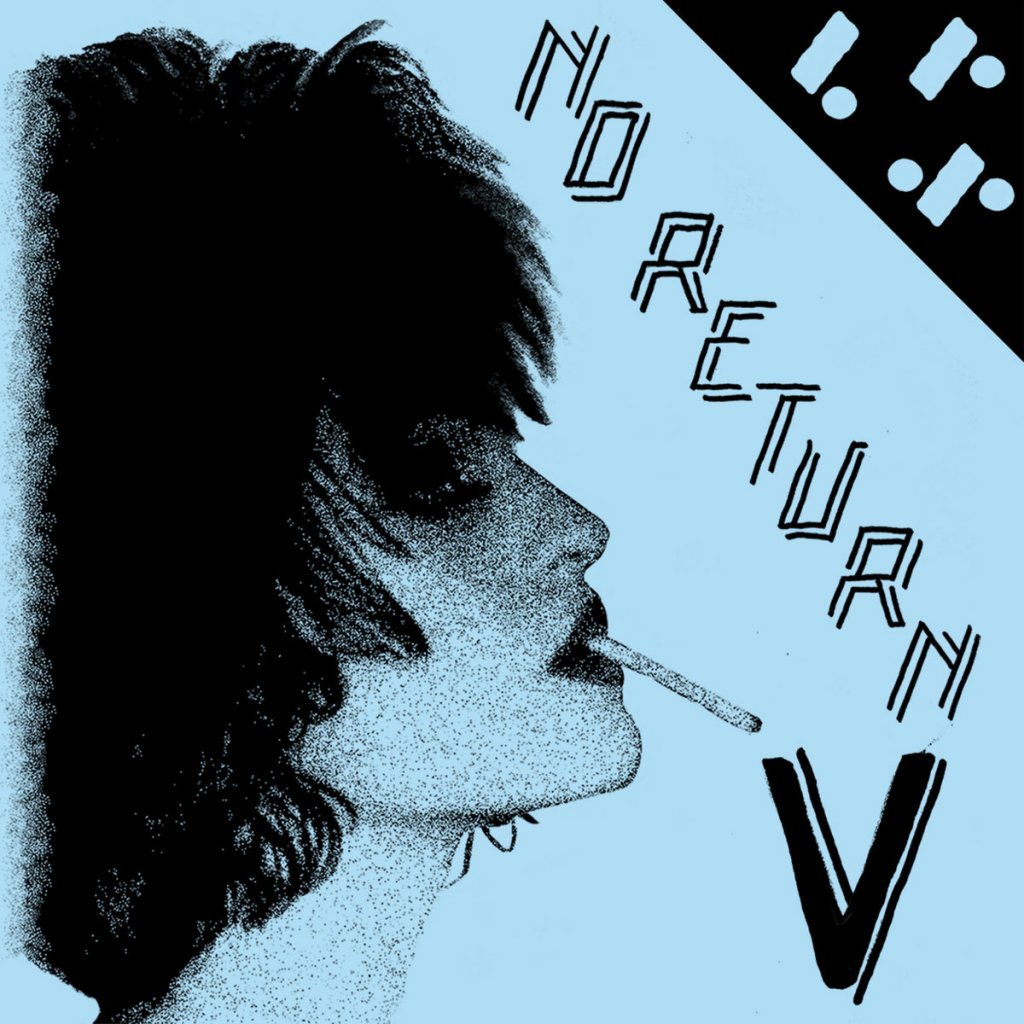
More recently you’ve play with band Dark Water?

V: I didn’t really write anything for Dark Water. I was not quite a session drummer. I also had an important role as a cheerleader in that band. 

More recently, I’ve been playing bass for Enola. But I’m doing one last show with them because I just think I can’t be in a band where I’m a session musician. I have to have a creative input. What’s the point of me having almost 20 years of experience and just be a session musician? I want to put my creativity into it. I’m not shitting on that band at all. I absolutely loved playing the music. I learnt so much. They taught me about dynamics. How important they are and how much you can get someone’s heart racing by applying the dynamics properly. You have quiet a part, then you have a loud part and then you go quiet again, get loud again, it gets people on edge. It made me a much better musician.

[V holds up their bass guitar and hugs it to their chest] 

This is my new bass, Violetta, I upgraded. I’ve been using, Sheila, which is my other bass, that I bought in the Valley when I was 18 with my tax return. Just on a a freaking whim. I went into this music store and they had this deal for a little Orange amp and a bass guitar. I bought it and that was he beginning. 

Did you want to play bass or did you get it because you wanted to play something and thought it was cheap enough for you to buy? 

V: It was just cheap. In school, I studied classical acoustic guitar, the one where you get the little footstool. But honestly, I didn’t do that in high school because I liked music. I did it because I didn’t like gym. I got the music lessons put on the same time as PE so I wouldn’t have to do PE. I learned technique from that. But I wasn’t passionate about it. I didn’t think about making music when I was a teenager. That came later. 

When you started doing your solo thing, V, you were living in Germany?

V: Yeah, the very first show I ever did was for someone’s art show which was held in a derelict abandoned building. I had this battery operated stereo with a CD that I burnt for the backing track. I had a tambourine, no microphone. I was singing along.

I’ve gone through huge transition to get to where I am today. It took a lot of different bands. I’ve gone to the next level with V because of that.

You were talking about dynamics before, I can especially feel that with your new album, Faithless. I’m usually a big lyrics person, they’re a big part of the equation for me, but then with your album, there’s not really that many lyrics. Maybe the last song. You convey so much with just sound. 

V: That’s really what I wanted to achieve with that album. It was by far the hardest work I’ve ever created. 

Didn’t you make the album four times and then deleted it each time?

V: I did, yeah. 

What was missing in the versions you deleted?

V: I got commissioned to do the album, so it had to have the Bells on it. Many of the songs I’d written would have sounded better on synthesiser and my normal thing. And I felt like I was doing a disservice to the Bells by… it’s almost like I just tried to sub them in. I wanted to justify using the bells. For people reading this, they’re the Federation Bells. I did it four times because it had to be good.

It was written during lockdown, a very isolating period. I was in the shed. I smoked more weed than I’ve ever smoked in my entire life. It was a nice period, because obviously, with the lockdown and getting money from the government, I was able to, for the first time in my life, almost just only focus on the music for two years. 

I felt so conflicted because I didn’t like how the Bells sounded. And it took me forever to arrive at a point where I could feel justified, to actually release it and feel like it was still my voice and feel like I wasn’t compromising. 
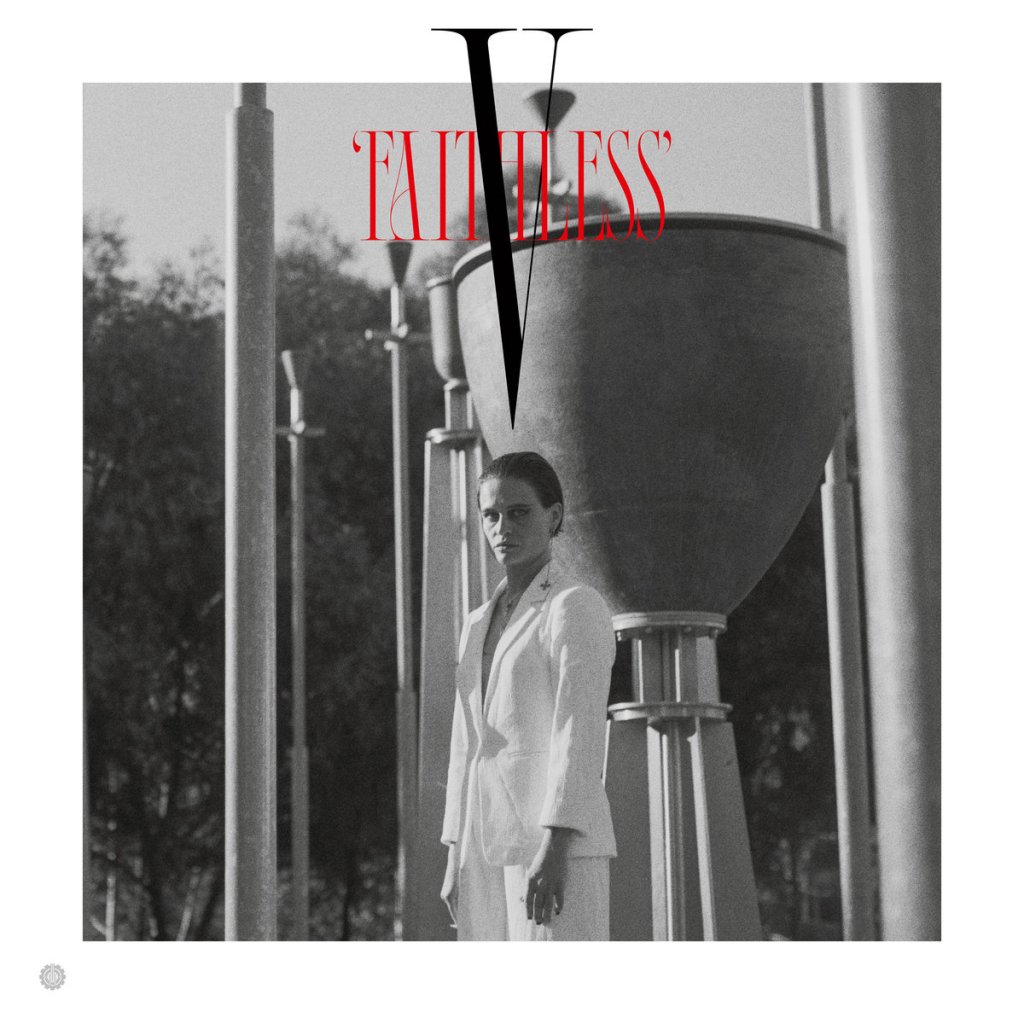
Initially did you have an idea of what you thought the Bells might sound like and was the reality different?

V: It was a harsh reality because the Bells are ugly sounding. They hurt. They hurt my ears. The higher ones, anyway. The album pretty much uses almost none of the upper Bells. It’s like, basically mostly the lower five Bells. You think of a bell in a clock tower, it’s like that. They’re upside down on sticks. It’s a very unique instrument. They’re more of an artwork. 

I’m not technically trained, I’m self taught, totally. There’s all this technical information about how the tones work and I just have to do it all by ear.

Dark Water also got commissioned, but on the Grand Organ.

I got dropped by DERO Arcade. I don’t mind talking about that. That was crushing. I can’t even begin to say how crushing it was, because I made ten music videos, I spent all this money, savings. But, yeah, it will come out, it’s going to be fine. That was very difficult. 


So that’s another album that you’ve made? 

V: Yeah, it’s all finished, it’s ready to go. I’m probably going to probably going to release it in three months, because I want to do a European tour at the end of this year. That’s why I’m doing scrappy jobs, so I can get a ticket and go overseas again. 

My amazing sister ives in Norway and haven’t seen her in five years, she’s got five cats I’ve never met. She has a van and has agreed to drive me on tour. I’m going to release ten singles, because why not? I can do whatever I want if it’s my own self-release. The first show of the tour will probably be in Berlin, as cliche as that is [laughs].

That makes sense though, you lived in Berlin for ten years.

V:It still feels cliche, it’s the cliche of the Australian that goes to Berlin. Whenever it comes up in conversation, I don’t say the “B” word, I just say Germany, because I’m embarrassed. It’s fun. I’ve been here [Australia] for seven years now, so it was 17 years ago that I moved there. It was just before turning 22, when I moved. 

Why’d you move there?

V:  The art scene. Initially I had moved to London because my mum is from there and I wanted to reconnect with her side of the family, but I hated it. I felt alienated, didn’t make any friends. I didn’t feel good there. 

On a whim, I moved to Berlin, I had this vague friend that had a studio in a massive artist squat, Tacheles, that I ended up living in. I was meant to be there for five days, but on the first day well, no, the first day was horrible, on the second day I was like, oh, I’m not going back to England, I’m going to stay here. I felt free in a way that I’d never felt. Maybe it was because of the language gap, like not understanding advertising and not understanding any conversations on the street. 
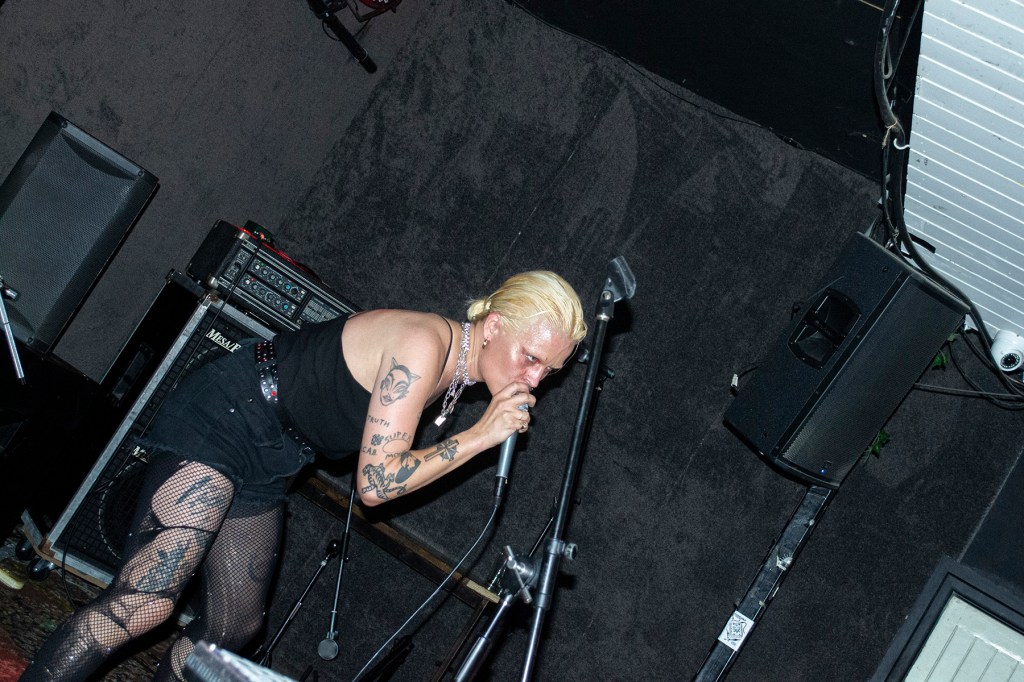
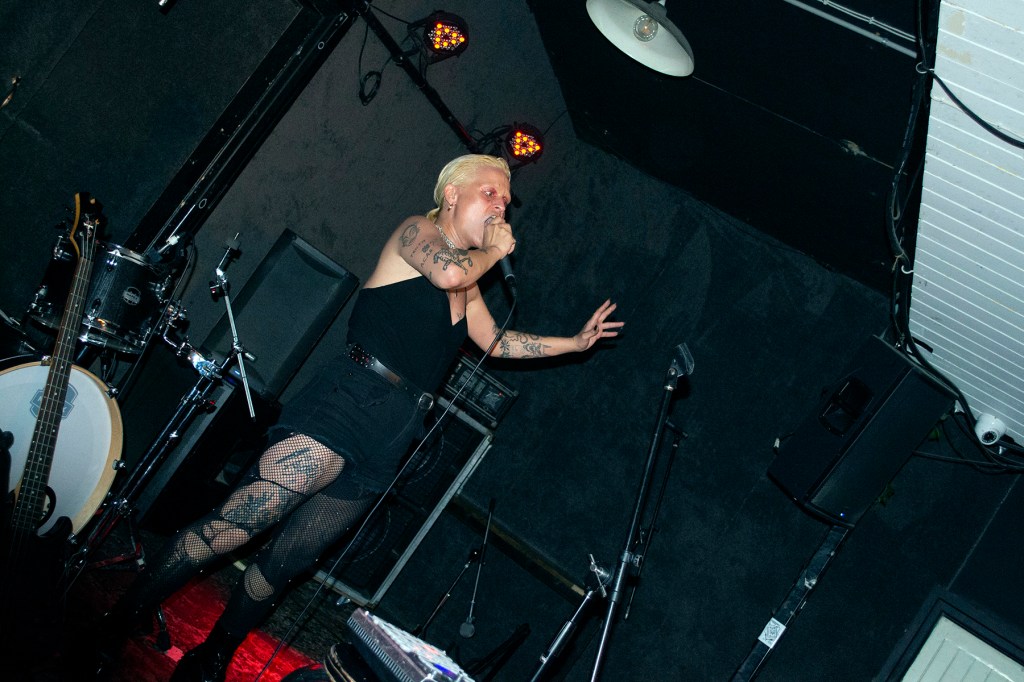
V live in Meanjin/Brisbane 2021: by Jhonny Russell

That’s really interesting. 

V: That’s where I immediately started making those ten albums. When I moved there, I bounced from art studio to art studio. I essentially spent ten years bouncing from place to place. It was very unstable, but it was nice. I wouldn’t want to do that again, though

Is there anywhere that you feel at home? 

V: That’s hard because my family is all split all over the world. I guess I do feel somewhat at home in Naarm because my brother is there. He’s married. He has my beautiful niece. She’s so cute. Izzy. She’s the only child in the family, and at this stage, I’m probably not going to have children. It’s nice to have this child, that feels nice and somewhat homelike. 

I also grew up in Singapore and South Korea, and so I’ve never really felt connected to Australia. It didn’t really feel like I was leaving home when I went over to London. I was born here in Brisbane, but left when I was six and then came back to Brisbane when I was about 15 or so. So the formative years was spent over in Singapore and South Korea; changed school, changed houses. 

Do you remember much from your time there? 

V: Oh, yes, very much so. My mind wanders back there sometimes because I went to school with all these expat kids who were from all over the world. That’s what I really liked about Germany, because it is quite multi-cultural, they call it multikulti. There’s ja lot of different nationalities living there. There’s a lot of different people. That’s something I feel really lacking here. It’s so homogeneous. I miss the heavy accents, and broken English and broken German and broken French and whatever language. When you meet someone, you try to find whatever common language you have, and then you speak broken whatever together or use, like, Google Translate to try and communicate. 

I’m searching for home. I don’t think it bothers me that much, though. Maybe I’m more like a wandering Ronin [laughs]. But, I would like to find something that feels like home one day. I mean, this kind of feels like home in a way. I’ve had housing instability for literally 17 years. That’s not the worst thing either, because it feeds into my need for stimulation. I’m always searching for new, fresh stimulation.

What’s the significance of album Faithless to you? It’s your third album. 

V: It represents legitimacy. There’s nothing more legitimate than the city of Melbourne commissioning you to make a record. It feels like a new phase for me. I want to reach the heights. I don’t want to have to work this shit insurance job that I hate. I hate working these crappy jobs. It sucks my life out. And it means I can’t put as much thought and effort into my music. 

Best Life is your other album you’ve made, right? 

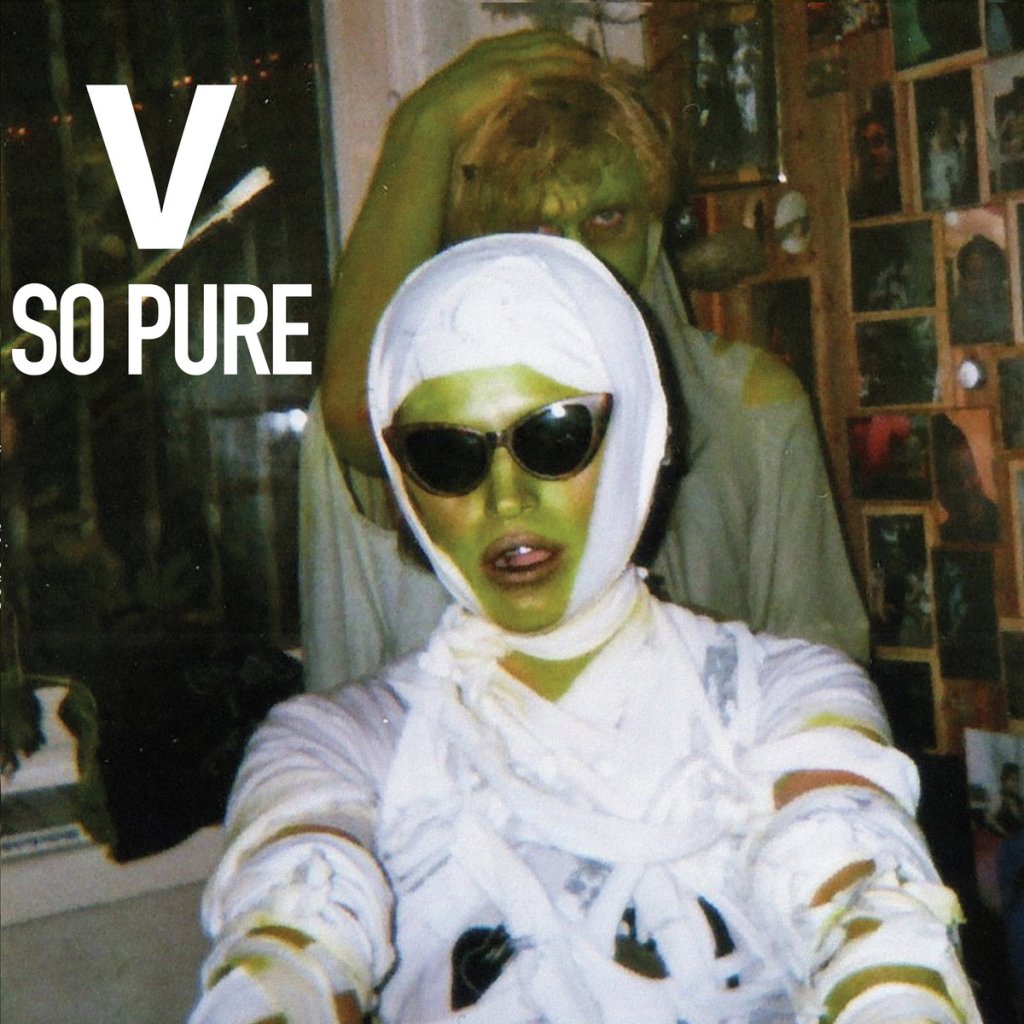
V: Yeah. It’s about best life. When we were in lockdown, it’s hard not to self-reflect. That’s what that album is all about—self-betterment, self-improvement. Also, isolation. 

I’m always wanting to be better, a better version of myself. There’s a whole bunch of stuff that I really don’t like about myself that I’m working on. I can be so passive aggressive, and other things, that I’m trying to work on and I think bit too much about. Self-betterment is what I use music for. With Best Life, with So Pure, I was really looking inwards and looking at myself and asking questions. Faithless, I’m more looking outwards. I didn’t want to write songs about love and of course, I inevitably end up seeing death, which I’m a little bit tired of it, to be honest. 

The last song ‘Faithless’ was one of those songs that came fully formed. It came out totally, there was no arrangement later. I didn’t have to revise the lyrics. I feel like that is a bit of an aberration from the rest of the album, which I feel is like more of an exercise in, I tried to go really deep with the oral sonics of it all. The album represents legitimacy for me, which is something I desperately crave.

‘Memories / Dreams’ definitely exists, because Cosey Fanni Tutti exists. This is heavily influenced by Cosey Fanni.

In what ways? 

V: I read Art Sex Music. It’s so good. And it will make you look at Genesis P-Orridge in a totally different light. I listened to her discography and also her collaborations that she did with Chris Carter as well. 

I also listen to a lot of group A., they’re from Tokyo but based in Berlin. I played with them before, they’re huge now. They’re amazing. Very influenced, because for me, they were at the forefront of this genre. The way they talk about their music is really cool as well. It’s very conceptual. It’s like, this album is all about wood and wood sounds, and then this one is about metal and metal sounds. It’s clever, it’s intellectual.

I get obsessed with things and I listen to the same thing over and over and over and over again.  definitely got obsessed with Cosey’s live recordings on SoundCloud. 

Have you heard Lydian Dunbar’s new album Blue Sleep? I’m obsessed. That’s one of the ones that I’ve also listened to obsessively on repeat. It’s one of my favourite albums of last year.

We love Lydian! There’s so many great artists in Australia, but the best stuff doesn’t always get known by a wider audience.

V: Yeah. Because of the industry, you see these super talented people get ground down all the time. It’s never the best stuff out there getting attention, but sometimes it is, look at Amyl and the Sniffers! I’m so stoked they blew up. They definitely work hard. 

Quick story about them, a few years ago, I had a bit of a mental meltdown about music and I made this social media post that I’m going to quit. I didn’t even have money to eat. This sucks. I hate it. And then Amy from Amyl and the Sniffers wrote me. I’d seen her at shows and stuff. She said, “I’ve just done really well with this Gucci campaign. Please let me send you groceries. I’d never really even talked to her before. After that, there’s no one who’s more of a fan of Amy than me. Not even because of just that, but because of her lyrics, her performances, and everything. She’s super lovely.

Totally! The industry can be such a terrible place. Music media in this country is all pretty bogus too. Artists have to pay to get featured (we never charge, we only cover artists we love). People reach out to Gimmie and ask us how much it costs to be featured ‘cause they’re used to paying other well-known bigger publications to get coverage. Their numbers are fake and engagement is poor. They’re not doing as well as they pretend that they are. 

V: What’s happening? Where are we going? What’s the endpoint of this complete homogenisation of culture? 

In Melbourne, you’ll see these bands that have hundreds and thousands of monthly listens on Spotify, but then you go see them and there’s only a few people there.

Fucking house of cards, it’s got to come down at one point. How much can we take? I like doing my own thing, staying in my own lane that I’ve made, supporting the things that I love, and that’s it. 

I’ve had the opportunity to play with Civic recently and they’re fucking doing so well. Those guys, they’re going to America, twice this year. They’re going to Europe. They got sponsored by Fender. They could choose anything they wanted. That’s a fucking dream. 

We saw them on Friday night. We love those guys. Lewis is a total legend, a really nice, talented dude. 

V: I wish I could have made that show. I really like them all as people, they’re exceptional. Normally I have no time for all-male bands, no time whatsoever. They’re just so fucking nice. I feel like they deserve it. I know them all individually from their other projects, and I just know they’ve worked so fucking hard to get that. They did twelve shows in four days at South by Southwest. Insane.

In regards to your creativity, what are the things that are important to you? 

V:Creativity is part of my entity. I’m always being creative. Integrity and authenticity. Authenticity is the most important thing to me, no compromise. I like the space to do things in my own time and not be forced to be in a schedule. What’s the point if it’s not real, then it becomes shallow entertainment. I’m more interested in creating this simulacrum of my soul. It should be my unique voice.

My creativity is my life force. That’s my purpose in life. Maybe that will change later, but I don’t really have much else in my life besides my music. I have my friends, and I have nice musical equipment, but I feel like it probably would be healthier for me to get some interests outside of the creative sphere, also because my ego is so linked to it. If something goes wrong with my creativity side, or if I perceive that it’s being rejected or something, then it’s like the end of the world. 

Yeah, I’ve felt like that too. I used to put on a lot of punk shows and I’d spend time and effort making cool flyers, like, mini artworks, hand them out at places, and then I’d see them just discarded on the floor, it’d be so sad. 

V:Yeah, I used to put on a lot of shows too. But I haven’t since COVID times. In Germany, I used to put on shows all the time to the point where people I’d never heard of would write me and ask me to put up shows. I’d listen to the music first and generally not reply to the ones that I didn’t like. I was living on and off in communes that had guest rooms so you could get crust bands up from the Czech Republic, with six members and shove them in the guest rooms. 

I remember once, a band called the Piss Crystals, me and a friend put on a show for them and I put them in this guest room, closed the door, went to bed; Later I went down to collect them, there was a big note on the door that said: Scabies. I don’t think anyone got it. Or maybe I just blanked that out my memory [laughs]. But a lot of stories like that in Germany, those were some really loose times back then. Very different from life here. 
Were there any specific emotions or things that you were processing while you were making Faithless

V: With ‘Faithless’, the song itself, I mean, that song is a eulogy for Bridget [Flack]. The songs all have their own meanings but that one is the one that really has a solid. meta meaning. When I got Hunny Machete involved and she brought in the Faithless Choir, it took on this entirely new meaning—the power of community and community care. 

When the choir got involved, it was like they were drowning out my cries of, are you faithless? You almost can’t hear me say that because the choir is so loud behind me. They make it uplifting. It’s a very depressing song without it. She wrote the arrangement, just reminds me the power of collaboration, makes me want to collaborate more.

That song, when I wrote it, it was about being faithless and being hopeless and being so completely faithless in the system for people like Bridget, people like me and that we can’t live and thrive in the system. Bridget was badly failed by the Australian mental healthcare system.

‘Cockroach’ is about the apartment I was living in. I wrote the first half in this sharehouse in Brunswick. And the second half, this is Lockdown rent got really cheap in CBD, so I got my own apartment for the first time ever; one year. It was infested with cockroaches. I like the big ones, that’s no problem. Give me a big one any day. The standard bush cockroaches. But it’s the German cockroaches, the tiny ones, they just make me want to vomit. They’re disgusting. I had to throw them away cassettes because they got in there, They got in all my picture frames. It was intense. 

What about the song ‘Toll Keeper? 

V: It’s kind of like you’re on the river on that boat thing and you’re going to the Afterworld. I feel like that’s the soundtrack to that, in a way that brings you into that. 

That was one of my favourites. I went through so many emotions listening to it. Each time I listened, I got something else from it. 

V: So awesome to hear. That makes me so happy. I was not sure how it be received because it’s so different. It’s still my same aesthetics and sensibilities but a different approach to meaning. Initially, when I wrote the album, probably the first one that I deleted, I was like, oh, make an album about land rights. Because written on the Bells, there’s a river there, and there’s so much history for the traditional custodians of the land in that area. I started to try and write it. I was like, this is too much to tackle. I also felt like it wasn’t my place to try and write, like I was just trying to be Midnight Oil or something. It wasn’t right. It’s a hard thing to write about, land rights. 

I felt quite insecure while writing, because, you know, if I wasn’t going to write directly, direct lyrics about my emotions or anything, I was like, Is it still illegitimate and is there still meaning in it? That’s part of why I wrote and deleted it four times. I felt so fucking insecure about it, and I just wanted to make sure that it rung the right notes, metaphorically speaking. 

I was reading about the drum machine that you used. You got it in France, right? 

V: I did, for €2. It was sitting in the grass, I half knew what it was when I walked past because it has all the classic buttons, like waltz, samba, all those drum patterns. I was very much trying not to hide my excitement when I was asking the woman selling it, in broken French, how much does it cost? It’s an amazing machine. I mean, it still works perfectly. And it’s over maybe 50 or 60 years old. It’s definitely the jewel in my collection, because I have collected a few really nice pieces throughout the years. I would never sell it, but it’s worth, maybe a grand and a half. And yeah, the history and the sound you would get from it. I was slyly asking her what it was? (I knew what it was). She told me it’s for accompanying the accordion. I was like, oh, okay, maybe I’ll take it. I actually want to get it retroactively fitted with Midi because it doesn’t have Midi, so that was kind of a nightmare, like fixing it or not fixing it. 

I’m not going to lie, it was a nightmare to actually technically make this album. Technically it was such a challenge because it wasn’t on the grid and I really should have thought about that. But I’m happy with how it came out. I could have saved myself 300 hours or something, because I did a lot of hand placing, midi notes and things like that. I’ll never do it again. It was a labour of love. 

Have you had a chance to play the album live yet? 

V: No. 

You were going to do it at Fed Square?

V: We got rained out. It was huge no no, because I’m bringing a lot of electric stuff like a laptop. I’m not bringing the drum machine because it would literally be impossible to get it to sync up with what I’m playing. Even a single drop of sideways rain is not allowed to come near my stuff. It’s going to be rescheduled. It’s impossible to take the show on the road. I’m just going to leave it as that one live performance, just have it as this rare one off thing and then the records. That’s going to be the legacy of it. I’m sure I would like to do, like, a ten year reunion with the choir,  because the choir is, full of such awesome people and we really bonded. 

So you’ll start focusing on Best Life now?

V: Yeah. I just got to get the plan together. I haven’t tried so hard to get another record label. Once I got dropped from DERO Arcade, I wrote all the labels, nobody really replied to me. I got one rejection, which was cool, even to just see that they’d seen my letter. That was so hard. 

Obviously, I’m doing well. I have this album out, but nothing’s good enough for me. Nothing’s ever going to be good enough. 

What does your best life look like? 

V: Right now? Don’t ask me, because I’ll start crying. I don’t know.


Would you be making music full time? 

V: No, I wouldn’t be doing music at all. 

What would you want to be doing? Would it be visual art? 

V: No. [Cries]. I’d probably like to have a family, I think, but I don’t think I’m going to do that. People often say that their songs are like their kids and that making an album is like giving birth. I definitely view my instruments as, I wouldn’t say my child, but, something that replaces that, in some ways. [Craddles their bass guitar]. This feels very comforting for me to be holding Violetta like this. I always give them names. 

Outside of capitalism, yes, I would be doing music, I would be doing art. But it’s just so crushing to be creative. 

Part of the reason I caught up in my head is I spend way too much time alone. I need to get out there and hang with the young people and go see those bands. Start looking at placing my focus on, am I happy with what I’ve done? Am I happy with what I’m doing? Stop striving for success and just try and keep focusing on making what I like and what I’m happy with. 

You’re an amazing, talented, fascinating person V. You should be proud of what you’ve done, it’s so unique, no-one could have done it but you. What is success anyway? I know music doesn’t pay your bills right now but your art really speaks to people, it moves them. We get it. We get you.

V: I am happy with it. I’m going through an emotional time also because another trans friend unfortunately chose to end their life four days ago, the day before this album came out and I was like, oh, god, like, yeah, fucking faithless right there. All that kind of stuff beats you down. When people are actually dying and not just being upset because their record won’t come out, it’s hard to reconcile, but it’ll get there. I’ve got my therapy session tomorrow morning, by the way, so don’t worry about me. I’ve just had a rough, rough few days. 

I’m so sorry that you’re having such a rough time right now, our condolences for your friend passing. In situations like this words never suffice. Are you ok?

V: Yeah. I’m sorry for my friend. It’s so sad. 

Totally. I was talking to Jackie from band, Optic Nerve, recently. I was talking to them and their new album they’ve just put out is called, Angel Numbers.  Thematically, it’s about signs among other things, but it’s also about violence against trans people. It’s such an important record that we feel deserves so much more attention. Jackie was telling me about how they got jumped, multiple times in a few weeks and ended up in the hospital twice. 

V: That’s awful. It doesn’t surprise me. 

The album is about these things and it’s about community. It’s one of the best hardcore punk records of the year, and it really is for community. It’s incredible. Jackie is an incredible person doing great things.

V: That sounds like an extremely important record and I can’t listen to it. Optic Nerve’s guitar sound is something special.

Anything else you’d like to tell us? 

V: We’ve covered A to Z, everything. I have a lot to think about, which I really appreciate. Your questions made me tear up, asking, where is home? And, what would your best life be? I’m always about self-improvement, so I’m going to think about those questions. They really struck chords in me.

Find V at: 

vlovescats.bandcamp.com/music

instagram.com/vlovescats

facebook.com/Vlovescats/

soundcloud.com/vlovescats

Naarm/Melbourne darkwave post-punks screensaver: “I’m positive that our neighbours think we are crazy…”

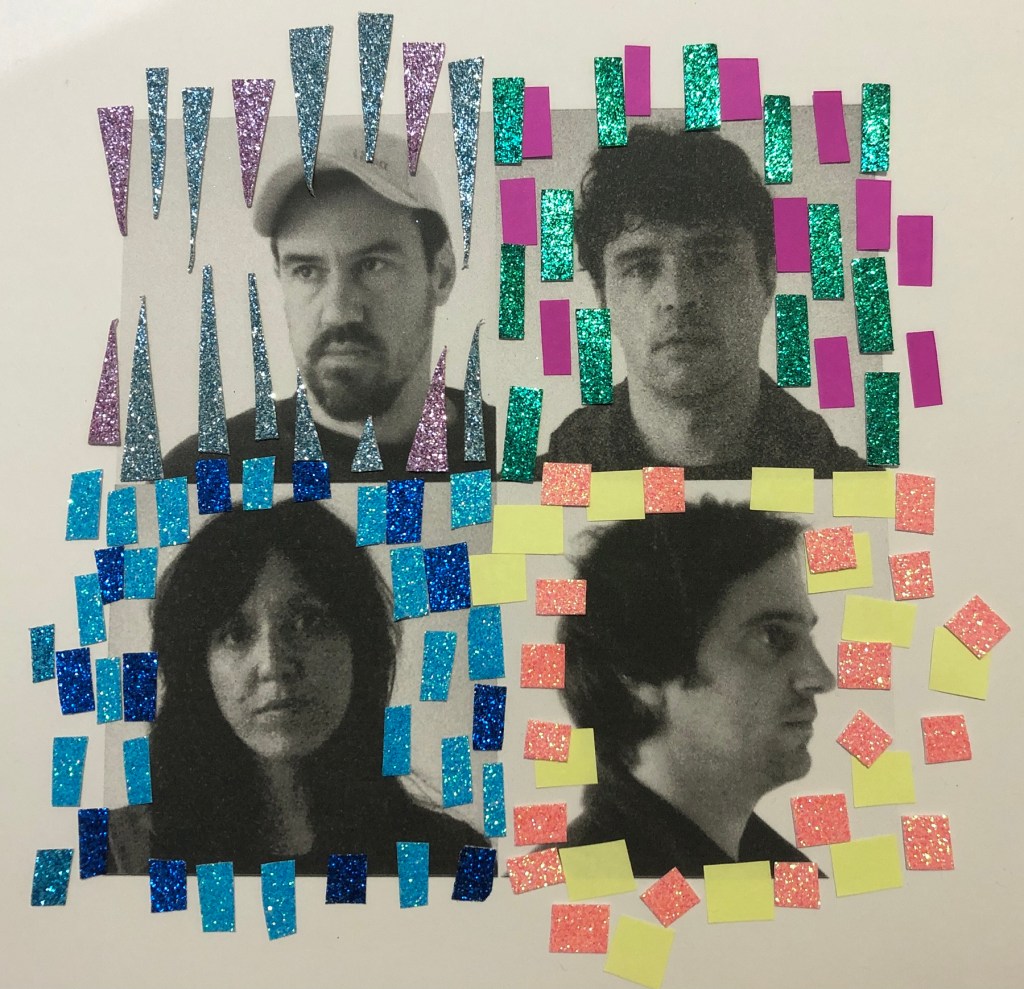
Handmade collage by B.

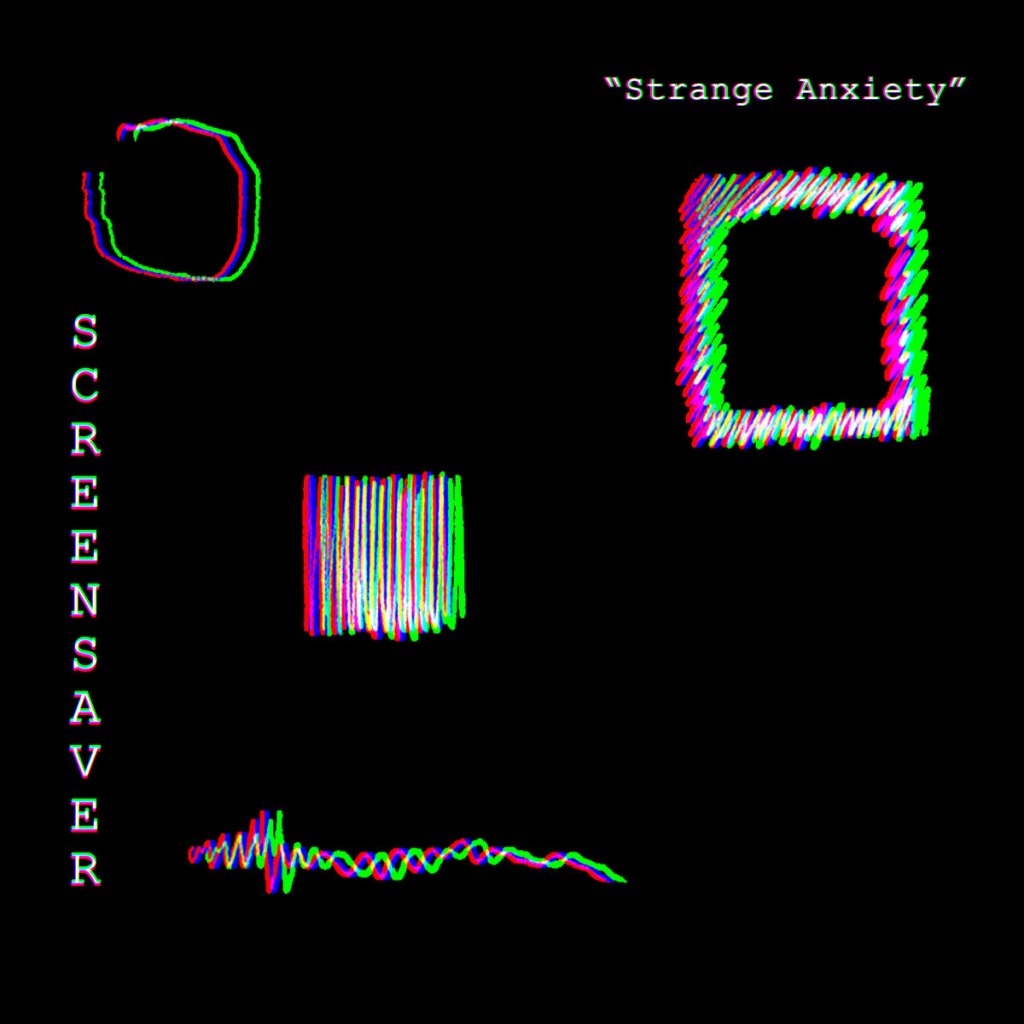
Gimmie interviewed Krystal Maynard and Christopher Stephenson from Naarm/Melbourne post-punk, synth-heavies, screensaver. Last year they released demos with a lot of heart and promise and this year as well as featuring on two essential compilations – A Complication for Edgar – a fundraiser for Edgar’s Mission Sanctuary providing, shelter and care for homeless, abused, injured, or abandoned animals and the latest Blow Blood Records ALTA2 compilation – they released a new single ‘Strange Anxiety’.

How did you first meet?

CHRISTOPHER STEPHENSON (guitar/synth): We first met in 2014 in Berlin when our bands Spray Paint and Bad Vision played together. The following year Spray Paint travelled to Australia and played with Krystal’s band Polo.

KRYSTAL MAYNARD (vocals/synth): Yeah, our first official meeting was at some heinous hour of the morning on the very last night of Bad Vision’s tour at the kick on at some bar in a suburb of Berlin that I remember very little detail of.

I understand that you both started collaborating musically over the internet beginning in 2016 with Chris in Austin, Texas and Krystal here in Melbourne, Australia; what kinds of songs were you making back then?

CS: At the time I had a great 4-track in my share house bedroom, I didn’t have any real drum machines or great synths, so I tapped beats out on a thrift store Casio into a loop pedal and ran keyboard sounds through enough guitar pedals to sound somewhat synth-y. The project started as me sending over instrumentals and Krystal doing vocals.

What inspired you to go for a synth-punk, new wavey, gothy sound for screensaver?

CS: After I moved over we decided to expand into a full band format where Krystal played keys and I added guitar.  Once we brought in bass and drums with Giles and James the sound naturally settled into where we’re at presently.

KM: It wasn’t really a conscious decision, Chris’s original demos really lent themselves to the sound and vocally it made sense for me to go down that path. We’ve both played in a variety of different sounding bands over the years and I was enthused to do something I hadn’t dived into before but actually was core to my musical origins. When I was a teenager I was super into The Cure, Siouxsie and the Banshees, Joy Division as well as the 77 punk stuff. So for me, it’s been like tapping back into my origins but whilst having had many years of developing a broader palette to take those influences but ( hopefully) not just reproduce their sound but incorporate more wide ranging sounds. I find genre discussions both interesting and tedious. As a band you can’t really escape using genres to describe your music which is frustrating but unavoidable!

What’s the story behind the band name?

CS: I recall coming up with the name as we drove together to Office Works in Coburg in our black Volvo station wagon.  I think I had to print a certified copy of my passport that day.

Your debut single ‘Strange Anxiety’ that’s about to come out was recorded remotely in isolation; what sparked the idea for this song?

CS: Krystal had a garage band demo with the initial low keyboard and then sent it to James who programmed the beat.  She’s amazingly quick with lyrics and vocals in general, so by the time I started working on it as a session the structure was all there.

KM: I’m pretty sure that this song began as me teaching myself how to program drums in Garageband and having a play with making music that way, it could have easily been a throwaway practice session of mine that nothing happened with. When our drummer James got his hands on it he turned my basic beat into something super dynamic which brought the bass line to life and we built from there.

What’s something that we might be surprised to know about your writing or recording process?

CS: I suppose we’re still getting to know our process ourselves!  In an otherwise normal year I doubt we ever would have seen a song through from start to finish without going into a studio to amplify guitar or bass at the very least.

KM: Covid-19 and the restrictions in Melbourne have meant that we’ve had to reinvent our processes completely, it’s enabled us to stretch out into sounds we may not have if we were just jamming as a four piece is a room, the method of making (mostly) in the box music over the last six months has had a lot of positives for us and developing our sound.

The video for the song is a collaboration between screensaver’s bass player Giles Fielke and animator Juliet Miranda Rowe; can you tell us about making it?

KM: We filmed the video using our bass player Giles’ Super 8 camera at his apartment back in June when the restrictions were briefly lifted. Giles riffed off the simplicity of Andy Warhol’s screen tests for the black and white shots of the band members and he edited the foundation of the clip. Juliet came in afterwards and animated over the top of the footage to give it even more movement, working with the songs rhythm’s to give it punch in all the right places.

In 2019 you started playing gigs locally and then did a short run of shows in the US opening for Wiccans and Timmy’s Organism; besides playing, what was one of your favourite moments on the trip?

CS: Personally it was good to be back in my former hometown and reconnect with bandmates and friends in Austin.

KM: My first instinct is to say the breakfast I had in New Orleans! I still find eating food in the USA such a novelty, the diners and greasy spoons and the really regional foods. But yes, the shows were great too, tour is always fun, sometimes the best moments are just being juvenile in the van and flogging the tour joke until it’s got no life left in it.

screensaver are featured on the Blow Blood Records ALTA2 compilation (a comp of Australian bands who have made music whilst in isolation); how did the song you contributed to this get started?

CS: That one started as some Michael Rother worship I put over a terrible sounding beat on a cheap machine. James improved the rhythm track immensely and Krystal belted the vocals out in our apartment.

KM: I’m positive that our neighbours think we are crazy, because I am always laying down vocal tracks in headphones really loud, so all they are getting is vocals sans music which we all know sounds pretty bizarre/not very good. I’m now at peace with it. We hear things we don’t wanna hear in the apartment block all the time, so I guess its payback.

ALTA2 is a really impressive compilation and such a great idea to put out songs of artists who have continued to produce music during this lock down. It’s a big reminder of how much talent we have in own backyard, we highly recommend you pick up a copy and discover a whole bunch of new artists.

You also had a live track “Meds” on A Complication for Edgar – a fundraiser for Edgar’s Mission Sanctuary featuring 20+ punk bands; why was it important for you to be a part of it?

CS: In addition to supporting a great cause it actually happens to document our first live show at the Last Chance.  Max Ducker did a great job with the live sound and making it sound great on tape.

KM: Max Ducker is a really old friend of mine so we couldn’t say no! But honestly we are happy to support an organisation that is looking after the welfare of animals.

What’s something that has really engaged your attention lately?

CS: I thoroughly enjoyed Sand Talk by Tyson Yunkaporta.

KM: I am very enamoured with Miles Brown’s album The Gateway released early this year, it’s so danceable, moody and evocative and the theremin works it magic to replace any desire you might have for vocals.

What’s next for screensaver?

CS: Working on the debut LP, stay tuned!

Please check out screensaver. screensaver on Instagram.

Detroit Electro-Punk Duo ADULT.: “One of the most satisfying things about releasing work is helping create a community of likeminded individuals…”

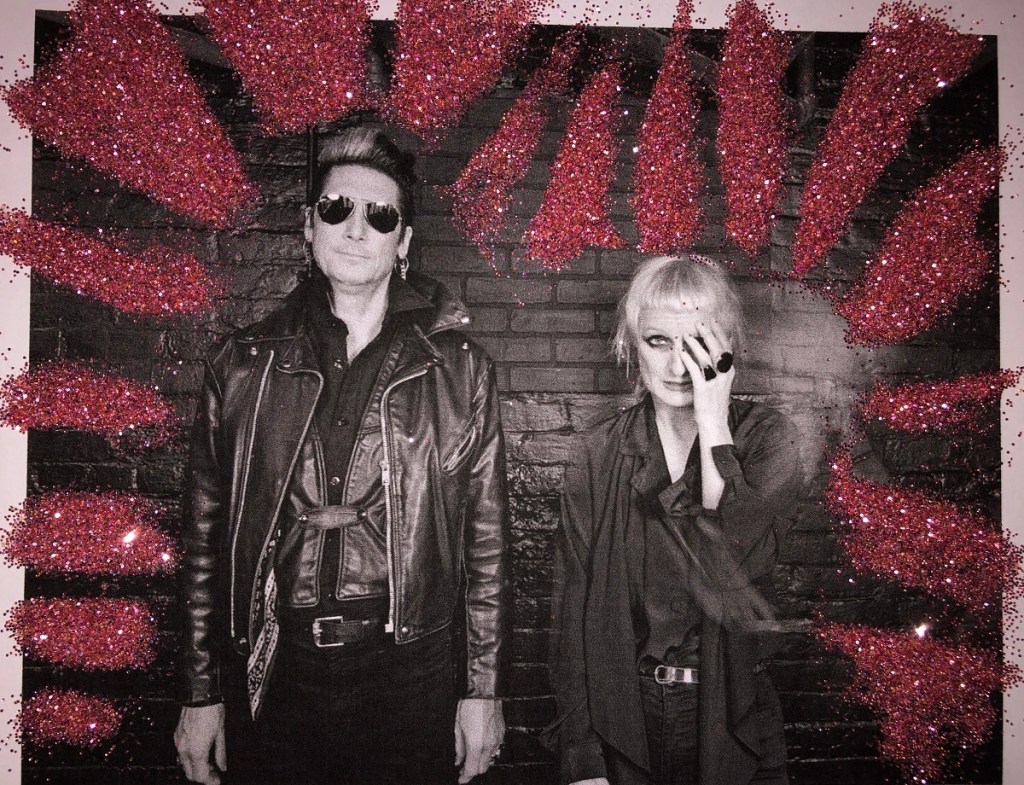
Handmade collage by B.

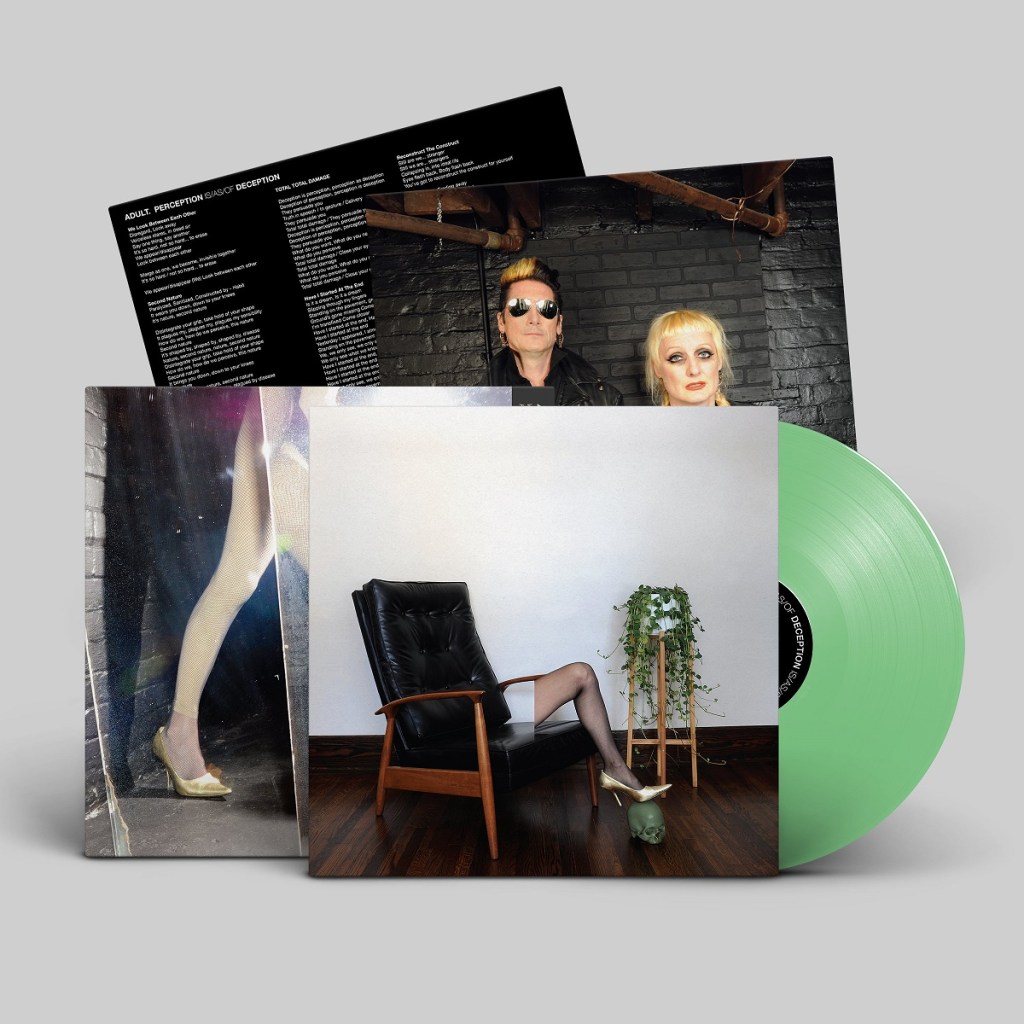
ADULT. have been in existence for over two decades! Their darkwave, electronic, synthpunk is always interesting, always pushing boundaries and always reinventing itself. Towards the beginnings of isolation we caught up with ADULT.’s Adam Lee Miller and Nicola Kuperus from their home in Michigan to find out more about their eight studio album – Perception is/as/of Deception. Recorded in their basement, which they painted all black in an effort to deprive their senses and see what would come creatively, the result is a self-aware, tongue-in-cheek, thrilling record!

How have you both been doing? I remember reading an interview with you from way back and you mentioned that you liked working isolation.

ADAM LEE MILLER: [Laughs] We do. We also enjoy knowing that there is going to be a very public part of our lives after the isolation.

NICOLA KUPERUS: We’re beginning to wonder; when is that public time for musicians?

I know it’s an interesting time. We’ve been hearing here in Australia that we might not see live music until 2021!

NK: Same!

ALM: Our European booking agent just nuked our tour that was supposed to be at the end of August.

On the brighter side, you’ve released this incredible new album – Perception is/as/of Deception – on Dais Records! It’s one of my favourites that you’ve made so far.

NK: Thank you! It really feels like someone pulled the rug out from under us with the cancelation of our tour.

You had the launch for the album online?

NK: Yeah.

ALM: Yeah, you know how it works, the record cycle for things is so far ahead, the way it’s planned. If the record label has to push ours back then they have to push everyone else’s back and no one knows when to push it back to, that’s the problem. If we knew it was going to last for four months then we could reschedule according to that. Our North American tour that was supposed to start next Thursday, we’ve rescheduled it three times! Now we’re trying to start October 5th in Boston, but we don’t even know if that will happen. Our Governor today sent out another emergency alert extending the quarantine. We have a very severe lockdown in Detroit, we’re not allowed to visit anyone. We were just watching some of our neighbours taking a walk in the rain a couple of nights ago.

NK: Everyone’s losing their fucking minds!

ALM: They didn’t take an umbrella and it was 36 degrees out [laughs].

Why do you love to create?

NK: I don’t know? I don’t know what else we would do! [laughs]. My entire life I’ve just been interested in making stuff. It doesn’t mean just music, it means creating your own world. No one has ever asked that before… it’s just something that’s innately in you.

ALM: When we started hanging out, that was one of the main things that we had in common, we both liked to make things. It’s not like we were going to a movie and make out point! [laughs]. It was let’s stay in and work on a photograph or something. When we started making music together—the rest is history!

What do you get from creating stuff?

NK: It’s just a satisfaction.

ALM: It’s a compulsion. It’s not always fun!

NK: [Laughs].

As an artist what are the things you value?

ALM: The work that we like the most is the work that has its own vocabulary; the work that you know is always that person’s work. I get satisfaction when we’re making work like that. One of the most satisfying things about releasing work is helping create a community of likeminded individuals that feel like they can have a space place outside of society that we can all feel together in. I’m satisfied when the work is very against what we feel is wrong.

NK: It’s interesting because I think in 2008, we were basically fed up with the music industry and the way things were shifting. We were really burnt out! So we said, fuck it! We didn’t make a public announcement and we also didn’t say to ourselves that it would be forever; we said, we don’t want to do it anymore, the way that we’d been doing it. We actually made a short film and did construction work. We did construction work for money for three years. It’s 12 to 14 hour days of hard labour!

ALM: The work we was making wasn’t satisfying us.

NK: What that did was allow us to recharge and revaluate. It makes you realise that for us making visual work and making music it’s something that’s unavoidable, we can’t stop doing it for whatever reason.

I understand that. No matter what job I do and no matter what I try, I always end up coming back to doing interviews and making zines. I guess something inside you just tells you that it’s your passion, so do it! Like you were saying just before, you feel compelled to do it.

I really love the title of your new album Perception is/as/of Deception. Looking at it made me think; how do I say it? It has options.

ALM: Those lyrics are in the song ‘Total Total Damage’. I don’t see the words before Nicola starts singing them, she was rehearsing and I asked her if I could see those lyrics and we both got talking about how interesting it was… when it’s written as more say a poem on paper, you start seeing if/as/of all together. We thought it would be a great t-shirt if it said: is/as/of. That was before we had an album title. We drew it and put it on the wall and just kept looking at it thinking it was a cool image, somehow that then became the title. It came from designing merch, we weren’t trying to design merch thoug; it was just inspired from one medium to the other. I don’t know a lot of bands that have titles that can be read in different ways.

NK: Choose your own adventure! [laughs].

I love that it made me stop and think. I love words and new ways of looking at them. I’ve worked in libraries for the last twenty years so I read a lot; I’m a total word nerd. It’s really cool what you’ve done with the title.

NK: That’s great! It’s interesting too because it’s the first time in our history of albums that we have not actually put the text on the proper album jacket, so it’s just an image for the album art. I like that too because is/as/of; what does this mean? There is no title in the traditional sense of how titles normally are on the front cover.

I think that makes you more curious to want to know what it is, all you have to go on is the image. It makes you want to open up the sleeve and check out the record or go online to learn more about it, it becomes a different level of interactive experience.

When you recorded the LP I understand that you made it in your basement, painting the whole room black to use sensory deprivation to see where that would lead; where did you get this idea from?

NK: I’m not really certain where the moment was that the idea came to me. I was reading Aldous Huxley The Doors Of Perception and I was thinking of how interesting it is that he was taking LSD to intensify his visual writing experience. I was thinking sonically; what could you do to intensify your experience? What would make you use your ears more? I was thinking about spaces that were just visually void, that’s what led me to do this to our basement; what would it be like to be in this space that is visually void? What would it do to the sound? What would it do to how we’re feeling?

ALM: The basement was, we’re talking walls black, floors black, no windows, lights on dimmers, it was extremely dark. The record we wrote before called This Behavior we also worked in isolation up in a cabin in northern Michigan, in February when the temperature was -14 and there was two-feet of snow in the Great Lake. There were big plates of ice from the lake shifting on top of each other. We were in a beautiful knotty wood cabin with glass windows overlooking on this small cliff, it was cold, outside was beautiful, but you couldn’t go out there; you were isolated with a view. It had the complete opposite effect. This is just when we do the demo process… it was done in the summer for this album, you had this beautiful outside that was warm enough to go out but this time you couldn’t even see it.

Did anything surprise you about the experience of recording in these conditions?

NK: It was really hard. It was really exciting at first but then it just became like… wow! To go into that environment day after day after day for however many months… it’s funny because it’s a problem that you put on yourself, you created the circumstance, you don’t have to stay in it. That’s kind of the way we are though, we’re gonna do it and labour through it.

ALM: We’re changing the formula so we don’t repeat ourselves. It’s so easy for some bands after 20 years where you’re just like… oh, that’s the new Ministry single, it came out today and I heard it and really liked it and I was trying to tell Nicola why. I guess it’s ‘cause I liked it because it sounded like how they sounded ten years ago, that’s not a reason to like it. Anyways, we’re always just trying not to repeat ourselves so if we don’t follow our own rules then we’re not…

NK: We’re not pushing ourselves.

What mood were you in when making the album?

ALM: Well, super happy! [laughs]. Just kidding! It did start to really wear on you to go down there… we’d come up for lunch and be like, oh man, it’s so nice up here! I don’t want to have to go back down into the black hole! Once you were there, time was not an issue. We didn’t bring our phones down. There was just no sense of time, that was something that was amazing. You can get into routines. You’d come up from downstairs and suddenly it would be night-time or there’d be a thunderstorm. A song like ‘Total Total Damage’ was one of the last songs we wrote. I think that’s interesting how you can take a song like ‘Untroubled Mind’ which is one of the early songs along with ‘Second Nature’ and they have a lighter feel, as the record proceeds you get more into…

NK: Tension. Frustration.

I got that when I was listening to it. As the album unfolds I feel we’re along with you for the journey and we get a real insight into where you were at/what you were going through when making it. At the start you have ‘We Look Between Each Other’ like things are exciting at the start and then you get to the middle portion of the album there’s more frustration and by the time you get to the end you have ‘Untroubled Mind’… the synth parts in that one really soar!

ALM: [Laughs]. Thank you.

It’s like you’re ending on a happy note. The LP feels really introspective to me.

NK: When we put an album together we always try to work really hard on there being a journey you’re taking through the album. I do feel like it’s something we’ve done three times, where the end song… I don’t want to say that ‘Untroubled Mind’ is a meditation but, I think it has a relief from the rest of the album. I feel like it’s the song that’s most different from the other songs on the record, it almost has a coda, or a final thought that it’s saying. We did that on Why Bother?, the last song ‘Harvest’ it sounds like bees in a lawnmower almost; it has a strange meditation to me. On Detroit House Guests the last song [‘As You Dream’] on that with Michael Gira, feels like it’s a total “Namaste” wrap up song.

ALM: Just a little trivia on that song, we have this rule that you have to write the whole song in two to three days and if you haven’t got it by then you have to leave it. We could not get that song to go anywhere because it’s a really strange sequence line for us. It was the third day and it was getting late and I said, we just have to document what we have and move on! Nicola was like, ‘yeah, you’re right’. Then she just got on the delay pedal and went on over to the PRO-1 and wrote it. I was like, holy shit! You just finished the demo at the eleventh hour!

It’s my favourite track on the album. I love how it leaves things on a positive note and there’s a real freeness about it. It makes me curious as to where you’ll go next.

NK: I love that! That’s really nice,

ALM: Thank you.

Your record has been making me really happy while in isolation.

NK: The most amazing thing about music compared to visual art is that it is something that everyone can have, it’s out there. A painting is a painting on a wall, you can’t really…

ALM: Experience that on the internet.

I wanted to talk about your film clip for song ‘Why Always Why’. At the start of the clip there’s a quote from GJ Ballard’s book Millennium People: At times you feel like you’re living someone else’s life, in a strange house you’ve rented by accident. Why did you chose this quote?

ALM: We went through four billion quotes! [laughs]. We wanted to make sure that we don’t lead the audience that they feel what they want to feel and look into the work but we also felt the work could have a reading that was a critique of individual humans and their individual behaviours. It was more about us not feeling a part of this world. It was a way to gently say…

NK: That this is a foreshadowing of what you’re going to watch.

I love how in the film clip you’re at the mall and at Home Depot. I’s really fun!

NK & ALM: [Laughter].

ALM: It was so funny, we shot it in Florida. We shot it all on an iPhone. It was funny watching people, everyone was in shorts and flip flops, and we come in with full leather! People are like ‘what the fuck are these people doing!’ [laughs].

NK: It was entertaining.

It was funny too because the way your music is and how you dress etc. is a real juxtapose from the environment you were in. It gives that feeling of being out of place and out of step with the rest of the world.

NK: Certainly.

I especially love the bit where Adam, you’re standing in the foreground just looking at the camera and then there’s kids in the background on trampolines!

ALM & NK: [Laughter].

ALM: We actually went back the next day to get that shot. It felt funny because… we didn’t want it to be me standing there being like, I hate you people! Its more just, I don’t understand what’s going on behind me… you took your kids indoors to play on stuff that should be outdoors, you have no idea of the safety rating on this!

I know that feeling sometimes, like I go to the shops or a café and you’ll hear the conversations of people around you and you think, wow! I really am different from most people.

NK: Absolutely!

ALM: It’s funny how people would love to stare at us but the minute we stare back at them they’d be like, ‘oh shit!’ and run [laughs].

It’s funny how we can be more accepting of other people even if they’re not into what we are but then on the flip side, they can’t accept us. It’s so weird.

NK: It’s totally true!

I also love the ‘Total Total Damage’ film clip too. I know you built that set. It’s fun how Nicola is completely destroying the set and Adam, you’re just crouched down in the middle of it all totally calm. What were you thinking of in that moment to stay calm and in the zone?

ALM: You should see the very first time she swung the sledgehammer about an inch from my head! I grabbed her leg and was like; what are you doing?! [laughs]. Once that was established…

NK: There’s a lot of trust!

ALM: We always say, that if we die on an aeroplane going to a show or on stage or making a music video… well, there’s a lot of worse ways to go [laughs].

I’ve noticed in both film clips lampshades make an appearance.

NK: I think a lot of our visual work deals with domesticity and domestic situations and ritual.

ALM: We also love that the idiot always puts the lampshade on their head! [laughs]. We’ve used it in a lot of our video visuals…. we did a performance piece with Dorit Chrysler at the Austrian Cultural Forum in New York; she’s a theremin player from Austria. We created a performance piece together called We’re Thinking About These Lamps. Nicola put contact mics on a bunch of lamps, while Dorit and I performed music, Nicola played lamps. We’re always just playing on putting the domestic into a public situation, which has a lot to do with being in isolation and going out into the public.

It’s so cool that you both work across so many different mediums whether it’s music, visual art, performance art, film, photography or whatever.

ALM: When you work in a different medium you suddenly perceive things differently. You start to see what you’re really talking about and maybe not what’s superficial.

NK: Everything starts informing each other. If you start getting burnt out on music… really I think that back in 2008 that was the big problem that we were only doing music and we weren’t doing visual work, that’s why we had to stop. When we started back up again we knew we had to have a better balance of visual and music because otherwise it becomes too one-sided and it’s not interesting and it’s not inspiring.

Are there any books that you’ve read that have had a profound impact on you?

ALM: That would be the Holy Bible and The Art Of The Deal by Donald Trump! [laughs].

NK: [Laughs] Oh geeze! We have a lot of books and I read a lot of books but I don’t have something that’s become a staple.

ALM: It depends on what kind of inspiration we’re looking for.

Are you working on anything else now?

NK: Oh, yeah. We’re working on our live set.

ALM: Which is so hard because we want to work on it and we’ve rebuilt what the live rig is, obviously there’s tons of new songs in the set but, you just don’t know when you’re gonna do it. It’s such a strange feeling! I’ve always been more of a deadline orientated artist. It’s going well though.

NK: I’m actually working on… going into the isolation and lockdown and “shelter in place” it really brought up the realisation of how many songs throughout the past 25 years of working, how appropriate the lyrics are for this time and moment in our lives. I’ve been working on the idea of working on a book that’s the lyrics of these songs but, it’s more in form of a poetry book… also doing a recording of the words. I’ve been researching about poets who cross the line between visual artist, and music… it’s a whole new inspiration and world that I’m learning about. It’s exciting!

Anything else you’d like to tell me or add?

ALM: When I got the email from you, Gimmie Gimmie Gimmie zine… our album is called Gimmie Trouble, it comes from the [Black Flag] song ‘Gimmie Gimmie Gimmie’… I asked Nicola if we could spell the title that way because when I was fourteen I grew up in a small town in Indiana and a future friend moved up from Atlanta. I was like; how do you know about all this weird music I want to hear but can’t find it anywhere? He said his older brother had lots of that stuff and would make me a tape. The next day he brought me a tape which was my first tape; side A was Everything Went Black by Black Flag and side B was Depeche Mode’s A Broken Frame. I always say to this day that, that’s who I am as a musician  because of that tape, I have both parts in me!

Please check out: ADULT. / ADULT. bandcamp / Perception is/as/of Deception out on Dais Records.

Claire Birchall’s Running In Slow Motion: “It’s a nightmare song. A waking nightmare, or a blurred line between reality & a dream… you’re trying to escape your demons or run away from monsters, but you can’t scream”

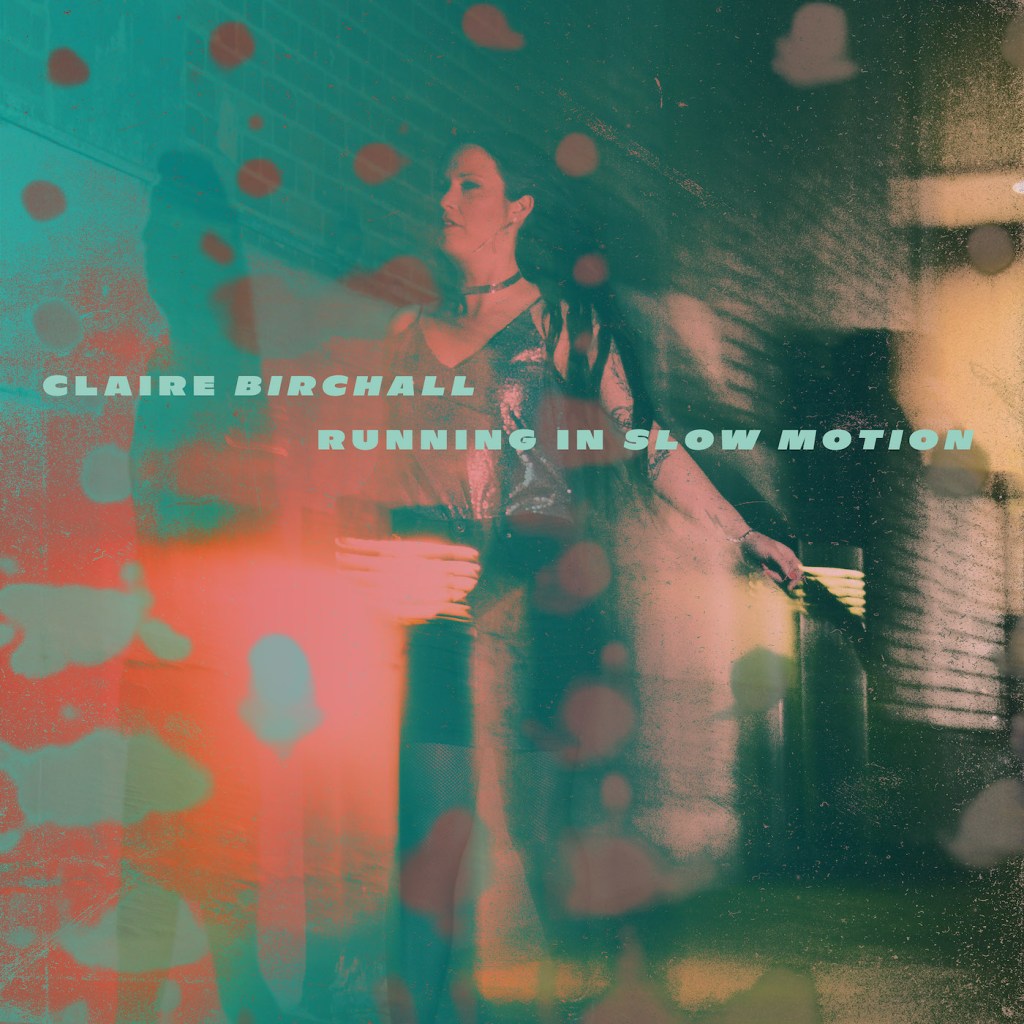
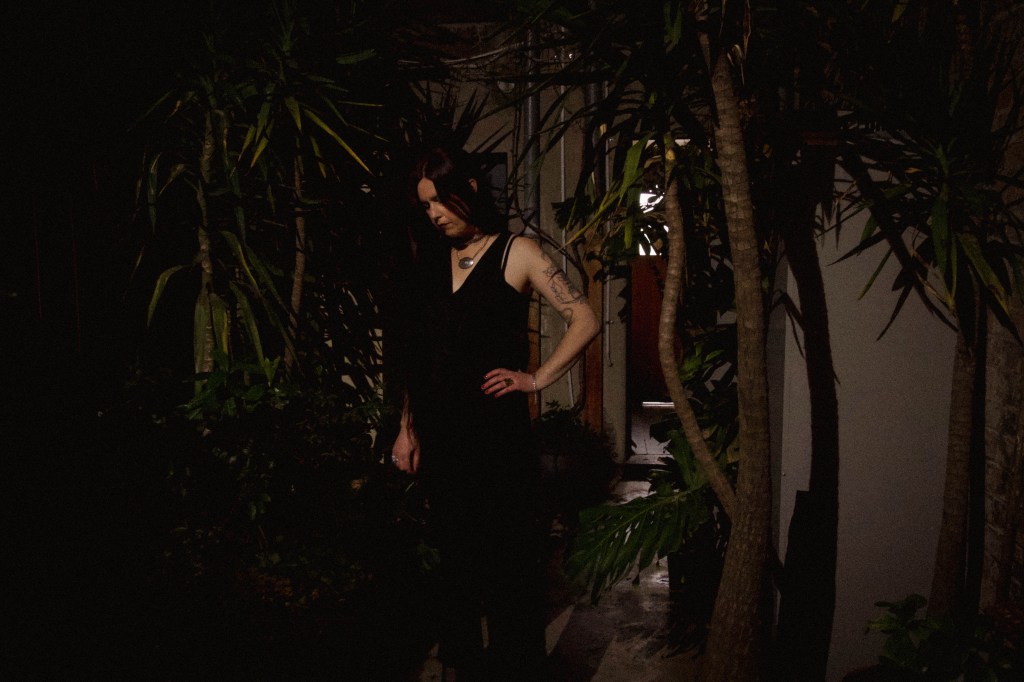
Melbourne musician Claire Birchall is set to release album Running In Slow Motion April 24th through It Records. It’s a moody, emotive, darkwave synth-pop collection of songs that Claire wrote and recorded herself on a 4-track, and is a departure from her usual indie rock exploits. Today we’re premiering the album’s title track which sounds somewhere between UK band Broadcast, France’s Marie Davidson and the Australian cult classic “Cold Café” by Karen Marks. We chatted with Claire about Running In Slow Motion and her musical journey.

Tell us a little bit about your music journey.

CLAIRE BIRCHALL: I grew up in a musical family down the coast, just outside of Geelong. Dad and Mum both played guitar and sang, and they bought a piano when my sister Bec and I were quite young, so we got lessons. Dad also taught us both how to play guitar, which quickly became our favoured instrument. By high school, I was already playing guitar constantly, joined my first band, and also did some busking in the Geelong mall in the summertime.

My high school music room had a cassette 4-track that I was fascinated with. I borrowed it once, and was completely smitten.  I ended up buying one myself at age 17, and got hooked on home recording, churning out tapes that I would swap with friends. Through recording, I started trying out as many different instruments as I could get my hands on, and ended up picking up a bit of drums, bass, mandolin and other things. I finally properly released my debut album, the acoustic based Captain Captain in 2001, which I played most of the instruments on.  The album did pretty well on community radio, and got some great support from RRR and PBS in particular.

I formed my own band, Paper Planes, which started out playing the songs from Captain Captain.  I’m not sure how, but we gradually morphed into a full tilt rock band. We got some decent support slots over the years, Magic Dirt, Catpower, Ed Kuepper, Band Of Horses….  We also released a self titled album, and two 7” singles (all recorded at the legendary Birdland Studios) which were all quite well received. Also around the same time as Paper Planes, my partner (Matt Green) and I, formed country rock band the Happy Lonesome, which I still play in today.  Though I started out on guitar in that band, then moved to keys and mandolin, and back to guitar, these days I’m the drummer!

After Paper Planes I released two solo albums, both recorded on the 4-track (PP and Electricity), then formed another band, Claire Birchall the Phantom Hitchhikers, to launch Electricity.  Though it wasn’t properly discussed or intended to be a full time band, we really hit it off, and we’ve been playing ever since.  We released our debut single, “All That Matters (it’s Christmas time)” in 2016, then our debut album Nothing Ever Gets Lost in 2017, and we’ve played a hell of a lot of shows. Also unintentional, was the small break the Phantom Hitchhikers ended up having towards the end of 2018, which unusually took me to this synth pop place I’m in now.

You’re more known for your rock, guitar-based music; what inspired you to make a synth record Running In Slow Motion by yourself on 4-track in your bedroom?

CB: It was a bit of an accident really. My band mates (the Phantom Hitchhikers) were pretty busy with various things at the time, and it was getting hard to get everyone together. I got an idea for a song one day, and decided to get out my old 4-track and demo it, for something to do.  Using my Casio keyboard for drums, and laying down a simple keyboard line, it somehow didn’t feel like it needed much guitar. The song was “Dead Air”, which turned out being the first single from the album. I liked the relative sparseness of the recording compared to my usual wall of sound, fuzz rock stuff, and it kicked off the inspiration for more writing and recording.

I wasn’t planning on making an album, but I got more and more addicted to experimenting with the new sound and returning to my roots of recording on the old 4-track.  It was really refreshing to step away from the guitar and sit there at my Casio, get a beat and a keyboard line going and write a song.  It completely changed my way of writing, and got me away from using the same old guitar chords/rhythms etc. Before I knew it, I was programming beats on a drum machine, scouring my collection of dinky little keyboards for cool sounds, and recording at every spare minute.  I ended up writing and recording the entire album in just a few months (plus a few songs to spare!).

What vision did you have for the record?

CB: It just happened.  But as I got further into recording, things started to take shape. I felt like the Casio keyboard drums weren’t sounding punchy enough on a few songs I’d already recorded, and maybe sounded a little too lo-fi. So I re-recorded a couple of them with programmed drum machine instead, and it really gave the songs the kick they needed. I instantly got hooked on programming my own beats, it’s so much fun. I then started digging the idea of getting the most hi-fi sounding recordings out of my lo-fi 4-track.  And I liked the idea of minimal tracks, minimal instrumentation, to let the songs talk without clogging them up with a million overdubs. I wanted to write the sort of songs that’d get stuck in your head. Pop songs.  I agonised over the track list for ages, cutting quite a few that weren’t up to scratch to make the poppiest catchy album I could muster. I can’t help that it’s pretty dark too, I’ve always had a little of that in my songwriting.

We’re premiering the third single, title track, “Running In Slow Motion”; what’s the song about?

CB: The song came together super quickly, and I used a little old cream coloured Yamaha keyboard for the drums. I still think the song’s got one of the best drum sounds on the whole album. It sounded kind of eerie, and I guess that inspired the eerie lyrics. It’s kind of a nightmare song. A waking nightmare, or a blurred line between reality and a dream, where people’s faces become distorted and turn into something/someone you don’t know. And you’re trying to escape your demons or run away from monsters, but you can’t scream, and you can only manage to run in slow motion.  It’s crazy how fitting it is to be releasing such a nightmarish song right at this point in time, when the whole world is truly living in a nightmare.

What was the best things about working alone on your new collection of songs?

CB: As much as I adore my band and bandmates and what they bring to my songs, there’s something to be said about being able to completely follow through with your sole vision for a song. When I write, I often instantly get ideas for multiple instrument parts, not just guitar or vocals, so it’s interesting to try and lay it all down just as I hear it in my head.

Also, I just love recording on the 4-track. Time absolutely flies by. I forget to eat, to drink water, anything. I just get so engrossed and obsessed. Often I’d write and record the whole song in one night, and end up with a tangle of leads and equipment all over the floor. I really love getting into that headspace, where the inspiration is positively flowing and you don’t want to waste time packing up anything, you’ve just got to keep going. I love the no bullshit simplicity of recording on the 4-track, it allows me to be completely spontaneous.

What was the most challenging?

CB: Definitely the mixing. I lost track of how many hours/days/months I spent doing that! I mix down from the cassette 4-track onto the computer, and then occasionally I’ll add some extra bits and pieces there.  Some of this involved tedious synching up and cutting/pasting individual tracks loaded in from the 4-track.  Plus, I’m so used to doing more lo-fi stuff, where the vocals are a little more buried. I had to work really hard on getting the vocals to stick out and sound more present and poppy. This involved double tracking, FX, and plenty of other little “secret” tricks. 

As a songwriter how do you feel you’ve grown while continuing to evolve, making a different kind of album than what your listeners are used to? Do you feel you took a risk?

CB: Even though I hadn’t made a synth-pop album before, I don’t really feel like I’ve strayed too much into the unknown. Every album I’ve ever done has been different from the previous one. I’ve experimented with all kinds of different sounds, instruments, and recording techniques over the years. Being a multi-instrumentalist really lends itself to experimentation. Plus I’ve got a pretty diverse taste in music. My first album, Captain Captain was a real acoustic guitar based album, totally different to my next one, which was the debut full tilt rock album with my band, Paper Planes. There’s also hints of my keyboard/programmed drums leanings throughout all of my solo albums. That being said, this is a very different sounding album, sure. It’s the first one that is a dedicated synth/drum machine album. But I think it still sounds like me.

What are some things you do to nurture your creativity?

CB: I absolutely always carry a notebook with me. It’s so great having an abundance of snippets of ideas to flick through when I’m stuck for ideas/lyrics.  I’ve pieced together many a song from individual lines I’ve written in that book.

I also think it’s also incredibly important to not force creativity. I try not to get too worried if I have a dry spell and don’t get inspired to write any new songs for a while. Sometimes it’s good to have a break, clear your head. The songs come when they’re ready.

You’ve played with Kim Salmon; what’s something you’ve learnt from working with him?

CB: You know, I was really quite scared that I wasn’t going to be capable of playing the stuff that I needed to be able to play with Kim. Some of the guitar stuff I felt was completely out of my league!  He really is an incredible guitarist.  I couldn’t believe he was trusting in me to pull this off!  But I worked my arse off, rehearsing by myself at home. I rehearsed more than I’d ever rehearsed for anything in my life. And incredibly I got it together. I surprised even myself. And it goes to show, you really shouldn’t write yourself off and think you’re not capable of something that looks hard and scary, cause it can turn out totally fine and you can have so much fun!

Kim’s taught me heaps. He’s the ultimate professional, but doesn’t like to over-rehearse to the point where you’re “wasting it all up” and losing the spark. I love that, I really agree with that. I love being kept on my toes when I play with him.  It keeps it super exciting and fun. I’m always grinning so much on stage with him. He’s a super lovely guy, he’s great to his fans, talks to everyone, signs stuff, all that. It’s no surprise that people really love him.

Why is making music important to you?

CB: I’ve been doing it for so long, I don’t know how not to do it!  It’s essential for my soul, my wellbeing.  I feel incredibly lucky to be able to write songs, especially when they feel like they’ve simply fallen out of the sky like a gift from the gods. You can’t ignore that shit, you’ve got to see it through. Music has also allowed me to play with and connect with so many wonderful and talented people over the years. I’m currently playing in multiple bands/projects, two of which I play drums in (The Happy Lonesome, and Teresa Duffy-Richards & the Fifty Foot Women), plus the Phantom Hitchhikers, my solo synth thing, and Kim’s band. It’s hectic, but I wouldn’t give this up for the world.  My life would not be the same without it.

Please check out: Claire Burchill. It Records. Claire on Facebook. Claire on Instagram.